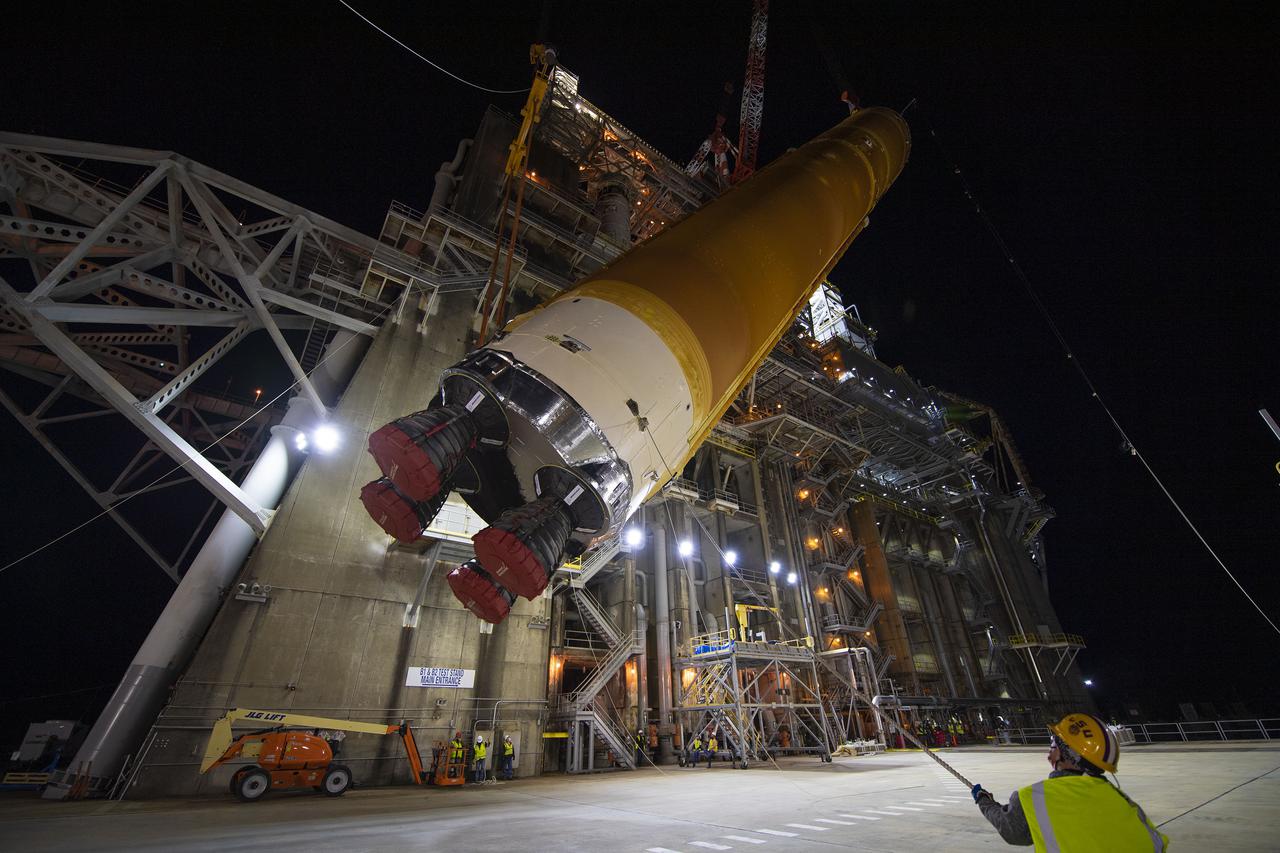
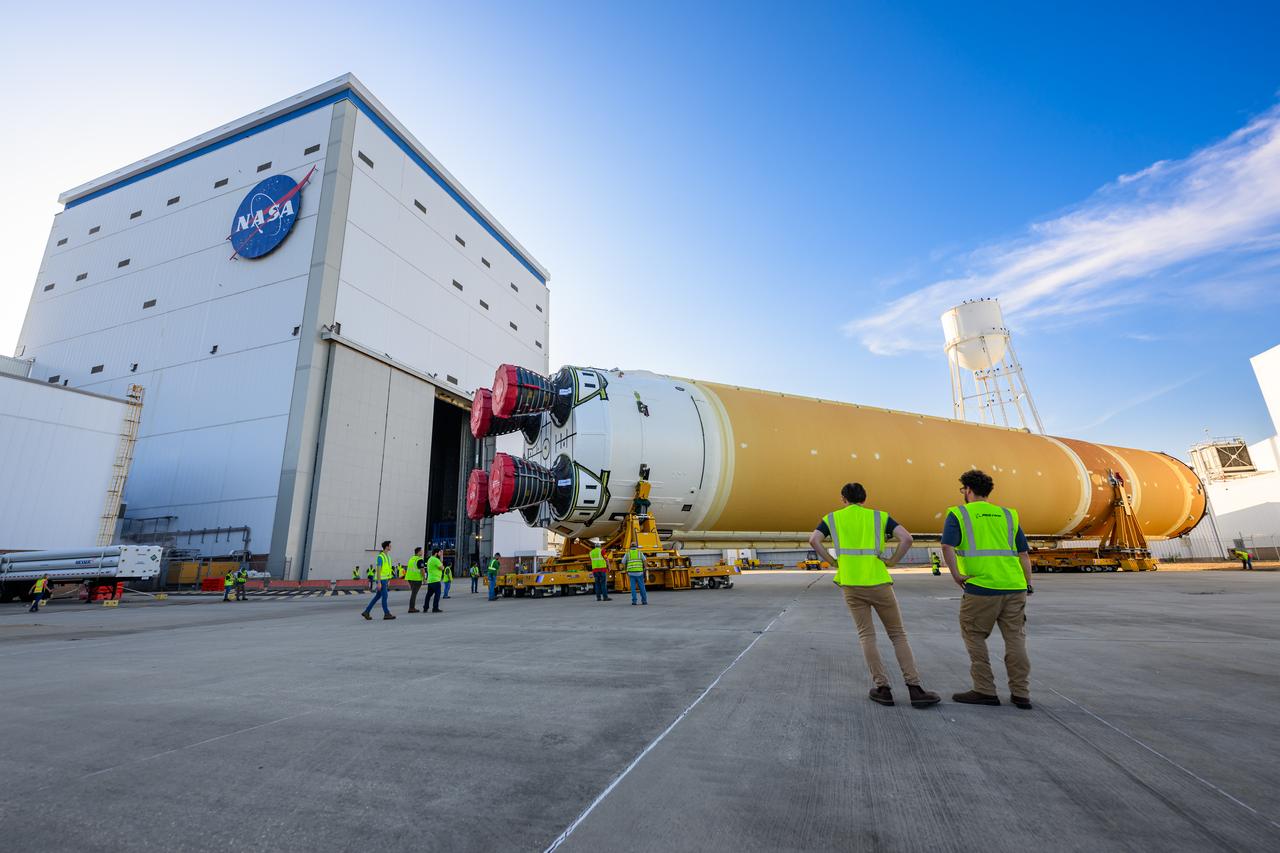
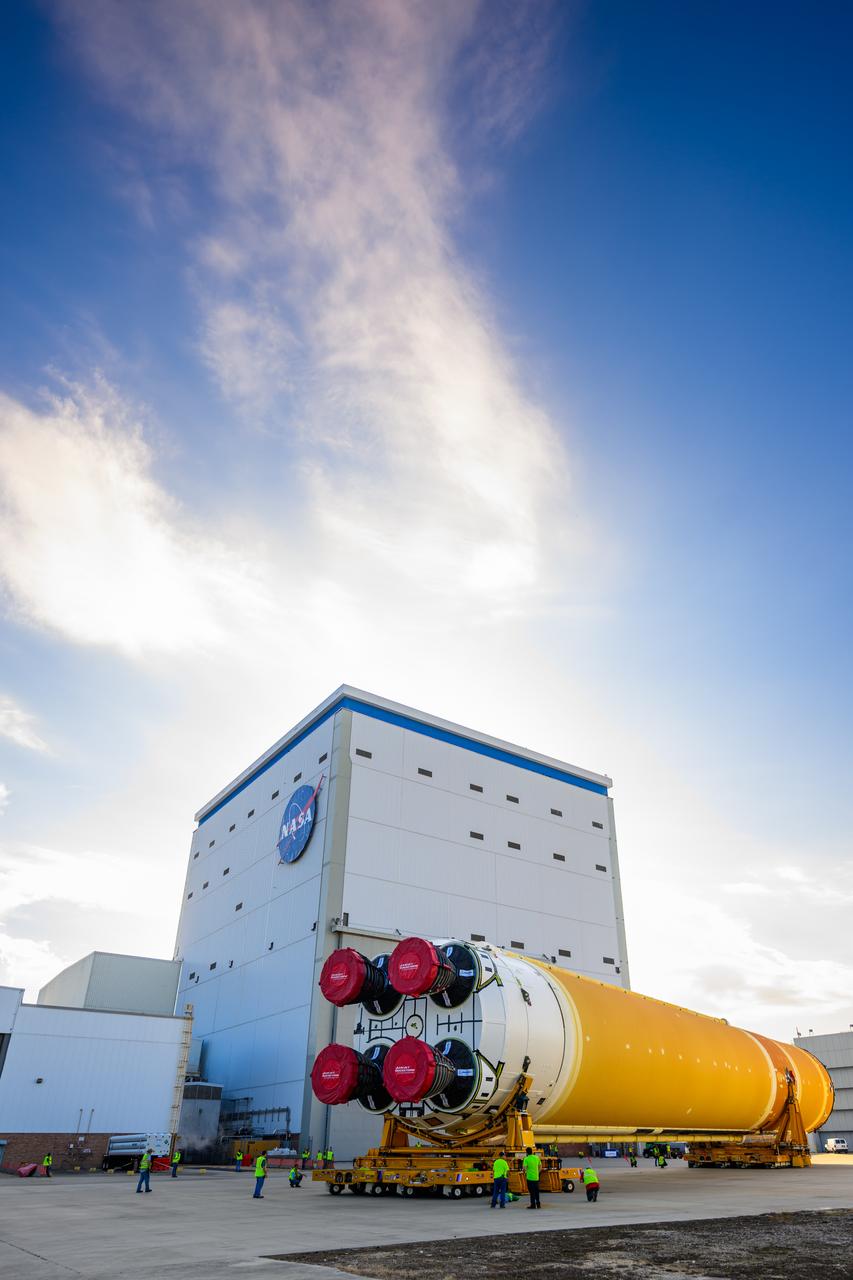
Following a successful Green Run hot fire at NASA’s Stennis Space Center near Bay St. Louis, Mississippi, on March 18, members of a blended team work April 19-20 to remove the first core stage of the agency’s Space Launch System (SLS) rocket from the B-2 Test Stand. The work required crews to lift the core stage from its vertical placement in the stand and lower it to a horizontal position on the B-2 Test Stand tarmac. The stage now will be loaded on NASA’s Pegasus barge for transport to Kennedy, where it will be prepared for launch of the Artemis I mission. Removal of the largest rocket stage ever built by NASA followed completion of a series of eight Green Run tests over the past year. During the Green Run series, teams performed a comprehensive test of the stand’s sophisticated and integrated systems. Photo Credit: NASA
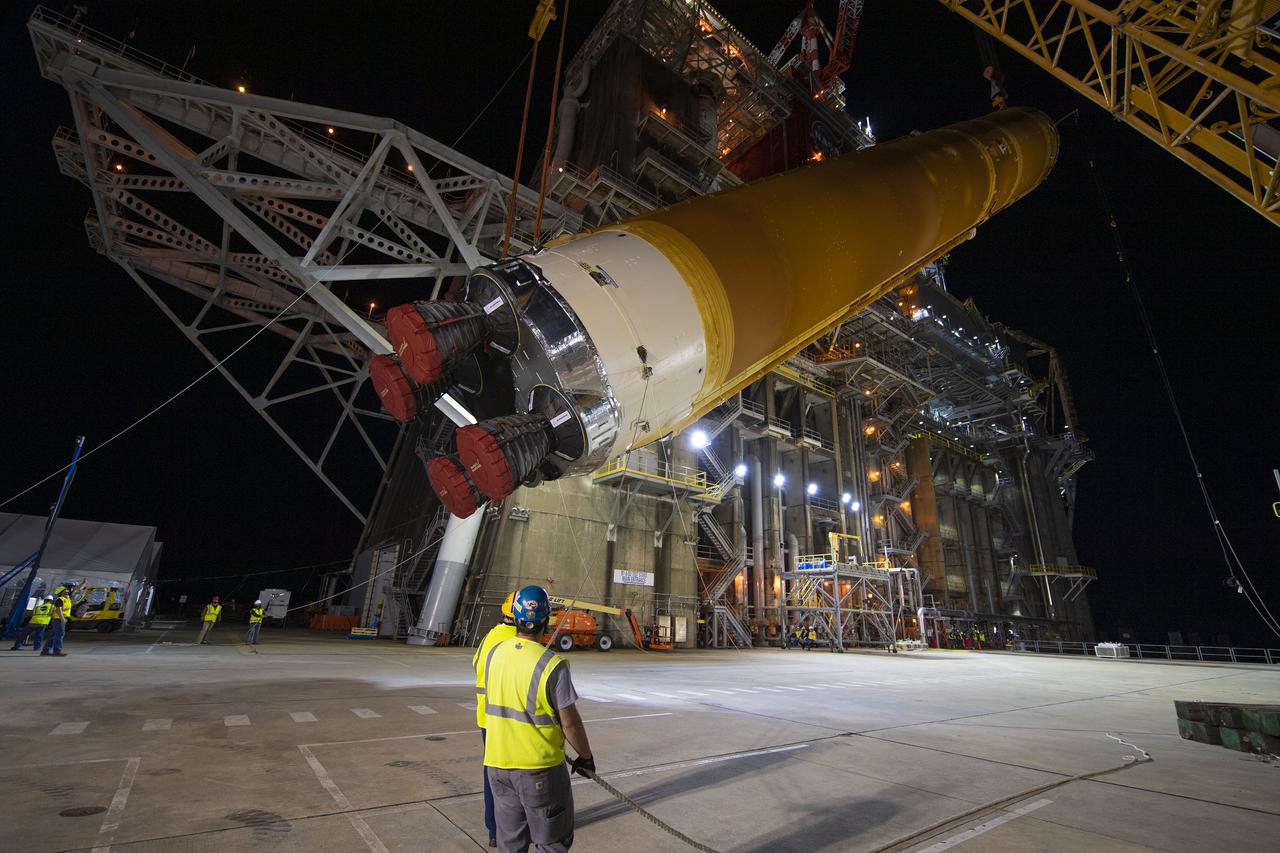
Following a successful Green Run hot fire at NASA’s Stennis Space Center near Bay St. Louis, Mississippi, on March 18, members of a blended team work April 19-20 to remove the first core stage of the agency’s Space Launch System (SLS) rocket from the B-2 Test Stand. The work required crews to lift the core stage from its vertical placement in the stand and lower it to a horizontal position on the B-2 Test Stand tarmac. The stage now will be loaded on NASA’s Pegasus barge for transport to Kennedy, where it will be prepared for launch of the Artemis I mission. Removal of the largest rocket stage ever built by NASA followed completion of a series of eight Green Run tests over the past year. During the Green Run series, teams performed a comprehensive test of the stand’s sophisticated and integrated systems. Photo Credit: NASA
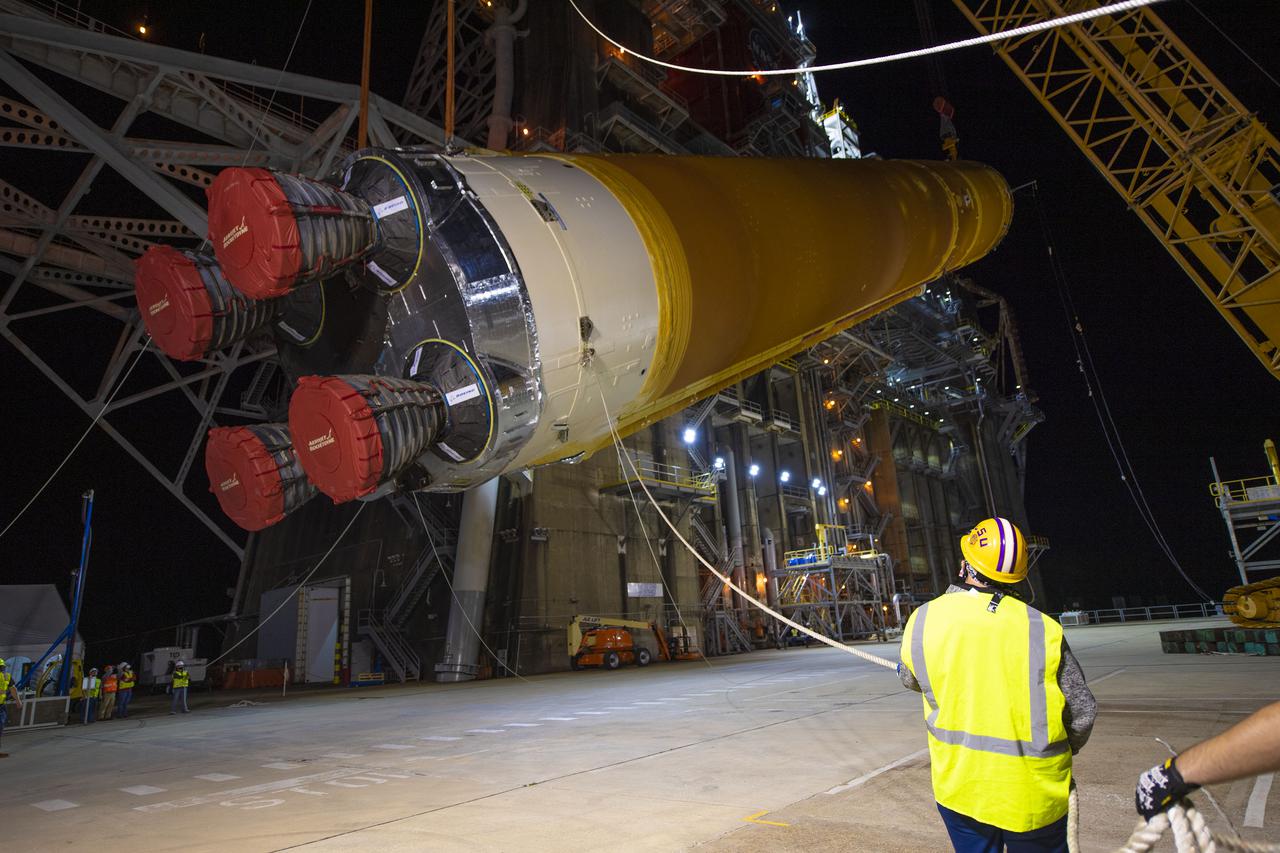
Following a successful Green Run hot fire at NASA’s Stennis Space Center near Bay St. Louis, Mississippi, on March 18, members of a blended team work April 19-20 to remove the first core stage of the agency’s Space Launch System (SLS) rocket from the B-2 Test Stand. The work required crews to lift the core stage from its vertical placement in the stand and lower it to a horizontal position on the B-2 Test Stand tarmac. The stage now will be loaded on NASA’s Pegasus barge for transport to Kennedy, where it will be prepared for launch of the Artemis I mission. Removal of the largest rocket stage ever built by NASA followed completion of a series of eight Green Run tests over the past year. During the Green Run series, teams performed a comprehensive test of the stand’s sophisticated and integrated systems. Photo Credit: NASA
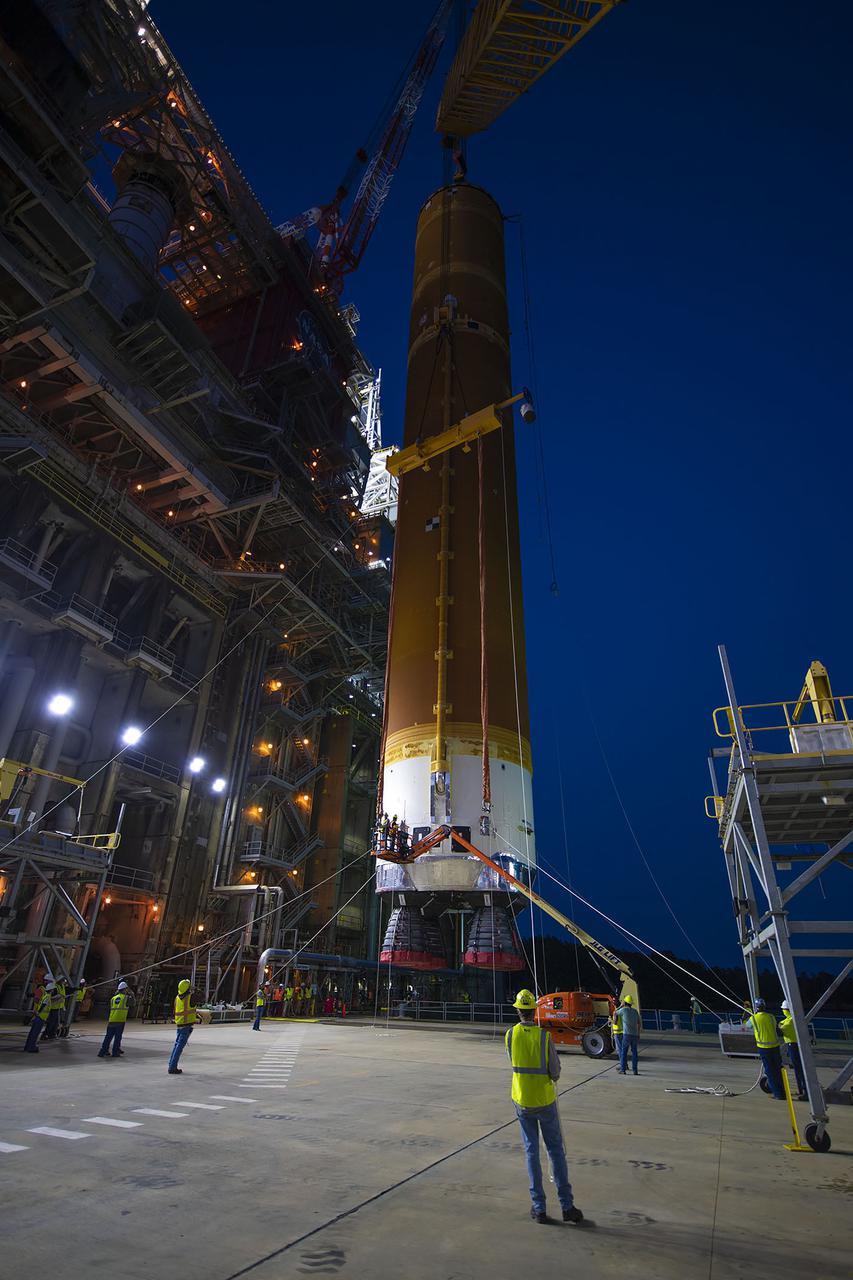
Following a successful Green Run hot fire at NASA’s Stennis Space Center near Bay St. Louis, Mississippi, on March 18, members of a blended team work April 19-20 to remove the first core stage of the agency’s Space Launch System (SLS) rocket from the B-2 Test Stand. The work required crews to lift the core stage from its vertical placement in the stand and lower it to a horizontal position on the B-2 Test Stand tarmac. The stage now will be loaded on NASA’s Pegasus barge for transport to Kennedy, where it will be prepared for launch of the Artemis I mission. Removal of the largest rocket stage ever built by NASA followed completion of a series of eight Green Run tests over the past year. During the Green Run series, teams performed a comprehensive test of the stand’s sophisticated and integrated systems. Photo Credit: NASA
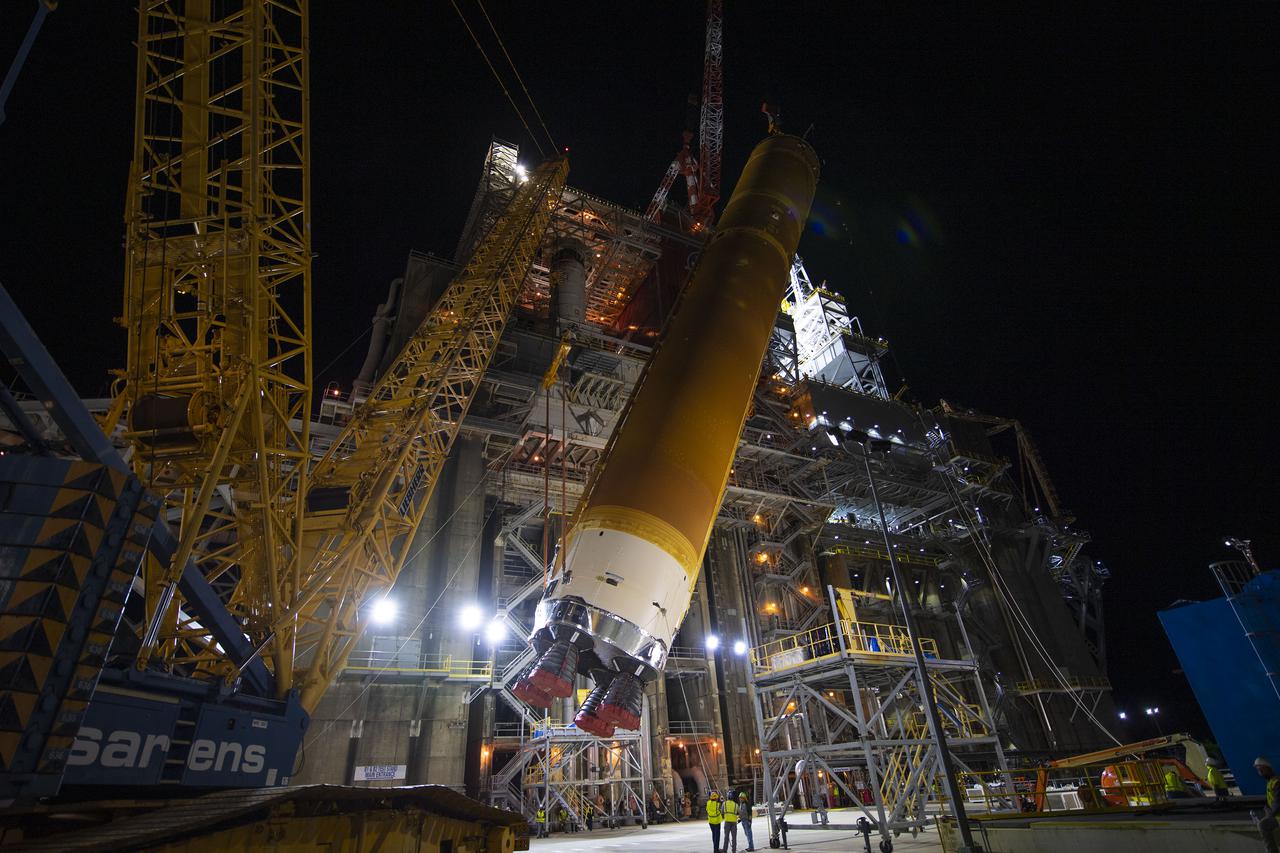
Following a successful Green Run hot fire at NASA’s Stennis Space Center near Bay St. Louis, Mississippi, on March 18, members of a blended team work April 19-20 to remove the first core stage of the agency’s Space Launch System (SLS) rocket from the B-2 Test Stand. The work required crews to lift the core stage from its vertical placement in the stand and lower it to a horizontal position on the B-2 Test Stand tarmac. The stage now will be loaded on NASA’s Pegasus barge for transport to Kennedy, where it will be prepared for launch of the Artemis I mission. Removal of the largest rocket stage ever built by NASA followed completion of a series of eight Green Run tests over the past year. During the Green Run series, teams performed a comprehensive test of the stand’s sophisticated and integrated systems. Photo Credit: NASA
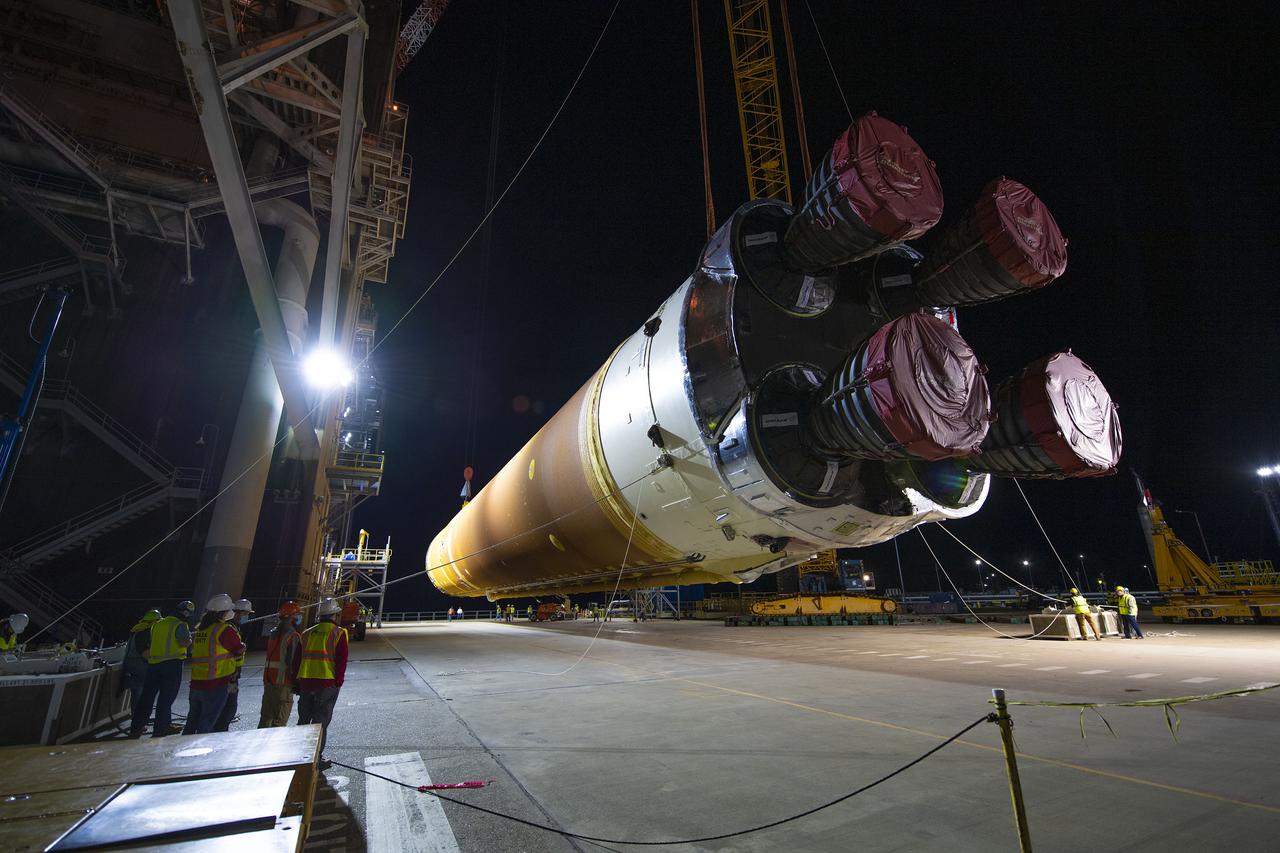
Following a successful Green Run hot fire at NASA’s Stennis Space Center near Bay St. Louis, Mississippi, on March 18, members of a blended team work April 19-20 to remove the first core stage of the agency’s Space Launch System (SLS) rocket from the B-2 Test Stand. The work required crews to lift the core stage from its vertical placement in the stand and lower it to a horizontal position on the B-2 Test Stand tarmac. The stage now will be loaded on NASA’s Pegasus barge for transport to Kennedy, where it will be prepared for launch of the Artemis I mission. Removal of the largest rocket stage ever built by NASA followed completion of a series of eight Green Run tests over the past year. During the Green Run series, teams performed a comprehensive test of the stand’s sophisticated and integrated systems. Photo Credit: NASA

Following a successful Green Run hot fire at NASA’s Stennis Space Center near Bay St. Louis, Mississippi, on March 18, members of a blended team work April 19-20 to remove the first core stage of the agency’s Space Launch System (SLS) rocket from the B-2 Test Stand. The work required crews to lift the core stage from its vertical placement in the stand and lower it to a horizontal position on the B-2 Test Stand tarmac. The stage now will be loaded on NASA’s Pegasus barge for transport to Kennedy, where it will be prepared for launch of the Artemis I mission. Removal of the largest rocket stage ever built by NASA followed completion of a series of eight Green Run tests over the past year. During the Green Run series, teams performed a comprehensive test of the stand’s sophisticated and integrated systems. Photo Credit: NASA
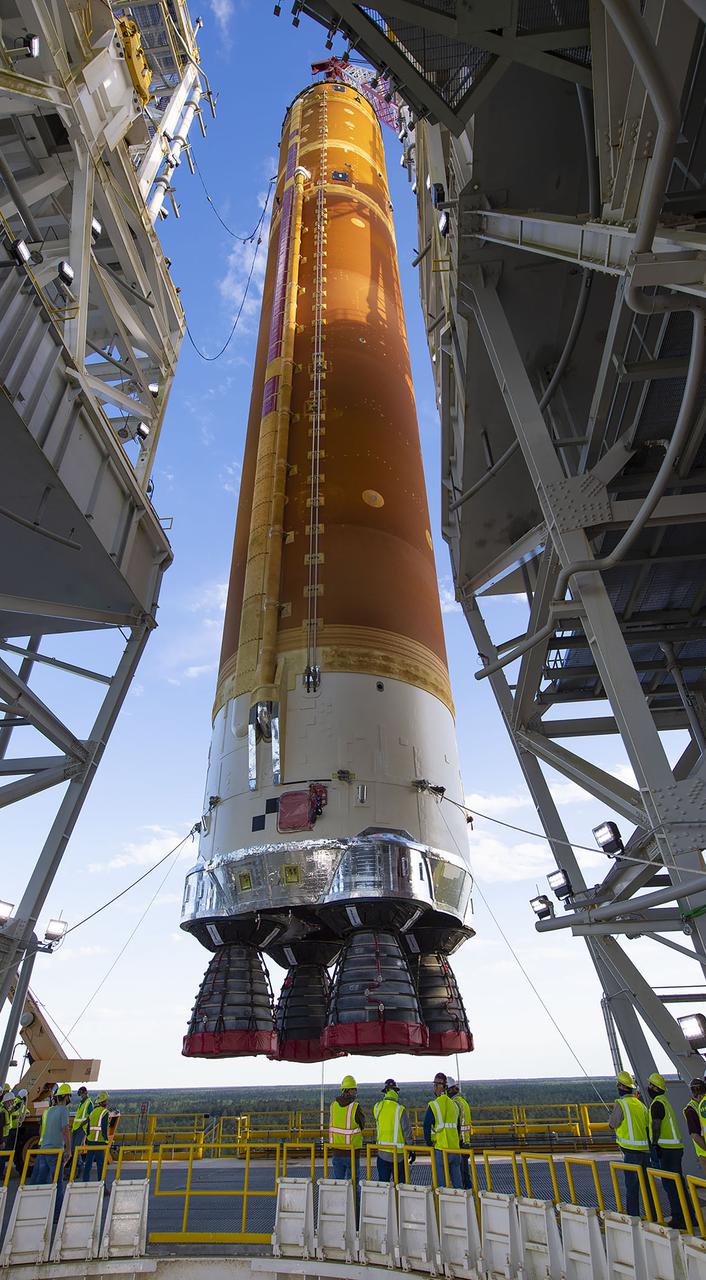
Following a successful Green Run hot fire at NASA’s Stennis Space Center near Bay St. Louis, Mississippi, on March 18, members of a blended team work April 19-20 to remove the first core stage of the agency’s Space Launch System (SLS) rocket from the B-2 Test Stand. The work required crews to lift the core stage from its vertical placement in the stand and lower it to a horizontal position on the B-2 Test Stand tarmac. The stage now will be loaded on NASA’s Pegasus barge for transport to Kennedy, where it will be prepared for launch of the Artemis I mission. Removal of the largest rocket stage ever built by NASA followed completion of a series of eight Green Run tests over the past year. During the Green Run series, teams performed a comprehensive test of the stand’s sophisticated and integrated systems. Photo Credit: NASA
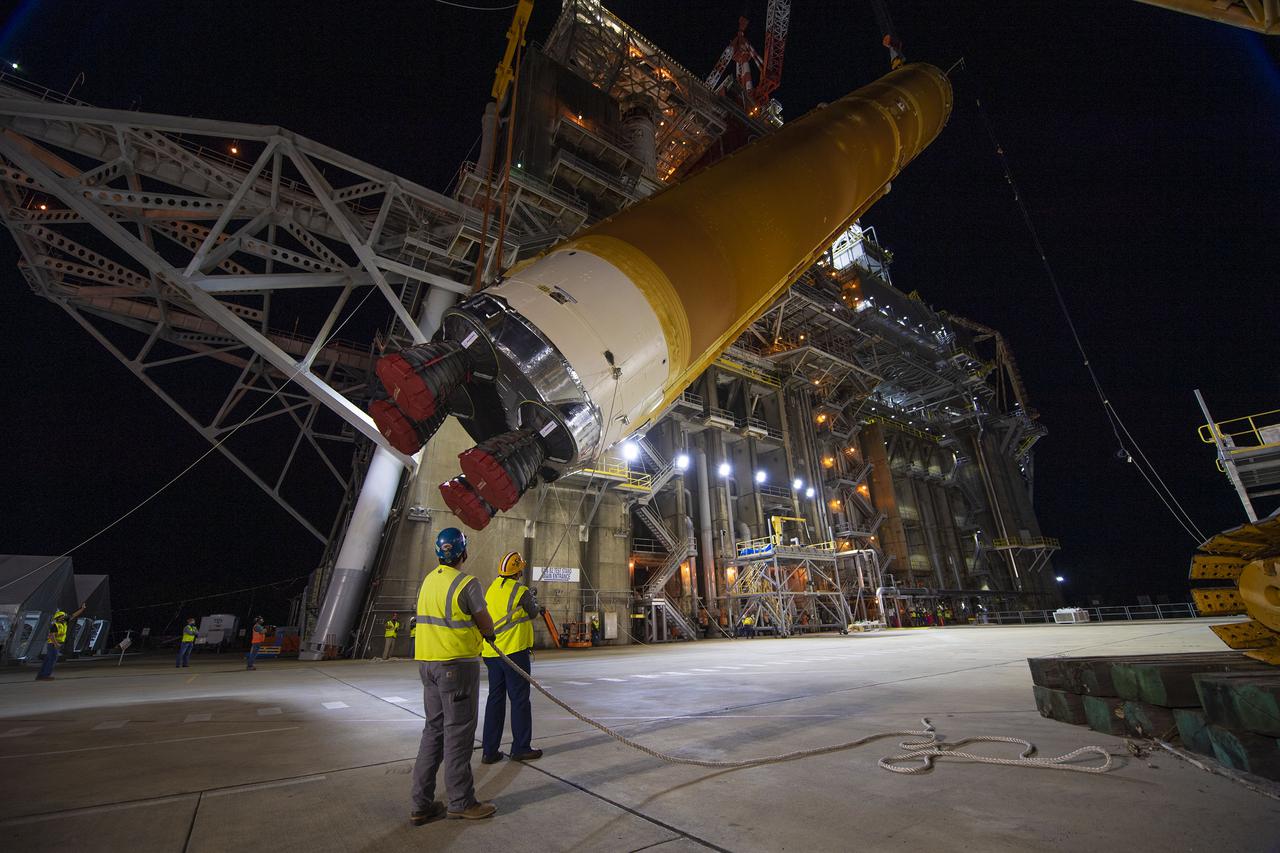
Following a successful Green Run hot fire at NASA’s Stennis Space Center near Bay St. Louis, Mississippi, on March 18, members of a blended team work April 19-20 to remove the first core stage of the agency’s Space Launch System (SLS) rocket from the B-2 Test Stand. The work required crews to lift the core stage from its vertical placement in the stand and lower it to a horizontal position on the B-2 Test Stand tarmac. The stage now will be loaded on NASA’s Pegasus barge for transport to Kennedy, where it will be prepared for launch of the Artemis I mission. Removal of the largest rocket stage ever built by NASA followed completion of a series of eight Green Run tests over the past year. During the Green Run series, teams performed a comprehensive test of the stand’s sophisticated and integrated systems. Photo Credit: NASA
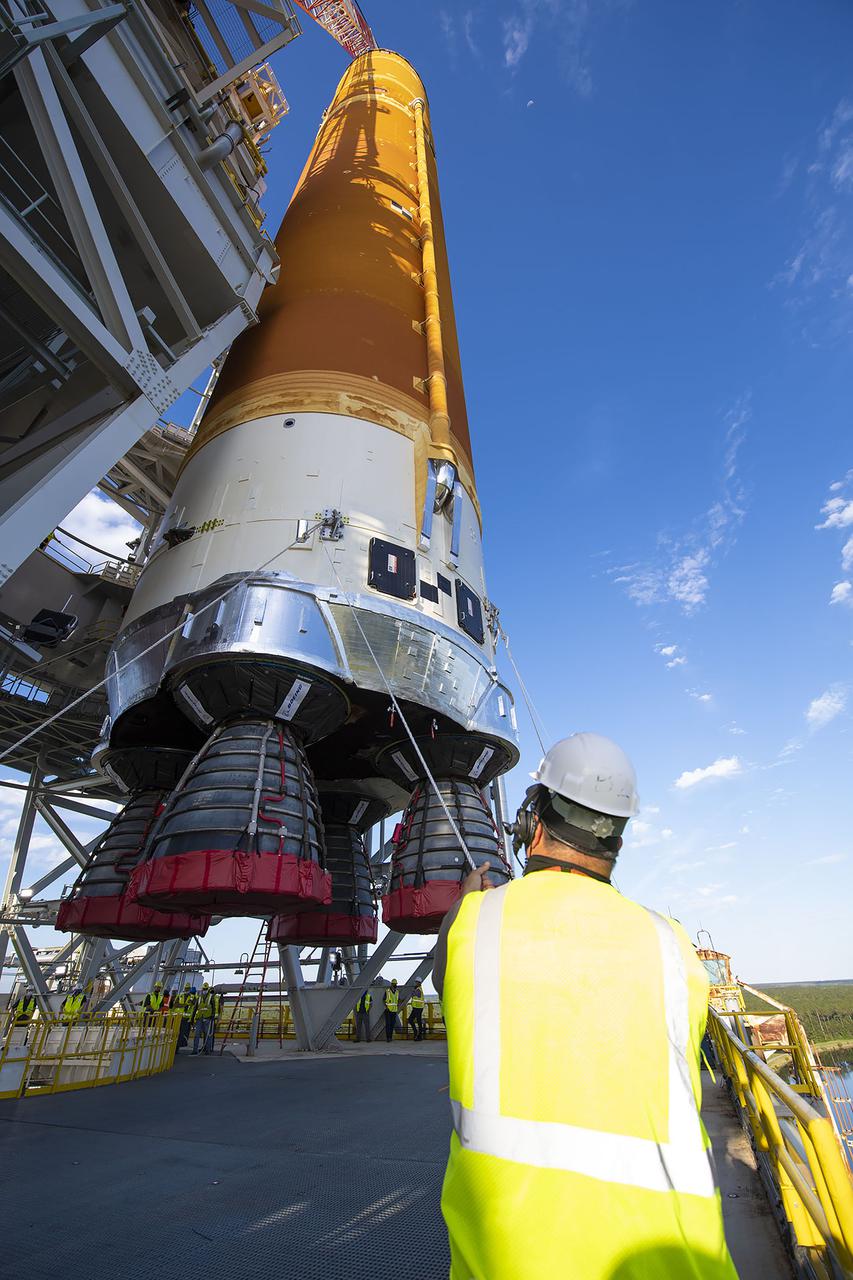
Following a successful Green Run hot fire at NASA’s Stennis Space Center near Bay St. Louis, Mississippi, on March 18, members of a blended team work April 19-20 to remove the first core stage of the agency’s Space Launch System (SLS) rocket from the B-2 Test Stand. The work required crews to lift the core stage from its vertical placement in the stand and lower it to a horizontal position on the B-2 Test Stand tarmac. The stage now will be loaded on NASA’s Pegasus barge for transport to Kennedy, where it will be prepared for launch of the Artemis I mission. Removal of the largest rocket stage ever built by NASA followed completion of a series of eight Green Run tests over the past year. During the Green Run series, teams performed a comprehensive test of the stand’s sophisticated and integrated systems. Photo Credit: NASA
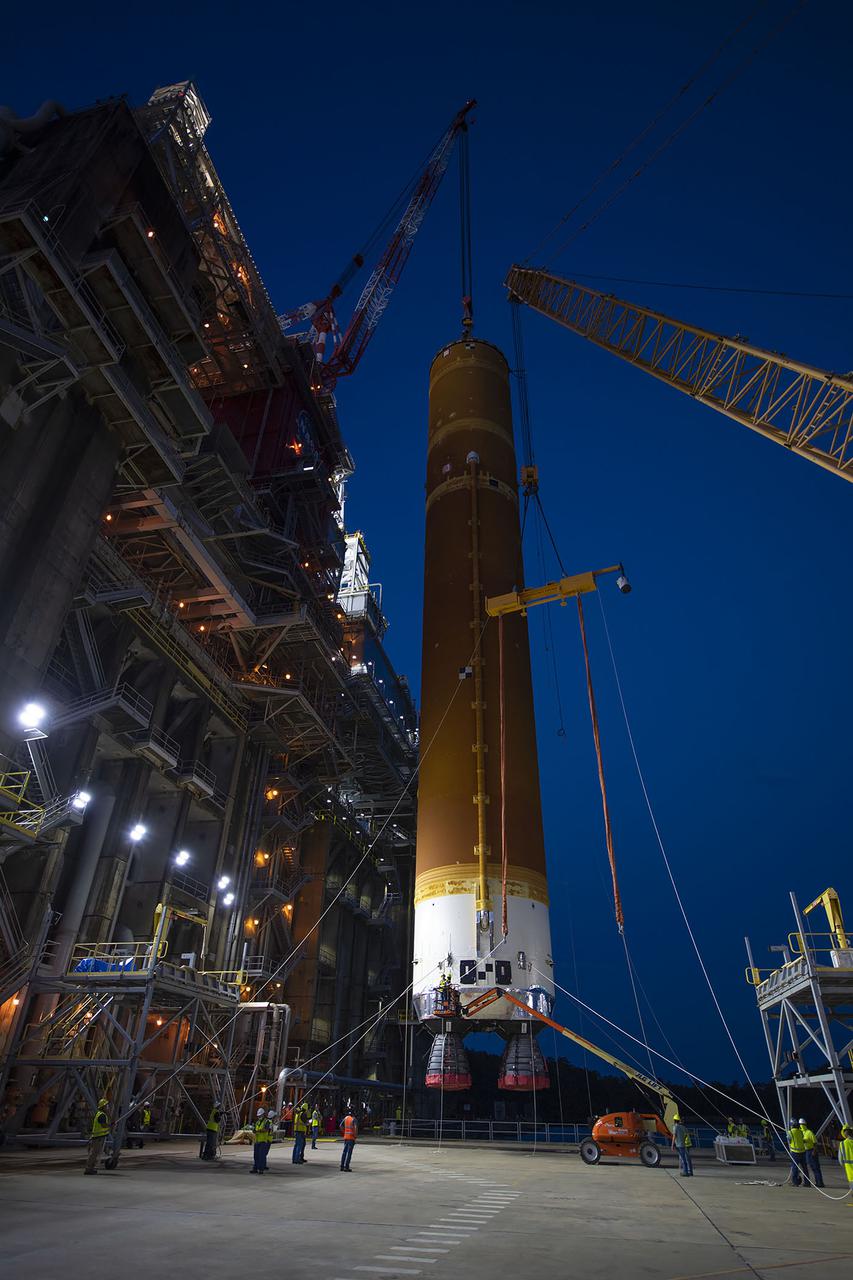
Following a successful Green Run hot fire at NASA’s Stennis Space Center near Bay St. Louis, Mississippi, on March 18, members of a blended team work April 19-20 to remove the first core stage of the agency’s Space Launch System (SLS) rocket from the B-2 Test Stand. The work required crews to lift the core stage from its vertical placement in the stand and lower it to a horizontal position on the B-2 Test Stand tarmac. The stage now will be loaded on NASA’s Pegasus barge for transport to Kennedy, where it will be prepared for launch of the Artemis I mission. Removal of the largest rocket stage ever built by NASA followed completion of a series of eight Green Run tests over the past year. During the Green Run series, teams performed a comprehensive test of the stand’s sophisticated and integrated systems. Photo Credit: NASA
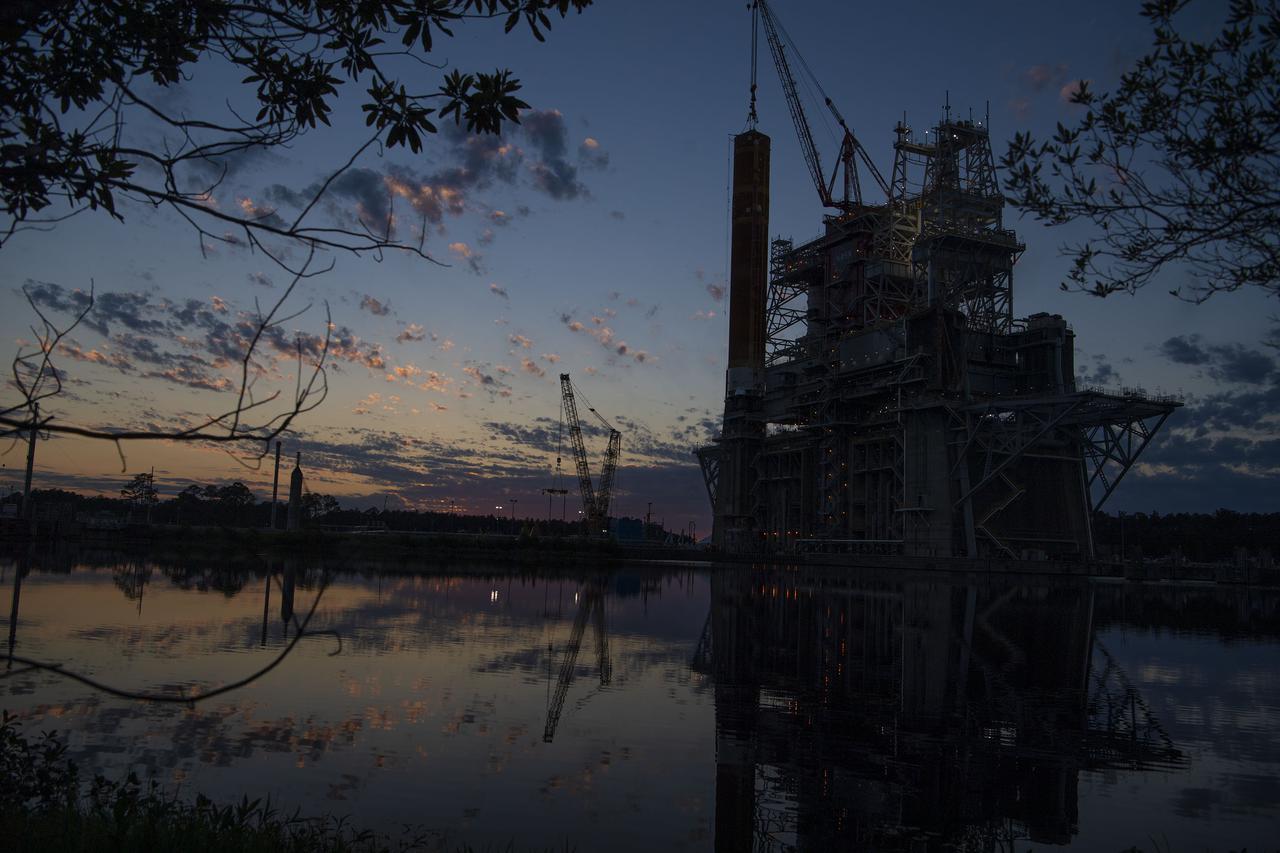
Following a successful Green Run hot fire at NASA’s Stennis Space Center near Bay St. Louis, Mississippi, on March 18, members of a blended team work April 19-20 to remove the first core stage of the agency’s Space Launch System (SLS) rocket from the B-2 Test Stand. The work required crews to lift the core stage from its vertical placement in the stand and lower it to a horizontal position on the B-2 Test Stand tarmac. The stage now will be loaded on NASA’s Pegasus barge for transport to Kennedy, where it will be prepared for launch of the Artemis I mission. Removal of the largest rocket stage ever built by NASA followed completion of a series of eight Green Run tests over the past year. During the Green Run series, teams performed a comprehensive test of the stand’s sophisticated and integrated systems. Photo Credit: NASA

Following a successful Green Run hot fire at NASA’s Stennis Space Center near Bay St. Louis, Mississippi, on March 18, members of a blended team work April 19-20 to remove the first core stage of the agency’s Space Launch System (SLS) rocket from the B-2 Test Stand. The work required crews to lift the core stage from its vertical placement in the stand and lower it to a horizontal position on the B-2 Test Stand tarmac. The stage now will be loaded on NASA’s Pegasus barge for transport to Kennedy, where it will be prepared for launch of the Artemis I mission. Removal of the largest rocket stage ever built by NASA followed completion of a series of eight Green Run tests over the past year. During the Green Run series, teams performed a comprehensive test of the stand’s sophisticated and integrated systems. Photo Credit: NASA
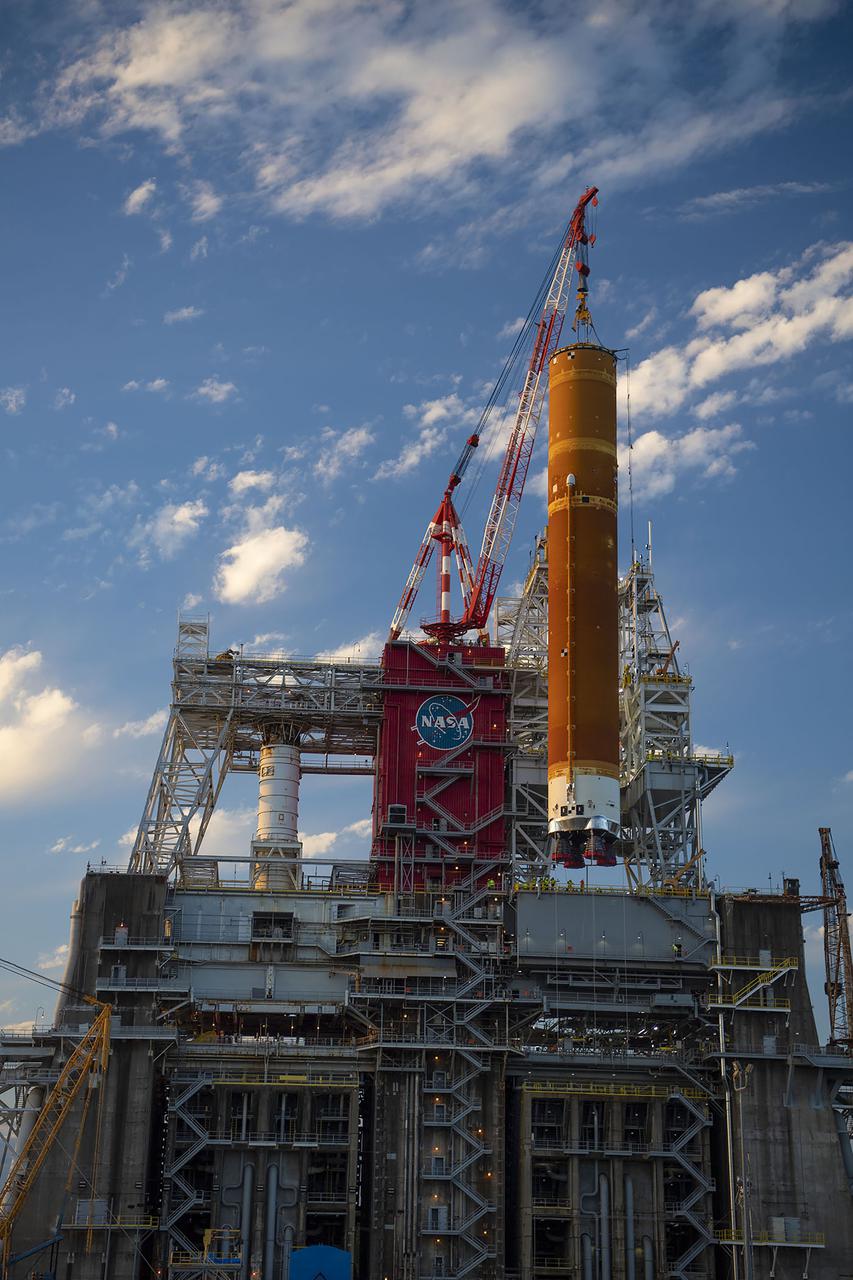
Following a successful Green Run hot fire at NASA’s Stennis Space Center near Bay St. Louis, Mississippi, on March 18, members of a blended team work April 19-20 to remove the first core stage of the agency’s Space Launch System (SLS) rocket from the B-2 Test Stand. The work required crews to lift the core stage from its vertical placement in the stand and lower it to a horizontal position on the B-2 Test Stand tarmac. The stage now will be loaded on NASA’s Pegasus barge for transport to Kennedy, where it will be prepared for launch of the Artemis I mission. Removal of the largest rocket stage ever built by NASA followed completion of a series of eight Green Run tests over the past year. During the Green Run series, teams performed a comprehensive test of the stand’s sophisticated and integrated systems. Photo Credit: NASA
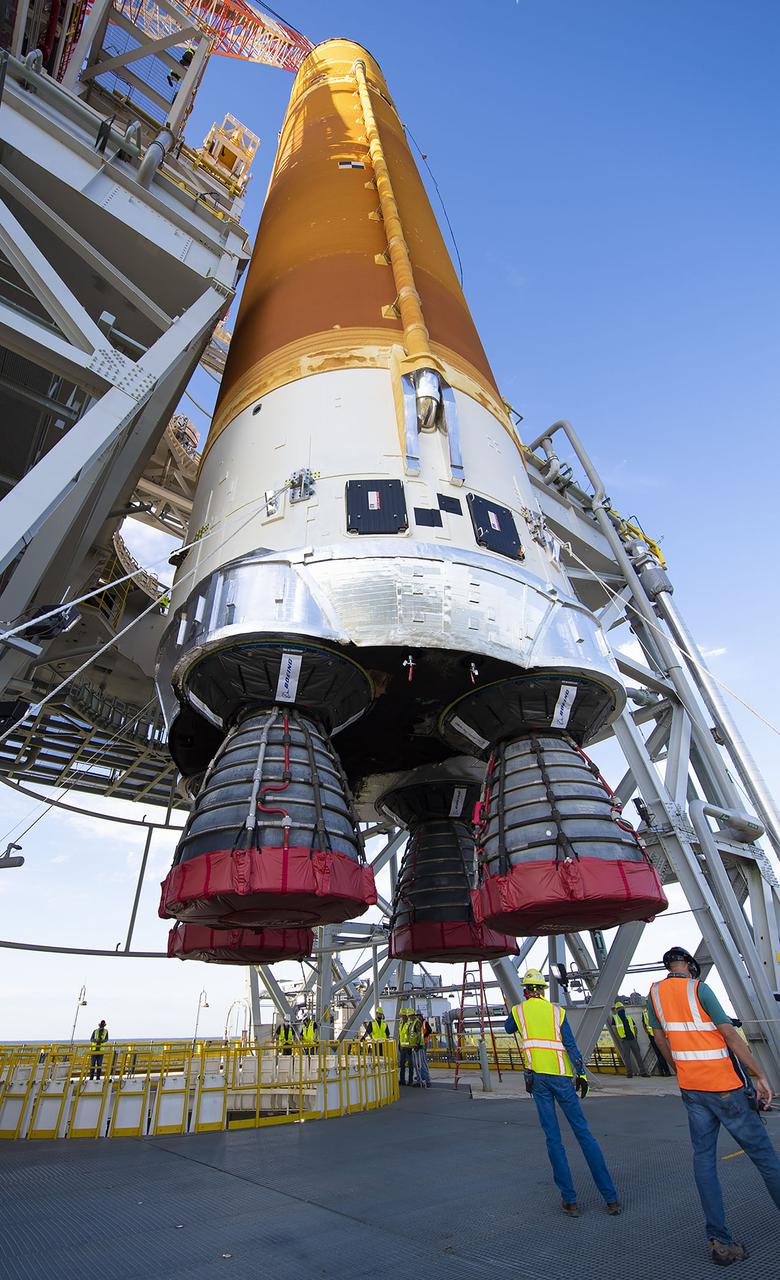
Following a successful Green Run hot fire at NASA’s Stennis Space Center near Bay St. Louis, Mississippi, on March 18, members of a blended team work April 19-20 to remove the first core stage of the agency’s Space Launch System (SLS) rocket from the B-2 Test Stand. The work required crews to lift the core stage from its vertical placement in the stand and lower it to a horizontal position on the B-2 Test Stand tarmac. The stage now will be loaded on NASA’s Pegasus barge for transport to Kennedy, where it will be prepared for launch of the Artemis I mission. Removal of the largest rocket stage ever built by NASA followed completion of a series of eight Green Run tests over the past year. During the Green Run series, teams performed a comprehensive test of the stand’s sophisticated and integrated systems. Photo Credit: NASA
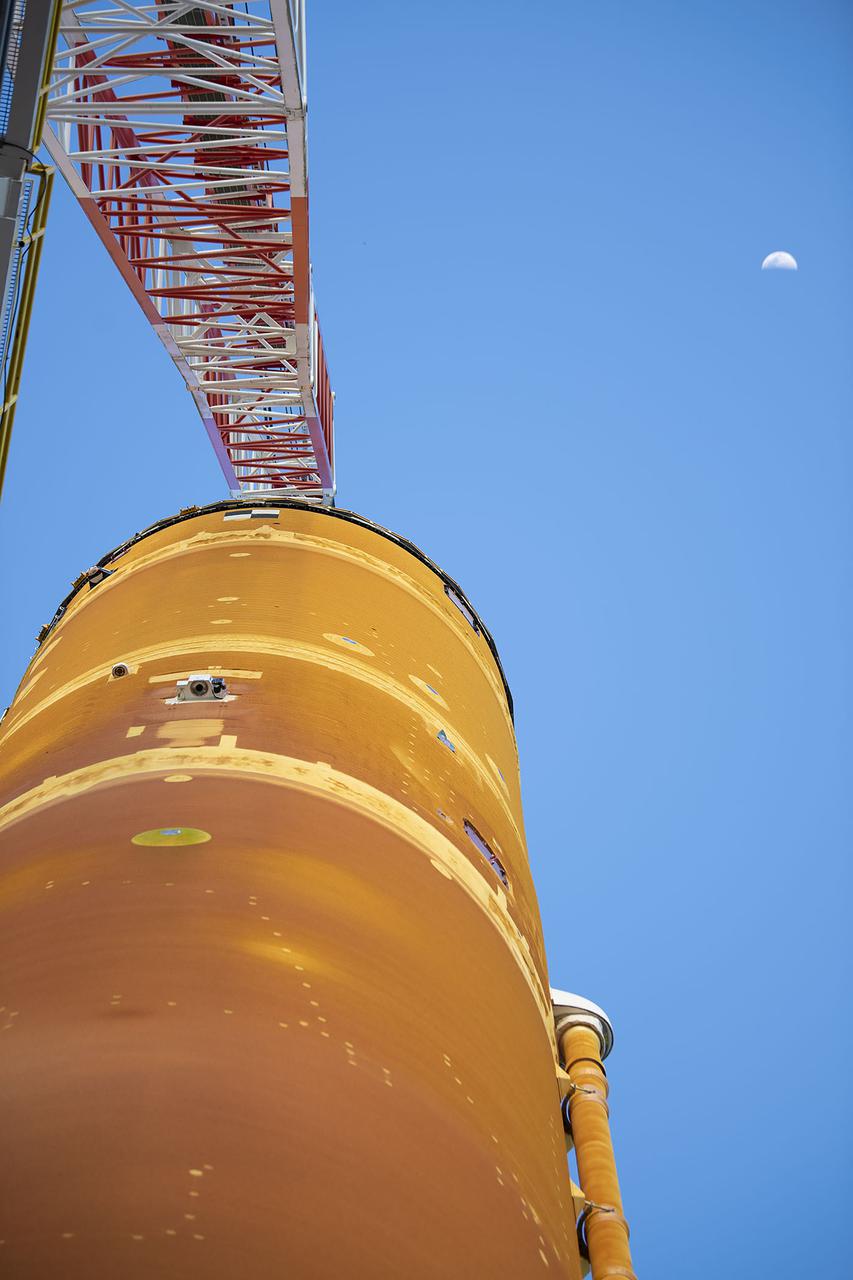
Following a successful Green Run hot fire at NASA’s Stennis Space Center near Bay St. Louis, Mississippi, on March 18, members of a blended team work April 19-20 to remove the first core stage of the agency’s Space Launch System (SLS) rocket from the B-2 Test Stand. The work required crews to lift the core stage from its vertical placement in the stand and lower it to a horizontal position on the B-2 Test Stand tarmac. The stage now will be loaded on NASA’s Pegasus barge for transport to Kennedy, where it will be prepared for launch of the Artemis I mission. Removal of the largest rocket stage ever built by NASA followed completion of a series of eight Green Run tests over the past year. During the Green Run series, teams performed a comprehensive test of the stand’s sophisticated and integrated systems. Photo Credit: NASA
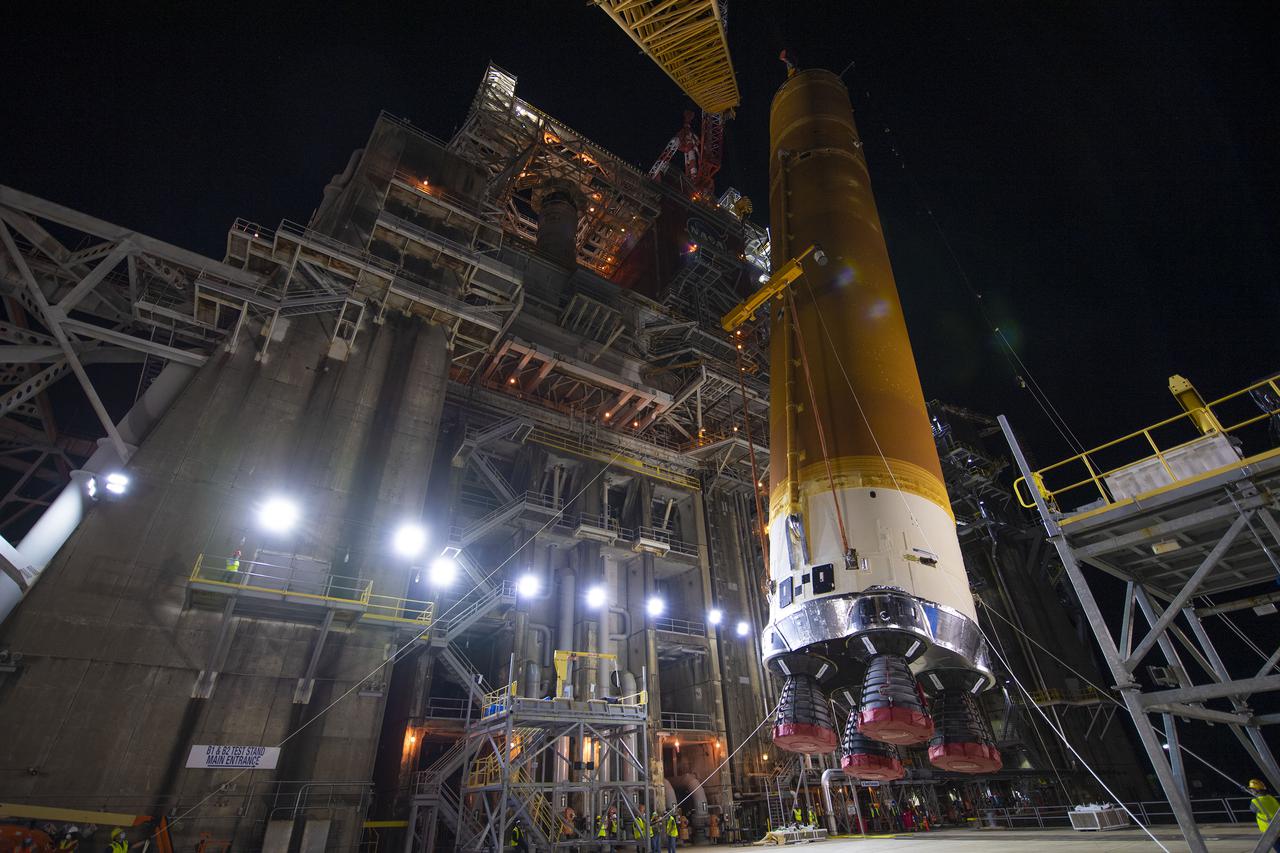
Following a successful Green Run hot fire at NASA’s Stennis Space Center near Bay St. Louis, Mississippi, on March 18, members of a blended team work April 19-20 to remove the first core stage of the agency’s Space Launch System (SLS) rocket from the B-2 Test Stand. The work required crews to lift the core stage from its vertical placement in the stand and lower it to a horizontal position on the B-2 Test Stand tarmac. The stage now will be loaded on NASA’s Pegasus barge for transport to Kennedy, where it will be prepared for launch of the Artemis I mission. Removal of the largest rocket stage ever built by NASA followed completion of a series of eight Green Run tests over the past year. During the Green Run series, teams performed a comprehensive test of the stand’s sophisticated and integrated systems. Photo Credit: NASA
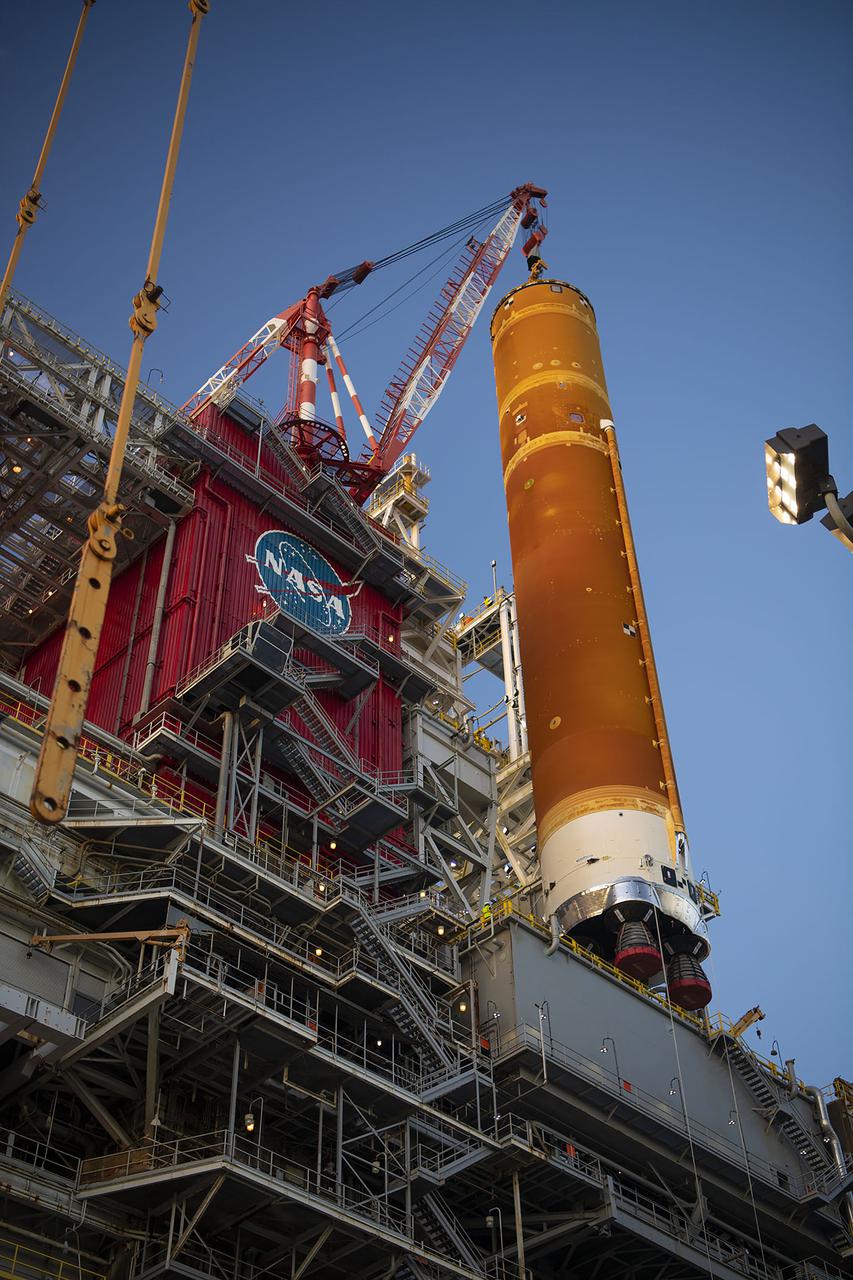
Following a successful Green Run hot fire at NASA’s Stennis Space Center near Bay St. Louis, Mississippi, on March 18, members of a blended team work April 19-20 to remove the first core stage of the agency’s Space Launch System (SLS) rocket from the B-2 Test Stand. The work required crews to lift the core stage from its vertical placement in the stand and lower it to a horizontal position on the B-2 Test Stand tarmac. The stage now will be loaded on NASA’s Pegasus barge for transport to Kennedy, where it will be prepared for launch of the Artemis I mission. Removal of the largest rocket stage ever built by NASA followed completion of a series of eight Green Run tests over the past year. During the Green Run series, teams performed a comprehensive test of the stand’s sophisticated and integrated systems. Photo Credit: NASA
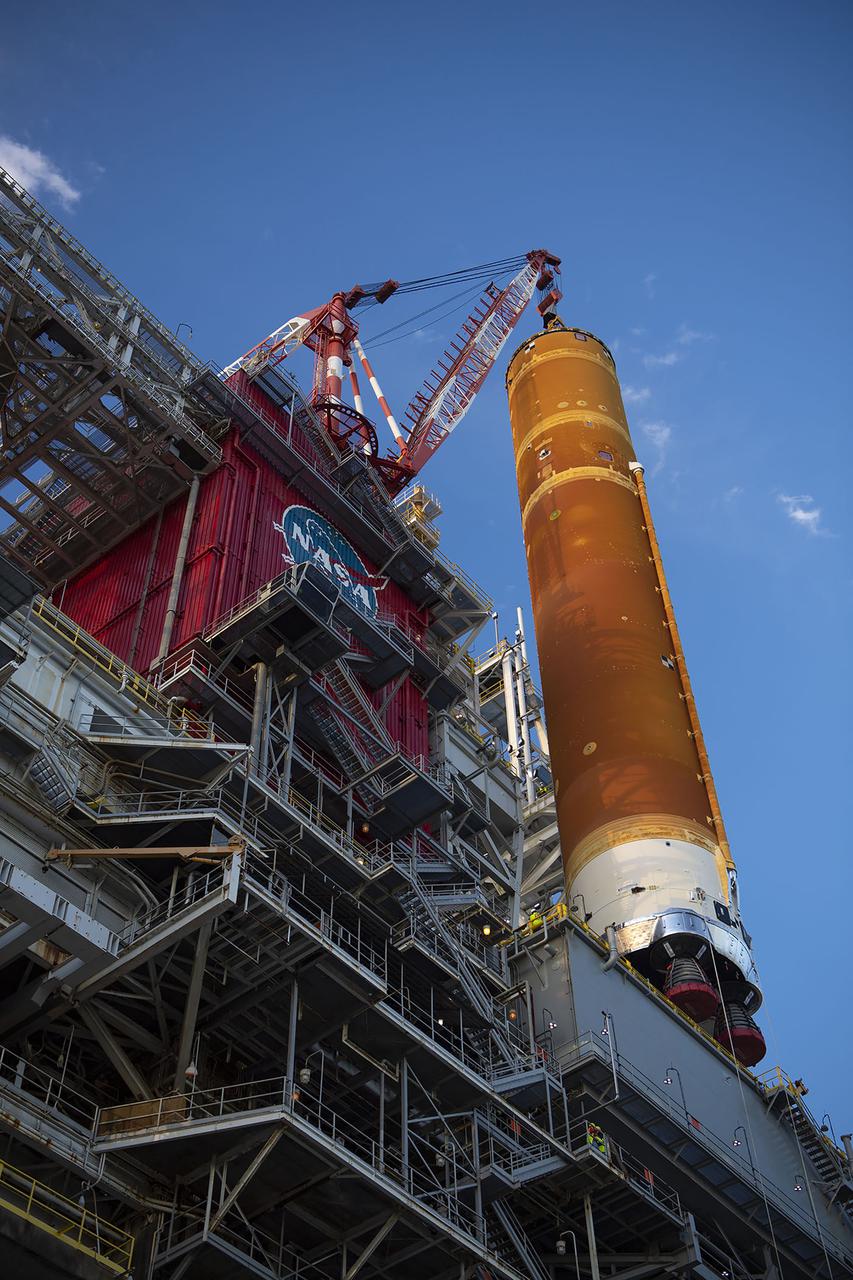
Following a successful Green Run hot fire at NASA’s Stennis Space Center near Bay St. Louis, Mississippi, on March 18, members of a blended team work April 19-20 to remove the first core stage of the agency’s Space Launch System (SLS) rocket from the B-2 Test Stand. The work required crews to lift the core stage from its vertical placement in the stand and lower it to a horizontal position on the B-2 Test Stand tarmac. The stage now will be loaded on NASA’s Pegasus barge for transport to Kennedy, where it will be prepared for launch of the Artemis I mission. Removal of the largest rocket stage ever built by NASA followed completion of a series of eight Green Run tests over the past year. During the Green Run series, teams performed a comprehensive test of the stand’s sophisticated and integrated systems. Photo Credit: NASA
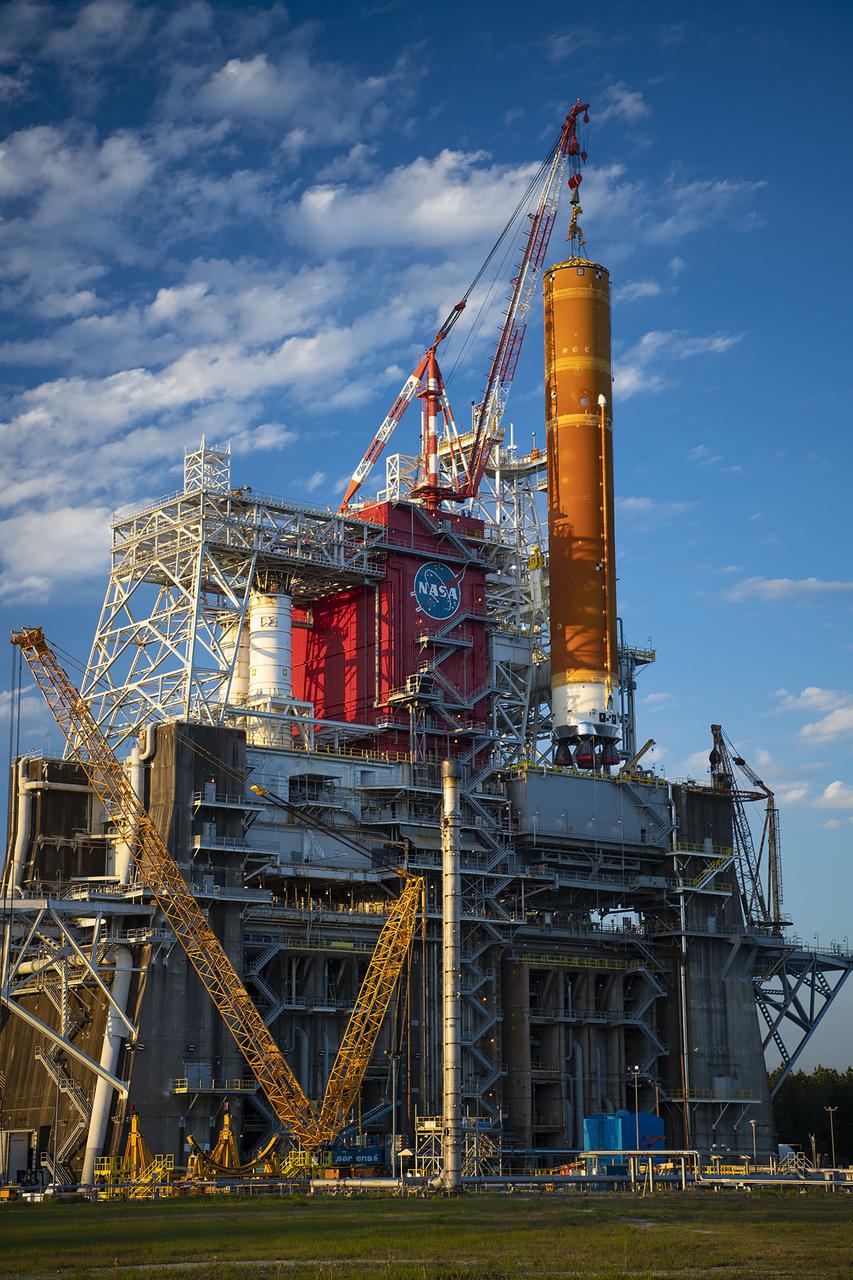
Following a successful Green Run hot fire at NASA’s Stennis Space Center near Bay St. Louis, Mississippi, on March 18, members of a blended team work April 19-20 to remove the first core stage of the agency’s Space Launch System (SLS) rocket from the B-2 Test Stand. The work required crews to lift the core stage from its vertical placement in the stand and lower it to a horizontal position on the B-2 Test Stand tarmac. The stage now will be loaded on NASA’s Pegasus barge for transport to Kennedy, where it will be prepared for launch of the Artemis I mission. Removal of the largest rocket stage ever built by NASA followed completion of a series of eight Green Run tests over the past year. During the Green Run series, teams performed a comprehensive test of the stand’s sophisticated and integrated systems. Photo Credit: NASA
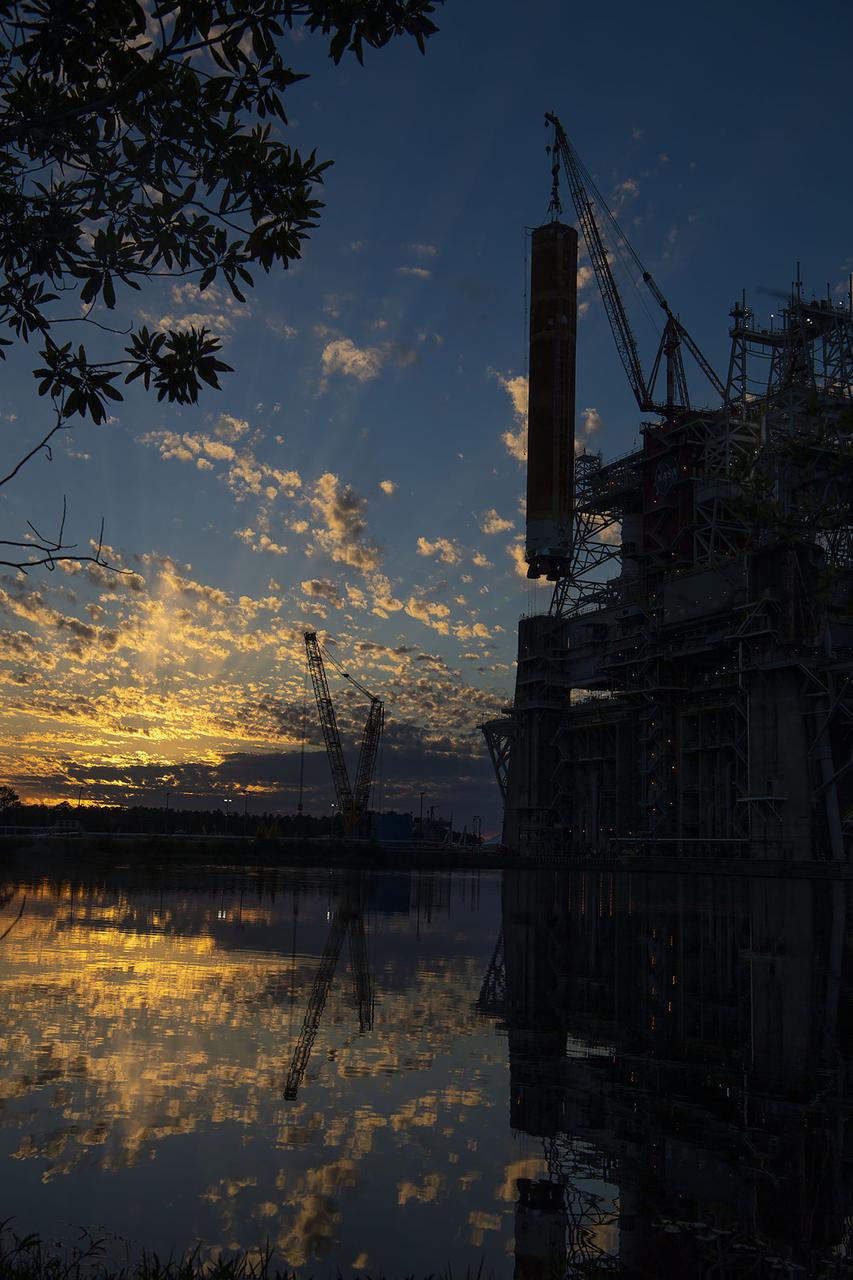
Following a successful Green Run hot fire at NASA’s Stennis Space Center near Bay St. Louis, Mississippi, on March 18, members of a blended team work April 19-20 to remove the first core stage of the agency’s Space Launch System (SLS) rocket from the B-2 Test Stand. The work required crews to lift the core stage from its vertical placement in the stand and lower it to a horizontal position on the B-2 Test Stand tarmac. The stage now will be loaded on NASA’s Pegasus barge for transport to Kennedy, where it will be prepared for launch of the Artemis I mission. Removal of the largest rocket stage ever built by NASA followed completion of a series of eight Green Run tests over the past year. During the Green Run series, teams performed a comprehensive test of the stand’s sophisticated and integrated systems. Photo Credit: NASA
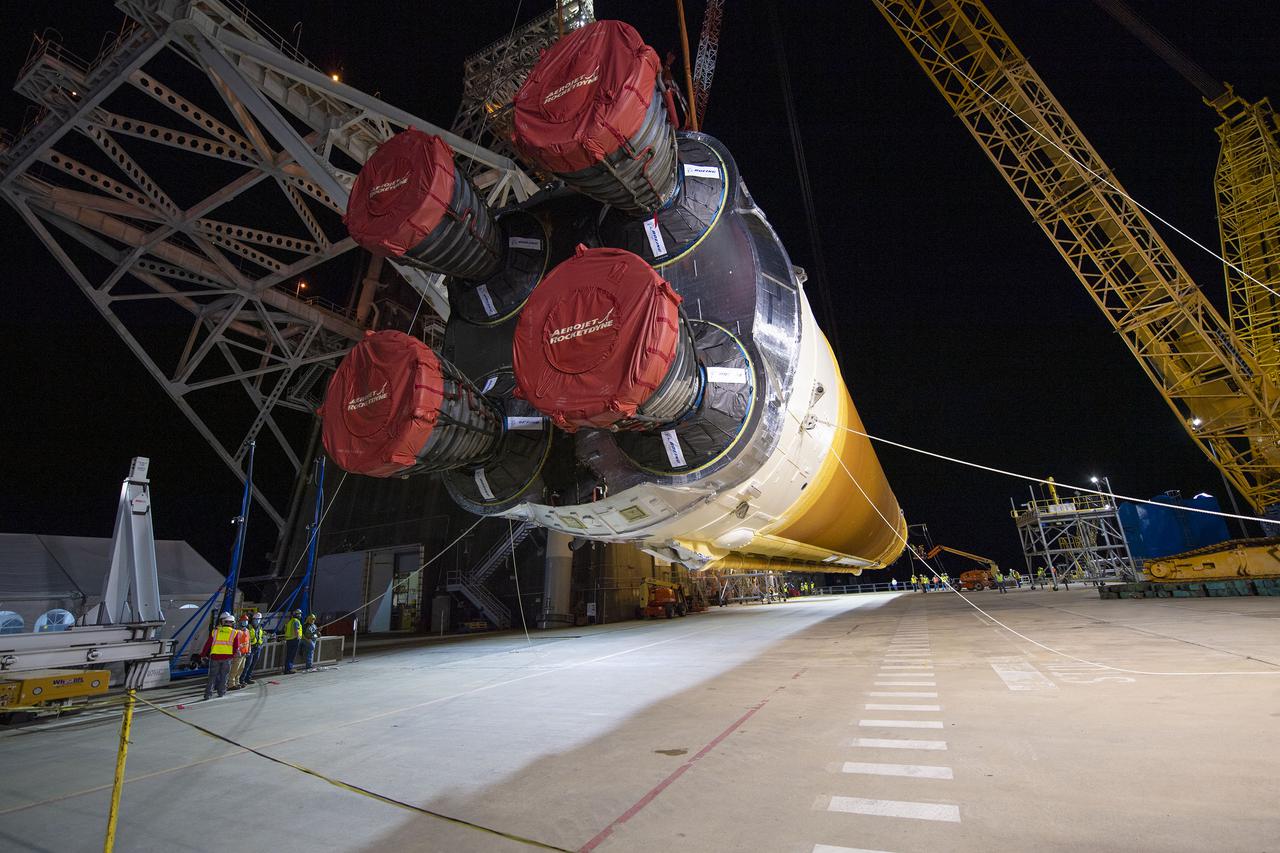
Following a successful Green Run hot fire at NASA’s Stennis Space Center near Bay St. Louis, Mississippi, on March 18, members of a blended team work April 19-20 to remove the first core stage of the agency’s Space Launch System (SLS) rocket from the B-2 Test Stand. The work required crews to lift the core stage from its vertical placement in the stand and lower it to a horizontal position on the B-2 Test Stand tarmac. The stage now will be loaded on NASA’s Pegasus barge for transport to Kennedy, where it will be prepared for launch of the Artemis I mission. Removal of the largest rocket stage ever built by NASA followed completion of a series of eight Green Run tests over the past year. During the Green Run series, teams performed a comprehensive test of the stand’s sophisticated and integrated systems. Photo Credit: NASA
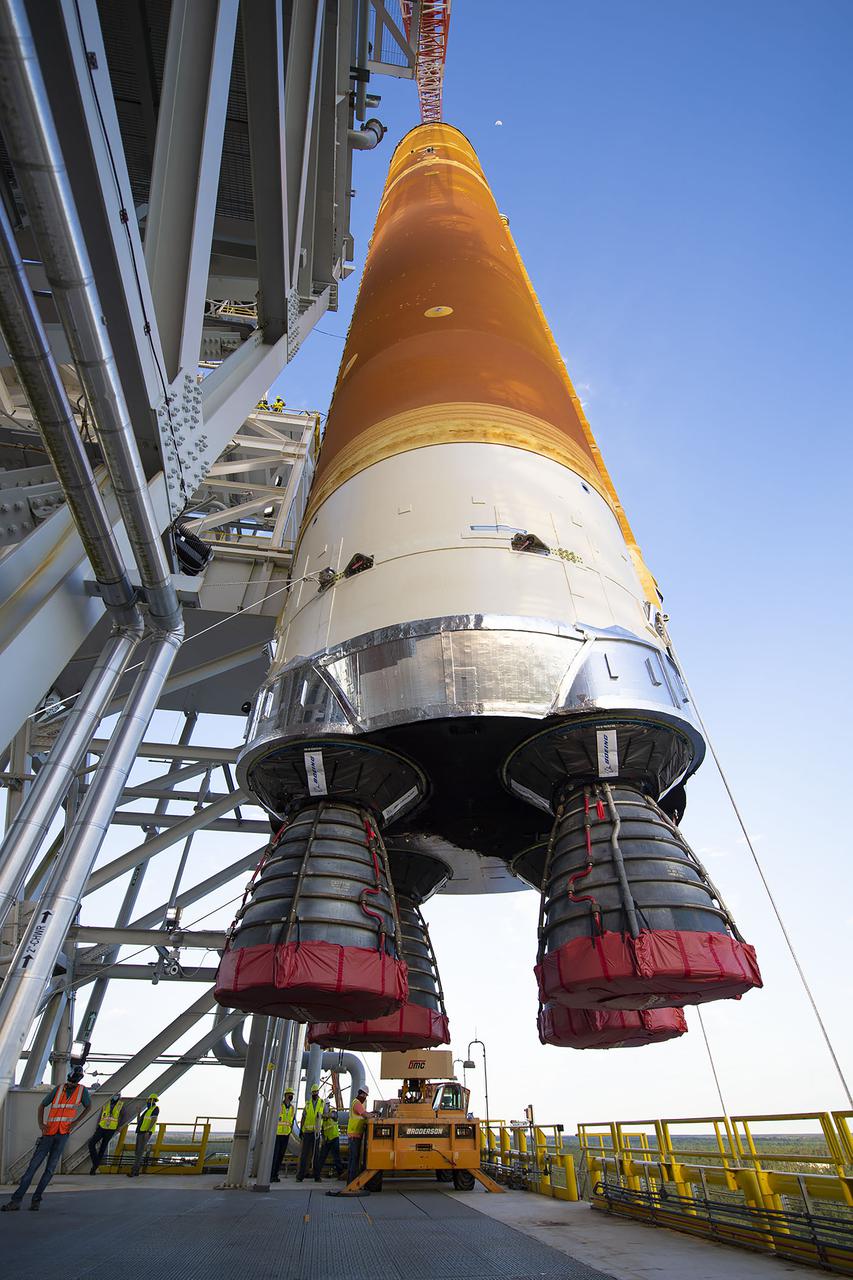
Following a successful Green Run hot fire at NASA’s Stennis Space Center near Bay St. Louis, Mississippi, on March 18, members of a blended team work April 19-20 to remove the first core stage of the agency’s Space Launch System (SLS) rocket from the B-2 Test Stand. The work required crews to lift the core stage from its vertical placement in the stand and lower it to a horizontal position on the B-2 Test Stand tarmac. The stage now will be loaded on NASA’s Pegasus barge for transport to Kennedy, where it will be prepared for launch of the Artemis I mission. Removal of the largest rocket stage ever built by NASA followed completion of a series of eight Green Run tests over the past year. During the Green Run series, teams performed a comprehensive test of the stand’s sophisticated and integrated systems. Photo Credit: NASA

Following a successful Green Run hot fire at NASA’s Stennis Space Center near Bay St. Louis, Mississippi, on March 18, members of a blended team work April 19-20 to remove the first core stage of the agency’s Space Launch System (SLS) rocket from the B-2 Test Stand. The work required crews to lift the core stage from its vertical placement in the stand and lower it to a horizontal position on the B-2 Test Stand tarmac. The stage now will be loaded on NASA’s Pegasus barge for transport to Kennedy, where it will be prepared for launch of the Artemis I mission. Removal of the largest rocket stage ever built by NASA followed completion of a series of eight Green Run tests over the past year. During the Green Run series, teams performed a comprehensive test of the stand’s sophisticated and integrated systems. Photo Credit: NASA
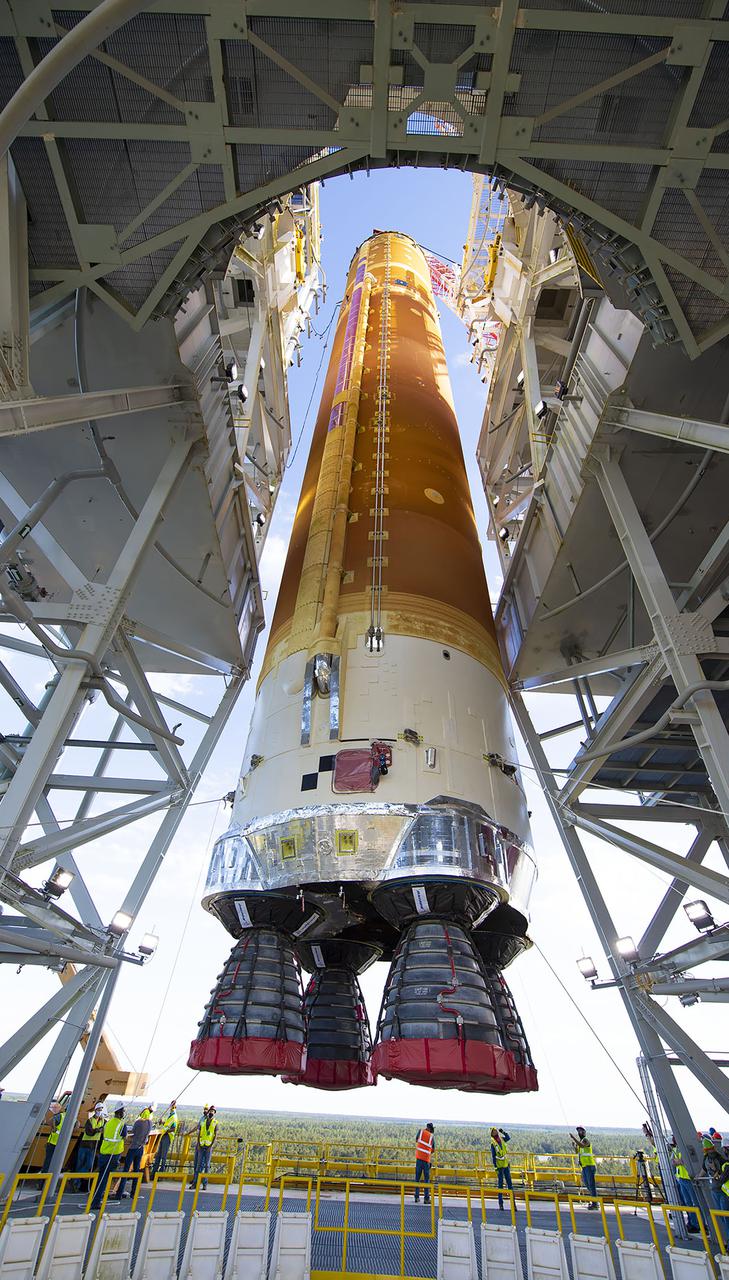
Following a successful Green Run hot fire at NASA’s Stennis Space Center near Bay St. Louis, Mississippi, on March 18, members of a blended team work April 19-20 to remove the first core stage of the agency’s Space Launch System (SLS) rocket from the B-2 Test Stand. The work required crews to lift the core stage from its vertical placement in the stand and lower it to a horizontal position on the B-2 Test Stand tarmac. The stage now will be loaded on NASA’s Pegasus barge for transport to Kennedy, where it will be prepared for launch of the Artemis I mission. Removal of the largest rocket stage ever built by NASA followed completion of a series of eight Green Run tests over the past year. During the Green Run series, teams performed a comprehensive test of the stand’s sophisticated and integrated systems. Photo Credit: NASA
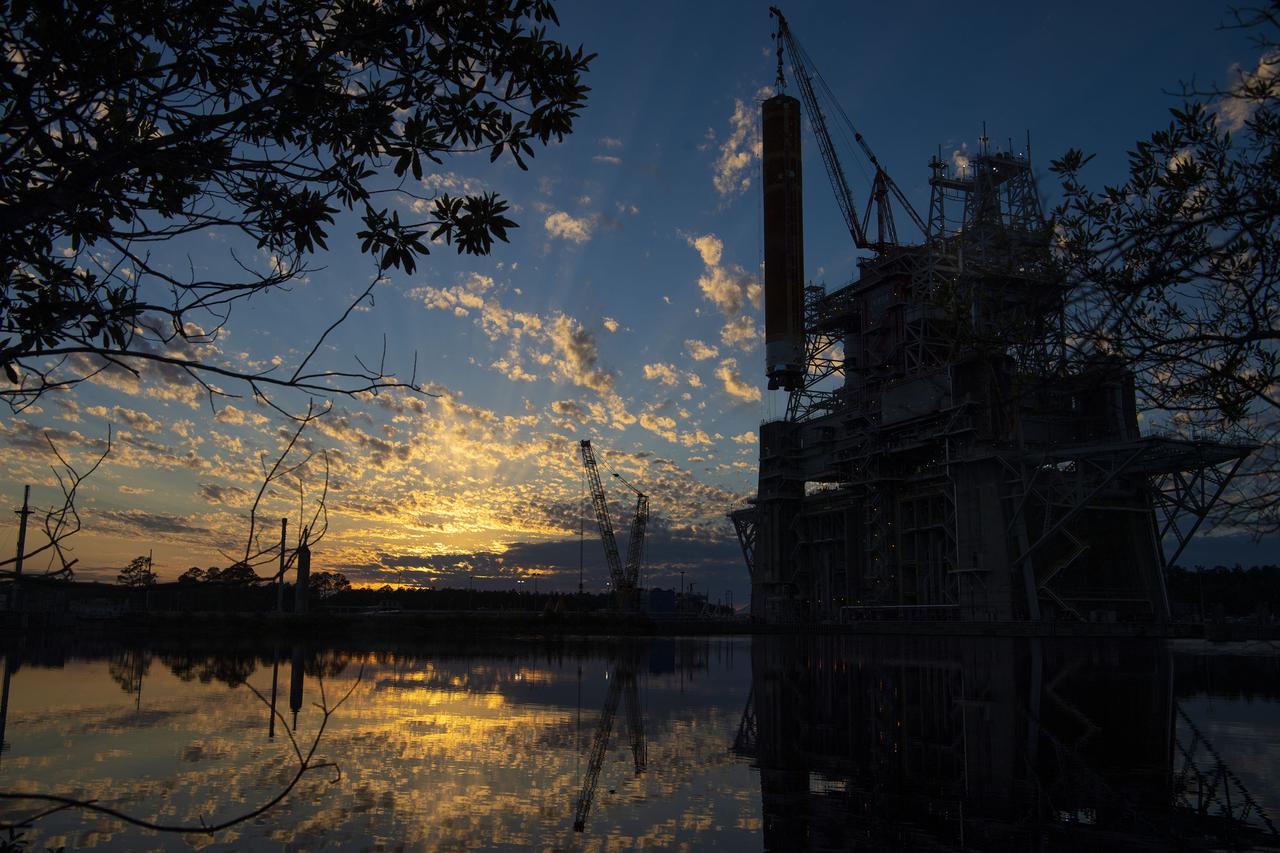
Following a successful Green Run hot fire at NASA’s Stennis Space Center near Bay St. Louis, Mississippi, on March 18, members of a blended team work April 19-20 to remove the first core stage of the agency’s Space Launch System (SLS) rocket from the B-2 Test Stand. The work required crews to lift the core stage from its vertical placement in the stand and lower it to a horizontal position on the B-2 Test Stand tarmac. The stage now will be loaded on NASA’s Pegasus barge for transport to Kennedy, where it will be prepared for launch of the Artemis I mission. Removal of the largest rocket stage ever built by NASA followed completion of a series of eight Green Run tests over the past year. During the Green Run series, teams performed a comprehensive test of the stand’s sophisticated and integrated systems. Photo Credit: NASA
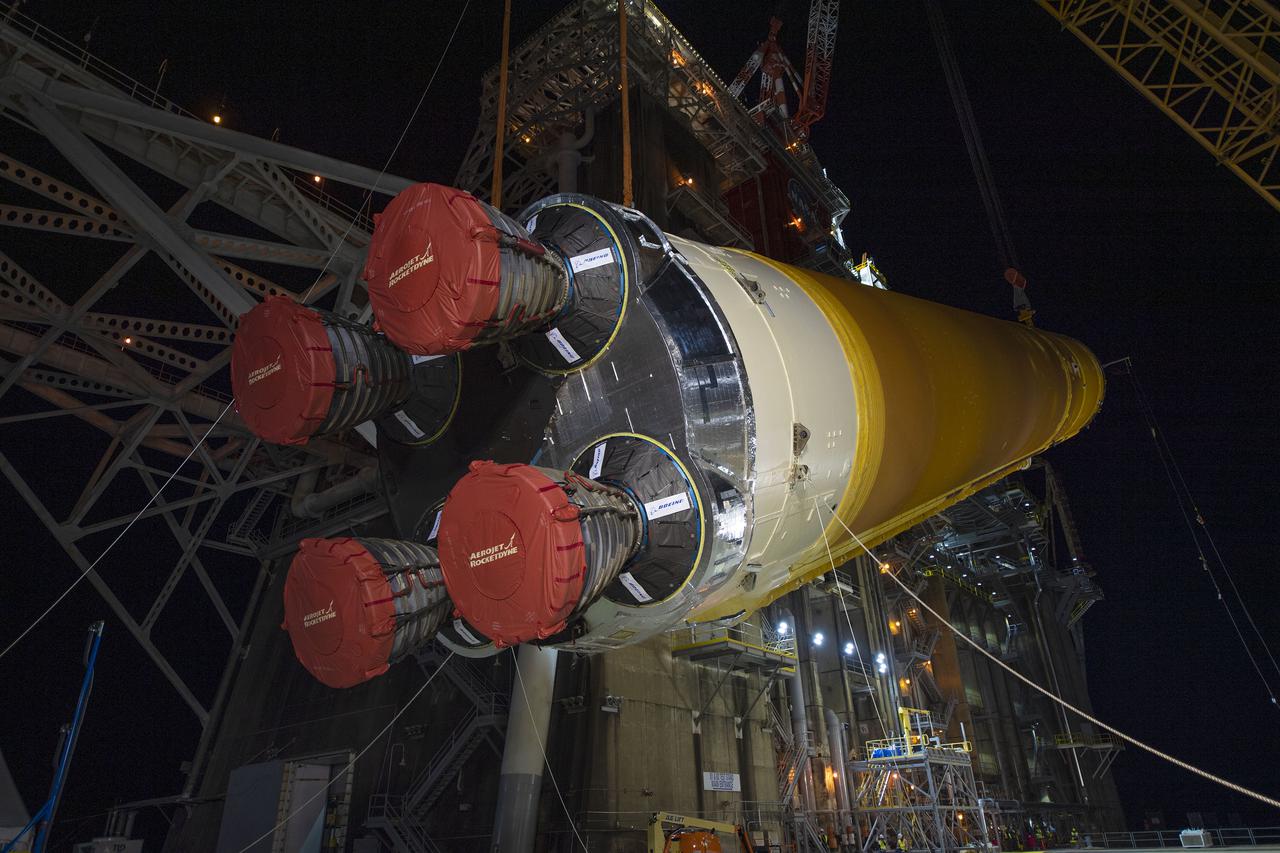
Following a successful Green Run hot fire at NASA’s Stennis Space Center near Bay St. Louis, Mississippi, on March 18, members of a blended team work April 19-20 to remove the first core stage of the agency’s Space Launch System (SLS) rocket from the B-2 Test Stand. The work required crews to lift the core stage from its vertical placement in the stand and lower it to a horizontal position on the B-2 Test Stand tarmac. The stage now will be loaded on NASA’s Pegasus barge for transport to Kennedy, where it will be prepared for launch of the Artemis I mission. Removal of the largest rocket stage ever built by NASA followed completion of a series of eight Green Run tests over the past year. During the Green Run series, teams performed a comprehensive test of the stand’s sophisticated and integrated systems. Photo Credit: NASA
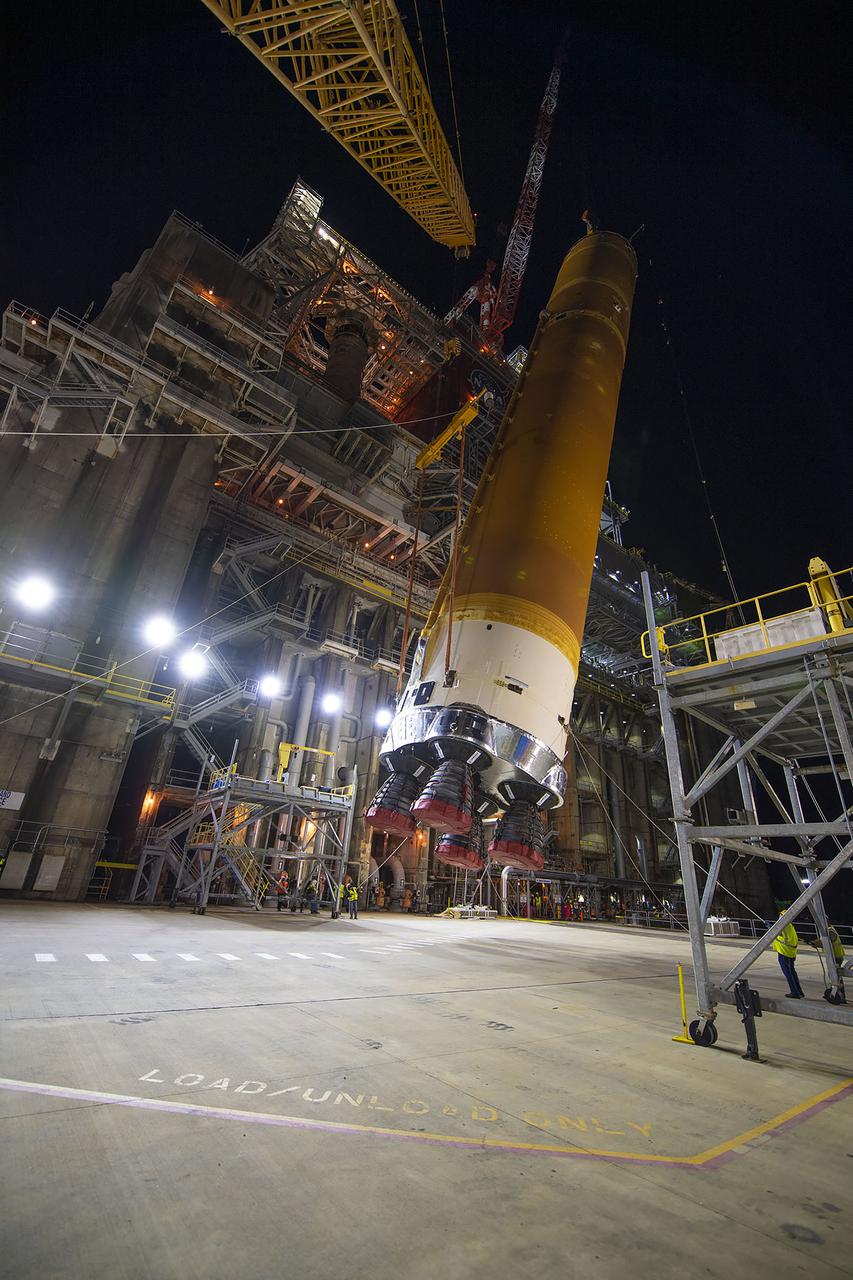
Following a successful Green Run hot fire at NASA’s Stennis Space Center near Bay St. Louis, Mississippi, on March 18, members of a blended team work April 19-20 to remove the first core stage of the agency’s Space Launch System (SLS) rocket from the B-2 Test Stand. The work required crews to lift the core stage from its vertical placement in the stand and lower it to a horizontal position on the B-2 Test Stand tarmac. The stage now will be loaded on NASA’s Pegasus barge for transport to Kennedy, where it will be prepared for launch of the Artemis I mission. Removal of the largest rocket stage ever built by NASA followed completion of a series of eight Green Run tests over the past year. During the Green Run series, teams performed a comprehensive test of the stand’s sophisticated and integrated systems. Photo Credit: NASA
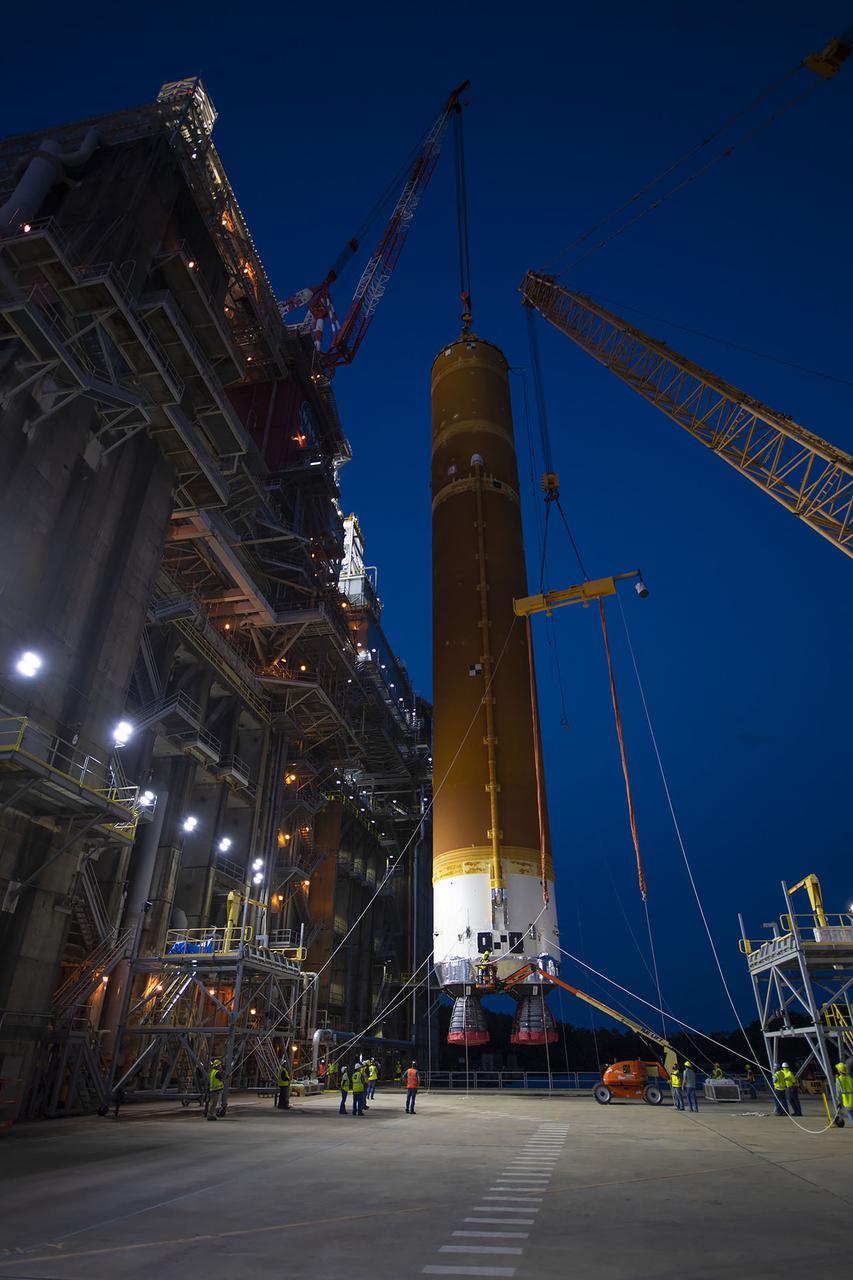
Following a successful Green Run hot fire at NASA’s Stennis Space Center near Bay St. Louis, Mississippi, on March 18, members of a blended team work April 19-20 to remove the first core stage of the agency’s Space Launch System (SLS) rocket from the B-2 Test Stand. The work required crews to lift the core stage from its vertical placement in the stand and lower it to a horizontal position on the B-2 Test Stand tarmac. The stage now will be loaded on NASA’s Pegasus barge for transport to Kennedy, where it will be prepared for launch of the Artemis I mission. Removal of the largest rocket stage ever built by NASA followed completion of a series of eight Green Run tests over the past year. During the Green Run series, teams performed a comprehensive test of the stand’s sophisticated and integrated systems. Photo Credit: NASA
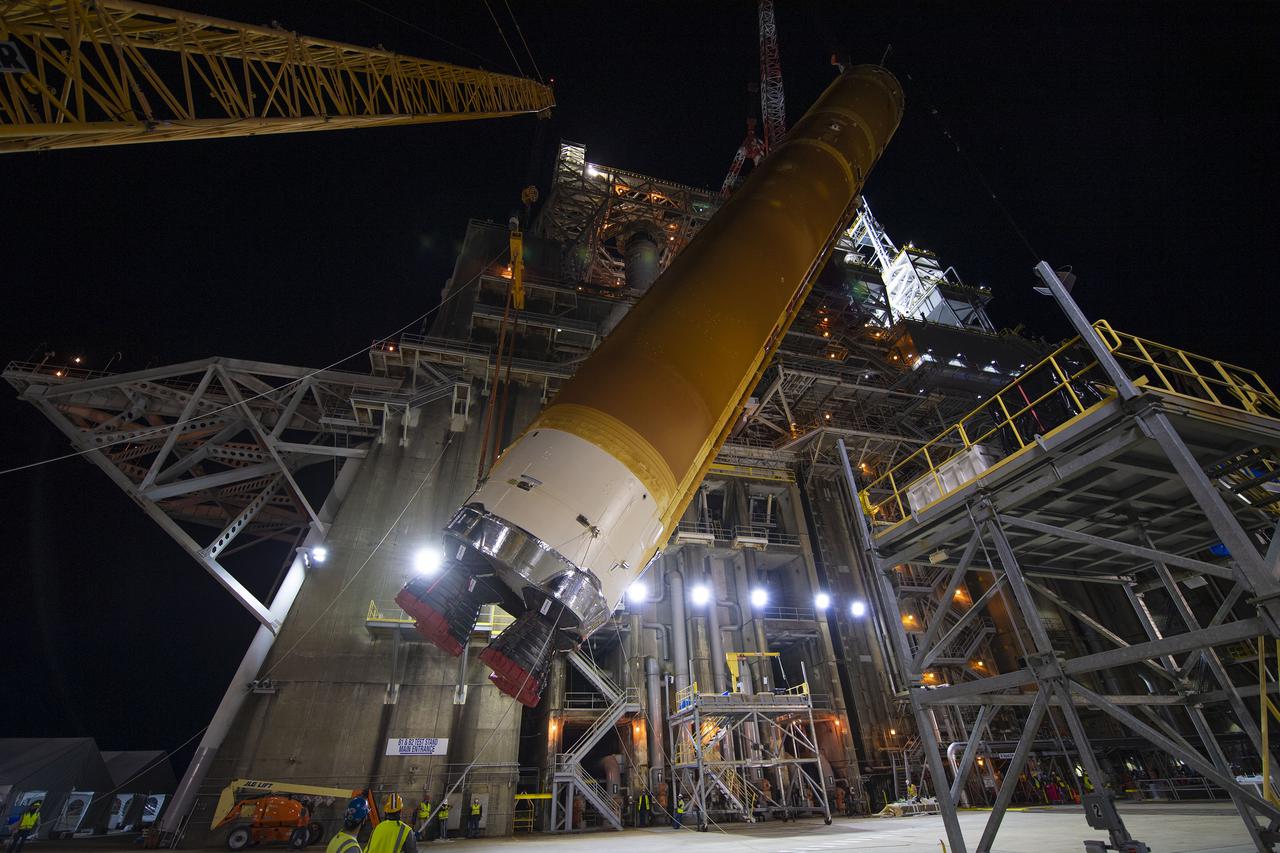
Following a successful Green Run hot fire at NASA’s Stennis Space Center near Bay St. Louis, Mississippi, on March 18, members of a blended team work April 19-20 to remove the first core stage of the agency’s Space Launch System (SLS) rocket from the B-2 Test Stand. The work required crews to lift the core stage from its vertical placement in the stand and lower it to a horizontal position on the B-2 Test Stand tarmac. The stage now will be loaded on NASA’s Pegasus barge for transport to Kennedy, where it will be prepared for launch of the Artemis I mission. Removal of the largest rocket stage ever built by NASA followed completion of a series of eight Green Run tests over the past year. During the Green Run series, teams performed a comprehensive test of the stand’s sophisticated and integrated systems. Photo Credit: NASA
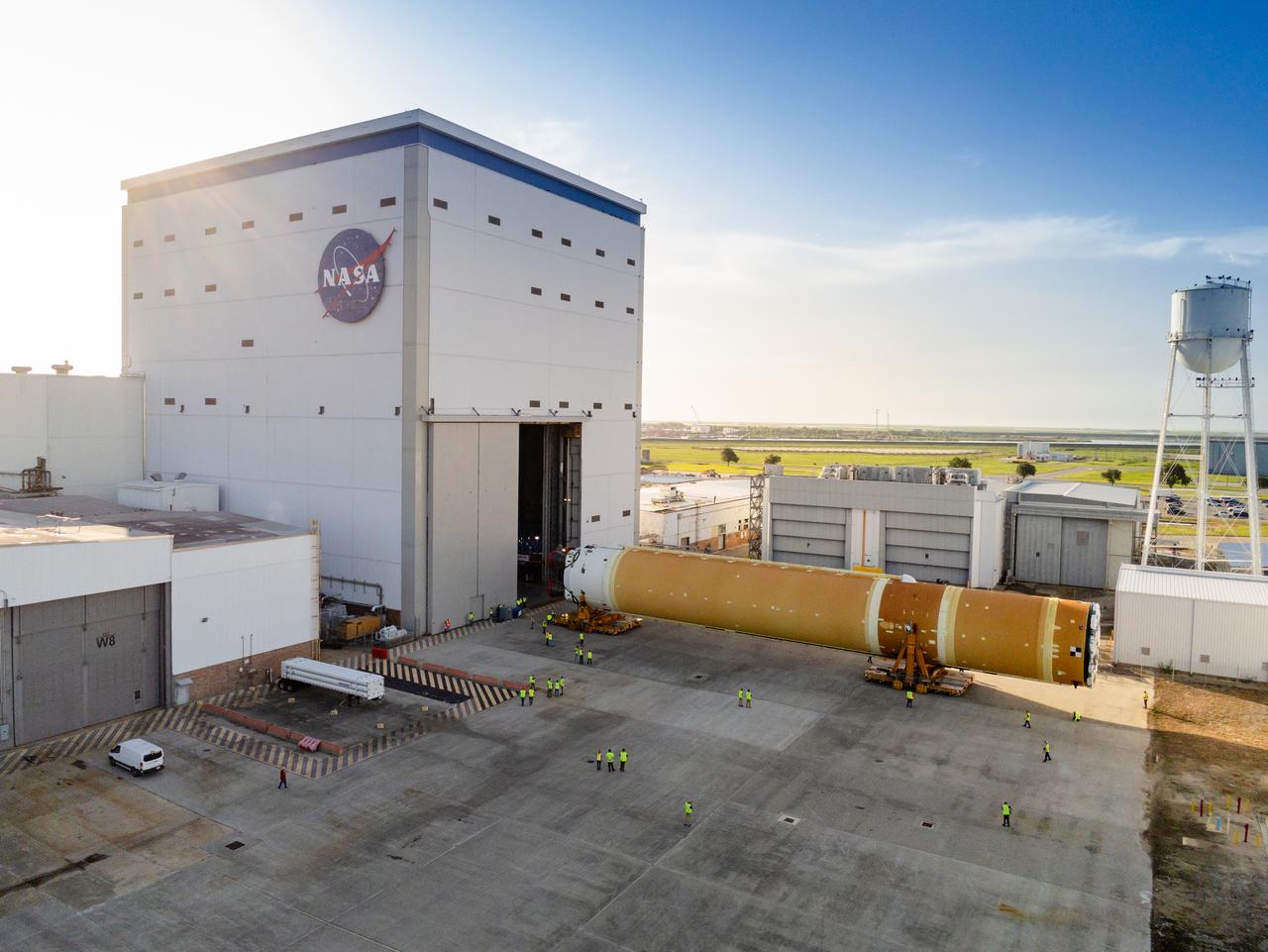
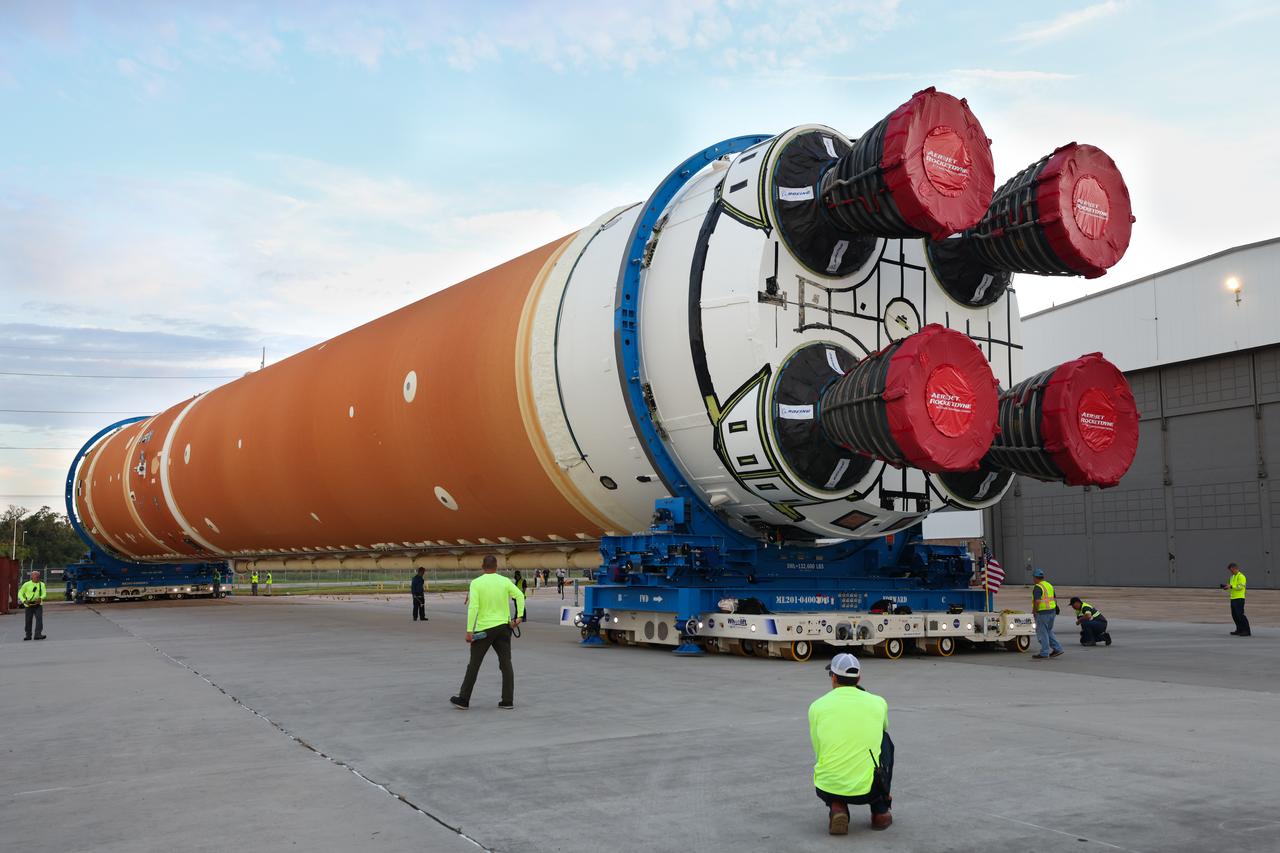
This photo shows NASA and Boeing, the SLS core stage lead contractor, preparing the SLS (Space Launch System) rocket core stage for shipment at NASA’s Michoud Assembly Facility in New Orleans. On July 6, NASA and Boeing moved the Artemis II rocket stage to Building 110. The move comes as teams prepare to roll the massive rocket stage with its four RS-25 engines to the agency’s Pegasus barge for delivery to NASA’s Kennedy Space Center in Florida in mid-July. Prior to the move, technicians began removing external access stands, or scaffolding, surrounding the core stage to assess the interior elements, including its complex avionics and flight propulsion systems. The stage is fully manufactured at NASA Michoud.
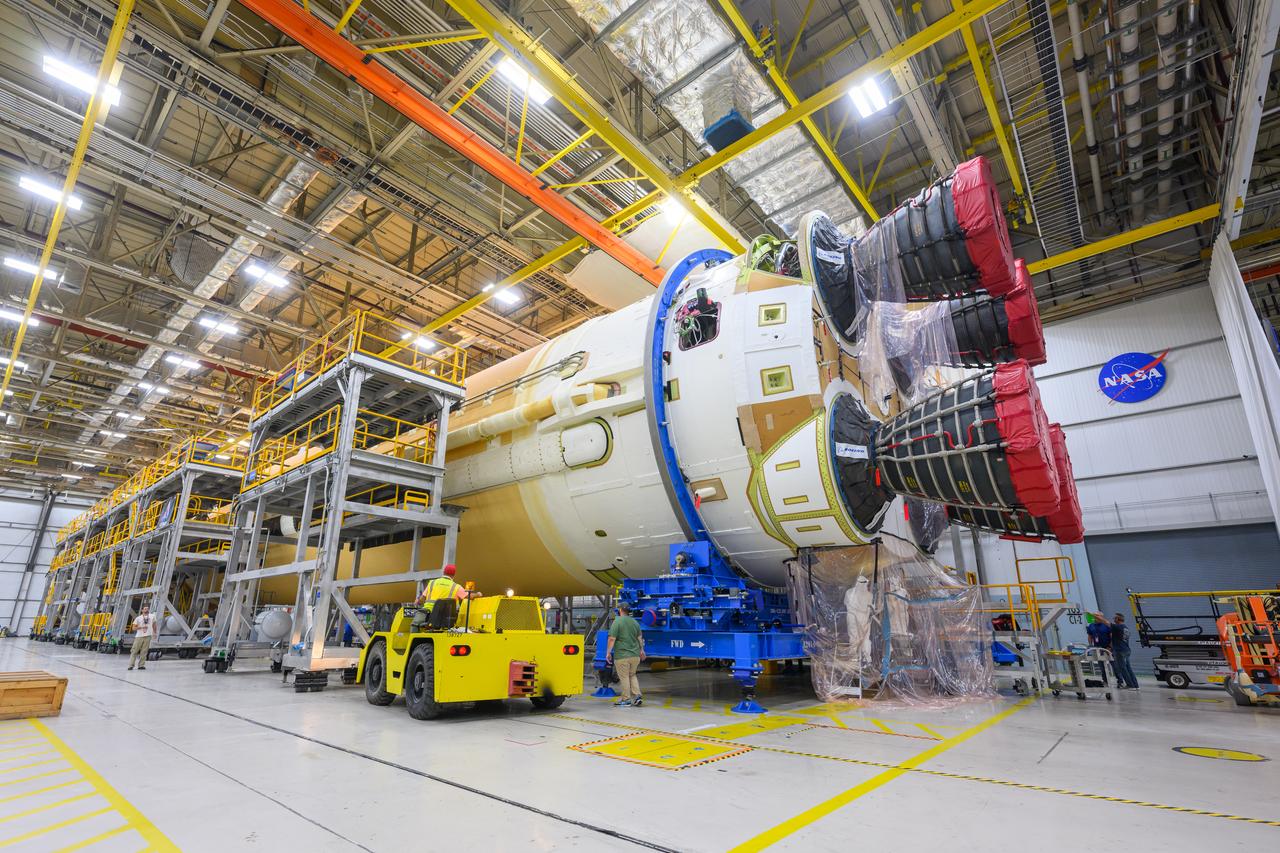
This photo shows NASA and Boeing, the SLS core stage lead contractor, preparing the SLS (Space Launch System) rocket core stage for shipment at NASA’s Michoud Assembly Facility in New Orleans. On July 6, NASA and Boeing moved the Artemis II rocket stage to Building 110. The move comes as teams prepare to roll the massive rocket stage with its four RS-25 engines to the agency’s Pegasus barge for delivery to NASA’s Kennedy Space Center in Florida in mid-July. Prior to the move, technicians began removing external access stands, or scaffolding, surrounding the core stage to assess the interior elements, including its complex avionics and flight propulsion systems. The stage is fully manufactured at NASA Michoud.
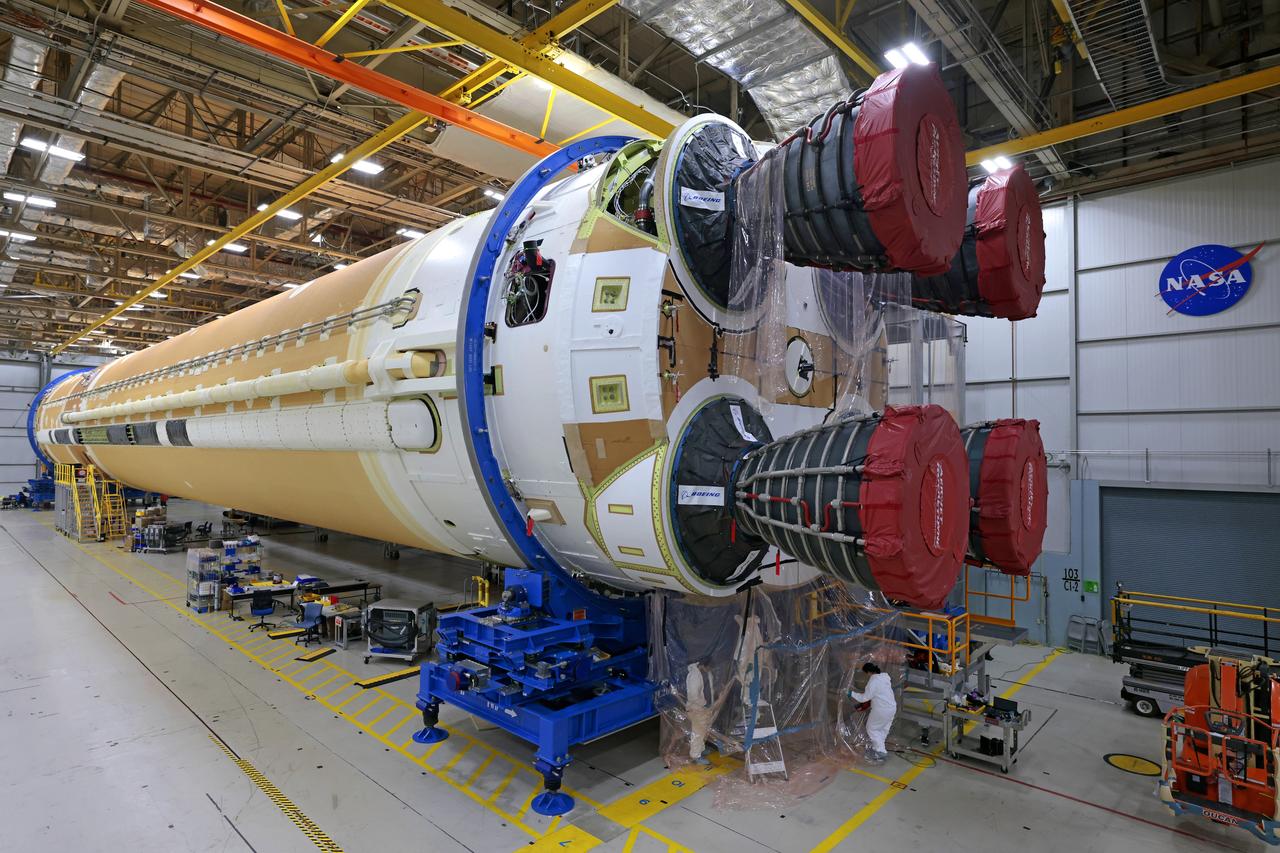
This photo shows NASA and Boeing, the SLS core stage lead contractor, preparing the SLS (Space Launch System) rocket core stage for shipment at NASA’s Michoud Assembly Facility in New Orleans. On July 6, NASA and Boeing moved the Artemis II rocket stage to Building 110. The move comes as teams prepare to roll the massive rocket stage with its four RS-25 engines to the agency’s Pegasus barge for delivery to NASA’s Kennedy Space Center in Florida in mid-July. Prior to the move, technicians began removing external access stands, or scaffolding, surrounding the core stage to assess the interior elements, including its complex avionics and flight propulsion systems. The stage is fully manufactured at NASA Michoud.
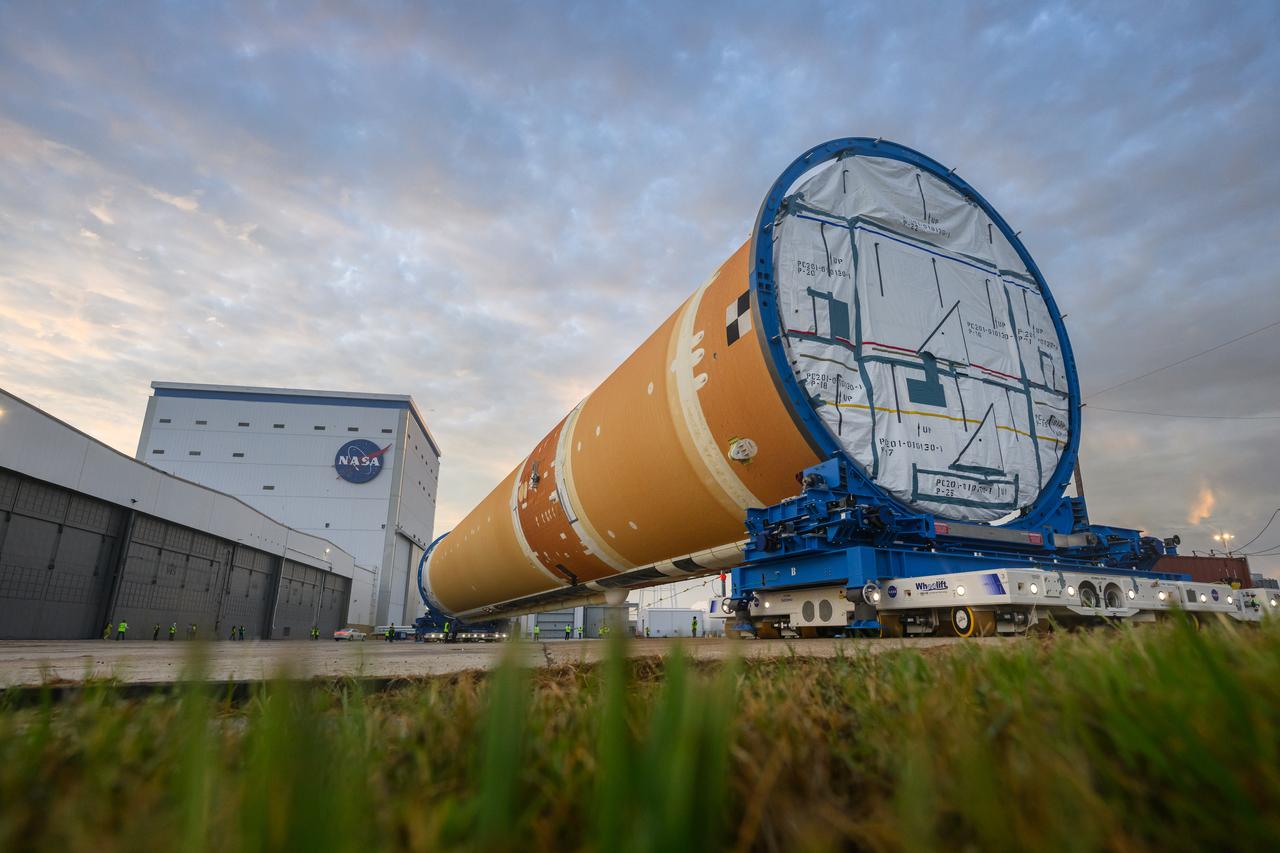
Teams at NASA’s Michoud Assembly Facility in New Orleans are preparing the core stage of the agency’s SLS (Space Launch System) for shipment to the agency’s Kennedy Space Center in Florida. The 212-foot-tall core stage and its four RS-25 engines will help power Artemis II, the first crewed mission of NASA’s Artemis campaign. Crews removed the external access stands, or scaffolding, in preparation for moving the rocket hardware to another area of the facility.
Teams at NASA’s Michoud Assembly Facility in New Orleans are preparing the core stage of the agency’s SLS (Space Launch System) for shipment to the agency’s Kennedy Space Center in Florida. The 212-foot-tall core stage and its four RS-25 engines will help power Artemis II, the first crewed mission of NASA’s Artemis campaign. Crews removed the external access stands, or scaffolding, in preparation for moving the rocket hardware to another area of the facility. Image credit: NASA/Michael DeMocker
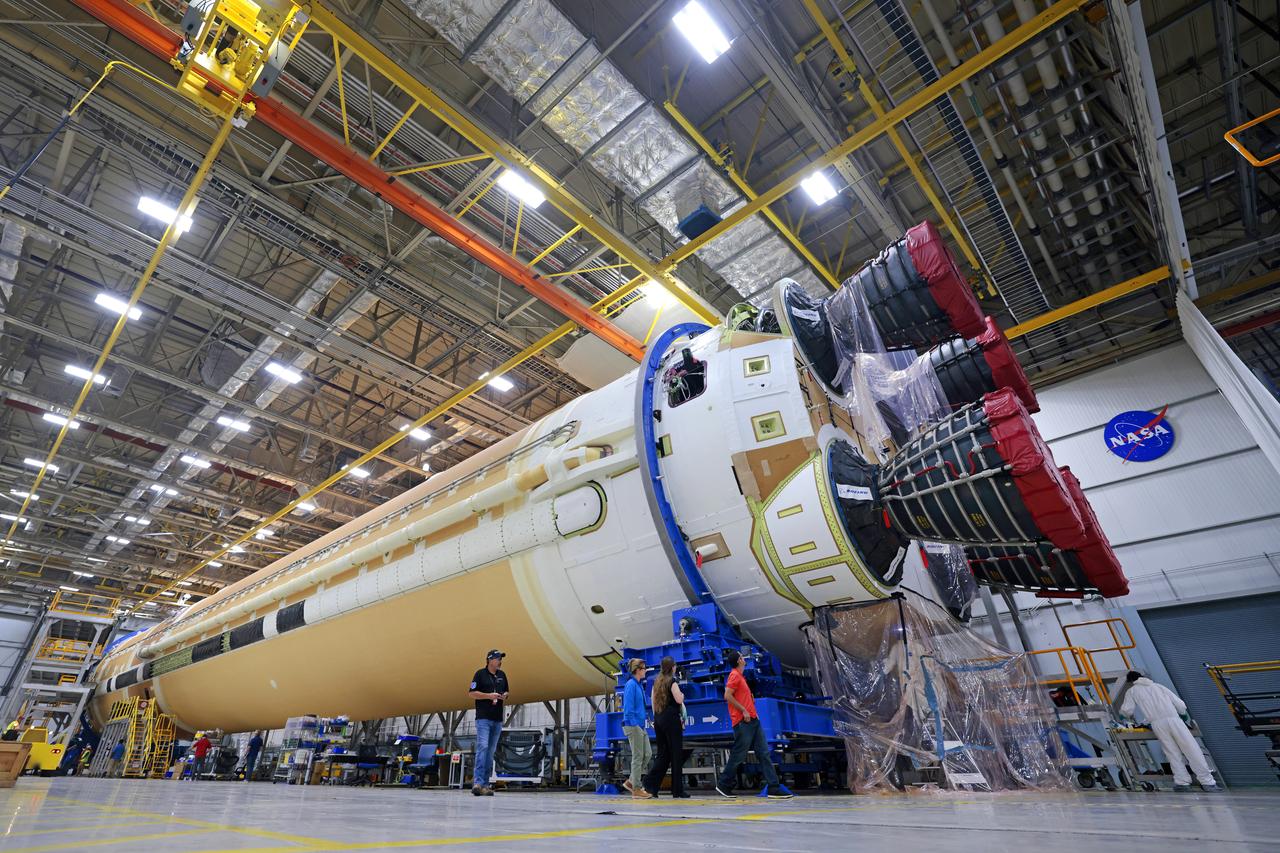
Teams at NASA’s Michoud Assembly Facility in New Orleans are preparing the core stage of the agency’s SLS (Space Launch System) for shipment to the agency’s Kennedy Space Center in Florida. The 212-foot-tall core stage and its four RS-25 engines will help power Artemis II, the first crewed mission of NASA’s Artemis campaign. Crews removed the external access stands, or scaffolding, in preparation for moving the rocket hardware to another area of the facility. Image credit: NASA/Michael DeMocker
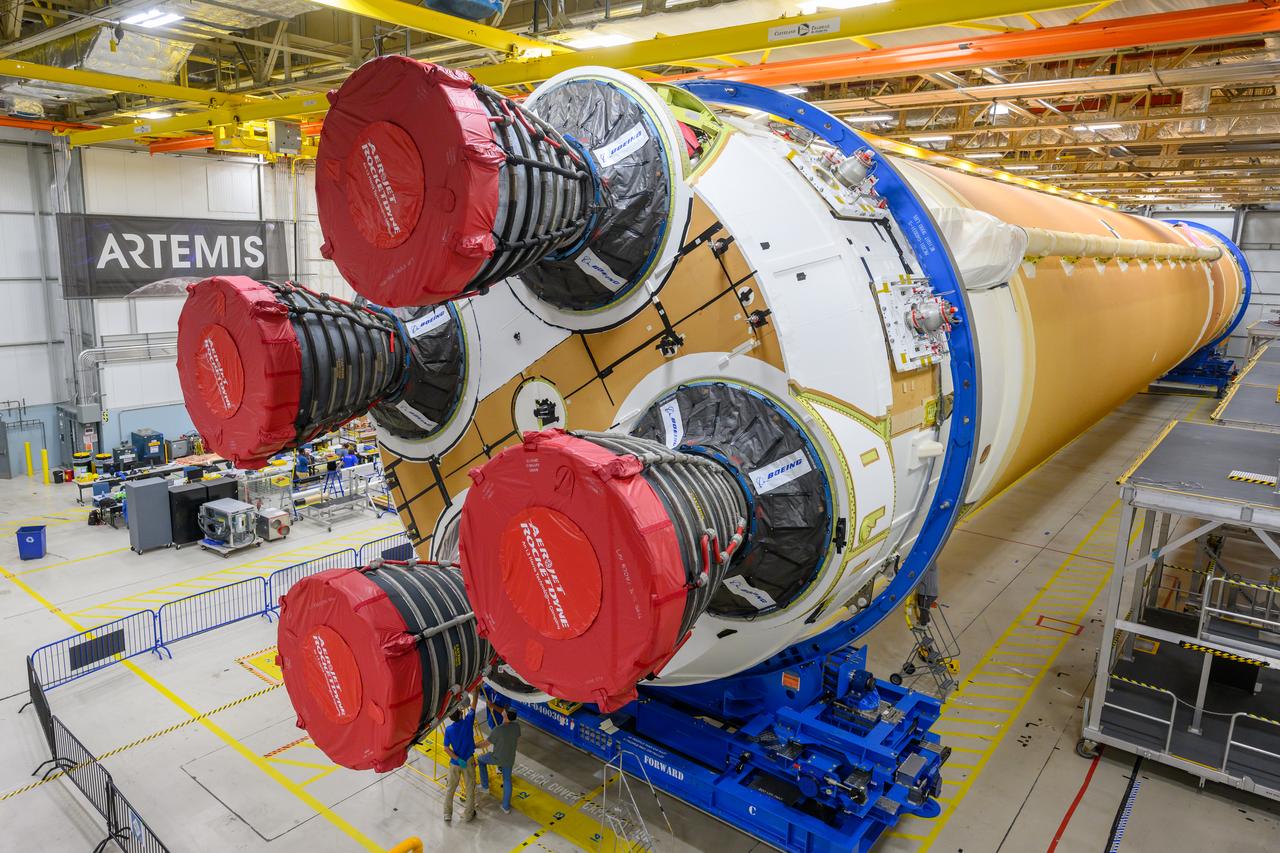
Teams at NASA’s Michoud Assembly Facility in New Orleans are preparing the core stage of the agency’s SLS (Space Launch System) for shipment to the agency’s Kennedy Space Center in Florida. The 212-foot-tall core stage and its four RS-25 engines will help power Artemis II, the first crewed mission of NASA’s Artemis campaign. Crews removed the external access stands, or scaffolding, in preparation for moving the rocket hardware to another area of the facility.
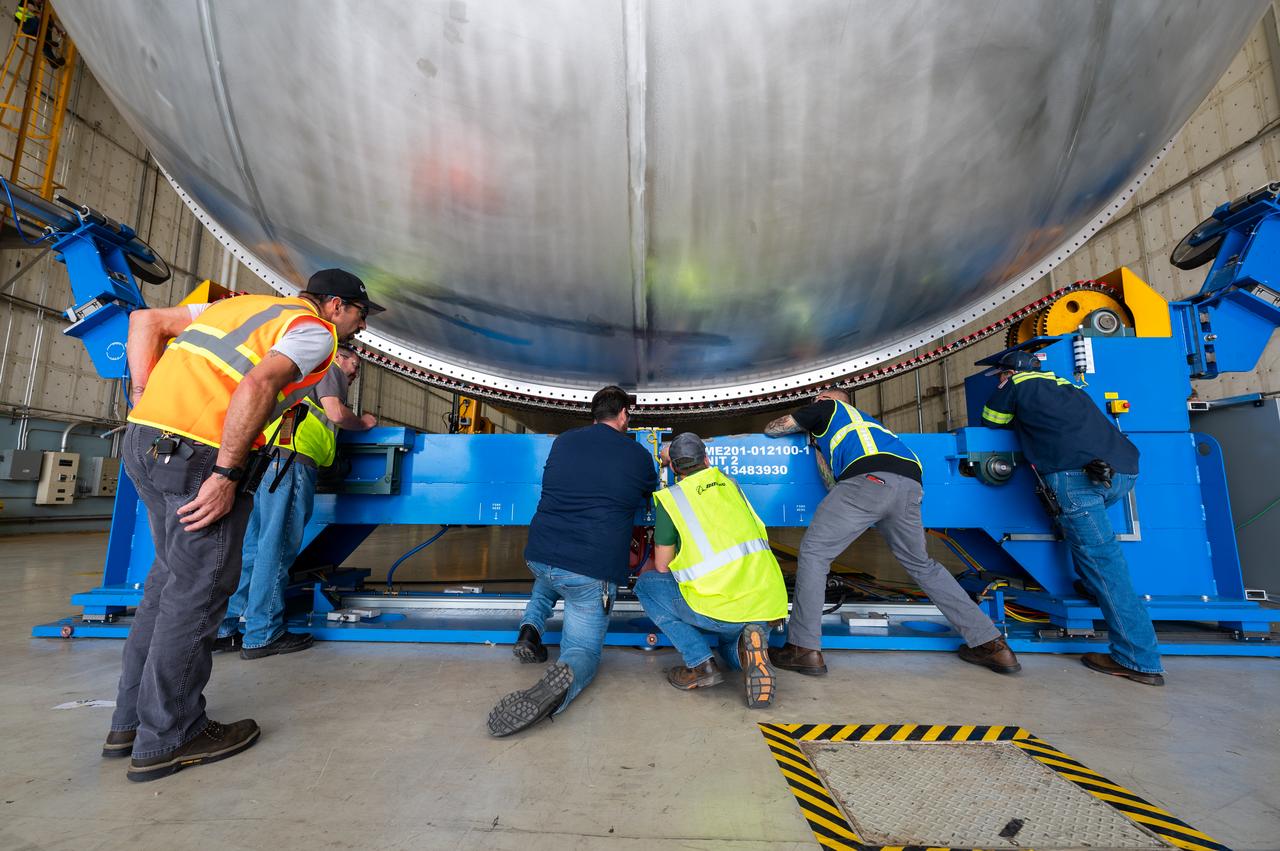
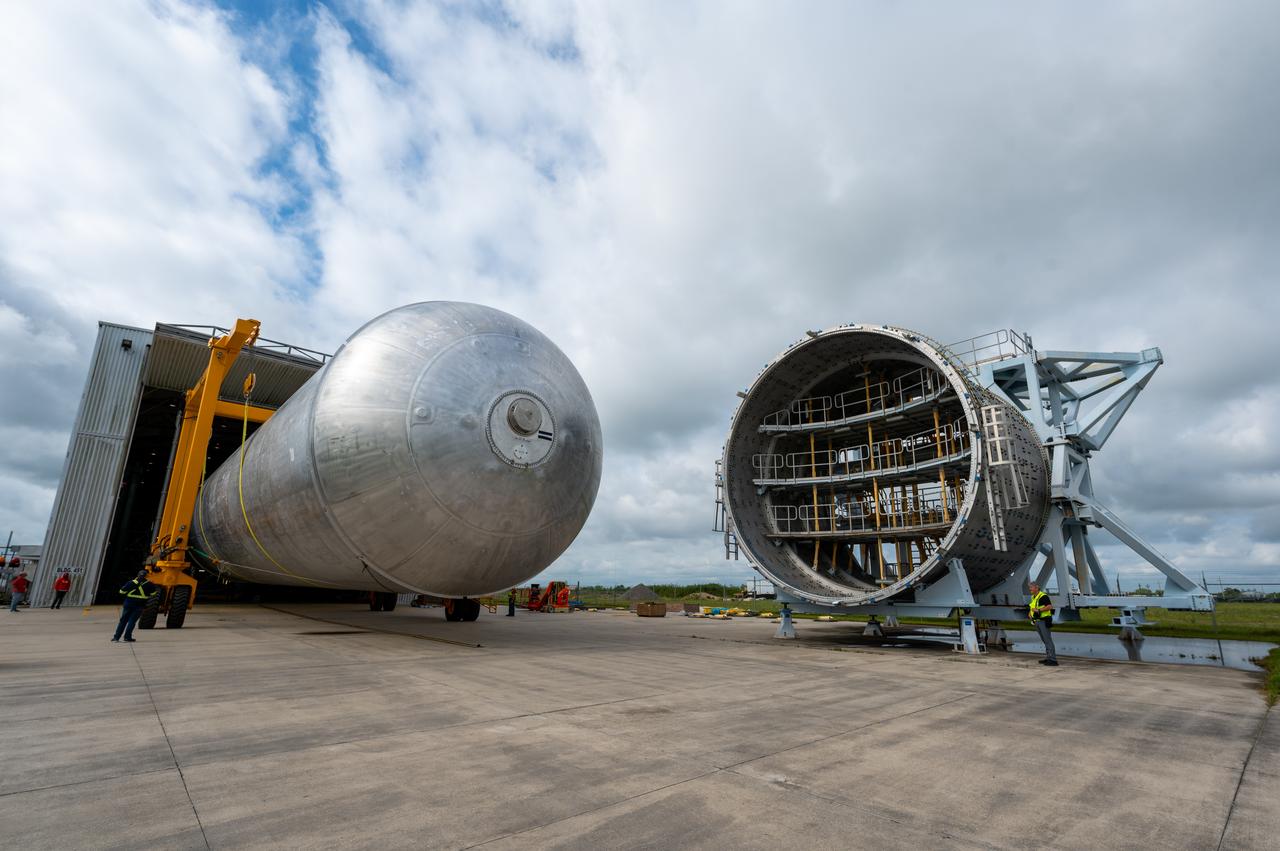
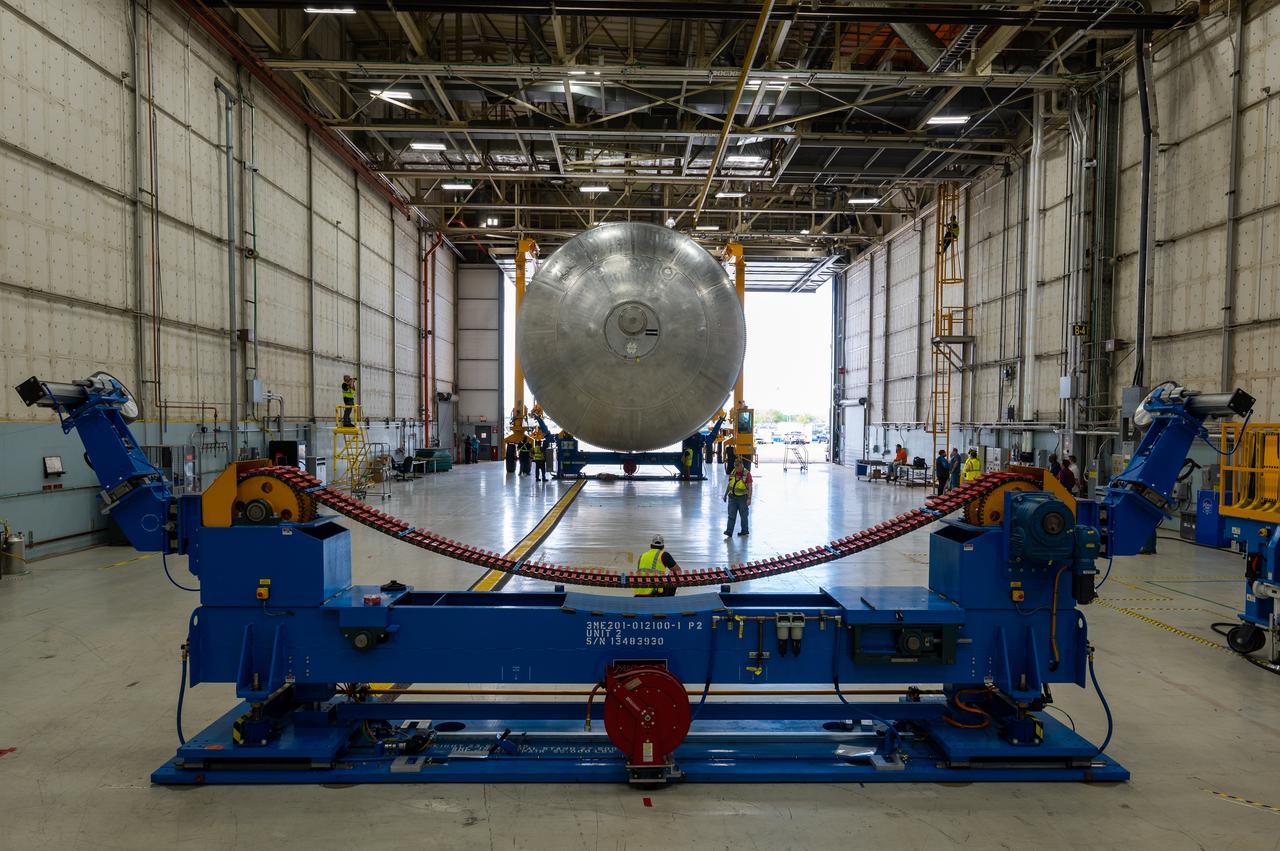
The core stage liquid hydrogen tank for the Artemis III mission completed proof testing, and technicians returned it to the main factory building at NASA’s Michoud Assembly Facility in New Orleans where it will undergo more outfitting. As part of proof testing, technicians apply a simple soap solution and check for leaks by observing any bubble formation on the welds. The technician removed the bubble solution with distilled water and then dried the area of application to prevent corrosion. To build the Space Launch System (SLS) rocket’s 130-foot core stage liquid hydrogen tank, engineers use robotic tools to weld five-barrel segments. This process results in a tank with around 1,900 feet, or more than six football fields, of welds that must be tested by hand. After the leak tests, the core stage lead, Boeing, pressurized the SLS tank to further ensure there were no leaks. After it passed proof testing, technicians moved the Artemis III liquid hydrogen tank to Michoud’s main factory. Soon, the technicians will prime and apply a foam-based thermal protection system that protects the tank during launch. Later, the tank will be joined with other parts of the core stage to form the entire 212-foot rocket stage with its four RS-25 engines that produce 2 million pounds of thrust to help launch the rocket. Artemis III will land the first astronauts on the lunar surface.
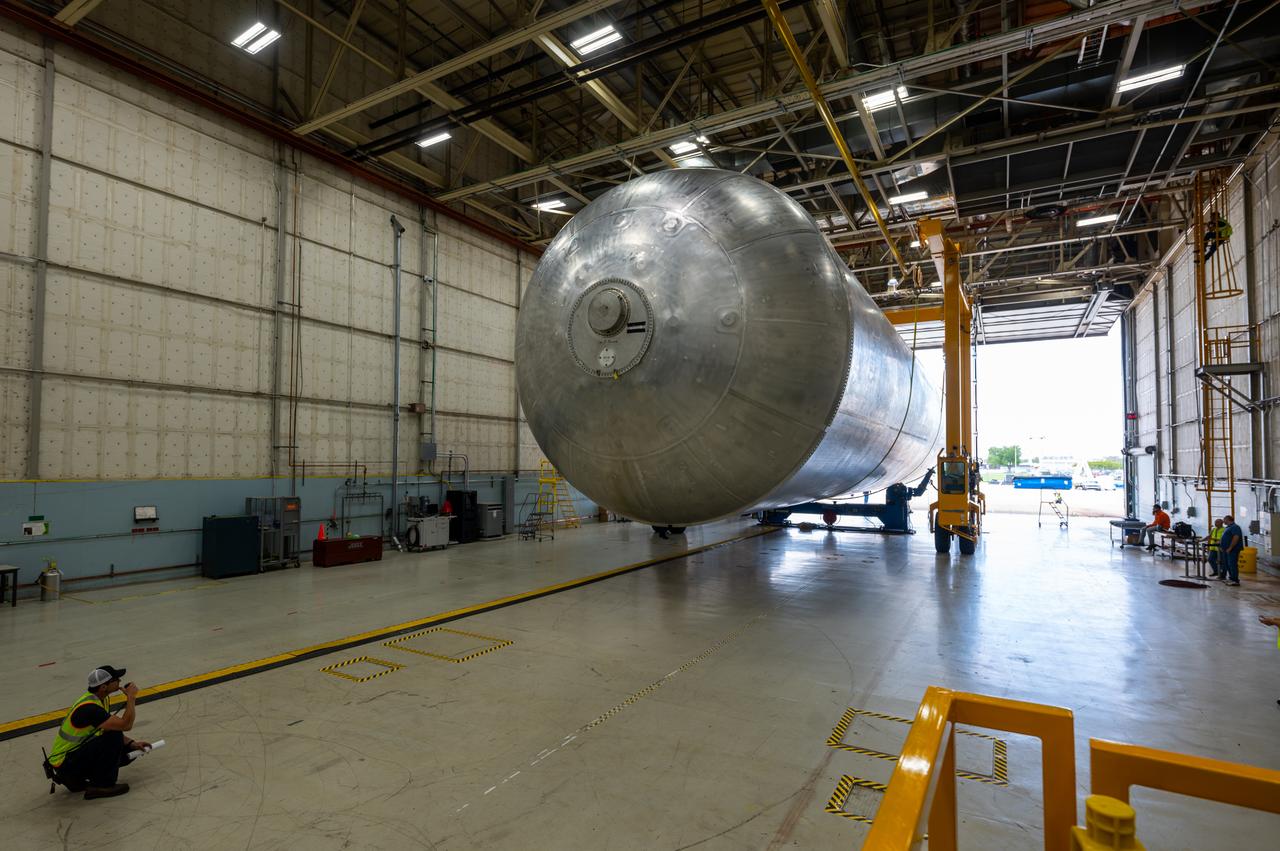
The core stage liquid hydrogen tank for the Artemis III mission completed proof testing, and technicians returned it to the main factory building at NASA’s Michoud Assembly Facility in New Orleans where it will undergo more outfitting. As part of proof testing, technicians apply a simple soap solution and check for leaks by observing any bubble formation on the welds. The technician removed the bubble solution with distilled water and then dried the area of application to prevent corrosion. To build the Space Launch System (SLS) rocket’s 130-foot core stage liquid hydrogen tank, engineers use robotic tools to weld five-barrel segments. This process results in a tank with around 1,900 feet, or more than six football fields, of welds that must be tested by hand. After the leak tests, the core stage lead, Boeing, pressurized the SLS tank to further ensure there were no leaks. After it passed proof testing, technicians moved the Artemis III liquid hydrogen tank to Michoud’s main factory. Soon, the technicians will prime and apply a foam-based thermal protection system that protects the tank during launch. Later, the tank will be joined with other parts of the core stage to form the entire 212-foot rocket stage with its four RS-25 engines that produce 2 million pounds of thrust to help launch the rocket. Artemis III will land the first astronauts on the lunar surface.
The core stage liquid hydrogen tank for the Artemis III mission completed proof testing, and technicians returned it to the main factory building at NASA’s Michoud Assembly Facility in New Orleans where it will undergo more outfitting. As part of proof testing, technicians apply a simple soap solution and check for leaks by observing any bubble formation on the welds. The technician removed the bubble solution with distilled water and then dried the area of application to prevent corrosion. To build the Space Launch System (SLS) rocket’s 130-foot core stage liquid hydrogen tank, engineers use robotic tools to weld five-barrel segments. This process results in a tank with around 1,900 feet, or more than six football fields, of welds that must be tested by hand. After the leak tests, the core stage lead, Boeing, pressurized the SLS tank to further ensure there were no leaks. After it passed proof testing, technicians moved the Artemis III liquid hydrogen tank to Michoud’s main factory. Soon, the technicians will prime and apply a foam-based thermal protection system that protects the tank during launch. Later, the tank will be joined with other parts of the core stage to form the entire 212-foot rocket stage with its four RS-25 engines that produce 2 million pounds of thrust to help launch the rocket. Artemis III will land the first astronauts on the lunar surface.
The core stage liquid hydrogen tank for the Artemis III mission completed proof testing, and technicians returned it to the main factory building at NASA’s Michoud Assembly Facility in New Orleans where it will undergo more outfitting. As part of proof testing, technicians apply a simple soap solution and check for leaks by observing any bubble formation on the welds. The technician removed the bubble solution with distilled water and then dried the area of application to prevent corrosion. To build the Space Launch System (SLS) rocket’s 130-foot core stage liquid hydrogen tank, engineers use robotic tools to weld five-barrel segments. This process results in a tank with around 1,900 feet, or more than six football fields, of welds that must be tested by hand. After the leak tests, the core stage lead, Boeing, pressurized the SLS tank to further ensure there were no leaks. After it passed proof testing, technicians moved the Artemis III liquid hydrogen tank to Michoud’s main factory. Soon, the technicians will prime and apply a foam-based thermal protection system that protects the tank during launch. Later, the tank will be joined with other parts of the core stage to form the entire 212-foot rocket stage with its four RS-25 engines that produce 2 million pounds of thrust to help launch the rocket. Artemis III will land the first astronauts on the lunar surface.
This photo shows NASA and Boeing, the SLS core stage lead contractor, preparing the SLS (Space Launch System) rocket core stage for shipment at NASA’s Michoud Assembly Facility in New Orleans. On July 6, NASA and Boeing moved the Artemis II rocket stage to Building 110. The move comes as teams prepare to roll the massive rocket stage with its four RS-25 engines to the agency’s Pegasus barge for delivery to NASA’s Kennedy Space Center in Florida in mid-July. Prior to the move, technicians began removing external access stands, or scaffolding, surrounding the core stage to assess the interior elements, including its complex avionics and flight propulsion systems. The stage is fully manufactured at NASA Michoud. NASA is working to land the first woman, first person of color, and its first international partner astronaut on the Moon under Artemis. SLS is part of NASA’s backbone for deep space exploration, along with the Orion spacecraft, supporting ground systems, advanced spacesuits and rovers, the Gateway in orbit around the Moon, and commercial human landing systems. SLS is the only rocket that can send Orion, astronauts, and supplies to the Moon in a single launch.
This photo shows NASA and Boeing, the SLS core stage lead contractor, preparing the SLS (Space Launch System) rocket core stage for shipment at NASA’s Michoud Assembly Facility in New Orleans. On July 6, NASA and Boeing moved the Artemis II rocket stage to Building 110. The move comes as teams prepare to roll the massive rocket stage with its four RS-25 engines to the agency’s Pegasus barge for delivery to NASA’s Kennedy Space Center in Florida in mid-July. Prior to the move, technicians began removing external access stands, or scaffolding, surrounding the core stage to assess the interior elements, including its complex avionics and flight propulsion systems. The stage is fully manufactured at NASA Michoud. NASA is working to land the first woman, first person of color, and its first international partner astronaut on the Moon under Artemis. SLS is part of NASA’s backbone for deep space exploration, along with the Orion spacecraft, supporting ground systems, advanced spacesuits and rovers, the Gateway in orbit around the Moon, and commercial human landing systems. SLS is the only rocket that can send Orion, astronauts, and supplies to the Moon in a single launch.
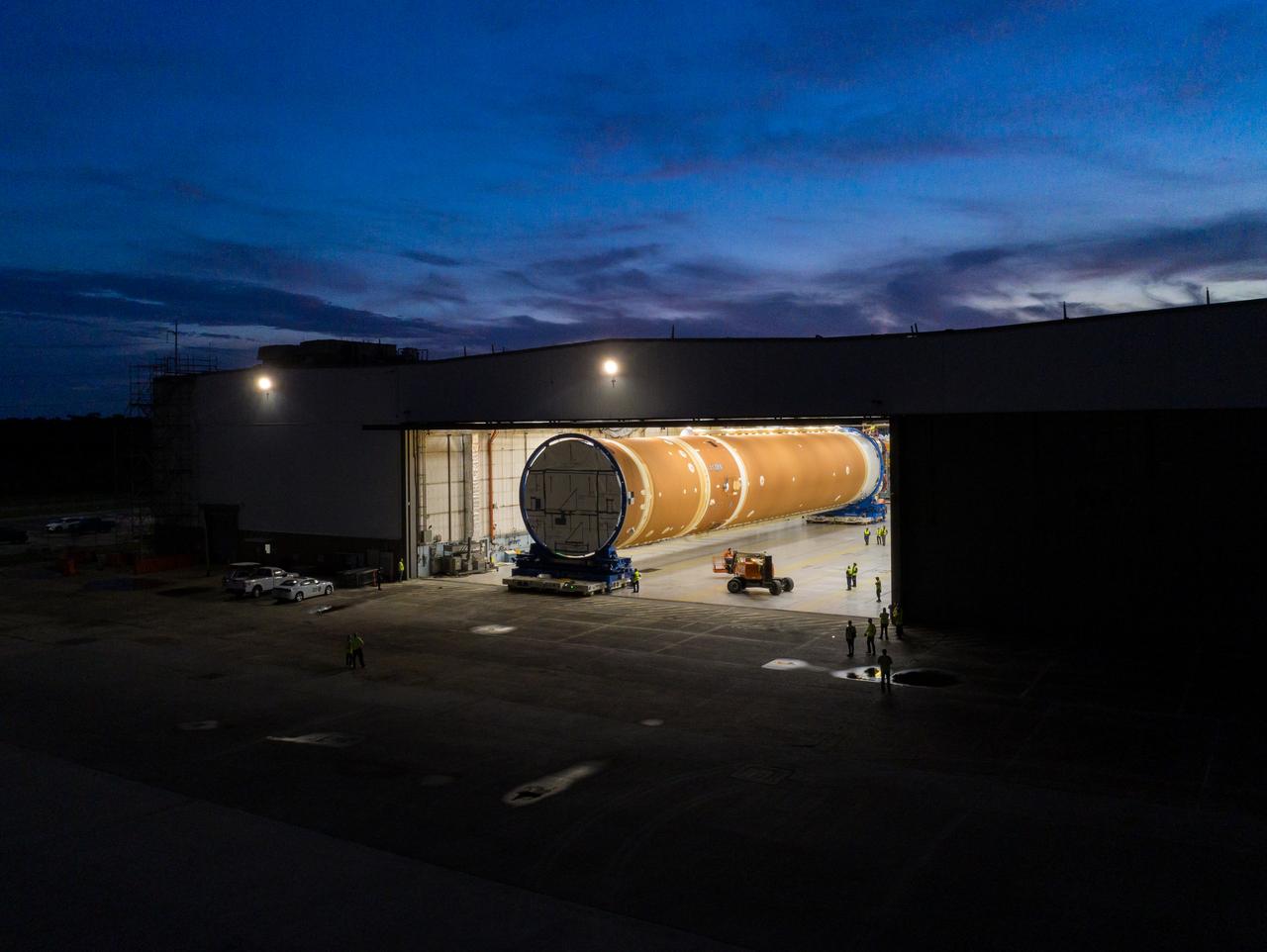
This photo shows NASA and Boeing, the SLS core stage lead contractor, preparing the SLS (Space Launch System) rocket core stage for shipment at NASA’s Michoud Assembly Facility in New Orleans. On July 6, NASA and Boeing moved the Artemis II rocket stage to Building 110. The move comes as teams prepare to roll the massive rocket stage with its four RS-25 engines to the agency’s Pegasus barge for delivery to NASA’s Kennedy Space Center in Florida in mid-July. Prior to the move, technicians began removing external access stands, or scaffolding, surrounding the core stage to assess the interior elements, including its complex avionics and flight propulsion systems. The stage is fully manufactured at NASA Michoud. NASA is working to land the first woman, first person of color, and its first international partner astronaut on the Moon under Artemis. SLS is part of NASA’s backbone for deep space exploration, along with the Orion spacecraft, supporting ground systems, advanced spacesuits and rovers, the Gateway in orbit around the Moon, and commercial human landing systems. SLS is the only rocket that can send Orion, astronauts, and supplies to the Moon in a single launch.
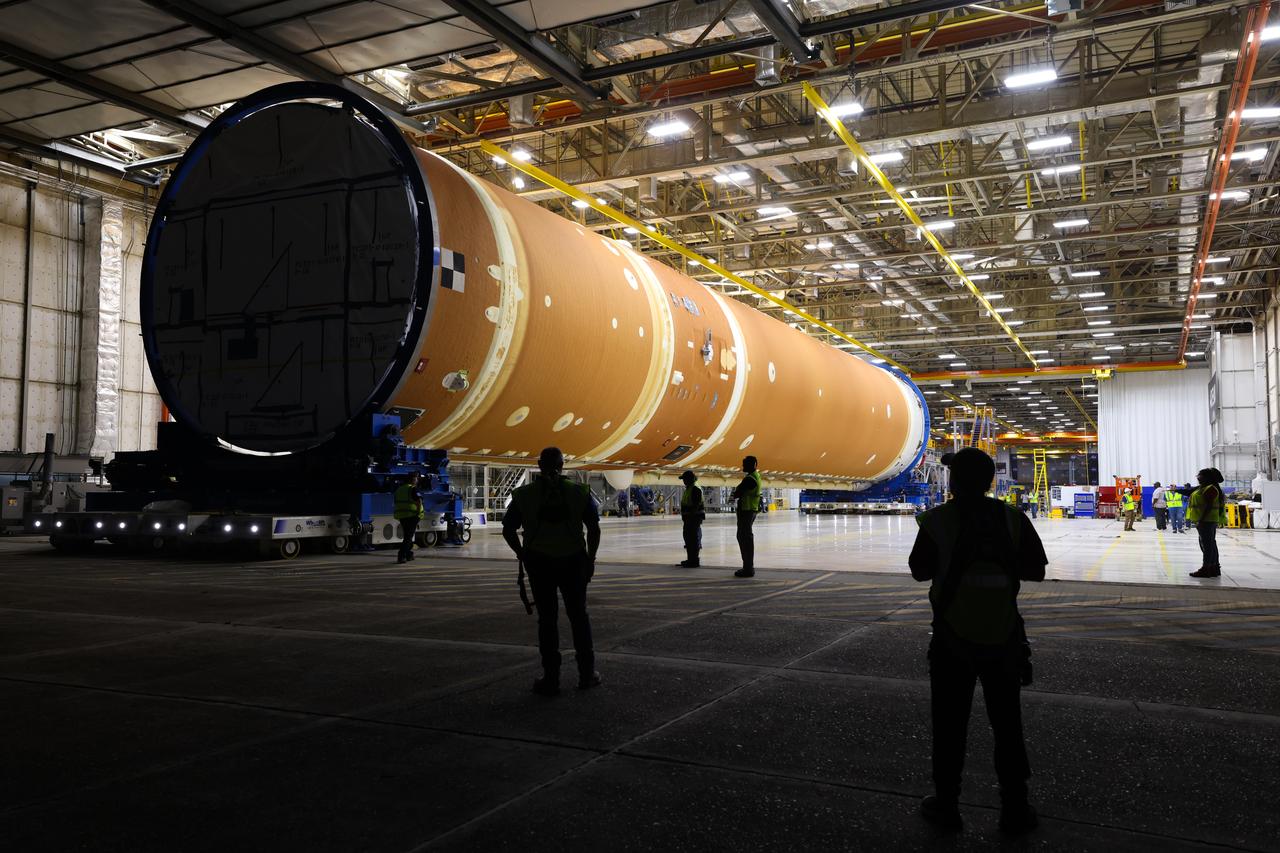
This photo shows NASA and Boeing, the SLS core stage lead contractor, preparing the SLS (Space Launch System) rocket core stage for shipment at NASA’s Michoud Assembly Facility in New Orleans. On July 6, NASA and Boeing moved the Artemis II rocket stage to Building 110. The move comes as teams prepare to roll the massive rocket stage with its four RS-25 engines to the agency’s Pegasus barge for delivery to NASA’s Kennedy Space Center in Florida in mid-July. Prior to the move, technicians began removing external access stands, or scaffolding, surrounding the core stage to assess the interior elements, including its complex avionics and flight propulsion systems. The stage is fully manufactured at NASA Michoud. NASA is working to land the first woman, first person of color, and its first international partner astronaut on the Moon under Artemis. SLS is part of NASA’s backbone for deep space exploration, along with the Orion spacecraft, supporting ground systems, advanced spacesuits and rovers, the Gateway in orbit around the Moon, and commercial human landing systems. SLS is the only rocket that can send Orion, astronauts, and supplies to the Moon in a single launch.
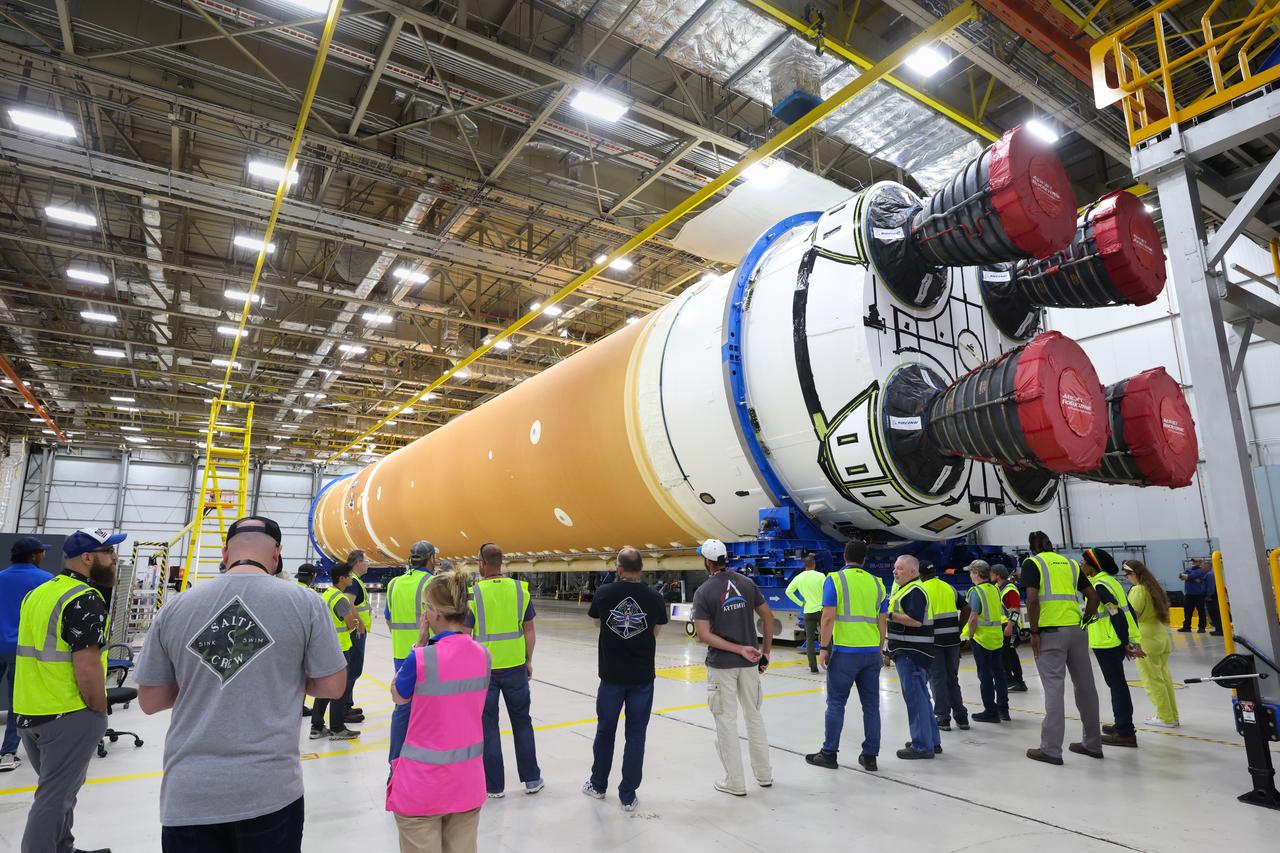
This photo shows NASA and Boeing, the SLS core stage lead contractor, preparing the SLS (Space Launch System) rocket core stage for shipment at NASA’s Michoud Assembly Facility in New Orleans. On July 6, NASA and Boeing moved the Artemis II rocket stage to Building 110. The move comes as teams prepare to roll the massive rocket stage with its four RS-25 engines to the agency’s Pegasus barge for delivery to NASA’s Kennedy Space Center in Florida in mid-July. Prior to the move, technicians began removing external access stands, or scaffolding, surrounding the core stage to assess the interior elements, including its complex avionics and flight propulsion systems. The stage is fully manufactured at NASA Michoud. NASA is working to land the first woman, first person of color, and its first international partner astronaut on the Moon under Artemis. SLS is part of NASA’s backbone for deep space exploration, along with the Orion spacecraft, supporting ground systems, advanced spacesuits and rovers, the Gateway in orbit around the Moon, and commercial human landing systems. SLS is the only rocket that can send Orion, astronauts, and supplies to the Moon in a single launch.
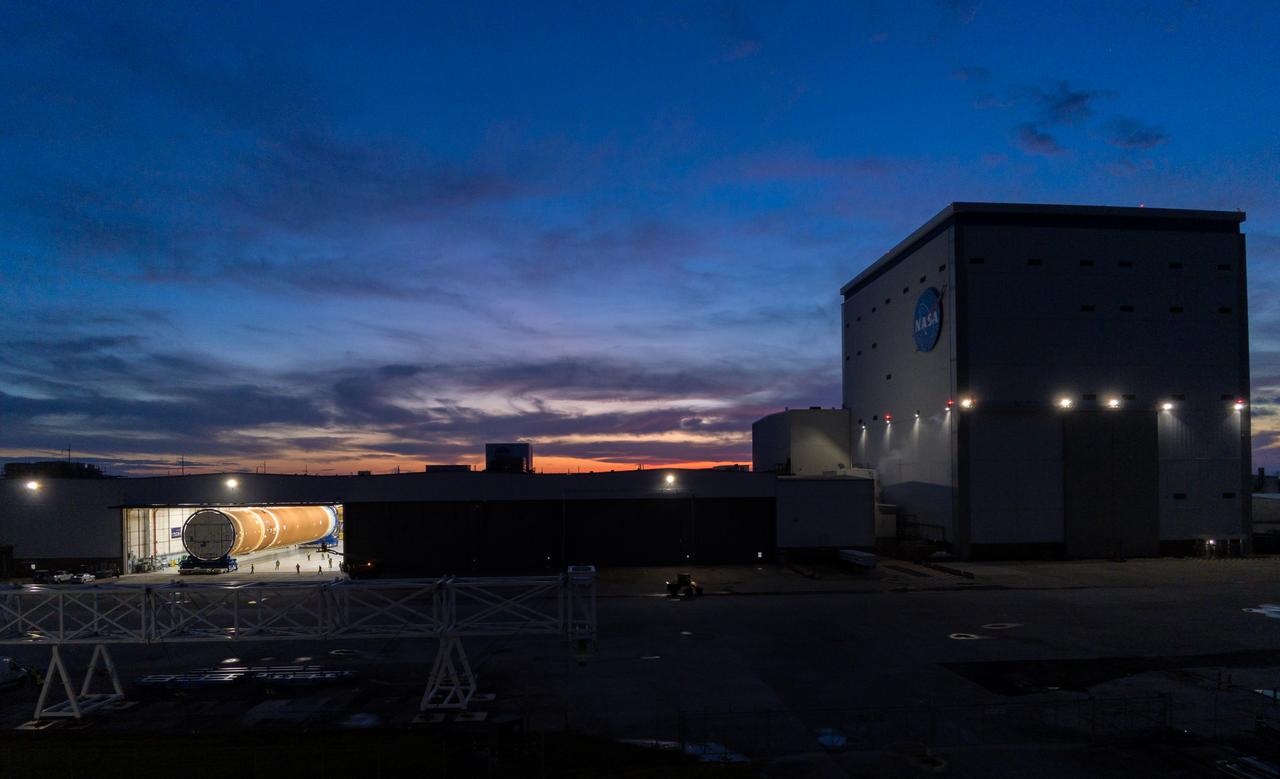
This photo shows NASA and Boeing, the SLS core stage lead contractor, preparing the SLS (Space Launch System) rocket core stage for shipment at NASA’s Michoud Assembly Facility in New Orleans. On July 6, NASA and Boeing moved the Artemis II rocket stage to Building 110. The move comes as teams prepare to roll the massive rocket stage with its four RS-25 engines to the agency’s Pegasus barge for delivery to NASA’s Kennedy Space Center in Florida in mid-July. Prior to the move, technicians began removing external access stands, or scaffolding, surrounding the core stage to assess the interior elements, including its complex avionics and flight propulsion systems. The stage is fully manufactured at NASA Michoud. NASA is working to land the first woman, first person of color, and its first international partner astronaut on the Moon under Artemis. SLS is part of NASA’s backbone for deep space exploration, along with the Orion spacecraft, supporting ground systems, advanced spacesuits and rovers, the Gateway in orbit around the Moon, and commercial human landing systems. SLS is the only rocket that can send Orion, astronauts, and supplies to the Moon in a single launch.
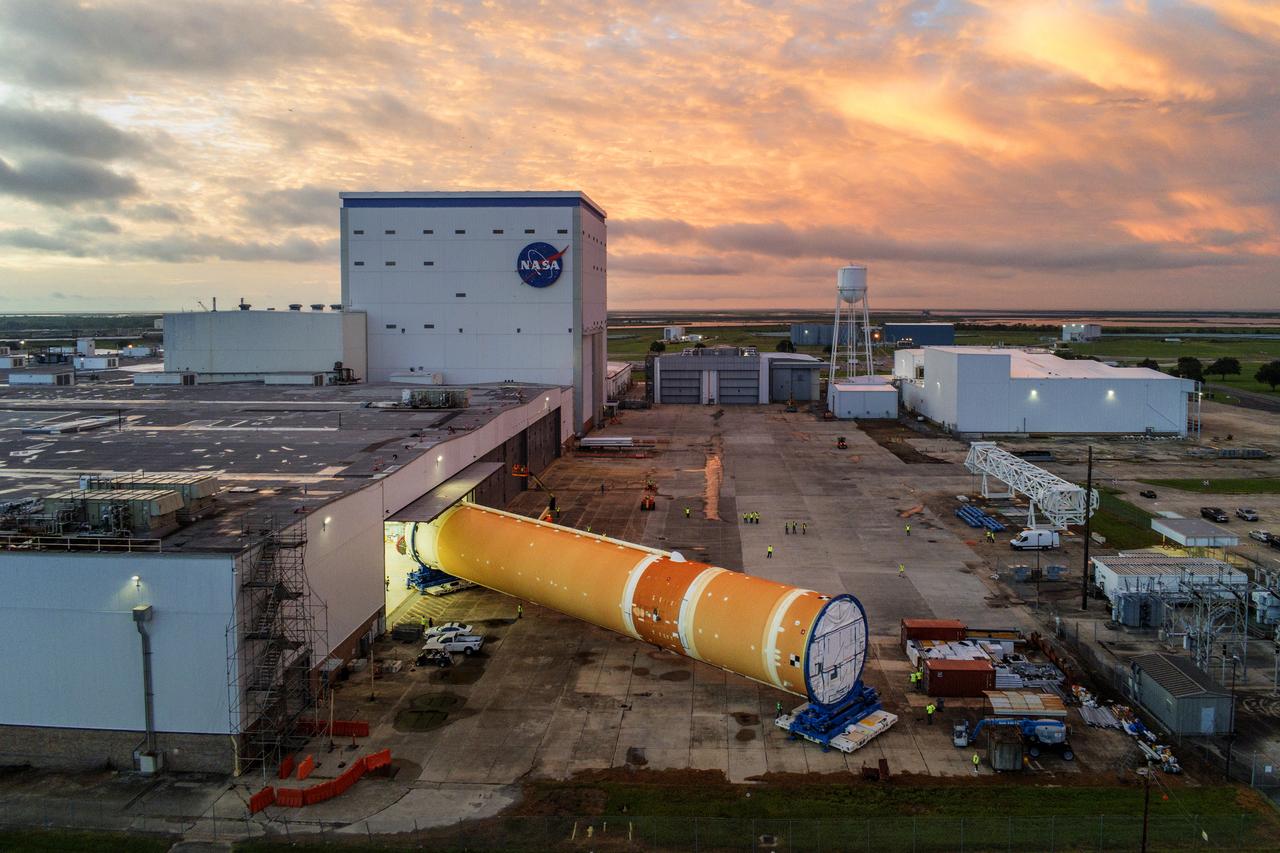
This photo shows NASA and Boeing, the SLS core stage lead contractor, preparing the SLS (Space Launch System) rocket core stage for shipment at NASA’s Michoud Assembly Facility in New Orleans. On July 6, NASA and Boeing moved the Artemis II rocket stage to Building 110. The move comes as teams prepare to roll the massive rocket stage with its four RS-25 engines to the agency’s Pegasus barge for delivery to NASA’s Kennedy Space Center in Florida in mid-July. Prior to the move, technicians began removing external access stands, or scaffolding, surrounding the core stage to assess the interior elements, including its complex avionics and flight propulsion systems. The stage is fully manufactured at NASA Michoud. NASA is working to land the first woman, first person of color, and its first international partner astronaut on the Moon under Artemis. SLS is part of NASA’s backbone for deep space exploration, along with the Orion spacecraft, supporting ground systems, advanced spacesuits and rovers, the Gateway in orbit around the Moon, and commercial human landing systems. SLS is the only rocket that can send Orion, astronauts, and supplies to the Moon in a single launch. Image credit: NASA/Michael DeMocker
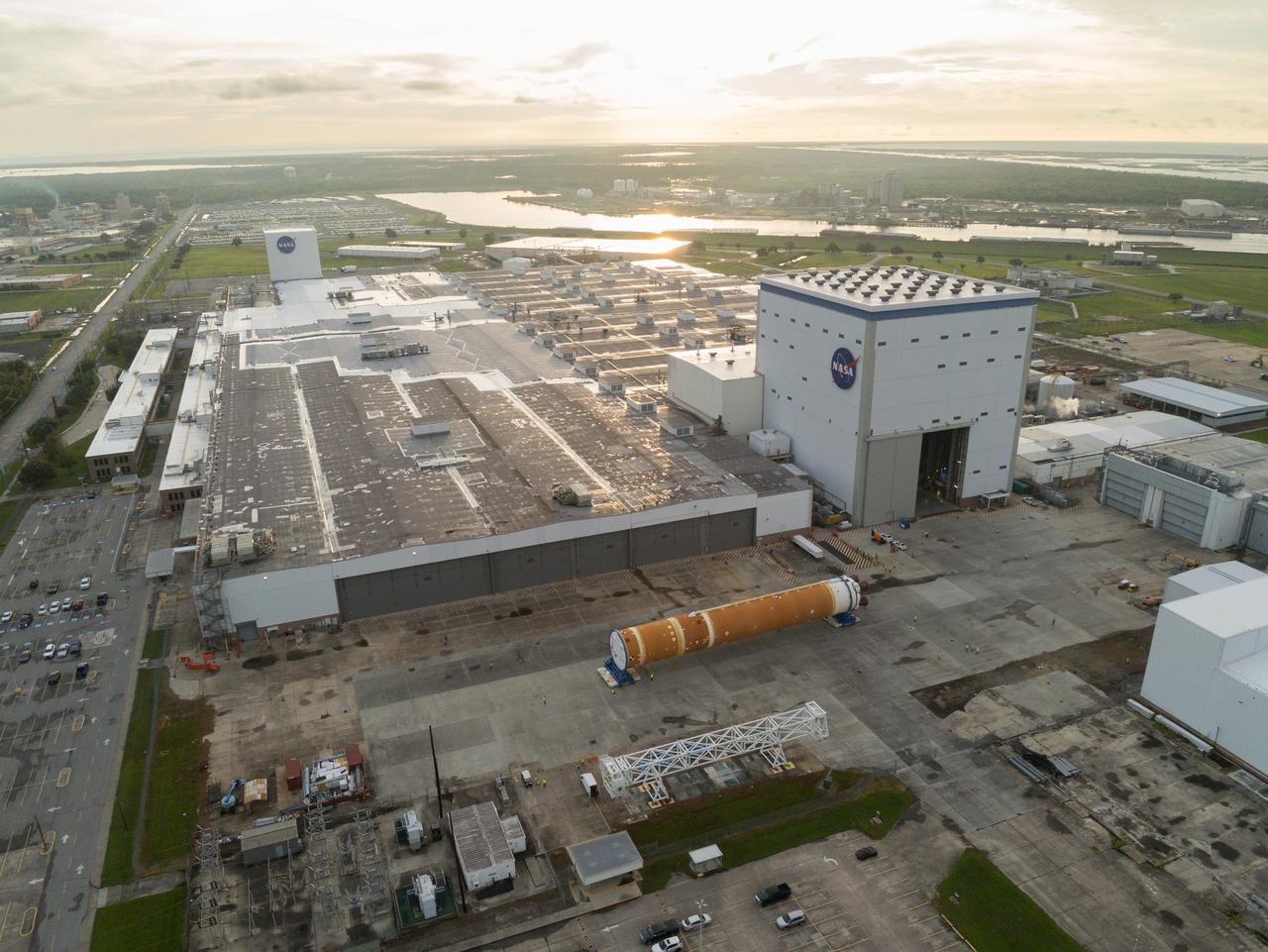
This photo shows NASA and Boeing, the SLS core stage lead contractor, preparing the SLS (Space Launch System) rocket core stage for shipment at NASA’s Michoud Assembly Facility in New Orleans. On July 6, NASA and Boeing moved the Artemis II rocket stage to Building 110. The move comes as teams prepare to roll the massive rocket stage with its four RS-25 engines to the agency’s Pegasus barge for delivery to NASA’s Kennedy Space Center in Florida in mid-July. Prior to the move, technicians began removing external access stands, or scaffolding, surrounding the core stage to assess the interior elements, including its complex avionics and flight propulsion systems. The stage is fully manufactured at NASA Michoud. NASA is working to land the first woman, first person of color, and its first international partner astronaut on the Moon under Artemis. SLS is part of NASA’s backbone for deep space exploration, along with the Orion spacecraft, supporting ground systems, advanced spacesuits and rovers, the Gateway in orbit around the Moon, and commercial human landing systems. SLS is the only rocket that can send Orion, astronauts, and supplies to the Moon in a single launch.
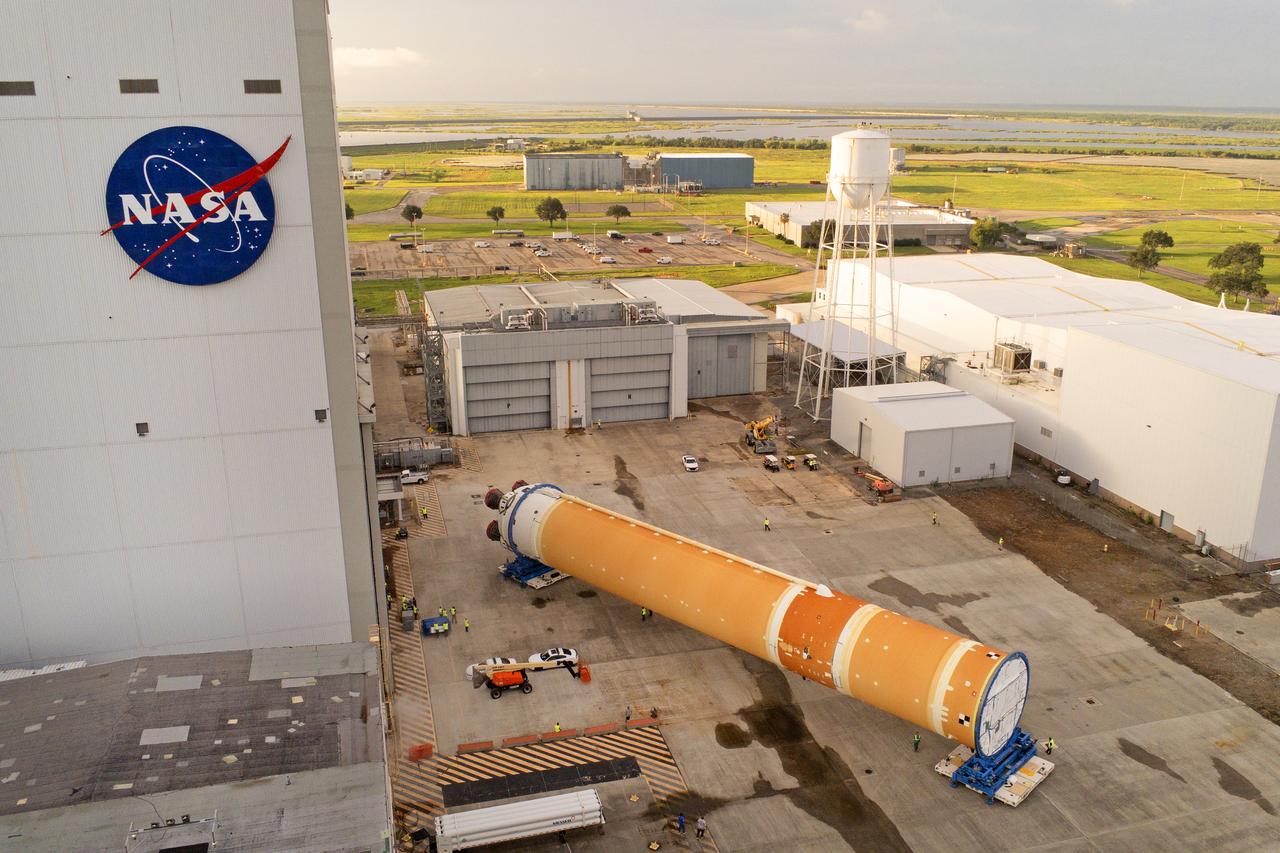
This photo shows NASA and Boeing, the SLS core stage lead contractor, preparing the SLS (Space Launch System) rocket core stage for shipment at NASA’s Michoud Assembly Facility in New Orleans. On July 6, NASA and Boeing moved the Artemis II rocket stage to Building 110. The move comes as teams prepare to roll the massive rocket stage with its four RS-25 engines to the agency’s Pegasus barge for delivery to NASA’s Kennedy Space Center in Florida in mid-July. Prior to the move, technicians began removing external access stands, or scaffolding, surrounding the core stage to assess the interior elements, including its complex avionics and flight propulsion systems. The stage is fully manufactured at NASA Michoud. NASA is working to land the first woman, first person of color, and its first international partner astronaut on the Moon under Artemis. SLS is part of NASA’s backbone for deep space exploration, along with the Orion spacecraft, supporting ground systems, advanced spacesuits and rovers, the Gateway in orbit around the Moon, and commercial human landing systems. SLS is the only rocket that can send Orion, astronauts, and supplies to the Moon in a single launch. Image credit: NASA/Michael DeMocker
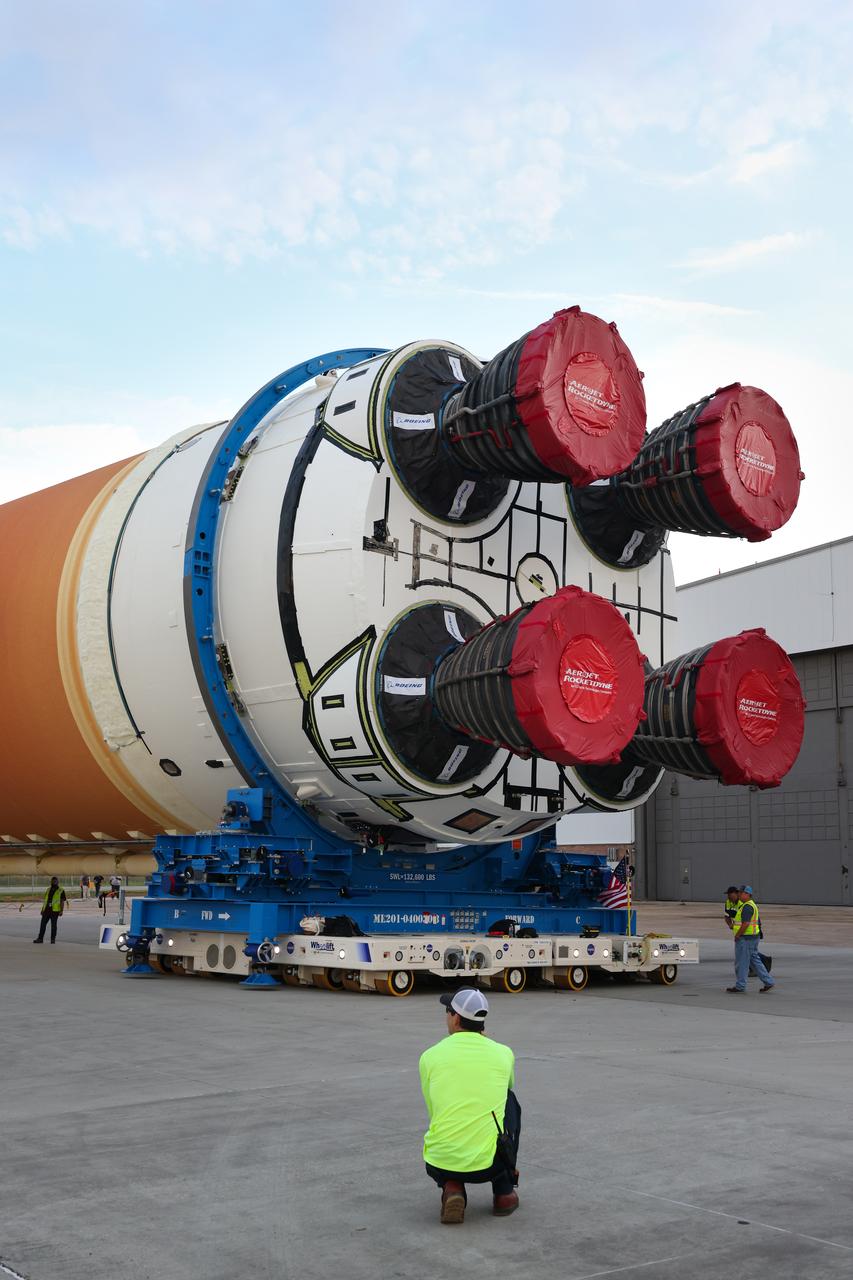
This photo shows NASA and Boeing, the SLS core stage lead contractor, preparing the SLS (Space Launch System) rocket core stage for shipment at NASA’s Michoud Assembly Facility in New Orleans. On July 6, NASA and Boeing moved the Artemis II rocket stage to Building 110. The move comes as teams prepare to roll the massive rocket stage with its four RS-25 engines to the agency’s Pegasus barge for delivery to NASA’s Kennedy Space Center in Florida in mid-July. Prior to the move, technicians began removing external access stands, or scaffolding, surrounding the core stage to assess the interior elements, including its complex avionics and flight propulsion systems. The stage is fully manufactured at NASA Michoud. NASA is working to land the first woman, first person of color, and its first international partner astronaut on the Moon under Artemis. SLS is part of NASA’s backbone for deep space exploration, along with the Orion spacecraft, supporting ground systems, advanced spacesuits and rovers, the Gateway in orbit around the Moon, and commercial human landing systems. SLS is the only rocket that can send Orion, astronauts, and supplies to the Moon in a single launch.
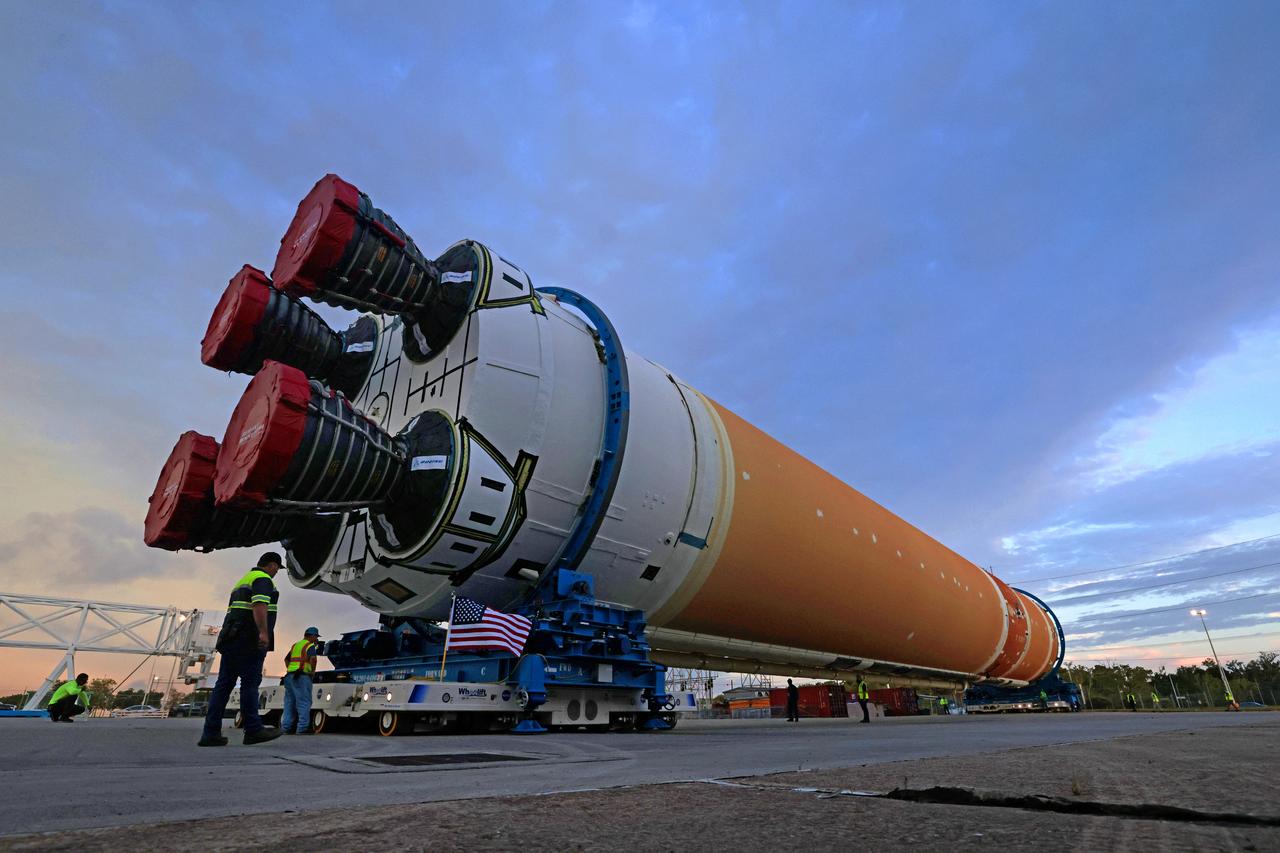
This photo shows NASA and Boeing, the SLS core stage lead contractor, preparing the SLS (Space Launch System) rocket core stage for shipment at NASA’s Michoud Assembly Facility in New Orleans. On July 6, NASA and Boeing moved the Artemis II rocket stage to Building 110. The move comes as teams prepare to roll the massive rocket stage with its four RS-25 engines to the agency’s Pegasus barge for delivery to NASA’s Kennedy Space Center in Florida in mid-July. Prior to the move, technicians began removing external access stands, or scaffolding, surrounding the core stage to assess the interior elements, including its complex avionics and flight propulsion systems. The stage is fully manufactured at NASA Michoud. NASA is working to land the first woman, first person of color, and its first international partner astronaut on the Moon under Artemis. SLS is part of NASA’s backbone for deep space exploration, along with the Orion spacecraft, supporting ground systems, advanced spacesuits and rovers, the Gateway in orbit around the Moon, and commercial human landing systems. SLS is the only rocket that can send Orion, astronauts, and supplies to the Moon in a single launch. Image credit: NASA/Michael DeMocker
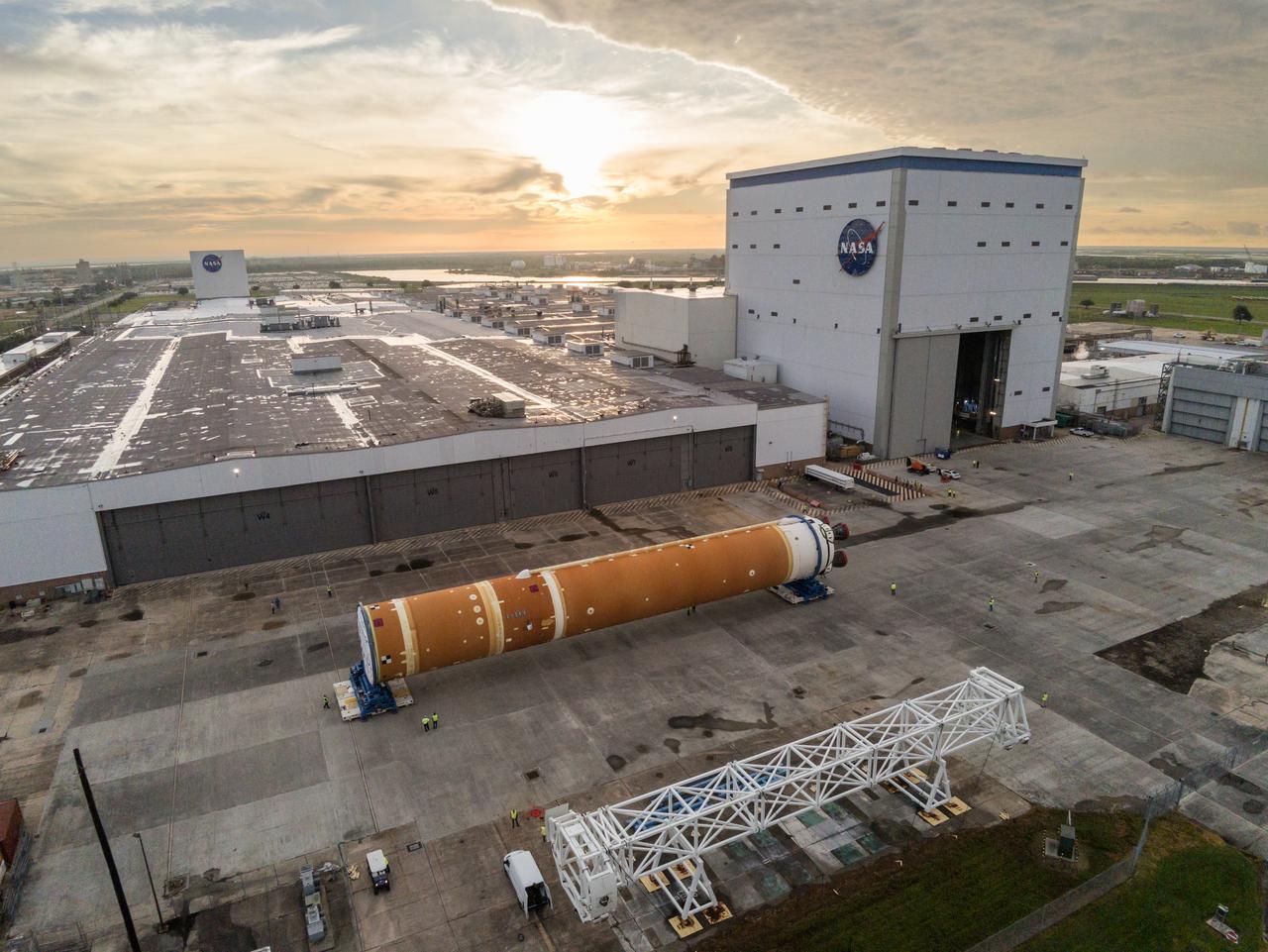
This photo shows NASA and Boeing, the SLS core stage lead contractor, preparing the SLS (Space Launch System) rocket core stage for shipment at NASA’s Michoud Assembly Facility in New Orleans. On July 6, NASA and Boeing moved the Artemis II rocket stage to Building 110. The move comes as teams prepare to roll the massive rocket stage with its four RS-25 engines to the agency’s Pegasus barge for delivery to NASA’s Kennedy Space Center in Florida in mid-July. Prior to the move, technicians began removing external access stands, or scaffolding, surrounding the core stage to assess the interior elements, including its complex avionics and flight propulsion systems. The stage is fully manufactured at NASA Michoud. NASA is working to land the first woman, first person of color, and its first international partner astronaut on the Moon under Artemis. SLS is part of NASA’s backbone for deep space exploration, along with the Orion spacecraft, supporting ground systems, advanced spacesuits and rovers, the Gateway in orbit around the Moon, and commercial human landing systems. SLS is the only rocket that can send Orion, astronauts, and supplies to the Moon in a single launch.

This photo shows NASA and Boeing, the SLS core stage lead contractor, preparing the SLS (Space Launch System) rocket core stage for shipment at NASA’s Michoud Assembly Facility in New Orleans. On July 6, NASA and Boeing moved the Artemis II rocket stage to Building 110. The move comes as teams prepare to roll the massive rocket stage with its four RS-25 engines to the agency’s Pegasus barge for delivery to NASA’s Kennedy Space Center in Florida in mid-July. Prior to the move, technicians began removing external access stands, or scaffolding, surrounding the core stage to assess the interior elements, including its complex avionics and flight propulsion systems. The stage is fully manufactured at NASA Michoud. NASA is working to land the first woman, first person of color, and its first international partner astronaut on the Moon under Artemis. SLS is part of NASA’s backbone for deep space exploration, along with the Orion spacecraft, supporting ground systems, advanced spacesuits and rovers, the Gateway in orbit around the Moon, and commercial human landing systems. SLS is the only rocket that can send Orion, astronauts, and supplies to the Moon in a single launch.
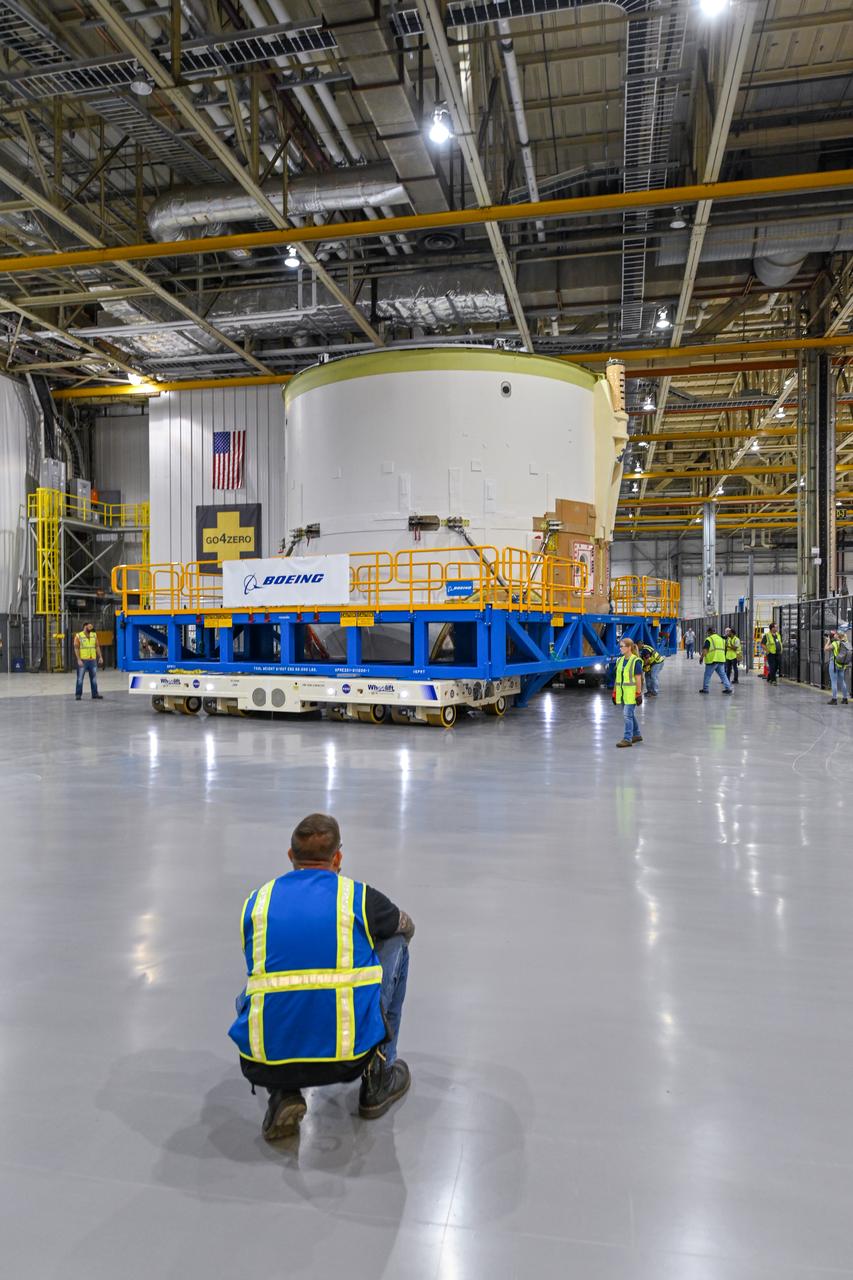
Technicians at NASA’s Michoud Assembly Facility in New Orleans moved the engine section for NASA’s Space Launch System (SLS) rocket to another part of the facility on Sept. 3 to prepare it for joining to the rest of the rocket’s core stage. The engine section, which comprises the lowest portion of the 212-foot-tall stage, is the last major component to be horizontally integrated to the core stage. Michoud crews completed assembly on the flight hardware that will be used for Artemis I, the first lunar mission of SLS and NASA’s Orion spacecraft, on Aug. 29. NASA and Boeing engineers removed the scaffolding surrounding the hardware to use a special tool to properly position the engine section for its attachment to the rest of the stage. The core stage’s two liquid propellant tanks and four RS-25 engines will produce more than 2 million pounds of thrust to send the SLS rocket and Orion on the Artemis lunar missions. The engine section houses the four RS-25 engines and includes vital systems for mounting, controlling and delivering fuel form the propellant tanks to the rocket’s engines. Offering more payload mass, volume capability and energy to speed missions through space, the SLS rocket, along with NASA’s Gateway in lunar orbit and Orion, is part of NASA’s backbone for deep space exploration and the Artemis lunar program. No other rocket is capable of carrying astronauts in Orion around the Moon in a single mission.
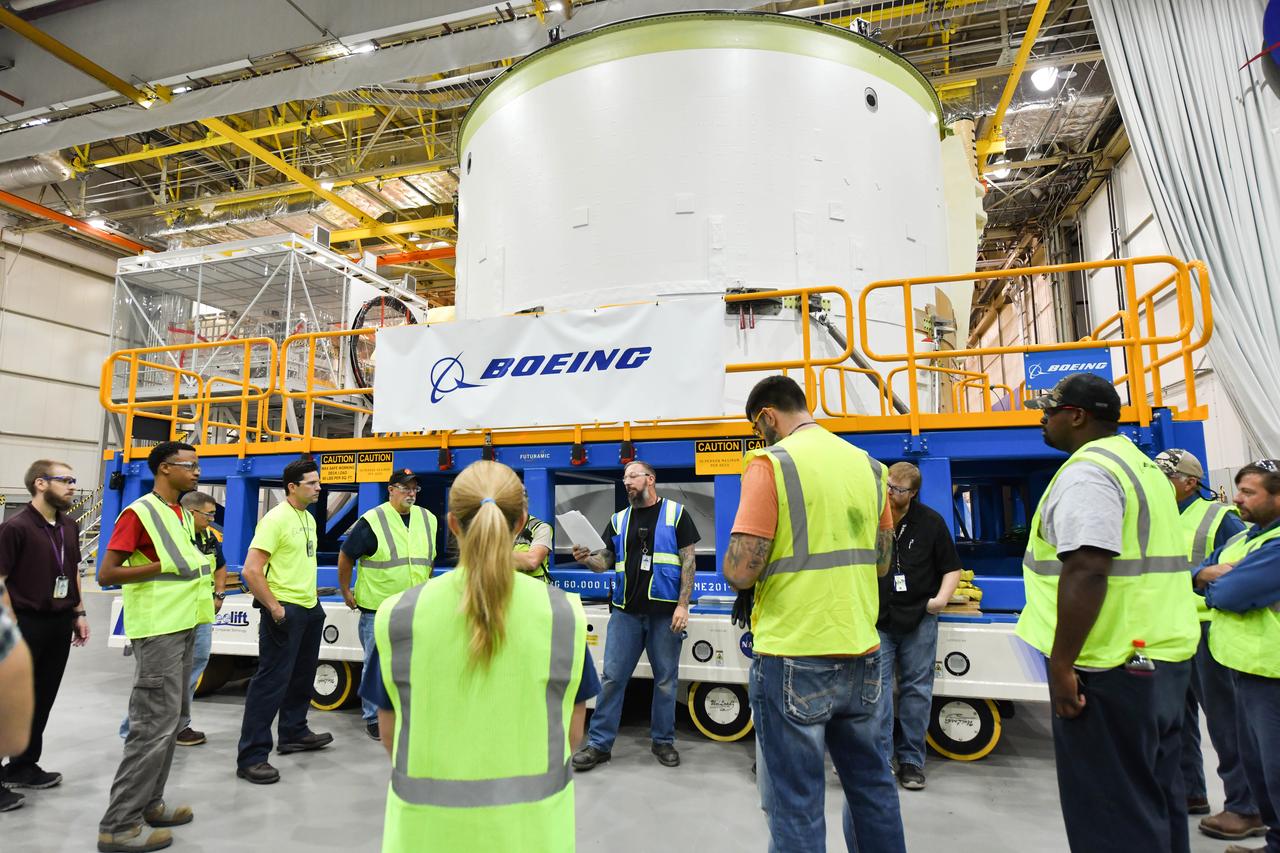
Technicians at NASA’s Michoud Assembly Facility in New Orleans moved the engine section for NASA’s Space Launch System (SLS) rocket to another part of the facility on Sept. 3 to prepare it for joining to the rest of the rocket’s core stage. The engine section, which comprises the lowest portion of the 212-foot-tall stage, is the last major component to be horizontally integrated to the core stage. Michoud crews completed assembly on the flight hardware that will be used for Artemis I, the first lunar mission of SLS and NASA’s Orion spacecraft, on Aug. 29. NASA and Boeing engineers removed the scaffolding surrounding the hardware to use a special tool to properly position the engine section for its attachment to the rest of the stage. The core stage’s two liquid propellant tanks and four RS-25 engines will produce more than 2 million pounds of thrust to send the SLS rocket and Orion on the Artemis lunar missions. The engine section houses the four RS-25 engines and includes vital systems for mounting, controlling and delivering fuel form the propellant tanks to the rocket’s engines. Offering more payload mass, volume capability and energy to speed missions through space, the SLS rocket, along with NASA’s Gateway in lunar orbit and Orion, is part of NASA’s backbone for deep space exploration and the Artemis lunar program. No other rocket is capable of carrying astronauts in Orion around the Moon in a single mission.
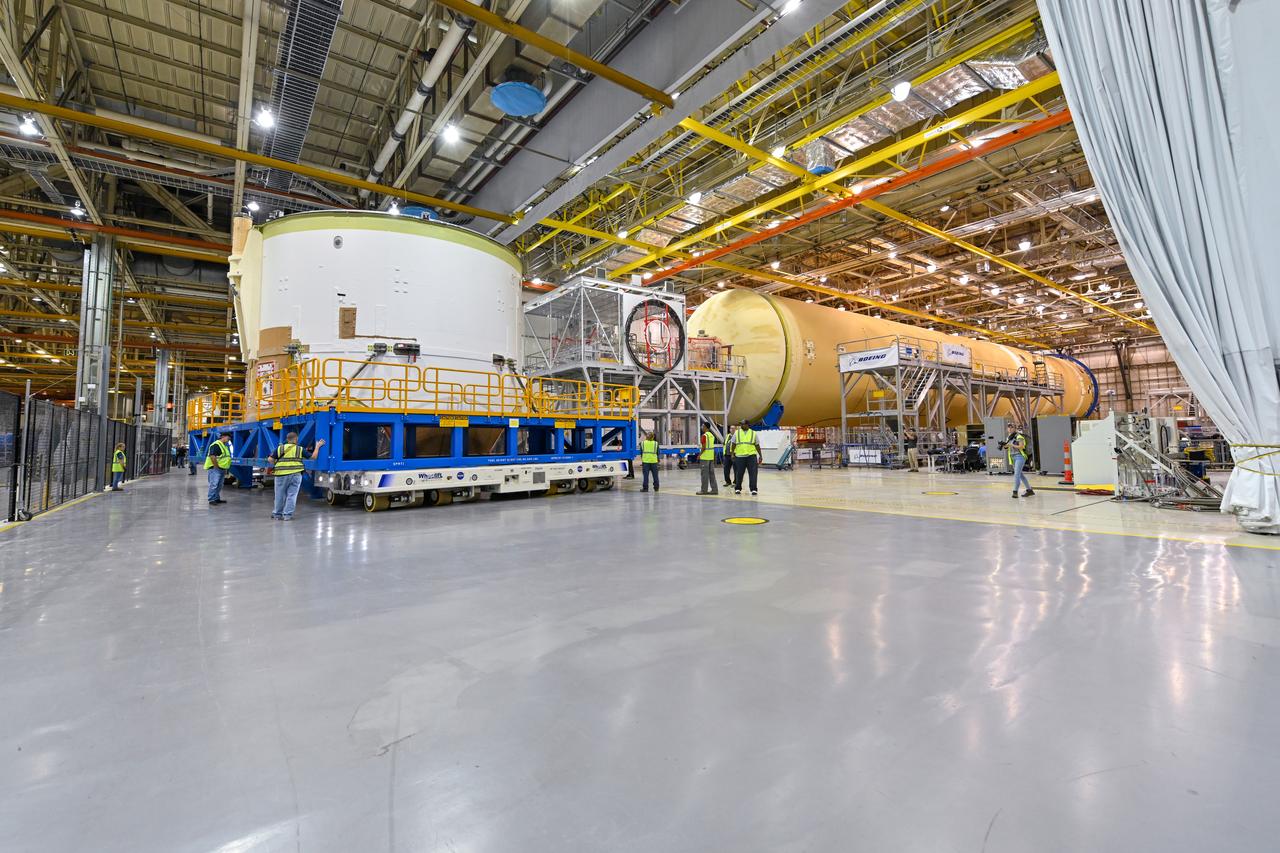
Technicians at NASA’s Michoud Assembly Facility in New Orleans moved the engine section for NASA’s Space Launch System (SLS) rocket to another part of the facility on Sept. 3 to prepare it for joining to the rest of the rocket’s core stage. The engine section, which comprises the lowest portion of the 212-foot-tall stage, is the last major component to be horizontally integrated to the core stage. Michoud crews completed assembly on the flight hardware that will be used for Artemis I, the first lunar mission of SLS and NASA’s Orion spacecraft, on Aug. 29. NASA and Boeing engineers removed the scaffolding surrounding the hardware to use a special tool to properly position the engine section for its attachment to the rest of the stage. The core stage’s two liquid propellant tanks and four RS-25 engines will produce more than 2 million pounds of thrust to send the SLS rocket and Orion on the Artemis lunar missions. The engine section houses the four RS-25 engines and includes vital systems for mounting, controlling and delivering fuel form the propellant tanks to the rocket’s engines. Offering more payload mass, volume capability and energy to speed missions through space, the SLS rocket, along with NASA’s Gateway in lunar orbit and Orion, is part of NASA’s backbone for deep space exploration and the Artemis lunar program. No other rocket is capable of carrying astronauts in Orion around the Moon in a single mission.
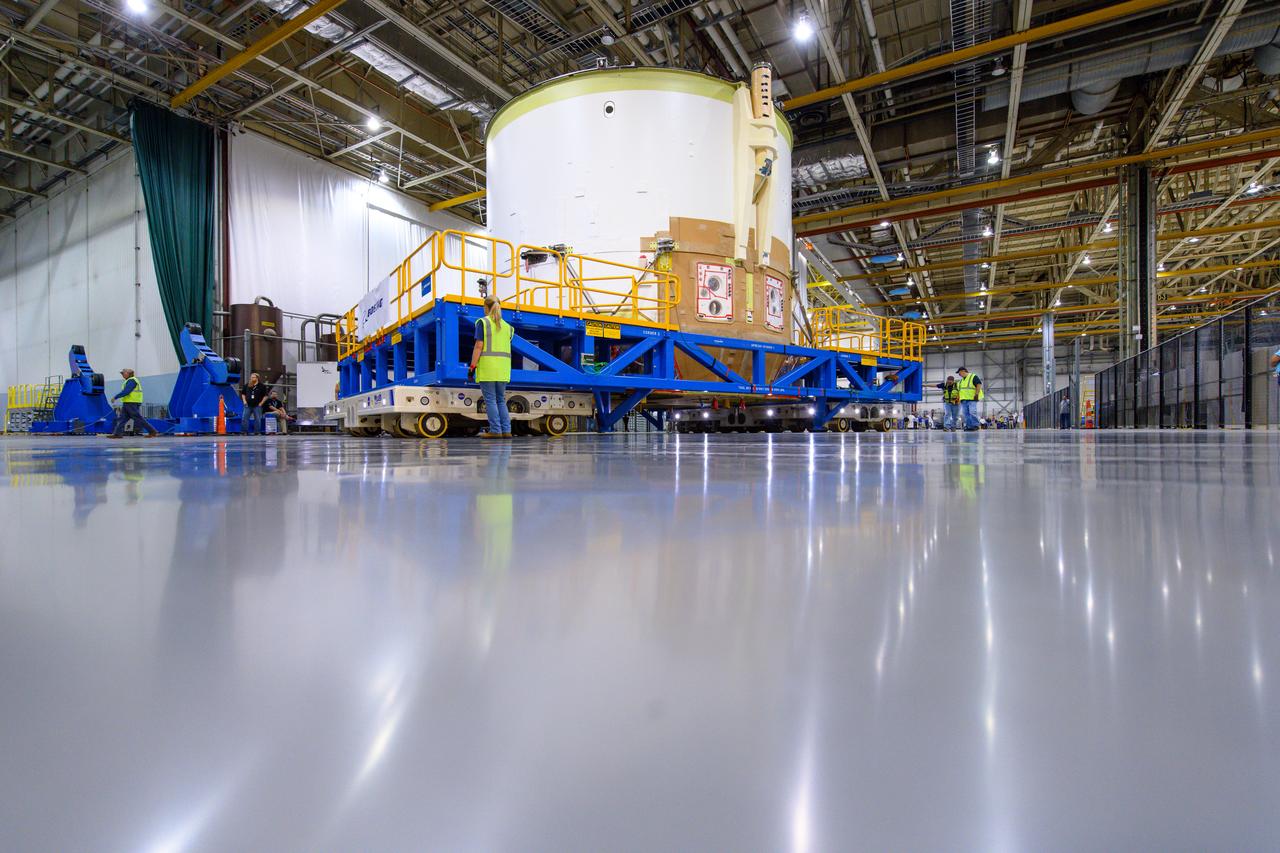
Technicians at NASA’s Michoud Assembly Facility in New Orleans moved the engine section for NASA’s Space Launch System (SLS) rocket to another part of the facility on Sept. 3 to prepare it for joining to the rest of the rocket’s core stage. The engine section, which comprises the lowest portion of the 212-foot-tall stage, is the last major component to be horizontally integrated to the core stage. Michoud crews completed assembly on the flight hardware that will be used for Artemis I, the first lunar mission of SLS and NASA’s Orion spacecraft, on Aug. 29. NASA and Boeing engineers removed the scaffolding surrounding the hardware to use a special tool to properly position the engine section for its attachment to the rest of the stage. The core stage’s two liquid propellant tanks and four RS-25 engines will produce more than 2 million pounds of thrust to send the SLS rocket and Orion on the Artemis lunar missions. The engine section houses the four RS-25 engines and includes vital systems for mounting, controlling and delivering fuel form the propellant tanks to the rocket’s engines. Offering more payload mass, volume capability and energy to speed missions through space, the SLS rocket, along with NASA’s Gateway in lunar orbit and Orion, is part of NASA’s backbone for deep space exploration and the Artemis lunar program. No other rocket is capable of carrying astronauts in Orion around the Moon in a single mission.
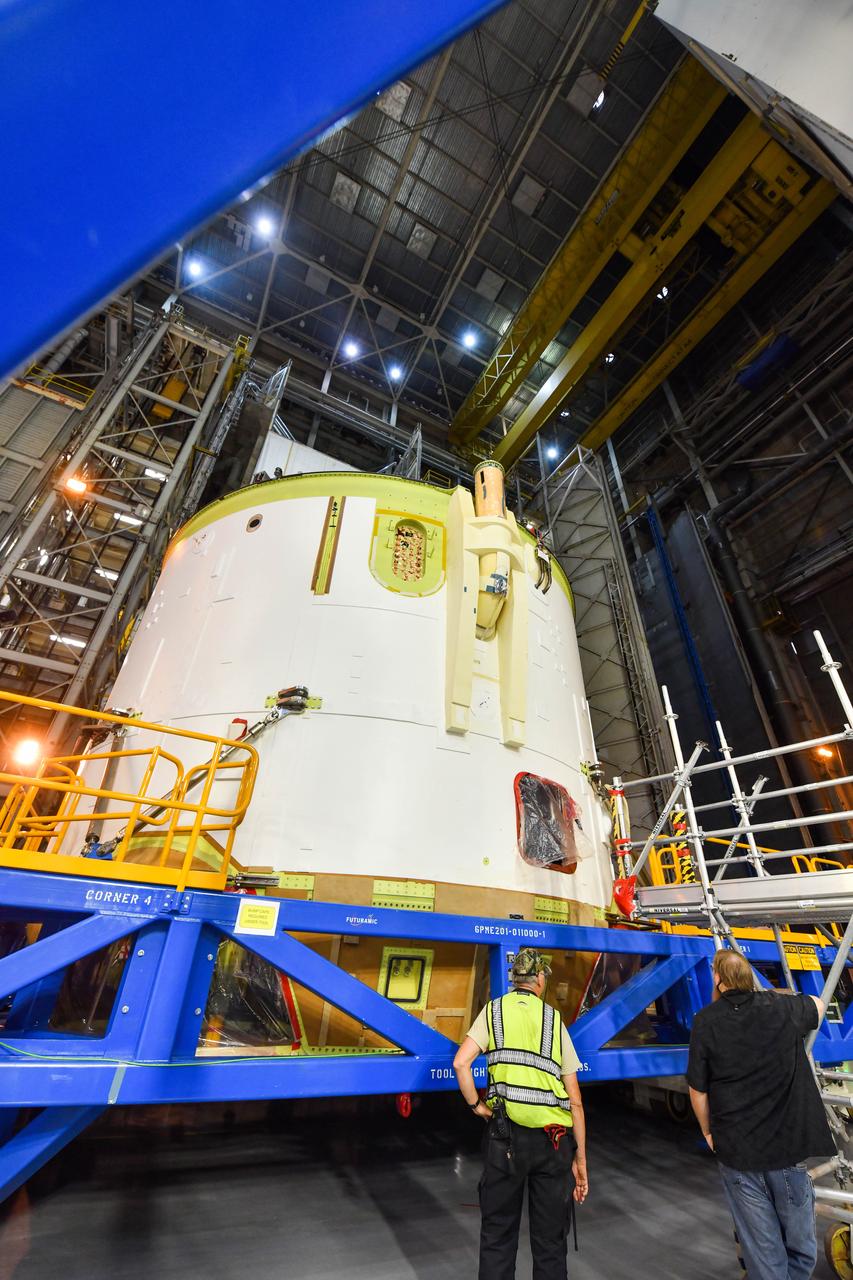
Technicians at NASA’s Michoud Assembly Facility in New Orleans moved the engine section for NASA’s Space Launch System (SLS) rocket to another part of the facility on Sept. 3 to prepare it for joining to the rest of the rocket’s core stage. The engine section, which comprises the lowest portion of the 212-foot-tall stage, is the last major component to be horizontally integrated to the core stage. Michoud crews completed assembly on the flight hardware that will be used for Artemis I, the first lunar mission of SLS and NASA’s Orion spacecraft, on Aug. 29. NASA and Boeing engineers removed the scaffolding surrounding the hardware to use a special tool to properly position the engine section for its attachment to the rest of the stage. The core stage’s two liquid propellant tanks and four RS-25 engines will produce more than 2 million pounds of thrust to send the SLS rocket and Orion on the Artemis lunar missions. The engine section houses the four RS-25 engines and includes vital systems for mounting, controlling and delivering fuel form the propellant tanks to the rocket’s engines. Offering more payload mass, volume capability and energy to speed missions through space, the SLS rocket, along with NASA’s Gateway in lunar orbit and Orion, is part of NASA’s backbone for deep space exploration and the Artemis lunar program. No other rocket is capable of carrying astronauts in Orion around the Moon in a single mission.
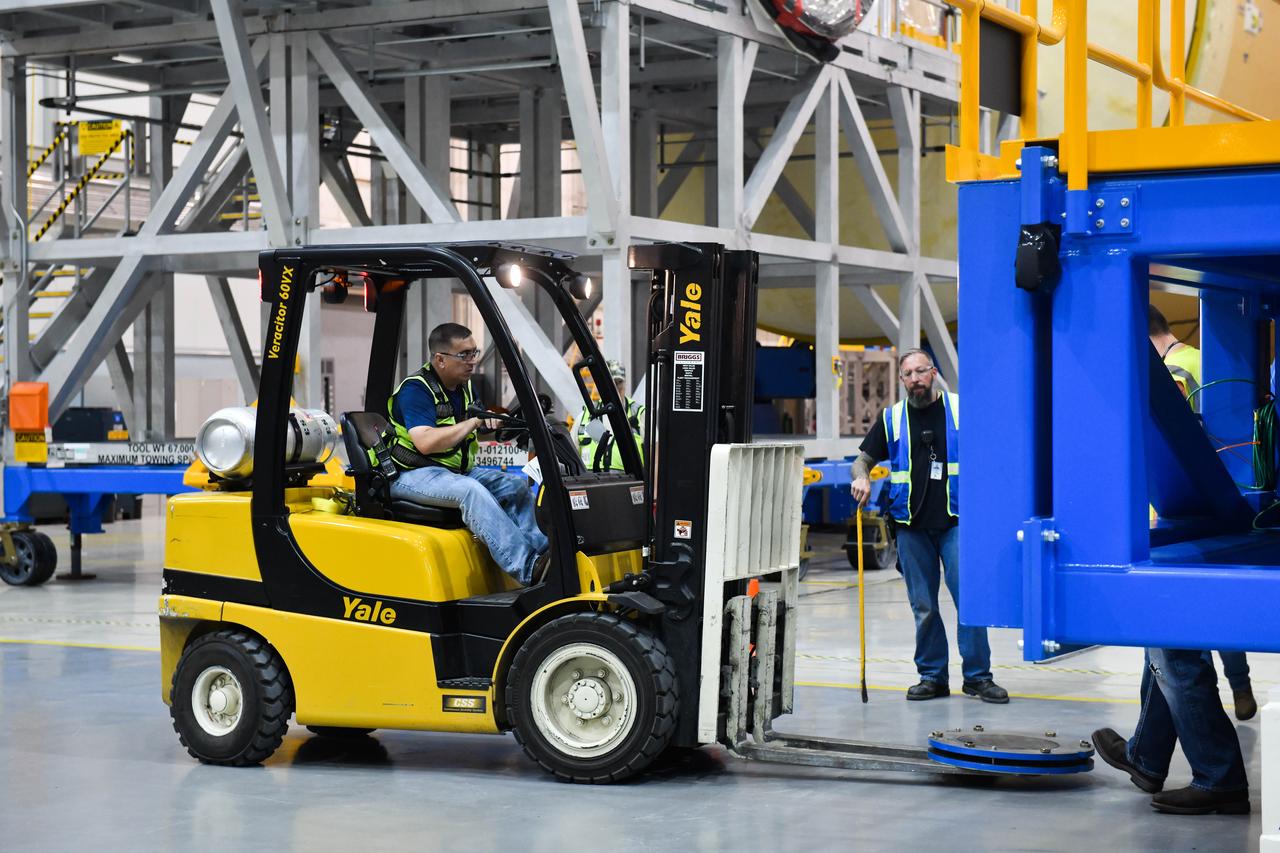
Technicians at NASA’s Michoud Assembly Facility in New Orleans moved the engine section for NASA’s Space Launch System (SLS) rocket to another part of the facility on Sept. 3 to prepare it for joining to the rest of the rocket’s core stage. The engine section, which comprises the lowest portion of the 212-foot-tall stage, is the last major component to be horizontally integrated to the core stage. Michoud crews completed assembly on the flight hardware that will be used for Artemis I, the first lunar mission of SLS and NASA’s Orion spacecraft, on Aug. 29. NASA and Boeing engineers removed the scaffolding surrounding the hardware to use a special tool to properly position the engine section for its attachment to the rest of the stage. The core stage’s two liquid propellant tanks and four RS-25 engines will produce more than 2 million pounds of thrust to send the SLS rocket and Orion on the Artemis lunar missions. The engine section houses the four RS-25 engines and includes vital systems for mounting, controlling and delivering fuel form the propellant tanks to the rocket’s engines. Offering more payload mass, volume capability and energy to speed missions through space, the SLS rocket, along with NASA’s Gateway in lunar orbit and Orion, is part of NASA’s backbone for deep space exploration and the Artemis lunar program. No other rocket is capable of carrying astronauts in Orion around the Moon in a single mission.
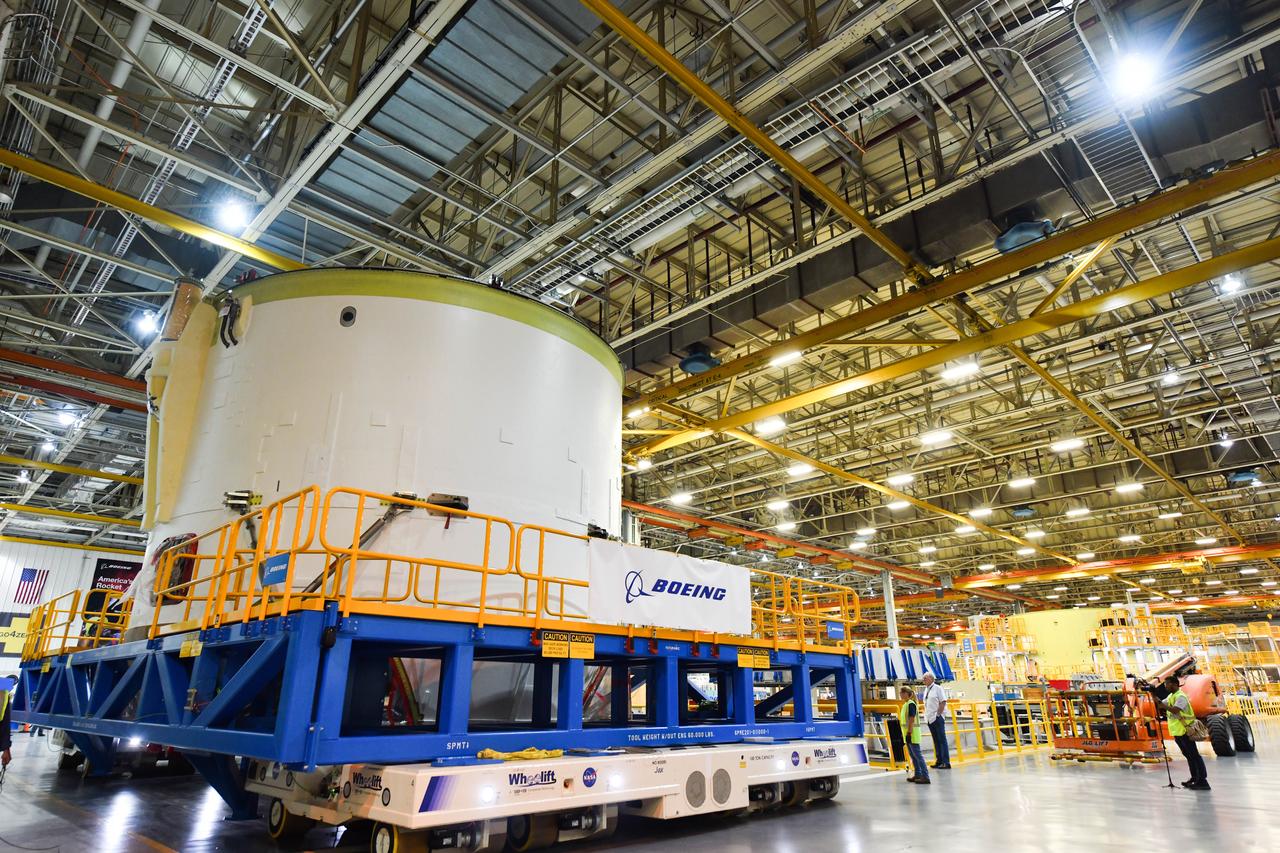
Technicians at NASA’s Michoud Assembly Facility in New Orleans moved the engine section for NASA’s Space Launch System (SLS) rocket to another part of the facility on Sept. 3 to prepare it for joining to the rest of the rocket’s core stage. The engine section, which comprises the lowest portion of the 212-foot-tall stage, is the last major component to be horizontally integrated to the core stage. Michoud crews completed assembly on the flight hardware that will be used for Artemis I, the first lunar mission of SLS and NASA’s Orion spacecraft, on Aug. 29. NASA and Boeing engineers removed the scaffolding surrounding the hardware to use a special tool to properly position the engine section for its attachment to the rest of the stage. The core stage’s two liquid propellant tanks and four RS-25 engines will produce more than 2 million pounds of thrust to send the SLS rocket and Orion on the Artemis lunar missions. The engine section houses the four RS-25 engines and includes vital systems for mounting, controlling and delivering fuel form the propellant tanks to the rocket’s engines. Offering more payload mass, volume capability and energy to speed missions through space, the SLS rocket, along with NASA’s Gateway in lunar orbit and Orion, is part of NASA’s backbone for deep space exploration and the Artemis lunar program. No other rocket is capable of carrying astronauts in Orion around the Moon in a single mission.
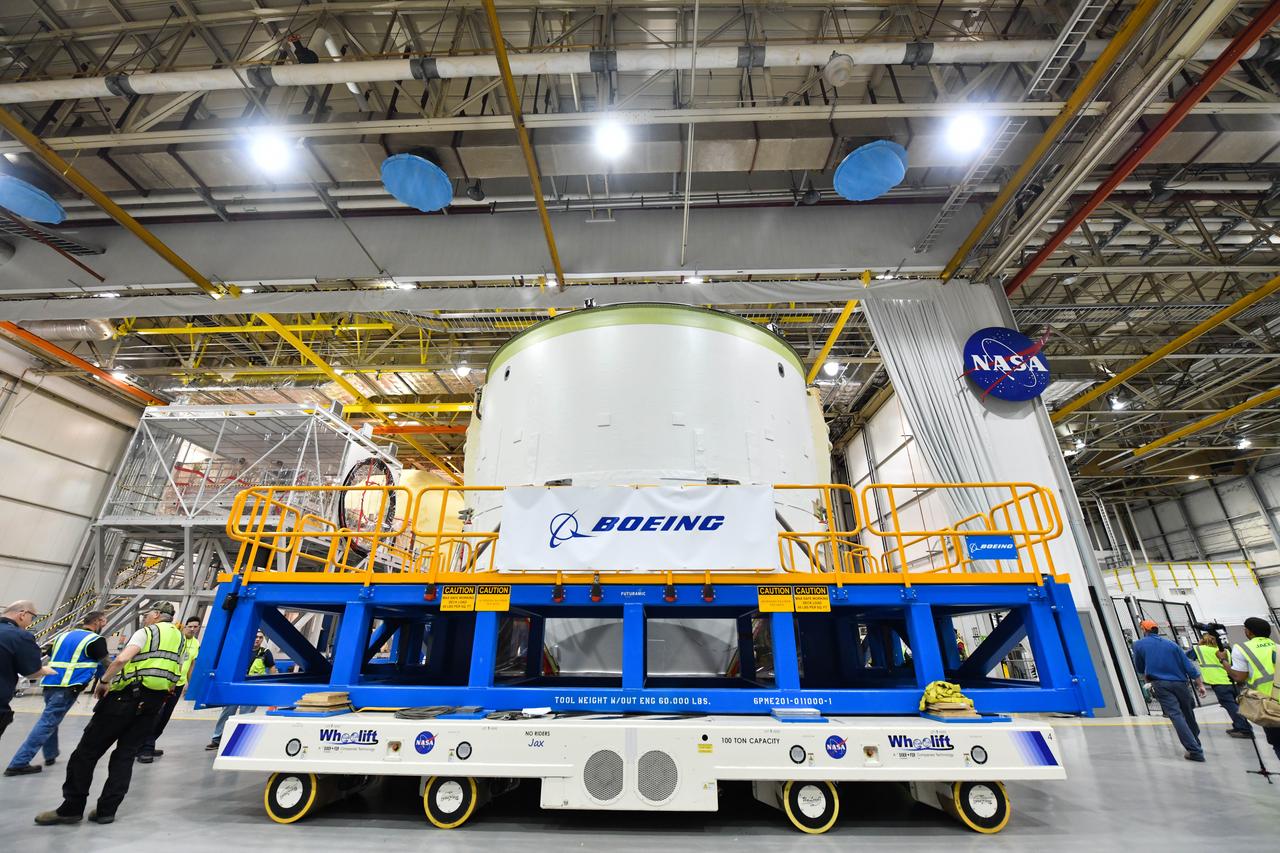
Technicians at NASA’s Michoud Assembly Facility in New Orleans moved the engine section for NASA’s Space Launch System (SLS) rocket to another part of the facility on Sept. 3 to prepare it for joining to the rest of the rocket’s core stage. The engine section, which comprises the lowest portion of the 212-foot-tall stage, is the last major component to be horizontally integrated to the core stage. Michoud crews completed assembly on the flight hardware that will be used for Artemis I, the first lunar mission of SLS and NASA’s Orion spacecraft, on Aug. 29. NASA and Boeing engineers removed the scaffolding surrounding the hardware to use a special tool to properly position the engine section for its attachment to the rest of the stage. The core stage’s two liquid propellant tanks and four RS-25 engines will produce more than 2 million pounds of thrust to send the SLS rocket and Orion on the Artemis lunar missions. The engine section houses the four RS-25 engines and includes vital systems for mounting, controlling and delivering fuel form the propellant tanks to the rocket’s engines. Offering more payload mass, volume capability and energy to speed missions through space, the SLS rocket, along with NASA’s Gateway in lunar orbit and Orion, is part of NASA’s backbone for deep space exploration and the Artemis lunar program. No other rocket is capable of carrying astronauts in Orion around the Moon in a single mission.
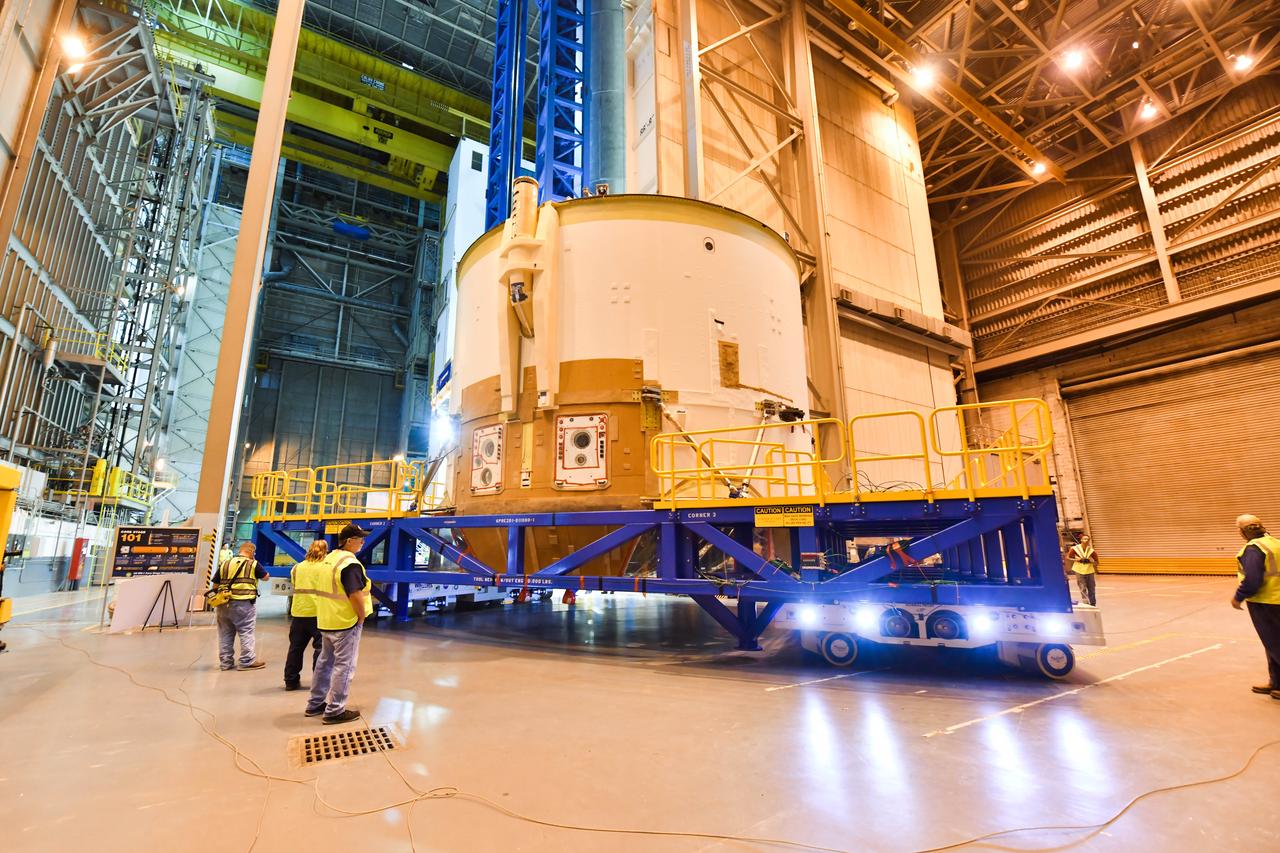
Technicians at NASA’s Michoud Assembly Facility in New Orleans moved the engine section for NASA’s Space Launch System (SLS) rocket to another part of the facility on Sept. 3 to prepare it for joining to the rest of the rocket’s core stage. The engine section, which comprises the lowest portion of the 212-foot-tall stage, is the last major component to be horizontally integrated to the core stage. Michoud crews completed assembly on the flight hardware that will be used for Artemis I, the first lunar mission of SLS and NASA’s Orion spacecraft, on Aug. 29. NASA and Boeing engineers removed the scaffolding surrounding the hardware to use a special tool to properly position the engine section for its attachment to the rest of the stage. The core stage’s two liquid propellant tanks and four RS-25 engines will produce more than 2 million pounds of thrust to send the SLS rocket and Orion on the Artemis lunar missions. The engine section houses the four RS-25 engines and includes vital systems for mounting, controlling and delivering fuel form the propellant tanks to the rocket’s engines. Offering more payload mass, volume capability and energy to speed missions through space, the SLS rocket, along with NASA’s Gateway in lunar orbit and Orion, is part of NASA’s backbone for deep space exploration and the Artemis lunar program. No other rocket is capable of carrying astronauts in Orion around the Moon in a single mission.
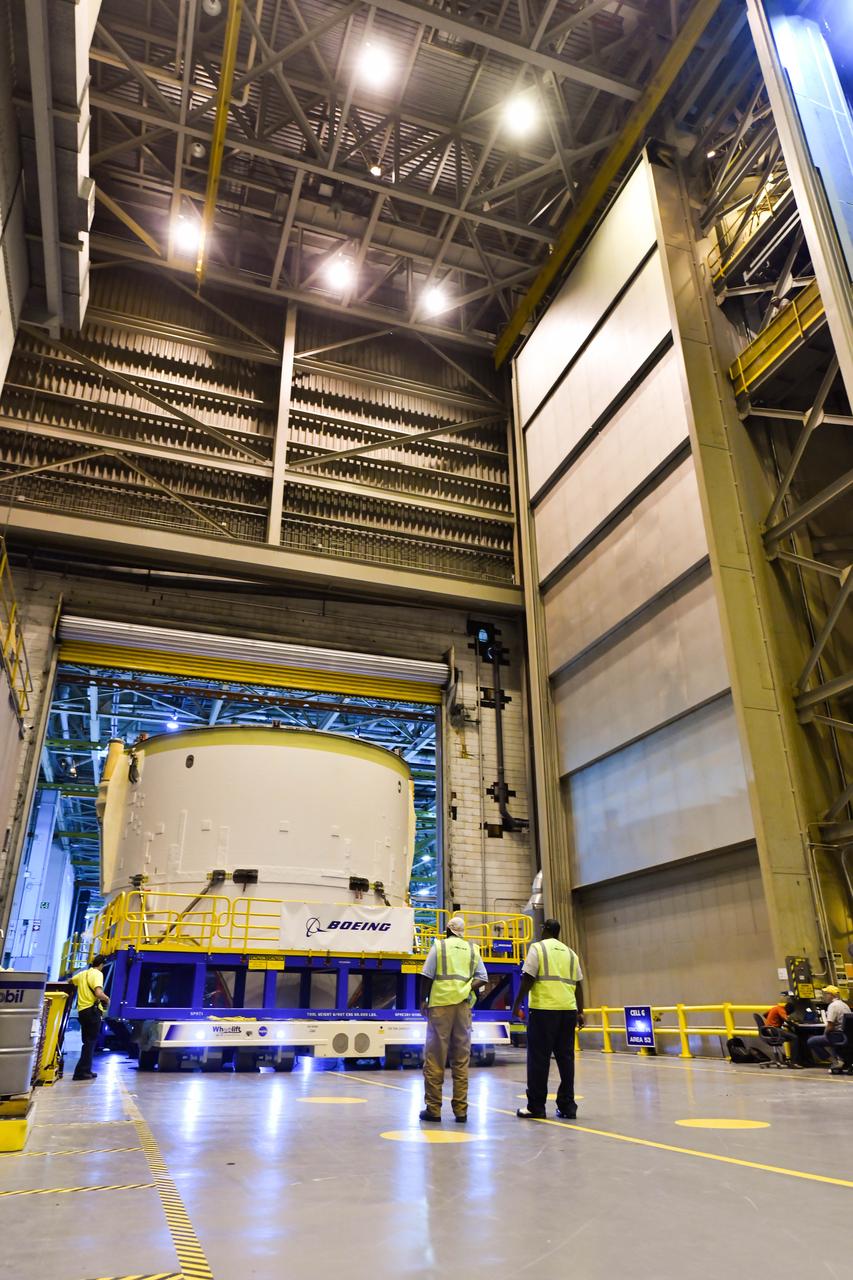
Technicians at NASA’s Michoud Assembly Facility in New Orleans moved the engine section for NASA’s Space Launch System (SLS) rocket to another part of the facility on Sept. 3 to prepare it for joining to the rest of the rocket’s core stage. The engine section, which comprises the lowest portion of the 212-foot-tall stage, is the last major component to be horizontally integrated to the core stage. Michoud crews completed assembly on the flight hardware that will be used for Artemis I, the first lunar mission of SLS and NASA’s Orion spacecraft, on Aug. 29. NASA and Boeing engineers removed the scaffolding surrounding the hardware to use a special tool to properly position the engine section for its attachment to the rest of the stage. The core stage’s two liquid propellant tanks and four RS-25 engines will produce more than 2 million pounds of thrust to send the SLS rocket and Orion on the Artemis lunar missions. The engine section houses the four RS-25 engines and includes vital systems for mounting, controlling and delivering fuel form the propellant tanks to the rocket’s engines. Offering more payload mass, volume capability and energy to speed missions through space, the SLS rocket, along with NASA’s Gateway in lunar orbit and Orion, is part of NASA’s backbone for deep space exploration and the Artemis lunar program. No other rocket is capable of carrying astronauts in Orion around the Moon in a single mission.
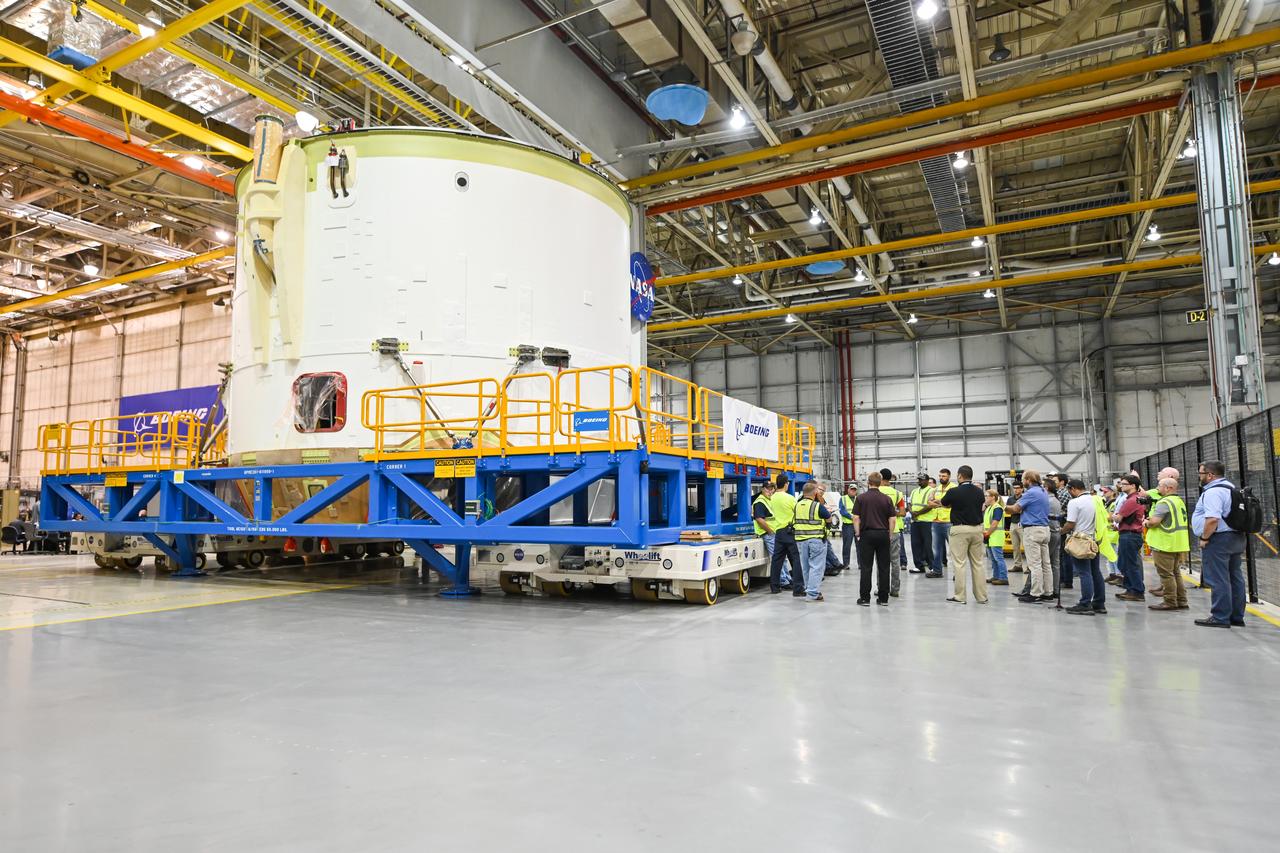
Technicians at NASA’s Michoud Assembly Facility in New Orleans moved the engine section for NASA’s Space Launch System (SLS) rocket to another part of the facility on Sept. 3 to prepare it for joining to the rest of the rocket’s core stage. The engine section, which comprises the lowest portion of the 212-foot-tall stage, is the last major component to be horizontally integrated to the core stage. Michoud crews completed assembly on the flight hardware that will be used for Artemis I, the first lunar mission of SLS and NASA’s Orion spacecraft, on Aug. 29. NASA and Boeing engineers removed the scaffolding surrounding the hardware to use a special tool to properly position the engine section for its attachment to the rest of the stage. The core stage’s two liquid propellant tanks and four RS-25 engines will produce more than 2 million pounds of thrust to send the SLS rocket and Orion on the Artemis lunar missions. The engine section houses the four RS-25 engines and includes vital systems for mounting, controlling and delivering fuel form the propellant tanks to the rocket’s engines. Offering more payload mass, volume capability and energy to speed missions through space, the SLS rocket, along with NASA’s Gateway in lunar orbit and Orion, is part of NASA’s backbone for deep space exploration and the Artemis lunar program. No other rocket is capable of carrying astronauts in Orion around the Moon in a single mission.
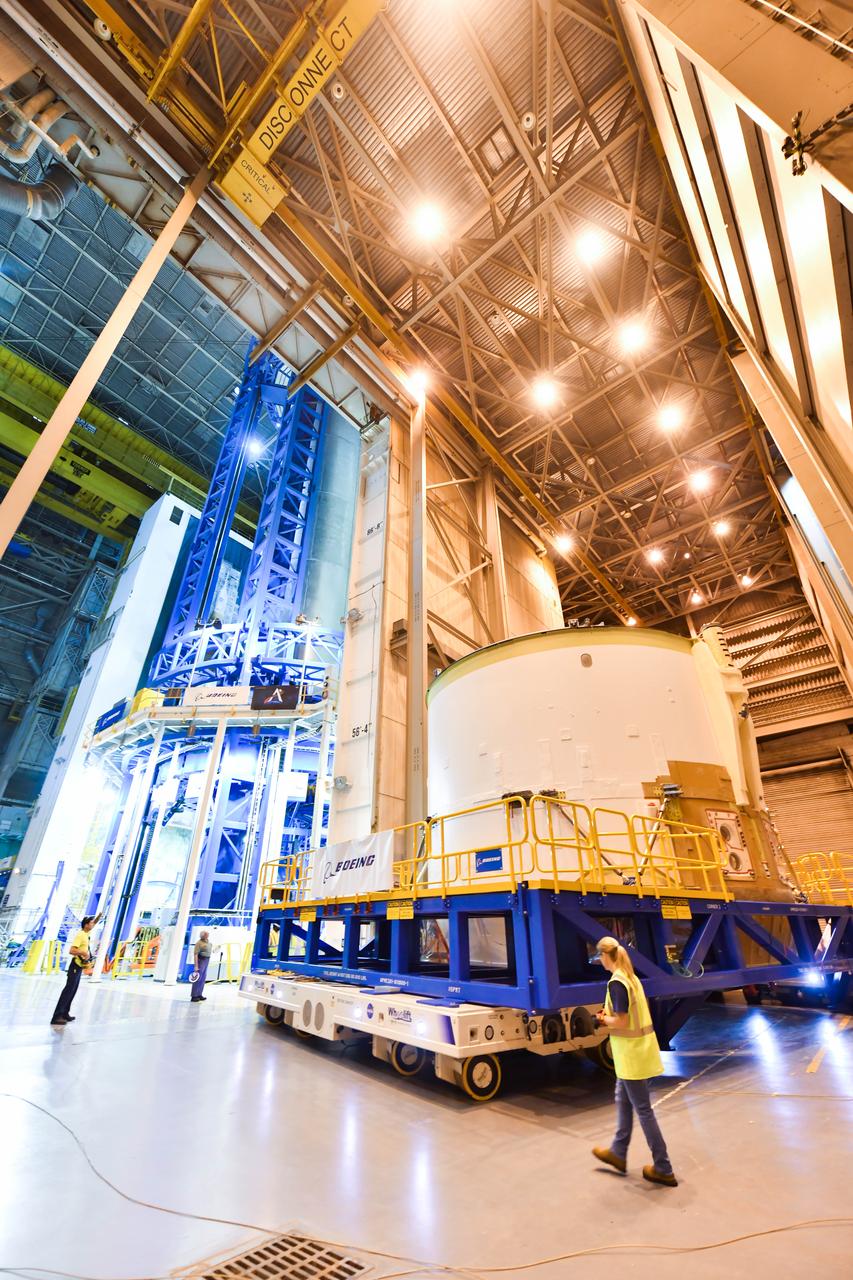
Technicians at NASA’s Michoud Assembly Facility in New Orleans moved the engine section for NASA’s Space Launch System (SLS) rocket to another part of the facility on Sept. 3 to prepare it for joining to the rest of the rocket’s core stage. The engine section, which comprises the lowest portion of the 212-foot-tall stage, is the last major component to be horizontally integrated to the core stage. Michoud crews completed assembly on the flight hardware that will be used for Artemis I, the first lunar mission of SLS and NASA’s Orion spacecraft, on Aug. 29. NASA and Boeing engineers removed the scaffolding surrounding the hardware to use a special tool to properly position the engine section for its attachment to the rest of the stage. The core stage’s two liquid propellant tanks and four RS-25 engines will produce more than 2 million pounds of thrust to send the SLS rocket and Orion on the Artemis lunar missions. The engine section houses the four RS-25 engines and includes vital systems for mounting, controlling and delivering fuel form the propellant tanks to the rocket’s engines. Offering more payload mass, volume capability and energy to speed missions through space, the SLS rocket, along with NASA’s Gateway in lunar orbit and Orion, is part of NASA’s backbone for deep space exploration and the Artemis lunar program. No other rocket is capable of carrying astronauts in Orion around the Moon in a single mission.
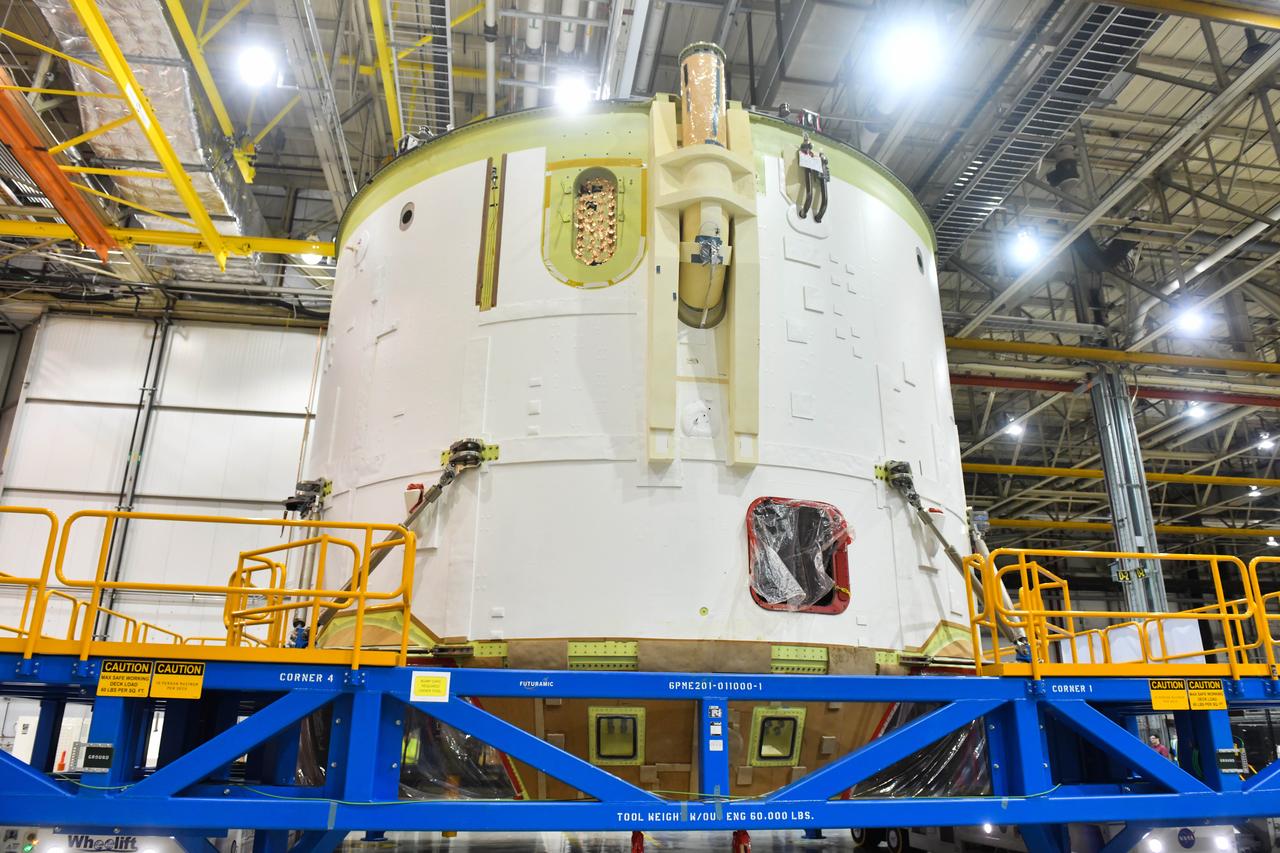
Technicians at NASA’s Michoud Assembly Facility in New Orleans moved the engine section for NASA’s Space Launch System (SLS) rocket to another part of the facility on Sept. 3 to prepare it for joining to the rest of the rocket’s core stage. The engine section, which comprises the lowest portion of the 212-foot-tall stage, is the last major component to be horizontally integrated to the core stage. Michoud crews completed assembly on the flight hardware that will be used for Artemis I, the first lunar mission of SLS and NASA’s Orion spacecraft, on Aug. 29. NASA and Boeing engineers removed the scaffolding surrounding the hardware to use a special tool to properly position the engine section for its attachment to the rest of the stage. The core stage’s two liquid propellant tanks and four RS-25 engines will produce more than 2 million pounds of thrust to send the SLS rocket and Orion on the Artemis lunar missions. The engine section houses the four RS-25 engines and includes vital systems for mounting, controlling and delivering fuel form the propellant tanks to the rocket’s engines. Offering more payload mass, volume capability and energy to speed missions through space, the SLS rocket, along with NASA’s Gateway in lunar orbit and Orion, is part of NASA’s backbone for deep space exploration and the Artemis lunar program. No other rocket is capable of carrying astronauts in Orion around the Moon in a single mission.
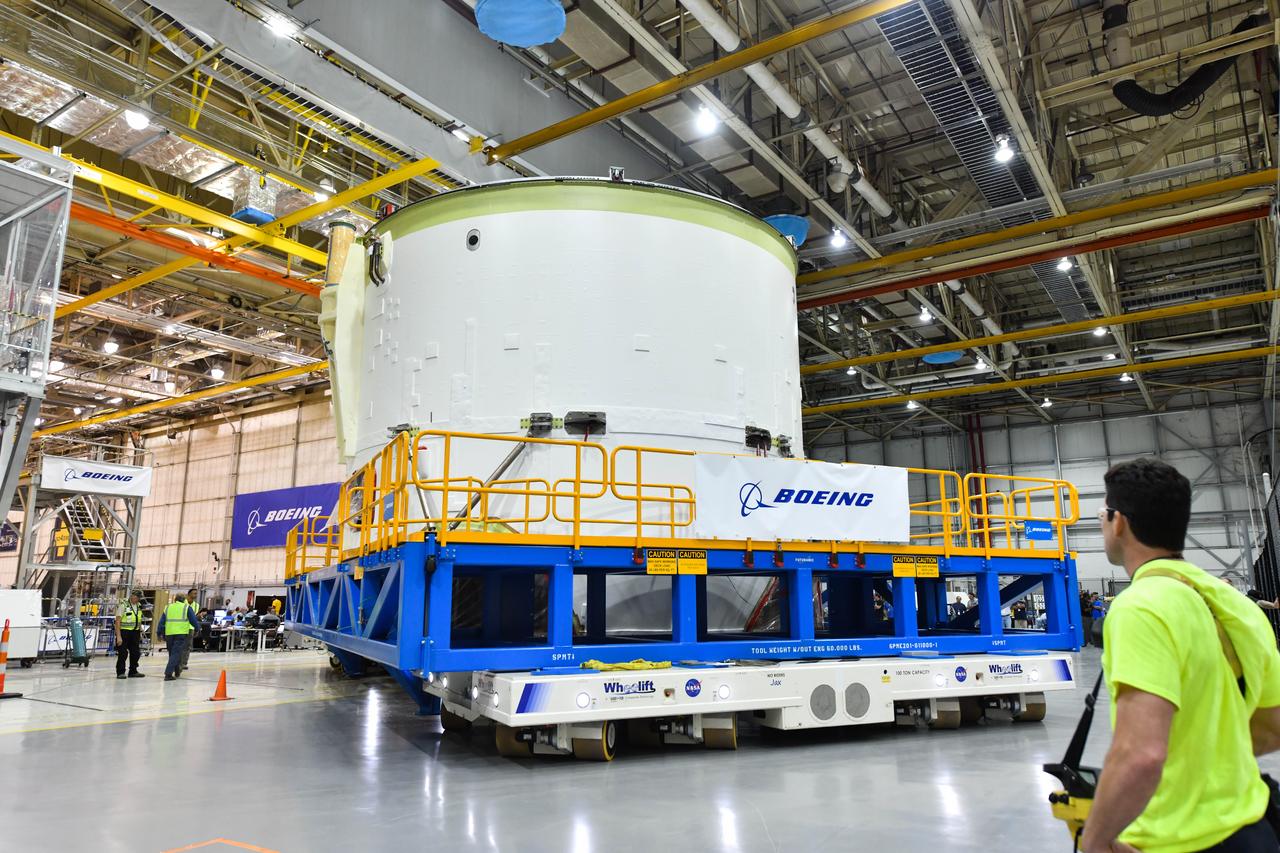
Technicians at NASA’s Michoud Assembly Facility in New Orleans moved the engine section for NASA’s Space Launch System (SLS) rocket to another part of the facility on Sept. 3 to prepare it for joining to the rest of the rocket’s core stage. The engine section, which comprises the lowest portion of the 212-foot-tall stage, is the last major component to be horizontally integrated to the core stage. Michoud crews completed assembly on the flight hardware that will be used for Artemis I, the first lunar mission of SLS and NASA’s Orion spacecraft, on Aug. 29. NASA and Boeing engineers removed the scaffolding surrounding the hardware to use a special tool to properly position the engine section for its attachment to the rest of the stage. The core stage’s two liquid propellant tanks and four RS-25 engines will produce more than 2 million pounds of thrust to send the SLS rocket and Orion on the Artemis lunar missions. The engine section houses the four RS-25 engines and includes vital systems for mounting, controlling and delivering fuel form the propellant tanks to the rocket’s engines. Offering more payload mass, volume capability and energy to speed missions through space, the SLS rocket, along with NASA’s Gateway in lunar orbit and Orion, is part of NASA’s backbone for deep space exploration and the Artemis lunar program. No other rocket is capable of carrying astronauts in Orion around the Moon in a single mission.
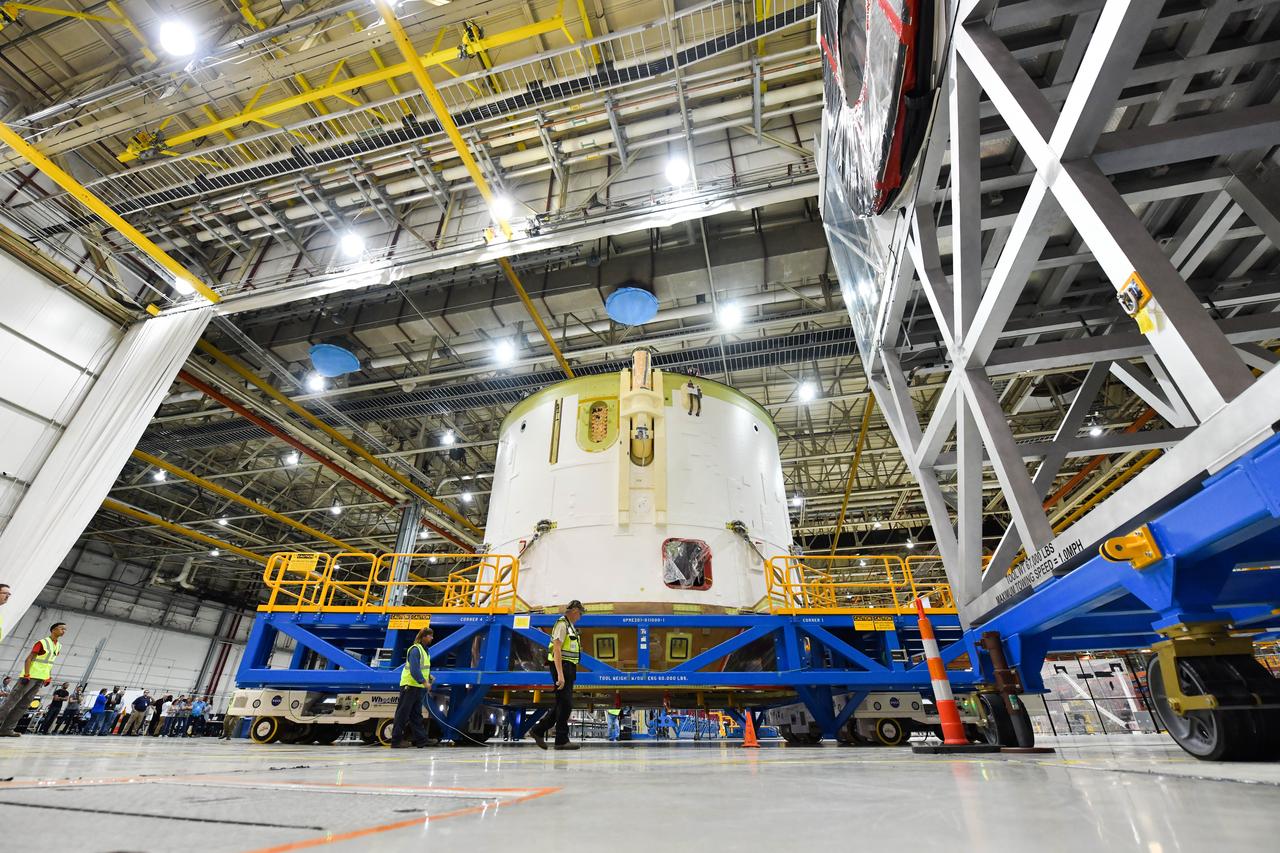
Technicians at NASA’s Michoud Assembly Facility in New Orleans moved the engine section for NASA’s Space Launch System (SLS) rocket to another part of the facility on Sept. 3 to prepare it for joining to the rest of the rocket’s core stage. The engine section, which comprises the lowest portion of the 212-foot-tall stage, is the last major component to be horizontally integrated to the core stage. Michoud crews completed assembly on the flight hardware that will be used for Artemis I, the first lunar mission of SLS and NASA’s Orion spacecraft, on Aug. 29. NASA and Boeing engineers removed the scaffolding surrounding the hardware to use a special tool to properly position the engine section for its attachment to the rest of the stage. The core stage’s two liquid propellant tanks and four RS-25 engines will produce more than 2 million pounds of thrust to send the SLS rocket and Orion on the Artemis lunar missions. The engine section houses the four RS-25 engines and includes vital systems for mounting, controlling and delivering fuel form the propellant tanks to the rocket’s engines. Offering more payload mass, volume capability and energy to speed missions through space, the SLS rocket, along with NASA’s Gateway in lunar orbit and Orion, is part of NASA’s backbone for deep space exploration and the Artemis lunar program. No other rocket is capable of carrying astronauts in Orion around the Moon in a single mission.
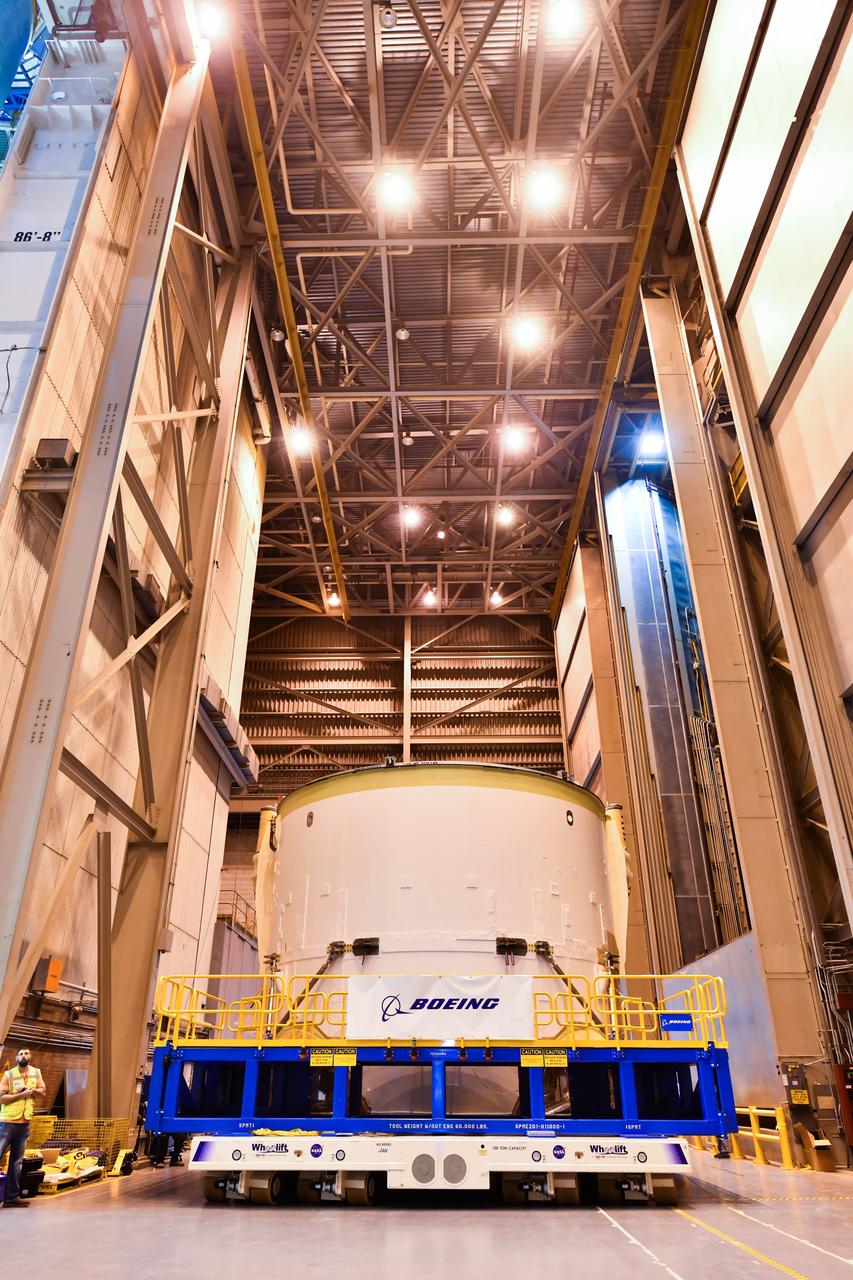
Technicians at NASA’s Michoud Assembly Facility in New Orleans moved the engine section for NASA’s Space Launch System (SLS) rocket to another part of the facility on Sept. 3 to prepare it for joining to the rest of the rocket’s core stage. The engine section, which comprises the lowest portion of the 212-foot-tall stage, is the last major component to be horizontally integrated to the core stage. Michoud crews completed assembly on the flight hardware that will be used for Artemis I, the first lunar mission of SLS and NASA’s Orion spacecraft, on Aug. 29. NASA and Boeing engineers removed the scaffolding surrounding the hardware to use a special tool to properly position the engine section for its attachment to the rest of the stage. The core stage’s two liquid propellant tanks and four RS-25 engines will produce more than 2 million pounds of thrust to send the SLS rocket and Orion on the Artemis lunar missions. The engine section houses the four RS-25 engines and includes vital systems for mounting, controlling and delivering fuel form the propellant tanks to the rocket’s engines. Offering more payload mass, volume capability and energy to speed missions through space, the SLS rocket, along with NASA’s Gateway in lunar orbit and Orion, is part of NASA’s backbone for deep space exploration and the Artemis lunar program. No other rocket is capable of carrying astronauts in Orion around the Moon in a single mission.
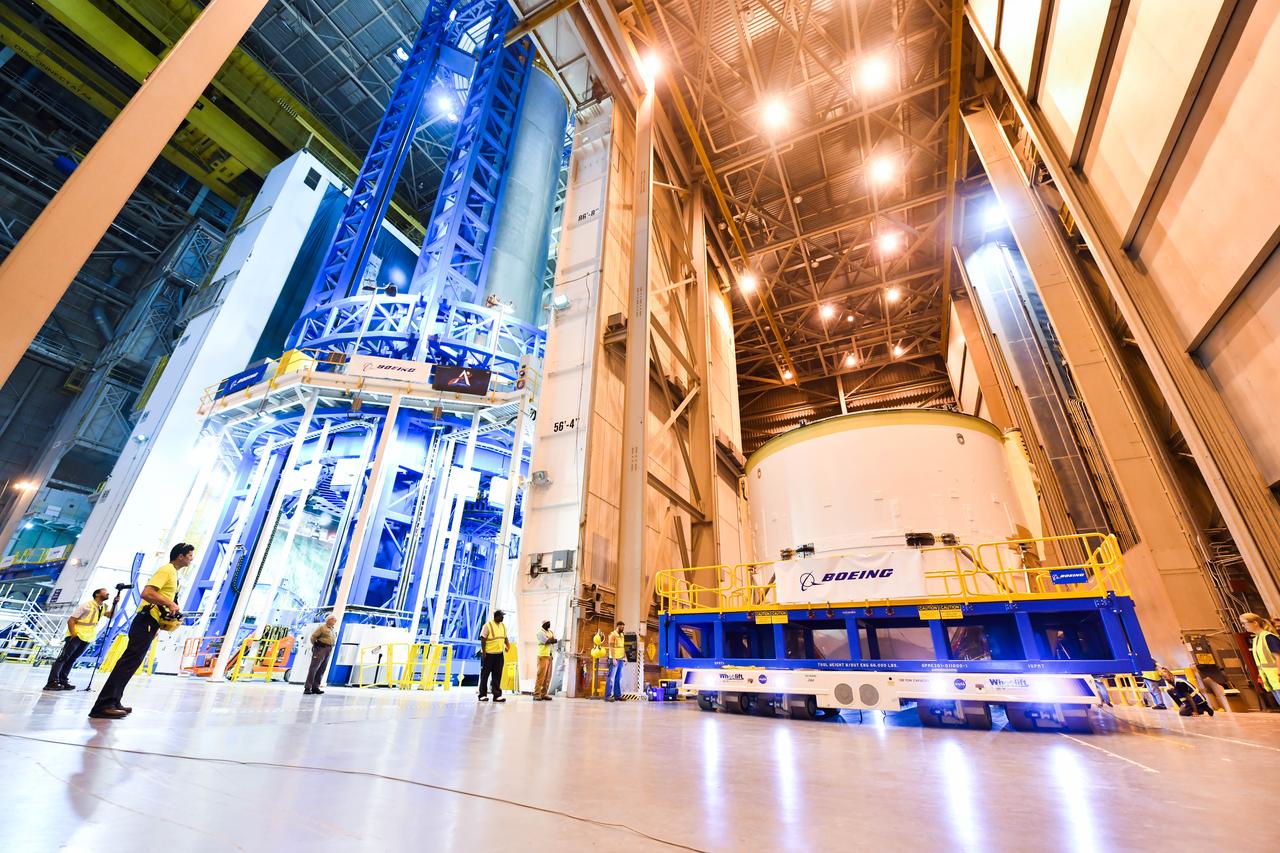
Technicians at NASA’s Michoud Assembly Facility in New Orleans moved the engine section for NASA’s Space Launch System (SLS) rocket to another part of the facility on Sept. 3 to prepare it for joining to the rest of the rocket’s core stage. The engine section, which comprises the lowest portion of the 212-foot-tall stage, is the last major component to be horizontally integrated to the core stage. Michoud crews completed assembly on the flight hardware that will be used for Artemis I, the first lunar mission of SLS and NASA’s Orion spacecraft, on Aug. 29. NASA and Boeing engineers removed the scaffolding surrounding the hardware to use a special tool to properly position the engine section for its attachment to the rest of the stage. The core stage’s two liquid propellant tanks and four RS-25 engines will produce more than 2 million pounds of thrust to send the SLS rocket and Orion on the Artemis lunar missions. The engine section houses the four RS-25 engines and includes vital systems for mounting, controlling and delivering fuel form the propellant tanks to the rocket’s engines. Offering more payload mass, volume capability and energy to speed missions through space, the SLS rocket, along with NASA’s Gateway in lunar orbit and Orion, is part of NASA’s backbone for deep space exploration and the Artemis lunar program. No other rocket is capable of carrying astronauts in Orion around the Moon in a single mission.
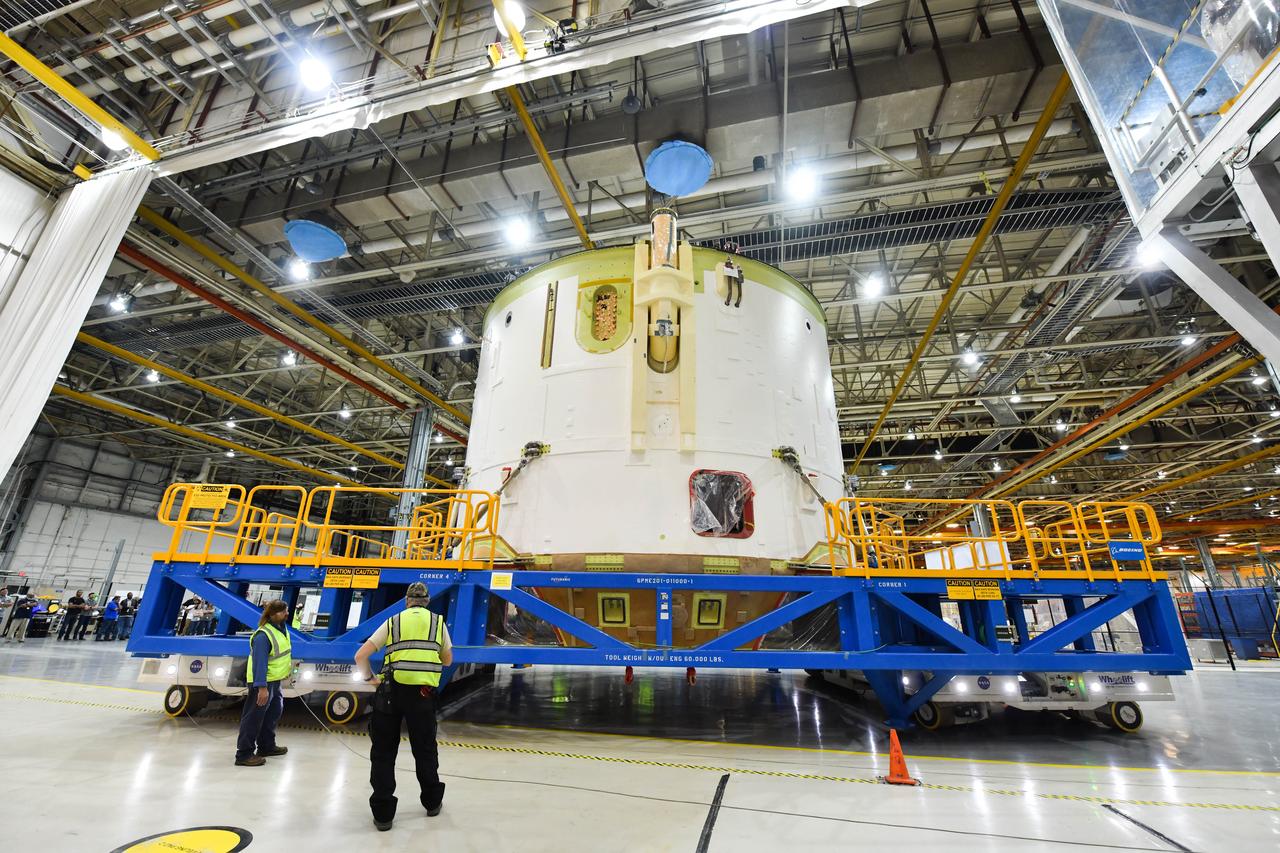
Technicians at NASA’s Michoud Assembly Facility in New Orleans moved the engine section for NASA’s Space Launch System (SLS) rocket to another part of the facility on Sept. 3 to prepare it for joining to the rest of the rocket’s core stage. The engine section, which comprises the lowest portion of the 212-foot-tall stage, is the last major component to be horizontally integrated to the core stage. Michoud crews completed assembly on the flight hardware that will be used for Artemis I, the first lunar mission of SLS and NASA’s Orion spacecraft, on Aug. 29. NASA and Boeing engineers removed the scaffolding surrounding the hardware to use a special tool to properly position the engine section for its attachment to the rest of the stage. The core stage’s two liquid propellant tanks and four RS-25 engines will produce more than 2 million pounds of thrust to send the SLS rocket and Orion on the Artemis lunar missions. The engine section houses the four RS-25 engines and includes vital systems for mounting, controlling and delivering fuel form the propellant tanks to the rocket’s engines. Offering more payload mass, volume capability and energy to speed missions through space, the SLS rocket, along with NASA’s Gateway in lunar orbit and Orion, is part of NASA’s backbone for deep space exploration and the Artemis lunar program. No other rocket is capable of carrying astronauts in Orion around the Moon in a single mission.
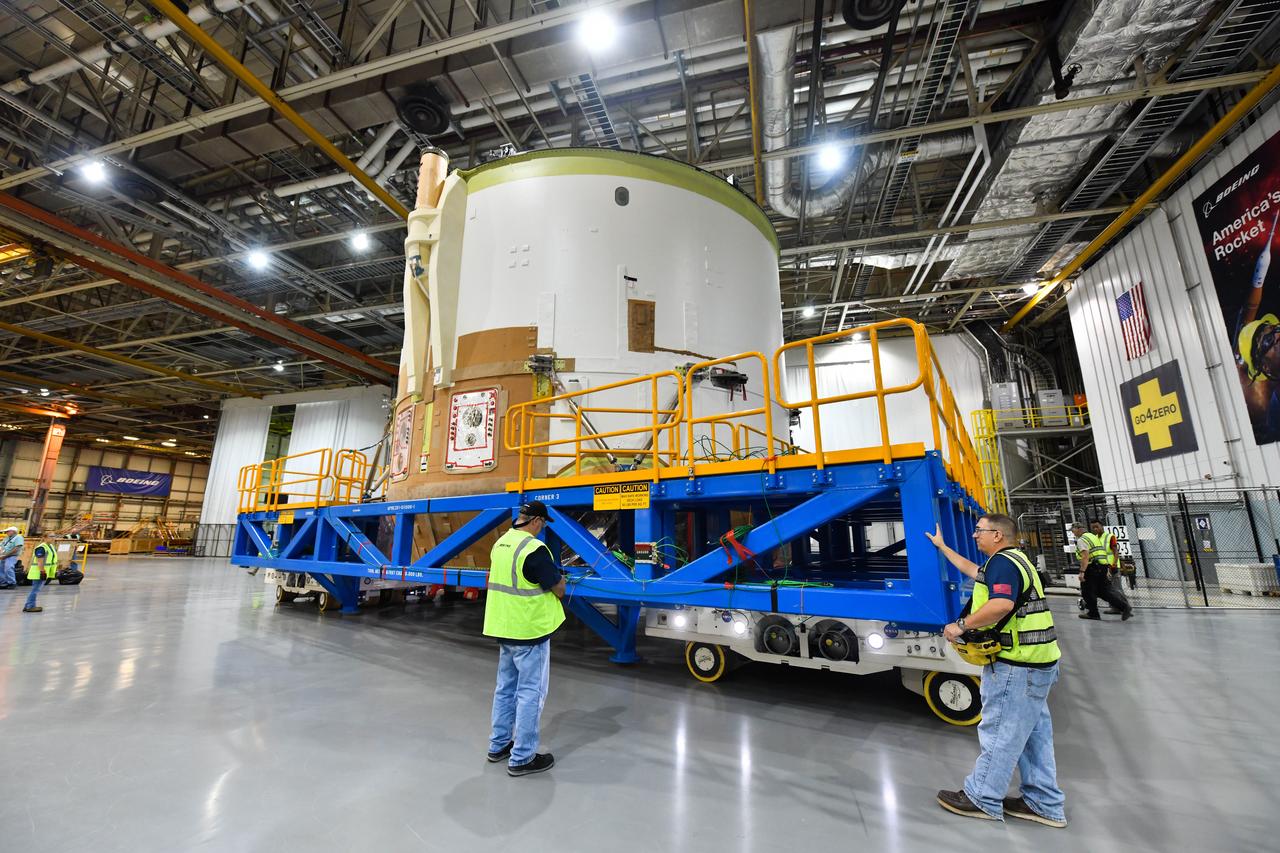
Technicians at NASA’s Michoud Assembly Facility in New Orleans moved the engine section for NASA’s Space Launch System (SLS) rocket to another part of the facility on Sept. 3 to prepare it for joining to the rest of the rocket’s core stage. The engine section, which comprises the lowest portion of the 212-foot-tall stage, is the last major component to be horizontally integrated to the core stage. Michoud crews completed assembly on the flight hardware that will be used for Artemis I, the first lunar mission of SLS and NASA’s Orion spacecraft, on Aug. 29. NASA and Boeing engineers removed the scaffolding surrounding the hardware to use a special tool to properly position the engine section for its attachment to the rest of the stage. The core stage’s two liquid propellant tanks and four RS-25 engines will produce more than 2 million pounds of thrust to send the SLS rocket and Orion on the Artemis lunar missions. The engine section houses the four RS-25 engines and includes vital systems for mounting, controlling and delivering fuel form the propellant tanks to the rocket’s engines. Offering more payload mass, volume capability and energy to speed missions through space, the SLS rocket, along with NASA’s Gateway in lunar orbit and Orion, is part of NASA’s backbone for deep space exploration and the Artemis lunar program. No other rocket is capable of carrying astronauts in Orion around the Moon in a single mission.
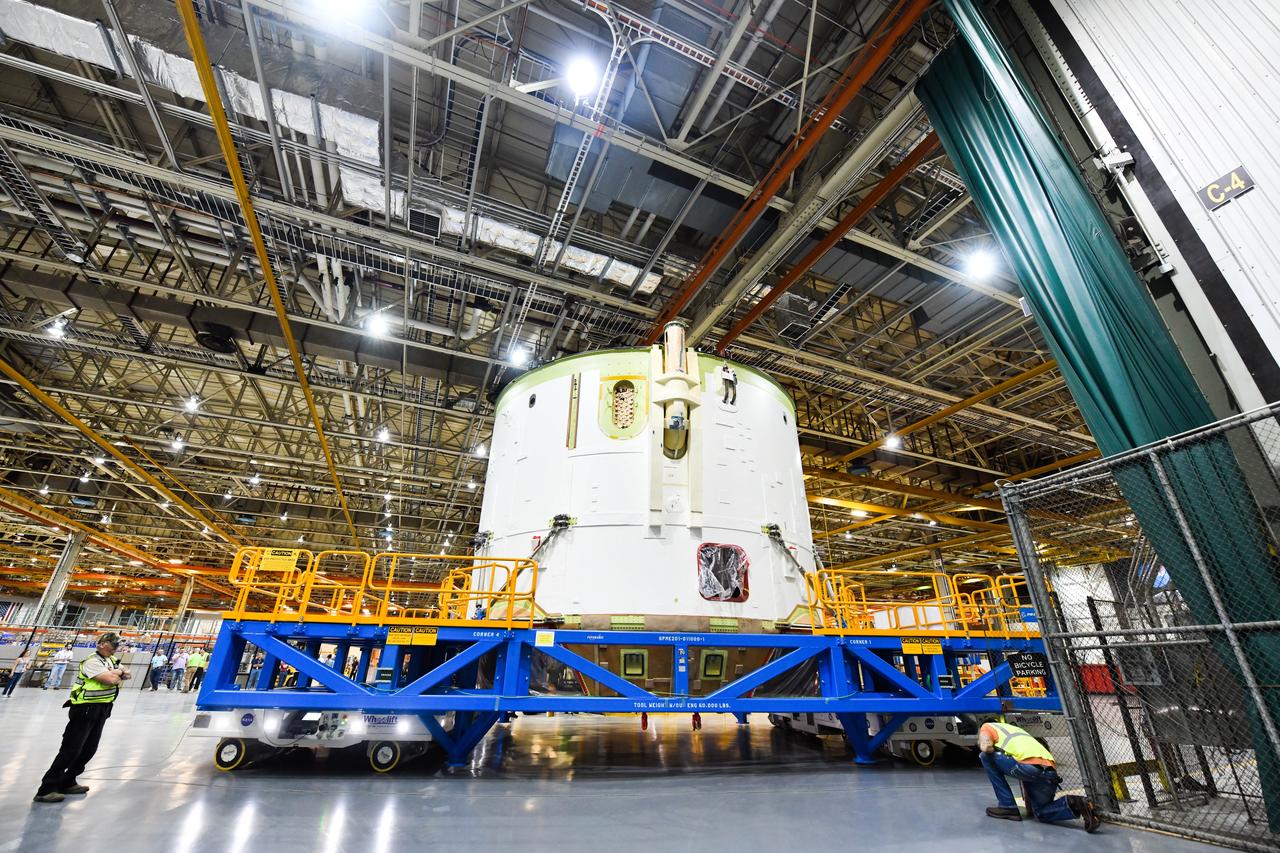
Technicians at NASA’s Michoud Assembly Facility in New Orleans moved the engine section for NASA’s Space Launch System (SLS) rocket to another part of the facility on Sept. 3 to prepare it for joining to the rest of the rocket’s core stage. The engine section, which comprises the lowest portion of the 212-foot-tall stage, is the last major component to be horizontally integrated to the core stage. Michoud crews completed assembly on the flight hardware that will be used for Artemis I, the first lunar mission of SLS and NASA’s Orion spacecraft, on Aug. 29. NASA and Boeing engineers removed the scaffolding surrounding the hardware to use a special tool to properly position the engine section for its attachment to the rest of the stage. The core stage’s two liquid propellant tanks and four RS-25 engines will produce more than 2 million pounds of thrust to send the SLS rocket and Orion on the Artemis lunar missions. The engine section houses the four RS-25 engines and includes vital systems for mounting, controlling and delivering fuel form the propellant tanks to the rocket’s engines. Offering more payload mass, volume capability and energy to speed missions through space, the SLS rocket, along with NASA’s Gateway in lunar orbit and Orion, is part of NASA’s backbone for deep space exploration and the Artemis lunar program. No other rocket is capable of carrying astronauts in Orion around the Moon in a single mission.
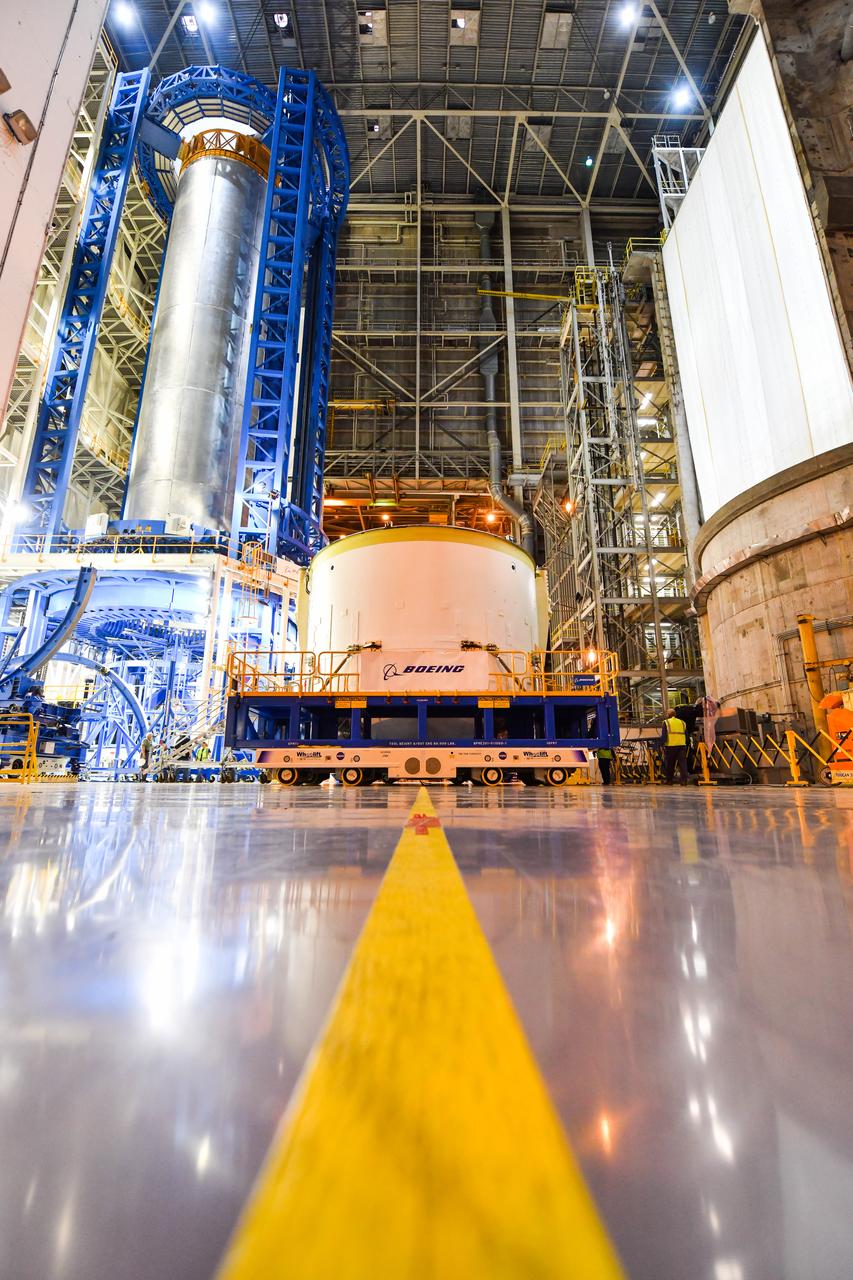
Technicians at NASA’s Michoud Assembly Facility in New Orleans moved the engine section for NASA’s Space Launch System (SLS) rocket to another part of the facility on Sept. 3 to prepare it for joining to the rest of the rocket’s core stage. The engine section, which comprises the lowest portion of the 212-foot-tall stage, is the last major component to be horizontally integrated to the core stage. Michoud crews completed assembly on the flight hardware that will be used for Artemis I, the first lunar mission of SLS and NASA’s Orion spacecraft, on Aug. 29. NASA and Boeing engineers removed the scaffolding surrounding the hardware to use a special tool to properly position the engine section for its attachment to the rest of the stage. The core stage’s two liquid propellant tanks and four RS-25 engines will produce more than 2 million pounds of thrust to send the SLS rocket and Orion on the Artemis lunar missions. The engine section houses the four RS-25 engines and includes vital systems for mounting, controlling and delivering fuel form the propellant tanks to the rocket’s engines. Offering more payload mass, volume capability and energy to speed missions through space, the SLS rocket, along with NASA’s Gateway in lunar orbit and Orion, is part of NASA’s backbone for deep space exploration and the Artemis lunar program. No other rocket is capable of carrying astronauts in Orion around the Moon in a single mission.
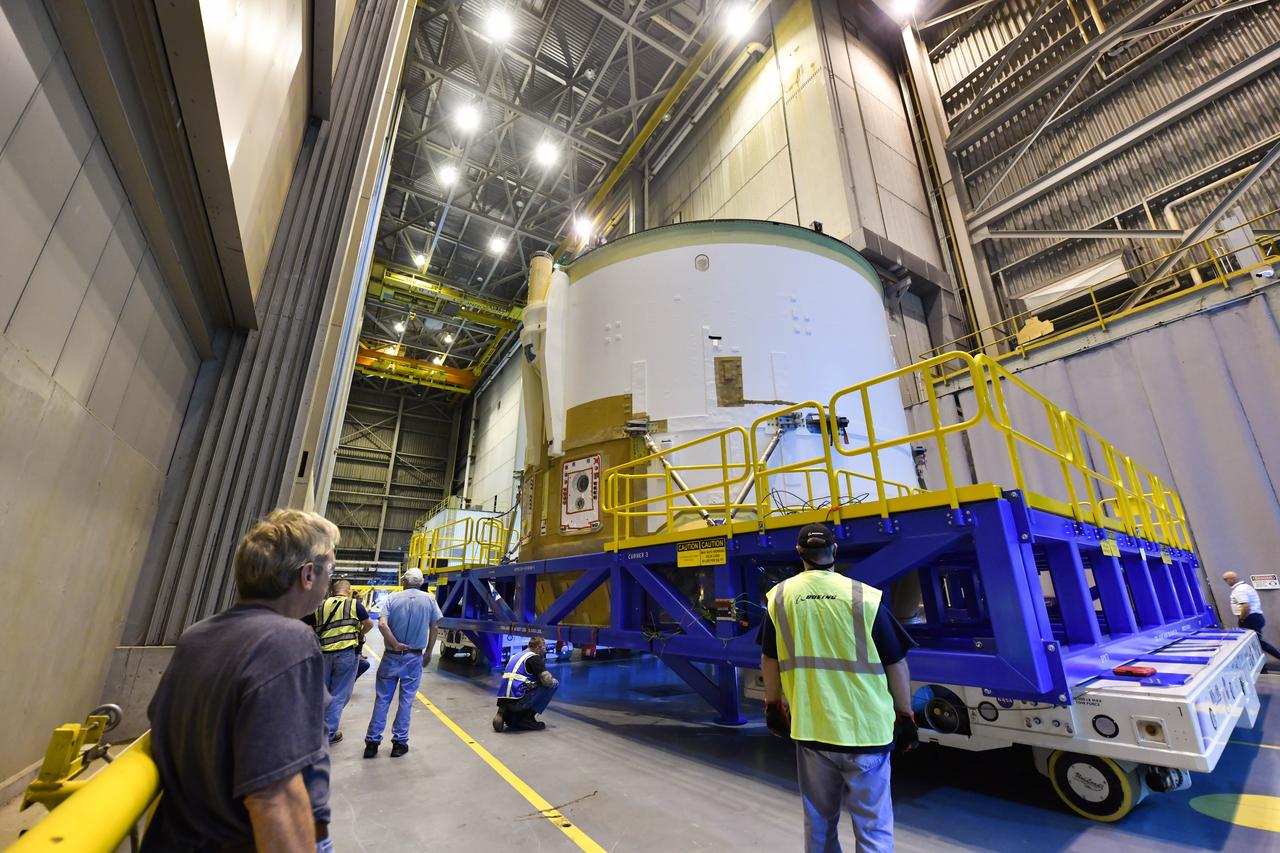
Technicians at NASA’s Michoud Assembly Facility in New Orleans moved the engine section for NASA’s Space Launch System (SLS) rocket to another part of the facility on Sept. 3 to prepare it for joining to the rest of the rocket’s core stage. The engine section, which comprises the lowest portion of the 212-foot-tall stage, is the last major component to be horizontally integrated to the core stage. Michoud crews completed assembly on the flight hardware that will be used for Artemis I, the first lunar mission of SLS and NASA’s Orion spacecraft, on Aug. 29. NASA and Boeing engineers removed the scaffolding surrounding the hardware to use a special tool to properly position the engine section for its attachment to the rest of the stage. The core stage’s two liquid propellant tanks and four RS-25 engines will produce more than 2 million pounds of thrust to send the SLS rocket and Orion on the Artemis lunar missions. The engine section houses the four RS-25 engines and includes vital systems for mounting, controlling and delivering fuel form the propellant tanks to the rocket’s engines. Offering more payload mass, volume capability and energy to speed missions through space, the SLS rocket, along with NASA’s Gateway in lunar orbit and Orion, is part of NASA’s backbone for deep space exploration and the Artemis lunar program. No other rocket is capable of carrying astronauts in Orion around the Moon in a single mission.
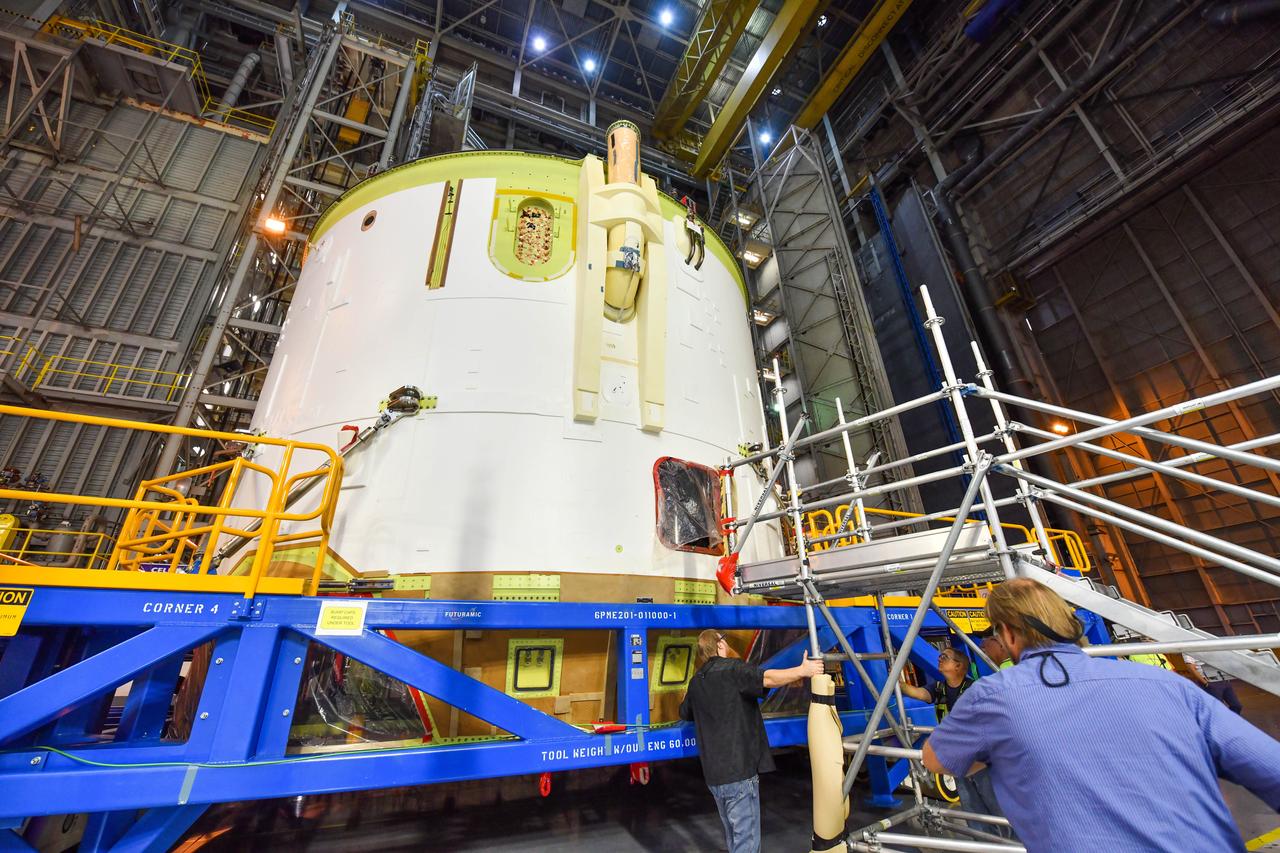
Technicians at NASA’s Michoud Assembly Facility in New Orleans moved the engine section for NASA’s Space Launch System (SLS) rocket to another part of the facility on Sept. 3 to prepare it for joining to the rest of the rocket’s core stage. The engine section, which comprises the lowest portion of the 212-foot-tall stage, is the last major component to be horizontally integrated to the core stage. Michoud crews completed assembly on the flight hardware that will be used for Artemis I, the first lunar mission of SLS and NASA’s Orion spacecraft, on Aug. 29. NASA and Boeing engineers removed the scaffolding surrounding the hardware to use a special tool to properly position the engine section for its attachment to the rest of the stage. The core stage’s two liquid propellant tanks and four RS-25 engines will produce more than 2 million pounds of thrust to send the SLS rocket and Orion on the Artemis lunar missions. The engine section houses the four RS-25 engines and includes vital systems for mounting, controlling and delivering fuel form the propellant tanks to the rocket’s engines. Offering more payload mass, volume capability and energy to speed missions through space, the SLS rocket, along with NASA’s Gateway in lunar orbit and Orion, is part of NASA’s backbone for deep space exploration and the Artemis lunar program. No other rocket is capable of carrying astronauts in Orion around the Moon in a single mission.
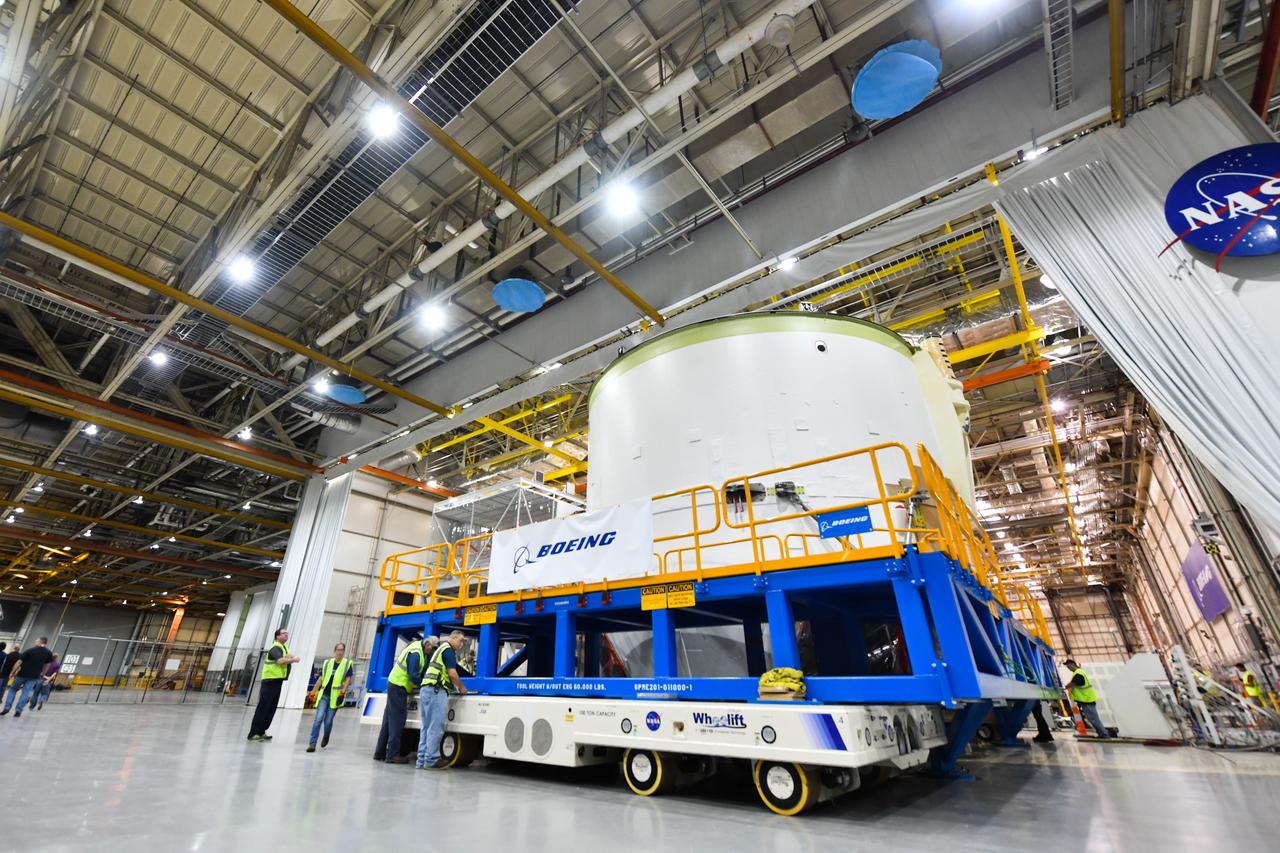
Technicians at NASA’s Michoud Assembly Facility in New Orleans moved the engine section for NASA’s Space Launch System (SLS) rocket to another part of the facility on Sept. 3 to prepare it for joining to the rest of the rocket’s core stage. The engine section, which comprises the lowest portion of the 212-foot-tall stage, is the last major component to be horizontally integrated to the core stage. Michoud crews completed assembly on the flight hardware that will be used for Artemis I, the first lunar mission of SLS and NASA’s Orion spacecraft, on Aug. 29. NASA and Boeing engineers removed the scaffolding surrounding the hardware to use a special tool to properly position the engine section for its attachment to the rest of the stage. The core stage’s two liquid propellant tanks and four RS-25 engines will produce more than 2 million pounds of thrust to send the SLS rocket and Orion on the Artemis lunar missions. The engine section houses the four RS-25 engines and includes vital systems for mounting, controlling and delivering fuel form the propellant tanks to the rocket’s engines. Offering more payload mass, volume capability and energy to speed missions through space, the SLS rocket, along with NASA’s Gateway in lunar orbit and Orion, is part of NASA’s backbone for deep space exploration and the Artemis lunar program. No other rocket is capable of carrying astronauts in Orion around the Moon in a single mission.
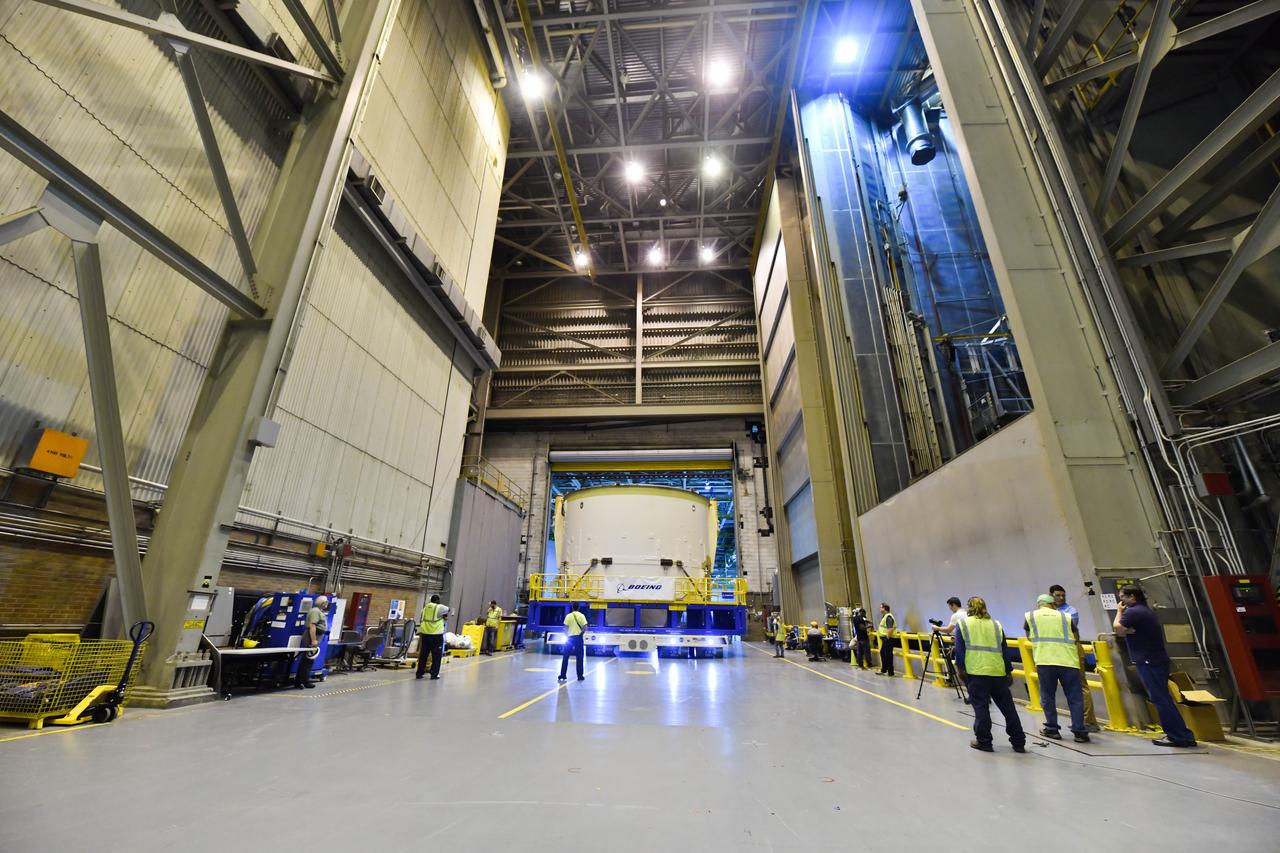
Technicians at NASA’s Michoud Assembly Facility in New Orleans moved the engine section for NASA’s Space Launch System (SLS) rocket to another part of the facility on Sept. 3 to prepare it for joining to the rest of the rocket’s core stage. The engine section, which comprises the lowest portion of the 212-foot-tall stage, is the last major component to be horizontally integrated to the core stage. Michoud crews completed assembly on the flight hardware that will be used for Artemis I, the first lunar mission of SLS and NASA’s Orion spacecraft, on Aug. 29. NASA and Boeing engineers removed the scaffolding surrounding the hardware to use a special tool to properly position the engine section for its attachment to the rest of the stage. The core stage’s two liquid propellant tanks and four RS-25 engines will produce more than 2 million pounds of thrust to send the SLS rocket and Orion on the Artemis lunar missions. The engine section houses the four RS-25 engines and includes vital systems for mounting, controlling and delivering fuel form the propellant tanks to the rocket’s engines. Offering more payload mass, volume capability and energy to speed missions through space, the SLS rocket, along with NASA’s Gateway in lunar orbit and Orion, is part of NASA’s backbone for deep space exploration and the Artemis lunar program. No other rocket is capable of carrying astronauts in Orion around the Moon in a single mission.
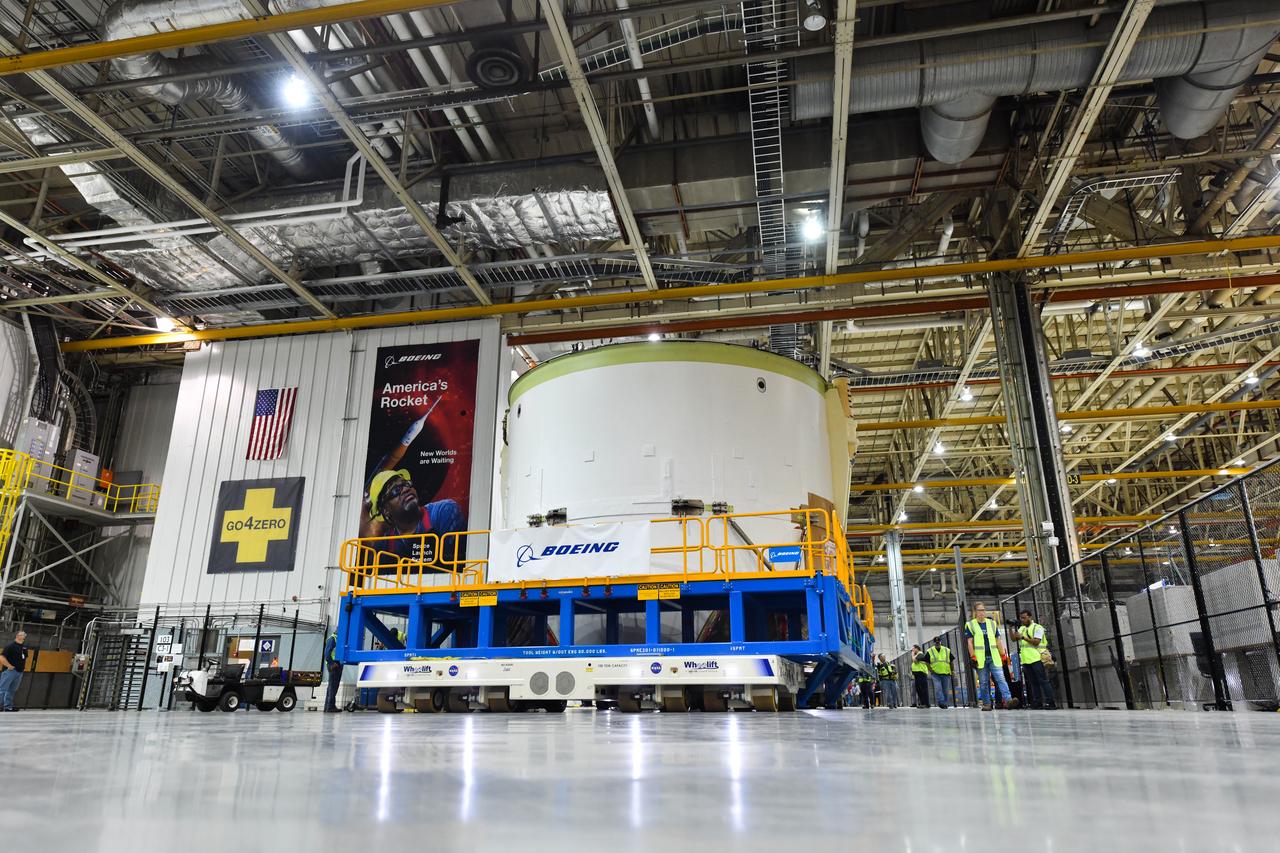
Technicians at NASA’s Michoud Assembly Facility in New Orleans moved the engine section for NASA’s Space Launch System (SLS) rocket to another part of the facility on Sept. 3 to prepare it for joining to the rest of the rocket’s core stage. The engine section, which comprises the lowest portion of the 212-foot-tall stage, is the last major component to be horizontally integrated to the core stage. Michoud crews completed assembly on the flight hardware that will be used for Artemis I, the first lunar mission of SLS and NASA’s Orion spacecraft, on Aug. 29. NASA and Boeing engineers removed the scaffolding surrounding the hardware to use a special tool to properly position the engine section for its attachment to the rest of the stage. The core stage’s two liquid propellant tanks and four RS-25 engines will produce more than 2 million pounds of thrust to send the SLS rocket and Orion on the Artemis lunar missions. The engine section houses the four RS-25 engines and includes vital systems for mounting, controlling and delivering fuel form the propellant tanks to the rocket’s engines. Offering more payload mass, volume capability and energy to speed missions through space, the SLS rocket, along with NASA’s Gateway in lunar orbit and Orion, is part of NASA’s backbone for deep space exploration and the Artemis lunar program. No other rocket is capable of carrying astronauts in Orion around the Moon in a single mission.
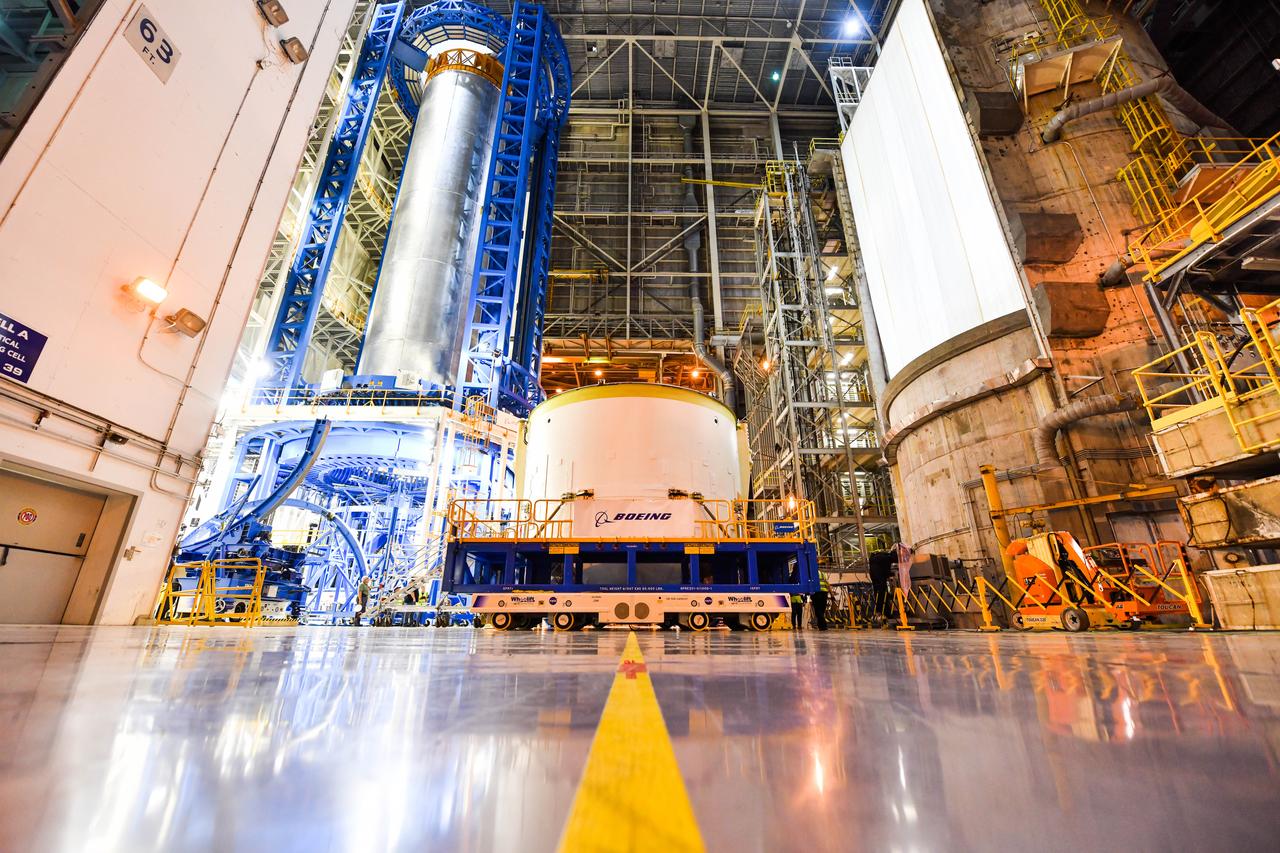
Technicians at NASA’s Michoud Assembly Facility in New Orleans moved the engine section for NASA’s Space Launch System (SLS) rocket to another part of the facility on Sept. 3 to prepare it for joining to the rest of the rocket’s core stage. The engine section, which comprises the lowest portion of the 212-foot-tall stage, is the last major component to be horizontally integrated to the core stage. Michoud crews completed assembly on the flight hardware that will be used for Artemis I, the first lunar mission of SLS and NASA’s Orion spacecraft, on Aug. 29. NASA and Boeing engineers removed the scaffolding surrounding the hardware to use a special tool to properly position the engine section for its attachment to the rest of the stage. The core stage’s two liquid propellant tanks and four RS-25 engines will produce more than 2 million pounds of thrust to send the SLS rocket and Orion on the Artemis lunar missions. The engine section houses the four RS-25 engines and includes vital systems for mounting, controlling and delivering fuel form the propellant tanks to the rocket’s engines. Offering more payload mass, volume capability and energy to speed missions through space, the SLS rocket, along with NASA’s Gateway in lunar orbit and Orion, is part of NASA’s backbone for deep space exploration and the Artemis lunar program. No other rocket is capable of carrying astronauts in Orion around the Moon in a single mission.
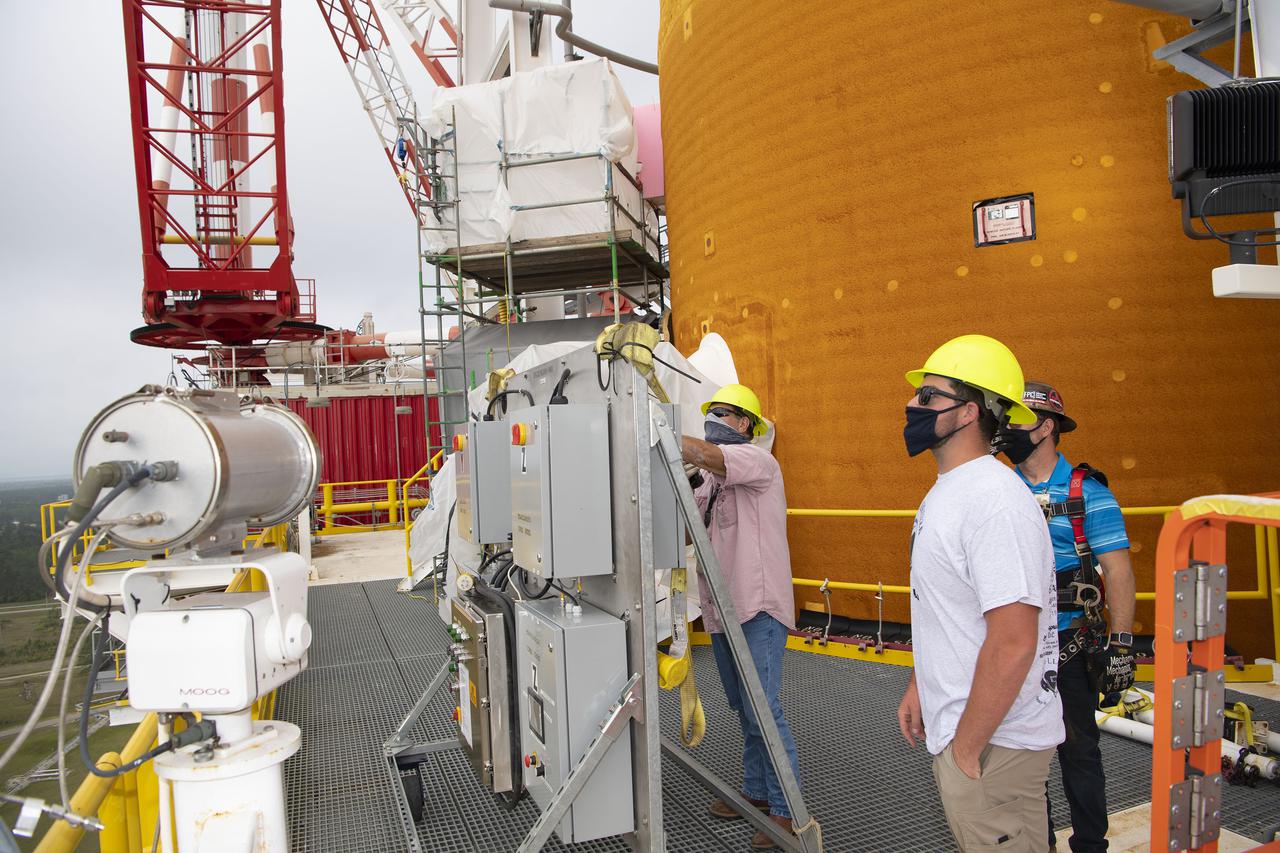
Team members at NASA’s Stennis Space Center near Bay St. Louis, Mississippi, complete refurbishment work on the first core stage of the agency’s Space Launch System (SLS) rocket. The work followed a successful hot fire of the stage and its four RS-25 engines March 18. The hot fire marked the culmination of a yearlong Green Run series of tests of the stage and its integrated systems. Following refurbishment work, the core stage will be removed from the test stand and transported to Kennedy Space Center in Florida, aboard NASA’s Pegasus barge, shown delivering equipment to the B-2 Test Stand. At Kennedy, the core stage will be integrated with the rest of SLS rocket and prepared for the launch of the Artemis I mission to the Moon. Photo Credit: NASA
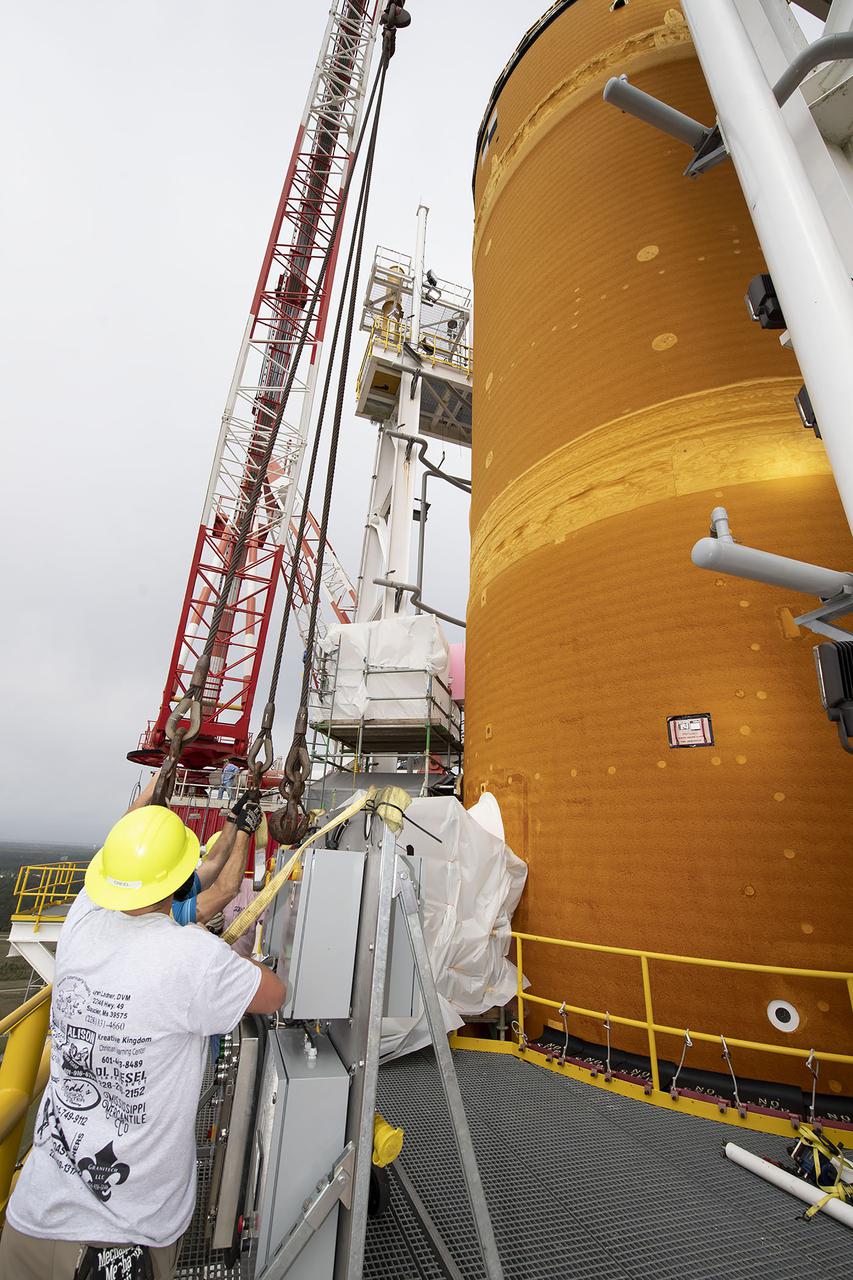
Team members at NASA’s Stennis Space Center near Bay St. Louis, Mississippi, complete refurbishment work on the first core stage of the agency’s Space Launch System (SLS) rocket. The work followed a successful hot fire of the stage and its four RS-25 engines March 18. The hot fire marked the culmination of a yearlong Green Run series of tests of the stage and its integrated systems. Following refurbishment work, the core stage will be removed from the test stand and transported to Kennedy Space Center in Florida, aboard NASA’s Pegasus barge, shown delivering equipment to the B-2 Test Stand. At Kennedy, the core stage will be integrated with the rest of SLS rocket and prepared for the launch of the Artemis I mission to the Moon. Photo Credit: NASA
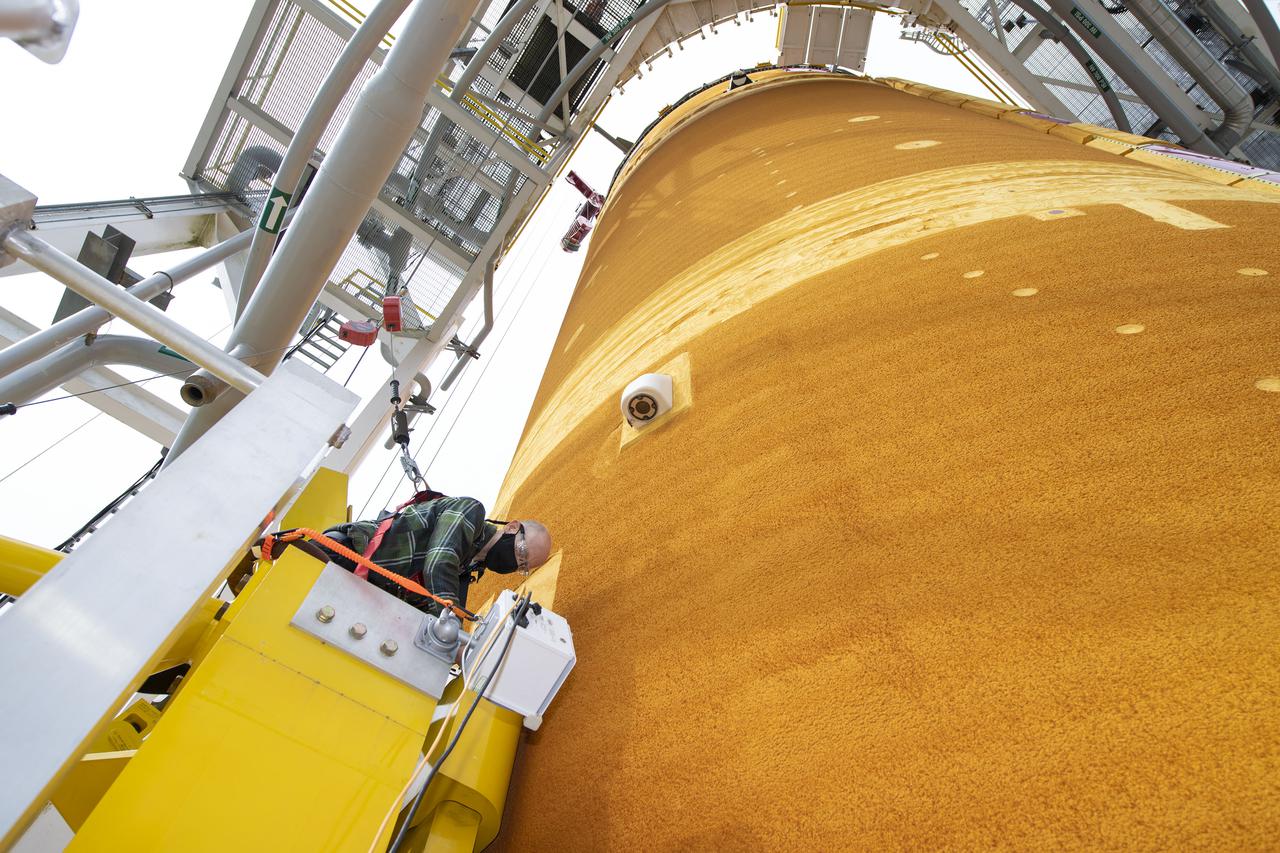
Team members at NASA’s Stennis Space Center near Bay St. Louis, Mississippi, complete refurbishment work on the first core stage of the agency’s Space Launch System (SLS) rocket. The work followed a successful hot fire of the stage and its four RS-25 engines March 18. The hot fire marked the culmination of a yearlong Green Run series of tests of the stage and its integrated systems. Following refurbishment work, the core stage will be removed from the test stand and transported to Kennedy Space Center in Florida, aboard NASA’s Pegasus barge, shown delivering equipment to the B-2 Test Stand. At Kennedy, the core stage will be integrated with the rest of SLS rocket and prepared for the launch of the Artemis I mission to the Moon. Photo Credit: NASA
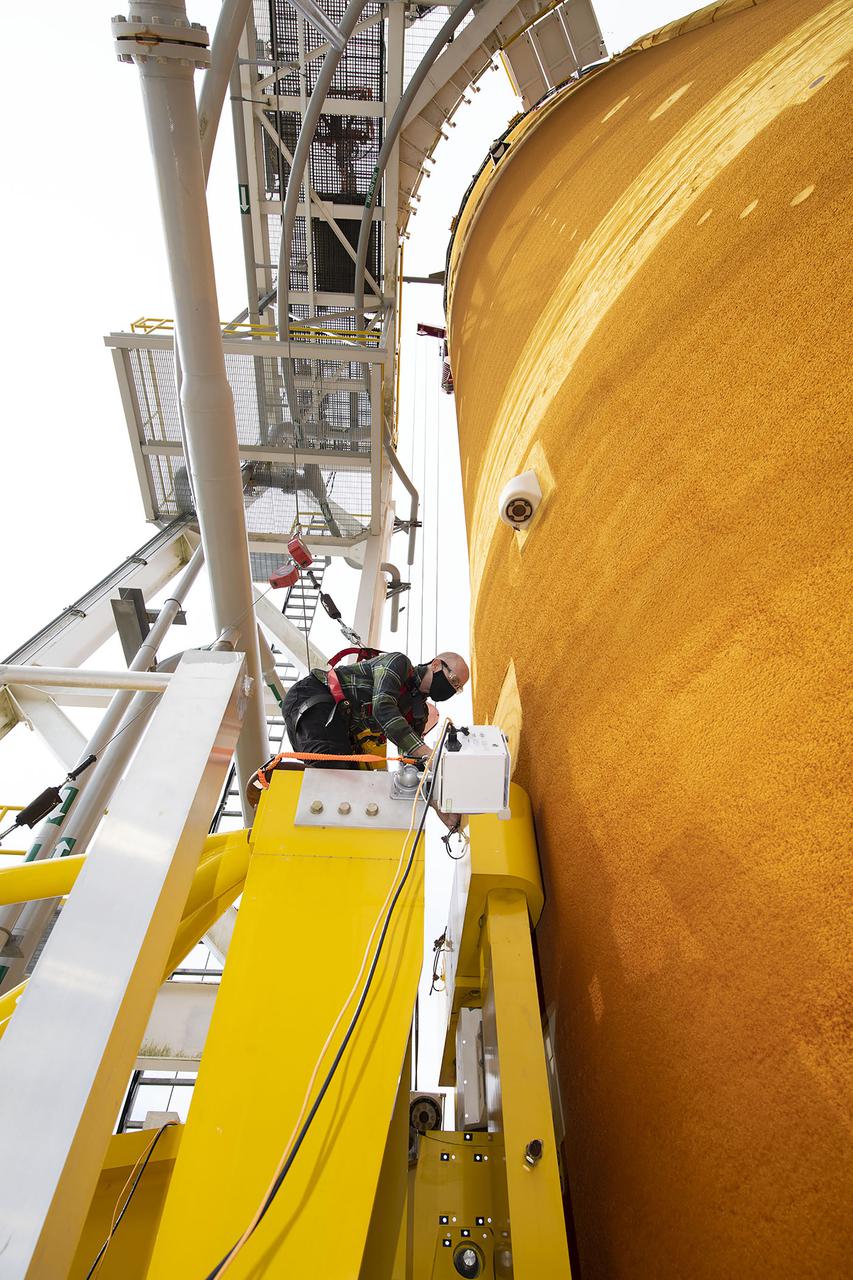
Team members at NASA’s Stennis Space Center near Bay St. Louis, Mississippi, complete refurbishment work on the first core stage of the agency’s Space Launch System (SLS) rocket. The work followed a successful hot fire of the stage and its four RS-25 engines March 18. The hot fire marked the culmination of a yearlong Green Run series of tests of the stage and its integrated systems. Following refurbishment work, the core stage will be removed from the test stand and transported to Kennedy Space Center in Florida, aboard NASA’s Pegasus barge, shown delivering equipment to the B-2 Test Stand. At Kennedy, the core stage will be integrated with the rest of SLS rocket and prepared for the launch of the Artemis I mission to the Moon. Photo Credit: NASA
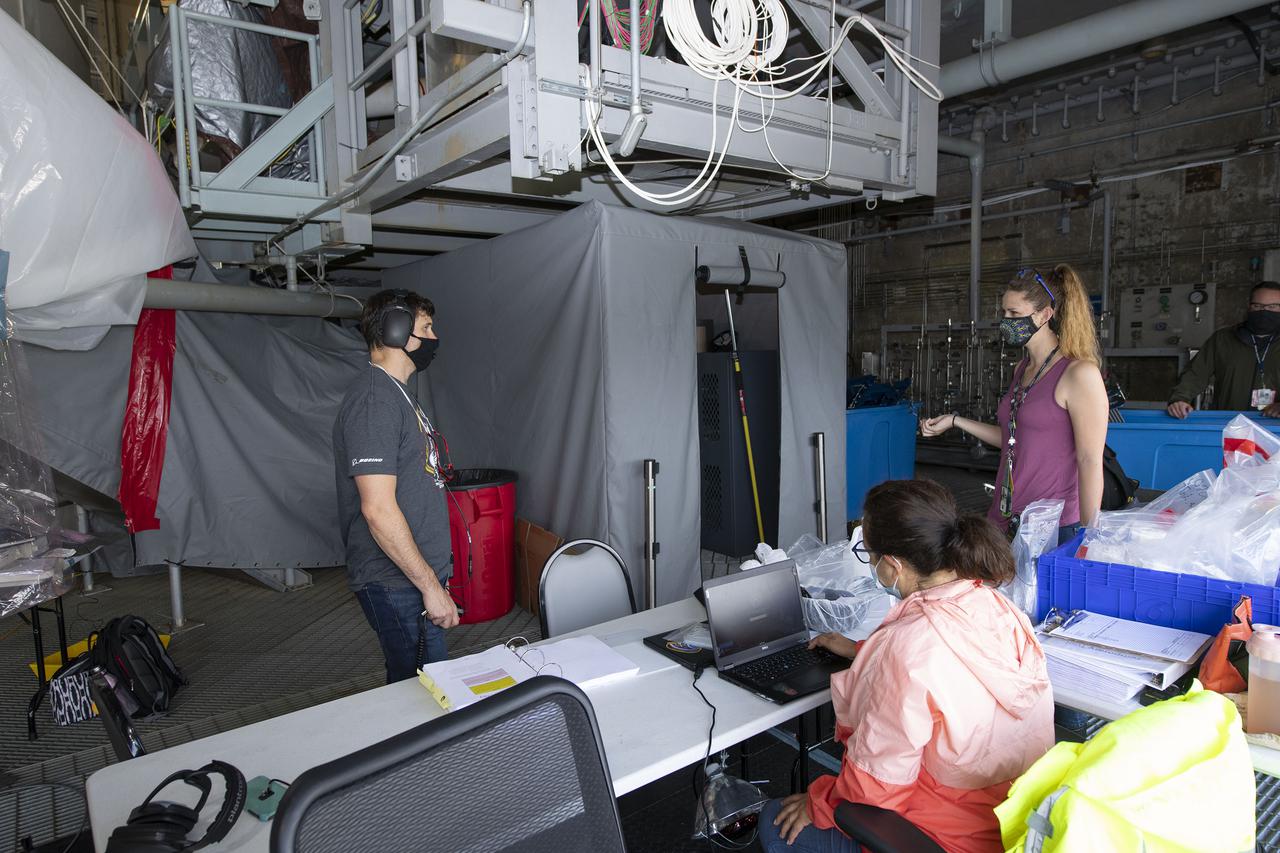
Team members at NASA’s Stennis Space Center near Bay St. Louis, Mississippi, complete refurbishment work on the first core stage of the agency’s Space Launch System (SLS) rocket. The work followed a successful hot fire of the stage and its four RS-25 engines March 18. The hot fire marked the culmination of a yearlong Green Run series of tests of the stage and its integrated systems. Following refurbishment work, the core stage will be removed from the test stand and transported to Kennedy Space Center in Florida, aboard NASA’s Pegasus barge, shown delivering equipment to the B-2 Test Stand. At Kennedy, the core stage will be integrated with the rest of SLS rocket and prepared for the launch of the Artemis I mission to the Moon. Photo Credit: NASA
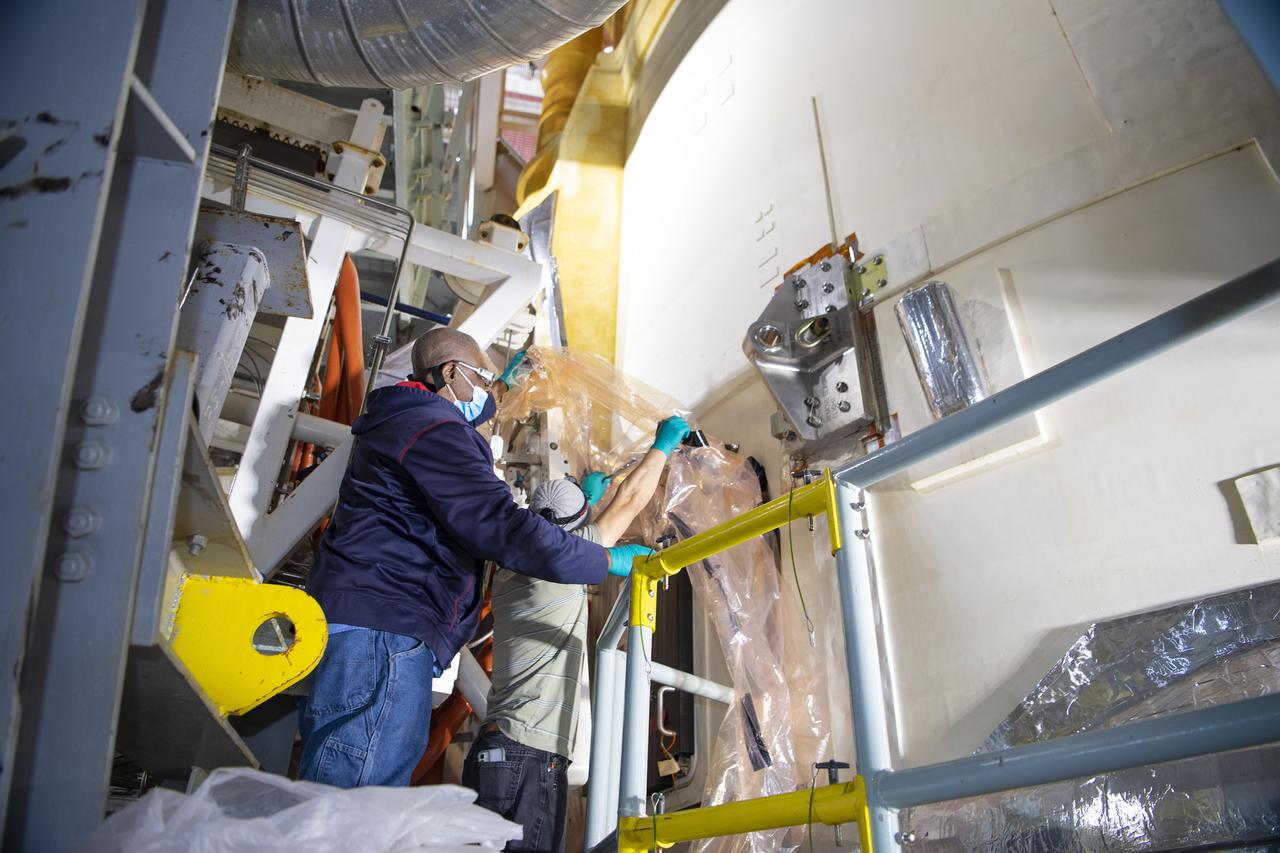
Team members at NASA’s Stennis Space Center near Bay St. Louis, Mississippi, complete refurbishment work on the first core stage of the agency’s Space Launch System (SLS) rocket. The work followed a successful hot fire of the stage and its four RS-25 engines March 18. The hot fire marked the culmination of a yearlong Green Run series of tests of the stage and its integrated systems. Following refurbishment work, the core stage will be removed from the test stand and transported to Kennedy Space Center in Florida, aboard NASA’s Pegasus barge, shown delivering equipment to the B-2 Test Stand. At Kennedy, the core stage will be integrated with the rest of SLS rocket and prepared for the launch of the Artemis I mission to the Moon. Photo Credit: NASA
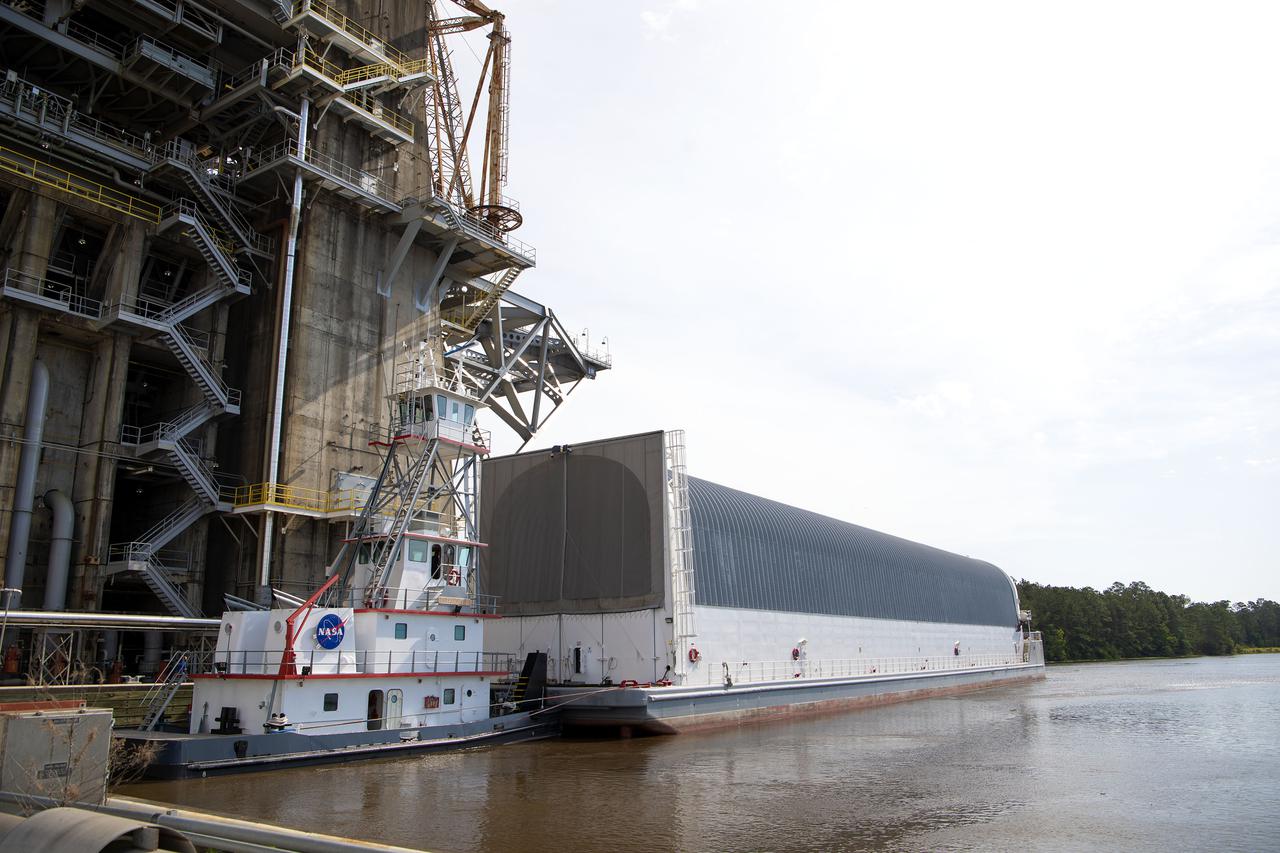
Team members at NASA’s Stennis Space Center near Bay St. Louis, Mississippi, complete refurbishment work on the first core stage of the agency’s Space Launch System (SLS) rocket. The work followed a successful hot fire of the stage and its four RS-25 engines March 18. The hot fire marked the culmination of a yearlong Green Run series of tests of the stage and its integrated systems. Following refurbishment work, the core stage will be removed from the test stand and transported to Kennedy Space Center in Florida, aboard NASA’s Pegasus barge, shown delivering equipment to the B-2 Test Stand. At Kennedy, the core stage will be integrated with the rest of SLS rocket and prepared for the launch of the Artemis I mission to the Moon. Photo Credit: NASA
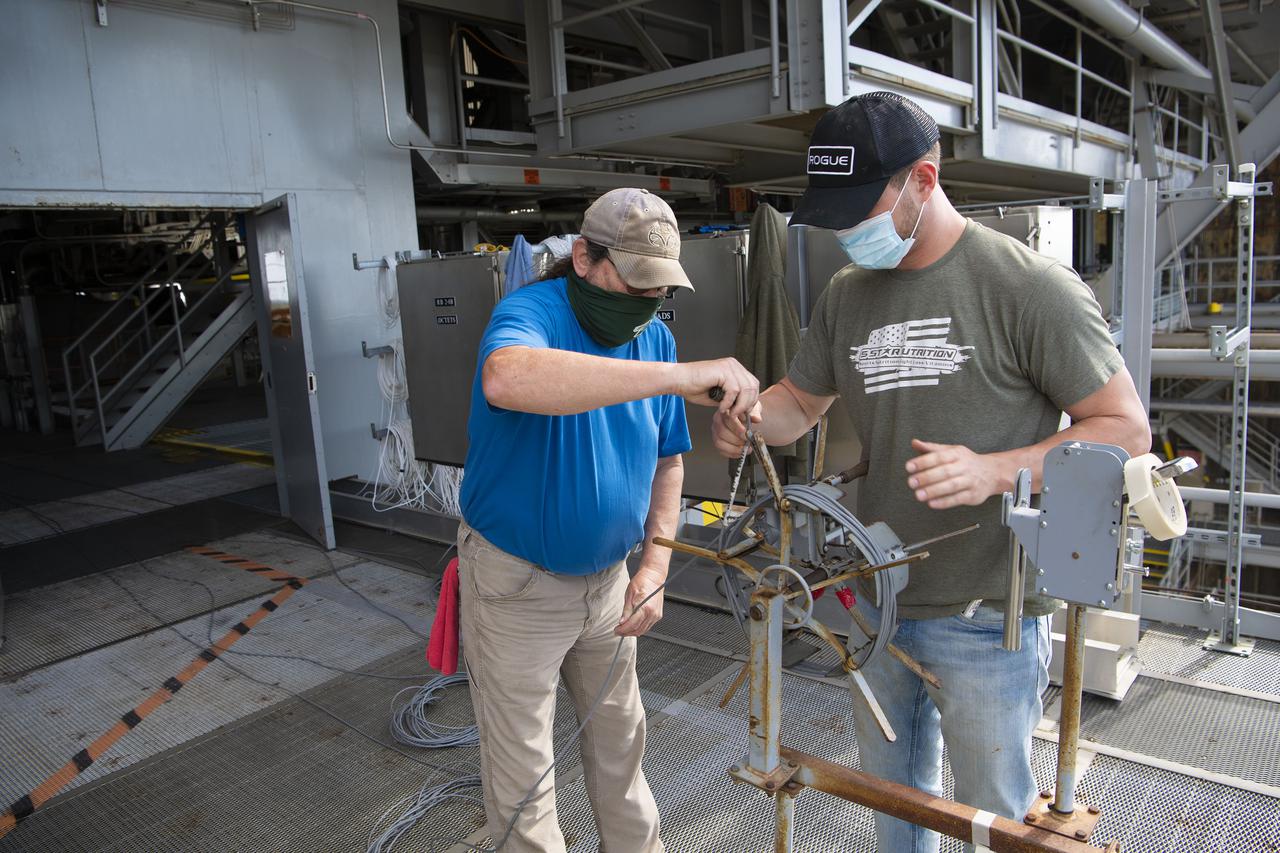
Team members at NASA’s Stennis Space Center near Bay St. Louis, Mississippi, complete refurbishment work on the first core stage of the agency’s Space Launch System (SLS) rocket. The work followed a successful hot fire of the stage and its four RS-25 engines March 18. The hot fire marked the culmination of a yearlong Green Run series of tests of the stage and its integrated systems. Following refurbishment work, the core stage will be removed from the test stand and transported to Kennedy Space Center in Florida, aboard NASA’s Pegasus barge, shown delivering equipment to the B-2 Test Stand. At Kennedy, the core stage will be integrated with the rest of SLS rocket and prepared for the launch of the Artemis I mission to the Moon. Photo Credit: NASA
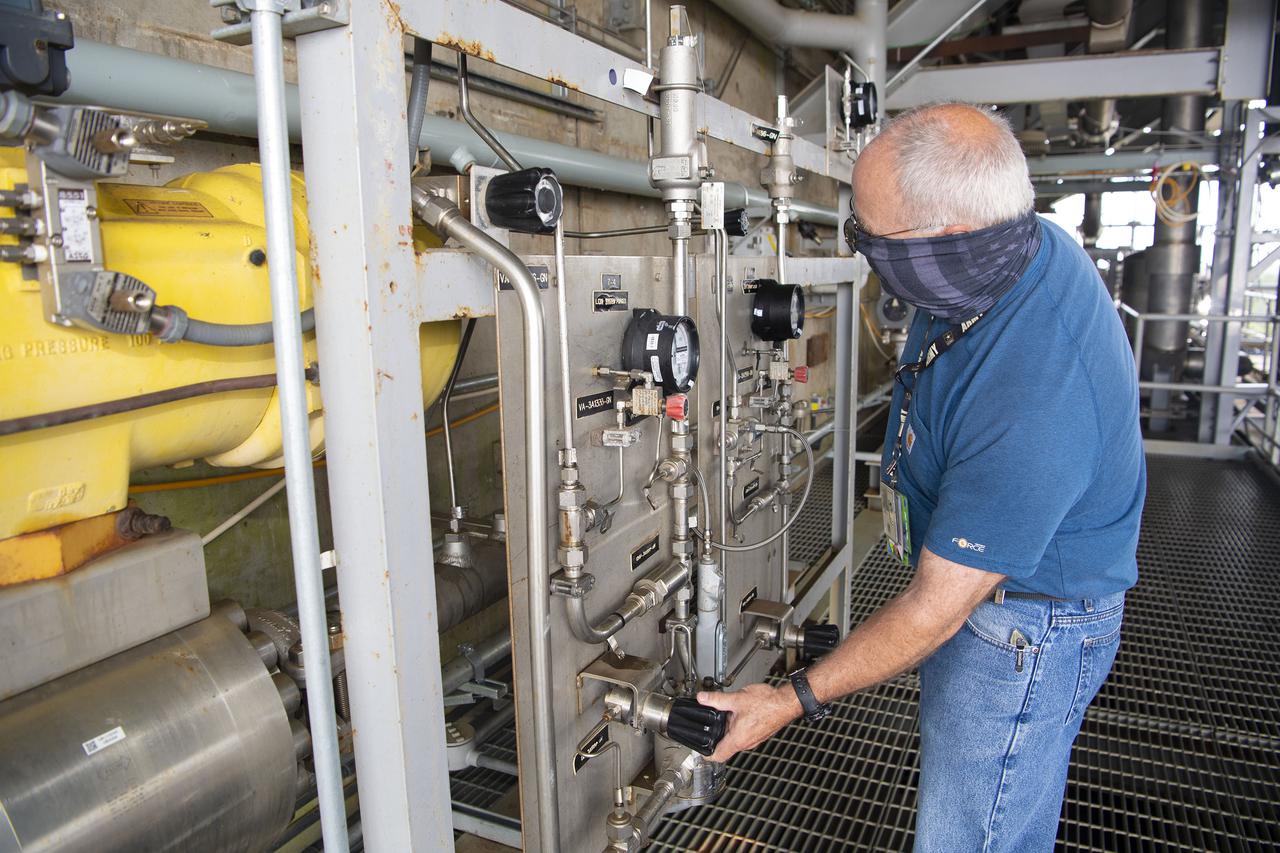
Team members at NASA’s Stennis Space Center near Bay St. Louis, Mississippi, complete refurbishment work on the first core stage of the agency’s Space Launch System (SLS) rocket. The work followed a successful hot fire of the stage and its four RS-25 engines March 18. The hot fire marked the culmination of a yearlong Green Run series of tests of the stage and its integrated systems. Following refurbishment work, the core stage will be removed from the test stand and transported to Kennedy Space Center in Florida, aboard NASA’s Pegasus barge, shown delivering equipment to the B-2 Test Stand. At Kennedy, the core stage will be integrated with the rest of SLS rocket and prepared for the launch of the Artemis I mission to the Moon. Photo Credit: NASA

Team members at NASA’s Stennis Space Center near Bay St. Louis, Mississippi, complete refurbishment work on the first core stage of the agency’s Space Launch System (SLS) rocket. The work followed a successful hot fire of the stage and its four RS-25 engines March 18. The hot fire marked the culmination of a yearlong Green Run series of tests of the stage and its integrated systems. Following refurbishment work, the core stage will be removed from the test stand and transported to Kennedy Space Center in Florida, aboard NASA’s Pegasus barge, shown delivering equipment to the B-2 Test Stand. At Kennedy, the core stage will be integrated with the rest of SLS rocket and prepared for the launch of the Artemis I mission to the Moon. Photo Credit: NASA
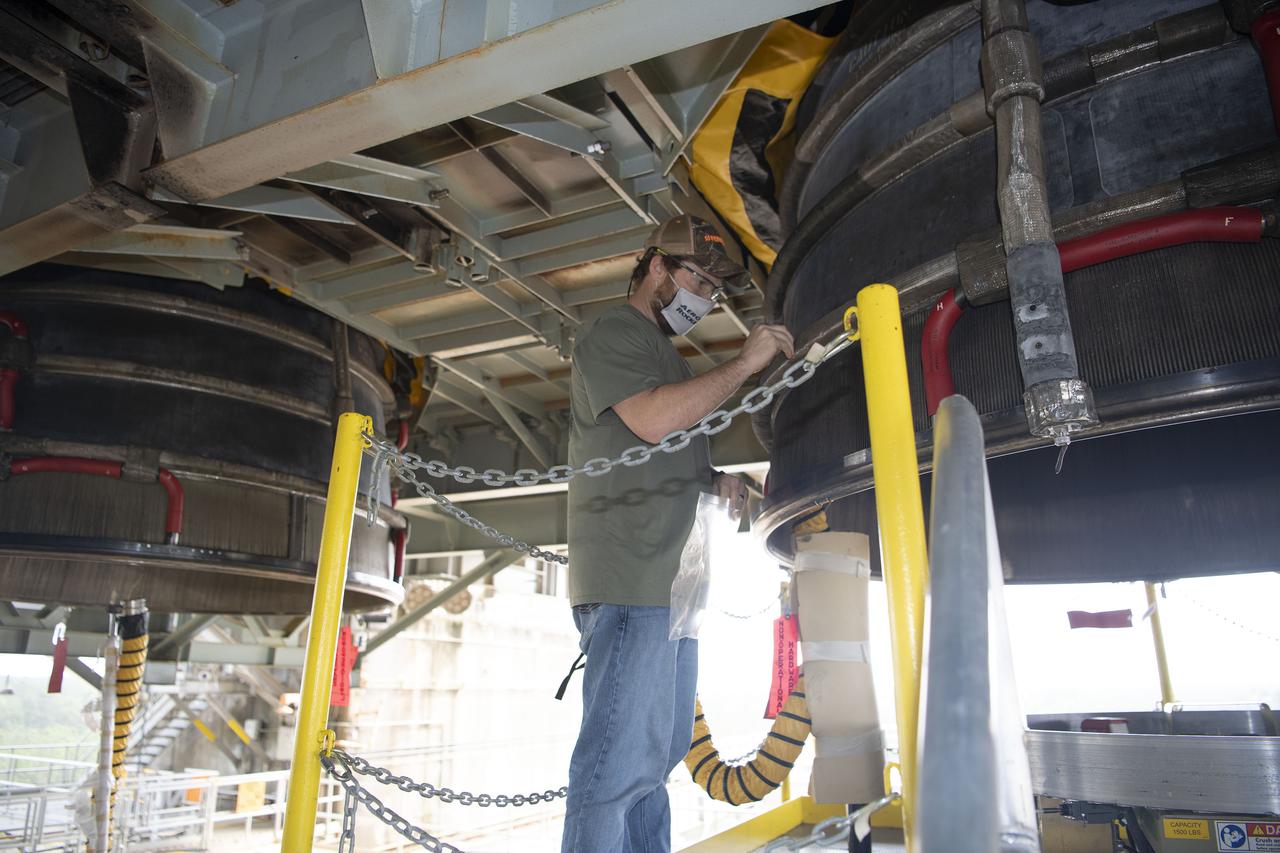
Team members at NASA’s Stennis Space Center near Bay St. Louis, Mississippi, complete refurbishment work on the first core stage of the agency’s Space Launch System (SLS) rocket. The work followed a successful hot fire of the stage and its four RS-25 engines March 18. The hot fire marked the culmination of a yearlong Green Run series of tests of the stage and its integrated systems. Following refurbishment work, the core stage will be removed from the test stand and transported to Kennedy Space Center in Florida, aboard NASA’s Pegasus barge, shown delivering equipment to the B-2 Test Stand. At Kennedy, the core stage will be integrated with the rest of SLS rocket and prepared for the launch of the Artemis I mission to the Moon. Photo Credit: NASA
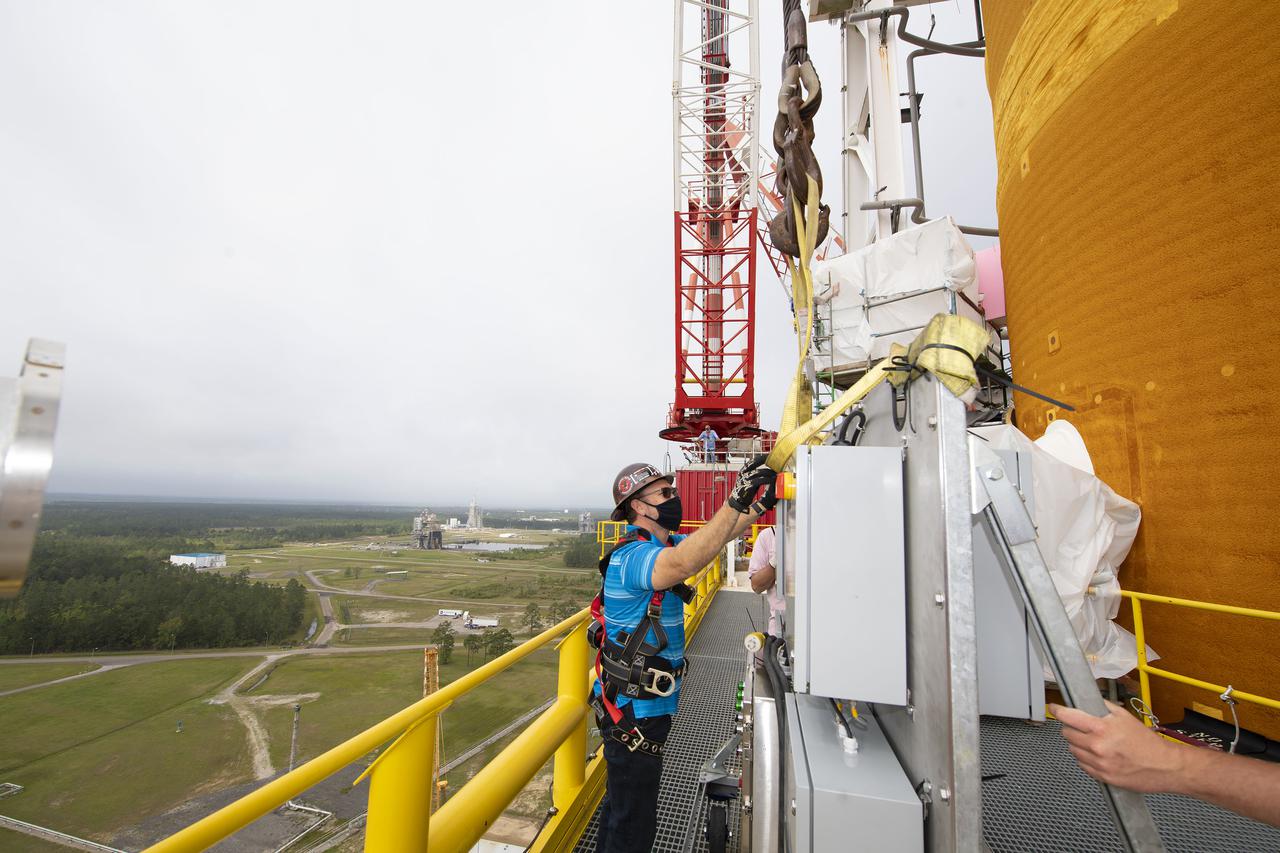
Team members at NASA’s Stennis Space Center near Bay St. Louis, Mississippi, complete refurbishment work on the first core stage of the agency’s Space Launch System (SLS) rocket. The work followed a successful hot fire of the stage and its four RS-25 engines March 18. The hot fire marked the culmination of a yearlong Green Run series of tests of the stage and its integrated systems. Following refurbishment work, the core stage will be removed from the test stand and transported to Kennedy Space Center in Florida, aboard NASA’s Pegasus barge, shown delivering equipment to the B-2 Test Stand. At Kennedy, the core stage will be integrated with the rest of SLS rocket and prepared for the launch of the Artemis I mission to the Moon. Photo Credit: NASA
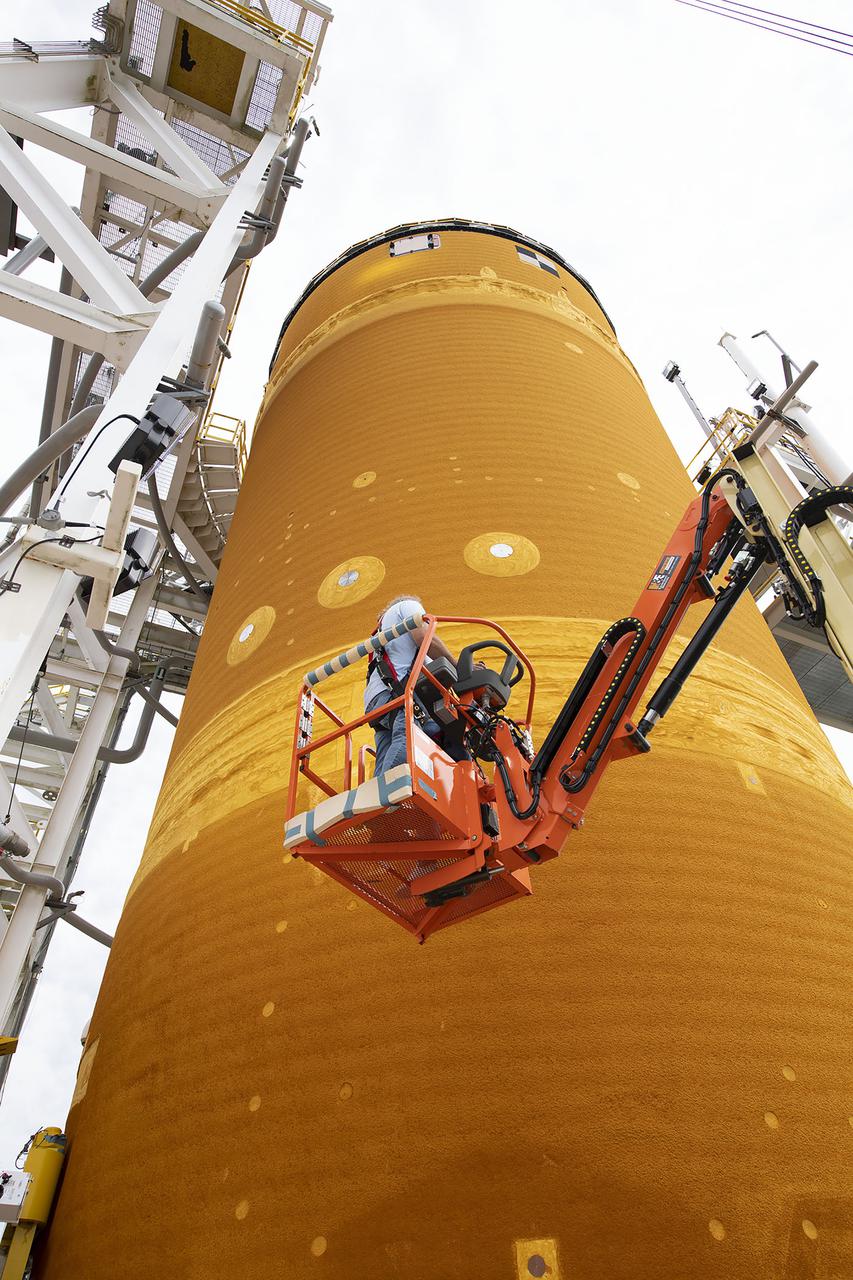
Team members at NASA’s Stennis Space Center near Bay St. Louis, Mississippi, complete refurbishment work on the first core stage of the agency’s Space Launch System (SLS) rocket. The work followed a successful hot fire of the stage and its four RS-25 engines March 18. The hot fire marked the culmination of a yearlong Green Run series of tests of the stage and its integrated systems. Following refurbishment work, the core stage will be removed from the test stand and transported to Kennedy Space Center in Florida, aboard NASA’s Pegasus barge, shown delivering equipment to the B-2 Test Stand. At Kennedy, the core stage will be integrated with the rest of SLS rocket and prepared for the launch of the Artemis I mission to the Moon. Photo Credit: NASA

Team members at NASA’s Stennis Space Center near Bay St. Louis, Mississippi, complete refurbishment work on the first core stage of the agency’s Space Launch System (SLS) rocket. The work followed a successful hot fire of the stage and its four RS-25 engines March 18. The hot fire marked the culmination of a yearlong Green Run series of tests of the stage and its integrated systems. Following refurbishment work, the core stage will be removed from the test stand and transported to Kennedy Space Center in Florida, aboard NASA’s Pegasus barge, shown delivering equipment to the B-2 Test Stand. At Kennedy, the core stage will be integrated with the rest of SLS rocket and prepared for the launch of the Artemis I mission to the Moon. Photo Credit: NASA
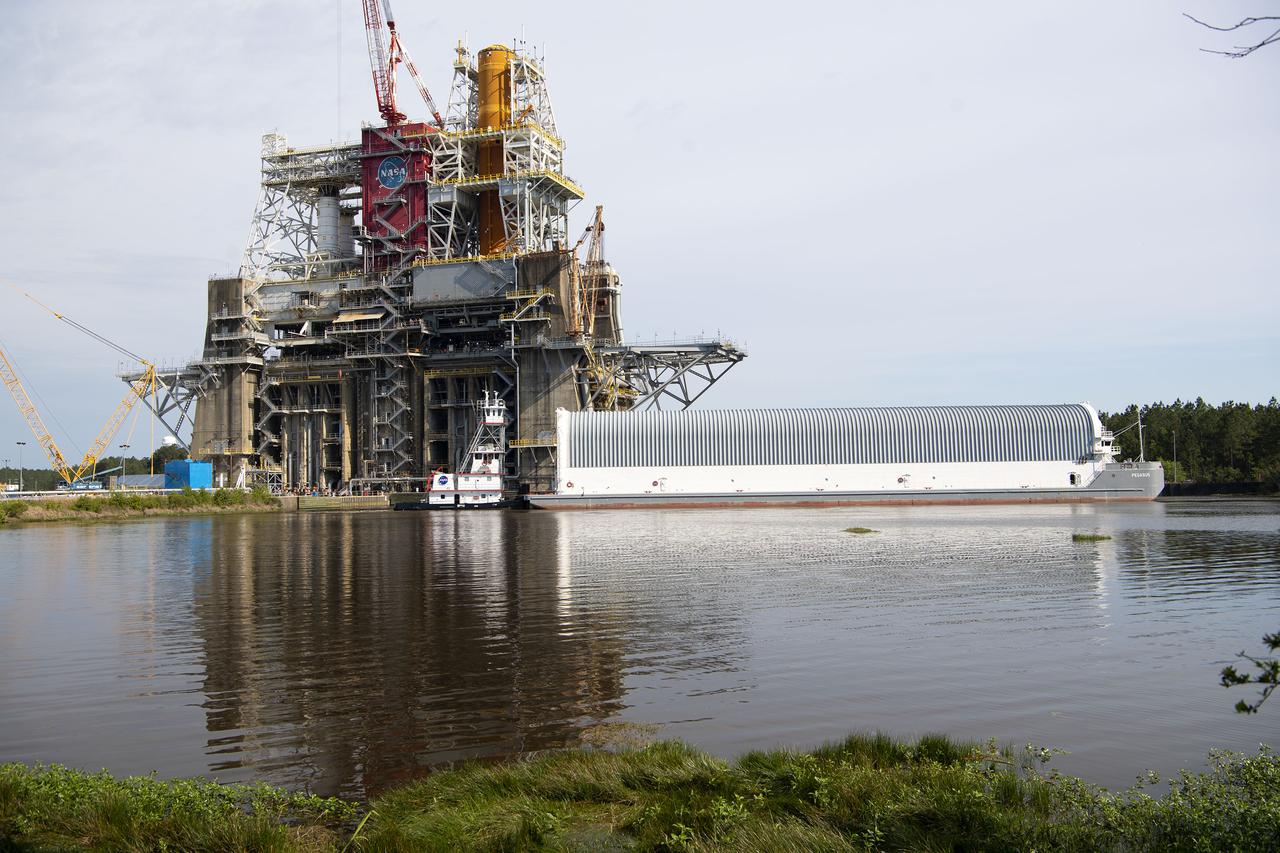
Team members at NASA’s Stennis Space Center near Bay St. Louis, Mississippi, complete refurbishment work on the first core stage of the agency’s Space Launch System (SLS) rocket. The work followed a successful hot fire of the stage and its four RS-25 engines March 18. The hot fire marked the culmination of a yearlong Green Run series of tests of the stage and its integrated systems. Following refurbishment work, the core stage will be removed from the test stand and transported to Kennedy Space Center in Florida, aboard NASA’s Pegasus barge, shown delivering equipment to the B-2 Test Stand. At Kennedy, the core stage will be integrated with the rest of SLS rocket and prepared for the launch of the Artemis I mission to the Moon. Photo Credit: NASA
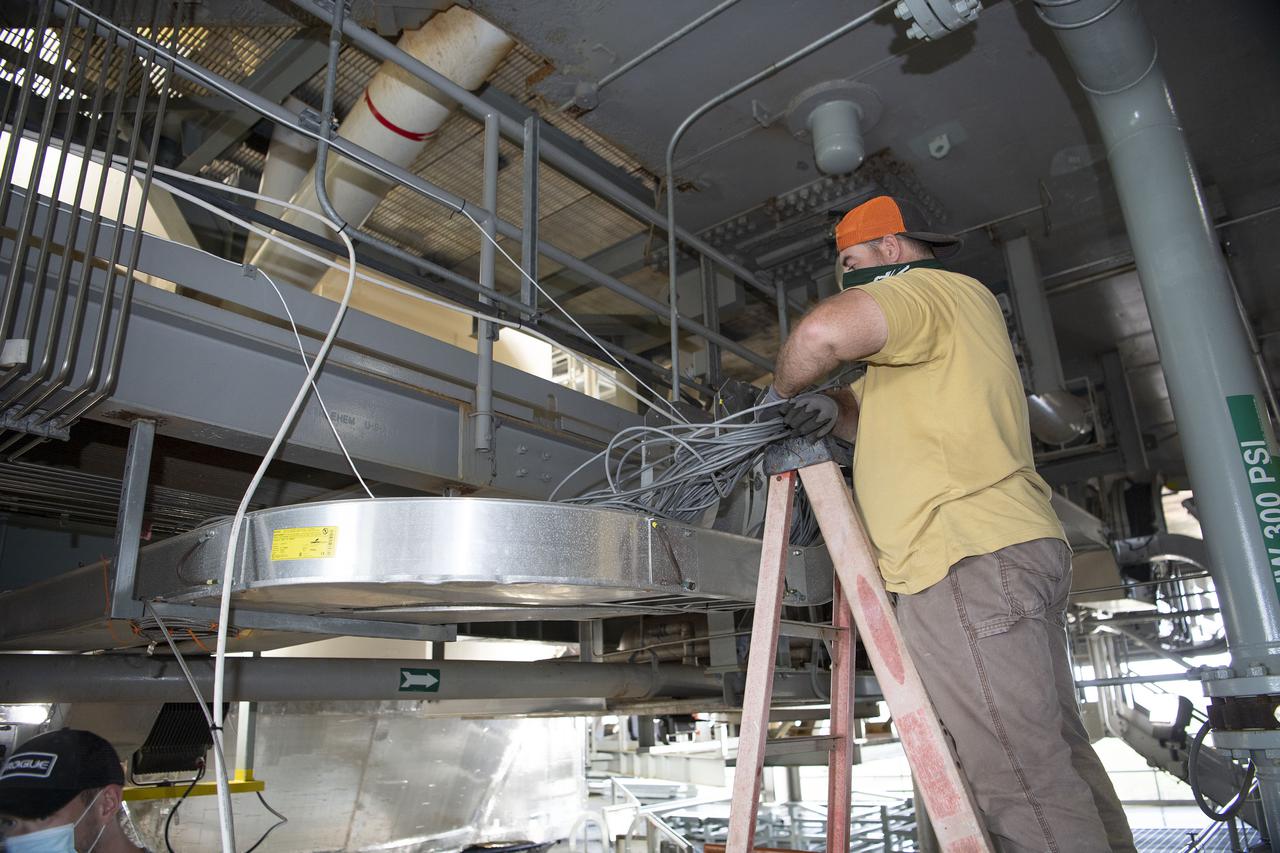
Team members at NASA’s Stennis Space Center near Bay St. Louis, Mississippi, complete refurbishment work on the first core stage of the agency’s Space Launch System (SLS) rocket. The work followed a successful hot fire of the stage and its four RS-25 engines March 18. The hot fire marked the culmination of a yearlong Green Run series of tests of the stage and its integrated systems. Following refurbishment work, the core stage will be removed from the test stand and transported to Kennedy Space Center in Florida, aboard NASA’s Pegasus barge, shown delivering equipment to the B-2 Test Stand. At Kennedy, the core stage will be integrated with the rest of SLS rocket and prepared for the launch of the Artemis I mission to the Moon. Photo Credit: NASA
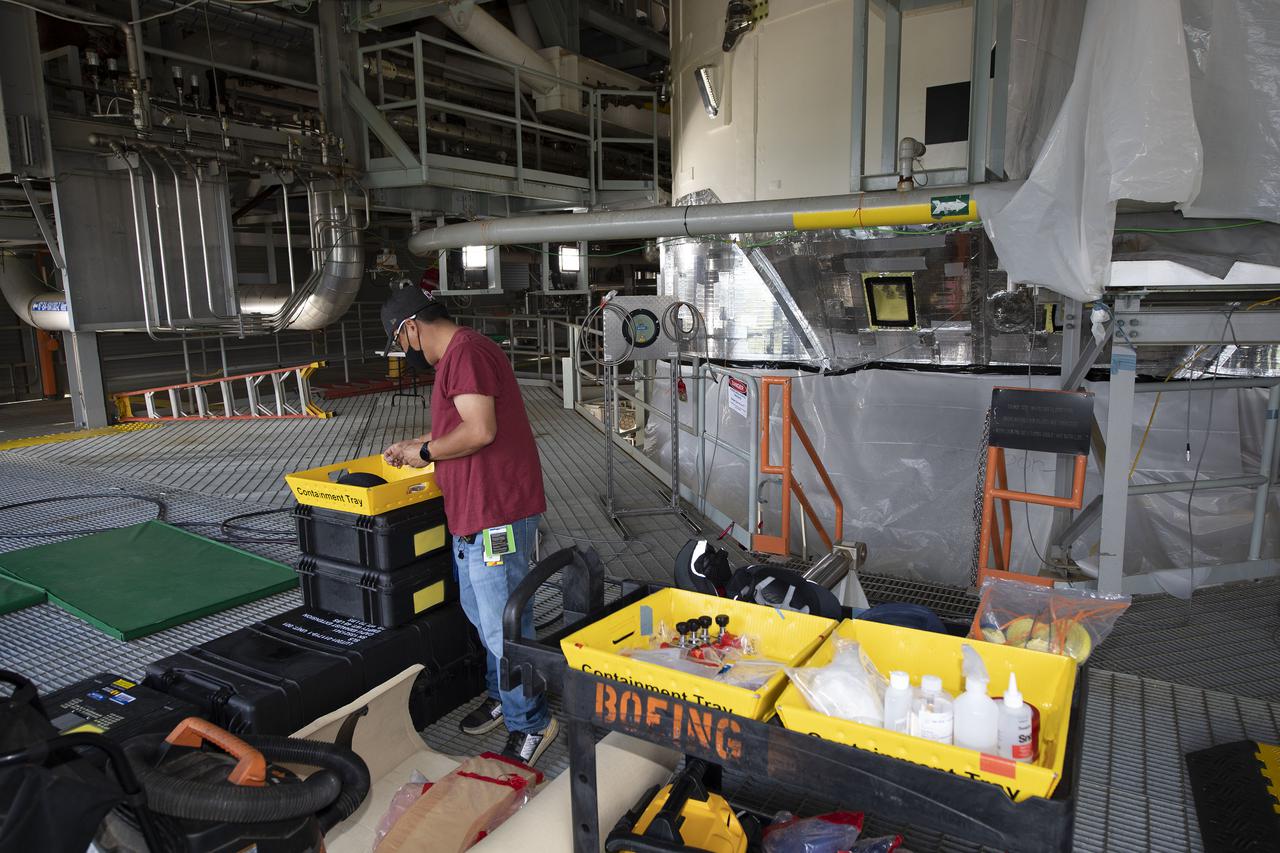
Team members at NASA’s Stennis Space Center near Bay St. Louis, Mississippi, complete refurbishment work on the first core stage of the agency’s Space Launch System (SLS) rocket. The work followed a successful hot fire of the stage and its four RS-25 engines March 18. The hot fire marked the culmination of a yearlong Green Run series of tests of the stage and its integrated systems. Following refurbishment work, the core stage will be removed from the test stand and transported to Kennedy Space Center in Florida, aboard NASA’s Pegasus barge, shown delivering equipment to the B-2 Test Stand. At Kennedy, the core stage will be integrated with the rest of SLS rocket and prepared for the launch of the Artemis I mission to the Moon. Photo Credit: NASA
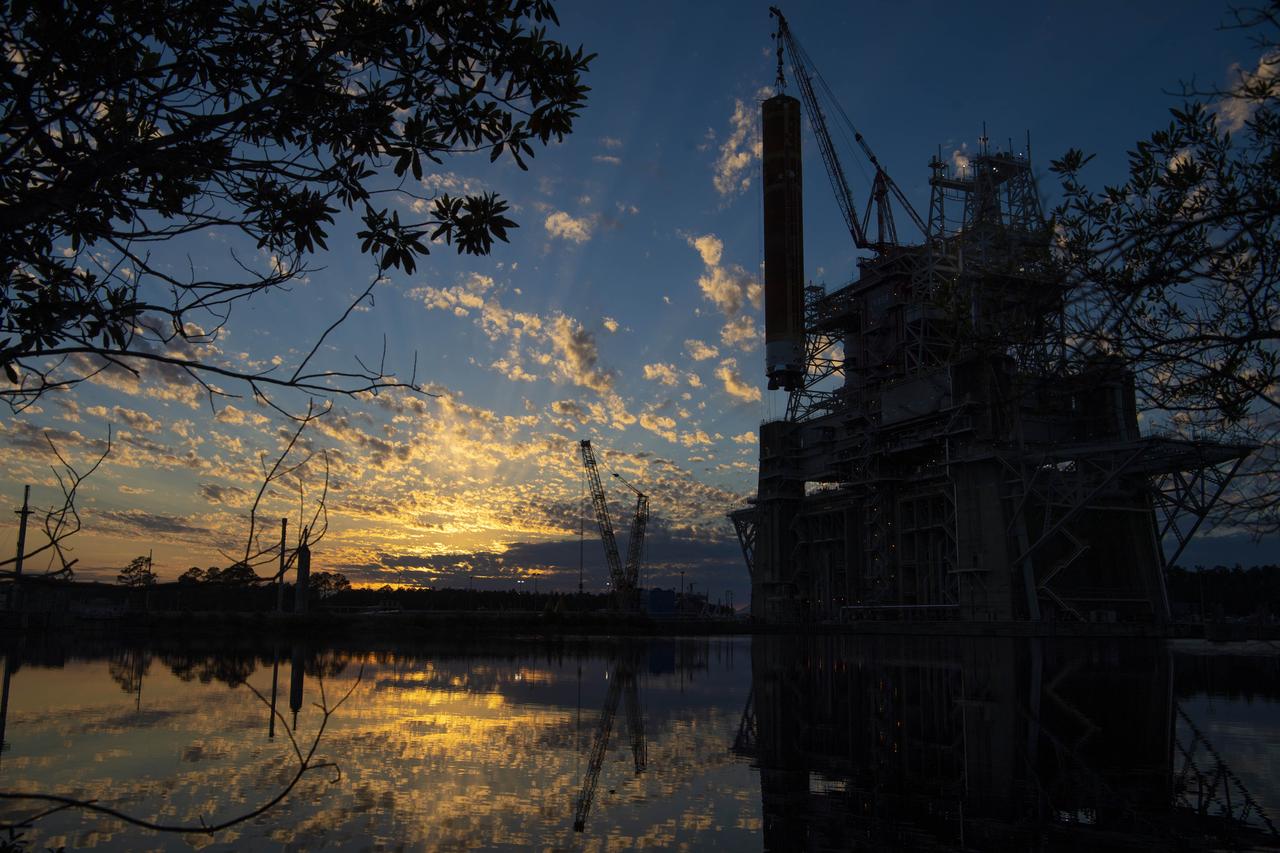
The first flight core stage of NASA’s Space Launch System rocket is removed from the B-2 Test Stand on April 19, 2021, following completion of a series of eight Green Run tests conducted at Stennis Space Center.
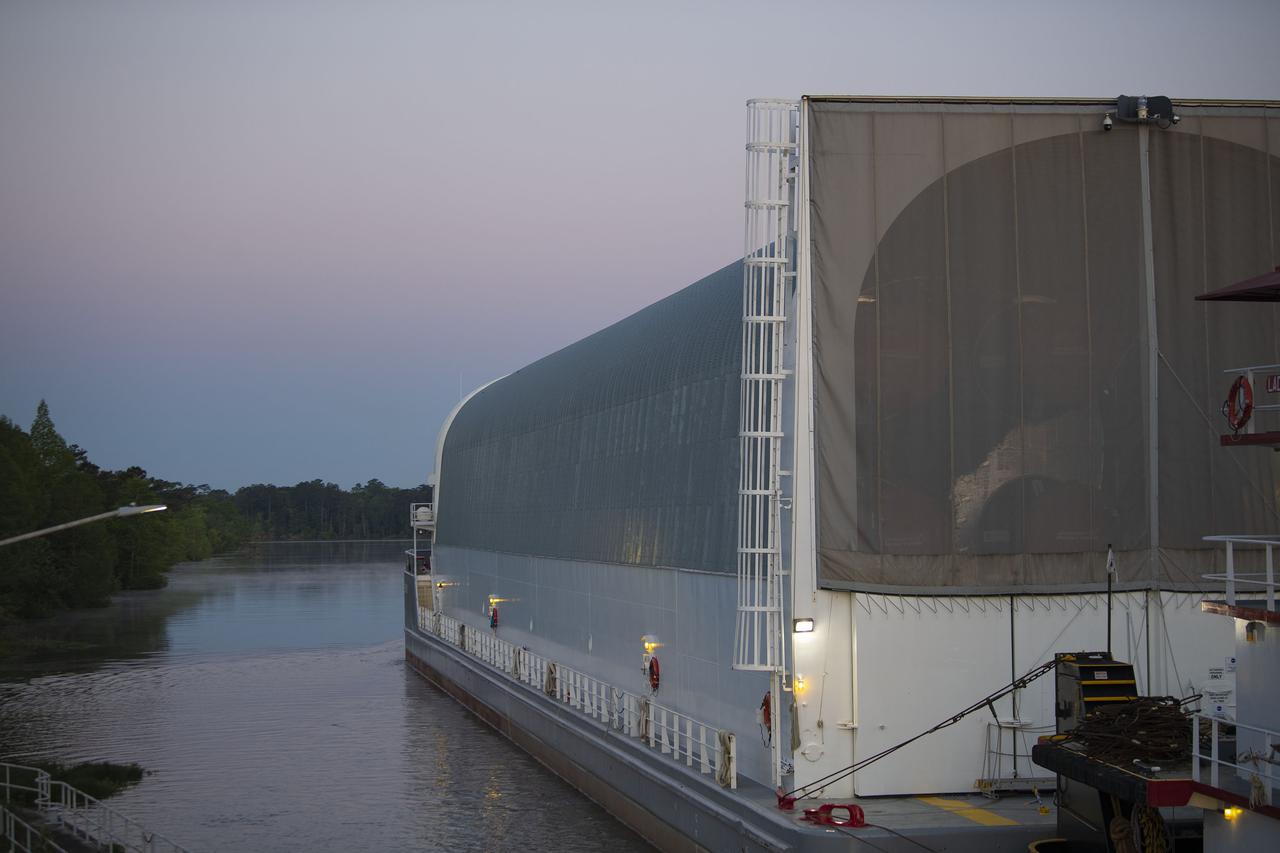
The first core stage of NASA’s Space Launch System (SLS) rocket, loaded onto the agency’s Pegasus barge, departs Stennis Space Center near Bay St. Louis, Mississippi, headed to Kennedy Space Center in Florida. The departure of the core stage in mid-April 2021 followed completion of a Green Run test series of the stage systems in preparation for its launch on the Artemis I mission. The Green Run series concluded with a March 18 hot fire of the stage’s four RS-25 engines on the B-2 Test Stand at Stennis, just as during an actual launch. Following refurbishment work, the stage was removed from the B-2 stand and loaded onto the Pegasus barge for transport. Once at Kennedy, the will be integrated with the rest of SLS rocket and prepared for the launch of the Artemis I mission to the Moon. Photo Credit: NASA