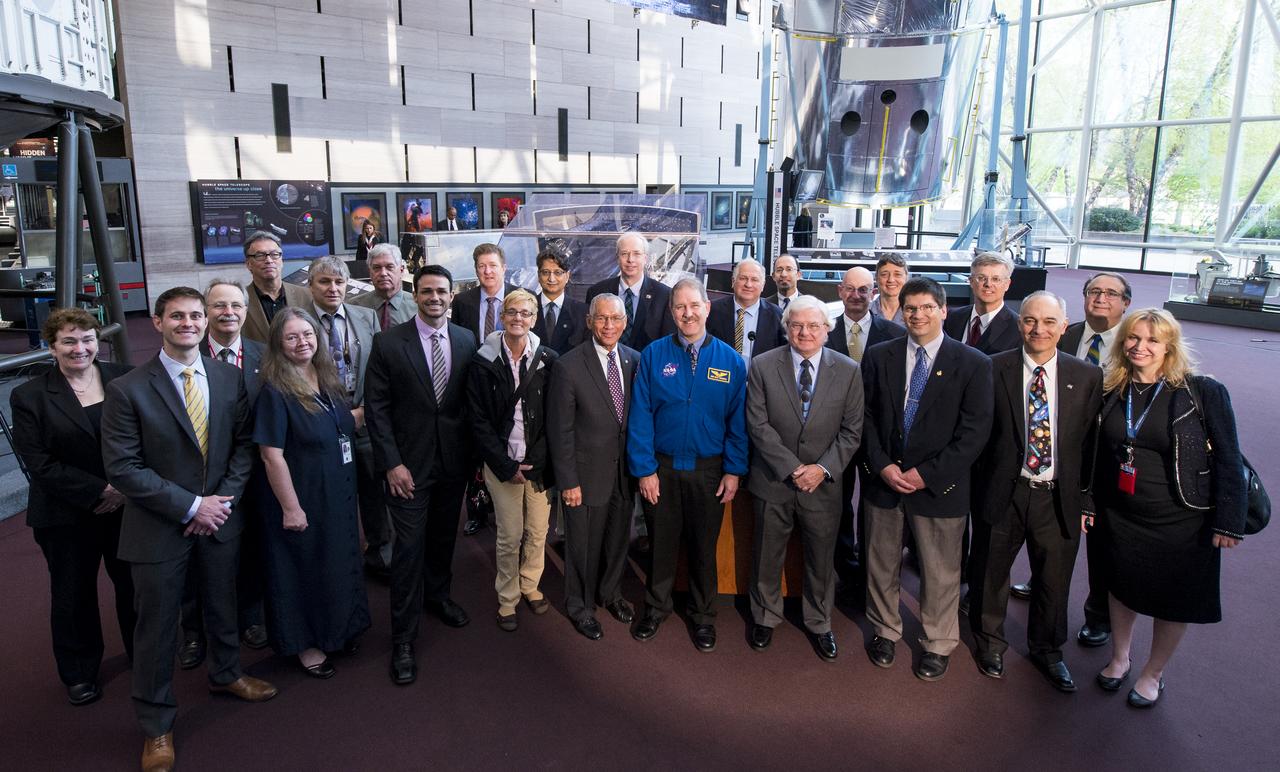
Individuals in attendance who had a hand in the development or servicing of the Hubble Space Telescope pose for a group photo at an event unveiling a new exhibit featuring Hubble's Corrective Optics Space Telescope Axial Replacement (COSTAR) and the WFPC2 on Wednesday, April 23, 2014 at the Smithsonian National Air and Space Museum in Washington, DC. COSTAR and WFPC2 were installed in Hubble during the first space shuttle servicing mission in 1993 and returned to Earth on the fifth and final servicing mission in 2009. Photo Credit: (NASA/Joel Kowsky)
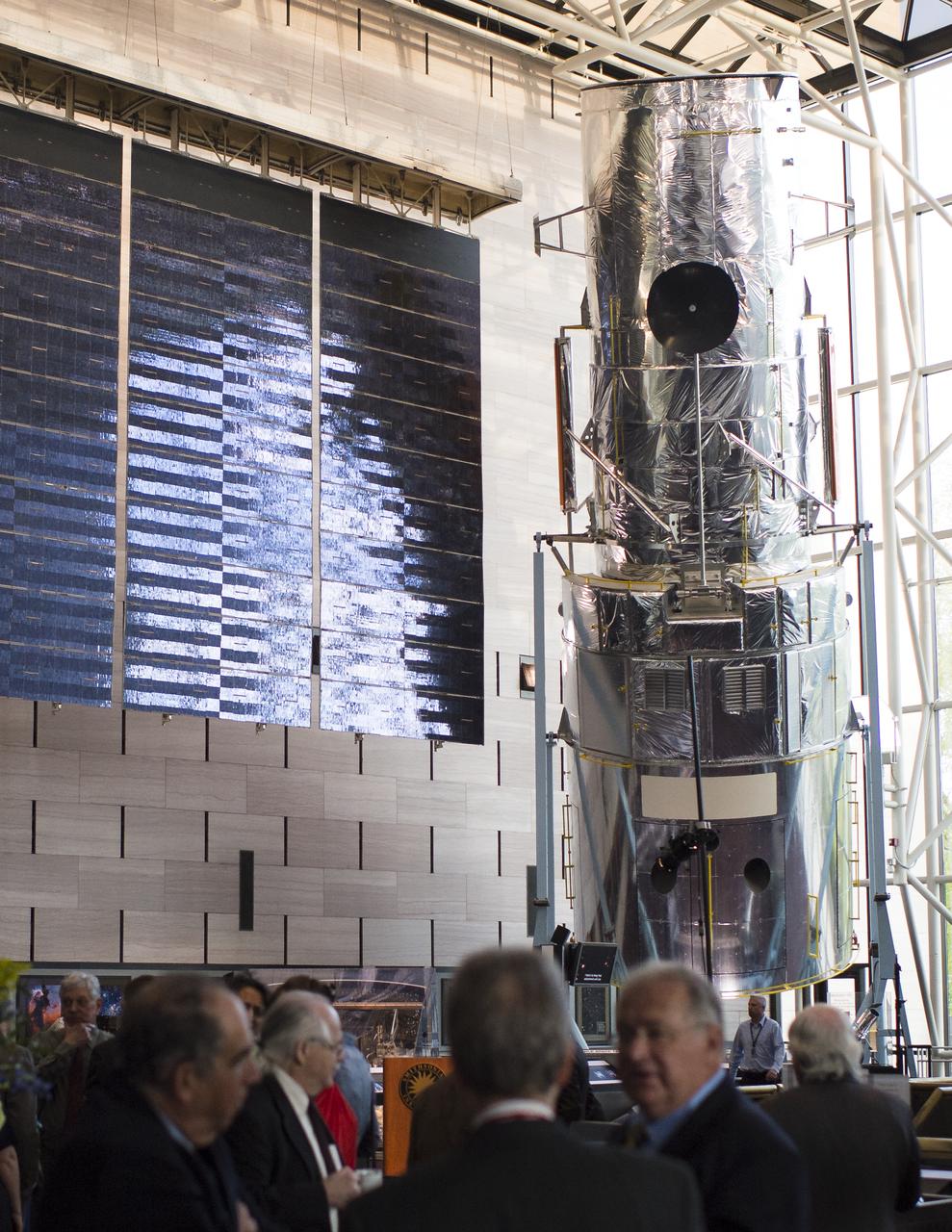
The Hubble Space Telescope Structural Dynamic Test Vehicle is seen inside the Space Hall at the Smithsonian National Air and Space Museum during an event unveiling a new exhibit featuring Hubble's Corrective Optics Space Telescope Axial Replacement (COSTAR) and the Wide Field and Planetary Camera 2 (WFPC2) on Wednesday, April 23, 2014 in Washington, DC. COSTAR and WFPC2 were were installed in Hubble during the first space shuttle servicing mission in 1993 and returned to Earth on the fifth and final servicing mission in 2009. Photo Credit: (NASA/Joel Kowsky)
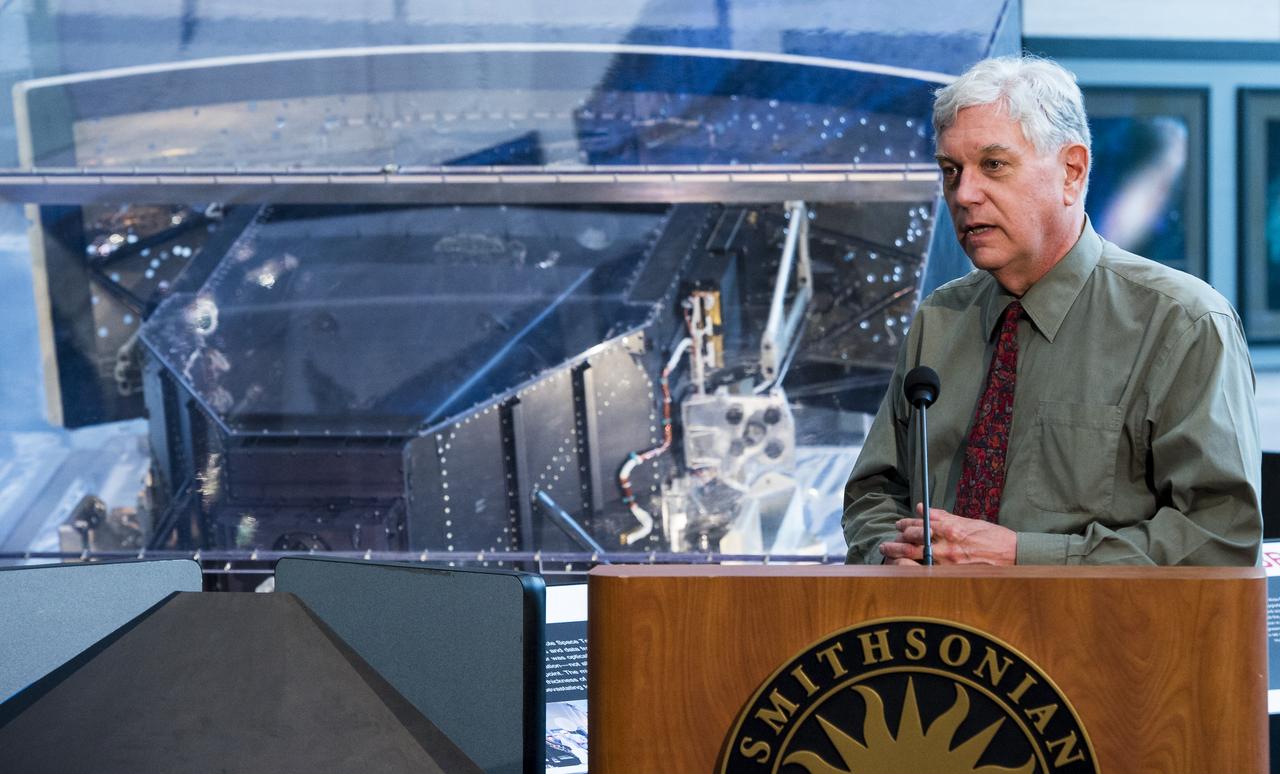
John Trauger, former principal investigator for the Wide Field Planetary Camera 2 (WFPC2) at NASA's Jet Propultion Laboratory (JPL), speaks at an event unveiling a new exhibit featuring Hubble's Corrective Optics Space Telescope Axial Replacement (COSTAR) and the WFPC2 on Wednesday, April 23, 2014 at the Smithsonian National Air and Space Museum in Washington, DC. COSTAR and WFPC2 were installed in Hubble during the first space shuttle servicing mission in 1993 and returned to Earth on the fifth and final servicing mission in 2009. Photo Credit: (NASA/Joel Kowsky)
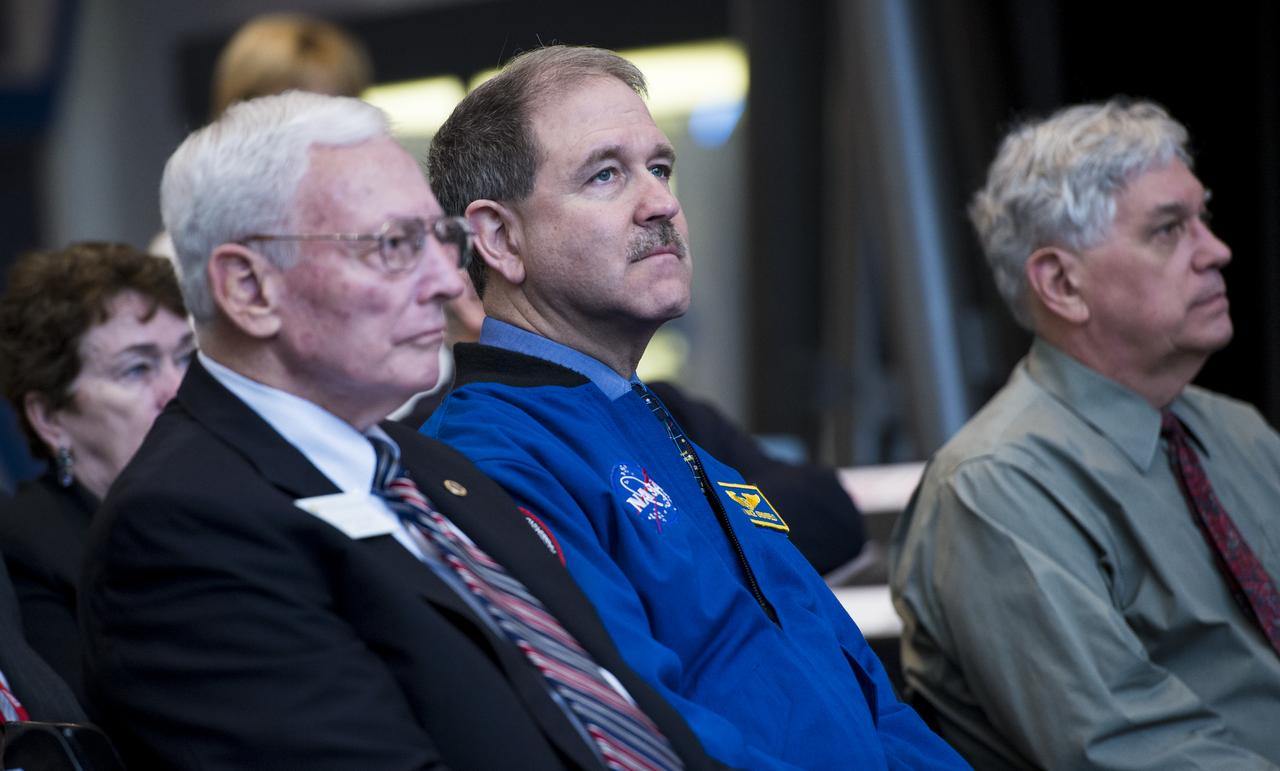
John Grunsfeld, NASA Associate Administrator for the Science Mission Directorate, is seen during during an event unveiling a new exhibit featuring Hubble's Corrective Optics Space Telescope Axial Replacement (COSTAR) and the Wide Field and Planetary Camera 2 (WFPC2) on Wednesday, April 23, 2014 at the Smithsonian National Air and Space Museum in Washington, DC. Grunsfeld flew on three of space shuttle servicing missions to Hubble, including the fifth and final mission in 2009 which returned COSTAR and WFPC2 to Earth. Photo Credit: (NASA/Joel Kowsky)
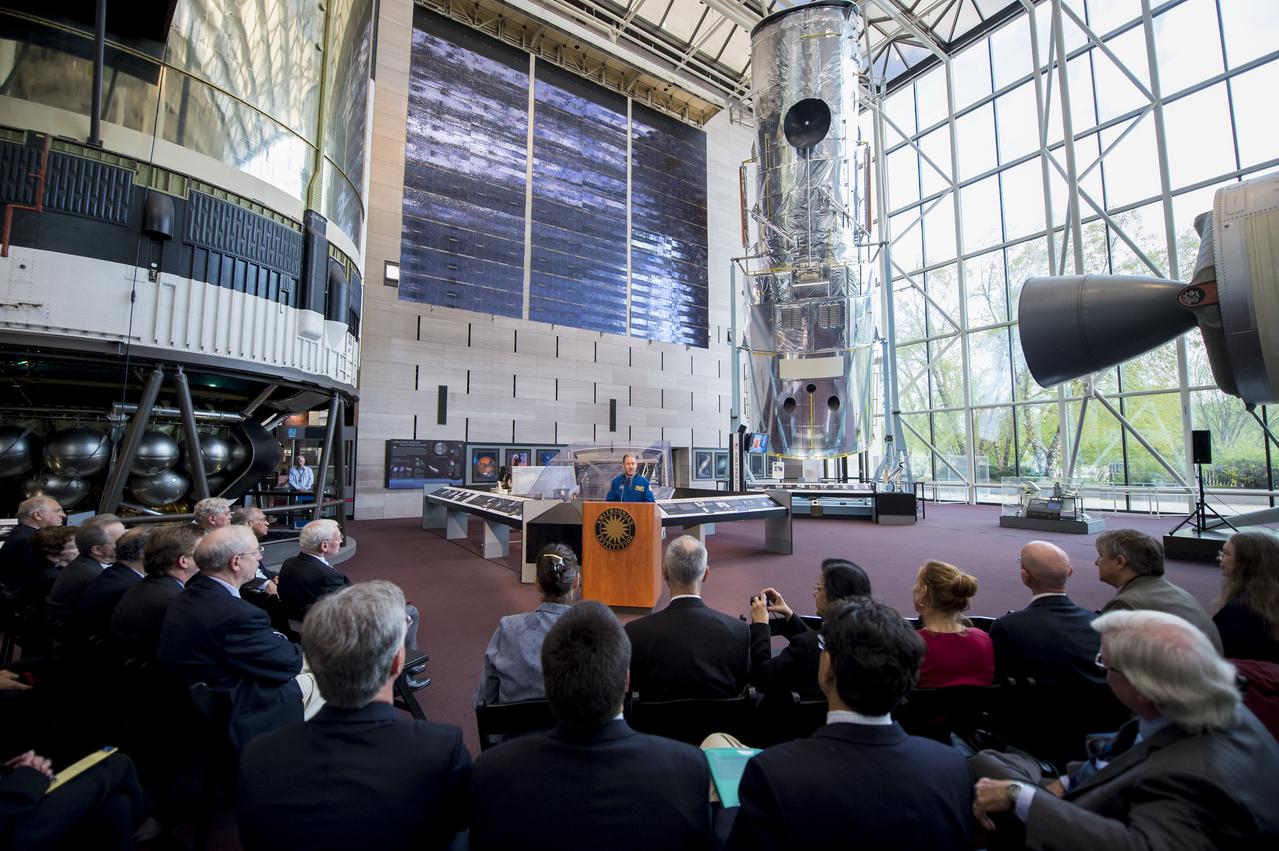
John Grunsfeld, NASA Associate Administrator for the Science Mission Directorate, speaks during an event unveiling a new exhibit featuring Hubble's Corrective Optics Space Telescope Axial Replacement (COSTAR) and the Wide Field and Planetary Camera 2 (WFPC2) on Wednesday, April 23, 2014 at the Smithsonian National Air and Space Museum in Washington, DC. Grunsfeld flew on three of space shuttle servicing missions to Hubble, including the fifth and final mission in 2009 which returned COSTAR and WFPC2 to Earth. Photo Credit: (NASA/Joel Kowsky)
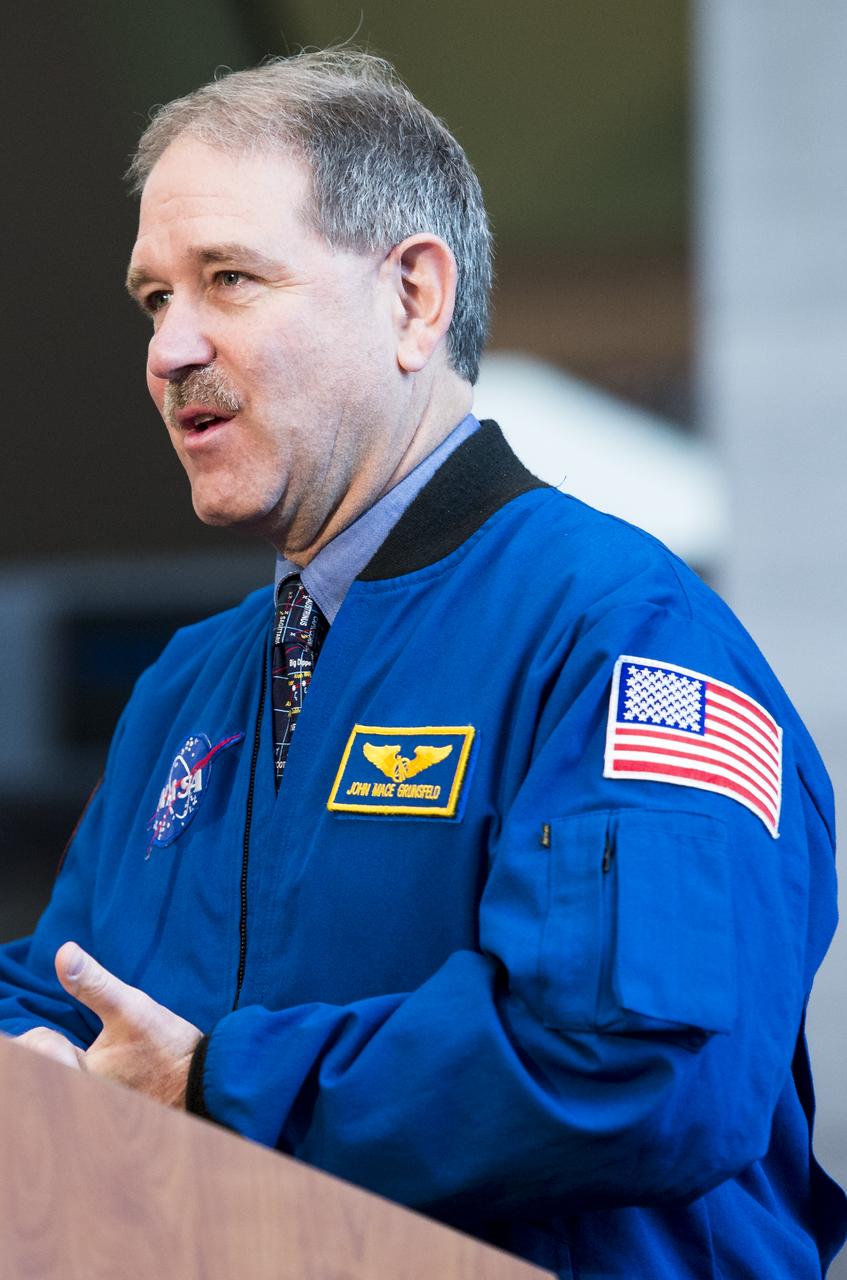
John Grunsfeld, NASA Associate Administrator for the Science Mission Directorate, speaks during during an event unveiling a new exhibit featuring Hubble's Corrective Optics Space Telescope Axial Replacement (COSTAR) and the Wide Field and Planetary Camera 2 (WFPC2) on Wednesday, April 23, 2014 at the Smithsonian National Air and Space Museum in Washington, DC. Grunsfeld flew on three of space shuttle servicing missions to Hubble, including the fifth and final mission in 2009 which returned COSTAR and WFPC2 to Earth. Photo Credit: (NASA/Joel Kowsky)
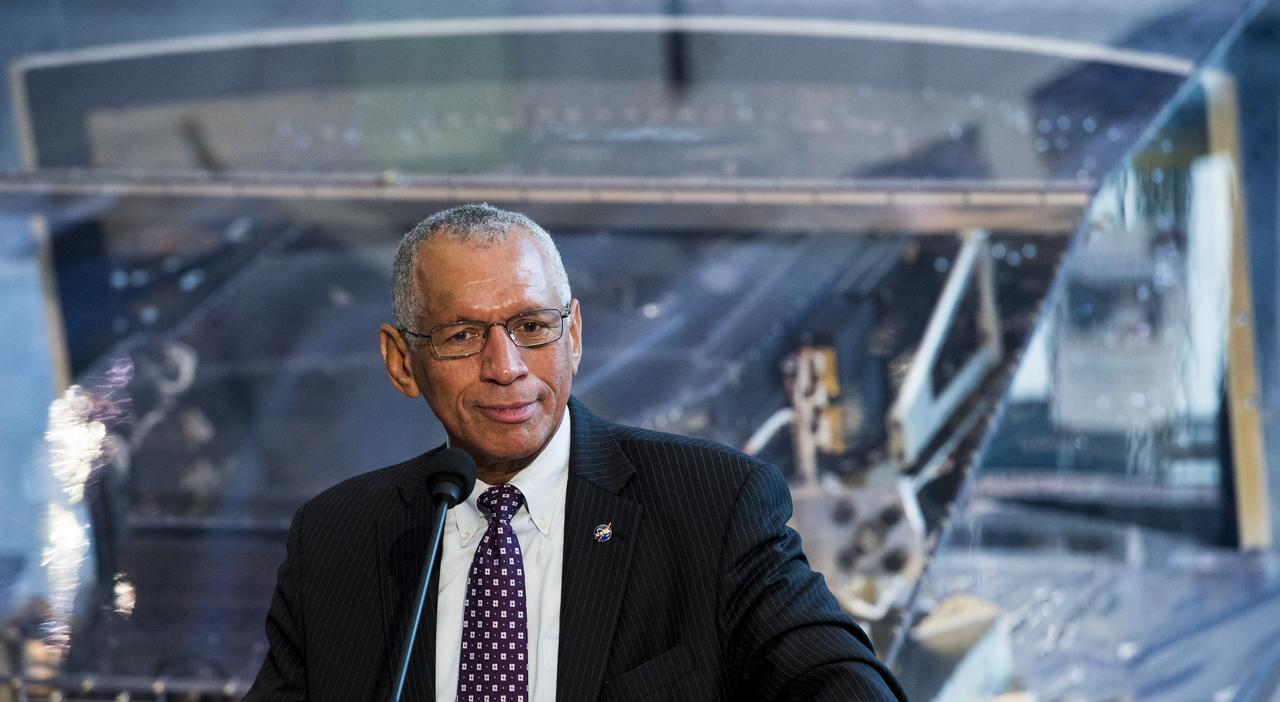
NASA Administrator Charles Bolden speaks at an event unveiling a new exhibit featuring Hubble's Corrective Optics Space Telescope Axial Replacement (COSTAR) and the Wide Field and Planetary Camera 2 (WFPC2) on Wednesday, April 23, 2014 at the Smithsonian National Air and Space Museum in Washington, DC. Administrator Bolden piloted space shuttle Discovery on the mission that deployed the Hubble Space Telescope in 1990. Photo Credit: (NASA/Joel Kowsky)
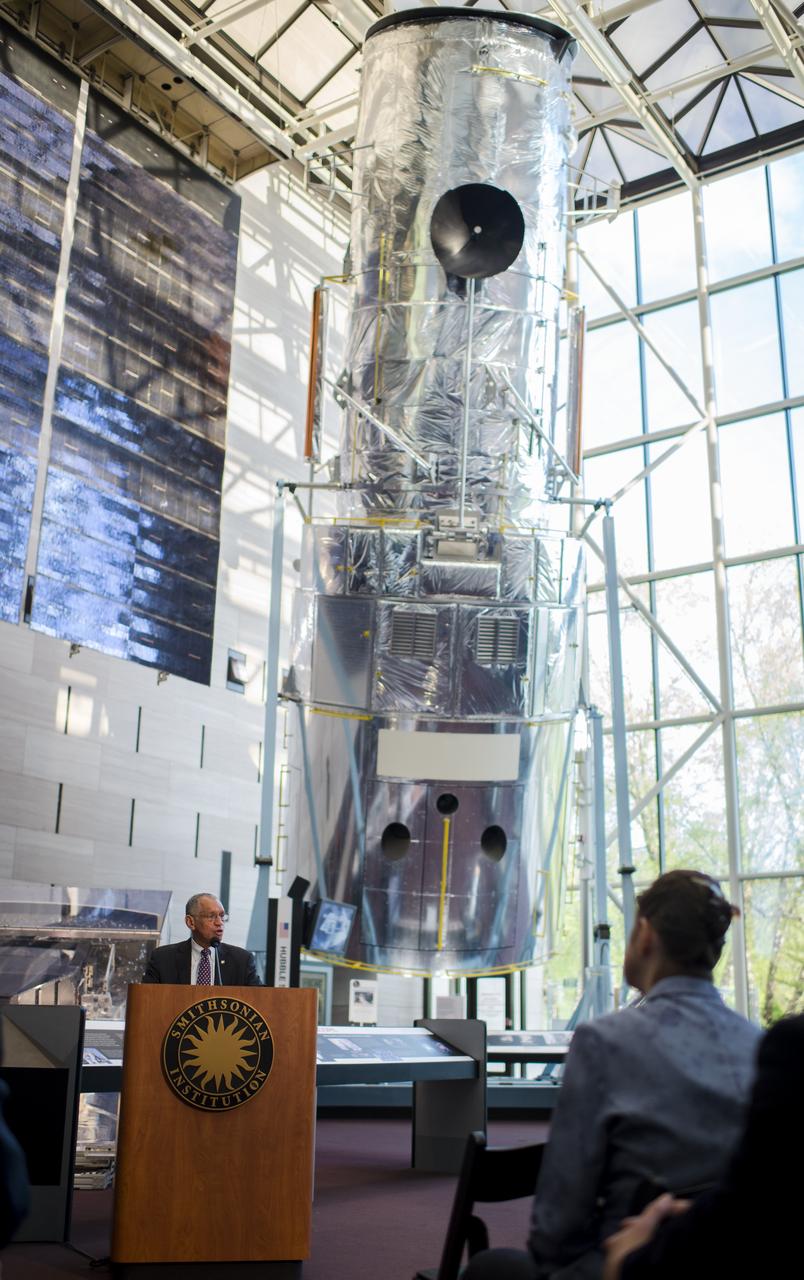
NASA Administrator Charles Bolden speaks at an event unveiling a new exhibit featuring Hubble's Corrective Optics Space Telescope Axial Replacement (COSTAR) and the Wide Field and Planetary Camera 2 (WFPC2) on Wednesday, April 23, 2014 at the Smithsonian National Air and Space Museum in Washington, DC. Administrator Bolden piloted space shuttle Discovery on the mission that deployed the Hubble Space Telescope in 1990. Photo Credit: (NASA/Joel Kowsky)
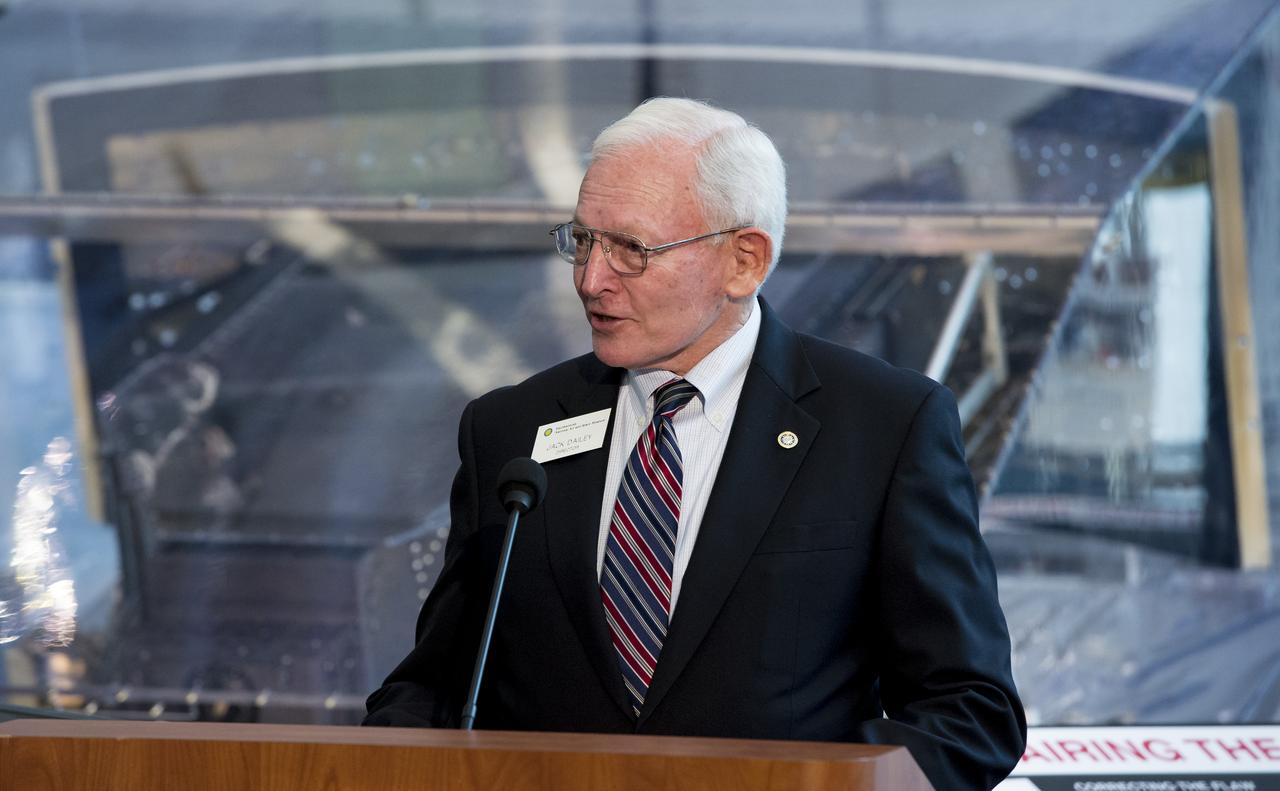
Gen. J.R. "Jack" Dailey, Director of the Smithsonian National Air and Space Museum speaks at an event unveiling a new exhibit featuring Hubble's Corrective Optics Space Telescope Axial Replacement (COSTAR) and the Wide Field and Planetary Camera 2 (WFPC2) on Wednesday, April 23, 2014 at the Smithsonian National Air and Space Museum in Washington, DC. COSTAR and WFPC2 were installed in Hubble during the first space shuttle servicing mission in 1993 and returned to Earth on the fifth and final servicing mission in 2009. Photo Credit: (NASA/Joel Kowsky)
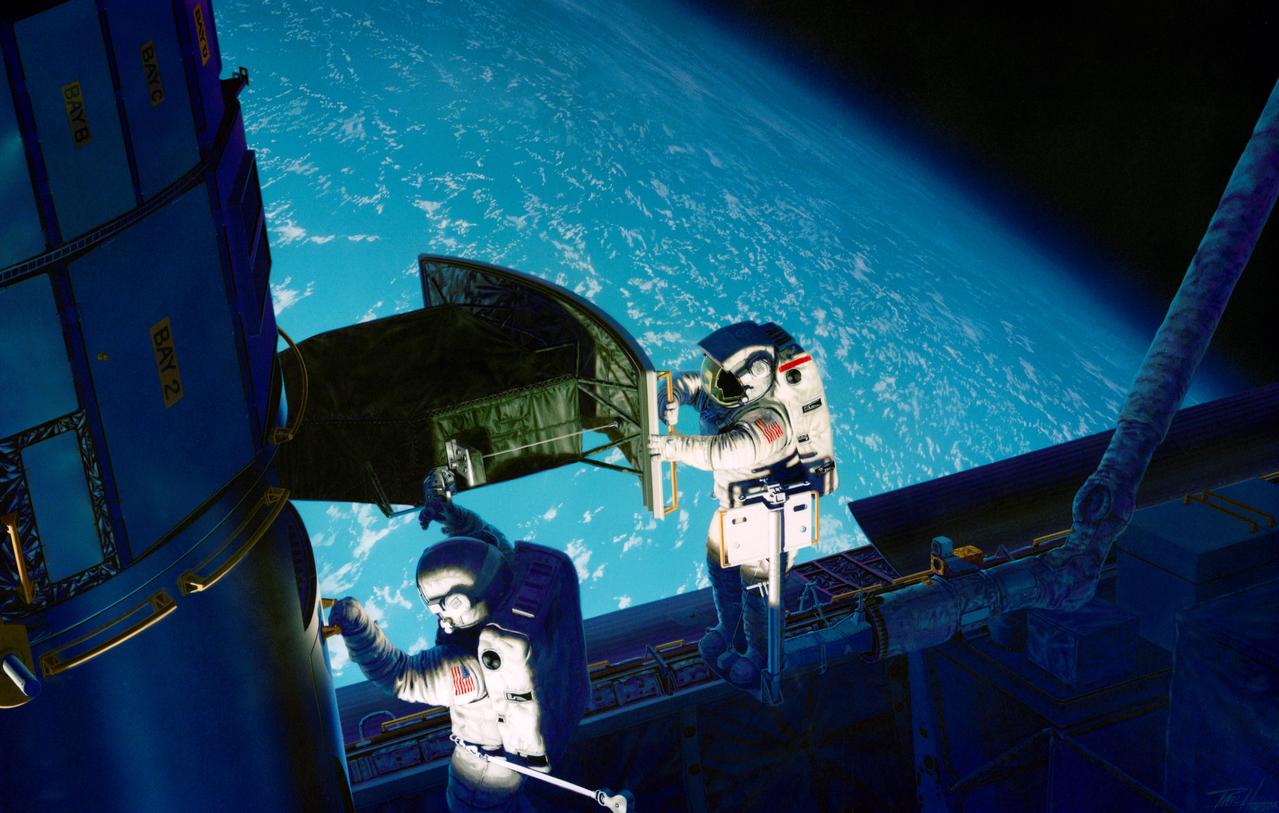
S93-48826 (November 1993) --- This artist's rendition of the 1993 Hubble Space Telescope (HST) servicing mission shows astronauts installing the new Wide Field/Planetary Camera (WF/PC 2). The instruments to replace the original camera and contains corrective optics that compensate for the telescope's flawed primary mirror. During the 11-plus day mission, astronauts are also scheduled to install the Corrective Optics Space Telescope Axial Replacement (COSTAR) -- an optics package that focuses and routes light to the other three instruments aboard the observatory -- a new set of solar array panels, and other hardware and components. The artwork was done for JPL by Paul Hudson.
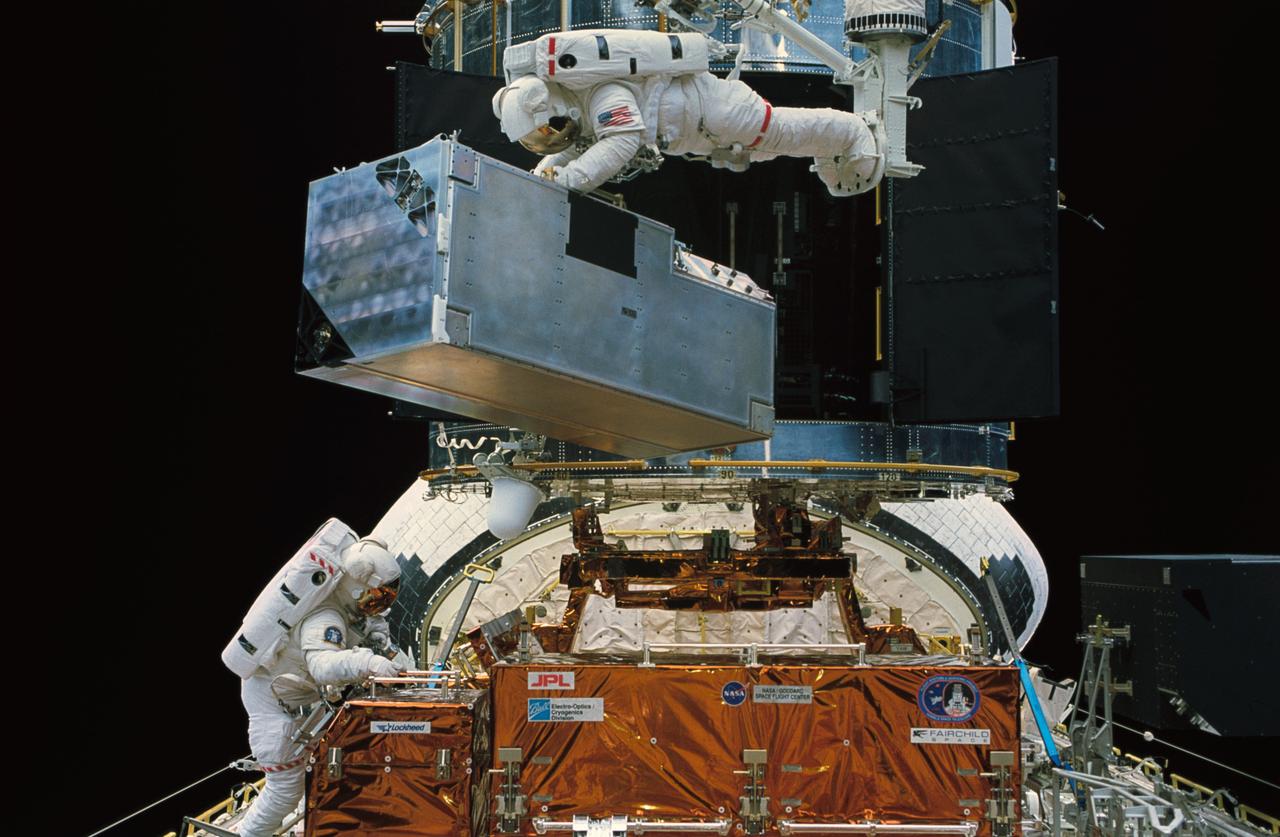
STS061-47-014 (8 Dec 1993) --- Astronaut Kathryn C. Thornton lifts the Corrective Optics Space Telescope Axial Replacement (COSTAR) prior to its installation on the Hubble Space Telescope (HST). Thornton is anchored to a foot restraint on the end of the Remote Manipulator System (RMS) arm. Astronaut Thomas D. Akers, who assisted in the COSTAR installation, is at lower left.
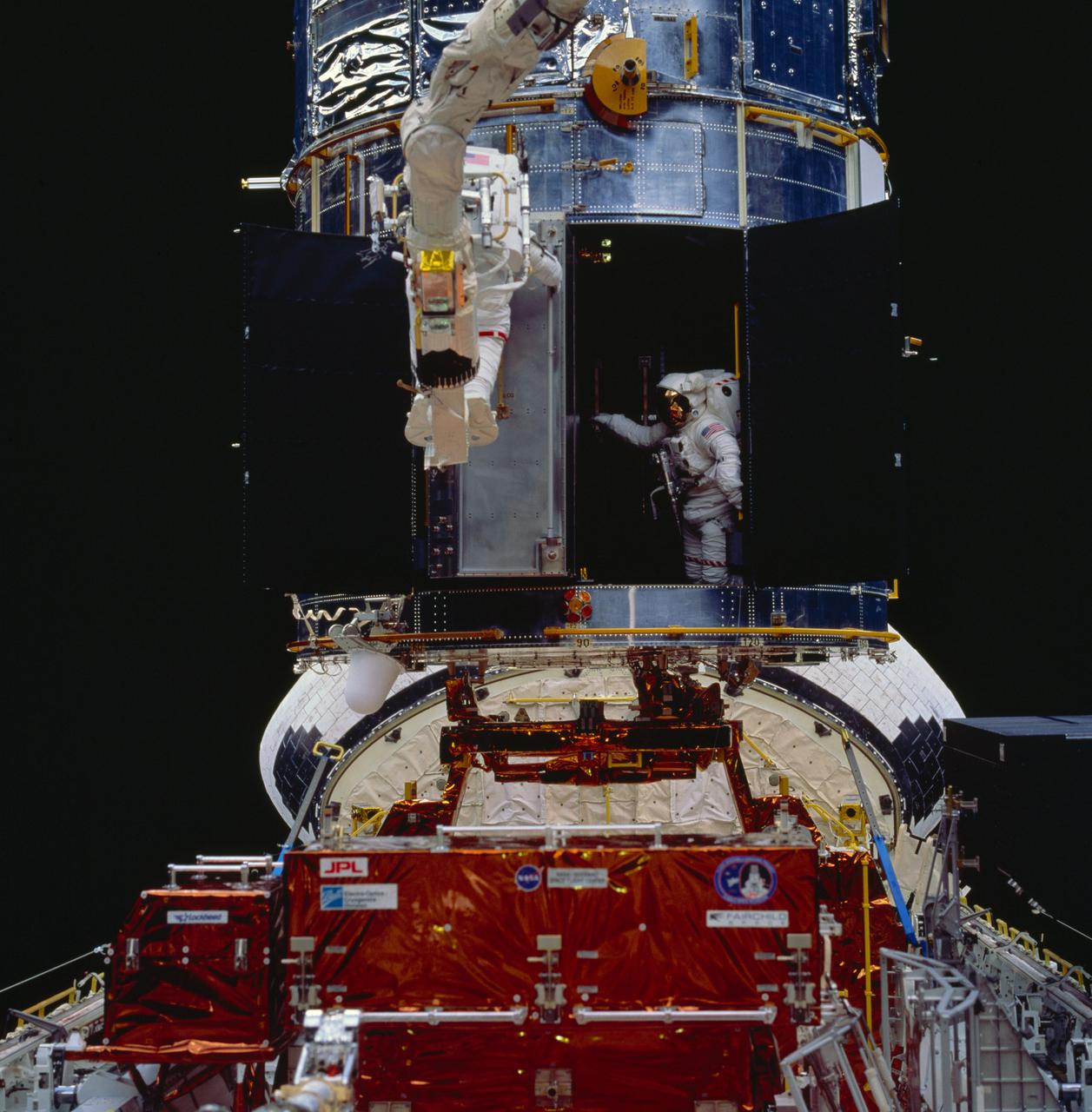
STS061-94-050 (8 Dec 1993) --- Astronaut Thomas D. Akers maneuvers inside the bay which will house the Corrective Optics Space Telescope Axial Replacement (COSTAR) while assisting astronaut Kathryn C. Thornton with the installation of the 640-pound instrument. Thornton, anchored on the end of the Remote Manipulator System (RMS) arm, is partially visible as she prepares to install the COSTAR, during their extravehicular activity (EVA).
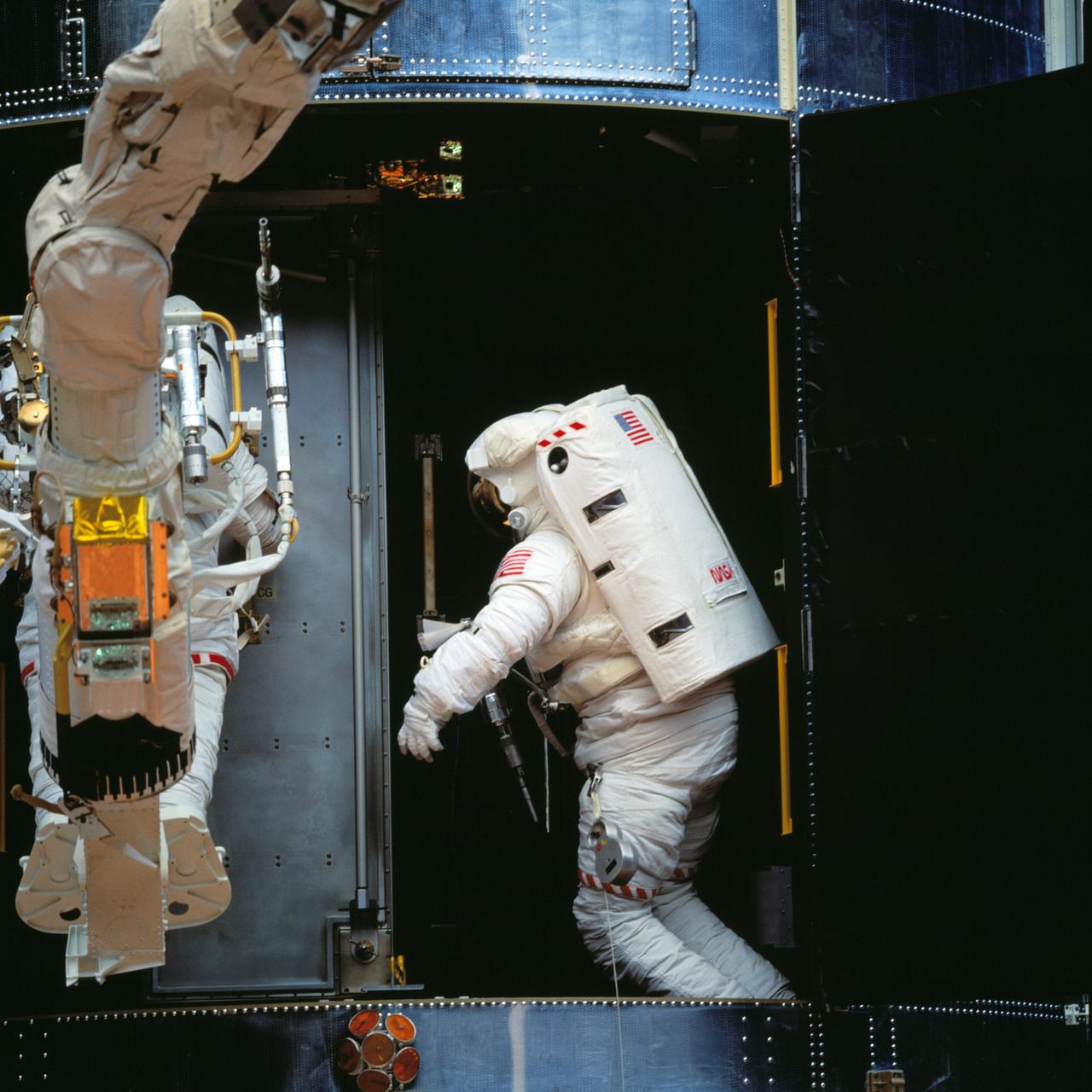
STS061-94-059 (8 Dec. 1993) --- Astronaut Thomas D. Akers maneuvers inside the bay which will house the Corrective Optics Space Telescope Axial Replacement (COSTAR) while assisting astronaut Kathryn C. Thornton with the installation of the 640-pound instrument. Thornton, anchored on the end of the Remote Manipulator System (RMS) arm, is partially visible as she prepares to install the COSTAR.
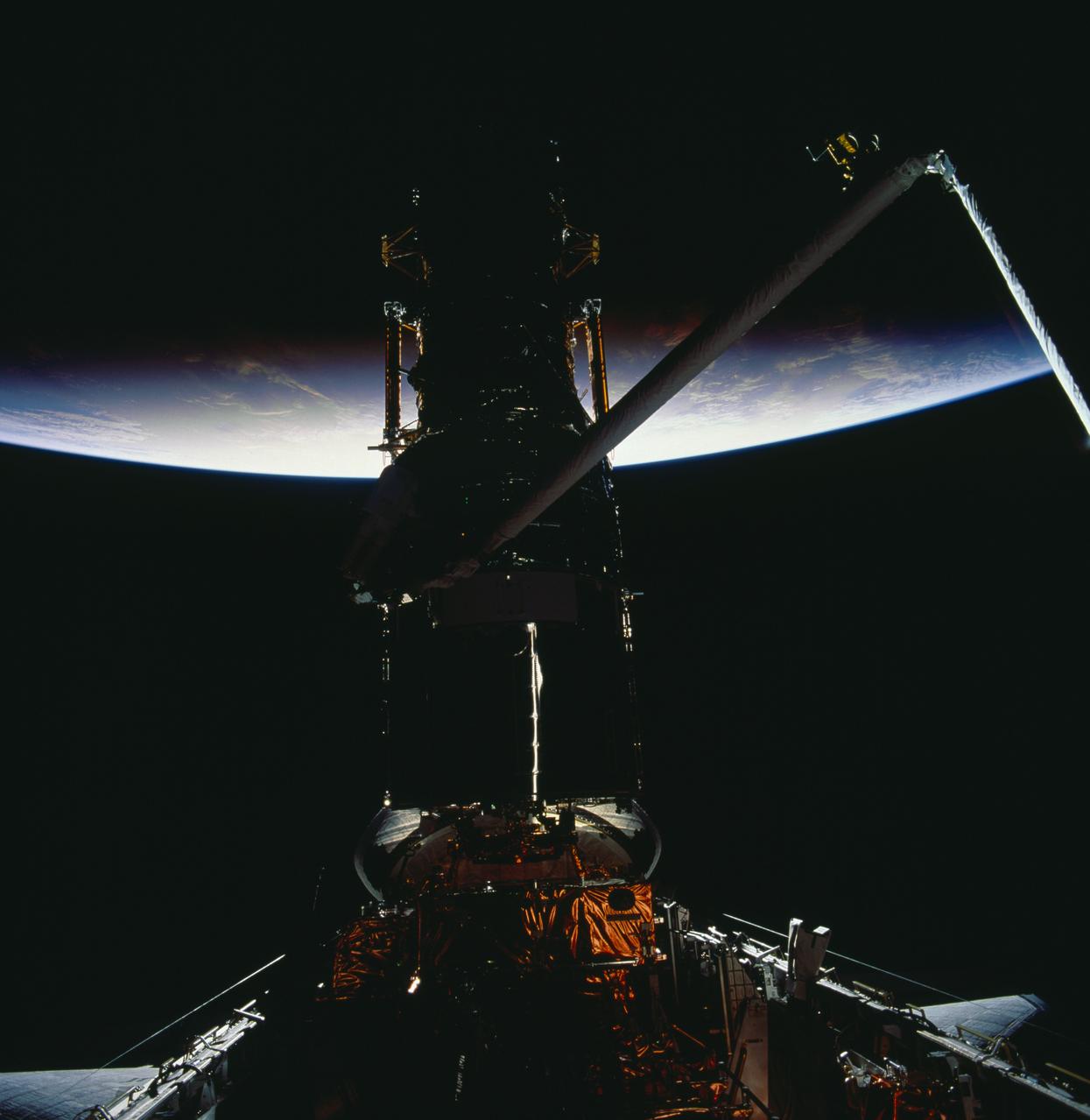
STS061-98-0AR (8 Dec 1993) --- Earth is partially illuminated but the Hubble Space Telescope (HST) and the Space Shuttle Endeavour are still mostly in darkness, in this 70mm frame photographed during the fourth of five space walks. Astronaut Kathryn C. Thornton, barely visible above left center in the frame, works to install the Corrective Optics Space Telescope Axial Replacement (COSTAR).
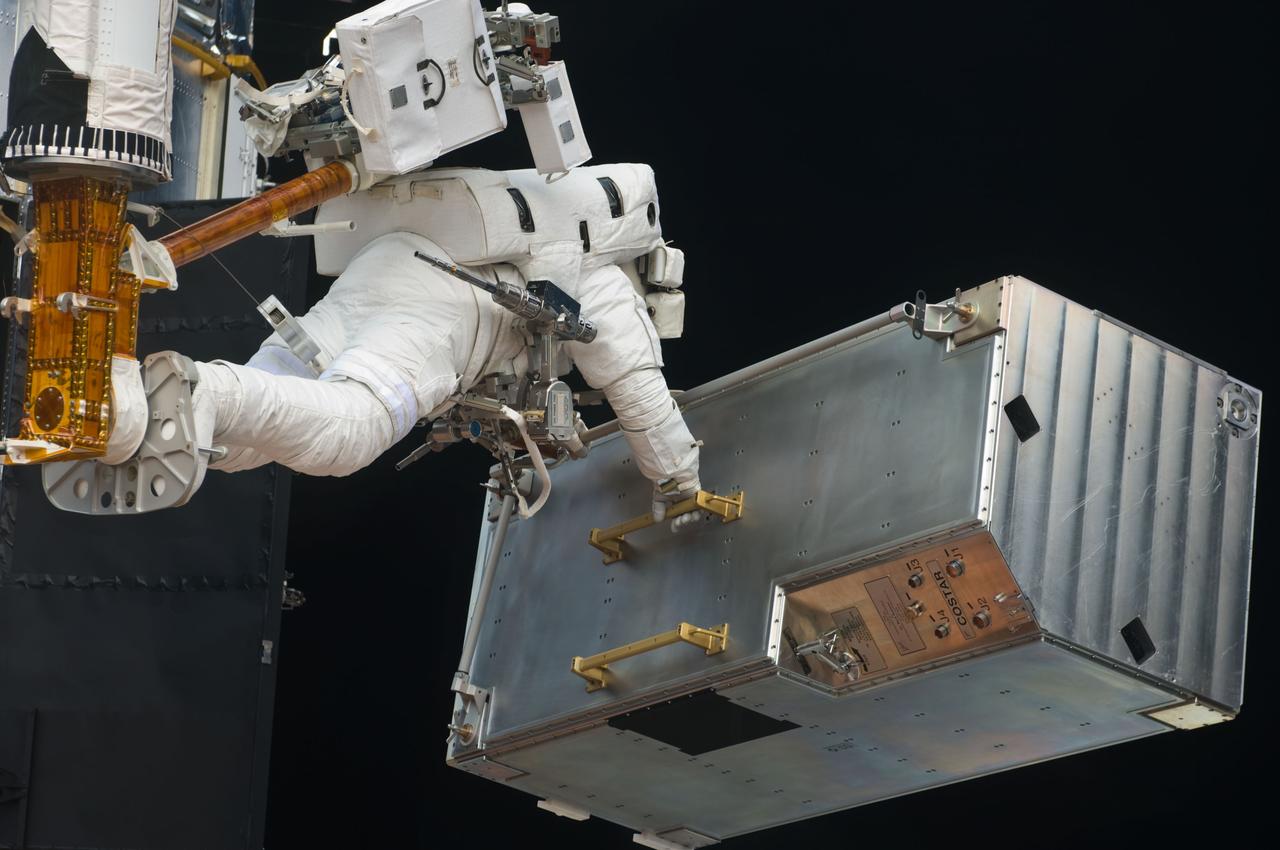
S125-E-008116 (16 May 2009) --- Astronaut Andrew Feustel, STS-125 mission specialist, positioned on a foot restraint on the end of Atlantis? remote manipulator system (RMS), moves the Corrective Optics Space Telescope Axial Replacement (COSTAR) during the mission?s third session of extravehicular activity (EVA) as work continues to refurbish and upgrade the Hubble Space Telescope.
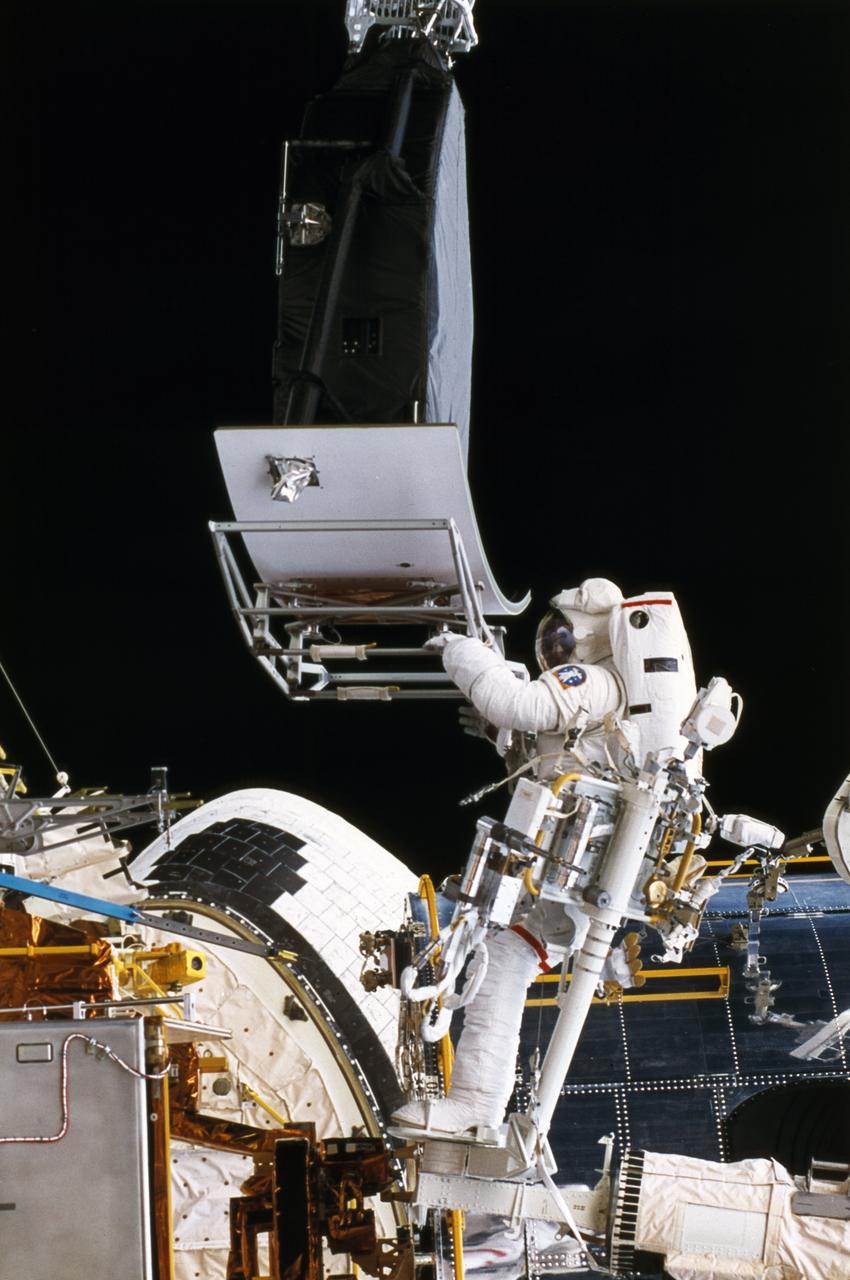
Astronaut Hoffman held the Hubble Space Telescope (HST) Wide Field/Planetary Camera-1 (WF/PC1) that was replaced by WF/PC2 in the cargo bay of the Space Shuttle orbiter Endeavour during Extravehicular Activity (EVA). The STS-61 mission was the first of the series of the HST servicing missions. Two months after its deployment in space, scientists detected a 2-micron spherical aberration in the primary mirror of the HST that affected the telescope's ability to focus faint light sources into a precise point. This imperfection was very slight, one-fiftieth of the width of a human hair. During four spacewalks, the STS-61 crew replaced the solar panel with its flexing problems; the WF/PC1 with WF/PC2, with built-in corrective optics; and the High-Speed Photometer with the Corrective Optics Space Telescope Axial Replacement (COSTAR) to correct the aberration for the remaining instruments. The purpose of the HST, the most complex and sensitive optical telescope ever made, is to study the cosmos from a low-Earth orbit for 15 years or more. The HST provides fine detail imaging, produces ultraviolet images and spectra, and detects very faint objects. The Marshall Space Flight Center had responsibility for design, development, and construction of the HST. The Perkin-Elmer Corporation, in Danbury, Cornecticut, developed the optical system and guidance sensors.
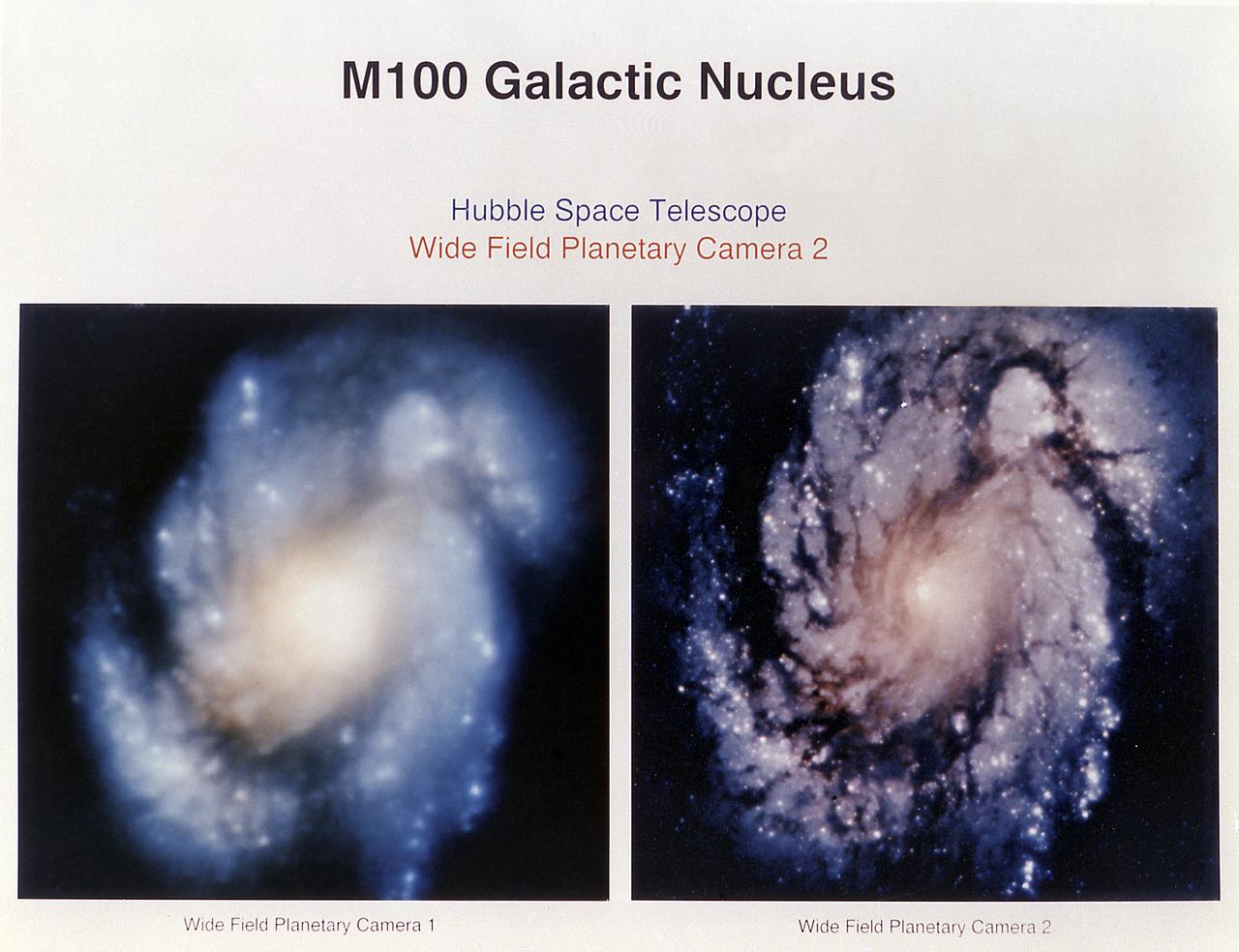
A comparison image of the M100 Galactic Nucleus, taken by the Hubble Space Telescope (HST) Wide Field Planetary Camera-1 (WF/PC1) and Wide Field Planetary Camera-2 (WF/PC2). The HST was placed in a low-Earth orbit by the Space Shuttle Discovery, STS-31 mission, in April 1990. Two months after its deployment in space, scientists detected a 2-micron spherical aberration in the primary mirror of the HST that affected the telescope's ability to focus faint light sources into a precise point. This imperfection was very slight, one-fiftieth of the width of a human hair. During four spacewalks, the STS-61 crew replaced the solar panel with its flexing problems; the WF/PC1 with the WF/PC2, with built-in corrective optics; and the High-Speed Photometer with the Corrective Optics Space Telescope Axial Replacement (COSTAR), to correct the aberration for the remaining instruments. The purpose of the HST, the most complex and sensitive optical telescope ever made, is to study the cosmos from a low-Earth orbit for 15 years or more. The HST provides fine detail imaging, produces ultraviolet images and spectra, and detects very faint objects.