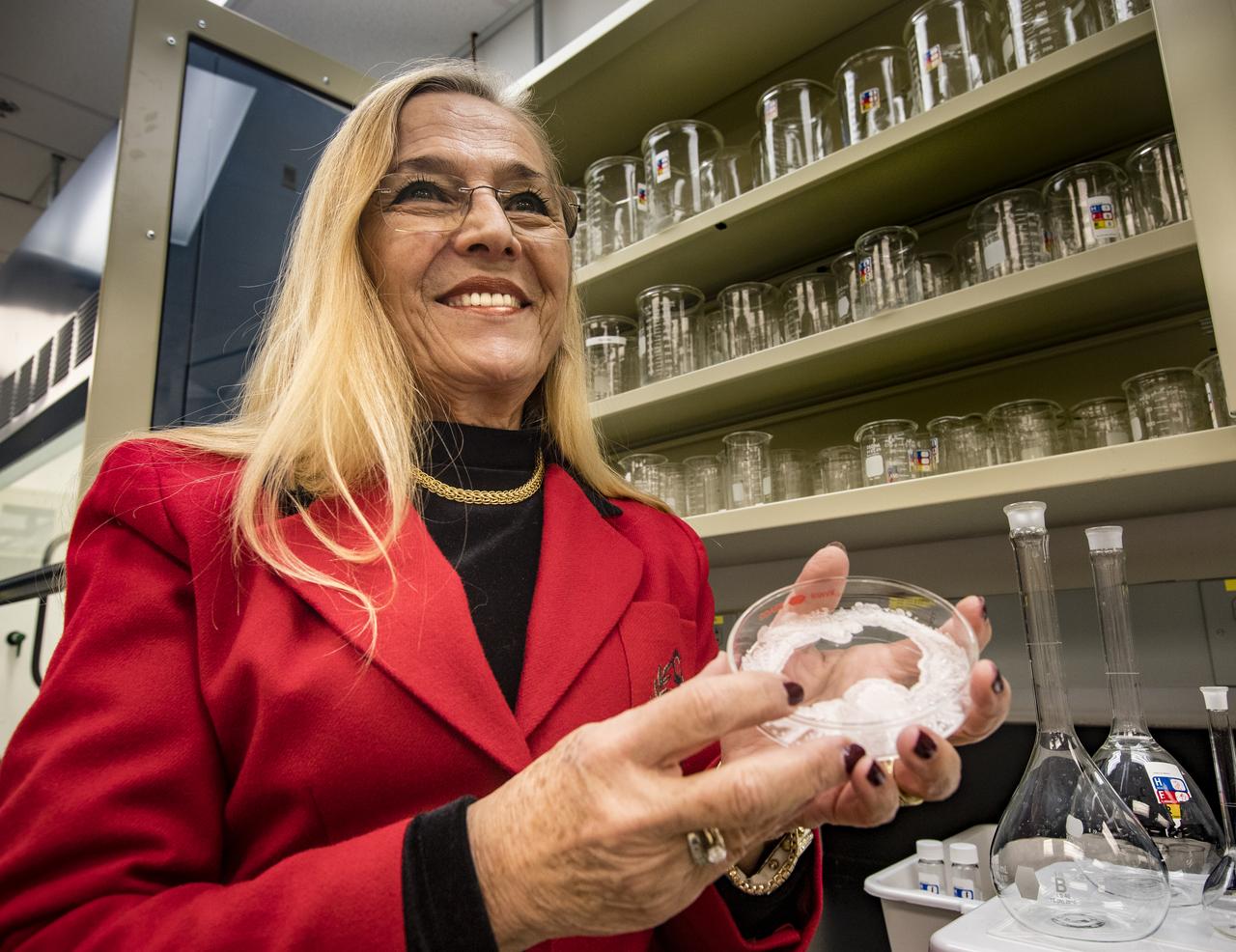
Dr. Luz M. Calle, a principal investigator for corrosion research at NASA’s Kennedy Space Center, shows a dish of crystals left over from an experiment to separate salt from water Dec. 12, 2018. Astronauts traveling on long-duration missions in space will need to recycle water, which means having to remove salt and other chemicals from wastewater to turn it back into drinking water.
Corrosion Research Laboratory
Dr. Luz M. Calle, a principal investigator for corrosion research at NASA’s Kennedy Space Center, examines microcapsules under a microscope Dec. 12, 2018. Microencapsulation is a way to create smart coatings or paint capable of indicating, resisting, and repairing corrosion. Smart coatings are being developed as alternatives to corrosion protection technologies that are not environmentally friendly.
Corrosion Research Laboratory
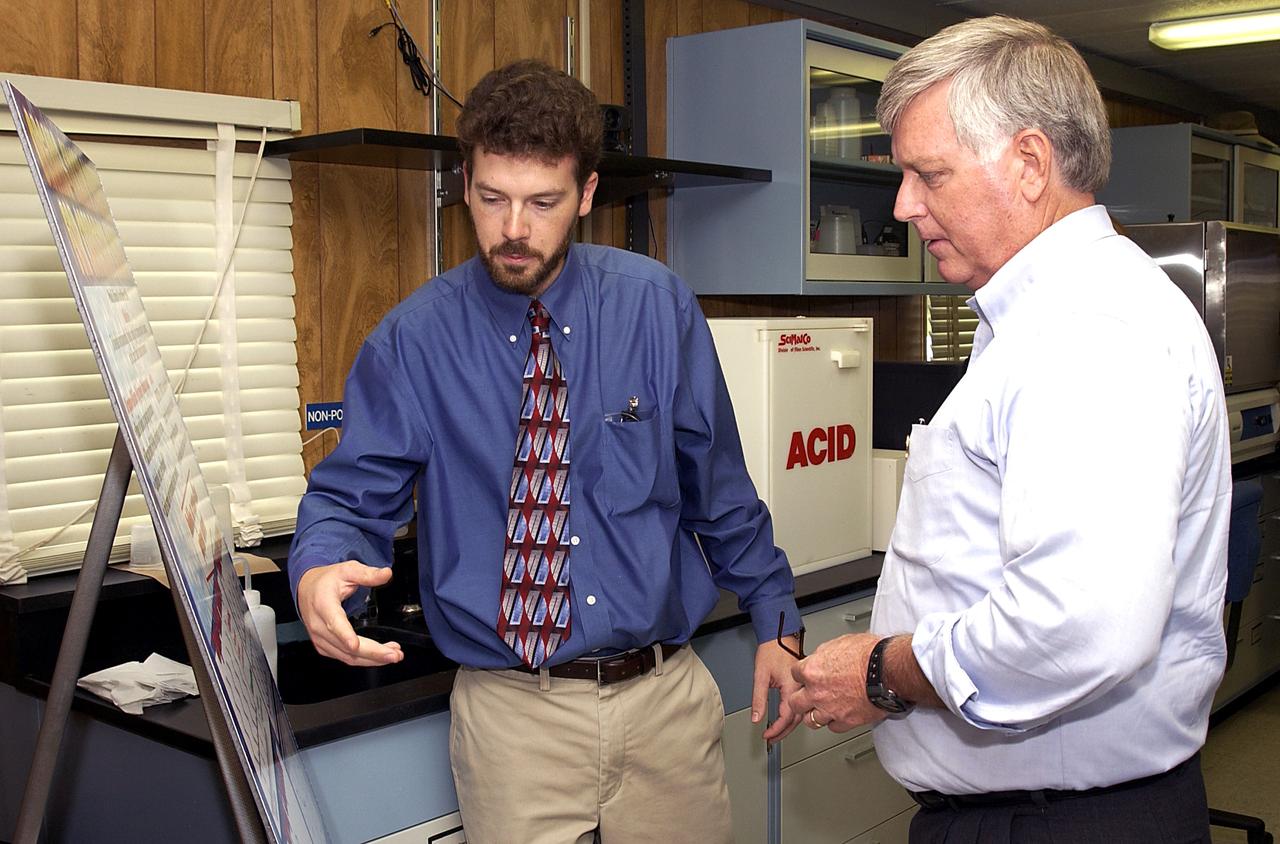
KENNEDY SPACE CENTER, FLA. -   Dr. Paul Hintze (left) explains to Center Director Jim Kennedy a project he is working at the KSC Beach Corrosion Test Site. Hitze is doing post-graduate work for the National Research Council.  The test facility site was established in the 1960s and has provided more than 30 years of historical information on the long-term performance of many materials in use at KSC and other locations around the world. Located 100 feet from the Atlantic Ocean approximately 1 mile south of the Space Shuttle launch sites, the test facility includes an atmospheric exposure site, a flowing seawater exposure site, and an on-site electrochemistry laboratory and monitoring station. The beach laboratory is used to conduct real-time corrosion experiments and provides for the remote monitoring of surrounding weather conditions. The newly added flowing seawater immersion facility provides for the immersion testing of materials and devices under controlled conditions.
KENNEDY SPACE CENTER, FLA. - Dr. Paul Hintze (left) explains to Center Director Jim Kennedy a project he is working at the KSC Beach Corrosion Test Site. Hitze is doing post-graduate work for the National Research Council. The test facility site was established in the 1960s and has provided more than 30 years of historical information on the long-term performance of many materials in use at KSC and other locations around the world. Located 100 feet from the Atlantic Ocean approximately 1 mile south of the Space Shuttle launch sites, the test facility includes an atmospheric exposure site, a flowing seawater exposure site, and an on-site electrochemistry laboratory and monitoring station. The beach laboratory is used to conduct real-time corrosion experiments and provides for the remote monitoring of surrounding weather conditions. The newly added flowing seawater immersion facility provides for the immersion testing of materials and devices under controlled conditions.
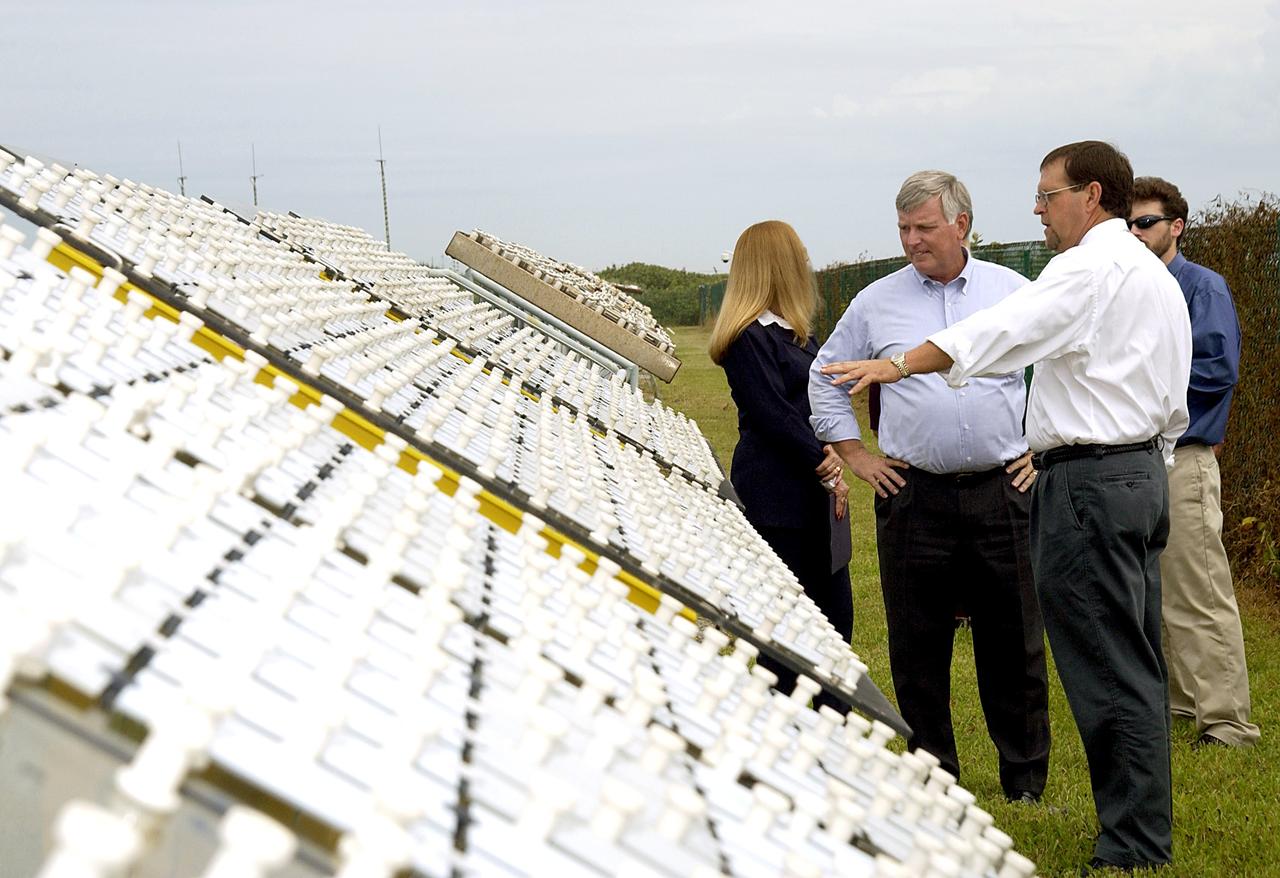
KENNEDY SPACE CENTER, FLA. -   On a tour of the KSC Beach Corrosion Test Site, Center Director Jim Kennedy (second from right) learns from Testbed Manager Louis MacDowell (right) about a project being undertaken for the U.S. Navy.  Being studied are nonchrome primers for aircraft.  At left are Lead Scientist Dr. Luz Marina Calle and  Dr. Paul Hintze, who is working on a graduate project for the National Research Council.  The KSC Beach Corrosion Test Site was established in the 1960s and has provided more than 30 years of historical information on the long-term performance of many materials in use at KSC and other locations around the world. Located 100 feet from the Atlantic Ocean approximately 1 mile south of the Space Shuttle launch sites, the test facility includes an atmospheric exposure site, a flowing seawater exposure site, and an on-site electrochemistry laboratory and monitoring station. The beach laboratory is used to conduct real-time corrosion experiments and provides for the remote monitoring of surrounding weather conditions. The newly added flowing seawater immersion facility provides for the immersion testing of materials and devices under controlled conditions.
KENNEDY SPACE CENTER, FLA. - On a tour of the KSC Beach Corrosion Test Site, Center Director Jim Kennedy (second from right) learns from Testbed Manager Louis MacDowell (right) about a project being undertaken for the U.S. Navy. Being studied are nonchrome primers for aircraft. At left are Lead Scientist Dr. Luz Marina Calle and Dr. Paul Hintze, who is working on a graduate project for the National Research Council. The KSC Beach Corrosion Test Site was established in the 1960s and has provided more than 30 years of historical information on the long-term performance of many materials in use at KSC and other locations around the world. Located 100 feet from the Atlantic Ocean approximately 1 mile south of the Space Shuttle launch sites, the test facility includes an atmospheric exposure site, a flowing seawater exposure site, and an on-site electrochemistry laboratory and monitoring station. The beach laboratory is used to conduct real-time corrosion experiments and provides for the remote monitoring of surrounding weather conditions. The newly added flowing seawater immersion facility provides for the immersion testing of materials and devices under controlled conditions.
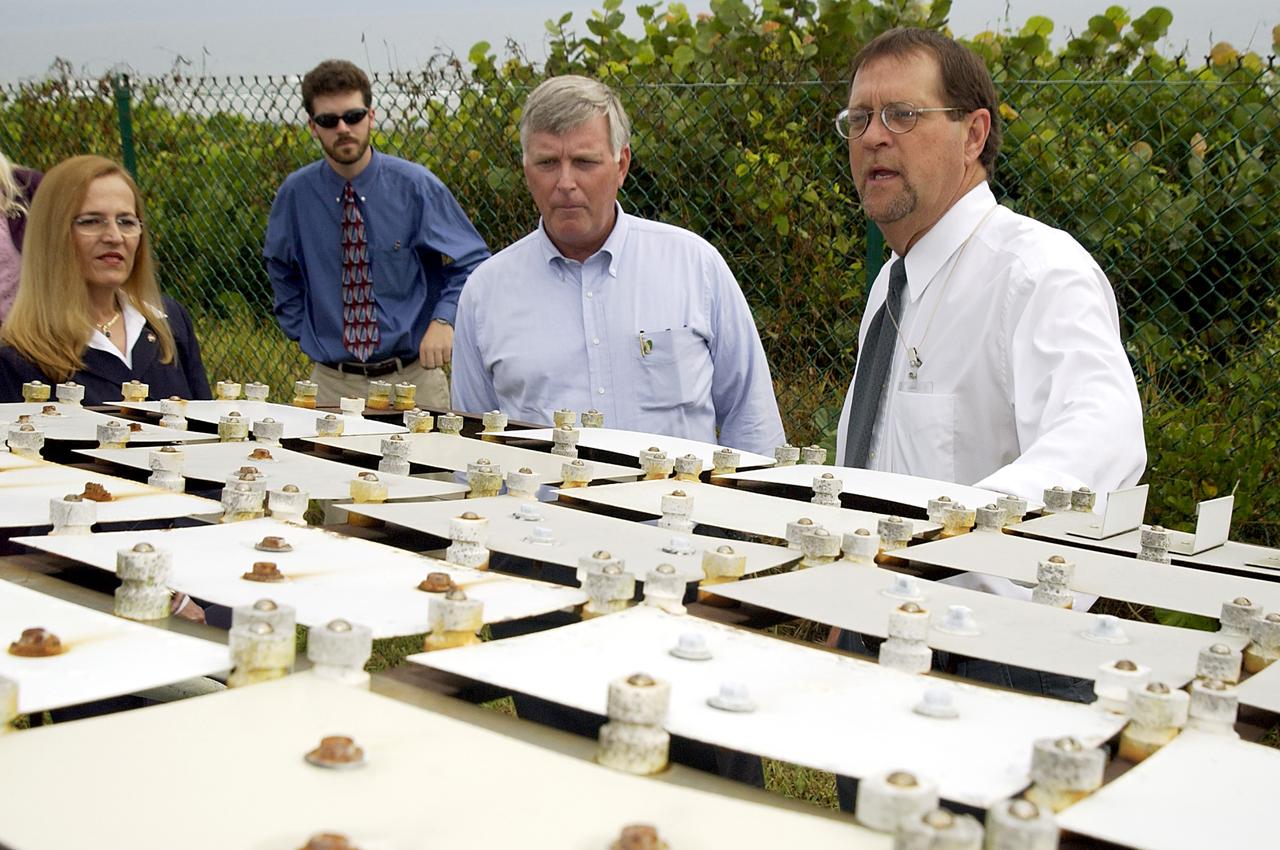
KENNEDY SPACE CENTER, FLA. -   On a tour of the KSC Beach Corrosion Test Site, Testbed Manager Louis MacDowell (foreground) explains to Center Director Jim Kennedy (third from right) about a study being undertaken for the U.S. Navy: nonchrome primers for aircraft. At left is Lead Scientist Dr. Luz Marina Calle and behind MacDowell is Dr. Paul Hintze, who is working on a graduate project for the National Research Council.  The KSC Beach Corrosion Test Site was established in the 1960s and has provided more than 30 years of historical information on the long-term performance of many materials in use at KSC and other locations around the world. Located 100 feet from the Atlantic Ocean approximately 1 mile south of the Space Shuttle launch sites, the test facility includes an atmospheric exposure site, a flowing seawater exposure site, and an on-site electrochemistry laboratory and monitoring station. The beach laboratory is used to conduct real-time corrosion experiments and provides for the remote monitoring of surrounding weather conditions. The newly added flowing seawater immersion facility provides for the immersion testing of materials and devices under controlled conditions.
KENNEDY SPACE CENTER, FLA. - On a tour of the KSC Beach Corrosion Test Site, Testbed Manager Louis MacDowell (foreground) explains to Center Director Jim Kennedy (third from right) about a study being undertaken for the U.S. Navy: nonchrome primers for aircraft. At left is Lead Scientist Dr. Luz Marina Calle and behind MacDowell is Dr. Paul Hintze, who is working on a graduate project for the National Research Council. The KSC Beach Corrosion Test Site was established in the 1960s and has provided more than 30 years of historical information on the long-term performance of many materials in use at KSC and other locations around the world. Located 100 feet from the Atlantic Ocean approximately 1 mile south of the Space Shuttle launch sites, the test facility includes an atmospheric exposure site, a flowing seawater exposure site, and an on-site electrochemistry laboratory and monitoring station. The beach laboratory is used to conduct real-time corrosion experiments and provides for the remote monitoring of surrounding weather conditions. The newly added flowing seawater immersion facility provides for the immersion testing of materials and devices under controlled conditions.
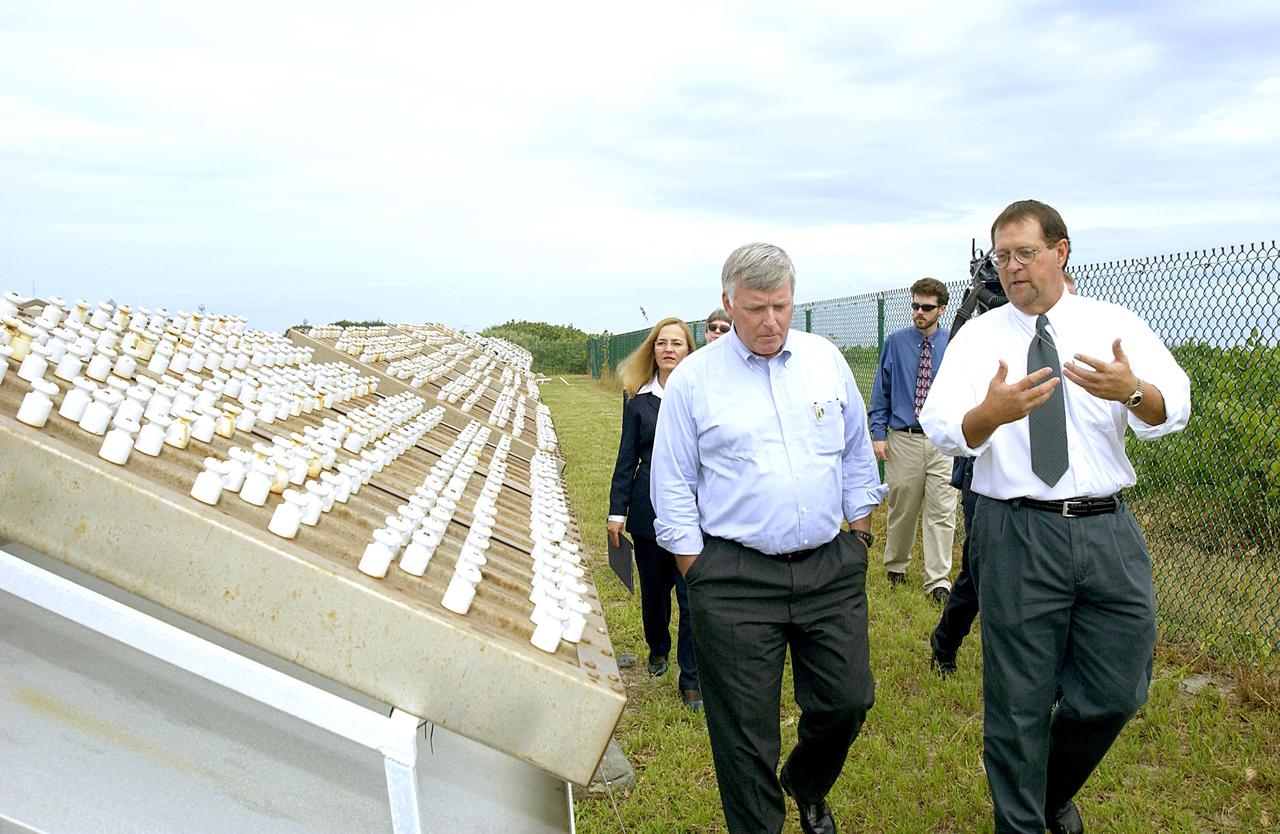
KENNEDY SPACE CENTER, FLA. -   On a tour of the KSC Beach Corrosion Test Site, Louis MacDowell (right), Testbed manager, explains to Center Director Jim Kennedy a project being undertaken for the U.S. Navy.  At left are nonchrome primers for aircraft being studied.  Behind Kennedy is Lead Scientist Dr. Luz Marina Calle.  Behind MacDowell is Dr. Paul Hintze, who is working on a graduate project for the National Research Council.  The KSC Beach Corrosion Test Site was established in the 1960s and has provided more than 30 years of historical information on the long-term performance of many materials in use at KSC and other locations around the world. Located 100 feet from the Atlantic Ocean approximately 1 mile south of the Space Shuttle launch sites, the test facility includes an atmospheric exposure site, a flowing seawater exposure site, and an on-site electrochemistry laboratory and monitoring station. The beach laboratory is used to conduct real-time corrosion experiments and provides for the remote monitoring of surrounding weather conditions. The newly added flowing seawater immersion facility provides for the immersion testing of materials and devices under controlled conditions.
KENNEDY SPACE CENTER, FLA. - On a tour of the KSC Beach Corrosion Test Site, Louis MacDowell (right), Testbed manager, explains to Center Director Jim Kennedy a project being undertaken for the U.S. Navy. At left are nonchrome primers for aircraft being studied. Behind Kennedy is Lead Scientist Dr. Luz Marina Calle. Behind MacDowell is Dr. Paul Hintze, who is working on a graduate project for the National Research Council. The KSC Beach Corrosion Test Site was established in the 1960s and has provided more than 30 years of historical information on the long-term performance of many materials in use at KSC and other locations around the world. Located 100 feet from the Atlantic Ocean approximately 1 mile south of the Space Shuttle launch sites, the test facility includes an atmospheric exposure site, a flowing seawater exposure site, and an on-site electrochemistry laboratory and monitoring station. The beach laboratory is used to conduct real-time corrosion experiments and provides for the remote monitoring of surrounding weather conditions. The newly added flowing seawater immersion facility provides for the immersion testing of materials and devices under controlled conditions.
Dr. Jennifer Williams, a NASA research chemical engineer, is inside the Prototype Development Laboratory at NASA’s Kennedy Space Center in Florida to begin testing on the Plasma Rapid Oxidation Technique for Extending Component Tenability (PROTECT) project on Nov. 2, 2022. Plasma electrolytic oxidation is a surface coating technology that produces oxide layers on the surface of light metals and their alloys to improve their performance characteristics. These coatings are tailored to provide a combination of characteristics such as corrosion protection, wear resistance, thermal management, extreme hardness, and fatigue performance. PROTECT is expected to demonstrate a 10 percent improved fatigue performance and a 70 percent improvement in corrosion characteristics on the interior of treated 3-D printed metallic parts when compared to non-treated parts. PROTECT could be applied to spacecraft and launch vehicles.
Plasma Rapid Oxidation Technique for Extending Component Tenabil
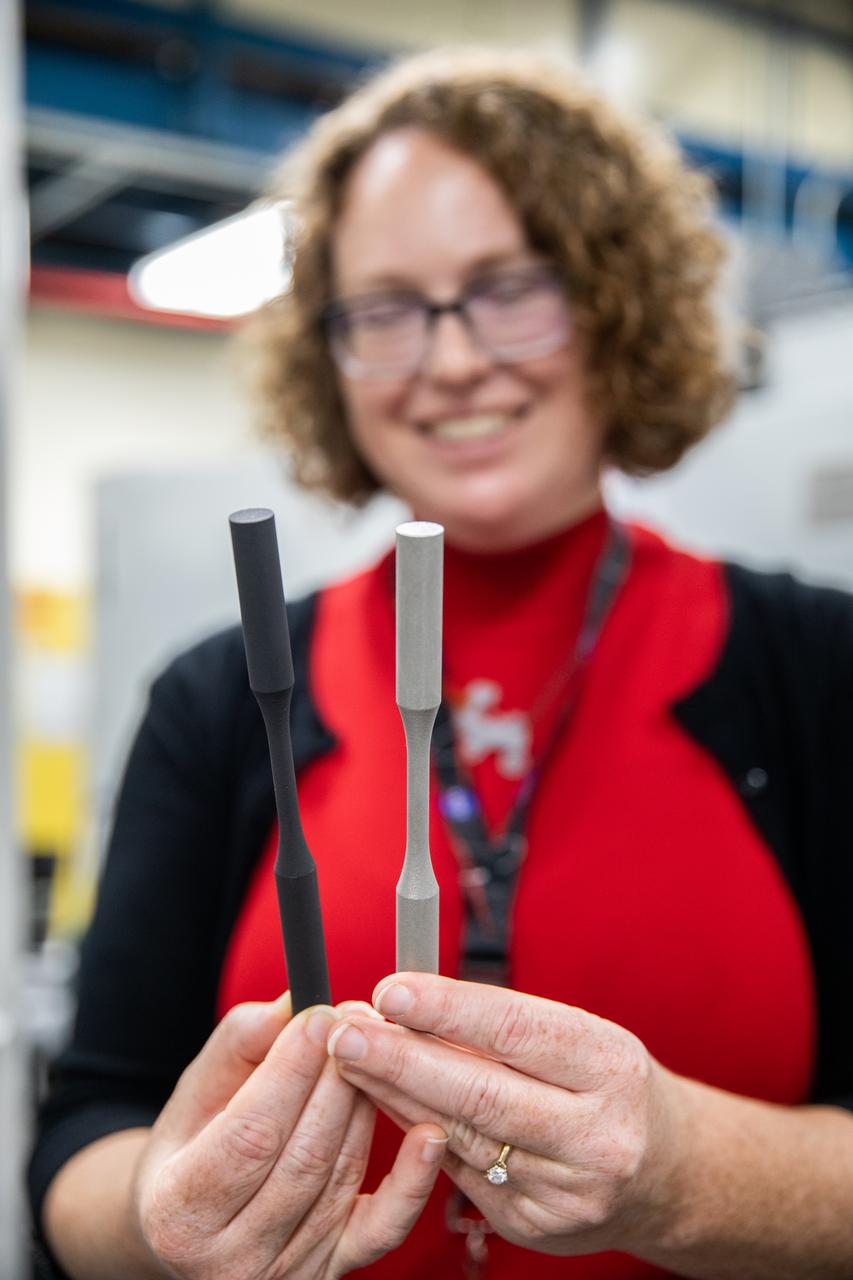
Dr. Jennifer Williams, a NASA research chemical engineer, displays two fatigue samples that will be tested  in the Plasma Rapid Oxidation Technique for Extending Component Tenability (PROTECT) experiments  inside the Prototype Laboratory at NASA’s Kennedy Space Center in Florida on Nov. 2, 2022. Plasma electrolytic oxidation is a surface coating technology that produces oxide layers on the surface of light metals and their alloys to improve their performance characteristics. These  coatings are tailored to provide a combination of characteristics such as corrosion protection, wear resistance, thermal management, extreme hardness, and fatigue performance. PROTECT is expected to demonstrate a 10 percent improved fatigue performance and a 70 percent improvement in corrosion characteristics on the interior of treated 3-D printed metallic parts when compared to non-treated parts. PROTECT could be applied to spacecraft and launch vehicles.
Plasma Rapid Oxidation Technique for Extending Component Tenabil
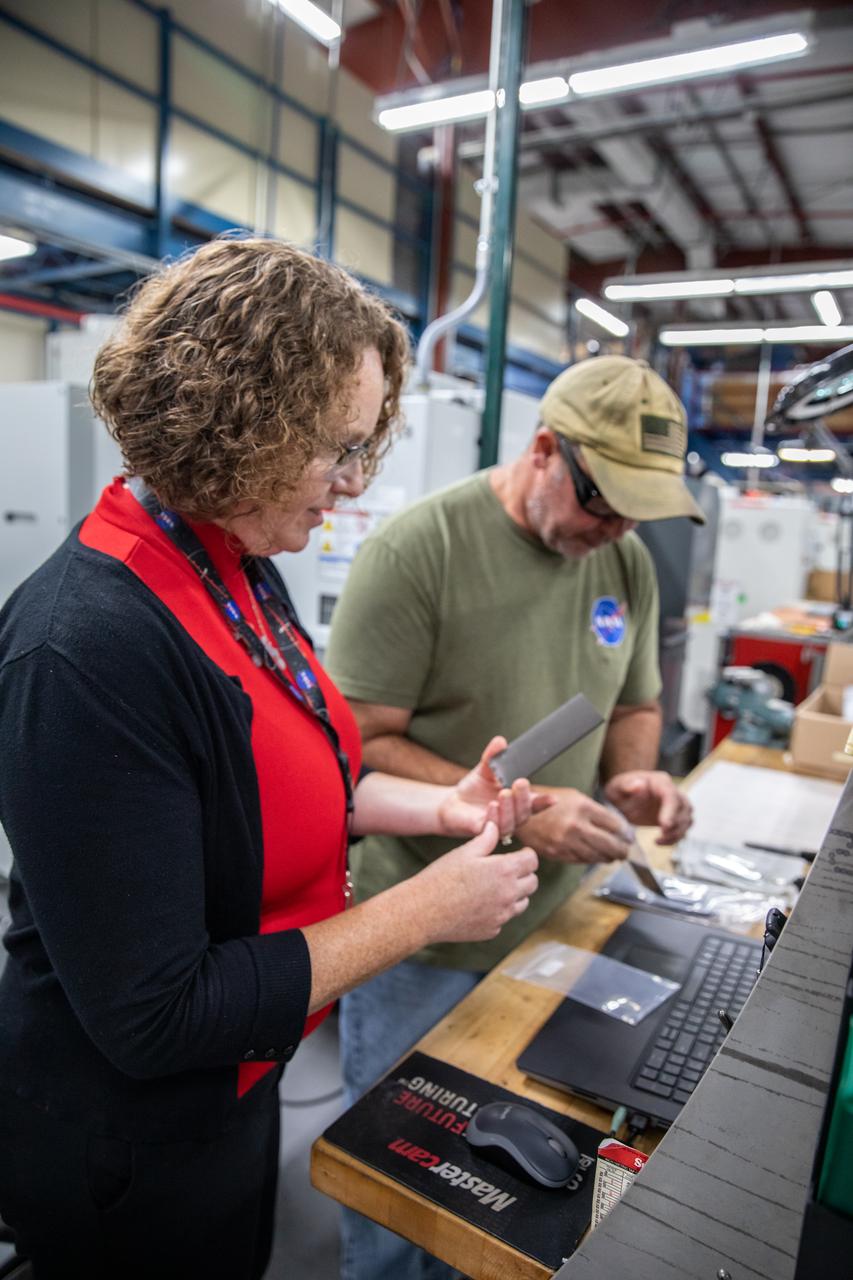
From left, Dr. Jennifer Williams, a NASA research chemical engineer, and Gerard Moscoso, a mechanical engineer technician, inspect specimens prepared forthe Plasma Rapid Oxidation Technique for Extending Component Tenability (PROTECT) experiment inside the Prototype Development Laboratory at NASA’s Kennedy Space Center in Florida on Nov. 2, 2022. Plasma electrolytic oxidation is a surface coating technology that produces oxide layers on the surface of light metals and their alloys to improve their performance characteristics. These coatings are tailored to provide a combination of characteristics such as corrosion protection, wear resistance, thermal management, extreme hardness, and fatigue performance. PROTECT is expected to demonstrate a 10 percent improved fatigue performance and a 70 percent improvement in corrosion characteristics on the interior of treated 3-D printed metallic parts when compared to non-treated parts. PROTECT could be applied used on spacecraft and launch vehicles.
Plasma Rapid Oxidation Technique for Extending Component Tenabil
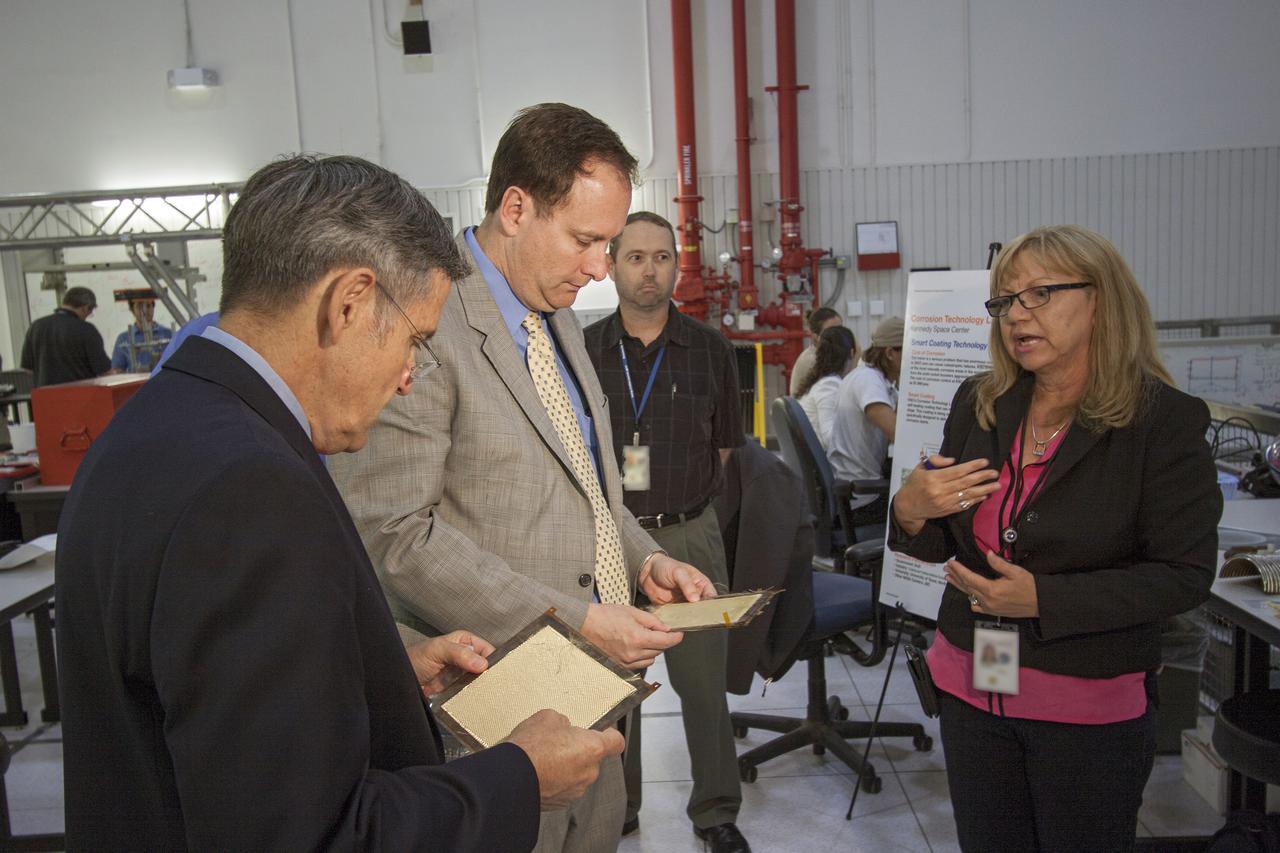
CAPE CANAVERAL, Fla. – At NASA’s Kennedy Space Center in Florida, Robert Lightfoot, NASA associate director, second from left, learns about smart coatings technology in the Corrosion Lab during a tour of the Swamp Works laboratories.   Kennedy’s Swamp Works provides rapid, innovative and cost-effective exploration mission solutions, leveraging partnerships across NASA, industry and academia. Kennedy’s research and technology mission is to improve spaceports on Earth, as well as lay the groundwork for establishing spaceports at destinations in space. For more information, visit http:__www.nasa.gov_centers_kennedy_exploration_researchtech_index.html. Photo credit: NASA_Jim Grossmann
KSC-2013-2568
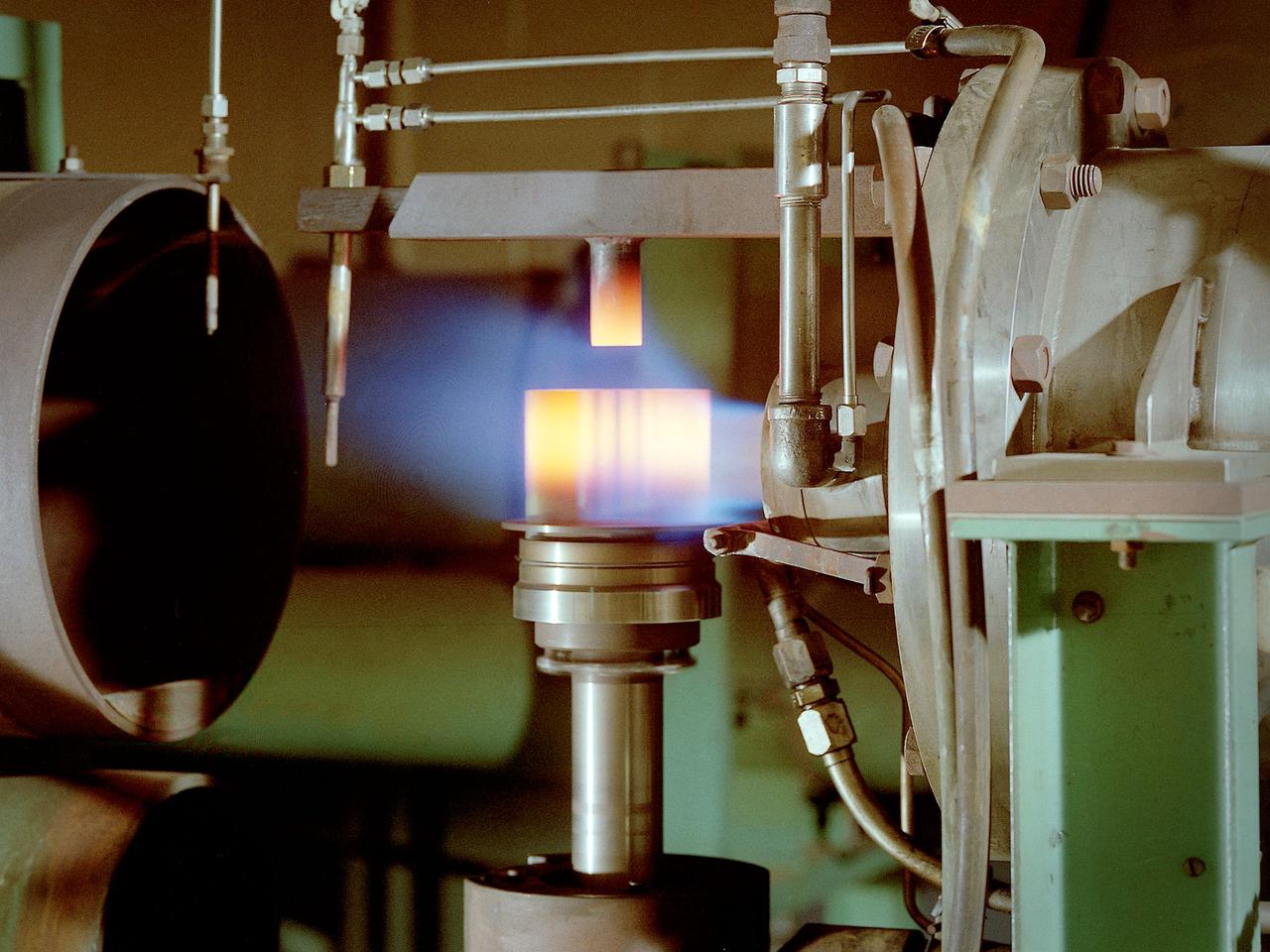
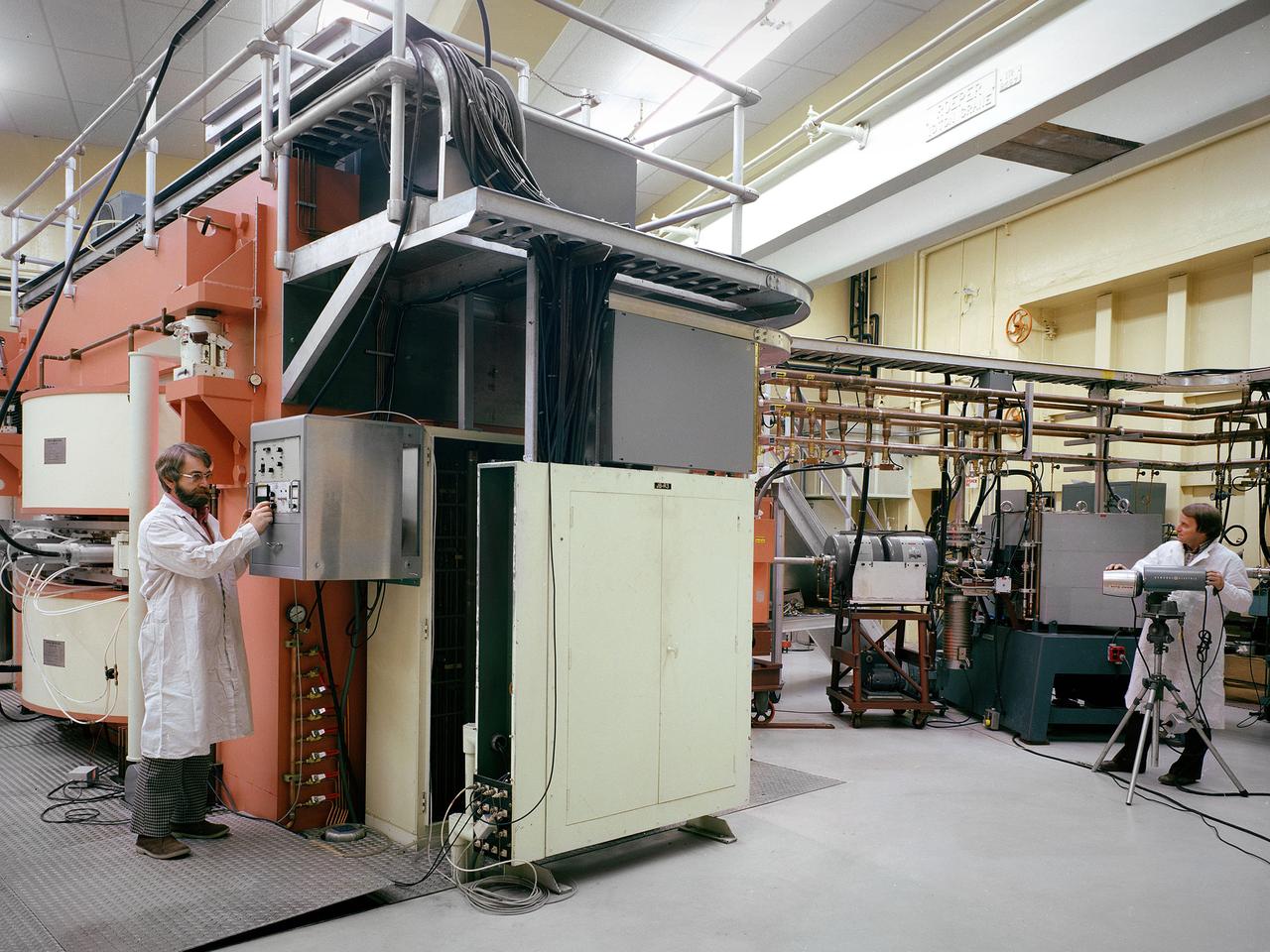
A burner rig heats up a material sample in the Materials and Stresses Building at the National Aeronautics and Space Administration (NASA) Lewis Research Center. Materials technology is an important element in the successful development of advanced airbreathing and rocket propulsion systems. Different types of engines operate in different environments so an array of dependable materials is needed. NASA Lewis began investigating the characteristics of different materials shortly after World War II. In 1949 the materials group was expanded into its own division. The Lewis researchers sought to study and test materials in environments that simulate the environment in which they would operate.     The Materials and Stresses Building, built in 1949, contained a number of laboratories to analyze the materials. They are subjected to high temperatures, high stresses, corrosion, irradiation, and hot gasses. The Physics of Solids Laboratory included a cyclotron, cloud chamber, helium cryostat, and metallurgy cave. The Metallographic Laboratory possessed six x-ray diffraction machines, two metalloscopes, and other equipment. The Furnace Room had two large induction machines, a 4500⁰ F graphite furnace, and heat treating equipment. The Powder Laboratory included 60-ton and 3000-ton presses. The Stresses Laboratory included stress rupture machines, fatigue machines, and tensile strength machines.
Burner Rig in the Material and Stresses Building
Researchers check the cyclotron in the Materials and Stresses Building at the National Aeronautics and Space Administration (NASA) Lewis Research Center. The Materials and Stresses Building, built in 1949, contained a number of laboratories to test the strength, diffusion, and other facets of materials. The materials could be subjected to high temperatures, high stresses, corrosion, irradiation, and hot gasses. The Physics of Solids Laboratory included a cyclotron, cloud chamber, helium cryostat, and metallurgy cave.     The cyclotron was built in the early 1950s to test the effects of radiation on different materials so that the proper materials could be used to construct a nuclear aircraft engine and other components. By the late 1950s, the focus had shifted to similar studies for rockets. NASA cancelled its entire nuclear program in January 1973, and the cyclotron was mothballed.    In 1975 the Cleveland Clinic Foundation partnered with NASA Lewis to use the cyclotron to treat cancer patients with a new type of radiation therapy. The cyclotron split beryllium atoms which caused neutrons to be released. The neutrons were streamed directly at the patient’s tumor. Over the course of five years, the cyclotron was used to treat 1200 patients. The program was terminated in 1980 as the Clinic shifted its efforts to concentrate on non-radiation treatments. The Lewis cyclotron was mothballed for a number of years before being demolished.
Cyclotron in the Materials and Stresses Building
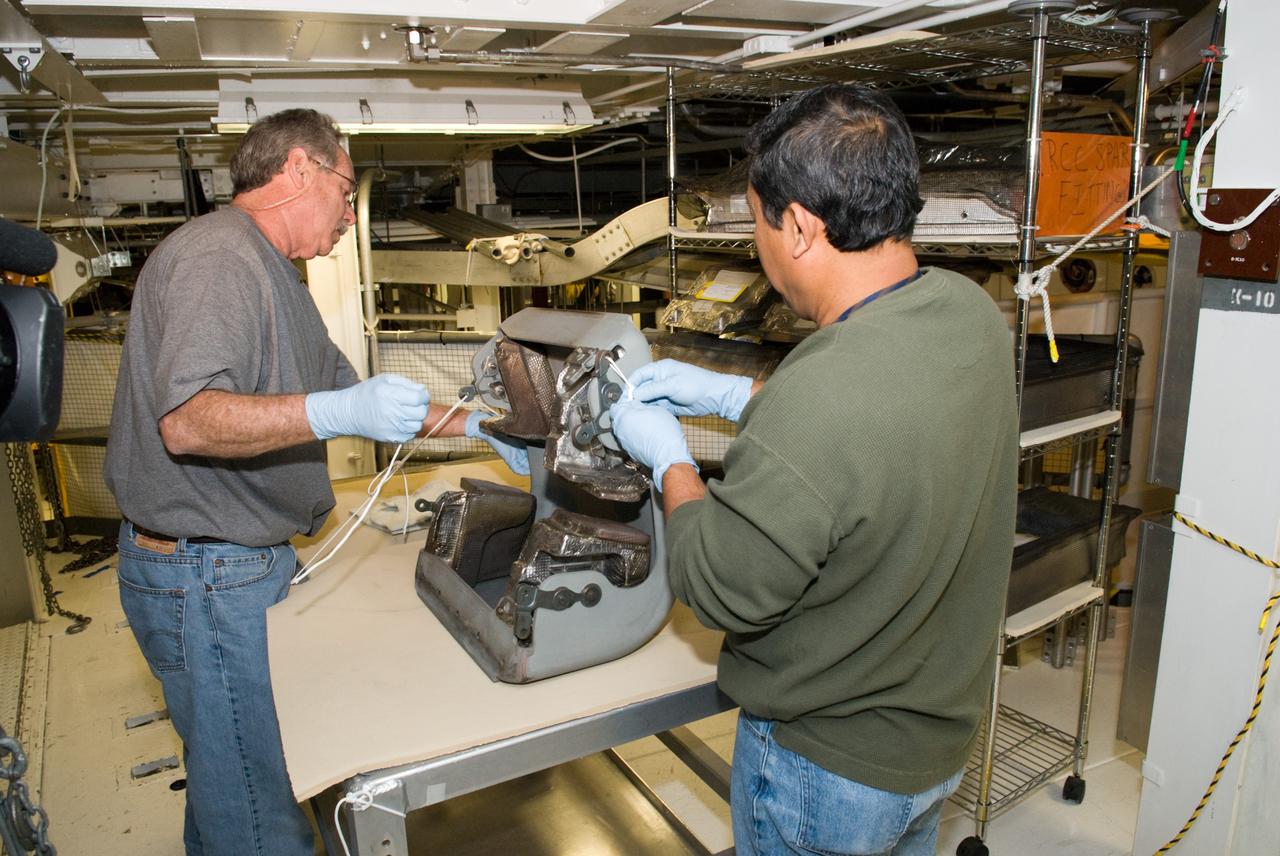
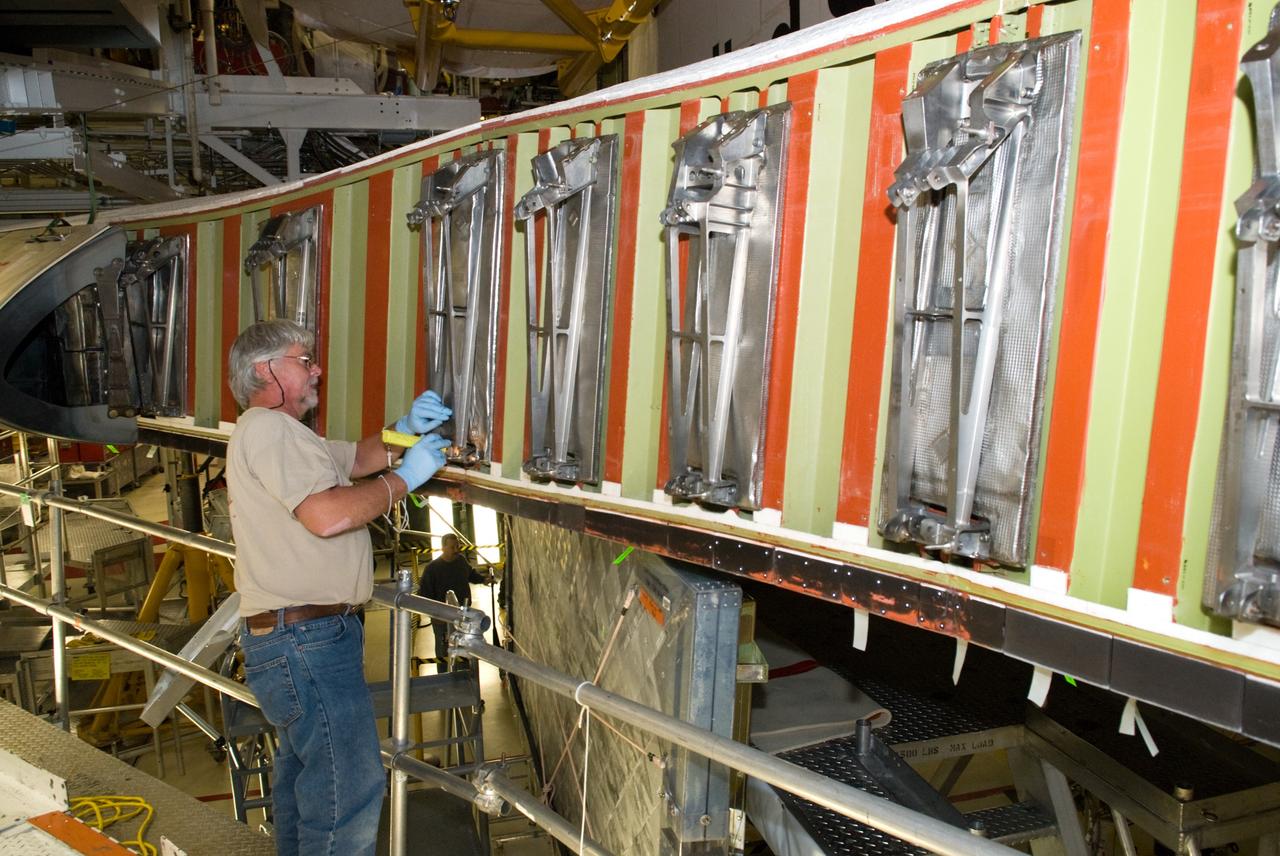
CAPE CANAVERAL, Fla. - In Orbiter Processing Facility-1 at NASA's Kennedy Space Center in Florida, a United Space Alliance technician inspects a wing leading edge of space shuttle Atlantis following removal of the reinforced carbon carbon panels, or RCC panels.    Inspection and maintenance of the RCC panels and the wing leading edge are standard procedure between shuttle missions.  The RCC panels, components of the shuttle's thermal protection system, are placed in protective coverings while the structural edge of the wing -- the orange and green area behind the panels -- undergoes spar corrosion inspection to verify the structural integrity of the wing. Atlantis is next slated to deliver an Integrated Cargo Carrier and Russian-built Mini Research Module to the International Space Station on the STS-132 mission.  The second in a series of new pressurized components for Russia, the module will be permanently attached to the Zarya module. Three spacewalks are planned to store spare components outside the station, including six spare batteries, a boom assembly for the Ku-band antenna and spares for the Canadian Dextre robotic arm extension. A radiator, airlock and European robotic arm for the Russian Multi-purpose Laboratory Module also are payloads on the flight.  Launch is targeted for May 14, 2010.  Photo credit: NASA/Glenn Benson
KSC-2010-1088
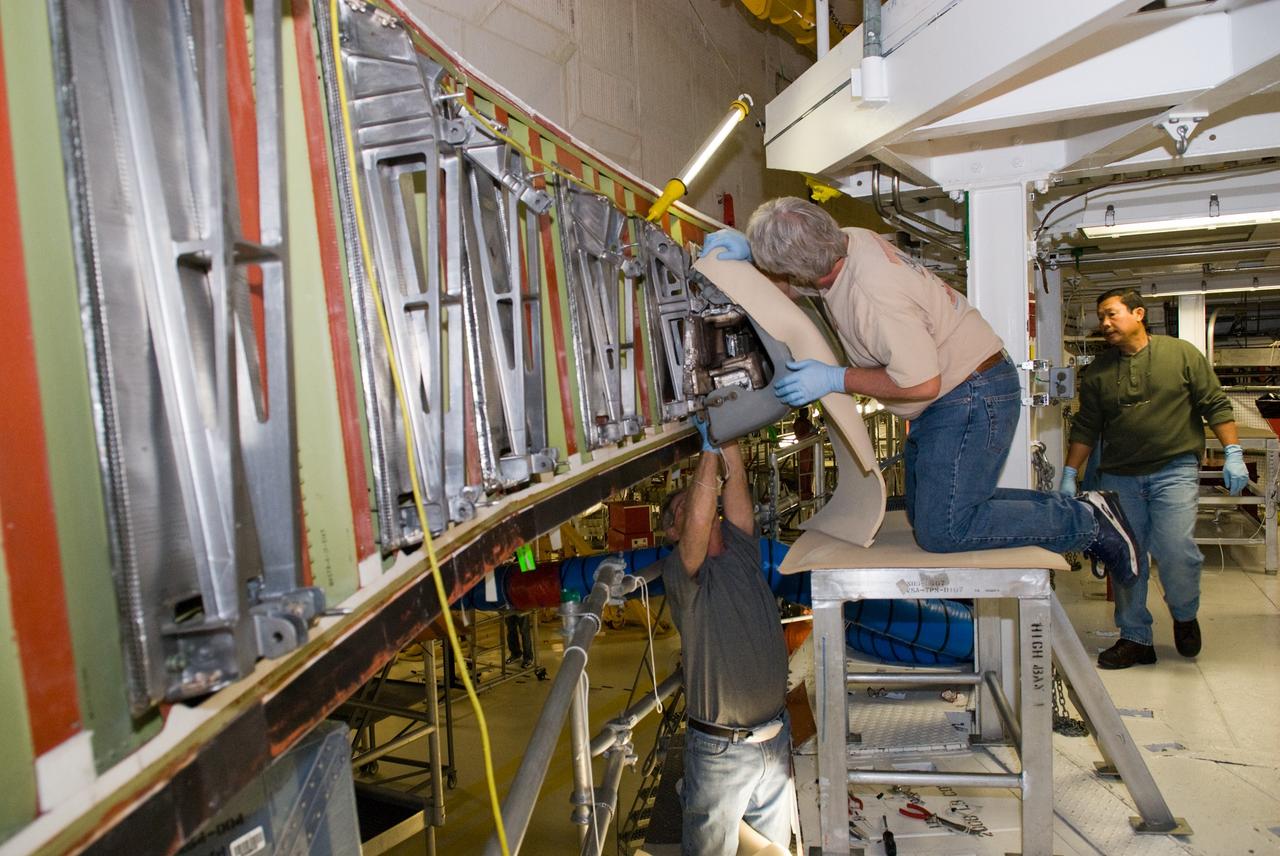
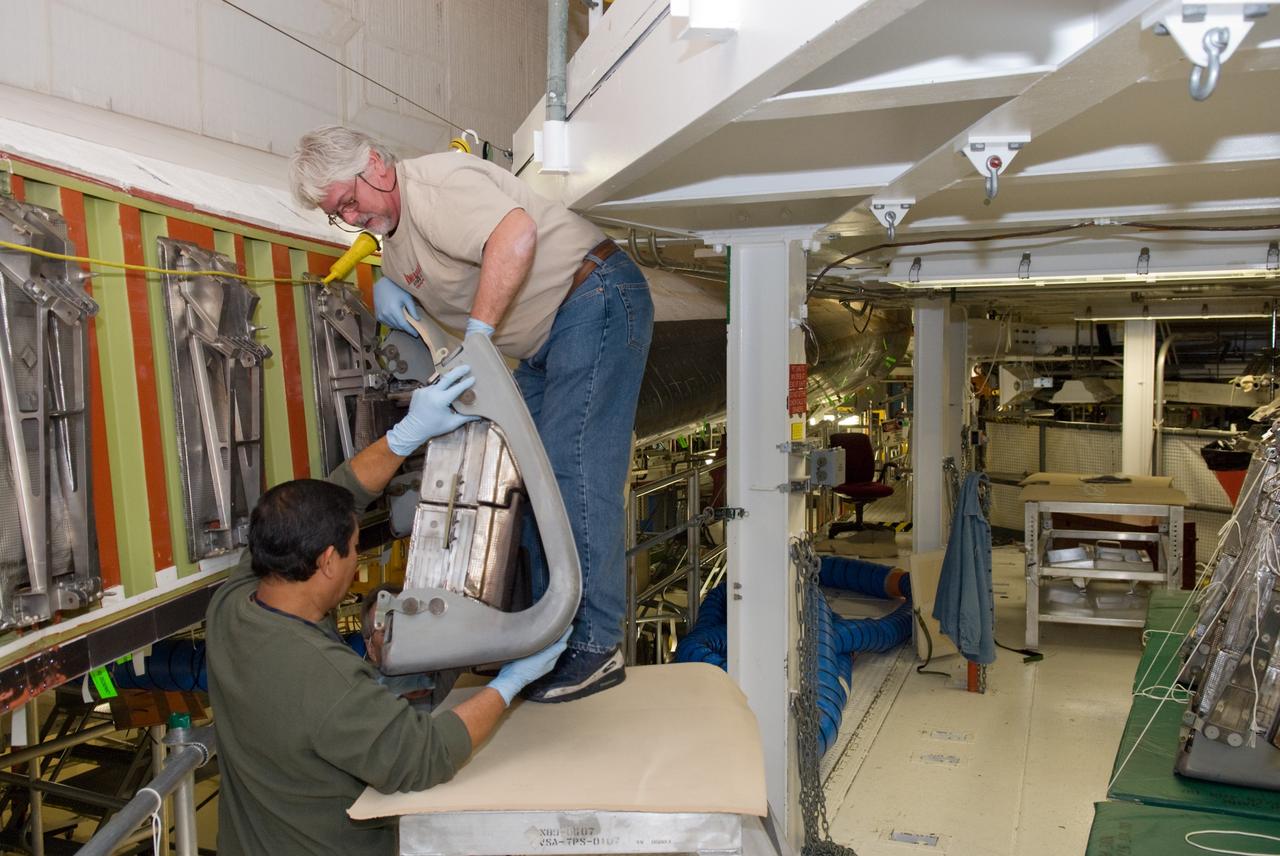
CAPE CANAVERAL, Fla. - In Orbiter Processing Facility-1 at NASA's Kennedy Space Center in Florida, United Space Alliance technicians remove a reinforced carbon carbon panel, or RCC panel, from a wing leading edge of space shuttle Atlantis.    Inspection and maintenance of the RCC panels and the wing leading edge are standard procedure between shuttle missions.  The RCC panels, components of the shuttle's thermal protection system, are placed in protective coverings while the structural edge of the wing -- the orange and green area behind the panels -- undergoes spar corrosion inspection to verify the structural integrity of the wing. Atlantis is next slated to deliver an Integrated Cargo Carrier and Russian-built Mini Research Module to the International Space Station on the STS-132 mission.  The second in a series of new pressurized components for Russia, the module will be permanently attached to the Zarya module. Three spacewalks are planned to store spare components outside the station, including six spare batteries, a boom assembly for the Ku-band antenna and spares for the Canadian Dextre robotic arm extension. A radiator, airlock and European robotic arm for the Russian Multi-purpose Laboratory Module also are payloads on the flight.  Launch is targeted for May 14, 2010.  Photo credit: NASA/Glenn Benson
KSC-2010-1084
CAPE CANAVERAL, Fla. - In Orbiter Processing Facility-1 at NASA's Kennedy Space Center in Florida, United Space Alliance technicians cover a reinforced carbon carbon panel, or RCC panel, removed from a wing leading edge of space shuttle Atlantis.    Inspection and maintenance of the RCC panels and the wing leading edge are standard procedure between shuttle missions.  The RCC panels, components of the shuttle's thermal protection system, are placed in protective coverings while the structural edge of the wing -- the orange and green area behind the panels -- undergoes spar corrosion inspection to verify the structural integrity of the wing. Atlantis is next slated to deliver an Integrated Cargo Carrier and Russian-built Mini Research Module to the International Space Station on the STS-132 mission.  The second in a series of new pressurized components for Russia, the module will be permanently attached to the Zarya module. Three spacewalks are planned to store spare components outside the station, including six spare batteries, a boom assembly for the Ku-band antenna and spares for the Canadian Dextre robotic arm extension. A radiator, airlock and European robotic arm for the Russian Multi-purpose Laboratory Module also are payloads on the flight.  Launch is targeted for May 14, 2010.  Photo credit: NASA/Glenn Benson
KSC-2010-1085
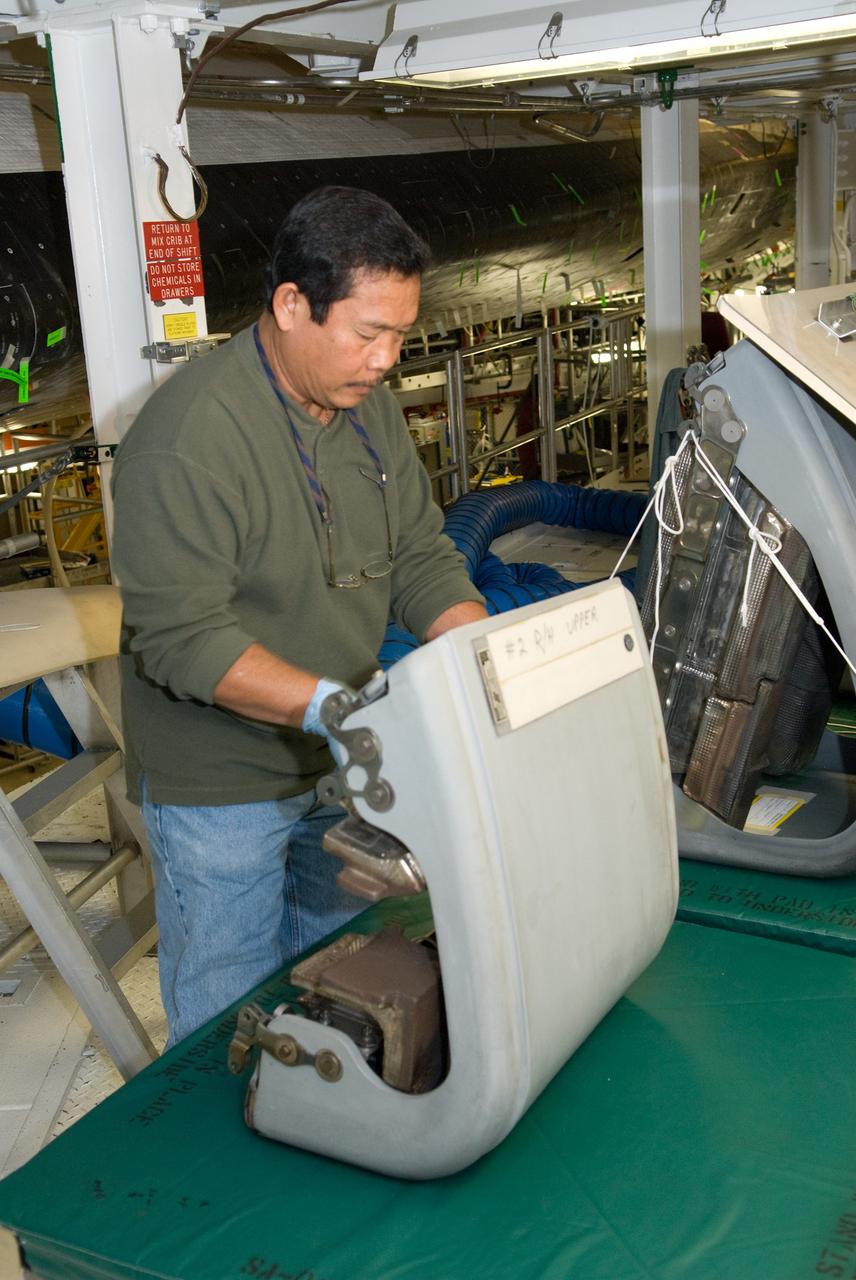
CAPE CANAVERAL, Fla. - In Orbiter Processing Facility-1 at NASA's Kennedy Space Center in Florida, a United Space Alliance technician inspects a reinforced carbon carbon panel, or RCC panel, removed from a wing leading edge of space shuttle Atlantis.    Inspection and maintenance of the RCC panels and the wing leading edge are standard procedure between shuttle missions.  The RCC panels, components of the shuttle's thermal protection system, are placed in protective coverings while the structural edge of the wing -- the orange and green area behind the panels -- undergoes spar corrosion inspection to verify the structural integrity of the wing. Atlantis is next slated to deliver an Integrated Cargo Carrier and Russian-built Mini Research Module to the International Space Station on the STS-132 mission.  The second in a series of new pressurized components for Russia, the module will be permanently attached to the Zarya module. Three spacewalks are planned to store spare components outside the station, including six spare batteries, a boom assembly for the Ku-band antenna and spares for the Canadian Dextre robotic arm extension. A radiator, airlock and European robotic arm for the Russian Multi-purpose Laboratory Module also are payloads on the flight.  Launch is targeted for May 14, 2010.  Photo credit: NASA/Glenn Benson
KSC-2010-1086
CAPE CANAVERAL, Fla. - In Orbiter Processing Facility-1 at NASA's Kennedy Space Center in Florida, United Space Alliance technicians prepare to cover a reinforced carbon carbon panel, or RCC panel, removed from a wing leading edge of space shuttle Atlantis.    Inspection and maintenance of the RCC panels and the wing leading edge are standard procedure between shuttle missions.  The RCC panels, components of the shuttle's thermal protection system, are placed in protective coverings while the structural edge of the wing -- the orange and green area behind the panels -- undergoes spar corrosion inspection to verify the structural integrity of the wing. Atlantis is next slated to deliver an Integrated Cargo Carrier and Russian-built Mini Research Module to the International Space Station on the STS-132 mission.  The second in a series of new pressurized components for Russia, the module will be permanently attached to the Zarya module. Three spacewalks are planned to store spare components outside the station, including six spare batteries, a boom assembly for the Ku-band antenna and spares for the Canadian Dextre robotic arm extension. A radiator, airlock and European robotic arm for the Russian Multi-purpose Laboratory Module also are payloads on the flight.  Launch is targeted for May 14, 2010.  Photo credit: NASA/Glenn Benson
KSC-2010-1087
As it sped away from Venus, NASA's Mariner 10 spacecraft captured this seemingly peaceful view of a planet the size of Earth, wrapped in a dense, global cloud layer. But, contrary to its serene appearance, the clouded globe of Venus is a world of intense heat, crushing atmospheric pressure and clouds of corrosive acid.  This newly processed image revisits the original data with modern image processing software. A contrast-enhanced version of this view, also provided here, makes features in the planet's thick cloud cover visible in greater detail.  The clouds seen here are located about 40 miles (60 kilometers) above the planet's surface, at altitudes where Earth-like atmospheric pressures and temperatures exist. They are comprised of sulfuric acid particles, as opposed to water droplets or ice crystals, as on Earth. These cloud particles are mostly white in appearance; however, patches of red-tinted clouds also can be seen. This is due to the presence of a mysterious material that absorbs light at blue and ultraviolet wavelengths. Many chemicals have been suggested for this mystery component, from sulfur compounds to even biological materials, but a consensus has yet to be reached among researchers.  The clouds of Venus whip around the planet at nearly over 200 miles per hour (100 meters per second), circling the globe in about four and a half days. That these hurricane-force winds cover nearly the entire planet is another unexplained mystery, especially given that the solid planet itself rotates at a very slow 4 mph (less than 2 meters per second) — much slower than Earth's rotation rate of about 1,000 mph (450 meters per second).  The winds and clouds also blow to the west, not to the east as on the Earth. This is because the planet itself rotates to the west, backward compared to Earth and most of the other planets. As the clouds travel westward, they also typically progress toward the poles; this can be seen in the Mariner 10 view as a curved spiral pattern at mid latitudes. Near the equator, instead of long streaks, areas of more clumpy, discrete clouds can be seen, indicating enhanced upwelling and cloud formation in the equatorial region, spurred on by the enhanced power of sunlight there.  This view is a false color composite created by combining images taken using orange and ultraviolet spectral filters on the spacecraft's imaging camera. These were used for the red and blue channels of the color image, respectively, with the green channel synthesized by combining the other two images.  Flying past Venus en route to the first-ever flyby of Mercury, Mariner 10 became the first spacecraft to use a gravity assist to change its flight path in order to reach another planet. The images used to create this view were acquired by Mariner 10 on Feb. 7 and 8, 1974, a couple of days after the spacecraft's closest approach to Venus on Feb. 5.  Despite their many differences, comparisons between Earth and Venus are valuable for helping to understand their distinct climate histories. Nearly 50 years after this view was obtained, many fundamental questions about Venus remain unanswered. Did Venus have oceans long ago? How has its atmosphere evolved over time, and when did its runaway greenhouse effect begin? How does Venus lose its heat? How volcanically and tectonically active has Venus been over the last billion years?  This image was processed from archived Mariner 10 data by JPL engineer Kevin M. Gill.  The Mariner 10 mission was managed by NASA's Jet Propulsion Laboratory.  https://photojournal.jpl.nasa.gov/catalog/PIA23791
Venus from Mariner 10