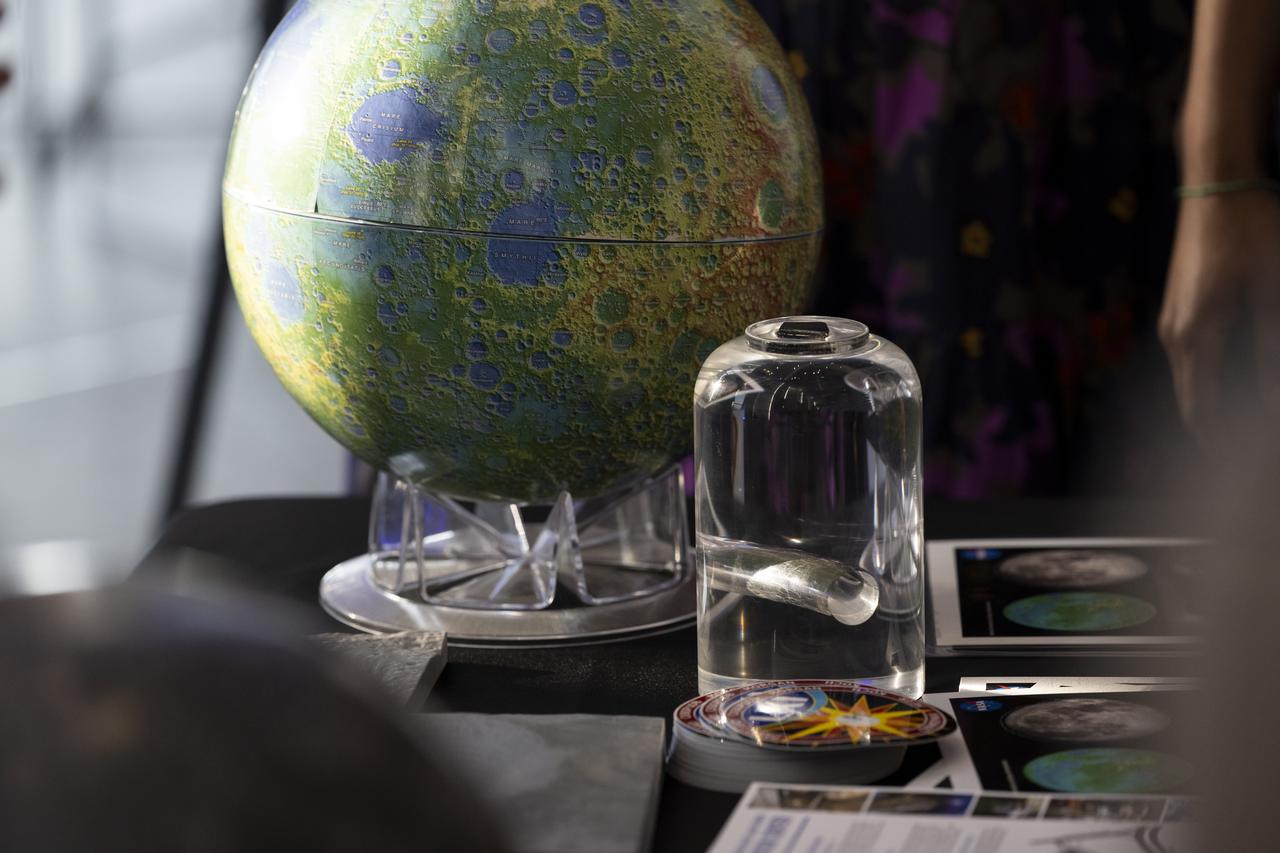
Attendees of the National Philharmonic performance of Henry Dehlinger’s “Cosmic Cycles” view a Moon rock, Thursday, May 11, 2023, at Capital One Hall in Tysons, Va. “Cosmic Cycles: A Space Symphony” is a collaboration between composer Henry Dehlinger, NASA’s Goddard Space Flight Center, and the National Philharmonic that features a fusion of music and video in seven multimedia works on the Sun, Earth, Moon, Planets, and Cosmos. Photo Credit: (NASA/Joel Kowsky)

NASA Deputy Administrator Pam Melroy delivers remarks prior to the world premier performance of Henry Dehlinger’s “Cosmic Cycles,” Thursday, May 11, 2023, at Capital One Hall in Tysons, Va. “Cosmic Cycles: A Space Symphony” is a collaboration between composer Henry Dehlinger, NASA’s Goddard Space Flight Center, and the National Philharmonic that features a fusion of music and video in seven multimedia works on the Sun, Earth, Moon, Planets, and Cosmos. Photo Credit: (NASA/Joel Kowsky)

Maestro Piotr Gajewski conducts the National Philharmonic in the world premier performance of Henry Dehlinger’s “Cosmic Cycles,” Thursday, May 11, 2023, at Capital One Hall in Tysons, Va. “Cosmic Cycles: A Space Symphony” is a collaboration between composer Henry Dehlinger, NASA’s Goddard Space Flight Center, and the National Philharmonic that features a fusion of music and video in seven multimedia works on the Sun, Earth, Moon, Planets, and Cosmos. Photo Credit: (NASA/Joel Kowsky)

Maestro Piotr Gajewski conducts the National Philharmonic in the world premier performance of Henry Dehlinger’s “Cosmic Cycles,” Thursday, May 11, 2023, at Capital One Hall in Tysons, Va. “Cosmic Cycles: A Space Symphony” is a collaboration between composer Henry Dehlinger, NASA’s Goddard Space Flight Center, and the National Philharmonic that features a fusion of music and video in seven multimedia works on the Sun, Earth, Moon, Planets, and Cosmos. Photo Credit: (NASA/Joel Kowsky)
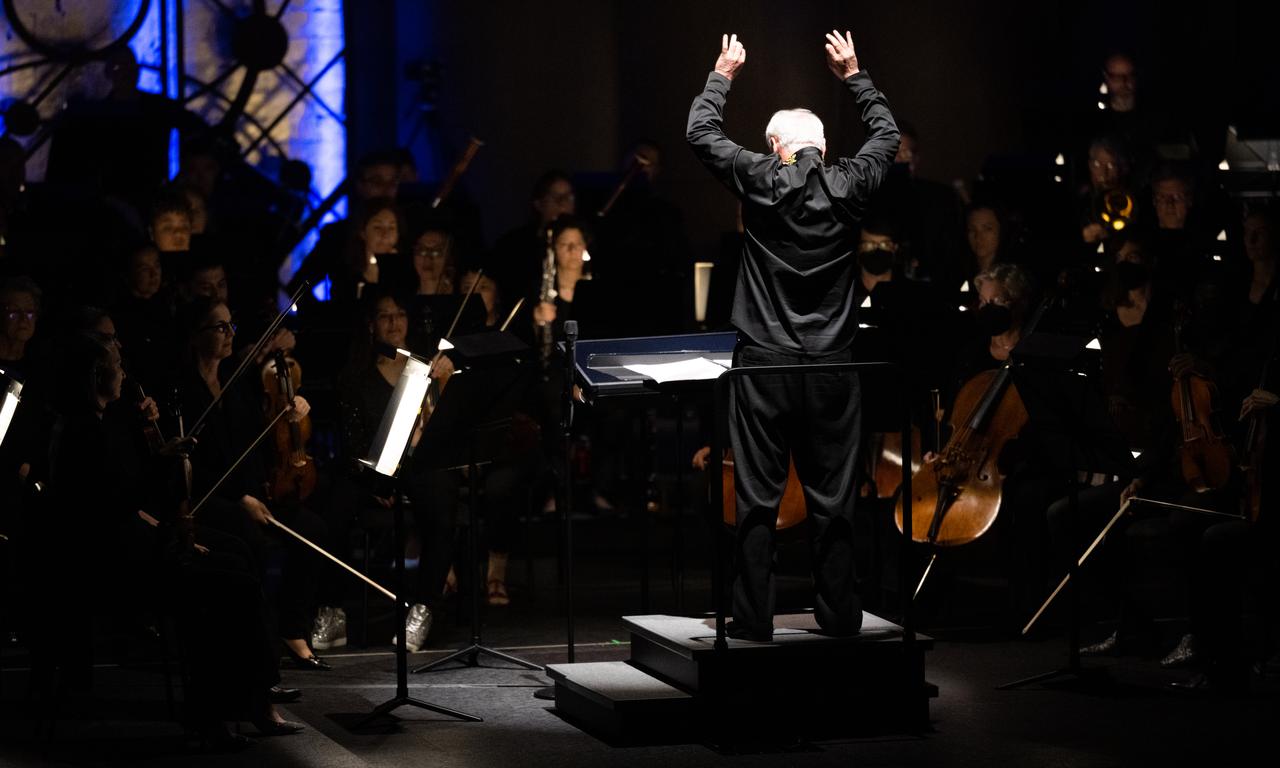
Maestro Piotr Gajewski conducts the National Philharmonic in the world premier performance of Henry Dehlinger’s “Cosmic Cycles,” Thursday, May 11, 2023, at Capital One Hall in Tysons, Va. “Cosmic Cycles: A Space Symphony” is a collaboration between composer Henry Dehlinger, NASA’s Goddard Space Flight Center, and the National Philharmonic that features a fusion of music and video in seven multimedia works on the Sun, Earth, Moon, Planets, and Cosmos. Photo Credit: (NASA/Joel Kowsky)
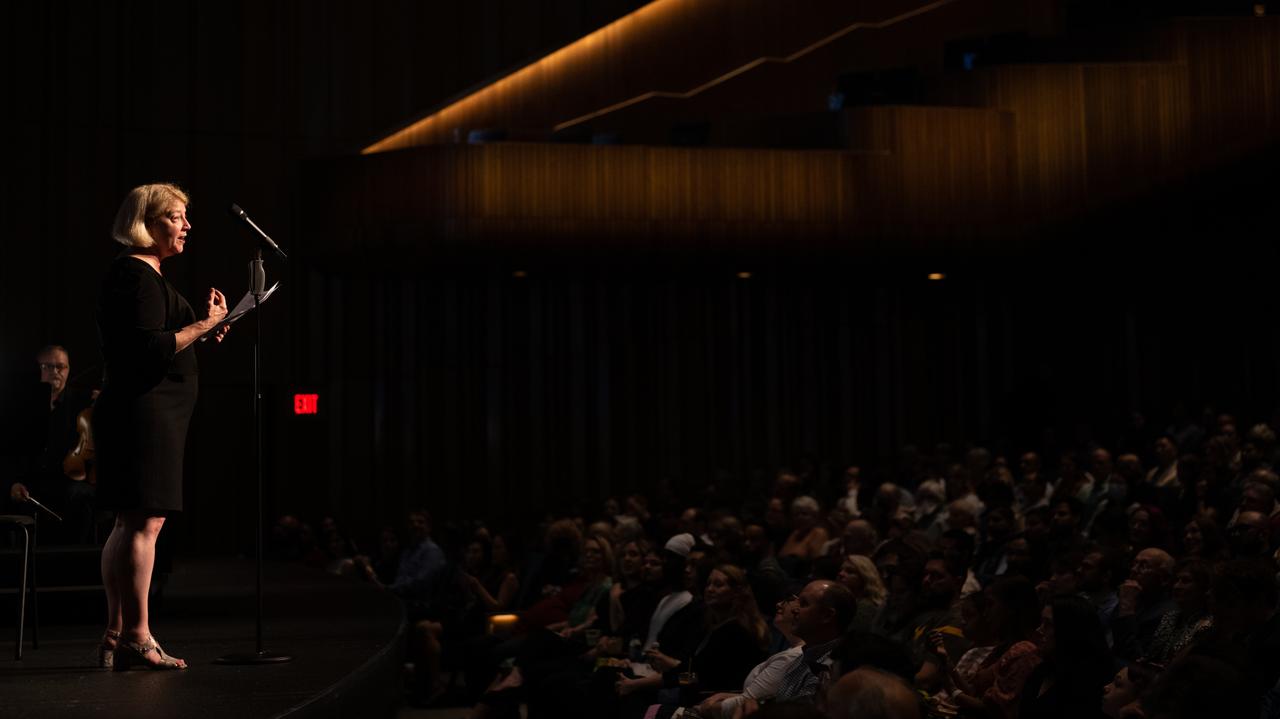
NASA Deputy Administrator Pam Melroy delivers remarks prior to the world premier performance of Henry Dehlinger’s “Cosmic Cycles,” Thursday, May 11, 2023, at Capital One Hall in Tysons, Va. “Cosmic Cycles: A Space Symphony” is a collaboration between composer Henry Dehlinger, NASA’s Goddard Space Flight Center, and the National Philharmonic that features a fusion of music and video in seven multimedia works on the Sun, Earth, Moon, Planets, and Cosmos. Photo Credit: (NASA/Joel Kowsky)
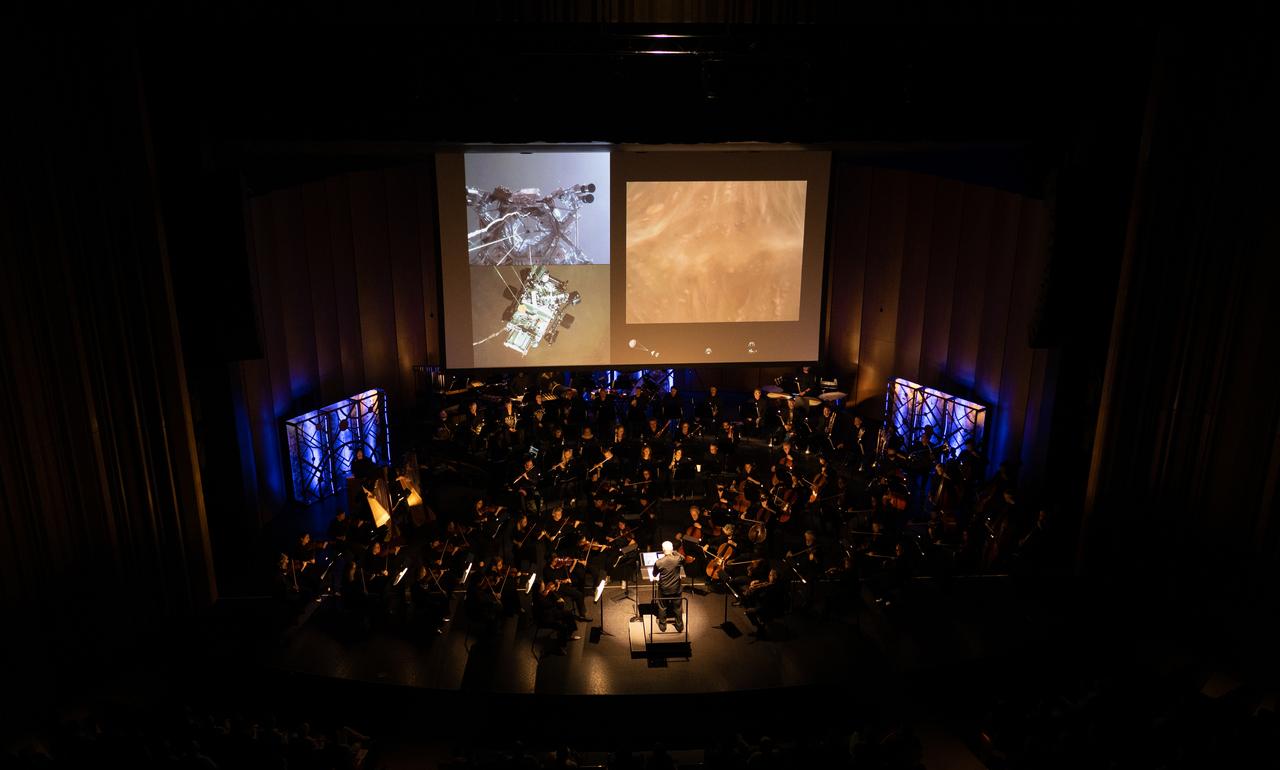
Maestro Piotr Gajewski conducts the National Philharmonic in the world premier performance of Henry Dehlinger’s “Cosmic Cycles,” Thursday, May 11, 2023, at Capital One Hall in Tysons, Va. “Cosmic Cycles: A Space Symphony” is a collaboration between composer Henry Dehlinger, NASA’s Goddard Space Flight Center, and the National Philharmonic that features a fusion of music and video in seven multimedia works on the Sun, Earth, Moon, Planets, and Cosmos. Photo Credit: (NASA/Joel Kowsky)

NASA astronaut Alvin Drew answers question prior to the world premier performance of Henry Dehlinger’s “Cosmic Cycles,” Thursday, May 11, 2023, at Capital One Hall in Tysons, Va. “Cosmic Cycles: A Space Symphony” is a collaboration between composer Henry Dehlinger, NASA’s Goddard Space Flight Center, and the National Philharmonic that features a fusion of music and video in seven multimedia works on the Sun, Earth, Moon, Planets, and Cosmos. Photo Credit: (NASA/Joel Kowsky)
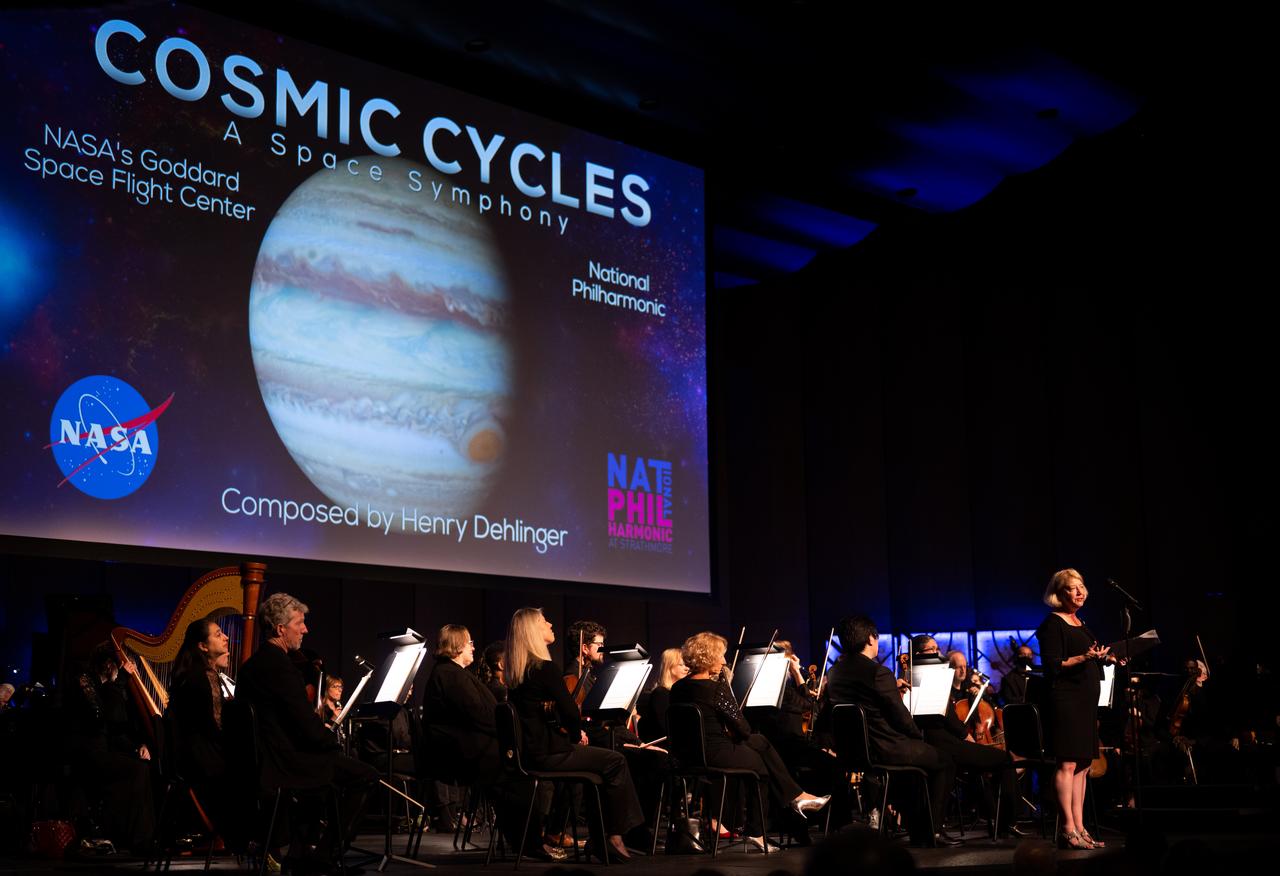
NASA Deputy Administrator Pam Melroy delivers remarks prior to the world premier performance of Henry Dehlinger’s “Cosmic Cycles,” Thursday, May 11, 2023, at Capital One Hall in Tysons, Va. “Cosmic Cycles: A Space Symphony” is a collaboration between composer Henry Dehlinger, NASA’s Goddard Space Flight Center, and the National Philharmonic that features a fusion of music and video in seven multimedia works on the Sun, Earth, Moon, Planets, and Cosmos. Photo Credit: (NASA/Joel Kowsky)

NASA astronaut Alvin Drew answers question prior to the world premier performance of Henry Dehlinger’s “Cosmic Cycles,” Thursday, May 11, 2023, at Capital One Hall in Tysons, Va. “Cosmic Cycles: A Space Symphony” is a collaboration between composer Henry Dehlinger, NASA’s Goddard Space Flight Center, and the National Philharmonic that features a fusion of music and video in seven multimedia works on the Sun, Earth, Moon, Planets, and Cosmos. Photo Credit: (NASA/Joel Kowsky)

Maestro Piotr Gajewski conducts the National Philharmonic in the world premier performance of Henry Dehlinger’s “Cosmic Cycles,” Thursday, May 11, 2023, at Capital One Hall in Tysons, Va. “Cosmic Cycles: A Space Symphony” is a collaboration between composer Henry Dehlinger, NASA’s Goddard Space Flight Center, and the National Philharmonic that features a fusion of music and video in seven multimedia works on the Sun, Earth, Moon, Planets, and Cosmos. Photo Credit: (NASA/Joel Kowsky)

Maestro Piotr Gajewski conducts the National Philharmonic in the world premier performance of Henry Dehlinger’s “Cosmic Cycles,” Thursday, May 11, 2023, at Capital One Hall in Tysons, Va. “Cosmic Cycles: A Space Symphony” is a collaboration between composer Henry Dehlinger, NASA’s Goddard Space Flight Center, and the National Philharmonic that features a fusion of music and video in seven multimedia works on the Sun, Earth, Moon, Planets, and Cosmos. Photo Credit: (NASA/Joel Kowsky)

Maestro Piotr Gajewski conducts the National Philharmonic in the world premier performance of Henry Dehlinger’s “Cosmic Cycles,” Thursday, May 11, 2023, at Capital One Hall in Tysons, Va. “Cosmic Cycles: A Space Symphony” is a collaboration between composer Henry Dehlinger, NASA’s Goddard Space Flight Center, and the National Philharmonic that features a fusion of music and video in seven multimedia works on the Sun, Earth, Moon, Planets, and Cosmos. Photo Credit: (NASA/Joel Kowsky)

NASA astronaut Alvin Drew answers question prior to the world premier performance of Henry Dehlinger’s “Cosmic Cycles,” Thursday, May 11, 2023, at Capital One Hall in Tysons, Va. “Cosmic Cycles: A Space Symphony” is a collaboration between composer Henry Dehlinger, NASA’s Goddard Space Flight Center, and the National Philharmonic that features a fusion of music and video in seven multimedia works on the Sun, Earth, Moon, Planets, and Cosmos. Photo Credit: (NASA/Joel Kowsky)
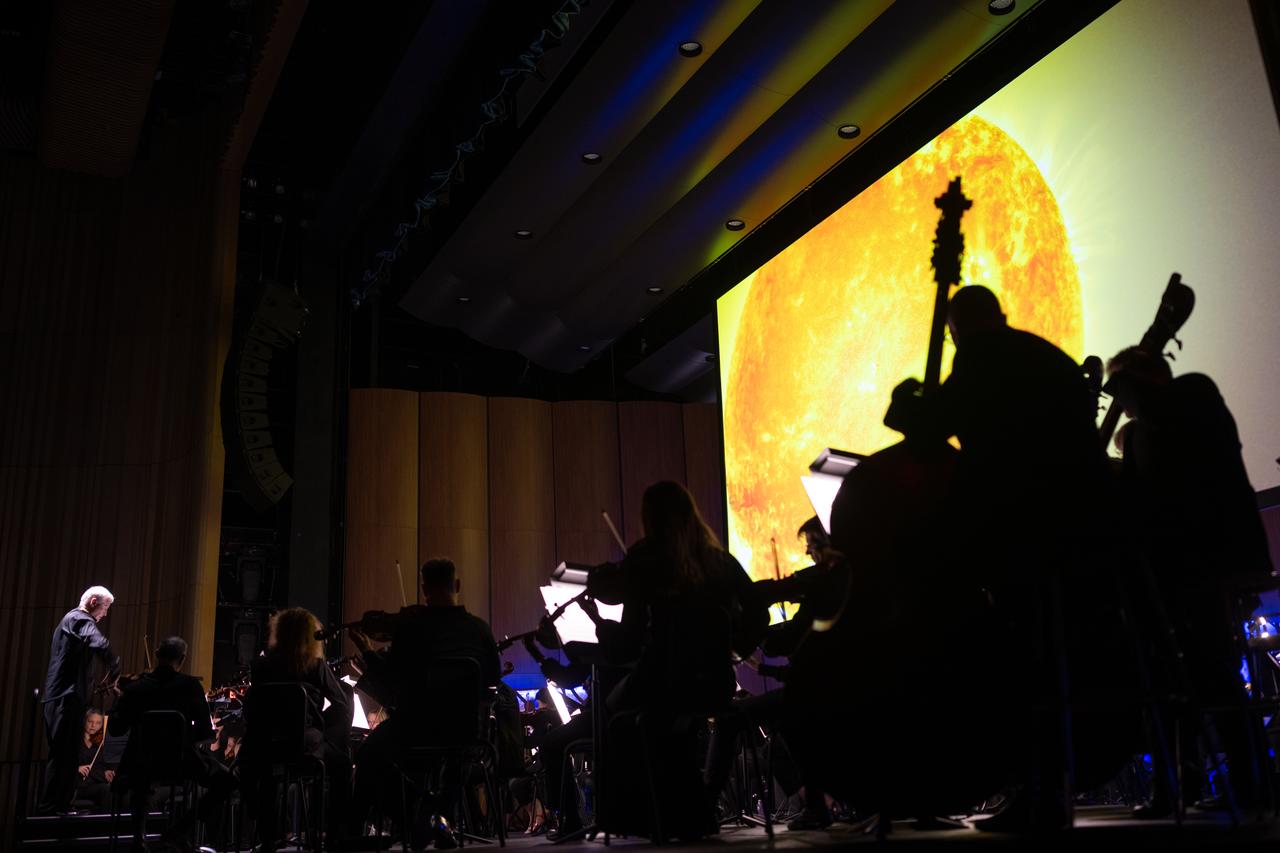
Maestro Piotr Gajewski conducts the National Philharmonic in the world premier performance of Henry Dehlinger’s “Cosmic Cycles,” Thursday, May 11, 2023, at Capital One Hall in Tysons, Va. “Cosmic Cycles: A Space Symphony” is a collaboration between composer Henry Dehlinger, NASA’s Goddard Space Flight Center, and the National Philharmonic that features a fusion of music and video in seven multimedia works on the Sun, Earth, Moon, Planets, and Cosmos. Photo Credit: (NASA/Joel Kowsky)
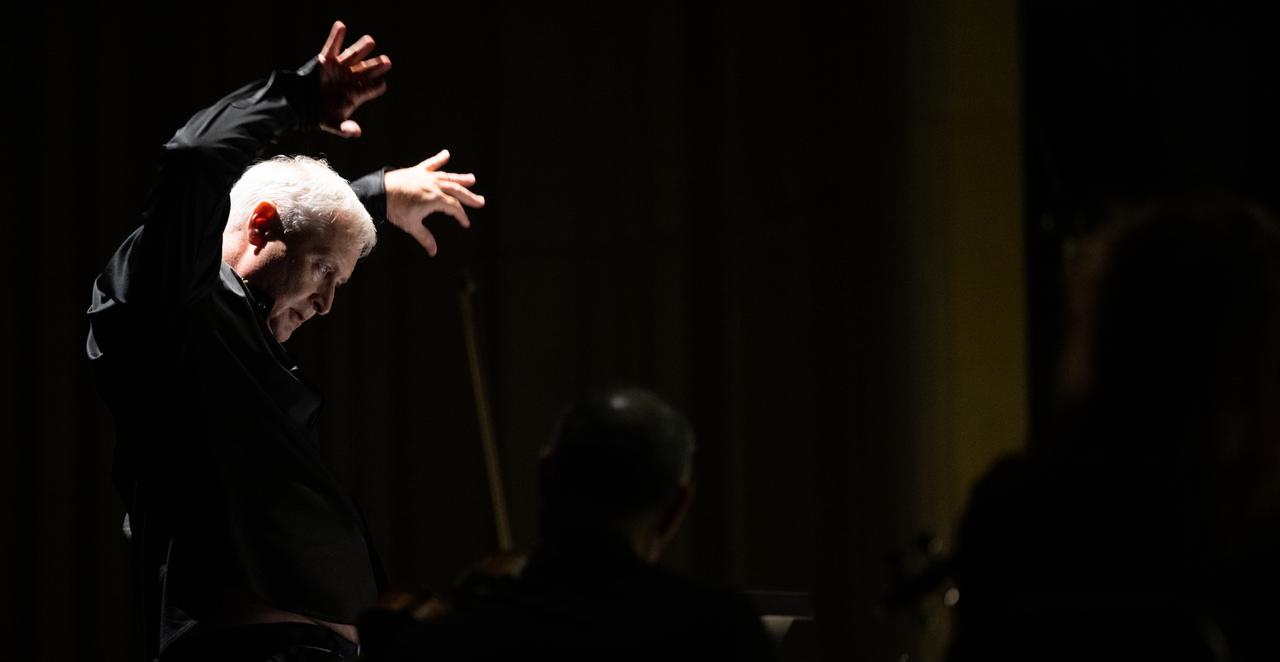
Maestro Piotr Gajewski conducts the National Philharmonic in the world premier performance of Henry Dehlinger’s “Cosmic Cycles,” Thursday, May 11, 2023, at Capital One Hall in Tysons, Va. “Cosmic Cycles: A Space Symphony” is a collaboration between composer Henry Dehlinger, NASA’s Goddard Space Flight Center, and the National Philharmonic that features a fusion of music and video in seven multimedia works on the Sun, Earth, Moon, Planets, and Cosmos. Photo Credit: (NASA/Joel Kowsky)
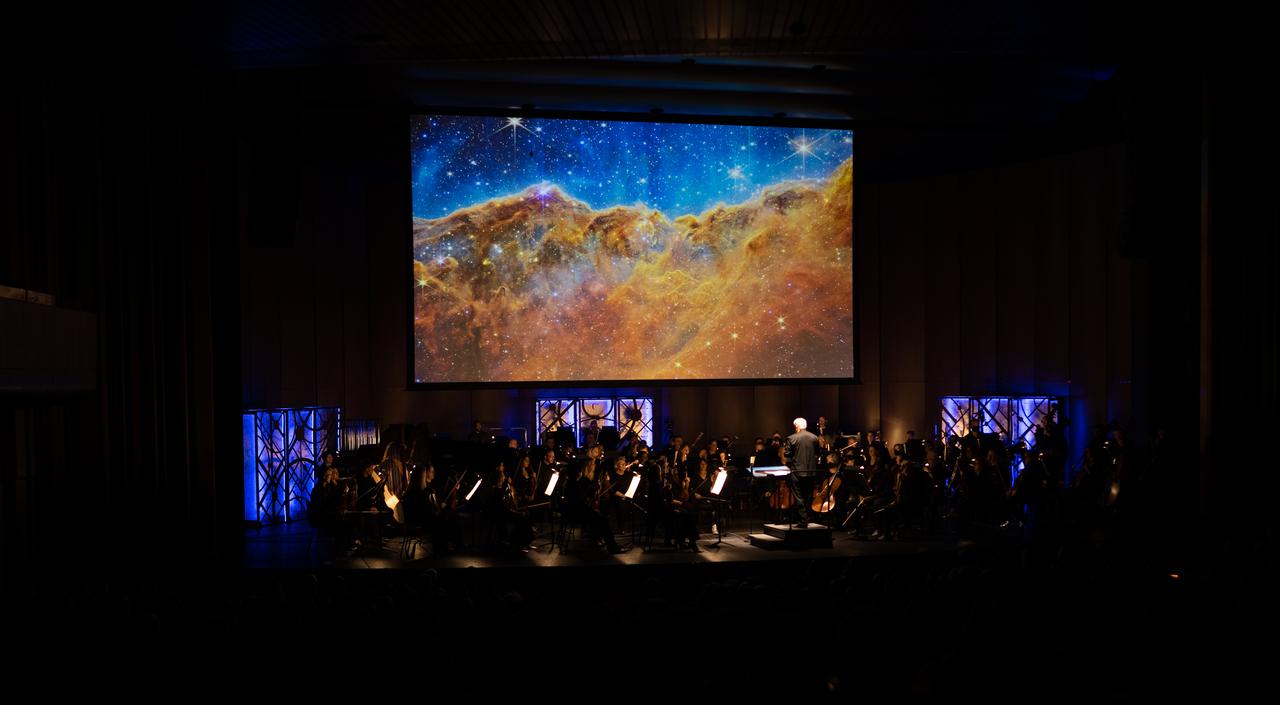
Maestro Piotr Gajewski conducts the National Philharmonic in the world premier performance of Henry Dehlinger’s “Cosmic Cycles,” Thursday, May 11, 2023, at Capital One Hall in Tysons, Va. “Cosmic Cycles: A Space Symphony” is a collaboration between composer Henry Dehlinger, NASA’s Goddard Space Flight Center, and the National Philharmonic that features a fusion of music and video in seven multimedia works on the Sun, Earth, Moon, Planets, and Cosmos. Photo Credit: (NASA/Joel Kowsky)

Maestro Piotr Gajewski conducts the National Philharmonic in the world premier performance of Henry Dehlinger’s “Cosmic Cycles,” Thursday, May 11, 2023, at Capital One Hall in Tysons, Va. “Cosmic Cycles: A Space Symphony” is a collaboration between composer Henry Dehlinger, NASA’s Goddard Space Flight Center, and the National Philharmonic that features a fusion of music and video in seven multimedia works on the Sun, Earth, Moon, Planets, and Cosmos. Photo Credit: (NASA/Joel Kowsky)
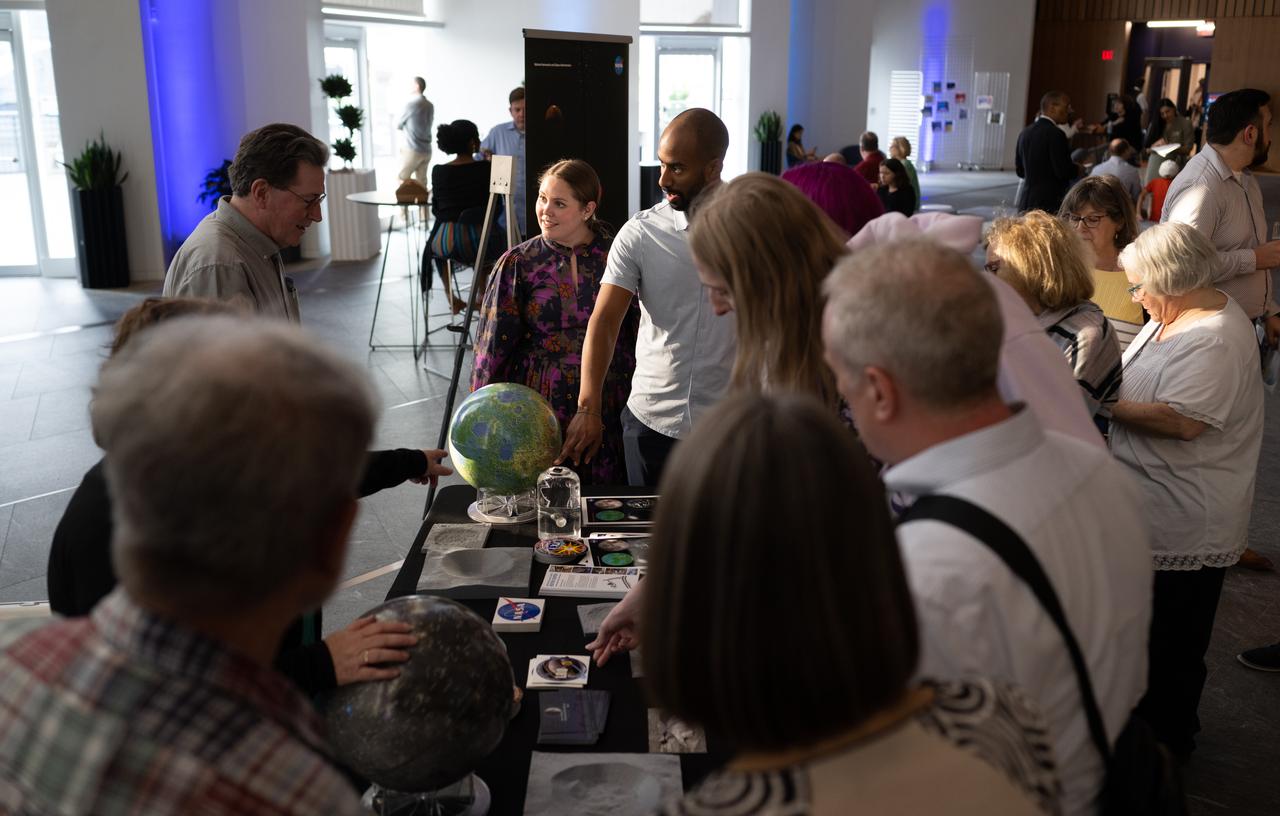
Attendees of the National Philharmonic performance of Henry Dehlinger’s “Cosmic Cycles” view a Moon rock, Thursday, May 11, 2023, at Capital One Hall in Tysons, Va. “Cosmic Cycles: A Space Symphony” is a collaboration between composer Henry Dehlinger, NASA’s Goddard Space Flight Center, and the National Philharmonic that features a fusion of music and video in seven multimedia works on the Sun, Earth, Moon, Planets, and Cosmos. Photo Credit: (NASA/Joel Kowsky)

Maestro Piotr Gajewski conducts the National Philharmonic in the world premier performance of Henry Dehlinger’s “Cosmic Cycles,” Thursday, May 11, 2023, at Capital One Hall in Tysons, Va. “Cosmic Cycles: A Space Symphony” is a collaboration between composer Henry Dehlinger, NASA’s Goddard Space Flight Center, and the National Philharmonic that features a fusion of music and video in seven multimedia works on the Sun, Earth, Moon, Planets, and Cosmos. Photo Credit: (NASA/Joel Kowsky)
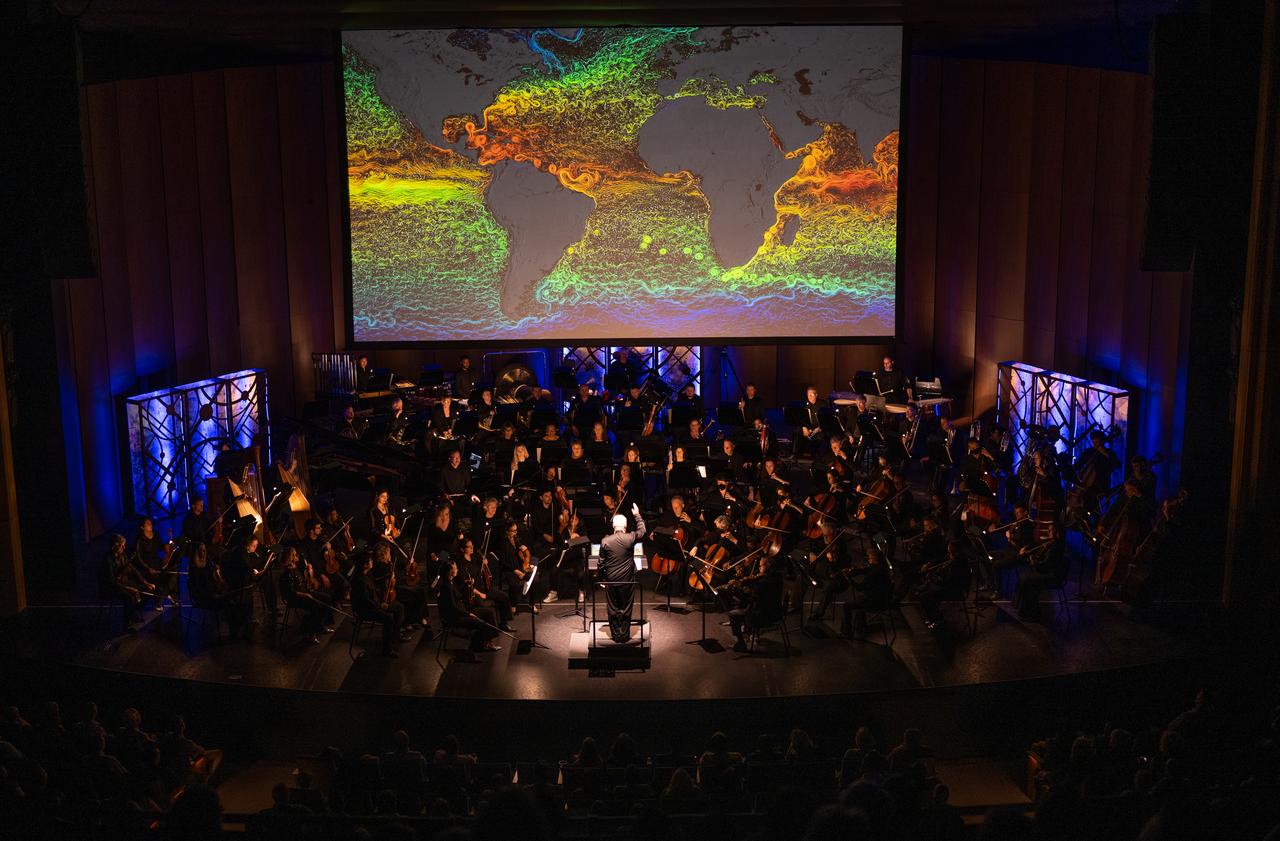
Maestro Piotr Gajewski conducts the National Philharmonic in the world premier performance of Henry Dehlinger’s “Cosmic Cycles,” Thursday, May 11, 2023, at Capital One Hall in Tysons, Va. “Cosmic Cycles: A Space Symphony” is a collaboration between composer Henry Dehlinger, NASA’s Goddard Space Flight Center, and the National Philharmonic that features a fusion of music and video in seven multimedia works on the Sun, Earth, Moon, Planets, and Cosmos. Photo Credit: (NASA/Joel Kowsky)
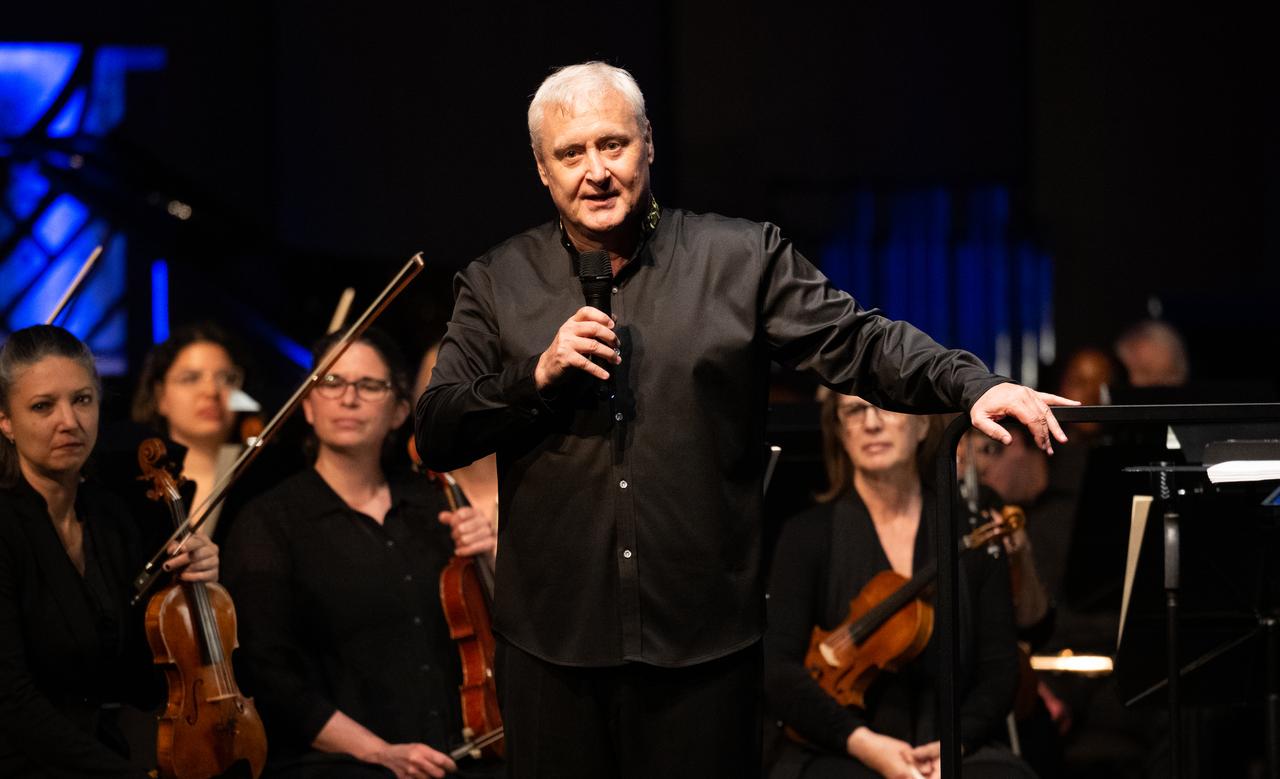
Maestro Piotr Gajewski speaks after conducting the National Philharmonic in the world premier performance of Henry Dehlinger’s “Cosmic Cycles,” Thursday, May 11, 2023, at Capital One Hall in Tysons, Va. “Cosmic Cycles: A Space Symphony” is a collaboration between composer Henry Dehlinger, NASA’s Goddard Space Flight Center, and the National Philharmonic that features a fusion of music and video in seven multimedia works on the Sun, Earth, Moon, Planets, and Cosmos. Photo Credit: (NASA/Joel Kowsky)
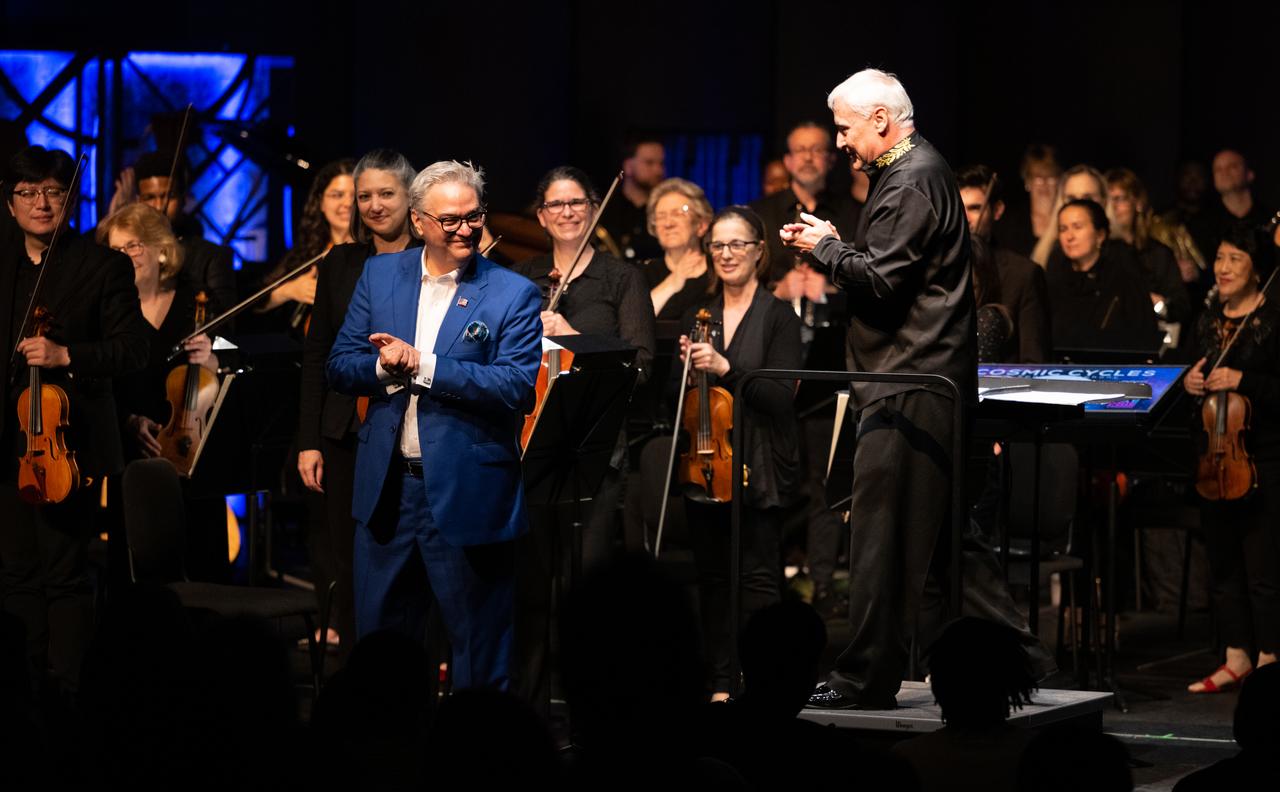
Composer Henry Dehlinger, left, and Maestro Piotr Gajewski, right, are seen with the National Philharmonic following the world premier performance of Dehlinger’s “Cosmic Cycles,” Thursday, May 11, 2023, at Capital One Hall in Tysons, Va. “Cosmic Cycles: A Space Symphony” is a collaboration between composer Henry Dehlinger, NASA’s Goddard Space Flight Center, and the National Philharmonic that features a fusion of music and video in seven multimedia works on the Sun, Earth, Moon, Planets, and Cosmos. Photo Credit: (NASA/Joel Kowsky)

Maestro Piotr Gajewski conducts the National Philharmonic in the performance of Henry Dehlinger’s “Return to the Moon: Fanfare to Artemis,” Thursday, May 11, 2023, at Capital One Hall in Tysons, Va. “Cosmic Cycles: A Space Symphony” is a collaboration between composer Henry Dehlinger, NASA’s Goddard Space Flight Center, and the National Philharmonic that features a fusion of music and video in seven multimedia works on the Sun, Earth, Moon, Planets, and Cosmos. Photo Credit: (NASA/Joel Kowsky)
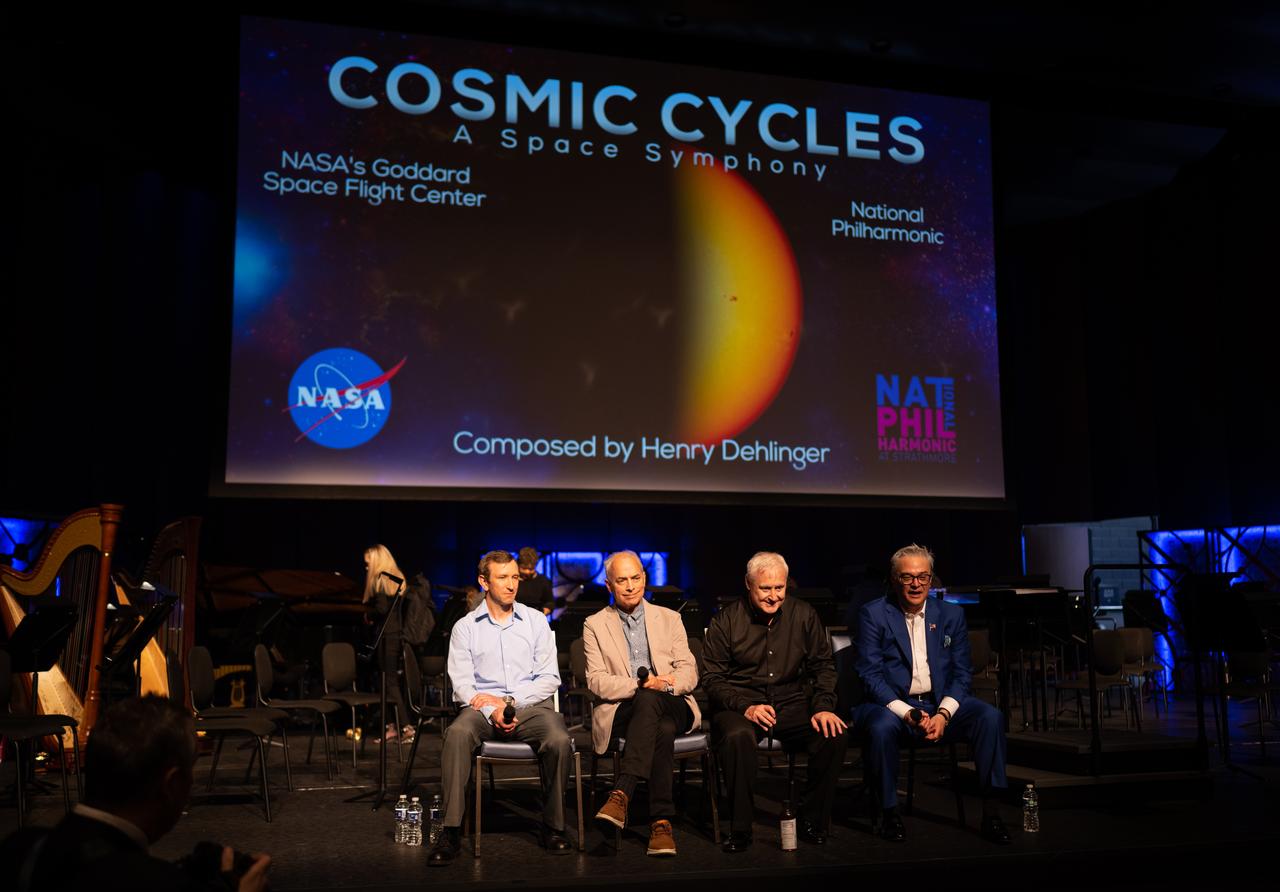
Scott Wiessinger, multimedia producer at NASA’s Goddard Space Flight Center, left, Wade Sisler, executive producer at NASA’s Goddard Space Flight Center, second from left, maestro Piotr Gajewski, second from right, composer Henry Dehlinger, right, are seen as they answer questions following the world premier performance of Dehlinger’s “Cosmic Cycles,” Thursday, May 11, 2023, at Capital One Hall in Tysons, Va. “Cosmic Cycles: A Space Symphony” is a collaboration between composer Henry Dehlinger, NASA’s Goddard Space Flight Center, and the National Philharmonic that features a fusion of music and video in seven multimedia works on the Sun, Earth, Moon, Planets, and Cosmos. Photo Credit: (NASA/Joel Kowsky)

Composer Henry Dehlinger, right, answers a question alongside Scott Wiessinger, multimedia producer at NASA’s Goddard Space Flight Center, left, Wade Sisler, executive producer at NASA’s Goddard Space Flight Center, second from left, maestro Piotr Gajewski, second from right, following the world premier performance of Dehlinger’s “Cosmic Cycles,” Thursday, May 11, 2023, at Capital One Hall in Tysons, Va. “Cosmic Cycles: A Space Symphony” is a collaboration between composer Henry Dehlinger, NASA’s Goddard Space Flight Center, and the National Philharmonic that features a fusion of music and video in seven multimedia works on the Sun, Earth, Moon, Planets, and Cosmos. Photo Credit: (NASA/Joel Kowsky)

This colorful image shows a nebula – a cloud of gas and dust in space – captured by NASA's now-retired Spitzer Space Telescope located is in the constellation Sagittarius, along the plane of the Milky Way, which was as part of Spitzer's GLIMPSE Survey (short for Galactic Legacy Infrared Mid-Plane Survey Extraordinaire). With a little imagination, you might be able to see the outlines of Godzilla. Stars in the upper right (where this cosmic Godzilla's eyes and snout would be) are an unknown distance from Earth but within our galaxy. Located about 7,800 light-years from Earth, the bright region in the lower left (Godzilla's right hand) is known as W33. When viewed in visible light, this region is almost entirely obscured by dust clouds. But infrared light (wavelengths longer than what our eyes can perceive) can penetrate the clouds, revealing hidden regions like this one. Blue, cyan, green, and red are used to represent different wavelengths of infrared light; yellow and white are combinations of those wavelengths. Blue and cyan represent wavelengths primarily emitted by stars; dust and organic molecules called hydrocarbons appear green; and warm dust that's been heated by stars or supernovae (exploding stars) appears red. When massive stars die and explode into supernovae, they reshape the regions around them, carving them into different shapes; they also push material together and initiate the birth of new stars that continue the cycle. https://photojournal.jpl.nasa.gov/catalog/PIA24579
![This image from NASA Spitzer Space Telescope, shows the wispy filamentary structure of Henize 206, is a four-color composite mosaic created by combining data from an infrared array camera IRAC. The LMC is a small satellite galaxy gravitationally bound to our own Milky Way. Yet the gravitational effects are tearing the companion to shreds in a long-playing drama of 'intergalactic cannibalism.' These disruptions lead to a recurring cycle of star birth and star death. Astronomers are particularly interested in the LMC because its fractional content of heavy metals is two to five times lower than is seen in our solar neighborhood. [In this context, 'heavy elements' refer to those elements not present in the primordial universe. Such elements as carbon, oxygen and others are produced by nucleosynthesis and are ejected into the interstellar medium via mass loss by stars, including supernova explosions.] As such, the LMC provides a nearby cosmic laboratory that may resemble the distant universe in its chemical composition. The primary Spitzer image, showing the wispy filamentary structure of Henize 206, is a four-color composite mosaic created by combining data from an infrared array camera (IRAC) at near-infrared wavelengths and the mid-infrared data from a multiband imaging photometer (MIPS). Blue represents invisible infrared light at wavelengths of 3.6 and 4.5 microns. Note that most of the stars in the field of view radiate primarily at these short infrared wavelengths. Cyan denotes emission at 5.8 microns, green depicts the 8.0 micron light, and red is used to trace the thermal emission from dust at 24 microns. The separate instrument images are included as insets to the main composite. An inclined ring of emission dominates the central and upper regions of the image. This delineates a bubble of hot, x-ray emitting gas that was blown into space when a massive star died in a supernova explosion millions of years ago. The shock waves from that explosion impacted a cloud of nearby hydrogen gas, compressed it, and started a new generation of star formation. The death of one star led to the birth of many new stars. This is particularly evident in the MIPS inset, where the 24-micron emission peaks correspond to newly formed stars. The ultraviolet and visible-light photons from the new stars are absorbed by surrounding dust and re-radiated at longer infrared wavelengths, where it is detected by Spitzer. This emission nebula was cataloged by Karl Henize (HEN-eyes) while spending 1948-1951 in South Africa doing research for his Ph.D. dissertation at the University of Michigan. Henize later became a NASA astronaut and, at age 59, became the oldest rookie to fly on the Space Shuttle during an eight-day flight of the Challenger in 1985. He died just short of his 67th birthday in 1993 while attempting to climb the north face of Mount Everest, the world's highest peak. http://photojournal.jpl.nasa.gov/catalog/PIA05517](https://images-assets.nasa.gov/image/PIA05517/PIA05517~medium.jpg)
This image from NASA Spitzer Space Telescope, shows the wispy filamentary structure of Henize 206, is a four-color composite mosaic created by combining data from an infrared array camera IRAC. The LMC is a small satellite galaxy gravitationally bound to our own Milky Way. Yet the gravitational effects are tearing the companion to shreds in a long-playing drama of 'intergalactic cannibalism.' These disruptions lead to a recurring cycle of star birth and star death. Astronomers are particularly interested in the LMC because its fractional content of heavy metals is two to five times lower than is seen in our solar neighborhood. [In this context, 'heavy elements' refer to those elements not present in the primordial universe. Such elements as carbon, oxygen and others are produced by nucleosynthesis and are ejected into the interstellar medium via mass loss by stars, including supernova explosions.] As such, the LMC provides a nearby cosmic laboratory that may resemble the distant universe in its chemical composition. The primary Spitzer image, showing the wispy filamentary structure of Henize 206, is a four-color composite mosaic created by combining data from an infrared array camera (IRAC) at near-infrared wavelengths and the mid-infrared data from a multiband imaging photometer (MIPS). Blue represents invisible infrared light at wavelengths of 3.6 and 4.5 microns. Note that most of the stars in the field of view radiate primarily at these short infrared wavelengths. Cyan denotes emission at 5.8 microns, green depicts the 8.0 micron light, and red is used to trace the thermal emission from dust at 24 microns. The separate instrument images are included as insets to the main composite. An inclined ring of emission dominates the central and upper regions of the image. This delineates a bubble of hot, x-ray emitting gas that was blown into space when a massive star died in a supernova explosion millions of years ago. The shock waves from that explosion impacted a cloud of nearby hydrogen gas, compressed it, and started a new generation of star formation. The death of one star led to the birth of many new stars. This is particularly evident in the MIPS inset, where the 24-micron emission peaks correspond to newly formed stars. The ultraviolet and visible-light photons from the new stars are absorbed by surrounding dust and re-radiated at longer infrared wavelengths, where it is detected by Spitzer. This emission nebula was cataloged by Karl Henize (HEN-eyes) while spending 1948-1951 in South Africa doing research for his Ph.D. dissertation at the University of Michigan. Henize later became a NASA astronaut and, at age 59, became the oldest rookie to fly on the Space Shuttle during an eight-day flight of the Challenger in 1985. He died just short of his 67th birthday in 1993 while attempting to climb the north face of Mount Everest, the world's highest peak. http://photojournal.jpl.nasa.gov/catalog/PIA05517