S85-31767 (1985) --- Astronaut Richard O. Covey    NOTE:  Covey, pilot for STS 51-I, was named on Jan. 9, 1987 for the same position on NASA?s first planned STS mission since the January 1986 Challenger accident. The flight is tentatively scheduled for February 1988.
Portrait - Astronaut Covey, Richard (Dick) - JSC
S90-45098 (November 1990) --- Astronaut Richard O. Covey.
Portrait of Astronaut Richard O. Covey
S78-35298 (20 Sept 1978) Astronaut Richard O. Covey, 1978 ASCAN.
PORTRAIT - COVEY, RICHARD O., ASTRONAUT-CANDIDATE
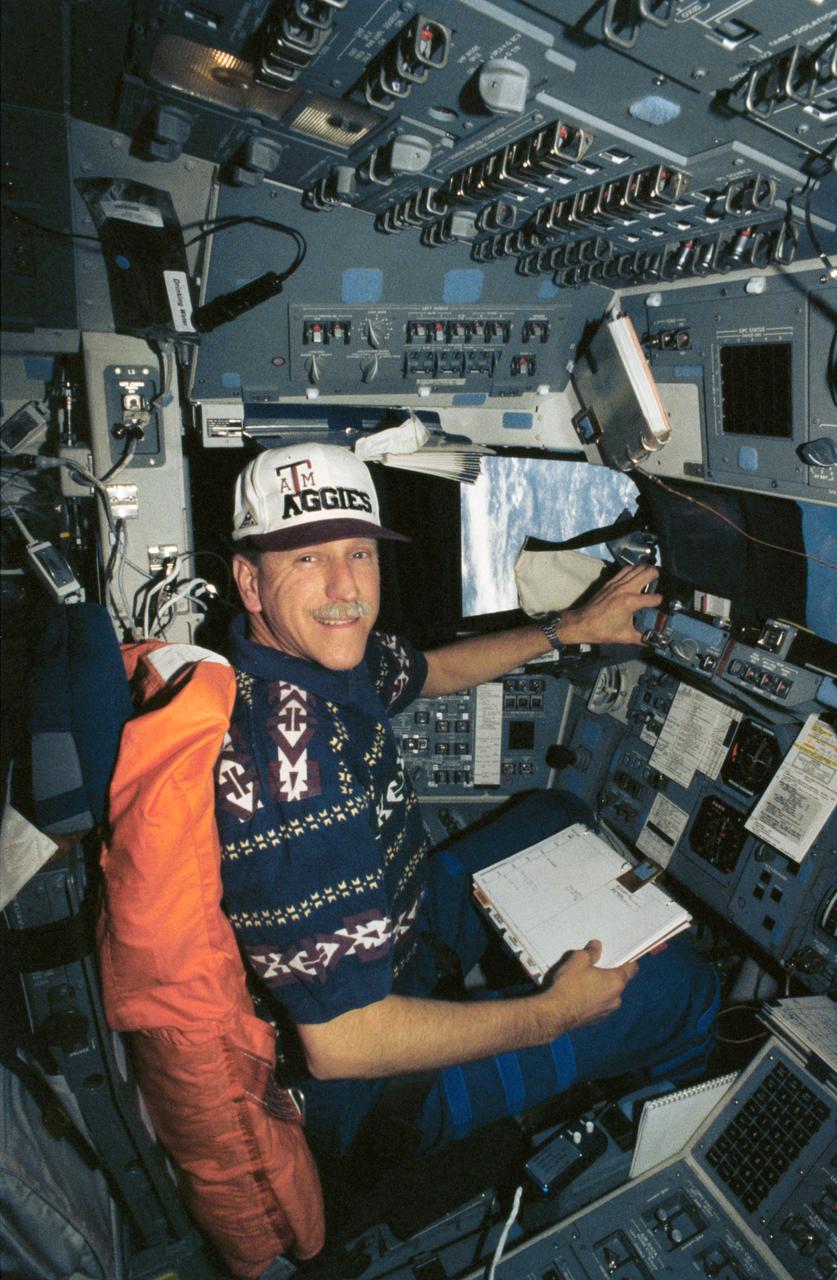
STS061-53-001 (4 Dec 1993) --- Astronaut Richard O. Covey mans the commander's station on the Space Shuttle Endeavour during flight day 3 of the eleven-day mission to service the Hubble Space Telescope (HST).  Covey wears a Texas A & M University cap as a salute to members of the training staff who have A & M connections.  The crew was busy on this day preparing for the approach and grapple operations with the HST.
Astronaut Richard Covey at commander's station in Endeavour during STS-61
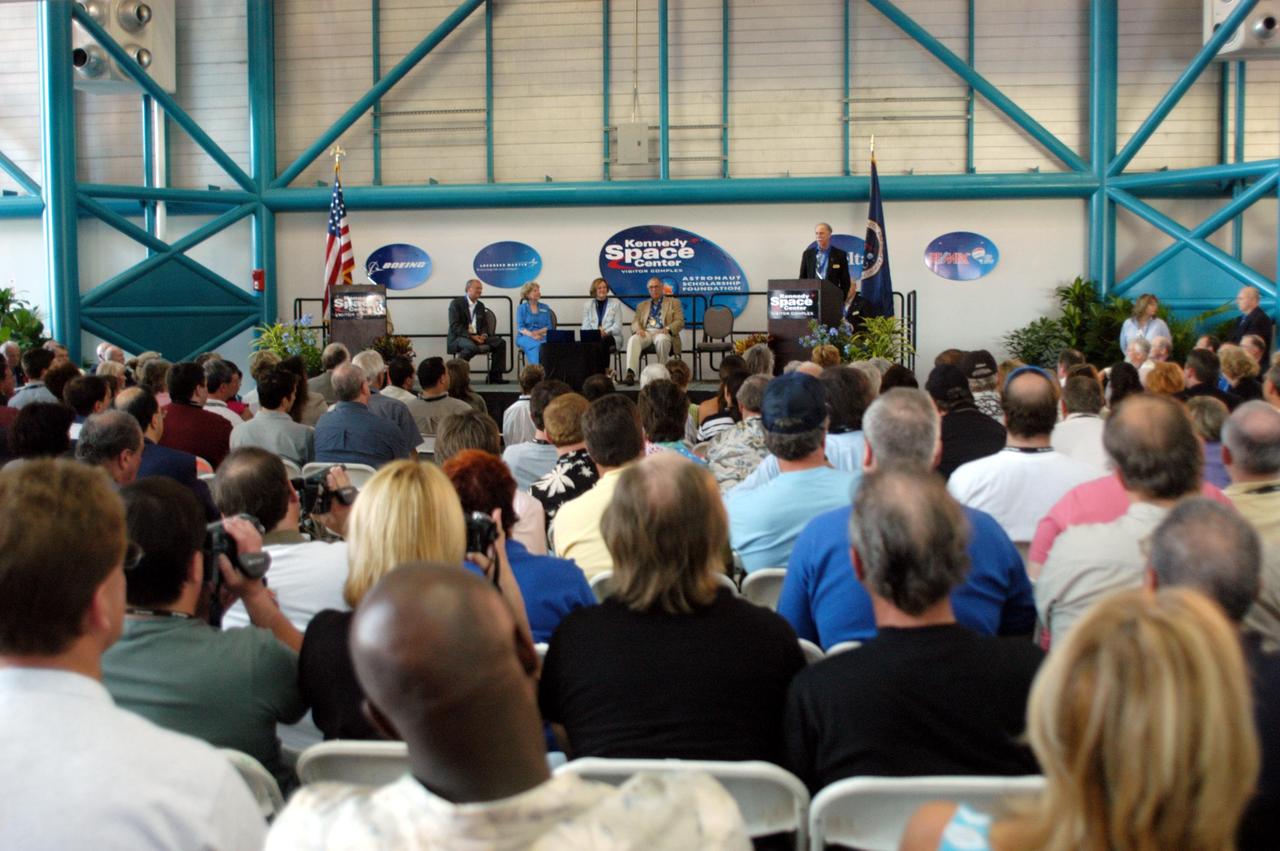
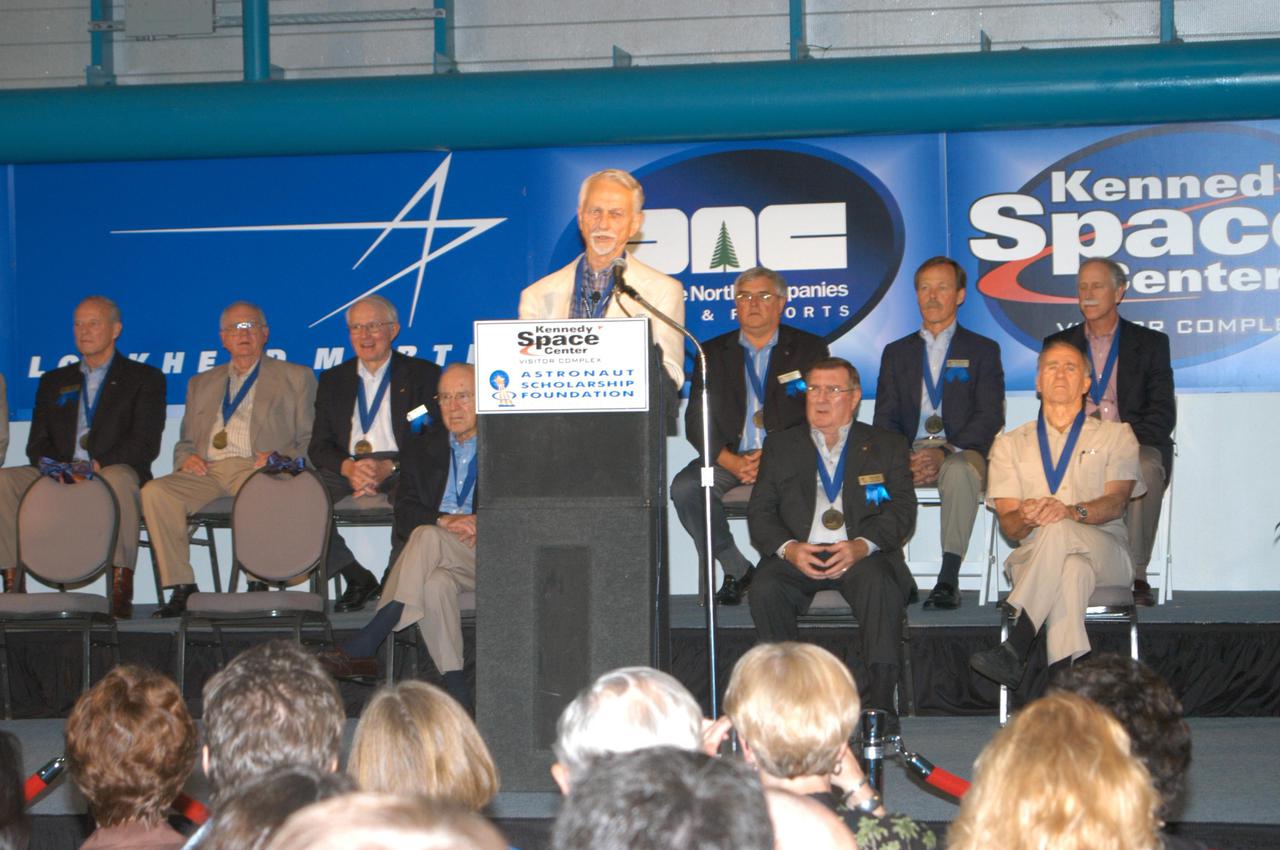
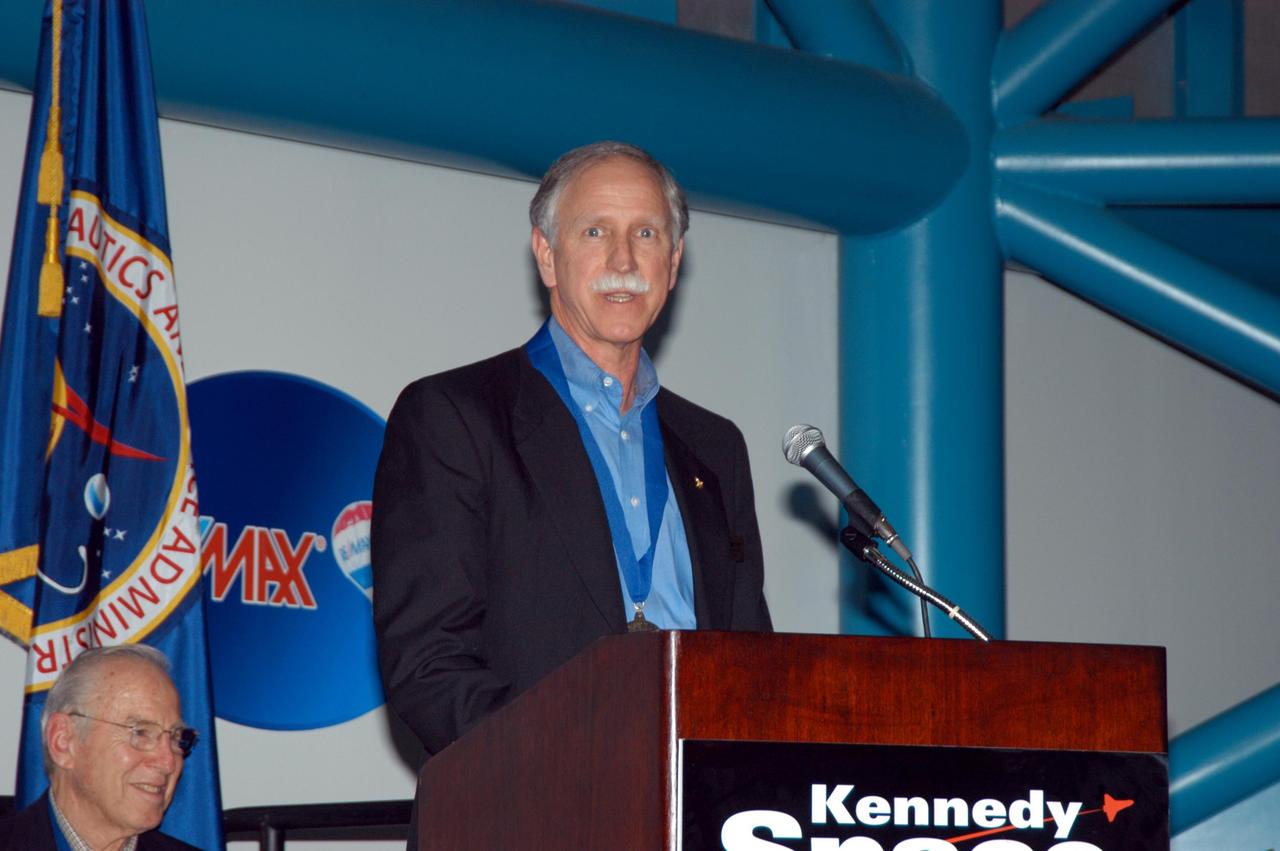
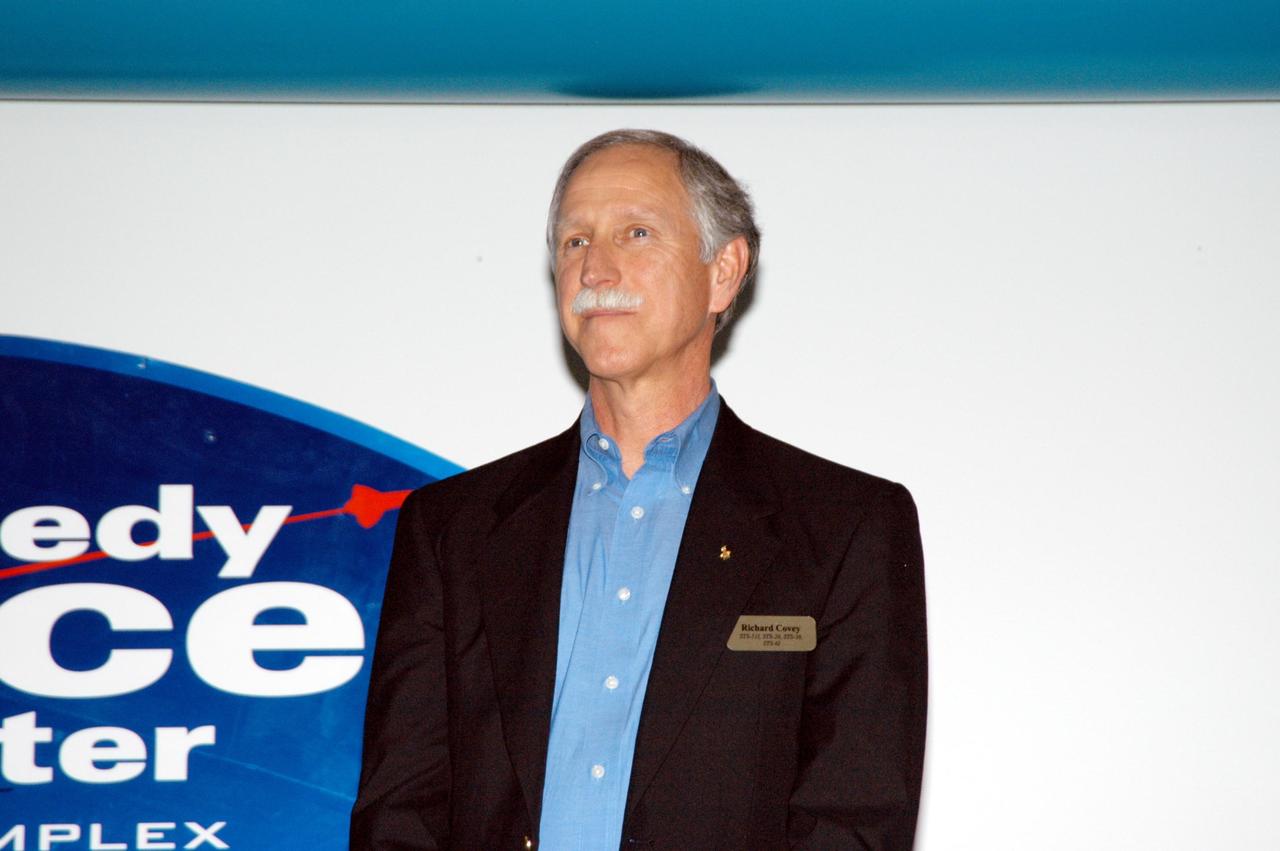
KENNEDY SPACE CENTER, FLA. -- At the Kennedy Space Center Visitor Complex, former NASA astronaut Richard O. Covey (at podium) is inducted into the U.S. Astronaut Hall of Fame as former NASA astronaut James A. Lovell Jr. looks on. Covey was commander of the Hubble Space Telescope repair mission. Also chosen for this honor in 2004 are Kathryn D. Sullivan, the first American woman to walk in space; Frederick D. Gregory, the first African-American to command a space mission; Norman E. Thagard, the first American to occupy Russia's Mir space station; and the late Francis R. "Dick" Scobee, commander of the ill-fated 1986 Challenger mission. The U.S. Astronaut Hall of Fame opened in 1990 to provide a place where space travelers could be remembered for their participation and accomplishments in the U.S. space program. To be eligible for induction, an individual must have been a U.S. citizen, a NASA astronaut, and out of the active astronaut corps at least five years. The five inductees join 52 previously honored astronauts from the ranks of the Gemini, Apollo, Skylab, Apollo-Soyuz, and Space Shuttle programs.
KSC-04pd0994
KENNEDY SPACE CENTER, FLA.  - As the Stafford-Covey Return to Flight Task Group (SCTG) tours the Orbiter Processing Facility, Richard O. Covey (second from left), former Space Shuttle commander, points to equipment.  Covey is co-chair of the SCTG along with Thomas P. Stafford, Apollo commander. Others in the photo are William Wegner, James Adamson and Joe Engle.  Chartered by NASA Administrator Sean O’Keefe, the task group will perform an independent assessment of NASA’s implementation of the final recommendations by the Columbia Accident Investigation Board.
KENNEDY SPACE CENTER, FLA. - As the Stafford-Covey Return to Flight Task Group (SCTG) tours the Orbiter Processing Facility, Richard O. Covey (second from left), former Space Shuttle commander, points to equipment. Covey is co-chair of the SCTG along with Thomas P. Stafford, Apollo commander. Others in the photo are William Wegner, James Adamson and Joe Engle. Chartered by NASA Administrator Sean O’Keefe, the task group will perform an independent assessment of NASA’s implementation of the final recommendations by the Columbia Accident Investigation Board.
S90-38948 (9 March 1990) --- Astronaut Richard O. Covey, STS-38 commander, is seen in a close-up view during training exercises with a special escape pole.  The device was designed and deployed on all active orbiters following the January 1986 Challenger accident.
STS-38 Commander Covey participates in egress training in JSC's MAIL
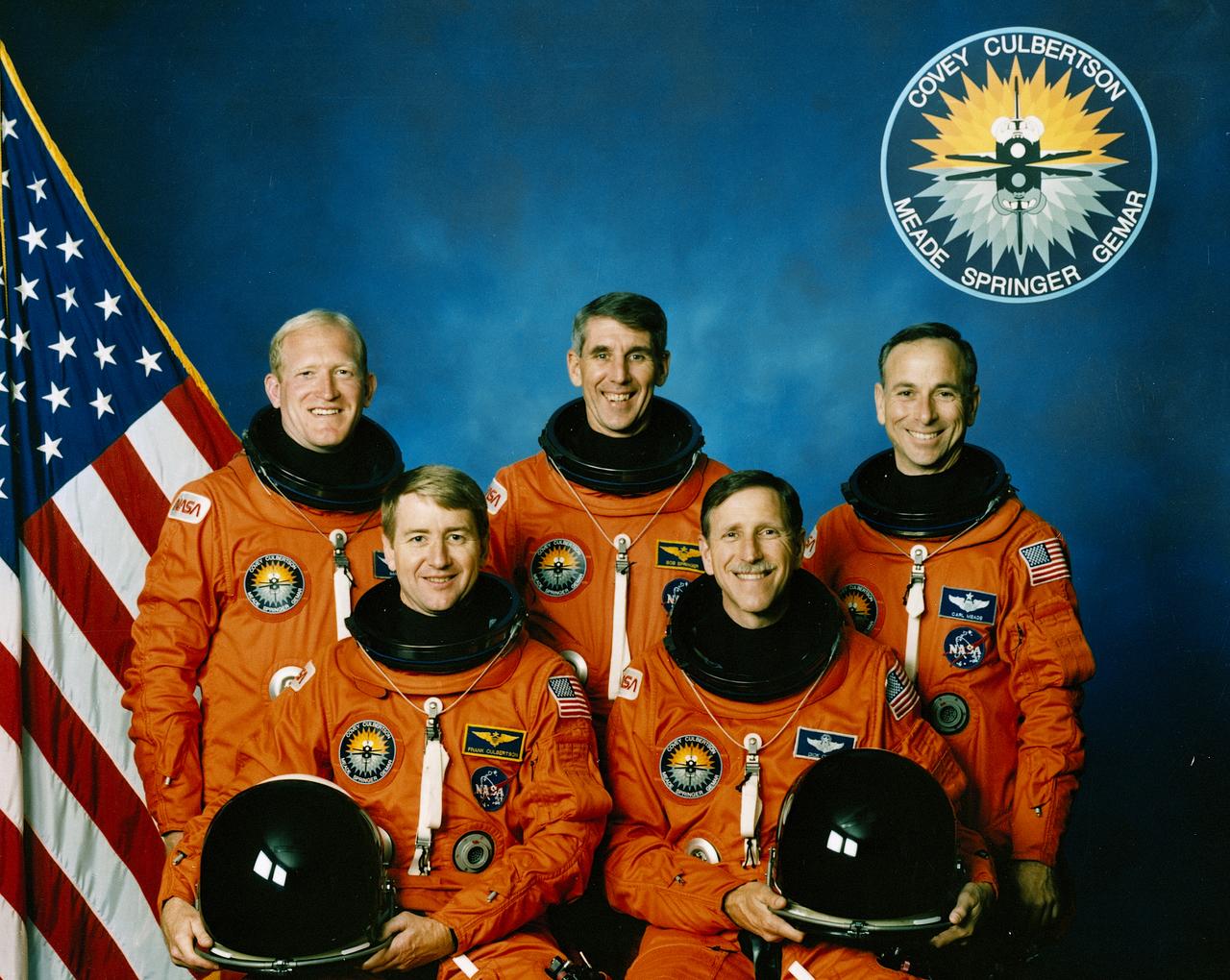
The official STS-38 crew portrait includes the following 5 astronauts (front left to right): Frank L. Culbertson, pilot; and Richard O. Covey, commander. Standing (left to right) are mission specialists (MS) Charles D. (Sam) Gemar, (MS-3), Robert C. Springer, (MS-1), and Carl J. Meade, (MS-2).  The seventh mission dedicated to the Department of Defense (DOD), the STS-38 crew launched aboard the Space Shuttle Atlantis on November 15, 1990 at 6:48:15 pm (EST).
Space Shuttle Projects
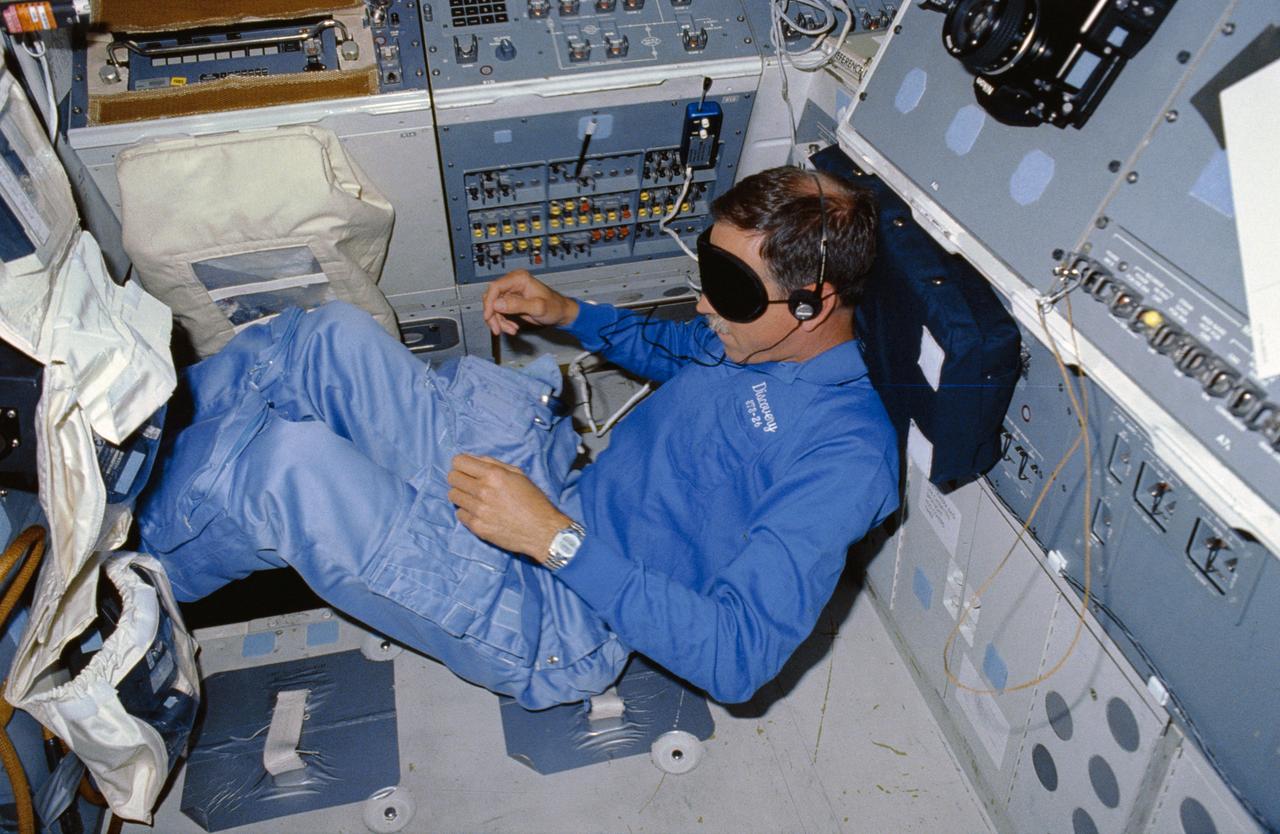
STS026-09-021 (3 Oct 1988) --- Astronaut Richard O. Covey, STS-26 pilot, wearing sleep mask (blindfold) and a headset, props his feet under the pilots seat and rests his head and back on the aft flight deck on orbit station panels while he sleeps. At Covey's right are the mission station control panels.
STS-26 Pilot Covey, wearing sleep mask, rests on aft flight deck
KENNEDY SPACE CENTER, FLA. -- At the Kennedy Space Center Visitor Complex, former NASA astronaut Richard O. Covey, commander of the Hubble Space Telescope repair mission, is inducted into the U.S. Astronaut Hall of Fame. Also chosen for this honor in 2004 are Kathryn D. Sullivan, the first American woman to walk in space; Frederick D. Gregory, the first African-American to command a space mission; Norman E. Thagard, the first American to occupy Russia's Mir space station; and the late Francis R. "Dick" Scobee, commander of the ill-fated 1986 Challenger mission. The U.S. Astronaut Hall of Fame opened in 1990 to provide a place where space travelers could be remembered for their participation and accomplishments in the U.S. space program. To be eligible for induction, an individual must have been a U.S. citizen, a NASA astronaut, and out of the active astronaut corps at least five years. The five inductees join 52 previously honored astronauts from the ranks of the Gemini, Apollo, Skylab, Apollo-Soyuz, and Space Shuttle programs.
KSC-04pd0991
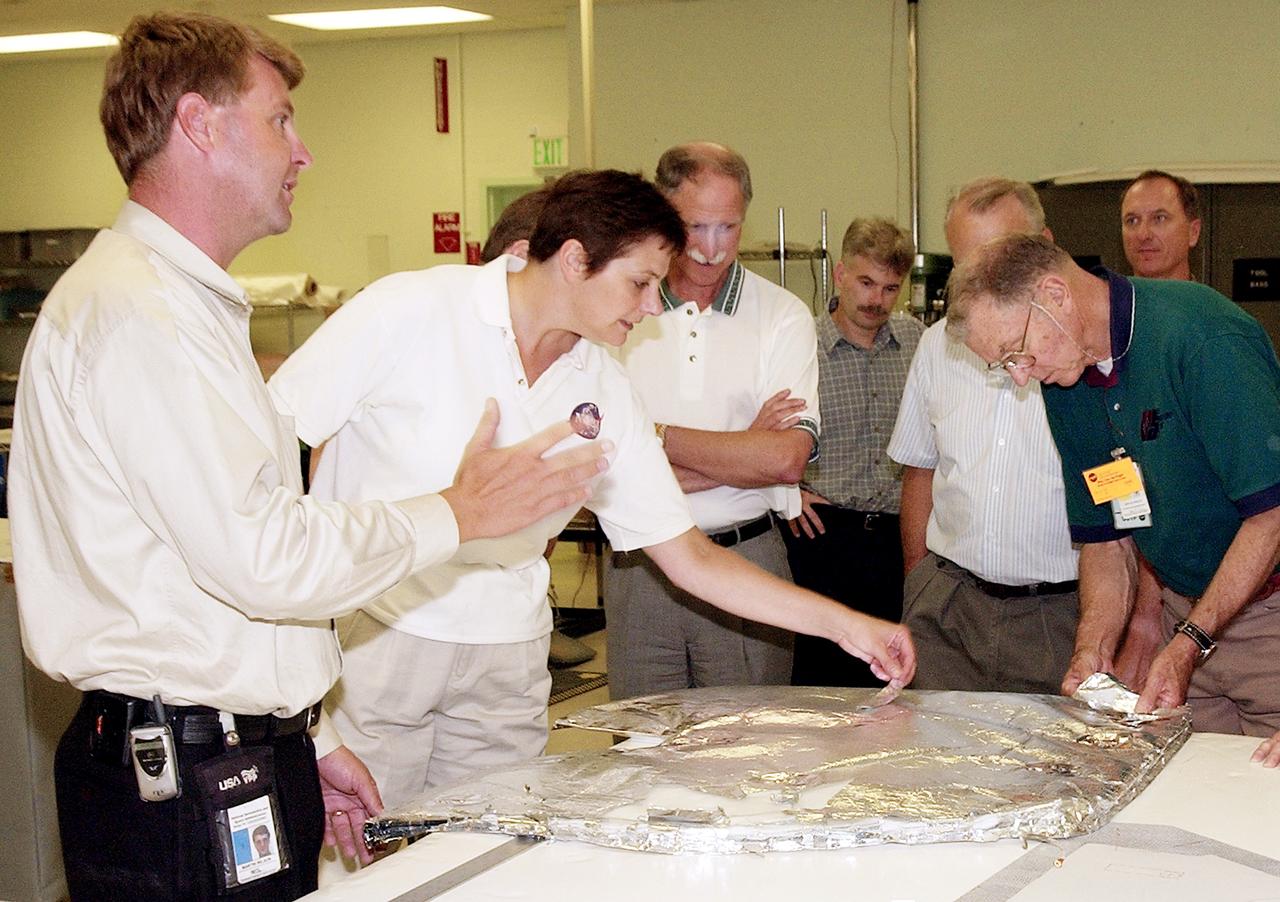
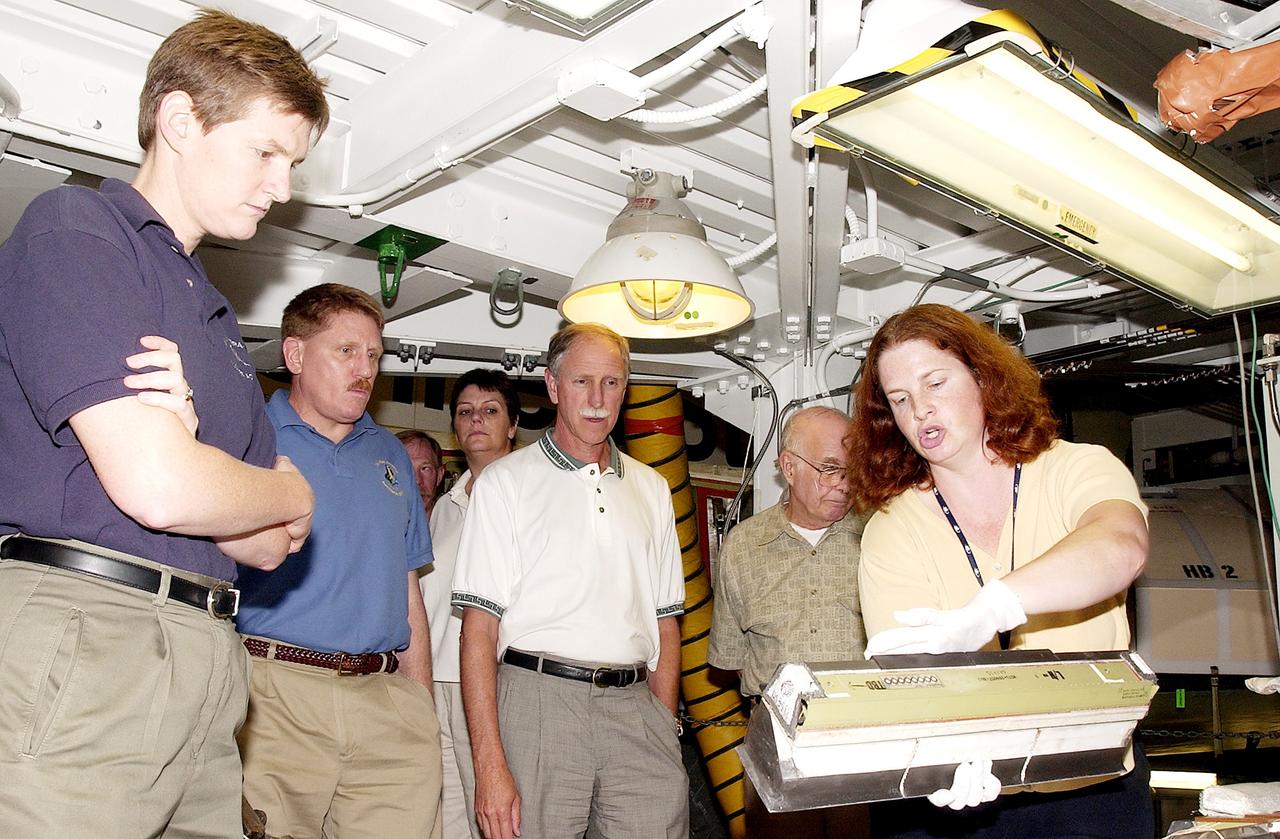
KENNEDY SPACE CENTER, FLA.  - On a tour of the Orbiter Processing Facility, members of the Stafford-Covey Return to Flight Task Group (RTFTG) look at a Reinforced Carbon-Carbon panels with a T-seal held by Tom Roberts, with United Space Alliance.  From left are Richard O. Covey, former Space Shuttle commander, Dr. Kathryn Clark, James Adamson, Joe Engle, William Wegner and Dr. Amy Donahue.  Chairing the task group are Covey and Thomas P. Stafford, Apollo commander.  Chartered by NASA Administrator Sean O’Keefe, the task group will perform an independent assessment of NASA’s implementation of the final recommendations by the Columbia Accident Investigation Board.
KENNEDY SPACE CENTER, FLA. - On a tour of the Orbiter Processing Facility, members of the Stafford-Covey Return to Flight Task Group (RTFTG) look at a Reinforced Carbon-Carbon panels with a T-seal held by Tom Roberts, with United Space Alliance. From left are Richard O. Covey, former Space Shuttle commander, Dr. Kathryn Clark, James Adamson, Joe Engle, William Wegner and Dr. Amy Donahue. Chairing the task group are Covey and Thomas P. Stafford, Apollo commander. Chartered by NASA Administrator Sean O’Keefe, the task group will perform an independent assessment of NASA’s implementation of the final recommendations by the Columbia Accident Investigation Board.
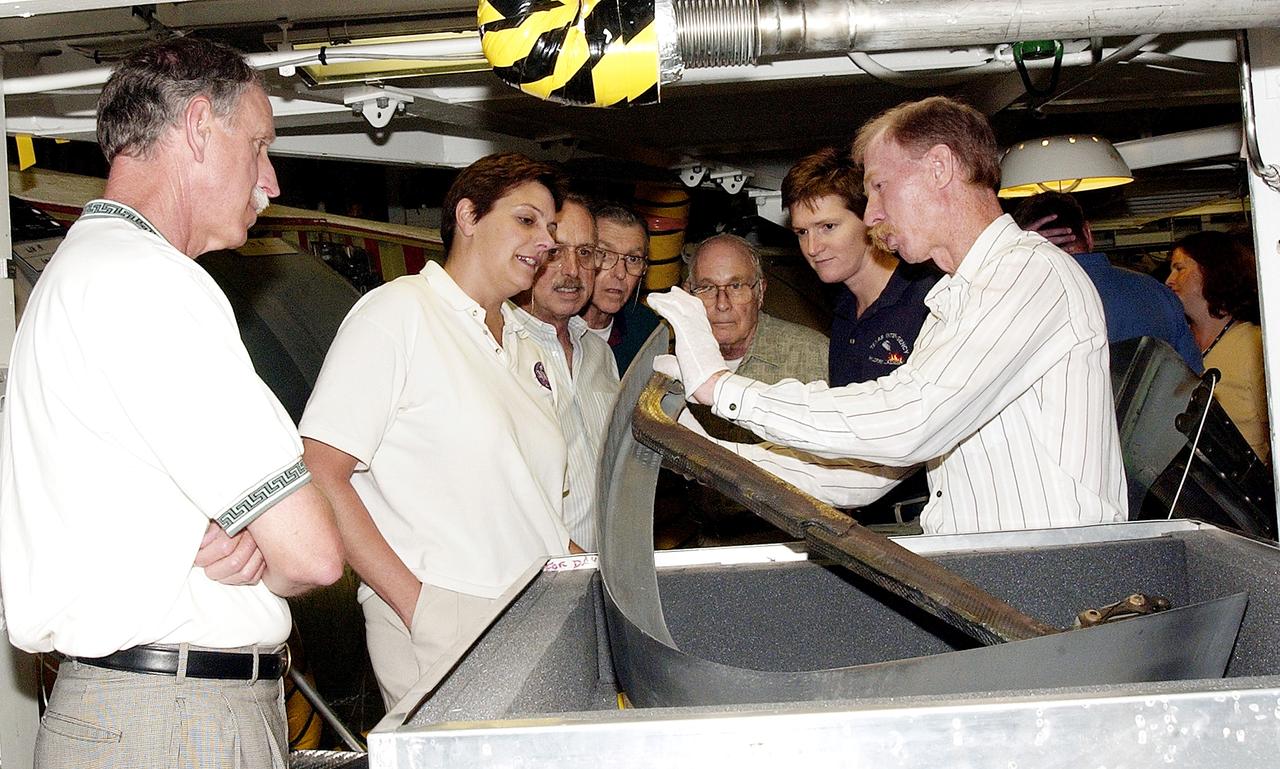
KENNEDY SPACE CENTER, FLA.  -  NASA worker Joy Huff (right) shows a leading edge subsystems (LESS) with tile bonded to it to members of the Stafford-Covey Return to Flight Task Group (SCTG).  From left are Dr. Amy Donahue, David Lengyel, Dr. Kathryn Clark,  Richard Covey, former Space Shuttle commander, and William Wegner.  Covey is co-chair of the SCTG along with Thomas P. Stafford, Apollo commander.  Chartered by NASA Administrator Sean O’Keefe, the task group will perform an independent assessment of NASA’s implementation of the final recommendations by the Columbia Accident Investigation Board.
KENNEDY SPACE CENTER, FLA. - NASA worker Joy Huff (right) shows a leading edge subsystems (LESS) with tile bonded to it to members of the Stafford-Covey Return to Flight Task Group (SCTG). From left are Dr. Amy Donahue, David Lengyel, Dr. Kathryn Clark, Richard Covey, former Space Shuttle commander, and William Wegner. Covey is co-chair of the SCTG along with Thomas P. Stafford, Apollo commander. Chartered by NASA Administrator Sean O’Keefe, the task group will perform an independent assessment of NASA’s implementation of the final recommendations by the Columbia Accident Investigation Board.
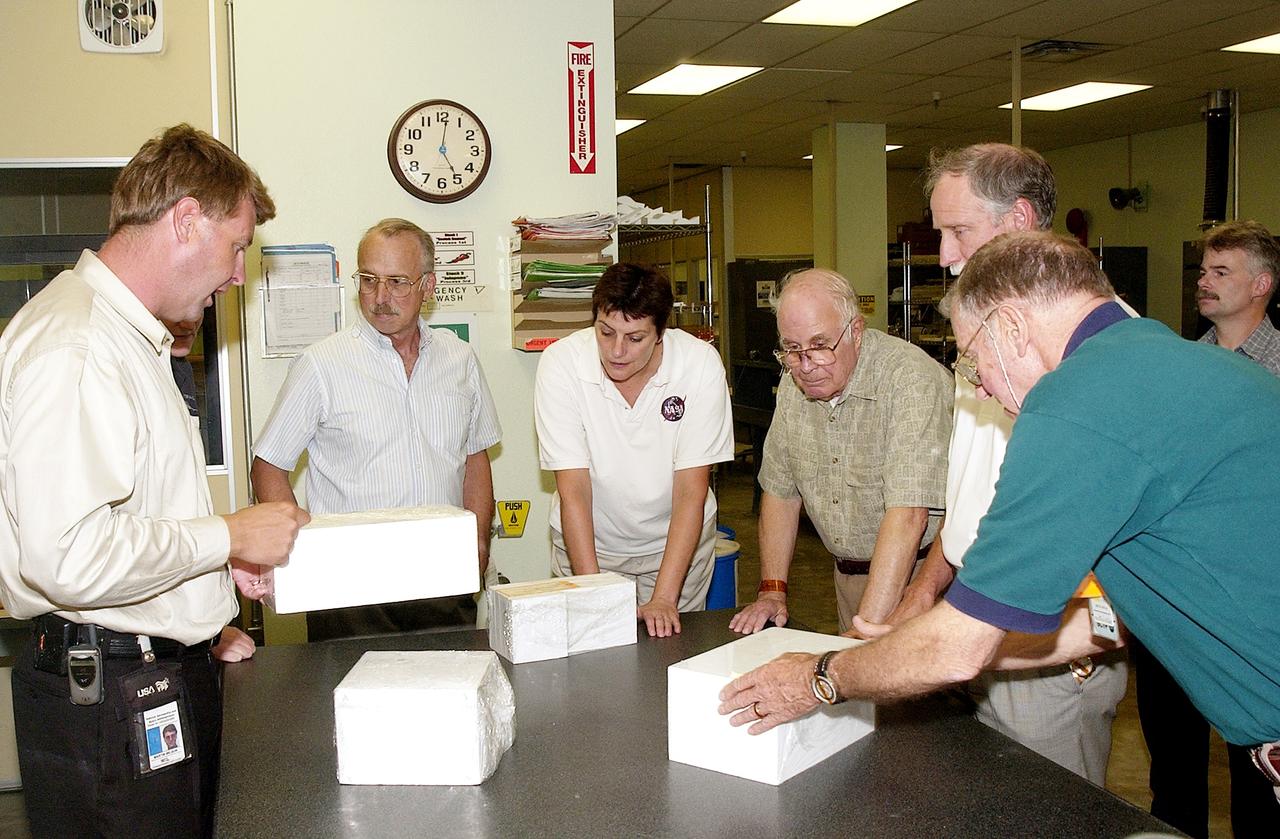
KENNEDY SPACE CENTER, FLA.  -  On a tour of the Tile Shop, members of the Stafford-Covey Return to Flight Task Group (SCTG) learn about PU-tiles, part of an orbiter’s Thermal Protection System.   At left is Martin Wilson, with United Space Alliance.  Others (left to right) around the table are James Adamson, Dr. Kathryn Clark, William Wegner, Richard Covey and Joe Engle.  Covey, former Space Shuttle commander, is co-chair of the  SCTG, along with Thomas P. Stafford, Apollo commander.  Chartered by NASA Administrator Sean O’Keefe, the task group will perform an independent assessment of NASA’s implementation of the final recommendations by the Columbia Accident Investigation Board.
KENNEDY SPACE CENTER, FLA. - On a tour of the Tile Shop, members of the Stafford-Covey Return to Flight Task Group (SCTG) learn about PU-tiles, part of an orbiter’s Thermal Protection System. At left is Martin Wilson, with United Space Alliance. Others (left to right) around the table are James Adamson, Dr. Kathryn Clark, William Wegner, Richard Covey and Joe Engle. Covey, former Space Shuttle commander, is co-chair of the SCTG, along with Thomas P. Stafford, Apollo commander. Chartered by NASA Administrator Sean O’Keefe, the task group will perform an independent assessment of NASA’s implementation of the final recommendations by the Columbia Accident Investigation Board.
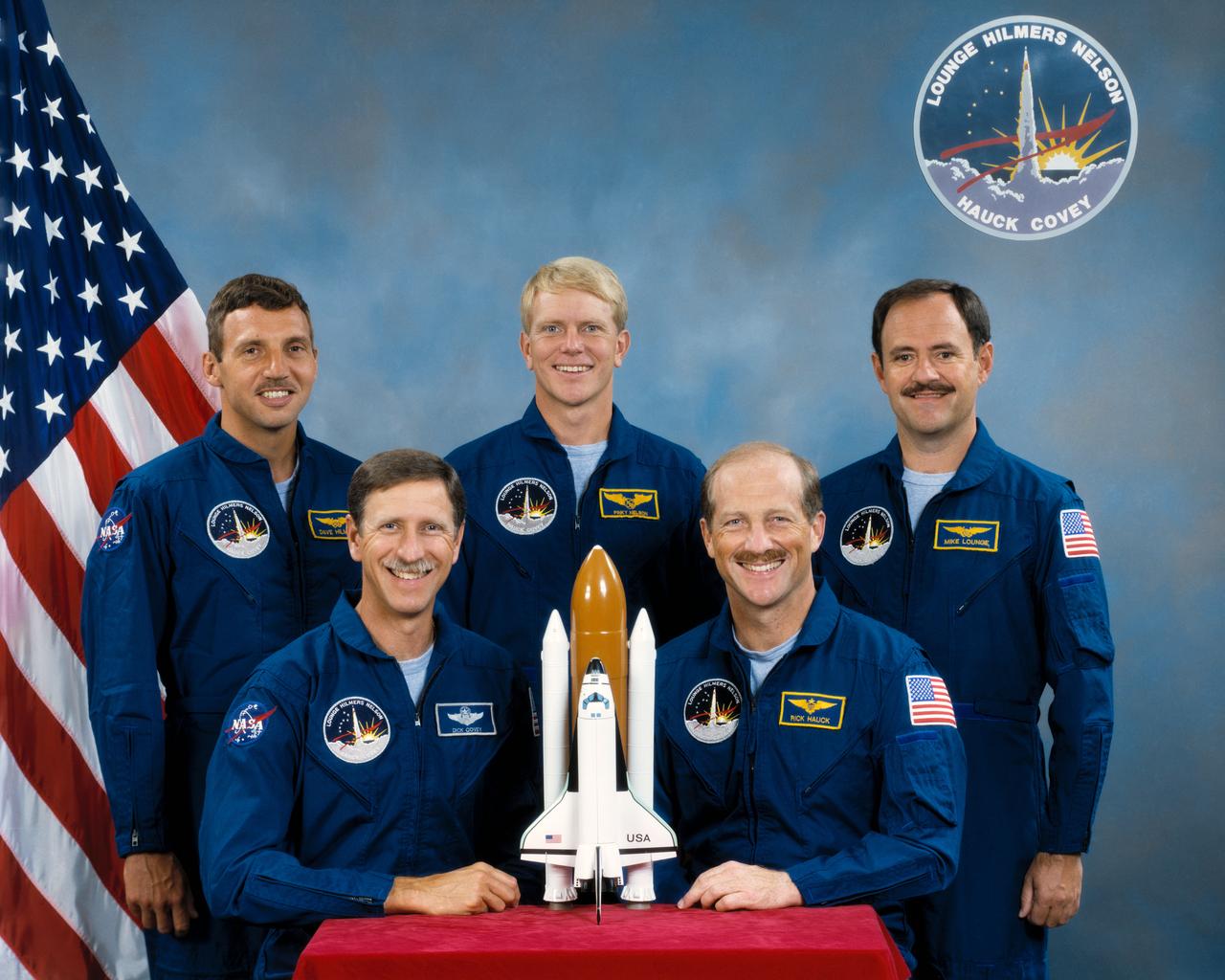
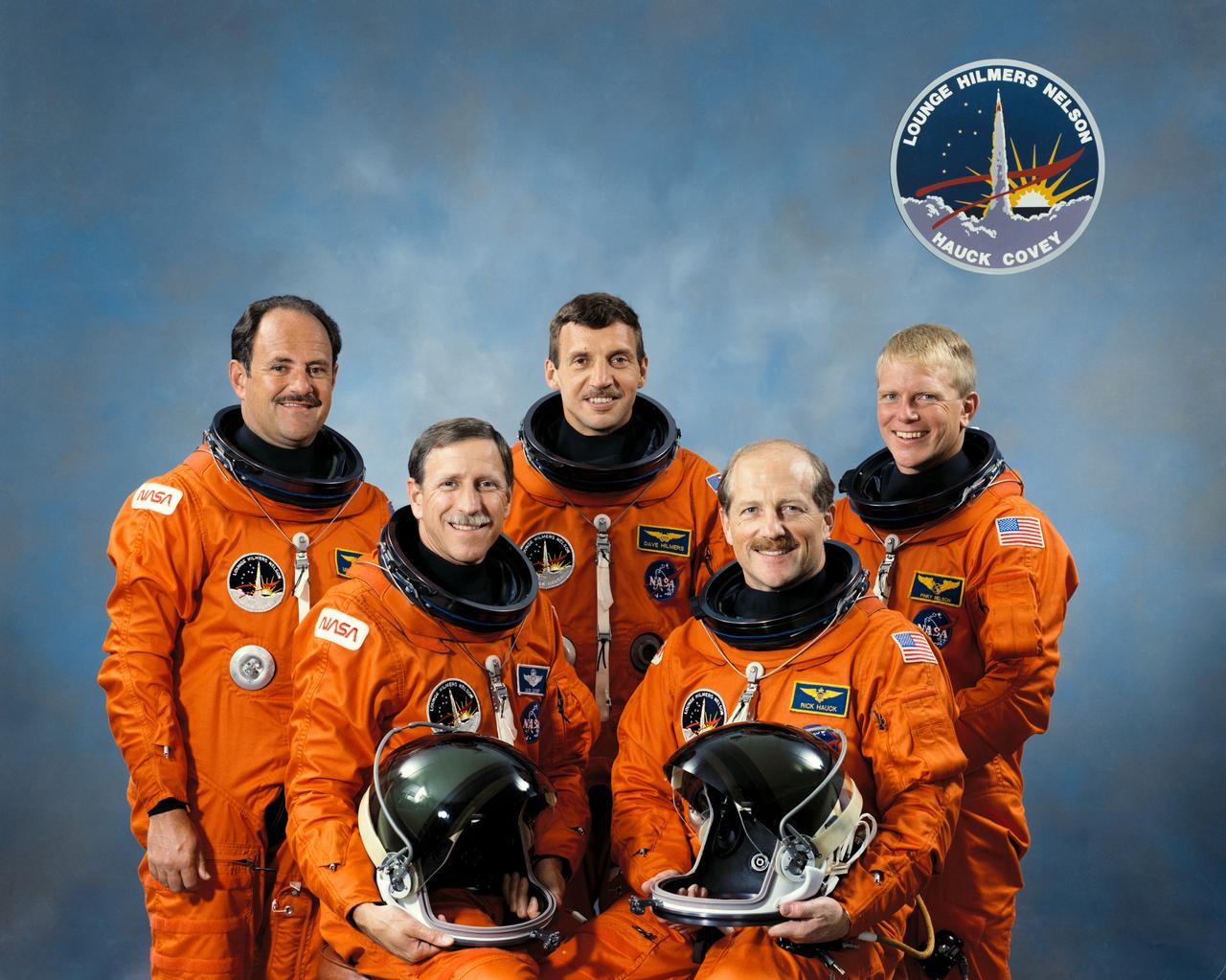
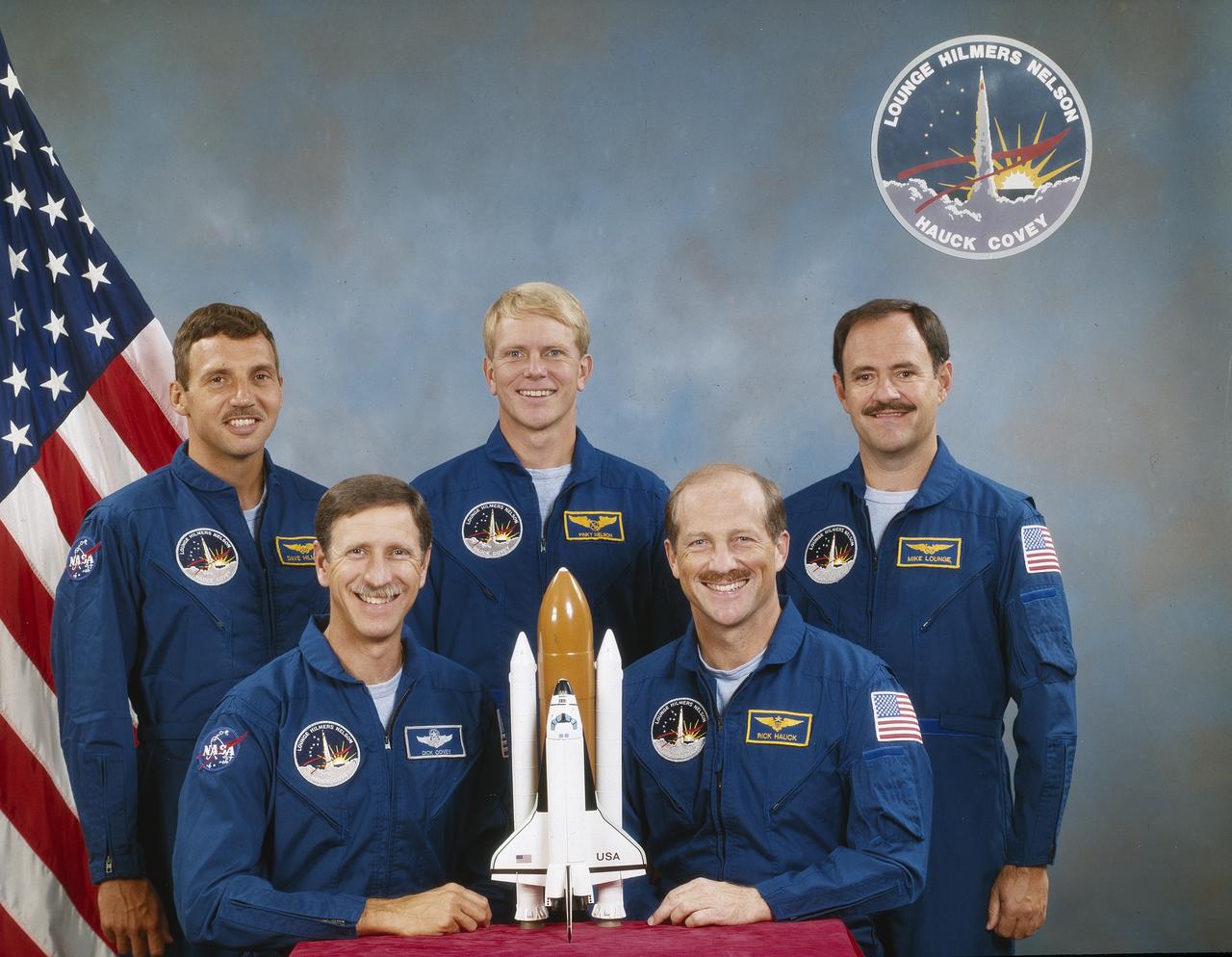
Five astronauts composed the crew of the STS-26 mission. Pictured in the portrait (left to right)   are David C. Hilmer, mission specialist; Richard O. Covey, pilot; George D. Nelson, mission specialist; Frederick H. Hauck, Jr., commander; and John, M. Lounge, mission specialist. Launched aboard the Space Shuttle Orbiter Discovery, liftoff occurred on September 29, 1988 at 11:37am (EDT). This was the 7th flight of the Orbiter Discovery, and the return to flight after the STS-51L mission accident. The primary payload was the NASA Tracking and Data Relay Satellite-3 (TDRS-3).
Space Shuttle Projects
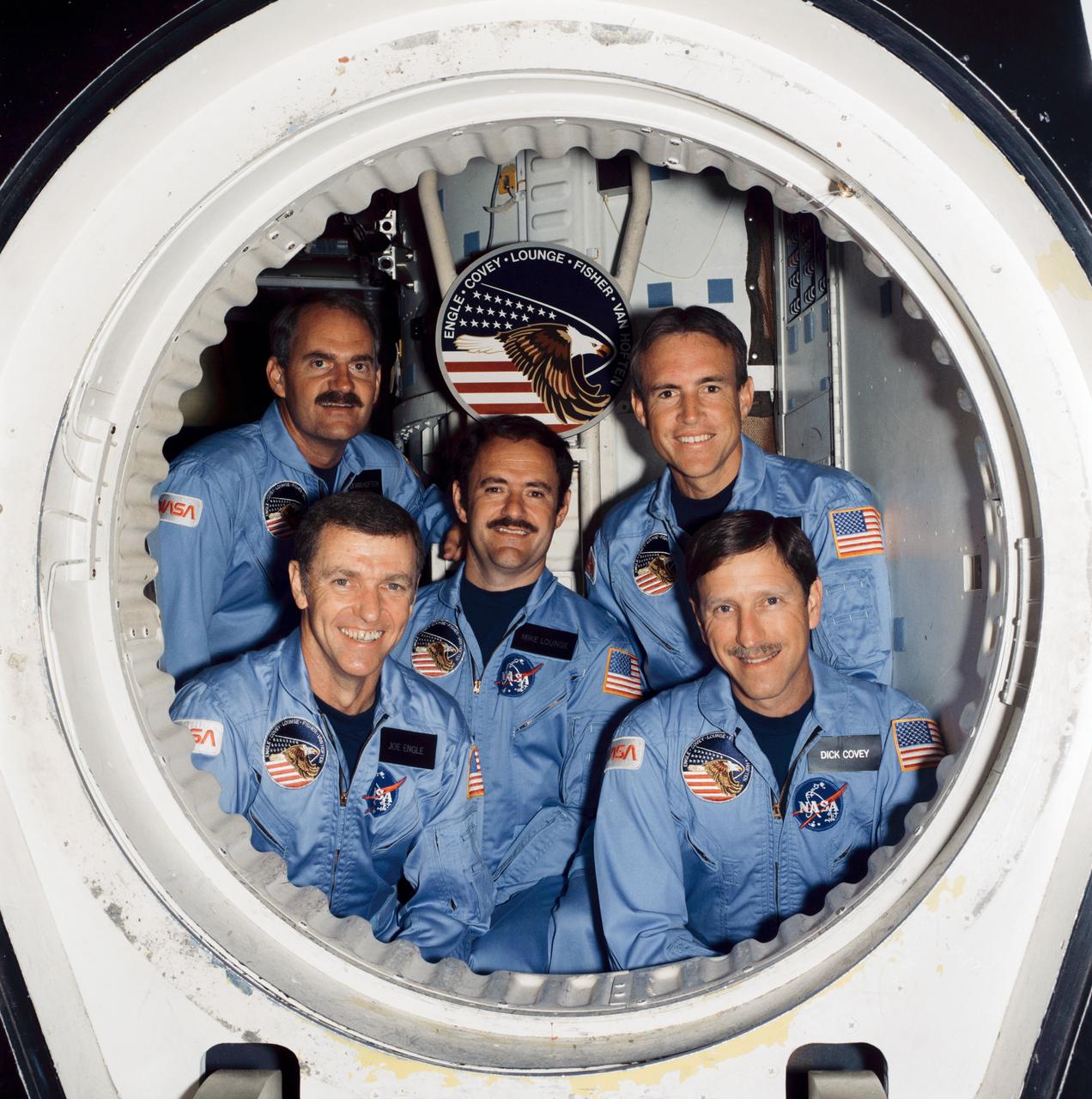
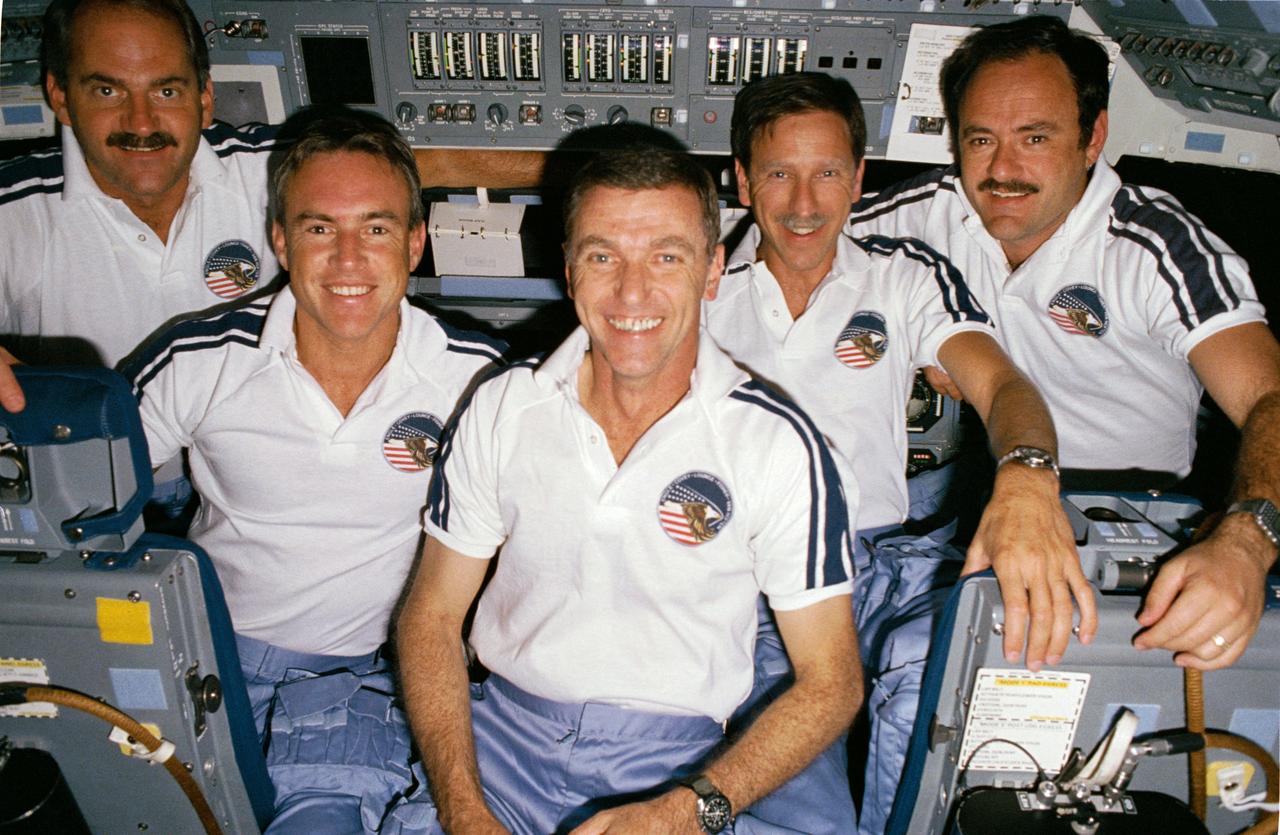
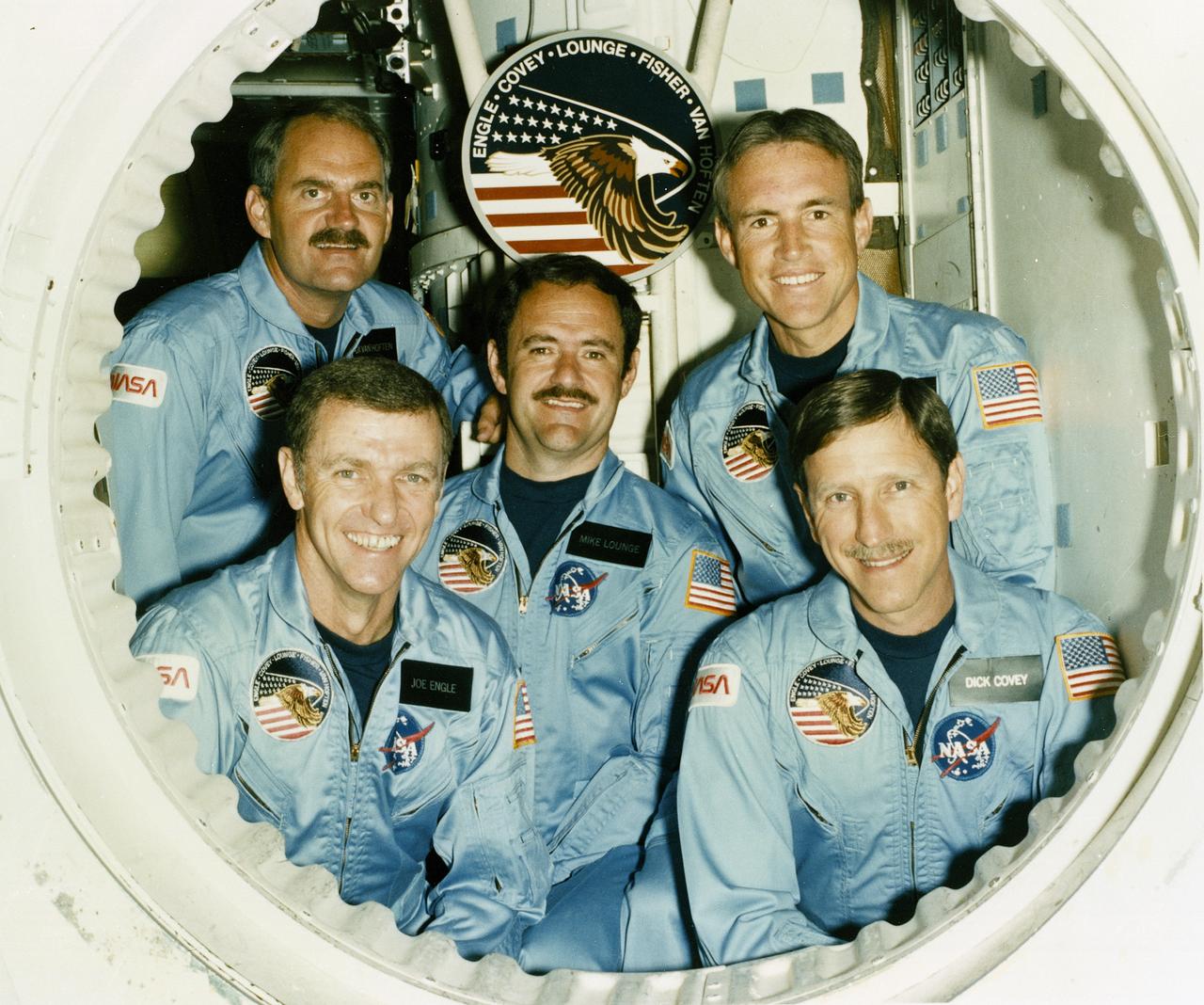
The crew assigned to the STS-51I mission included (front row left to right) Joe H. Engle, commander; and Richard O. Covey, pilot. In the center is John M. (Mike) Lounge, mission specialist. On the back row, from left to right, are mission specialists James D. van Hoften, and William F. Fisher. Launched aboard the Space Shuttle Discovery on August 27, 1985 at 6:58:01 am (EDT), the STS-51I mission’s primary payloads were three communication satellites: the ASC-1 for the American Satellite Company; the AUSSAT-1, an Australian communications satellite; and the SYNCOM-IV-4, the synchronous communications satellite.
Space Shuttle Projects
KENNEDY SPACE CENTER, FLA. -- At the Kennedy Space Center Visitor Complex, former NASA astronaut James A. Lovell Jr. (left) congratulates Richard O. Covey, commander of the Hubble Space Telescope repair mission, on his induction into the U.S. Astronaut Hall of Fame. Also chosen for this honor in 2004 are Kathryn D. Sullivan, the first American woman to walk in space; Frederick D. Gregory, the first African-American to command a space mission; Norman E. Thagard, the first American to occupy Russia's Mir space station; and the late Francis R. "Dick" Scobee, commander of the ill-fated 1986 Challenger mission. The U.S. Astronaut Hall of Fame opened in 1990 to provide a place where space travelers could be remembered for their participation and accomplishments in the U.S. space program. To be eligible for induction, an individual must have been a U.S. citizen, a NASA astronaut, and out of the active astronaut corps at least five years. The five inductees join 52 previously honored astronauts from the ranks of the Gemini, Apollo, Skylab, Apollo-Soyuz, and Space Shuttle programs.
KSC-04pd0993
KENNEDY SPACE CENTER, FLA. -- At the Kennedy Space Center Visitor Complex, former NASA astronaut Joe H. Engle (right) congratulates Richard O. Covey, commander of the Hubble Space Telescope repair mission, on his induction into the U.S. Astronaut Hall of Fame. Also chosen for this honor in 2004 are Kathryn D. Sullivan, the first American woman to walk in space; Frederick D. Gregory, the first African-American to command a space mission; Norman E. Thagard, the first American to occupy Russia's Mir space station; and the late Francis R. "Dick" Scobee, commander of the ill-fated 1986 Challenger mission. The U.S. Astronaut Hall of Fame opened in 1990 to provide a place where space travelers could be remembered for their participation and accomplishments in the U.S. space program. To be eligible for induction, an individual must have been a U.S. citizen, a NASA astronaut, and out of the active astronaut corps at least five years. The five inductees join 52 previously honored astronauts from the ranks of the Gemini, Apollo, Skylab, Apollo-Soyuz, and Space Shuttle programs.
KSC-04pd0992
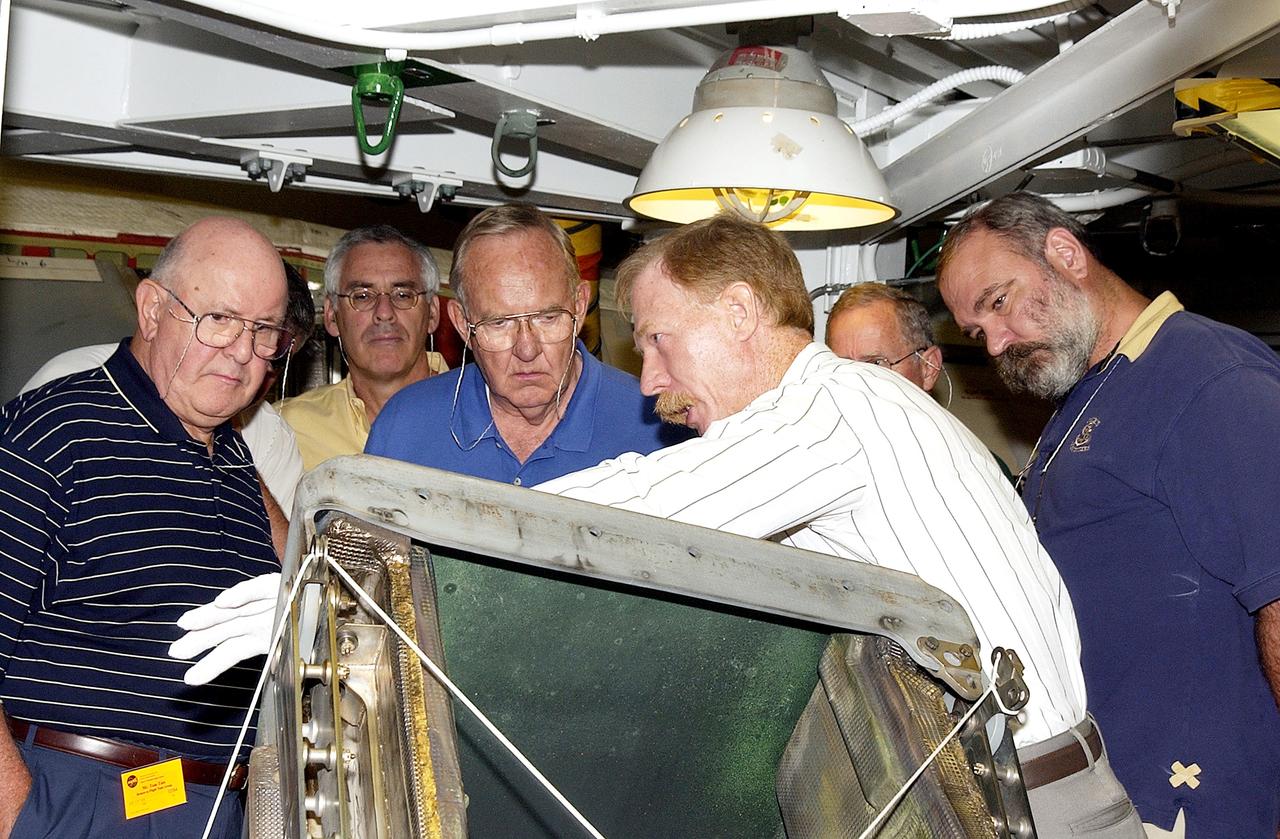
KENNEDY SPACE CENTER, FLA.  -  The Stafford-Covey Return to Flight Task Group (SCTG) inspects debris in the Columbia Debris Hangar.   At right is the model of the left wing that has been used during recovery operations.  Chairing the task group are Richard O. Covey, former Space Shuttle commander, and Thomas P. Stafford (third from right, foreground), Apollo commander.  Chartered by NASA Administrator Sean O’Keefe, the task group will perform an independent assessment of NASA’s implementation of the final recommendations by the Columbia Accident Investigation Board.
KENNEDY SPACE CENTER, FLA. - The Stafford-Covey Return to Flight Task Group (SCTG) inspects debris in the Columbia Debris Hangar. At right is the model of the left wing that has been used during recovery operations. Chairing the task group are Richard O. Covey, former Space Shuttle commander, and Thomas P. Stafford (third from right, foreground), Apollo commander. Chartered by NASA Administrator Sean O’Keefe, the task group will perform an independent assessment of NASA’s implementation of the final recommendations by the Columbia Accident Investigation Board.
KENNEDY SPACE CENTER, FLA.  -  In the Columbia Debris Hangar, members of the  Stafford-Covey Return to Flight Task Group (SCTG) look at tiles recovered.  Chairing the task group are Richard O. Covey, former Space Shuttle commander, and Thomas P. Stafford (center), Apollo commander.  Chartered by NASA Administrator Sean O’Keefe, the task group will perform an independent assessment of NASA’s implementation of the final recommendations by the Columbia Accident Investigation Board.
KENNEDY SPACE CENTER, FLA. - In the Columbia Debris Hangar, members of the Stafford-Covey Return to Flight Task Group (SCTG) look at tiles recovered. Chairing the task group are Richard O. Covey, former Space Shuttle commander, and Thomas P. Stafford (center), Apollo commander. Chartered by NASA Administrator Sean O’Keefe, the task group will perform an independent assessment of NASA’s implementation of the final recommendations by the Columbia Accident Investigation Board.
KENNEDY SPACE CENTER, FLA.  -   The Stafford-Covey Return to Flight Task Group (SCTG) visits the Columbia Debris Hangar .  Chairing the task group are Richard O. Covey (third from right), former Space Shuttle commander, and Thomas P. Stafford (fourth from right), Apollo commander.  Chartered by NASA Administrator Sean O’Keefe, the task group will perform an independent assessment of NASA’s implementation of the final recommendations by the Columbia Accident Investigation Board.
KENNEDY SPACE CENTER, FLA. - The Stafford-Covey Return to Flight Task Group (SCTG) visits the Columbia Debris Hangar . Chairing the task group are Richard O. Covey (third from right), former Space Shuttle commander, and Thomas P. Stafford (fourth from right), Apollo commander. Chartered by NASA Administrator Sean O’Keefe, the task group will perform an independent assessment of NASA’s implementation of the final recommendations by the Columbia Accident Investigation Board.
KENNEDY SPACE CENTER, FLA.  -  In the Columbia Debris Hangar, Shuttle Launch Director Mike Leinbach (left) talks to members of the  Stafford-Covey Return to Flight Task Group (SCTG) about reconstruction efforts.   Chairing the task group are Richard O. Covey (second from right), former Space Shuttle commander, and Thomas P. Stafford, Apollo commander.  Chartered by NASA Administrator Sean O’Keefe, the task group will perform an independent assessment of NASA’s implementation of the final recommendations by the Columbia Accident Investigation Board.
KENNEDY SPACE CENTER, FLA. - In the Columbia Debris Hangar, Shuttle Launch Director Mike Leinbach (left) talks to members of the Stafford-Covey Return to Flight Task Group (SCTG) about reconstruction efforts. Chairing the task group are Richard O. Covey (second from right), former Space Shuttle commander, and Thomas P. Stafford, Apollo commander. Chartered by NASA Administrator Sean O’Keefe, the task group will perform an independent assessment of NASA’s implementation of the final recommendations by the Columbia Accident Investigation Board.
KENNEDY SPACE CENTER, FLA.  - In the Columbia Debris Hangar, Shuttle Launch Director Mike Leinbach answers questions from the Stafford-Covey Return to Flight Task Group (SCTG).  Chairing the task group are Richard O. Covey (fifth from left), former Space Shuttle commander, and Thomas P. Stafford, Apollo commander.  Chartered by NASA Administrator Sean O’Keefe, the task group will perform an independent assessment of NASA’s implementation of the final recommendations by the Columbia Accident Investigation Board.
KENNEDY SPACE CENTER, FLA. - In the Columbia Debris Hangar, Shuttle Launch Director Mike Leinbach answers questions from the Stafford-Covey Return to Flight Task Group (SCTG). Chairing the task group are Richard O. Covey (fifth from left), former Space Shuttle commander, and Thomas P. Stafford, Apollo commander. Chartered by NASA Administrator Sean O’Keefe, the task group will perform an independent assessment of NASA’s implementation of the final recommendations by the Columbia Accident Investigation Board.
KENNEDY SPACE CENTER, FLA.  -  In the Columbia Debris Hangar, members of the  Stafford-Covey Return to Flight Task Group (SCTG) inspect some of the debris.   Chairing the task group are Richard O. Covey, former Space Shuttle commander, and Thomas P. Stafford (fourth from left), Apollo commander.  Chartered by NASA Administrator Sean O’Keefe, the task group will perform an independent assessment of NASA’s implementation of the final recommendations by the Columbia Accident Investigation Board.
KENNEDY SPACE CENTER, FLA. - In the Columbia Debris Hangar, members of the Stafford-Covey Return to Flight Task Group (SCTG) inspect some of the debris. Chairing the task group are Richard O. Covey, former Space Shuttle commander, and Thomas P. Stafford (fourth from left), Apollo commander. Chartered by NASA Administrator Sean O’Keefe, the task group will perform an independent assessment of NASA’s implementation of the final recommendations by the Columbia Accident Investigation Board.
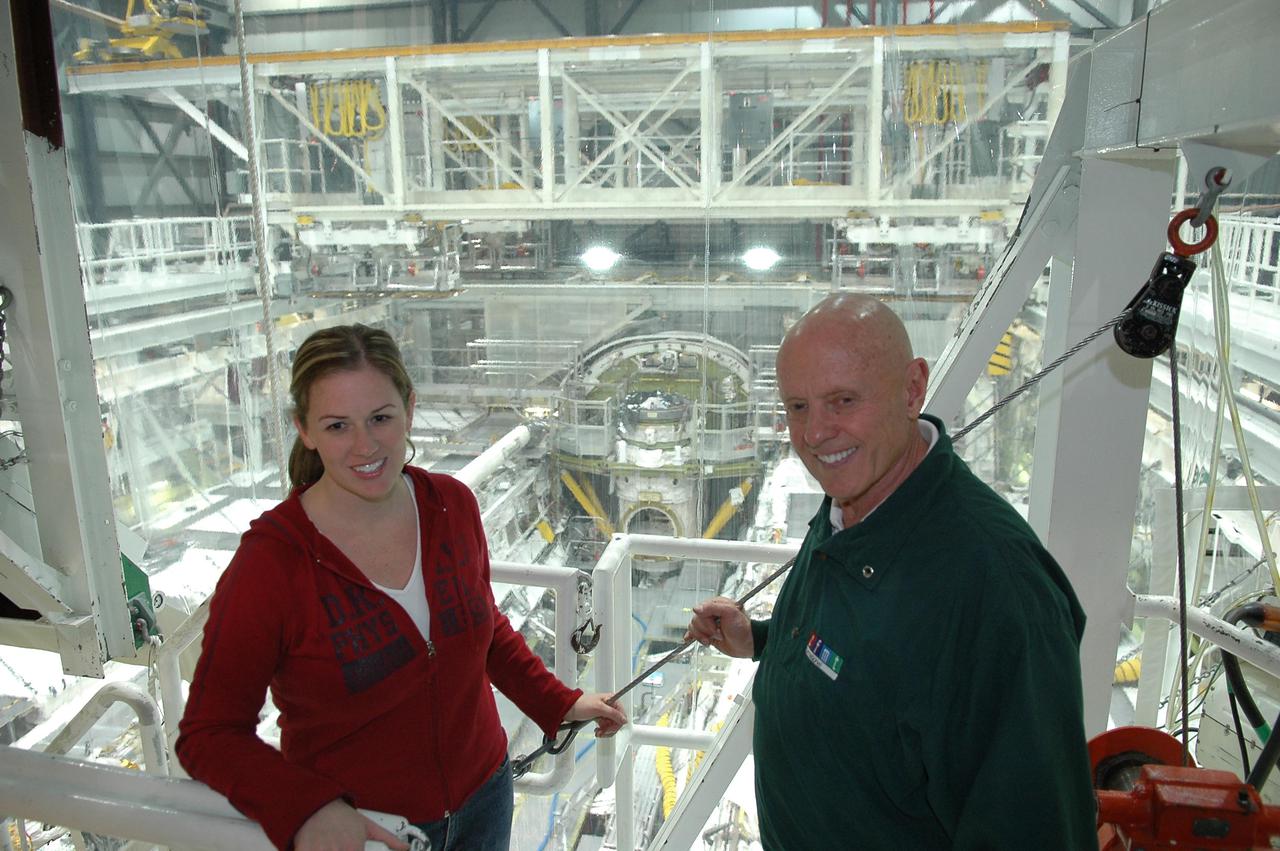
KENNEDY SPACE CENTER, FLA.  - At right, Scott Thurston, NASA vehicle manager for Atlantis, talks about the orbiter, overhead, to author Stephen Covey, at left, and Covey’s executive assistant Julie McAllister, who are touring KSC. Covey also spent time with KSC management discussing his newest book, The 8th Habit.
KSC-05pd-0426
KENNEDY SPACE CENTER, FLA.  - In the Vehicle Assembly Building, author Stephen Covey (center) looks up at the External Tank_Solid Rocket Boosters stack for Return to Flight Mission STS-114.  Covey and his executive assistant Julie McAllister (at Covey’s right) are touring Kennedy.  Covey also spent time with KSC management discussing his newest book, The 8th Habit.
KSC-05pd-0428
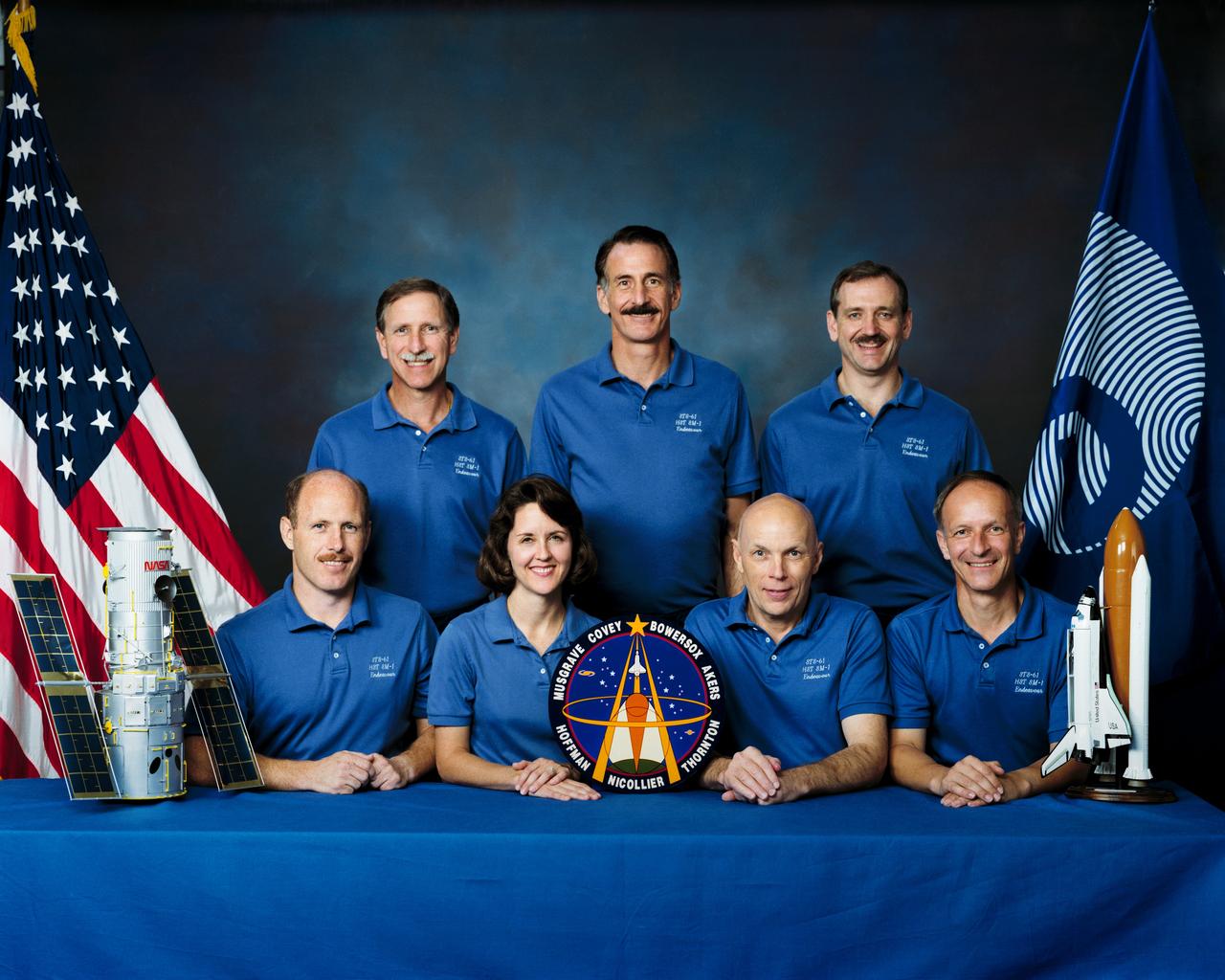
Astronauts included in the STS-61 crew portrait include (standing in rear left to right) Richard O. Covey, commander; and mission specialists Jeffrey A. Hoffman, and Thomas D. Akers. Seated left to right are Kenneth D. Bowersox, pilot; Kathryn C. Thornton, mission specialist; F. Story Musgrave, payload commander; and Claude Nicollier, mission specialist.  Launched aboard the Space Shuttle Endeavor on December 2, 1993 at 4:27:00 am (EST), the STS-61 mission was the first Hubble Space Telescope (HST) servicing mission, and the last mission of 1993.
Space Shuttle Projects
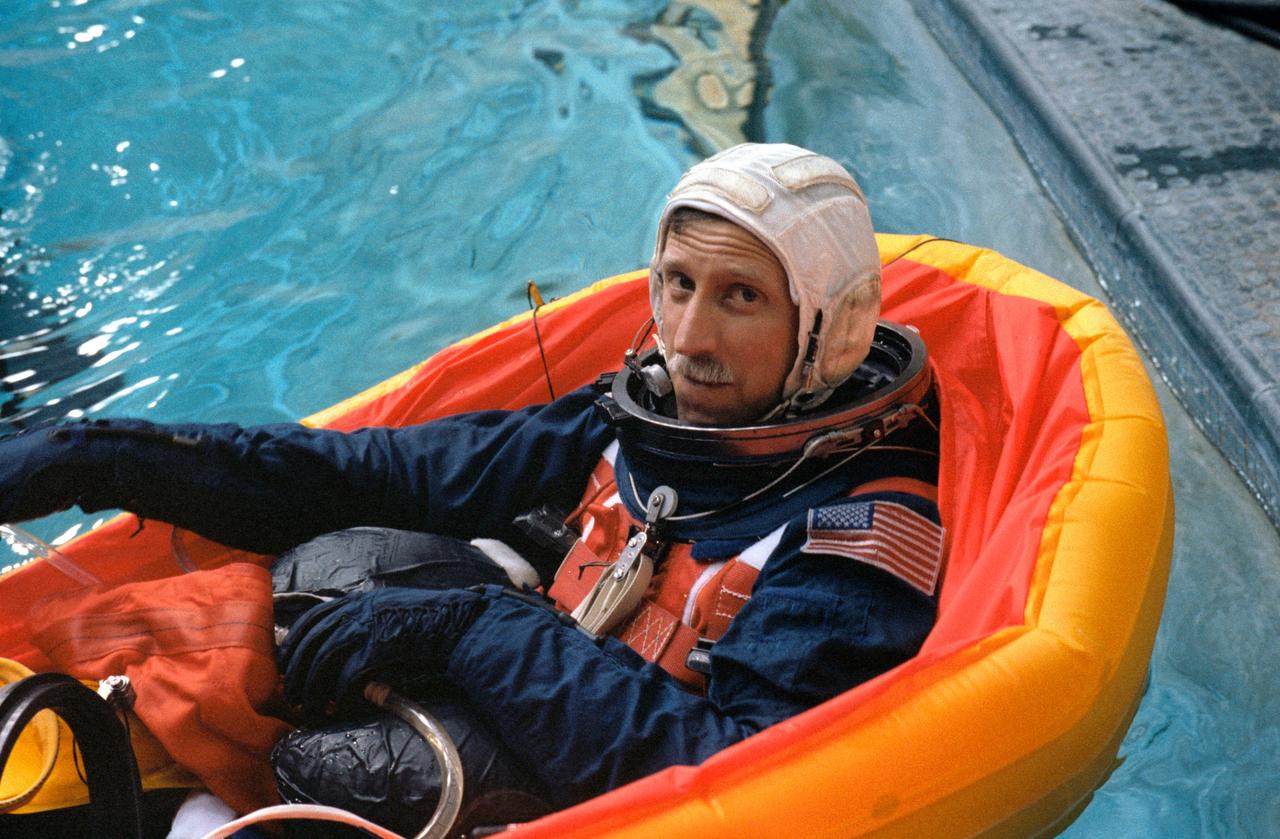
S88-42425 (20 July 1988) --- STS-26 Discovery, Orbiter Vehicle (OV) 103, Pilot Richard O. Covey, wearing the newly designed launch and entry suit (LES), floats in single-occupant life raft in JSC Weightless Environment Training Facility (WETF) Bldg 29 pool. The simulation of the escape and rescue operations utilized the crew escape system (CES) pole method of egress from the Space Shuttle.
STS-26 Pilot Covey floats in life raft during JSC WETF exercises
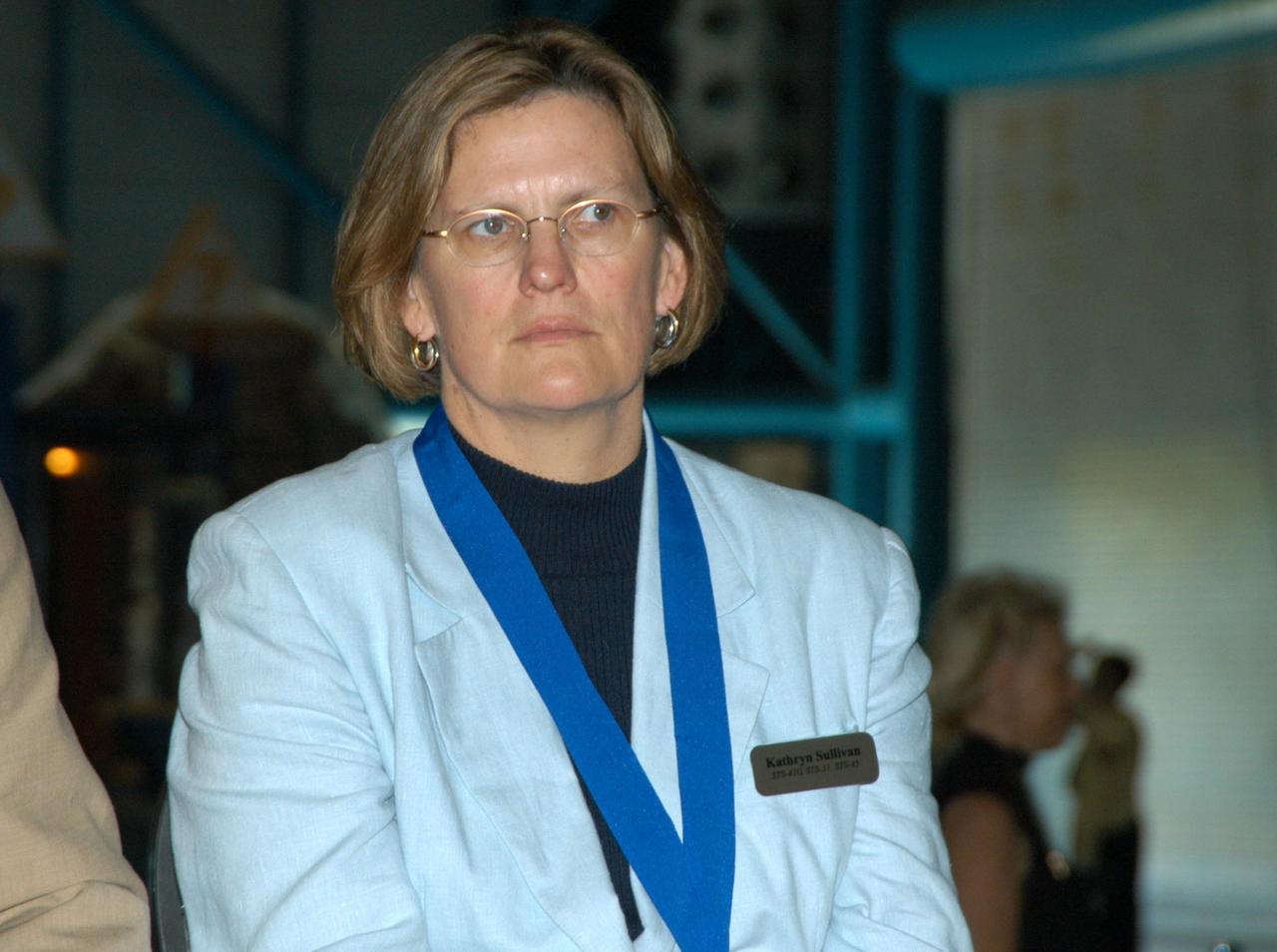
KENNEDY SPACE CENTER, FLA. -- At the Kennedy Space Center Visitor Complex, Kathryn D. Sullivan, the first American woman to walk in space, is one of five space program heroes inducted into the U.S. Astronaut Hall of Fame. Other inductees were Norman E. Thagard, the first American to occupy Russia’s Mir space station; the late Francis R. "Dick" Scobee, commander of the ill-fated 1986 Challenger mission; Richard O. Covey, commander of the Hubble Space Telescope repair mission; and Frederick D. Gregory, the first African-American to command a space mission and the current NASA deputy administrator. The U.S. Astronaut Hall of Fame opened in 1990 to provide a place where space travelers could be remembered for their participation and accomplishments in the U.S. space program. To be eligible for induction, an individual must have been a U.S. citizen, a NASA astronaut, and out of the active astronaut corps at least five years. The five inductees join 52 previously honored astronauts from the ranks of the Gemini, Apollo, Skylab, Apollo-Soyuz, and Space Shuttle programs.
KSC-04pd0997
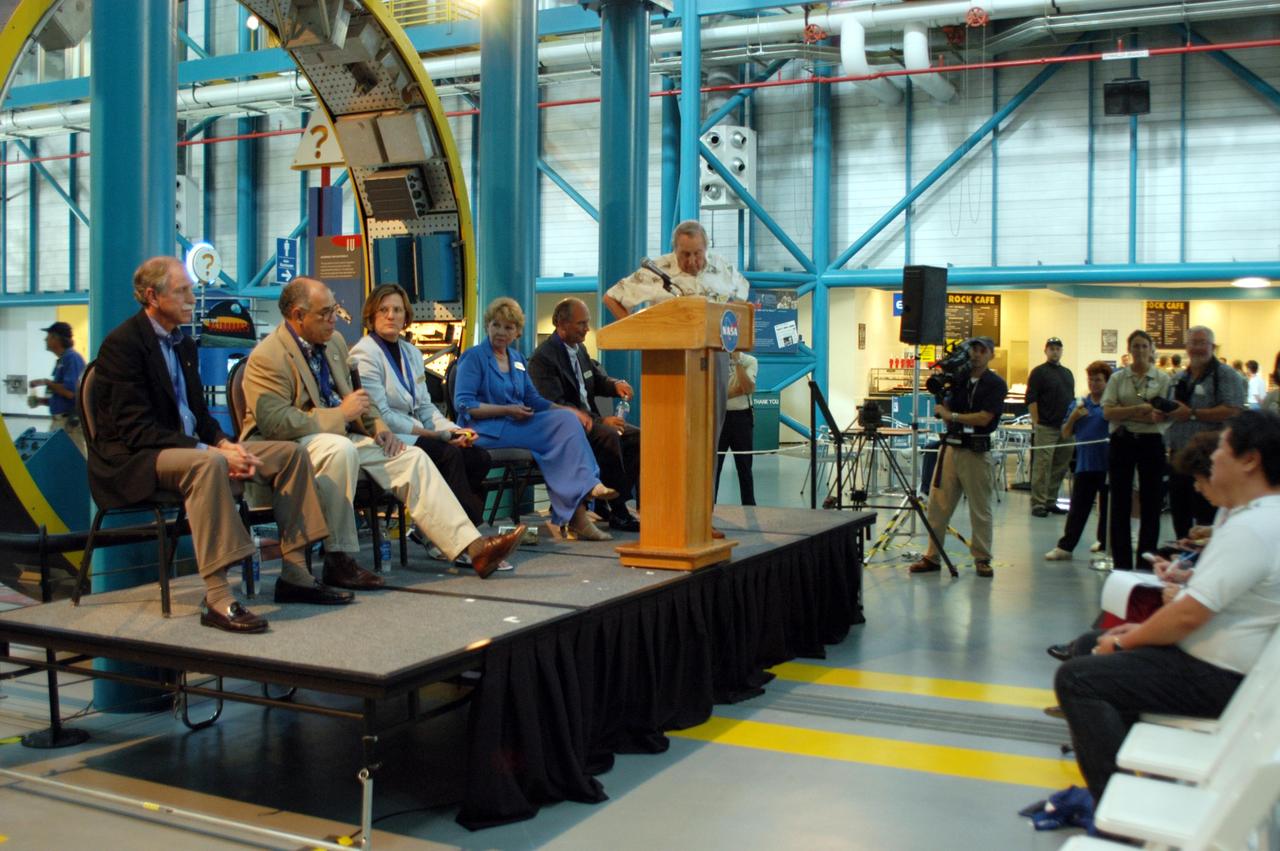
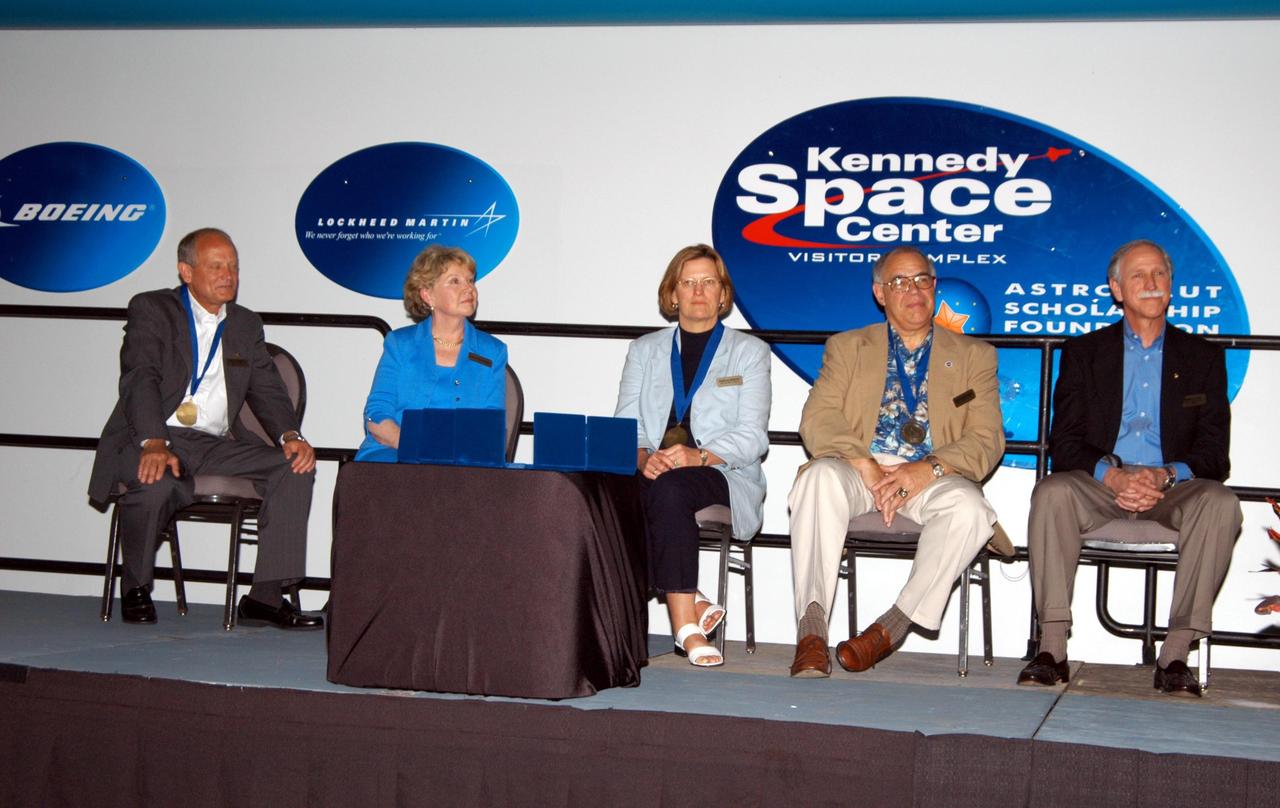
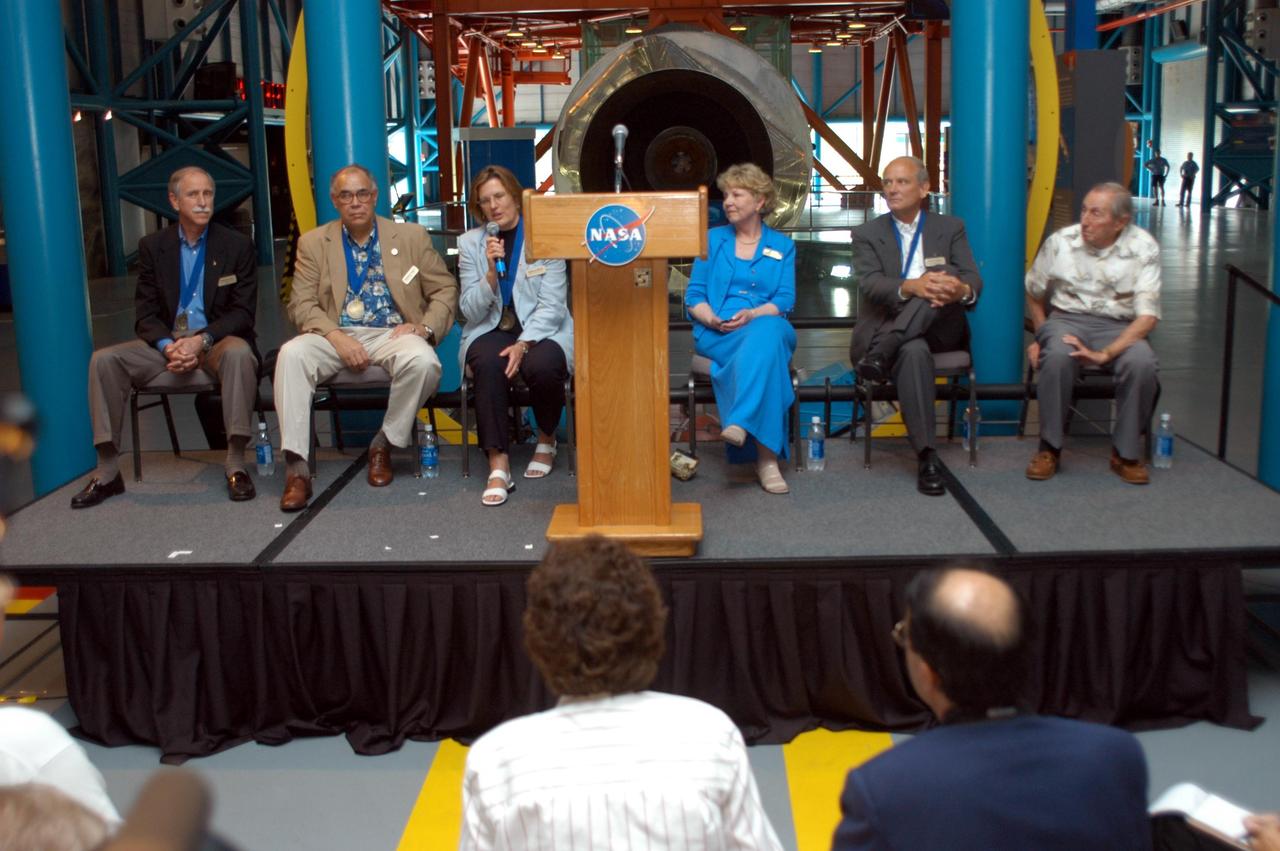
KENNEDY SPACE CENTER, FLA. --  Frederick D. Gregory (second from left), the first African-American to command a space mission and the current NASA deputy administrator, responds to a reporter’s question at a press conference in the Apollo/Saturn V Center following the induction ceremony of five space program heroes into the Astronaut Hall of Fame.  Seated (left to right) with him on the platform are Richard O. Covey, commander of the Hubble Space Telescope repair mission; Gregory; Kathryn D. Sullivan, the first American woman to walk in space; June Scobee, representing her late husband Francis R. "Dick" Scobee, commander of the ill-fated 1986 Challenger mission; and Norman E. Thagard, the first American to occupy Russia’s Mir space station. The U.S. Astronaut Hall of Fame opened in 1990 to provide a place where space travelers could be remembered for their participation and accomplishments in the U.S. space program. To be eligible for induction, an individual must have been a U.S. citizen, a NASA astronaut, and out of the active astronaut corps at least five years. The five inductees join 52 previously honored astronauts from the ranks of the Gemini, Apollo, Skylab, Apollo-Soyuz, and Space Shuttle programs.
KSC-04pd0999
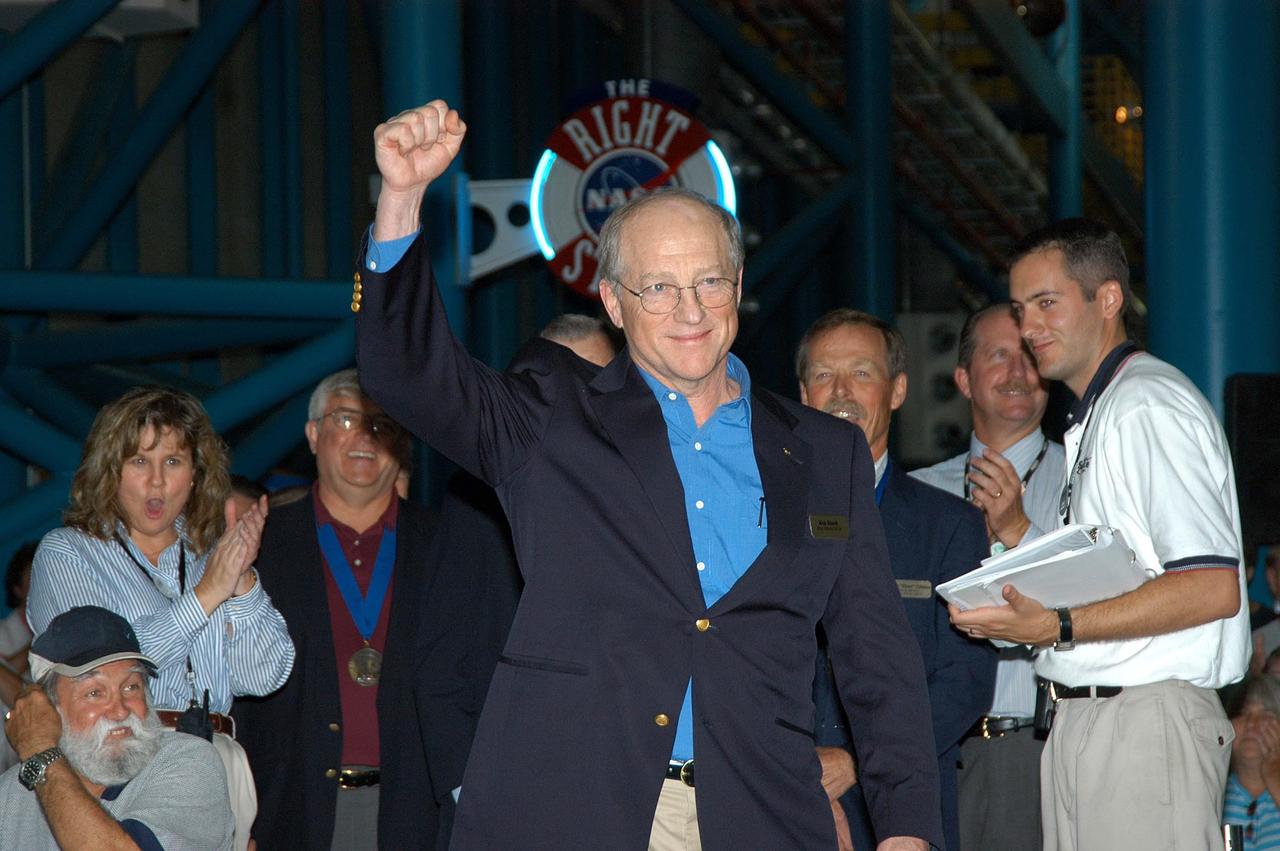
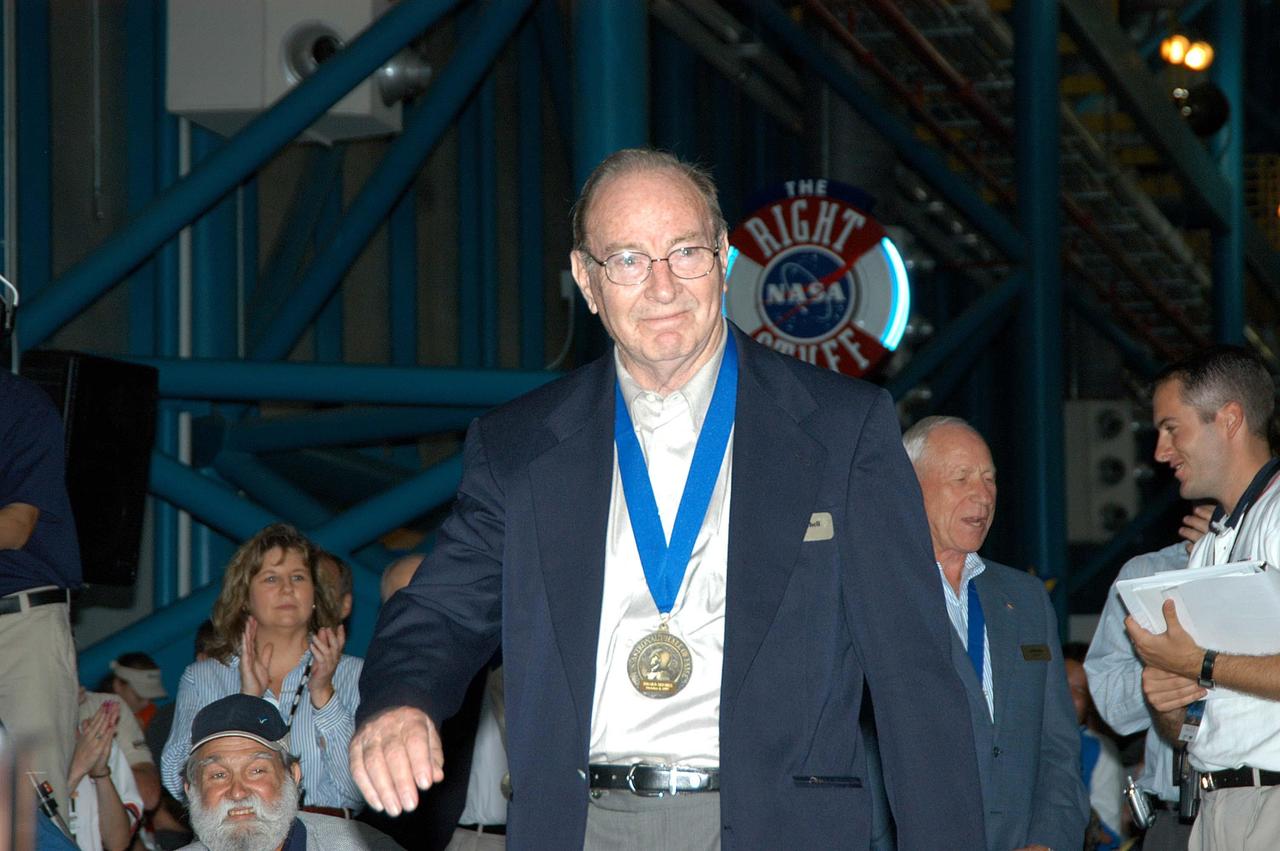
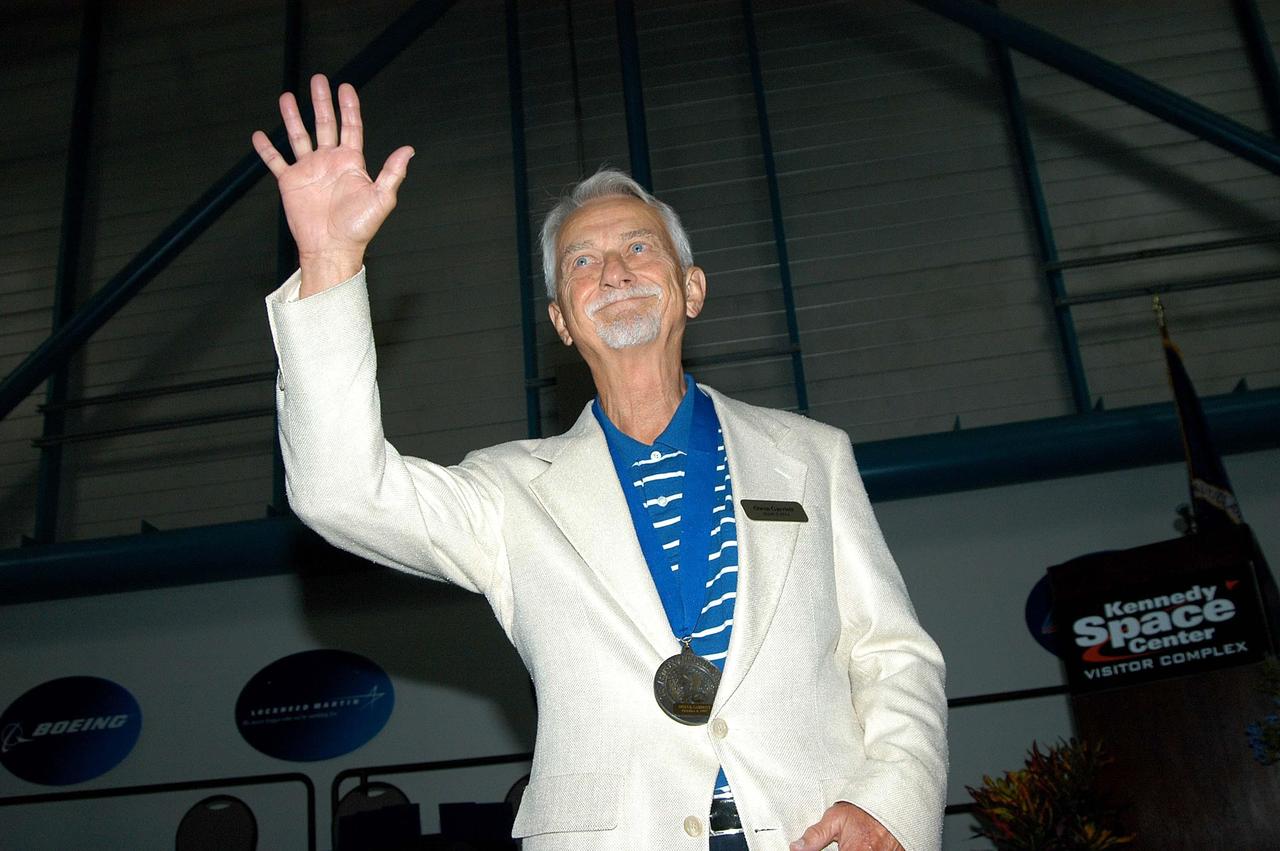
KENNEDY SPACE CENTER, FLA. --  Former astronaut Owen Garriott acknowledges the applause as he is introduced as a previous inductee into the U.S. Astronaut Hall of Fame.  He and other  Hall of Fame members were present for the induction of five new space program heroes into the U.S. Astronaut Hall of Fame: Richard O. Covey, commander of the Hubble Space Telescope repair mission; Norman E. Thagard, the first American to occupy Russia’s Mir space station; the late Francis R. "Dick" Scobee, commander of the ill-fated 1986 Challenger mission; Kathryn D. Sullivan, the first American woman to walk in space; and Frederick D. Gregory, the first African-American to command a space mission and the current NASA deputy administrator. Garriott exercised his expertise as a solar physicist on two space missions, the 59-day Skylab 3 flight in 1973, and an 11-day trip aboard the Space Shuttle Columbia a decade later. The induction ceremony was held at the Apollo/Saturn V Center at KSC.  The U.S. Astronaut Hall of Fame opened in 1990 to provide a place where space travelers could be remembered for their participation and accomplishments in the U.S. space program. The five inductees join 52 previously honored astronauts from the ranks of the Gemini, Apollo, Skylab, Apollo-Soyuz, and Space Shuttle programs.
KSC-04pd1012
KENNEDY SPACE CENTER, FLA. -- At the Kennedy Space Center Visitor Complex, Richard O. Covey, commander of the Hubble Space Telescope repair mission, speaks to guests at the induction of five space program heroes into the U.S. Astronaut Hall of Fame. Seated from left, they are Norman E. Thagard, the first American to occupy Russia’s Mir space station; June Scobee, on behalf of her late husband Francis R. "Dick" Scobee, commander of the ill-fated 1986 Challenger mission; Kathryn D. Sullivan, the first American woman to walk in space; and Frederick D. Gregory, the first African-American to command a space mission and the current NASA deputy administrator. The U.S. Astronaut Hall of Fame opened in 1990 to provide a place where space travelers could be remembered for their participation and accomplishments in the U.S. space program. To be eligible for induction, an individual must have been a U.S. citizen, a NASA astronaut, and out of the active astronaut corps at least five years. The five inductees join 52 previously honored astronauts from the ranks of the Gemini, Apollo, Skylab, Apollo-Soyuz, and Space Shuttle programs.
KSC-04pd0995
KENNEDY SPACE CENTER, FLA. -- Before the induction ceremony of five space program heroes into the U.S. Astronaut Hall of Fame, former astronaut Gordon Cooper is introduced as a previous inductee.  One of America’s original Mercury Seven astronauts, Cooper flew the last and longest Project Mercury orbital mission and spent eight days in space aboard Gemini 5. The ceremony was held at the Apollo/Saturn V Center at KSC.  New inductees are Richard O. Covey, commander of the Hubble Space Telescope repair mission; Norman E. Thagard, the first American to occupy Russia’s Mir space station; the late Francis R. "Dick" Scobee, commander of the ill-fated 1986 Challenger mission; Kathryn D. Sullivan, the first American woman to walk in space; and Frederick D. Gregory, the first African-American to command a space mission and the current NASA deputy administrator. The U.S. Astronaut Hall of Fame opened in 1990 to provide a place where space travelers could be remembered for their participation and accomplishments in the U.S. space program. The five inductees join 52 previously honored astronauts from the ranks of the Gemini, Apollo, Skylab, Apollo-Soyuz, and Space Shuttle programs.
KSC-04pd1006
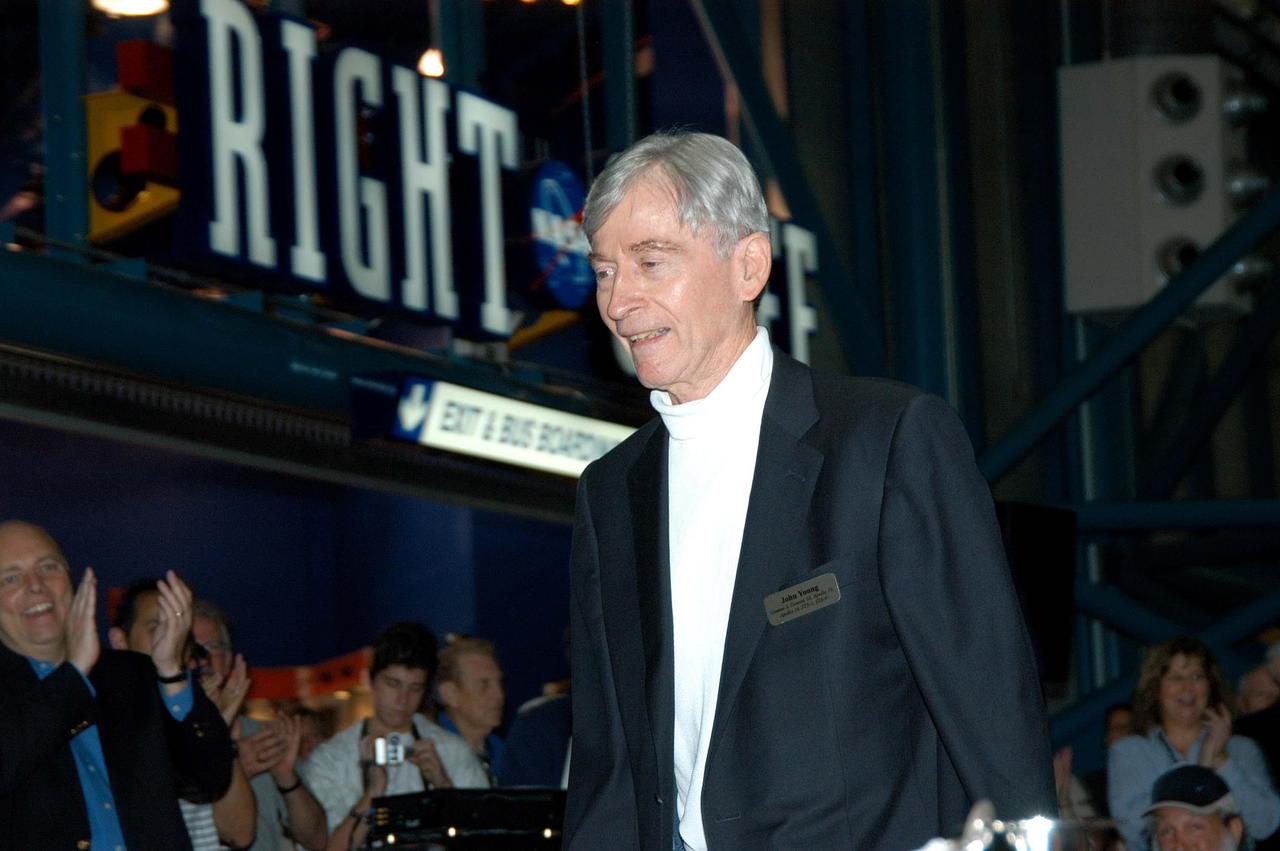
KENNEDY SPACE CENTER, FLA. --  Before the induction ceremony of five space program heroes into the U.S. Astronaut Hall of Fame, astronaut John Young is warmly greeted as he is introduced as a previous inductee.  Co-holder of a record for the most space flights, six, he flew on Gemini 3 and 10, orbited the Moon on Apollo 10, walked on the Moon on Apollo 16, and commanded two space shuttle missions, STS-1 and STS-9.  Young currently serves as associate director, technical, at  Johnson Space Center. The induction ceremony was held at the Apollo/Saturn V Center at KSC.  New inductees are Richard O. Covey, commander of the Hubble Space Telescope repair mission; Norman E. Thagard, the first American to occupy Russia’s Mir space station; the late Francis R. "Dick" Scobee, commander of the ill-fated 1986 Challenger mission; Kathryn D. Sullivan, the first American woman to walk in space; and Frederick D. Gregory, the first African-American to command a space mission and the current NASA deputy administrator. The U.S. Astronaut Hall of Fame opened in 1990 to provide a place where space travelers could be remembered for their participation and accomplishments in the U.S. space program. The five inductees join 52 previously honored astronauts from the ranks of the Gemini, Apollo, Skylab, Apollo-Soyuz, and Space Shuttle programs.
KSC-04pd1007
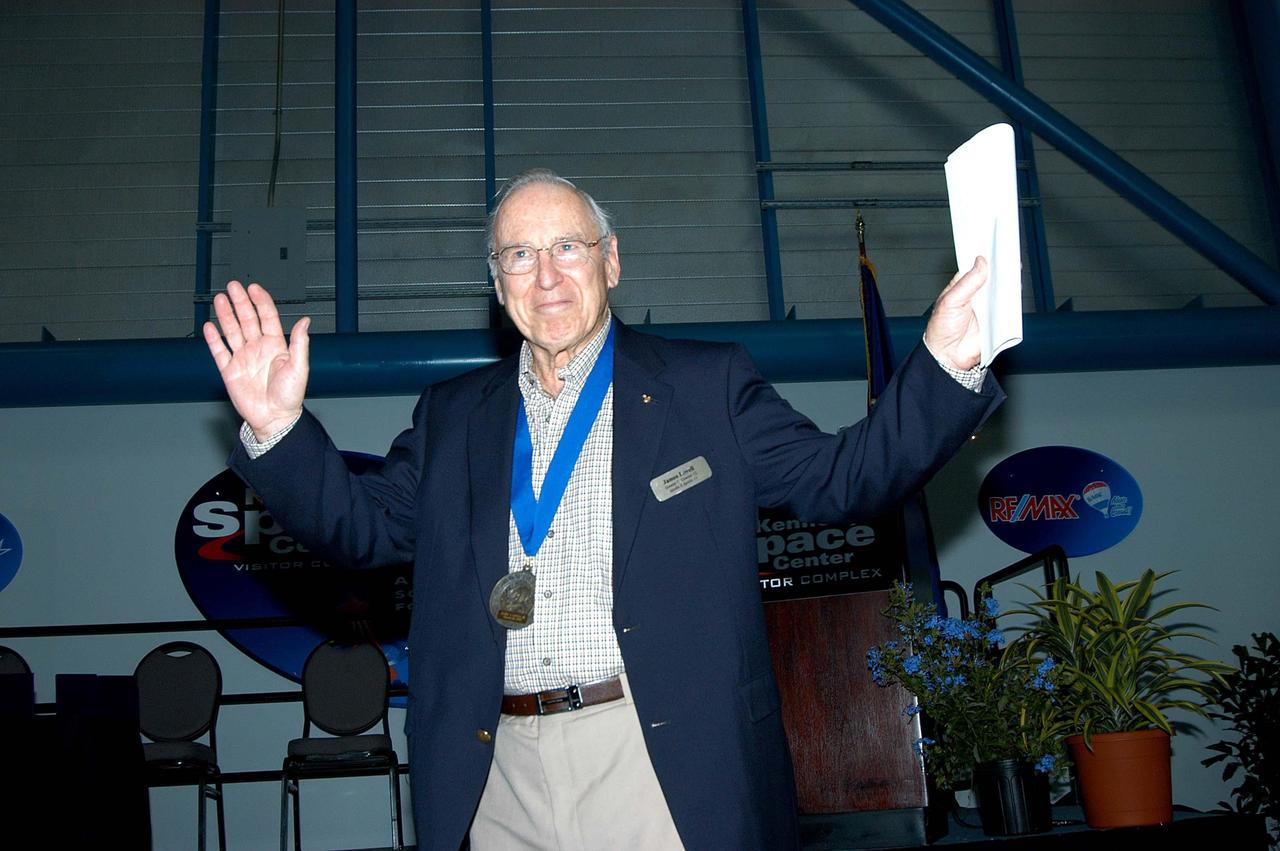
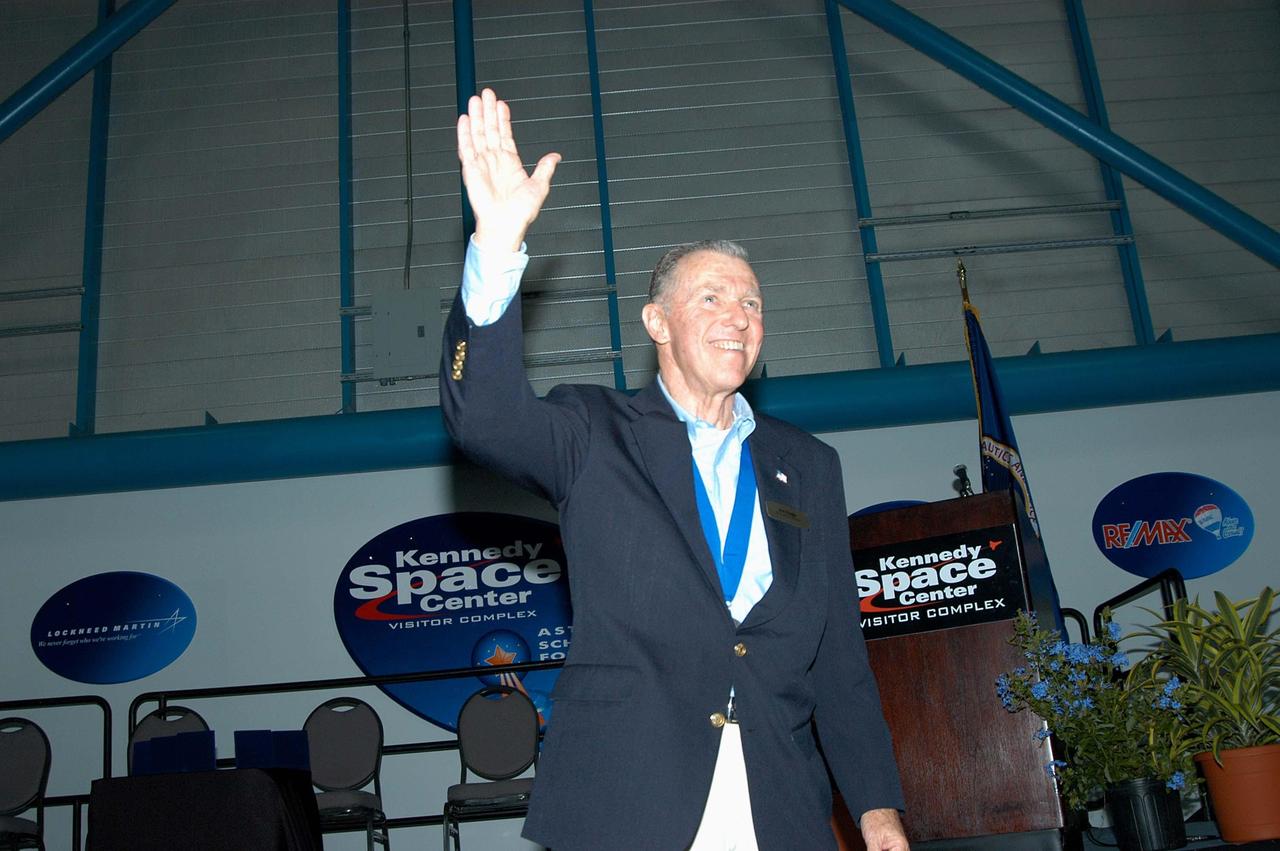
KENNEDY SPACE CENTER, FLA. -- Former astronaut Jim Lovell acknowledges the applause as he is introduced as a previous inductee into the U.S. Astronaut Hall of Fame.  He and other  Hall of Fame members were present for the induction of five new space program heroes into the U.S. Astronaut Hall of Fame: Richard O. Covey, commander of the Hubble Space Telescope repair mission; Norman E. Thagard, the first American to occupy Russia’s Mir space station; the late Francis R. "Dick" Scobee, commander of the ill-fated 1986 Challenger mission; Kathryn D. Sullivan, the first American woman to walk in space; and Frederick D. Gregory, the first African-American to command a space mission and the current NASA deputy administrator. Lovell piloted Gemini 7, commanded Gemini 12, orbited the Moon on Apollo 8 and commanded the aborted Apollo 13 moon flight.  The induction ceremony was held at the Apollo/Saturn V Center at KSC.  The U.S. Astronaut Hall of Fame opened in 1990 to provide a place where space travelers could be remembered for their participation and accomplishments in the U.S. space program. The five inductees join 52 previously honored astronauts from the ranks of the Gemini, Apollo, Skylab, Apollo-Soyuz, and Space Shuttle programs.
KSC-04pd1020
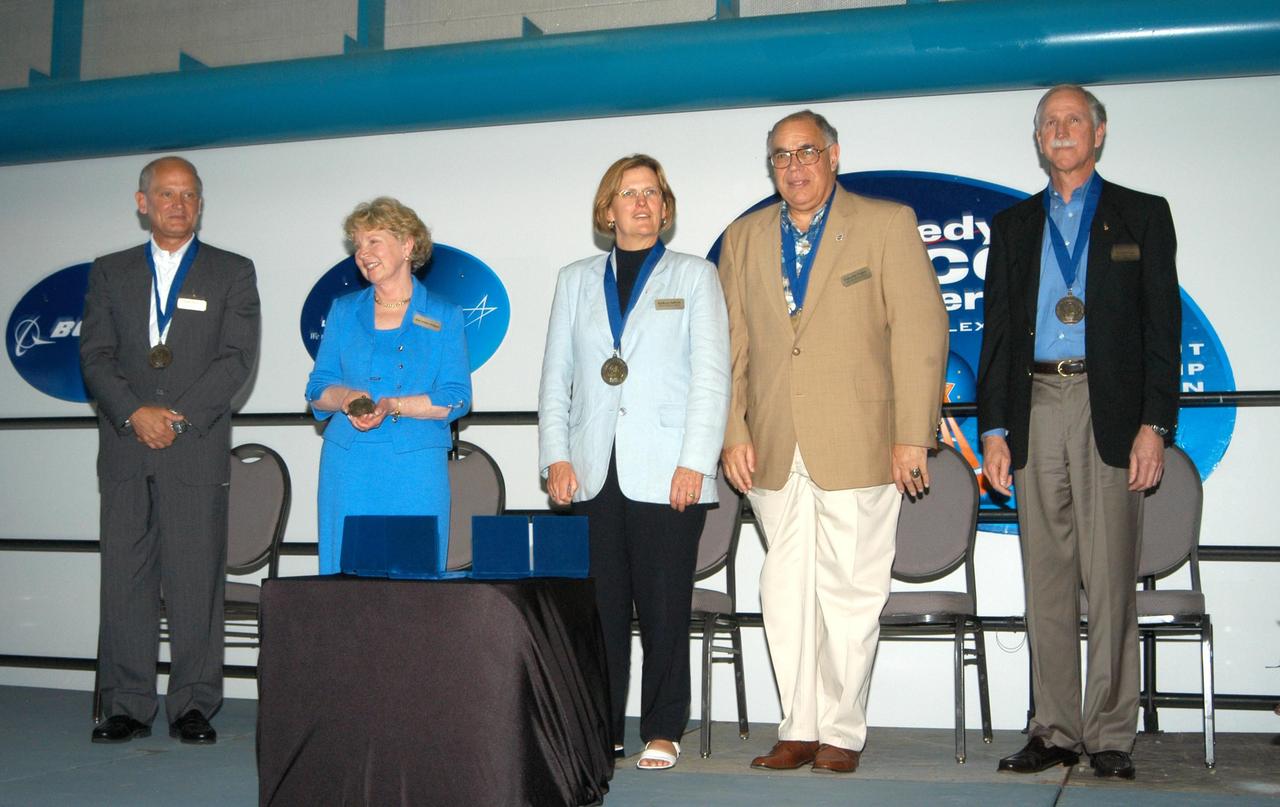
KENNEDY SPACE CENTER, FLA. -- At the Kennedy Space Center Visitor Complex, five space program heroes accept the accolades of the crowd attending their induction into the U.S. Astronaut Hall of Fame. From left, they are Norman E. Thagard, the first American to occupy Russia's Mir space station; June Scobee, on behalf of her late husband Francis R. "Dick" Scobee, commander of the ill-fated 1986 Challenger mission; Kathryn D. Sullivan, the first American woman to walk in space; Frederick D. Gregory, the first African-American to command a space mission and the current NASA Deputy Administrator; and Richard O. Covey, commander of the Hubble Space Telescope repair mission. The U.S. Astronaut Hall of Fame opened in 1990 to provide a place where space travelers could be remembered for their participation and accomplishments in the U.S. space program. To be eligible for induction, an individual must have been a U.S. citizen, a NASA astronaut, and out of the active astronaut corps at least five years. The five inductees join 52 previously honored astronauts from the ranks of the Gemini, Apollo, Skylab, Apollo-Soyuz, and Space Shuttle programs.
KSC-04pd1001
KENNEDY SPACE CENTER, FLA. --  Former astronaut Frederick (Rick) Hauck acknowledges the warm response to his introduction as a previous inductee into the U.S. Astronaut Hall of Fame.  He and other  Hall of Fame members were present for the induction of five new space program heroes into the U.S. Astronaut Hall of Fame: Richard O. Covey, commander of the Hubble Space Telescope repair mission; Norman E. Thagard, the first American to occupy Russia’s Mir space station; the late Francis R. "Dick" Scobee, commander of the ill-fated 1986 Challenger mission; Kathryn D. Sullivan, the first American woman to walk in space; and Frederick D. Gregory, the first African-American to command a space mission and the current NASA deputy administrator.  Hauck flew on three Space Shuttle missions, including command of the redesigned spaceship on its critical first flight after the explosion of Challenger.  The induction ceremony was held at the Apollo/Saturn V Center at KSC.  The U.S. Astronaut Hall of Fame opened in 1990 to provide a place where space travelers could be remembered for their participation and accomplishments in the U.S. space program. The five inductees join 52 previously honored astronauts from the ranks of the Gemini, Apollo, Skylab, Apollo-Soyuz, and Space Shuttle programs.
KSC-04pd1016
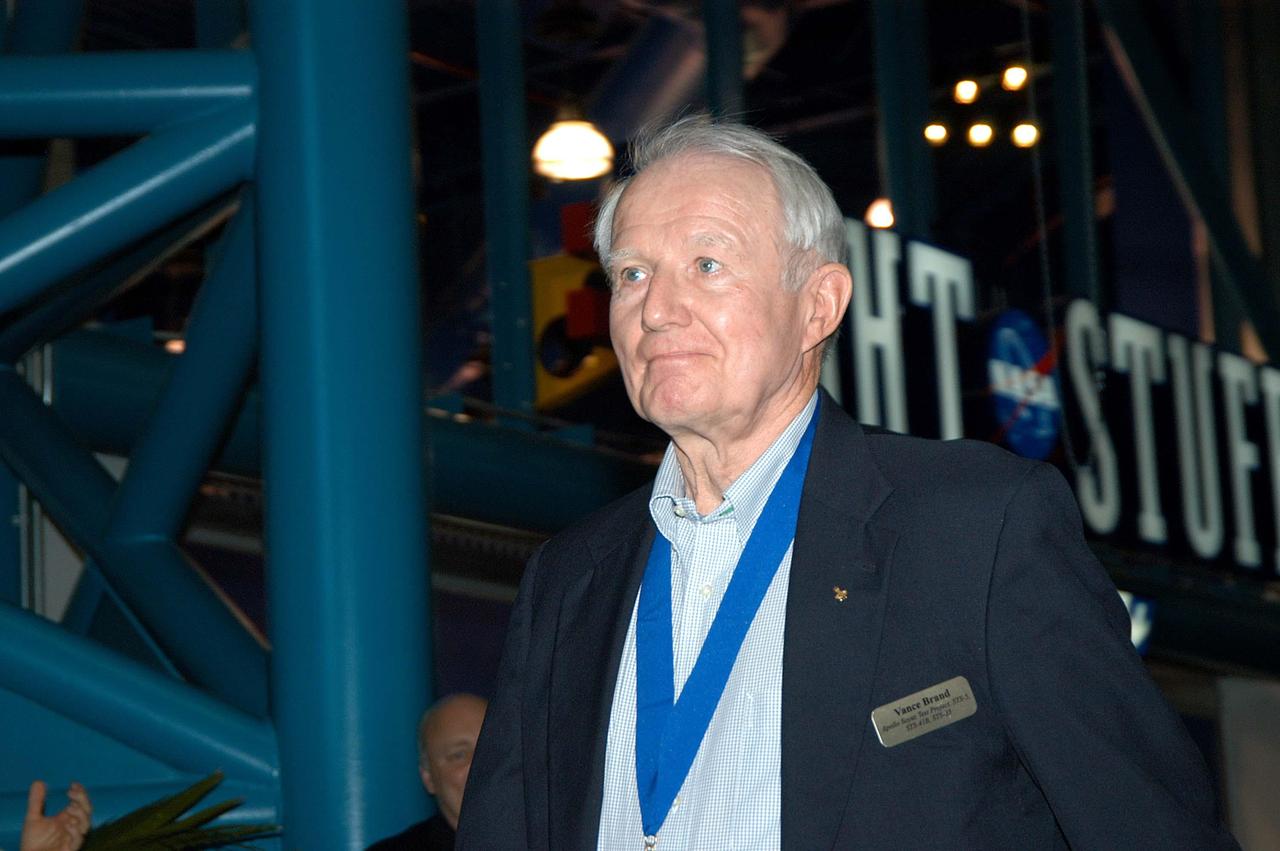
KENNEDY SPACE CENTER, FLA. --  Former astronaut Vance Brand is introduced as a previous inductee into the U.S. Astronaut Hall of Fame.  He and other  Hall of Fame members were present for the induction of five new space program heroes into the U.S. Astronaut Hall of Fame: Richard O. Covey, commander of the Hubble Space Telescope repair mission; Norman E. Thagard, the first American to occupy Russia’s Mir space station; the late Francis R. "Dick" Scobee, commander of the ill-fated 1986 Challenger mission; Kathryn D. Sullivan, the first American woman to walk in space; and Frederick D. Gregory, the first African-American to command a space mission and the current NASA deputy administrator.  Brand was Command Module Pilot on the 1975 Apollo-Soyuz Test Project, the first linkup in orbit between spaceships of the United States and Soviet Union, and he later commanded three Space Shuttle missions. The induction ceremony was held at the Apollo/Saturn V Center at KSC.  The U.S. Astronaut Hall of Fame opened in 1990 to provide a place where space travelers could be remembered for their participation and accomplishments in the U.S. space program. The five inductees join 52 previously honored astronauts from the ranks of the Gemini, Apollo, Skylab, Apollo-Soyuz, and Space Shuttle programs.
KSC-04pd1013
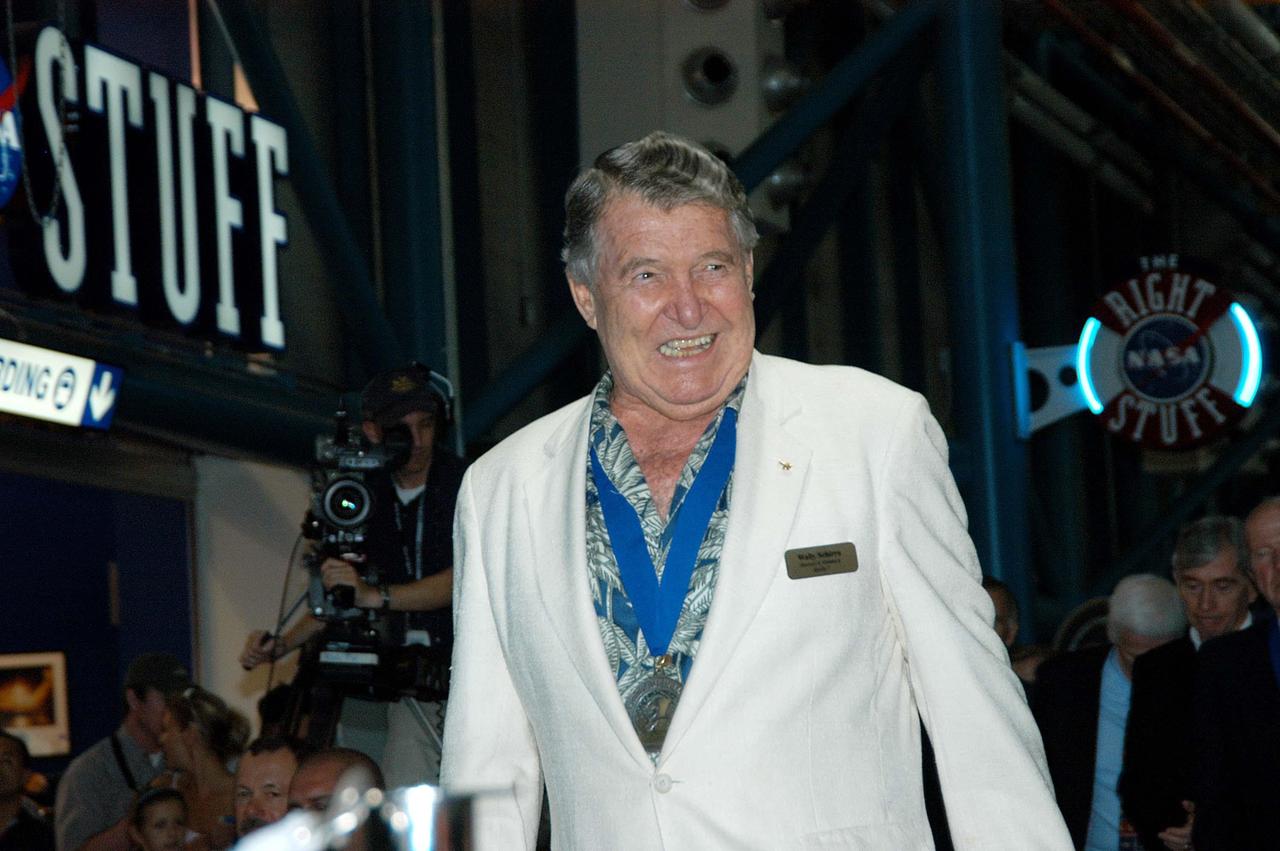
KENNEDY SPACE CENTER, FLA. --  Before the induction ceremony of five space program heroes into the U.S. Astronaut Hall of Fame, former astronaut Wally Schirra is greeted with applause as he is introduced as a previous inductee.  One of America's original Mercury Seven astronauts, Schirra is  the only one who flew in all three of the nation's pioneering space programs, Mercury, Gemini, and Apollo. The ceremony was held at the Apollo/Saturn V Center at KSC.  New inductees are Richard O. Covey, commander of the Hubble Space Telescope repair mission; Norman E. Thagard, the first American to occupy Russia’s Mir space station; the late Francis R. "Dick" Scobee, commander of the ill-fated 1986 Challenger mission; Kathryn D. Sullivan, the first American woman to walk in space; and Frederick D. Gregory, the first African-American to command a space mission and the current NASA deputy administrator. The U.S. Astronaut Hall of Fame opened in 1990 to provide a place where space travelers could be remembered for their participation and accomplishments in the U.S. space program. The five inductees join 52 previously honored astronauts from the ranks of the Gemini, Apollo, Skylab, Apollo-Soyuz, and Space Shuttle programs.
KSC-04pd1005
KENNEDY SPACE CENTER, FLA. --  Former astronaut Al Worden acknowledges the applause as he is introduced as a previous inductee into the U.S. Astronaut Hall of Fame.  He and other  Hall of Fame members were present for the induction of five new space program heroes into the U.S. Astronaut Hall of Fame: Richard O. Covey, commander of the Hubble Space Telescope repair mission; Norman E. Thagard, the first American to occupy Russia’s Mir space station; the late Francis R. "Dick" Scobee, commander of the ill-fated 1986 Challenger mission; Kathryn D. Sullivan, the first American woman to walk in space; and Frederick D. Gregory, the first African-American to command a space mission and the current NASA deputy administrator. Worden served as Command Module pilot on the 1971 Apollo 15 moon mission, during which he orbited the Moon and took a space walk 200,000 miles from Earth.  The induction ceremony was held at the Apollo/Saturn V Center at KSC.  The U.S. Astronaut Hall of Fame opened in 1990 to provide a place where space travelers could be remembered for their participation and accomplishments in the U.S. space program. The five inductees join 52 previously honored astronauts from the ranks of the Gemini, Apollo, Skylab, Apollo-Soyuz, and Space Shuttle programs.
KSC-04pd1010
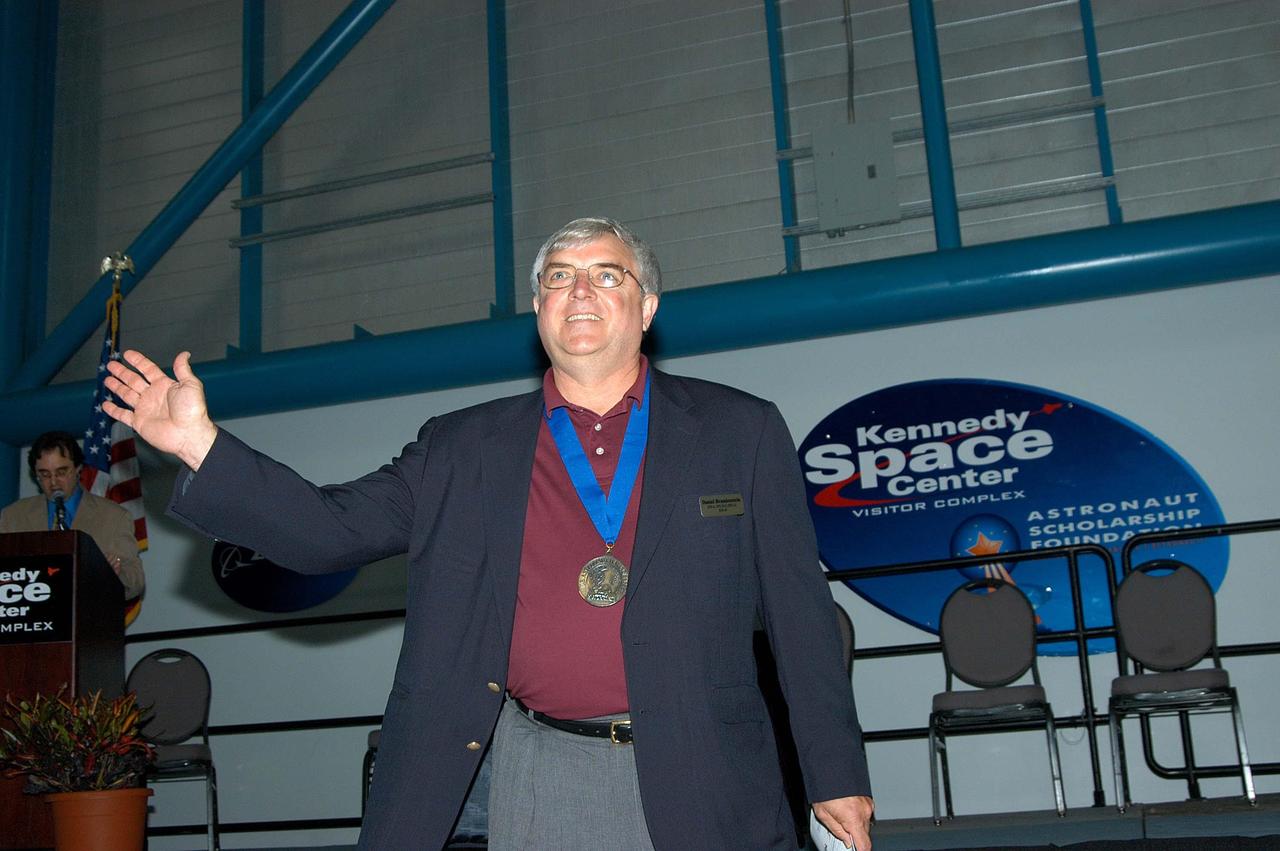
KENNEDY SPACE CENTER, FLA. -- Former astronaut Dan Brandenstein acknowledges the applause as he is introduced as a previous inductee into the U.S. Astronaut Hall of Fame.  He and other  Hall of Fame members were present for the induction of five new space program heroes into the U.S. Astronaut Hall of Fame: Richard O. Covey, commander of the Hubble Space Telescope repair mission; Norman E. Thagard, the first American to occupy Russia’s Mir space station; the late Francis R. "Dick" Scobee, commander of the ill-fated 1986 Challenger mission; Kathryn D. Sullivan, the first American woman to walk in space; and Frederick D. Gregory, the first African-American to command a space mission and the current NASA deputy administrator. Brandenstein piloted one Space Shuttle mission and commanded three others, including the maiden flight of Endeavour, and later served as chief of the Astronaut Office. The induction ceremony was held at the Apollo/Saturn V Center at KSC.  The U.S. Astronaut Hall of Fame opened in 1990 to provide a place where space travelers could be remembered for their participation and accomplishments in the U.S. space program. The five inductees join 52 previously honored astronauts from the ranks of the Gemini, Apollo, Skylab, Apollo-Soyuz, and Space Shuttle programs.
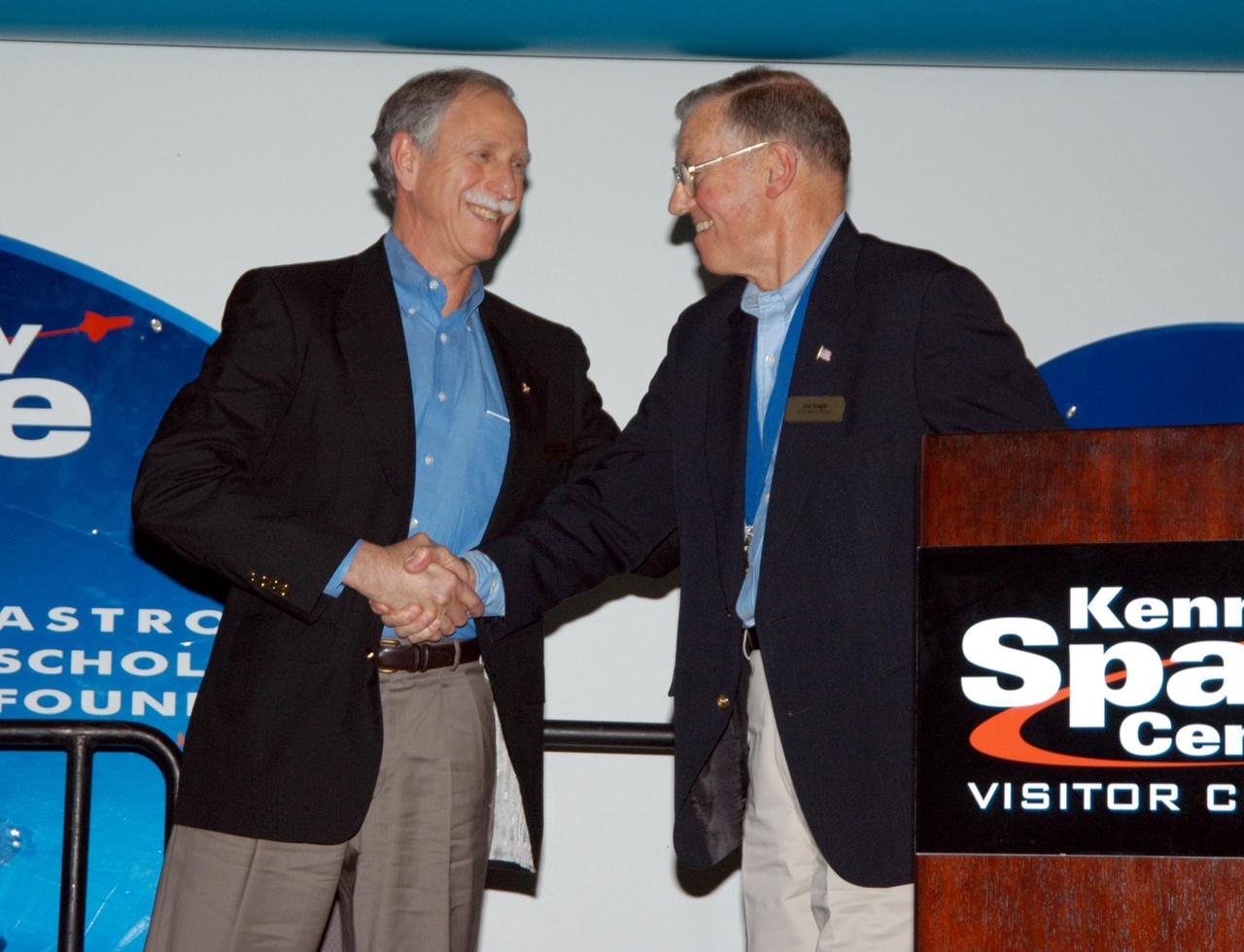
KSC-04pd1019
KENNEDY SPACE CENTER, FLA. -- At the Kennedy Space Center Visitor Complex, five space heroes are being inducted into the U.S. Astronaut Hall of Fame. From left, they are Norman E. Thagard, the first American to occupy Russia's Mir space station; June Scobee, representing her late husband Francis R. "Dick" Scobee, commander of the ill-fated 1986 Challenger mission; Kathryn D. Sullivan, the first American woman to walk in space; Frederick D. Gregory, the first African-American to command a space mission and the current NASA Deputy Administrator; and Richard O. Covey, commander of the Hubble Space Telescope repair mission. The U.S. Astronaut Hall of Fame opened in 1990 to provide a place where space travelers could be remembered for their participation and accomplishments in the U.S. space program. To be eligible for induction, an individual must have been a U.S. citizen, a NASA astronaut, and out of the active astronaut corps at least five years. The five inductees join 52 previously honored astronauts from the ranks of the Gemini, Apollo, Skylab, Apollo-Soyuz, and Space Shuttle programs.
KSC-04pd0990
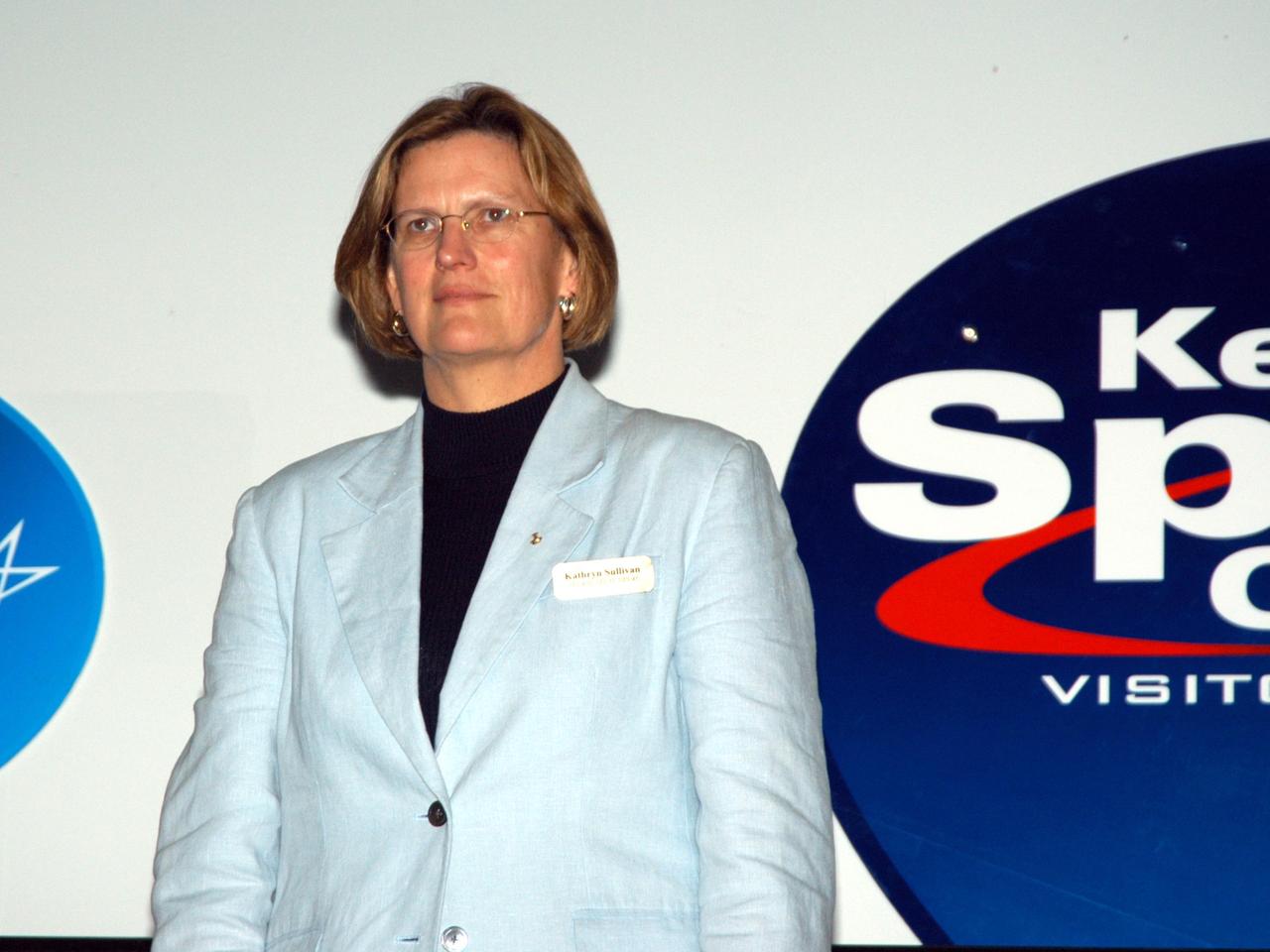
KENNEDY SPACE CENTER, FLA. -- At the Kennedy Space Center Visitor Complex, Dr. Kathryn D. Sullivan, the first American woman to walk in space, is inducted into the U.S. Astronaut Hall of Fame.  Also chosen for this honor in 2004 are Richard O. Covey, commander of the Hubble Space Telescope repair mission; Frederick D. Gregory, the first African-American to command a space mission; Norman E. Thagard, the first American to occupy Russia's Mir space station; and the late Francis R. "Dick" Scobee, commander of the ill-fated 1986 Challenger mission. The U.S. Astronaut Hall of Fame opened in 1990 to provide a place where space travelers could be remembered for their participation and accomplishments in the U.S. space program. To be eligible for induction, an individual must have been a U.S. citizen, a NASA astronaut, and out of the active astronaut corps at least five years. The five inductees join 52 previously honored astronauts from the ranks of the Gemini, Apollo, Skylab, Apollo-Soyuz, and Space Shuttle programs.
KSC-04pd0976
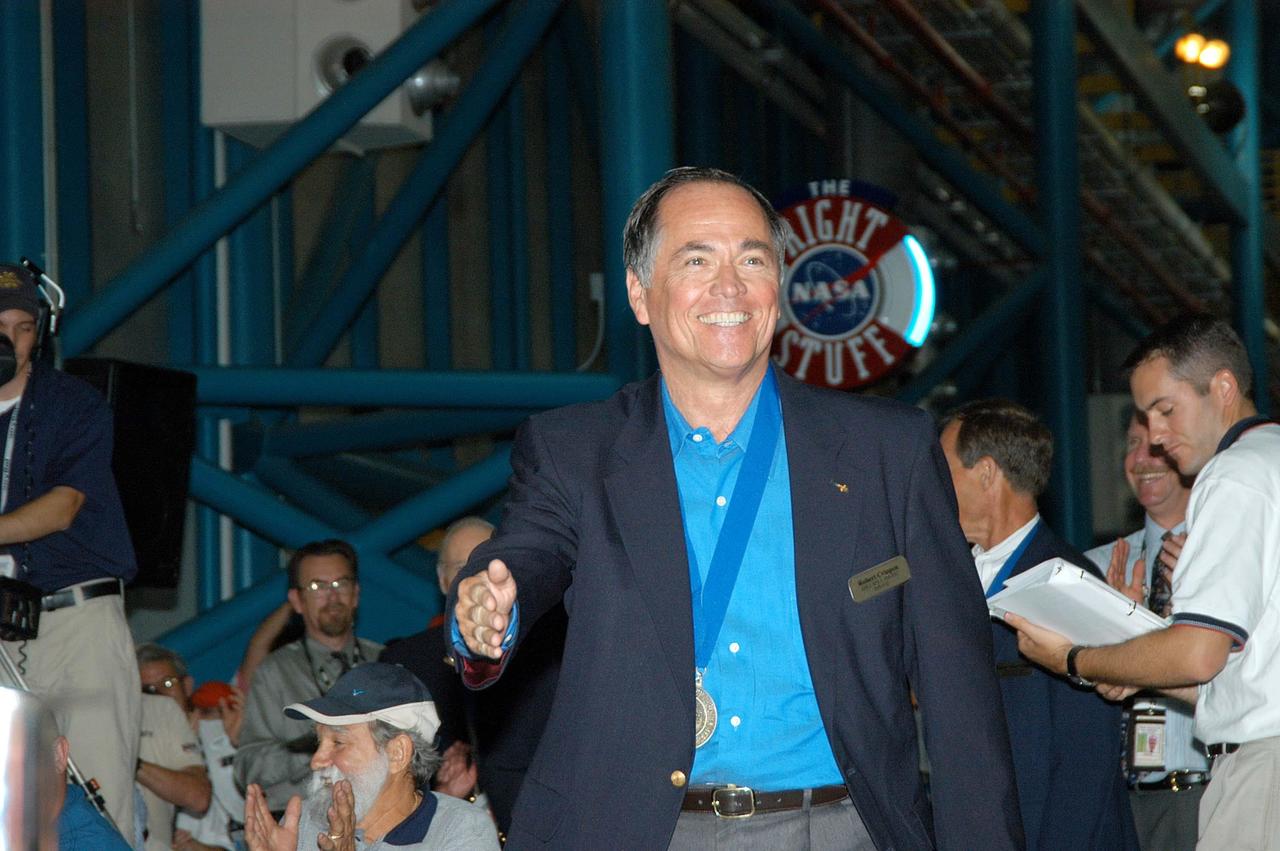
KENNEDY SPACE CENTER, FLA. --  Former astronaut Robert Crippen smiles at the warm greeting he is receiving when introduced as a previous inductee into the U.S. Astronaut Hall of Fame.  He and other  Hall of Fame members were present for the induction of five new space program heroes into the U.S. Astronaut Hall of Fame: Richard O. Covey, commander of the Hubble Space Telescope repair mission; Norman E. Thagard, the first American to occupy Russia’s Mir space station; the late Francis R. "Dick" Scobee, commander of the ill-fated 1986 Challenger mission; Kathryn D. Sullivan, the first American woman to walk in space; and Frederick D. Gregory, the first African-American to command a space mission and the current NASA deputy administrator.  Crippen piloted the first Space Shuttle flight in 1981 and commanded three other Shuttle missions in the next 3-1/2 years. In the early 1990s he served as director of NASA’s Kennedy Space Center. The induction ceremony was held at the Apollo/Saturn V Center at KSC.  The U.S. Astronaut Hall of Fame opened in 1990 to provide a place where space travelers could be remembered for their participation and accomplishments in the U.S. space program. The five inductees join 52 previously honored astronauts from the ranks of the Gemini, Apollo, Skylab, Apollo-Soyuz, and Space Shuttle programs.
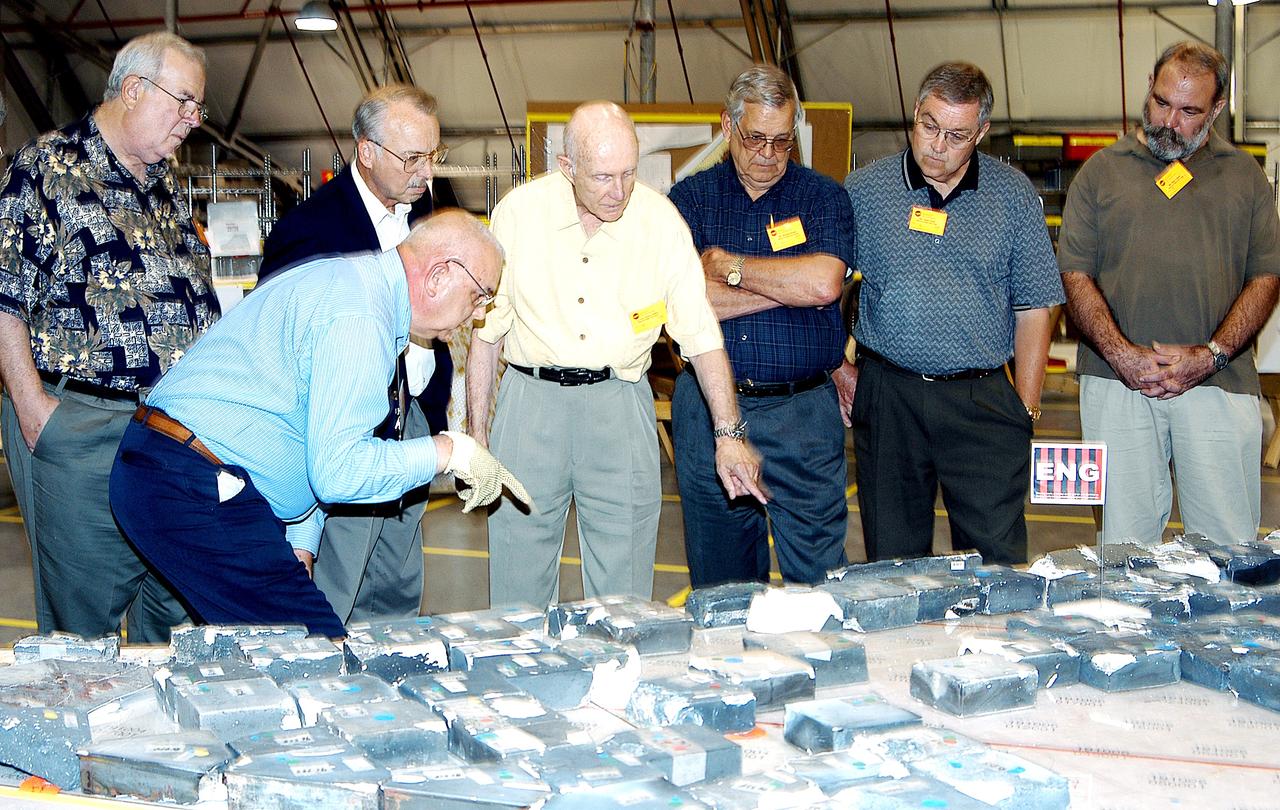
KSC-04pd1015
KENNEDY SPACE CENTER, FLA. --  Before the induction ceremony of five space program heroes into the U.S. Astronaut Hall of Fame, former astronaut Ed Mitchell is introduced as a previous inductee.  Mitchell explored the Moon's hilly Fra Mauro region with Alan B. Shepard during the 1971 Apollo 14 mission. The ceremony was held at the Apollo/Saturn V Center at KSC.  New inductees are Richard O. Covey, commander of the Hubble Space Telescope repair mission; Norman E. Thagard, the first American to occupy Russia’s Mir space station; the late Francis R. "Dick" Scobee, commander of the ill-fated 1986 Challenger mission; Kathryn D. Sullivan, the first American woman to walk in space; and Frederick D. Gregory, the first African-American to command a space mission and the current NASA deputy administrator. The U.S. Astronaut Hall of Fame opened in 1990 to provide a place where space travelers could be remembered for their participation and accomplishments in the U.S. space program. The five inductees join 52 previously honored astronauts from the ranks of the Gemini, Apollo, Skylab, Apollo-Soyuz, and Space Shuttle programs.
KSC-04pd1009
KENNEDY SPACE CENTER, FLA. -- At the Kennedy Space Center Visitor Complex, Richard O. Covey, commander of the Hubble Space Telescope repair mission, is one of five space program heroes inducted into the U.S. Astronaut Hall of Fame. Other inductees were Norman E. Thagard, the first American to occupy Russia’s Mir space station; the late Francis R. "Dick" Scobee, commander of the ill-fated 1986 Challenger mission; Kathryn D. Sullivan, the first American woman to walk in space; and Frederick D. Gregory, the first African-American to command a space mission and the current NASA deputy administrator. The U.S. Astronaut Hall of Fame opened in 1990 to provide a place where space travelers could be remembered for their participation and accomplishments in the U.S. space program. To be eligible for induction, an individual must have been a U.S. citizen, a NASA astronaut, and out of the active astronaut corps at least five years. The five inductees join 52 previously honored astronauts from the ranks of the Gemini, Apollo, Skylab, Apollo-Soyuz, and Space Shuttle programs.
KSC-04pd0996
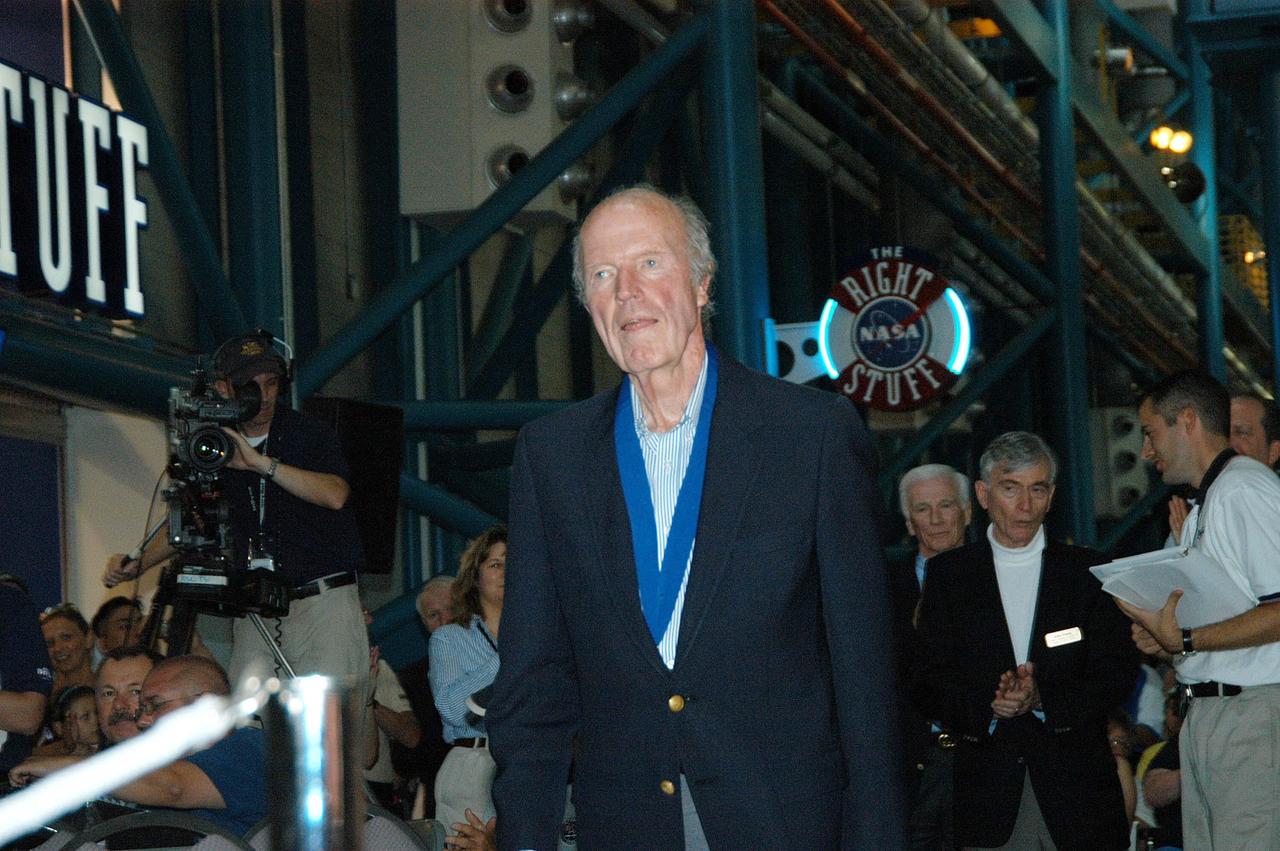
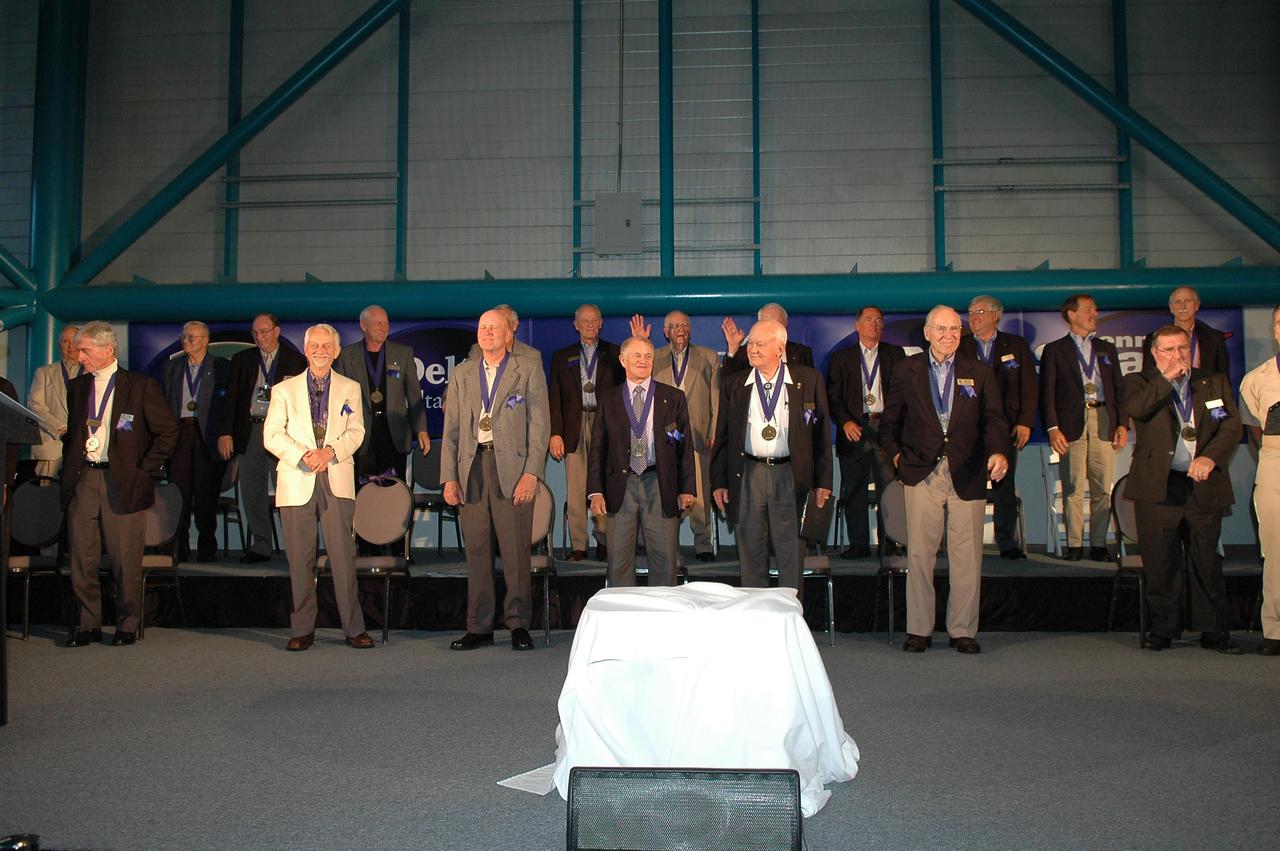
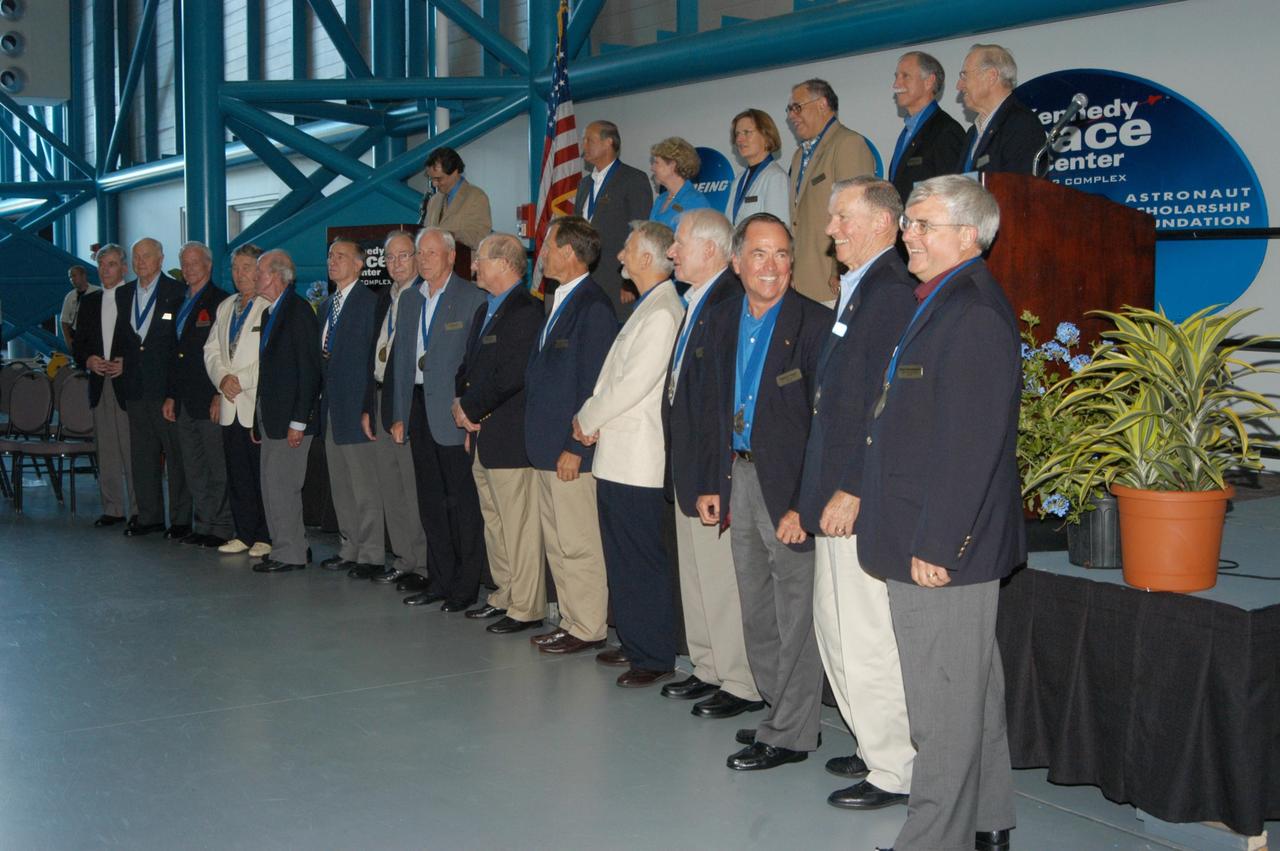
KENNEDY SPACE CENTER, FLA. -- Following the induction ceremony welcoming five new space program heroes in the U.S. Astronaut Hall of Fame, the members line up for a commemorative photo.  From left, in front, are John Young, John Glenn Jr., Scott Carpenter, Wally Schirra, Gordon Cooper, Walt Cunningham, Ed Mitchell, Al Worden, Rick Hauck, Ed Gibson, Owen Garriott, Vance Brand, Robert Crippen, Joe Engle, Dan Brandenstein. In back are space author Andrew Chaikin, at the podium; and Norm Thagard, June Scobee representing her late husband Dick Scobee, Kathryn Sullivan, Fred Gregory, Richard Covey and Jim Lovell.  The induction ceremony was held at the Apollo/Saturn V Center at KSC.  The U.S. Astronaut Hall of Fame opened in 1990 to provide a place where space travelers could be remembered for their participation and accomplishments in the U.S. space program. The five inductees join 52 previously honored astronauts from the ranks of the Gemini, Apollo, Skylab, Apollo-Soyuz, and Space Shuttle programs.
KSC-04pd1021
KENNEDY SPACE CENTER, FLA. --  Kathryn D. Sullivan, the first American woman to walk in space, responds to a reporter’s question at a press conference in the Apollo/Saturn V Center following the induction ceremony of five space program heroes into the Astronaut Hall of Fame.  Seated (left to right) with her are Richard O. Covey, commander of the Hubble Space Telescope repair mission; Frederick D. Gregory (second from left), the first African-American to command a space mission and the current NASA deputy administrator; Sullivan; June Scobee, representing her late husband Francis R. "Dick" Scobee, commander of the ill-fated 1986 Challenger mission; and Norman E. Thagard, the first American to occupy Russia’s Mir space station. The U.S. Astronaut Hall of Fame opened in 1990 to provide a place where space travelers could be remembered for their participation and accomplishments in the U.S. space program. To be eligible for induction, an individual must have been a U.S. citizen, a NASA astronaut, and out of the active astronaut corps at least five years. The five inductees join 52 previously honored astronauts from the ranks of the Gemini, Apollo, Skylab, Apollo-Soyuz, and Space Shuttle programs.
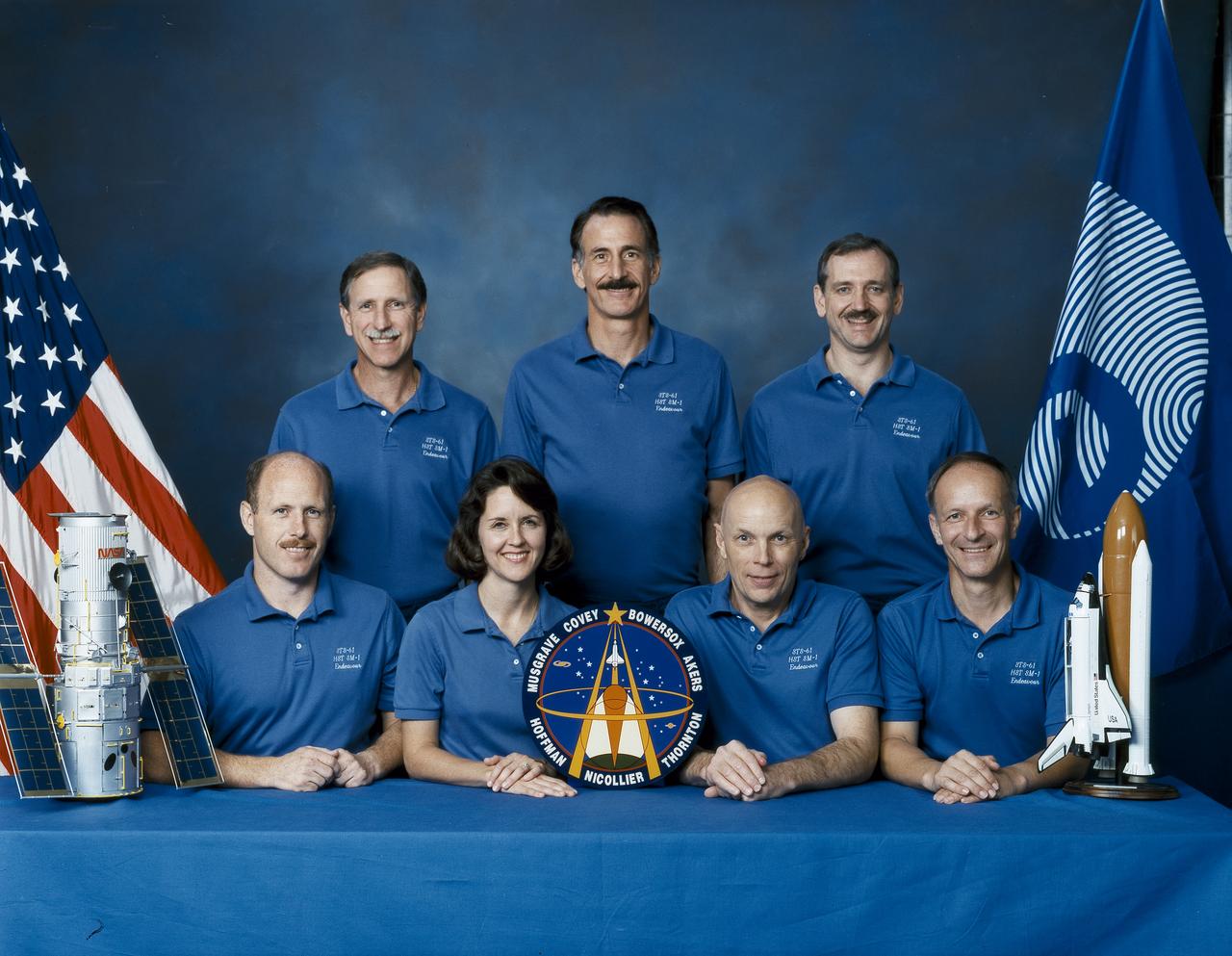
KSC-04pd1000
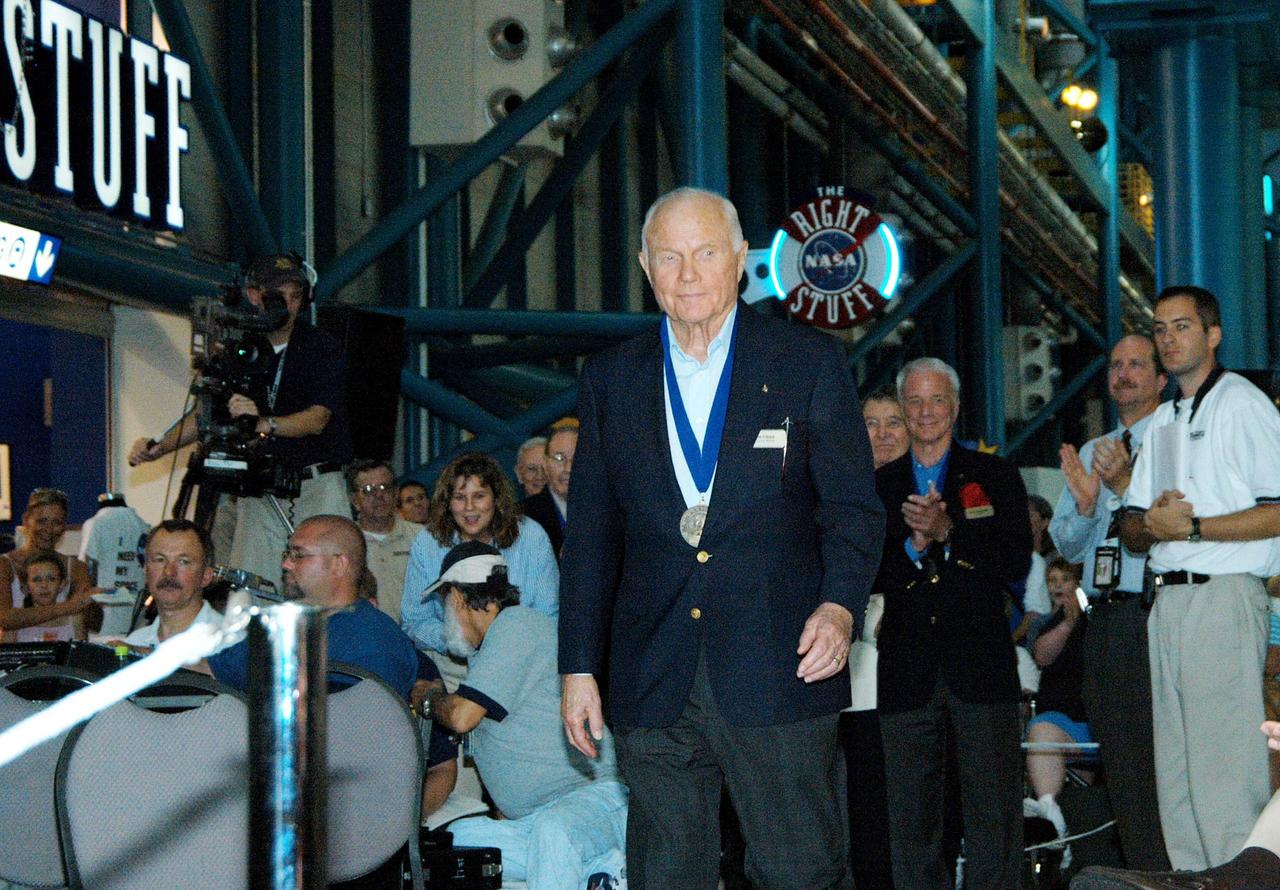
KENNEDY SPACE CENTER, FLA. --  Before the induction ceremony of five space program heroes into the U.S. Astronaut Hall of Fame, former astronaut John Glenn Jr. is greeted with applause as he is introduced as a previous inductee.  One of America's original Mercury Seven astronauts, in 1962 he became the first American to orbit the Earth. Twenty-six years later, at age 77, he spent nine days in space aboard Space Shuttle Discovery.  The ceremony was held at the Apollo/Saturn V Center at KSC.  New inductees are Richard O. Covey, commander of the Hubble Space Telescope repair mission; Norman E. Thagard, the first American to occupy Russia’s Mir space station; the late Francis R. "Dick" Scobee, commander of the ill-fated 1986 Challenger mission; Kathryn D. Sullivan, the first American woman to walk in space; and Frederick D. Gregory, the first African-American to command a space mission and the current NASA deputy administrator. The U.S. Astronaut Hall of Fame opened in 1990 to provide a place where space travelers could be remembered for their participation and accomplishments in the U.S. space program. The five inductees join 52 previously honored astronauts from the ranks of the Gemini, Apollo, Skylab, Apollo-Soyuz, and Space Shuttle programs.
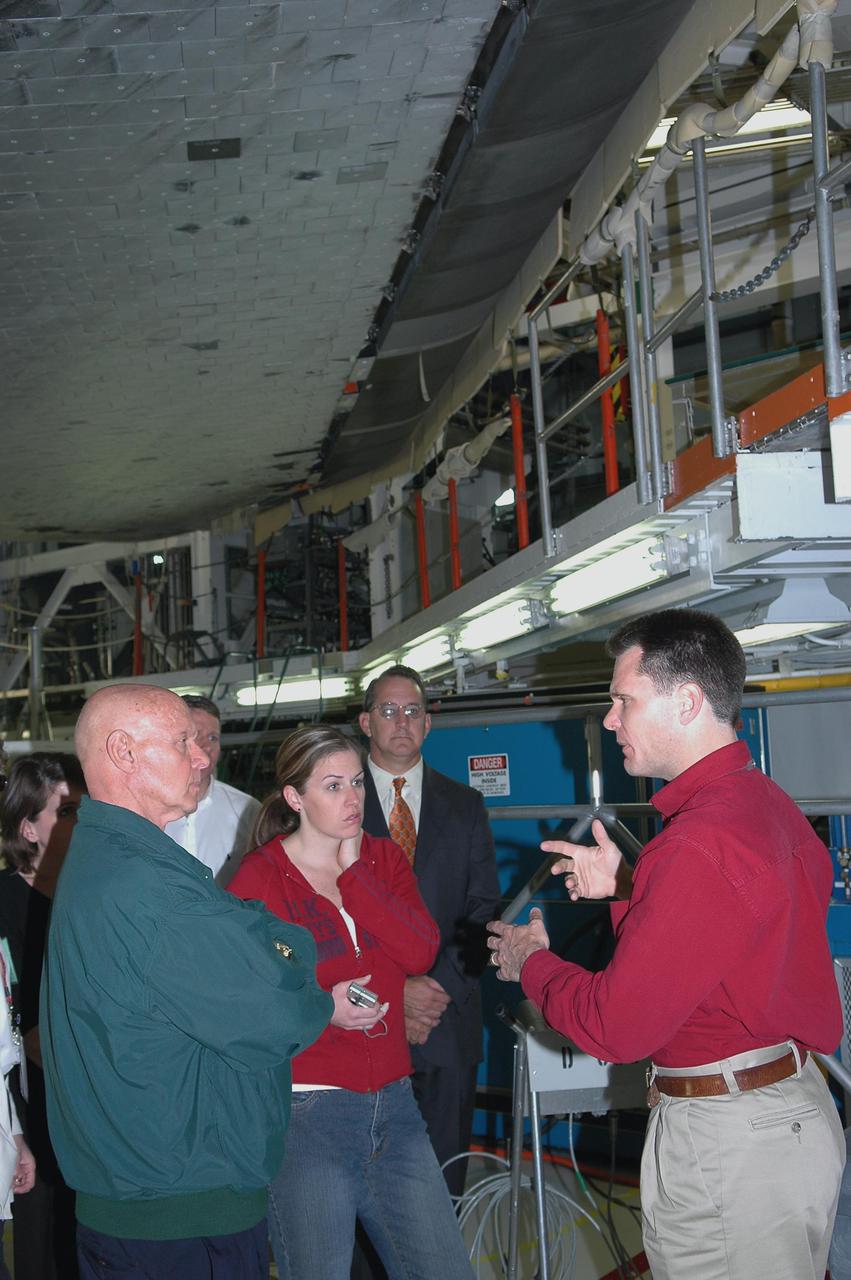
KSC-04pd1003
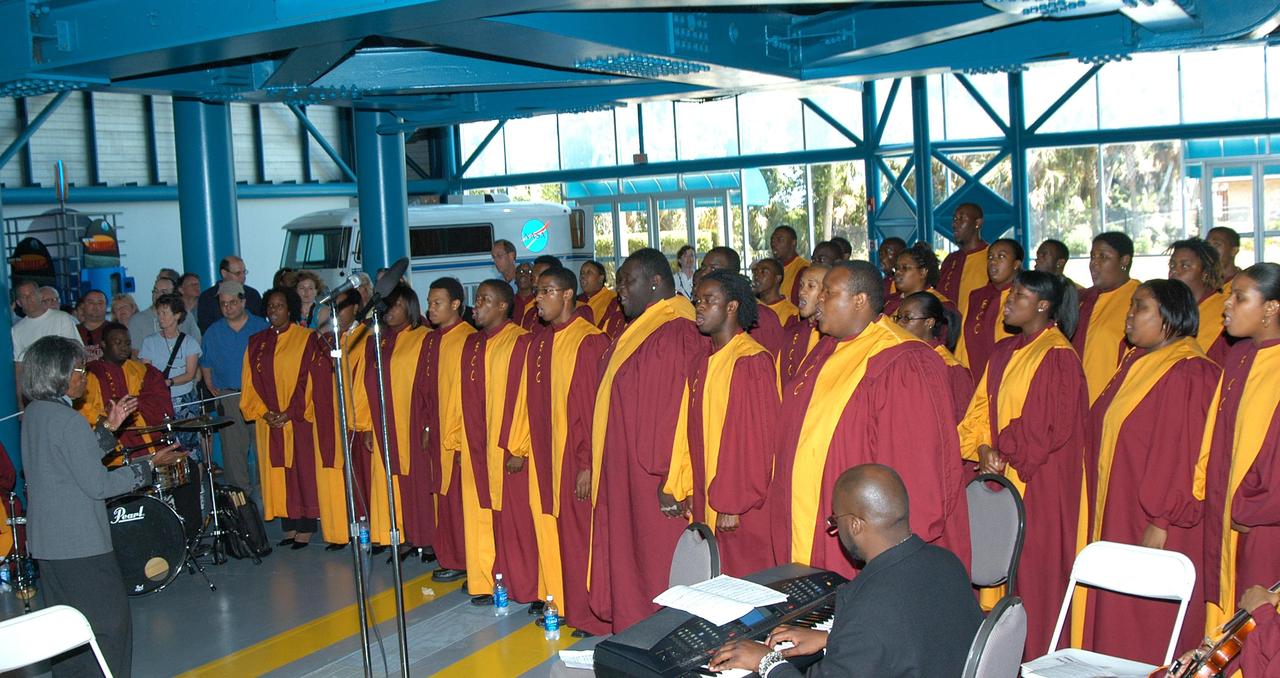
KENNEDY SPACE CENTER, FLA. --  Inside the Apollo/Saturn V Center at the Kennedy Space Center Visitor Complex, the Bethune-Cookman Choir performs prior to the induction ceremony of five space program heroes into the U.S. Astronaut Hall of Fame.  New inductees are Richard O. Covey, commander of the Hubble Space Telescope repair mission; Norman E. Thagard, the first American to occupy Russia’s Mir space station; the late Francis R. "Dick" Scobee, commander of the ill-fated 1986 Challenger mission; Kathryn D. Sullivan, the first American woman to walk in space; and Frederick D. Gregory, the first African-American to command a space mission and the current NASA deputy administrator. The U.S. Astronaut Hall of Fame opened in 1990 to provide a place where space travelers could be remembered for their participation and accomplishments in the U.S. space program. To be eligible for induction, an individual must have been a U.S. citizen, a NASA astronaut, and out of the active astronaut corps at least five years. The five inductees join 52 previously honored astronauts from the ranks of the Gemini, Apollo, Skylab, Apollo-Soyuz, and Space Shuttle programs.
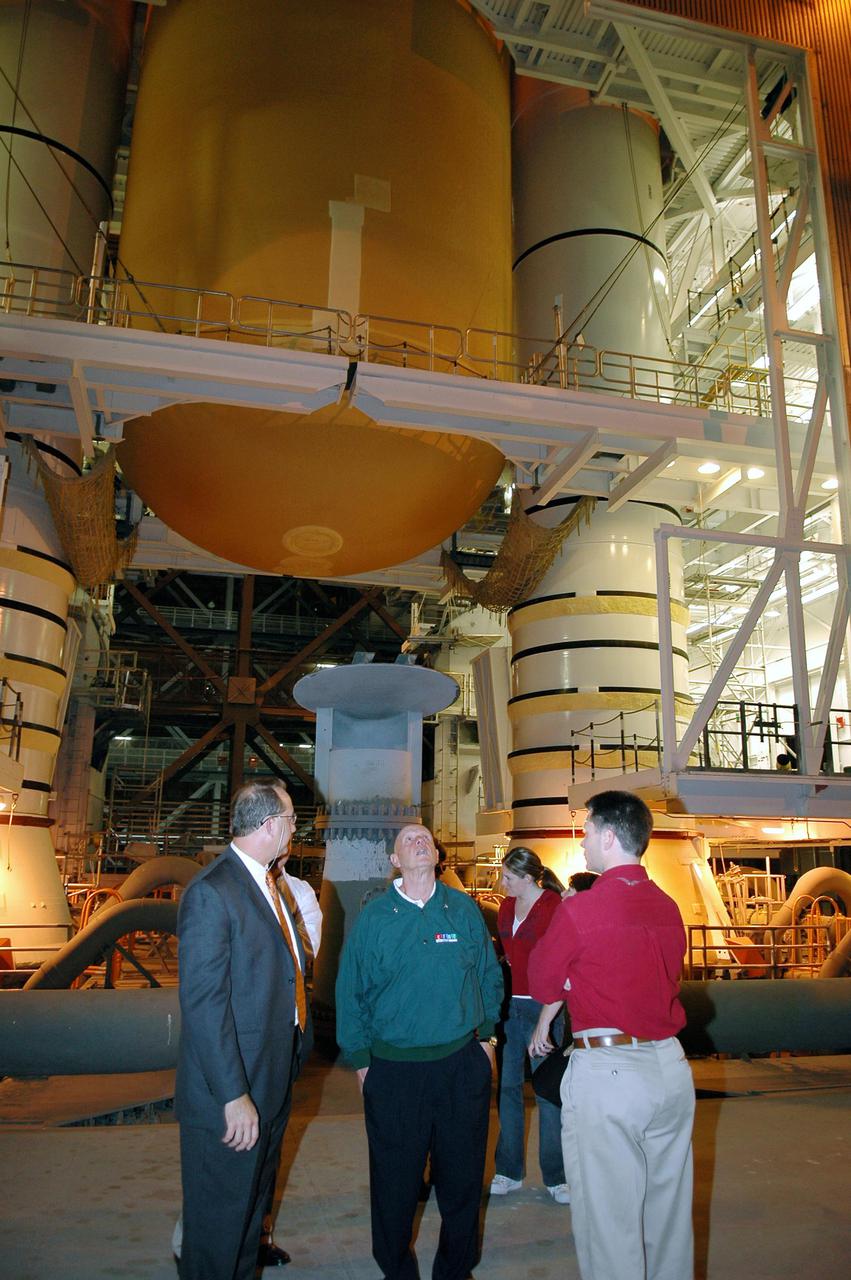
KSC-04pd1002
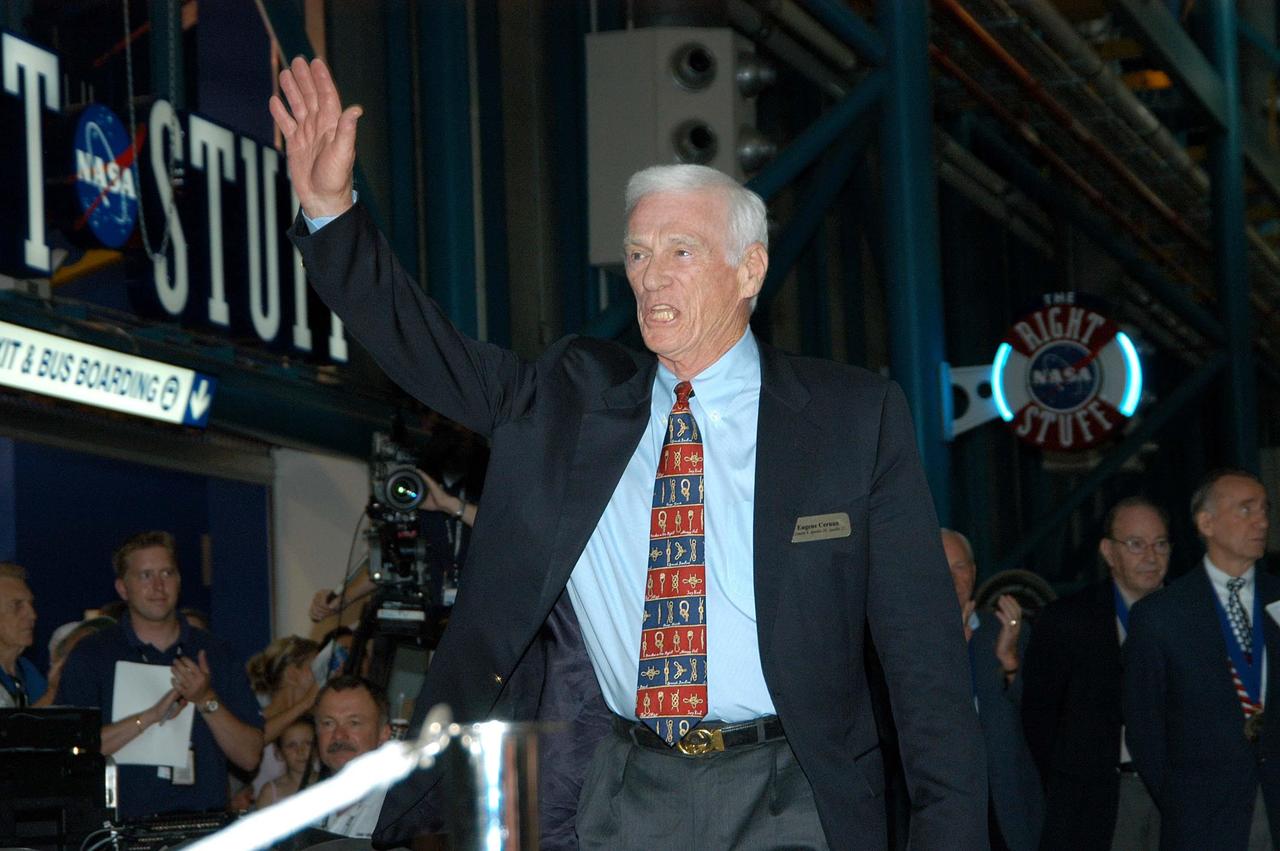
KENNEDY SPACE CENTER, FLA. --  Before the induction ceremony of five space program heroes into the U.S. Astronaut Hall of Fame, former astronaut Gene Cernan waves to guests as he is introduced as a previous inductee.  He walked in space on Gemini 9, orbited the Moon on Apollo 10 and walked on the Moon as commander of Apollo 17. The ceremony was held at the Apollo/Saturn V Center at KSC.  New inductees are Richard O. Covey, commander of the Hubble Space Telescope repair mission; Norman E. Thagard, the first American to occupy Russia’s Mir space station; the late Francis R. "Dick" Scobee, commander of the ill-fated 1986 Challenger mission; Kathryn D. Sullivan, the first American woman to walk in space; and Frederick D. Gregory, the first African-American to command a space mission and the current NASA deputy administrator. The U.S. Astronaut Hall of Fame opened in 1990 to provide a place where space travelers could be remembered for their participation and accomplishments in the U.S. space program. The five inductees join 52 previously honored astronauts from the ranks of the Gemini, Apollo, Skylab, Apollo-Soyuz, and Space Shuttle programs.
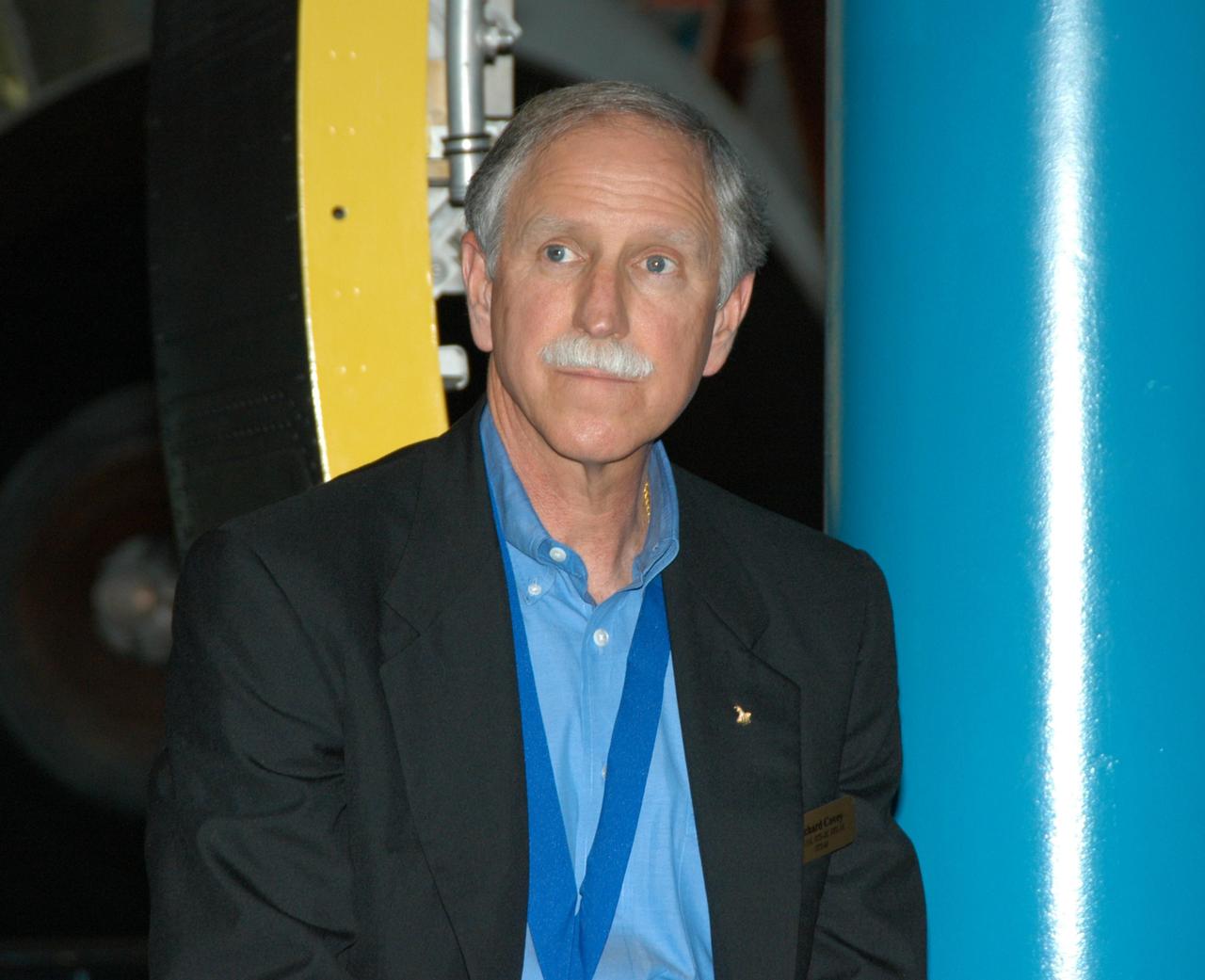
KSC-04pd1008
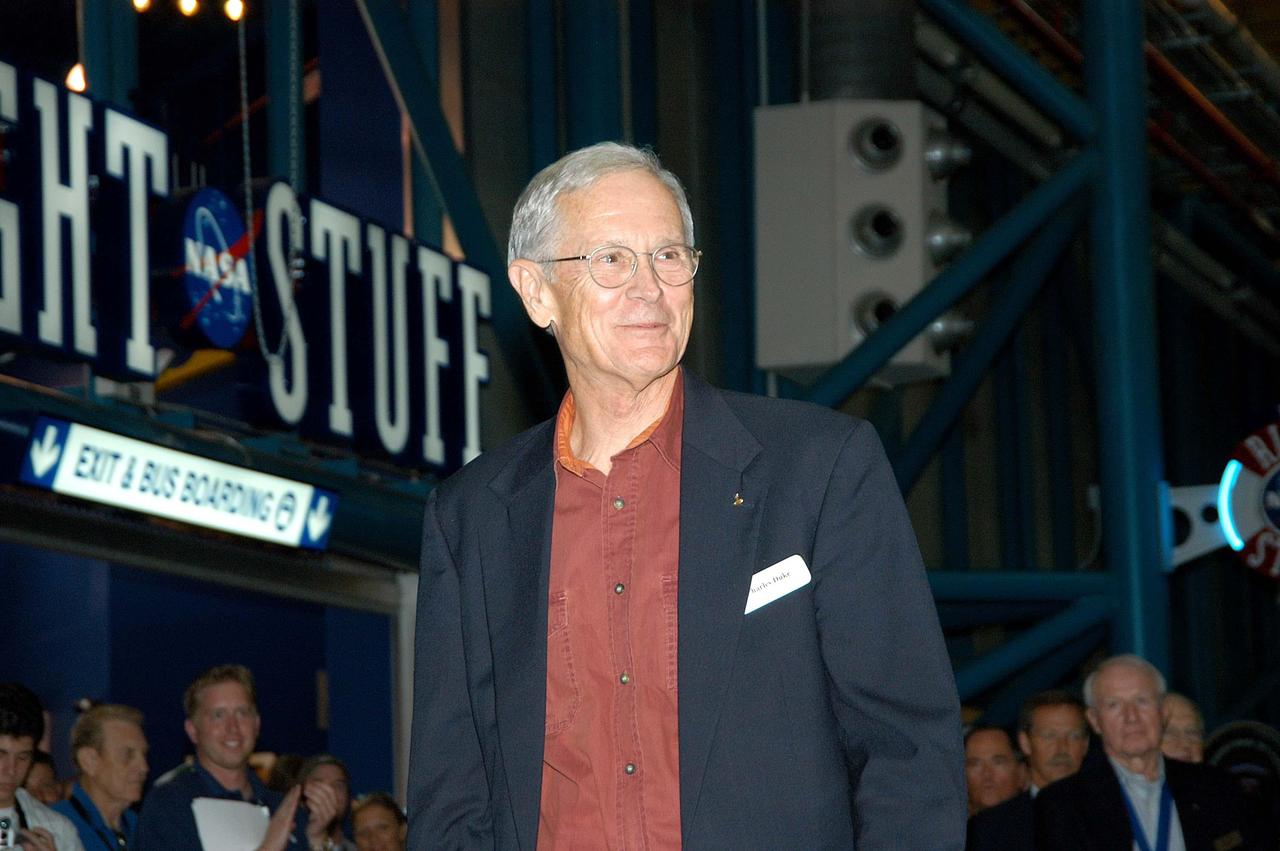
KENNEDY SPACE CENTER, FLA. --  Former astronaut Charles Duke receives a warm welcome as he is introduced as a previous inductee into the U.S. Astronaut Hall of Fame.  He and other  Hall of Fame members were present for the induction of five new space program heroes into the U.S. Astronaut Hall of Fame: Richard O. Covey, commander of the Hubble Space Telescope repair mission; Norman E. Thagard, the first American to occupy Russia’s Mir space station; the late Francis R. "Dick" Scobee, commander of the ill-fated 1986 Challenger mission; Kathryn D. Sullivan, the first American woman to walk in space; and Frederick D. Gregory, the first African-American to command a space mission and the current NASA deputy administrator.  Duke explored the rugged highlands of the Moon’s Descartes region with John Young during the Apollo 16 mission in April 1972.  The induction ceremony was held at the Apollo/Saturn V Center at KSC.  The U.S. Astronaut Hall of Fame opened in 1990 to provide a place where space travelers could be remembered for their participation and accomplishments in the U.S. space program. The five inductees join 52 previously honored astronauts from the ranks of the Gemini, Apollo, Skylab, Apollo-Soyuz, and Space Shuttle programs.
KSC-04pd1011
KENNEDY SPACE CENTER, FLA. --  Former astronaut Ed Gibson acknowledges the warm response to his introduction as a previous inductee into the U.S. Astronaut Hall of Fame.  He and other  Hall of Fame members were present for the induction of five new space program heroes into the U.S. Astronaut Hall of Fame: Richard O. Covey, commander of the Hubble Space Telescope repair mission; Norman E. Thagard, the first American to occupy Russia’s Mir space station; the late Francis R. "Dick" Scobee, commander of the ill-fated 1986 Challenger mission; Kathryn D. Sullivan, the first American woman to walk in space; and Frederick D. Gregory, the first African-American to command a space mission and the current NASA deputy administrator. Gibson orbited the Earth for 84 days during the final manned flight of the Skylab Space Station in 1973 and 1974.  The induction ceremony was held at the Apollo/Saturn V Center at KSC.  The U.S. Astronaut Hall of Fame opened in 1990 to provide a place where space travelers could be remembered for their participation and accomplishments in the U.S. space program. The five inductees join 52 previously honored astronauts from the ranks of the Gemini, Apollo, Skylab, Apollo-Soyuz, and Space Shuttle programs.
KSC-04pd1017
KENNEDY SPACE CENTER, FLA.  -  Members of the  Stafford-Covey Return to Flight Task Group (SCTG) look over equipment in the Orbiter Processing Facility.  At left (back to camera), Fernando Santos, with NASA, and Paul Ogletree (at monitor), with United Space Alliance, describe how flash thermography is used to inspect the structure of Reinforced Carbon Carbon panels and establish a baseline on panels before flight.  Chairing the task group are Richard O. Covey (far right), former Space Shuttle commander, and Thomas P. Stafford, Apollo commander.  Chartered by NASA Administrator Sean O’Keefe, the task group will perform an independent assessment of NASA’s implementation of the final recommendations by the Columbia Accident Investigation Board.
KENNEDY SPACE CENTER, FLA. - Members of the Stafford-Covey Return to Flight Task Group (SCTG) look over equipment in the Orbiter Processing Facility. At left (back to camera), Fernando Santos, with NASA, and Paul Ogletree (at monitor), with United Space Alliance, describe how flash thermography is used to inspect the structure of Reinforced Carbon Carbon panels and establish a baseline on panels before flight. Chairing the task group are Richard O. Covey (far right), former Space Shuttle commander, and Thomas P. Stafford, Apollo commander. Chartered by NASA Administrator Sean O’Keefe, the task group will perform an independent assessment of NASA’s implementation of the final recommendations by the Columbia Accident Investigation Board.
KENNEDY SPACE CENTER, FLA.  -  Martin Wilson, with United Space Alliance, describes an orbiter’s Thermal Protection System for members of the Stafford-Covey Return to Flight Task Group (SCTG).  Handling some of the blanket insulation are Dr. Kathryn Clark and Joe Engle.  Third from left is Richard Covey, former Space Shuttle commander, who is co-chair of the  SCTG, along with Thomas P. Stafford, Apollo commander.  Chartered by NASA Administrator Sean O’Keefe, the task group will perform an independent assessment of NASA’s implementation of the final recommendations by the Columbia Accident Investigation Board.
KENNEDY SPACE CENTER, FLA. - Martin Wilson, with United Space Alliance, describes an orbiter’s Thermal Protection System for members of the Stafford-Covey Return to Flight Task Group (SCTG). Handling some of the blanket insulation are Dr. Kathryn Clark and Joe Engle. Third from left is Richard Covey, former Space Shuttle commander, who is co-chair of the SCTG, along with Thomas P. Stafford, Apollo commander. Chartered by NASA Administrator Sean O’Keefe, the task group will perform an independent assessment of NASA’s implementation of the final recommendations by the Columbia Accident Investigation Board.
KENNEDY SPACE CENTER, FLA.  - On a tour of the Orbiter Processing Facility, members of the Stafford-Covey Return to Flight Task Group (SCTG) look at one of the Reinforced Carbon-Carbon panels, being shown by Tom Roberts with United Space Alliance, from the orbiter Endeavour.  Chairing the task group are Richard O. Covey, former Space Shuttle commander, and Thomas P. Stafford, Apollo commander.  Chartered by NASA Administrator Sean O’Keefe, the task group will perform an independent assessment of NASA’s implementation of the final recommendations by the Columbia Accident Investigation Board.
KENNEDY SPACE CENTER, FLA. - On a tour of the Orbiter Processing Facility, members of the Stafford-Covey Return to Flight Task Group (SCTG) look at one of the Reinforced Carbon-Carbon panels, being shown by Tom Roberts with United Space Alliance, from the orbiter Endeavour. Chairing the task group are Richard O. Covey, former Space Shuttle commander, and Thomas P. Stafford, Apollo commander. Chartered by NASA Administrator Sean O’Keefe, the task group will perform an independent assessment of NASA’s implementation of the final recommendations by the Columbia Accident Investigation Board.
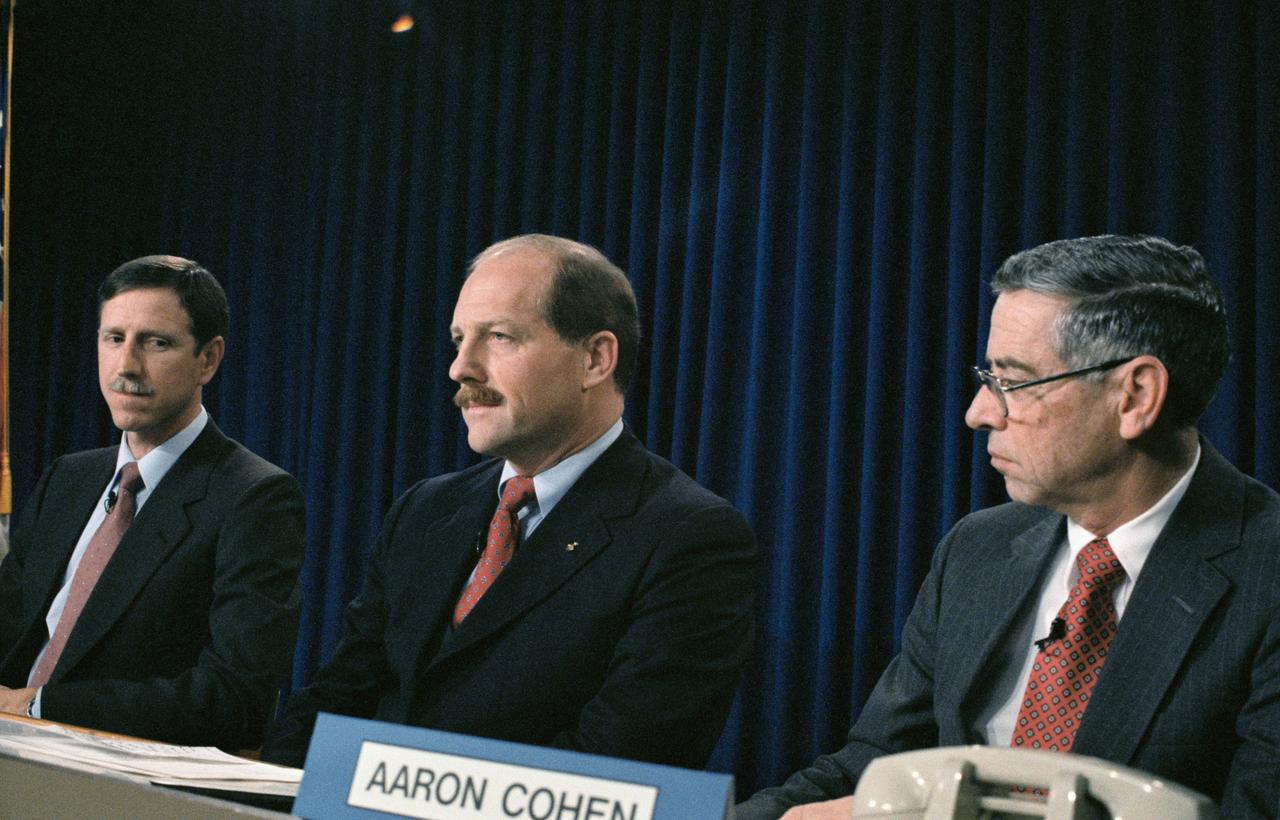
STS-26 Discovery, Orbiter Vehicle (OV) 103, crew including Commander Frederick H. Hauck and Pilot Richard O. Covey and JSC Director Aaron Cohen participate in press conference held at JSC Auditorium and Public Affairs Facility Bldg 2. Hauck and Covey are shown with Cohen as they ponder queries from news media representatives during the first press conference for the group since the mission's announcement last week. Left to right are Covey, Hauck, and Cohen.
STS-26 press conference with crewmembers and JSC Director Aaron Cohen
KENNEDY SPACE CENTER, FLA.  - Author Stephen Covey, right, talks to KSC management about his latest book, The 8th Habit.  Seated next to Covey are, from left, Deputy Director Woodrow Whitlow Jr. and Center Director Jim Kennedy.  Covey also toured KSC, with stops at the Orbiter Processing Facility and Vehicle Assembly Building.
KSC-05pd-0429
KENNEDY SPACE CENTER, FLA.  - On a tour of Kennedy, author Stephen Covey, right, and his executive assistant Julie McAllister stop in the Orbiter Processing Facility to see Atlantis’ payload bay, below.  Covey also spent time with KSC management discussing his newest book, The 8th Habit.
KSC-05pd-0427
KENNEDY SPACE CENTER, FLA. -- Former astronaut Joe Engle acknowledges the applause as he is introduced as a previous inductee into the U.S. Astronaut Hall of Fame.  He and other  Hall of Fame members were present for the induction of five new space program heroes into the U.S. Astronaut Hall of Fame: Richard O. Covey, commander of the Hubble Space Telescope repair mission; Norman E. Thagard, the first American to occupy Russia’s Mir space station; the late Francis R. "Dick" Scobee, commander of the ill-fated 1986 Challenger mission; Kathryn D. Sullivan, the first American woman to walk in space; and Frederick D. Gregory, the first African-American to command a space mission and the current NASA deputy administrator. Engle made 16 flights in the X-15 rocket plane before he became a NASA astronaut and flew two Space Shuttle missions. In 1981, he commanded the second flight of Columbia, the first manned spacecraft to be reflown in space, and in 1985 he commanded a five-man crew on the 20th shuttle flight, a satellite-deploy and repair mission.  The induction ceremony was held at the Apollo/Saturn V Center at KSC.  The U.S. Astronaut Hall of Fame opened in 1990 to provide a place where space travelers could be remembered for their participation and accomplishments in the U.S. space program. The five inductees join 52 previously honored astronauts from the ranks of the Gemini, Apollo, Skylab, Apollo-Soyuz, and Space Shuttle programs.
KSC-04pd1018
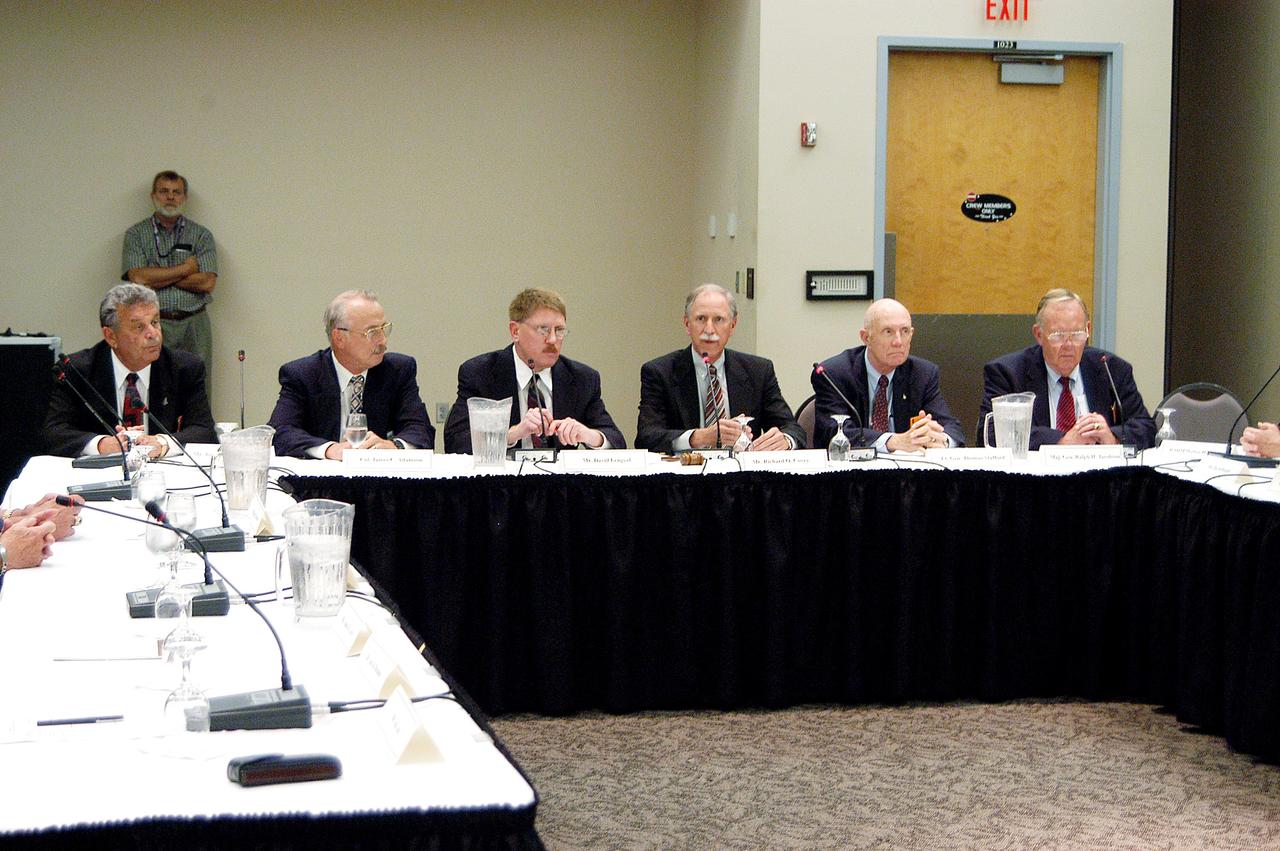
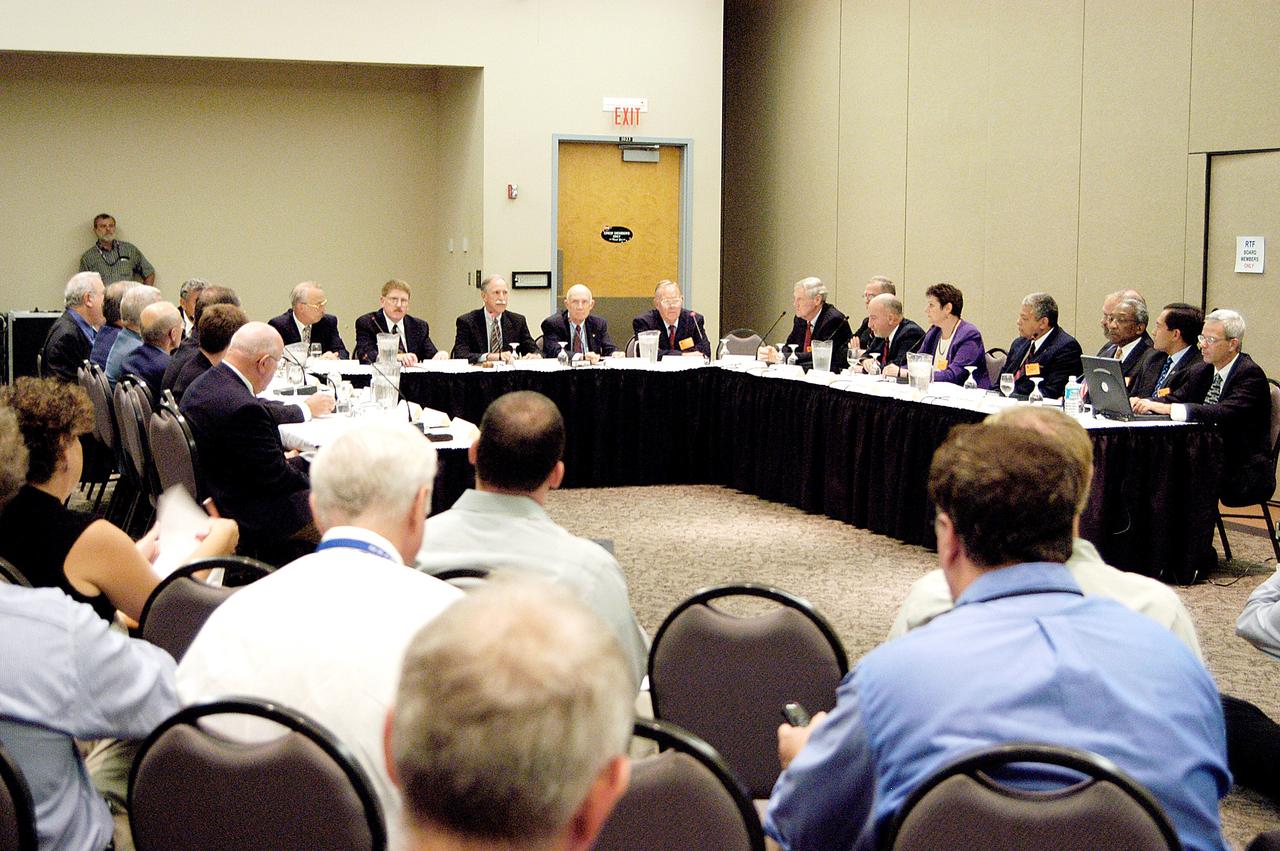
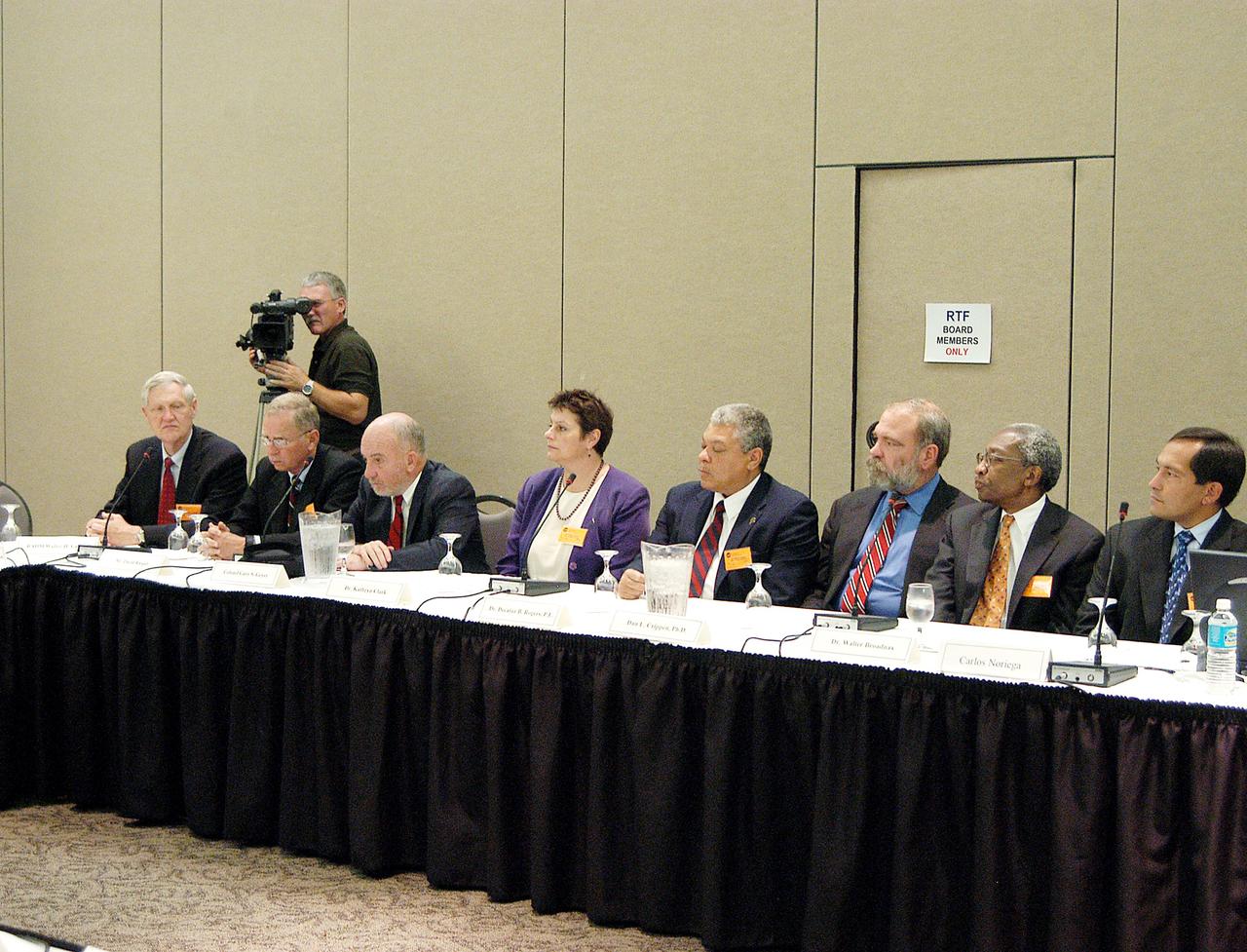
KENNEDY SPACE CENTER, FLA.  -  The Return To Flight Task Group (RTFTG) holds the first public meeting at the Debus Center, KSC Visitor Complex.  Members and staff at this table, from left, are Joseph W. Cuzzupolui, retired Army Col. James C. Adamson, David Lenyel, co-chairs Richard O. Covey and retired Air Force Lt. Gen. Thomas Stafford, and retired Air Force Maj. Gen. Ralph H. Jacobson.  Covey is a former astronaut and Shuttle commander.  Stafford is a former astronaut and Apollo commander.  The RTFTG was at KSC to conduct organizational activities, tour Space Shuttle facilities and receive briefings on Shuttle-related topics.  The task group was chartered by NASA Administrator Sean O’Keefe to perform an independent assessment of NASA’s implementation of the final recommendations of the Columbia Accident Investigation Board.
KENNEDY SPACE CENTER, FLA. - The Return To Flight Task Group (RTFTG) holds the first public meeting at the Debus Center, KSC Visitor Complex. Members and staff at this table, from left, are Joseph W. Cuzzupolui, retired Army Col. James C. Adamson, David Lenyel, co-chairs Richard O. Covey and retired Air Force Lt. Gen. Thomas Stafford, and retired Air Force Maj. Gen. Ralph H. Jacobson. Covey is a former astronaut and Shuttle commander. Stafford is a former astronaut and Apollo commander. The RTFTG was at KSC to conduct organizational activities, tour Space Shuttle facilities and receive briefings on Shuttle-related topics. The task group was chartered by NASA Administrator Sean O’Keefe to perform an independent assessment of NASA’s implementation of the final recommendations of the Columbia Accident Investigation Board.
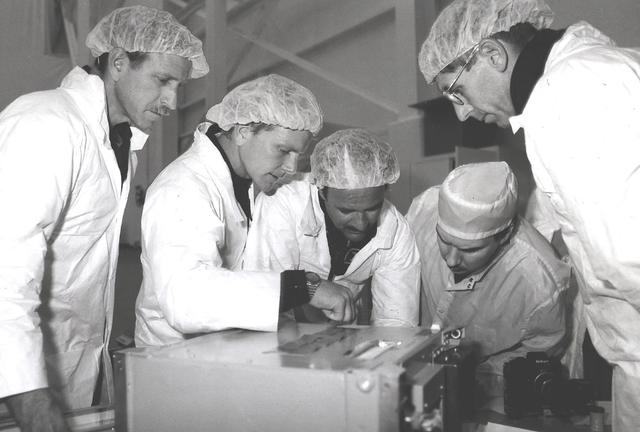
Space Shuttle Discovery (STS-26) astronauts George Nelson, John Lounge, and Richard Covey are pictured training on protein crystal growth (PCG) experiment in Marshall's Building 4708's clean room.
Around Marshall
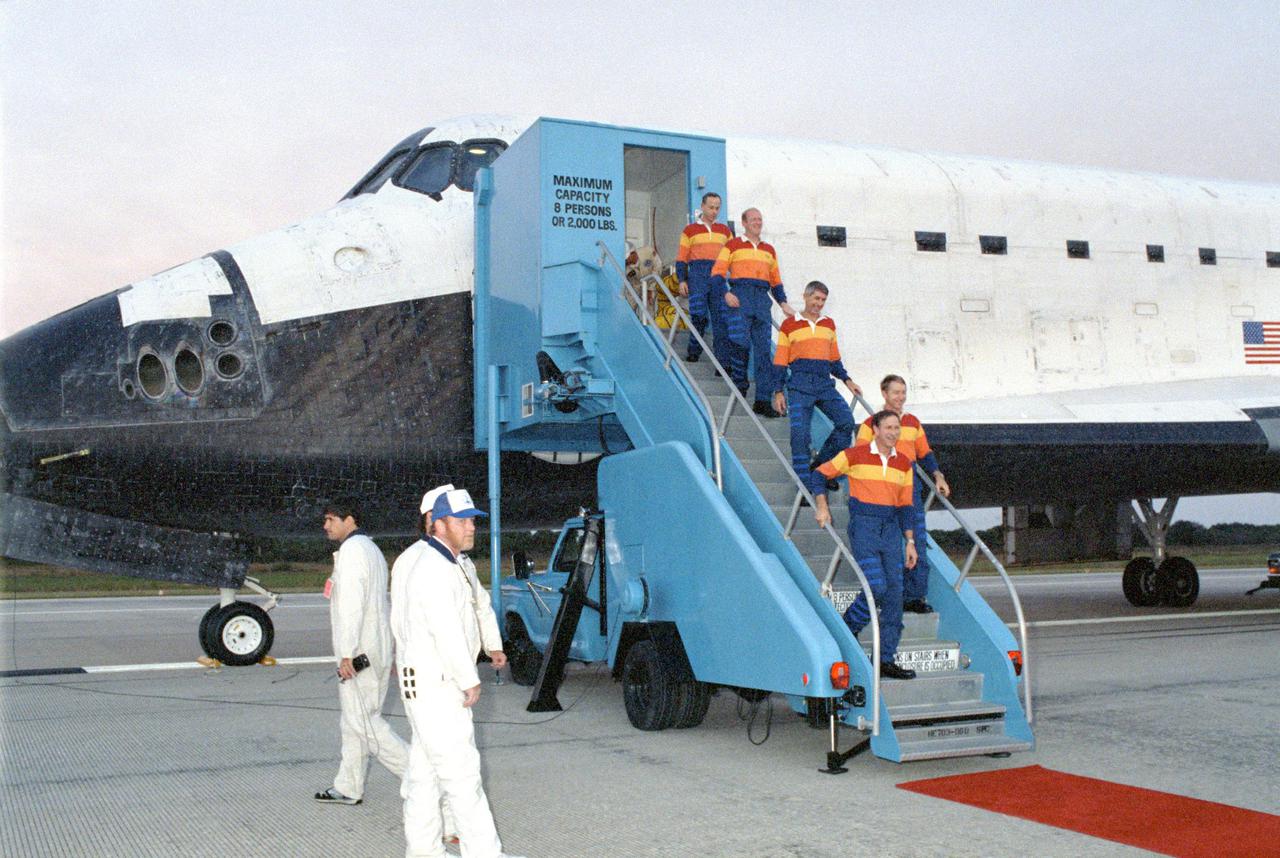
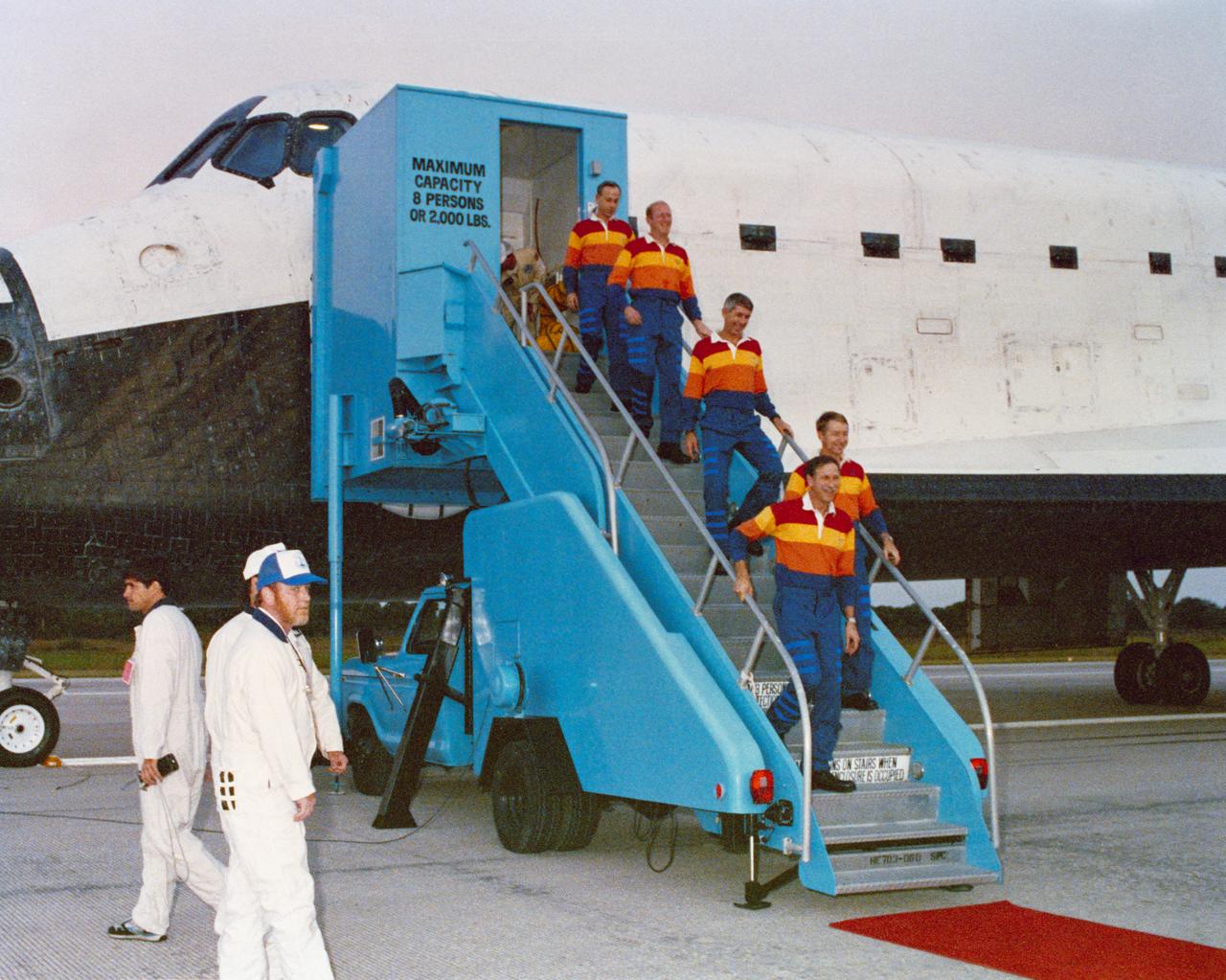
KENNEDY SPACE CENTER, FLA. -- The STS-38 flight crew disembark from the orbiter Atlantis after a successful landing at KSC's Shuttle Landing Facility.  From bottom up are Commander Richard Covey, Pilot Frank Culbertson and Mission Specialists Robert Springer, Charles Gemar and Carl Meade.
KSC-90pc-1729
S87-40673 (September 1987) --- Astronauts Frederick H. (Rick) Hauck (right front), mission commander, and Richard O. Covey (left front), pilot, are flanked by NASA's STS-26 mission specialists (l.-r.) David C. Hilmers, George D. (Pinky) Nelson and John M. (Mike) Lounge.
Official Portrait - STS-26 Discovery - Orbiter Vehicle (OV)-103, crew
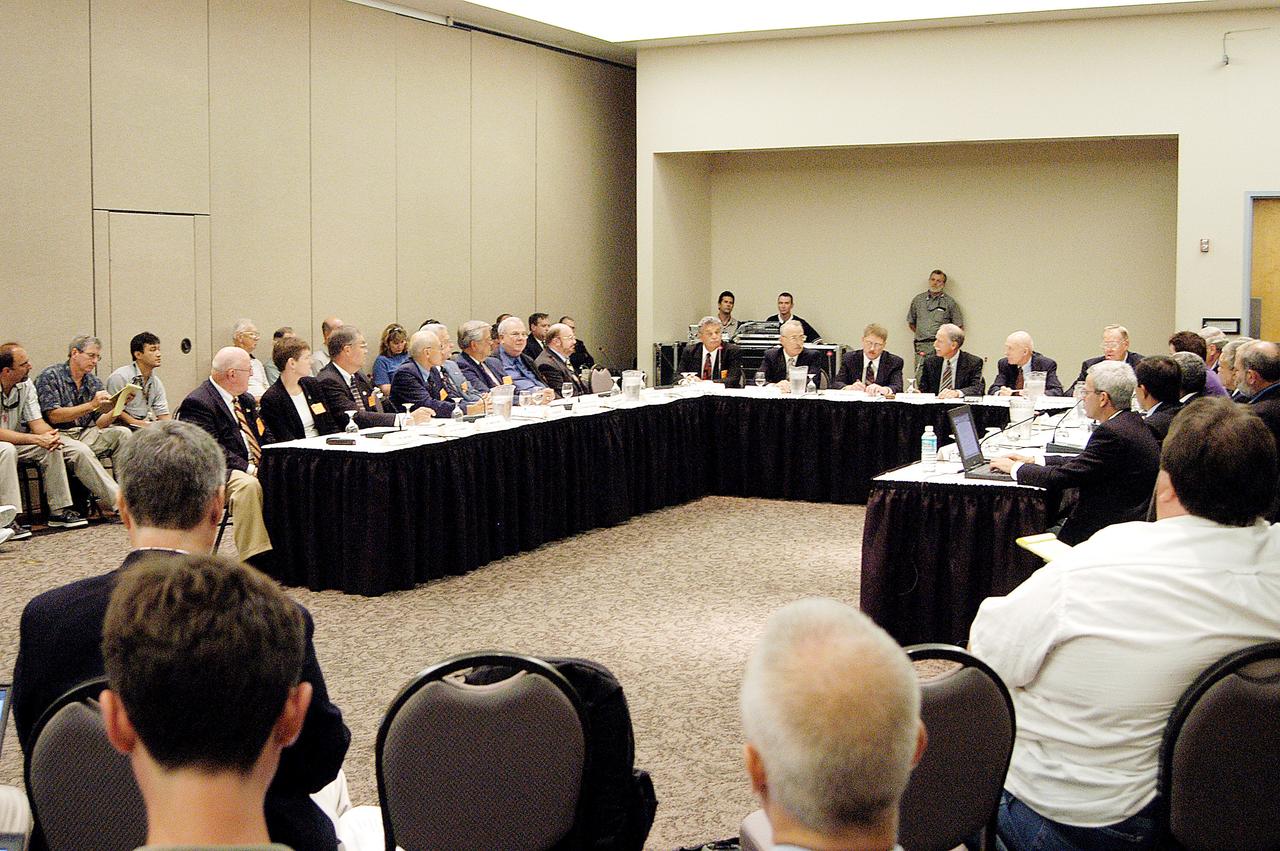
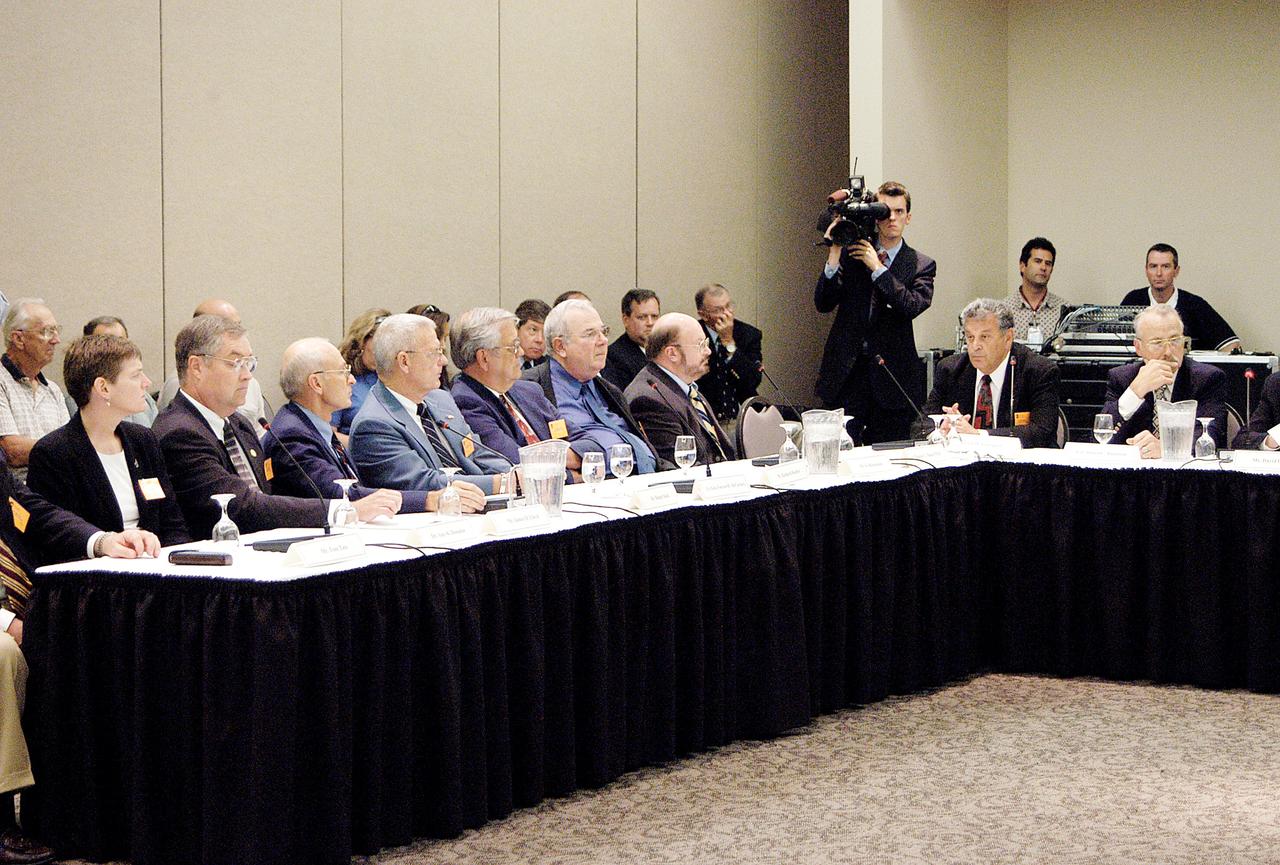
KENNEDY SPACE CENTER, FLA.  -  The Return To Flight Task Group (RTFTG) holds its first public meeting at the Debus Center, KSC Visitor Complex.   The group is co-chaired by former Shuttle commander Richard O. Covey and retired Air Force Lt. Gen. Thomas P. Stafford, who was an Apollo commander.  The RTFTG was at KSC to conduct organizational activities, tour Space Shuttle facilities and receive briefings on Shuttle-related topics.  The task group was chartered by NASA Administrator Sean O’Keefe to perform an independent assessment of NASA’s implementation of the final recommendations of the Columbia Accident Investigation Board.
KENNEDY SPACE CENTER, FLA. - The Return To Flight Task Group (RTFTG) holds its first public meeting at the Debus Center, KSC Visitor Complex. The group is co-chaired by former Shuttle commander Richard O. Covey and retired Air Force Lt. Gen. Thomas P. Stafford, who was an Apollo commander. The RTFTG was at KSC to conduct organizational activities, tour Space Shuttle facilities and receive briefings on Shuttle-related topics. The task group was chartered by NASA Administrator Sean O’Keefe to perform an independent assessment of NASA’s implementation of the final recommendations of the Columbia Accident Investigation Board.
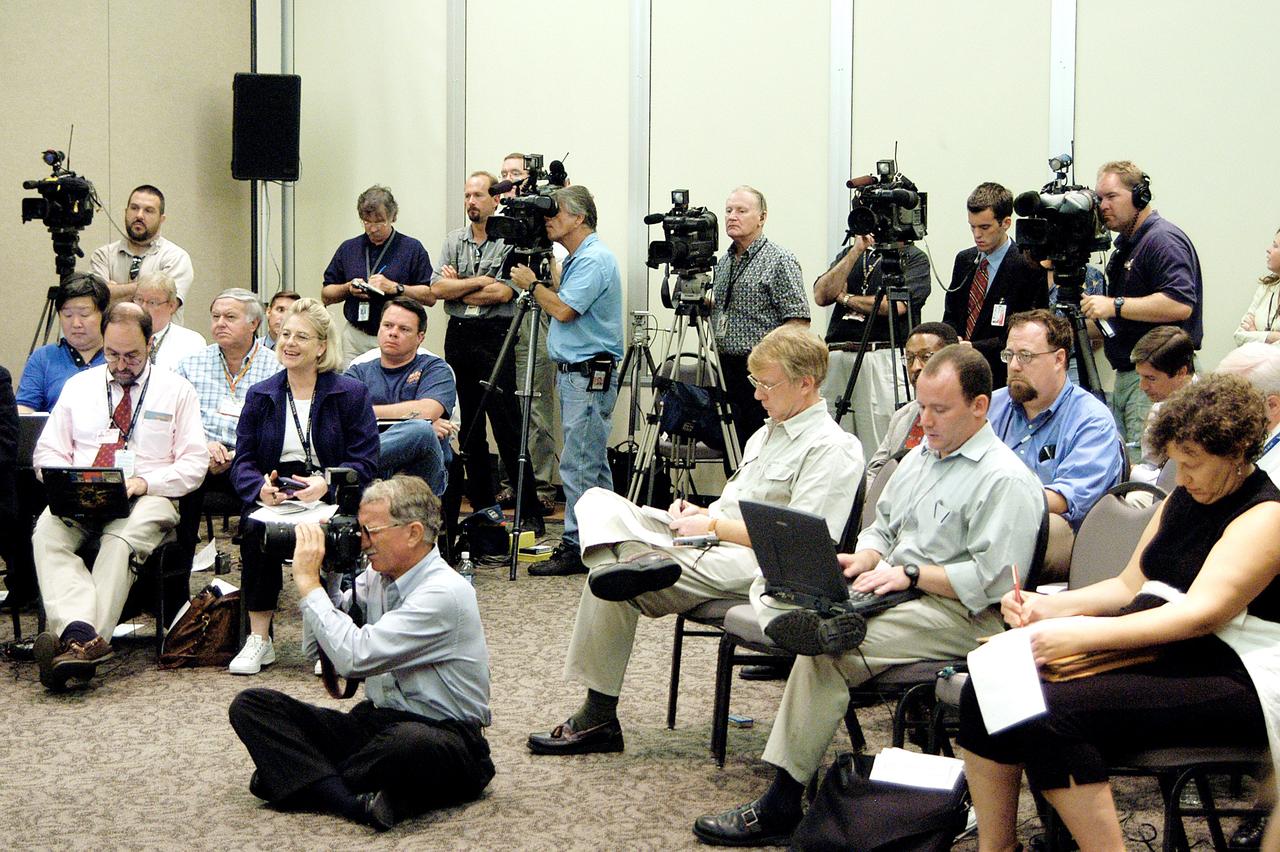
KENNEDY SPACE CENTER, FLA.  -  The news media capture the words and images of the Return To Flight Task Group (RTFTG) which held its first public meeting at the Debus Center, KSC Visitor Complex.  The group is co-chaired by former Shuttle commander Richard O. Covey and retired Air Force Lt. Gen. Thomas P. Stafford, who was an Apollo commander. The RTFTG was at KSC to conduct organizational activities, tour Space Shuttle facilities and receive briefings on Shuttle-related topics.  The task group was chartered by NASA Administrator Sean O’Keefe to perform an independent assessment of NASA’s implementation of the final recommendations of the Columbia Accident Investigation Board.
KENNEDY SPACE CENTER, FLA. - The news media capture the words and images of the Return To Flight Task Group (RTFTG) which held its first public meeting at the Debus Center, KSC Visitor Complex. The group is co-chaired by former Shuttle commander Richard O. Covey and retired Air Force Lt. Gen. Thomas P. Stafford, who was an Apollo commander. The RTFTG was at KSC to conduct organizational activities, tour Space Shuttle facilities and receive briefings on Shuttle-related topics. The task group was chartered by NASA Administrator Sean O’Keefe to perform an independent assessment of NASA’s implementation of the final recommendations of the Columbia Accident Investigation Board.
KENNEDY SPACE CENTER, FLA.  -   The Return To Flight Task Group (RTFTG) holds its first public meeting at the Debus Center, KSC Visitor Complex.   The group is co-chaired by former Shuttle commander Richard O. Covey and retired Air Force Lt. Gen. Thomas P. Stafford, who was an Apollo commander.  The RTFTG was at KSC to conduct organizational activities, tour Space Shuttle facilities and receive briefings on Shuttle-related topics.  The task group was chartered by NASA Administrator Sean O’Keefe to perform an independent assessment of NASA’s implementation of the final recommendations of the Columbia Accident Investigation Board.
KENNEDY SPACE CENTER, FLA. - The Return To Flight Task Group (RTFTG) holds its first public meeting at the Debus Center, KSC Visitor Complex. The group is co-chaired by former Shuttle commander Richard O. Covey and retired Air Force Lt. Gen. Thomas P. Stafford, who was an Apollo commander. The RTFTG was at KSC to conduct organizational activities, tour Space Shuttle facilities and receive briefings on Shuttle-related topics. The task group was chartered by NASA Administrator Sean O’Keefe to perform an independent assessment of NASA’s implementation of the final recommendations of the Columbia Accident Investigation Board.
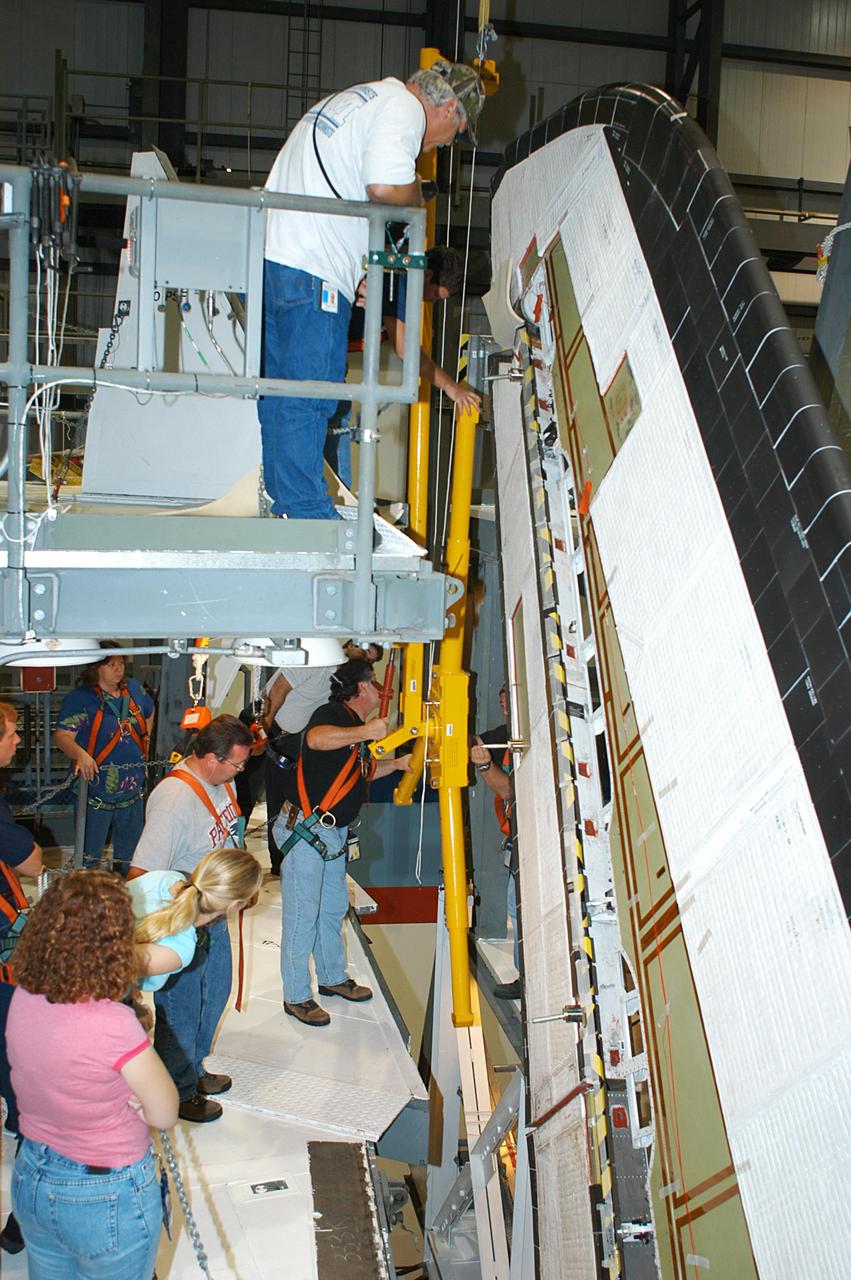
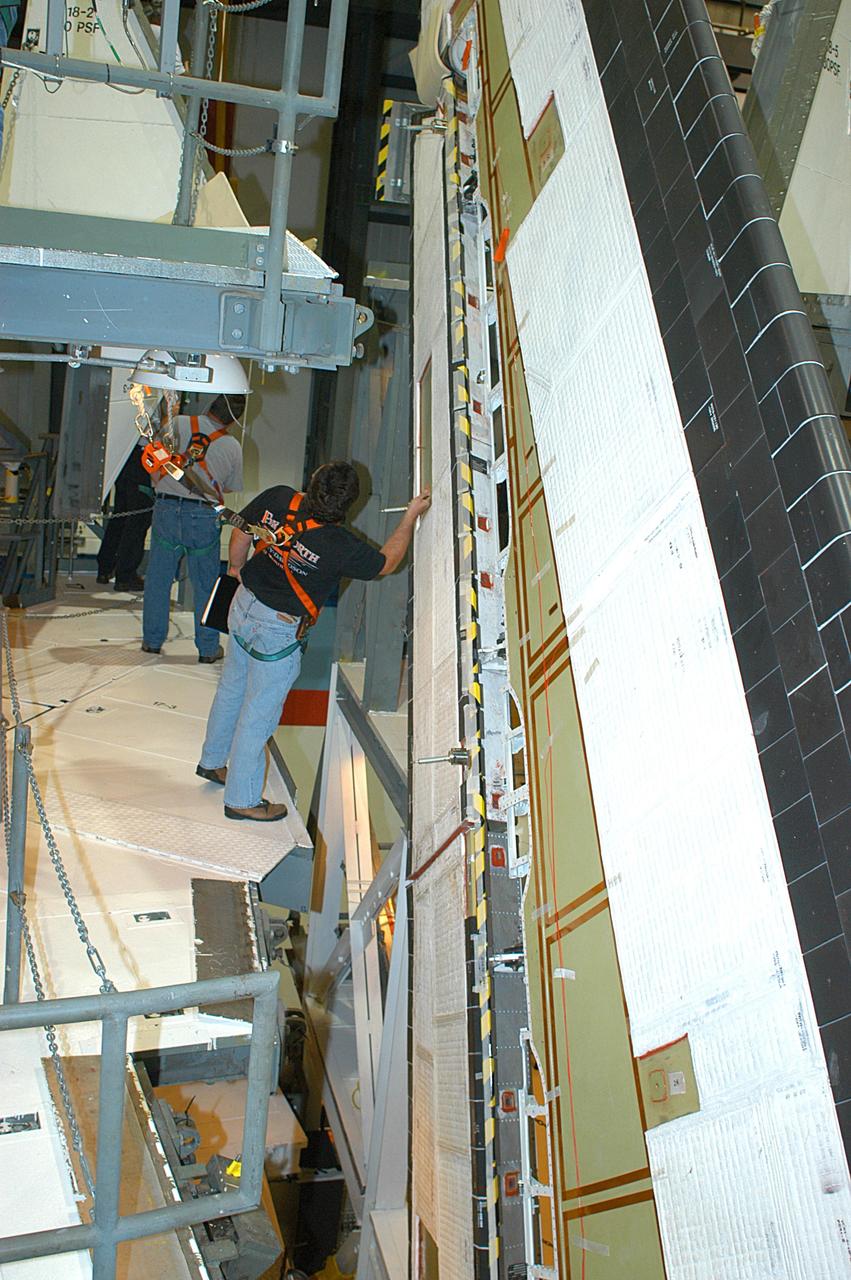
KENNEDY SPACE CENTER, FLA. -- In the Orbiter Processing Facility, a worker (below the upper framework) begins connecting a device to remove the Rudder Speed Brake panel on the vertical tail of orbiter Atlantis. The Rudder Speed Brake is being removed for inspection and maintenance prior to Return to Flight.  The vertical tail consists of a structural fin surface made of aluminum, the Rudder Speed Brake surface, a tip and a lower trailing edge.  The rudder splits into two halves to serve as a speed brake. The vertical tail and Rudder Speed Brake are covered with a reusable thermal protection system.  The Rudder Speed Brake is used to guide and slow the Shuttle as it comes in for a landing.
KSC-04pd1026
KENNEDY SPACE CENTER, FLA. -- In the Orbiter Processing Facility, a technician looks at the Rudder Speed Brake panel on the vertical tail of orbiter Atlantis. The Rudder Speed Brake is being removed for inspection and maintenance prior to Return to Flight. The vertical tail consists of a structural fin surface made of aluminum, the Rudder Speed Brake surface, a tip and a lower trailing edge.  The rudder splits into two halves to serve as a speed brake. The vertical tail and Rudder Speed Brake are covered with a reusable thermal protection system.  The Rudder Speed Brake is used to guide and slow the Shuttle as it comes in for a landing.
KSC-04pd1025
STS061-23-005 (8 Dec 1993) --- Three members of the STS-61 crew prepare covers to be placed on magnetometers near the top of the Hubble Space Telescope (HST).  Left to right are Richard O. Covey, mission commander; Kenneth D. Bowersox, pilot and Claude Nicollier, mission specialist.  On the following day, astronauts Jeffrey A. Hoffman and F. Story Musgrave placed the covers on the magnetometers as they wrapped up five days of servicing on HST.
STS-61 crewmembers prepare covers for magnetometers on HST
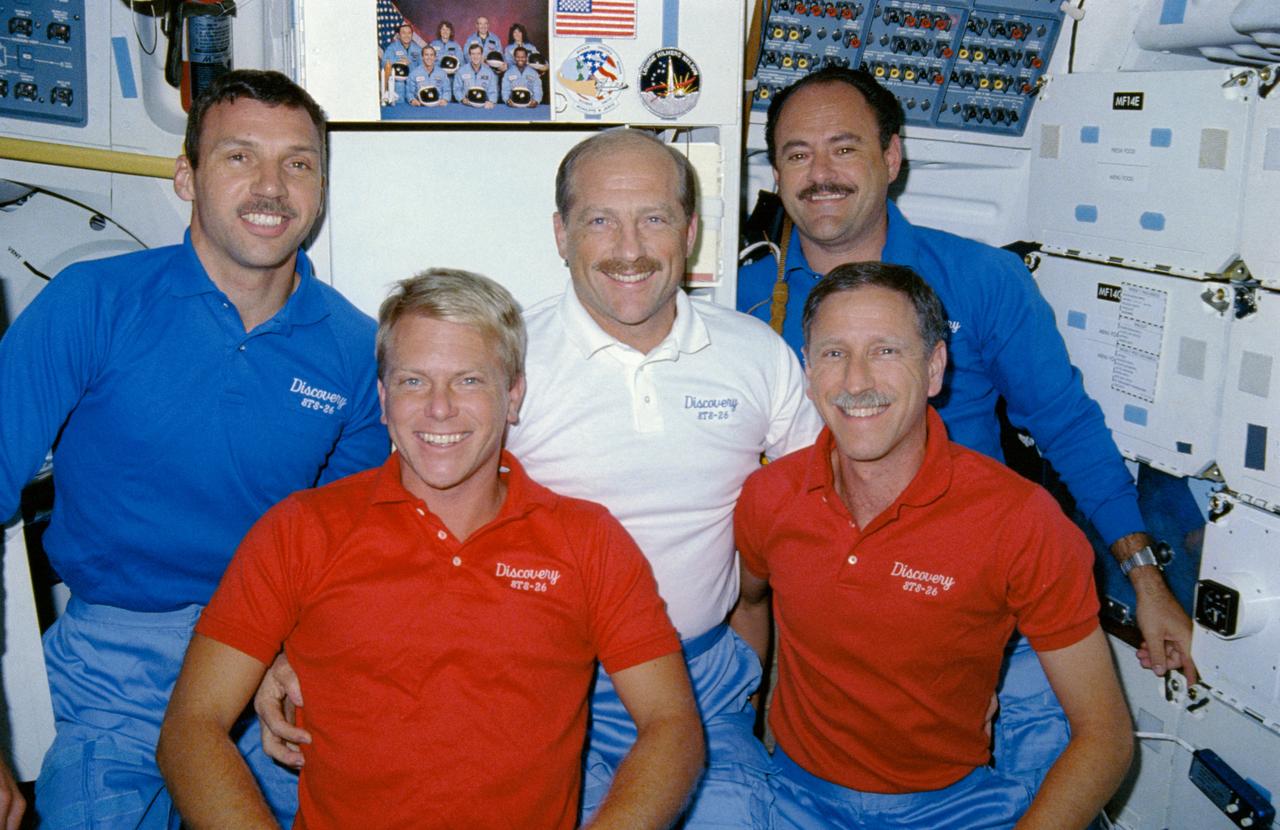
STS026-08-007  (29 Sept-3 Oct 1988) --- An in-space crew portrait on the middeck of Discovery.  Left to right are Astronauts David C. Hilmers, George D. Nelson, Frederick H. (Rick) Hauck,  John M. (Mike) Lounge and Richard O. Covey (front).  The  crew portrait for STS 51-L, its flight insignia and the STS 26 flight insignia are at top edge of the frame.  This photo was shown by the STS 26 astronaut crew during its Oct. 11, l988 post-flight press conference.
STS-26 crewmembers pose for onboard portrait on middeck with 51L mementos
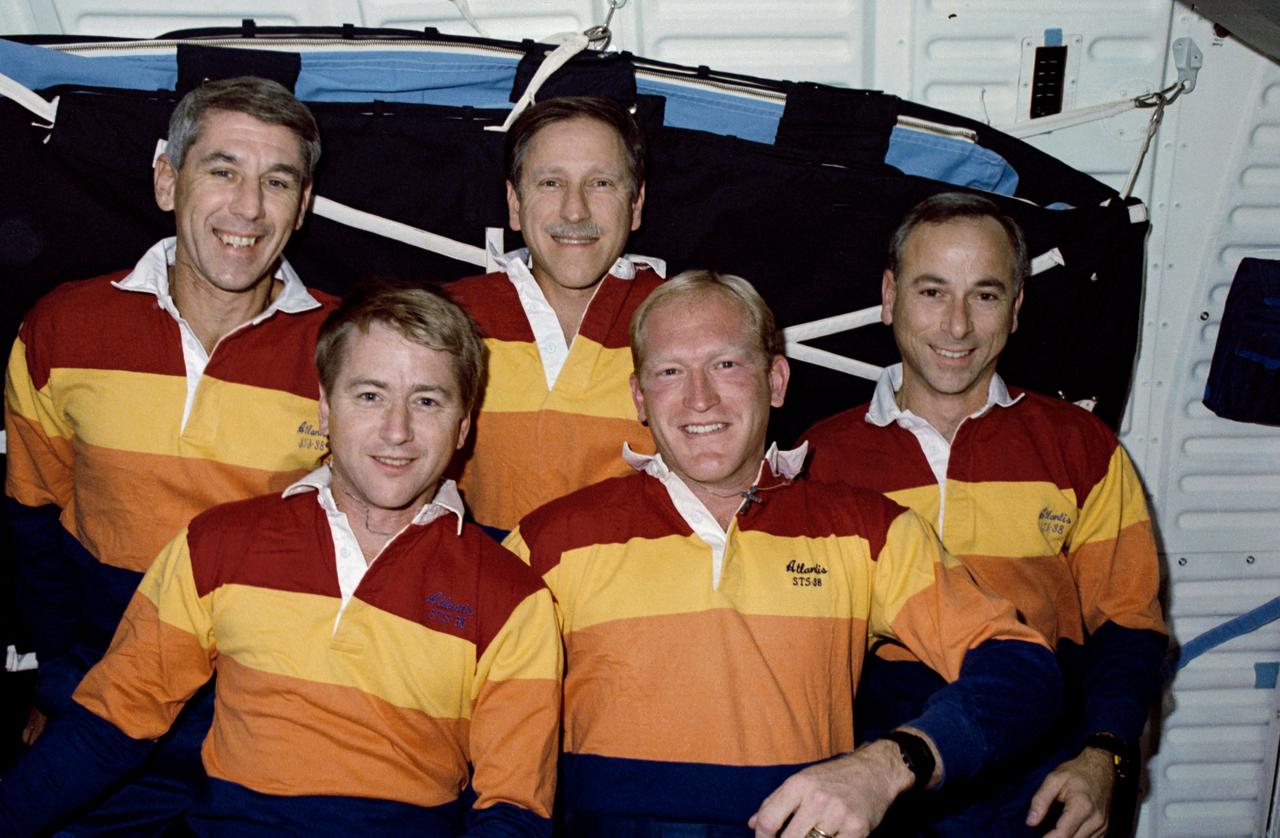
STS038-28-016 (20 Nov 1990) --- STS-38 crewmembers pose on Atlantis', Orbiter Vehicle (OV) 104's, middeck for traditional onboard (in-space) portrait. Wearing red, yellow, and orange crew polo shirts are (right to left) Mission Specialist (MS) Robert C. Springer, Pilot Frank L. Culbertson, Commander Richard O. Covey, MS Charles D. Gemar, and MS Carl J. Meade.
STS-38 crewmembers pose on OV-104's middeck for onboard crew portrait
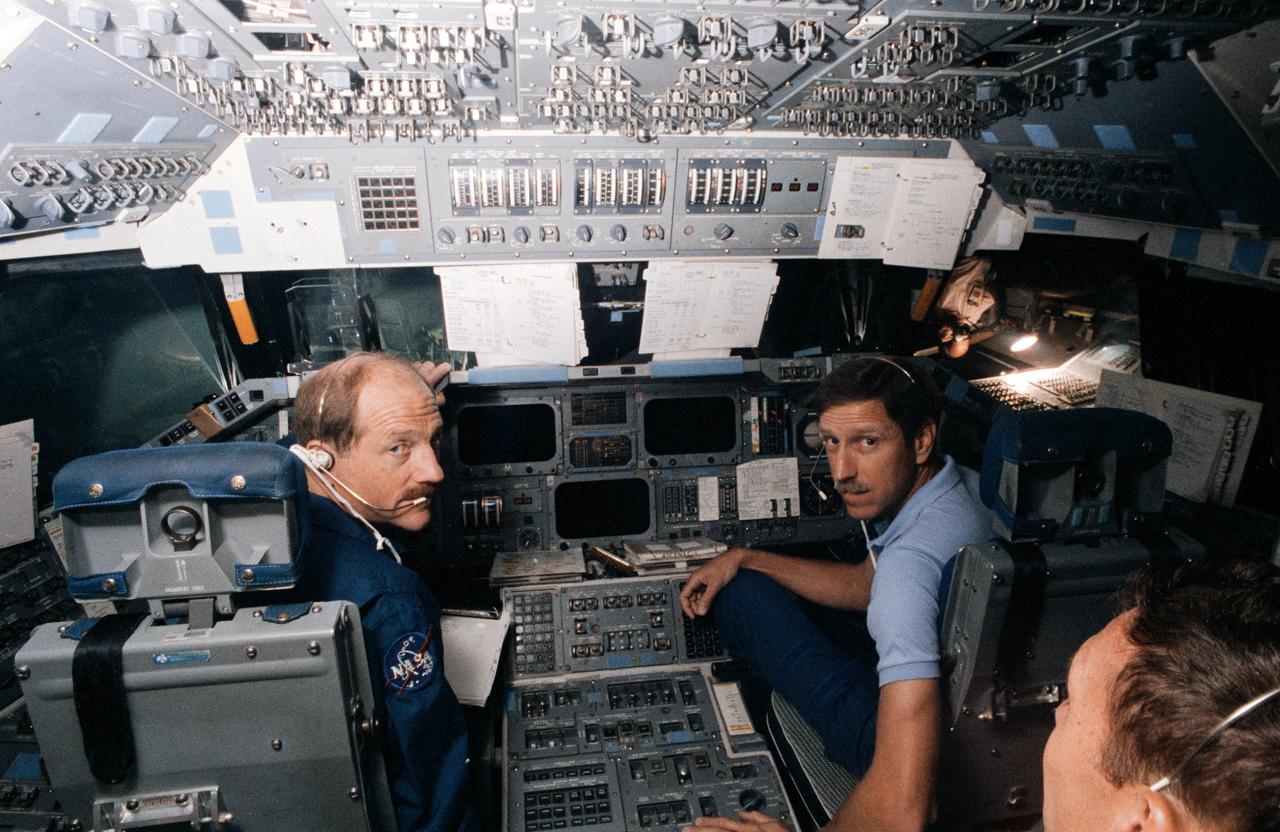
S87-46304 (20 Oct 1987) --- Astronauts Frederick H. (Rick) Hauck, left, STS-26 commander, and Richard O. Covey, pilot, man their respective stations in the Shuttle mission simulator (fixed base) at the Johnson Space Center.  A simulation for their anticipated June 1988 flight aboard the space shuttle Discovery began Oct. 20.  Astronaut David C. Hilmers, one of three mission specialists for the flight, is partially visible in the foreground.
STS-26 crew trains in JSC fixed-based (FB) shuttle mission simulator (SMS)
STS-38 crewmembers, wearing red, yellow, and orange polo shirts, egress Atlantis, Orbiter Vehicle (OV) 104, via a mobile stairway at the Kennedy Space Center's (KSC's) Shuttle Landing Facility (SLF). Commander Richard O. Covey, nearing the bottom of the stairway, is followed by Pilot Frank L. Culbertson, Mission Specialist (MS) Robert C. Springer, MS Charles D. Gemar, and MS Carl J. Meade. Ground servicing personnel look on in the foreground.
STS-38 crewmembers egress OV-104 via mobile stairway at KSC's SLF
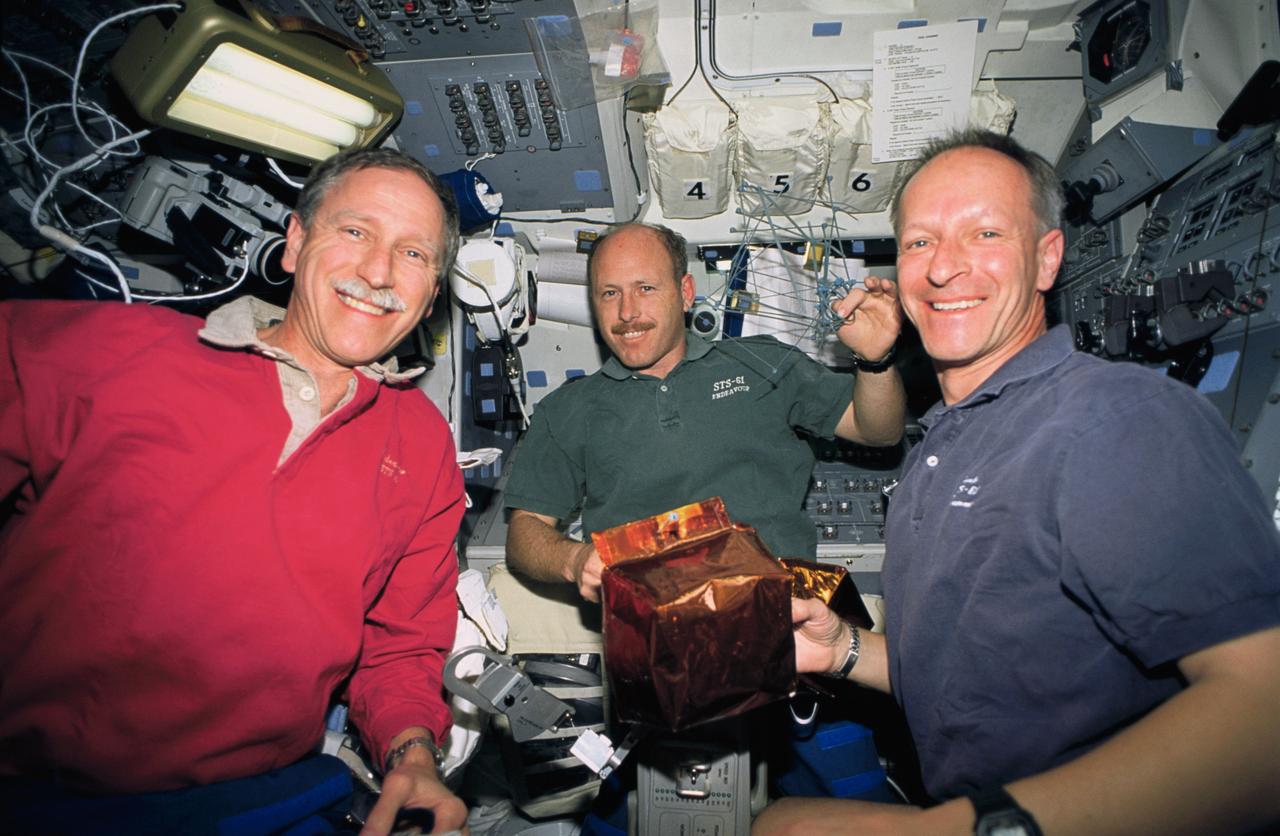
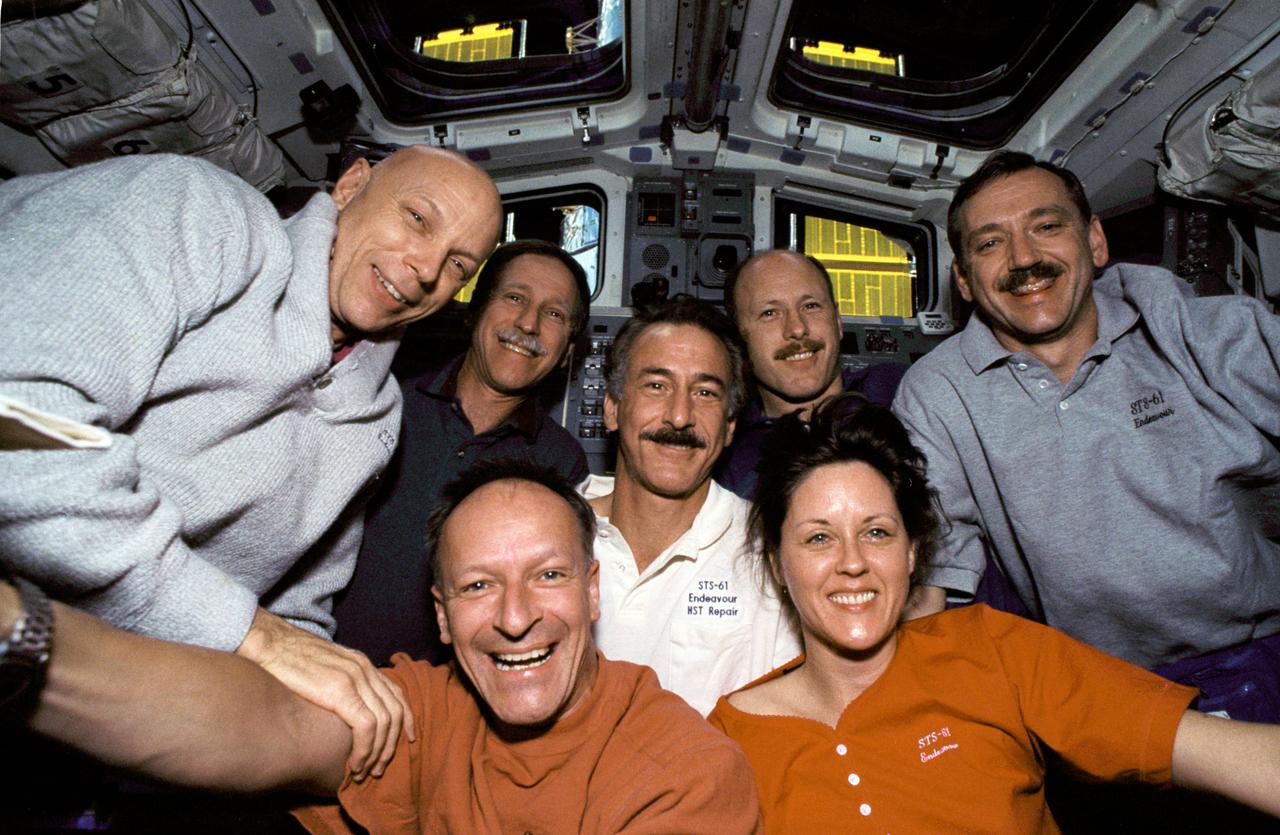
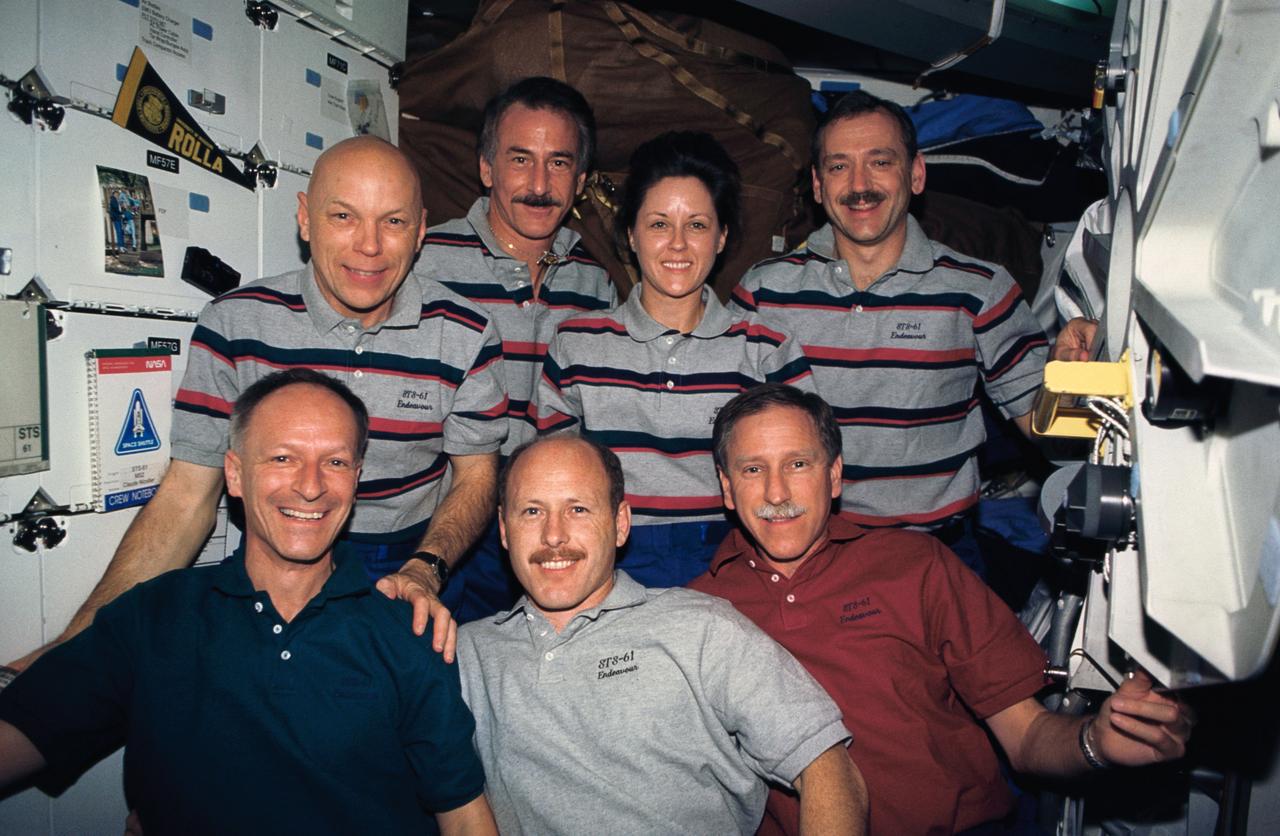
STS061-05-031 (2-13 Dec 1993) --- With the Hubble Space Telescope (HST) berthed in Endeavour's cargo bay, crew members for the STS-61 mission pause for a crew portrait on the flight deck.  Left to right are F. Story Musgrave, Richard O. Covey, Claude Nicollier, Jeffrey A. Hoffman, Kenneth D. Bowersox, Kathryn C. Thornton and Thomas D. Akers.
On-board STS-61 crew portrait
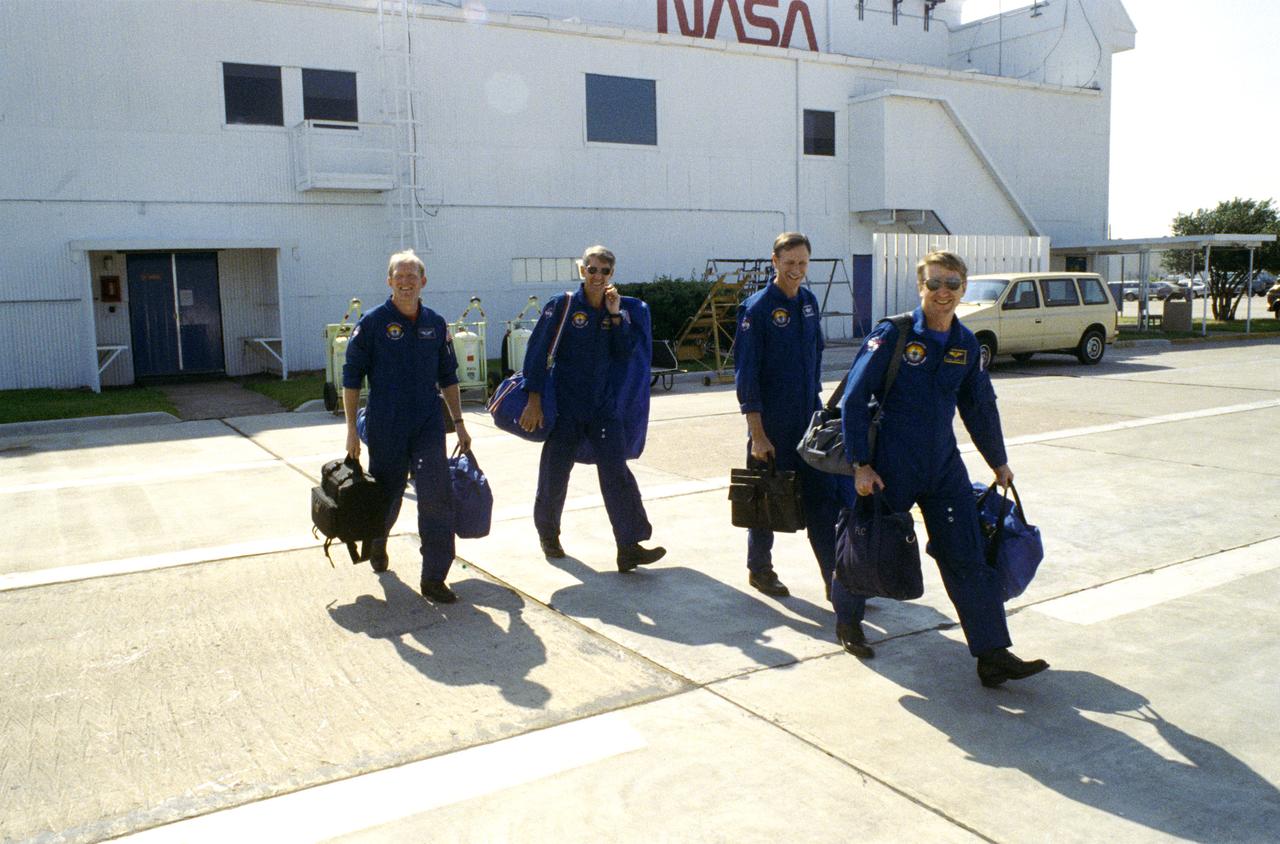
STS-38 crewmembers, carrying their luggage, walk across the Ellington Field runway to board their T-38As. The crewmembers are lead by Pilot Frank L. Culbertson. Commander Richard O. Covey, Mission Specialist (MS) Robert C. Springer (wearing sunglasses), and MS Charles D. Gemar follow. The crewmembers are preparing for their departure to the Kennedy Space Center (KSC). Ellington Field hangar is visible in the background.
STS-38 crewmembers prepare for Ellington Field departure
S85-36062 (1 July 1985) --- These five NASA astronauts make up the crew for the mission STS-51I, scheduled for launch in August of this year. Taking a break from rehearsals in the crew compartment trainer in the Shuttle Mockup and Integration Laboratory at JSC are astronauts Joe H. Engle (front left), crew commander; Richard O. Covey (front right), pilot; and (back row, left-to-right) astronauts James D. van Hoften, John M. (Mike) Lounge and William F. Fisher -- all mission specialists.
CREW PORTRAIT - STS-27/51I
The seventh mission dedicated to the Department of Defense (DOD), the STS-38 mission, launched aboard the Space Shuttle Atlantis on November 15, 1990 at 6:48:15 pm (EST). The STS-38 crew included the following five astronauts: Richard O. Covey, commander; Frank L. Culbertson, pilot; and mission specialists Charles D. (Sam) Gemar, Robert C. Springer, and Carl J. Meade.
Space Shuttle Projects
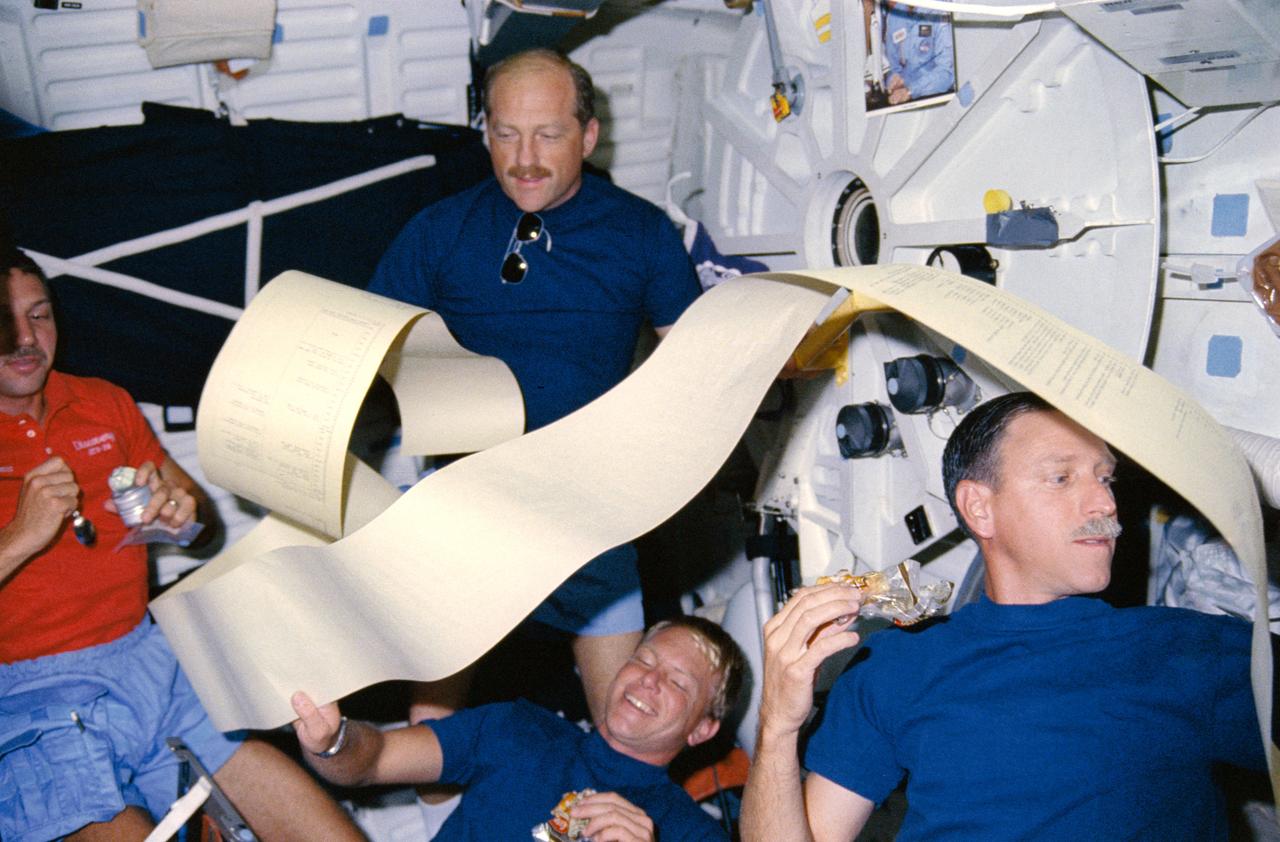
STS026-03-019 (3 Oct 1988) --- STS-26 Commander Frederick H. Hauck (center) reviews lengthy text and graphics system (TAGS) printout as it drifts across the middeck while his fellow crewmembers (left to right) Mission Specialist (MS) David C. Hilmers, MS George D. Nelson, and Pilot Richard O. Covey eat various snack items. The open airlock hatch and the sleep restraints on the starboard wall are visible in the background.
STS-26 crewmembers eat on middeck as TAGS printout drifts among them
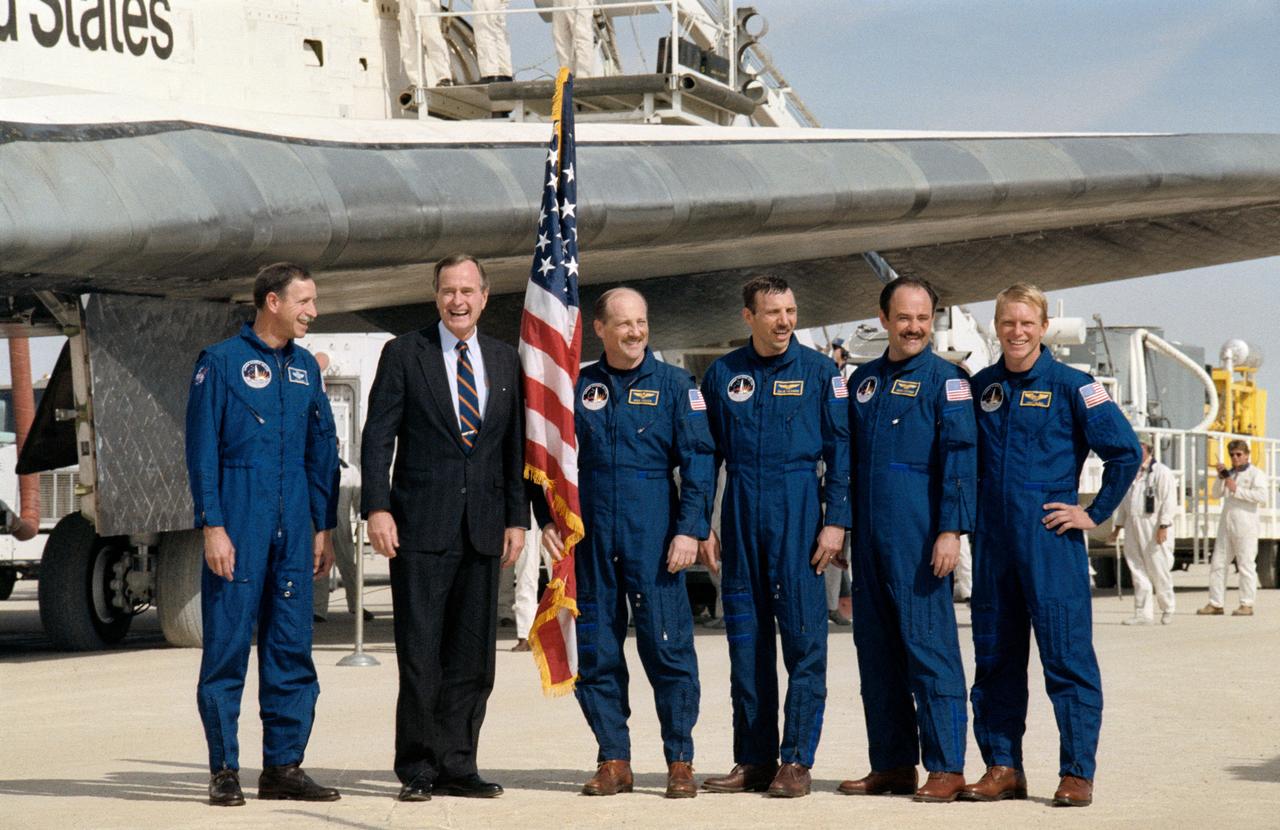
STS026-S-169 (3 Oct 1988) --- The five STS 26 crewmembers pose with Vice President George Bush after completing a successful four-day mission aboard the Space Shuttle Discovery (background). Pictured, from left to right, are  astronaut Richard O. Covey, pilot; Vice President Bush; and astronauts Frederick H. (Rick) Hauck, mission commander;  and David C. Hilmers, John M. (Mike) Lounge,  and George D. Nelson, all mission specialists.
STS-26 crewmembers pose with VP Bush for post flight portrait at EAFB, CA
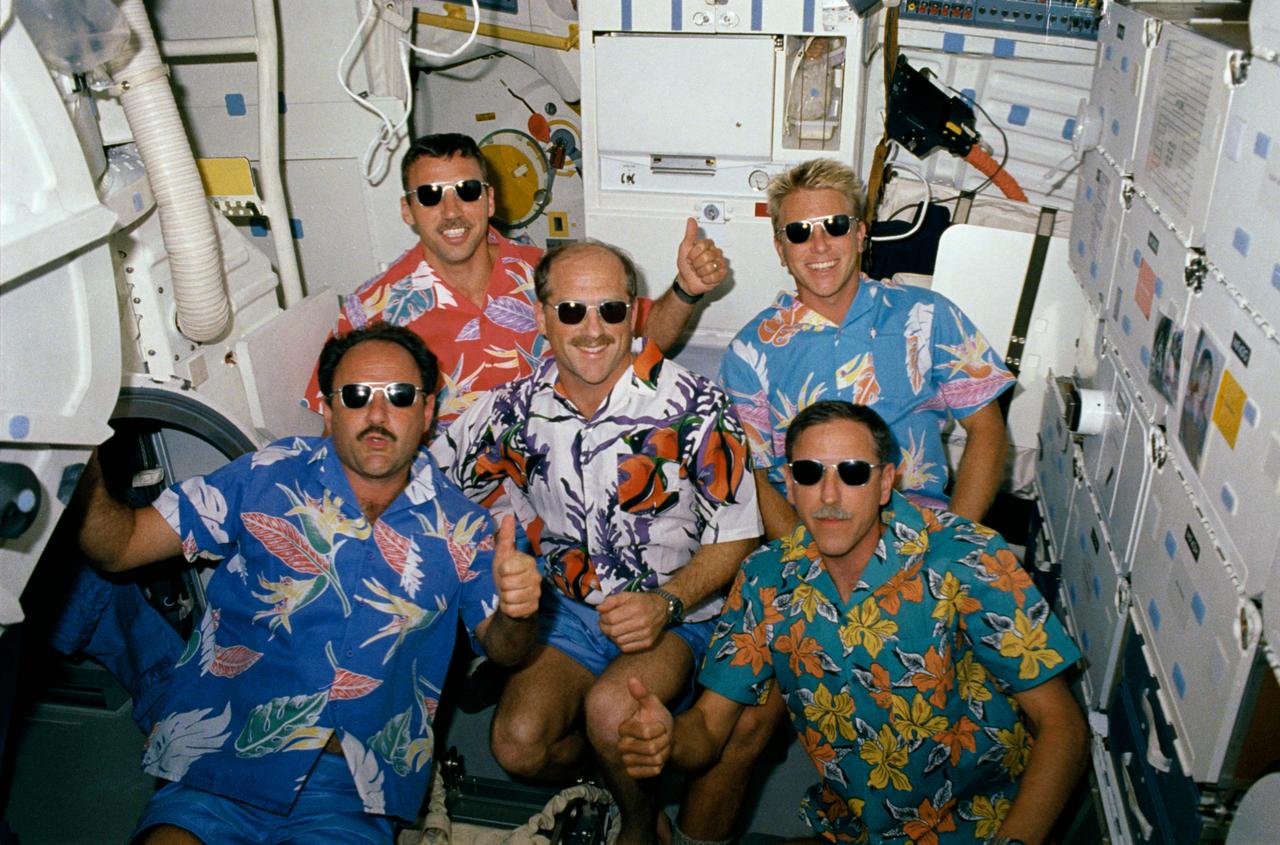
51I-17-029 (Aug-Sept 1985) --- A group portrait, recorded by a pre-set 35mm camera, shows all five STS- 51-I crewmembers on the flight deck of the Earth-orbiting Discovery in early September 1985, following the successful Syncom repair performed by the crewmembers.  Left to right are Astronauts James D. van Hoften, William F. Fisher, Joe H. Engle, Richard O. Covey and John M. (Mike) Lounge.
STS-51I crew activities
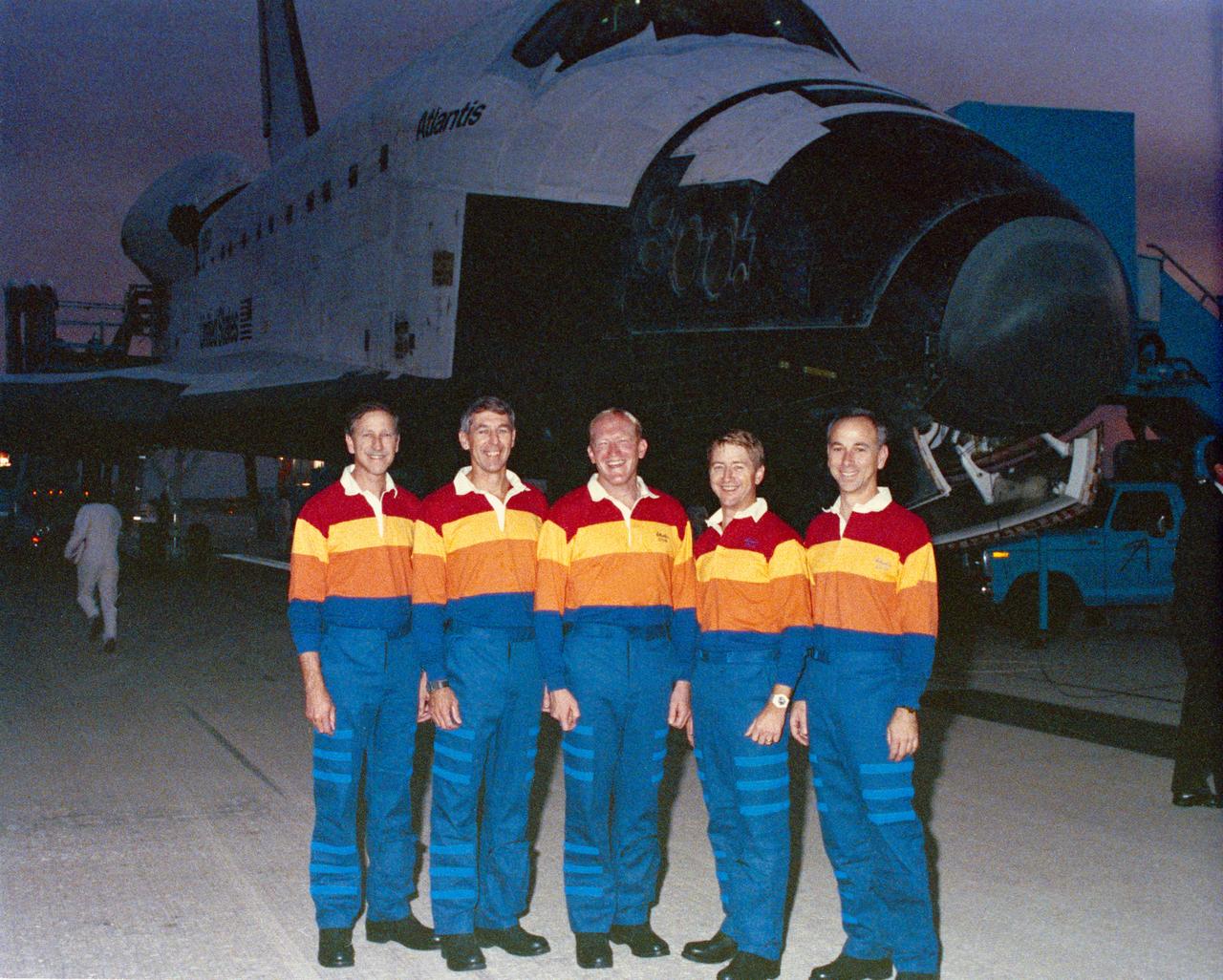
STS038-S-040 (20 Nov 1990) ---  STS-38 crewmembers, wearing red, yellow, and orange polo shirts, pose in front of Atlantis, Orbiter Vehicle (OV) 104, parked on runway 33 at Kennedy Space Center's (KSC) Shuttle Landing Facility (SLF) during post flight activities. Left to right are Commander Richard O. Covey, Mission Specialist (MS) Robert C. Springer, MS Charles D. Gemar, Pilot Frank L. Culbertson, and MS Carl J. Meade.
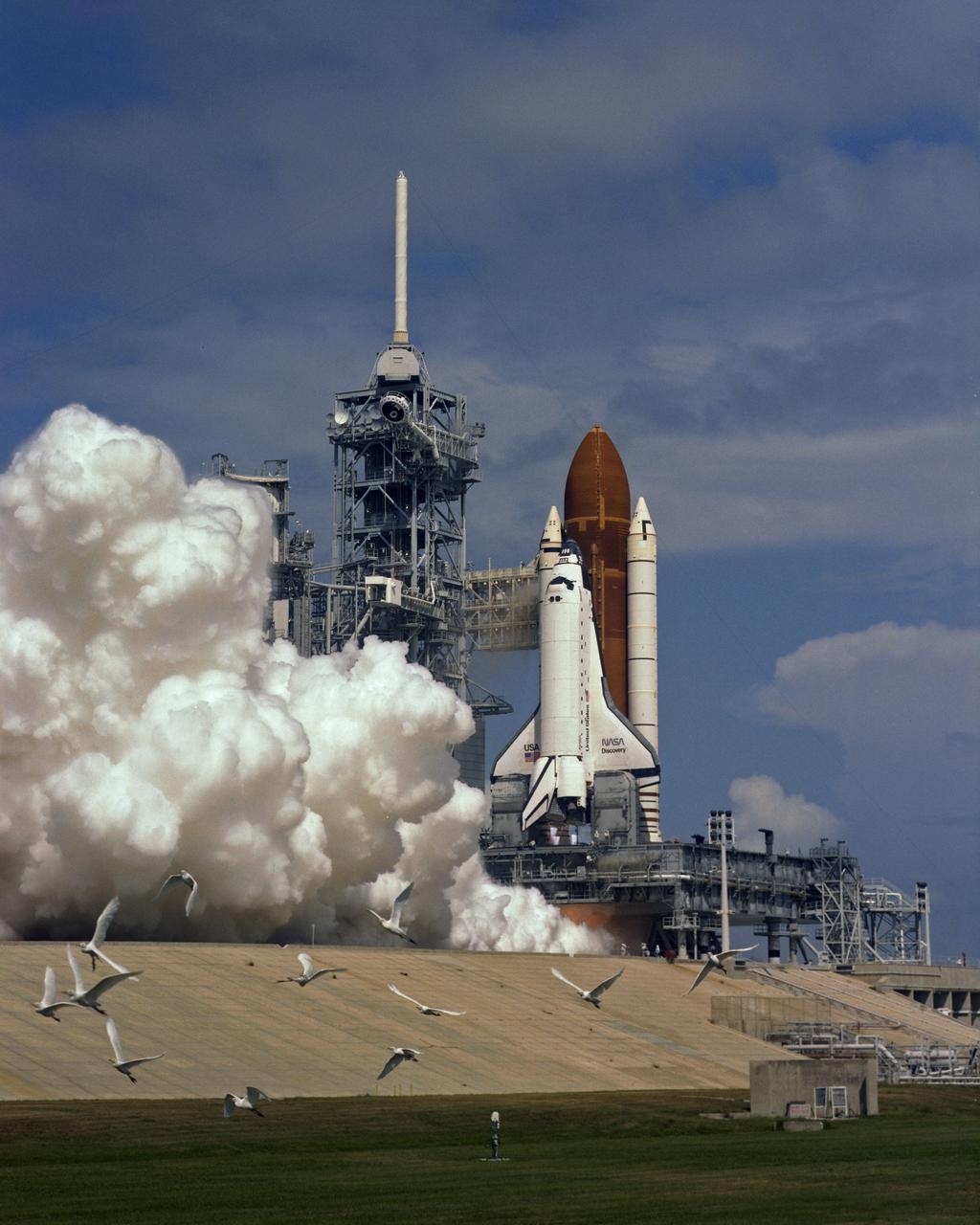
STS-38 crew poses in front of OV-104 at KSC's SLF during post flight activity
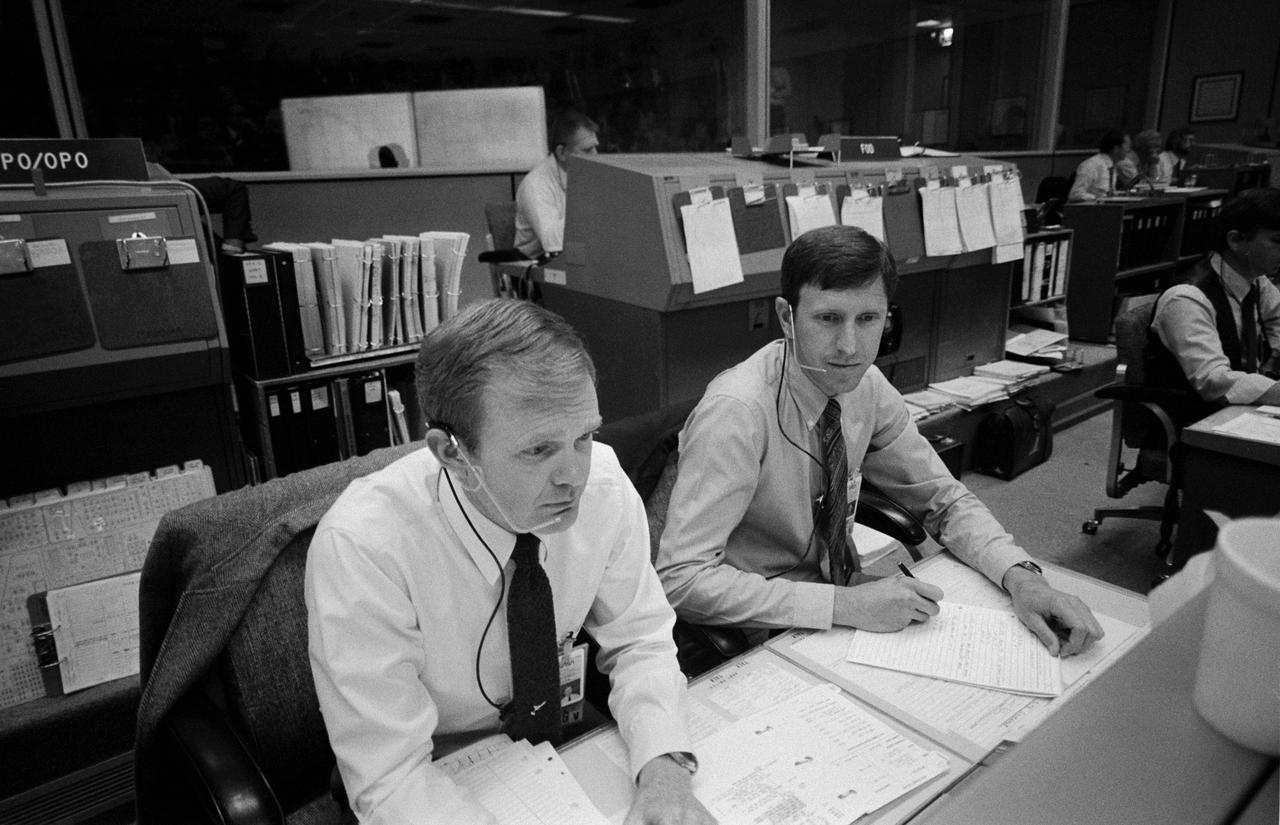
Astronauts Roy D. Bridges (left) and RIchard O. Covey serve as spacecraft communicators (CAPCOM) for STS-6. They are seated at the CAPCOM console in the mission operations control room (MOCR) of JSC's mission control center (30119); Flight Director Jay H. Greene communicates with a nearby flight controller in the MOCR just after launch of the Challenger (30120).
Mission Operations Control Room (MOCR) activities during STS-6 mission
STS061-S-002 (1 Oct. 1993) --- These seven NASA astronauts are currently in training for the Hubble Space Telescope (HST) servicing mission, scheduled for later this year. Astronaut Richard O. Covey, mission commander, is standing at left, with astronaut Kenneth D. Bowersox, pilot, seated at left. The five mission specialists for the mission are (left to right, seated) astronauts Kathryn C. Thornton and F. Story Musgrave, and the European Space Agency (ESA) astronaut Claude Nicollier; and (left to right, standing), astronauts Jeffrey A. Hoffman and Thomas D. Akers. Musgrave, Akers, Thornton and Hoffman are all assigned to participate in five total sessions of extravehicular activity (EVA) for the servicing tasks.
STS-61 crew portrait
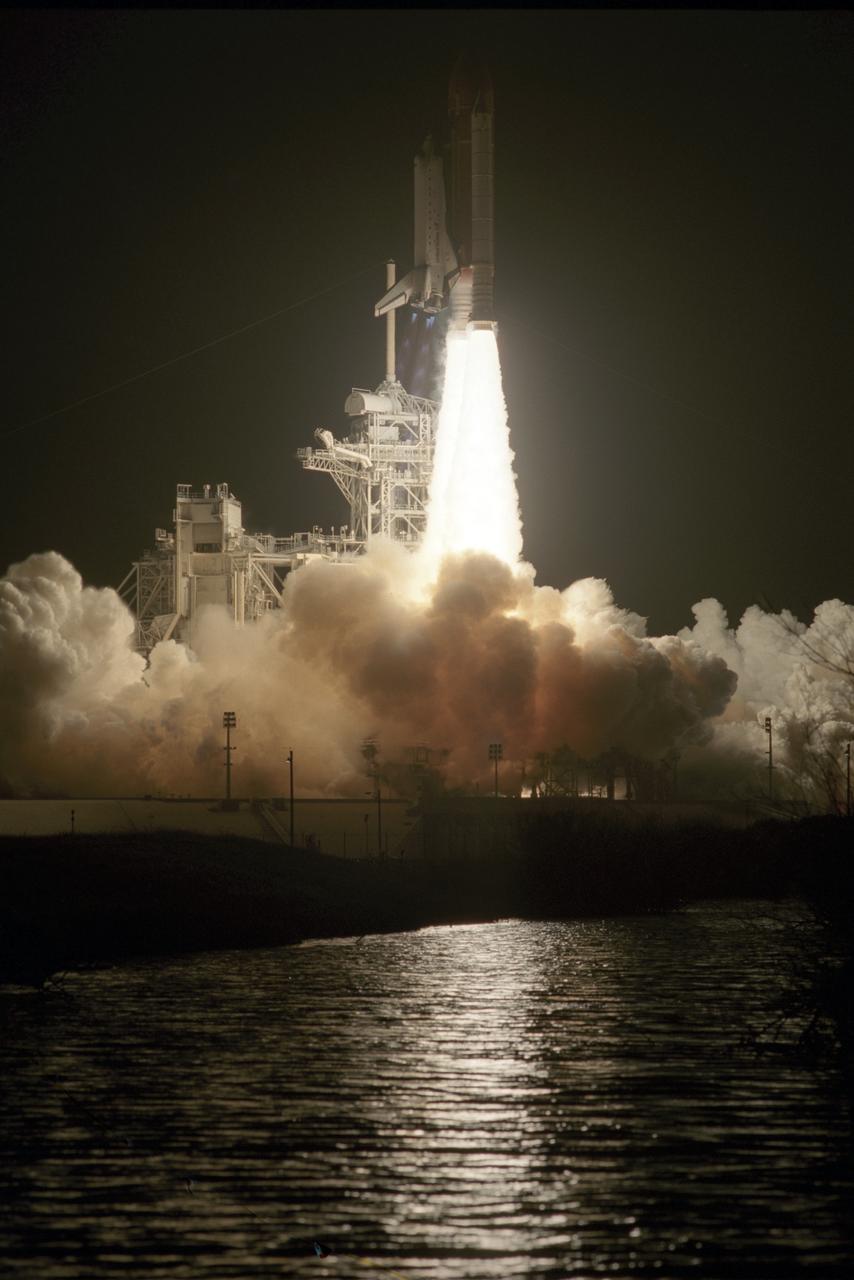
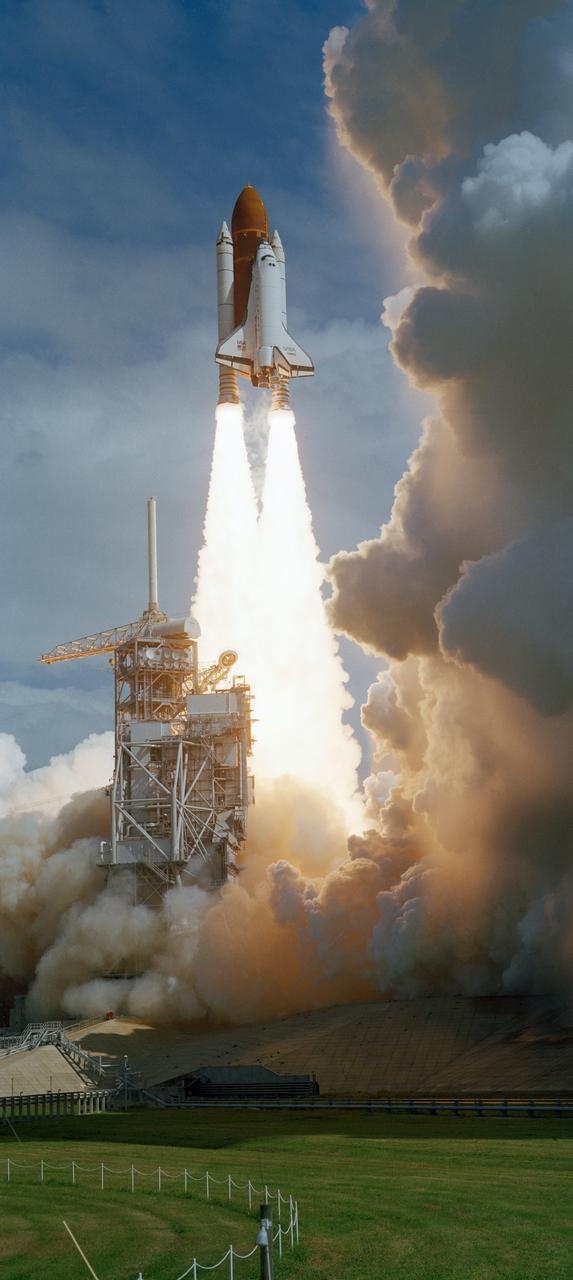
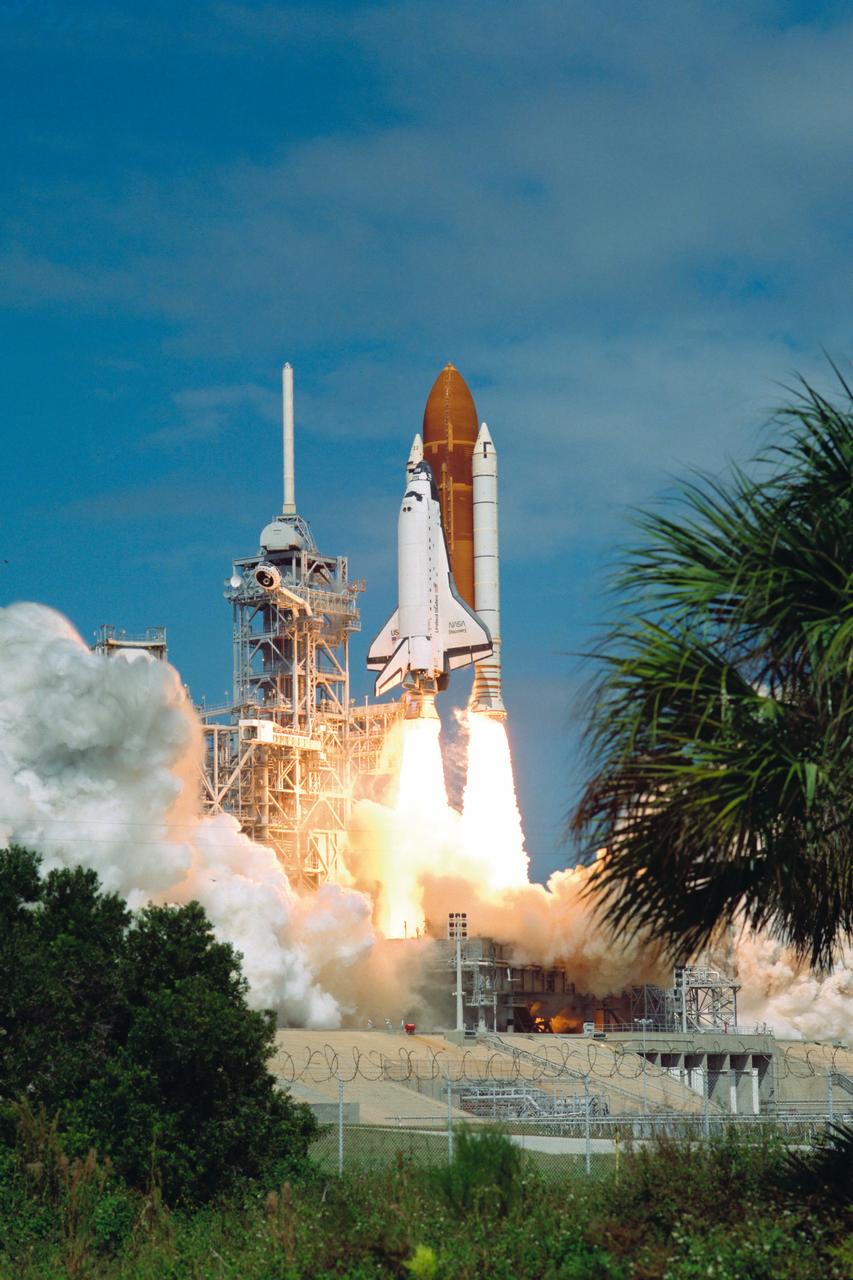
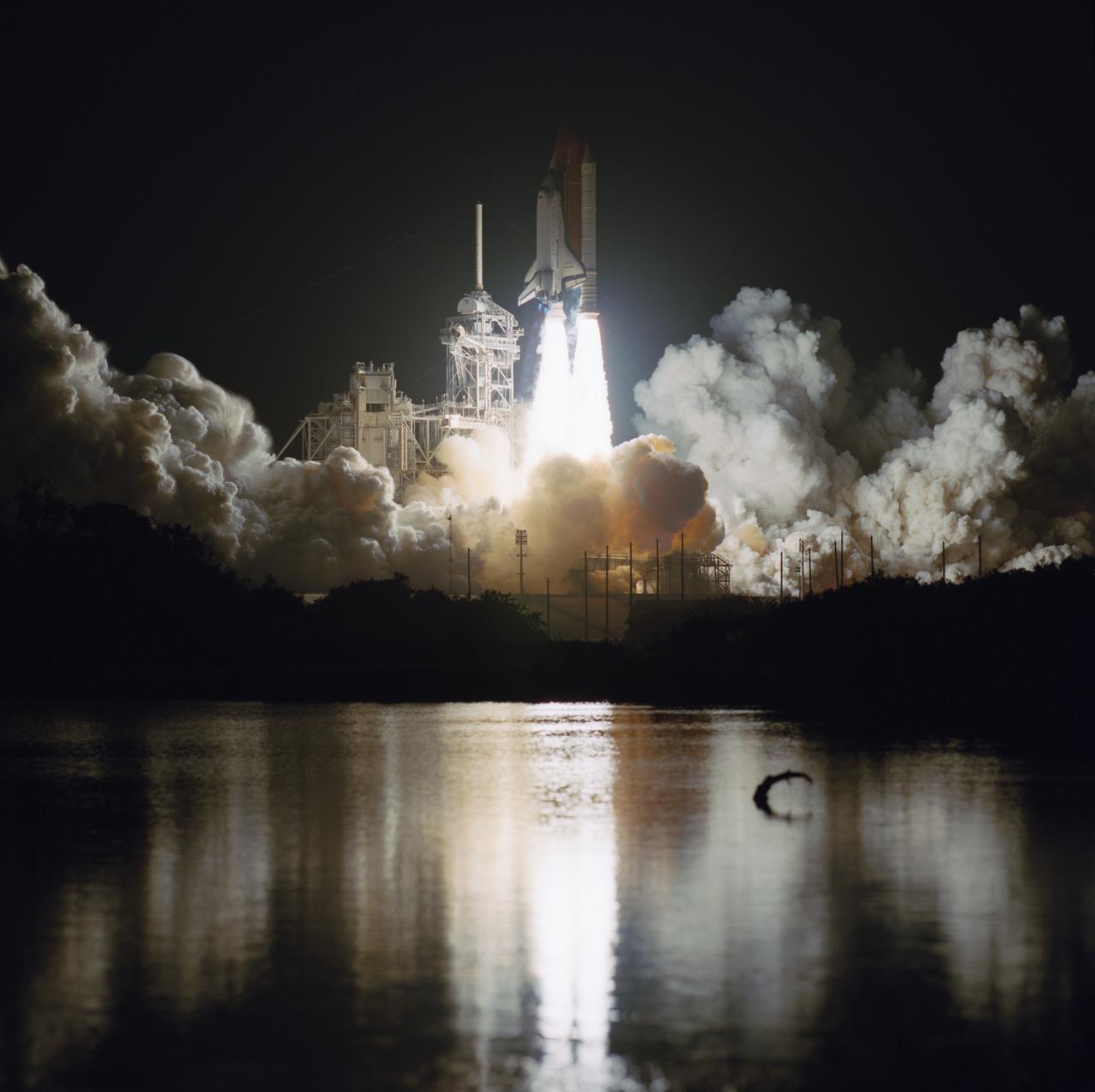
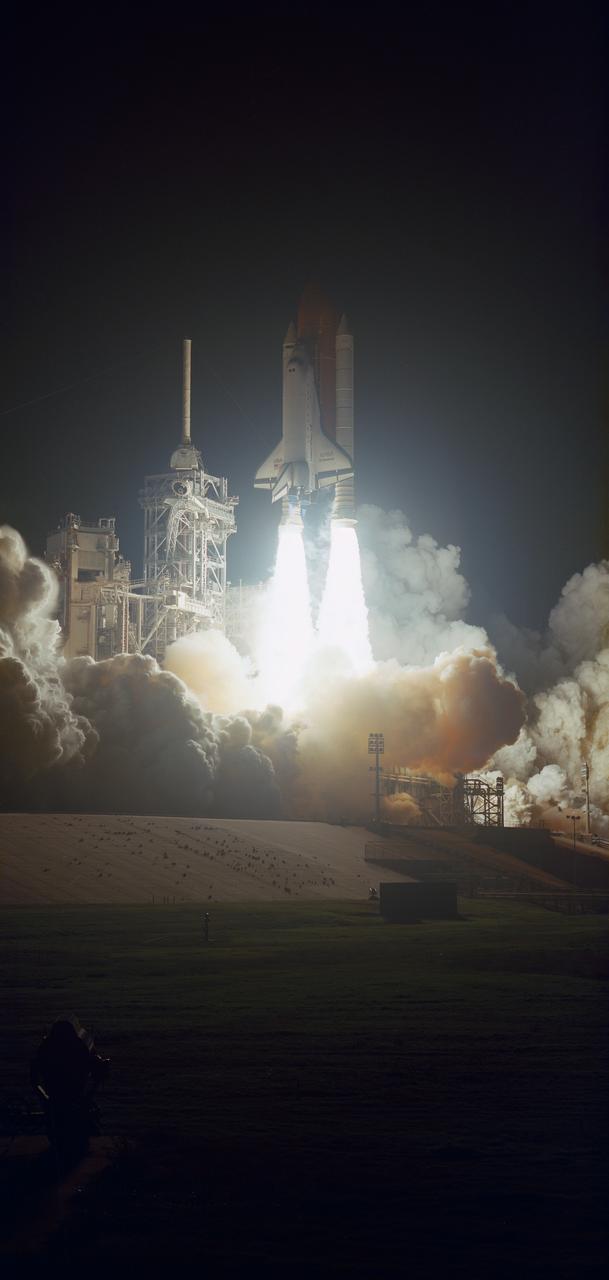
S26-S-032 (29 Sept. 1988) --- The STS-26 launch of space shuttle Discovery begins the first flight to be flown after the Challenger accident.  The flight crew included astronauts Rick Hauck, commander;  Dick Covey, pilot; and three mission specialists, Dave Hilmers, Mike Lounge, and George (Pinky) Nelson. During the four-day mission, the crew deployed the Tracking and Data Relay Satellite (TDRS-C) and operated eleven mid-deck experiments. Discovery completed 64 orbits of the earth before landing at Edwards Air Force Base, California, on October 3, 1988.  Photo credit: NASA or National Aeronautics and Space Administration
STS-26 Discovery, Orbiter Vehicle (OV) 103, lifts off from KSC LC pad 39B
STS061-S-071 (13 Dec 1993) --- A rear view of the Space Shuttle Endeavour as it touches down on the Shuttle Landing Facility at Kennedy Space Center (KSC), at 05:25:57:27 GMT (12:26 a.m. EST) December 13, 1993.  Onboard the spacecraft were Richard O. Covey, mission commander; Kenneth D. Bowersox, pilot; mission specialists Thomas D. Akers; Jeffrey A. Hoffman; F. Story Musgrave; Kathryn C. Thornton and Swiss scientist Claude Nicollier.  This is the second night landing at KSC in the history of the Shuttle Program.
Landing of STS-61 Shuttle Endeavour at Kennedy Space Center
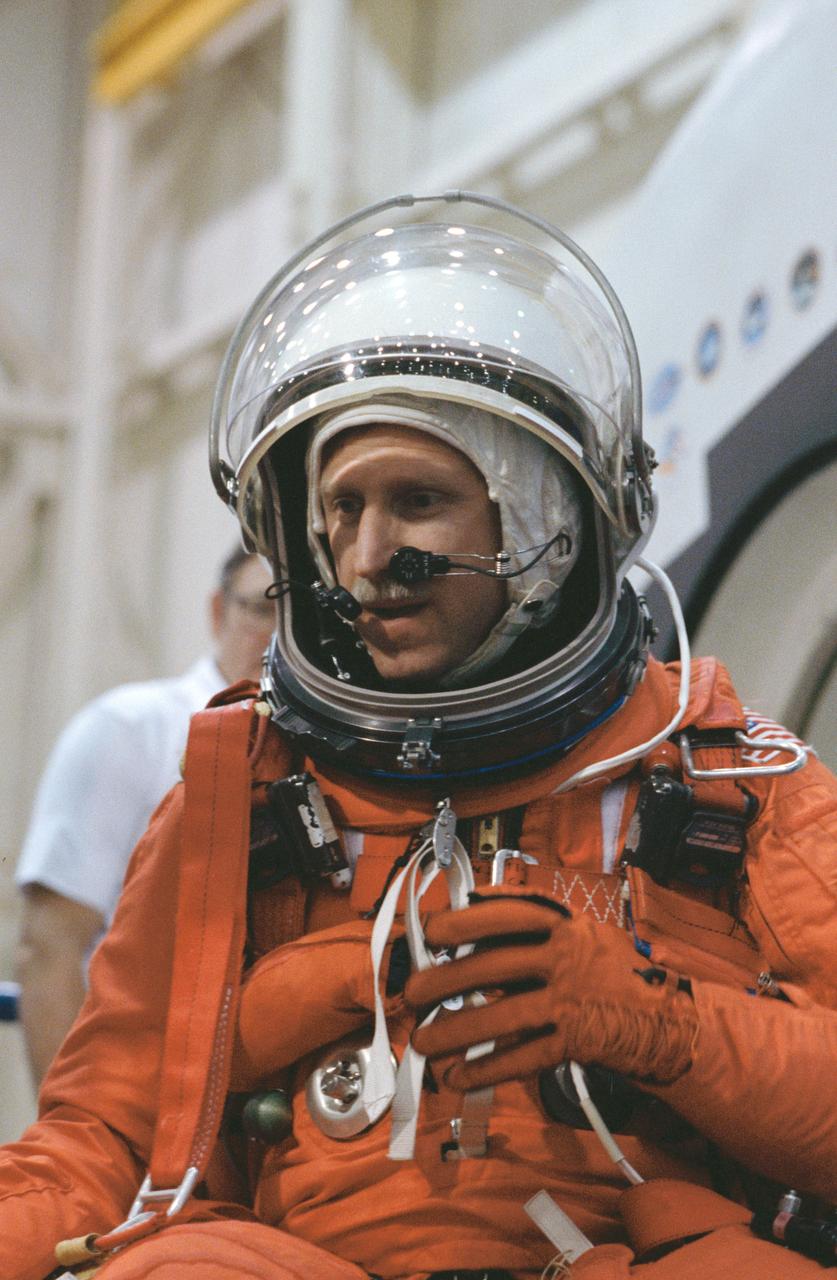
S88-47522 (10 Sept 1988) --- These five veteran astronauts have been training for over a year to serve as NASA's crew aboard the Space Shuttle Discovery for STS-26. On the front row are Astronauts Frederick H. (Rick) Hauck (right), commander; and Richard O. Covey, pilot. On the back row are Astronauts John M. (Mike) Lounge, David C. Hilmers and George D. Nelson -- all mission specialists. The crewmembers are wearing the orange partial pressure garments that they will be wearing on the launch and entry phases of the flight, scheduled for launch later this month.
STS-26 DISCOVERY - ORBITER VEHICLE (OV)-103 - CREW PORTRAIT
STS061-11-004 (2-13 Dec 1993) --- Traditional inflight portrait for the crew of the Hubble Space Telescope (HST) servicing mission.  On the front row are the three crew members who assisted from inside the Space Shuttle Endeavour's cabin throughout the five space walks.  They are, left to right, Swiss scientist Claude Nicollier, mission specialist, along with astronauts Kenneth D. Bowersox, pilot; and Richard O. Covey, mission commander.  Back row -- all space walkers on this flight -- are astronauts F. Story Musgrave, payload commander; Jeffrey A. Hoffman, Kathryn D.  Thornton and Thomas D. Akers, all mission specialists.
Unofficial On-board STS-61 crew portrait
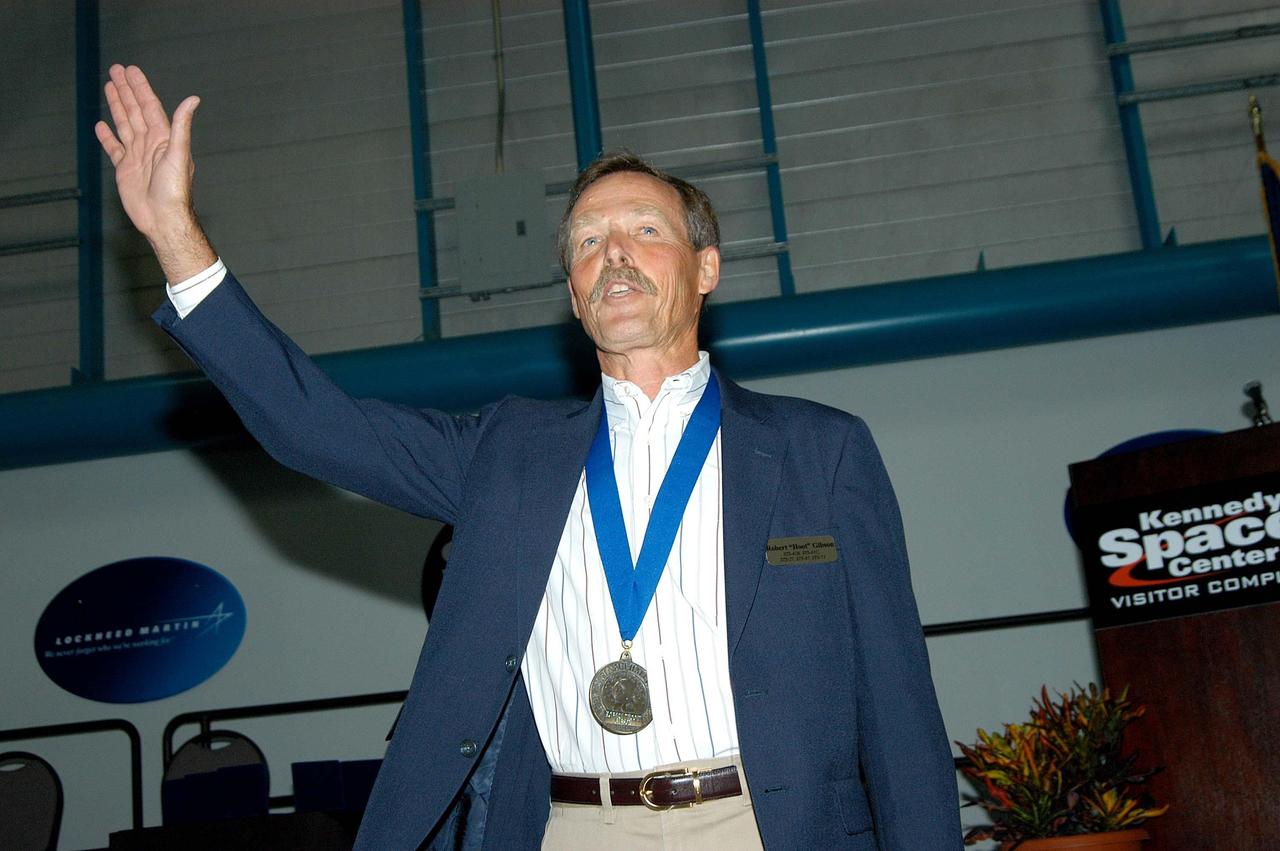
KENNEDY SPACE CENTER, FLA. -  Owen Garriott, chairman of the Astronaut Hall of Fame, speaks to guests at the Induction Ceremony of three new additions to the Hall of Fame: Gordon Fullerton, Bruce McCandless and Joe Allen.  Seated on stage are current Hall of Famers, from left in the back row, Charles Duke, Jack Lousma, Bill Pogue, Dan Brandenstein, Robert “Hoot” Gibson and Stephen Covey; in front row, Jim Lovell, Fred Haise and Vance Brand. Recognized for their individual flight accomplishments and contributions to the success and future success of the U.S. space program, this elite group of inductees is among only 60 astronauts to be honored in the Hall of Fame and the fourth group of Space Shuttle astronauts named.
KSC-05pd-0830
S26-S-187 (29 Sept. 1988) --- The STS-26 launch of space shuttle Discovery begins the first flight to be flown after the Challenger accident.  The flight crew included astronauts Rick Hauck, commander;  Dick Covey, pilot; and three mission specialists, Dave Hilmers, Mike Lounge, and George (Pinky) Nelson. During the four-day mission, the crew deployed the Tracking and Data Relay Satellite (TDRS-C) and operated eleven mid-deck experiments. Discovery completed 64 orbits of the earth before landing at Edwards Air Force Base, California, on October 3, 1988.  Photo credit: NASA or National Aeronautics and Space Administration
sts26-s-187
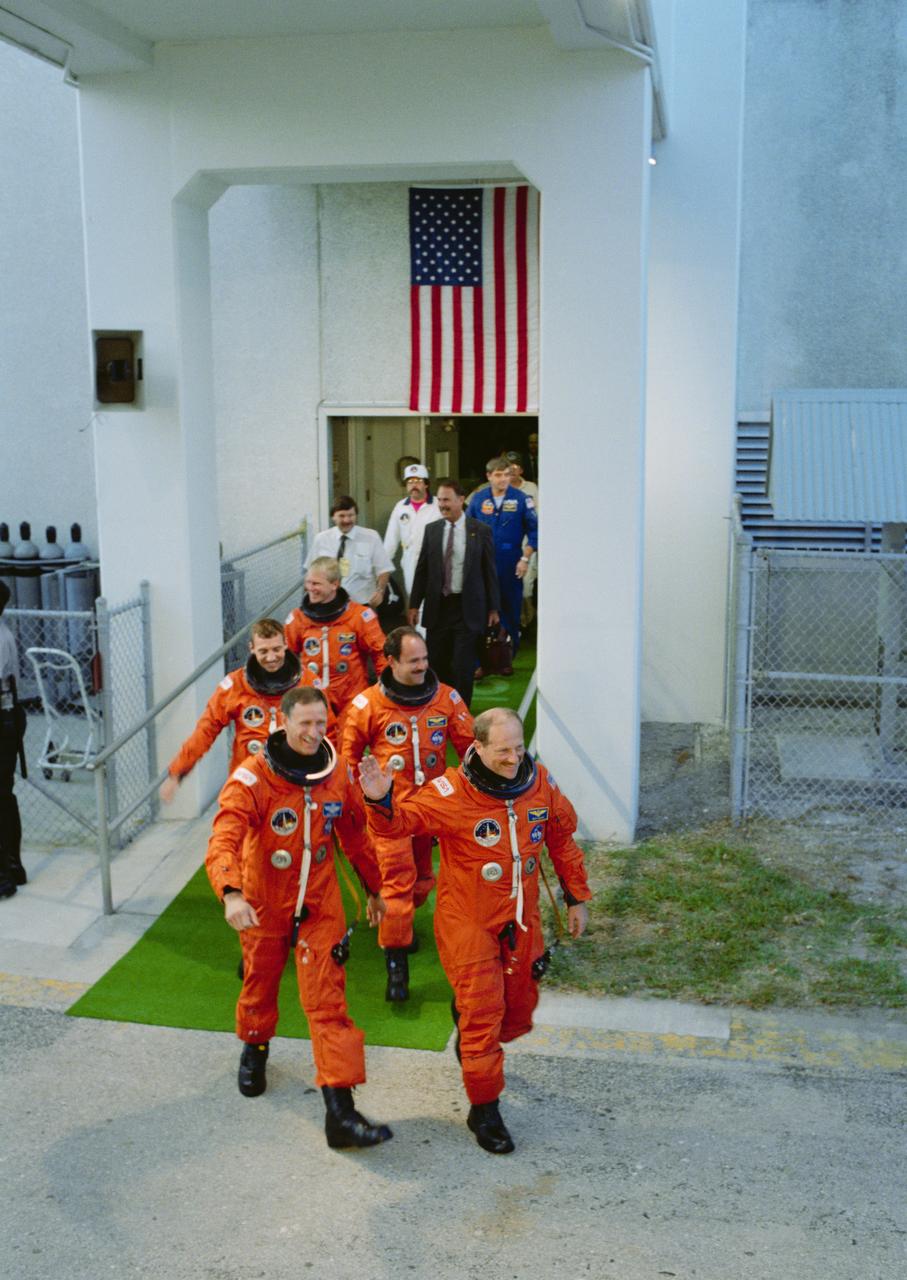
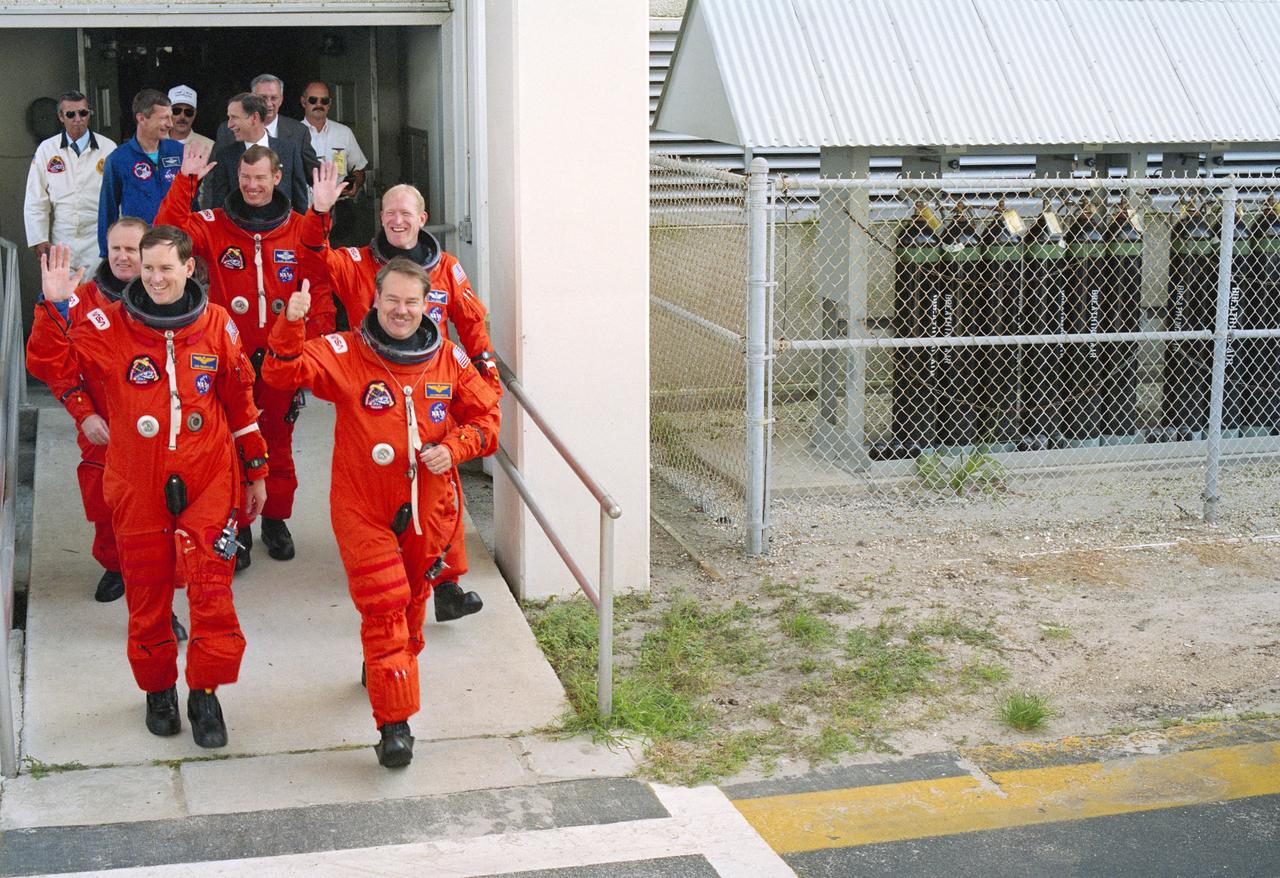
STS-26 crewmembers, suited in launch and entry suits (LESs), leave the Kennedy Space Center (KSC) Operations and Checkout (O&C) Building on their way to the launch complex (LC) pad 39B where they will board Discovery, Orbiter Vehicle (OV) 103. Commander Frederick H. Hauck, waving to spectators, is followed by Pilot Richard O. Covey, Mission Specialist (MS) John M. Lounge, MS David C. Hilmers, and MS George D. Nelson. Others accompanying the crew are JSC Flight Crew Operations Directorate (FCOD) Director Donald R. Puddy, Astronaut Office Chief Daniel C. Brandenstein, and a Crew Training Officer Richard W. Nygren.
STS-26 crewmembers leave KSC O&C Bldg on their way to the launch pad
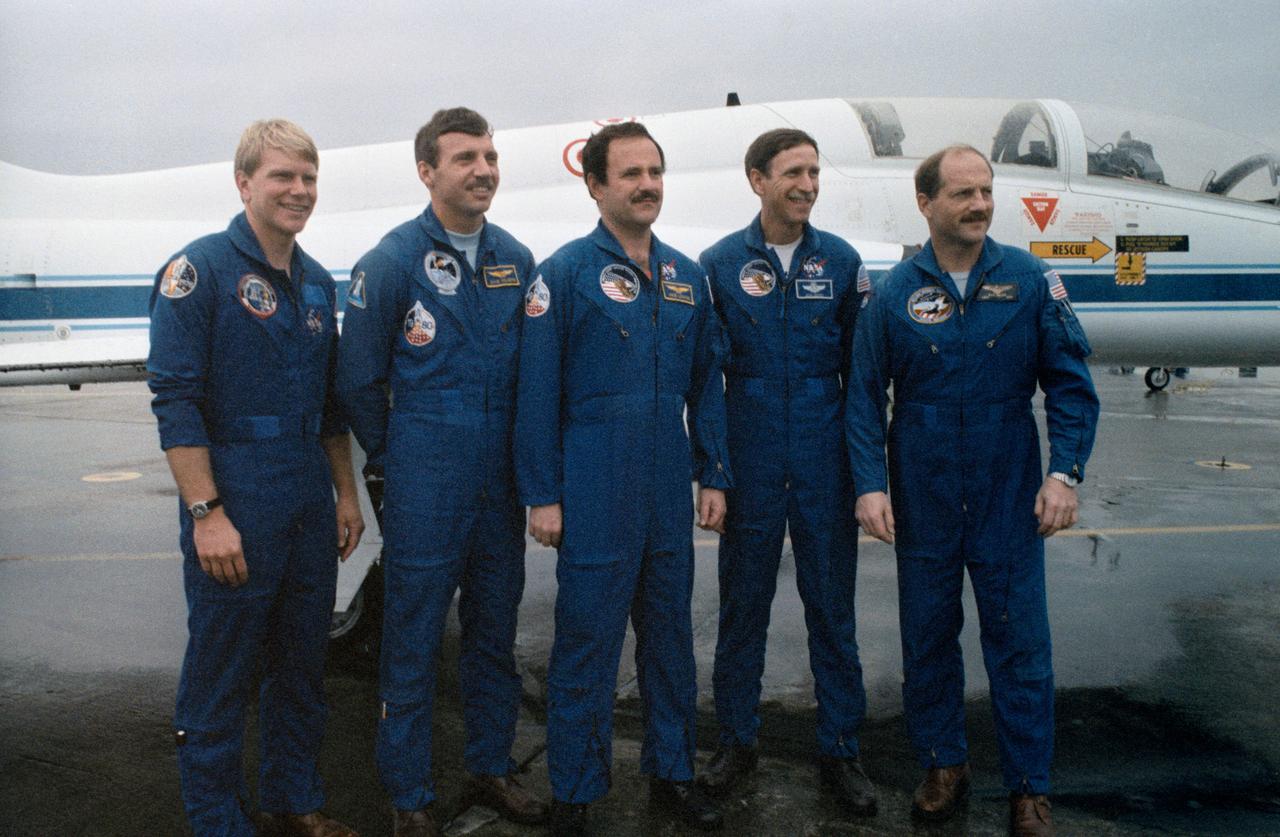
S87-28139 (26 Feb 1987)  --- The five veteran astronauts recently assigned to the STS 26 space mission pose for photographers prior to departure from Ellington Field in T-38 jets (parked in background).  Astronaut Frederick H. (Rick) Hauck (right) is mission commander.  Astronaut Richard O. Covey, second right, is pilot; and (l.-r.)  Astronauts George D. Nelson, David C. Hilmers and John M. (Mike) Lounge are mission specialists.  The five were headed for KSC in Florida where they were to interface with flight hardware.  The Discovery has been assigned as the STS 26 Shuttle vehicle.
STS-26 crew poses for group portrait at Ellington Field prior to departure
KENNEDY SPACE CENTER, FLA.  - The Return To Flight Task Group (RTFTG) holds the first public meeting at the Debus Center, KSC Visitor Complex.  Shown at the table on the left are Dr. Amy K. Donahue, James D. Lloyd, Robert Sieck, retired Air Force Lt. Gen. Forrest C. McCartney, Richard Kohrs, Sy Rubenstein and Dr. Charles C. Daniel.  The group is co-chaired by former Shuttle commander Richard O. Covey and retired Air Force Lt. Gen. Thomas P. Stafford, who was an Apollo commander.   The RTFTG was at KSC to conduct organizational activities, tour Space Shuttle facilities and receive briefings on Shuttle-related topics.  The task group was chartered by NASA Administrator Sean O’Keefe to perform an independent assessment of NASA’s implementation of the final recommendations of the Columbia Accident Investigation Board.
KENNEDY SPACE CENTER, FLA. - The Return To Flight Task Group (RTFTG) holds the first public meeting at the Debus Center, KSC Visitor Complex. Shown at the table on the left are Dr. Amy K. Donahue, James D. Lloyd, Robert Sieck, retired Air Force Lt. Gen. Forrest C. McCartney, Richard Kohrs, Sy Rubenstein and Dr. Charles C. Daniel. The group is co-chaired by former Shuttle commander Richard O. Covey and retired Air Force Lt. Gen. Thomas P. Stafford, who was an Apollo commander. The RTFTG was at KSC to conduct organizational activities, tour Space Shuttle facilities and receive briefings on Shuttle-related topics. The task group was chartered by NASA Administrator Sean O’Keefe to perform an independent assessment of NASA’s implementation of the final recommendations of the Columbia Accident Investigation Board.
KENNEDY SPACE CENTER, FLA.  -  The Return To Flight Task Group (RTFTG) holds the first public meeting at the Debus Center, KSC Visitor Complex.  Members and staff at the table, from left, are retired Navy Rear Adm. Walter H. Cantrell, David Raspet, retired Air Force Col. Gary S. Geyer, Dr. Kathryn Clark, Dr. Decatur B. Rogers, Dr. Dan L. Crippen, Dr. Walter Broadnax and astronaut Carlos Noriega.  The RTFTG was at KSC to conduct organizational activities, tour Space Shuttle facilities and receive briefings on Shuttle-related topics.  The task group was chartered by NASA Administrator Sean O’Keefe to perform an independent assessment of NASA’s implementation of the final recommendations of the Columbia Accident Investigation Board.  The group is co-chaired by former Shuttle commander Richard O. Covey and retired Air Force Lt. Gen. Thomas P. Stafford, who was an Apollo commander.
KENNEDY SPACE CENTER, FLA. - The Return To Flight Task Group (RTFTG) holds the first public meeting at the Debus Center, KSC Visitor Complex. Members and staff at the table, from left, are retired Navy Rear Adm. Walter H. Cantrell, David Raspet, retired Air Force Col. Gary S. Geyer, Dr. Kathryn Clark, Dr. Decatur B. Rogers, Dr. Dan L. Crippen, Dr. Walter Broadnax and astronaut Carlos Noriega. The RTFTG was at KSC to conduct organizational activities, tour Space Shuttle facilities and receive briefings on Shuttle-related topics. The task group was chartered by NASA Administrator Sean O’Keefe to perform an independent assessment of NASA’s implementation of the final recommendations of the Columbia Accident Investigation Board. The group is co-chaired by former Shuttle commander Richard O. Covey and retired Air Force Lt. Gen. Thomas P. Stafford, who was an Apollo commander.
CAPE CANAVERAL, Fla. – Former space shuttle astronaut Richard Covey was among guests gathering for the Astronaut Scholarship Foundation's dinner at the Radisson Resort at the Port in Cape Canaveral celebrating the 40th anniversary of Apollo 17.  The gala commemorating the anniversary of Apollo 17 included mission commander Eugene Cernan and other astronauts who flew Apollo missions. Launched Dec. 7, 1972, Cernan and lunar module pilot Harrison Schmitt landed in the moon's Taurus-Littrow highlands while command module pilot Ronald Evans remained in lunar orbit operating a scientific instrument module. For more information, visit http://www-pao.ksc.nasa.gov/history/apollo/apollo-17/apollo-17.htm Photo credit: NASA/Kim Shiflett
KSC-2012-6144
CAPE CANAVERAL, Fla. - The space shuttle Discovery and its five-man crew is launched from pad 39B at 11:37 a.m. as STS-26 embarks on a four-day mission marking America's return to space.     On the first day of orbit, the crew will deploy from the orbiter's payload bay the primary payload, the Tracking and Data Relay Satellite, or TDRS-C. The inertial upper stage, or IUS, will boost the satellite to a geosynchronous altitude from low Earth orbit. When it place, TDRS-C will relay date from low Earth orbiting spacecraft and air-to-ground voice communications sand television from shape shuttle orbiters during missions. The crew members of STST-26 are Commander Rick Hauck, Pilot Richard Covey, and mission specialists Dave Hilmers, Mike Lounge and George "Pinky" Nelson. Photo Credit: NASA
KSC-88PC-1018
CAPE CANAVERAL, Fla. - The space shuttle Discovery and its five-man crew is launched from pad 39B at 11:37 a.m. as STS-26 embarks on a four-day mission marking America's return to space.       On the first day of orbit, the crew will deploy from the orbiter's payload bay the primary payload, the Tracking and Date Relay Satellite, or TDRS-C. The inertial upper stage, or IUS, will boost the satellite to a geosynchronous altitude from low Earth orbit. When it place, TDRS-C will relay date from low Earth orbiting spacecraft and air-to-ground voice communications sand television from shape shuttle orbiters during missions. The crew members of STST-26 are Commander Rick Hauck, Pilot Richard Covey, and Mission Specialists Dave Hilmers, Mike Lounge and George "Pinky" Nelson. Photo Credit: NASA
KSC-88PC-1014
KENNEDY SPACE CENTER, FLA. -- The Space Shuttle Discovery and its five-man crew is launched from pad 39B at 11:37 a.m. as STS-26 embarks on a four-day mission, marking  America's return to space. On the first day of orbit, the crew will deploy from the orbiter's payload bay the primary payload, the Tracking and Data Relay Satellite (TDRS-C). The Inertial Upper Stage (IUS) will boost the satellite to a geosynchronous altitude from low-Earth orbit. When in place, TDRS-C will relay data from low-Earth orbiting spacecraft, and air-to-ground voice communications and television from Space Shuttle orbiters during missions. The crew members of STS-26 are Commander Rick Hauck, Pilot Richard Covey, and Mission Specialists Dave Hilmers, Mike Lounge, and George 'Pinky' Nelson.
KSC-88PC-1033
STS048-S-168 (18 Sept. 1991) --- The five astronaut crew members for NASA's STS-48 mission leave the operations and checkout building headed for a transfer van that will take them to the awaiting Discovery at Launch Complex 39.  Astronaut John O. Creighton, right, mission commander, leads the group, with Kenneth S. Reightler, pilot, on his right.  Mission specialists are, left to right, James F. Buchli, Mark N. Brown and Charles D. (Sam) Gemar.  In the background are astronauts Steven R. Nagel and Richard O. Covey and Olan J. Bertrand, all from the Johnson Space Center (JSC).  Discovery launched at 7:11:04 p.m. (EDT), Sept. 12, 1991. Photo credit: NASA
STS-48 crew leaves KSC O&C Bldg for launch pad during preflight activities
STS026-S-031 (29 Sept 1988) --- Just moments after ignition, the Space Shuttle Discovery, mated to two solid rocket boosters and an external fuel tank, heads, toward Earth orbit.  The mission marks Discovery?s first flight since September of 1985 and NASA?s first manned mission since September of 1985 and NASA?s first manned mission since the 51L Challenger accident of January 28, 1986.  Onboard the spacecraft are Astronauts Frederick H. (Rick) Hauck, commander; Richard O. Covey, pilot; and George D. Nelson, John M. (Mike) Lounge and David C. Hilmers, mission specialists.  Discovery?s dry weight is 171,419 pounds.  The tracking and data relay satellite and its inertial upper stage total about 37,000 pounds.
STS-26 Discovery, Orbiter Vehicle (OV) 103, lifts off from KSC LC pad 39B
The Space Shuttle Discovery takes off from Launch Pad 39B at the Kennedy Space Center, Florida, to being Mission STS-26 on 29 September 1988,11:37:00 a.m. EDT. The 26th shuttle mission lasted four days, one hour, zero minutes, and 11 seconds. Discovery landed 3 October 1988, 9:37:11 a.m. PDT, on Runway 17 at Edwards Air Force Base, California. Its primary payload, NASA Tracking and Data Relay Satellite-3 (TDRS-3) attached to an Inertial Upper Stage (IUS), became the second TDRS deployed. After deployment, IUS propelled the satellite to a geosynchronous orbit. The crew consisted of Frederick H. Hauck, Commander; Richard O. Covey, Pilot; John M. Lounge, Mission Specialist 1; George D. Nelson, Mission Specialist 2; and David C. Hilmers, Mission Specialist 3.
Liftoff of STS-26