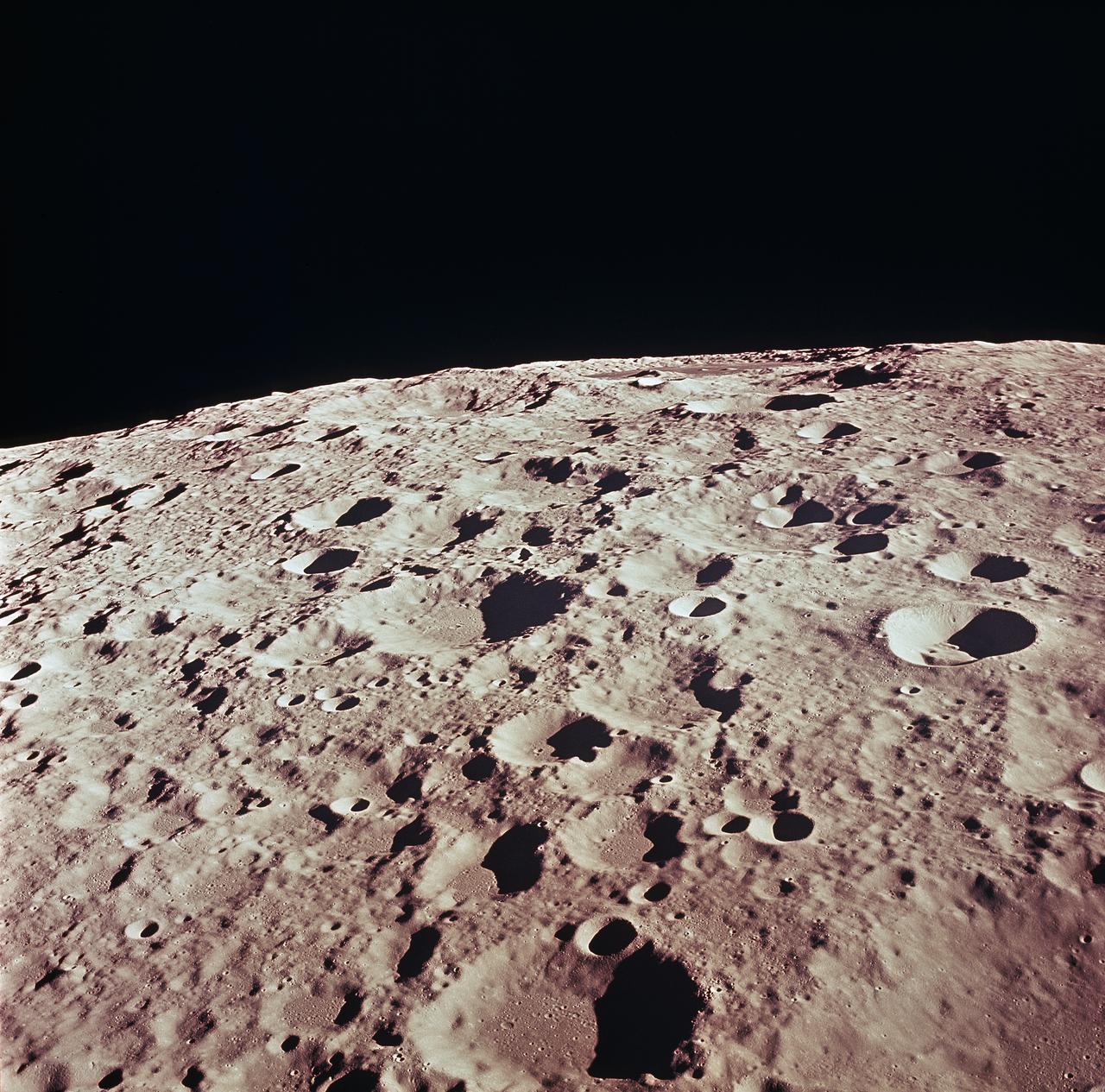
This is a detailed view of the back side of Moon in the vicinity of Crater No. 308 taken during the Apollo 11 mission. Apollo 11, the first manned lunar mission, launched from The Kennedy Space Center, Florida via a Saturn V launch vehicle on July 16, 1969 and safely returned to Earth on July 24, 1969. The Saturn V vehicle was developed by the Marshall Space Flight Center (MSFC) under the direction of Dr. Wernher von Braun. The 3-man crew aboard the flight consisted of Neil A. Armstrong, commander; Michael Collins, Command Module pilot; and Edwin E. Aldrin Jr., Lunar Module pilot. The Lunar Module (LM), named “Eagle, carrying astronauts Neil Armstrong and Edwin Aldrin, was the first crewed vehicle to land on the Moon. Meanwhile, astronaut Collins piloted the Command Module in a parking orbit around the Moon. Armstrong was the first human to ever stand on the lunar surface, followed by Edwin (Buzz) Aldrin. The crew collected 47 pounds of lunar surface material which was returned to Earth for analysis. The surface exploration was concluded in 2½ hours. With the success of Apollo 11, the national objective to land men on the Moon and return them safely to Earth had been accomplished.
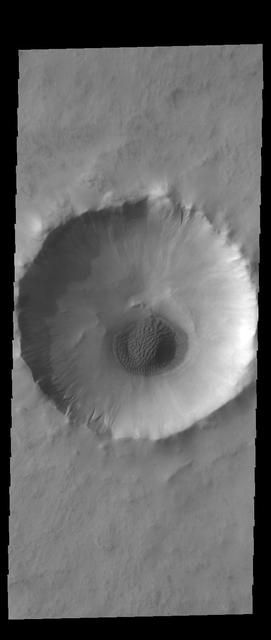
Today's VIS image covers a small unnamed crater in northern Acidalia Planitia. The crater rim has several gullies and a sand deposit is located on the crater floor. Orbit Number: 79346 Latitude: 61.5548 Longitude: 308 Instrument: VIS Captured: 2019-11-03 16:41 https://photojournal.jpl.nasa.gov/catalog/PIA23658
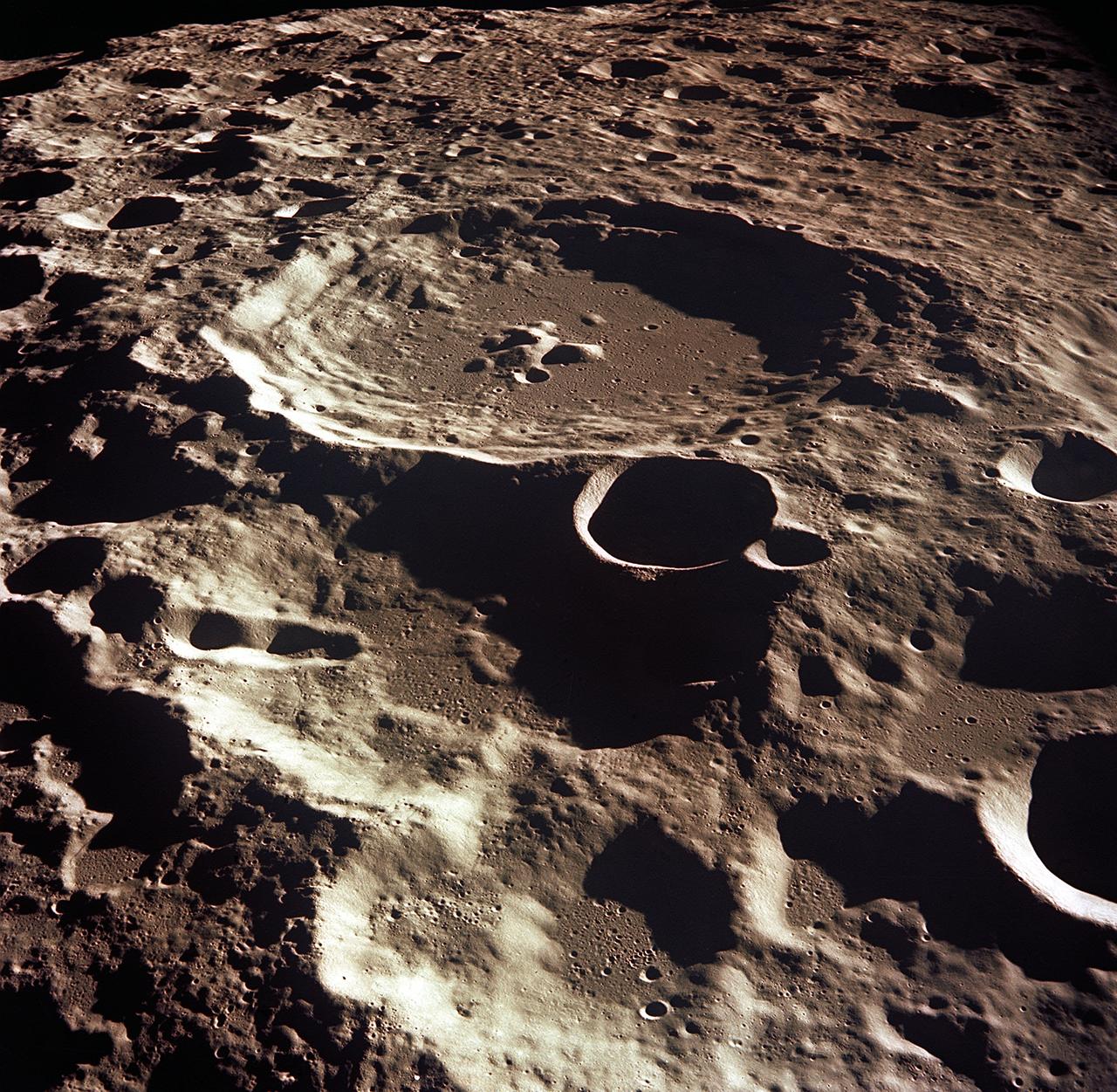
AS11-44-6609 (16-24 July 1969) --- An oblique of the Crater Daedalus on the lunar farside as seen from the Apollo 11 spacecraft in lunar orbit. The view looks southwest. Daedalus (formerly referred to as I.A.U. Crater No. 308) is located at 179 degrees east longitude and 5.5 degrees south latitude. Daedalus has a diameter of about 50 statute miles. This is a typical scene showing the rugged terrain on the farside of the moon. While astronauts Neil A. Armstrong, commander, and Edwin E. Aldrin Jr., lunar module pilot, descended in the Lunar Module (LM) "Eagle" to explore the Sea of Tranquility region of the moon, astronaut Michael Collins, command module pilot, remained with the Command and Service Modules (CSM) "Columbia" in lunar orbit.