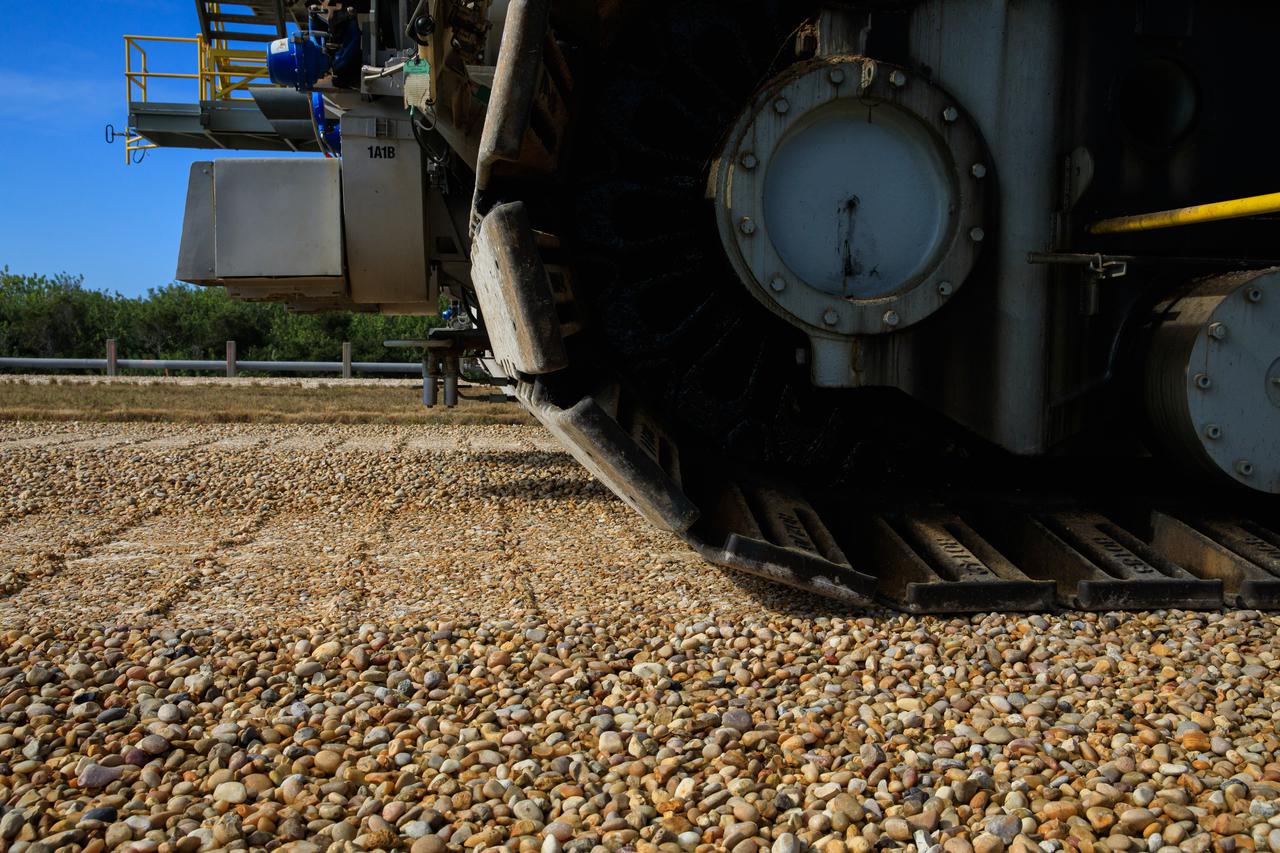
A close-up view of one of the treads on crawler-transporter 2 (CT-2) as the behemoth vehicle moves along the crawlerway at NASA’s Kennedy Space Center in Florida on Jan. 22, 2021. Teams are working to ensure the crawlerway, the path the CT-2, mobile launcher, and Space Launch System rocket with Orion atop will take from the Vehicle Assembly Building to Launch Complex 39B, is strong enough to withstand the weight and provide stability for the Artemis I mission. CT-2 carrying mobile launcher platform 1, used during the shuttle program, was driven back and forth on the crawlerway with several cement blocks, each weighing about 40,000 pounds to strengthen the crawlerway for launch. Artemis I will be the first in a series of increasingly complex missions to the Moon. Under the Artemis program, NASA aims to land the first woman and the next man on the Moon in 2024 and establish sustainable lunar exploration by the end of the decade.
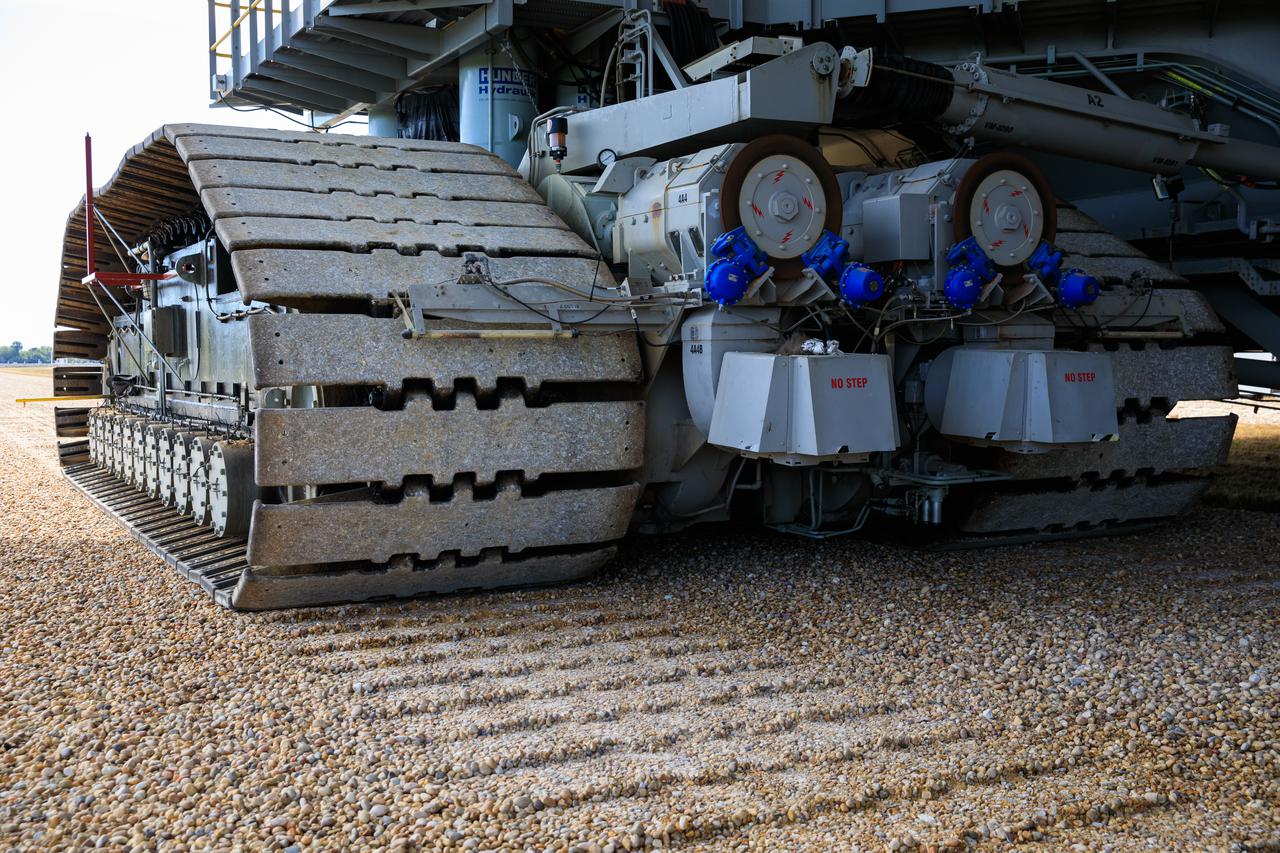
A close-up view of the treads on crawler-transporter 2 (CT-2) as the behemoth vehicle moves along the crawlerway at NASA’s Kennedy Space Center in Florida on Jan. 22, 2021. Teams are working to ensure the crawlerway, the path the CT-2, mobile launcher, and Space Launch System rocket with Orion atop will take from the Vehicle Assembly Building to Launch Complex 39B, is strong enough to withstand the weight and provide stability for the Artemis I mission. CT-2 carrying mobile launcher platform 1, used during the shuttle program, was driven back and forth on the crawlerway with several cement blocks, each weighing about 40,000 pounds to strengthen the crawlerway for launch. Artemis I will be the first in a series of increasingly complex missions to the Moon. Under the Artemis program, NASA aims to land the first woman and the next man on the Moon in 2024 and establish sustainable lunar exploration by the end of the decade.

A close-up view of the treads on crawler-transporter 2 (CT-2) as the behemoth vehicle moves along the crawlerway at NASA’s Kennedy Space Center in Florida on Jan. 22, 2021. Teams are working to ensure the crawlerway, the path the CT-2, mobile launcher, and Space Launch System rocket with Orion atop will take from the Vehicle Assembly Building to Launch Complex 39B, is strong enough to withstand the weight and provide stability for the Artemis I mission. CT-2 carrying mobile launcher platform 1, used during the shuttle program, was driven back and forth on the crawlerway with several cement blocks, each weighing about 40,000 pounds to strengthen the crawlerway for launch. Artemis I will be the first in a series of increasingly complex missions to the Moon. Under the Artemis program, NASA aims to land the first woman and the next man on the Moon in 2024 and establish sustainable lunar exploration by the end of the decade.
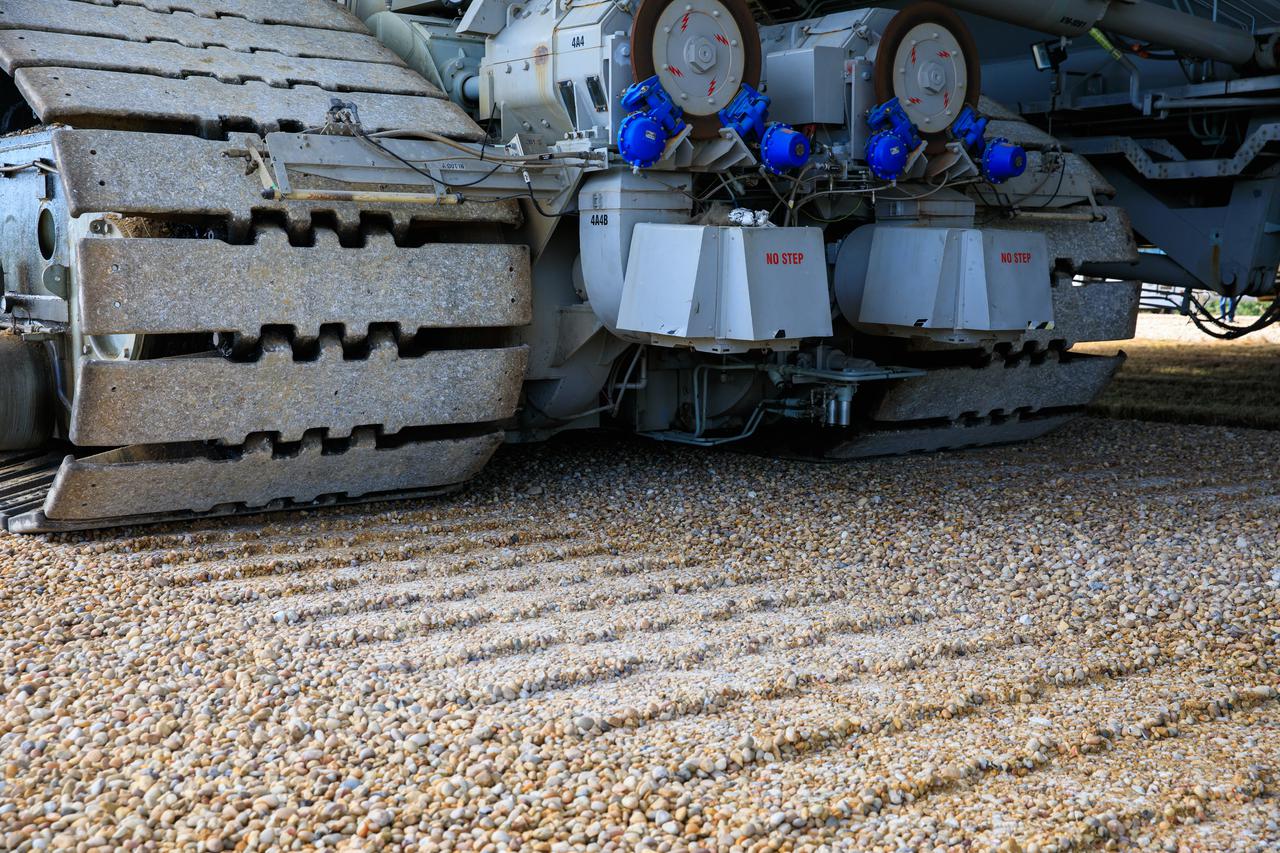
A close-up view of the treads on crawler-transporter 2 (CT-2) as the behemoth vehicle moves along the crawlerway at NASA’s Kennedy Space Center in Florida on Jan. 22, 2021. Teams are working to ensure the crawlerway, the path the CT-2, mobile launcher, and Space Launch System rocket with Orion atop will take from the Vehicle Assembly Building to Launch Complex 39B, is strong enough to withstand the weight and provide stability for the Artemis I mission. CT-2 carrying mobile launcher platform 1, used during the shuttle program, was driven back and forth on the crawlerway with several cement blocks, each weighing about 40,000 pounds to strengthen the crawlerway for launch. Artemis I will be the first in a series of increasingly complex missions to the Moon. Under the Artemis program, NASA aims to land the first woman and the next man on the Moon in 2024 and establish sustainable lunar exploration by the end of the decade.
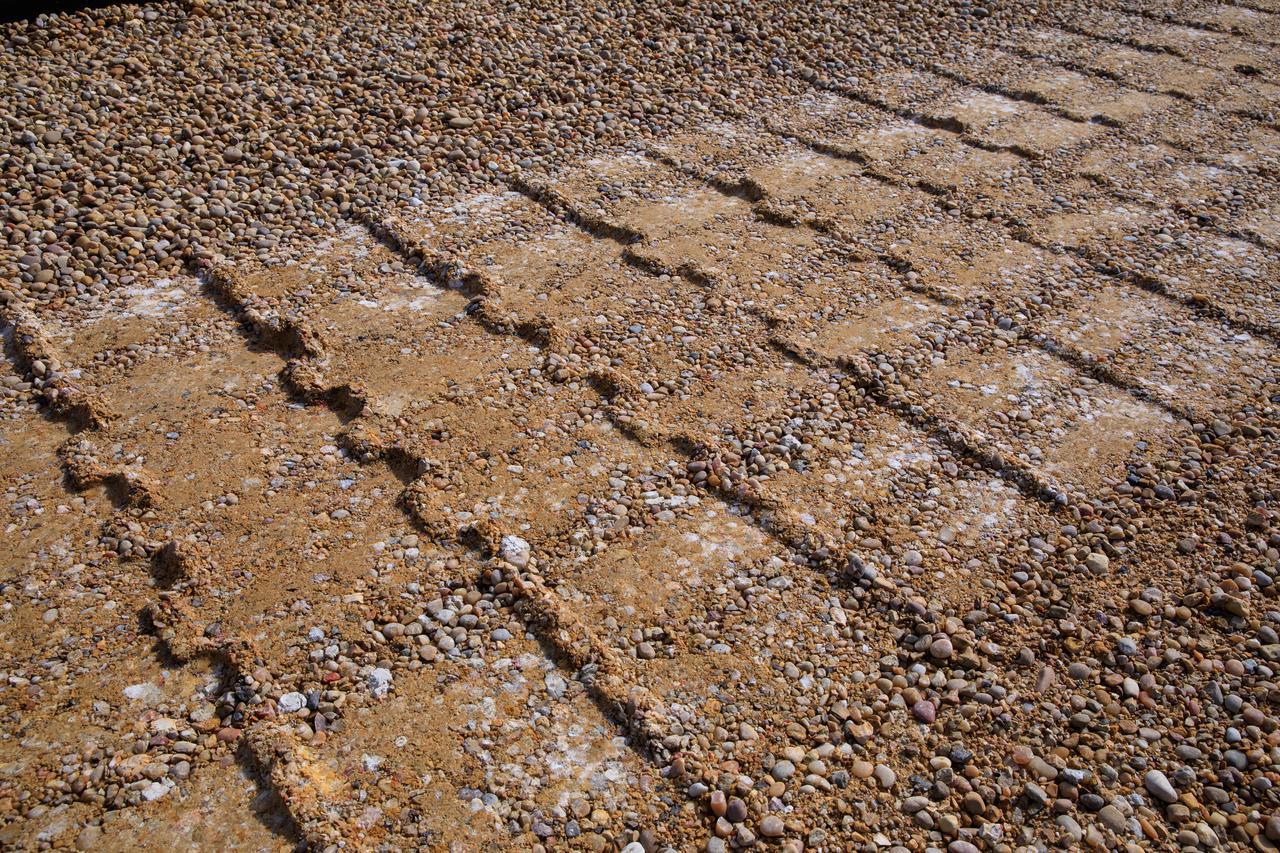
A close-up view of tread marks from crawler-transporter 2 (CT-2) as the behemoth vehicle moves along the crawlerway at NASA’s Kennedy Space Center in Florida on Jan. 22, 2021. Teams are working to ensure the crawlerway, the path the CT-2, mobile launcher, and Space Launch System rocket with Orion atop will take from the Vehicle Assembly Building to Launch Complex 39B, is strong enough to withstand the weight and provide stability for the Artemis I mission. CT-2 carrying mobile launcher platform 1, used during the shuttle program, was driven back and forth on the crawlerway with several cement blocks, each weighing about 40,000 pounds to strengthen the crawlerway for launch. Artemis I will be the first in a series of increasingly complex missions to the Moon. Under the Artemis program, NASA aims to land the first woman and the next man on the Moon in 2024 and establish sustainable lunar exploration by the end of the decade.
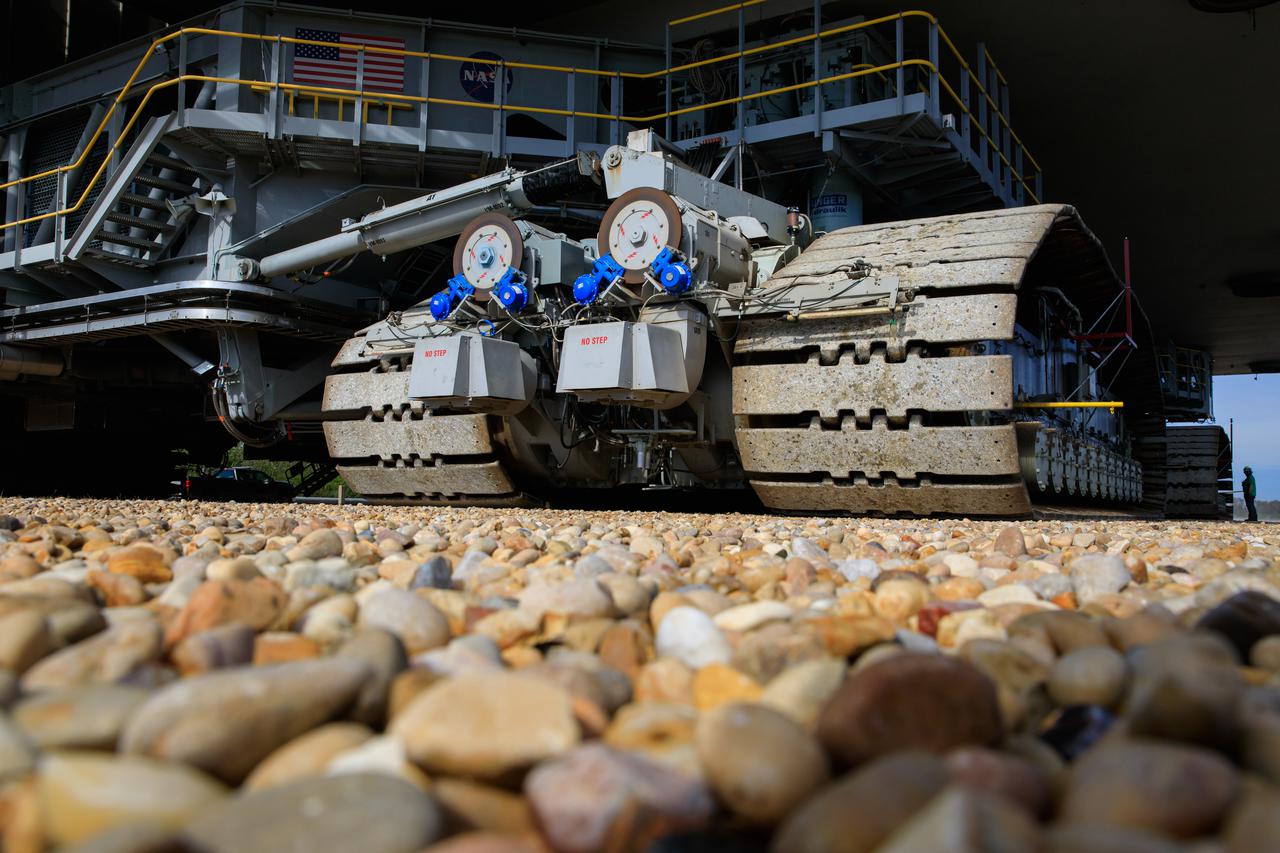
A close-up view of some of the treads on crawler-transporter 2 (CT-2) as the behemoth vehicle moves along the crawlerway at NASA’s Kennedy Space Center in Florida on Jan. 22, 2021. Teams are working to ensure the crawlerway, the path the CT-2, mobile launcher, and Space Launch System rocket with Orion atop will take from the Vehicle Assembly Building to Launch Complex 39B, is strong enough to withstand the weight and provide stability for the Artemis I mission. CT-2 carrying mobile launcher platform 1, used during the shuttle program, was driven back and forth on the crawlerway with several cement blocks, each weighing about 40,000 pounds to strengthen the crawlerway for launch. Artemis I will be the first in a series of increasingly complex missions to the Moon. Under the Artemis program, NASA aims to land the first woman and the next man on the Moon in 2024 and establish sustainable lunar exploration by the end of the decade.
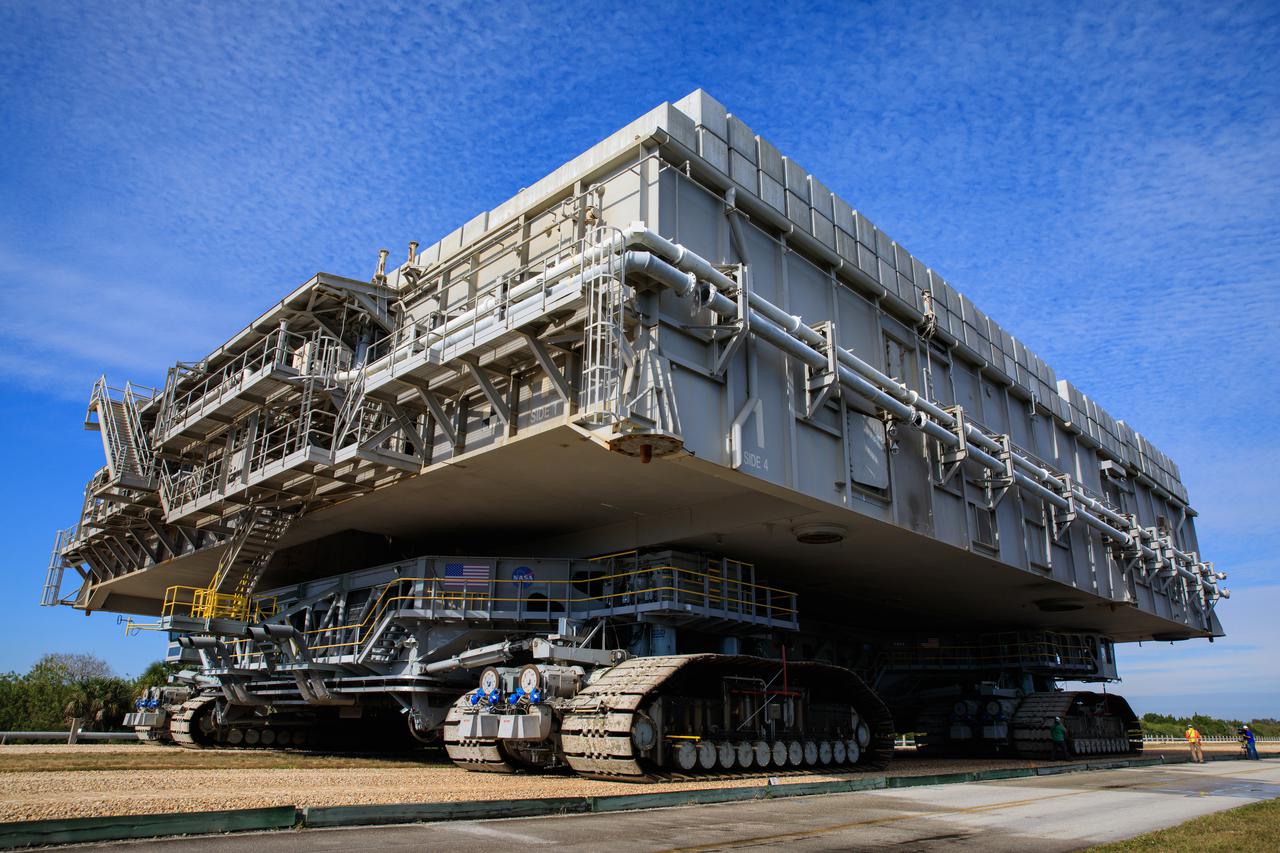
Teams at NASA’s Kennedy Space Center in Florida are working to ensure the crawlerway, the path the crawler-transporter 2 (CT-2), mobile launcher, and Space Launch System rocket with Orion atop will take from the Vehicle Assembly Building to Launch Complex 39B, is strong enough to withstand the weight and provide stability for the Artemis I mission. In this view on Jan. 22, 2021, CT-2 carrying mobile launcher platform 1 that was used during the shuttle program was driven back and forth on the crawlerway with several cement blocks, each weighing about 40,000 pounds to strengthen the crawlerway for launch. Artemis I will be the first in a series of increasingly complex missions to the Moon. Under the Artemis program, NASA aims to land the first woman and the next man on the Moon in 2024 and establish sustainable lunar exploration by the end of the decade.
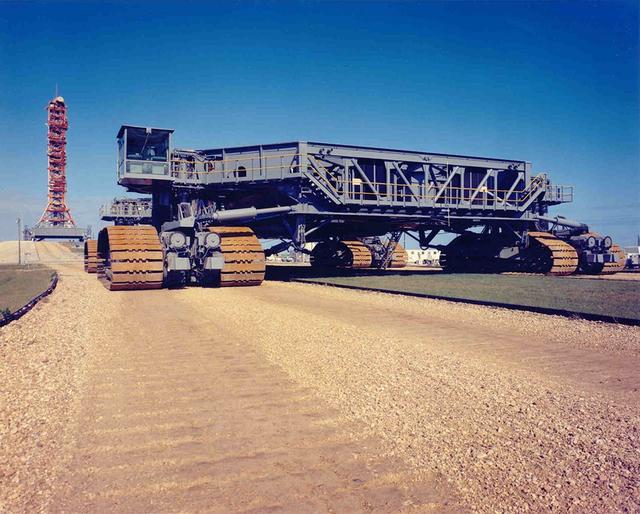
View of Crawlerway
View of Crawlerway
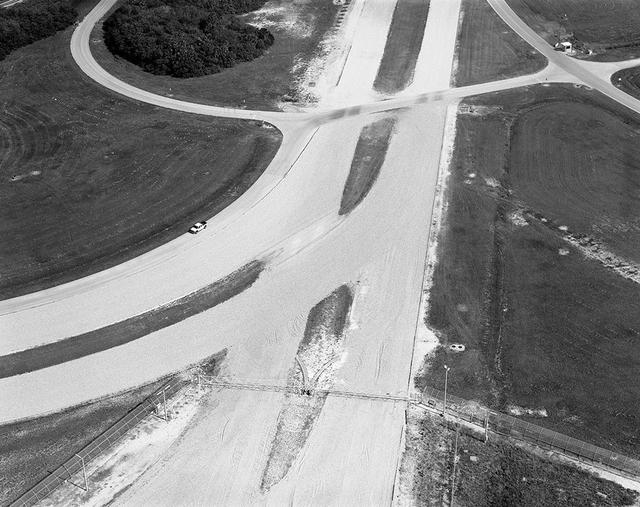
View of Crawlerway

View of Crawlerway
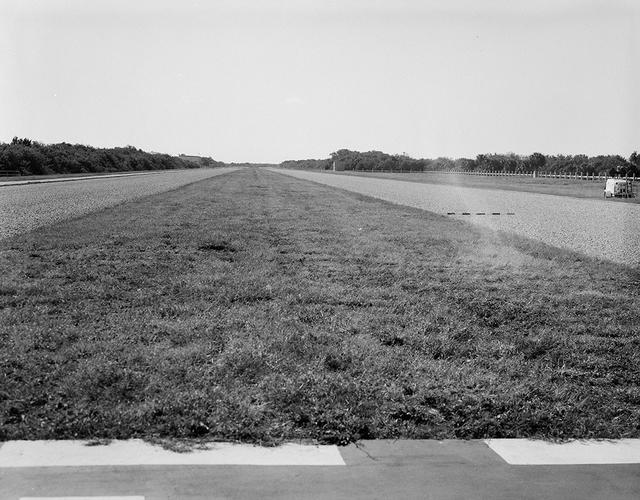
View of Crawlerway
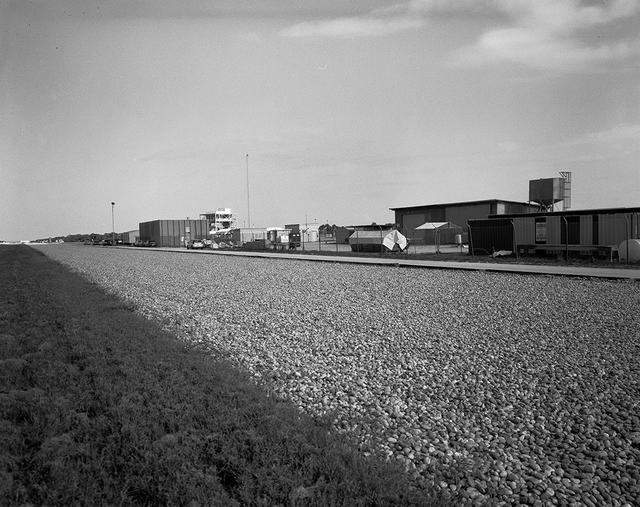
View of Crawlerway
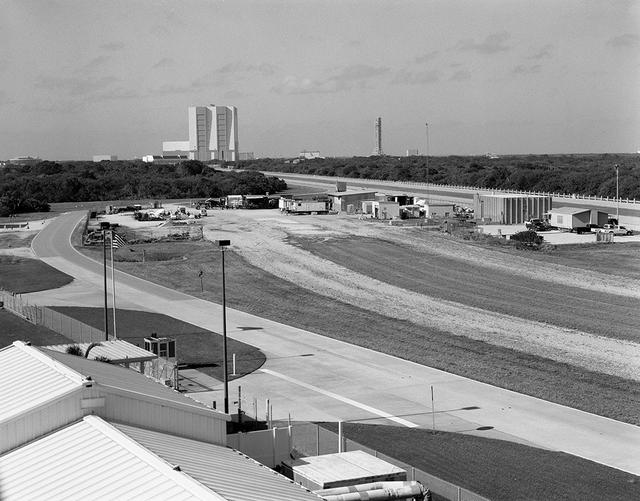
View of Crawlerway
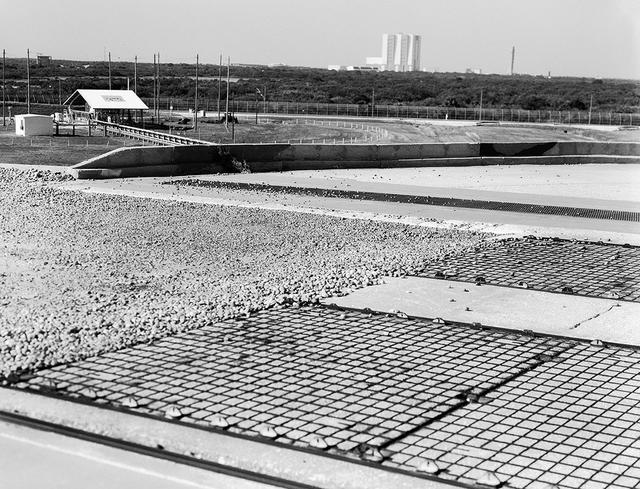
View of Crawlerway

View of Crawlerway
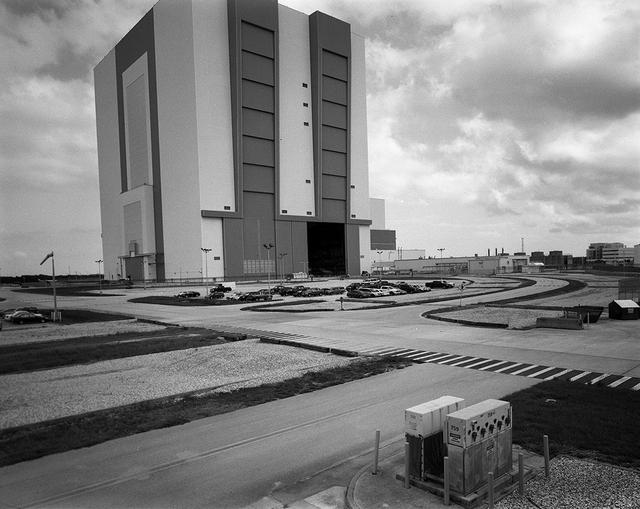
View of Crawlerway
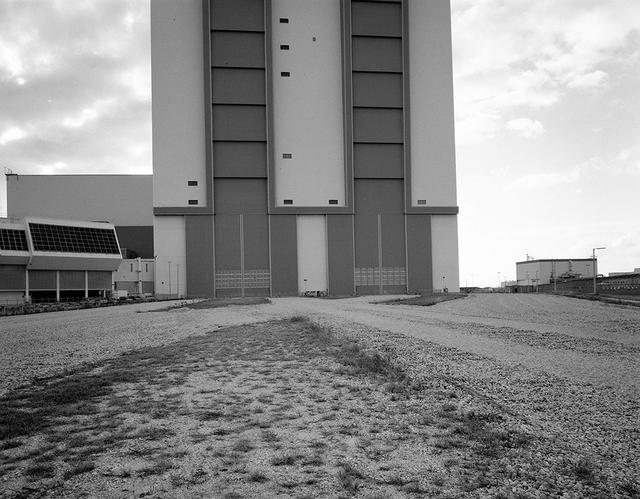
View of Crawlerway
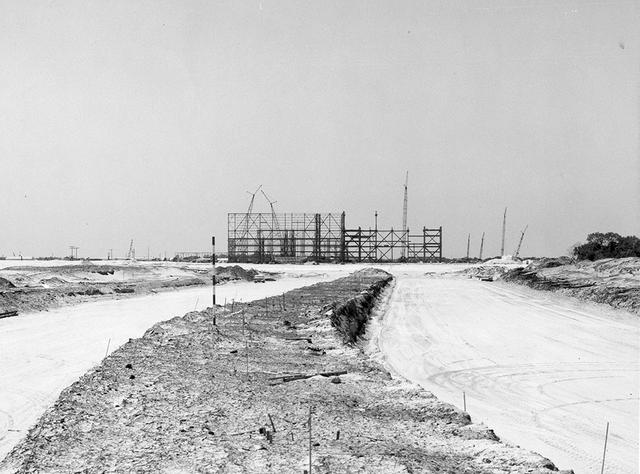
View of Crawlerway
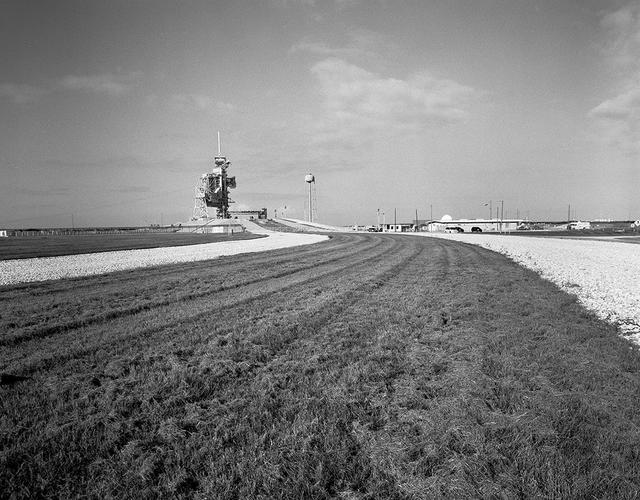
View of Crawlerway
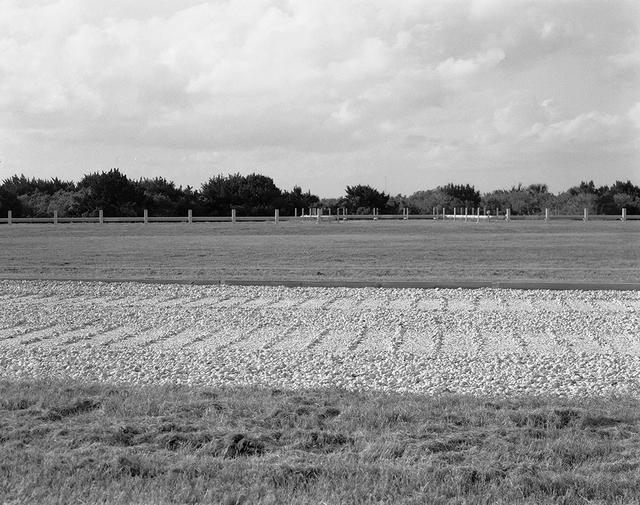
View of Crawlerway
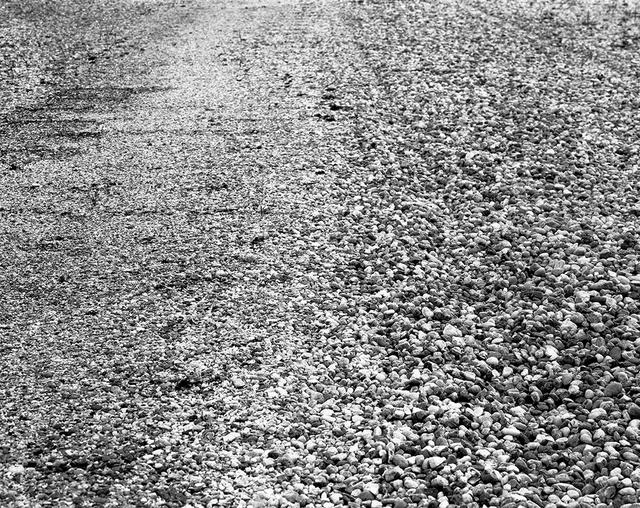
View of Crawlerway
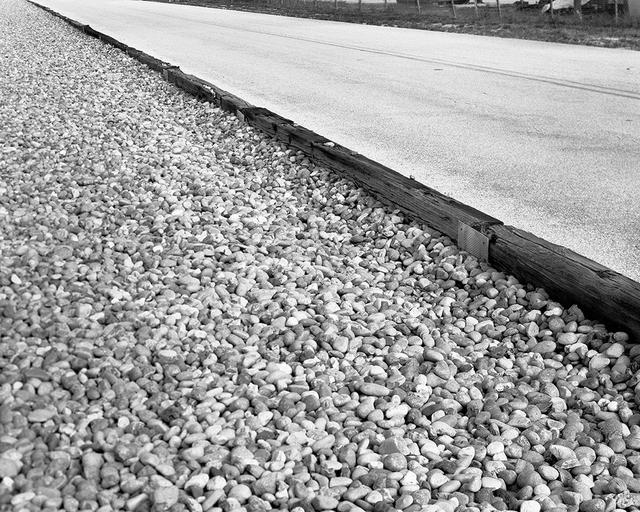
View of Crawlerway
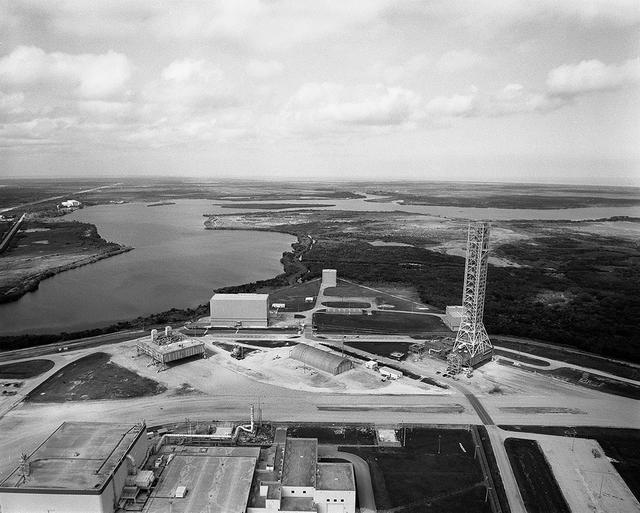
View of Crawlerway
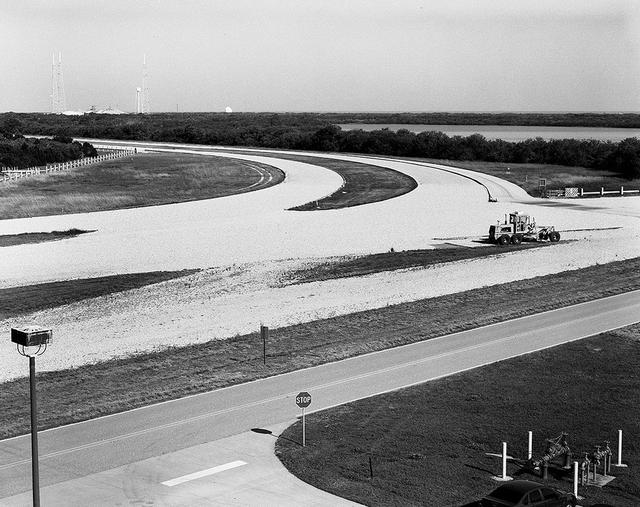
View of Crawlerway
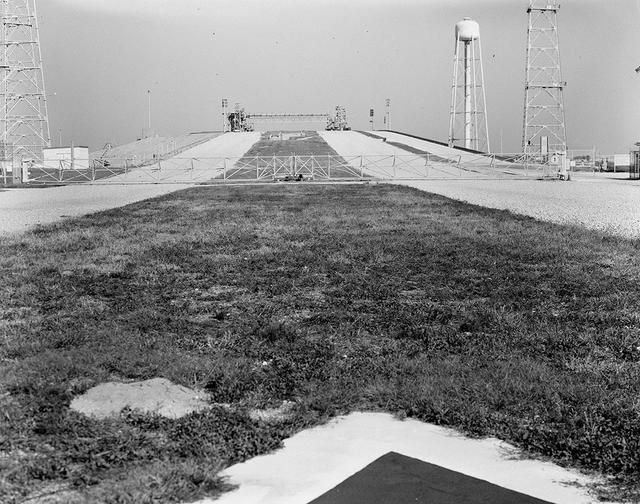
View of Crawlerway

Aerial view of Crawlerway

Aerial view of Crawlerway
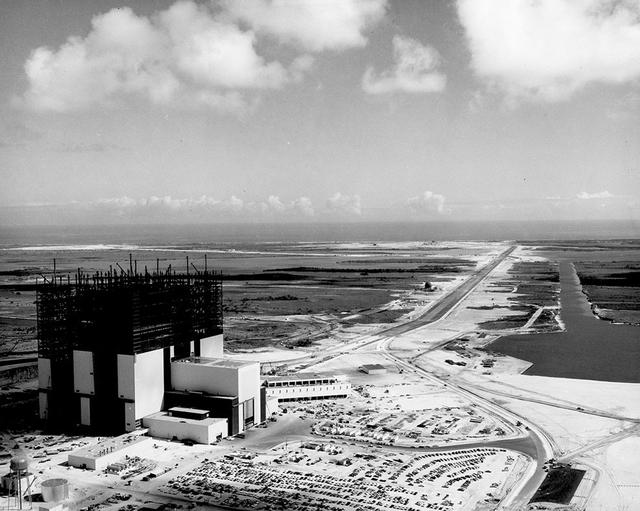
Aerial view of Crawlerway
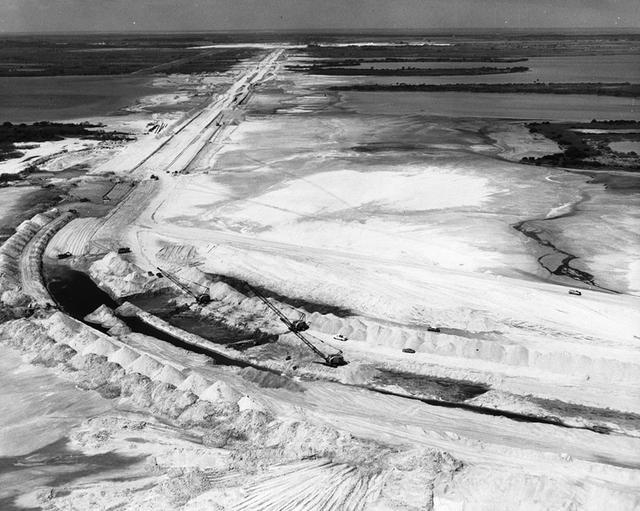
Aerial view of Crawlerway
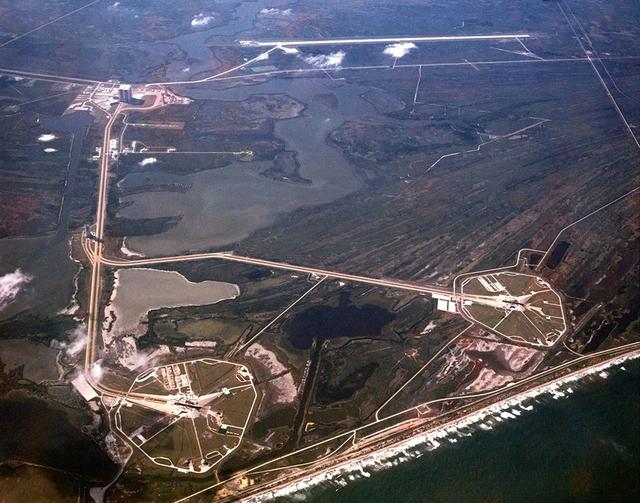
Aerial view of Crawlerway
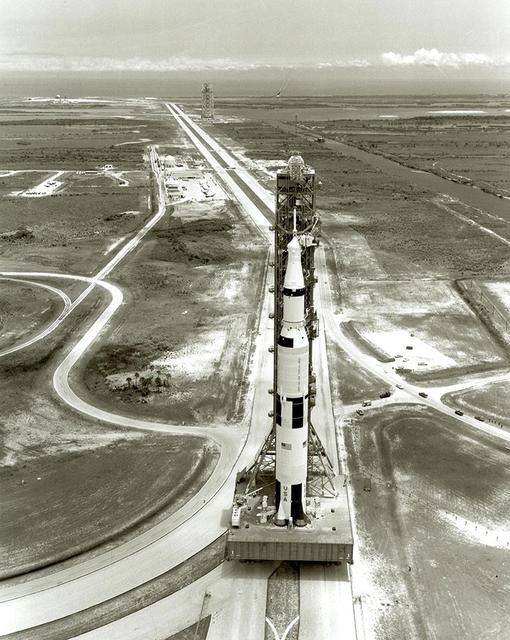
Aerial view of Crawlerway
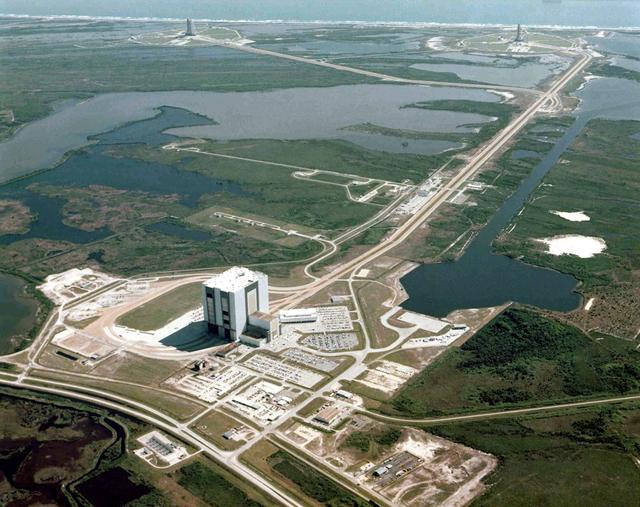
Aerial view of Crawlerway
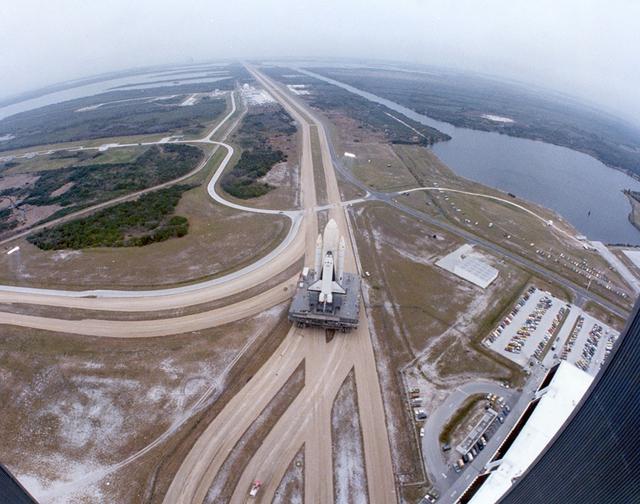
Aerial view of Crawlerway
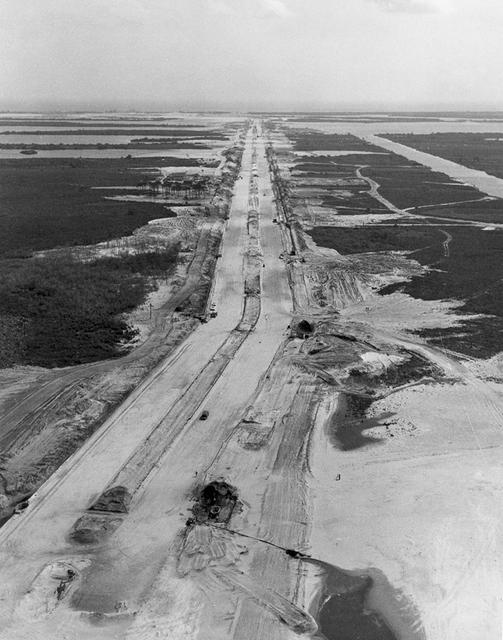
Aerial view of Crawlerway
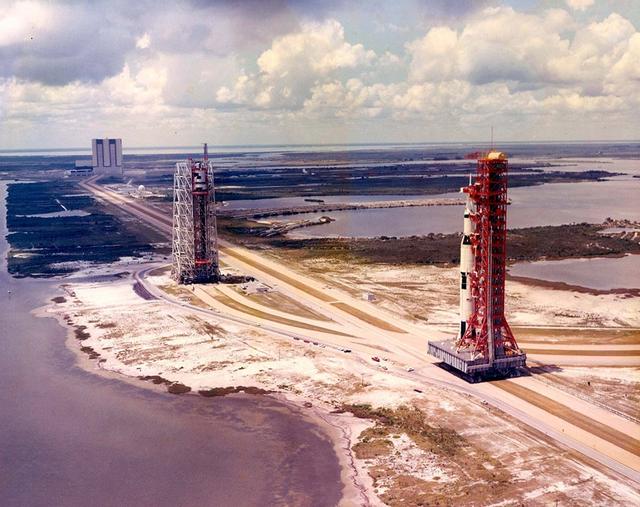
Aerial view of Crawlerway
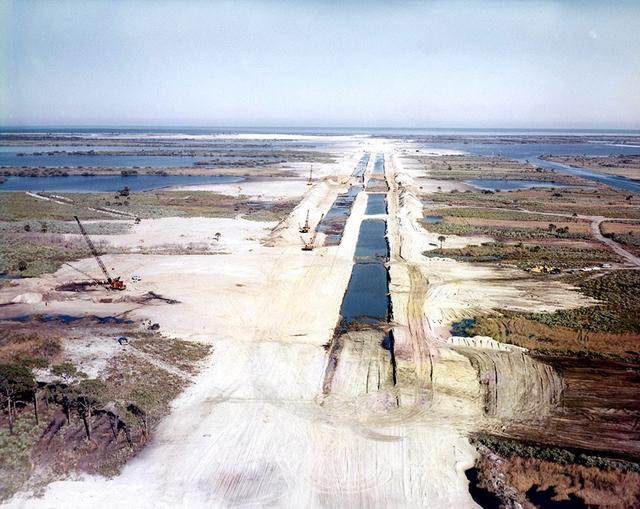
Aerial view of Crawlerway
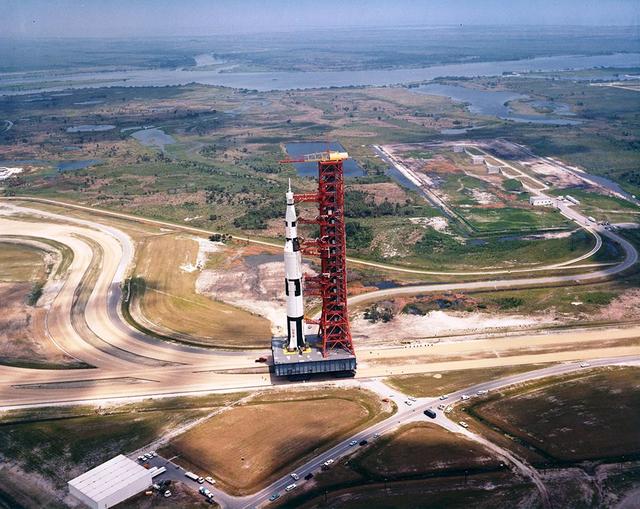
Aerial view of Crawlerway
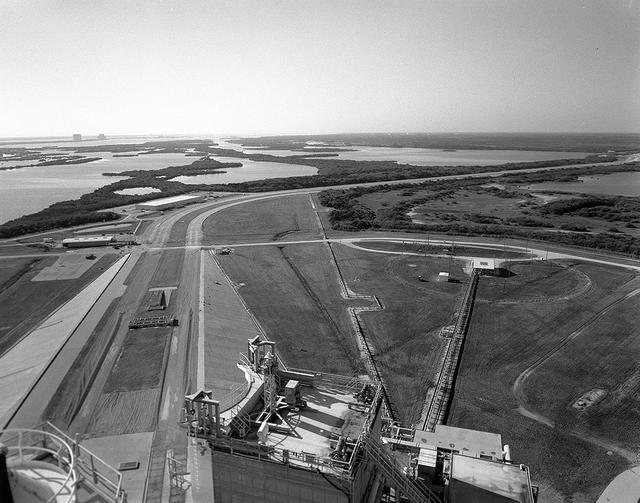
Aerial view of Crawlerway
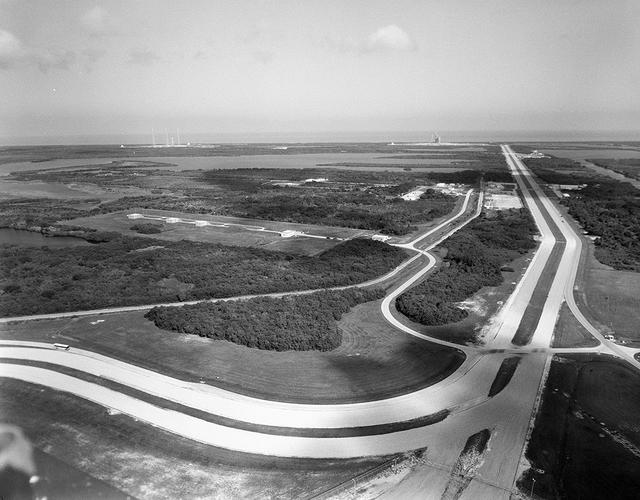
Aerial view of Crawlerway
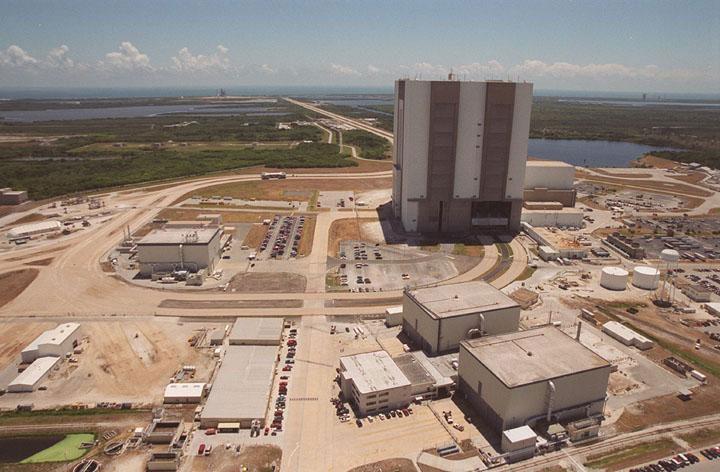
Aerial view of Crawlerway
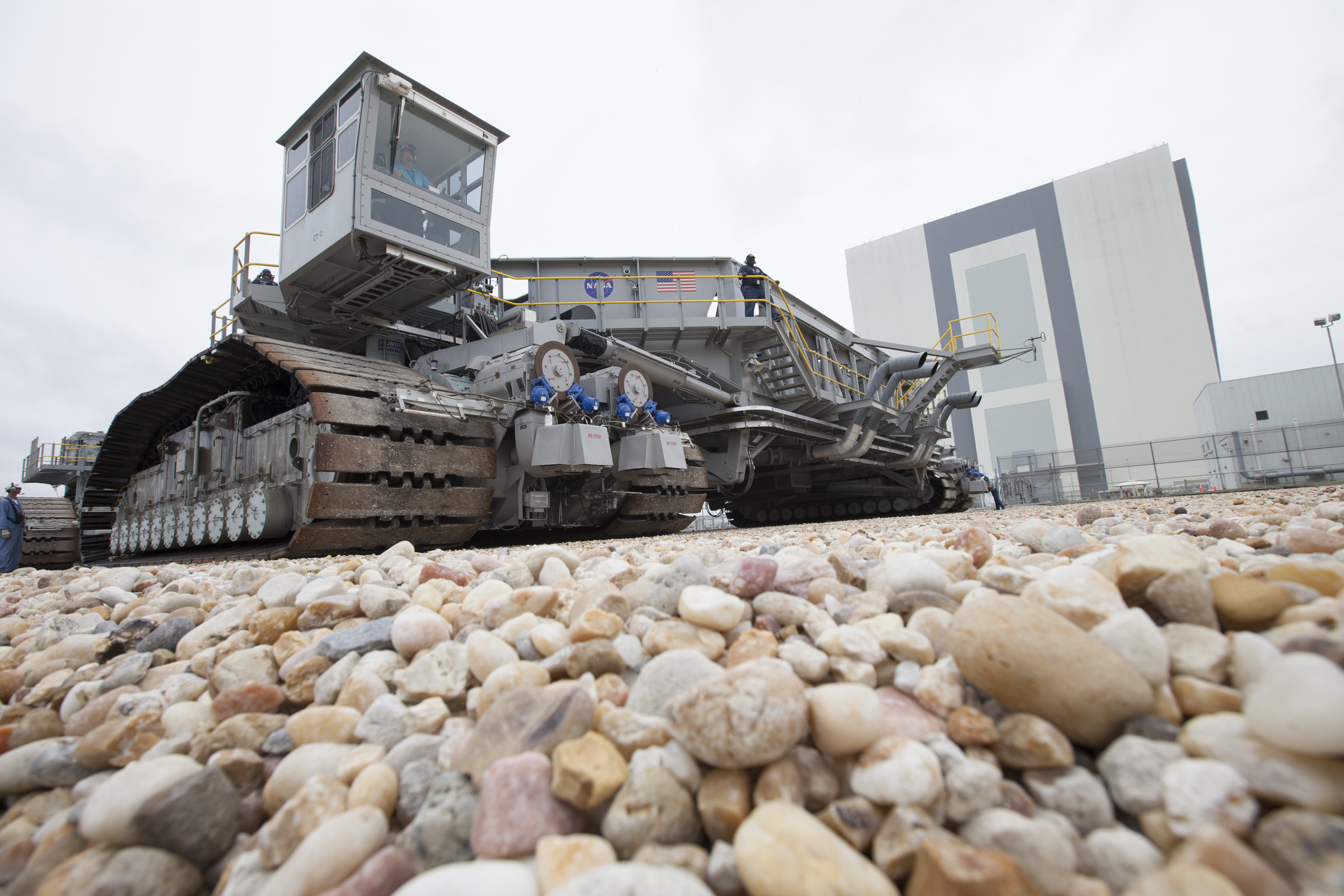
Crawlerway rock is visible as NASA’s upgraded crawler-transporter 2 (CT-2) returns to the Vehicle Assembly Building (VAB) at the agency’s Kennedy Space Center in Florida from its trek to Launch Pad 39B. CT2’s recently completed upgrades and modifications were tested to ensure the vehicle will be ready to support NASA’s journey to Mars. The Ground Systems Development and Operations Program at Kennedy oversaw upgrades to the crawler in the VAB. The crawler will carry the mobile launcher with Orion atop the Space Launch System rocket to Pad 39B for Exploration Mission 1.
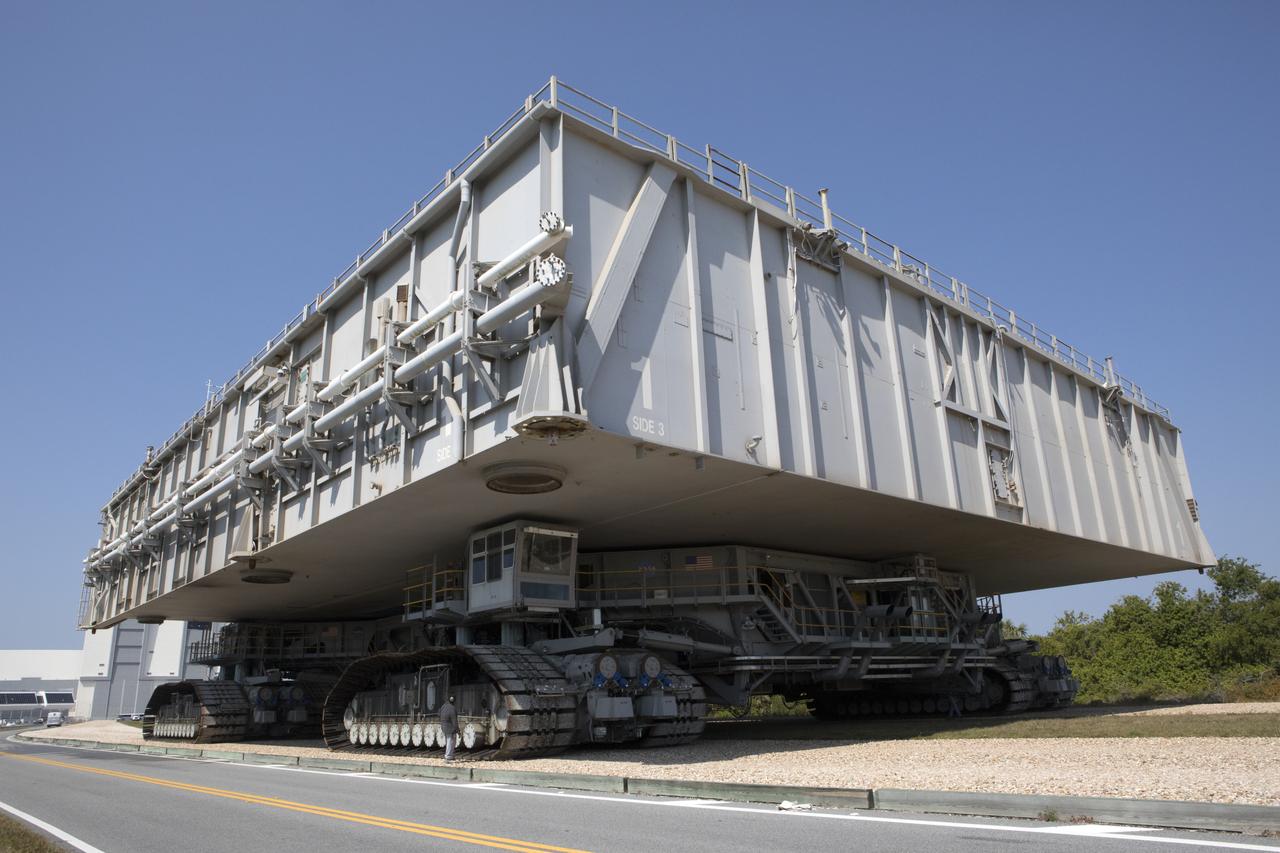
NASA's upgraded crawler-transporter 2 (CT-2), carrying mobile launcher platform 1, moves slowly along the crawlerway toward the Vehicle Assembly Building at the agency's Kennedy Space Center in Florida. The crawler's upgrades and modifications were monitored and tested during a loaded test to the crawlerway Pad A/B split. CT-2 will return to the crawler yard. The crawler is being tested to confirm it is ready to support the load of the mobile launcher carrying the Space Launch System with Orion atop for the first test flight, Exploration Mission 1. The Ground Systems Development and Operations Program at Kennedy is managing upgrades to the crawler.
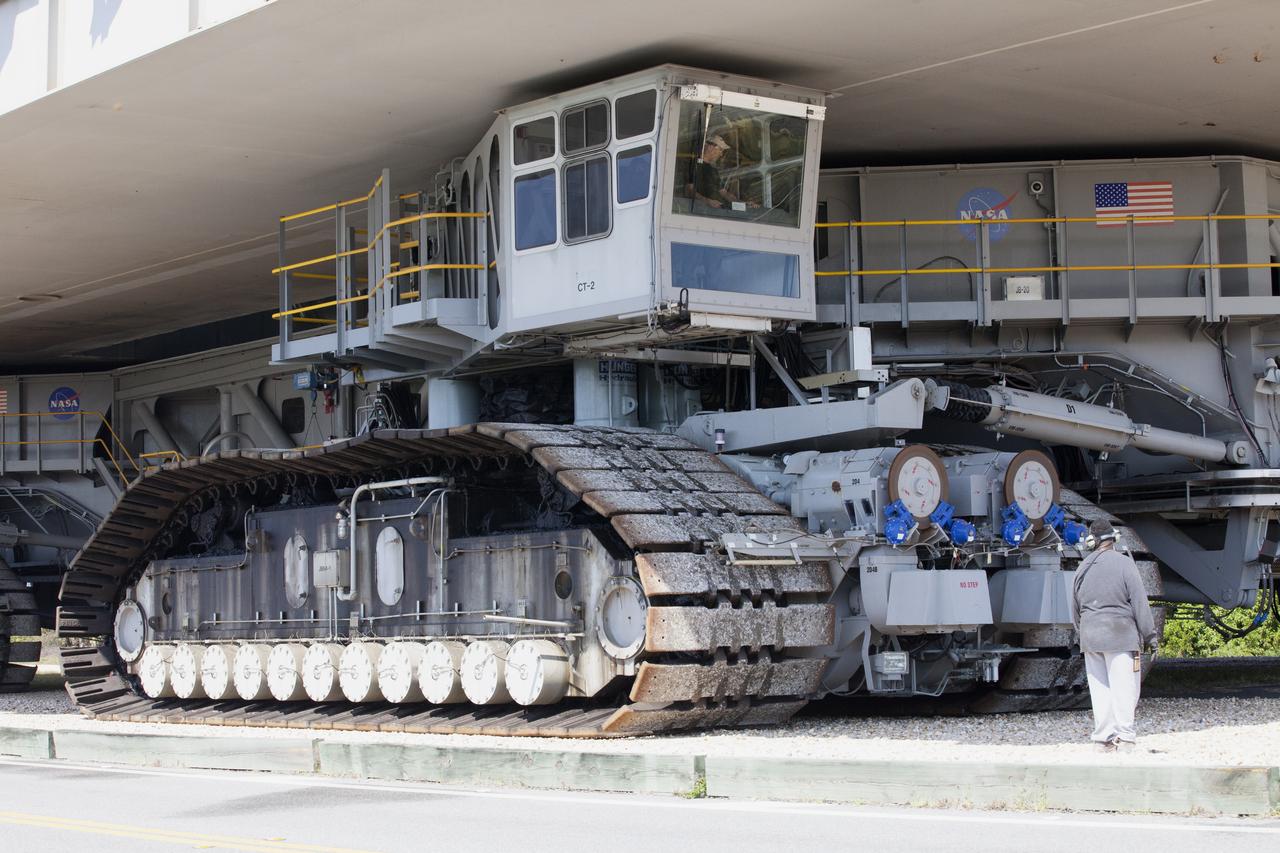
NASA's upgraded crawler-transporter 2 (CT-2), carrying mobile launcher platform 1, moves slowly along the crawlerway at the agency's Kennedy Space Center in Florida. The crawler's upgrades and modifications will be monitored and tested under loaded conditions during its travel to the crawlerway Pad A/B split and back to the crawler yard to confirm it is ready to support the load of the mobile launcher carrying the Space Launch System with Orion atop for the first test flight, Exploration Mission 1. The Ground Systems Development and Operations Program at Kennedy is managing upgrades to the crawler.
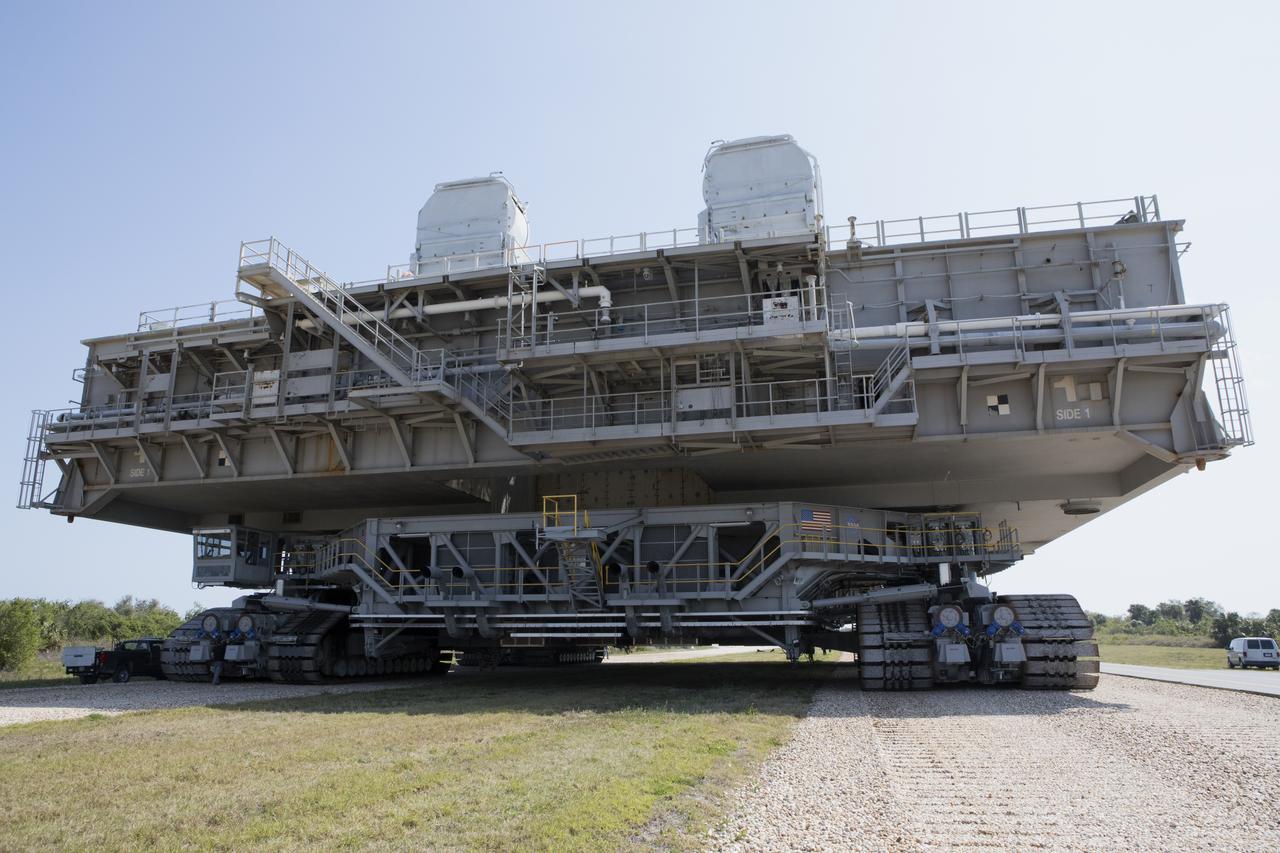
NASA's upgraded crawler-transporter 2 (CT-2), carrying mobile launcher platform 1, moves slowly along the crawlerway at the agency's Kennedy Space Center in Florida. The crawler's upgrades and modifications will be monitored and tested under loaded conditions during its travel to the crawlerway Pad A/B split and back to the crawler yard to confirm it is ready to support the load of the mobile launcher carrying the Space Launch System with Orion atop for the first test flight, Exploration Mission 1. The Ground Systems Development and Operations Program at Kennedy is managing upgrades to the crawler.
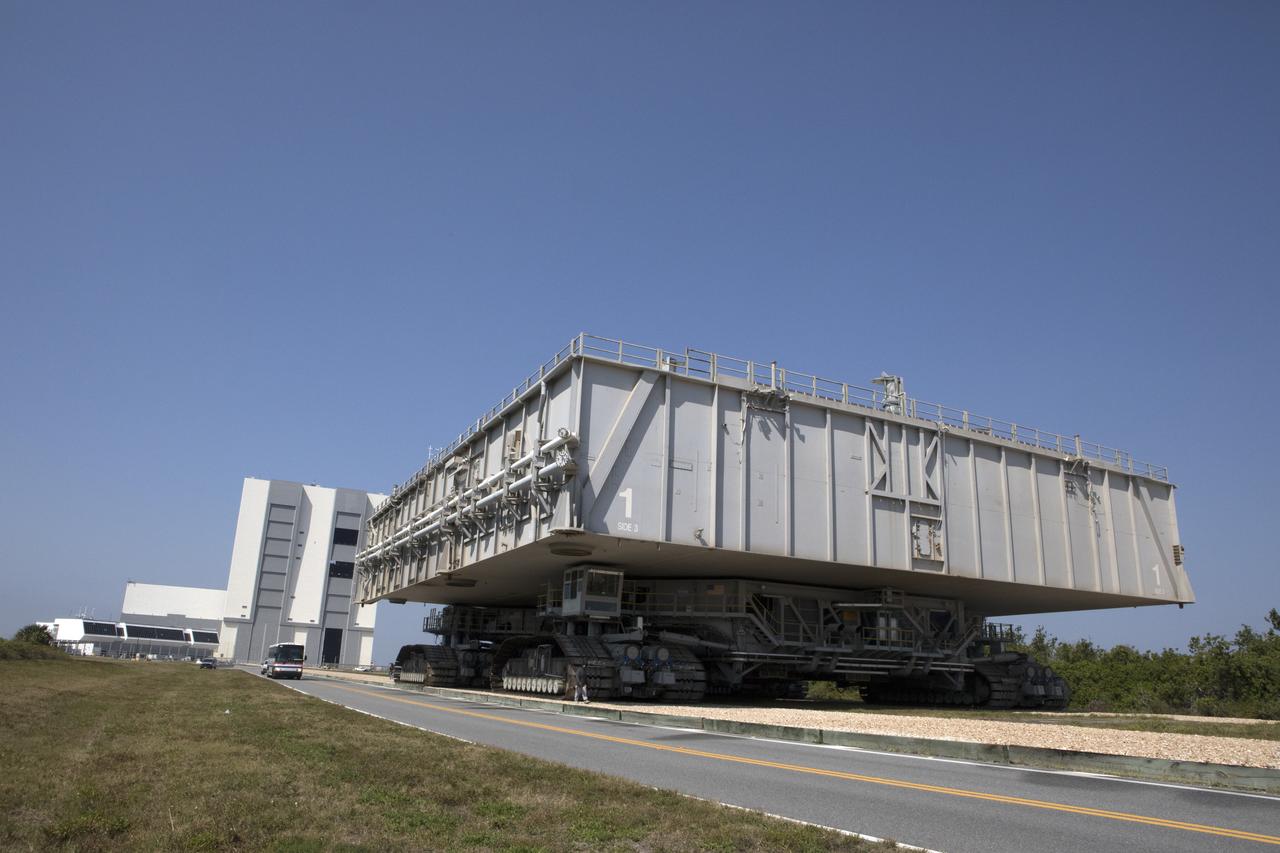
NASA's upgraded crawler-transporter 2 (CT-2), carrying mobile launcher platform 1, moves slowly along the crawlerway toward the Vehicle Assembly Building at the agency's Kennedy Space Center in Florida. The crawler's upgrades and modifications were monitored and tested during a loaded test to the crawlerway Pad A/B split. CT-2 will return to the crawler yard. The crawler is being tested to confirm it is ready to support the load of the mobile launcher carrying the Space Launch System with Orion atop for the first test flight, Exploration Mission 1. The Ground Systems Development and Operations Program at Kennedy is managing upgrades to the crawler.
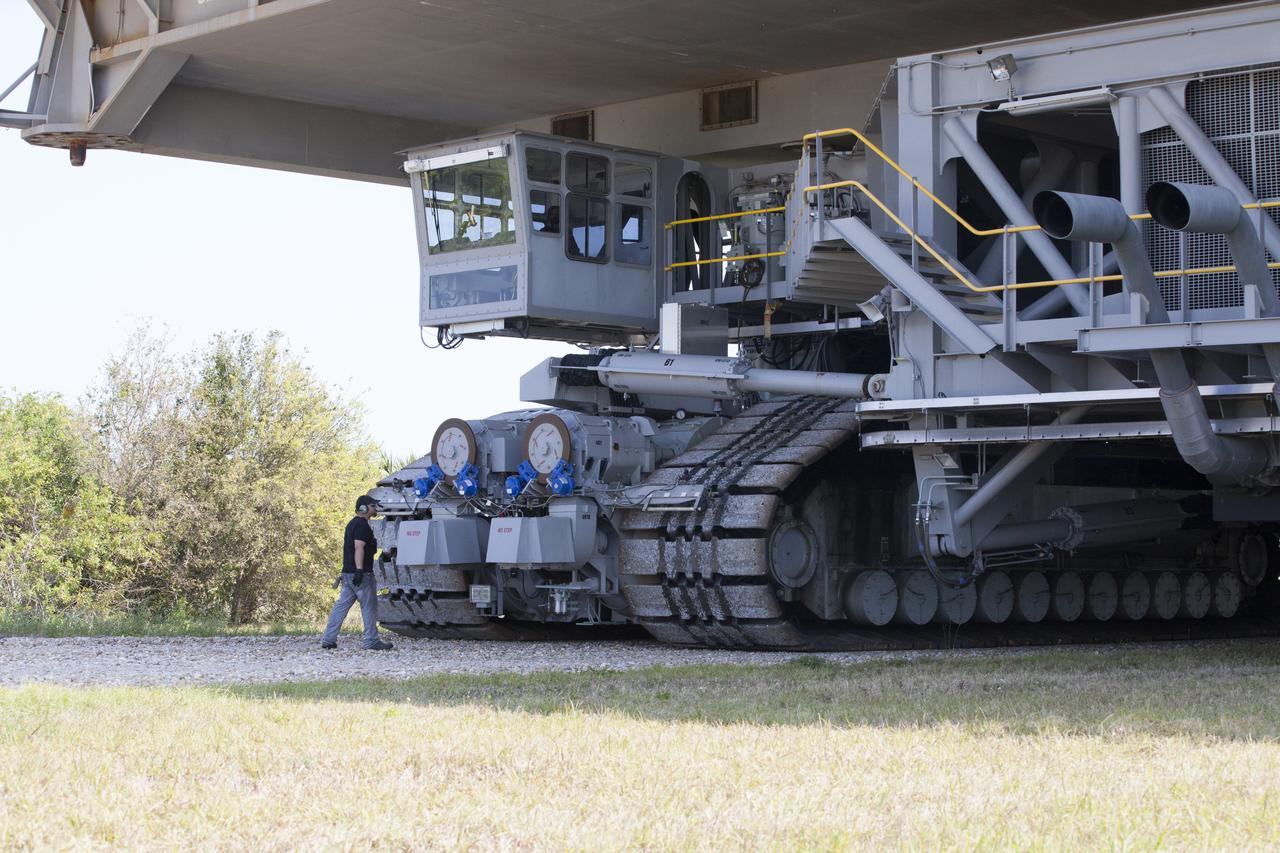
NASA's upgraded crawler-transporter 2 (CT-2) travels slowly along the crawlerway, carrying the mobile launcher platform at the agency's Kennedy Space Center in Florida. The crawler's upgrades and modifications will be monitored and tested under loaded conditions during its travel to the crawlerway Pad A/B split and back to the crawler yard to confirm it is ready to support the load of the mobile launcher carrying the Space Launch System with Orion atop for the first test flight, Exploration Mission 1. The Ground Systems Development and Operations Program at Kennedy is managing upgrades to the crawler.
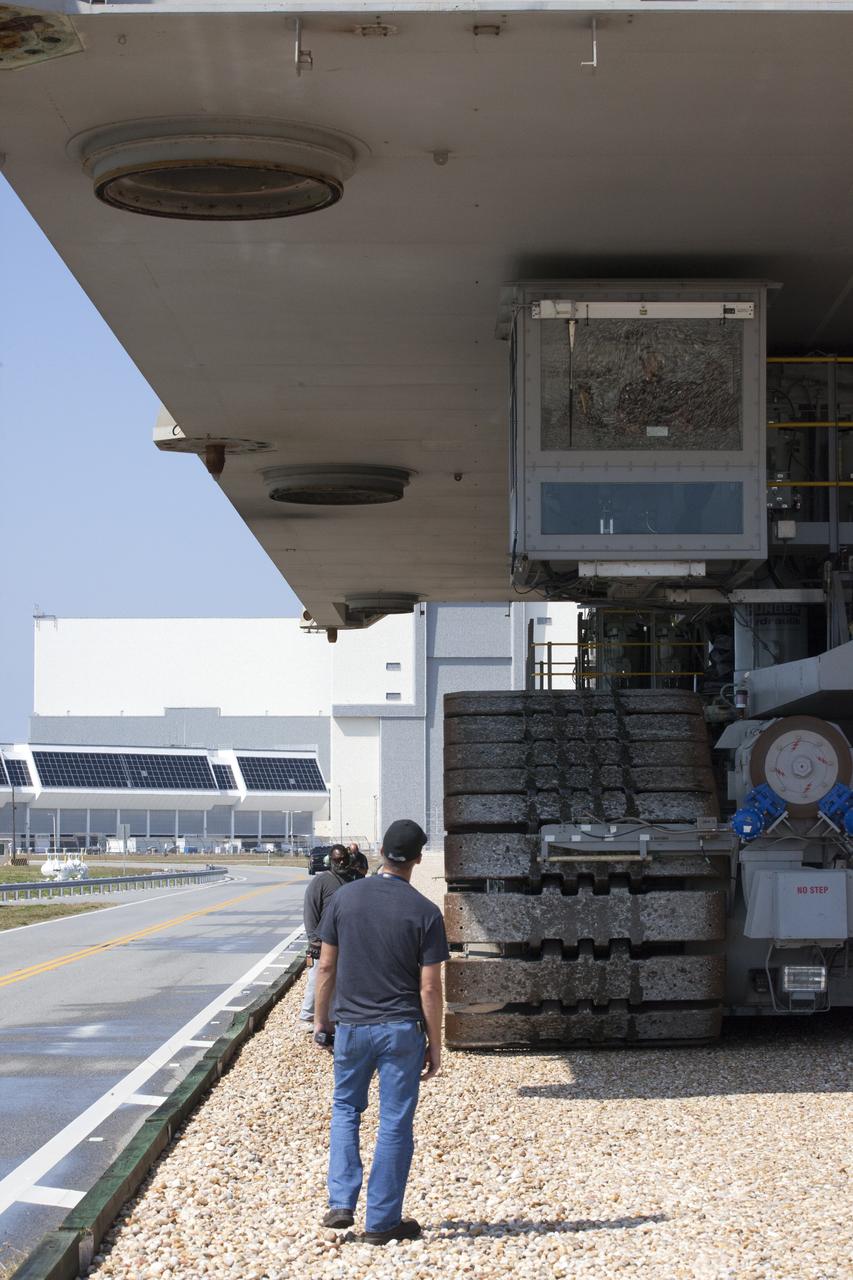
Ground support technicians walk alongside NASA's upgraded crawler-transporter 2 (CT-2), carrying mobile launcher platform 1, as it slowly travels on the crawlerway at the agency's Kennedy Space Center in Florida. The crawler's upgrades and modifications will be monitored and tested under loaded conditions during its travel to the crawlerway Pad A/B split and back to the crawler yard to confirm it is ready to support the load of the mobile launcher carrying the Space Launch System with Orion atop for the first test flight, Exploration Mission 1. The Ground Systems Development and Operations Program at Kennedy is managing upgrades to the crawler.
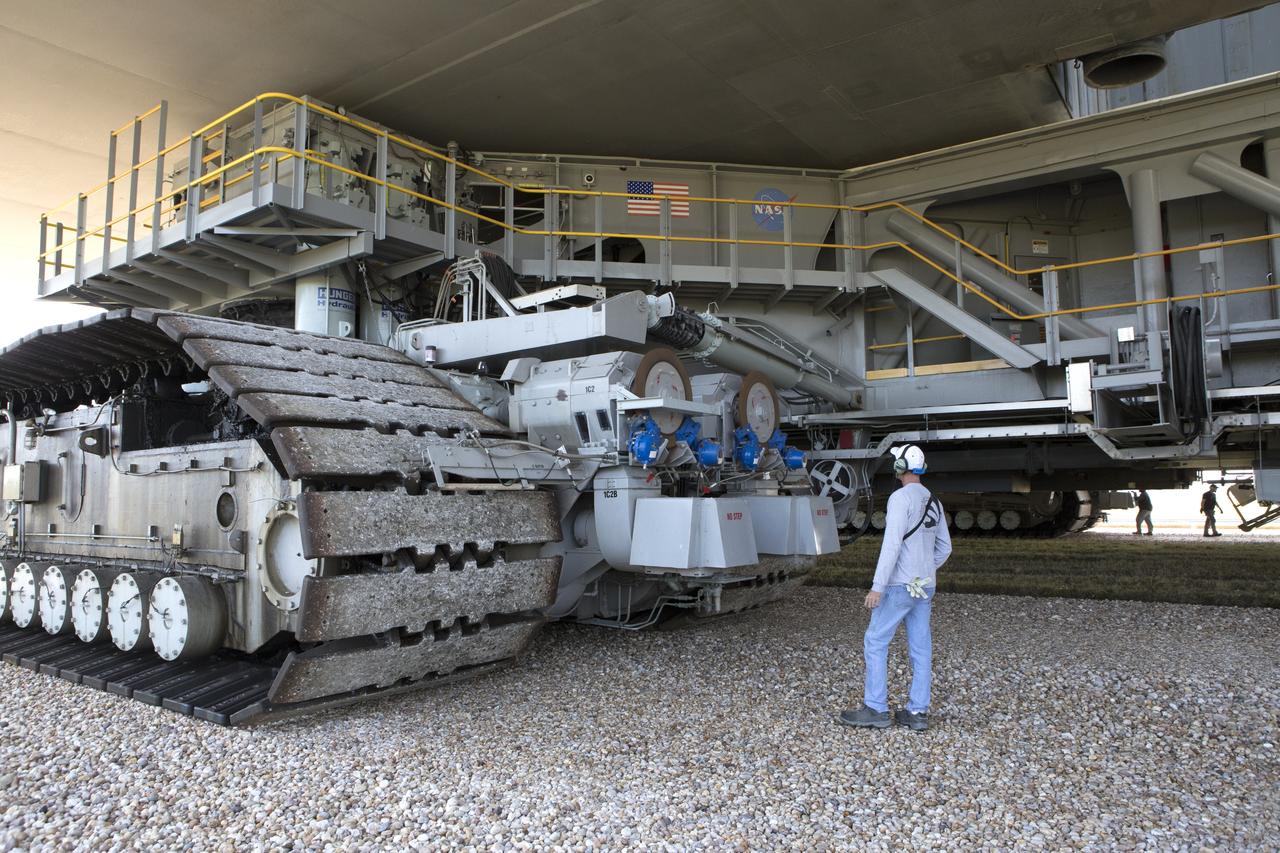
During a load test of NASA's upgraded crawler-transporter 2 (CT-2), a ground support technician watches as the giant vehicle travels along the crawlerway at the agency’s Kennedy Space Center in Florida. The crawler's upgrades and modifications will be monitored and tested under loaded conditions during its travel to the crawlerway Pad A/B split and back to the crawler yard to confirm it is ready to support the load of the mobile launcher carrying the Space Launch System with Orion atop for the first test flight, Exploration Mission 1. The Ground Systems Development and Operations Program at Kennedy is managing upgrades to the crawler.
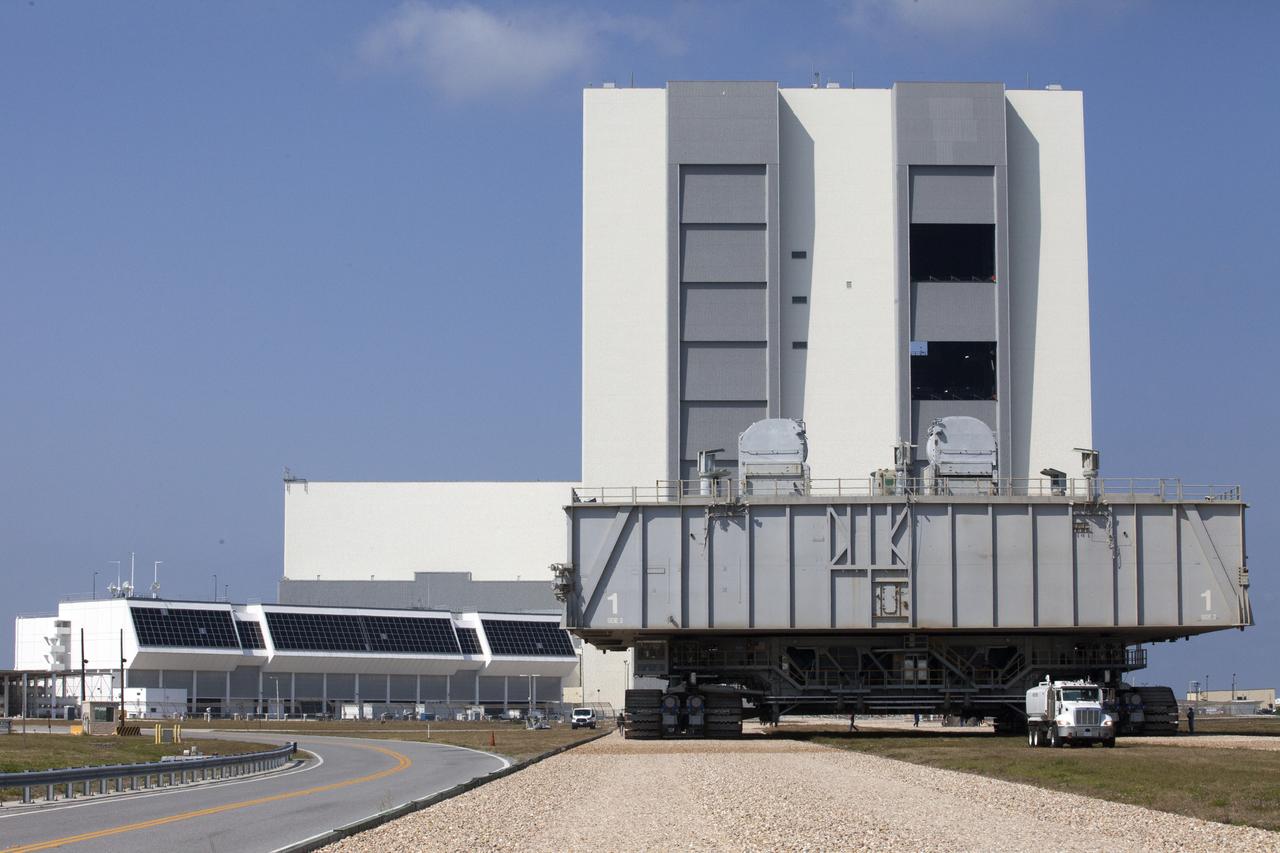
NASA’s upgraded crawler-transporter 2 (CT-2) travels slowly along the crawlerway carrying mobile launcher platform 1 at the agency’s Kennedy Space Center in Florida. The crawler's upgrades and modifications were being monitored and tested under loaded conditions during its travel to the Pad A/B split and back to the crawler yard to confirm it is ready to support the load of the mobile launcher carrying the Space Launch System with Orion atop for the first test flight, Exploration Mission 1. A truck sprays water in front of the crawler to control dust as the large vehicle moves along. The Ground Systems Development and Operations Program at Kennedy is managing upgrades to the crawler.
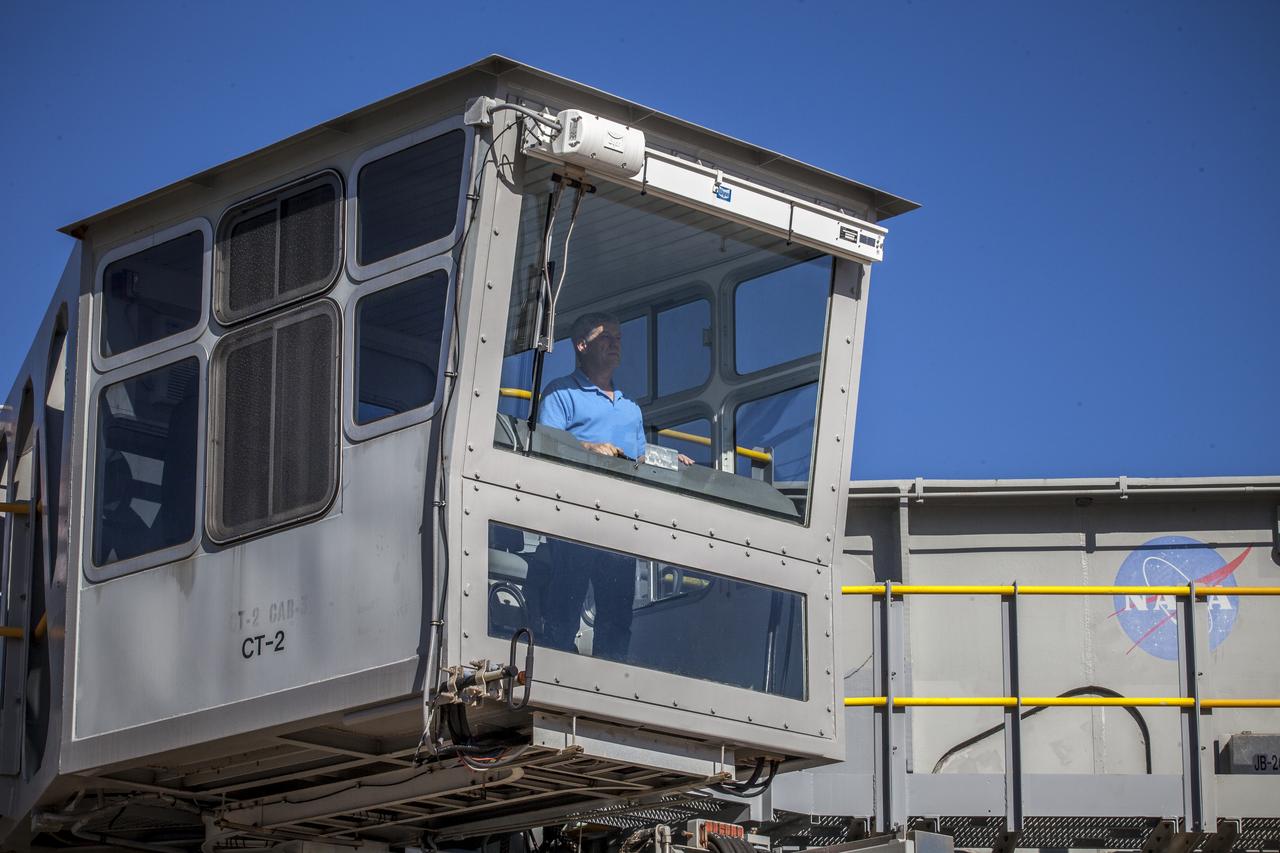
Sam Dove, a crawler-transporter engineer with Jacobs on the Test and Operations Support Contract, is inside the operator cab of crawler-transporter 2 on the crawlerway at NASA's Kennedy Space Center in Florida, on Aug. 27, 2018. CT-2 will carry the mobile launcher for the first time to Launch Pad 39B for a fit check of key systems that will support the launch of the agency's Space Launch System rocket and Orion spacecraft on Exploration Mission-1. The crawler also will carry the mobile launcher to the Vehicle Assembly Building for system checks and fit checks with the 10 levels of new platforms in High Bay 3.
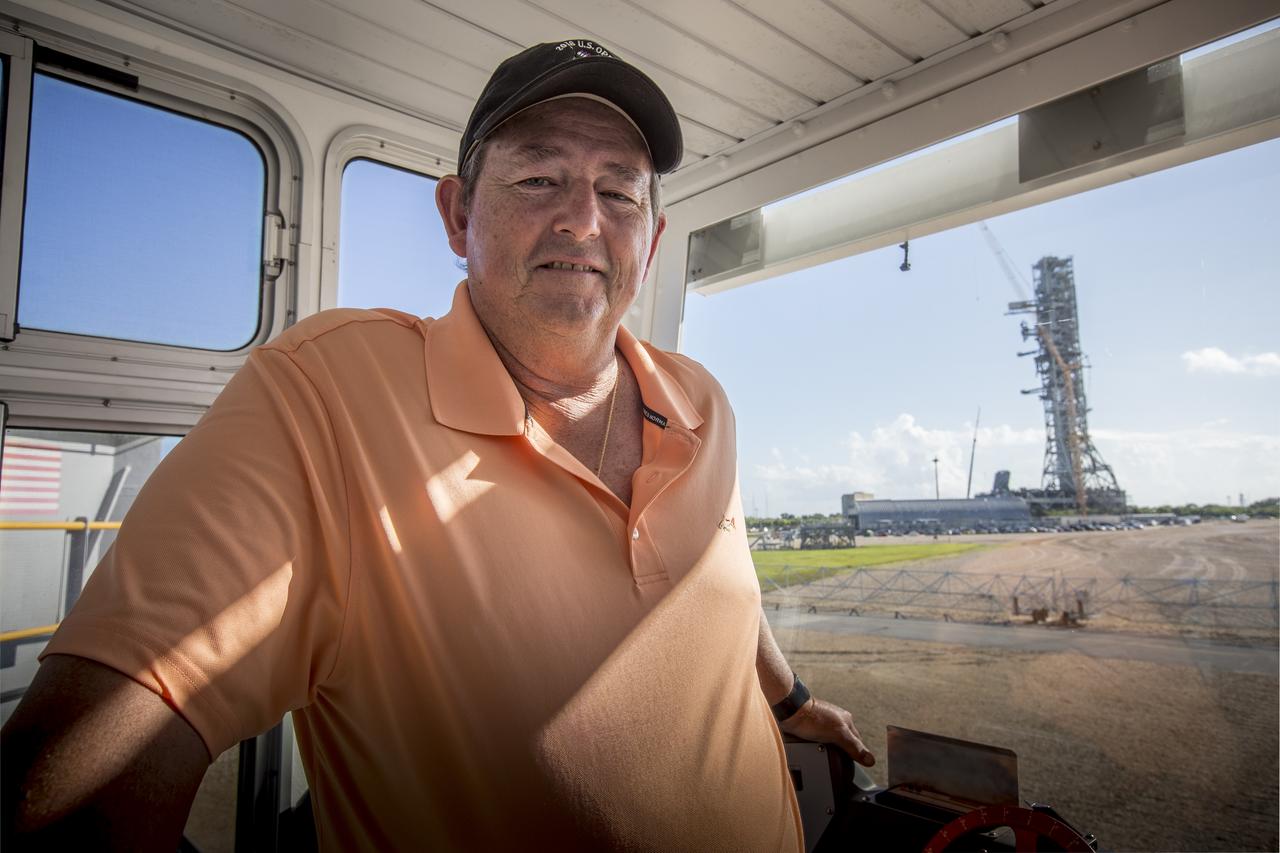
Bob Myers, a mechanical systems engineer with ERC on the Test and Operations Support Contract, is inside the operator cab of crawler-transporter 2 on the crawlerway at NASA's Kennedy Space Center in Florida, on Aug. 27, 2018. CT-2 will carry the mobile launcher for the first time to Launch Pad 39B for a fit check of key systems that will support the launch of the agency's Space Launch System rocket and Orion spacecraft on Exploration Mission-1. The crawler also will carry the mobile launcher to the Vehicle Assembly Building for system checks and fit checks with the 10 levels of new work platforms in High Bay 3.
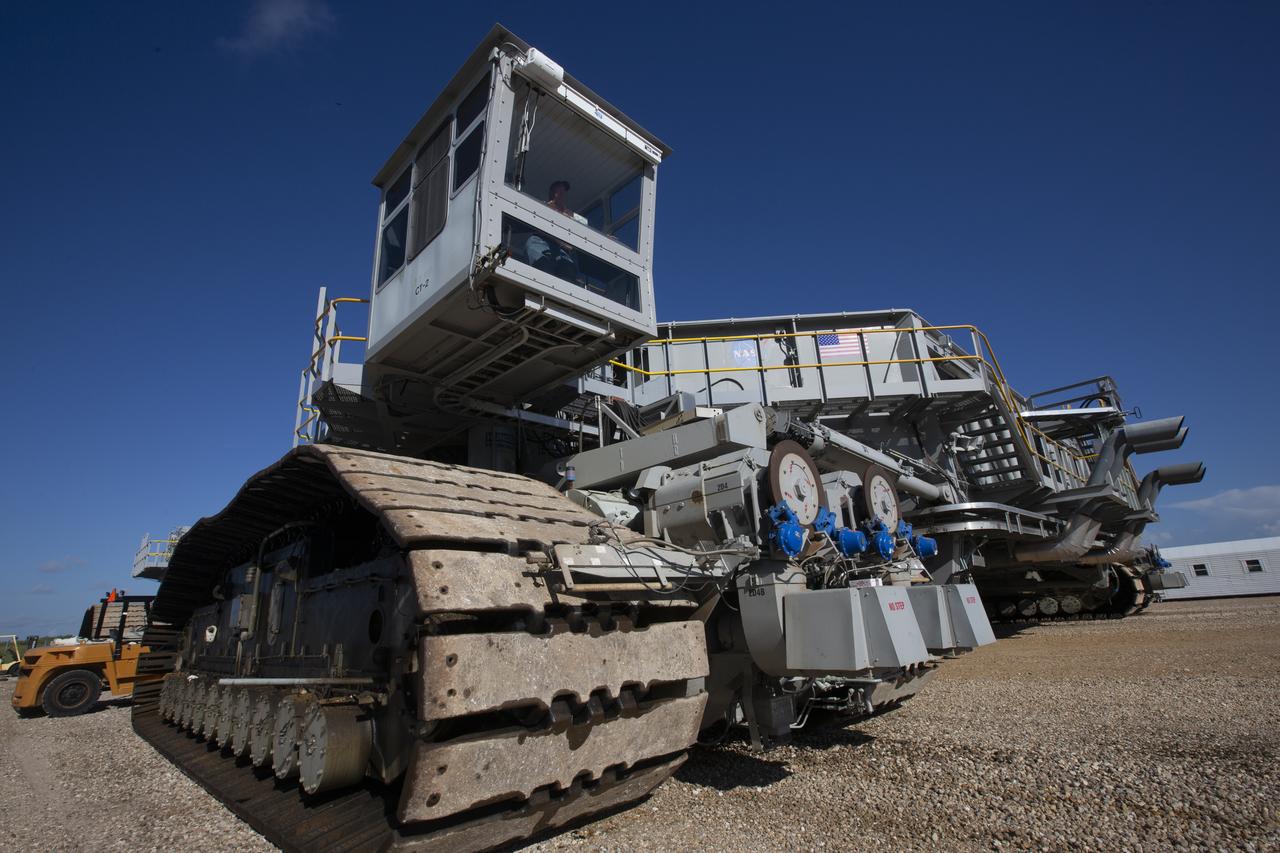
Sam Dove, a crawler-transporter engineer with Jacobs on the Test and Operations Support Contract, is inside the operator cab of crawler-transporter 2 on the crawlerway at NASA's Kennedy Space Center in Florida, on Aug. 27, 2018. CT-2 will carry the mobile launcher for the first time to Launch Pad 39B for a fit check of key systems that will support the launch of the agency's Space Launch System rocket and Orion spacecraft on Exploration Mission-1. The crawler also will carry the mobile launcher to the Vehicle Assembly Building for system checks and fit checks with the 10 levels of new work platforms in High Bay 3.

NASA's upgraded crawler-transporter 2 (CT-2) picks up mobile launcher platform 1 (MLP1) at the MLP park site near the Vehicle Assembly at the agency's Kennedy Space Center in Florida. The crawler's upgrades and modifications will be monitored and tested under loaded conditions during its travel to the crawlerway Pad A/B split and back to the crawler yard to confirm it is ready to support the load of the mobile launcher carrying the Space Launch System with Orion atop for the first test flight, Exploration Mission 1. The Ground Systems Development and Operations Program at Kennedy is managing upgrades to the crawler.
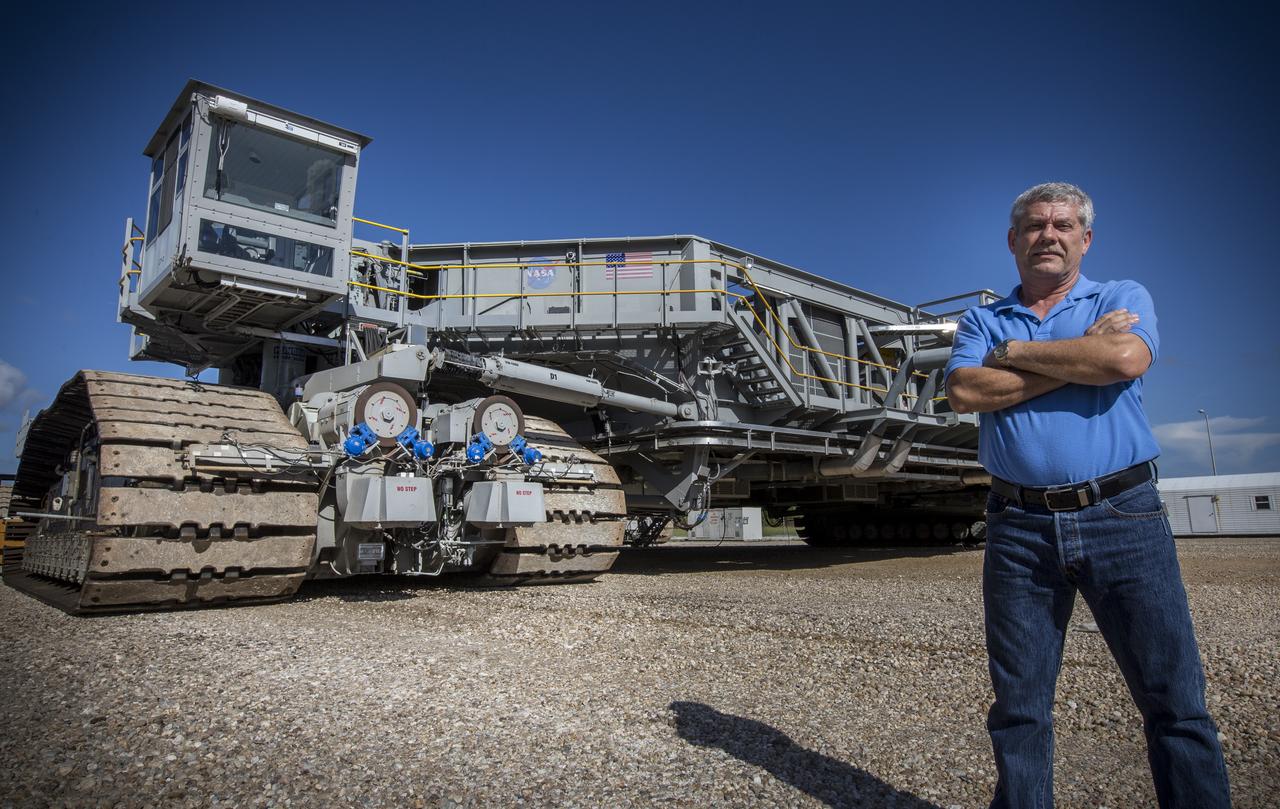
Sam Dove, a crawler-transporter engineer with Jacobs on the Test and Operations Support Contract, stands in front of crawler-transporter 2 on the crawlerway at NASA's Kennedy Space Center in Florida, on Aug. 27, 2018. CT-2 will carry the mobile launcher for the first time to Launch Pad 39B for a fit check of key systems that will support the launch of the agency's Space Launch System rocket and Orion spacecraft on Exploration Mission-1. The crawler also will carry the mobile launcher to the Vehicle Assembly Building for system checks and fit checks with the 10 levels of new platforms in High Bay 3.
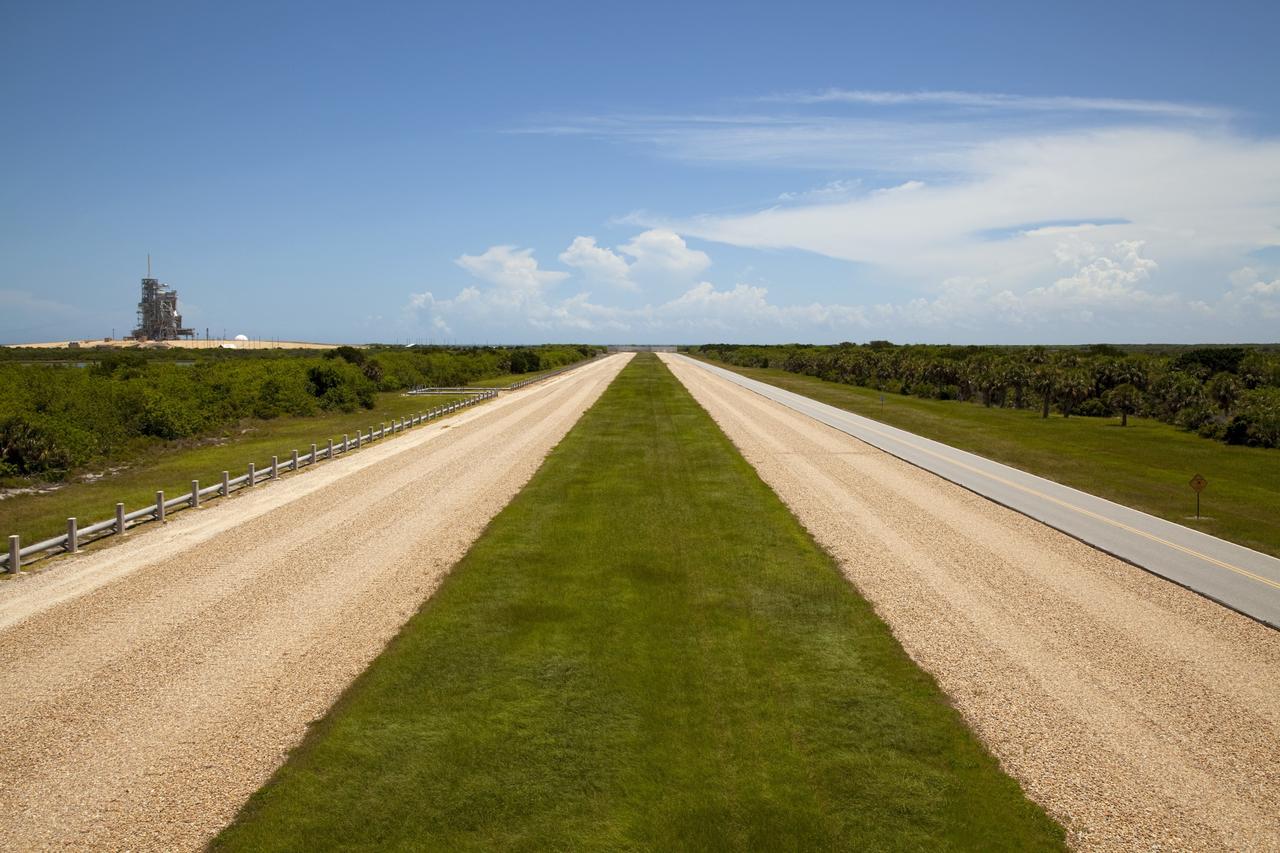
CAPE CANAVERAL, Fla. – The gravel crawlerway is seen as if from a crawler transporter approaching Launch Complex 39 pad A at the Kennedy Space Center in Florida. The crawlerways are 130 feet wide, about the size of an 8-lane freeway. The river rock paths have been used since 1966 to move launch vehicles from the Vehicle Assembly Building, or VAB, along the 3.4-mile path to pad A and 6.8 miles to pad B. The crawlerways were originally built to support transporting Apollo Saturn V rockets to the launch pads. The crawlerways were again used during the Space Shuttle Program moving the 4.5 million-pound shuttles mounted on an 8-million-pound mobile launcher platform atop a six-million-pound crawler transporter -- totaling an 18.5-million-pound vehicle lumbering along to the pad. The paths are specially constructed with four layers. The top is eight inches thick on curves and four inches on straightaway sections. Then there is a four-foot layer of graded, crushed stone. Beneath that is 2.5 feet of fill, followed by one foot of compact fill. Plans call for the crawlerways to be used in the future for transporting launch vehicles from the VAB to pads A and B. For more information, visit http://www.nasa.gov/transition Photo credit: NASA/Kim Shiflett
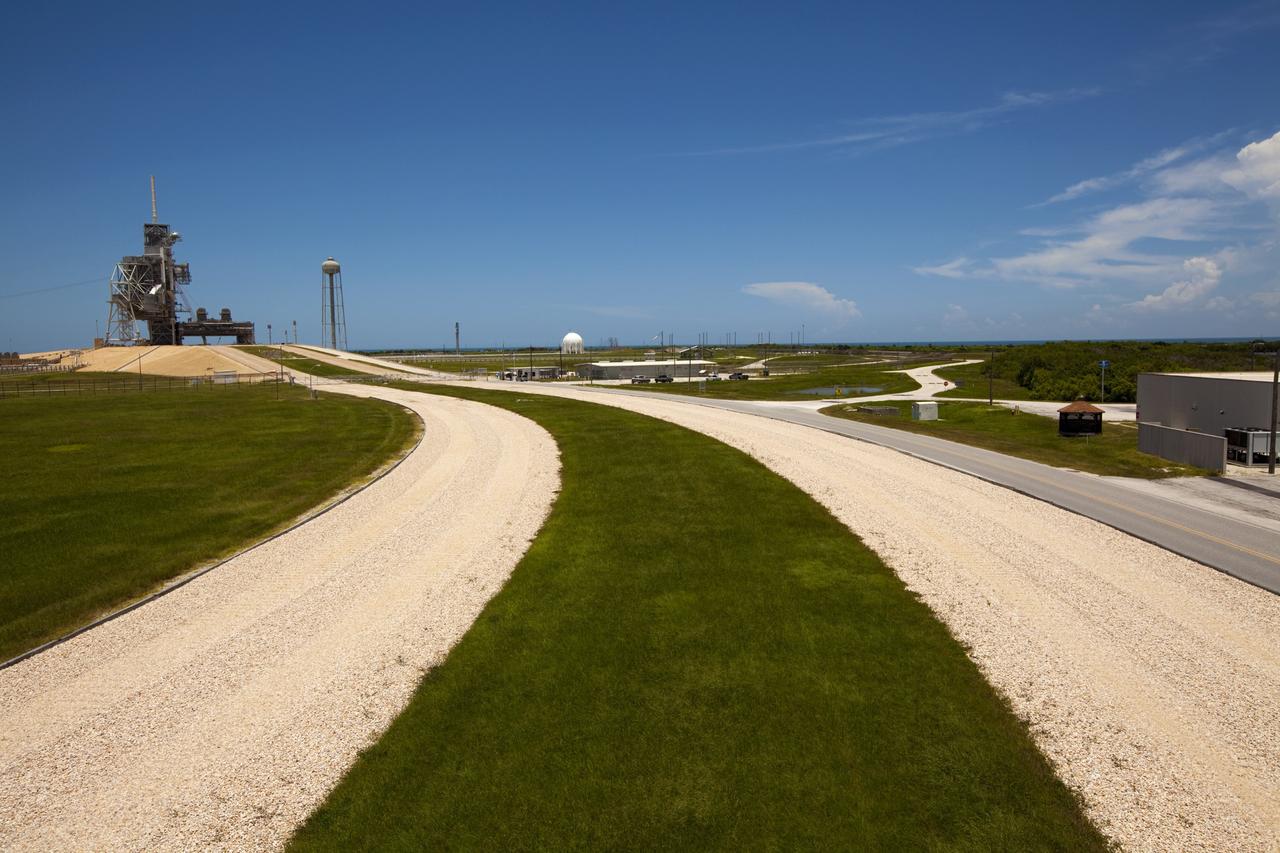
CAPE CANAVERAL, Fla. – The gravel crawlerway is seen as if from a crawler transporter making a turn to approach Launch Complex 39 pad A at the Kennedy Space Center in Florida. The crawlerways are 130 feet wide, about the size of an 8-lane freeway. The river rock paths have been used since 1966 to move launch vehicles from the Vehicle Assembly Building, or VAB, along the 3.4-mile path to pad A and 6.8 miles to pad B. The crawlerways were originally built to support transporting Apollo Saturn V rockets to the launch pads. The crawlerways were again used during the Space Shuttle Program moving the 4.5 million-pound shuttles mounted on an 8-million-pound mobile launcher platform atop a six-million-pound crawler transporter -- totaling an 18.5-million-pound vehicle lumbering along to the pad. The paths are specially constructed with four layers. The top is eight inches thick on curves and four inches on straightaway sections. Then there is a four-foot layer of graded, crushed stone. Beneath that is 2.5 feet of fill, followed by one foot of compact fill. Plans call for the crawlerways to be used in the future for transporting launch vehicles from the VAB to pads A and B. For more information, visit http://www.nasa.gov/transition Photo credit: NASA/Kim Shiflett
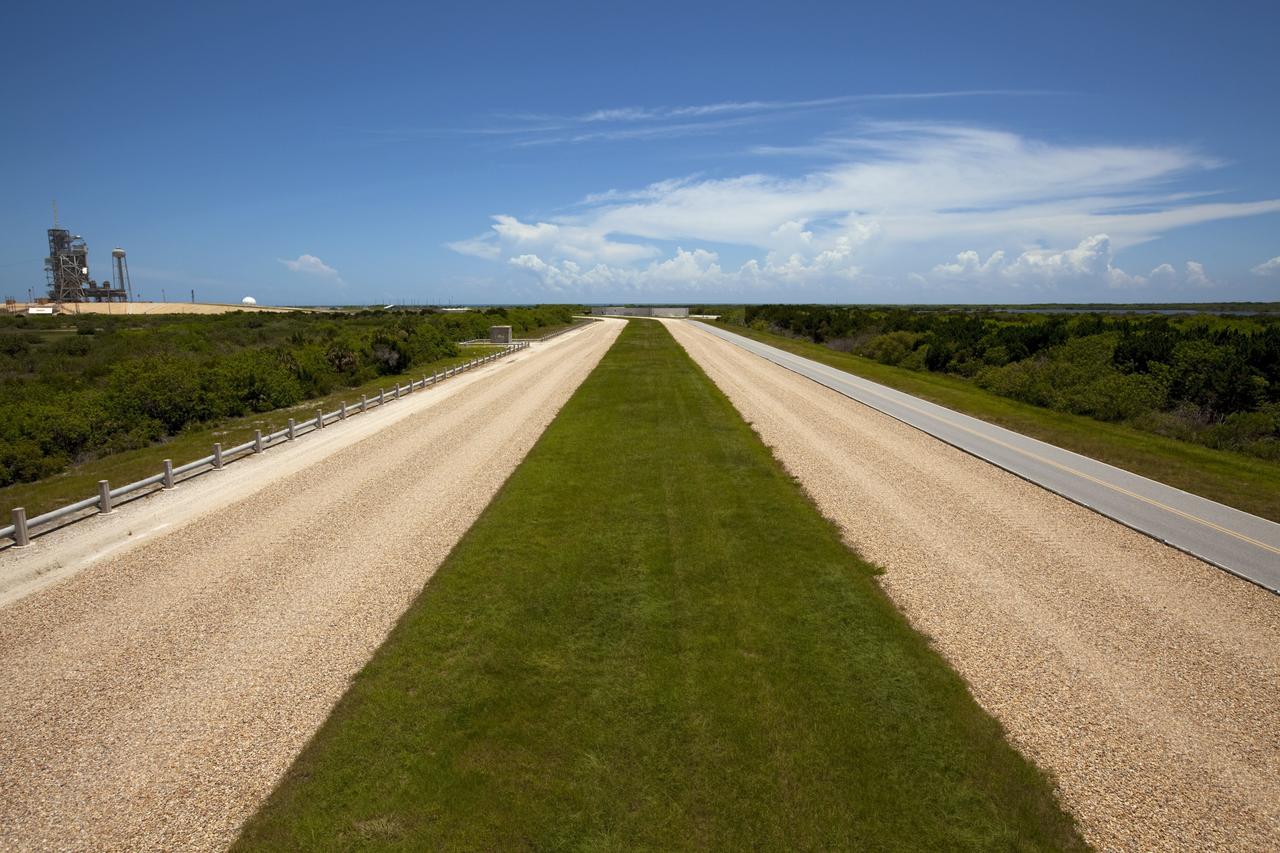
CAPE CANAVERAL, Fla. – The gravel crawlerway is seen as if from a crawler transporter approaching Launch Complex 39 pad A at the Kennedy Space Center in Florida. The crawlerways are 130 feet wide, about the size of an 8-lane freeway. The river rock paths have been used since 1966 to move launch vehicles from the Vehicle Assembly Building, or VAB, along the 3.4-mile path to pad A and 6.8 miles to pad B. The crawlerways were originally built to support transporting Apollo Saturn V rockets to the launch pads. The crawlerways were again used during the Space Shuttle Program moving the 4.5 million-pound shuttles mounted on an 8-million-pound mobile launcher platform atop a six-million-pound crawler transporter -- totaling an 18.5-million-pound vehicle lumbering along to the pad. The paths are specially constructed with four layers. The top is eight inches thick on curves and four inches on straightaway sections. Then there is a four-foot layer of graded, crushed stone. Beneath that is 2.5 feet of fill, followed by one foot of compact fill. Plans call for the crawlerways to be used in the future for transporting launch vehicles from the VAB to pads A and B. For more information, visit http://www.nasa.gov/transition Photo credit: NASA/Kim Shiflett
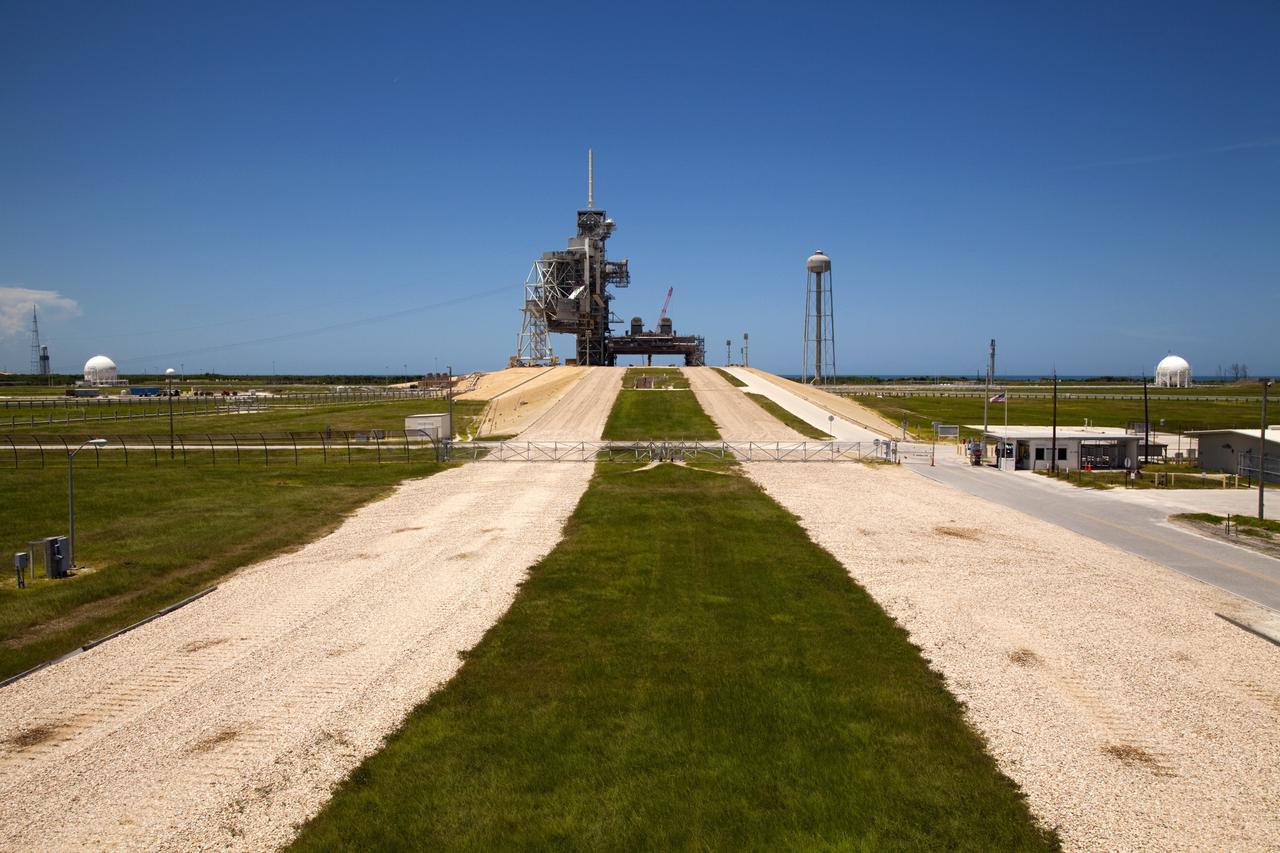
CAPE CANAVERAL, Fla. – The gravel crawlerway is seen as if from a crawler transporter making the approach to Launch Complex 39 pad A at the Kennedy Space Center in Florida. The crawlerways are 130 feet wide, about the size of an 8-lane freeway. The river rock paths have been used since 1966 to move launch vehicles from the Vehicle Assembly Building, or VAB, along the 3.4-mile path to pad A and 6.8 miles to pad B. The crawlerways were originally built to support transporting Apollo Saturn V rockets to the launch pads. The crawlerways were again used during the Space Shuttle Program moving the 4.5 million-pound shuttles mounted on an 8-million-pound mobile launcher platform atop a six-million-pound crawler transporter -- totaling an 18.5-million-pound vehicle lumbering along to the pad. The paths are specially constructed with four layers. The top is eight inches thick on curves and four inches on straightaway sections. Then there is a four-foot layer of graded, crushed stone. Beneath that is 2.5 feet of fill, followed by one foot of compact fill. Plans call for the crawlerways to be used in the future for transporting launch vehicles from the VAB to pads A and B. For more information, visit http://www.nasa.gov/transition Photo credit: NASA/Kim Shiflett
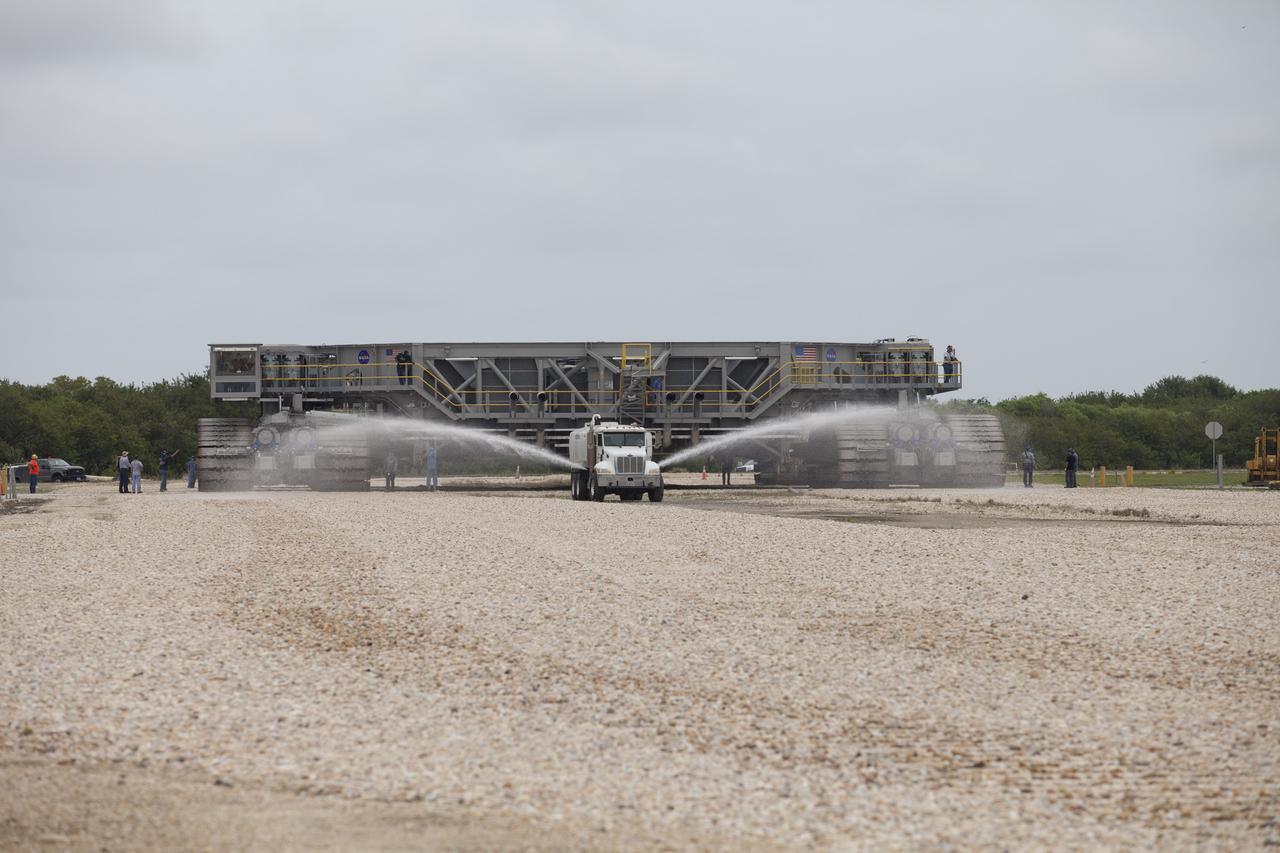
NASA’s upgraded crawler-transporter 2 (CT-2) returns from its trek to Launch Pad 39B at the agency’s Kennedy Space Center in Florida. CT-2 traveled to Pad 39B to test recently completed upgrades and modifications to support NASA’s journey to Mars. A truck sprays water in front of the crawler to control dust as the large vehicle moves along. The Ground Systems Development and Operations Program at Kennedy oversaw upgrades to the crawler in the Vehicle Assembly Building. The crawler will carry the mobile launcher with Orion atop the Space Launch System rocket to Pad 39B for Exploration Mission 1.
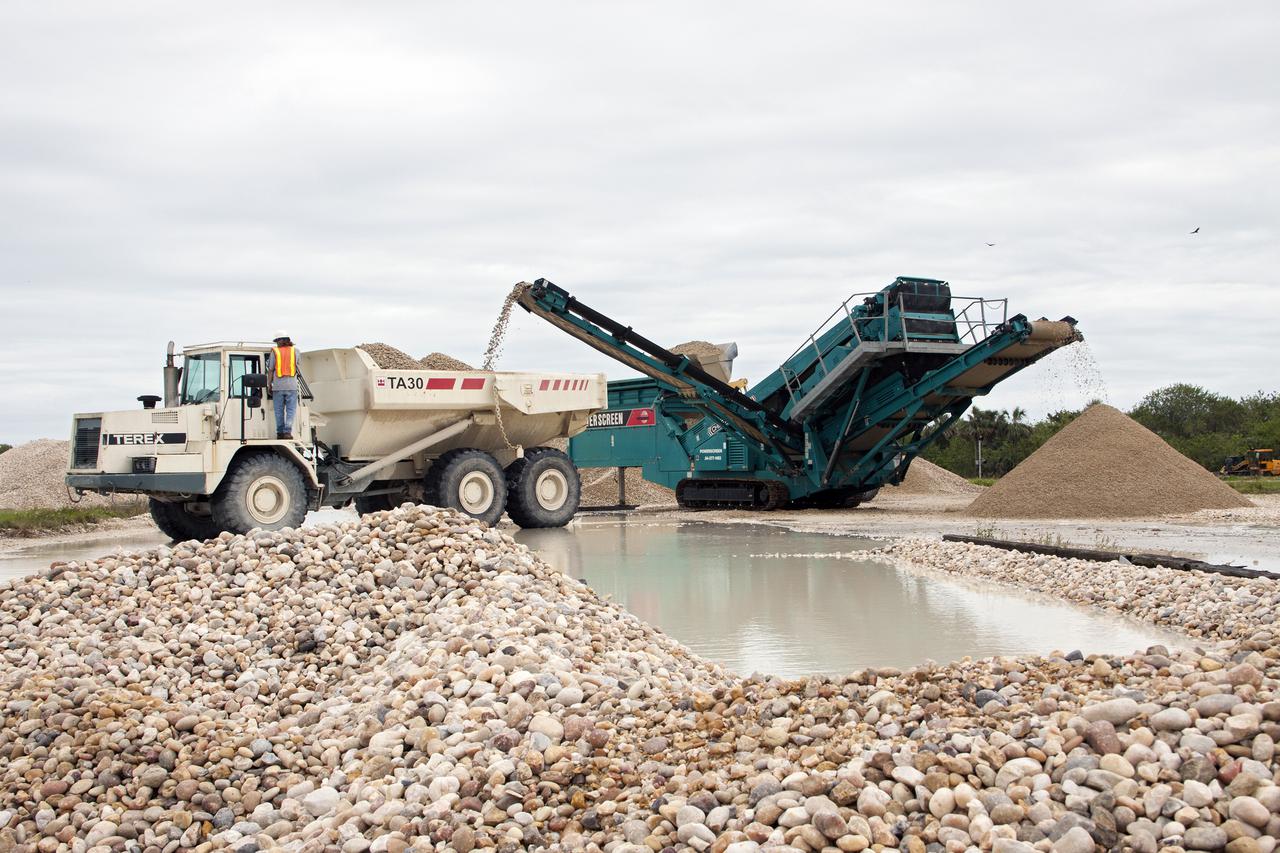
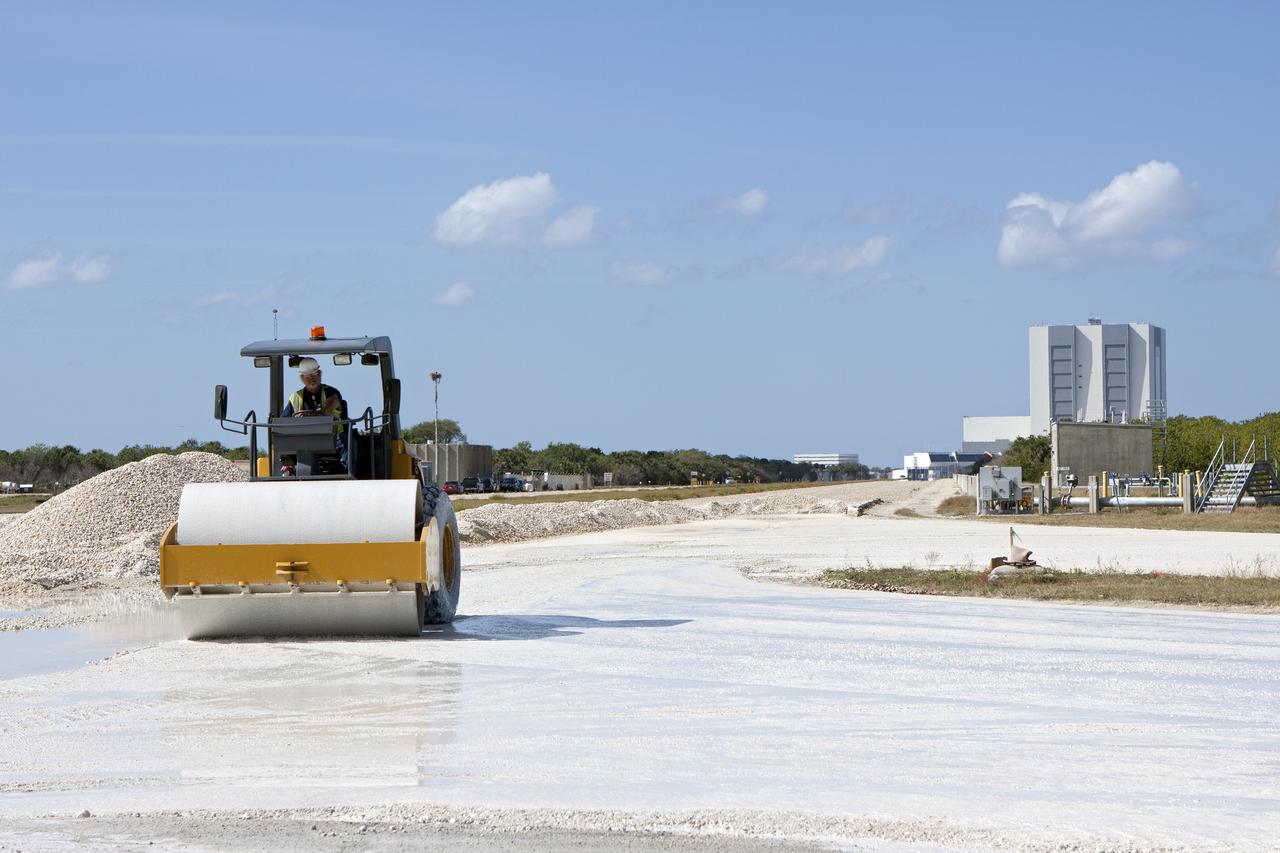
CAPE CANAVERAL, Fla. – At NASA’s Kennedy Space Center in Florida, screening equipment is operating to separate pulverized Alabama river rock from stones still usable in the crawlerway leading from the Vehicle Assembly Building VAB to the launch pads. The rock no longer suitable for the crawlerway will be reused in other areas of the spaceport. After years of wear from the weight of space shuttles being transported to the launch pads, the crawlerway was in need of resurfacing in preparation for future programs. The Ground Systems Development and Operations GSDO Program office at Kennedy is working to upgrade the two 40-foot-wide pathways the crawler-transporter will travel as it transports vehicles such as NASA's Space Launch System SLS rocket from the VAB to the launch pad. For more: http:__www.nasa.gov_exploration_systems_ground_crawlerway_upgrades.html Photo credit: NASA_Jim Grossmann
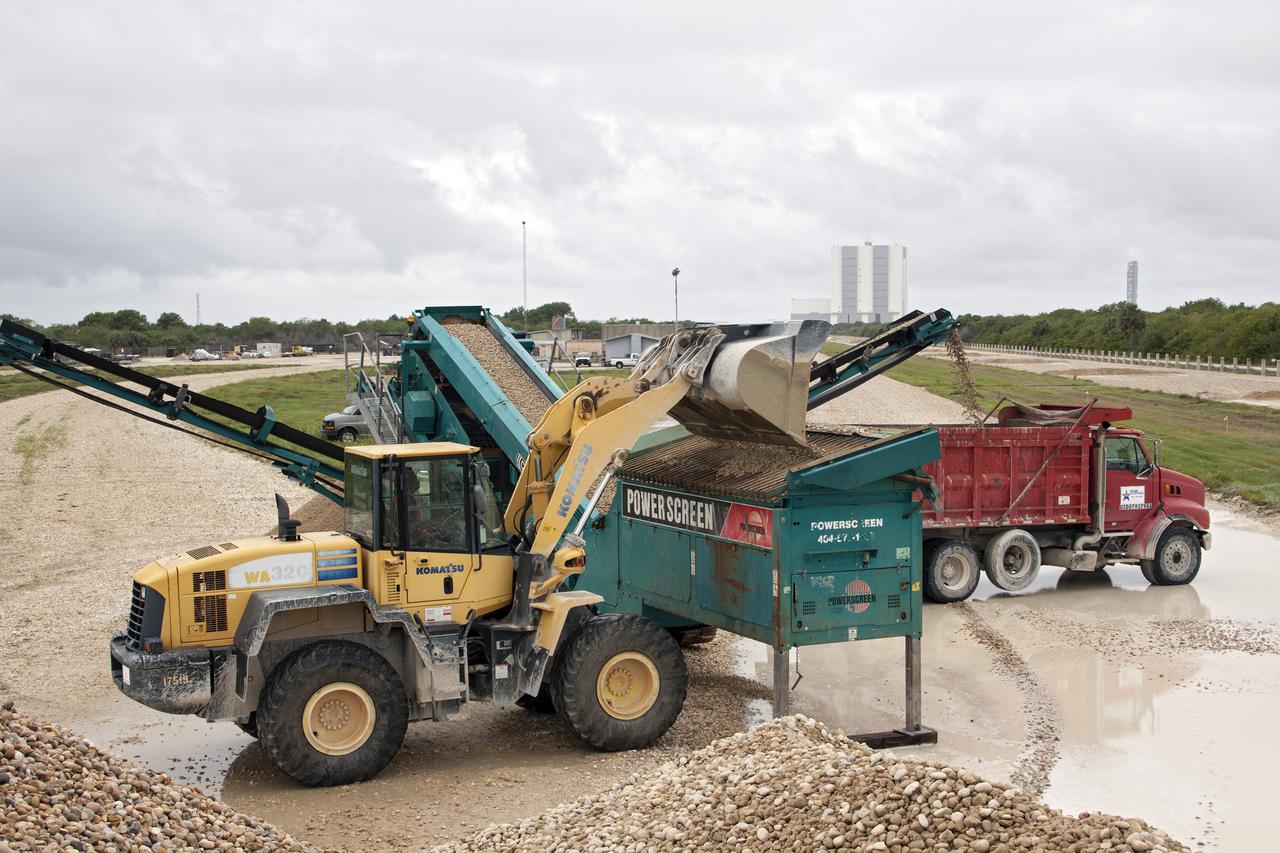
CAPE CANAVERAL, Fla. – At NASA’s Kennedy Space Center in Florida, screening equipment is operating to separate pulverized Alabama river rock from stones still usable in the crawlerway leading from the Vehicle Assembly Building VAB to the launch pads. The rock no longer suitable for the crawlerway will be reused in other areas of the spaceport. After years of wear from the weight of space shuttles being transported to the launch pads, the crawlerway was in need of resurfacing in preparation for future programs. The Ground Systems Development and Operations GSDO Program office at Kennedy is working to upgrade the two 40-foot-wide pathways the crawler-transporter will travel as it transports vehicles such as NASA's Space Launch System SLS rocket from the VAB to the launch pad. For more: http:__www.nasa.gov_exploration_systems_ground_crawlerway_upgrades.html Photo credit: NASA_Jim Grossmann

CAPE CANAVERAL, Fla. – At NASA’s Kennedy Space Center in Florida, screening equipment is operating to separate pulverized Alabama river rock from stones still usable in the crawlerway leading from the Vehicle Assembly Building VAB to the launch pads. The rock no longer suitable for the crawlerway will be reused in other areas of the spaceport. After years of wear from the weight of space shuttles being transported to the launch pads, the crawlerway was in need of resurfacing in preparation for future programs. The Ground Systems Development and Operations GSDO Program office at Kennedy is working to upgrade the two 40-foot-wide pathways the crawler-transporter will travel as it transports vehicles such as NASA's Space Launch System SLS rocket from the VAB to the launch pad. For more: http:__www.nasa.gov_exploration_systems_ground_crawlerway_upgrades.html Photo credit: NASA_Jim Grossmann
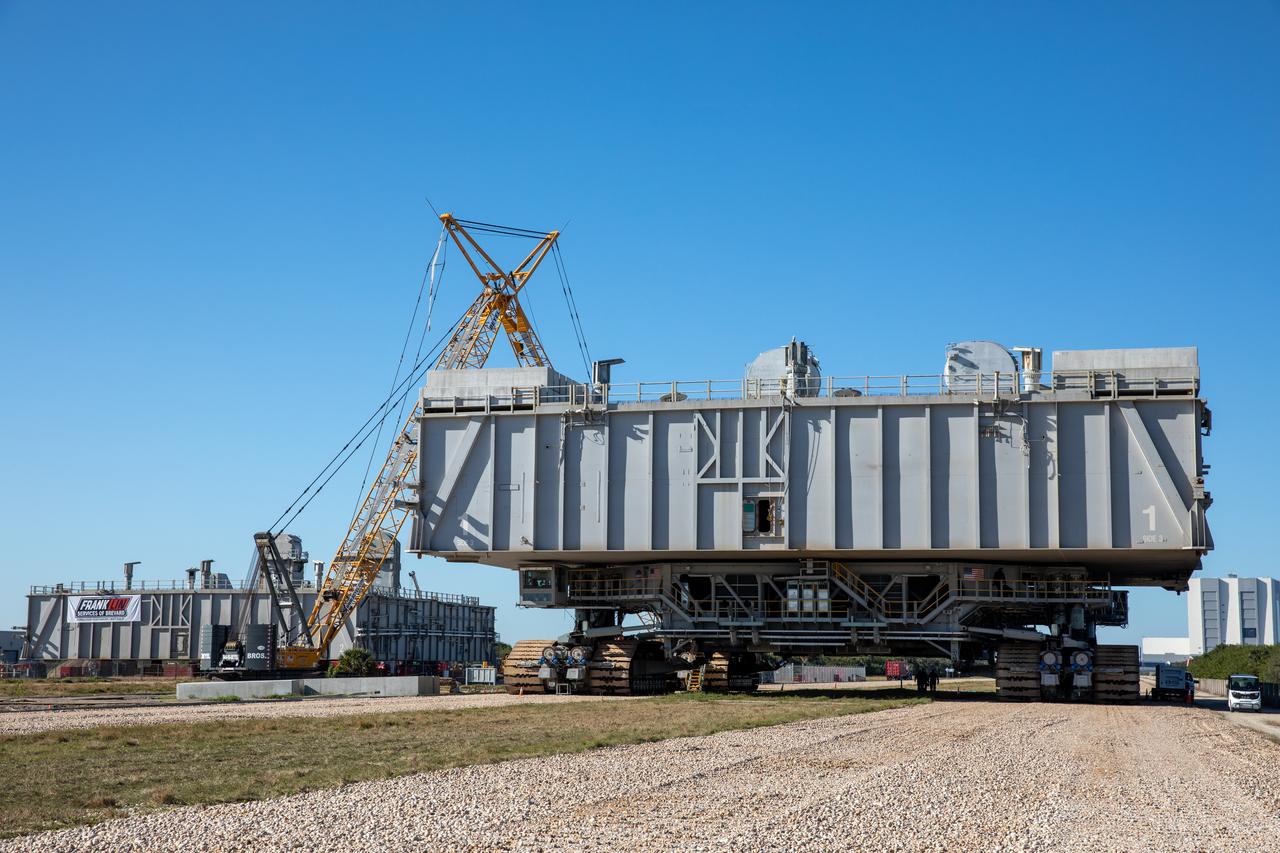
The two mobile launcher platforms (MLPs) are seen at the MSS park site at NASA’s Kennedy Space Center in Florida on Jan. 4, 2021. One MLP is undergoing crawlerway conditioning – a several month-long project to ensure the path the rocket takes from the VAB to the launch pad is strong enough to support the weight for the upcoming Artemis I launch. The other MLP used during the shuttle program is in the process of being demolished.
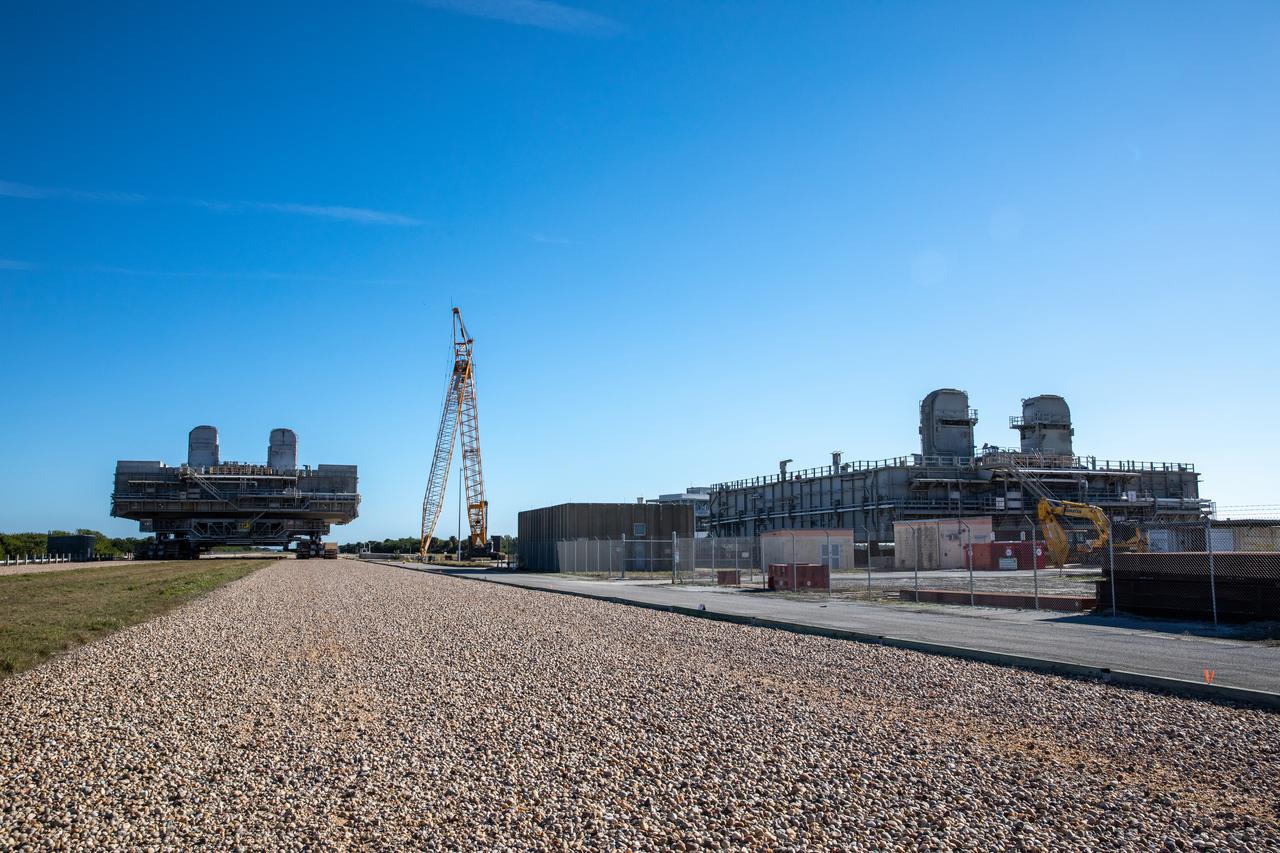
The two mobile launcher platforms (MLPs) are seen at the MSS park site at NASA’s Kennedy Space Center in Florida on Jan. 4, 2021. One MLP is undergoing crawlerway conditioning – a several month-long project to ensure the path the rocket takes from the VAB to the launch pad is strong enough to support the weight for the upcoming Artemis I launch. The other MLP used during the shuttle program is in the process of being demolished.
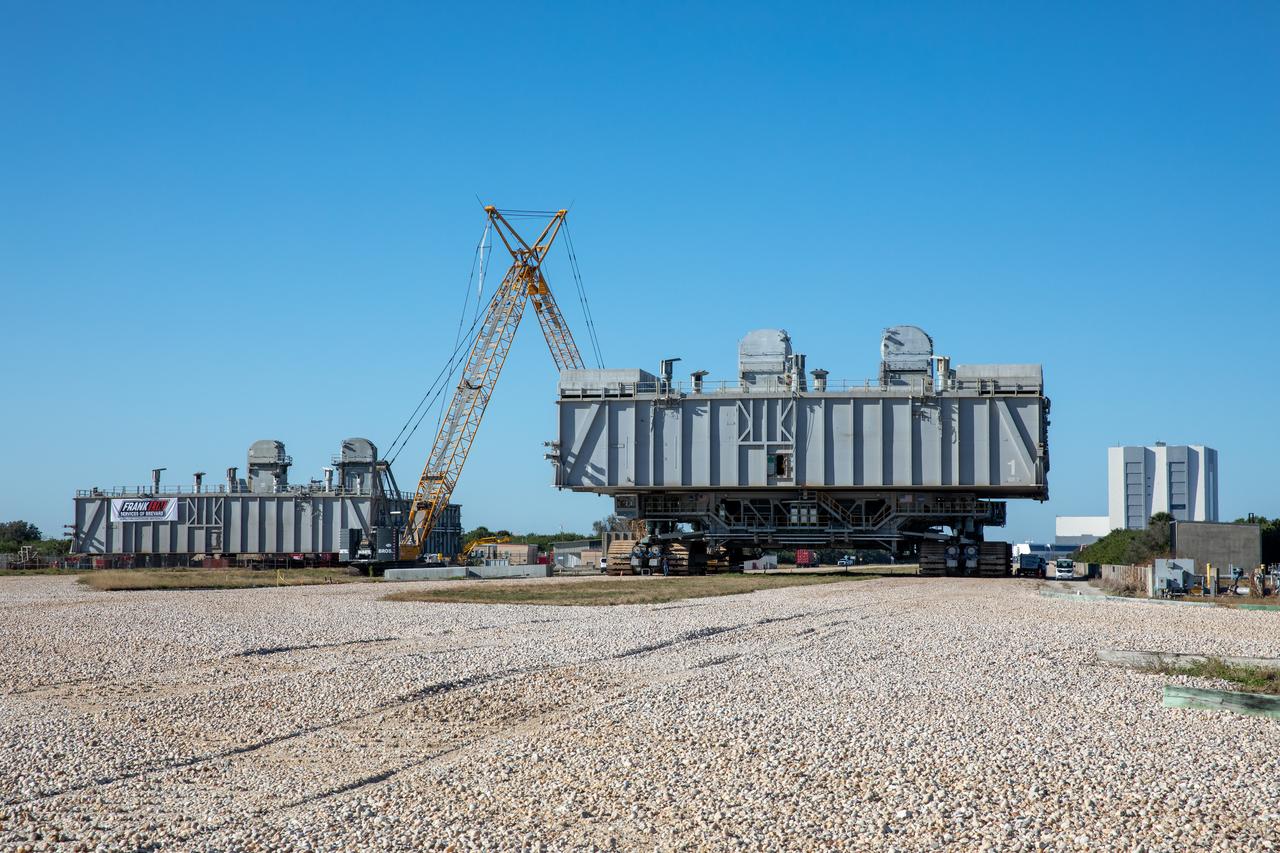
The two mobile launcher platforms (MLPs) are seen at the MSS park site at NASA’s Kennedy Space Center in Florida on Jan. 4, 2021. One MLP is undergoing crawlerway conditioning – a several month-long project to ensure the path the rocket takes from the VAB to the launch pad is strong enough to support the weight for the upcoming Artemis I launch. The other MLP used during the shuttle program is in the process of being demolished.
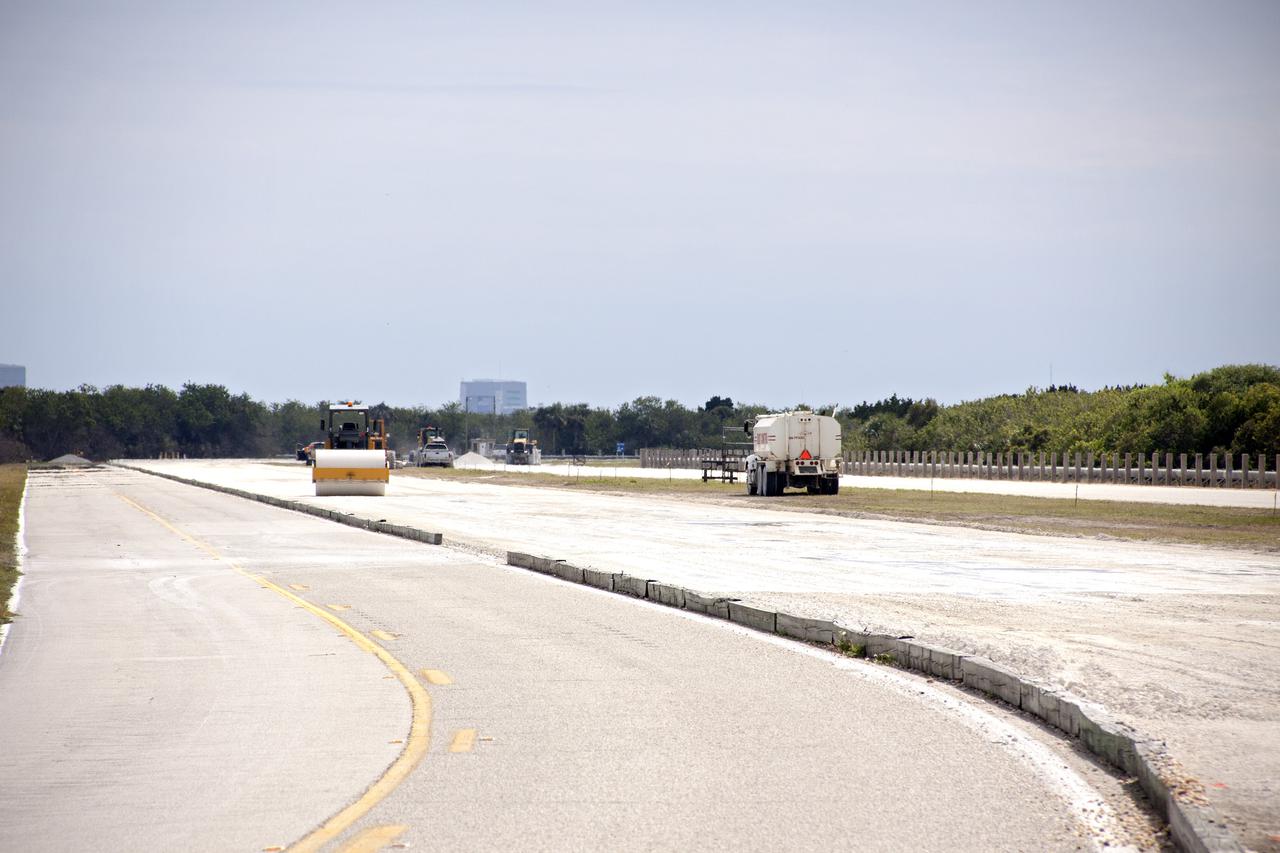
CAPE CANAVERAL, Fla. --Workers from Canaveral Construction in Mims, Fla., continue to re-grade the lime rock on the crawlerway near Launch Pad 39B at NASA’s Kennedy Space Center in Florida. The crawlerway is being upgraded to improve the foundation and prepare it to support the weight of NASA’s Space Launch System, or SLS, and mobile launcher on the crawler-transporter during rollout. Workers are removing the original Alabama river rock and restoring the layer of lime rock below to its original depth. Then new river rock will be added on top. The Ground Systems Development and Operations, or GSDO, Program office at Kennedy is leading the center’s transformation to safely handle a variety of rockets and spacecraft. For more information about GSDO, visit: http:__go.nasa.gov_groundsystems. Photo credit: NASA_Jim Grossmann
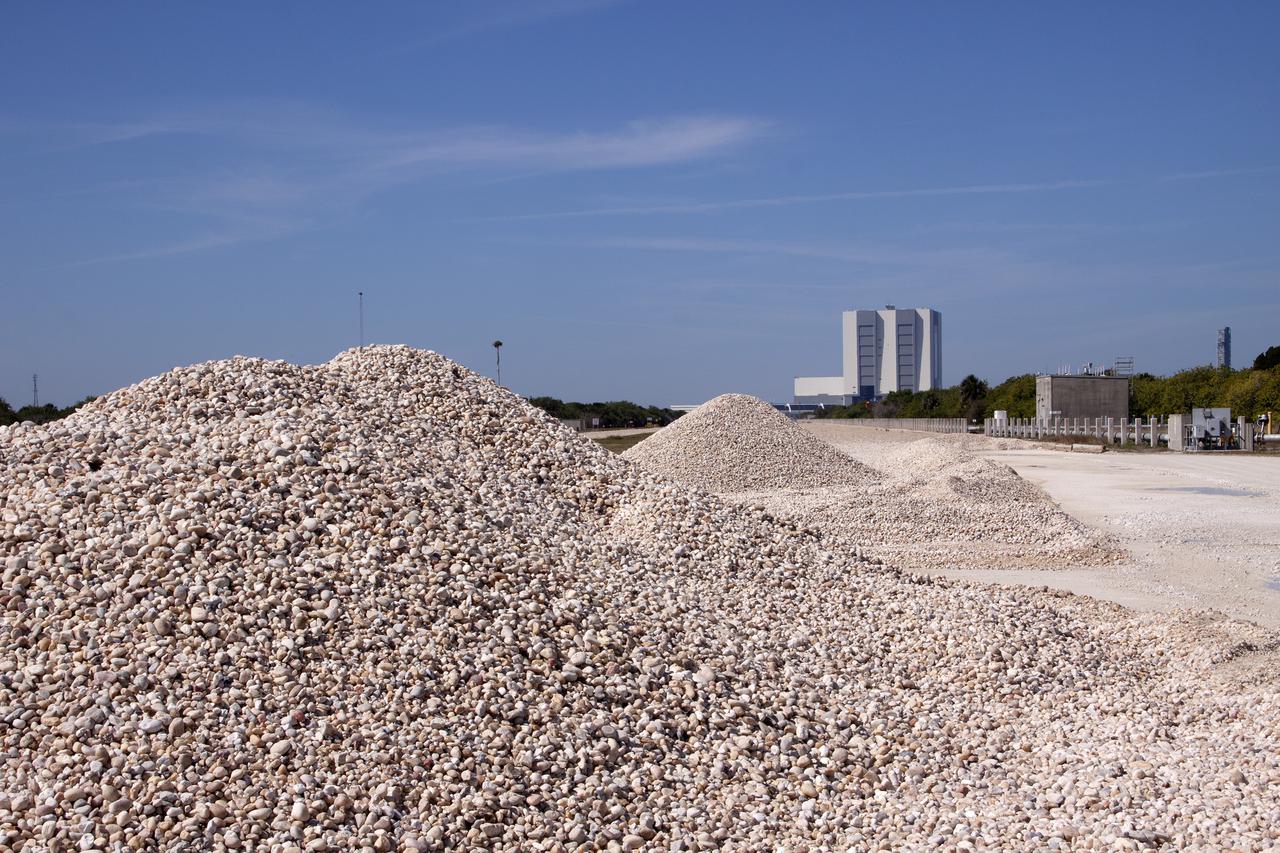
CAPE CANAVERAL, Fla. -- On the crawlerway leading to Launch Pad 39B at NASA’s Kennedy Space Center in Florida, workers from Canaveral Construction in Mims, Fla., continue to remove sections of the Alabama river rock in order to re-grade the lime rock below. The crawlerway is being upgraded to improve the foundation and prepare it to support the weight of NASA’s Space Launch System, or SLS, and mobile launcher on the crawler-transporter during rollout. Workers are removing the original Alabama river rock and restoring the layer of lime rock below to its original depth. Then new river rock will be added on top. The Ground Systems Development and Operations, or GSDO, Program office at Kennedy is leading the center’s transformation to safely handle a variety of rockets and spacecraft. For more information about GSDO, visit: http:__go.nasa.gov_groundsystems. Photo credit: NASA_Jim Grossmann
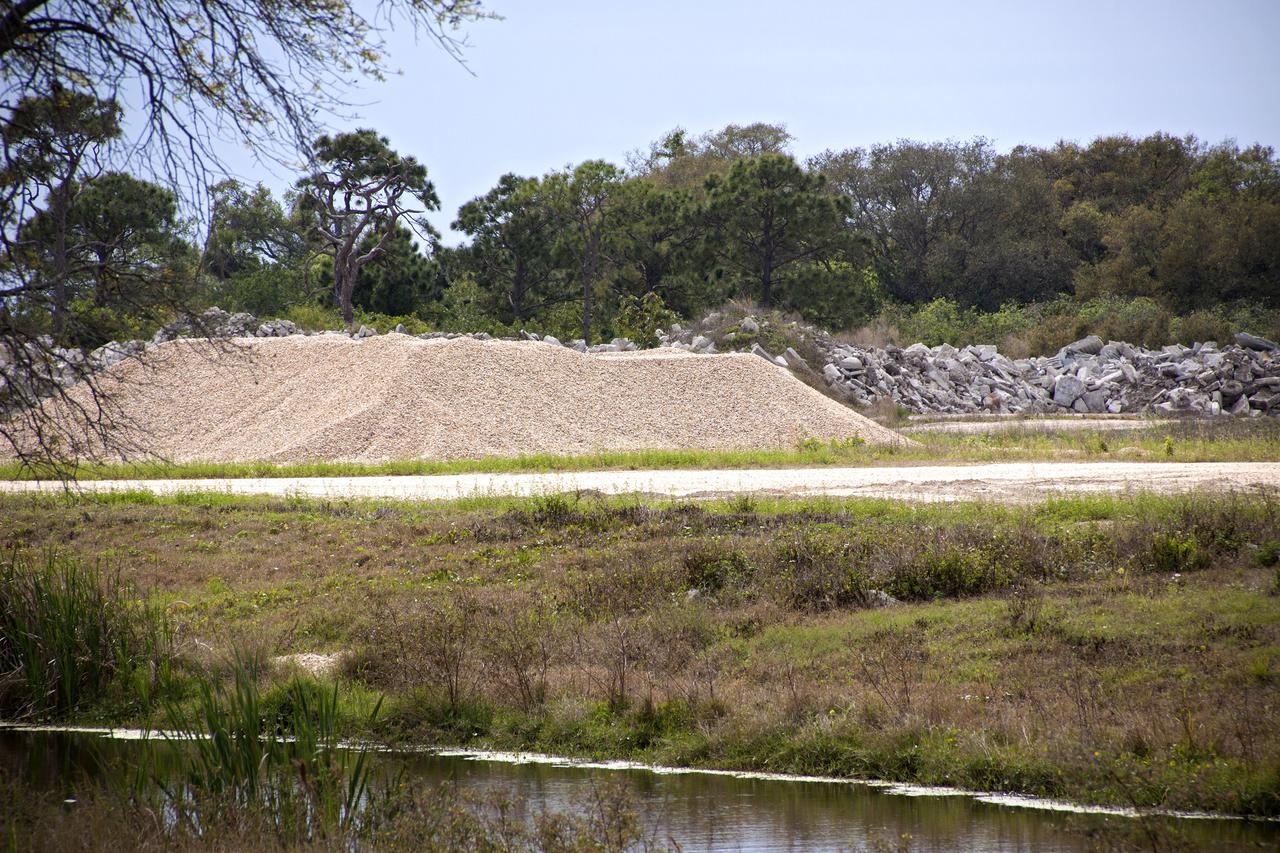
CAPE CANAVERAL, Fla. -- At NASA’s Kennedy Space Center in Florida, workers from Canaveral Construction in Mims, Fla., removed the Alabama river rock from sections of the crawlerway near Launch Pad 39B and transported it to the landfill. The crawlerway is being upgraded to improve the foundation and prepare it to support the weight of NASA’s Space Launch System, or SLS, and mobile launcher on the crawler-transporter during rollout. Workers are removing the original Alabama river rock and restoring the layer of lime rock below to its original depth. Then new river rock will be added on top. The Ground Systems Development and Operations, or GSDO, Program office at Kennedy is leading the center’s transformation to safely handle a variety of rockets and spacecraft. For more information about GSDO, visit: http:__go.nasa.gov_groundsystems. Photo credit: NASA_Jim Grossmann
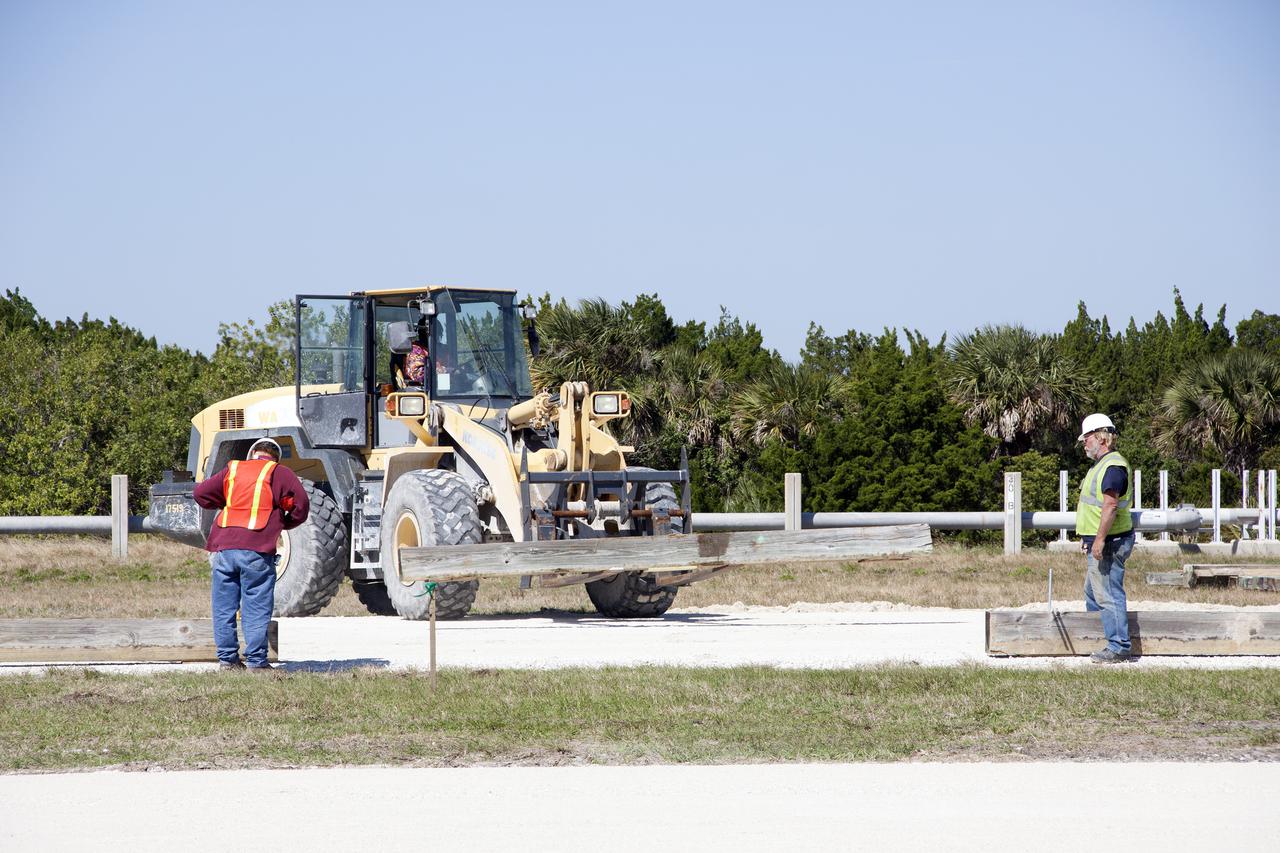
CAPE CANAVERAL, Fla. -- At NASA’s Kennedy Space Center in Florida, workers from Canaveral Construction in Mims, Fla., continue to re-grade the lime rock in sections of the crawlerway leading to Launch Pad 39B. The crawlerway is being upgraded to improve the foundation and prepare it to support the weight of NASA’s Space Launch System, or SLS, and mobile launcher on the crawler-transporter during rollout. Workers are removing the original Alabama river rock and restoring the layer of lime rock below to its original depth. Then new river rock will be added on top. The Ground Systems Development and Operations, or GSDO, Program office at Kennedy is leading the center’s transformation to safely handle a variety of rockets and spacecraft. For more information about GSDO, visit: http:__go.nasa.gov_groundsystems. Photo credit: NASA_Jim Grossmann
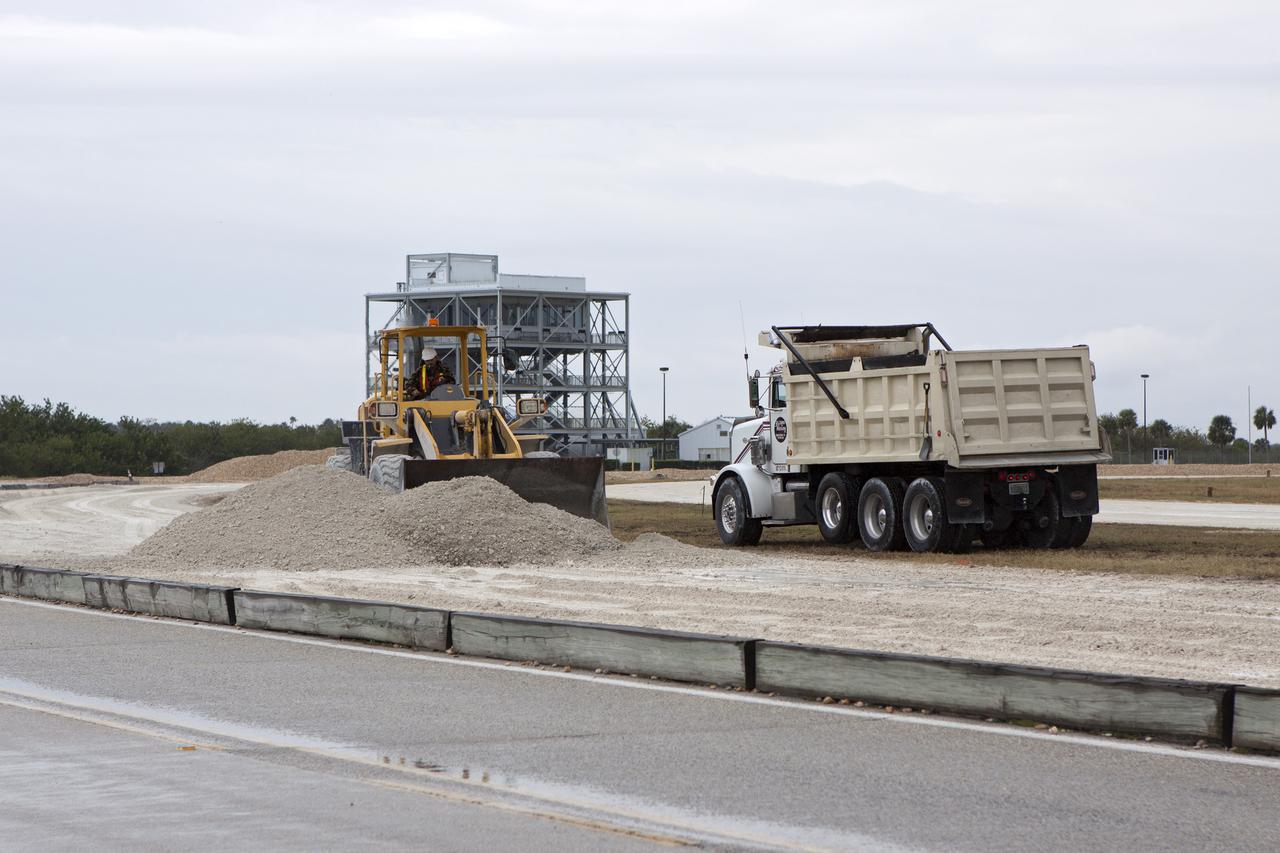
CAPE CANAVERAL, Fla. – Workers from Canaveral Construction in Mims, Fla., remove the Alabama river rock from the crawlerway near the turn off to Launch Pad 39B at NASA’s Kennedy Space Center in Florida. In the background is the Launch Viewing Gantry that is a Kennedy Space Center Visitor Complex tour stop. The crawlerway is being upgraded to improve the foundation and prepare it to support the weight of NASA’s Space Launch System, or SLS, and mobile launcher on the crawler-transporter during rollout. Workers are removing the original Alabama river rock and restoring the layer of lime rock below to its original depth. Then new river rock will be added on top. The Ground Systems Development and Operations, or GSDO, Program office at Kennedy is leading the center’s transformation to safely handle a variety of rockets and spacecraft. For more information about GSDO, visit: http:__go.nasa.gov_groundsystems. Photo credit: NASA_Jim Grossmann
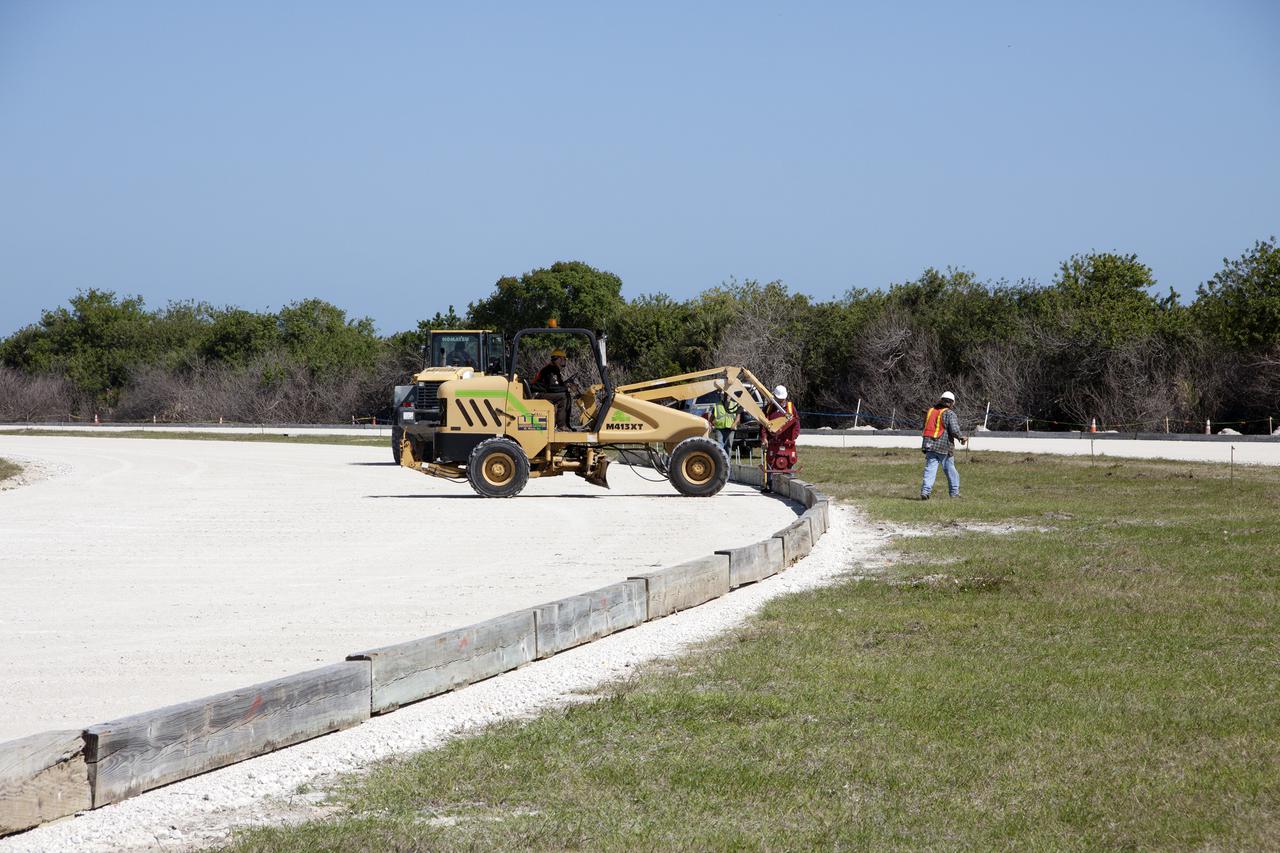
CAPE CANAVERAL, Fla. -- At NASA’s Kennedy Space Center in Florida, workers from Canaveral Construction in Mims, Fla., continue to re-grade the lime rock in sections of the crawlerway leading to Launch Pad 39B. The crawlerway is being upgraded to improve the foundation and prepare it to support the weight of NASA’s Space Launch System, or SLS, and mobile launcher on the crawler-transporter during rollout. Workers are removing the original Alabama river rock and restoring the layer of lime rock below to its original depth. Then new river rock will be added on top. The Ground Systems Development and Operations, or GSDO, Program office at Kennedy is leading the center’s transformation to safely handle a variety of rockets and spacecraft. For more information about GSDO, visit: http:__go.nasa.gov_groundsystems. Photo credit: NASA_Jim Grossmann
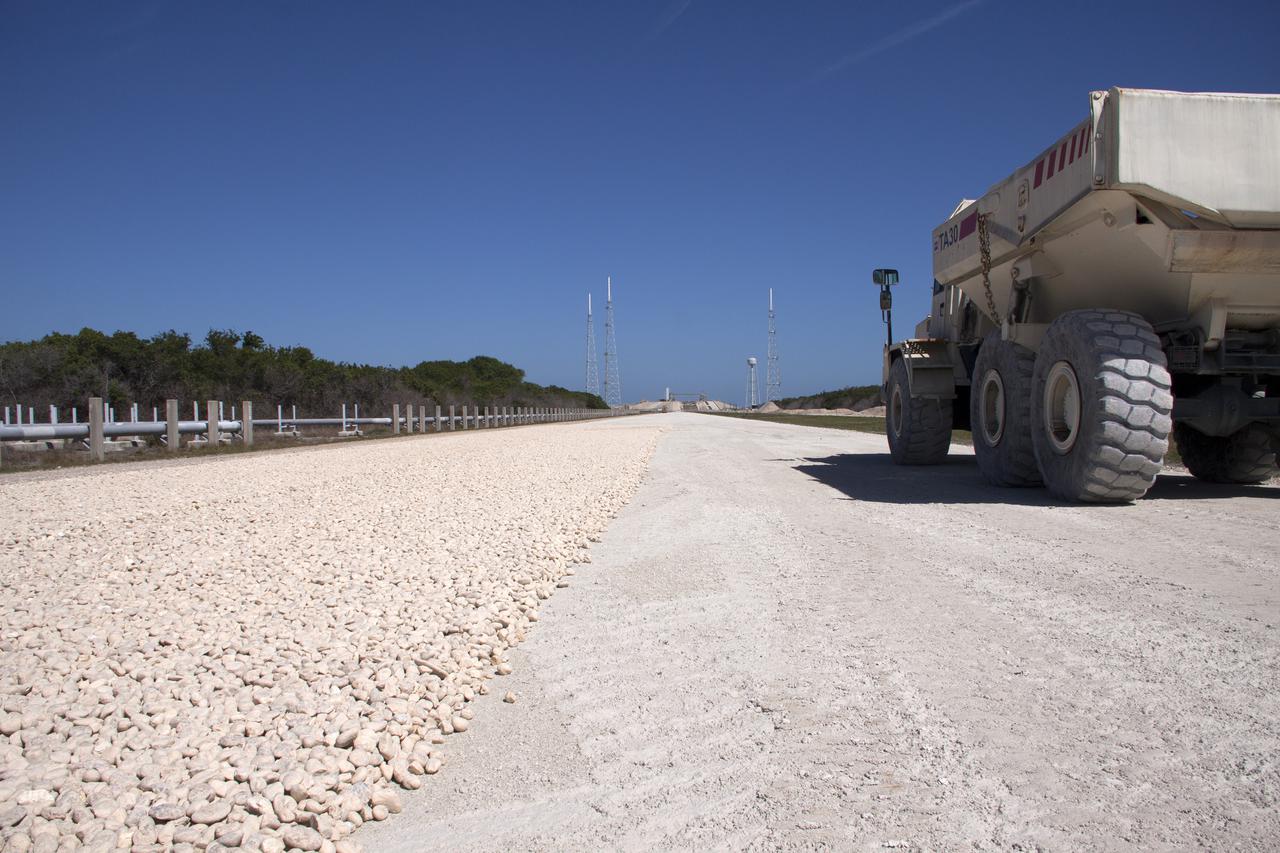
CAPE CANAVERAL, Fla. -- At NASA’s Kennedy Space Center in Florida, workers from Canaveral Construction in Mims, Fla., continue to re-grade the lime rock in sections of the crawlerway leading to Launch Pad 39B. The crawlerway is being upgraded to improve the foundation and prepare it to support the weight of NASA’s Space Launch System, or SLS, and mobile launcher on the crawler-transporter during rollout. Workers are removing the original Alabama river rock and restoring the layer of lime rock below to its original depth. Then new river rock will be added on top. The Ground Systems Development and Operations, or GSDO, Program office at Kennedy is leading the center’s transformation to safely handle a variety of rockets and spacecraft. For more information about GSDO, visit: http:__go.nasa.gov_groundsystems. Photo credit: NASA_Jim Grossmann
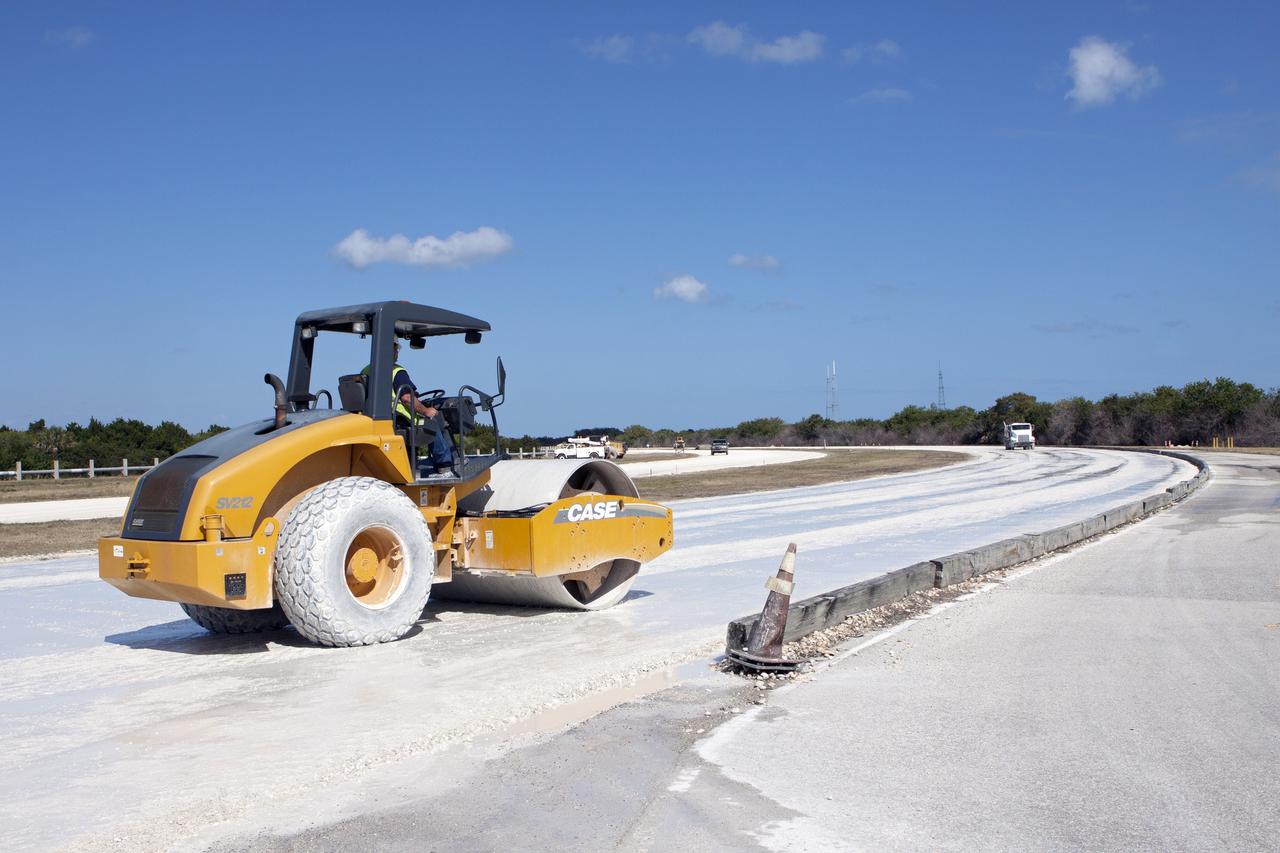
CAPE CANAVERAL, Fla. – A worker from Canaveral Construction in Mims, Fla., re-grades a section of the lime rock on the crawlerway near Launch Pad 39B at NASA’s Kennedy Space Center in Florida. The crawlerway is being upgraded to improve the foundation and prepare it to support the weight of NASA’s Space Launch System, or SLS, and mobile launcher on the crawler-transporter during rollout. Workers are removing the original Alabama river rock and restoring the layer of lime rock below to its original depth. Then new river rock will be added on top. The Ground Systems Development and Operations, or GSDO, Program office at Kennedy is leading the center’s transformation to safely handle a variety of rockets and spacecraft. For more information about GSDO, visit: http://go.nasa.gov/groundsystems. Photo credit: NASA/Jim Grossmann
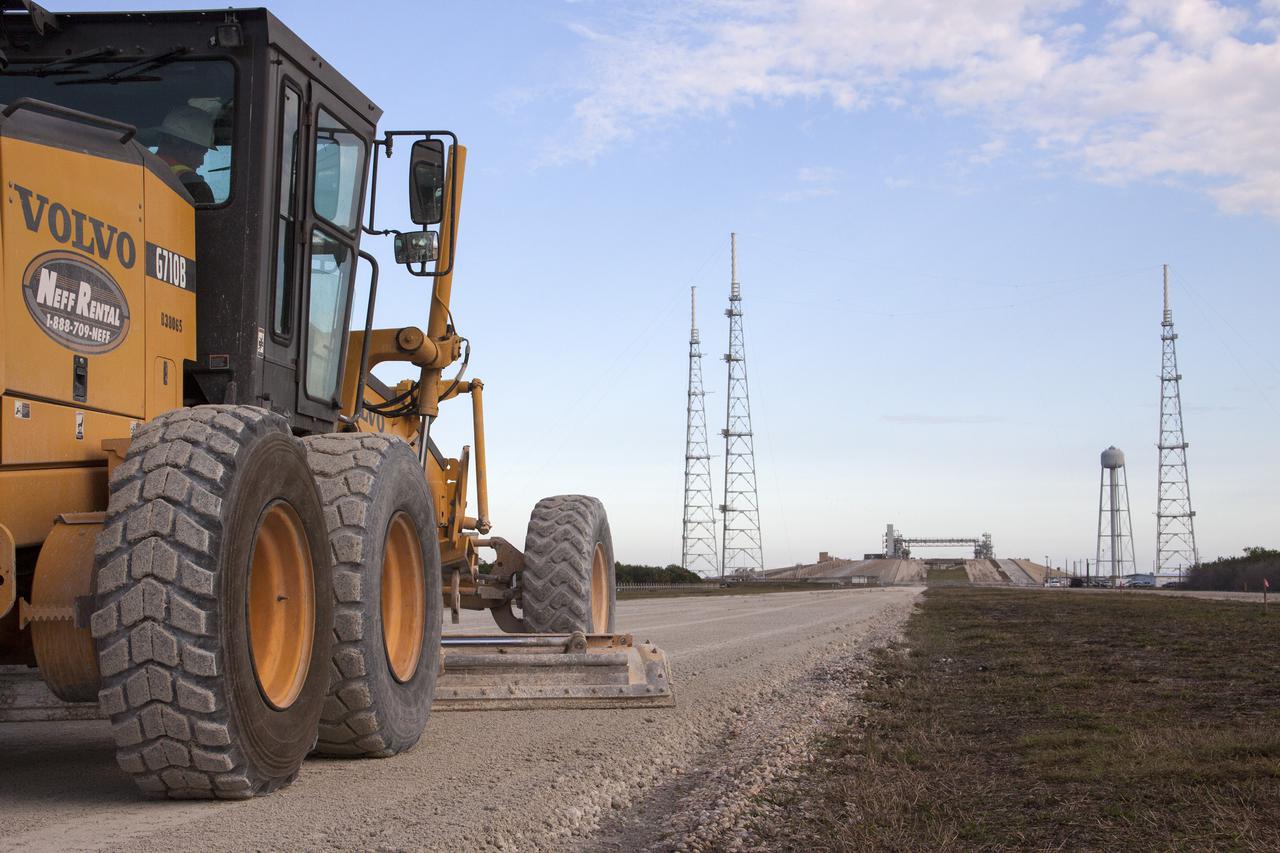
CAPE CANAVERAL, Fla. – A worker from Canaveral Construction in Mims, Fla., re-grades a section of the crawlerway near Launch Pad 39B at NASA’s Kennedy Space Center in Florida. The crawlerway is being upgraded to improve the foundation and prepare it to support the weight of NASA’s Space Launch System, or SLS, and mobile launcher on the crawler-transporter during rollout. Workers are removing the original Alabama river rock and restoring the layer of lime rock below to its original depth of three feet. Then new river rock will be added on top. The Ground Systems Development and Operations, or GSDO, Program office at Kennedy is leading the center’s transformation to safely handle a variety of rockets and spacecraft. For more information about GSDO, visit: http:__go.nasa.gov_groundsystems. Photo credit: NASA_Jim Grossmann
CAPE CANAVERAL, Fla. – A worker from Canaveral Construction in Mims, Fla., re-grades a section of the crawlerway near Launch Pad 39B at NASA’s Kennedy Space Center in Florida. The crawlerway is being upgraded to improve the foundation and prepare it to support the weight of NASA’s Space Launch System, or SLS, and mobile launcher on the crawler-transporter during rollout. Workers are removing the original Alabama river rock and restoring the layer of lime rock below to its original depth of three feet. Then new river rock will be added on top. The Ground Systems Development and Operations, or GSDO, Program office at Kennedy is leading the center’s transformation to safely handle a variety of rockets and spacecraft. For more information about GSDO, visit: http:__go.nasa.gov_groundsystems. Photo credit: NASA_Jim Grossmann
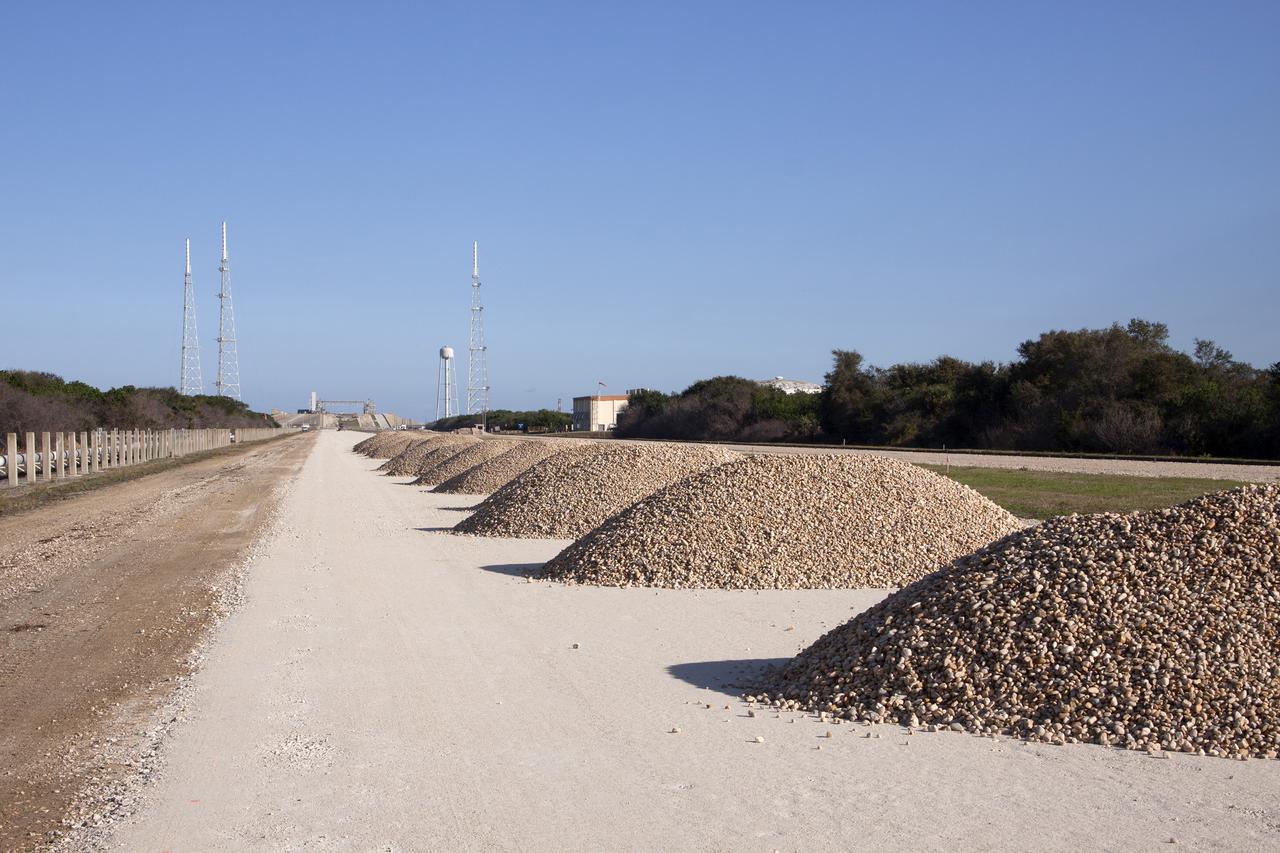
CAPE CANAVERAL, Fla. – Workers from Canaveral Construction in Mims, Fla., have removed the Alabama river rock from one side of the crawlerway near Launch Pad 39B at NASA’s Kennedy Space Center in Florida. The crawlerway is being upgraded to improve the foundation and prepare it to support the weight of NASA’s Space Launch System, or SLS, and mobile launcher on the crawler-transporter during rollout. Workers are removing the original Alabama river rock and restoring the layer of lime rock below to its original depth of three feet. Then new river rock will be added on top. The Ground Systems Development and Operations, or GSDO, Program office at Kennedy is leading the center’s transformation to safely handle a variety of rockets and spacecraft. For more information about GSDO, visit: http:__go.nasa.gov_groundsystems. Photo credit: NASA_Jim Grossmann
CAPE CANAVERAL, Fla. – A worker from Canaveral Construction in Mims, Fla., re-grades a section of the lime rock on the crawlerway near Launch Pad 39B at NASA’s Kennedy Space Center in Florida. The crawlerway is being upgraded to improve the foundation and prepare it to support the weight of NASA’s Space Launch System, or SLS, and mobile launcher on the crawler-transporter during rollout. Workers are removing the original Alabama river rock and restoring the layer of lime rock below to its original depth. Then new river rock will be added on top. The Ground Systems Development and Operations, or GSDO, Program office at Kennedy is leading the center’s transformation to safely handle a variety of rockets and spacecraft. For more information about GSDO, visit: http://go.nasa.gov/groundsystems. Photo credit: NASA/Jim Grossmann
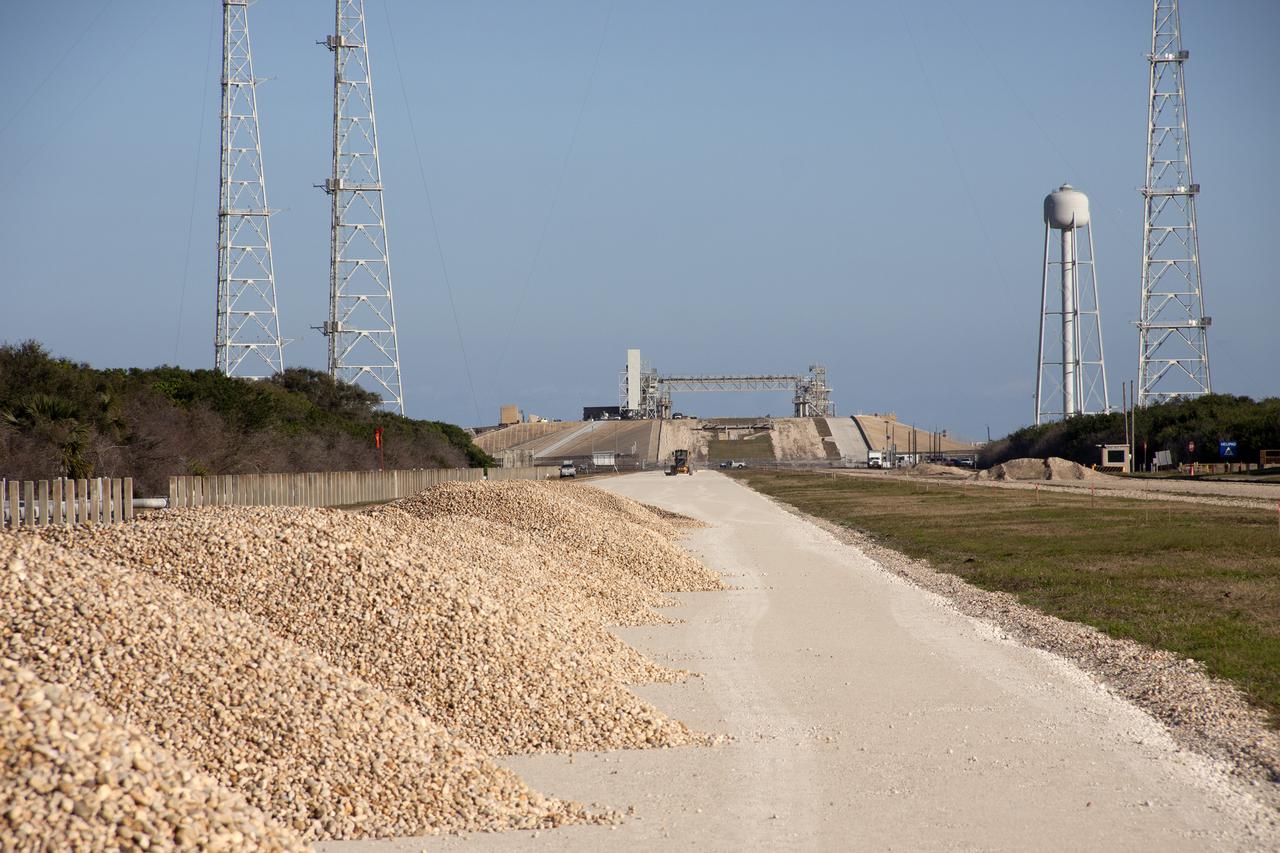
CAPE CANAVERAL, Fla. – Workers from Canaveral Construction in Mims, Fla., have removed the Alabama river rock from one side of the crawlerway near Launch Pad 39B at NASA’s Kennedy Space Center in Florida. The crawlerway is being upgraded to improve the foundation and prepare it to support the weight of NASA’s Space Launch System, or SLS, and mobile launcher on the crawler-transporter during rollout. Workers are removing the original Alabama river rock and restoring the layer of lime rock below to its original depth of three feet. Then new river rock will be added on top. The Ground Systems Development and Operations, or GSDO, Program office at Kennedy is leading the center’s transformation to safely handle a variety of rockets and spacecraft. For more information about GSDO, visit: http:__go.nasa.gov_groundsystems. Photo credit: NASA_Jim Grossmann
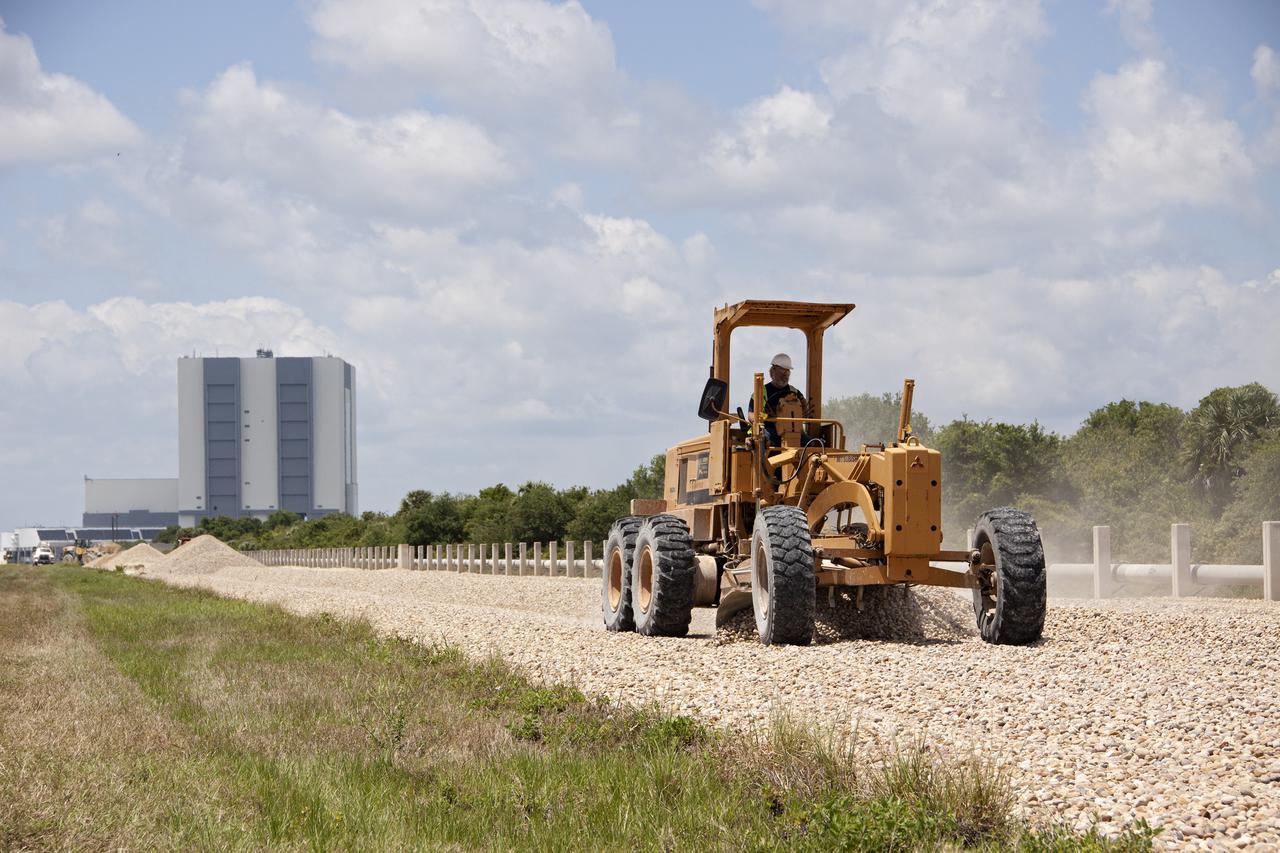
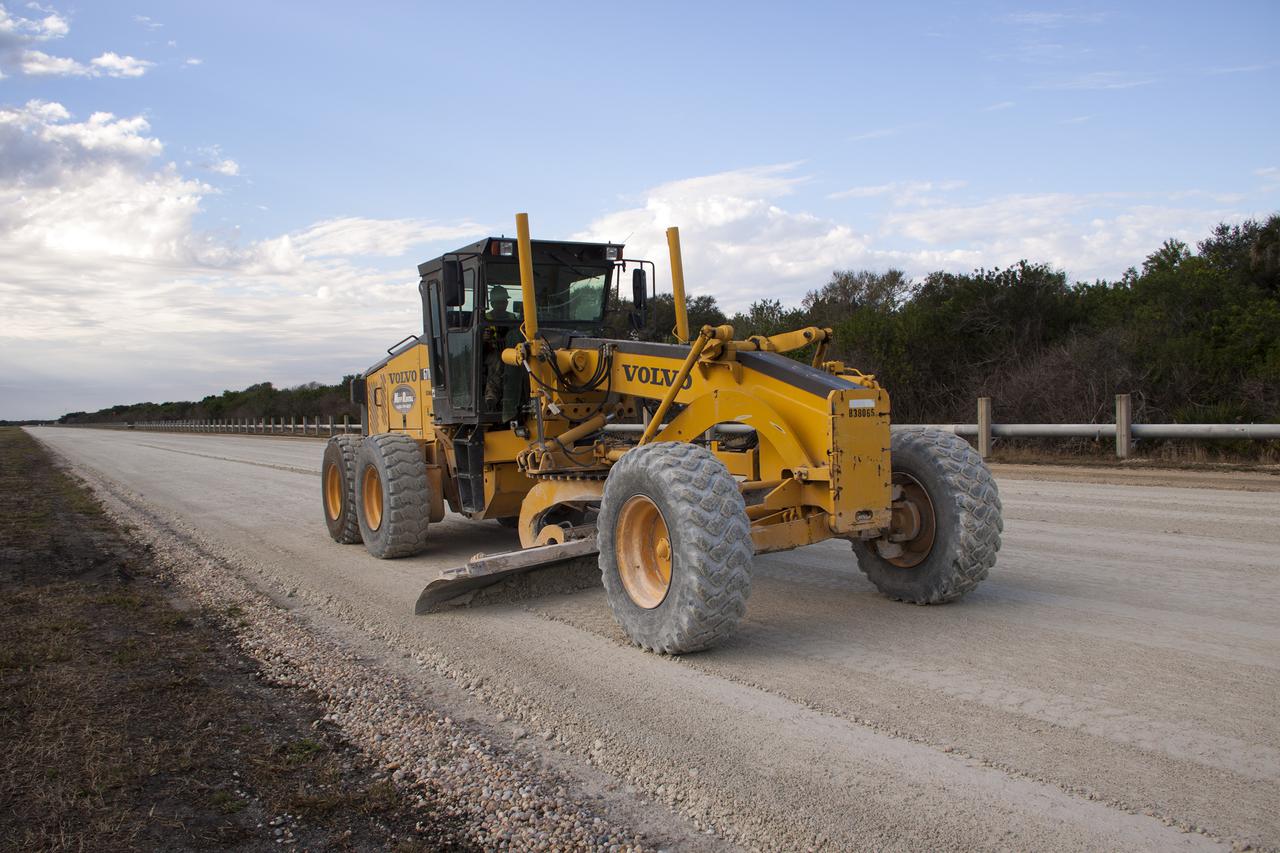
CAPE CANAVERAL, Fla. – At NASA’s Kennedy Space Center in Florida, a road-grader resurfaces a section of the crawlerway leading from the Vehicle Assembly Building VAB to the launch pads. The Ground Systems Development and Operations GSDO Program office at Kennedy is working to upgrade the two 40-foot-wide pathways the crawler-transporter will travel as it transports launch vehicles such as NASA's Space Launch System SLS rocket from the VAB to the launch pad. For more: http:__www.nasa.gov_exploration_systems_ground_crawlerway_upgrades.html Photo credit: NASA_Jim Grossman
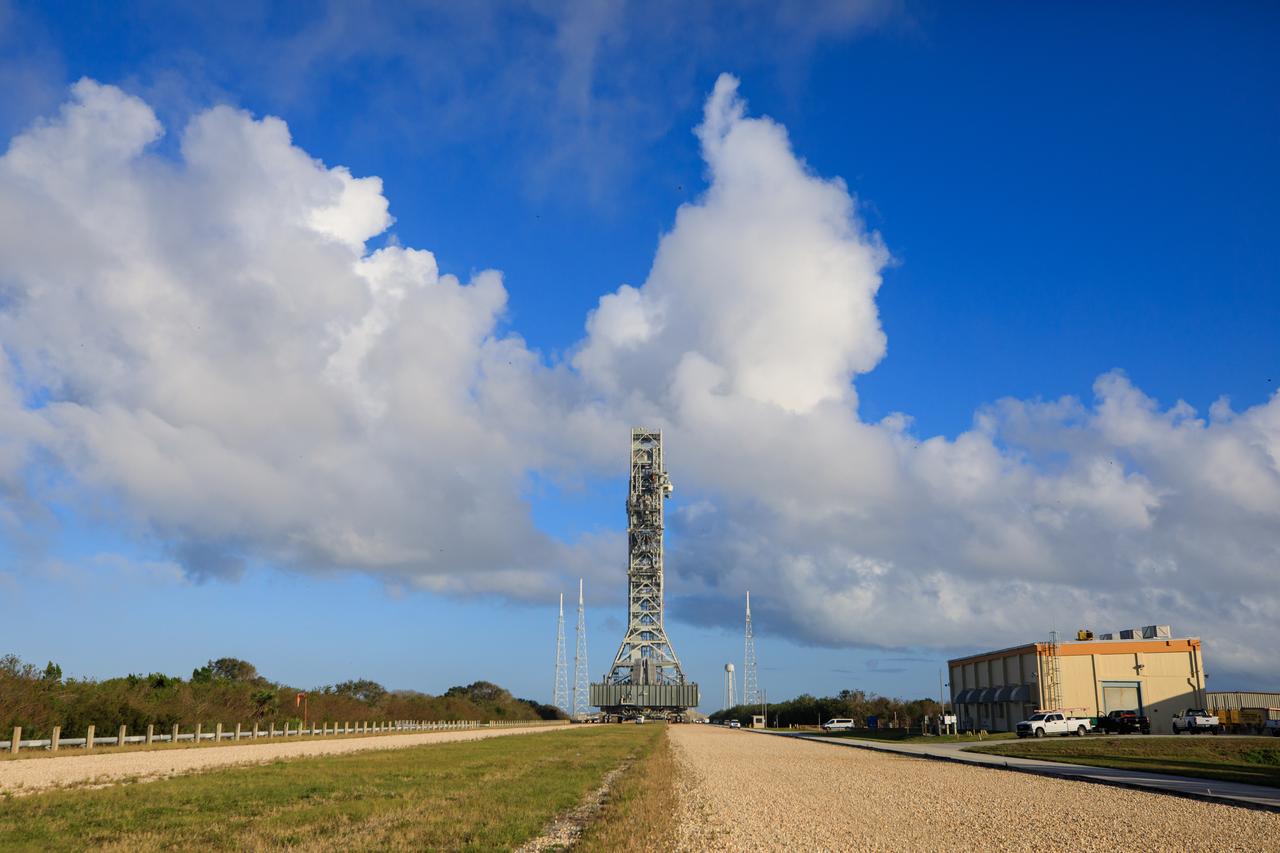
NASA’s mobile launcher, carried atop the crawler-transporter 2, left launch pad 39B at NASA’s Kennedy Space Center in Florida on Dec. 8, 2022, following the successful launch of the agency’s Space Launch System (SLS) rocket and Orion spacecraft on the Artemis I flight test on Nov. 16, 2022. The mobile launcher is scheduled to return to the Vehicle Assembly Building (VAB) on Dec. 9, 2022, and it will remain inside the VAB for several weeks as teams get it ready for the Artemis II crewed mission. Following its stay in the VAB, it will go to the mobile launcher park site location at Kennedy where it will undergo emergency egress modifications and testing to support future Artemis missions.
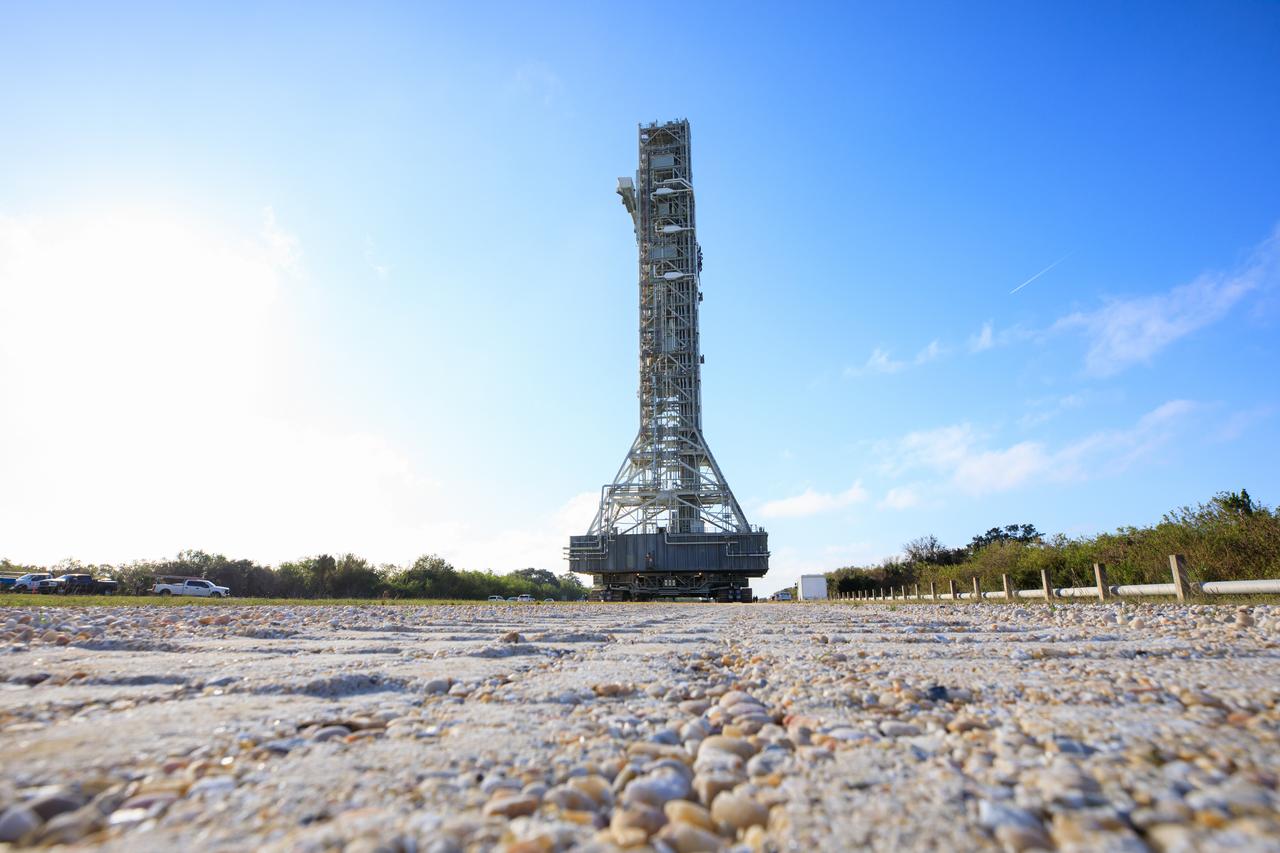
NASA’s mobile launcher, carried atop the crawler-transporter 2, left launch pad 39B at NASA’s Kennedy Space Center in Florida on Dec. 8, 2022, following the successful launch of the agency’s Space Launch System (SLS) rocket and Orion spacecraft on the Artemis I flight test on Nov. 16, 2022. The mobile launcher is scheduled to return to the Vehicle Assembly Building (VAB) on Dec. 9, 2022, and it will remain inside the VAB for several weeks as teams get it ready for the Artemis II crewed mission. Following its stay in the VAB, it will go to the mobile launcher park site location at Kennedy where it will undergo emergency egress modifications and testing to support future Artemis missions.
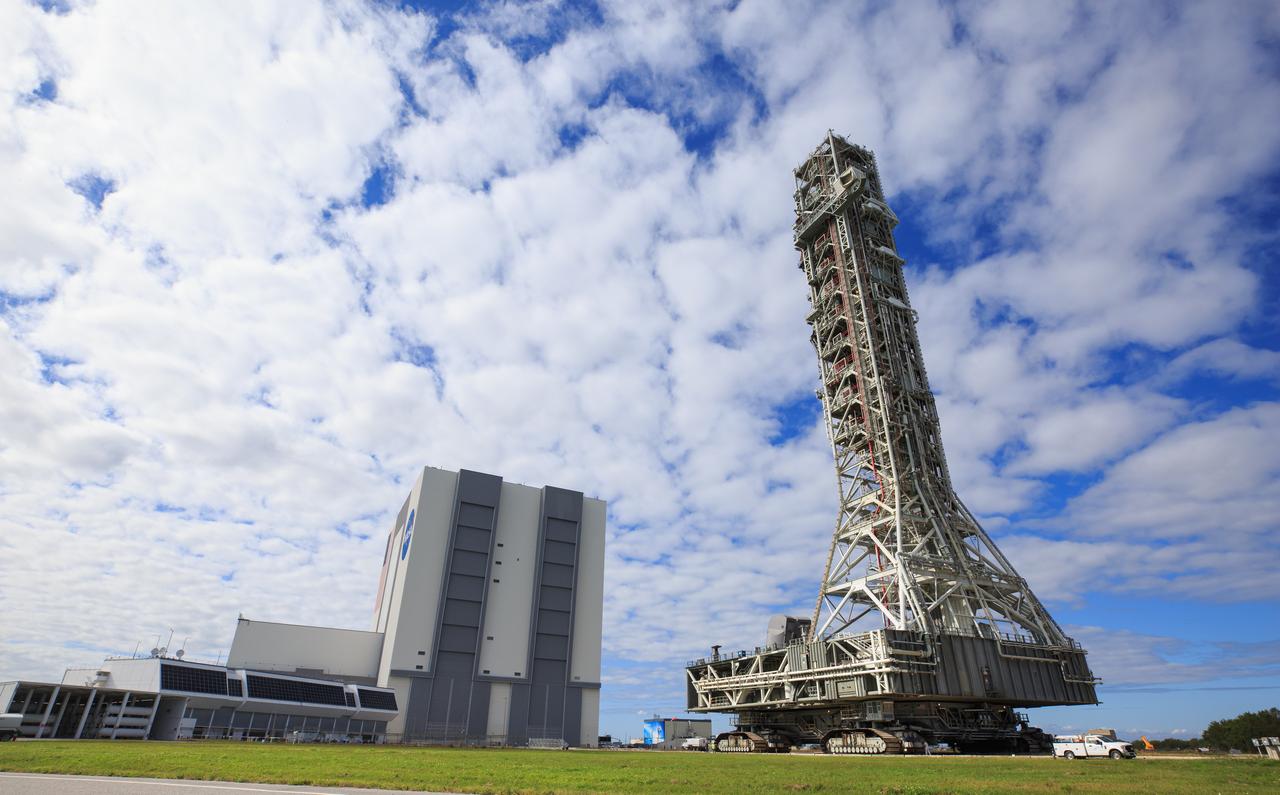
NASA’s mobile launcher, carried atop the crawler-transporter 2, left launch pad 39B at NASA’s Kennedy Space Center in Florida on Dec. 8, 2022, following the successful launch of the agency’s Space Launch System (SLS) rocket and Orion spacecraft on the Artemis I flight test on Nov. 16, 2022. The mobile launcher is scheduled to return to the Vehicle Assembly Building (VAB) on Dec. 9, 2022, and it will remain inside the VAB for several weeks as teams get it ready for the Artemis II crewed mission. Following its stay in the VAB, it will go to the mobile launcher park site location at Kennedy where it will undergo emergency egress modifications and testing to support future Artemis missions.
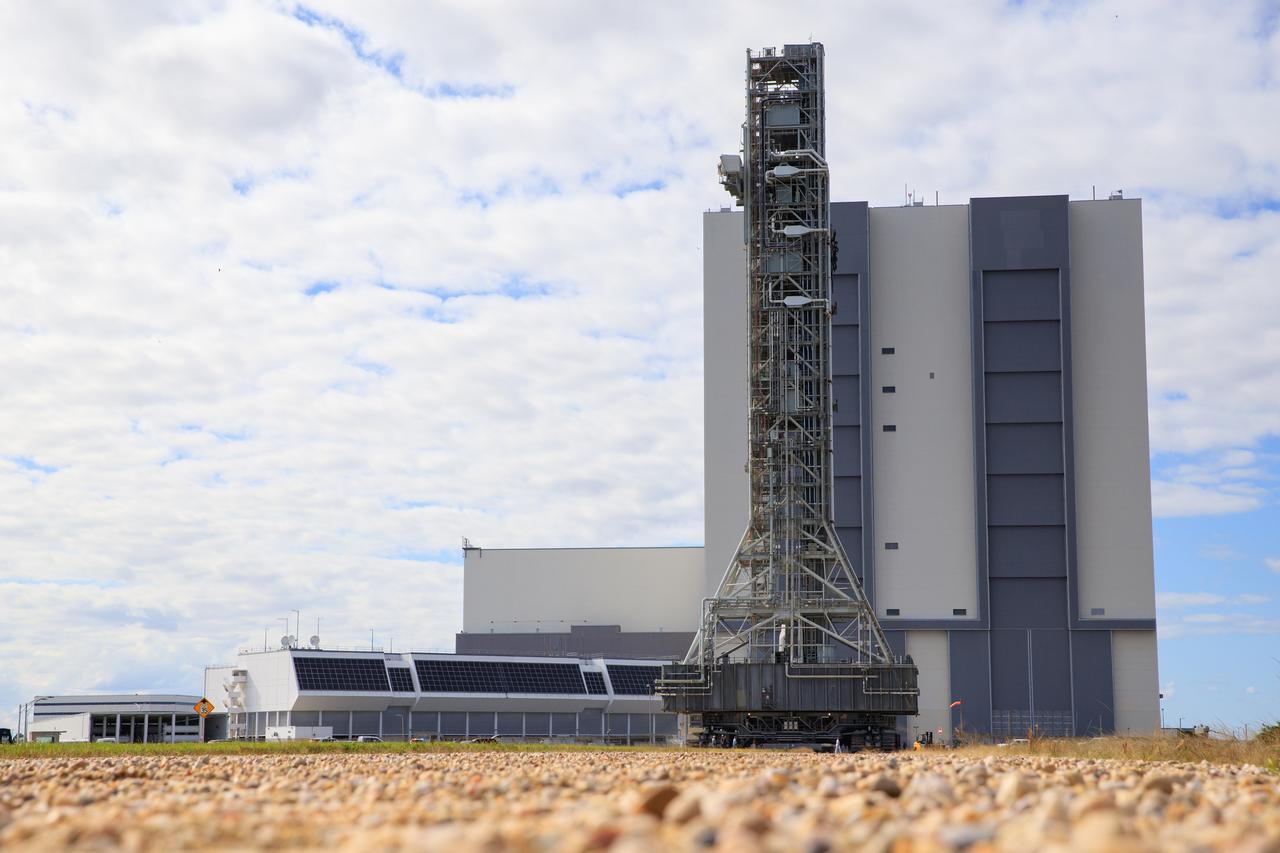
NASA’s mobile launcher, carried atop the crawler-transporter 2, left launch pad 39B at NASA’s Kennedy Space Center in Florida on Dec. 8, 2022, following the successful launch of the agency’s Space Launch System (SLS) rocket and Orion spacecraft on the Artemis I flight test on Nov. 16, 2022. The mobile launcher is scheduled to return to the Vehicle Assembly Building (VAB) on Dec. 9, 2022, and it will remain inside the VAB for several weeks as teams get it ready for the Artemis II crewed mission. Following its stay in the VAB, it will go to the mobile launcher park site location at Kennedy where it will undergo emergency egress modifications and testing to support future Artemis missions.
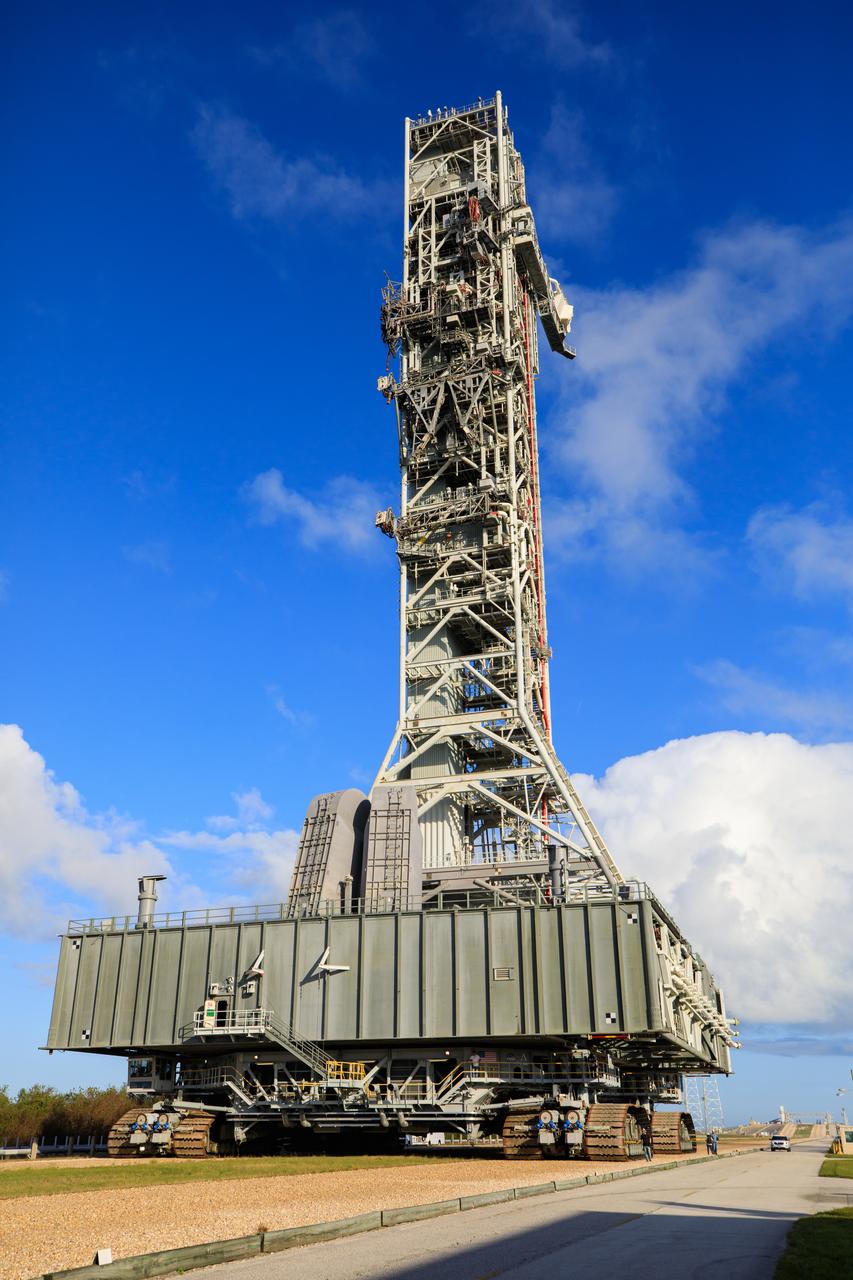
NASA’s mobile launcher, carried atop the crawler-transporter 2, left launch pad 39B at NASA’s Kennedy Space Center in Florida on Dec. 8, 2022, following the successful launch of the agency’s Space Launch System (SLS) rocket and Orion spacecraft on the Artemis I flight test on Nov. 16, 2022. The mobile launcher is scheduled to return to the Vehicle Assembly Building (VAB) on Dec. 9, 2022, and it will remain inside the VAB for several weeks as teams get it ready for the Artemis II crewed mission. Following its stay in the VAB, it will go to the mobile launcher park site location at Kennedy where it will undergo emergency egress modifications and testing to support future Artemis missions.
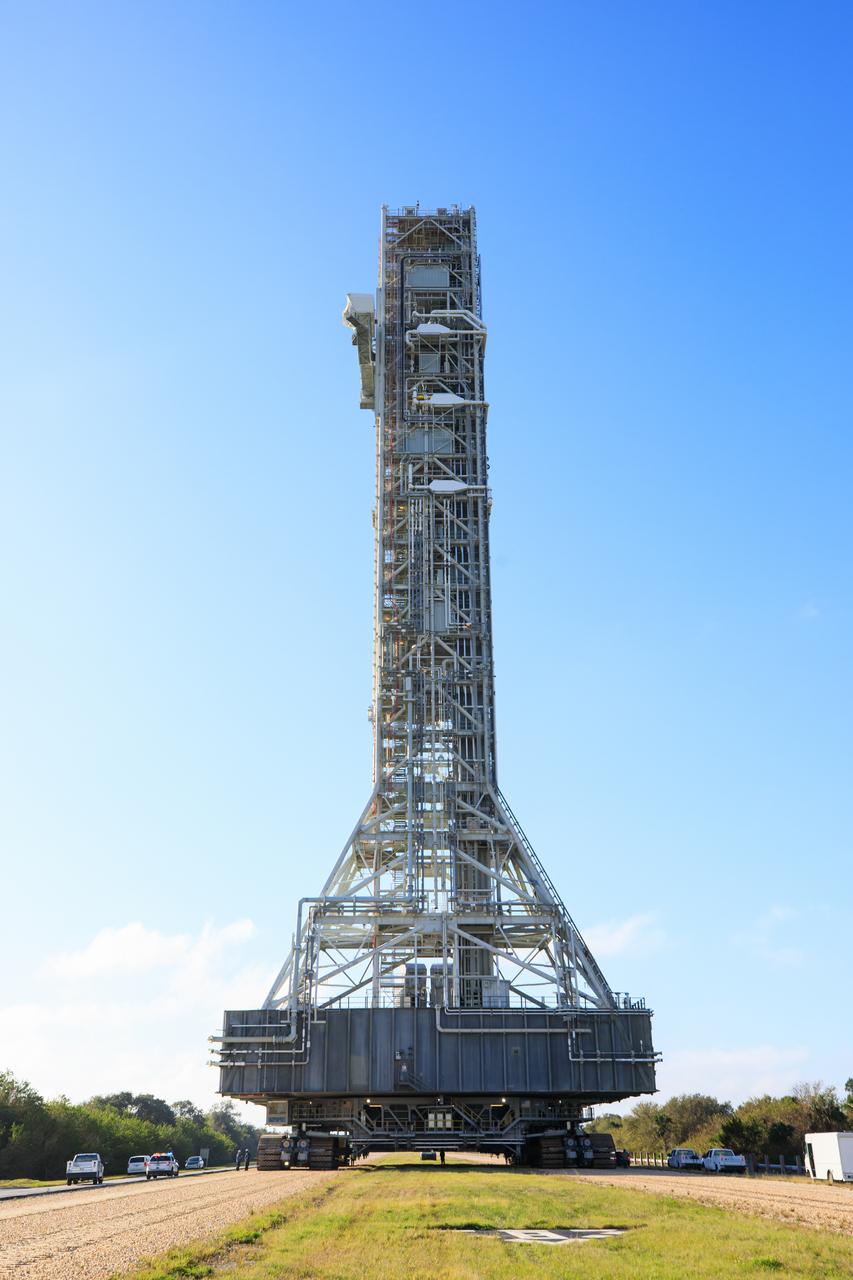
NASA’s mobile launcher, carried atop the crawler-transporter 2, left launch pad 39B at NASA’s Kennedy Space Center in Florida on Dec. 8, 2022, following the successful launch of the agency’s Space Launch System (SLS) rocket and Orion spacecraft on the Artemis I flight test on Nov. 16, 2022. The mobile launcher is scheduled to return to the Vehicle Assembly Building (VAB) on Dec. 9, 2022, and it will remain inside the VAB for several weeks as teams get it ready for the Artemis II crewed mission. Following its stay in the VAB, it will go to the mobile launcher park site location at Kennedy where it will undergo emergency egress modifications and testing to support future Artemis missions.
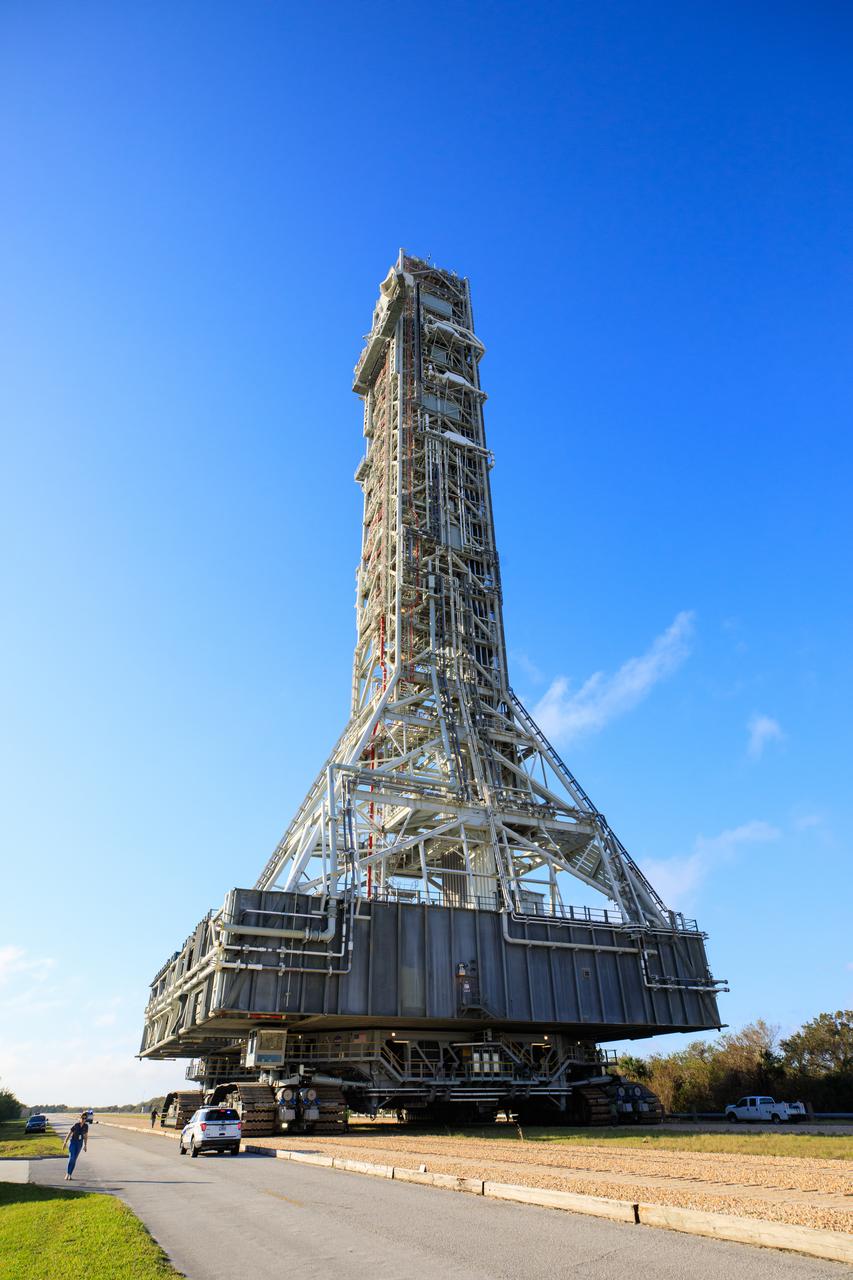
NASA’s mobile launcher, carried atop the crawler-transporter 2, left launch pad 39B at NASA’s Kennedy Space Center in Florida on Dec. 8, 2022, following the successful launch of the agency’s Space Launch System (SLS) rocket and Orion spacecraft on the Artemis I flight test on Nov. 16, 2022. The mobile launcher is scheduled to return to the Vehicle Assembly Building (VAB) on Dec. 9, 2022, and it will remain inside the VAB for several weeks as teams get it ready for the Artemis II crewed mission. Following its stay in the VAB, it will go to the mobile launcher park site location at Kennedy where it will undergo emergency egress modifications and testing to support future Artemis missions.
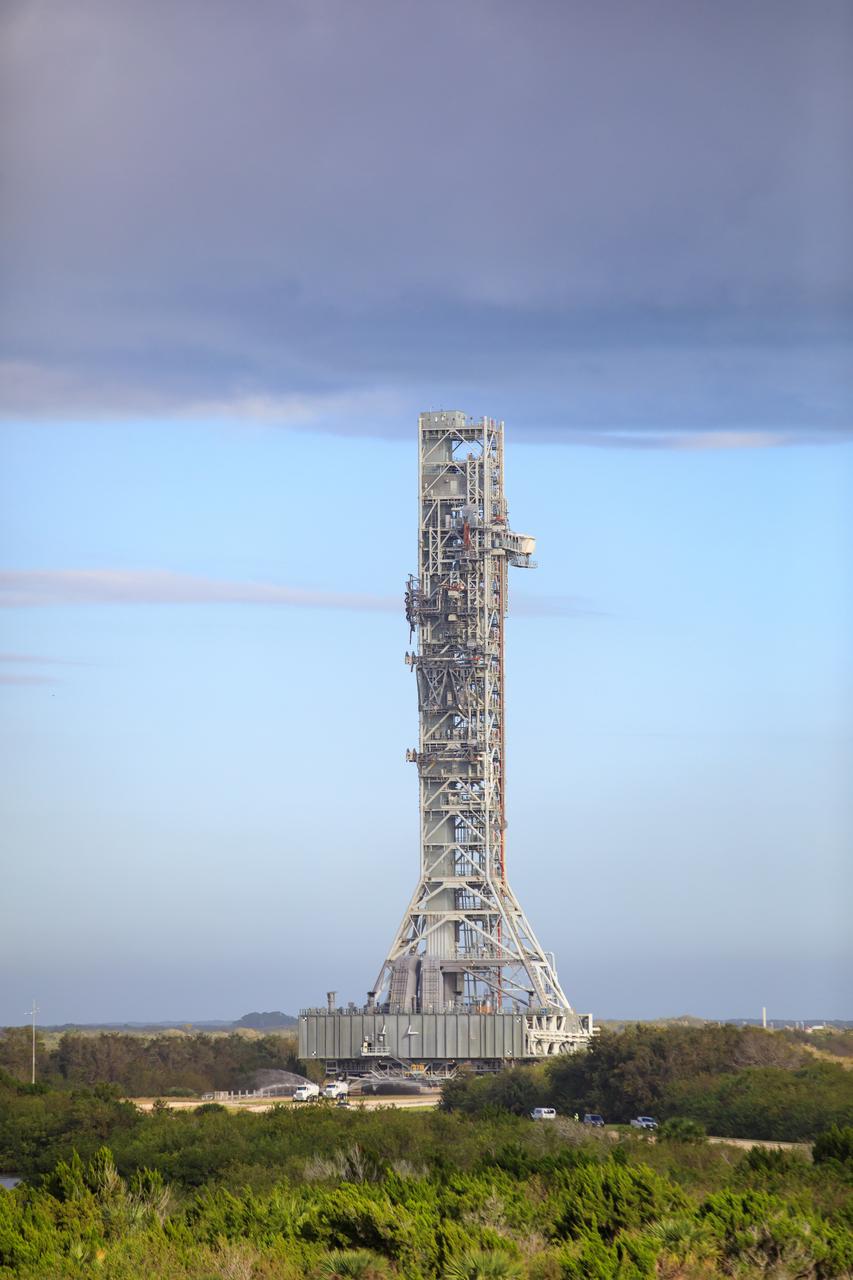
NASA’s mobile launcher, carried atop the crawler-transporter 2, left launch pad 39B at NASA’s Kennedy Space Center in Florida on Dec. 8, 2022, following the successful launch of the agency’s Space Launch System (SLS) rocket and Orion spacecraft on the Artemis I flight test on Nov. 16, 2022. The mobile launcher is scheduled to return to the Vehicle Assembly Building (VAB) on Dec. 9, 2022, and it will remain inside the VAB for several weeks as teams get it ready for the Artemis II crewed mission. Following its stay in the VAB, it will go to the mobile launcher park site location at Kennedy where it will undergo emergency egress modifications and testing to support future Artemis missions.
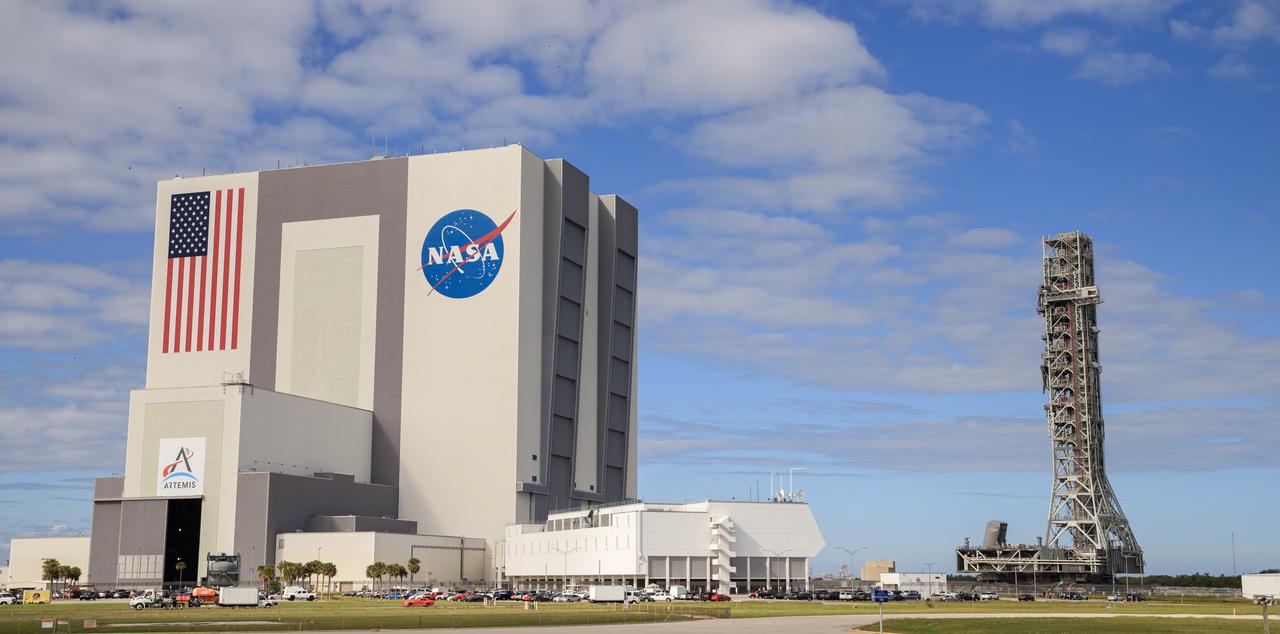
NASA’s mobile launcher, carried atop the crawler-transporter 2, left launch pad 39B at NASA’s Kennedy Space Center in Florida on Dec. 8, 2022, following the successful launch of the agency’s Space Launch System (SLS) rocket and Orion spacecraft on the Artemis I flight test on Nov. 16, 2022. The mobile launcher is scheduled to return to the Vehicle Assembly Building (VAB) on Dec. 9, 2022, and it will remain inside the VAB for several weeks as teams get it ready for the Artemis II crewed mission. Following its stay in the VAB, it will go to the mobile launcher park site location at Kennedy where it will undergo emergency egress modifications and testing to support future Artemis missions.
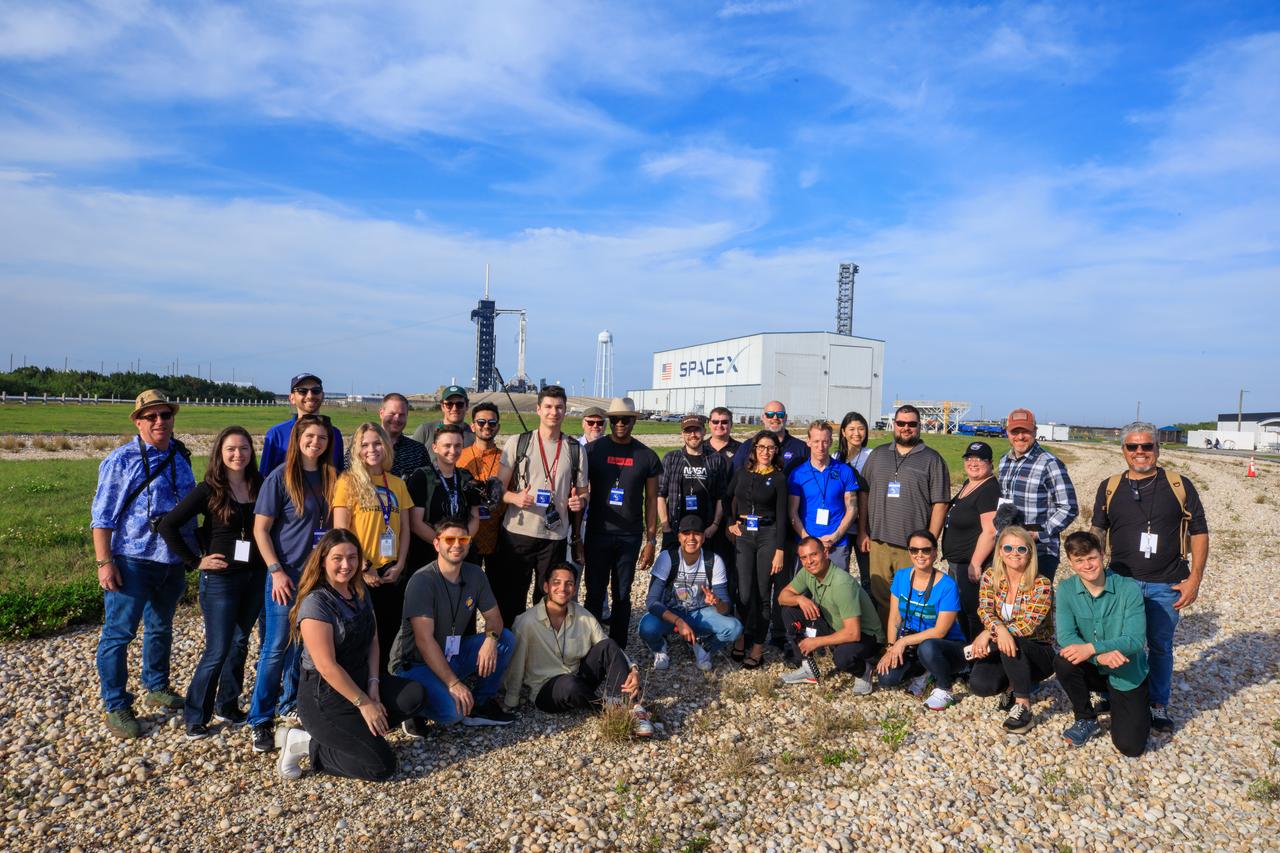
Digital content creators pause for a group photo on the crawlerway leading to Launch Complex 39A at NASA’s Kennedy Space Center in Florida during a NASA Social event on Feb. 24, 2023 for the SpaceX Crew-6 launch. The SpaceX Falcon 9 rocket, carrying the Dragon spacecraft Endeavour for NASA’s Crew-6 mission to the International Space Station lifted off at 12:34 a.m. EST on March 2, 2023, carrying NASA astronauts Stephen Bowen, spacecraft commander, and Warren Hoburg, pilot, along with mission specialists Sultan Alneyadi, UAE (United Arab Emirates) astronaut, and Andrey Fedyaev, Roscosmos cosmonaut. Crew-6 was the sixth crew rotation mission with SpaceX to the station, and the seventh flight of Dragon with people as part of the agency’s Commercial Crew Program.
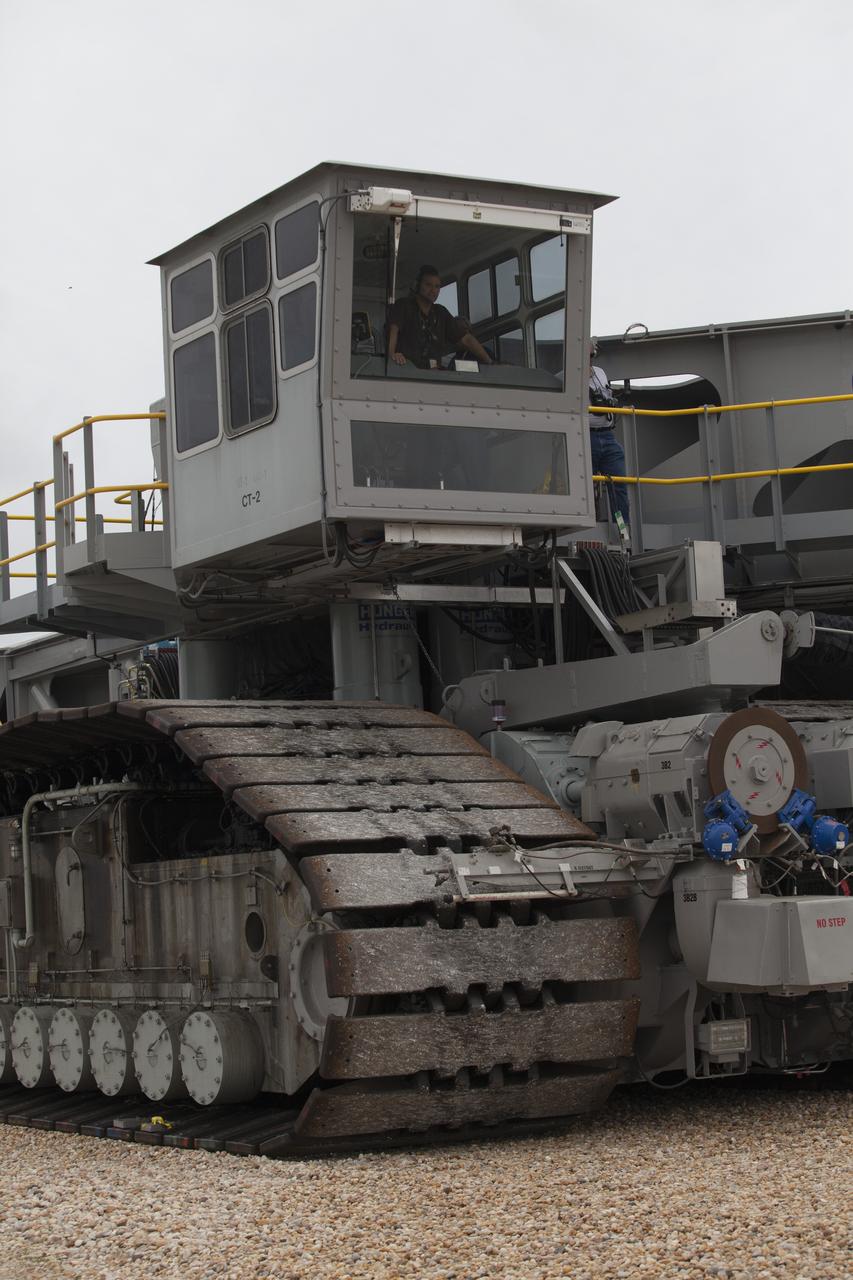
NASA’s upgraded crawler-transporter 2 (CT-2) returns to the Vehicle Assembly Building (VAB) from its trek to Launch Pad 39B at the agency’s Kennedy Space Center in Florida. CT-2 was driven along the crawlerway and onto Pad 39B to test recently completed upgrades and modifications for NASA’s journey to Mars. The Ground Systems Development and Operations Program at Kennedy oversaw upgrades to the crawler in the VAB. The crawler will carry the mobile launcher with Orion atop the Space Launch System rocket to Pad 39B for Exploration Mission 1.
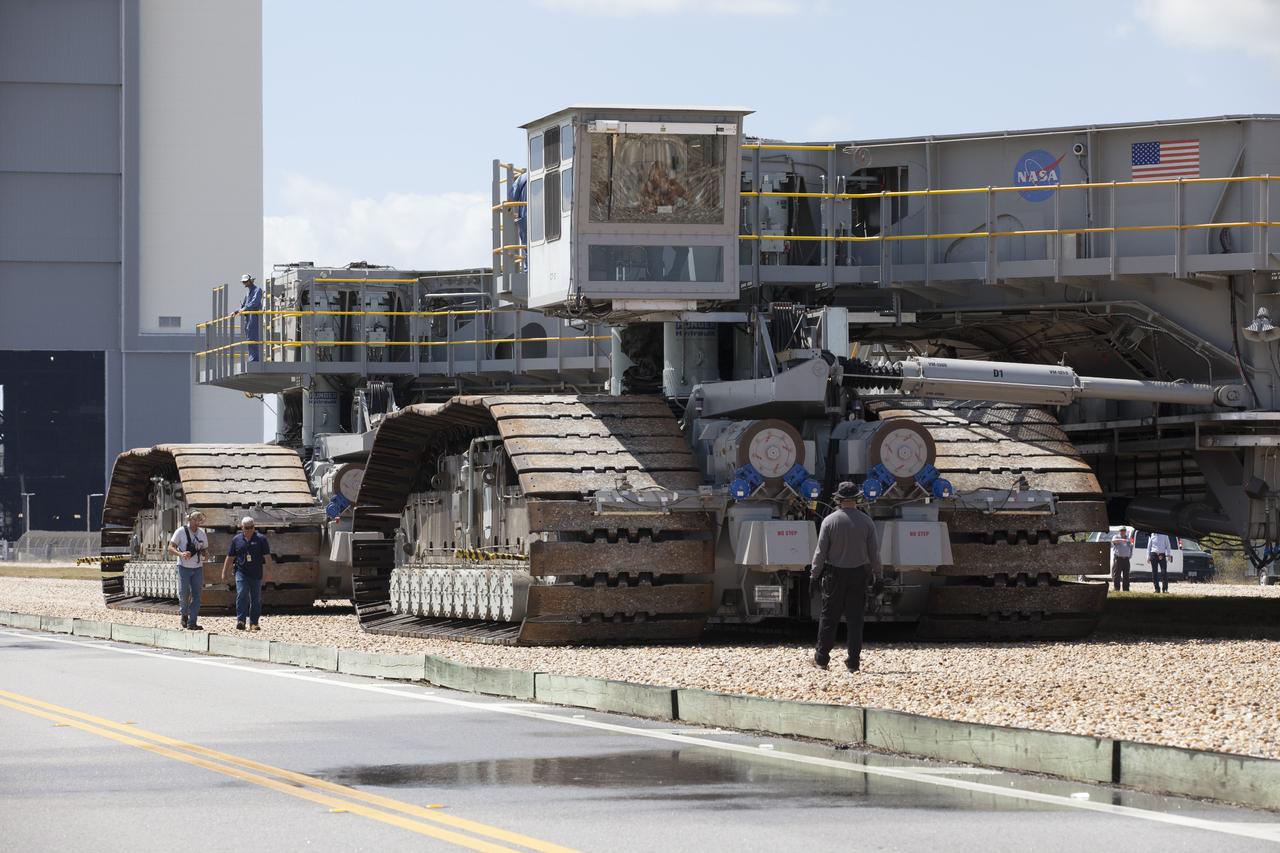
Technicians walk alongside NASA’s upgraded crawler-transporter 2 (CT-2) as it continues the trek along the crawlerway from the Vehicle Assembly Building (VAB) at the agency’s Kennedy Space Center in Florida to Launch Pad 39B to test recently completed upgrades and modifications for NASA’s journey to Mars. The Ground Systems Development and Operations Program at Kennedy oversaw upgrades to the crawler in the VAB. The crawler will carry the mobile launcher with Orion atop the Space Launch System rocket to Pad 39B for Exploration Mission-1, scheduled for 2018.
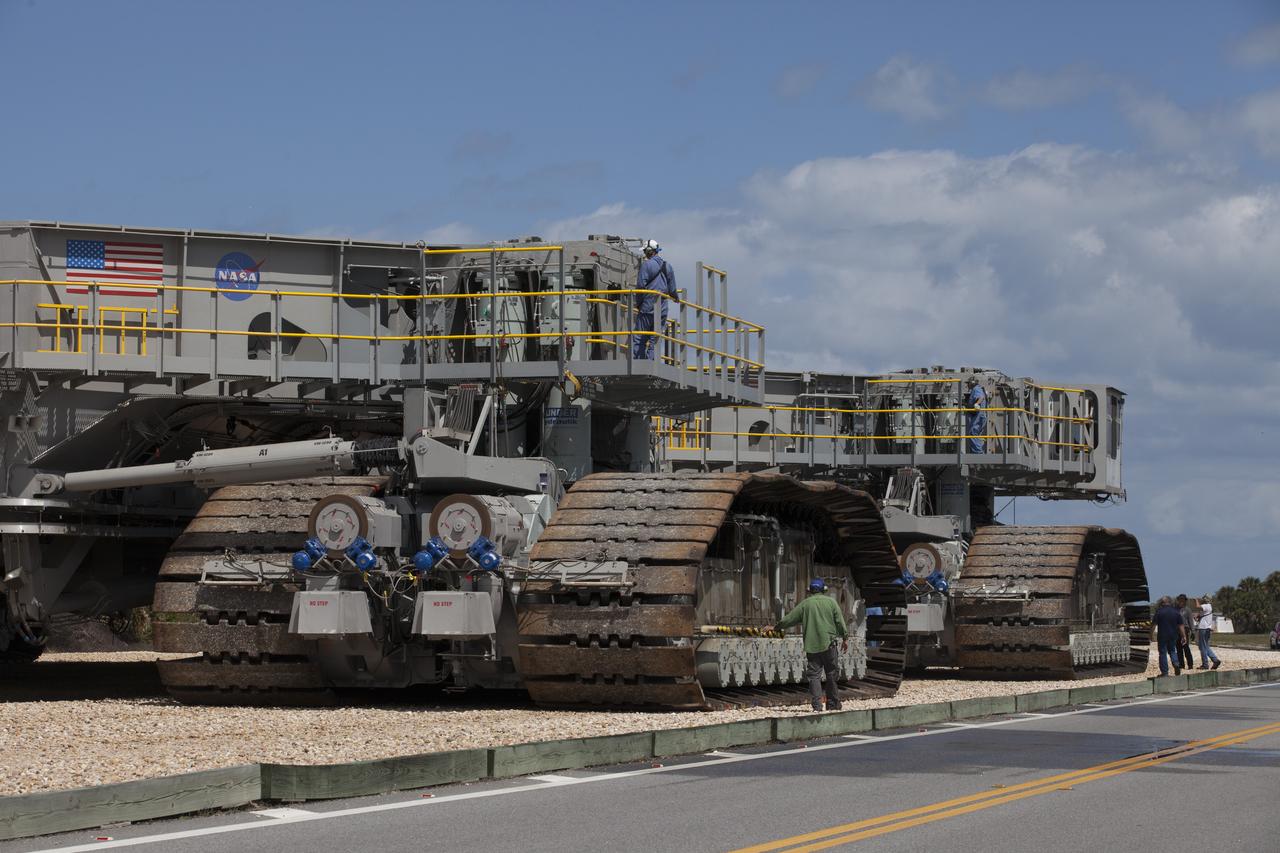
Technicians walk alongside NASA’s upgraded crawler-transporter 2 (CT-2) as it continues the trek on the crawlerway from the Vehicle Assembly Building (VAB) at the agency’s Kennedy Space Center in Florida to Launch Pad 39B to test recently completed upgrades and modifications for NASA’s journey to Mars. The Ground Systems Development and Operations Program at Kennedy oversaw upgrades to the crawler in the VAB. The crawler will carry the mobile launcher with Orion atop the Space Launch System rocket to Pad 39B for Exploration Mission-1, scheduled for 2018.
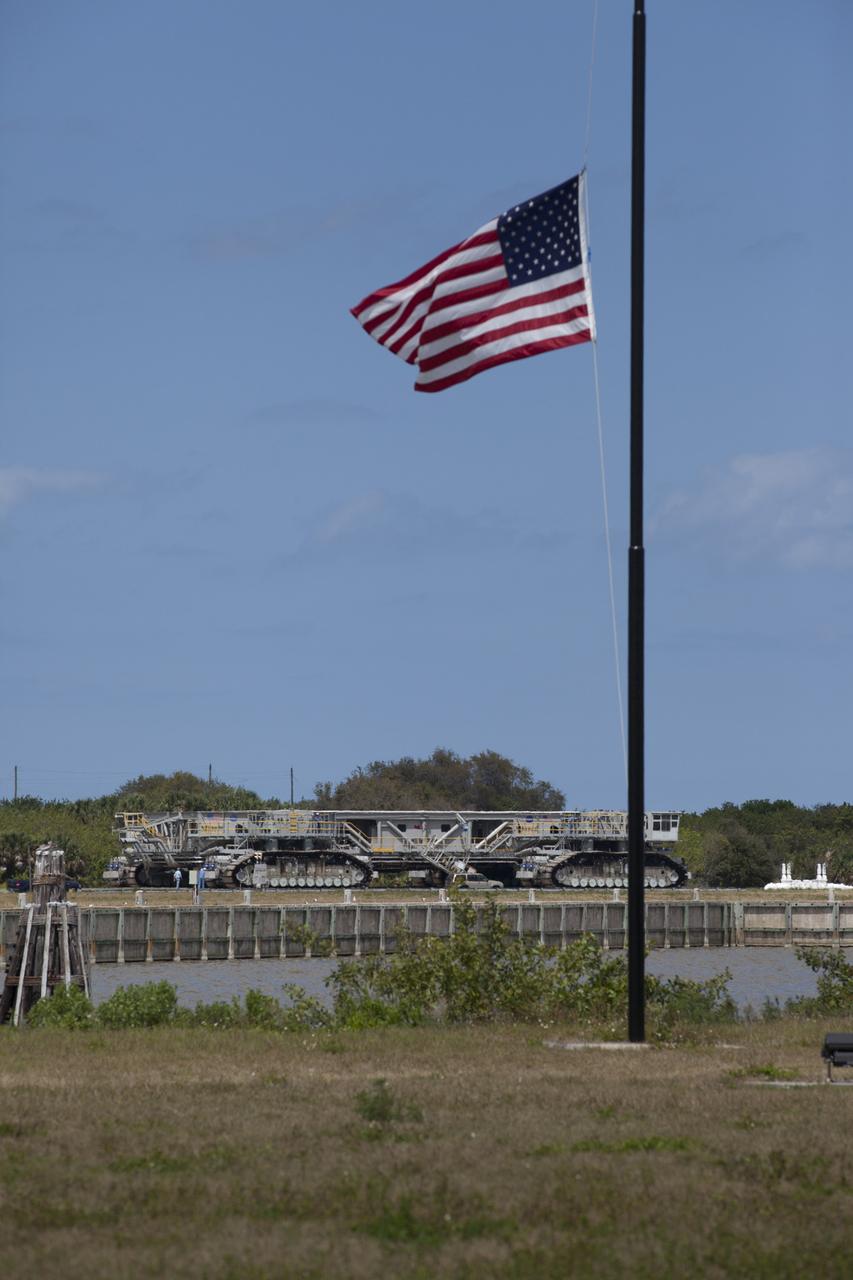
An American flag flutters in the breeze as NASA’s upgraded crawler-transporter 2 (CT-2) travels along the crawlerway during its trek to Launch Pad 39B at the agency’s Kennedy Space Center in Florida, to test recently completed upgrades and modifications for NASA’s journey to Mars. The Ground Systems Development and Operations Program at Kennedy oversaw upgrades to the crawler in the Vehicle Assembly Building. The crawler will carry the mobile launcher with Orion atop the Space Launch System rocket to Pad 39B for Exploration Mission-1, scheduled for 2018.
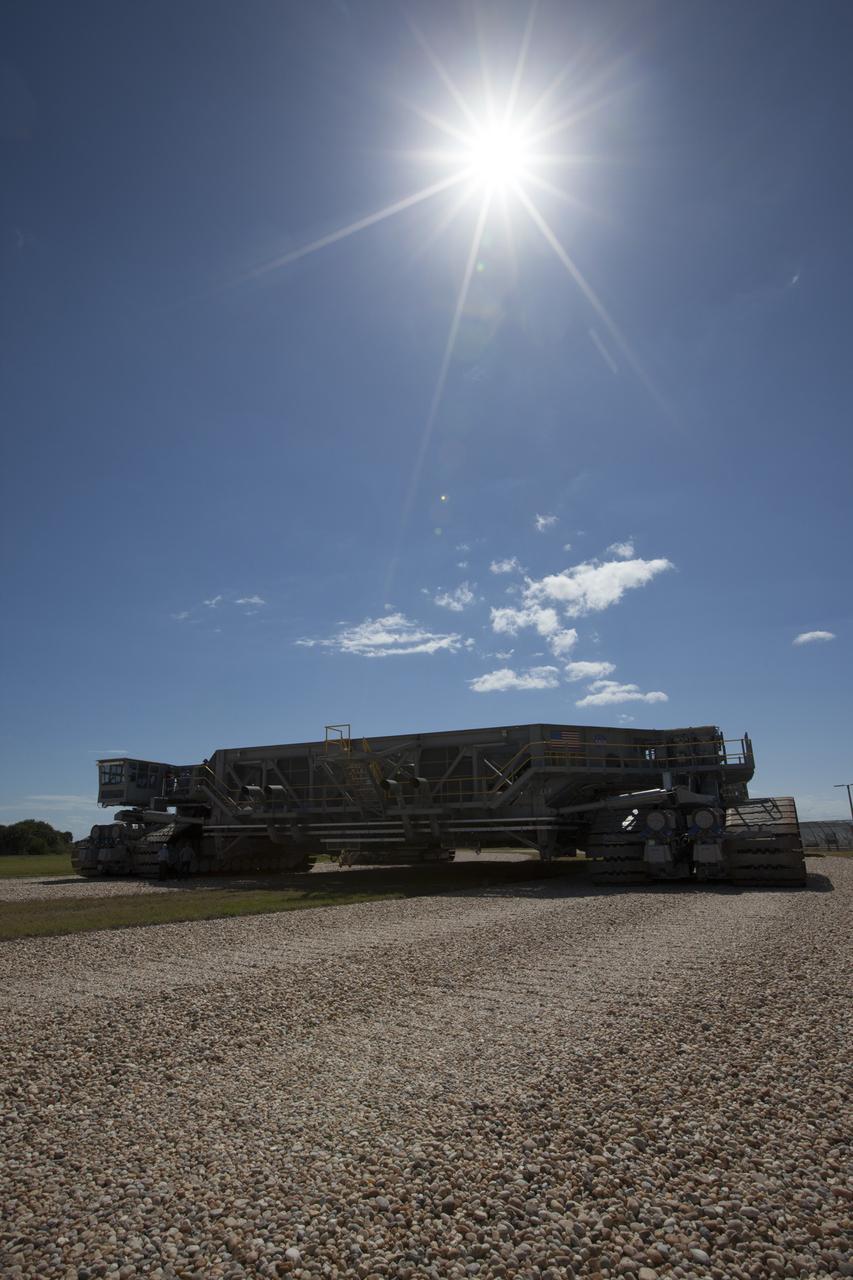
NASA’s upgraded crawler-transporter 2 (CT-2) travels along the crawlerway during its trek to Launch Pad 39B at the agency’s Kennedy Space Center in Florida, to test recently completed upgrades and modifications for NASA’s journey to Mars. The Ground Systems Development and Operations Program at Kennedy oversaw upgrades to the crawler in the Vehicle Assembly Building. The crawler will carry the mobile launcher with Orion atop the Space Launch System rocket to Pad 39B for Exploration Mission-1, scheduled for 2018.
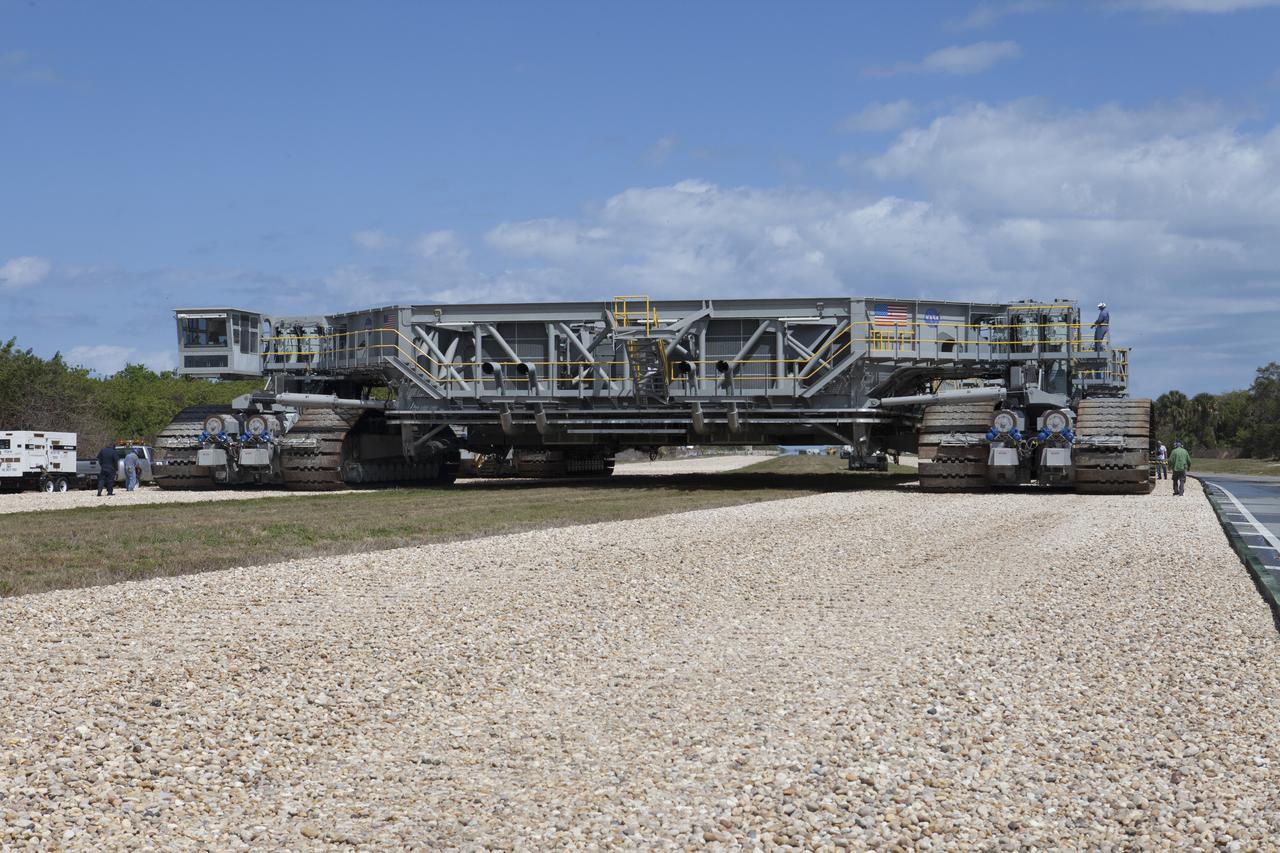
Technicians walk alongside NASA’s upgraded crawler-transporter 2 (CT-2) as it continues the trek on the crawlerway from the Vehicle Assembly Building (VAB) at the agency’s Kennedy Space Center in Florida to Launch Pad 39B to test recently completed upgrades and modifications for NASA’s journey to Mars. The Ground Systems Development and Operations Program at Kennedy oversaw upgrades to the crawler in the VAB. The crawler will carry the mobile launcher with Orion atop the Space Launch System rocket to Pad 39B for Exploration Mission-1, scheduled for 2018.

A large crawler crane travels along one of the crawlerway tracks on its way to Launch Pad 39B. The crane with its 70-foot boom will be used to construct a new lightning protection system for the Constellation Program and Ares/Orion launches. Pad B will be the site of the first Ares vehicle launch, including Ares I-X which is scheduled for April 2009.
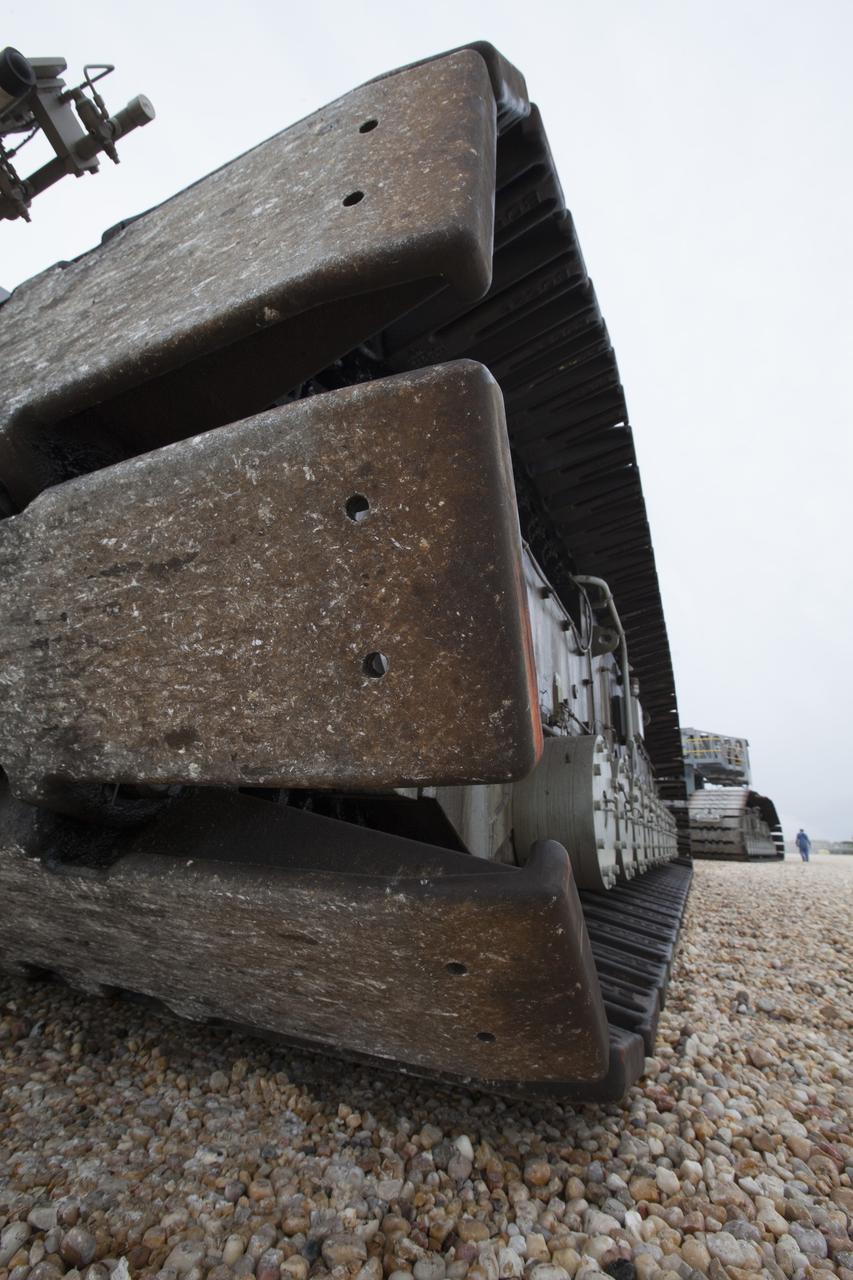
A close-up view of a section of cleats on one of the tracks that help propel NASA’s upgraded crawler-transporter 2 (CT-2) as the giant vehicle moves along the crawlerway toward the Vehicle Assembly Building (VAB) at NASA Kennedy Space Center in Florida. CT-2 was driven to Launch Pad 39B to test recently completed upgrades and modifications to ensure the vehicle will be ready to support NASA’s journey to Mars. The Ground Systems Development and Operations Program at Kennedy oversaw upgrades to the crawler in the VAB. The crawler will carry the mobile launcher with Orion atop the Space Launch System rocket to Pad 39B for Exploration Mission 1.
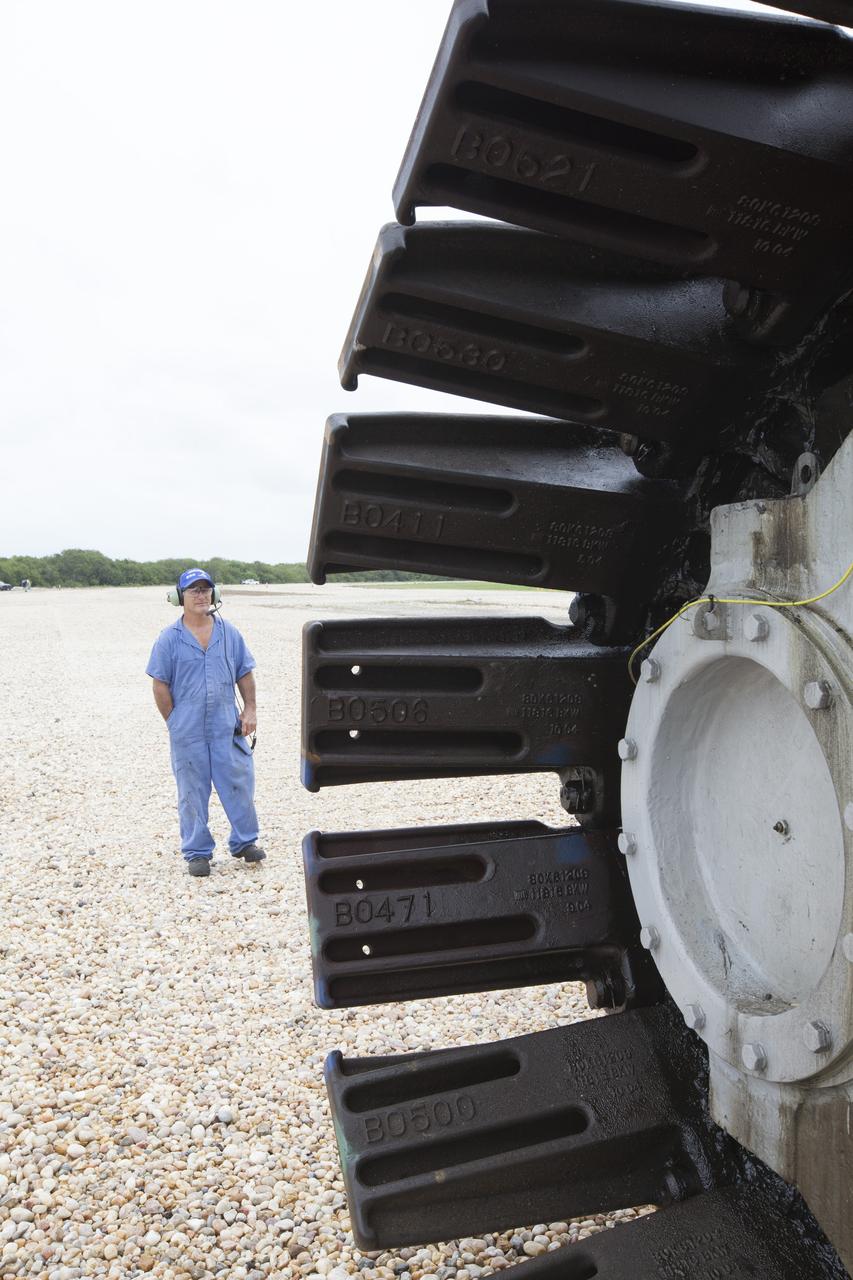
A technician watches the motion of the giant tracks on NASA’s upgraded crawler-transporter 2 (CT-2) as the giant vehicle travels along the crawlerway toward the Vehicle Assembly Building from its trek to Launch Pad 39B at the agency’s Kennedy Space Center in Florida. CT-2 was drive to Pad 39B to test recently completed upgrades and modifications to support NASA’s journey to Mars. The Ground Systems Development and Operations Program at Kennedy oversaw upgrades to the crawler in the VAB. The crawler will carry the mobile launcher with Orion atop the Space Launch System rocket to Pad 39B for Exploration Mission 1.
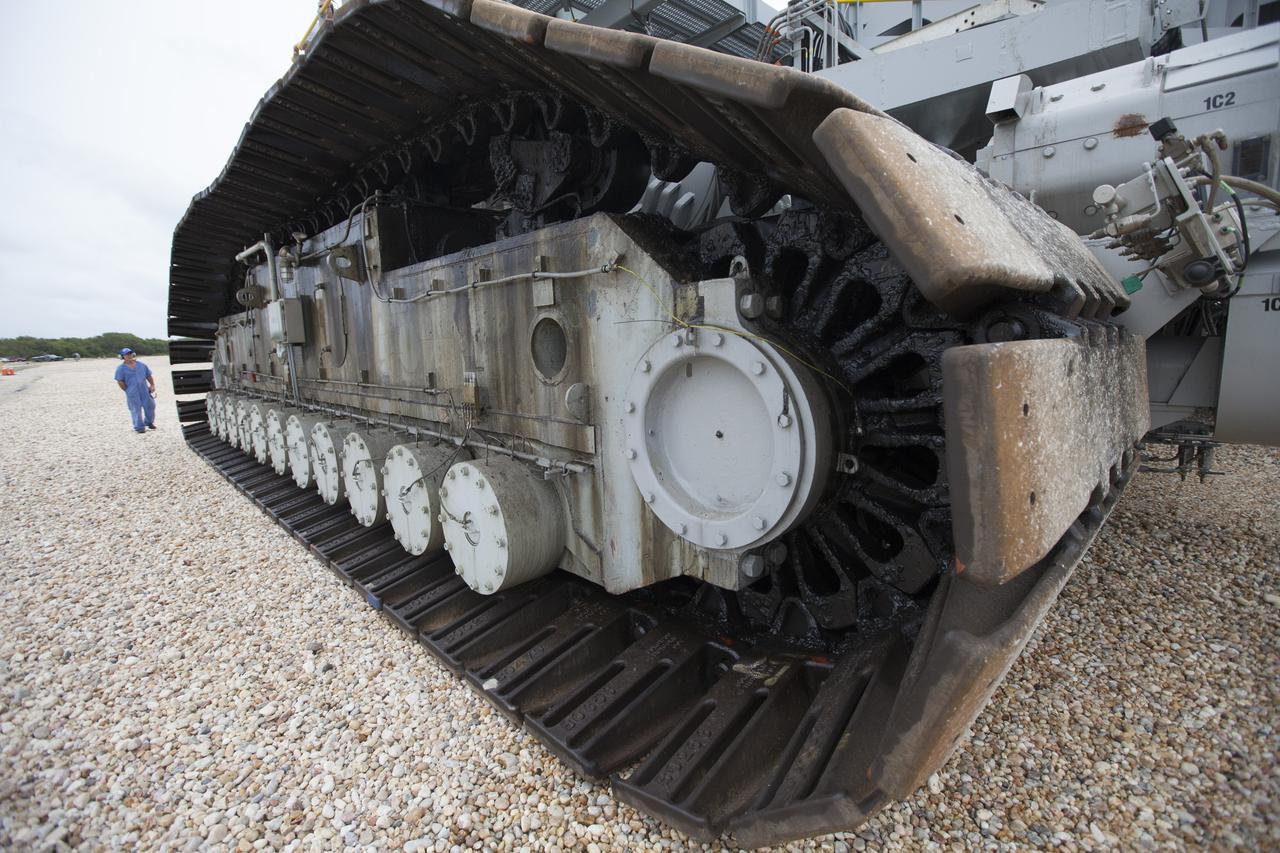
A technician watches the motion of the giant tracks on NASA’s upgraded crawler-transporter 2 (CT-2) as the giant vehicle travels along the crawlerway toward the Vehicle Assembly Building from its trek to Launch Pad 39B at the agency’s Kennedy Space Center in Florida. CT-2 was drive to Pad 39B to test recently completed upgrades and modifications to support NASA’s journey to Mars. The Ground Systems Development and Operations Program at Kennedy oversaw upgrades to the crawler in the VAB. The crawler will carry the mobile launcher with Orion atop the Space Launch System rocket to Pad 39B for Exploration Mission 1.