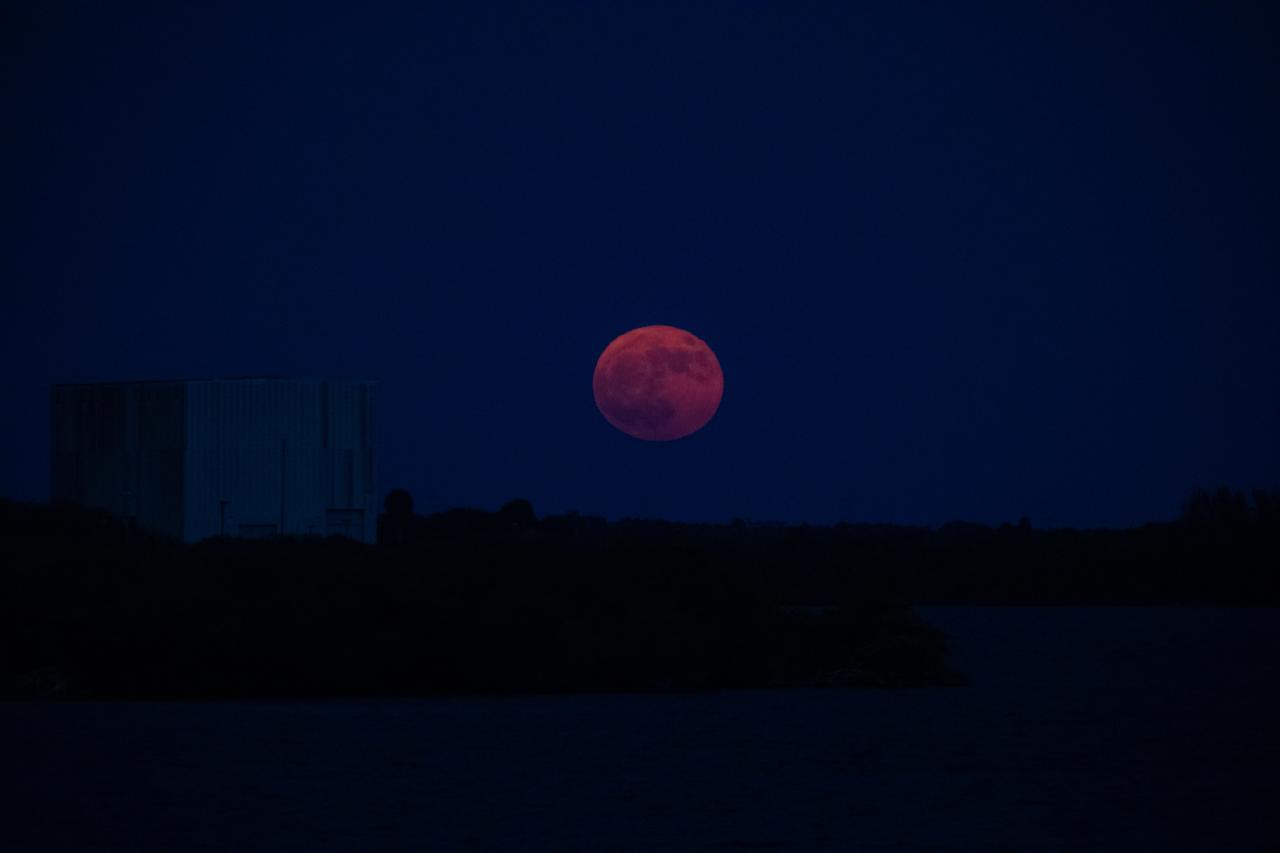
A super blue Moon rises above Kennedy Space Center in Florida on Monday, Aug. 18, 2024. Although not actually appearing blue, as the third full Moon in a season with four full Moons, this is called a “blue” Moon. The Moon at or near its closest point to Earth is a “super” Moon and can appear up to 14% bigger and brighter than normal full Moons. About 25% of all full Moons are super, but only 3% of full Moons are blue, with the next super blue Moons occurring as a pair in January and March 2037.

A super blue Moon rises above Kennedy Space Center in Florida on Monday, Aug. 18, 2024. Although not actually appearing blue, as the third full Moon in a season with four full Moons, this is called a “blue” Moon. The Moon at or near its closest point to Earth is a “super” Moon and can appear up to 14% bigger and brighter than normal full Moons. About 25% of all full Moons are super, but only 3% of full Moons are blue, with the next super blue Moons occurring as a pair in January and March 2037.
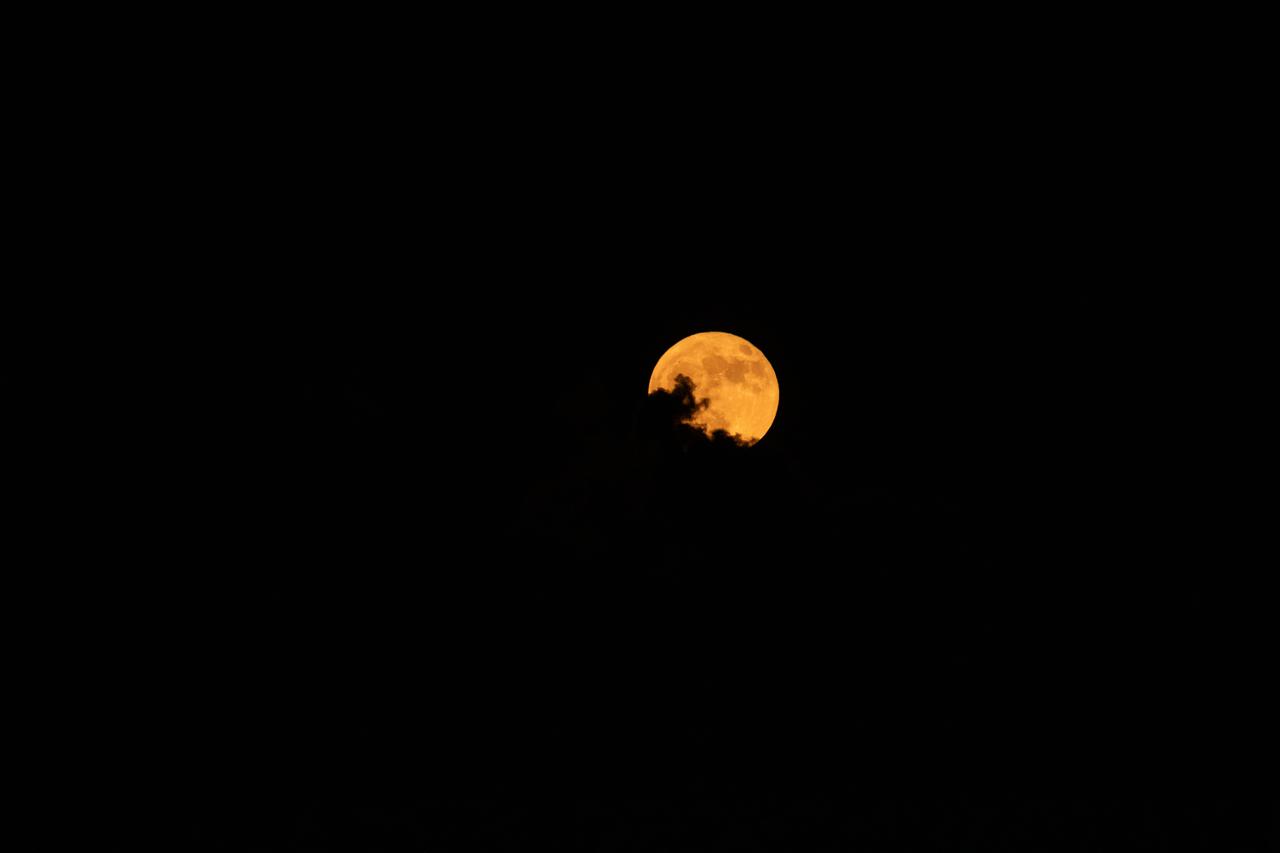
A super blue Moon rises above Kennedy Space Center in Florida on Monday, Aug. 18, 2024. Although not actually appearing blue, as the third full Moon in a season with four full Moons, this is called a “blue” Moon. The Moon at or near its closest point to Earth is a “super” Moon and can appear up to 14% bigger and brighter than normal full Moons. About 25% of all full Moons are super, but only 3% of full Moons are blue, with the next super blue Moons occurring as a pair in January and March 2037.
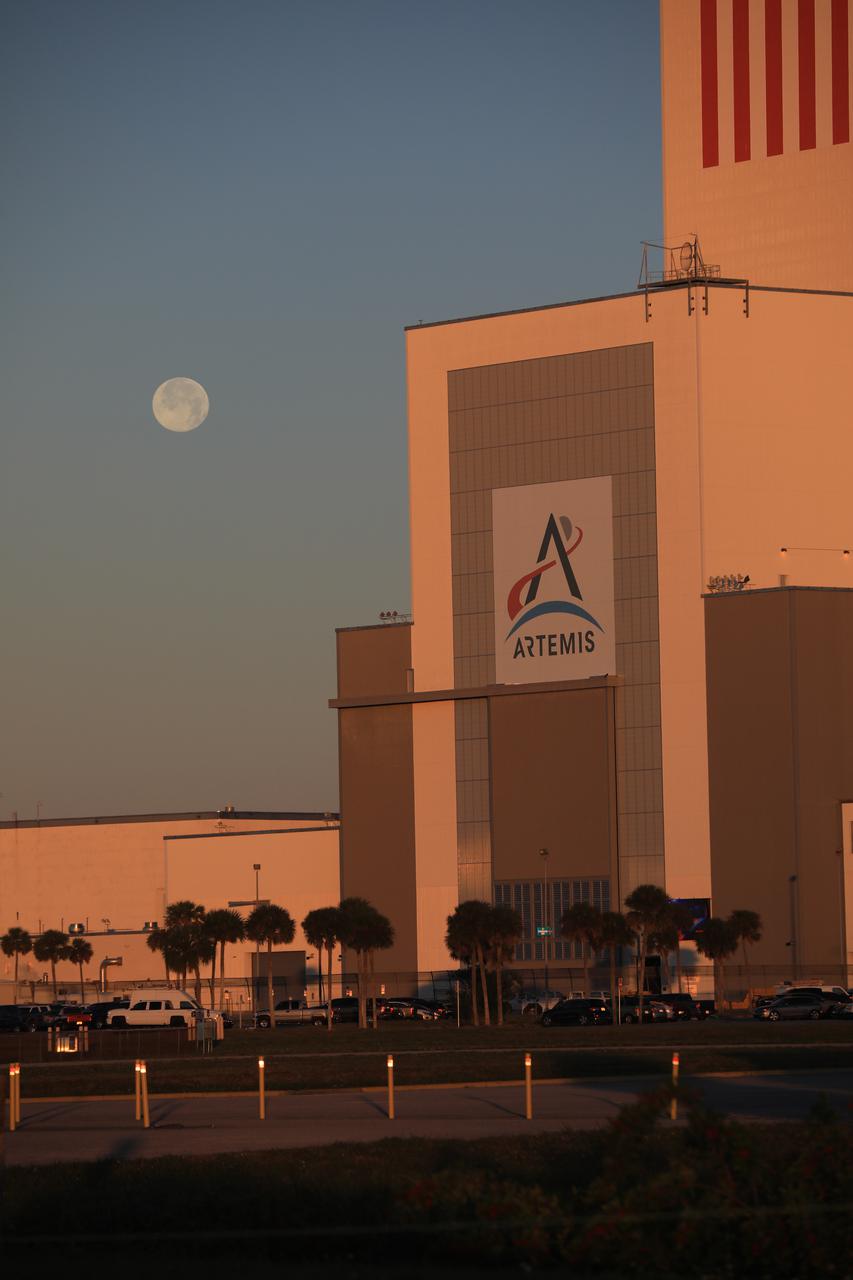
A brilliant Moon serves as the backdrop in this view of the low bay entrance to the Vehicle Assembly Building at NASA’s Kennedy Space Center in Florida on Jan. 18, 2020. An Artemis banner is positioned over the entrance.
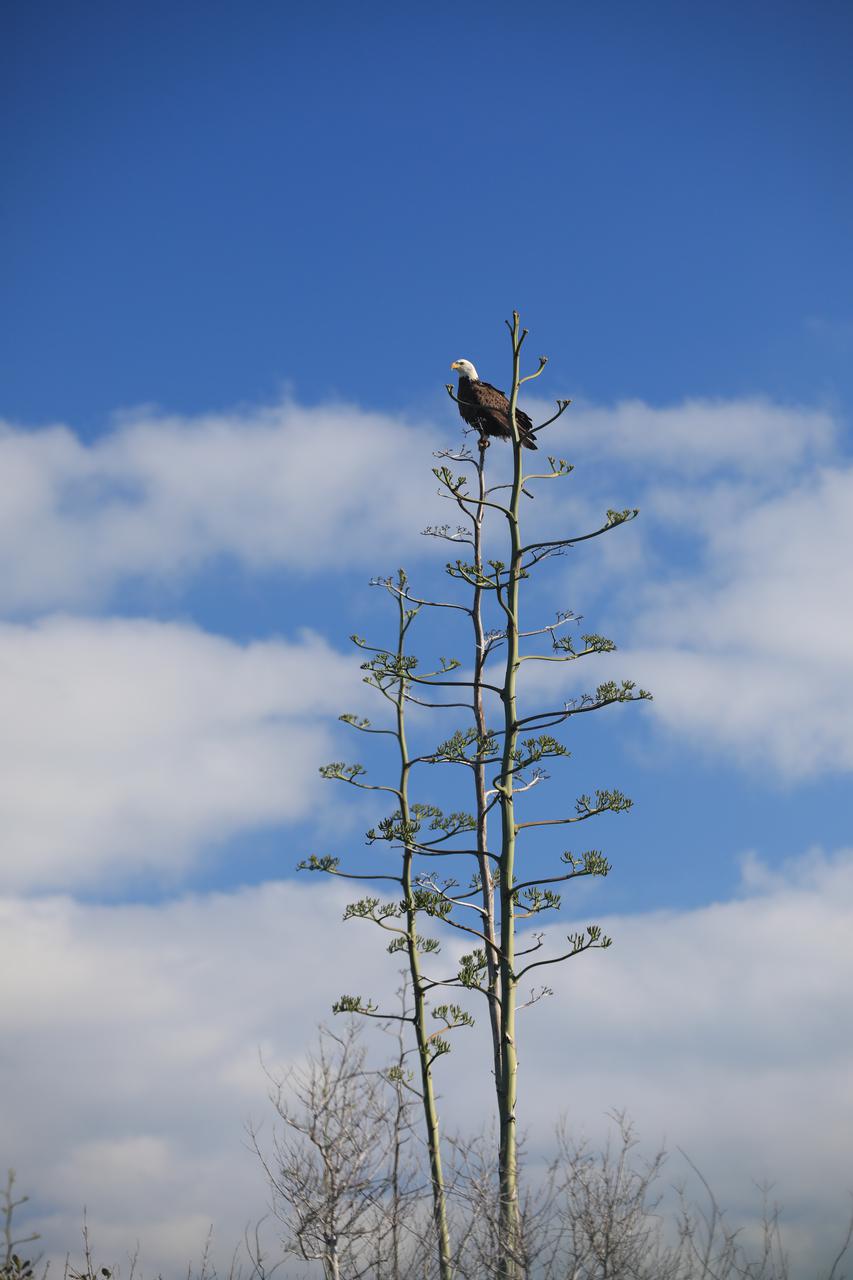
An American Bald Eagle perches majestically in a tree at NASA’s Kennedy Space Center in Florida on Jan. 18, 2022. The center shares a border with the Merritt Island National Wildlife Refuge. More than 330 native and migratory bird species call Kennedy and the wildlife refuge home.
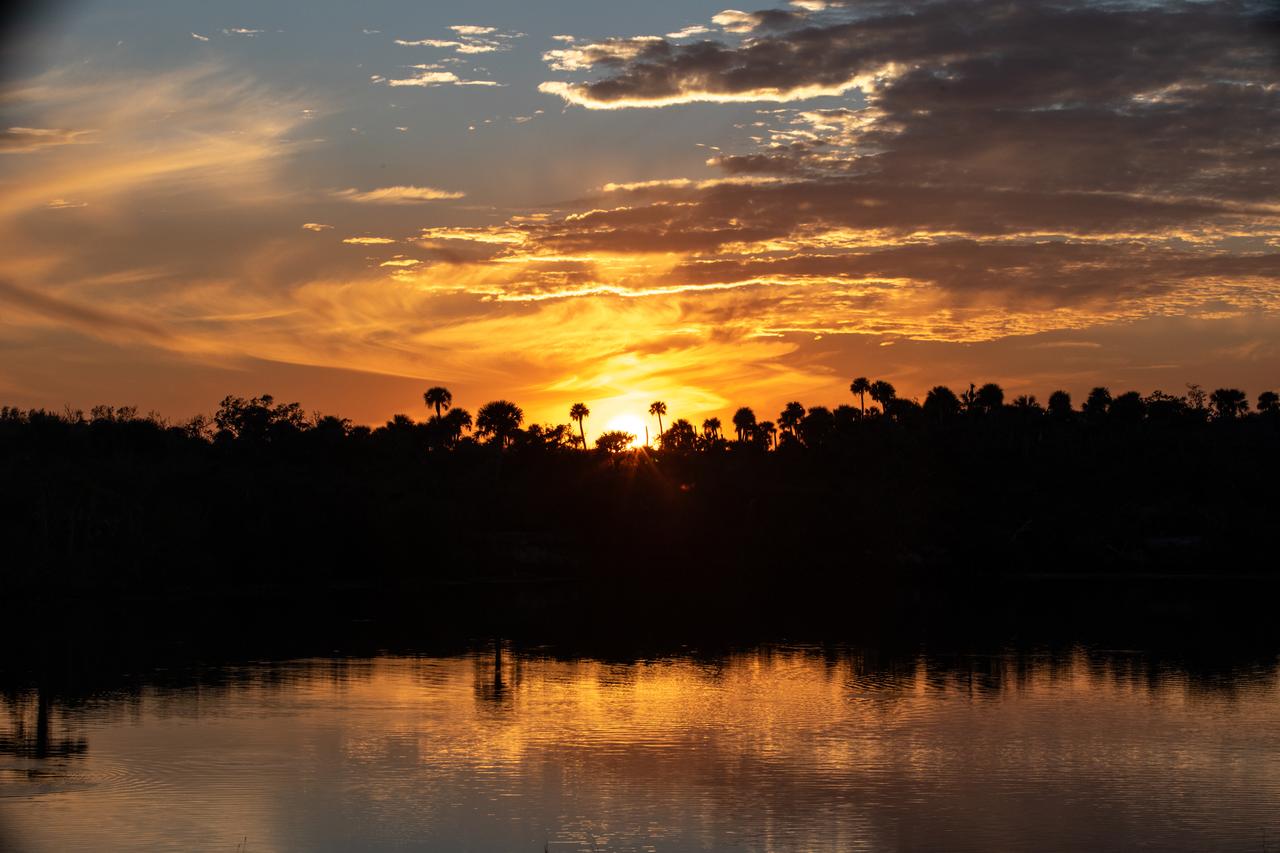
Photographers at NASA capture the sunset on Tuesday, Jan. 30, 2024, at the agency’s Kennedy Space Center in Florida.
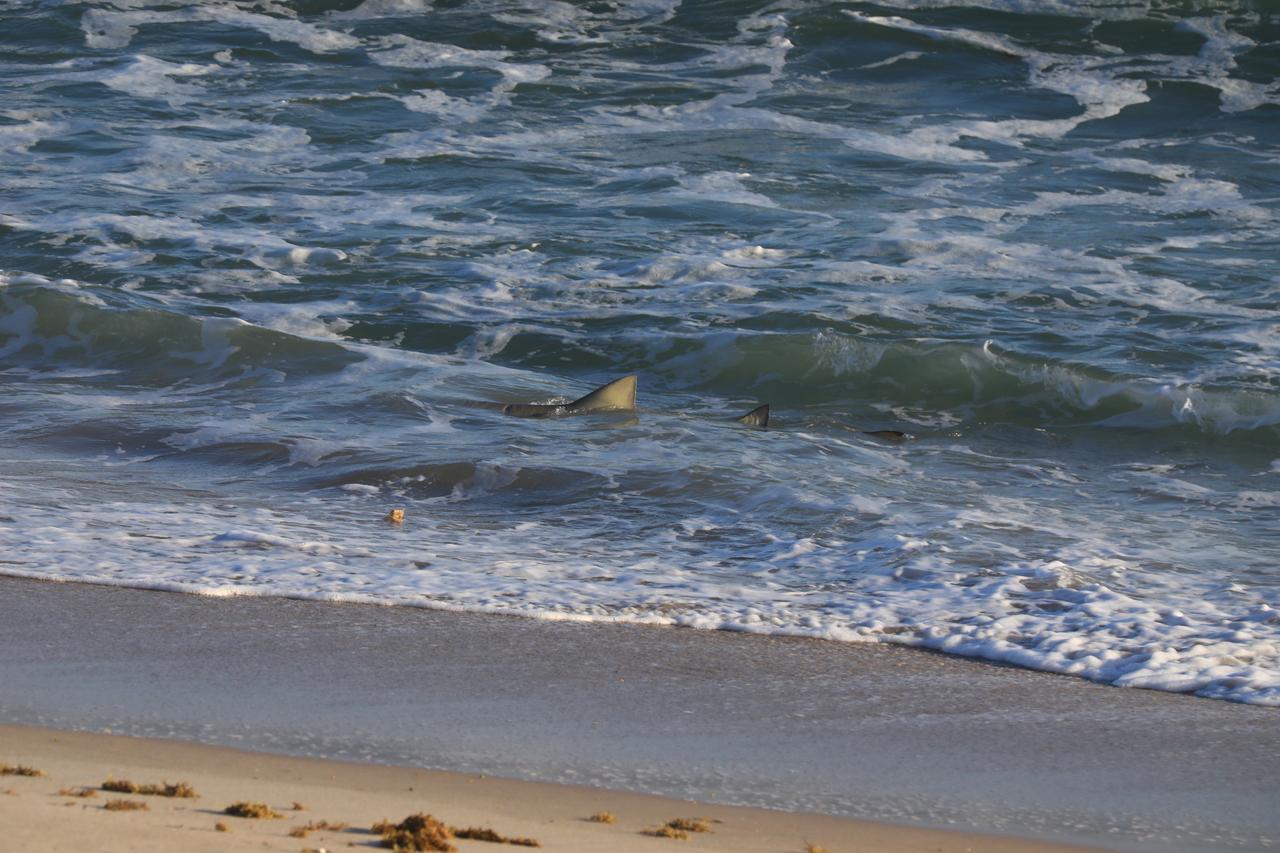
A shark swims near the shore at Cape Canaveral Space Force Station (CCSFS) on Oct. 27, 2020. CCSFS shares boundaries with the Merritt Island National Wildlife Refuge, featuring miles of pristine beaches on the Atlantic Ocean. The refuge contains coastal dunes, saltwater marshes, freshwater impoundments, scrub, pine flatwoods, and hardwood hammocks that provide habitat for more than 1,500 species of plants and animals.
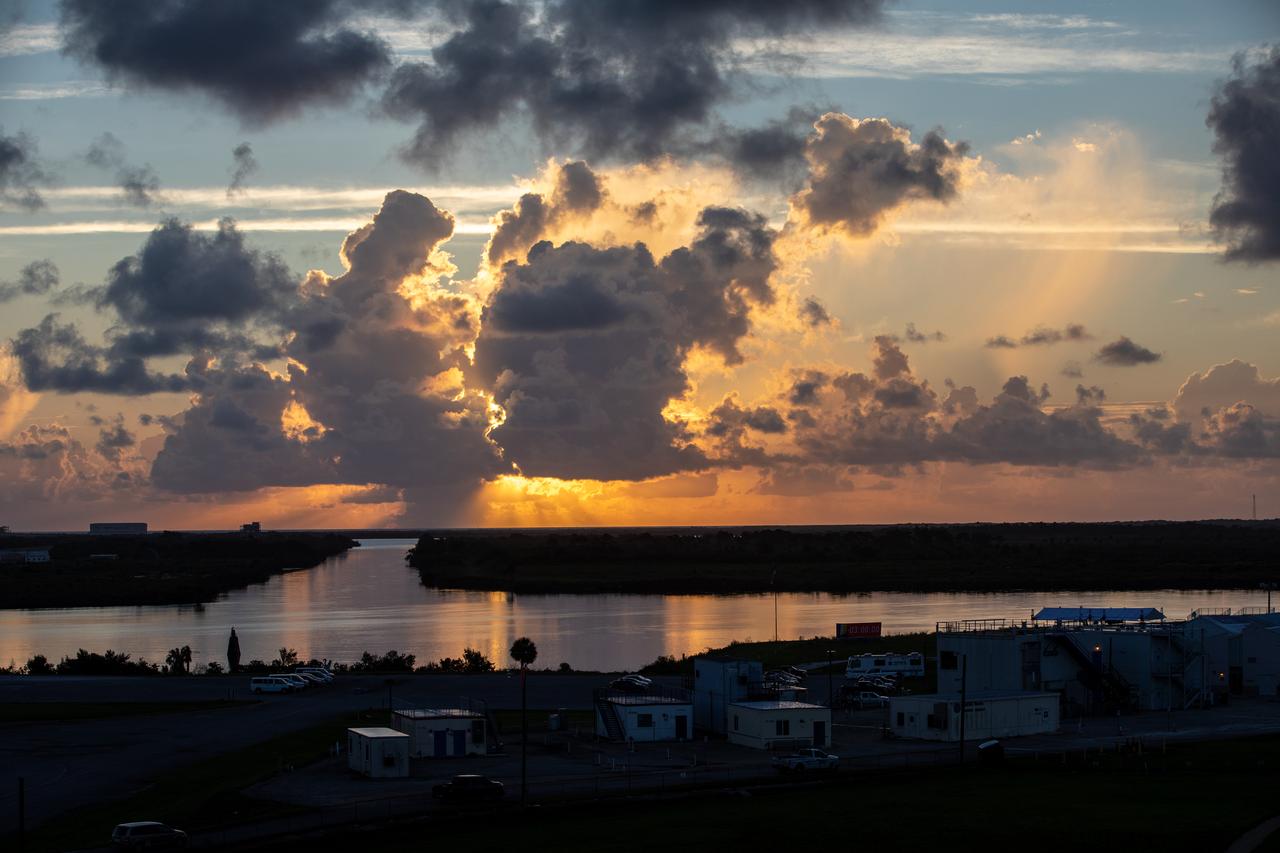
An early sunrise view of a waterway surrounding Launch Complex 39 at NASA's Kennedy Space Center in Florida on July 25, 2020. NASA’s Space Launch System and Orion spacecraft will lift off from Launch Complex 39B on Artemis I, an uncrewed mission around the Moon.
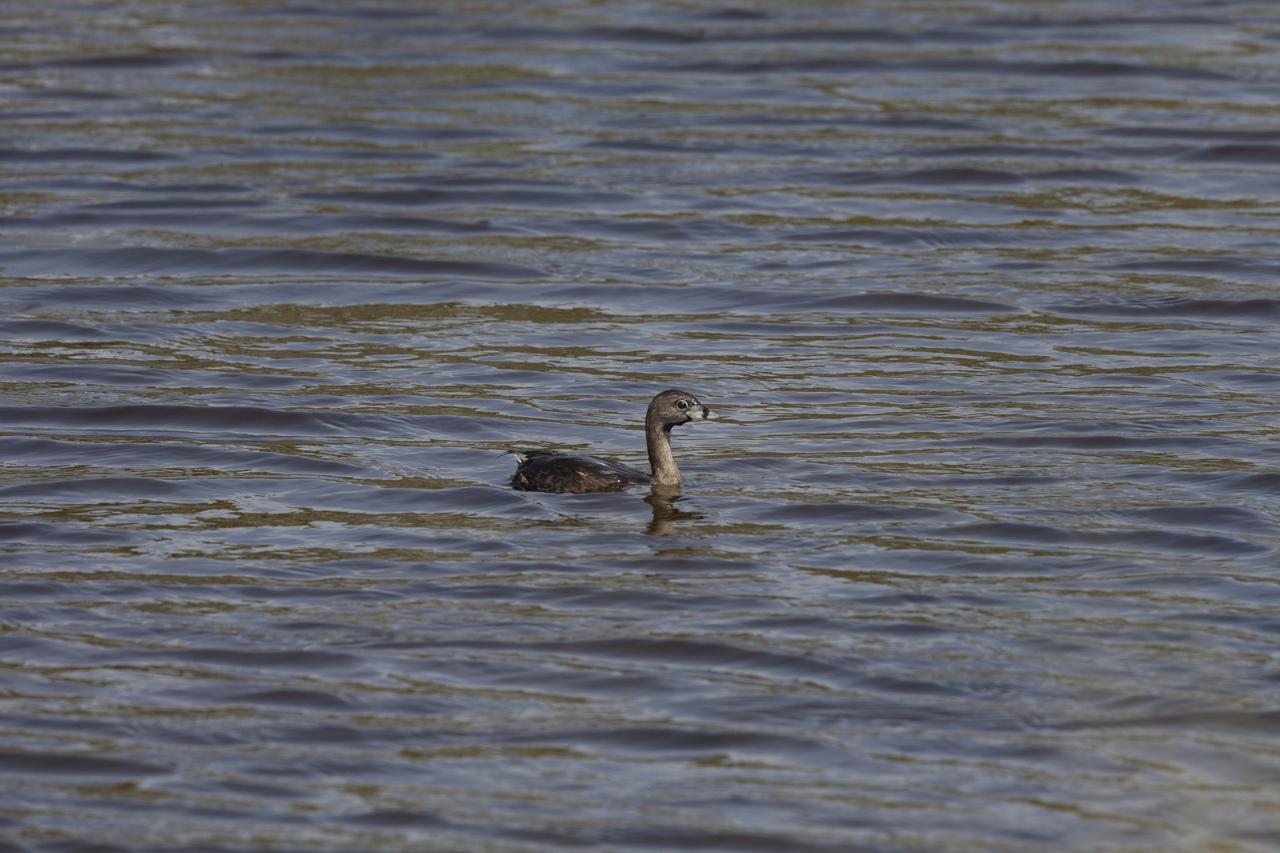
A pied-billed grebe paddles in one of the many waterways at Merritt Island National Wildlife Refuge in Florida. NASA’s Kennedy Space Center shares boundaries with the refuge, which is home to more than 330 native and migratory bird species, along with 25 mammal, 117 fish, and 65 amphibian and reptile species.
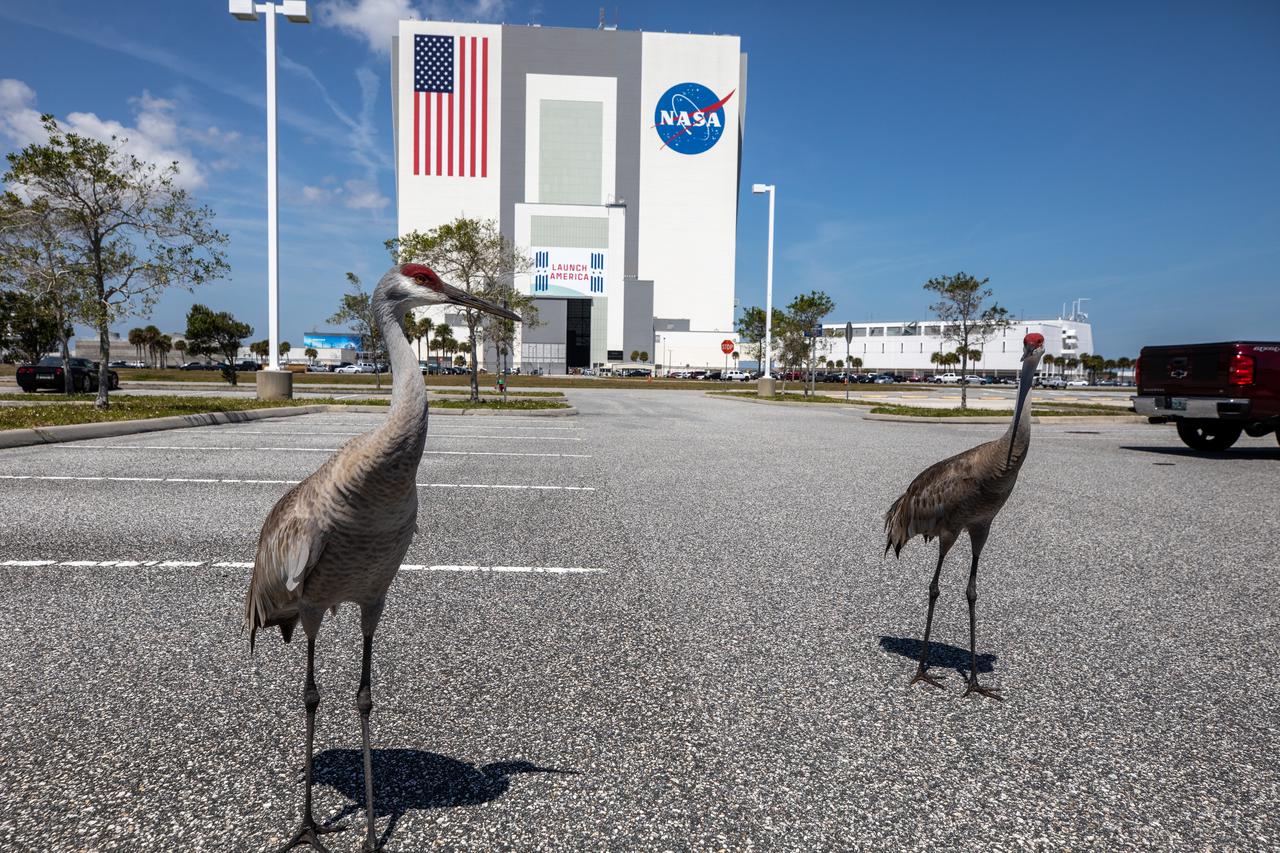
A pair of sandhill cranes explore a paved parking area near the Vehicle Assembly Building at NASA’s Kennedy Space Center in Florida on March 24, 2021. Kennedy shares space with the Merritt Island National Wildlife refuge, which is home to more than 1,000 species of plants, 117 species of fish, 68 amphibians and reptiles, 330 birds, and 31 different mammals. The refuge provides a favorable environment for the cranes as it contains shallow freshwater habitats for nesting, along with a variety of vegetation and prey to feed on.
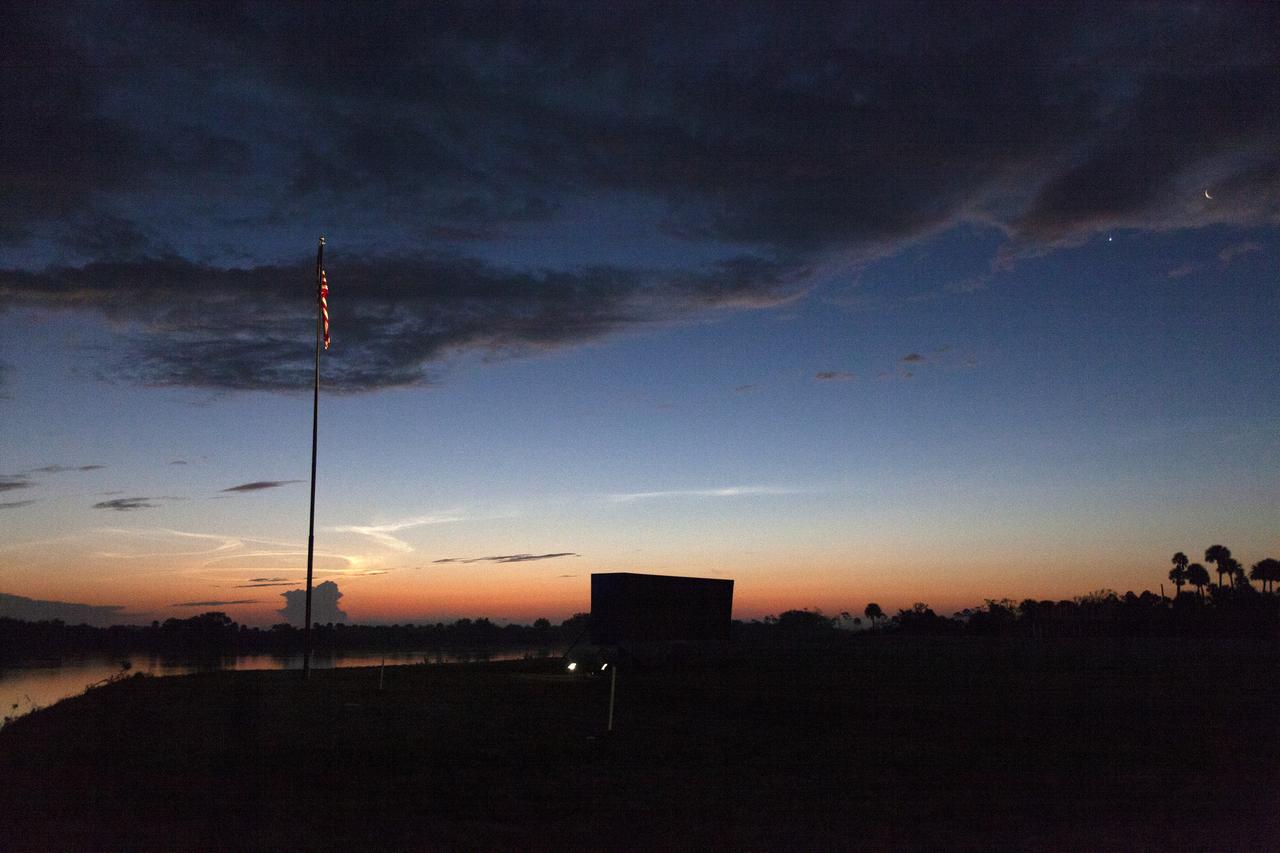
A sunrise serves as the backdrop for the countdown clock and American Flag near the Press Site at NASA’s Kennedy Space Center in Florida following the successful launch of SpaceX’s uncrewed Demo-1 flight test from Launch Complex 39A on March 2, 2019. The company’s Crew Dragon spacecraft lifted off atop a Falcon 9 rocket and traveled to the International Space Station, where it validated end-to-end systems and capabilities in preparation for certification to fly crew.
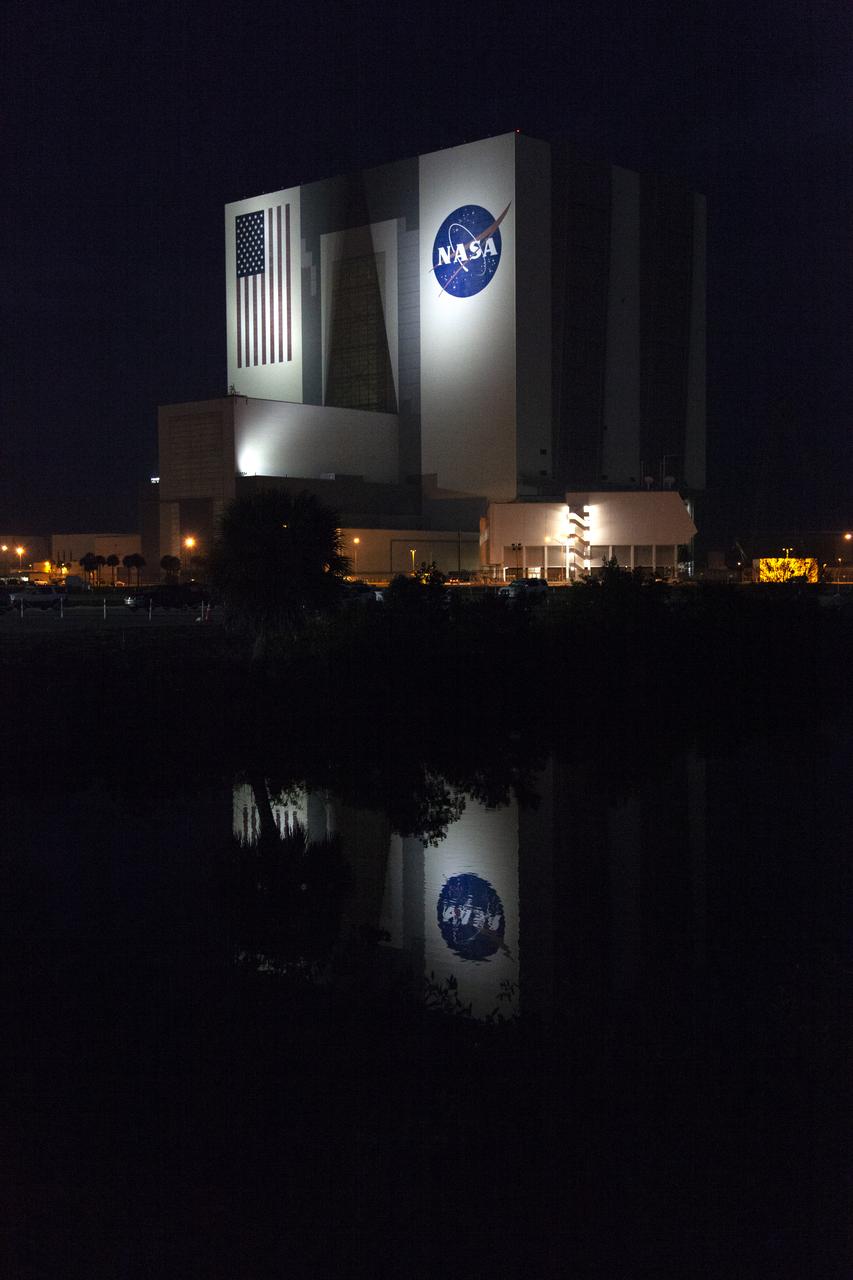
The iconic Vehicle Assembly Building (VAB) and Launch Control Center cast reflections on the surface of a nearby waterway at NASA’s Kennedy Space Center in Florida. The lights illuminating the VAB provided a splendid nighttime view.
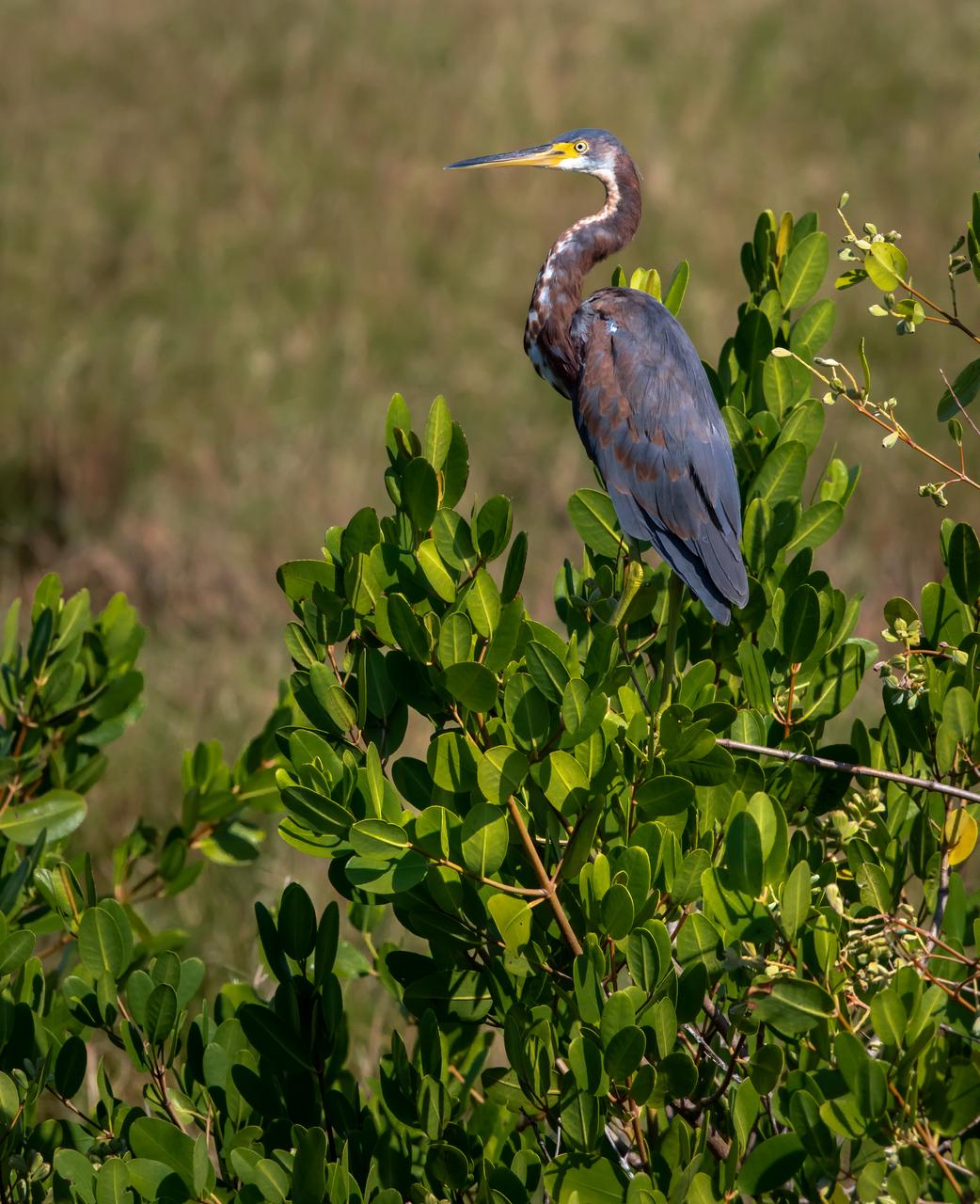
A Reddish Egret perches in a tree at NASA's Kennedy Space Center in Florida. The center shares a border with the Merritt Island National Wildlife Refuge. More than 330 native and migratory bird species, 25 mammal, 117 fish and 65 amphibian and reptile species call Kennedy and the wildlife refuge home.
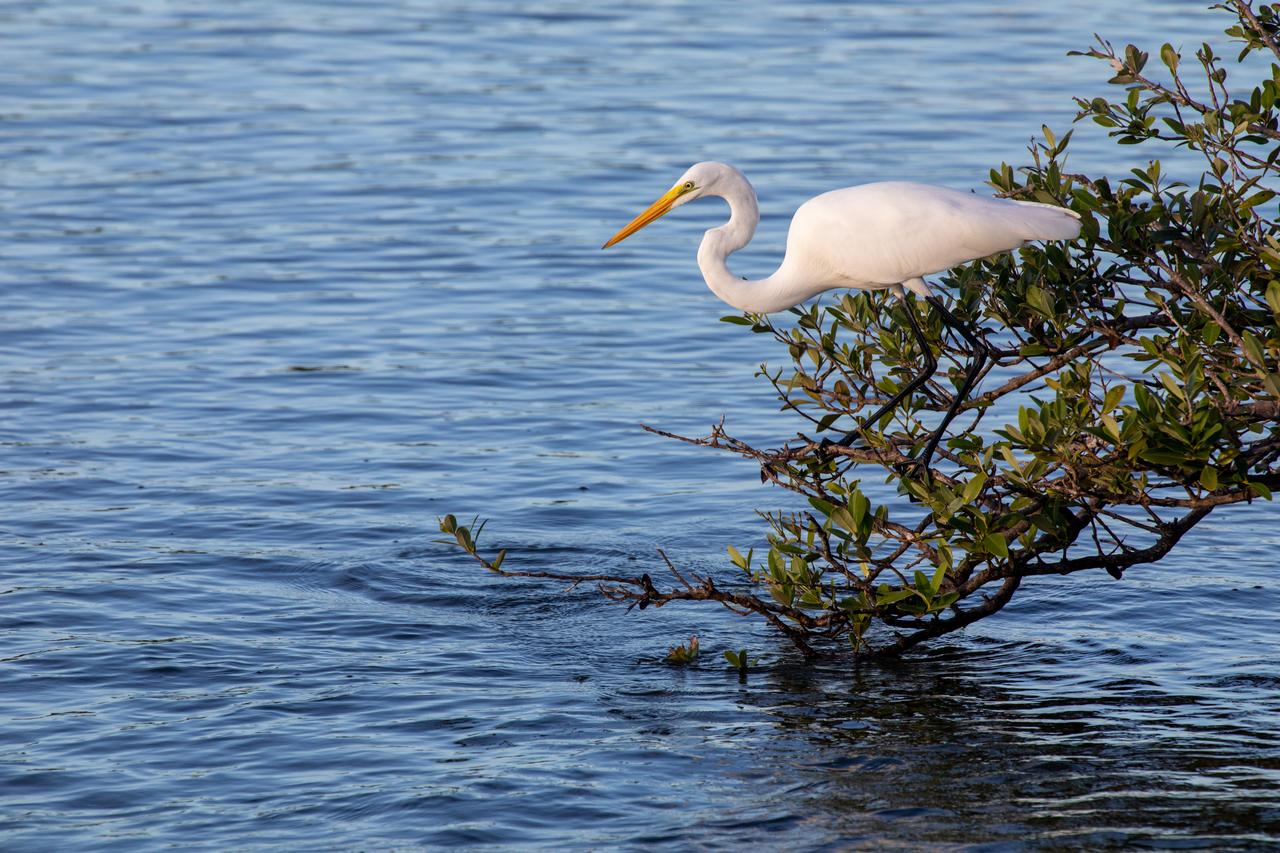
Kennedy Space Center shares boundaries with the Merritt Island National Wildlife Refuge on Florida’s Atlantic coast. The refuge's coastal location, tropic-like climate, and wide variety of habitat types contribute to a diverse bird population. More than 350 species have been identified on the refuge.
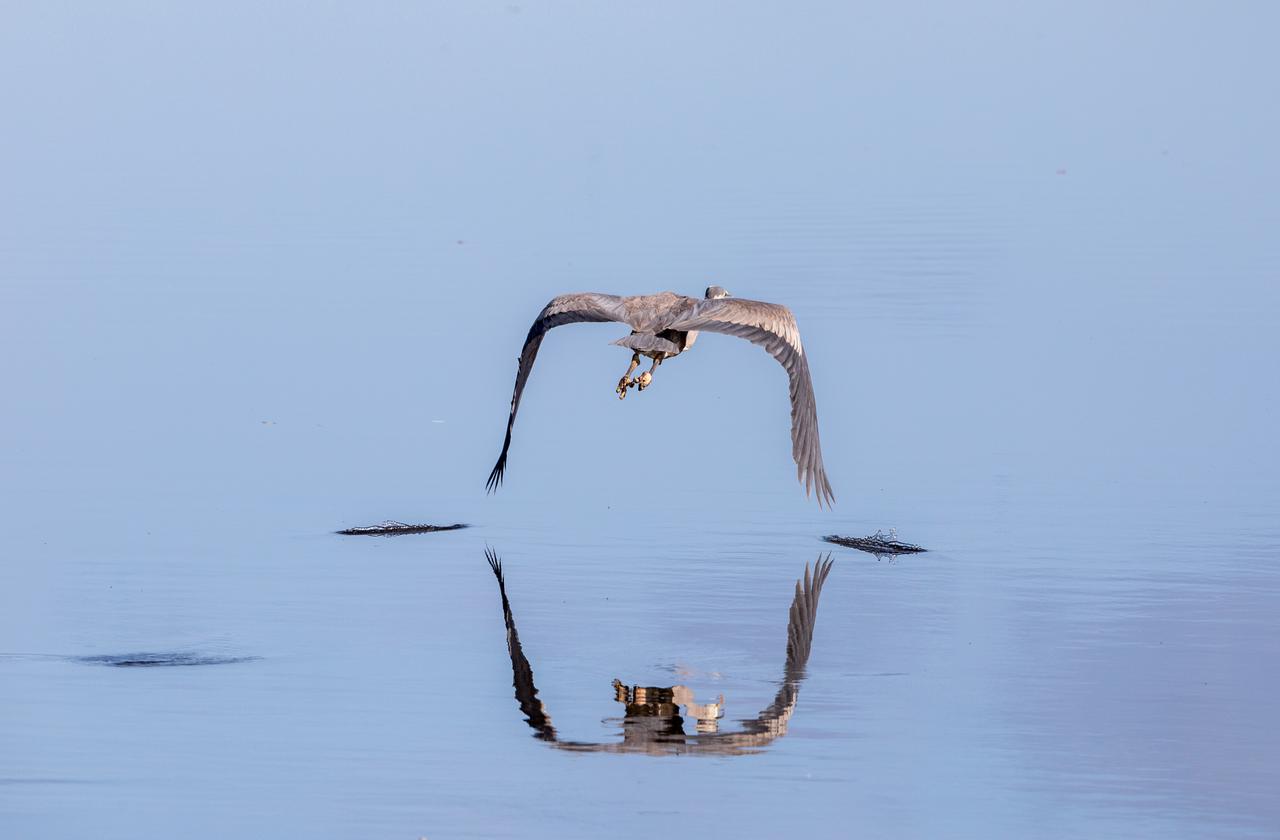
Creating an artistic reflection, a Great Blue Heron skims its wings on a waterway at NASA's Kennedy Space Center in Florida on Jan. 11, 2021. The center shares a border with the Merritt Island National Wildlife Refuge. More than 330 native and migratory bird species, along with 25 mammal, 117 fish, and 65 amphibian and reptile species call Kennedy and the wildlife refuge home.

Kennedy Space Center shares boundaries with the Merritt Island National Wildlife Refuge on Florida’s Atlantic coast. The refuge's coastal location, tropic-like climate, and wide variety of habitat types contribute to a diverse bird population. More than 350 species have been identified on the refuge.
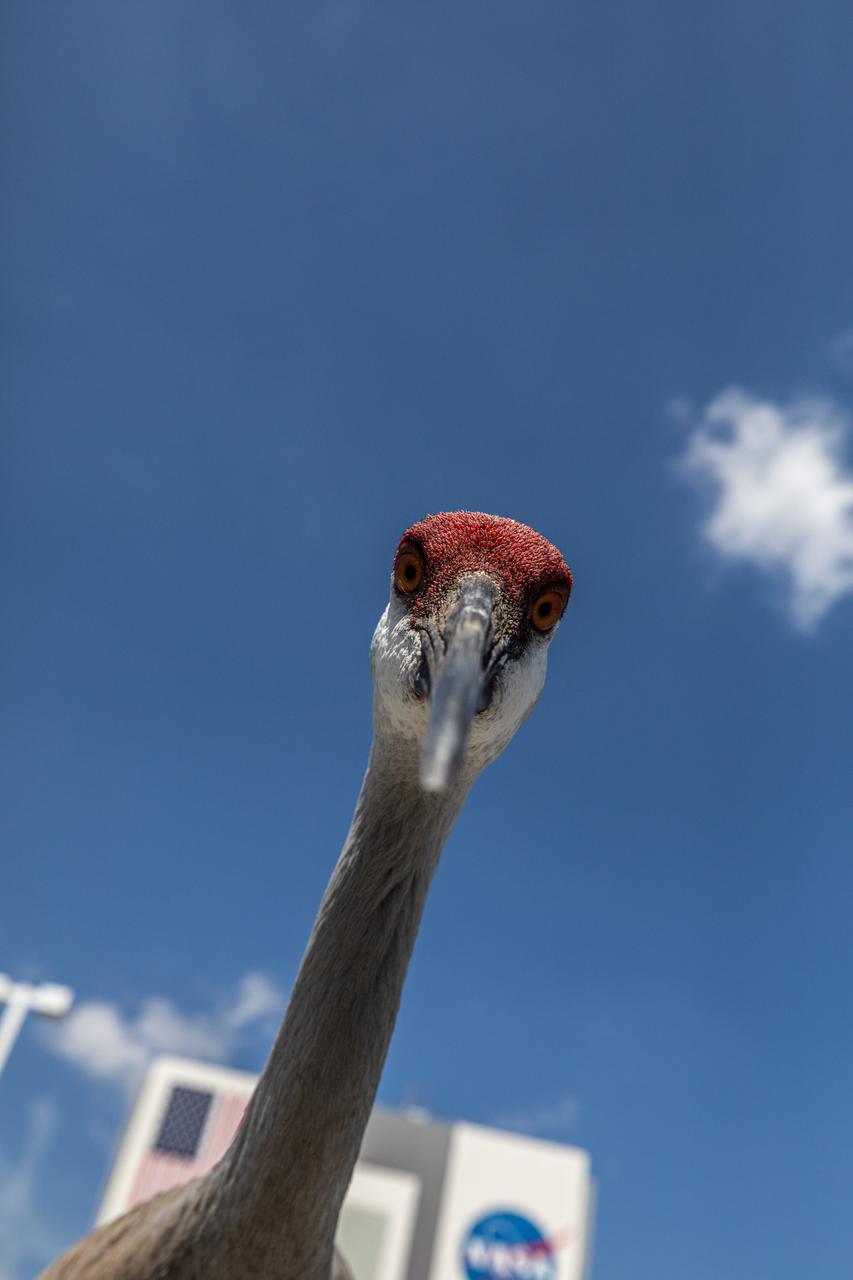
An inquisitive sandhill crane approaches the photographer near the Vehicle Assembly Building at NASA’s Kennedy Space Center in Florida on March 24, 2021. Kennedy shares space with the Merritt Island National Wildlife refuge, which is home to more than 1,000 species of plants, 117 species of fish, 68 amphibians and reptiles, 330 birds, and 31 different mammals. The refuge provides a favorable environment for sandhill cranes as it contains shallow freshwater habitats for nesting, along with a variety of vegetation and prey to feed on.
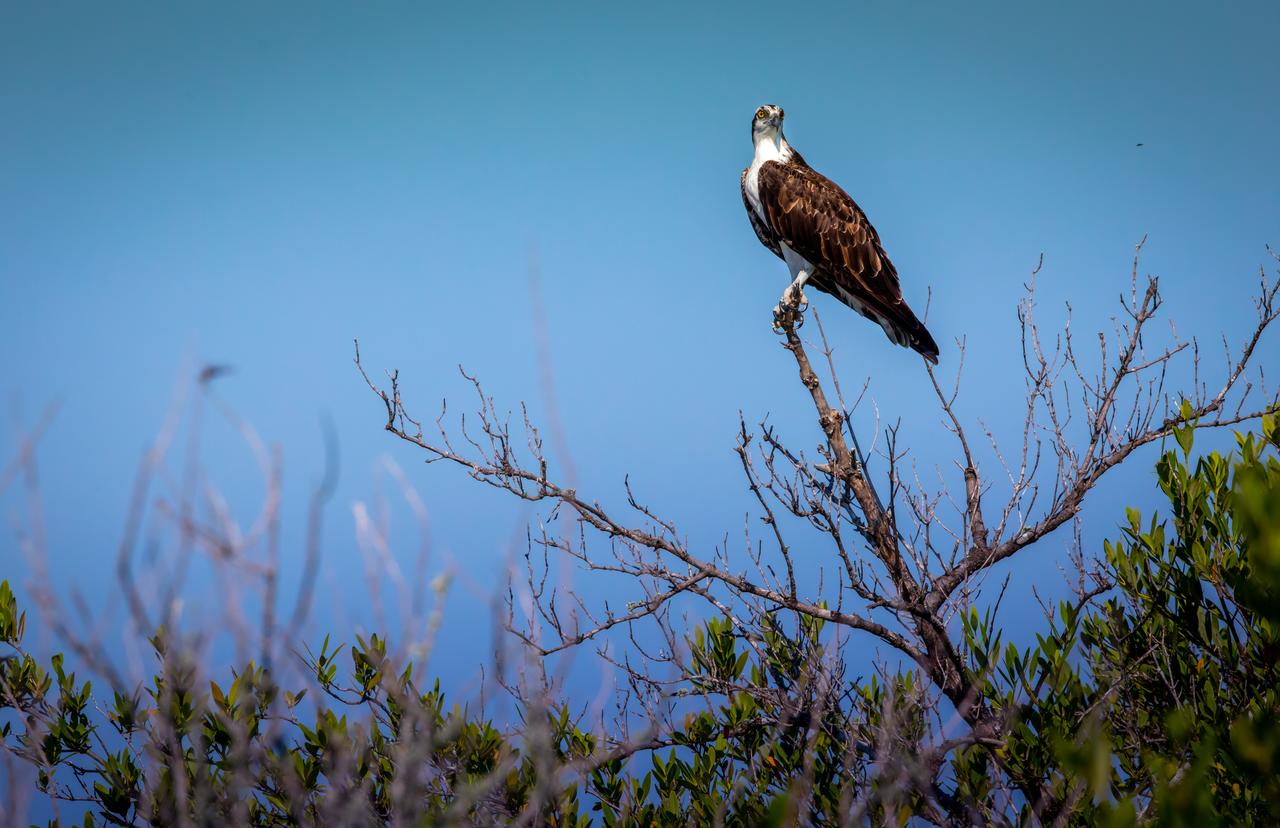
An osprey sits on a branch near a waterway at NASA's Kennedy Space Center in Florida. The center shares a border with the Merritt Island National Wildlife Refuge. More than 330 native and migratory bird species, 25 mammal, 117 fish and 65 amphibian and reptile species call Kennedy and the wildlife refuge home.
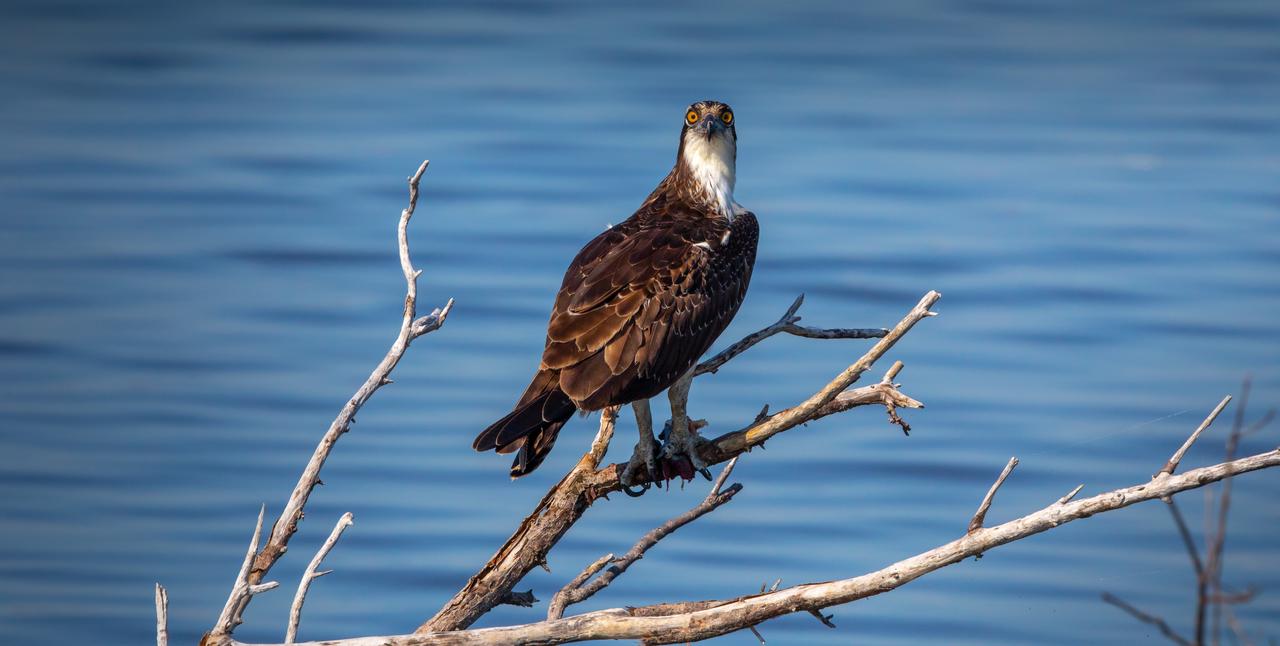
An osprey sits on a branch near a waterway at NASA's Kennedy Space Center in Florida. The center shares a border with the Merritt Island National Wildlife Refuge. More than 330 native and migratory bird species, 25 mammal, 117 fish and 65 amphibian and reptile species call Kennedy and the wildlife refuge home.

A group of sandpipers wades in the shoreline of the Atlantic Ocean near NASA's Kennedy Space Center in Florida on Jan. 11, 2021. The center shares a border with the Merritt Island National Wildlife Refuge. More than 330 native and migratory bird species, 25 mammal, 117 fish and 65 amphibian and reptile species call Kennedy and the wildlife refuge home.
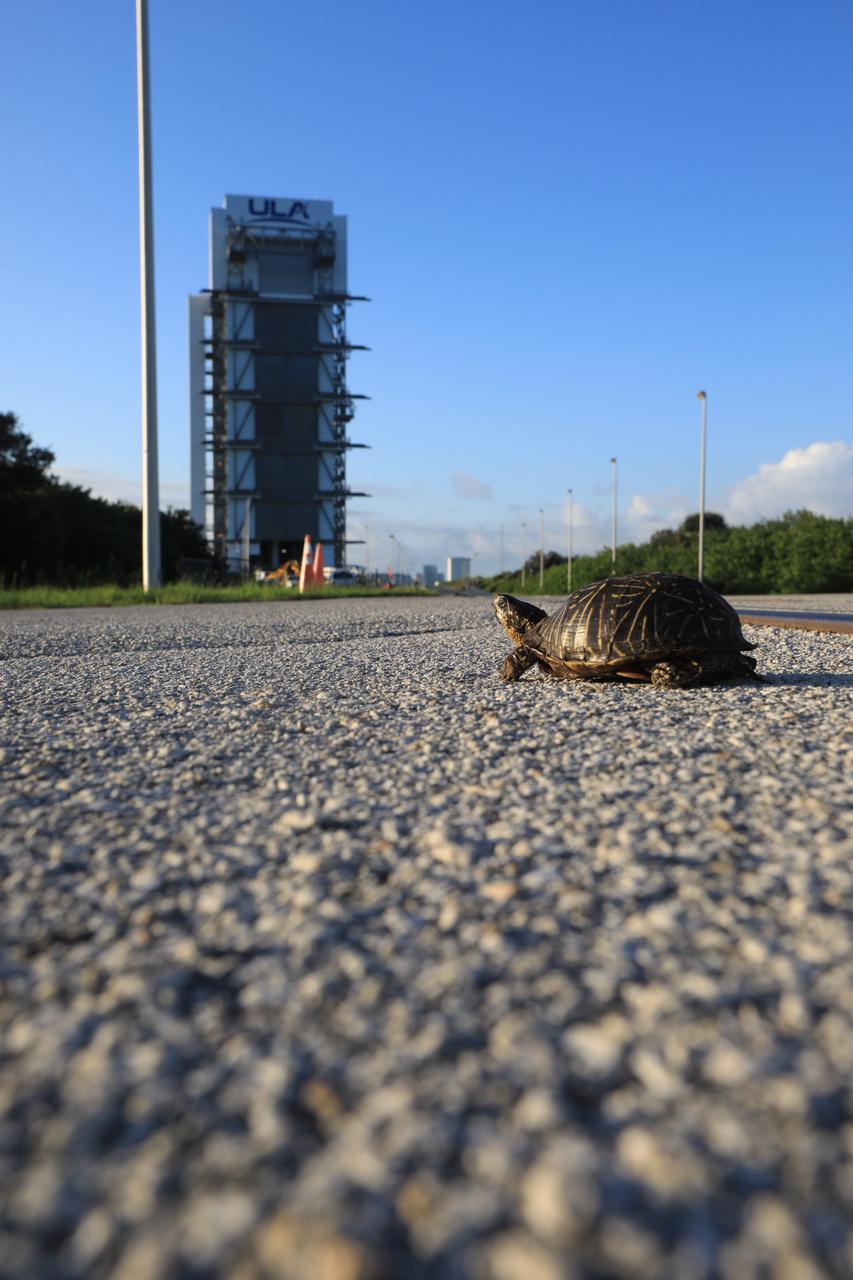
A turtle makes it way along the roadway at Cape Canaveral Space Force Station (CCSFS) in Florida on Oct. 27, 2020. CCSFS shares boundaries with the Merritt Island National Wildlife Refuge, consisting of 140,000 acres. The refuge contains coastal dunes, saltwater marshes, freshwater impoundments, scrub, pine flatwoods, and hardwood hammocks that provide habitat for more than 1,500 species of plants and animals.
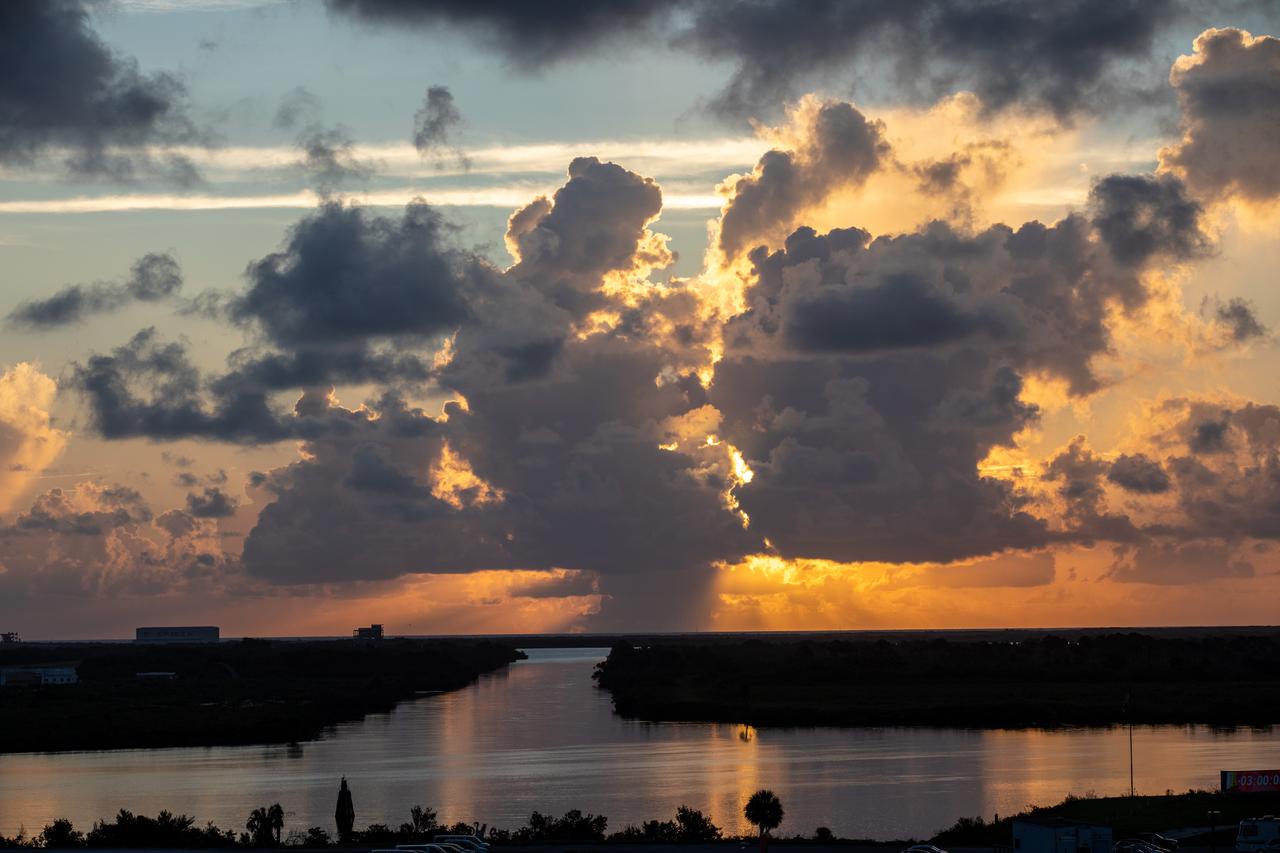
An early sunrise view of a waterway surrounding Launch Complex 39 at NASA's Kennedy Space Center in Florida on July 25, 2020. NASA’s Space Launch System and Orion spacecraft will lift off from Launch Complex 39B on Artemis I, an uncrewed mission around the Moon.
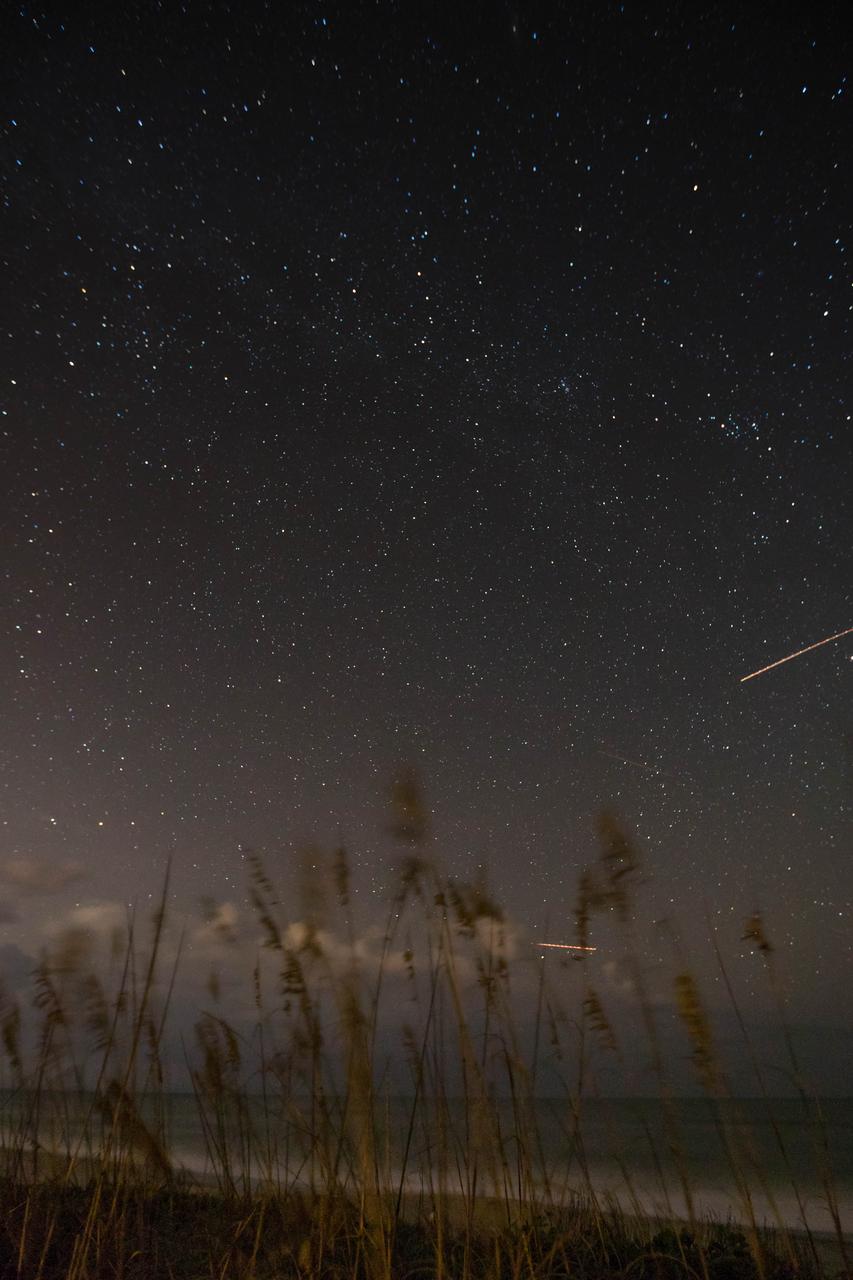
Sea oats are backdropped by the night sky and the Milky Way in this view from the Atlantic shoreline at NASA’s Kennedy Space Center in Florida on Oct. 31, 2019. Lights from aircraft create illuminated streaks above the horizon and at right.
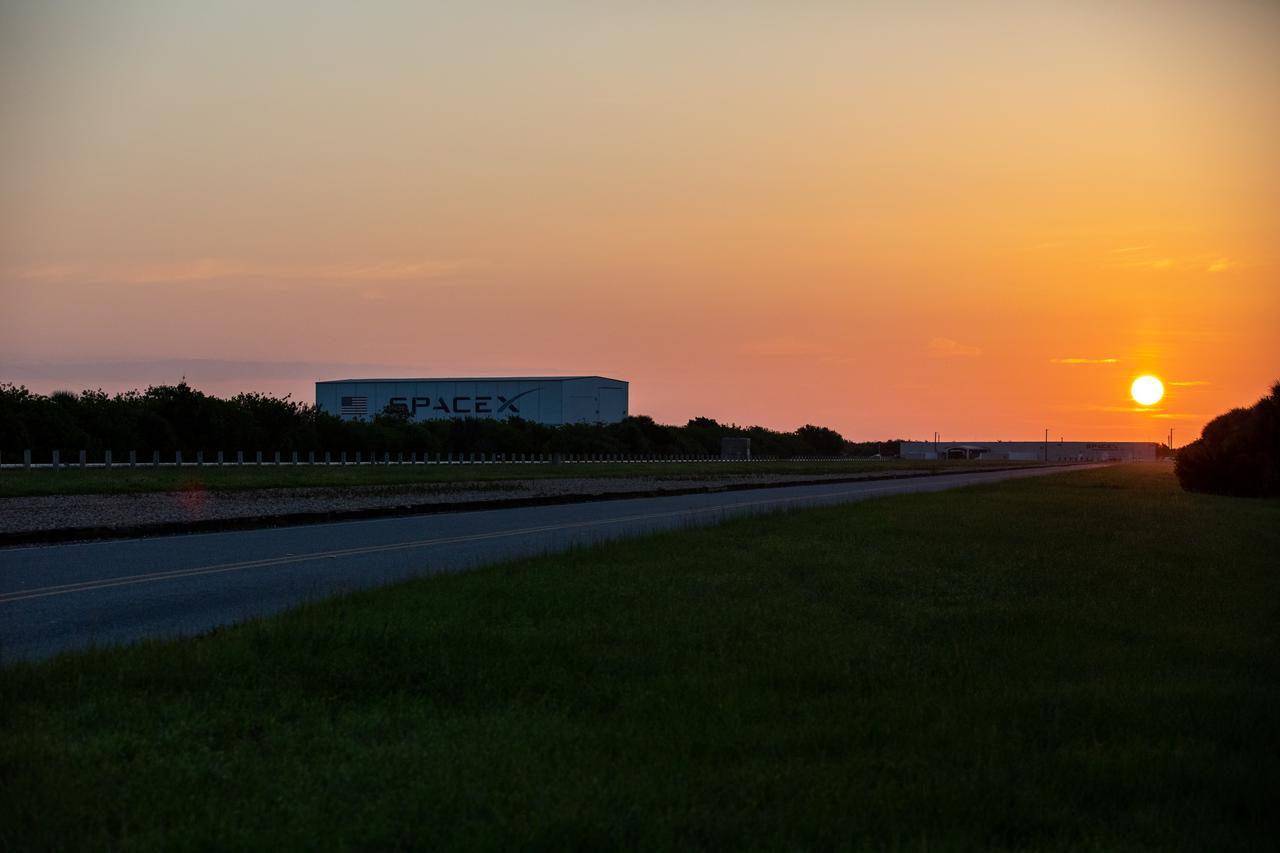
A magnificent sunrise is captured over SpaceX’s processing facility at NASA’s Kennedy Space Center in Florida on July 15, 2020. Under the agency’s Commercial Crew Program, NASA and SpaceX have returned human spaceflight capability to the U.S. NASA astronauts Robert Behnken and Douglas Hurley launched to the International Space Station on May 30, 2020, for the agency’s SpaceX Demo-2 mission, becoming the first time astronauts had launched from American soil since 2011. The mission, concluding on Aug. 2 with Behnken and Hurley’s safe return to Earth, was the final flight test for SpaceX under the program, paving the way for NASA to fully certify the company’s crew transportation for rotational missions to the orbiting laboratory.
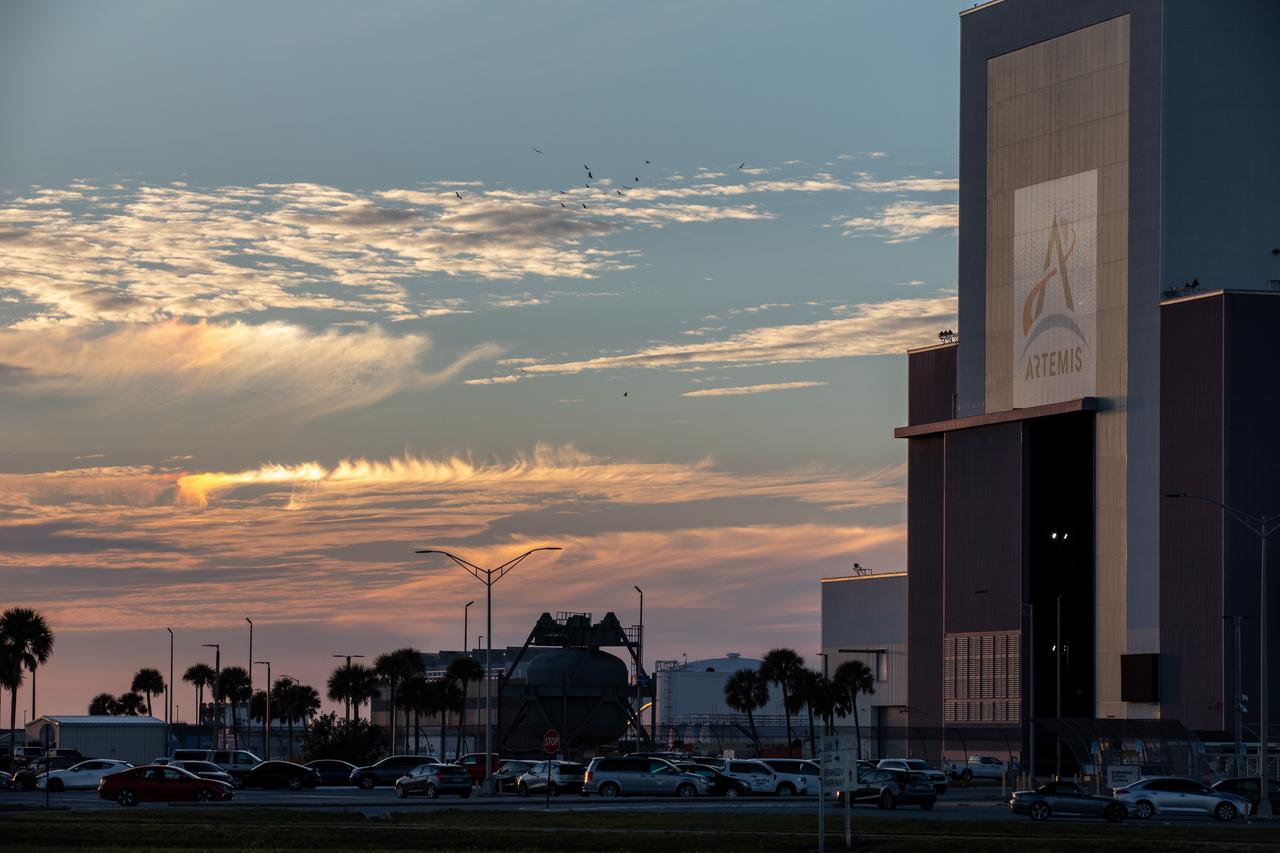
Photographers at NASA capture the sunset on Tuesday, Jan. 30, 2024, near Vehicle Assembly Building at the agency’s Kennedy Space Center in Florida. The iconic Vehicle Assembly Building, completed in 1966 and currently used for assembly of NASA’s Space Launch System rocket for Artemis missions, remains the only building in which rockets were assembled that carried humans to the surface of another world.
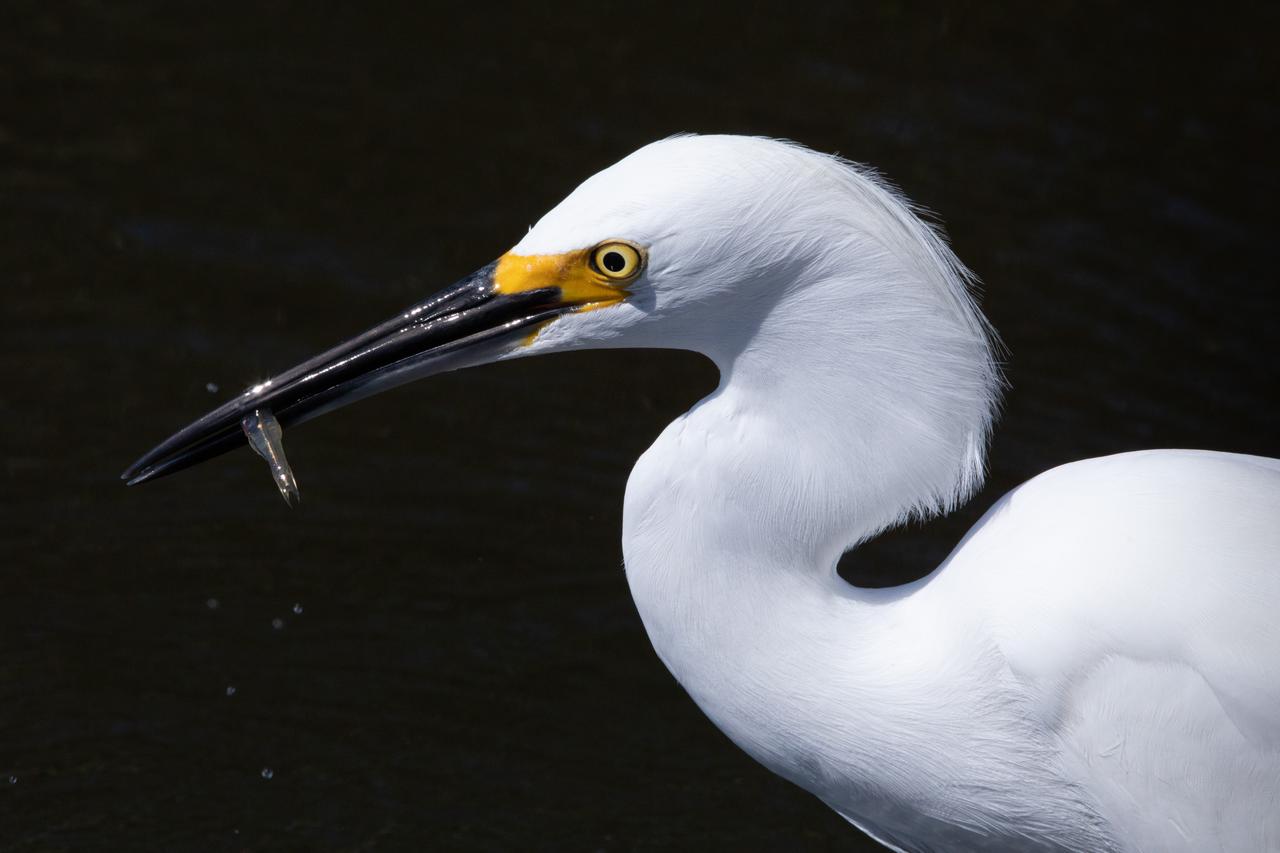
A Great Egret catches a small fish in a waterway at NASA's Kennedy Space Center in Florida. The center shares a border with the Merritt Island National Wildlife Refuge. More than 330 native and migratory bird species, 25 mammal, 117 fish and 65 amphibian and reptile species call Kennedy and the wildlife refuge home.
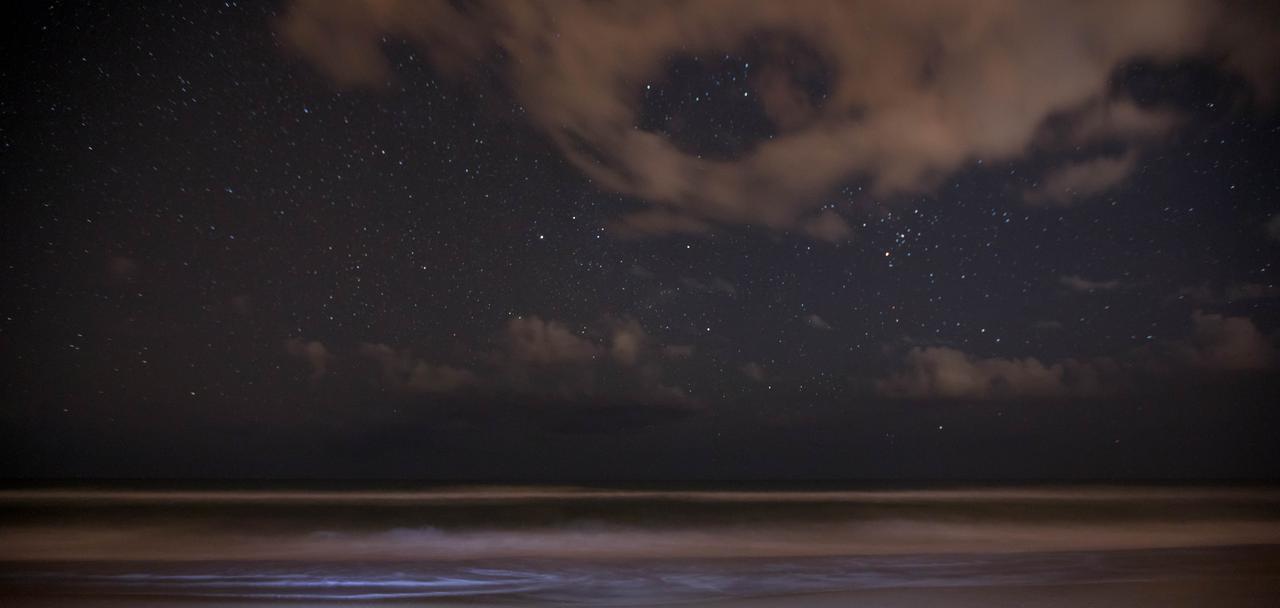
Clouds move inland from the Atlantic Ocean, backdropped by a nighttime vista of stars, in this view from the beach near Launch Complex 39 at NASA’s Kennedy Space Center in Florida on Oct. 31, 2019.
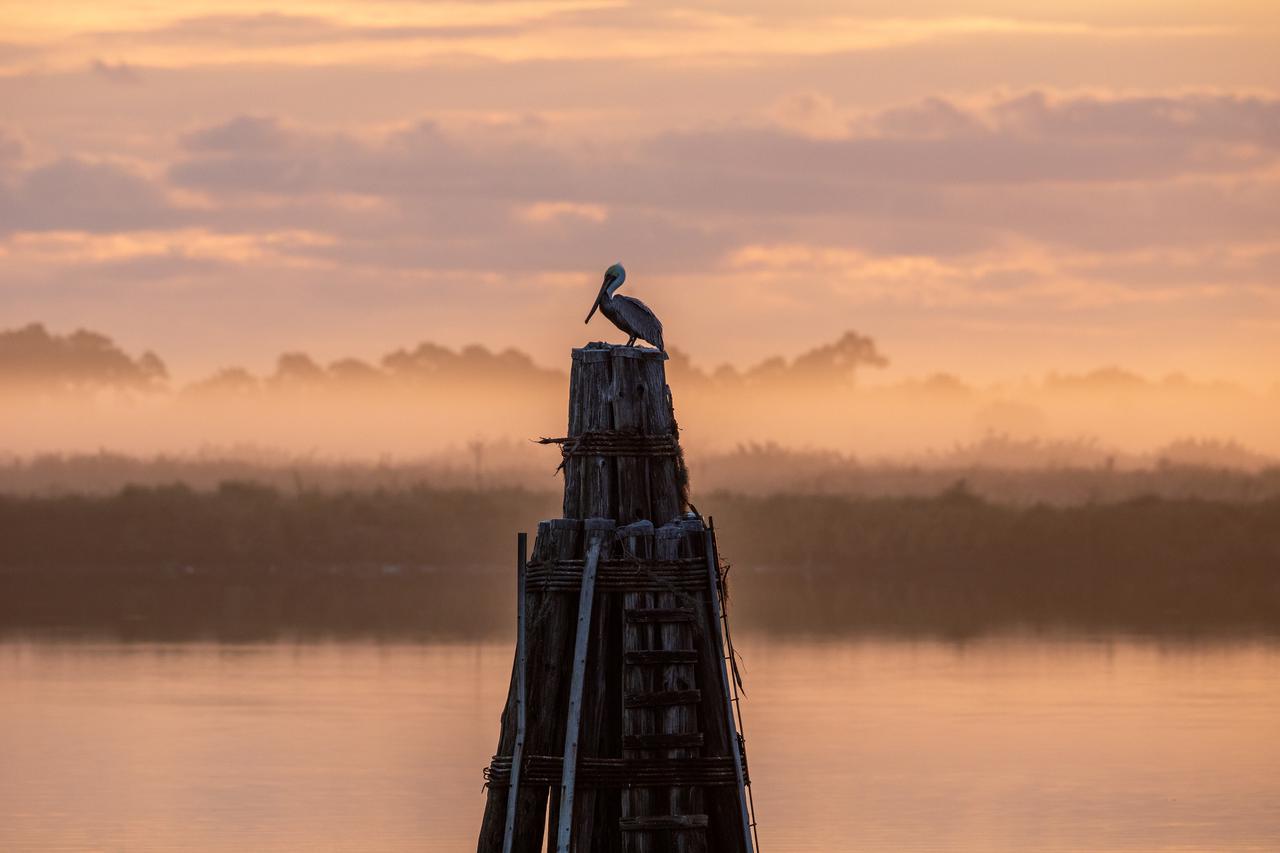
A pelican perches on the support beam of a dock on a waterway at NASA's Kennedy Space Center in Florida on Jan. 11, 2021. The center shares a border with the Merritt Island National Wildlife Refuge. More than 330 native and migratory bird species, along with 25 mammal, 117 fish, and 65 amphibian and reptile species call Kennedy and the wildlife refuge home.
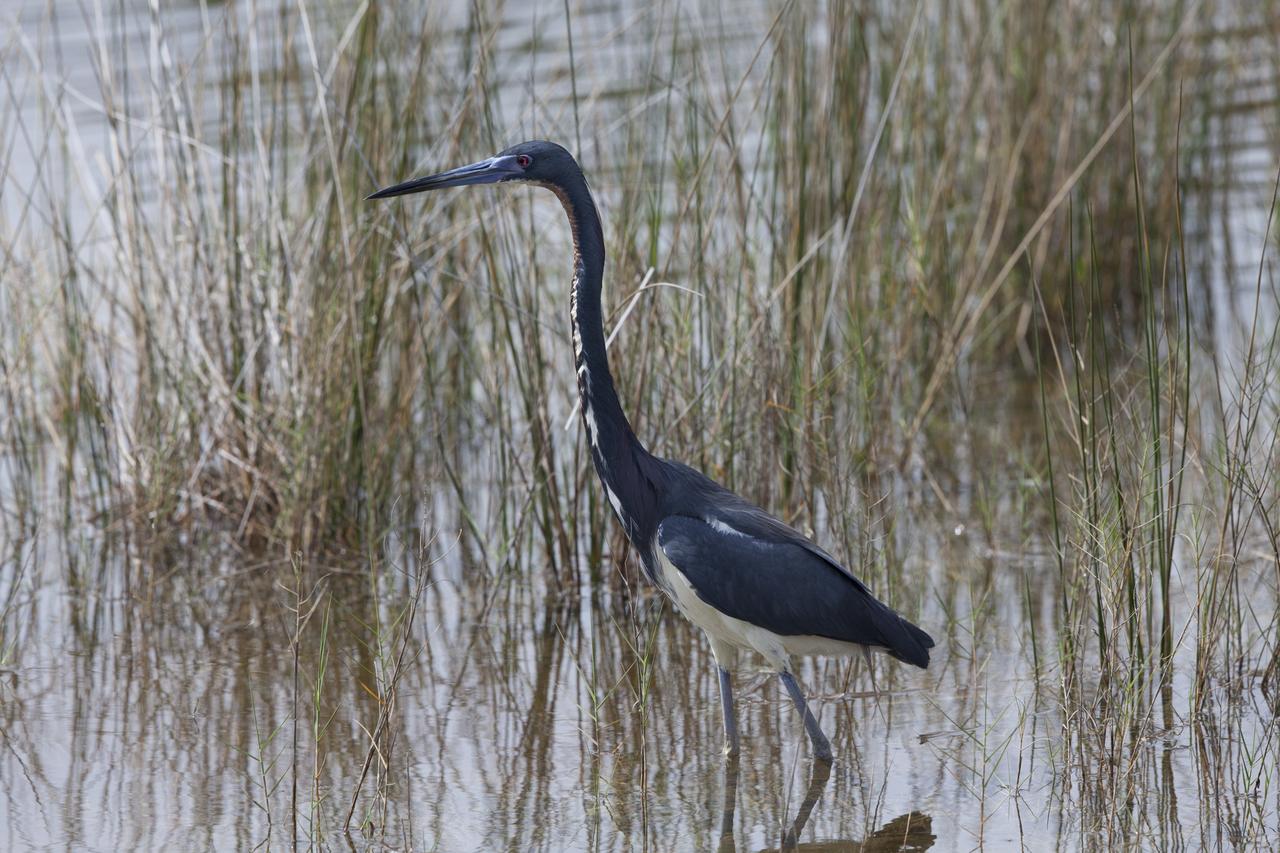
A tricolored heron wades in a shallow waterway at Merritt Island National Wildlife Refuge in Florida. NASA’s Kennedy Space Center shares boundaries with the refuge, which is home to more than 330 native and migratory bird species, along with 25 mammal, 117 fish, and 65 amphibian and reptile species.
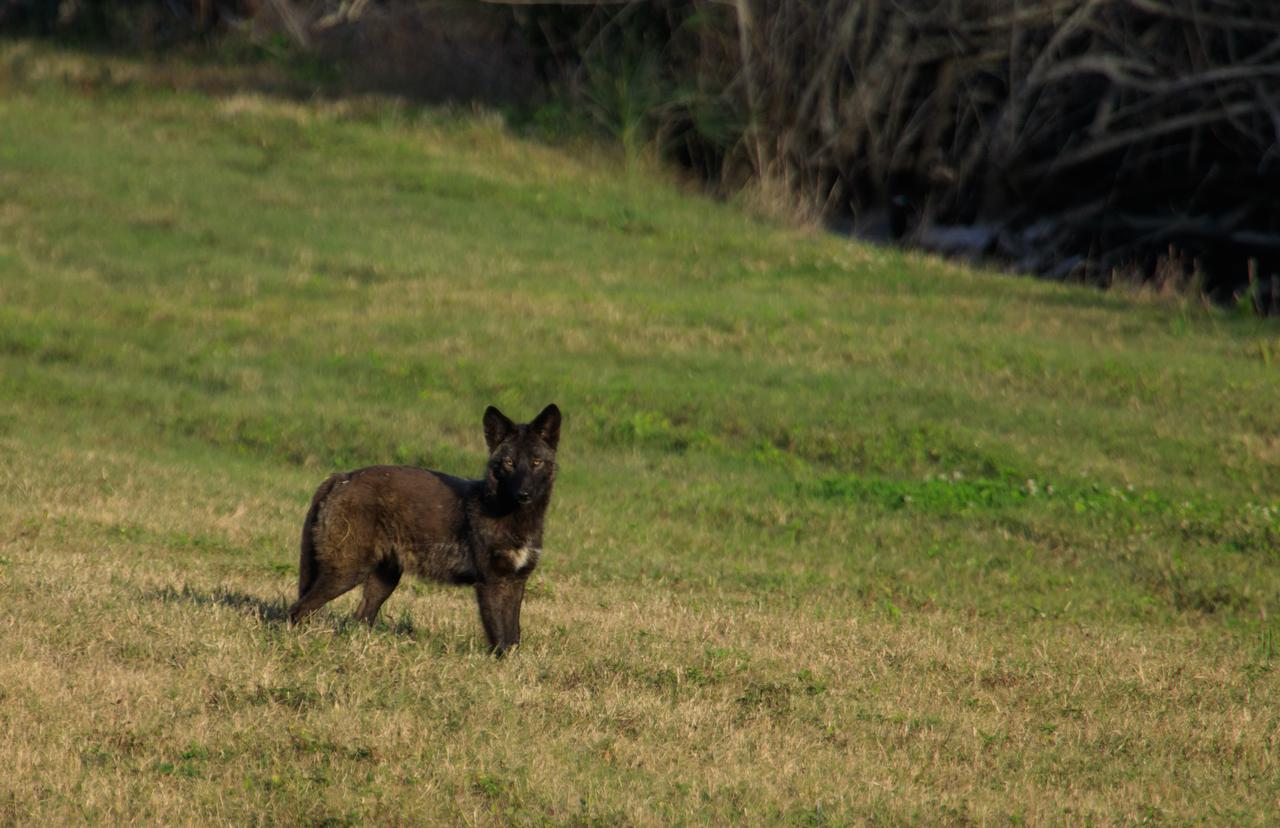
A coyote with an intent gaze roams in the grass near a waterway at NASA's Kennedy Space Center in Florida on Feb. 4, 2021. The center shares a border with the Merritt Island National Wildlife Refuge. More than 330 native and migratory bird species, along with 25 mammal, 117 fish, and 65 amphibian and reptile species call Kennedy and the wildlife refuge home.

Two juvenile roseate spoonbills pause near a waterway at Merritt Island National Wildlife Refuge in Florida. NASA’s Kennedy Space Center shares boundaries with the refuge, which is home to more than 330 native and migratory bird species, along with 25 mammal, 117 fish, and 65 amphibian and reptile species.
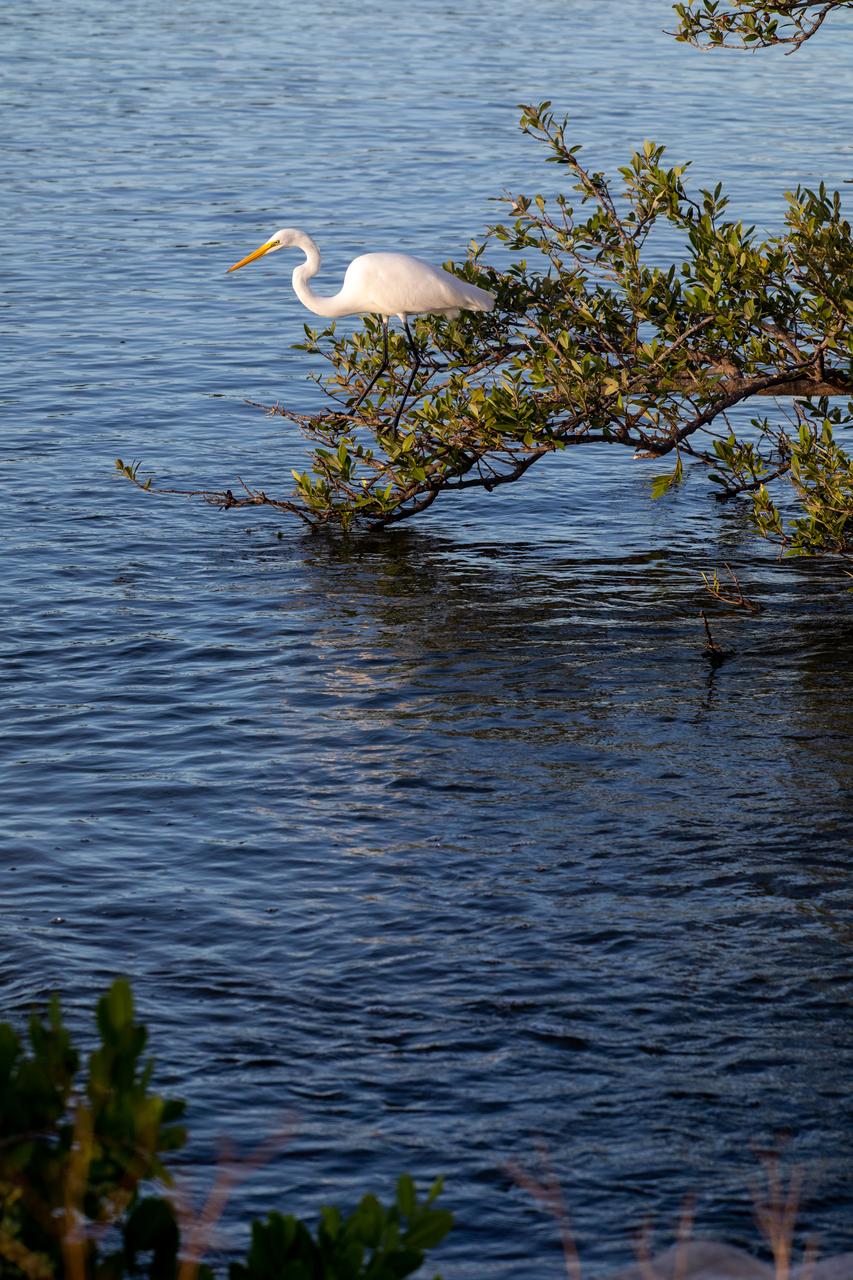
Kennedy Space Center shares boundaries with the Merritt Island National Wildlife Refuge on Florida’s Atlantic coast. The refuge's coastal location, tropic-like climate, and wide variety of habitat types contribute to a diverse bird population. More than 350 species have been identified on the refuge.
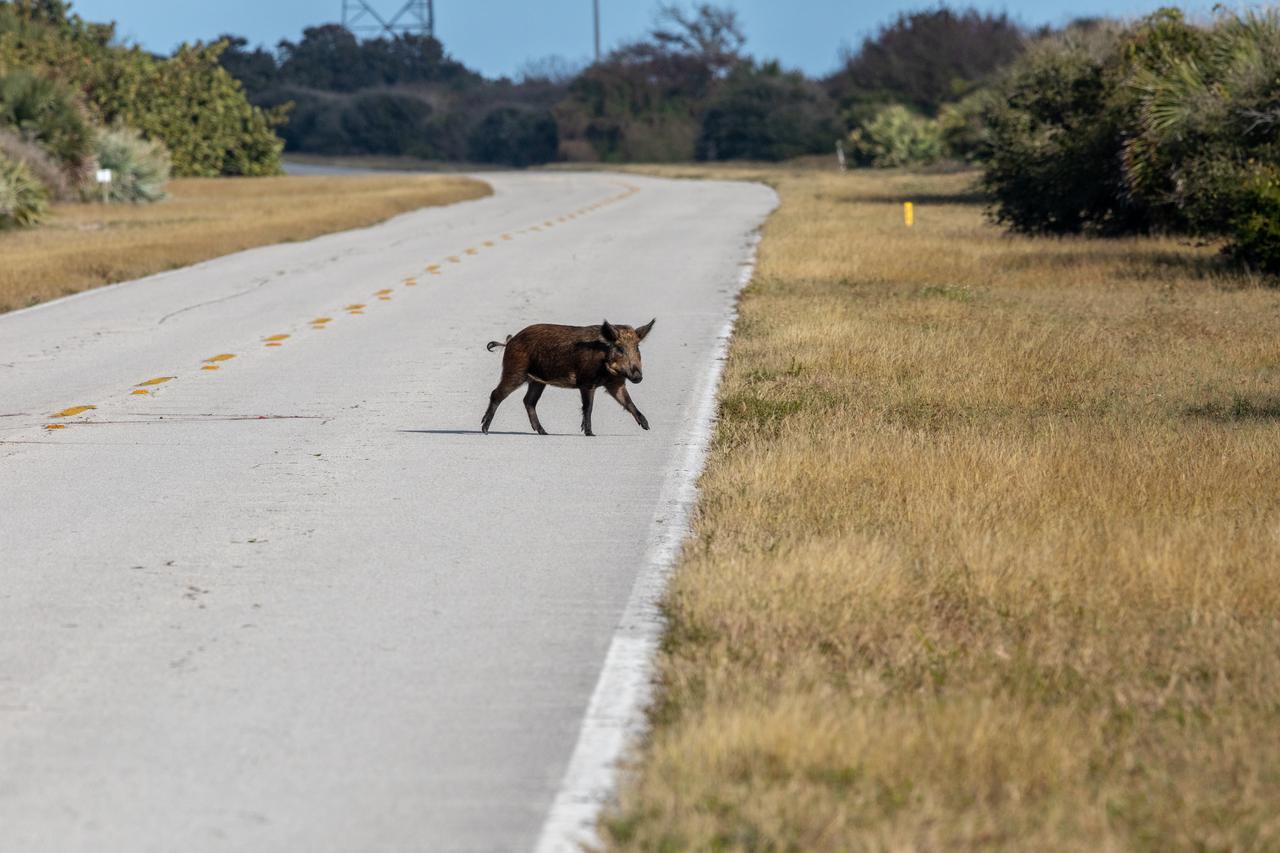
A wild pig crosses a roadway at NASA's Kennedy Space Center in Florida on Jan. 11, 2021. The center shares a border with the Merritt Island National Wildlife Refuge. More than 330 native and migratory bird species, 25 mammal, 117 fish and 65 amphibian and reptile species call Kennedy and the wildlife refuge home.
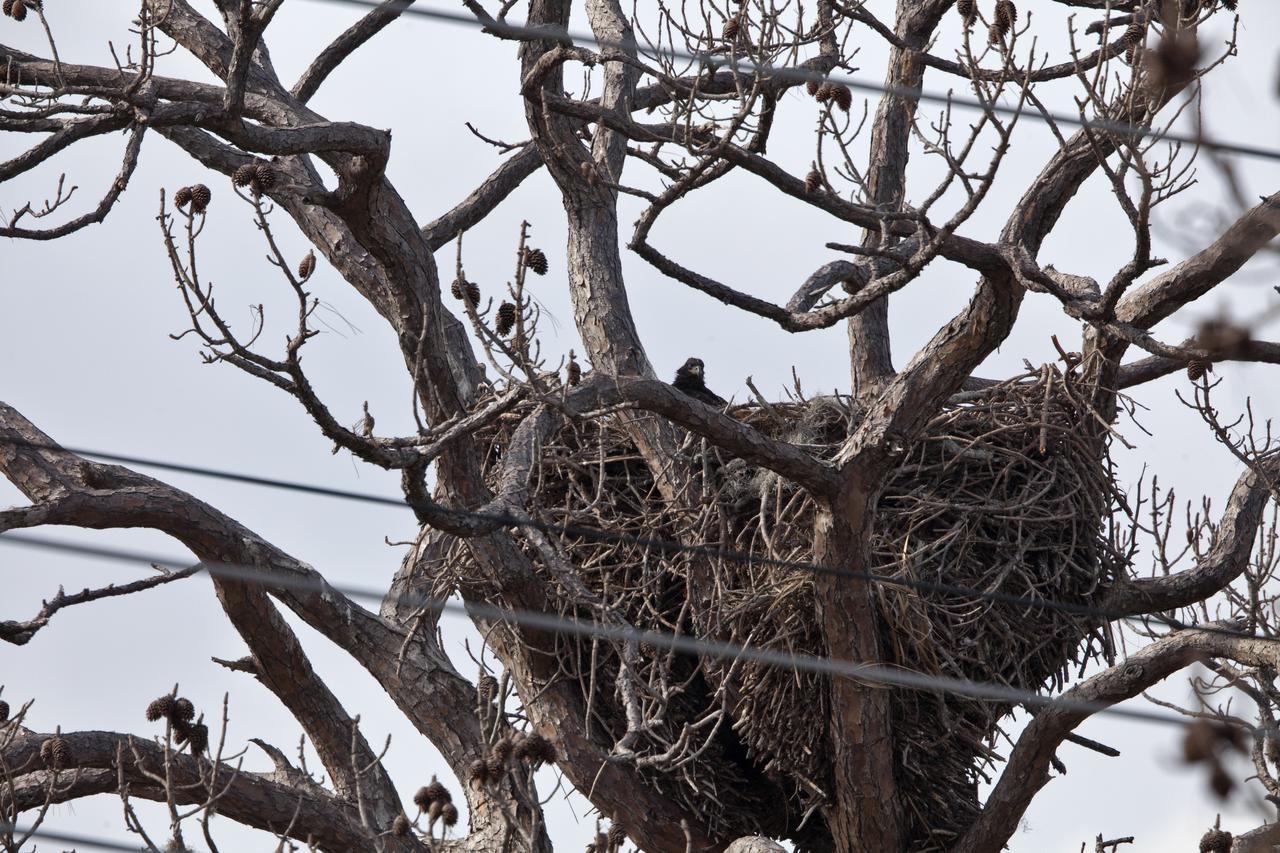
A baby eagle perches in a nest in a tree along State Road 3 at NASA's Kennedy Space Center in Florida. The center shares a border with the 140,000-acre Merritt Island National Wildlife Refuge. More than 330 native and migratory bird species, 25 mammals, 117 fishes and 65 amphibians and reptiles call Kennedy and the wildlife refuge home.
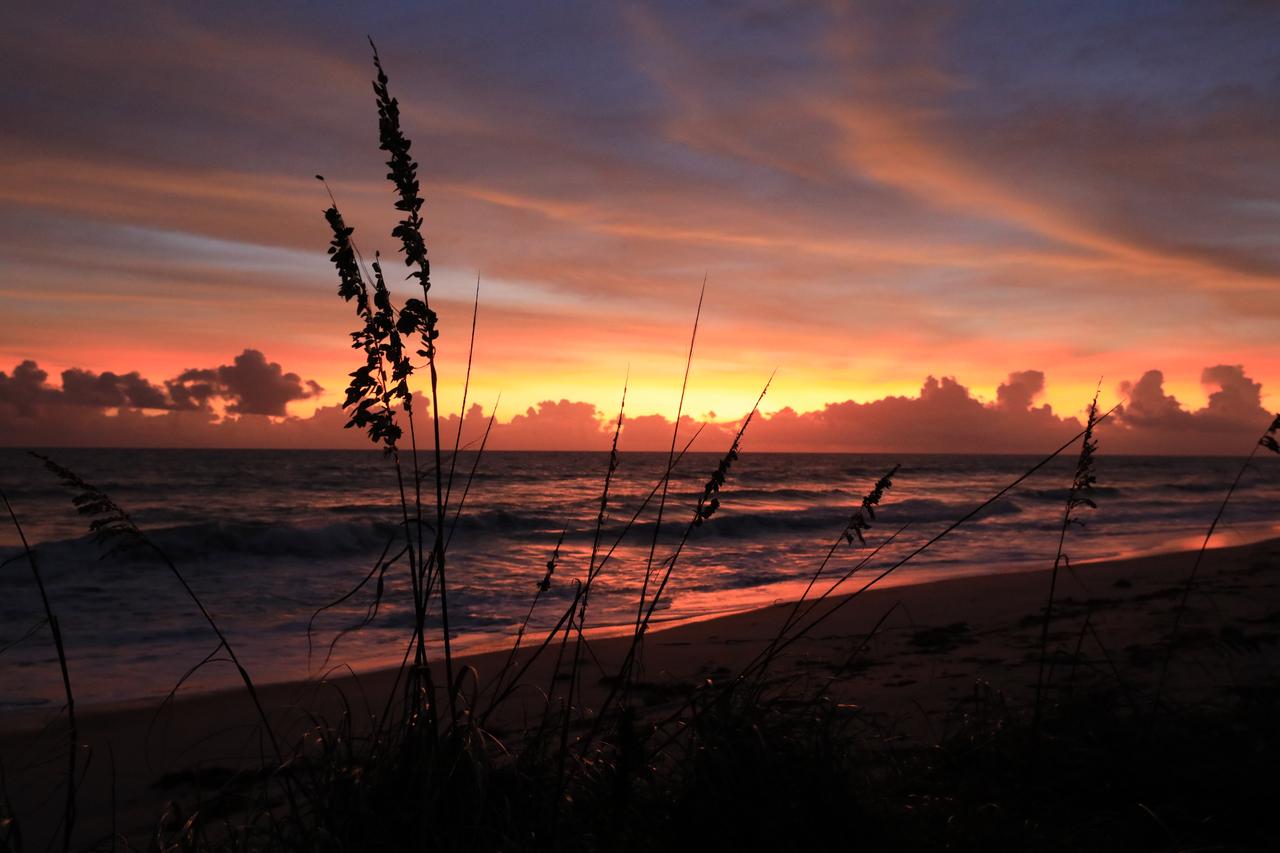
NASA’s Kennedy Space Center occupies a scenic stretch of land along Florida’s east coast, including miles of pristine beaches on the Atlantic Ocean. The agency is nearing completion on a restoration project to shore up the dunes that create a natural barrier from the waves. Once the dune is built up, native coastal vegetation will be replanted, helping to stabilize the dune and offer a habitat for Kennedy’s coastal wildlife.
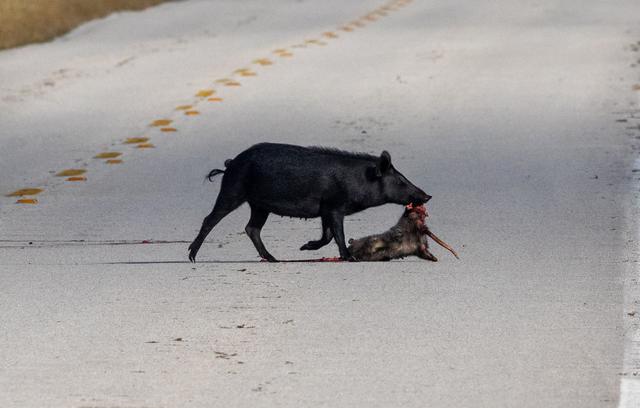
A wild pig is spotted with its prey on a roadway at NASA's Kennedy Space Center in Florida on Jan. 11, 2021. The center shares a border with the Merritt Island National Wildlife Refuge. More than 330 native and migratory bird species, 25 mammal, 117 fish and 65 amphibian and reptile species call Kennedy and the wildlife refuge home.
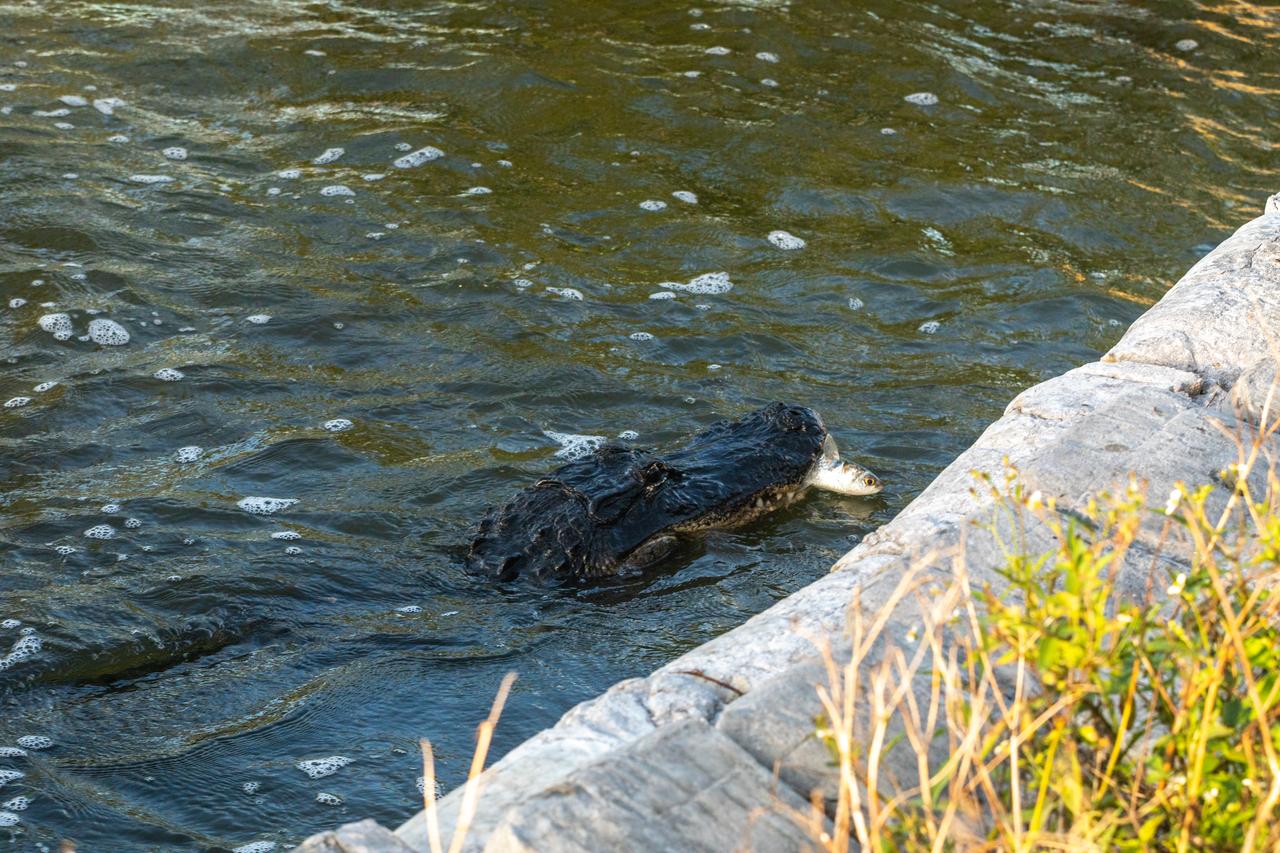
Kennedy Space Center shares boundaries with the Merritt Island National Wildlife Refuge on Florida’s Atlantic coast. Alligators can be found in many areas of the refuge. They are important top predators that help keep populations of smaller animals under control. They also create habitat for other wildlife in the marsh by digging holes that hold water during the dry season.
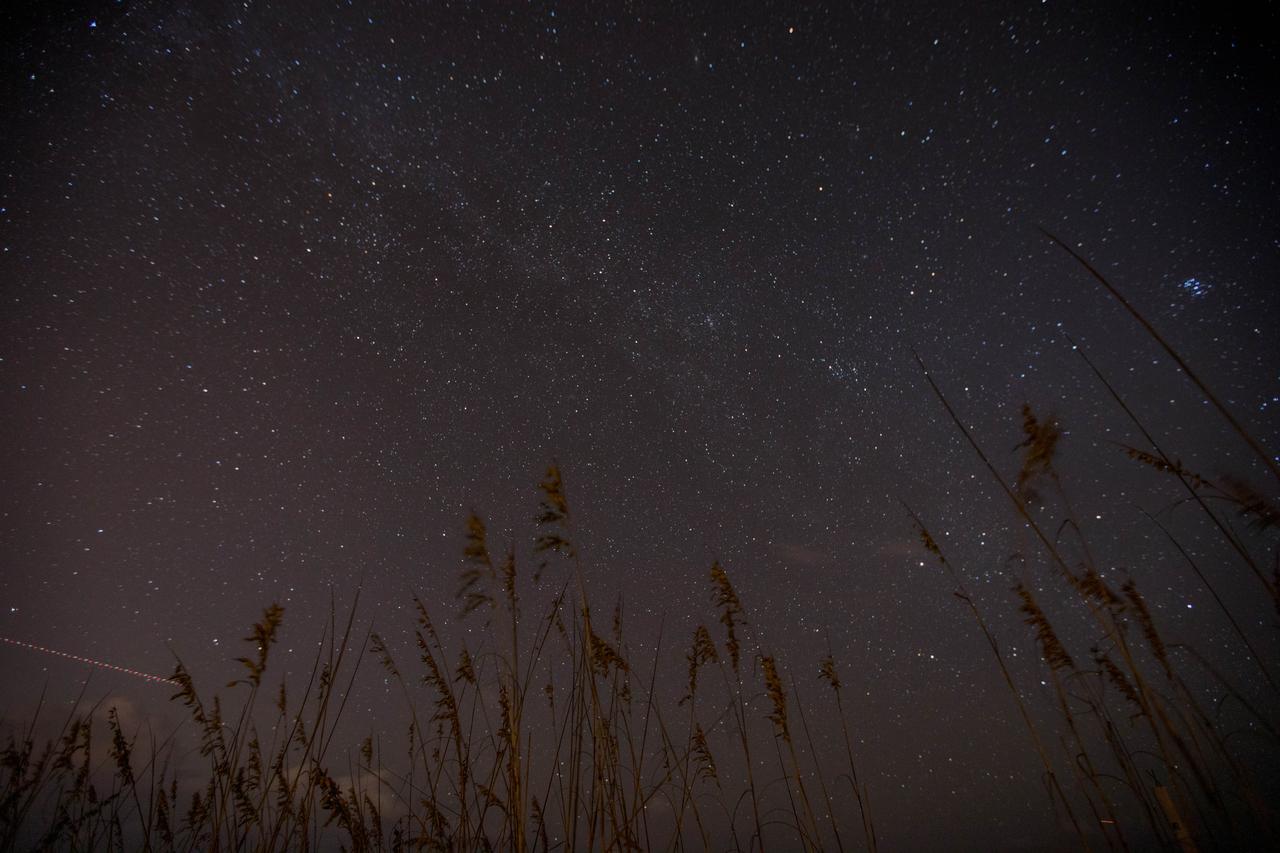
Sea oats frame the night sky, bisected by the Milky Way, in this view from the Atlantic shoreline at NASA’s Kennedy Space Center in Florida on Oct. 31, 2019. The lights of an aircraft create an illuminated streak in the lower left corner.
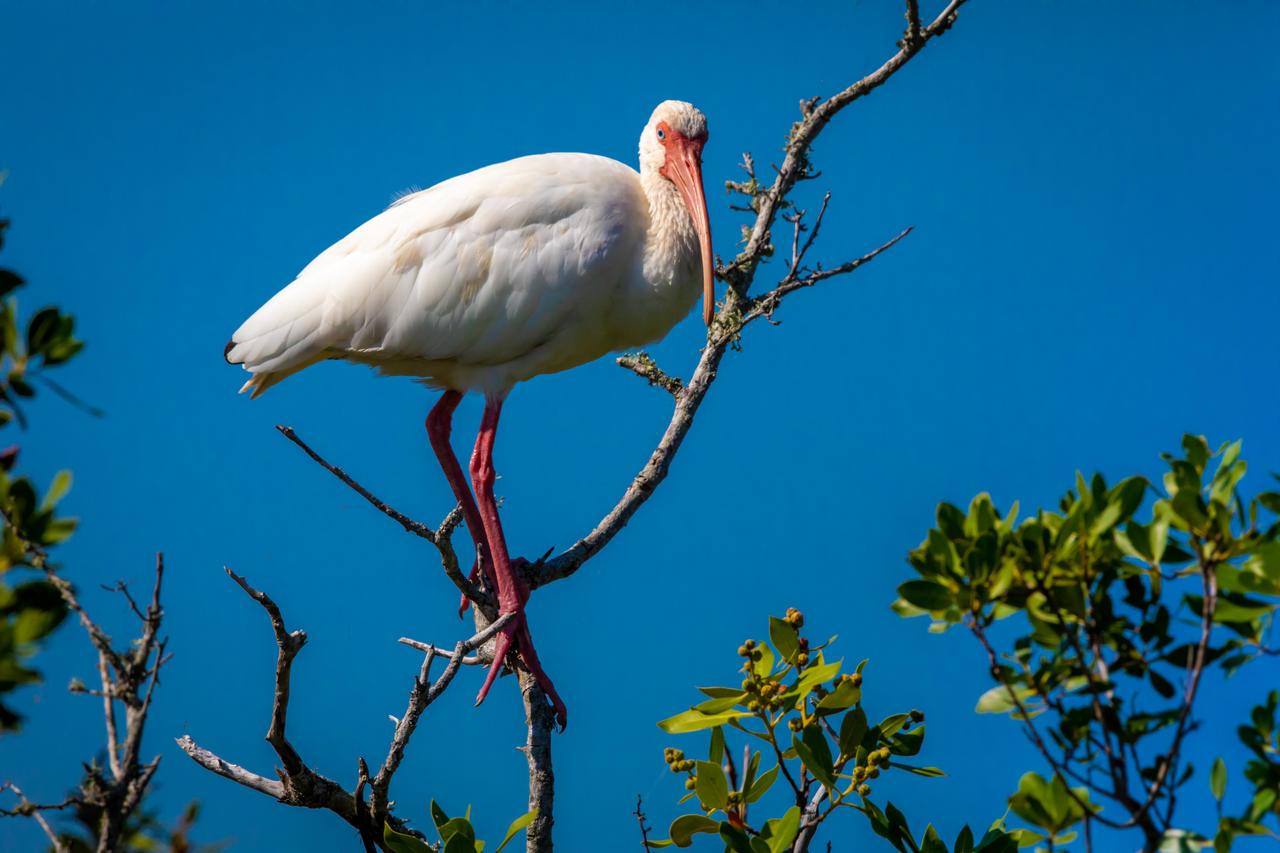
A White Ibis perches on the branch of a tree at NASA's Kennedy Space Center in Florida. The center shares a border with the Merritt Island National Wildlife Refuge. More than 330 native and migratory bird species, 25 mammal, 117 fish and 65 amphibian and reptile species call Kennedy and the wildlife refuge home.
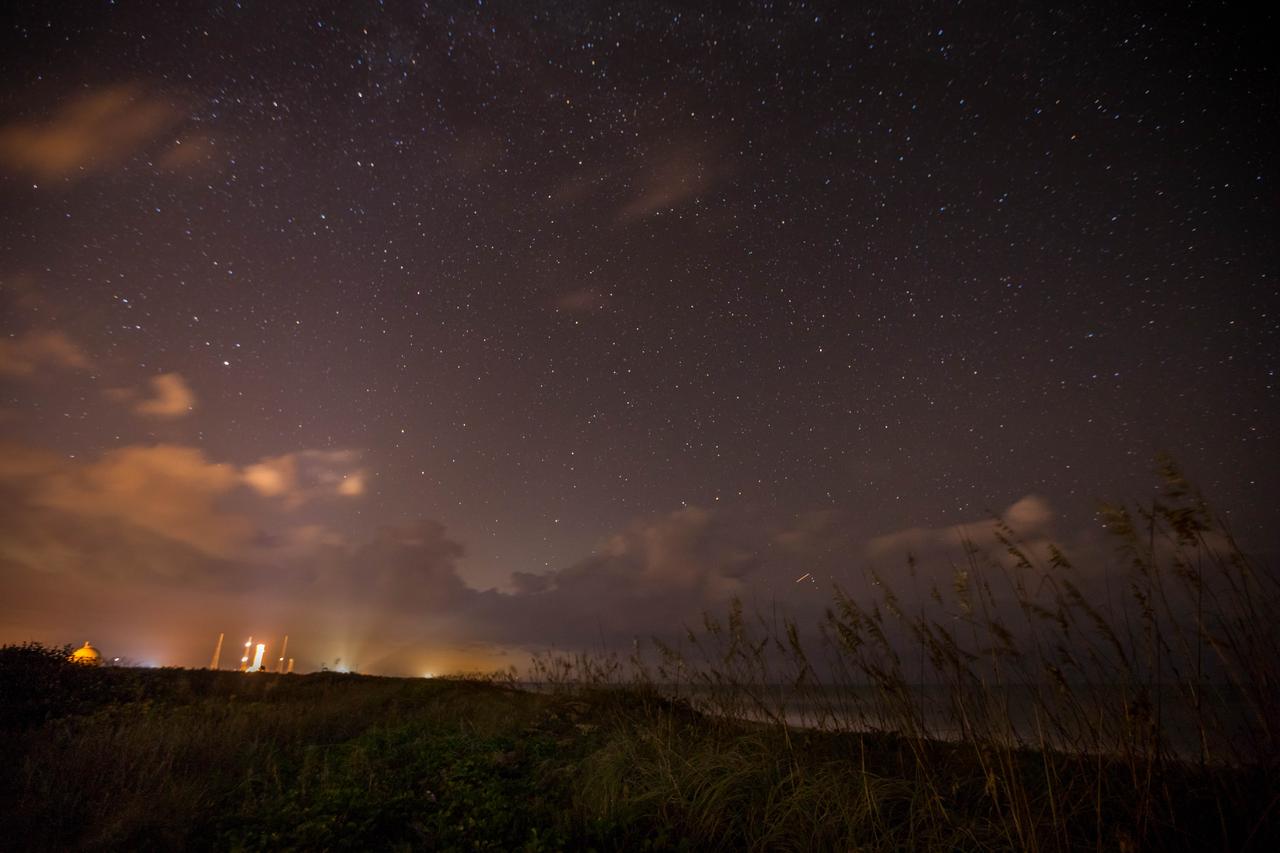
Lights from Launch Complexes 39A and B, left, glow against the night sky in this view from the Atlantic shoreline at NASA’s Kennedy Space Center in Florida on Oct. 31, 2019.
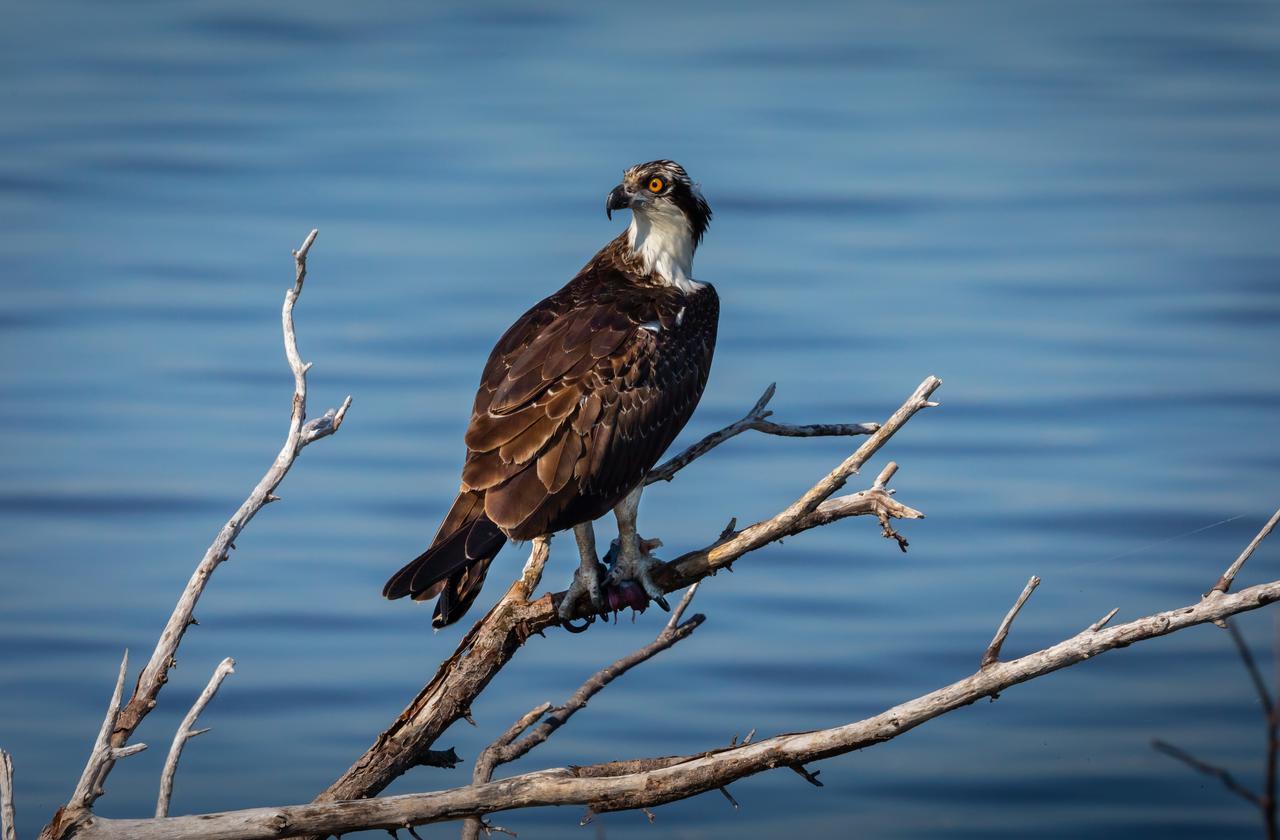
An osprey sits on a branch near a waterway at NASA's Kennedy Space Center in Florida. The center shares a border with the Merritt Island National Wildlife Refuge. More than 330 native and migratory bird species, 25 mammal, 117 fish and 65 amphibian and reptile species call Kennedy and the wildlife refuge home.
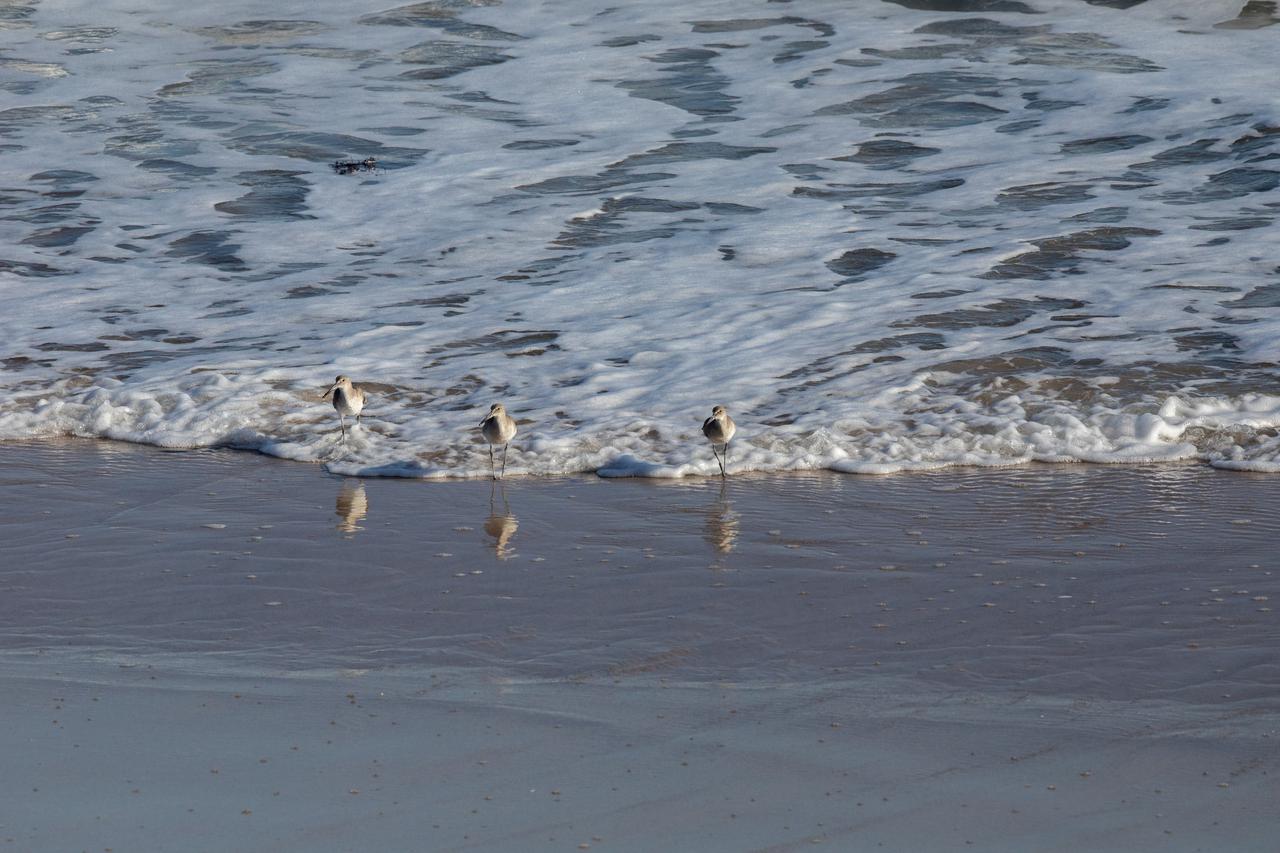
Several sandpipers wade in the shoreline of the Atlantic Ocean near NASA's Kennedy Space Center in Florida on Jan. 11, 2021. The center shares a border with the Merritt Island National Wildlife Refuge. More than 330 native and migratory bird species, 25 mammal, 117 fish and 65 amphibian and reptile species call Kennedy and the wildlife refuge home.
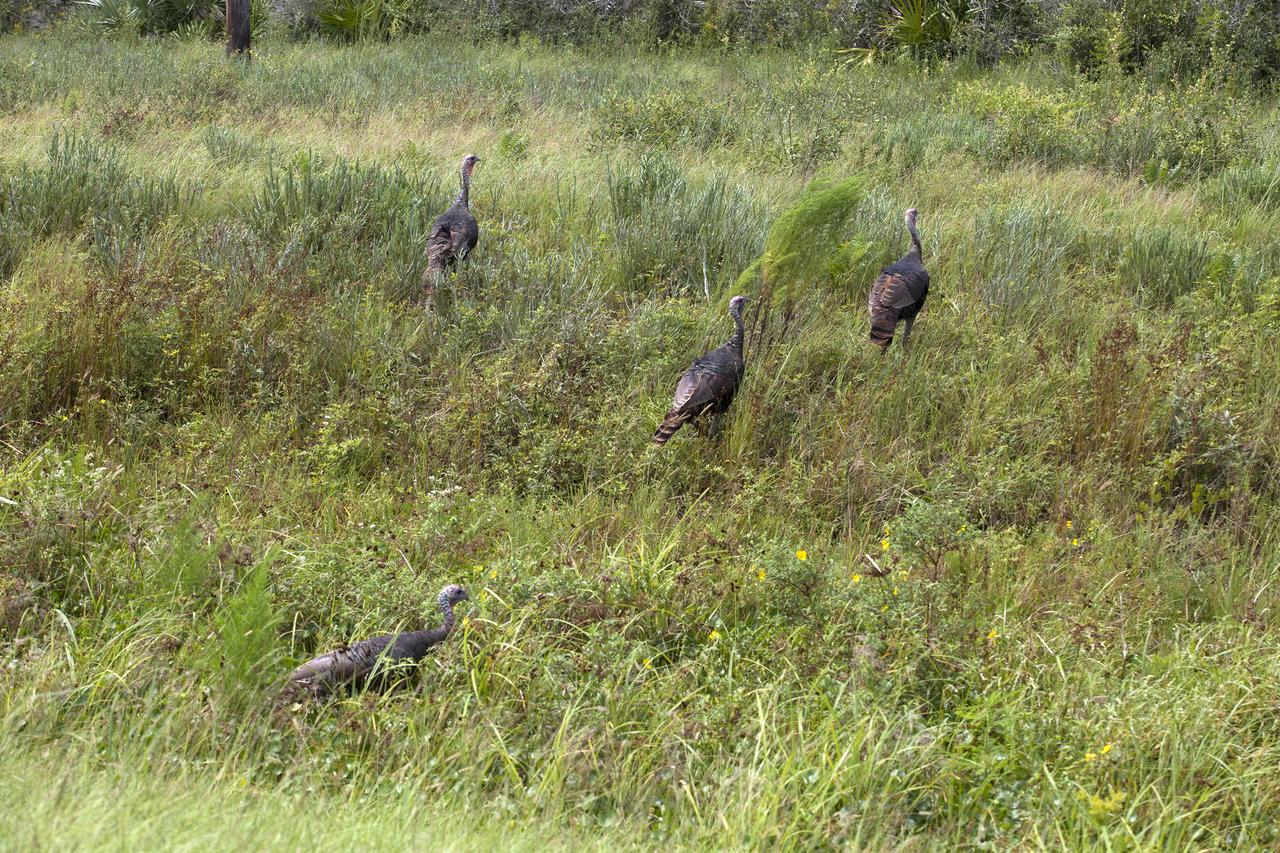
Four wild turkeys walk through tall grass at NASA’s Kennedy Space Center in Florida. Kennedy shares a boundary with the Merritt Island National Wildlife Refuge. The Refuge encompasses 140,000 acres that are a habitat for more than 331 species of birds, 31 mammals, 117 fishes, and 65 amphibians and reptiles. The marshes and open water of the refuge provide wintering areas for 23 species of migratory waterfowl, as well as a year-round home for great blue herons, great egrets, wood storks, cormorants, brown pelicans and other species of marsh and shore birds, as well as a variety of insects.

Photographers at NASA capture the sunset on Tuesday, Jan. 30, 2024, near the headquarters building of the agency’s Kennedy Space Center in Florida.
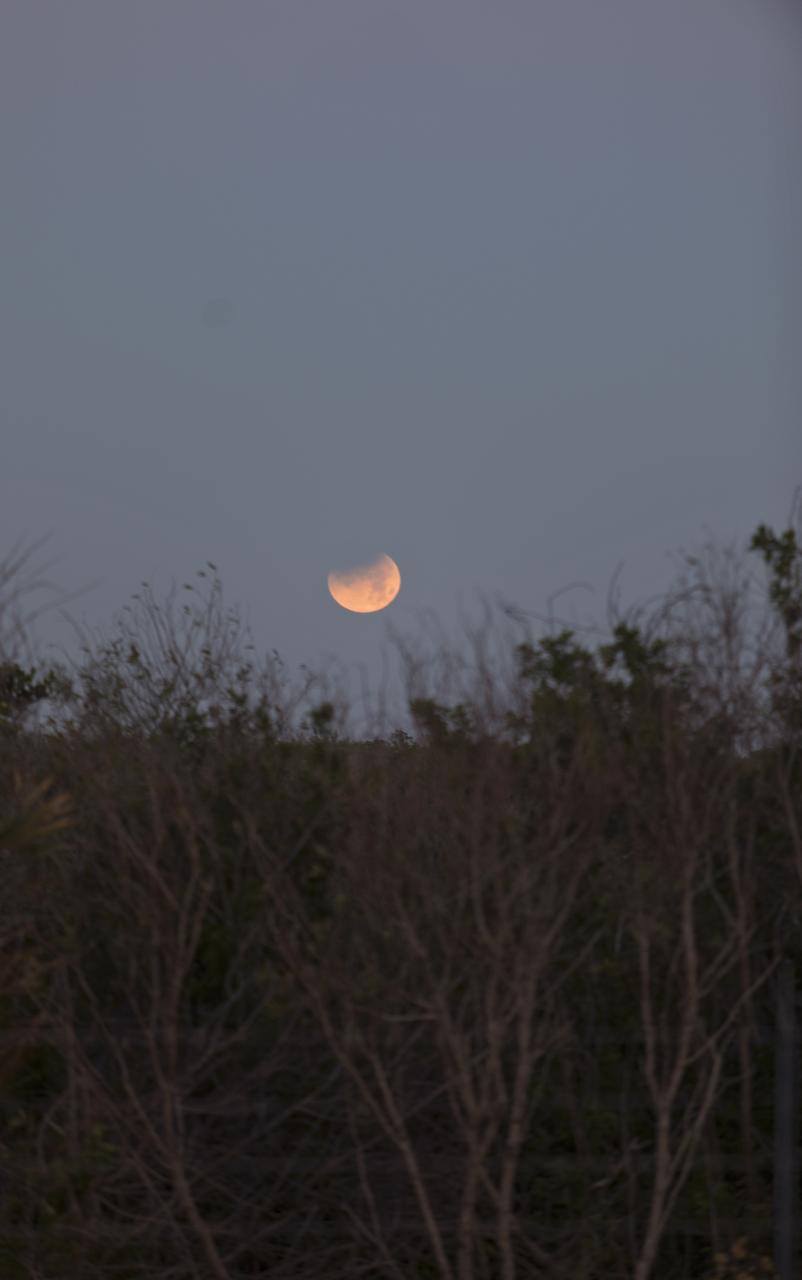
In twilight and framed by native vegetation, the Moon rises over NASA's Kennedy Space Center in Florida.
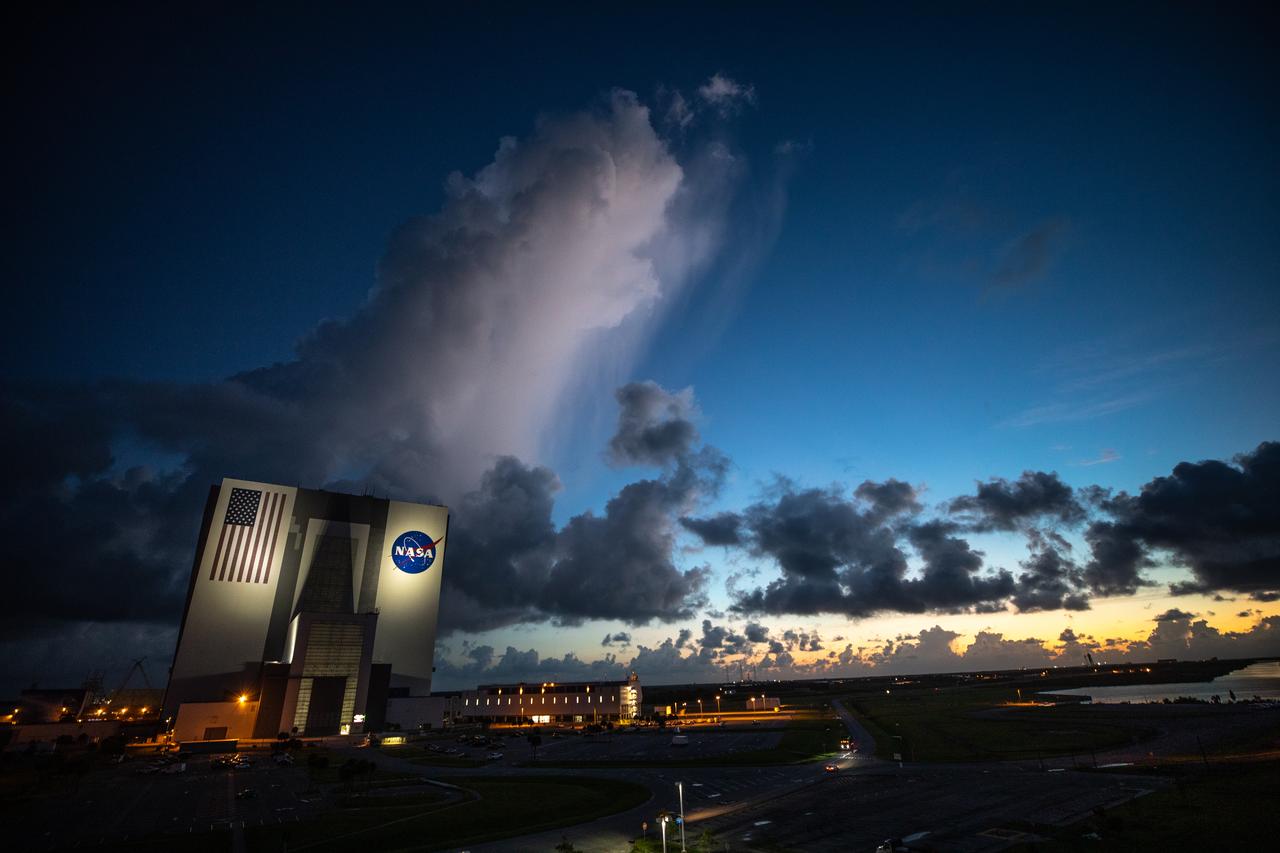
An early sunrise view of the iconic Vehicle Assembly Building (VAB) at NASA's Kennedy Space Center in Florida on July 25, 2020. Repainting of the NASA meatball and American flag recently was completed on the 525-foot tall facility. Inside the VAB, 10 new work platforms, 20 platform halves altogether, have been installed in High Bay 3 for the agency's Space Launch System (SLS) rocket and Orion spacecraft. Exploration Ground Systems is overseeing upgrades to the VAB.
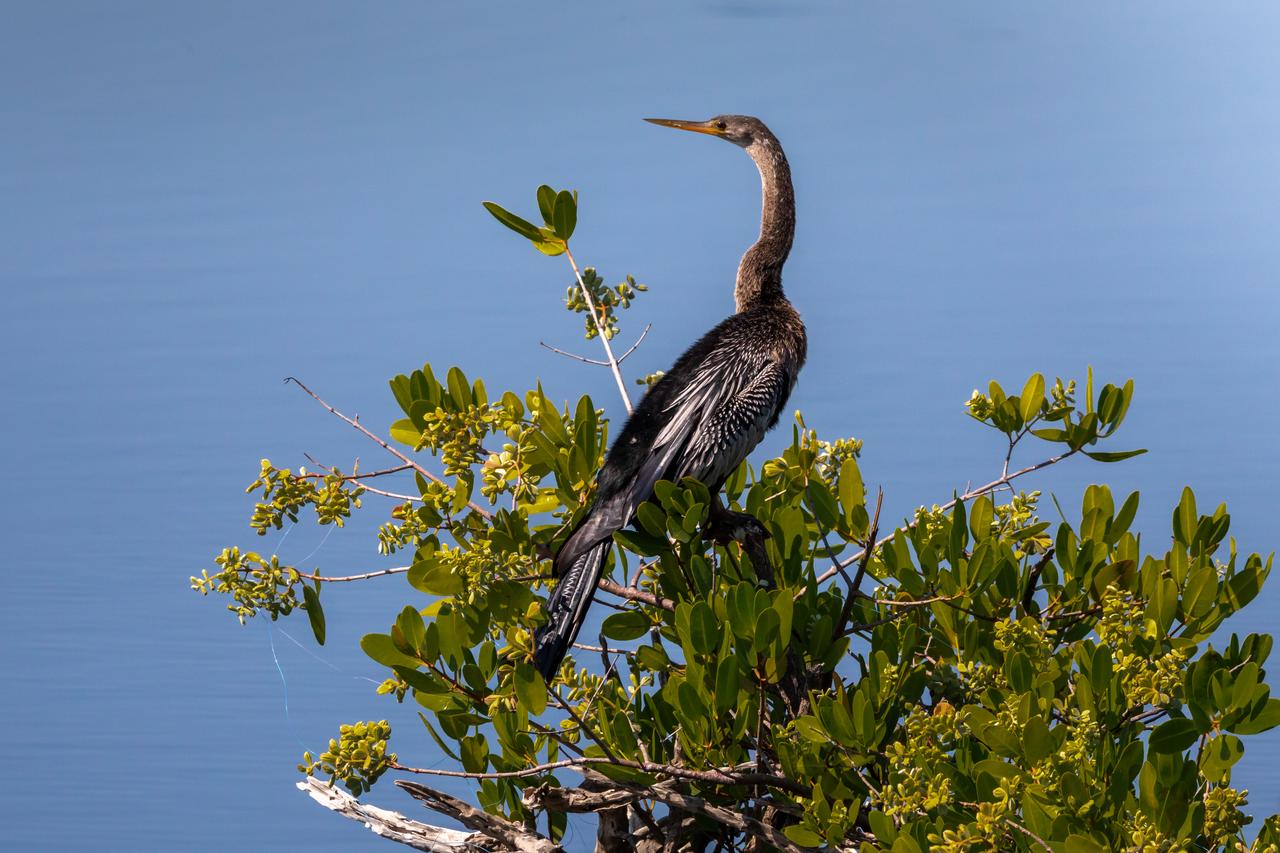
A Reddish Egret perches in a tree near a waterway at NASA's Kennedy Space Center in Florida. The center shares a border with the Merritt Island National Wildlife Refuge. More than 330 native and migratory bird species, 25 mammal, 117 fish and 65 amphibian and reptile species call Kennedy and the wildlife refuge home.
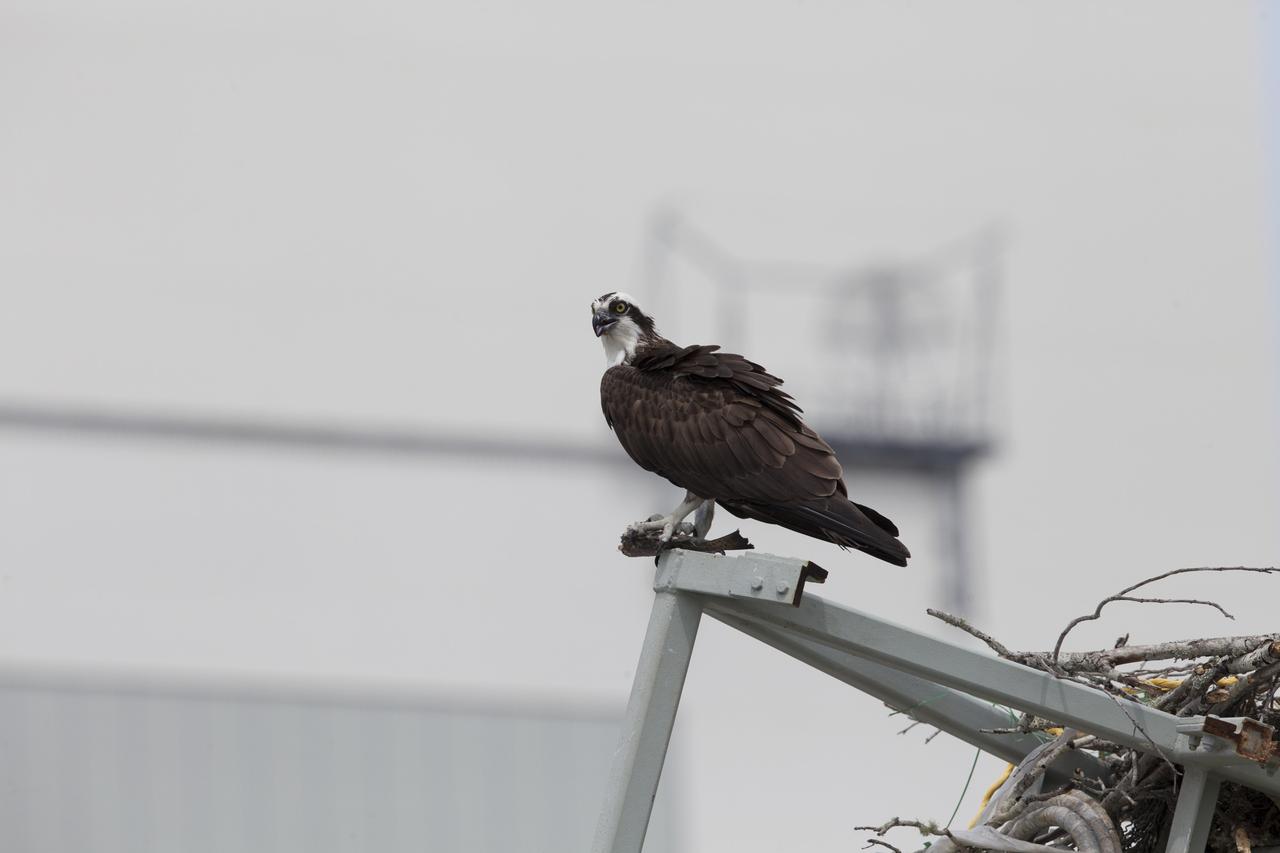
An osprey, clutching a fish, pauses for a meal atop a metal structure at NASA’s Kennedy Space Center in Florida. The spaceport shares boundaries with the Merritt Island National Wildlife Refuge, which is home to more than 330 native and migratory bird species, along with 25 mammal, 117 fish, and 65 amphibian and reptile species.
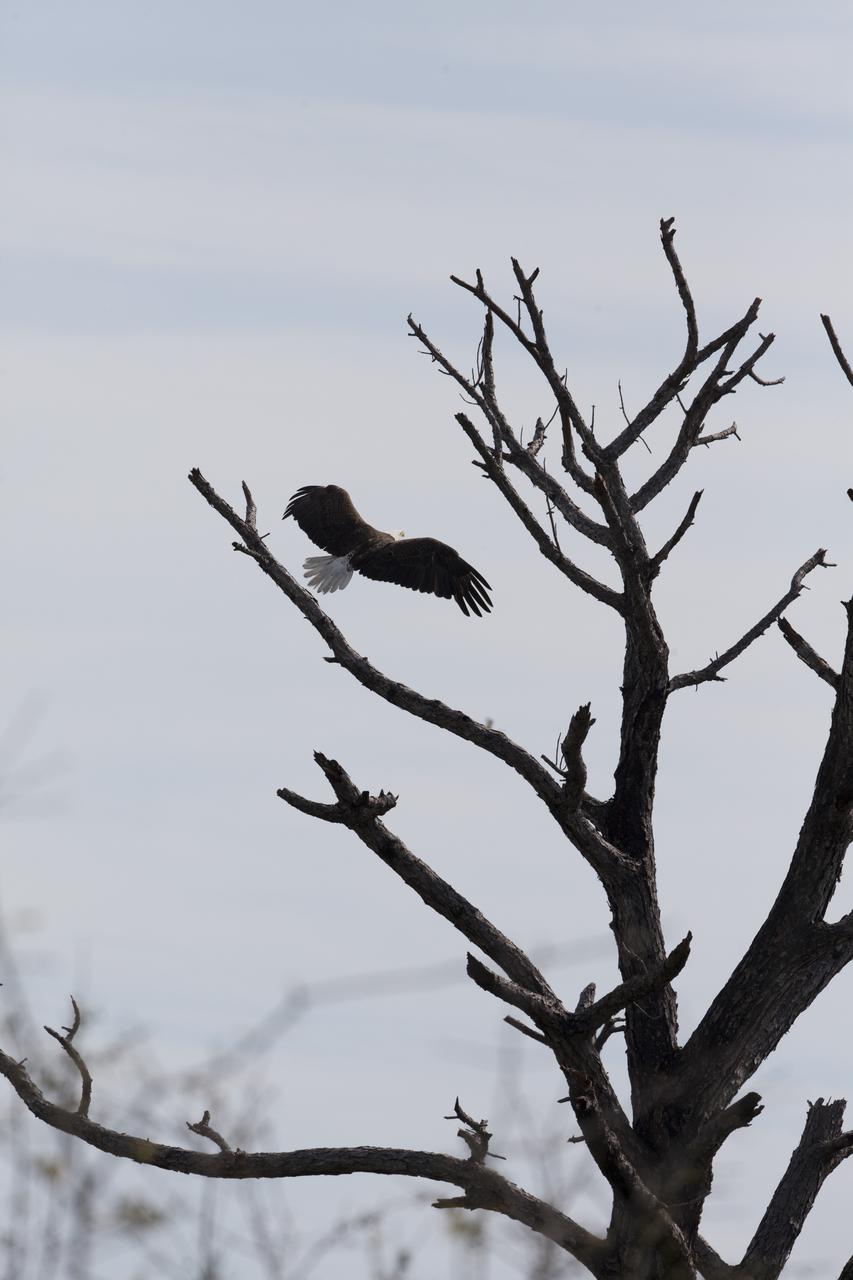
A bald eagle soars away from a pine tree at NASA’s Kennedy Space Center in Florida. The spaceport shares borders with the Merritt Island National Wildlife Refuge, which is home to more than 330 native and migratory bird species, along with 25 mammal, 117 fish, and 65 amphibian and reptile species.
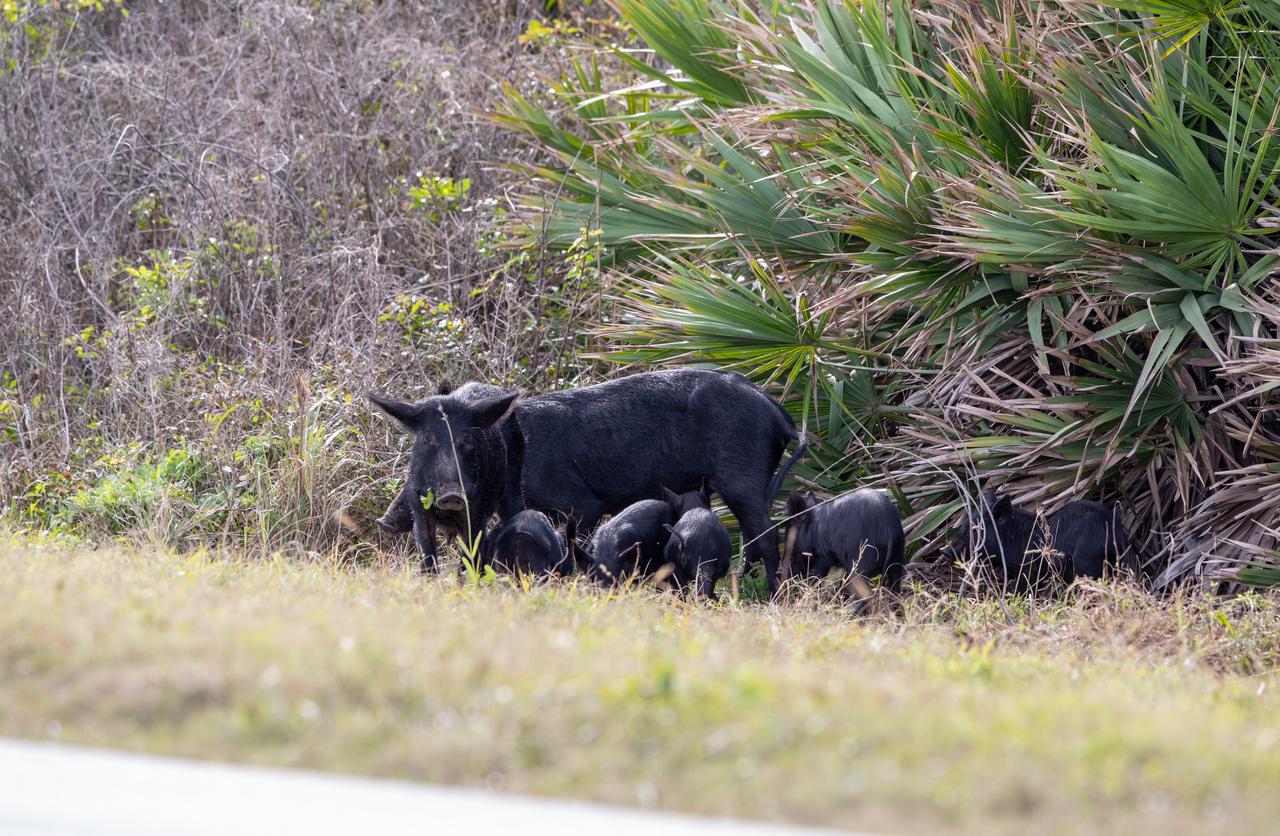
A family of wild hogs forages for food near the foliage at NASA’s Kennedy Space Center in Florida. Kennedy shares a border with the Merritt Island National Wildlife Refuge, spanning 140,000 acres of land, water, and marshes. More than 330 bird species, 117 species of fish, 68 amphibians and reptiles, and 31 different mammals call Kennedy and its surrounding borders home.
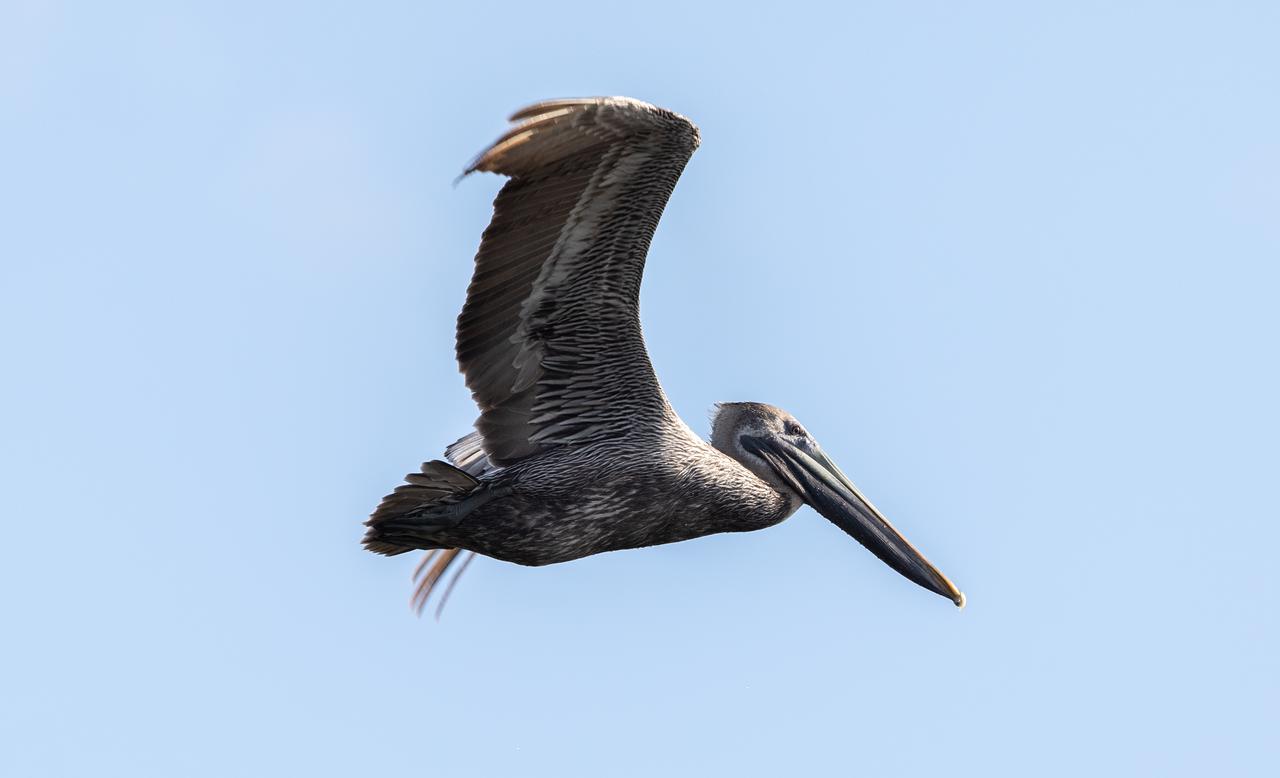
A pelican takes flight at NASA's Kennedy Space Center in Florida on Jan. 11, 2021. The center shares a border with the Merritt Island National Wildlife Refuge. More than 330 native and migratory bird species, along with 25 mammal, 117 fish, and 65 amphibian and reptile species call Kennedy and the wildlife refuge home.
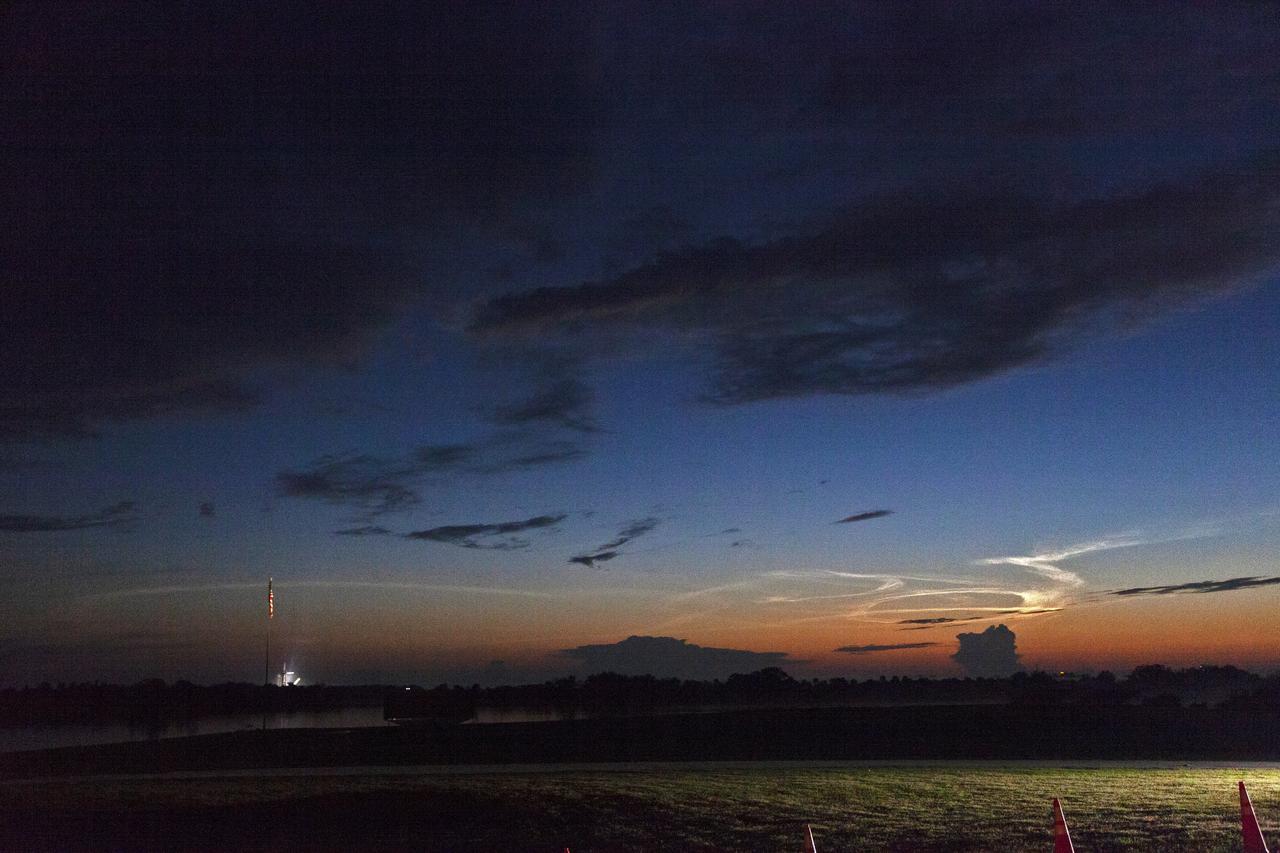
The sun begins to rise at NASA’s Kennedy Space Center in Florida following a successful launch of SpaceX’s uncrewed Demo-1 flight test from Launch Complex 39A on March 2, 2019. The company’s Crew Dragon spacecraft lifted off atop a Falcon 9 rocket and traveled to the International Space Station, where it validated end-to-end systems and capabilities in preparation for certification to fly crew.
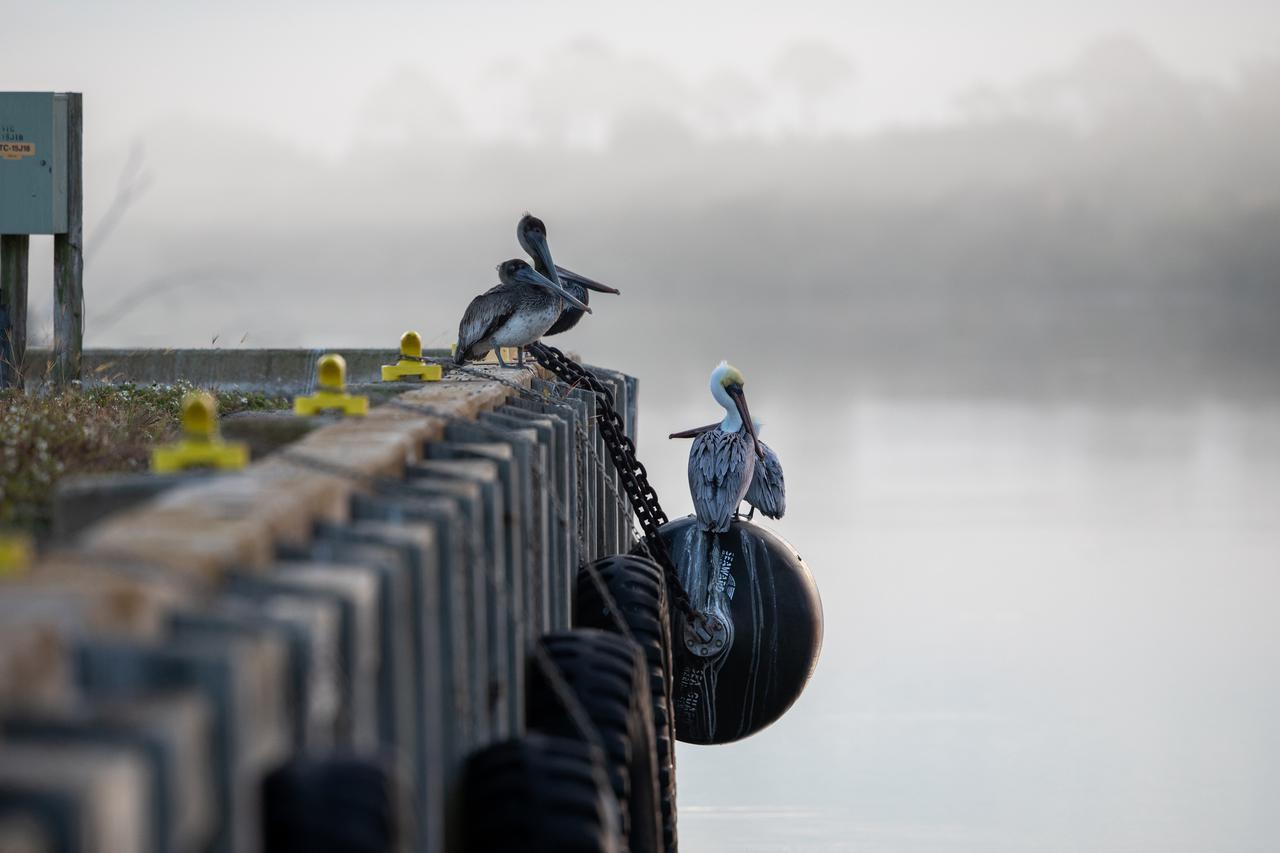
Pelicans perch on the support beams of an embankment on a waterway at NASA's Kennedy Space Center in Florida on Jan. 11, 2021. The center shares a border with the Merritt Island National Wildlife Refuge. More than 330 native and migratory bird species, along with 25 mammal, 117 fish, and 65 amphibian and reptile species call Kennedy and the wildlife refuge home.
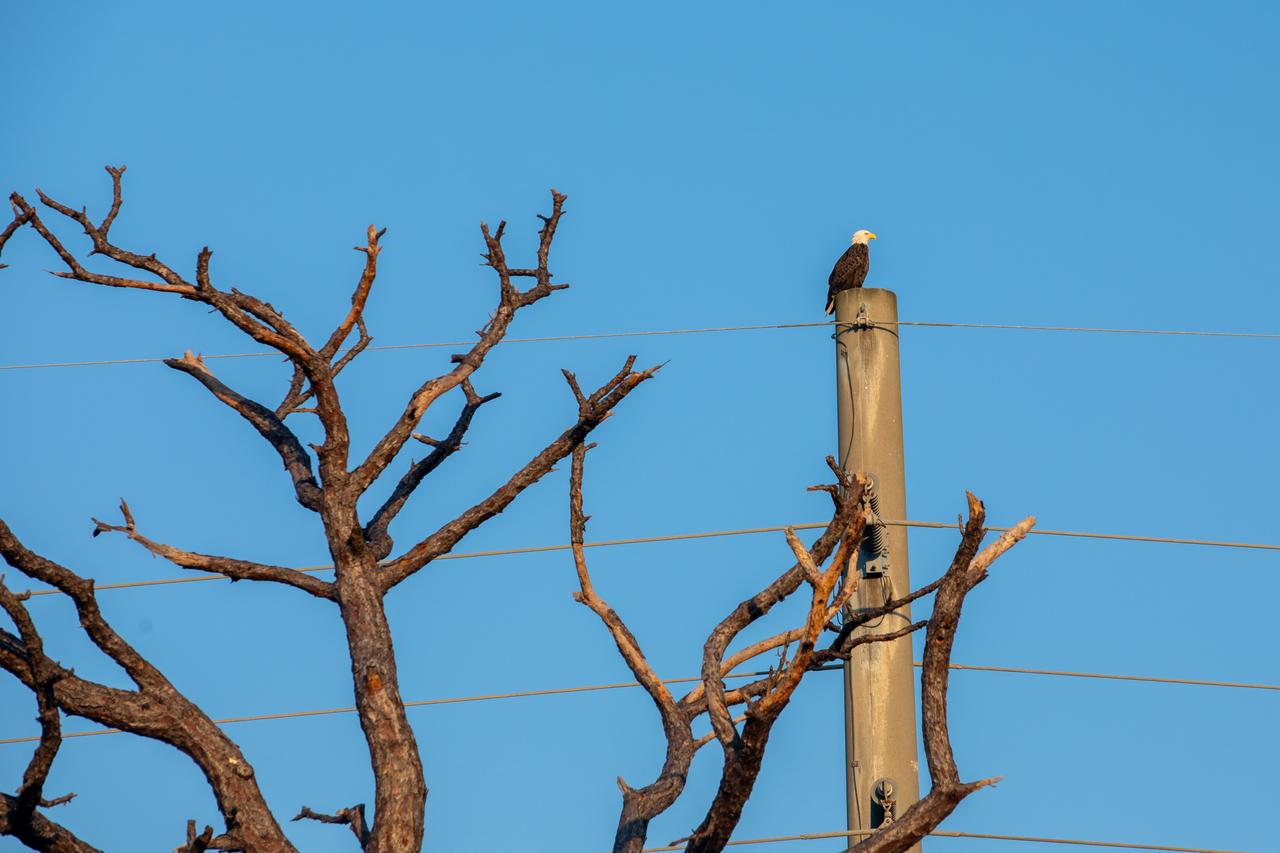
An American bald eagle is perched atop a pole on Wednesday, Sept. 18, 2024, near Kennedy Parkway North, about two miles from the Vehicle Assembly Building at NASA’s Kennedy Space Center in Florida. As of 2023, NASA’s Kennedy is home to 39 eagle territories with 33 of them active or potentially active between the months of September to March. NASA shares a boundary with the Merritt Island National Wildlife Refuge, home to more than 1,500 species of plants and animals, and 15 federally listed species.

Thistle blooms provide a midday meal for a gulf fritillary butterfly at Merritt Island National Wildlife Refuge in Florida. NASA’s Kennedy Space Center shares boundaries with the refuge, which is home to more than 330 native and migratory bird species, along with 25 mammal, 117 fish, and 65 amphibian and reptile species.
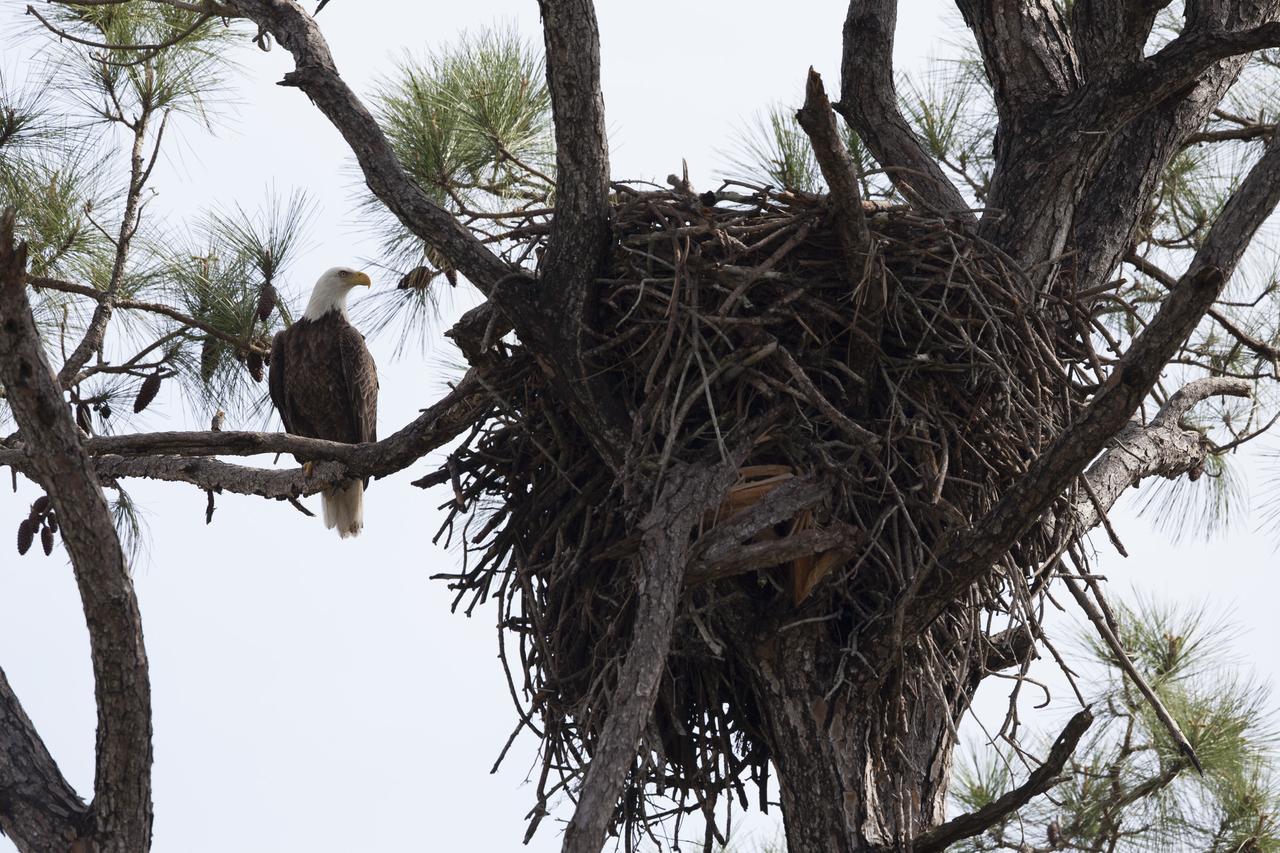
From its perch high up in a pine tree at Merritt Island National Wildlife Refuge in Florida, a bald eagle keeps a watchful eye on its large nest, called an aerie. NASA’s Kennedy Space Center shares boundaries with the refuge, which is home to more than 330 native and migratory bird species, along with 25 mammal, 117 fish, and 65 amphibian and reptile species.
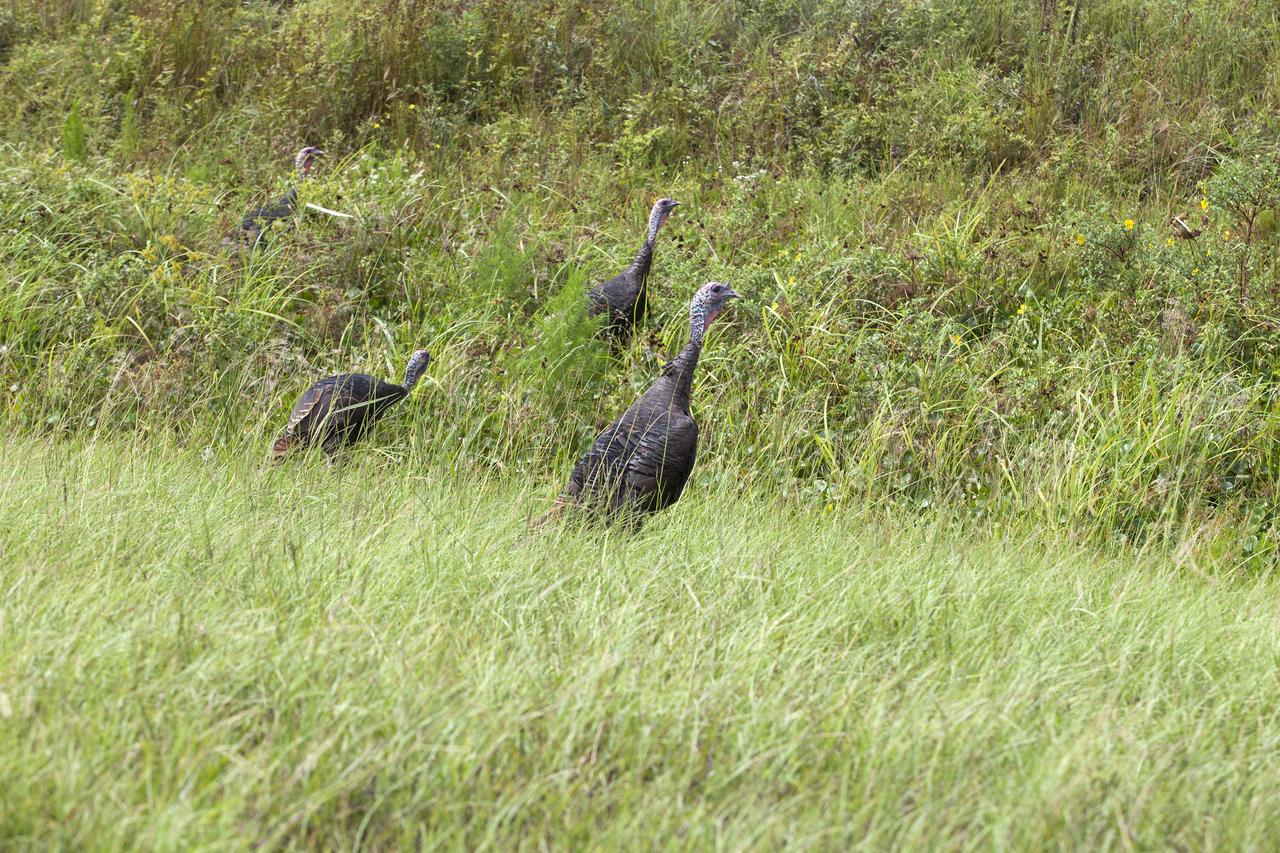
Four wild turkeys walk through tall grass at NASA’s Kennedy Space Center in Florida. Kennedy shares a boundary with the Merritt Island National Wildlife Refuge. The Refuge encompasses 140,000 acres that are a habitat for more than 331 species of birds, 31 mammals, 117 fishes, and 65 amphibians and reptiles. The marshes and open water of the refuge provide wintering areas for 23 species of migratory waterfowl, as well as a year-round home for great blue herons, great egrets, wood storks, cormorants, brown pelicans and other species of marsh and shore birds, as well as a variety of insects.
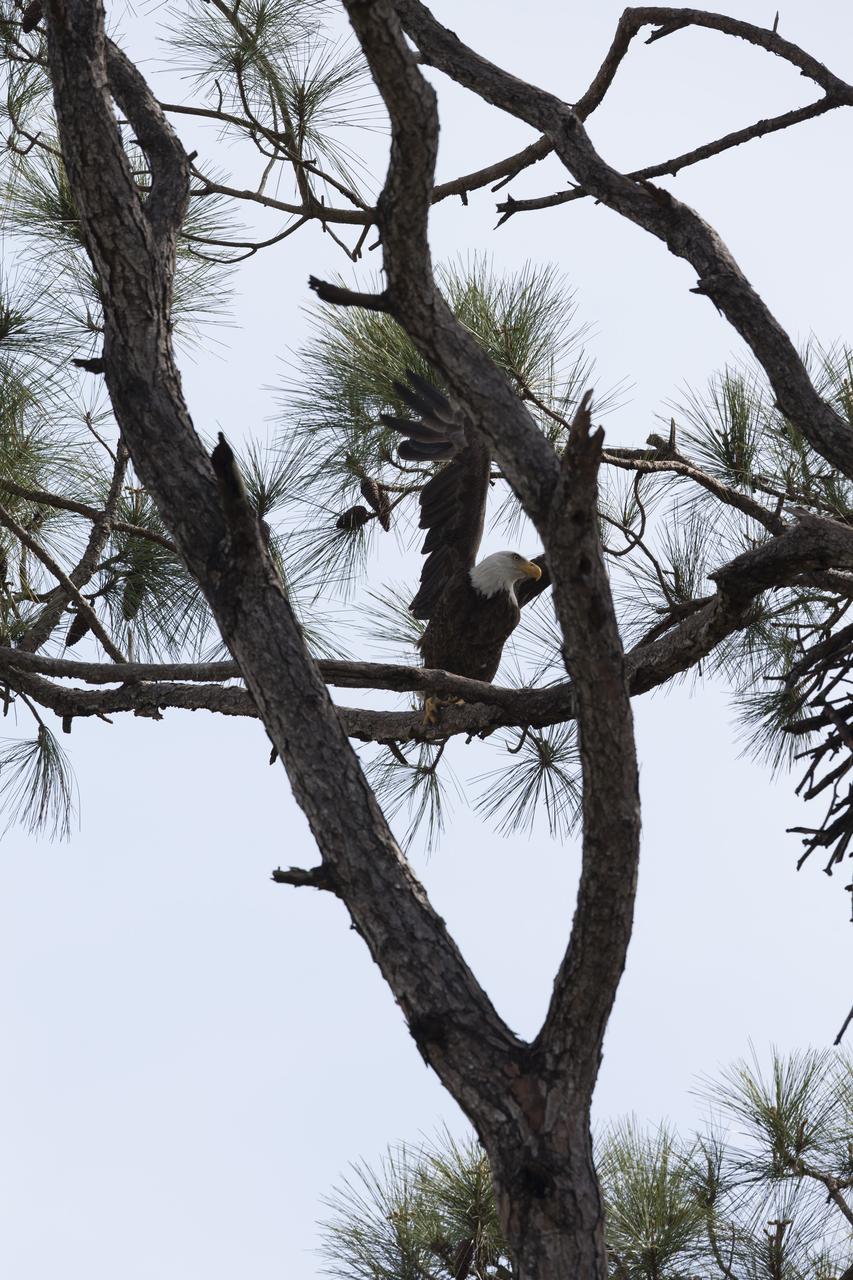
A bald eagle raises its wings in preparation for takeoff from its high perch in a pine tree at NASA’s Kennedy Space Center in Florida. The spaceport shares borders with the Merritt Island National Wildlife Refuge, which is home to more than 330 native and migratory bird species, along with 25 mammal, 117 fish, and 65 amphibian and reptile species.
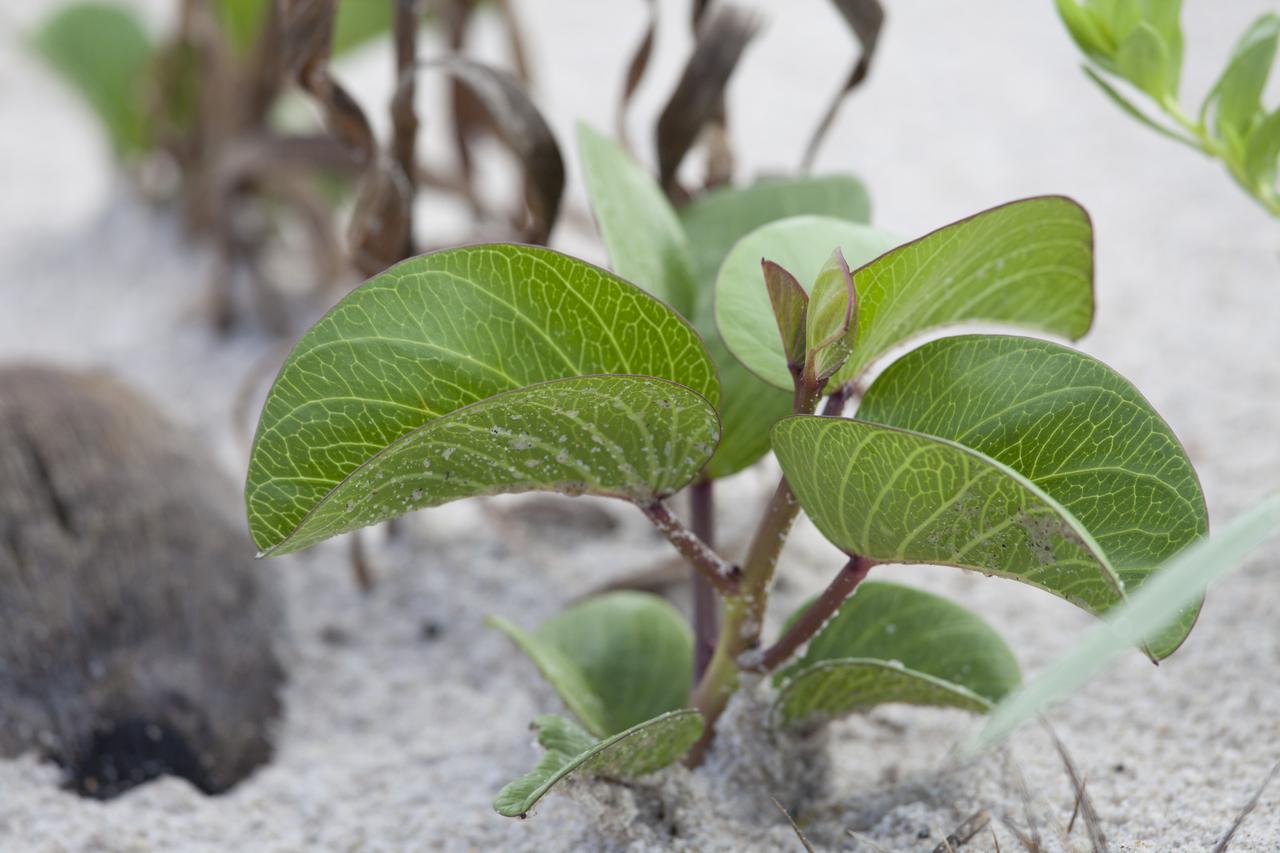
A plant sprouts from a patch of sandy ground at NASA’s Kennedy Space Center in Florida. The spaceport shares borders with the Merritt Island National Wildlife Refuge, which is home to more than 330 native and migratory bird species, along with 25 mammal, 117 fish, and 65 amphibian and reptile species.

Photographers at NASA capture the sunset on Tuesday, Jan. 30, 2024, near the headquarters building of the agency’s Kennedy Space Center in Florida.
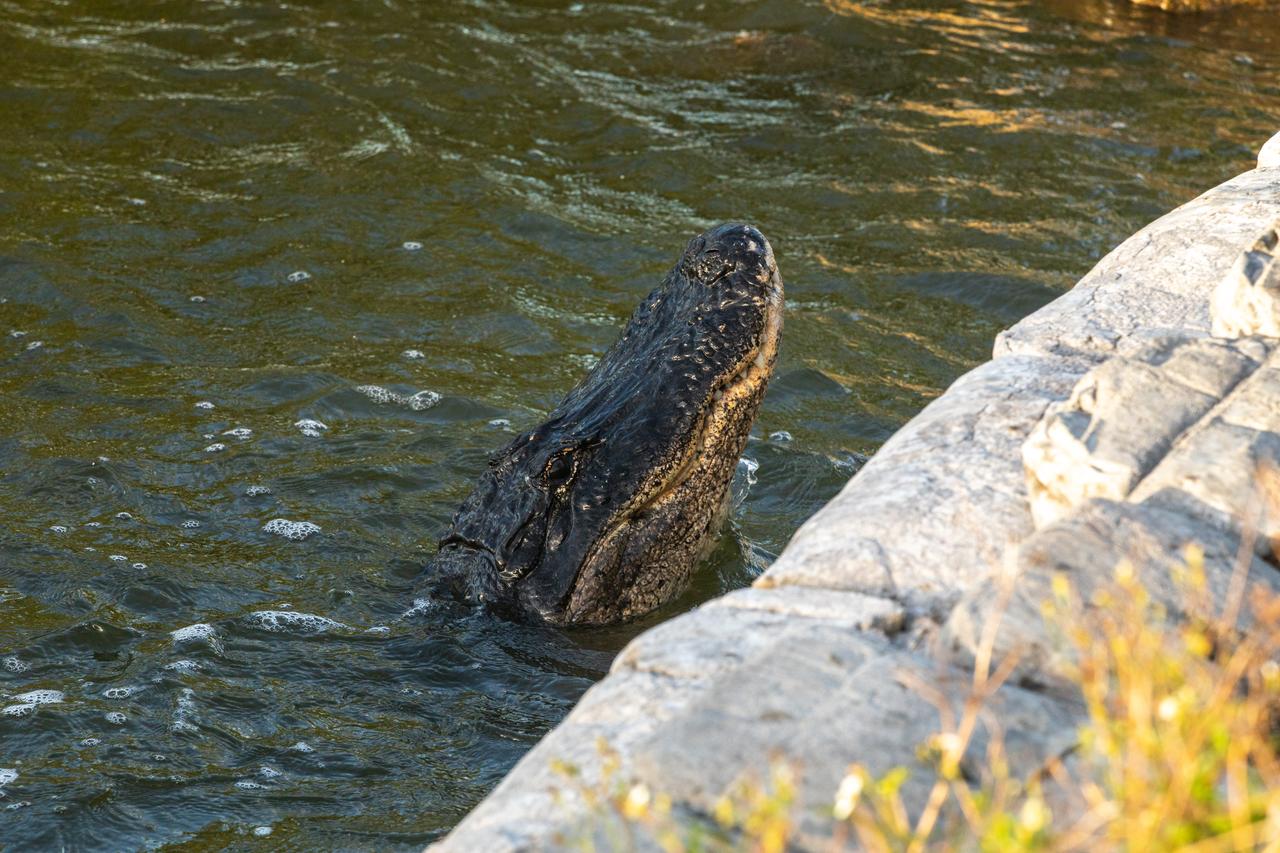
Kennedy Space Center shares boundaries with the Merritt Island National Wildlife Refuge on Florida’s Atlantic coast. Alligators can be found in many areas of the refuge. They are important top predators that help keep populations of smaller animals under control. They also create habitat for other wildlife in the marsh by digging holes that hold water during the dry season.
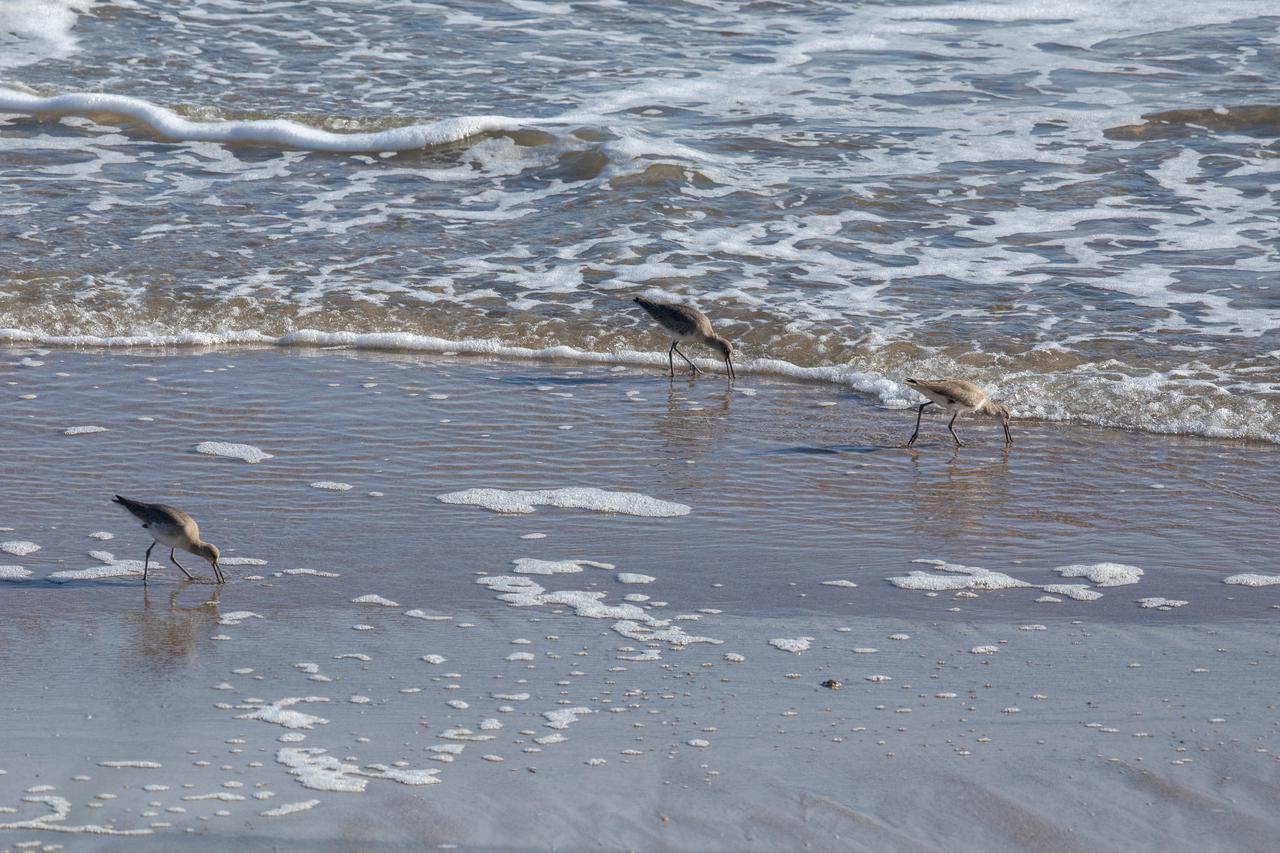
Several sandpipers search for food on the shoreline of the Atlantic Ocean near NASA's Kennedy Space Center in Florida on Jan. 11, 2021. The center shares a border with the Merritt Island National Wildlife Refuge. More than 330 native and migratory bird species, 25 mammal, 117 fish and 65 amphibian and reptile species call Kennedy and the wildlife refuge home.
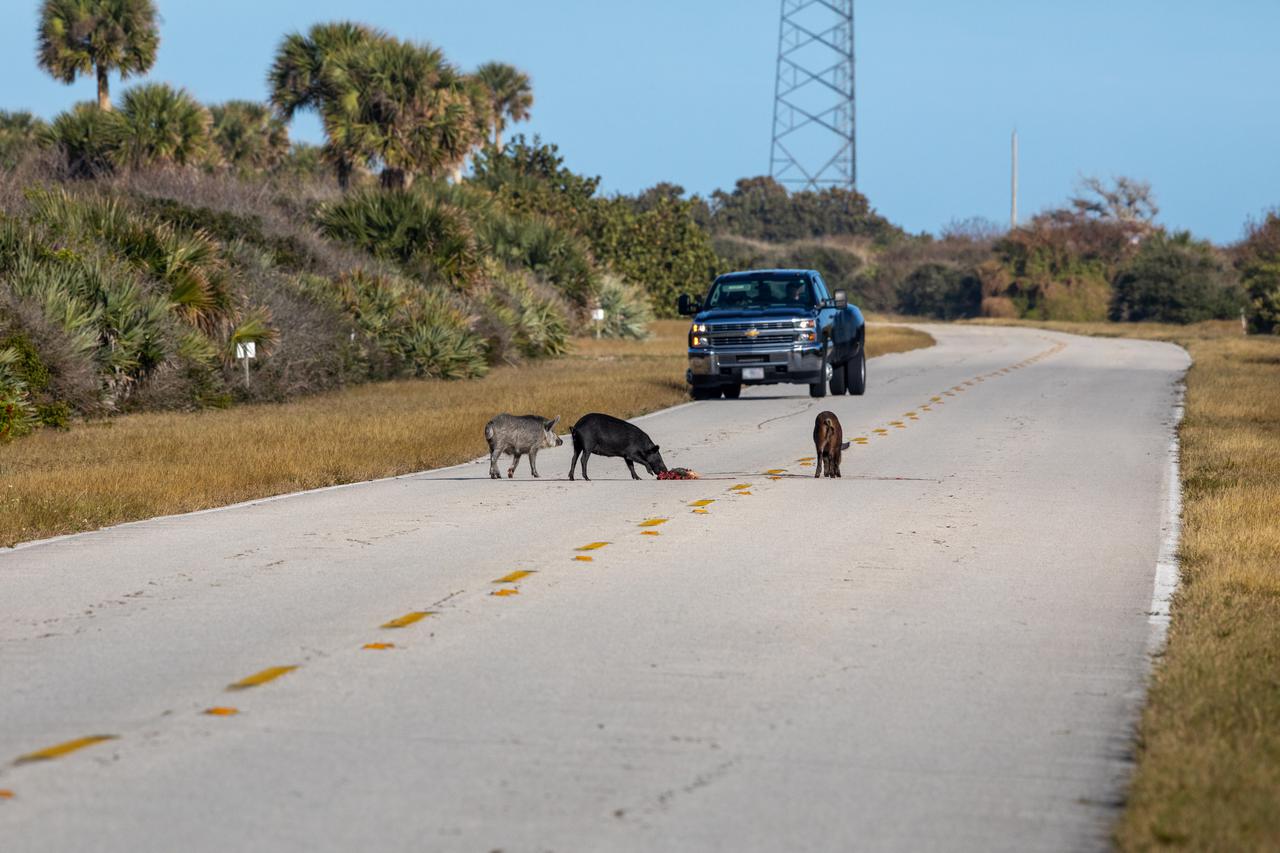
Wild pigs cross a roadway at NASA's Kennedy Space Center in Florida on Jan. 11, 2021. The center shares a border with the Merritt Island National Wildlife Refuge. More than 330 native and migratory bird species, 25 mammal, 117 fish and 65 amphibian and reptile species call Kennedy and the wildlife refuge home.
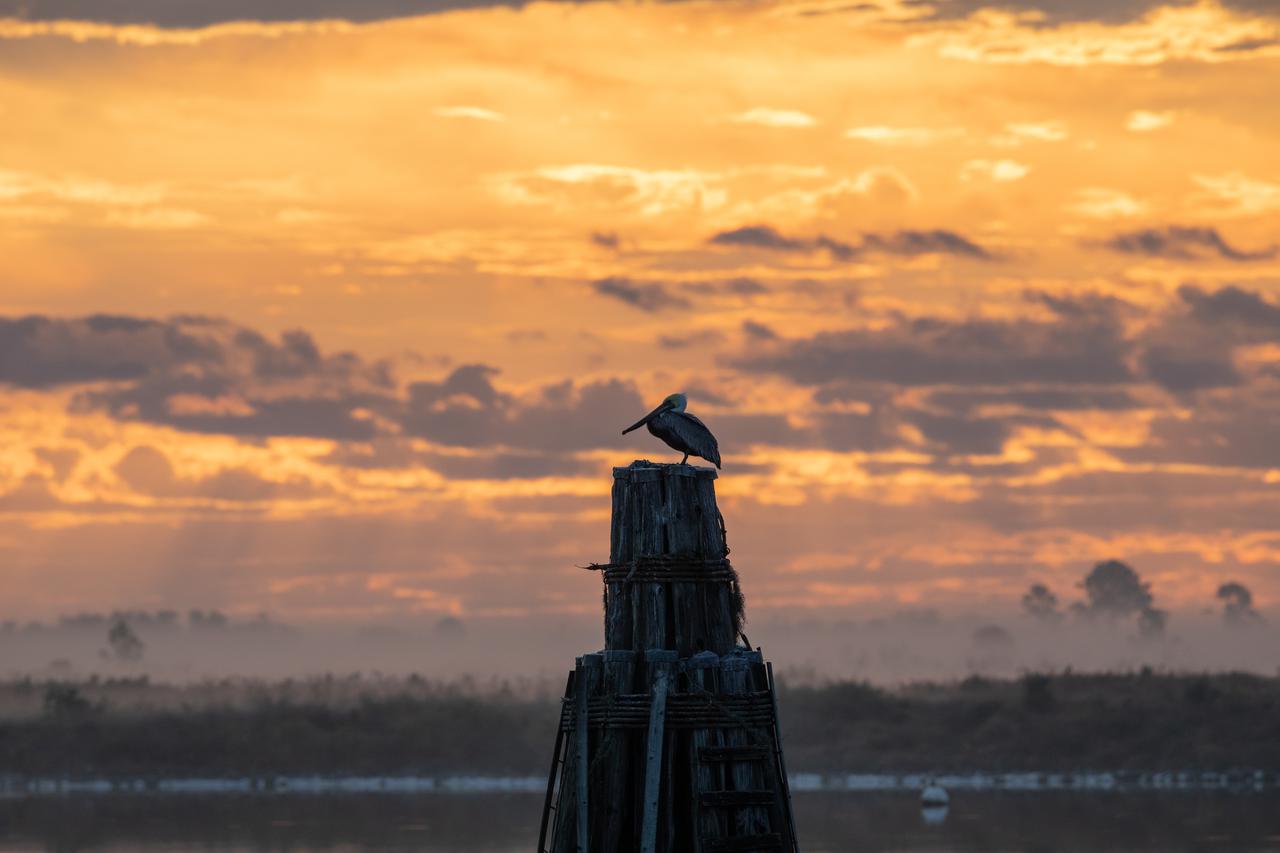
A colorful sunrise serves as the backdrop for a pelican perched on a support beam for a dock on a waterway at NASA's Kennedy Space Center in Florida on Jan. 11, 2021. The center shares a border with the Merritt Island National Wildlife Refuge. More than 330 native and migratory bird species, along with 25 mammal, 117 fish, and 65 amphibian and reptile species call Kennedy and the wildlife refuge home.
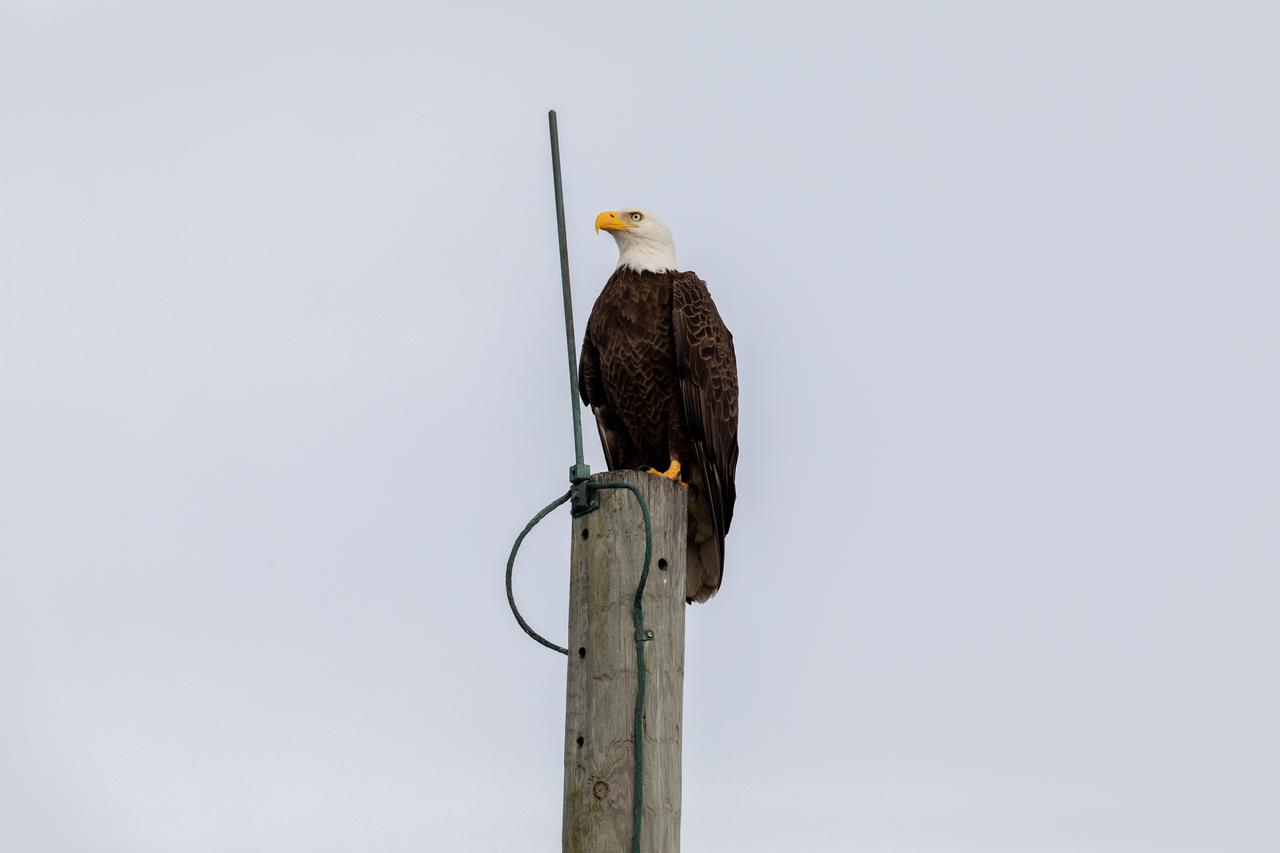
An American bald eagle perches on top of a telephone pole at NASA’s Kennedy Space Center in Florida. Kennedy shares a border with the Merritt Island National Wildlife Refuge, consisting of 140,000 acres of land, water, and marshes. Within the refuge, many species of birds, reptiles, fish, amphibians, and mammals can be found.
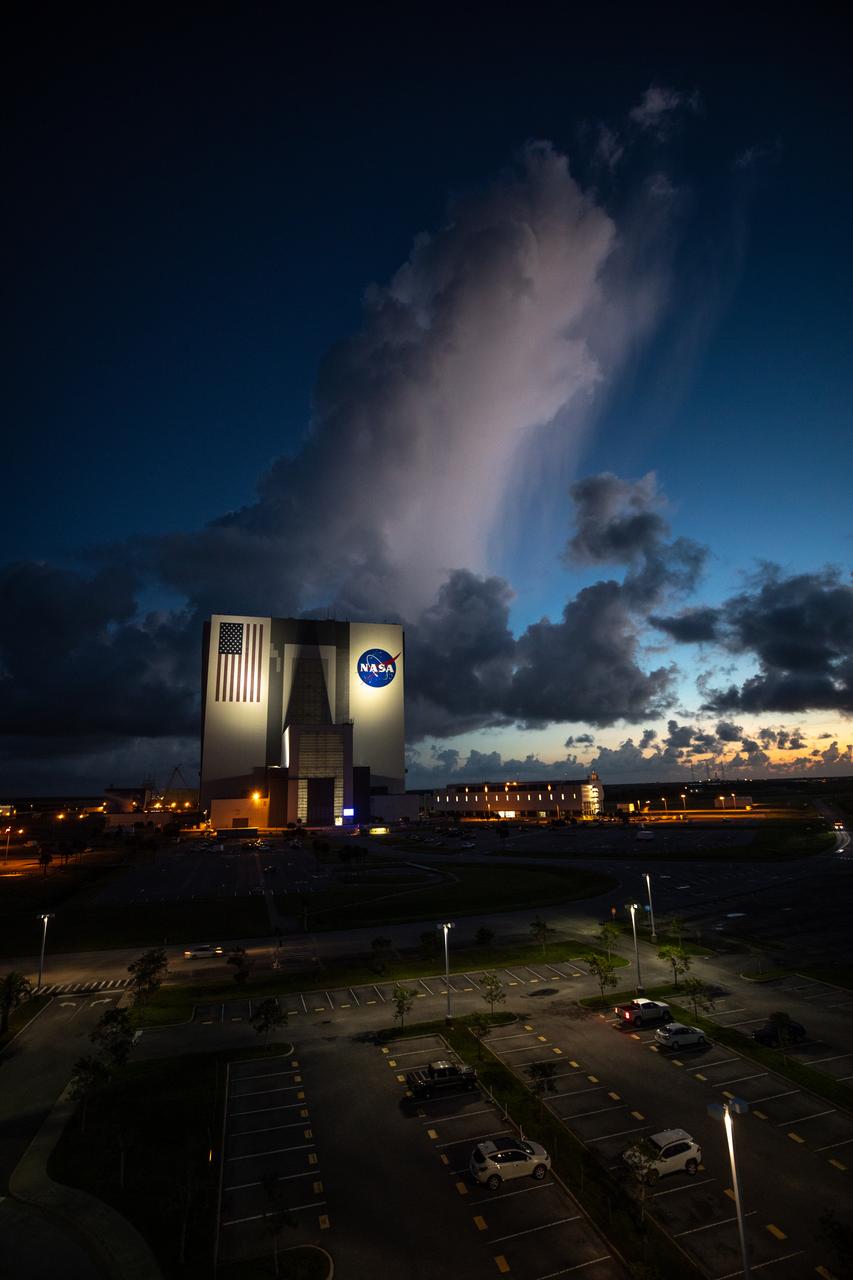
An early sunrise view of the iconic Vehicle Assembly Building (VAB) at NASA's Kennedy Space Center in Florida on July 25, 2020. Repainting of the NASA meatball and American flag recently was completed on the 525-foot-tall facility. Inside the VAB, 10 new work platforms, 20 platform halves altogether, have been installed in High Bay 3 for the agency's Space Launch System (SLS) rocket and Orion spacecraft. Exploration Ground Systems is overseeing upgrades to the VAB.
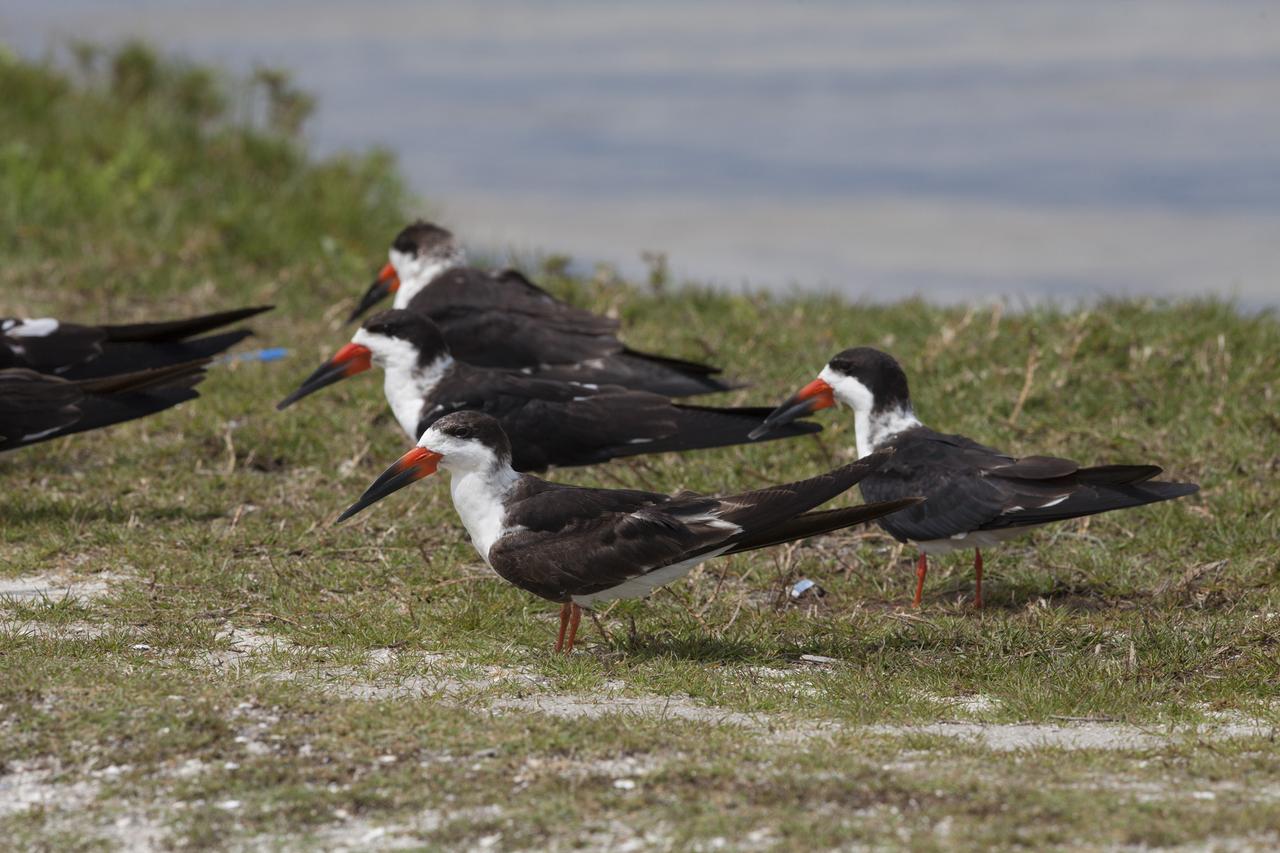
Black skimmers take a break from flying on a riverbank at Merritt Island National Wildlife Refuge in Florida. NASA’s Kennedy Space Center shares boundaries with the refuge, which is home to more than 330 native and migratory bird species, along with 25 mammal, 117 fish, and 65 amphibian and reptile species.
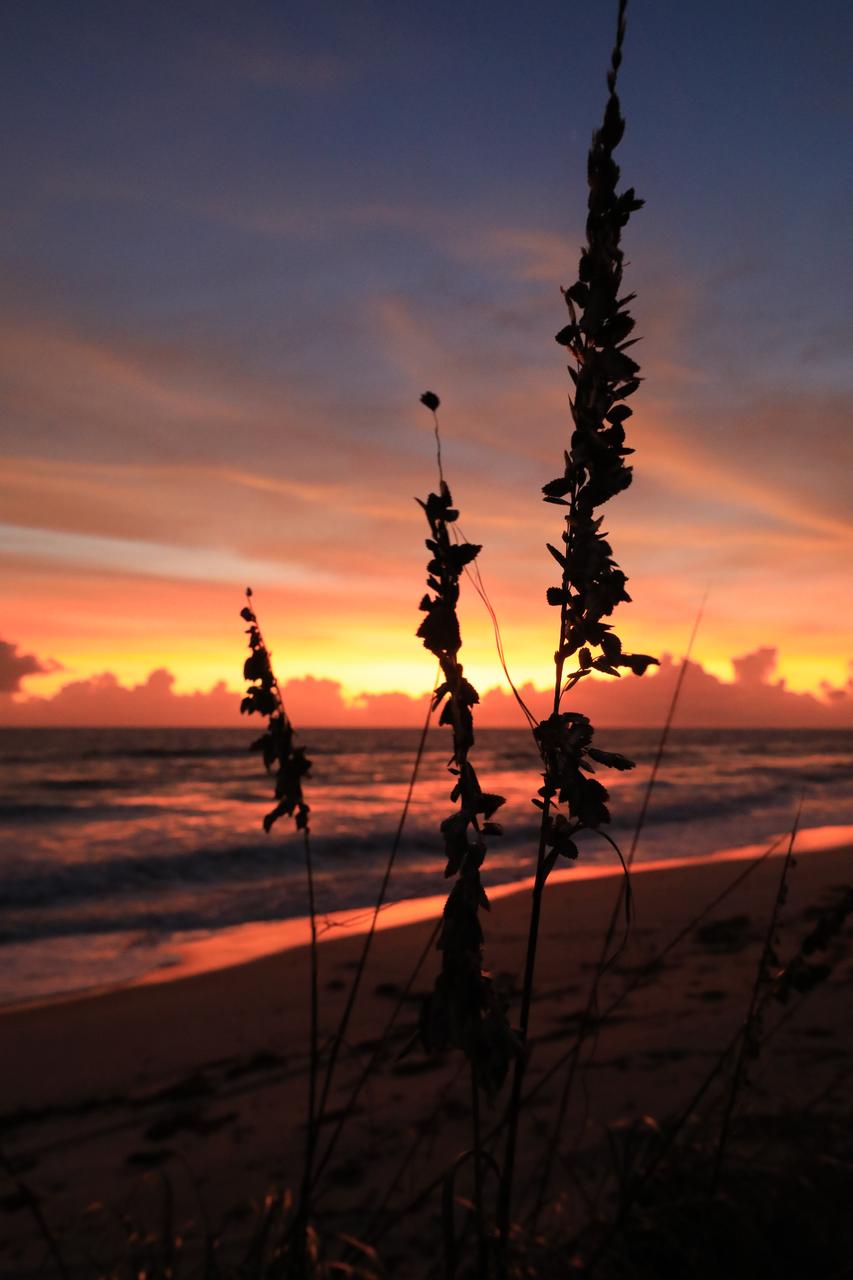
NASA’s Kennedy Space Center occupies a scenic stretch of land along Florida’s east coast, including miles of pristine beaches on the Atlantic Ocean. The agency is nearing completion on a restoration project to shore up the dunes that create a natural barrier from the waves. Once the dune is built up, native coastal vegetation will be replanted, helping to stabilize the dune and offer a habitat for Kennedy’s coastal wildlife.
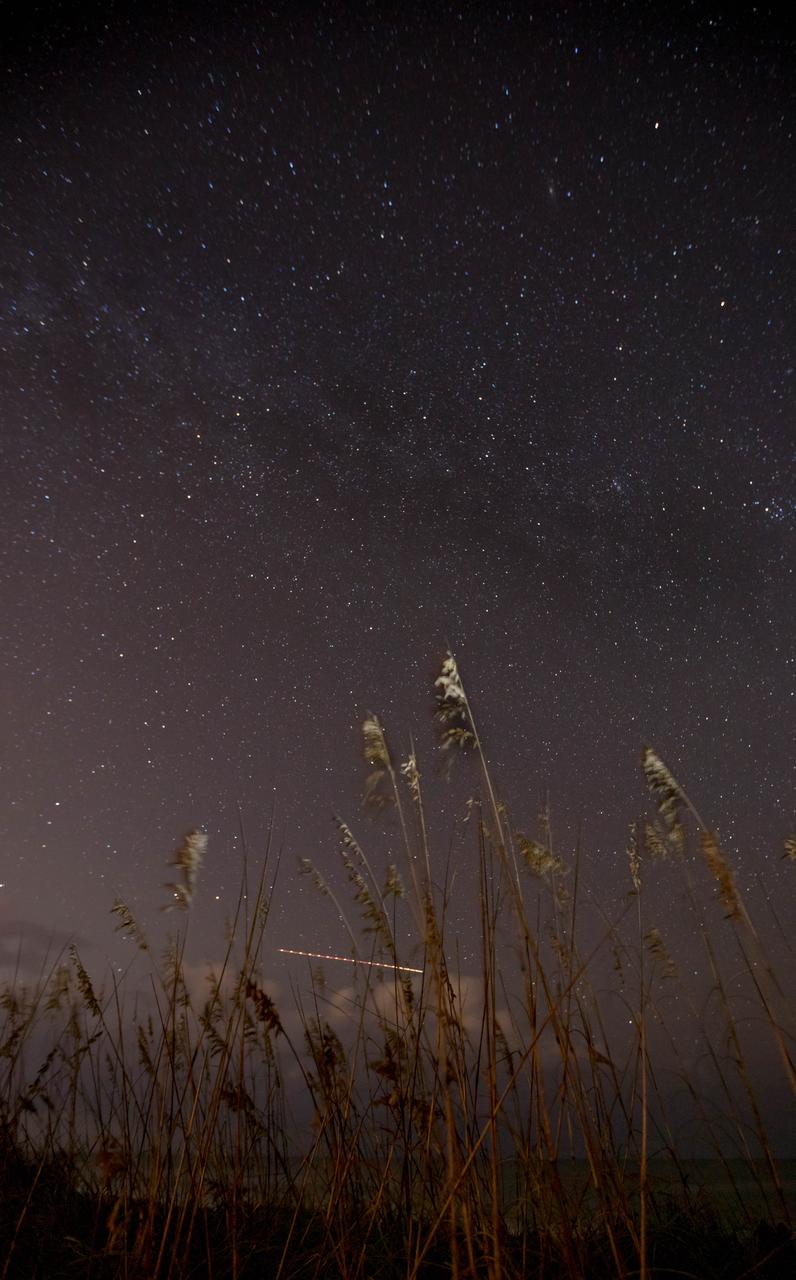
Sea oats are backdropped by the night sky and the Milky Way in this view from the Atlantic shoreline at NASA’s Kennedy Space Center in Florida on Oct. 31, 2019. The lights of an aircraft create an illuminated streak above the horizon.
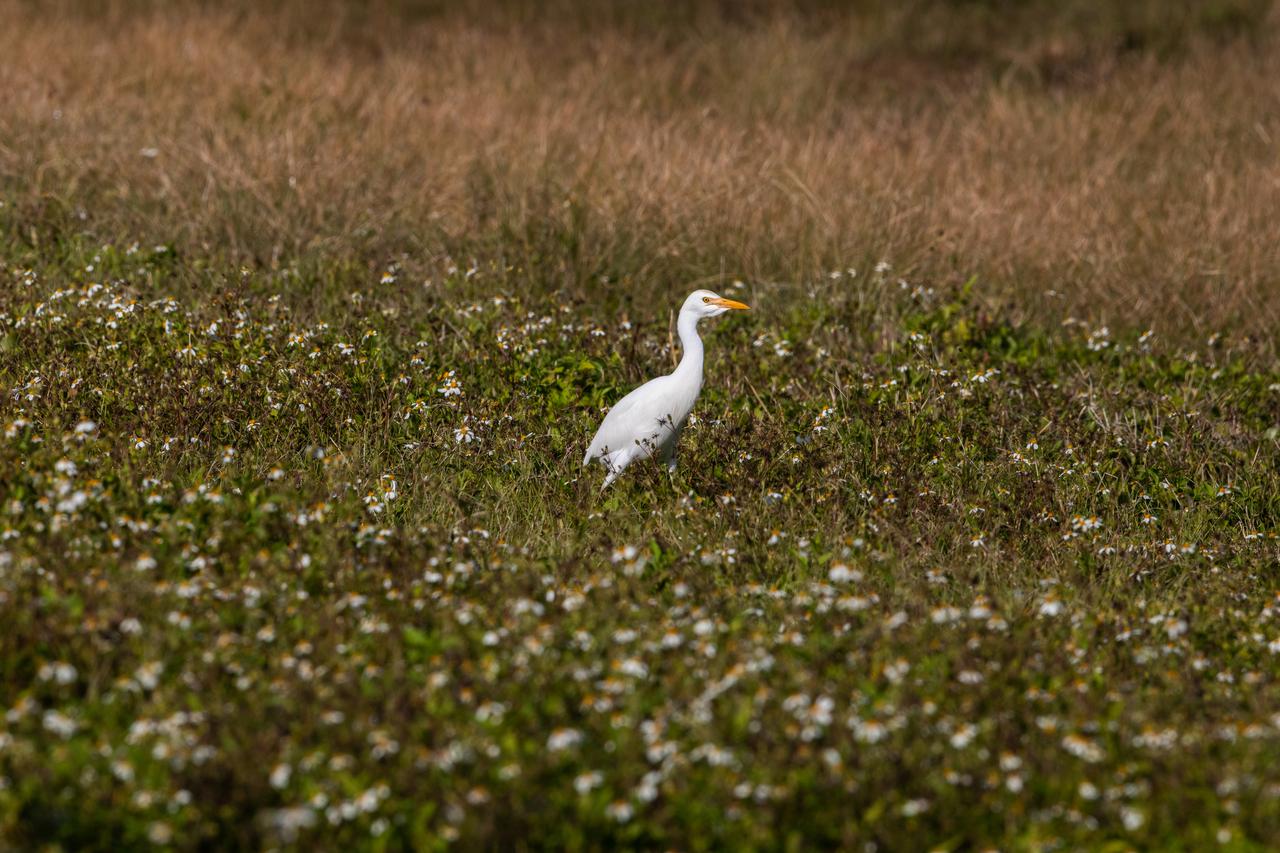
A Great Egret stands in a marsh near a waterway at NASA's Kennedy Space Center in Florida on Jan. 11, 2021. The center shares a border with the Merritt Island National Wildlife Refuge. More than 330 native and migratory bird species, along with 25 mammal, 117 fish, and 65 amphibian and reptile species call Kennedy and the wildlife refuge home.
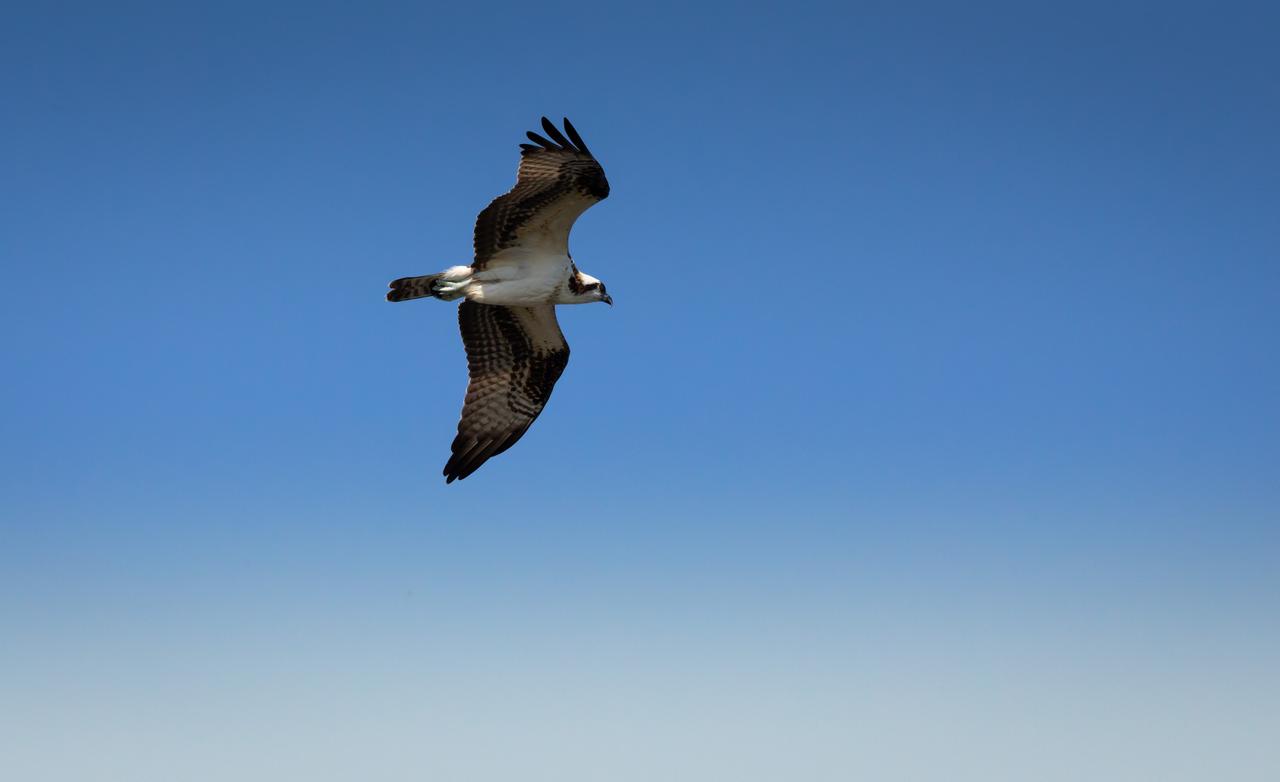
An osprey soars above NASA's Kennedy Space Center in Florida. The center shares a border with the Merritt Island National Wildlife Refuge. More than 330 native and migratory bird species, 25 mammal, 117 fish and 65 amphibian and reptile species call Kennedy and the wildlife refuge home.
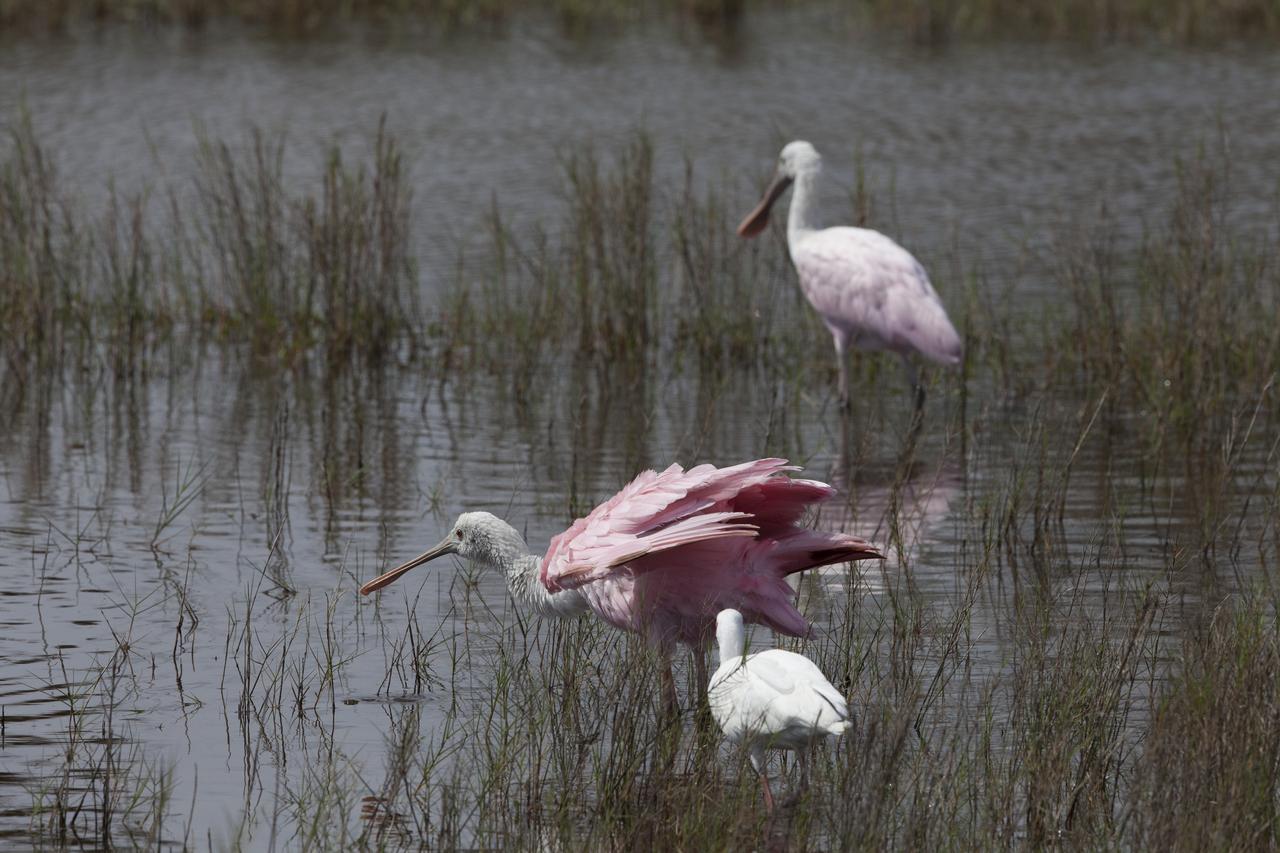
Two juvenile roseate spoonbills are joined by a white ibis, foreground, as the trio wades in a shallow waterway at Merritt Island National Wildlife Refuge in Florida. NASA’s Kennedy Space Center shares boundaries with the refuge, which is home to more than 330 native and migratory bird species, along with 25 mammal, 117 fish, and 65 amphibian and reptile species.
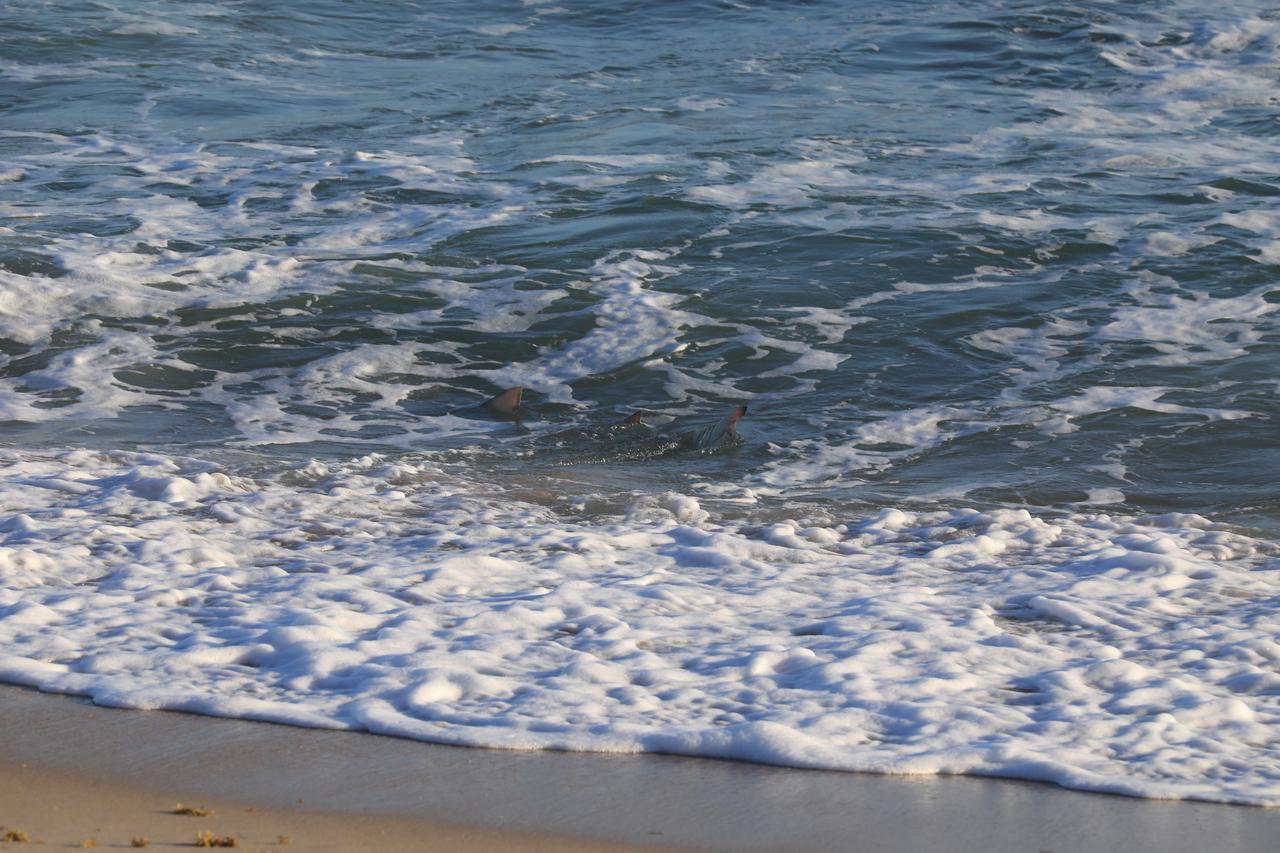
Cape Canaveral Space Force Station shares boundaries with the Merritt Island National Wildlife Refuge, featuring miles of pristine beaches on the Atlantic Ocean. The refuge contains coastal dunes, saltwater marshes, freshwater impoundments, scrub, pine flatwoods, and hardwood hammocks that provide habitat for more than 1,500 species of plants and animals.
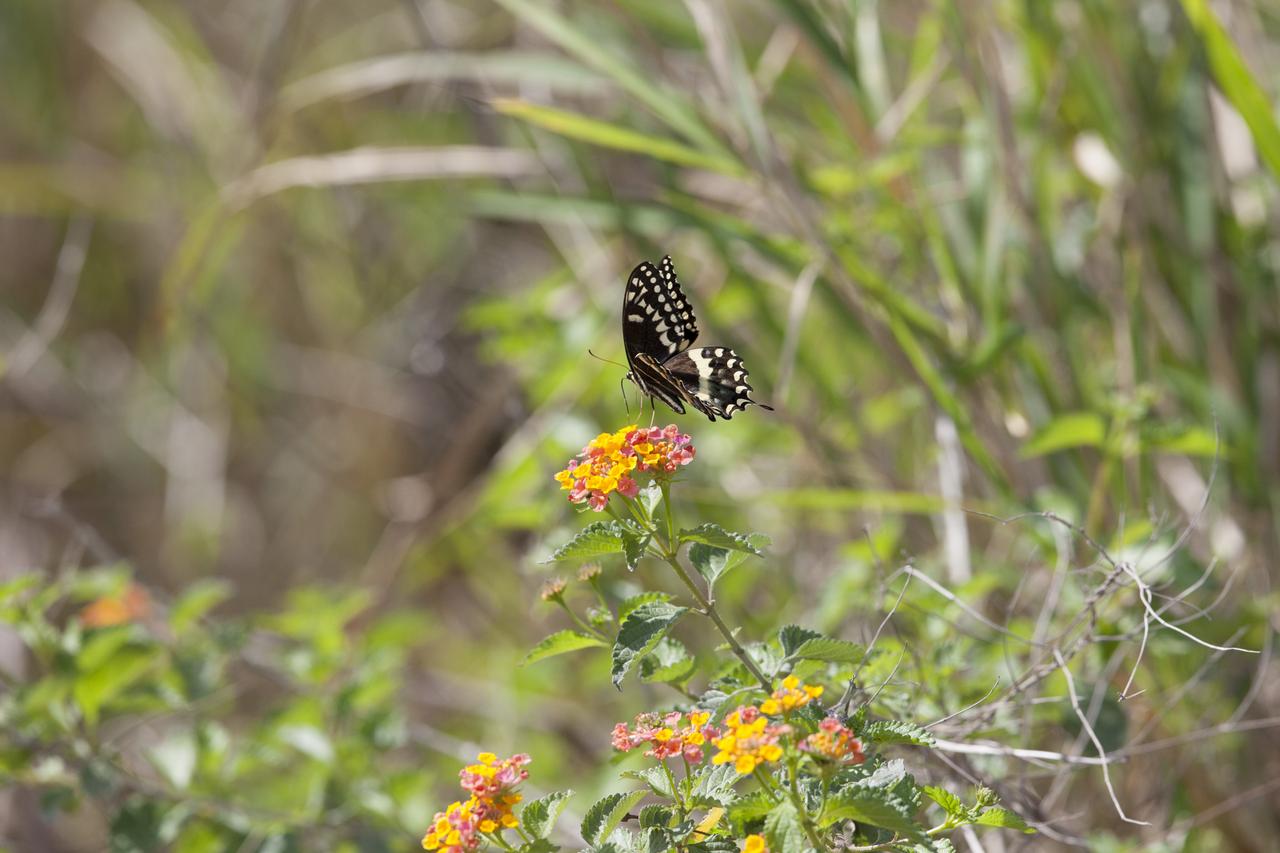
A black swallowtail butterfly enjoys a snack from a blooming lantana plant at Merritt Island National Wildlife Refuge in Florida. NASA’s Kennedy Space Center shares boundaries with the refuge, which is home to more than 330 native and migratory bird species, along with 25 mammal, 117 fish, and 65 amphibian and reptile species.
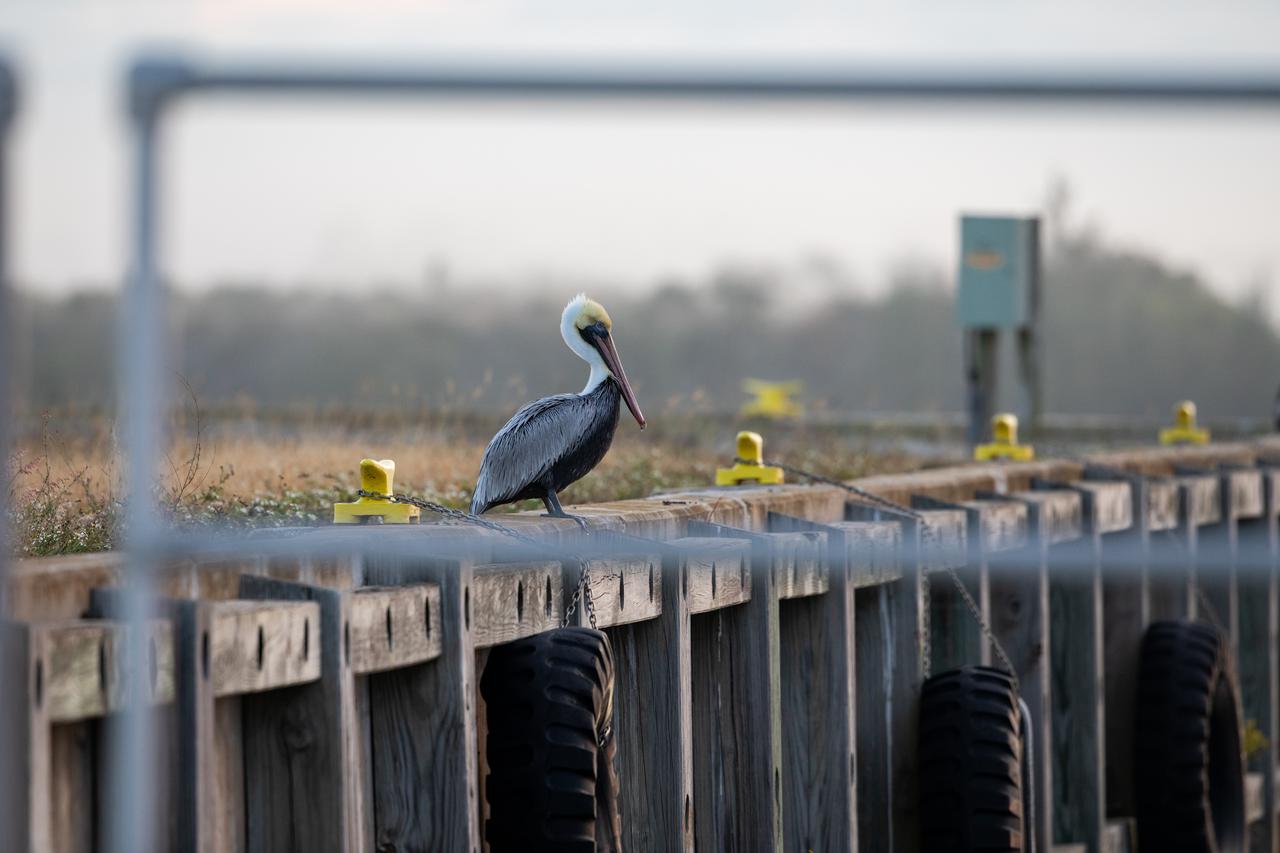
A pelican sits near a dock on a waterway at NASA's Kennedy Space Center in Florida on Jan. 11, 2021. The center shares a border with the Merritt Island National Wildlife Refuge. More than 330 native and migratory bird species, along with 25 mammal, 117 fish, and 65 amphibian and reptile species call Kennedy and the wildlife refuge home.
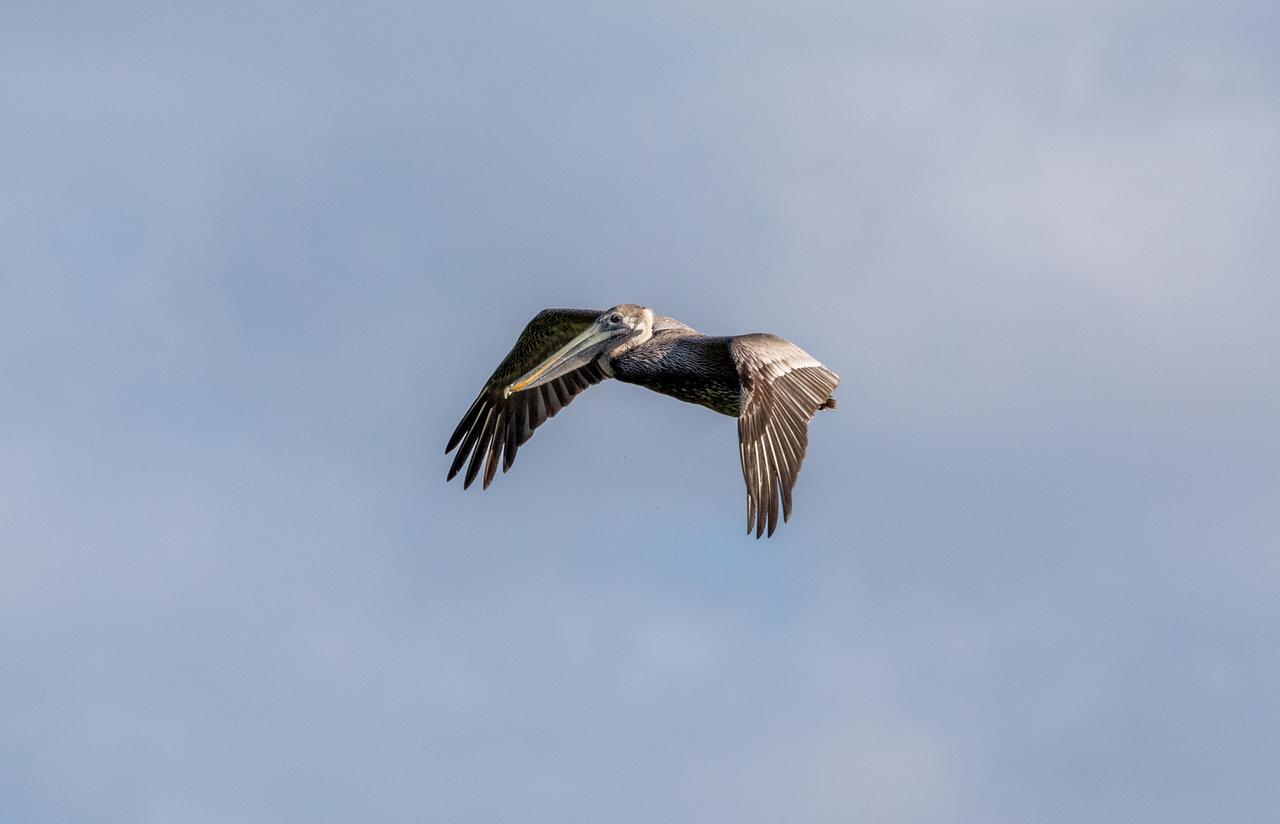
A pelican soars above a waterway at NASA's Kennedy Space Center in Florida on Jan. 11, 2021. The center shares a border with the Merritt Island National Wildlife Refuge. More than 330 native and migratory bird species, along with 25 mammal, 117 fish, and 65 amphibian and reptile species call Kennedy and the wildlife refuge home.
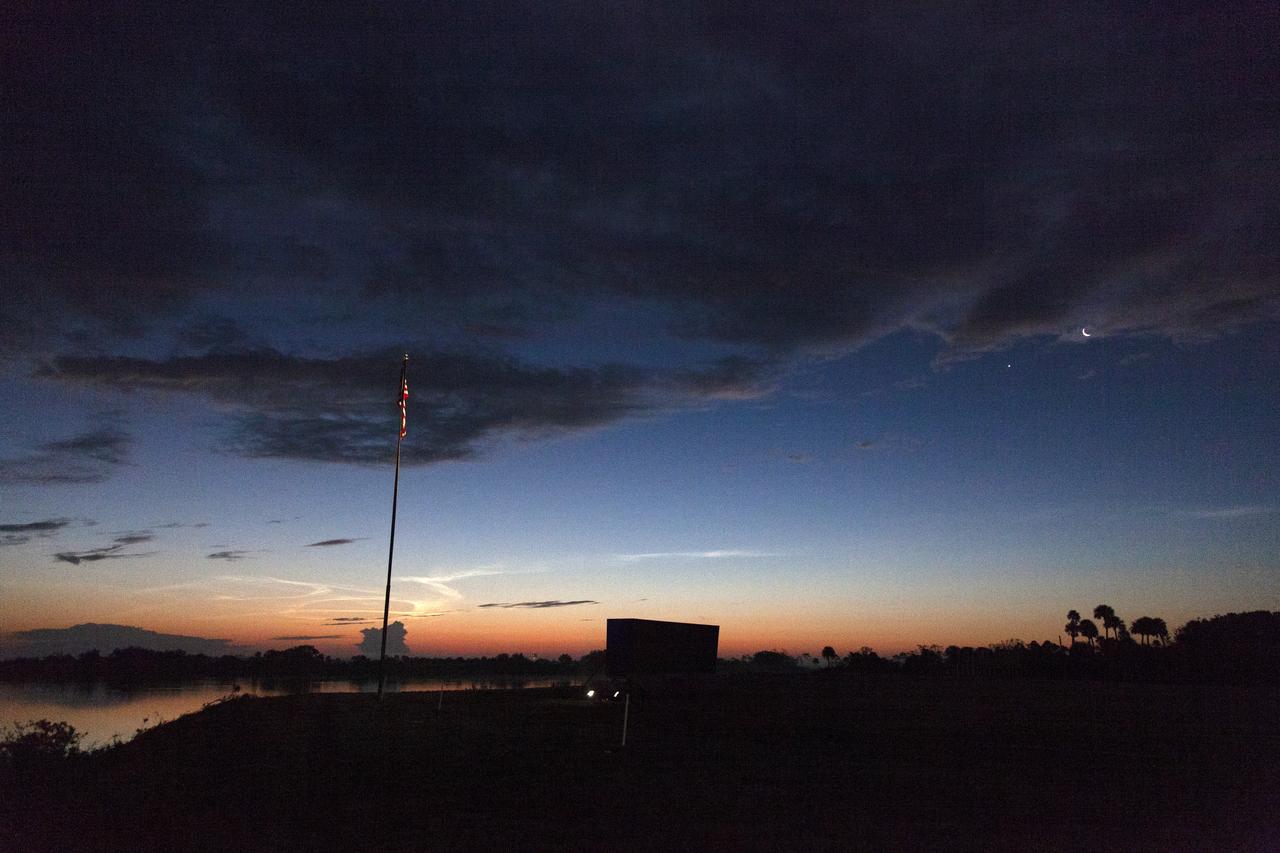
A sunrise serves as the backdrop for the countdown clock and American Flag near the Press Site at NASA’s Kennedy Space Center in Florida following the successful launch of SpaceX’s uncrewed Demo-1 flight test from Launch Complex 39A on March 2, 2019. The company’s Crew Dragon spacecraft lifted off atop a Falcon 9 rocket and traveled to the International Space Station, where it validated end-to-end systems and capabilities in preparation for certification to fly crew.
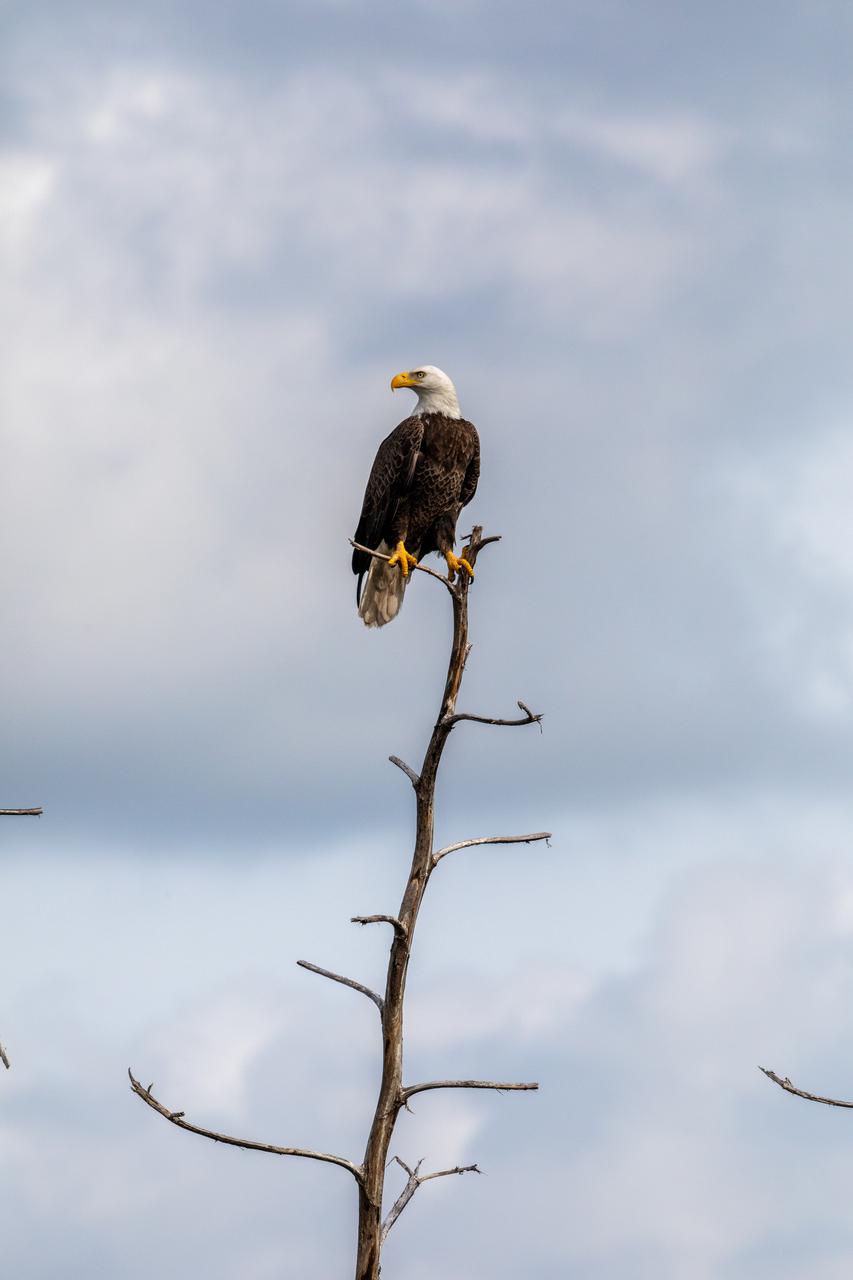
An American bald eagle perches on a tree branch at NASA’s Kennedy Space Center in Florida. Kennedy shares a border with the Merritt Island National Wildlife Refuge, consisting of 140,000 acres of land, water, and marshes. Within the refuge, many species of birds, reptiles, fish, amphibians, and mammals can be found.
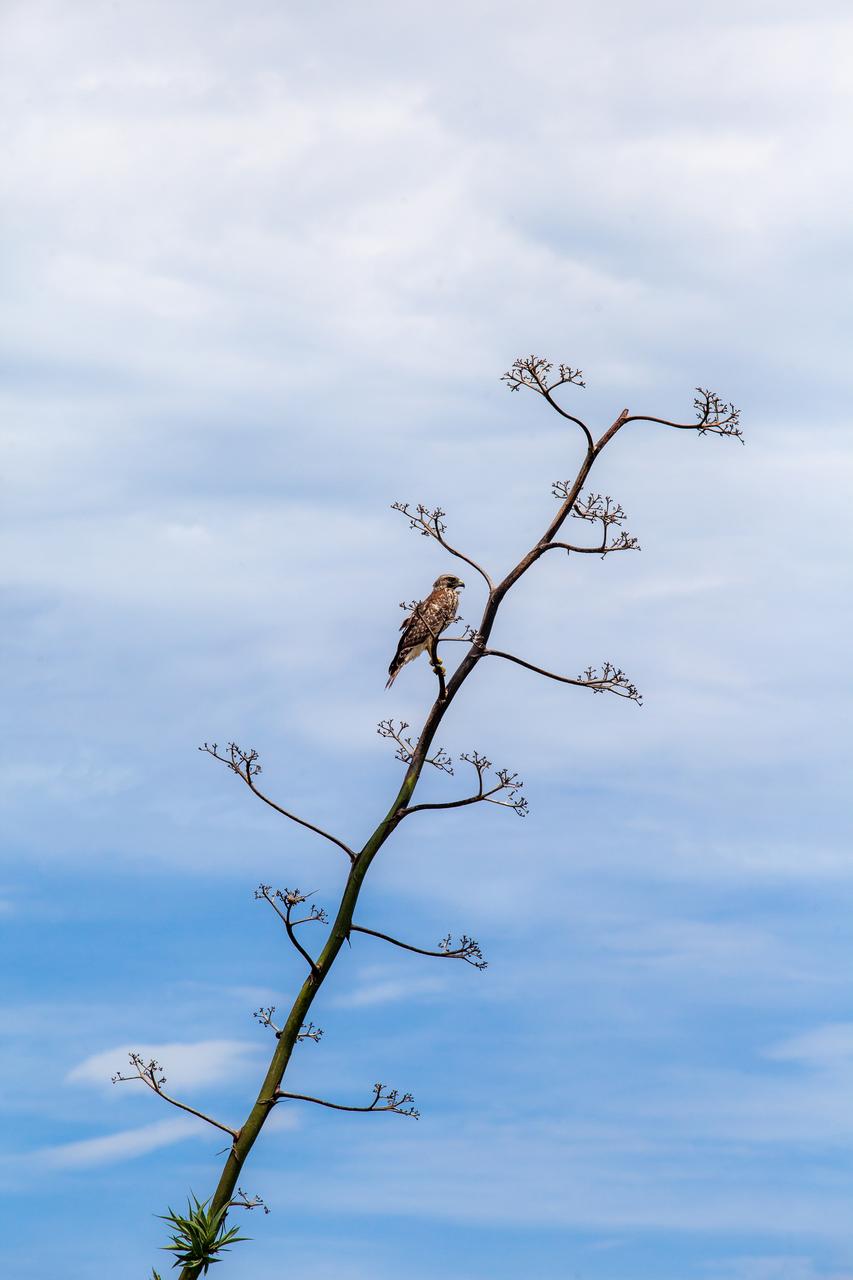
A hawk perches on a tree branch at NASA’s Kennedy Space Center in Florida. Kennedy shares a border with the Merritt Island National Wildlife Refuge, consisting of 140,000 acres of land, water and marshes. Within the refuge, many species of birds, reptiles, fish, amphibians and mammals can be found.
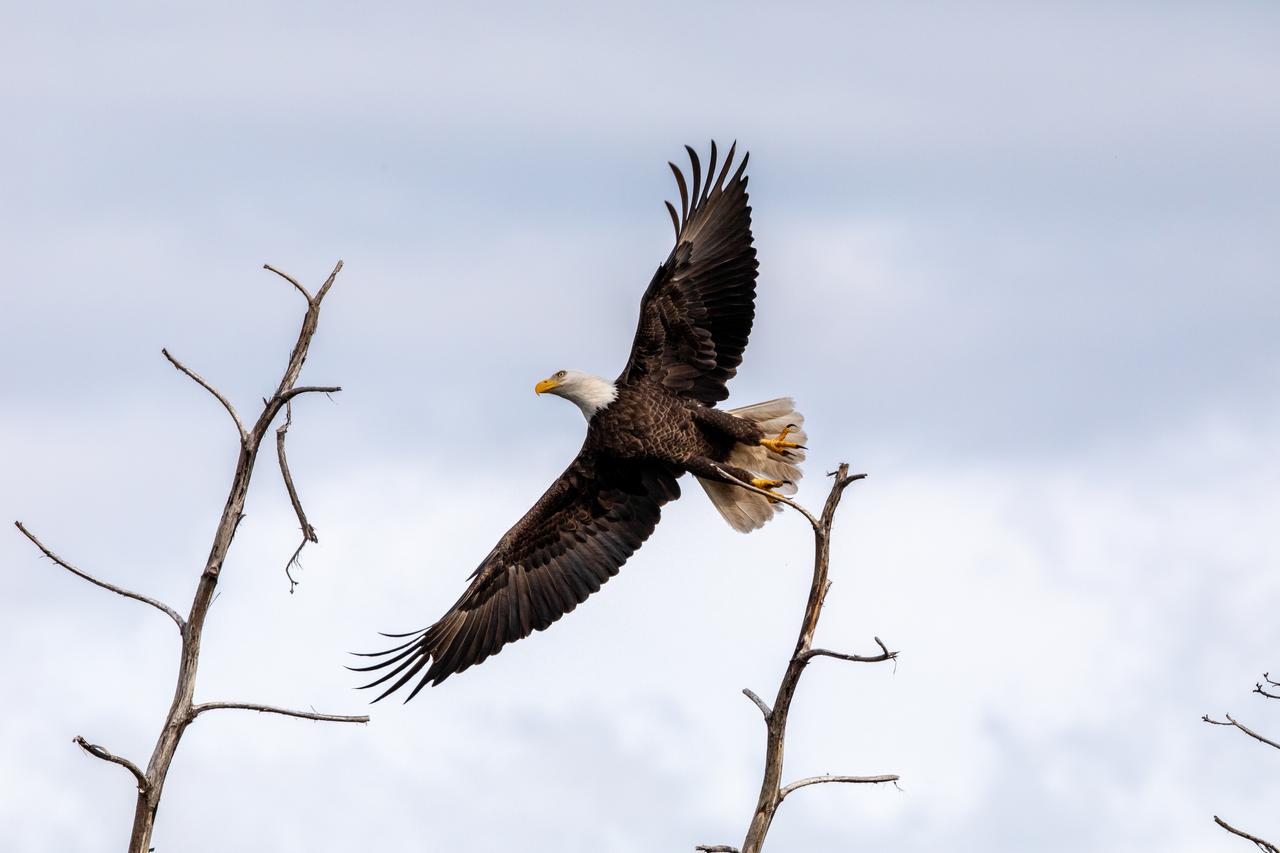
An American bald eagle takes flight after resting on a tree branch at NASA’s Kennedy Space Center in Florida. Kennedy shares a border with the Merritt Island National Wildlife Refuge, consisting of 140,000 acres of land, water, and marshes. Within the refuge, many species of birds, reptiles, fish, amphibians, and mammals can be found.
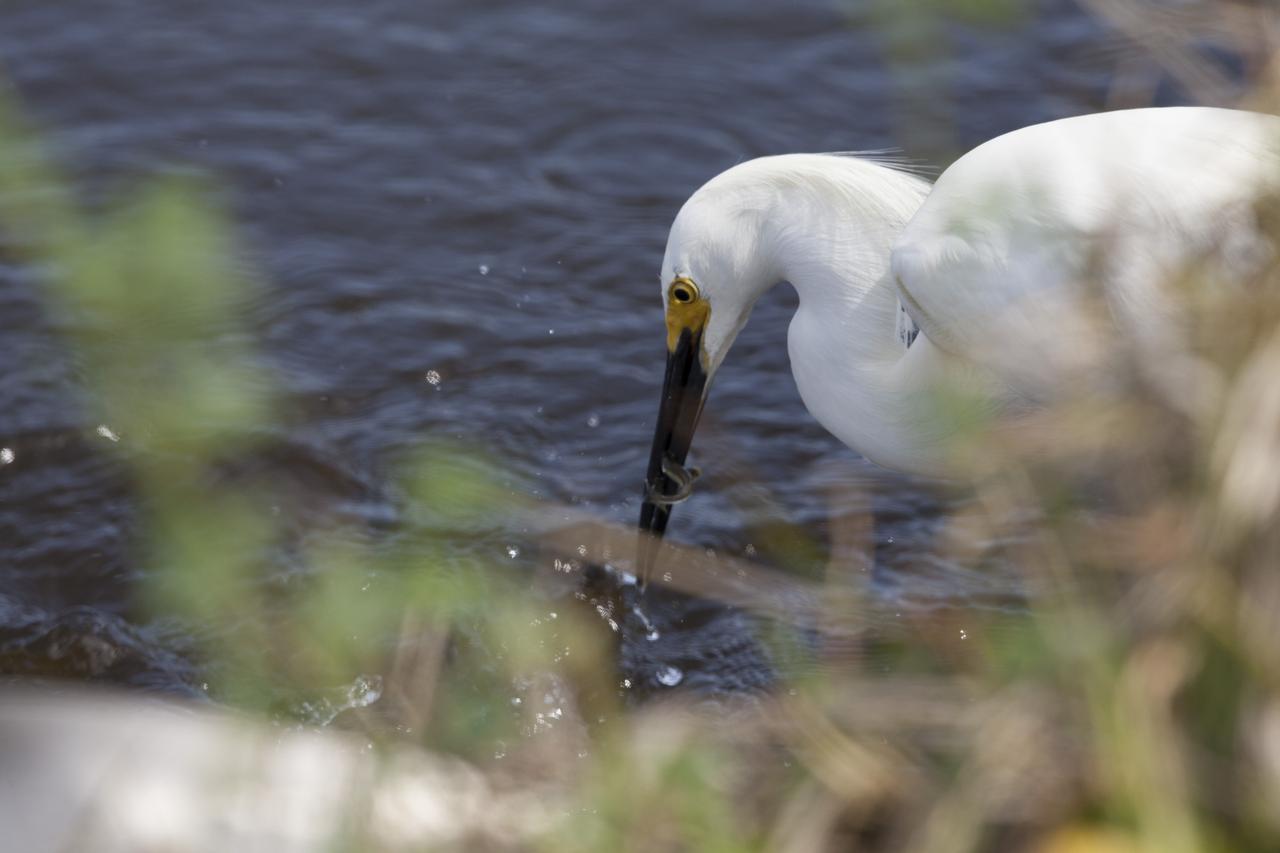
A snowy egret successfully catches a small fish in a shallow waterway at Merritt Island National Wildlife Refuge in Florida. NASA’s Kennedy Space Center shares boundaries with the refuge, which is home to more than 330 native and migratory bird species, along with 25 mammal, 117 fish, and 65 amphibian and reptile species.
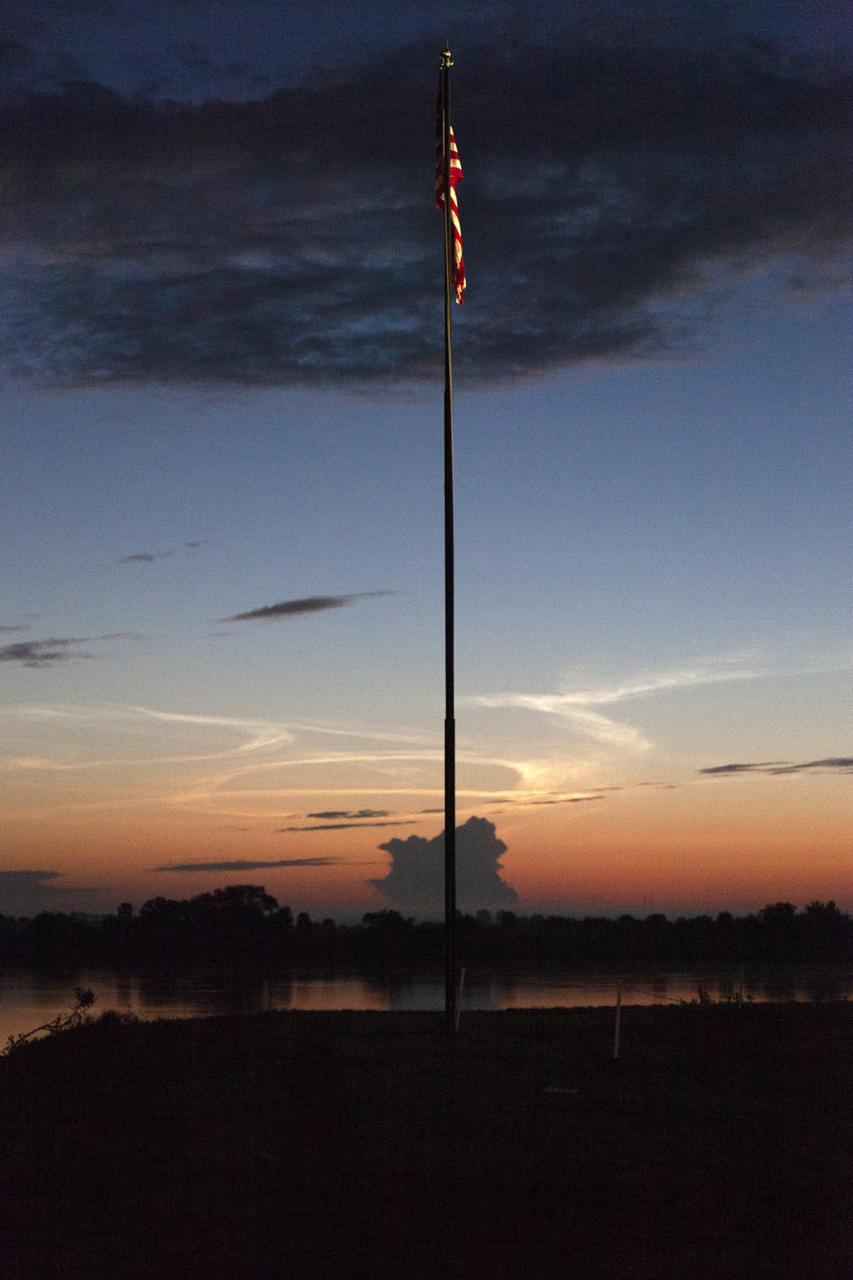
A sunrise serves as the backdrop for the American Flag near the Press Site at NASA’s Kennedy Space Center in Florida following the successful launch of SpaceX’s uncrewed Demo-1 flight test from Launch Complex 39A on March 2, 2019. The company’s Crew Dragon spacecraft lifted off atop a Falcon 9 rocket and traveled to the International Space Station, where it validated end-to-end systems and capabilities in preparation for certification to fly crew.
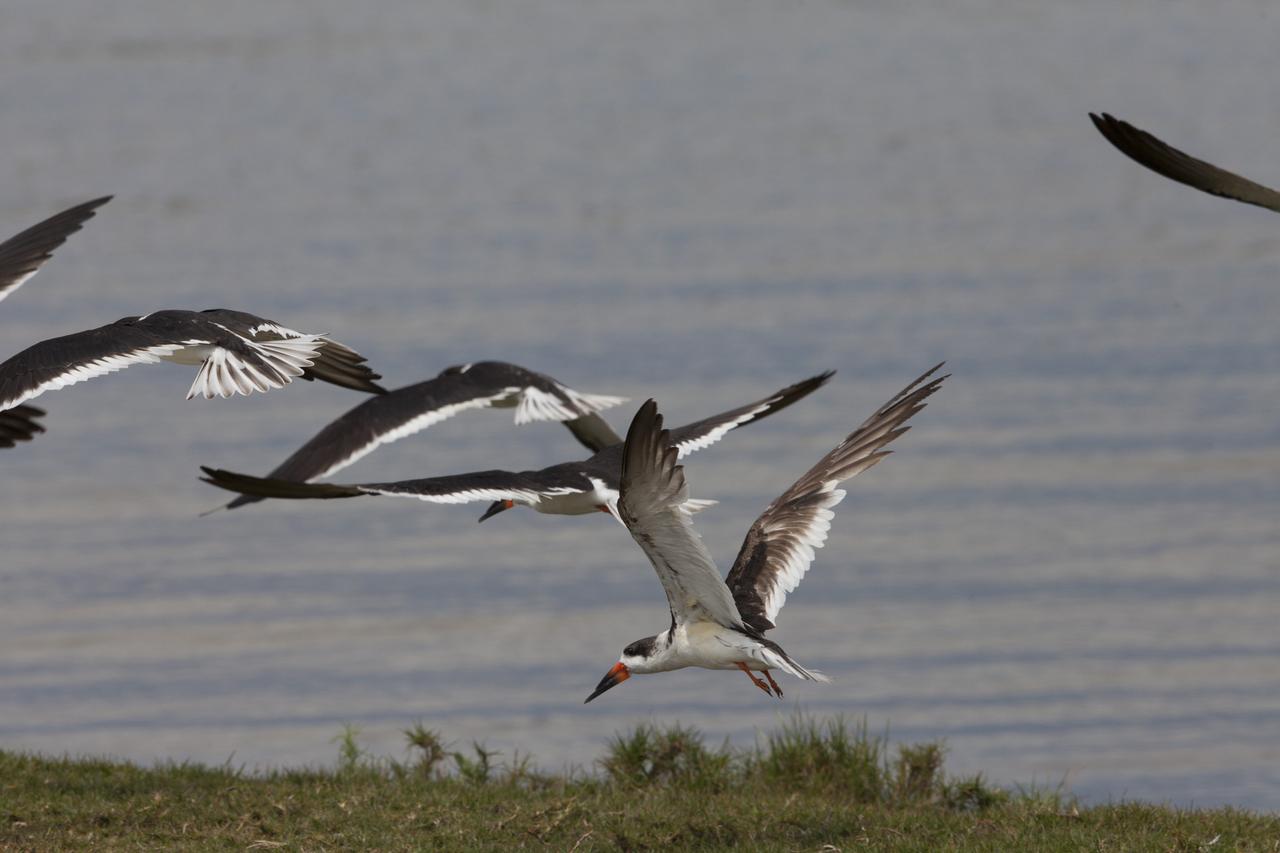
Black skimmers fly just above the waterline as they hunt for fish at Merritt Island National Wildlife Refuge in Florida. NASA’s Kennedy Space Center shares boundaries with the refuge, which is home to more than 330 native and migratory bird species, along with 25 mammal, 117 fish, and 65 amphibian and reptile species.
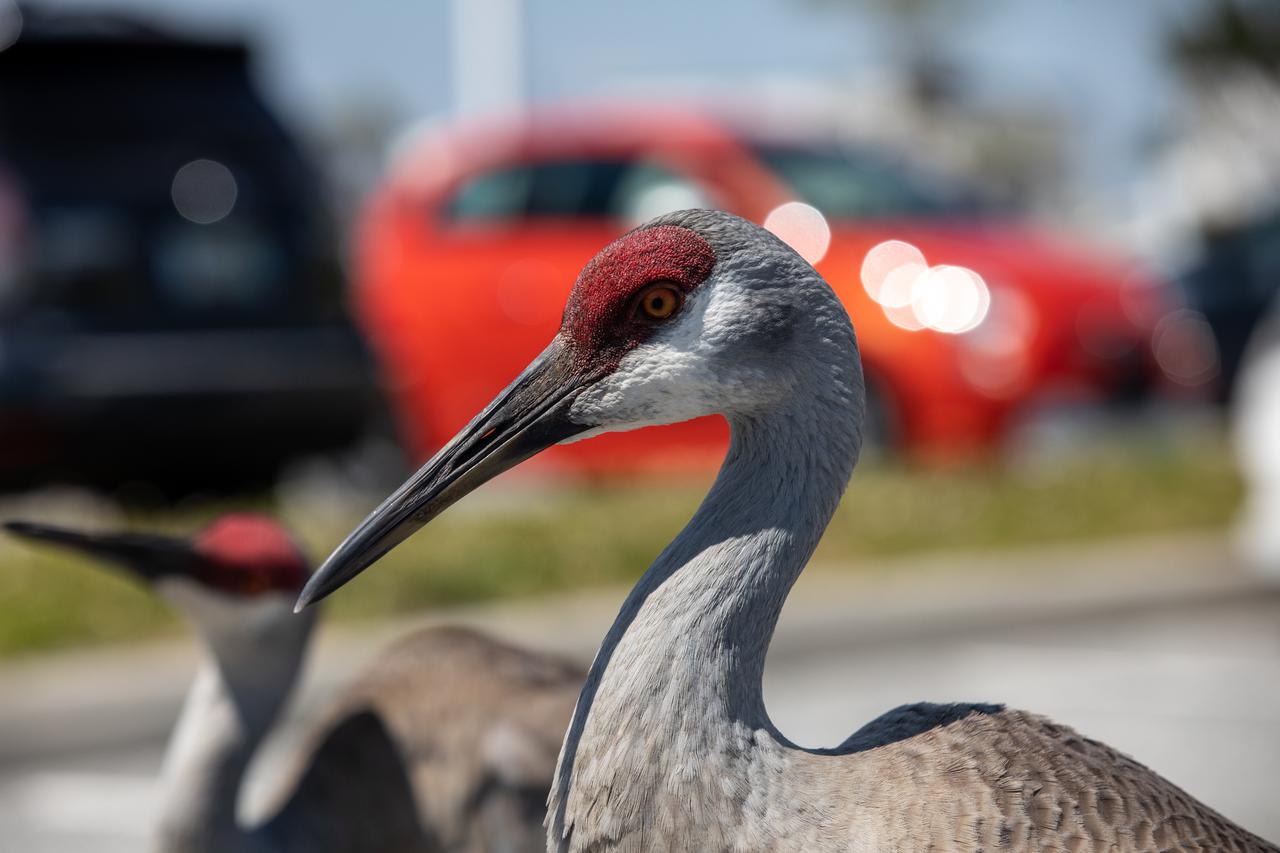
A pair of sandhill cranes explore a paved parking area at NASA’s Kennedy Space Center in Florida on March 24, 2021. Kennedy shares space with the Merritt Island National Wildlife refuge, which is home to more than 1,000 species of plants, 117 species of fish, 68 amphibians and reptiles, 330 birds, and 31 different mammals. The refuge provides a favorable environment for the cranes as it contains shallow freshwater habitats for nesting, along with a variety of vegetation and prey to feed on.
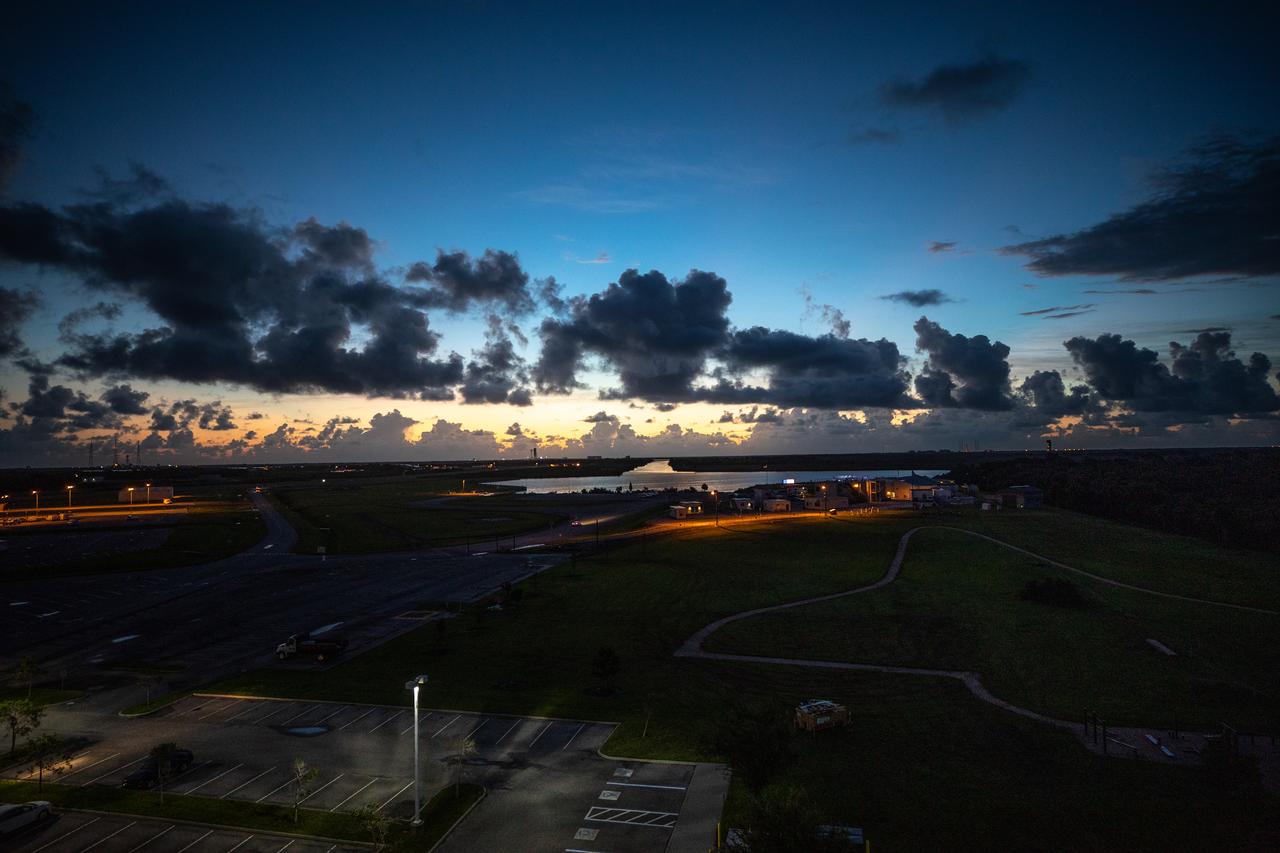
An early sunrise view of a waterway surrounding Launch Complex 39 at NASA's Kennedy Space Center in Florida on July 25, 2020. NASA’s Space Launch System and Orion spacecraft will lift off from Launch Complex 39B on Artemis I, an uncrewed mission around the Moon.
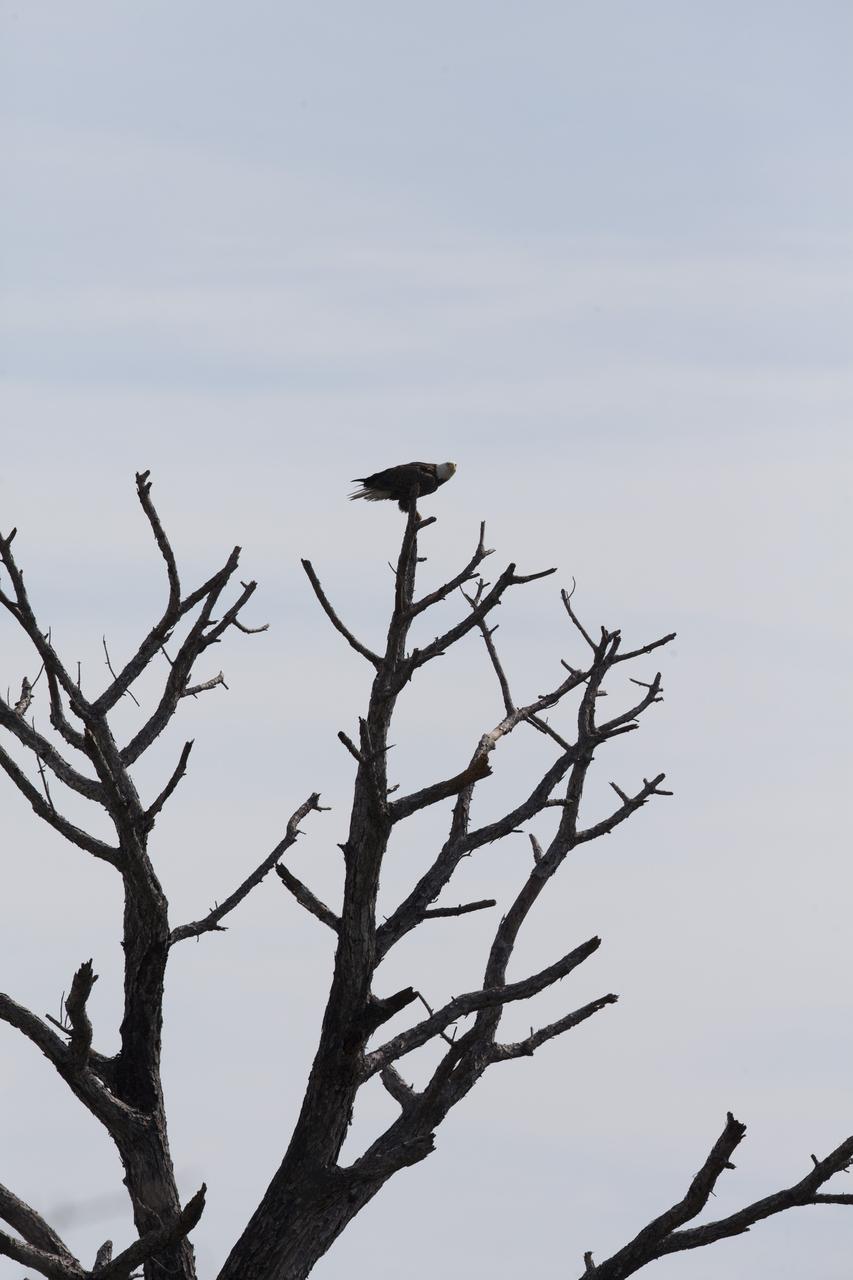
A bald eagle surveys its surroundings from a high treetop at NASA’s Kennedy Space Center in Florida. The spaceport shares borders with the Merritt Island National Wildlife Refuge, which is home to more than 330 native and migratory bird species, along with 25 mammal, 117 fish, and 65 amphibian and reptile species.
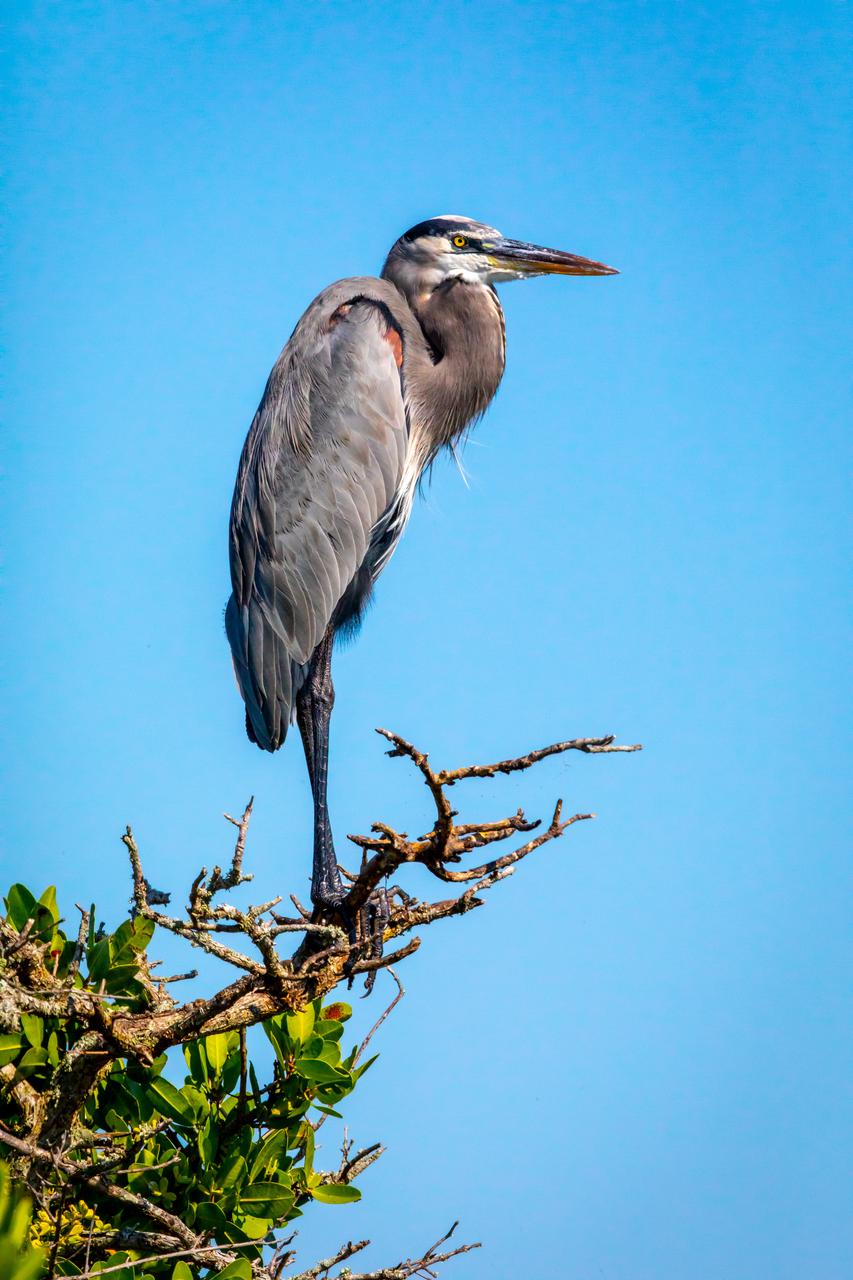
A young Great Blue Heron balances perfectly on the branch of a tree at NASA's Kennedy Space Center in Florida. The center shares a border with the Merritt Island National Wildlife Refuge. More than 330 native and migratory bird species, along 25 mammal, 117 fish and 65 amphibian and reptile species call Kennedy and the wildlife refuge home.
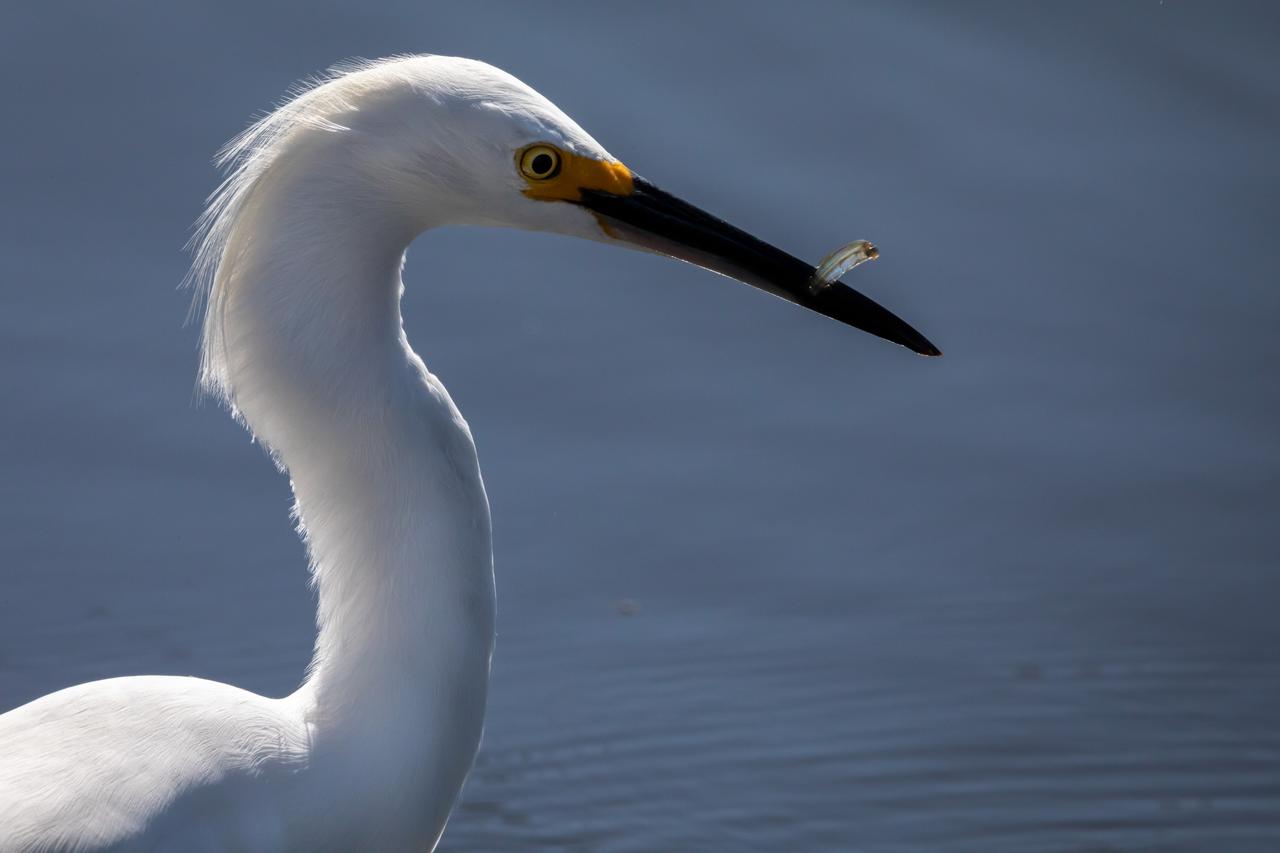
A Great Egret catches a small fish in a waterway at NASA's Kennedy Space Center in Florida. The center shares a border with the Merritt Island National Wildlife Refuge. More than 330 native and migratory bird species, 25 mammal, 117 fish and 65 amphibian and reptile species call Kennedy and the wildlife refuge home.
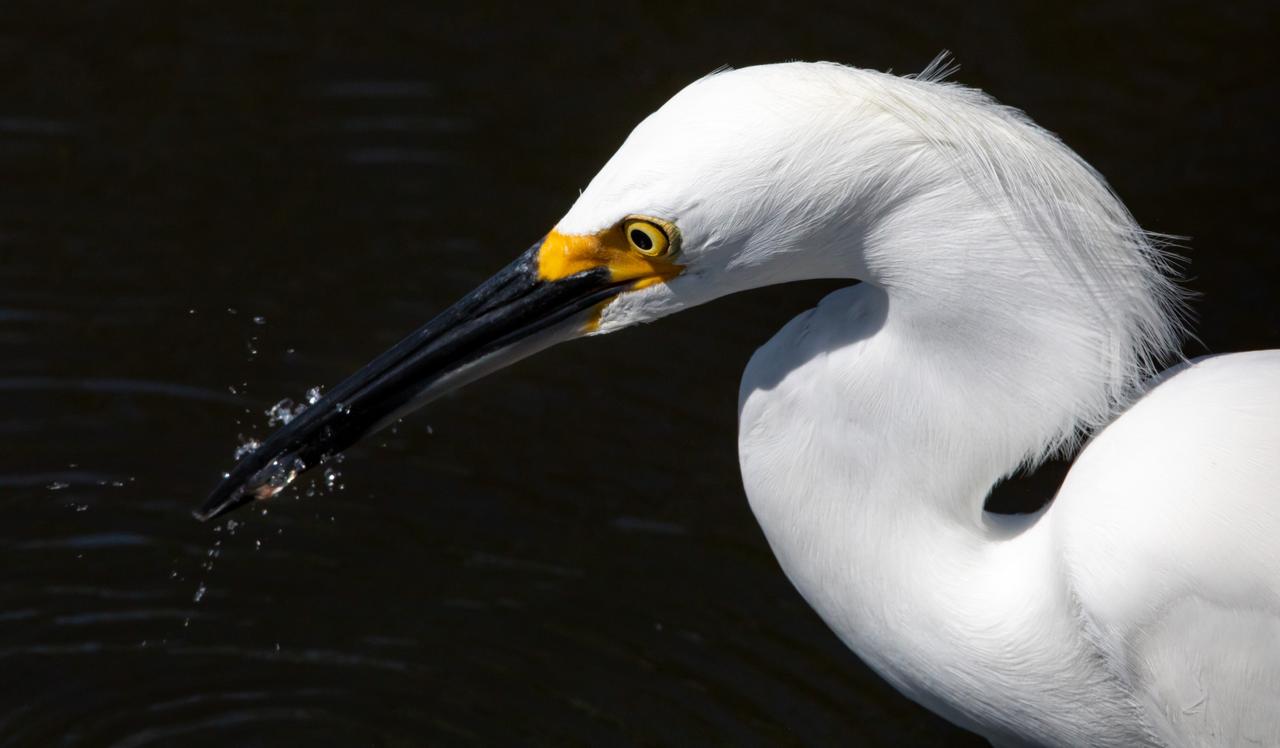
A Great Egret catches a small fish in a waterway at NASA's Kennedy Space Center in Florida. The center shares a border with the Merritt Island National Wildlife Refuge. More than 330 native and migratory bird species, 25 mammal, 117 fish and 65 amphibian and reptile species call Kennedy and the wildlife refuge home.
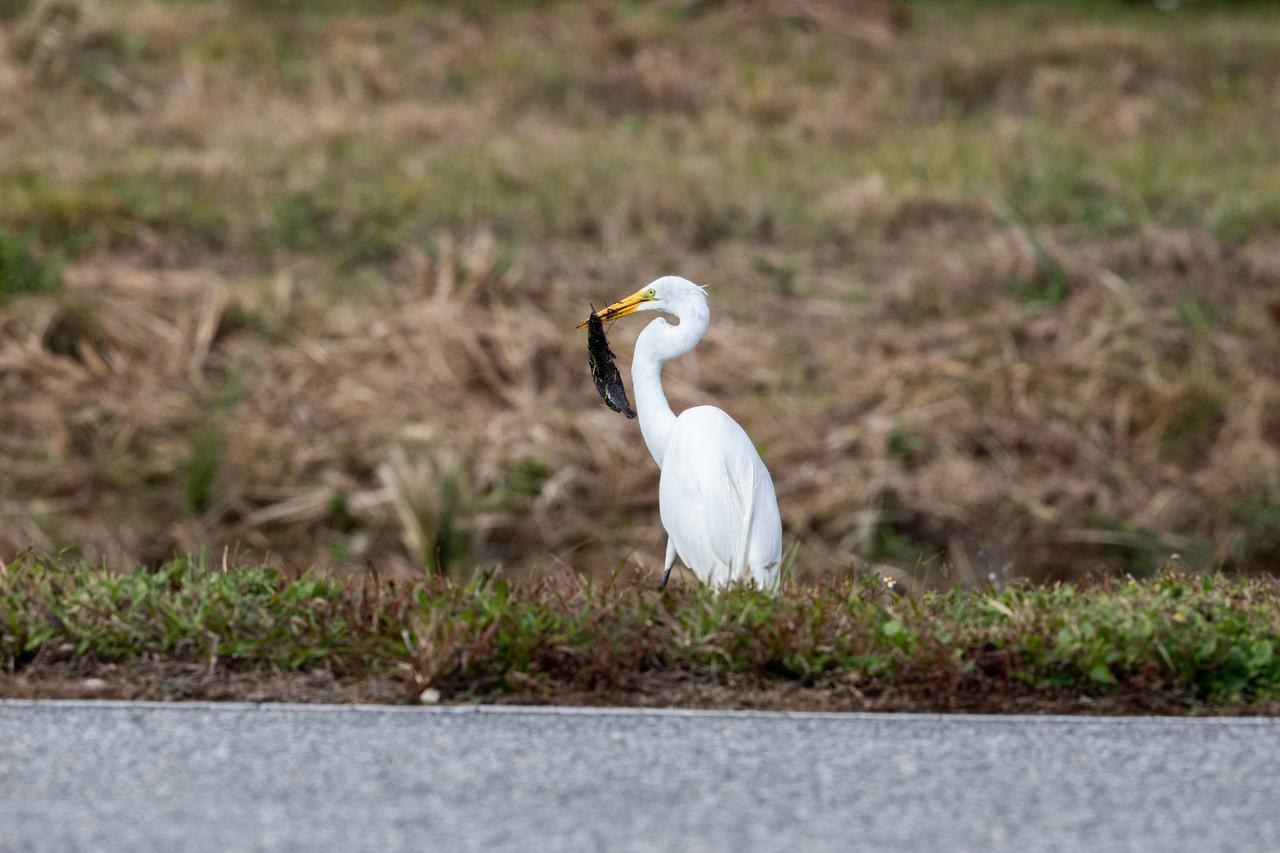
A Great Egret catches a fish in a waterway at NASA's Kennedy Space Center in Florida on Jan. 8, 2021. The center shares a border with the Merritt Island National Wildlife Refuge. More than 330 native and migratory bird species, 25 mammal, 117 fish and 65 amphibian and reptile species call Kennedy and the wildlife refuge home.
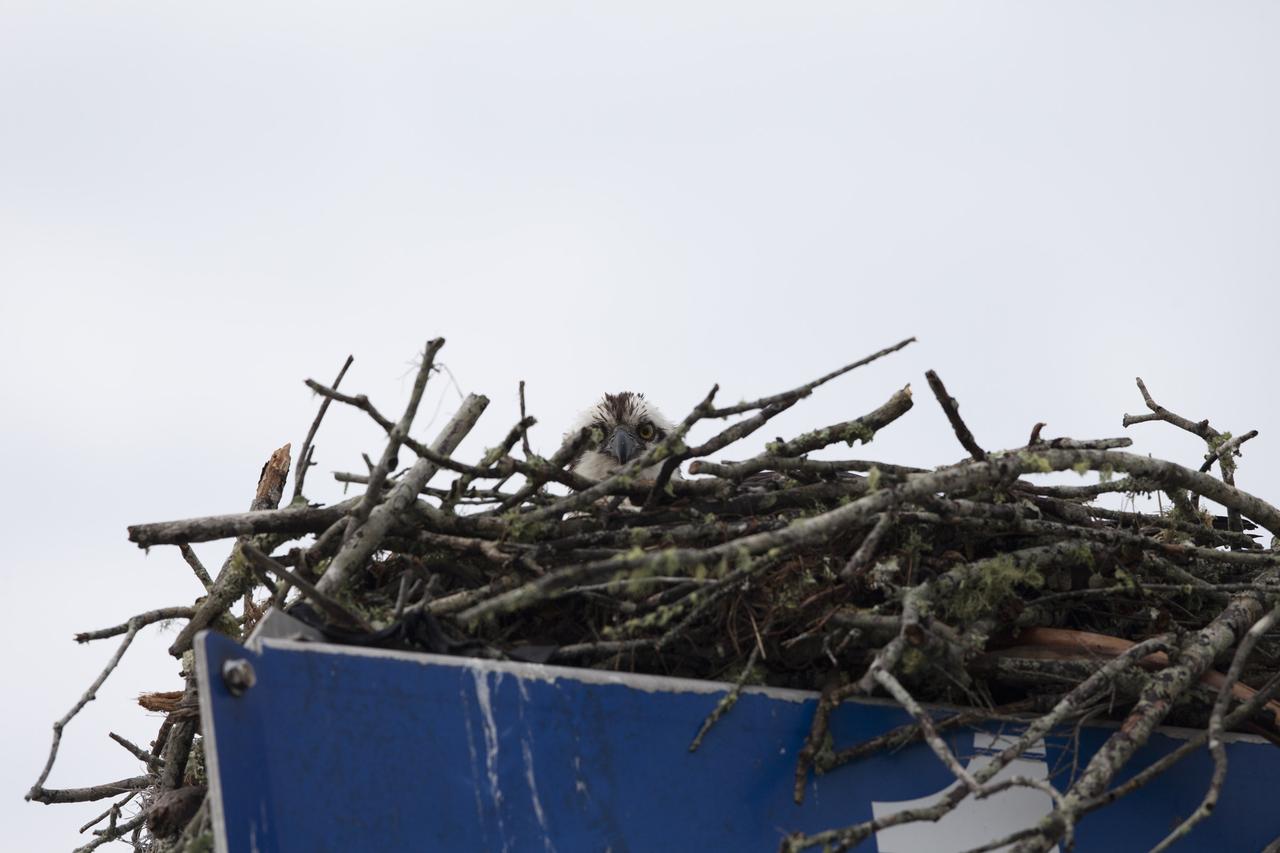
A juvenile osprey peers over the edge of its nest, which its parents have built atop a sign at NASA’s Kennedy Space Center in Florida. The spaceport shares borders with the Merritt Island National Wildlife Refuge, which is home to more than 330 native and migratory bird species, along with 25 mammal, 117 fish, and 65 amphibian and reptile species.
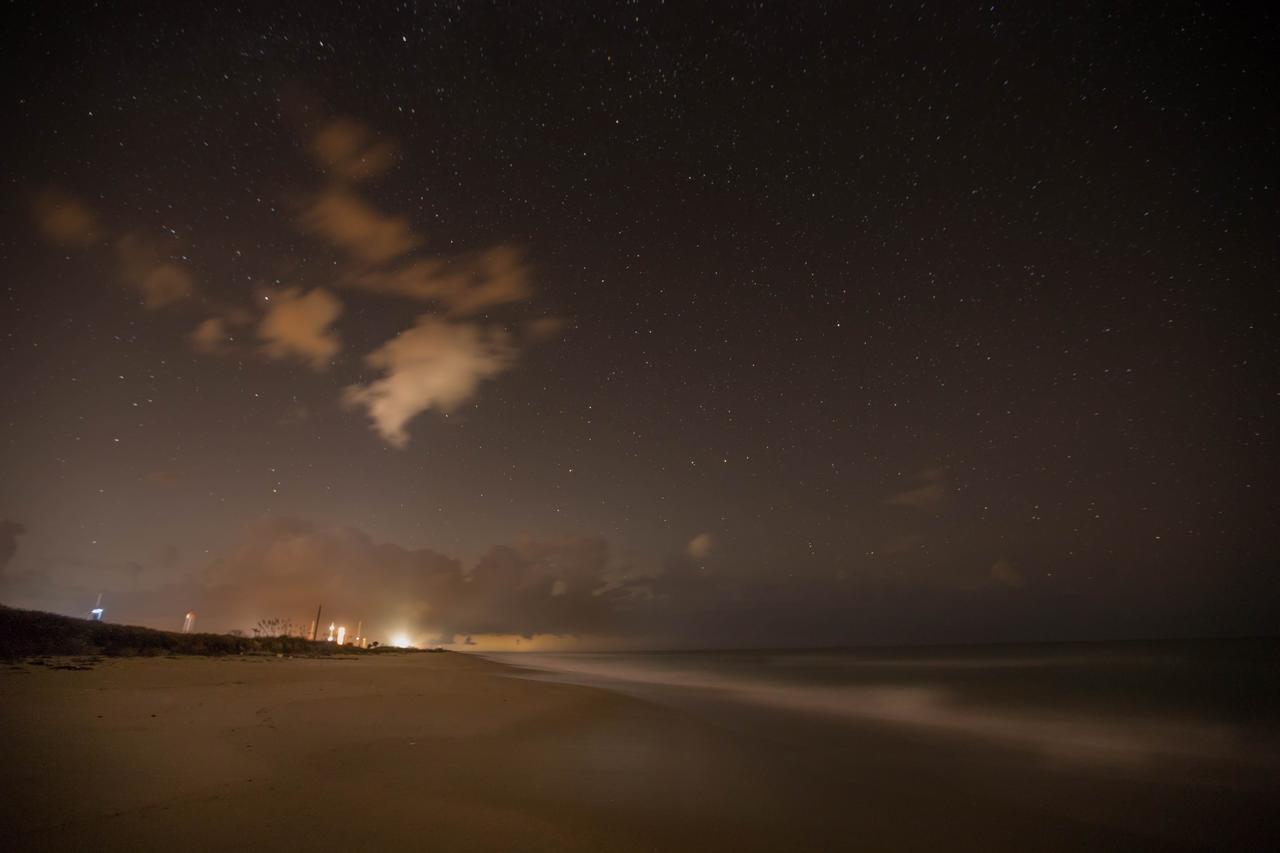
Lights from Launch Complexes 39A and B, left, glow against the night sky in this view from the Atlantic shoreline at NASA’s Kennedy Space Center in Florida on Oct. 31, 2019.
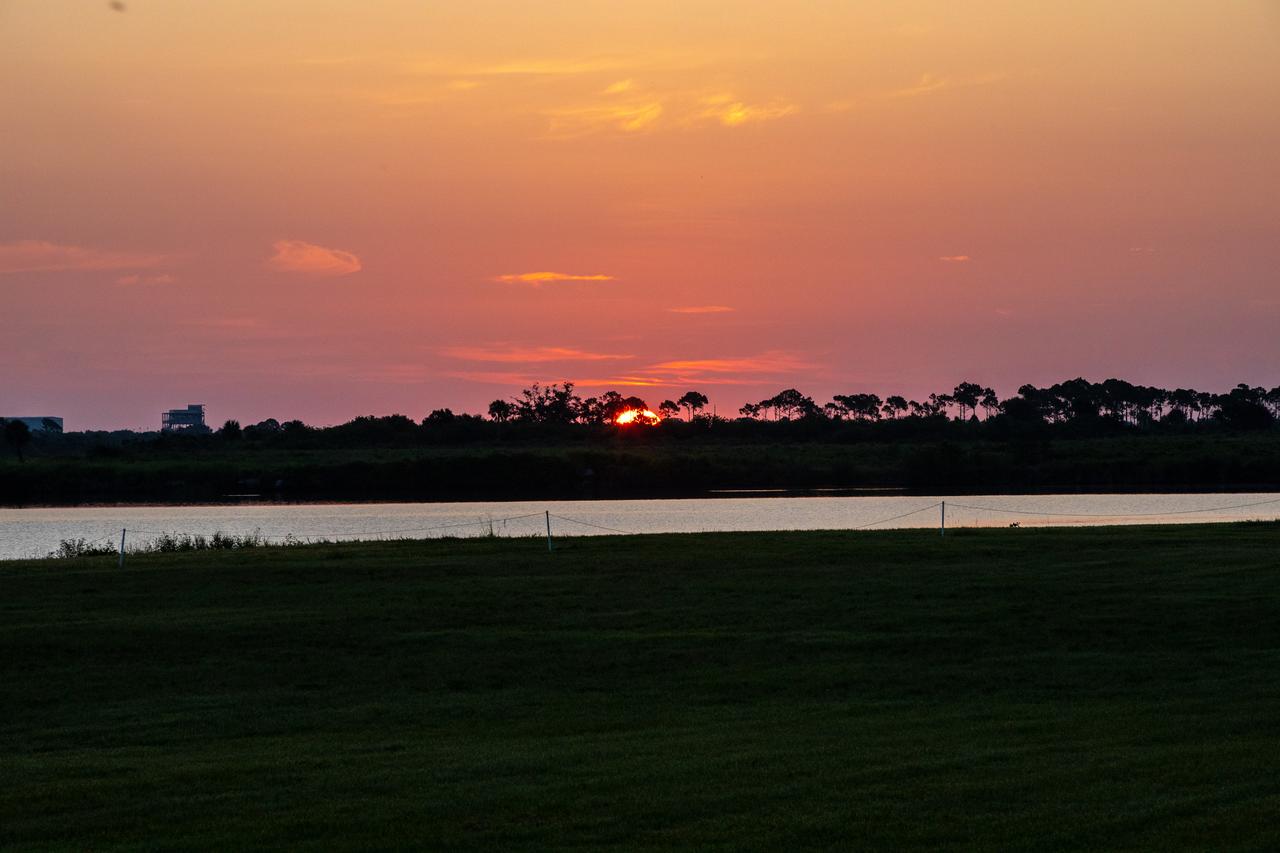
The Sun just begins to rise over NASA’s Kennedy Space Center in Florida on July 15, 2020. A multi-user spaceport, Kennedy has partnerships with both government and commercial entities, providing the facilities and infrastructure necessary for venturing to space.
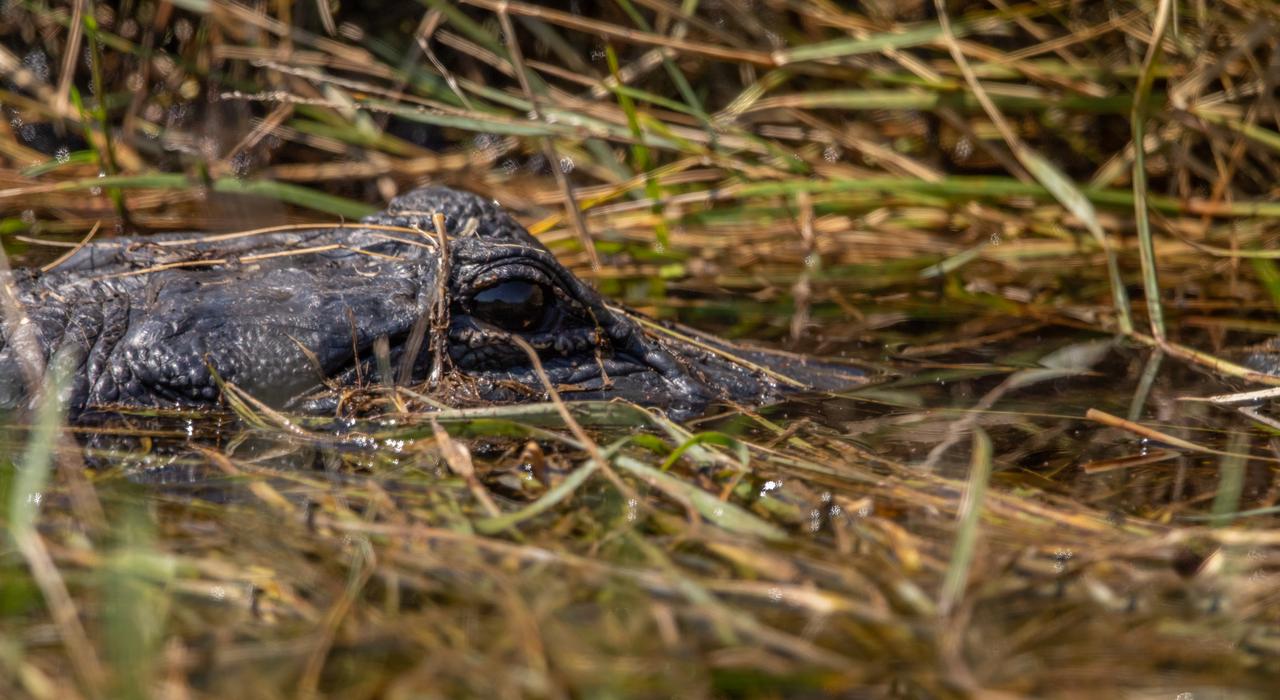
An alligator lurks in a marshy waterway at NASA's Kennedy Space Center in Florida. The center shares a border with the Merritt Island National Wildlife Refuge. More than 330 native and migratory bird species, 25 mammal, 117 fish and 65 amphibian and reptile species call Kennedy and the wildlife refuge home.
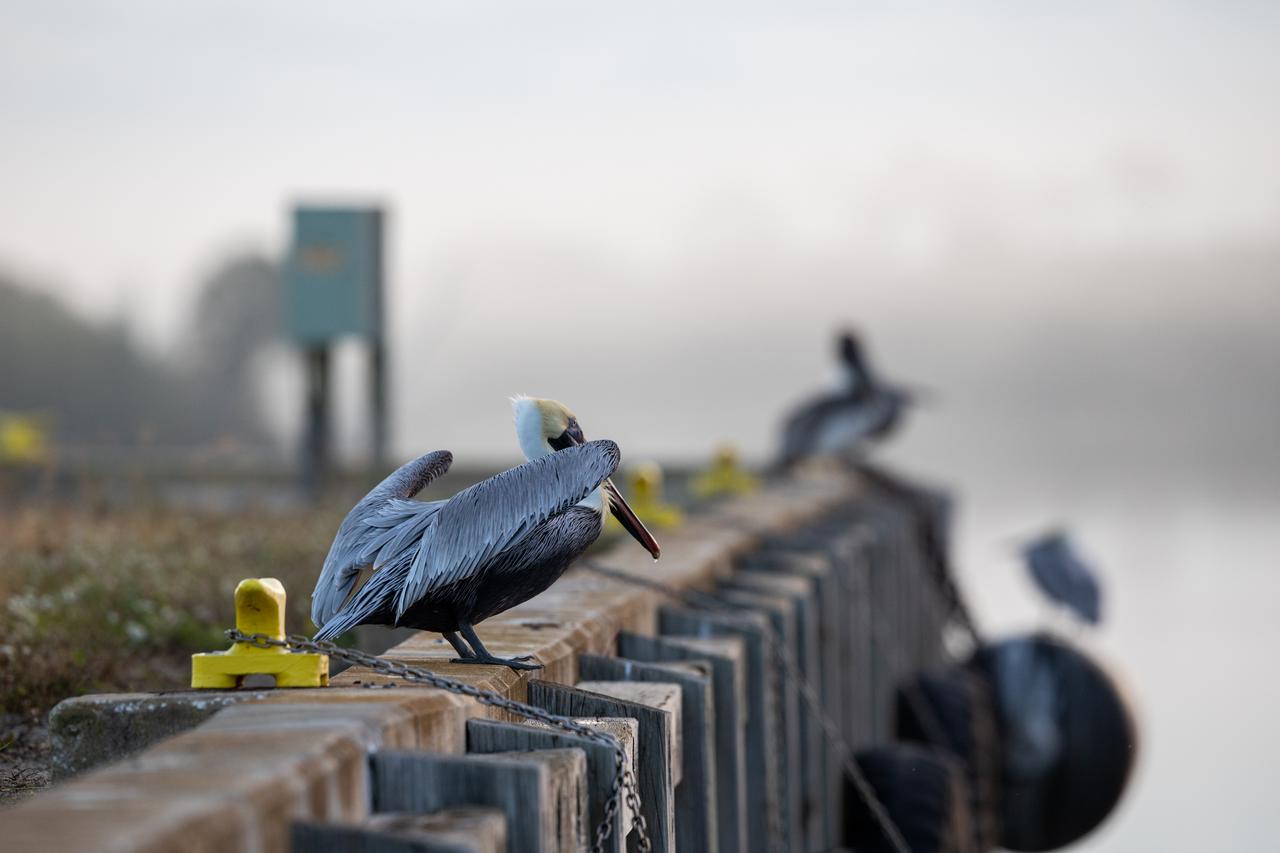
Pelicans perch on the support beams of an embankment on a waterway at NASA's Kennedy Space Center in Florida on Jan. 11, 2021. The center shares a border with the Merritt Island National Wildlife Refuge. More than 330 native and migratory bird species, along with 25 mammal, 117 fish, and 65 amphibian and reptile species call Kennedy and the wildlife refuge home.
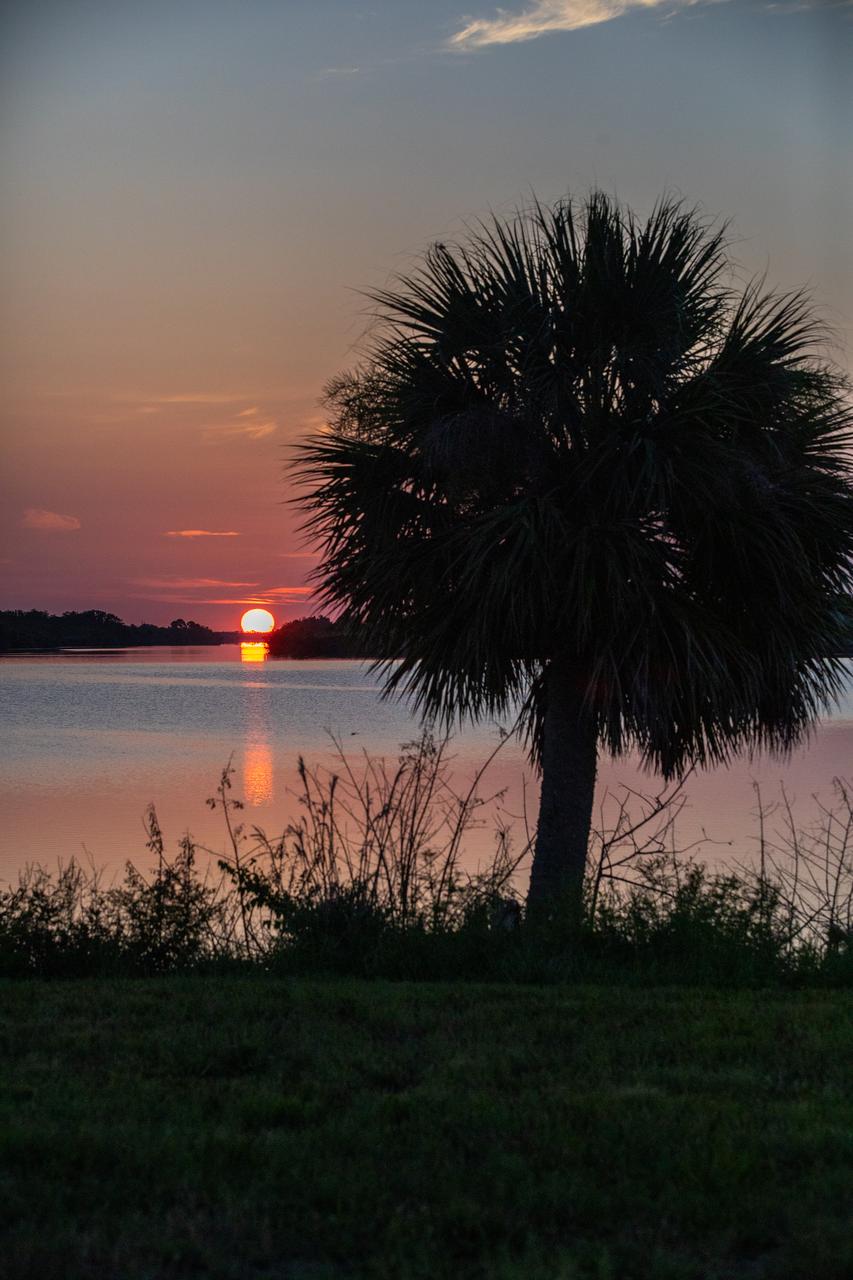
A sunrise over NASA’s Kennedy Space Center in Florida is captured on July 15, 2020. A multi-user spaceport, Kennedy has partnerships with both government and commercial entities, providing the facilities and infrastructure necessary for venturing to space.
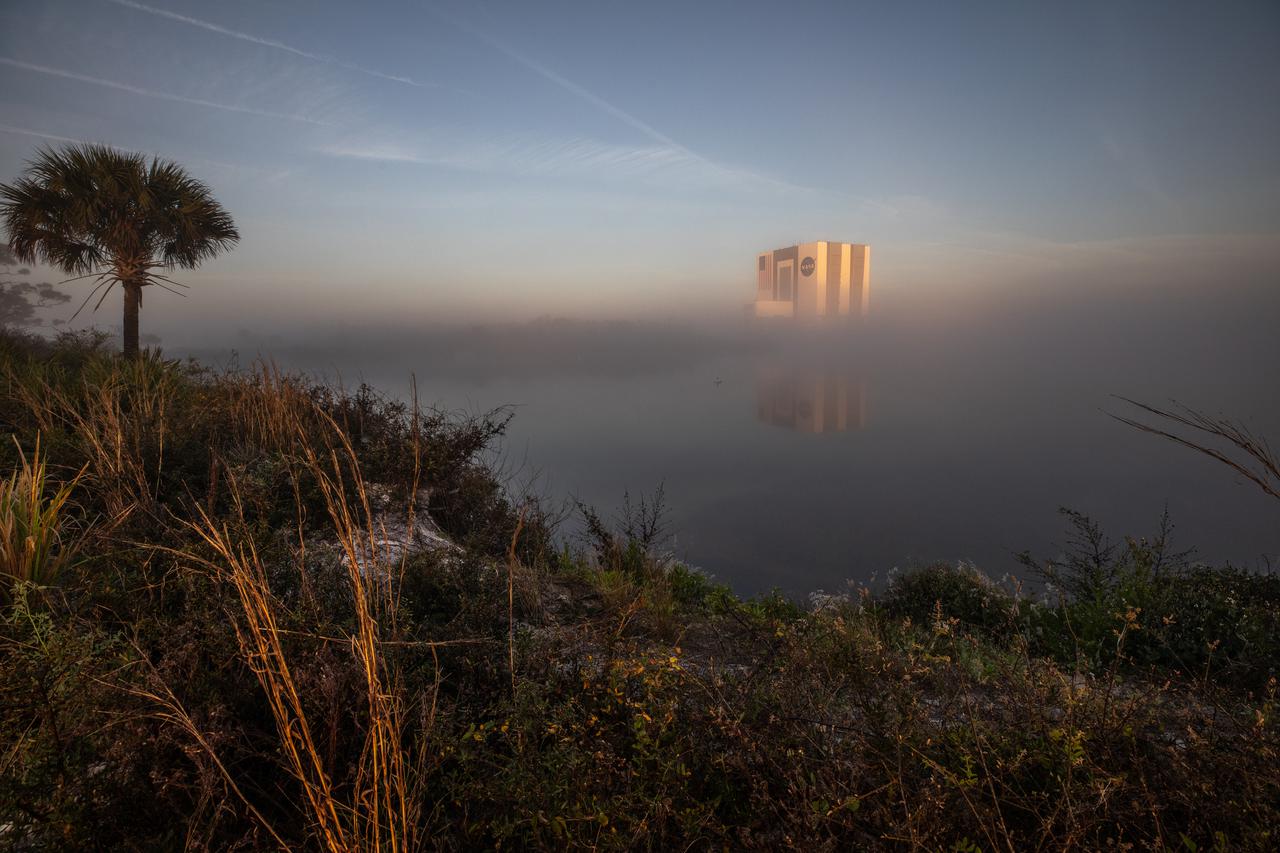
Kennedy Space Center’s Vehicle Assembly Building (VAB) is partially obstructed by fog during the early morning on March 15, 2021. Built in 1966, the VAB remains a central hub for the Florida spaceport. The national landmark plays a major role in NASA’s plans to launch people and equipment deep into space on missions, including to the Moon in the Artemis program.
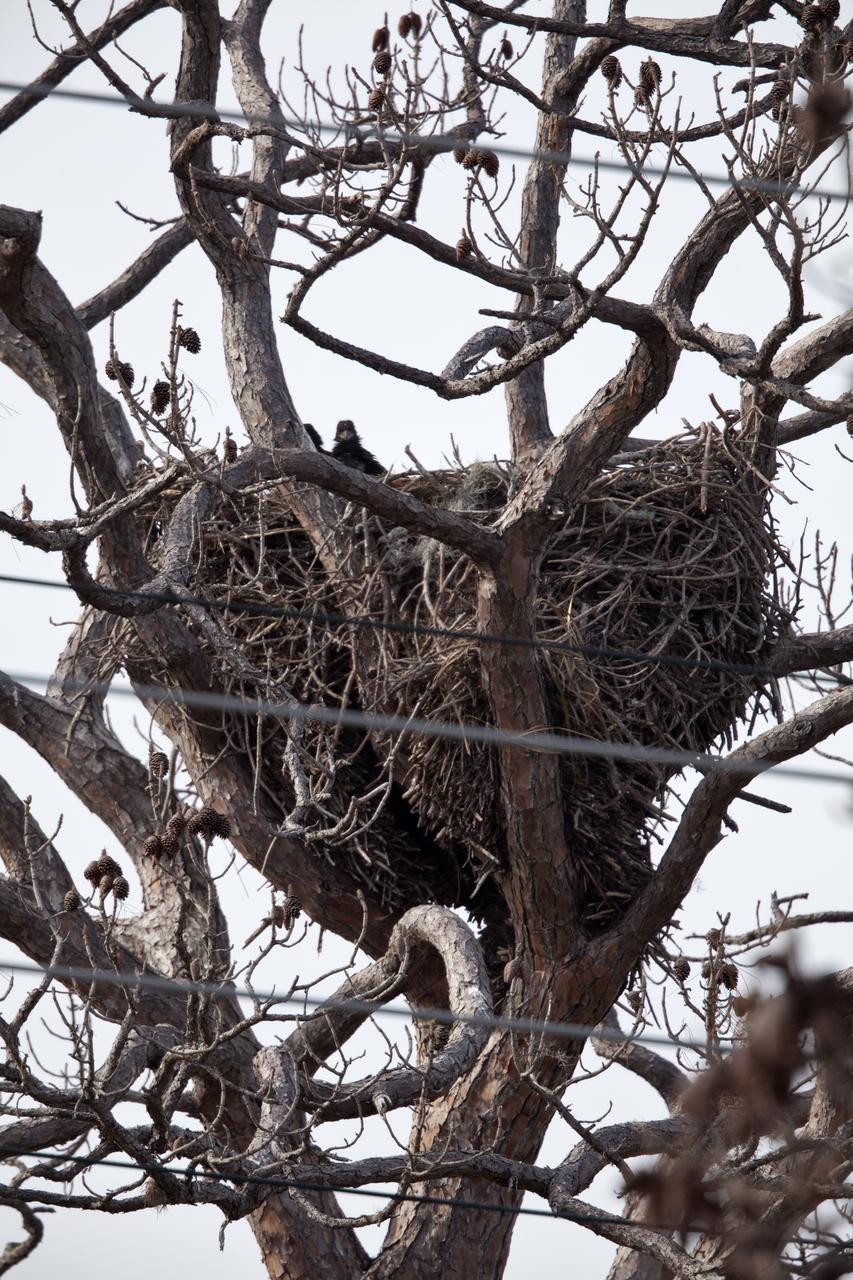
Two baby eagles perch in a nest in a tree along State Road 3 at NASA's Kennedy Space Center in Florida. The center shares a border with the 140,000-acre Merritt Island National Wildlife Refuge. More than 330 native and migratory bird species, 25 mammals, 117 fishes and 65 amphibians and reptiles call Kennedy and the wildlife refuge home.
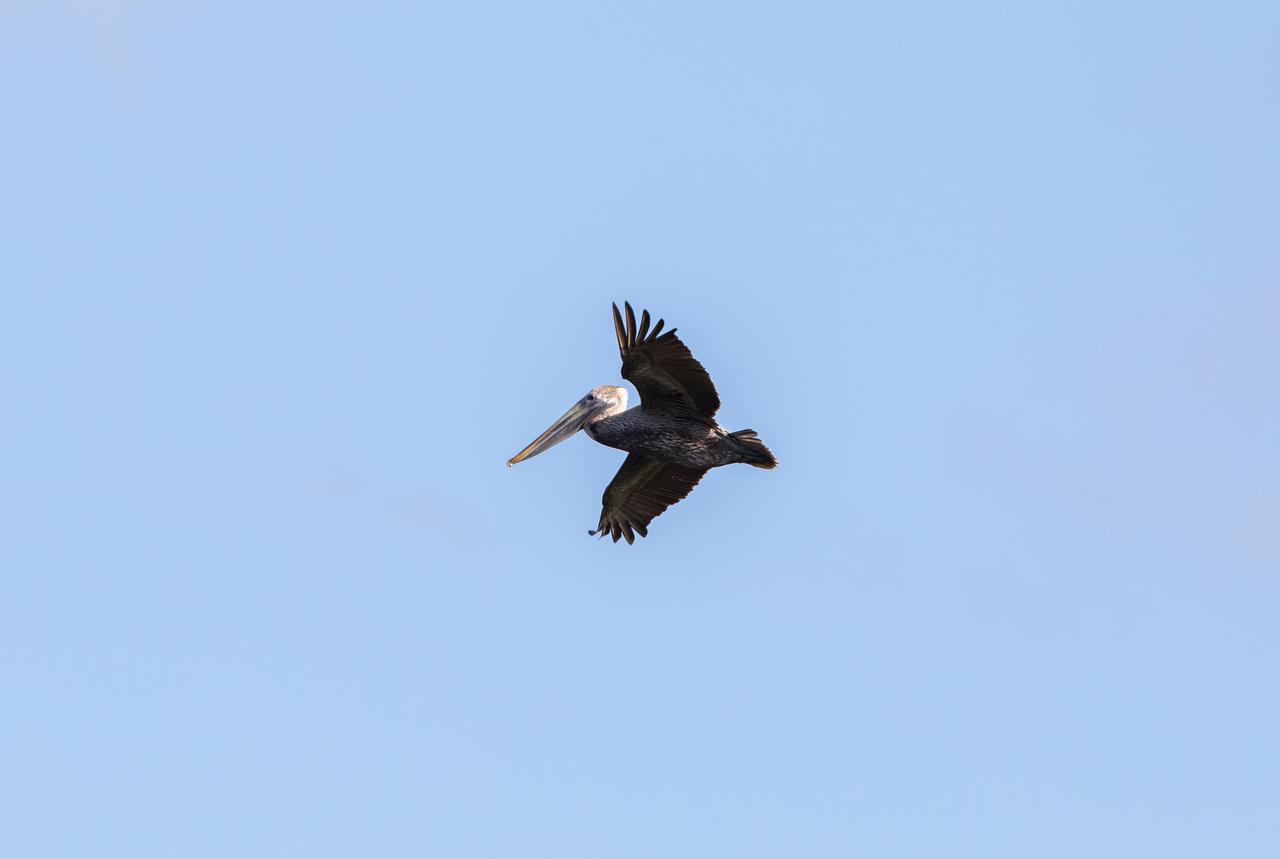
A pelican soars above a waterway at NASA's Kennedy Space Center in Florida on Jan. 11, 2021. The center shares a border with the Merritt Island National Wildlife Refuge. More than 330 native and migratory bird species, along with 25 mammal, 117 fish, and 65 amphibian and reptile species call Kennedy and the wildlife refuge home.

Photographers at NASA capture the sunset on Tuesday, Jan. 30, 2024, near Vehicle Assembly Building at the agency’s Kennedy Space Center in Florida. The iconic Vehicle Assembly Building, completed in 1966 and currently used for assembly of NASA’s Space Launch System rocket for Artemis missions, remains the only building in which rockets were assembled that carried humans to the surface of another world.