A Glowing Crescent Moon

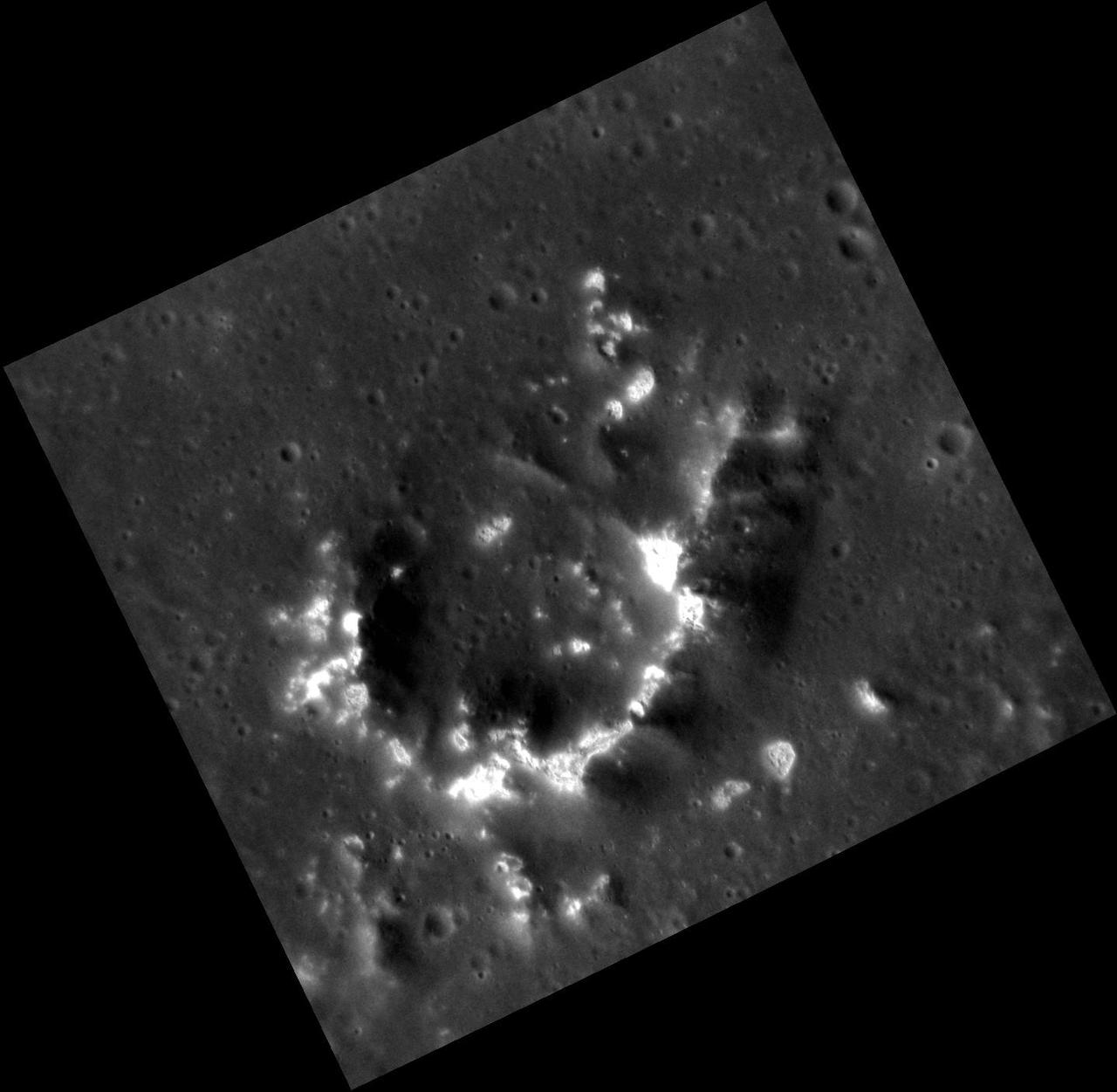
This picture of a crescent-shaped Earth and Moon -- the first of its kind ever taken by a spacecraft -- was recorded Sept. 18, 1977, by NASA Voyager 1 when it was 7.25 million miles 11.66 million kilometers from Earth.

This picture of a crescent-shaped Earth and Moon, the first of its kind ever taken by a spacecraft, was recorded Sept. 18, 1977, by NASA Voyager 1 when it was 7.25 million miles 11.66 million kilometers from Earth. http://photojournal.jpl.nasa.gov/catalog/PIA00013
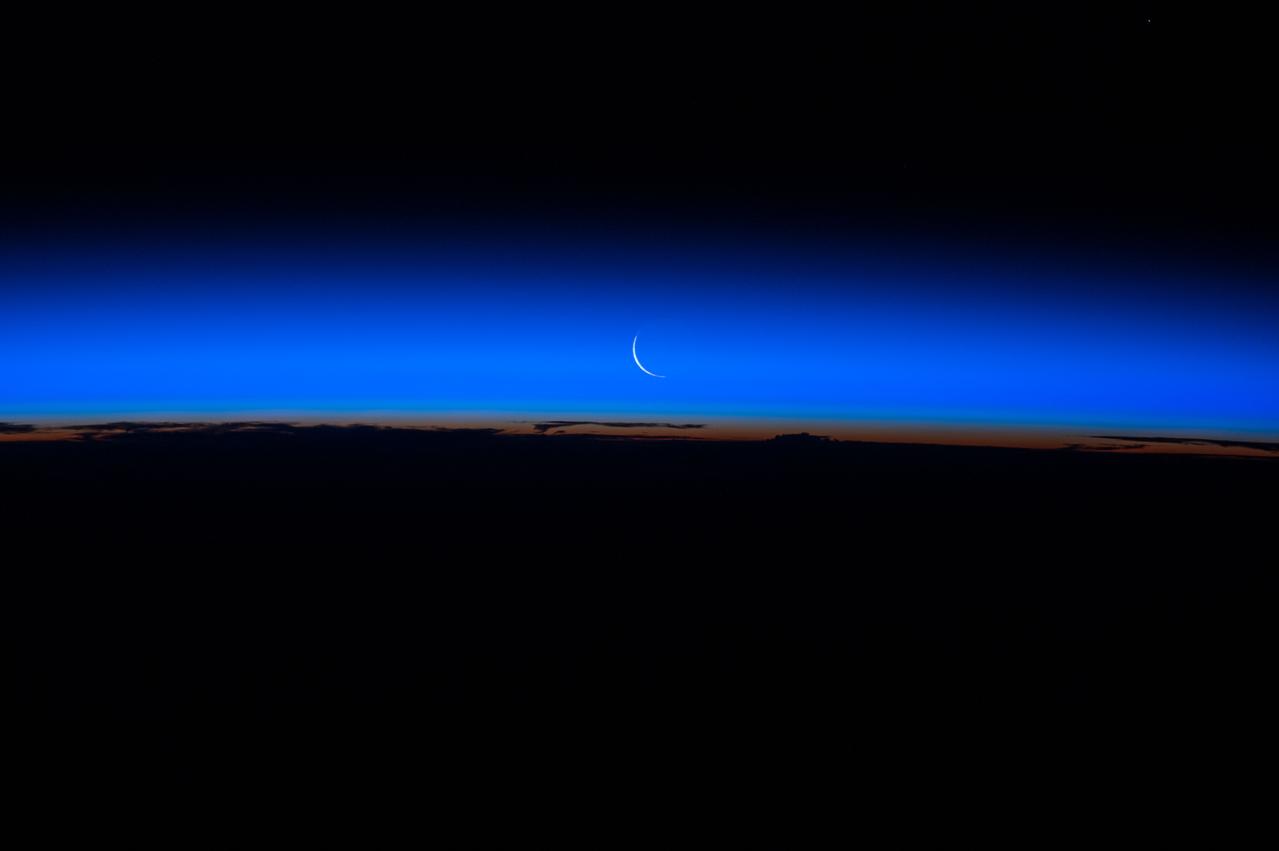
View of crescent Moon setting as seen by the Expedition 43 crew aboard the International Space Station (ISS).
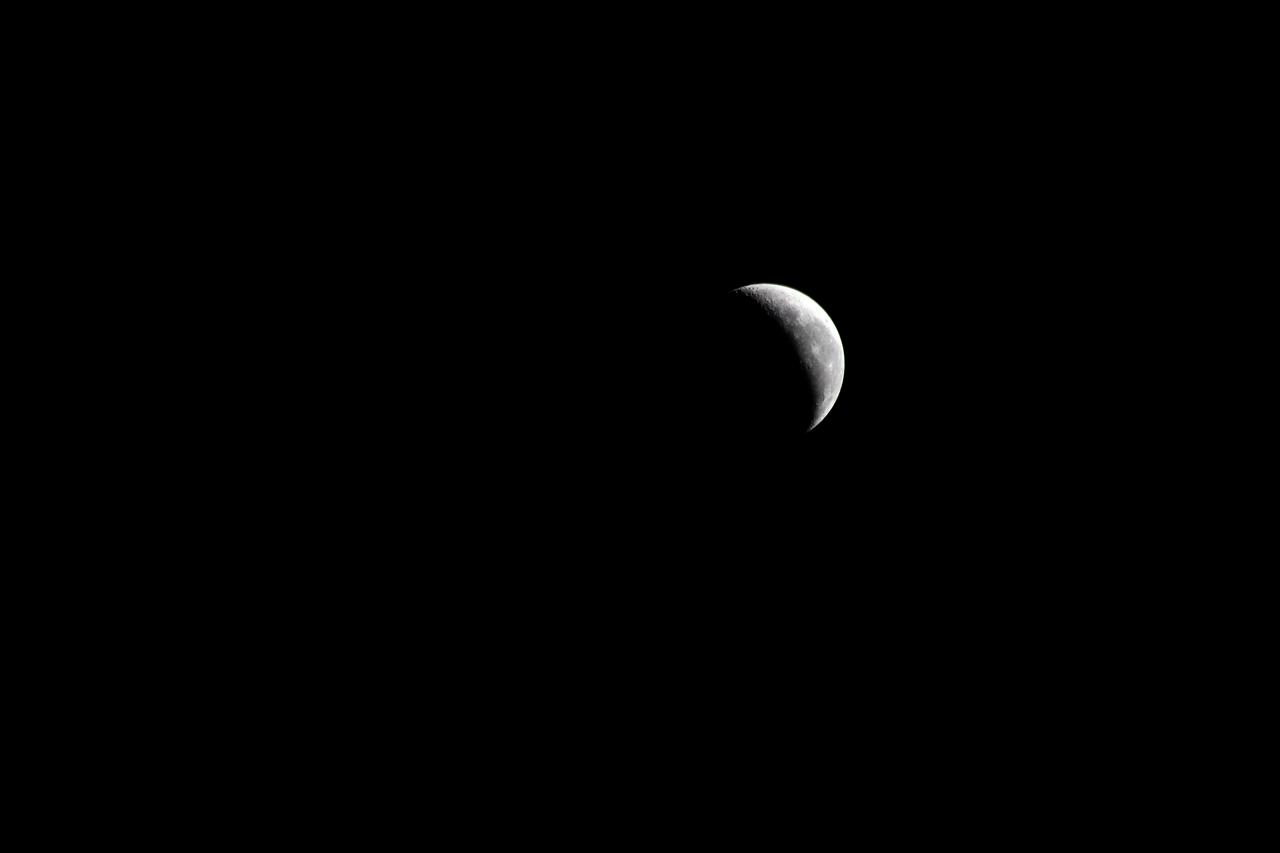
iss071e256627 (June 30, 2024) -- A waning crescent moon hangs against the black of space as the International Space Station orbited 258 miles above Italy.
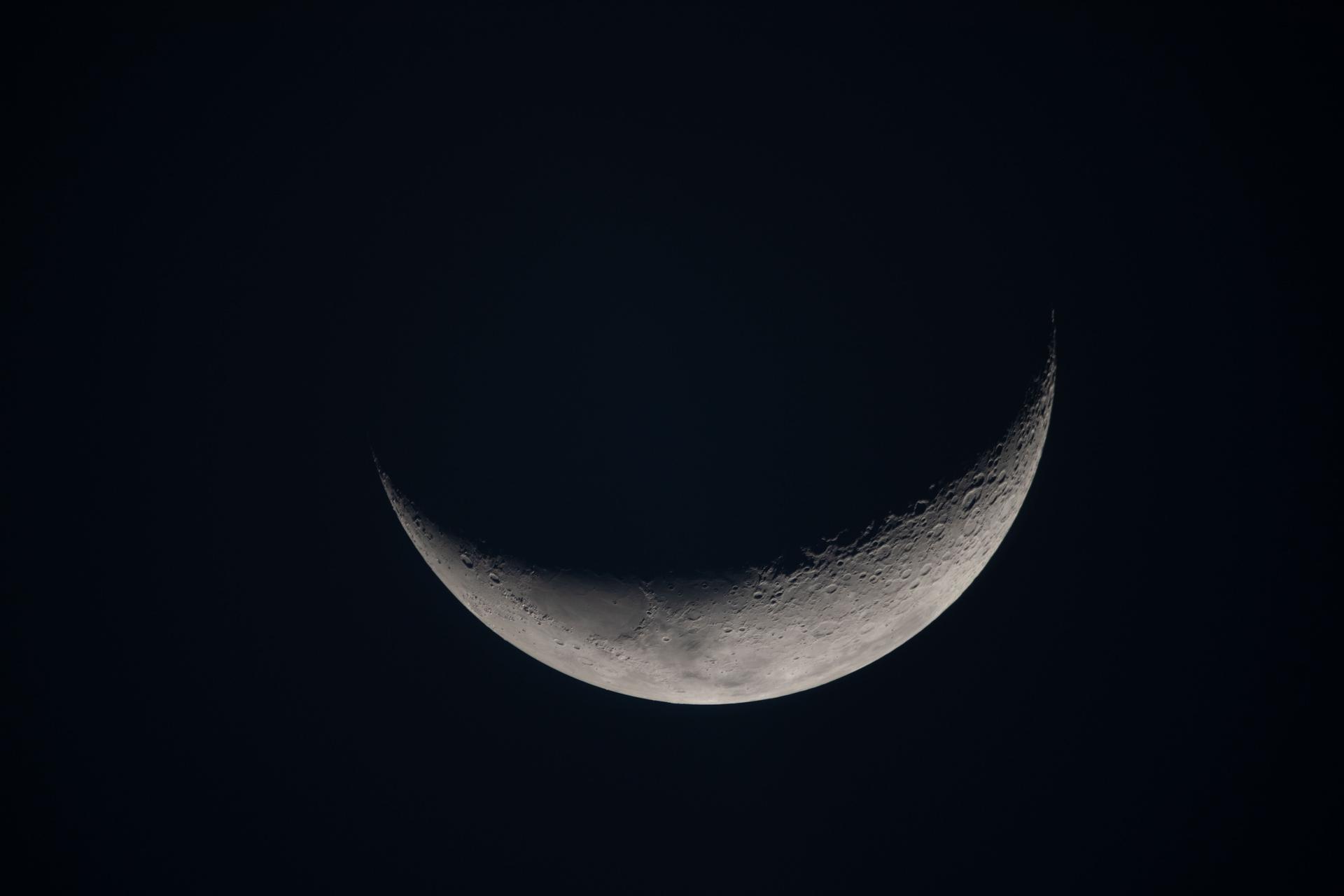
art002e019570 (April 7, 2026) – On flight day seven, following their lunar flyby, the Artemis II crew captured this view of a delicate crescent Moon on their journey back to Earth. Along the terminator—the boundary between lunar day and night—low-angle sunlight casts long shadows that accentuate craters, ridges, and subtle variations in terrain. The softly illuminated surface highlights the Moon’s rugged landscape, while much of it remains in shadow. Credit: NASA
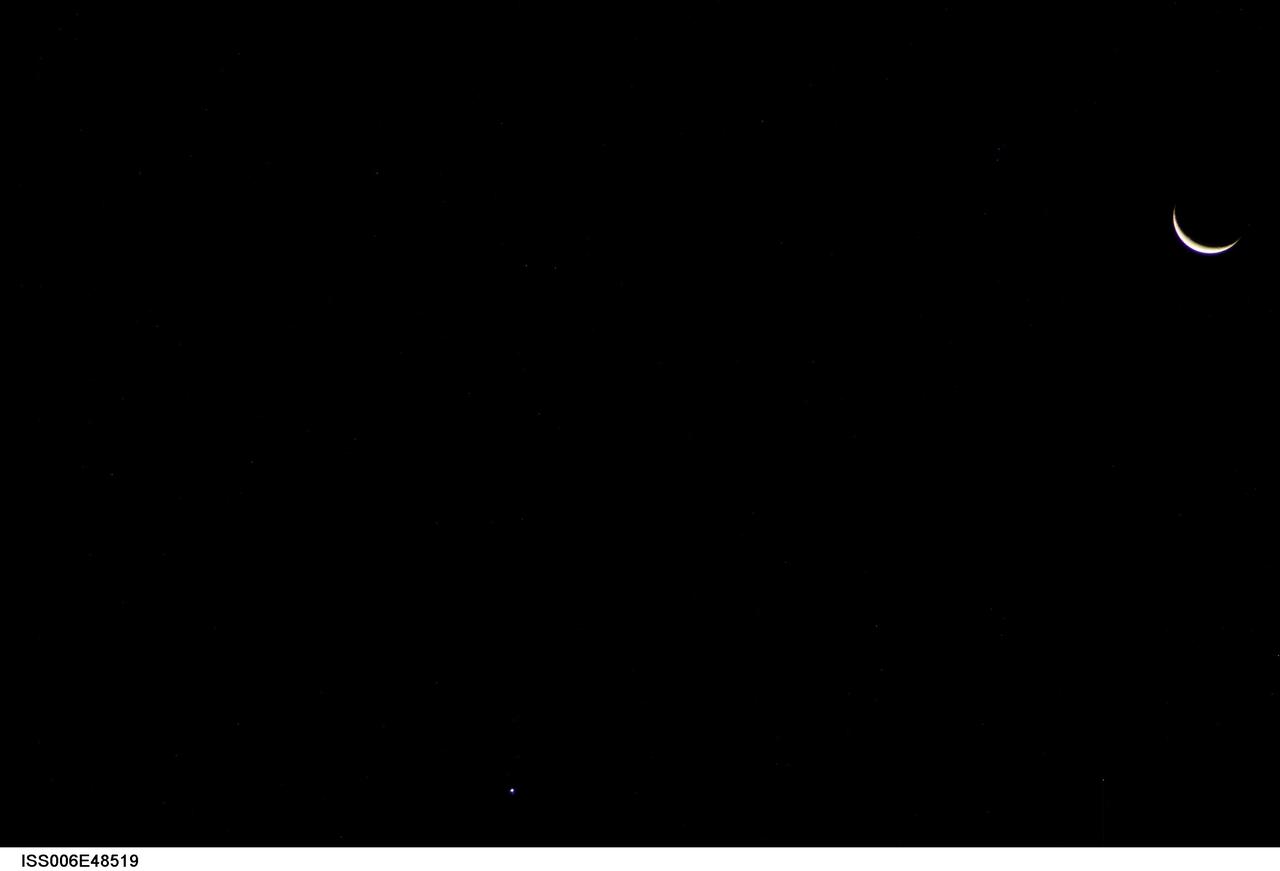
ISS006-E-48519 (28 April 2003) --- A crescent moon was photographed by an Expedition Six crewmember onboard the International Space Station (ISS).
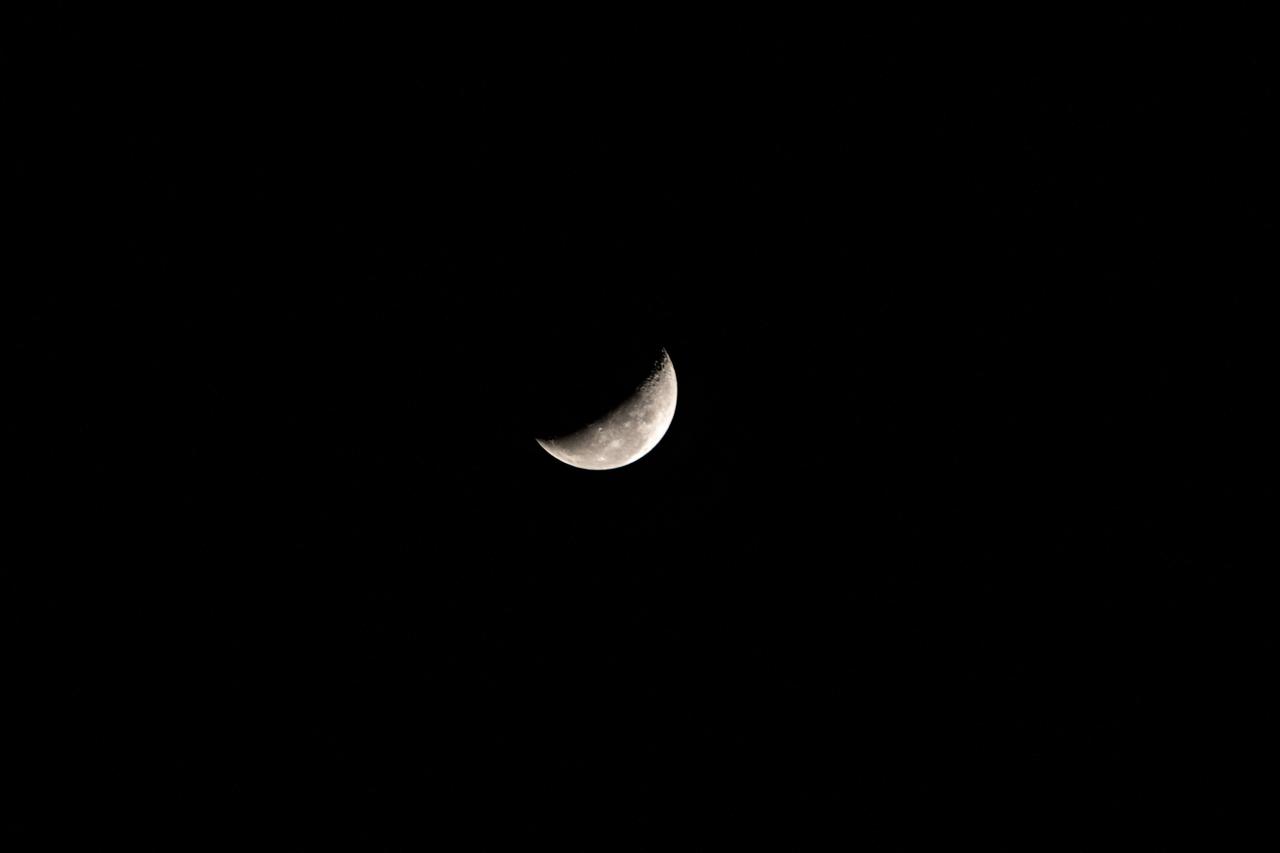
iss071e407666 (July 29, 2024) -- A waning crescent moon hangs in the deep black of space as the International Space Station orbited 270 miles above the South Pacific Ocean.
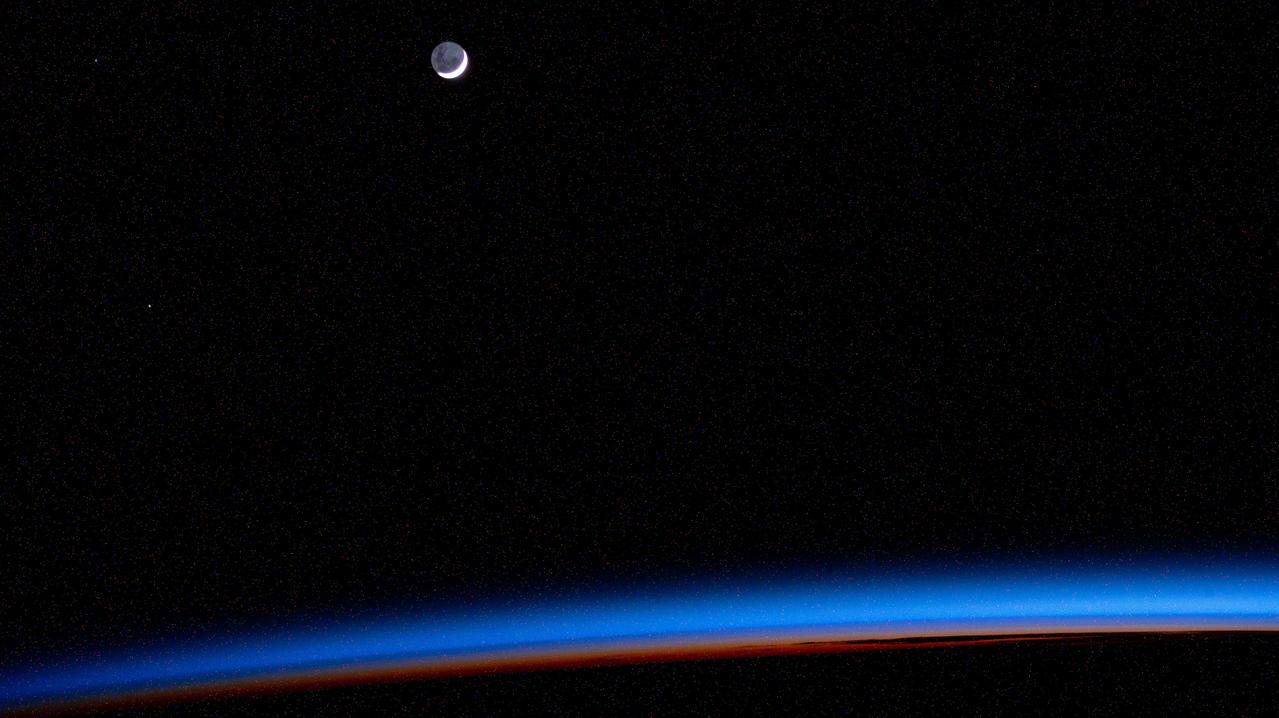
iss073e0118626 (May 25, 2025) --- An external high definition camera adjusted for night sensitivity took this photograph of the waning crescent Moon above Earth's horizon as the International Space Station orbited into a sunrise 270 miles above the Atlantic Ocean.
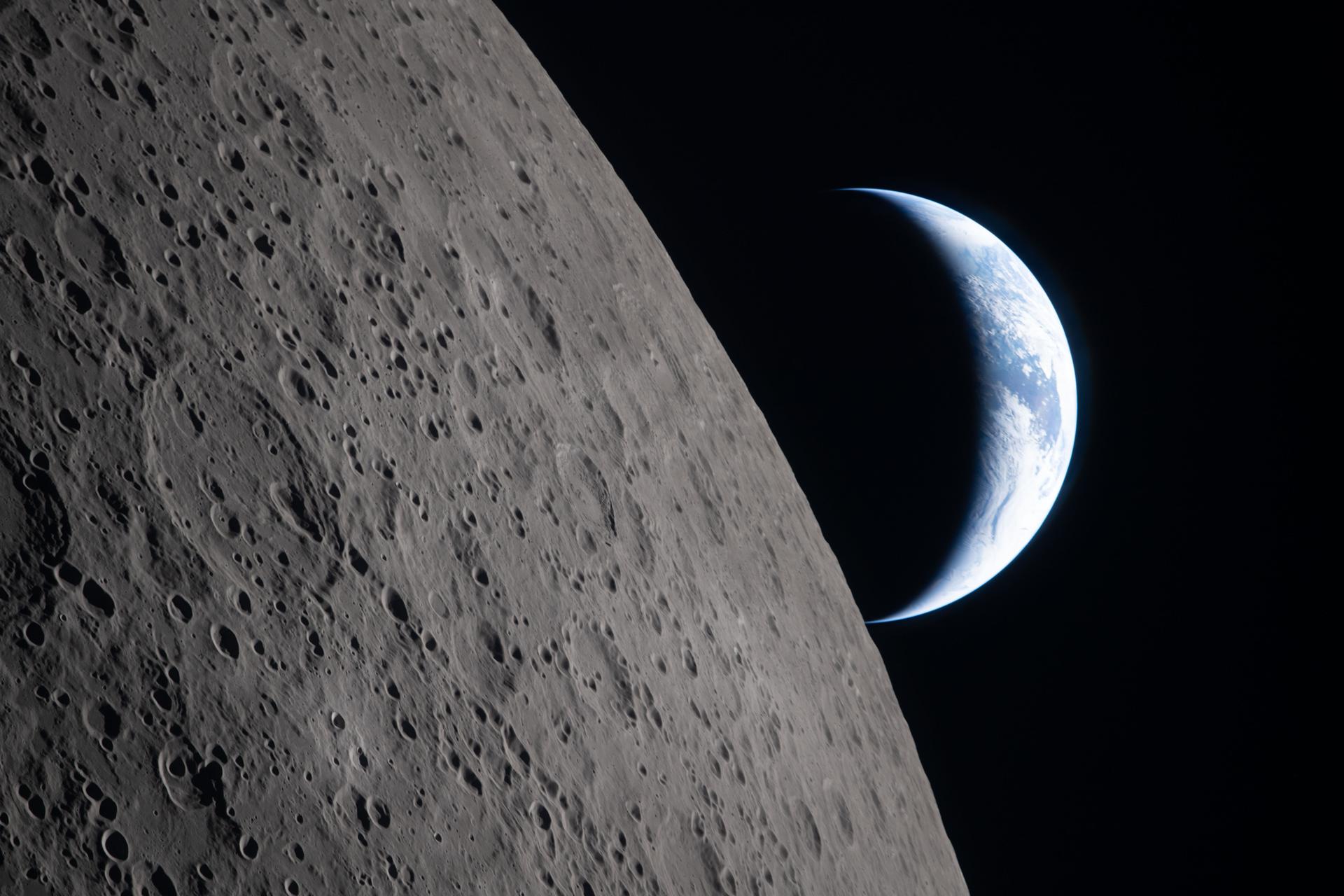
art002e009286 (April 6, 2026) – As the Artemis II crew came close to passing behind the Moon and experiencing a planned loss of signal, they captured this image of a crescent Earth setting on the Moon’s limb. The edge of the visible surface of the Moon is called the “lunar limb.” Seen from afar, it almost looks like a circular arc – except when backlit, as in other images captured by the Artemis II crew. In this photo, the dark portion of Earth is experiencing nighttime, while Australia and Oceania are in the daylight. In the foreground, the Ohm crater is visible, with terraced edges and a flat floor interrupted by central peaks—formed when the surface rebounded upward during the impact that created the crater.
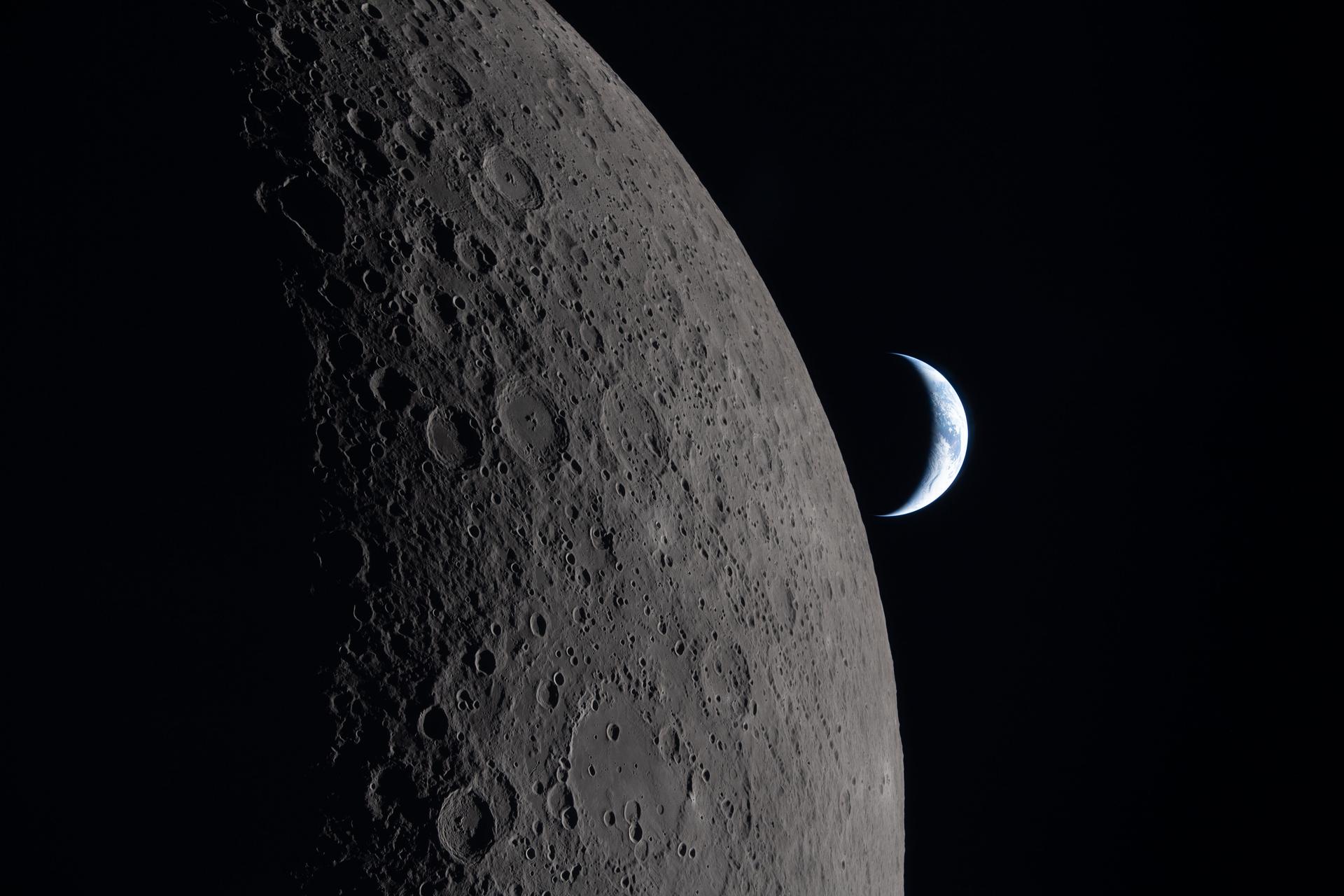
art002e021110 (April 6, 2026) – As the Artemis II crew came close to passing behind the Moon and experiencing a planned loss of signal, they captured this image of a crescent Earth. Seen from afar, it almost looks like a circular arc – except when backlit, as in other images captured by the Artemis II crew. Earth is in a crescent phase, with sunlight coming from the right. The dark portion of Earth is experiencing nighttime. On Earth’s day side, swirling clouds are visible over muted blue in the Australia and Oceania region. Credit: NASA
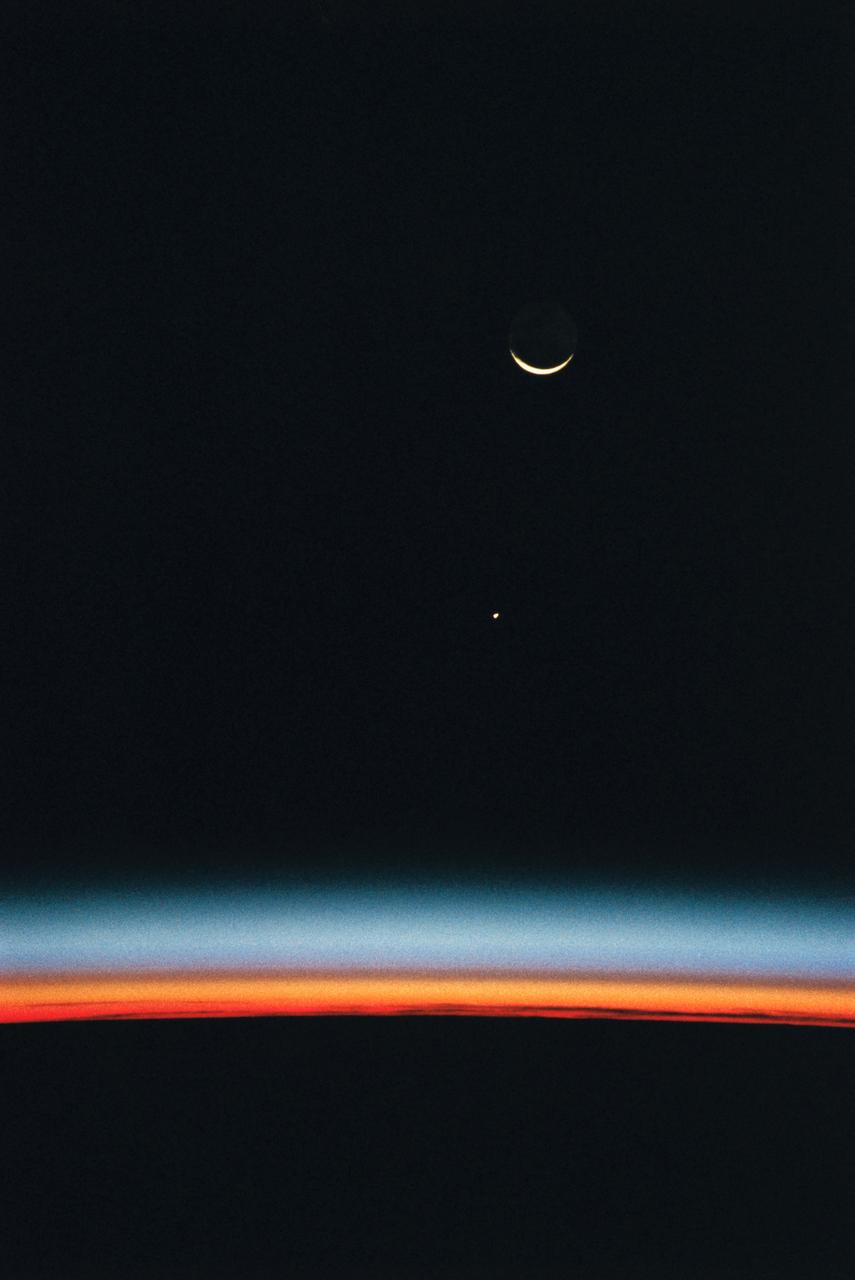
STS061-56-027 (2-13 Dec 1993) --- This scene, captured with a 35mm camera from inside the Space Shuttle Endeavour, shows Jupiter rising above the airglow over Earth's horizon. The crescent Moon is at top frame.
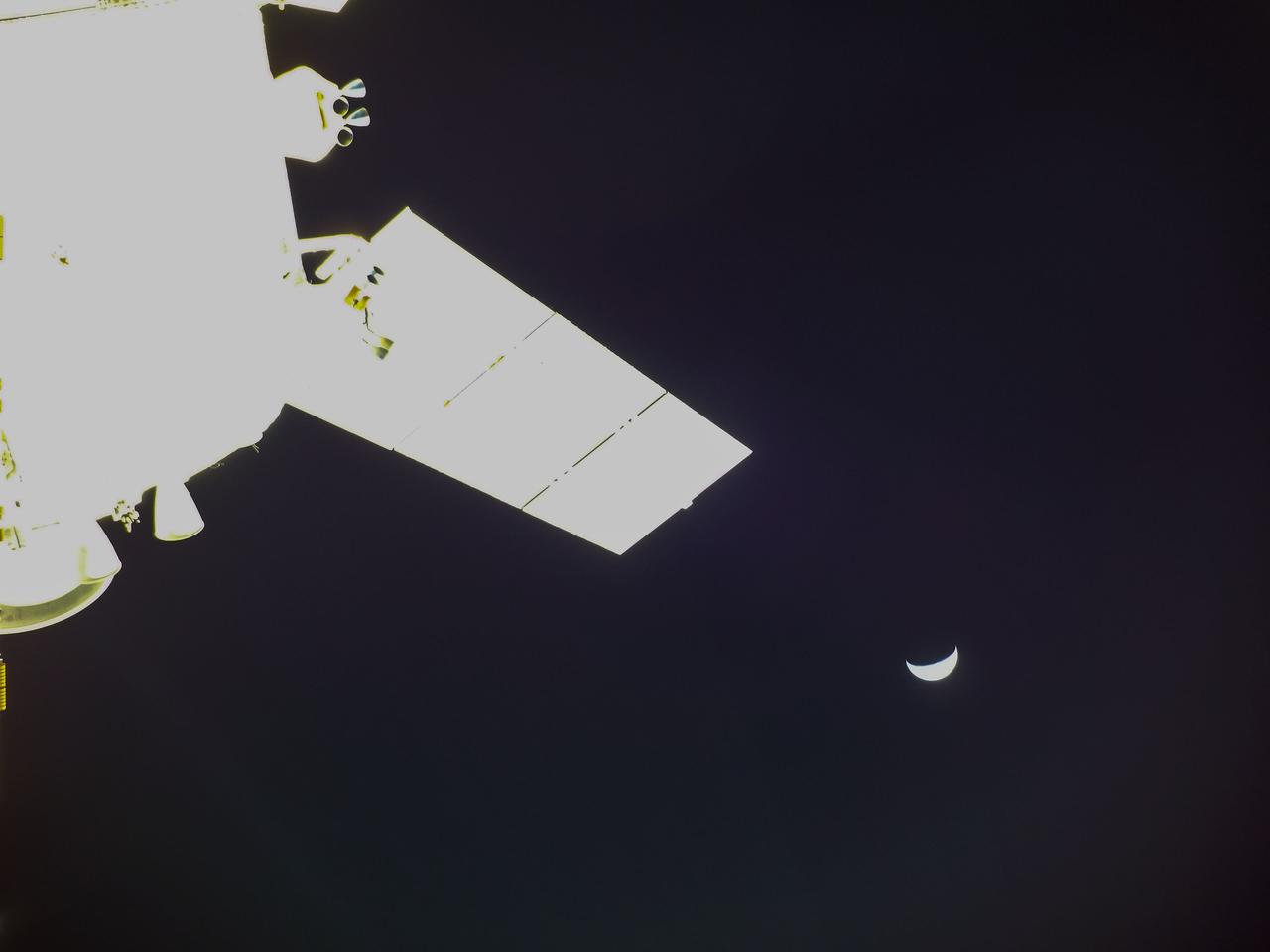
art001e001939 (Dec. 2, 2022) A camera mounted on one of Orion’s four solar arrays captured this image of the Moon on flight day 17 of the 25.5-day Artemis I mission from a distance of more than 222,000 miles. Orion has exited the distant lunar orbit and is heading for a Dec. 11 splashdown in the Pacific Ocean.
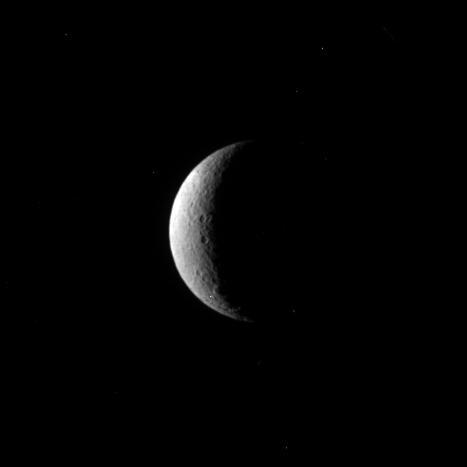
A couple of craters share a crescent of lit terrain on Saturn moon Rhea.
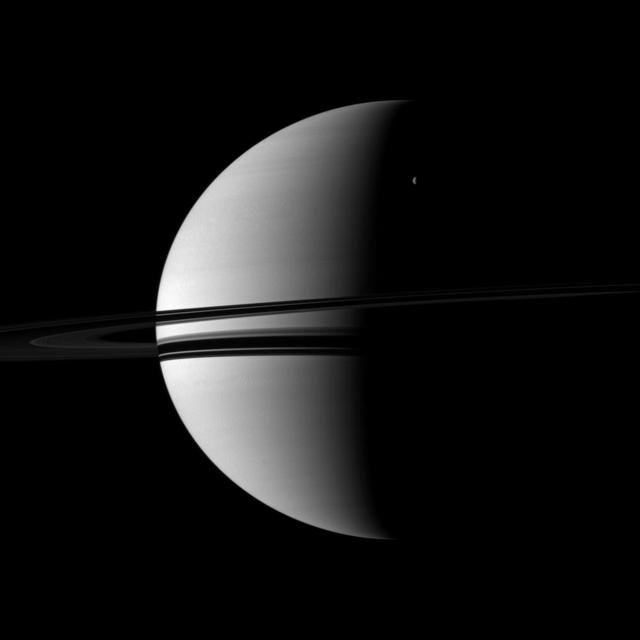
A small crescent of the moon Rhea is dwarfed by the larger crescent of Saturn in this image captured by NASA Cassini spacecraft. Rhea can be seen in the upper right of the image.
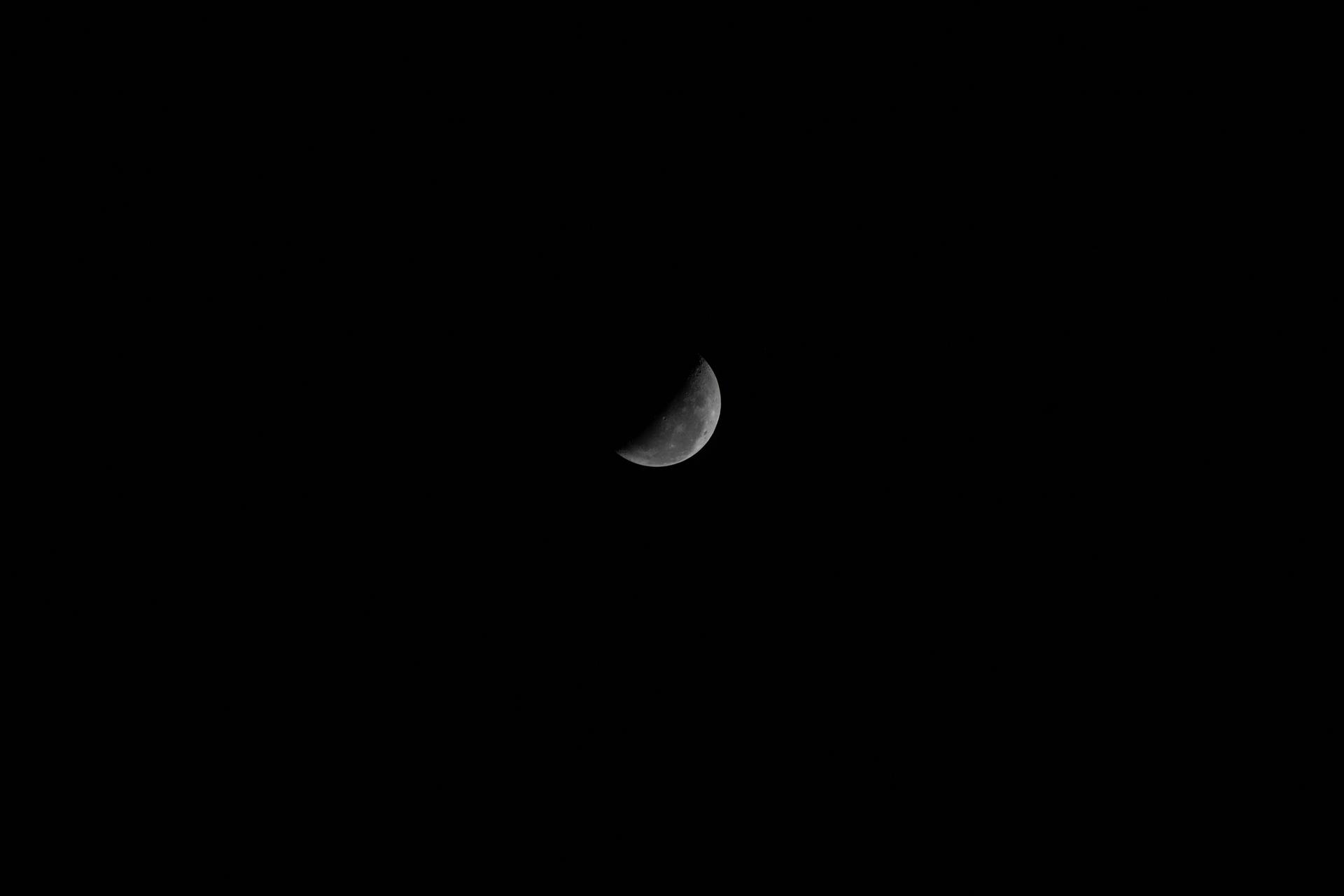
iss074e0460378 (April 10, 2026) --- The waning crescent Moon is pictured from the International Space Station as the Artemis II mission was completing its final day in space, following the first crewed lunar flyby in more than 50 years. Credit: ESA/Sophie Adenot
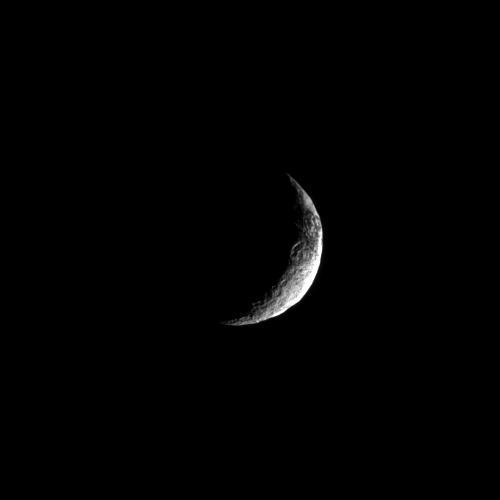
NASA Cassini spacecraft looks toward a crescent of Saturn moon Iapetus and glimpses a bit of that moon yin-yang appearance.
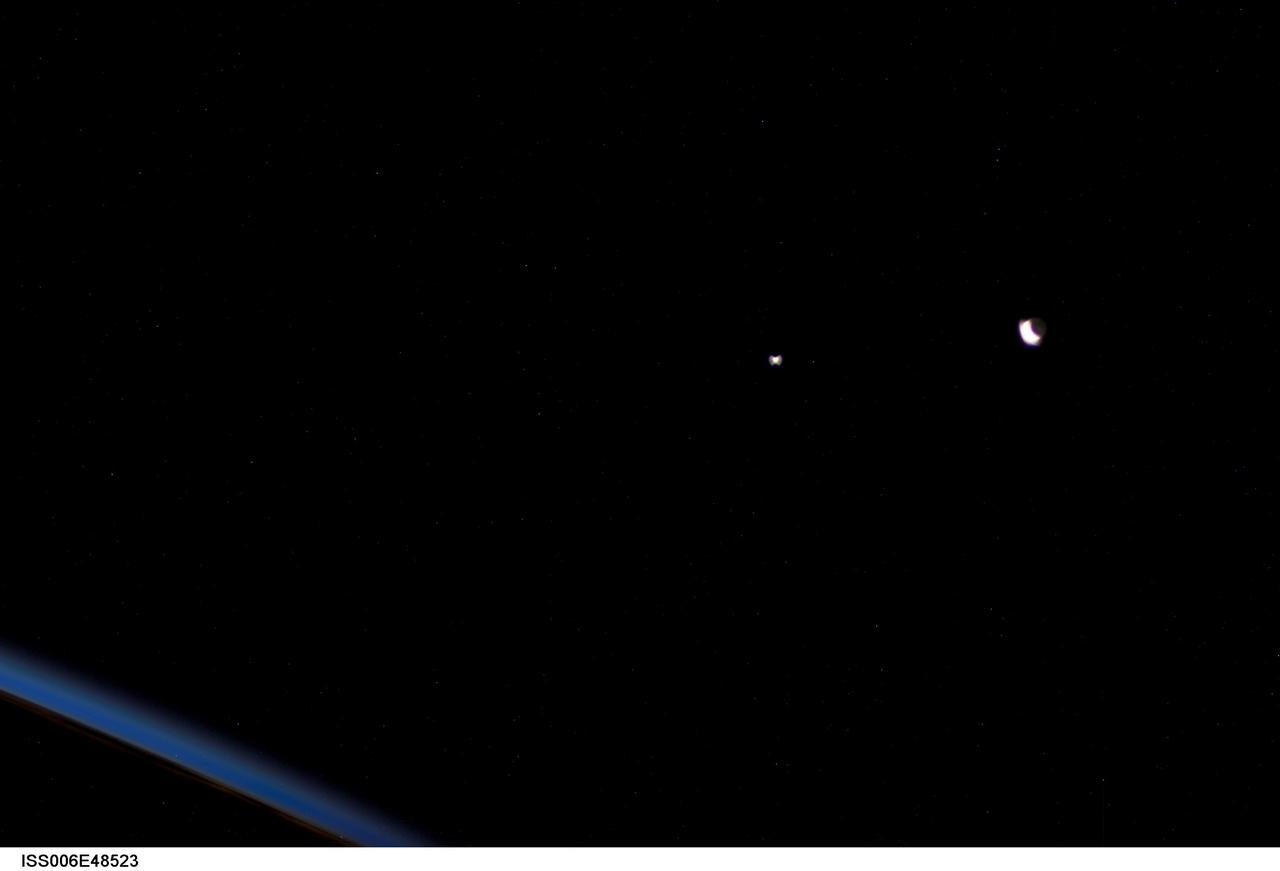
ISS006-E-48523 (28 April 2003) --- A crescent moon (right) and the planet Venus were photographed by an Expedition six crewmember onboard the International Space Station (ISS). As a result of overexposure, the dark part of the moon’s terrain is visible, which is faintly lit by Earthshine (sunlight reflected from our planet onto the moon). Earth’s horizon is visible in the lower left portion of this image.
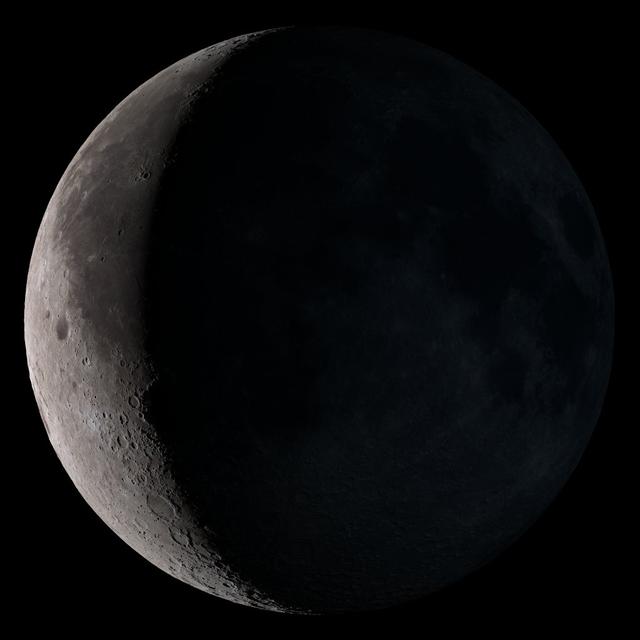
Waning crescent. Low to the east before sunrise. NASA's Lunar Reconnaissance Orbiter (LRO) has been in orbit around the Moon since the summer of 2009. Its laser altimeter (LOLA) and camera (LROC) are recording the rugged, airless lunar terrain in exceptional detail, making it possible to visualize the Moon with unprecedented fidelity. This is especially evident in the long shadows cast near the terminator, or day-night line. The pummeled, craggy landscape thrown into high relief at the terminator would be impossible to recreate in the computer without global terrain maps like those from LRO. To download, learn more about this visualization, or to see what the Moon will look like at any hour in 2015, visit <a href="http://svs.gsfc.nasa.gov/goto?4236" rel="nofollow">svs.gsfc.nasa.gov/goto?4236</a> <b><a href="http://www.nasa.gov/audience/formedia/features/MP_Photo_Guidelines.html" rel="nofollow">NASA image use policy.</a></b> <b><a href="http://www.nasa.gov/centers/goddard/home/index.html" rel="nofollow">NASA Goddard Space Flight Center</a></b> enables NASA’s mission through four scientific endeavors: Earth Science, Heliophysics, Solar System Exploration, and Astrophysics. Goddard plays a leading role in NASA’s accomplishments by contributing compelling scientific knowledge to advance the Agency’s mission. <b>Follow us on <a href="http://twitter.com/NASAGoddardPix" rel="nofollow">Twitter</a></b> <b>Like us on <a href="http://www.facebook.com/pages/Greenbelt-MD/NASA-Goddard/395013845897?ref=tsd" rel="nofollow">Facebook</a></b> <b>Find us on <a href="http://instagram.com/nasagoddard?vm=grid" rel="nofollow">Instagram</a></b>
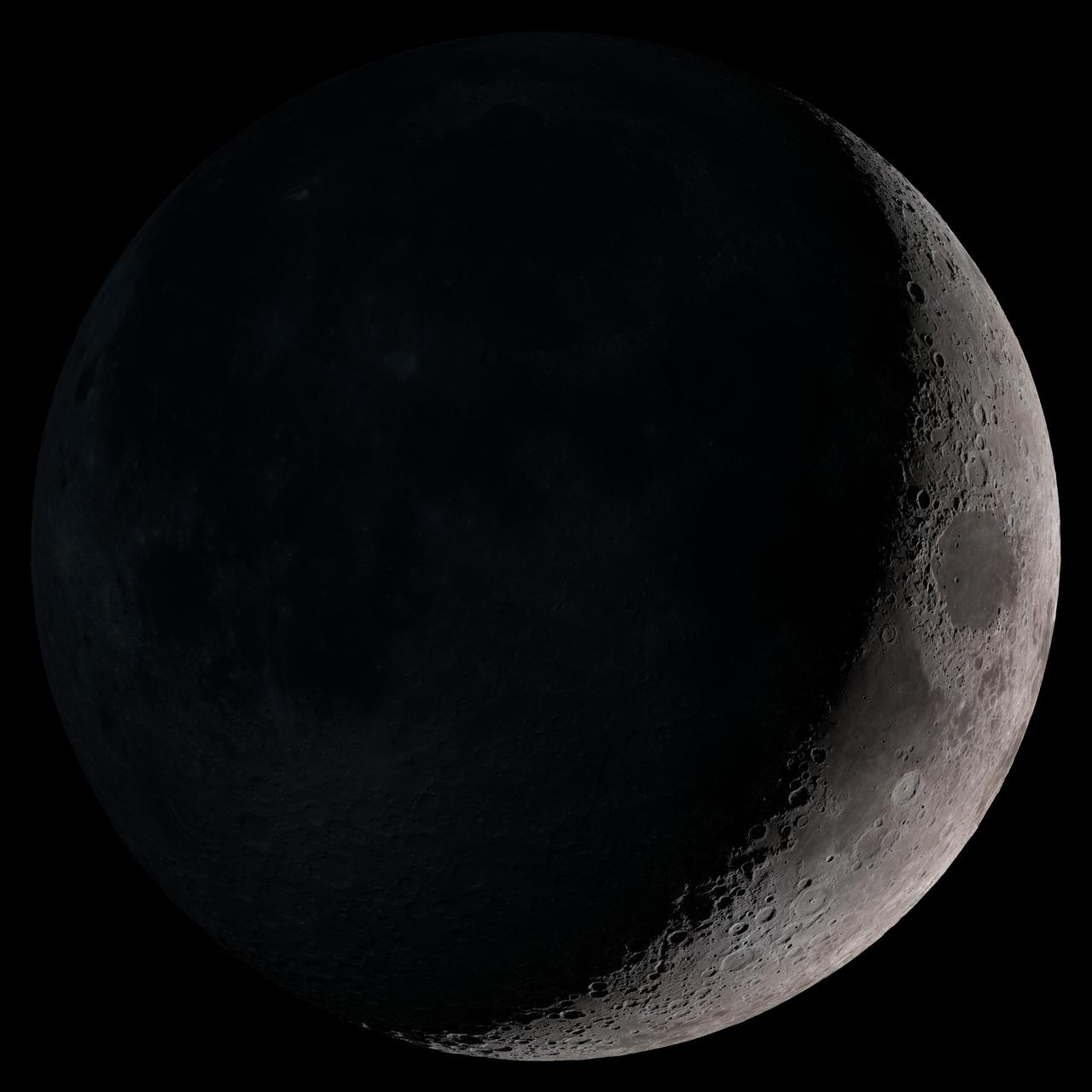
Waxing crescent. Visible toward the southwest in early evening. NASA's Lunar Reconnaissance Orbiter (LRO) has been in orbit around the Moon since the summer of 2009. Its laser altimeter (LOLA) and camera (LROC) are recording the rugged, airless lunar terrain in exceptional detail, making it possible to visualize the Moon with unprecedented fidelity. This is especially evident in the long shadows cast near the terminator, or day-night line. The pummeled, craggy landscape thrown into high relief at the terminator would be impossible to recreate in the computer without global terrain maps like those from LRO. To download, learn more about this visualization, or to see what the Moon will look like at any hour in 2015, visit <a href="http://svs.gsfc.nasa.gov/goto?4236" rel="nofollow">svs.gsfc.nasa.gov/goto?4236</a> <b><a href="http://www.nasa.gov/audience/formedia/features/MP_Photo_Guidelines.html" rel="nofollow">NASA image use policy.</a></b> <b><a href="http://www.nasa.gov/centers/goddard/home/index.html" rel="nofollow">NASA Goddard Space Flight Center</a></b> enables NASA’s mission through four scientific endeavors: Earth Science, Heliophysics, Solar System Exploration, and Astrophysics. Goddard plays a leading role in NASA’s accomplishments by contributing compelling scientific knowledge to advance the Agency’s mission. <b>Follow us on <a href="http://twitter.com/NASAGoddardPix" rel="nofollow">Twitter</a></b> <b>Like us on <a href="http://www.facebook.com/pages/Greenbelt-MD/NASA-Goddard/395013845897?ref=tsd" rel="nofollow">Facebook</a></b> <b>Find us on <a href="http://instagram.com/nasagoddard?vm=grid" rel="nofollow">Instagram</a></b>
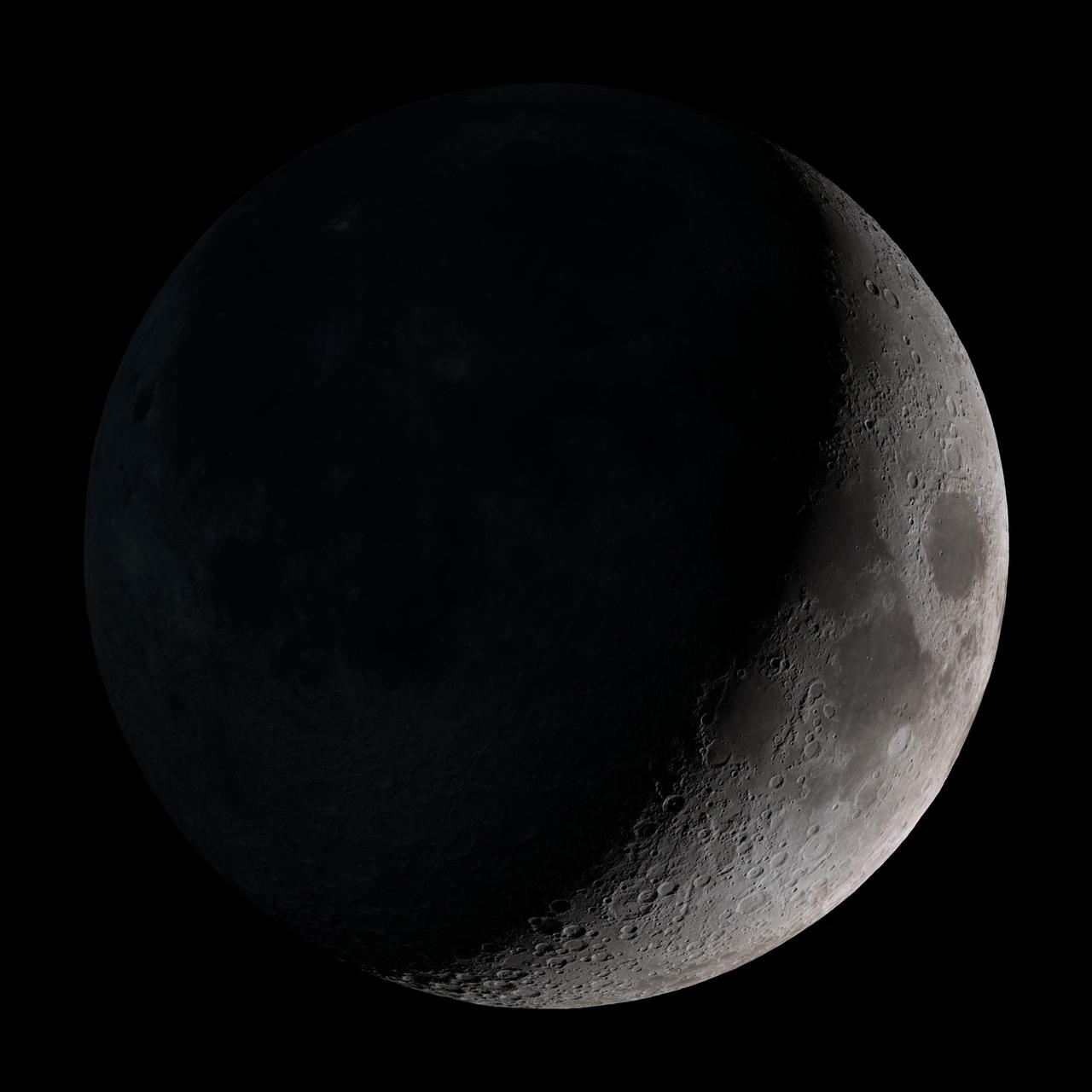
Waxing crescent. Visible toward the southwest in early evening. This marks the first time that accurate shadows at this level of detail are possible in such a computer simulation. The shadows are based on the global elevation map being developed from measurements by the Lunar Orbiter Laser Altimeter (LOLA) aboard the Lunar Reconnaissance Orbiter (LRO). LOLA has already taken more than 10 times as many elevation measurements as all previous missions combined. The Moon always keeps the same face to us, but not exactly the same face. Because of the tilt and shape of its orbit, we see the Moon from slightly different angles over the course of a month. When a month is compressed into 12 seconds, as it is in this animation, our changing view of the Moon makes it look like it's wobbling. This wobble is called libration. The word comes from the Latin for "balance scale" (as does the name of the zodiac constellation Libra) and refers to the way such a scale tips up and down on alternating sides. The sub-Earth point gives the amount of libration in longitude and latitude. The sub-Earth point is also the apparent center of the Moon's disk and the location on the Moon where the Earth is directly overhead. The Moon is subject to other motions as well. It appears to roll back and forth around the sub-Earth point. The roll angle is given by the position angle of the axis, which is the angle of the Moon's north pole relative to celestial north. The Moon also approaches and recedes from us, appearing to grow and shrink. The two extremes, called perigee (near) and apogee (far), differ by more than 10%. The most noticed monthly variation in the Moon's appearance is the cycle of phases, caused by the changing angle of the Sun as the Moon orbits the Earth. The cycle begins with the waxing (growing) crescent Moon visible in the west just after sunset. By first quarter, the Moon is high in the sky at sunset and sets around midnight. The full Moon rises at sunset and is high in the sky at midnight. The third quarter Moon is often surprisingly conspicuous in the daylit western sky long after sunrise. Celestial north is up in these images, corresponding to the view from the northern hemisphere. The descriptions of the print resolution stills also assume a northern hemisphere orientation. To adjust for southern hemisphere views, rotate the images 180 degrees, and substitute "north" for "south" in the descriptions. Credit: <a href="http://svs.gsfc.nasa.gov/index.html" rel="nofollow">NASA/Goddard Space Flight Center Scientific Visualization Studio</a> <b><a href="http://www.nasa.gov/centers/goddard/home/index.html" rel="nofollow">NASA Goddard Space Flight Center</a></b> enables NASA’s mission through four scientific endeavors: Earth Science, Heliophysics, Solar System Exploration, and Astrophysics. Goddard plays a leading role in NASA’s accomplishments by contributing compelling scientific knowledge to advance the Agency’s mission. <b>Follow us on <a href="http://twitter.com/NASA_GoddardPix" rel="nofollow">Twitter</a></b> <b>Join us on <a href="http://www.facebook.com/pages/Greenbelt-MD/NASA-Goddard/395013845897?ref=tsd" rel="nofollow">Facebook</a></b> <b>Find us on <a href="http://web.stagram.com/n/nasagoddard/?vm=grid" rel="nofollow">Instagram</a></b>
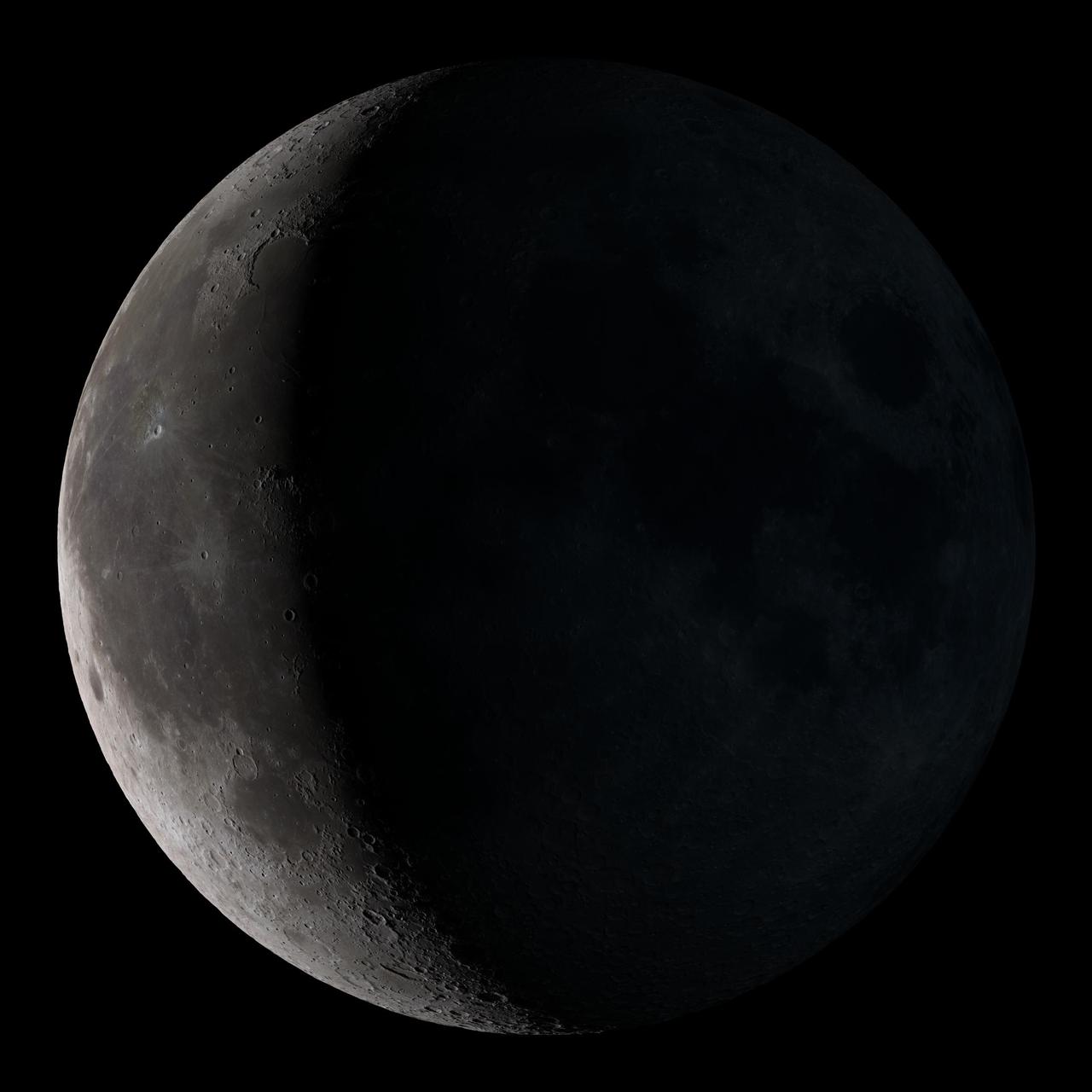
Waning crescent. Low to the east before sunrise. This marks the first time that accurate shadows at this level of detail are possible in such a computer simulation. The shadows are based on the global elevation map being developed from measurements by the Lunar Orbiter Laser Altimeter (LOLA) aboard the Lunar Reconnaissance Orbiter (LRO). LOLA has already taken more than 10 times as many elevation measurements as all previous missions combined. The Moon always keeps the same face to us, but not exactly the same face. Because of the tilt and shape of its orbit, we see the Moon from slightly different angles over the course of a month. When a month is compressed into 12 seconds, as it is in this animation, our changing view of the Moon makes it look like it's wobbling. This wobble is called libration. The word comes from the Latin for "balance scale" (as does the name of the zodiac constellation Libra) and refers to the way such a scale tips up and down on alternating sides. The sub-Earth point gives the amount of libration in longitude and latitude. The sub-Earth point is also the apparent center of the Moon's disk and the location on the Moon where the Earth is directly overhead. The Moon is subject to other motions as well. It appears to roll back and forth around the sub-Earth point. The roll angle is given by the position angle of the axis, which is the angle of the Moon's north pole relative to celestial north. The Moon also approaches and recedes from us, appearing to grow and shrink. The two extremes, called perigee (near) and apogee (far), differ by more than 10%. The most noticed monthly variation in the Moon's appearance is the cycle of phases, caused by the changing angle of the Sun as the Moon orbits the Earth. The cycle begins with the waxing (growing) crescent Moon visible in the west just after sunset. By first quarter, the Moon is high in the sky at sunset and sets around midnight. The full Moon rises at sunset and is high in the sky at midnight. The third quarter Moon is often surprisingly conspicuous in the daylit western sky long after sunrise. Celestial north is up in these images, corresponding to the view from the northern hemisphere. The descriptions of the print resolution stills also assume a northern hemisphere orientation. To adjust for southern hemisphere views, rotate the images 180 degrees, and substitute "north" for "south" in the descriptions. Credit: <a href="http://svs.gsfc.nasa.gov/index.html" rel="nofollow">NASA/Goddard Space Flight Center Scientific Visualization Studio</a> <b><a href="http://www.nasa.gov/centers/goddard/home/index.html" rel="nofollow">NASA Goddard Space Flight Center</a></b> enables NASA’s mission through four scientific endeavors: Earth Science, Heliophysics, Solar System Exploration, and Astrophysics. Goddard plays a leading role in NASA’s accomplishments by contributing compelling scientific knowledge to advance the Agency’s mission. <b>Follow us on <a href="http://twitter.com/NASA_GoddardPix" rel="nofollow">Twitter</a></b> <b>Join us on <a href="http://www.facebook.com/pages/Greenbelt-MD/NASA-Goddard/395013845897?ref=tsd" rel="nofollow">Facebook</a></b> <b>Find us on <a href="http://web.stagram.com/n/nasagoddard/?vm=grid" rel="nofollow">Instagram</a></b>
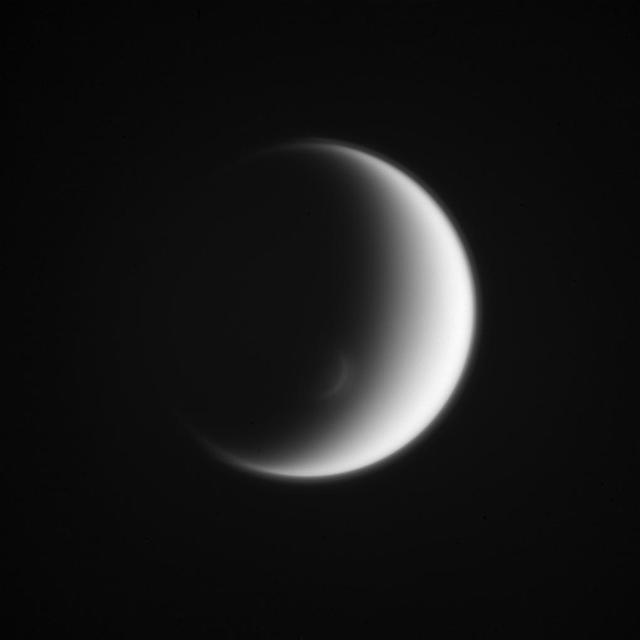
This view captured by NASA Cassini spacecraft looks toward the trailing hemisphere of Titan. Titan south polar vortex mimics the moon itself, creating an elegant crescent within a crescent.
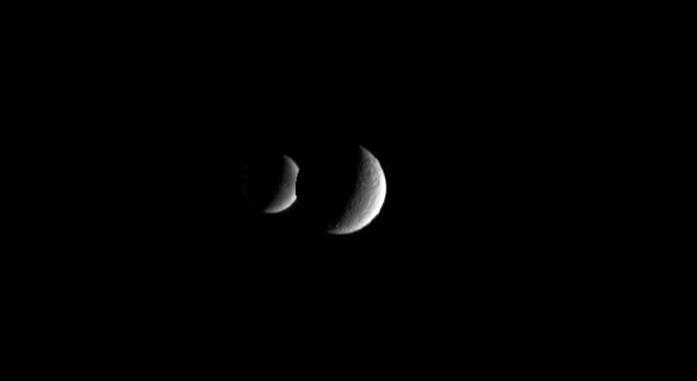
This animation show two crescent moons dance around Saturn as far-off Dione slips behind its sibling moon Rhea
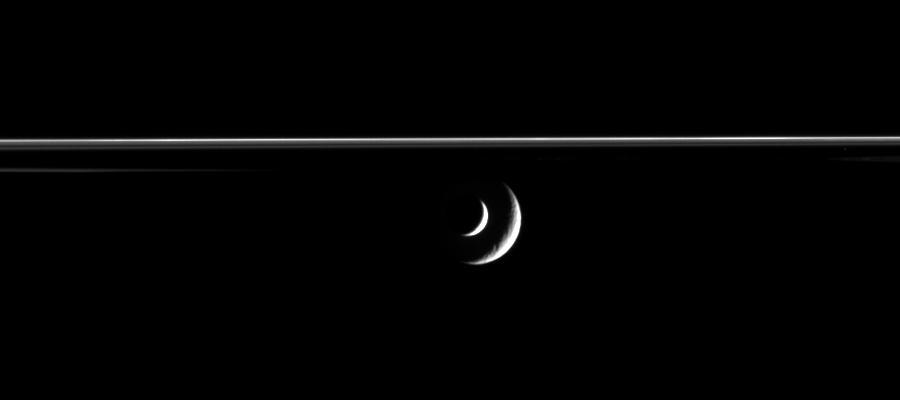
The bright crescent of Saturn moon Enceladus slides past distant Rhea in this mutual event, or occultation, movie from Cassini
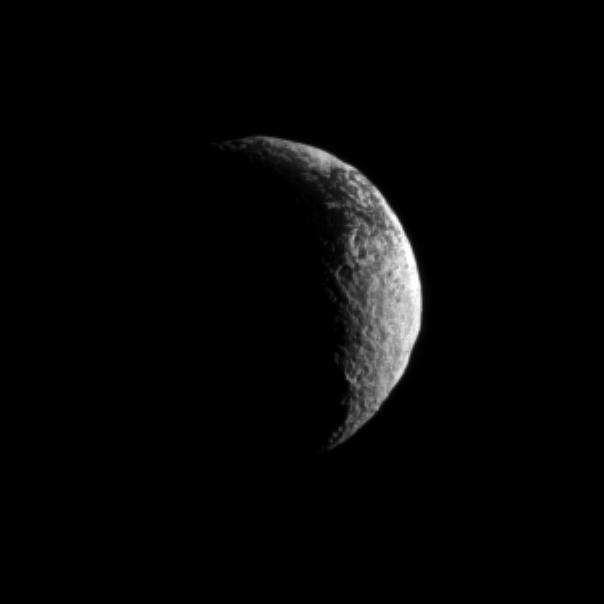
NASA Cassini spacecraft looks toward a crescent of Saturn dark and light moon, Iapetus.
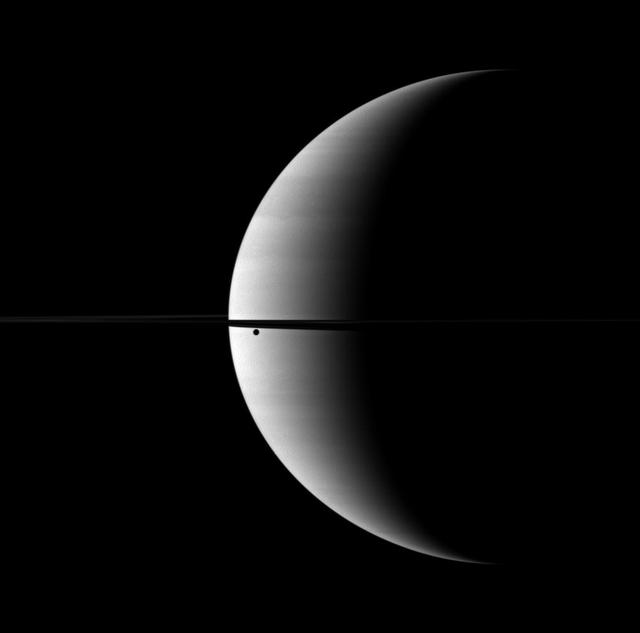
A crescent Saturn is blemished by the black spot of its moon Dione seen orbiting between the planet and NASA Cassini spacecraft.
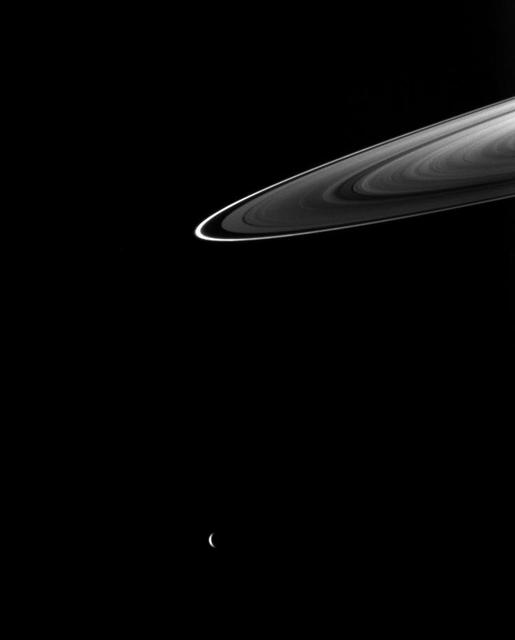
Beyond the ansa of Saturn rings, a crescent Rhea completes this ring-and-moon composition captured by NASA Cassini spacecraft.
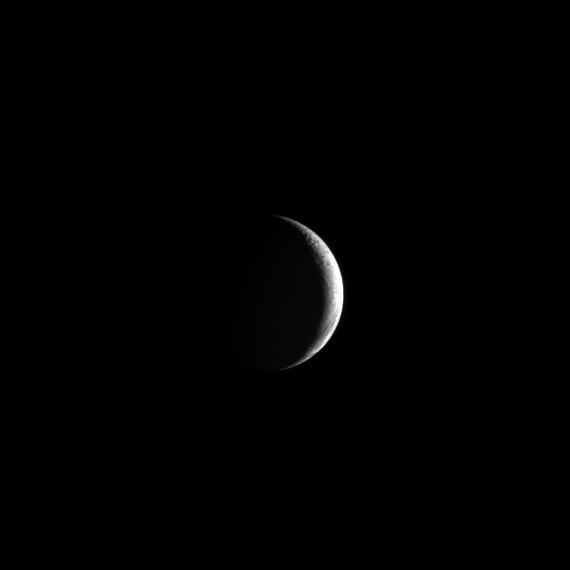
Evoking the haunting beauty of Earth Moon, a crescent Enceladus appears in the skies around Saturn in this image captured by NASA Cassini spacecraft.
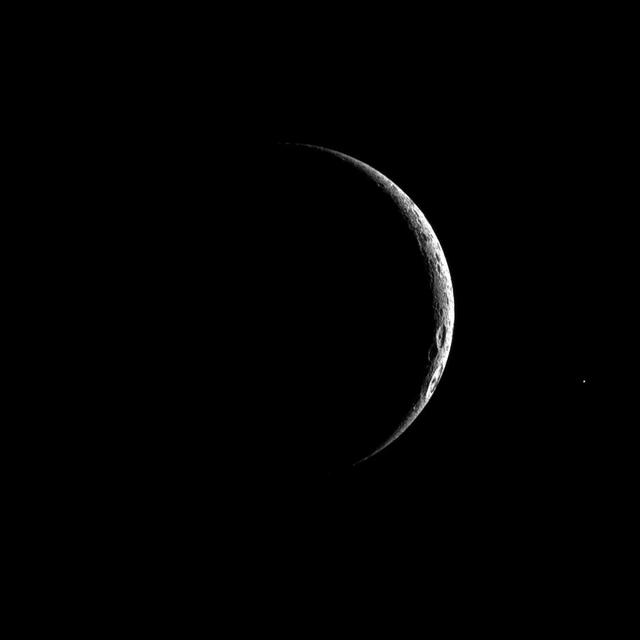
A thin crescent of cratered terrain is illuminated on Saturn third largest moon, Dione in this image captured by NASA Cassini spacecraft.

The great basin that interrupts the contours of this moon crescent identifies the satellite unmistakably as Mimas. The giant crater Herschel 130 kilometers, or 80 miles wide is this moon most obvious feature
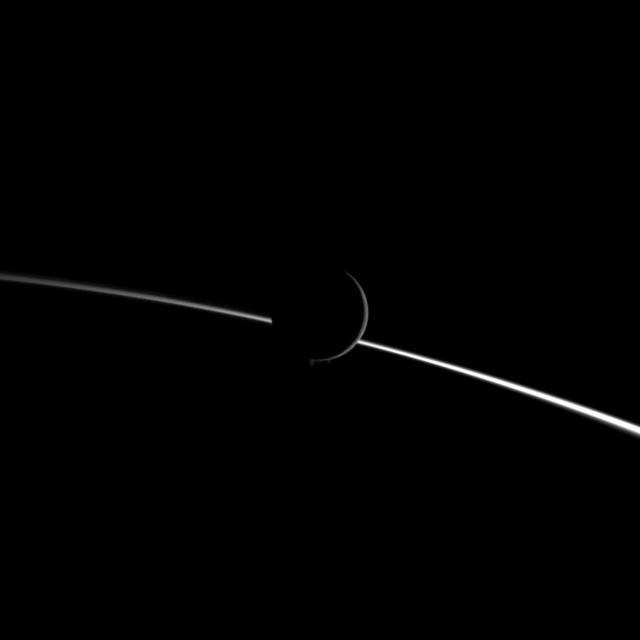
Jets of water ice particles spew from Saturn moon Enceladus in this image obtained by NASA Cassini spacecraft on Aug. 13, 2010. A crescent of the moon appears dimly illuminated in front of the bright limb of Saturn.
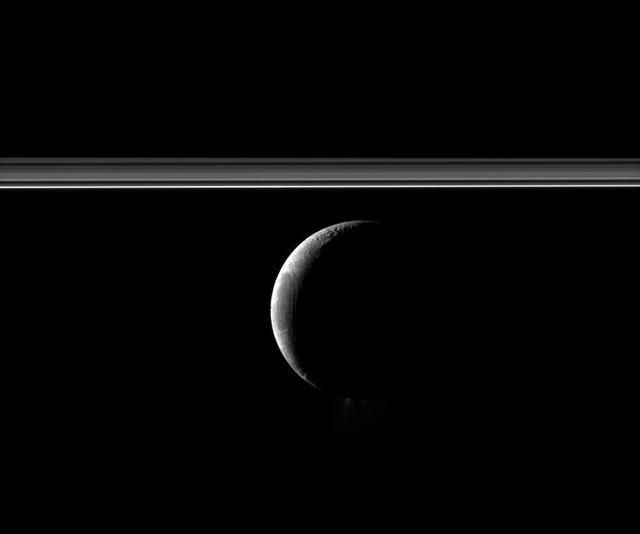
A crescent Enceladus appears with Saturn rings in this view of the moon from NASA Cassini spacecraft. The famed jets of water ice emanating from the south polar region of the moon are faintly visible here.
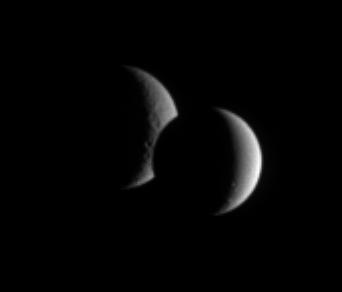
Dione and Rhea pair up for an occultation, or mutual event, as seen by Cassini. While the lit portion of each moon is but a crescent, the dark side of Dione has begun to take a bite out of its distant sibling moon
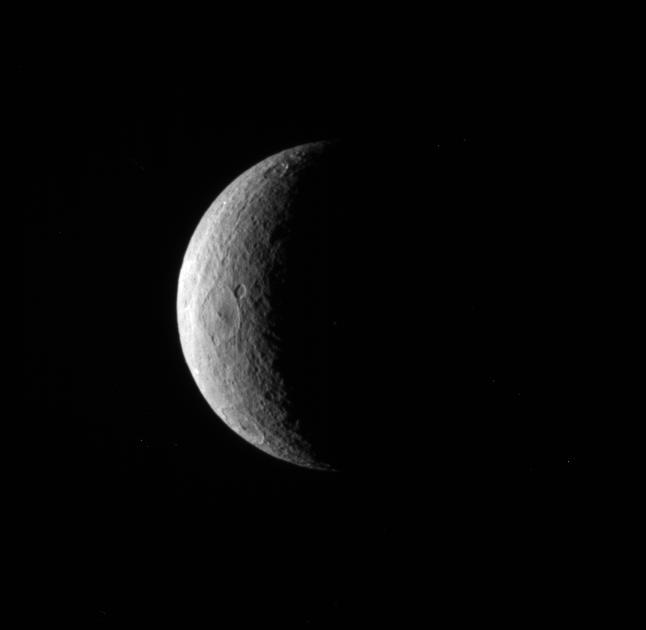
NASA Cassini spacecraft pictures a crescent of Saturn moon Rhea. Although craters dominate this particular view, the trailing hemisphere of Rhea also features wispy fractures.
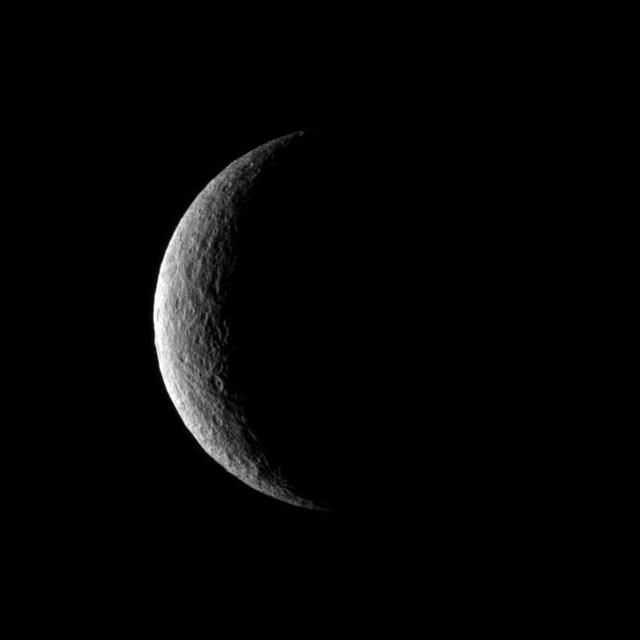
NASA Cassini spacecraft captures a crescent of crater-covered surface on the moon Rhea. Lit terrain seen here is on the trailing hemisphere of Rhea. North on Rhea is up.
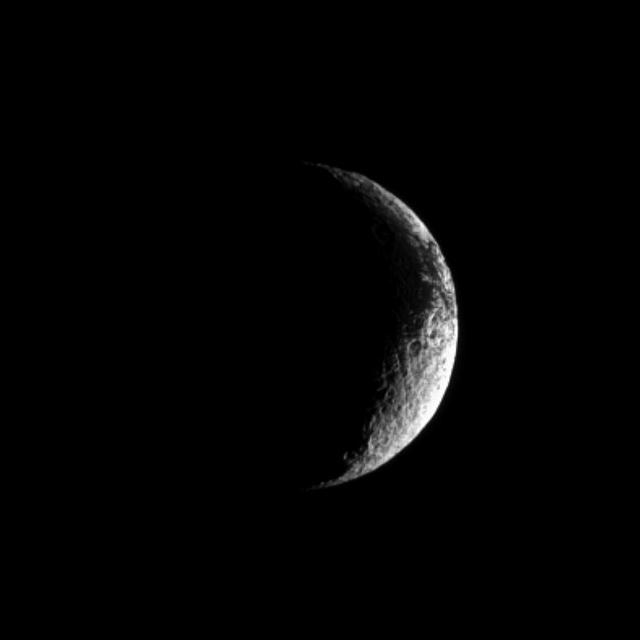
A crescent Iapetus shows, at the top right of this image from NASA Cassini spacecraft, some of the dark terrain characterizing this unusual Saturnian moon.
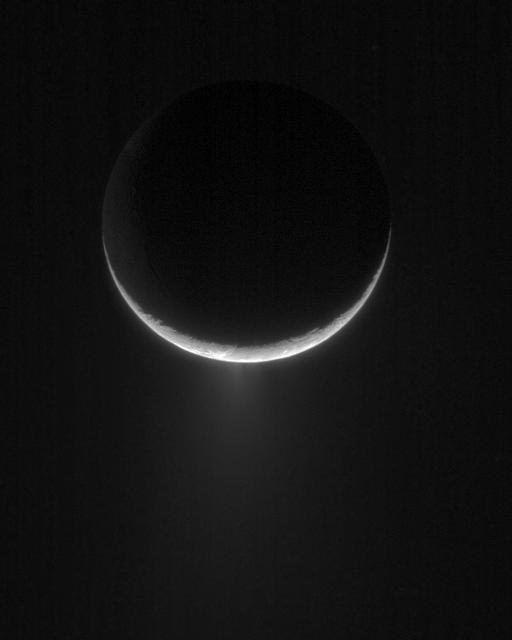
Peeking over the crescent of Enceladus, the Cassini spacecraft views the towering plume of ice particles erupting from the moon south polar region
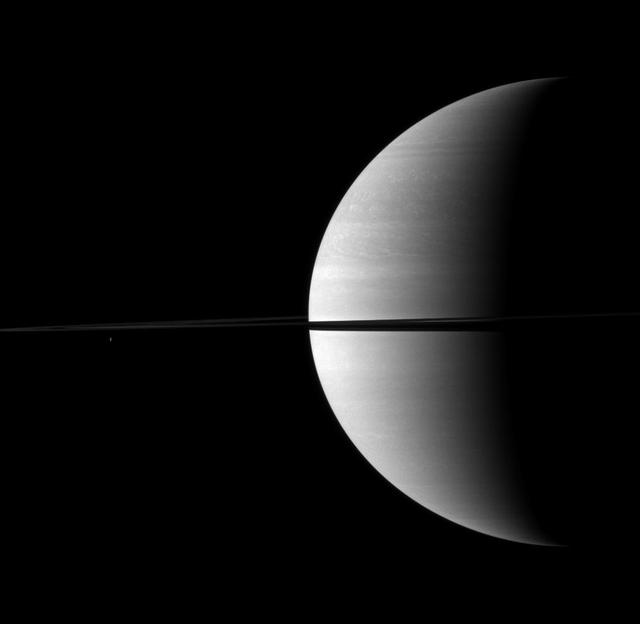
The rings split the planet in two in this NASA Cassini spacecraft view of a crescent Saturn. Saturn moon Tethys is the small dot on the left of the image, below the rings.

This image of the crescent moon was obtained by the Galileo Solid State imaging system on December 8 at 5 a.m. PST as NASA Galileo spacecraft neared the Earth. http://photojournal.jpl.nasa.gov/catalog/PIA00224
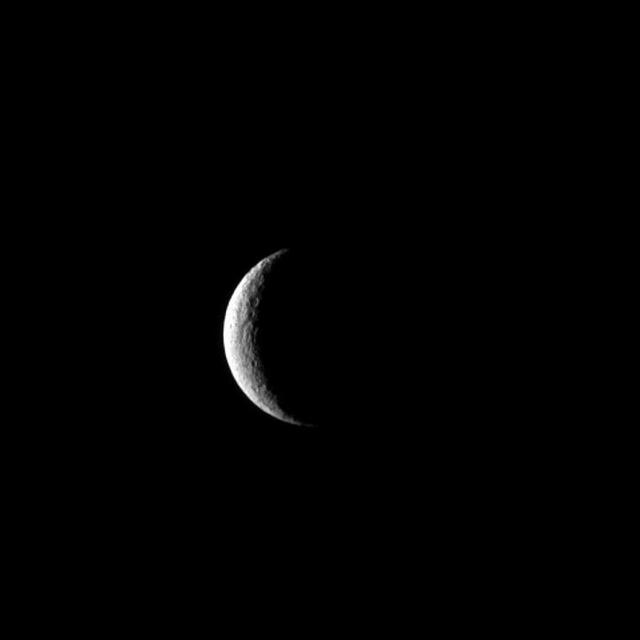
NASA Cassini spacecraft captures Saturn moon Rhea at crescent phase, a view never visible from Earth. Near the terminator, a few of Rhea many craters show up in sharp relief.
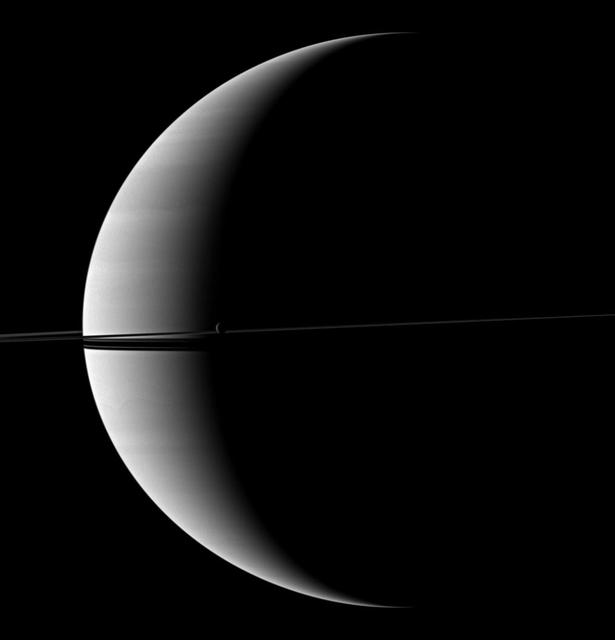
Saturn rings and its moon Rhea are imaged before a crescent of the planet in this image captured by NASA Cassini spacecraft. The shadows of the rings continue to grow wider after their disappearing act during the planet August 2009 equinox.
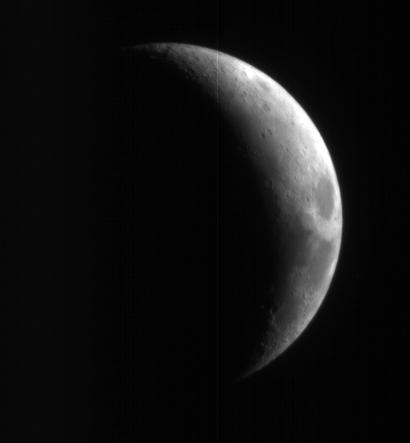
This crescent view of Earth Moon in infrared, blue-green, and red wavelengths comes from a camera test by NASA Mars Reconnaissance Orbiter spacecraft on its way to Mars.
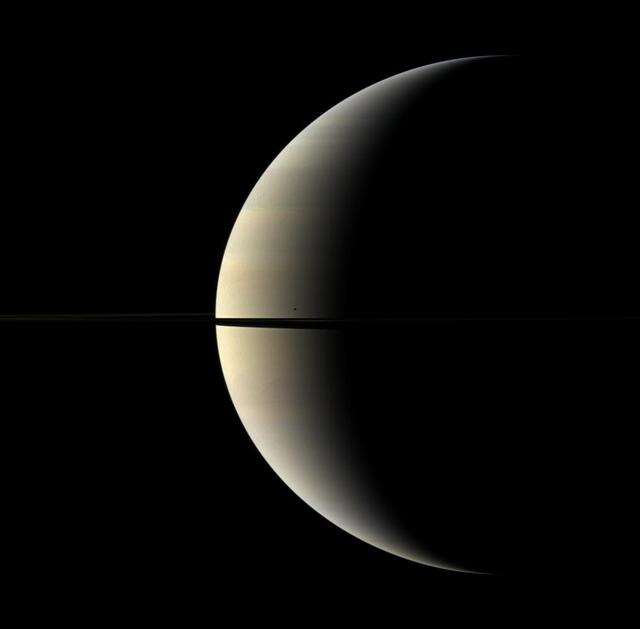
A pastel crescent of Saturn is interrupted by the moon Mimas and the rings in this color image captured by NASA Cassini spacecraft. Mimas 396 kilometers, or 246 miles across appears as a dark speck just above the rings.

The diminutive moon Mimas can be found hiding in the middle of this view of a crescent of Saturn bisected by rings in this image captured by NASA Cassini spacecraft. Mimas appears as a dark speck just about the ringplane near the center of the image. Th
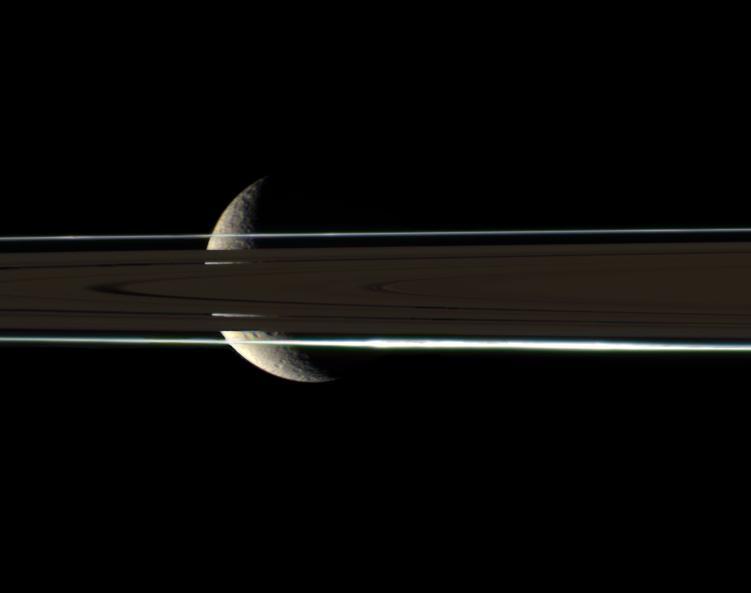
The rings cannot hide the ragged, icy crescent of Rhea, here imaged in color by the Cassini spacecraft. The second-largest moon of Saturn shines brightly through gaps in the rings
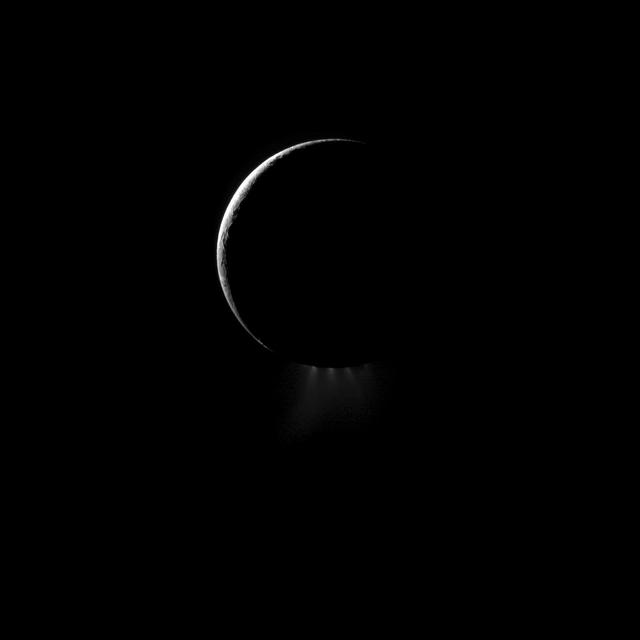
A crescent Enceladus, imaged by NASA Cassini spacecraft from the night side, shows off its spectacular water ice plumes emanating from the south polar region of this moon of Saturn.
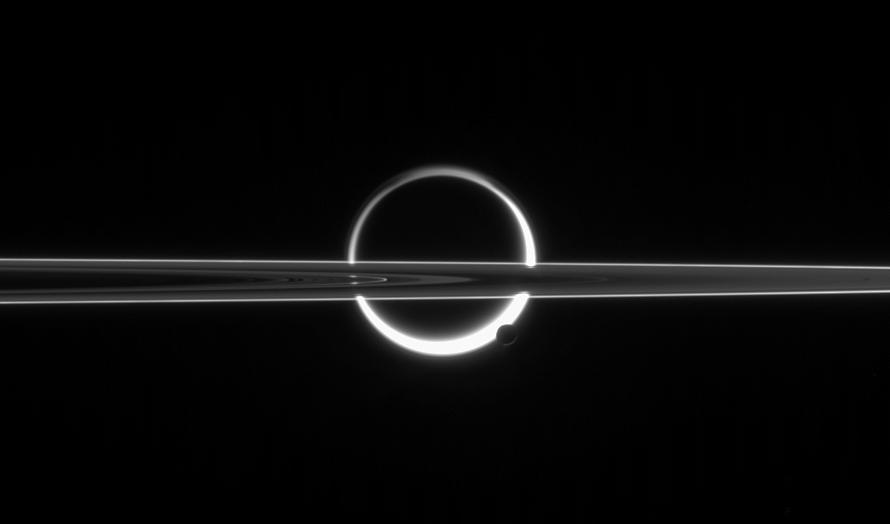
Saturn rings cut across an eerie scene that is ruled by Titan luminous crescent and globe-encircling haze, broken by the small moon Enceladus, whose icy jets are dimly visible at its south pole. North is up
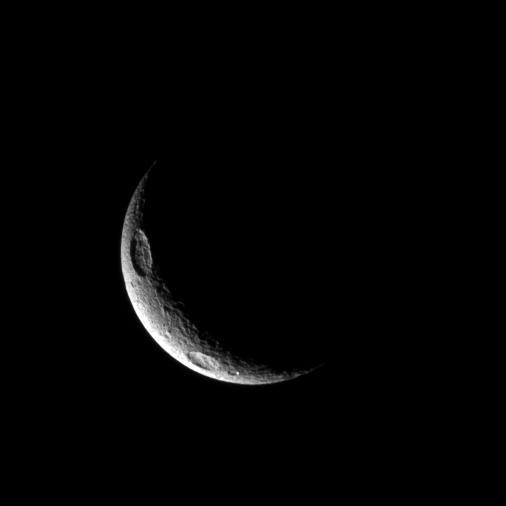
A crescent of Tethys displays two of the moon large craters in this image taken by NASA Cassini spacecraft. Penelope Crater can be seen at the top left. Antinous Crater is in the bottom left.
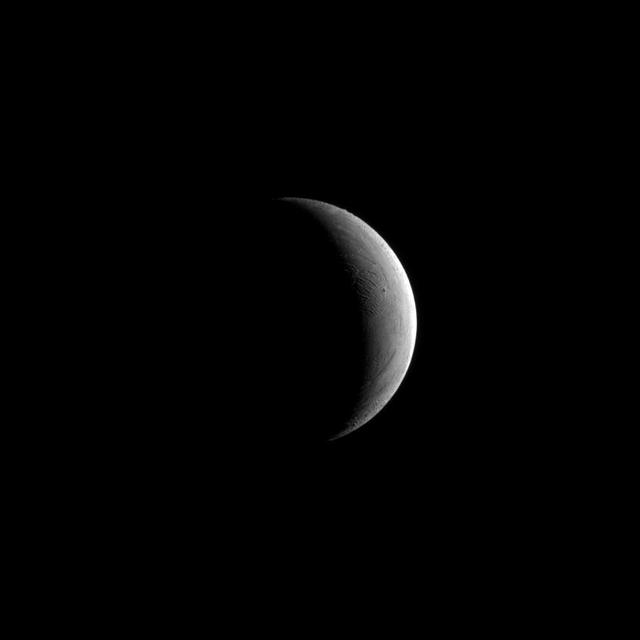
NASA Cassini spacecraft captures a crescent of Saturn moon Enceladus. Lit terrain seen here is in the area between the leading hemisphere and Saturn-facing side of Enceladus 504 kilometers, or 313 miles across. North on Enceladus is up.
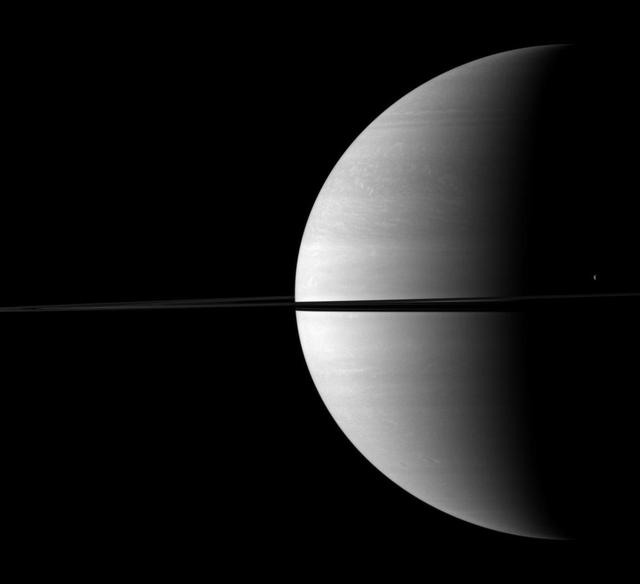
The moon Tethys stands out as a tiny crescent of light in front of the dark of Saturn night side. Tethys can be seen above the ringplane on the far right of this NASA Cassini spacecraft image.
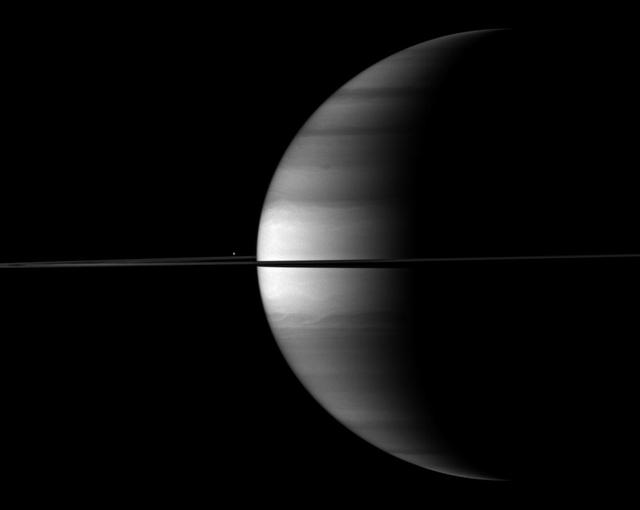
The highly reflective moon Enceladus appears as a bright dot beyond a crescent Saturn in this image from NASA Cassini spacecraft. Enceladus is visible above the ringplane to the left of the center of the image.
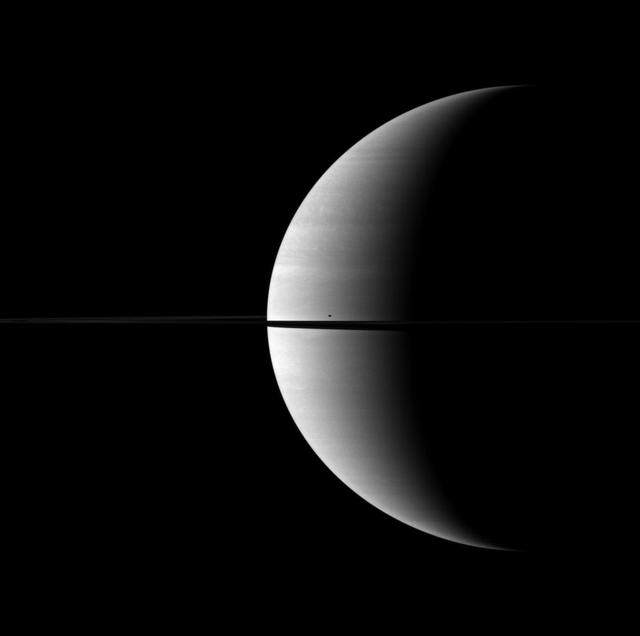
The moon Mimas casts a shadow and creates a single blemish on the kingly crescent of Saturn. Mimas is not shown in this view, but its shadow can be seen on the planet just north of the rings and their shadow.
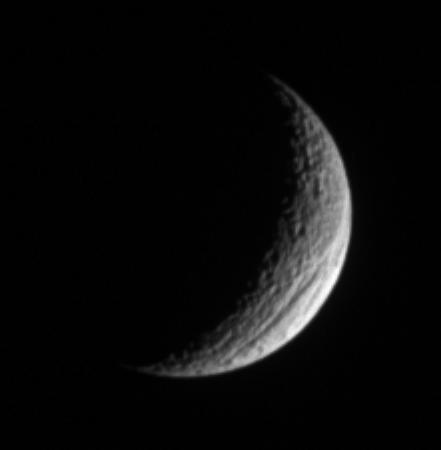
A crescent Tethys shows off its great scar, Ithaca Chasma, for which the moon is renowned. The chasm is 100 kilometers 60 miles across on average, and is 4 kilometers 2 miles deep in places.
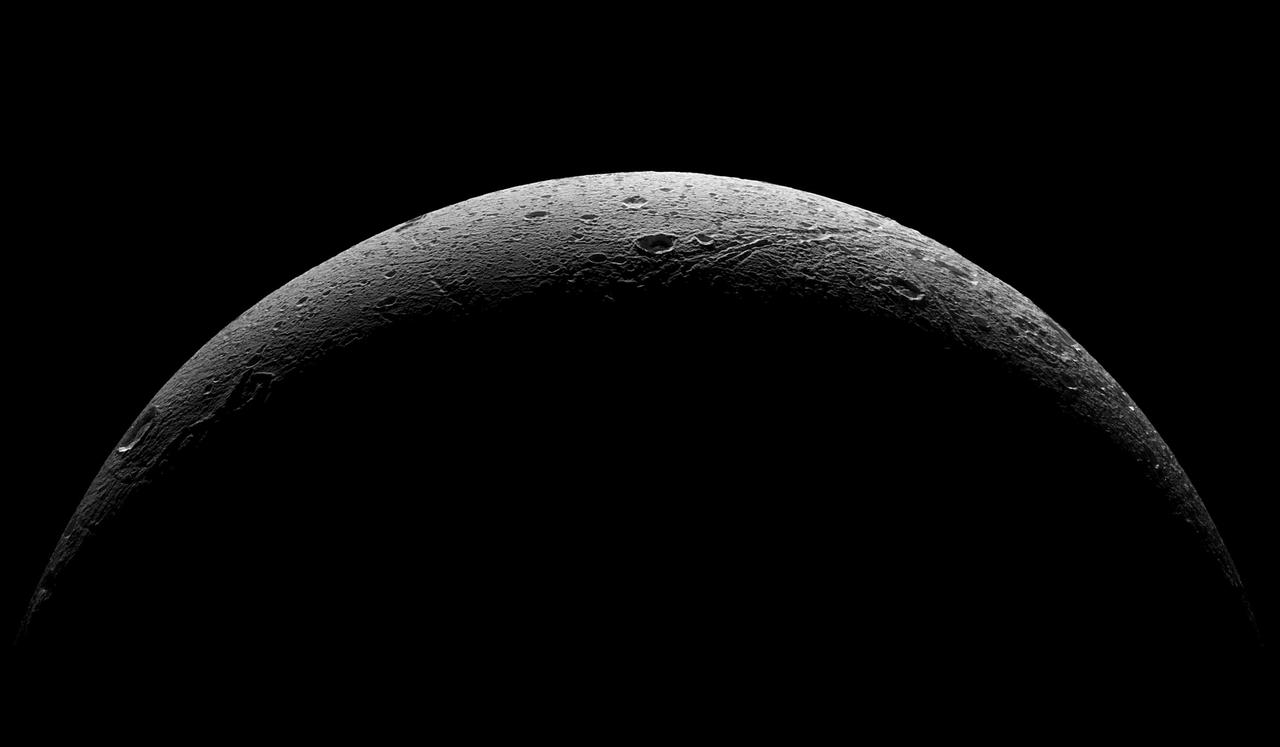
NASA Cassini spacecraft captured this parting view showing the rough and icy crescent of Saturn moon Dione following the spacecraft last close flyby of the moon on Aug. 17, 2015. Cassini obtained a similar crescent view in 2005 (see PIA07745). The earlier view has an image scale about four times higher, but does not show the moon's full crescent as this view does. Five visible light (clear spectral filter), narrow-angle camera images were combined to create this mosaic view. The scene is an orthographic projection centered on terrain at 0.4 degrees north latitude, 30.6 degrees west longitude on Dione. An orthographic view is most like the view seen by a distant observer looking through a telescope. The view was acquired at distances ranging from approximately 37,000 miles (59,000 kilometers) to 47,000 miles (75,000 kilometers) from Dione and at a sun-Dione-spacecraft, or phase, angle of 145 degrees. Image scale is about 1,300 feet (400 meters) per pixel. North on Dione is up and rotated 34 degrees to the right. http://photojournal.jpl.nasa.gov/catalog/PIA19649
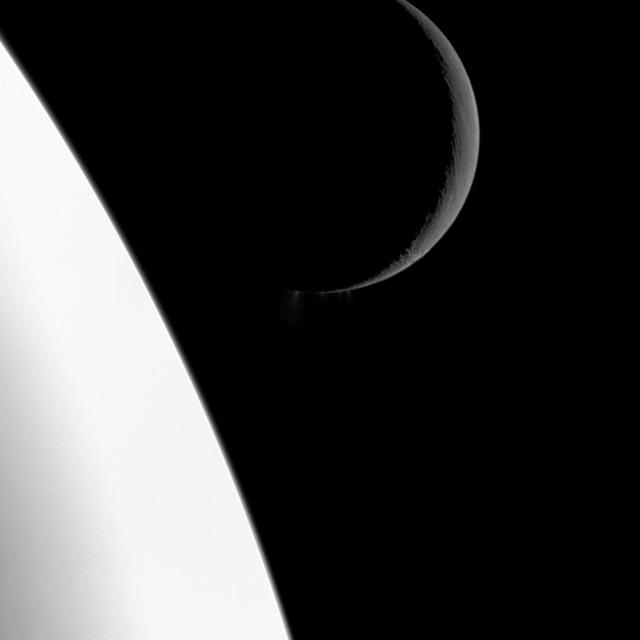
NASA Cassini spacecraft captures this scene showing the bright crescent of Saturn moon Enceladus at top right. The center of the image reveals plumes of water ice spew out from fractures known as tiger stripes near the south pole of the moon.
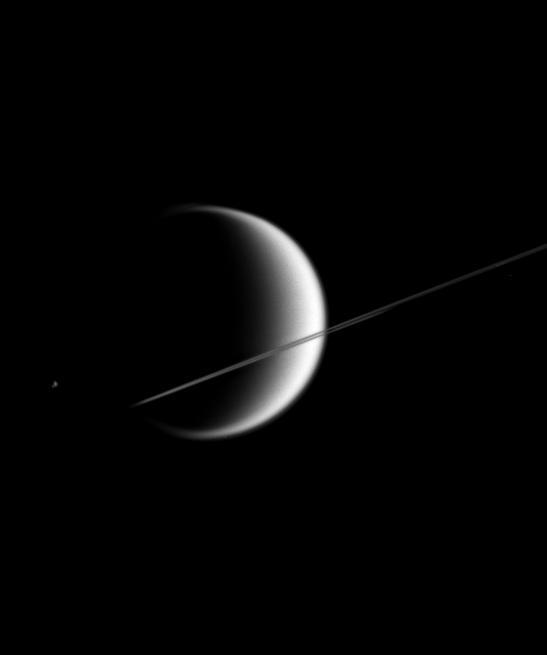
This poetic scene shows the giant, smog-enshrouded moon Titan behind Saturn nearly edge-on rings. Much smaller Epimetheus 116 kilometers, or 72 miles across is just visible to the left of Titan 5,150 kilometers, or 3,200 miles across
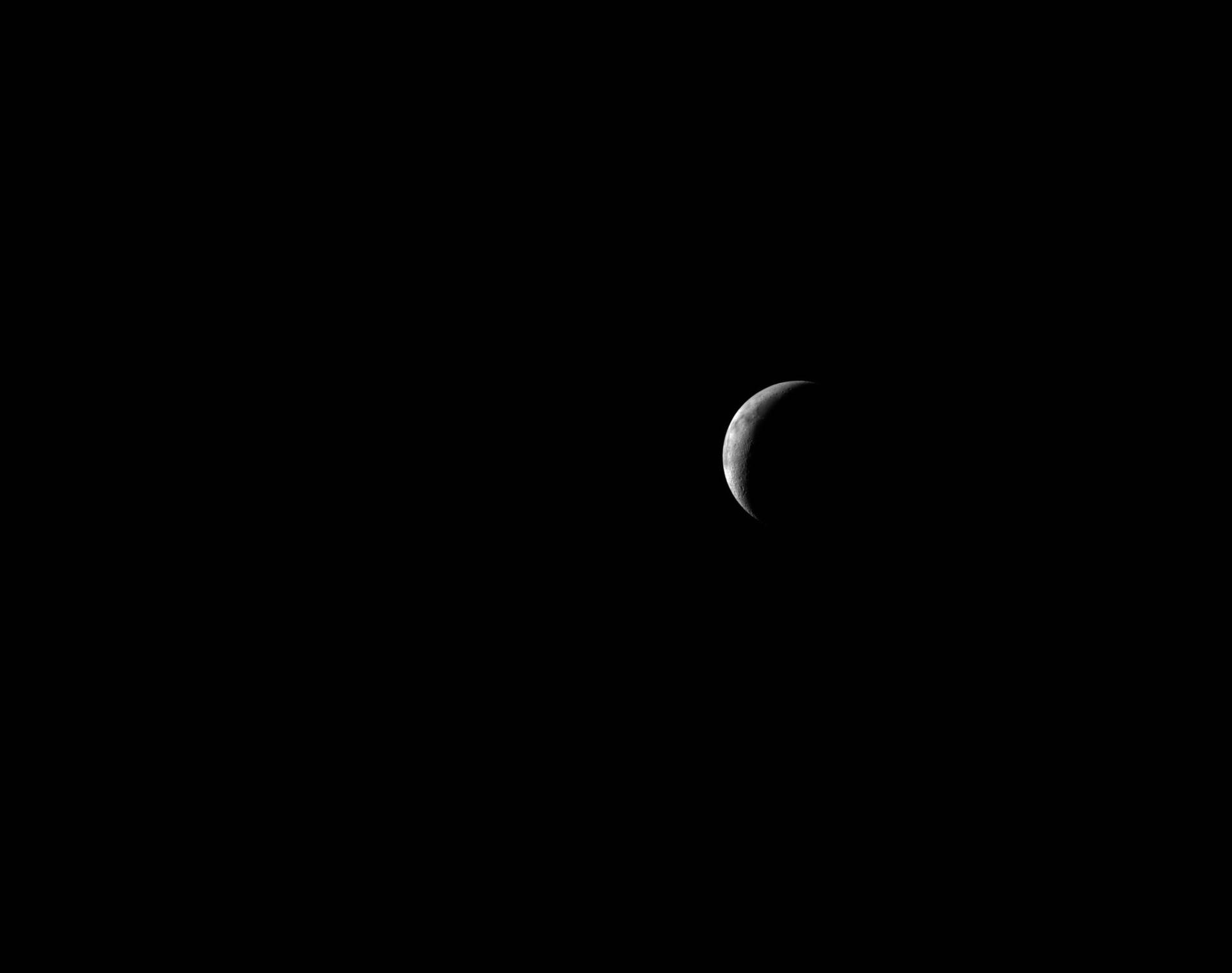
art002e016354 (April 8, 2026) The Artemis II crew captures a thin lunar crescent as they travel back to Earth.
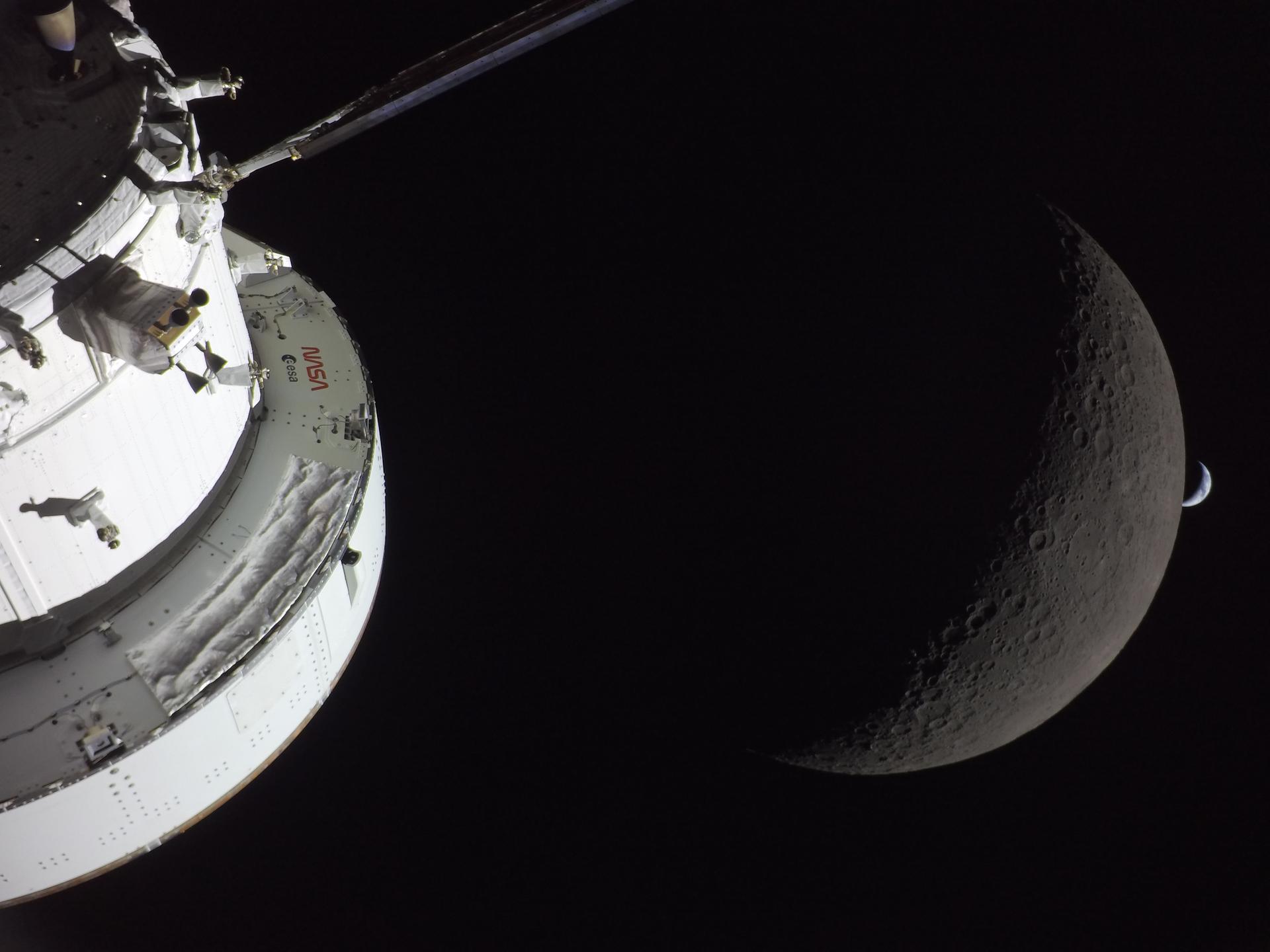
art002e016281 (April 6, 2026) - NASA’s Orion spacecraft captures the Moon and the Earth in one frame during the Artemis II crew’s deep space journey on the sixth day of the mission. The right side of NASA’s Orion spacecraft is seen lit up by the Sun. A waxing crescent Moon is visible behind it. And then, a crescent Earth, tiny compared to the Moon, is about to set below the Moon’s horizon on the right. Credit: NASA
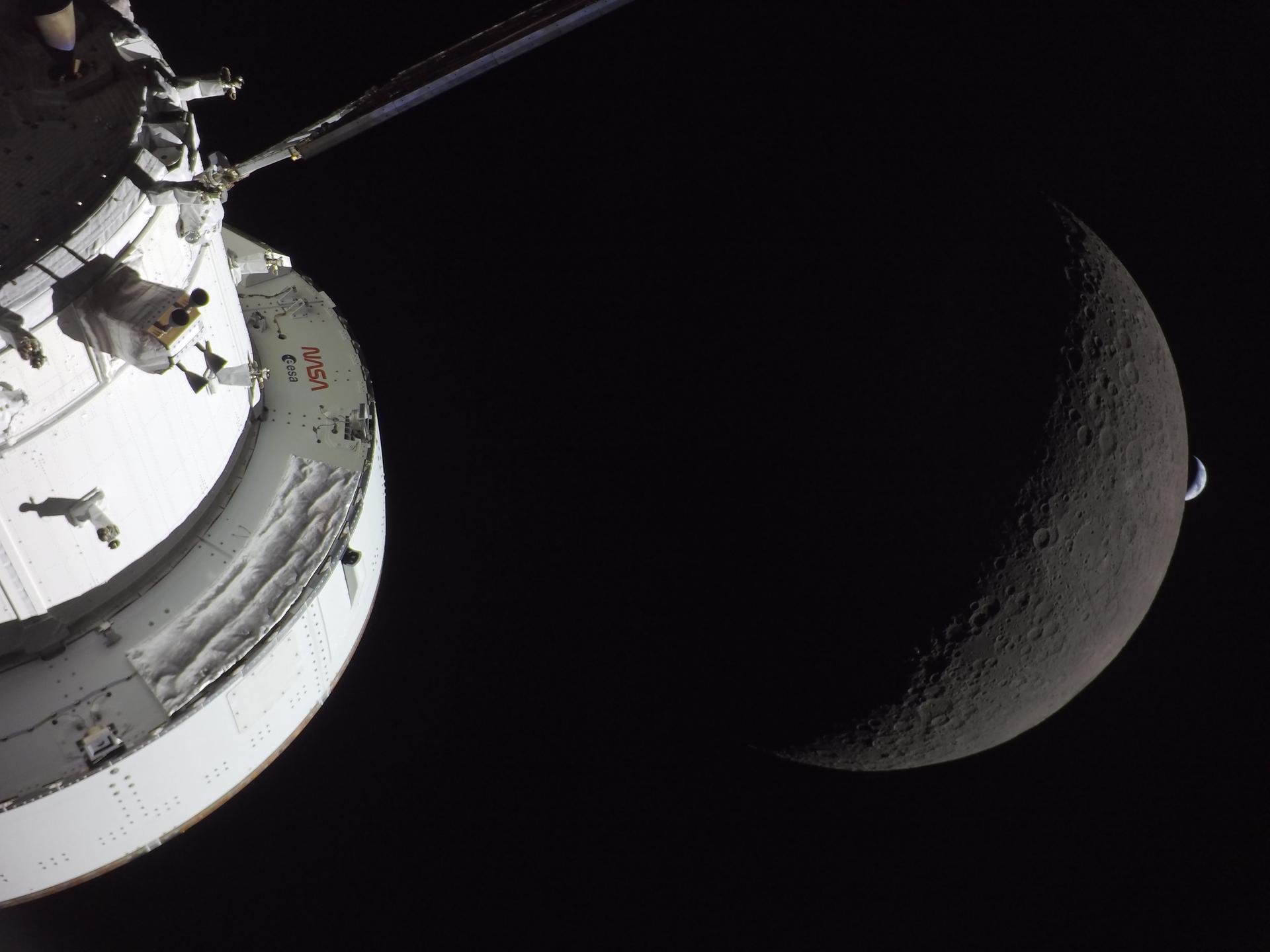
art002e009567 (April 6, 2026) - NASA’s Orion spacecraft captures the Moon and the Earth in one frame during the Artemis II crew’s deep space journey at 6:42 p.m. ET on the sixth day of the mission. The right side of NASA’s Orion spacecraft is seen lit up by the Sun. A waxing crescent Moon is visible behind it. And then, a crescent Earth, tiny compared to the Moon, is about to set below the Moon’s horizon on the right. Credit: NASA
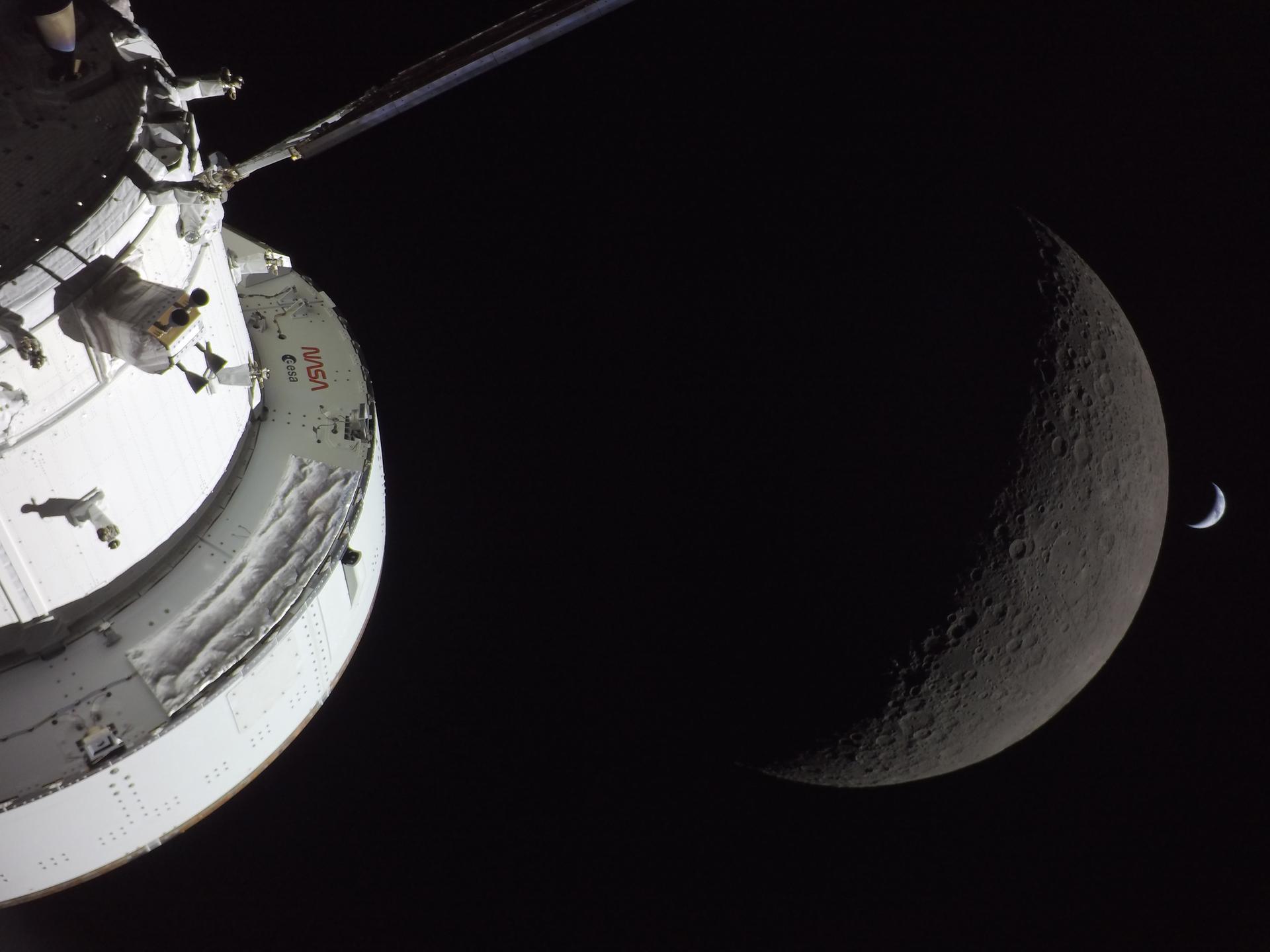
art002e016277 (April 6, 2026) - NASA’s Orion spacecraft captures the Moon and the Earth in one frame during the Artemis II crew’s deep space journey at 6:39 p.m. ET on the sixth day of the mission. The right side of NASA’s Orion spacecraft is seen lit up by the Sun. A waxing crescent Moon is visible behind it. And then, a crescent Earth, tiny compared to the Moon, is about to set below the Moon’s horizon on the right. Credit: NASA
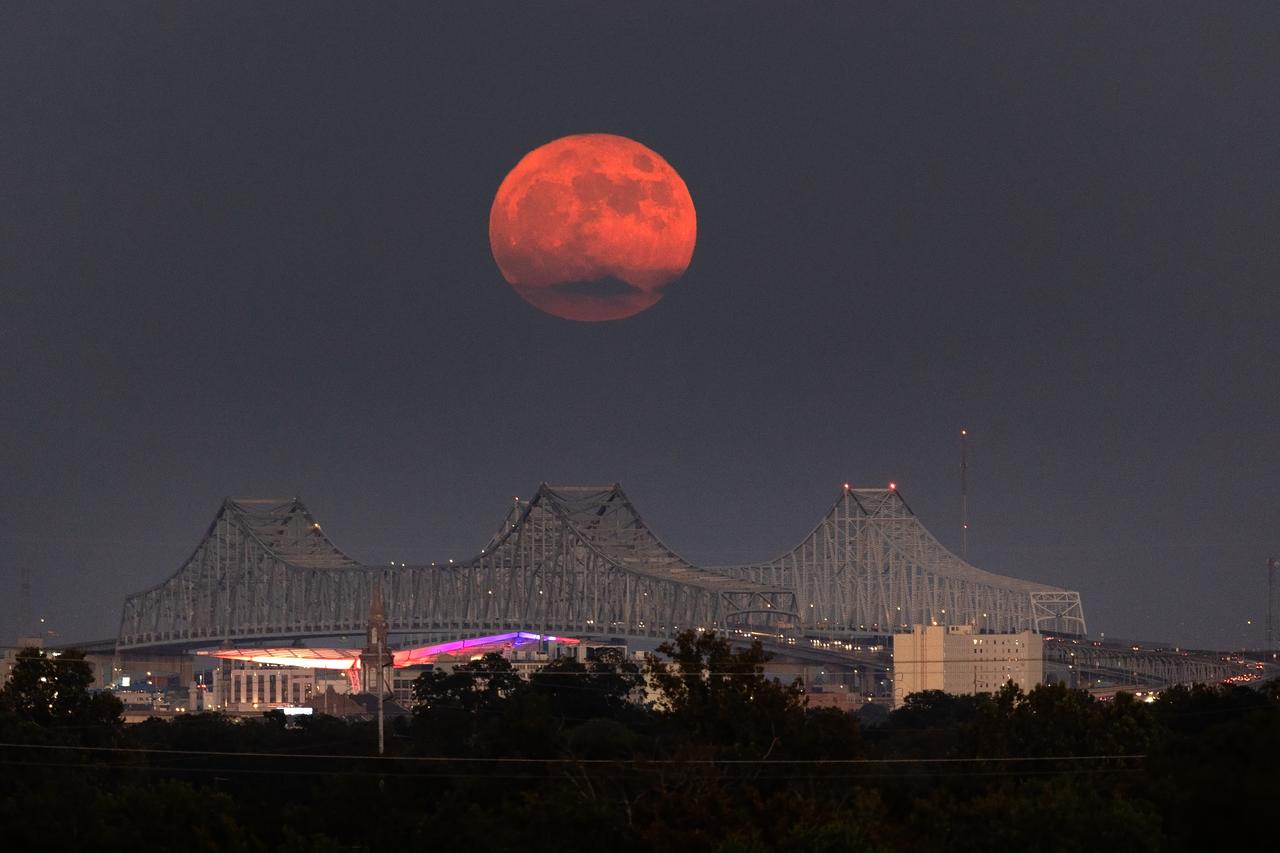
A Super Blue Moon rises above the Mississippi River and the Crescent City Connection Bridge in New Orleans, Aug. 30. The full moon is “super” because it’s slightly closer to Earth and “blue” because it’s the second full moon in a month. About 25% of all full moons are supermoons, but only 3% of full moons are blue moons. The next super blue moons will occur in a pair in January and March 2037. New Orleans is home to NASA’s Michoud Assembly Facility, where stages for NASA’s SLS (Space Launch System) rocket and structures for Orion spacecraft are produced for the Artemis missions.
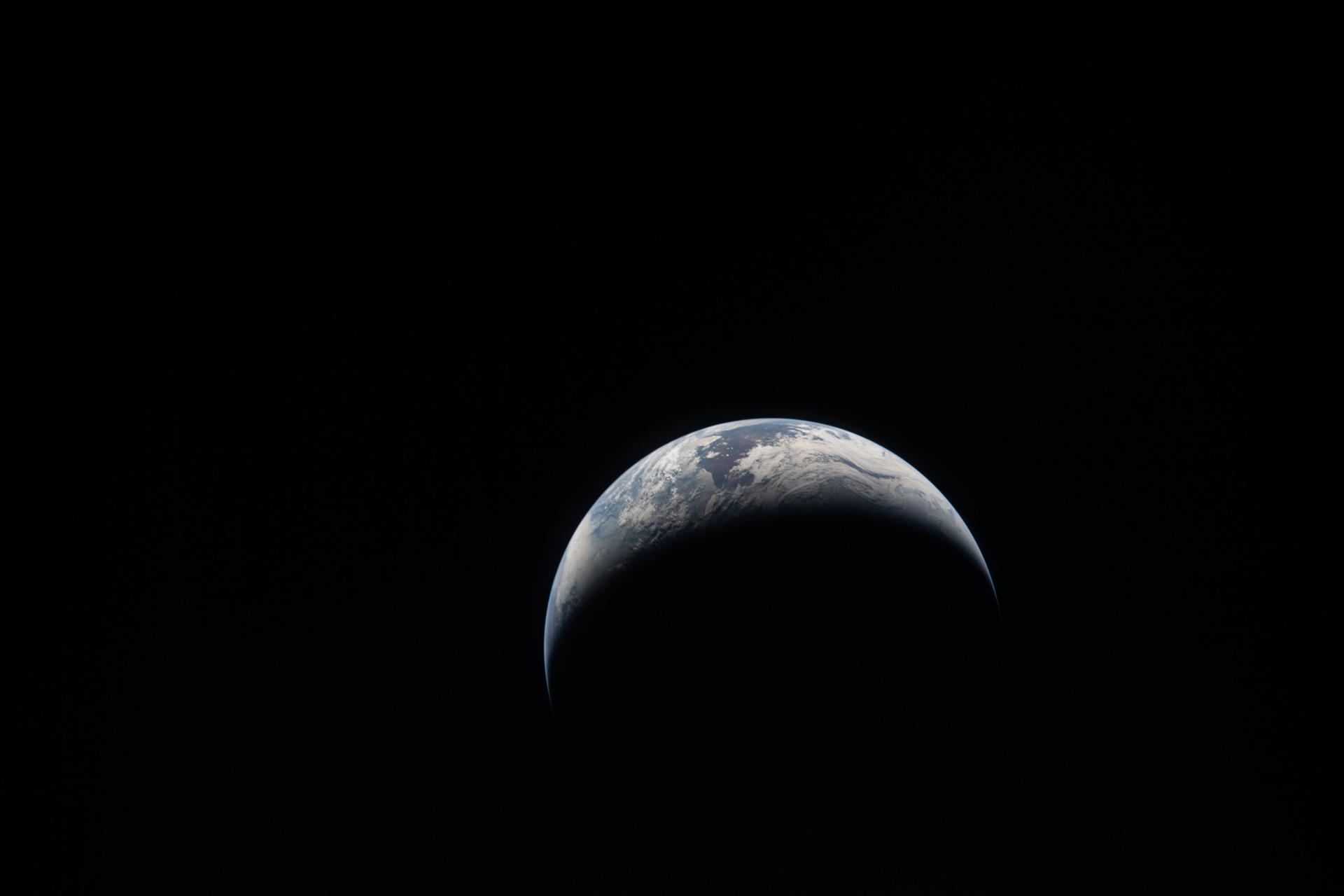
art002e014066 (April 6, 2026) – The Artemis II crew captures an image of a crescent Earth on their journey around the Moon.

A kingly crescent Saturn rests on the right of this NASA Cassini spacecraft portrait while the moon Mimas appears above the rings on the left. Mimas looks like just a speck of light here but is actually 396 kilometers, or 246 miles, across.
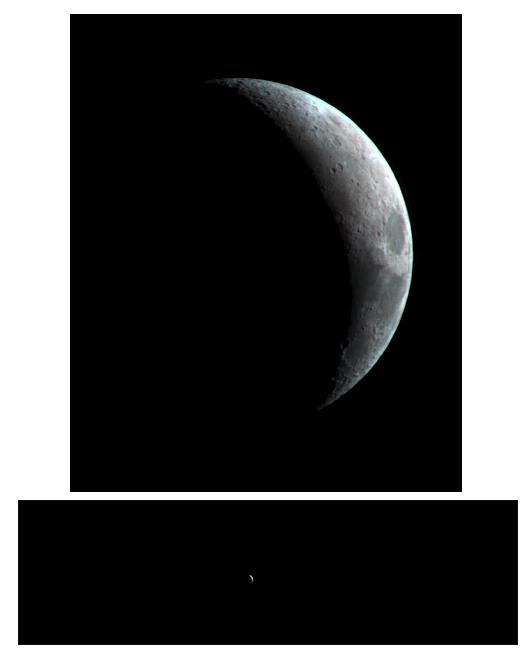
This crescent view of Earth Moon in infrared wavelengths comes from a camera test by NASA Mars Reconnaissance Orbiter spacecraft on its way to Mars. This image was taken by taken by the High Resolution Imaging Science Experiment camera Sept. 8, 2005.

A SpaceX Falcon 9 rocket carrying the company's Dragon spacecraft is seen against the crescent Moon during the launch of NASA’s SpaceX Crew-12 mission to the International Space Station with NASA astronauts Jessica Meir, Jack Hathaway, ESA (European Space Agency) astronaut Sophie Adenot, and Roscosmos cosmonaut Andrey Fedyaev, Friday, Feb. 13, 2026, from Cape Canaveral Space Force Station in Florida. NASA’s SpaceX Crew-12 mission is the twelfth crew rotation mission of the SpaceX Falcon 9 rocket and Dragon spacecraft to the International Space Station as part of the agency’s Commercial Crew Program. Meir, Hathaway, Adenot, and launched at 5:15 a.m. EST from Space Launch Complex 40 at the Cape Canaveral Space Force Station to begin their mission aboard the orbital outpost. Photo Credit: (NASA/John Kraus)
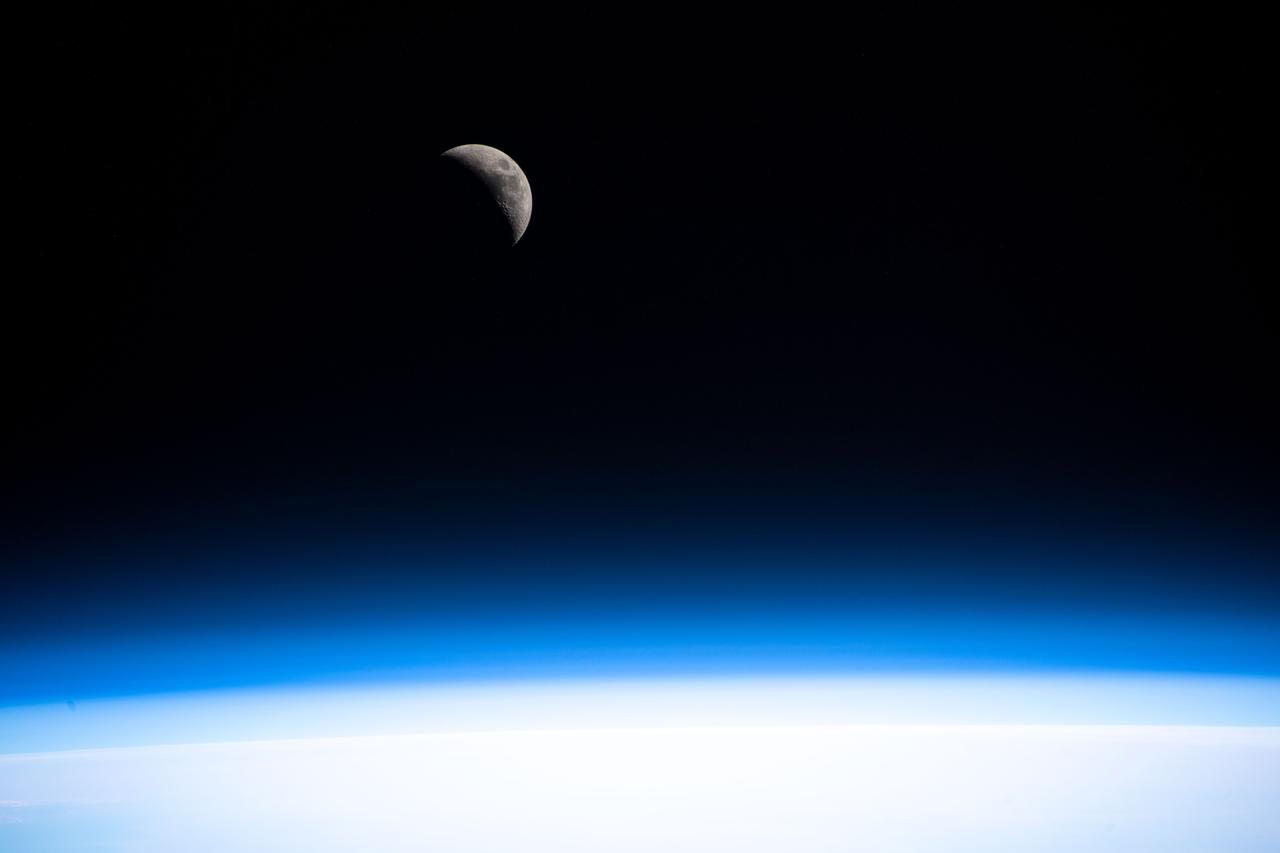
iss061e112503 (Jan. 1, 2020) --- A waxing crescent Moon is pictured as the International Space Station orbited 260 miles above the north African country of Algeria.
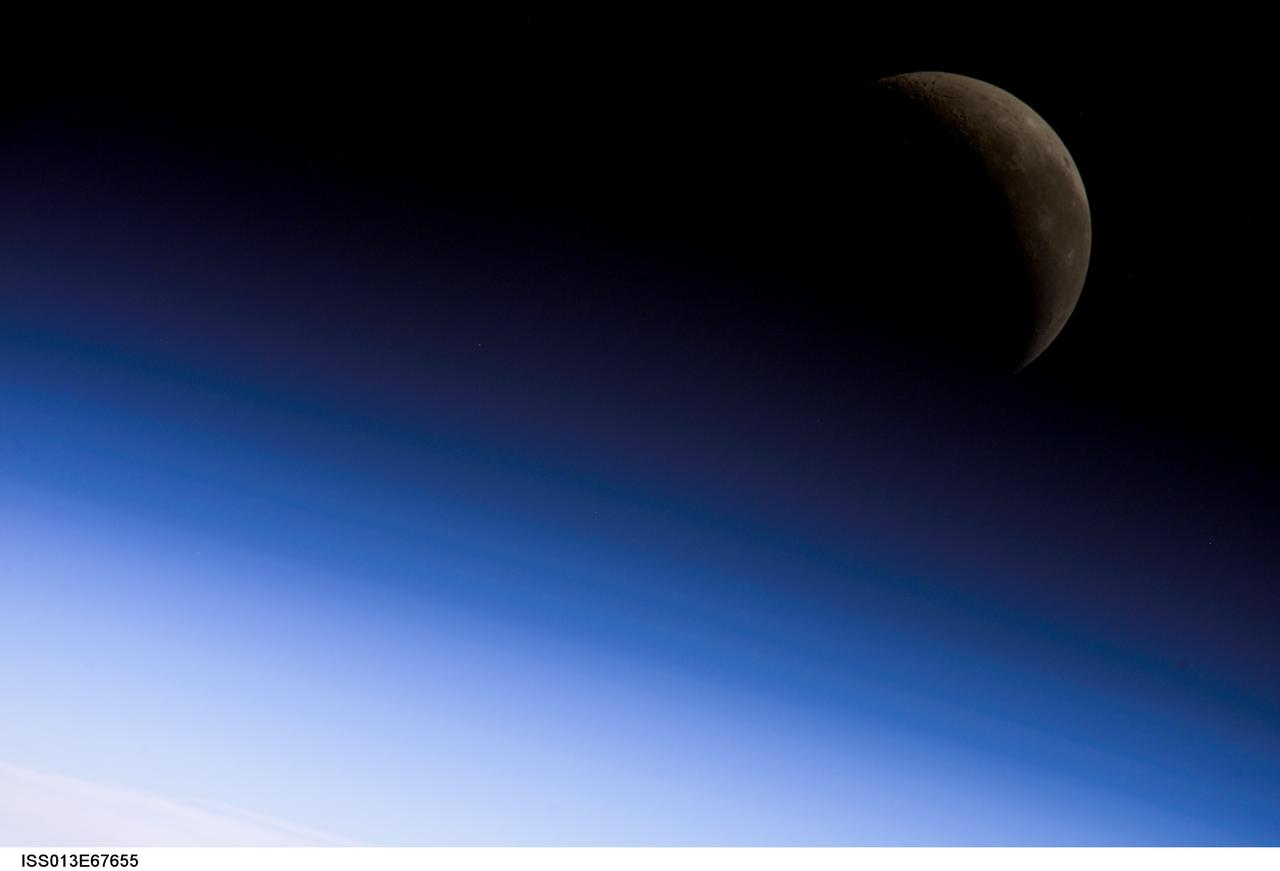
ISS013-E-67655 (18 Aug. 2006) --- A crescent moon is visible in this view of Earth's horizon and airglow, photographed by an Expedition 13 crewmember on the International Space Station.
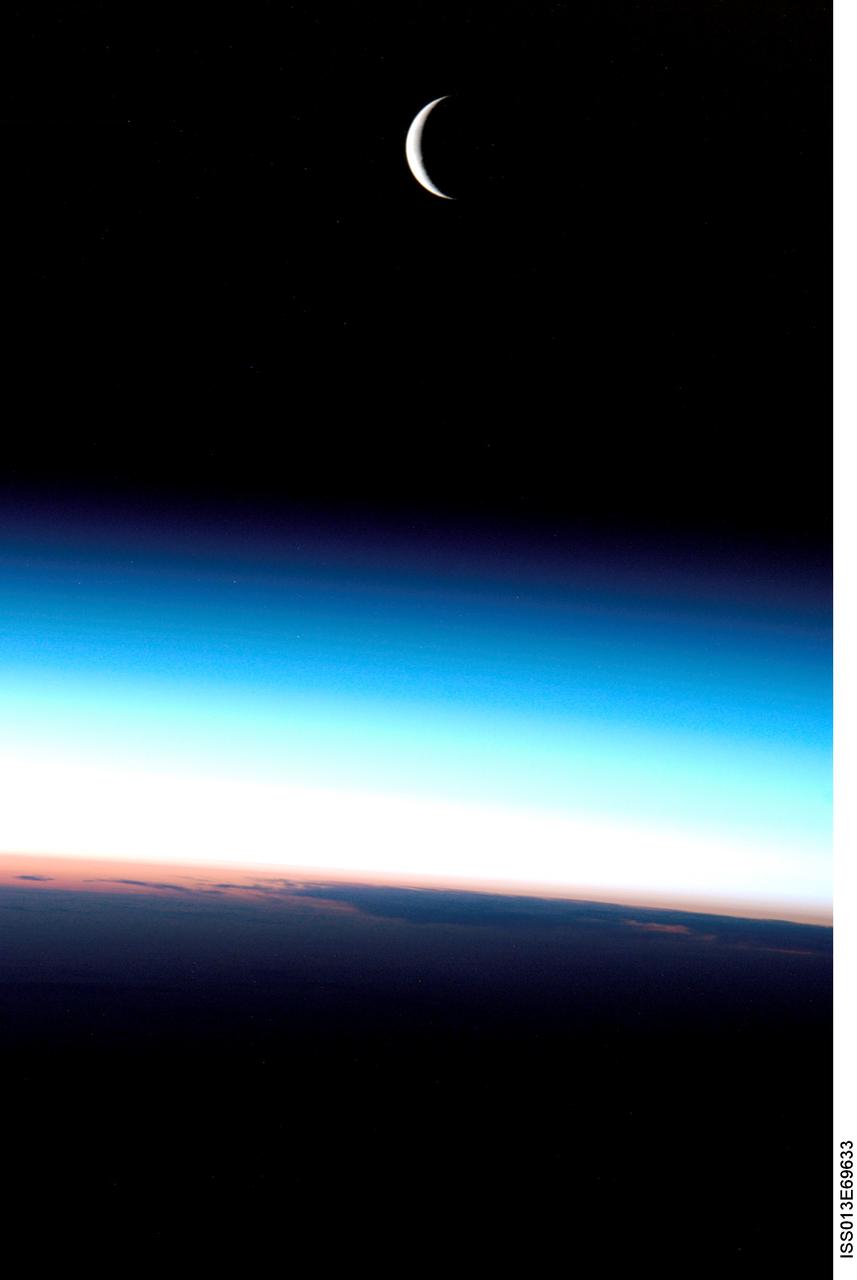
ISS013-E-69633 (August 2006) --- A crescent moon is visible in this view above Earth's horizon and airglow, photographed by an Expedition 13 crewmember on the International Space Station.
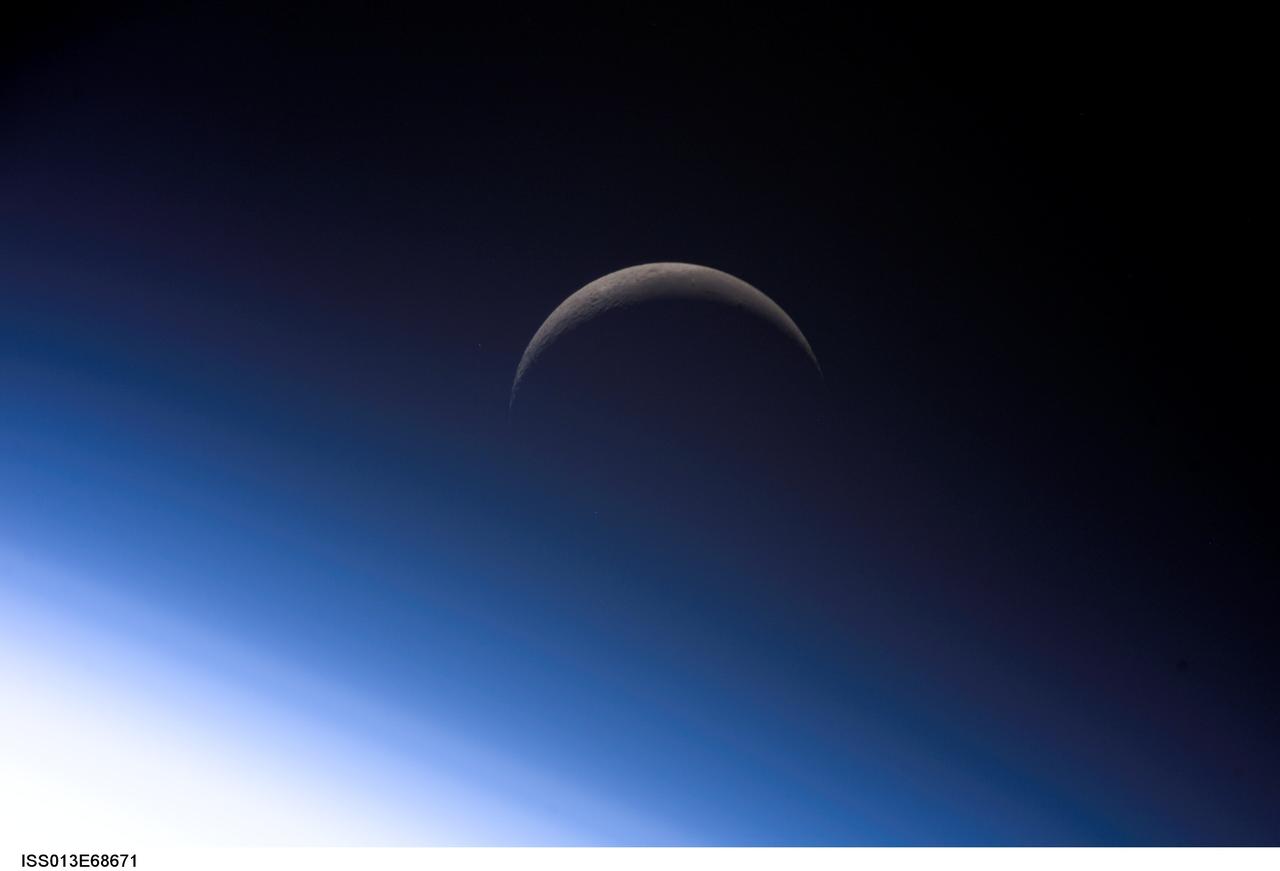
ISS013-E-68671 (18 Aug. 2006) --- A crescent moon is visible in this view of Earth's horizon and airglow, photographed by an Expedition 13 crewmember on the International Space Station.
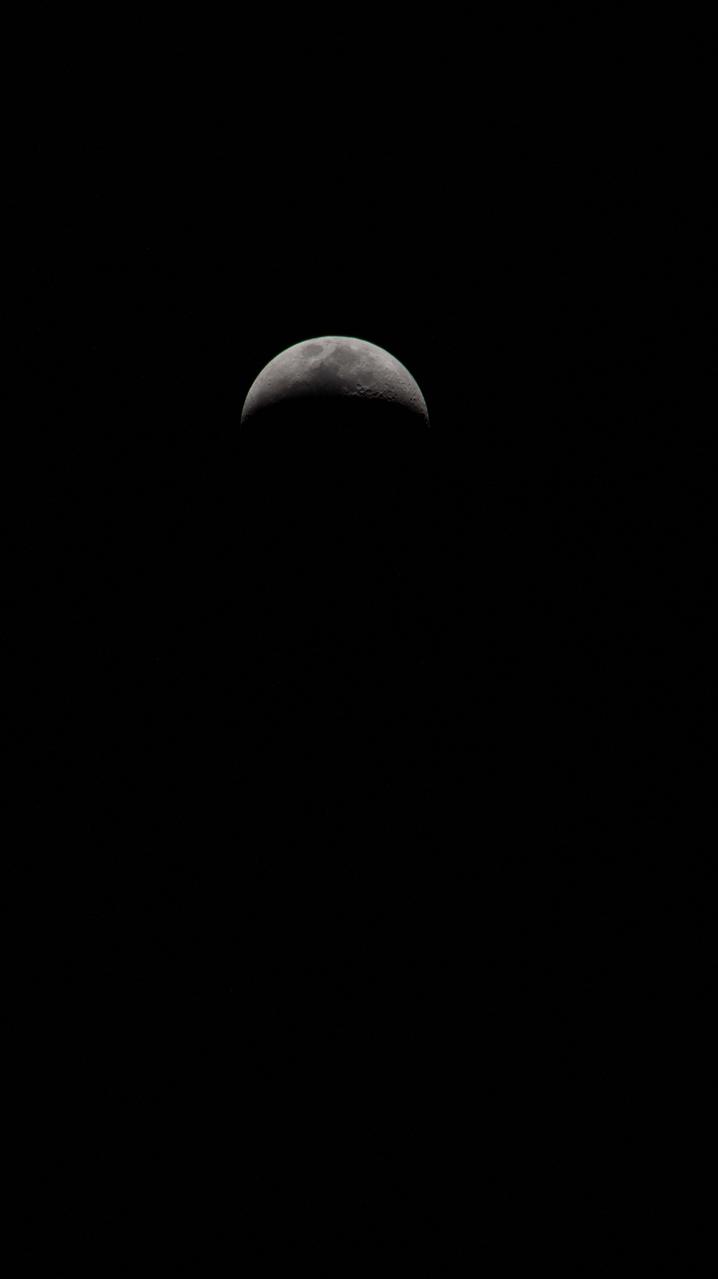
iss068e006913 (Oct. 1, 2022) --- The waxing crescent Moon is pictured from the International Space Station as it orbited 268 miles above the southern Atlantic Ocean.
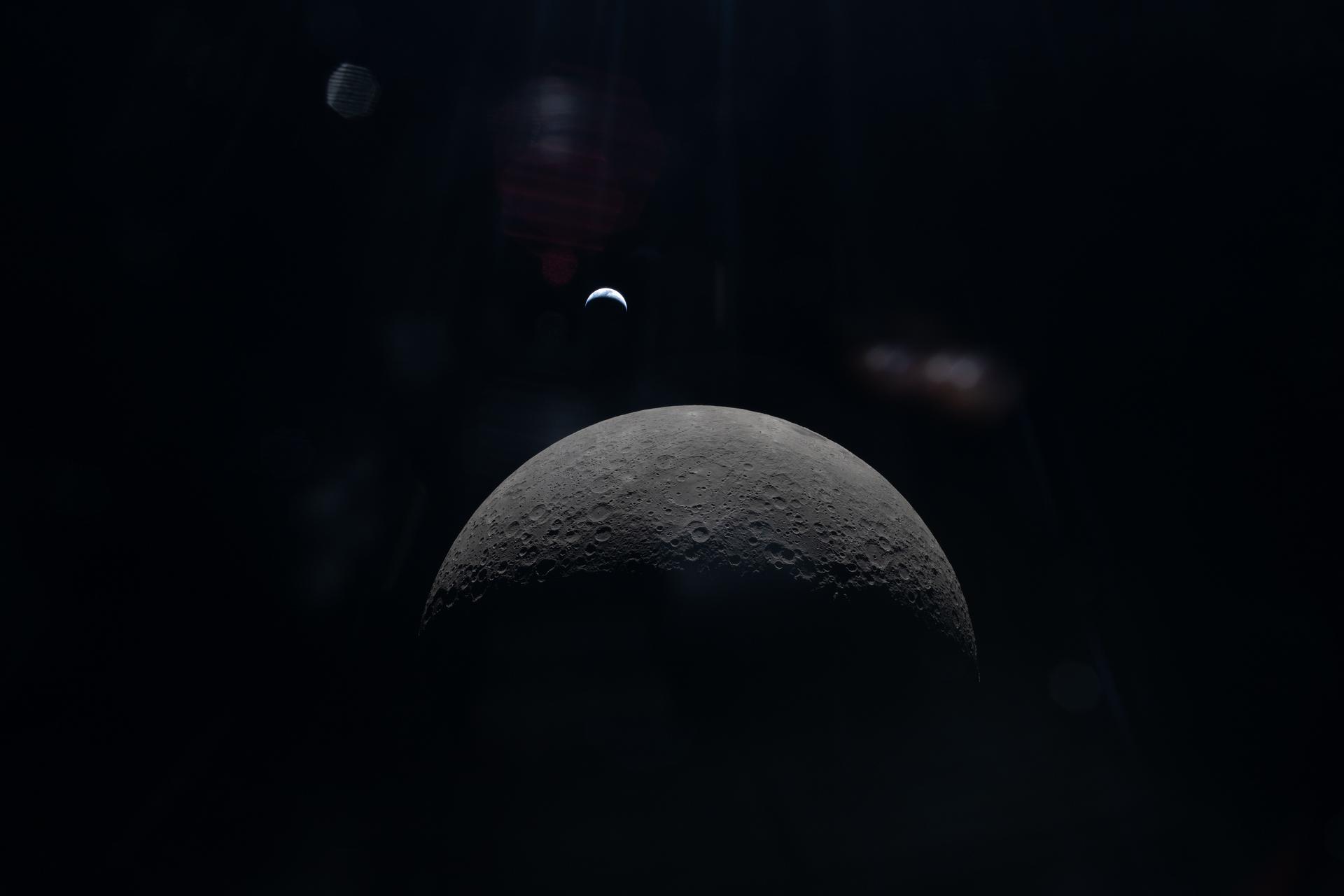
art002e015231 (April 6, 2026) – The Artemis II crew captures a faint view of a crescent Earth above the horizon on the Moon’s far side.
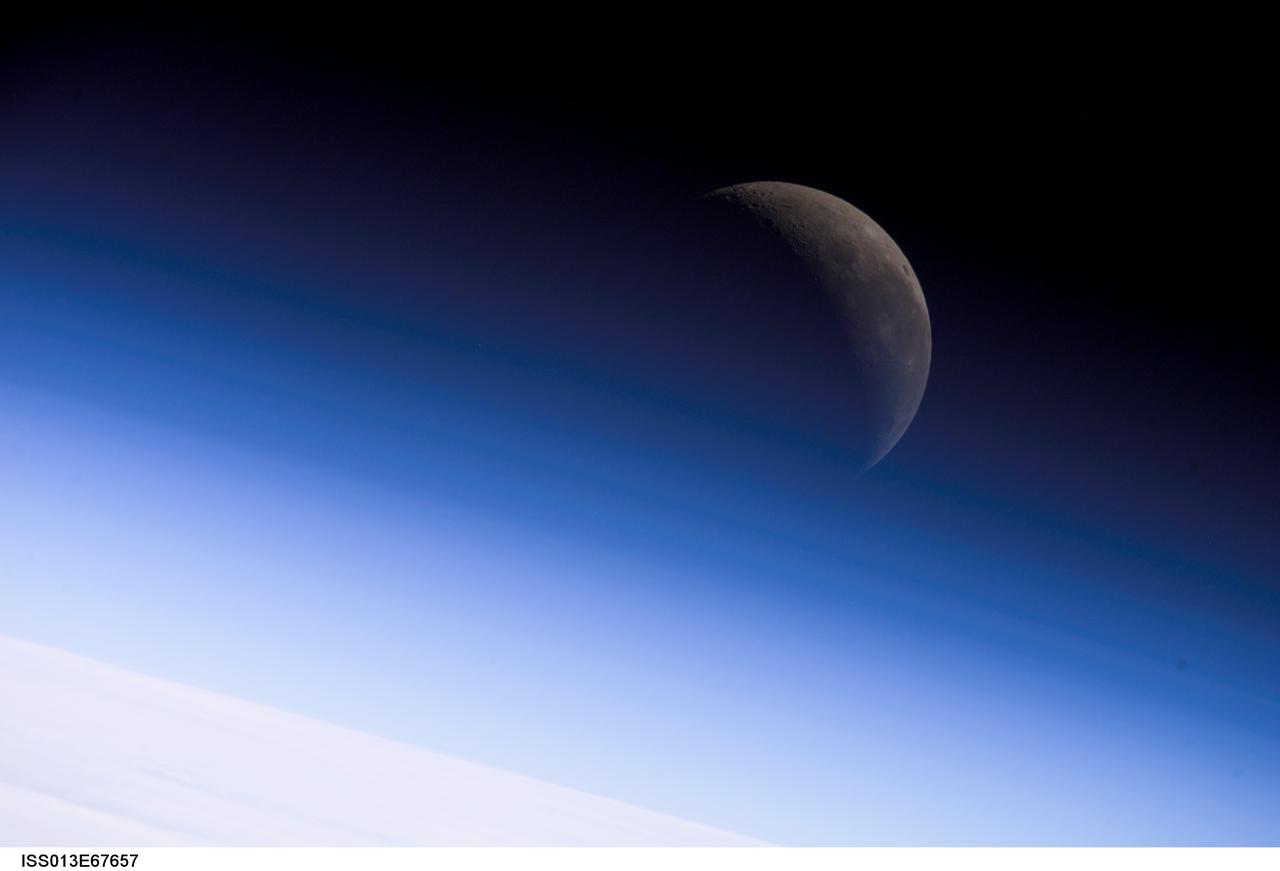
ISS013-E-67657 (18 Aug. 2006) --- A crescent moon is visible in this view of Earth's horizon and airglow, photographed by an Expedition 13 crewmember on the International Space Station.
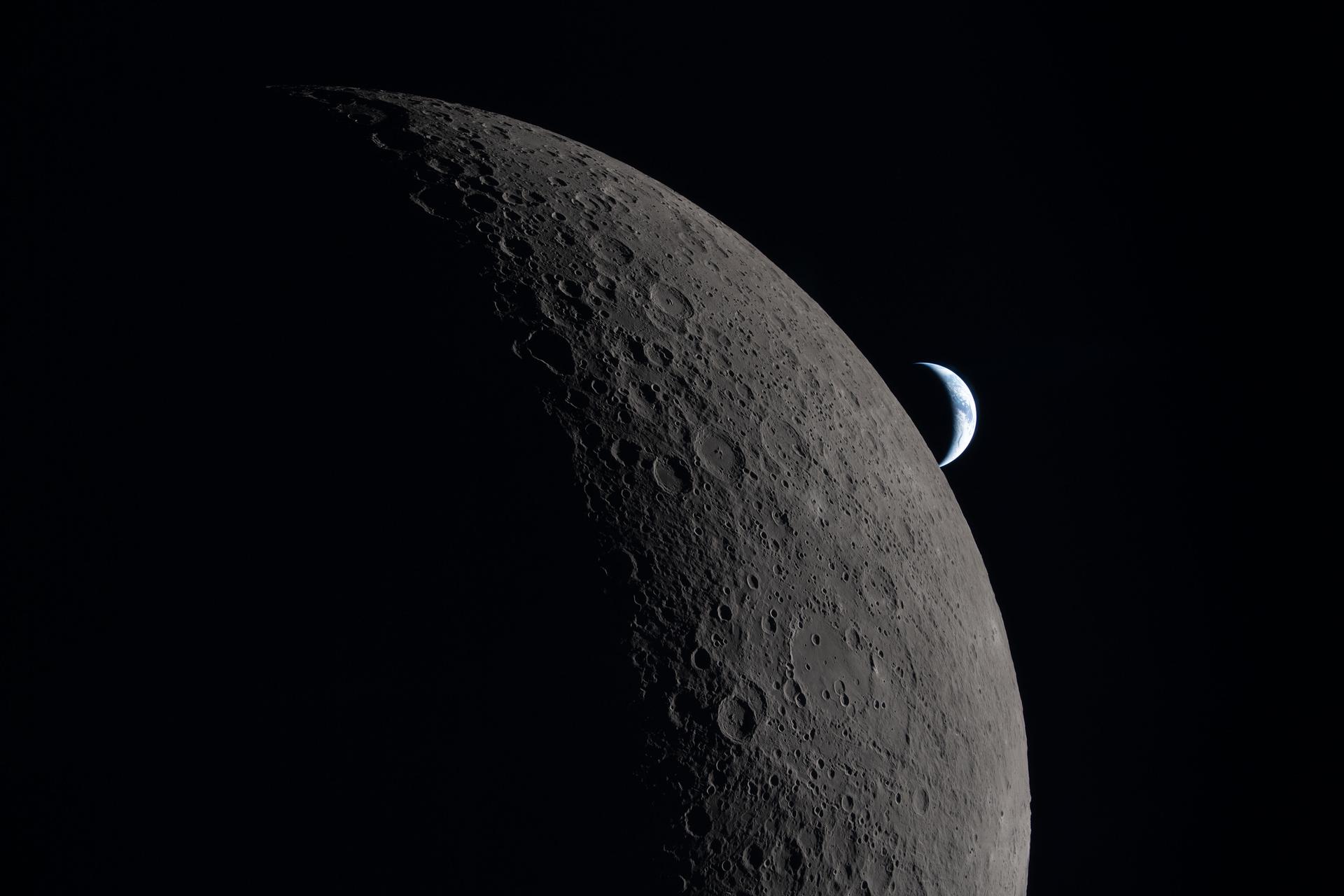
art002e021169 (April 6, 2026) - This photo of a crescent Moon and crescent Earth was taken by an Artemis II astronaut during lunar flyby on flight day 6. This captures one of the final moments before their loss of signal with Earth as the Orion spacecraft flew around the far side of the Moon, reemerging and regaining contact approximately 40 minutes later.
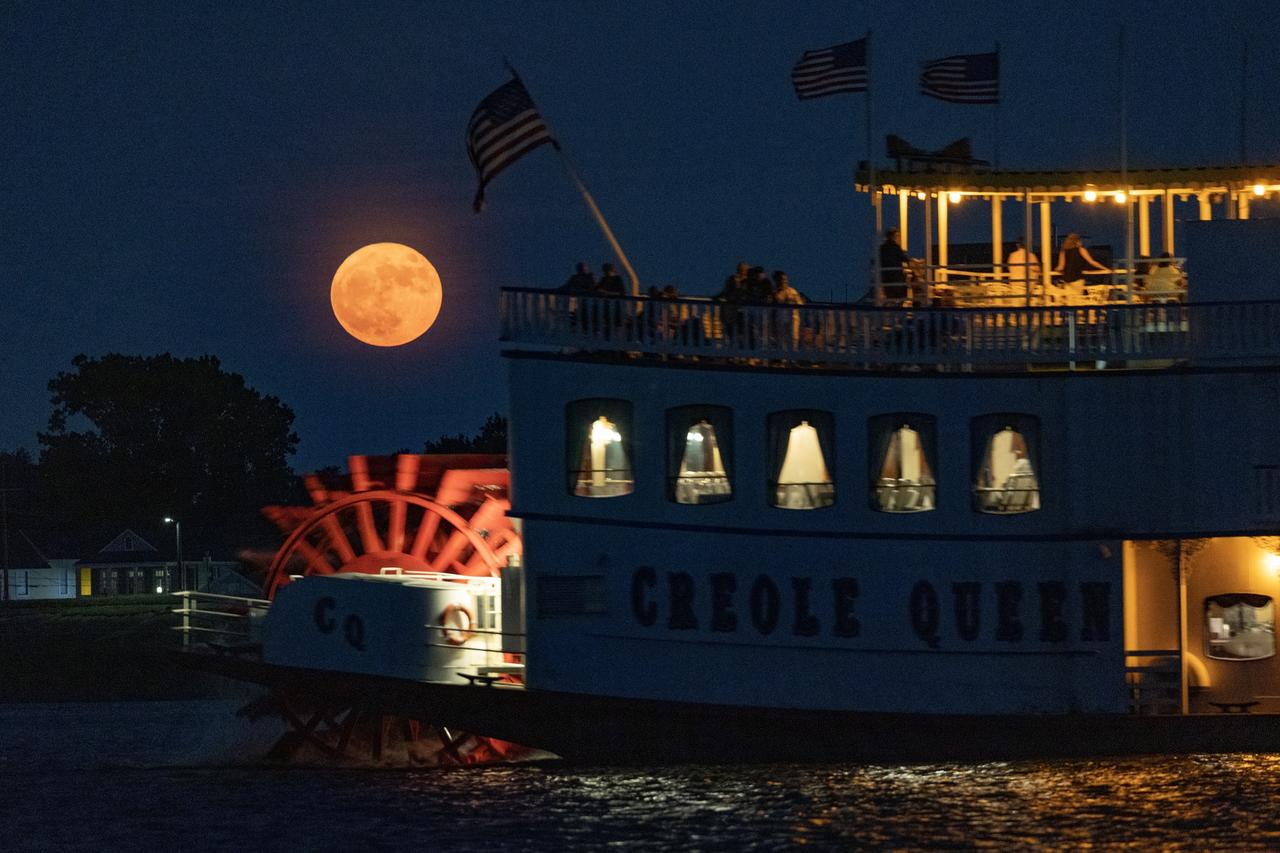
A supermoon rises over the Mississippi River and the Crescent City Aug. 1. The early August full Moon is the second largest in Earth’s skies for 2023. Later in August, a full Moon will appear in the skies for a second time. New Orleans is home to NASA’s Michoud Assembly Facility, where stages for NASA’s SLS (Space Launch System) rocket and structures for Orion spacecraft are produced for the Artemis missions.
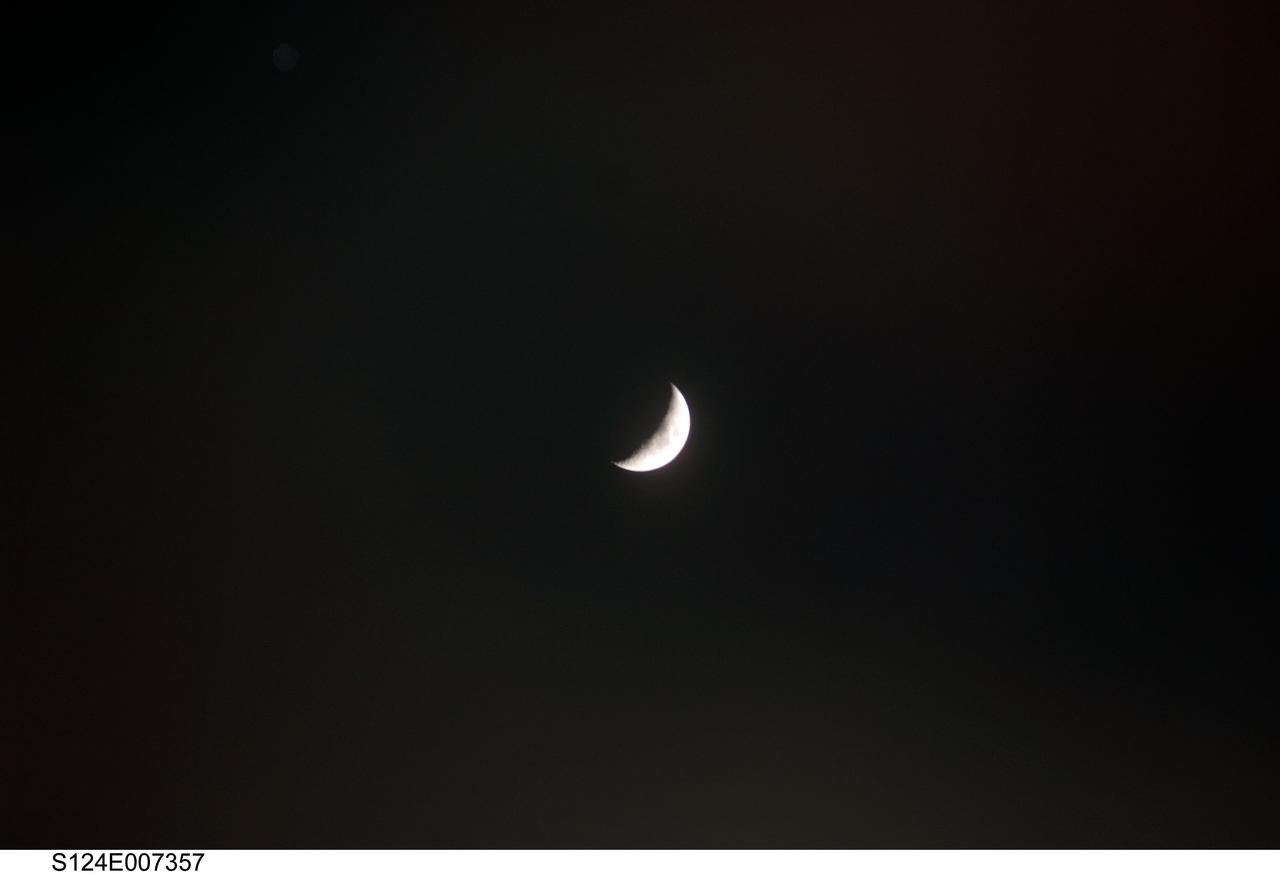
S124-E-007357 (8 June 2008) --- A crescent moon is featured in this image photographed by a STS-124 crewmember while Space Shuttle Discovery is docked with the International Space Station.
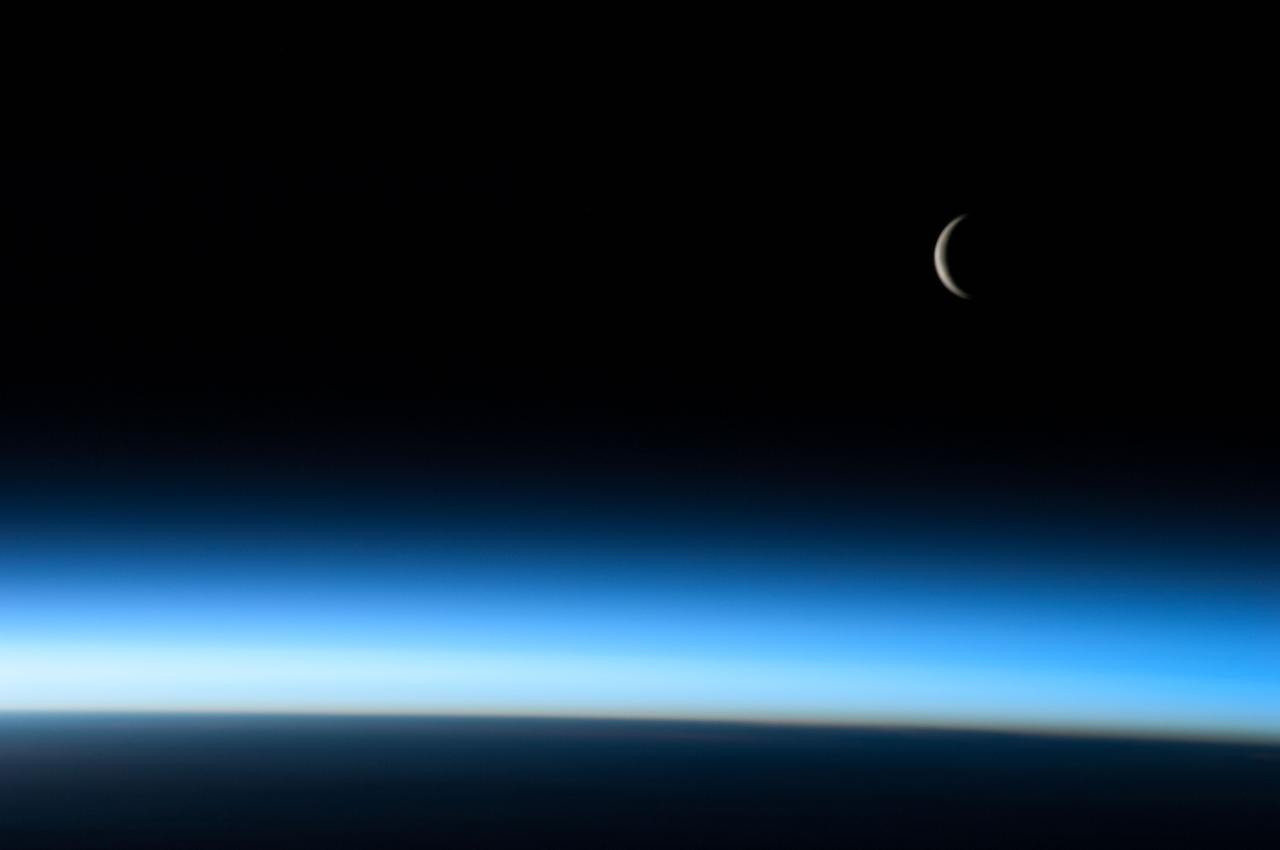
ISS036-E-006179 (4 June 2013) --- One of the Expoedition 36 crew members aboard the International Space Station captured an image of a crescent moon above Earth's atmosphere on June 4, 2013.
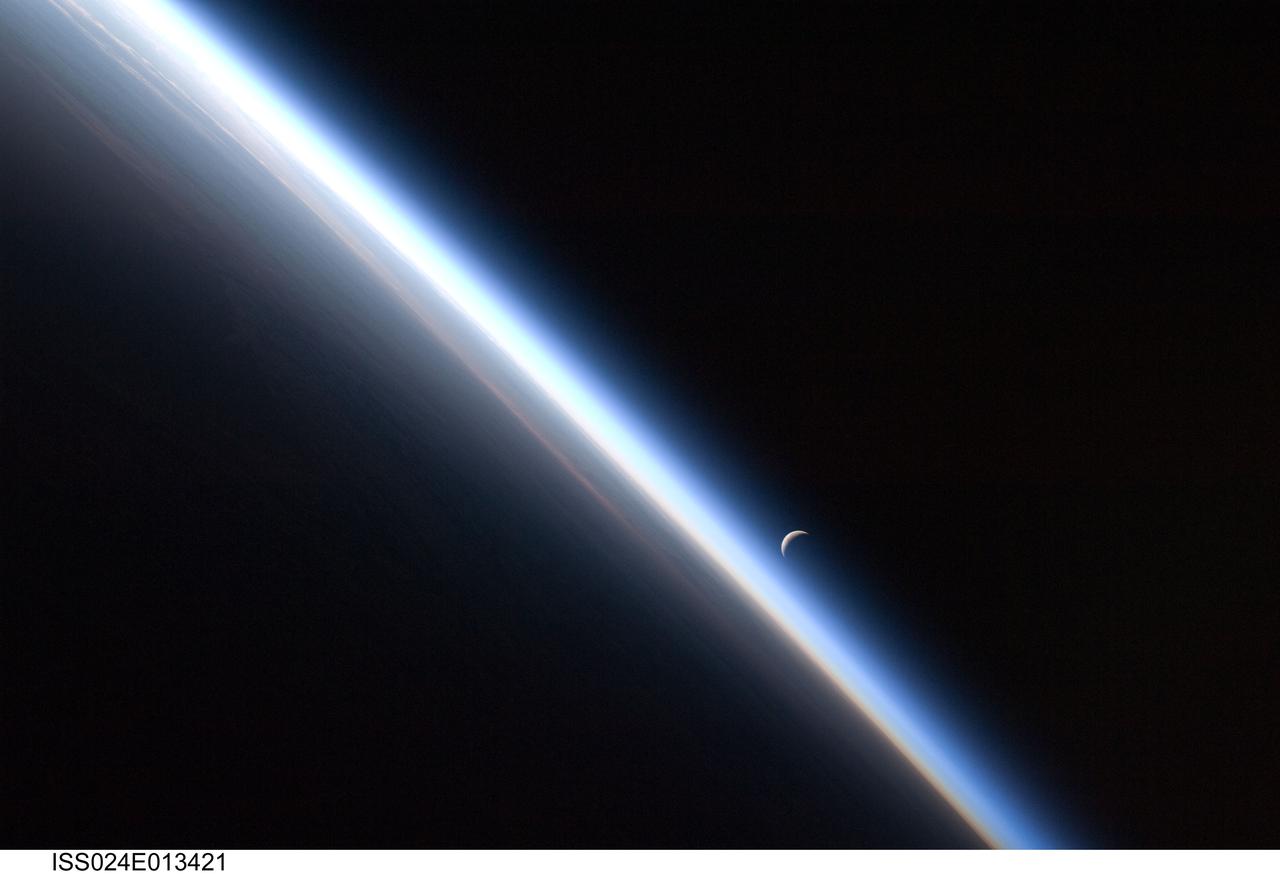
ISS024-E-013421 (4 Sept. 2010) --- A setting last quarter crescent moon and the thin line of Earth’s atmosphere are photographed by an Expedition 24 crew member as the International Space Station passes over central Asia.
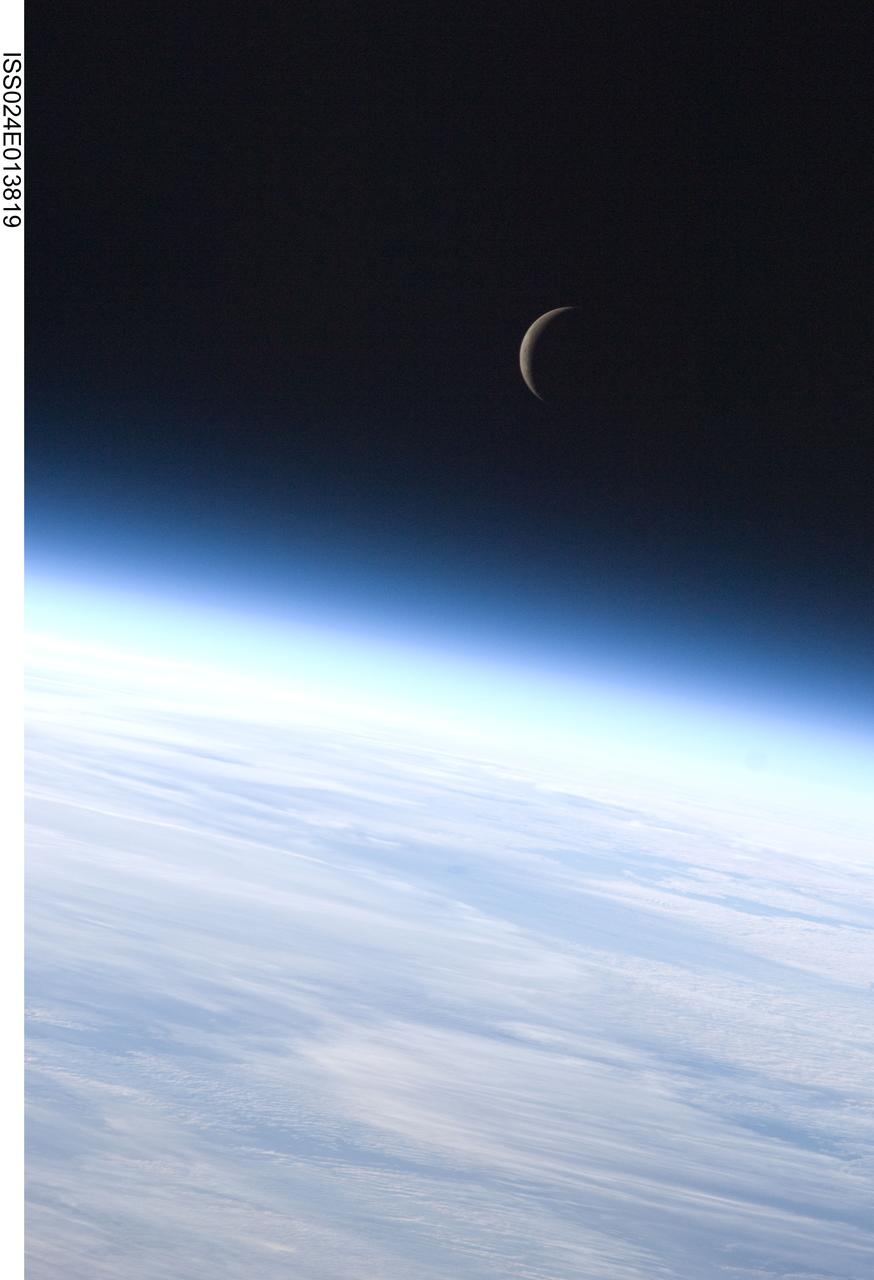
ISS024-E-013819 (5 Sept. 2010) --- A last quarter crescent moon above Earth?s horizon is featured in this image photographed by an Expedition 24 crew member on the International Space Station.
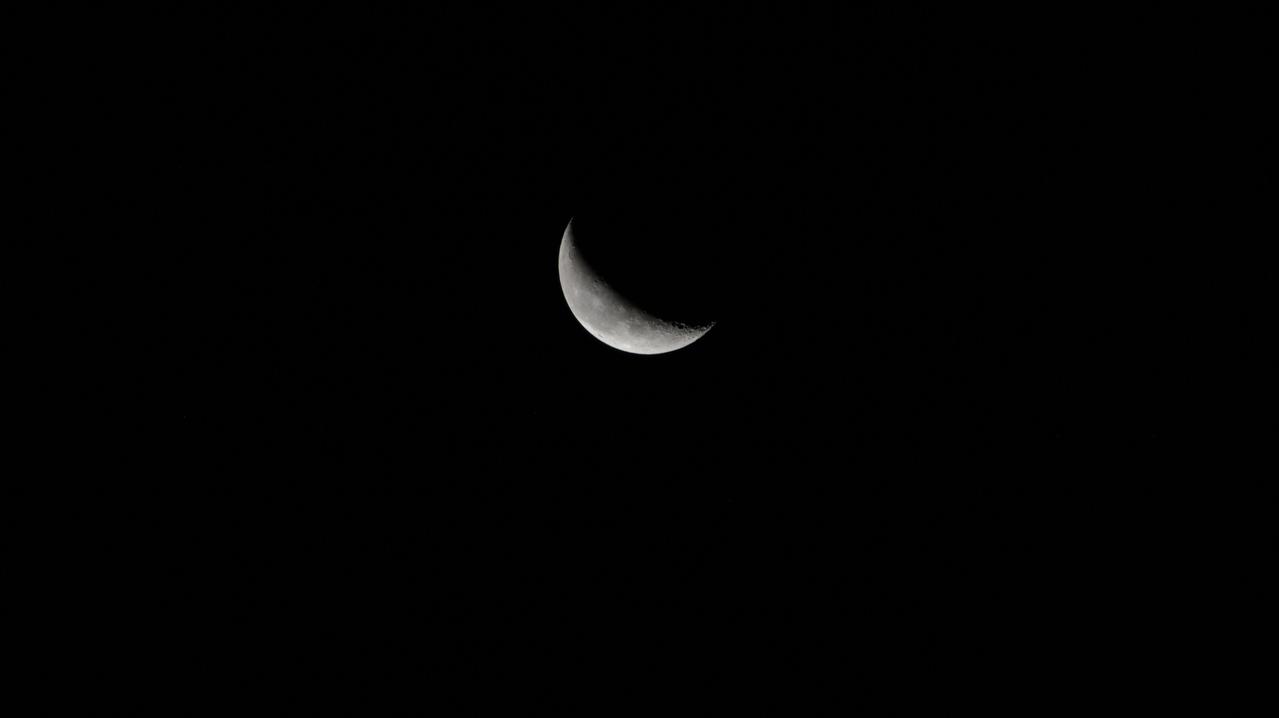
iss072e116495 (Oct. 26, 2024) -- A waning crescent moon hangs against the deep black of space as the International Space Station orbited 258 miles above the North Pacific Ocean.
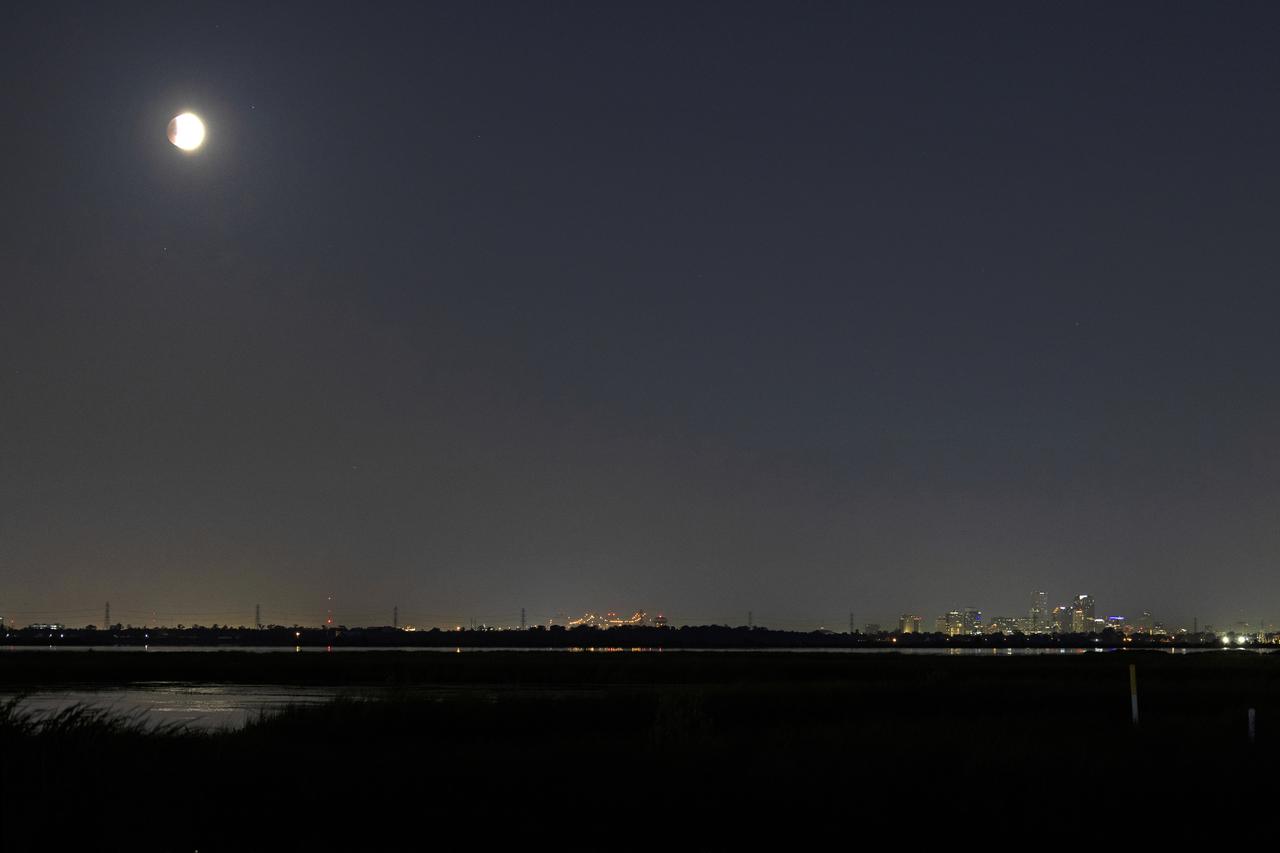
The beginning of the eclipse of the Super Flower Blood Moon over Bayou Bienvenue with the New Orleans Crescent City Connection in the distance early Wednesday morning, May 26, 2021. Image credit: NASA/Michael DeMocker
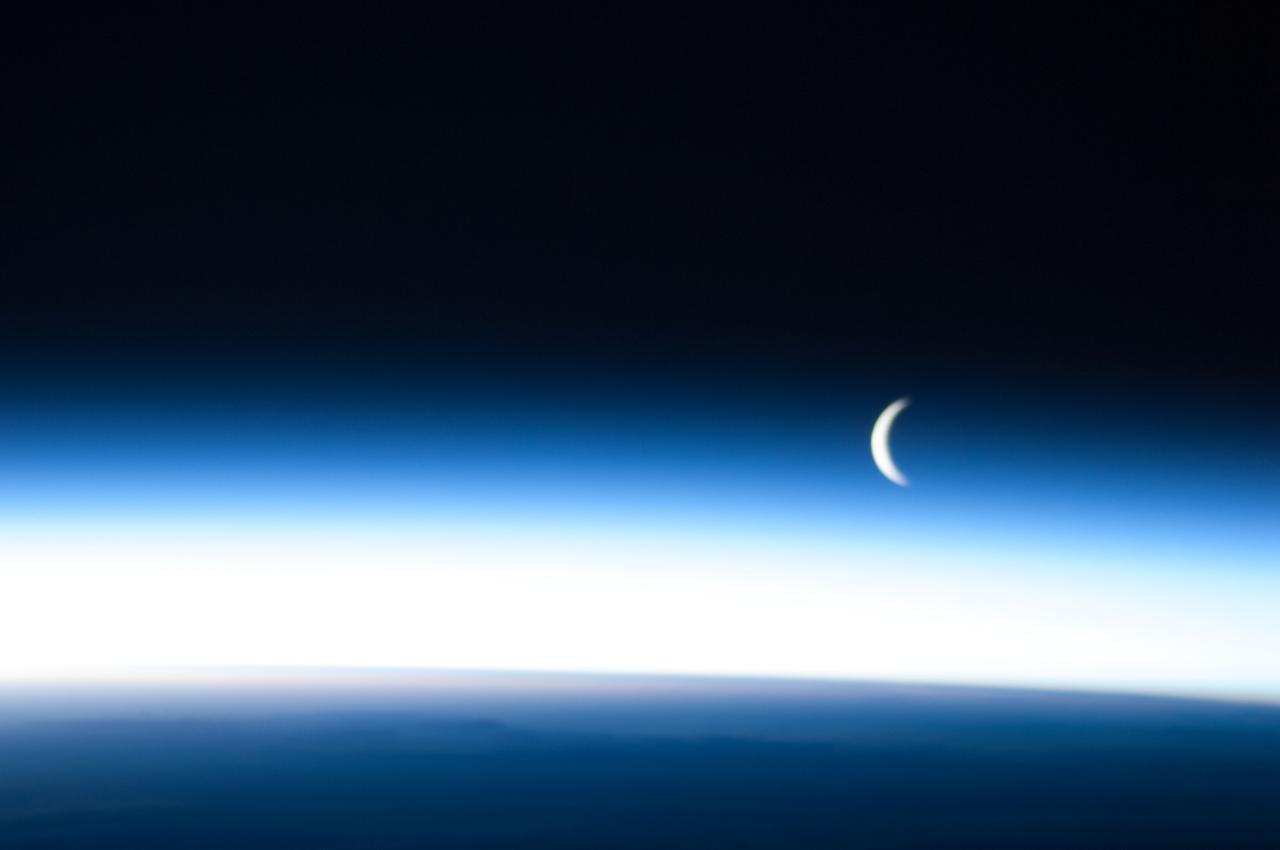
ISS036-E-006173 (4 June 2013) --- One of the Expoedition 36 crew members aboard the International Space Station captured an image of a crescent moon above Earth's atmosphere on June 4, 2013.
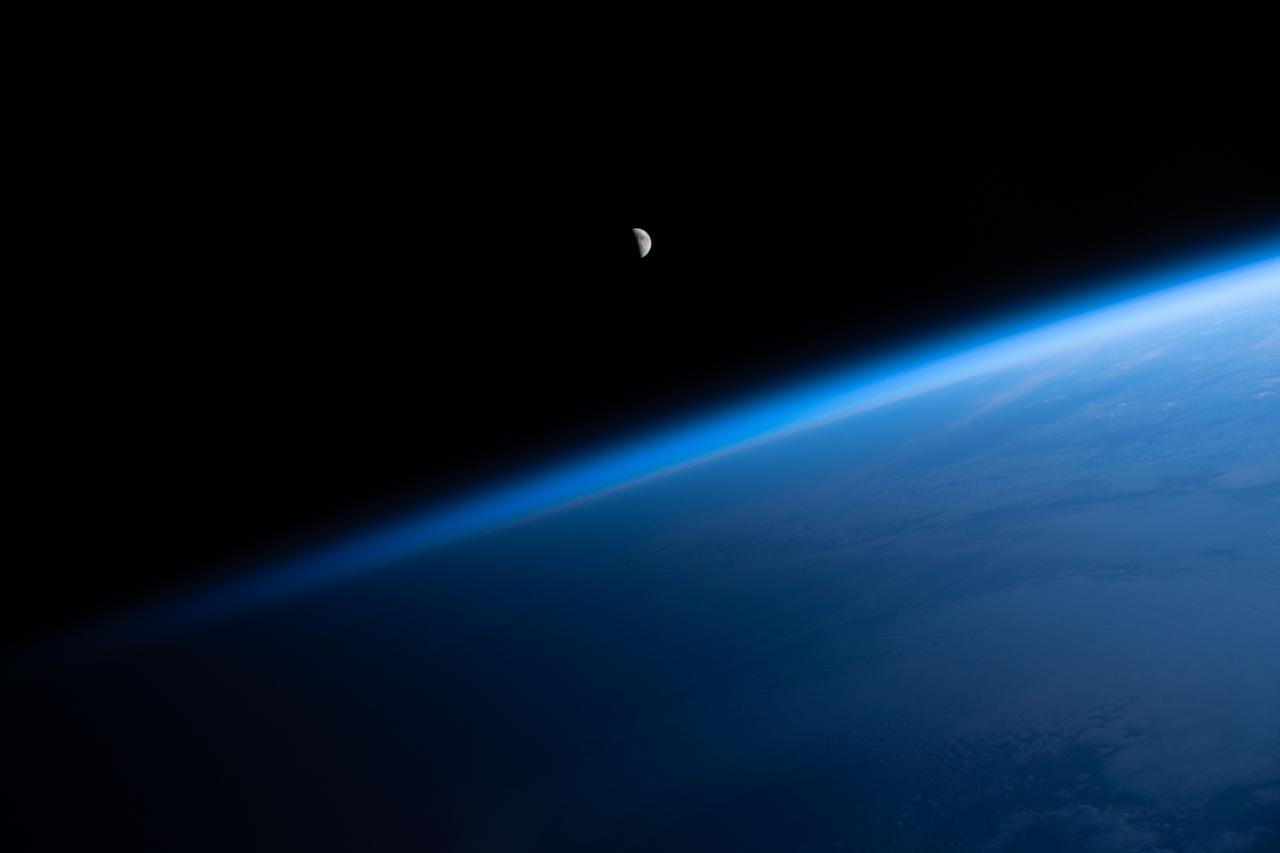
iss067e035826 (May 8, 2022) --- The waning crescent Moon is pictured from the International Space Station as it flew into an orbital sunrise 260 miles above the Atlantic Ocean off the northwest coast of the United States.
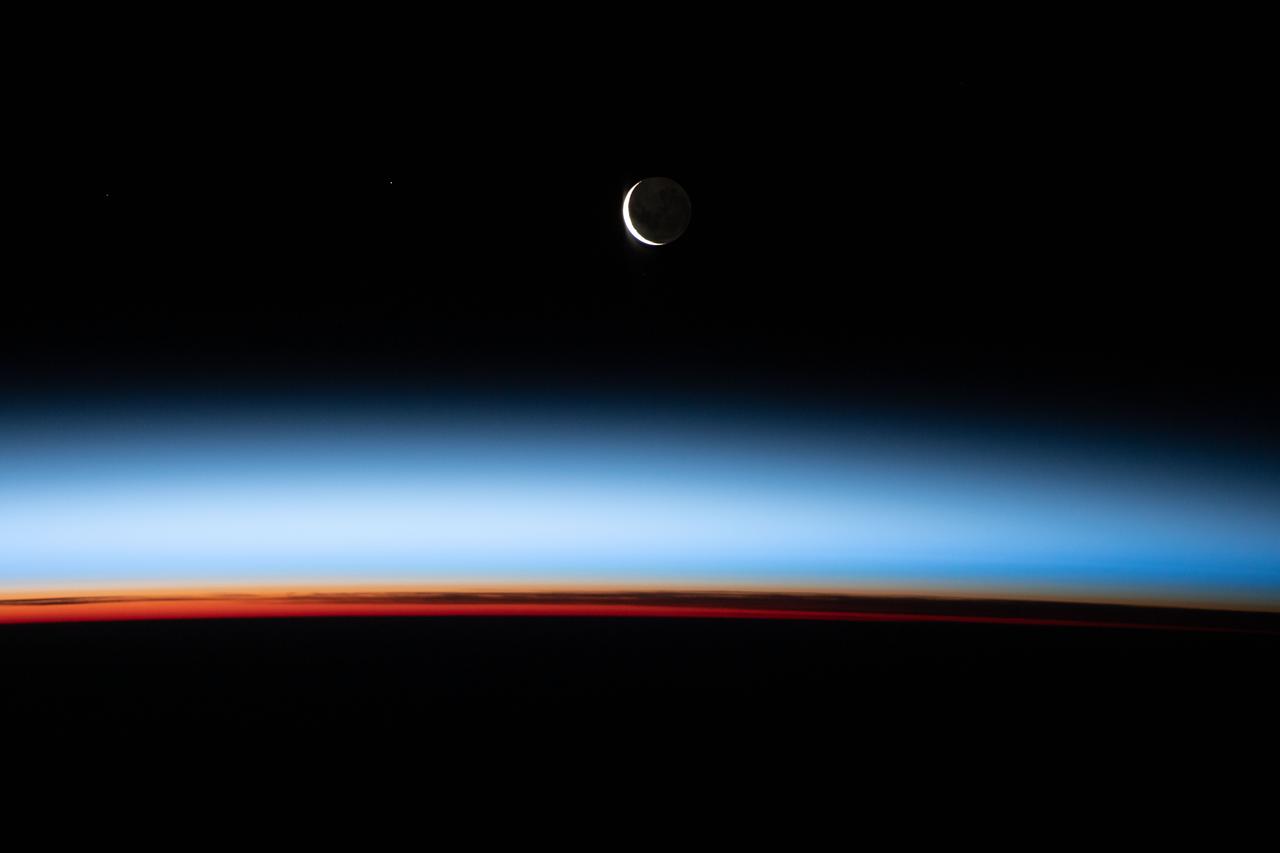
iss066e086969 (Dec. 6, 2021) --- A waxing crescent Moon during is pictured from the International Space Station during an orbital sunset as it flew 268 miles above the Pacific Ocean east of New Zealand.
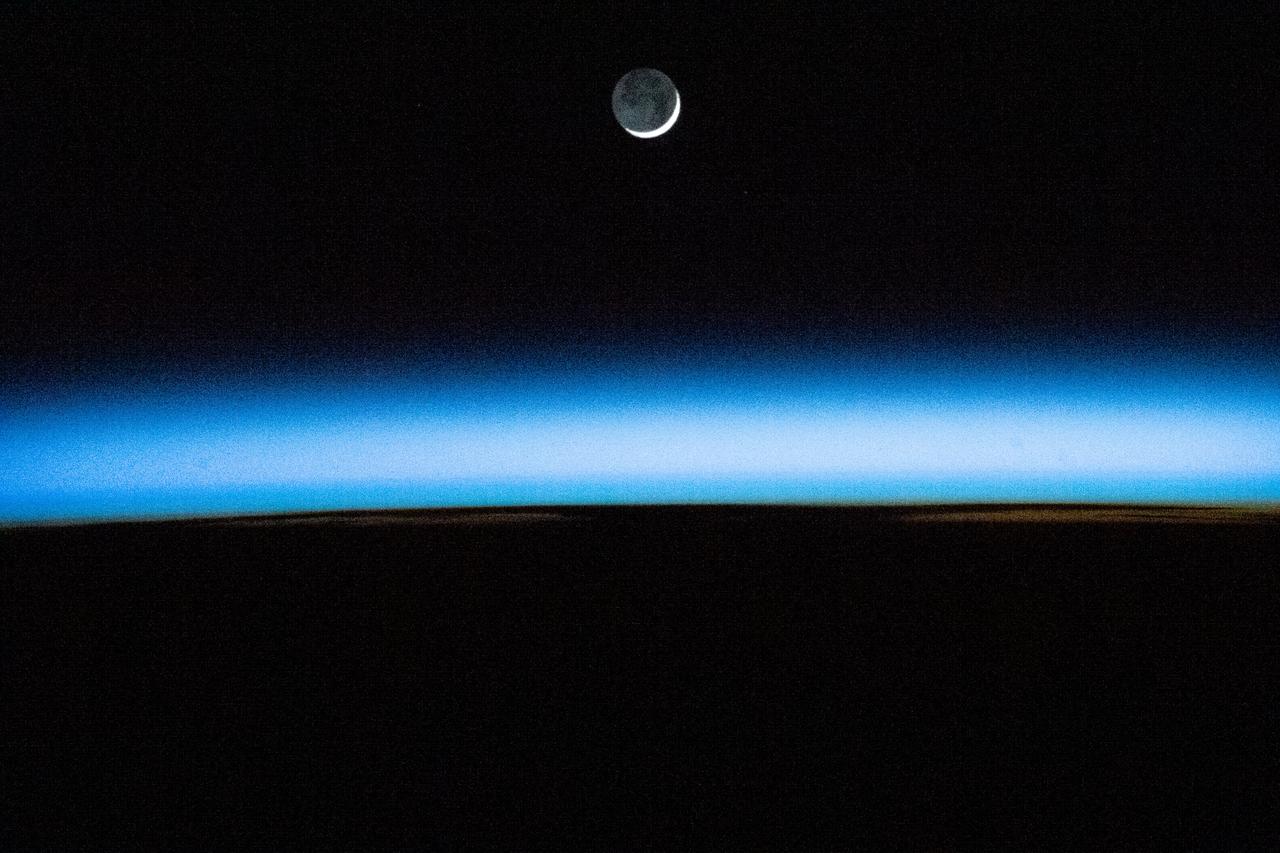
iss067e106982 (June 1, 2022) --- The waxing crescent Moon is pictured above Earth's atmosphere illuminated by an orbital sunset as the International Space Station flew 258 miles above the Atlantic Ocean.

iss065e112847 (June 15, 2021) --- The SpaceX Crew Dragon Endeavour is pictured docked to the Harmony module's forward-facing international docking adapter. The tiny dot just below Endeavour is the Moon in its waxing crescent phase.
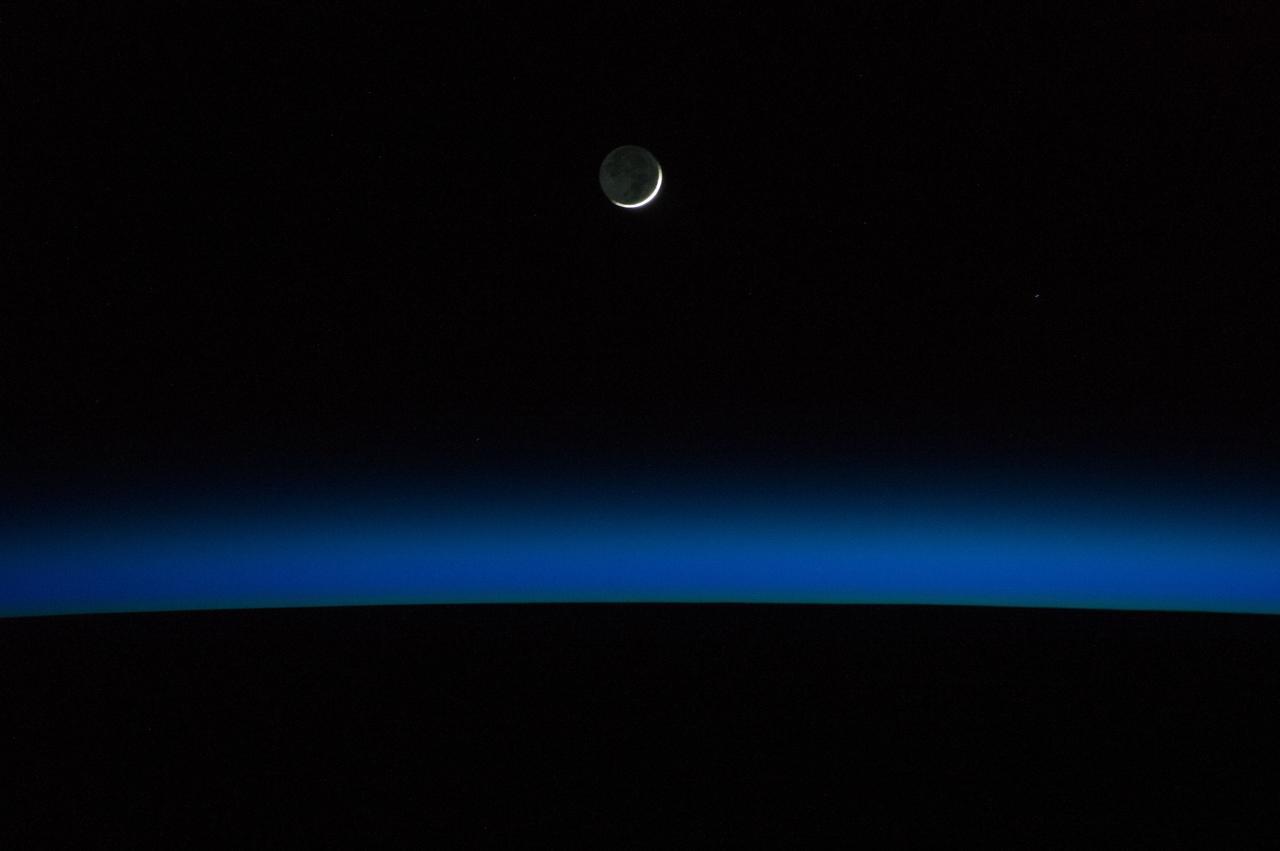
ISS040-E-005986 (30 May 2014) --- A crescent moon and Earth's horizon are featured in this nighttime image photographed by an Expedition 40 crew member on the International Space Station.
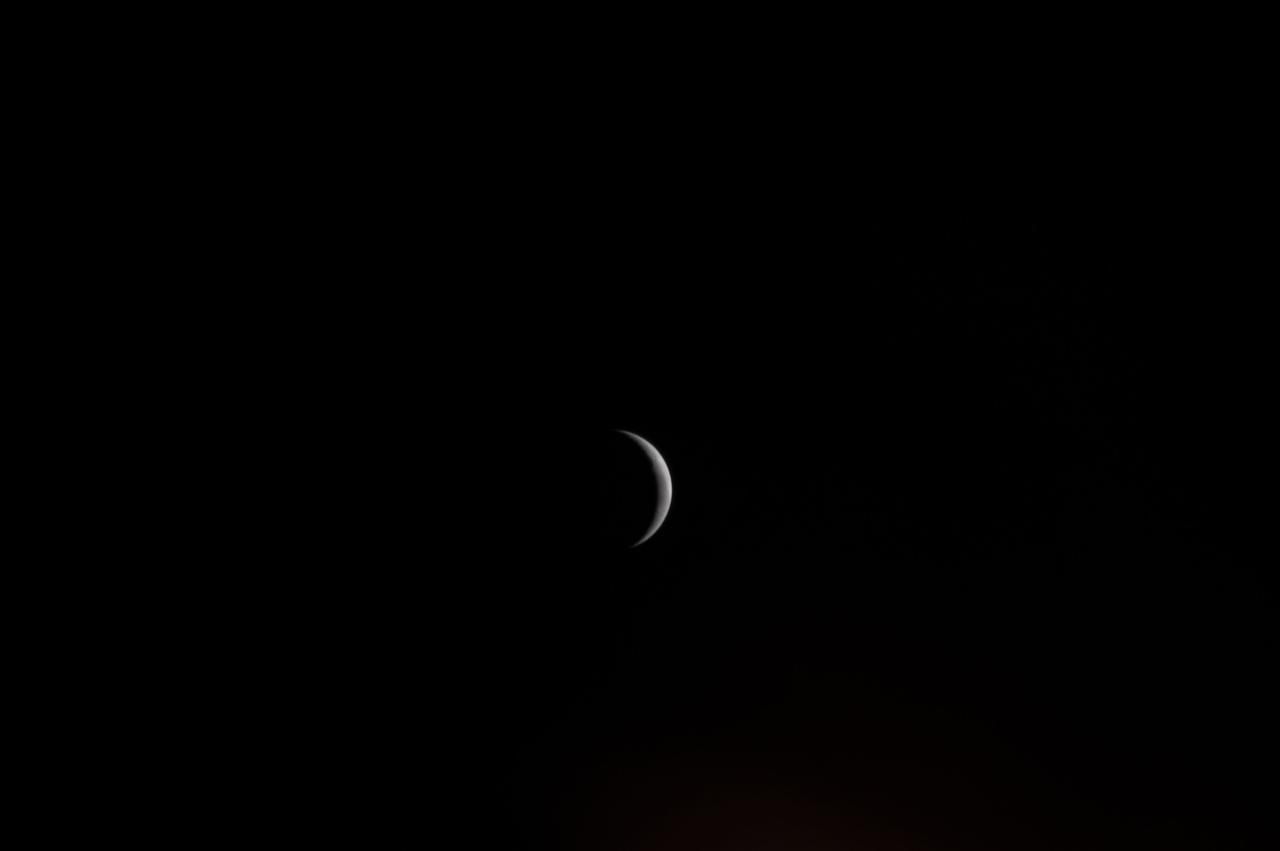
ISS036-E-006147 (4 June 2013) --- One of the Expoedition 36 crew members aboard the International Space Station captured an image of a crescent moon on June 4, 2013.
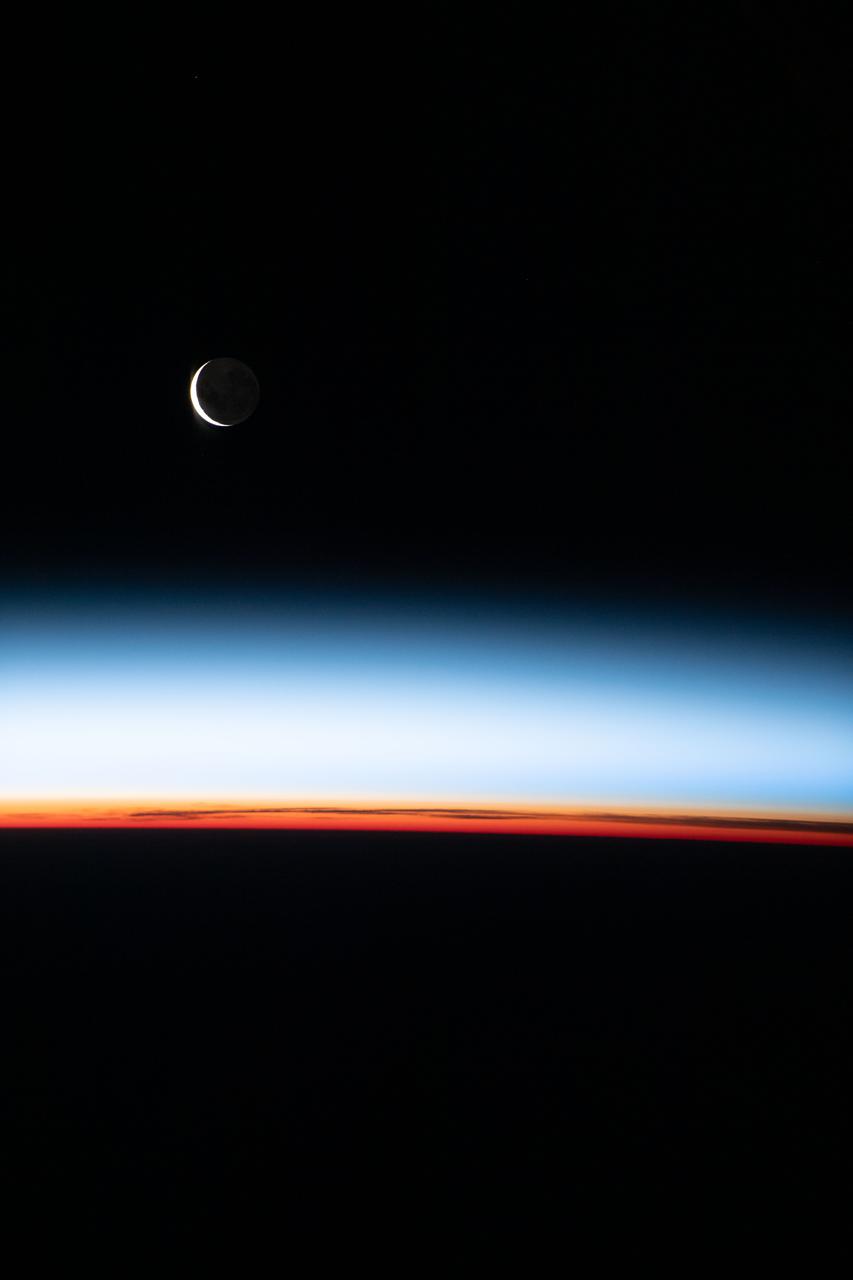
iss066e086973 (Dec. 6, 2021) --- A waxing crescent Moon is pictured from the International Space Station during an orbital sunset as it flew 268 miles above the Pacific Ocean east of New Zealand.
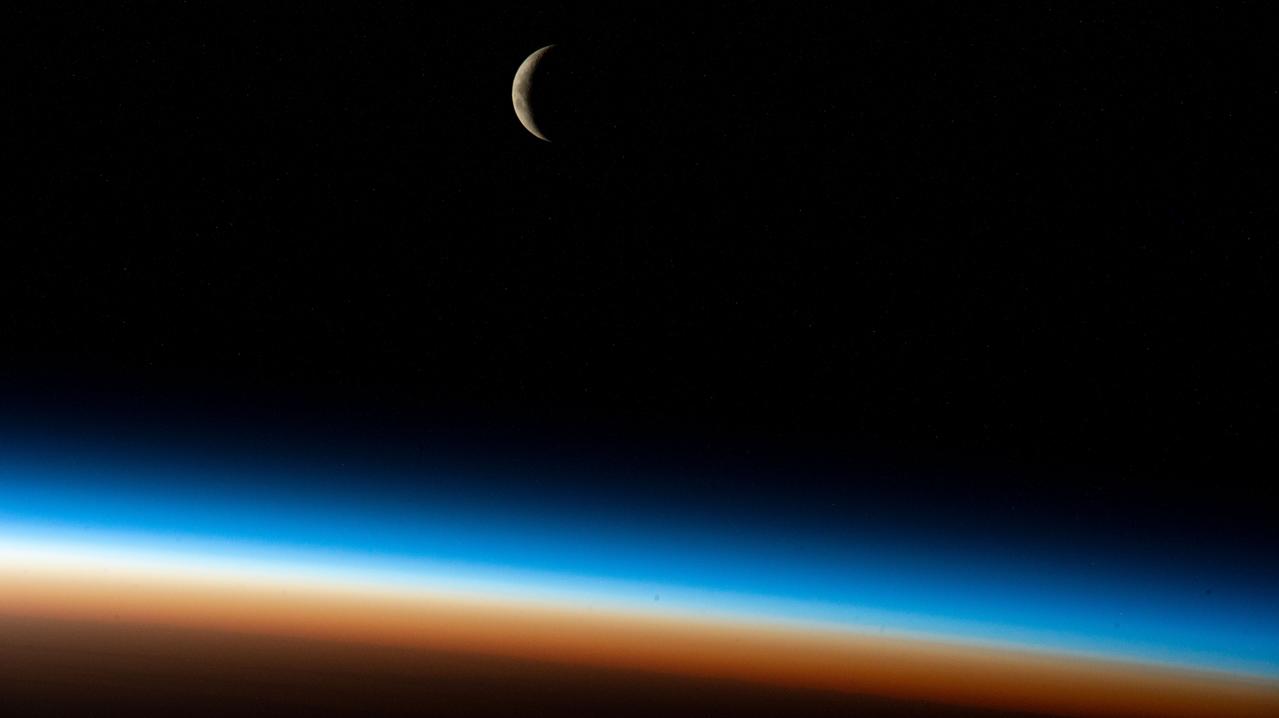
iss068e004256 (Sept. 30, 2022) --- The waxing crescent Moon is pictured from the International Space Station as it orbited 267 miles above the Atlantic Ocean southwest of South Africa during an orbital sunrise.
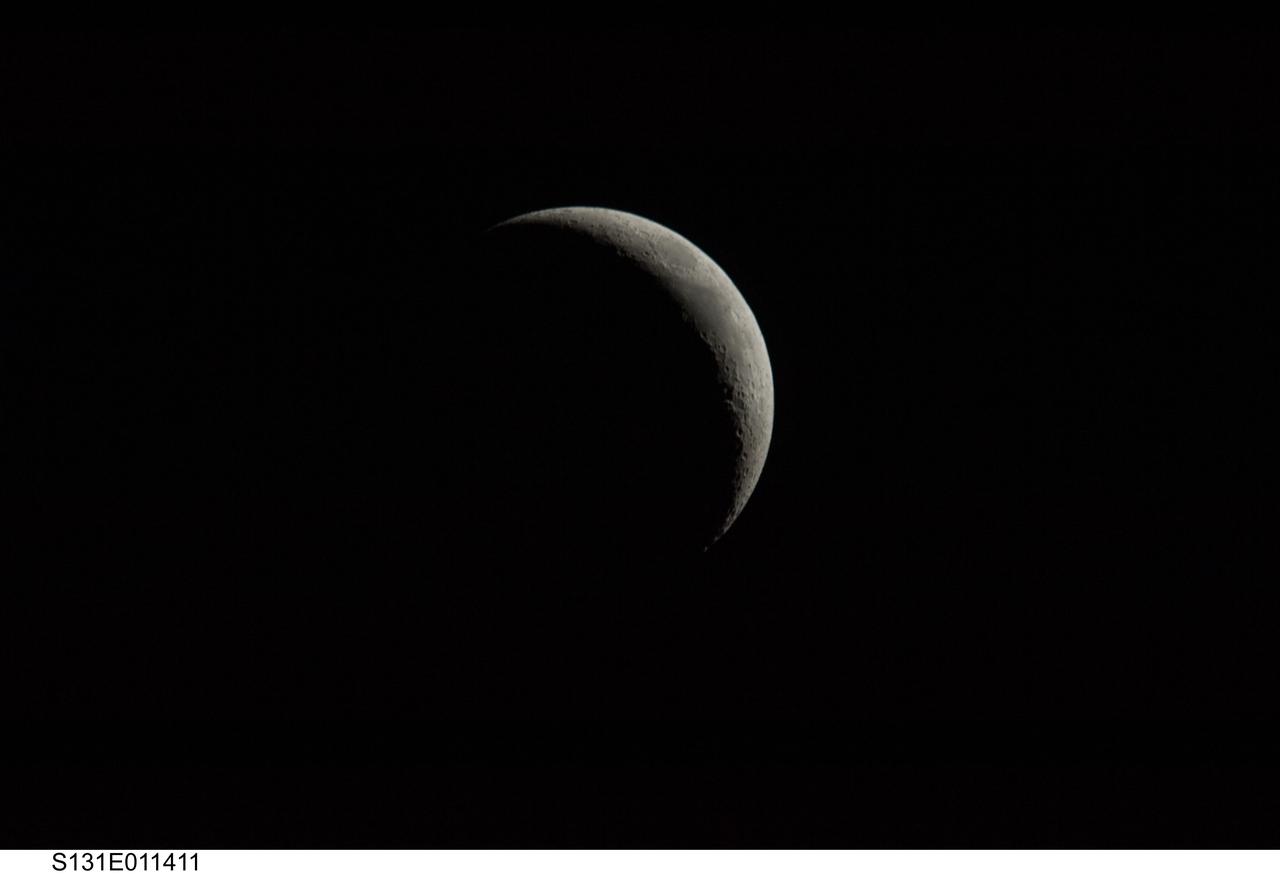
S131-E-011411 (18 April 2010) --- A crescent last quarter moon is featured in this image photographed by an STS-131 crew member on the Earth-orbiting space shuttle Discovery.
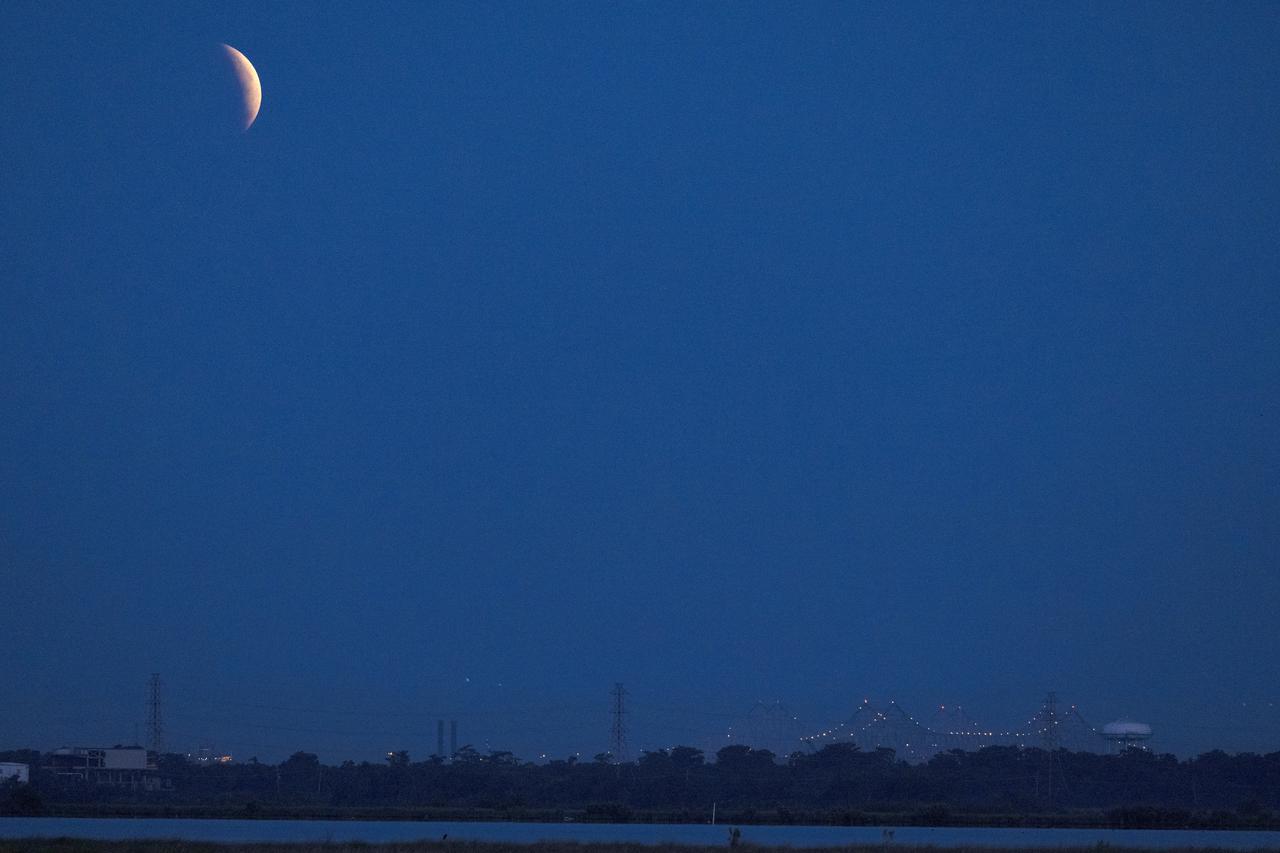
The eclipse of the Super Flower Blood Moon over Bayou Bienvenue with the New Orleans Crescent City Connection in the distance early Wednesday morning, May 26, 2021. Image credit: NASA/Michael DeMocker
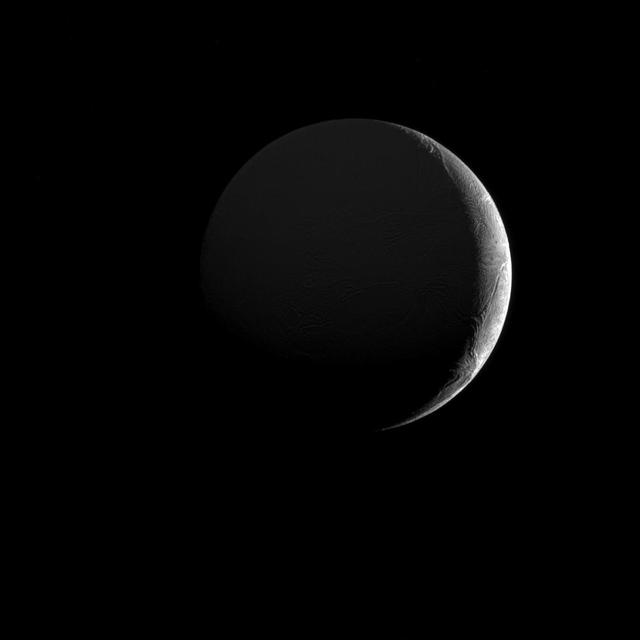
The low angle of sunlight along the slim crescent of Saturn's moon Enceladus (313 miles or 504 kilometers across) highlights the many fractures and furrows on its icy surface. This view looks toward the Saturn-facing hemisphere of Enceladus, which is dimly illuminated in the image above by sunlight reflected off Saturn. North on Enceladus is up and rotated 14 degrees to the left. The image was taken in visible light with NASA's Cassini spacecraft narrow-angle camera on Dec. 26, 2016. The view was obtained at a distance of approximately 104,000 miles (168,000 kilometers) from Enceladus. Image scale is 3,303 feet (1 kilometer) per pixel. https://photojournal.jpl.nasa.gov/catalog/PIA21330

art002e020922 (April 6, 2026) – As the Artemis II crew came close to passing behind the Moon and experiencing a planned loss of signal, they captured this image of a crescent Earth. Seen from afar, it almost looks like a circular arc – except when backlit, as in other images captured by the Artemis II crew. Earth is in a crescent phase, with sunlight coming from the right. The dark portion of Earth is experiencing nighttime. Credit: NASA
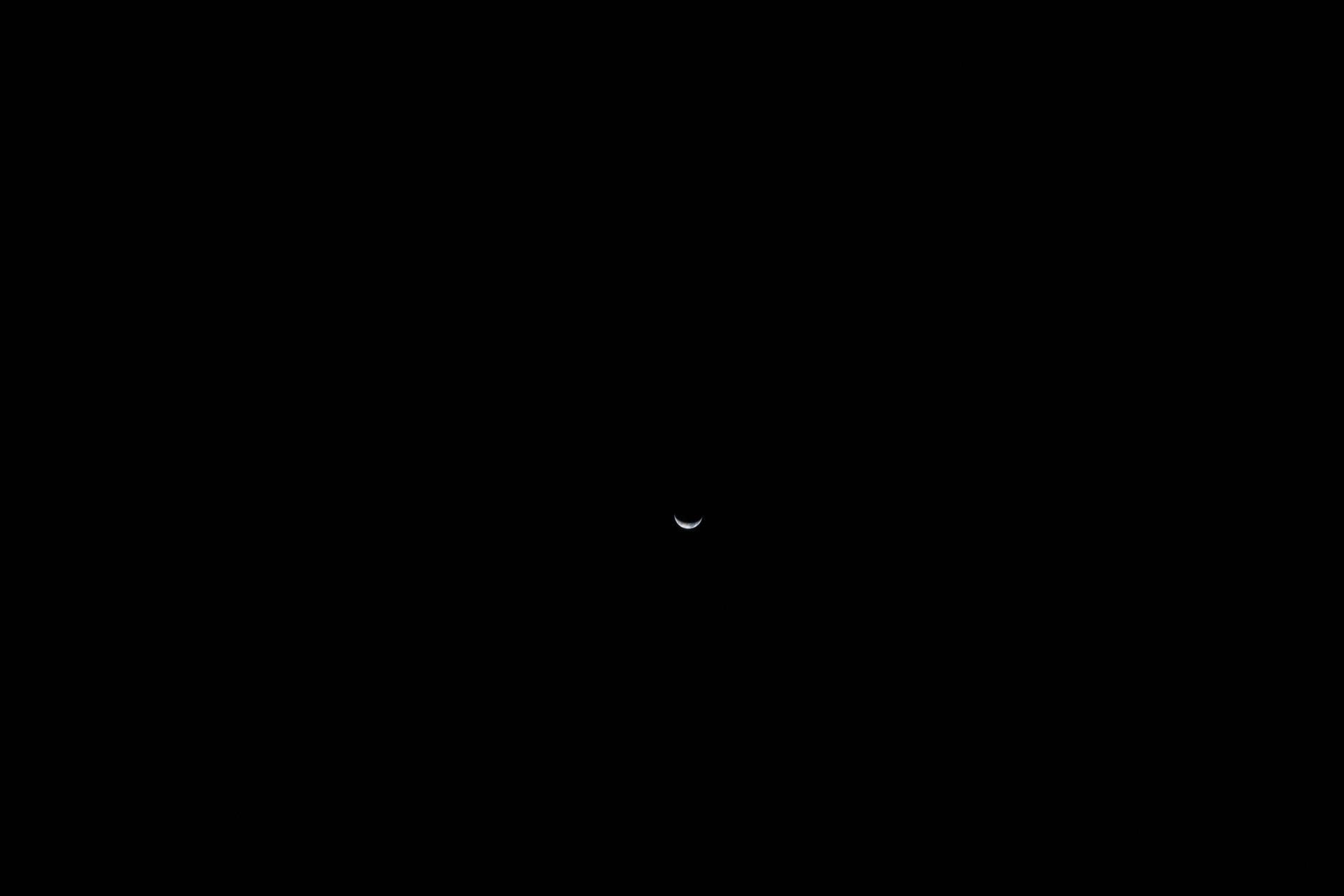
art002e014225 (April 6, 2026) – Seen from afar, Earth appears as a small, delicate waning crescent suspended in the darkness of space, captured by the crew during the Artemis II mission. Only a thin sliver of the planet is illuminated, resembling the familiar crescent phases often seen when observing the Moon from Earth. Despite its distance, faint hints of Earth’s blue tones and cloud patterns are visible, offering a striking perspective of our home planet from deep space.
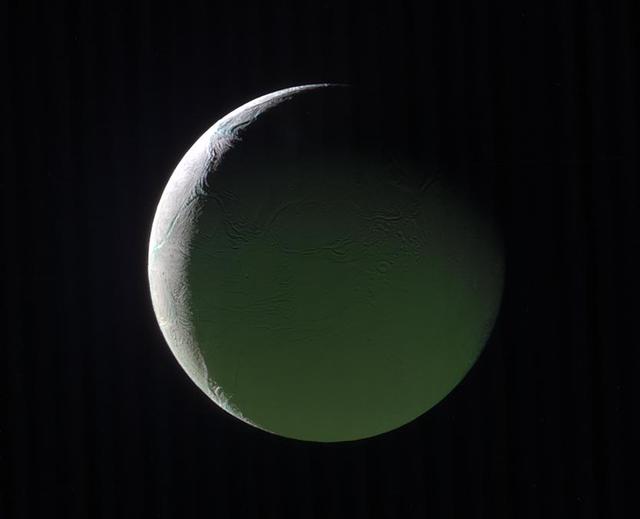
The brightly lit limb of a crescent Enceladus looks ethereal against the blackness of space. The rest of the moon, lit by light reflected from Saturn, presents a ghostly appearance. Enceladus (313 miles or 504 kilometers across) is back-lit in this image, as is apparent by the thin crescent. However, the Sun-Enceladus-spacecraft (or phase) angle, at 141 degrees, is too low to make the moon's famous plumes easily visible. This view looks toward the Saturn-facing hemisphere of Enceladus. North on Enceladus is up. The above image is a composite of images taken with the Cassini spacecraft narrow-angle camera on March 29, 2017 using filters that allow infrared, green, and ultraviolet light. The image filter centered on 930 nm (IR) was is red in this image, the image filter centered on the green is green, and the image filter centered on 338 nm (UV) is blue. The view was obtained at a distance of approximately 110,000 miles (180,000 kilometers) from Enceladus. Image scale is 0.6 miles (1 kilometer) per pixel. The Cassini spacecraft ended its mission on Sept. 15, 2017. https://photojournal.jpl.nasa.gov/catalog/PIA21346
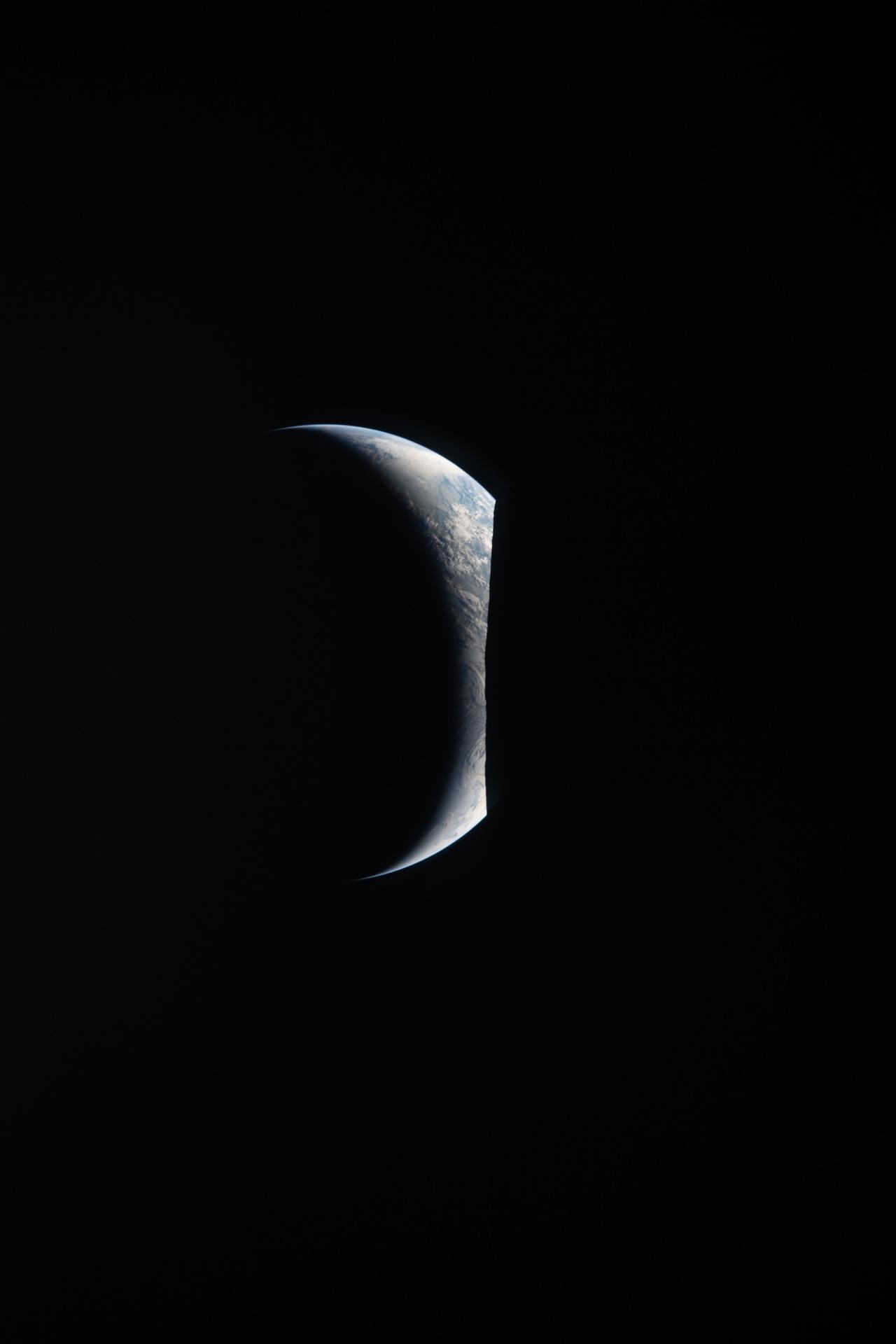
art002e009280 (April 6, 2026) – Earthrise captured through the Orion spacecraft window at 7:22 p.m. ET during the Artemis II crew’s flyby of the Moon’s far side. Earth appears as a delicate crescent, with only its right edge illuminated. The planet’s soft blue hue and scattered white cloud systems stand out on the right against the blackness of space, while the left side fades into night. Taken with a 400 mm lens, the image, Earthrise, reveals a striking alignment of Earth and Moon. In the foreground on the right, a portion of the Moon in night is barely visible save for its edge, which stands out in stark contrast against the illuminated side of Earth on the left. Zooming in along the Moon’s edge reveals rugged terrain silhouetted against the bright crescent Earth. This photo was rotated 90 degrees clockwise from the original for standard viewing orientation.
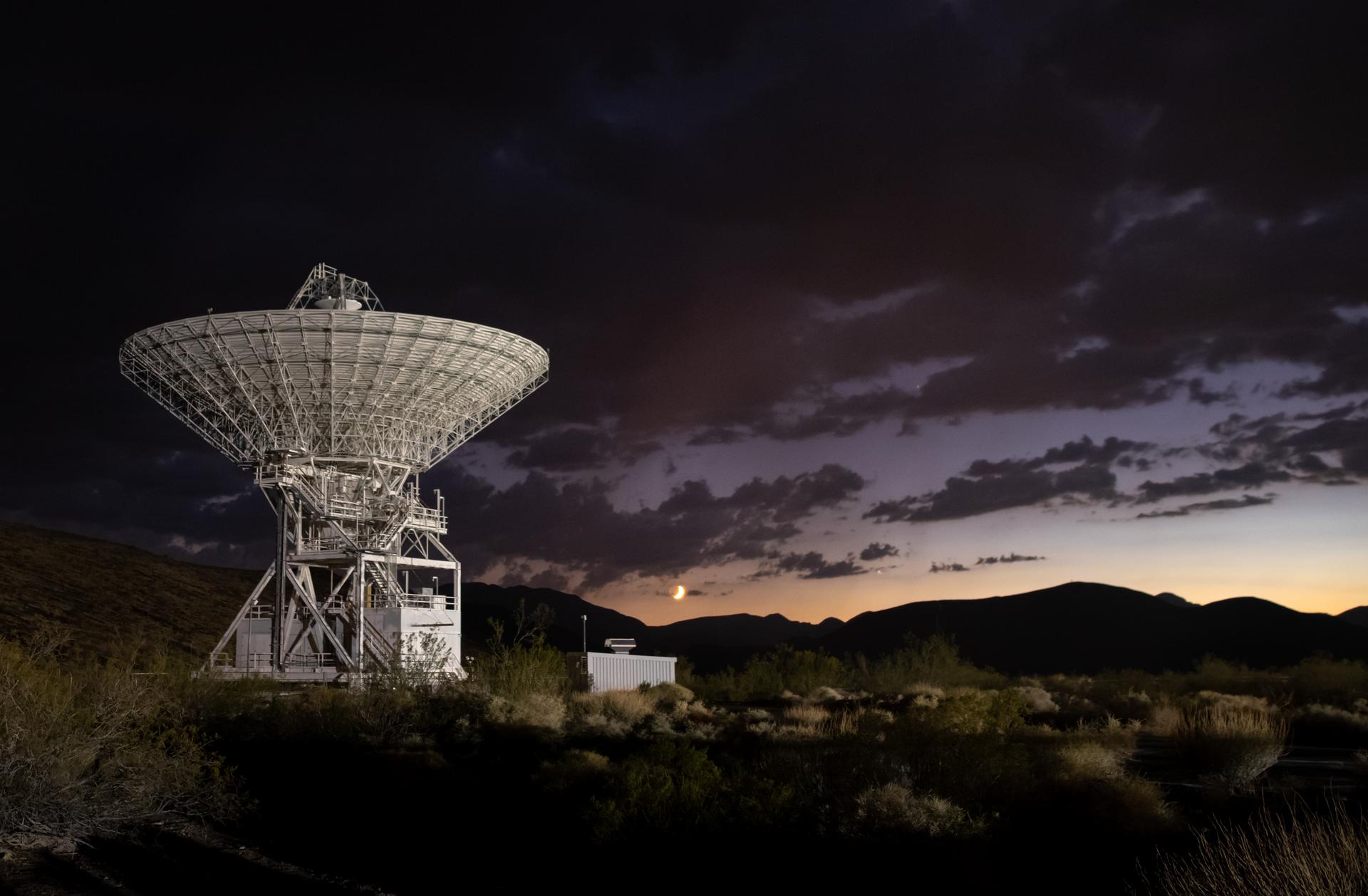
Deep Space Station 15 (DSS-15), one of the 112-foot (34-meter) antennas at the Goldstone Deep Space Communications Complex near Barstow, California, is seen at sunset in September 2025. The crescent Moon hangs just above the horizon. Goldstone is part of NASA’s Deep Space Network (DSN), which operates three complexes around the globe that support communications with dozens of deep space missions. For more information about the DSN, visit: https://www.nasa.gov/communicating-with-missions/dsn/
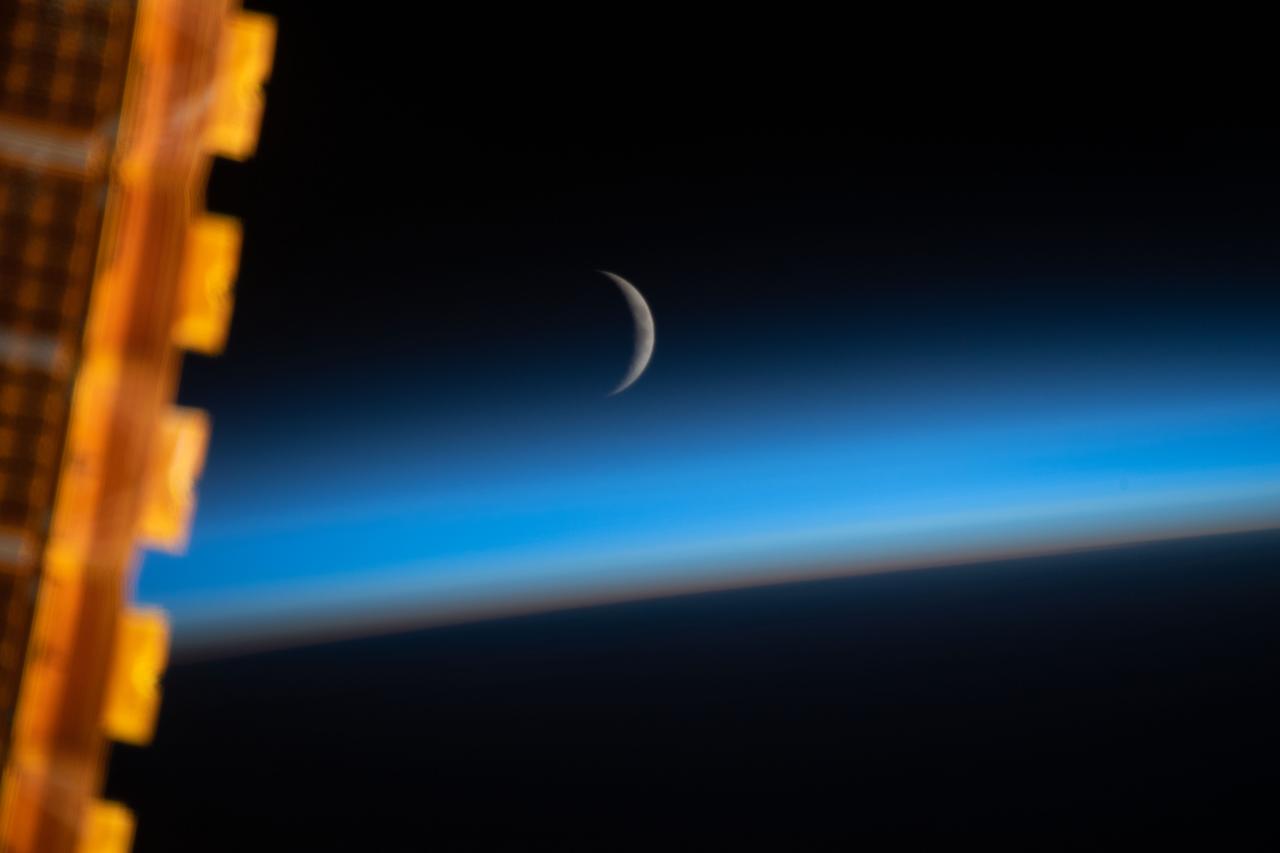
iss059e059210 (May 8, 2019) --- The waxing crescent moon is photographed just above Earth's limb and the bluish hue of the atmosphere at the beginning of an orbital sunrise. A portion of one of the International Space Station's solar arrays is seen in the left foreground as the orbital complex flew 258 miles above the Sea of Japan.

iss059e059211 (May 8, 2019) --- The waxing crescent moon is photographed just above Earth's limb and the bluish hue of the atmosphere at the beginning of an orbital sunrise. A portion of one of the International Space Station's solar arrays is seen in the left foreground as the orbital complex flew 258 miles above the Sea of Japan.