
jsc2025e034097 (Feb. 14, 2025) --- The Crew-11 mission patch embodies teamwork, exploration, and the deep connections that bind us—across nations, agencies, and families. Shades of white, red, and blue pay tribute to the flags of the three nations represented by the crew, while three gold stars symbolize the unity of our three space agencies working together in pursuit of discovery. .At the heart of the design, two radiant sunbeams form the number “11” illuminating a blue circle—a subtle nod to Voyager’s Pale Blue Dot image, reminding us of the fragile unity of our shared home. This vision of Earth is reflected in the dragon’s eye, reinforcing our focus on exploration and the perspective gained from space. .The dragon, evoking the heraldry of family crests, stands as a guardian of our mission and legacy. Within the stars, we honor the children of the crew, a reminder of the generations inspired by human spaceflight. Encircling it all, a red flame represents both the power of launch and the plasma of reentry, symbolizing the full journey—our departure from Earth, our work aboard the International Space Station, and our safe return home. Crew-11: Together, we rise.
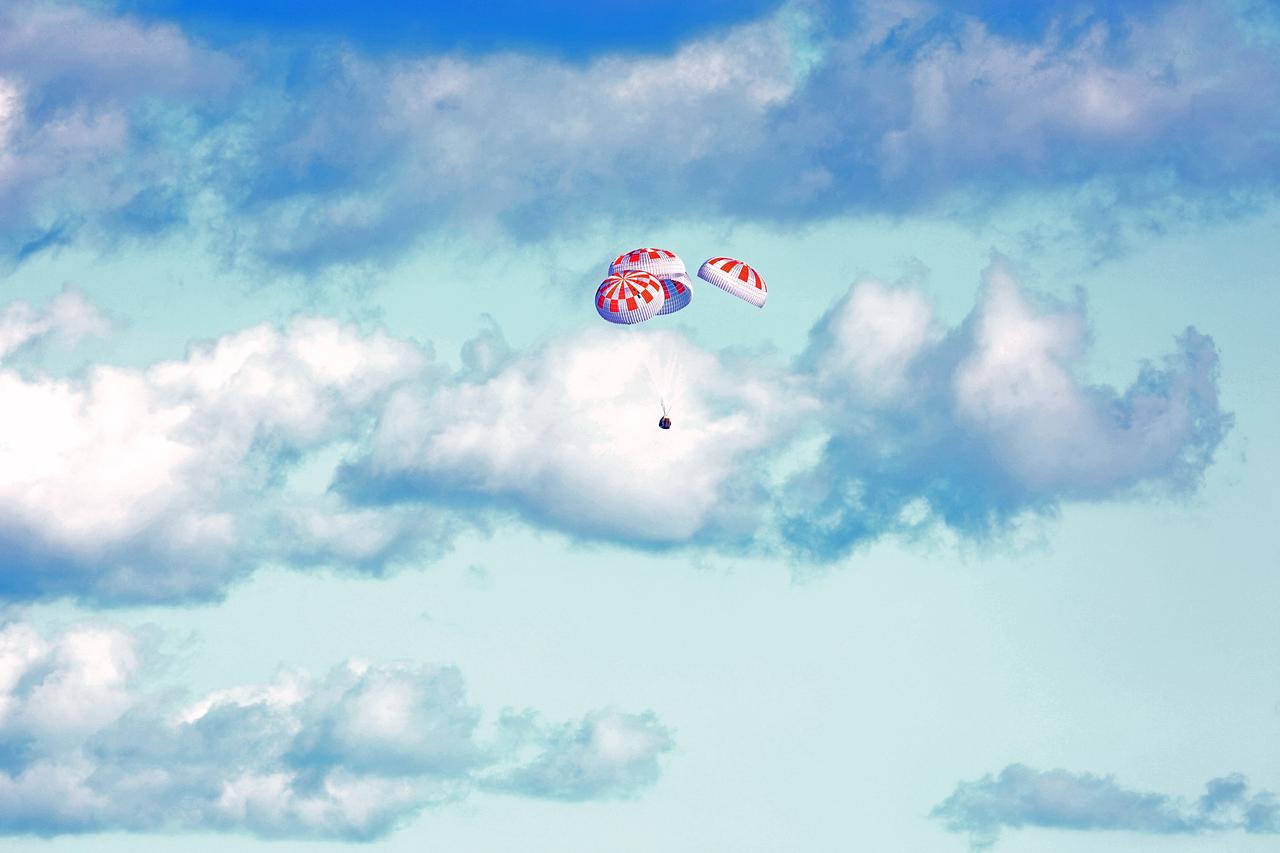
SpaceX’s Crew Dragon is guided by four parachutes toward the Atlantic Ocean on March 8 after returning from the International Space Station on the Demo-1 mission. The uncrewed spacecraft docked to the orbiting laboratory on March 3, following a 2:49 a.m. EST liftoff aboard a SpaceX Falcon 9 rocket from Launch Complex 39A at NASA’s Kennedy Space Center in Florida on March 2. Crew Dragon made 18 orbits of Earth before successfully attaching to the space station. The spacecraft undocked at 2:32 a.m., March 8, splashing down in the Atlantic Ocean, about 200 miles off Florida’s east coast at 8:45 a.m. SpaceX’s inaugural flight with NASA’s Commercial Crew Program is the first flight test of a space system designed for humans built and operated by a commercial company through a public-private partnership. NASA and SpaceX will use data from Demo-1 to further prepare for Demo-2, the crewed flight test that will carry NASA astronauts Bob Behnken and Doug Hurley to the International Space Station later this year.
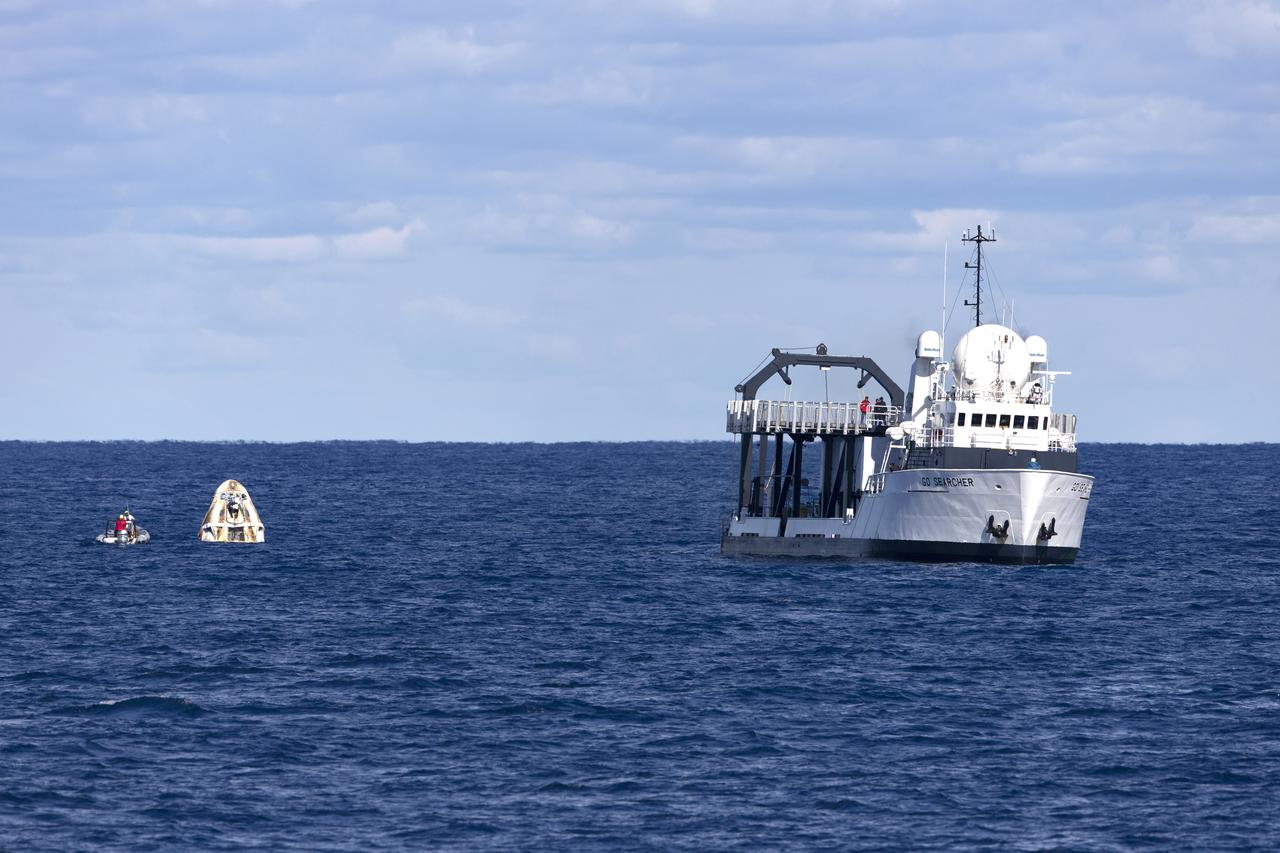
SpaceX’s recovery ship, Go Searcher, prepares to retrieve the company’s Crew Dragon from the Atlantic Ocean, about 200 miles off the east coast of Florida, March 8, 2019. The uncrewed spacecraft docked to the orbiting laboratory on March 3, following a 2:49 a.m. EST liftoff aboard a SpaceX Falcon 9 rocket from Launch Complex 39A at NASA’s Kennedy Space Center in Florida on March 2. The spacecraft undocked at 2:32 a.m., March 8, splashing down in the Atlantic Ocean at 8:45 a.m. SpaceX’s inaugural flight with NASA’s Commercial Crew Program, known as Demo-1, is the first flight test of a space system designed for humans built and operated by a commercial company through a public-private partnership. NASA and SpaceX will use data from Demo-1 to further prepare for Demo-2, the crewed flight test that will carry NASA astronauts Bob Behnken and Doug Hurley to the International Space Station later this year.
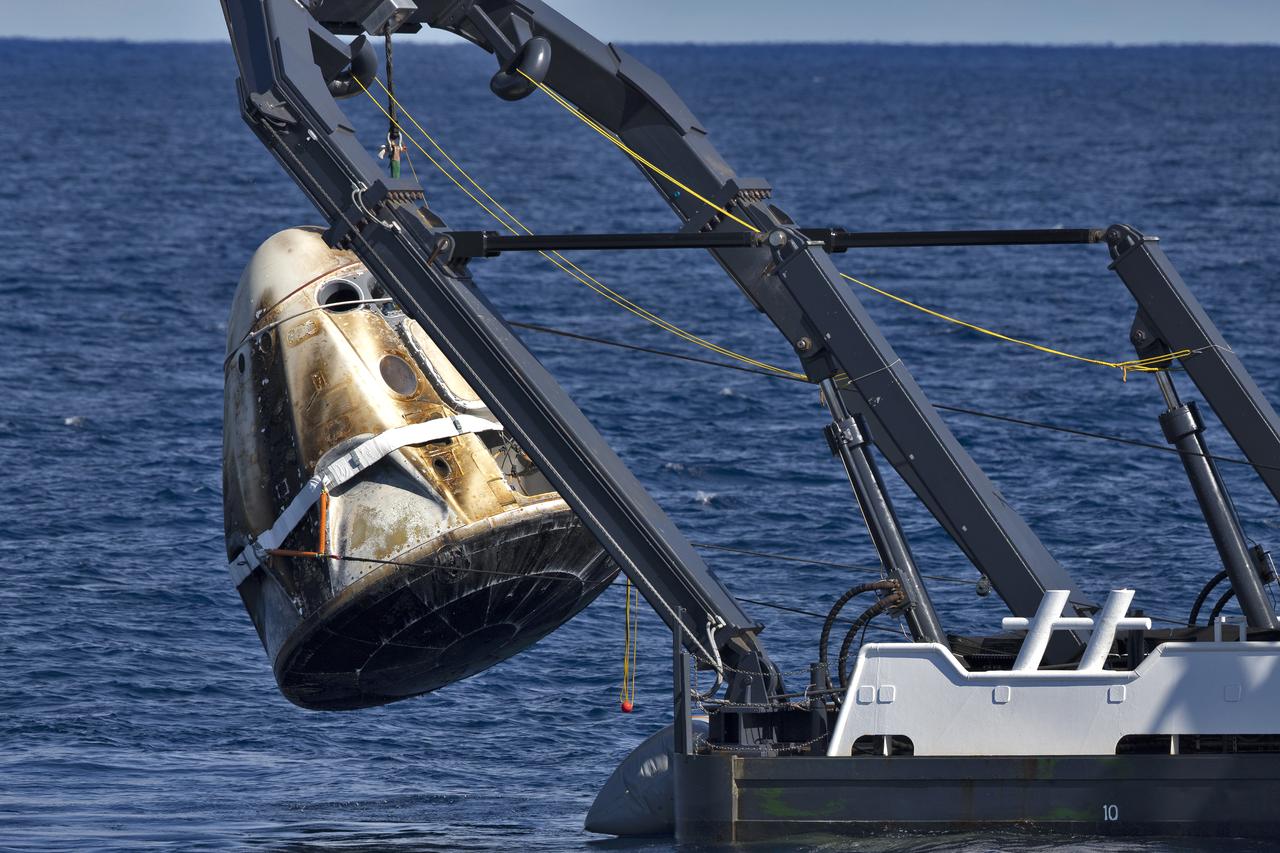
SpaceX’s Crew Dragon is retrieved by the company’s recovery ship, Go Searcher, in the Atlantic Ocean, about 200 miles off the east coast of Florida March 8, 2019, after its return to Earth on the Demo-1 mission. The uncrewed spacecraft docked to the orbiting laboratory on March 3, following a 2:49 a.m. EST liftoff aboard a SpaceX Falcon 9 rocket from Launch Complex 39A at NASA’s Kennedy Space Center in Florida on March 2. The spacecraft undocked at 2:32 a.m., March 8, splashing down in the Atlantic Ocean, at 8:45 a.m. SpaceX’s inaugural flight with NASA’s Commercial Crew Program is the first flight test of a space system designed for humans built and operated by a commercial company through a public-private partnership. NASA and SpaceX will use data from Demo-1 to further prepare for Demo-2, the crewed flight test that will carry NASA astronauts Bob Behnken and Doug Hurley to the International Space Station later this year.
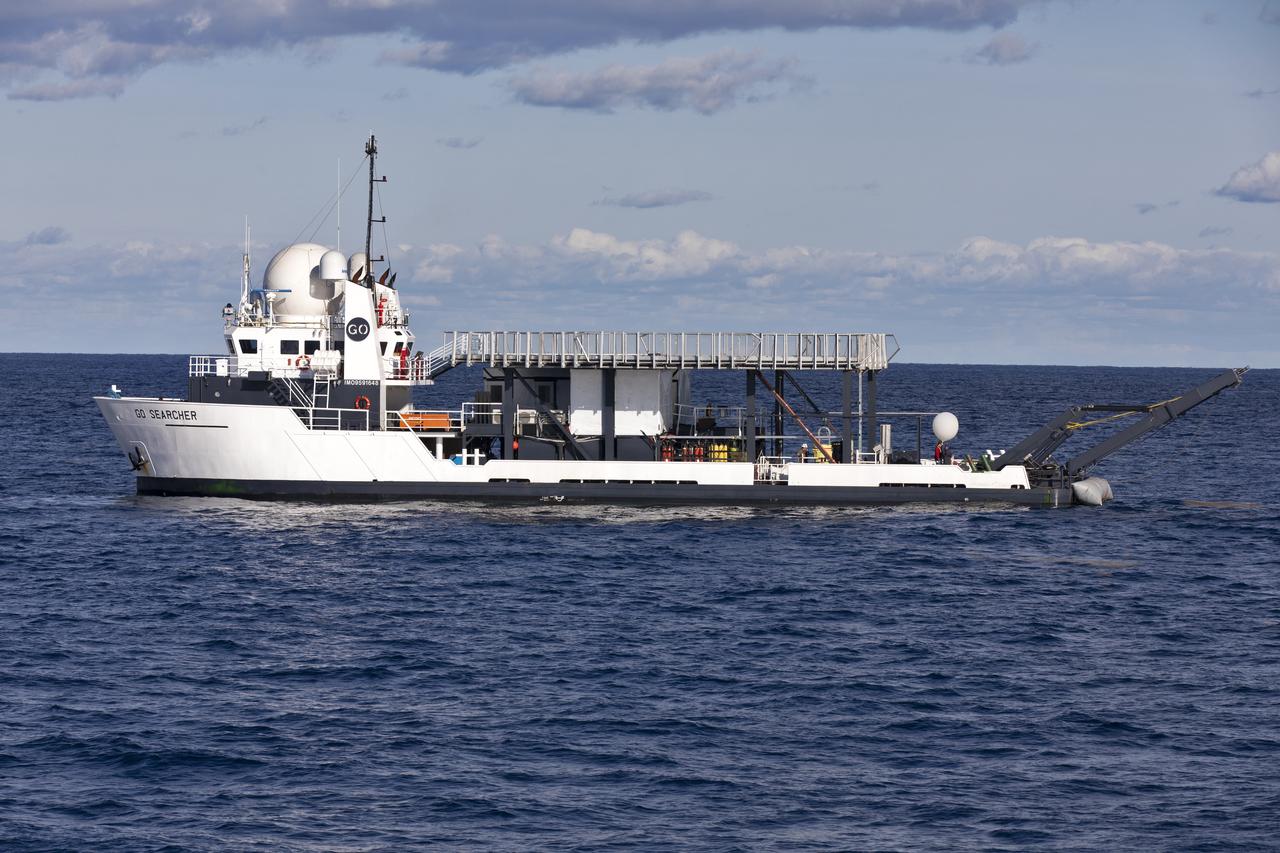
SpaceX’s recovery ship, Go Searcher, sails in the Atlantic Ocean off the east coast of Florida March 8, 2019, in preparation to retrieve the company’s Crew Dragon upon its return to Earth on the Demo-1 mission. The uncrewed spacecraft docked to the orbiting laboratory on March 3, following a 2:49 a.m. EST liftoff aboard a SpaceX Falcon 9 rocket from Launch Complex 39A at NASA’s Kennedy Space Center in Florida on March 2. The spacecraft undocked at 2:32 a.m., March 8, splashing down in the Atlantic Ocean at 8:45 a.m. SpaceX’s inaugural flight with NASA’s Commercial Crew Program is the first flight test of a space system designed for humans built and operated by a commercial company through a public-private partnership. NASA and SpaceX will use data from Demo-1 to further prepare for Demo-2, the crewed flight test that will carry NASA astronauts Bob Behnken and Doug Hurley to the International Space Station later this year.
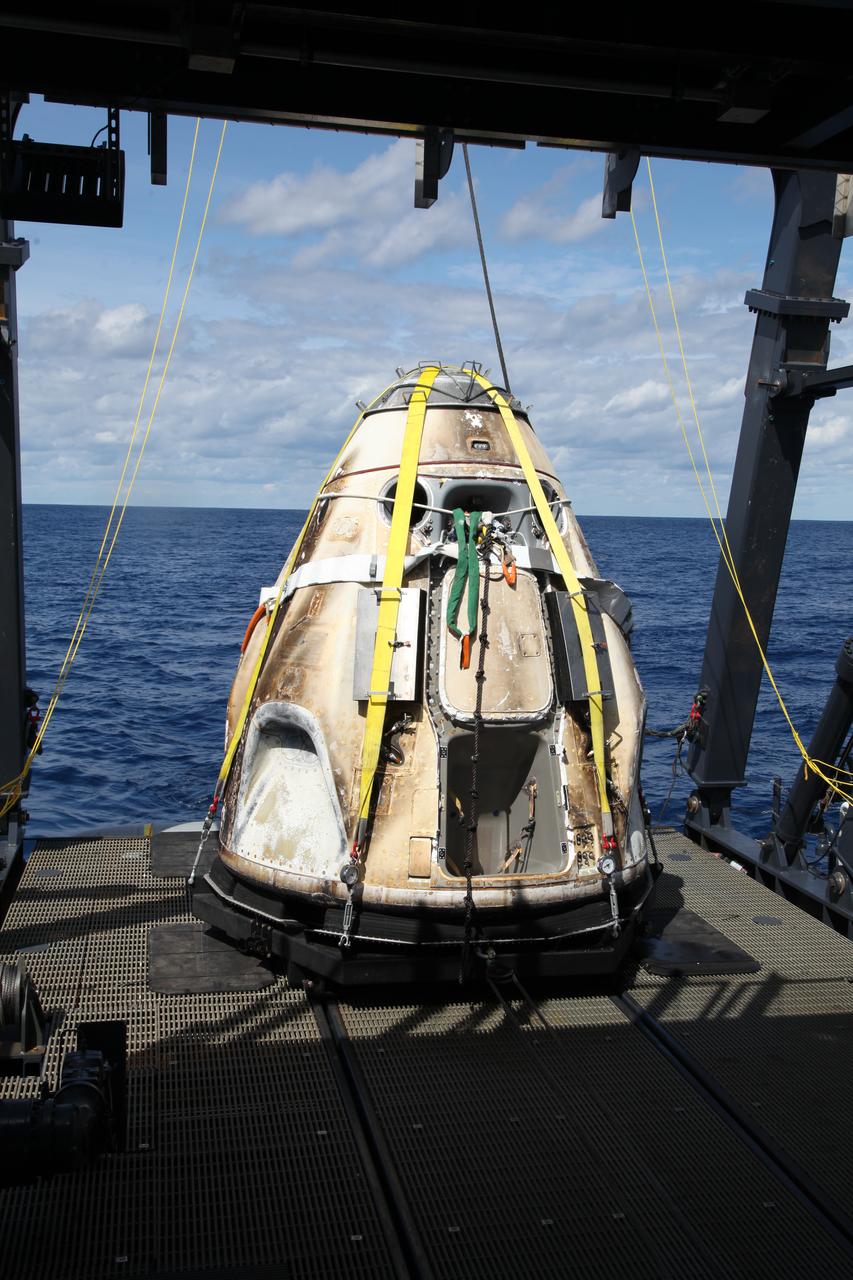
SpaceX’s Crew Dragon is loaded onto the company’s recovery ship, Go Searcher, in the Atlantic Ocean, about 200 miles off Florida’s east coast, on March 8, after returning from the International Space Station on the Demo-1 mission. The uncrewed spacecraft docked to the orbiting laboratory on March 3, following a 2:49 a.m. EST liftoff aboard a SpaceX Falcon 9 rocket from Launch Complex 39A at NASA’s Kennedy Space Center in Florida on March 2. The spacecraft undocked at 2:32 a.m., March 8, splashing down in the Atlantic Ocean, at 8:45 a.m. SpaceX’s inaugural flight with NASA’s Commercial Crew Program is the first flight test of a space system designed for humans built and operated by a commercial company through a public-private partnership. NASA and SpaceX will use data from Demo-1 to further prepare for Demo-2, the crewed flight test that will carry NASA astronauts Bob Behnken and Doug Hurley to the International Space Station later this year.
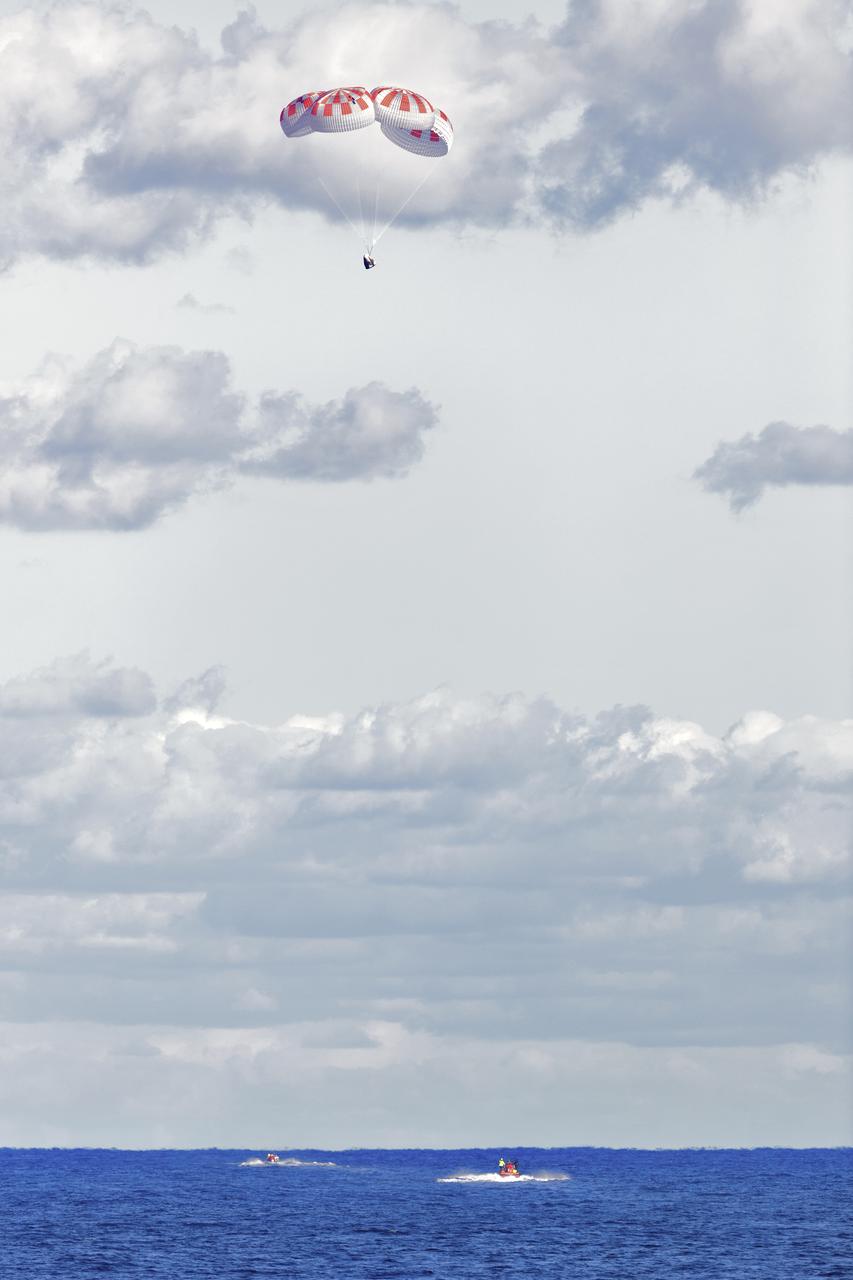
SpaceX’s Crew Dragon is guided by four parachutes toward the Atlantic Ocean on March 8, 2019, after returning from the International Space Station on the Demo-1 mission. The uncrewed spacecraft docked to the orbiting laboratory on March 3, following a 2:49 a.m. EST liftoff aboard a SpaceX Falcon 9 rocket from Launch Complex 39A at NASA’s Kennedy Space Center in Florida on March 2. Crew Dragon made 18 orbits of Earth before successfully attaching to the space station. The spacecraft undocked at 2:32 a.m., March 8, splashing down in the Atlantic Ocean, about 200 miles off Florida’s east coast at 8:45 a.m. SpaceX’s inaugural flight with NASA’s Commercial Crew Program is the first flight test of a space system designed for humans built and operated by a commercial company through a public-private partnership. NASA and SpaceX will use data from Demo-1 to further prepare for Demo-2, the crewed flight test that will carry NASA astronauts Bob Behnken and Doug Hurley to the International Space Station later this year.
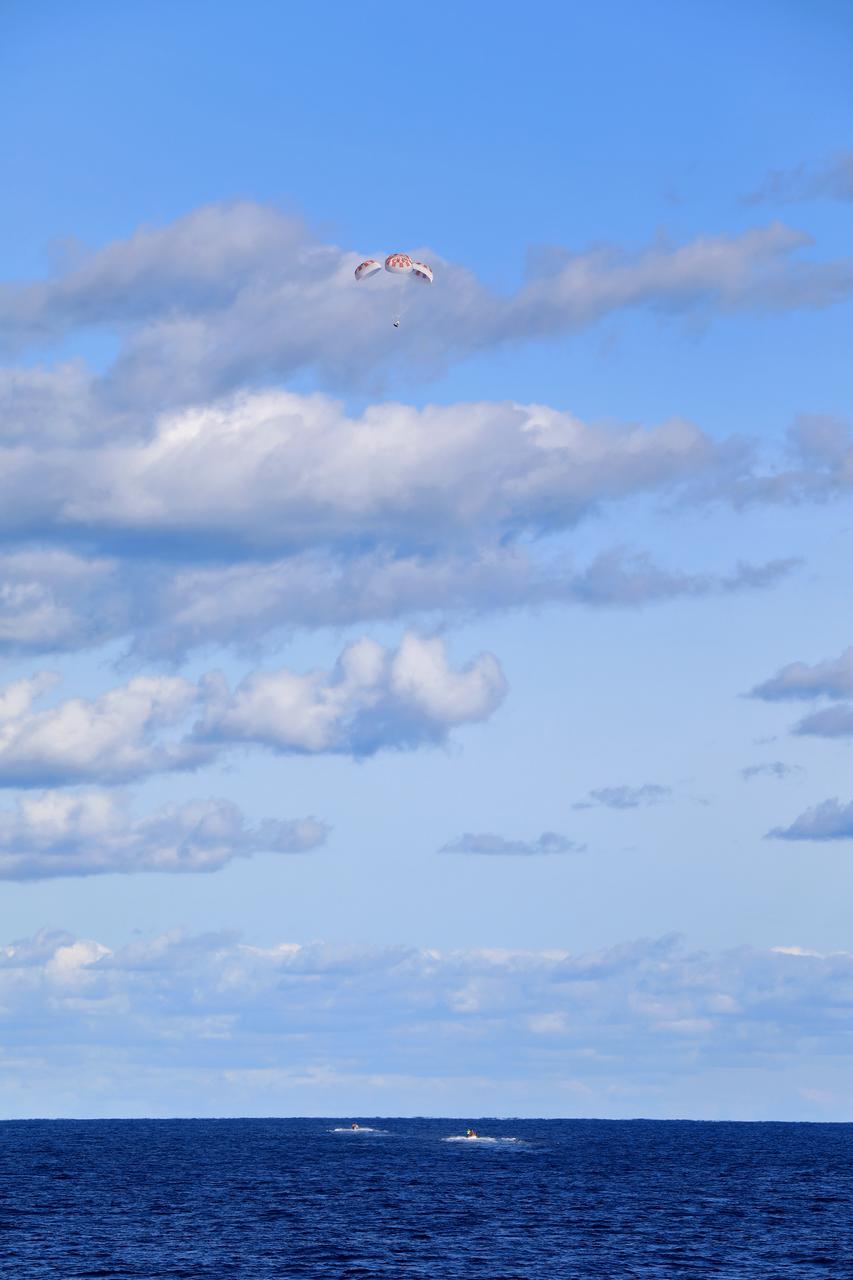
SpaceX’s Crew Dragon is guided by four parachutes toward the Atlantic Ocean on March 8 after returning from the International Space Station on the Demo-1 mission. The uncrewed spacecraft docked to the orbiting laboratory on March 3, following a 2:49 a.m. EST liftoff aboard a SpaceX Falcon 9 rocket from Launch Complex 39A at NASA’s Kennedy Space Center in Florida on March 2. Crew Dragon made 18 orbits of Earth before successfully attaching to the space station. The spacecraft undocked at 2:32 a.m., March 8, splashing down in the Atlantic Ocean, about 200 miles off Florida’s east coast at 8:45 a.m. SpaceX’s inaugural flight with NASA’s Commercial Crew Program is the first flight test of a space system designed for humans built and operated by a commercial company through a public-private partnership. NASA and SpaceX will use data from Demo-1 to further prepare for Demo-2, the crewed flight test that will carry NASA astronauts Bob Behnken and Doug Hurley to the International Space Station later this year.
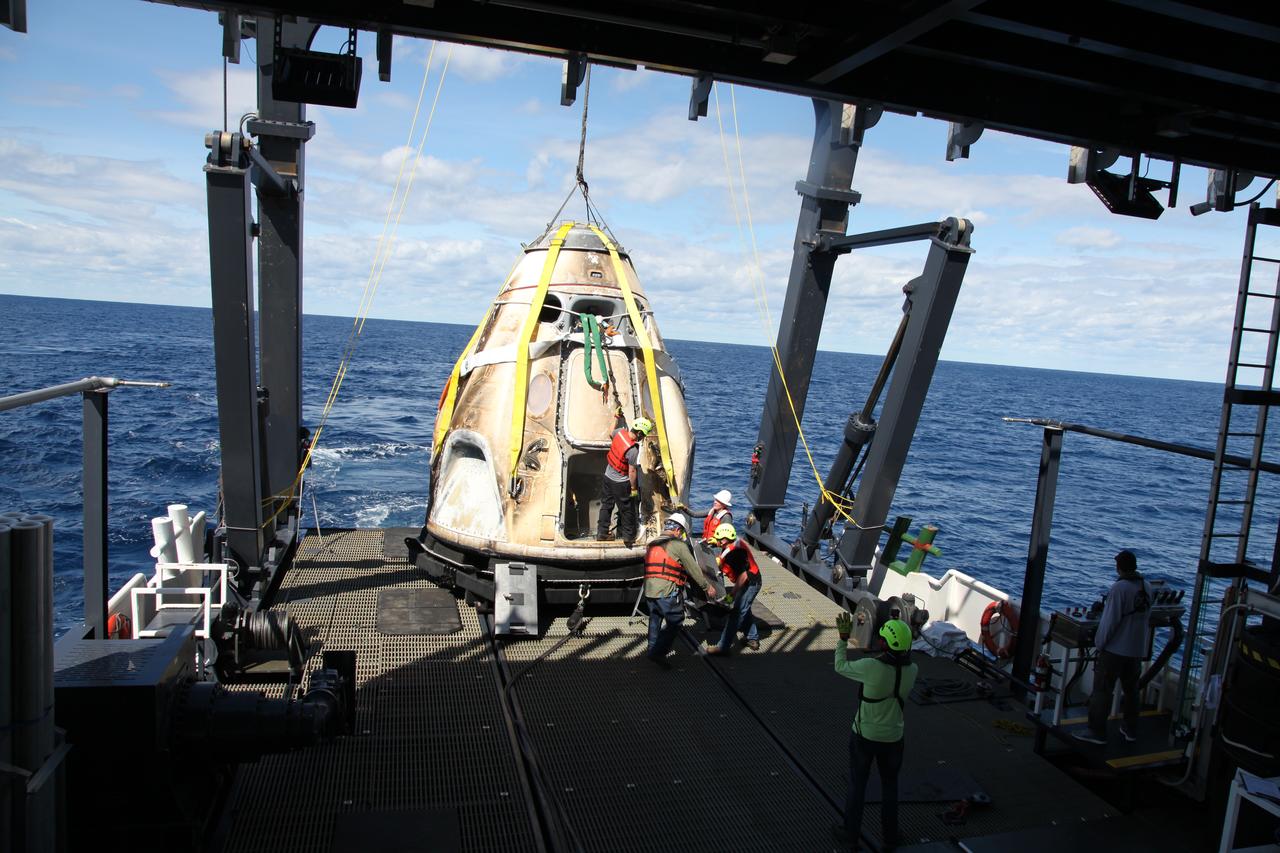
SpaceX’s Crew Dragon is loaded onto the company’s recovery ship, Go Searcher, in the Atlantic Ocean, about 200 miles off Florida’s east coast, on March 8, after returning from the International Space Station on the Demo-1 mission. The uncrewed spacecraft docked to the orbiting laboratory on March 3, following a 2:49 a.m. EST liftoff aboard a SpaceX Falcon 9 rocket from Launch Complex 39A at NASA’s Kennedy Space Center in Florida on March 2. The spacecraft undocked at 2:32 a.m., March 8, splashing down in the Atlantic Ocean, at 8:45 a.m. SpaceX’s inaugural flight with NASA’s Commercial Crew Program is the first flight test of a space system designed for humans built and operated by a commercial company through a public-private partnership. NASA and SpaceX will use data from Demo-1 to further prepare for Demo-2, the crewed flight test that will carry NASA astronauts Bob Behnken and Doug Hurley to the International Space Station later this year.
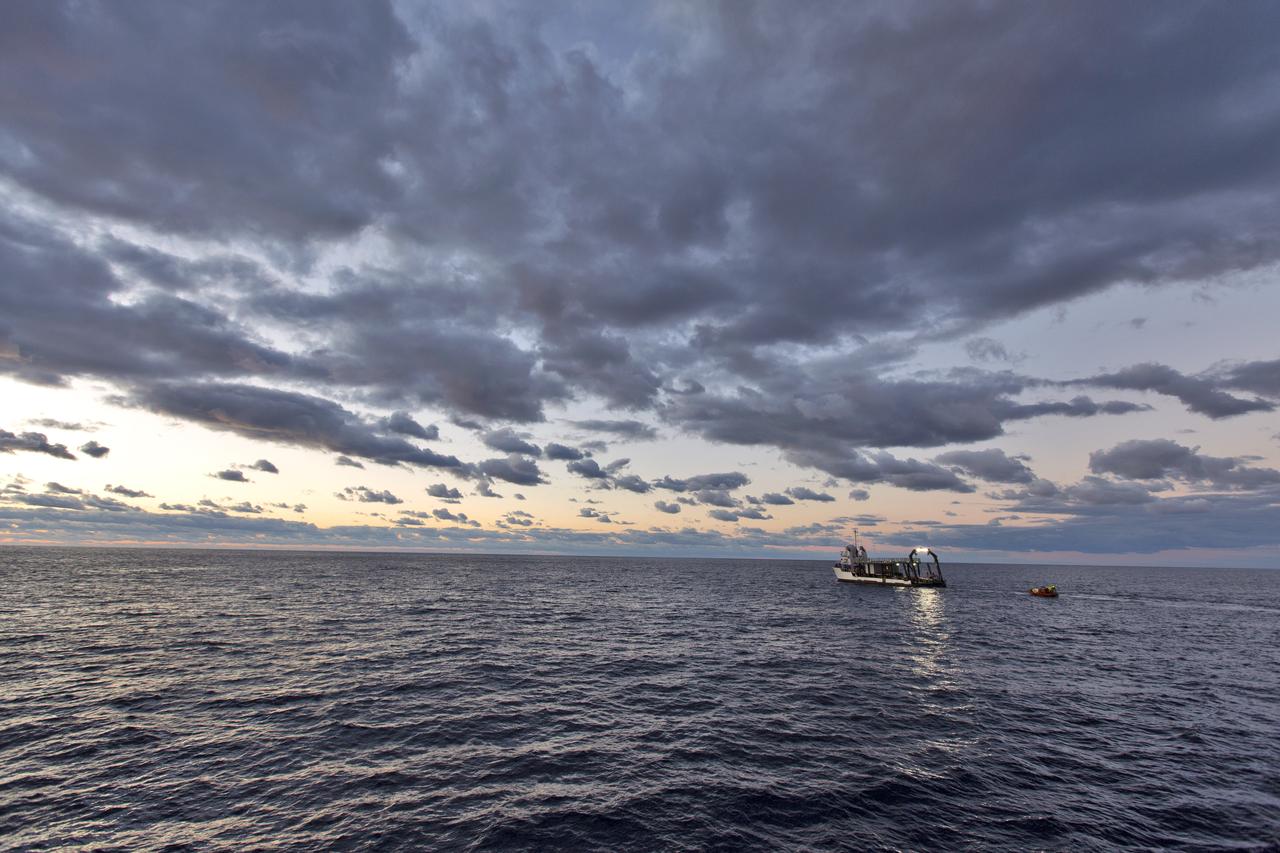
SpaceX’s recovery ship, Go Searcher, sails in the Atlantic Ocean off the east coast of Florida March 8, 2019, in preparation to retrieve the company’s Crew Dragon upon its return to Earth on the Demo-1 mission. The uncrewed spacecraft docked to the orbiting laboratory on March 3, following a 2:49 a.m. EST liftoff aboard a SpaceX Falcon 9 rocket from Launch Complex 39A at NASA’s Kennedy Space Center in Florida on March 2. The spacecraft undocked at 2:32 a.m., March 8, splashing down in the Atlantic Ocean at 8:45 a.m. SpaceX’s inaugural flight with NASA’s Commercial Crew Program is the first flight test of a space system designed for humans built and operated by a commercial company through a public-private partnership. NASA and SpaceX will use data from Demo-1 to further prepare for Demo-2, the crewed flight test that will carry NASA astronauts Bob Behnken and Doug Hurley to the International Space Station later this year.
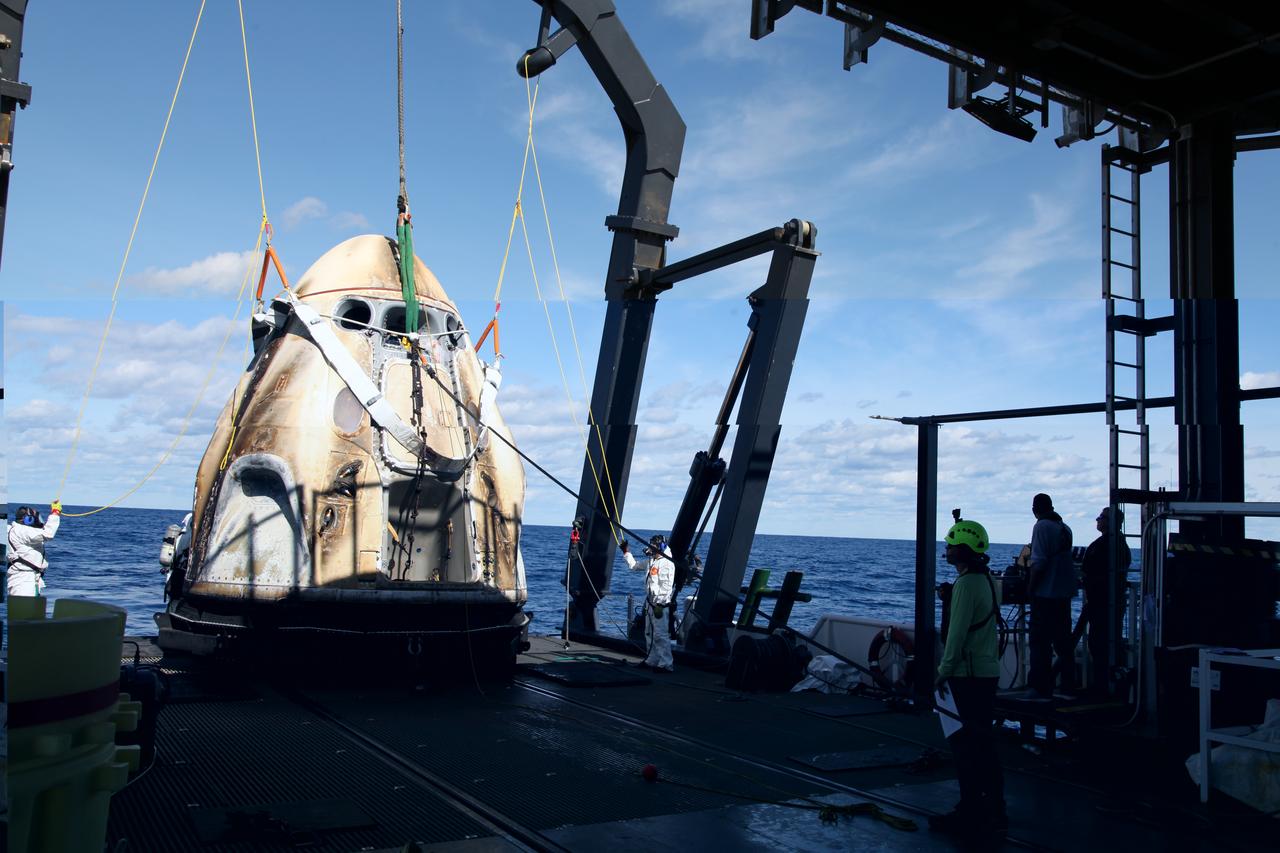
SpaceX’s Crew Dragon is loaded onto the company’s recovery ship, Go Searcher, in the Atlantic Ocean, about 200 miles off Florida’s east coast, on March 8, after returning from the International Space Station on the Demo-1 mission. The uncrewed spacecraft docked to the orbiting laboratory on March 3, following a 2:49 a.m. EST liftoff aboard a SpaceX Falcon 9 rocket from Launch Complex 39A at NASA’s Kennedy Space Center in Florida on March 2. The spacecraft undocked at 2:32 a.m., March 8, splashing down in the Atlantic Ocean, at 8:45 a.m. SpaceX’s inaugural flight with NASA’s Commercial Crew Program is the first flight test of a space system designed for humans built and operated by a commercial company through a public-private partnership. NASA and SpaceX will use data from Demo-1 to further prepare for Demo-2, the crewed flight test that will carry NASA astronauts Bob Behnken and Doug Hurley to the International Space Station later this year.
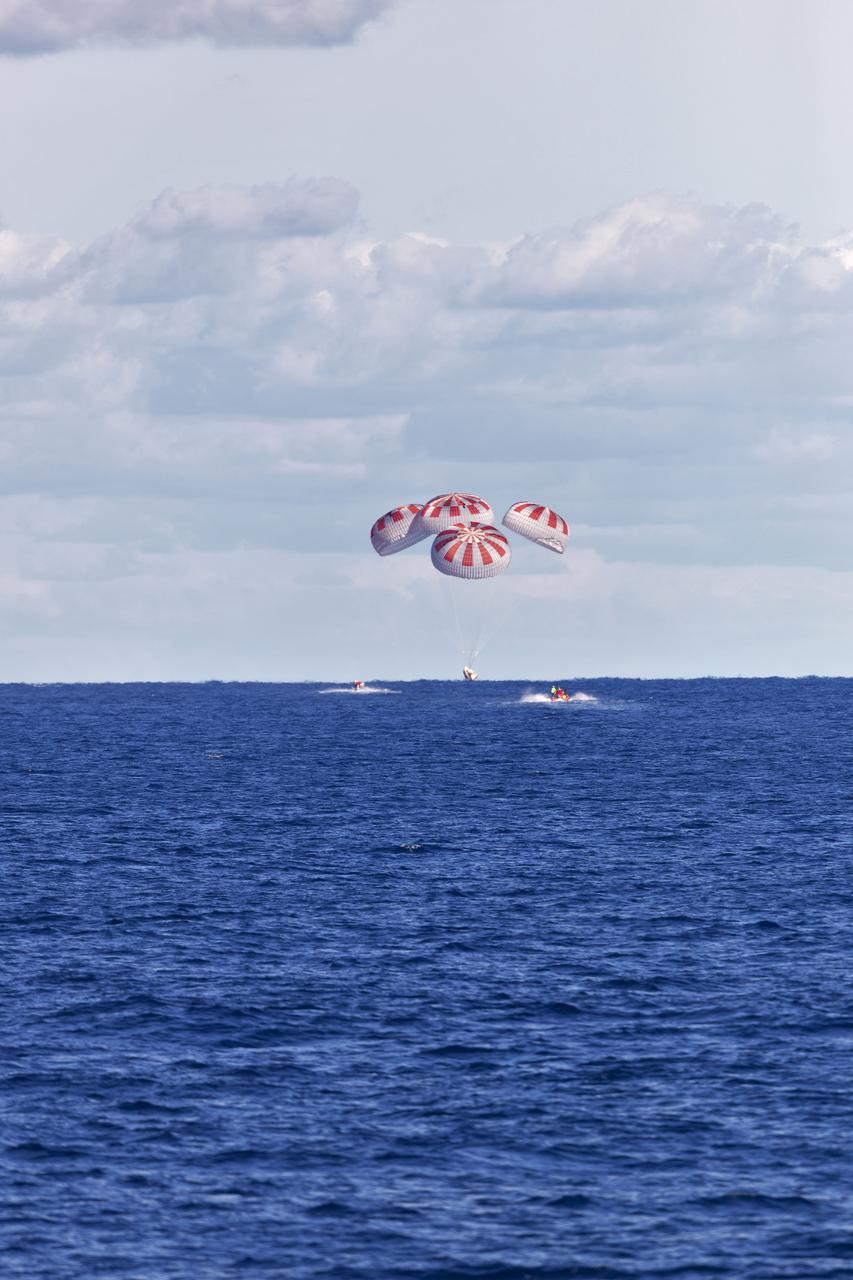
SpaceX’s Crew Dragon is guided by four parachutes as it splashes down in the Atlantic Ocean about 200 miles off Florida’s east coast on March 8, 2019, after returning from the International Space Station on the Demo-1 mission. The uncrewed spacecraft docked to the orbiting laboratory on March 3, following a 2:49 a.m. EST liftoff aboard a SpaceX Falcon 9 rocket from Launch Complex 39A at NASA’s Kennedy Space Center in Florida on March 2. Crew Dragon made 18 orbits of Earth before successfully attaching to the space station. The spacecraft undocked at 2:32 a.m., March 8, splashing down in the Atlantic Ocean at 8:45 a.m. SpaceX’s inaugural flight with NASA’s Commercial Crew Program is the first flight test of a space system designed for humans built and operated by a commercial company through a public-private partnership. NASA and SpaceX will use data from Demo-1 to further prepare for Demo-2, the crewed flight test that will carry NASA astronauts Bob Behnken and Doug Hurley to the International Space Station later this year.
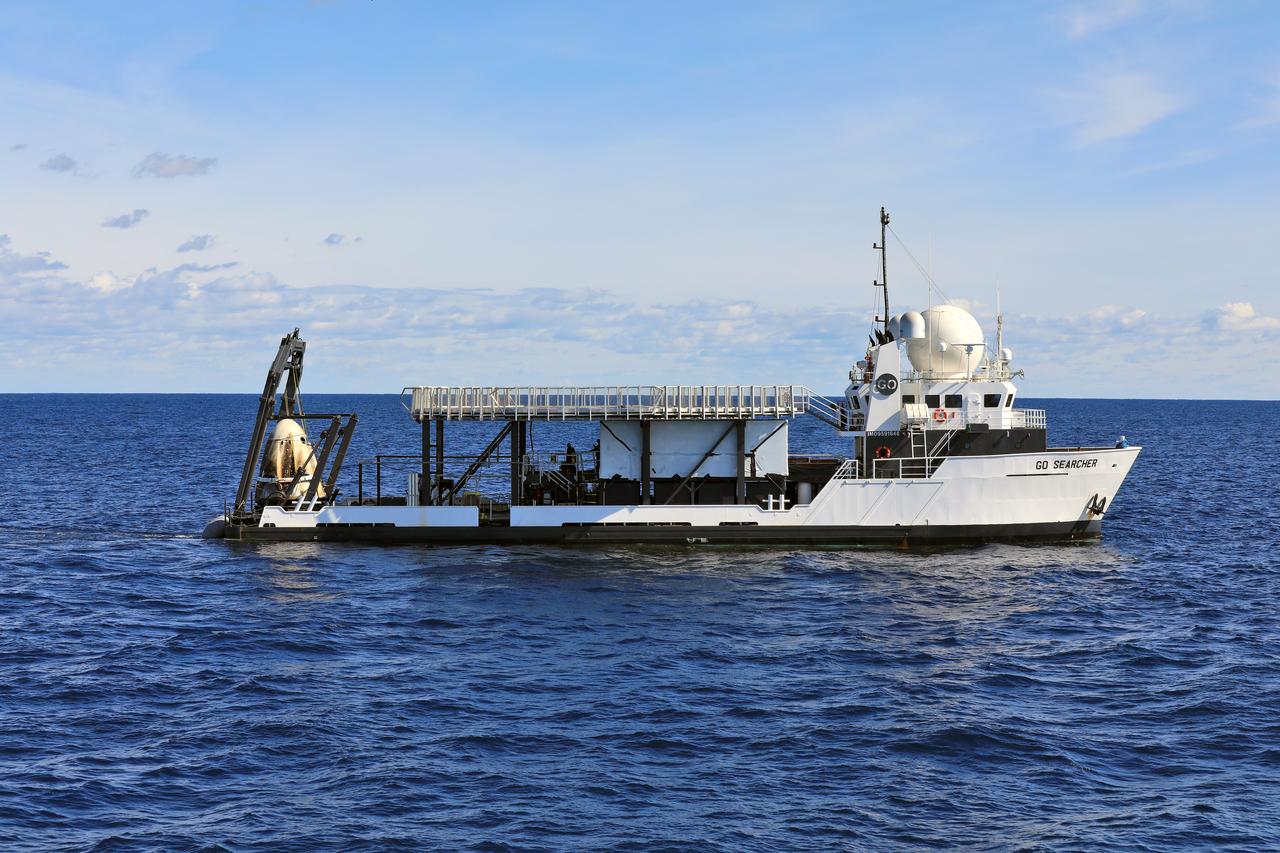
SpaceX’s Crew Dragon is carried by the company’s recovery ship, Go Searcher, in the Atlantic Ocean, about 200 miles off Florida’s east coast, on March 8, after returning from the International Space Station on the Demo-1 mission. The uncrewed spacecraft docked to the orbiting laboratory on March 3, following a 2:49 a.m. EST liftoff aboard a SpaceX Falcon 9 rocket from Launch Complex 39A at NASA’s Kennedy Space Center in Florida on March 2. Crew Dragon made 18 orbits of Earth before successfully attaching to the space station. The spacecraft undocked at 2:32 a.m., March 8, splashing down in the Atlantic Ocean, at 8:45 a.m. SpaceX’s inaugural flight with NASA’s Commercial Crew Program is the first flight test of a space system designed for humans built and operated by a commercial company through a public-private partnership. NASA and SpaceX will use data from Demo-1 to further prepare for Demo-2, the crewed flight test that will carry NASA astronauts Bob Behnken and Doug Hurley to the International Space Station later this year
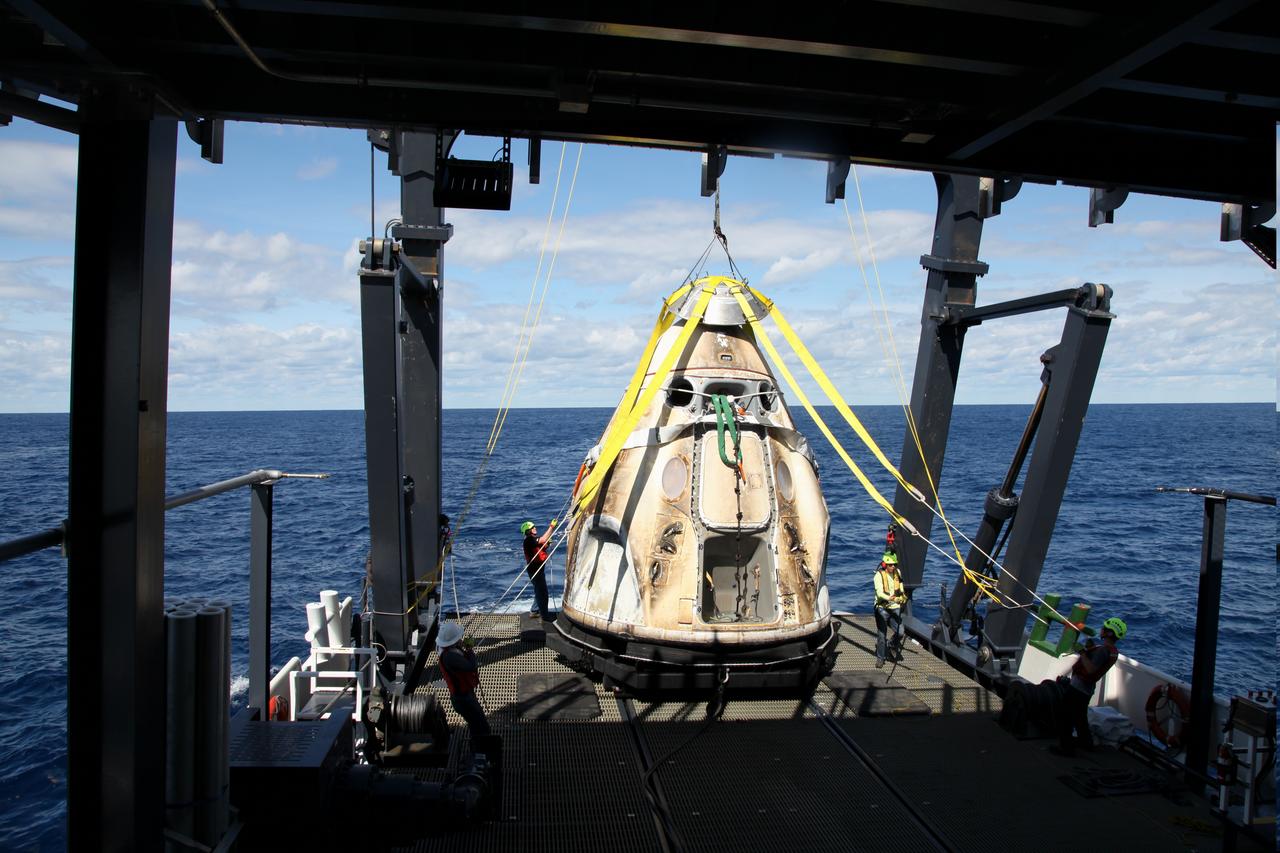
SpaceX’s Crew Dragon is loaded onto the company’s recovery ship, Go Searcher, in the Atlantic Ocean, about 200 miles off Florida’s east coast, on March 8, after returning from the International Space Station on the Demo-1 mission. The uncrewed spacecraft docked to the orbiting laboratory on March 3, following a 2:49 a.m. EST liftoff aboard a SpaceX Falcon 9 rocket from Launch Complex 39A at NASA’s Kennedy Space Center in Florida on March 2. The spacecraft undocked at 2:32 a.m., March 8, splashing down in the Atlantic Ocean, at 8:45 a.m. SpaceX’s inaugural flight with NASA’s Commercial Crew Program is the first flight test of a space system designed for humans built and operated by a commercial company through a public-private partnership. NASA and SpaceX will use data from Demo-1 to further prepare for Demo-2, the crewed flight test that will carry NASA astronauts Bob Behnken and Doug Hurley to the International Space Station later this year.
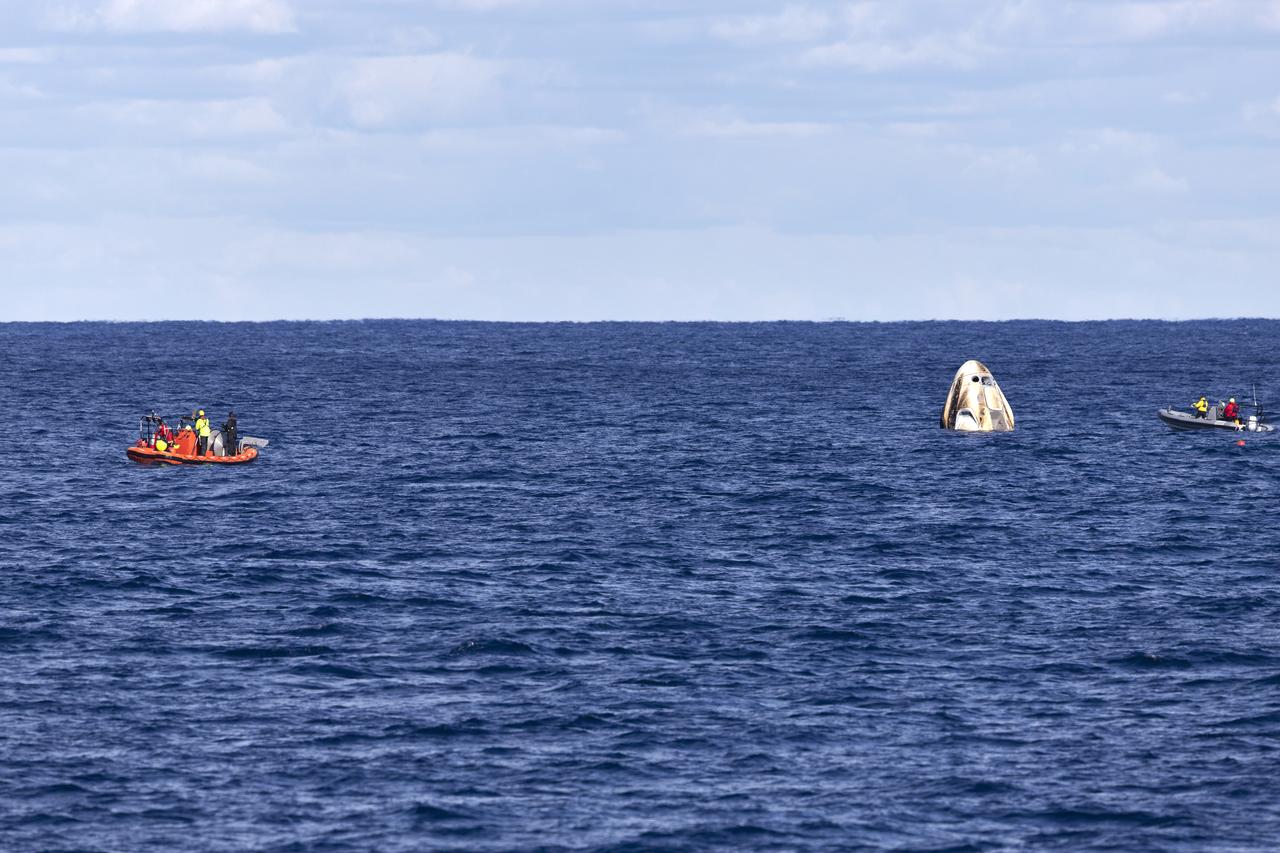
SpaceX’s Crew Dragon floats in the Atlantic Ocean, about 200 miles off Florida’s east coast, March 8, 2019, after returning from the International Space Station on the Demo-1 mission. The uncrewed spacecraft docked to the orbiting laboratory on March 3, following a 2:49 a.m. EST liftoff aboard a SpaceX Falcon 9 rocket from Launch Complex 39A at NASA’s Kennedy Space Center in Florida on March 2. The spacecraft undocked at 2:32 a.m., March 8, splashing down in the Atlantic Ocean at 8:45 a.m. SpaceX’s inaugural flight with NASA’s Commercial Crew Program is the first flight test of a space system designed for humans built and operated by a commercial company through a public-private partnership. NASA and SpaceX will use data from Demo-1 to further prepare for Demo-2, the crewed flight test that will carry NASA astronauts Bob Behnken and Doug Hurley to the International Space Station later this year.

SpaceX’s Crew Dragon is guided by four parachutes as it approaches splashdown in the Atlantic Ocean about 200 miles off Florida’s east coast on March 8, 2019, after returning from the International Space Station on the Demo-1 mission. The uncrewed spacecraft docked to the orbiting laboratory on March 3, following a 2:49 a.m. EST liftoff aboard a SpaceX Falcon 9 rocket from Launch Complex 39A at NASA’s Kennedy Space Center in Florida on March 2. Crew Dragon made 18 orbits of Earth before successfully attaching to the space station. The spacecraft undocked at 2:32 a.m., March 8, splashing down in the Atlantic Ocean at 8:45 a.m. SpaceX’s inaugural flight with NASA’s Commercial Crew Program is the first flight test of a space system designed for humans built and operated by a commercial company through a public-private partnership. NASA and SpaceX will use data from Demo-1 to further prepare for Demo-2, the crewed flight test that will carry NASA astronauts Bob Behnken and Doug Hurley to the International Space Station later this year.

SpaceX’s Crew Dragon approaches the International Space Station during the Demo-1 mission on Sunday, March 3, 2019. The uncrewed spacecraft docked to the orbiting laboratory following a 2:49 a.m. EST liftoff aboard a SpaceX Falcon 9 rocket from Launch Complex 39A at NASA’s Kennedy Space Center in Florida on March 2. Crew Dragon made 18 orbits of Earth before successfully attaching to the space station. The spacecraft undocked at 2:32 a.m., March 8, splashing down in the Atlantic Ocean, about 200 miles off Florida’s east coast, at 8:45 a.m. It arrived in Port Canaveral in Florida on the main deck of SpaceX’s recovery ship, Go Searcher, on March 9. SpaceX’s inaugural flight with NASA’s Commercial Crew Program is the first flight test of a space system designed for humans built and operated by a commercial company through a public-private partnership. NASA and SpaceX will use data from Demo-1 to further prepare for Demo-2, the crewed flight test that will carry NASA astronauts Bob Behnken and Doug Hurley to the International Space Station later this year.

SpaceX’s Crew Dragon spacecraft arrives in Port Canaveral, Florida, aboard the company’s recovery ship, Go Searcher, on Saturday, March 9, 2019. Crew Dragon splashed down in the Atlantic Ocean, about 200 miles off Florida’s east coast, at 8:45 a.m. EST on March 8, after undocking from the International Space Station at 2:32 a.m. As part of the Demo-1 mission, the uncrewed spacecraft docked to the orbiting laboratory on March 3, following a 2:49 a.m. EST liftoff aboard a SpaceX Falcon 9 rocket from Launch Complex 39A at NASA’s Kennedy Space Center in Florida on March 2. SpaceX’s inaugural flight with NASA’s Commercial Crew Program is the first flight test of a space system designed for humans built and operated by a commercial company through a public-private partnership. NASA and SpaceX will use data from Demo-1 to further prepare for Demo-2, the crewed flight test that will carry NASA astronauts Bob Behnken and Doug Hurley to the International Space Station later this year.
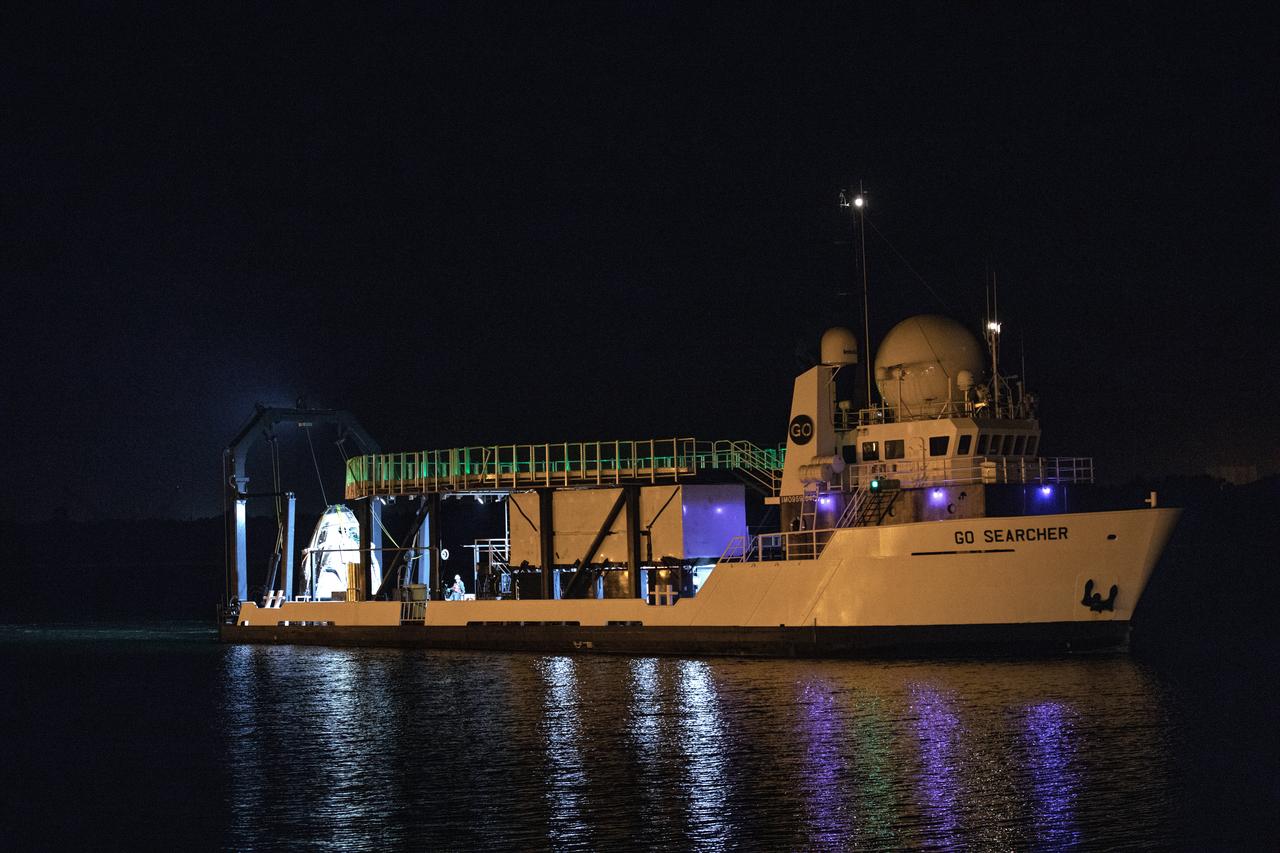
SpaceX’s recovery ship, Go Searcher, enters Port Canaveral in Florida on Saturday, March 9, 2019, with the company’s Crew Dragon spacecraft on its main deck. Crew Dragon splashed down in the Atlantic Ocean, about 200 miles off Florida’s east coast, at 8:45 a.m. EST on March 8, after undocking from the International Space Station at 2:32 a.m. As part of the Demo-1 mission, the uncrewed spacecraft docked to the orbiting laboratory on March 3, following a 2:49 a.m. EST liftoff aboard a SpaceX Falcon 9 rocket from Launch Complex 39A at NASA’s Kennedy Space Center in Florida on March 2. SpaceX’s inaugural flight with NASA’s Commercial Crew Program is the first flight test of a space system designed for humans built and operated by a commercial company through a public-private partnership. NASA and SpaceX will use data from Demo-1 to further prepare for Demo-2, the crewed flight test that will carry NASA astronauts Bob Behnken and Doug Hurley to the International Space Station later this year.
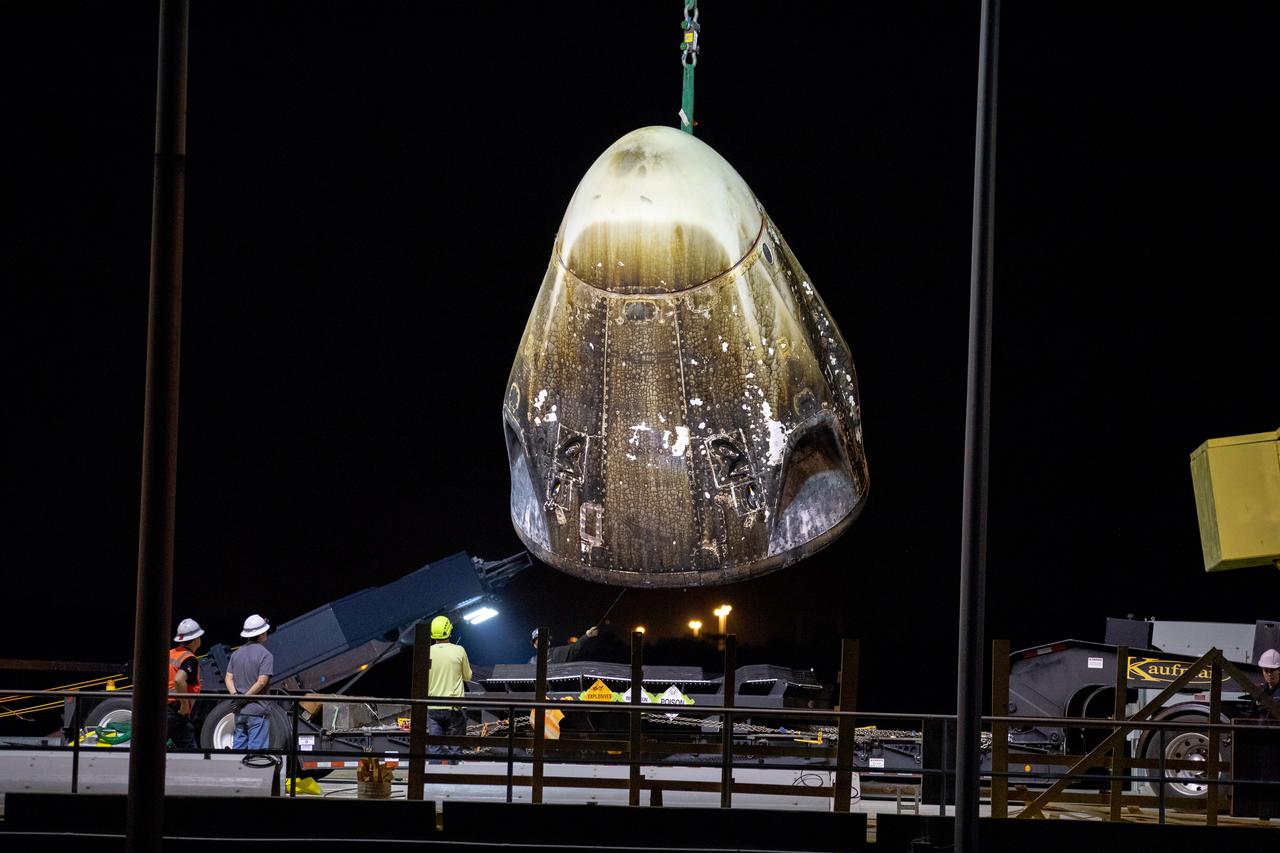
The SpaceX Crew Dragon spacecraft is offloaded from the company’s recovery ship, Go Searcher, in Florida’s Port Canaveral on Saturday, March 9, 2019. Crew Dragon splashed down in the Atlantic Ocean, about 200 miles off Florida’s east coast, at 8:45 a.m. EST on March 8, after undocking from the International Space Station at 2:32 a.m. As part of the Demo-1 mission, the uncrewed spacecraft docked to the orbiting laboratory on March 3, following a 2:49 a.m. EST liftoff aboard a SpaceX Falcon 9 rocket from Launch Complex 39A at NASA’s Kennedy Space Center in Florida on March 2. SpaceX’s inaugural flight with NASA’s Commercial Crew Program is the first flight test of a space system designed for humans built and operated by a commercial company through a public-private partnership. NASA and SpaceX will use data from Demo-1 to further prepare for Demo-2, the crewed flight test that will carry NASA astronauts Bob Behnken and Doug Hurley to the International Space Station later this year.