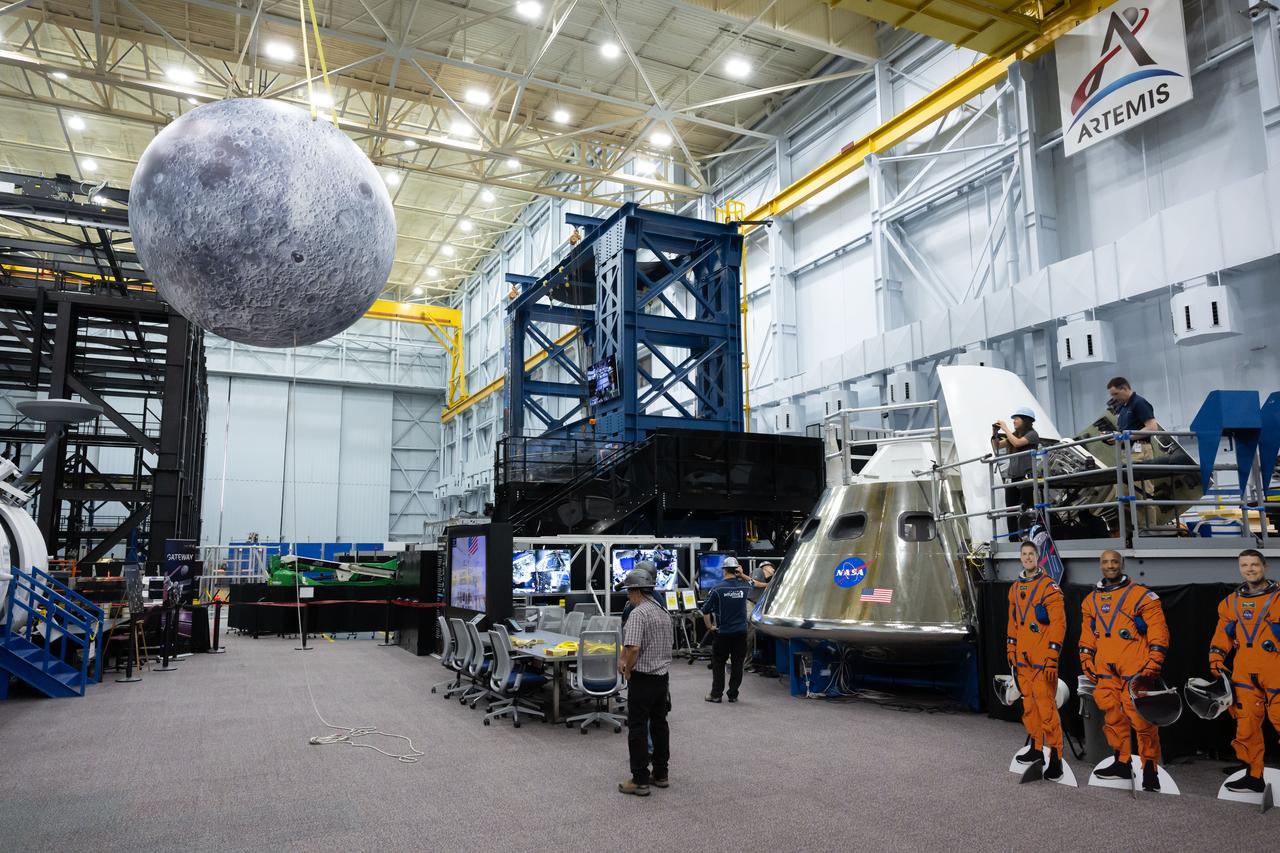
jsc2025e064769 --- An inflatable Moon is hoisted above the Orion mockup at NASA's Johnson Space Center in Houston. The Moon was used for crew lunar observation training ahead of the Artemis II mission.
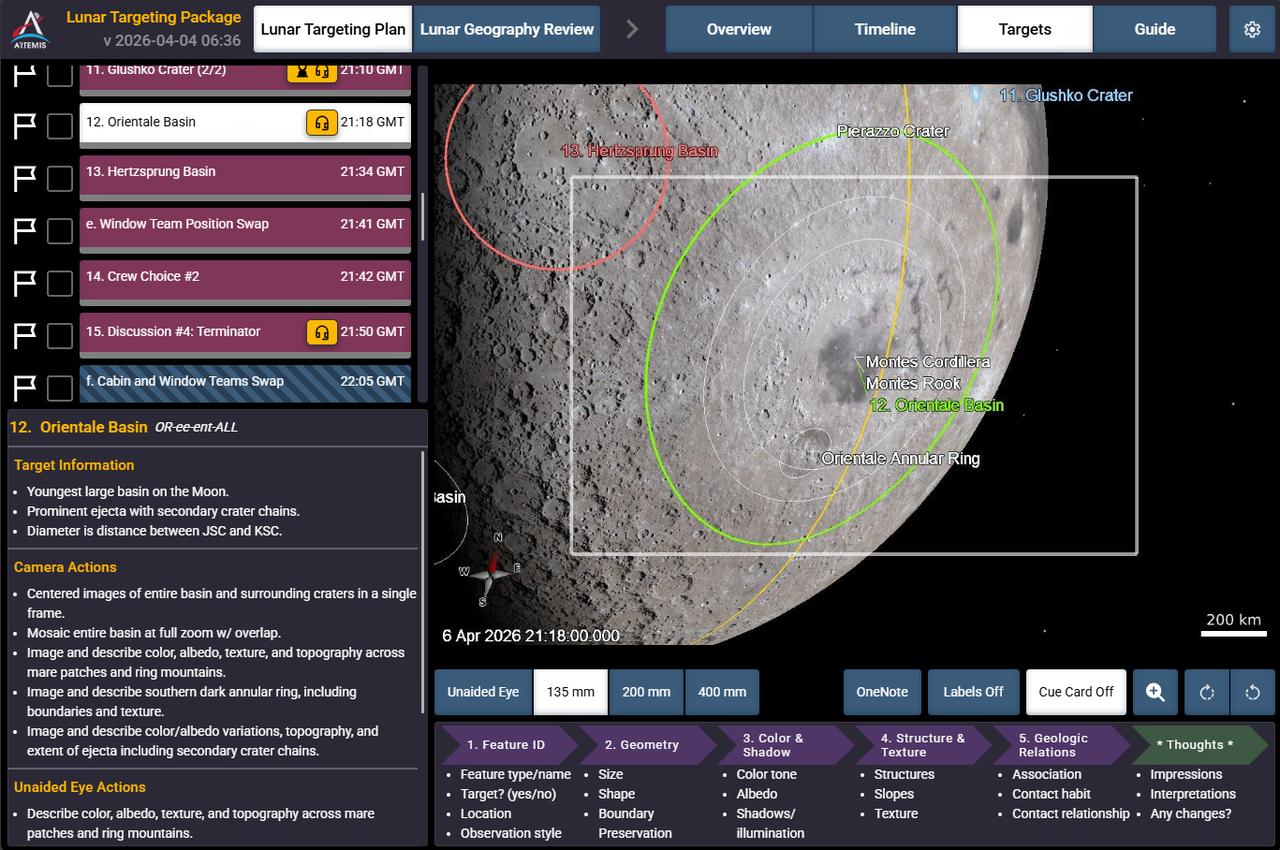
Caption: This is a screen shot of the application the crew sees on their personal computing devices that guides them in the execution of the lunar science observation plan. This custom software was built by the crew lunar observations team, a subset of the Artemis II lunar science team. In this screenshot you can see Orientale basin, target number 12 circled on the bottom right of the Moon, and to its left, target number 13, Hertzsprung basin.

jsc2025e064747 --- Artemis II mission specialist Christina Koch, left, Artemis II lunar science team member Marie Henderson, Artemis II pilot Victor Glover, and Artemis II backup crew member Andre Douglas practice camera setup during crew lunar observations training at NASA's Johnson Space Center in Houston.

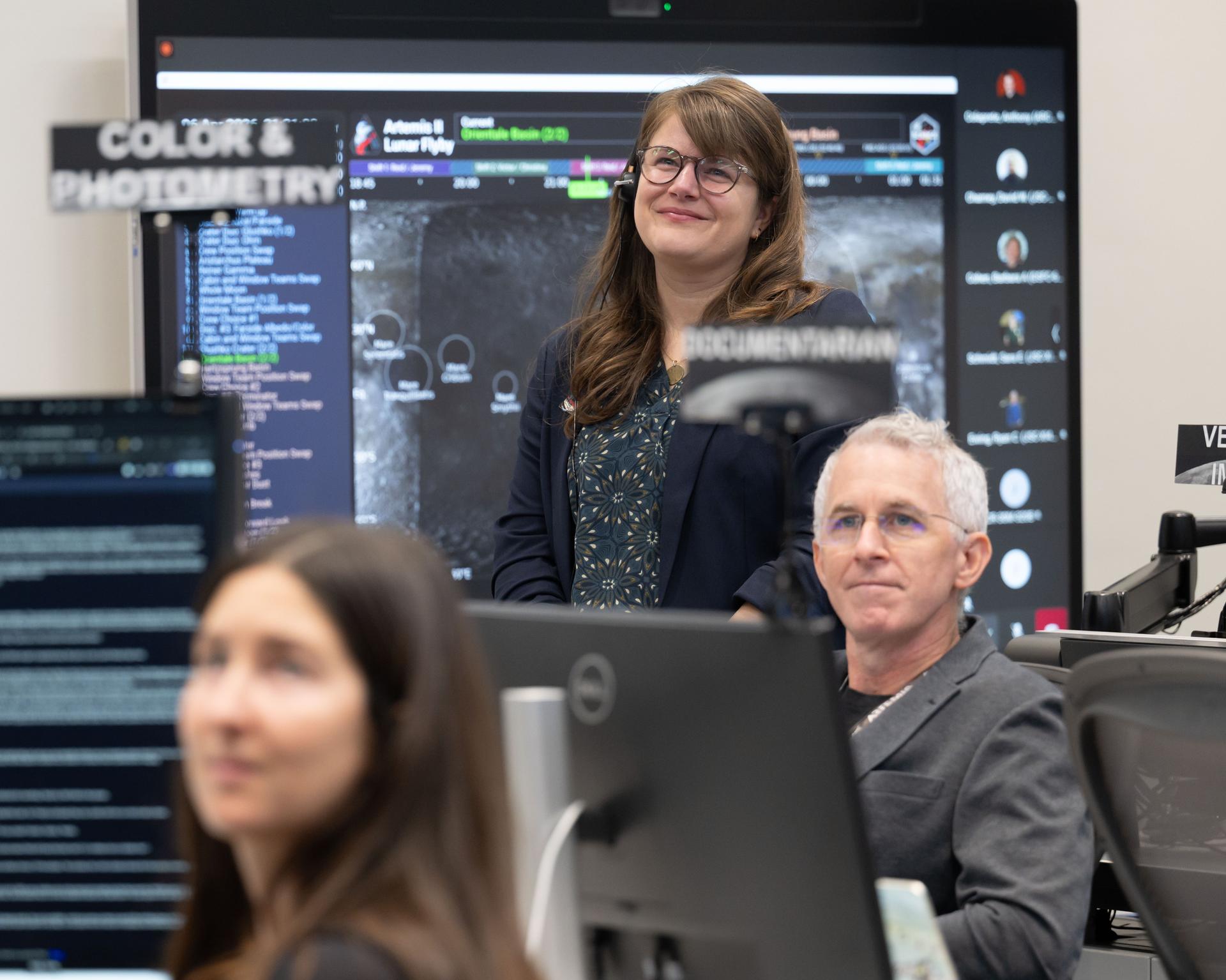
Artemis II crew lunar observations team member, David Charney, monitors the mission from the Science Evaluation Room (SER). Built specifically for Artemis missions with these science priorities in mind, the SER is equipped to support rapid data interpretation, collaborative analysis, real-time decision making, and seamless coordination between the science and operations teams. Credits: NASA/Luna Posadas Nava

Artemis II crew lunar observations team member, Alex Stoken, monitors the mission from the Science Evaluation Room (SER). Built specifically for Artemis missions with these science priorities in mind, the SER is equipped to support rapid data interpretation, collaborative analysis, real-time decision making, and seamless coordination between the science and operations teams. Credits: NASA/Luna Posadas Nava
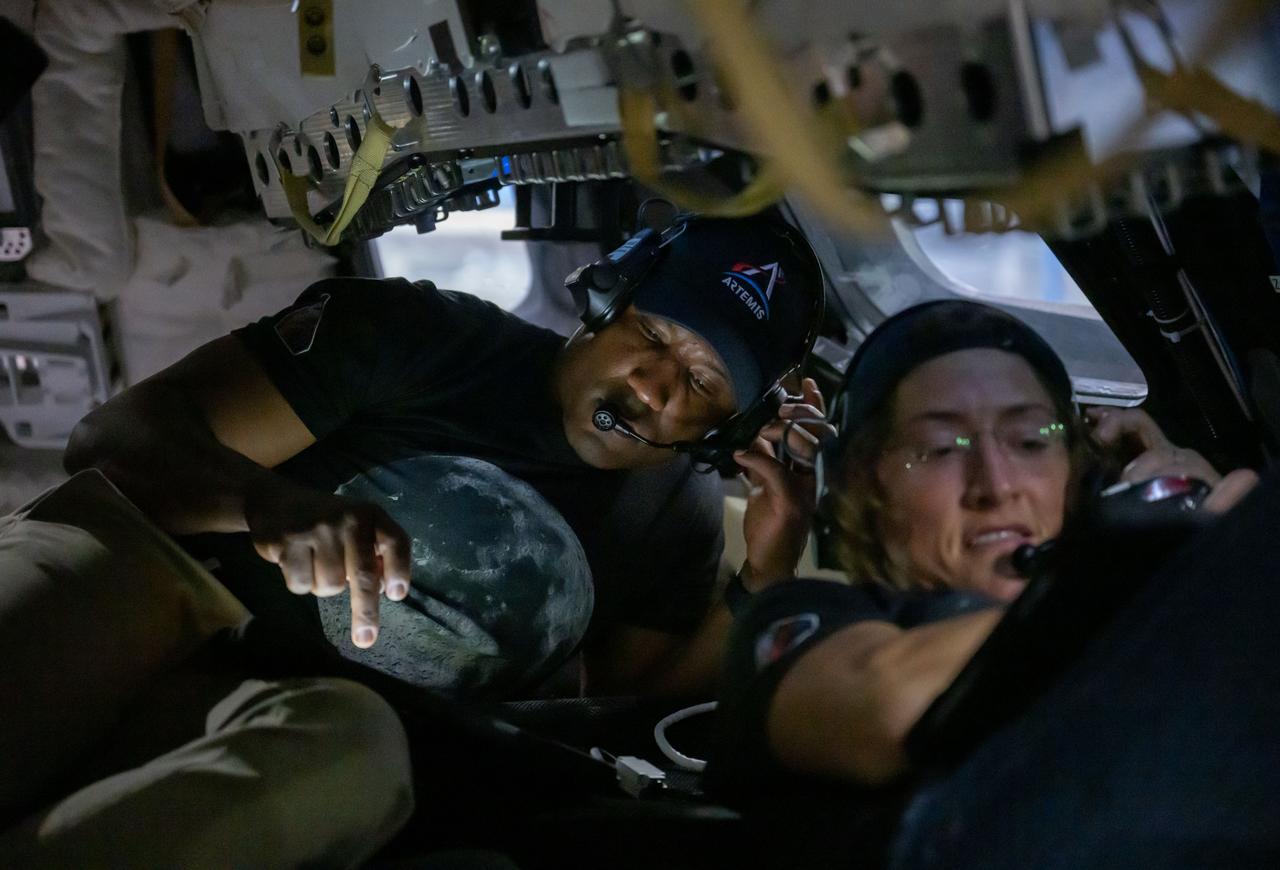
jsc2025e064753 --- Artemis II crew members, from left, Victor Glover and Christina Koch, participate in crew lunar observations training in the Orion mockup at NASA's Johnson Space Center in Houston.
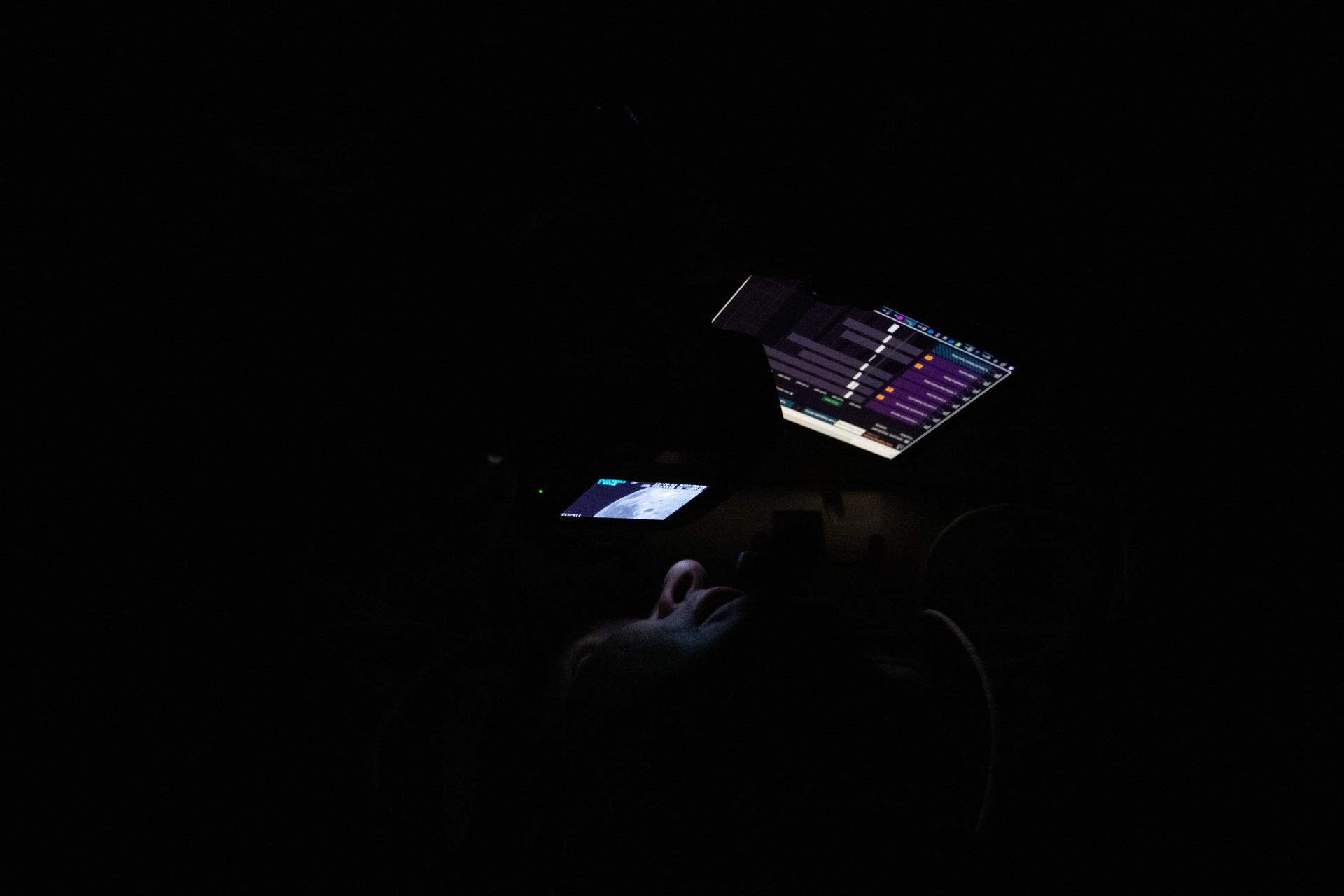
art002e014251 (April 6, 2026) – CSA (Canadian Space Agency) astronaut and Artemis II Mission Specialist Jeremy Hansen is seen taking images through the Orion spacecraft window during the Artemis II lunar flyby. Hansen and his fellow crewmates spent approximately seven hours taking turns at the Orion windows capturing science data to share with their team back on Earth. At closest approach, they came within 4,067 miles of the Moon’s surface. The application seen on the crew personal computing devices is the Lunar Targeting Plan that guides them in the execution of the lunar science observation plan. This custom software was built by the crew lunar observations team, a subset of the Artemis II lunar science team.
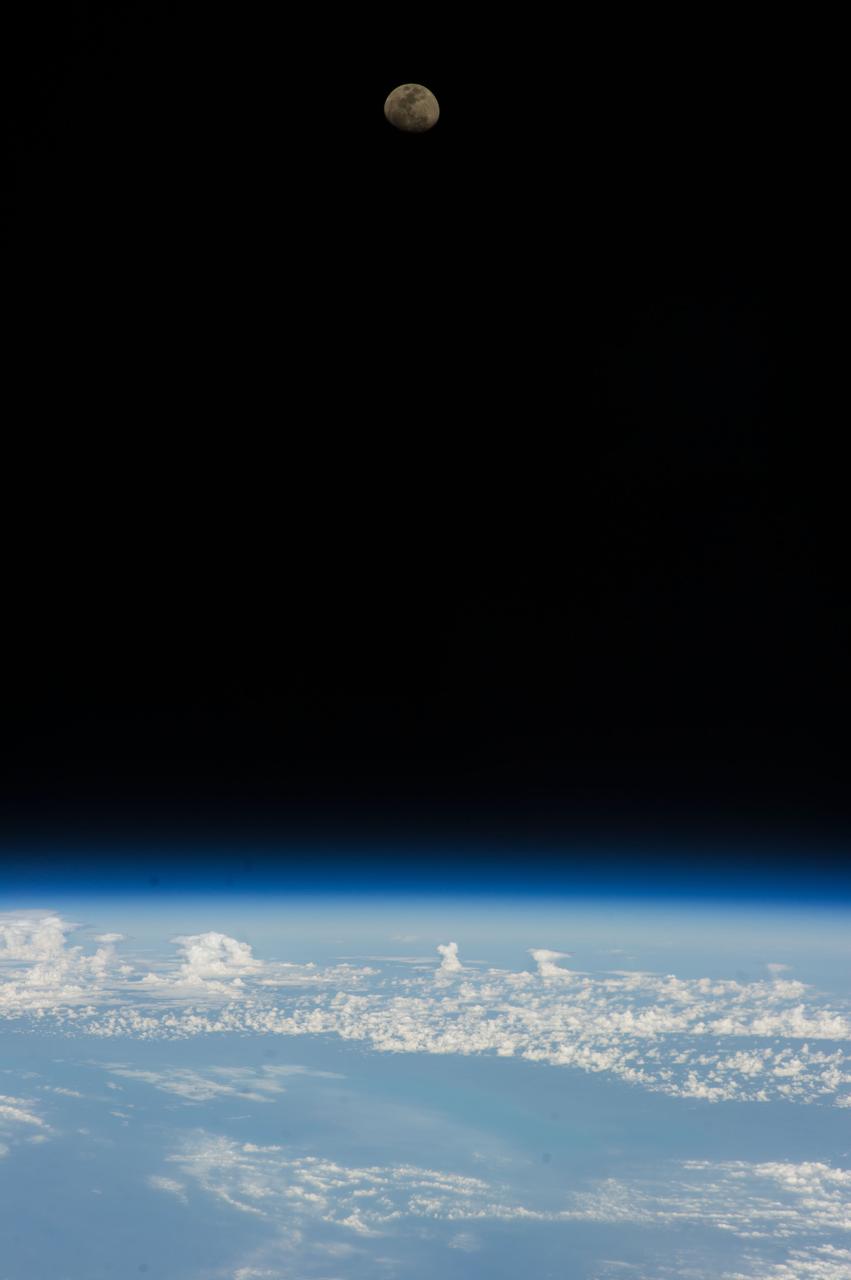
Lunar observation taken by the Expedition 39 crew aboard the ISS. An Earth limb and airglow are in view. Image was released by astronaut on Twitter.
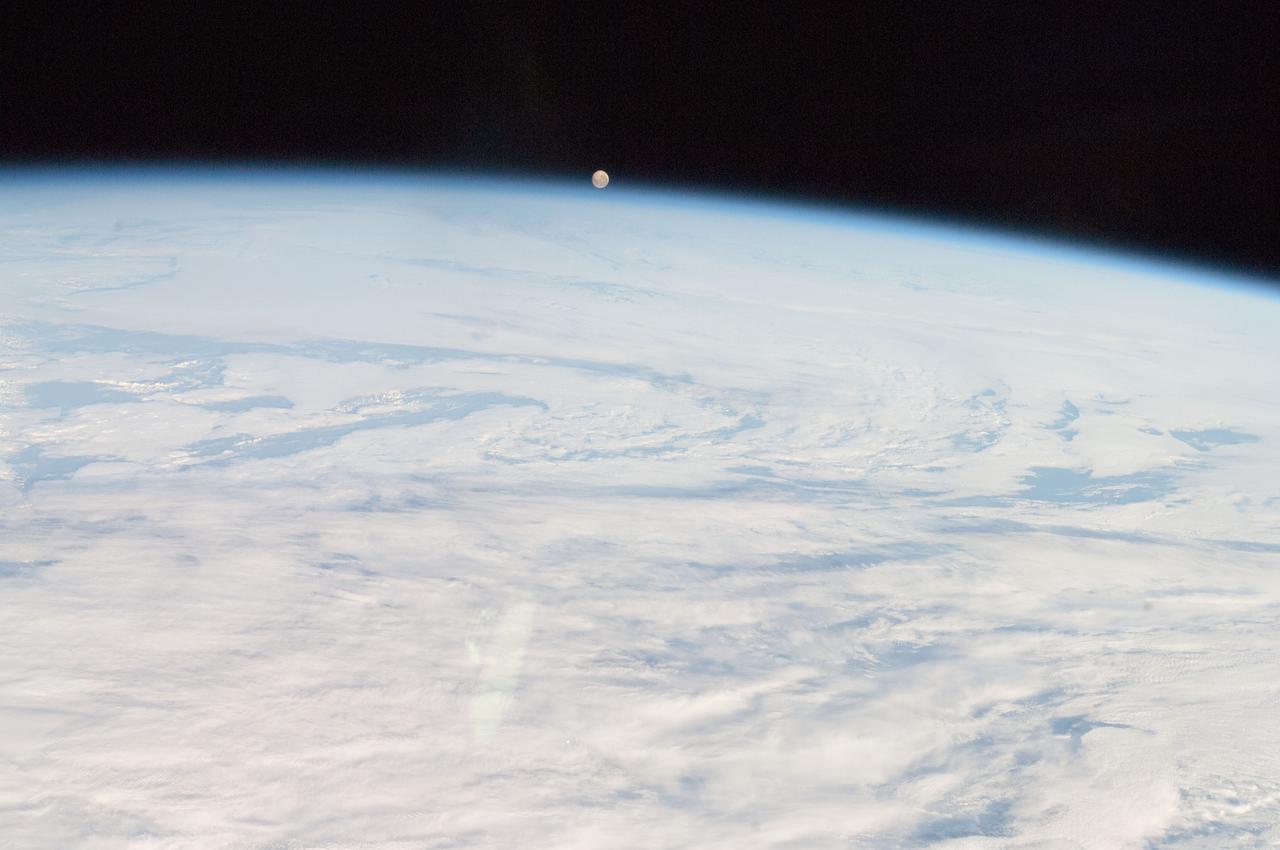
Lunar observation taken by the Expedition 35 crew aboard the ISS. An Earth limb is in view.

art002e016186 (April 6, 2026) – CSA (Canadian Space Agency) astronaut and Artemis II Mission Specialist Jeremy Hansen is seen working on his personal computing device during the Artemis II lunar flyby. The application seen on the screen is the Lunar Targeting Plan that guides them in the execution of the lunar science observation plan. This custom software was built by the crew lunar observations team, a subset of the Artemis II lunar science team. Hansen and his fellow crewmates spent approximately seven hours taking turns at the Orion windows capturing science data to share with their team back on Earth. At closest approach, they came within 4,067 miles of the Moon’s surface.
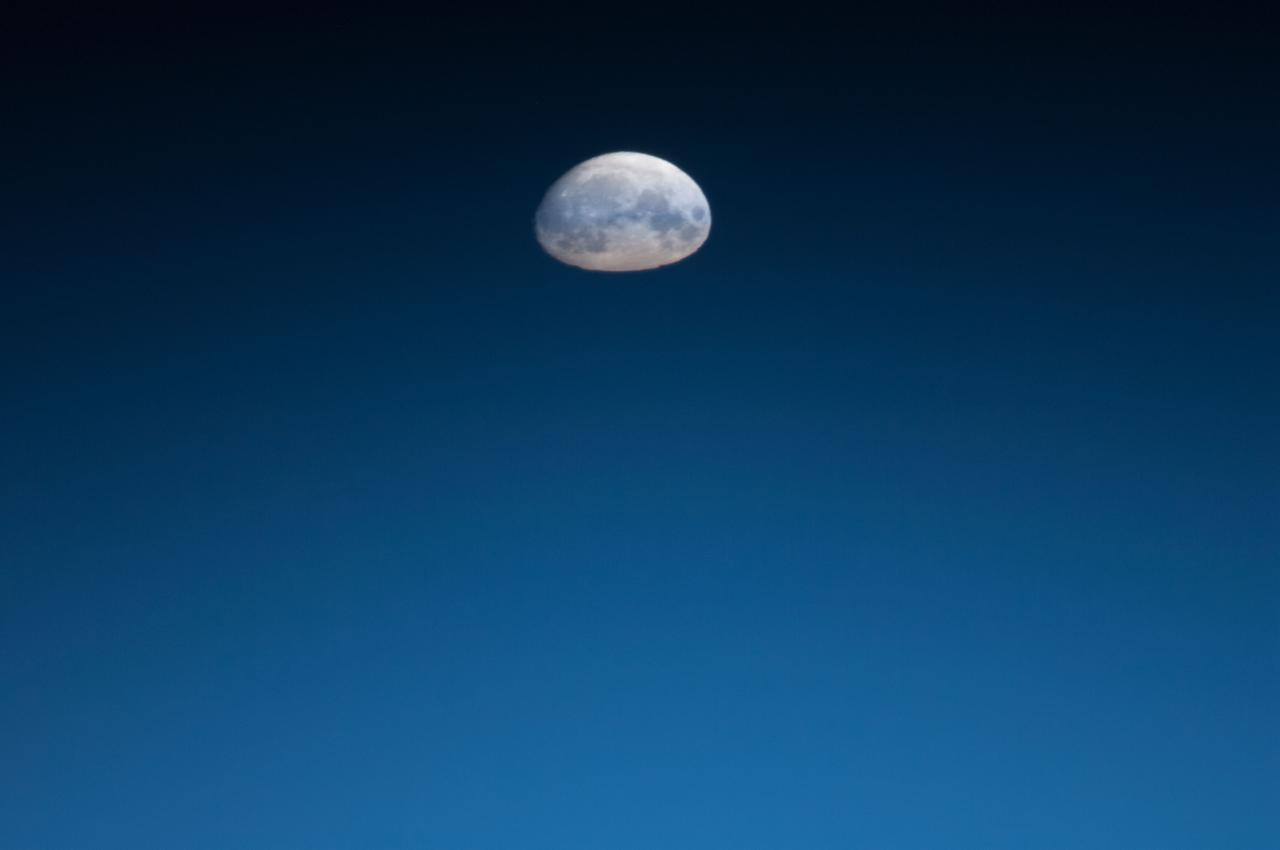
Lunar observation taken during moonset by the Expedition 39 crew aboard the ISS. Earth airglow is in view. Image was released by astronaut on Twitter.
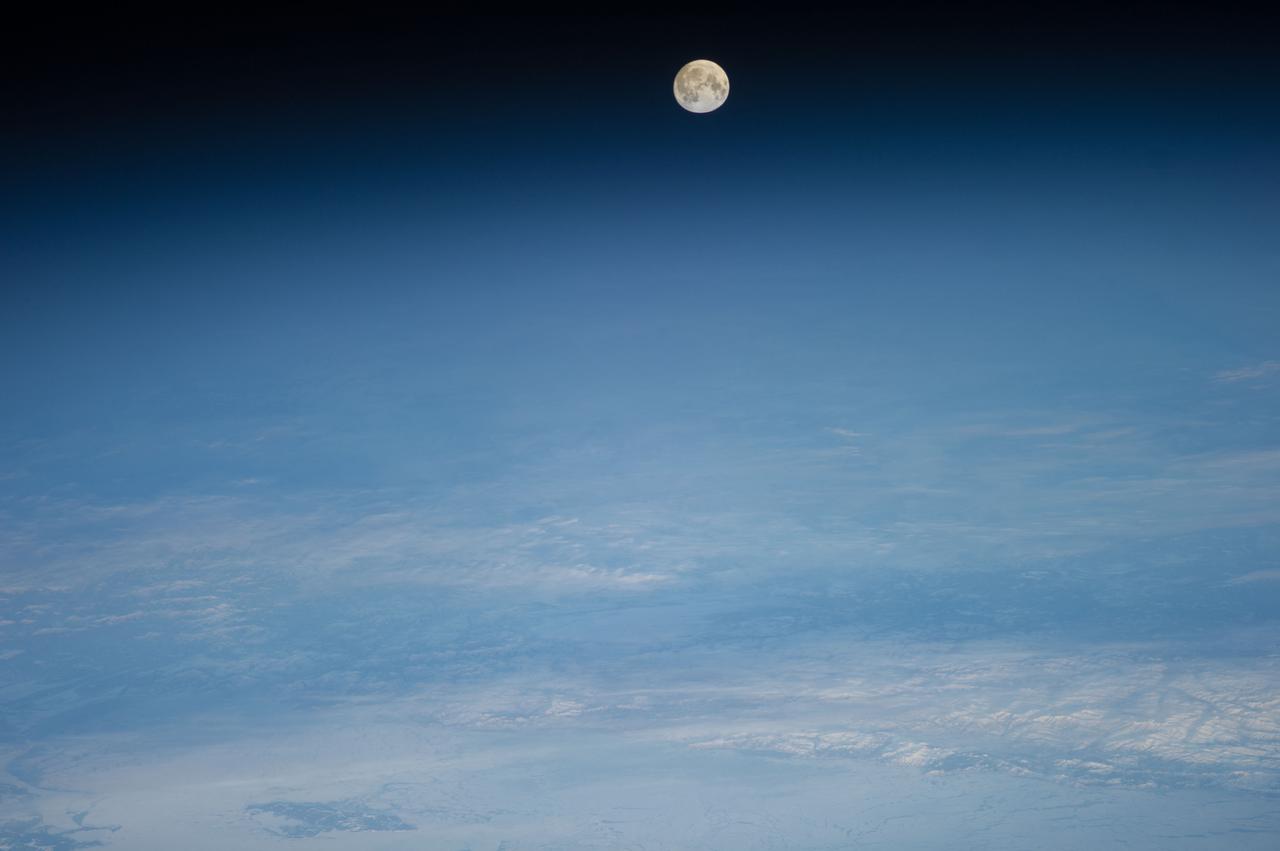
Lunar observation taken during moonset by the Expedition 39 crew aboard the ISS. Earth and airglow are in view. Image was released by astronaut on Twitter.
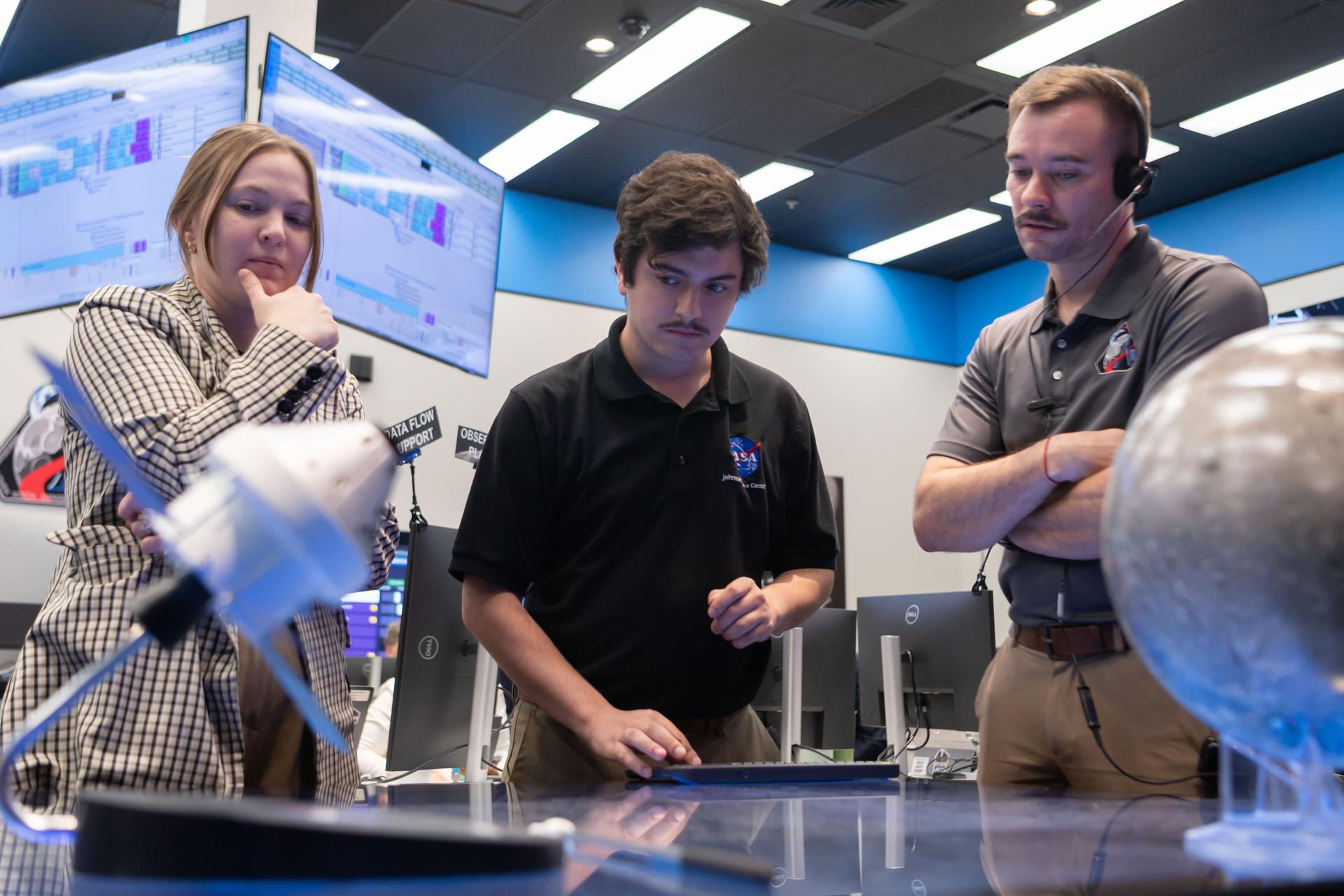
Crew lunar observations team member, Sara Schmidt, left, asset manager, Luke McSherry, and Artemis deputy lunar science lead, Jacob Richardson work in the Science Evaluation Room (SER). Built specifically for Artemis missions with these science priorities in mind, the SER is equipped to support rapid data interpretation, collaborative analysis, real-time decision making, and seamless coordination between the science and operations teams. Credits: NASA/Luna Posadas Nava
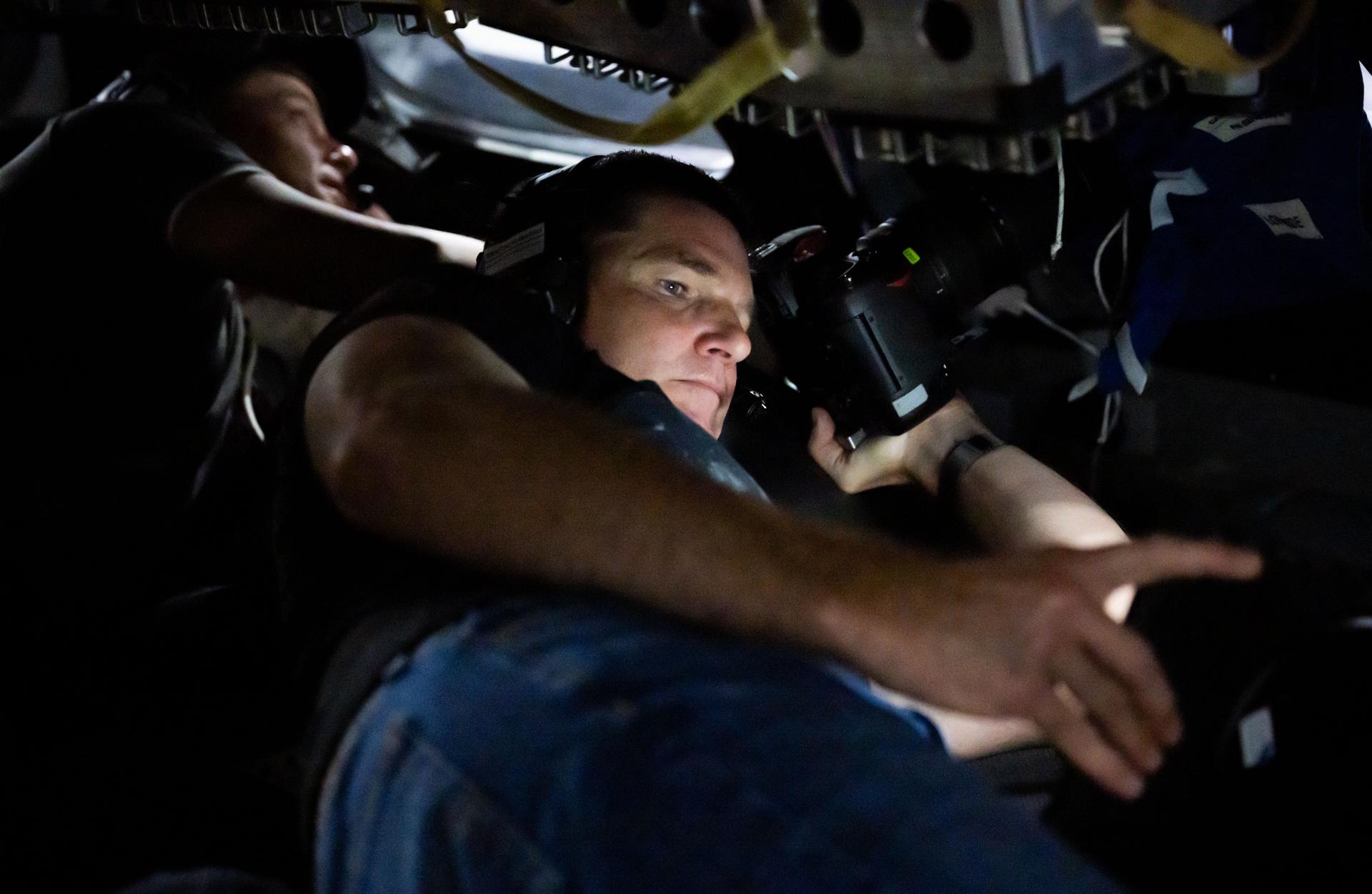
jsc2025e064791 --- CSA (Canadian Space Agency) astronaut Jeremy Hansen, mission specialist for NASA’s Artemis II mission, foreground, and NASA astronaut and Artemis II commander, Reid Wiseman, participate in crew lunar observations training in the Orion mockup at NASA's Johnson Space Center in Houston. The Artemis II crew will be the first people in more than 50 years to set eyes on the far side of the Moon, depending on illumination conditions. They will document their observations through photographs, audio recordings, and more to inform our understanding of the Moon, and share their experience of being far from Earth.

jsc2025e064796 --- NASA astronaut and Artemis II commander, Reid Wiseman, foreground, and CSA (Canadian Space Agency) astronaut Jeremy Hansen, mission specialist for NASA’s Artemis II mission, participate in crew lunar observations training in the Orion mockup at NASA's Johnson Space Center in Houston. The Artemis II crew will be the first people in more than 50 years to set eyes on the far side of the Moon, depending on illumination conditions. They will document their observations through photographs, audio recordings, and more to inform our understanding of the Moon, and share their experience of being far from Earth.
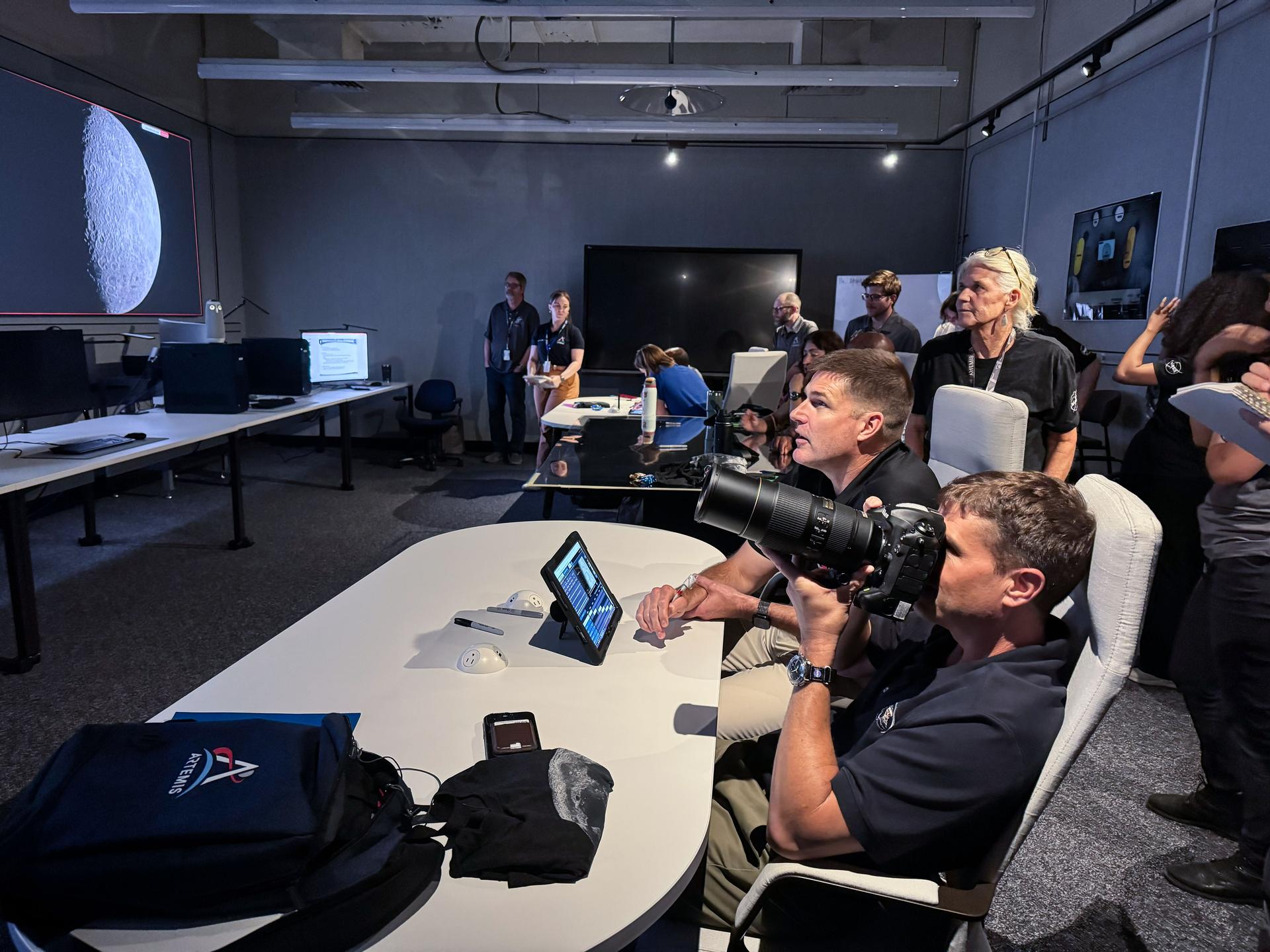
jsc2025e086642 --- NASA astronaut and Artemis II commander, Reid Wiseman (foreground), and CSA (Canadian Space Agency) astronaut and Artemis II mission specialist, practice lunar photography at NASA's Johnson Space Center in Houston. The Artemis II crew will be the first people in more than 50 years to set eyes on the far side of the Moon, depending on illumination conditions. They will document their observations through photographs, audio recordings, and more to inform our understanding of the Moon, and share their experience of being far from Earth. Credit: Kelsey Young
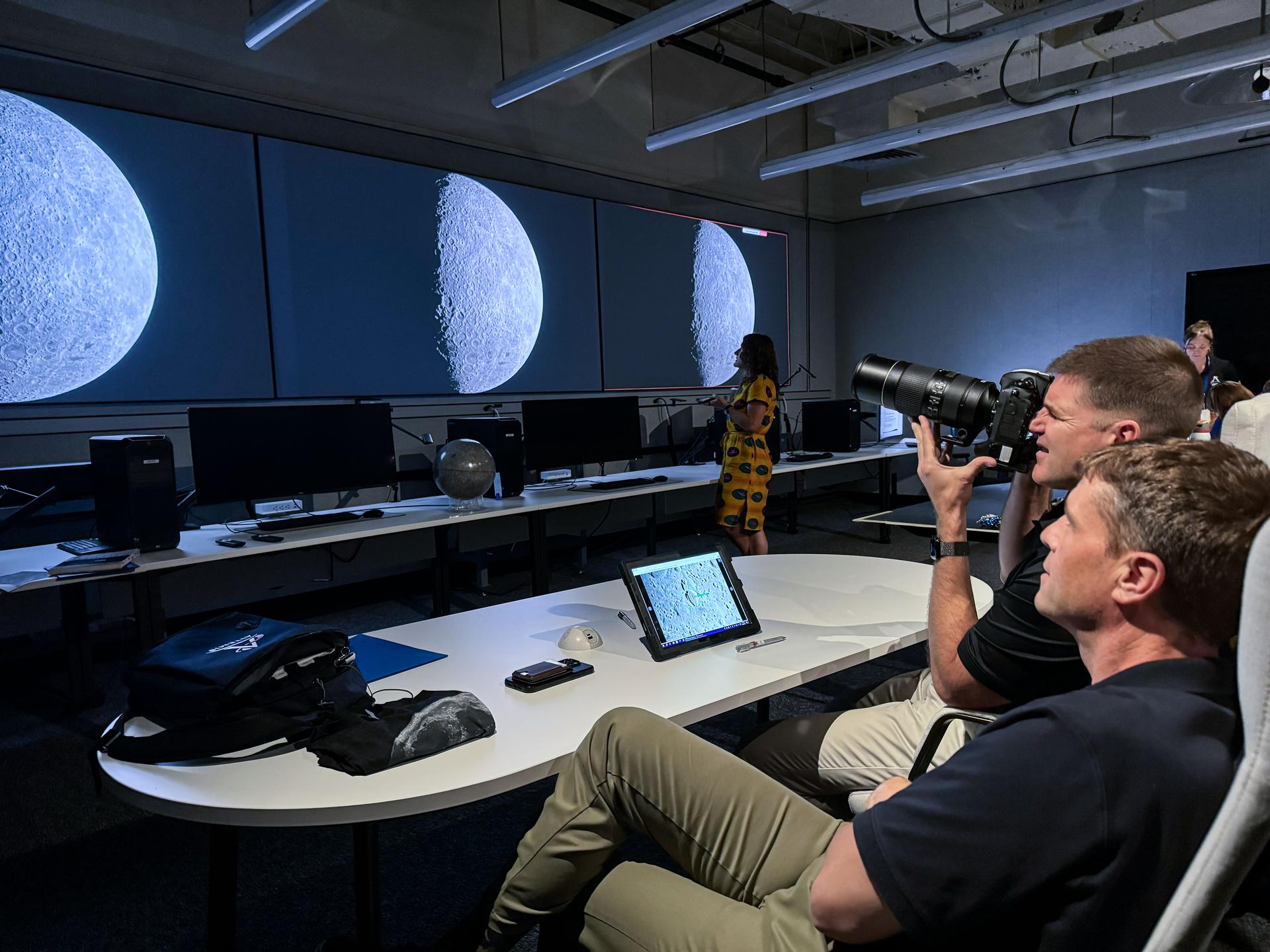
jsc2025e087135 --- NASA astronaut and Artemis II commander, Reid Wiseman (foreground), and CSA (Canadian Space Agency) astronaut and Artemis II mission specialist, practice lunar photography at NASA's Johnson Space Center in Houston. The Artemis II crew will be the first people in more than 50 years to set eyes on the far side of the Moon, depending on illumination conditions. They will document their observations through photographs, audio recordings, and more to inform our understanding of the Moon, and share their experience of being far from Earth. Credit: Kelsey Young
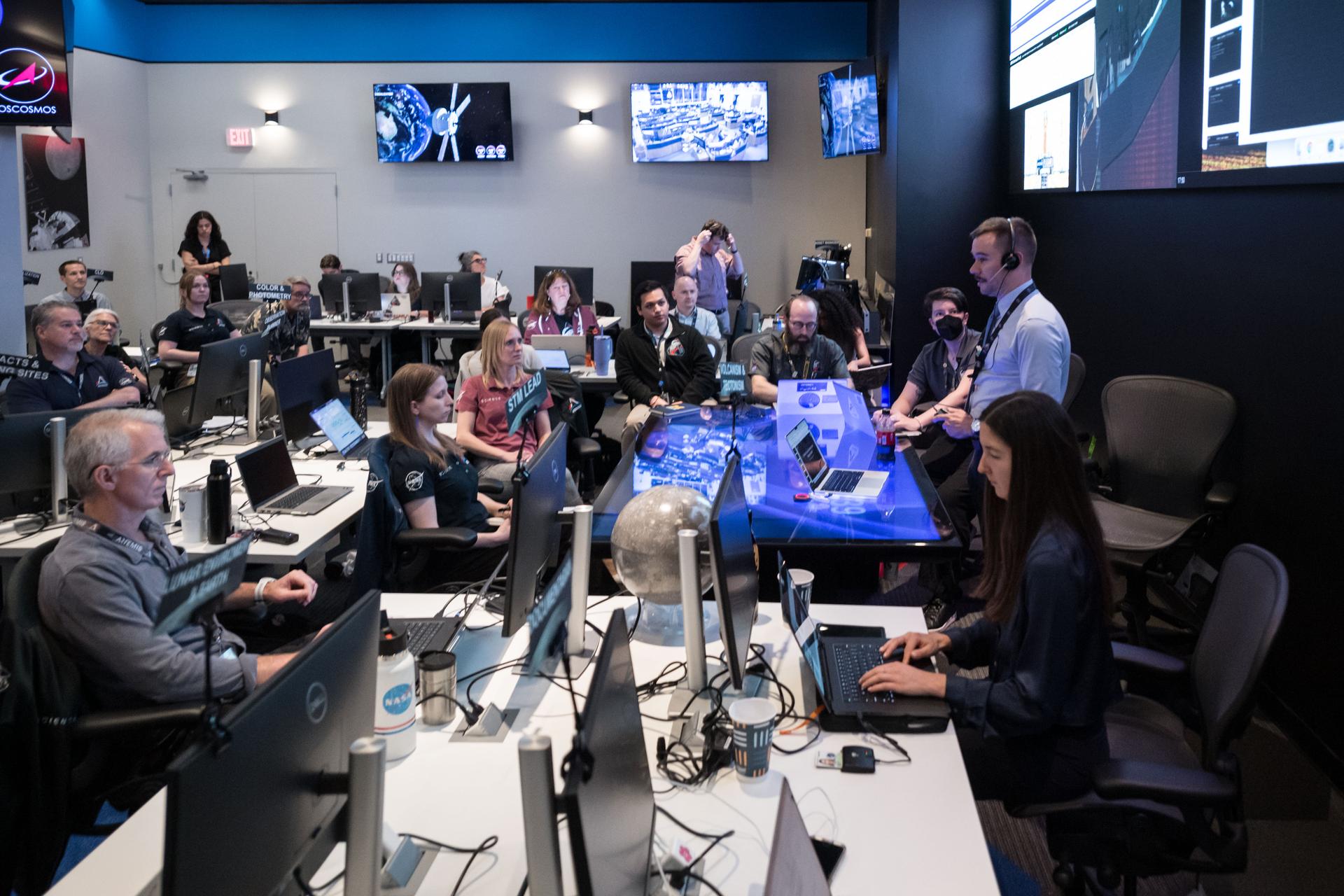
The Artemis II lunar science team gathers for a kickoff meeting before working on the lunar targeting plan for the crew's lunar flyby. The Lunar Targeting Plan is the Artemis II crew's Moon observing assignment, and is fine-tuned to the exact lighting conditions on the Moon’s surface when the Artemis II crew flies by. Like a spacewalk plan, it provides strong, detailed guidance, plus flexibility for the crew to make decisions based on what they’re seeing and experiencing in real time. Targets are prioritized based on both their science value and their visibility at the time of observation. Credits: NASA/Luna Posadas Nava
art002e014256 (April 6, 2026) – CSA (Canadian Space Agency) astronaut and Artemis II Mission Specialist Jeremy Hansen is seen making observations through the Orion spacecraft window early in the Artemis II lunar flyby. Due to last approximately seven hours, the lunar observation period was the duration of time that the crew is close enough to the Moon to make impactful science observations (4,070 miles altitude at closest approach) and the spacecraft was oriented such that the windows are pointed at the Moon. Credit: NASA
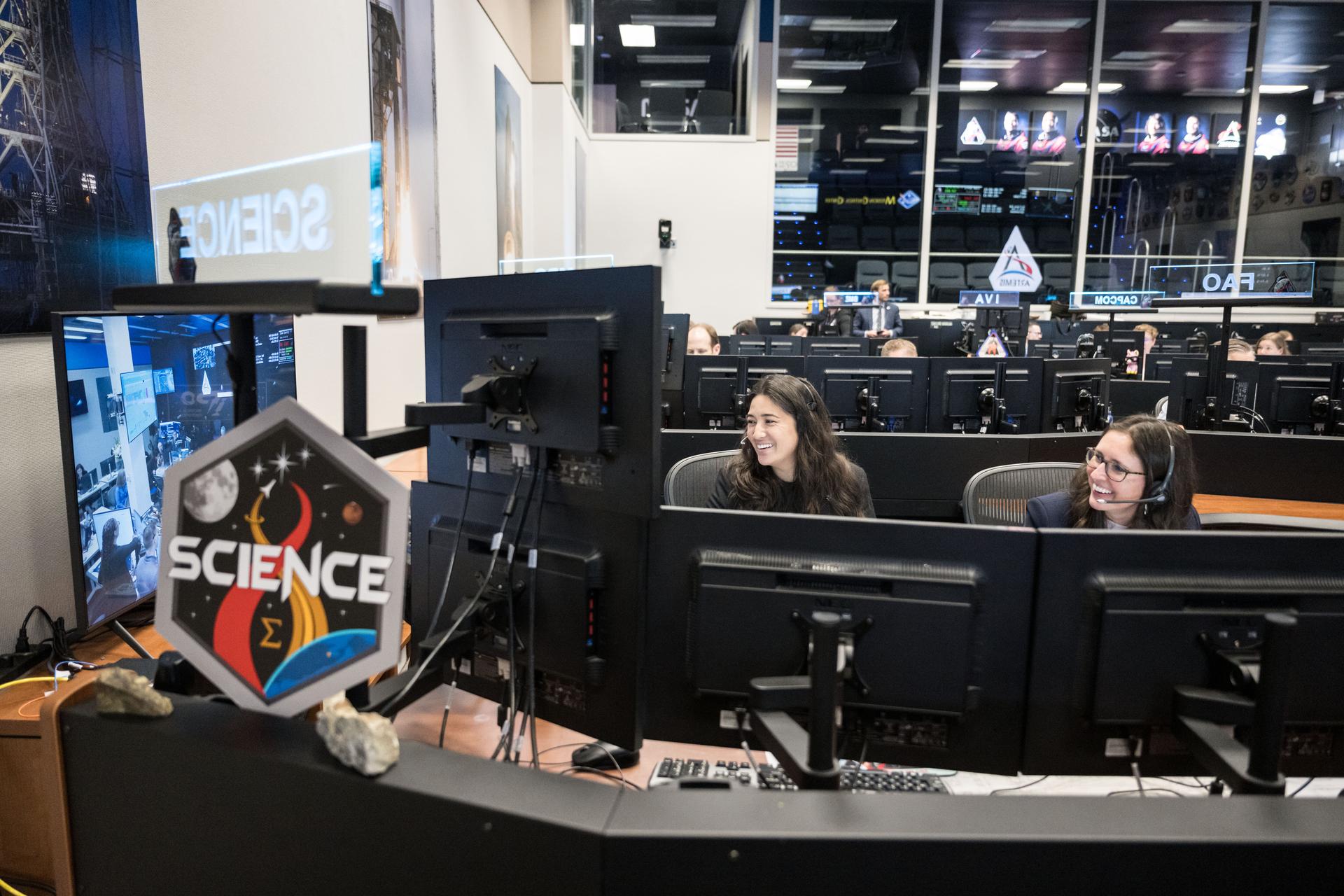
Artemis science officers, from left, Angela Garcia and Kelsey Young, watch the lunar science team celebrating in the Science Evaluation Room (SER) as they hear lunar observations from the Artemis II crew. The science team has spent years training the astronauts in geology and observation, both in the classroom and in the field. They also built the lunar targeting plan that, like a spacewalk plan, provides strong, detailed observation guidance, plus flexibility for the crew to make decisions based on what they’re seeing and experiencing in real time. The science team had many moments of celebration during the lunar flyby as the astronauts took pictures of the Moon and provided verbal descriptions of what they were seeing. This type of information reveals the geologic history of an area and will be critical to collect when future Artemis astronauts explore the Moon's surface. Credits: NASA/Robert Markowitz

Artemis II deputy lunar science lead, Jacob Richardson, left, and Artemis II lunar science team members, Kiarre Dumes, react to the astronauts' verbal observations of the Moon during their flyby on April 6, 2026. Along with other lunar science team members, Richardson and Dumes helped train the crew in geology both in the classroom and in the field. The science team also built the lunar targeting plan that, like an International Space Station spacewalk plan, provides strong, detailed observation guidance, plus flexibility for the crew to make decisions based on what they’re seeing and experiencing in real time. The science team had many moments of celebration during the lunar flyby as the astronauts took images of the Moon and provided verbal descriptions of what they were seeing. This type of information reveals the geologic history of an area and will be critical to collect when future Artemis astronauts explore the Moon's surface. Credits: NASA/Luna Posadas Nava
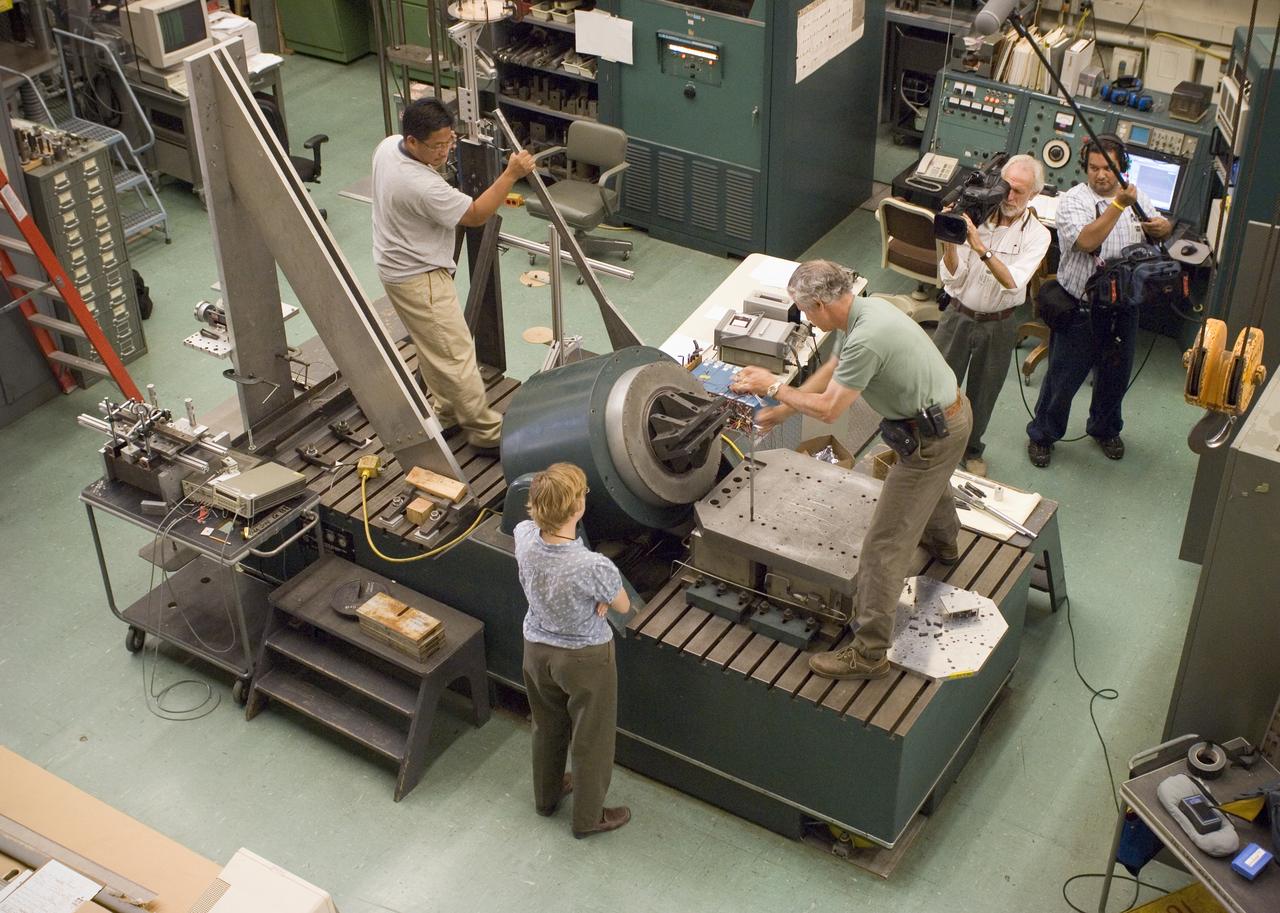
LCROSS (Lunar Crater Observation Sensing Satellite) Near InfraRed Spectrometer shake test in Ames N-244 high bay EEL Lab - with Kimberly Ennico, Lynn Hofland, Frank Pichay and Discovery Channel video crew
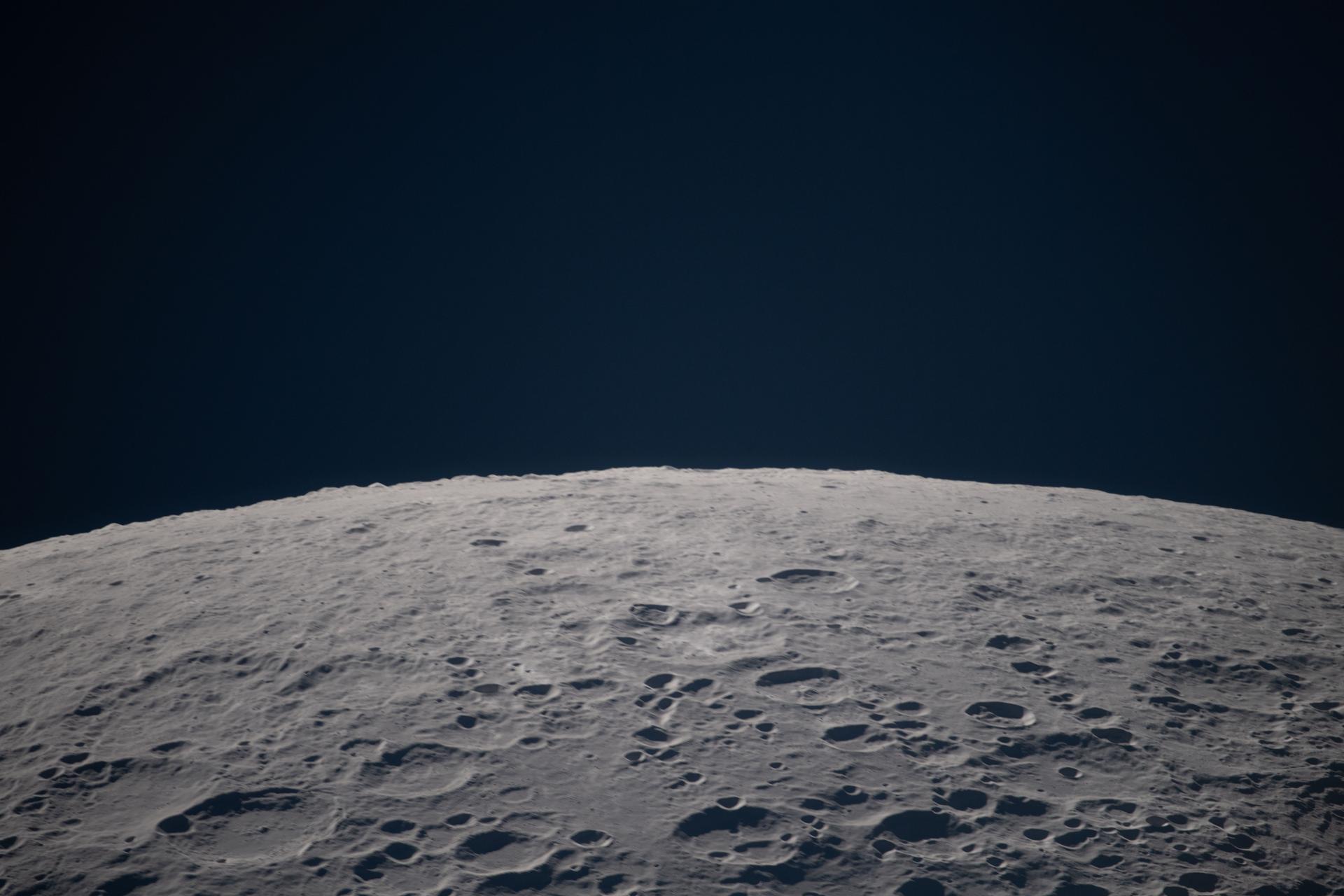
art002e012673 (April 6, 2026) – As the Artemis II crew passes the Moon during an observation period, the lunar landscape sharpens into focus: a terrain scattered with craters and shadows stretching beneath the black expanse of space.
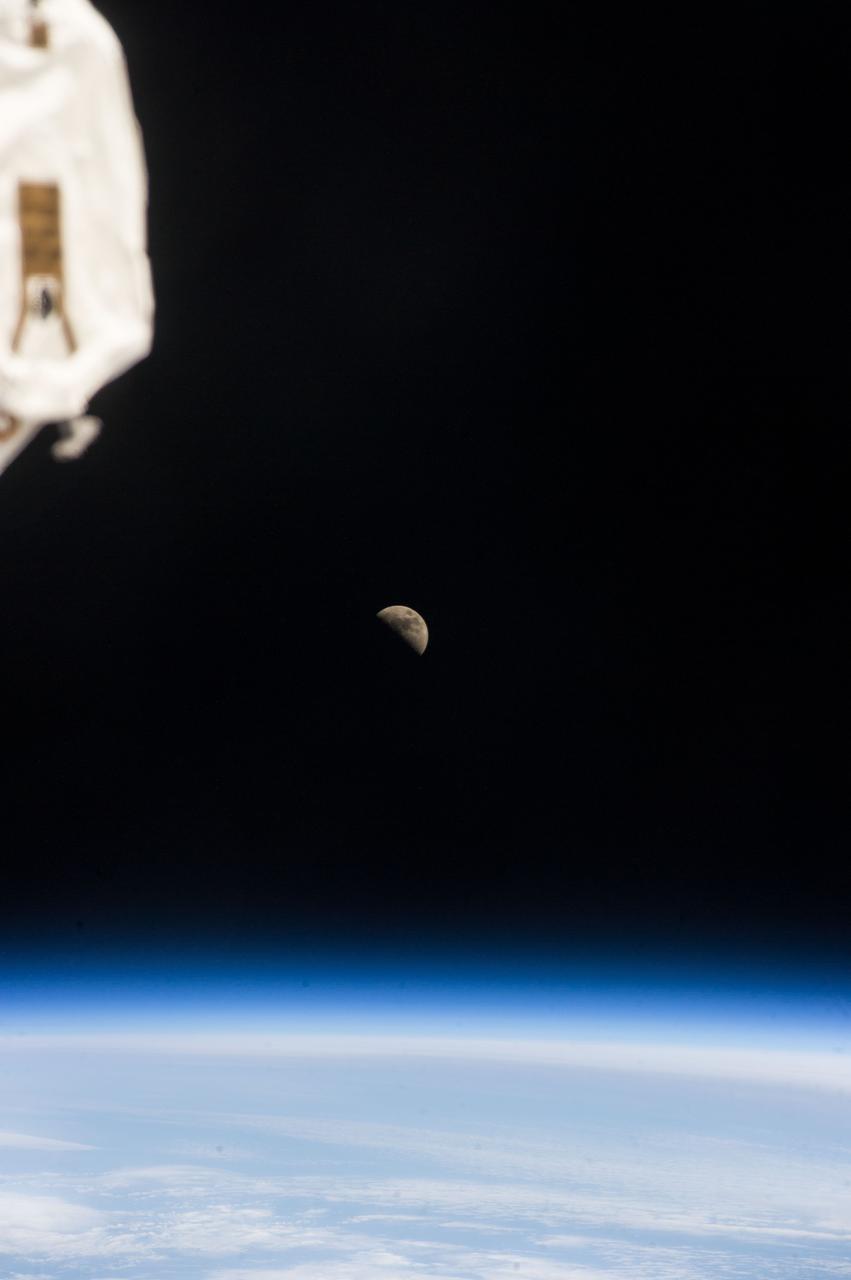
ISS039-E-018938 (6 May 2014) --- One of the Expedition 39 crew members aboard the International Space Station photographed a half moon above Earth's horizon on May 6, 2014.
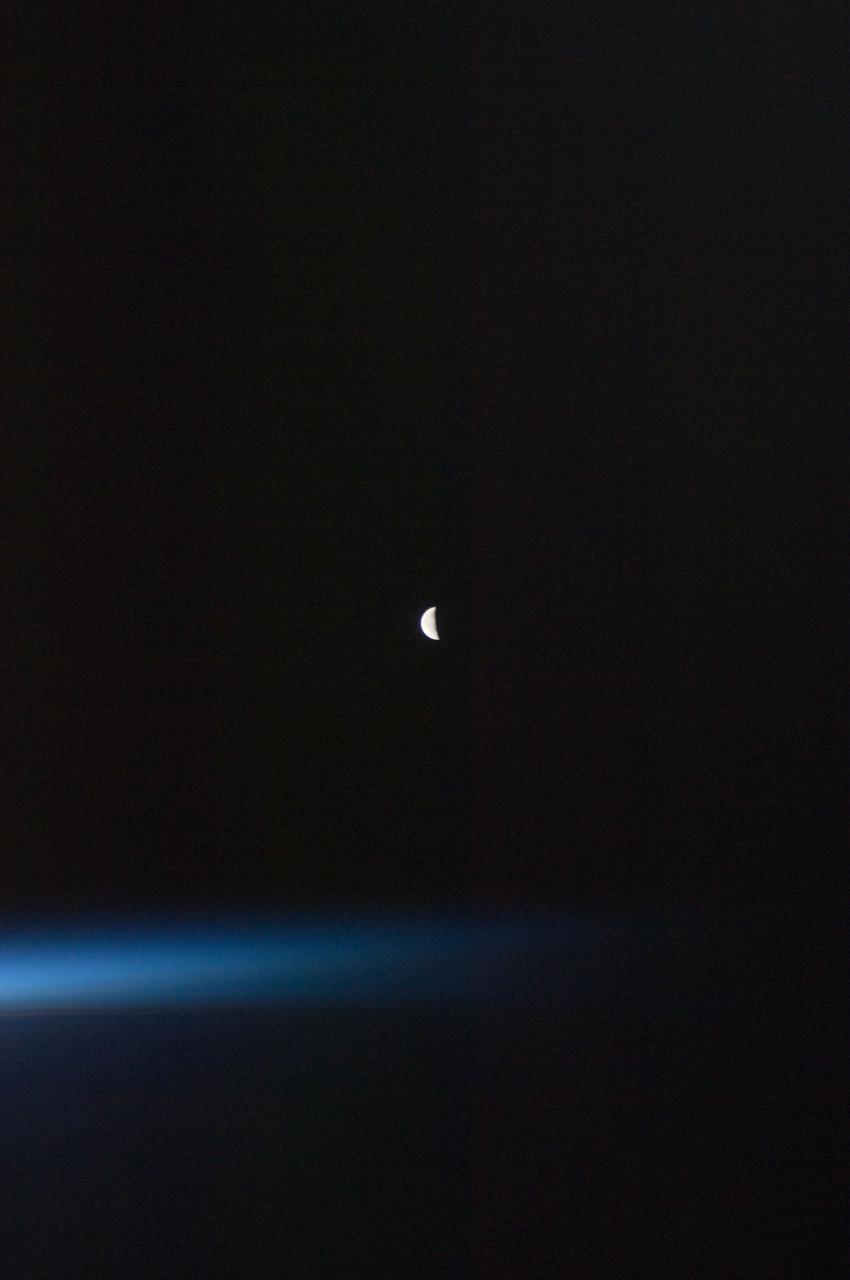
ISS028-E-030098 (22 Aug. 2011) --- A last quarter moon appears at the center of this night time photo taken from the International Space Station in Earth orbit. A thin line of the planet's atmosphere is the other illuminated object in the picture.
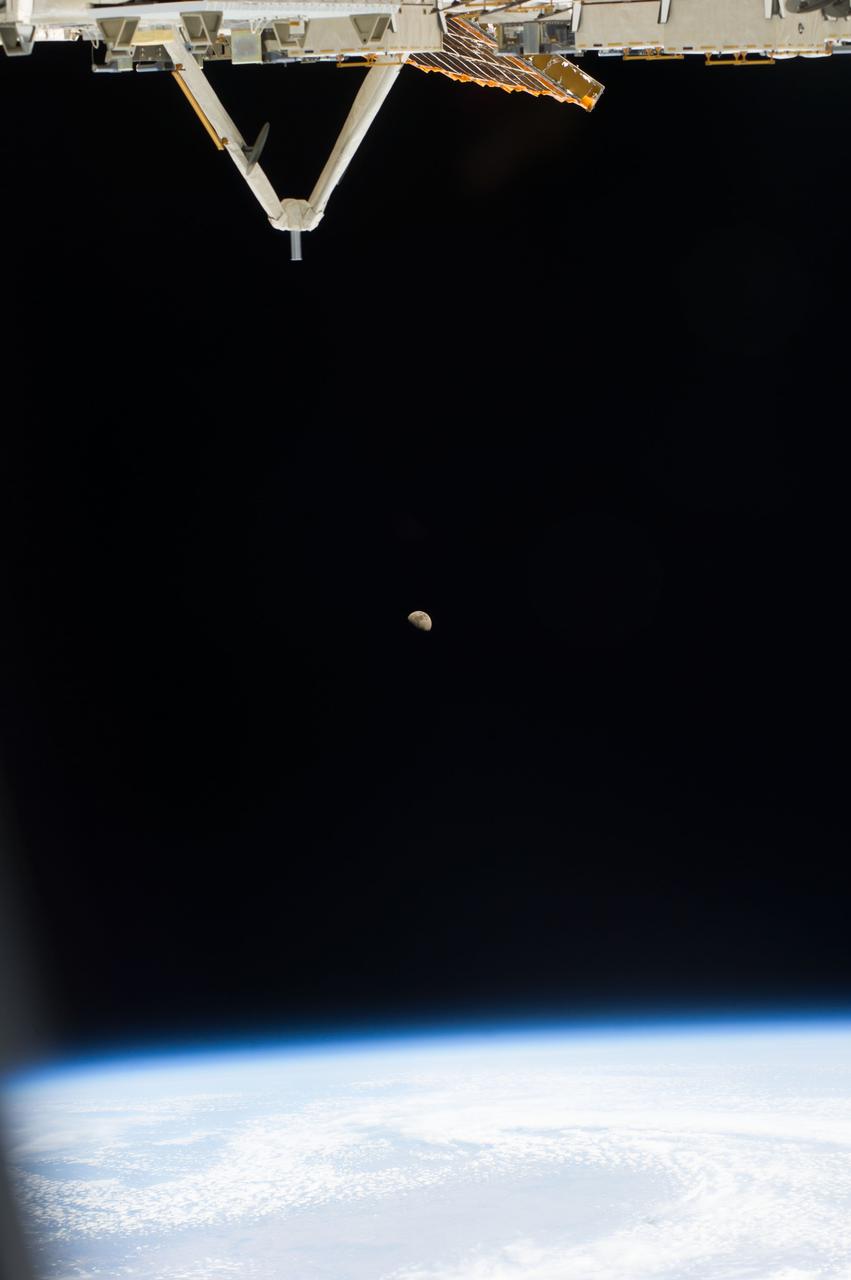
ISS039-E-019519 (8 May 2014) --- With hardware belonging to the Japan Aerospace Exploration Agency in the foreground, the moon appears in the center of this frame photographed by one of the Expedition 39 crew members aboard the Earth-orbiting International Space Station on May 8, 2014.

ISS031-E-028009 (6 May 2012) --- The International Space Station's Cupola was photographed in a position that Earth-dwellers refer to as "upside down" in this image photographed by one of the Expedition 31 crew members. The moon is partially obscured by the Japanese Experiment Module's exposed facility in upper left.
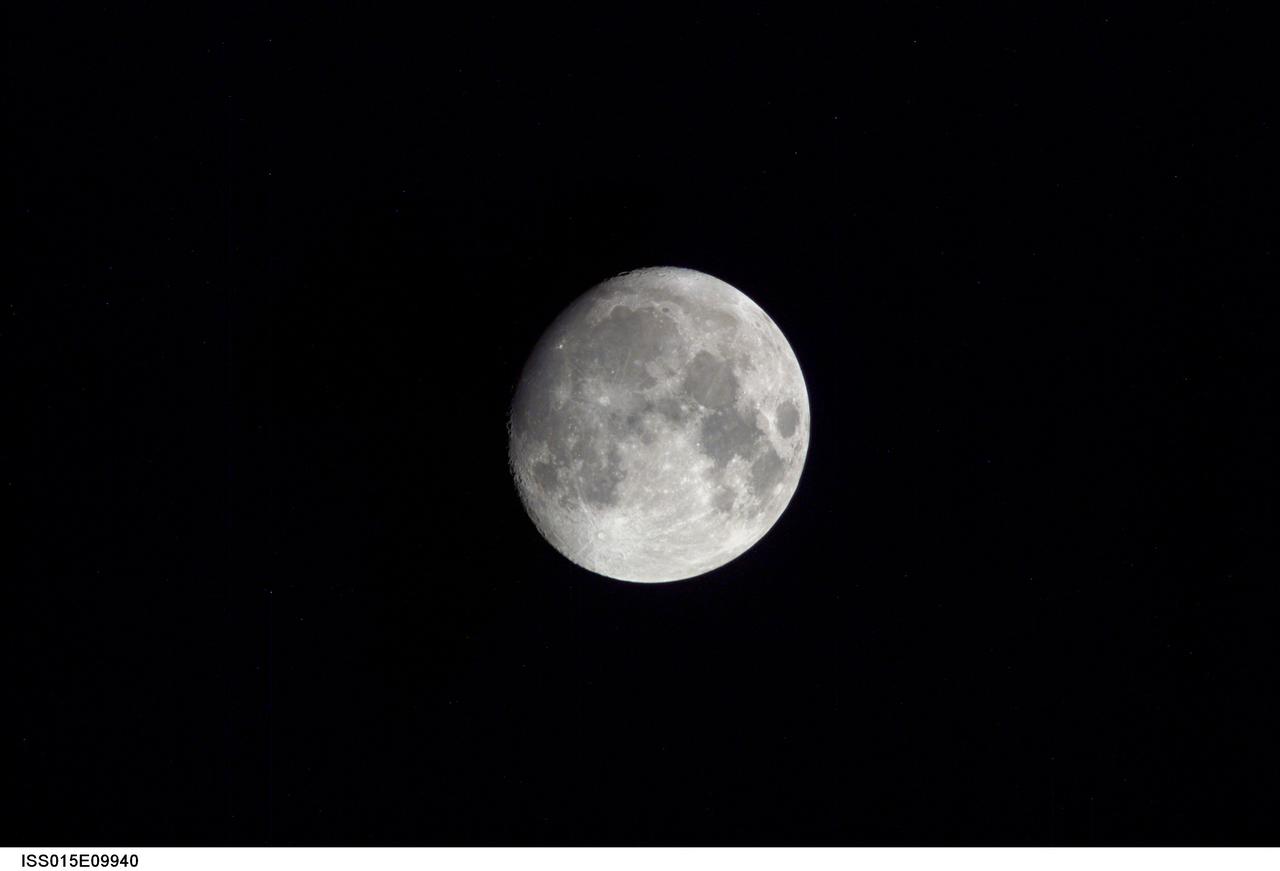
ISS015-E-09940 (29 May 2007) --- A gibbous moon is featured in this image photographed by an Expedition 15 crewmember on the International Space Station.
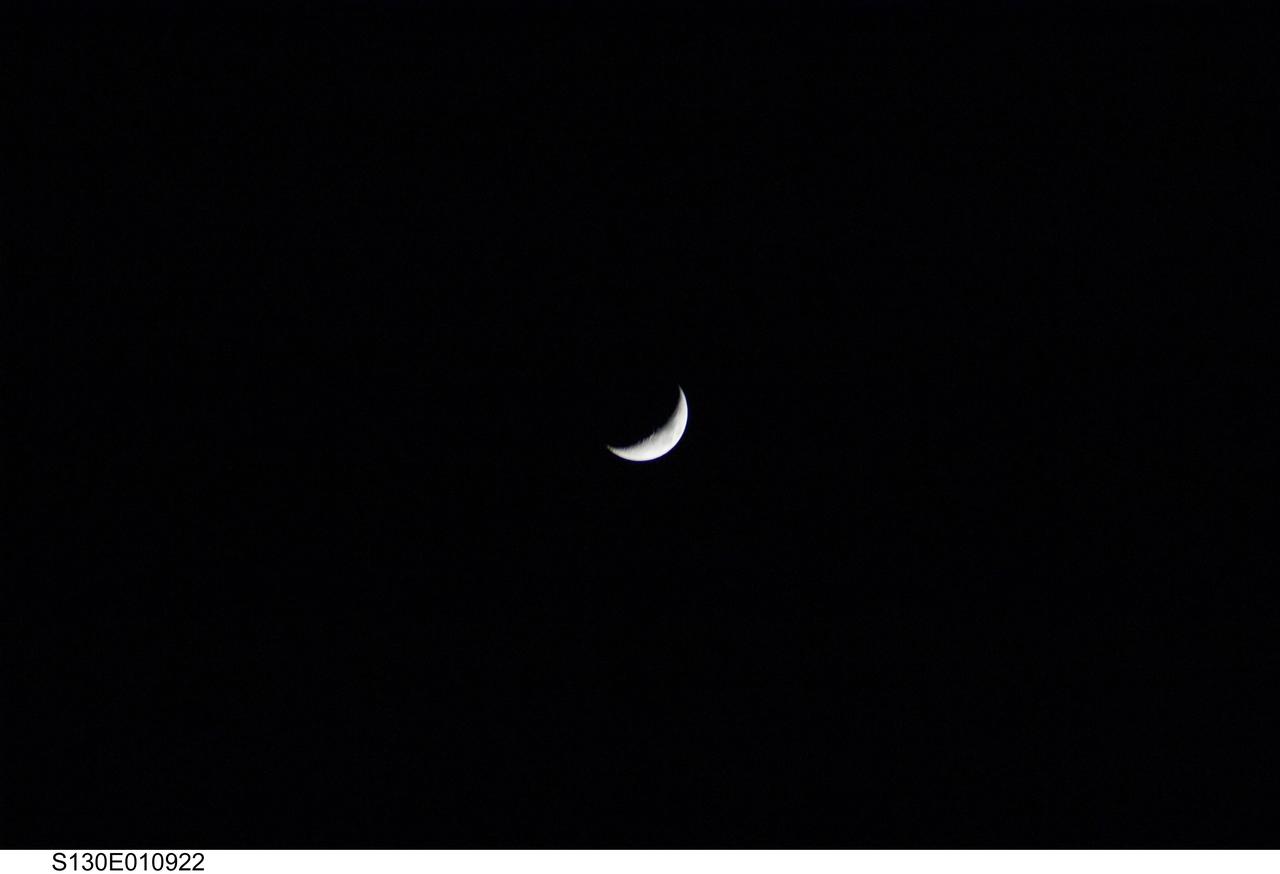
S130-E-010922 (20 Feb. 2010) --- After several days of seeing out-the-window close-up views of the various elements of the International Space Station, the STS-130 crewmembers aboard the space shuttle Endeavour aimed one of their cameras at the waxing crescent moon following separation from the orbital outpost. Eleven astronauts and cosmonauts worked together to continue construction on the orbital outpost and perform other tasks in tandem.

ISS028-E-030096(22 Aug. 2011) --- A last quarter moon appears at the center of this night time photo taken from the International Space Station in Earth orbit on Aug. 22, 2011. A thin line of the planet's atmosphere and a small group of clouds are the other illuminated objects in the picture.
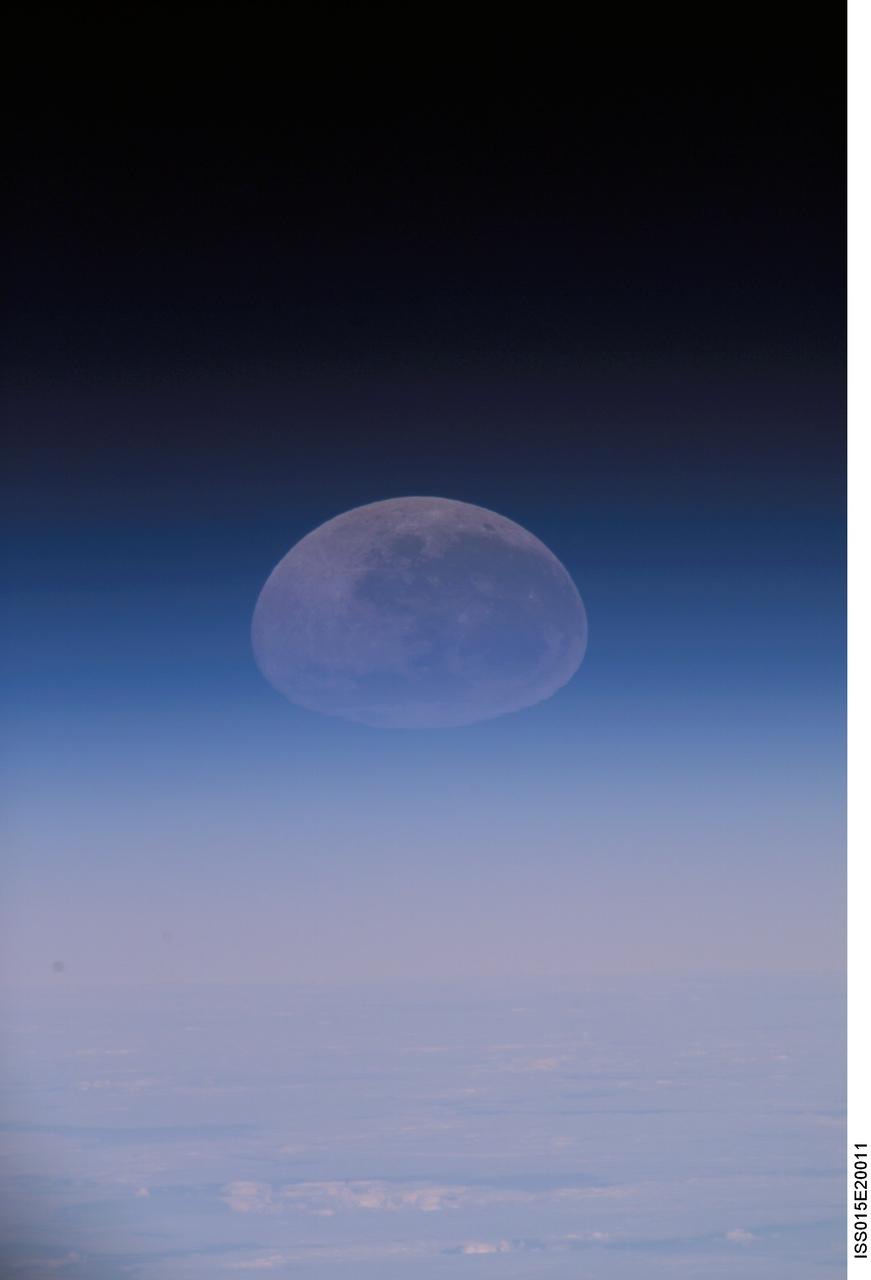
ISS015-E-20011 (30 July 2007) --- A distorted view of a full moon intersecting Earth's horizon is featured in this image photographed by an Expedition 15 crewmember on the International Space Station.
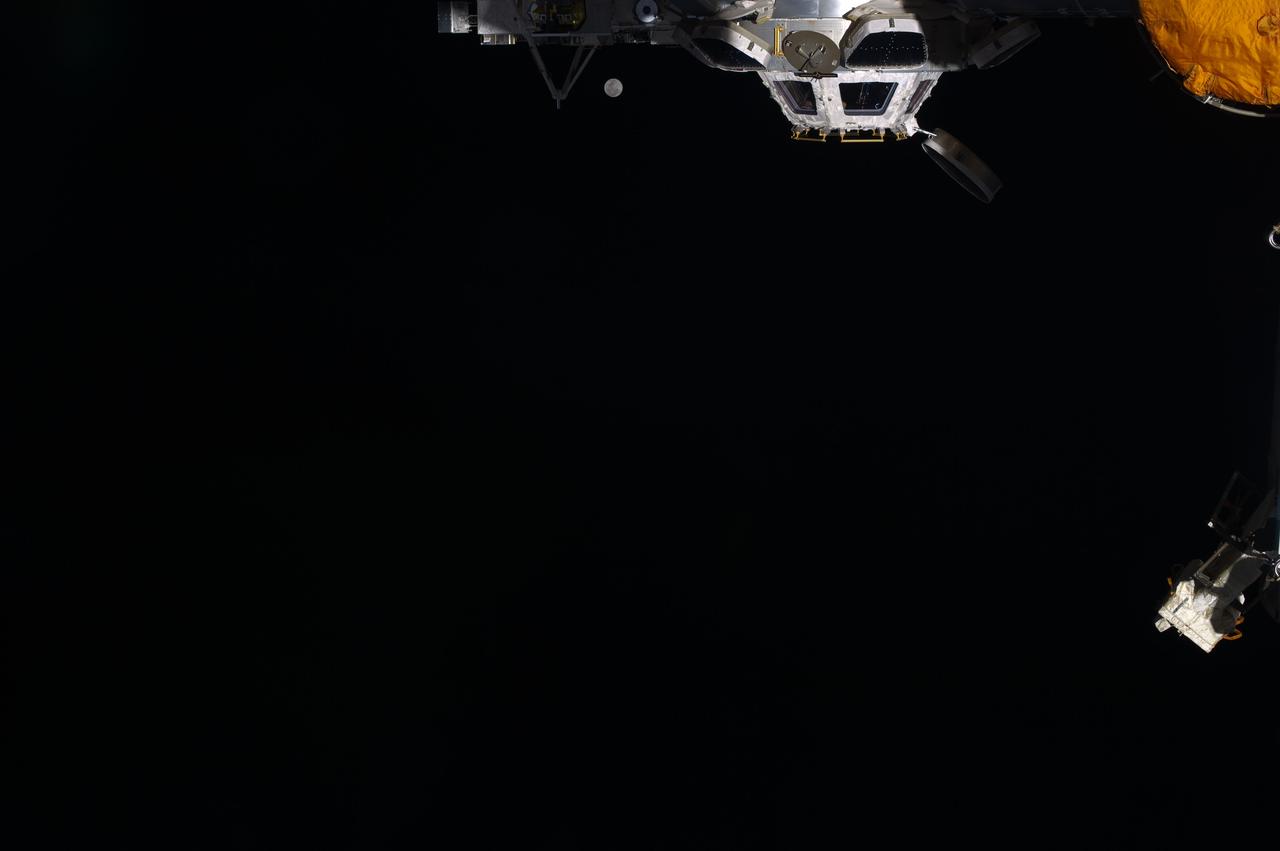
ISS031-E-018530 (6 May 2012) --- While most of the world's population had no trouble at all finding the full moon on the weekend of May 5-6, one has to look really closely to spot Earth's satellite in the space traveler's eye-view aboard the International Space Station, some 240 miles above Earth. The moon can be seen just to the left of the station's Cupola and just to the right of one of its solar array panels. While the photo was recorded around midnight on May 5 in the central daylight time zone, it was already early May 6 GMT. Three Expedition 31 crew members await the arrival of three additional crewmates in a little more than a week.
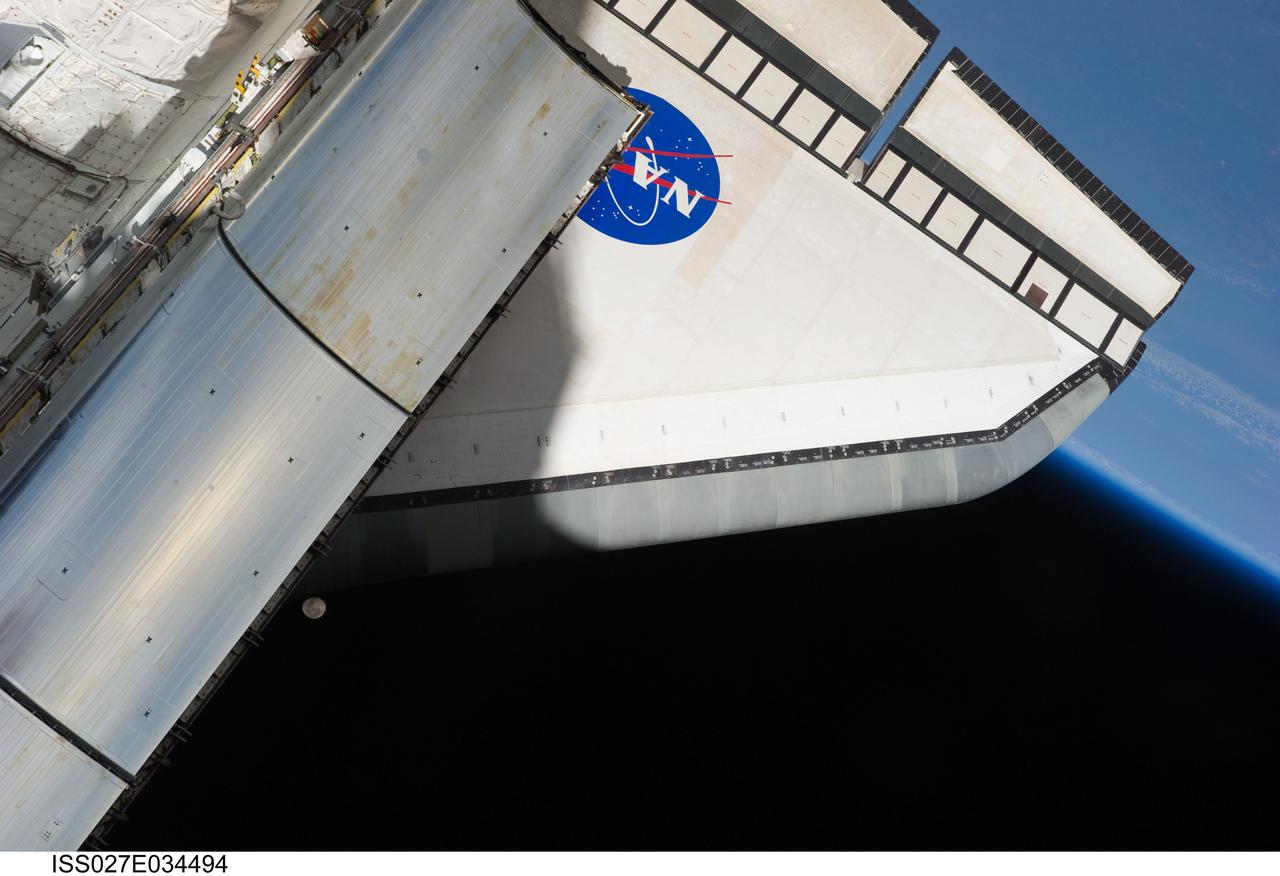
ISS027-E-034494 (19 May 2011) --- Backdropped against a scene showing Earth's horizon and the blackness of space, this image featuring the aft part of the space shuttle Endeavour was photographed by an Expedition 27 crew member aboard the International Space Station while the two spacecraft were docked. Twelve astronauts and cosmonauts were busy aboard the joint complex, moving hardware and preparing for a May 20 space walk.
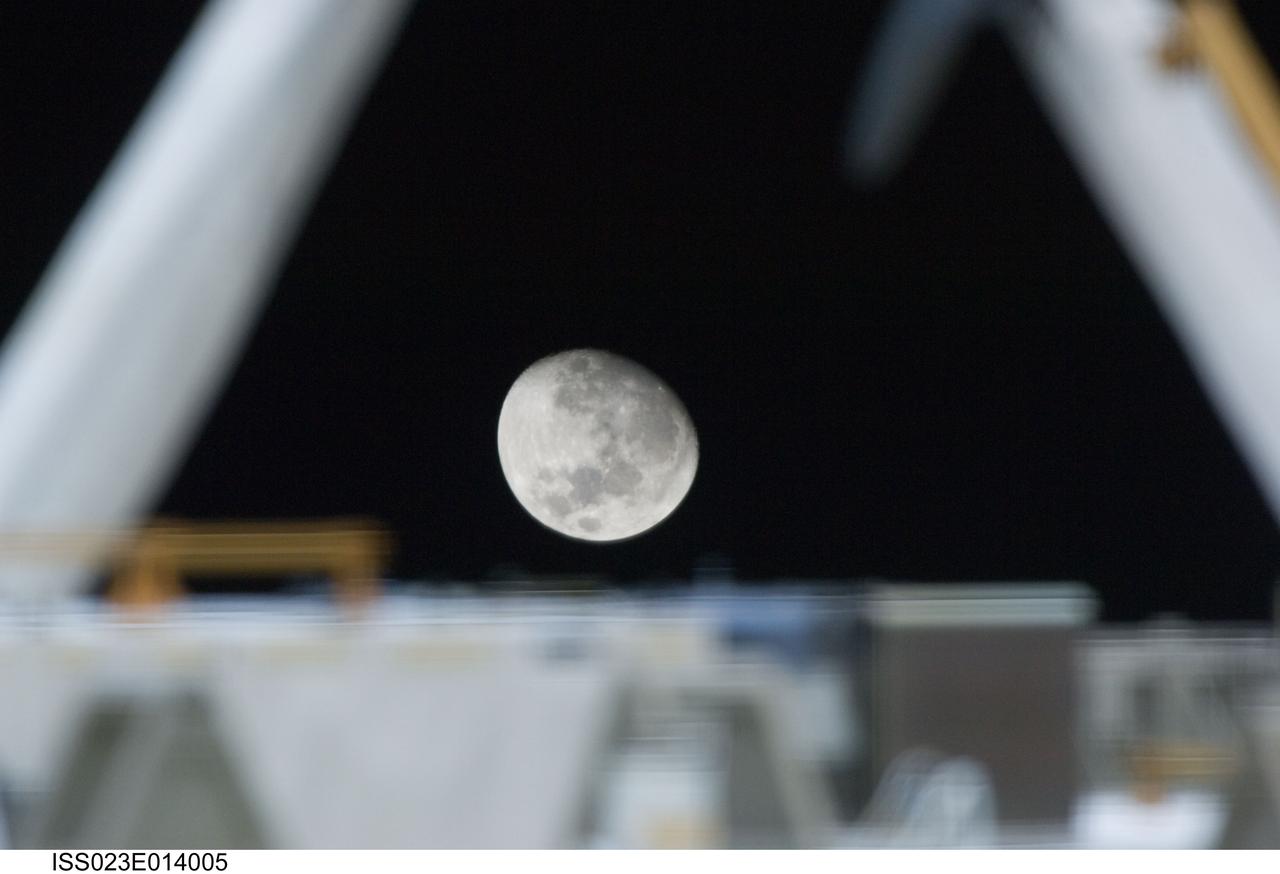
089 nature moon 237

ISS015-E-20485 (30 July 2007) --- A distorted view of a full moon intersecting Earth's horizon is featured in this image photographed by an Expedition 15 crewmember on the International Space Station.
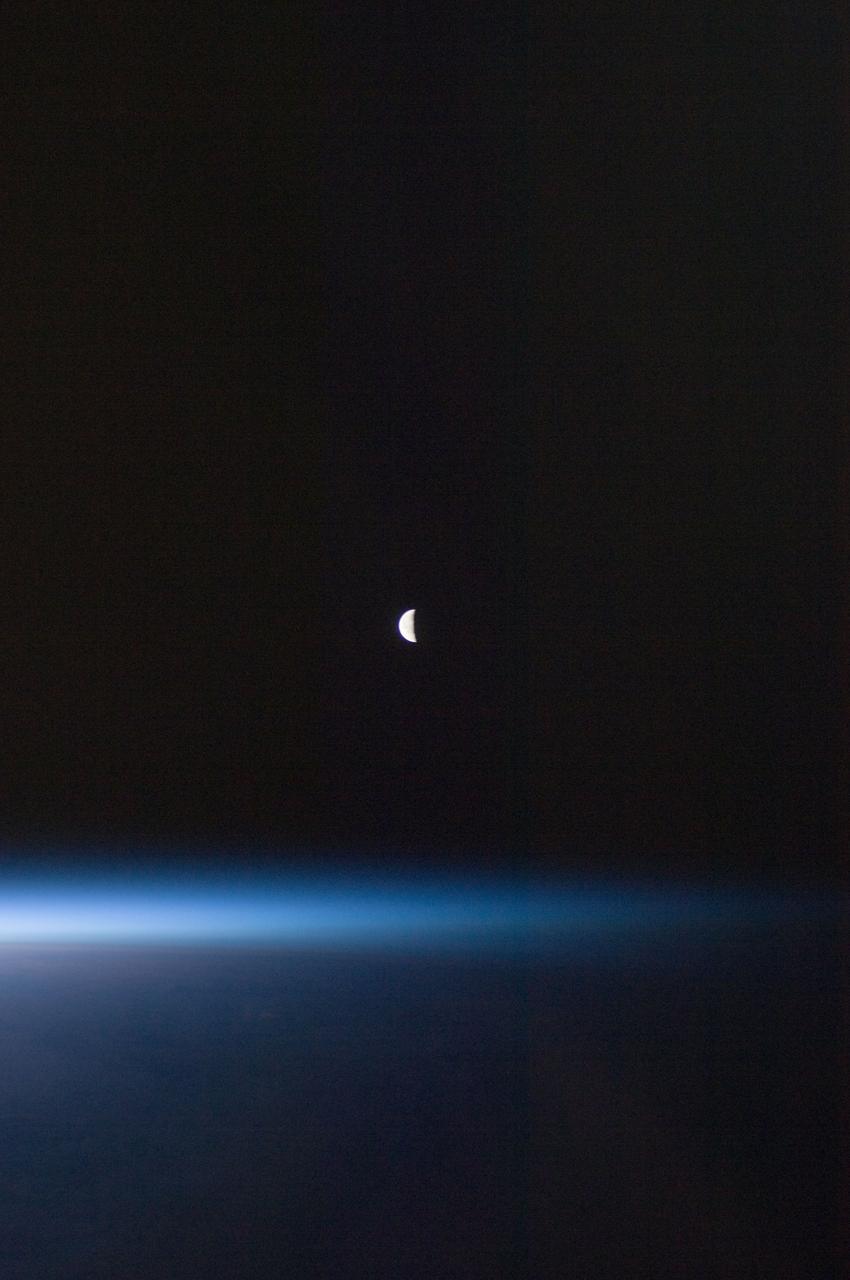
ISS028-E-030097 (22 Aug. 2011) --- A last quarter moon appears at the center of this night time photo taken from the International Space Station in Earth orbit. A thin line of the planet's atmosphere is the other illuminated object in the picture.
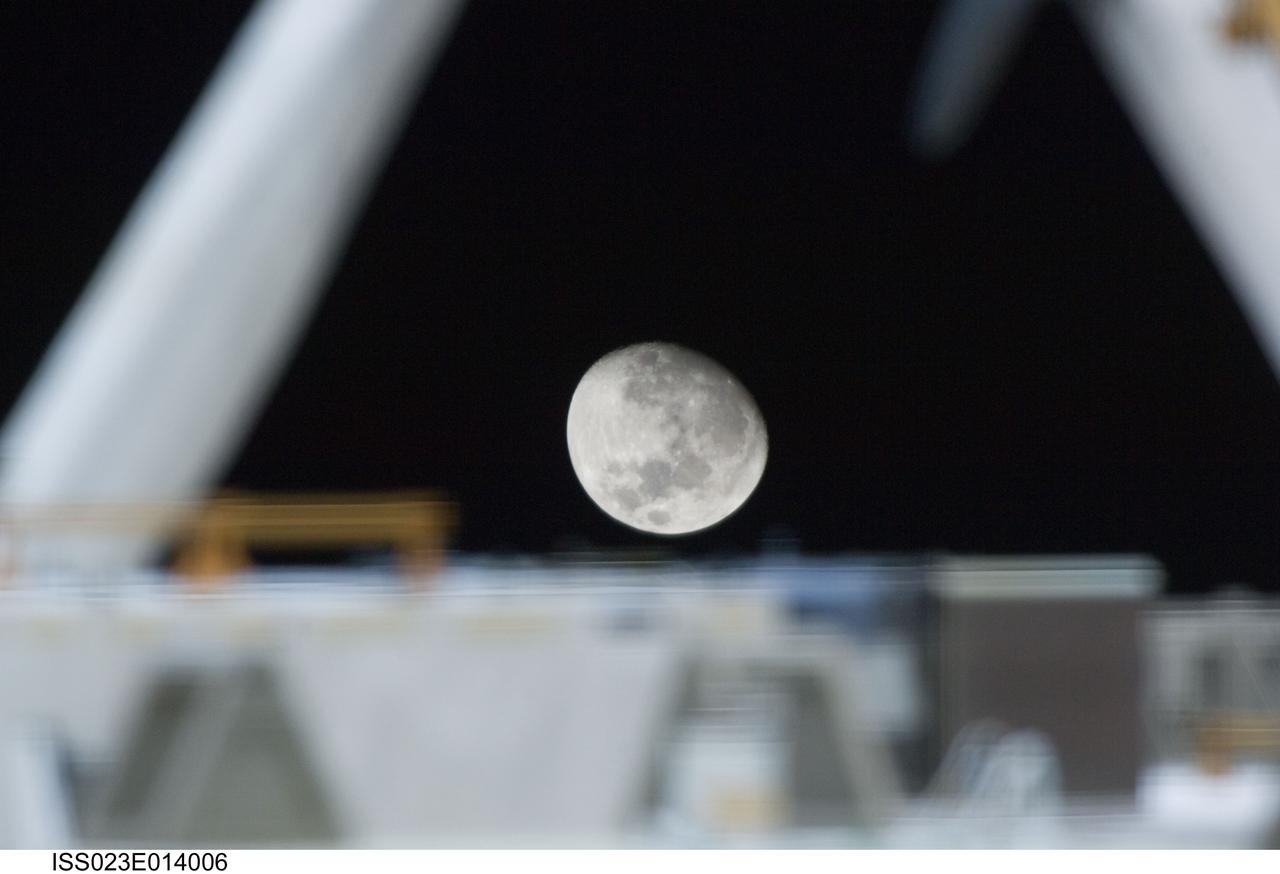
089 nature moon 237
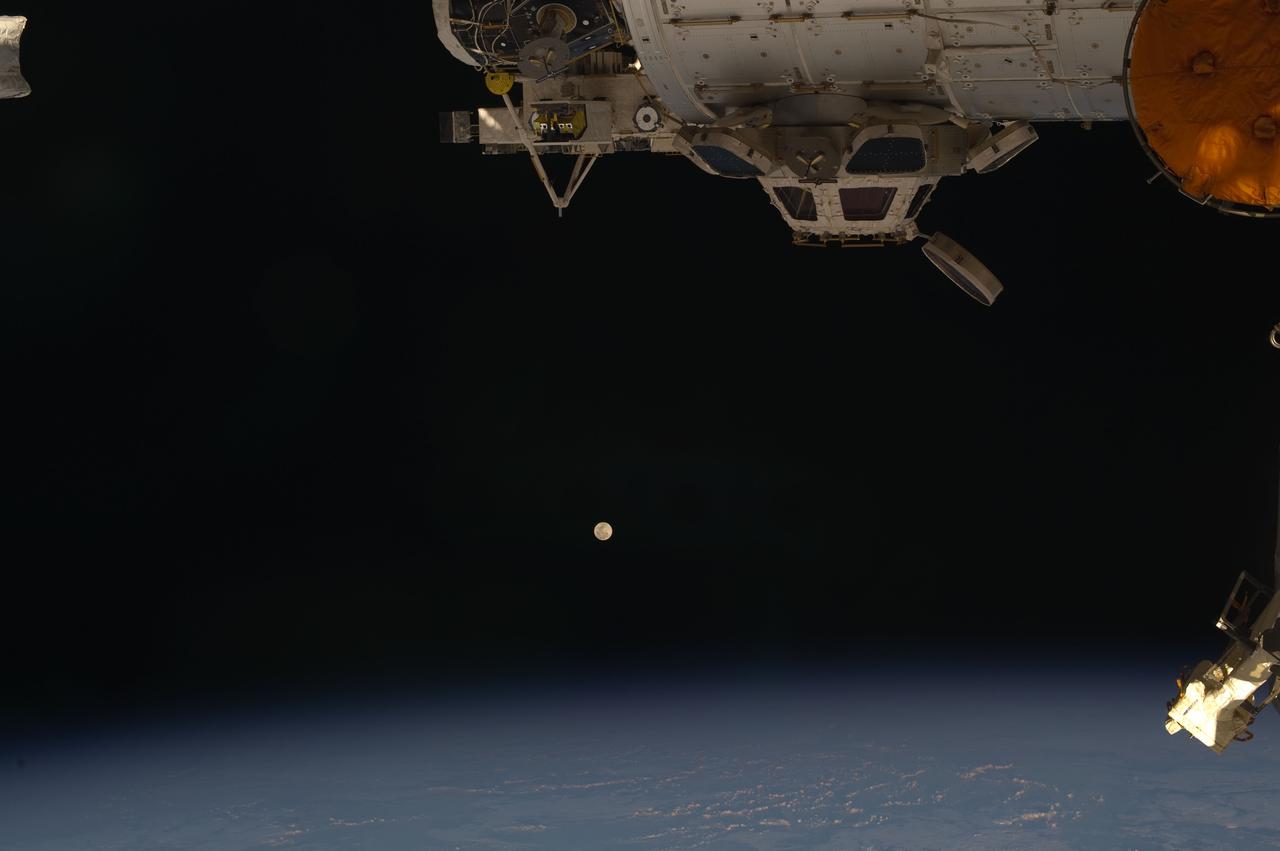
ISS031-E-018154 (6 May 2012) --- While most of the world's population had no trouble at all finding the full moon on the weekend of May 5-6, one has to look closely to recognize Earth's satellite just below center frame in the space traveler's eye-view aboard the International Space Station, some 240 miles above Earth. The station's cupola can be seen in upper portion of the image. While the photo was recorded around midnight on May 5 in the central daylight time zone, it was already early May 6 GMT. Three Expedition 31 crew members await the arrival of three additional crewmates in a little more than a week.
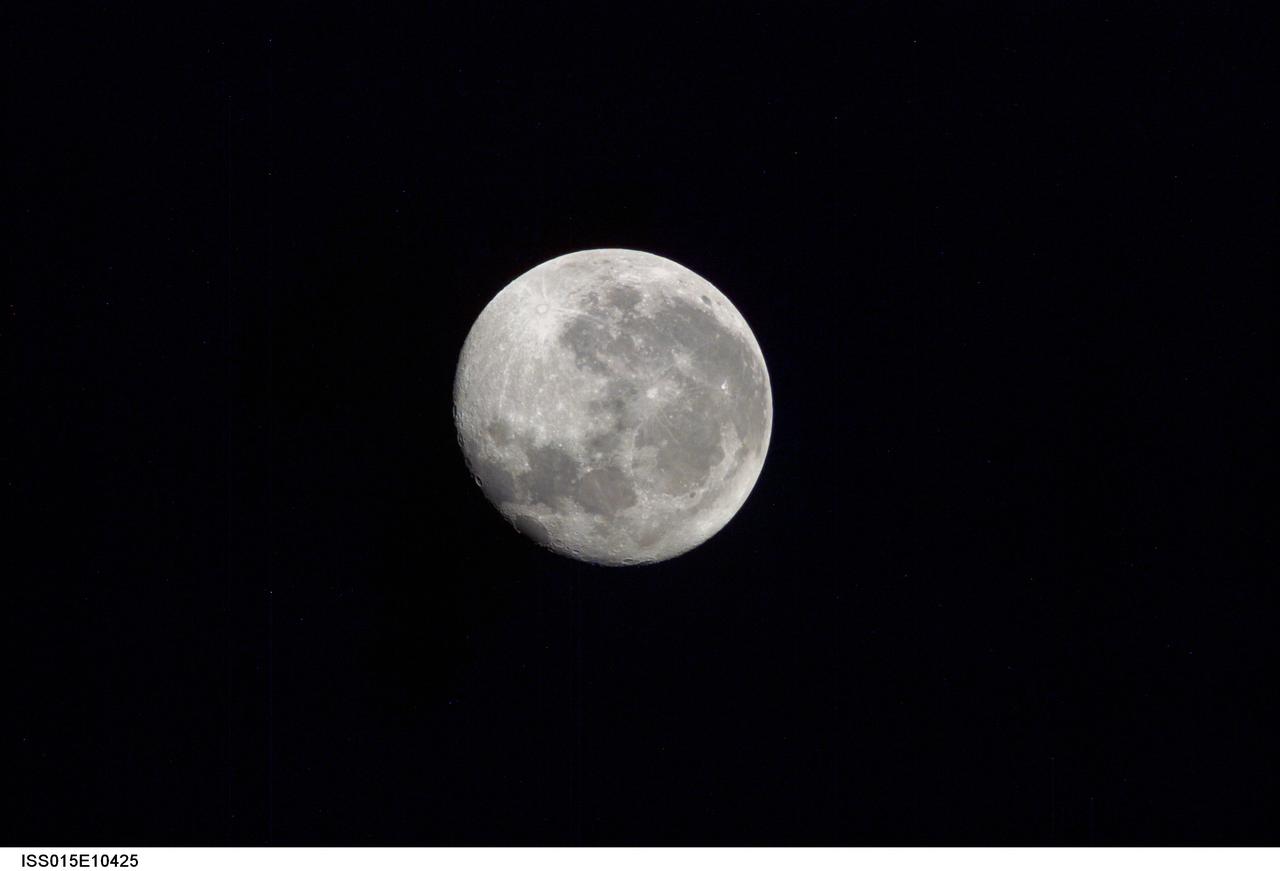
ISS015-E-10425 (2 June 2007) --- A full moon is featured in this image photographed by an Expedition 15 crewmember on the International Space Station.
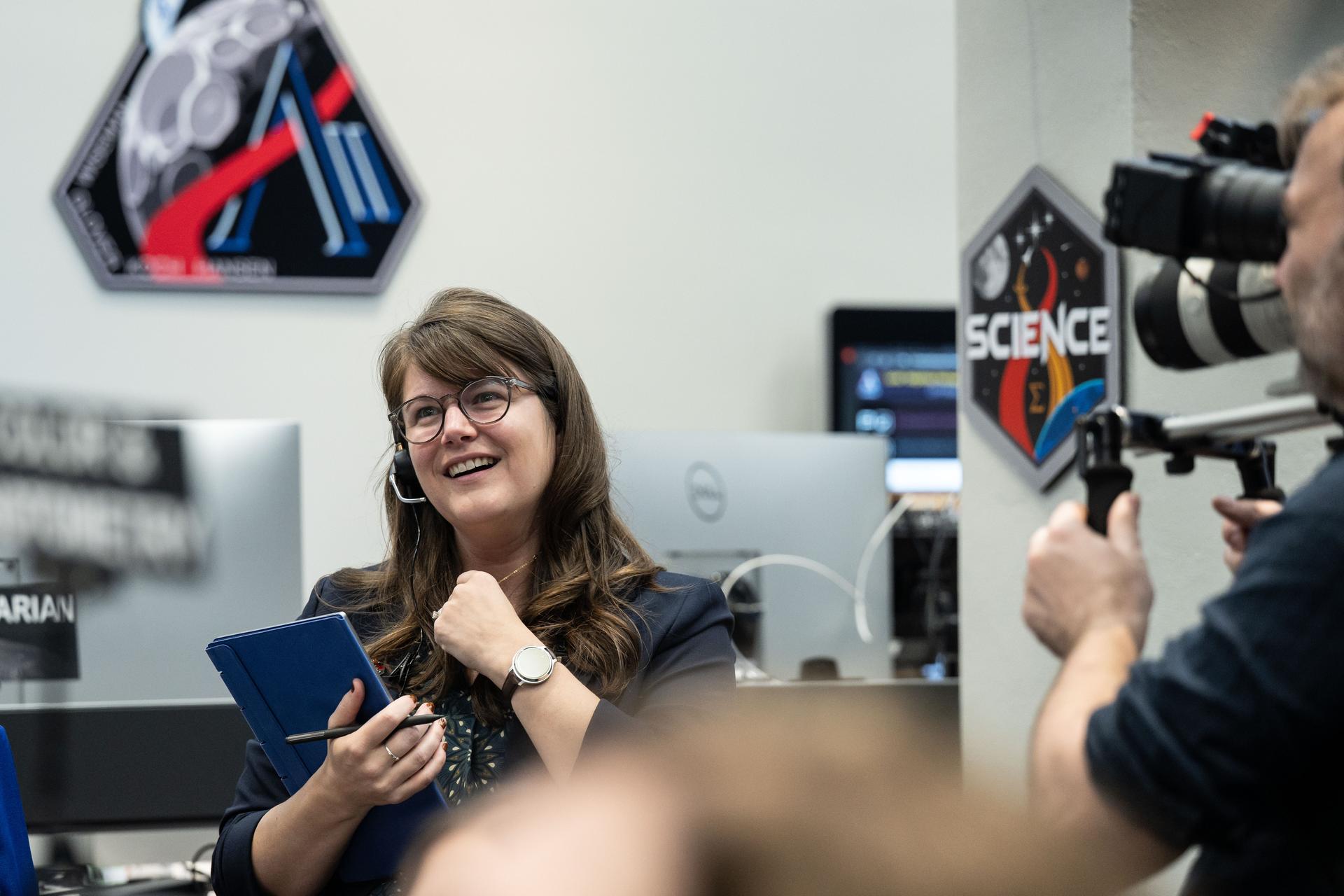
Artemis II deputy lunar science lead, Marie Henderson, reacts to the astronauts' verbal observations of the Moon during their flyby on April 6, 2026. Along with other lunar science team members, Ewing helped train the crew in geology both in the classroom and in the field. The science team also built the lunar targeting plan that, like an International Space Station spacewalk plan, provides strong, detailed observation guidance, plus flexibility for the crew to make decisions based on what they’re seeing and experiencing in real time. The science team had many moments of celebration during the lunar flyby as the astronauts took images of the Moon and provided verbal descriptions of what they were seeing. This type of information reveals the geologic history of an area and will be critical to collect when future Artemis astronauts explore the Moon's surface. Credits: NASA/Luna Posadas Nava
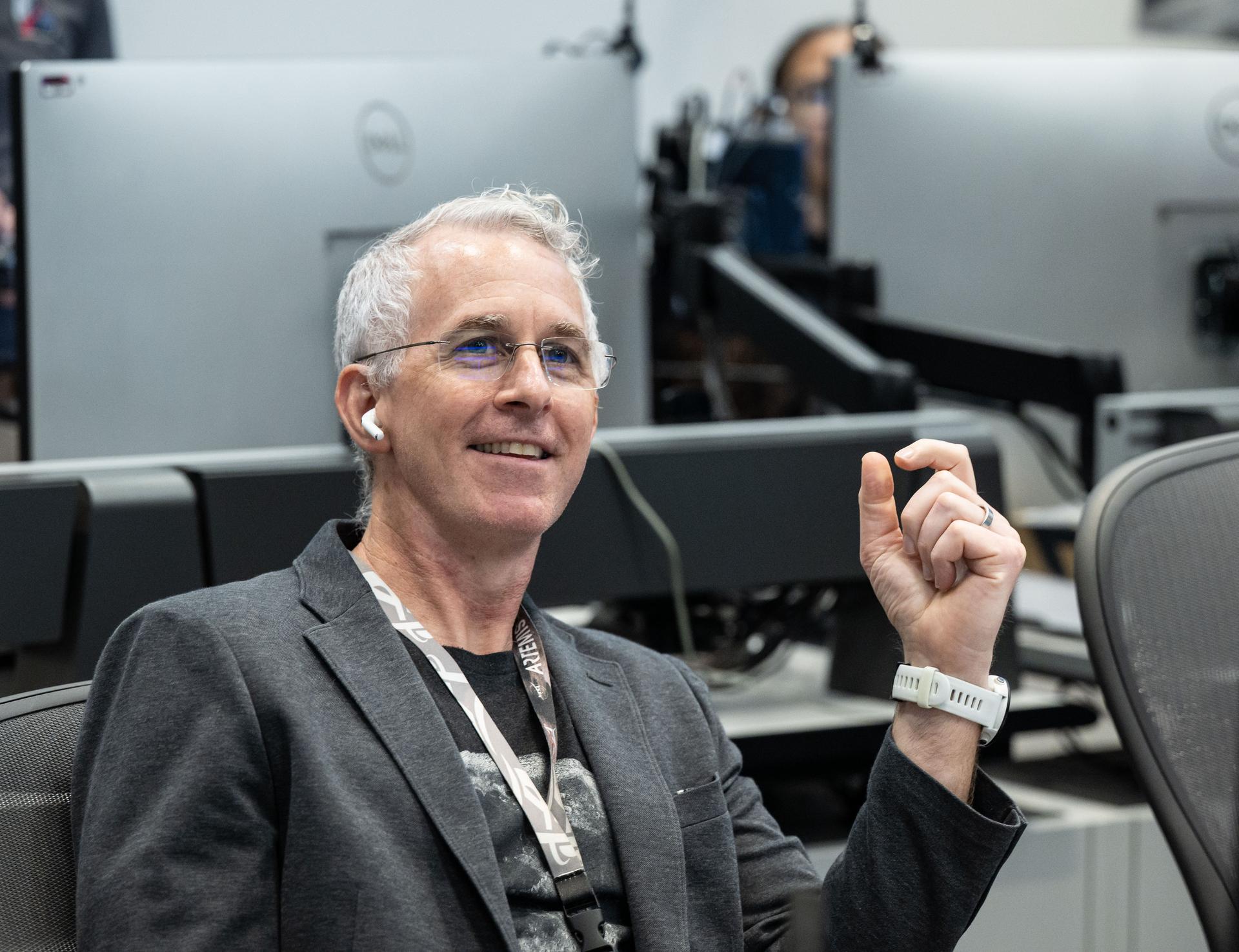
Artemis II lunar science team member, Ryan Ewing, reacts to the astronauts' verbal observations of the Moon during their flyby on April 6, 2026. Along with other lunar science team members, Ewing helped train the crew in geology both in the classroom and in the field. The science team also built the lunar targeting plan that, like an International Space Station spacewalk plan, provides strong, detailed observation guidance, plus flexibility for the crew to make decisions based on what they’re seeing and experiencing in real time. The science team had many moments of celebration during the lunar flyby as the astronauts took images of the Moon and provided verbal descriptions of what they were seeing. This type of information reveals the geologic history of an area and will be critical to collect when future Artemis astronauts explore the Moon's surface. Credits: NASA/Luna Posadas Nava
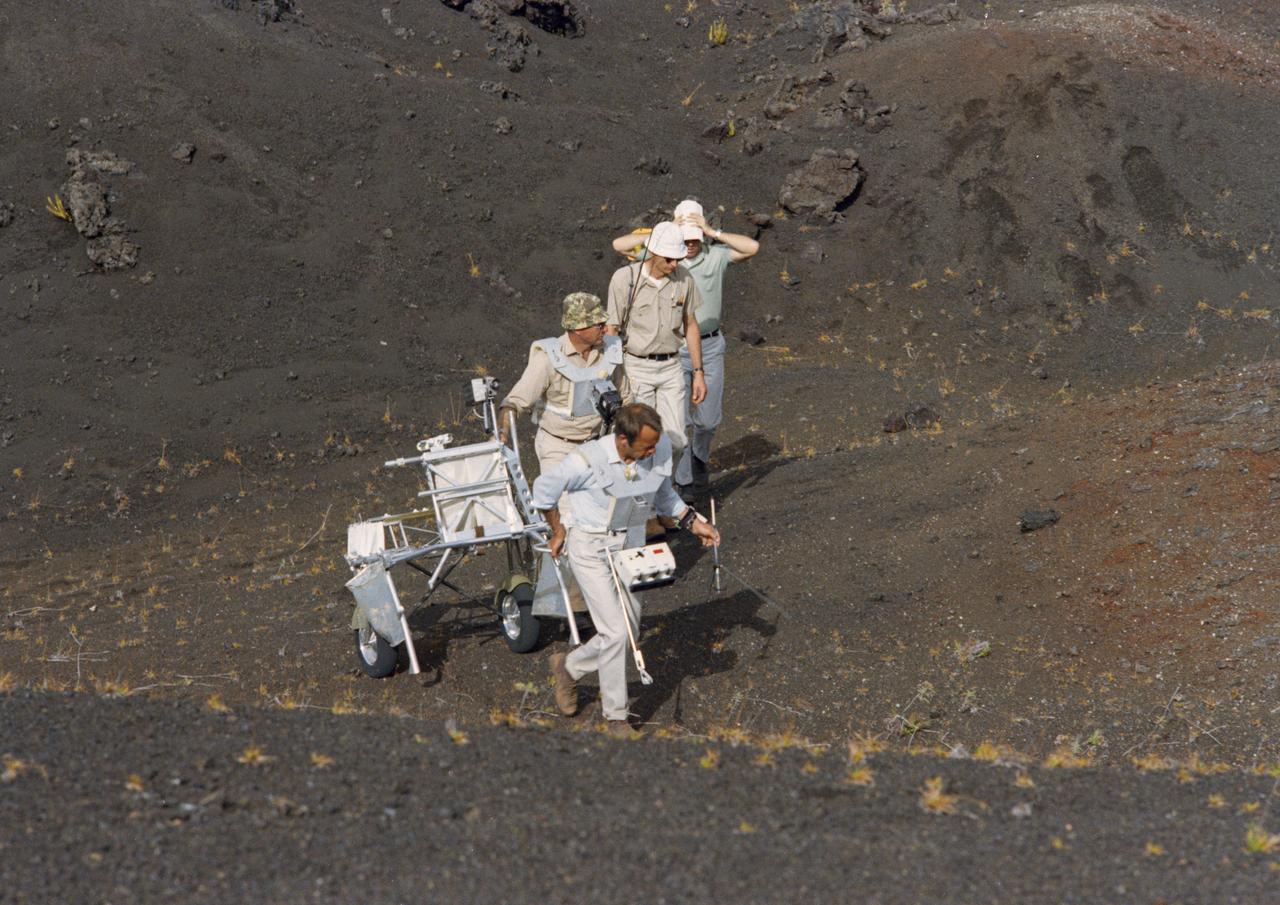
S70-34416 (April 1970) --- At Kapoho, Hawaii, two Apollo 14 prime crew members take part in a simulation of a lunar traverse while two persons from the Manned Spacecraft Center (MSC) observe. The prime and backup crews of the Apollo 14 mission were in Hawaii for several days in April 1970 to visit various sites having features similar to those on the lunar surface. Astronaut Alan B. Shepard Jr. (front), prime crew commander, carries a gnomon (from the Apollo Lunar Hand Tools - ALHT) in his left hand while pulling the Modular Equipment Transporter (MET) with his right hand. He is followed by astronaut Edgar D. Mitchell, prime lunar module pilot, with a Hasselblad lunar surface camera. Michael C. McEwen (second from rear) of the Geology Branch, Lunar and Earth Sciences Division, MSC; and Major William J. Wood of the Lunar Surface Operations Office observe the training activity. Photo credit: NASA
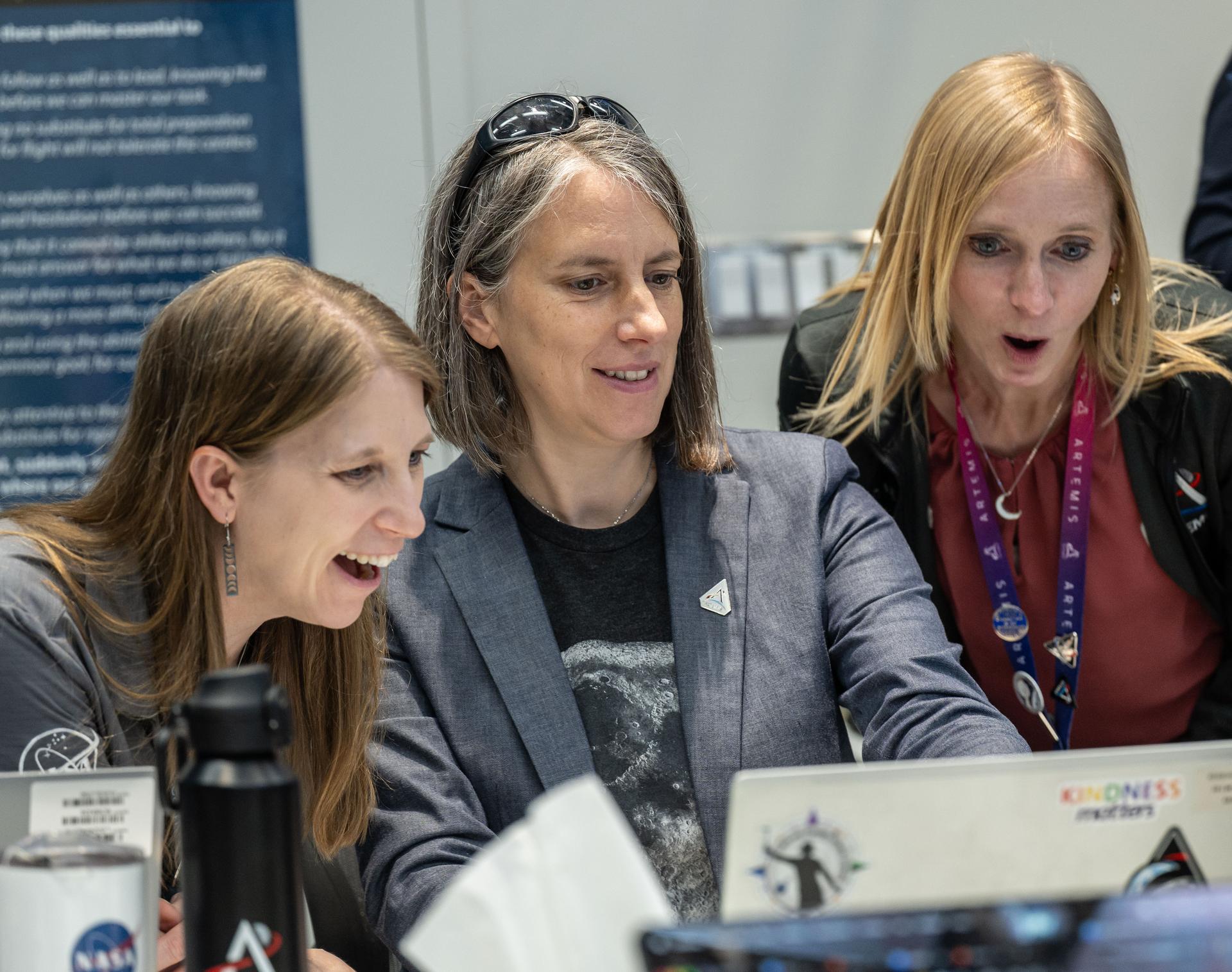
Artemis II lunar science team members, from left, Debra Needham, Juliane Gross, and Ryan Watkins, react to the astronauts' verbal observations of the Moon during their flyby on April 6, 2026. The science team trained the astronauts in geology and observation, both in the classroom and in the field. The team also built the lunar targeting plan that, like an International Space Station spacewalk plan, provides strong, detailed observation guidance, plus flexibility for the crew to make decisions based on what they’re seeing and experiencing in real time. The science team had many moments of celebration during the lunar flyby as the astronauts took images of the Moon and provided verbal descriptions of what they were seeing. This type of information reveals the geologic history of an area and will be critical to collect when future Artemis astronauts explore the Moon's surface. Credits: NASA/Luna Posadas Nava

Artemis II lunar science team member, Ariel Deutsch, reacts to the astronauts' verbal observations of the Moon during their flyby on April 6. The science team has spent years training the astronauts in geology and observation, both in the classroom and in the field. They also built the lunar targeting plan that, like a spacewalk plan, provides strong, detailed observation guidance, plus flexibility for the crew to make decisions based on what they’re seeing and experiencing in real time. The science team had many moments of celebration during the lunar flyby as the astronauts took pictures of the Moon and provided verbal descriptions of what they were seeing. This type of information reveals the geologic history of an area and will be critical to collect when future Artemis astronauts explore the Moon's surface. Credits: NASA/Luna Posadas Nava
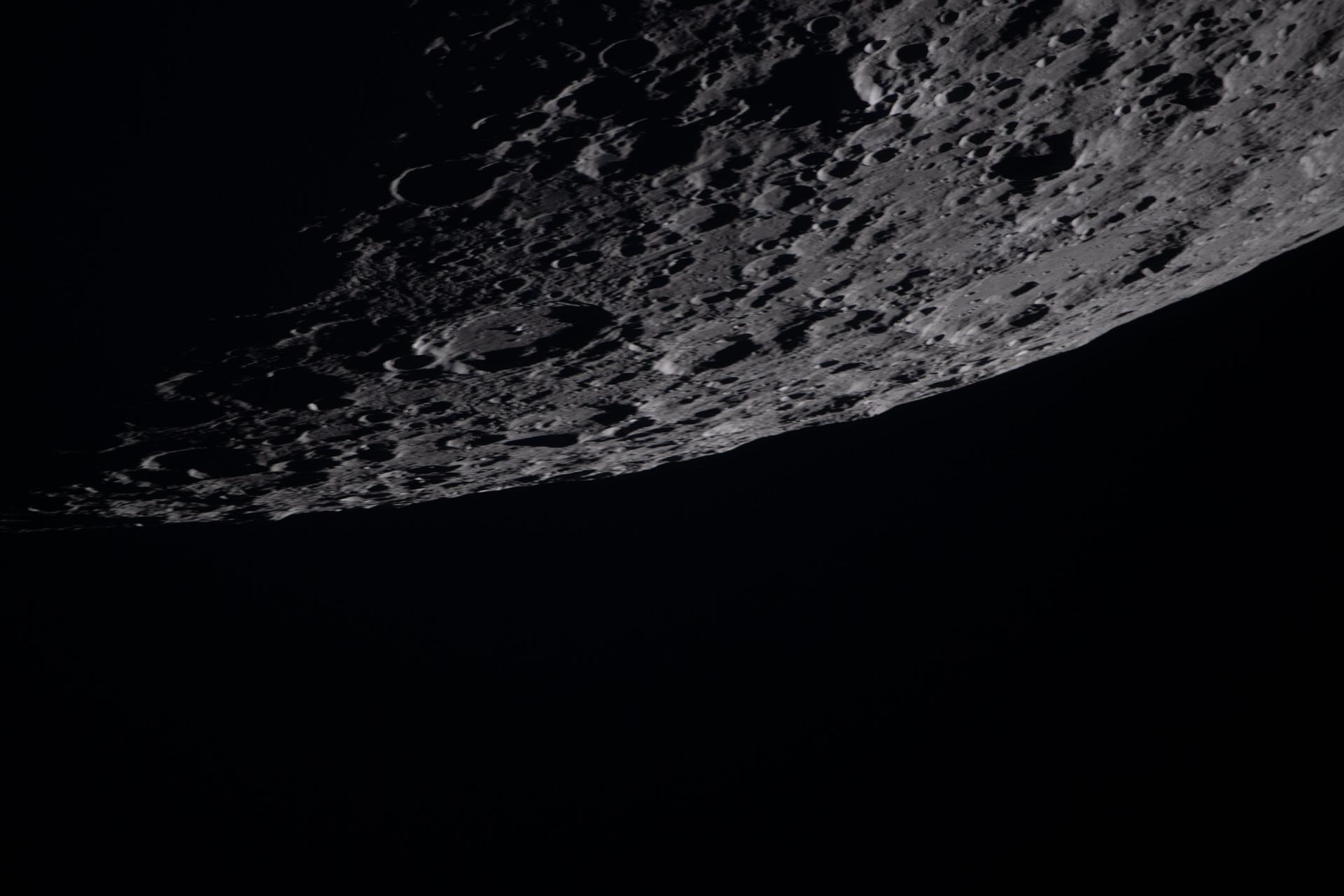
art002e020904 (April 6, 2026) – As the Artemis II crew went around the Moon, during one of the observation periods, the crew captured the details of the lunar terrain, showcasing the rugged craters, deep basins, and the black expanse of space below. Credit: NASA

art002e024232 (April 6, 2026) - This photo of the Moon was captured by the Artemis II crew aboard the Orion spacecraft a few hours before the lunar flyby. During the flyby, the crew captured critical science observations as they traveled around the farside of the Moon, traveling farther than any humans ever before.

art002e014198 (April 6, 2026) – NASA astronaut and Artemis II Commander Reid Wiseman taking a moment during the seven-hour lunar observation period where the crew reported to the ground team their observations including color nuances, which will help enhance scientific understandings of the Moon. At the beginning of the window, as Orion approaches the Moon on the near side, the side we can see from Earth, people in parts of the eastern hemisphere can view some of the same features the astronauts will observe.
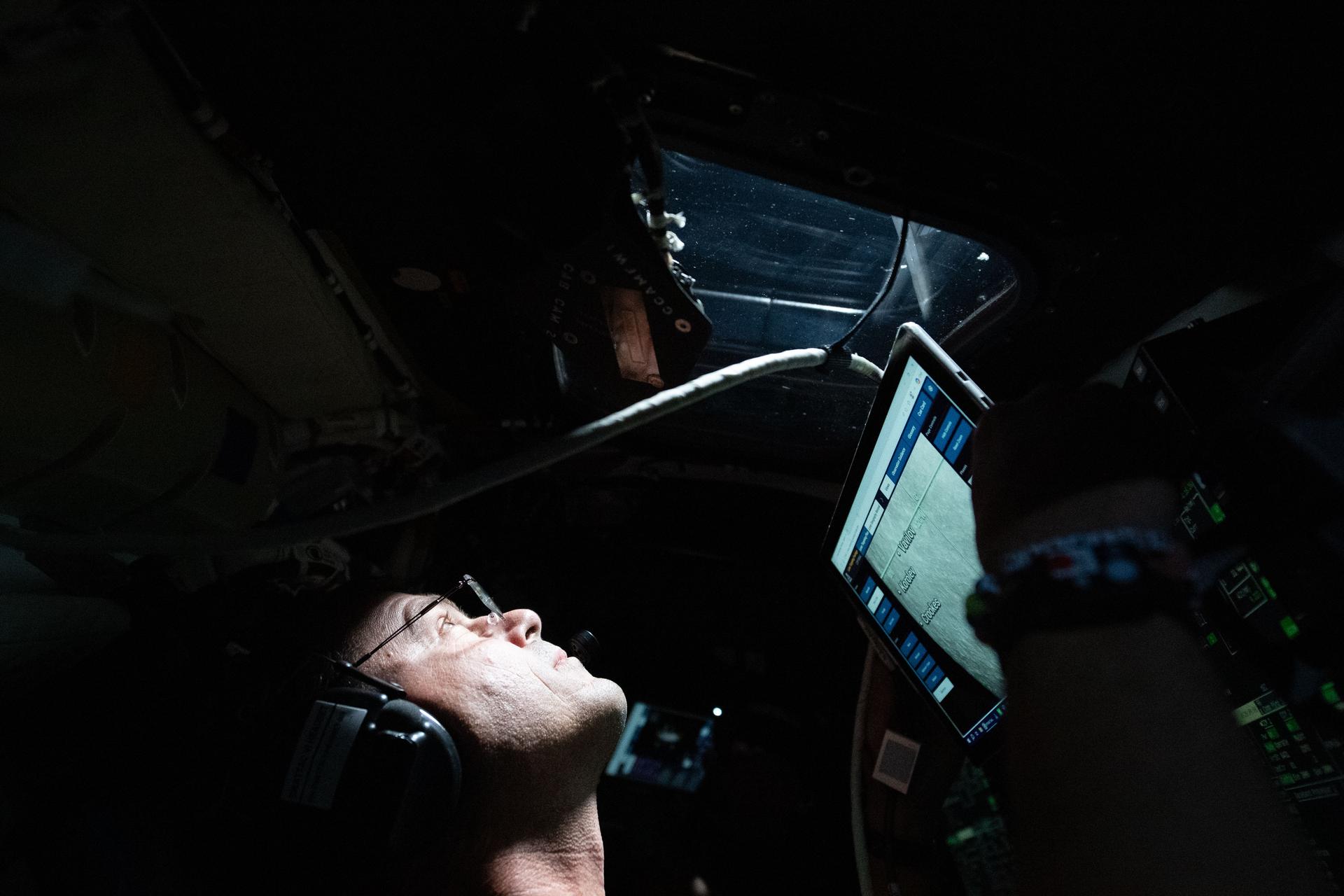
art002e014231 (April 6, 2026) – NASA astronaut and Artemis II Commander Reid Wiseman taking a moment during the seven-hour lunar observation period where the crew reported to the ground team their observations including color nuances, which will help enhance scientific understandings of the Moon. At the beginning of the window, as Orion approaches the Moon on the near side, the side we can see from Earth, people in parts of the eastern hemisphere can view some of the same features the astronauts will observe.
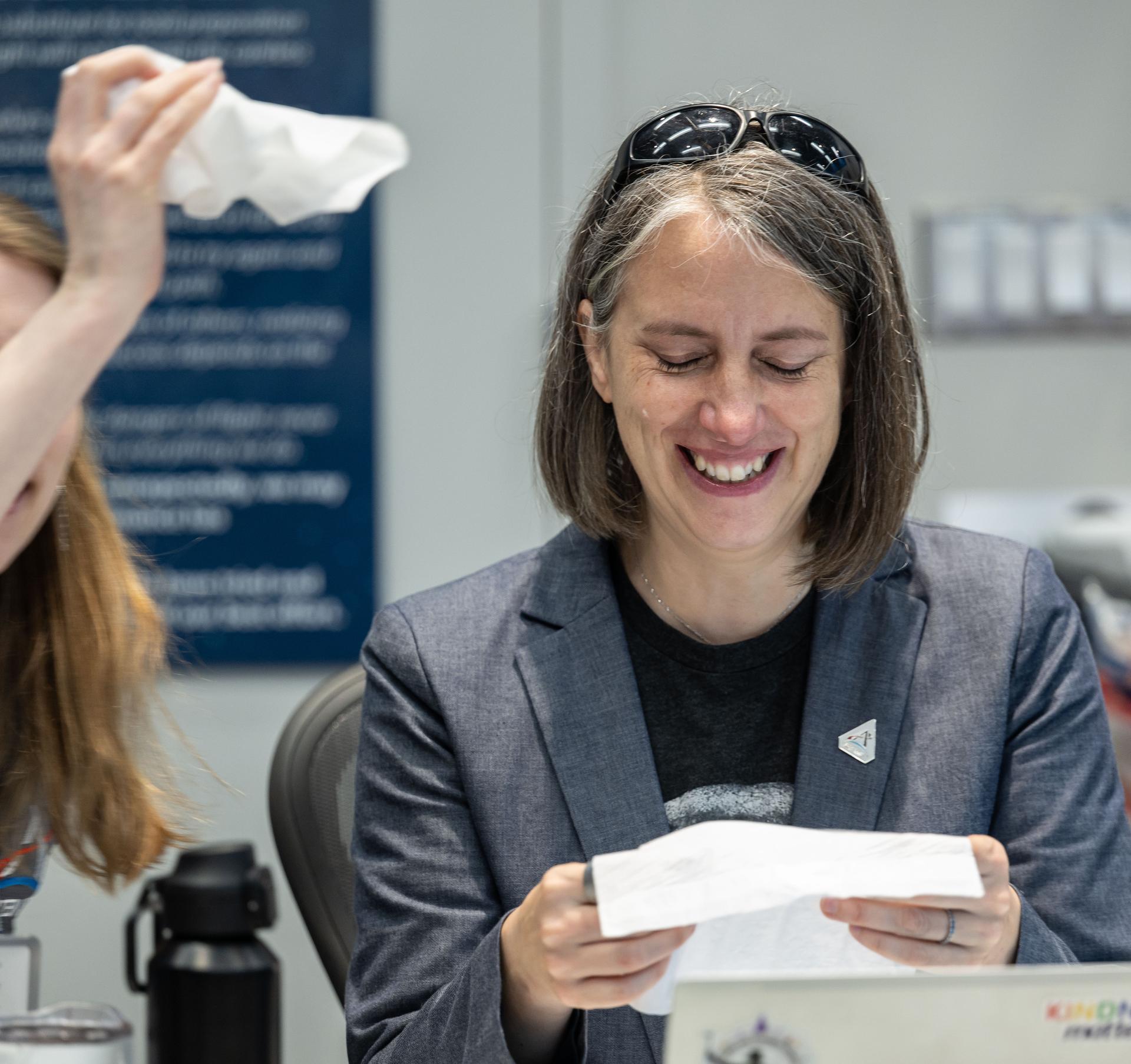
Artemis curation lead, Juliane Gross, reacts to the astronauts' verbal observations of the Moon during their flyby on April 6, 2026. Along with other members of the Artemis II lunar science team, Gross helped train the Artemis II crew in geology both in the classroom and in the field. The team also built the lunar targeting plan that, like an International Space Station spacewalk plan, provides strong, detailed observation guidance, plus flexibility for the crew to make decisions based on what they’re seeing and experiencing in real time. The science team had many moments of celebration during the lunar flyby as the astronauts took images of the Moon and provided verbal descriptions of what they were seeing. This type of information reveals the geologic history of an area and will be critical to collect when future Artemis astronauts explore the Moon's surface. Credits: NASA/Luna Posadas Nava
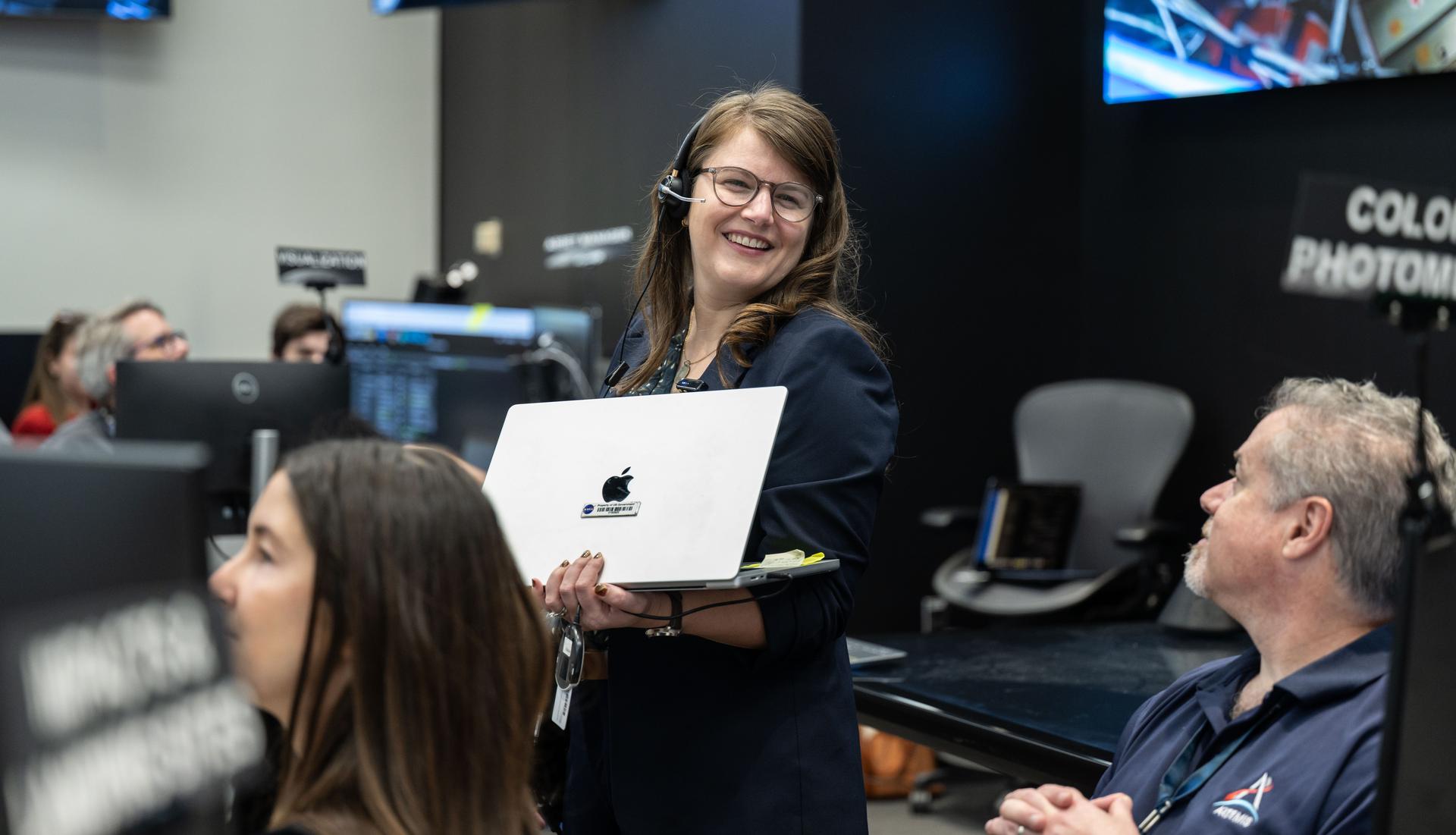
Artemis II deputy lunar science lead, Marie Henderson, reacts to the astronauts' verbal observations of the Moon during their flyby on April 6, 2026. Along with other lunar science team members, Henderson helped train the astronauts in geology both in the classroom and in the field. The team also built the lunar targeting plan that, like an International Space Station spacewalk plan, provides strong, detailed observation guidance, plus flexibility for the crew to make decisions based on what they’re seeing and experiencing in real time. The science team had many moments of celebration during the lunar flyby as the astronauts took images of the Moon and provided verbal descriptions of what they were seeing. This type of information reveals the geologic history of an area and will be critical to collect when future Artemis astronauts explore the Moon's surface. Credits: NASA/Luna Posadas Nava
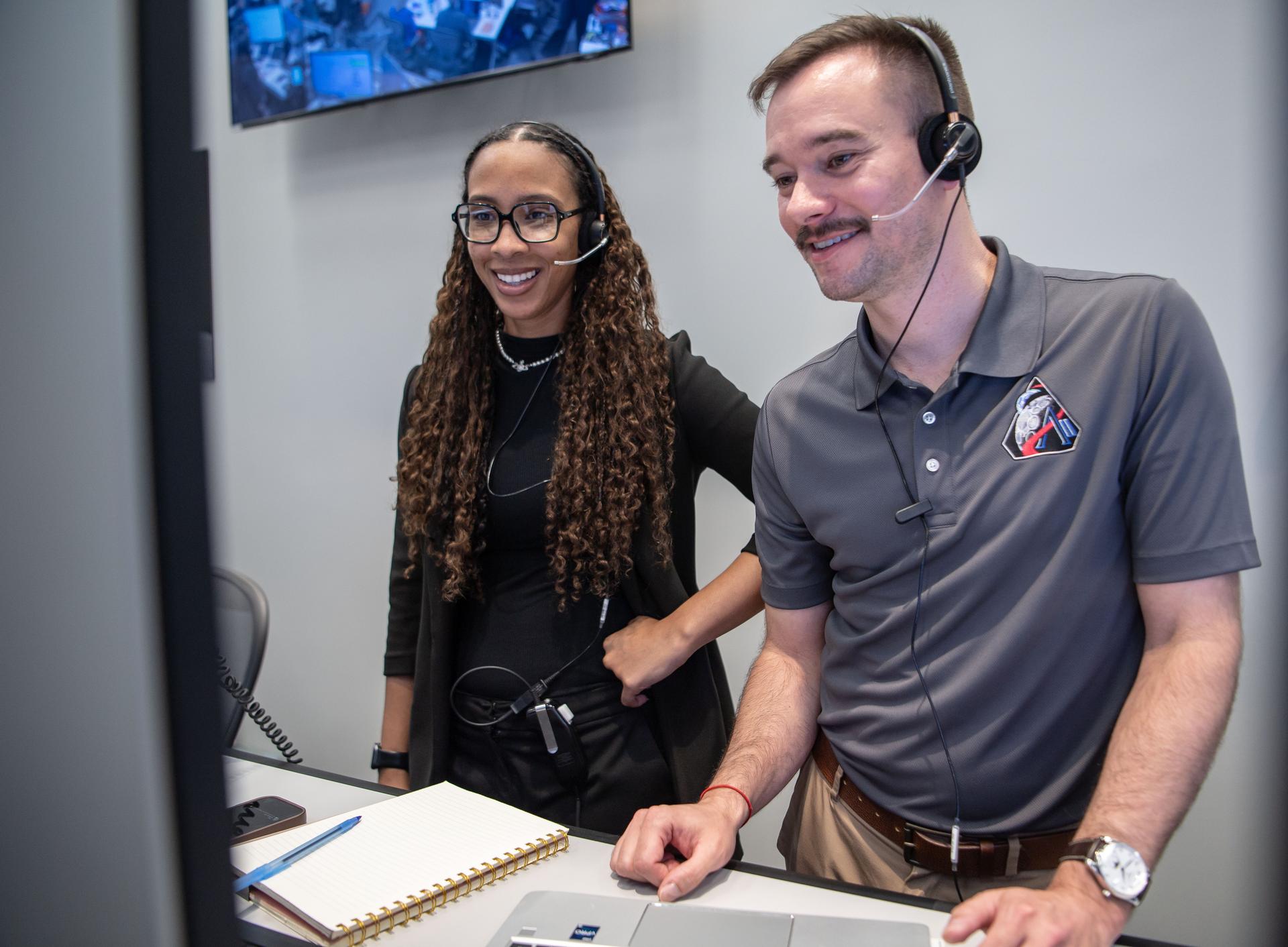
Artemis II Lunar Science Deputy Jacob Richardson and Artemis II Lunar Science Team Member Kiarre Dumes react to the astronauts' verbal observations of the Moon during their flyby on April 6. The science team trained the astronauts in geology both in the classroom and in the field. They also built the lunar targeting plan that, like a spacewalk plan, provides strong, detailed observation guidance, plus flexibility for the crew to make decisions based on what they’re seeing and experiencing in real time. The science team had many moments of celebration during the lunar flyby as the astronauts took pictures of the Moon and provided verbal descriptions of what they were seeing. This type of information reveals the geologic history of an area and will be critical to collect when future Artemis astronauts explore the Moon's surface. Credits: NASA/Luna Posadas Nava
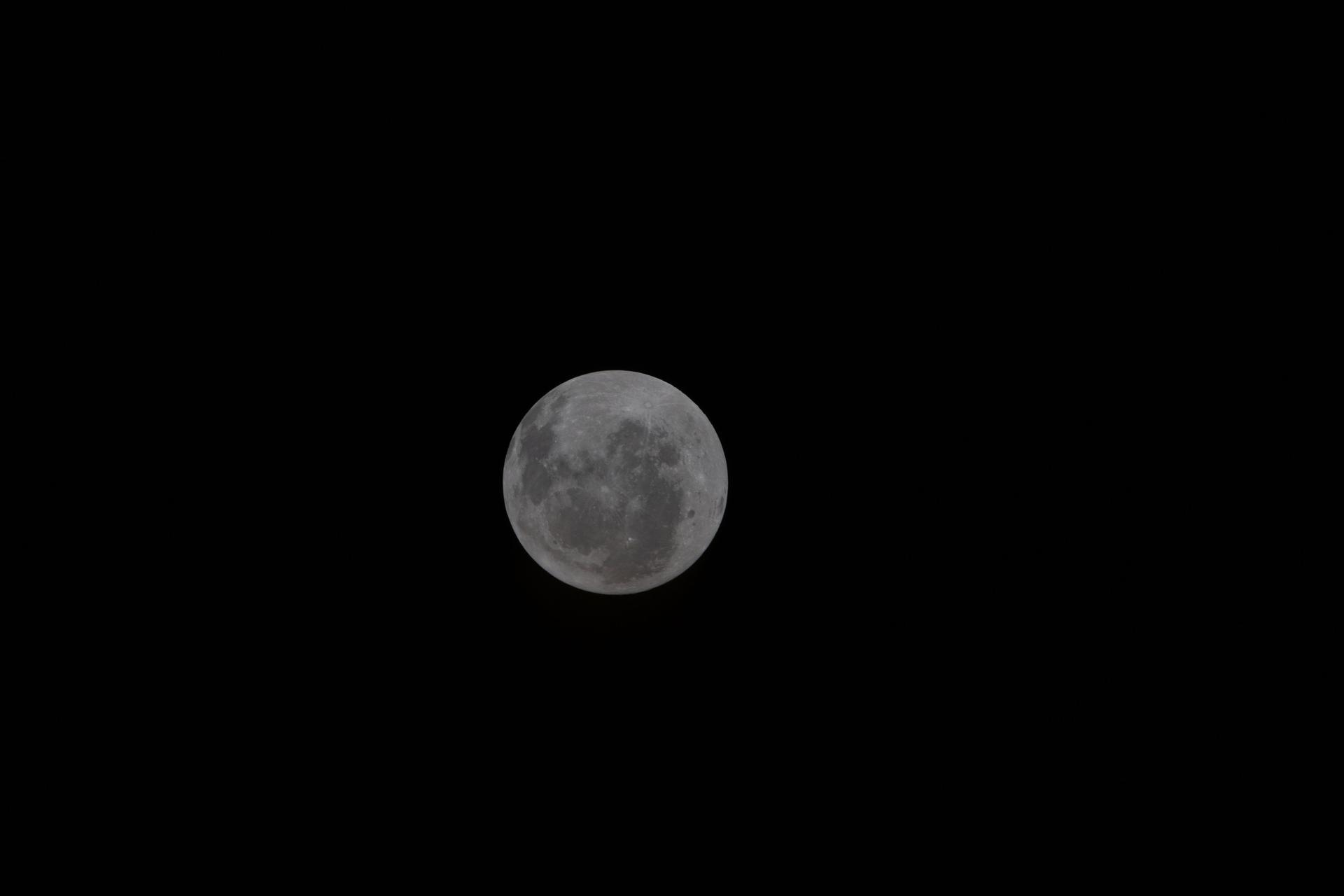
art002e009006 (April 4, 2026) - The Artemis II crew took this photo on day 4 of their journey to the Moon. In it, the Moon is oriented with the South Pole at the top and are beginning to see parts of the lunar far side. Orientale basin is on the right edge of the lunar disk in this image. Artemis II marks the first time that humans have seen the entire basin. The Artemis II crew will continue to observe Orientale from multiple angles as they approach the Moon and throughout the lunar flyby. Orientale is the textbook multi-ring impact basin used as a baseline to compare other impact craters on rocky worlds from Mercury to Pluto.
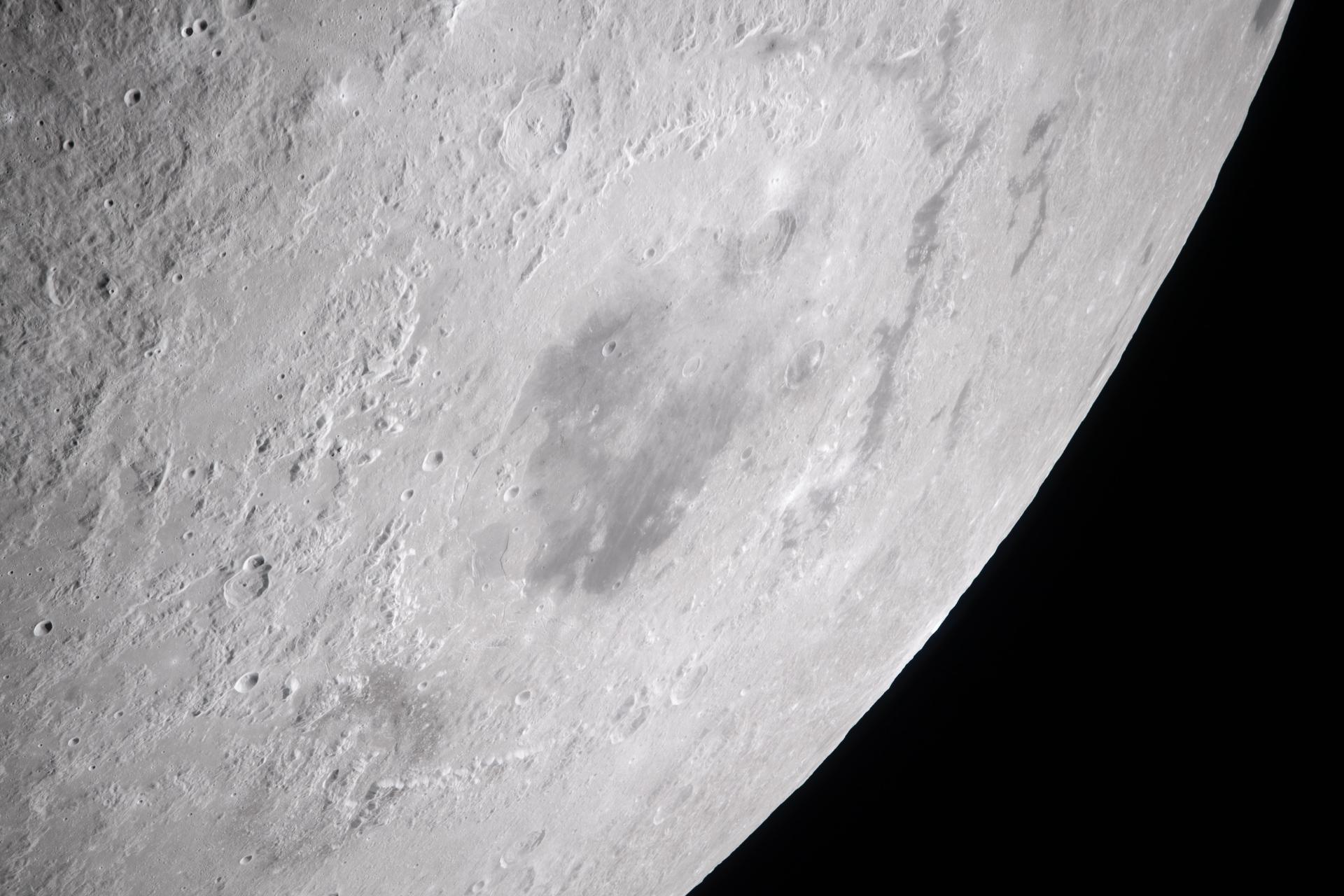
art002e010232 (April 6, 2026) – During the lunar flyby observation period, the Artemis II crew captures a detailed image of the Orientale basin, a 600-mile-wide impact crater marked by a dark patch of ancient lava that erupted through the Moon’s crust billions of years ago.
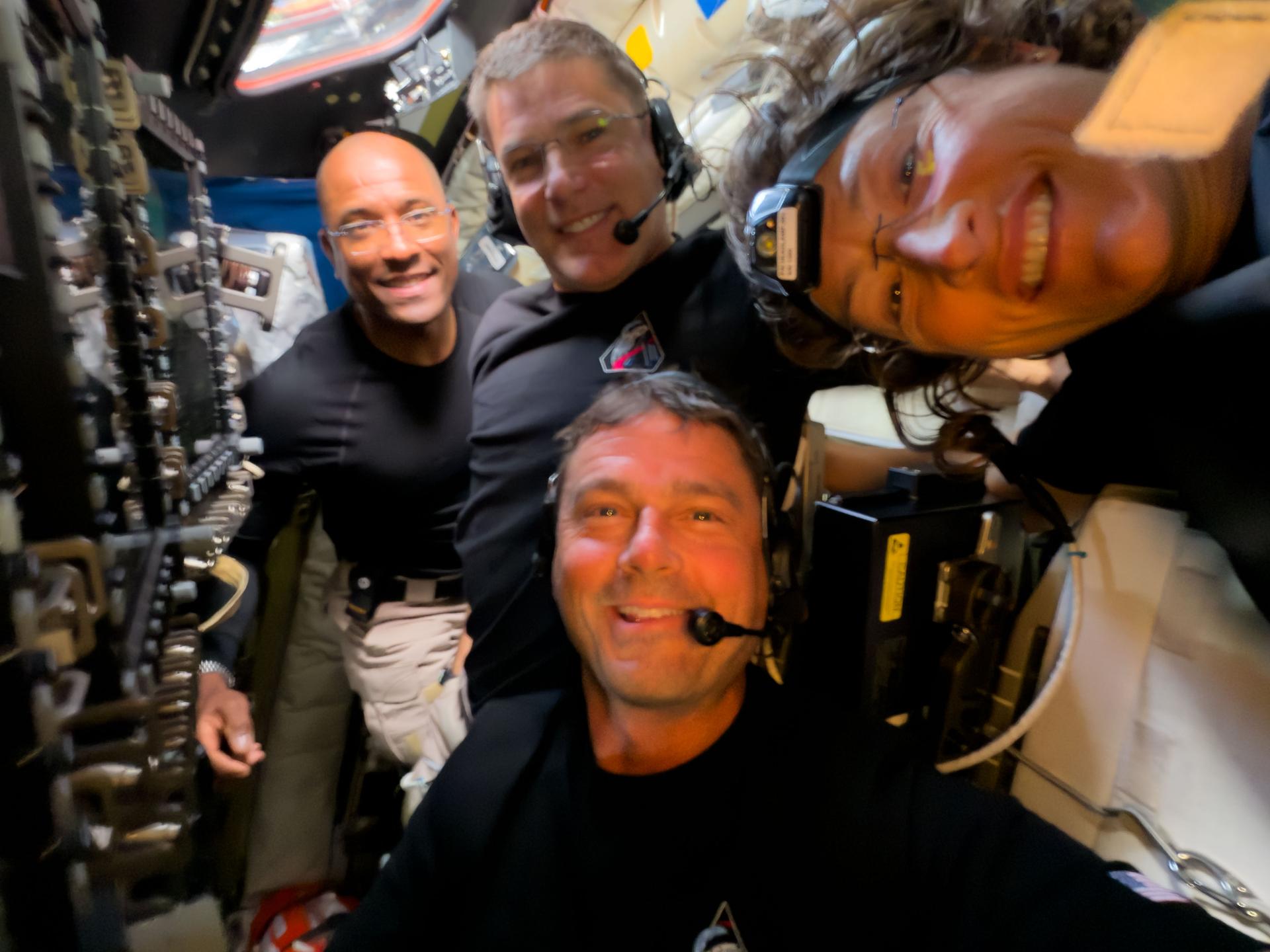
art002e009296 (April 6, 2026) – Midway through their lunar observation period, the Artemis II crew members – Reid Wiseman, Victor Glover, Christina Koch, and Jeremy Hansen – pause to turn the camera around for a selfie inside the Orion spacecraft.
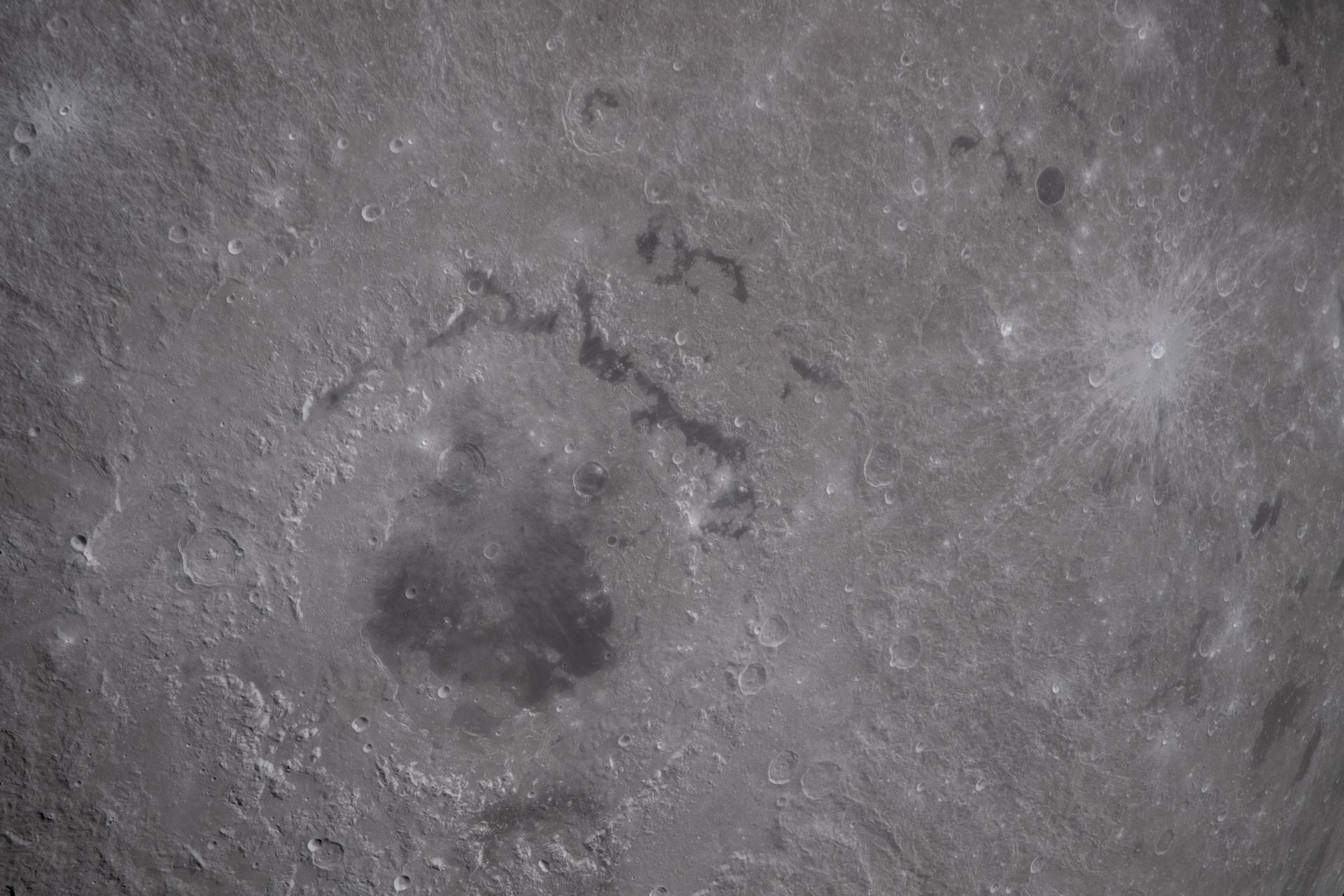
art002e012090 (April 6, 2026) - In this view of the Moon, the Artemis II crew captured an intricate snapshot of the rings of the Orientale basin, one of the Moon’s youngest and best-preserved large impact craters on his first shift during the lunar flyby observation period. Credit: NASA
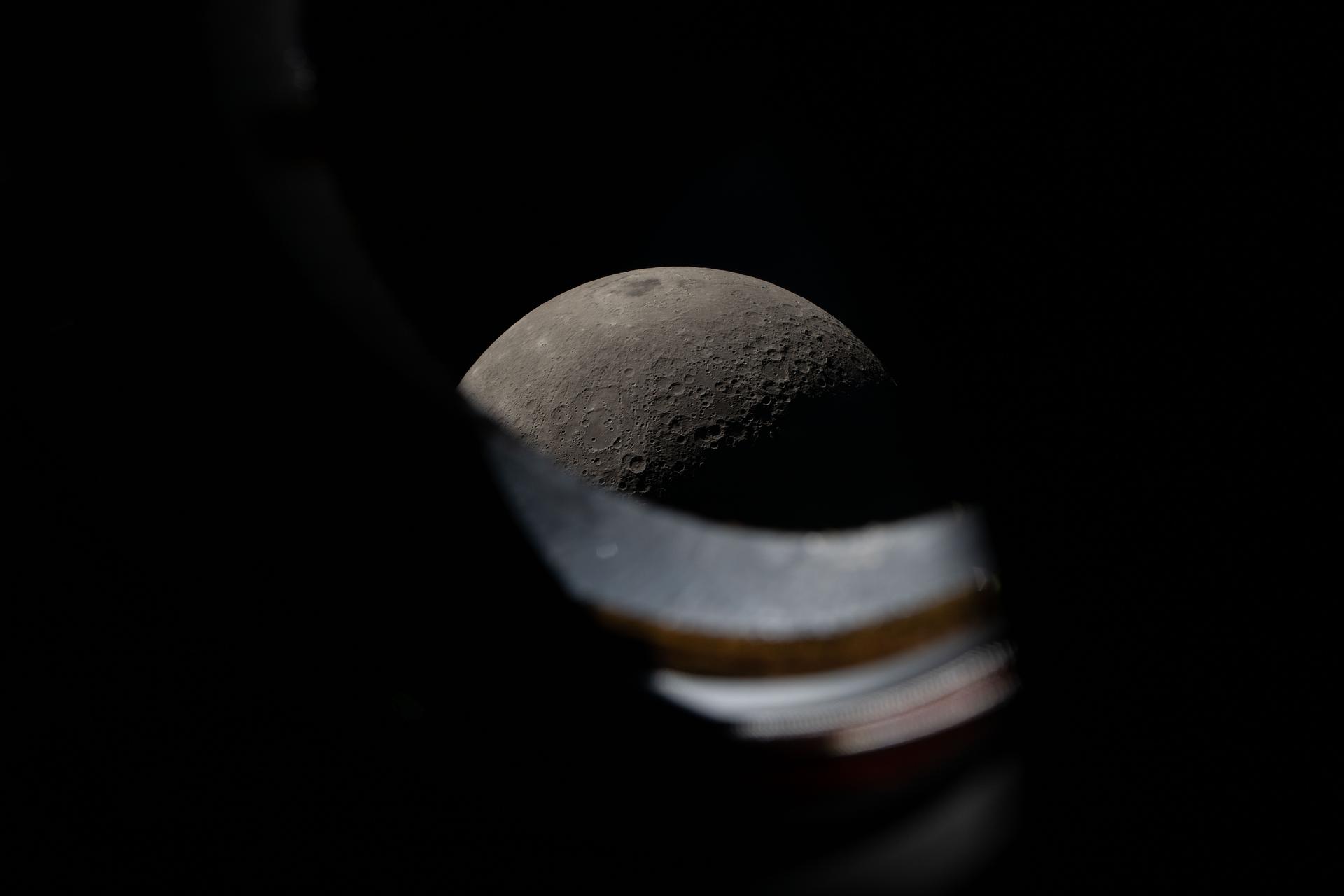
art002e012278 (April 6, 2026) - The Moon seen peeking above the window sill of the Orion spacecraft during the Artemis II lunar flyby on April 6, 2026. The Artemis II crew spent about 7 hours at the Orion windows during the flyby, taking photos and recording observations on the Moon to share with scientists on the ground.
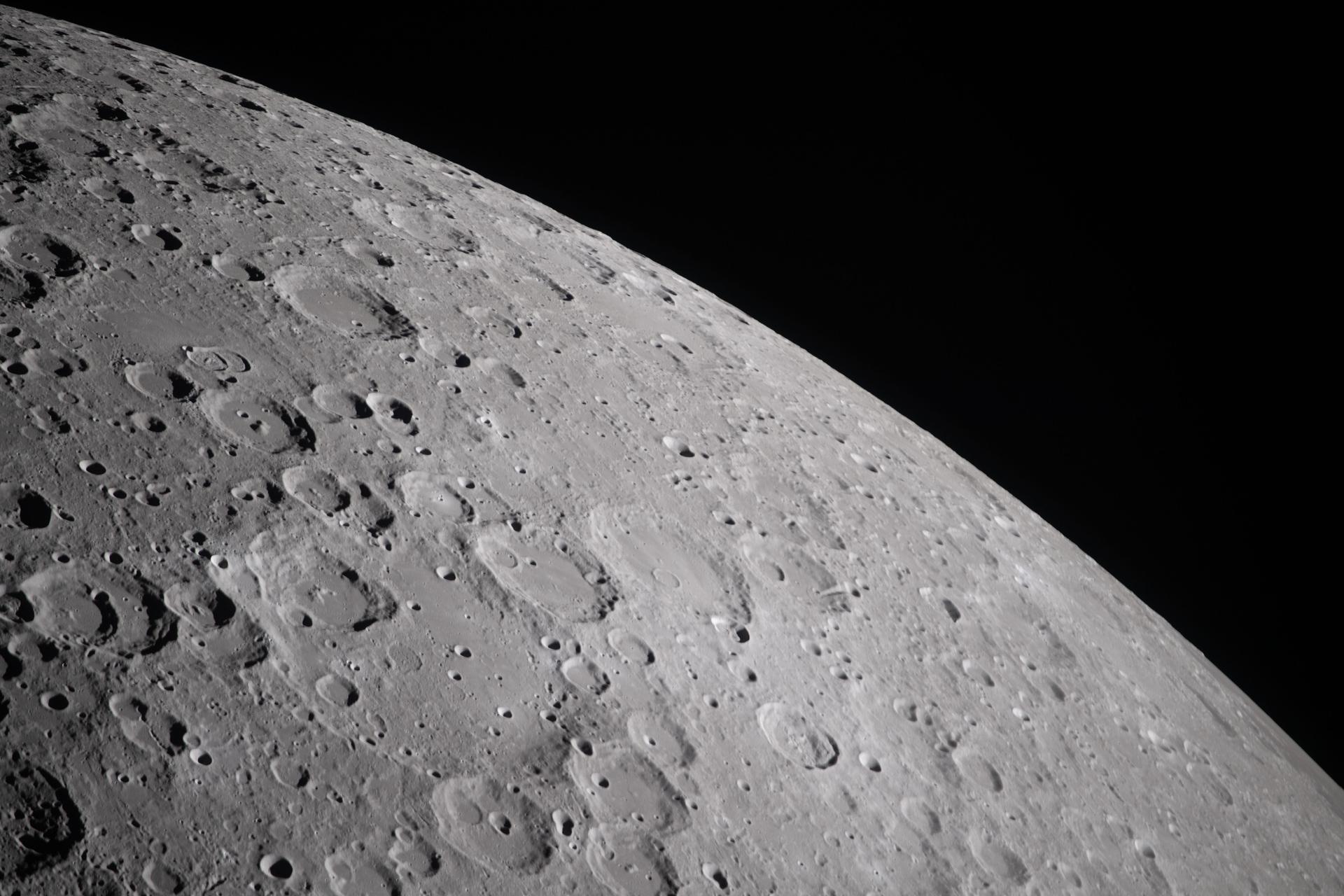
art002e010399 (April 6, 2026) During a lunar flyby observation period, the Artemis II crew captures craters dotting the surface of the Moon, revealing its rugged, ancient surface. This scarred landscape reflects a long history of cosmic collisions.
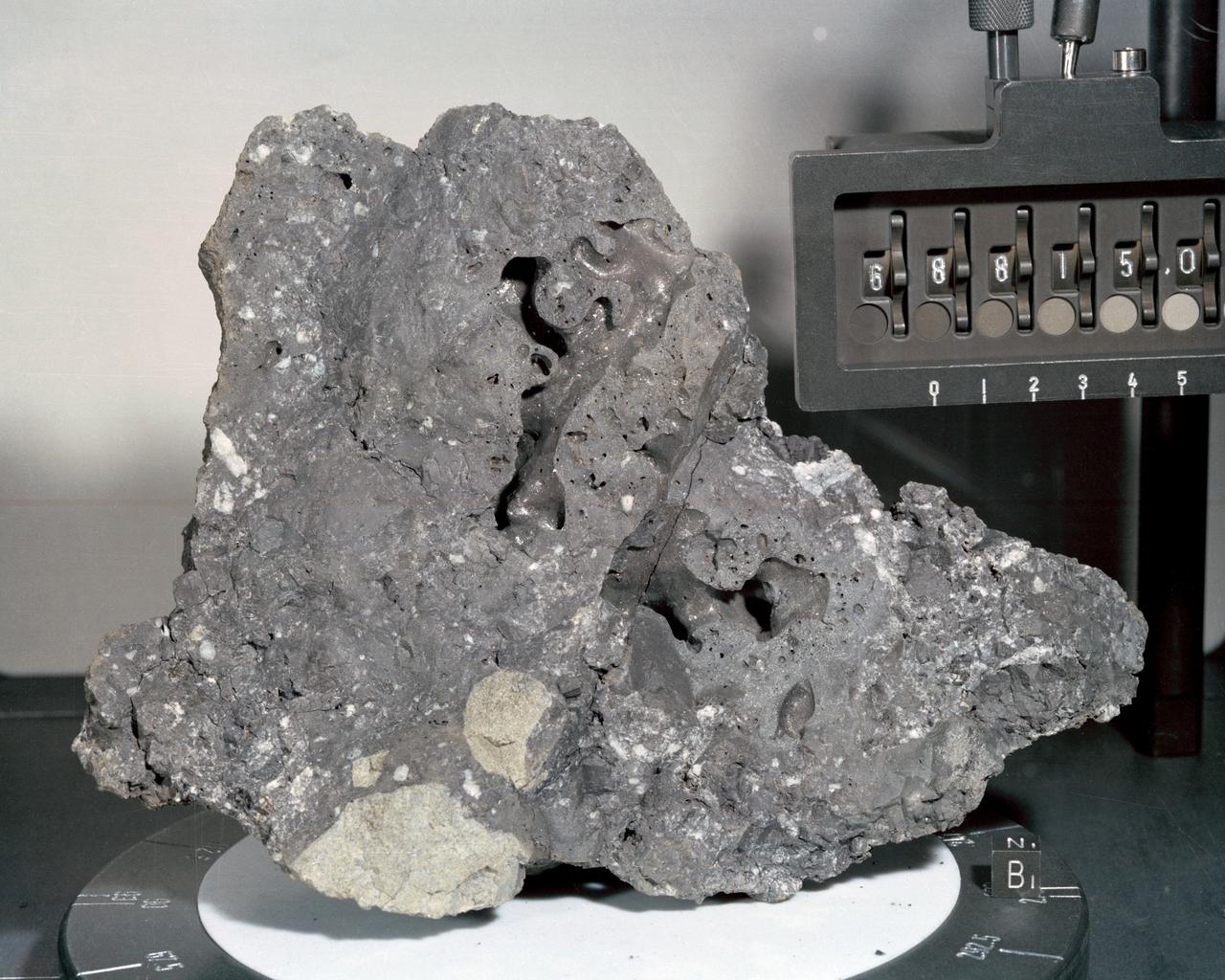
A closeup view or "mug shot" of Apollo 16 lunar sample no. 68815, a dislodged fragment from a parent boulder roughly four feet high and five feet long encountered at Station 8. The crew tried in vain to overturn the parent boulder. A fillet-soil sample was taken close to the boulder, allowing for study of the type and rate of erosion acting on lunar rocks. The fragment itself is very hard, has many veticles and a variety of inclusions. In addition, numerous metallic particles were observed in the black matrix.

Jared Ralleta, Artemis II lunar science team member, reacts to the lunar flyby crew observations in the Science Evaluation Room (SER). Built specifically for Artemis missions with these science priorities in mind, the SER is equipped to support rapid data interpretation, collaborative analysis, real-time decision making, and seamless coordination between the science and operations teams. Credits: NASA/Luna Posadas Nava

Artemis II lunar science team members, from left, Ryan Ewing, and Barbara Cohen, react to crew observations during the lunar flyby on April 6, 2026. The team worked in the Science Evaluation Room (SER) in Mission Control at NASA’s Johnson Space Center in Houston. Built specifically for Artemis missions with these science priorities in mind, the SER is equipped to support rapid data interpretation, collaborative analysis, real-time decision making, and seamless coordination between the science and operations teams. Credits: NASA/Luna Posadas Nava
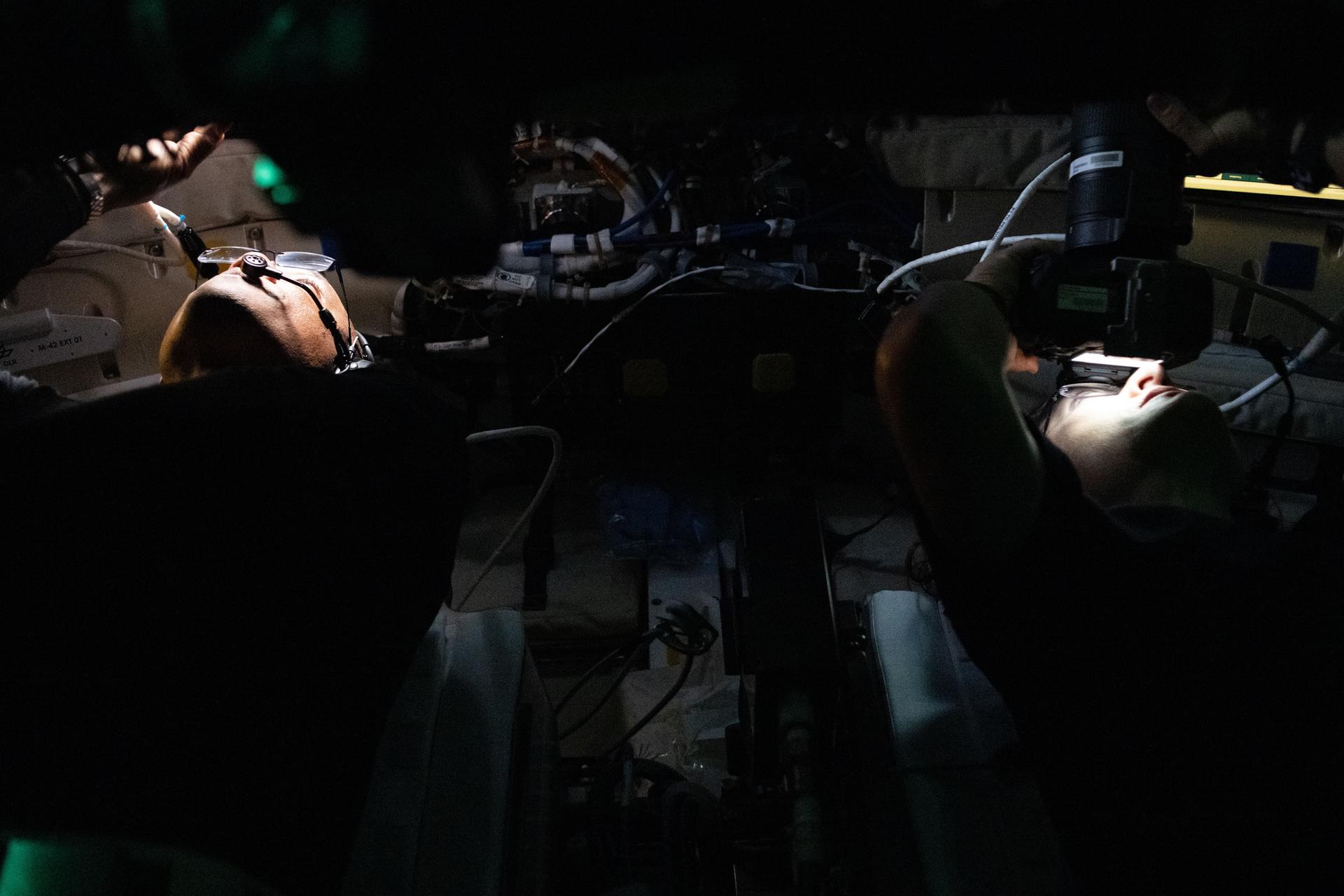
art002e009293 (April 6, 2026) – Artemis II Pilot Victor Glover and Mission Specialist Christina Koch gather images and observations of the lunar surface to share with the world during the lunar flyby on the sixth day of the mission. The crew spent approximately seven hours taking turns at the windows of the Orion spacecraft as they flew around the far side of the Moon. At closest approach, they came within 4,067 miles of the Moon’s surface.
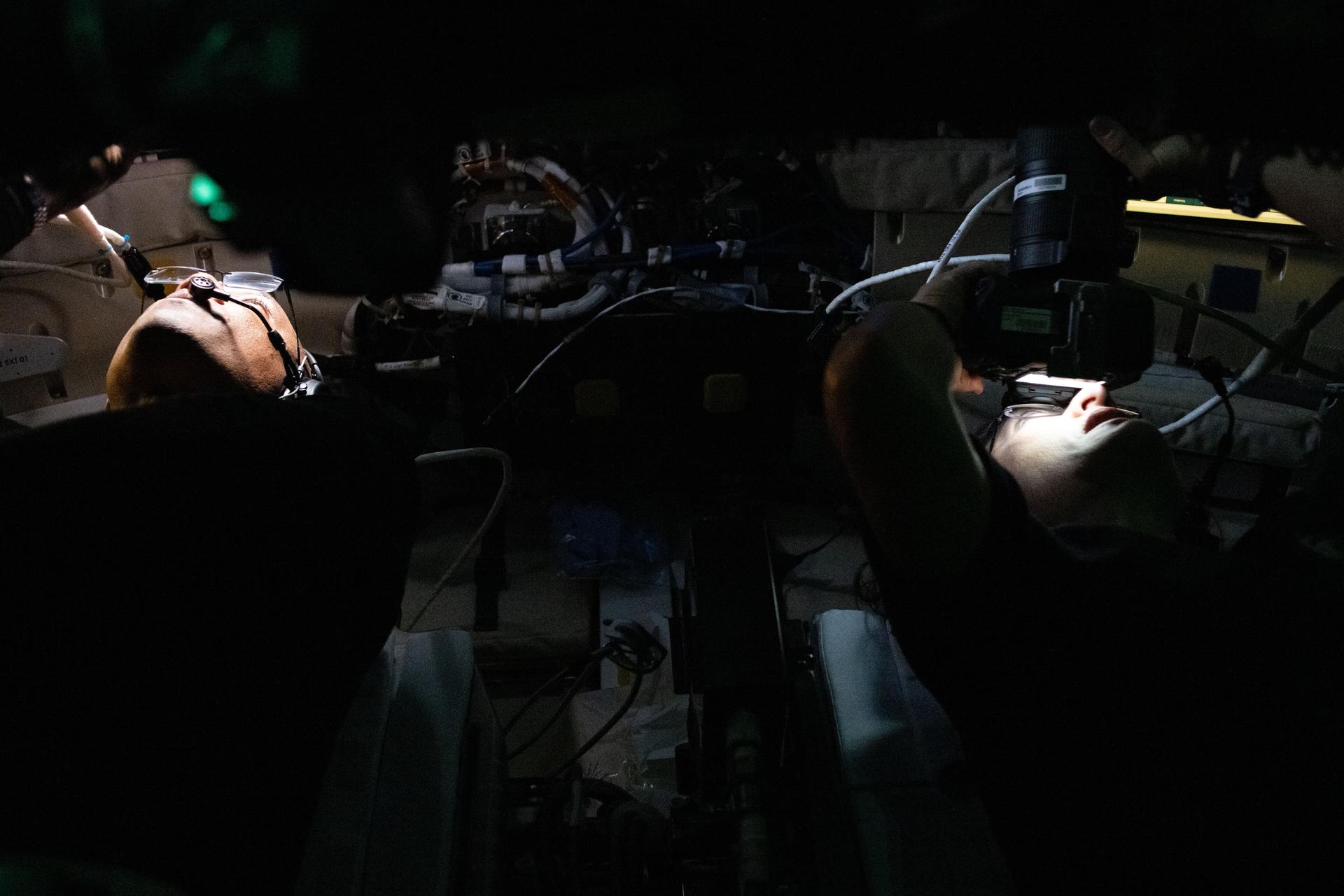
art002e016247 (April 6, 2026) – Artemis II Pilot Victor Glover, on the left, and Mission Specialist Christina Koch, on the right, gather images and observations of the lunar surface to share with the world during the lunar flyby on the sixth day of the mission. The crew spent approximately seven hours taking turns at the windows of the Orion spacecraft as they flew around the far side of the Moon. At closest approach, they came within 4,067 miles of the Moon’s surface. Credit: NASA
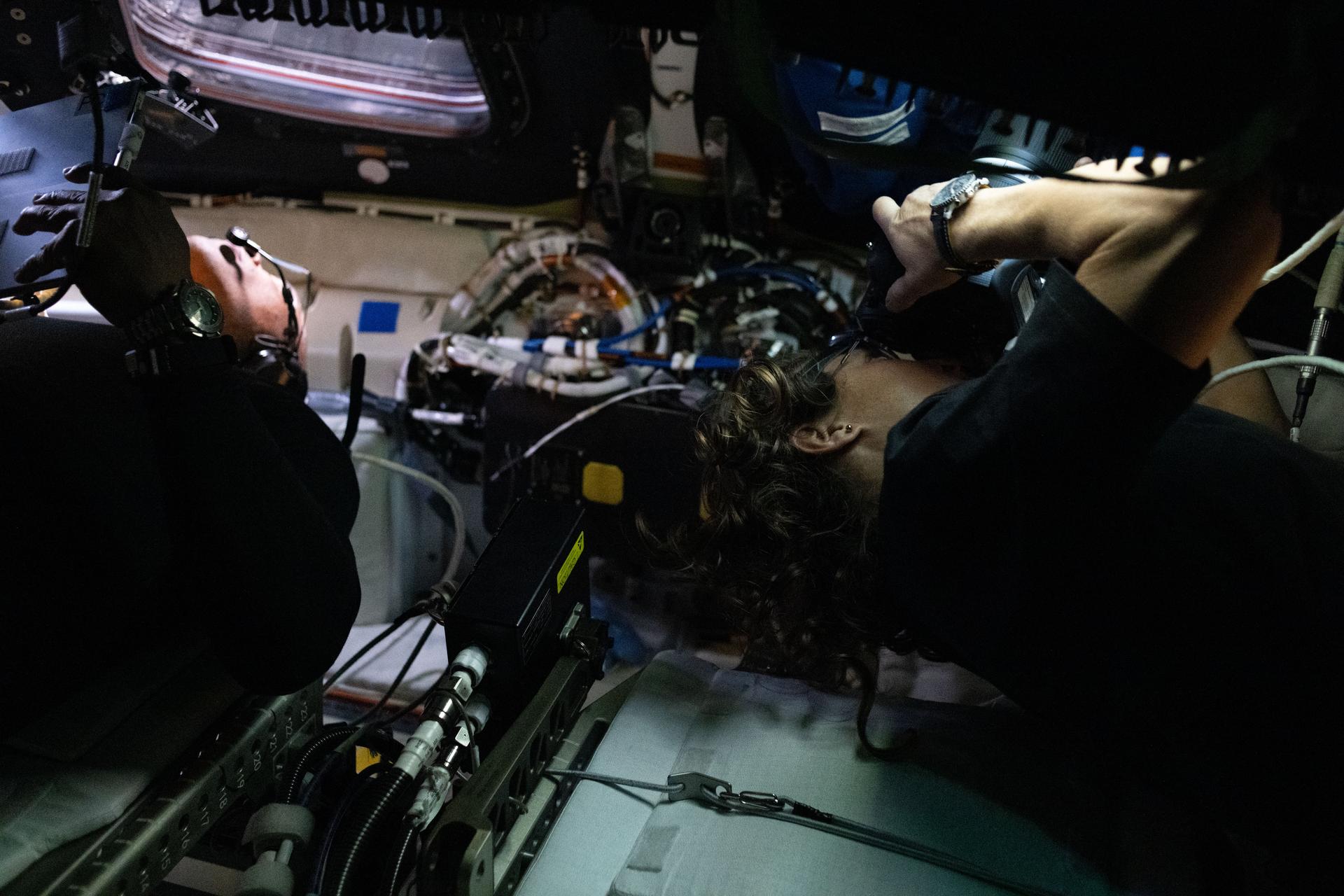
art002e016195 (April 6, 2026) – Artemis II Pilot Victor Glover, on the left, and Mission Specialist Christina Koch, on the right, gather images and observations of the lunar surface to share with the world during the lunar flyby on the sixth day of the mission. The crew spent approximately seven hours taking turns at the windows of the Orion spacecraft as they flew around the far side of the Moon. At closest approach, they came within 4,067 miles of the Moon’s surface.
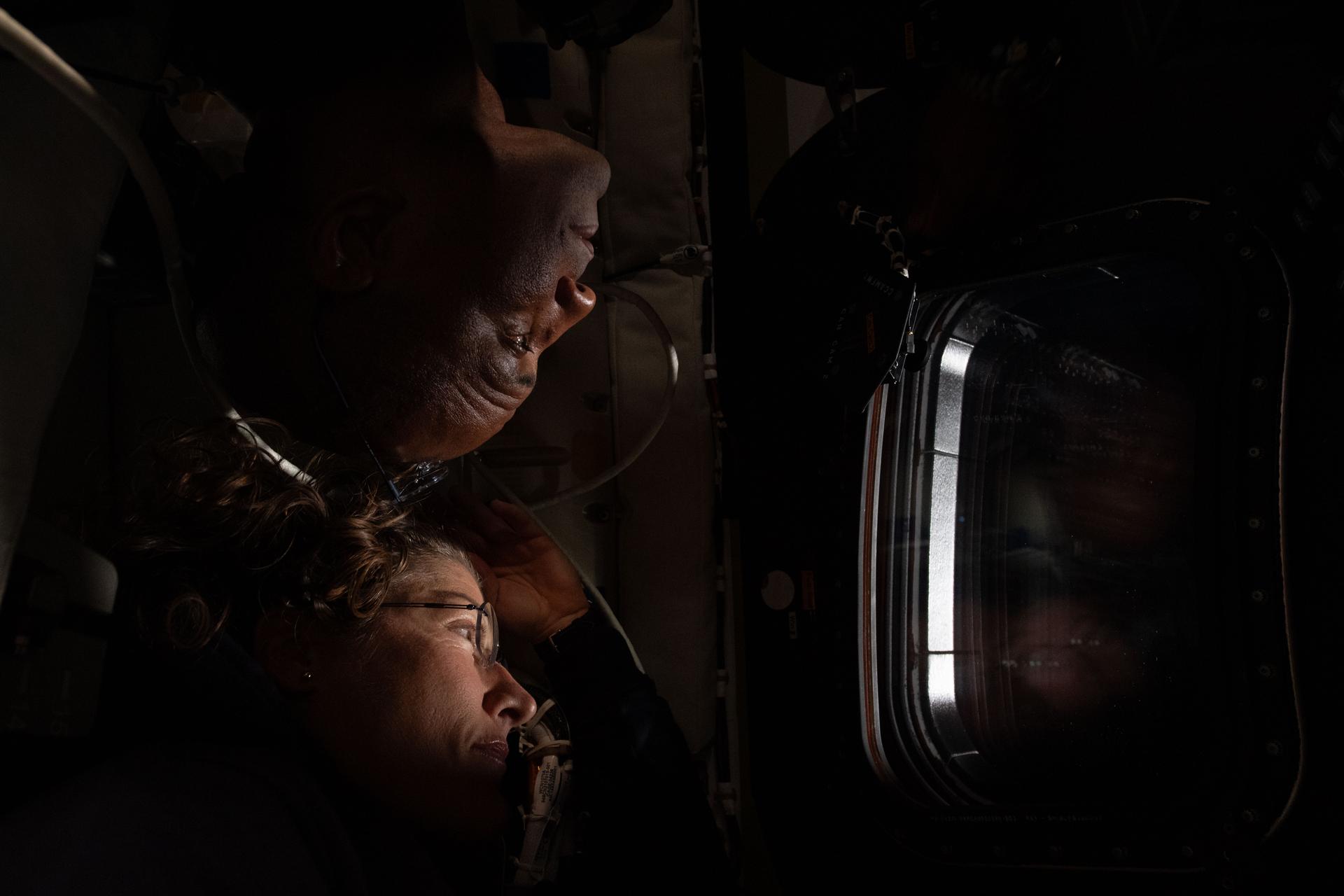
art002e025880 (April 6, 2026) - NASA astronauts Christina Koch (below) and Victor Glover (above) share a window inside the Orion spacecraft during the sixth day of the Artemis II mission. Flight Day 6 was the crew's lunar flyby day, during which they rotated roles taking photos, making annotations, and recording their observations of the lunar surface. Credit: NASA
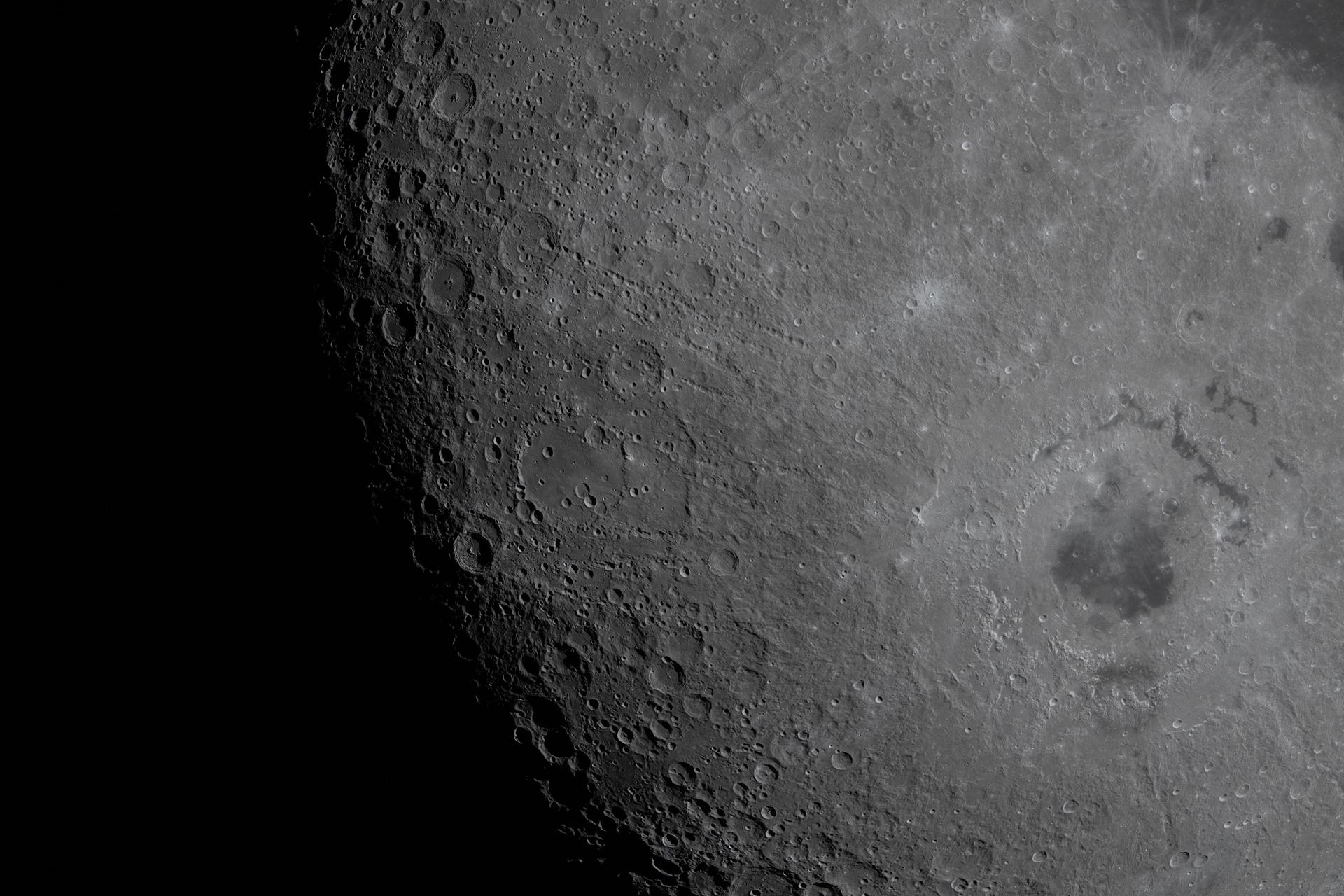
art002e009279 (April 6, 2026) – During their lunar flyby observation period, the Artemis II crew captured this image at 3:41 p.m. EDT, showing the rings of the Orientale basin, one of the Moon’s youngest and best-preserved large impact craters. These concentric rings offer scientists a rare window into how massive impacts shape planetary surfaces, helping refine models of crater formation and the Moon’s geologic history. At the 10 o’clock position of the Orientale basin, the two smaller craters – which the Artemis II crew has suggested be named Integrity and Carroll – are visible. These features highlight how crew observations can directly support surface feature identification and real-time science.
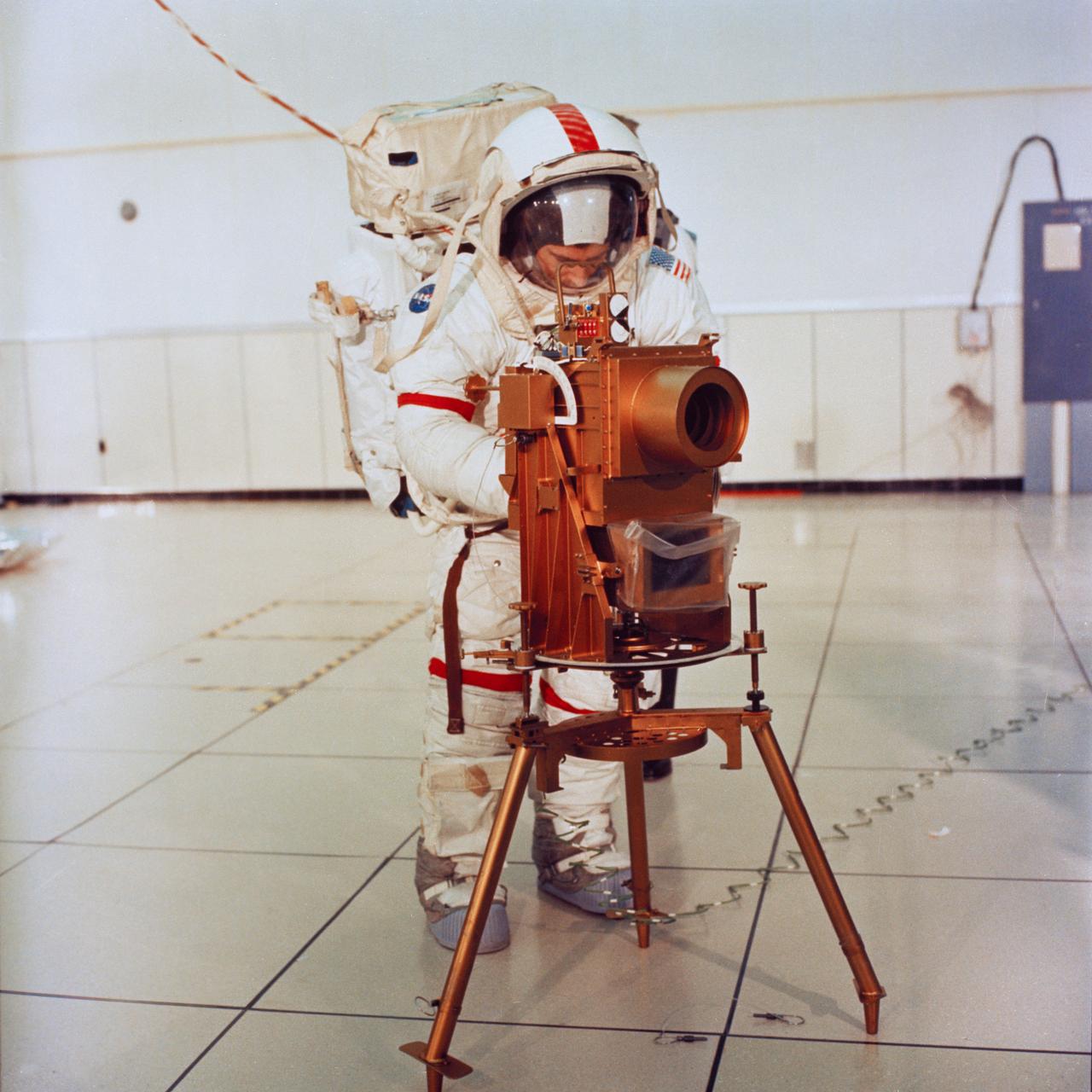
S72-19739 (22 Dec. 1972) --- Astronaut John W. Young, commander of the Apollo 16 lunar landing mission, participates in lunar surface extravehicular activity (EVA) training in the Flight Crew Training Building at the Kennedy Space Center (KSC). Young adjusts a training model of a Far Ultraviolet Camera/Spectroscope, an instrument which will be emplaced on the moon during the Apollo 16 EVA. Deep-space sources of hydrogen in interplanetary, interstellar and intergalactic regions will be mapped by this instrument which gathers both photographic images and spectroscope data in the far ultraviolet spectrum. This experiment will be the first such astronomical observation emplaced on the lunar surface.
Artemis II deputy lunar science lead Marie Henderson, background, and lunar science team members, Ariel Deutsch, and Ryan Ewing, react to crew observations during the lunar flyby on April 6, 2026. The team worked in the Science Evaluation Room (SER) in Mission Control at NASA’s Johnson Space Center in Houston. Built specifically for Artemis missions with these science priorities in mind, the SER is equipped to support rapid data interpretation, collaborative analysis, real-time decision making, and seamless coordination between the science and operations teams. Credits: NASA/Luna Posadas Nava

Artemis II lunar science team member, Juliane Gross, center, and the extended lunar science team behind her, celebrates crew observations made during the lunar flyby on April 6. The team worked in the Science Evaluation Room (SER) in Mission Control at NASA’s Johnson Space Center in Houston. Built specifically for Artemis missions with these science priorities in mind, the SER is equipped to support rapid data interpretation, collaborative analysis, real-time decision making, and seamless coordination between the science and operations teams. Credits: NASA/Luna Posadas Nava

Ernie Wright, Artemis II lunar science visualization lead, reacts to hearing the astronauts describe features of the Moon as they few by on April 6, 2026. To prepare the crew for this mission, the Artemis II lunar science team trained the astronauts in geology, both in the classroom and in the field. They also built the lunar targeting plan that, which, like an International Space Station spacewalk plan, provides strong, detailed observation guidance, plus flexibility for the crew to make decisions based on what they’re seeing and experiencing in real time. The science team had many moments of celebration during the lunar flyby as the astronauts took images of the Moon and provided verbal descriptions of what they were seeing. This type of information reveals the geologic history of an area and will be critical to collect when future Artemis astronauts explore the Moon's surface. Credits: NASA/Luna Posadas Nava
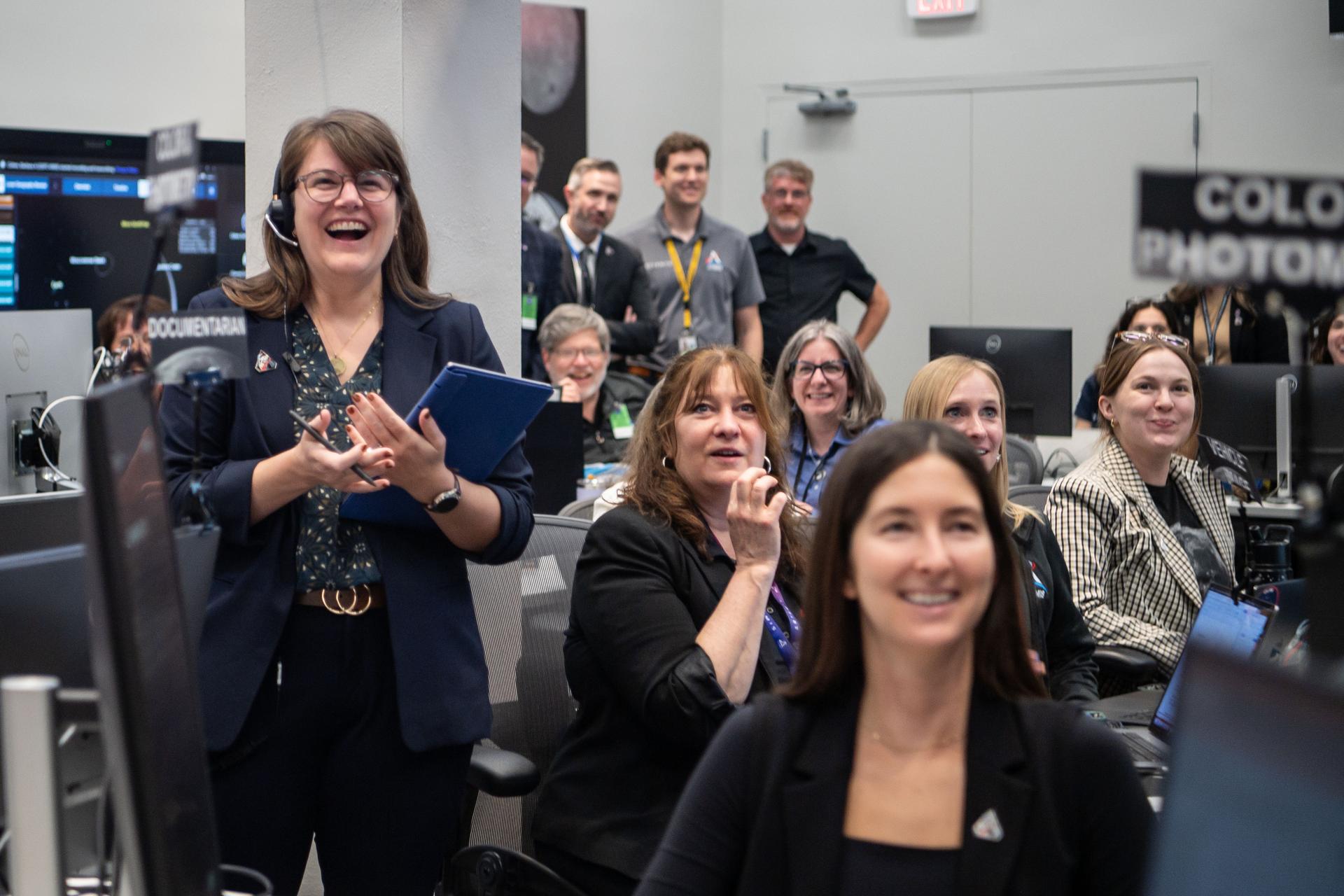
Artemis II deputy lunar science lead Marie Henderson, shown standing on the left, and lunar science team members, from the right foreground, Ariel Deutsch, Maria Banks behind her, Ryan Watkins to her right, and Sara Schmidt in the checkered jacket. In this image they are reacting to astronauts' observations of Moon features during their flyby on April 6, 2026. Leading up to the flight, the science team has been training the astronauts in in the classroom and in the field. They also built the lunar targeting plan that, like a spacewalk plan on the International Space Station, provides strong, detailed observation guidance, plus flexibility for the crew to make decisions based on what they’re seeing and experiencing in real time. The science team had many moments of celebration during the lunar flyby as the astronauts took images of the Moon and provided verbal descriptions of what they were seeing. This type of information reveals the geologic history of various lunar areas and will be critical to collect when future Artemis astronauts explore the Moon's surface. Credits: NASA/Luna Posadas Nava
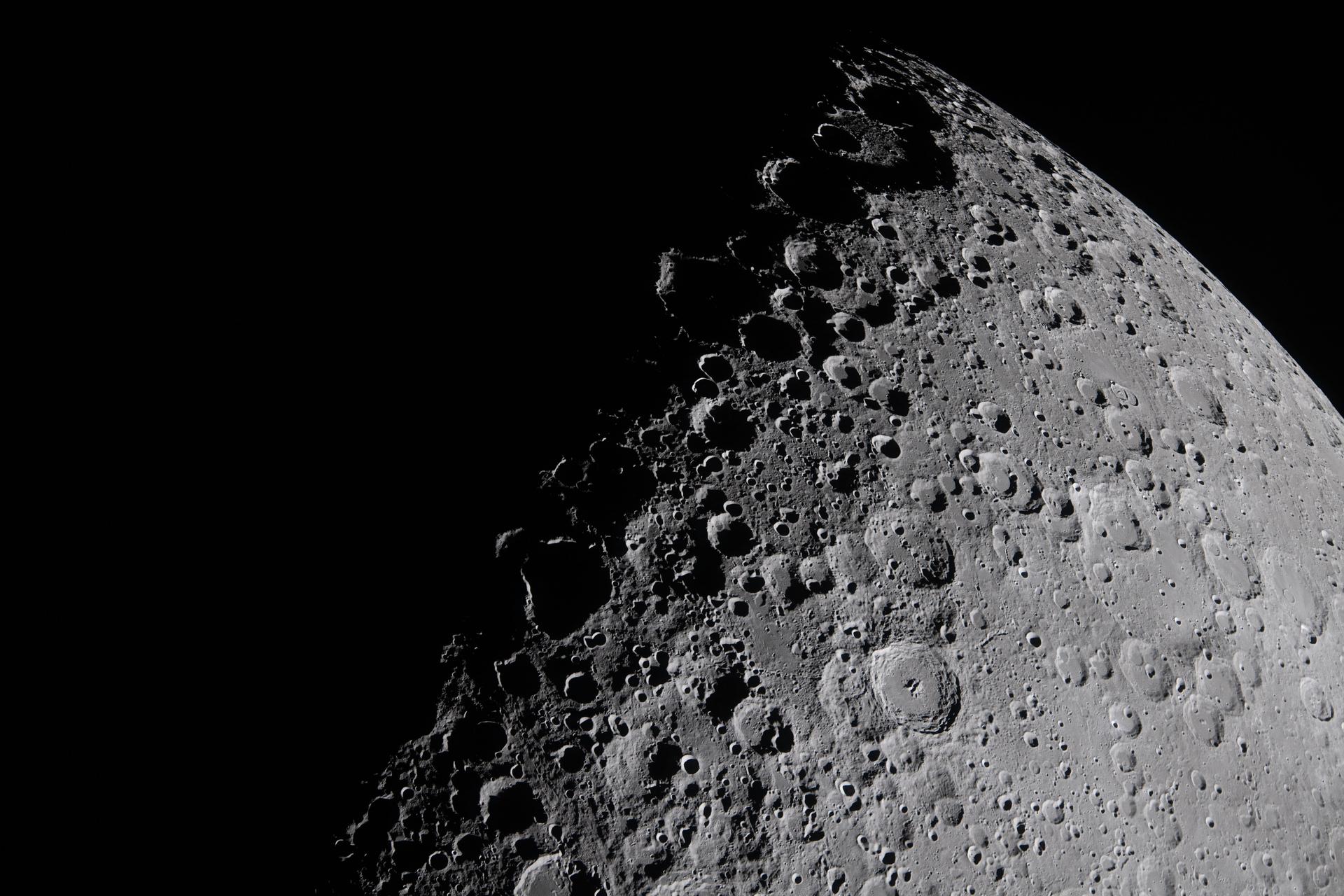
art002e009281 (April 6, 2026) – The Artemis II crew captures a portion of the Moon coming into view along the terminator – the boundary between lunar day and night – where low-angle sunlight casts long, dramatic shadows across the surface. This grazing light accentuates the Moon’s rugged topography, revealing craters, ridges, and basin structures in striking detail. Features along the terminator such as Jule Crater, Birkhoff Crater, Stebbins Crater, and surrounding highlands stand out. From this perspective, the interplay of light and shadow highlights the complexity of the lunar surface in ways not visible under full illumination. The image was captured about three hours into the crew’s lunar observation period, as they flew around the far side of the Moon on the sixth day of the mission.
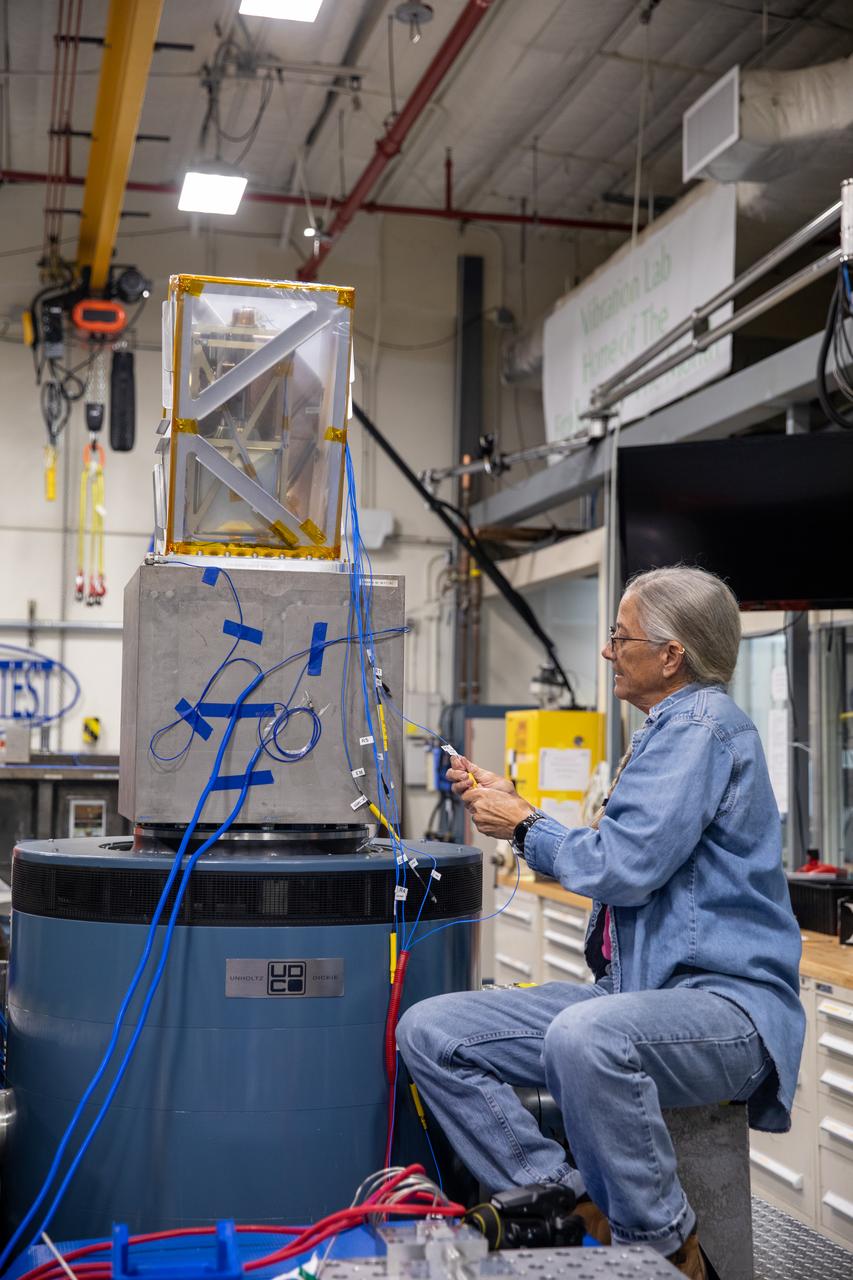
A Kennedy Space Center engineer prepares the Mass Spectrometer observing lunar operations (MSolo) instrument for vibration testing inside the Florida spaceport’s Cryogenics Laboratory on Aug. 3, 2022. MSolo is a commercial off-the-shelf mass spectrometer modified to work in space and will help analyze the chemical makeup of landing sites on the Moon, as well as study water on the lunar surface. Researchers and engineers are preparing MSolo instruments to launch on four robotic missions as part of NASA’s Commercial Lunar Payload Services (CLPS) – commercial deliveries that will perform science experiments, test technologies, and demonstrate capabilities to help NASA explore the Moon and prepare for crewed missions to the lunar surface. This particular MSolo instrument is slated to fly on the agency’s Polar Resources Ice Mining Experiment-1 (PRIME-1) mission – the first in-situ resource utilization demonstration on the Moon – as part of the agency’s CLPS initiative.

Engineers install multilayer insulation (MLI) on the Mass Spectrometer Observing Lunar Operations (MSolo) instrument inside Kennedy Space Center’s Space Station Processing Facility on Oct. 20, 2022. The activity is in preparation for the Polar Resources Ice Mining Experiment-1 (PRIME-1) mission, which will be the first in-situ resource utilization demonstration on the Moon. MLI protects the instrument from thermal temperature extremes, helping to insulate at cold temperatures and to cool at higher temperatures when solar lighting conditions or lunar infrared reflects onto the instrument. Researchers and engineers are preparing MSolo instruments to launch on four robotic missions as part of NASA’s Commercial Lunar Payload Services – commercial deliveries beginning in 2023 that will perform science experiments, test technologies, and demonstrate capabilities to help NASA explore the Moon and prepare for crewed missions to the lunar surface.
Engineers prepare the Mass Spectrometer Observing Lunar Operations (MSolo) instrument for the multilayer insulation installation inside Kennedy Space Center’s Space Station Processing Facility on Oct. 19, 2022. The activity is in preparation for the Polar Resources Ice Mining Experiment-1 (PRIME-1) mission, which will be the first in-situ resource utilization demonstration on the Moon. MSolo is a commercial off-the-shelf mass spectrometer modified to work in space and will help analyze the chemical makeup of landing sites on the Moon, as well as study water on the lunar surface. Researchers and engineers are preparing MSolo instruments to launch on four robotic missions as part of NASA’s Commercial Lunar Payload Services – commercial deliveries beginning in 2023 that will perform science experiments, test technologies, and demonstrate capabilities to help NASA explore the Moon and prepare for crewed missions to the lunar surface.
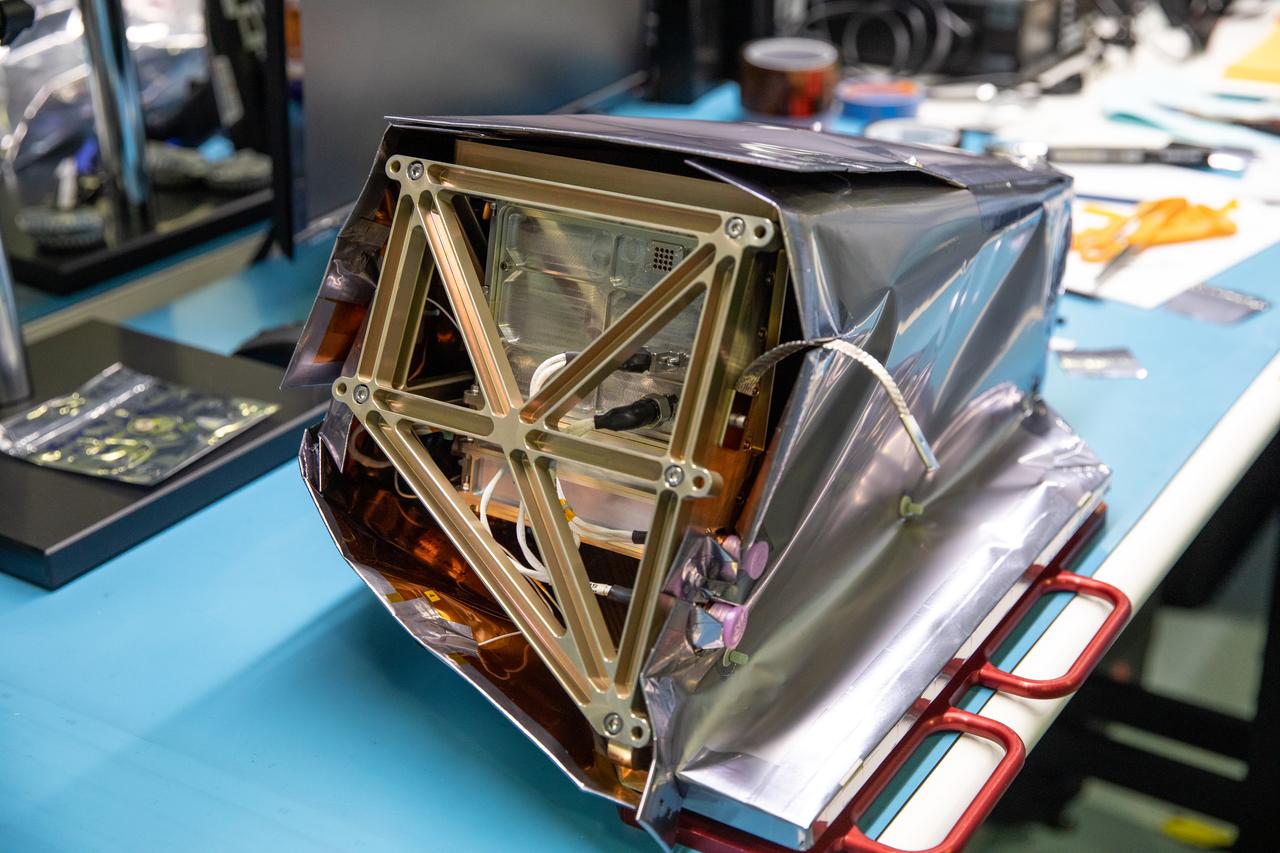
Engineers install multilayer insulation (MLI) on the Mass Spectrometer Observing Lunar Operations (MSolo) instrument inside Kennedy Space Center’s Space Station Processing Facility on Oct. 20, 2022. The activity is in preparation for the Polar Resources Ice Mining Experiment-1 (PRIME-1) mission, which will be the first in-situ resource utilization demonstration on the Moon. MLI protects the instrument from thermal temperature extremes, helping to insulate at cold temperatures and to cool at higher temperatures when solar lighting conditions or lunar infrared reflects onto the instrument. Researchers and engineers are preparing MSolo instruments to launch on four robotic missions as part of NASA’s Commercial Lunar Payload Services – commercial deliveries beginning in 2023 that will perform science experiments, test technologies, and demonstrate capabilities to help NASA explore the Moon and prepare for crewed missions to the lunar surface.

Engineers at NASA’s Kennedy Space Center in Florida remove the vibration fixture on the Mass Spectrometer observing lunar operations (MSolo) instrument on Aug. 4, 2022. The activity followed a vibration test in preparation for the Polar Resources Ice Mining Experiment-1 (PRIME-1) mission, which will be the first in-situ resource utilization demonstration on the Moon. MSolo is a commercial off-the-shelf mass spectrometer modified to work in space and will help analyze the chemical makeup of landing sites on the Moon, as well as study water on the lunar surface. Researchers and engineers are preparing MSolo instruments to launch on four robotic missions as part of NASA’s Commercial Lunar Payload Services – commercial deliveries beginning in 2023 that will perform science experiments, test technologies, and demonstrate capabilities to help NASA explore the Moon and prepare for crewed missions to the lunar surface.
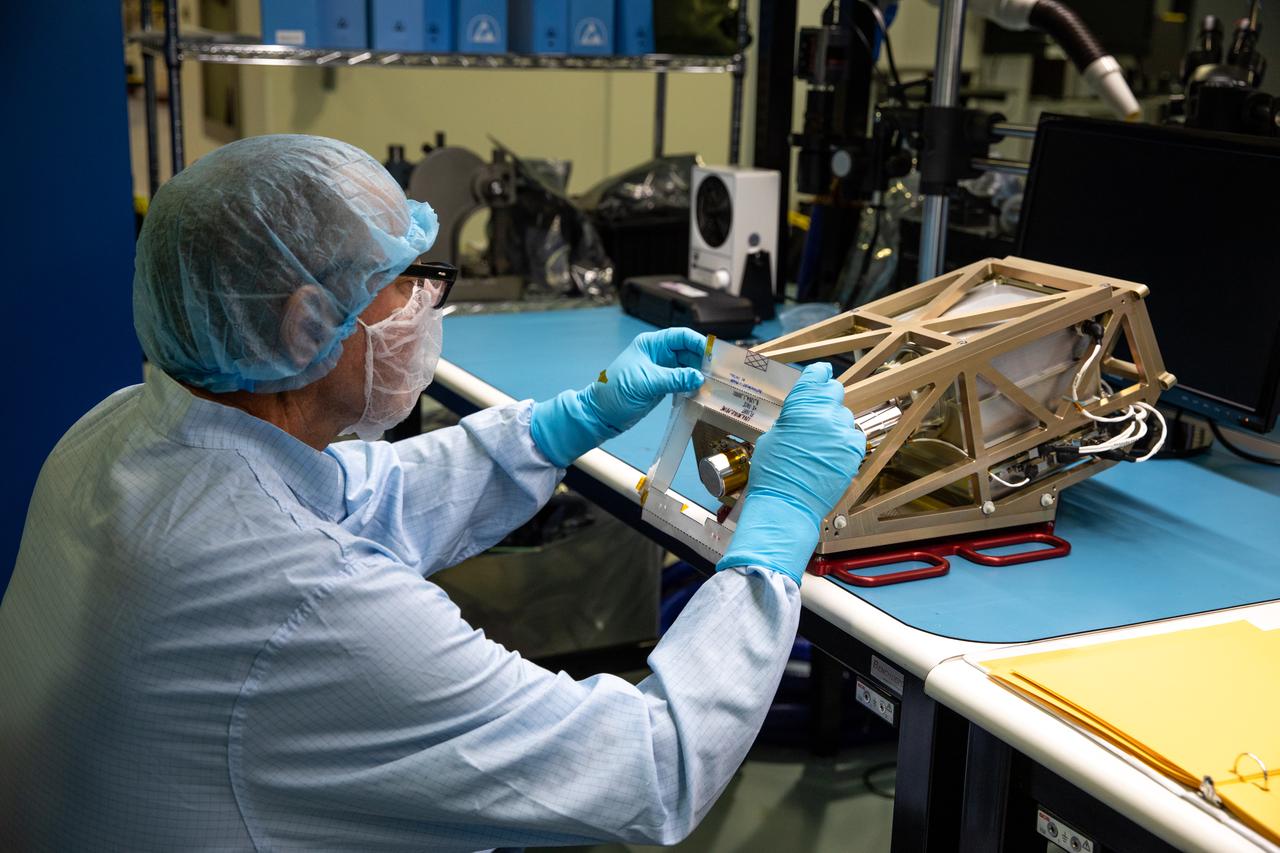
Engineers prepare the Mass Spectrometer Observing Lunar Operations (MSolo) instrument for the multilayer insulation installation inside Kennedy Space Center’s Space Station Processing Facility on Oct. 19, 2022. The activity is in preparation for the Polar Resources Ice Mining Experiment-1 (PRIME-1) mission, which will be the first in-situ resource utilization demonstration on the Moon. MSolo is a commercial off-the-shelf mass spectrometer modified to work in space and will help analyze the chemical makeup of landing sites on the Moon, as well as study water on the lunar surface. Researchers and engineers are preparing MSolo instruments to launch on four robotic missions as part of NASA’s Commercial Lunar Payload Services – commercial deliveries beginning in 2023 that will perform science experiments, test technologies, and demonstrate capabilities to help NASA explore the Moon and prepare for crewed missions to the lunar surface.
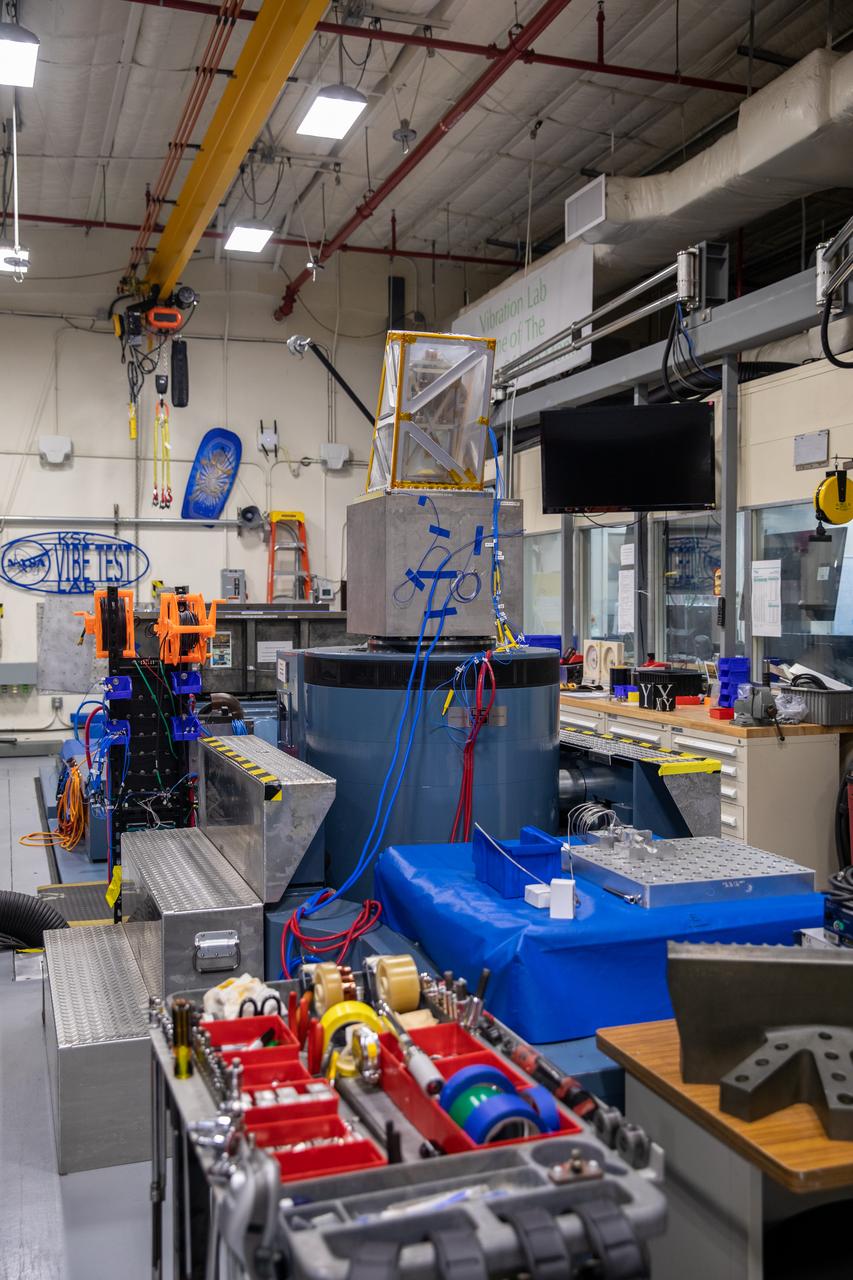
The Mass Spectrometer observing lunar operations (MSolo) instrument undergoes vibration testing inside the Cryogenics Laboratory at NASA’s Kennedy Space Center in Florida on Aug. 3, 2022. MSolo is a commercial off-the-shelf mass spectrometer modified to work in space and will help analyze the chemical makeup of landing sites on the Moon, as well as study water on the lunar surface. Researchers and engineers are preparing MSolo instruments to launch on four robotic missions as part of NASA’s Commercial Lunar Payload Services (CLPS) – commercial deliveries that will perform science experiments, test technologies, and demonstrate capabilities to help NASA explore the Moon and prepare for crewed missions to the lunar surface. This particular MSolo instrument is slated to fly on the agency’s Polar Resources Ice Mining Experiment-1 (PRIME-1) mission – the first in-situ resource utilization demonstration on the Moon – as part of the agency’s CLPS initiative.
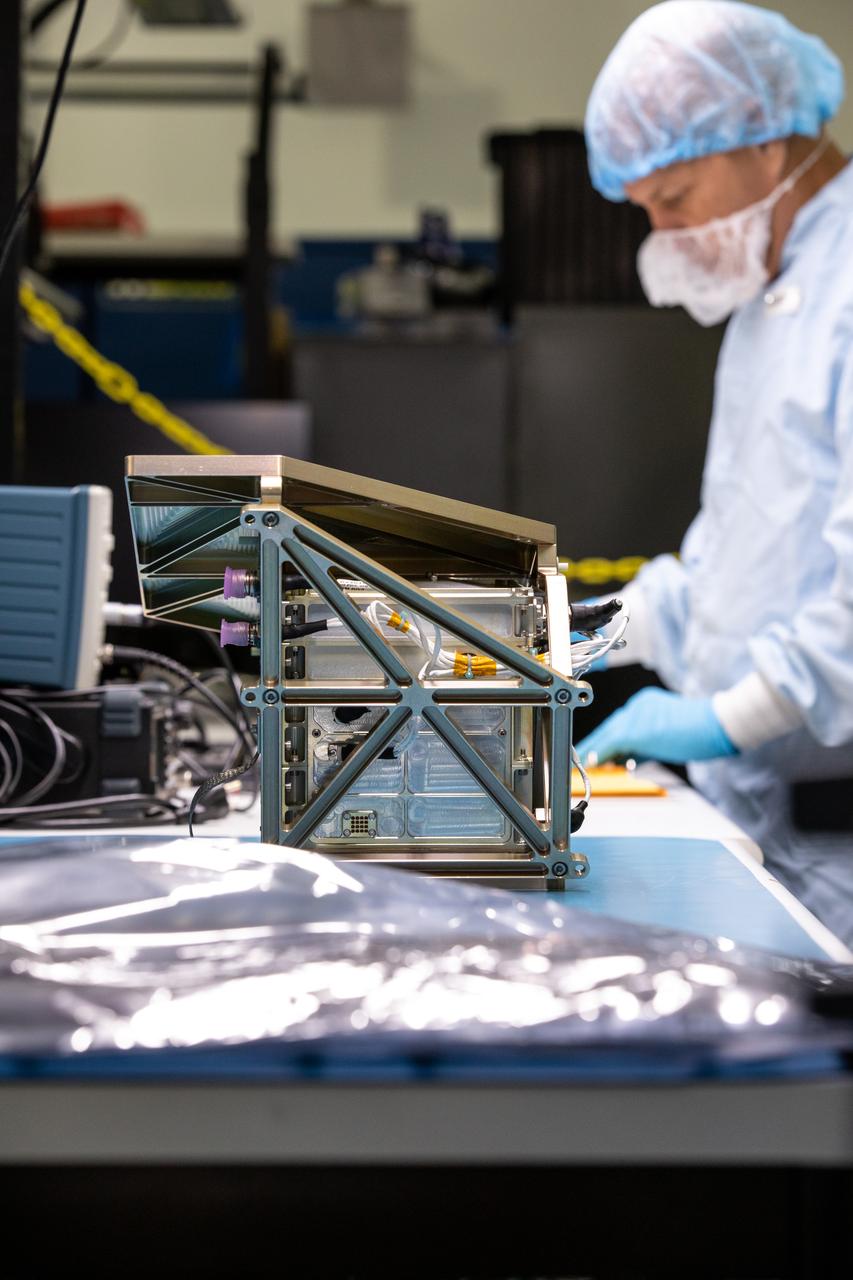
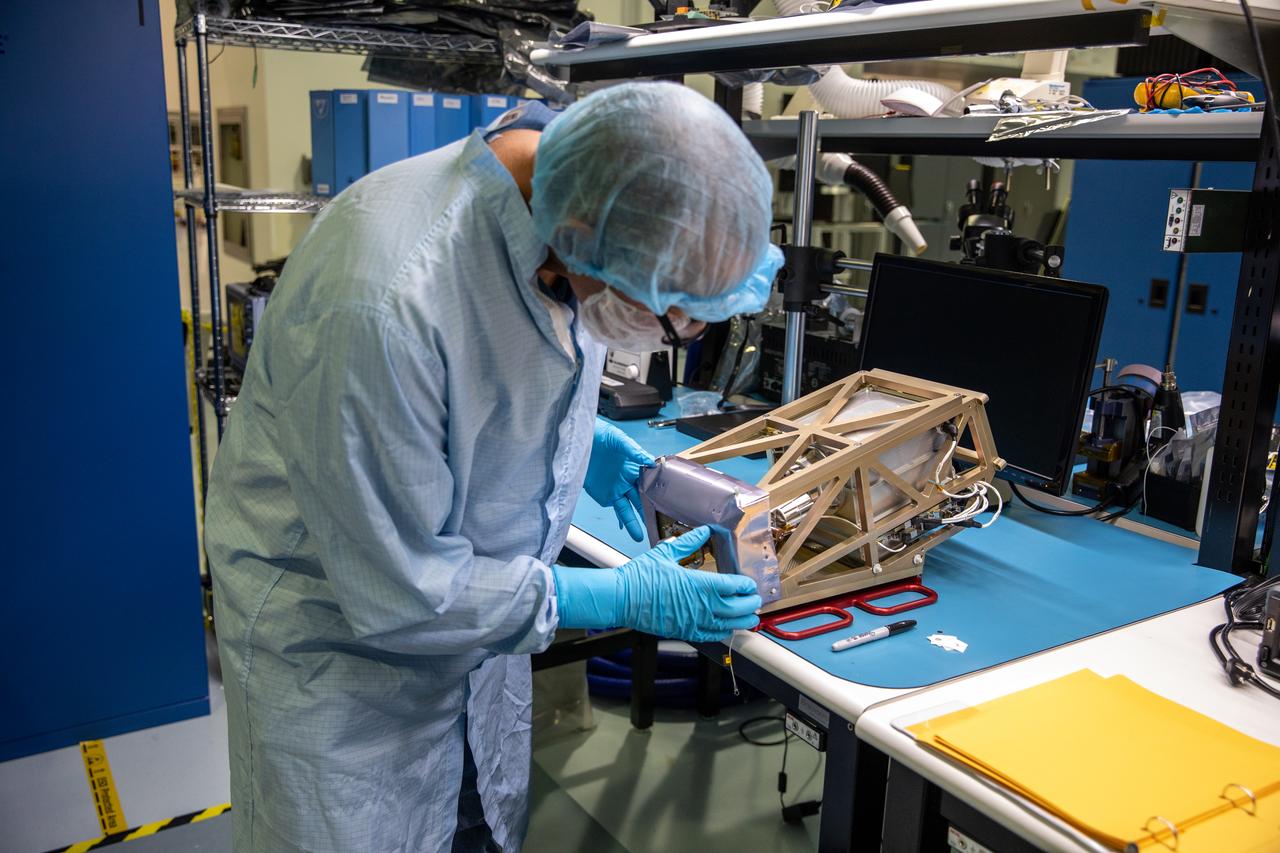
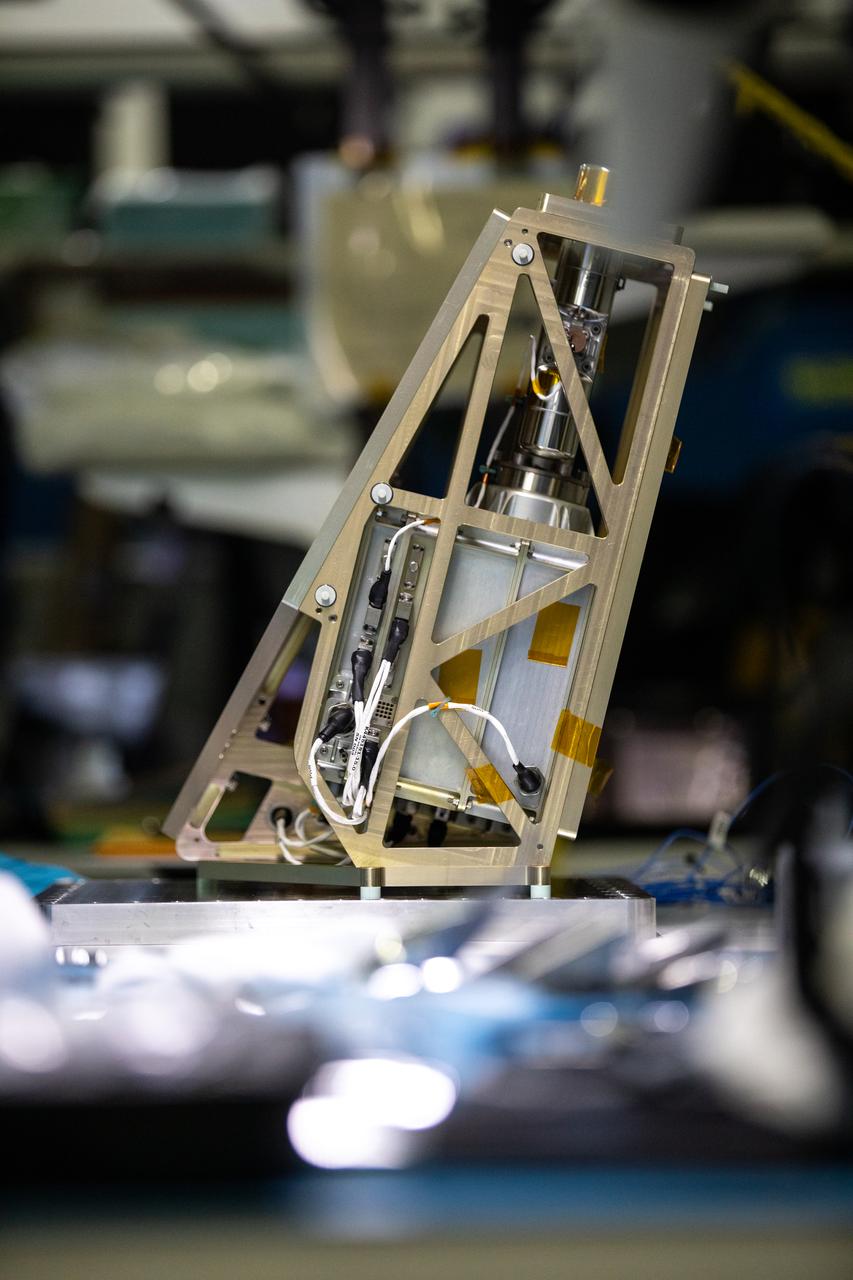
Engineers prepare the Mass Spectrometer Observing Lunar Operations (MSolo) instrument for the multilayer insulation installation inside Kennedy Space Center’s Space Station Processing Facility on Oct. 19, 2022. The activity is in preparation for the Polar Resources Ice Mining Experiment-1 (PRIME-1) mission, which will be the first in-situ resource utilization demonstration on the Moon. MSolo is a commercial off-the-shelf mass spectrometer modified to work in space and will help analyze the chemical makeup of landing sites on the Moon, as well as study water on the lunar surface. Researchers and engineers are preparing MSolo instruments to launch on four robotic missions as part of NASA’s Commercial Lunar Payload Services – commercial deliveries beginning in 2023 that will perform science experiments, test technologies, and demonstrate capabilities to help NASA explore the Moon and prepare for crewed missions to the lunar surface.
A Kennedy Space Center engineer prepares the Mass Spectrometer observing lunar operations (MSolo) instrument for vibration testing inside the Florida spaceport’s Cryogenics Laboratory on Aug. 3, 2022. MSolo is a commercial off-the-shelf mass spectrometer modified to work in space and will help analyze the chemical makeup of landing sites on the Moon, as well as study water on the lunar surface. Researchers and engineers are preparing MSolo instruments to launch on four robotic missions as part of NASA’s Commercial Lunar Payload Services (CLPS) – commercial deliveries that will perform science experiments, test technologies, and demonstrate capabilities to help NASA explore the Moon and prepare for crewed missions to the lunar surface. This particular MSolo instrument is slated to fly on the agency’s Polar Resources Ice Mining Experiment-1 (PRIME-1) mission – the first in-situ resource utilization demonstration on the Moon – as part of the agency’s CLPS initiative.
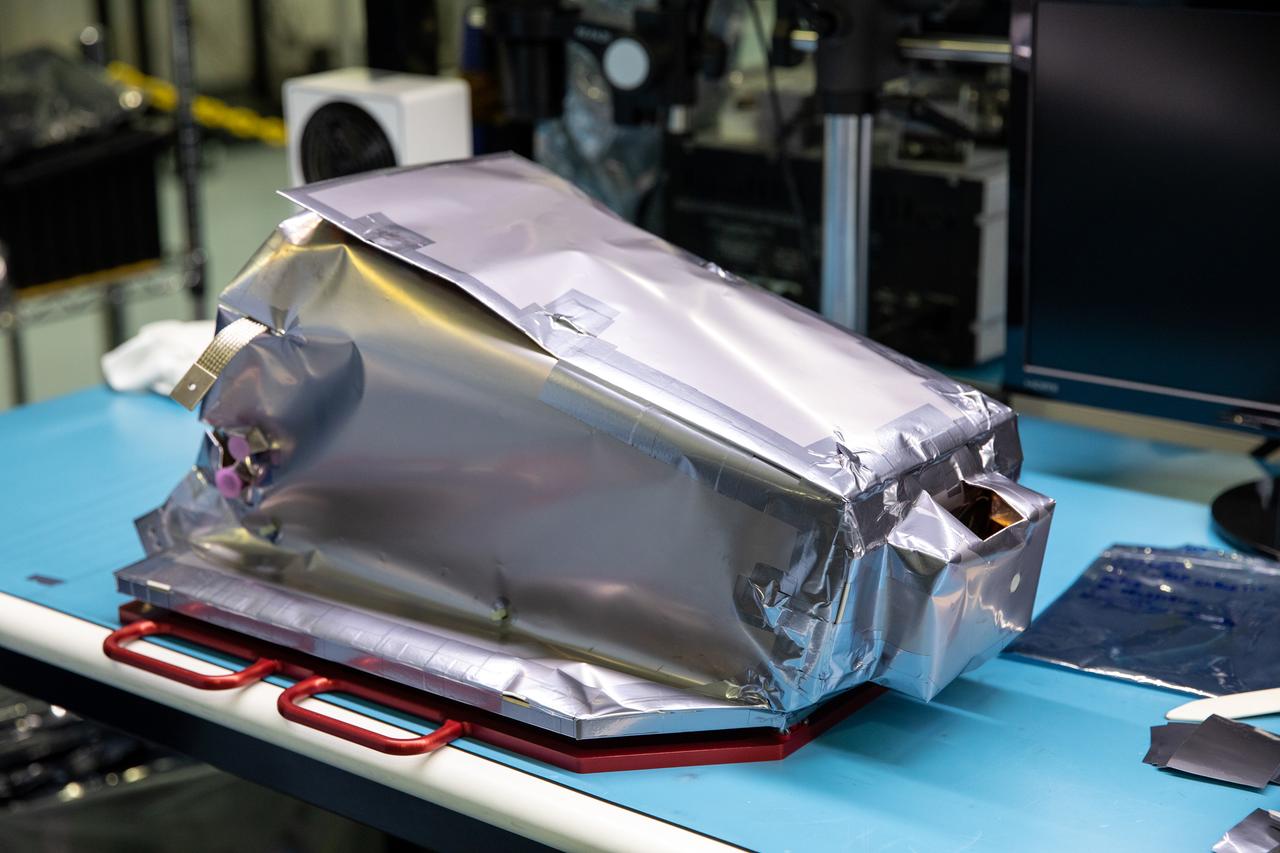
Engineers install multilayer insulation (MLI) on the Mass Spectrometer Observing Lunar Operations (MSolo) instrument inside Kennedy Space Center’s Space Station Processing Facility on Oct. 20, 2022. The activity is in preparation for the Polar Resources Ice Mining Experiment-1 (PRIME-1) mission, which will be the first in-situ resource utilization demonstration on the Moon. MLI protects the instrument from thermal temperature extremes, helping to insulate at cold temperatures and to cool at higher temperatures when solar lighting conditions or lunar infrared reflects onto the instrument. Researchers and engineers are preparing MSolo instruments to launch on four robotic missions as part of NASA’s Commercial Lunar Payload Services – commercial deliveries beginning in 2023 that will perform science experiments, test technologies, and demonstrate capabilities to help NASA explore the Moon and prepare for crewed missions to the lunar surface.
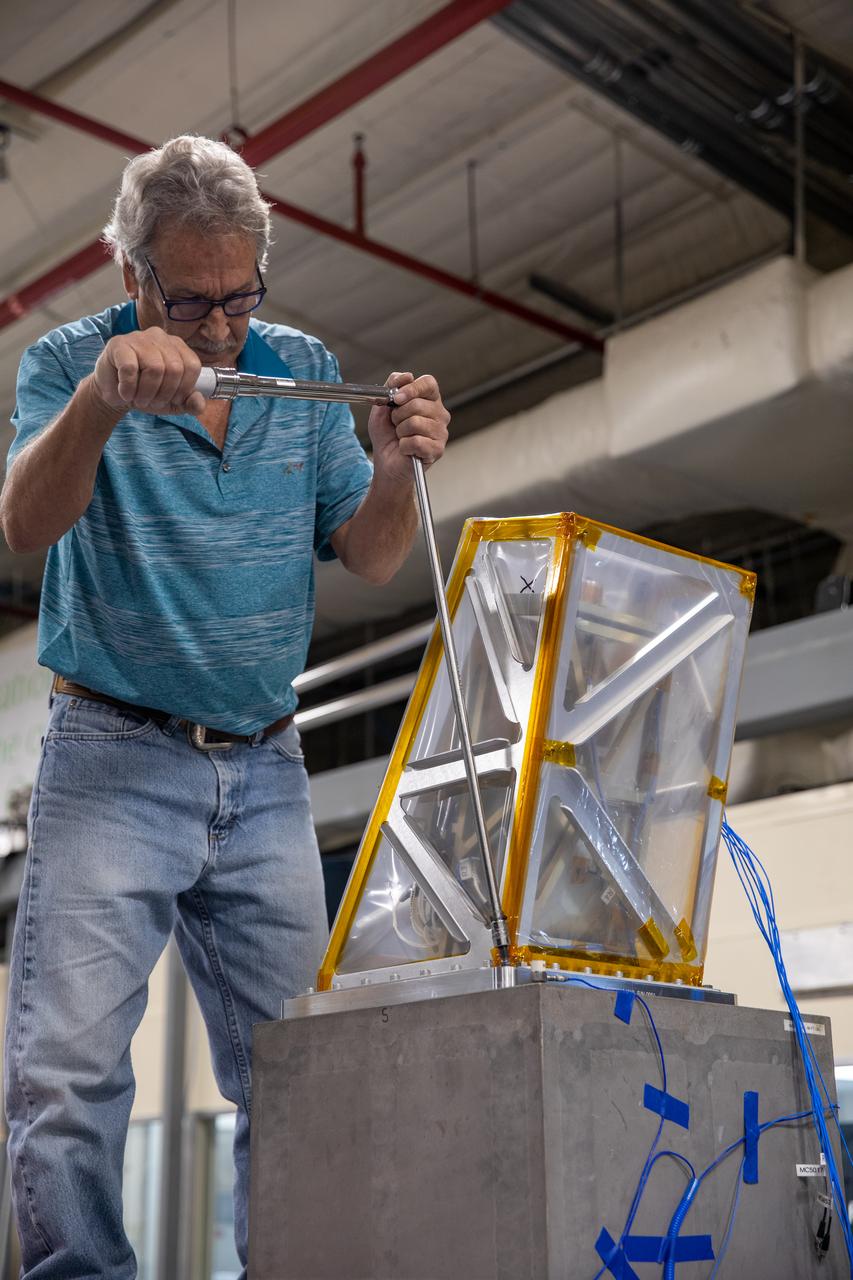
Engineers at NASA’s Kennedy Space Center in Florida remove the vibration fixture on the Mass Spectrometer observing lunar operations (MSolo) instrument on Aug. 4, 2022. The activity followed a vibration test in preparation for the Polar Resources Ice Mining Experiment-1 (PRIME-1) mission, which will be the first in-situ resource utilization demonstration on the Moon. MSolo is a commercial off-the-shelf mass spectrometer modified to work in space and will help analyze the chemical makeup of landing sites on the Moon, as well as study water on the lunar surface. Researchers and engineers are preparing MSolo instruments to launch on four robotic missions as part of NASA’s Commercial Lunar Payload Services – commercial deliveries beginning in 2023 that will perform science experiments, test technologies, and demonstrate capabilities to help NASA explore the Moon and prepare for crewed missions to the lunar surface.
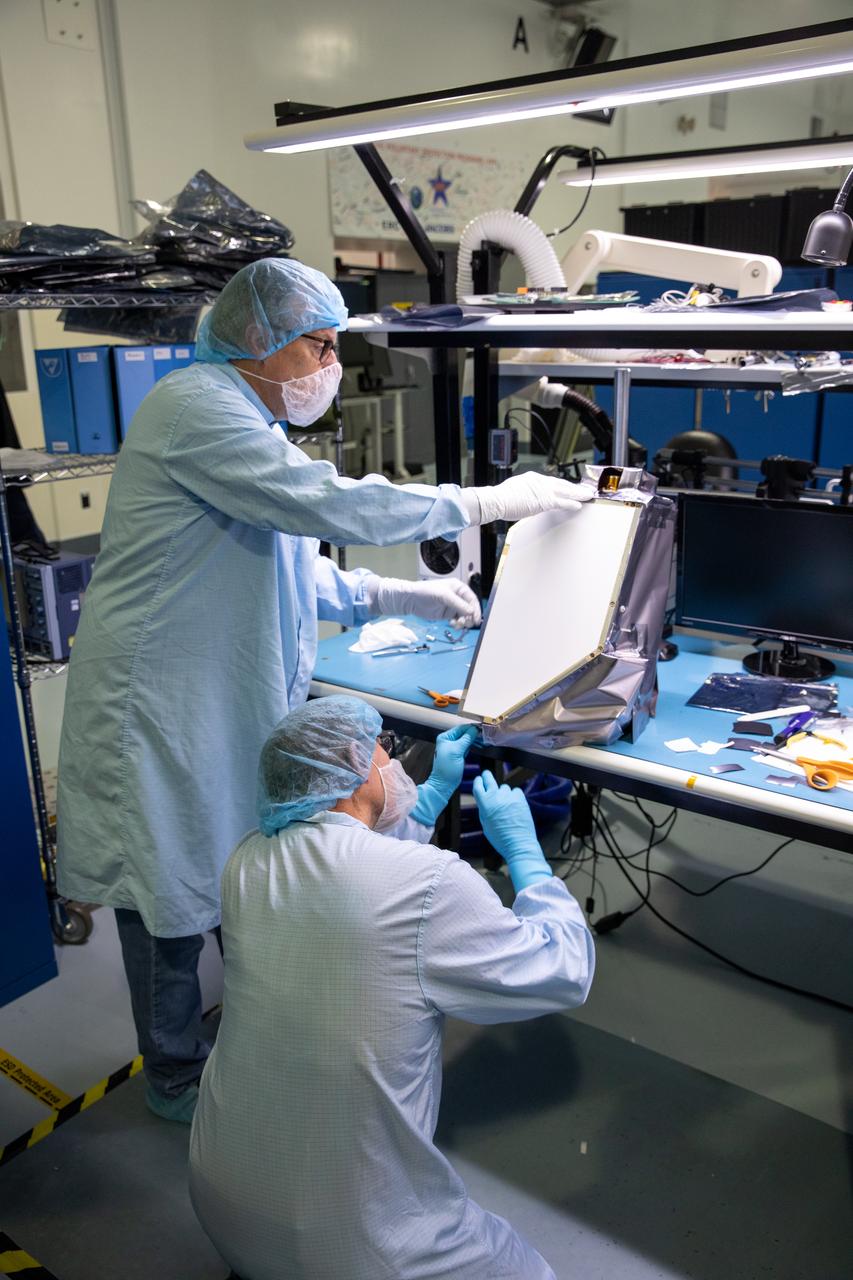
Engineers install multilayer insulation (MLI) on the Mass Spectrometer Observing Lunar Operations (MSolo) instrument inside Kennedy Space Center’s Space Station Processing Facility on Oct. 20, 2022. The activity is in preparation for the Polar Resources Ice Mining Experiment-1 (PRIME-1) mission, which will be the first in-situ resource utilization demonstration on the Moon. MLI protects the instrument from thermal temperature extremes, helping to insulate at cold temperatures and to cool at higher temperatures when solar lighting conditions or lunar infrared reflects onto the instrument. Researchers and engineers are preparing MSolo instruments to launch on four robotic missions as part of NASA’s Commercial Lunar Payload Services – commercial deliveries beginning in 2023 that will perform science experiments, test technologies, and demonstrate capabilities to help NASA explore the Moon and prepare for crewed missions to the lunar surface.

Engineers at NASA’s Kennedy Space Center in Florida remove the vibration fixture on the Mass Spectrometer observing lunar operations (MSolo) instrument on Aug. 4, 2022. The activity followed a vibration test in preparation for the Polar Resources Ice Mining Experiment-1 (PRIME-1) mission, which will be the first in-situ resource utilization demonstration on the Moon. MSolo is a commercial off-the-shelf mass spectrometer modified to work in space and will help analyze the chemical makeup of landing sites on the Moon, as well as study water on the lunar surface. Researchers and engineers are preparing MSolo instruments to launch on four robotic missions as part of NASA’s Commercial Lunar Payload Services – commercial deliveries beginning in 2023 that will perform science experiments, test technologies, and demonstrate capabilities to help NASA explore the Moon and prepare for crewed missions to the lunar surface.
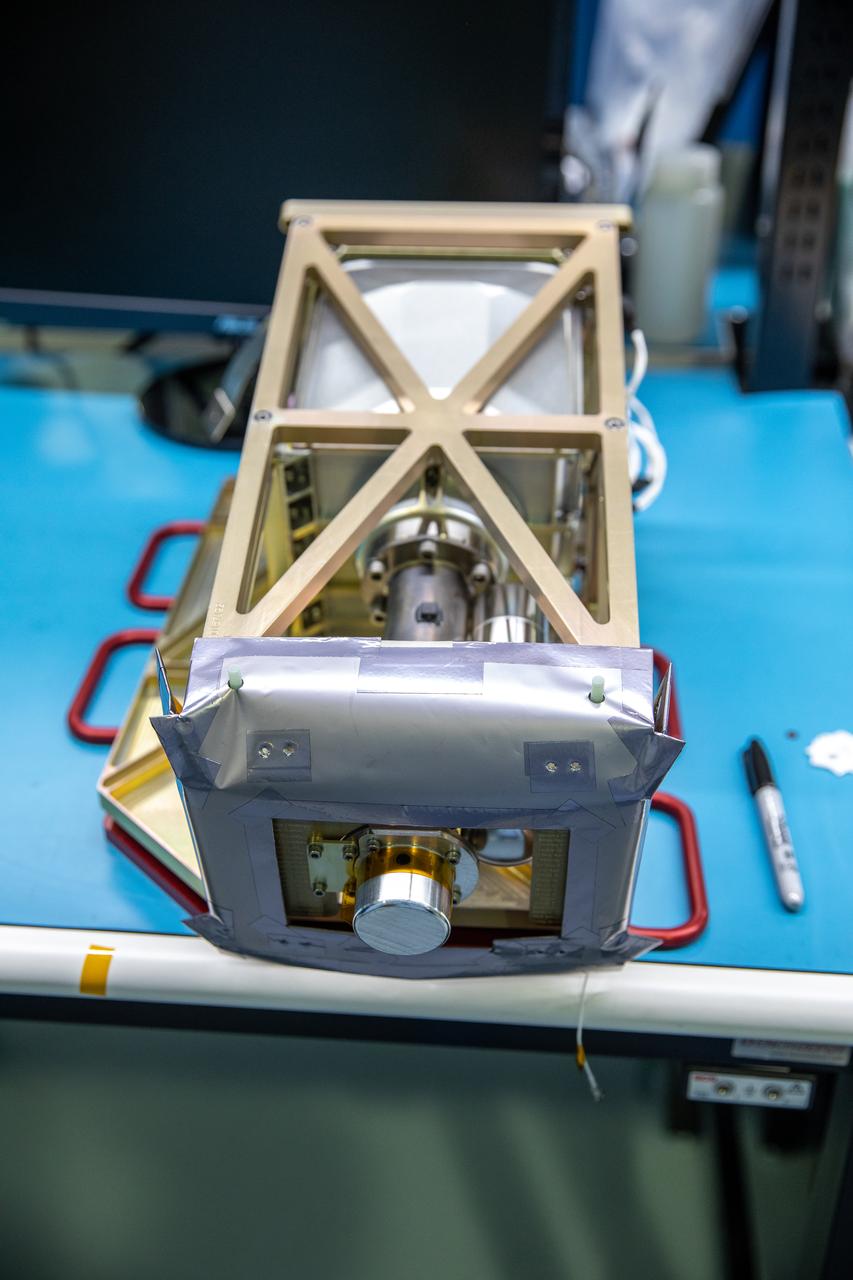
Engineers prepare the Mass Spectrometer Observing Lunar Operations (MSolo) instrument for the multilayer insulation installation inside Kennedy Space Center’s Space Station Processing Facility on Oct. 19, 2022. The activity is in preparation for the Polar Resources Ice Mining Experiment-1 (PRIME-1) mission, which will be the first in-situ resource utilization demonstration on the Moon. MSolo is a commercial off-the-shelf mass spectrometer modified to work in space and will help analyze the chemical makeup of landing sites on the Moon, as well as study water on the lunar surface. Researchers and engineers are preparing MSolo instruments to launch on four robotic missions as part of NASA’s Commercial Lunar Payload Services – commercial deliveries beginning in 2023 that will perform science experiments, test technologies, and demonstrate capabilities to help NASA explore the Moon and prepare for crewed missions to the lunar surface.
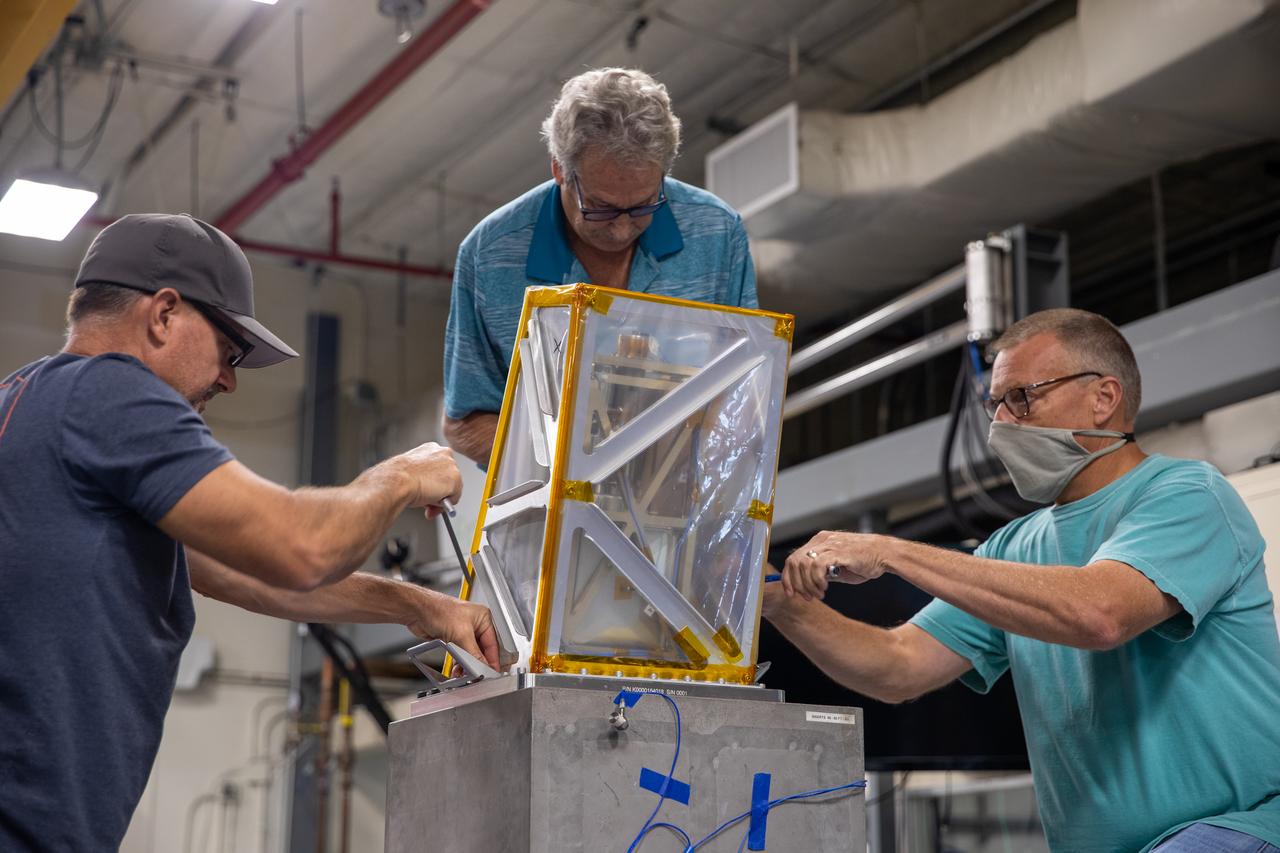
Engineers at NASA’s Kennedy Space Center prepare the Mass Spectrometer observing lunar operations (MSolo) instrument for vibration testing inside the Florida spaceport’s Cryogenics Laboratory on Aug. 3, 2022. MSolo is a commercial off-the-shelf mass spectrometer modified to work in space and will help analyze the chemical makeup of landing sites on the Moon, as well as study water on the lunar surface. Researchers and engineers are preparing MSolo instruments to launch on four robotic missions as part of NASA’s Commercial Lunar Payload Services (CLPS) – commercial deliveries that will perform science experiments, test technologies, and demonstrate capabilities to help NASA explore the Moon and prepare for crewed missions to the lunar surface. This particular MSolo instrument is slated to fly on the agency’s Polar Resources Ice Mining Experiment-1 (PRIME-1) mission – the first in-situ resource utilization demonstration on the Moon – as part of the agency’s CLPS initiative.
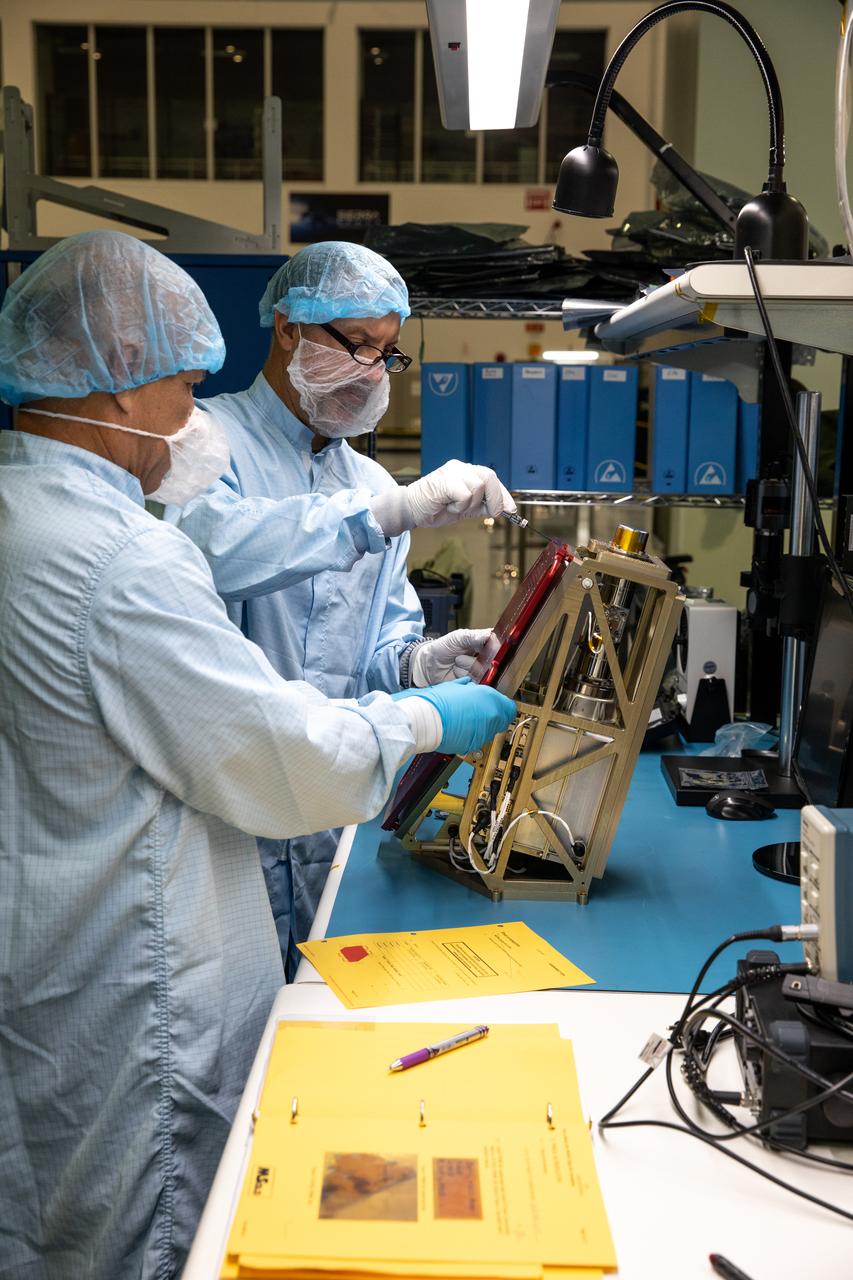
Engineers prepare the Mass Spectrometer Observing Lunar Operations (MSolo) instrument for the multilayer insulation installation inside Kennedy Space Center’s Space Station Processing Facility on Oct. 19, 2022. The activity is in preparation for the Polar Resources Ice Mining Experiment-1 (PRIME-1) mission, which will be the first in-situ resource utilization demonstration on the Moon. MSolo is a commercial off-the-shelf mass spectrometer modified to work in space and will help analyze the chemical makeup of landing sites on the Moon, as well as study water on the lunar surface. Researchers and engineers are preparing MSolo instruments to launch on four robotic missions as part of NASA’s Commercial Lunar Payload Services – commercial deliveries beginning in 2023 that will perform science experiments, test technologies, and demonstrate capabilities to help NASA explore the Moon and prepare for crewed missions to the lunar surface.
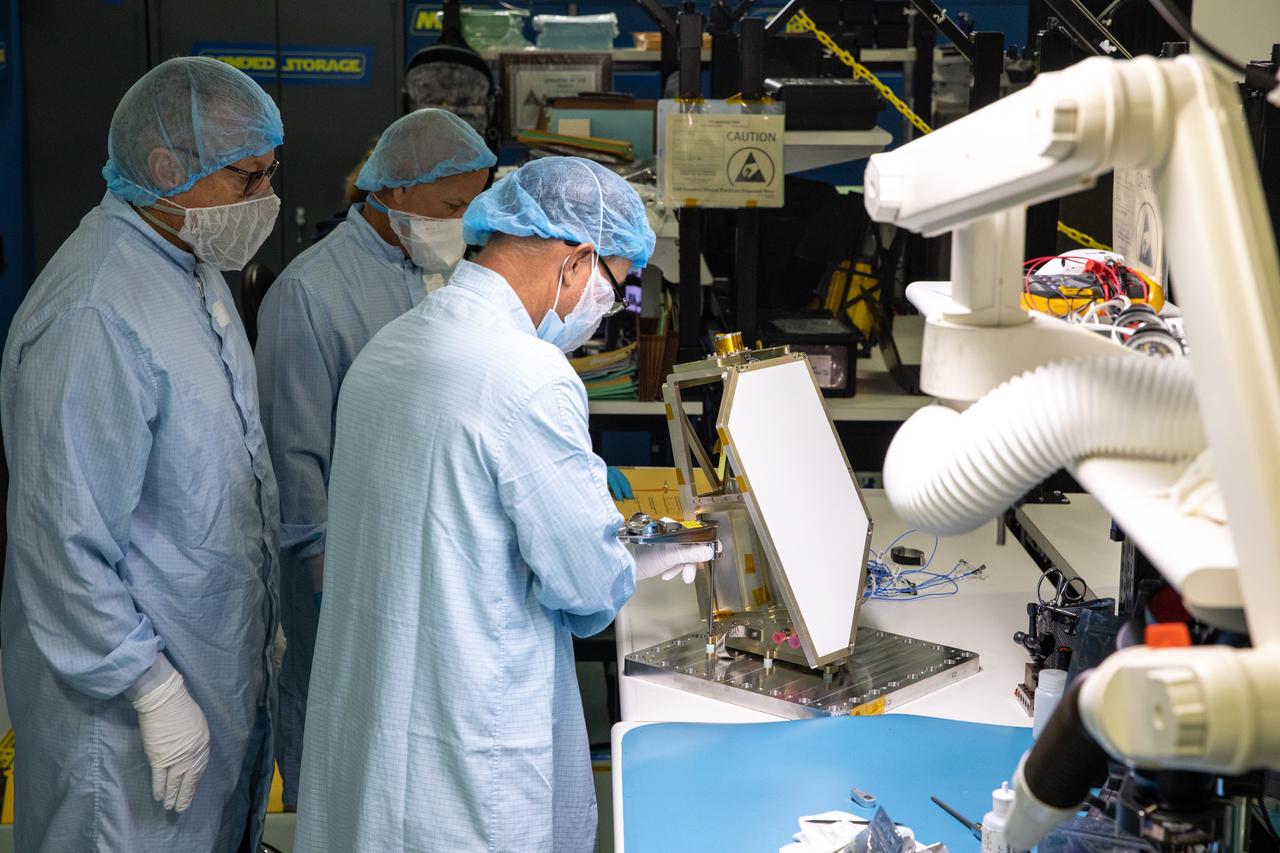
Engineers at NASA’s Kennedy Space Center in Florida remove the vibration fixture on the Mass Spectrometer observing lunar operations (MSolo) instrument on Aug. 4, 2022. The activity followed a vibration test in preparation for the Polar Resources Ice Mining Experiment-1 (PRIME-1) mission, which will be the first in-situ resource utilization demonstration on the Moon. MSolo is a commercial off-the-shelf mass spectrometer modified to work in space and will help analyze the chemical makeup of landing sites on the Moon, as well as study water on the lunar surface. Researchers and engineers are preparing MSolo instruments to launch on four robotic missions as part of NASA’s Commercial Lunar Payload Services – commercial deliveries beginning in 2023 that will perform science experiments, test technologies, and demonstrate capabilities to help NASA explore the Moon and prepare for crewed missions to the lunar surface.
Engineers prepare the Mass Spectrometer Observing Lunar Operations (MSolo) instrument for the multilayer insulation installation inside Kennedy Space Center’s Space Station Processing Facility on Oct. 19, 2022. The activity is in preparation for the Polar Resources Ice Mining Experiment-1 (PRIME-1) mission, which will be the first in-situ resource utilization demonstration on the Moon. MSolo is a commercial off-the-shelf mass spectrometer modified to work in space and will help analyze the chemical makeup of landing sites on the Moon, as well as study water on the lunar surface. Researchers and engineers are preparing MSolo instruments to launch on four robotic missions as part of NASA’s Commercial Lunar Payload Services – commercial deliveries beginning in 2023 that will perform science experiments, test technologies, and demonstrate capabilities to help NASA explore the Moon and prepare for crewed missions to the lunar surface.
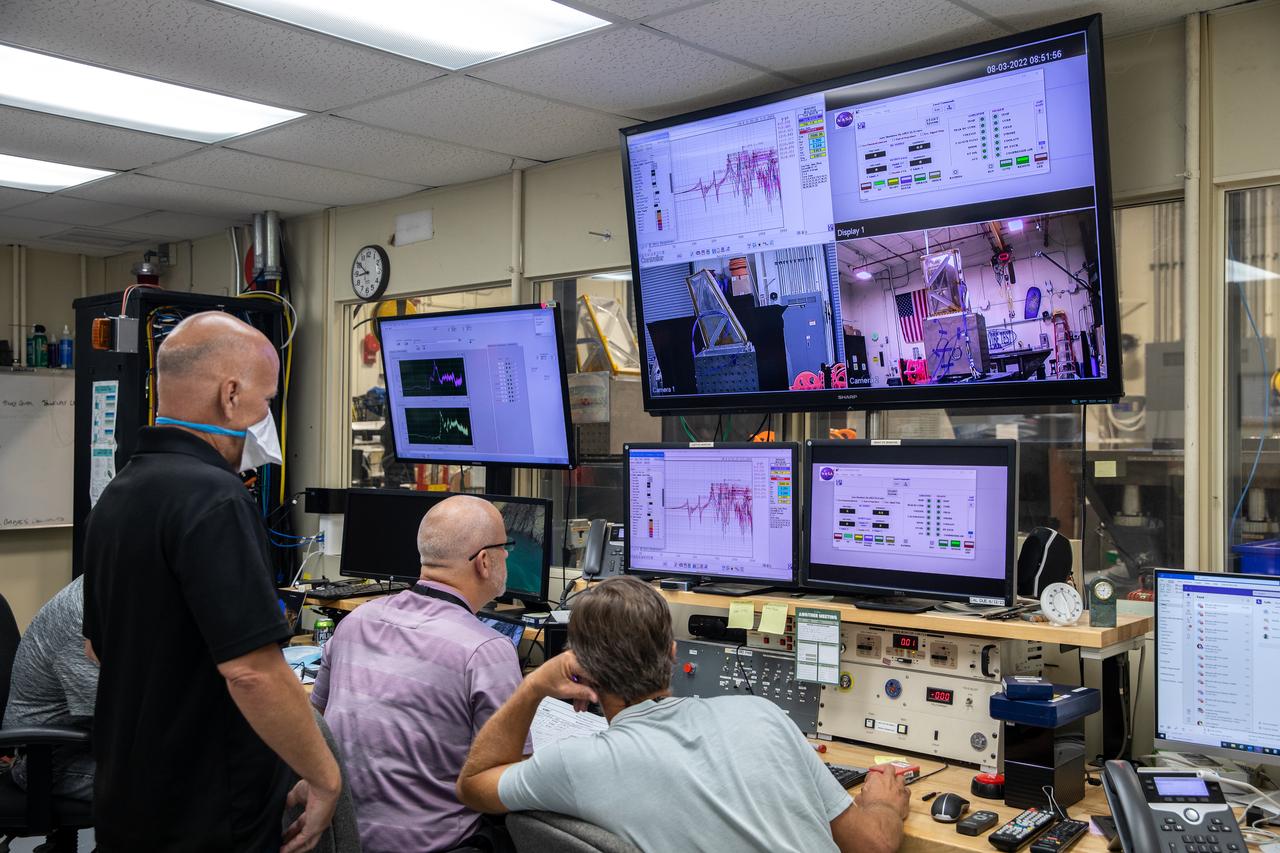
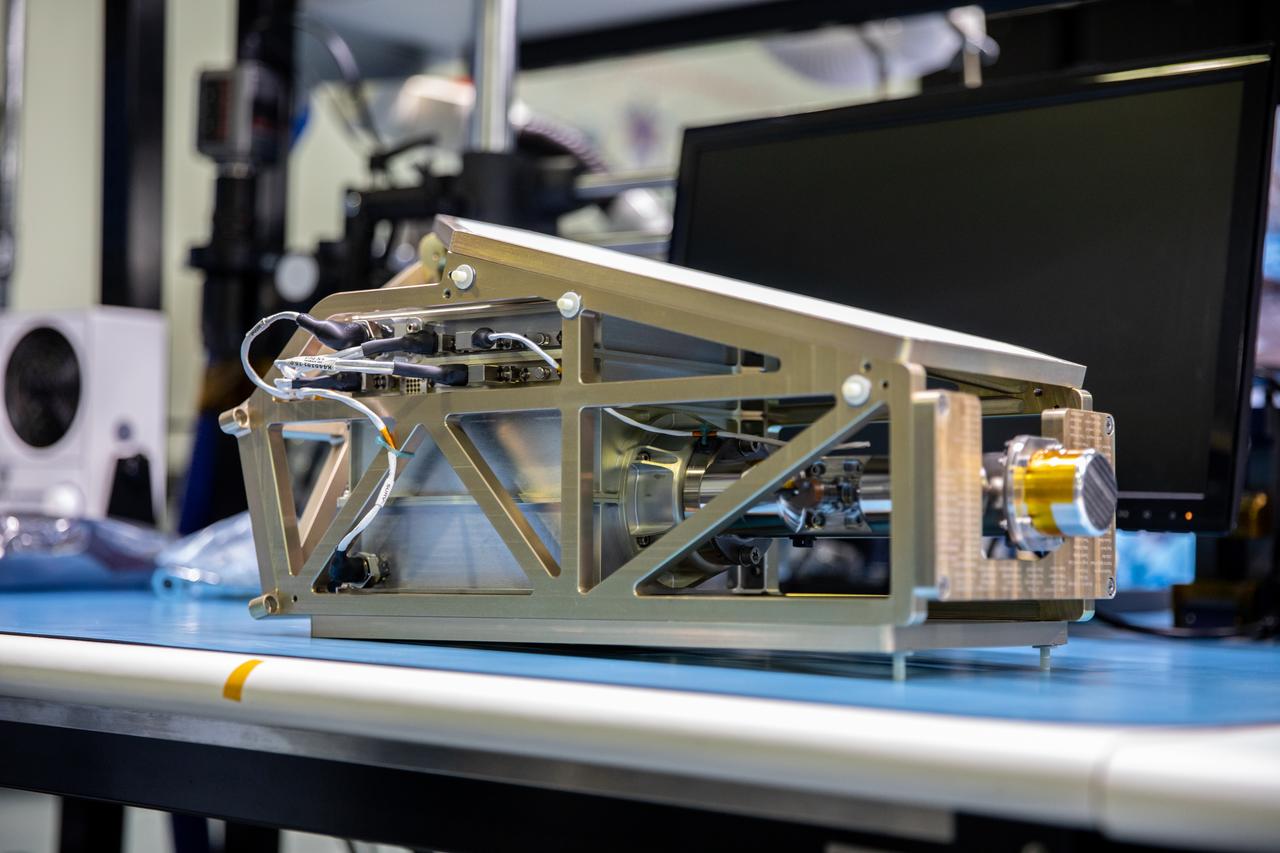
Engineers at NASA’s Kennedy Space Center monitor the Mass Spectrometer observing lunar operations (MSolo) instrument as it undergoes vibration testing inside the Florida spaceport’s Cryogenics Laboratory on Aug. 3, 2022. MSolo is a commercial off-the-shelf mass spectrometer modified to work in space and will help analyze the chemical makeup of landing sites on the Moon, as well as study water on the lunar surface. Researchers and engineers are preparing MSolo instruments to launch on four robotic missions as part of NASA’s Commercial Lunar Payload Services (CLPS) – commercial deliveries that will perform science experiments, test technologies, and demonstrate capabilities to help NASA explore the Moon and prepare for crewed missions to the lunar surface. This particular MSolo instrument is slated to fly on the agency’s Polar Resources Ice Mining Experiment-1 (PRIME-1) mission – the first in-situ resource utilization demonstration on the Moon – as part of the agency’s CLPS initiative.
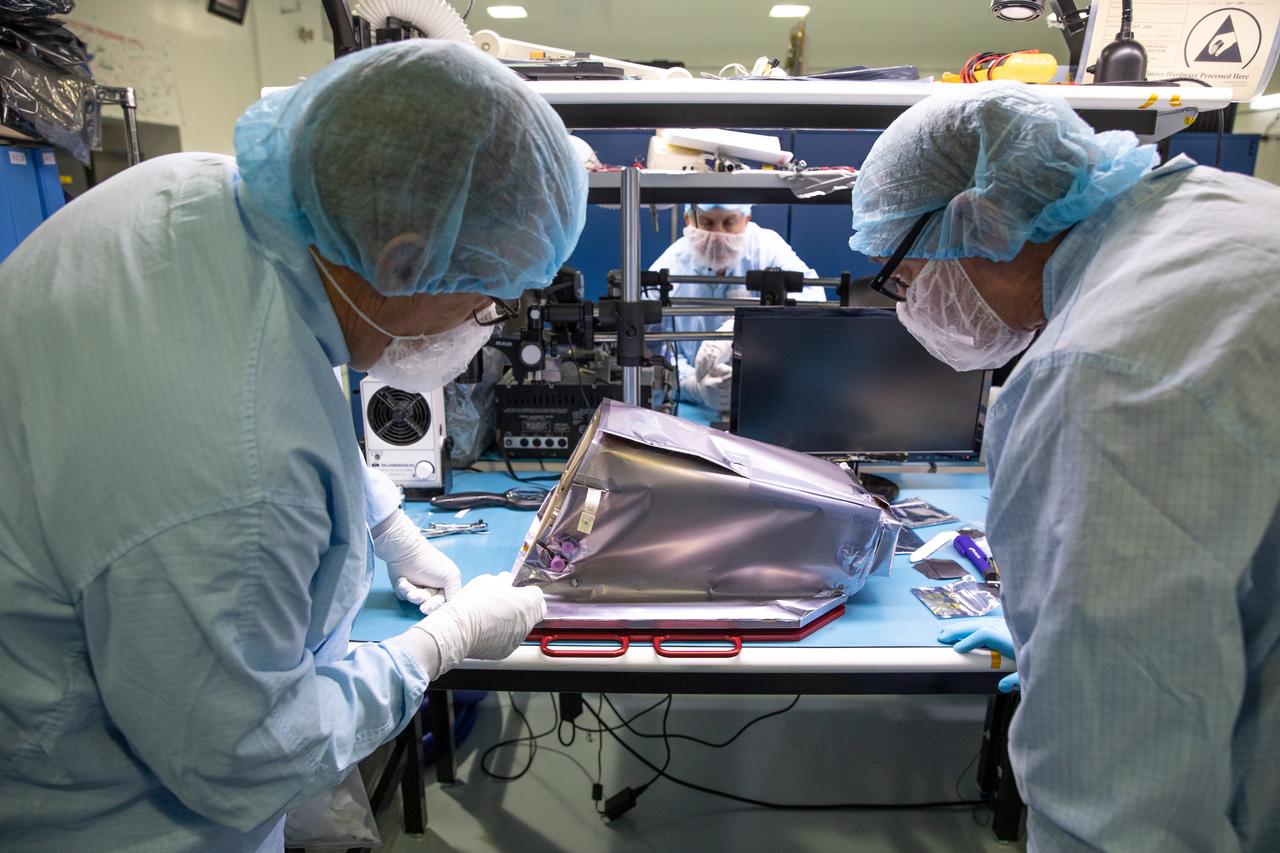
Engineers install multilayer insulation (MLI) on the Mass Spectrometer Observing Lunar Operations (MSolo) instrument inside Kennedy Space Center’s Space Station Processing Facility on Oct. 20, 2022. The activity is in preparation for the Polar Resources Ice Mining Experiment-1 (PRIME-1) mission, which will be the first in-situ resource utilization demonstration on the Moon. MLI protects the instrument from thermal temperature extremes, helping to insulate at cold temperatures and to cool at higher temperatures when solar lighting conditions or lunar infrared reflects onto the instrument. Researchers and engineers are preparing MSolo instruments to launch on four robotic missions as part of NASA’s Commercial Lunar Payload Services – commercial deliveries beginning in 2023 that will perform science experiments, test technologies, and demonstrate capabilities to help NASA explore the Moon and prepare for crewed missions to the lunar surface.
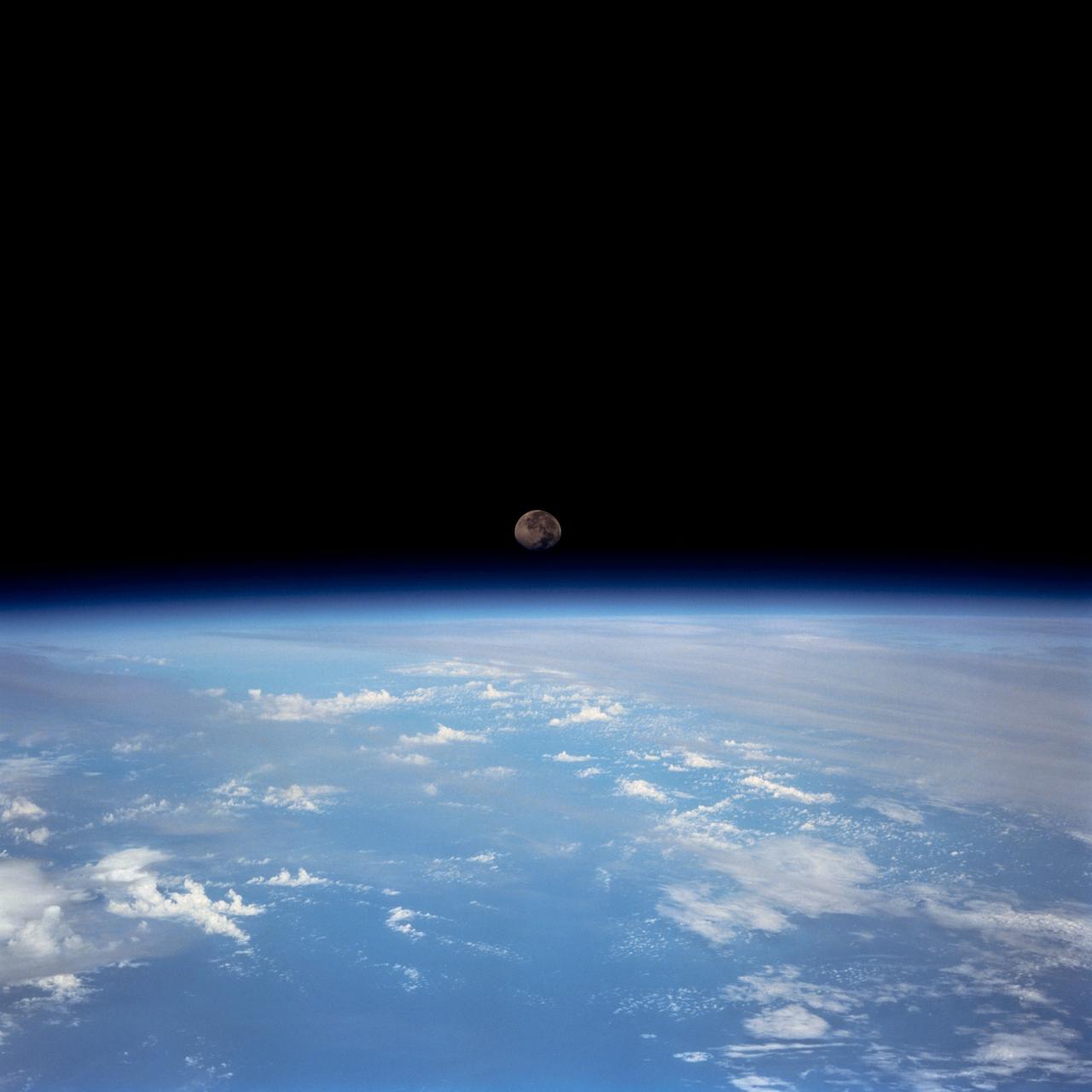
STS070-701-070 (13-22 JULY 1995) --- Dark surfaces of lunar mare can be identified on the ?tiny? Moon in the center of this clear 35mm frame, recorded by crew members aboard the Earth-orbiting Space Shuttle Discovery. A variety of cloud-types obscure land and water in the scene. Several tropical storms and tropical depressions were observed by the crew during its nine-day mission.
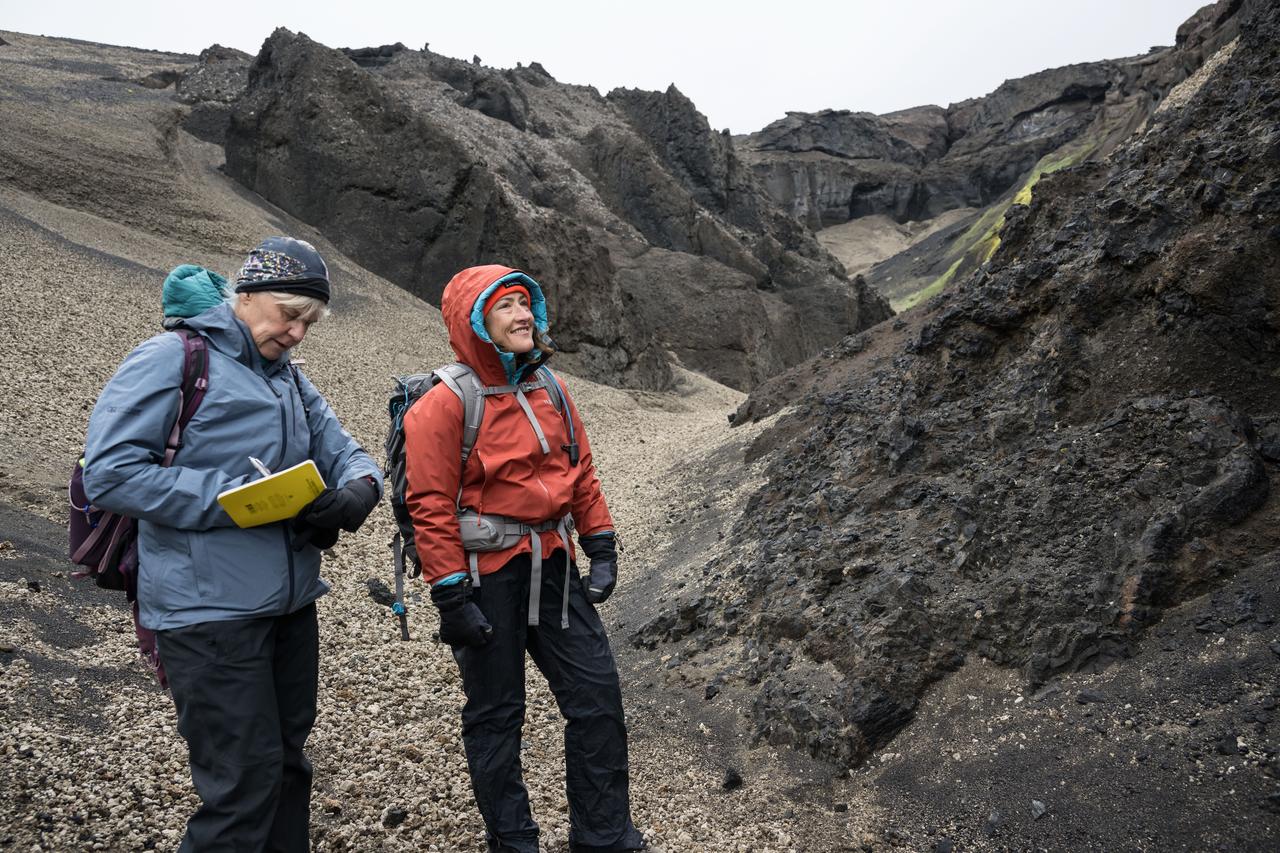
Artemis geology training lead at NASA's Johnson Space Center in Houston, Cindy Evans (left) and NASA astronaut and Artemis II mission specialist Christina Koch study geologic features in Iceland during Artemis II crew geology training in August 2024.
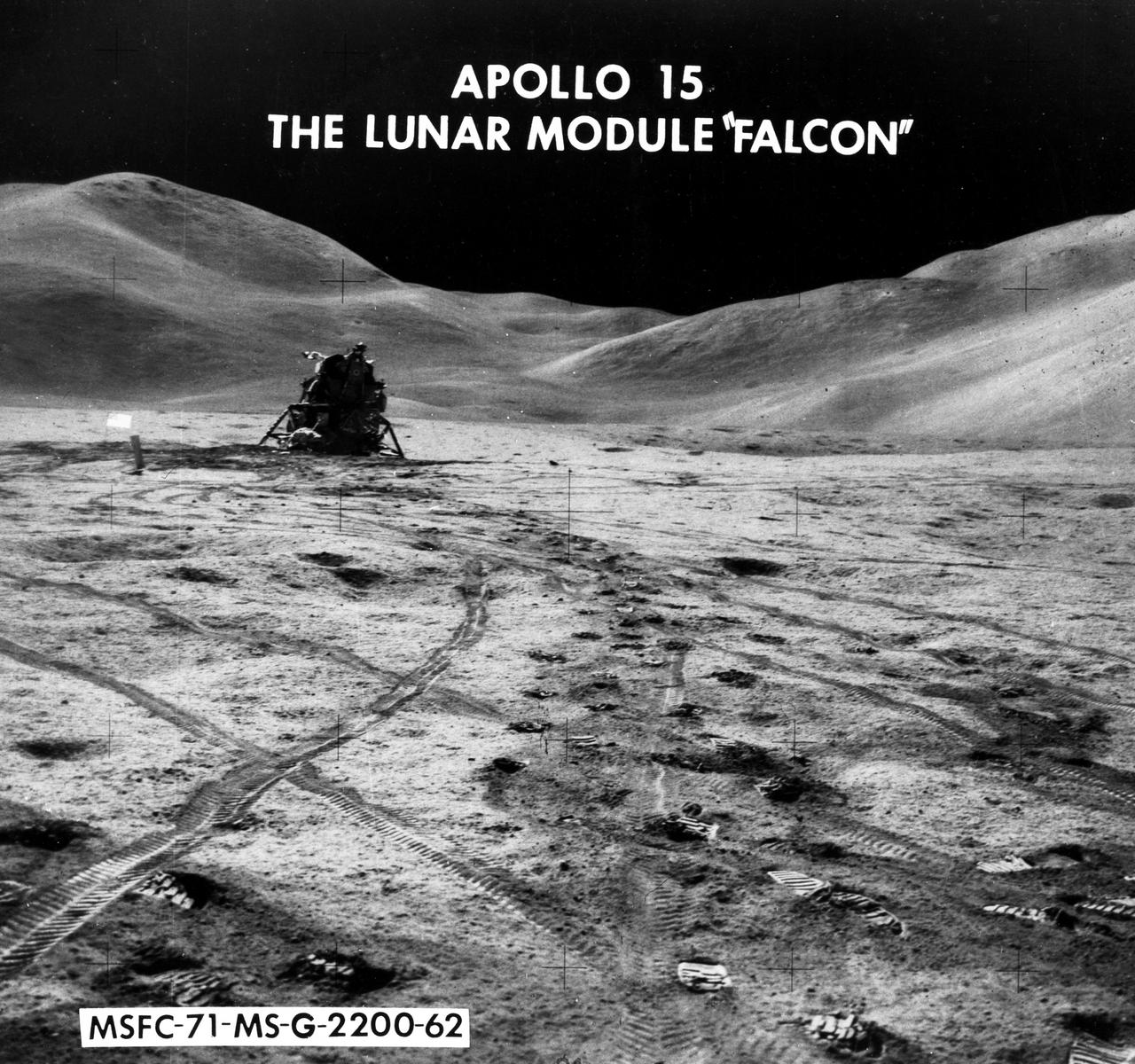
This is a photo of the Apollo 15 Lunar Module, Falcon, on the lunar surface. Apollo 15 launched from Kennedy Space Center (KSC) on July 26, 1971 via a Saturn V launch vehicle. Aboard was a crew of three astronauts including David R. Scott, Mission Commander; James B. Irwin, Lunar Module Pilot; and Alfred M. Worden, Command Module Pilot. The first mission designed to explore the Moon over longer periods, greater ranges and with more instruments for the collection of scientific data than on previous missions, the mission included the introduction of a $40,000,000 lunar roving vehicle (LRV) that reached a top speed of 16 kph (10 mph) across the Moon's surface. The successful Apollo 15 lunar landing mission was the first in a series of three advanced missions planned for the Apollo program. The primary scientific objectives were to observe the lunar surface, survey and sample material and surface features in a preselected area of the Hadley-Apennine region, setup and activation of surface experiments and conduct in-flight experiments and photographic tasks from lunar orbit. Apollo 15 televised the first lunar liftoff and recorded a walk in deep space by Alfred Worden. Both the Saturn V rocket and the LRV were developed at the Marshall Space Flight Center.
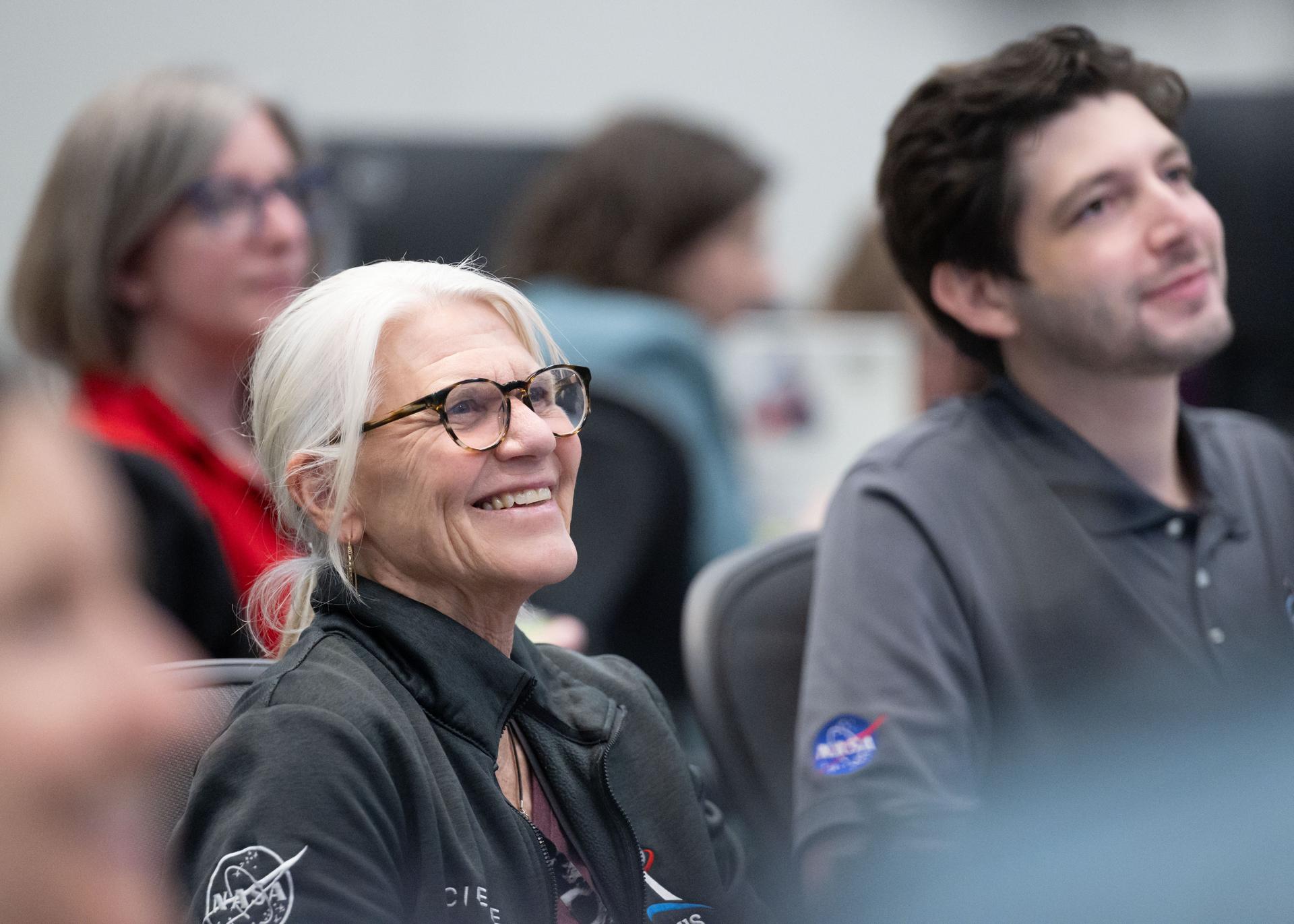
Artemis II lunar science team members, from left, Cindy Evans, and Wilfredo Garcia Lopez, react to crew observations during the lunar flyby on April 6, 2026. The team worked in the Science Evaluation Room (SER) in Mission Control at NASA’s Johnson Space Center in Houston. Built specifically for Artemis missions with these science priorities in mind, the SER is equipped to support rapid data interpretation, collaborative analysis, real-time decision making, and seamless coordination between the science and operations teams. Credits: NASA/Luna Posadas Nava

Artemis II lunar science team member, foreground, Amber Turner, and David Hollibaugh-Baker, and Cherie Achilles, background, participate in the team’s analysis of crew observations during the lunar flyby on April 6, 2026. The team worked in the Science Evaluation Room (SER) in Mission Control at NASA’s Johnson Space Center in Houston. Built specifically for Artemis missions with these science priorities in mind, the SER is equipped to support rapid data interpretation, collaborative analysis, real-time decision making, and seamless coordination between the science and operations teams. Credits: NASA/ Robert Markowitz
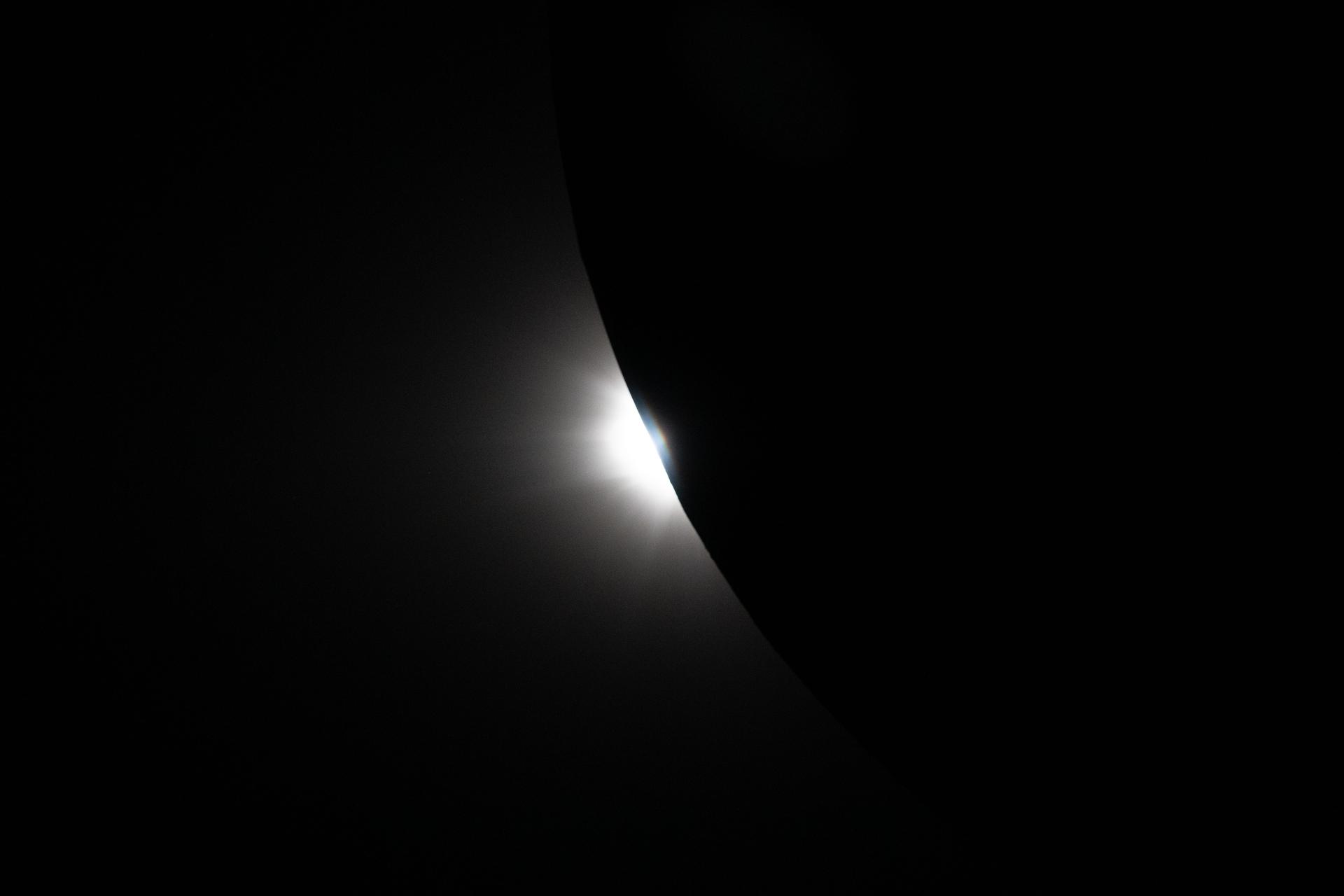
art002e009299 (April 6, 2026) – Captured from the Orion spacecraft near the end of the Artemis II lunar flyby on April 6, this image shows the Sun beginning to peek out from behind the Moon as the eclipse transitions out of totality. Only a portion of the Moon is visible in frame, its curved edge revealing a bright sliver of sunlight returning after nearly an hour of darkness. In final moments of the eclipse observed by the crew, the reemerging light creates a sharp contrast against the Moon’s silhouette and reveals lunar topography not usually visible along the lunar limb. This fleeting phase captures the dynamic alignment of the Sun, Moon, and spacecraft as Orion continues its journey back from the far side of the Moon.
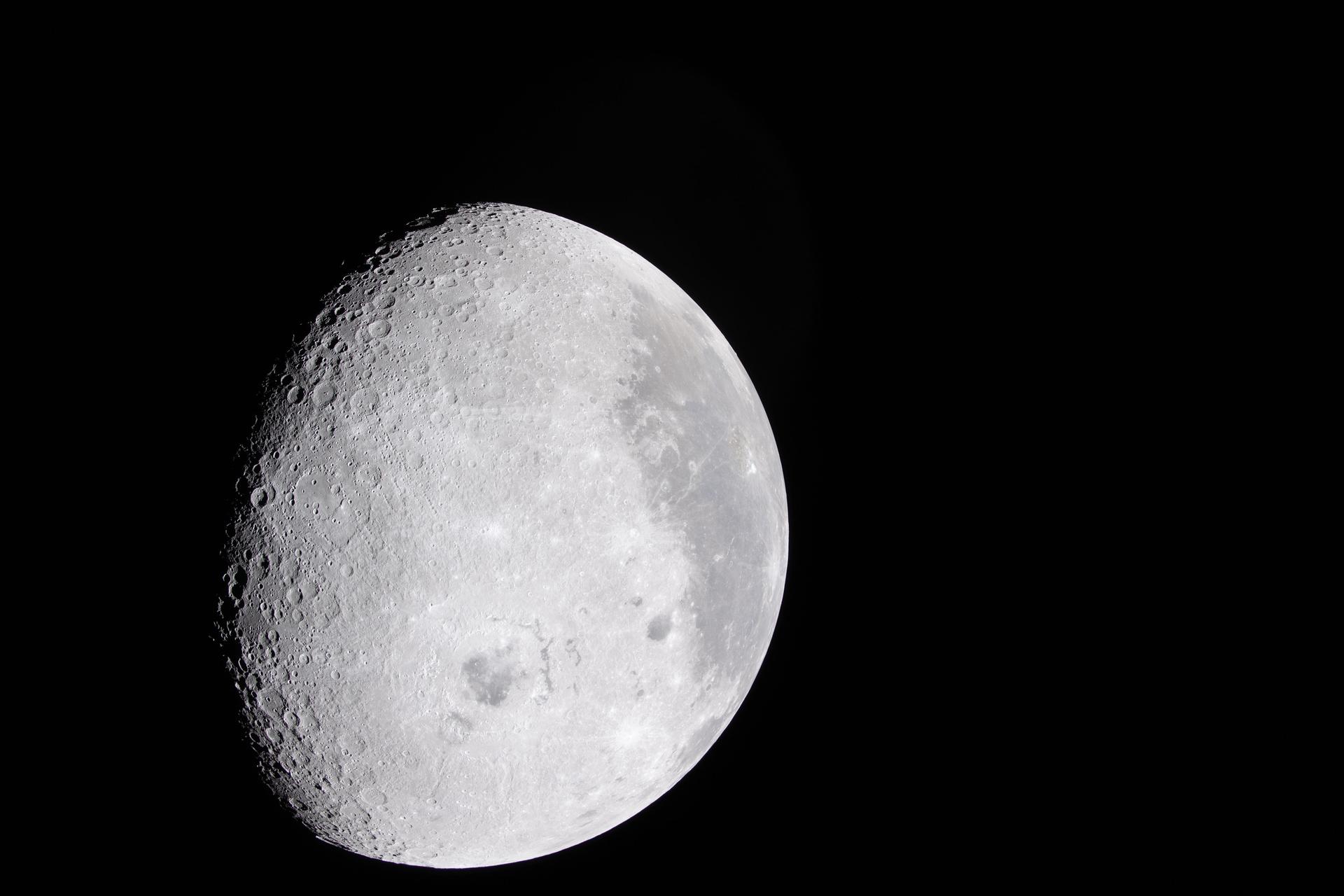
art002e009627 (April 6, 2026) – During the first shift of the lunar flyby observation period, the Artemis II crew captured more than two-thirds of the Moon, highlighting surface details on the nearside, including the 600-mile-wide impact crater, Orientale basin, along the boundary between the near and far sides. They also captured the Grimaldi crater, a dark, round feature northeast of Orientale, known for its dark mare lava floor and heavily worn rim.
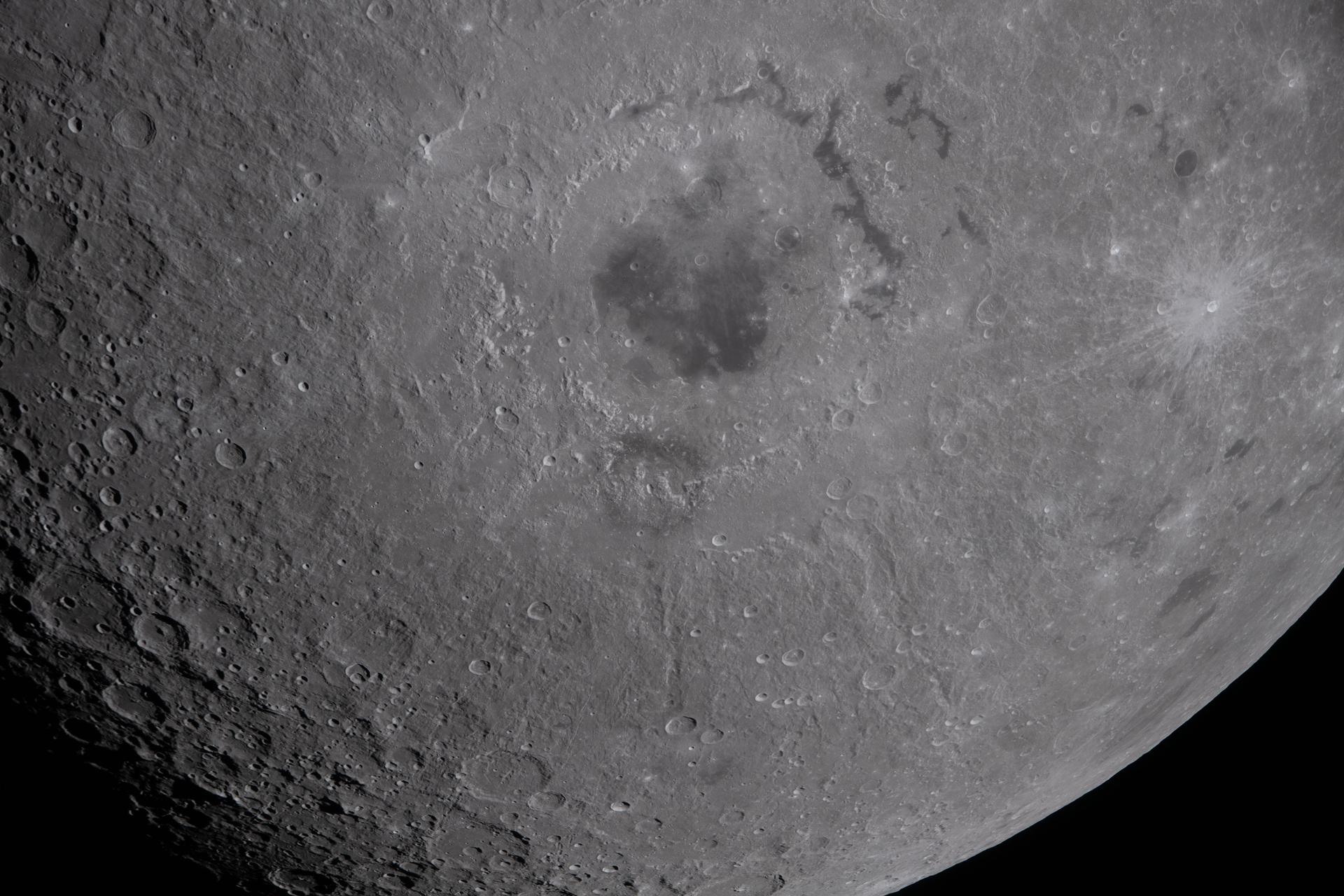
art002e012129 (April 6, 2026) - The lower half of the Moon hangs suspended in time in this photograph from the Artemis II crew during the lunar flyby observation period. In the upper center of the photo, the Orientale basin is the prominent feature, with a black patch of ancient lava in the center that punched through the Moon’s crust in an eruption billions of years ago. Credit: NASA
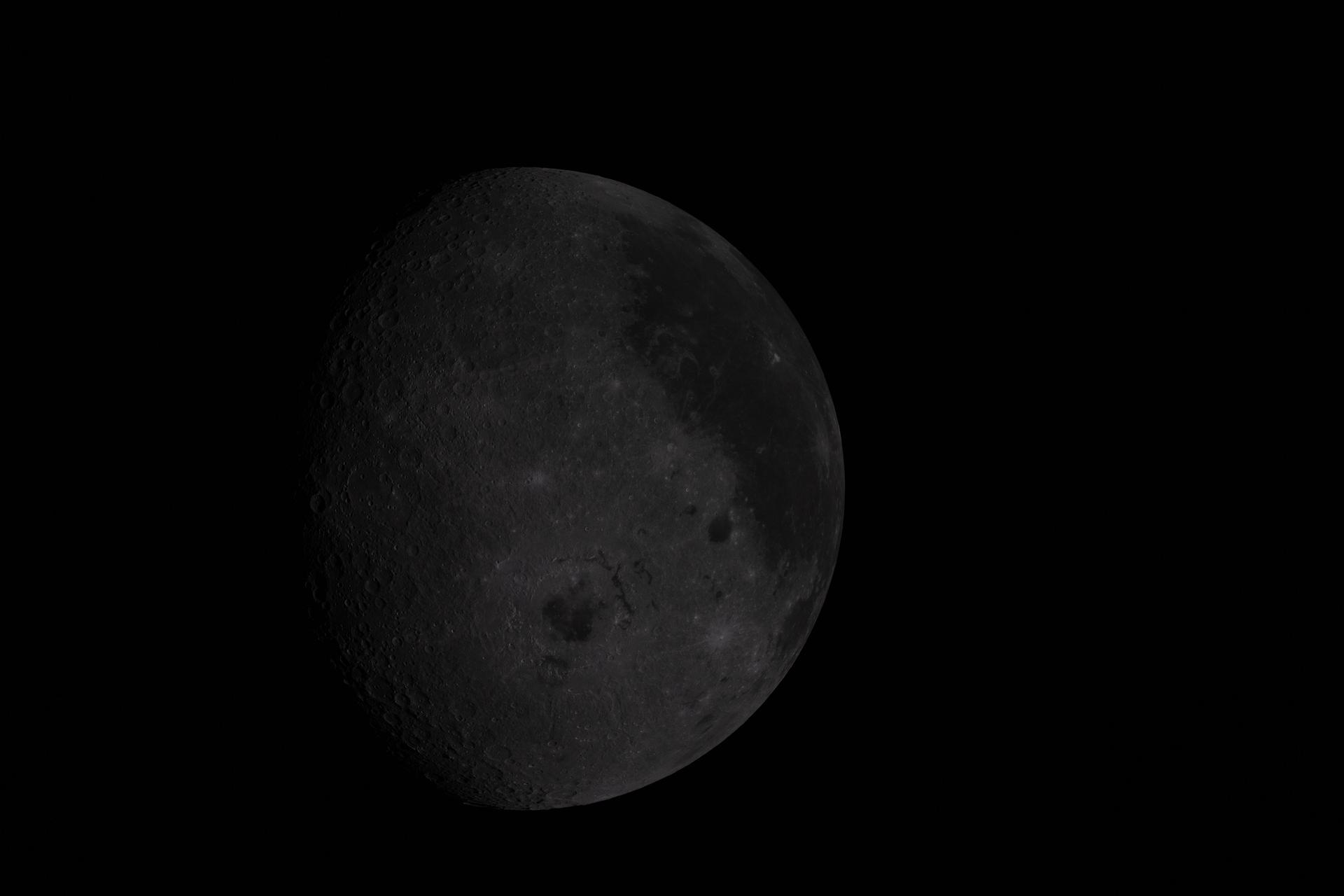
art002e012178 (April 7, 2026) - A shot from early in the Artemis II lunar flyby, taken with a smaller aperture setting, shows a moodier version of the Moon than some of the other flyby images with more typical lighting settings. The four crew members spent about 7 hours photographing and recording observations of the Moon as they flew around the far side on April 6, 2026.