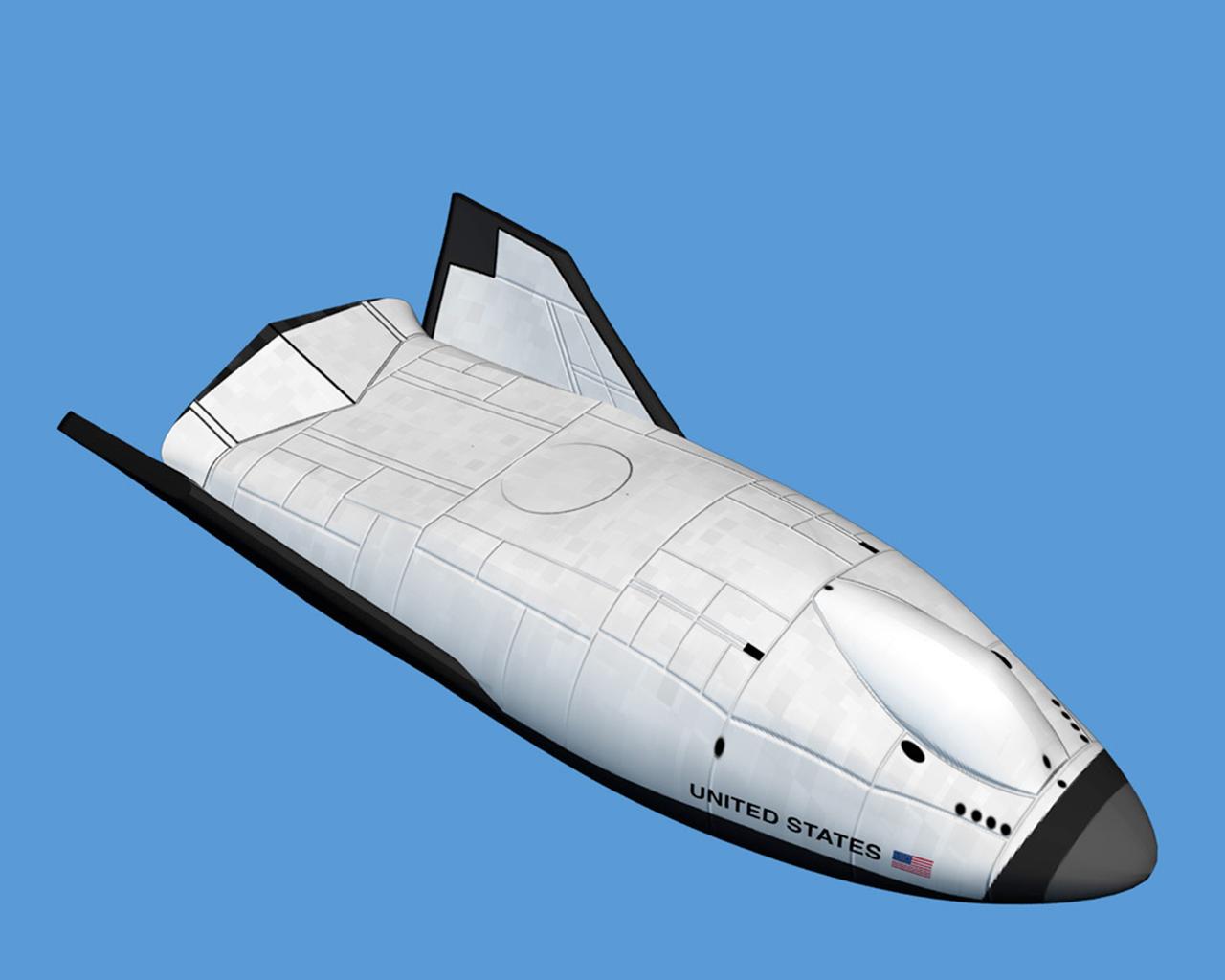
This is an artist's concept of the X-38 Crew Return Vehicle (CRV). The X-38 will take place of the Russian Soyuz capsule and is well underway on development for the International Space Station. The Soyuz can only stay on orbit for six months as opposed to three years for the CRV.
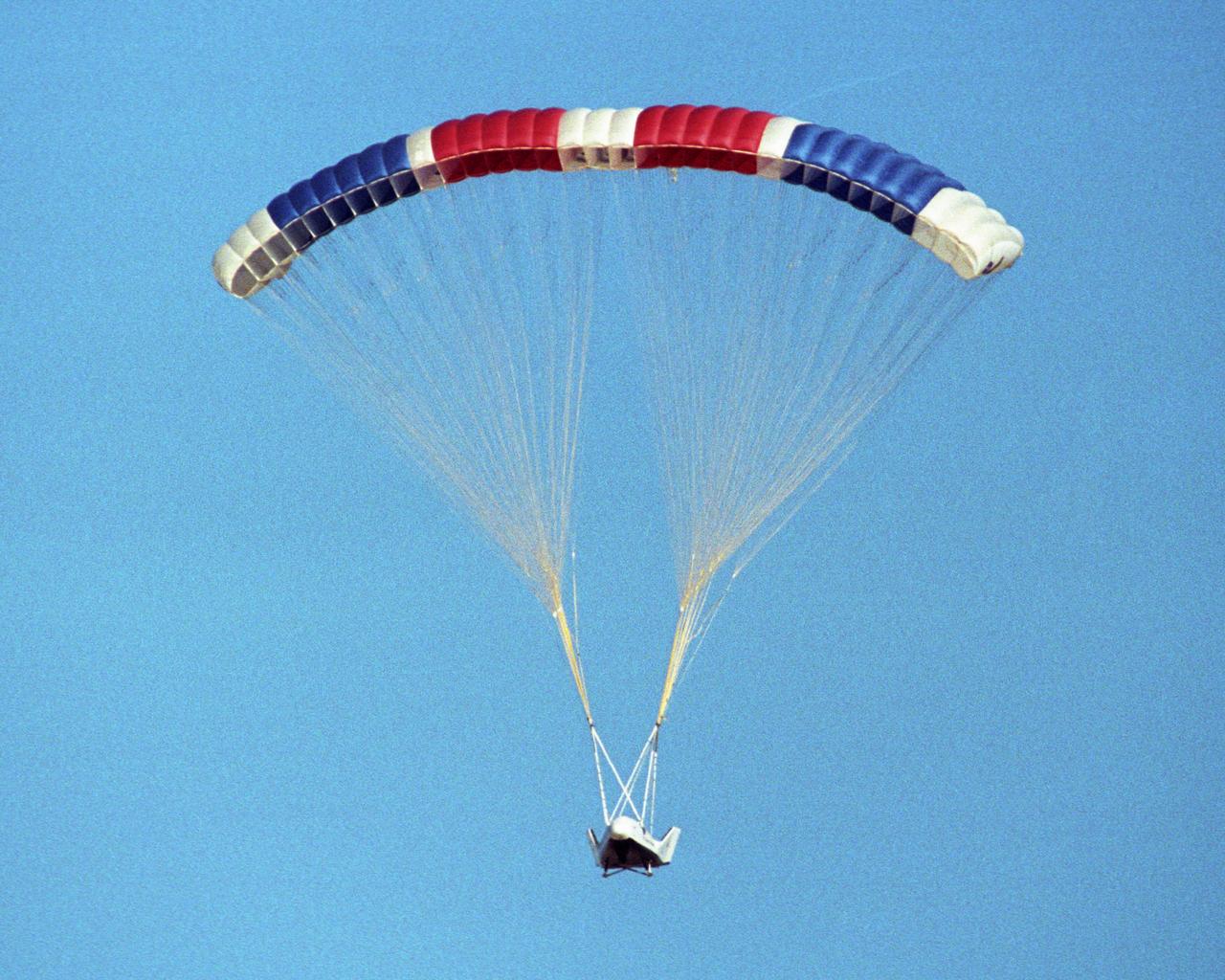
The X-38 prototype of the Crew Return Vehicle for the International Space Station is suspended under its giant 7,500-square-foot parafoil during its eighth free flight on Thursday, Dec. 13, 2001. A portion of the descent was flown by remote control by a NASA astronaut from a ground vehicle configured like the CRV's interior before the X-38 made an autonomous landing on Rogers Dry Lake.
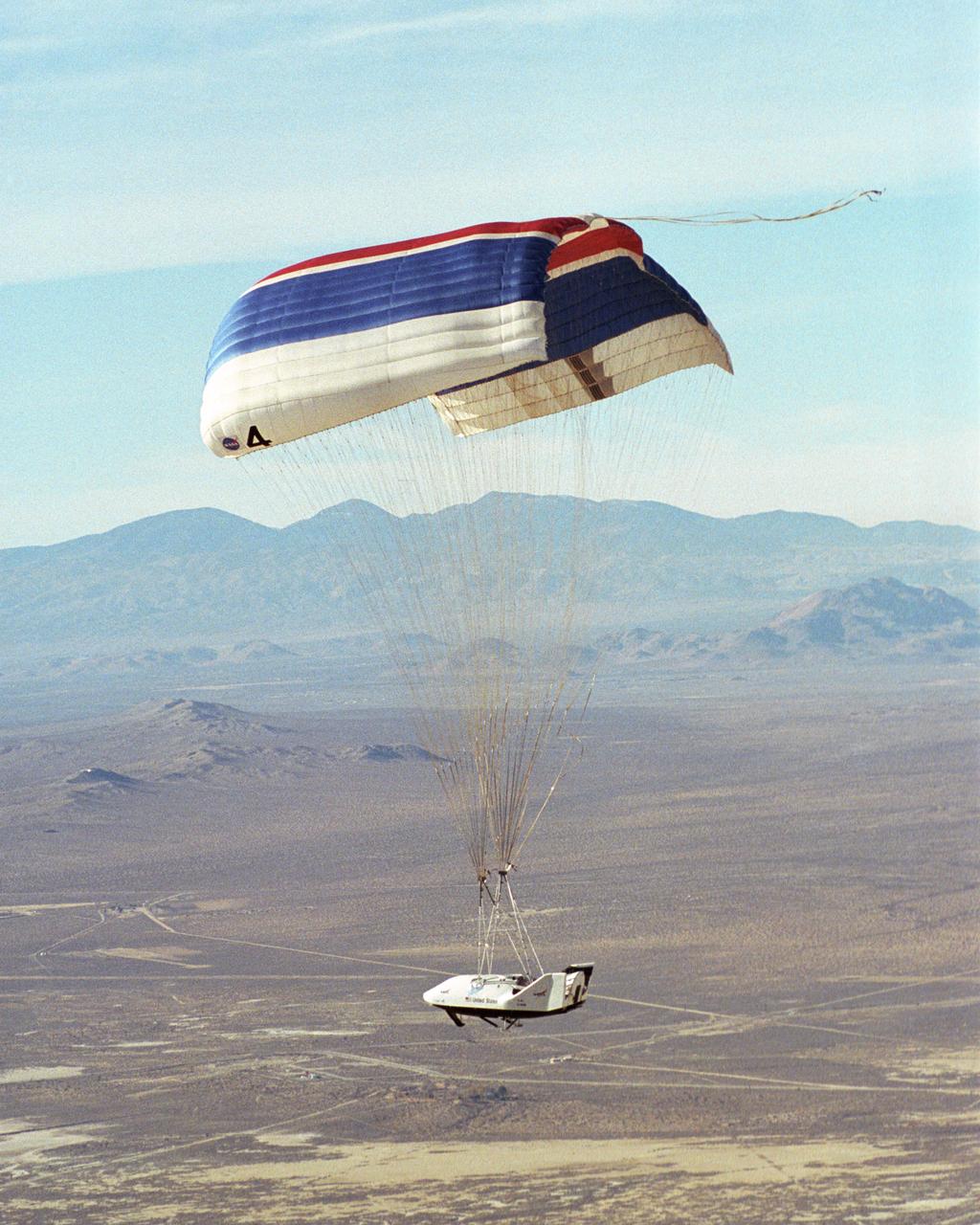
The X-38 prototype of the Crew Return Vehicle for the International Space Station is suspended under its giant 7,500-square-foot parafoil during its eighth free flight on Thursday, Dec. 13, 2001. A portion of the descent was flown by remote control by a NASA astronaut from a ground vehicle configured like the CRV's interior before the X-38 made an autonomous landing on Rogers Dry Lake.
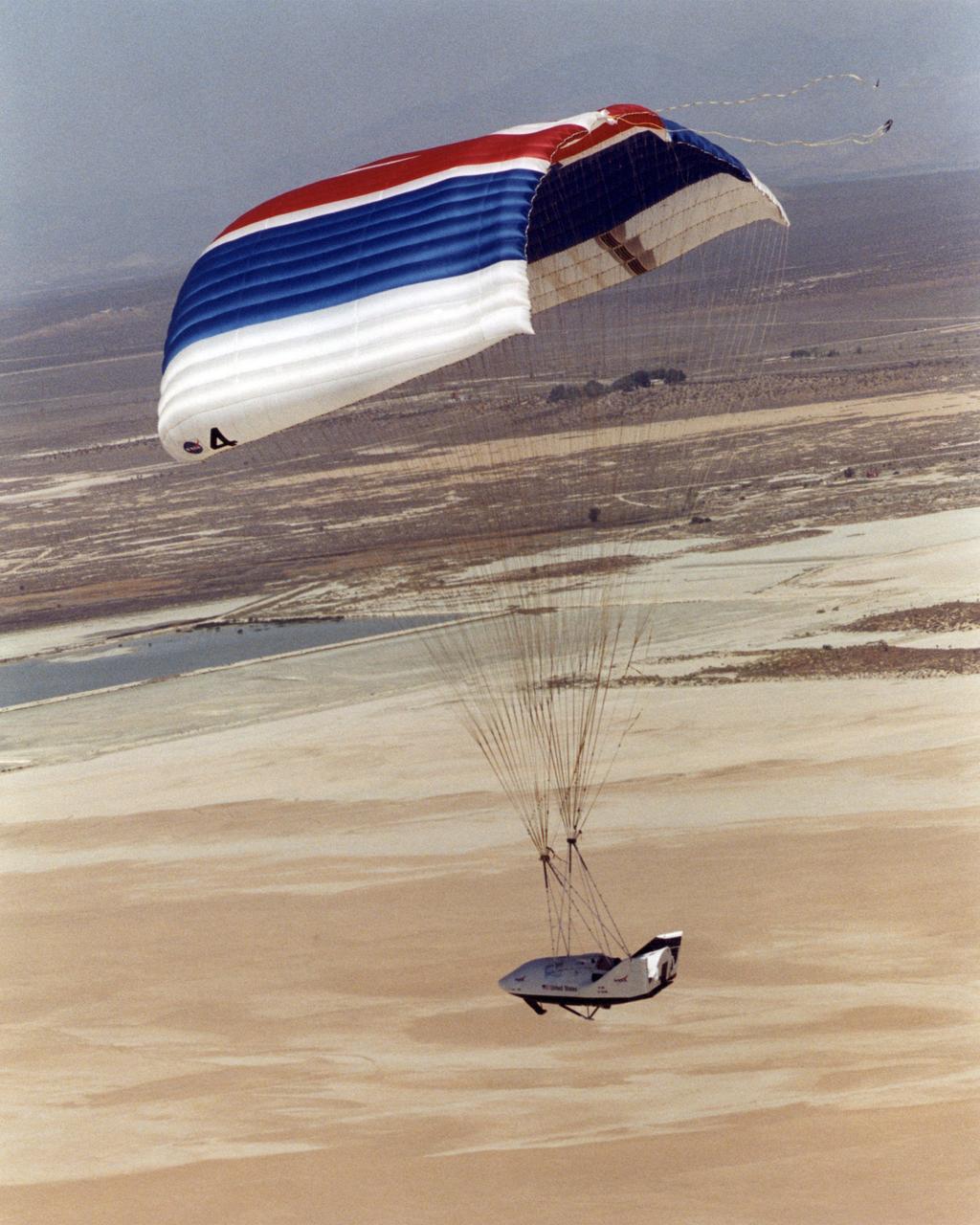
The seventh free flight of an X-38 prototype for an emergency space station crew return vehicle culminated in a graceful glide to landing under the world's largest parafoil. The mission began when the X-38 was released from NASA's B-52 mother ship over Edwards Air Force Base, California, where NASA Dryden Flight Research Center is located. The July 10, 2001 flight helped researchers evaluate software and deployment of the X-38's drogue parachute and subsequent parafoil. NASA intends to create a space-worthy Crew Return Vehicle (CRV) to be docked to the International Space Station as a "lifeboat" to enable a full seven-person station crew to evacuate in an emergency.
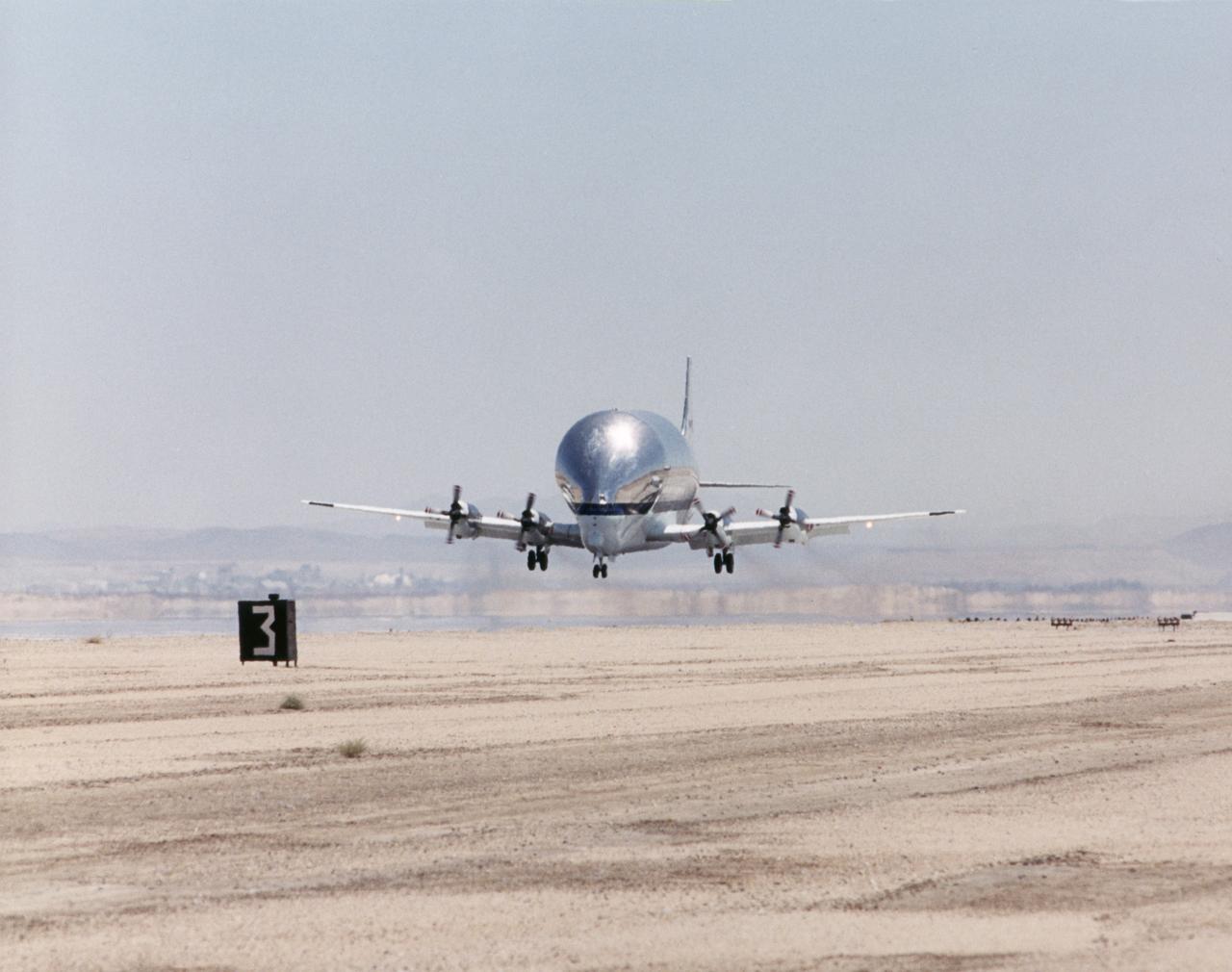
NASA's Super Guppy transport aircraft landed at Edwards Air Force Base, Calif. on July 11, 2000, to deliver the latest version of the X-38 drop vehicle to Dryden. The X-38s are intended as prototypes for a possible "crew lifeboat" for the International Space Station. The X-38 vehicle 131R will demonstrate a huge 7,500 square-foot parafoil that will that will enable the potential crew return vehicle to land on the length of a football field after returning from space. The crew return vehicle is intended to serve as a possible emergency transport to carry a crew to safety in the event of problems with the International Space Station. The Super Guppy evolved from the 1960s-vintage Pregnant Guppy, used for transporting outsized sections of the Apollo moon rocket. The Super Guppy was modified from 1950s-vintage Boeing C-97. NASA acquired its Super Guppy from the European Space Agency in 1997.
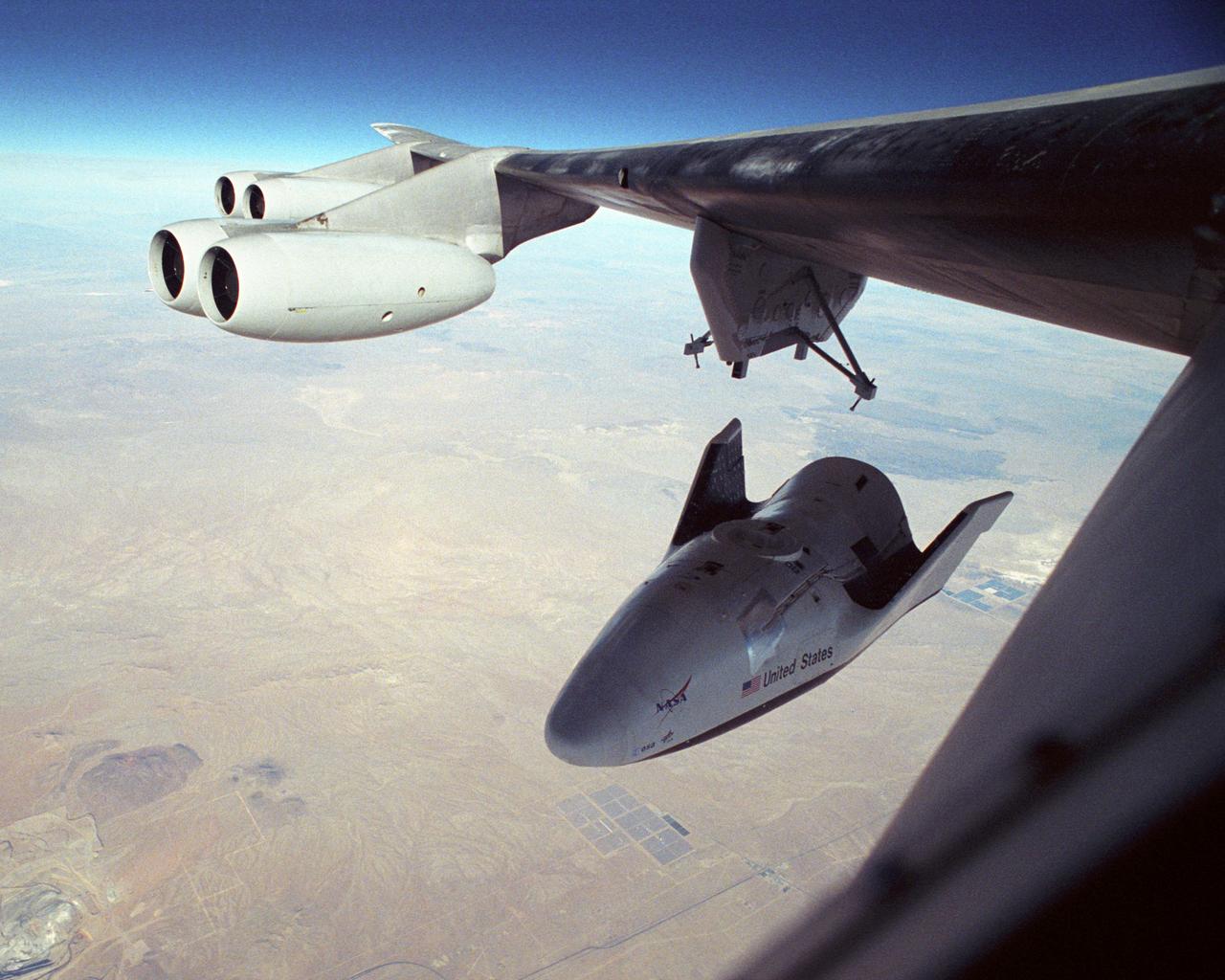
The X-38 prototype of the Crew Return Vehicle for the International Space Station drops away from its launch pylon on the wing of NASA's NB-52B mothership as it begins its eighth free flight on Thursday, Dec. 13, 2001. The 13-minute test flight of X-38 vehicle 131R was the longest and fastest and was launched from the highest altitude to date in the X-38's atmospheric flight test program. A portion of the descent was flown under remote control by a NASA astronaut from a ground vehicle configured like the CRV's interior before the X-38 made an autonomous landing on Rogers Dry Lake.
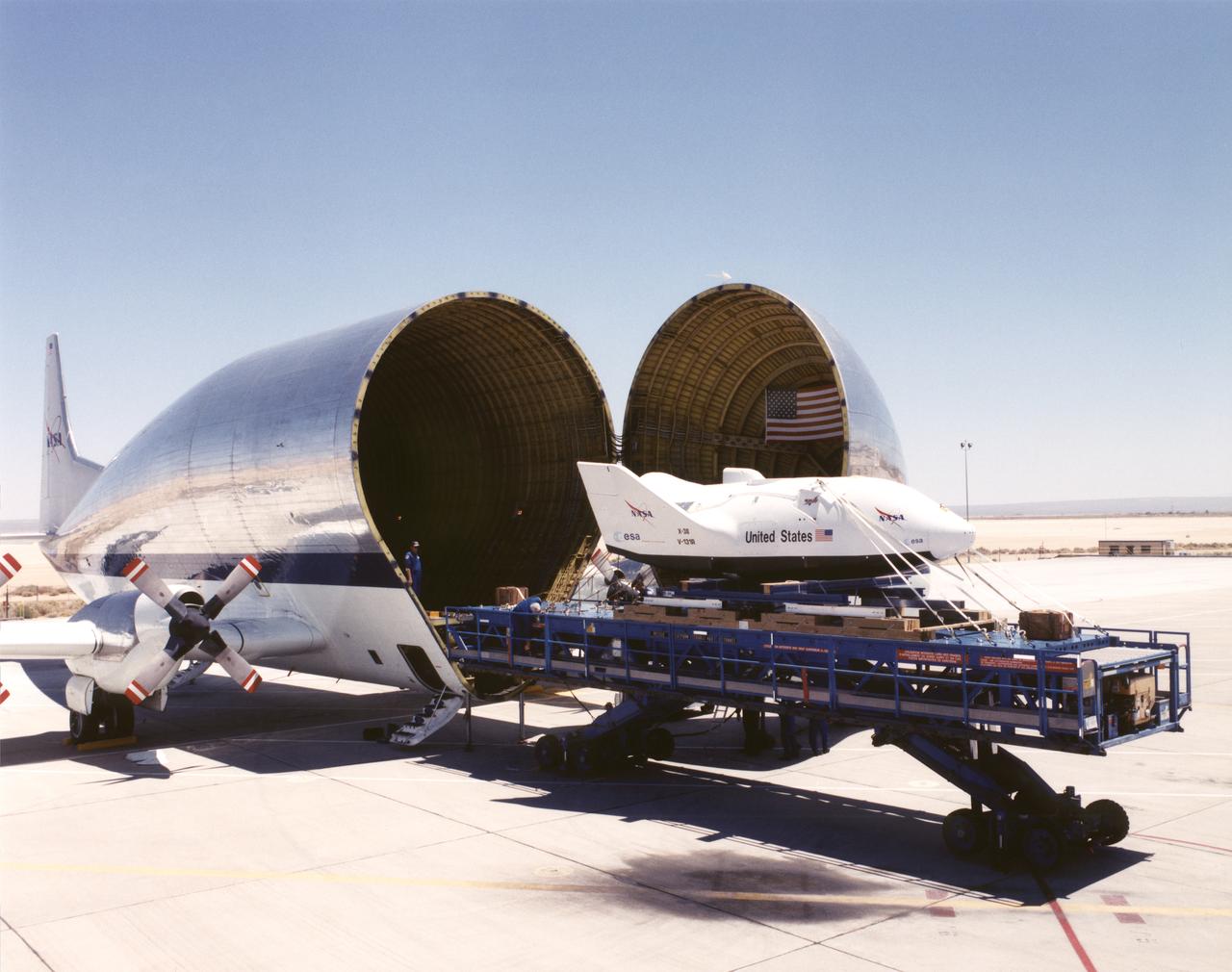
The X-38 Vehicle 131R, intended to prove the utility of a "lifeboat" crew return vehicle to bring crews home from the International Space Station in the event of an emergency, was unloaded from NASA's Super Guppy transport aircraft on July 11, 2000. The newest X-38 version arrived at Dryden for drop tests from NASA's venerable B-52 mother ship. The tests will evaluate a 7,500 square-foot parafoil intended to permit the crew return vehicle to return from space and land in the length of a football field.
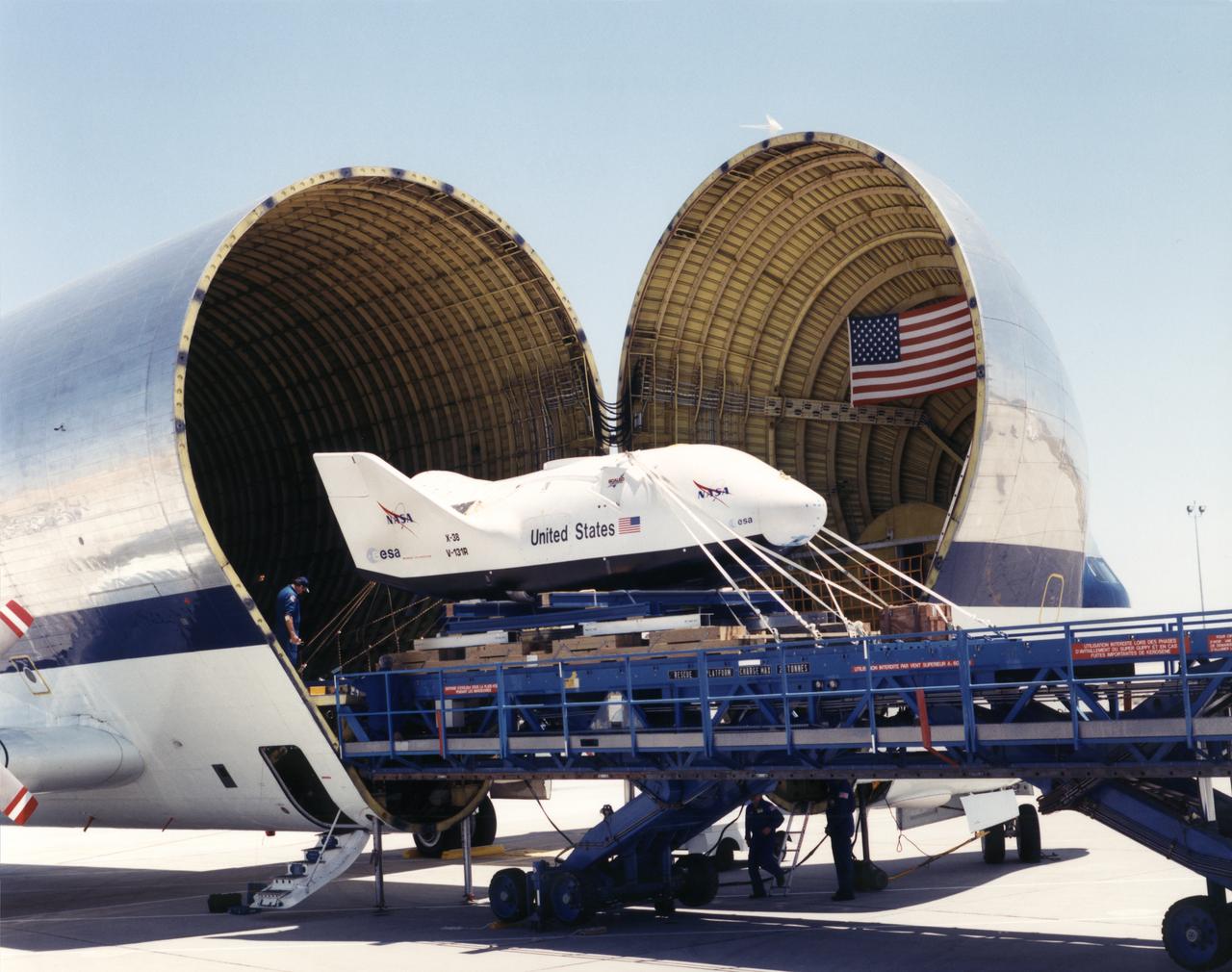
The X-38 Vehicle 131R, intended to prove the utility of a "lifeboat" crew return vehicle to bring crews home from the International Space Station in the event of an emergency, was unloaded from NASA's Super Guppy transport aircraft on July 11, 2000. The newest X-38 version arrived at Dryden for drop tests from NASA's venerable B-52 mother ship. The tests will evaluate a 7,500 square-foot parafoil intended to permit the CRV to return from space and land in the length of a football field.
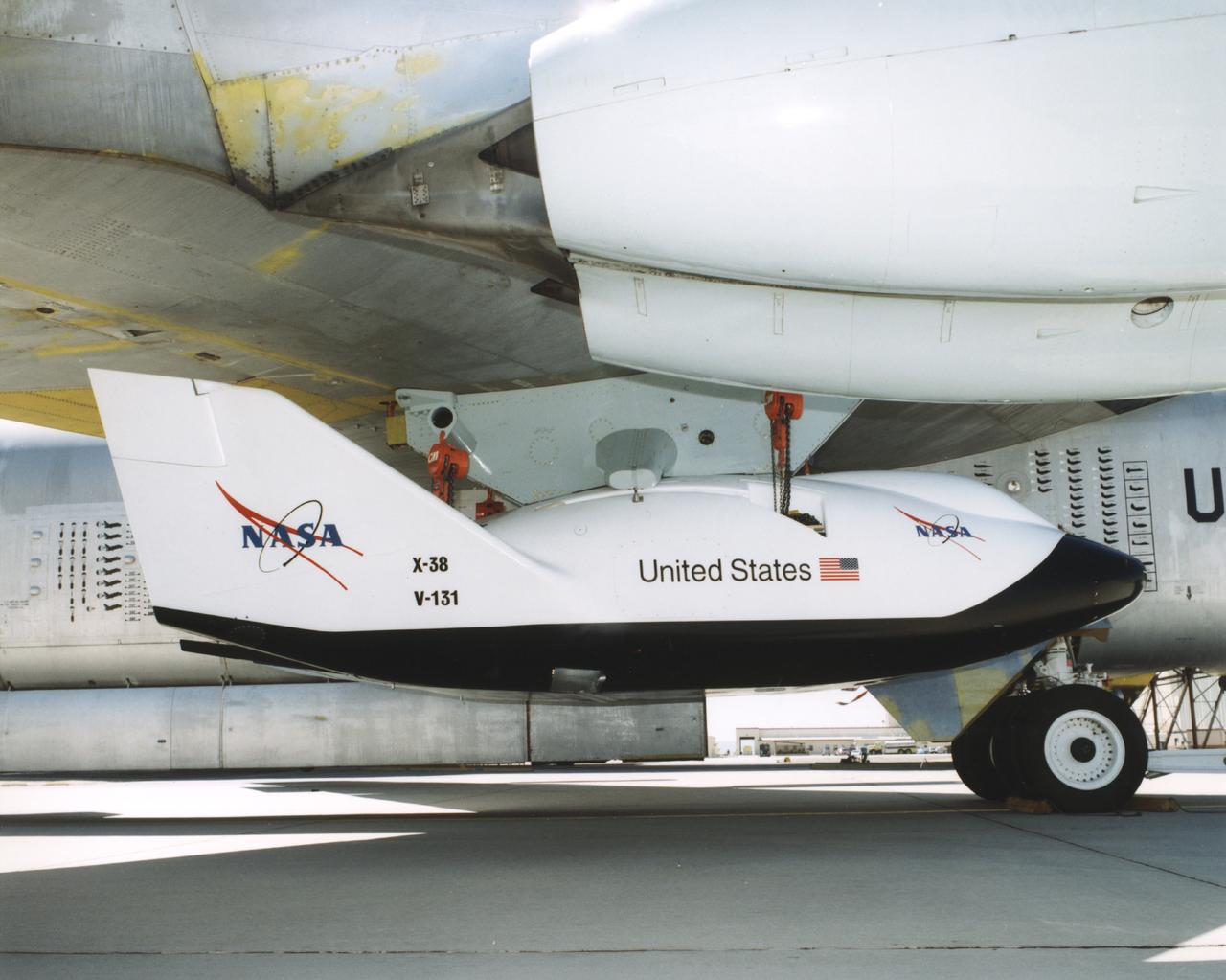
A close-up view of the X-38 research vehicle mounted under the wing of the B-52 mothership prior to a 1997 test flight. The X-38, which was designed to help develop technology for an emergency crew return vehicle (CRV) for the International Space Station, is one of many research vehicles the B-52 has carried aloft over the past 40 years.
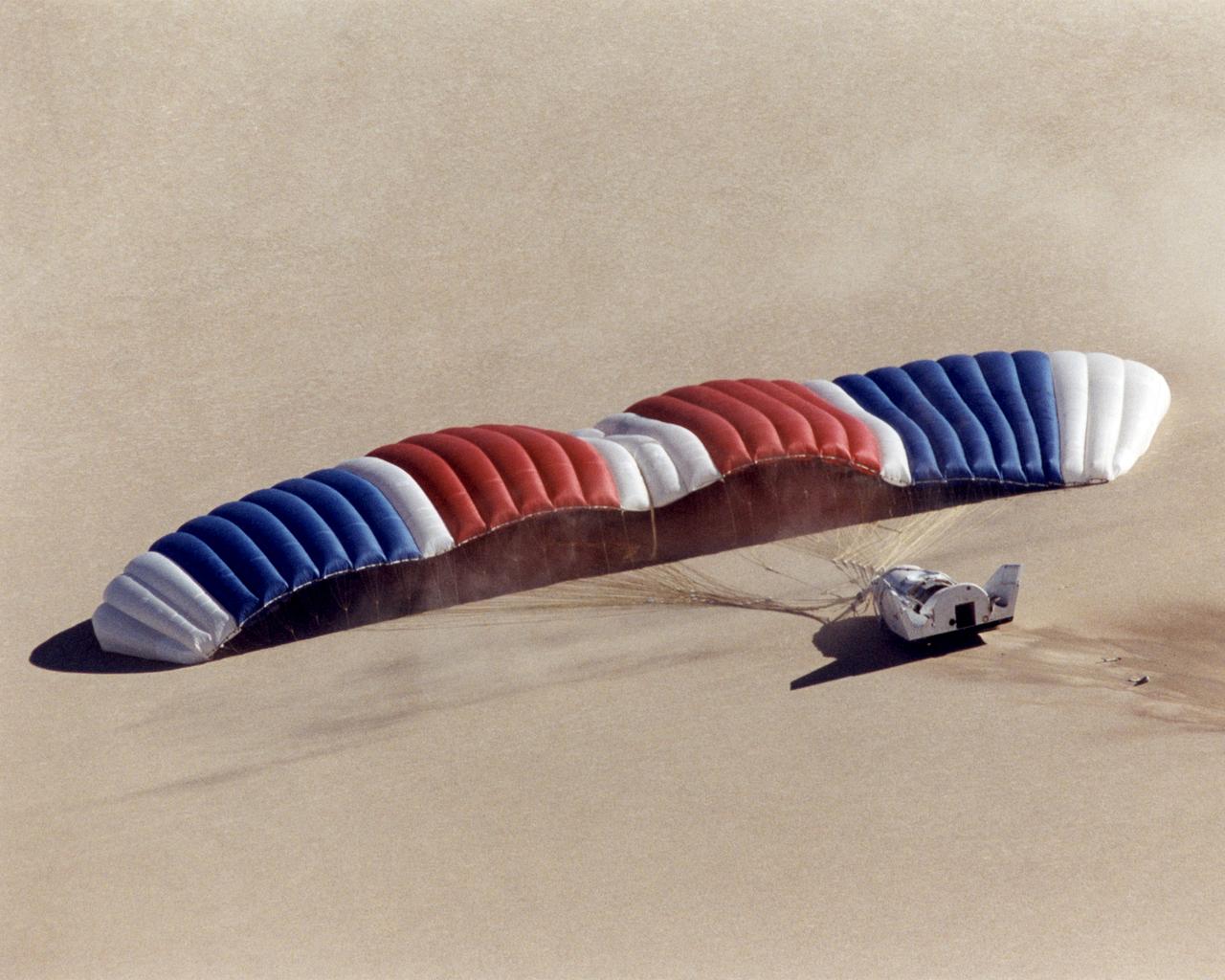
Looking like a giant air mattress, the world's largest parafoil slowly deflates seconds after it carried the latest version of the X-38, V-131R, to a landing on Rogers Dry Lake adjacent to NASAÕs Dryden Flight Research Center at Edwards, California, at the end of its first free flight, November 2, 2000. The X-38 prototypes are intended to perfect technology for a planned Crew Return Vehicle (CRV) "lifeboat" to carry a crew to safety in the event of an emergency on the International Space Station. Free-flight tests of X-38 V-131R are evaluating upgraded avionics and control systems and the aerodynamics of the modified upper body, which is more representative of the final design of the CRV than the two earlier X-38 test craft, including a simulated hatch atop the body. The huge 7,500 square-foot parafoil will enable the CRV to land in the length of a football field after returning from space. The first three X-38's are air-launched from NASA's venerable NB-52B mother ship, while the last version, V-201, will be carried into space by a Space Shuttle and make a fully autonomous re-entry and landing.
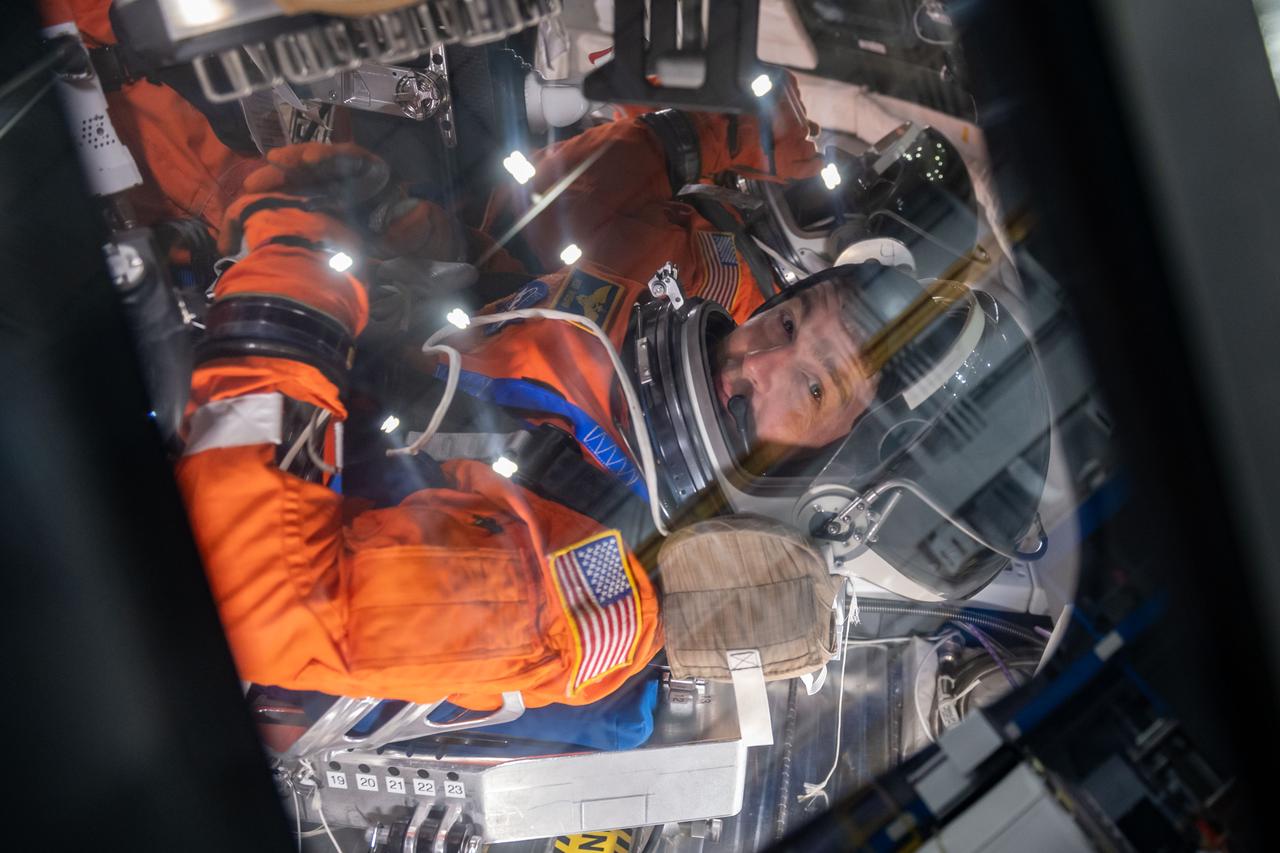
jsc2025e004075 (Jan. 30, 2025) --- NASA astronauts and Artemis II crew members Reid Wiseman and Victor Glover inside of the Orion spacecraft mockup during Post Insertion and Deorbit Preparation training at the Space Vehicle Mockup Facility in Houston, Texas. The crew practiced getting the Orion spacecraft configured once in orbit, how to make it habitable, and suited up in their entry pressure suits to prepare for their return from the Moon. Credit: NASA/Mark Sowa
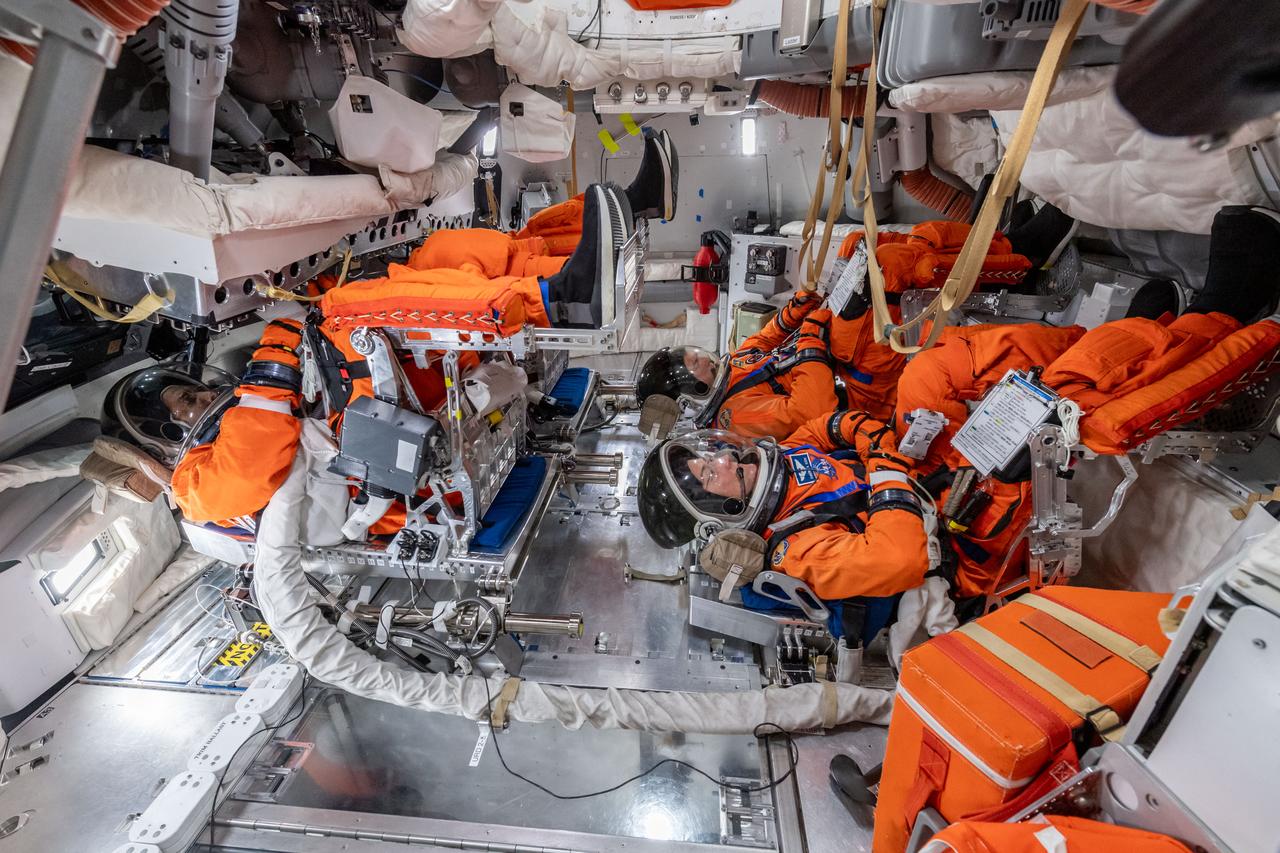
jsc2025e004086 (Jan. 30, 2025) --- The Artemis II crew, NASA astronauts Reid Wiseman, Victor Glover, and Christina Koch, and Canadian Space Agency astronaut Jeremy Hansen, completing Post Insertion and Deorbit Preparation training at the Space Vehicle Mockup Facility in Houston, Texas. The crew practiced getting the Orion spacecraft configured once in orbit, how to make it habitable, and suited up in their entry pressure suits to prepare for their return from the Moon. Credit: NASA/Mark Sowa
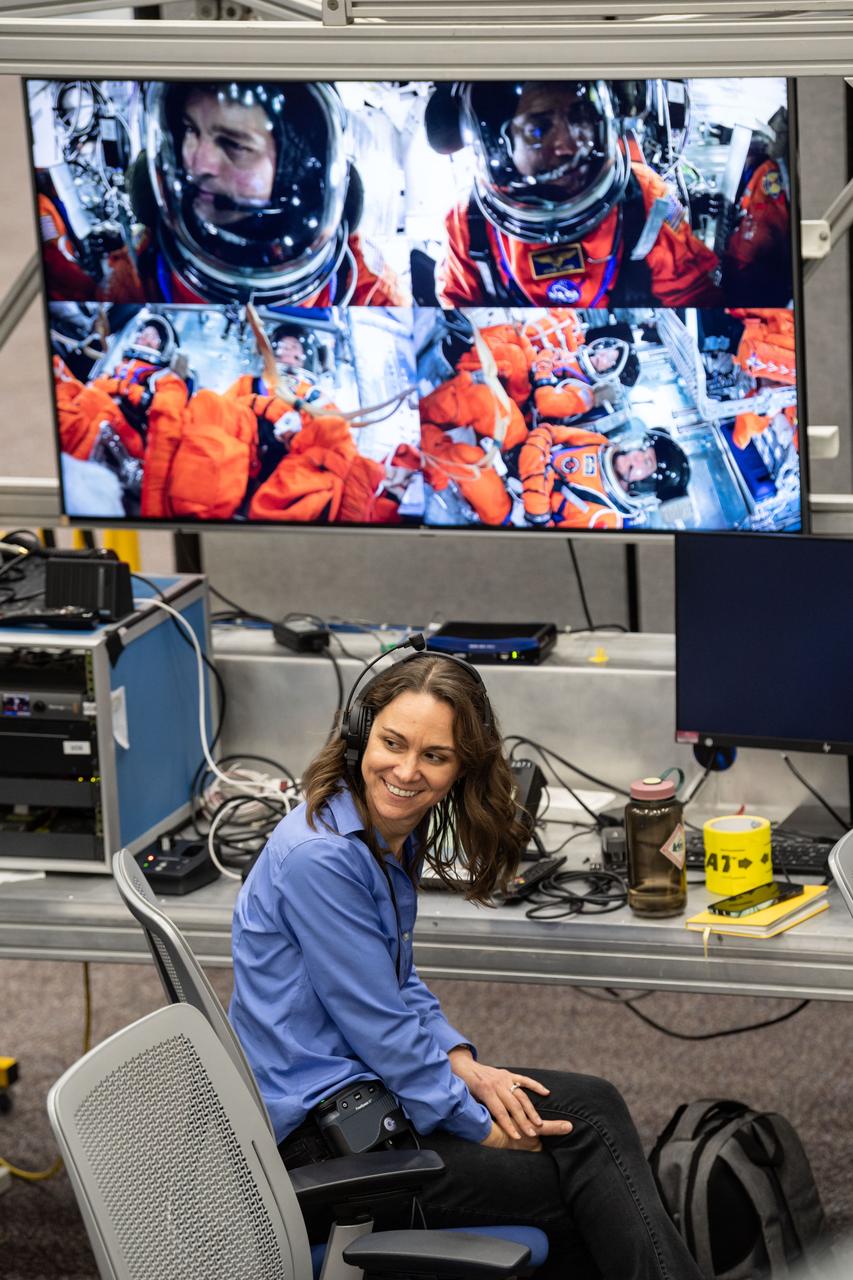
jsc2025e004084 (Jan. 30, 2025) --- The Artemis II crew’s Chief Training Officer Jacki Mahaffey smiles during Post Insertion and Deorbit Preparation training at the Space Vehicle Mockup Facility in Houston, Texas. The crew practiced getting the Orion spacecraft configured once in orbit, how to make it habitable, and suited up in their entry pressure suits to prepare for their return from the Moon. Credit: NASA/Mark Sowa
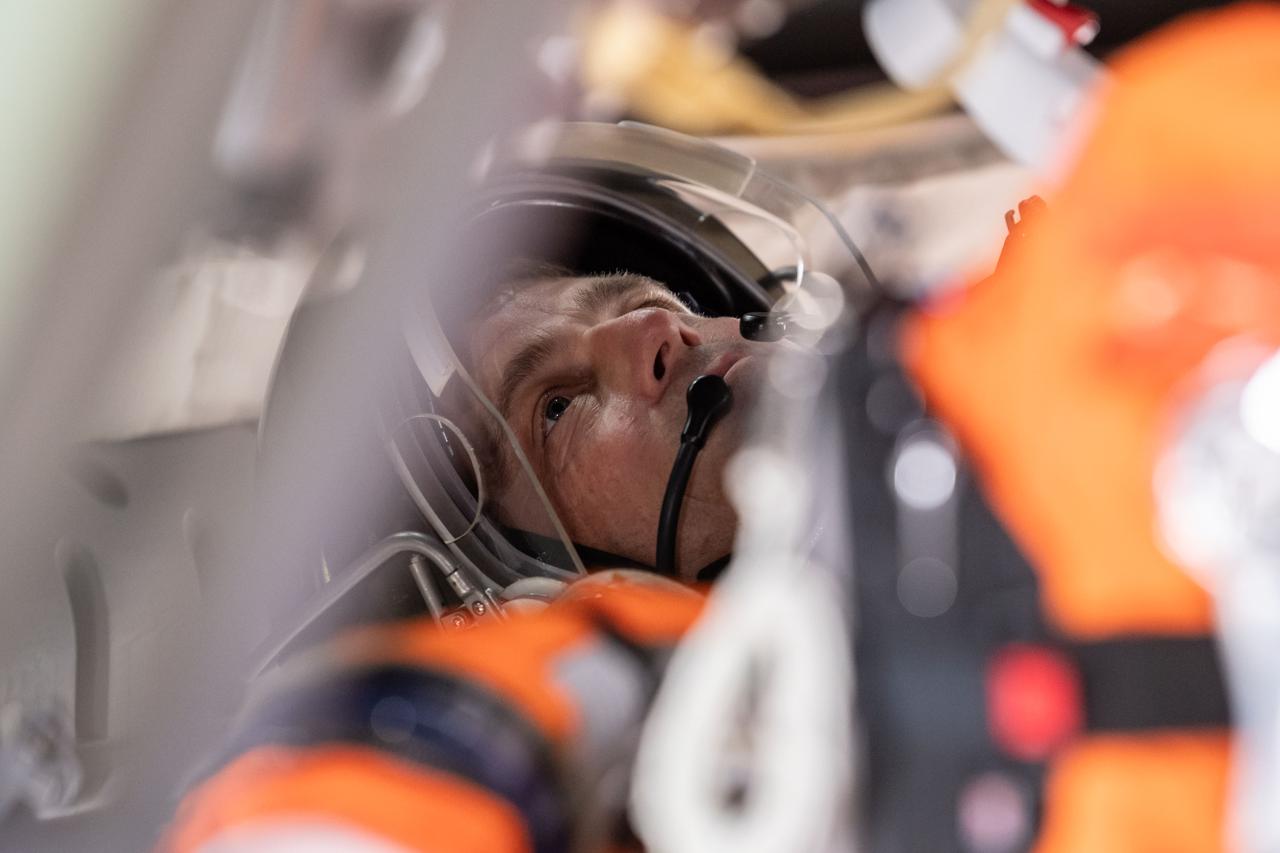
jsc2025e004079 (Jan. 30, 2025) --- NASA astronaut and Artemis II commander Reid Wiseman during Post Insertion and Deorbit Preparation training at the Space Vehicle Mockup Facility in Houston, Texas. The crew practiced getting the Orion spacecraft configured once in orbit, how to make it habitable, and suited up in their entry pressure suits to prepare for their return from the Moon. Credit: NASA/Mark Sowa

Space Station Freedom option A showing two Soyuz Assured Crew Return Vehicle (ACRV) capsules docked at berthing ports.
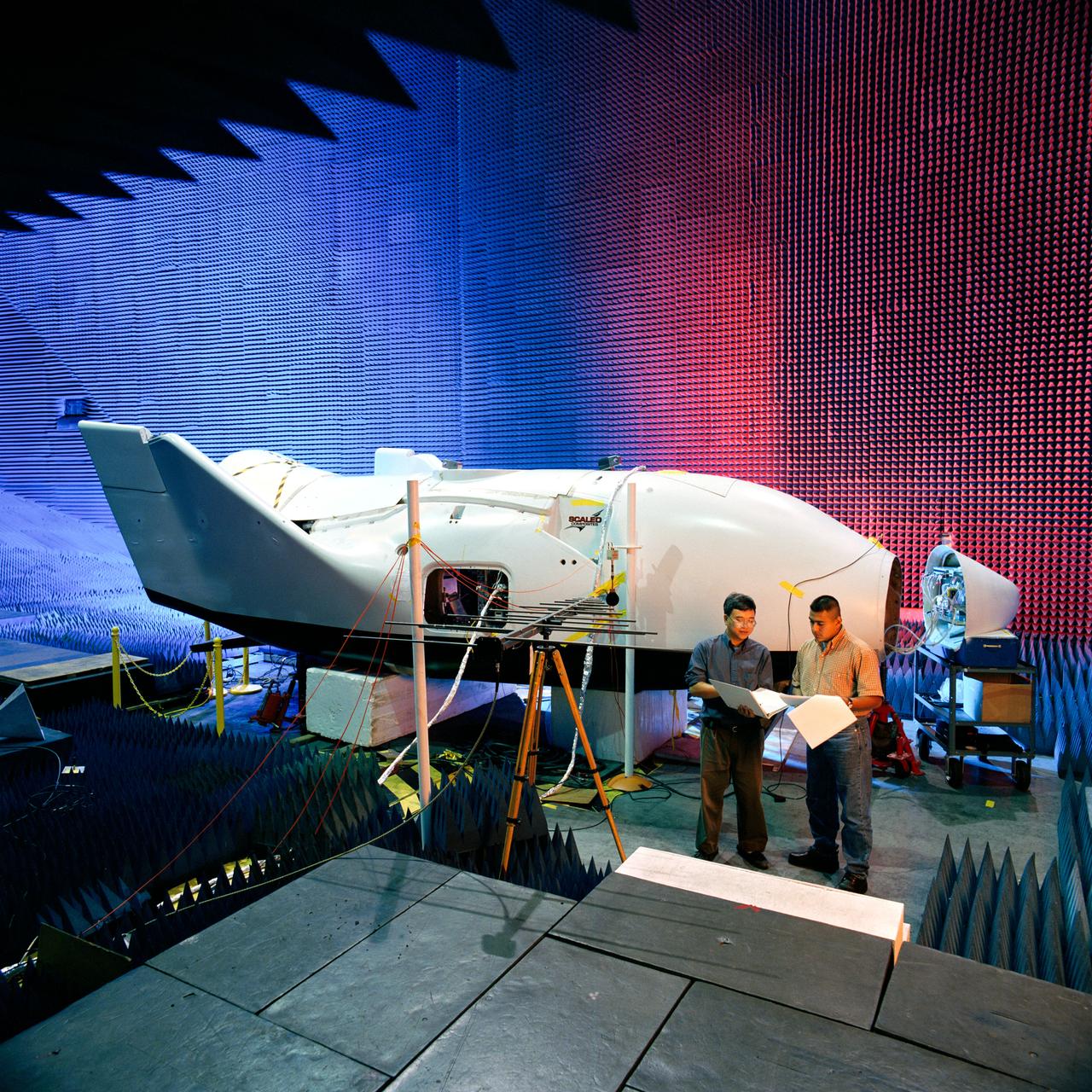
Photographic documentation showing the X-38 Crew Return Vehicle (CRV) undergoing testing in the anechoic chamber in bldg. 14.
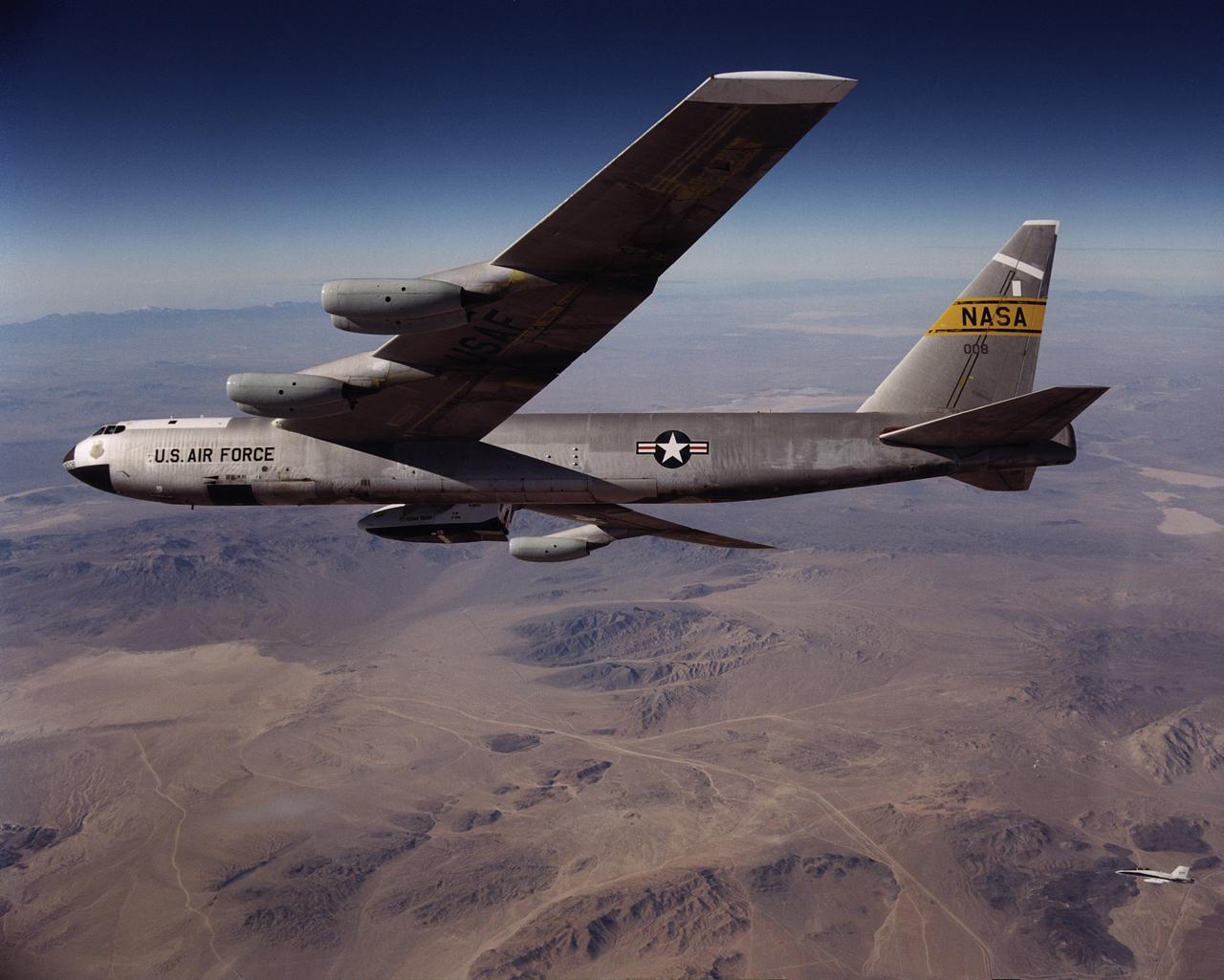
The X-38 prototypes are intended to perfect a "crew lifeboat" for the International Space Station. The X-38 vehicle 131R demonstrates a huge 7,500 square-foot parafoil that will that will enable the Crew Return Vehicle (CRV) to land on the length of a football field after returning from space. The CRV is intended to serve as an emergency transport to carry a crew to safety in the event of problems with the International Space Station.
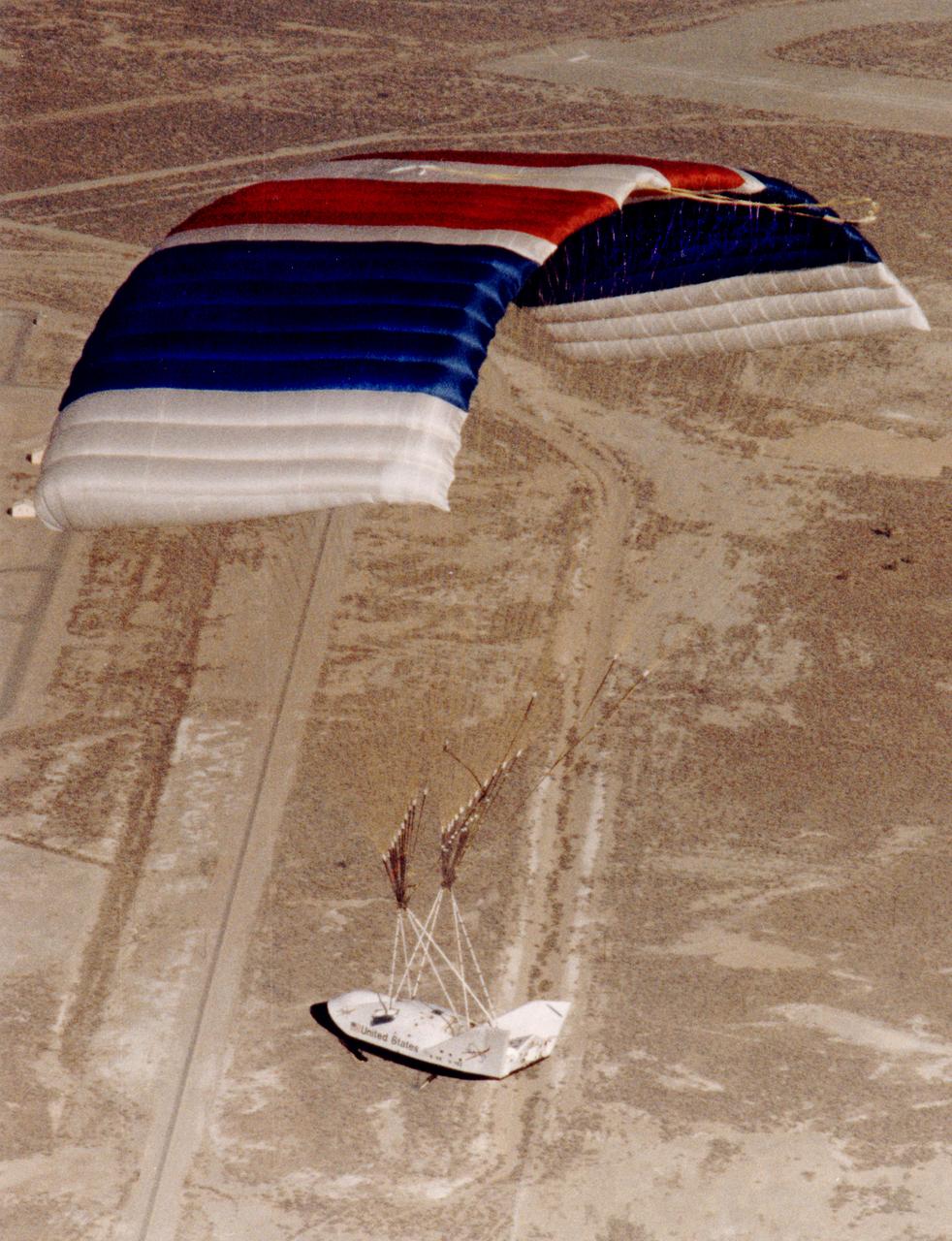
The X-38, a research vehicle built to help develop technology for an emergency Crew Return Vehicle (CRV), descends under its steerable parafoil on a March 1999 test flight at the Dryden Flight Research Center, Edwards, California.
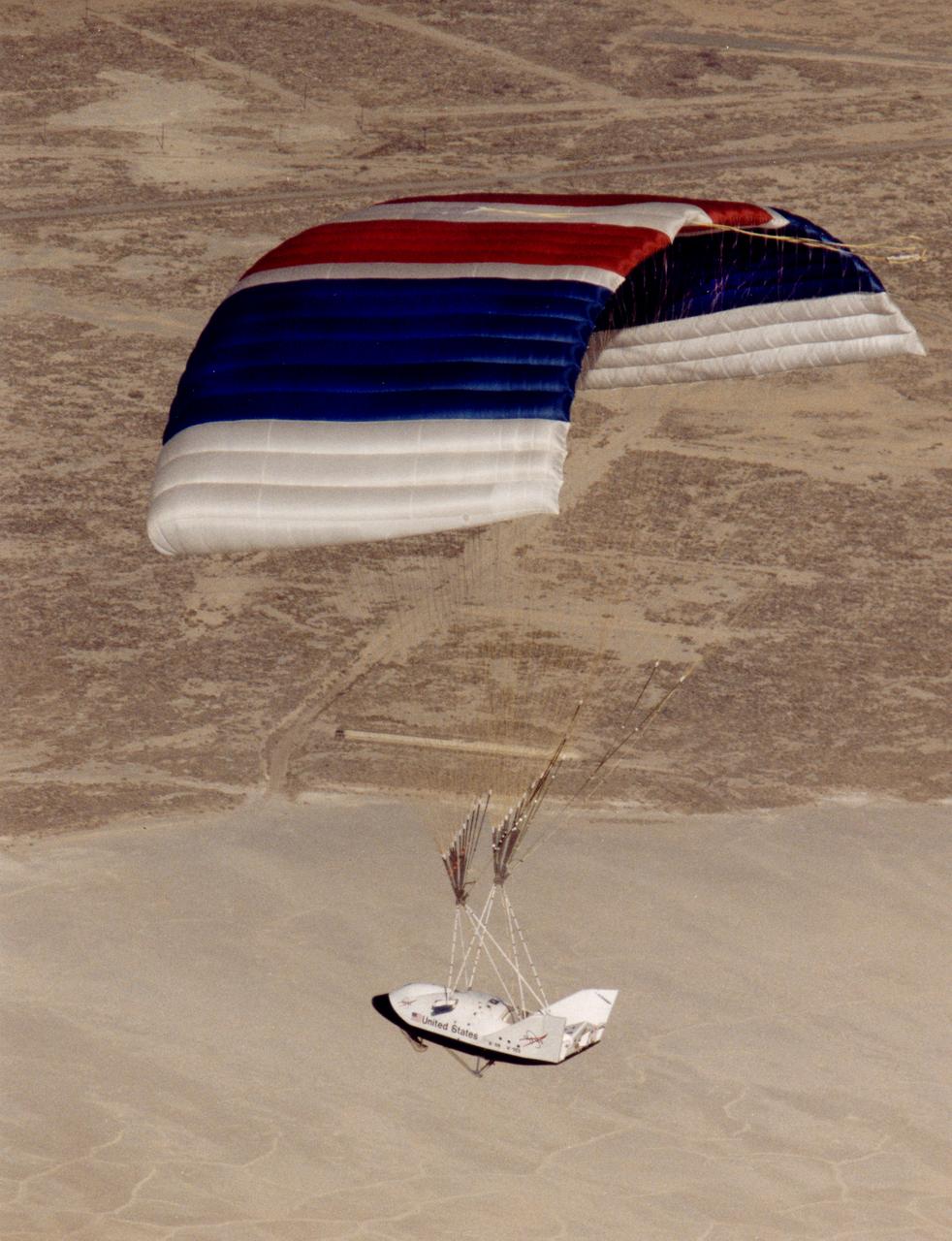
The X-38, a research vehicle built to help develop technology for an emergency Crew Return Vehicle (CRV), descends under its steerable parafoil on a March 1999 test flight at the Dryden Flight Research Center, Edwards, California.
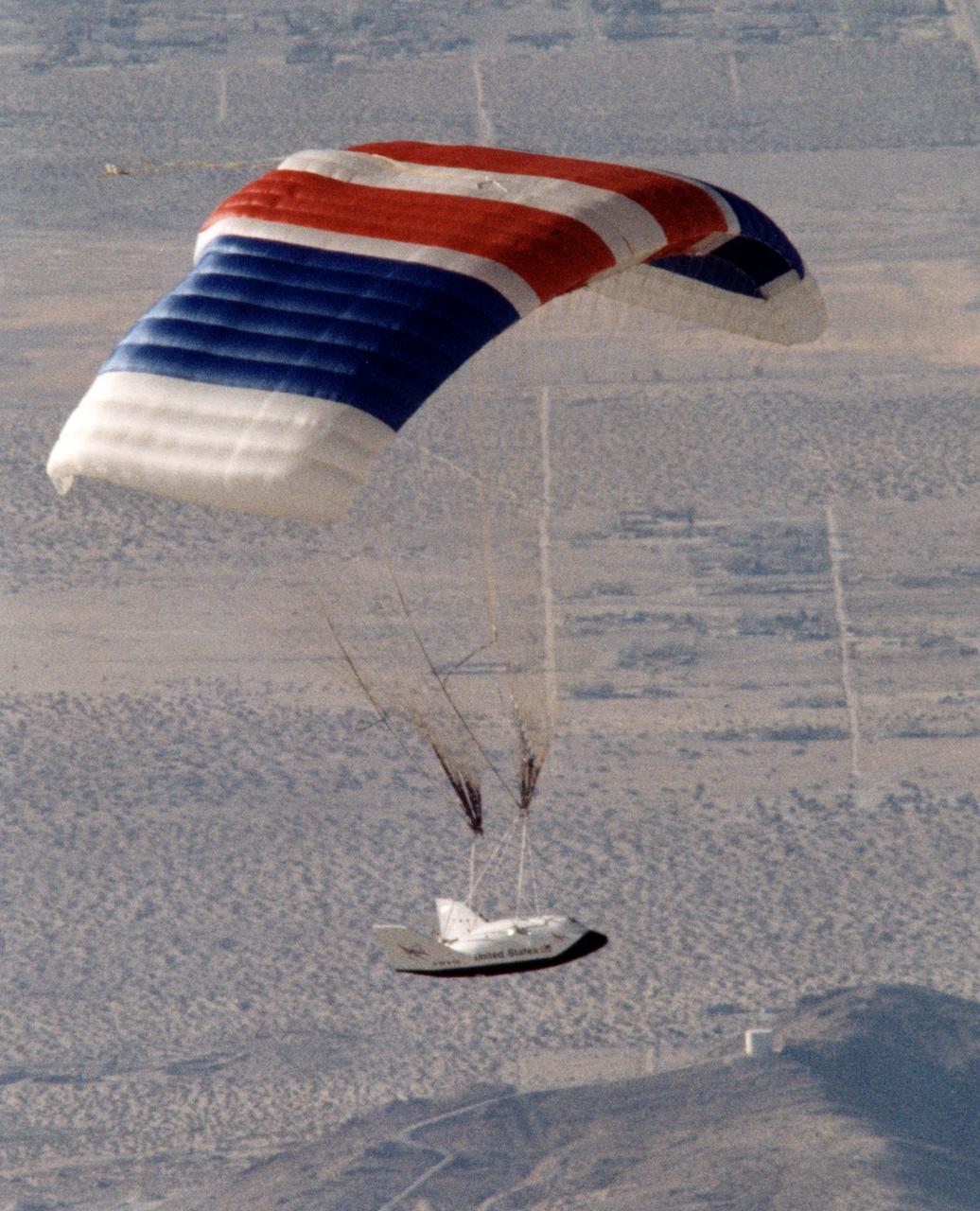
The X-38, a research vehicle built to help develop technology for an emergency Crew Return Vehicle (CRV), descends under its steerable parafoil on a March 1999 test flight at the Dryden Flight Research Center, Edwards, California.
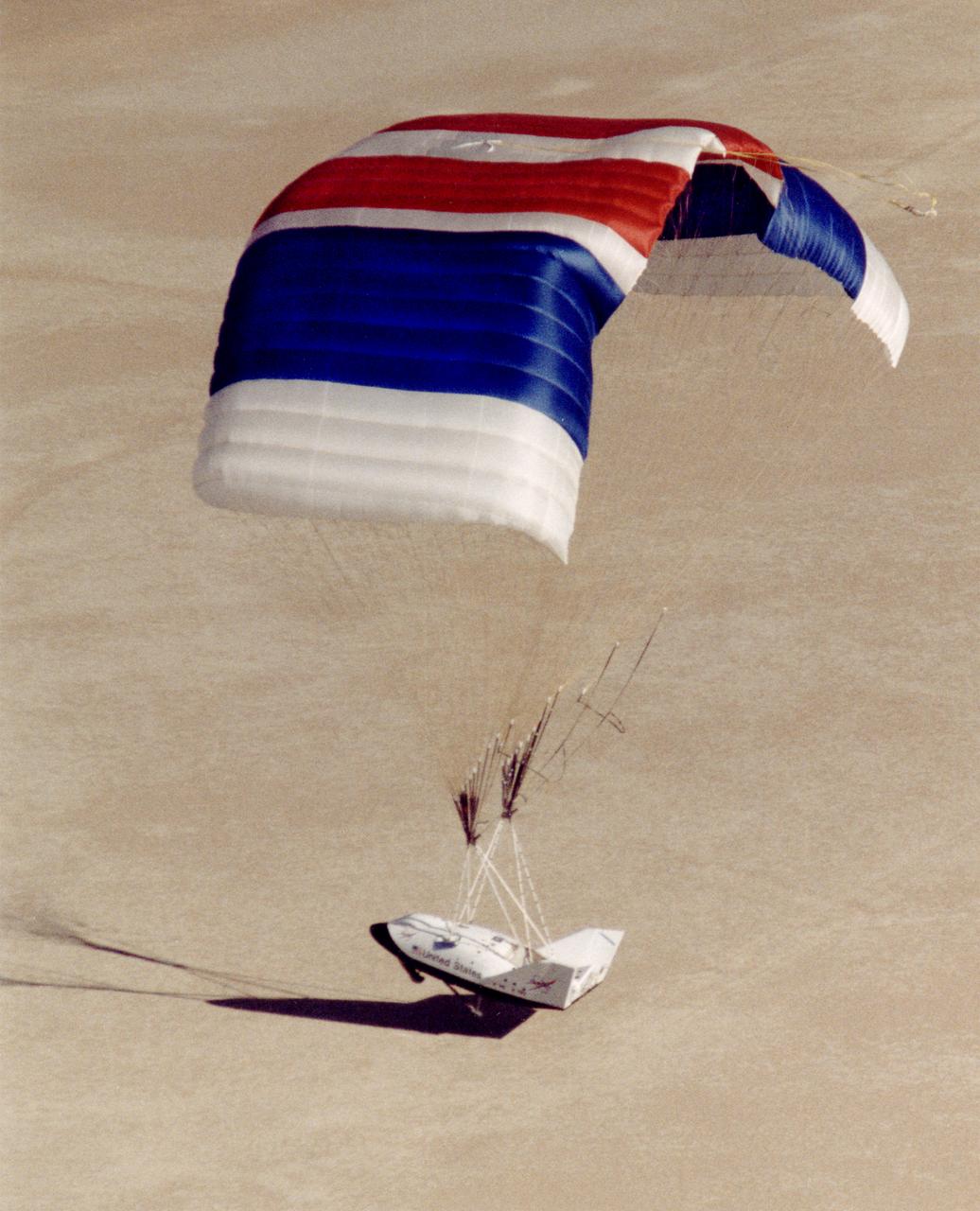
The X-38, a research vehicle built to help develop technology for an emergency Crew Return Vehicle (CRV), flares for its lakebed landing at the end of a March 1999 test flight at the Dryden Flight Research Center, Edwards, California.
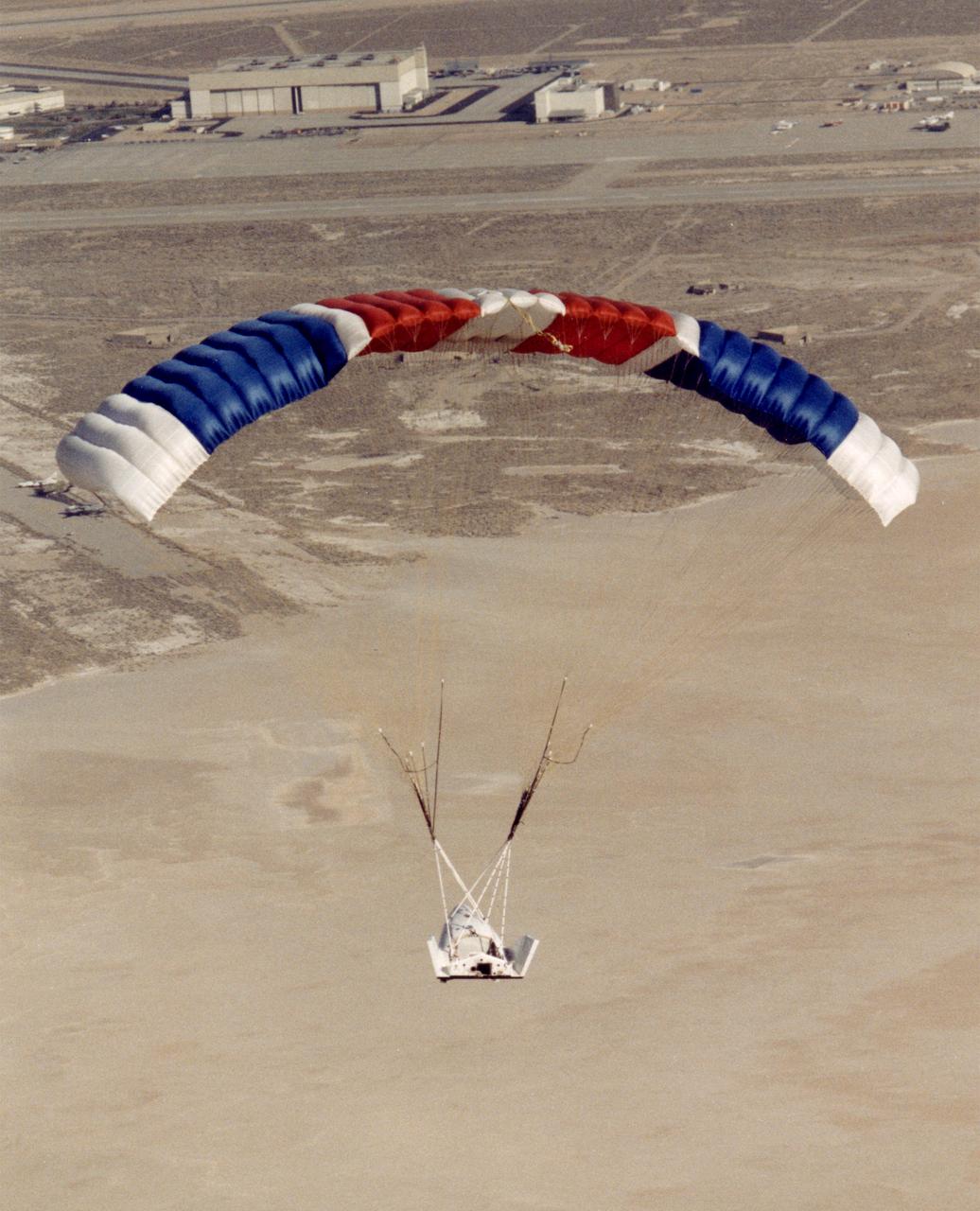
The X-38, a research vehicle built to help develop technology for an emergency Crew Return Vehicle (CRV), maneuvers toward landing at the end of a March 1999 test flight at the Dryden Flight Research Center, Edwards, California.
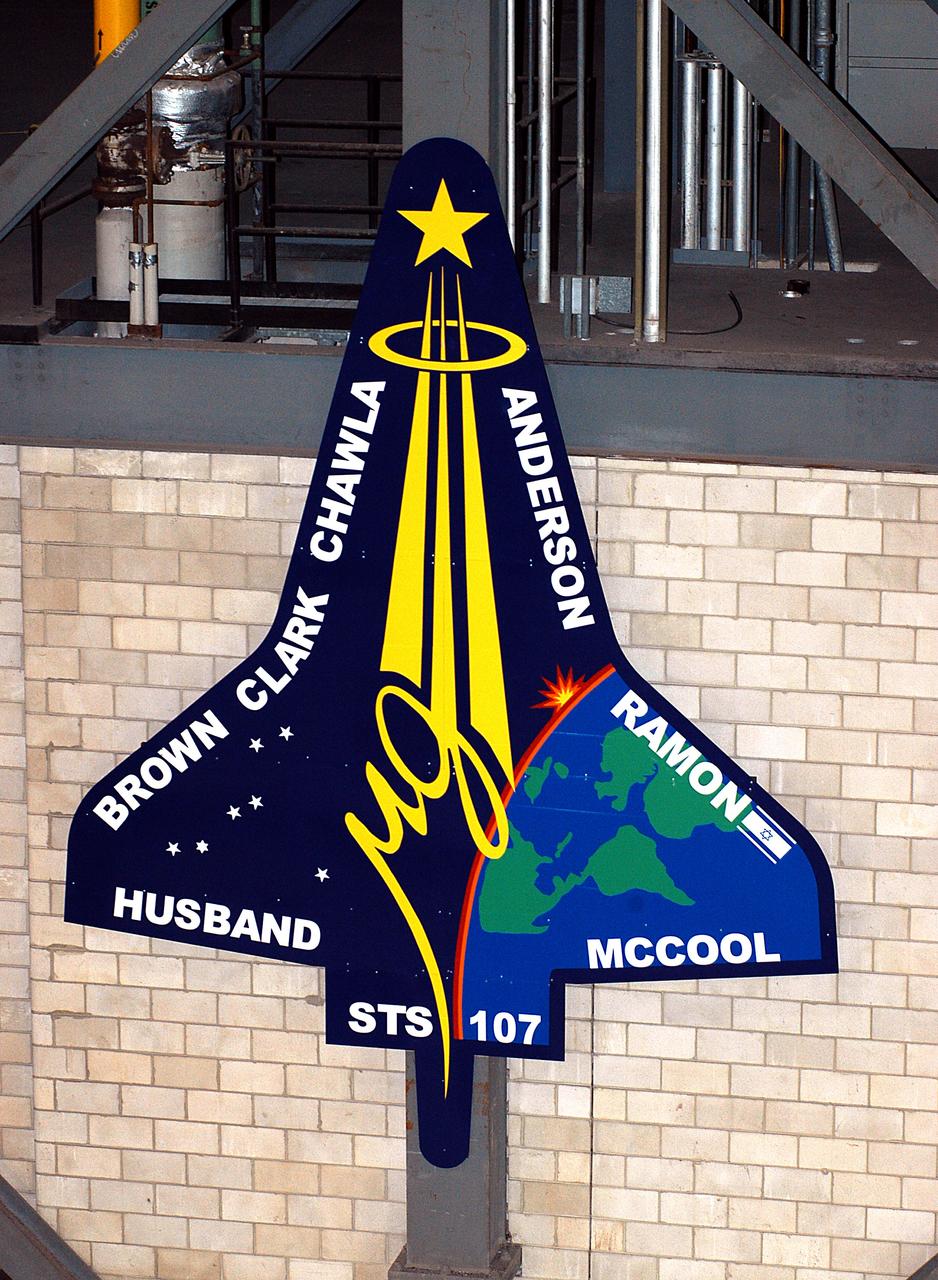
KENNEDY SPACE CENTER, FLA. - A 20-foot by 15-foot replica of the STS-107 logo has been installed above the “A” on the A tower in the transfer aisle of the Vehicle Assembly Building. The debris from the orbiter Columbia, lost in a tragic accident on its return to Earth from the STS-107 mission, is permanently stored in the tower. A dedication ceremony Jan. 29, 2004, unveiled a plaque being installed in the storage area in honor of “Columbia, the crew of STS-107, and their loved ones.”
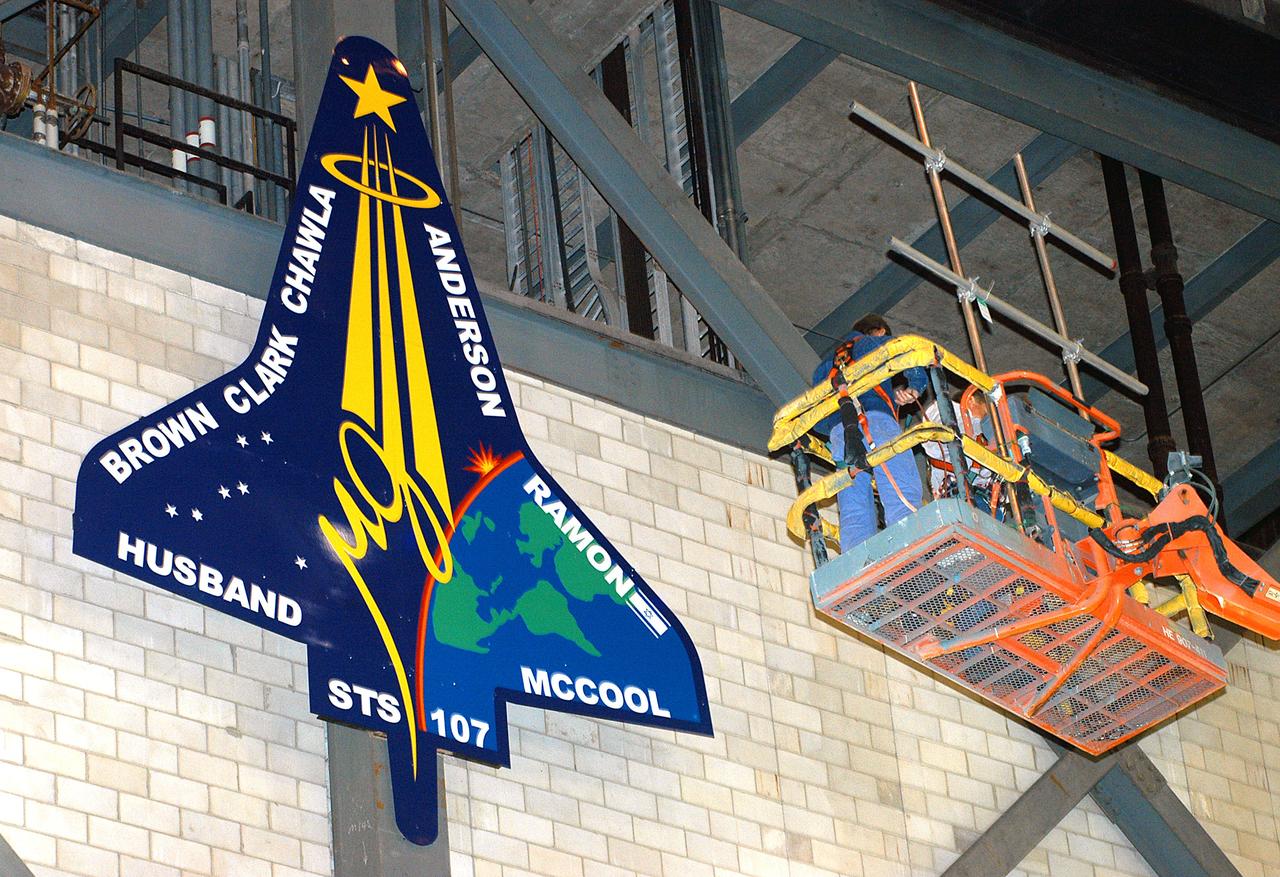
KENNEDY SPACE CENTER, FLA. - Workers install a 20-foot by 15-foot replica of the STS-107 logo above the “A” on the A tower in the transfer aisle of the Vehicle Assembly Building. The debris from the orbiter Columbia, lost in a tragic accident on its return to Earth from the STS-107 mission, is permanently stored in the tower. A dedication ceremony Jan. 29, 2004, revealed a plaque being installed in the storage area in honor of “Columbia, the crew of STS-107, and their loved ones.”

jsc2025e004089 (Jan. 30, 2025) --- NASA astronaut and Artemis II mission specialist Christina Koch exits the Orion spacecraft mockup during Post Insertion and Deorbit Preparation training at the Space Vehicle Mockup Facility in Houston, Texas. The crew practiced getting the Orion spacecraft configured once in orbit, how to make it habitable, and suited up in their entry pressure suits to prepare for their return from the Moon. Credit: NASA/Mark Sowa
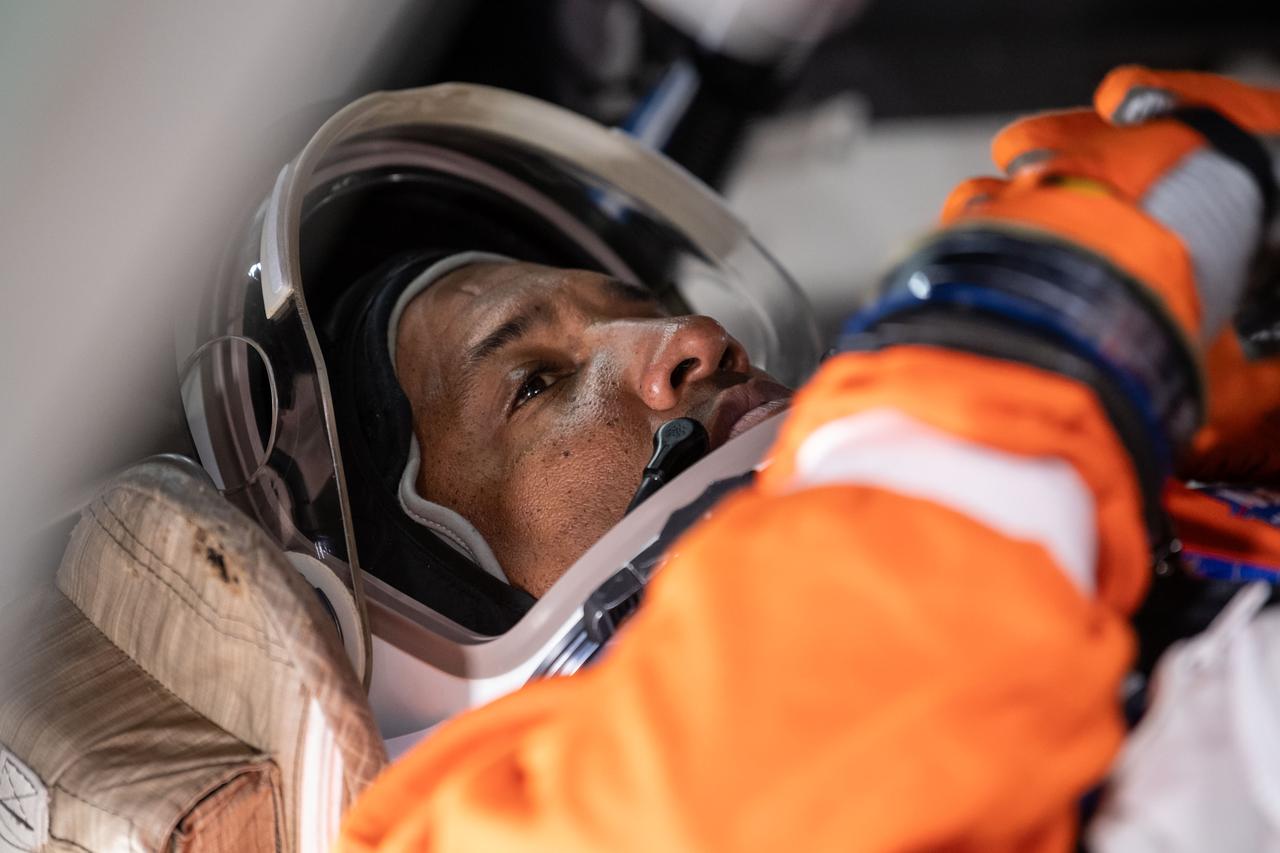
jsc2025e004071 (Jan. 30, 2025) --- NASA astronaut and Artemis II Pilot Victor Glover inside of the Orion spacecraft mockup during Post Insertion and Deorbit Preparation training at the Space Vehicle Mockup Facility in Houston, Texas. The crew practiced getting the Orion spacecraft configured once in orbit, how to make it habitable, and suited up in their entry pressure suits to prepare for their return from the Moon. Credit: NASA/Mark Sowa
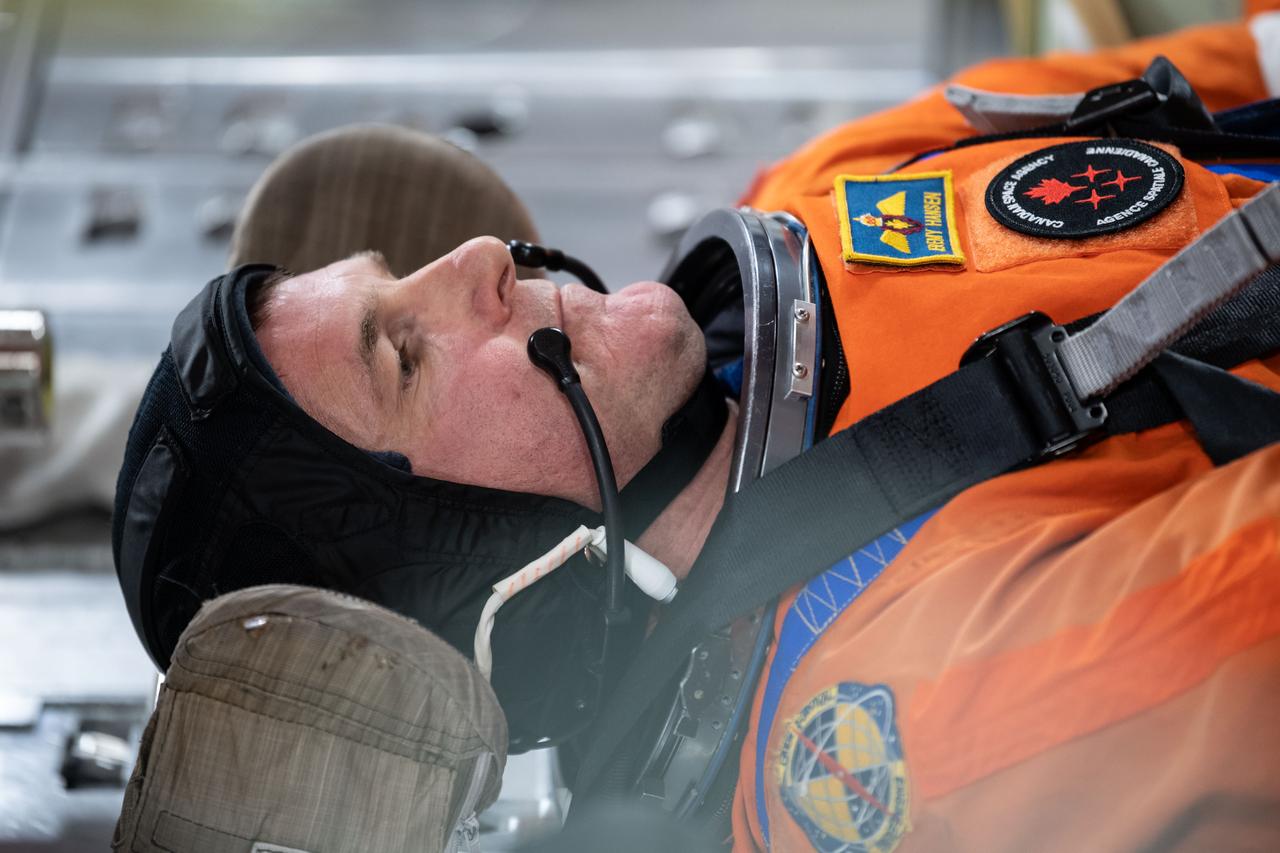
jsc2025e004073 (Jan. 30, 2025) --- Canadian Space Agency astronaut and Artemis II mission specialist Jeremy Hansen inside of the Orion spacecraft mockup during Post Insertion and Deorbit Preparation training at the Space Vehicle Mockup Facility in Houston, Texas. The crew practiced getting the Orion spacecraft configured once in orbit, how to make it habitable, and suited up in their entry pressure suits to prepare for their return from the Moon. Credit: NASA/Mark Sowa
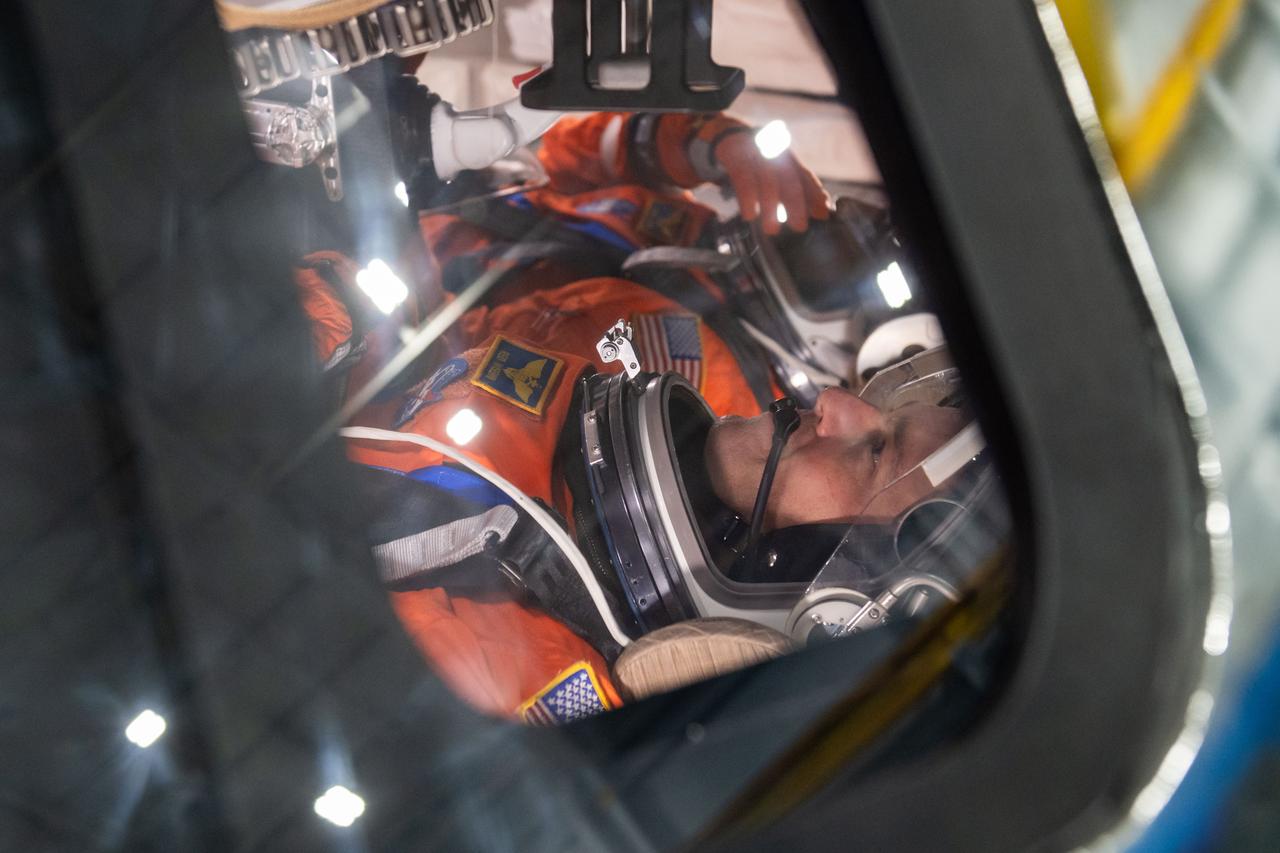
jsc2025e004074 (Jan. 30, 2025) --- NASA astronaut and Artemis II commander Reid Wiseman inside of the Orion spacecraft mockup during Post Insertion and Deorbit Preparation training at the Space Vehicle Mockup Facility in Houston, Texas. The crew practiced getting the Orion spacecraft configured once in orbit, how to make it habitable, and suited up in their entry pressure suits to prepare for their return from the Moon. Credit: NASA/Mark Sowa
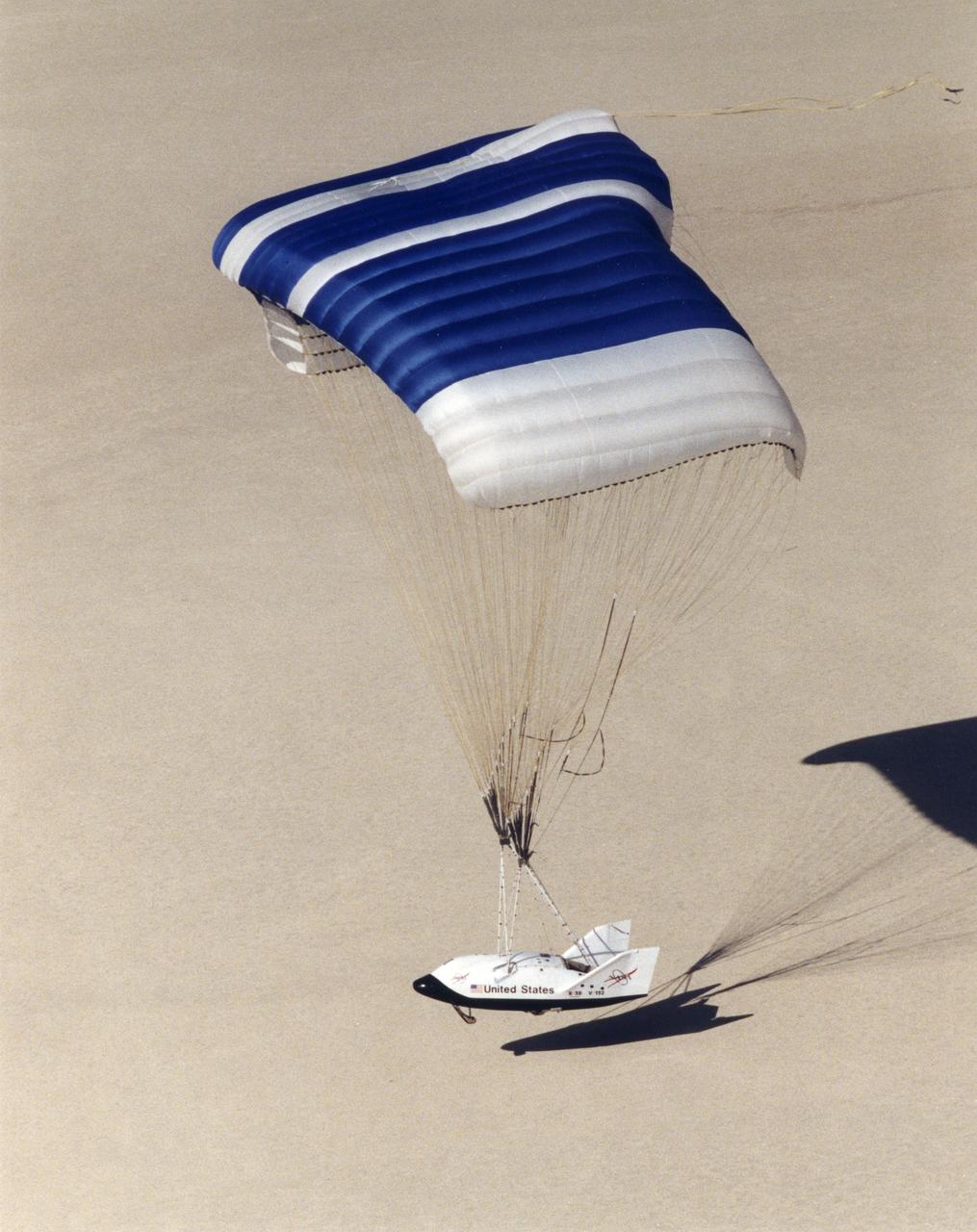
The X-38, a research vehicle built to help develop technology for an emergency Crew Return Vehicle from the International Space Station, is seen just before touchdown on a lakebed near the Dryden Flight Research Center, Edwards California, at the end of a March 2000 test flight.
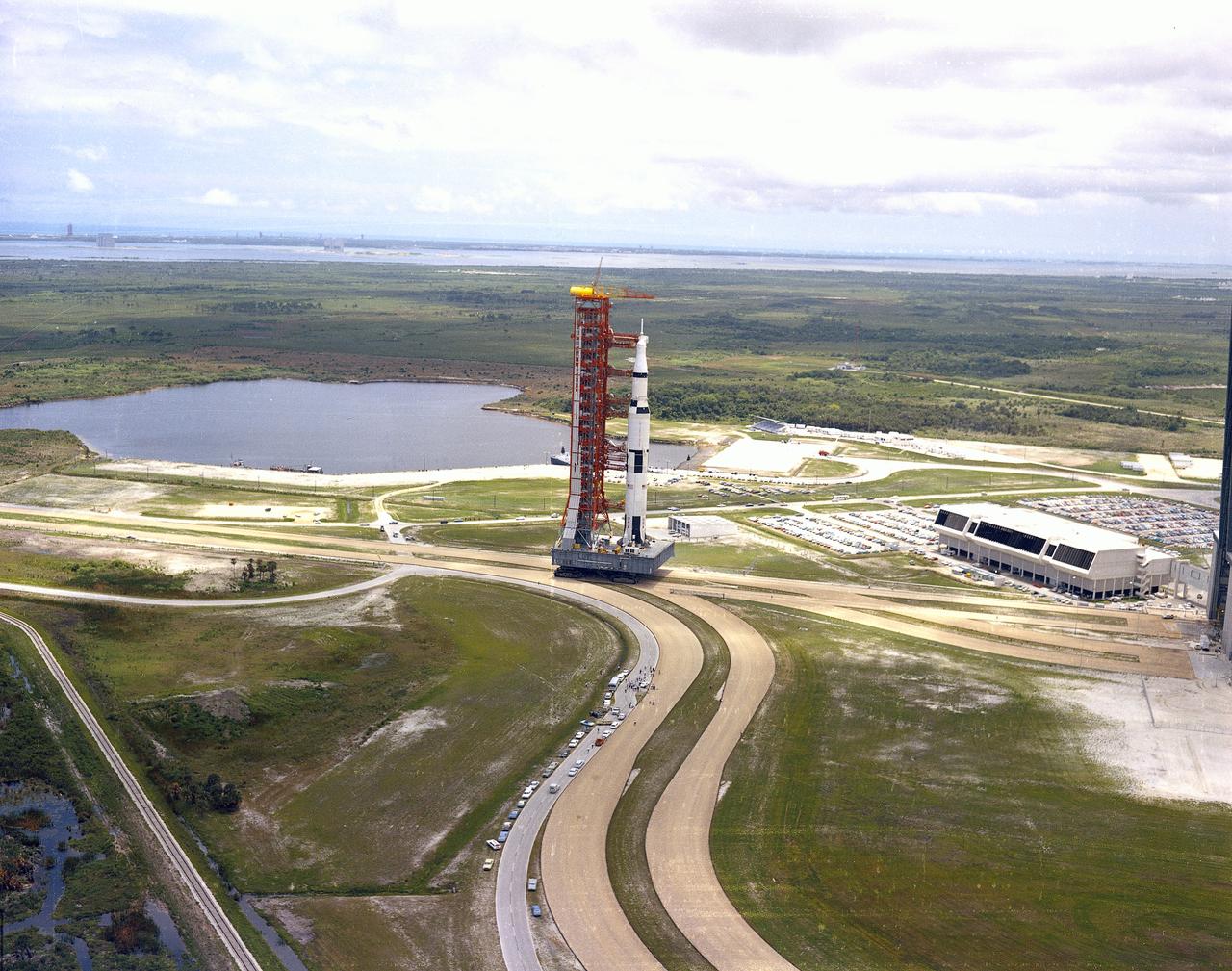
Aboard a Saturn V launch vehicle, the Apollo 11 mission launched from The Kennedy Space Center, Florida on July 16, 1969 and safely returned to Earth on July 24, 1969. The space vehicle is shown here during the rollout for launch preparation. The 3-man crew aboard the flight consisted of Neil A. Armstrong, commander; Michael Collins, Command Module pilot; and Edwin E. Aldrin Jr., Lunar Module pilot. Armstrong was the first human to ever stand on the lunar surface, followed by Edwin (Buzz) Aldrin. The crew collected 47 pounds of lunar surface material which was returned to Earth for analysis. The surface exploration was concluded in 2½ hours. With the success of Apollo 11, the national objective to land men on the Moon and return them safely to Earth had been accomplished. The Saturn V launch vehicle was developed by the Marshall Space Flight Center (MSFC) under the direction of Dr. Wernher von Braun.
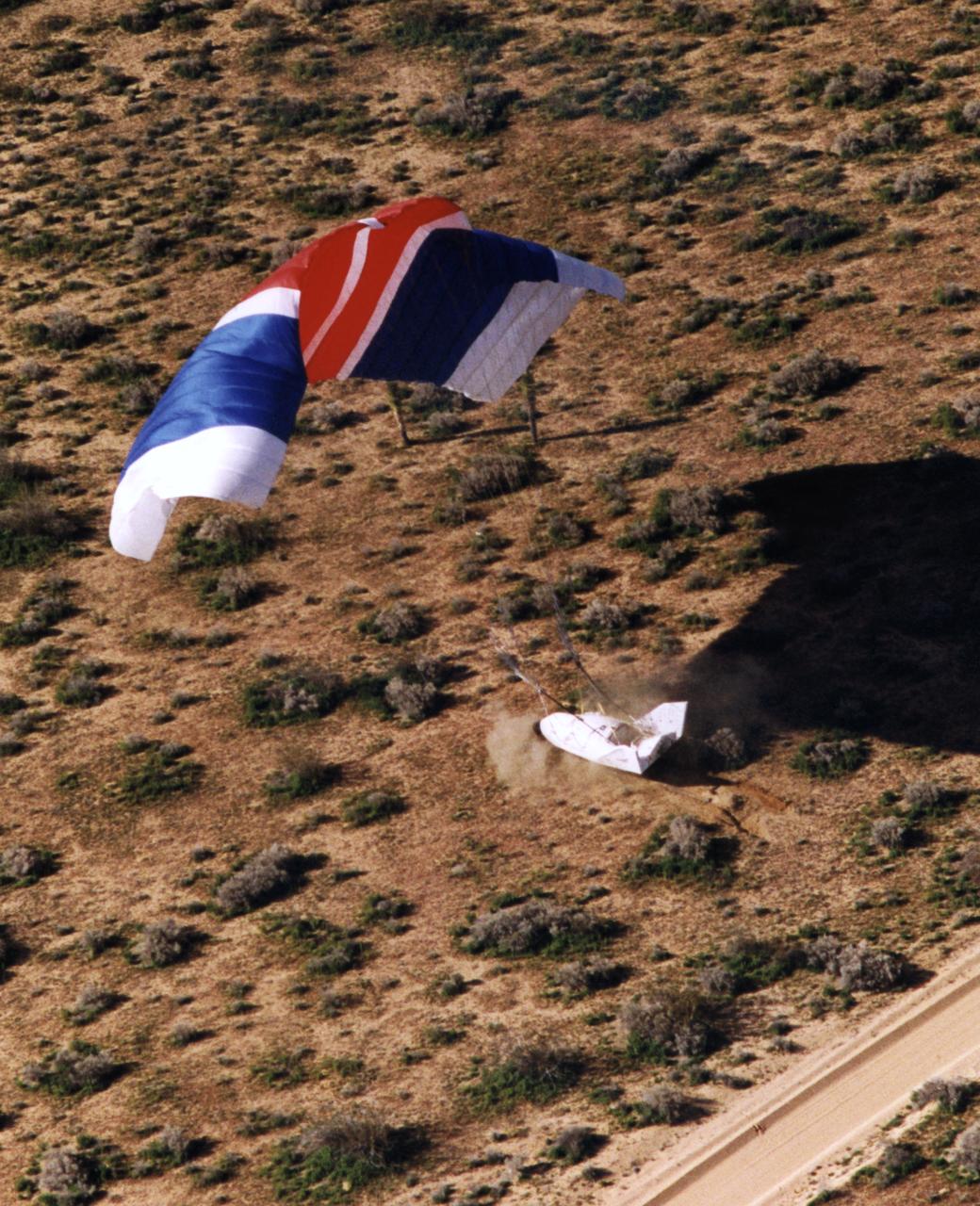
The X-38 Crew Return Vehicle touches down amidst the California desert scrubbrush at the end of its first free flight at the Dryden Flight Research Center, Edwards, California, in March 1998.
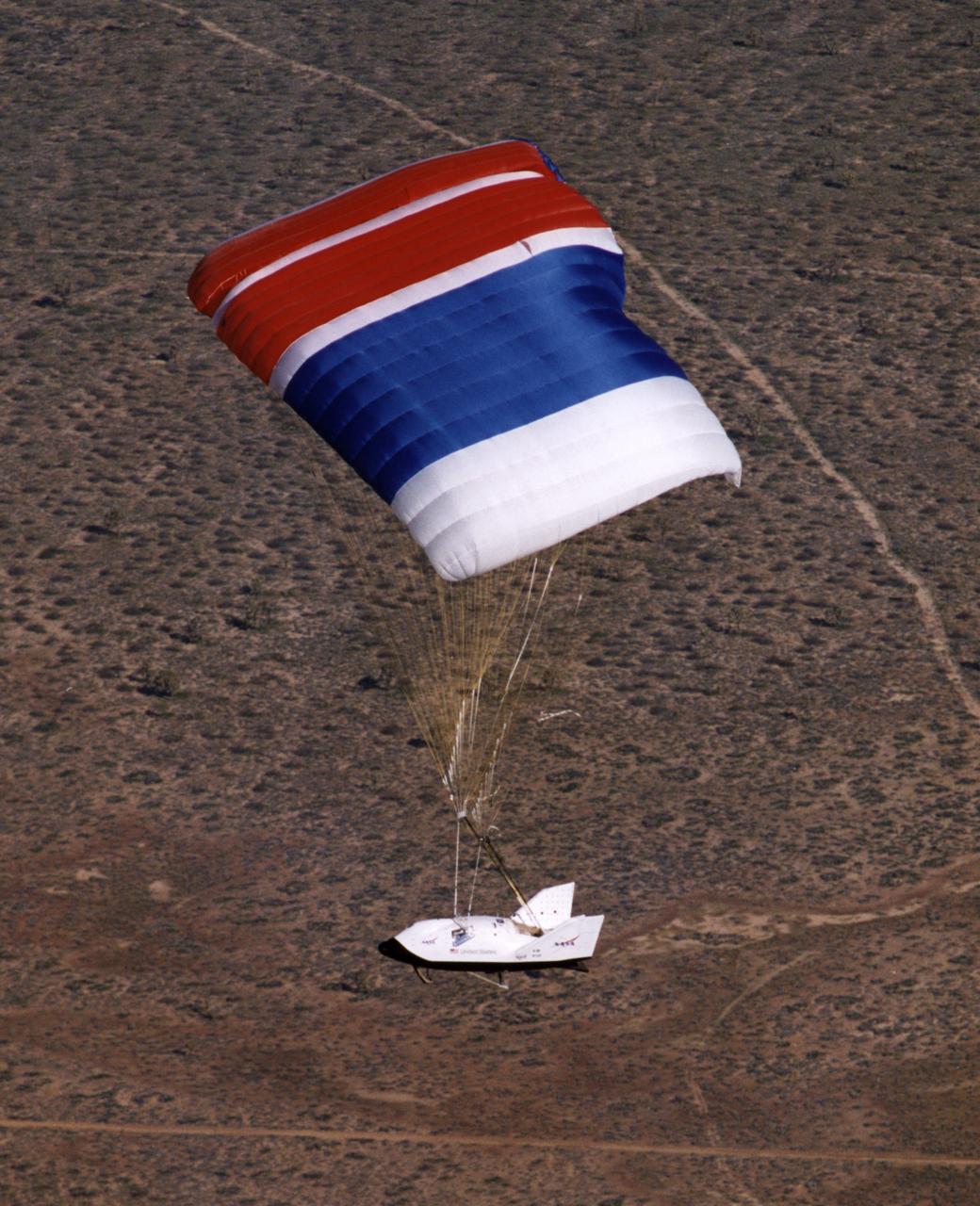
The X-38 Crew Return Vehicle descends under its steerable parafoil over the California desert during its first free flight in March 1998 at the Dryden Flight Research Center, Edwards, California.
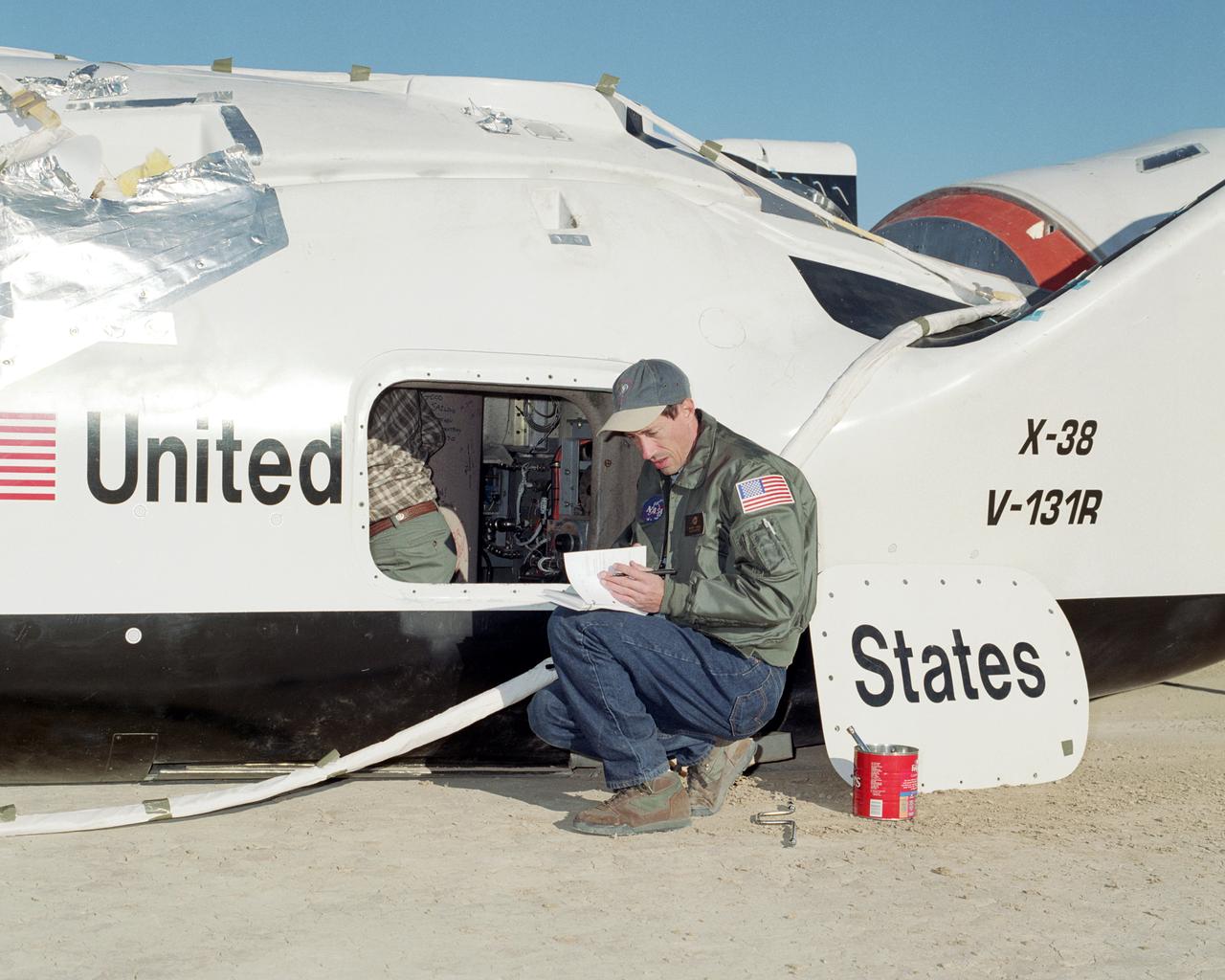
NASA engineer Wayne Peterson from the Johnson Space Center reviews postflight checklists following a spectacular flight of the X-38 prototype for a crew recovery vehicle that may be built for the International Space Station. The X-38 tested atmospheric flight characteristics on December 13, 2001, in a descent from 45,000 feet to Rogers Dry Lake at the NASA Dryden Flight Research Center/Edwards Air Force Base complex in California.
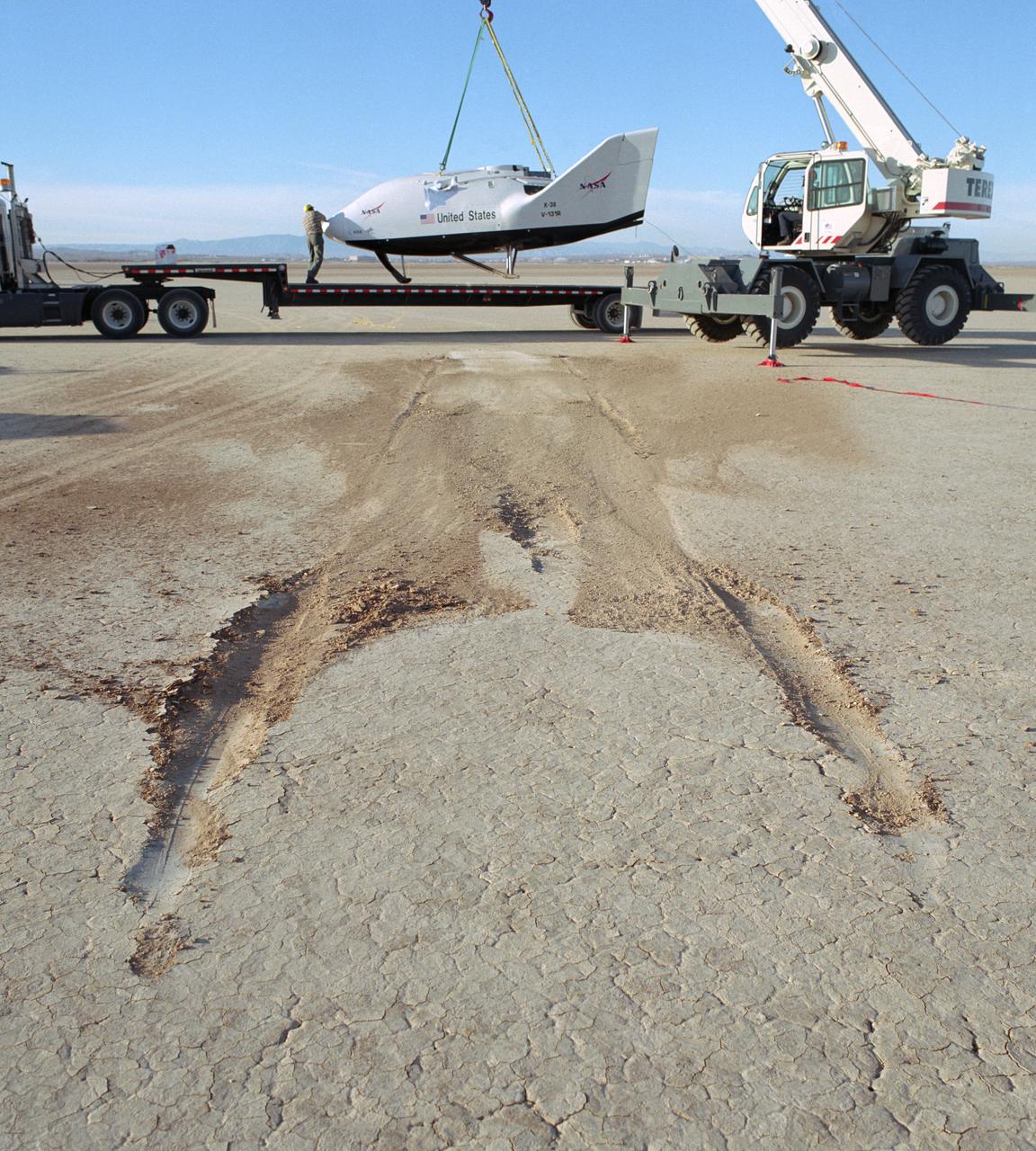
The NASA X-38 is picked up from its dry lakebed landing site following its successful eighth free flight test mission December 13, 2001. Skid marks in the ground show the X-38's landing path.
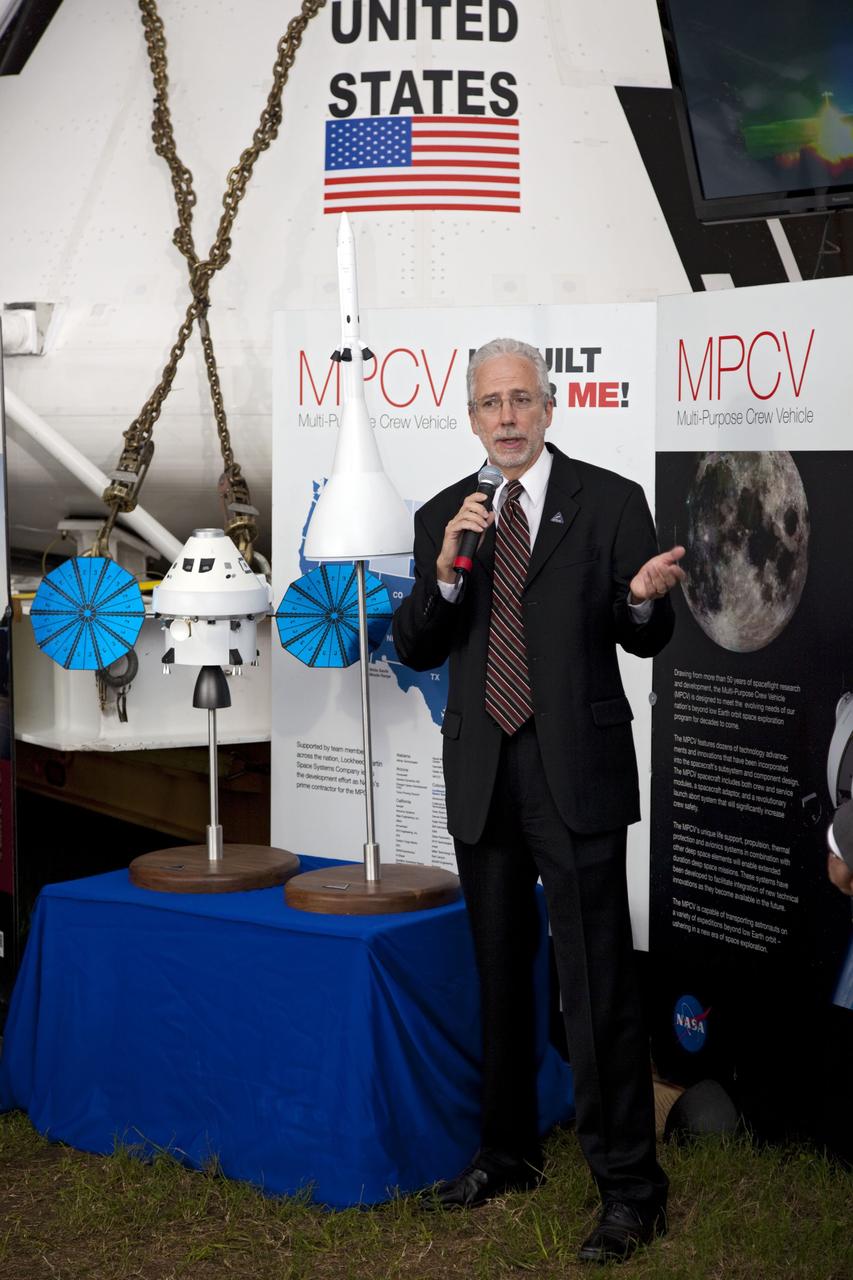
CAPE CANAVERAL, Fla. -- A media event was held on the grounds near the Press Site at NASA's Kennedy Space Center in Florida where a Multi-Purpose Crew Vehicle (MPCV) is on display. The MPCV is based on the Orion design requirements for traveling beyond low Earth orbit and will serve as the exploration vehicle that will carry the crew to space, provide emergency abort capability, sustain the crew during the space travel, and provide safe re-entry from deep space return velocities. Seen here is Mark Geyer, Multi-Purpose Crew Vehicle program manager speaking to media during a question-and-answer session. Photo credit: NASA/Frankie Martin
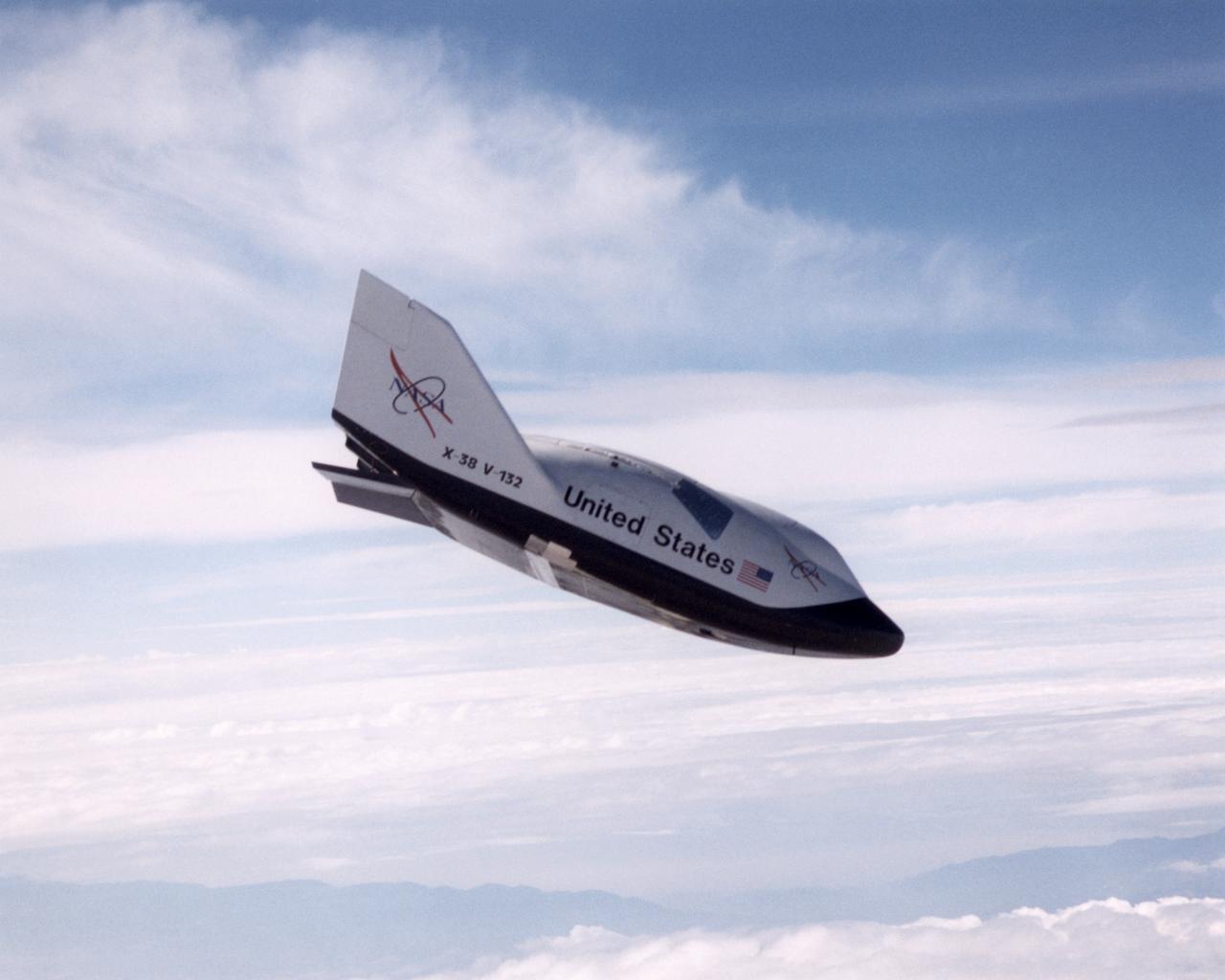
The X-38, a research vehicle built to help develop technology for an emergency Crew Return Vehicle (CRV), descends under its steerable parachute during a July 1999 test flight at the Dryden Flight Research Center, Edwards, California. It was the fourth free flight of the test vehicles in the X-38 program, and the second free flight test of Vehicle 132 or Ship 2. The goal of this flight was to release the vehicle from a higher altitude -- 31,500 feet -- and to fly the vehicle longer -- 31 seconds -- than any previous X-38 vehicle had yet flown. The project team also conducted aerodynamic verification maneuvers and checked improvements made to the drogue parachute.
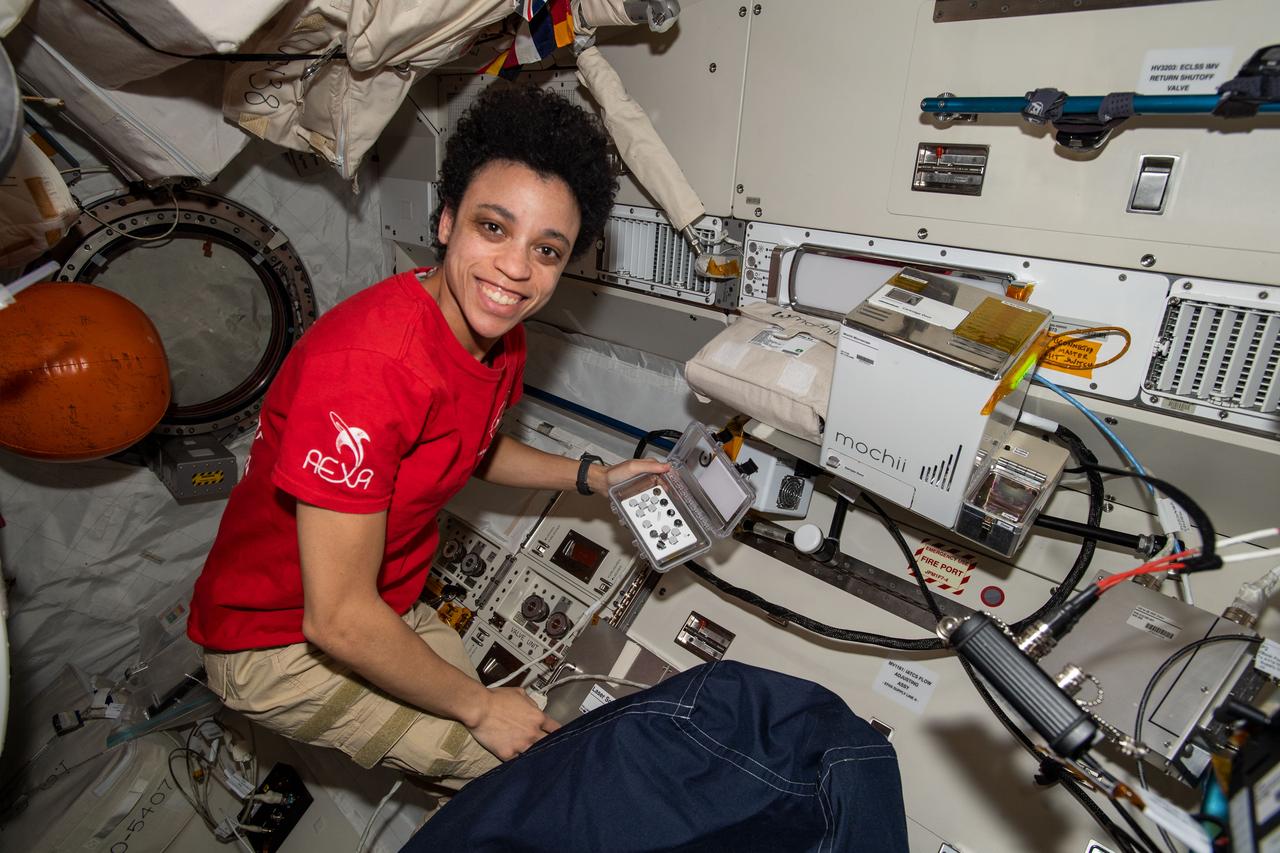
iss068e016422 (Oct. 12, 2022) --- NASA astronaut and Expedition 68 Flight Engineer Jessica Watkins works with Mochii, a miniature scanning electron microscope (SEM) with spectroscopy to conduct real-time, on-site imaging and compositional measurements of particles on the International Space Station (ISS). Such particles can cause vehicle and equipment malfunctions and threaten crew health, but currently, samples must be returned to Earth for analysis, leaving crew and vehicle at risk. Mochii also provides a powerful new analysis platform to support novel microgravity science and engineering.
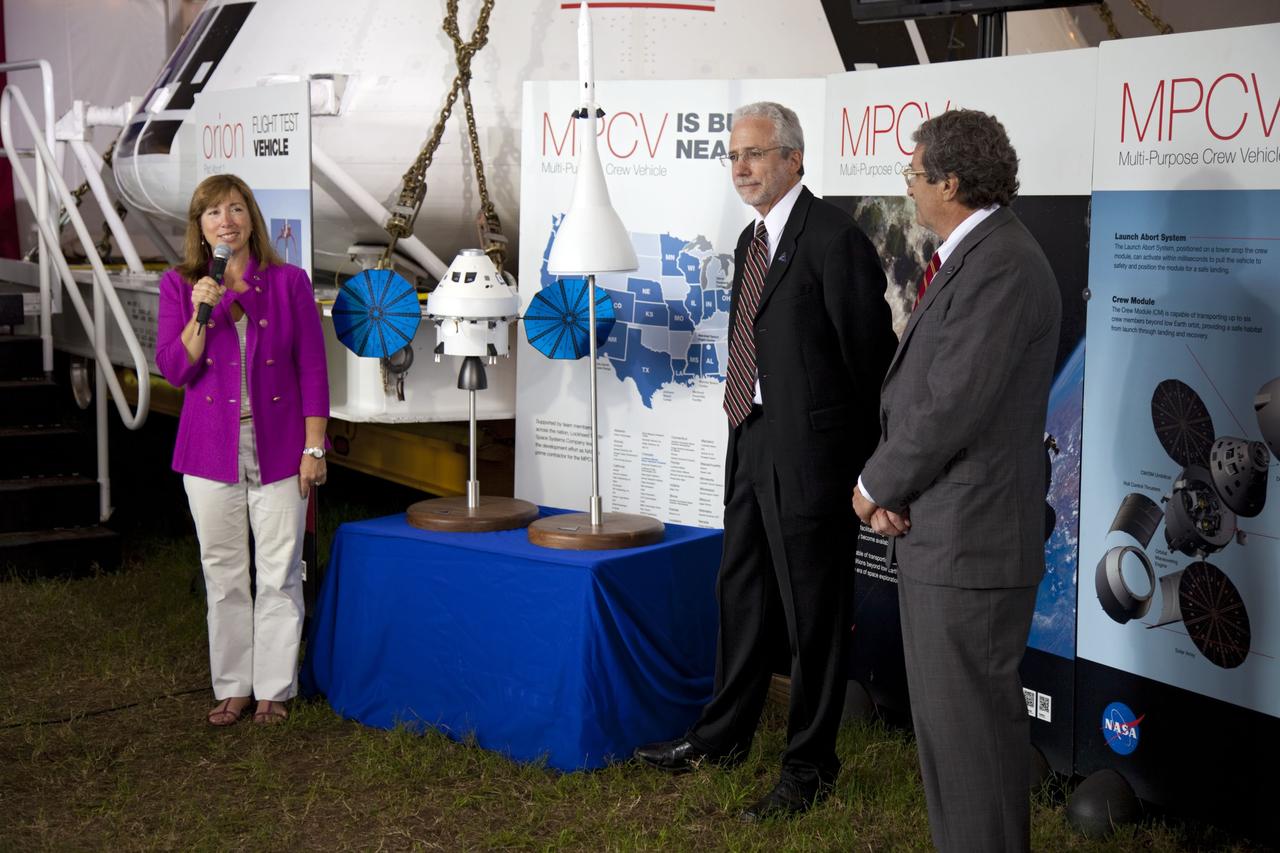
CAPE CANAVERAL, Fla. -- A media event was held on the grounds near the Press Site at NASA's Kennedy Space Center in Florida where a Multi-Purpose Crew Vehicle (MPCV) is on display. The MPCV is based on the Orion design requirements for traveling beyond low Earth orbit and will serve as the exploration vehicle that will carry the crew to space, provide emergency abort capability, sustain the crew during the space travel, and provide safe re-entry from deep space return velocities. Seen here is Lori Garver, NASA deputy administrator, Mark Geyer, Multi-Purpose Crew Vehicle program manager and Laurence A. Price, Orion deputy program manager with Lockheed Martin Space Systems Company to talk about the vehicle during a question-and-answer session. Photo credit: NASA/Frankie Martin
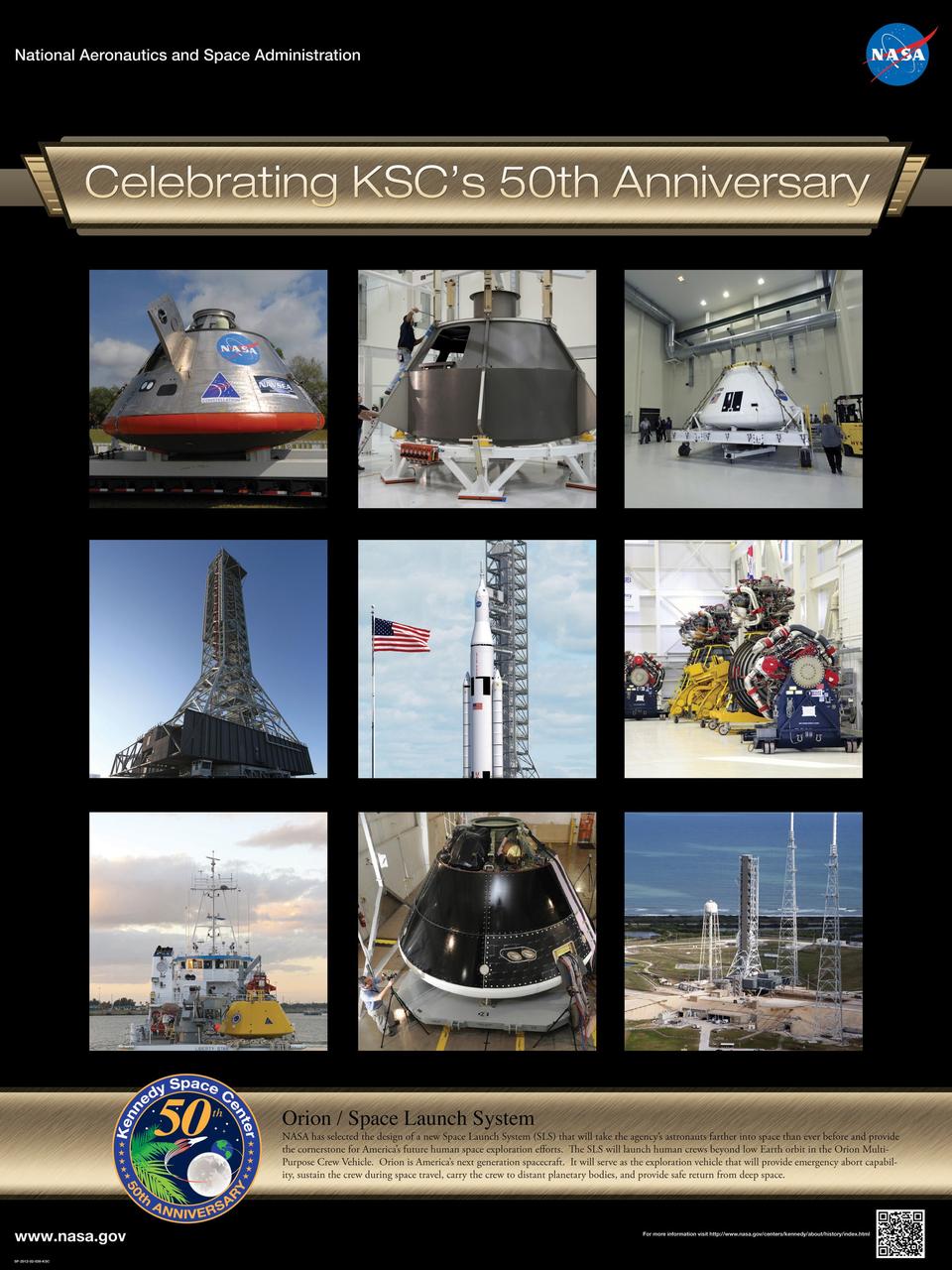
Orion / Space Launch System: NASA has selected the design of a new Space Launch System SLS that will take the agency's astronauts farther into space than ever before and provide the cornerstone for America's future human space exploration efforts. The SLS will launch human crews beyond low Earth orbit in the Orion Multi-Purpose Crew Vehicle. Orion is America’s next generation spacecraft. It will serve as the exploration vehicle that will provide emergency abort capability, sustain the crew during space travel, carry the crew to distant planetary bodies, and provide safe return from deep space. Poster designed by Kennedy Space Center Graphics Department/Greg Lee. Credit: NASA
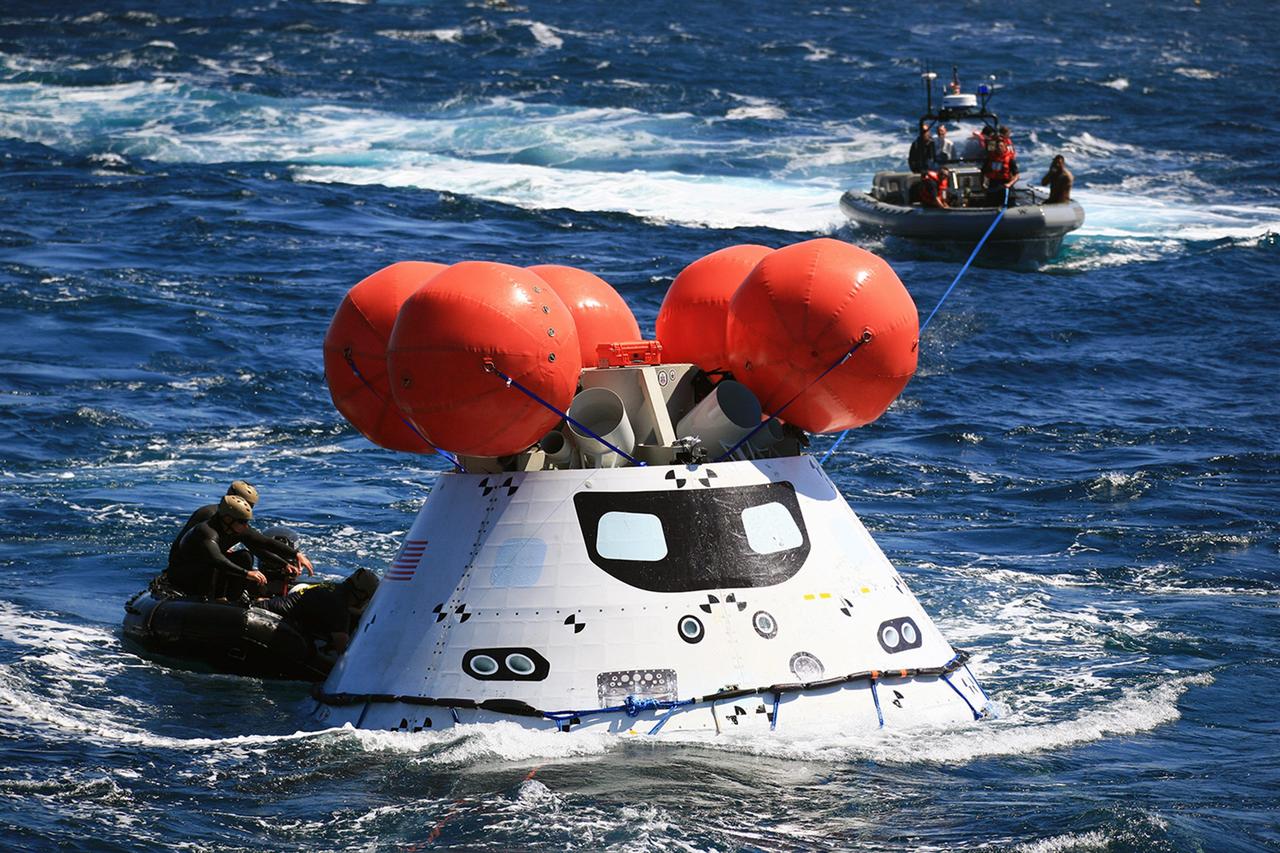
SAN DIEGO, Calif. – The Orion boilerplate test vehicle floats in the Pacific Ocean, a distance away from the USS Anchorage, during the third day of Orion Underway Recovery Test 3. The orange stabilizers inflated on top help keep the test vehicle floating upright. U.S. Navy divers in a Zodiac boat, at left, and other team members in a rigid hull inflatable boat prepare the test vehicle for return to the ship. NASA, Lockheed Martin and U.S. Navy personnel are conducting the recovery test using the test vehicle to prepare for recovery of the Orion crew module on its return from a deep space mission. The test allows the teams to demonstrate and evaluate the recovery processes, procedures, hardware and personnel in open waters. The Ground Systems Development and Operations Program is conducting the underway recovery tests. Orion is the exploration spacecraft designed to carry astronauts to destinations not yet explored by humans, including an asteroid and Mars. It will have emergency abort capability, sustain the crew during space travel and provide safe re-entry from deep space return velocities. The first unpiloted test flight of Orion is scheduled to launch in 2014 atop a United Launch Alliance Delta IV Heavy rocket and in 2018 on NASA’s Space Launch System rocket. For more information, visit http://www.nasa.gov/orion. Photo credit: NASA/Kim Shiflett
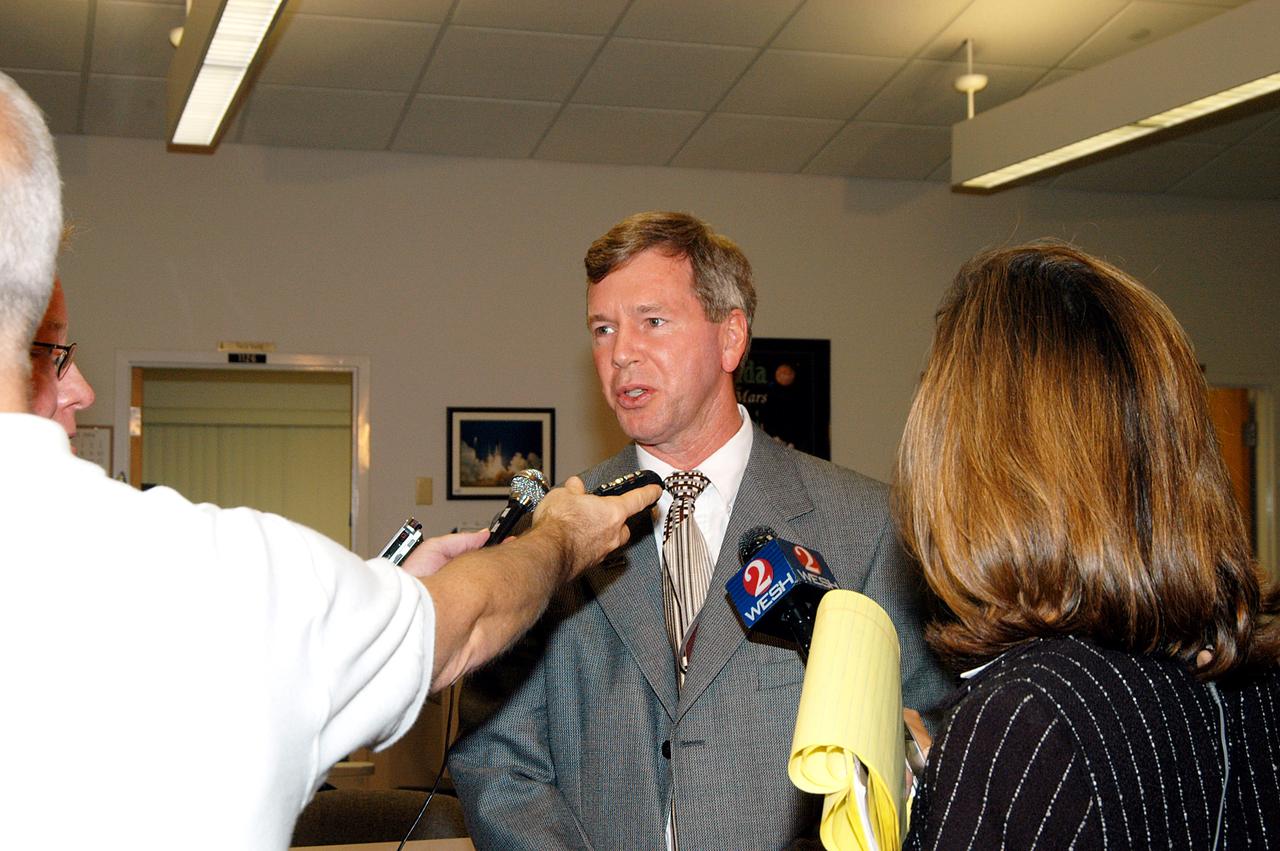
KENNEDY SPACE CENTER, FLA. -- Mike O’Neal, with the KSC Spaceport Technology Development Office, talks to the media at the NASA-KSC News Center after viewing President George W. Bush’s message on the future of NASA. The President stated his goals for NASA’s new mission: Completing the International Space Station, retiring the Space Shuttle orbiters, developing a new crew exploration vehicle, and returning to the moon and beyond within the next two decades. Pres. Bush was welcomed by NASA Administrator Sean O’Keefe and Expedition 8 Commander Michael Foale, who greeted him from the International Space Station.
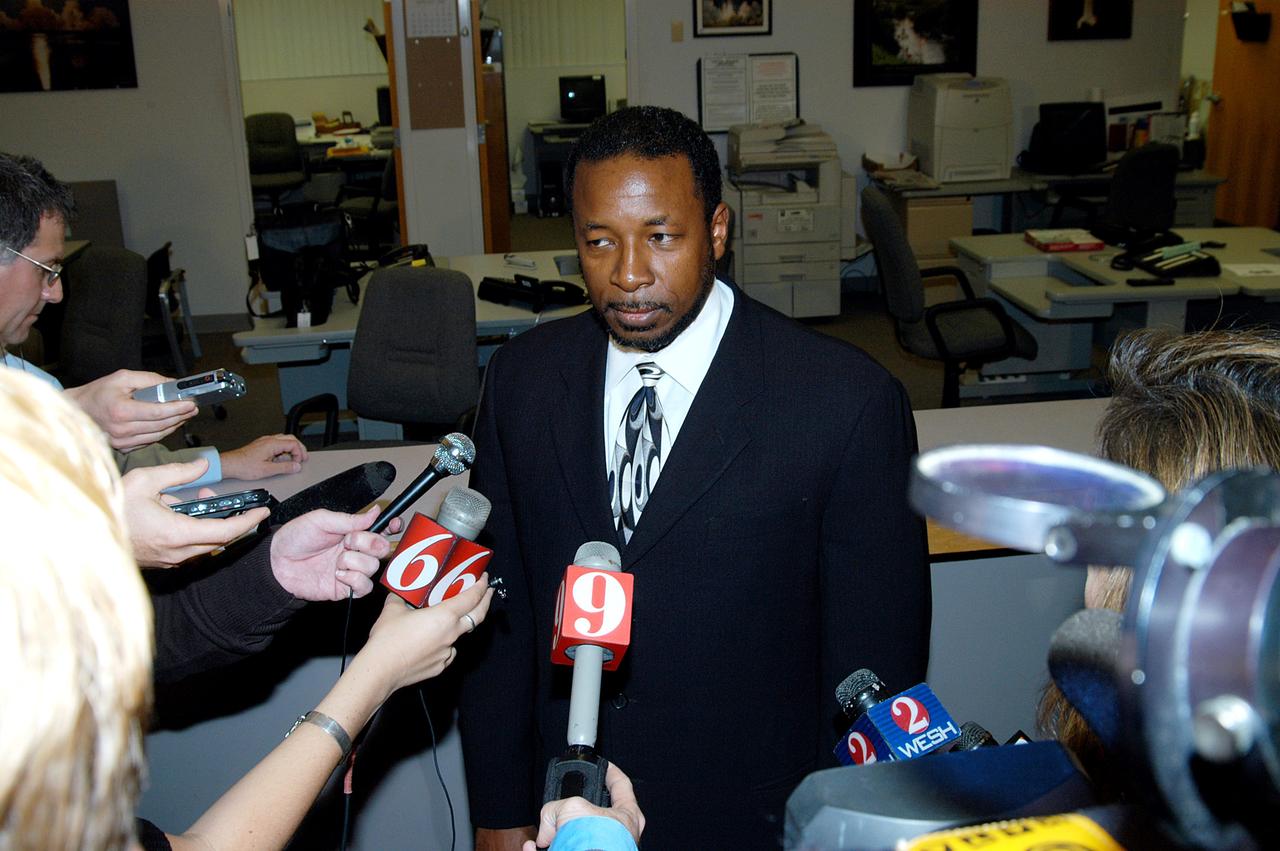
KENNEDY SPACE CENTER, FLA. -- Dr. Woodrow Whitlow, KSC deputy director, talks to the media at the NASA-KSC News Center after viewing President George W. Bush’s message on the future of NASA. The President stated his goals for NASA’s new mission: Completing the International Space Station, retiring the Space Shuttle orbiters, developing a new crew exploration vehicle, and returning to the moon and beyond within the next two decades. Pres. Bush was welcomed by NASA Administrator Sean O’Keefe and Expedition 8 Commander Michael Foale, who greeted him from the International Space Station.
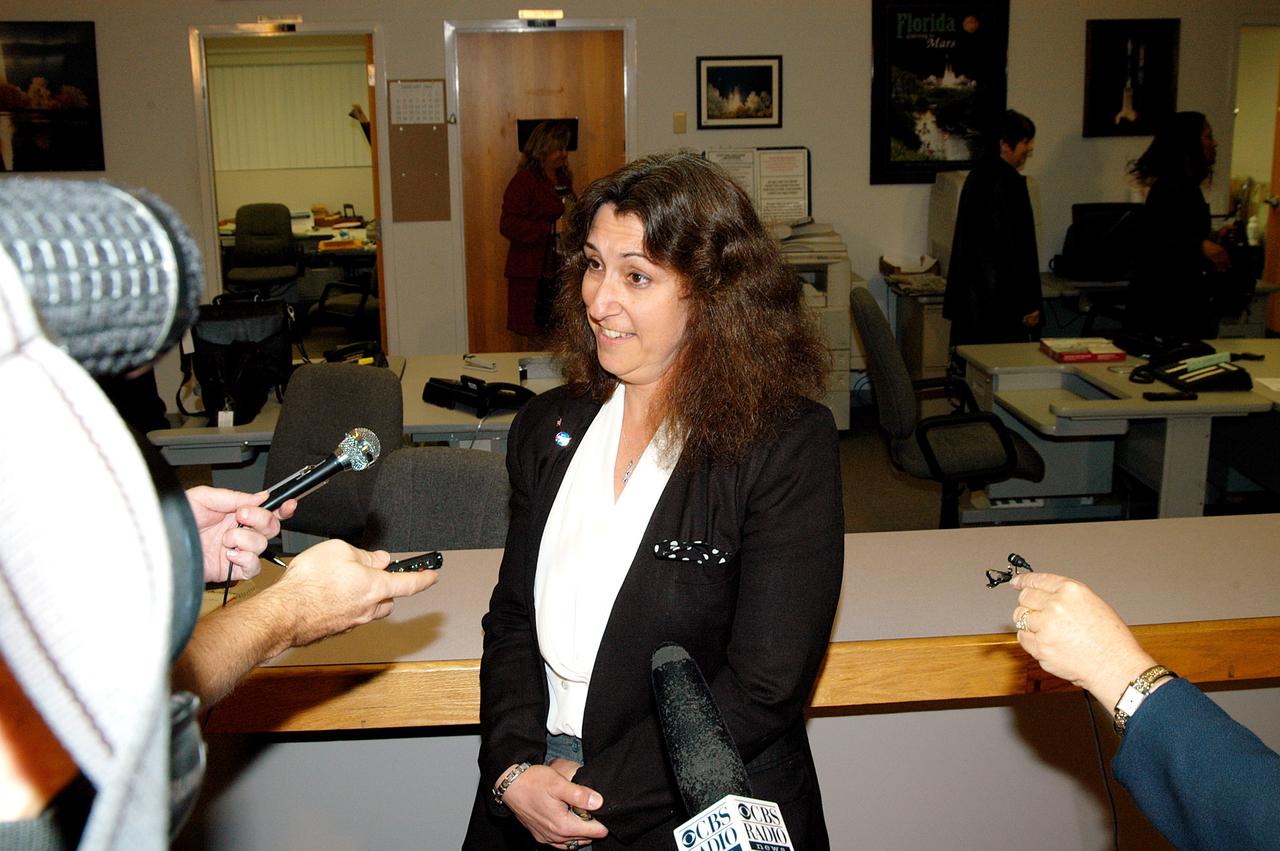
KENNEDY SPACE CENTER, FLA. -- Maria Littlefield, chief technologist with the Launch Services Program Office, talks to the media at the NASA-KSC News Center after viewing President George W. Bush’s message on the future of NASA. The President stated his goals for NASA’s new mission: Completing the International Space Station, retiring the Space Shuttle orbiters, developing a new crew exploration vehicle, and returning to the moon and beyond within the next two decades. Pres. Bush was welcomed by NASA Administrator Sean O’Keefe and Expedition 8 Commander Michael Foale, who greeted him from the International Space Station.
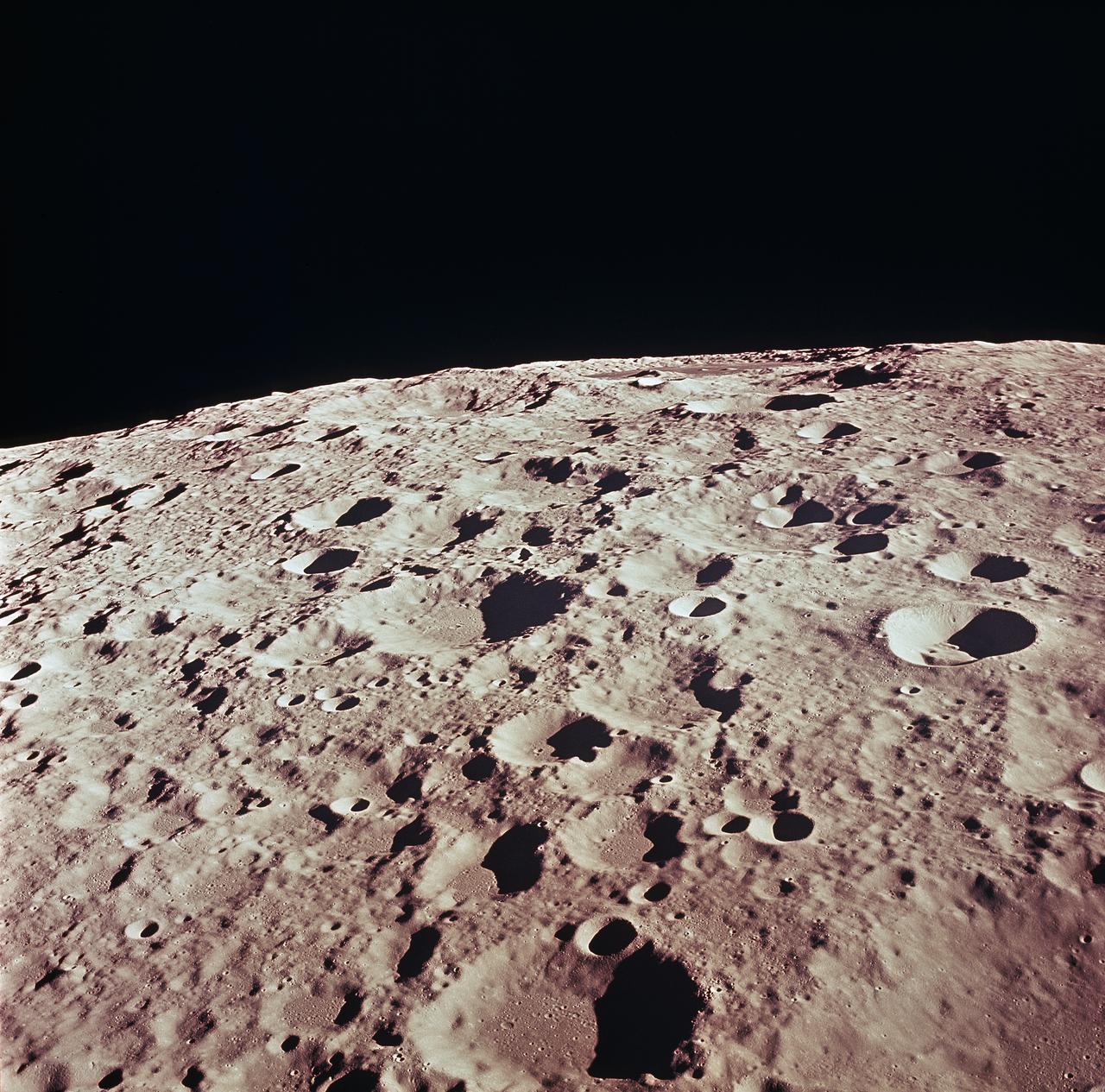
This is a detailed view of the back side of Moon in the vicinity of Crater No. 308 taken during the Apollo 11 mission. Apollo 11, the first manned lunar mission, launched from The Kennedy Space Center, Florida via a Saturn V launch vehicle on July 16, 1969 and safely returned to Earth on July 24, 1969. The Saturn V vehicle was developed by the Marshall Space Flight Center (MSFC) under the direction of Dr. Wernher von Braun. The 3-man crew aboard the flight consisted of Neil A. Armstrong, commander; Michael Collins, Command Module pilot; and Edwin E. Aldrin Jr., Lunar Module pilot. The Lunar Module (LM), named “Eagle, carrying astronauts Neil Armstrong and Edwin Aldrin, was the first crewed vehicle to land on the Moon. Meanwhile, astronaut Collins piloted the Command Module in a parking orbit around the Moon. Armstrong was the first human to ever stand on the lunar surface, followed by Edwin (Buzz) Aldrin. The crew collected 47 pounds of lunar surface material which was returned to Earth for analysis. The surface exploration was concluded in 2½ hours. With the success of Apollo 11, the national objective to land men on the Moon and return them safely to Earth had been accomplished.
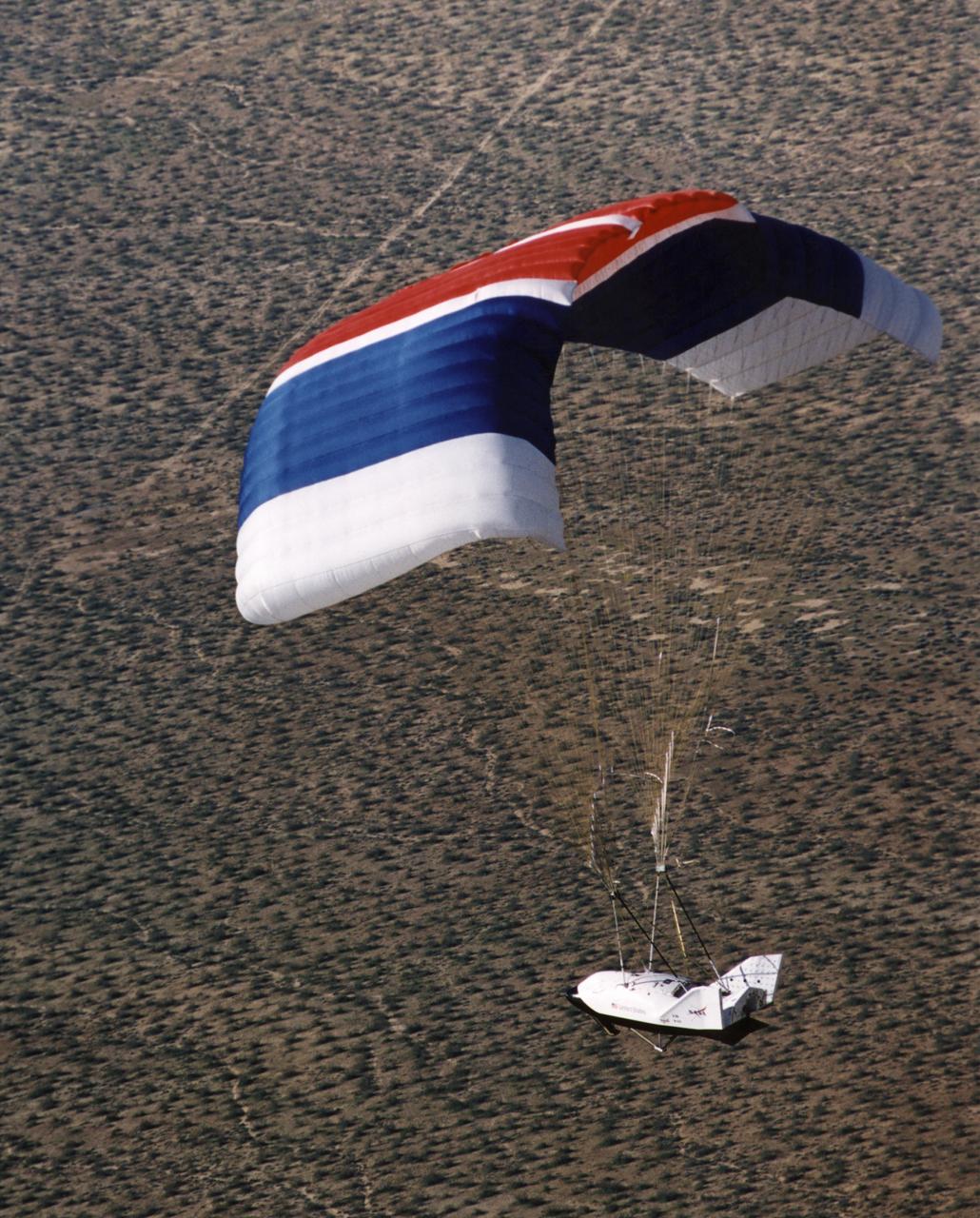
The X-38 Crew Return Vehicle descends under its steerable parafoil over the California desert in its first free flight at the Dryden Flight Research Center, Edwards, California. The flight took place March 12, 1998.
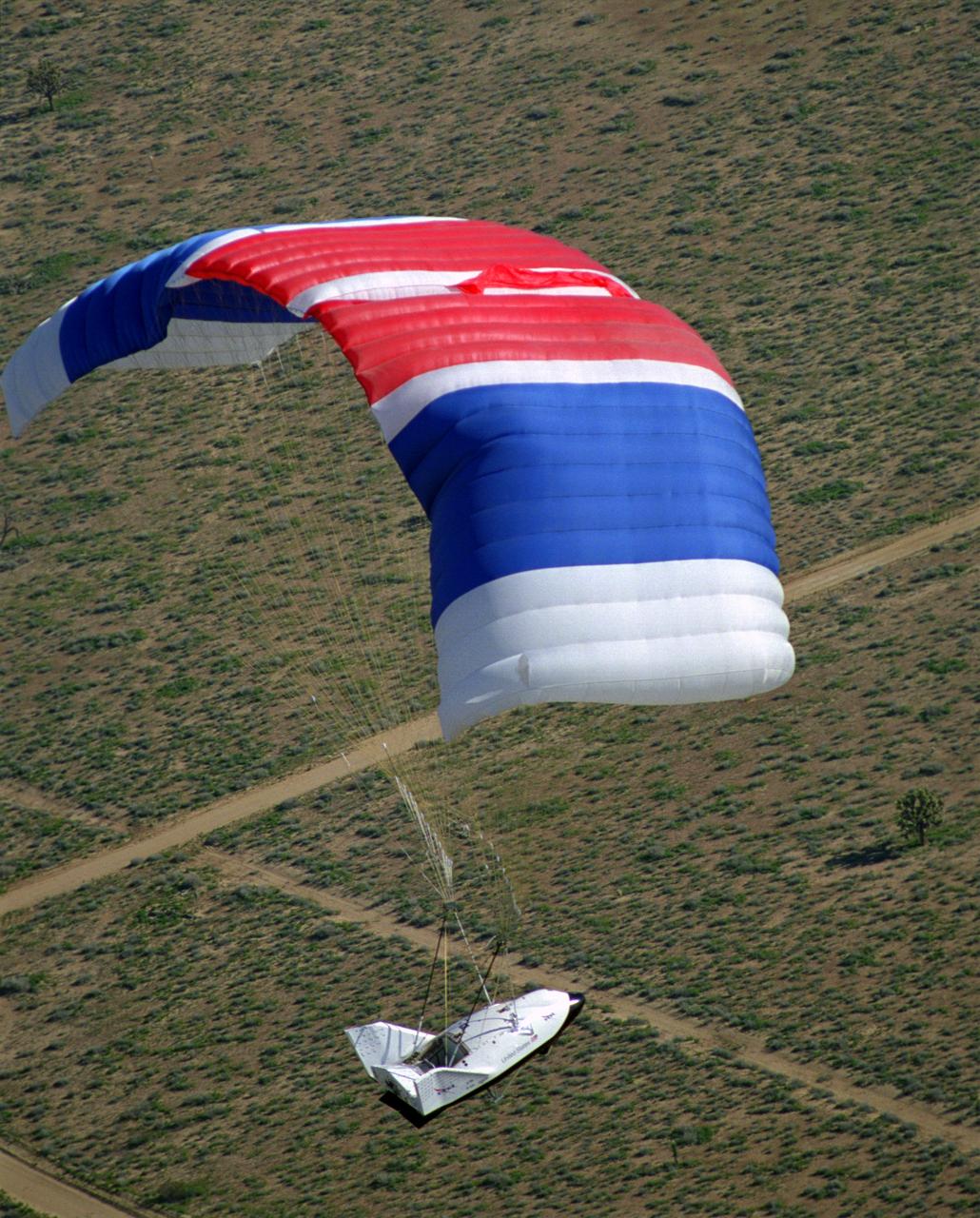
The X-38 Crew Return Vehicle descends under its steerable parafoil over the California desert in its first free flight at the Dryden Flight Research Center, Edwards, California. The flight took place March 12, 1998.
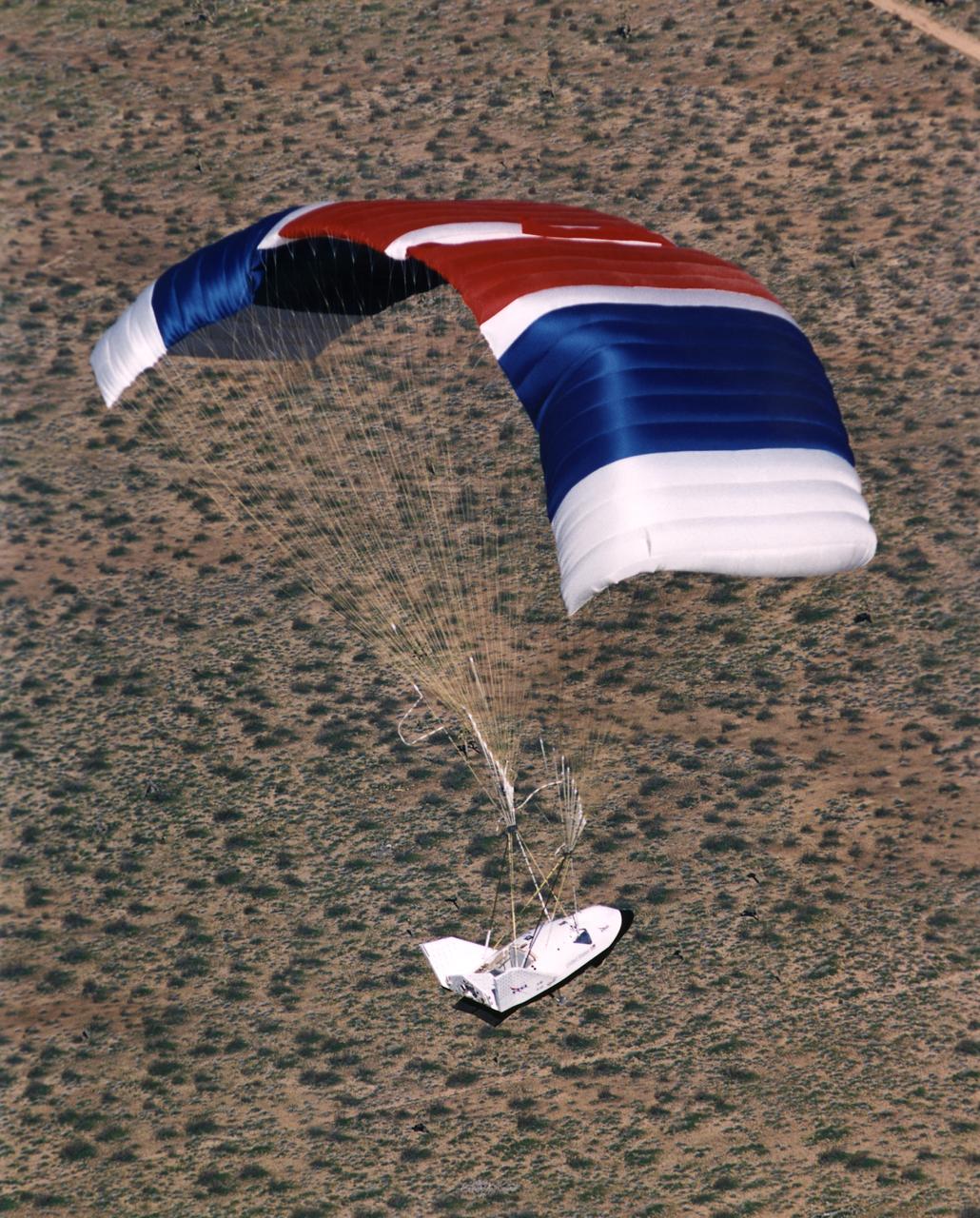
The X-38 Crew Return Vehicle descends under its steerable parafoil over the California desert in its first free flight at the Dryden Flight Research Center, Edwards, California. The flight took place March 12, 1998.

NASA Officials gather at Ames Research Center to discuss Spaceship development progress. Constellation is developing the Orion spacecraft and Ares rockets to support an American return to the moon by 2020. Speaker James Reuther, ARC, leader of the Advanced Development Thermal rotection Systems (heat shield) project for the Orion Crew Exploration Vehicle

NASA Officials gather at Ames Research Center to discuss Spaceship development progress. Constellation is developing the Orion spacecraft and Ares rockets to support an American return to the moon by 2020. Speaker James Reuther, ARC, leader of the Advanced Development Thermal rotection Systems (heat shield) project for the Orion Crew Exploration Vehicle
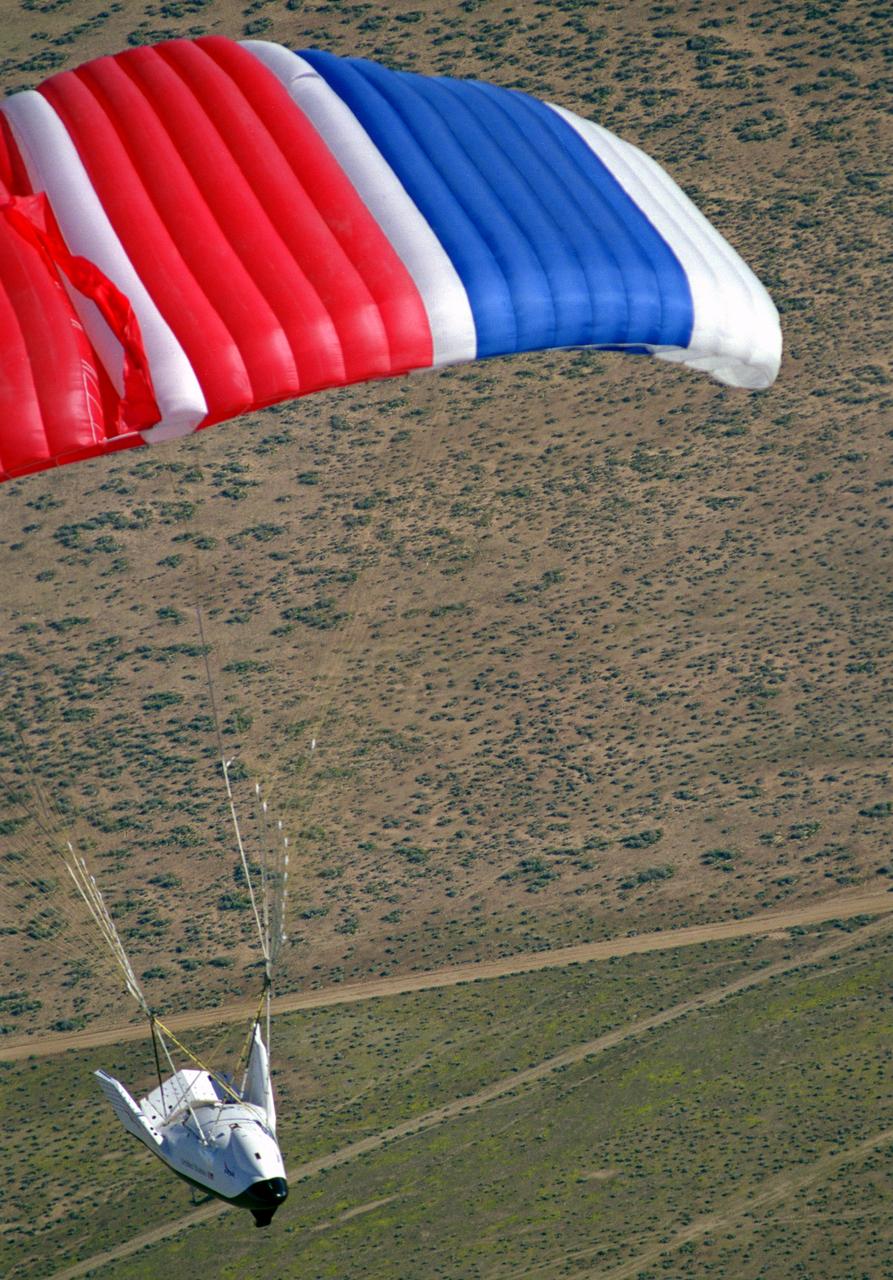
The X-38 Crew Return Vehicle descends under its steerable parafoil over the California desert in its first free flight at the Dryden Flight Research Center, Edwards, California. The flight took place March 12, 1998.
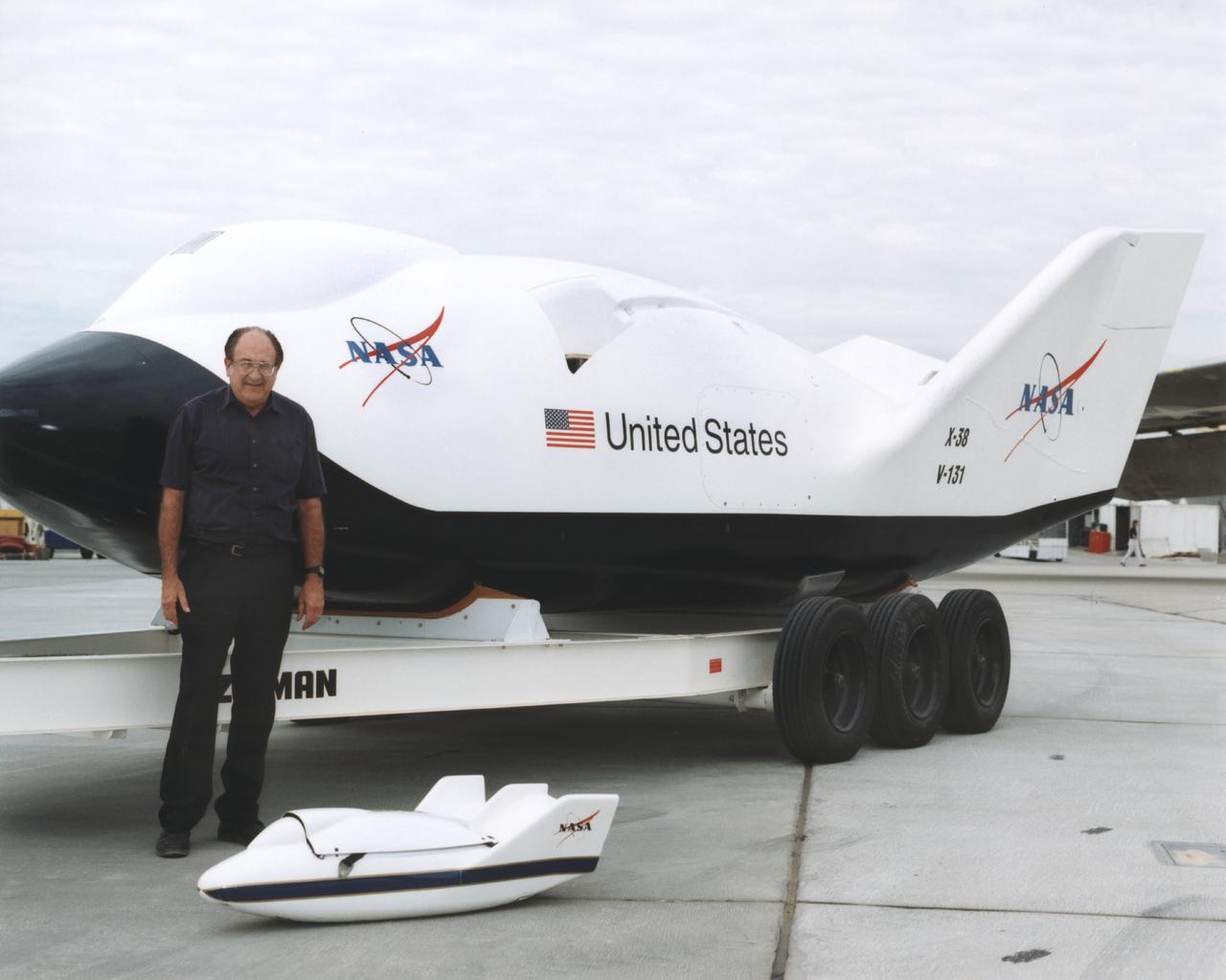
Dale Reed, a NASA engineer who worked on the original lifting-body research programs in the 1960s and 1970s, stands with a scale-model X-38 that was used in 1995 research flights, with a full-scale X-38 (80 percent of the size of a potential Crew Return Vehicle) behind him.
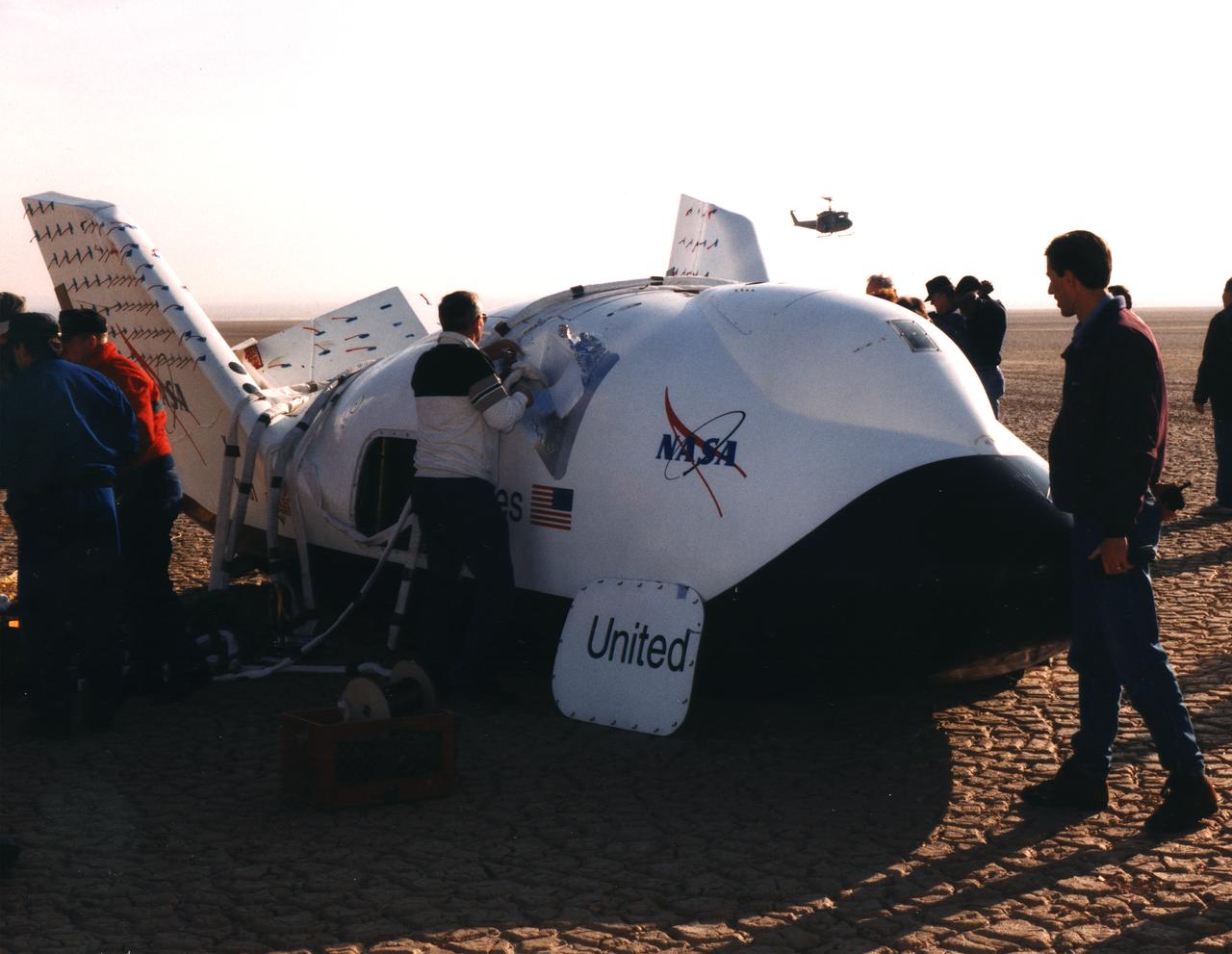
NASA's X-38, a prototype of a Crew Return Vehicle (CRV) resting on the lakebed near the Dryden Flight Research Center after the completion of its second free flight. The X-38 was launched from NASA Dryden's B-52 Mothership on Saturday, February 6, 1999, from an altitude of approximately 23,000 feet.
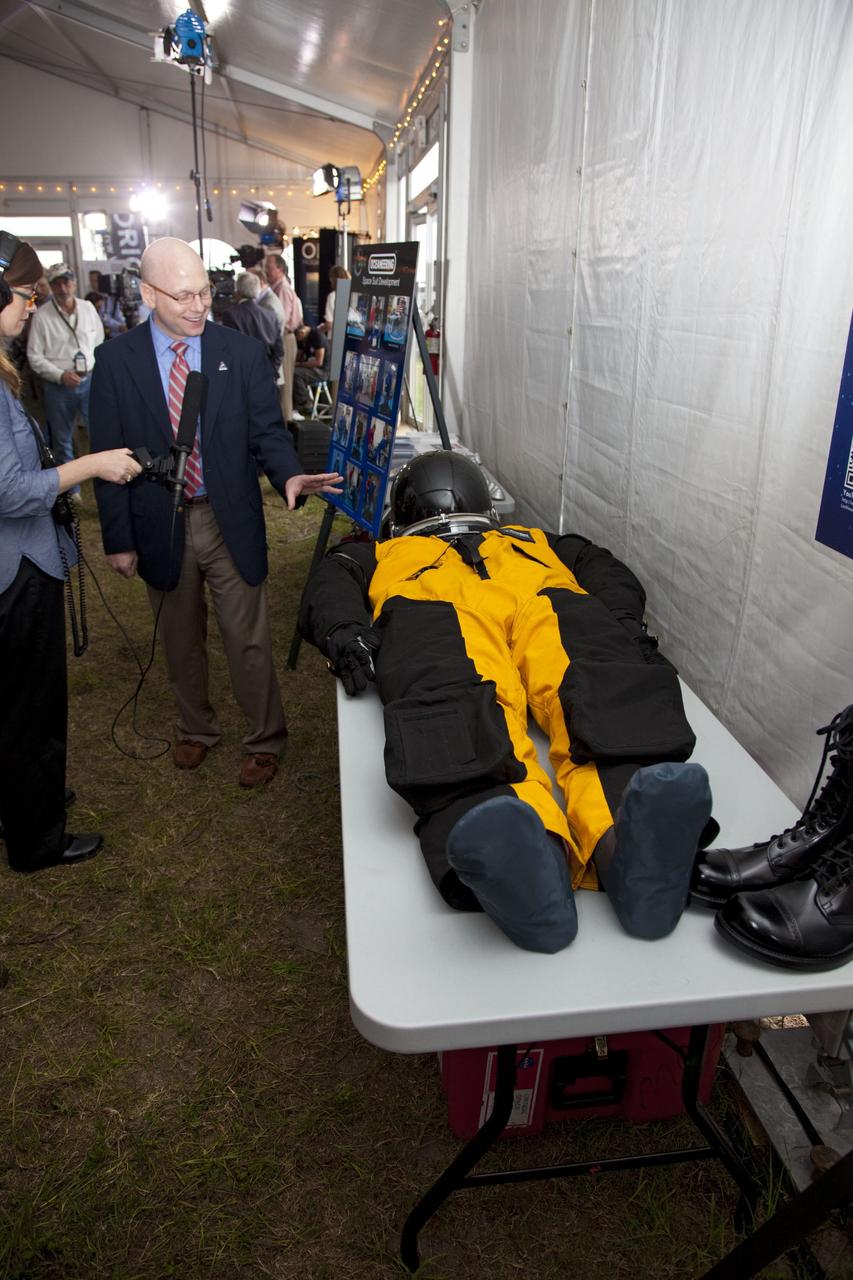
CAPE CANAVERAL, Fla. -- A media event was held on the grounds near the Press Site at NASA's Kennedy Space Center in Florida where a Multi-Purpose Crew Vehicle (MPCV) is on display. The MPCV is based on the Orion design requirements for traveling beyond low Earth orbit and will serve as the exploration vehicle that will carry the crew to space, provide emergency abort capability, sustain the crew during the space travel, and provide safe re-entry from deep space return velocities. Seen here is a sample of the Orion launch-and-entry suit on display. Photo credit: NASA/Frankie Martin
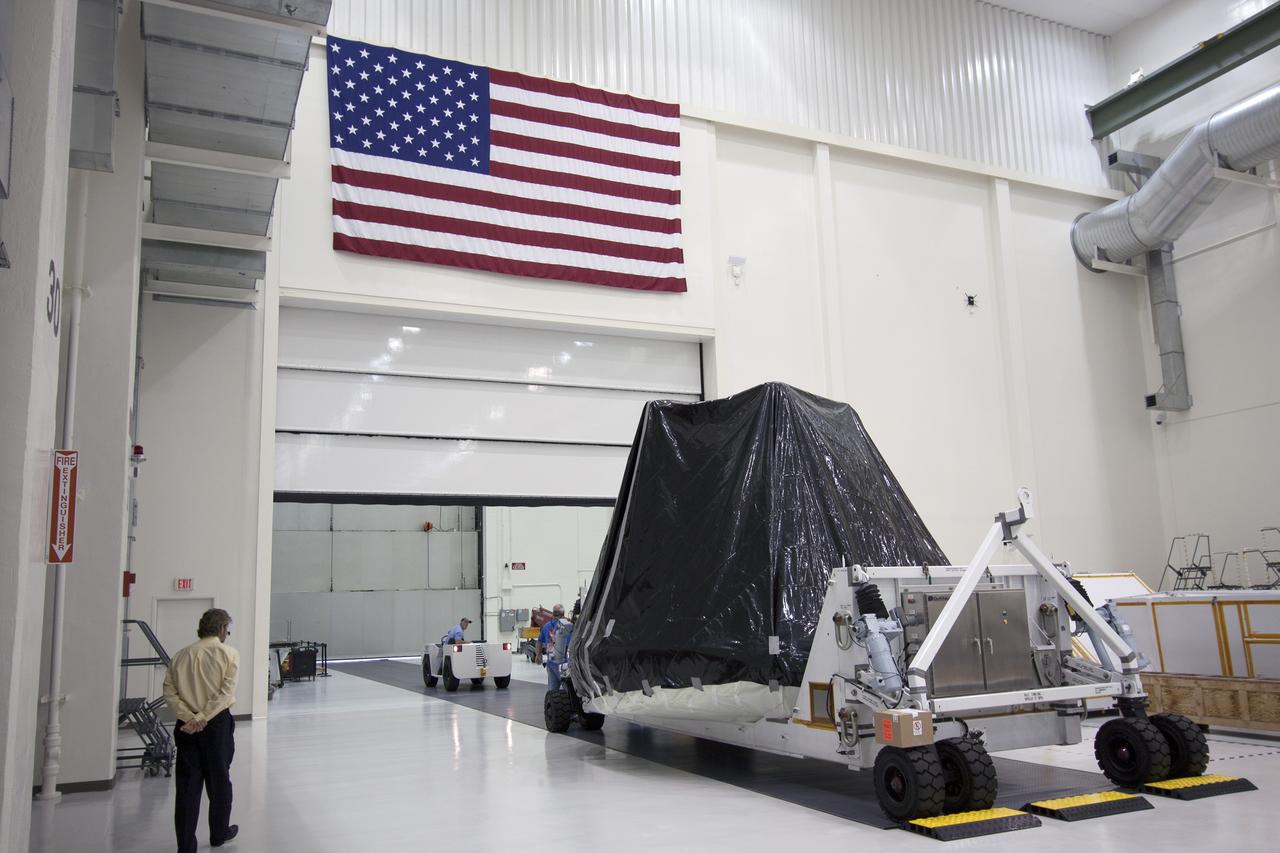
CAPE CANAVERAL, Fla. -- At NASA’s Kennedy Space Center in Florida, workers prepare to move the Orion ground test vehicle, or GTA, from the Operations and Checkout Building to the Launch Equipment Test Facility, or LETF. At the LETF, Lockheed Martin will put the GTA through a series of pyrotechnic bolt tests. The ground test vehicle is being used for path finding operations in the O&C, including simulated manufacturing and assembly procedures. Launching atop NASA's heavy-lift Space Launch System SLS, which also is under development, the Orion Multi-Purpose Crew Vehicle MPCV will serve as the exploration vehicle that will carry astronaut crews beyond low Earth orbit. It also will provide emergency abort capabilities, sustain the crew during space travel and provide safe re-entry from deep space return velocities. For more information, visit www.nasa.gov/orion. Photo credit: Jim Grossman
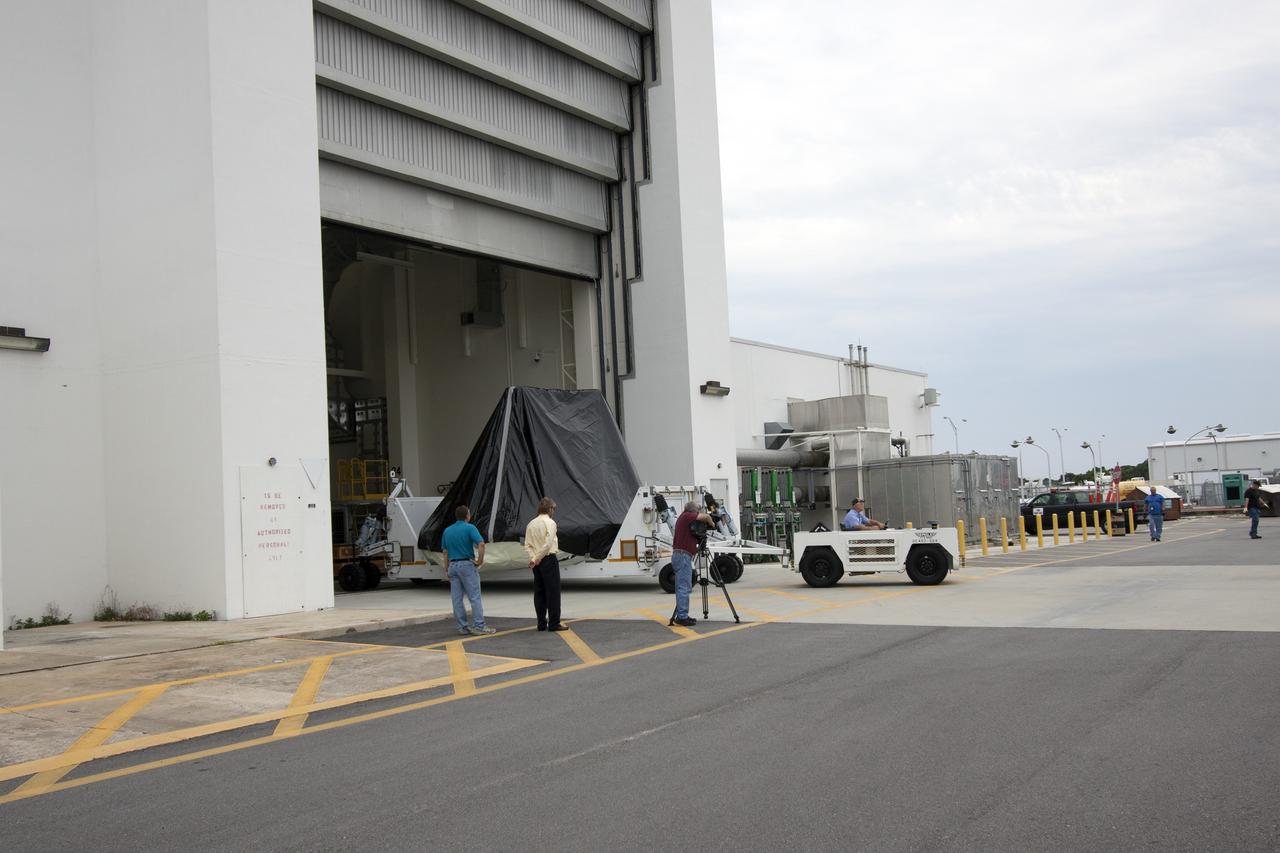
CAPE CANAVERAL, Fla. -- At NASA’s Kennedy Space Center in Florida, workers move the Orion ground test vehicle, or GTA, from the Operations and Checkout Building to the Launch Equipment Test Facility, or LETF. At the LETF, Lockheed Martin will put the GTA through a series of pyrotechnic bolt tests. The ground test vehicle is being used for path finding operations in the O&C, including simulated manufacturing and assembly procedures. Launching atop NASA's heavy-lift Space Launch System SLS, which also is under development, the Orion Multi-Purpose Crew Vehicle MPCV will serve as the exploration vehicle that will carry astronaut crews beyond low Earth orbit. It also will provide emergency abort capabilities, sustain the crew during space travel and provide safe re-entry from deep space return velocities. For more information, visit www.nasa.gov/orion. Photo credit: Jim Grossman
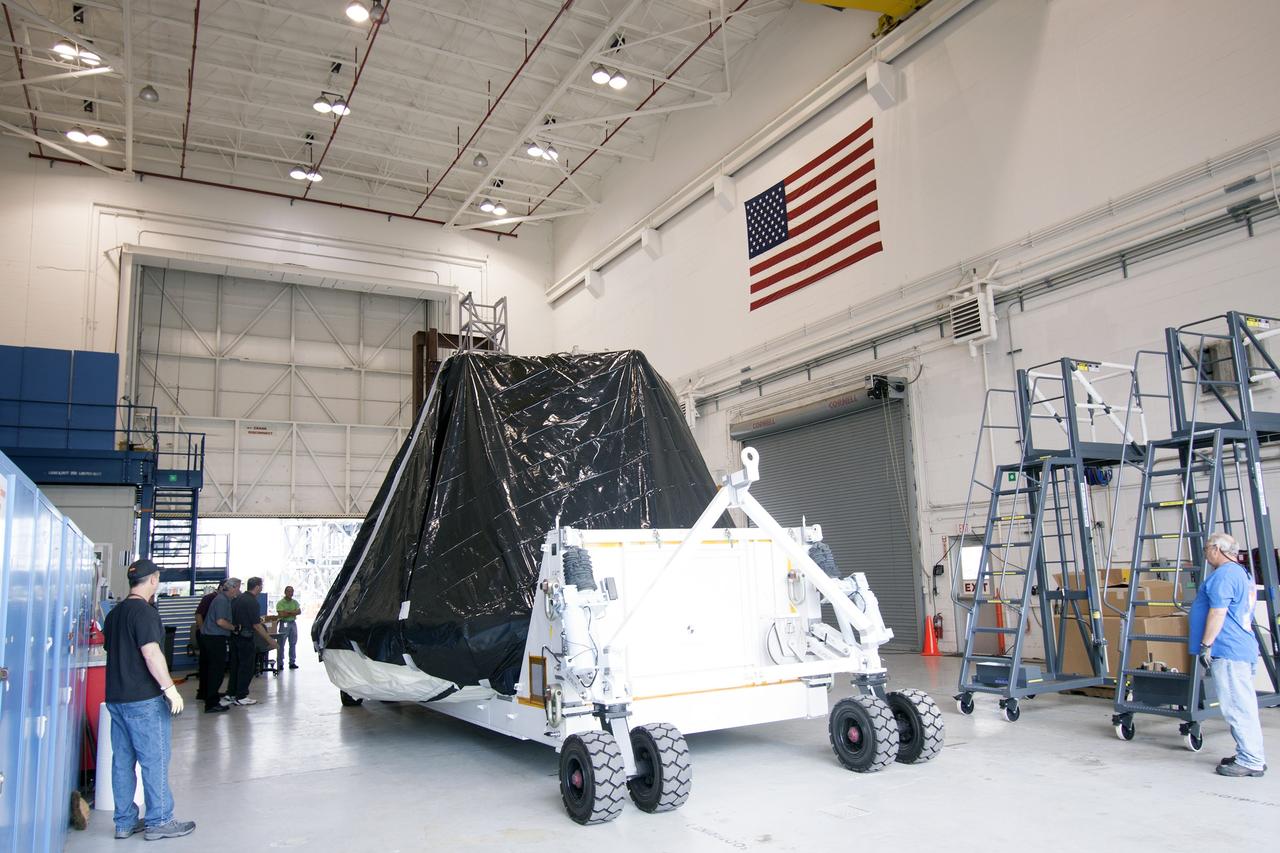
CAPE CANAVERAL, Fla. -- At NASA’s Kennedy Space Center in Florida, workers move the Orion ground test vehicle, or GTA, into the Launch Equipment Test Facility, or LETF, from the Operations and Checkout Building. At the LETF, Lockheed Martin will put the GTA through a series of pyrotechnic bolt tests. The ground test vehicle is being used for path finding operations in the O&C, including simulated manufacturing and assembly procedures. Launching atop NASA's heavy-lift Space Launch System SLS, which also is under development, the Orion Multi-Purpose Crew Vehicle MPCV will serve as the exploration vehicle that will carry astronaut crews beyond low Earth orbit. It also will provide emergency abort capabilities, sustain the crew during space travel and provide safe re-entry from deep space return velocities. For more information, visit www.nasa.gov/orion. Photo credit: Jim Grossman
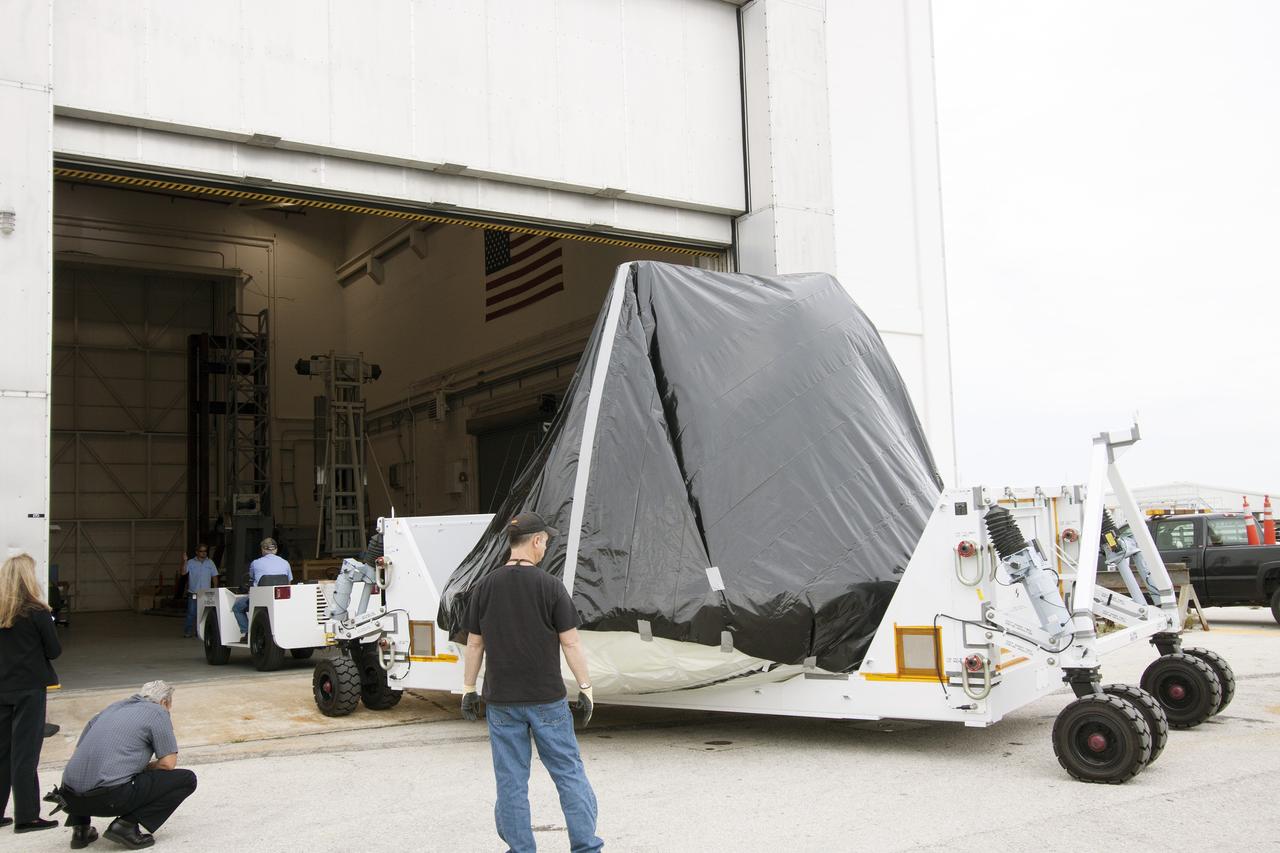
CAPE CANAVERAL, Fla. -- At NASA’s Kennedy Space Center in Florida, workers move the Orion ground test vehicle, or GTA, into the Launch Equipment Test Facility, or LETF, from the Operations and Checkout Building. At the LETF, Lockheed Martin will put the GTA through a series of pyrotechnic bolt tests. The ground test vehicle is being used for path finding operations in the O&C, including simulated manufacturing and assembly procedures. Launching atop NASA's heavy-lift Space Launch System SLS, which also is under development, the Orion Multi-Purpose Crew Vehicle MPCV will serve as the exploration vehicle that will carry astronaut crews beyond low Earth orbit. It also will provide emergency abort capabilities, sustain the crew during space travel and provide safe re-entry from deep space return velocities. For more information, visit www.nasa.gov/orion. Photo credit: Jim Grossman
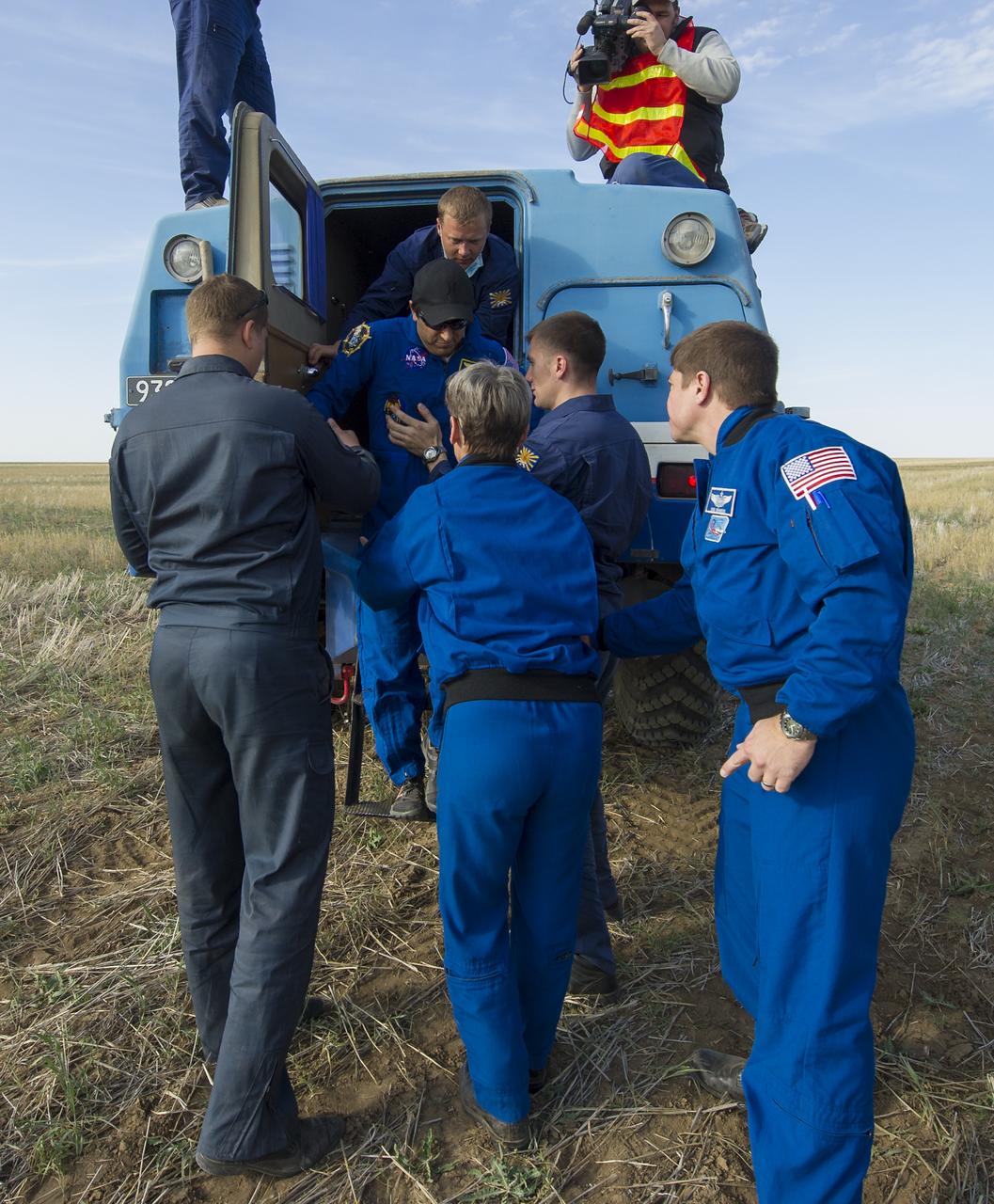
Expedition 32 NASA Flight Engineer Joe Acaba is helped from a Russian Search and Rescue all terrain vehicle (ATV) after he and Expedition 32 Commander Gennady Padalka and Flight Engineer Sergei Revin returned from the International Space Station on Monday, Sept. 17, 2012. Acaba, Padalka and Revin returned from five months onboard the International Space Station where they served as members of the Expedition 31 and 32 crews. Photo Credit: (NASA/Carla Cioffi)
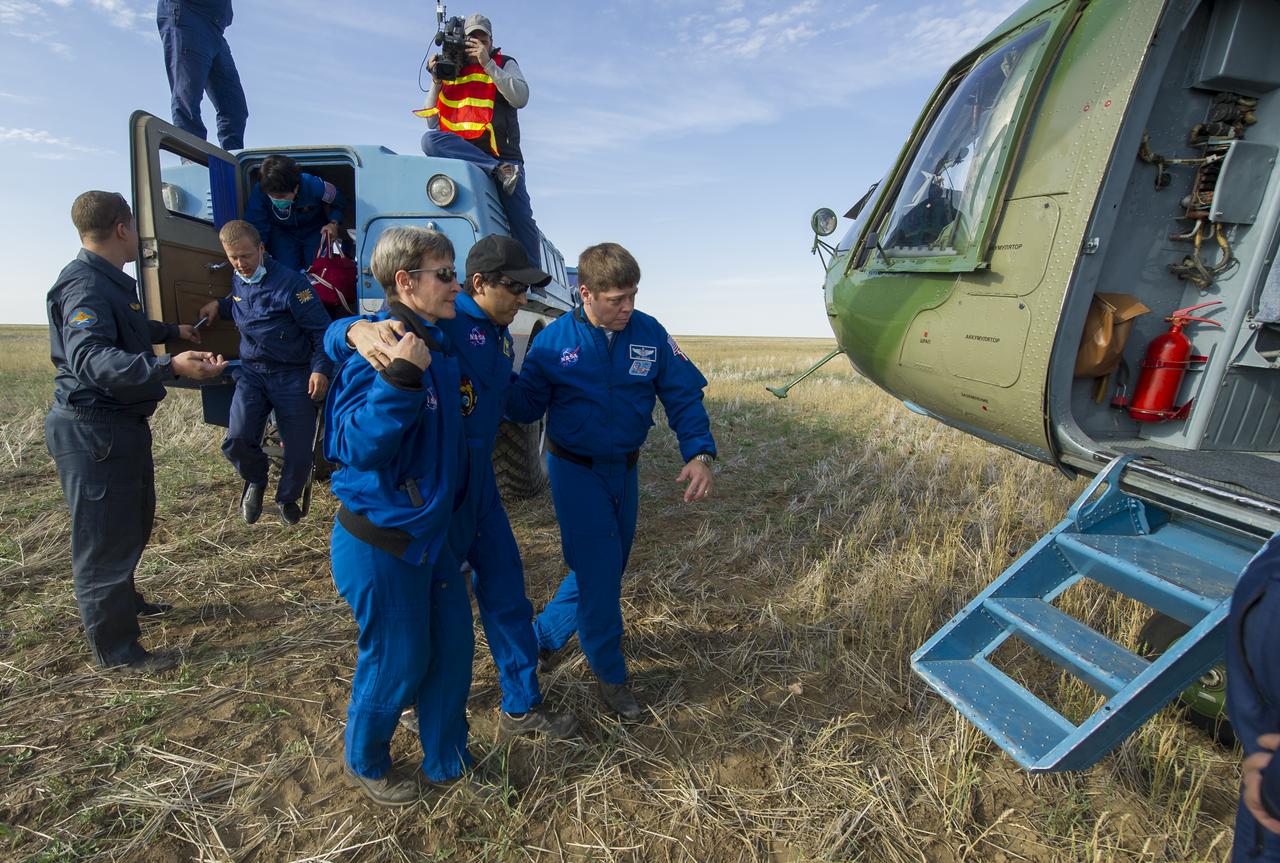
Expedition 32 NASA Flight Engineer Joe Acaba is helped from a Russian Search and Rescue all terrain vehicle (ATV) to his helicopter after he and Expedition 32 Commander Gennady Padalka and Flight Engineer Sergei Revin returned from the International Space Station on Monday, Sept. 17, 2012. Acaba, Padalka and Revin returned from five months onboard the International Space Station where they served as members of the Expedition 31 and 32 crews. Photo Credit: (NASA/Carla Cioffi)
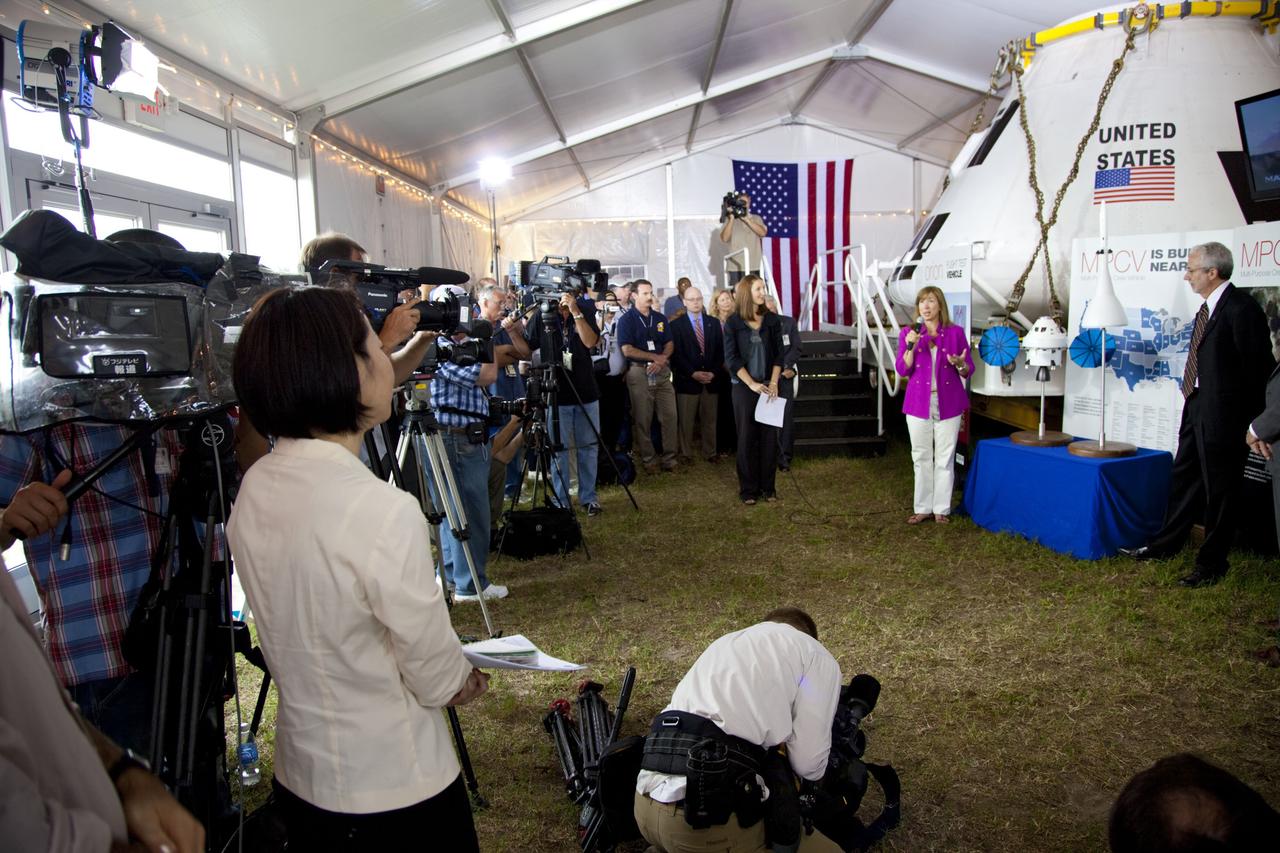
CAPE CANAVERAL, Fla. -- A media event was held on the grounds near the Press Site at NASA's Kennedy Space Center in Florida where a Multi-Purpose Crew Vehicle (MPCV) is on display. The MPCV is based on the Orion design requirements for traveling beyond low Earth orbit and will serve as the exploration vehicle that will carry the crew to space, provide emergency abort capability, sustain the crew during the space travel, and provide safe re-entry from deep space return velocities. Seen here is Public Affairs Officer Amber Philman (center), Lori Garver, NASA deputy administrator and Mark Geyer, Multi-Purpose Crew Vehicle program manager speaking to media during a question-and-answer session. Photo credit: NASA/Frankie Martin
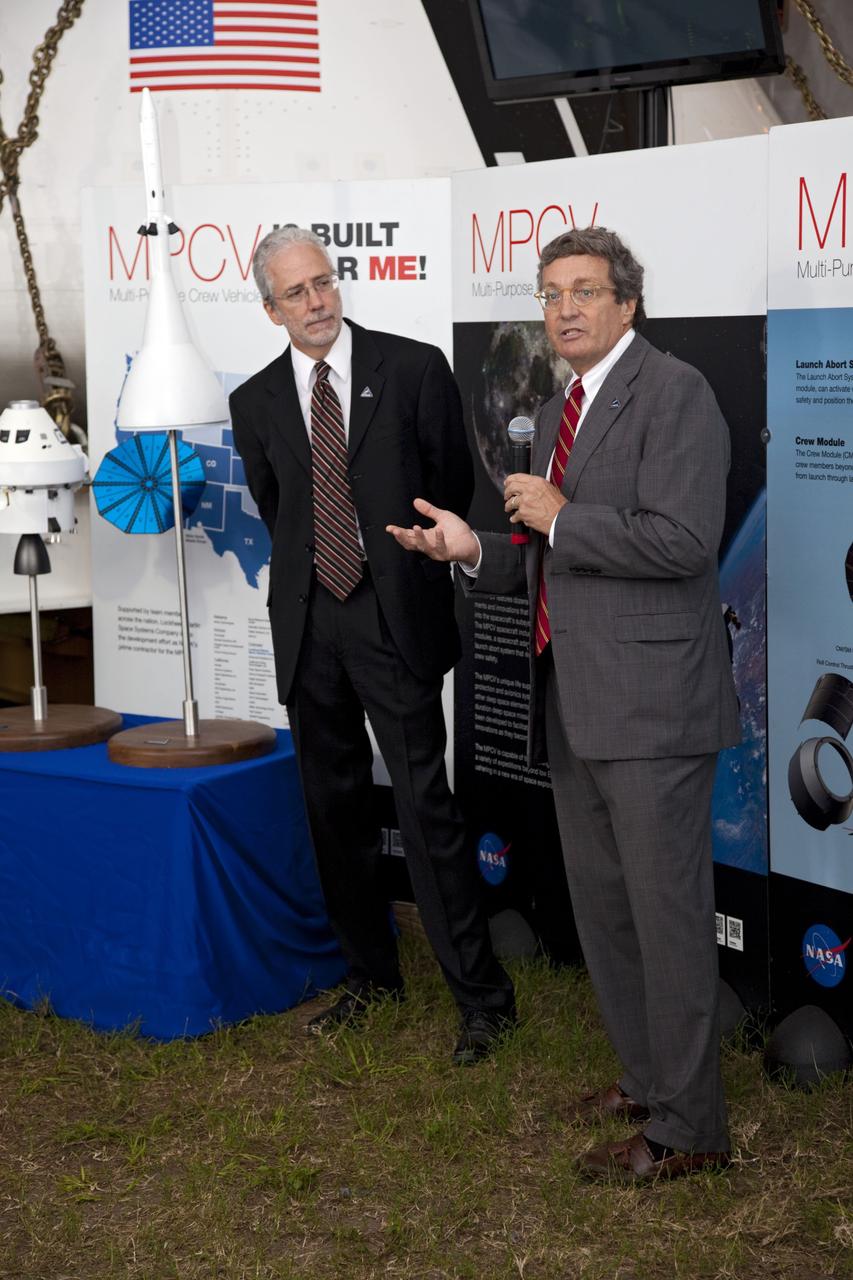
CAPE CANAVERAL, Fla. -- A media event was held on the grounds near the Press Site at NASA's Kennedy Space Center in Florida where a Multi-Purpose Crew Vehicle (MPCV) is on display. The MPCV is based on the Orion design requirements for traveling beyond low Earth orbit and will serve as the exploration vehicle that will carry the crew to space, provide emergency abort capability, sustain the crew during the space travel, and provide safe re-entry from deep space return velocities. Seen here is Mark Geyer, Multi-Purpose Crew Vehicle program manager (left) and Laurence A. Price, Orion deputy program manager with Lockheed Martin Space Systems Company speaking to media during a question-and-answer session. Photo credit: NASA/Frankie Martin
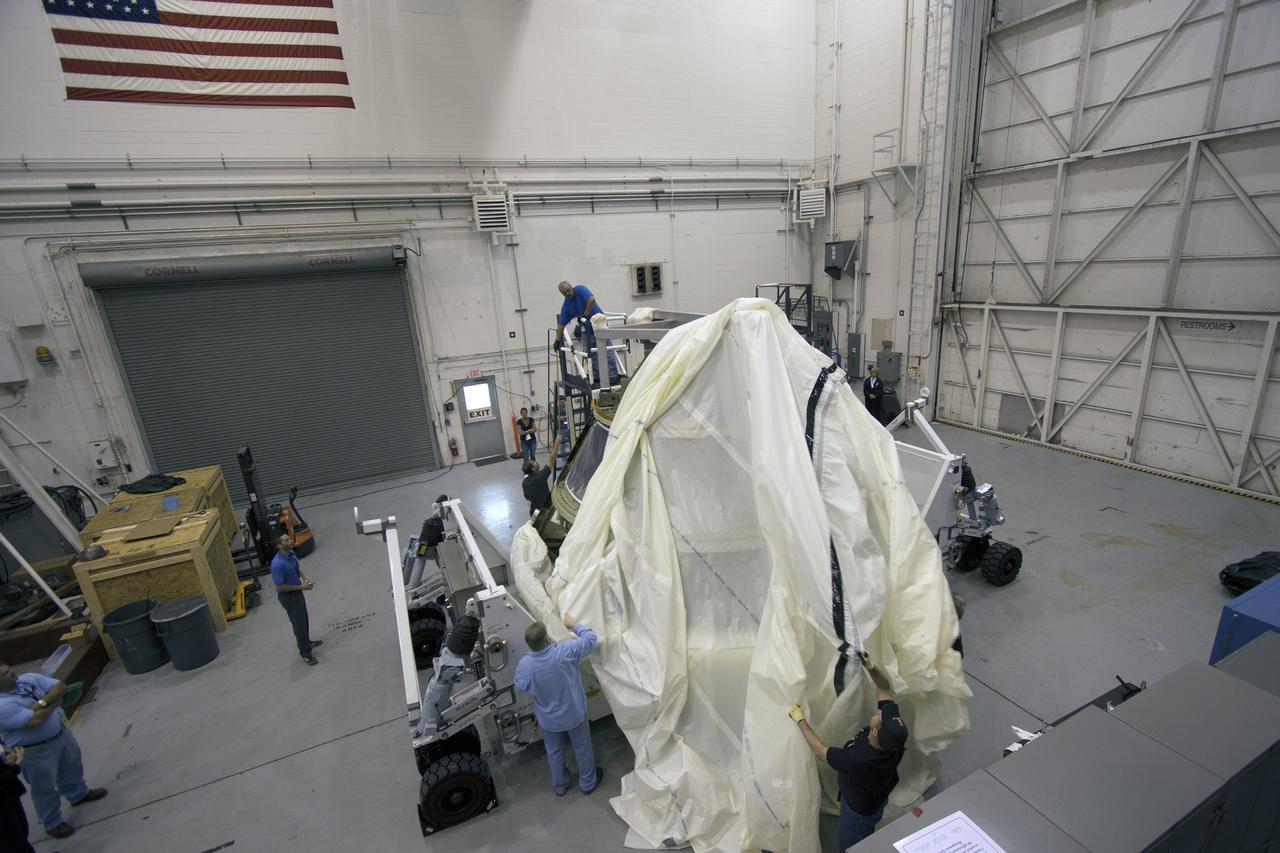
CAPE CANAVERAL, Fla. -- At NASA’s Kennedy Space Center in Florida, Lockheed Martin crews begin uncovering the Orion ground test vehicle in the Launch Equipment Test Facility, or LETF. The GTA was moved from the Operations and Checkout Facility to the LETF for a series of pyrotechnic bolt tests. The GTA is being used for path finding operations in the O&C, including simulated manufacturing and assembly procedures. Launching atop NASA's heavy-lift Space Launch System SLS, which also is under development, the Orion Multi-Purpose Crew Vehicle MPCV will serve as the exploration vehicle that will carry astronaut crews beyond low Earth orbit. It also will provide emergency abort capabilities, sustain the crew during space travel and provide safe re-entry from deep space return velocities. For more information, visit www.nasa.gov/orion. Photo credit: Jim Grossman
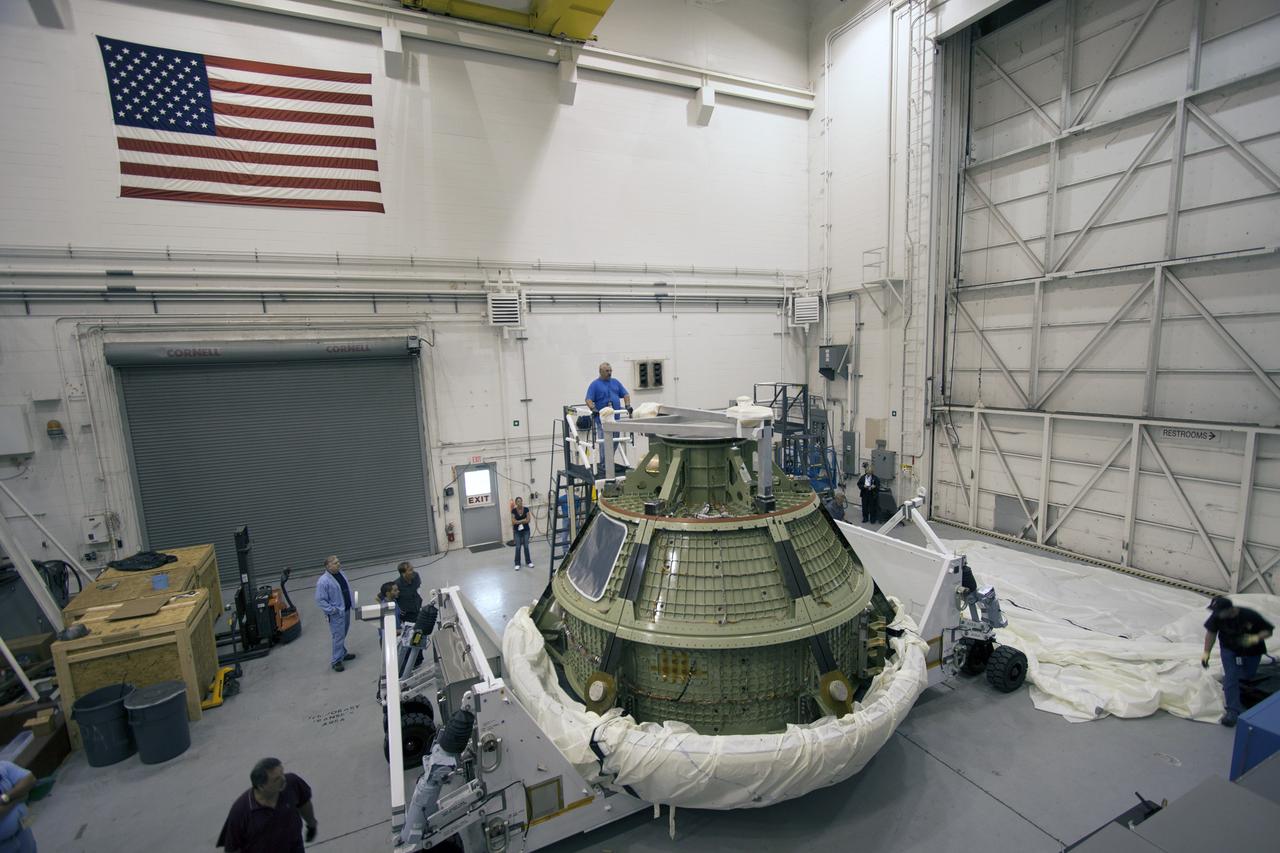
CAPE CANAVERAL, Fla. -- At NASA’s Kennedy Space Center in Florida, Lockheed Martin crews uncover the Orion ground test vehicle in the Launch Equipment Test Facility, or LETF. The GTA was moved from the Operations and Checkout Facility to the LETF for a series of pyrotechnic bolt tests. The GTA is being used for path finding operations in the O&C, including simulated manufacturing and assembly procedures. Launching atop NASA's heavy-lift Space Launch System SLS, which also is under development, the Orion Multi-Purpose Crew Vehicle MPCV will serve as the exploration vehicle that will carry astronaut crews beyond low Earth orbit. It also will provide emergency abort capabilities, sustain the crew during space travel and provide safe re-entry from deep space return velocities. For more information, visit www.nasa.gov/orion. Photo credit: Jim Grossman
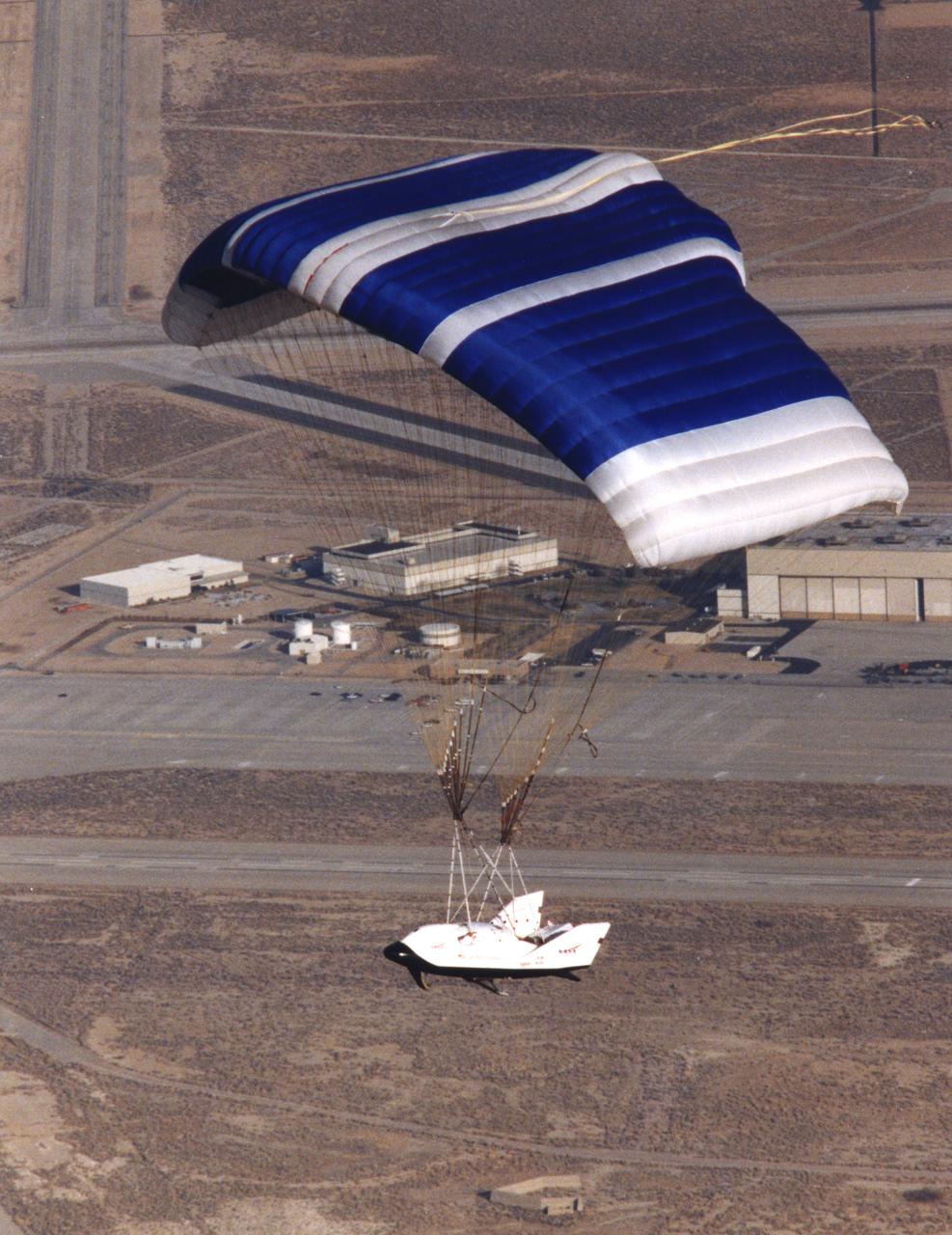
NASA's X-38, a research vehicle developed as part of an effort to build an emergency Crew Return Vehicle (CRV) for the International Space Station, descends toward the desert floor under its steerable parafoil on its second free flight. The X-38 was launched from NASA Dryden's B-52 Mothership on Saturday, February 6, 1999, from an altitude of approximately 23,000 feet.
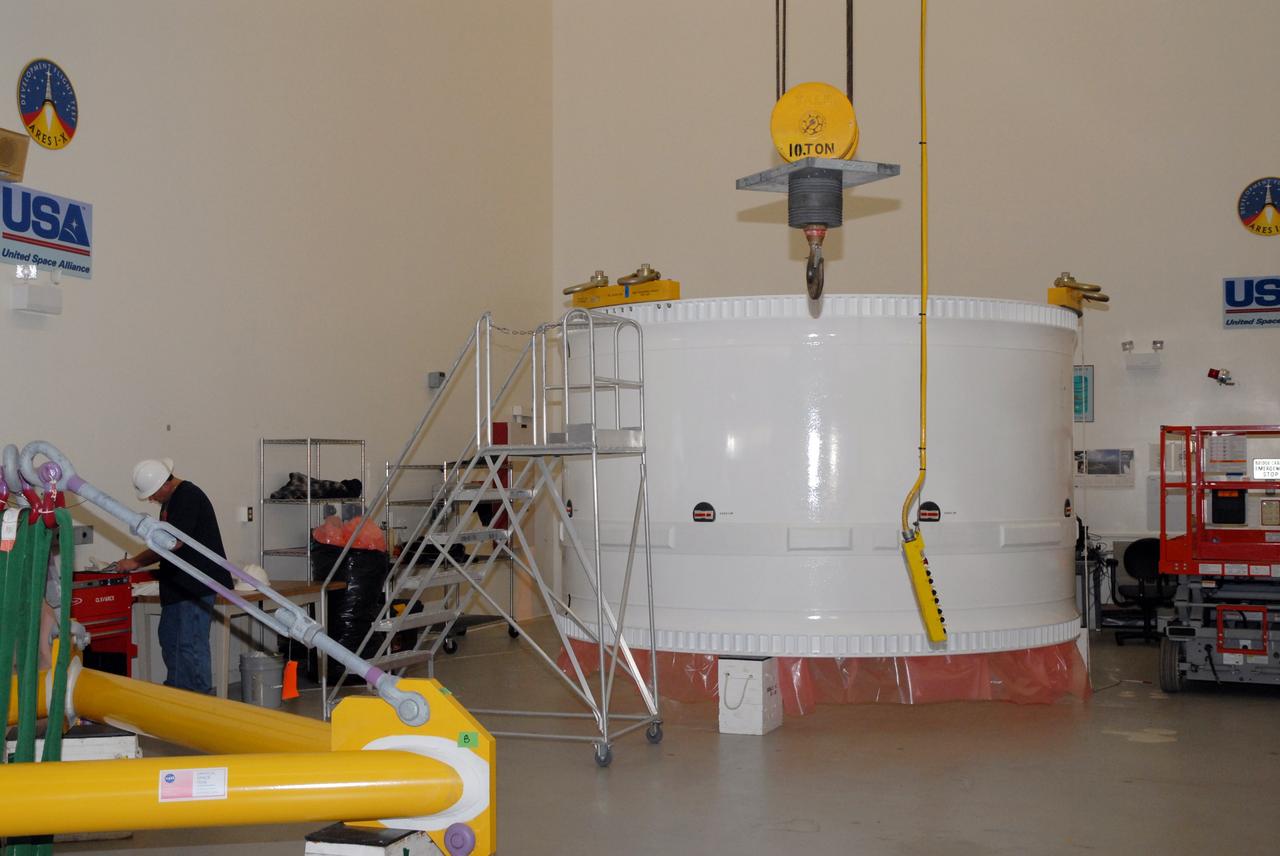
CAPE CANAVERAL, Fla. – In the Vehicle Assembly Building at NASA's Kennedy Space Center in Florida, the fifth segment simulator of the Ares I-X is on a work stand. Ares I-X is the test vehicle for the Ares I, which is part of the Constellation Program to return men to the moon and beyond. Ares I is the essential core of a safe, reliable, cost-effective space transportation system that eventually will carry crewed missions back to the moon, on to Mars and out into the solar system. Ares I-X is targeted for launch in July 2009.
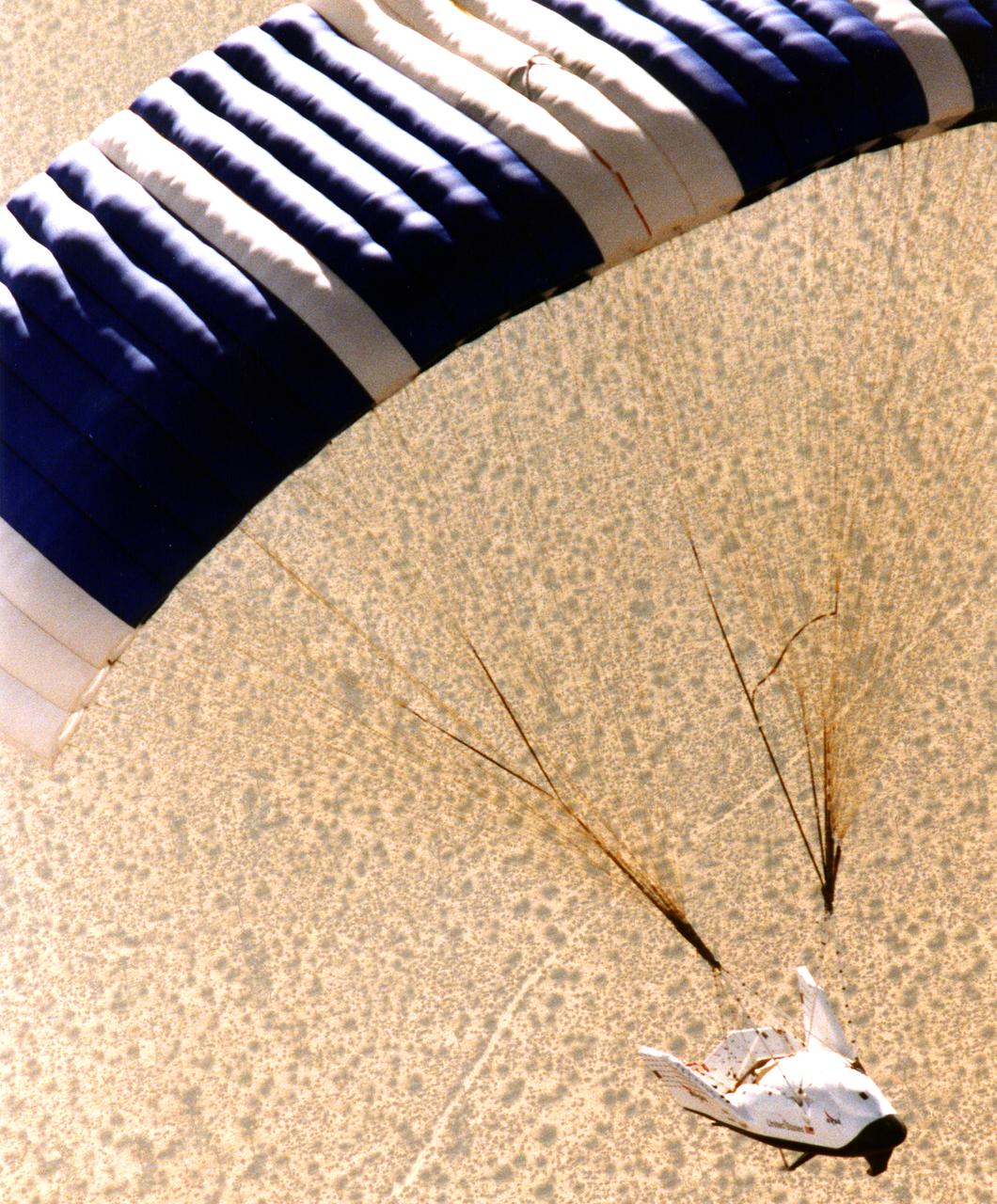
NASA's X-38, a research vehicle developed as part of an effort to build an emergency Crew Return Vehicle (CRV) for the International Space Station, descends toward the desert floor under its steerable parafoil on its second free flight. The X-38 was launched from NASA Dryden's B-52 Mothership on Saturday, February 6, 1999, from an altitude of approximately 23,000 feet.

KENNEDY SPACE CENTER, FLA. - Thousands of Space Center guests line the NASA Causeway awaiting the first launch of the Space Shuttle. The Vehicle Assembly Building where the orbiter is mated to the solid rocket boosters and the external tank, is visible in the distance. The STS-1 mission, known as a shuttle systems test flight, will seek to demonstrate safe launch into orbit and safe return of the orbiter and crew and verify the combined performance of the entire shuttle vehicle -- orbiter, solid rocket boosters and external tank.
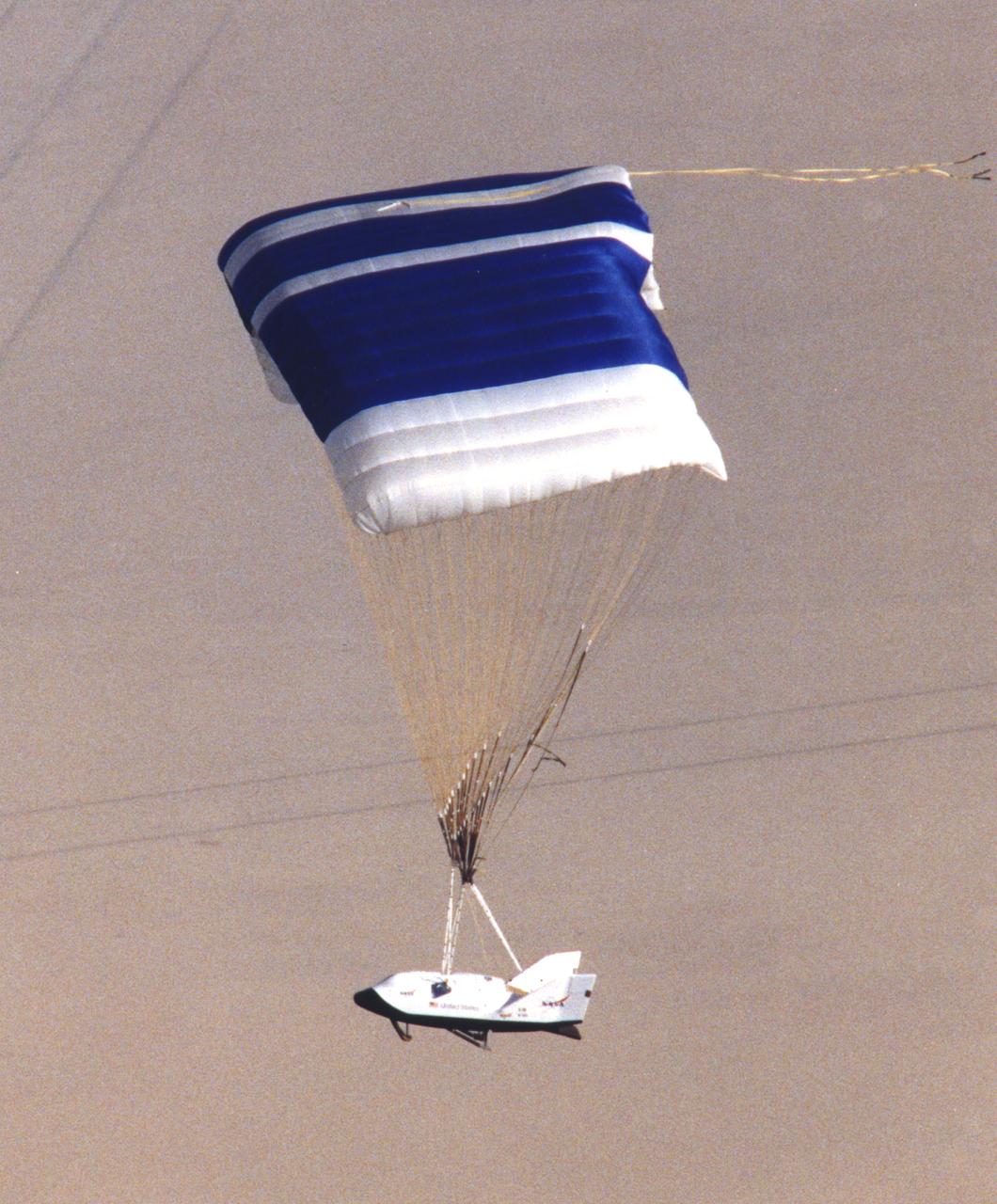
NASA's X-38, a research vehicle developed as part of an effort to build an emergency Crew Return Vehicle (CRV) for the International Space Station, descends toward a desert lakebed under its steerable parafoil on its second free flight. The X-38 was launched from NASA Dryden's B-52 Mothership on Saturday, February 6, 1999, from an altitude of approximately 23,000 feet.
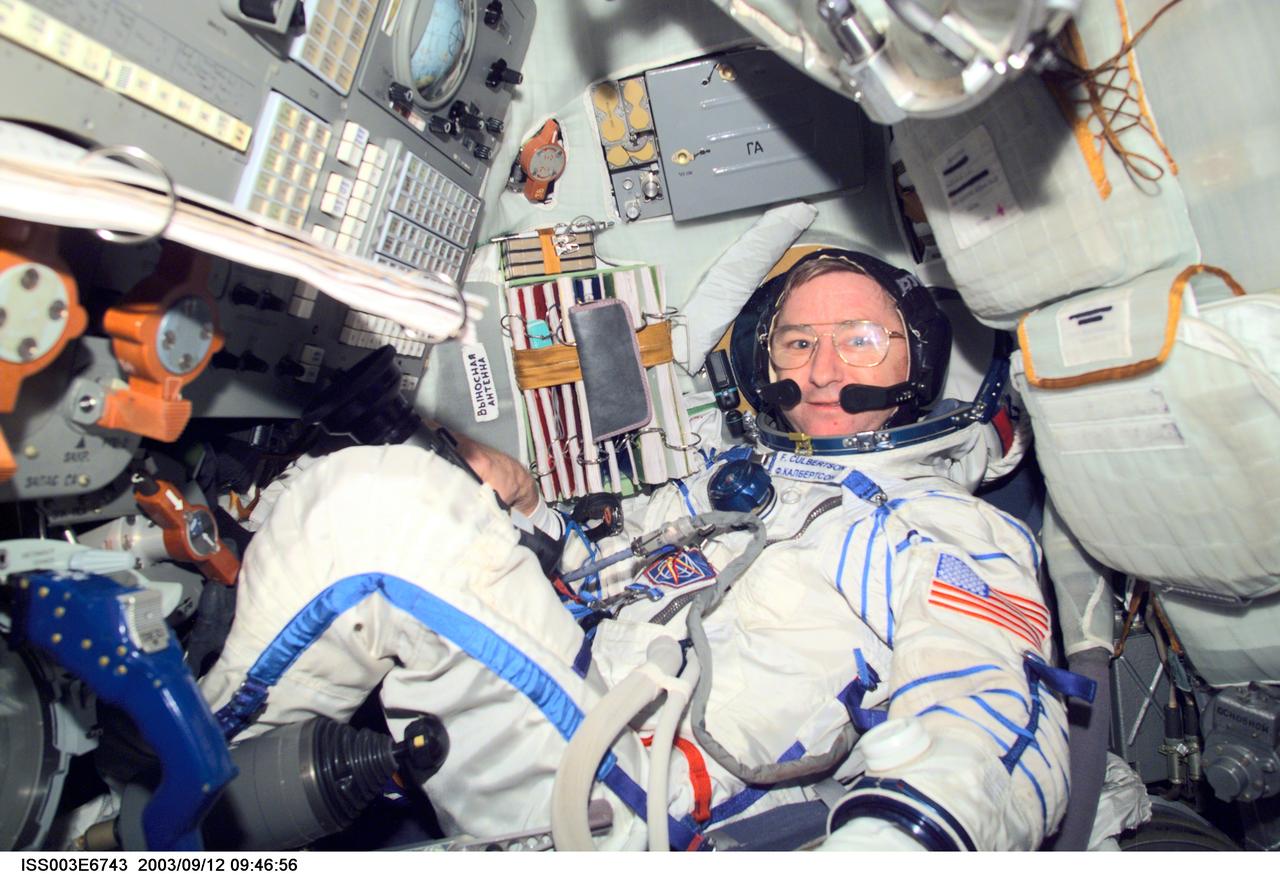
ISS003-E-6743 (October 2001) --- Astronaut Frank L. Culbertson, Expedition Three mission commander, wearing a Russian Sokol suit, is seated in the Soyuz spacecraft that is docked to the International Space Station (ISS). This Soyuz return vehicle will be moved from the Earth-facing port of the Zarya module for the linkup to the new Pirs Docking Compartment. The move of the Soyuz will mark the first time the new Pirs, which arrived at the station September 17, 2001, will serve as a docking port. The Soyuz will be shifted to prepare for the arrival of a new Soyuz return craft, to be launched October 21, 2001 from the Baikonur Cosmodrome in Kazakhstan. The Soyuz can serve as a crew return vehicle at the station for a maximum of about six months. This image was taken with a digital still camera.
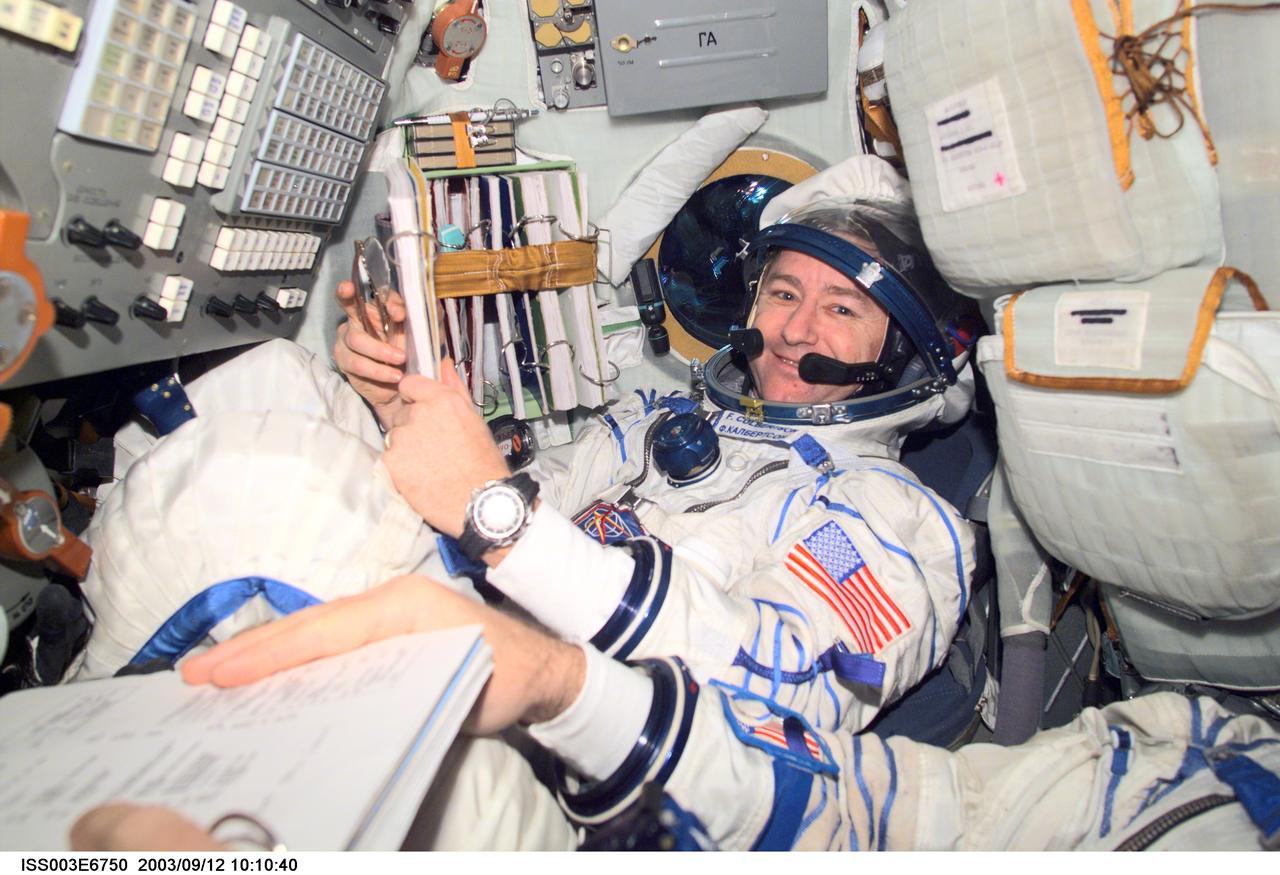
ISS003-E-6750 (October 2001) --- Astronaut Frank L. Culbertson, Expedition Three mission commander, and cosmonaut Vladimir N. Dezhurov (partially out of frame), flight engineer, wearing Russian Sokol suits, are seated in the Soyuz spacecraft that is docked to the International Space Station (ISS). This Soyuz return vehicle will be moved from the Earth-facing port of the Zarya module for the linkup to the new Pirs Docking Compartment. The move of the Soyuz will mark the first time the new Pirs, which arrived at the station September 17, 2001, will serve as a docking port. The Soyuz will be shifted to prepare for the arrival of a new Soyuz return craft, to be launched October 21, 2001 from the Baikonur Cosmodrome in Kazakhstan. The Soyuz can serve as a crew return vehicle at the station for a maximum of about six months. Dezhurov represents Rosaviakosmos. This image was taken with a digital still camera.
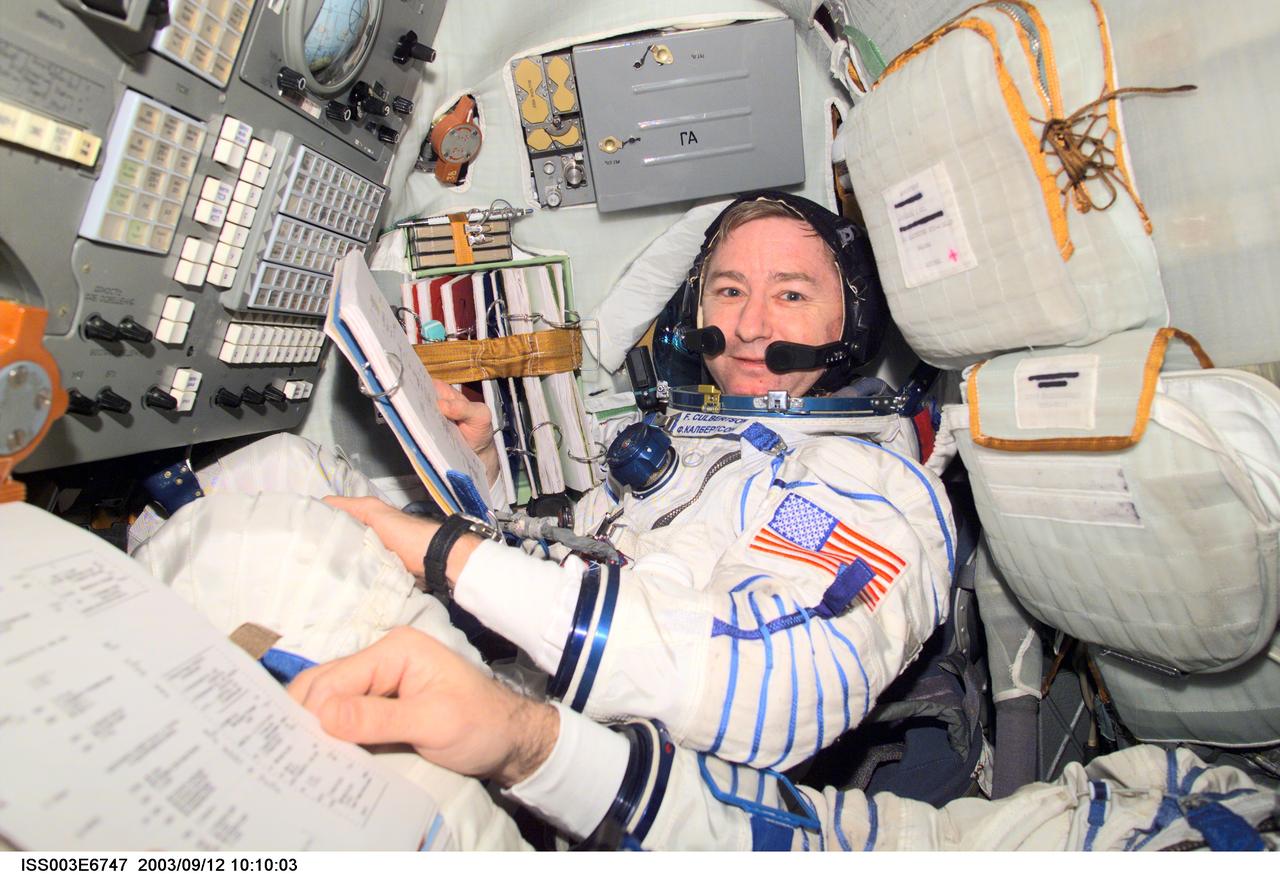
ISS003-E-6747 (October 2001) --- Astronaut Frank L. Culbertson, Expedition Three mission commander, wearing a Russian Sokol suit, is seated in the Soyuz spacecraft that is docked to the International Space Station (ISS). This Soyuz return vehicle will be moved from the Earth-facing port of the Zarya module for the linkup to the new Pirs Docking Compartment. The move of the Soyuz will mark the first time the new Pirs, which arrived at the station September 17, 2001, will serve as a docking port. The Soyuz will be shifted to prepare for the arrival of a new Soyuz return craft, to be launched October 21, 2001 from the Baikonur Cosmodrome in Kazakhstan. The Soyuz can serve as a crew return vehicle at the station for a maximum of about six months. This image was taken with a digital still camera.
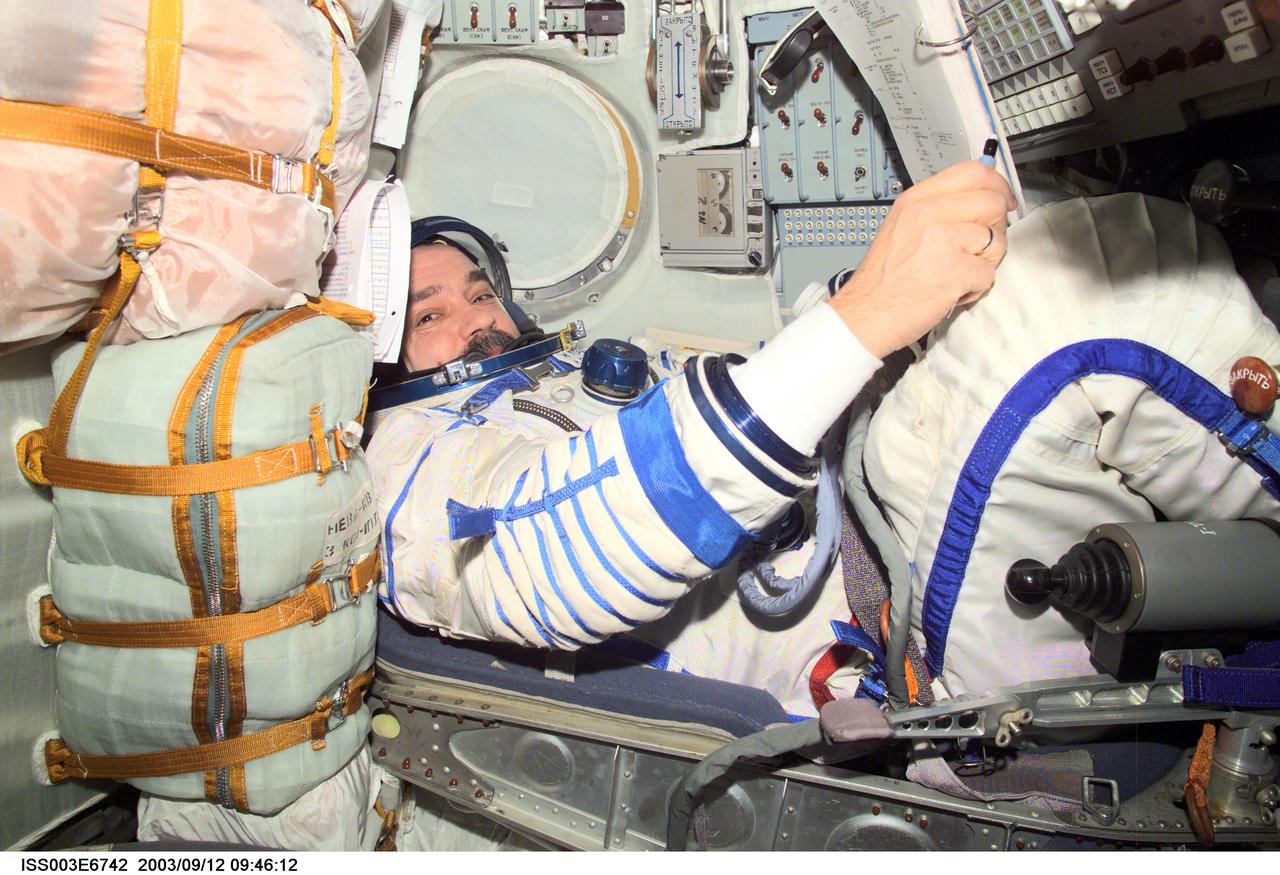
ISS003-E-6742 (October 2001) --- Cosmonaut Mikhail Tyurin, Expedition Three flight engineer, wearing a Russian Sokol suit, is seated in the Soyuz spacecraft that is docked to the International Space Station (ISS). This Soyuz return vehicle will be moved from the Earth-facing port of the Zarya module for the linkup to the new Pirs Docking Compartment. The move of the Soyuz will mark the first time the new Pirs, which arrived at the station September 17, 2001, will serve as a docking port. The Soyuz will be shifted to prepare for the arrival of a new Soyuz return craft, to be launched October 21, 2001 from the Baikonur Cosmodrome in Kazakhstan. The Soyuz can serve as a crew return vehicle at the station for a maximum of about six months. Tyurin represents Rosaviakosmos. This image was taken with a digital still camera.
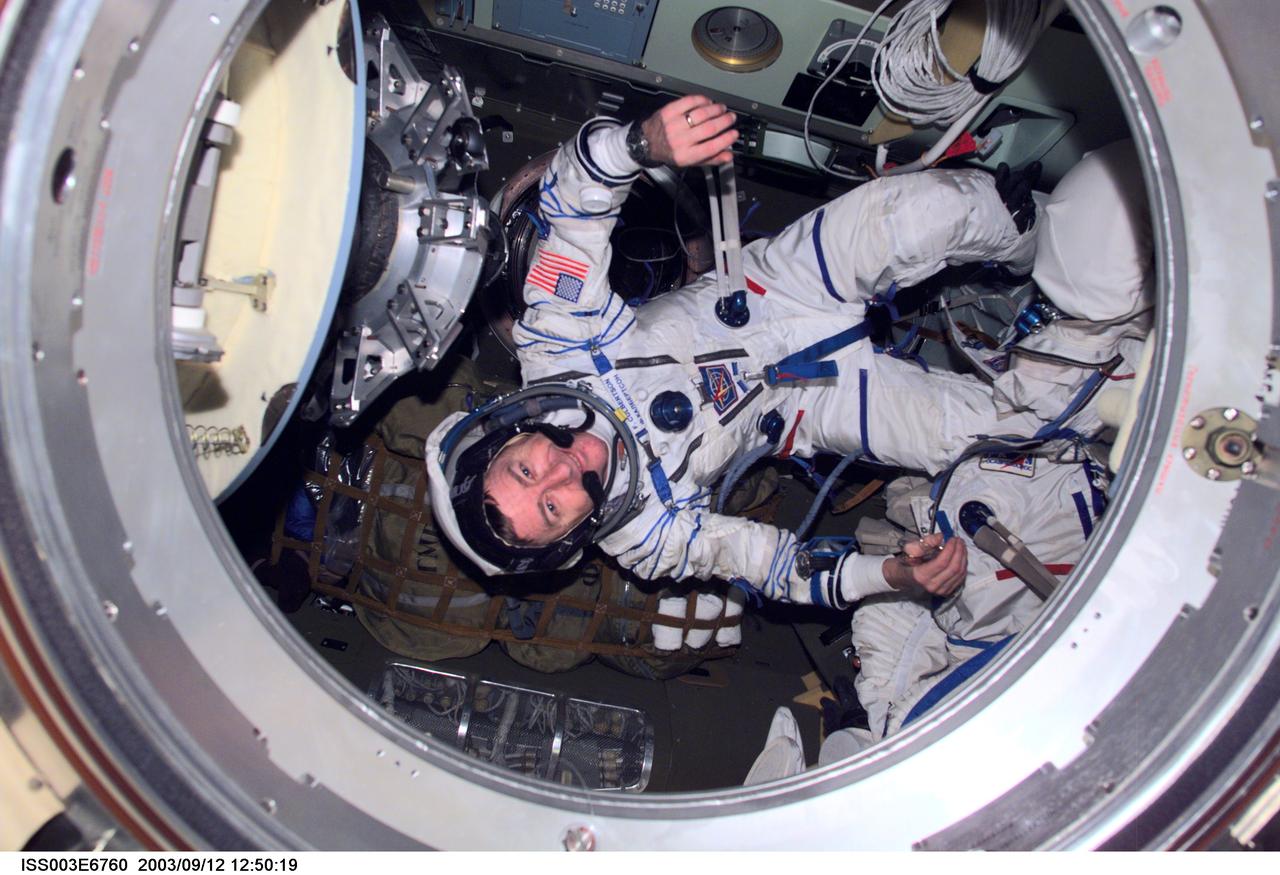
ISS003-E-6760 (October 2001) --- Astronaut Frank L. Culbertson, Expedition Three mission commander, wearing a Russian Sokol suit, is photographed in the Soyuz spacecraft that is docked to the International Space Station (ISS). This Soyuz return vehicle will be moved from the Earth-facing port of the Zarya module for the linkup to the new Pirs Docking Compartment. The move of the Soyuz will mark the first time the new Pirs, which arrived at the station September 17, 2001, will serve as a docking port. The Soyuz will be shifted to prepare for the arrival of a new Soyuz return craft, to be launched October 21, 2001 from the Baikonur Cosmodrome in Kazakhstan. The Soyuz can serve as a crew return vehicle at the station for a maximum of about six months. This image was taken with a digital still camera.
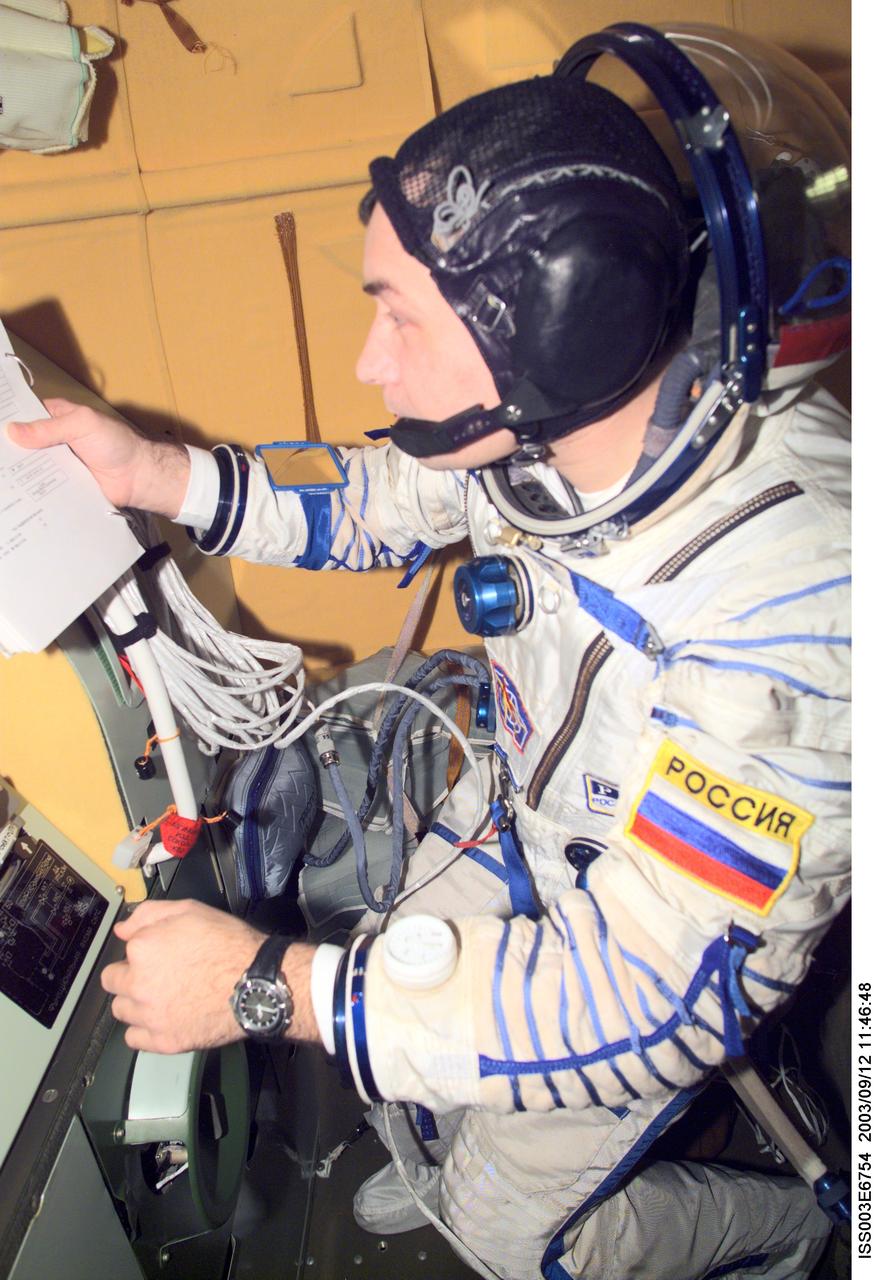
ISS003-E-6754 (October 2001) --- Cosmonaut Vladimir N. Dezhurov, Expedition Three flight engineer, wearing a Russian Sokol suit, checks a procedures checklist in the Soyuz spacecraft that is docked to the International Space Station (ISS). This Soyuz return vehicle will be moved from the Earth-facing port of the Zarya module for the linkup to the new Pirs Docking Compartment. The move of the Soyuz will mark the first time the new Pirs, which arrived at the station September 17, 2001, will serve as a docking port. The Soyuz will be shifted to prepare for the arrival of a new Soyuz return craft, to be launched October 21, 2001 from the Baikonur Cosmodrome in Kazakhstan. The Soyuz can serve as a crew return vehicle at the station for a maximum of about six months. Dezhurov represents Rosaviakosmos. This image was taken with a digital still camera.
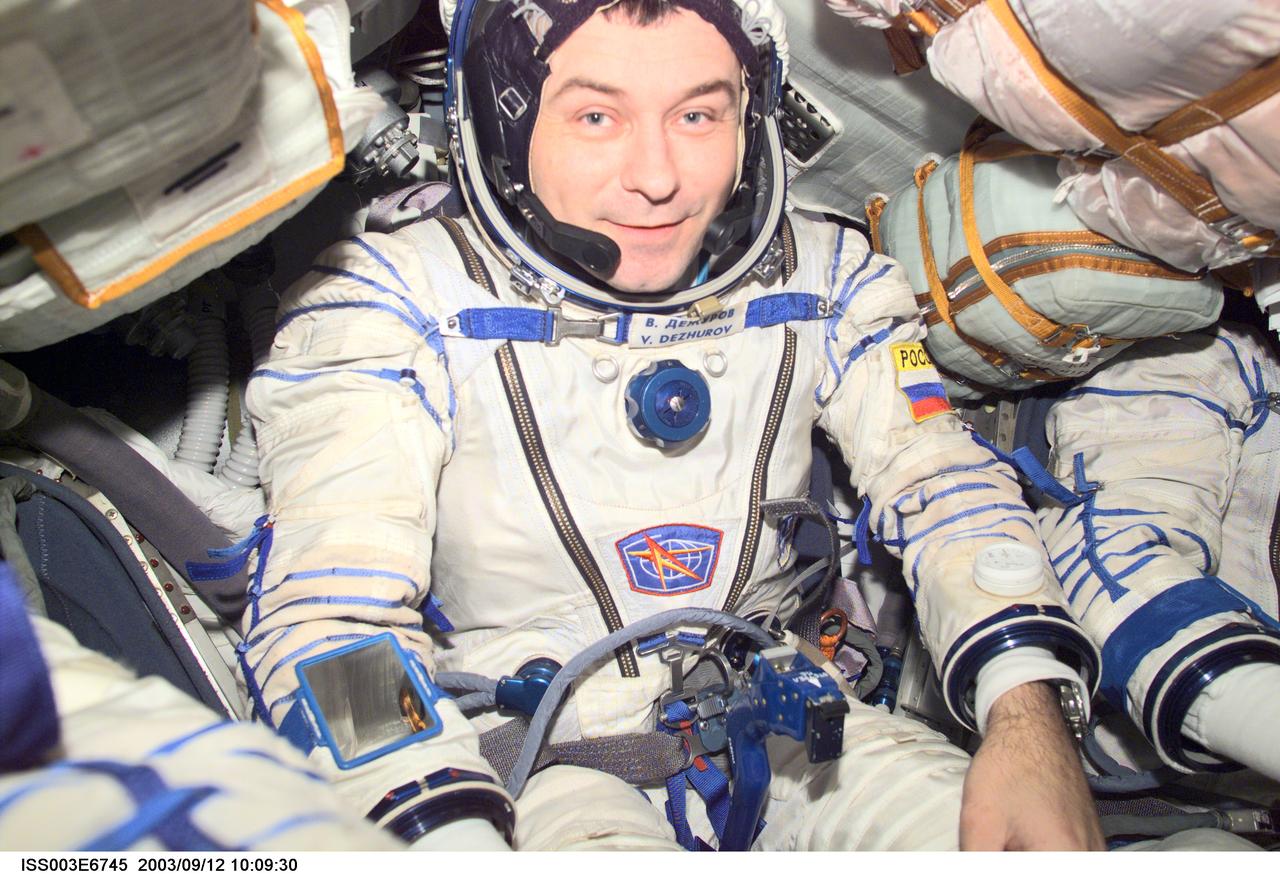
ISS003-E-6745 (October 2001) --- Cosmonaut Vladimir N. Dezhurov, Expedition Three flight engineer, wearing a Russian Sokol suit, is seated in the Soyuz spacecraft that is docked to the International Space Station (ISS). This Soyuz return vehicle will be moved from the Earth-facing port of the Zarya module for the linkup to the new Pirs Docking Compartment. The move of the Soyuz will mark the first time the new Pirs, which arrived at the station September 17, 2001, will serve as a docking port. The Soyuz will be shifted to prepare for the arrival of a new Soyuz return craft, to be launched October 21, 2001 from the Baikonur Cosmodrome in Kazakhstan. The Soyuz can serve as a crew return vehicle at the station for a maximum of about six months. Dezhurov represents Rosaviakosmos. This image was taken with a digital still camera.
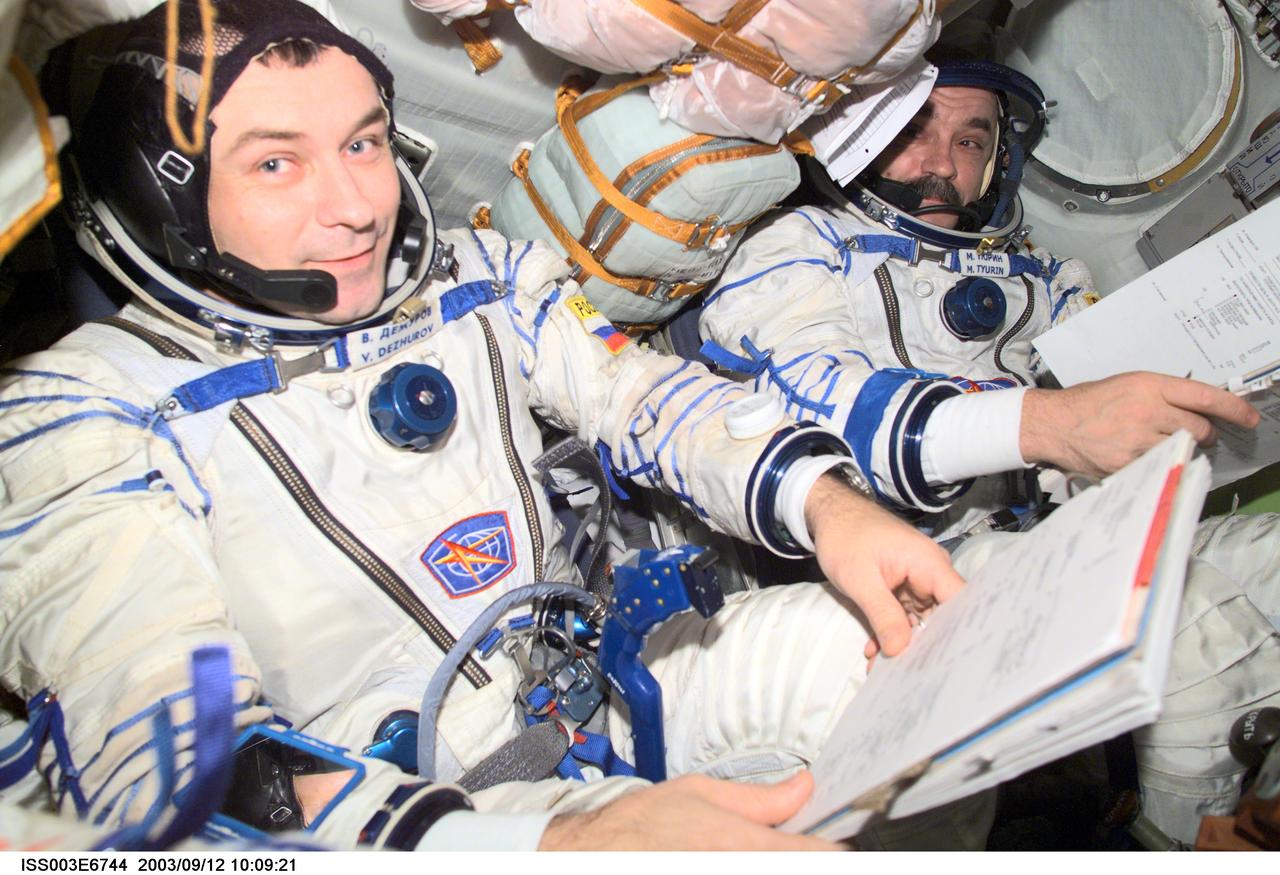
ISS003-E-6744 (October 2001) --- Cosmonauts Vladimir N. Dezhurov (left) and Mikhail Tyurin, both Expedition Three flight engineers, wearing Russian Sokol suits, are seated in the Soyuz spacecraft that is docked to the International Space Station (ISS). This Soyuz return vehicle will be moved from the Earth-facing port of the Zarya module for the linkup to the new Pirs Docking Compartment. The move of the Soyuz will mark the first time the new Pirs, which arrived at the station September 17, 2001, will serve as a docking port. The Soyuz will be shifted to prepare for the arrival of a new Soyuz return craft, to be launched October 21, 2001 from the Baikonur Cosmodrome in Kazakhstan. The Soyuz can serve as a crew return vehicle at the station for a maximum of about six months. Dezhurov and Tyurin represent Rosaviakosmos. This image was taken with a digital still camera.
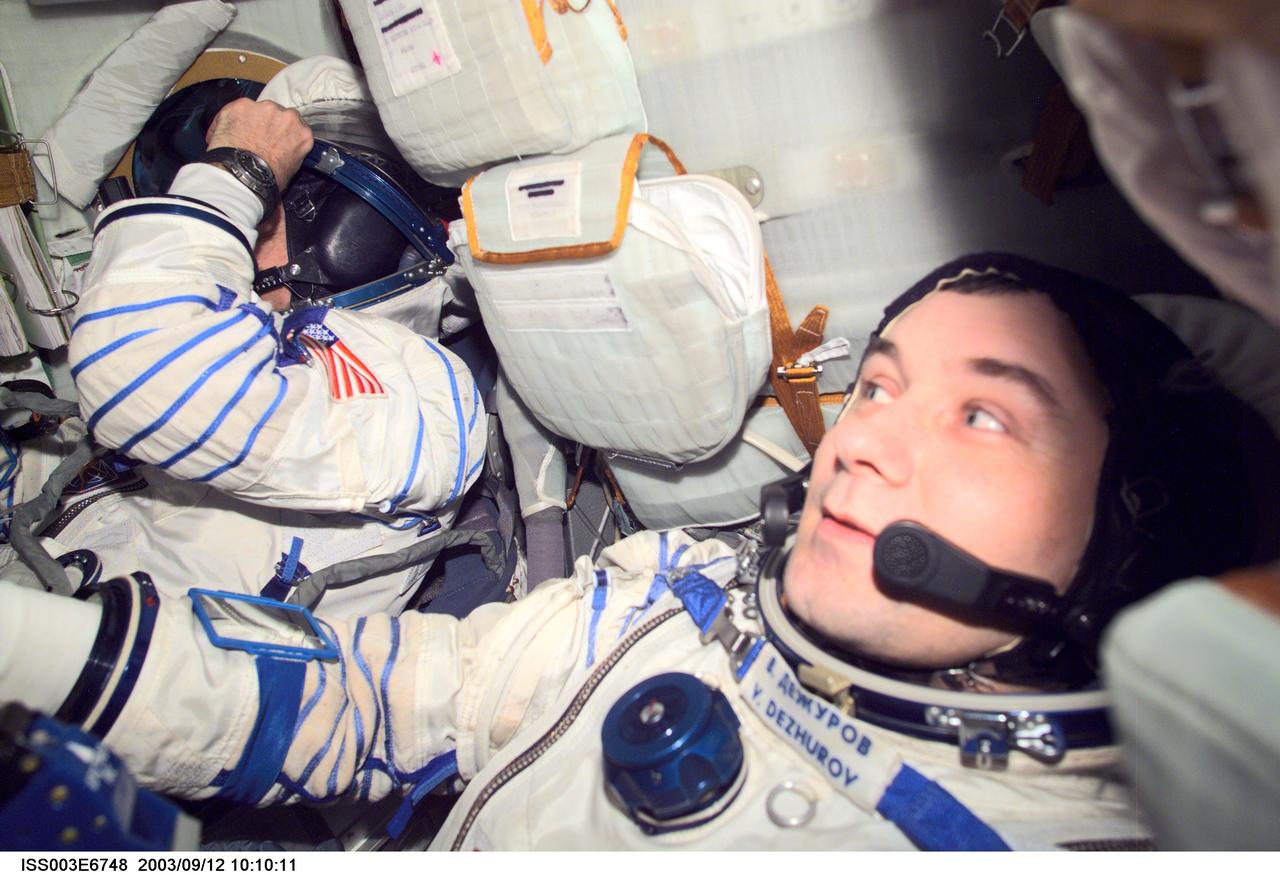
ISS003-E-6748 (October 2001) --- Astronaut Frank L. Culbertson (left), Expedition Three mission commander, and cosmonaut Vladimir N. Dezhurov, flight engineer, wearing Russian Sokol suits, are seated in the Soyuz spacecraft that is docked to the International Space Station (ISS). This Soyuz return vehicle will be moved from the Earth-facing port of the Zarya module for the linkup to the new Pirs Docking Compartment. The move of the Soyuz will mark the first time the new Pirs, which arrived at the station September 17, 2001, will serve as a docking port. The Soyuz will be shifted to prepare for the arrival of a new Soyuz return craft, to be launched October 21, 2001 from the Baikonur Cosmodrome in Kazakhstan. The Soyuz can serve as a crew return vehicle at the station for a maximum of about six months. Dezhurov represents Rosaviakosmos. This image was taken with a digital still camera.
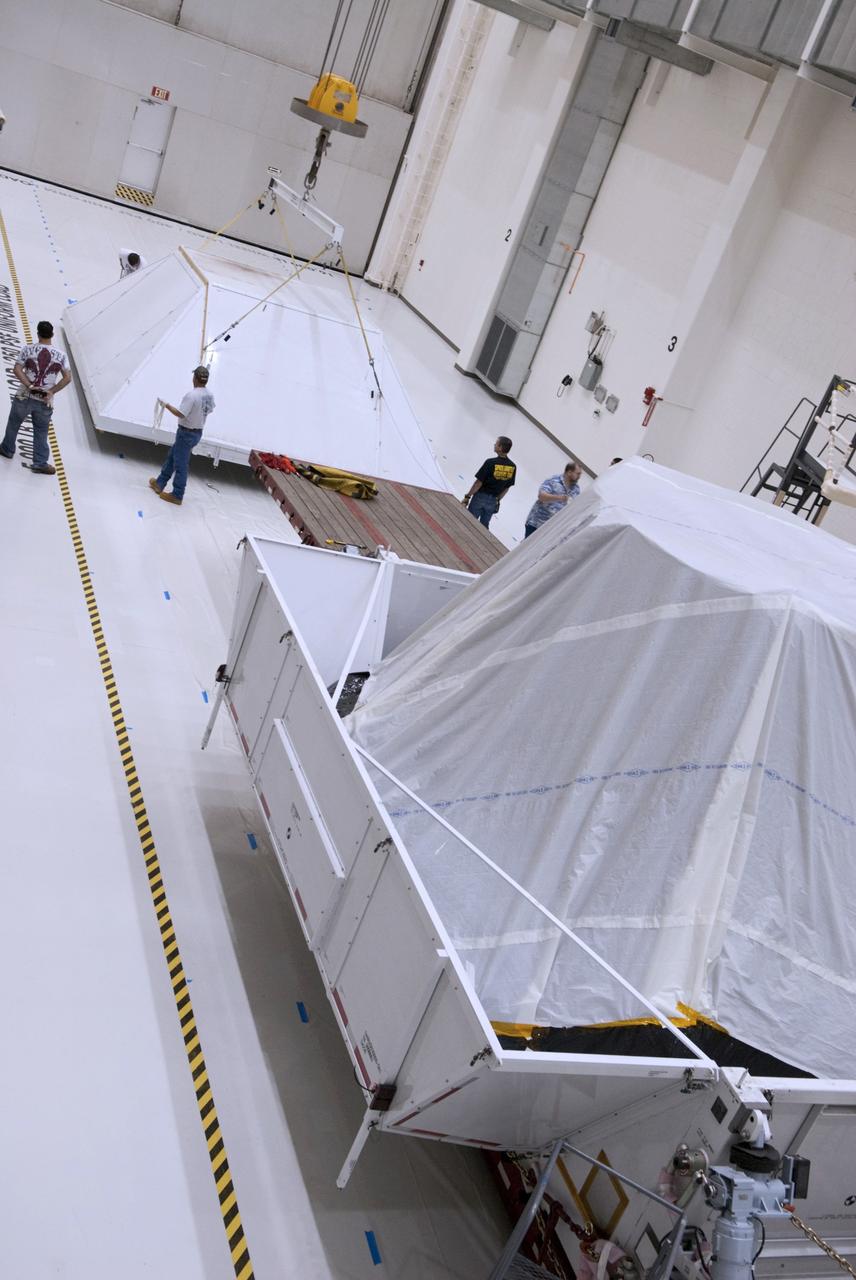
CAPE CANAVERAL, Fla. -- Lockheed Martin crews begin unpacking the Orion ground test vehicle in the Operations and Checkout O&C Facility at NASA's Kennedy Space Center in Florida. The vehicle traveled more than 1,800 miles from the company's Waterton Facility near Denver where it successfully completed a series of rigorous tests that simulated launch and spaceflight environments. The ground test vehicle will be used for pathfinding operations in the O&C, including simulated manufacturing and assembly procedures. After those operations are completed, new backshell panels will be installed on the ground test vehicle at the O&C prior to the vehicle’s trek to NASA's Langley Research Center in Virginia for splashdown testing at the agency's Hydro Impact Basin. Launching atop NASA's heavy-lift Space Launch System SLS, which also is under development, the Orion Multi-Purpose Crew Vehicle MPCV will serve as the exploration vehicle that will carry astronaut crews beyond low Earth orbit. It also will provide emergency abort capabilities, sustain the crew during space travel and provide safe re-entry from deep space return velocities. For more information, visit www.nasa.gov/orion. Photo credit: Charisse Nahser
CAPE CANAVERAL, Fla. -- Lockheed Martin crews begin unpacking the Orion ground test vehicle in the Operations and Checkout O&C Facility at NASA's Kennedy Space Center in Florida. The vehicle traveled more than 1,800 miles from the company's Waterton Facility near Denver where it successfully completed a series of rigorous tests that simulated launch and spaceflight environments. The ground test vehicle will be used for pathfinding operations in the O&C, including simulated manufacturing and assembly procedures. After those operations are completed, new backshell panels will be installed on the ground test vehicle at the O&C prior to the vehicle’s trek to NASA's Langley Research Center in Virginia for splashdown testing at the agency's Hydro Impact Basin. Launching atop NASA's heavy-lift Space Launch System SLS, which also is under development, the Orion Multi-Purpose Crew Vehicle MPCV will serve as the exploration vehicle that will carry astronaut crews beyond low Earth orbit. It also will provide emergency abort capabilities, sustain the crew during space travel and provide safe re-entry from deep space return velocities. For more information, visit www.nasa.gov/orion. Photo credit: Charisse Nahser
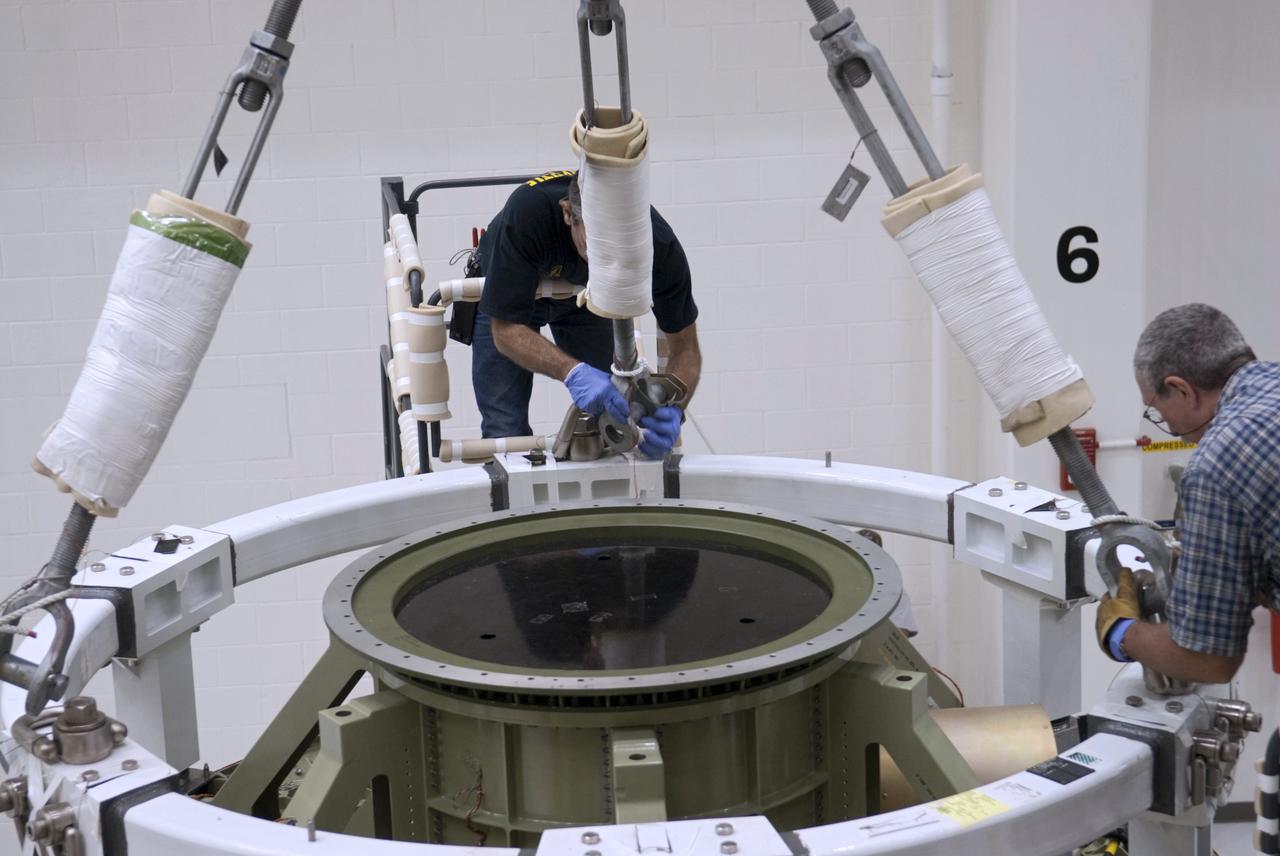
CAPE CANAVERAL, Fla. -- Lockheed Martin crews attach a crane to the Orion ground test vehicle in the Operations and Checkout O&C Facility at NASA's Kennedy Space Center in Florida. The vehicle traveled more than 1,800 miles from the company's Waterton Facility near Denver where it successfully completed a series of rigorous tests that simulated launch and spaceflight environments. The ground test vehicle will be used for pathfinding operations in the O&C, including simulated manufacturing and assembly procedures. After those operations are completed, new backshell panels will be installed on the ground test vehicle at the O&C prior to the vehicle’s trek to NASA's Langley Research Center in Virginia for splashdown testing at the agency's Hydro Impact Basin. Launching atop NASA's heavy-lift Space Launch System SLS, which also is under development, the Orion Multi-Purpose Crew Vehicle MPCV will serve as the exploration vehicle that will carry astronaut crews beyond low Earth orbit. It also will provide emergency abort capabilities, sustain the crew during space travel and provide safe re-entry from deep space return velocities. For more information, visit www.nasa.gov/orion. Photo credit: Charisse Nahser
CAPE CANAVERAL, Fla. -- Lockheed Martin crews begin unpacking the Orion ground test vehicle in the Operations and Checkout O&C Facility at NASA's Kennedy Space Center in Florida. The vehicle traveled more than 1,800 miles from the company's Waterton Facility near Denver where it successfully completed a series of rigorous tests that simulated launch and spaceflight environments. The ground test vehicle will be used for pathfinding operations in the O&C, including simulated manufacturing and assembly procedures. After those operations are completed, new backshell panels will be installed on the ground test vehicle at the O&C prior to the vehicle’s trek to NASA's Langley Research Center in Virginia for splashdown testing at the agency's Hydro Impact Basin. Launching atop NASA's heavy-lift Space Launch System SLS, which also is under development, the Orion Multi-Purpose Crew Vehicle MPCV will serve as the exploration vehicle that will carry astronaut crews beyond low Earth orbit. It also will provide emergency abort capabilities, sustain the crew during space travel and provide safe re-entry from deep space return velocities. For more information, visit www.nasa.gov/orion. Photo credit: Charisse Nahser

CAPE CANAVERAL, Fla. -- Lockheed Martin crews begin unpacking the Orion ground test vehicle in the Operations and Checkout O&C Facility at NASA's Kennedy Space Center in Florida. The vehicle traveled more than 1,800 miles from the company's Waterton Facility near Denver where it successfully completed a series of rigorous tests that simulated launch and spaceflight environments. The ground test vehicle will be used for pathfinding operations in the O&C, including simulated manufacturing and assembly procedures. After those operations are completed, new backshell panels will be installed on the ground test vehicle at the O&C prior to the vehicle’s trek to NASA's Langley Research Center in Virginia for splashdown testing at the agency's Hydro Impact Basin. Launching atop NASA's heavy-lift Space Launch System SLS, which also is under development, the Orion Multi-Purpose Crew Vehicle MPCV will serve as the exploration vehicle that will carry astronaut crews beyond low Earth orbit. It also will provide emergency abort capabilities, sustain the crew during space travel and provide safe re-entry from deep space return velocities. For more information, visit www.nasa.gov/orion. Photo credit: Charisse Nahser
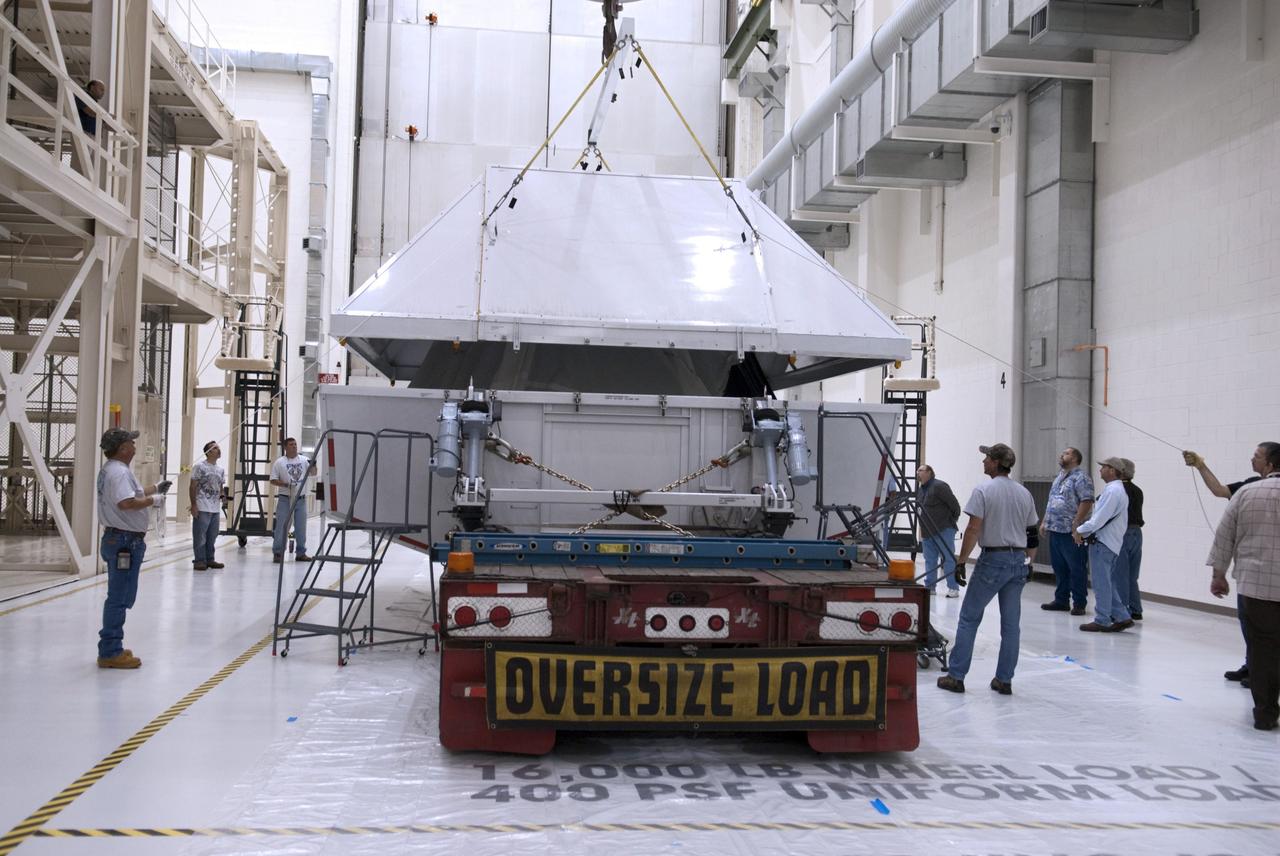
CAPE CANAVERAL, Fla. -- Lockheed Martin crews begin unpacking the Orion ground test vehicle in the Operations and Checkout O&C Facility at NASA's Kennedy Space Center in Florida. The vehicle traveled more than 1,800 miles from the company's Waterton Facility near Denver where it successfully completed a series of rigorous tests that simulated launch and spaceflight environments. The ground test vehicle will be used for pathfinding operations in the O&C, including simulated manufacturing and assembly procedures. After those operations are completed, new backshell panels will be installed on the ground test vehicle at the O&C prior to the vehicle’s trek to NASA's Langley Research Center in Virginia for splashdown testing at the agency's Hydro Impact Basin. Launching atop NASA's heavy-lift Space Launch System SLS, which also is under development, the Orion Multi-Purpose Crew Vehicle MPCV will serve as the exploration vehicle that will carry astronaut crews beyond low Earth orbit. It also will provide emergency abort capabilities, sustain the crew during space travel and provide safe re-entry from deep space return velocities. For more information, visit www.nasa.gov/orion. Photo credit: Charisse Nahser
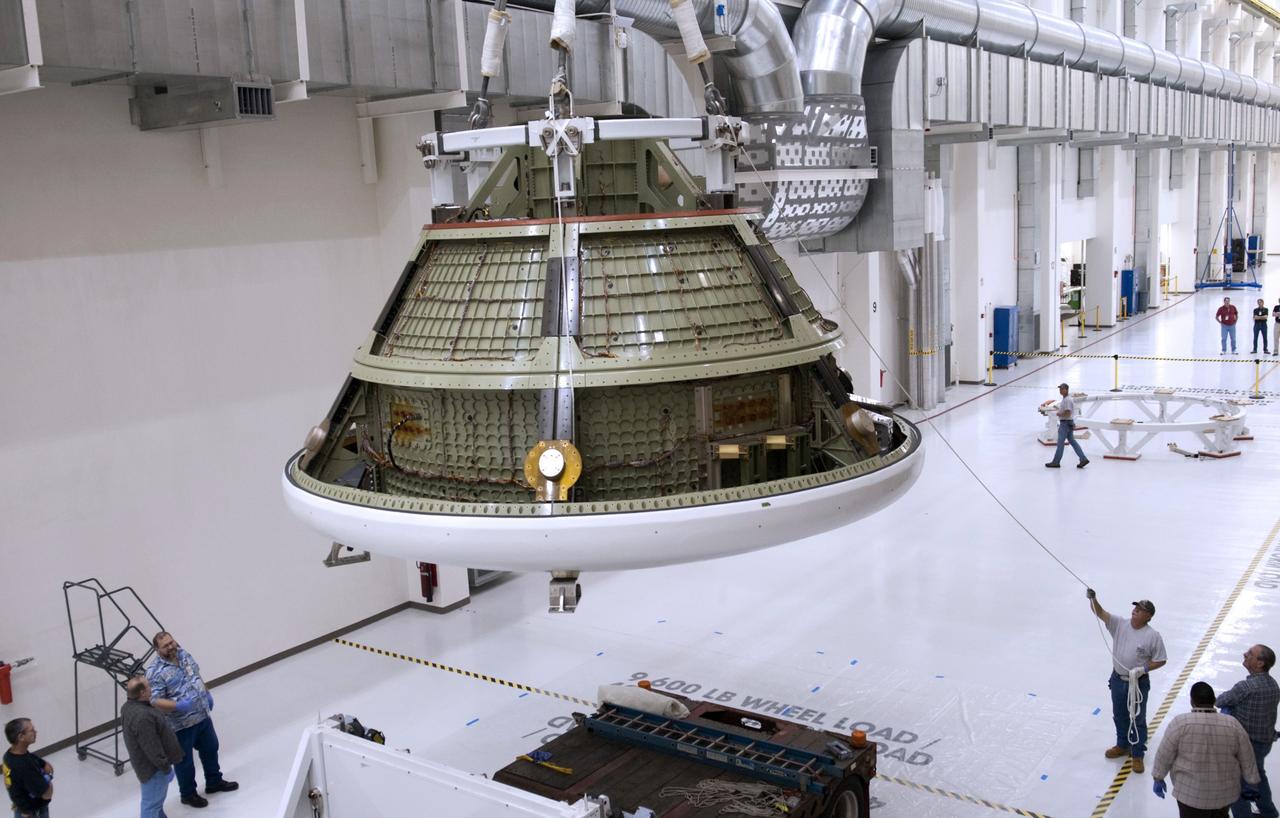
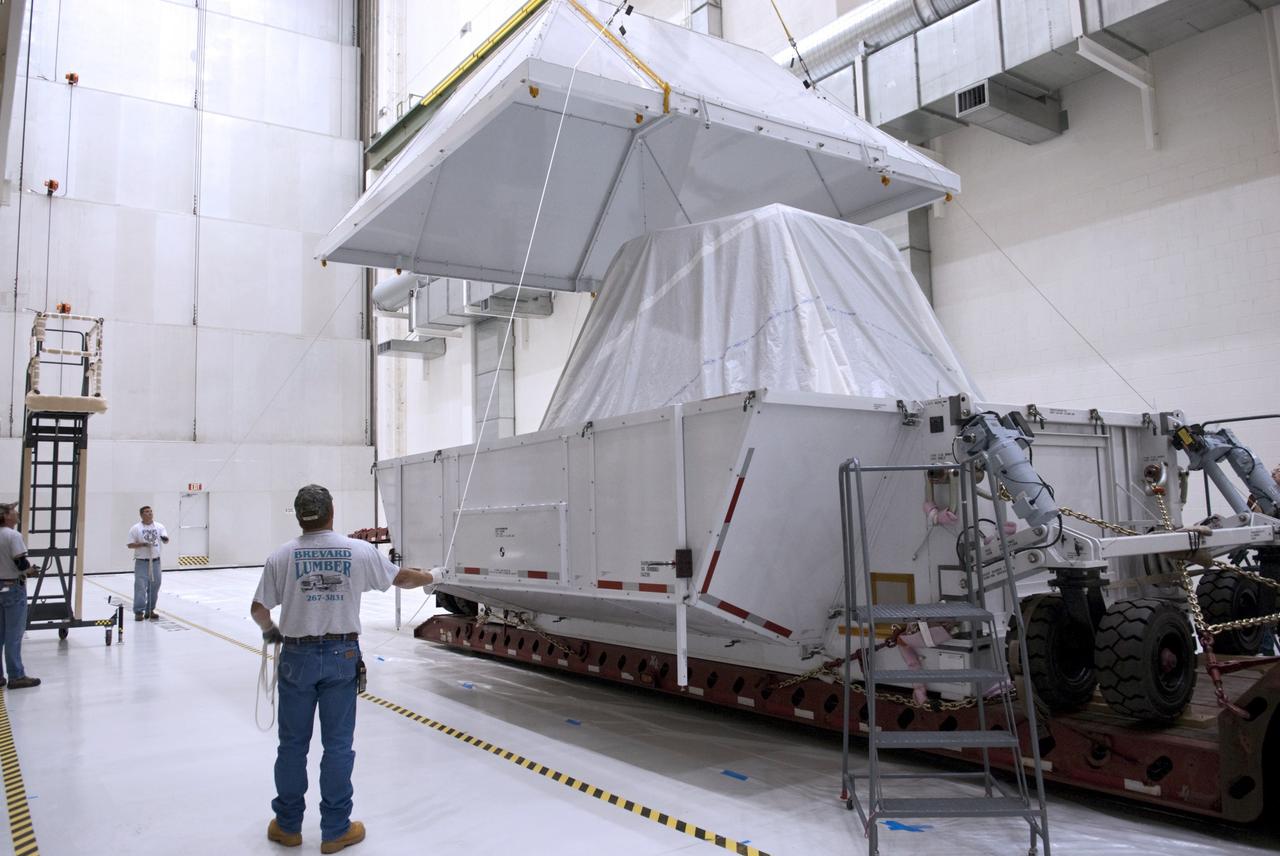
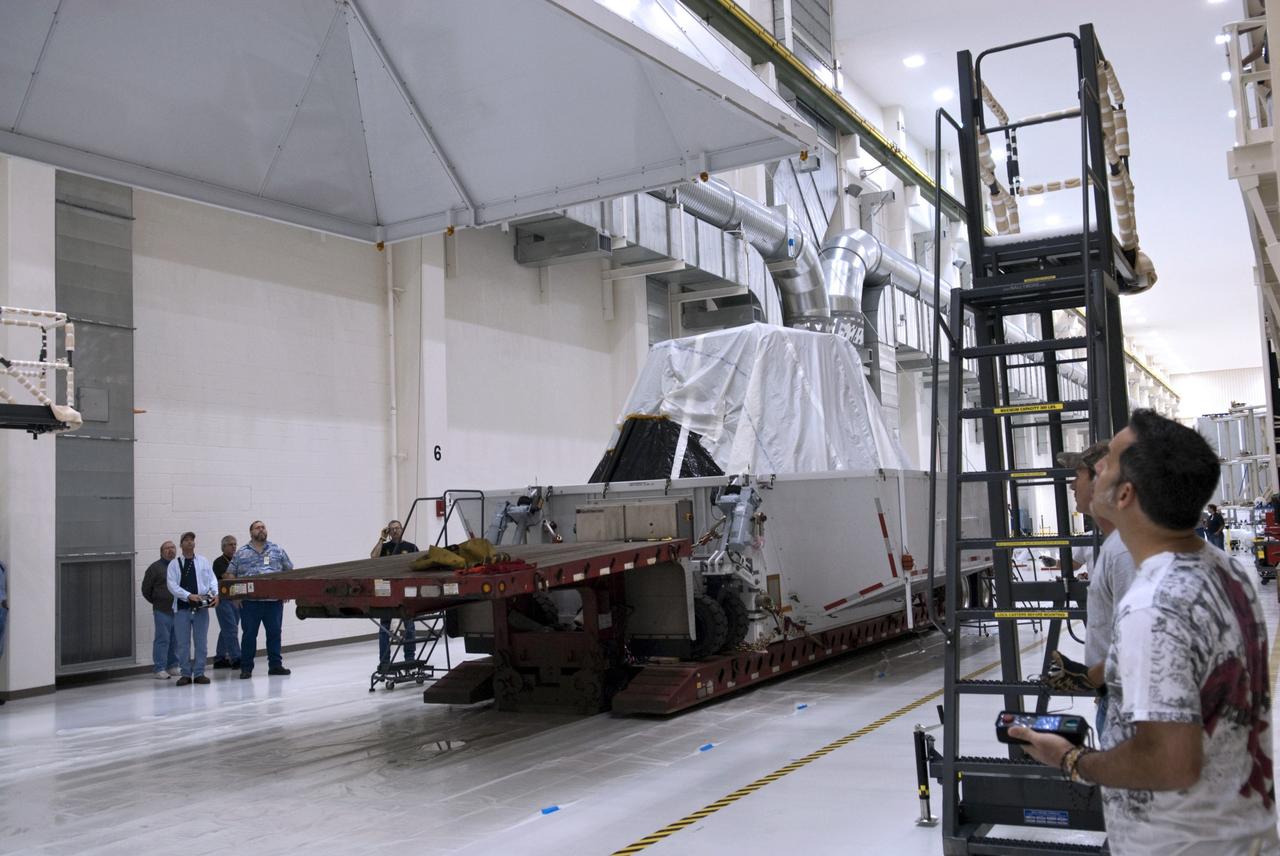
CAPE CANAVERAL, Fla. -- Lockheed Martin crews remove the Orion ground test vehicle from its packaging in the Operations and Checkout O&C Facility at NASA's Kennedy Space Center in Florida. The vehicle traveled more than 1,800 miles from the company's Waterton Facility near Denver where it successfully completed a series of rigorous tests that simulated launch and spaceflight environments. The ground test vehicle will be used for pathfinding operations in the O&C, including simulated manufacturing and assembly procedures. After those operations are completed, new backshell panels will be installed on the ground test vehicle at the O&C prior to the vehicle’s trek to NASA's Langley Research Center in Virginia for splashdown testing at the agency's Hydro Impact Basin. Launching atop NASA's heavy-lift Space Launch System SLS, which also is under development, the Orion Multi-Purpose Crew Vehicle MPCV will serve as the exploration vehicle that will carry astronaut crews beyond low Earth orbit. It also will provide emergency abort capabilities, sustain the crew during space travel and provide safe re-entry from deep space return velocities. For more information, visit www.nasa.gov/orion. Photo credit: Charisse Nahser
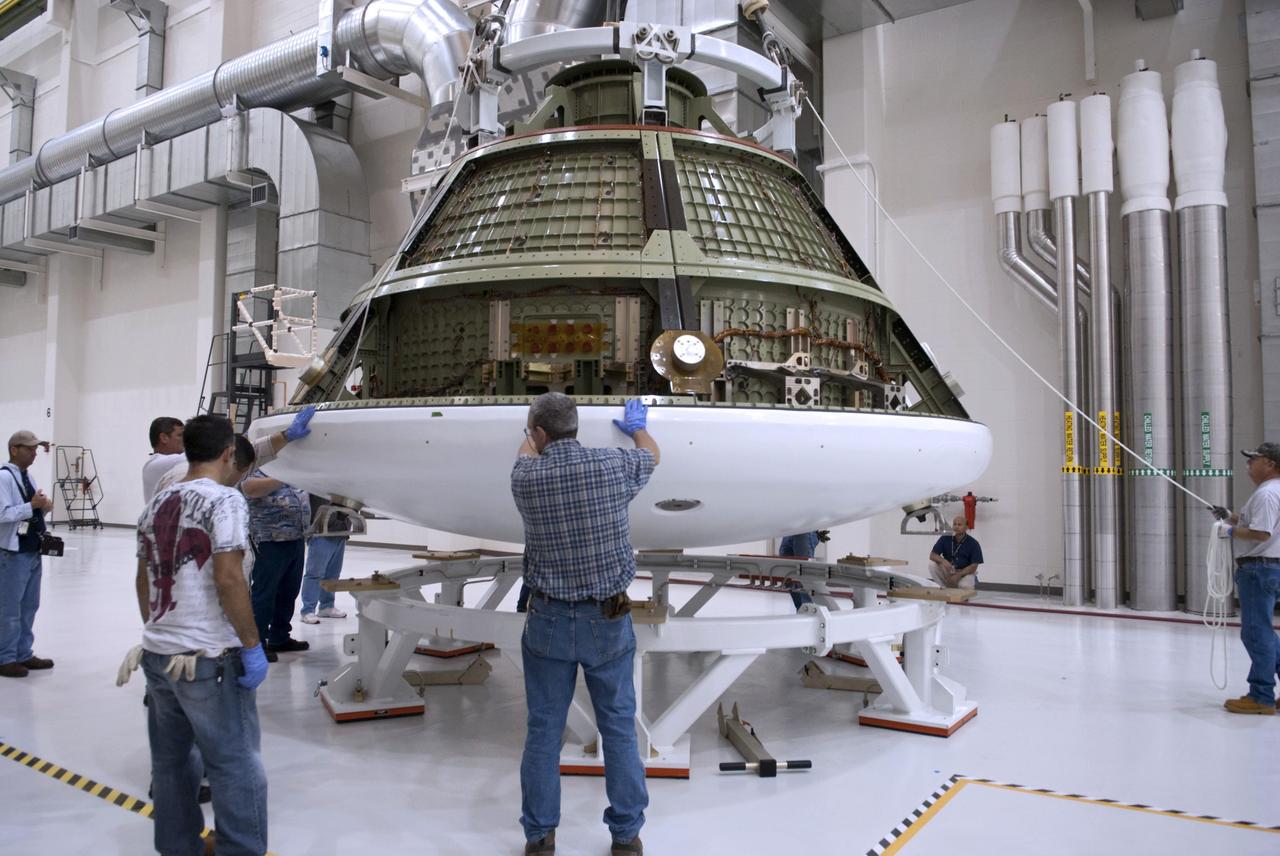
CAPE CANAVERAL, Fla. -- Lockheed Martin crews assist as a crane is used to lower the Orion ground test vehicle on to a work stand in the Operations and Checkout O&C Facility at NASA's Kennedy Space Center in Florida. The vehicle traveled more than 1,800 miles from the company's Waterton Facility near Denver where it successfully completed a series of rigorous tests that simulated launch and spaceflight environments. The ground test vehicle will be used for pathfinding operations in the O&C, including simulated manufacturing and assembly procedures. After those operations are completed, new backshell panels will be installed on the ground test vehicle at the O&C prior to the vehicle’s trek to NASA's Langley Research Center in Virginia for splashdown testing at the agency's Hydro Impact Basin. Launching atop NASA's heavy-lift Space Launch System SLS, which also is under development, the Orion Multi-Purpose Crew Vehicle MPCV will serve as the exploration vehicle that will carry astronaut crews beyond low Earth orbit. It also will provide emergency abort capabilities, sustain the crew during space travel and provide safe re-entry from deep space return velocities. For more information, visit www.nasa.gov/orion. Photo credit: Charisse Nahser
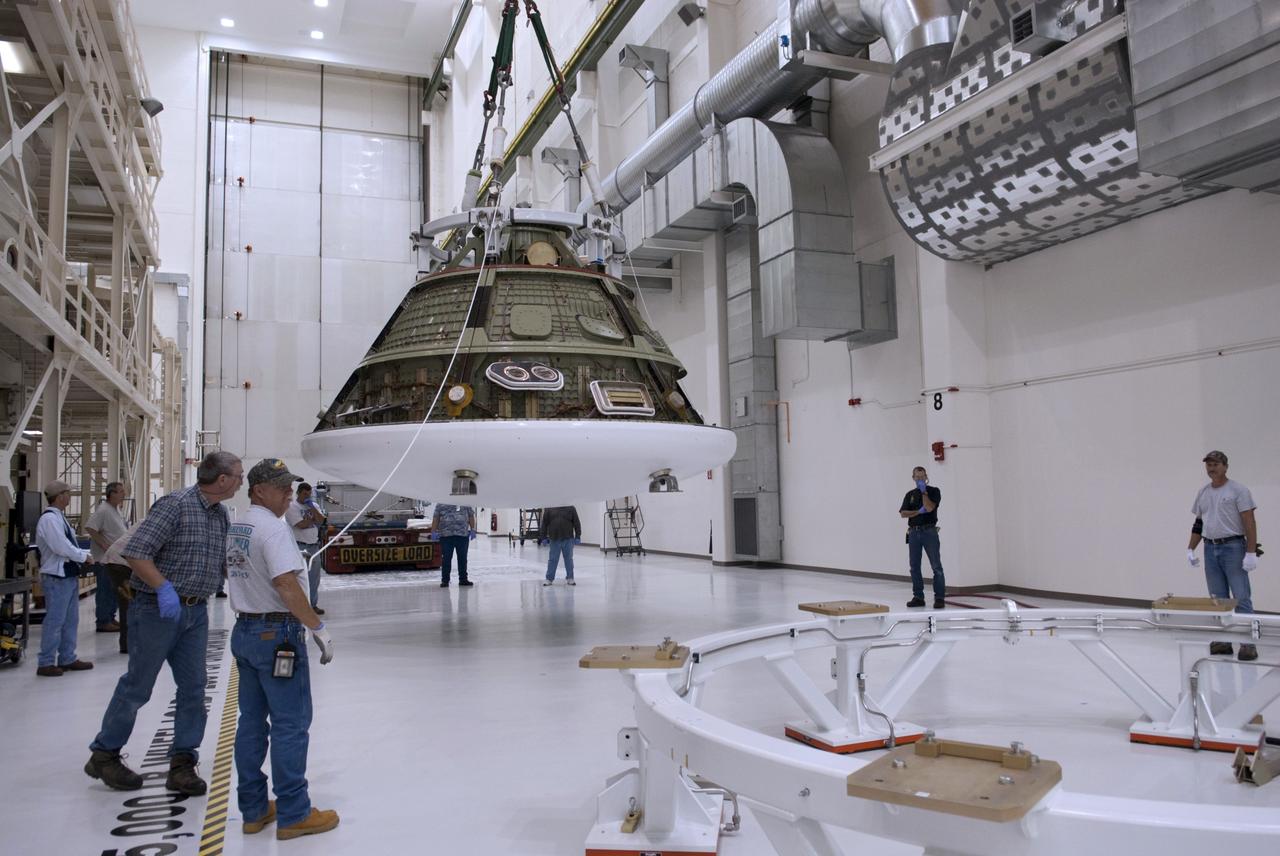
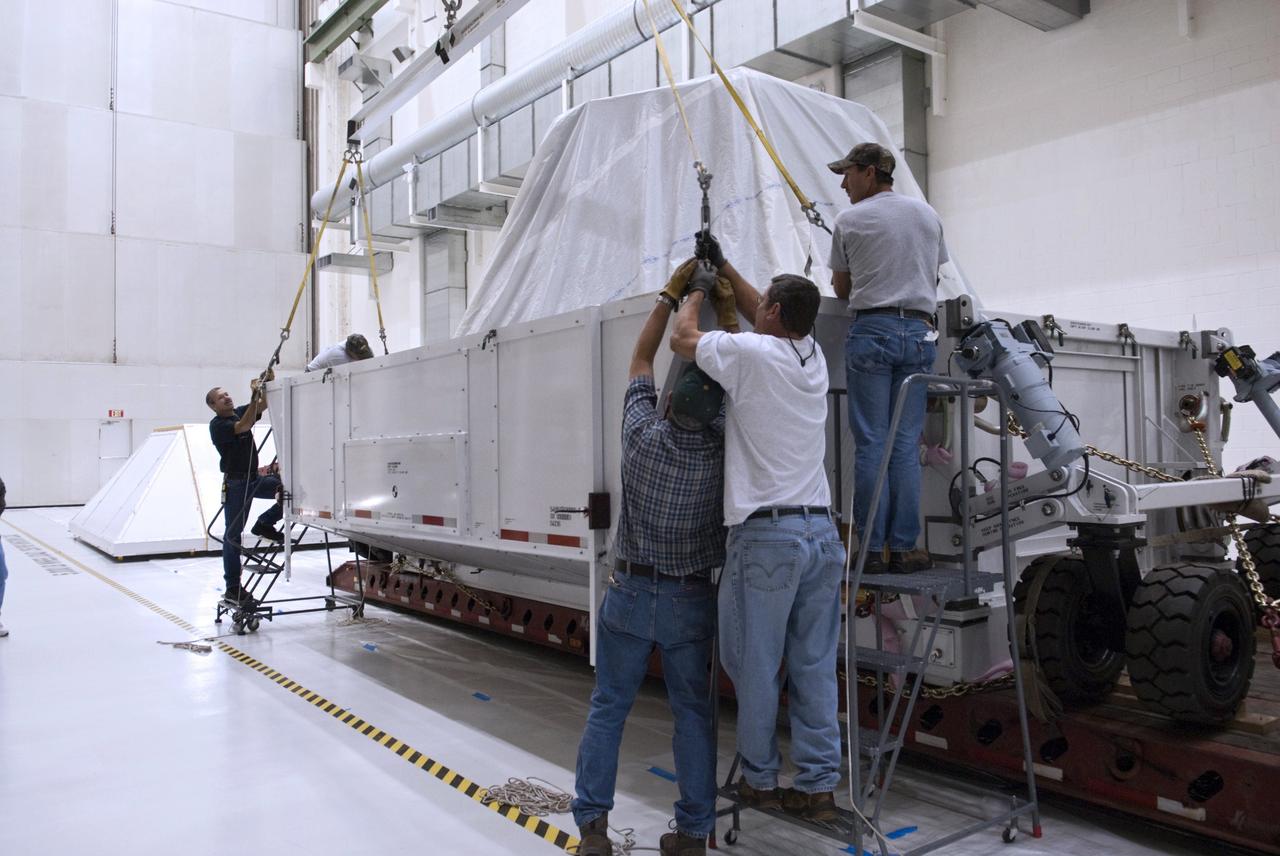
CAPE CANAVERAL, Fla. -- Lockheed Martin crews assist as a crane is used to move the Orion ground test vehicle toward a work stand in the Operations and Checkout O&C Facility at NASA's Kennedy Space Center in Florida. The vehicle traveled more than 1,800 miles from the company's Waterton Facility near Denver where it successfully completed a series of rigorous tests that simulated launch and spaceflight environments. The ground test vehicle will be used for pathfinding operations in the O&C, including simulated manufacturing and assembly procedures. After those operations are completed, new backshell panels will be installed on the ground test vehicle at the O&C prior to the vehicle’s trek to NASA's Langley Research Center in Virginia for splashdown testing at the agency's Hydro Impact Basin. Launching atop NASA's heavy-lift Space Launch System SLS, which also is under development, the Orion Multi-Purpose Crew Vehicle MPCV will serve as the exploration vehicle that will carry astronaut crews beyond low Earth orbit. It also will provide emergency abort capabilities, sustain the crew during space travel and provide safe re-entry from deep space return velocities. For more information, visit www.nasa.gov/orion. Photo credit: Charisse Nahser
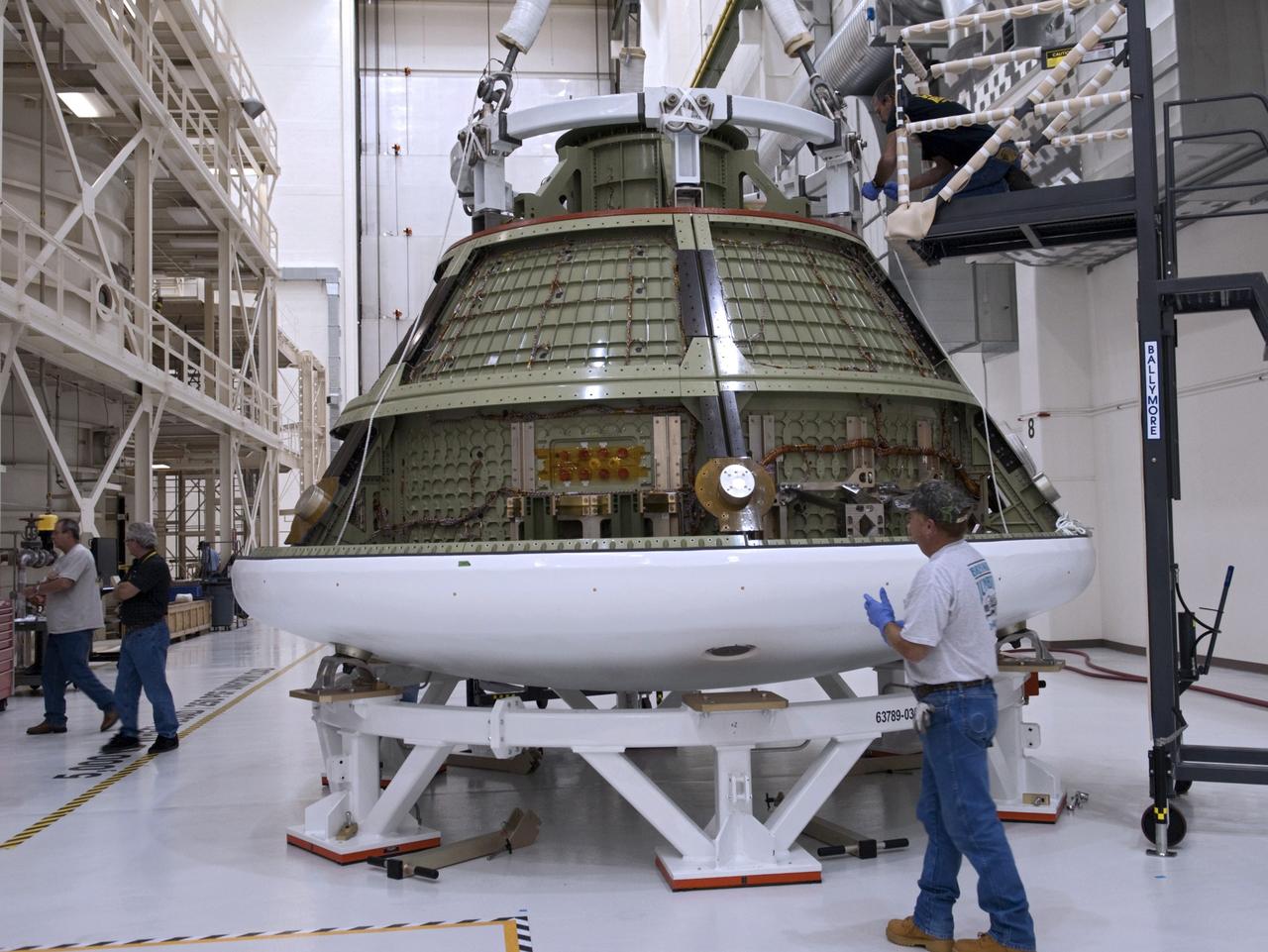
CAPE CANAVERAL, Fla. -- Lockheed Martin crews assist as a crane lowers the Orion ground test vehicle on to a work stand in the Operations and Checkout O&C Facility at NASA's Kennedy Space Center in Florida. The vehicle traveled more than 1,800 miles from the company's Waterton Facility near Denver where it successfully completed a series of rigorous tests that simulated launch and spaceflight environments. The ground test vehicle will be used for pathfinding operations in the O&C, including simulated manufacturing and assembly procedures. After those operations are completed, new backshell panels will be installed on the ground test vehicle at the O&C prior to the vehicle’s trek to NASA's Langley Research Center in Virginia for splashdown testing at the agency's Hydro Impact Basin. Launching atop NASA's heavy-lift Space Launch System SLS, which also is under development, the Orion Multi-Purpose Crew Vehicle MPCV will serve as the exploration vehicle that will carry astronaut crews beyond low Earth orbit. It also will provide emergency abort capabilities, sustain the crew during space travel and provide safe re-entry from deep space return velocities. For more information, visit www.nasa.gov/orion. Photo credit: Charisse Nahser
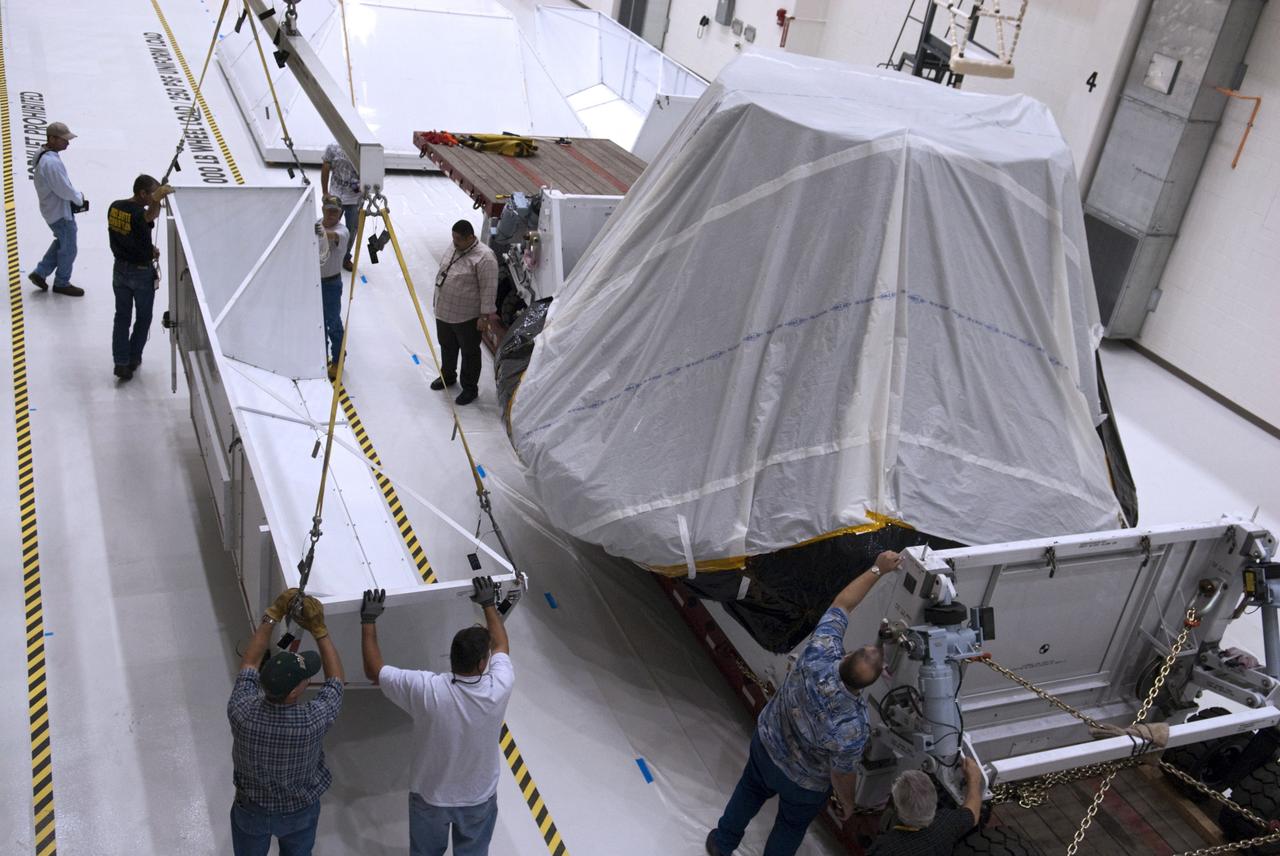
CAPE CANAVERAL, Fla. -- Lockheed Martin crews unpack the Orion ground test vehicle in the Operations and Checkout O&C Facility at NASA's Kennedy Space Center in Florida. The vehicle traveled more than 1,800 miles from the company's Waterton Facility near Denver where it successfully completed a series of rigorous tests that simulated launch and spaceflight environments. The ground test vehicle will be used for pathfinding operations in the O&C, including simulated manufacturing and assembly procedures. After those operations are completed, new backshell panels will be installed on the ground test vehicle at the O&C prior to the vehicle’s trek to NASA's Langley Research Center in Virginia for splashdown testing at the agency's Hydro Impact Basin. Launching atop NASA's heavy-lift Space Launch System SLS, which also is under development, the Orion Multi-Purpose Crew Vehicle MPCV will serve as the exploration vehicle that will carry astronaut crews beyond low Earth orbit. It also will provide emergency abort capabilities, sustain the crew during space travel and provide safe re-entry from deep space return velocities. For more information, visit www.nasa.gov/orion. Photo credit: Charisse Nahser
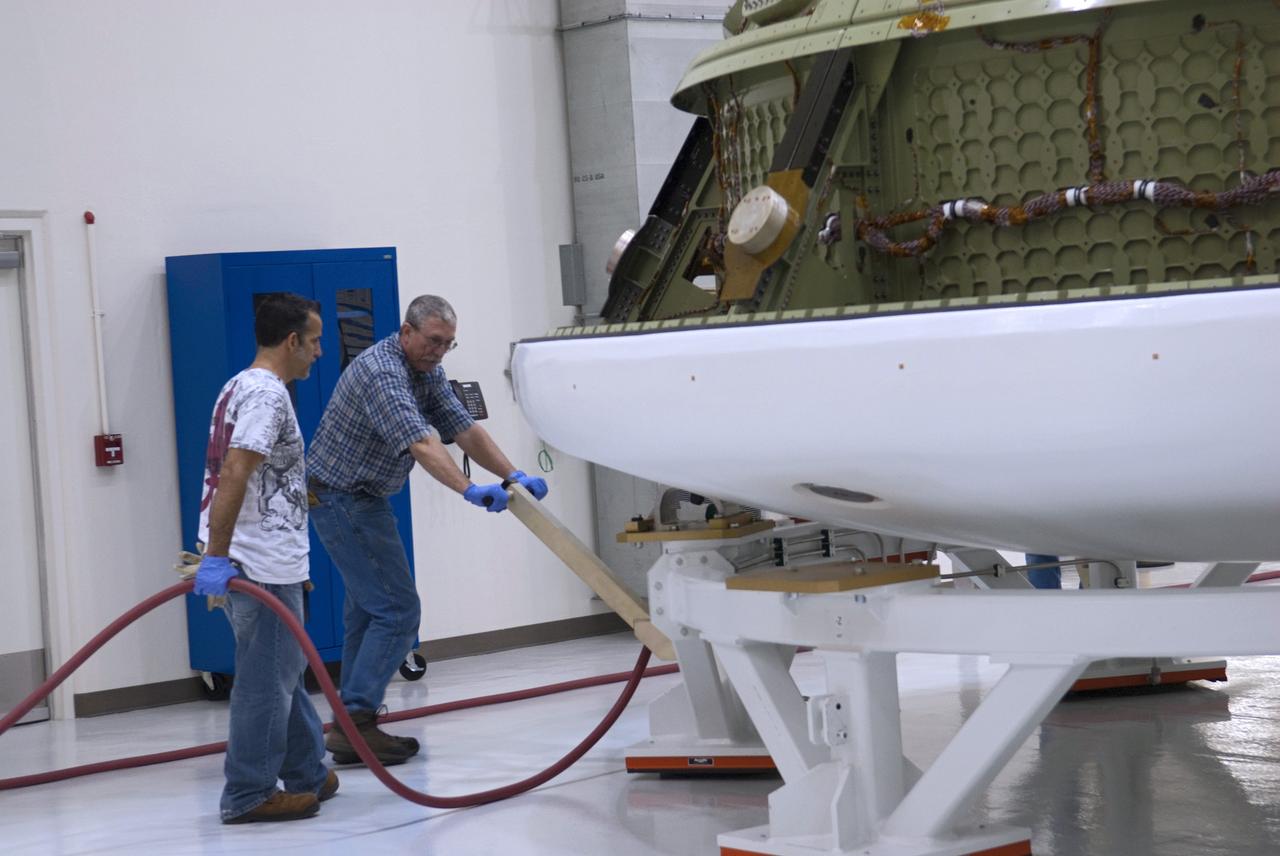
CAPE CANAVERAL, Fla. -- Lockheed Martin crews secure the Orion ground test vehicle on a work stand in the Operations and Checkout O&C Facility at NASA's Kennedy Space Center in Florida. The vehicle traveled more than 1,800 miles from the company's Waterton Facility near Denver where it successfully completed a series of rigorous tests that simulated launch and spaceflight environments. The ground test vehicle will be used for pathfinding operations in the O&C, including simulated manufacturing and assembly procedures. After those operations are completed, new backshell panels will be installed on the ground test vehicle at the O&C prior to the vehicle’s trek to NASA's Langley Research Center in Virginia for splashdown testing at the agency's Hydro Impact Basin. Launching atop NASA's heavy-lift Space Launch System SLS, which also is under development, the Orion Multi-Purpose Crew Vehicle MPCV will serve as the exploration vehicle that will carry astronaut crews beyond low Earth orbit. It also will provide emergency abort capabilities, sustain the crew during space travel and provide safe re-entry from deep space return velocities. For more information, visit www.nasa.gov/orion. Photo credit: Charisse Nahser

CAPE CANAVERAL, Fla. -- Lockheed Martin crews begin unpacking the Orion ground test vehicle in the Operations and Checkout O&C Facility at NASA's Kennedy Space Center in Florida. The vehicle traveled more than 1,800 miles from the company's Waterton Facility near Denver where it successfully completed a series of rigorous tests that simulated launch and spaceflight environments. The ground test vehicle will be used for pathfinding operations in the O&C, including simulated manufacturing and assembly procedures. After those operations are completed, new backshell panels will be installed on the ground test vehicle at the O&C prior to the vehicle’s trek to NASA's Langley Research Center in Virginia for splashdown testing at the agency's Hydro Impact Basin. Launching atop NASA's heavy-lift Space Launch System SLS, which also is under development, the Orion Multi-Purpose Crew Vehicle MPCV will serve as the exploration vehicle that will carry astronaut crews beyond low Earth orbit. It also will provide emergency abort capabilities, sustain the crew during space travel and provide safe re-entry from deep space return velocities. For more information, visit www.nasa.gov/orion. Photo credit: Charisse Nahser
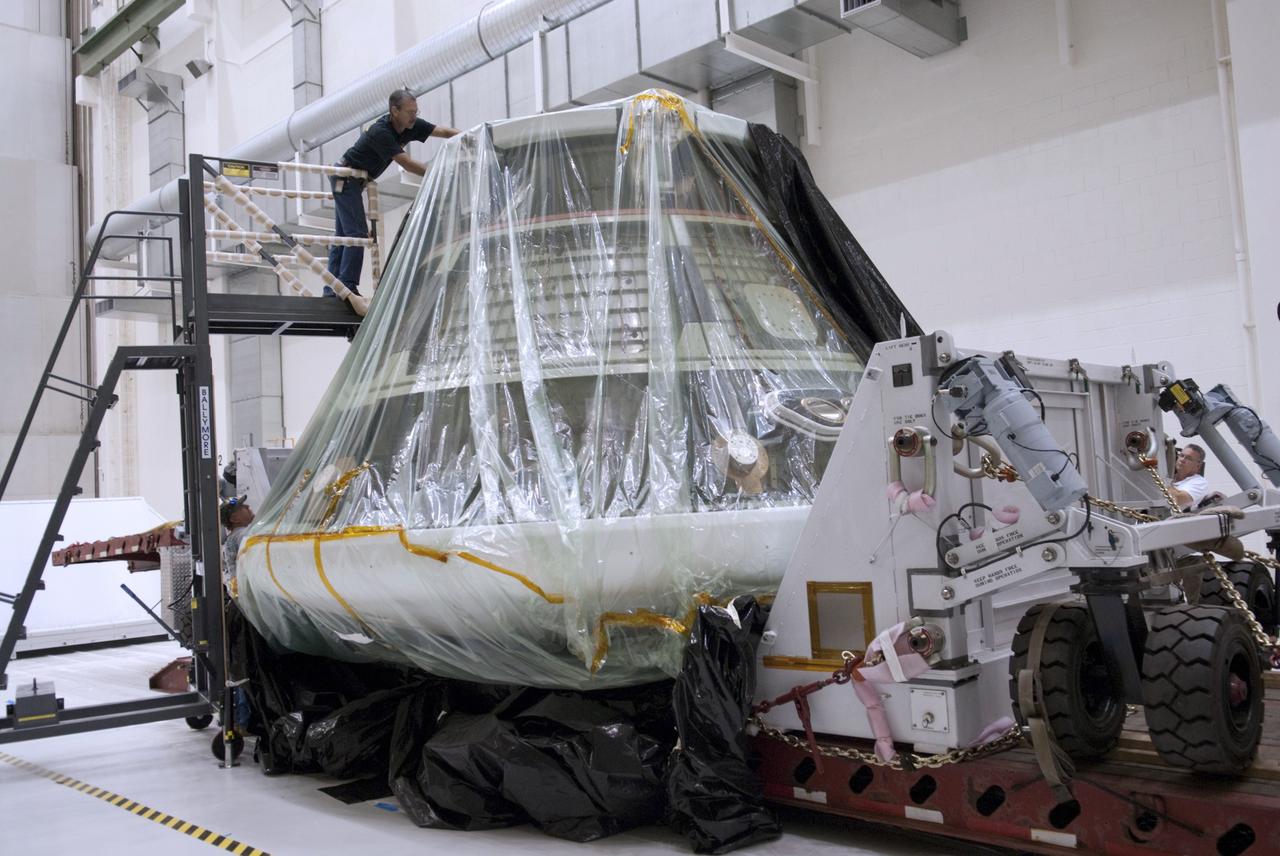
CAPE CANAVERAL, Fla. -- Lockheed Martin crews unpack the Orion ground test vehicle in the Operations and Checkout O&C Facility at NASA's Kennedy Space Center in Florida. The vehicle traveled more than 1,800 miles from the company's Waterton Facility near Denver where it successfully completed a series of rigorous tests that simulated launch and spaceflight environments. The ground test vehicle will be used for pathfinding operations in the O&C, including simulated manufacturing and assembly procedures. After those operations are completed, new backshell panels will be installed on the ground test vehicle at the O&C prior to the vehicle’s trek to NASA's Langley Research Center in Virginia for splashdown testing at the agency's Hydro Impact Basin. Launching atop NASA's heavy-lift Space Launch System SLS, which also is under development, the Orion Multi-Purpose Crew Vehicle MPCV will serve as the exploration vehicle that will carry astronaut crews beyond low Earth orbit. It also will provide emergency abort capabilities, sustain the crew during space travel and provide safe re-entry from deep space return velocities. For more information, visit www.nasa.gov/orion. Photo credit: Charisse Nahser
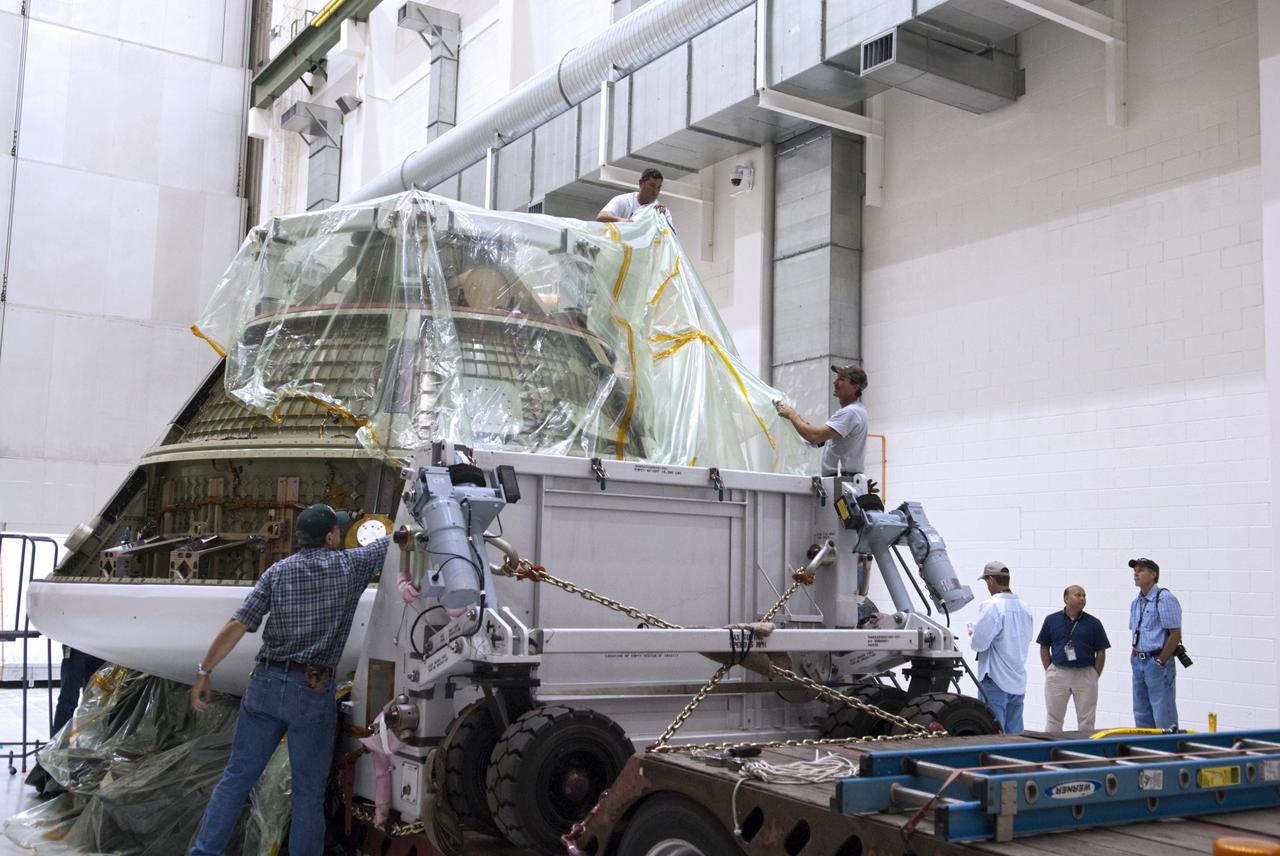
CAPE CANAVERAL, Fla. -- Lockheed Martin crews unpack the Orion ground test vehicle in the Operations and Checkout O&C Facility at NASA's Kennedy Space Center in Florida. The vehicle traveled more than 1,800 miles from the company's Waterton Facility near Denver where it successfully completed a series of rigorous tests that simulated launch and spaceflight environments. The ground test vehicle will be used for pathfinding operations in the O&C, including simulated manufacturing and assembly procedures. After those operations are completed, new backshell panels will be installed on the ground test vehicle at the O&C prior to the vehicle’s trek to NASA's Langley Research Center in Virginia for splashdown testing at the agency's Hydro Impact Basin. Launching atop NASA's heavy-lift Space Launch System SLS, which also is under development, the Orion Multi-Purpose Crew Vehicle MPCV will serve as the exploration vehicle that will carry astronaut crews beyond low Earth orbit. It also will provide emergency abort capabilities, sustain the crew during space travel and provide safe re-entry from deep space return velocities. For more information, visit www.nasa.gov/orion. Photo credit: Charisse Nahser
CAPE CANAVERAL, Fla. -- Lockheed Martin crews unpack the Orion ground test vehicle in the Operations and Checkout O&C Facility at NASA's Kennedy Space Center in Florida. The vehicle traveled more than 1,800 miles from the company's Waterton Facility near Denver where it successfully completed a series of rigorous tests that simulated launch and spaceflight environments. The ground test vehicle will be used for pathfinding operations in the O&C, including simulated manufacturing and assembly procedures. After those operations are completed, new backshell panels will be installed on the ground test vehicle at the O&C prior to the vehicle’s trek to NASA's Langley Research Center in Virginia for splashdown testing at the agency's Hydro Impact Basin. Launching atop NASA's heavy-lift Space Launch System SLS, which also is under development, the Orion Multi-Purpose Crew Vehicle MPCV will serve as the exploration vehicle that will carry astronaut crews beyond low Earth orbit. It also will provide emergency abort capabilities, sustain the crew during space travel and provide safe re-entry from deep space return velocities. For more information, visit www.nasa.gov/orion. Photo credit: Charisse Nahser
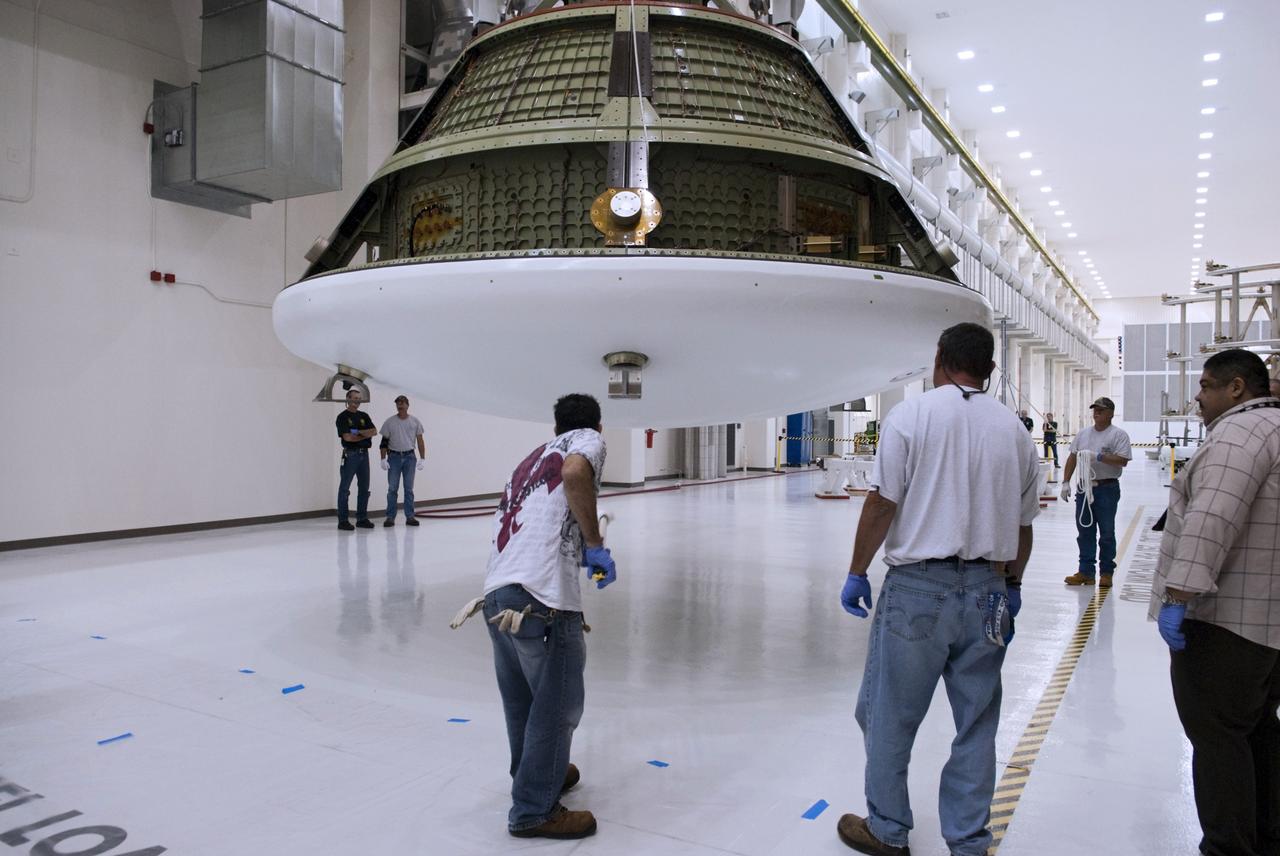
CAPE CANAVERAL, Fla. -- Lockheed Martin crews assist as a crane is used to move the Orion ground test vehicle in the Operations and Checkout O&C Facility at NASA's Kennedy Space Center in Florida. The vehicle traveled more than 1,800 miles from the company's Waterton Facility near Denver where it successfully completed a series of rigorous tests that simulated launch and spaceflight environments. The ground test vehicle will be used for pathfinding operations in the O&C, including simulated manufacturing and assembly procedures. After those operations are completed, new backshell panels will be installed on the ground test vehicle at the O&C prior to the vehicle’s trek to NASA's Langley Research Center in Virginia for splashdown testing at the agency's Hydro Impact Basin. Launching atop NASA's heavy-lift Space Launch System SLS, which also is under development, the Orion Multi-Purpose Crew Vehicle MPCV will serve as the exploration vehicle that will carry astronaut crews beyond low Earth orbit. It also will provide emergency abort capabilities, sustain the crew during space travel and provide safe re-entry from deep space return velocities. For more information, visit www.nasa.gov/orion. Photo credit: Charisse Nahser
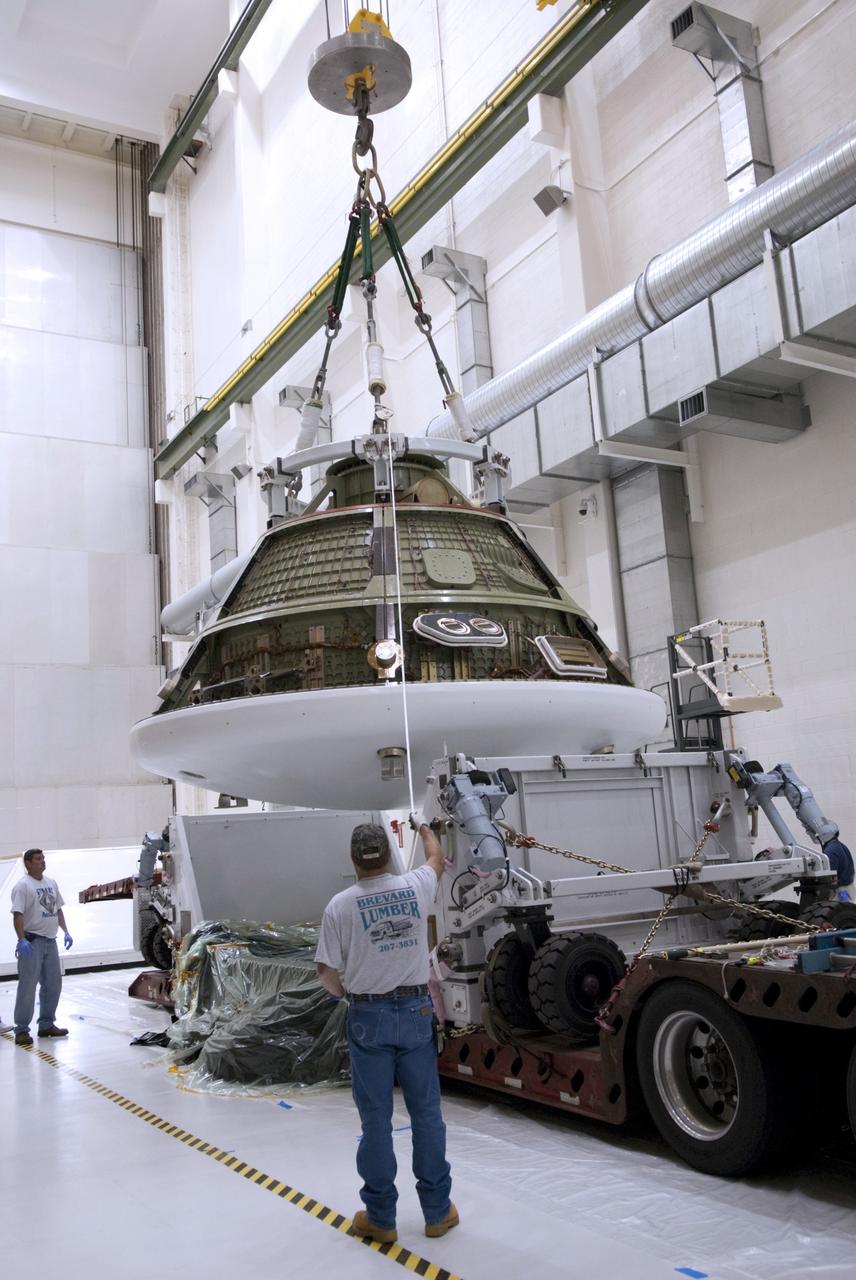
CAPE CANAVERAL, Fla. -- Lockheed Martin crews assist as a crane is used to lift the Orion ground test vehicle away from its packaging in the Operations and Checkout O&C Facility at NASA's Kennedy Space Center in Florida. The vehicle traveled more than 1,800 miles from the company's Waterton Facility near Denver where it successfully completed a series of rigorous tests that simulated launch and spaceflight environments. The ground test vehicle will be used for pathfinding operations in the O&C, including simulated manufacturing and assembly procedures. After those operations are completed, new backshell panels will be installed on the ground test vehicle at the O&C prior to the vehicle’s trek to NASA's Langley Research Center in Virginia for splashdown testing at the agency's Hydro Impact Basin. Launching atop NASA's heavy-lift Space Launch System SLS, which also is under development, the Orion Multi-Purpose Crew Vehicle MPCV will serve as the exploration vehicle that will carry astronaut crews beyond low Earth orbit. It also will provide emergency abort capabilities, sustain the crew during space travel and provide safe re-entry from deep space return velocities. For more information, visit www.nasa.gov/orion. Photo credit: Charisse Nahser
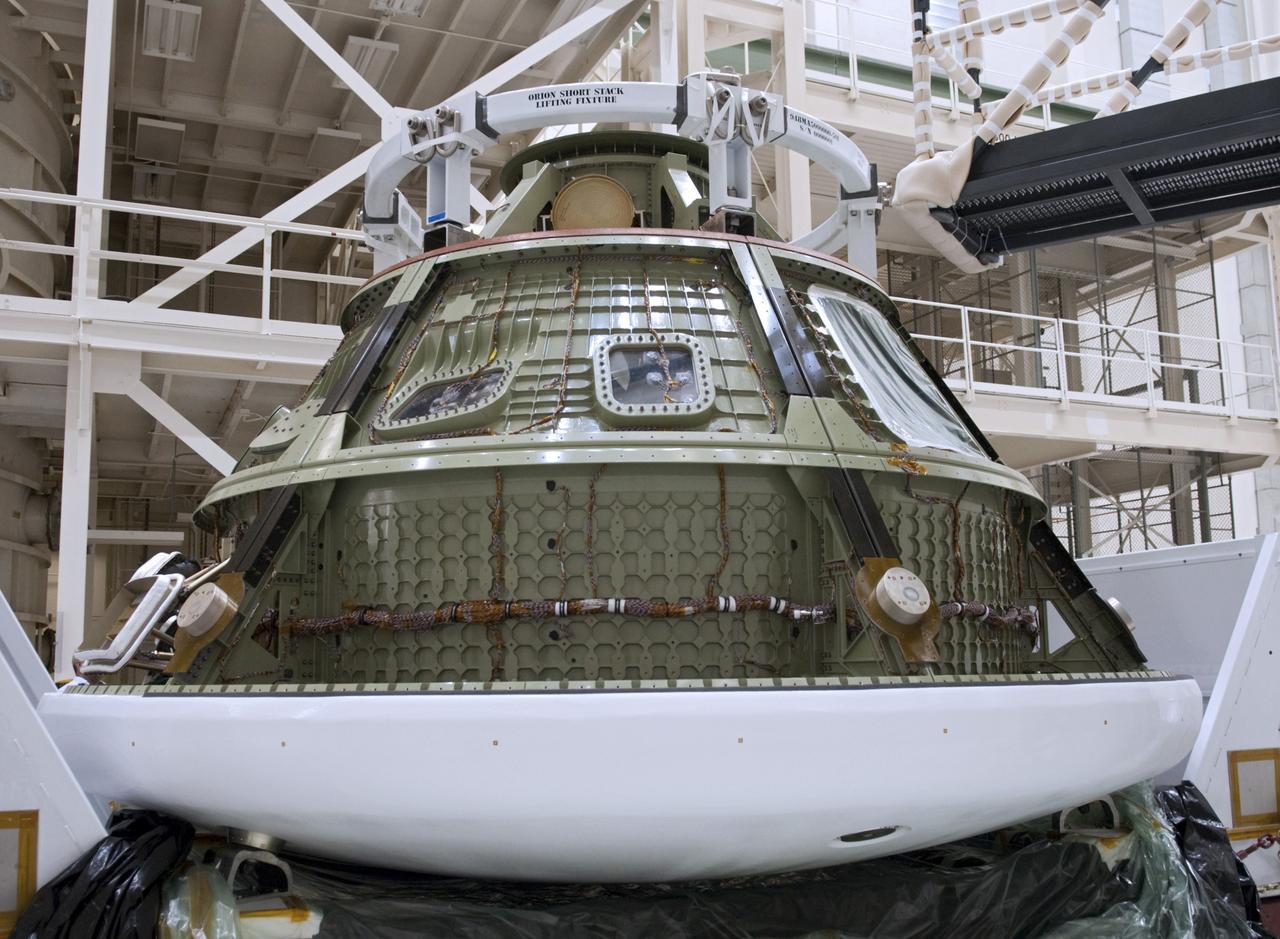
CAPE CANAVERAL, Fla. -- Lockheed Martin crews have unpacked the Orion ground test vehicle in the Operations and Checkout O&C Facility at NASA's Kennedy Space Center in Florida. The vehicle traveled more than 1,800 miles from the company's Waterton Facility near Denver where it successfully completed a series of rigorous tests that simulated launch and spaceflight environments. The ground test vehicle will be used for pathfinding operations in the O&C, including simulated manufacturing and assembly procedures. After those operations are completed, new backshell panels will be installed on the ground test vehicle at the O&C prior to the vehicle’s trek to NASA's Langley Research Center in Virginia for splashdown testing at the agency's Hydro Impact Basin. Launching atop NASA's heavy-lift Space Launch System SLS, which also is under development, the Orion Multi-Purpose Crew Vehicle MPCV will serve as the exploration vehicle that will carry astronaut crews beyond low Earth orbit. It also will provide emergency abort capabilities, sustain the crew during space travel and provide safe re-entry from deep space return velocities. For more information, visit www.nasa.gov/orion. Photo credit: Charisse Nahser
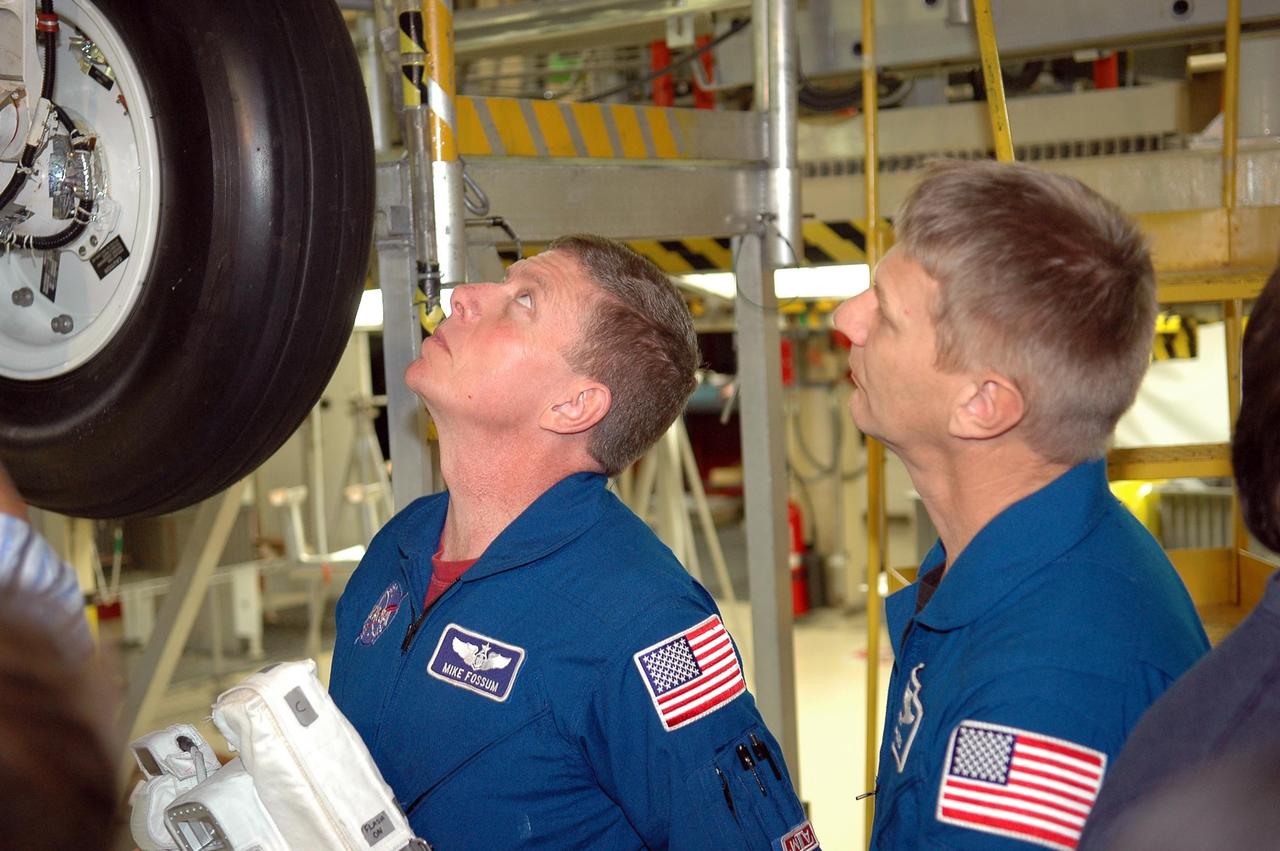
KENNEDY SPACE CENTER, FLA. - Inside the Orbiter Processing Facility bay 3 at NASA's Kennedy Space Center, members of the STS-121 crew take a close look at the wheels on Discovery, the launch vehicle for the mission. From left are Mission Specialists Michael Fossum and Piers Sellers. The crew is at Kennedy for the crew equipment interface test, which provides hands-on experience with equipment they will use on orbit. Launch of STS-121, the second return-to-flight mission, is scheduled for no earlier than May. Photo credit: NASA/Kim Shiflett
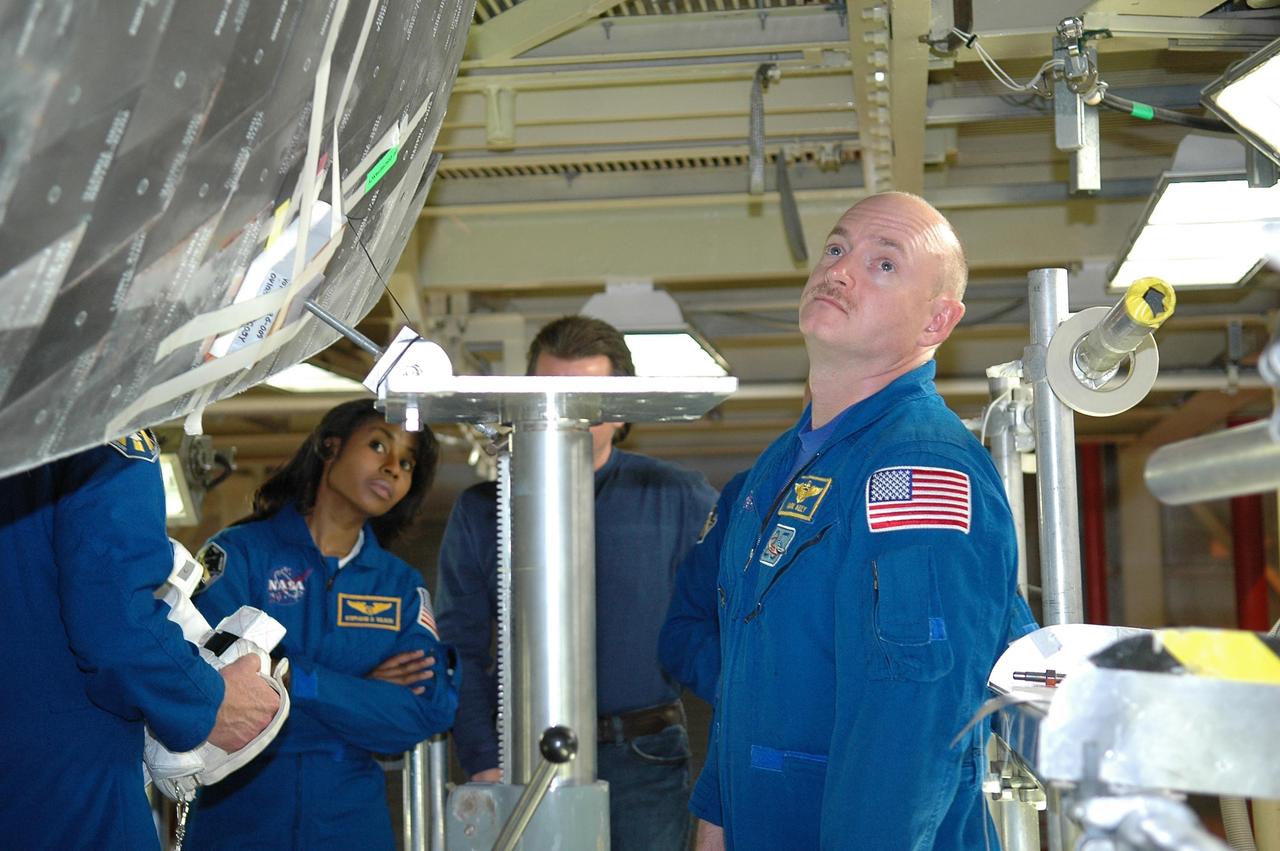
KENNEDY SPACE CENTER, FLA. - Inside the Orbiter Processing Facility bay 3 at NASA's Kennedy Space Center, members of the STS-121 crew take a close look at Discovery, the launch vehicle for the mission. Seen are Mission Specialist Stephanie Wilson and Pilot Mark Kelly. The crew is at Kennedy for the crew equipment interface test, which provides hands-on experience with equipment they will use on orbit. Launch of STS-121, the second return-to-flight mission, is scheduled for no earlier than May. Photo credit: NASA/Kim Shiflett
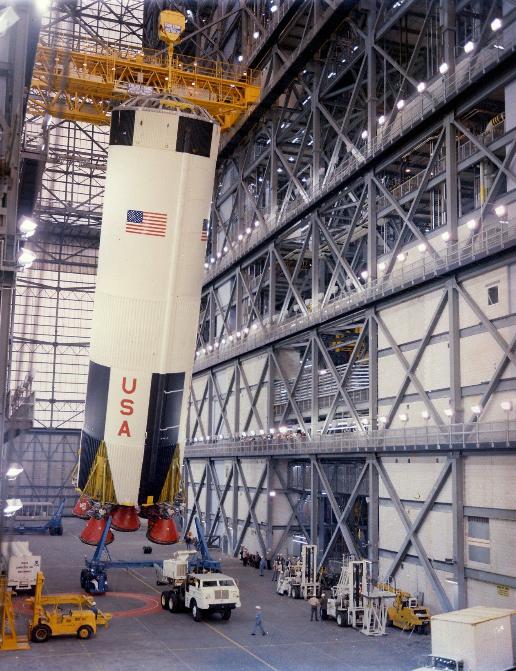
Teams lift the first stage of the Apollo 8 Saturn V rocket inside the transfer aisle of the Vehicle Assembly Building at NASA’s Kennedy Space Center in Florida on Feb. 1, 1968, and prepare to place it atop the mobile launcher. Apollo 8 was the first crewed spacecraft to successfully orbit the Moon and return to Earth, setting the stage for Apollo 11 – the first crewed lunar landing. Apollo 8 launched on Dec. 21, 1968, and the crew members consisted of Frank Borman, William A. Anders, and James A. Lovell Jr.
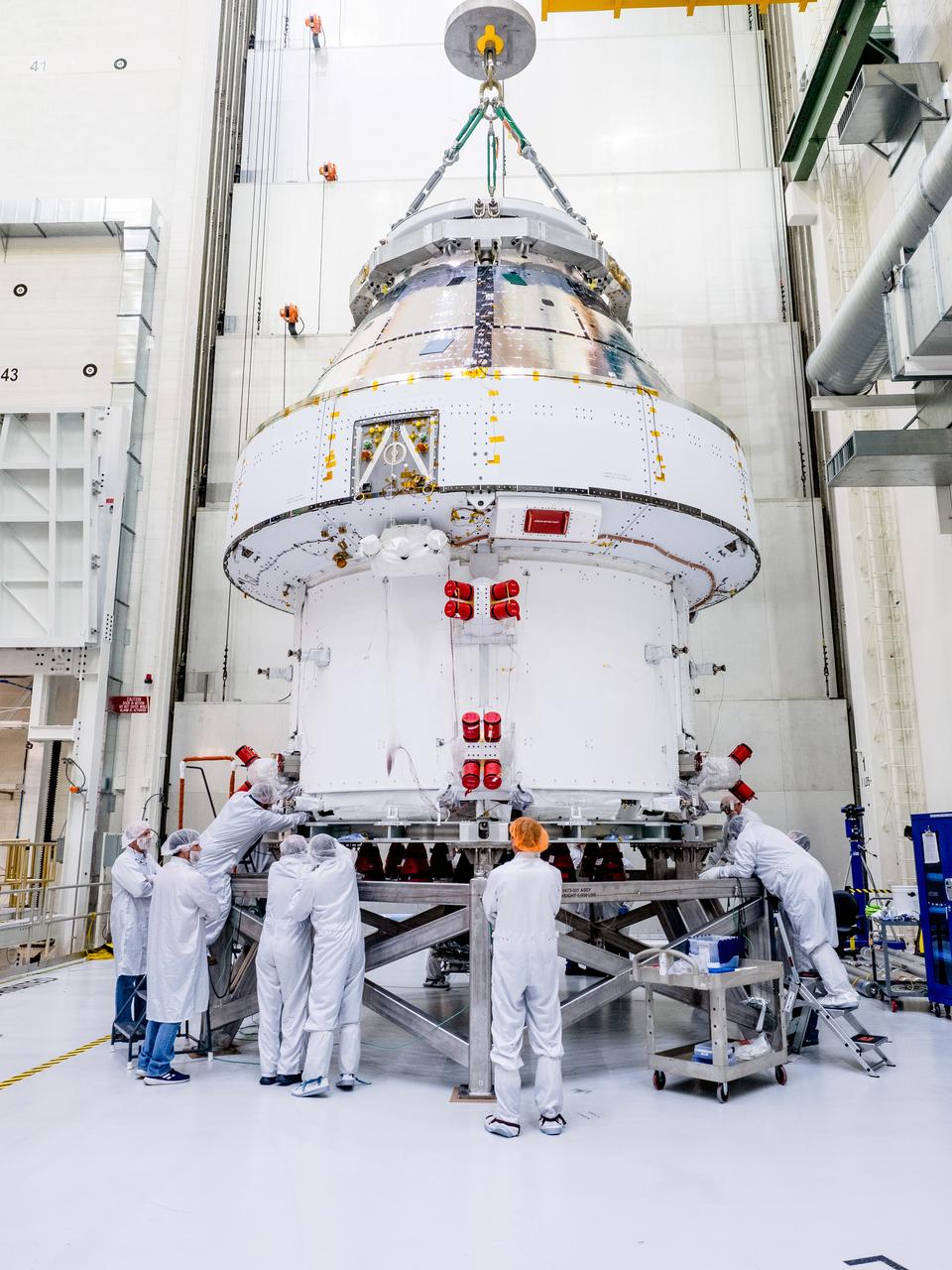
The Orion crew and service module stack for Artemis I was lifted out of the Final Assembly and Test (FAST) cell on November 11, 2019. The spacecraft has been stationed in the FAST cell since July for mating and closeout processing. The service module and crew module were moved separately into the cell, stacked and connected together for the mission. After lifting out of the cell, Orion will be attached to a tool called a verticator that rotates the stack from its vertical configuration to a horizontal configuration for transport to NASA’s Plum Brook Station in Sandusky, Ohio, where it will undergo full environmental testing to certify the complete vehicle for flight. Once the vehicle returns to Kennedy in several months, it will return to the FAST cell for installation of final panels left off for environmental testing purposes and the service module’s four solar arrays.