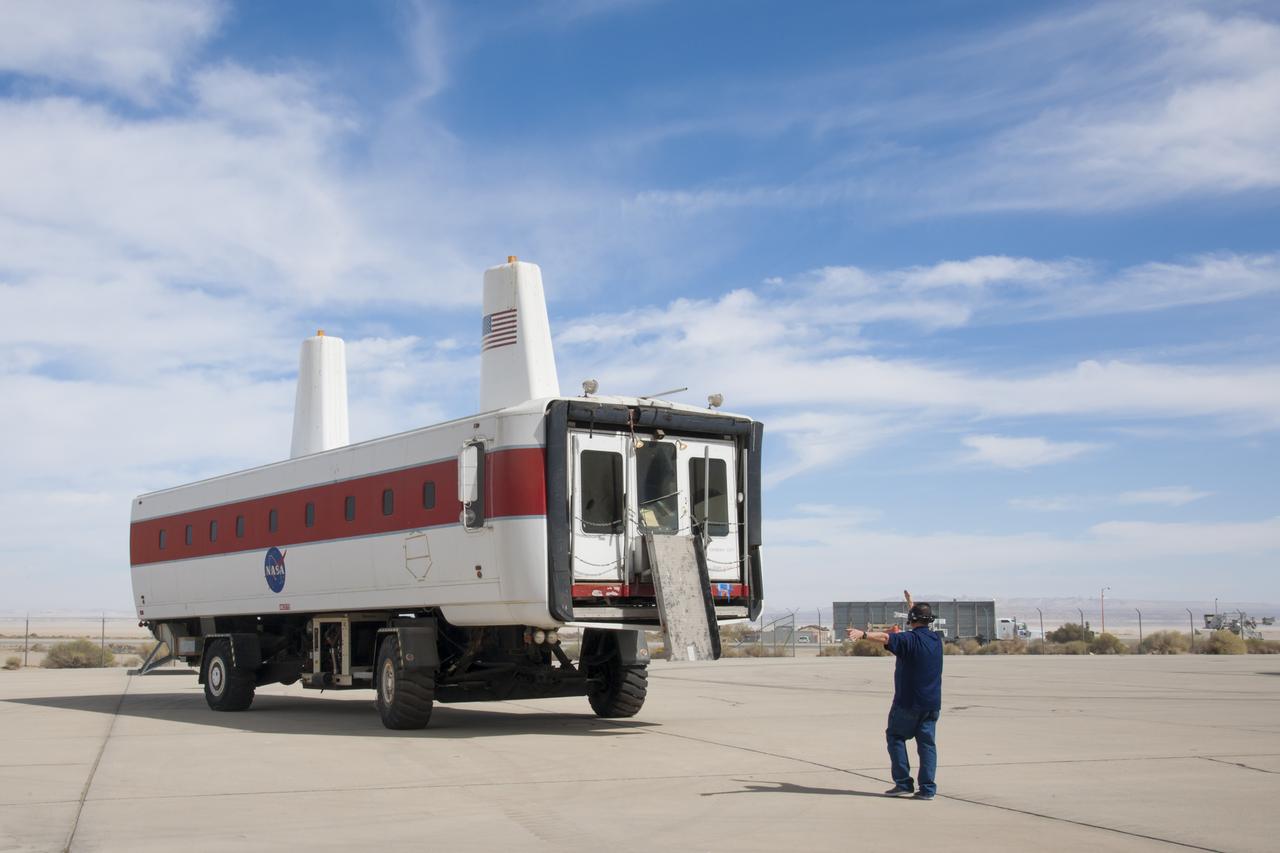
Workers drive the space shuttle Crew Transport Vehicle, or CTV, to the Edwards Air Force Base Flight Test Museum in California for display.
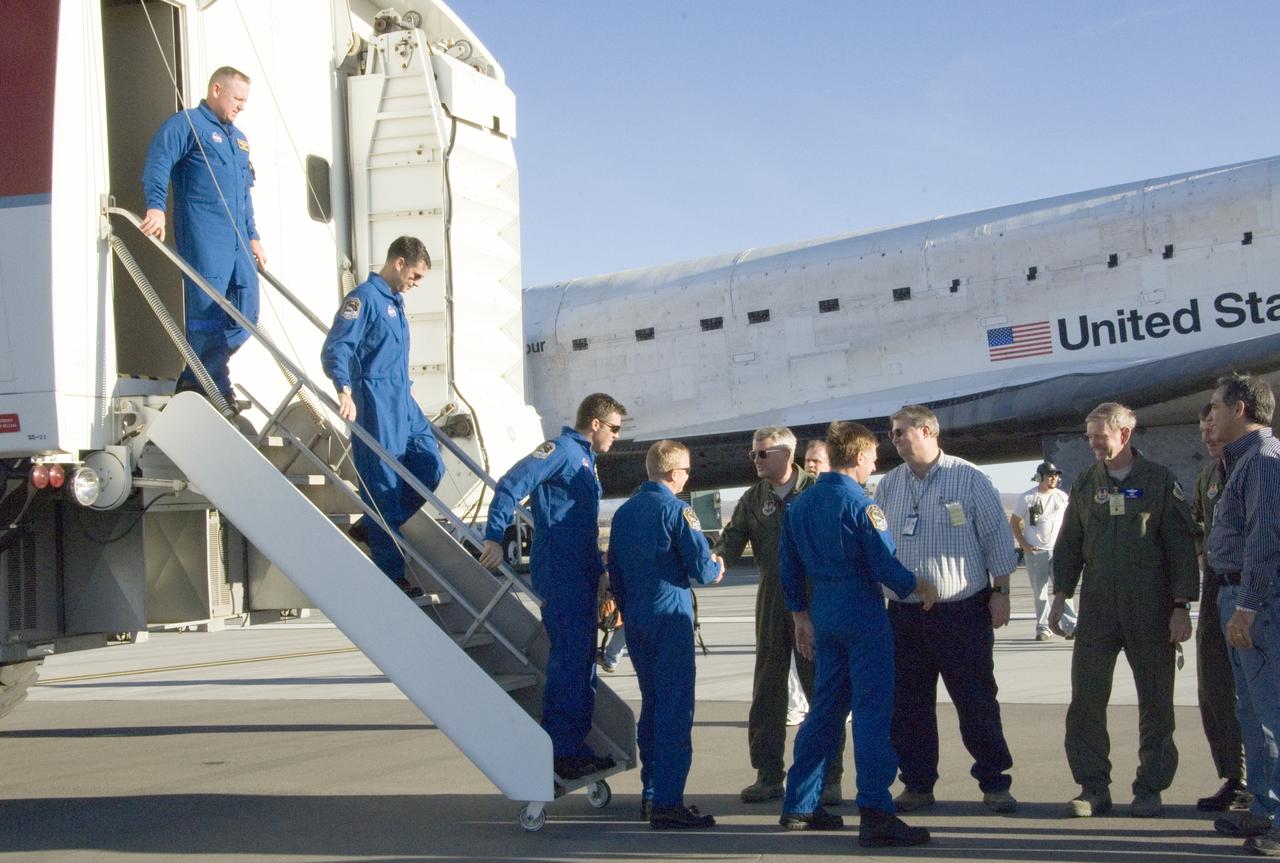
Air Force and NASA officials greet the STS-126 crew as they exit the Crew Transport Vehicle after landing the shuttle Endeavour at Edwards Air Force Base.
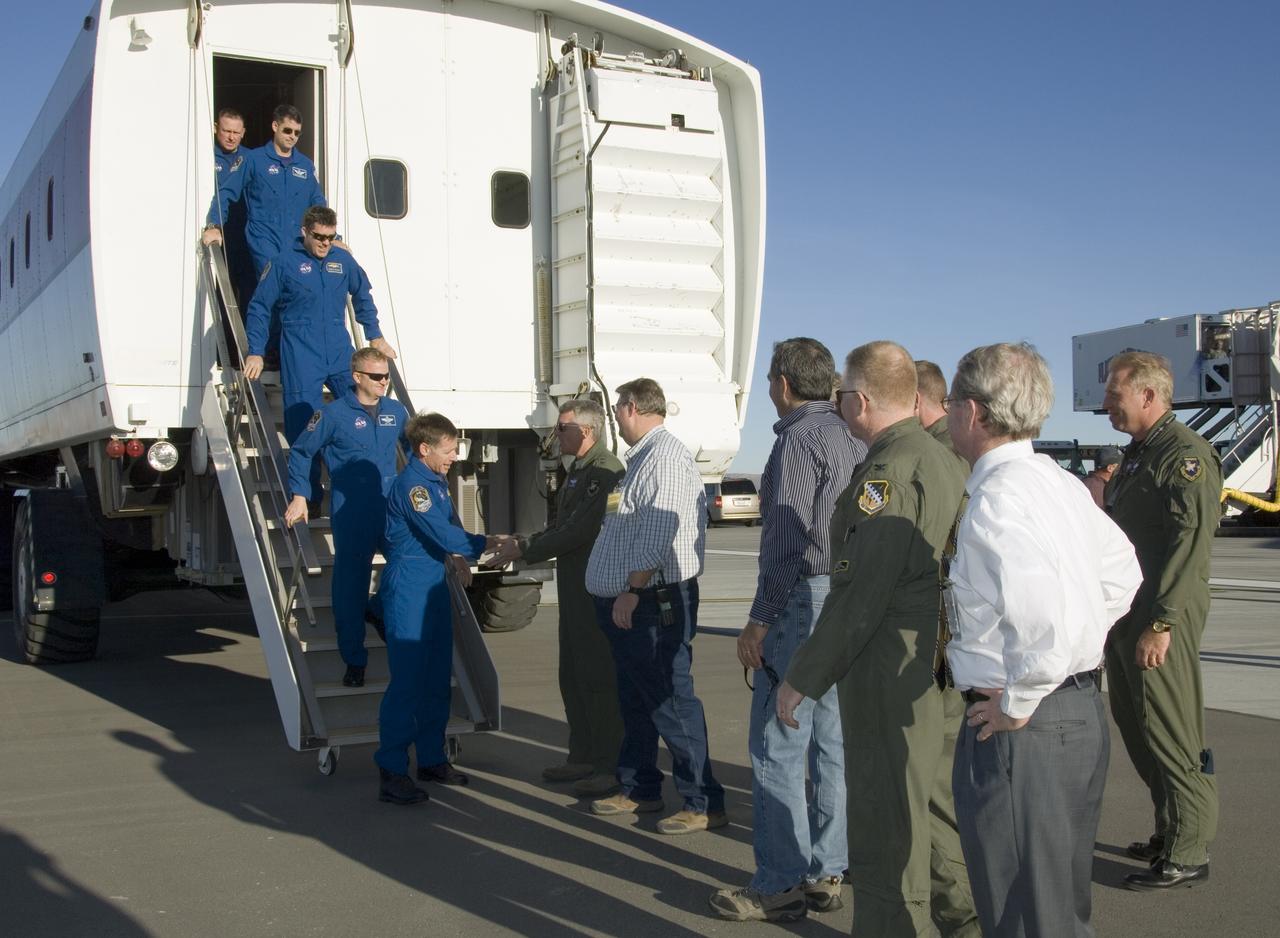
Air Force and NASA officials greet the STS-126 crew as they exit the Crew Transport Vehicle after landing the shuttle Endeavour at Edwards Air Force Base.

With the Vehicle Assembly Building in the background, the three specially designed, fully electric, environmentally friendly crew transportation vehicles for Artemis missions arrived at NASA’s Kennedy Space Center in Florida on July 11, 2023. The zero-emission vehicles, which will carry astronauts to Launch Complex 39B for Artemis missions, were delivered by the manufacturer, Canoo Technologies Inc. of Torrance, California.
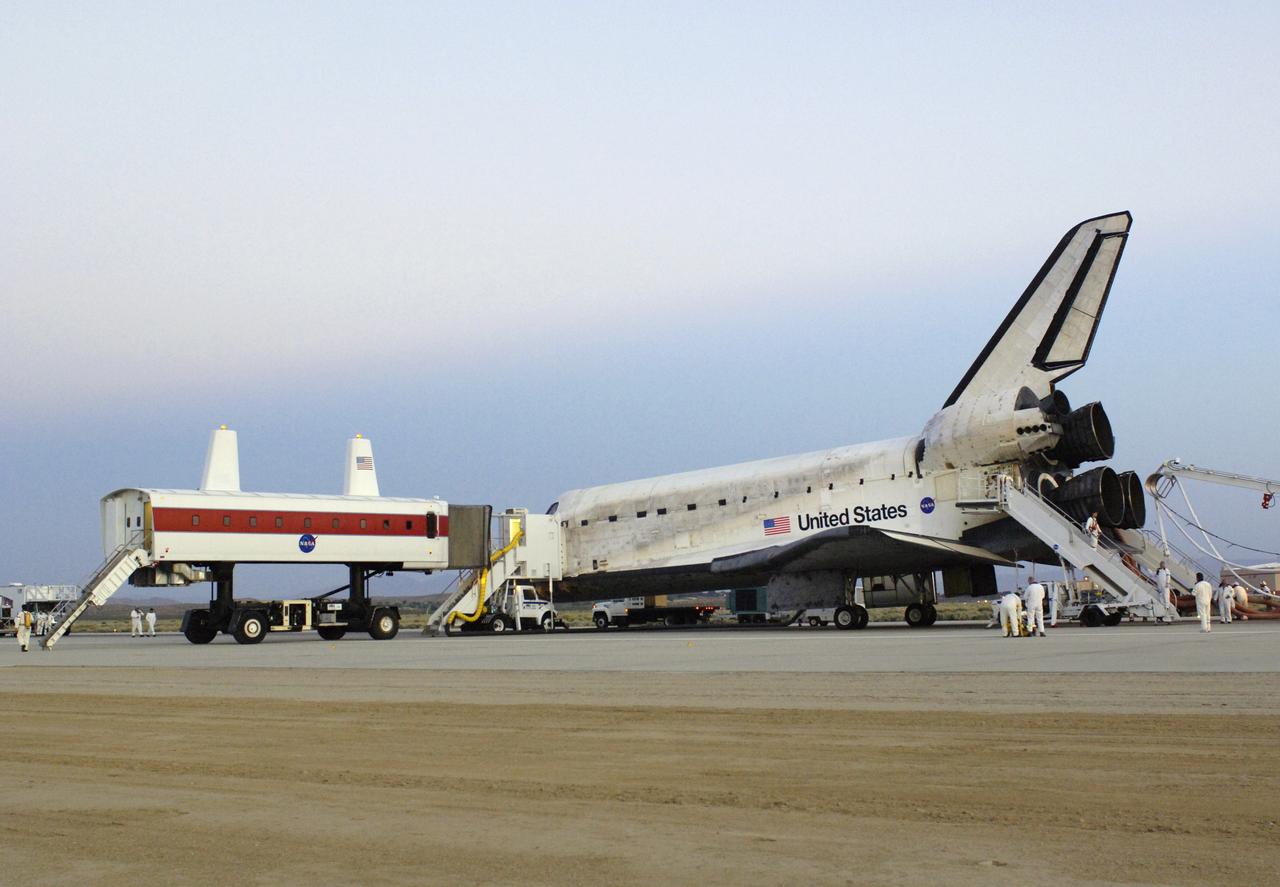
NASA's Crew Transport Vehicle, or CTV, pulls up to the Space Shuttle Discovery to offload the crew after a successful landing August 9, 2005 at Edwards Air Force Base, California. The landing marked the end of the STS-114 mission. Space Shuttle Discovery landed safely at NASA's Dryden Flight Research Center at Edwards Air Force Base in California at 5:11:22 a.m. PDT this morning, following the very successful 14-day STS-114 return to flight mission. During their two weeks in space, Commander Eileen Collins and her six crewmates tested out new safety procedures and delivered supplies and equipment the International Space Station. Discovery spent two weeks in space, where the crew demonstrated new methods to inspect and repair the Shuttle in orbit. The crew also delivered supplies, outfitted and performed maintenance on the International Space Station. A number of these tasks were conducted during three spacewalks. In an unprecedented event, spacewalkers were called upon to remove protruding gap fillers from the heat shield on Discovery's underbelly. In other spacewalk activities, astronauts installed an external platform onto the Station's Quest Airlock and replaced one of the orbital outpost's Control Moment Gyroscopes. Inside the Station, the STS-114 crew conducted joint operations with the Expedition 11 crew. They unloaded fresh supplies from the Shuttle and the Raffaello Multi-Purpose Logistics Module. Before Discovery undocked, the crews filled Raffeallo with unneeded items and returned to Shuttle payload bay. Discovery launched on July 26 and spent almost 14 days on orbit.
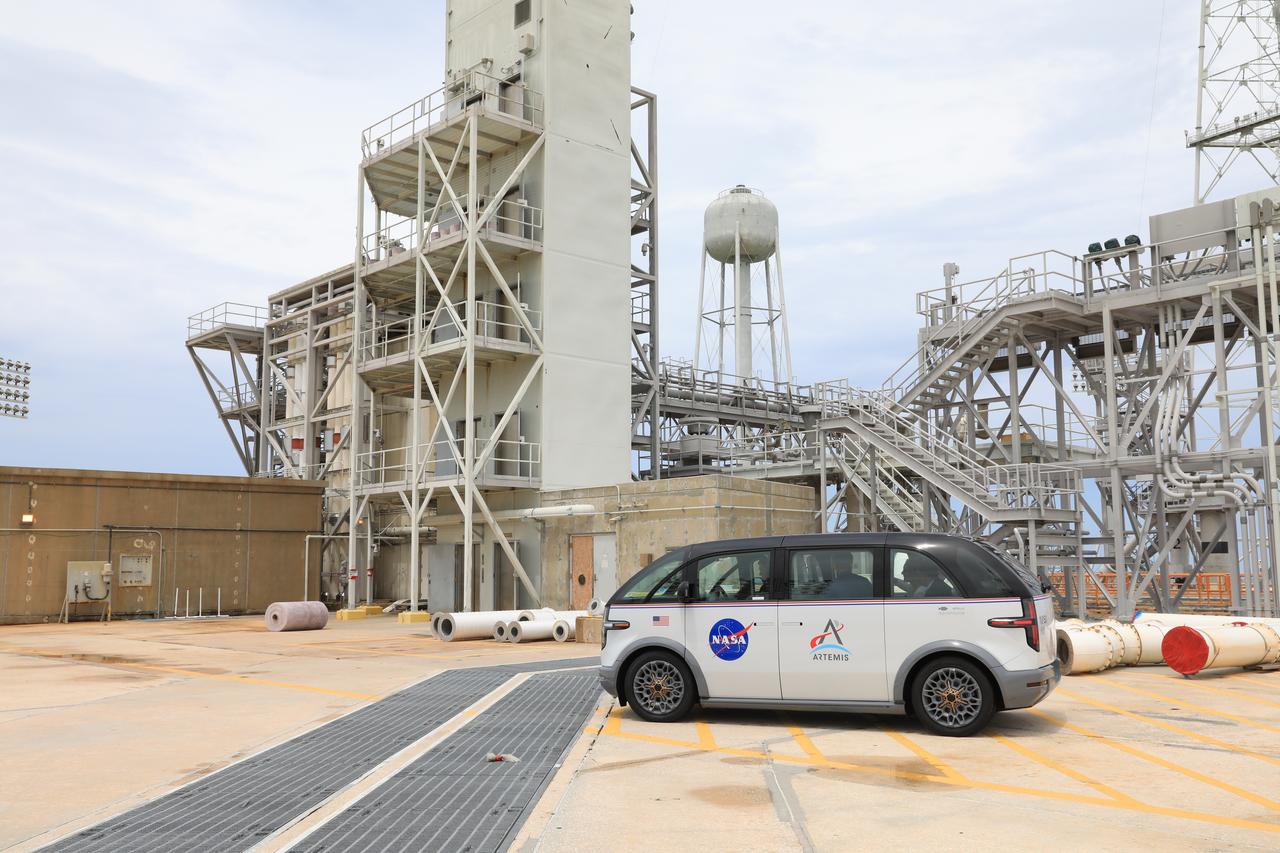
Three specially designed, fully electric, environmentally friendly crew transportation vehicles for Artemis missions arrived at NASA’s Kennedy Space Center in Florida on July 11, 2023. One of the zero-emission vehicles is shown here at Launch Pad 39B. The fleet, which will carry astronauts to Launch Complex 39B for Artemis missions, was delivered by the manufacturer, Canoo Technologies Inc. of Torrance, California.
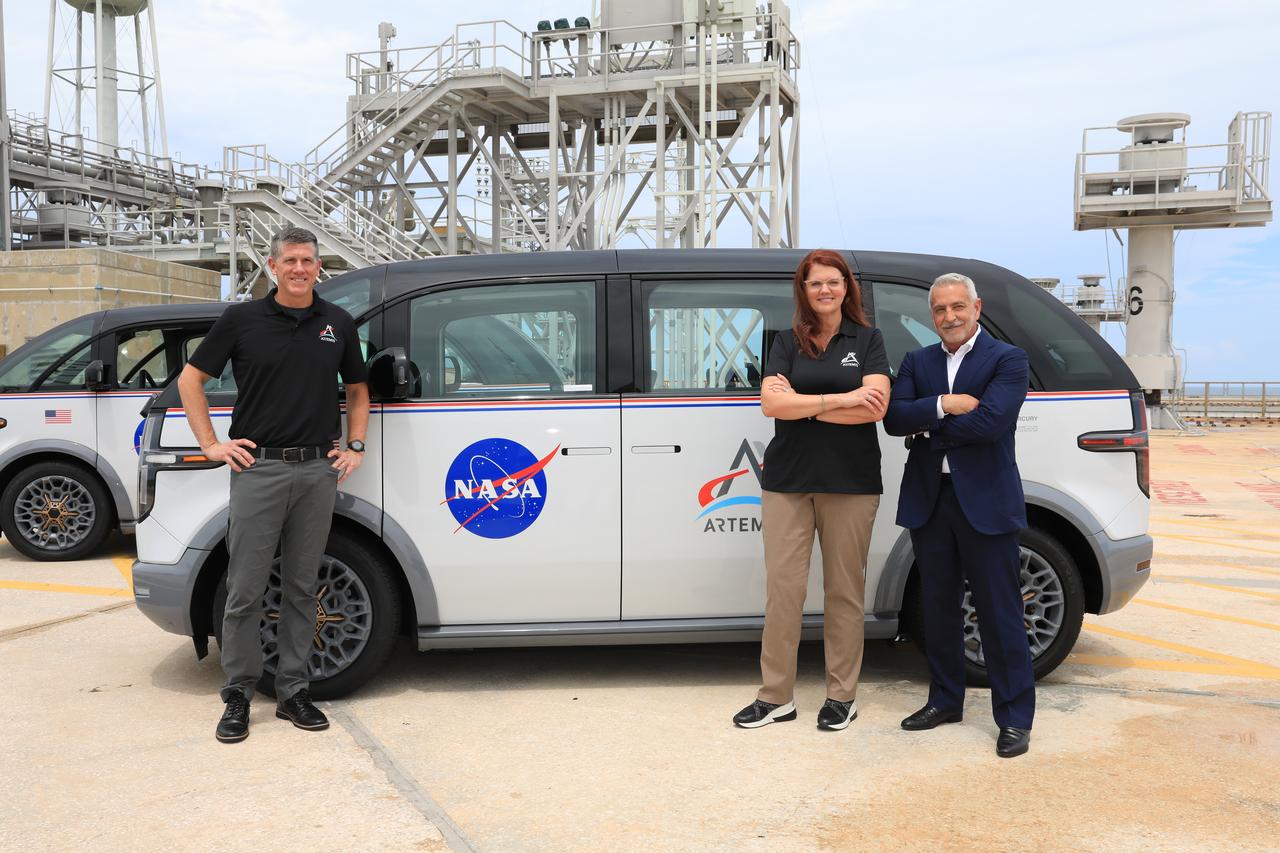
Three specially designed, fully electric, environmentally friendly crew transportation vehicles for Artemis missions arrived at NASA’s Kennedy Space Center in Florida on July 11, 2023. One of the zero-emission vehicles is shown here at Launch Pad 39B. From left are Jeremy Graeber, Artemis assistant launch director; Charlie Blackwell-Thompson, Artemis launch director; and Tony Aquila, chairman and CEO, Canoo Technologies Inc.. The fleet, which will carry astronauts to Launch Complex 39B for Artemis missions, was delivered by the manufacturer, Canoo Technologies Inc. of Torrance, California.
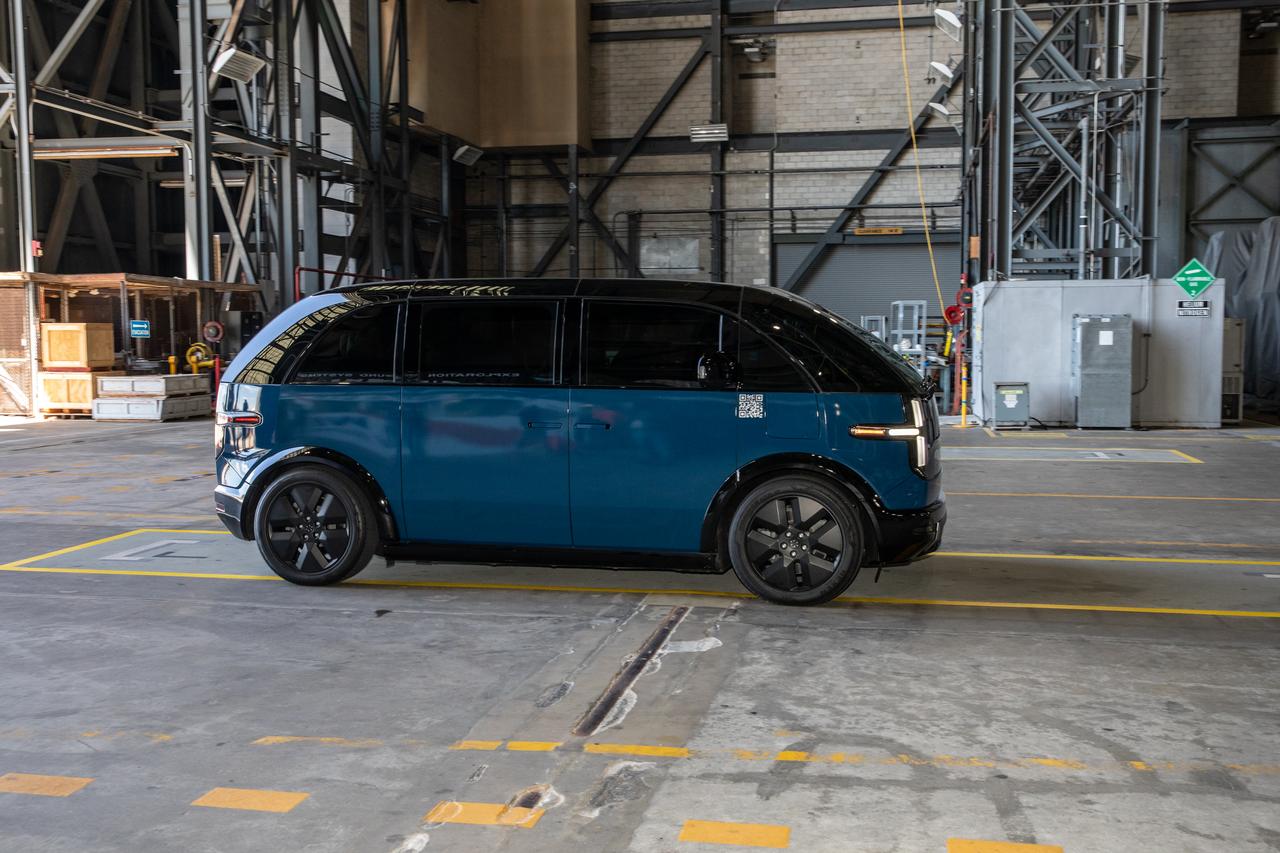
A concept design of a crew transportation vehicle (CTV) for Artemis crewed missions is driven inside the transfer aisle of the Vehicle Assembly Building at NASA’s Kennedy Space Center in Florida on May 11, 2022. Canoo Technologies Inc., was awarded a contract to design and provide the next generation of CTVs for the Artemis crewed missions. Representatives with Canoo were at the spaceport demonstrating the environmentally friendly fleet of vehicles. Artemis II will be the first Artemis mission flying crew aboard Orion. In later missions, NASA will land the first woman and the first person of color on the surface of the Moon, paving the way for a long-term lunar presence and serving as a steppingstone on the way to Mars.
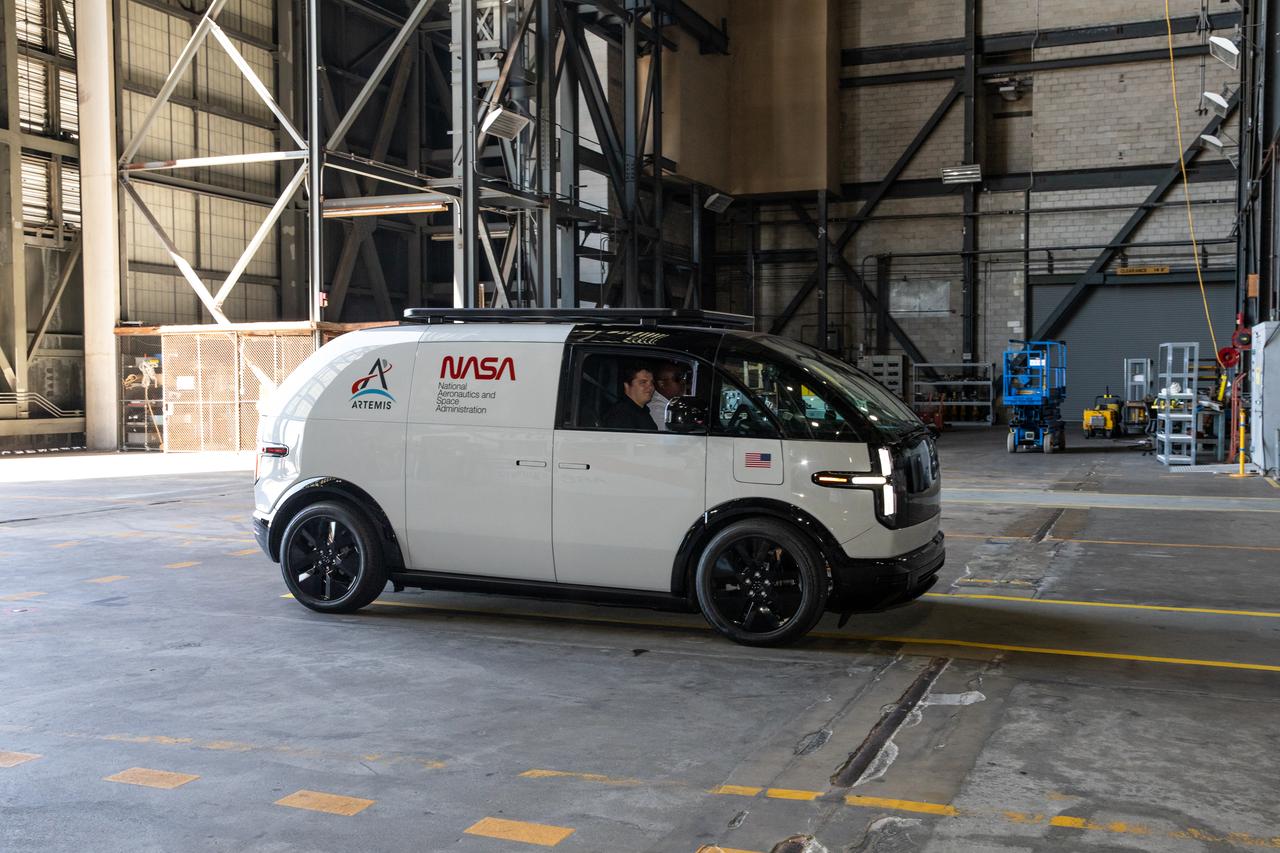
A concept design of a crew transportation vehicle (CTV) for Artemis crewed missions is driven inside the transfer aisle of the Vehicle Assembly Building at NASA’s Kennedy Space Center in Florida on May 11, 2022. Canoo Technologies Inc., was awarded a contract to design and provide the next generation of CTVs for the Artemis crewed missions. Representatives with Canoo were at the spaceport demonstrating the environmentally friendly fleet of vehicles. Artemis II will be the first Artemis mission flying crew aboard Orion. In later missions, NASA will land the first woman and the first person of color on the surface of the Moon, paving the way for a long-term lunar presence and serving as a steppingstone on the way to Mars.
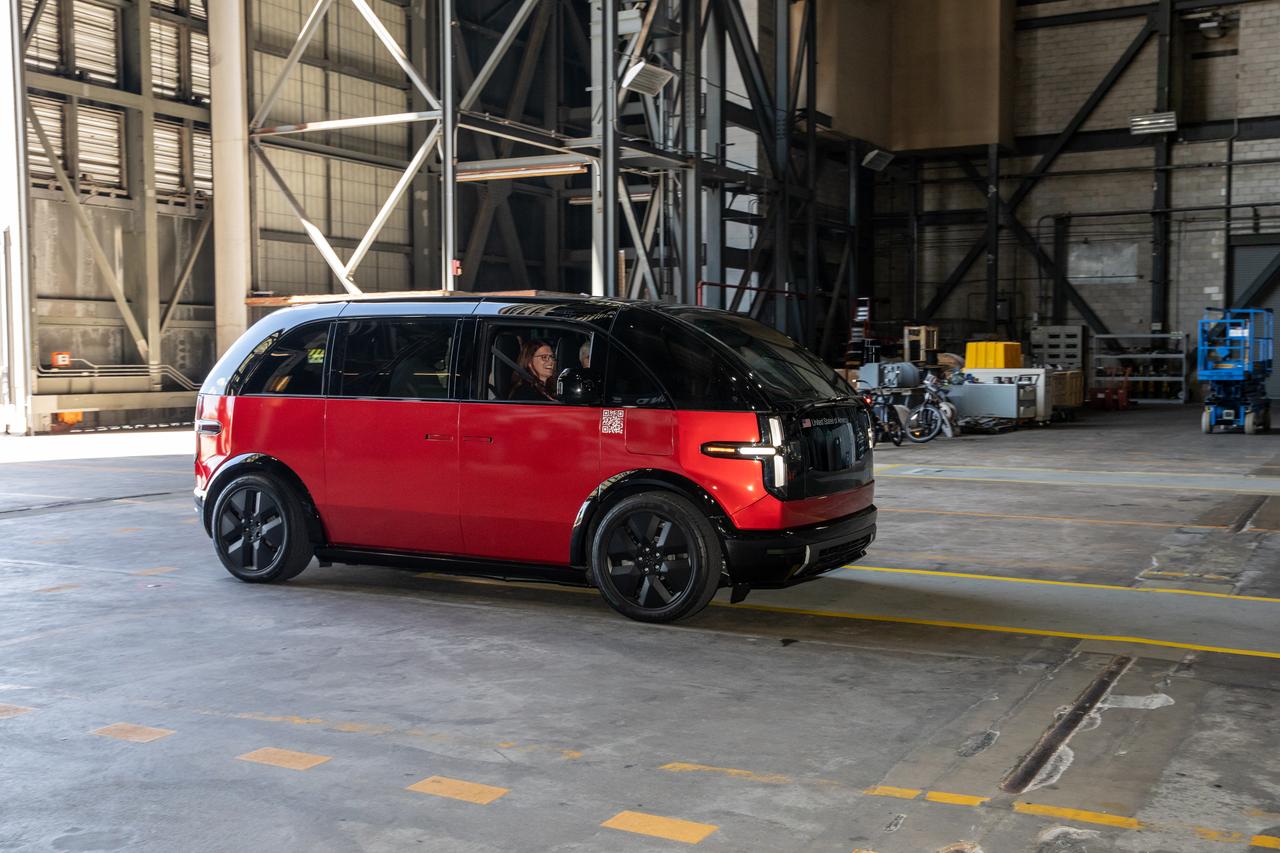
A concept design of a crew transportation vehicle (CTV) for Artemis crewed missions is driven inside the transfer aisle of the Vehicle Assembly Building at NASA’s Kennedy Space Center in Florida on May 11, 2022. Canoo Technologies Inc., was awarded a contract to design and provide the next generation of CTVs for the Artemis crewed missions. Representatives with Canoo were at the spaceport demonstrating the environmentally friendly fleet of vehicles. Artemis II will be the first Artemis mission flying crew aboard Orion. In later missions, NASA will land the first woman and the first person of color on the surface of the Moon, paving the way for a long-term lunar presence and serving as a steppingstone on the way to Mars.
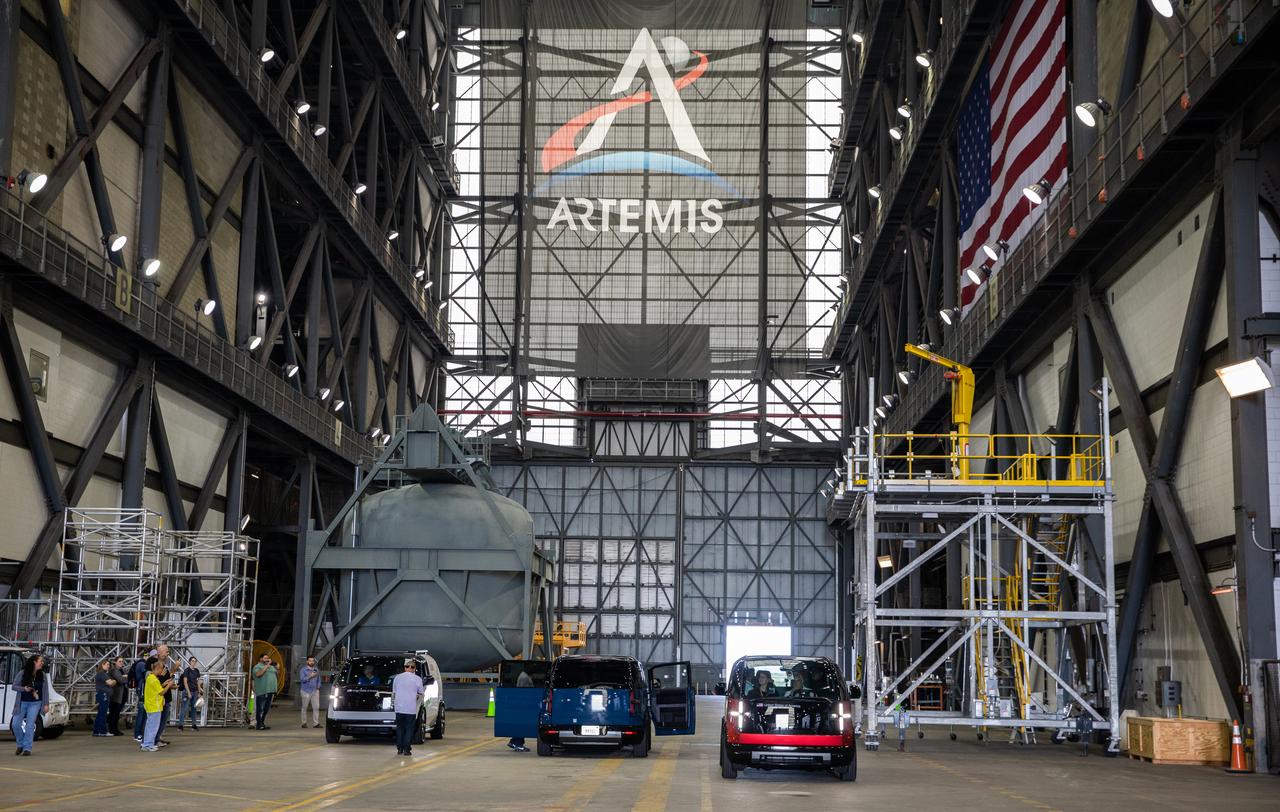
Several concept designs for Artemis crew transportation vehicles (CTV) are lined up in the transfer aisle of the Vehicle Assembly Building at NASA’s Kennedy Space Center in Florida on May 11, 2022. Canoo Technologies Inc., was awarded a contract to design and provide the next generation of CTVs for the Artemis crewed missions. Representatives with Canoo were at the spaceport demonstrating the environmentally friendly fleet of vehicles. Artemis II will be the first Artemis mission flying crew aboard Orion. In later missions, NASA will land the first woman and the first person of color on the surface of the Moon, paving the way for a long-term lunar presence and serving as a steppingstone on the way to Mars.
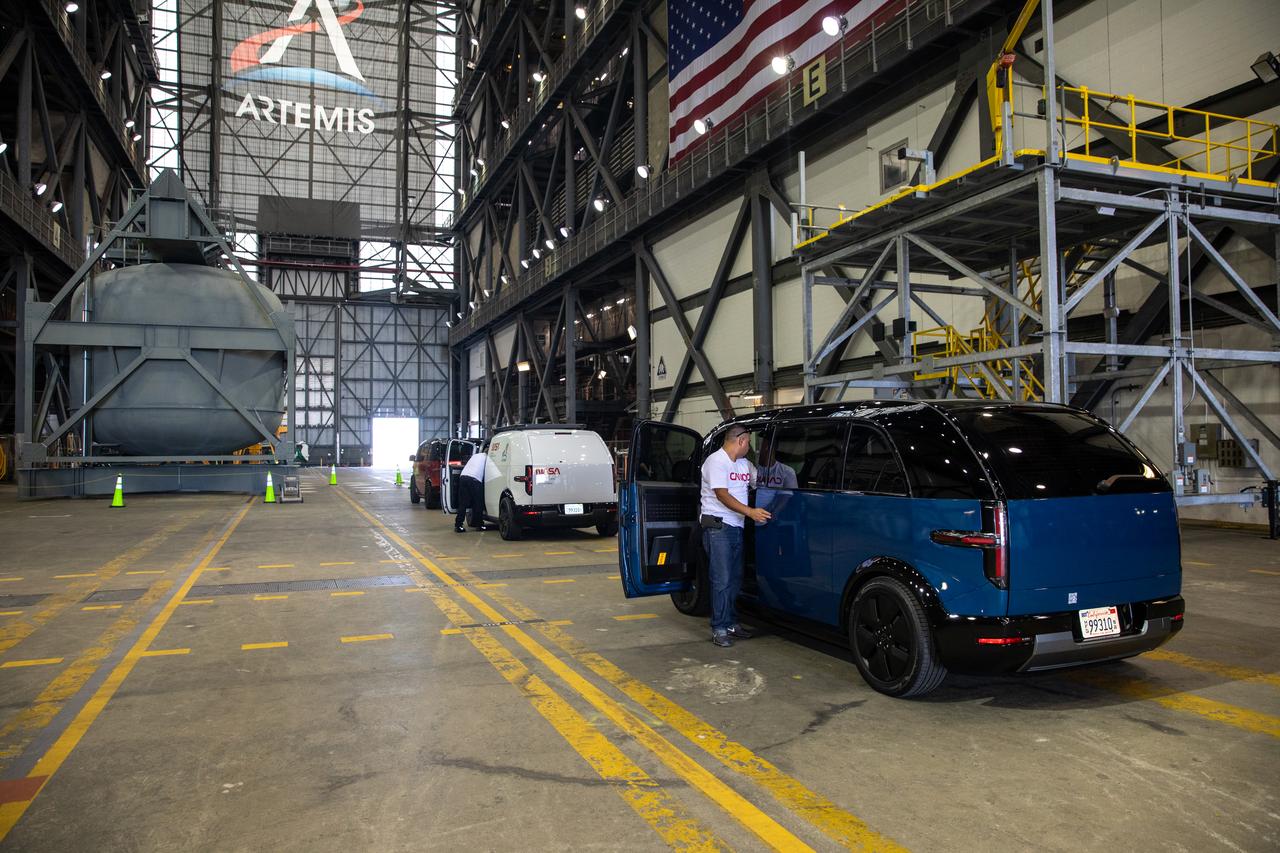
Several concept designs for Artemis crew transportation vehicles (CTV) are lined up in the transfer aisle of the Vehicle Assembly Building at NASA’s Kennedy Space Center in Florida on May 11, 2022. Canoo Technologies Inc., was awarded a contract to design and provide the next generation of CTVs for the Artemis crewed missions. Representatives with Canoo were at the spaceport demonstrating the environmentally friendly fleet of vehicles. Artemis II will be the first Artemis mission flying crew aboard Orion. In later missions, NASA will land the first woman and the first person of color on the surface of the Moon, paving the way for a long-term lunar presence and serving as a steppingstone on the way to Mars.

Several concept designs for Artemis crew transportation vehicles (CTV) are lined up in the transfer aisle of the Vehicle Assembly Building at NASA’s Kennedy Space Center in Florida on May 11, 2022. Canoo Technologies Inc., was awarded a contract to design and provide the next generation of CTVs for the Artemis crewed missions. Representatives with Canoo were at the spaceport demonstrating the environmentally friendly fleet of vehicles. Artemis II will be the first Artemis mission flying crew aboard Orion. In later missions, NASA will land the first woman and the first person of color on the surface of the Moon, paving the way for a long-term lunar presence and serving as a steppingstone on the way to Mars.
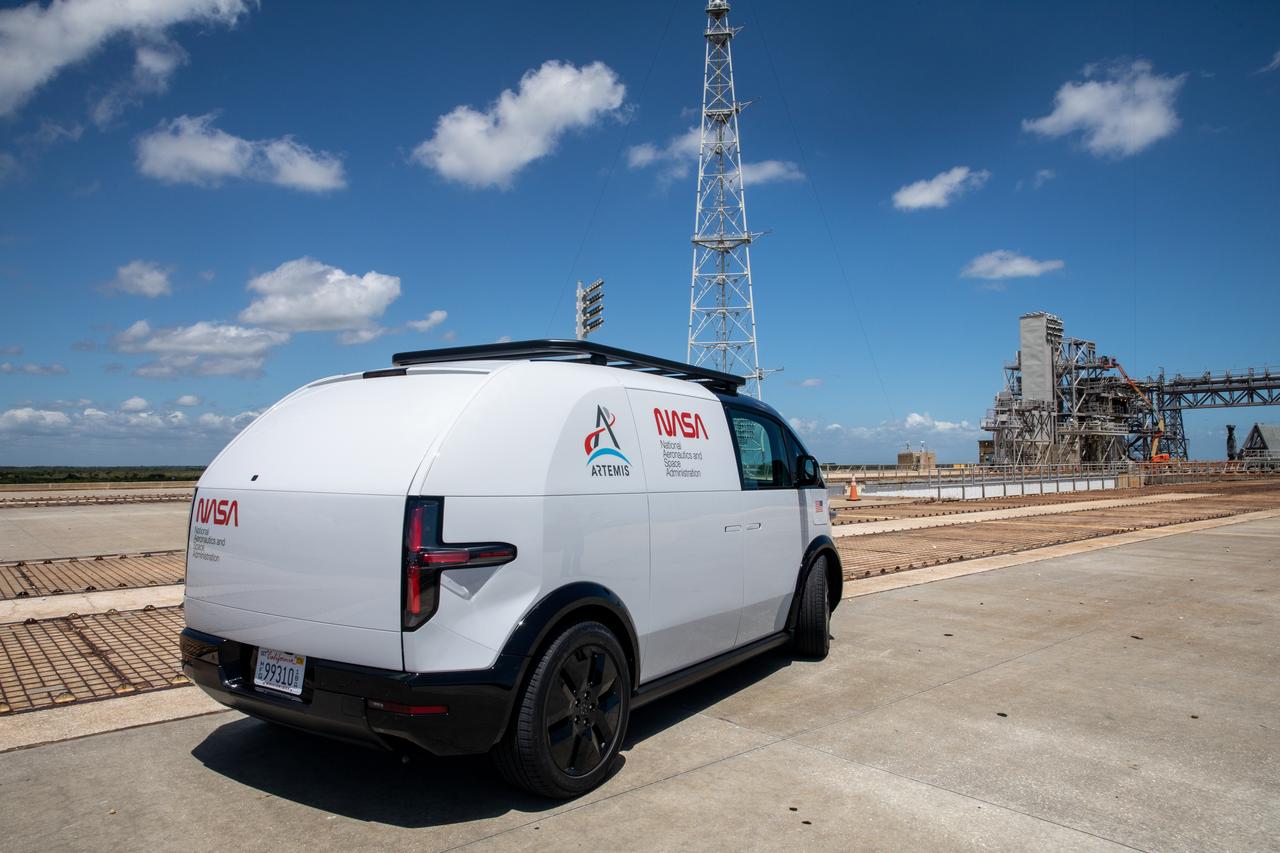
Prototypes of the crew transportation vehicle (CTV) for Artemis crewed missions are driven out to Launch Complex 39B at NASA’s Kennedy Space Center in Florida on May 11, 2022. Canoo Technologies Inc., was awarded a contract to design and provide the next generation of CTVs for the Artemis crewed missions. Representatives with Canoo were at the spaceport demonstrating the environmentally friendly fleet of vehicles. Artemis II will be the first Artemis mission flying crew aboard Orion. In later missions, NASA will land the first woman and the first person of color on the surface of the Moon, paving the way for a long-term lunar presence and serving as a steppingstone on the way to Mars.

Kennedy Space Center Director Janet Petro test drives a concept design crew transportation vehicle (CTV) for Artemis crewed missions on May 11, 2022. Canoo Technologies Inc., was awarded a contract to design and provide the next generation of CTVs for the Artemis crewed missions. Representatives with Canoo were at the spaceport demonstrating the environmentally friendly fleet of vehicles. Artemis II will be the first Artemis mission flying crew aboard Orion. In later missions, NASA will land the first woman and the first person of color on the surface of the Moon, paving the way for a long-term lunar presence and serving as a steppingstone on the way to Mars.

Several concept designs for Artemis crew transportation vehicles (CTV) are lined up at Launch Complex 39B at NASA’s Kennedy Space Center in Florida on May 11, 2022. Canoo Technologies Inc., was awarded a contract to design and provide the next generation of CTVs for the Artemis crewed missions. Representatives with Canoo were at the spaceport demonstrating the environmentally friendly fleet of vehicles. Artemis II will be the first Artemis mission flying crew aboard Orion. In later missions, NASA will land the first woman and the first person of color on the surface of the Moon, paving the way for a long-term lunar presence and serving as a steppingstone on the way to Mars.
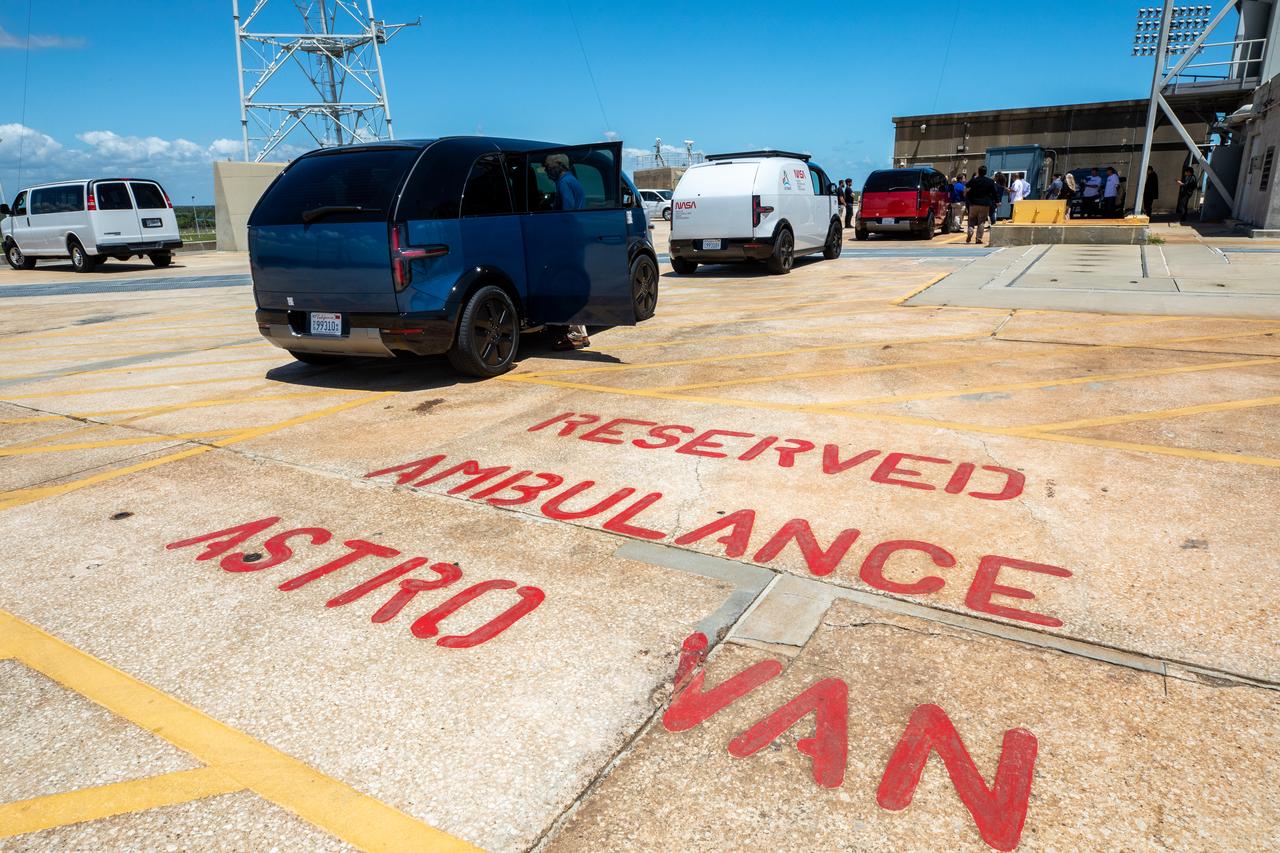
Several concept designs for Artemis crew transportation vehicles (CTV) are lined up at Launch Complex 39B at NASA’s Kennedy Space Center in Florida on May 11, 2022. Canoo Technologies Inc., was awarded a contract to design and provide the next generation of CTVs for the Artemis crewed missions. Representatives with Canoo were at the spaceport demonstrating the environmentally friendly fleet of vehicles. Artemis II will be the first Artemis mission flying crew aboard Orion. In later missions, NASA will land the first woman and the first person of color on the surface of the Moon, paving the way for a long-term lunar presence and serving as a steppingstone on the way to Mars.
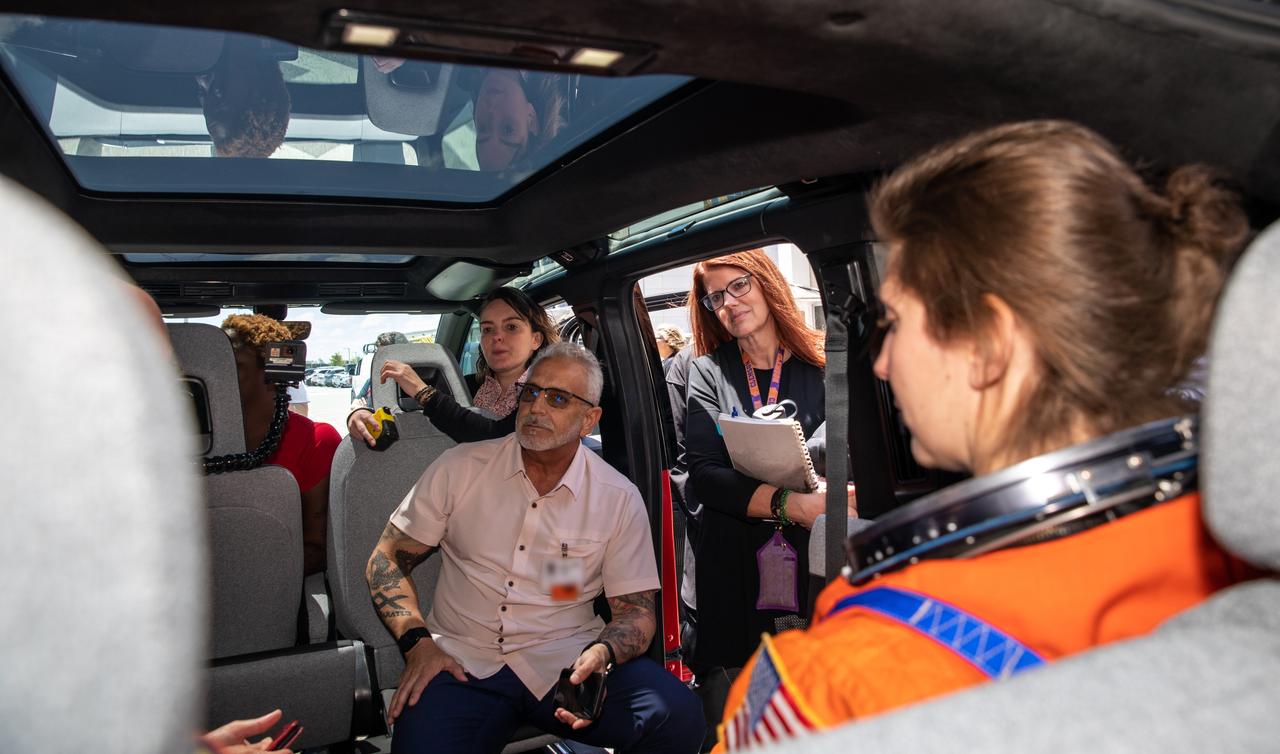
Technicians from Johnson Space Center, dressed in flight suits, secure themselves inside a prototype of a crew transportation vehicle (CTV) for Artemis crewed missions for a test drive near the Neil Armstrong Operations and Checkout Building at NASA’s Kennedy Space Center in Florida on May 11, 2022. Canoo Technologies Inc., was awarded a contract to design and provide the next generation of CTVs for the Artemis crewed missions Representatives with Canoo were at the spaceport demonstrating the environmentally friendly fleet of vehicles. Also in view near the vehicle’s door is Artemis I Launch Director Charlie Blackwell Thompson, and at left, is Anthony Aquila, chief executive officer of Canoo Technologies Inc.. Artemis II will be the first Artemis mission flying crew aboard Orion. In later missions, NASA will land the first woman and the first person of color on the surface of the Moon, paving the way for a long-term lunar presence and serving as a steppingstone on the way to Mars.
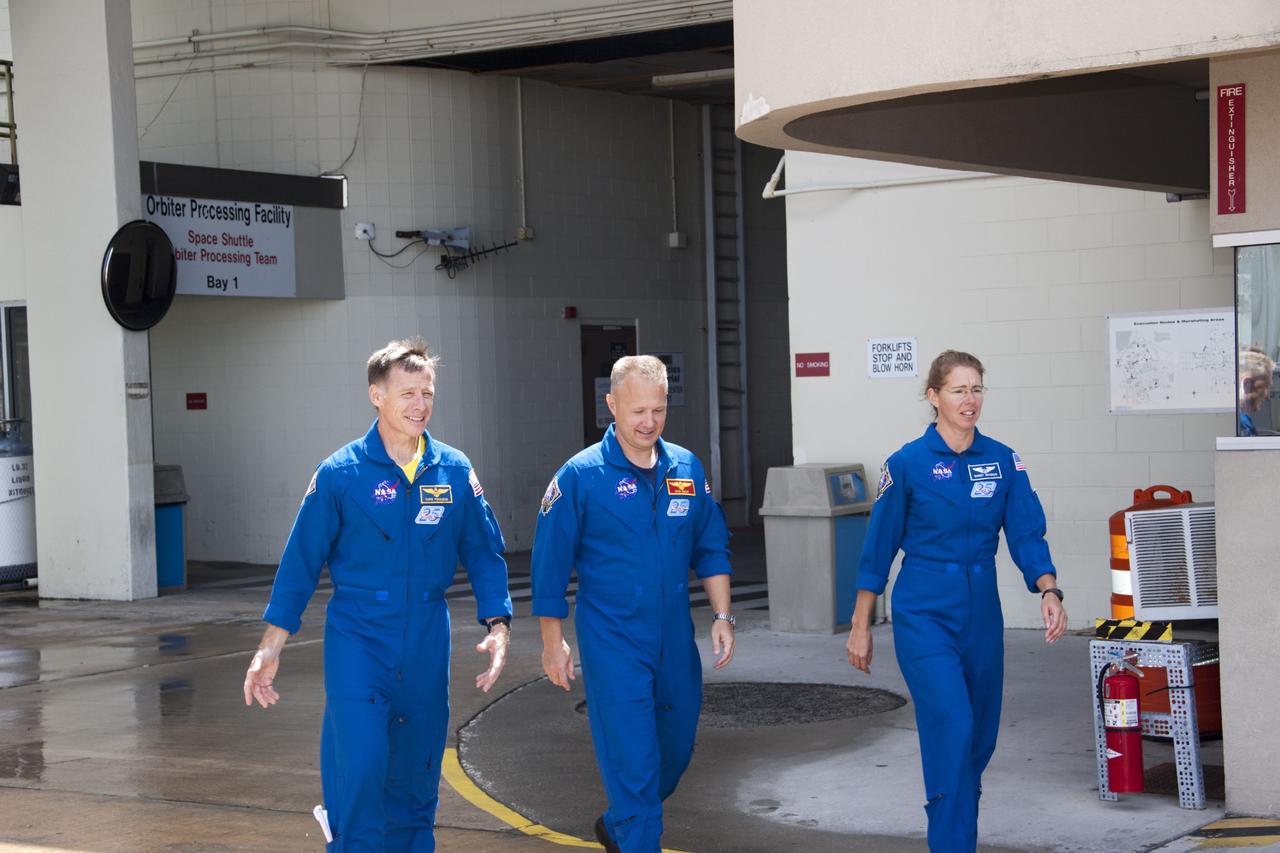
CAPE CANAVERAL, Fla. – Astronauts from space shuttle Atlantis’ STS-135 mission leave Kennedy Space Center's Orbiter Processing Facility-2 after visiting with employees. From left are Commander Chris Ferguson, Pilot Doug Hurley and Mission Specialist Sandra Magnus. The astronauts were at the center for the traditional post-flight crew return presentation. STS-135 Mission Specialist Rex Walheim was unable to attend the Kennedy event. In July 2011, Atlantis and its crew delivered to the International Space Station the Raffaello multi-purpose logistics module packed with more than 9,400 pounds of spare parts, equipment and supplies that will sustain station operations for the next year. STS-135 was the 33rd and final flight for Atlantis and the final mission of the Space Shuttle Program. For more information, visit www.nasa.gov/mission_pages/shuttle/shuttlemissions/sts135/index.html. Photo credit: NASA/Jim Grossmann
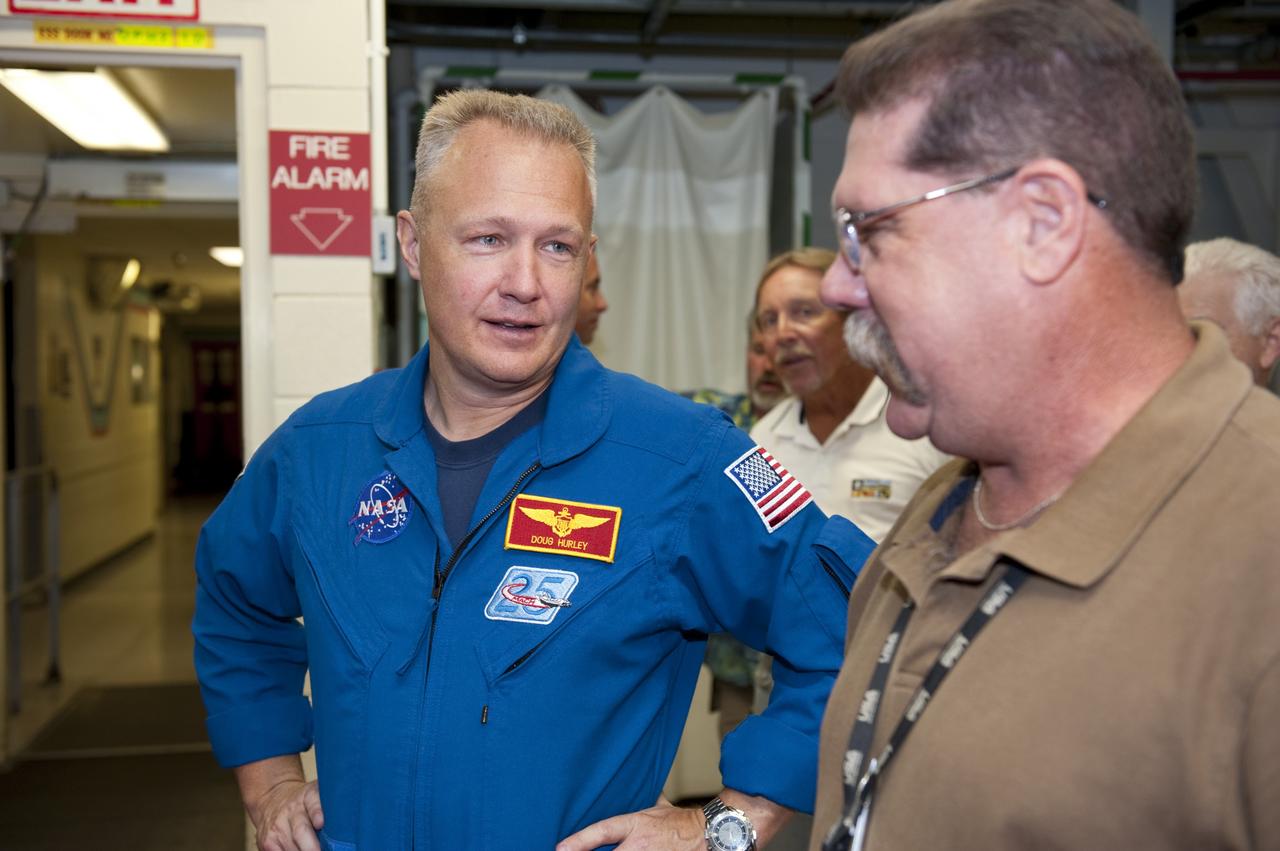
CAPE CANAVERAL, Fla. – STS-135 Pilot Doug Hurley visits with an employee inside Kennedy Space Center's Orbiter Processing Facility-2, where space shuttle Atlantis is being prepared for eventual display at the Kennedy Space Center Visitor Complex in Florida. Hurley, along with Commander Chris Ferguson and Mission Specialist Sandra Magnus, was at the center for the traditional post-flight crew return presentation. STS-135 Mission Specialist Rex Walheim was unable to attend the Kennedy event. In July 2011, Atlantis and its crew delivered to the International Space Station the Raffaello multi-purpose logistics module packed with more than 9,400 pounds of spare parts, equipment and supplies that will sustain station operations for the next year. STS-135 was the 33rd and final flight for Atlantis and the final mission of the Space Shuttle Program. For more information, visit www.nasa.gov/mission_pages/shuttle/shuttlemissions/sts135/index.html. Photo credit: NASA/Kim Shiflett
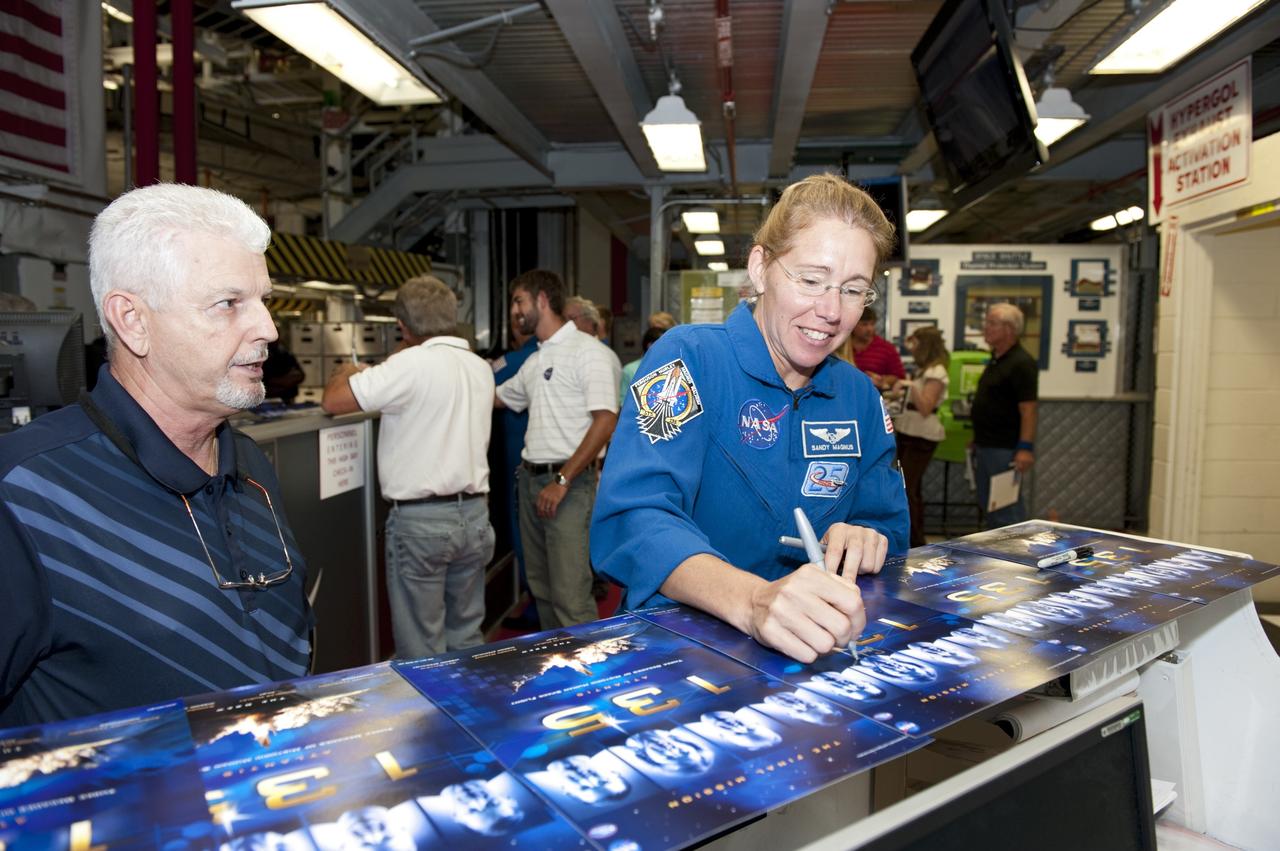
CAPE CANAVERAL, Fla. – STS-135 Mission Specialist Sandra Magnus signs an autograph for an employee inside Kennedy Space Center's Orbiter Processing Facility-2, where space shuttle Atlantis is being prepared for eventual display at the Kennedy Space Center Visitor Complex in Florida. Magnus, along with Commander Chris Ferguson and Pilot Doug Hurley, was at the center for the traditional post-flight crew return presentation. STS-135 Mission Specialist Rex Walheim was unable to attend the Kennedy event. In July 2011, Atlantis and its crew delivered to the International Space Station the Raffaello multi-purpose logistics module packed with more than 9,400 pounds of spare parts, equipment and supplies that will sustain station operations for the next year. STS-135 was the 33rd and final flight for Atlantis and the final mission of the Space Shuttle Program. For more information, visit www.nasa.gov/mission_pages/shuttle/shuttlemissions/sts135/index.html. Photo credit: NASA/Kim Shiflett
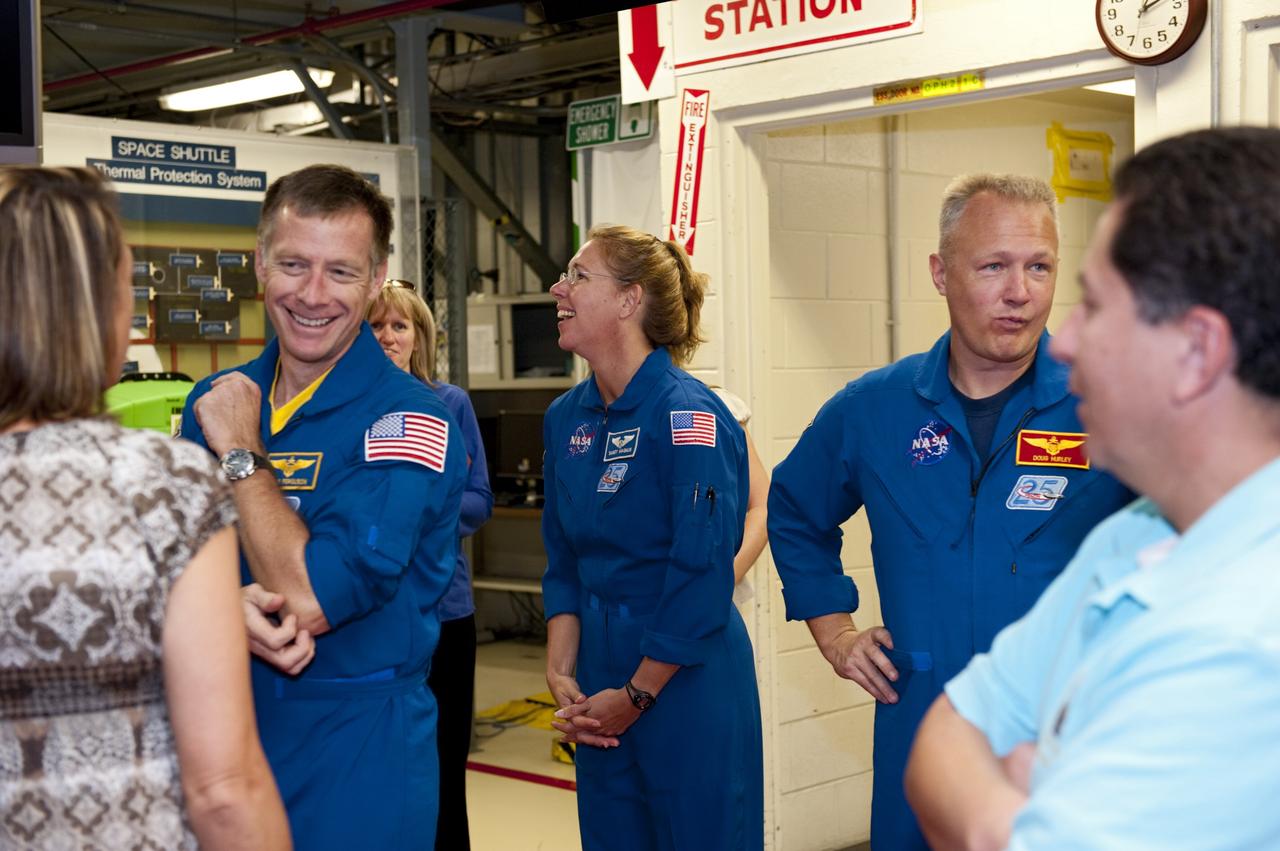
CAPE CANAVERAL, Fla. – Astronauts from space shuttle Atlantis’ STS-135 mission visit with employees inside Kennedy Space Center's Orbiter Processing Facility-2, where space shuttle Atlantis is being prepared for eventual display at the Kennedy Space Center Visitor Complex in Florida. The astronauts were at the center for the traditional post-flight crew return presentation. From left are Commander Chris Ferguson, Mission Specialist Sandra Magnus and Pilot Doug Hurley. STS-135 Mission Specialist Rex Walheim was unable to attend the Kennedy event. In July 2011, Atlantis and its crew delivered to the International Space Station the Raffaello multi-purpose logistics module packed with more than 9,400 pounds of spare parts, equipment and supplies that will sustain station operations for the next year. STS-135 was the 33rd and final flight for Atlantis and the final mission of the Space Shuttle Program. For more information, visit www.nasa.gov/mission_pages/shuttle/shuttlemissions/sts135/index.html. Photo credit: NASA/Kim Shiflett
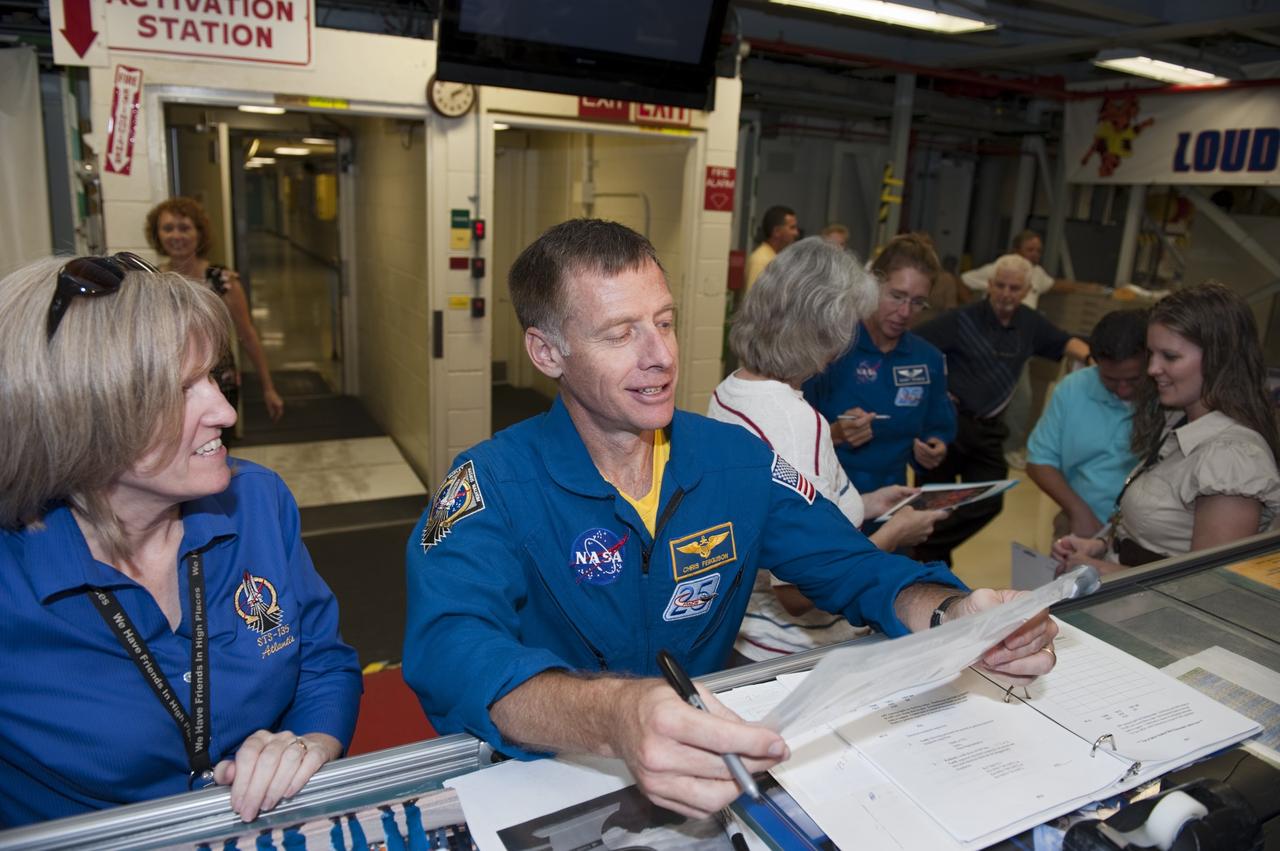
CAPE CANAVERAL, Fla. – STS-135 Commander Chris Ferguson talks with Atlantis Flow Director Angie Brewer, while Mission Specialist Sandra Magnus sign autographs for employees inside Kennedy Space Center's Orbiter Processing Facility-2, where space shuttle Atlantis is being prepared for eventual display at the Kennedy Space Center Visitor Complex in Florida. The astronauts, along with Pilot Doug Hurley, were at the center for the traditional post-flight crew return presentation. STS-135 Mission Specialist Rex Walheim was unable to attend the Kennedy event. In July 2011, Atlantis and its crew delivered to the International Space Station the Raffaello multi-purpose logistics module packed with more than 9,400 pounds of spare parts, equipment and supplies that will sustain station operations for the next year. STS-135 was the 33rd and final flight for Atlantis and the final mission of the Space Shuttle Program. For more information, visit www.nasa.gov/mission_pages/shuttle/shuttlemissions/sts135/index.html. Photo credit: NASA/Kim Shiflett
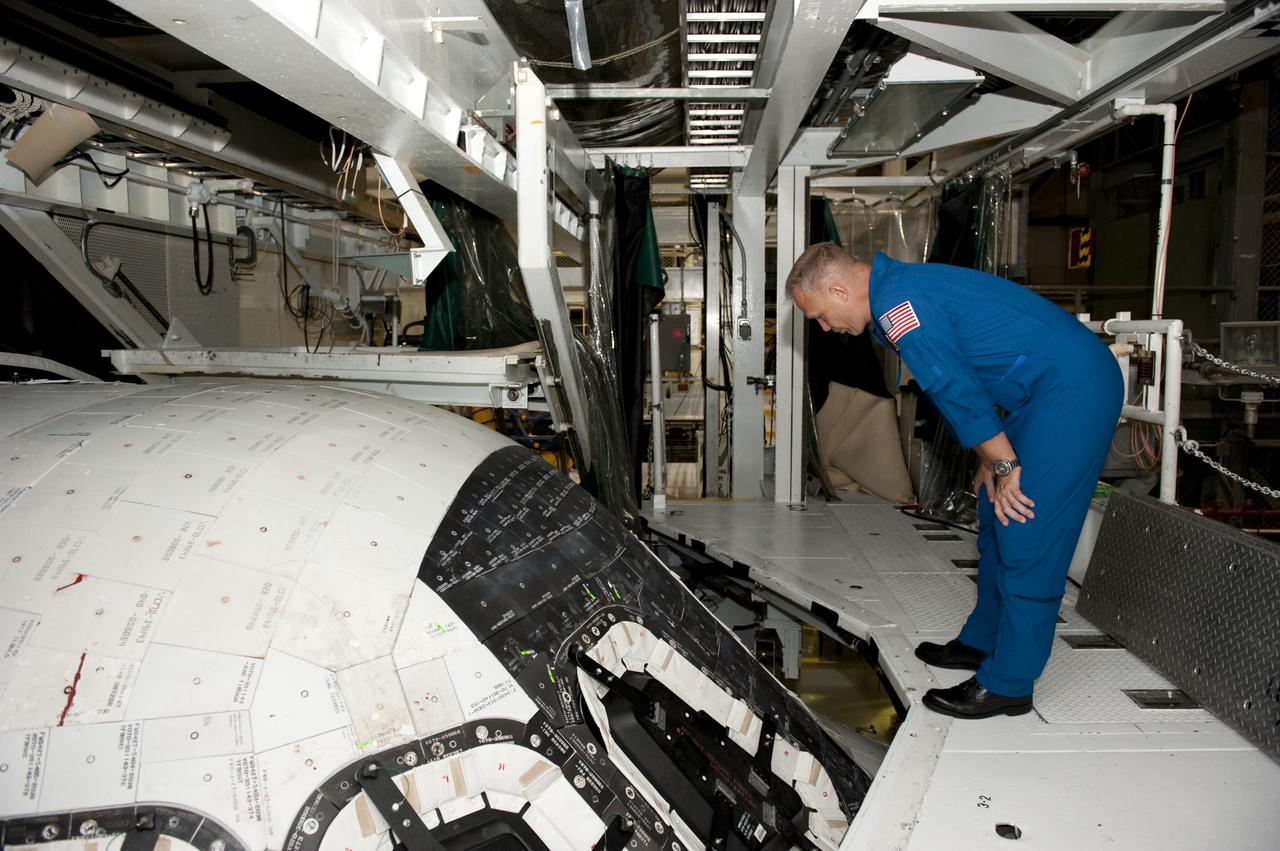
CAPE CANAVERAL, Fla. – Inside Kennedy Space Center's Orbiter Processing Facility-2, STS-135 Pilot Doug Hurley inspects the windows on space shuttle Atlantis. Atlantis is being prepared for eventual display at the Kennedy Space Center Visitor Complex in Florida. Hurley, along with Commander Chris Ferguson and Mission Specialist Sandra Magnus, was at the center for the traditional post-flight crew return presentation. STS-135 Mission Specialist Rex Walheim was unable to attend the Kennedy event. In July 2011, Atlantis and its crew delivered to the International Space Station the Raffaello multi-purpose logistics module packed with more than 9,400 pounds of spare parts, equipment and supplies that will sustain station operations for the next year. STS-135 was the 33rd and final flight for Atlantis and the final mission of the Space Shuttle Program. For more information, visit www.nasa.gov/mission_pages/shuttle/shuttlemissions/sts135/index.html. Photo credit: NASA/Kim Shiflett
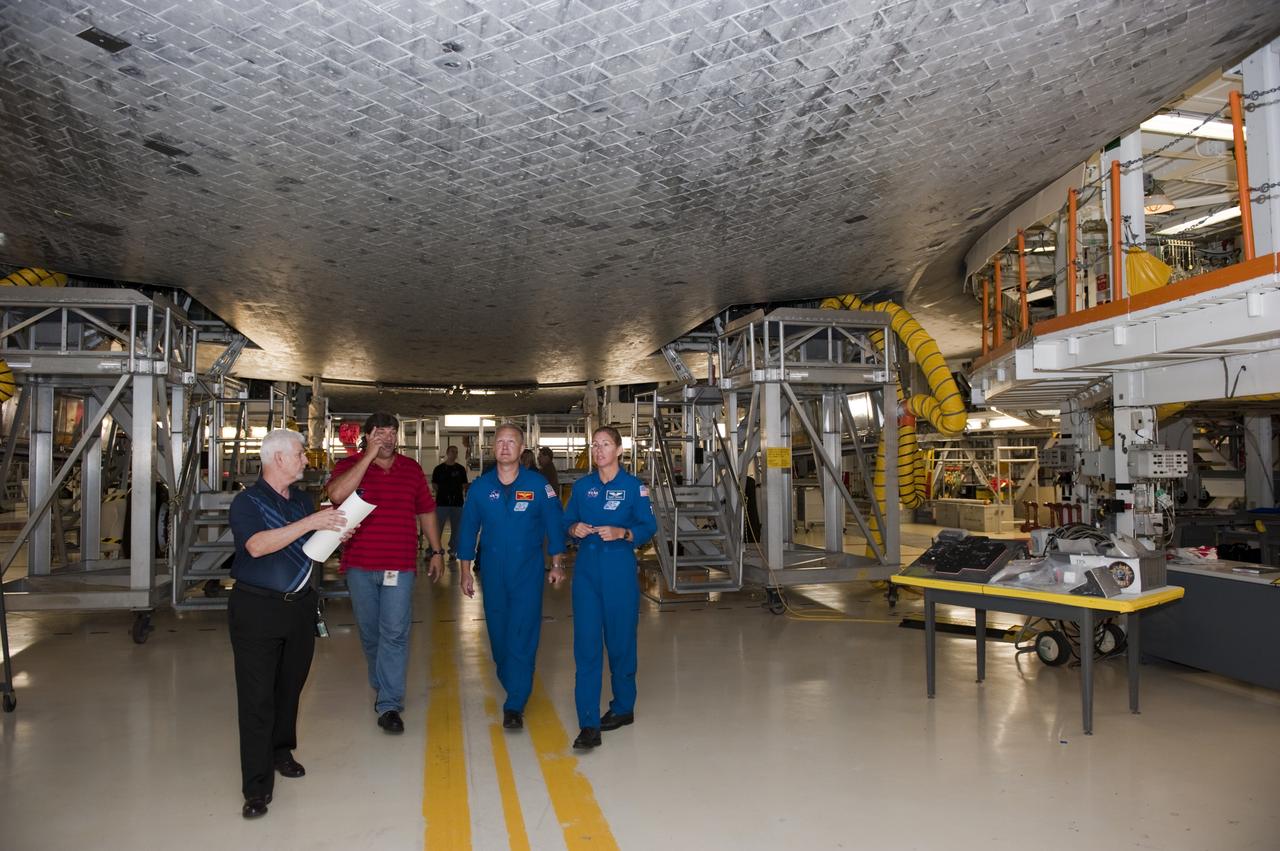
CAPE CANAVERAL, Fla. – STS-135 Pilot Doug Hurley and Mission Specialist Sandra Magnus receive a briefing and up-close look beneath space shuttle Atlantis inside Kennedy Space Center's Orbiter Processing Facility-2. Atlantis is being prepared for eventual display at the Kennedy Space Center Visitor Complex in Florida. The astronauts, along Commander Chris Ferguson, were at the center for the traditional post-flight crew return presentation. STS-135 Mission Specialist Rex Walheim was unable to attend the Kennedy event. In July 2011, Atlantis and its crew delivered to the International Space Station the Raffaello multi-purpose logistics module packed with more than 9,400 pounds of spare parts, equipment and supplies that will sustain station operations for the next year. STS-135 was the 33rd and final flight for Atlantis and the final mission of the Space Shuttle Program. For more information, visit www.nasa.gov/mission_pages/shuttle/shuttlemissions/sts135/index.html. Photo credit: NASA/Kim Shiflett
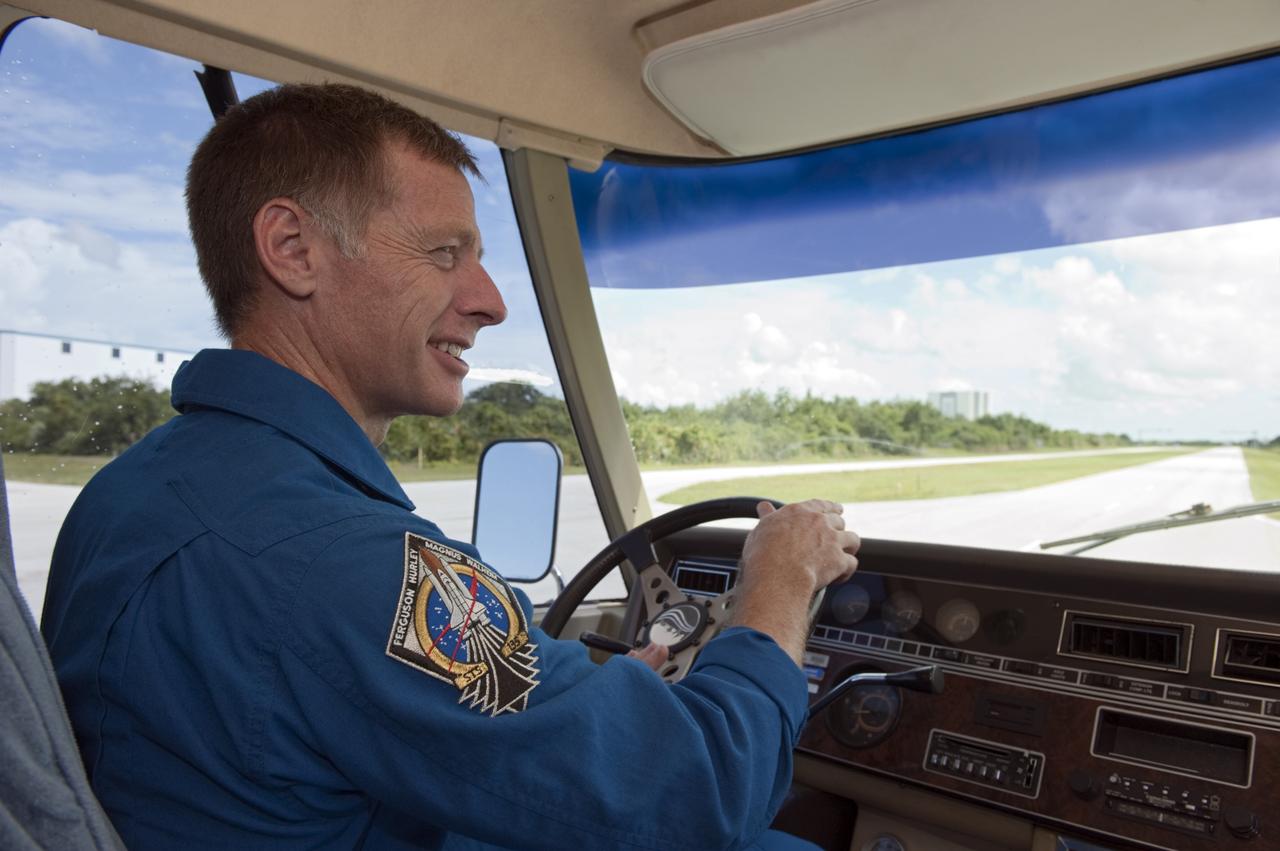
CAPE CANAVERAL, Fla. – STS-135 Commander Chris Ferguson settles in the driver's seat of NASA’s silver Astrovan. Since 1984, the Astrovan, a modified Airstream motor home, has carried shuttle crew members to the launch pads. Ferguson, along with Pilot Doug Hurley and Mission Specialist Sandra Magnus, was at the center for the traditional post-flight crew return presentation. STS-135 Mission Specialist Rex Walheim was unable to attend the Kennedy event. In July 2011, Atlantis and its crew delivered to the International Space Station the Raffaello multi-purpose logistics module packed with more than 9,400 pounds of spare parts, equipment and supplies that will sustain station operations for the next year. STS-135 was the 33rd and final flight for Atlantis and the final mission of the Space Shuttle Program. For more information, visit www.nasa.gov/mission_pages/shuttle/shuttlemissions/sts135/index.html. Photo credit: NASA/Kim Shiflett
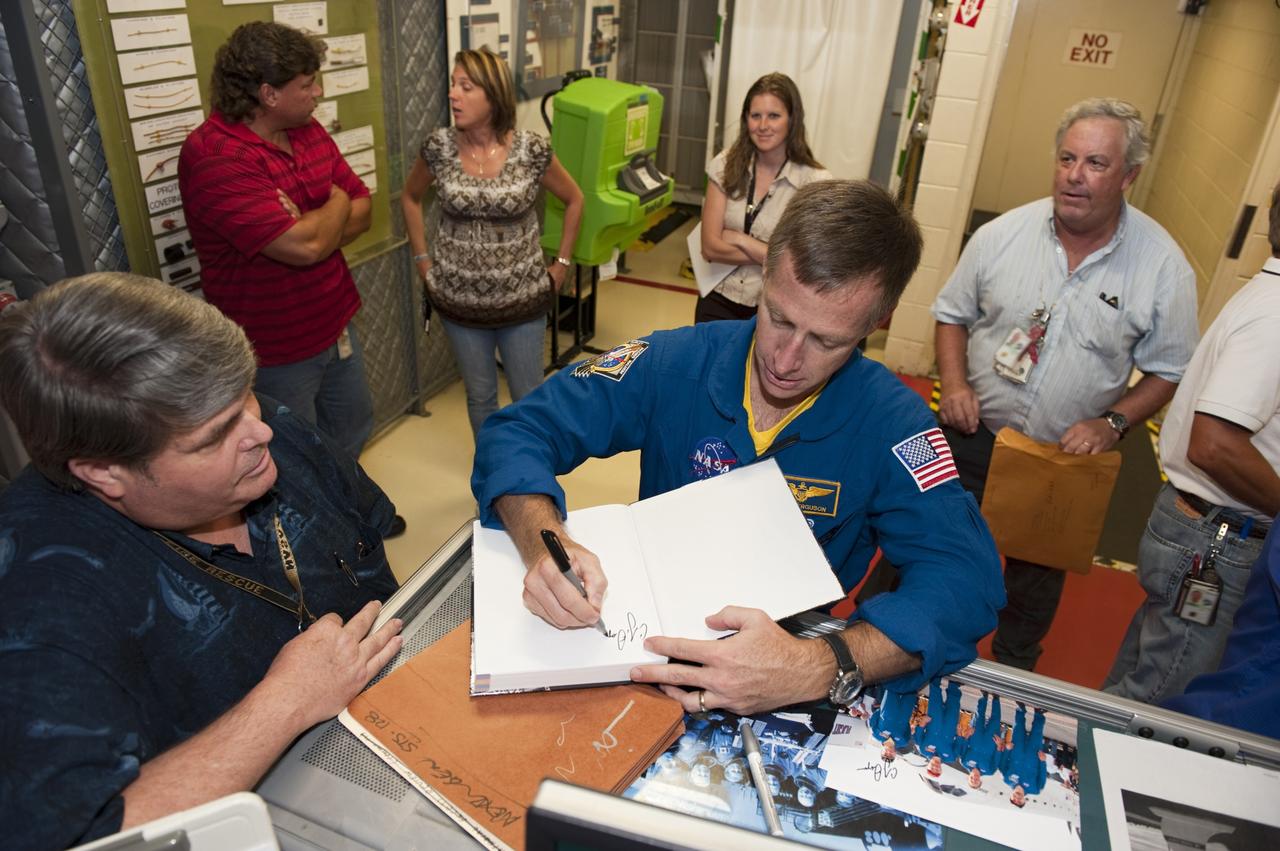
CAPE CANAVERAL, Fla. – STS-135 Commander Chris Ferguson autographs a book for an employee inside Kennedy Space Center's Orbiter Processing Facility-2, where space shuttle Atlantis is being prepared for eventual display at the Kennedy Space Center Visitor Complex in Florida. Ferguson, along Pilot Doug Hurley and Mission Specialist Sandra Magnus, was at the center for the traditional post-flight crew return presentation. STS-135 Mission Specialist Rex Walheim was unable to attend the Kennedy event. In July 2011, Atlantis and its crew delivered to the International Space Station the Raffaello multi-purpose logistics module packed with more than 9,400 pounds of spare parts, equipment and supplies that will sustain station operations for the next year. STS-135 was the 33rd and final flight for Atlantis and the final mission of the Space Shuttle Program. For more information, visit www.nasa.gov/mission_pages/shuttle/shuttlemissions/sts135/index.html. Photo credit: NASA/Kim Shiflett
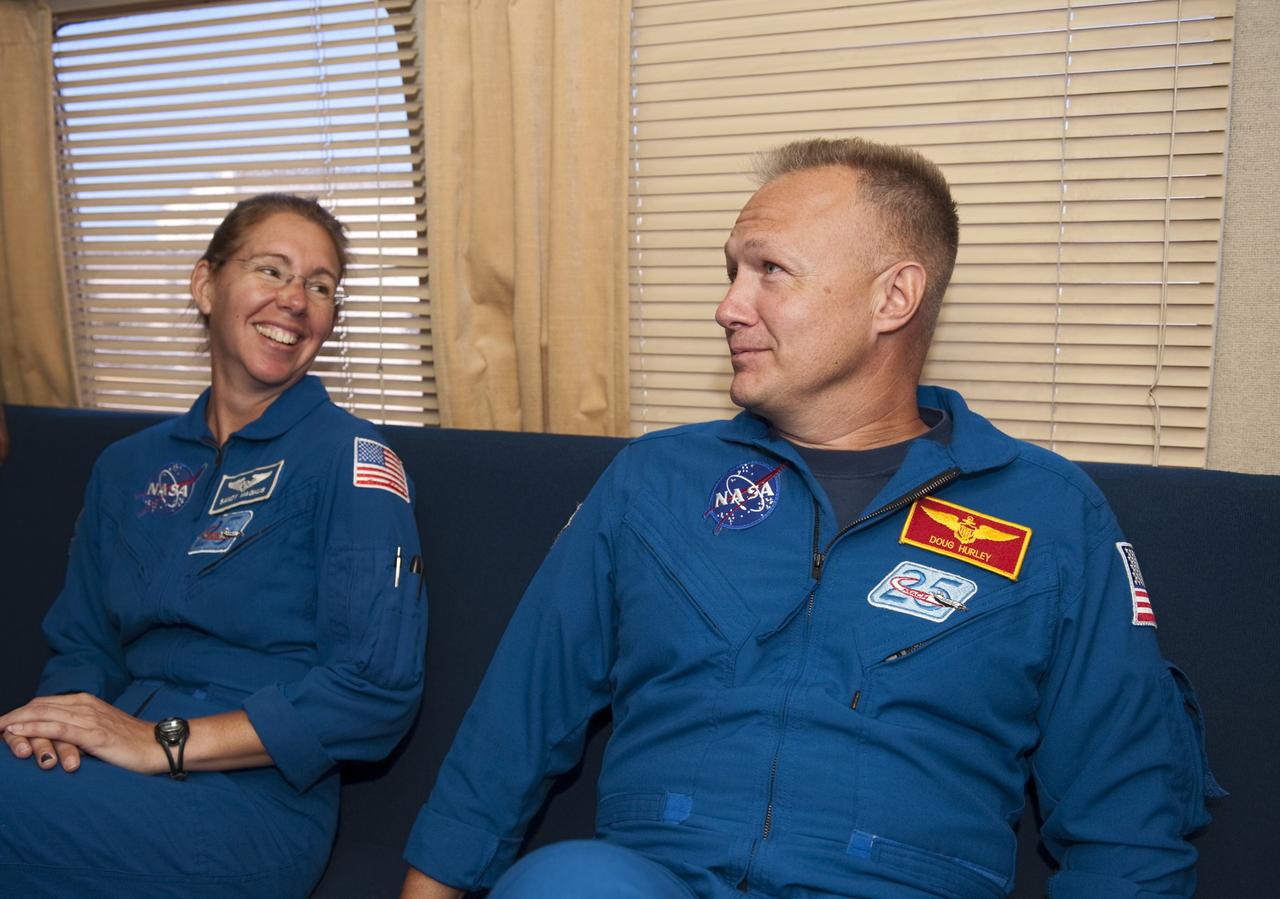
CAPE CANAVERAL, Fla. – Astronauts from Space Shuttle Atlantis’ STS-135 mission travel inside NASA’s silver Astrovan. From left are Mission Specialist Sandra Magnus and Pilot Doug Hurley. Since 1984, the Astrovan, a modified Airstream motor home, has carried shuttle crew members to the launch pads. The astronauts, along with Commander Chris Ferguson, were at the center for the traditional post-flight crew return presentation. STS-135 Mission Specialist Rex Walheim was unable to attend the Kennedy event. In July 2011, Atlantis and its crew delivered to the International Space Station the Raffaello multi-purpose logistics module packed with more than 9,400 pounds of spare parts, equipment and supplies that will sustain station operations for the next year. STS-135 was the 33rd and final flight for Atlantis and the final mission of the Space Shuttle Program. For more information, visit www.nasa.gov/mission_pages/shuttle/shuttlemissions/sts135/index.html. Photo credit: NASA/Kim Shiflett
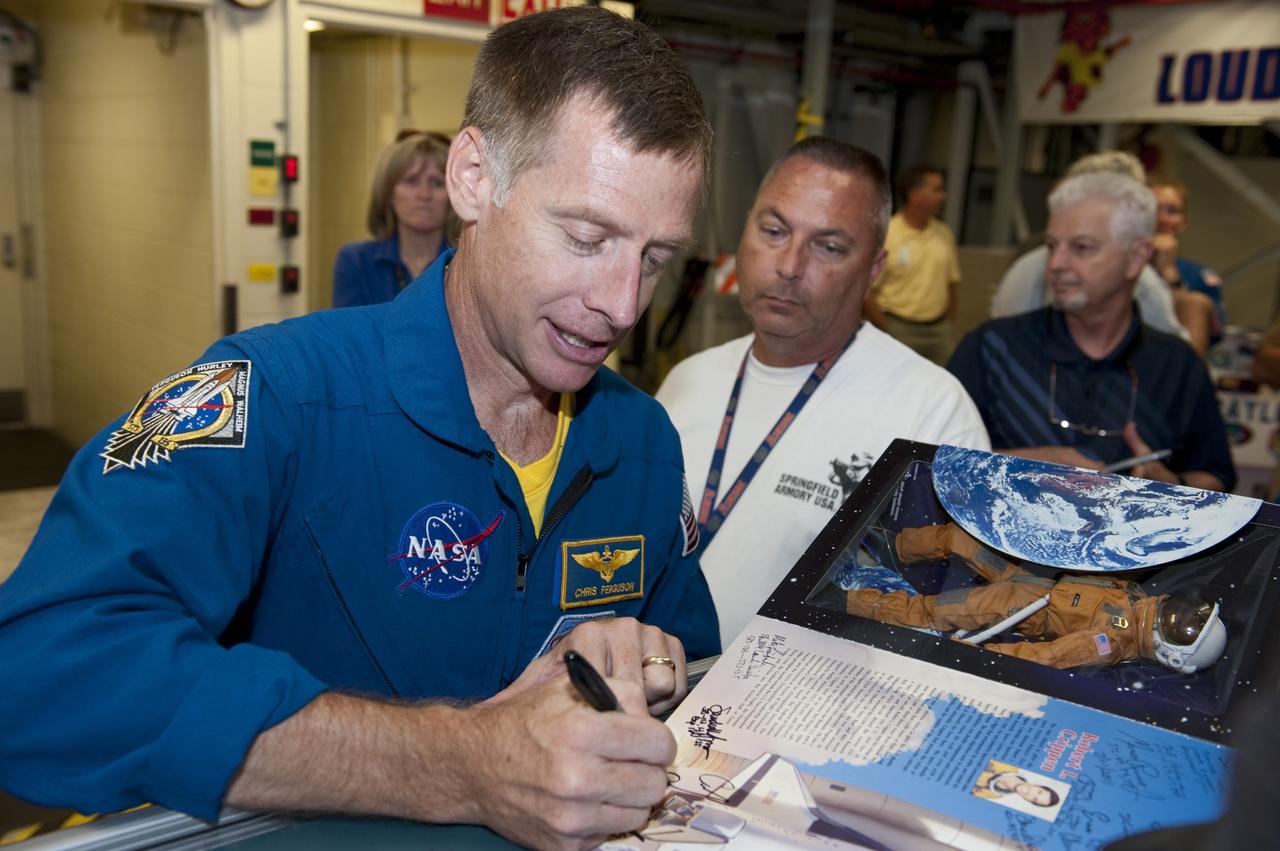
CAPE CANAVERAL, Fla. – STS-135 Commander Chris Ferguson signs an autograph for an employee inside Kennedy Space Center's Orbiter Processing Facility-2, where space shuttle Atlantis is being prepared for eventual display at the Kennedy Space Center Visitor Complex in Florida. Ferguson, along Pilot Doug Hurley and Mission Specialist Sandra Magnus, was at the center for the traditional post-flight crew return presentation. STS-135 Mission Specialist Rex Walheim was unable to attend the Kennedy event. In July 2011, Atlantis and its crew delivered to the International Space Station the Raffaello multi-purpose logistics module packed with more than 9,400 pounds of spare parts, equipment and supplies that will sustain station operations for the next year. STS-135 was the 33rd and final flight for Atlantis and the final mission of the Space Shuttle Program. For more information, visit www.nasa.gov/mission_pages/shuttle/shuttlemissions/sts135/index.html. Photo credit: NASA/Kim Shiflett
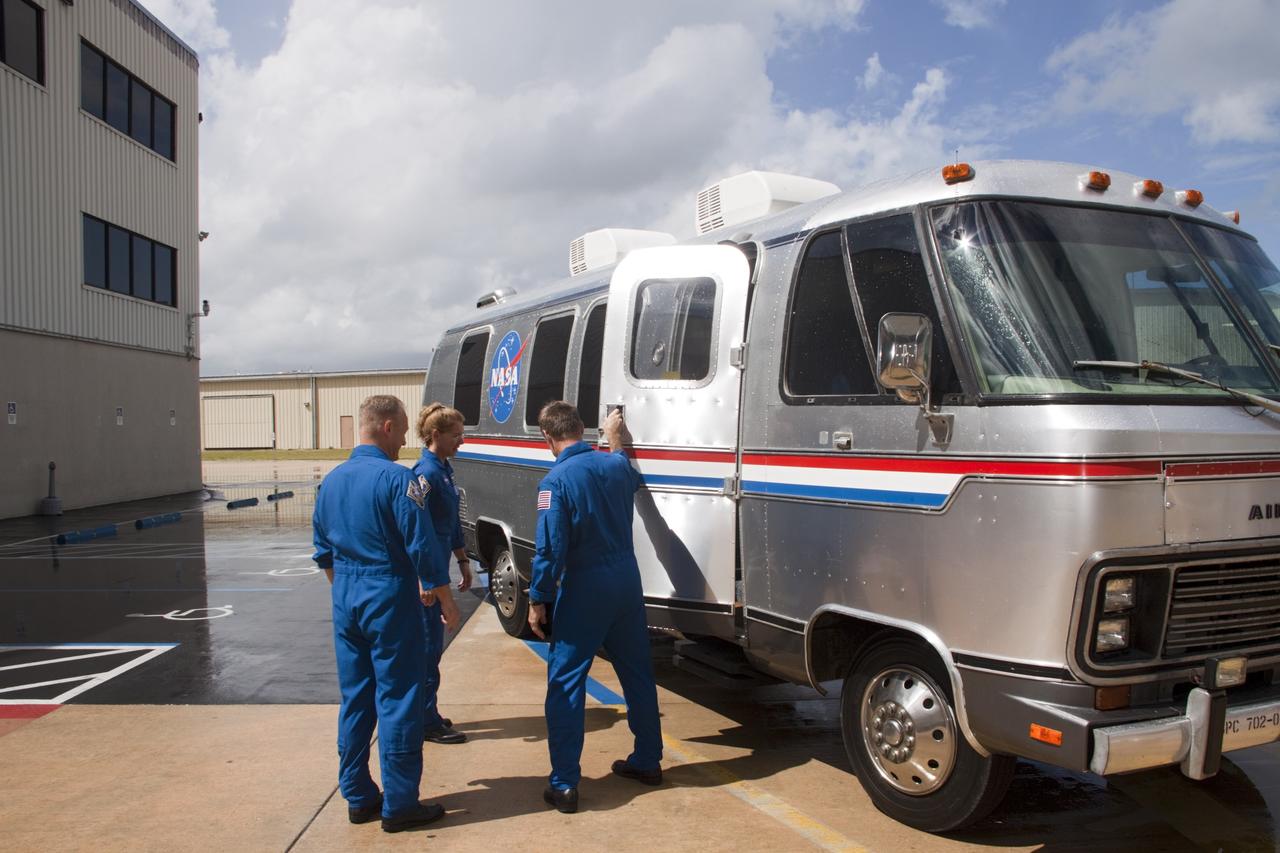
CAPE CANAVERAL, Fla. – After visiting with employees at Kennedy Space Center's Orbiter Processing Facility-2, STS-135 Commander Chris Ferguson holds the door of the Astrovan for Pilot Doug Hurley and Mission Specialist Sandra Magnus. The astronauts were at the center for the traditional post-flight crew return presentation. STS-135 Mission Specialist Rex Walheim was unable to attend the Kennedy event. In July 2011, Atlantis and its crew delivered to the International Space Station the Raffaello multi-purpose logistics module packed with more than 9,400 pounds of spare parts, equipment and supplies that will sustain station operations for the next year. STS-135 was the 33rd and final flight for Atlantis and the final mission of the Space Shuttle Program. For more information, visit www.nasa.gov/mission_pages/shuttle/shuttlemissions/sts135/index.html. Photo credit: NASA/Jim Grossmann
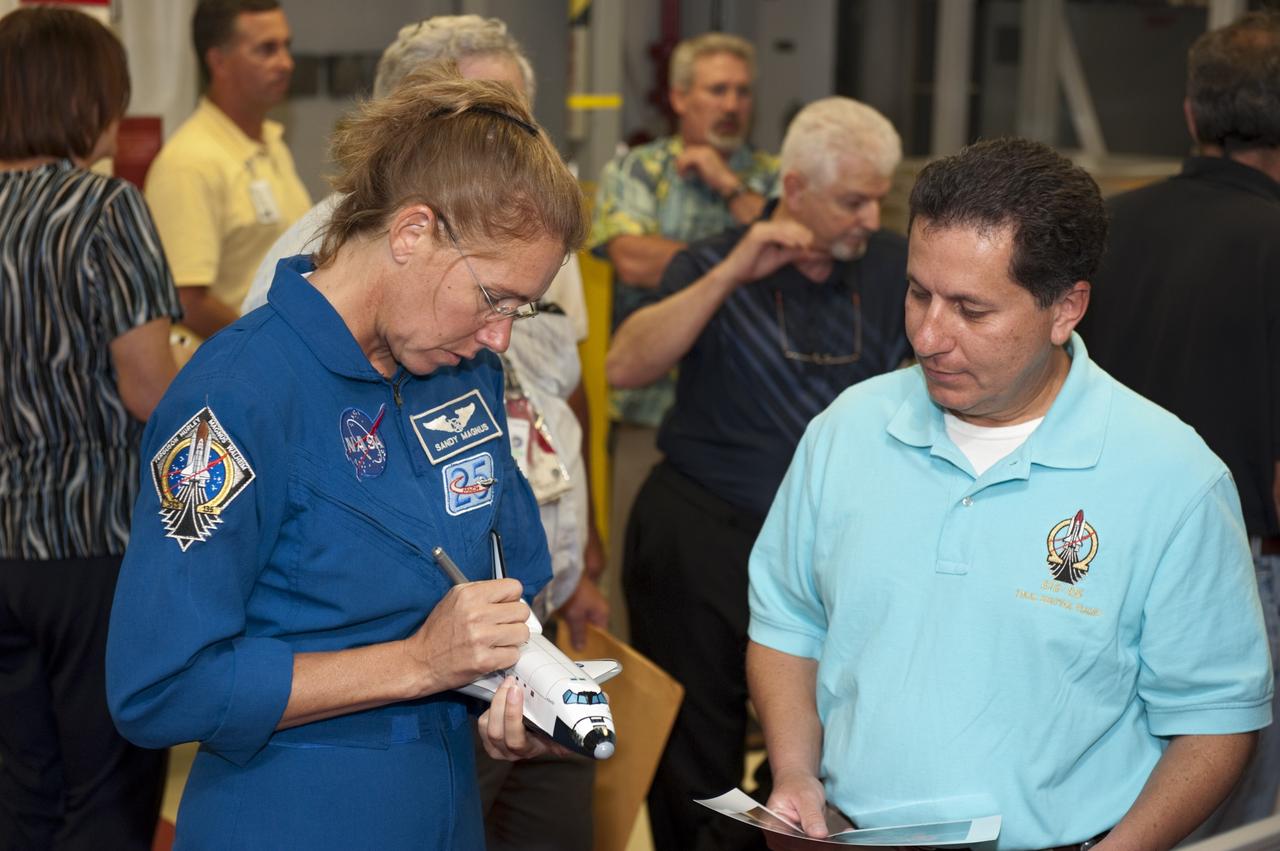
CAPE CANAVERAL, Fla. – STS-135 Mission Specialist Sandra Magnus autographs a space shuttle replica for an employee inside Kennedy Space Center's Orbiter Processing Facility-2, where space shuttle Atlantis is being prepared for eventual display at the Kennedy Space Center Visitor Complex in Florida. Magnus, along with Commander Chris Ferguson and Pilot Doug Hurley, was at the center for the traditional post-flight crew return presentation. STS-135 Mission Specialist Rex Walheim was unable to attend the Kennedy event. In July 2011, Atlantis and its crew delivered to the International Space Station the Raffaello multi-purpose logistics module packed with more than 9,400 pounds of spare parts, equipment and supplies that will sustain station operations for the next year. STS-135 was the 33rd and final flight for Atlantis and the final mission of the Space Shuttle Program. For more information, visit www.nasa.gov/mission_pages/shuttle/shuttlemissions/sts135/index.html. Photo credit: NASA/Kim Shiflett
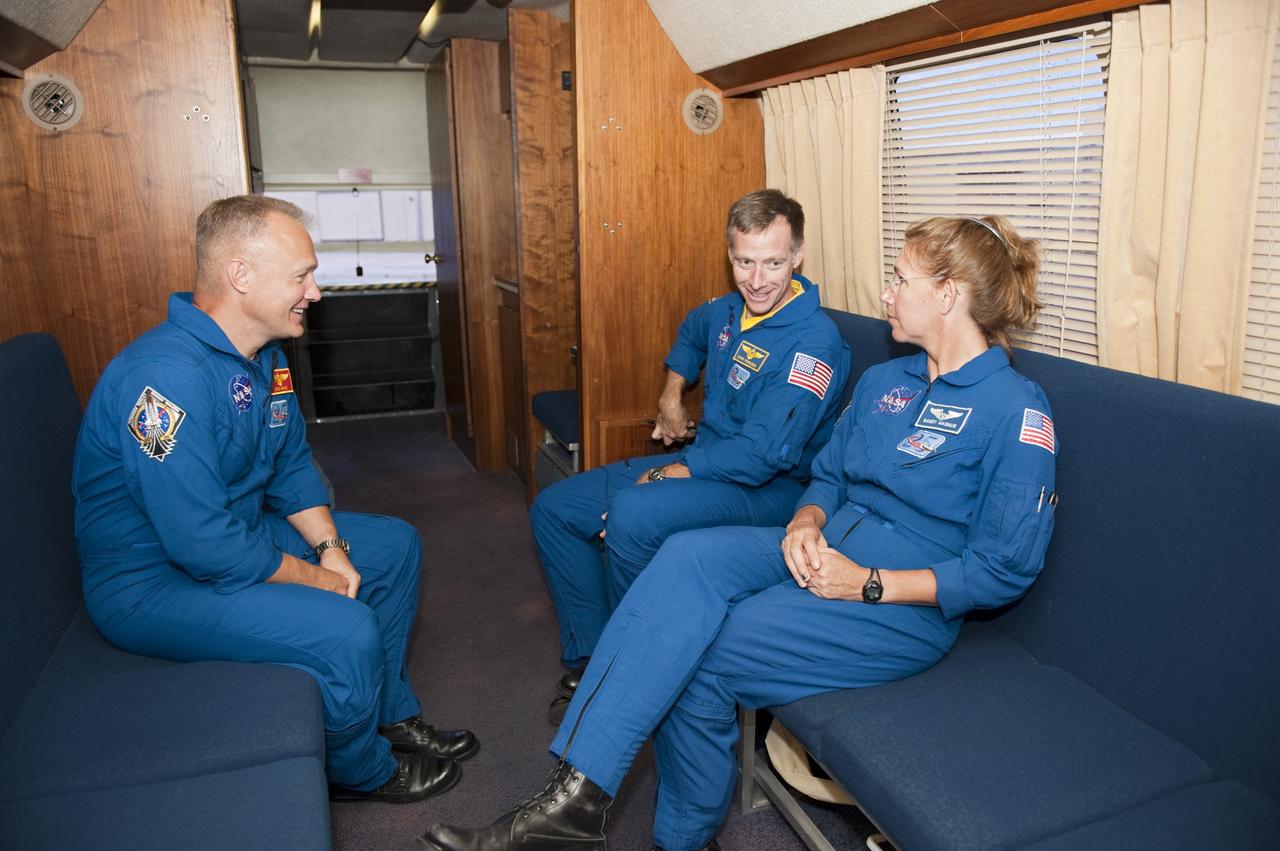
CAPE CANAVERAL, Fla. – Astronauts from Space Shuttle Atlantis’ STS-135 mission travel inside NASA’s silver Astrovan. Seated on the right are Commander Chris Ferguson and Mission Specialist Sandra Magnus while facing opposite is Pilot Doug Hurley. Since 1984, the Astrovan, a modified Airstream motor home, has carried shuttle crew members to the launch pads. The astronauts were at the center for the traditional post-flight crew return presentation. STS-135 Mission Specialist Rex Walheim was unable to attend the Kennedy event. In July 2011, Atlantis and its crew delivered to the International Space Station the Raffaello multi-purpose logistics module packed with more than 9,400 pounds of spare parts, equipment and supplies that will sustain station operations for the next year. STS-135 was the 33rd and final flight for Atlantis and the final mission of the Space Shuttle Program. For more information, visit www.nasa.gov/mission_pages/shuttle/shuttlemissions/sts135/index.html. Photo credit: NASA/Kim Shiflett
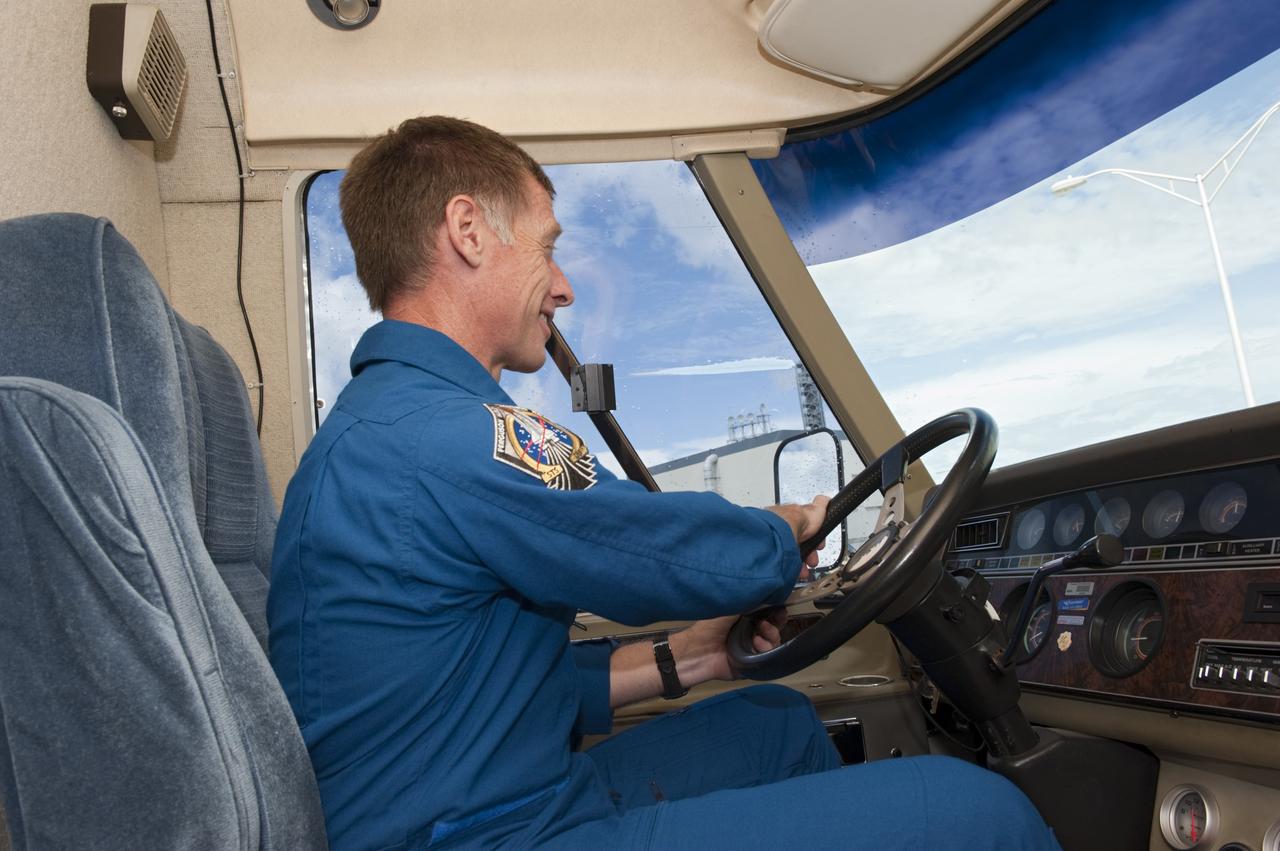
CAPE CANAVERAL, Fla. – STS-135 Commander Chris Ferguson settles in the driver's seat of NASA’s silver Astrovan. Since 1984, the Astrovan, a modified Airstream motor home, has carried shuttle crew members to the launch pads. Ferguson, along with Pilot Doug Hurley and Mission Specialist Sandra Magnus, was at the center for the traditional post-flight crew return presentation. STS-135 Mission Specialist Rex Walheim was unable to attend the Kennedy event. In July 2011, Atlantis and its crew delivered to the International Space Station the Raffaello multi-purpose logistics module packed with more than 9,400 pounds of spare parts, equipment and supplies that will sustain station operations for the next year. STS-135 was the 33rd and final flight for Atlantis and the final mission of the Space Shuttle Program. For more information, visit www.nasa.gov/mission_pages/shuttle/shuttlemissions/sts135/index.html. Photo credit: NASA/Kim Shiflett
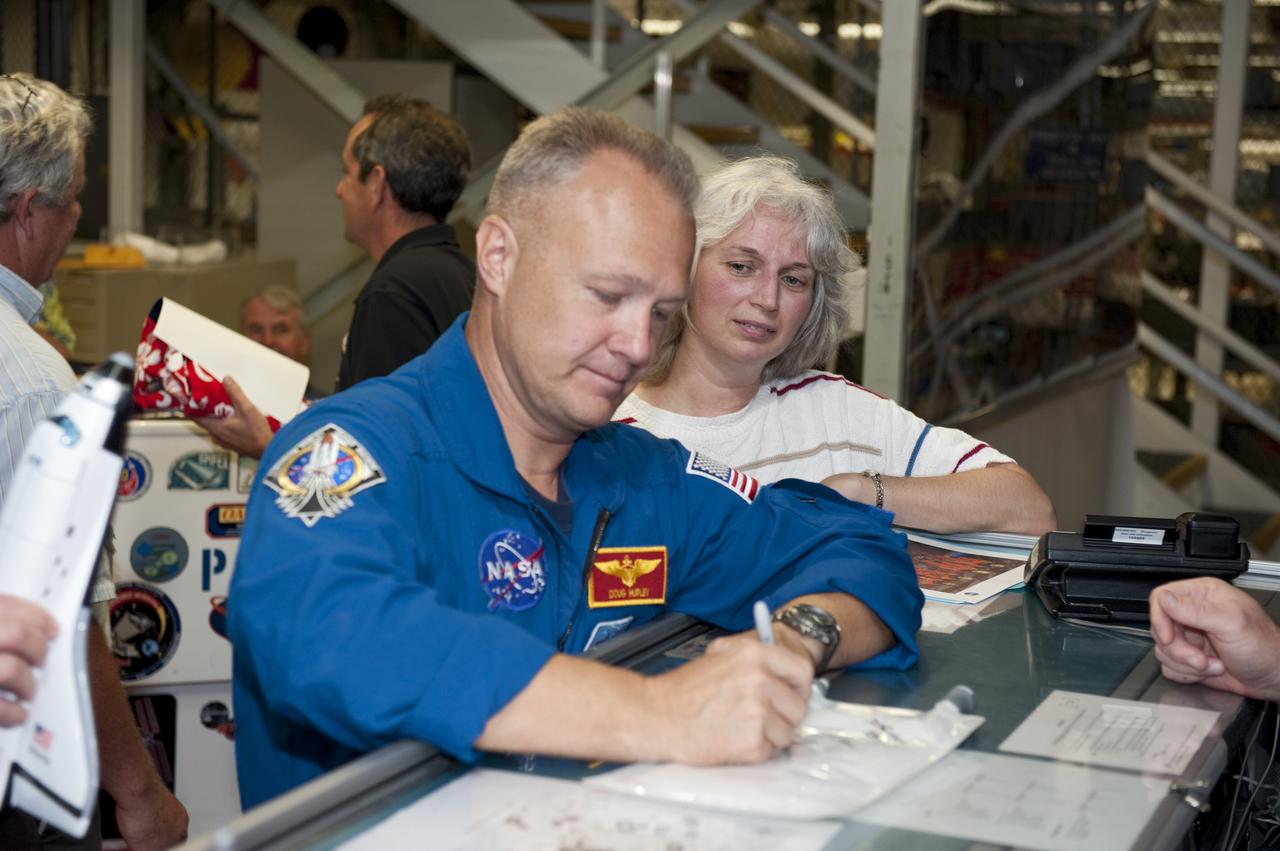
CAPE CANAVERAL, Fla. – STS-135 Pilot Doug Hurley signs an autograph for an employee inside Kennedy Space Center's Orbiter Processing Facility-2, where space shuttle Atlantis is being prepared for eventual display at the Kennedy Space Center Visitor Complex in Florida. Hurley, along with Commander Chris Ferguson and Mission Specialist Sandra Magnus, was at the center for the traditional post-flight crew return presentation. STS-135 Mission Specialist Rex Walheim was unable to attend the Kennedy event. In July 2011, Atlantis and its crew delivered to the International Space Station the Raffaello multi-purpose logistics module packed with more than 9,400 pounds of spare parts, equipment and supplies that will sustain station operations for the next year. STS-135 was the 33rd and final flight for Atlantis and the final mission of the Space Shuttle Program. For more information, visit www.nasa.gov/mission_pages/shuttle/shuttlemissions/sts135/index.html. Photo credit: NASA/Kim Shiflett
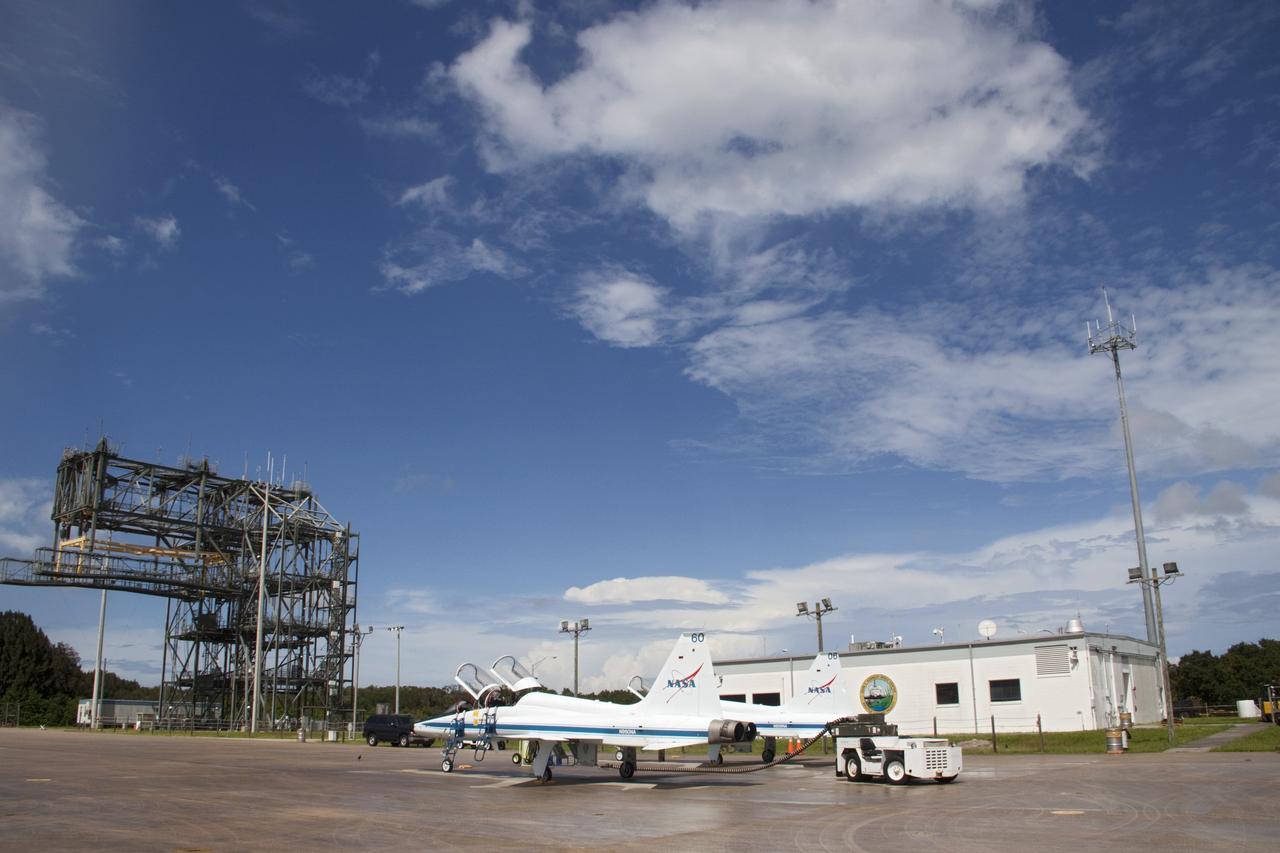
CAPE CANAVERAL, Fla. – At NASA's Kennedy Space Center in Florida, a T-38 training jet on the Shuttle Landing Facility is being fueled in preparation for the arrival of the space shuttle Atlantis’ STS-135 astronauts. Commander Chris Ferguson, Pilot Doug Hurley and Mission Specialist Sandra Magnus were at the center for the traditional post-flight crew return presentation. To the left of the jet is the space shuttle's mate-demate device. STS-135 Mission Specialist Rex Walheim was unable to attend the Kennedy event. In July 2011, Atlantis and its crew delivered to the International Space Station the Raffaello multi-purpose logistics module packed with more than 9,400 pounds of spare parts, equipment and supplies that will sustain station operations for the next year. STS-135 was the 33rd and final flight for Atlantis and the final mission of the Space Shuttle Program. For more information, visit www.nasa.gov/mission_pages/shuttle/shuttlemissions/sts135/index.html. Photo credit: NASA/Jim Grossmann
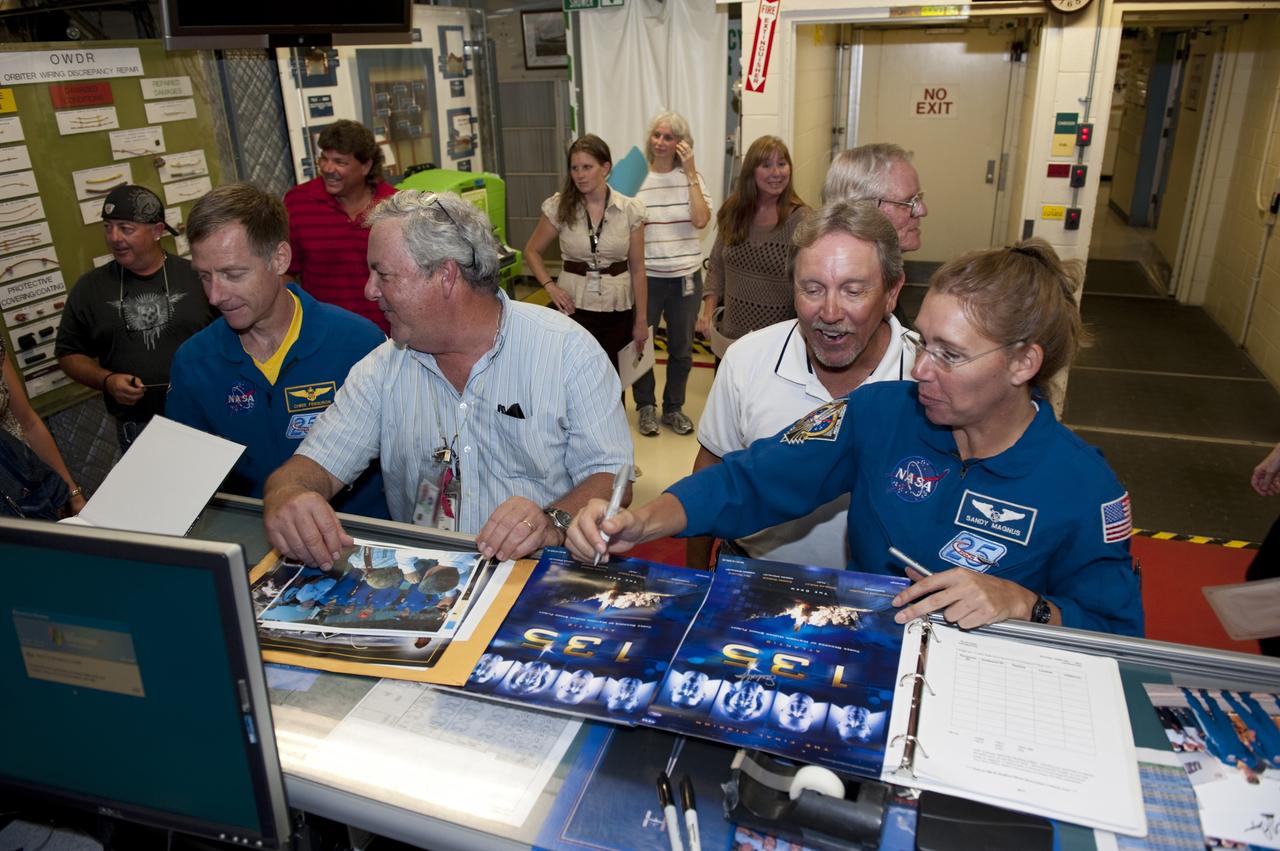
CAPE CANAVERAL, Fla. – STS-135 Commander Chris Ferguson and Mission Specialist Sandra Magnus sign autographs for employees inside Kennedy Space Center's Orbiter Processing Facility-2, where space shuttle Atlantis is being prepared for eventual display at the Kennedy Space Center Visitor Complex in Florida. The astronauts, along with Pilot Doug Hurley, were at the center for the traditional post-flight crew return presentation. STS-135 Mission Specialist Rex Walheim was unable to attend the Kennedy event. In July 2011, Atlantis and its crew delivered to the International Space Station the Raffaello multi-purpose logistics module packed with more than 9,400 pounds of spare parts, equipment and supplies that will sustain station operations for the next year. STS-135 was the 33rd and final flight for Atlantis and the final mission of the Space Shuttle Program. For more information, visit www.nasa.gov/mission_pages/shuttle/shuttlemissions/sts135/index.html. Photo credit: NASA/Kim Shiflett
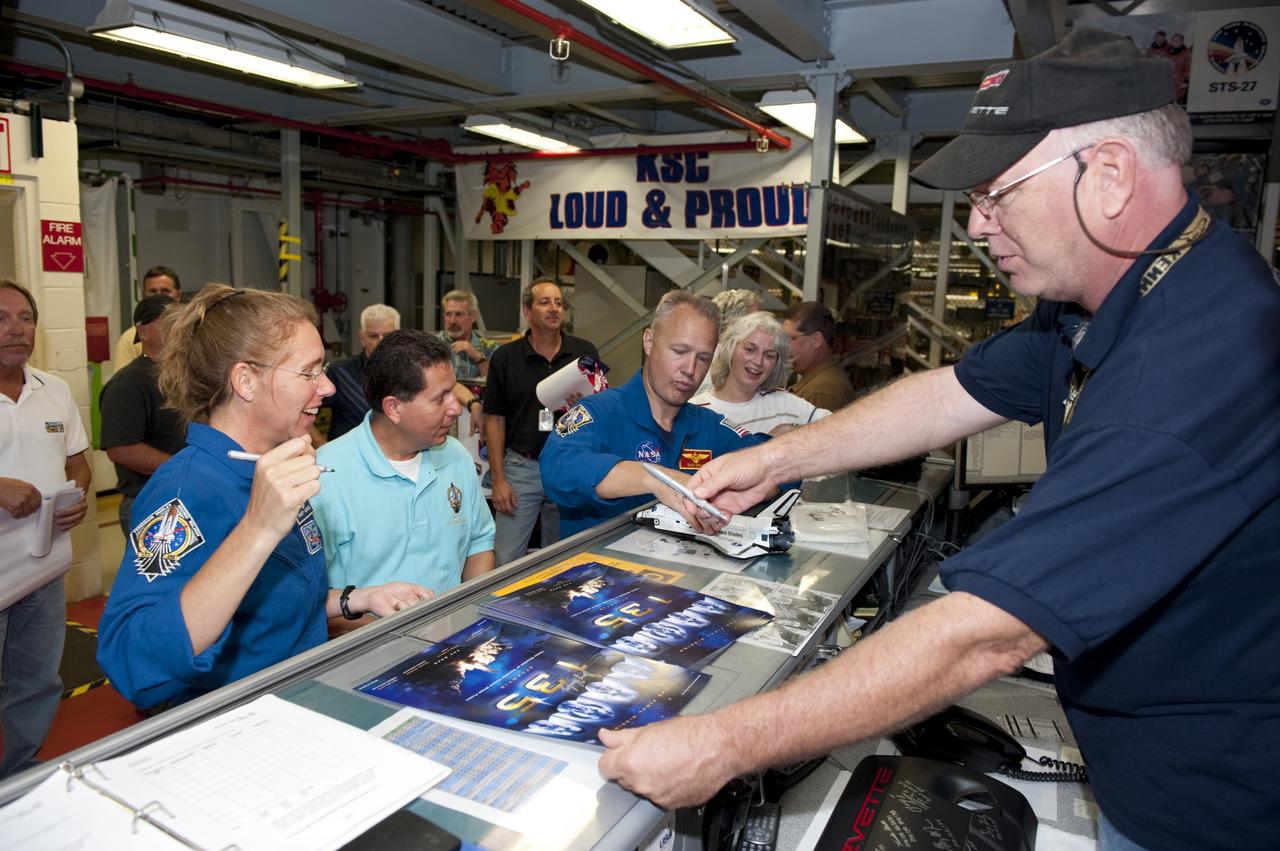
CAPE CANAVERAL, Fla. – STS-135 Mission Specialist Sandra Magnus signs an autograph while Pilot Doug Hurley autographs a space shuttle replica for employees inside Kennedy Space Center's Orbiter Processing Facility-2, where space shuttle Atlantis is being prepared for eventual display at the Kennedy Space Center Visitor Complex in Florida. The astronauts, along with Commander Chris Ferguson, were at the center for the traditional post-flight crew return presentation. STS-135 Mission Specialist Rex Walheim was unable to attend the Kennedy event. In July 2011, Atlantis and its crew delivered to the International Space Station the Raffaello multi-purpose logistics module packed with more than 9,400 pounds of spare parts, equipment and supplies that will sustain station operations for the next year. STS-135 was the 33rd and final flight for Atlantis and the final mission of the Space Shuttle Program. For more information, visit www.nasa.gov/mission_pages/shuttle/shuttlemissions/sts135/index.html. Photo credit: NASA/Kim Shiflett
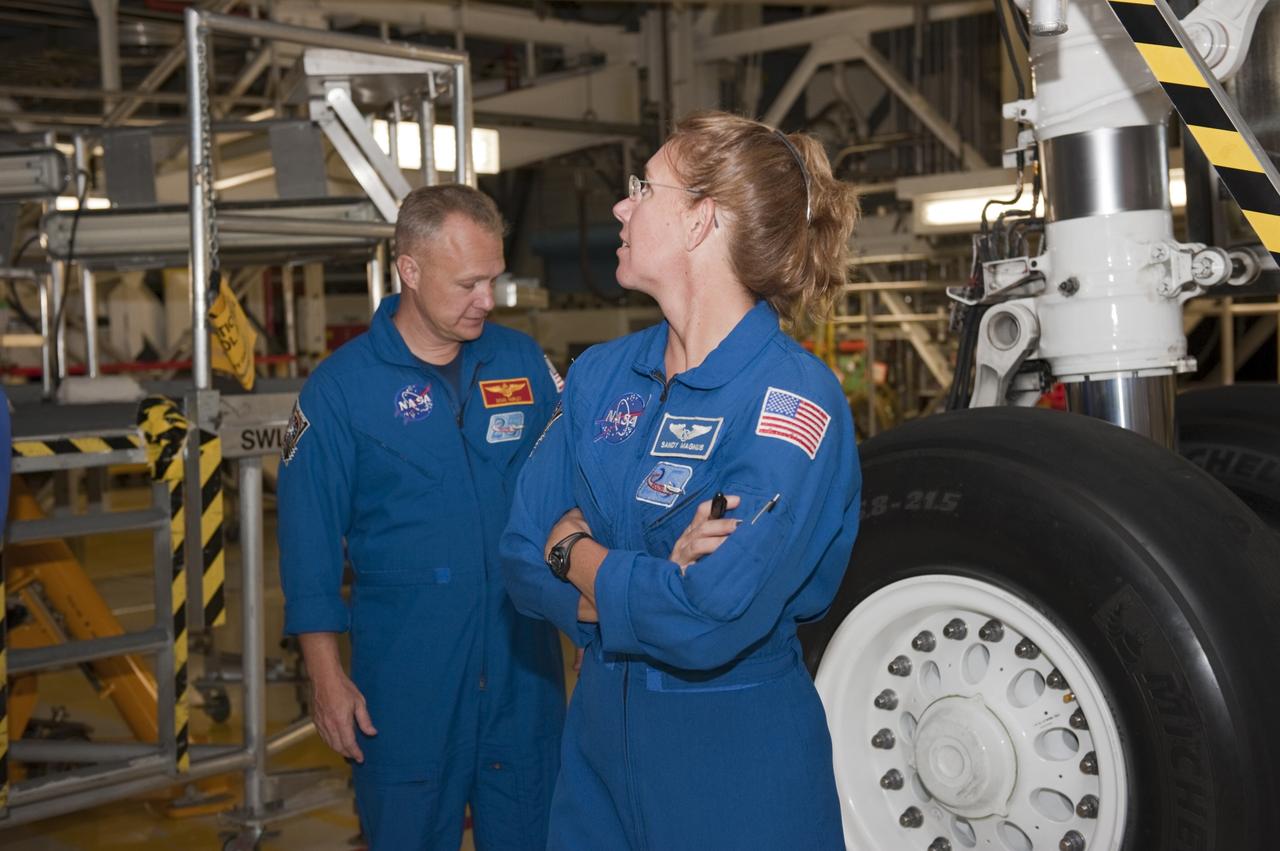
CAPE CANAVERAL, Fla. – STS-135 Pilot Doug Hurley and Mission Specialist Sandra Magnus stand next to a wheel on space shuttle Atlantis inside Kennedy Space Center's Orbiter Processing Facility-2. Atlantis is being prepared for eventual display at the Kennedy Space Center Visitor Complex in Florida. The astronauts, along Commander Chris Ferguson, were at the center for the traditional post-flight crew return presentation. STS-135 Mission Specialist Rex Walheim was unable to attend the Kennedy event. In July 2011, Atlantis and its crew delivered to the International Space Station the Raffaello multi-purpose logistics module packed with more than 9,400 pounds of spare parts, equipment and supplies that will sustain station operations for the next year. STS-135 was the 33rd and final flight for Atlantis and the final mission of the Space Shuttle Program. For more information, visit www.nasa.gov/mission_pages/shuttle/shuttlemissions/sts135/index.html. Photo credit: NASA/Kim Shiflett
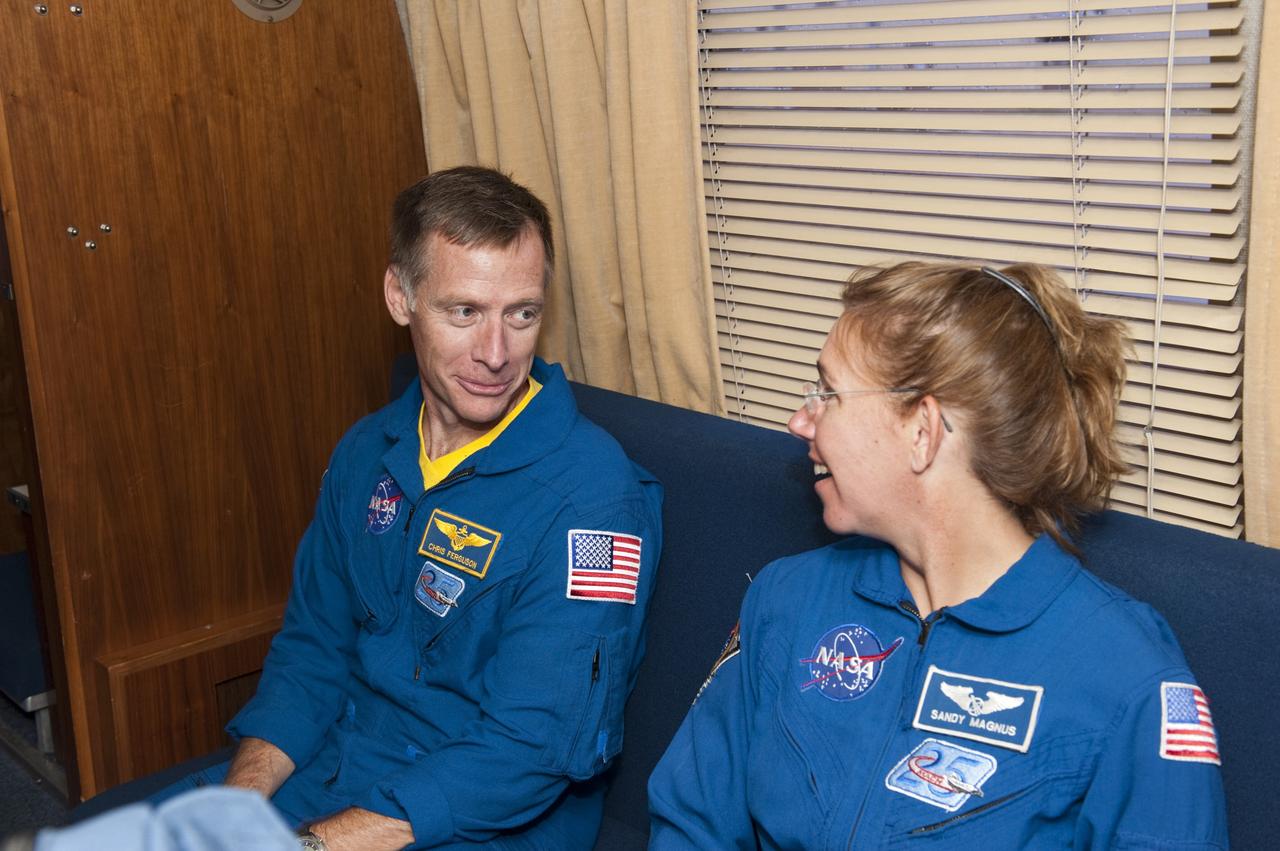
CAPE CANAVERAL, Fla. – Astronauts from Space Shuttle Atlantis’ STS-135 mission travel inside NASA’s silver Astrovan. From left are Commander Chris Ferguson and Mission Specialist Sandra Magnus. Since 1984, the Astrovan, a modified Airstream motor home, has carried shuttle crew members to the launch pads. The astronauts, along with Pilot Doug Hurley were at the center for the traditional post-flight crew return presentation. STS-135 Mission Specialist Rex Walheim was unable to attend the Kennedy event. In July 2011, Atlantis and its crew delivered to the International Space Station the Raffaello multi-purpose logistics module packed with more than 9,400 pounds of spare parts, equipment and supplies that will sustain station operations for the next year. STS-135 was the 33rd and final flight for Atlantis and the final mission of the Space Shuttle Program. For more information, visit www.nasa.gov/mission_pages/shuttle/shuttlemissions/sts135/index.html. Photo credit: NASA/Kim Shiflett
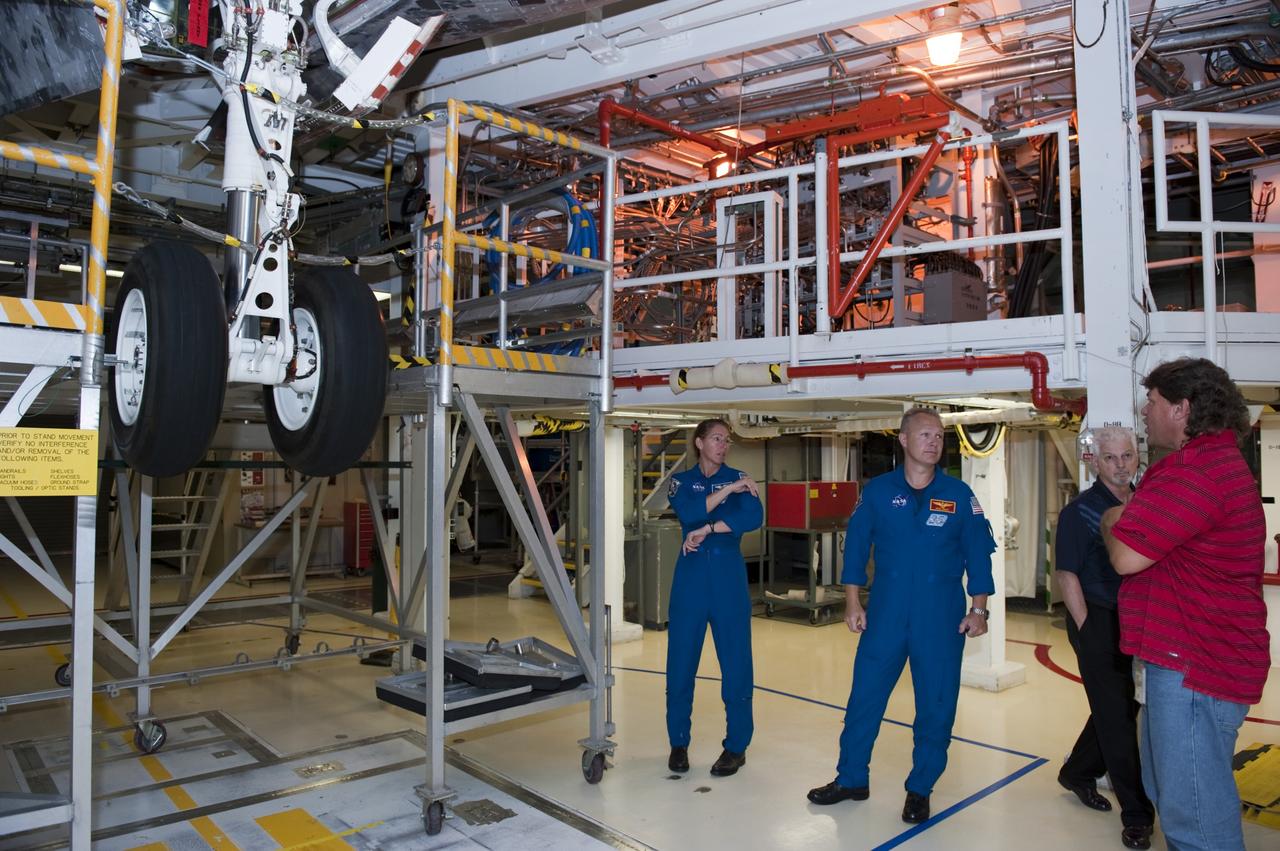
CAPE CANAVERAL, Fla. – STS-135 Pilot Doug Hurley and Mission Specialist Sandra Magnus receive a briefing and up-close look beneath space shuttle Atlantis inside Kennedy Space Center's Orbiter Processing Facility-2. Atlantis is being prepared for eventual display at the Kennedy Space Center Visitor Complex in Florida. The astronauts, along with Commander Chris Ferguson, were at the center for the traditional post-flight crew return presentation. STS-135 Mission Specialist Rex Walheim was unable to attend the Kennedy event. In July 2011, Atlantis and its crew delivered to the International Space Station the Raffaello multi-purpose logistics module packed with more than 9,400 pounds of spare parts, equipment and supplies that will sustain station operations for the next year. STS-135 was the 33rd and final flight for Atlantis and the final mission of the Space Shuttle Program. For more information, visit www.nasa.gov/mission_pages/shuttle/shuttlemissions/sts135/index.html. Photo credit: NASA/Kim Shiflett
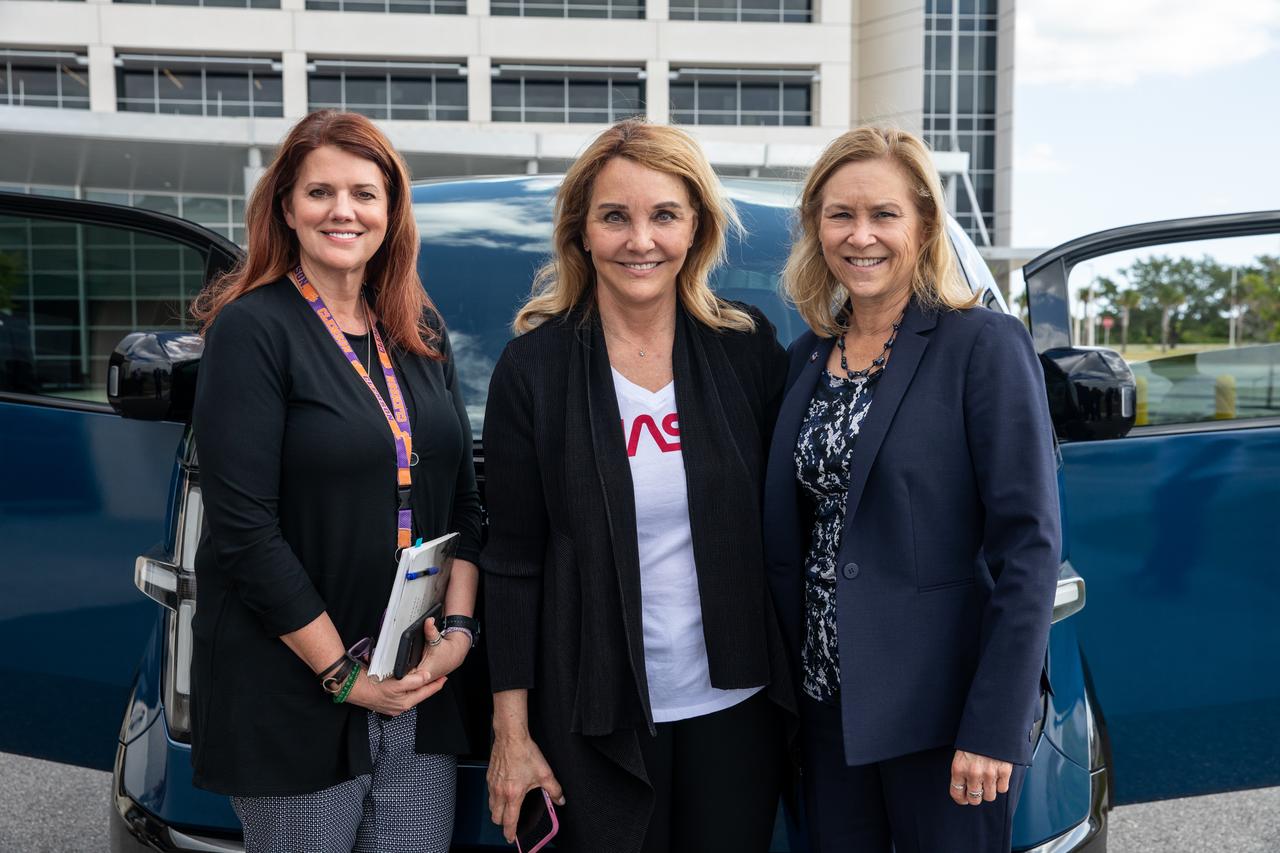
Kennedy Space Center Director Janet Petro, at right test drives a concept design crew transportation vehicle (CTV) for Artemis crewed missions on May 11, 2022. With her, from left, are Charlie Blackwell-Thompson, Artemis I launch director, and Josette Sheeran, president of Canoo Technologies, Inc.. Canoo Technologies Inc., was awarded a contract to design and provide the next generation of CTVs for the Artemis crewed missions. Representatives with Canoo were at the spaceport demonstrating the environmentally friendly fleet of vehicles. Artemis II will be the first Artemis mission flying crew aboard Orion. In later missions, NASA will land the first woman and the first person of color on the surface of the Moon, paving the way for a long-term lunar presence and serving as a steppingstone on the way to Mars.
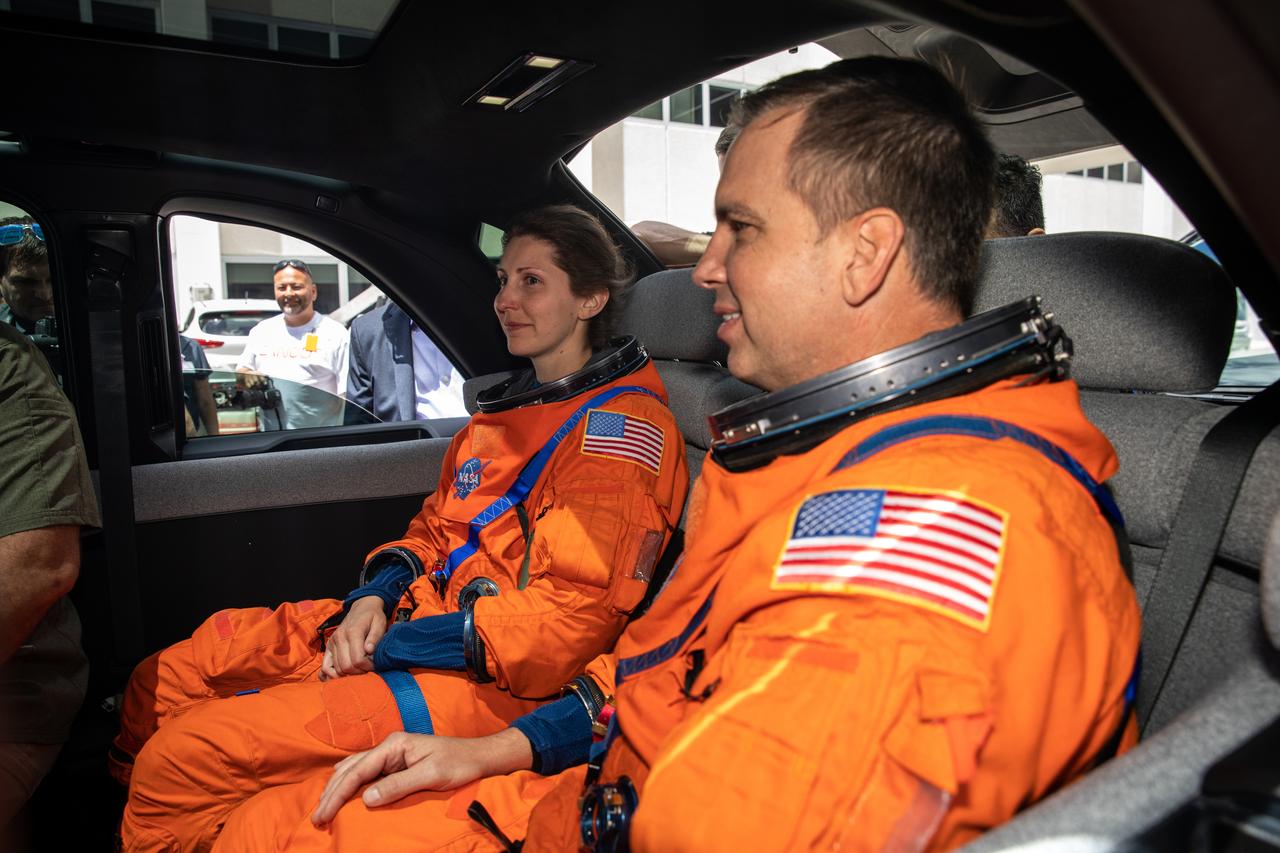
Technicians from Johnson Space Center, dressed in flight suits, secure themselves inside a prototype of a crew transportation vehicle (CTV) for Artemis crewed missions outside the Neil Armstrong Operations and Checkout Building at NASA’s Kennedy Space Center in Florida on May 11, 2022. Canoo Technologies Inc., was awarded a contract to design and provide the next generation of CTVs for the Artemis crewed missions. Representatives with Canoo were at the spaceport demonstrating the environmentally friendly fleet of vehicles. Artemis II will be the first Artemis mission flying crew aboard Orion. In later missions, NASA will land the first woman and the first person of color on the surface of the Moon, paving the way for a long-term lunar presence and serving as a steppingstone on the way to Mars.

Technicians from Johnson Space Center, dressed in flight suits, secure themselves inside a prototype of a crew transportation vehicle (CTV) for Artemis crewed missions outside the Neil Armstrong Operations and Checkout Building at NASA’s Kennedy Space Center in Florida on May 11, 2022. Canoo Technologies Inc., was awarded a contract to design and provide the next generation of CTVs for the Artemis crewed missions. Representatives with Canoo were at the spaceport demonstrating the environmentally friendly fleet of vehicles. Artemis II will be the first Artemis mission flying crew aboard Orion. In later missions, NASA will land the first woman and the first person of color on the surface of the Moon, paving the way for a long-term lunar presence and serving as a steppingstone on the way to Mars.
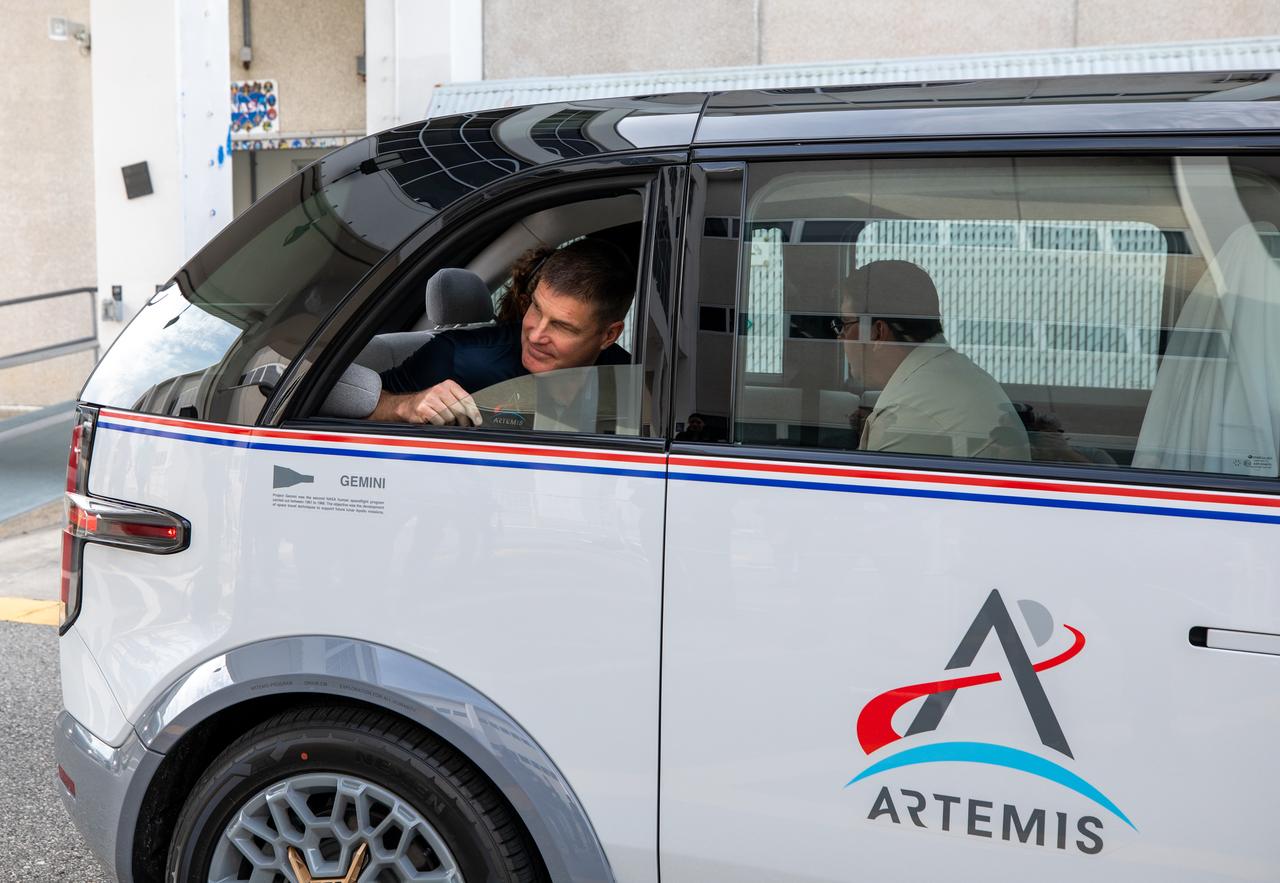
NASA astronaut Jeremy Hansen, left, sits inside one of the crew transport vehicles (CTVs) outside of the Neil A. Armstrong Operations and Checkout Building at Kennedy Space Center in Florida on Tuesday, Sept. 19, 2023. The CTVs will carry Hansen, along with fellow NASA astronauts Christina Koch, Reid Wiseman, and Victor Glover, to Kennedy’s Launch Complex 39B for liftoff of the Artemis II mission. The specially designed, fully electric, environmentally friendly vehicles were manufactured by Canoo Technologies, Inc. of Torrance California.
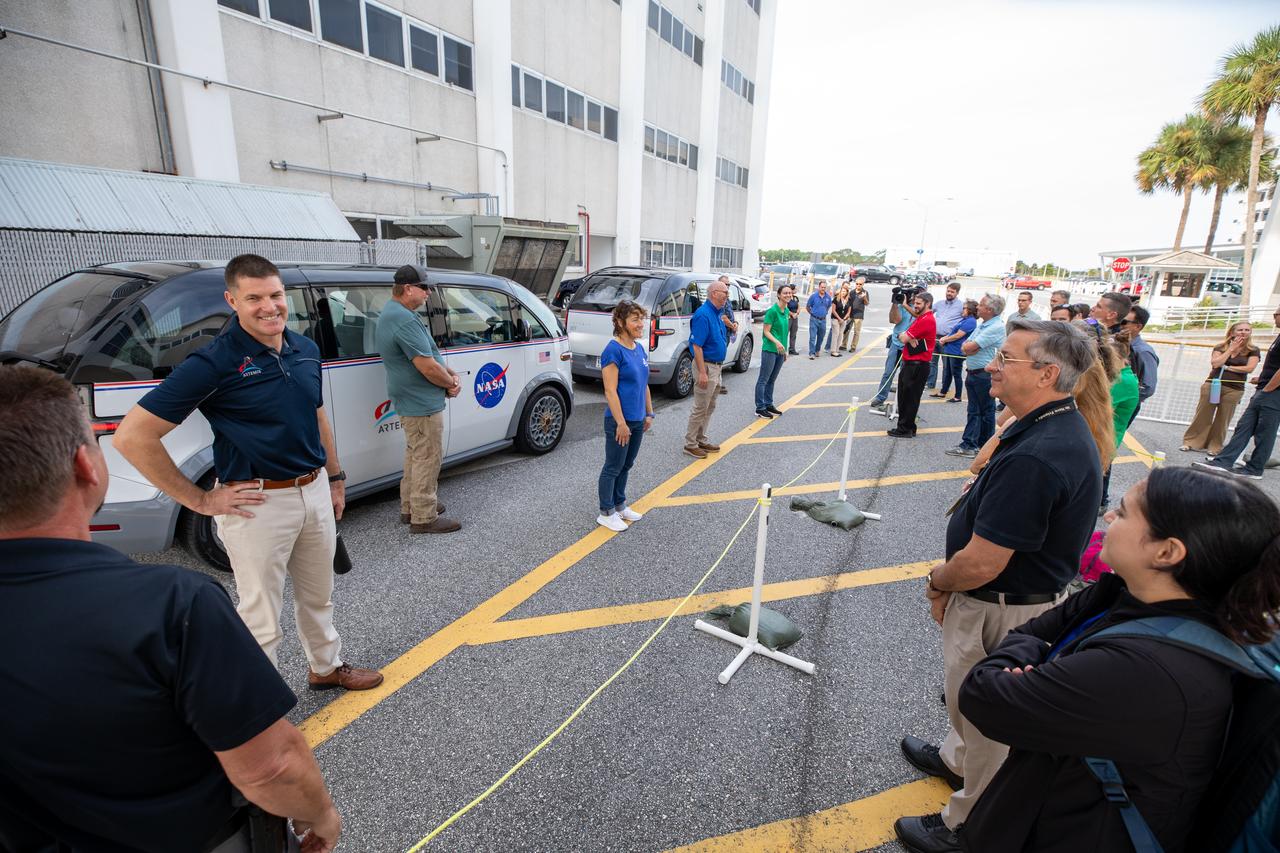
NASA astronauts Jeremy Hansen and Christina Koch view the crew transport vehicles (CTVs) outside of the Neil A. Armstrong Operations and Checkout Building at Kennedy Space Center in Florida on Tuesday, Sept. 19, 2023. The CTVs will carry them, along with fellow NASA astronauts Reid Wiseman and Victor Glover, to Kennedy’s Launch Complex 39B for liftoff of the Artemis II mission. The specially designed, fully electric, environmentally friendly vehicles were manufactured by Canoo Technologies, Inc. of Torrance California.
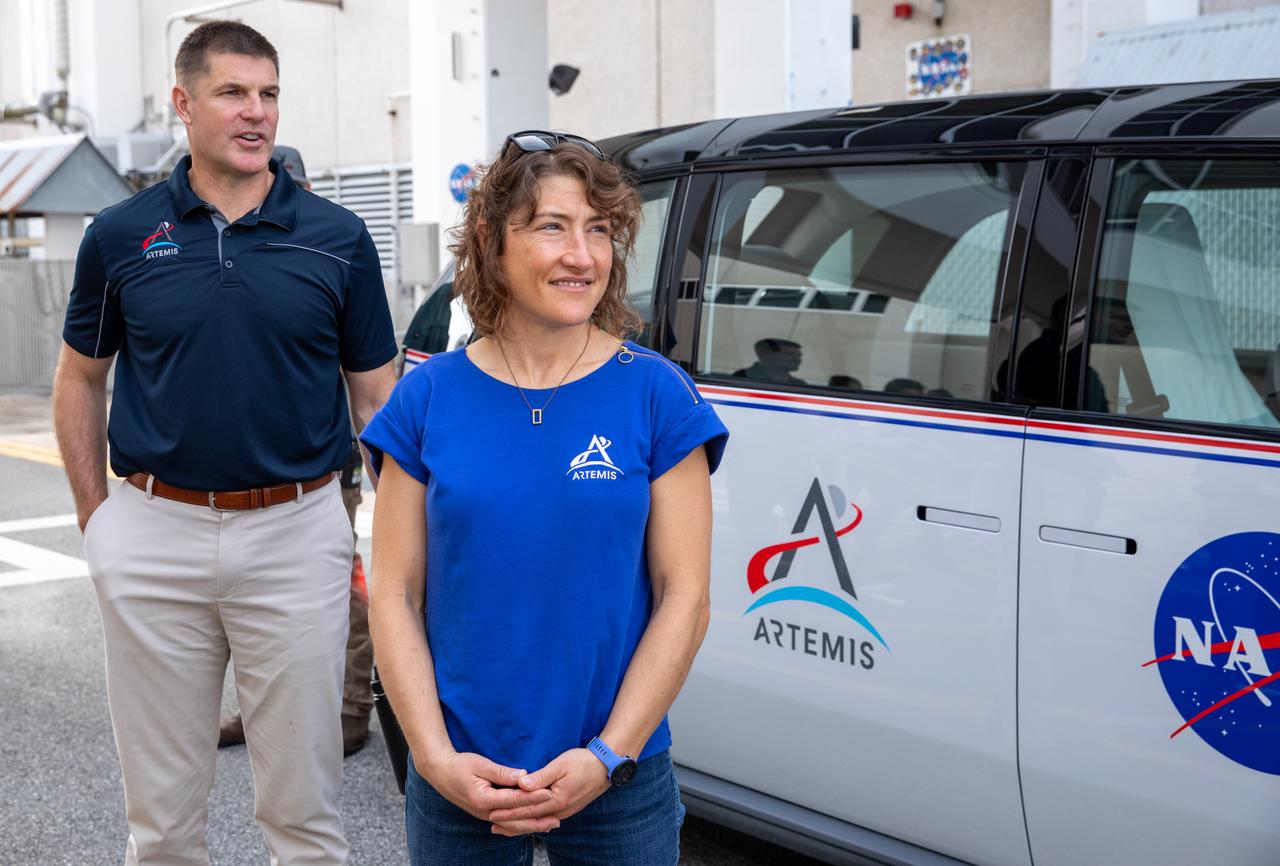
NASA astronauts Jeremy Hansen, left, and Christina Koch view the crew transport vehicles (CTVs) outside of the Neil A. Armstrong Operations and Checkout Building at Kennedy Space Center in Florida on Tuesday, Sept. 19, 2023. The CTVs will carry them, along with fellow NASA astronauts Reid Wiseman and Victor Glover, to Kennedy’s Launch Complex 39B for liftoff of the Artemis II mission. The specially designed, fully electric, environmentally friendly vehicles were manufactured by Canoo Technologies, Inc. of Torrance California.
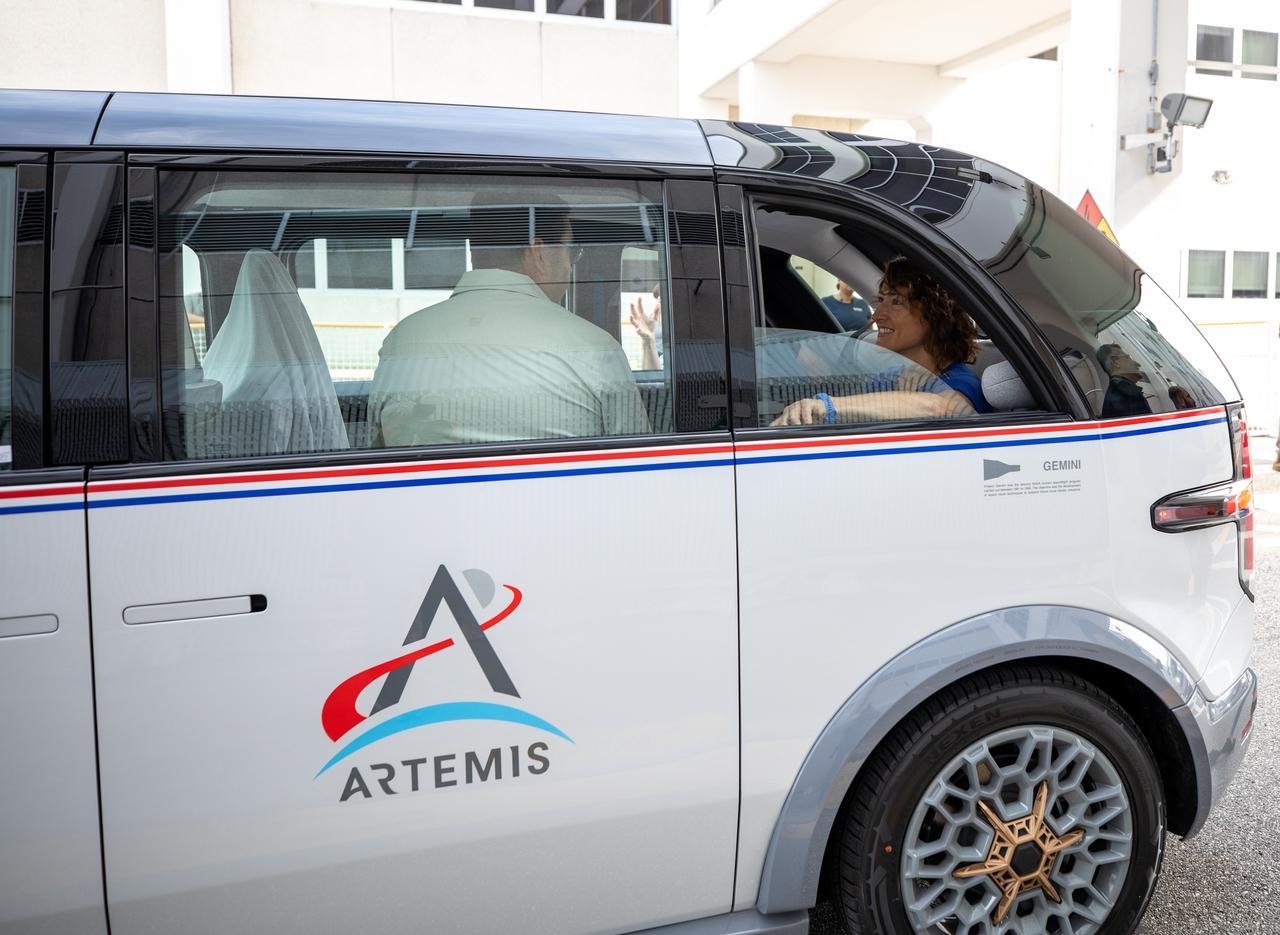
NASA astronaut Christina Koch, right, sits inside one of the crew transport vehicles (CTVs) outside of the Neil A. Armstrong Operations and Checkout Building at Kennedy Space Center in Florida on Tuesday, Sept. 19, 2023. The CTVs will carry Koch, along with fellow NASA astronauts Jeremy Hansen, Reid Wiseman and Victor Glover, to Kennedy’s Launch Complex 39B for liftoff of the Artemis II mission. The specially designed, fully electric, environmentally friendly vehicles were manufactured by Canoo Technologies, Inc. of Torrance California.
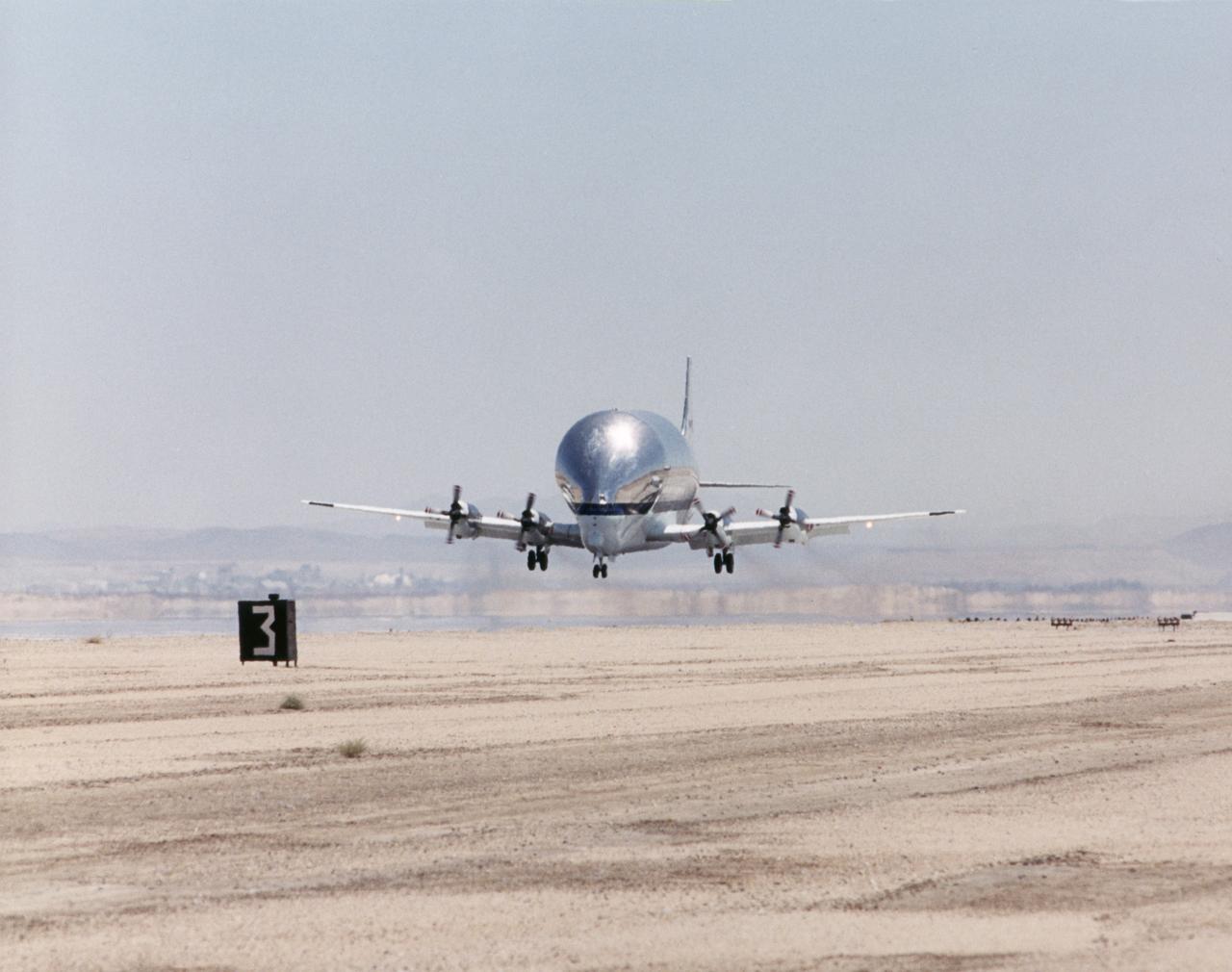
NASA's Super Guppy transport aircraft landed at Edwards Air Force Base, Calif. on July 11, 2000, to deliver the latest version of the X-38 drop vehicle to Dryden. The X-38s are intended as prototypes for a possible "crew lifeboat" for the International Space Station. The X-38 vehicle 131R will demonstrate a huge 7,500 square-foot parafoil that will that will enable the potential crew return vehicle to land on the length of a football field after returning from space. The crew return vehicle is intended to serve as a possible emergency transport to carry a crew to safety in the event of problems with the International Space Station. The Super Guppy evolved from the 1960s-vintage Pregnant Guppy, used for transporting outsized sections of the Apollo moon rocket. The Super Guppy was modified from 1950s-vintage Boeing C-97. NASA acquired its Super Guppy from the European Space Agency in 1997.
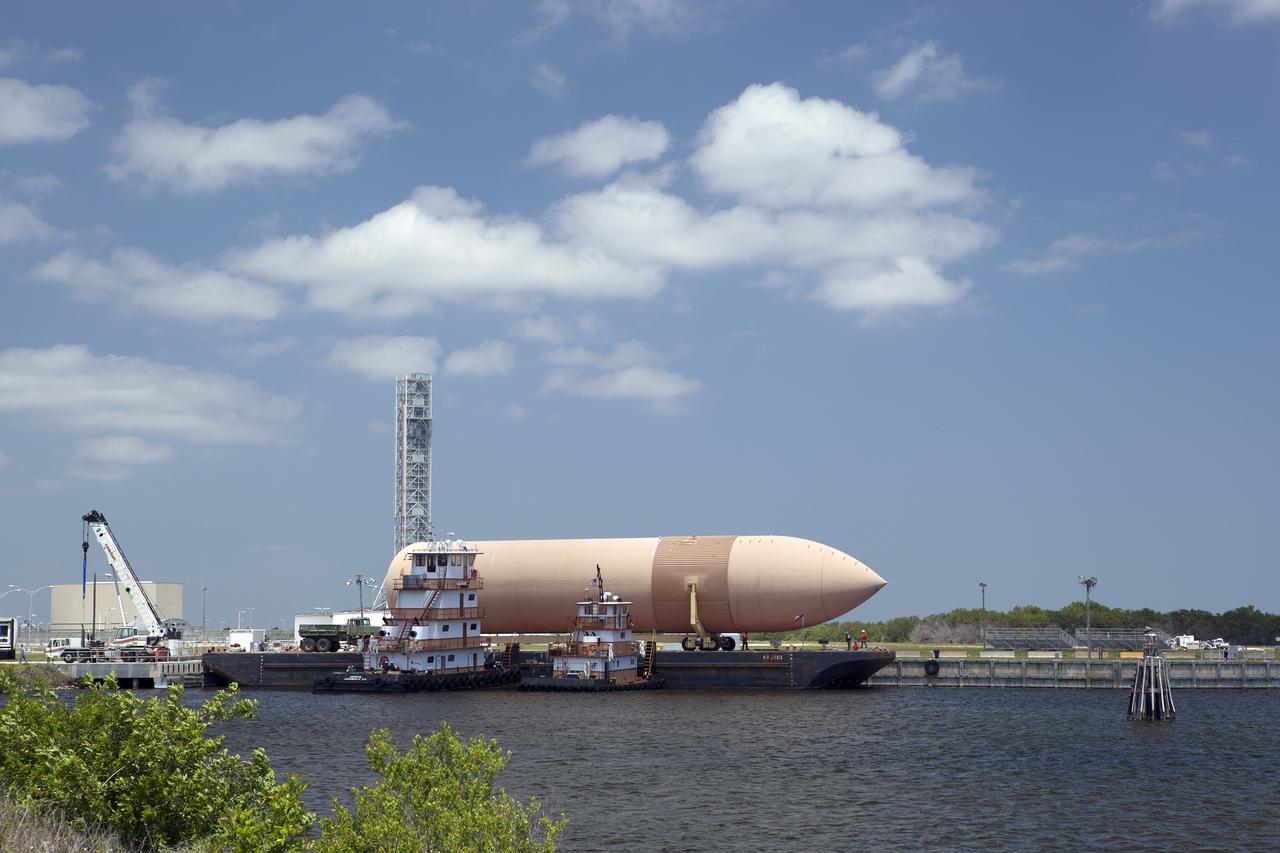
CAPE CANAVERAL, Fla. --The space shuttle crew transport vehicle and crew hatch access vehicle await transport from NASA's Kennedy Space Center in Florida to the Wings of Dreams Aviation Museum located at Keystone Heights Airport in North Central Florida. Also joining the vehicles at Wings of Dreams is an orange flight test article external fuel tank, or ET, an ET transporter, solid rocket booster, or SRB, aft skirt and SRB frustum. Thousands of unique space shuttle era artifacts are being allocated to facilities across the country for their new missions to educate and inspire America's next generation of explorers. Photo credit: NASA_Dimitri Gerondidakis
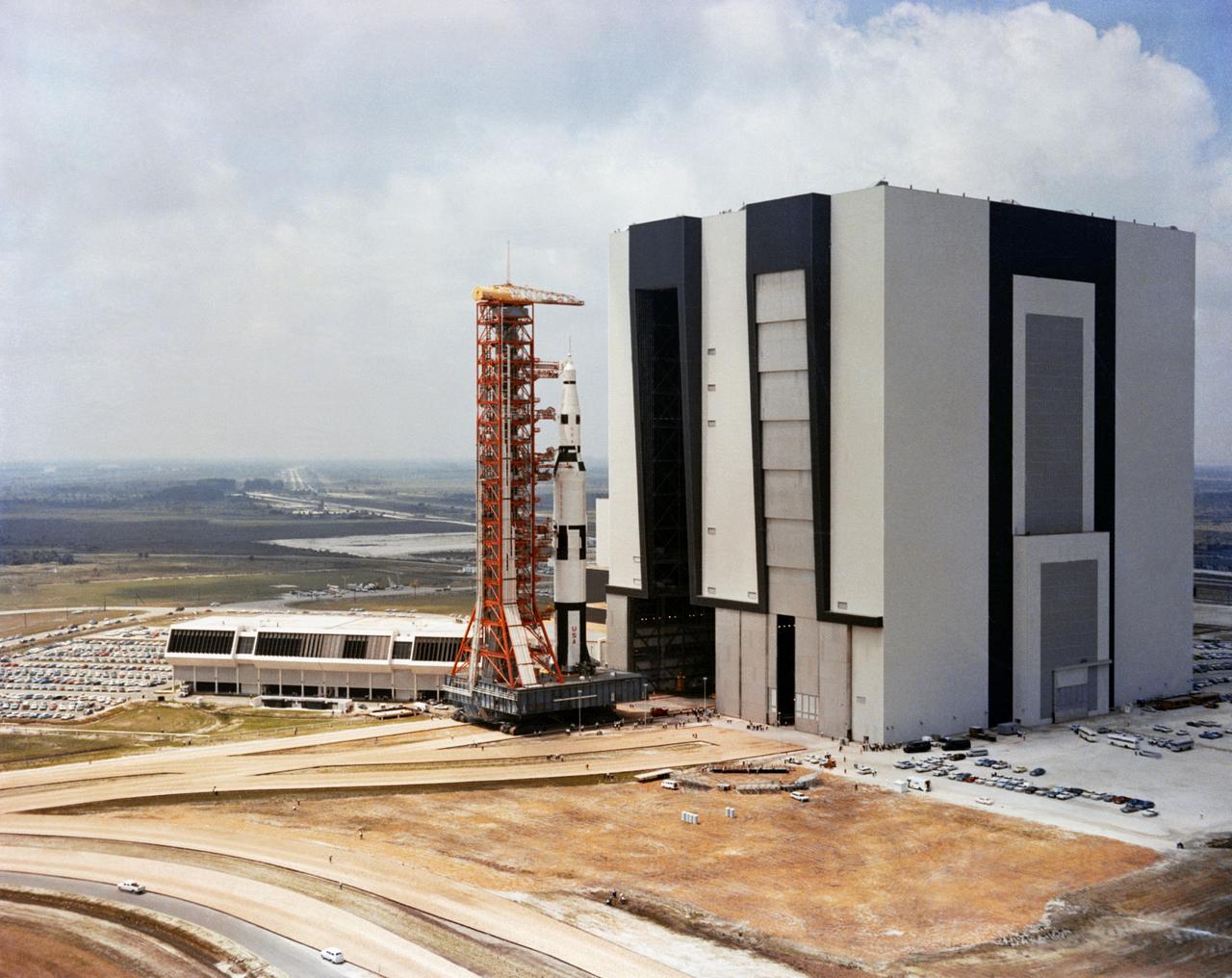
An Apollo/Saturn V facilities Test Vehicle and Launch Umbilical Tower (LUT) atop a crawler-transporter move from the Vehicle Assembly Building (VAB) on the way to Pad A. This test vehicle, designated the Apollo/Saturn 500-F, is being used to verify launch facilities, train launch crews, and develop test and checkout procedures.
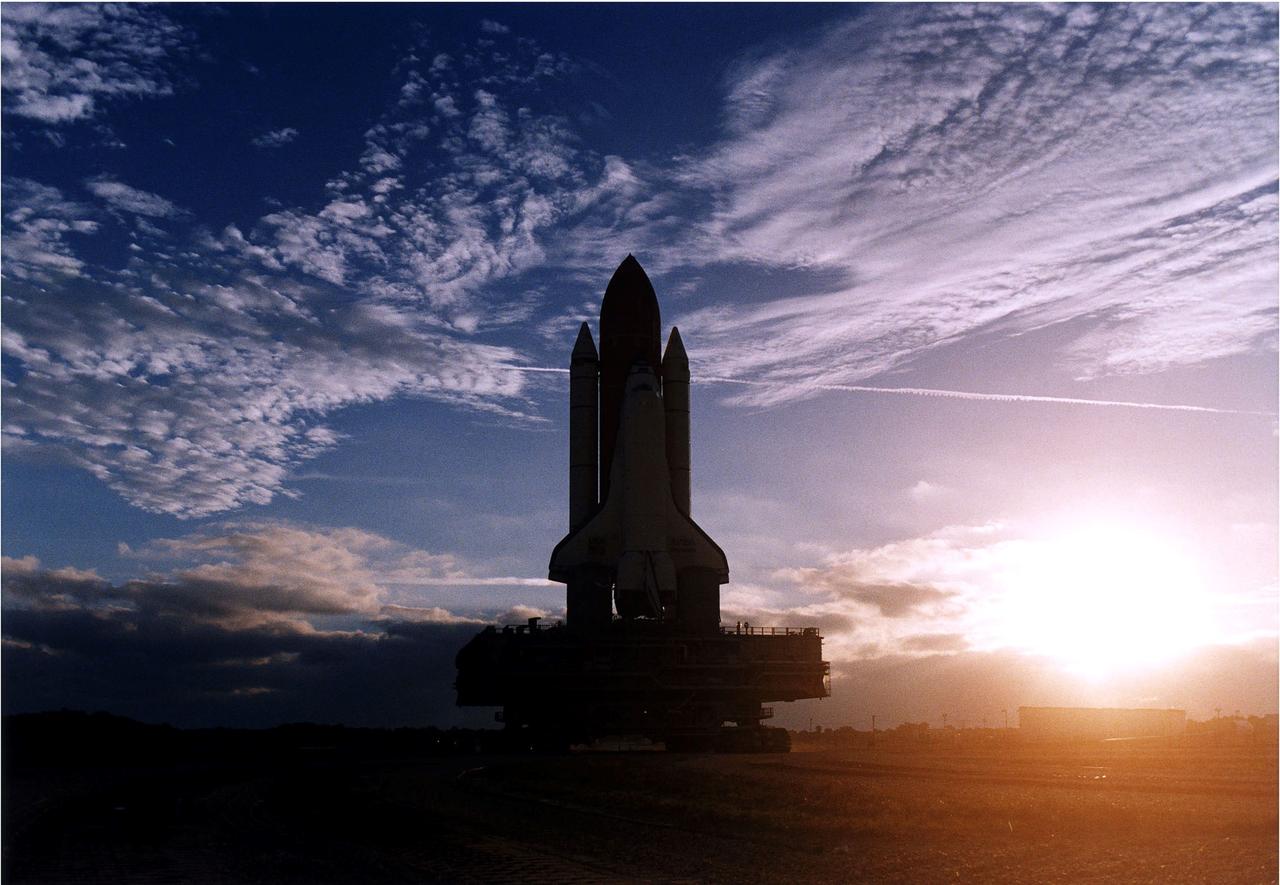
KENNEDY SPACE CENTER, FLA. - The rising sun and some scattered clouds provide a picturesque backdrop for the Space Shuttle Discovery as it travels along the crawlerway toward Launch Pad 39A in preparation for the STS-82 mission. The Shuttle is on a Mobile Launcher Platform, and the entire assemblage is being carried by a large, tracked vehicle called the crawler transporter. A seven-member crew will perform the second servicing of the orbiting Hubble Space Telescope (HST) during the 10-day STS-82 flight, whcih is targeted for a Feb. 11 liftoff.
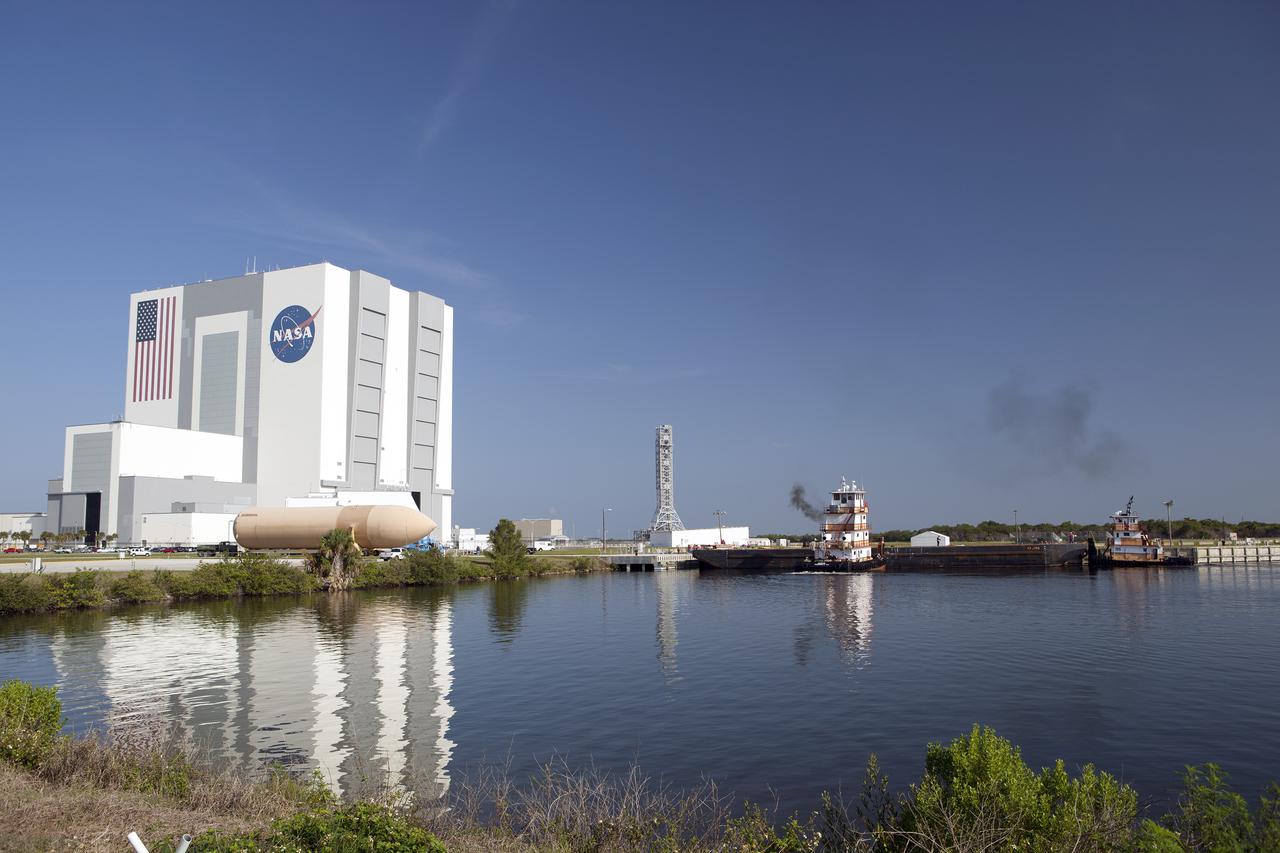
CAPE CANAVERAL, Fla. – An orange flight test article space shuttle external fuel tank, or ET, and the crew transport vehicle await transport from NASA's Kennedy Space Center in Florida to the Wings of Dreams Aviation Museum located at Keystone Heights Airport in North Central Florida. Also joining the two artifacts at Wings of Dreams is an ET transporter, crew hatch access vehicle, solid rocket booster, or SRB, aft skirt and SRB frustum. Thousands of unique space shuttle era artifacts are being allocated to facilities across the country for their new missions to educate and inspire America's next generation of explorers. Photo credit: NASA_Dimitri Gerondidakis
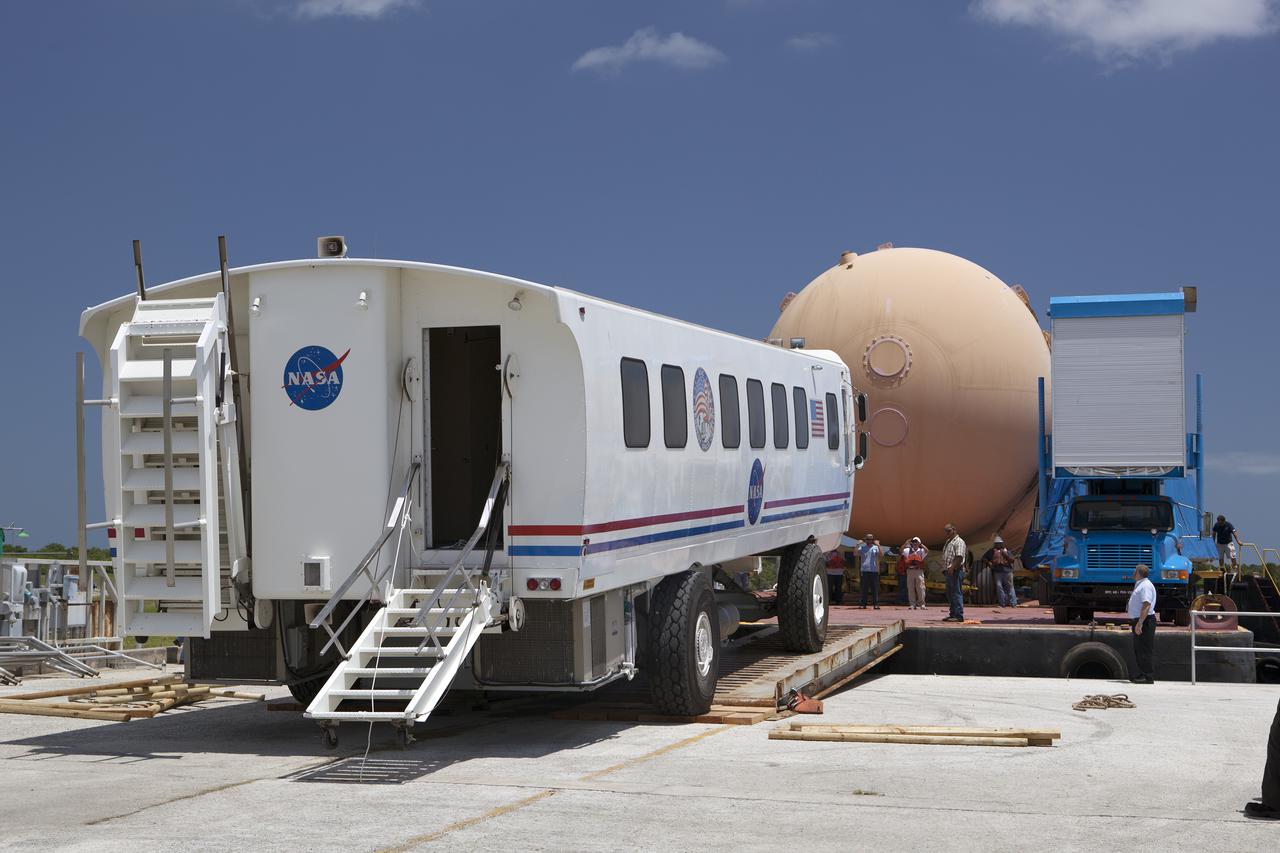
CAPE CANAVERAL, Fla. – The space shuttle crew transport vehicle is loaded onto a barge for the first leg of its journey from NASA's Kennedy Space Center in Florida to the Wings of Dreams Aviation Museum located at Keystone Heights Airport in North Central Florida. Also joining the vehicle at Wings of Dreams is an orange flight test article external fuel tank, or ET, an ET transporter, crew hatch access vehicle, solid rocket booster, or SRB, aft skirt and SRB frustum. Thousands of unique space shuttle era artifacts are being allocated to facilities across the country for their new missions to educate and inspire America's next generation of explorers. Photo credit: NASA_Dimitri Gerondidakis
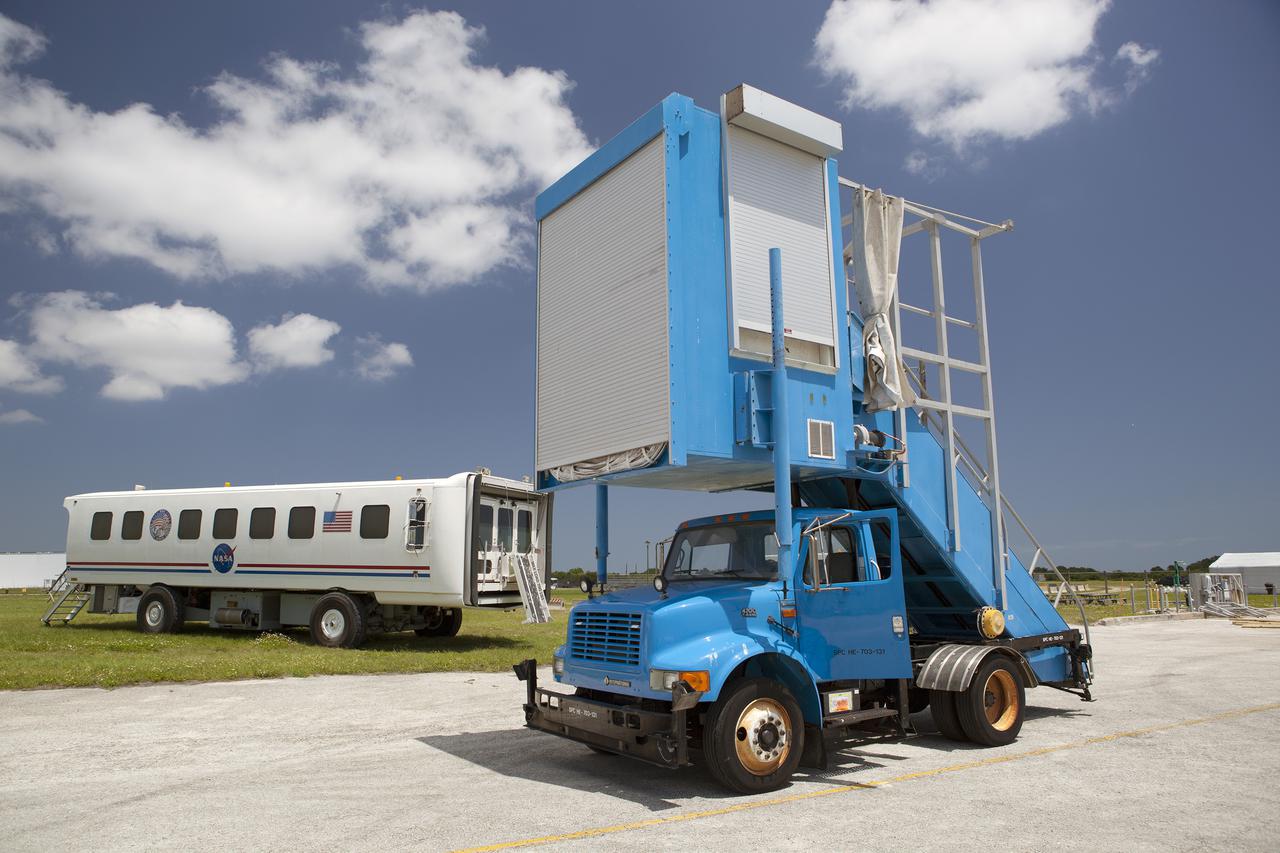
CAPE CANAVERAL, Fla. – The space shuttle crew hatch access vehicle is loaded onto a barge for the first leg of its journey from NASA's Kennedy Space Center in Florida to the Wings of Dreams Aviation Museum located at Keystone Heights Airport in North Central Florida. Also joining the vehicle at Wings of Dreams is an orange flight test article external fuel tank, or ET, an ET transporter, the crew transport vehicle, solid rocket booster, or SRB, aft skirt and SRB frustum. Thousands of unique space shuttle era artifacts are being allocated to facilities across the country for their new missions to educate and inspire America's next generation of explorers. Photo credit: NASA_Dimitri Gerondidakis
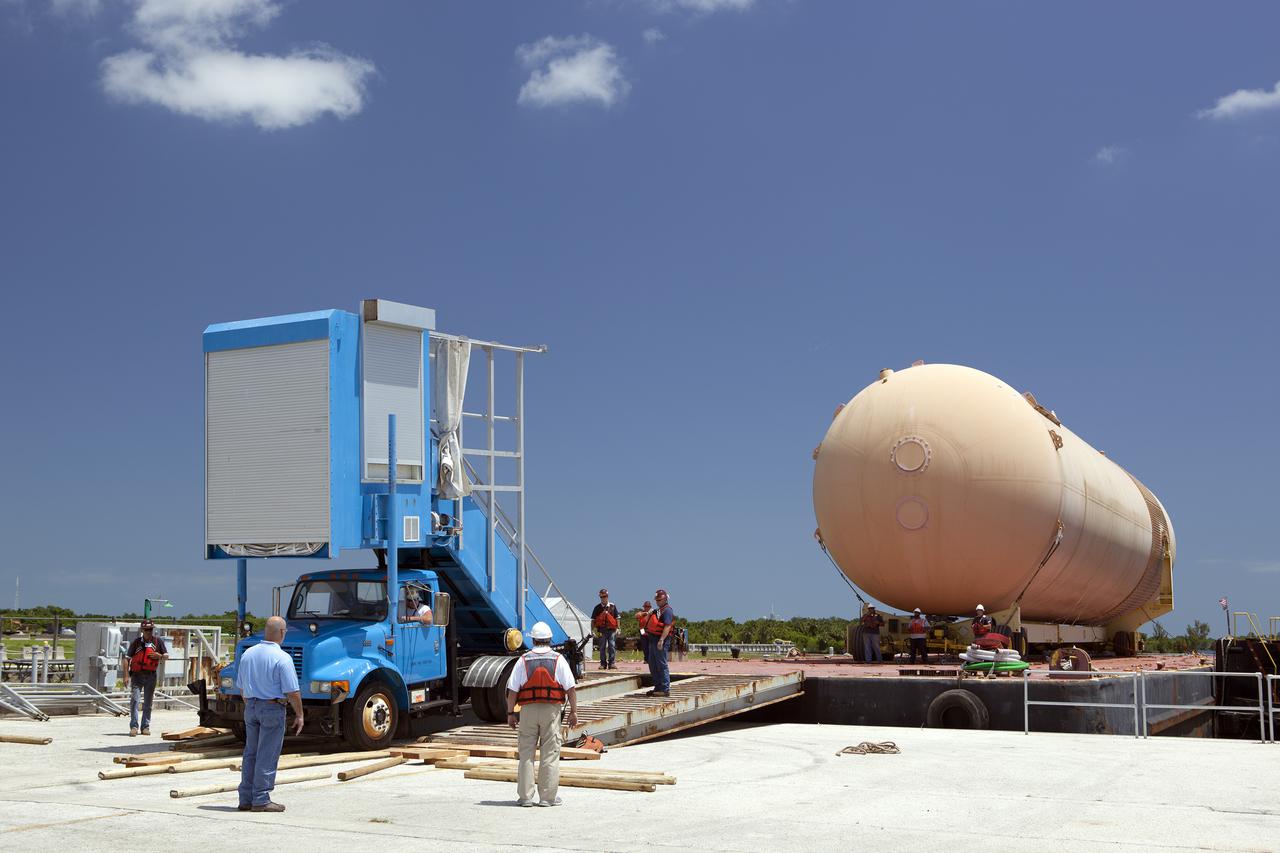
CAPE CANAVERAL, Fla. – The space shuttle crew hatch access vehicle is loaded onto a barge for the first leg of its journey from NASA's Kennedy Space Center in Florida to the Wings of Dreams Aviation Museum located at Keystone Heights Airport in North Central Florida. Also joining the vehicle at Wings of Dreams is an orange flight test article external fuel tank, or ET, an ET transporter, the crew transport vehicle, solid rocket booster, or SRB, aft skirt and SRB frustum. Thousands of unique space shuttle era artifacts are being allocated to facilities across the country for their new missions to educate and inspire America's next generation of explorers. Photo credit: NASA_Dimitri Gerondidakis
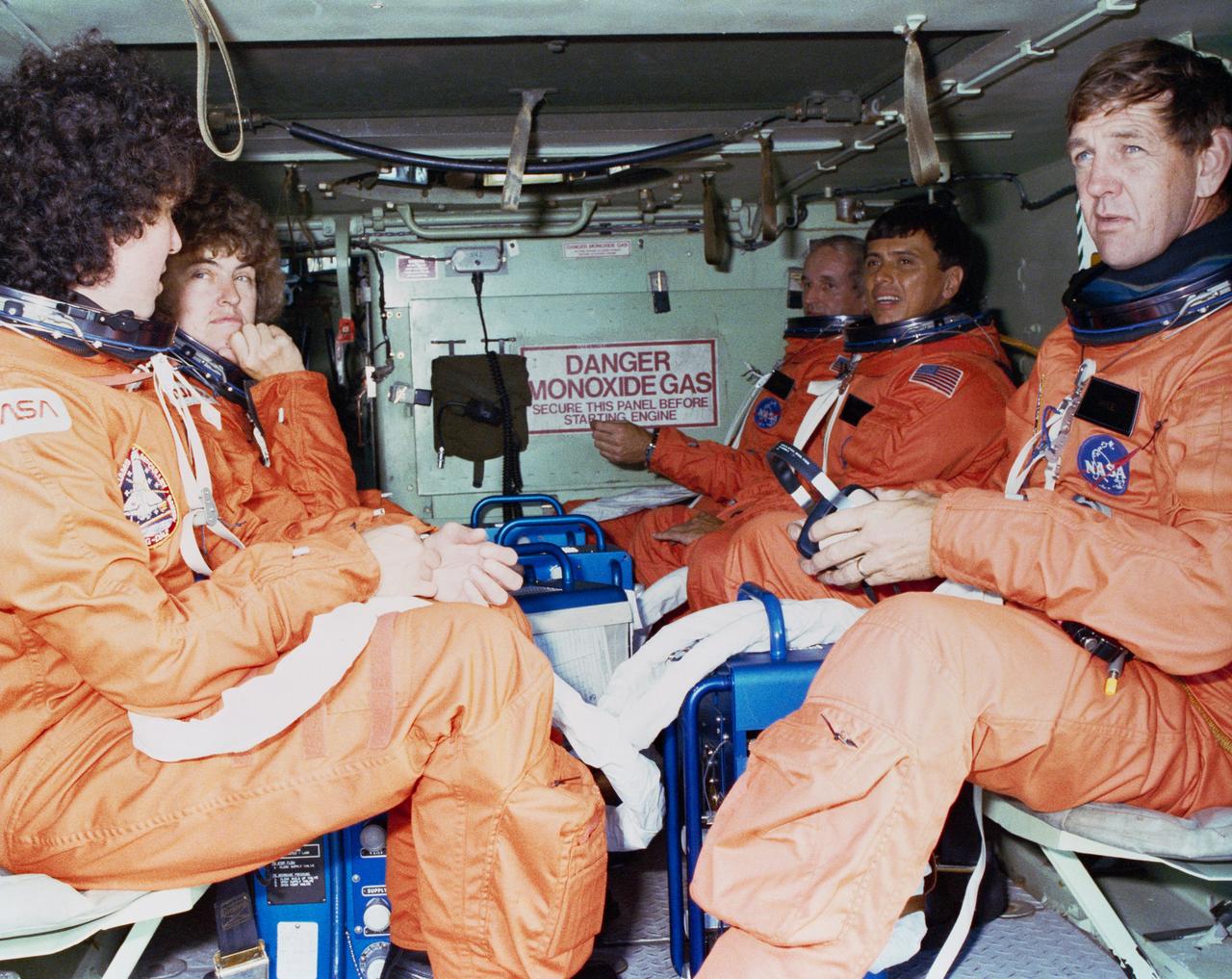
STS-34 crewmembers sit in M1-13 Armored Personnel Carrier (APC) during emergency egress training at KSC's shuttle landing facility (SLF) prior to terminal countdown demonstration test (TCDT) activities. Wearing launch and entry suits (LESs), are (from left) Mission Specialist (MS) Ellen S. Baker, MS Shannon W. Lucid, Commander Donald E. Williams (right side, in back), MS Franklin R. Chang-Diaz, and Pilot Michael J. McCulley (holding headset). View provided by KSC with alternate number KSC-89PC-871.
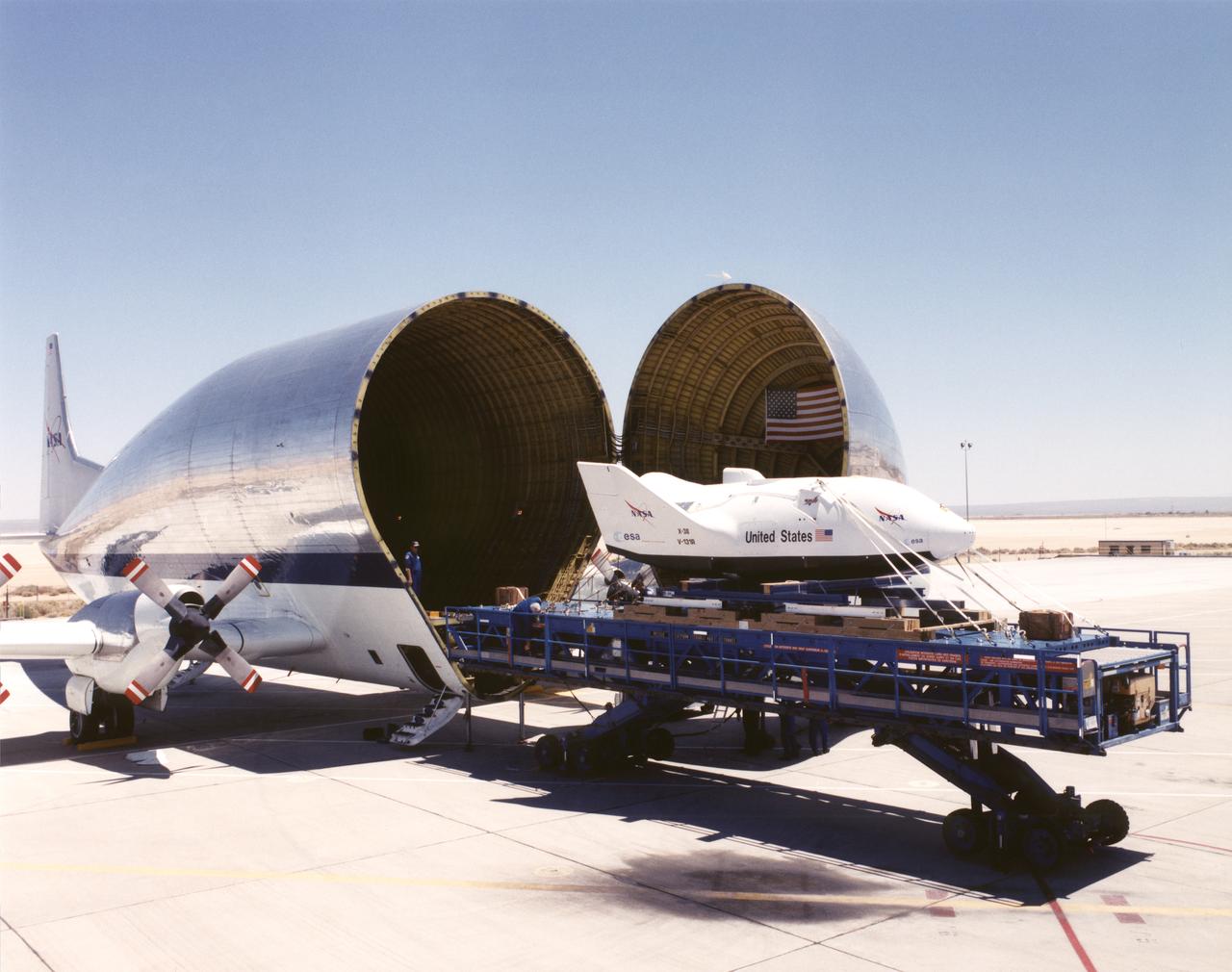
The X-38 Vehicle 131R, intended to prove the utility of a "lifeboat" crew return vehicle to bring crews home from the International Space Station in the event of an emergency, was unloaded from NASA's Super Guppy transport aircraft on July 11, 2000. The newest X-38 version arrived at Dryden for drop tests from NASA's venerable B-52 mother ship. The tests will evaluate a 7,500 square-foot parafoil intended to permit the crew return vehicle to return from space and land in the length of a football field.
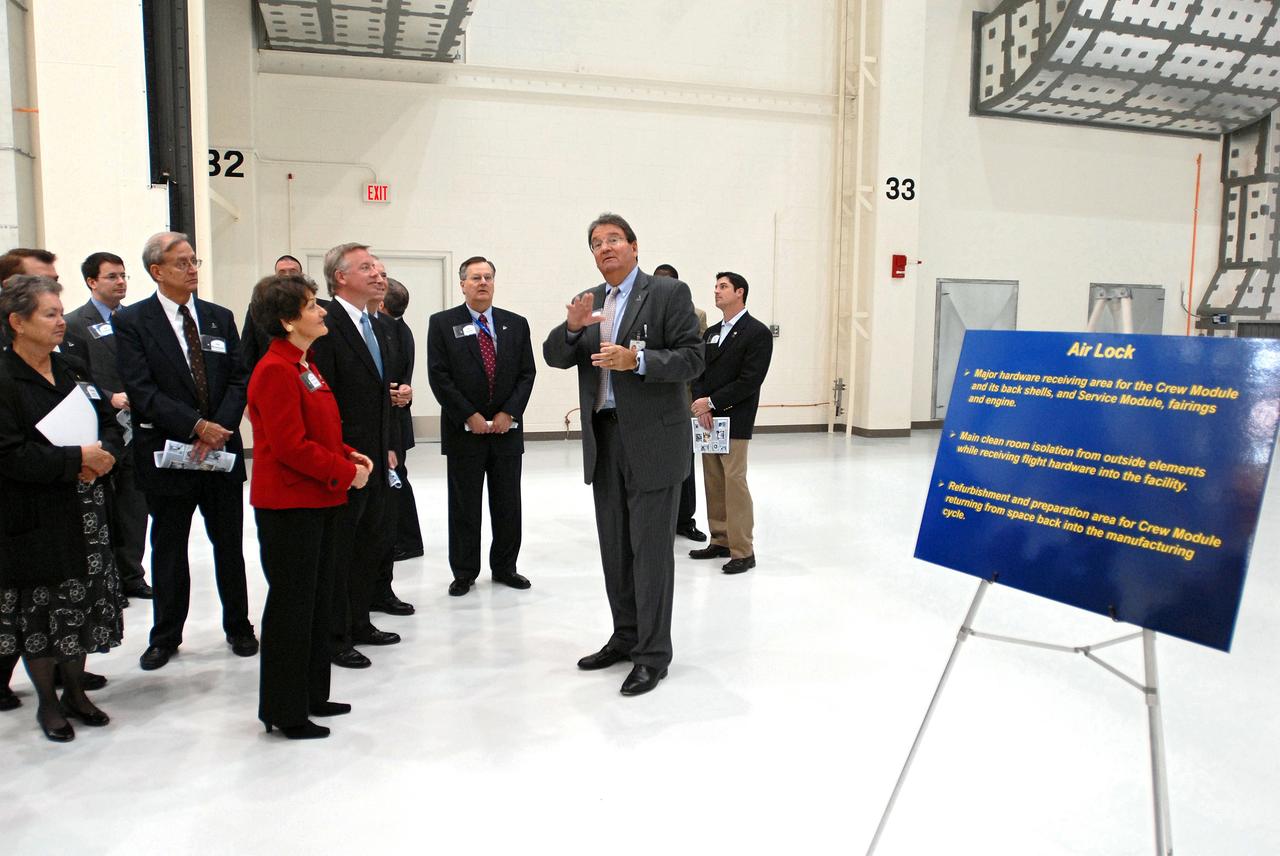
CAPE CANAVERAL, Fla. – Representatives from NASA, Lockheed Martin, Space Florida and the state of Florida participate in a ceremony at NASA's Kennedy Space Center in Florida to mark the completion of renovations on the historic Operations and Checkout Building high bay for use by the Constellation Program. At center, U.S. Rep. Suzanne Kosmas and Lt. Governor Jeff Kottcamp listen to Richard Harris, with Lockheed Martin, describe some of the hardware that will be used in the building. Originally built to process space vehicles in the Apollo era, the building will serve as the final assembly facility for the Orion crew exploration vehicle. Orion, America's future human spaceflight vehicle, will be capable of transporting four crew members to the moon and later will support crew transfers to Mars. The Orion spacecraft also will be used to transport crew members to the International Space Station after space shuttles are retired in 2010. The first operational launch of Orion atop an Ares I rocket is planned for 2015. Photo credit: NASA/Dimitri Gerondidakis
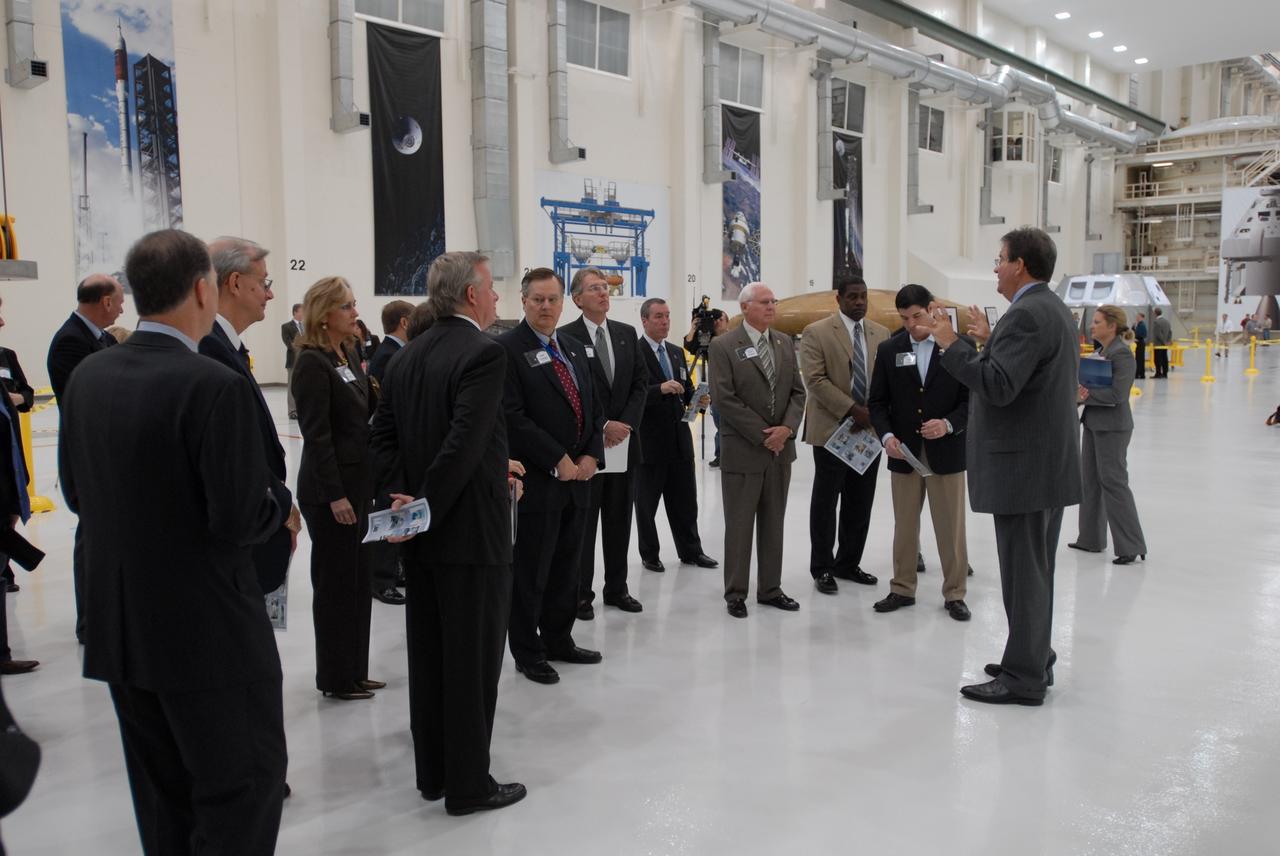
CAPE CANAVERAL, Fla. – Representatives from NASA, Lockheed Martin, Space Florida and the state of Florida participate in a ceremony at NASA's Kennedy Space Center in Florida to mark the completion of renovations on the historic Operations and Checkout Building high bay for use by the Constellation Program. At right, Richard Harris, with Lockheed Martin, describes activities that will take place in the building. Originally built to process space vehicles in the Apollo era, the building will serve as the final assembly facility for the Orion crew exploration vehicle. Orion, America's future human spaceflight vehicle, will be capable of transporting four crew members to the moon and later will support crew transfers to Mars. The Orion spacecraft also will be used to transport crew members to the International Space Station after space shuttles are retired in 2010. The first operational launch of Orion atop an Ares I rocket is planned for 2015. Photo credit: NASA/Dimitri Gerondidakis
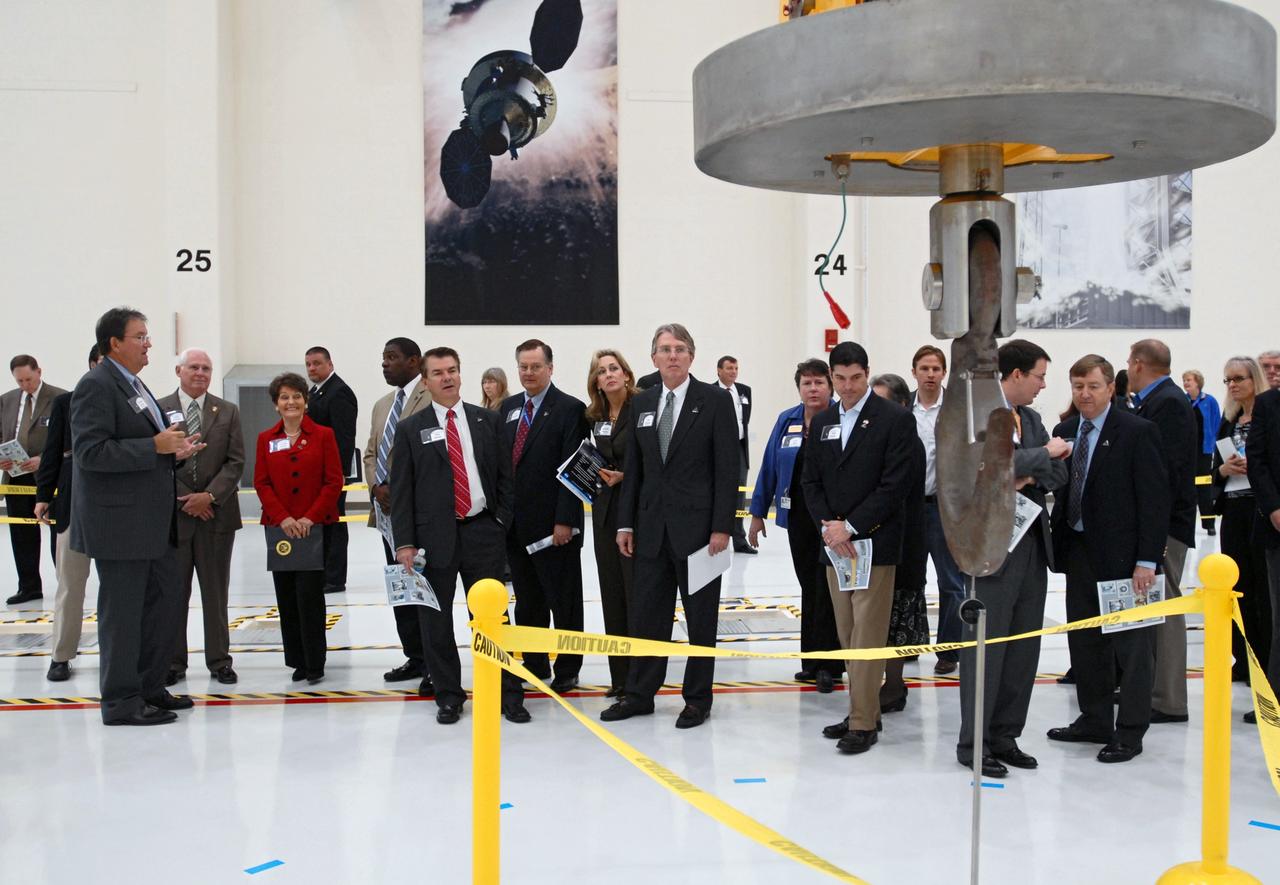
CAPE CANAVERAL, Fla. – Representatives from NASA, Lockheed Martin, Space Florida and the state of Florida participate in a ceremony at NASA's Kennedy Space Center in Florida to mark the completion of renovations on the historic Operations and Checkout Building high bay for use by the Constellation Program. At left, Richard Harris, with Lockheed Martin, describes activities that will take place in the building. Originally built to process space vehicles in the Apollo era, the building will serve as the final assembly facility for the Orion crew exploration vehicle. Orion, America's future human spaceflight vehicle, will be capable of transporting four crew members to the moon and later will support crew transfers to Mars. The Orion spacecraft also will be used to transport crew members to the International Space Station after space shuttles are retired in 2010. The first operational launch of Orion atop an Ares I rocket is planned for 2015. Photo credit: NASA/Dimitri Gerondidakis
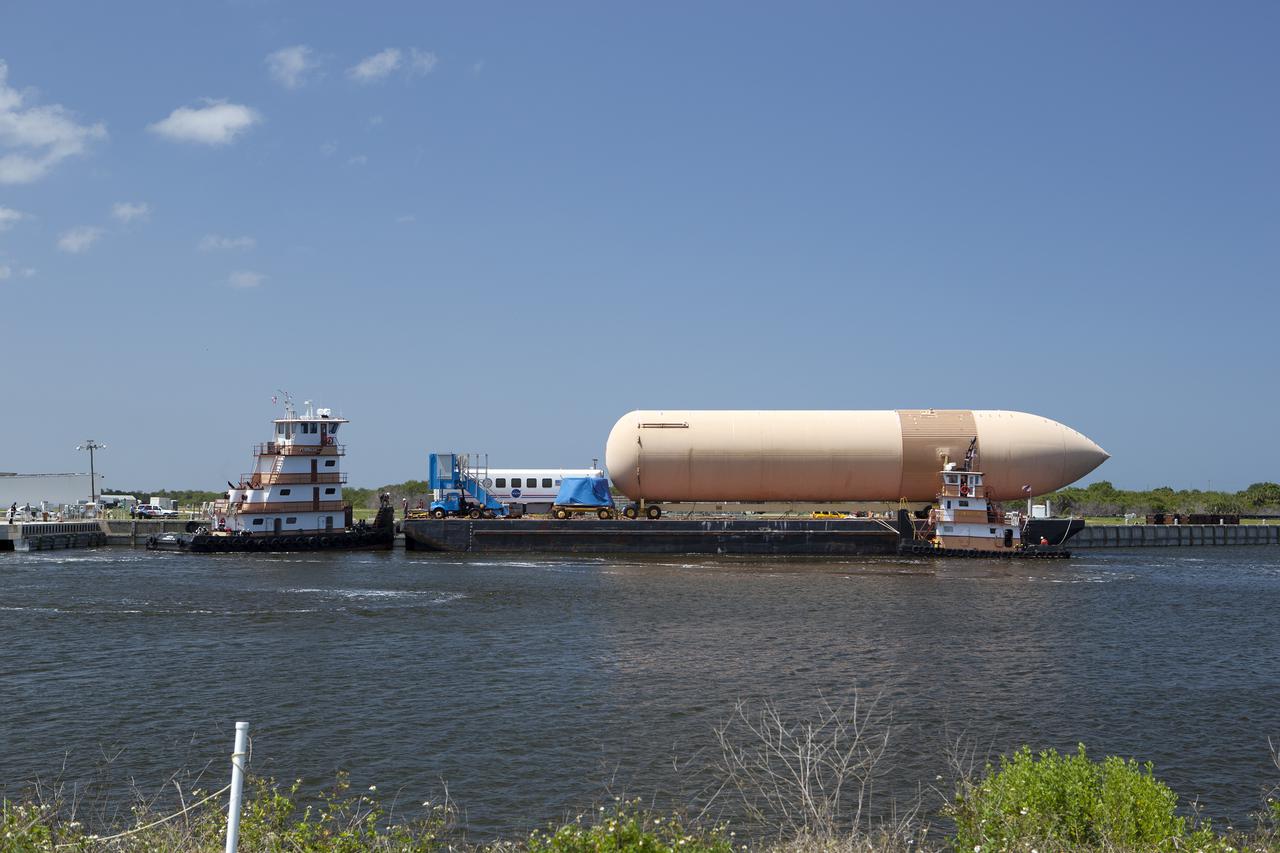
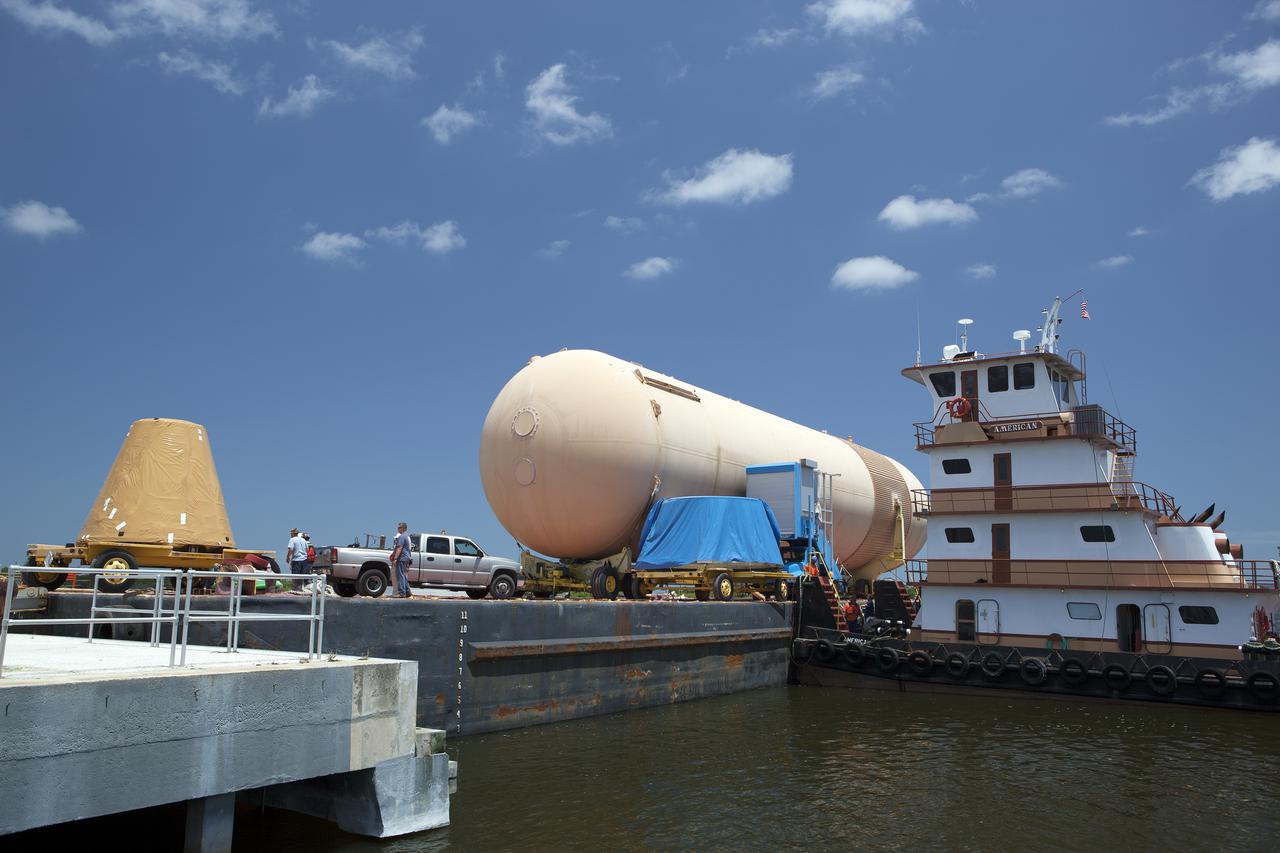
CAPE CANAVERAL, Fla. – A space shuttle orange flight test article external fuel tank, or ET, an ET transporter, crew hatch access vehicle, crew transport vehicle, solid rocket booster, or SRB, aft skirt and SRB frustum are loaded onto a barge and beginning the first leg of their journey from NASA's Kennedy Space Center in Florida to the Wings of Dreams Aviation Museum located at Keystone Heights Airport in North Central Florida. Thousands of unique space shuttle era artifacts are being allocated to facilities across the country for their new missions to educate and inspire America's next generation of explorers. Photo credit: NASA_Dimitri Gerondidakis
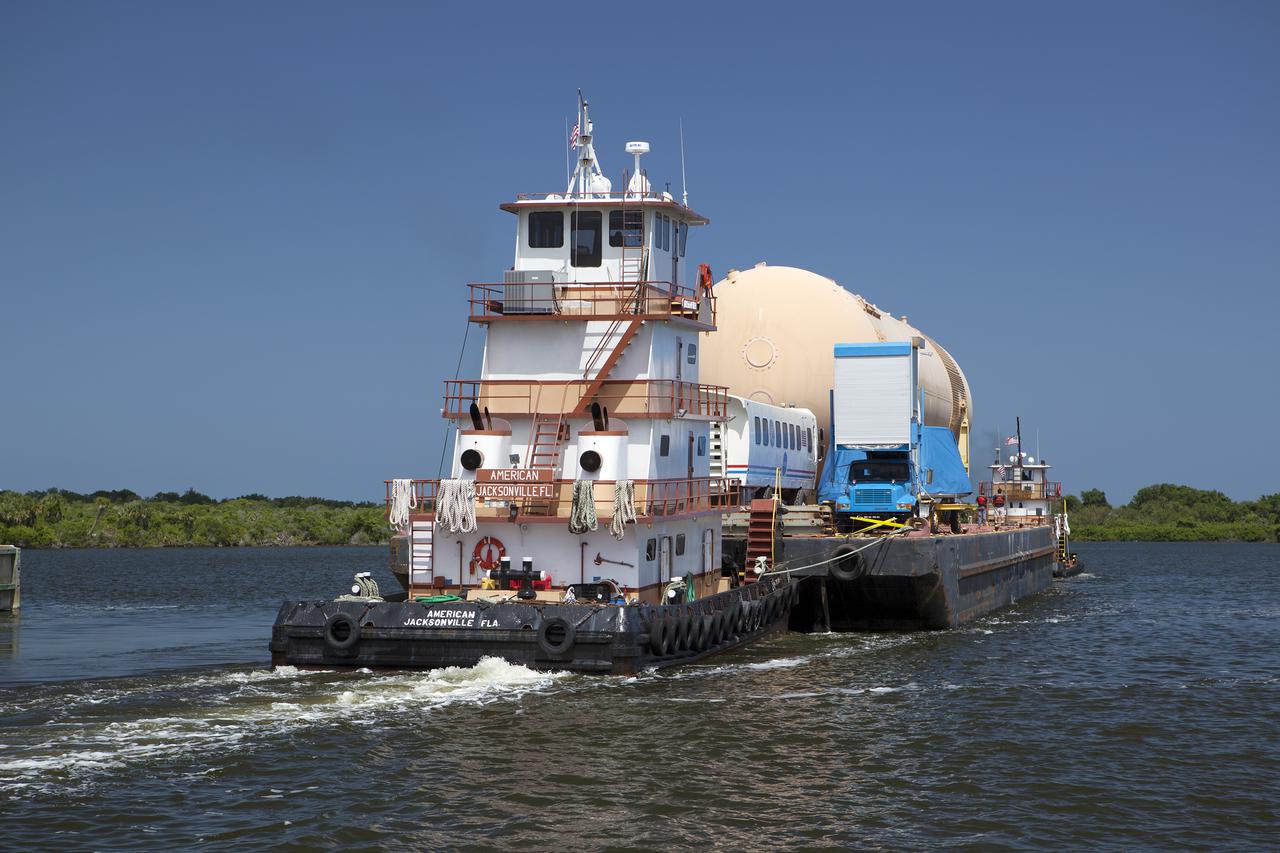
CAPE CANAVERAL, Fla. -- A space shuttle orange flight test article external fuel tank, or ET, an ET transporter, crew hatch access vehicle, crew transport vehicle, solid rocket booster, or SRB, aft skirt and SRB frustum are loaded onto a barge and beginning the first leg of their journey down the Banana River from NASA's Kennedy Space Center in Florida to the Wings of Dreams Aviation Museum located at Keystone Heights Airport in North Central Florida. Thousands of unique space shuttle era artifacts are being allocated to facilities across the country for their new missions to educate and inspire America's next generation of explorers. Photo credit: NASA_Dimitri Gerondidakis
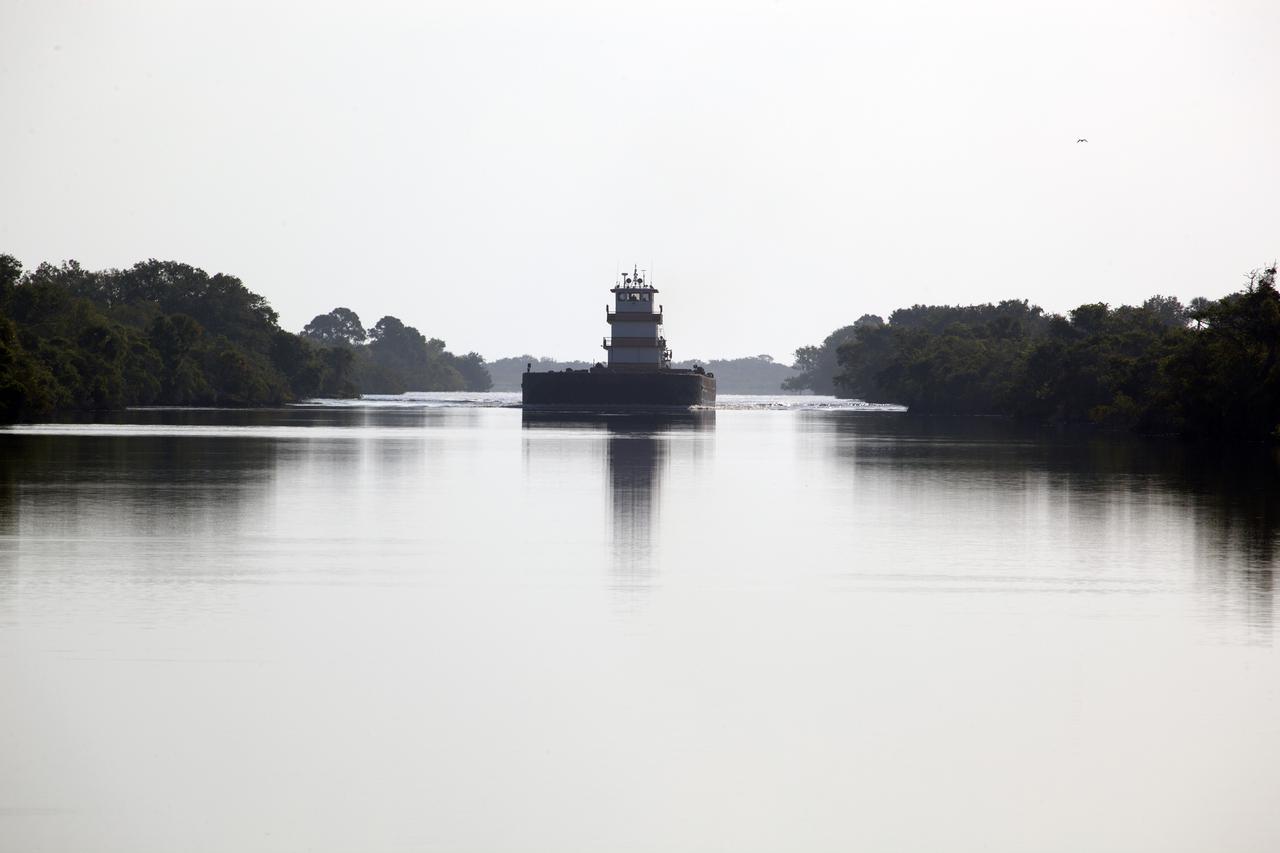
CAPE CANAVERAL, Fla. – A barge arrives at the Kennedy Space Center Turn Basin to pick up an orange flight test article space shuttle external fuel tank, or ET, an ET transporter, the crew transport vehicle, crew hatch access vehicle, solid rocket booster, or SRB, aft skirt and SRB frustum for the first leg of their journey from NASA's Kennedy Space Center in Florida to the Wings of Dreams Aviation Museum located at Keystone Heights Airport in North Central Florida. Thousands of unique space shuttle era artifacts are being allocated to facilities across the country for their new missions to educate and inspire America's next generation of explorers. Photo credit: NASA_Dimitri Gerondidakis
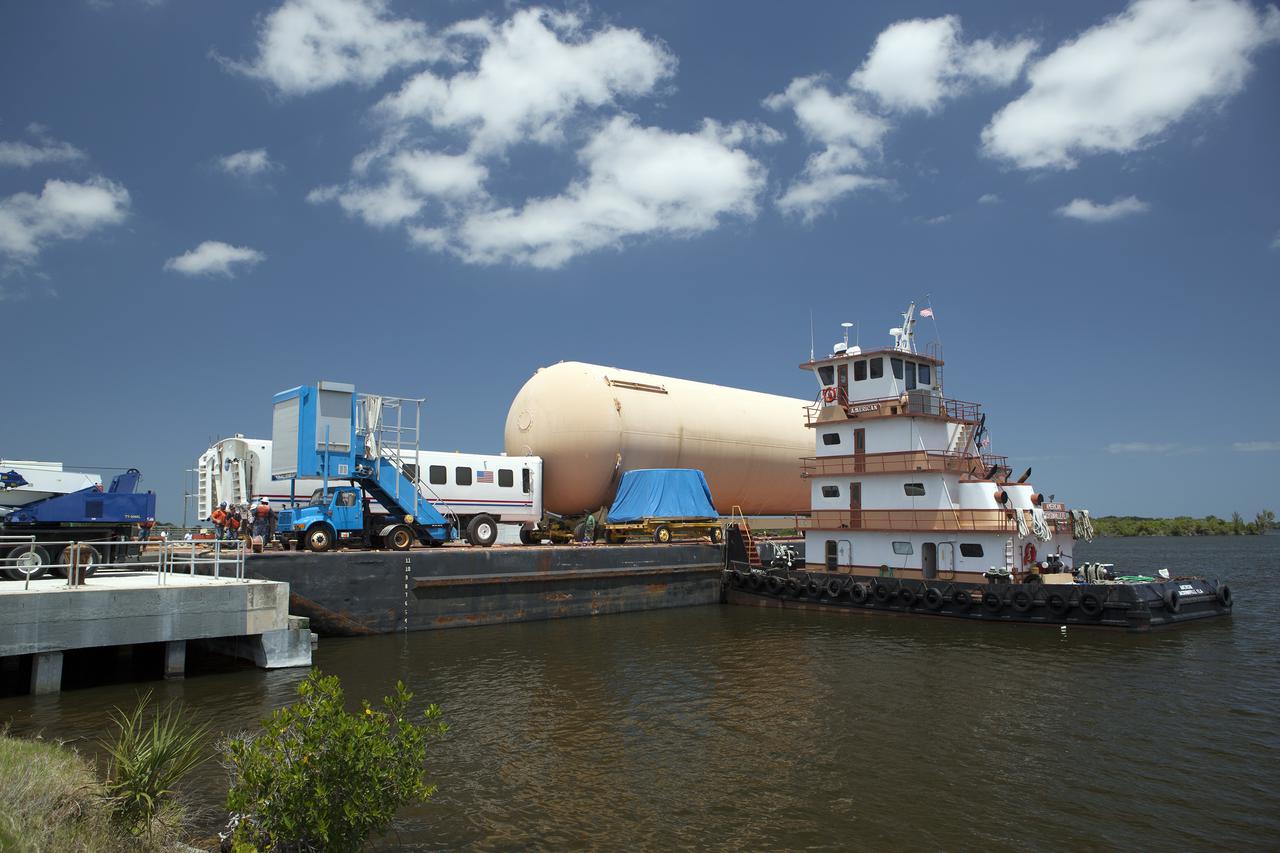
CAPE CANAVERAL, Fla. -- A space shuttle orange flight test article external fuel tank, or ET, an ET transporter, crew hatch access vehicle, crew transport vehicle, solid rocket booster, or SRB, aft skirt and SRB frustum are loaded onto a barge for the first leg of their journey from NASA's Kennedy Space Center in Florida to the Wings of Dreams Aviation Museum located at Keystone Heights Airport in North Central Florida. Thousands of unique space shuttle era artifacts are being allocated to facilities across the country for their new missions to educate and inspire America's next generation of explorers. Photo credit: NASA_Dimitri Gerondidakis
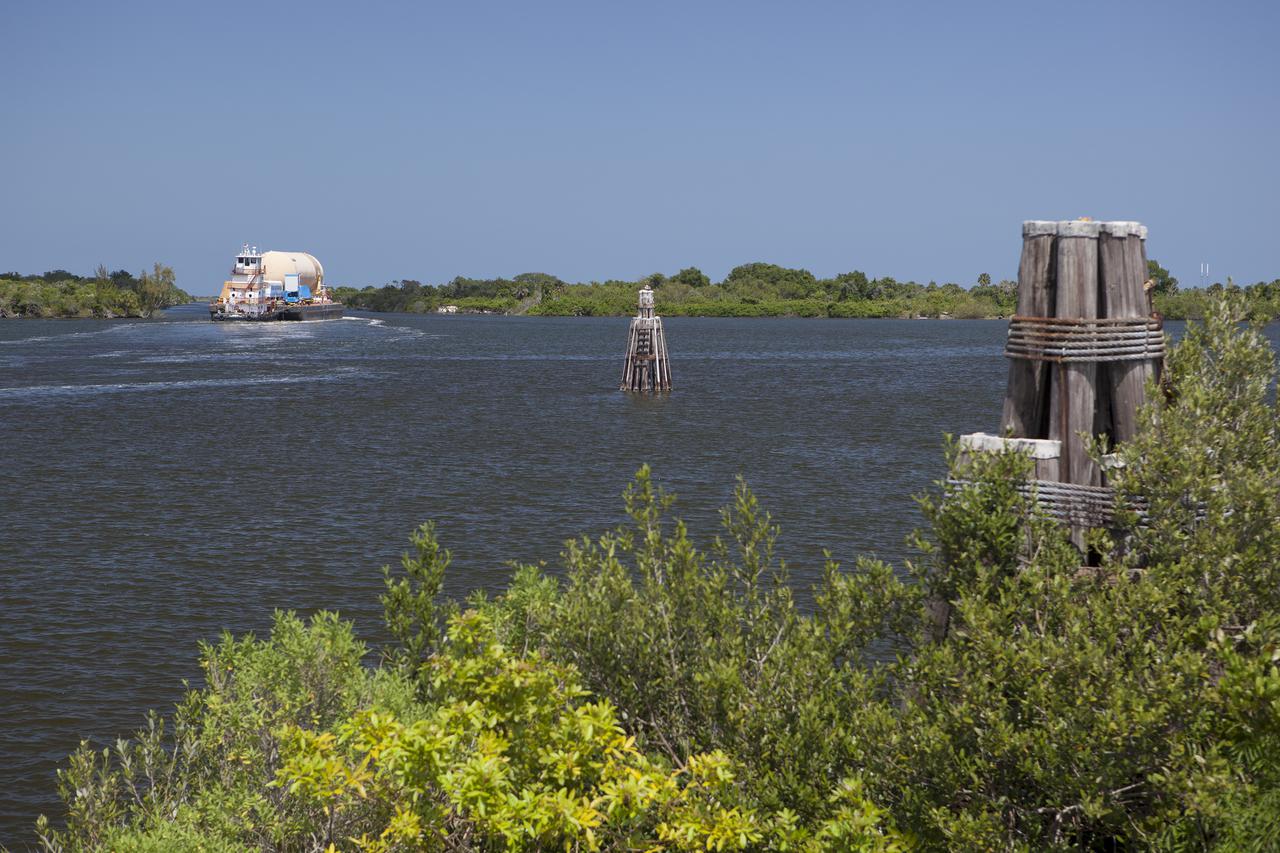
CAPE CANAVERAL, Fla. -- A space shuttle orange flight test article external fuel tank, or ET, an ET transporter, crew hatch access vehicle, crew transport vehicle, solid rocket booster, or SRB, aft skirt and SRB frustum are loaded onto a barge and beginning the first leg of their journey down the Banana River from NASA's Kennedy Space Center in Florida to the Wings of Dreams Aviation Museum located at Keystone Heights Airport in North Central Florida. Thousands of unique space shuttle era artifacts are being allocated to facilities across the country for their new missions to educate and inspire America's next generation of explorers. Photo credit: NASA_Dimitri Gerondidakis
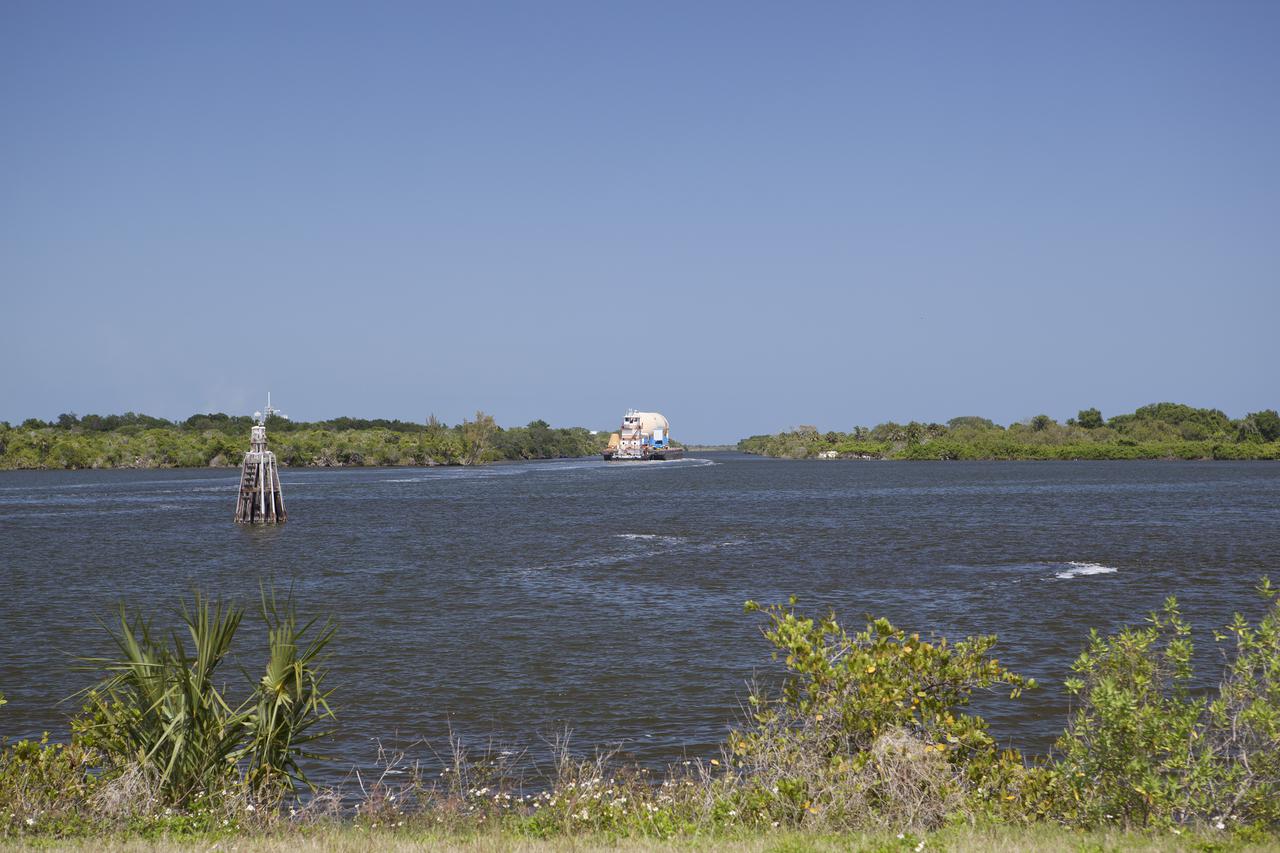
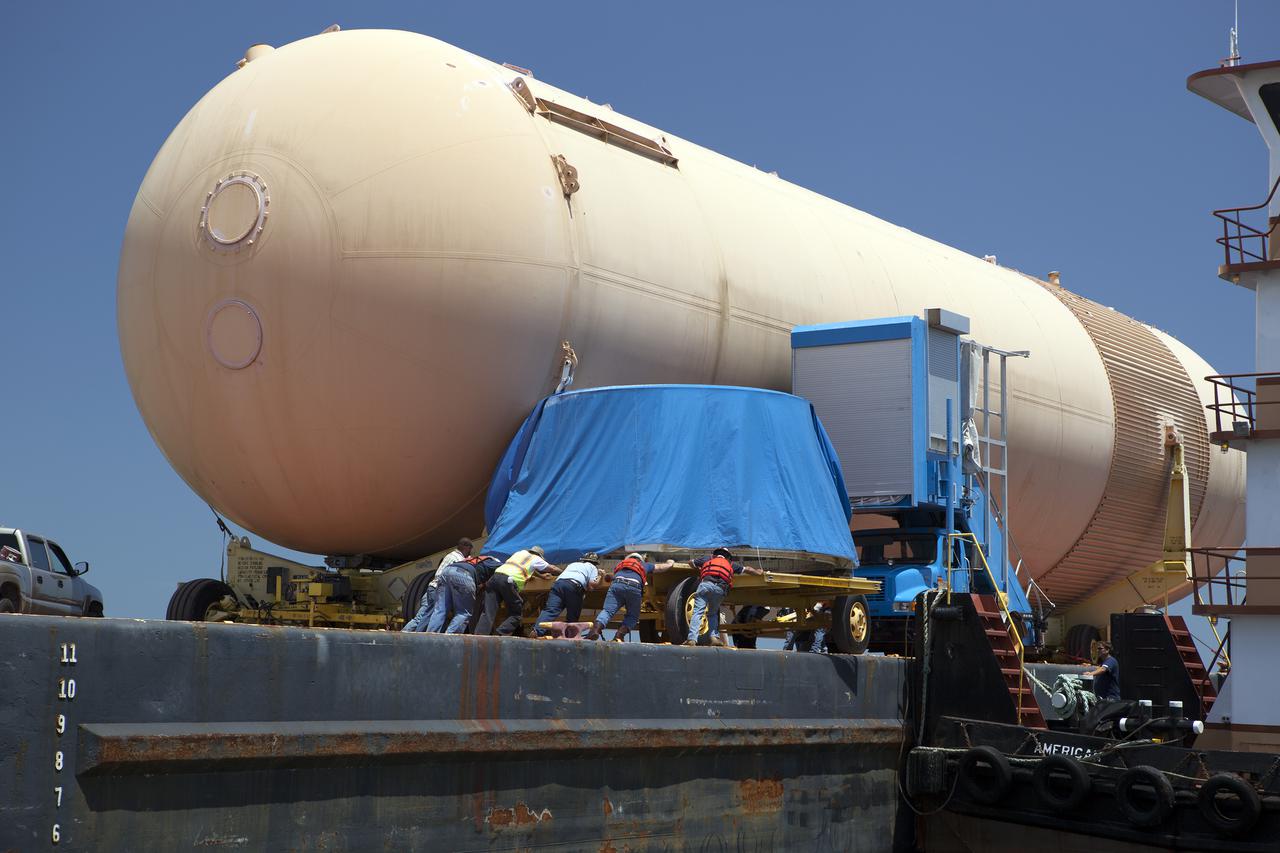
CAPE CANAVERAL, Fla. – A space shuttle orange flight test article external fuel tank, or ET, an ET transporter, crew hatch access vehicle, crew transport vehicle, solid rocket booster, or SRB, aft skirt and SRB frustum are loaded onto a barge and beginning the first leg of their journey down the Banana River from NASA's Kennedy Space Center in Florida to the Wings of Dreams Aviation Museum located at Keystone Heights Airport in North Central Florida. Thousands of unique space shuttle era artifacts are being allocated to facilities across the country for their new missions to educate and inspire America's next generation of explorers. Photo credit: NASA_Dimitri Gerondidakis
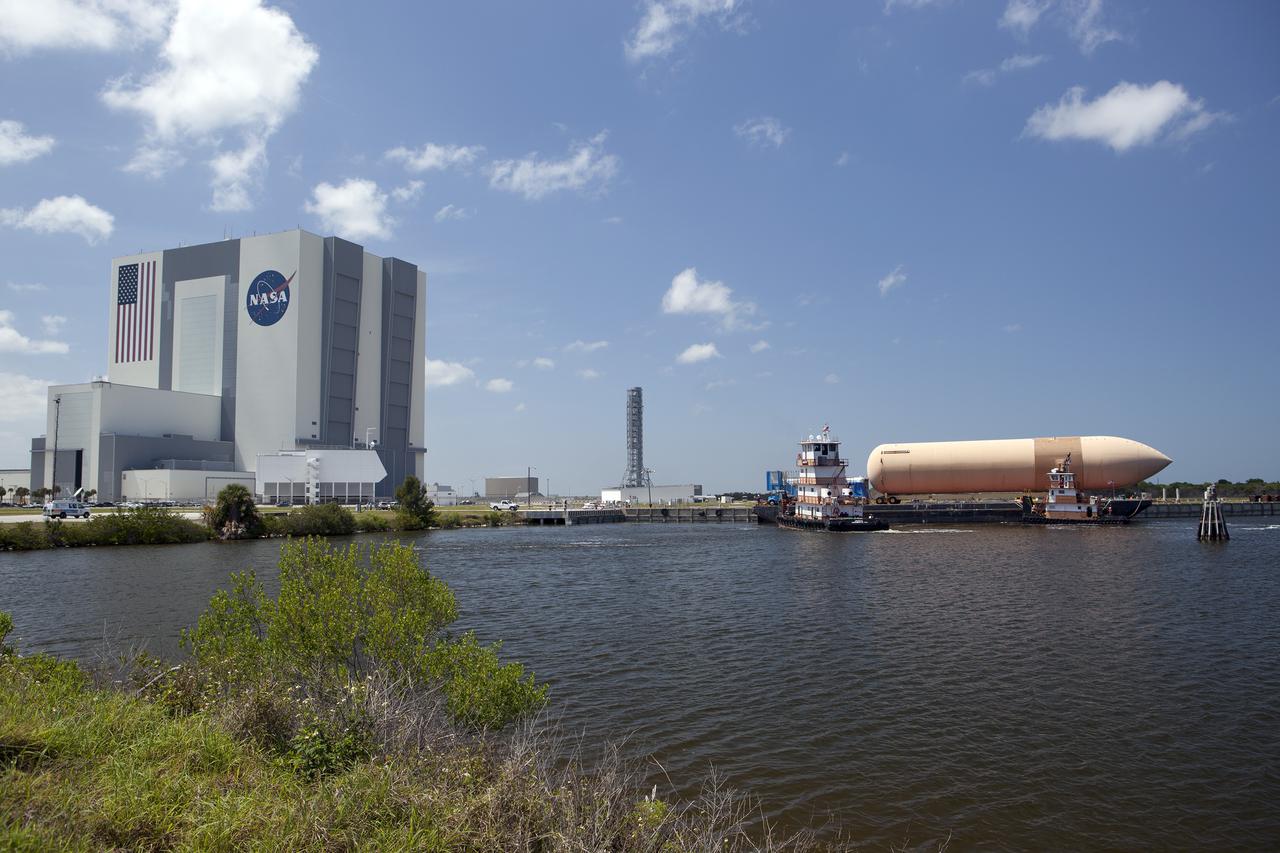
CAPE CANAVERAL, Fla. -- A space shuttle orange flight test article external fuel tank, or ET, an ET transporter, crew hatch access vehicle, crew transport vehicle, solid rocket booster, or SRB, aft skirt and SRB frustum are loaded onto a barge and beginning the first leg of their journey from NASA's Kennedy Space Center in Florida to the Wings of Dreams Aviation Museum located at Keystone Heights Airport in North Central Florida. Thousands of unique space shuttle era artifacts are being allocated to facilities across the country for their new missions to educate and inspire America's next generation of explorers. Photo credit: NASA_Dimitri Gerondidakis
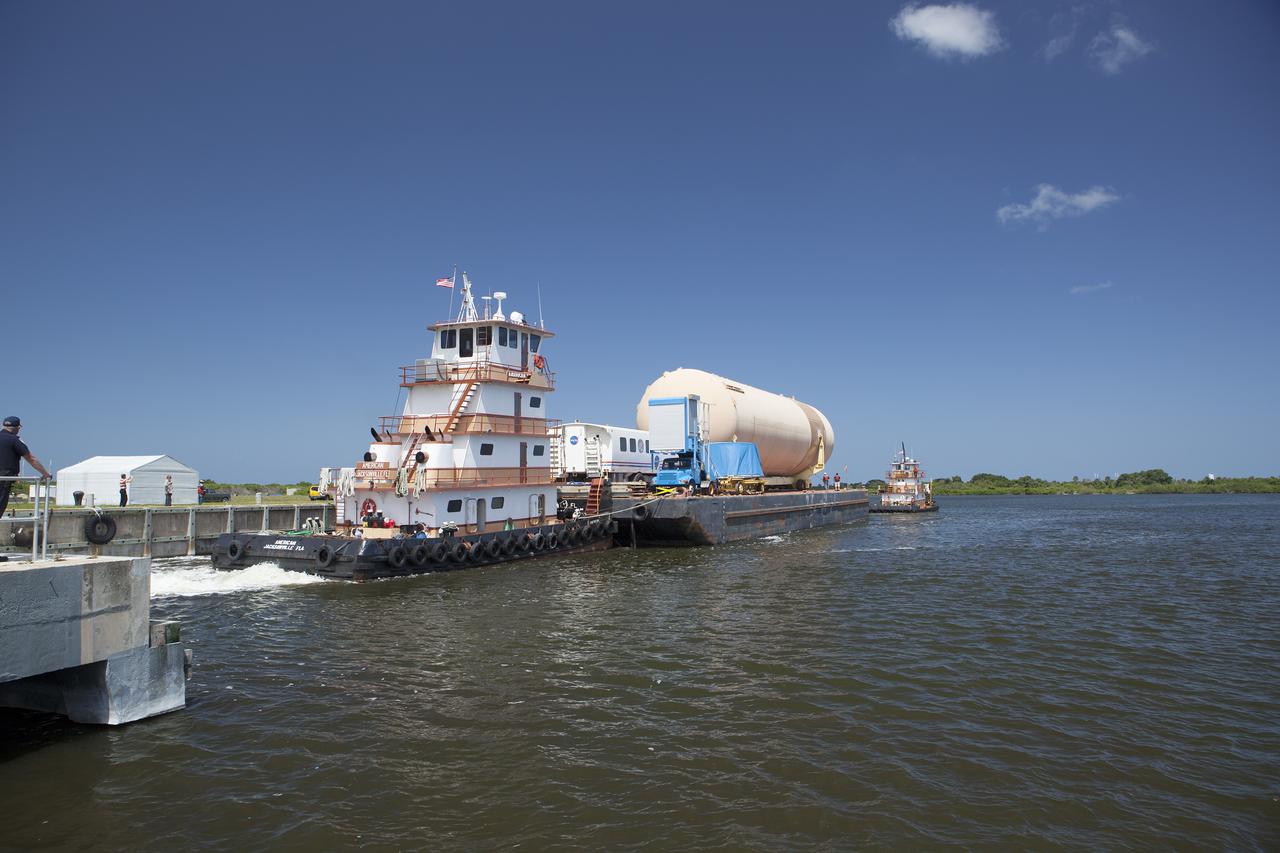
CAPE CANAVERAL, Fla. – A space shuttle orange flight test article external fuel tank, or ET, an ET transporter, crew hatch access vehicle, crew transport vehicle, solid rocket booster, or SRB, aft skirt and SRB frustum are loaded onto a barge and beginning the first leg of their journey down the Banana River from NASA's Kennedy Space Center in Florida to the Wings of Dreams Aviation Museum located at Keystone Heights Airport in North Central Florida. Thousands of unique space shuttle era artifacts are being allocated to facilities across the country for their new missions to educate and inspire America's next generation of explorers. Photo credit: NASA_Dimitri Gerondidakis
CAPE CANAVERAL, Fla. – A space shuttle solid rocket booster, or SRB, aft skirt is loaded onto a barge for the first leg of its journey from NASA's Kennedy Space Center in Florida to the Wings of Dreams Aviation Museum located at Keystone Heights Airport in North Central Florida. Also joining the booster segment at Wings of Dreams is an orange flight test article external fuel tank, or ET, an ET transporter, the crew transport vehicle, crew hatch access vehicle and SRB frustum. Thousands of unique space shuttle era artifacts are being allocated to facilities across the country for their new missions to educate and inspire America's next generation of explorers. Photo credit: NASA_Dimitri Gerondidakis
CAPE CANAVERAL, Fla. – A space shuttle solid rocket booster, or SRB, frustum is loaded onto a barge for the first leg of its journey from NASA's Kennedy Space Center in Florida to the Wings of Dreams Aviation Museum located at Keystone Heights Airport in North Central Florida. Also joining the booster segment at Wings of Dreams is an orange flight test article external fuel tank, or ET, an ET transporter, the crew transport vehicle, crew hatch access vehicle and SRB aft skirt. Thousands of unique space shuttle era artifacts are being allocated to facilities across the country for their new missions to educate and inspire America's next generation of explorers. Photo credit: NASA_Dimitri Gerondidakis
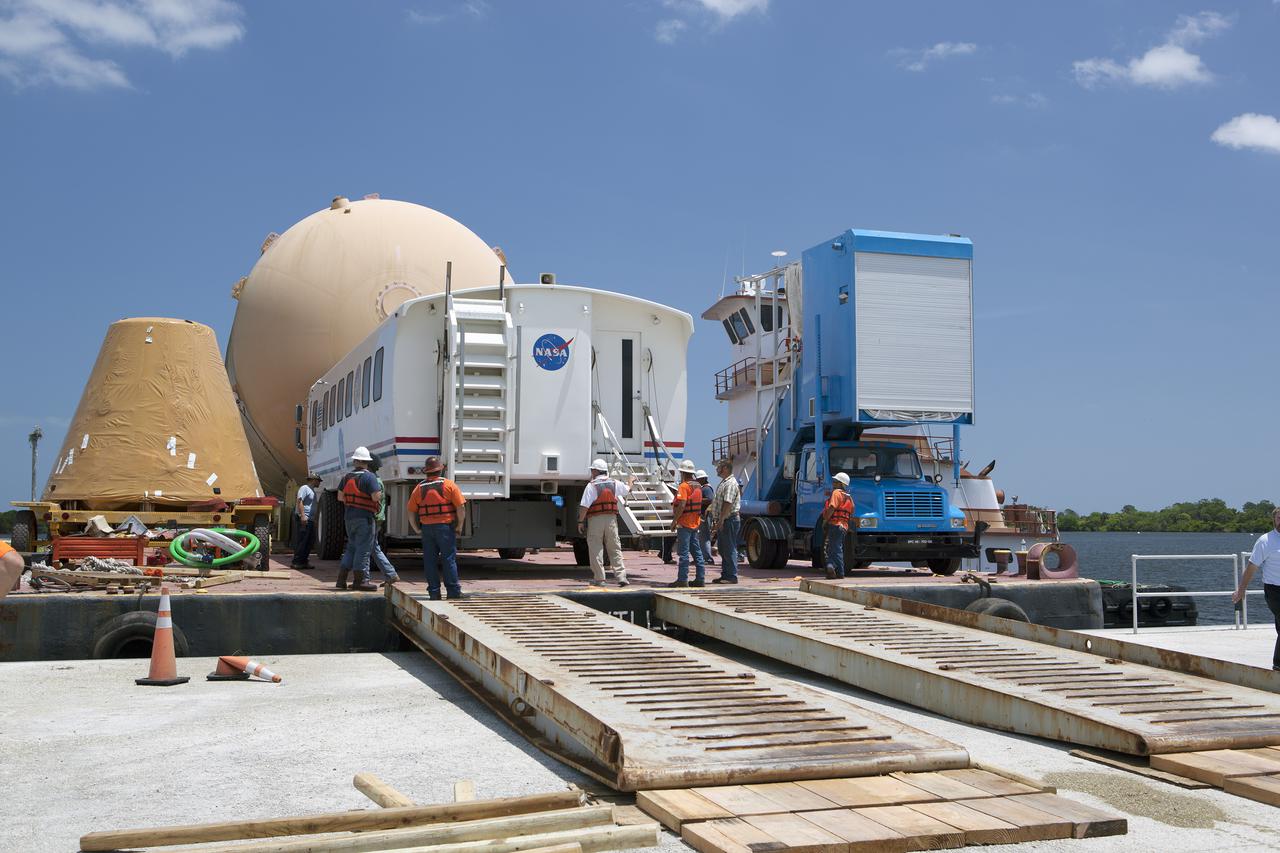
CAPE CANAVERAL, Fla. – A space shuttle orange flight test article external fuel tank, or ET, an ET transporter, crew hatch access vehicle, crew transport vehicle, solid rocket booster, or SRB, aft skirt and SRB frustum are loaded onto a barge for the first leg of their journey from NASA's Kennedy Space Center in Florida to the Wings of Dreams Aviation Museum located at Keystone Heights Airport in North Central Florida. Thousands of unique space shuttle era artifacts are being allocated to facilities across the country for their new missions to educate and inspire America's next generation of explorers. Photo credit: NASA_Dimitri Gerondidakis
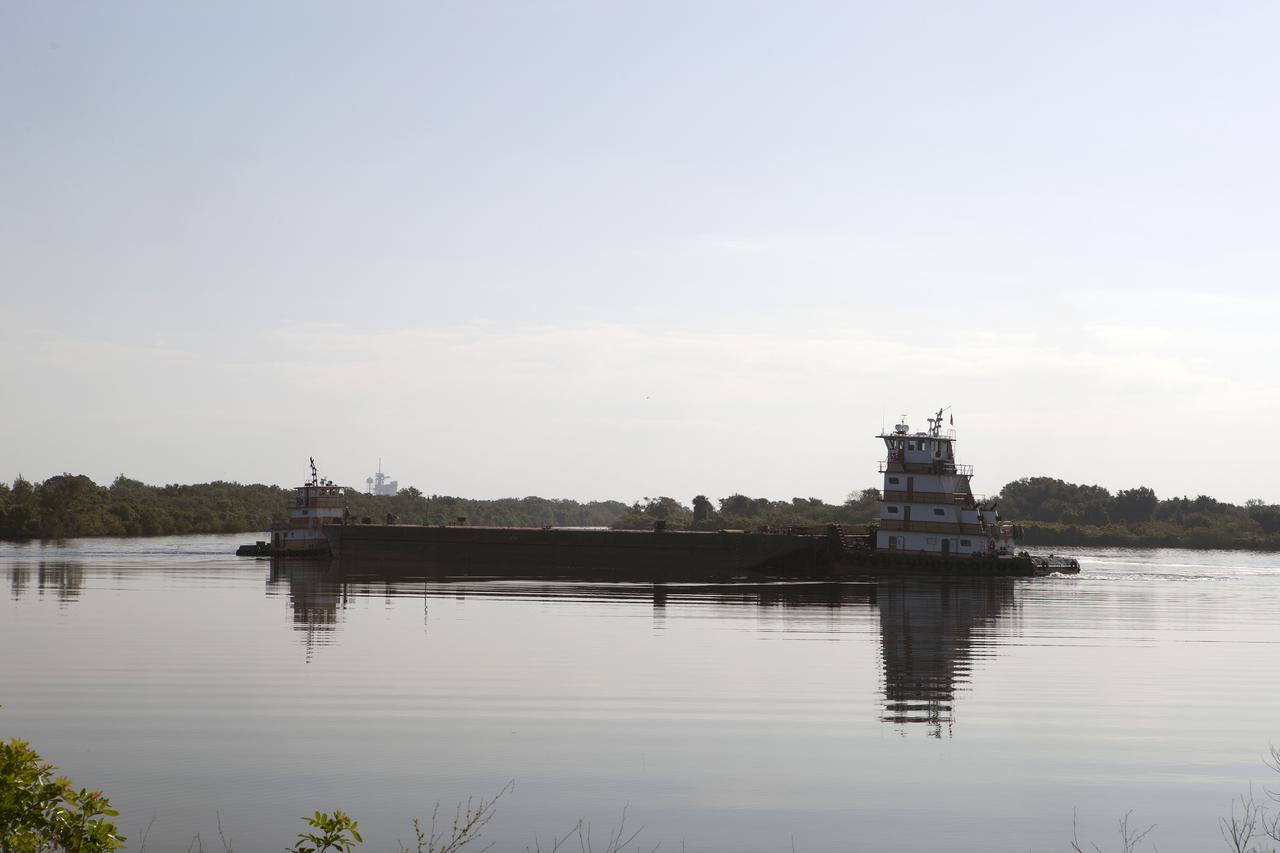
CAPE CANAVERAL, Fla. – A barge arrives at the Kennedy Space Center Turn Basin to pick up an orange flight test article space shuttle external fuel tank, or ET, an ET transporter, the crew transport vehicle, crew hatch access vehicle, solid rocket booster, or SRB, aft skirt and SRB frustum for the first leg of their journey from NASA's Kennedy Space Center in Florida to the Wings of Dreams Aviation Museum located at Keystone Heights Airport in North Central Florida. Thousands of unique space shuttle era artifacts are being allocated to facilities across the country for their new missions to educate and inspire America's next generation of explorers. Photo credit: NASA_Dimitri Gerondidakis
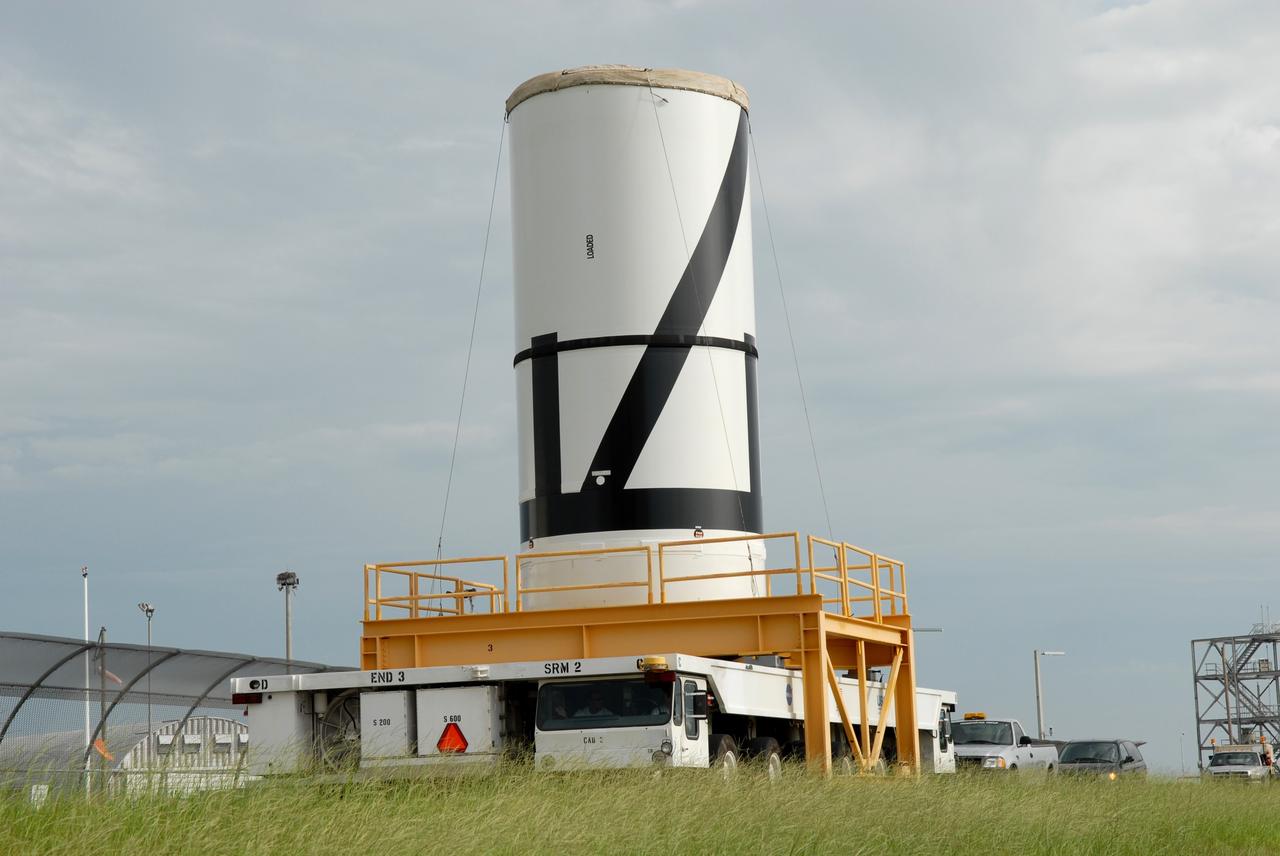
CAPE CANAVERAL, Fla. – The Ares I-X aft center booster segment is transported from the Rotation, Processing and Surge Facility to the Vehicle Assembly Building at NASA's Kennedy Space Center in Florida. The Ares I-X launch vehicle segments are being stacked in the VAB. Part of the Constellation Program, the Ares I-X is the test vehicle for the Ares I, which is the essential core of a space transportation system that eventually will carry crewed missions back to the moon, on to Mars and out into the solar system. Launch is targeted for no earlier than Aug. 30 from Launch Pad 39B. Photo credit: NASA/Jim Grossmann
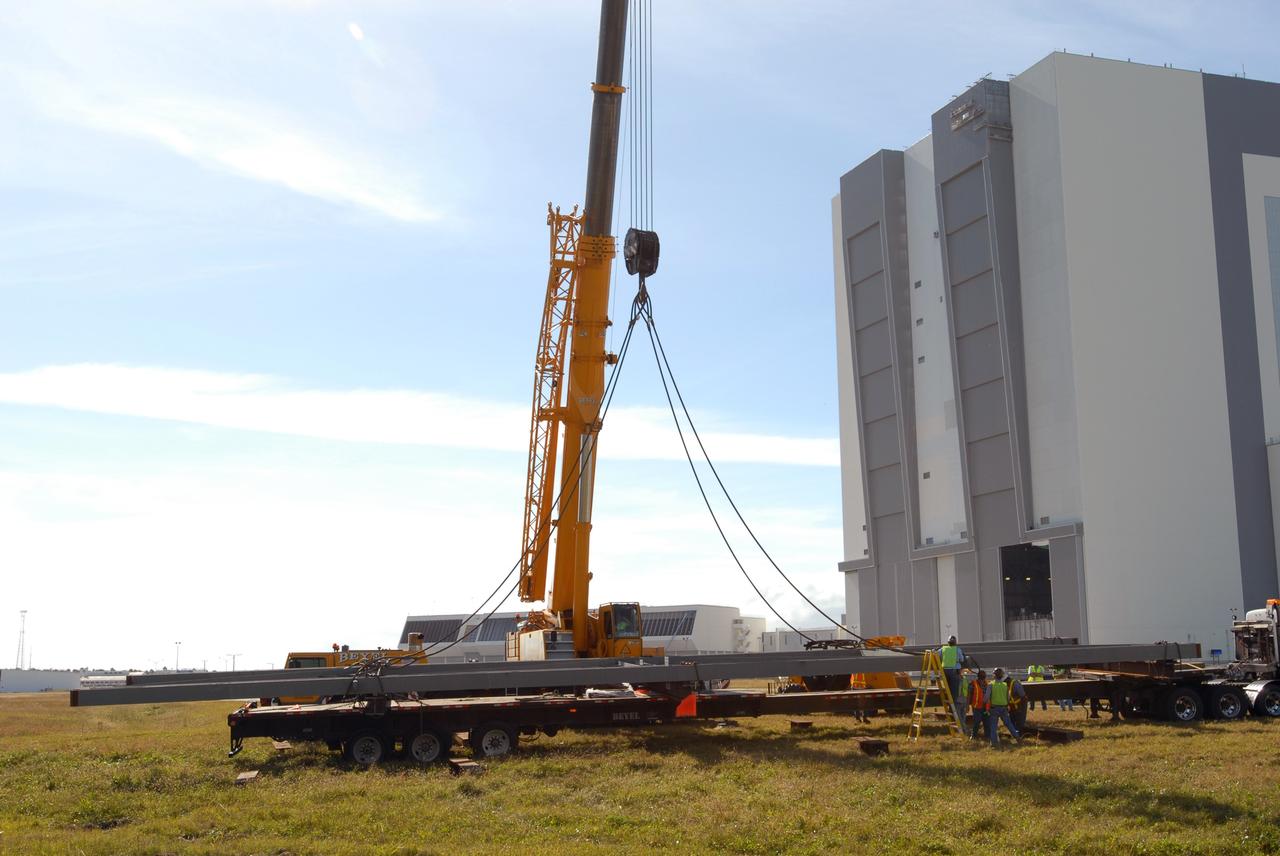
CAPE CANAVERAL, Fla. -- Near the Vehicle Assembly Building at NASA's Kennedy Space Center in Florida, a crane offloads from a transporter one of the trusses, T4, to build the new mobile launcher for the Constellation Program. The new mobile launcher will be the base for the Ares rockets to launch the Orion crew exploration vehicle and the cargo vehicle. The base is being made lighter than space shuttle mobile launcher platforms so the crawler-transporter can pick up the added load of the 345-foot tower and taller rocket. When the structural portion of the new mobile launcher is complete, umbilicals, access arms, communications equipment and command/control equipment will be installed. Photo credit: NASA/Jim Grossmann
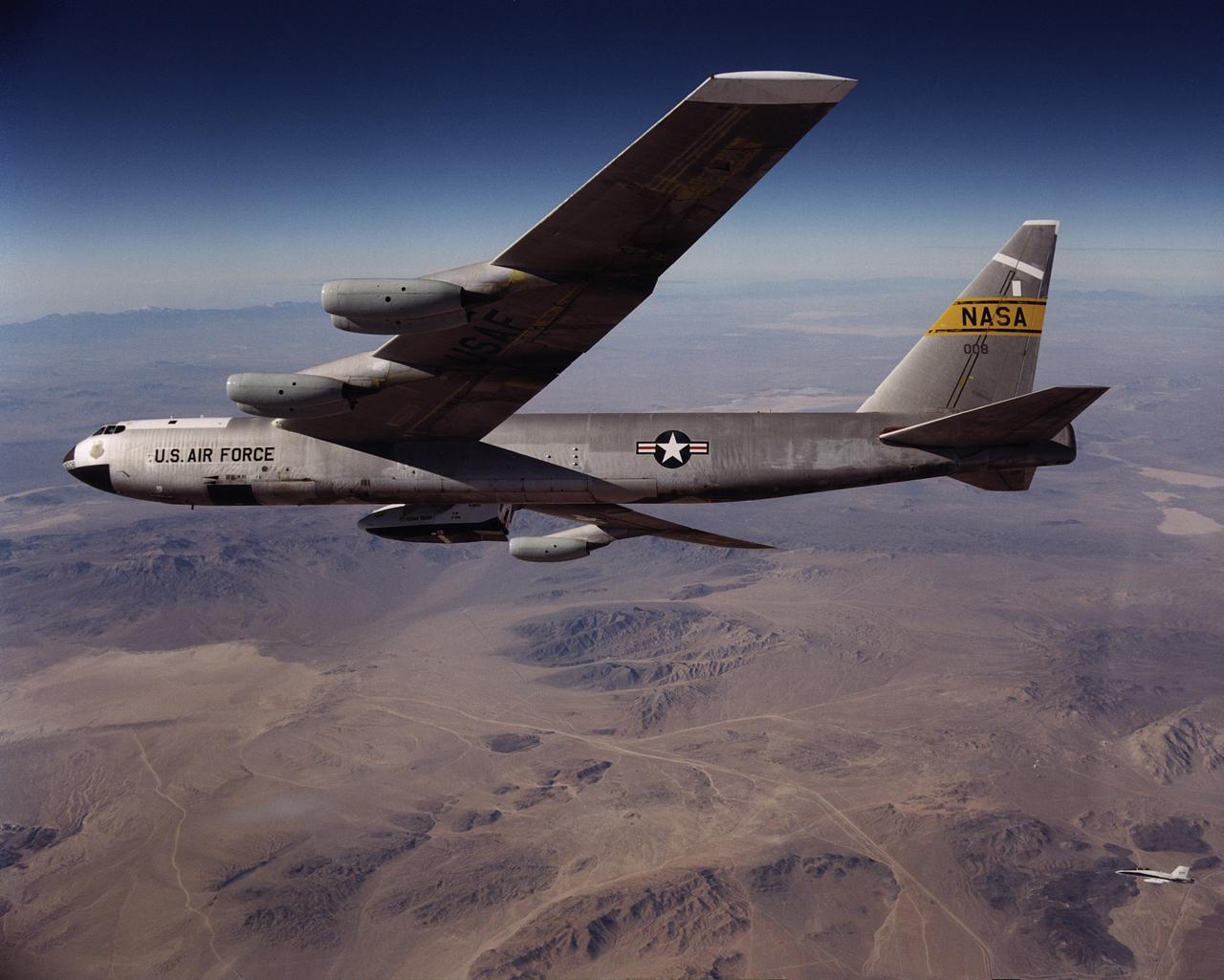
The X-38 prototypes are intended to perfect a "crew lifeboat" for the International Space Station. The X-38 vehicle 131R demonstrates a huge 7,500 square-foot parafoil that will that will enable the Crew Return Vehicle (CRV) to land on the length of a football field after returning from space. The CRV is intended to serve as an emergency transport to carry a crew to safety in the event of problems with the International Space Station.
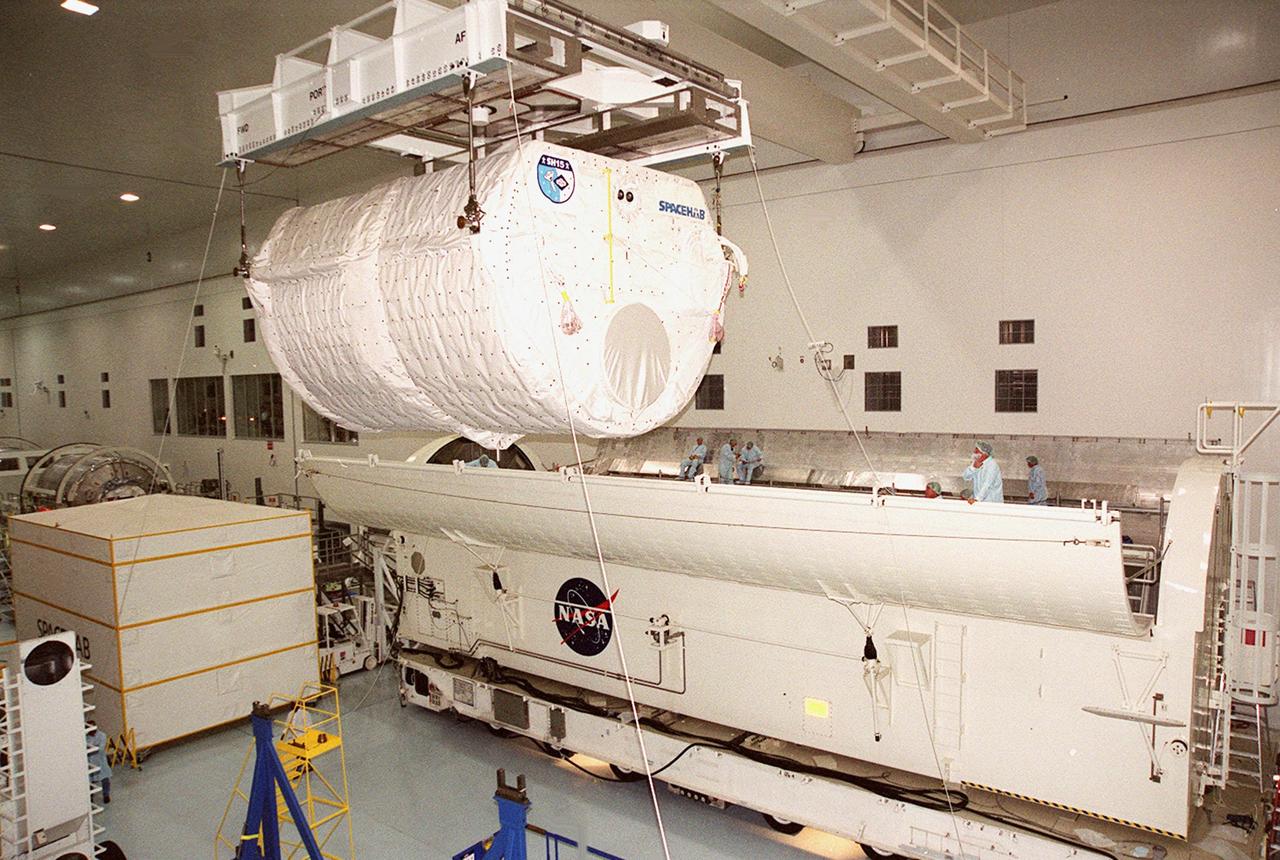
KENNEDY SPACE CENTER, FLA. -- The SPACEHAB module is moved toward the payload canister (right) that will transport it to the launch pad. STS-106 is scheduled to launch Sept. 8 at 8:31 a.m. EDT. During the mission, to the International Space Station, the crew will complete service module support tasks on orbit, transfer supplies and outfit the Space Station for the first long-duration crew. Workers attach an overhead crane to the SPACEHAB module to lift it off the transport vehicle beneath it. The module, part of the payload on mission STS-106, will be placed in the payload canister for transport to the launch pad. STS-106 is scheduled to launch Sept. 8 at 8:31 a.m. EDT
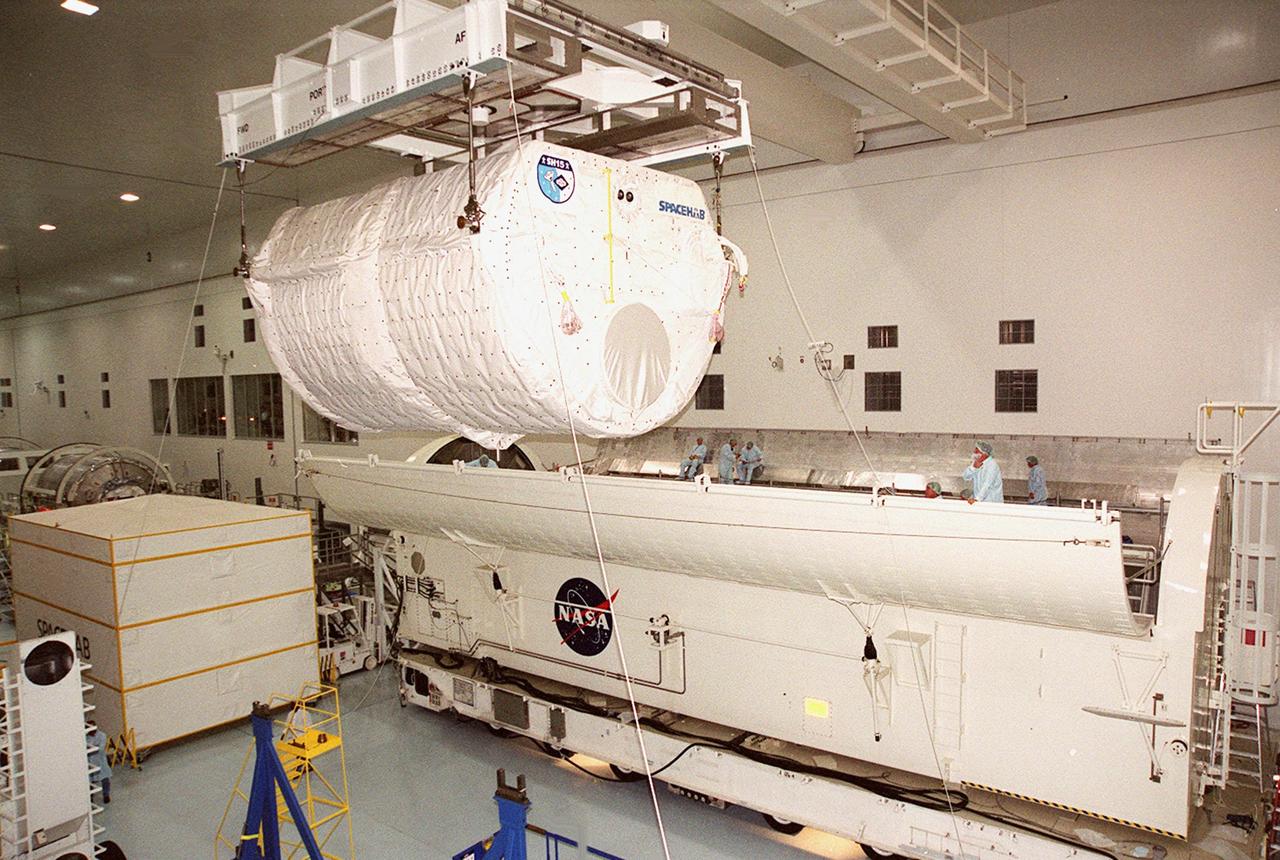
KENNEDY SPACE CENTER, FLA. -- The SPACEHAB module is moved toward the payload canister (right) that will transport it to the launch pad. STS-106 is scheduled to launch Sept. 8 at 8:31 a.m. EDT. During the mission, to the International Space Station, the crew will complete service module support tasks on orbit, transfer supplies and outfit the Space Station for the first long-duration crew. Workers attach an overhead crane to the SPACEHAB module to lift it off the transport vehicle beneath it. The module, part of the payload on mission STS-106, will be placed in the payload canister for transport to the launch pad. STS-106 is scheduled to launch Sept. 8 at 8:31 a.m. EDT
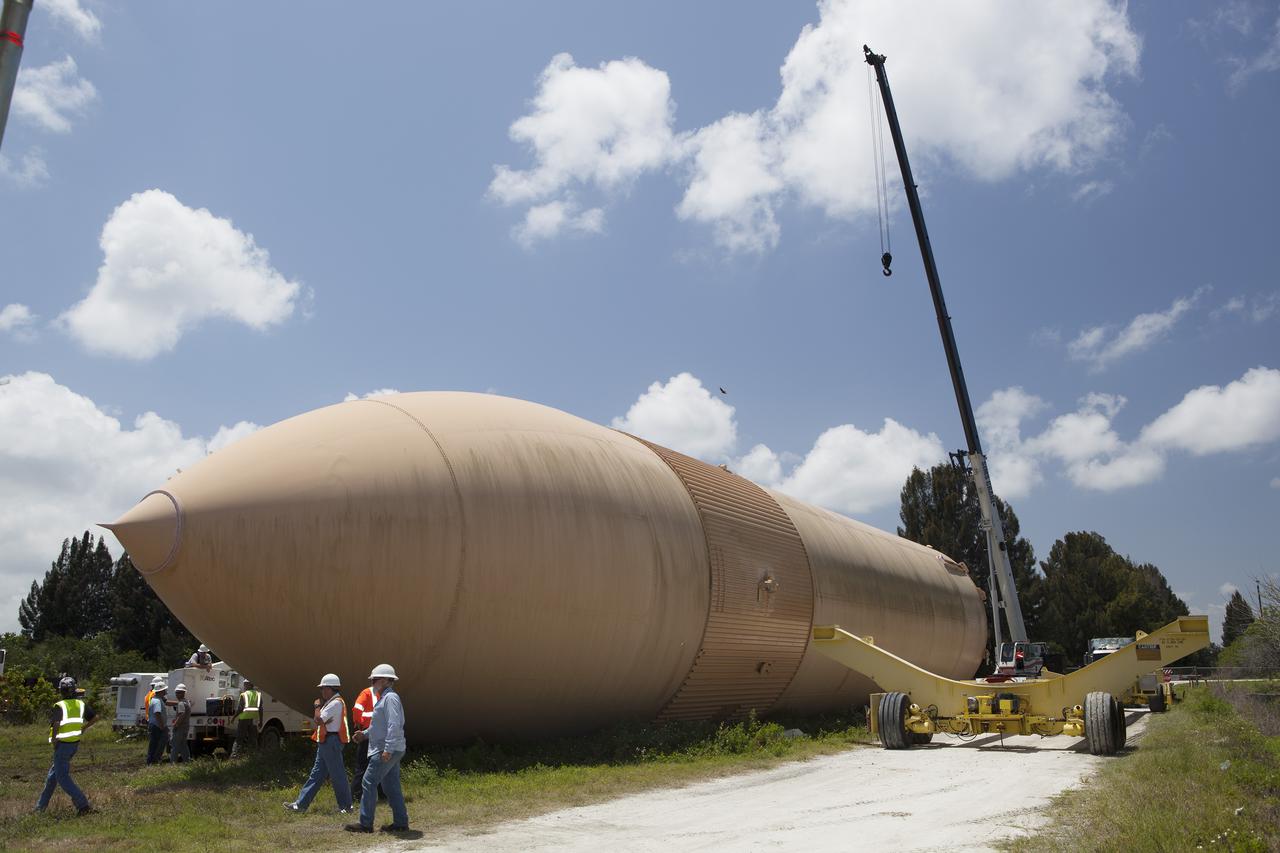
CAPE CANAVERAL, Fla. – Volunteers prepare an orange flight test article space shuttle external fuel tank, or ET, for transport from NASA's Kennedy Space Center in Florida to the Wings of Dreams Aviation Museum located at Keystone Heights Airport in North Central Florida. Weighing in at 58,000 pounds unfueled and standing more than 15-stories tall, the ET was referred to as the 'backbone' of the space shuttle. Its job was to hold about 535,000 gallons of super-cold liquid hydrogen and liquid oxygen. It also absorbed the thrust loads produced at launch by the orbiter and the solid rocket boosters, or SRBs. Also joining the ET at Wings of Dreams is an ET transporter, the crew transport vehicle, crew hatch access vehicle, SRB aft skirt and SRB frustum. Thousands of unique space shuttle era artifacts are being allocated to facilities across the country for their new missions to educate and inspire America's next generation of explorers. Photo credit: NASA_Dimitri Gerondidakis
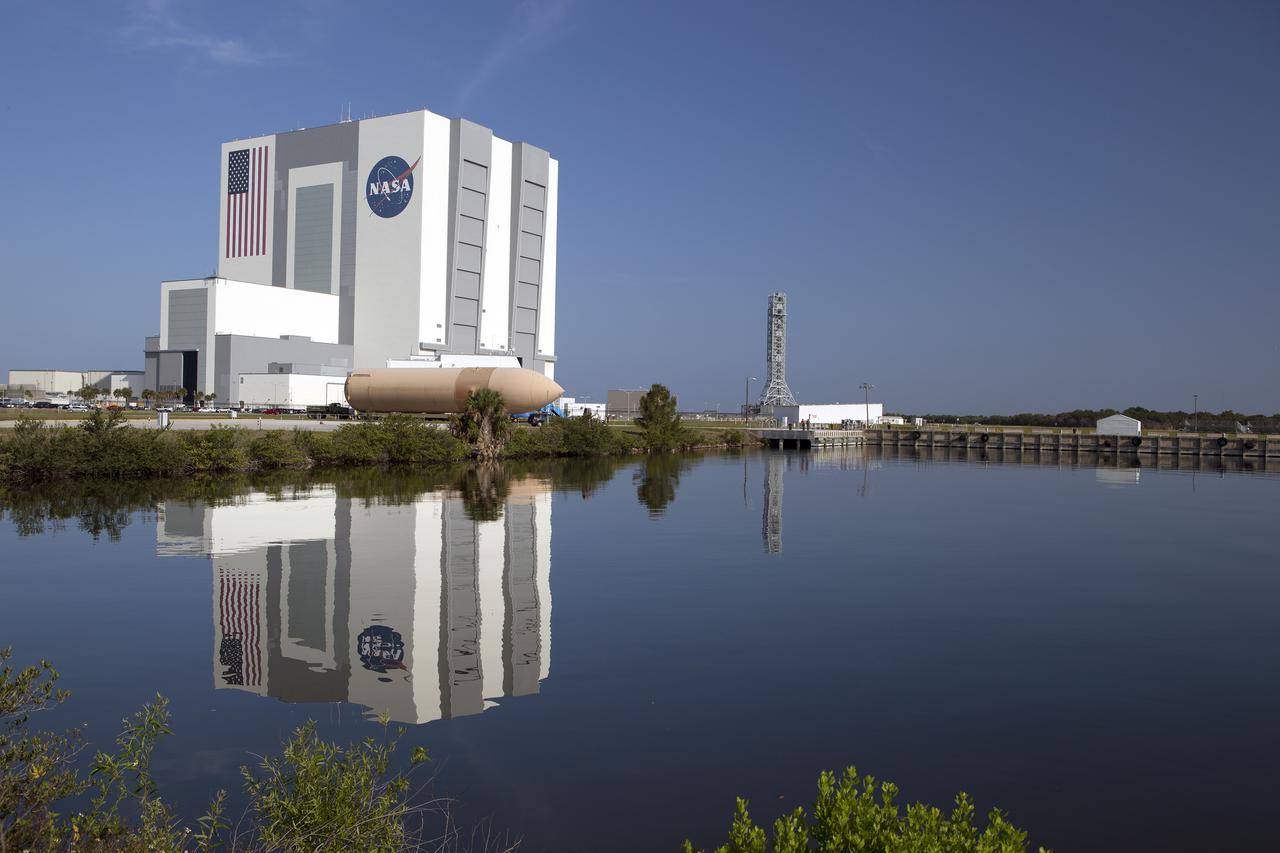
CAPE CANAVERAL, Fla. – An orange flight test article space shuttle external fuel tank, or ET, awaits transport from NASA's Kennedy Space Center in Florida to the Wings of Dreams Aviation Museum located at Keystone Heights Airport in North Central Florida. Weighing in at 58,000 pounds unfueled and standing more than 15-stories tall, the ET was referred to as the 'backbone' of the space shuttle. Its job was to hold about 535,000 gallons of super-cold liquid hydrogen and liquid oxygen. It also absorbed the thrust loads produced at launch by the orbiter and the solid rocket boosters, or SRBs. Also joining the ET at Wings of Dreams is an ET transporter, the crew transport vehicle, crew hatch access vehicle, SRB aft skirt and SRB frustum. Thousands of unique space shuttle era artifacts are being allocated to facilities across the country for their new missions to educate and inspire America's next generation of explorers. Photo credit: NASA_Dimitri Gerondidakis
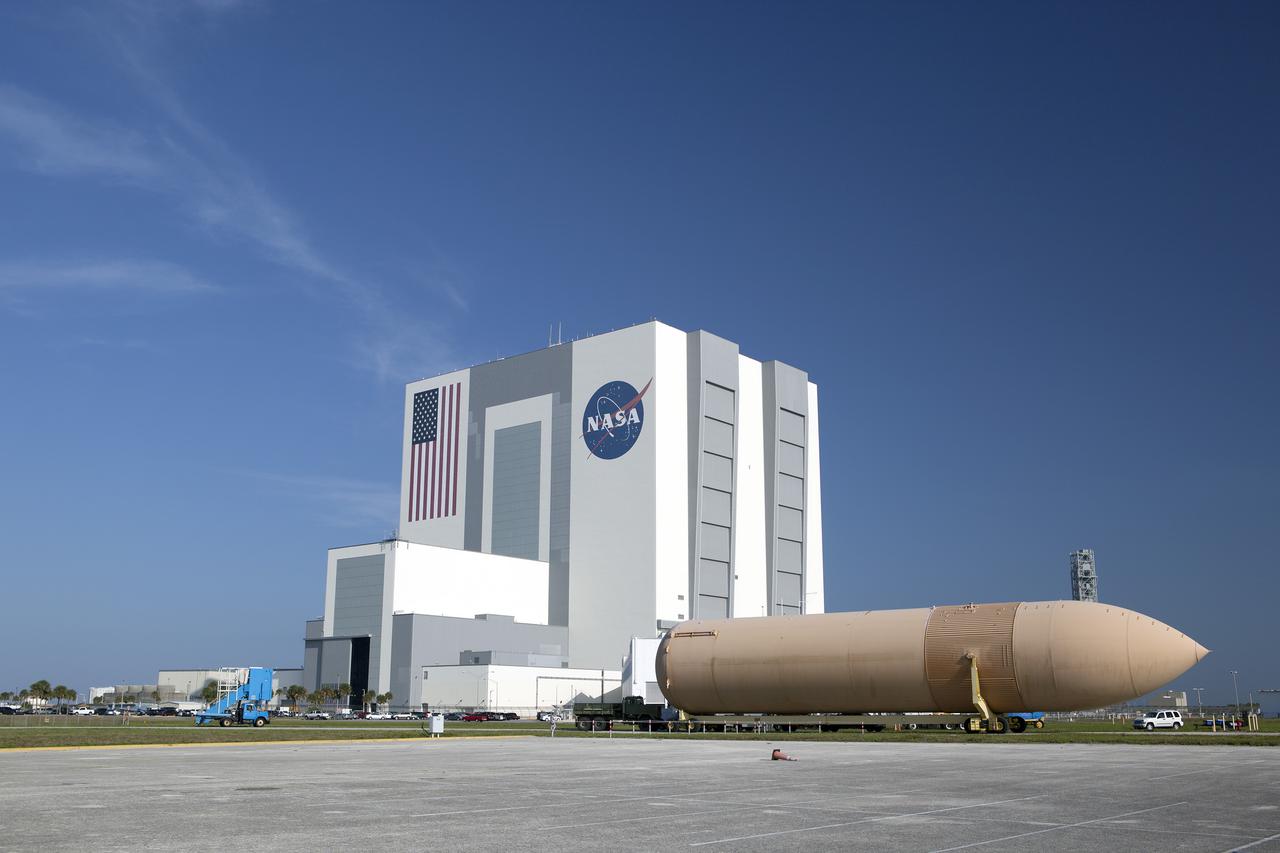
CAPE CANAVERAL, Fla. -- An orange flight test article space shuttle external fuel tank, or ET, awaits transport from NASA's Kennedy Space Center in Florida to the Wings of Dreams Aviation Museum located at Keystone Heights Airport in North Central Florida. Weighing in at 58,000 pounds unfueled and standing more than 15-stories tall, the ET was referred to as the 'backbone' of the space shuttle. Its job was to hold about 535,000 gallons of super-cold liquid hydrogen and liquid oxygen. It also absorbed the thrust loads produced at launch by the orbiter and the solid rocket boosters, or SRBs. Also joining the ET at Wings of Dreams is an ET transporter, the crew transport vehicle, crew hatch access vehicle, SRB aft skirt and SRB frustum. Thousands of unique space shuttle era artifacts are being allocated to facilities across the country for their new missions to educate and inspire America's next generation of explorers. Photo credit: NASA_Dimitri Gerondidakis
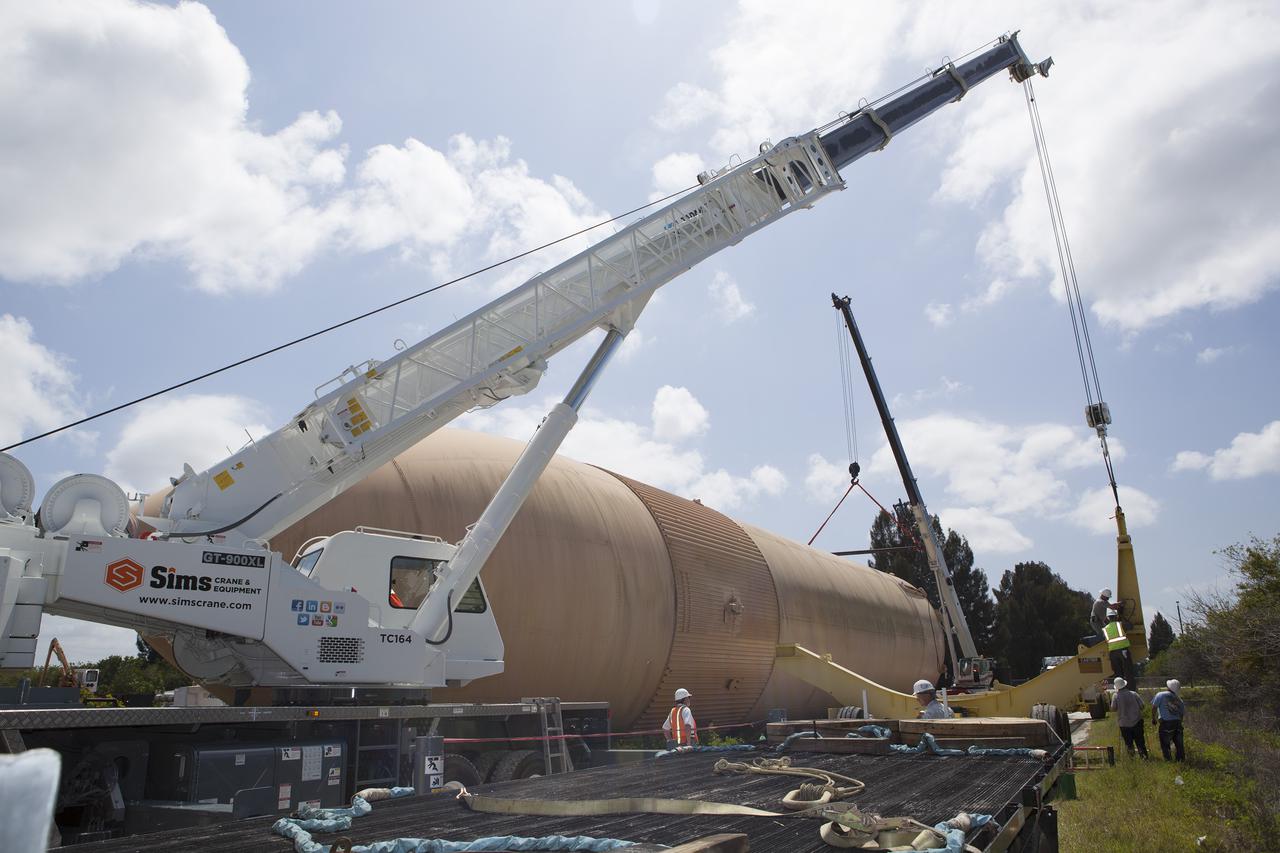
CAPE CANAVERAL, Fla. – Volunteers prepare an orange flight test article shuttle external fuel tank, or ET, for transport from NASA's Kennedy Space Center in Florida to the Wings of Dreams Aviation Museum located at Keystone Heights Airport in North Central Florida. Weighing in at 58,000 pounds unfueled and standing more than 15-stories tall, the ET was referred to as the 'backbone' of the space shuttle. Its job was to hold about 535,000 gallons of super-cold liquid hydrogen and liquid oxygen. It also absorbed the thrust loads produced at launch by the orbiter and the solid rocket boosters, or SRBs. Also joining the ET at Wings of Dreams is an ET transporter, the crew transport vehicle, crew hatch access vehicle, SRB aft skirt and SRB frustum. Thousands of unique space shuttle era artifacts are being allocated to facilities across the country for their new missions to educate and inspire America's next generation of explorers. Photo credit: NASA_Dimitri Gerondidakis
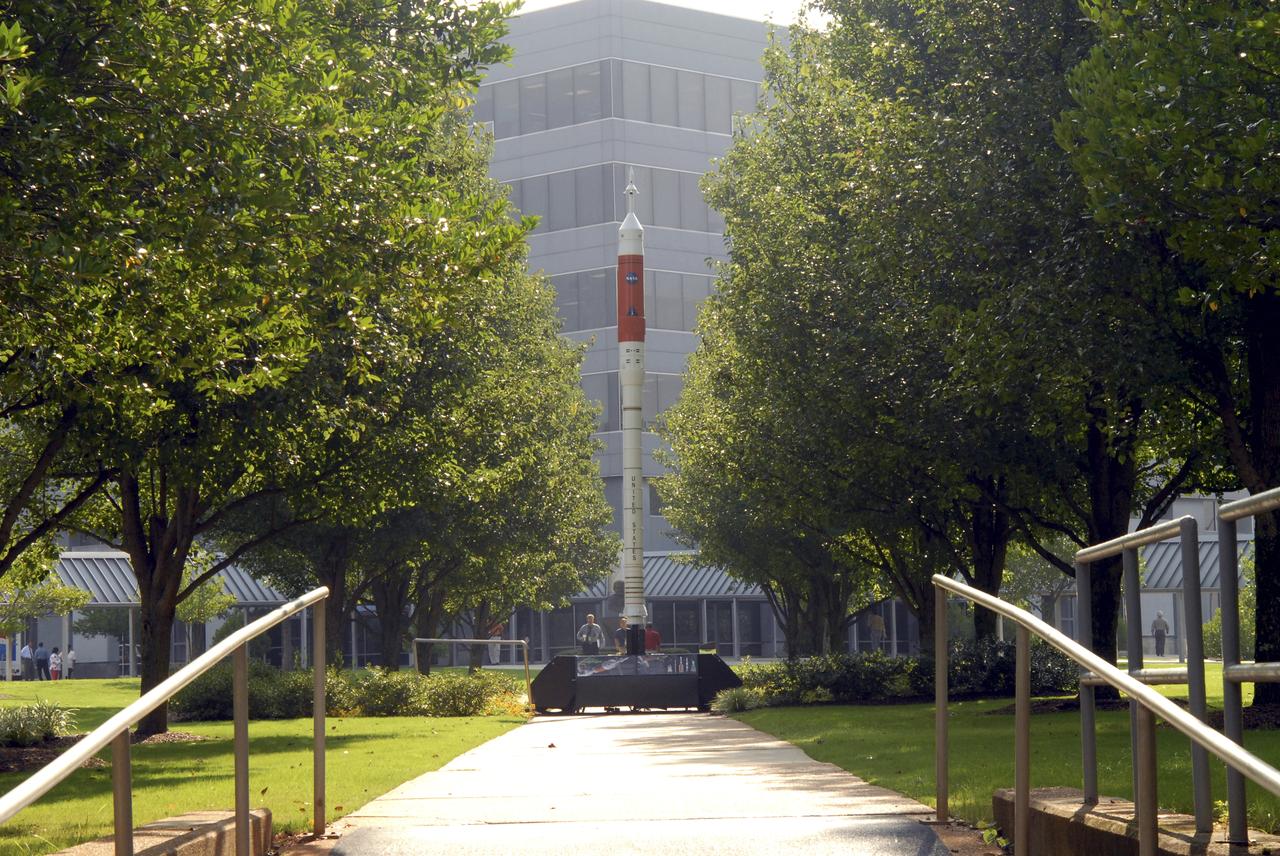
A model of the new Aries I crew launch vehicle, for which NASA is designing, testing and evaluating hardware and related systems, is seen here on display at the Marshall Space Fight Center (MSFC), in Huntsville, Alabama. The Ares I crew launch vehicle is the rocket that will carry a new generation of space explorers into orbit. Under the goals of the Vision for Space Exploration, Ares I is a chief component of the cost-effective space transportation infrastructure being developed by NASA’s Constellation Program. These transportation systems will safely and reliably carry human explorers back to the moon, and then onward to Mars and other destinations in the solar system. The Ares I effort includes multiple project element teams at NASA centers and contract organizations around the nation, and is led by the Exploration Launch Projects Office at NASA’s MFSC. Together, these teams are developing vehicle hardware, evolving proven technologies, and testing components and systems. Their work builds on powerful, reliable space shuttle propulsion elements and nearly a half-century of NASA space flight experience and technological advances. Ares I is an inline, two-stage rocket configuration topped by the Crew Exploration Vehicle, its service module and a launch abort system. The launch vehicle’s first stage is a single, five-segment reusable solid rocket booster derived from the Space Shuttle Program’s reusable solid rocket motor that burns a specially formulated and shaped solid propellant called polybutadiene acrylonitrile (PBAN). The second or upper stage will be propelled by a J-2X main engine fueled with liquid oxygen and liquid hydrogen. In addition to its primary mission of carrying crews of four to six astronauts to Earth orbit, the launch vehicle’s 25-ton payload capacity might be used for delivering cargo to space, bringing resources and supplies to the International Space Station or dropping payloads off in orbit for retrieval and transport to exploration teams on the moon. Crew transportation to the space station is planned to begin no later than 2014. The first lunar excursion is scheduled for the 2020 timeframe.
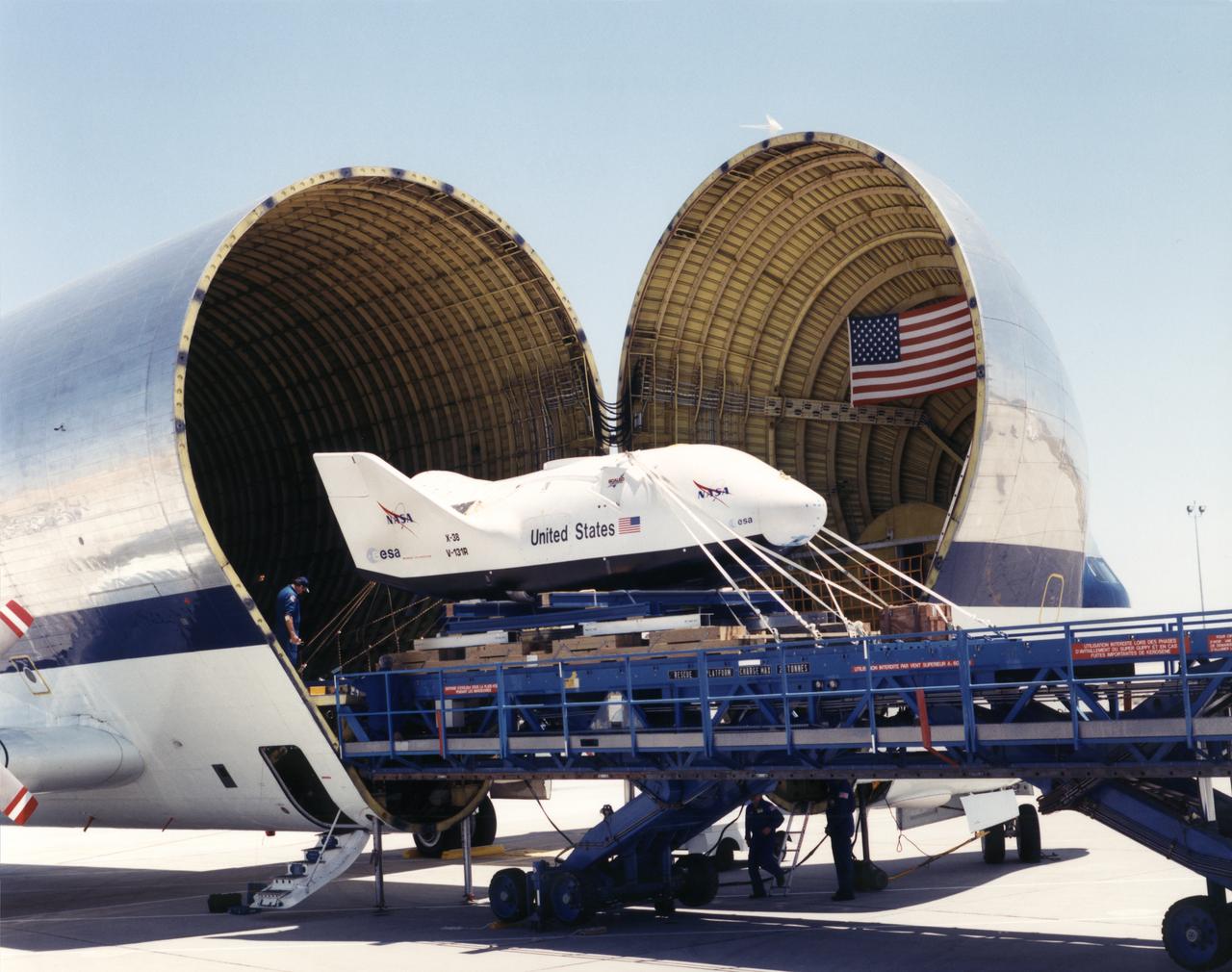
The X-38 Vehicle 131R, intended to prove the utility of a "lifeboat" crew return vehicle to bring crews home from the International Space Station in the event of an emergency, was unloaded from NASA's Super Guppy transport aircraft on July 11, 2000. The newest X-38 version arrived at Dryden for drop tests from NASA's venerable B-52 mother ship. The tests will evaluate a 7,500 square-foot parafoil intended to permit the CRV to return from space and land in the length of a football field.
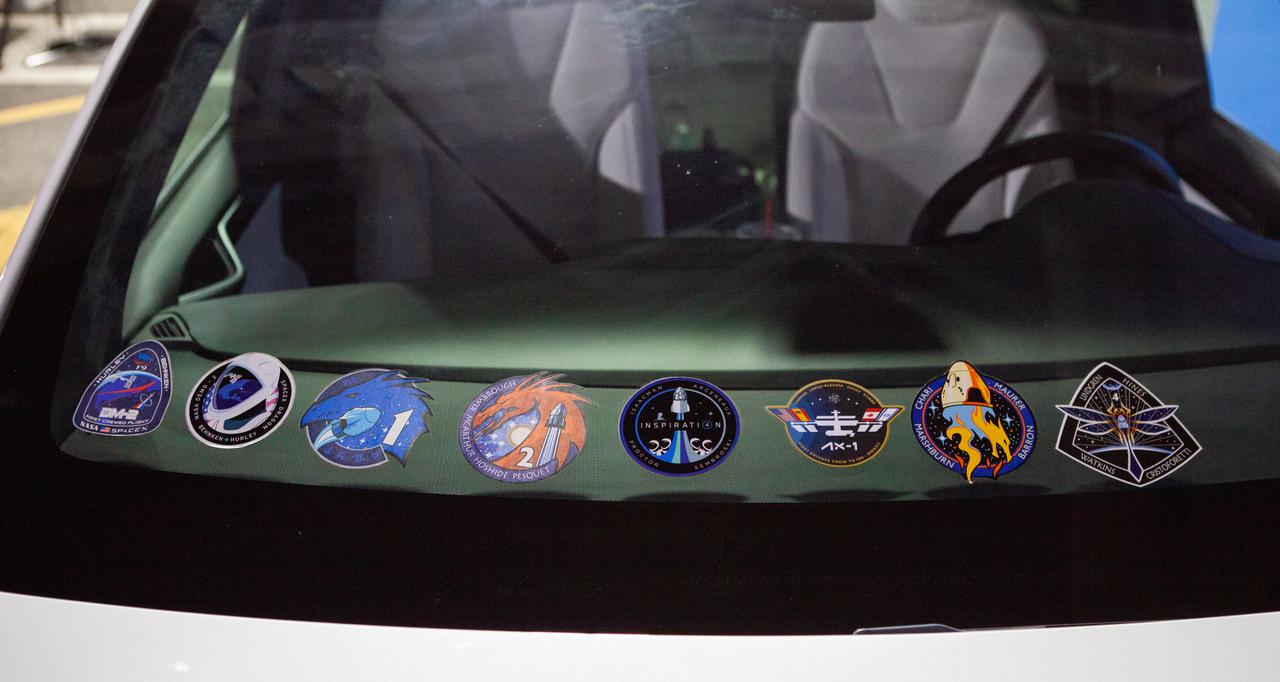
A customized Tesla Model X vehicle is parked outside the Neil A. Armstrong Operations and Checkout Building at NASA’s Kennedy Space Center in Florida on April 27, 2022. Crew-4 astronauts Kjell Lindgren, Bob Hines, Jessica Watkins, and Samantha Cristoforetti will make their way to the vehicles, which will transport them to Launch Complex 39A. Liftoff aboard SpaceX’s Crew Dragon, powered by the company’s Falcon 9 rocket, is scheduled for today at 3:52 a.m. EDT from Pad 39A at Kennedy.
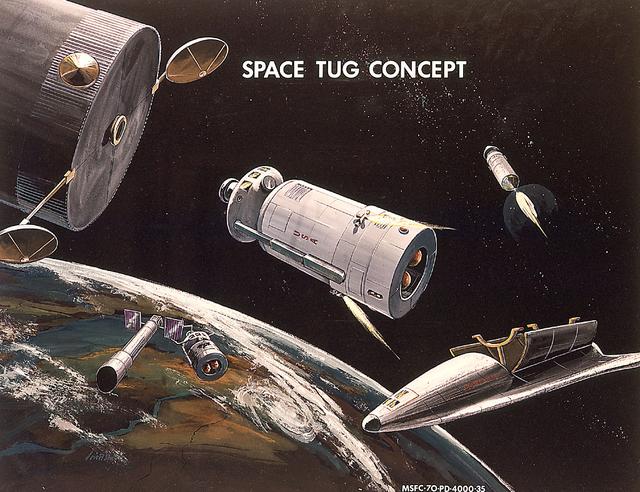
Managed by Marshall Space Flight Center, the Space Tug was intended to be a reusable multipurpose space vehicle designed to transport payloads to different orbital inclinations. Utilizing mission-specific combinations of its three primary modules (crew, propulsion, and cargo) and a variety of supplementary kits, the Space Tug would have been capable of numerous space applications. This 1970 artist's concept illustrates a Space Tug Concept, crew module attached, in conjunction with other space vehicles. The Space Tug program was cancelled and did not become a reality.

A customized Tesla Model X vehicle is parked outside the Neil A. Armstrong Operations and Checkout Building at NASA’s Kennedy Space Center in Florida on April 27, 2022. Crew-4 astronauts Kjell Lindgren, Bob Hines, Jessica Watkins, and Samantha Cristoforetti will make their way to the vehicles, which will transport them to Launch Complex 39A. Liftoff aboard SpaceX’s Crew Dragon, powered by the company’s Falcon 9 rocket, is scheduled for today at 3:52 a.m. EDT from Pad 39A at Kennedy.
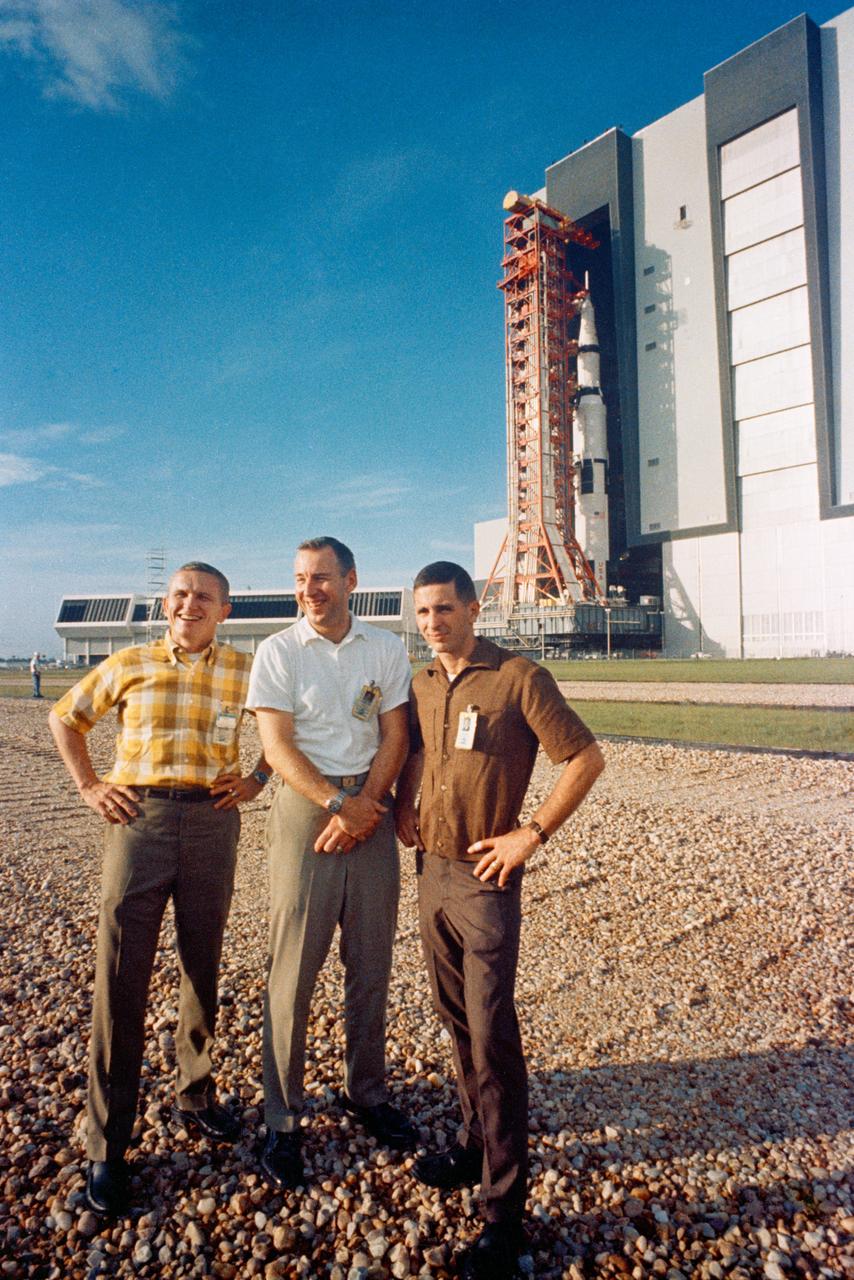
S68-49397 (9 Oct. 1968) --- The Apollo 8 prime crew stands in foreground as the Apollo (Spacecraft 103/Saturn 503) space vehicle leaves the Kennedy Space Center's Vehicle Assembly Building on way to Pad A, Launch Complex 39. The Saturn V stack and its mobile launch tower are atop a huge crawler-transporter. The Apollo 8 crew consists of (left to right) astronauts Frank Borman, commander; James A. Lovell Jr., command module pilot; and William A. Anders, lunar module pilot.
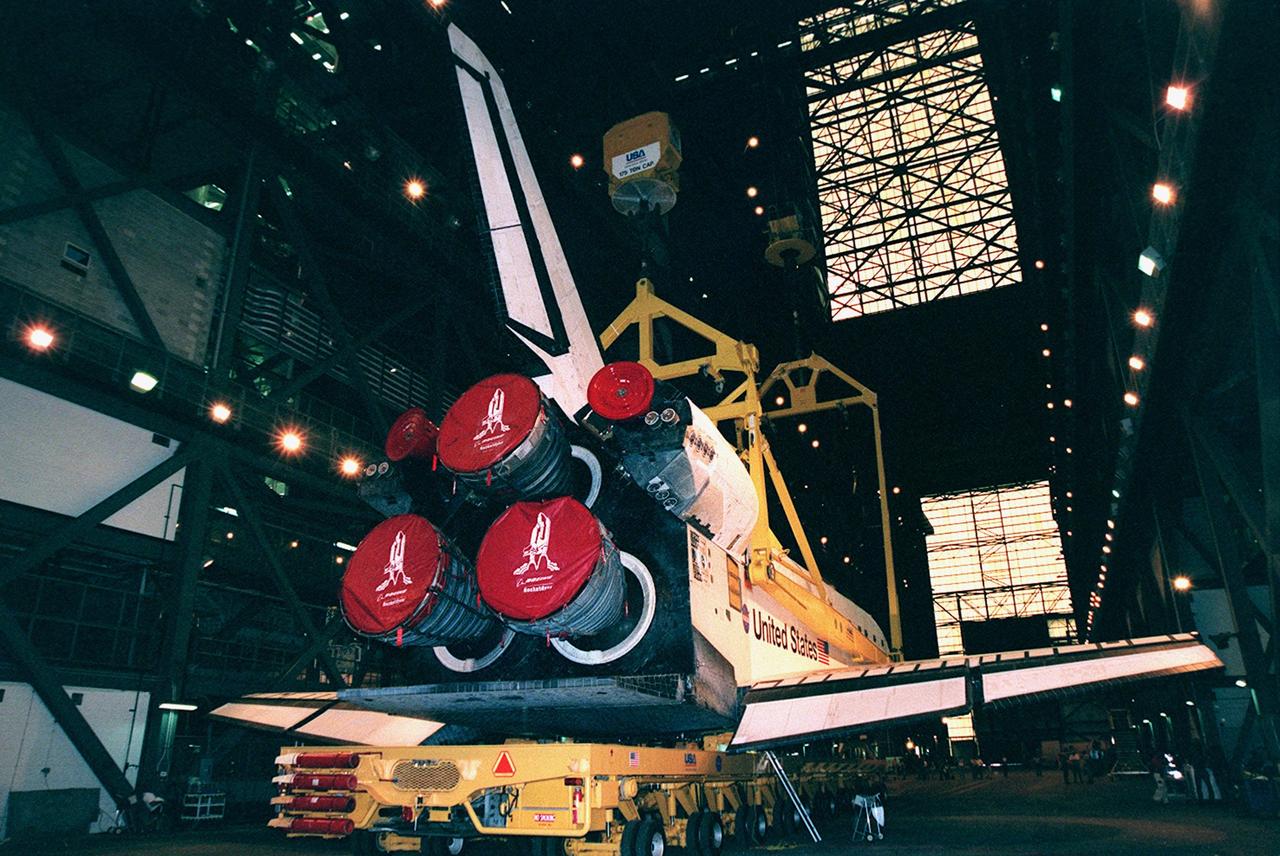
KENNEDY SPACE CENTER, FLA. -- Inside the Vehicle Assembly Building, the orbiter Atlantis rests atop a transporter in the transfer aisle while an overhead crane is placed around the space vehicle. The crane will lift Atlantis to a vertical position so it can be mated with its external tank and solid rocket boosters before being transported to Launch Pad 39A. Atlantis will fly on mission STS-101 to the International Space Station, where its crew of seven will prepare the Station for the arrival of the next pressurized module, the Russian-built Zvezda. Atlantis is expected to launch no earlier than April 17, 2000

KENNEDY SPACE CENTER, FLA. -- Inside the Vehicle Assembly Building, the orbiter Atlantis rests atop a transporter in the transfer aisle while an overhead crane is placed around the space vehicle. The crane will lift Atlantis to a vertical position so it can be mated with its external tank and solid rocket boosters before being transported to Launch Pad 39A. Atlantis will fly on mission STS-101 to the International Space Station, where its crew of seven will prepare the Station for the arrival of the next pressurized module, the Russian-built Zvezda. Atlantis is expected to launch no earlier than April 17, 2000
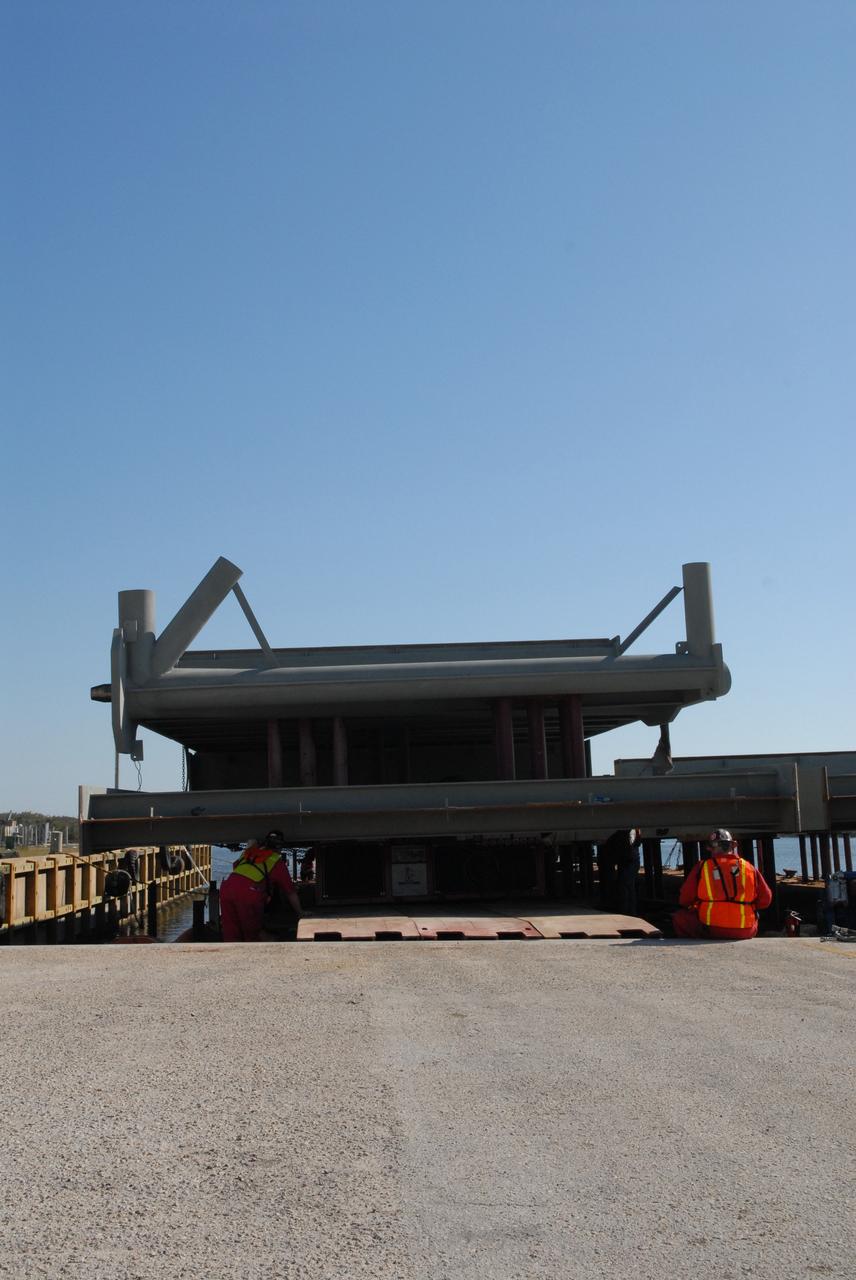
CAPE CANAVERAL, Fla. – At the turn basin at NASA's Kennedy Space Center in Florida, the girder for the new mobile launcher rests on a long transporter that will move it off the barge. The new mobile launcher will be the base for the Ares rockets to launch the Orion crew exploration vehicle and the cargo vehicle. The base is being made lighter than space shuttle mobile launcher platforms so the crawler-transporter can pick up the added load of the 345-foot tower and taller rocket. When the structural portion of the new mobile launcher is complete, umbilicals, access arms, communications equipment and command/control equipment will be installed. Photo credit: NASA/Jack Pfaller
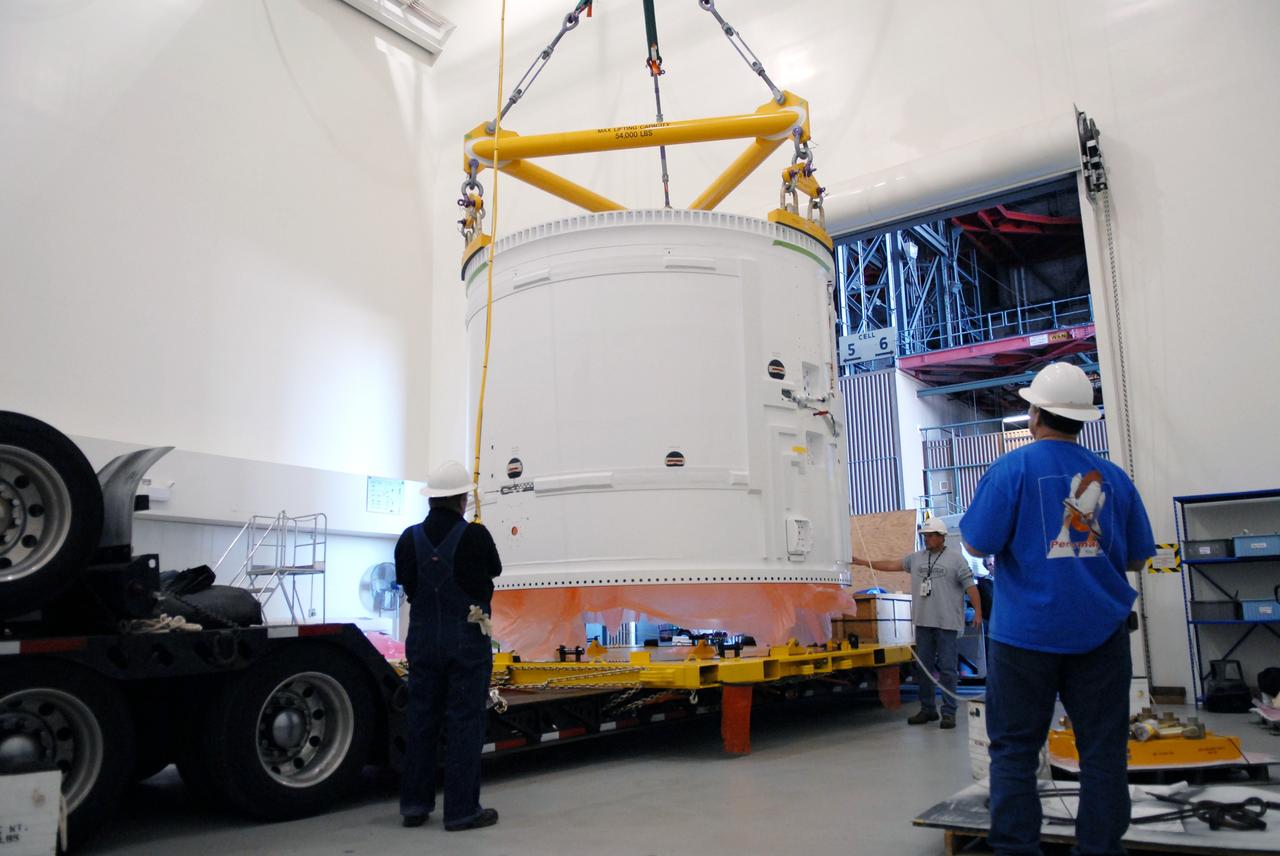
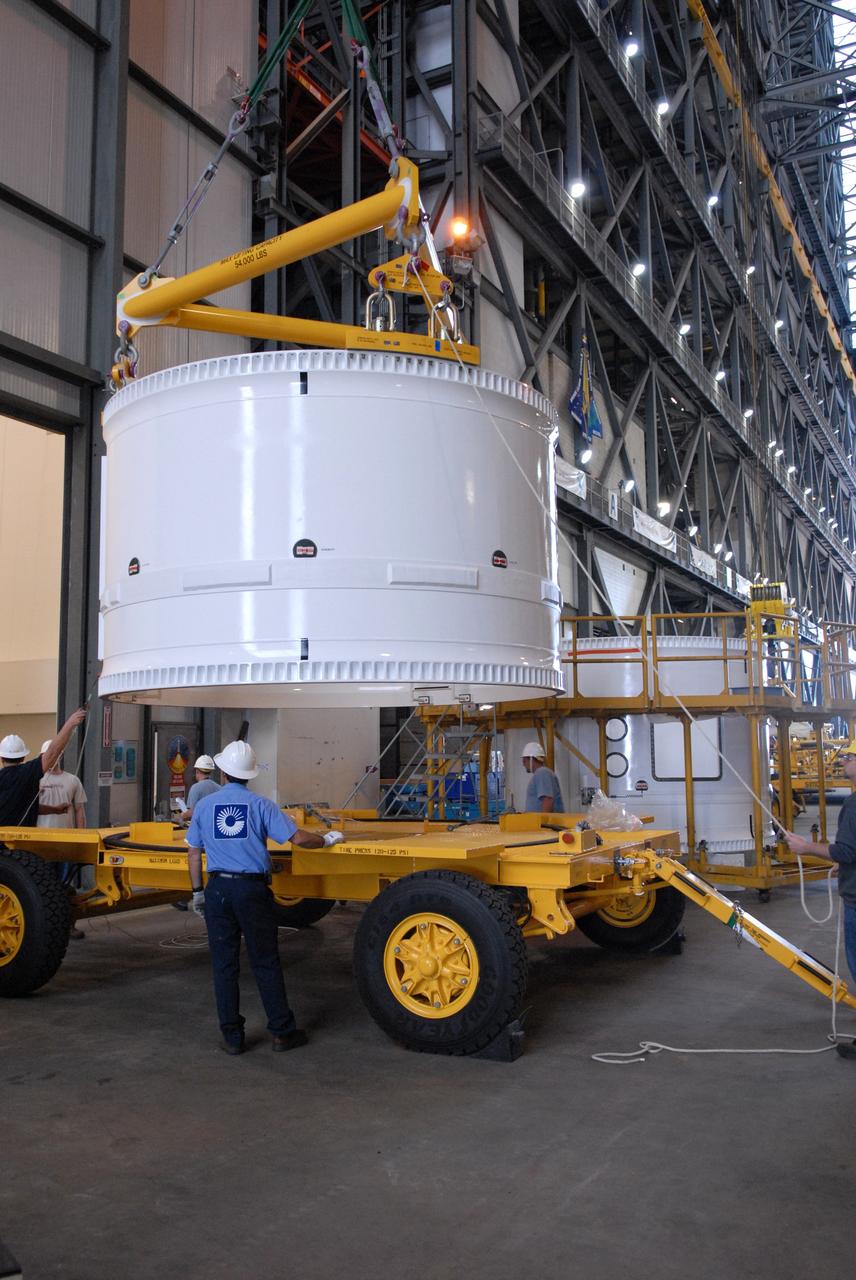
CAPE CANAVERAL, Fla. – In the Vehicle Assembly Building's extended duration orbiter lab, or EDO, at NASA's Kennedy Space Center in Florida, the Ares I-X fifth segment simulator aft section is lifted by a crane from the transporter. The aft section will be moved to a stand. Ares I-X is the test vehicle for the Ares I, which is part of the Constellation Program to return men to the moon and beyond. Ares I is the essential core of a safe, reliable, cost-effective space transportation system that eventually will carry crewed missions back to the moon, on to Mars and out into the solar system. Ares I-X is targeted for launch in July 2009. Photo credit: NASA/Troy Cryder
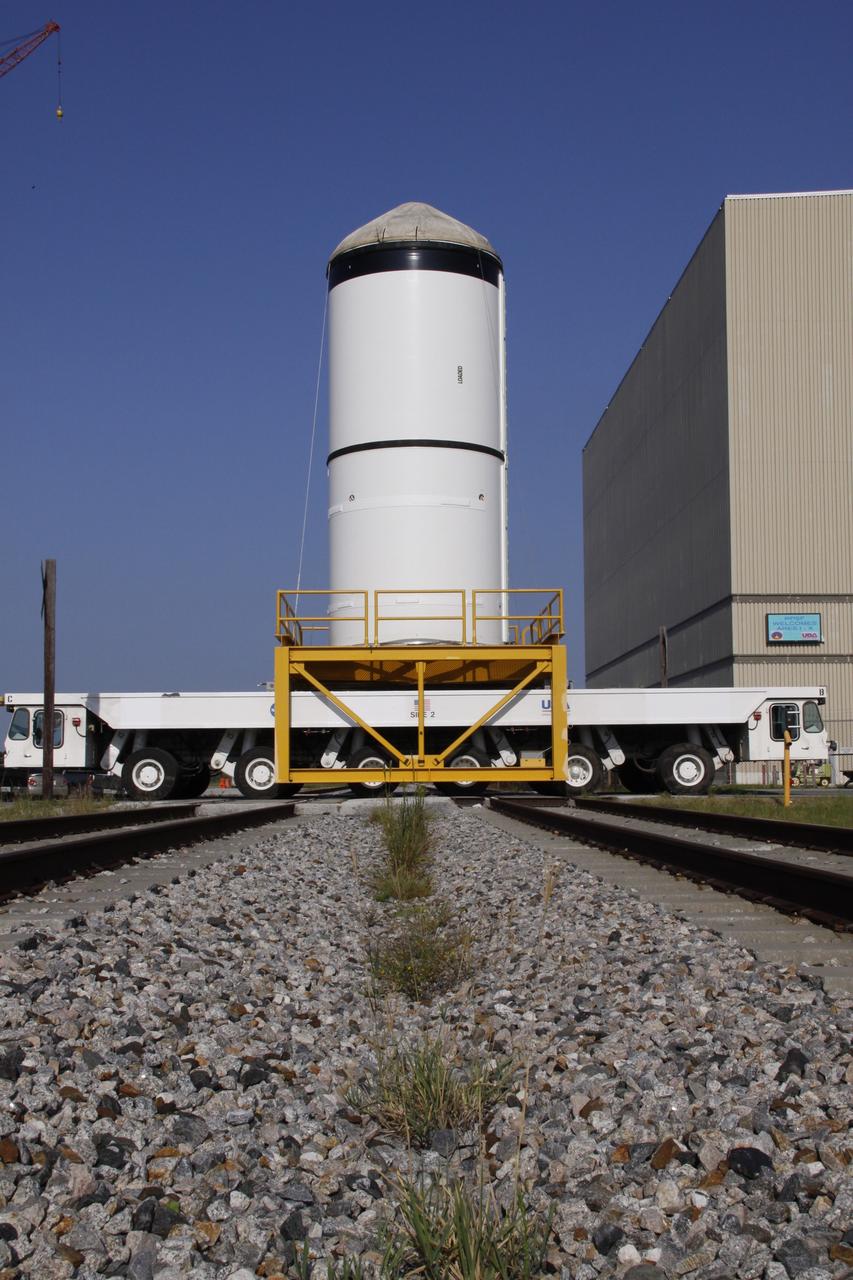
CAPE CANAVERAL, Fla. – The Ares I-X forward segment leaves the Rotation, Surge and Processing Facility at NASA's Kennedy Space Center in Florida. It is being transported to the Vehicle Assembly Building for mating with the aft center and aft segments already stacked. Part of the Constellation Program, the Ares I-X is the test vehicle for the Ares I, which is the essential core of a space transportation system that eventually will carry crewed missions back to the moon, on to Mars and out into the solar system . The Ares I-X flight test is targeted for no earlier than Aug. 30. Photo credit: NASA/Troy Cryder
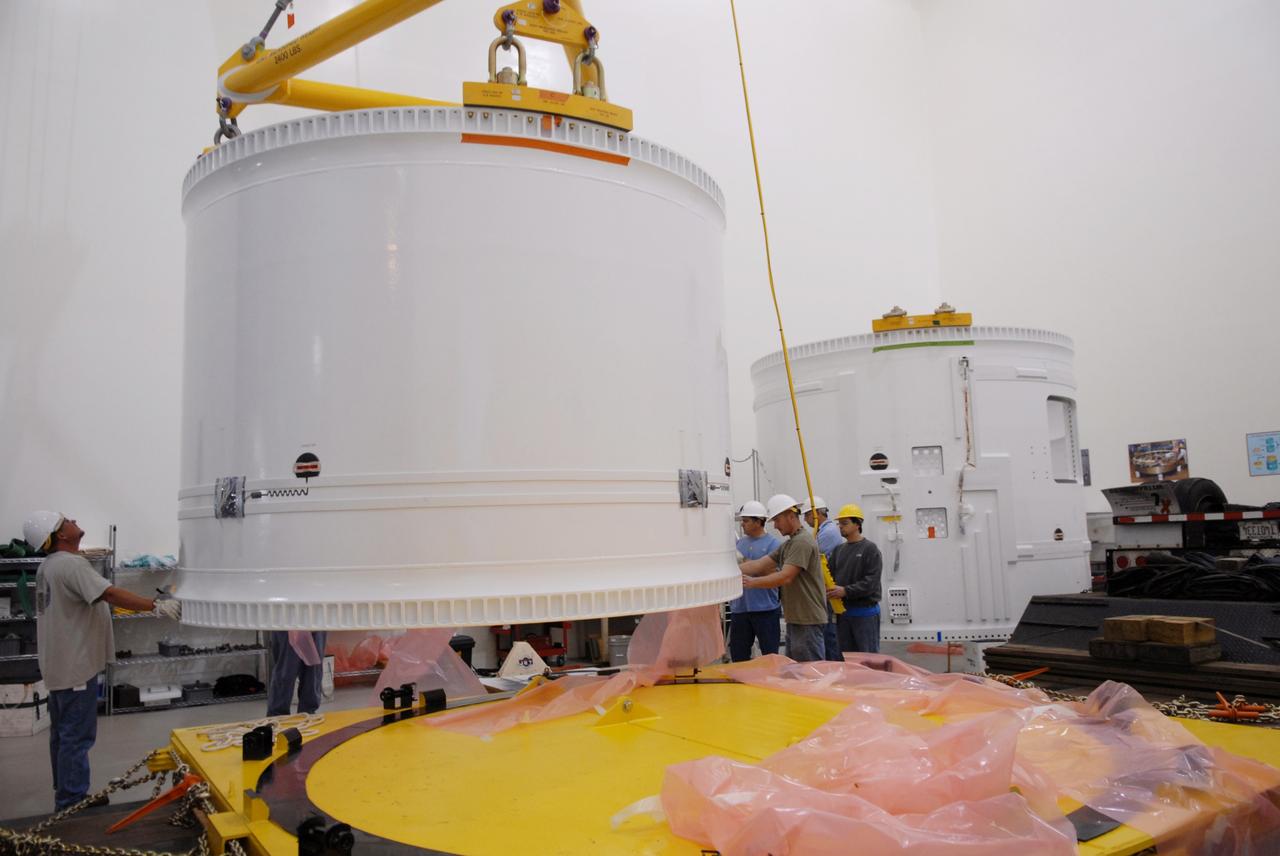
CAPE CANAVERAL, Fla. – In the Vehicle Assembly Building, the forward fifth segment simulator for the Ares I-X rocket is lifted from the transporter. It will be stacked with the center segment beside it. Ares I-X is the test vehicle for the Ares I, which is part of the Constellation Program to return men to the moon and beyond. Ares I is the essential core of a safe, reliable, cost-effective space transportation system that eventually will carry crewed missions back to the moon, on to Mars and out into the solar system. Ares I-X is targeted for launch in July 2009. Photo credit: NASA/Dimitri Gerondidakis
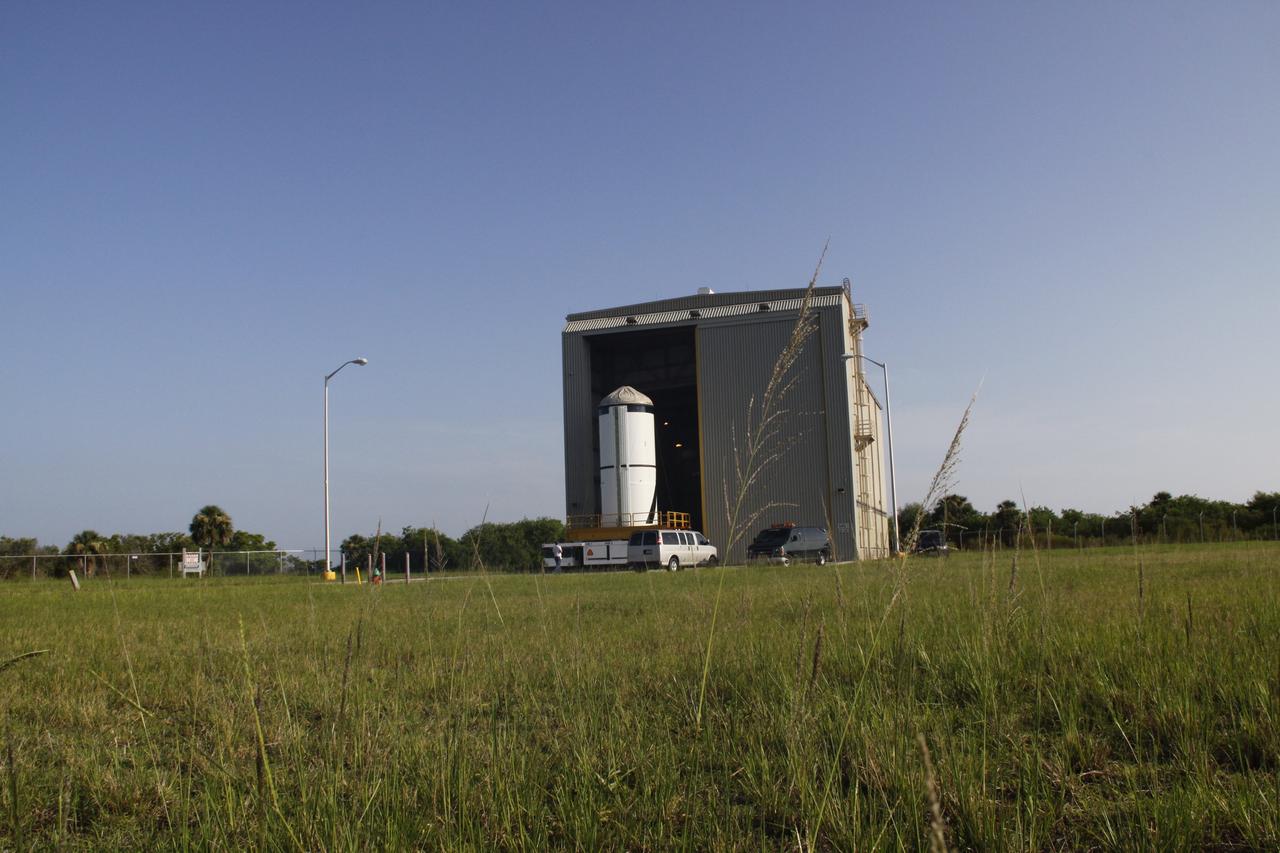
CAPE CANAVERAL, Fla. – The Ares I-X forward segment leaves the Rotation, Surge and Processing Facility at NASA's Kennedy Space Center in Florida. It is being transported to the Vehicle Assembly Building for mating with the aft center and aft segments already stacked.Part of the Constellation Program, the Ares I-X is the test vehicle for the Ares I, which is the essential core of a space transportation system that eventually will carry crewed missions back to the moon, on to Mars and out into the solar system . The Ares I-X flight test is targeted for no earlier than Aug. 30. Photo credit: NASA/Troy Cryder
CAPE CANAVERAL, Fla. – In the extended duration orbiter lab, or EDO, of the Vehicle Assembly Building at NASA's Kennedy Space Center in Florida, workers watch closely as a crane lifts the fifth segment simulator center from the transporter. The segment will be moved to supports on the floor. Another segment is at right. Ares I-X is the test vehicle for the Ares I, which is part of the Constellation Program to return men to the moon and beyond. Ares I is the essential core of a safe, reliable, cost-effective space transportation system that eventually will carry crewed missions back to the moon, on to Mars and out into the solar system. Ares I-X is targeted for launch in July 2009. Photo credit: NASA/Troy Cryder

CAPE CANAVERAL, Fla. – The covered fifth segment simulator of the Ares I-X is transported from Astrotech in Titusville, Fla. It is being moved to the Vehicle Assembly Building at NASA's Kennedy Space Center in Florida for stacking operations. Ares I-X is the test vehicle for the Ares I, which is part of the Constellation Program to return men to the moon and beyond. Ares I is the essential core of a safe, reliable, cost-effective space transportation system that eventually will carry crewed missions back to the moon, on to Mars and out into the solar system. Ares I-X is targeted for launch in July 2009. Photo credit: NASA/Tim Jacobs
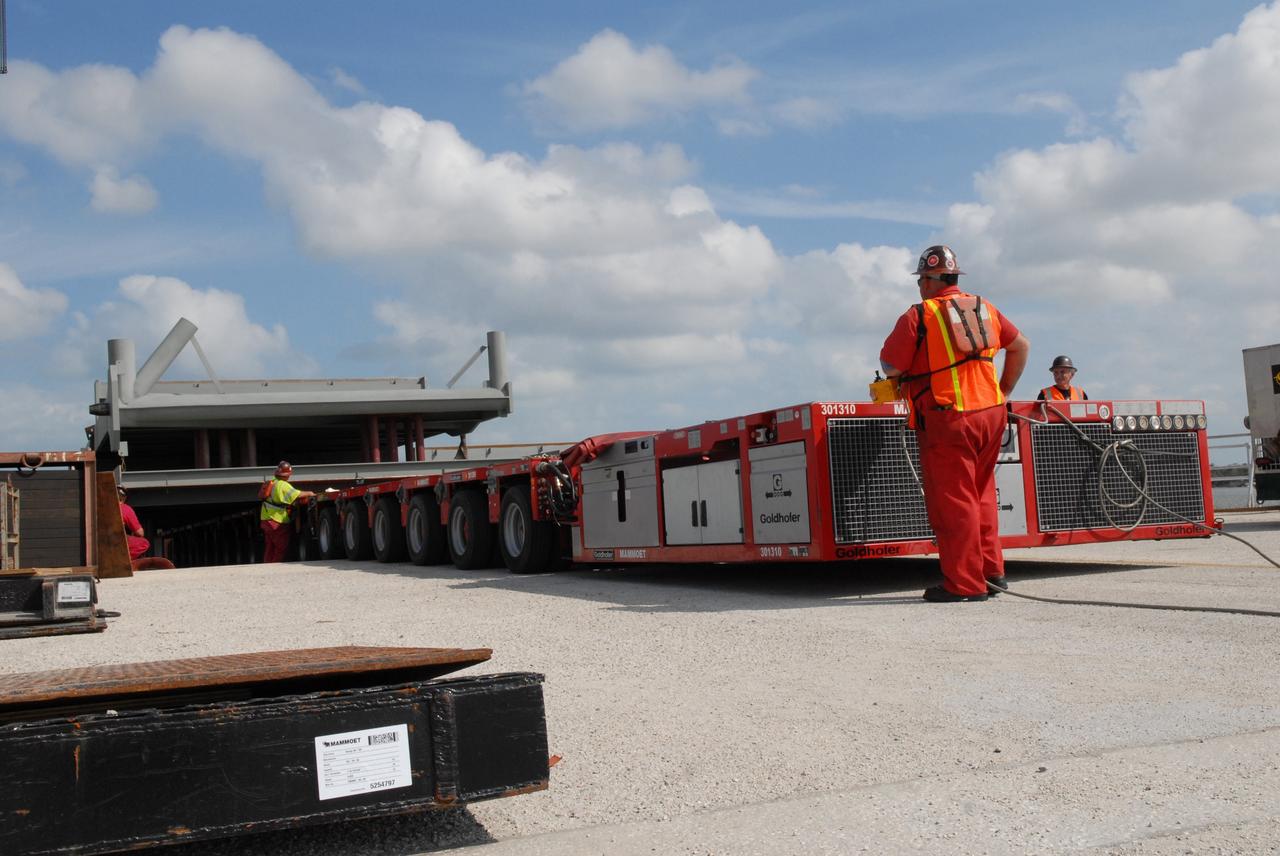
CAPE CANAVERAL, Fla. – At the turn basin in the Launch Complex 39 Area of NASA's Kennedy Space Center in Florida, a long transporter moves closer to the barge for offloading of the girder for a new mobile launcher. The new mobile launcher will be the base for the Ares rockets to launch the Orion crew exploration vehicle and the cargo vehicle. The base is being made lighter than space shuttle mobile launcher platforms so the crawler-transporter can pick up the added load of the 345-foot tower and taller rocket. When the structural portion of the new mobile launcher is complete, umbilicals, access arms, communications equipment and command/control equipment will be installed. Photo credit: NASA/Jack Pfaller
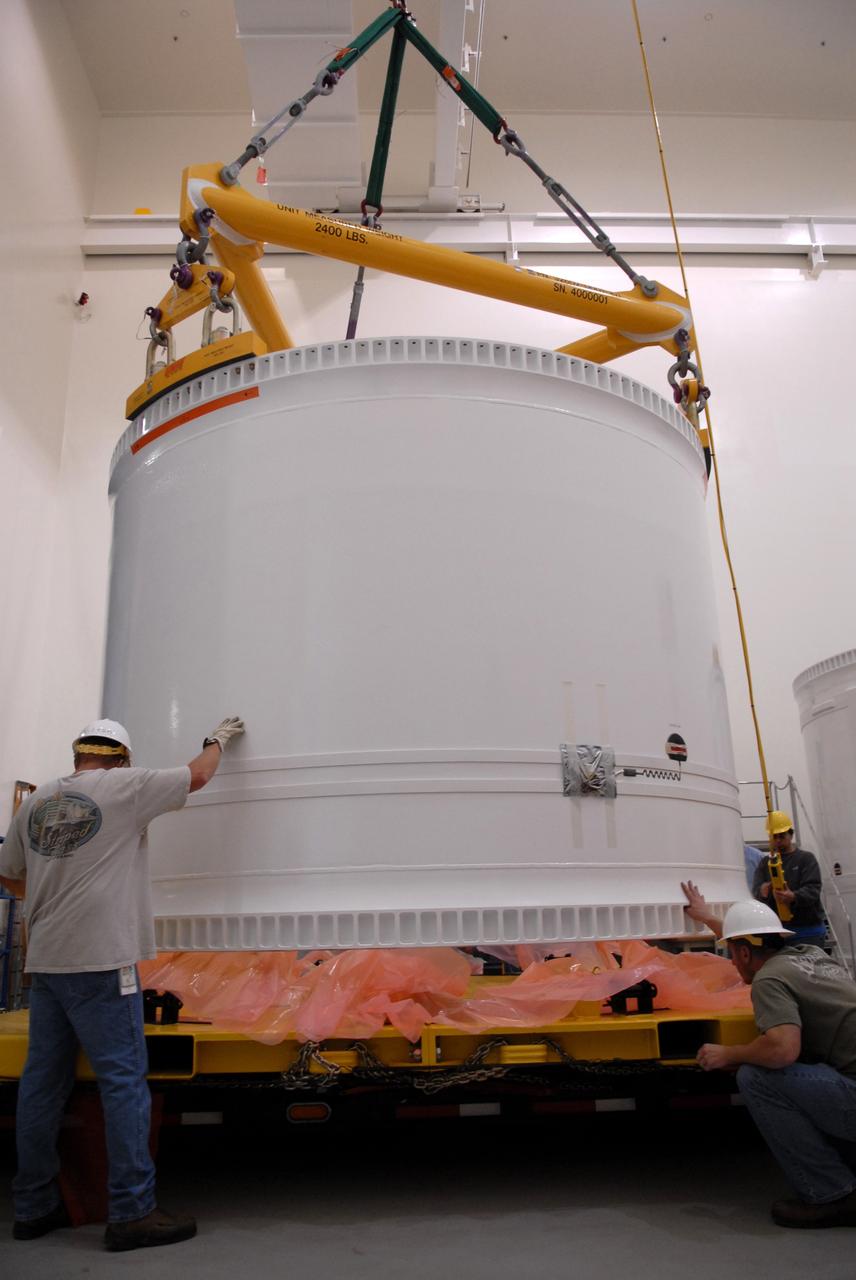
CAPE CANAVERAL, Fla. – In the extended duration orbiter lab, or EDO, of the Vehicle Assembly Building at NASA's Kennedy Space Center in Florida, workers watch closely as a crane lifts the fifth segment simulator center from the transporter. The segment is being moved to supports on the floor. Ares I-X is the test vehicle for the Ares I, which is part of the Constellation Program to return men to the moon and beyond. Ares I is the essential core of a safe, reliable, cost-effective space transportation system that eventually will carry crewed missions back to the moon, on to Mars and out into the solar system. Ares I-X is targeted for launch in July 2009. Photo credit: NASA/Troy Cryder
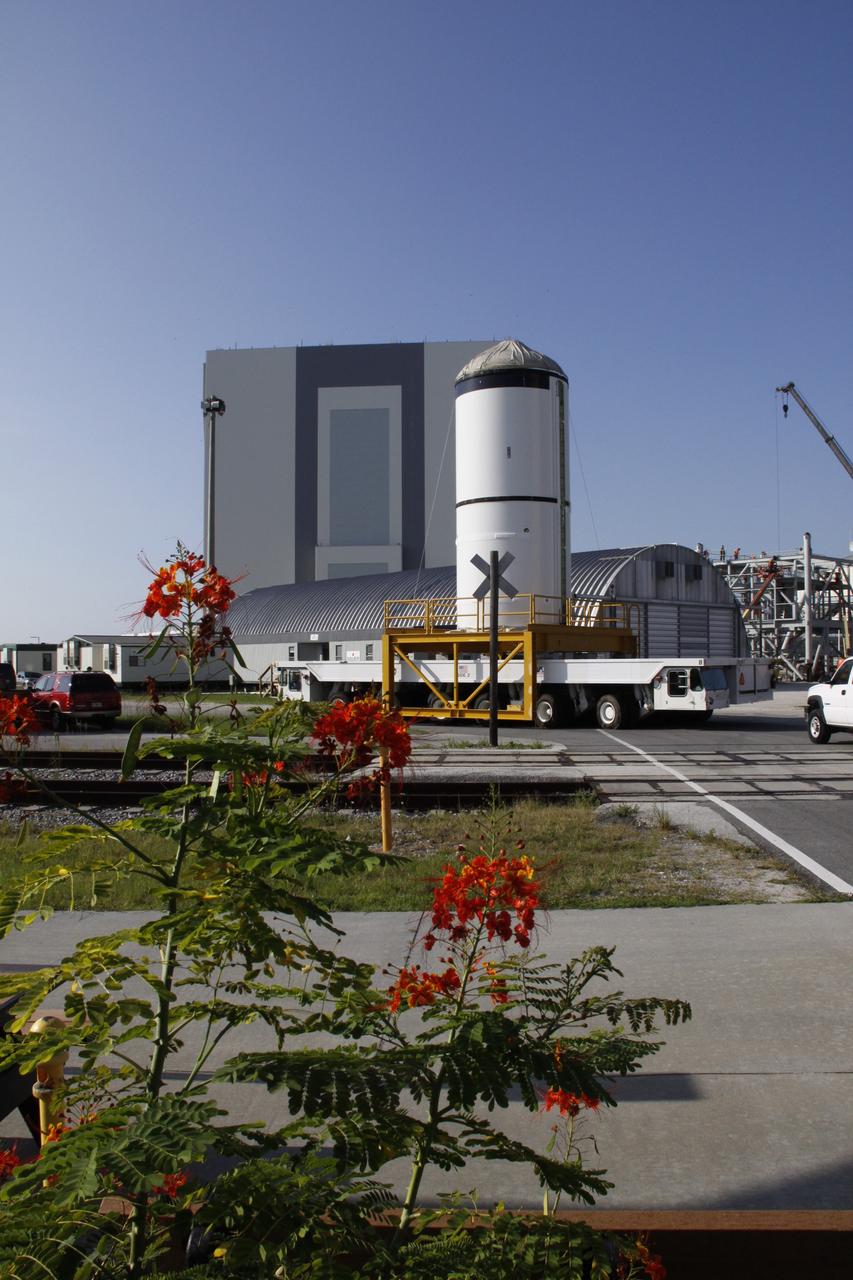
CAPE CANAVERAL, Fla. – The Ares I-X forward segment leaves the Rotation, Surge and Processing Facility at NASA's Kennedy Space Center in Florida. It is being transported to the Vehicle Assembly Building, which is in the background, for mating with the aft center and aft segments already stacked. Part of the Constellation Program, the Ares I-X is the test vehicle for the Ares I, which is the essential core of a space transportation system that eventually will carry crewed missions back to the moon, on to Mars and out into the solar system . The Ares I-X flight test is targeted for no earlier than Aug. 30. Photo credit: NASA/Troy Cryder
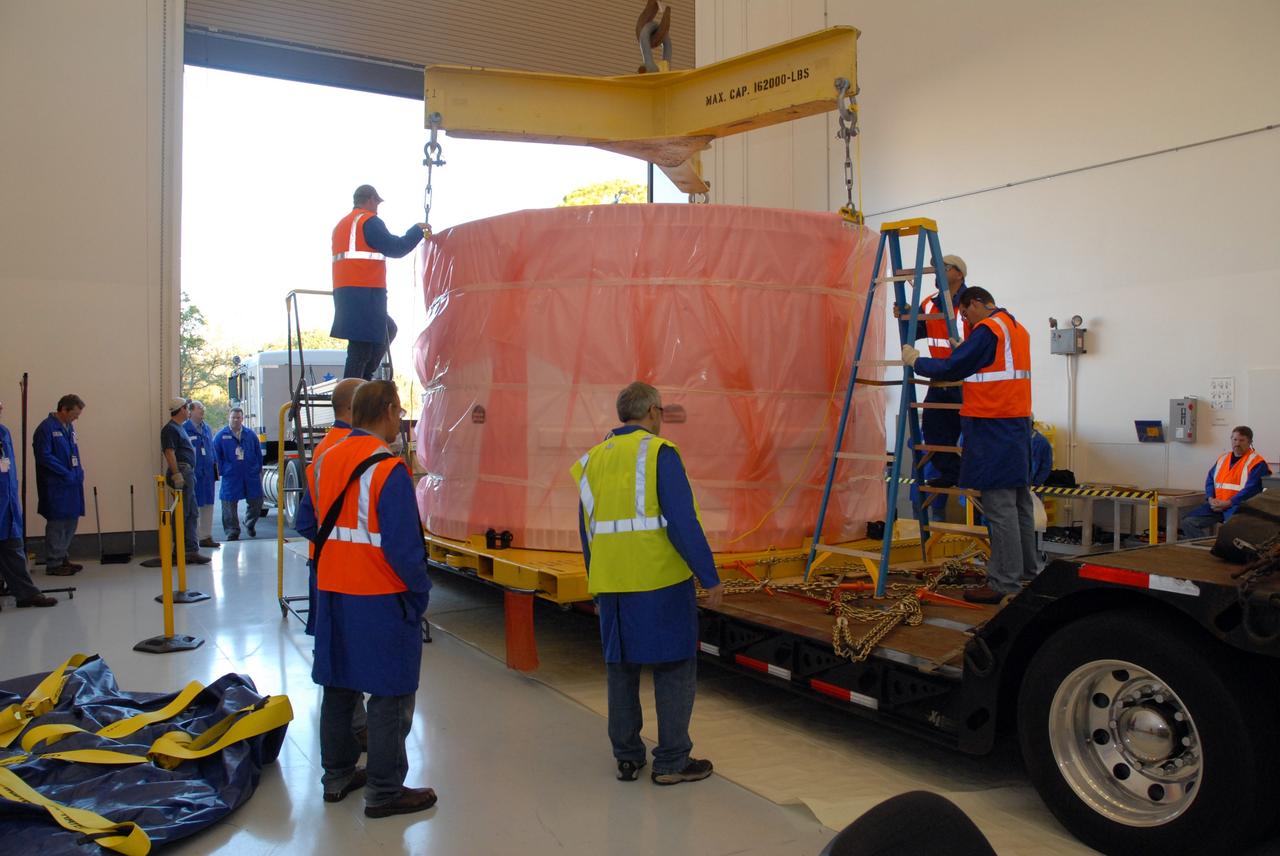
CAPE CANAVERAL, Fla. – At Astrotech in Titusville, Fla., the bagged fifth segment simulator of the Ares I-X is placed on a transporter. The segment will be transferred to the Vehicle Assembly Building's extended duration orbiter lab, or EDO, at NASA's Kennedy Space Center in Florida for stacking operations. Ares I-X is the test vehicle for the Ares I, which is part of the Constellation Program to return men to the moon and beyond. Ares I is the essential core of a safe, reliable, cost-effective space transportation system that eventually will carry crewed missions back to the moon, on to Mars and out into the solar system. Ares I-X is targeted for launch in July 2009. Photo credit: NASA/Tim Jacobs