
The Orion spacecraft delivers the Crew and Science Airlock (represented here by a government reference design) to the Gateway Space Station on the Artemis VI mission. The Mohammed Bin Rashid Space Centre of the United Arab Emirates will provide the airlock for Gateway, humanity's first space station that will orbit the Moon.
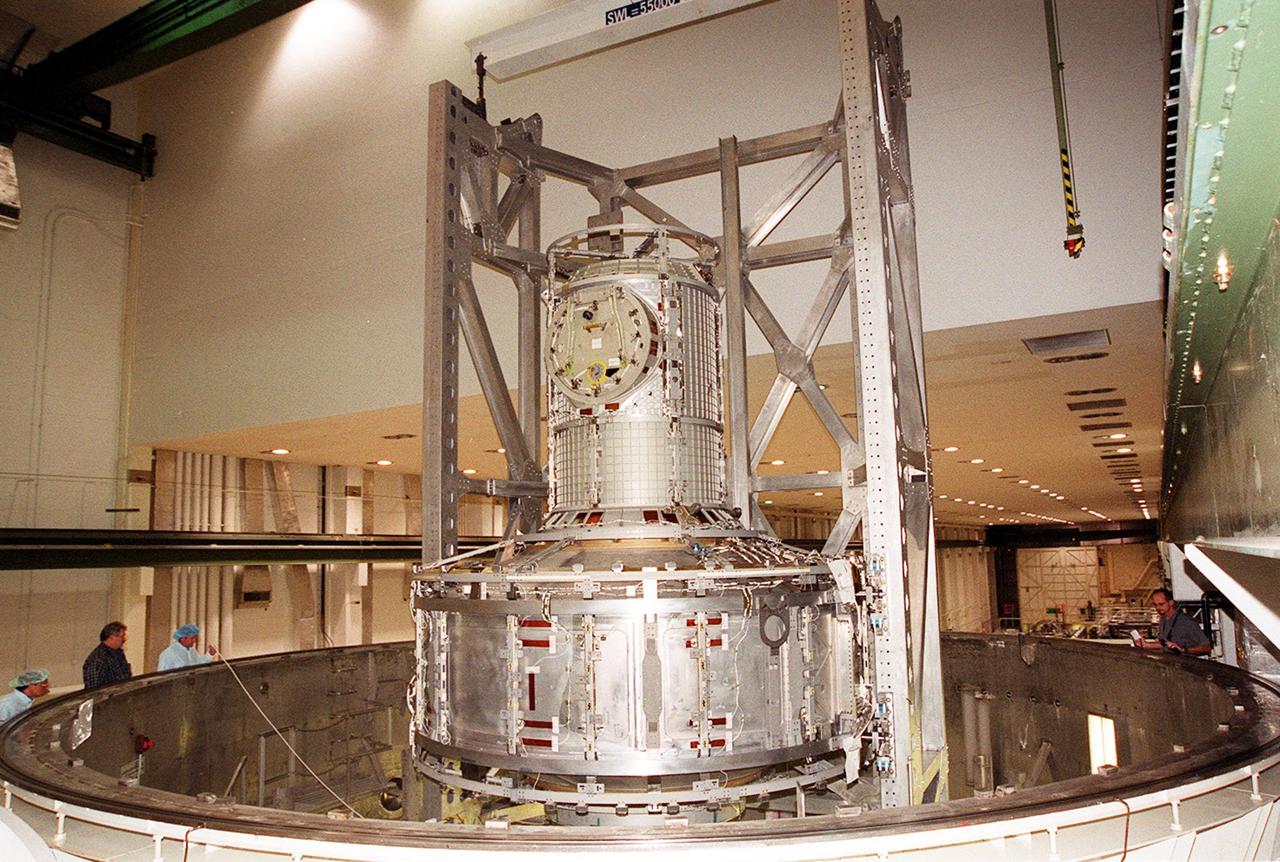
The overhead crane lowers the Joint Airlock Module inside the vacuum chamber in the Operations and Checkout Building. The airlock is being tested for leaks. The module is the gateway from which crew members aboard the International Space Station (ISS) will enter and exit the 470-ton orbiting research facility. The airlock is a critical element of the ISS because of design differences between American and Russian spacesuits. The Joint Airlock Module provides a chamber where astronauts from every nation can suit up for space walks to conduct maintenance and construction work or to do science experiments outside the Station. The Space Shuttle Atlantis will carry the airlock to orbit on mission STS-104, the 10th International Space Station flight, currently targeted for liftoff in May 2001. The Shuttle crew will secure the airlock to the right side of Unity, the American-built connecting node that currently comprises one-third of the current Space Station, along with the Russian modules Zarya and Zvezda
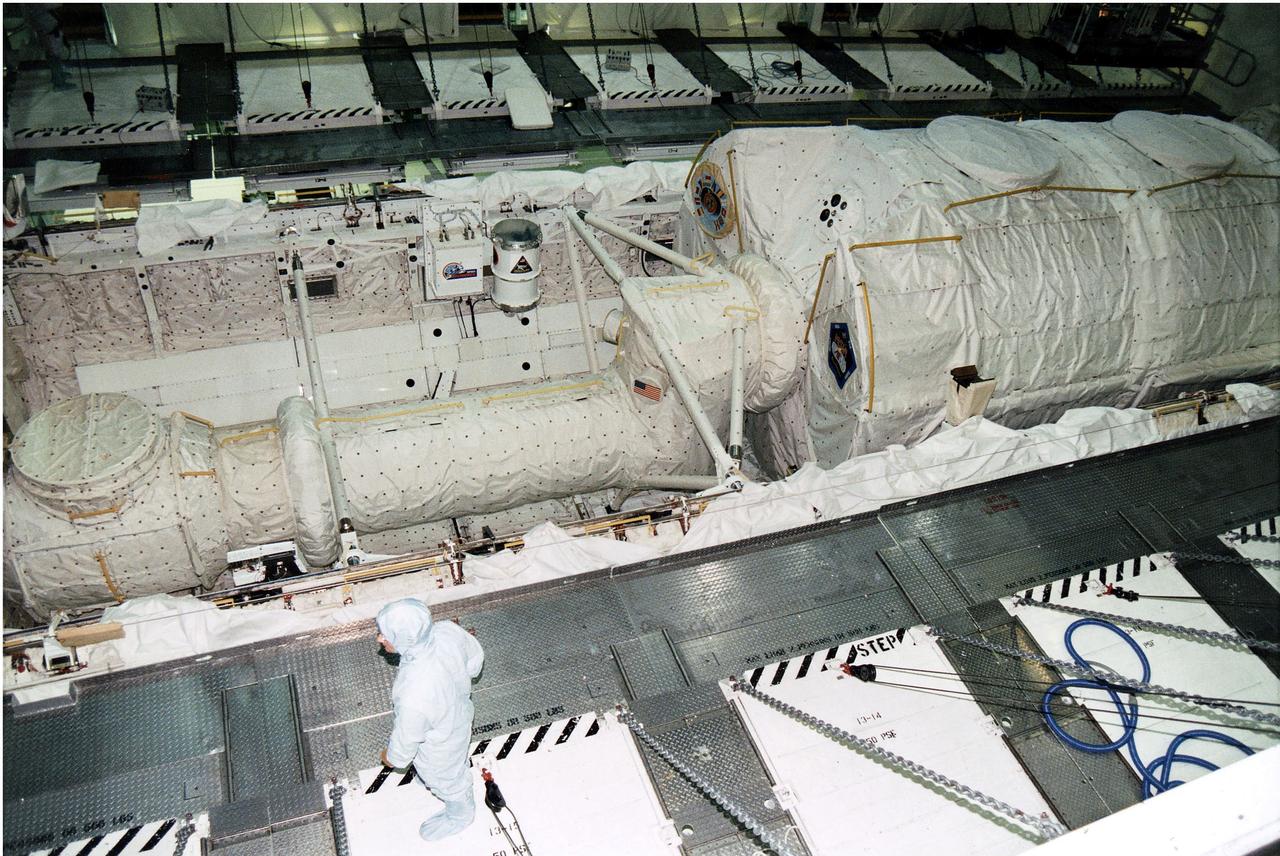
KENNEDY SPACE CENTER, FLA. - The Microgravity Science Laboratory-1 (MSL-1) Spacelab module is installed into the payload bay of the Space Shuttle Orbiter Columbia in Orbiter Processing Facility 1. The Spacelab long crew transfer tunnel that leads from the orbiter's crew airlock to the module is also aboard, as well as the Hitchhiker Cryogenic Flexible Diode (CRYOFD) experiment payload, which is attached to the right side of Columbia's payload bay. During the scheduled 16-day STS-83 mission, the MSL-1 will be used to test some of the hardware, facilities and procedures that are planned for use on the International Space Station while the flight crew conducts combustion, protein crystal growth and materials processing experiments.
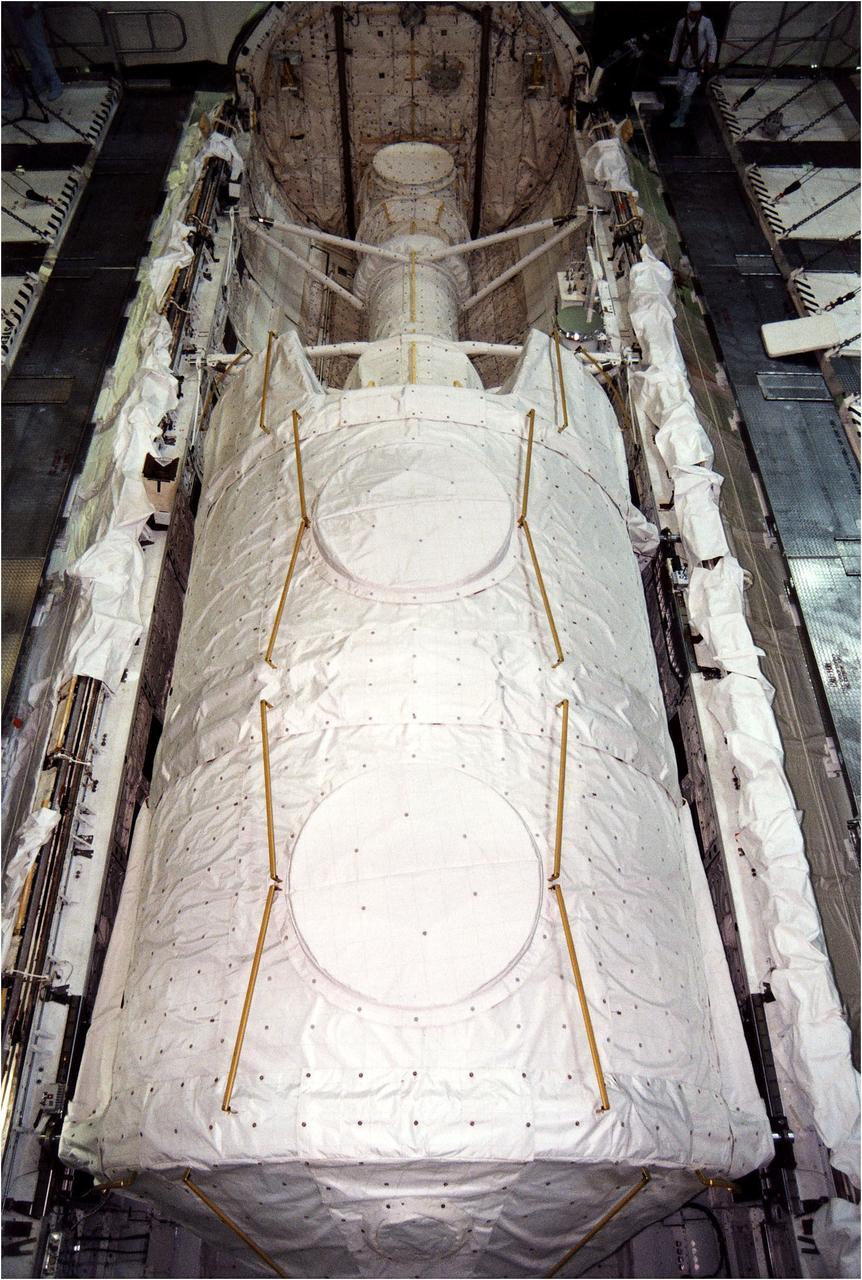
KENNEDY SPACE CENTER, FLA. - The Microgravity Science Laboratory-1 (MSL-1) Spacelab module is installed into the payload bay of the Space Shuttle Orbiter Columbia in Orbiter Processing Facility 1. The Spacelab long crew transfer tunnel that leads from the orbiter's crew airlock to the module is also aboard, as well as the Hitchhiker Cryogenic Flexible Diode (CRYOFD) experiment payload, which is attached to the right side of Columbia's payload bay. During the scheduled 16-day STS-83 mission, the MSL-1 will be used to test some of the hardware, facilities and procedures that are planned for use on the International Space Station while the flight crew conducts combustion, protein crystal growth and materials processing experiments.
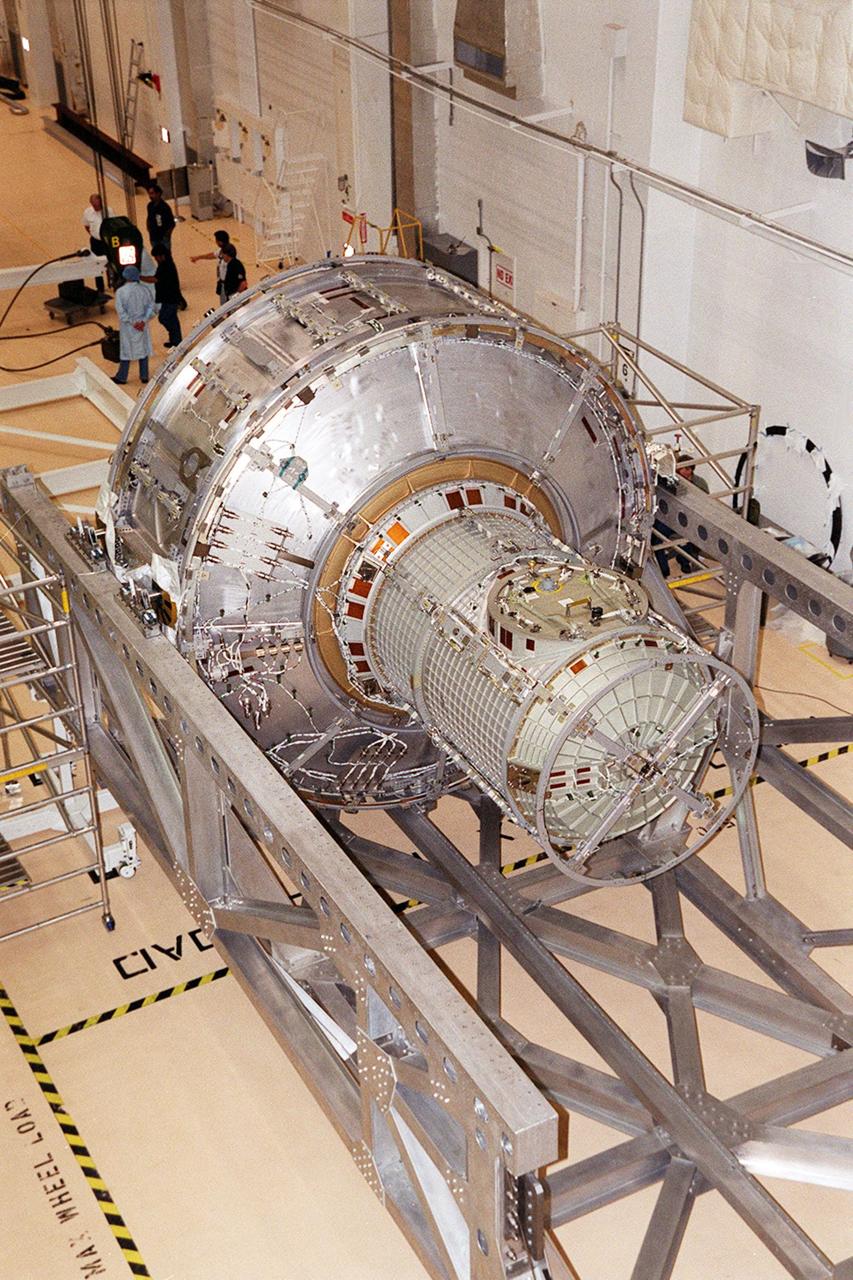
The Joint Airlock Module waits on a stand in the Operations and Checkout Building to be lifted and moved into a vacuum chamber for testing. The module is the gateway from which crew members aboard the International Space Station (ISS) will enter and exit the 470-ton orbiting research facility. The airlock is a critical element of the ISS because of design differences between American and Russian spacesuits. The Joint Airlock Module is specially designed to accommodate both suits, providing a chamber where astronauts from every nation can suit up for space walks to conduct maintenance and construction work or to do science experiments outside the Station. The Space Shuttle Atlantis will carry the airlock to orbit on mission STS-104, the 10th International Space Station flight, currently targeted for liftoff in May 2001. The Shuttle crew will secure the airlock to the right side of Unity, the American-built connecting node that currently comprises one-third of the current Space Station, along with the Russian modules Zarya and Zvezda
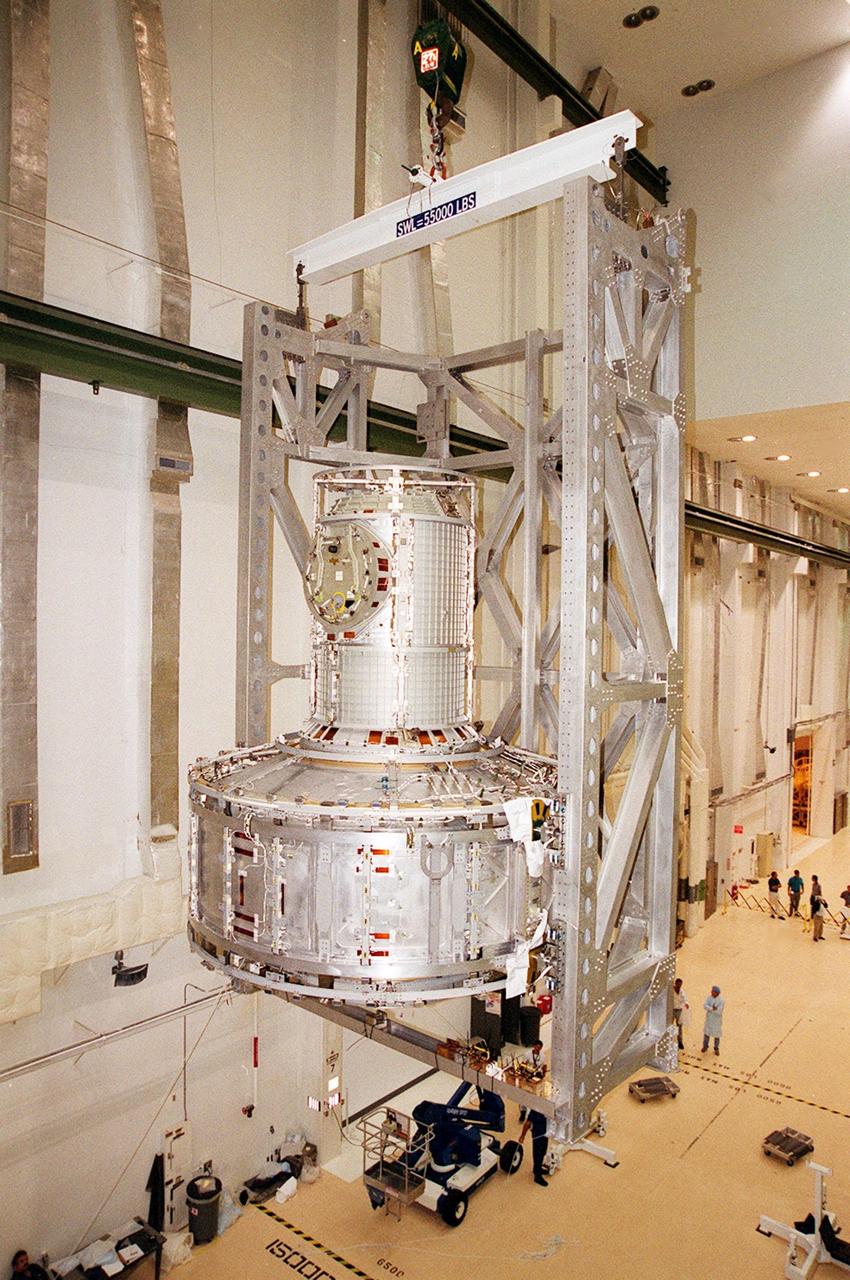
In the Operations and Checkout Building, an overhead crane lifts the Joint Airlock Module to move it to a vacuum chamber for testing. The module is the gateway from which crew members aboard the International Space Station (ISS) will enter and exit the 470-ton orbiting research facility. The airlock is a critical element of the ISS because of design differences between American and Russian spacesuits. The Joint Airlock Module is specially designed to accommodate both suits, providing a chamber where astronauts from every nation can suit up for space walks to conduct maintenance and construction work or to do science experiments outside the Station. The Space Shuttle Atlantis will carry the airlock to orbit on mission STS-104, the 10th International Space Station flight, currently targeted for liftoff in May 2001. The Shuttle crew will secure the airlock to the right side of Unity, the American-built connecting node that currently comprises one-third of the current Space Station, along with the Russian modules Zarya and Zvezda
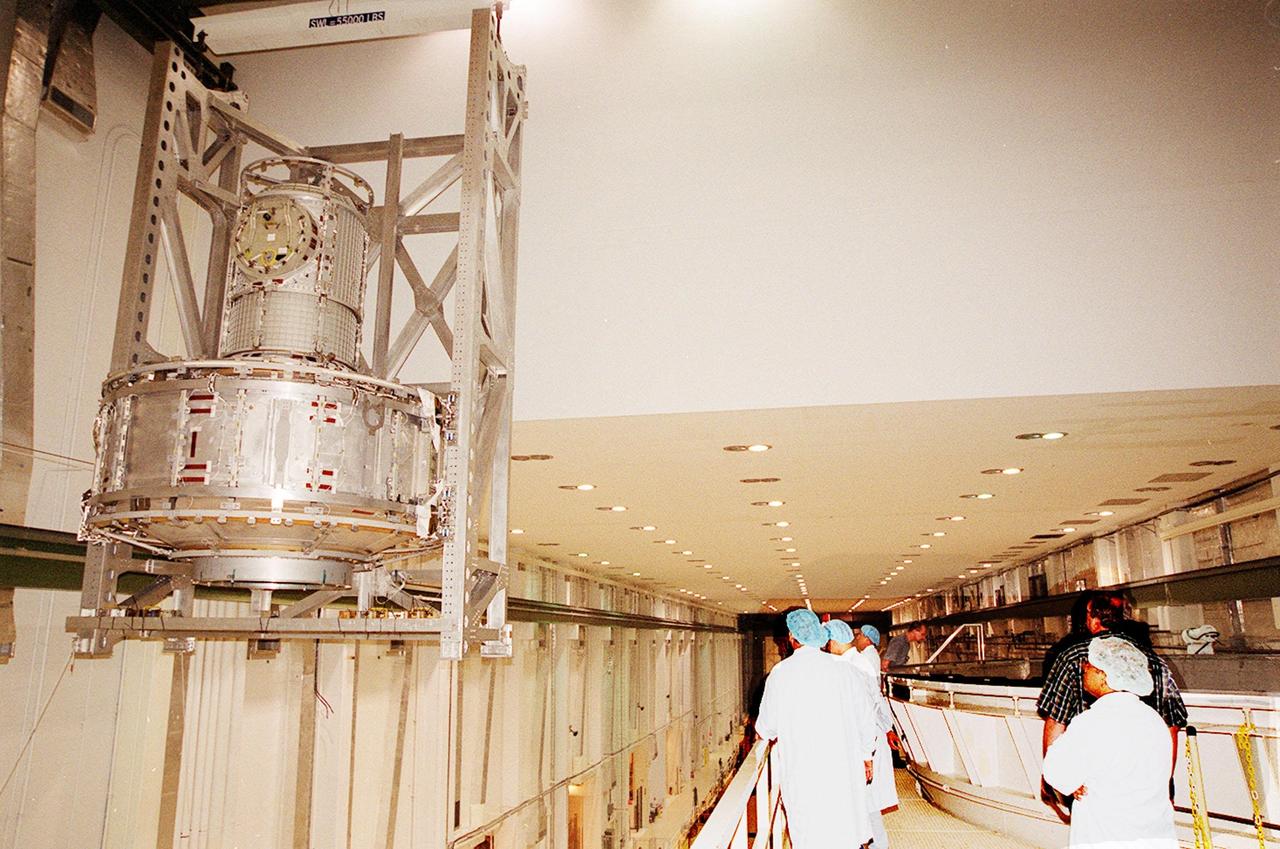
The Joint Airlock Module swings into position near the top of the Operations and Checkout Building to move toward the vacuum chamber at right. Workers alongside the chamber watch the airlock’s progress. The airlock is being tested for leaks. The module is the gateway from which crew members aboard the International Space Station (ISS) will enter and exit the 470-ton orbiting research facility. The airlock is a critical element of the ISS because of design differences between American and Russian spacesuits. The Joint Airlock Module provides a chamber where astronauts from every nation can suit up for space walks to conduct maintenance and construction work or to do science experiments outside the Station. The Space Shuttle Atlantis will carry the airlock to orbit on mission STS-104, the 10th International Space Station flight, currently targeted for liftoff in May 2001. The Shuttle crew will secure the airlock to the right side of Unity, the American-built connecting node that currently comprises one-third of the current Space Station, along with the Russian modules Zarya and Zvezda
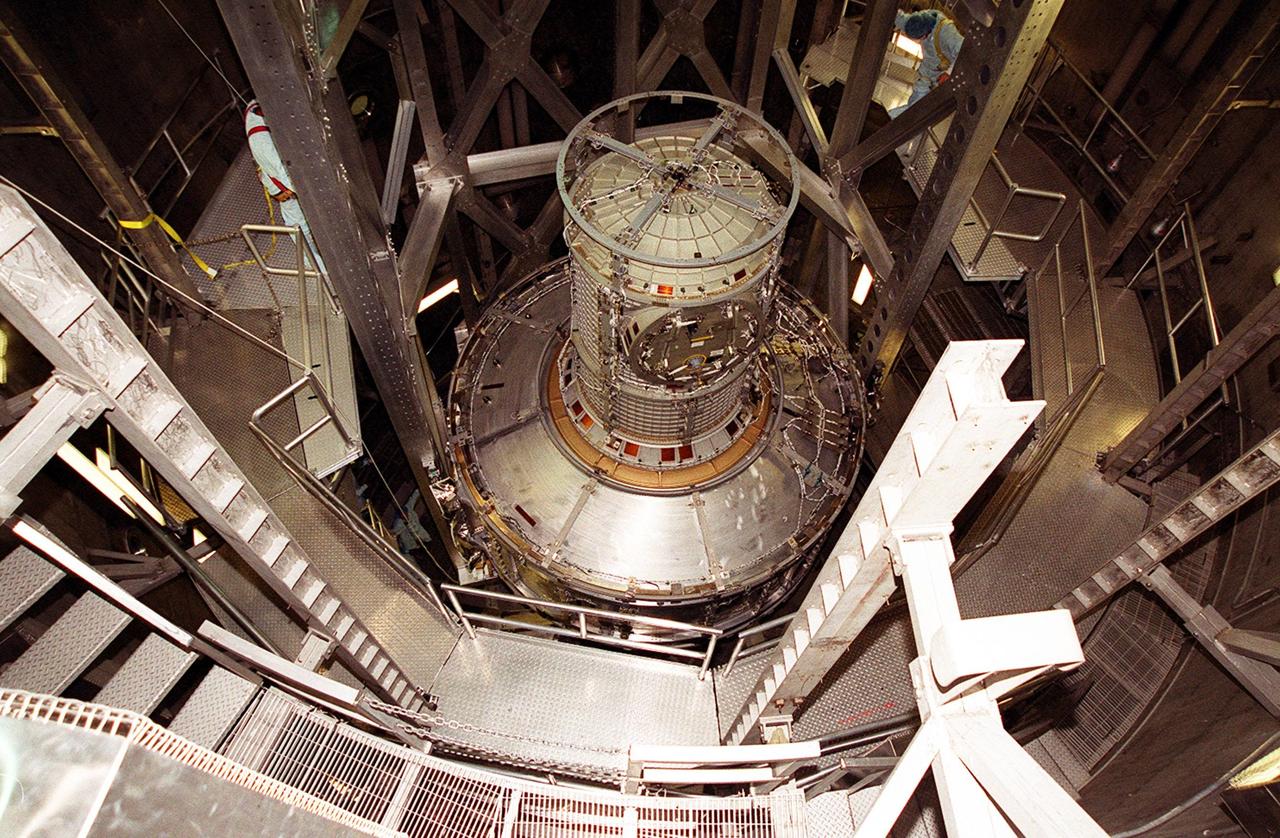
The Joint Airlock Module is fully lowered into the vacuum chamber inside the Operations and Checkout Building. Workers on either side check its position. The airlock is being tested for leaks. The module is the gateway from which crew members aboard the International Space Station (ISS) will enter and exit the 470-ton orbiting research facility. The airlock is a critical element of the ISS because of design differences between American and Russian spacesuits. The Joint Airlock Module provides a chamber where astronauts from every nation can suit up for space walks to conduct maintenance and construction work or to do science experiments outside the Station. The Space Shuttle Atlantis will carry the airlock to orbit on mission STS-104, the 10th International Space Station flight, currently targeted for liftoff in May 2001. The Shuttle crew will secure the airlock to the right side of Unity, the American-built connecting node that currently comprises one-third of the current Space Station, along with the Russian modules Zarya and Zvezda
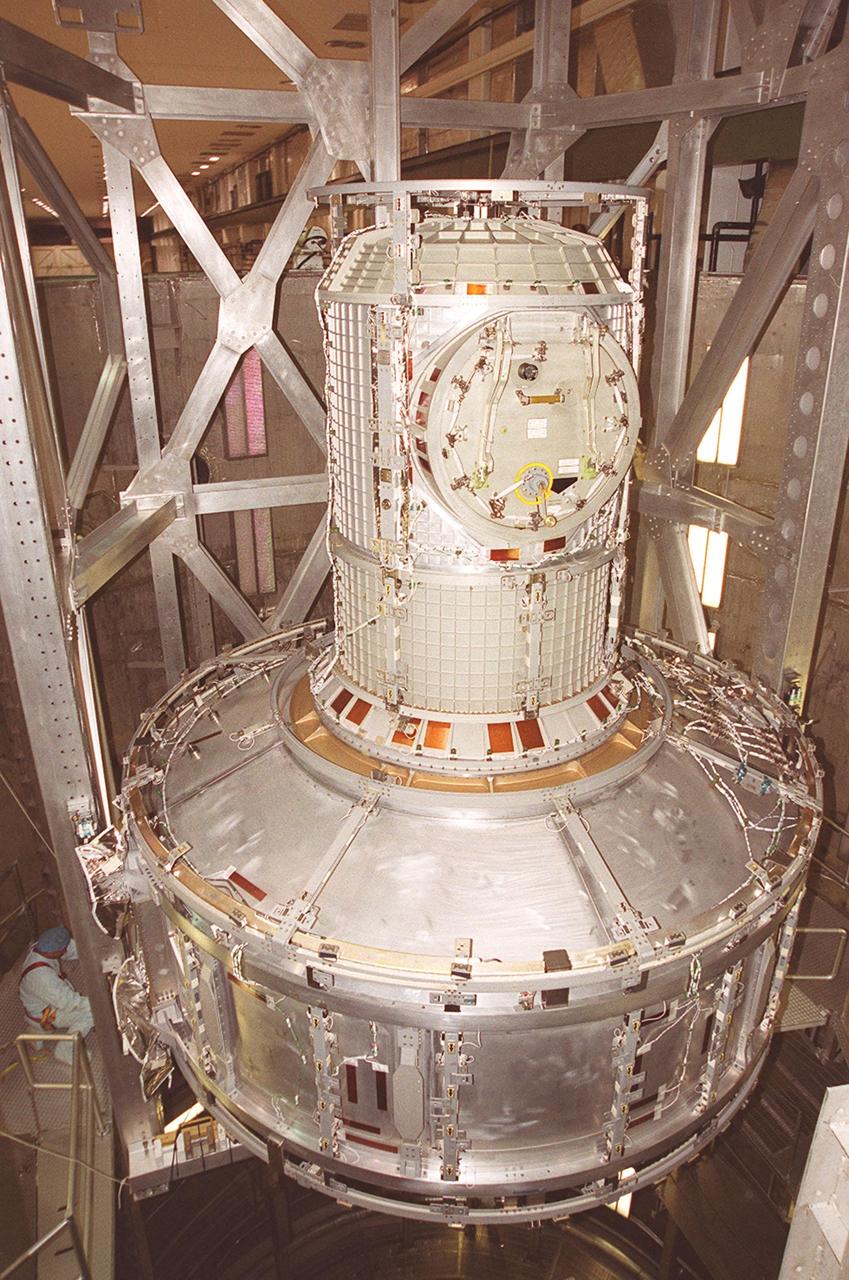
Workers inside the vacuum chamber in the Operations and Checkout Building watch as an overhead crane lowers the Joint Airlock Module inside. The airlock is being tested for leaks. The module is the gateway from which crew members aboard the International Space Station (ISS) will enter and exit the 470-ton orbiting research facility. The airlock is a critical element of the ISS because of design differences between American and Russian spacesuits. The Joint Airlock Module provides a chamber where astronauts from every nation can suit up for space walks to conduct maintenance and construction work or to do science experiments outside the Station. The Space Shuttle Atlantis will carry the airlock to orbit on mission STS-104, the 10th International Space Station flight, currently targeted for liftoff in May 2001. The Shuttle crew will secure the airlock to the right side of Unity, the American-built connecting node that currently comprises one-third of the current Space Station, along with the Russian modules Zarya and Zvezda
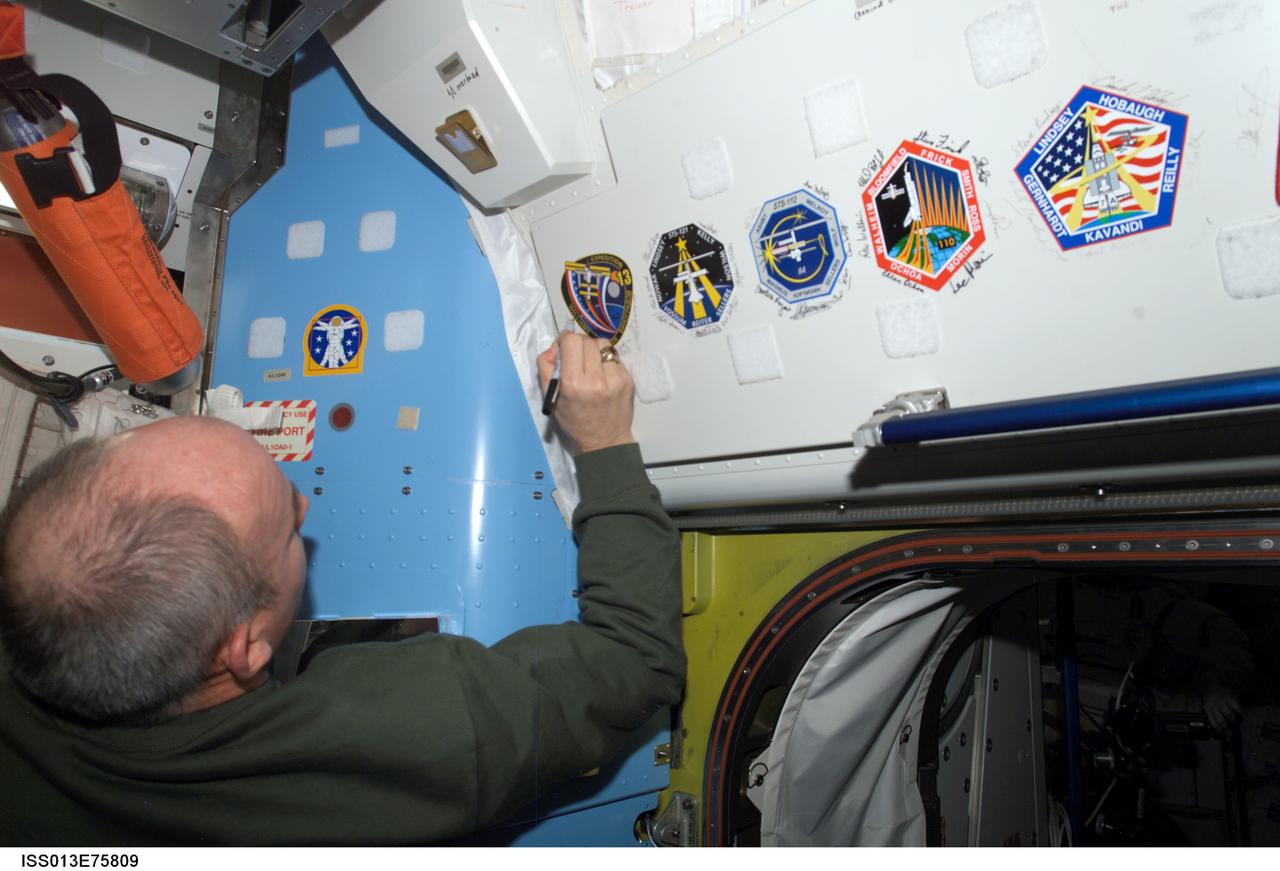
ISS013-E-75809 (4 Sept. 2006) --- Astronaut Jeffrey N. Williams, Expedition 13 NASA space station science officer and flight engineer, signs the Expedition 13 patch, which was added to the growing collection of insignias representing crews who have performed spacewalks from the Quest Airlock of the International Space Station.

iss071e077732 (May 15, 2024) --- (From bottom to top) The Soyuz MS-25 crew ship is pictured docked to the Prichal docking module which is itself attached to the Nauka science module. Extending from Nauka is its science airlock that can be used to place science experiments outside in the external microgravity environment. The International Space Station was orbiting 266 miles above the South Atlantic Ocean off the coast of Argentina when this photograph was taken.
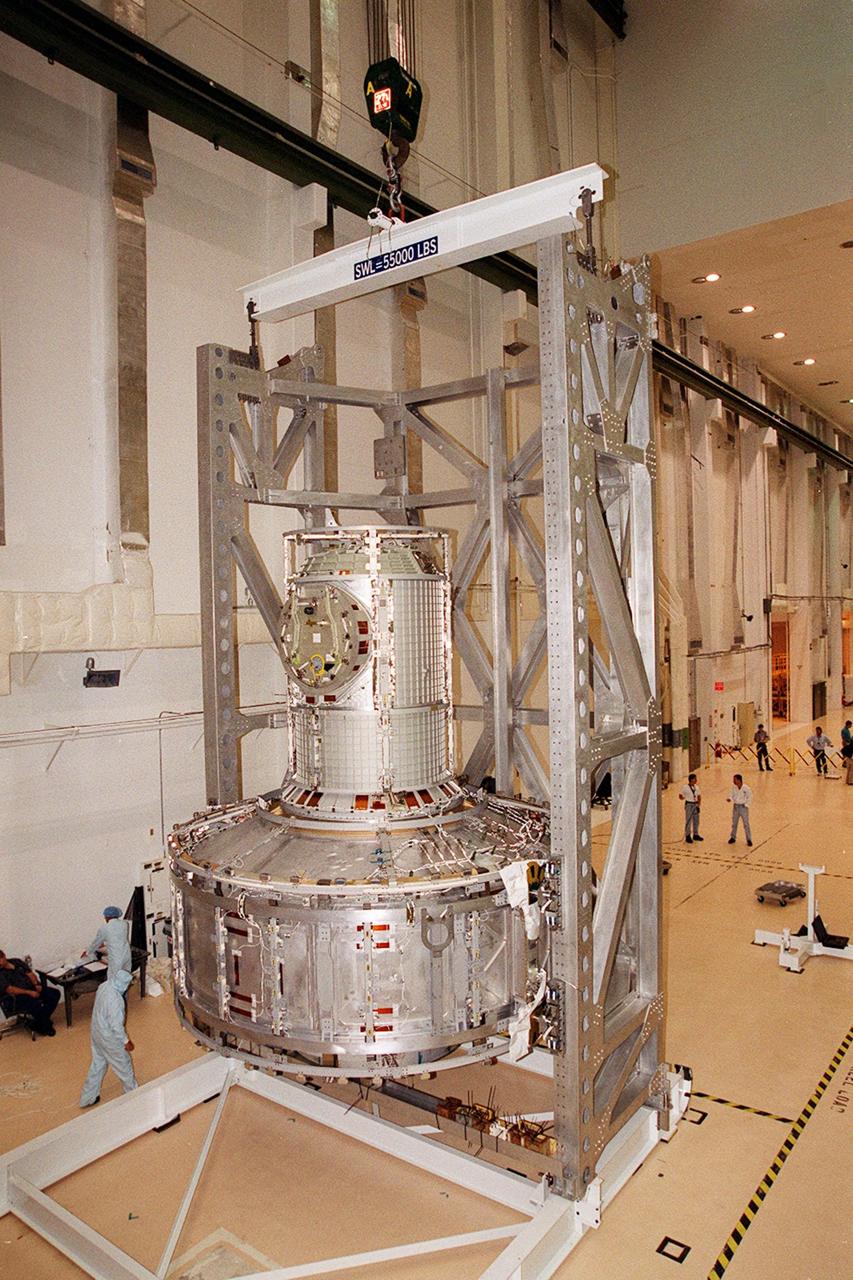
In the Operations and Checkout Building, the Joint Airlock Module, now in vertical position, is ready to be moved into a vacuum chamber for testing. The module is the gateway from which crew members aboard the International Space Station (ISS) will enter and exit the 470-ton orbiting research facility. The airlock is a critical element of the ISS because of design differences between American and Russian spacesuits. The Joint Airlock Module is specially designed to accommodate both suits, providing a chamber where astronauts from every nation can suit up for space walks to conduct maintenance and construction work or to do science experiments outside the Station. The Space Shuttle Atlantis will carry the airlock to orbit on mission STS-104, the 10th International Space Station flight, currently targeted for liftoff in May 2001. The Shuttle crew will secure the airlock to the right side of Unity, the American-built connecting node that currently comprises one-third of the current Space Station, along with the Russian modules Zarya and Zvezda
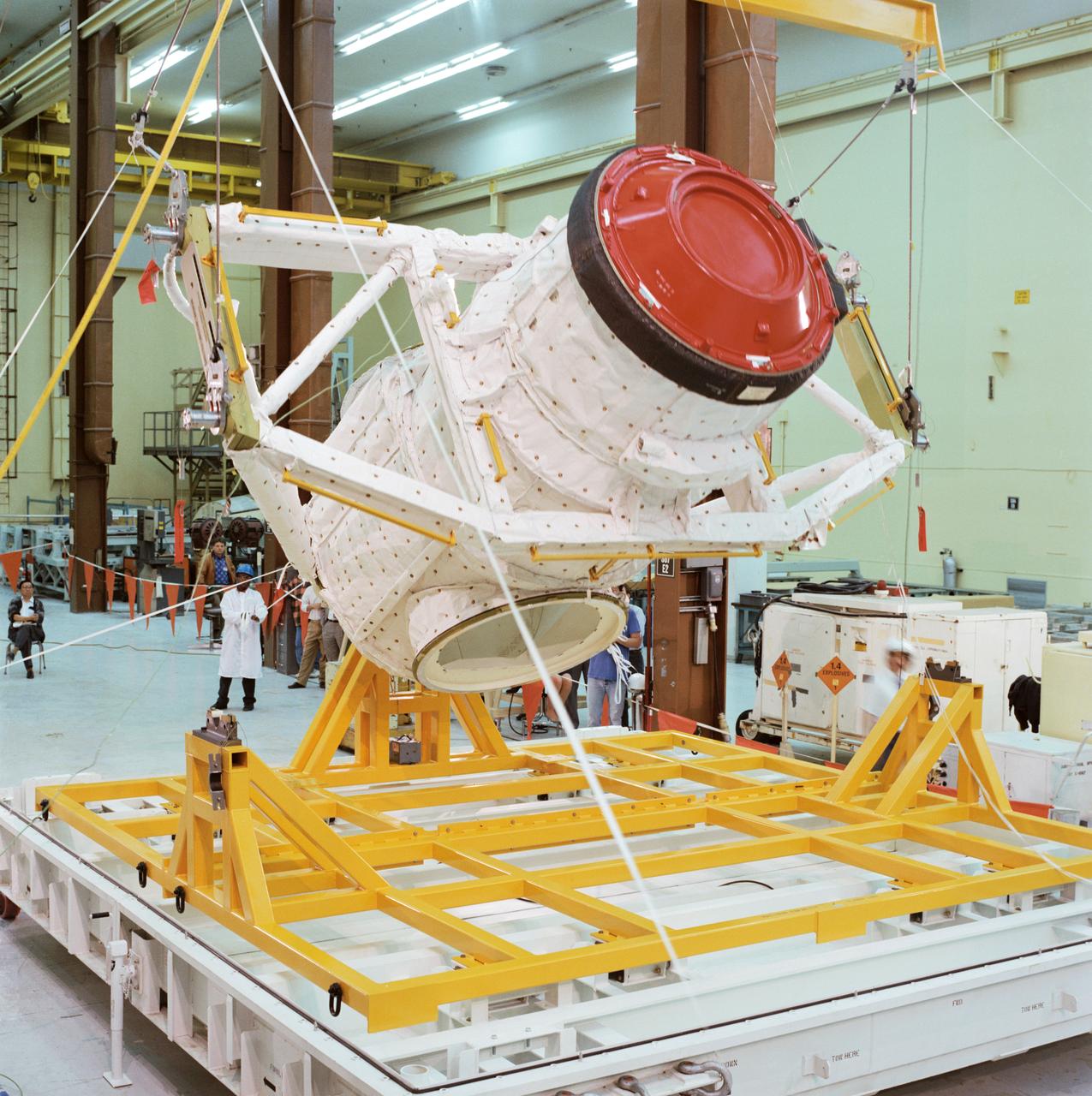
S95-00057 (15 Nov 1994) --- In Rockwell's Building 290 at Downey, California, the external airlock assembly/Mir docking system is rotated into position for crating up for shipment to the Kennedy Space Center (KSC) in Florida. Jointly developed by Rockwell and RSC Energia, the external airlock assembly and Mir docking system will be mounted in the cargo bay of the Space Shuttle Atlantis to enable the shuttle to link up to Russia's Mir space station. The docking system contains hooks and latches compatible with the system currently housed on the Mir's Krystall module, to which Atlantis will attach for the first time next spring. STS-71 will carry two Russian cosmonauts, who will replace a three-man crew aboard Mir including Norman E. Thagard, a NASA astronaut. The combined 10-person crew will conduct almost five days of joint life sciences investigations both aboard Mir and in the Space Shuttle Atlantis's Spacelab module.
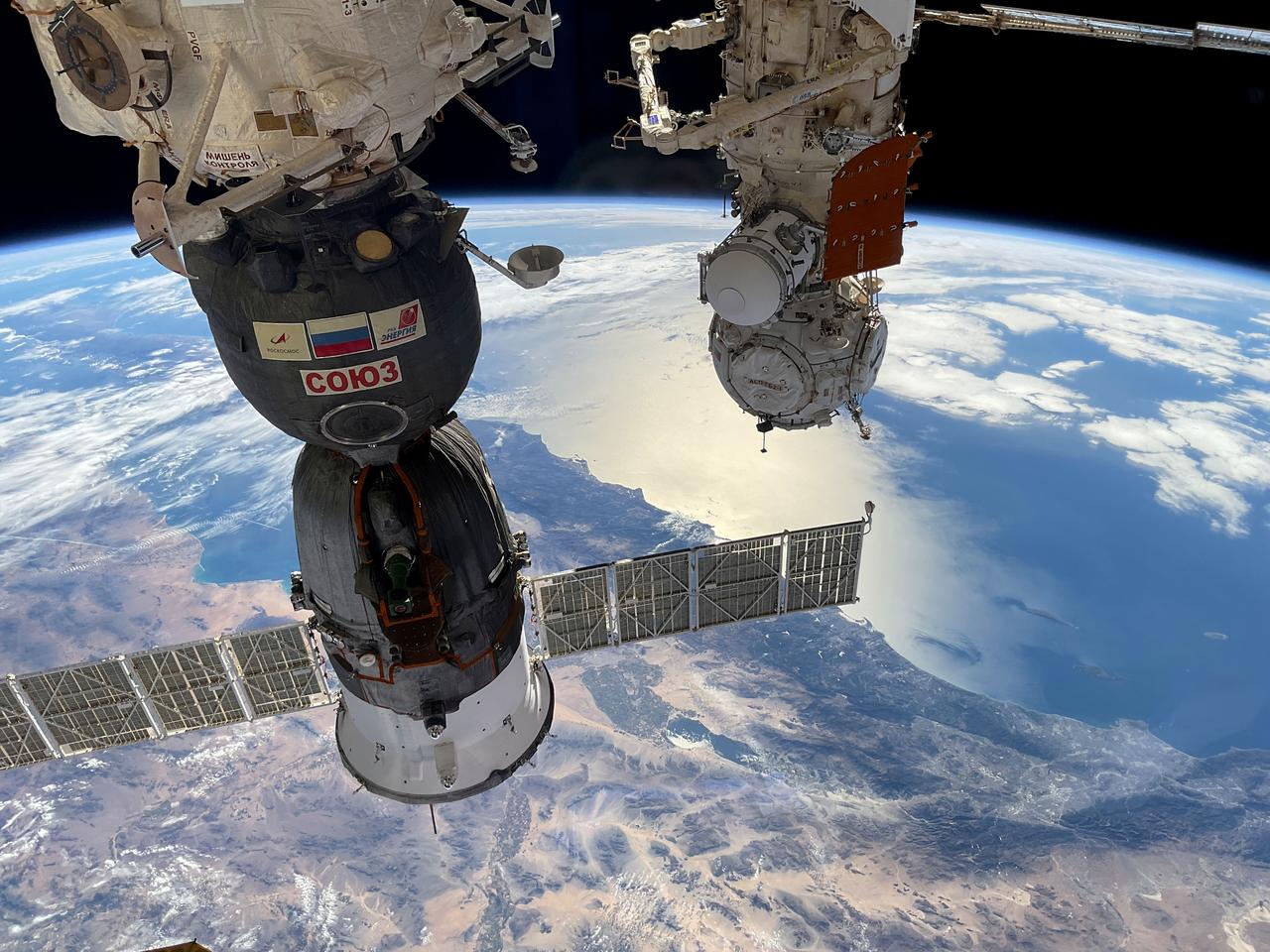
iss070e103141 (Nov. 28, 2023) --- At left, the Soyuz MS-24 crew ship is docked to the Rassvet module and at right, the Prichal docking module is attached to the Nauka module. Also pictured attached to Nauka in this photograph from Expedition 70 Flight Engineer Konstantin Borisov, are a science airlock and the European robotic arm as the International Space Station soared 261 miles above the southwestern United States. Credit: Roscosmos
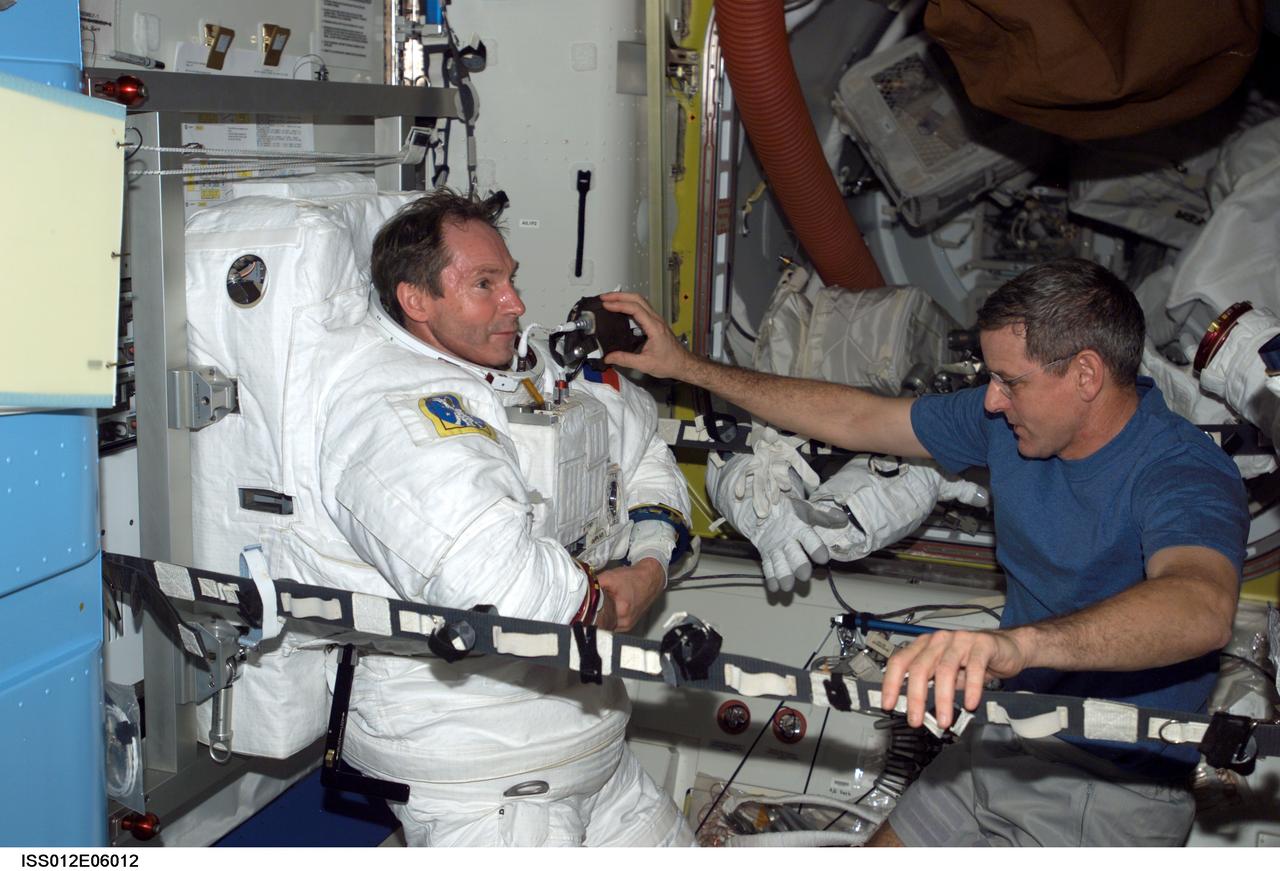
ISS012-E-06012 (23 October 2005) --- Cosmonaut Valery I. Tokarev (left), Expedition 12 flight engineer representing Russia's Federal Space Agency, dons his Extravehicular Mobility Unit (EMU) spacesuit in the Quest Airlock of the international space station. Astronaut William S. McArthur Jr., commander and NASA science officer, assisted Tokarev. When the Expedition 12 crew performs its first scheduled day of spacewalking on Nov. 7, it will be attired in the NASA EMU.
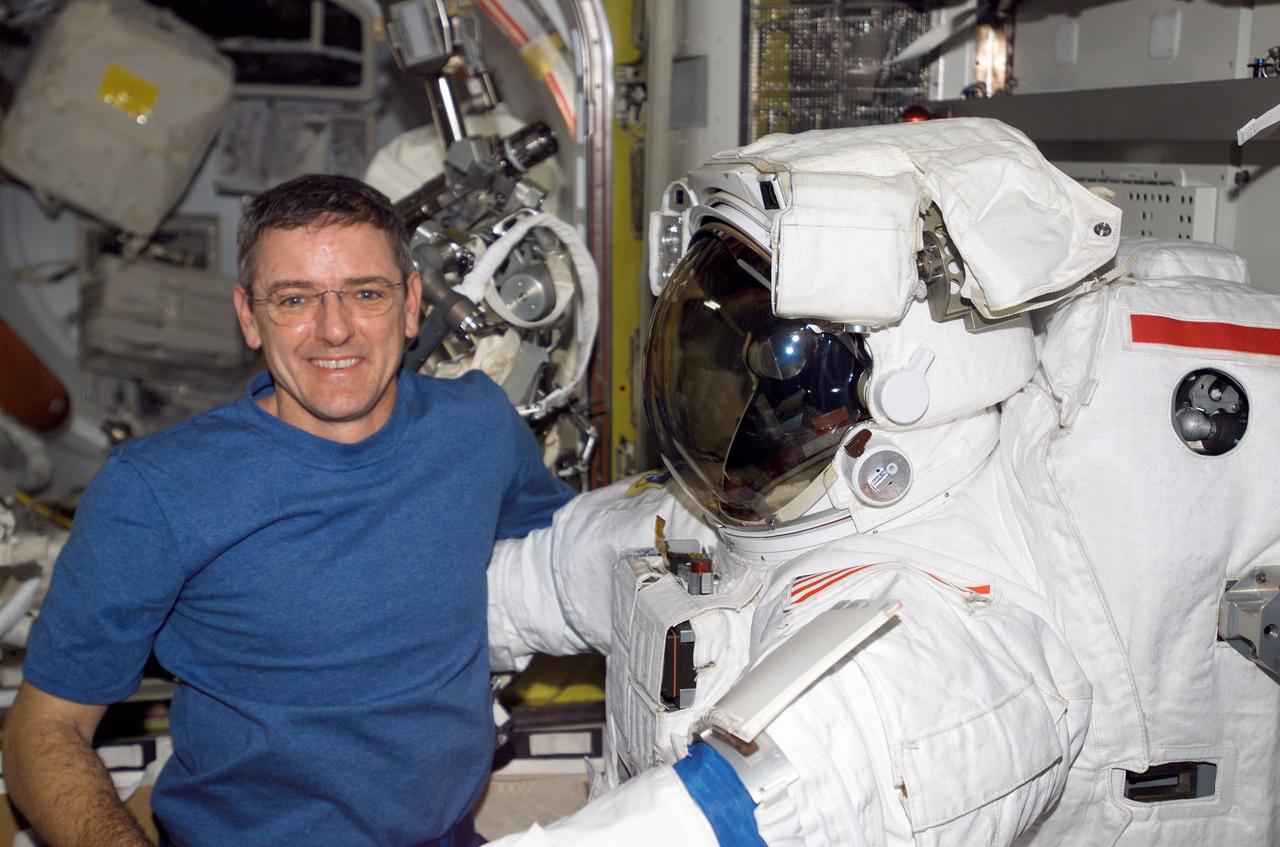
ISS012-E-06022 (26 Oct. 2005) --- Astronaut William S. McArthur Jr., Expedition 12 commander and NASA science officer, works with Extravehicular Mobility Unit (EMU) spacesuits in the Quest airlock of the international space station. When the Expedition 12 crew performs its first scheduled day of spacewalking on Nov. 7, it will be attired in the NASA EMU.
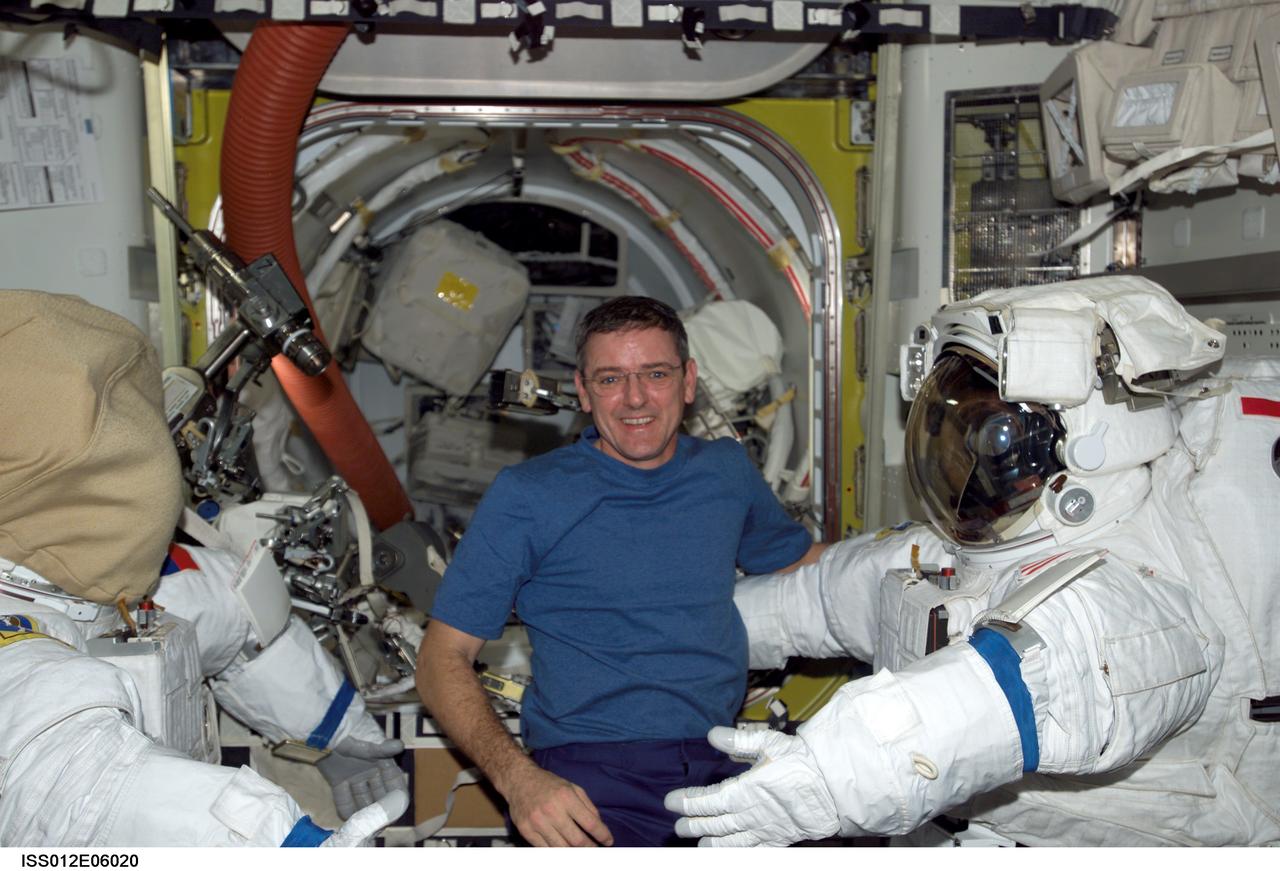
ISS012-E-06020 (26 October 2005) --- Astronaut William S. McArthur Jr., Expedition 12 commander and NASA science officer, works with Extravehicular Mobility Unit (EMU) spacesuits in the Quest airlock of the international space station. When the Expedition 12 crew performs its first scheduled day of spacewalking on Nov. 7, it will be attired in the NASA EMU.
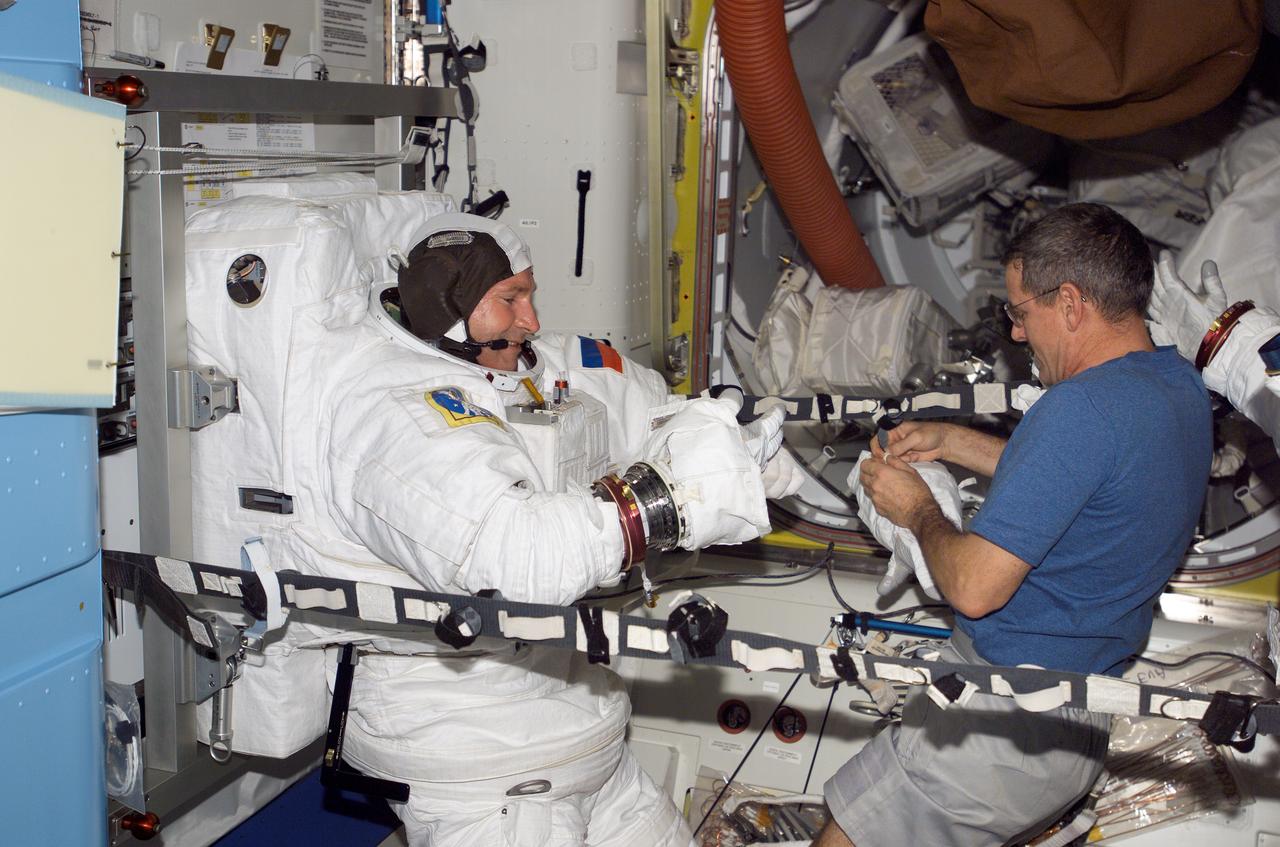
ISS012-E-06011 (23 Oct. 2005) --- Cosmonaut Valery I. Tokarev (left), Expedition 12 flight engineer representing Russia's Federal Space Agency, dons his Extravehicular Mobility Unit (EMU) spacesuit in the Quest Airlock of the international space station. Astronaut William S. McArthur Jr., commander and NASA science officer, assisted Tokarev. When the Expedition 12 crew performs its first scheduled day of spacewalking on Nov. 7, it will be attired in the NASA EMU.
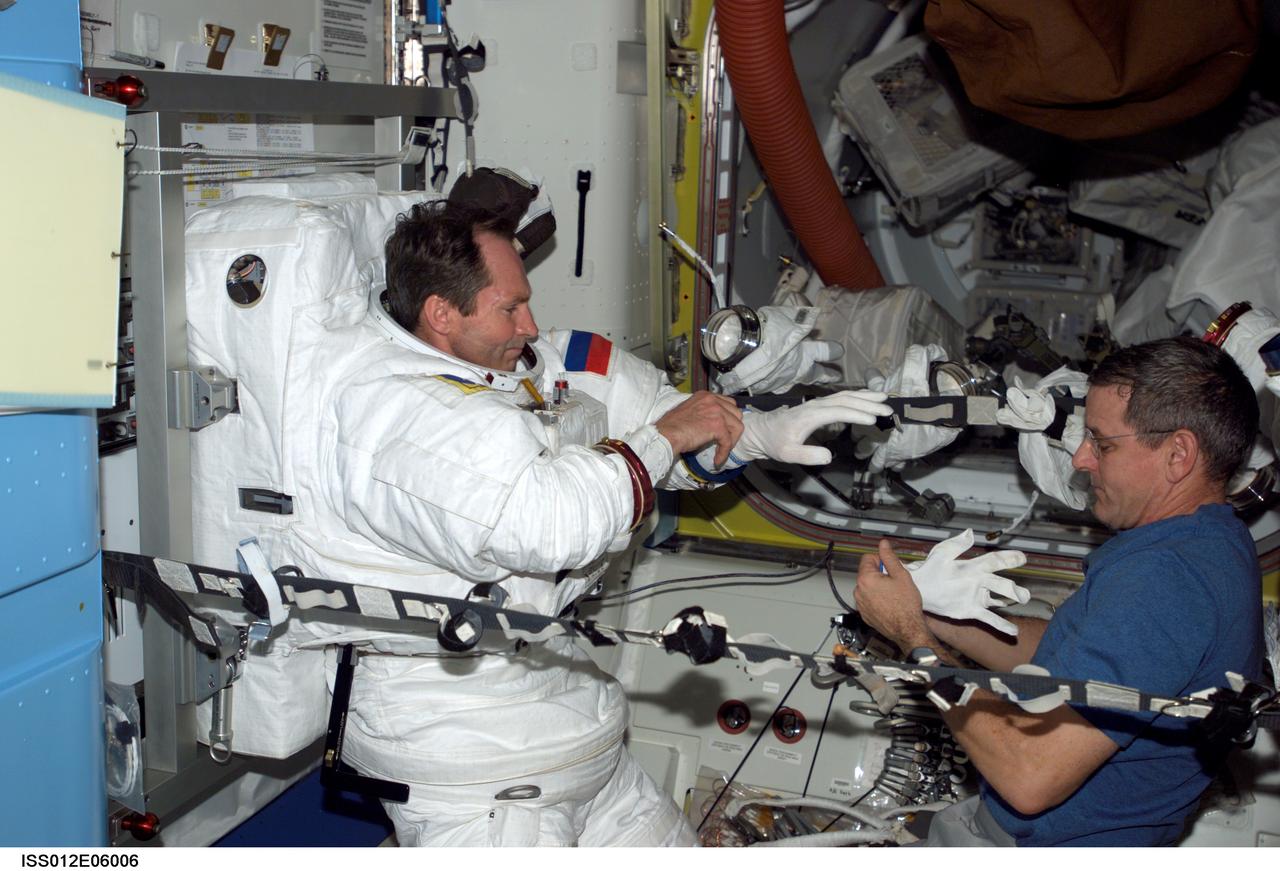
ISS012-E-06006 (23 October 2005) --- Cosmonaut Valery I. Tokarev (left), Expedition 12 flight engineer representing Russia's Federal Space Agency, dons his Extravehicular Mobility Unit (EMU) spacesuit in the Quest Airlock of the international space station. Astronaut William S. McArthur Jr., commander and NASA science officer, assisted Tokarev. When the Expedition 12 crew performs its first scheduled day of spacewalking on Nov. 7, it will be attired in the NASA EMU.
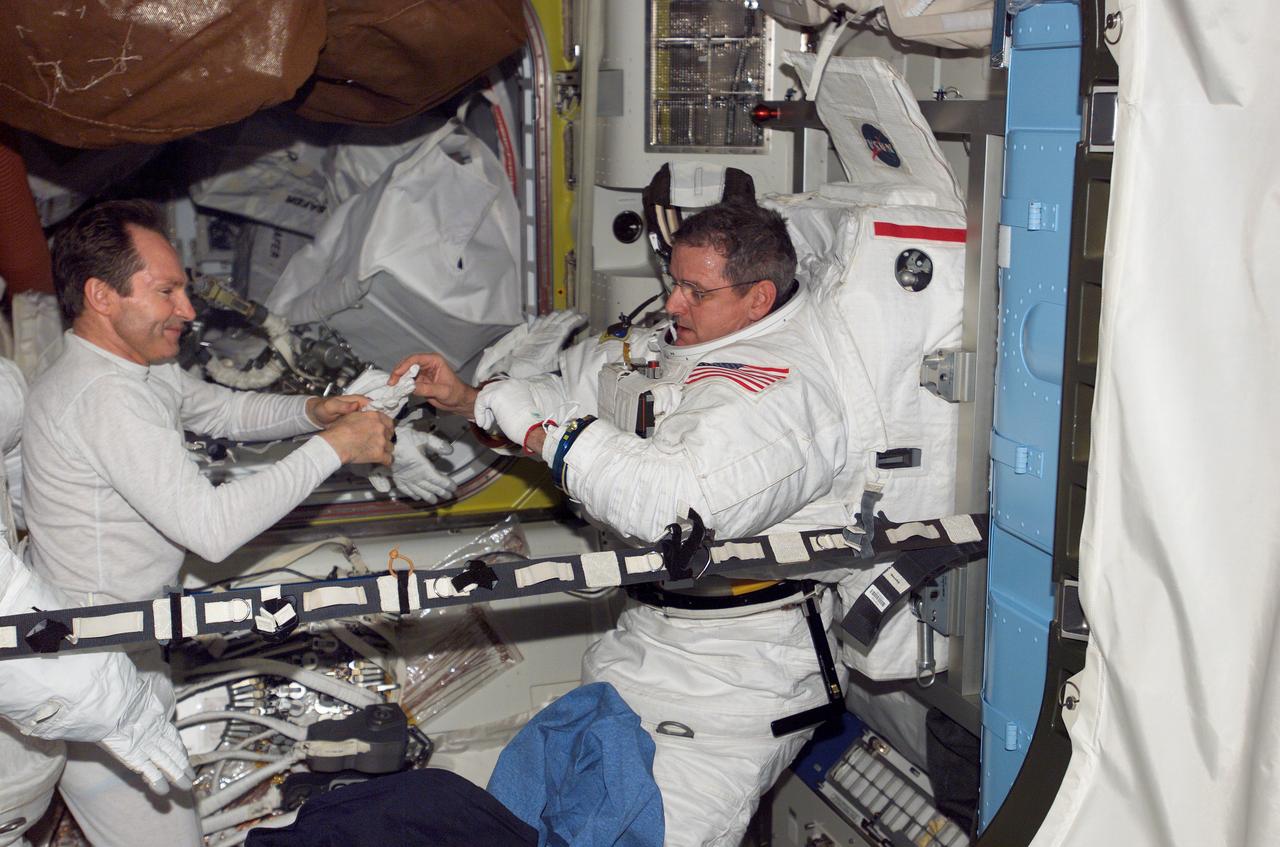
ISS012-E-05983 (23 Oct. 2005) --- Astronaut William S. McArthur Jr. (right), Expedition 12 commander and NASA science officer, dons his Extravehicular Mobility Unit (EMU) spacesuit in the Quest Airlock of the international space station. Cosmonaut Valery I. Tokarev, flight engineer representing Russia's Federal Space Agency, assisted McArthur. When the Expedition 12 crew performs its first scheduled day of spacewalking on Nov. 7, it will be attired in the NASA EMU.
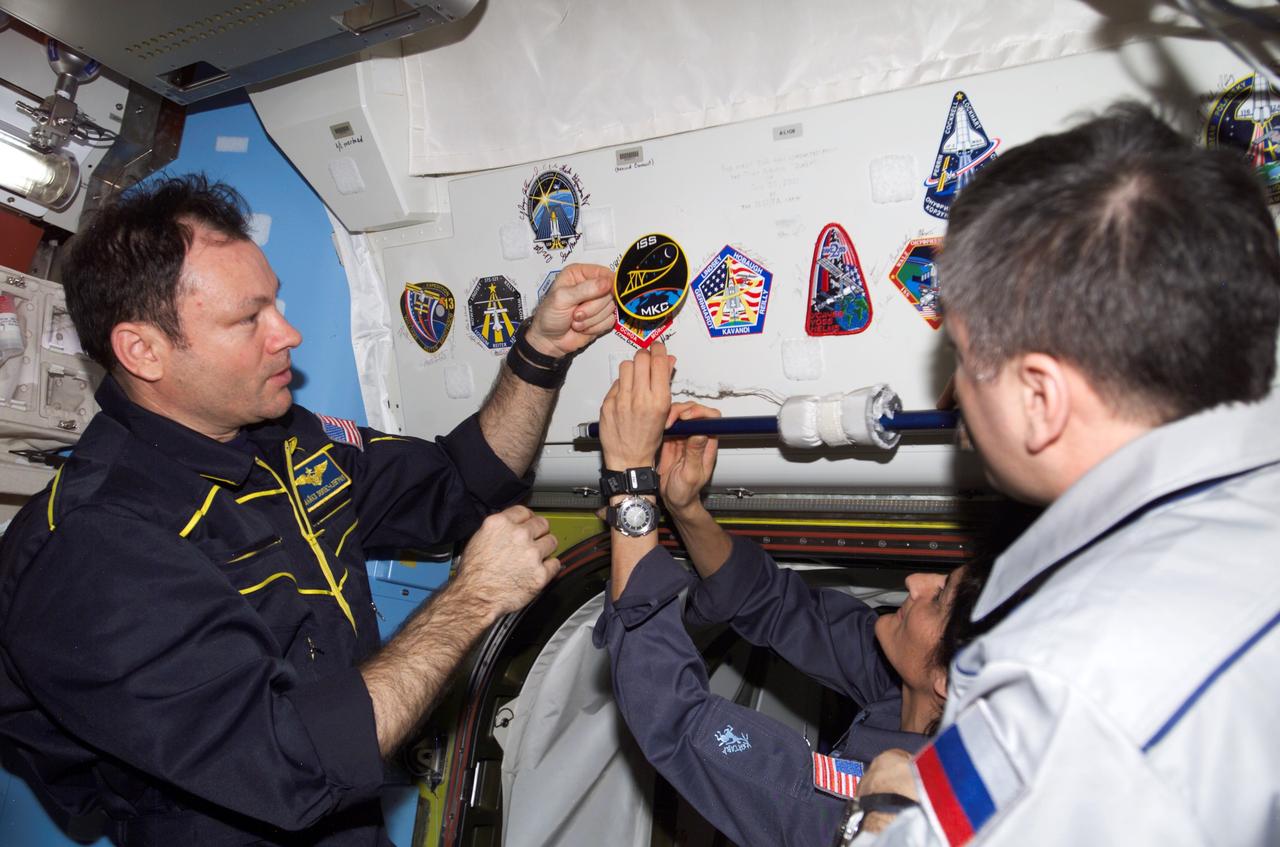
ISS014-E-19558 (17 April 2007) --- Astronauts Michael E. Lopez-Alegria (left), Expedition 14 commander and NASA space station science officer; Sunita L. Williams, flight engineer; and cosmonaut Mikhail Tyurin, flight engineer representing Russia's Federal Space Agency, adds the Expedition 14 patch to the growing collection of insignias representing crews who have performed spacewalks from the Quest Airlock of the International Space Station.
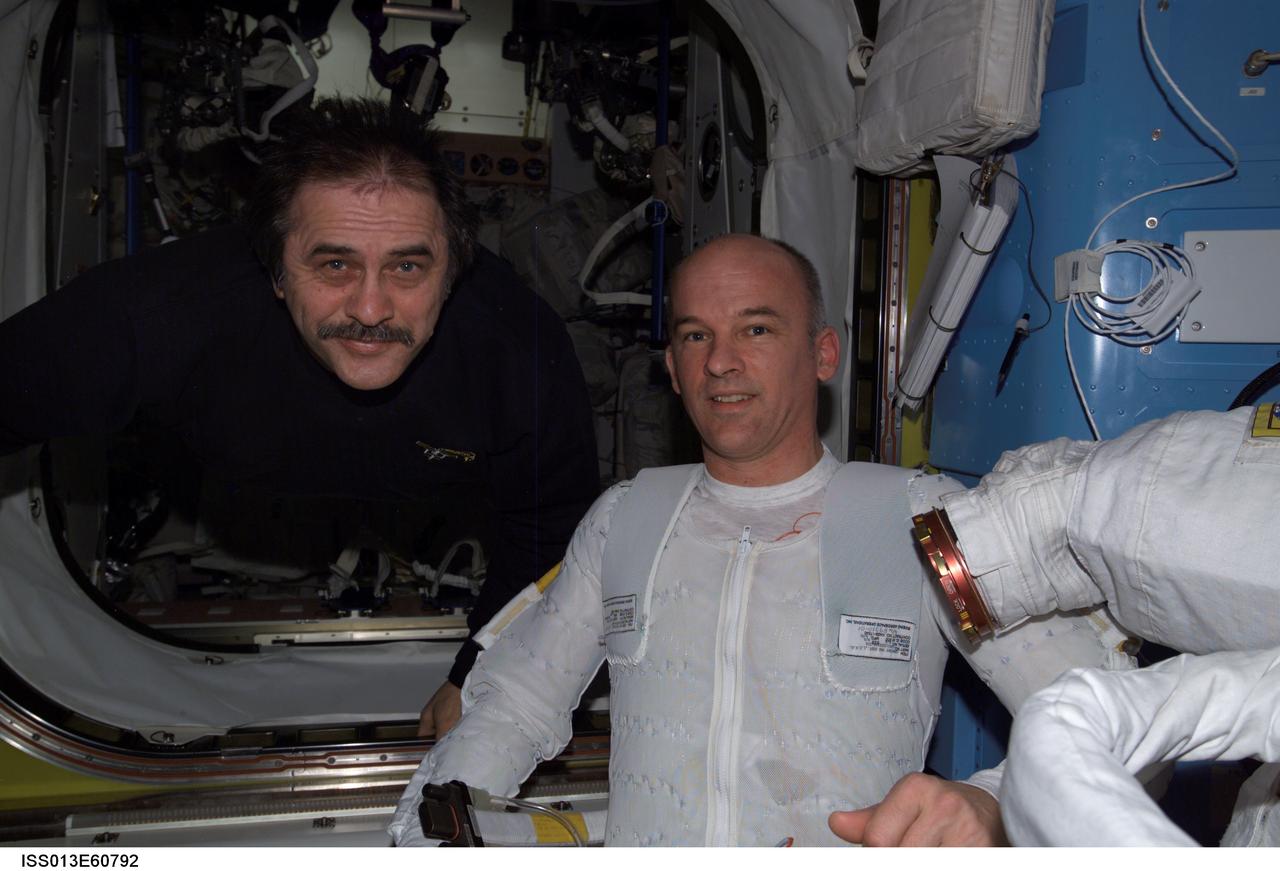
ISS013-E-60792 (28 July 2006) --- Cosmonaut Pavel V. Vinogradov (left), Expedition 13 commander representing Russia's Federal Space Agency, and astronaut Jeffrey N. Williams, NASA space station science officer and flight engineer, take a moment to pose for a photo in the Quest Airlock of the International Space Station. Williams is attired in a liquid cooling and ventilation garment that complements the Extravehicular Mobility Unit (EMU) space suit. The crew is preparing for a session of extravehicular activity (EVA) scheduled for Thursday, Aug. 3, 2006.
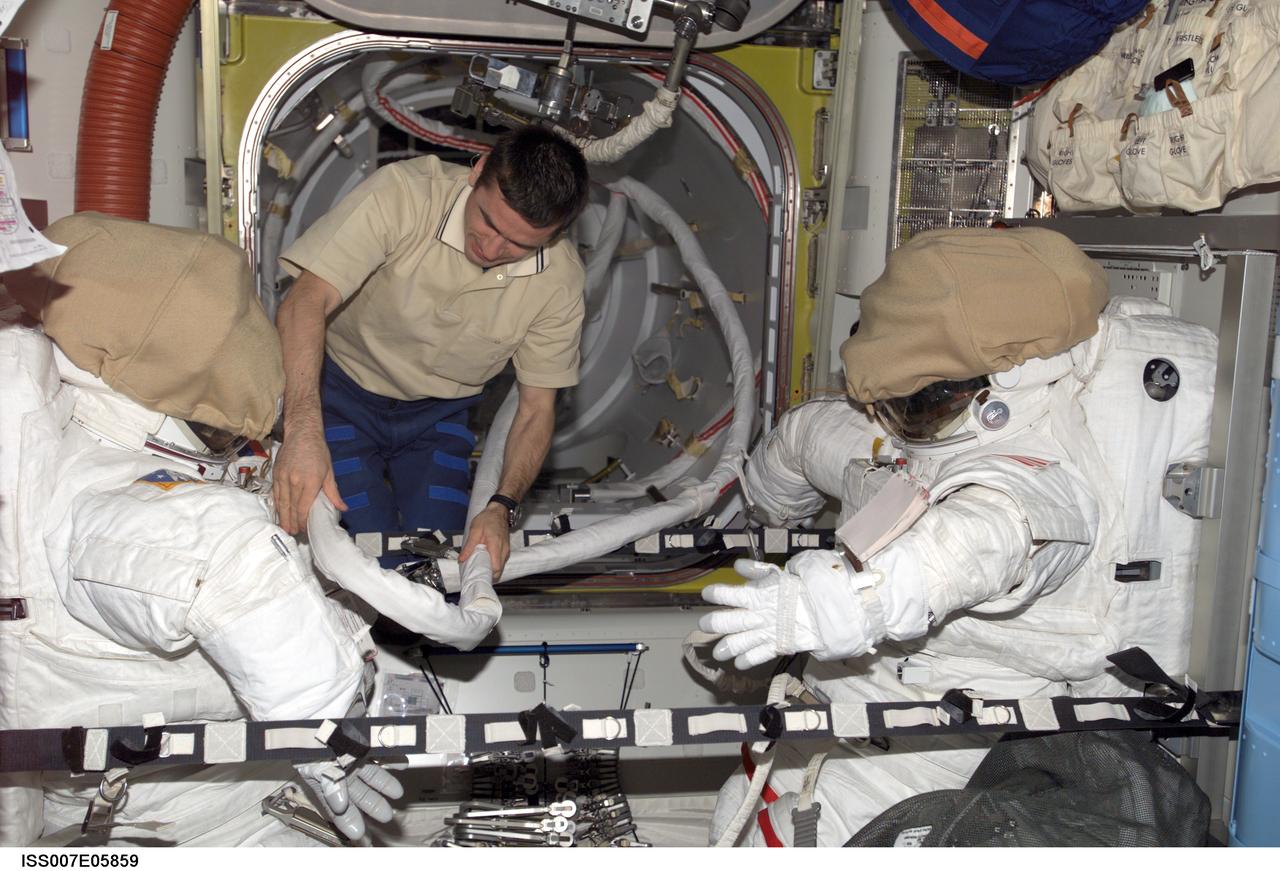
ISS007-E-05859 (28 May 2003) --- Cosmonaut Yuri I. Malenchenko, Expedition Seven mission commander, works with Extravehicular Mobility Unit (EMU) spacesuits in the Quest airlock on the International Space Station (ISS). Today Malenchenko and astronaut Edward T. Lu (out of frame), NASA ISS science officer and flight engineer, performed an EMU spacesuit fit check and don/doff dry-run. The objective was to check out the equipment and provide the crew with training for preparing for a two-person spacewalk without intravehicular (IV) crewmember support, should it become necessary. Malenchenko represents Rosaviakosmos.
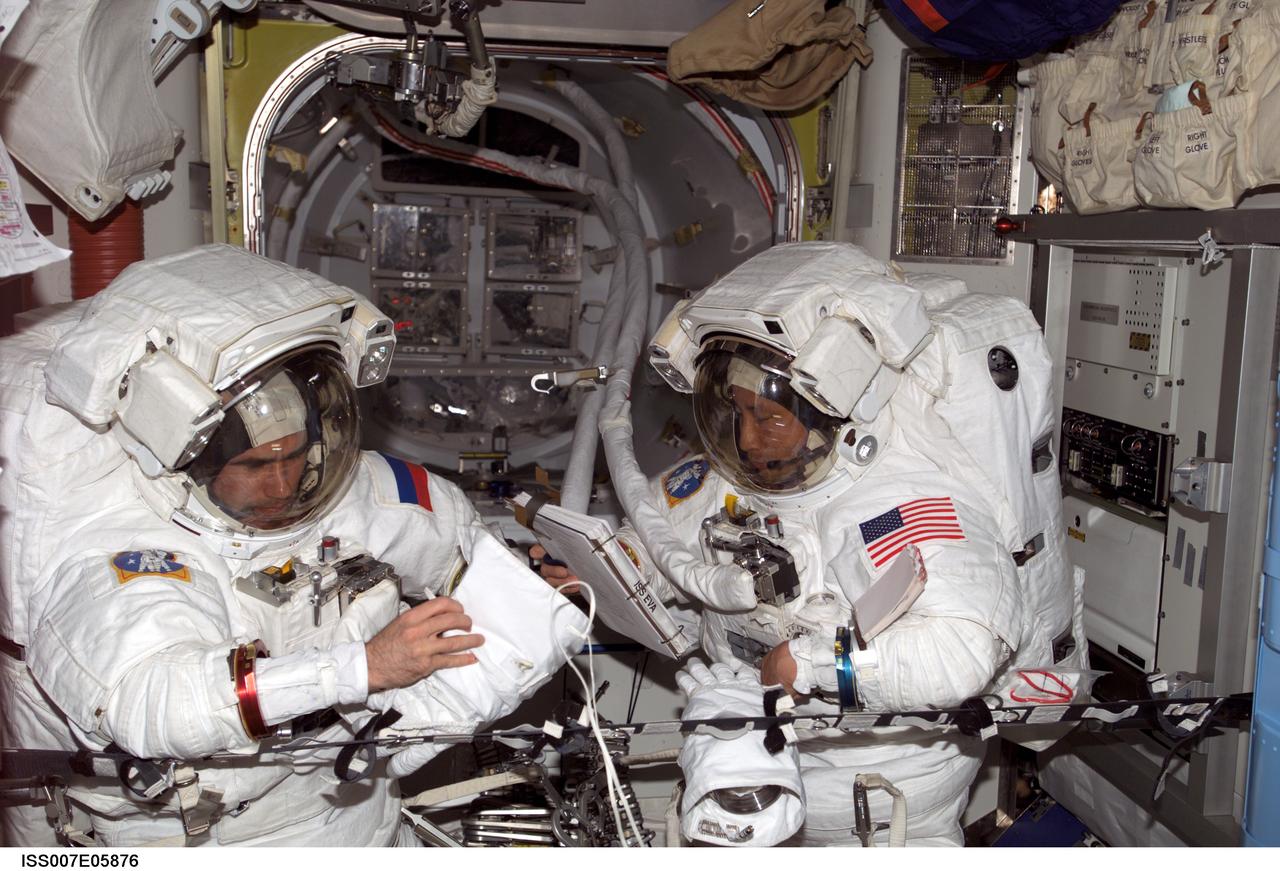
ISS007-E-05876 (28 May 2003) --- Cosmonaut Yuri I. Malenchenko (left), Expedition Seven mission commander, and astronaut Edward T. Lu, NASA ISS science officer and flight engineer, perform an Extravehicular Mobility Unit (EMU) spacesuit fit check and don/doff dry-run in the Quest airlock on the International Space Station (ISS). The objective was to check out the equipment and provide the crew with training for preparing for a two-person spacewalk without intravehicular (IV) crewmember support, should it become necessary. Malenchenko represents Rosaviakosmos.
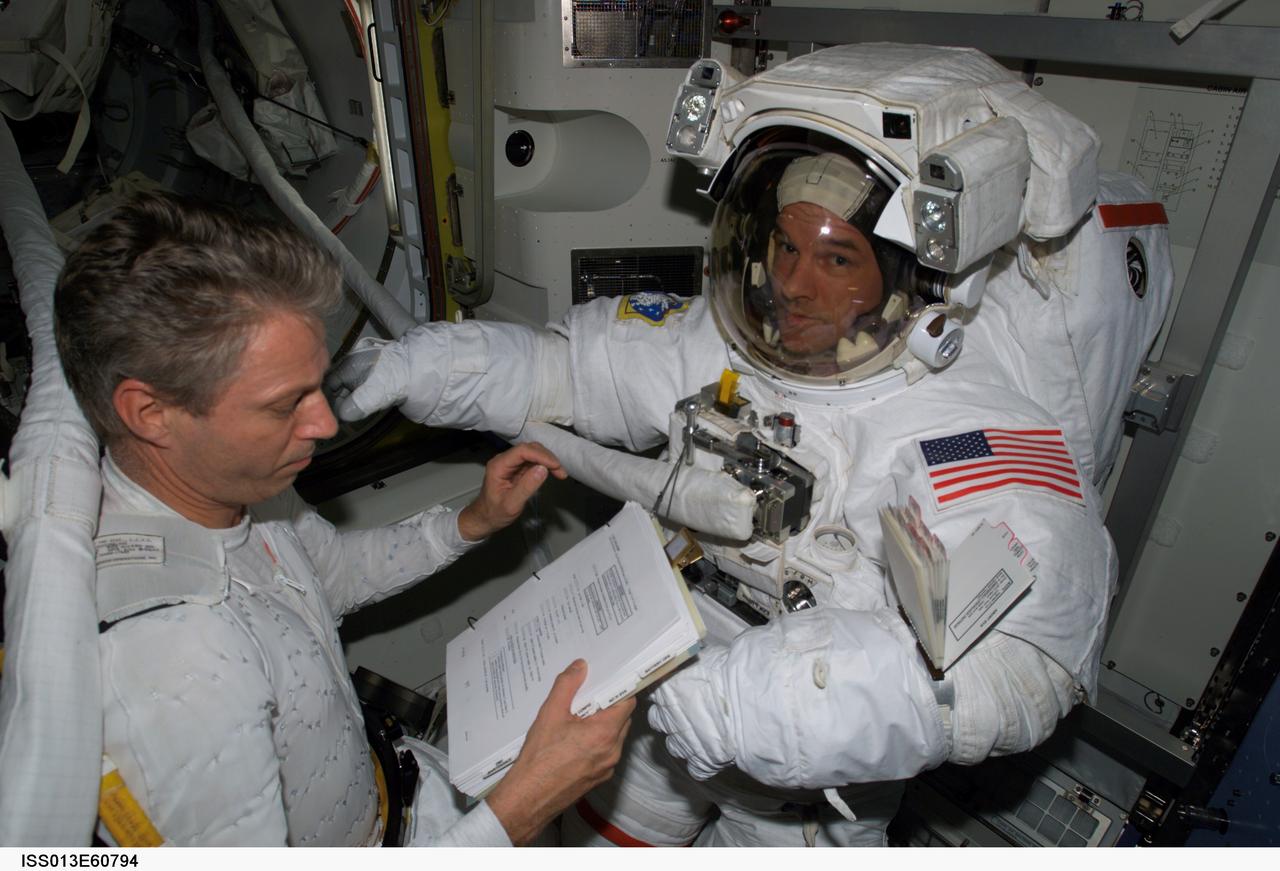
ISS013-E-60794 (28 July 2006) --- European Space Agency (ESA) astronaut Thomas Reiter (left), Expedition 13 flight engineer, looks over a procedures checklist as he assists astronaut Jeffrey N. Williams, NASA space station science officer and flight engineer, with his Extravehicular Mobility Unit (EMU) space suit in the Quest Airlock of the International Space Station. The crew is preparing for a session of extravehicular activity (EVA) scheduled for Thursday, Aug. 3, 2006. Reiter is attired in a liquid cooling and ventilation garment that complements the EMU space suit.
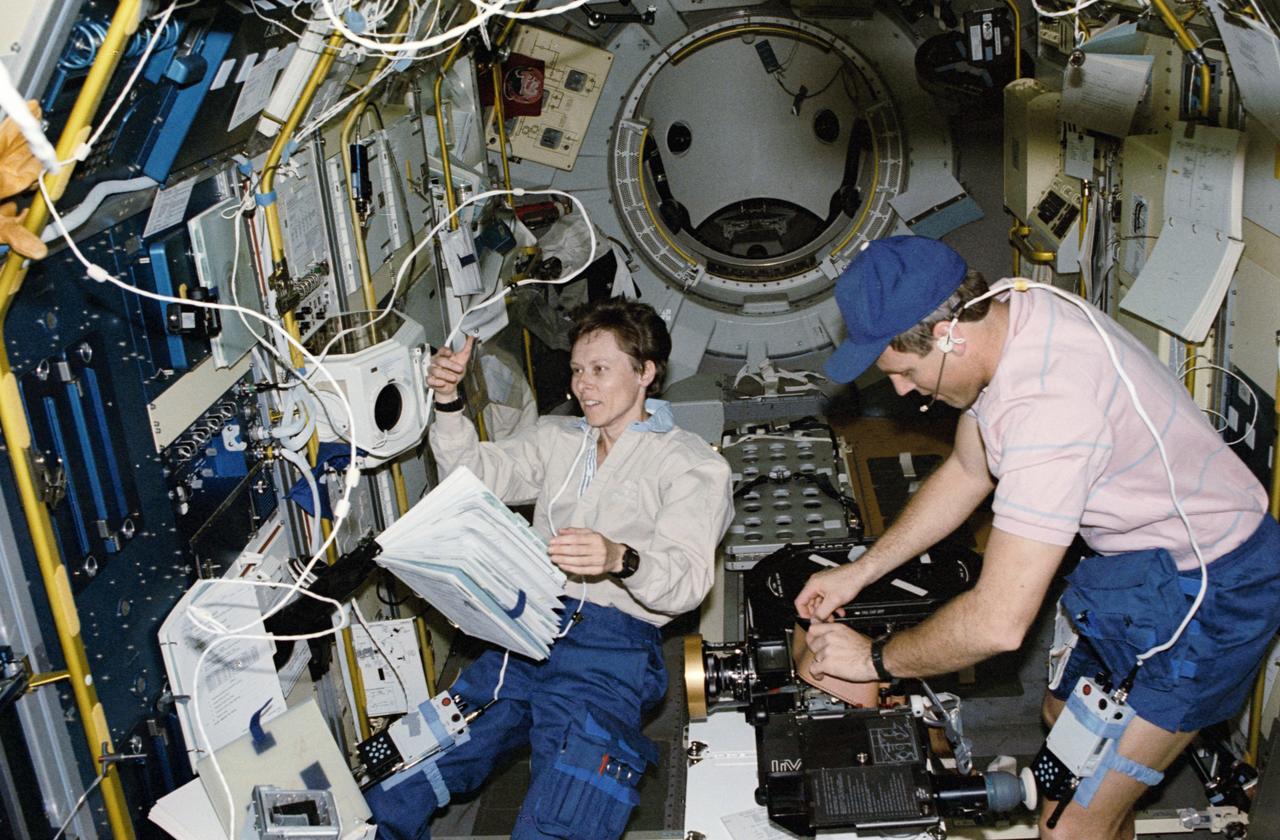
STS042-201-009 (22-30 Jan 1992) --- Canadian Roberta L. Bondar, payload specialist representing the Canadian Space Agency (CSA), works at the International Microgravity Laboratory's (IML-1) biorack while astronaut Stephen S. Oswald, pilot, changes a film magazine on the IMAX camera. The two were joined by five fellow crew members for eight-days of scientific research aboard the Space Shuttle Discovery in Earth-orbit. Most of their on-duty time was spent in this IML-1 Science Module, positioned in the cargo bay and attached via a tunnel to Discovery's airlock.
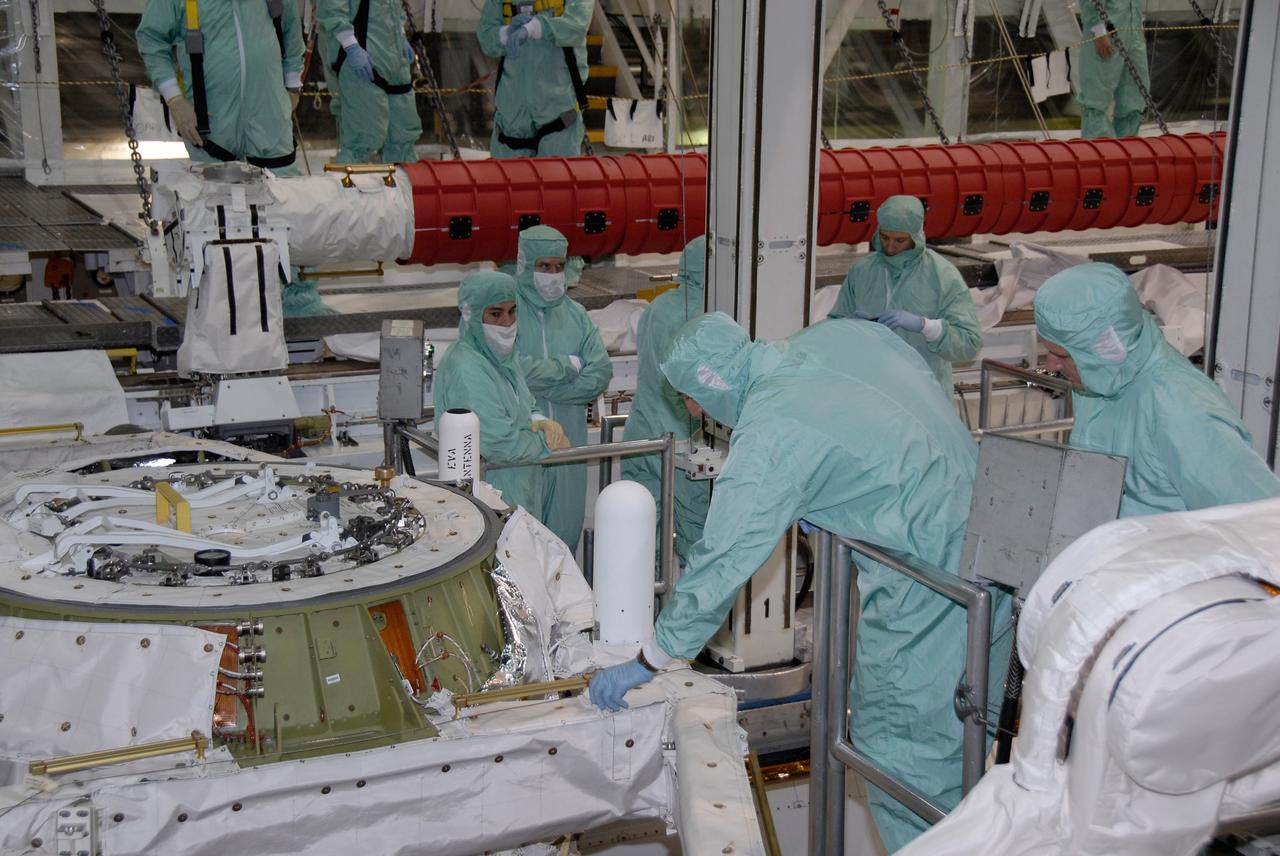
CAPE CANAVERAL, Fla. – In the Orbiter Processing Facility at NASA's Kennedy Space Center, STS-125 crew members are lowered into space shuttle Atlantis' payload bay for a close look at the hardware. Equipment familiarization is part of the crew equipment interface test, which provides hands-on experience with hardware and equipment for the mission. Crew members are Commander Scott Altman, Pilot Gregory C. Johnson, and Mission Specialists Michael Good, Megan McArthur, John Grunsfeld, Mike Massimino (reaching toward the airlock) and Andrew Feustel. Atlantis is targeted to launch Oct. 8 on the STS-125 mission to service the Hubble Space Telescope. The mission crew will perform history-making, on-orbit “surgery” on two important science instruments aboard the telescope. After capturing the telescope, two teams of spacewalking astronauts will perform the repairs during five planned spacewalks. Photo credit: NASA/Kim Shiflett
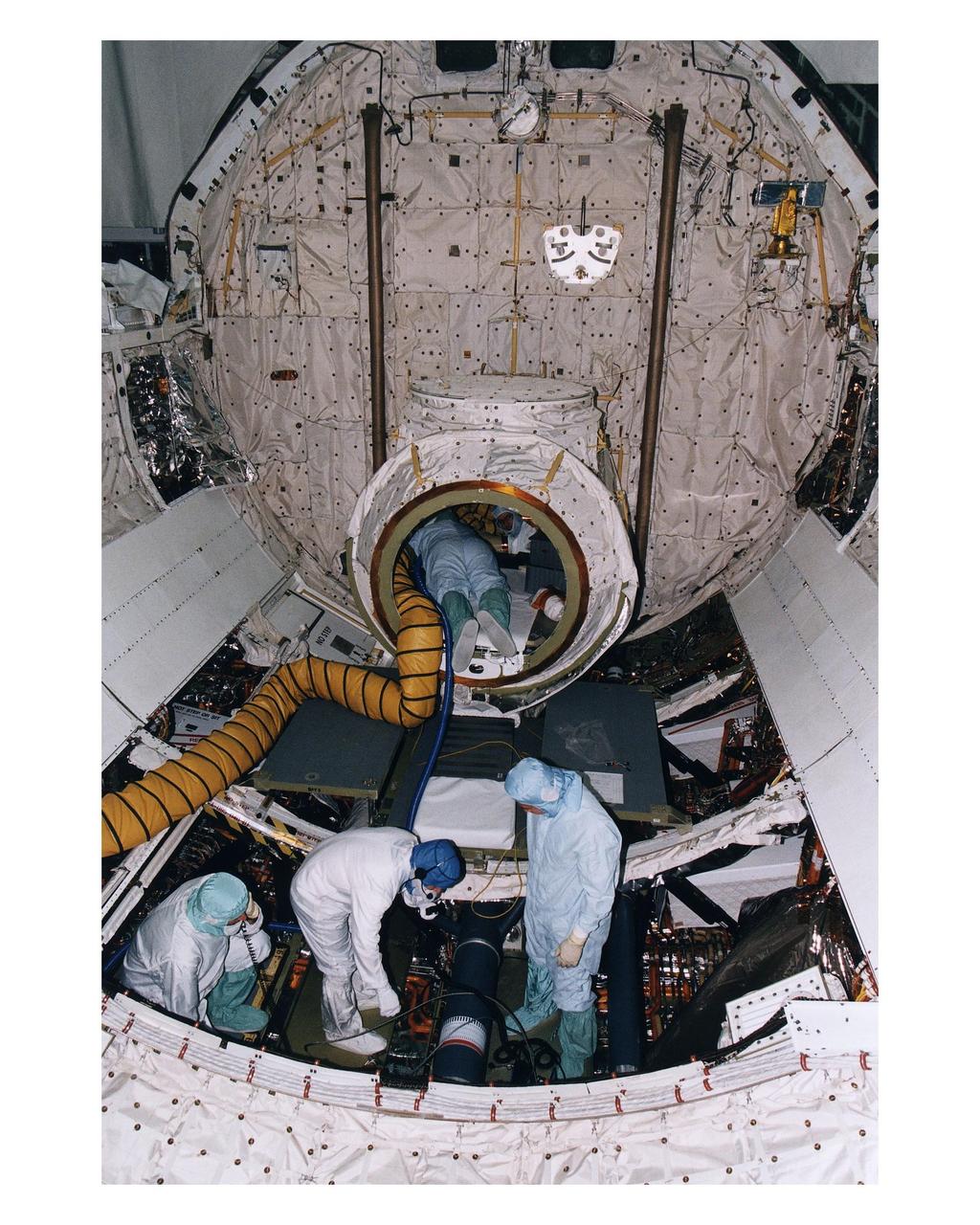
KSC payload processing employees in Orbiter Processing Facility 1 prepare the Space Shuttle Orbiter Columbia’s crew airlock and payload bay for the reinstallation of the Spacelab long transfer tunnel that leads from the airlock to the Microgravity Science Laboratory-1 (MSL-1) Spacelab module. The tunnel was taken out after the STS-83 mission to allow better access to the MSL-1 module during reservicing operations to prepare it for for the STS-94 mission. That space flight is now scheduled to lift off in early July. This was the first time that this type of payload was reserviced without removing it from the payload bay. This new procedure pioneers processing efforts for quick relaunch turnaround times for future payloads. The Spacelab module was scheduled to fly again with the full complement of STS-83 experiments after that mission was cut short due to a faulty fuel cell. During the scheduled 16-day STS-94 mission, the experiments will be used to test some of the hardware, facilities and procedures that are planned for use on the International Space Station while the flight crew conducts combustion, protein crystal growth and materials processing experiments
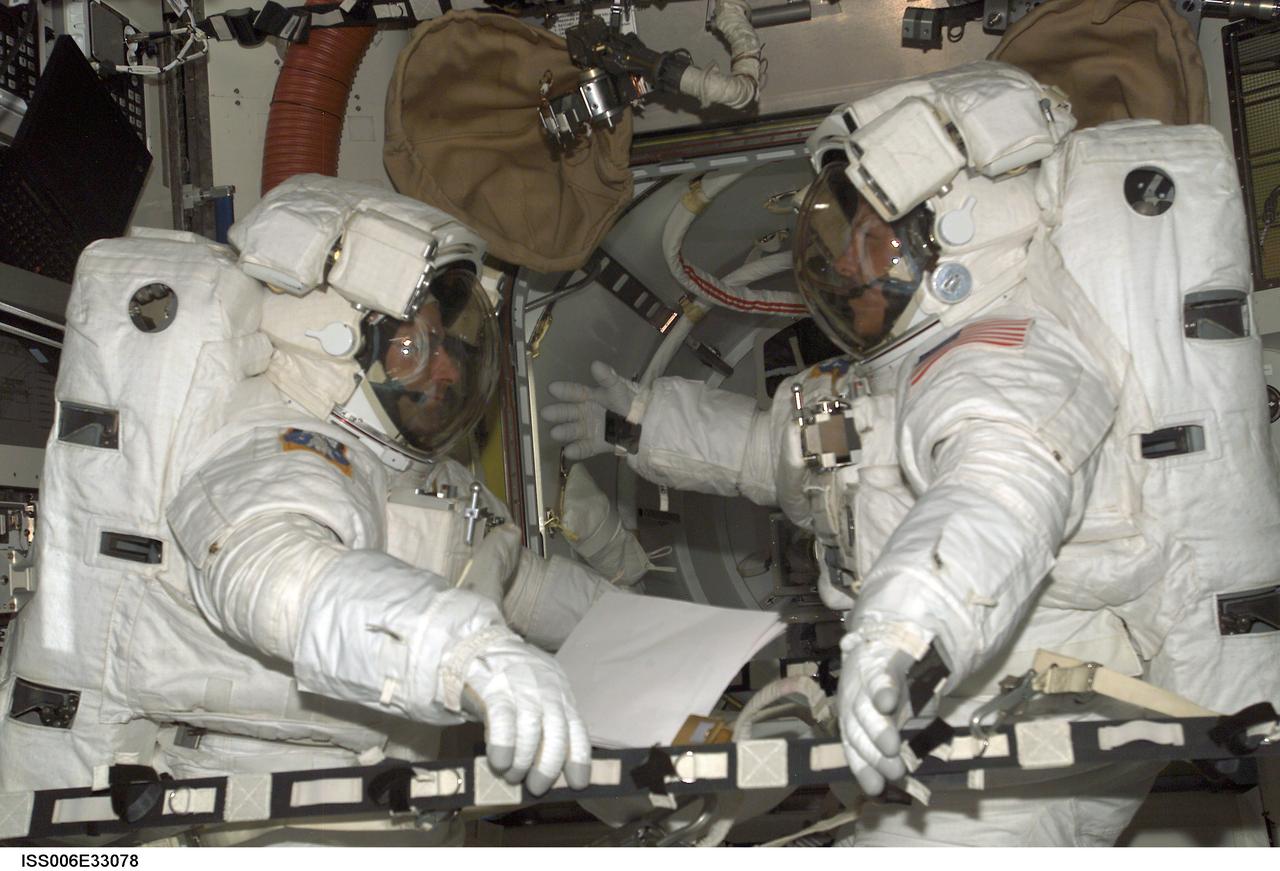
ISS006-E-33078 (24 February 2003) --- Astronauts Kenneth D. Bowersox (right) and Donald R. Pettit, Expedition Six mission commander and NASA ISS science officer, respectively, participate in a scheduled extravehicular activity (EVA) development test objective (DTO) in the Quest Airlock on the International Space Station (ISS). The test demonstrated the ability of two crewmembers to safely get into the American Extravehicular Mobility Unit (EMU) spacesuit without the assistance of a third crewmember; that ability is a prerequisite to sending smaller crews to ISS while the space shuttle fleet remains grounded during the investigation of the Columbia accident. Bowersox and Pettit helped each other into their EMU spacesuits, donned jet backpacks called Simplified Aid for EVA Rescue (SAFER), set up the necessary equipment for a pre-breathe of oxygen to purge nitrogen from their bloodstreams, and then got out of the spacesuits.
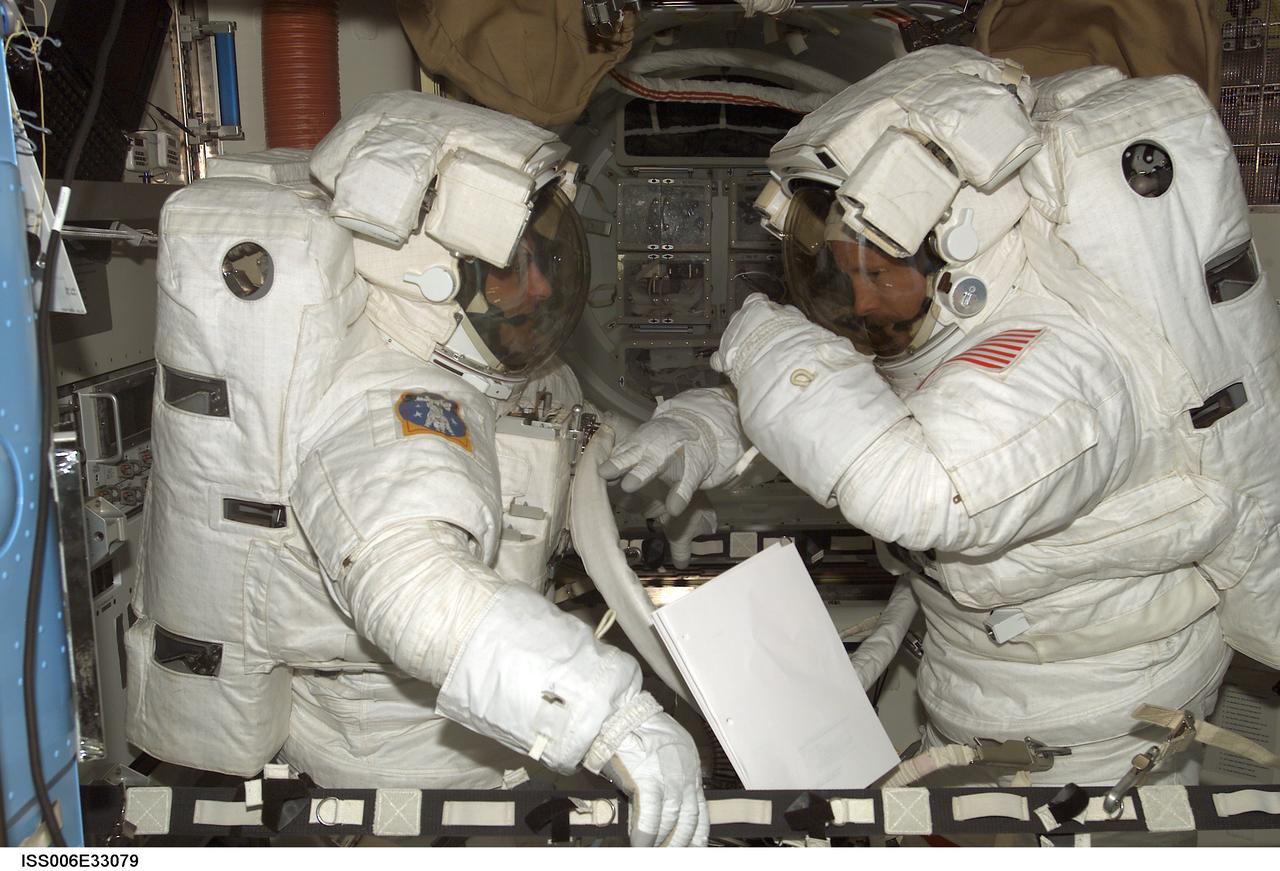
ISS006-E-33079 (24 February 2003) --- Astronauts Kenneth D. Bowersox (right) and Donald R. Pettit, Expedition Six mission commander and NASA ISS science officer, respectively, participate in a scheduled extravehicular activity (EVA) development test objective (DTO) in the Quest Airlock on the International Space Station (ISS). The test demonstrated the ability of two crewmembers to safely get into the American Extravehicular Mobility Unit (EMU) spacesuit without the assistance of a third crewmember; that ability is a prerequisite to sending smaller crews to ISS while the space shuttle fleet remains grounded during the investigation of the Columbia accident. Bowersox and Pettit helped each other into their EMU spacesuits, donned jet backpacks called Simplified Aid for EVA Rescue (SAFER), set up the necessary equipment for a pre-breathe of oxygen to purge nitrogen from their bloodstreams, and then got out of the spacesuits.
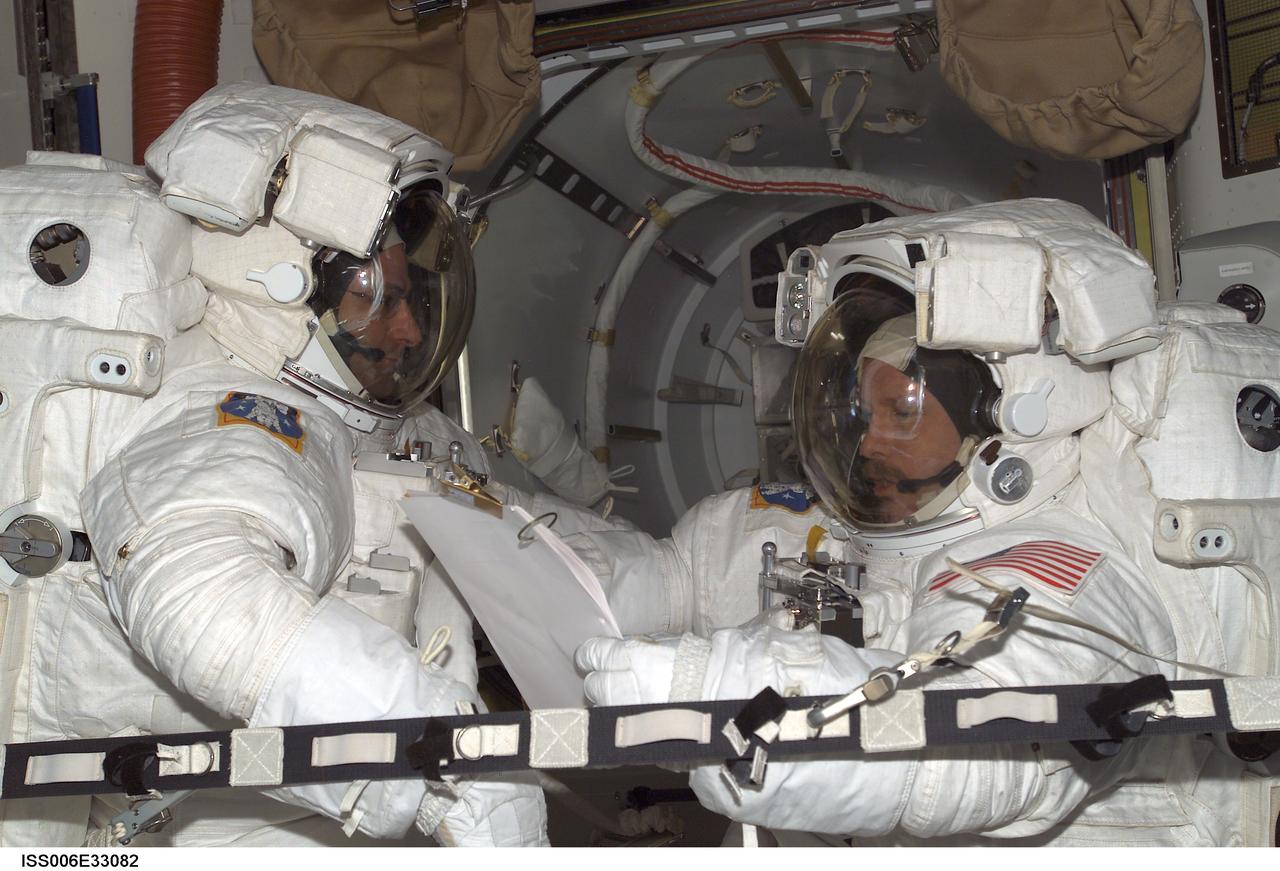
ISS006-E-33082 (24 February 2003) --- Astronauts Kenneth D. Bowersox (right) and Donald R. Pettit, Expedition Six mission commander and NASA ISS science officer, respectively, participate in a scheduled extravehicular activity (EVA) development test objective (DTO) in the Quest Airlock on the International Space Station (ISS). The test demonstrated the ability of two crewmembers to safely get into the American Extravehicular Mobility Unit (EMU) spacesuit without the assistance of a third crewmember; that ability is a prerequisite to sending smaller crews to ISS while the space shuttle fleet remains grounded during the investigation of the Columbia accident. Bowersox and Pettit helped each other into their EMU spacesuits, donned jet backpacks called Simplified Aid for EVA Rescue (SAFER), set up the necessary equipment for a pre-breathe of oxygen to purge nitrogen from their bloodstreams, and then got out of the spacesuits.
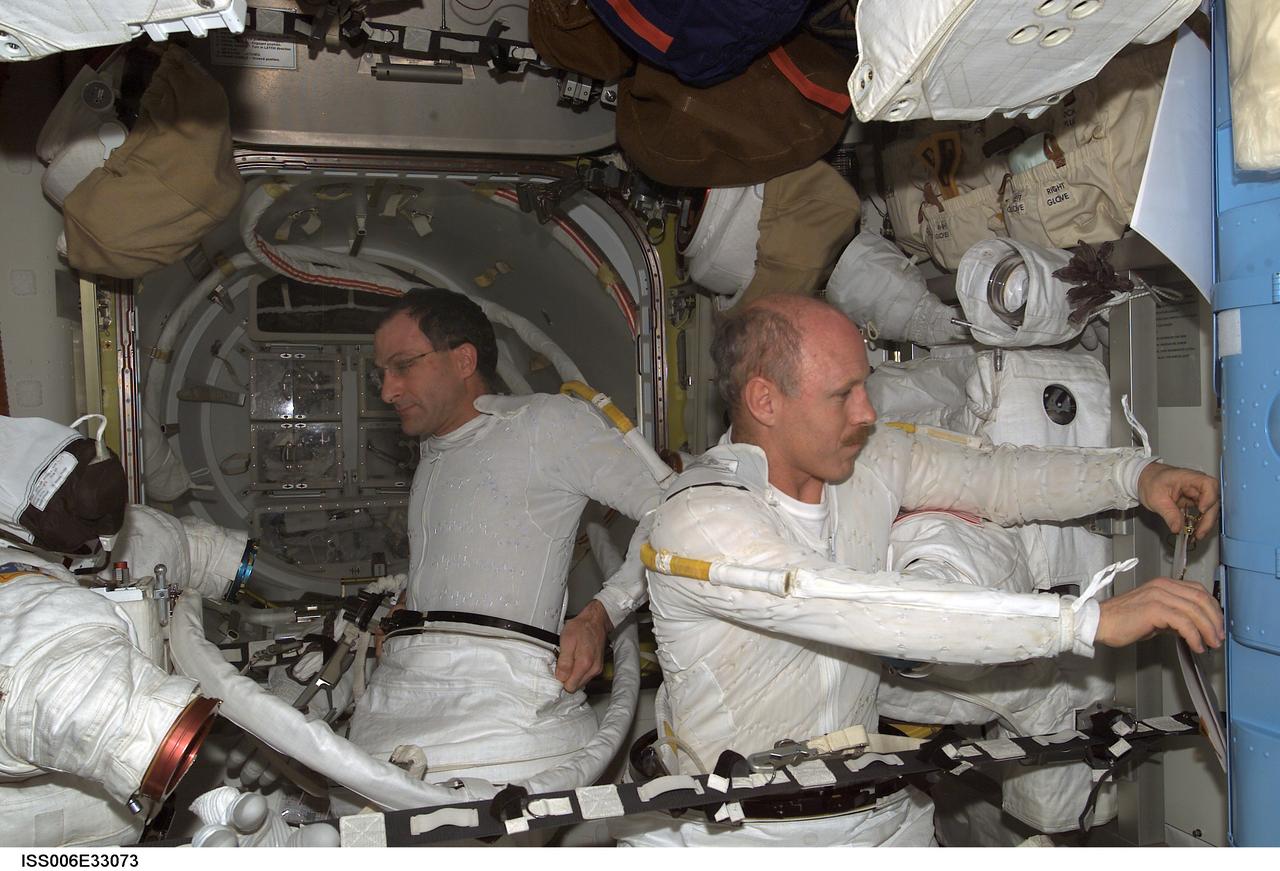
ISS006-E-33073 (24 February 2003) --- Astronauts Kenneth D. Bowersox (right) and Donald R. Pettit, Expedition Six mission commander and NASA ISS science officer, respectively, participate in a scheduled extravehicular activity (EVA) development test objective (DTO) in the Quest Airlock on the International Space Station (ISS). The test demonstrated the ability of two crewmembers to safely get into the American Extravehicular Mobility Unit (EMU) spacesuit without the assistance of a third crewmember; that ability is a prerequisite to sending smaller crews to ISS while the space shuttle fleet remains grounded during the investigation of the Columbia accident. Bowersox and Pettit helped each other into their EMU spacesuits, donned jet backpacks called Simplified Aid for EVA Rescue (SAFER), set up the necessary equipment for a pre-breathe of oxygen to purge nitrogen from their bloodstreams, and then got out of the spacesuits.
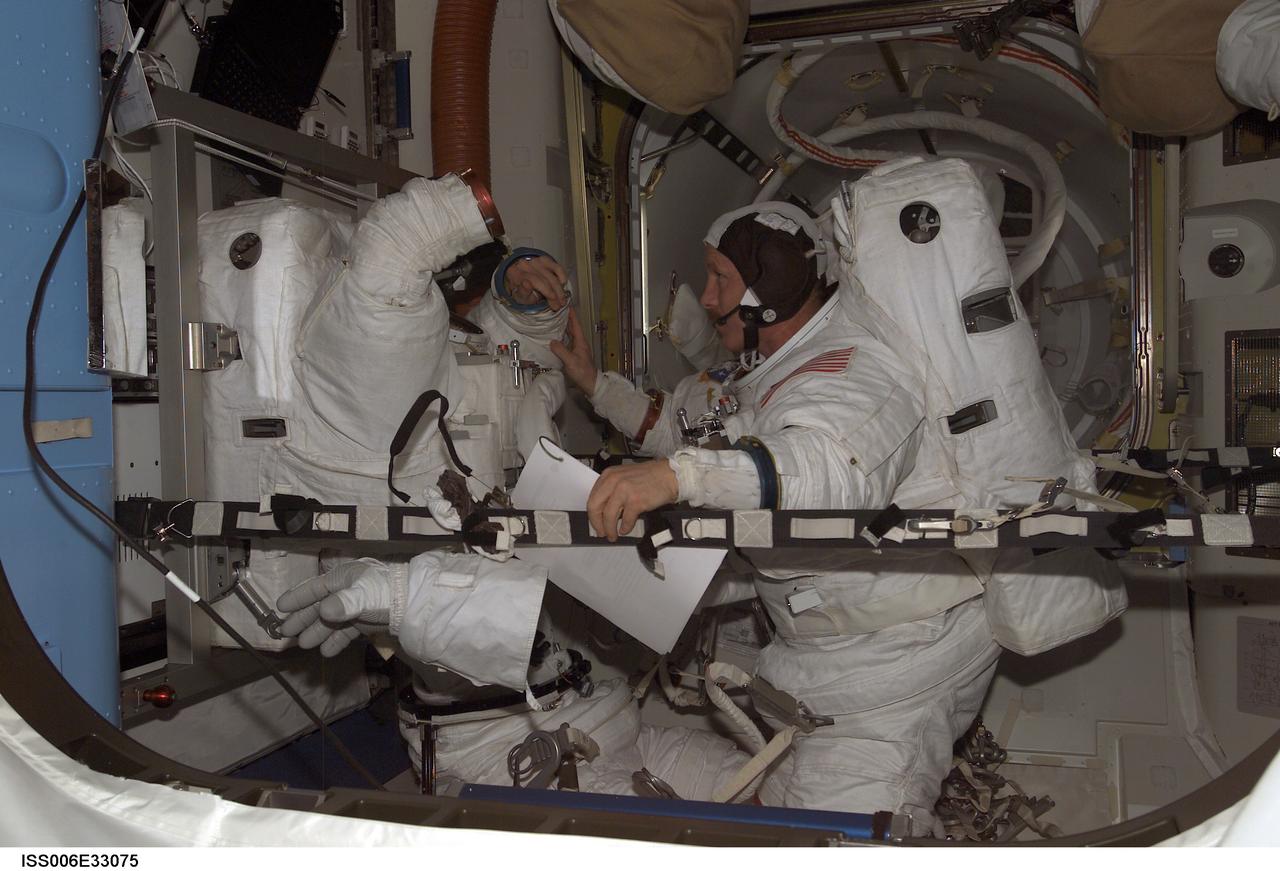
ISS006-E-33075 (24 February 2003) --- Astronauts Kenneth D. Bowersox (right) and Donald R. Pettit, Expedition Six mission commander and NASA ISS science officer, respectively, participate in a scheduled extravehicular activity (EVA) development test objective (DTO) in the Quest Airlock on the International Space Station (ISS). The test demonstrated the ability of two crewmembers to safely get into the American Extravehicular Mobility Unit (EMU) spacesuit without the assistance of a third crewmember; that ability is a prerequisite to sending smaller crews to ISS while the space shuttle fleet remains grounded during the investigation of the Columbia accident. Bowersox and Pettit helped each other into their EMU spacesuits, donned jet backpacks called Simplified Aid for EVA Rescue (SAFER), set up the necessary equipment for a pre-breathe of oxygen to purge nitrogen from their bloodstreams, and then got out of the spacesuits.
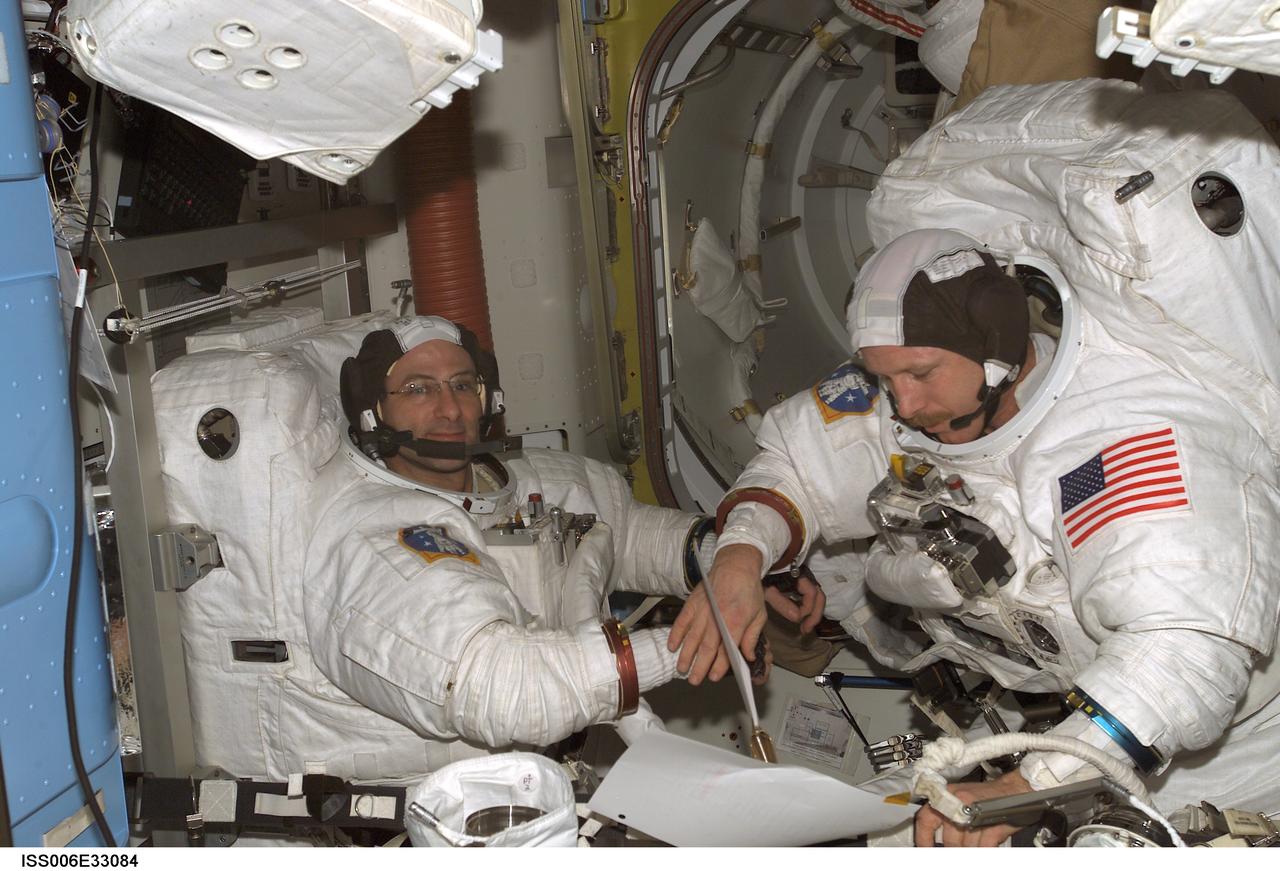
ISS006-E-33084 (24 February 2003) --- Astronauts Kenneth D. Bowersox (right) and Donald R. Pettit, Expedition Six mission commander and NASA ISS science officer, respectively, participate in a scheduled extravehicular activity (EVA) development test objective (DTO) in the Quest Airlock on the International Space Station (ISS). The test demonstrated the ability of two crewmembers to safely get into the American Extravehicular Mobility Unit (EMU) spacesuit without the assistance of a third crewmember; that ability is a prerequisite to sending smaller crews to ISS while the space shuttle fleet remains grounded during the investigation of the Columbia accident. Bowersox and Pettit helped each other into their EMU spacesuits, donned jet backpacks called Simplified Aid for EVA Rescue (SAFER), set up the necessary equipment for a pre-breathe of oxygen to purge nitrogen from their bloodstreams, and then got out of the spacesuits.
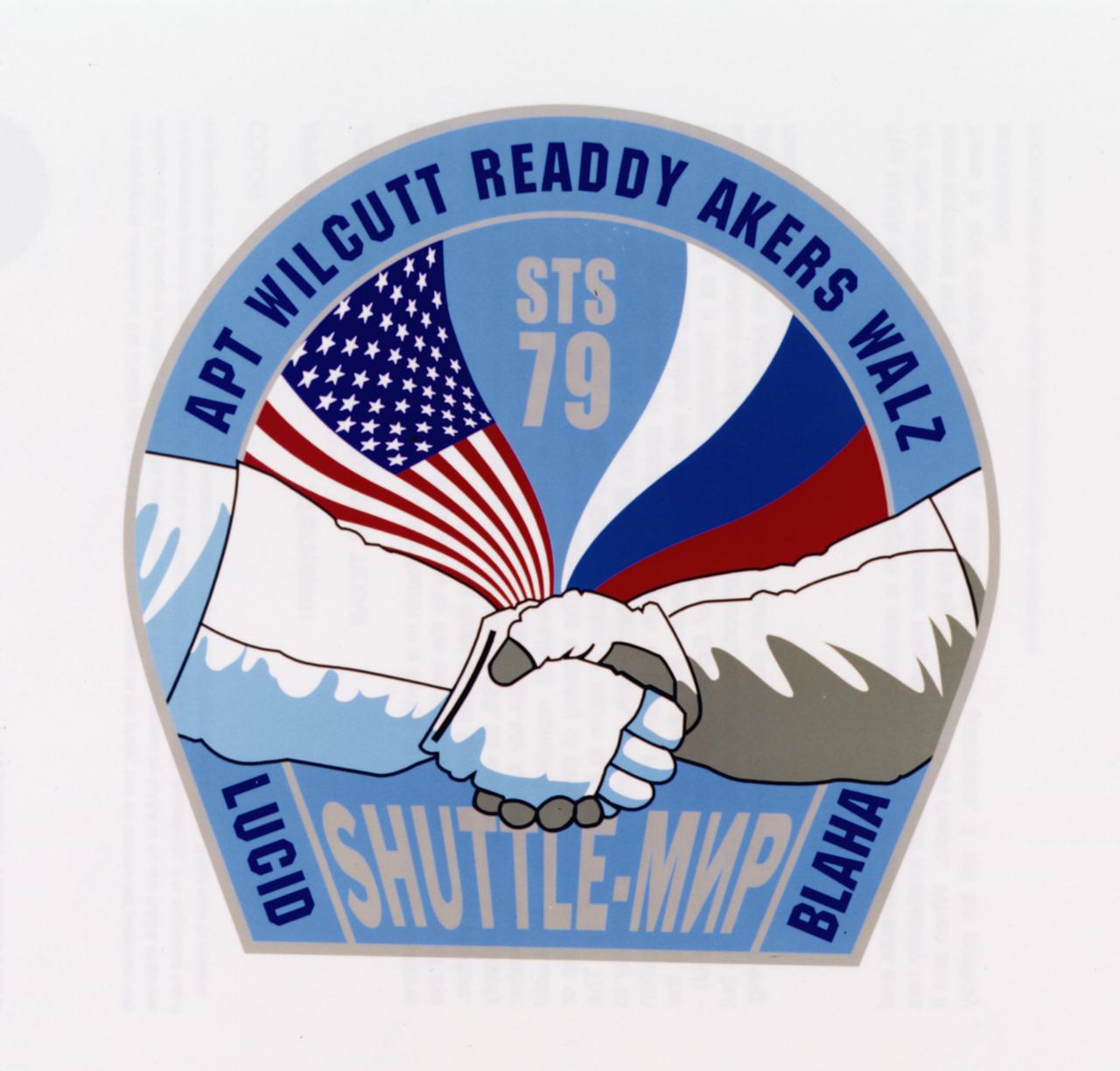
STS-79 was the fourth in a series of NASA docking missions to the Russian Mir Space Station, leading up to the construction and operation of the International Space Station (ISS). As the first flight of the Spacehab Double Module, STS-79 encompassed research, test and evaluation of ISS, as well as logistics resupply for the Mir Space Station. STS-79 was also the first NASA-Mir American crew member exchange mission, with John E. Blaha (NASA-Mir-3) replacing Shannon W. Lucid (NASA-Mir-2) aboard the Mir Space Station. The lettering of their names either up or down denotes transport up to the Mir Space Station or return to Earth on STS-79. The patch is in the shape of the Space Shuttle’s airlock hatch, symbolizing the gateway to international cooperation in space. The patch illustrates the historic cooperation between the United States and Russia in space. With the flags of Russia and the United States as a backdrop, the handshake of Extravehicular Mobility Unit (EMU) which are suited crew members symbolizes mission teamwork, not only of the crew members but also the teamwork between both countries space personnel in science, engineering, medicine and logistics.
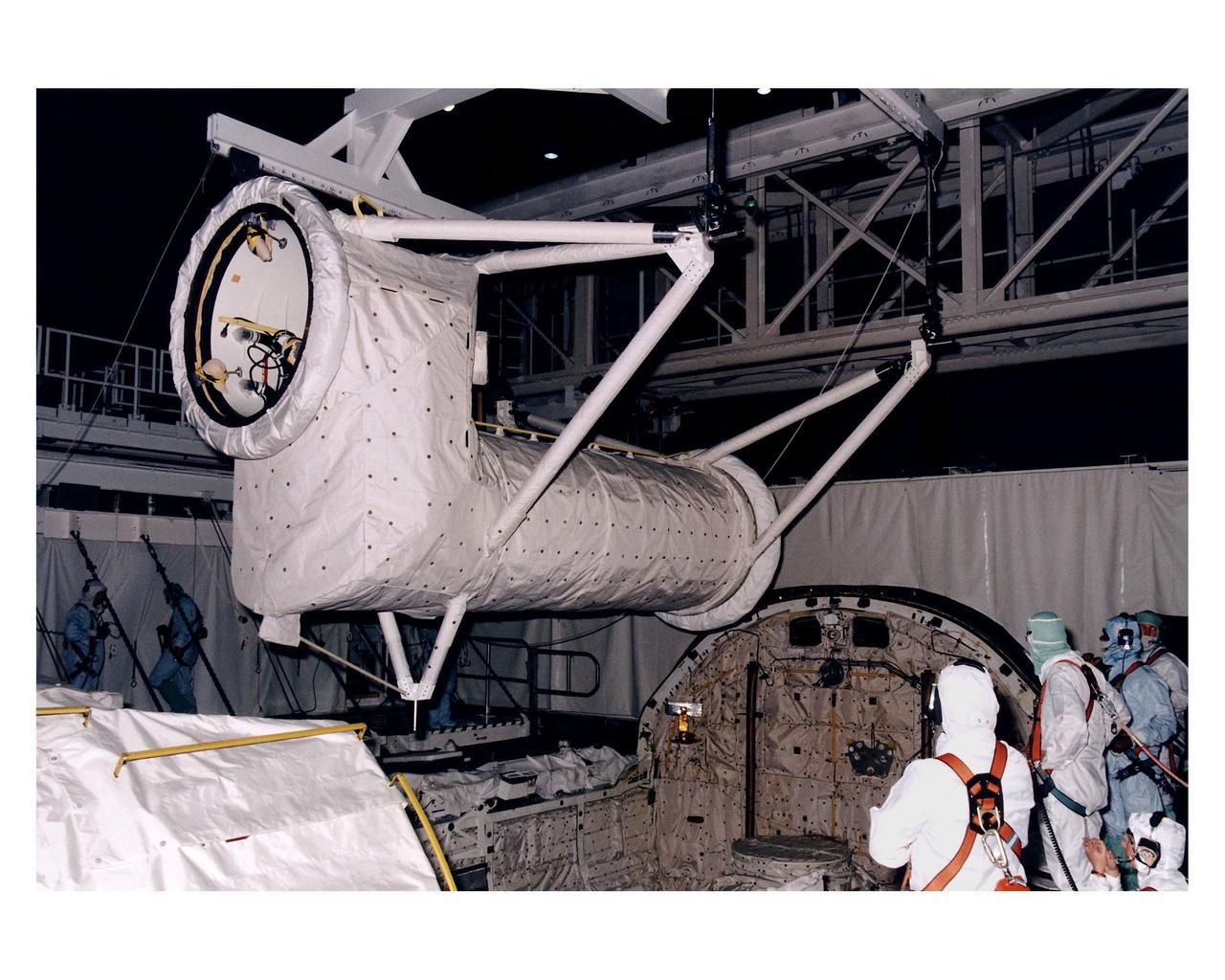
The Spacelab long transfer tunnel that leads from the Space Shuttle Orbiter Columbia’s crew airlock to the Microgravity Science Laboratory-1 (MSL-1) Spacelab module in the spaceplane’s payload bay is removed in Orbiter Processing Facility 1. The tunnel was taken out to allow better access to the MSL-1 module during reservicing operations to prepare it for its reflight as MSL-1R. That mission is now scheduled to lift off July 1. This was the first time that this type of payload was reserviced without removing it from the payload bay. This new procedure pioneers processing efforts for quick relaunch turnaround times for future payloads. The Spacelab module was scheduled to fly again with the full complement of STS-83 experiments after that mission was cut short due to a faulty fuel cell. During the scheduled 16-day reflight, the experiments will be used to test some of the hardware, facilities and procedures that are planned for use on the International Space Station while the flight crew conducts combustion, protein crystal growth and materials processing experiments
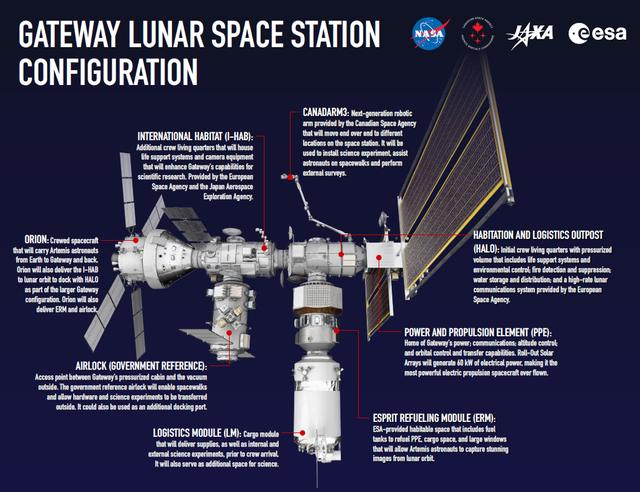
This infographic shows each element of Gateway, humanity's first space station in lunar orbit as a vital component of the Artemis missions to return to the Moon for scientific discovery and chart the path for the first human missions to Mars.
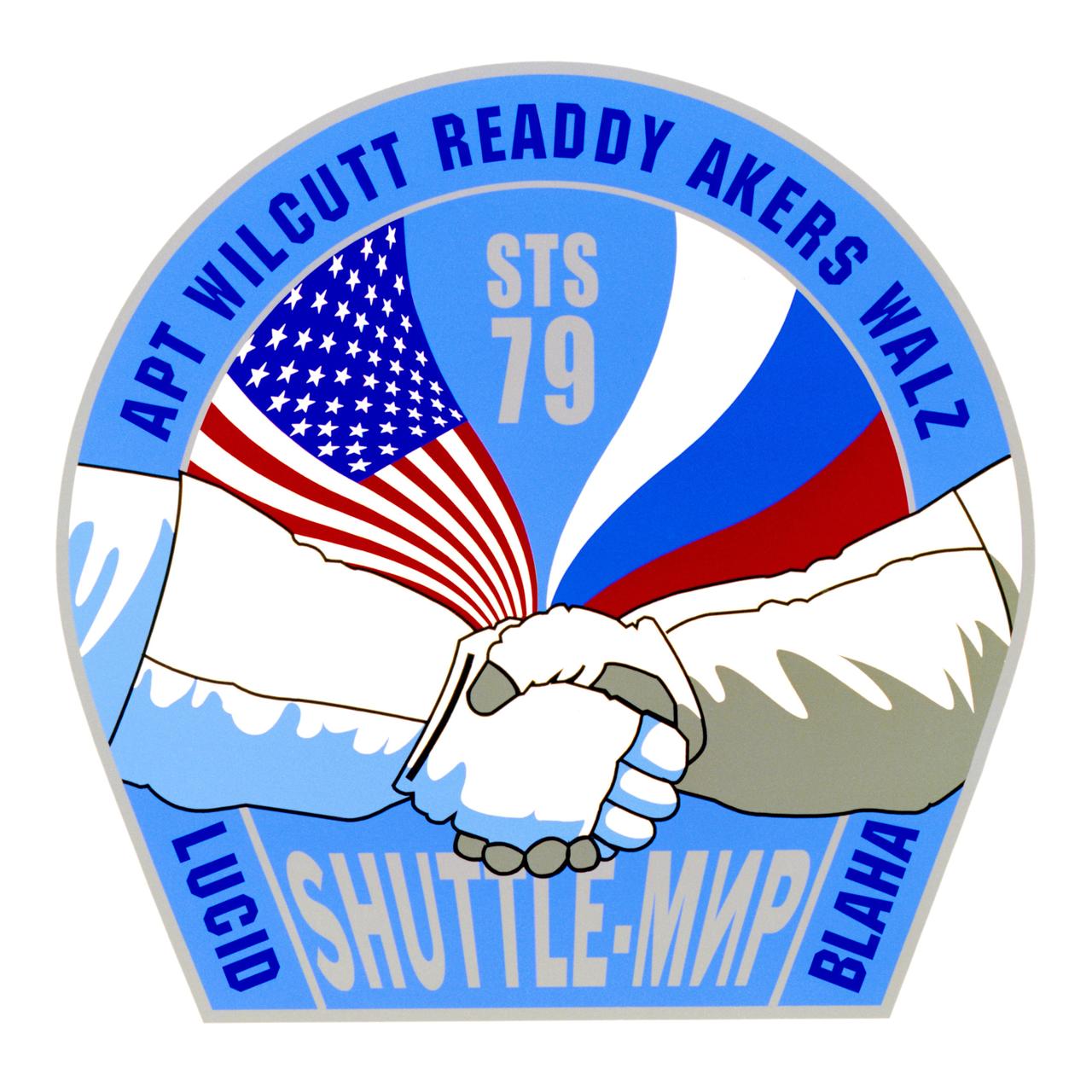
STS79-S-001 (April 1996) --- STS-79 is the fourth in a series of NASA docking missions to the Russian Mir Space Station, leading up to the construction and operation of the International Space Station (ISS). As the first flight of the Spacehab Double Module, STS-79 encompasses research, test and evaluation of ISS, as well as logistics resupply for the Mir Space Station. STS-79 is also the first NASA-Mir American crew member exchange mission, with John E. Blaha (NASA-Mir-3) replacing Shannon W. Lucid (NASA-Mir-2) aboard the Mir Space Station. The lettering of their names either up or down denotes transport up to the Mir Space Station or return to Earth on STS-79. The patch is in the shape of the space shuttle?s airlock hatch, symbolizing the gateway to international cooperation in space. The patch illustrates the historic cooperation between the United States and Russia in space. With the flags of Russia and the United States as a backdrop, the handshake of Extravehicular Mobility Unit (EMU) - suited crew members symbolizes mission teamwork, not only of the crew members but also the teamwork between both countries? space personnel in science, engineering, medicine and logistics. The NASA insignia design for space shuttle flights is reserved for use by the astronauts and for other official use as the NASA Administrator may authorize. Public availability has been approved only in the forms of illustrations by the various news media. When and if there is any change in this policy, which is not anticipated, the change will be publicly announced. Photo credit: NASA
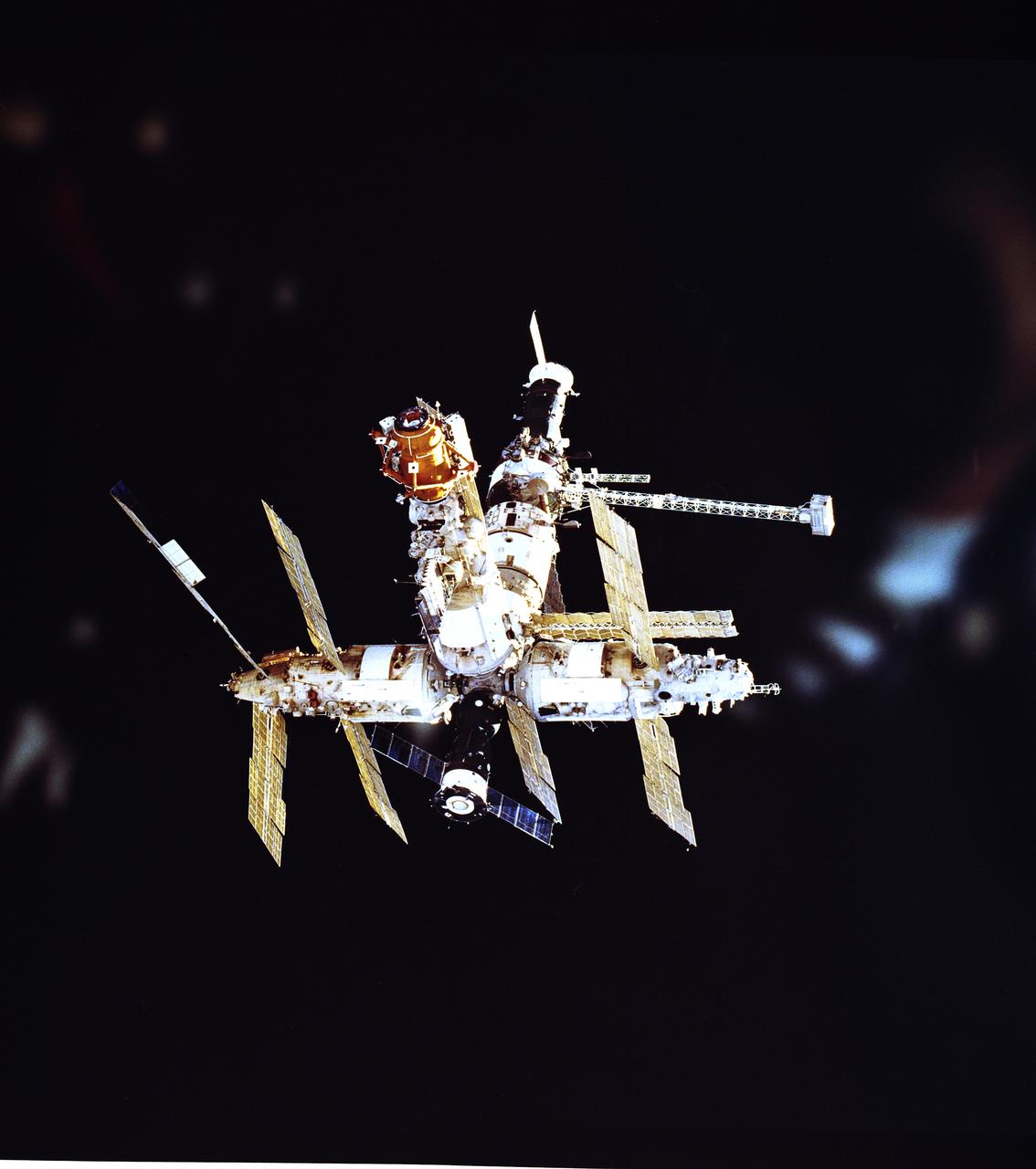
This is a view of the Russian Mir Space Station photographed by a crewmember of the second Shuttle/Mir docking mission, STS-74. The image shows: top - Progress supply vehicle, Kvant-1 module, and the Core module; middle left - Spektr module; middle center - Kristall module and Docking module; middle right - Kvant-2 module; and bottom - Soyuz. The Progress was an unmarned, automated version of the Soyuz crew transfer vehicle, designed to resupply the Mir. The Kvant-1 provided research in the physics of galaxies, quasars, and neutron stars by measuring electromagnetic spectra and x-ray emissions. The Core module served as the heart of the space station and contained the primary living and working areas, life support, and power, as well as the main computer, communications, and control equipment. The Spektr module provided Earth observation. It also supported research into biotechnology, life sciences, materials science, and space technologies. American astronauts used the Spektr as their living quarters. A main purpose of the Kristall module was to develop biological and materials production technologies in the space environment. The Docking module made it possible for the Space Shuttle to dock easily with the Mir. Kvant-2 was a scientific and airlock module, providing biological research, Earth observations, and EVA (extravehicular activity) capability. The Soyuz typically ferried three crewmembers to and from the Mir. The journey of the 15-year-old Russian Mir Space Station ended March 23, 2001, as the Mir re-entered the Earth's atmosphere and fell into the south Pacific Ocean.
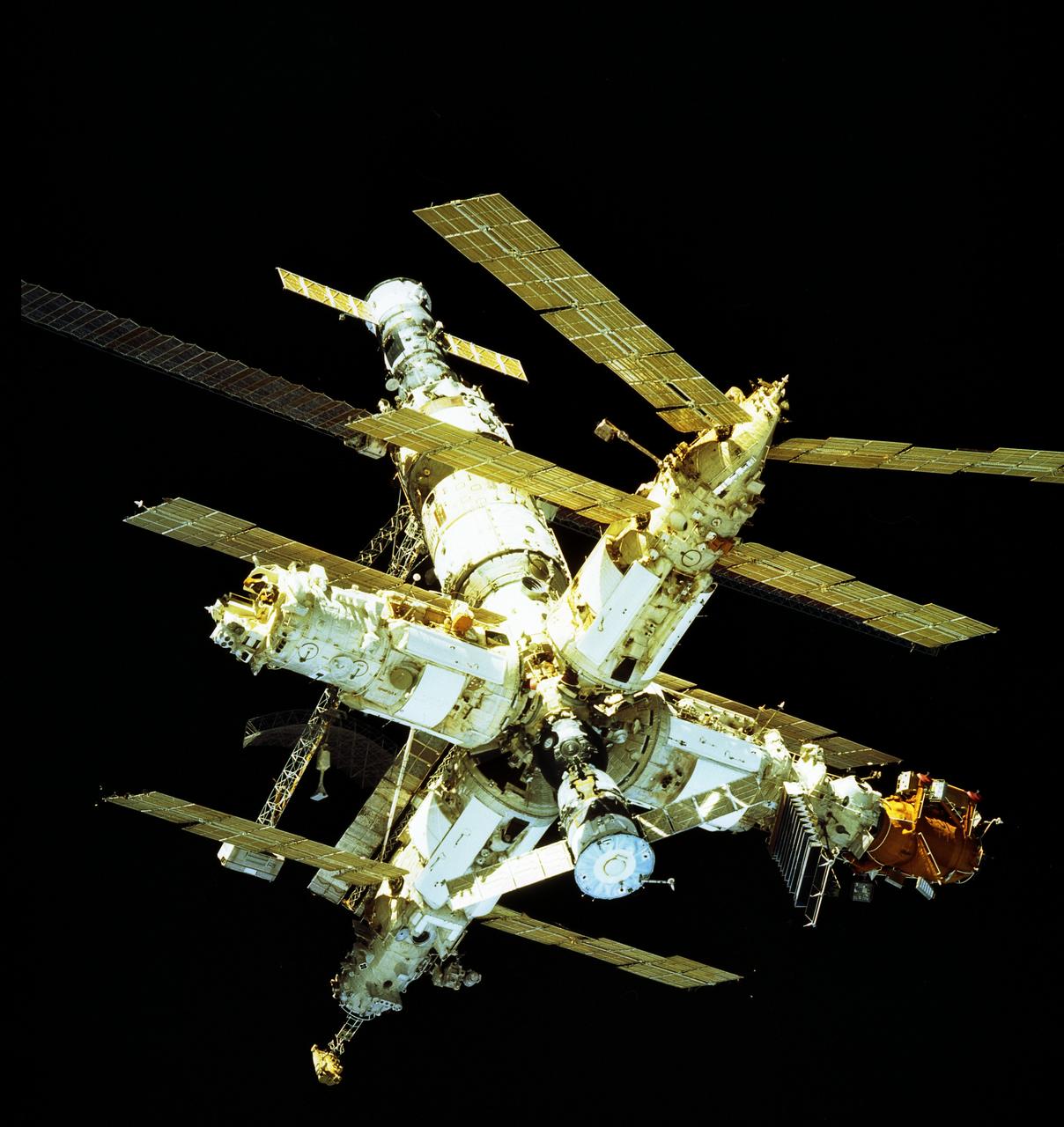
This is a view of the Russian Mir Space Station photographed by a crewmember of the fifth Shuttle/Mir docking mission, STS-81. The image shows: upper center - Progress supply vehicle, Kvant-1 module, and Core module; center left - Priroda module; center right - Spektr module; bottom left - Kvant-2 module; bottom center - Soyuz; and bottom right - Kristall module and Docking module. The Progress was an unmarned, automated version of the Soyuz crew transfer vehicle, designed to resupply the Mir. The Kvant-1 provided research in the physics of galaxies, quasars, and neutron stars, by measuring electromagnetic spectra and x-ray emissions. The Core module served as the heart of the space station and contained the primary living and working areas, life support, and power, as well as the main computer, communications, and control equipment. Priroda's main purpose was Earth remote sensing. The Spektr module provided Earth observation. It also supported research into biotechnology, life sciences, materials science, and space technologies. American astronauts used the Spektr as their living quarters. Kvant-2 was a scientific and airlock module, providing biological research, Earth observations, and EVA (extravehicular activity) capability. The Soyuz typically ferried three crewmembers to and from the Mir. A main purpose of the Kristall module was to develop biological and materials production technologies in the space environment. The Docking module made it possible for the Space Shuttle to dock easily with the Mir. The journey of the 15-year-old Russian Mir Space Station ended March 23, 2001, as the Mir re-entered the Earth's atmosphere and fell into the south Pacific Ocean.
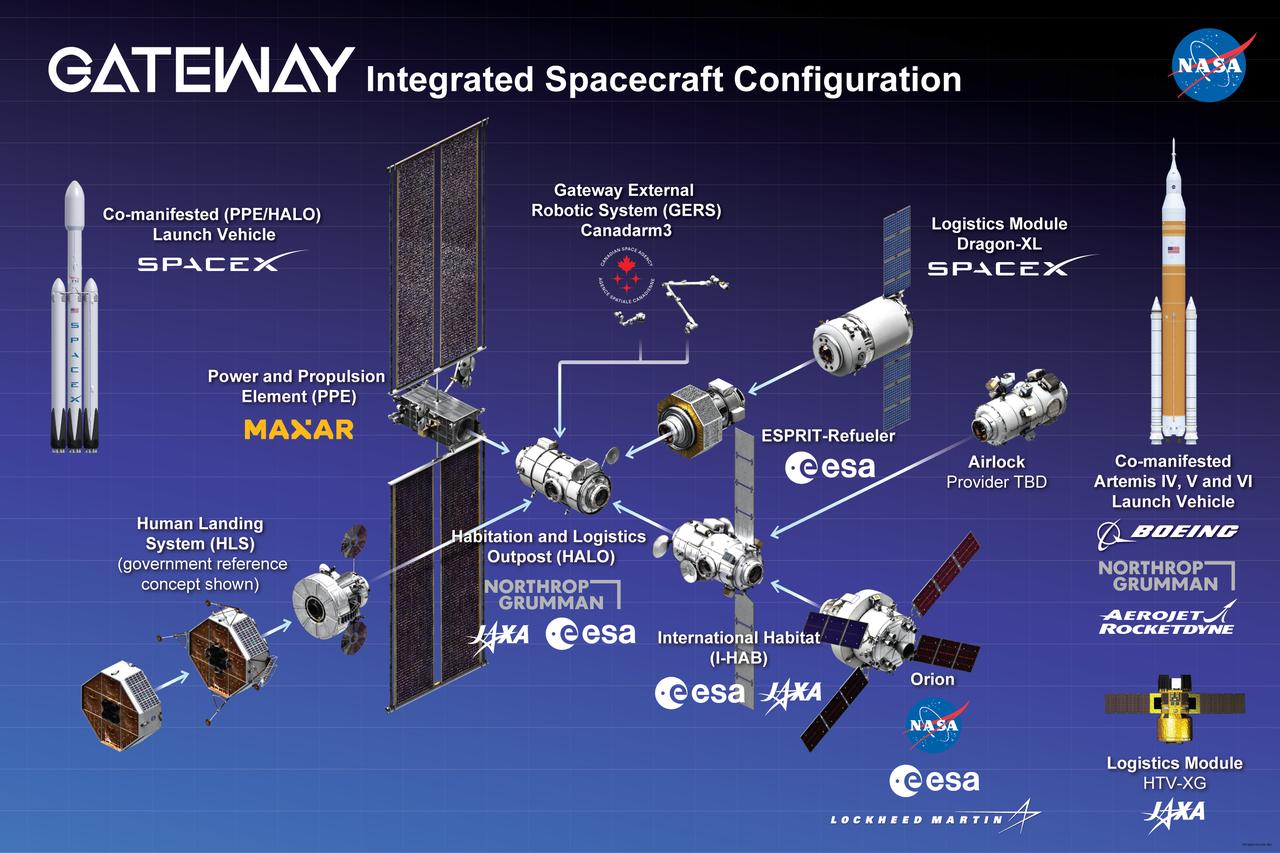
And expanded view of the Gateway space station showing each of its elements, international partner contributions, and visiting spacecraft including Orion and the Human Landing System, with prime contractors.