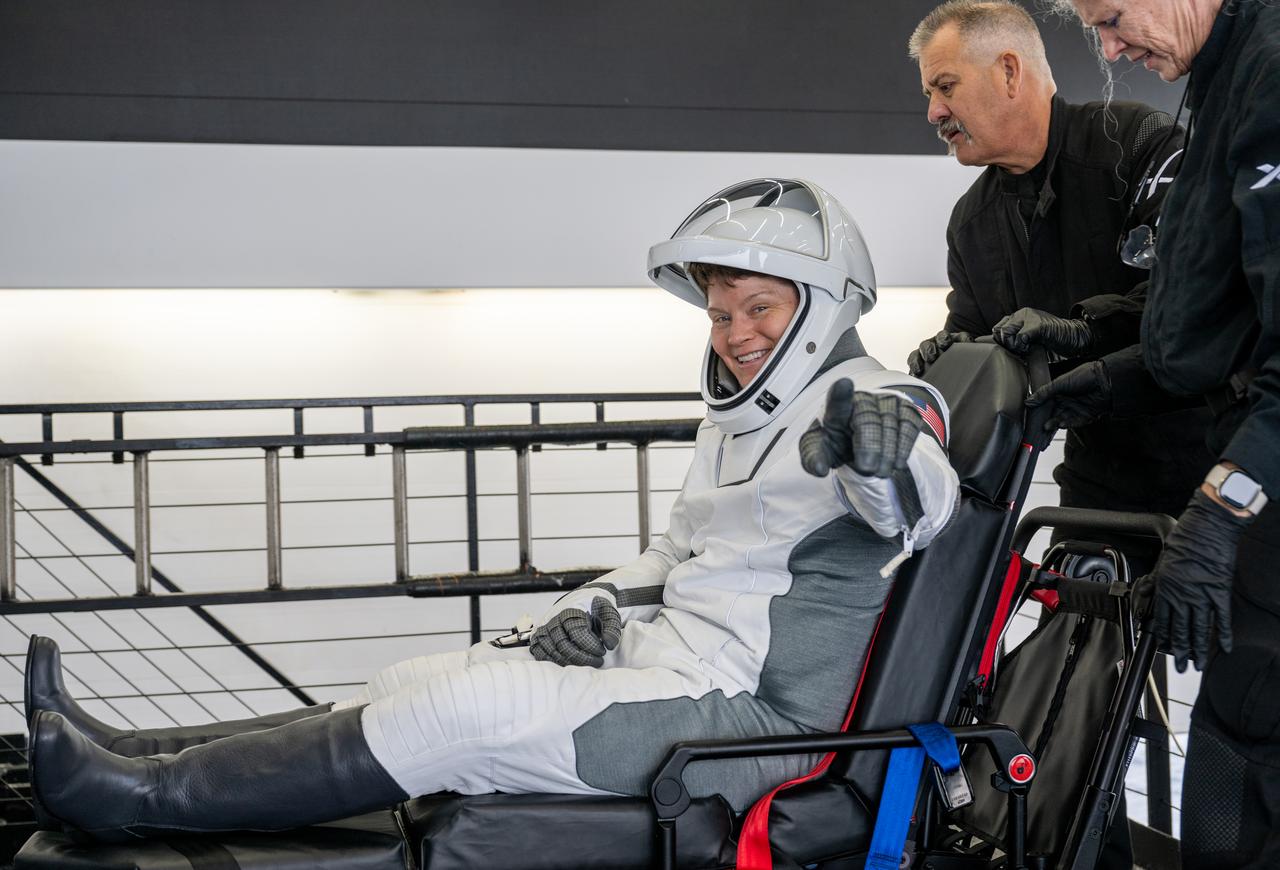
NASA astronaut Anne McClain is helped out of the SpaceX Dragon Endurance spacecraft onboard the SpaceX recovery ship SHANNON after she, NASA astronaut Nichole Ayers, JAXA (Japan Aerospace Exploration Agency) astronaut Takuya Onishi, and Roscosmos cosmonaut Kirill Peskov landed in the Pacific Ocean off the coast of San Diego, Calif., Saturday, Aug. 9, 2025. McClain, Ayers, Onishi, and Peskov are returning after 147 days in space as part of Expedition 73 aboard the International Space Station. Photo Credit: (NASA/Keegan Barber)
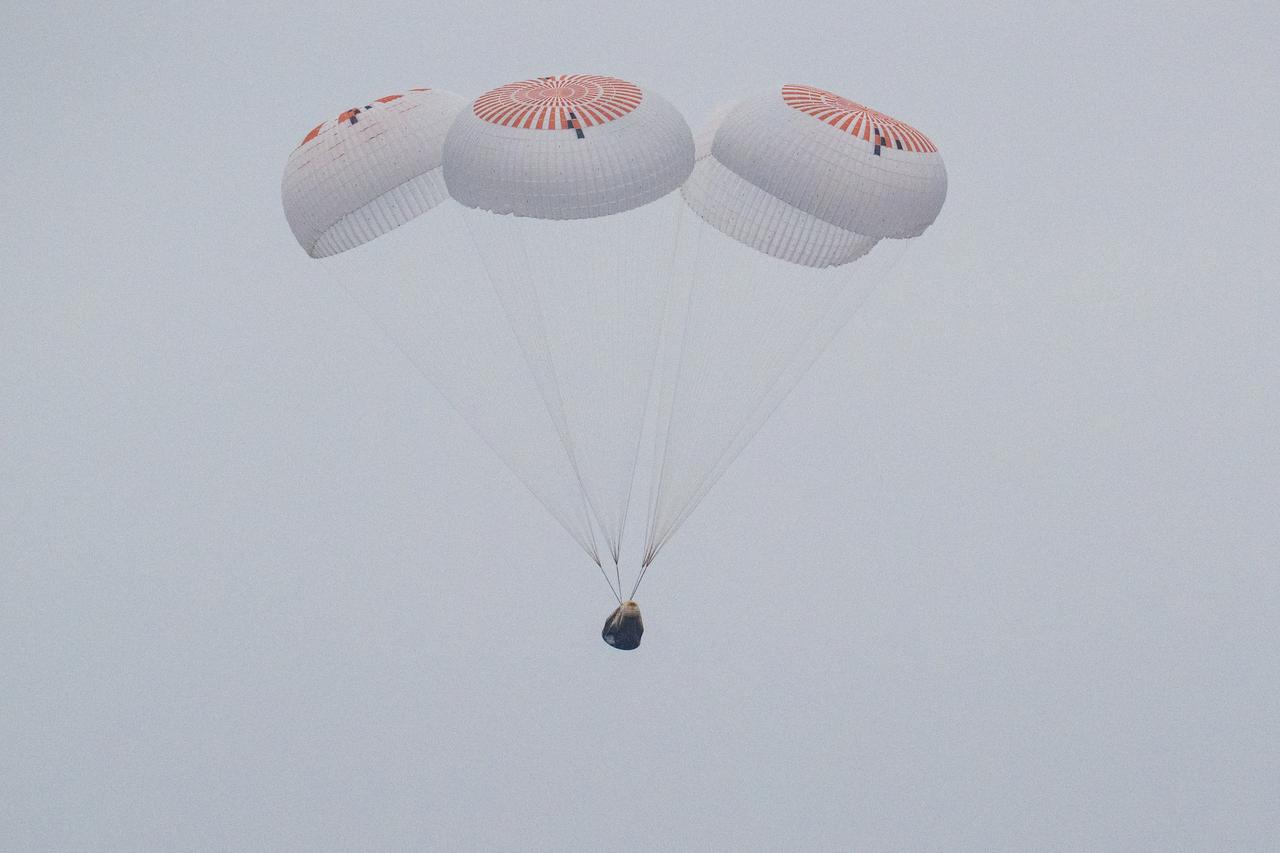
The SpaceX Crew Dragon Endurance spacecraft is seen as it lands with NASA astronauts Anne McClain and Nichole Ayers, JAXA (Japan Aerospace Exploration Agency) astronaut Takuya Onishi, and Roscosmos cosmonaut Kirill Peskov aboard in the Pacific Ocean off the coast of San Diego, Calif., Saturday, Aug. 9, 2025. McClain, Ayers, Onishi, and Peskov are returning after 147 days in space as part of Expedition 73 aboard the International Space Station. Photo Credit: (NASA/Keegan Barber)
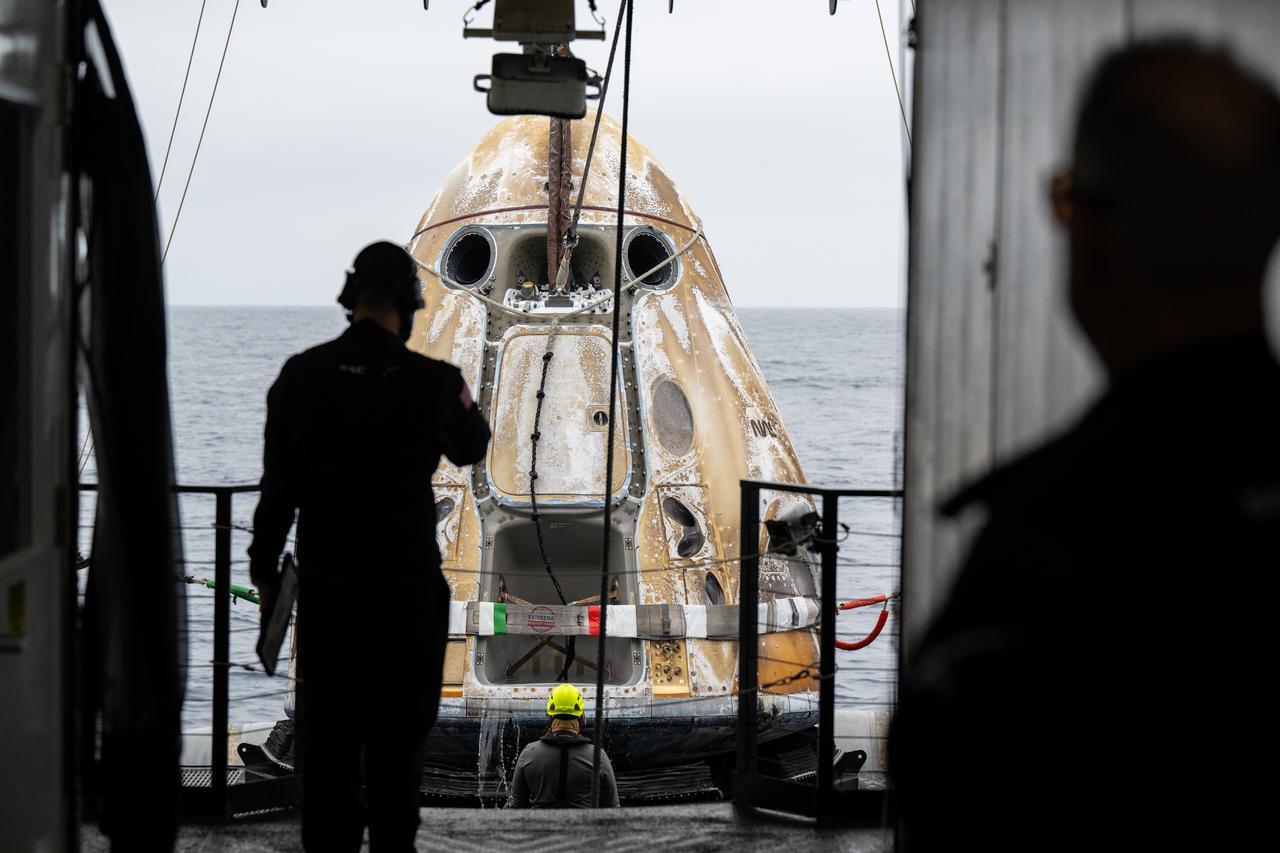
Support teams raise the SpaceX Dragon Endurance spacecraft aboard the recovery ship SHANNON shortly after it landed with NASA astronauts Anne McClain and Nichole Ayers, JAXA (Japan Aerospace Exploration Agency) astronaut Takuya Onishi, and Roscosmos cosmonaut Kirill Peskov aboard in thePacific Ocean off the coast of San Diego, Calif., Saturday, Aug. 9, 2025. McClain, Ayers, Onishi, and Peskov are returning after 147 days in space as part of Expedition 73 aboard the International Space Station. Photo Credit: (NASA/Keegan Barber)
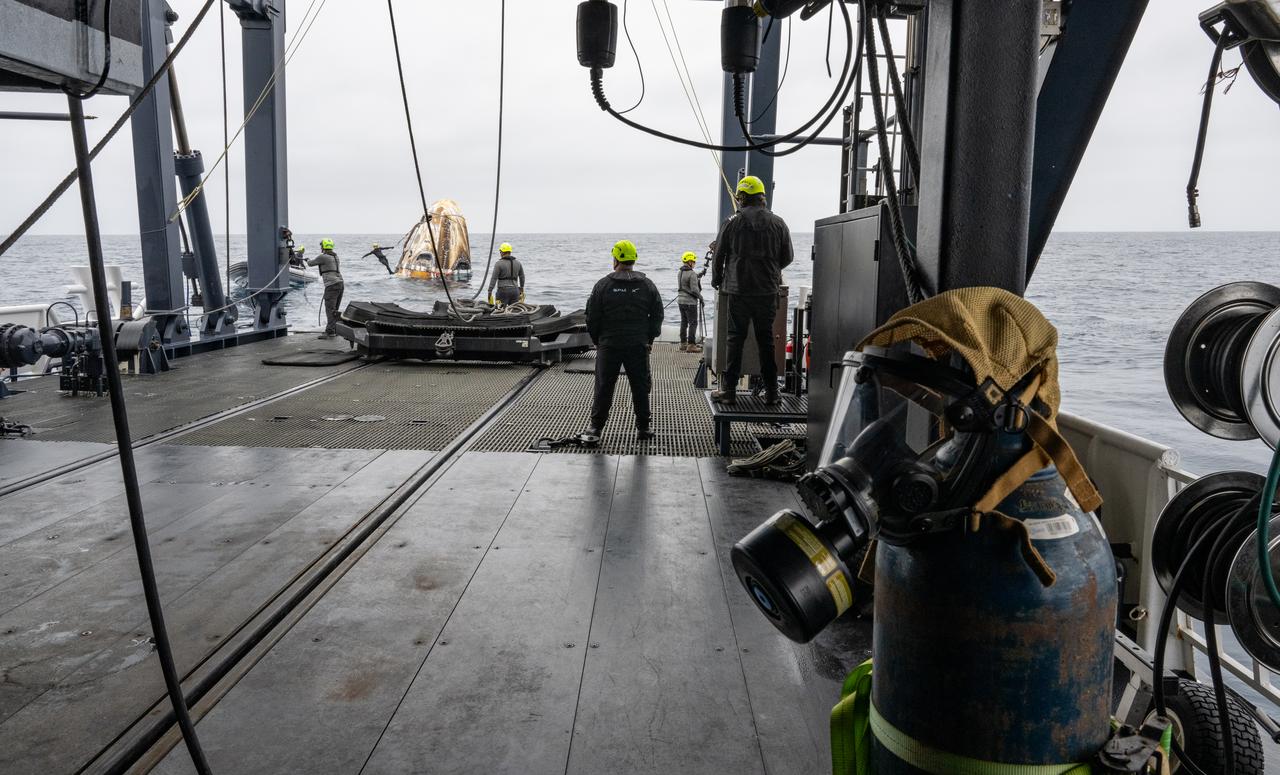
Support teams work around the SpaceX Dragon Endurance spacecraft shortly after it landed with NASA astronauts Anne McClain and Nichole Ayers, JAXA (Japan Aerospace Exploration Agency) astronaut Takuya Onishi, and Roscosmos cosmonaut Kirill Peskov aboard in the Pacific Ocean off the coast of San Diego, Calif., Saturday, Aug. 9,2025. McClain, Ayers, Onishi, and Peskov are returning after 147 days in space as part of Expedition 73 aboard the International Space Station. Photo Credit: (NASA/Keegan Barber)
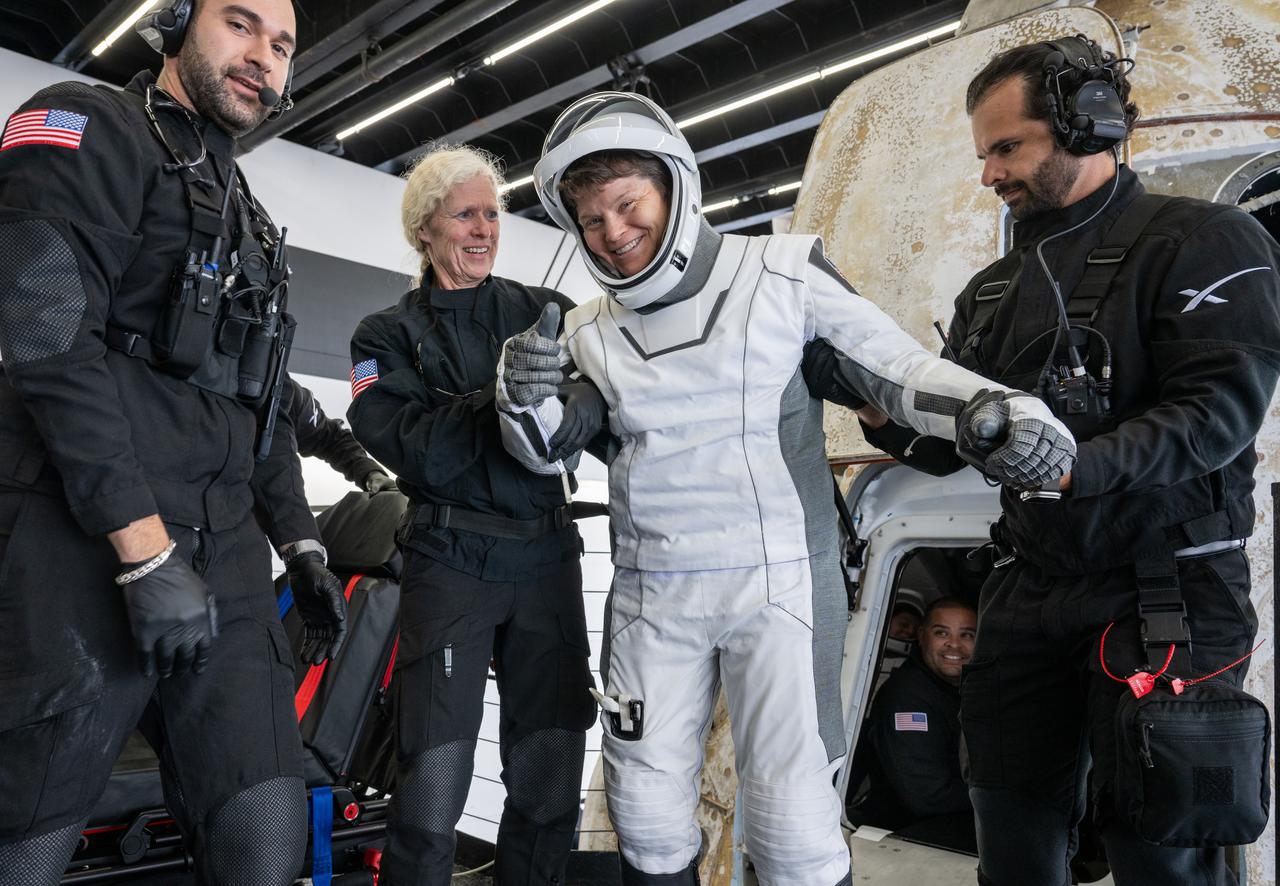
NASA astronaut Anne McClain is helped out of the SpaceX Dragon Endurance spacecraft onboard the SpaceX recovery ship SHANNON after she, NASA astronaut Nichole Ayers, JAXA (Japan Aerospace Exploration Agency) astronaut Takuya Onishi, and Roscosmos cosmonaut Kirill Peskov landed in the Pacific Ocean off the coast of San Diego, Calif., Saturday, Aug. 9, 2025. McClain, Ayers, Onishi, and Peskov are returning after 147 days in space as part of Expedition 73 aboard the International Space Station. Photo Credit: (NASA/Keegan Barber)
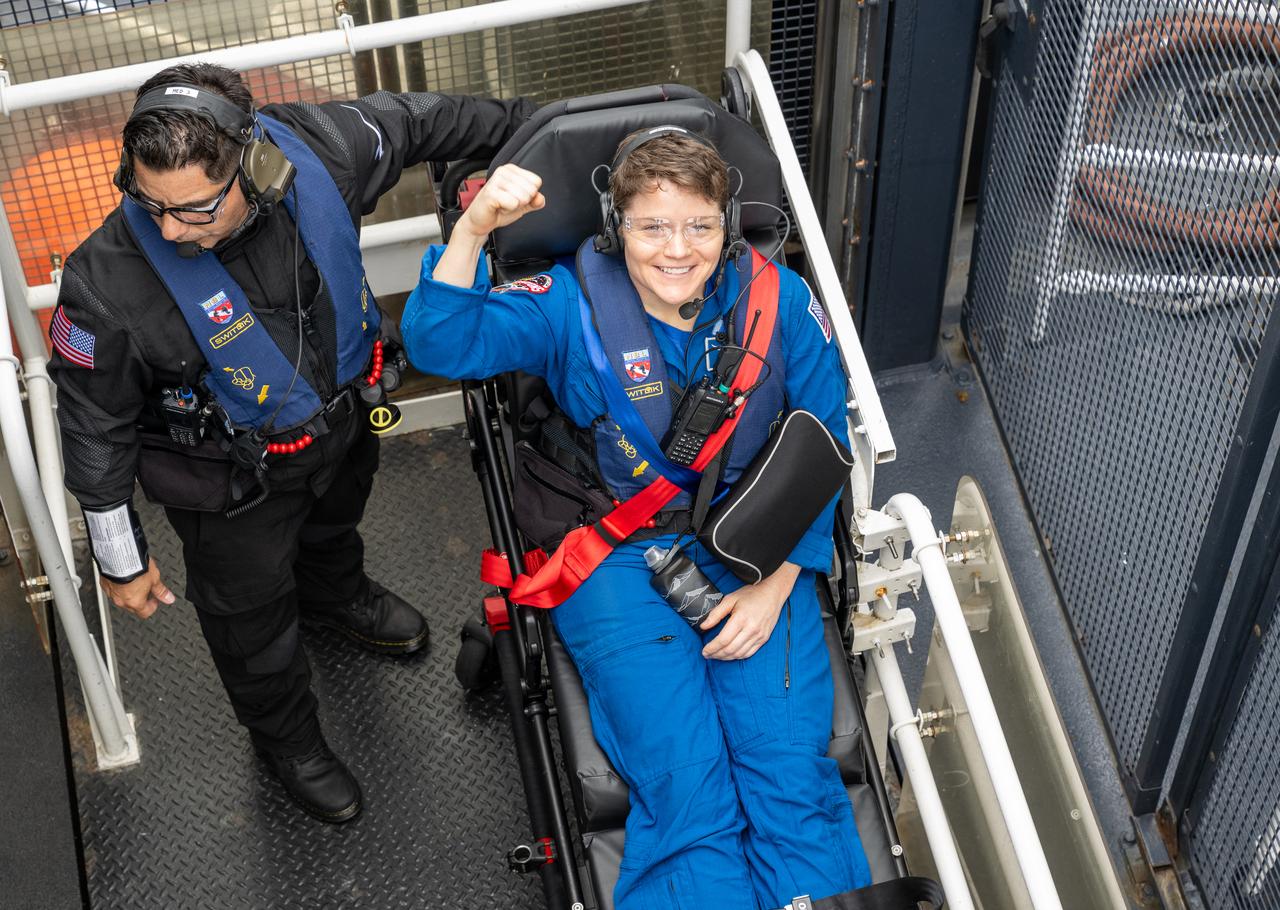
NASA astronaut Anne McClain is seen inside an elevator onboard the SpaceX recovery ship SHANNON that will take her up to a waiting helicopter to fly to Long Beach, Calif. along with NASA astronaut Nichole Ayers, JAXA (Japan Aerospace Exploration Agency) astronaut Takuya Onishi, and Roscosmos cosmonaut Kirill Peskov shortly after they landed in the Pacific Ocean off the coast of San Diego, Calif., Saturday, Aug. 9, 2025. McClain, Ayers, Onishi, and Peskov are returning after 147 days in space as part of Expedition 73 aboard the International Space Station. Photo Credit: (NASA/Keegan Barber)
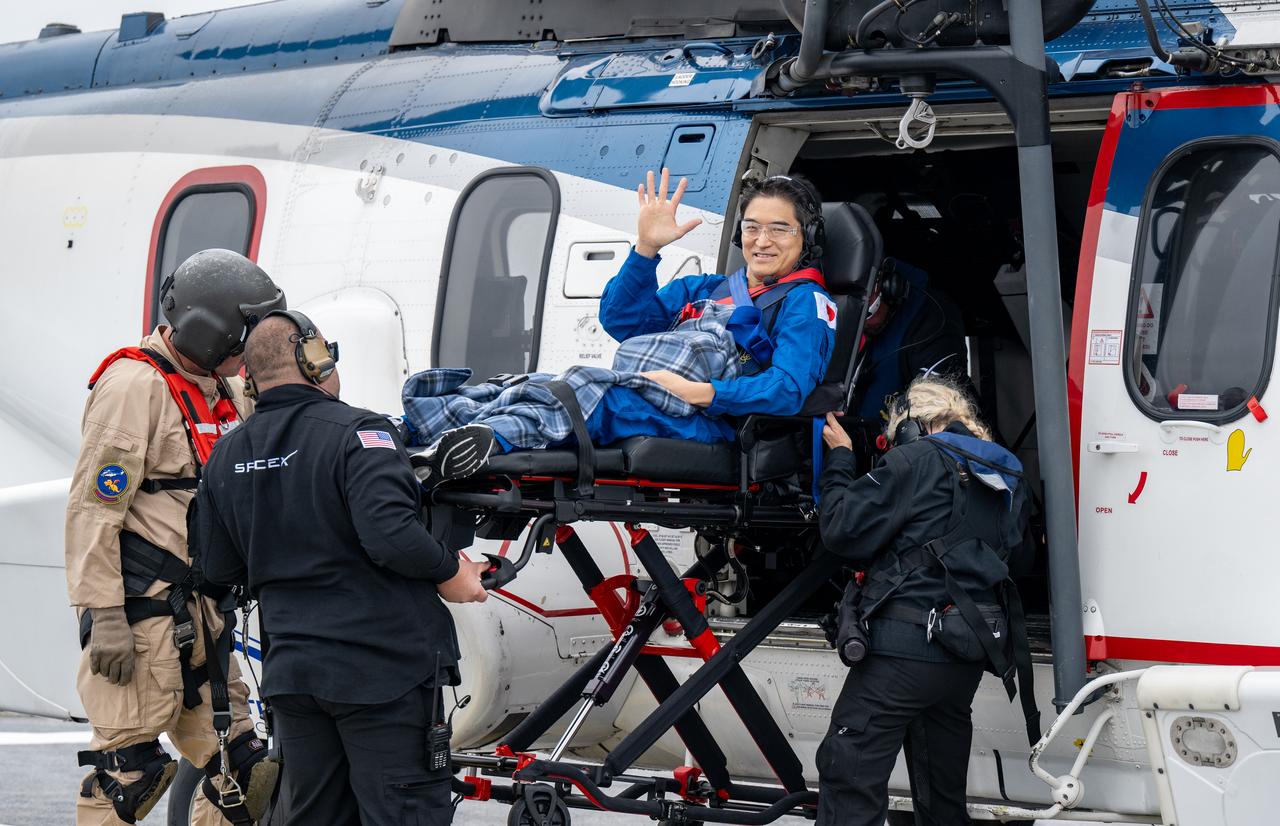
JAXA (Japan Aerospace Exploration Agency) astronaut Takuya Onishi is helped aboard a helicopter on the SpaceX recovery ship SHANNON to fly to Long Beach, Calif. along with NASA astronaut Nichole Ayers, Anne McClain, and Roscosmos cosmonaut Kirill Peskov shortly after they landed in the Pacific Ocean off the coast of San Diego, Calif., Saturday, Aug. 9, 2025. McClain, Ayers, Onishi, and Peskov are returning after 147 days in space as part of Expedition 73 aboard the International Space Station. Photo Credit: (NASA/Keegan Barber)
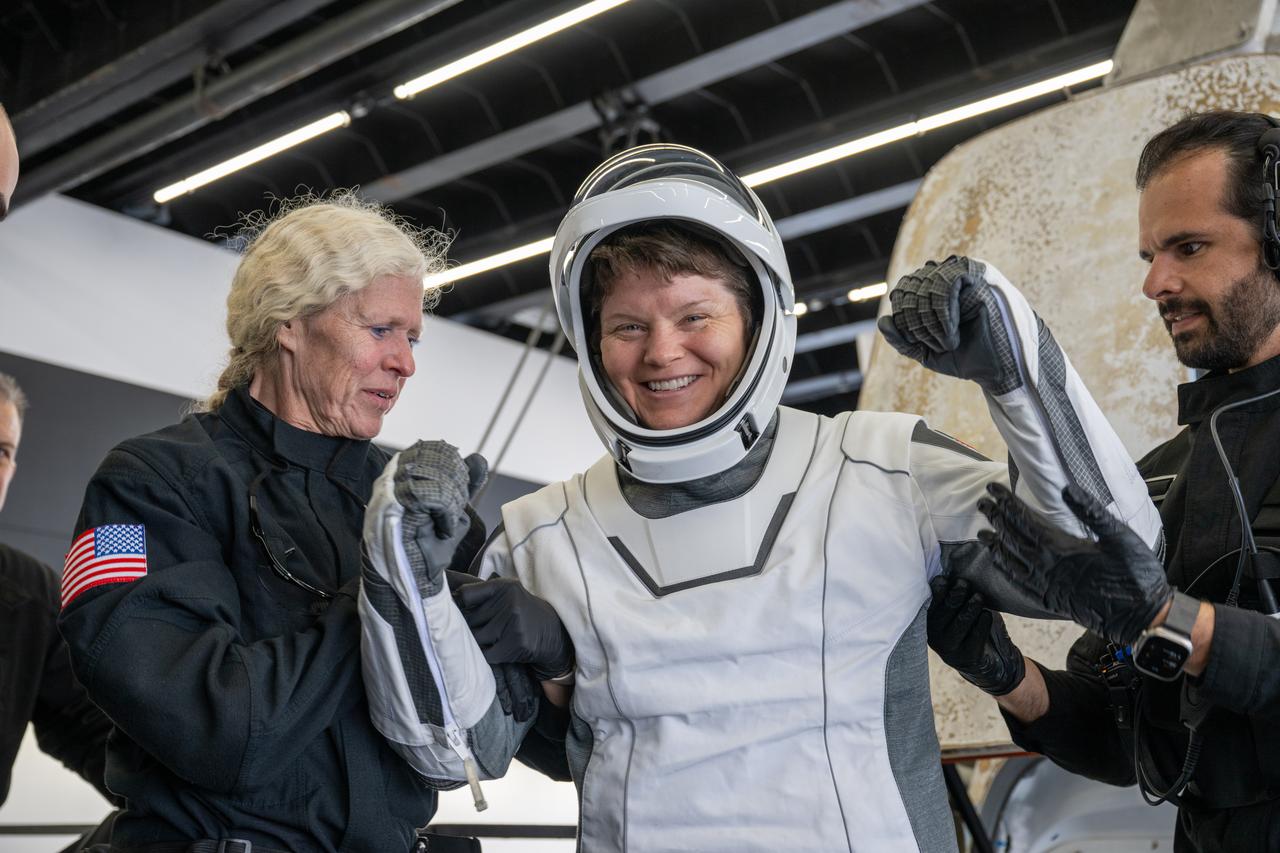
NASA astronaut Anne McClain is helped out of the SpaceX Dragon Endurance spacecraft onboard the SpaceX recovery ship SHANNON after she, NASA astronaut Nichole Ayers, JAXA (Japan Aerospace Exploration Agency) astronaut Takuya Onishi, and Roscosmos cosmonaut Kirill Peskov landed in the Pacific Ocean off the coast of San Diego, Calif., Saturday, Aug. 9, 2025. McClain, Ayers, Onishi, and Peskov are returning after 147 days in space as part of Expedition 73 aboard the International Space Station. Photo Credit: (NASA/Keegan Barber)
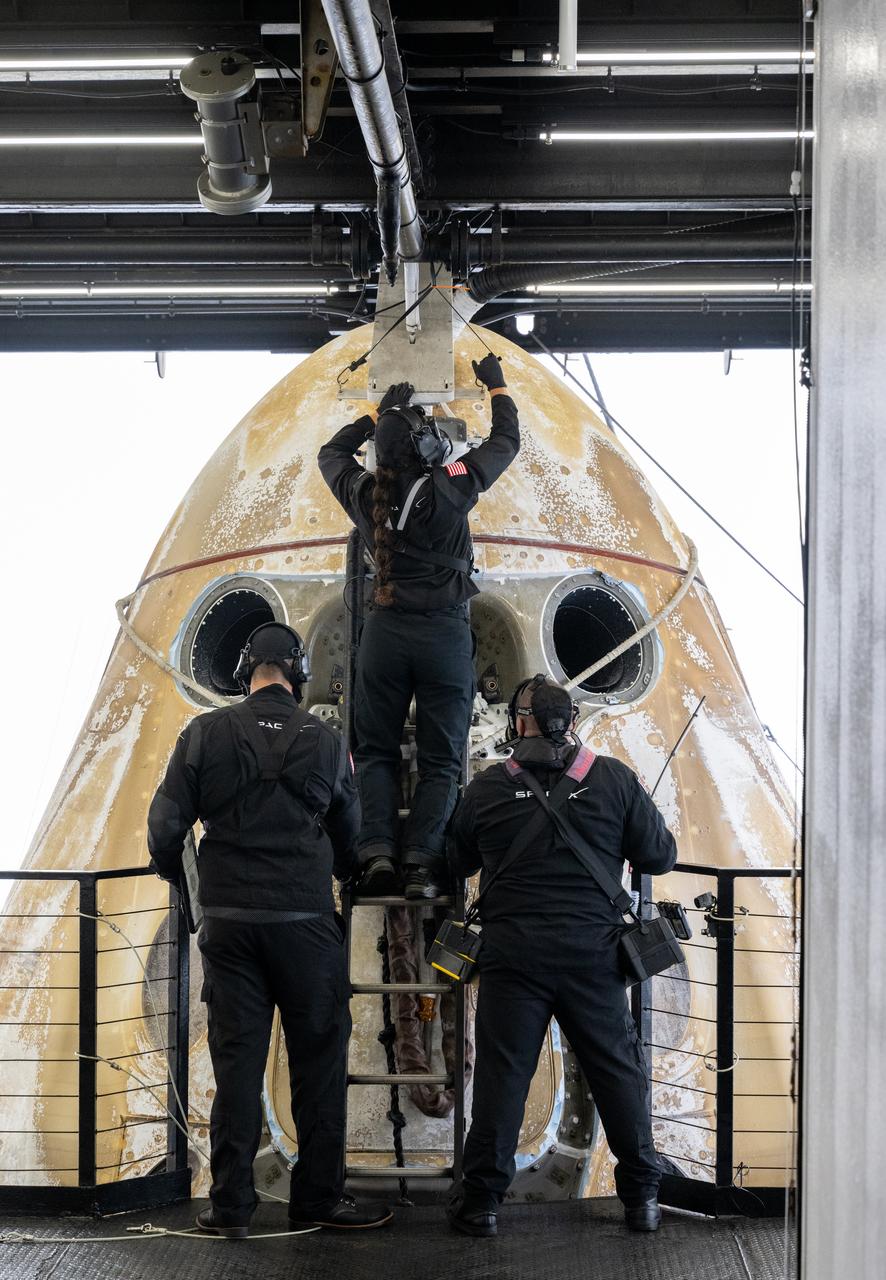
Support teams onboard the SpaceX recovery ship SHANNON work around the SpaceX Dragon Endurance spacecraft shortly after it landed with NASA astronauts Anne McClain and Nichole Ayers, JAXA (Japan Aerospace Exploration Agency) astronaut Takuya Onishi, and Roscosmos cosmonaut Kirill Peskov aboard in the Pacific Ocean off the coast of San Diego, Calif., Saturday, Aug. 9, 2025. McClain, Ayers, Onishi, and Peskov are returning after 147 days in space as part of Expedition 73 aboard the International Space Station. Photo Credit: (NASA/Keegan Barber)
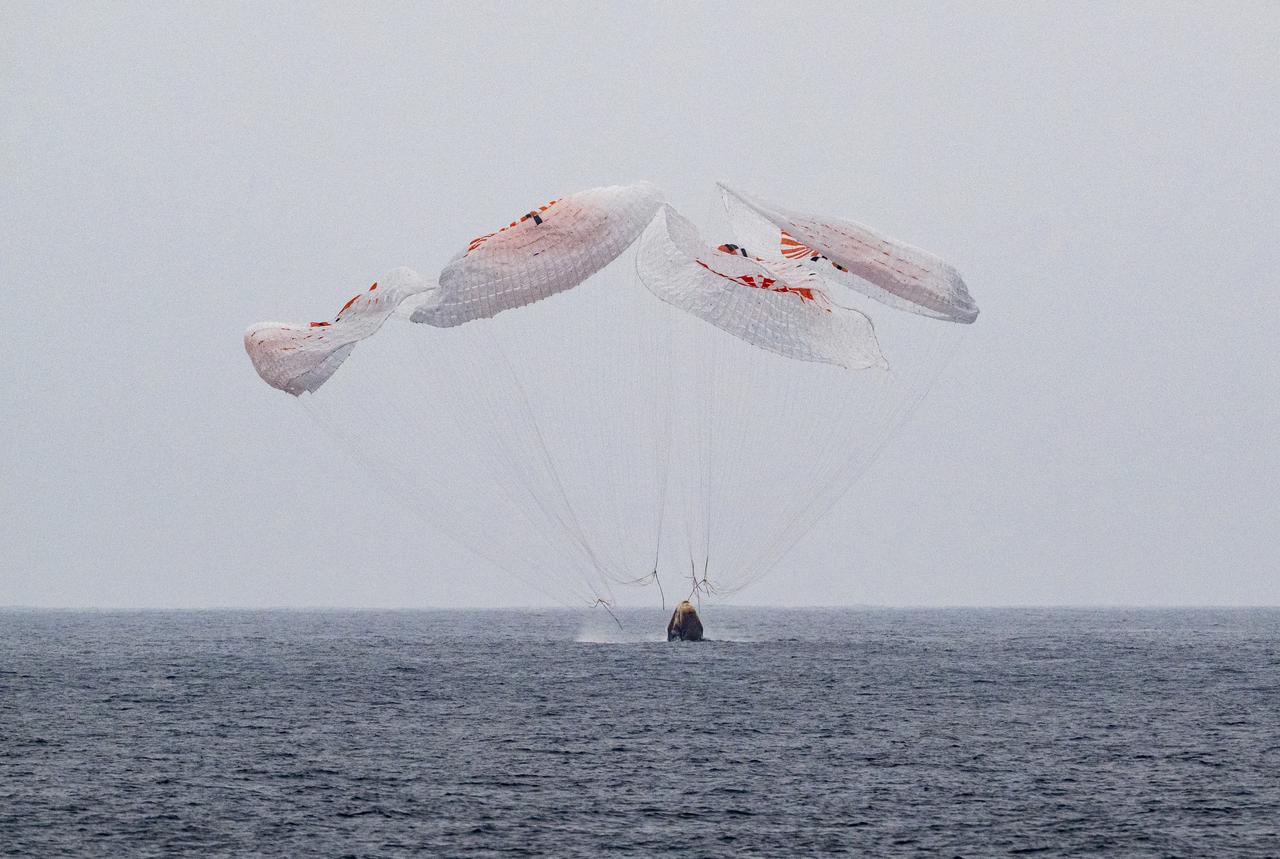
The SpaceX Crew Dragon Endurance spacecraft is seen as it lands with NASA astronauts Anne McClain and Nichole Ayers, JAXA (Japan Aerospace Exploration Agency) astronaut Takuya Onishi, and Roscosmos cosmonaut Kirill Peskov aboard in the Pacific Ocean off the coast of San Diego, Calif., Saturday, Aug. 9, 2025. McClain, Ayers, Onishi, and Peskov are returning after 147 days in space as part of Expedition 73 aboard the International Space Station. Photo Credit: (NASA/Keegan Barber)
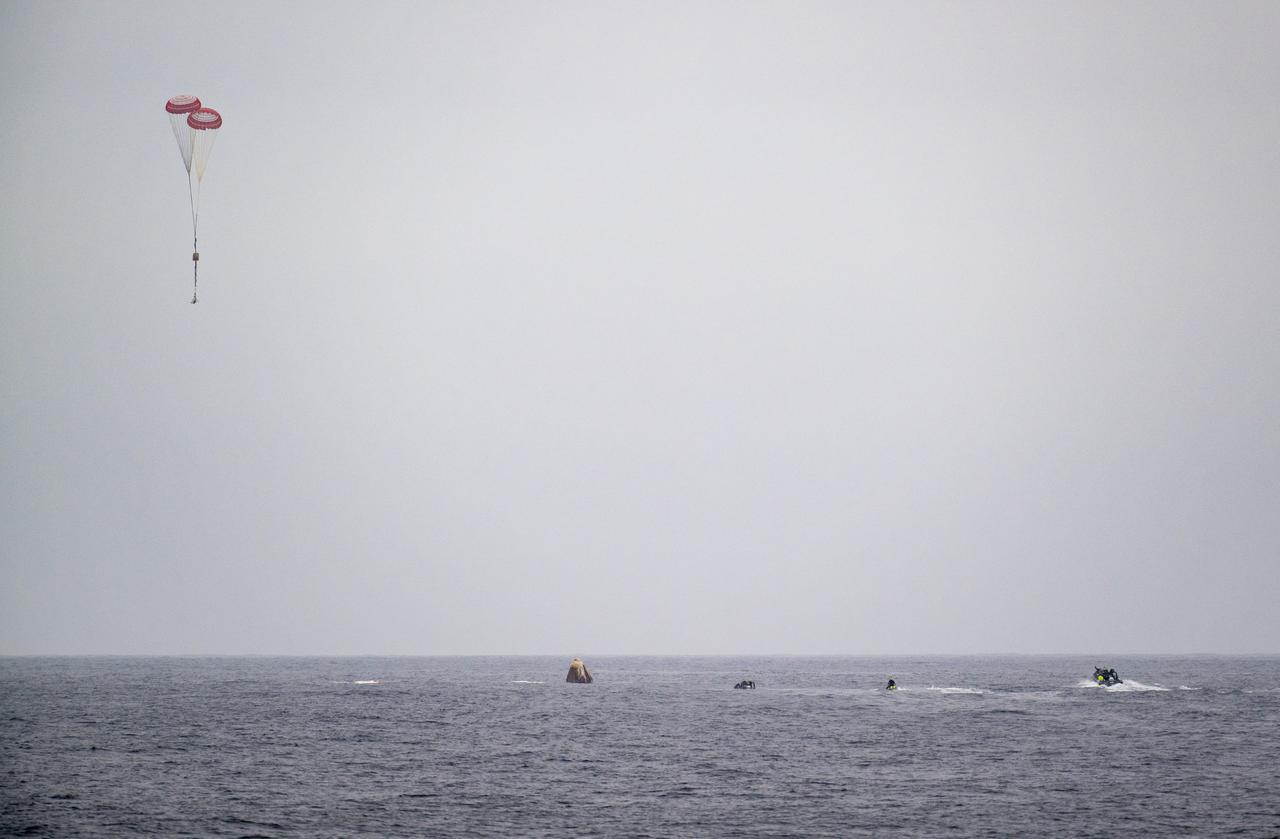
Support teams work around the SpaceX Dragon Endurance spacecraft shortly after it landed with NASA astronauts Anne McClain and Nichole Ayers, JAXA (Japan Aerospace Exploration Agency) astronaut Takuya Onishi, and Roscosmos cosmonaut Kirill Peskov aboard in the Pacific Ocean off the coast of San Diego, Calif., Saturday, Aug. 9,2025. McClain, Ayers, Onishi, and Peskov are returning after 147 days in space as part of Expedition 73 aboard the International Space Station. The drogue parachutes can also be seen in the sky behind the SpaceX Dragon Endurance spacecraft as they land in the Pacific Ocean. Photo Credit: (NASA/Keegan Barber)
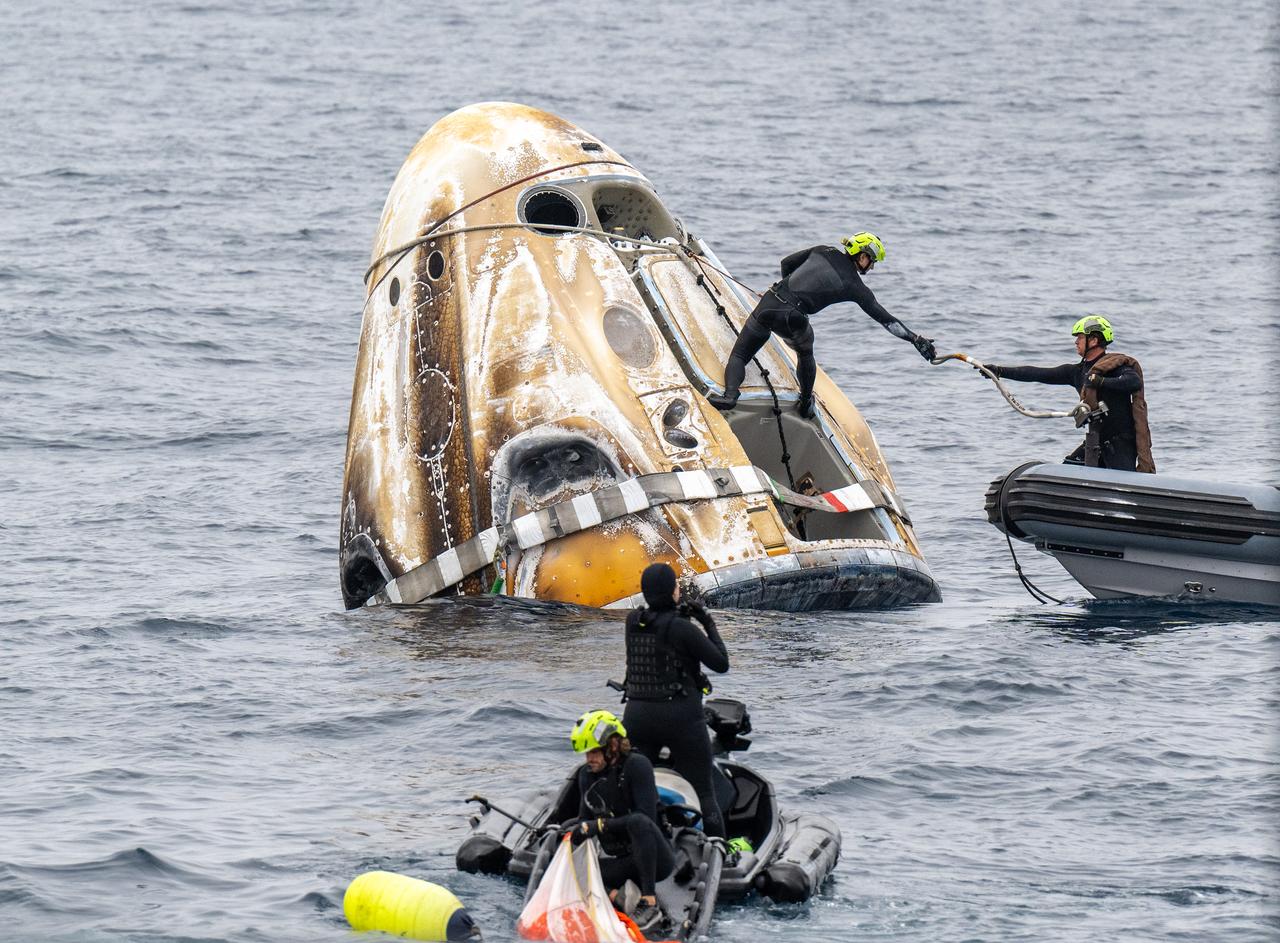
Support teams work around the SpaceX Dragon Endurance spacecraft shortly after it landed with NASA astronauts Anne McClain and Nichole Ayers, JAXA (Japan Aerospace Exploration Agency) astronaut Takuya Onishi, and Roscosmos cosmonaut Kirill Peskov aboard in the Pacific Ocean off the coast of San Diego, Calif., Saturday, Aug. 9,2025. McClain, Ayers, Onishi, and Peskov are returning after 147 days in space as part of Expedition 73 aboard the International Space Station. Photo Credit: (NASA/Keegan Barber)
NASA astronaut Nichole Ayers is helped aboard a helicopter on the SpaceX recovery ship SHANNON to fly to Long Beach, Calif. along with NASA astronaut Anne McClain, JAXA (Japan Aerospace Exploration Agency) astronaut Takuya Onishi, and Roscosmos cosmonaut Kirill Peskov shortly after they landed in the Pacific Ocean off the coast of San Diego, Calif., Saturday, Aug. 9, 2025. McClain, Ayers, Onishi, and Peskov are returning after 147 days in space as part of Expedition 73 aboard the International Space Station. Photo Credit: (NASA/Keegan Barber)
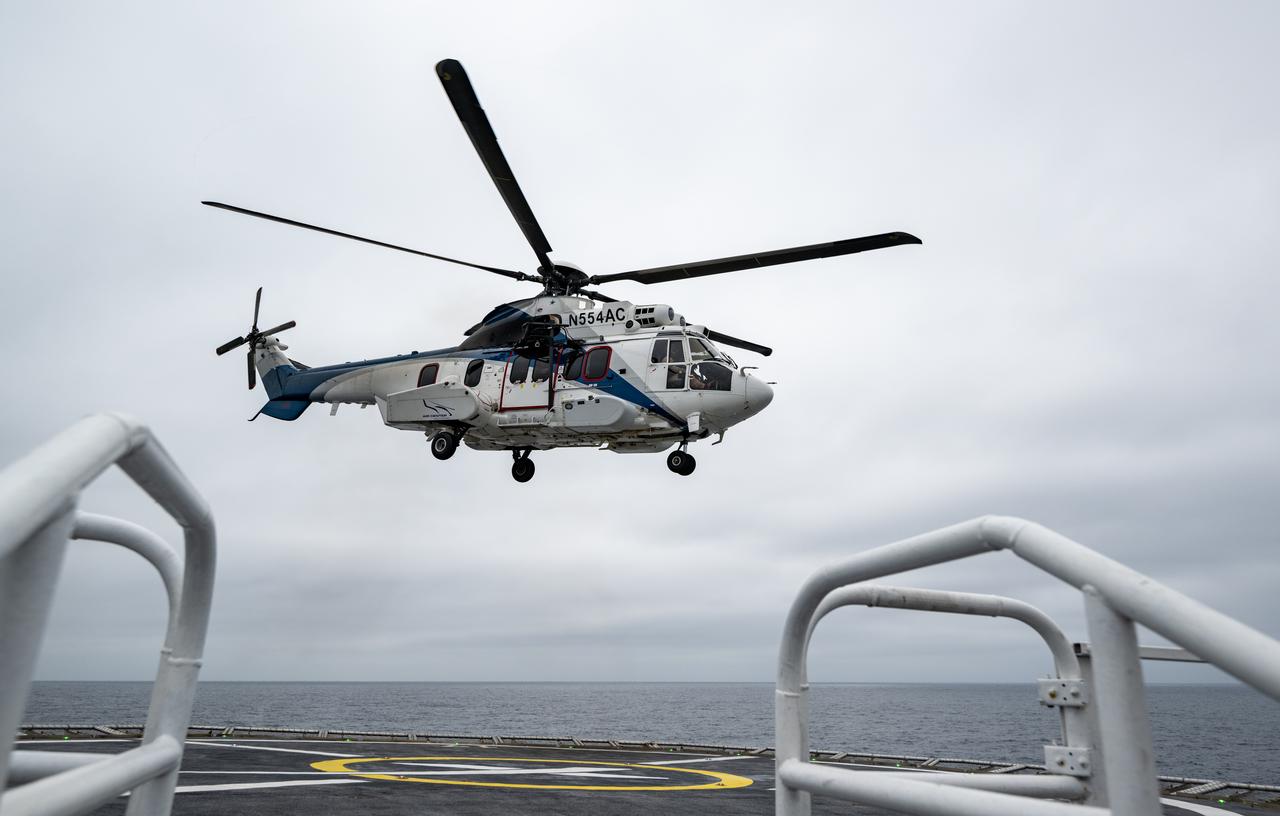
The helicopter carrying NASA astronauts Anne McClain and Nichole Ayers, JAXA (Japan Aerospace Exploration Agency) astronaut Takuya Onishi, and Roscosmos cosmonaut Kirill Peskov takes off from the SpaceX recovery ship SHANNON shortly after they landed in the Pacific Ocean off the coast of San Diego, Calif., Saturday, Aug. 9, 2025. McClain, Ayers, Onishi, and Peskov are returning after 147 days in space as part of Expedition 73 aboard the International Space Station. Photo Credit: (NASA/Keegan Barber)
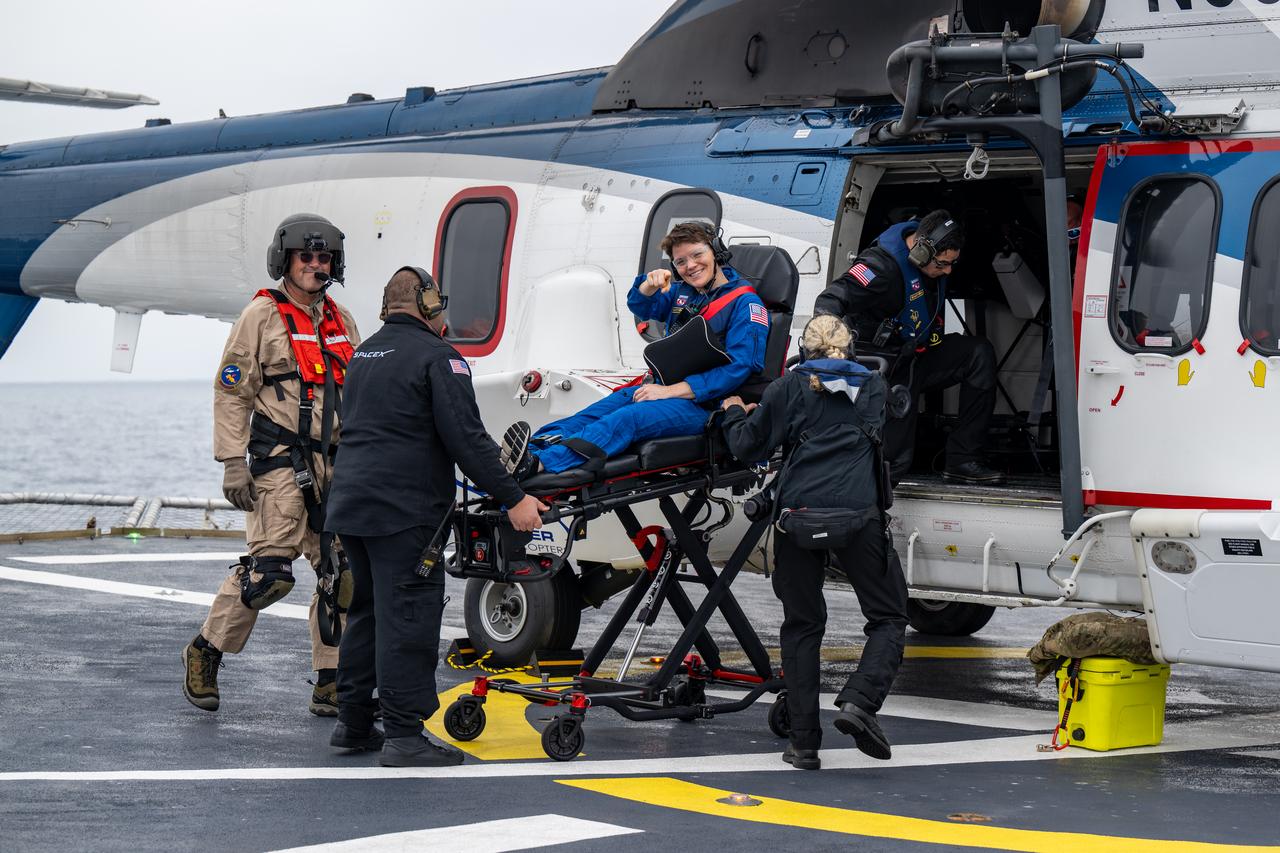
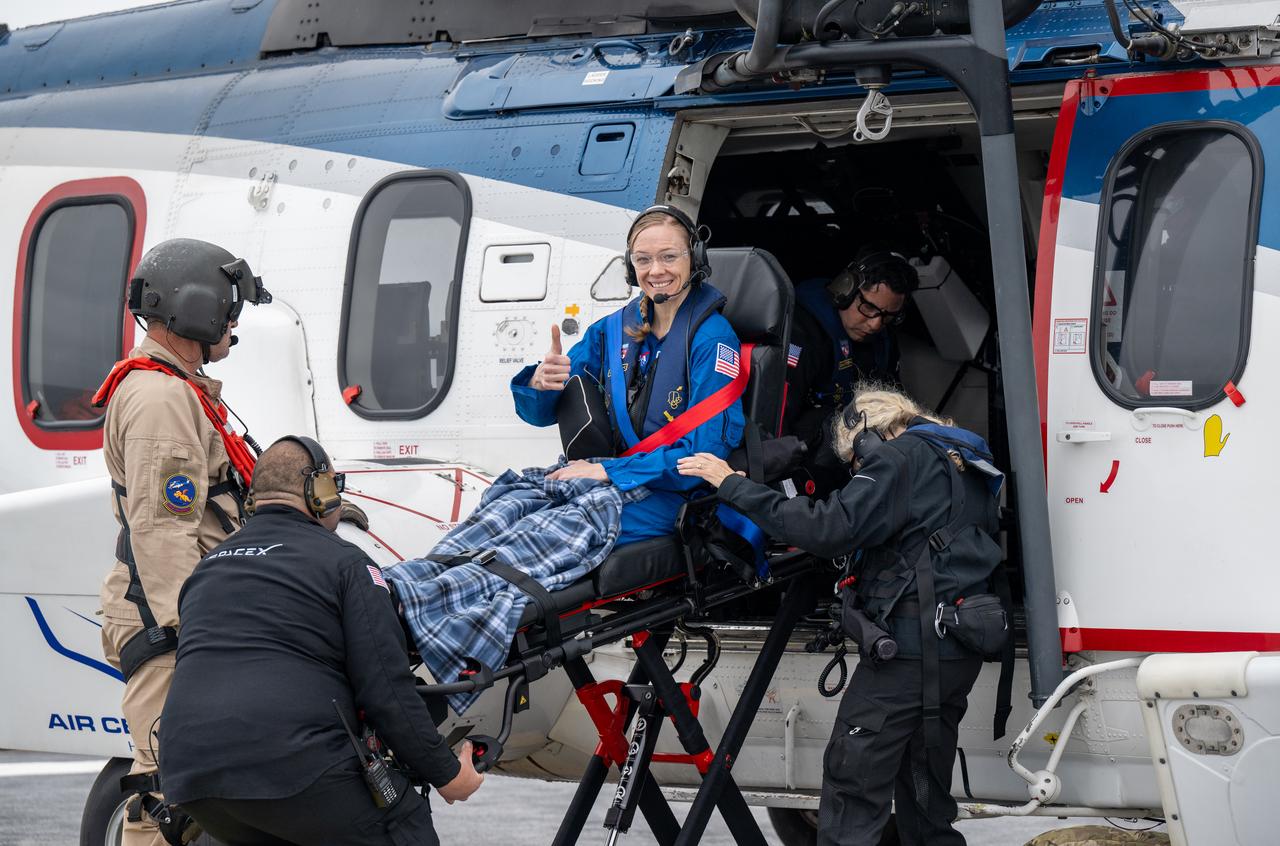
NASA astronaut Anne McClain is helped aboard a helicopter on the SpaceX recovery ship SHANNON to fly to Long Beach, Calif. along with NASA astronaut Nichole Ayers, JAXA (Japan Aerospace Exploration Agency) astronaut Takuya Onishi, and Roscosmos cosmonaut Kirill Peskov shortly after they landed in the Pacific Ocean off the coast of San Diego, Calif., Saturday, Aug. 9, 2025. McClain, Ayers, Onishi, and Peskov are returning after 147 days in space as part of Expedition 73 aboard the International Space Station. Photo Credit: (NASA/Keegan Barber)
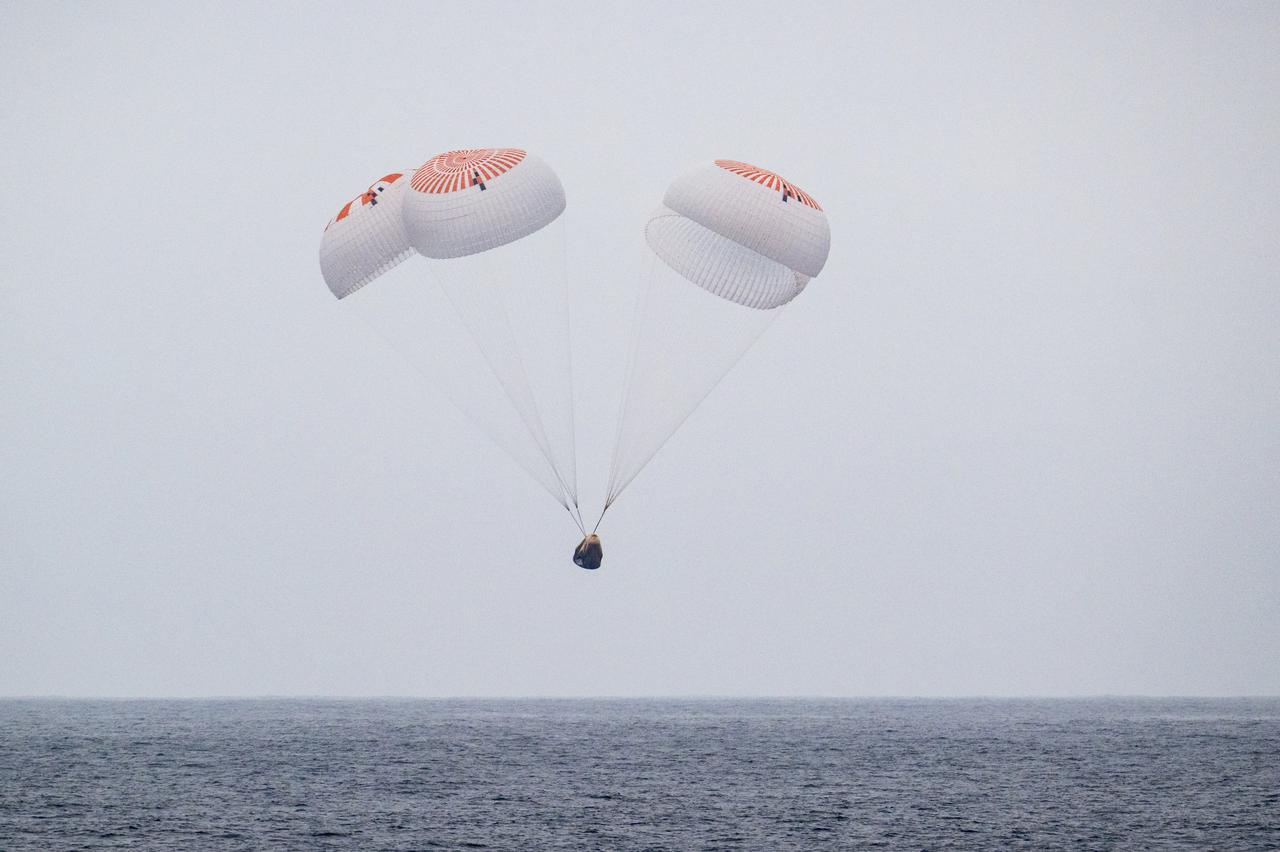
The SpaceX Crew Dragon Endurance spacecraft is seen as it lands with NASA astronauts Anne McClain and Nichole Ayers, JAXA (Japan Aerospace Exploration Agency) astronaut Takuya Onishi, and Roscosmos cosmonaut Kirill Peskov aboard in the Pacific Ocean off the coast of San Diego, Calif., Saturday, Aug. 9, 2025. McClain, Ayers, Onishi, and Peskov are returning after 147 days in space as part of Expedition 73 aboard the International Space Station. Photo Credit: (NASA/Keegan Barber)
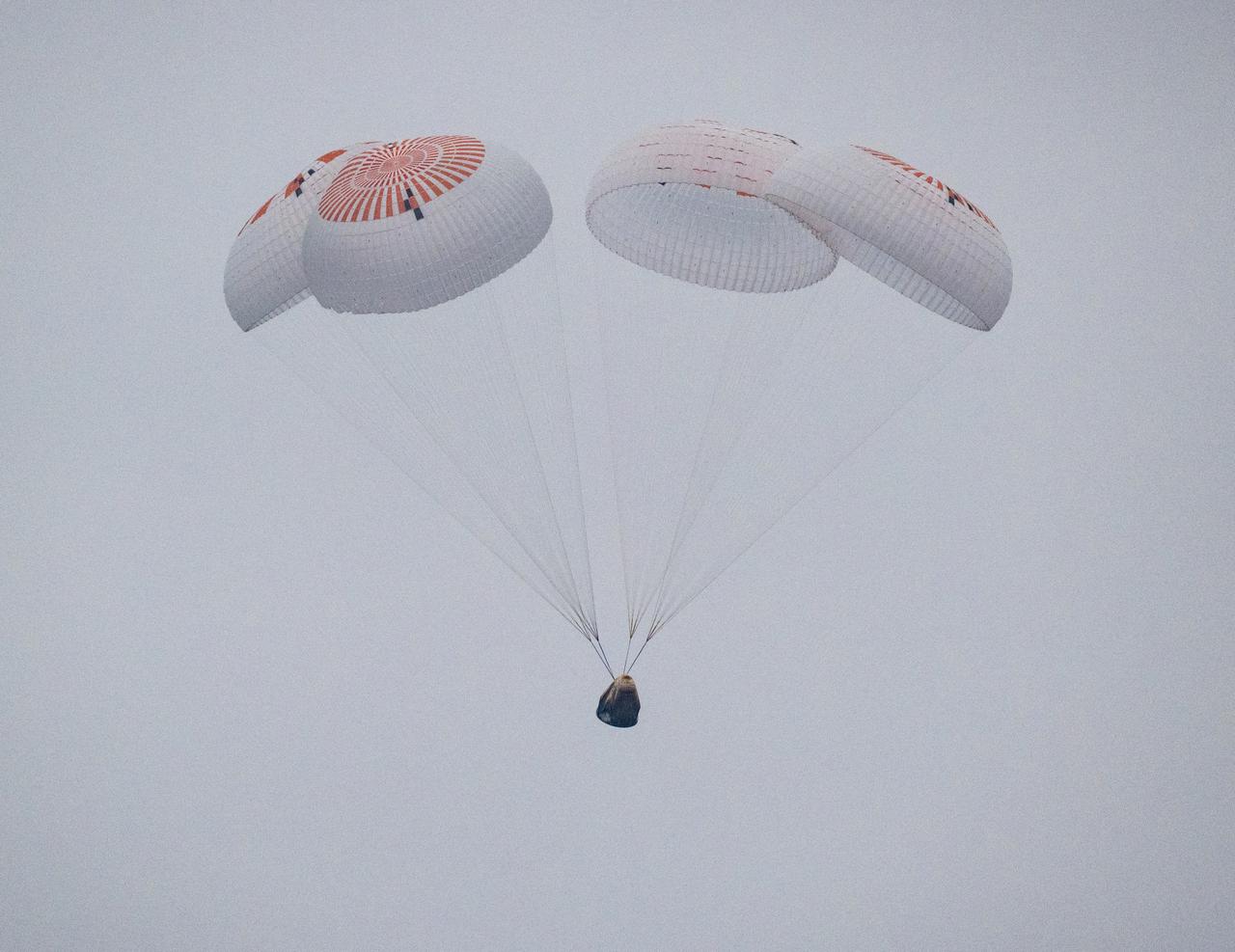
The SpaceX Crew Dragon Endurance spacecraft is seen as it lands with NASA astronauts Anne McClain and Nichole Ayers, JAXA (Japan Aerospace Exploration Agency) astronaut Takuya Onishi, and Roscosmos cosmonaut Kirill Peskov aboard in the Pacific Ocean off the coast of San Diego, Calif., Saturday, Aug. 9, 2025. McClain, Ayers, Onishi, and Peskov are returning after 147 days in space as part of Expedition 73 aboard the International Space Station. Photo Credit: (NASA/Keegan Barber)
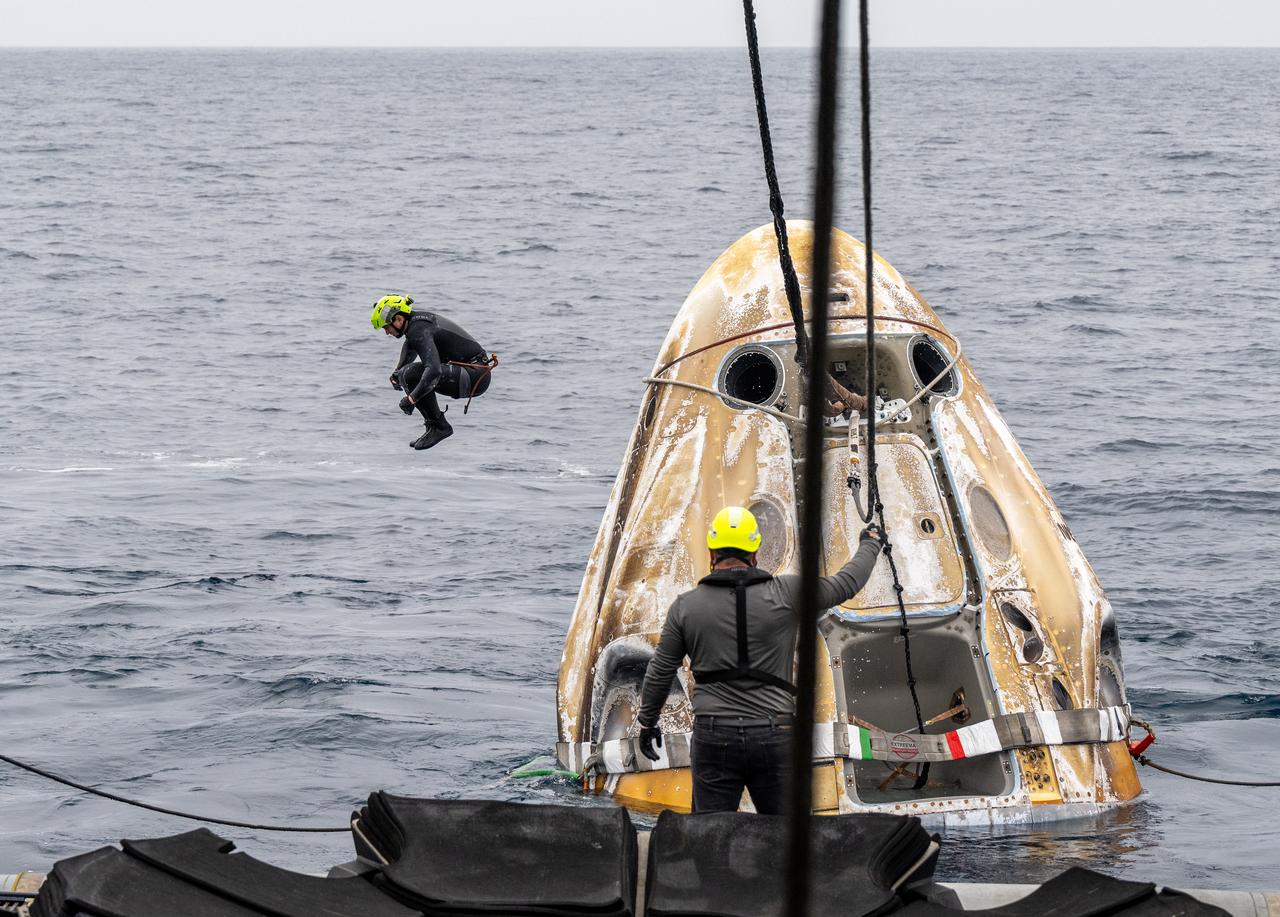
Support teams work around the SpaceX Dragon Endurance spacecraft shortly after it landed with NASA astronauts Anne McClain and Nichole Ayers, JAXA (Japan Aerospace Exploration Agency) astronaut Takuya Onishi, and Roscosmos cosmonaut Kirill Peskov aboard in the Pacific Ocean off the coast of San Diego, Calif., Saturday, Aug. 9,2025. McClain, Ayers, Onishi, and Peskov are returning after 147 days in space as part of Expedition 73 aboard the International Space Station. Photo Credit: (NASA/Keegan Barber)
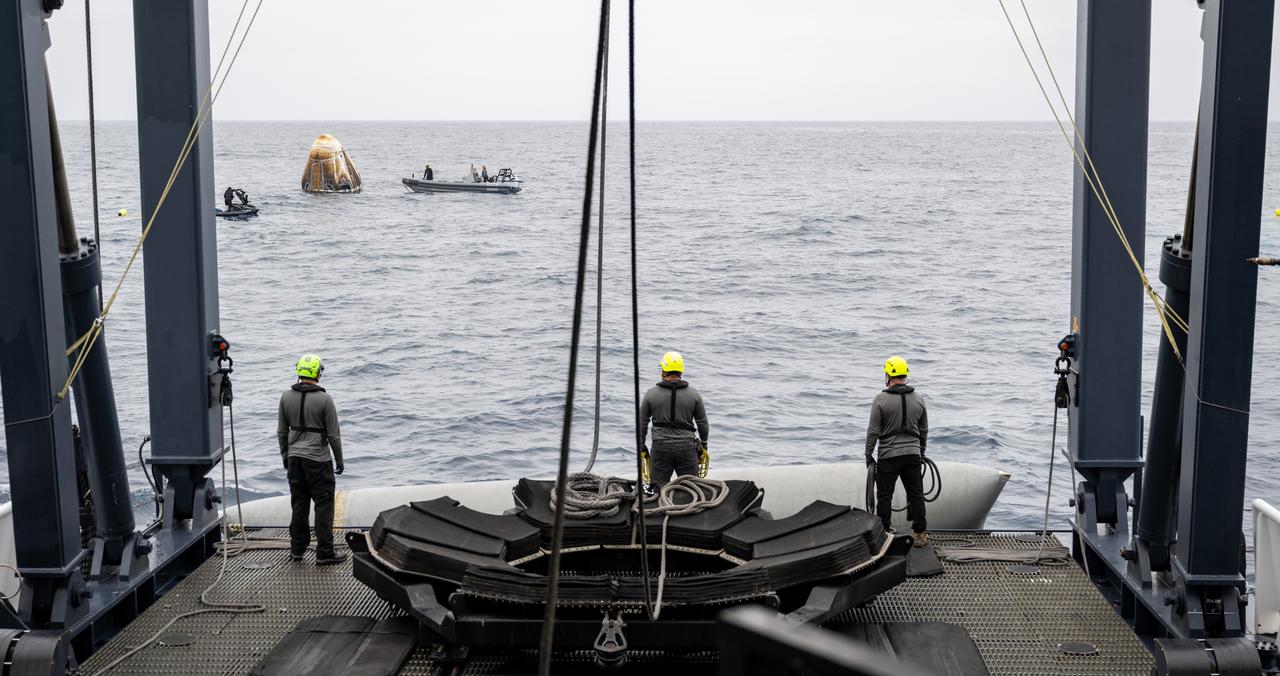
Support teams work around the SpaceX Dragon Endurance spacecraft shortly after it landed with NASA astronauts Anne McClain and Nichole Ayers, JAXA (Japan Aerospace Exploration Agency) astronaut Takuya Onishi, and Roscosmos cosmonaut Kirill Peskov aboard in the Pacific Ocean off the coast of San Diego, Calif., Saturday, Aug. 9,2025. McClain, Ayers, Onishi, and Peskov are returning after 147 days in space as part of Expedition 73 aboard the International Space Station. Photo Credit: (NASA/Keegan Barber)
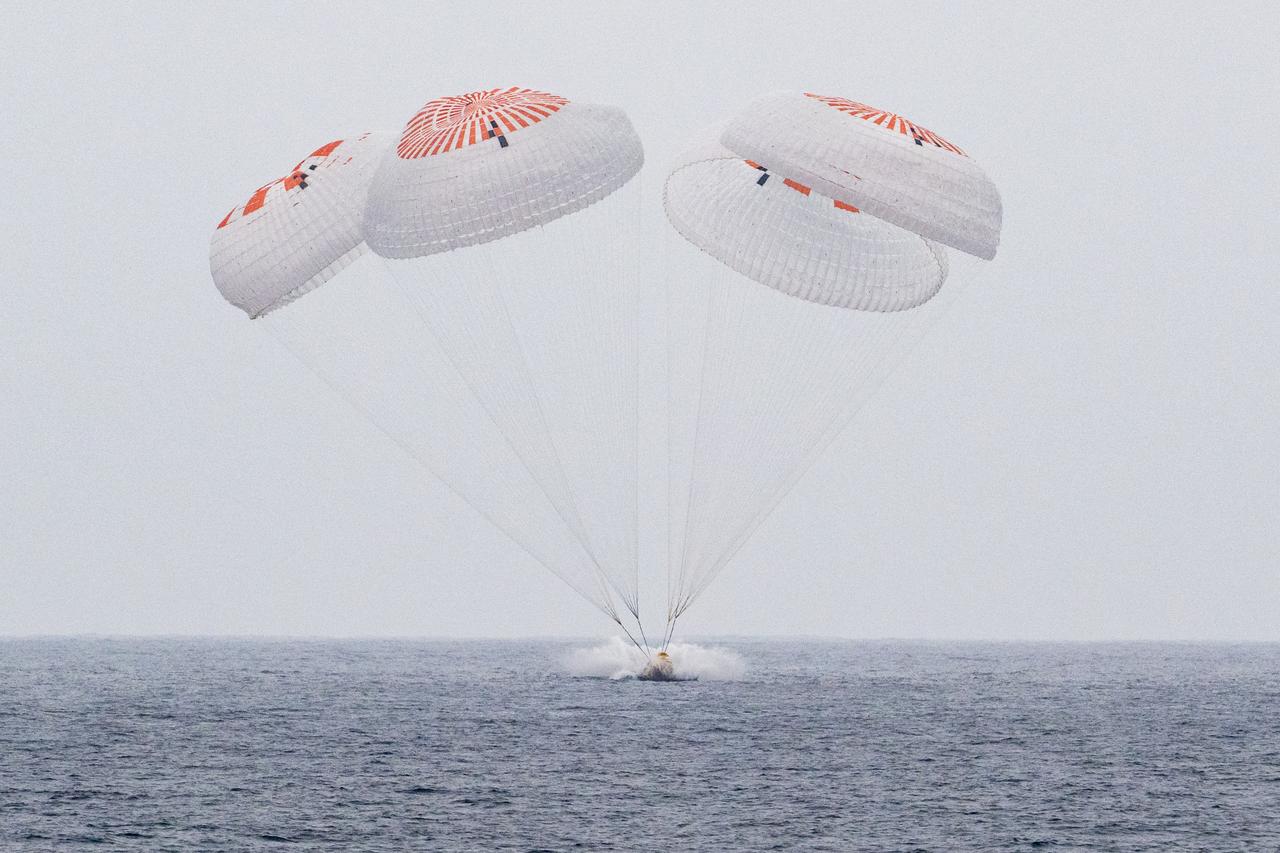
The SpaceX Crew Dragon Endurance spacecraft is seen as it lands with NASA astronauts Anne McClain and Nichole Ayers, JAXA (Japan Aerospace Exploration Agency) astronaut Takuya Onishi, and Roscosmos cosmonaut Kirill Peskov aboard in the Pacific Ocean off the coast of San Diego, Calif., Saturday, Aug. 9, 2025. McClain, Ayers, Onishi, and Peskov are returning after 147 days in space as part of Expedition 73 aboard the International Space Station. Photo Credit: (NASA/Keegan Barber)
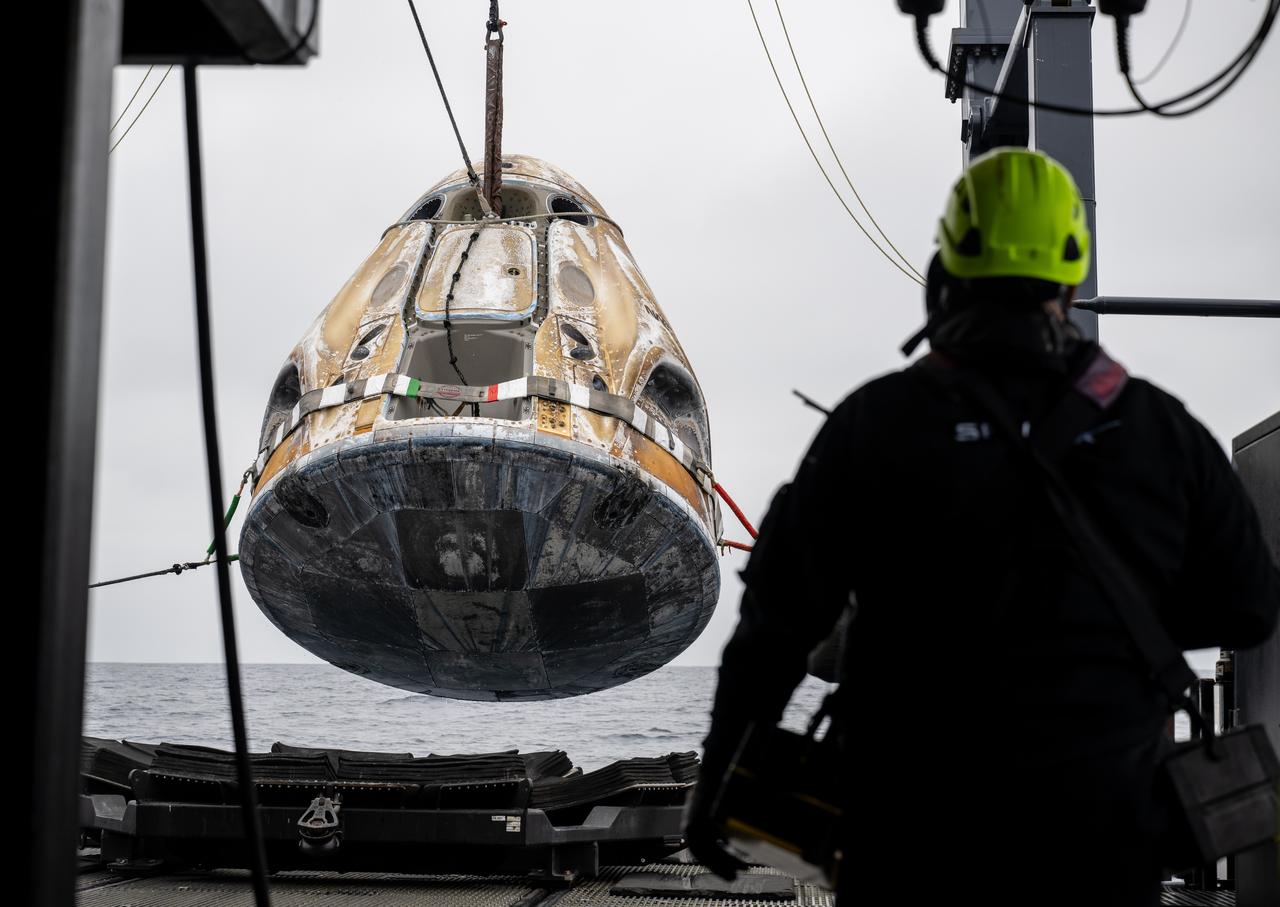
Support teams raise the SpaceX Dragon Endurance spacecraft aboard the recovery ship SHANNON shortly after it landed with NASA astronauts Anne McClain and Nichole Ayers, JAXA (Japan Aerospace Exploration Agency) astronaut Takuya Onishi, and Roscosmos cosmonaut Kirill Peskov aboard in thePacific Ocean off the coast of San Diego, Calif., Saturday, Aug. 9, 2025. McClain, Ayers, Onishi, and Peskov are returning after 147 days in space as part of Expedition 73 aboard the International Space Station. Photo Credit: (NASA/Keegan Barber)
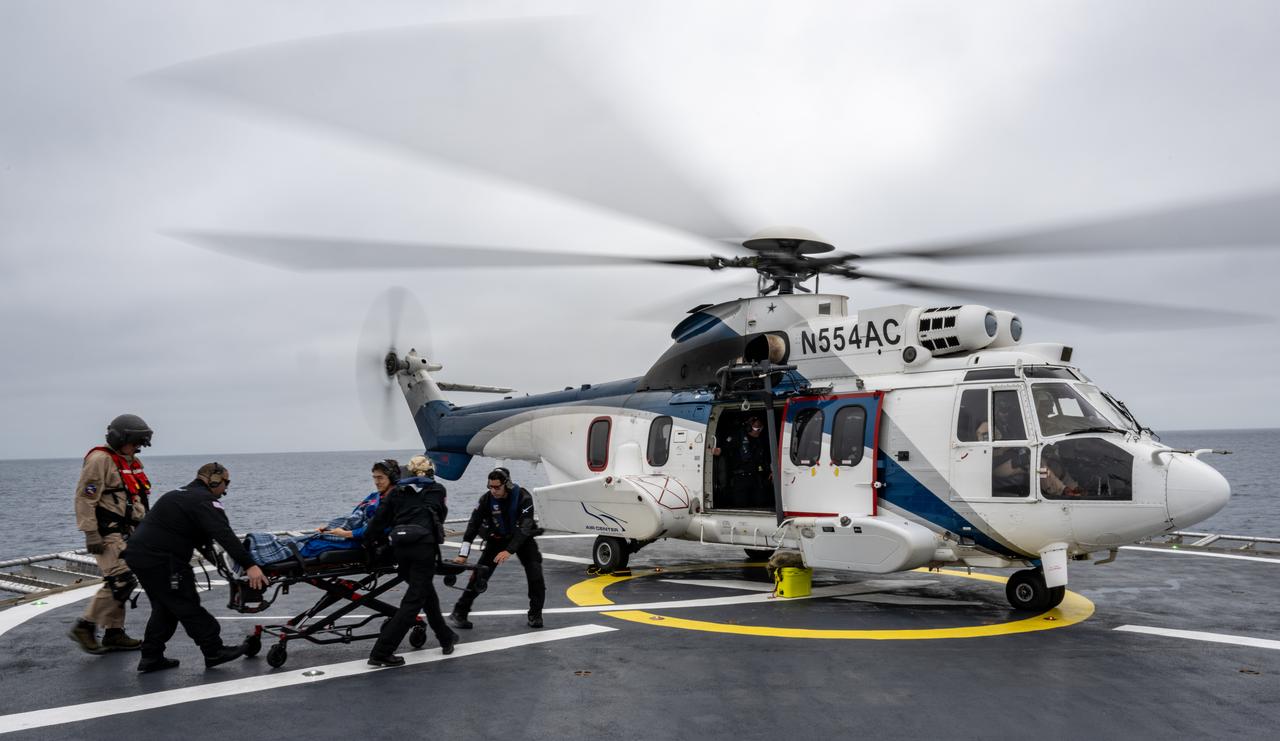
JAXA (Japan Aerospace Exploration Agency) astronaut Takuya Onishi is helped aboard a helicopter on the SpaceX recovery ship SHANNON to fly to Long Beach, Calif. along with NASA astronaut Nichole Ayers, Anne McClain, and Roscosmos cosmonaut Kirill Peskov shortly after they landed in the Pacific Ocean off the coast of San Diego, Calif., Saturday, Aug. 9, 2025. McClain, Ayers, Onishi, and Peskov are returning after 147 days in space as part of Expedition 73 aboard the International Space Station. Photo Credit: (NASA/Keegan Barber)
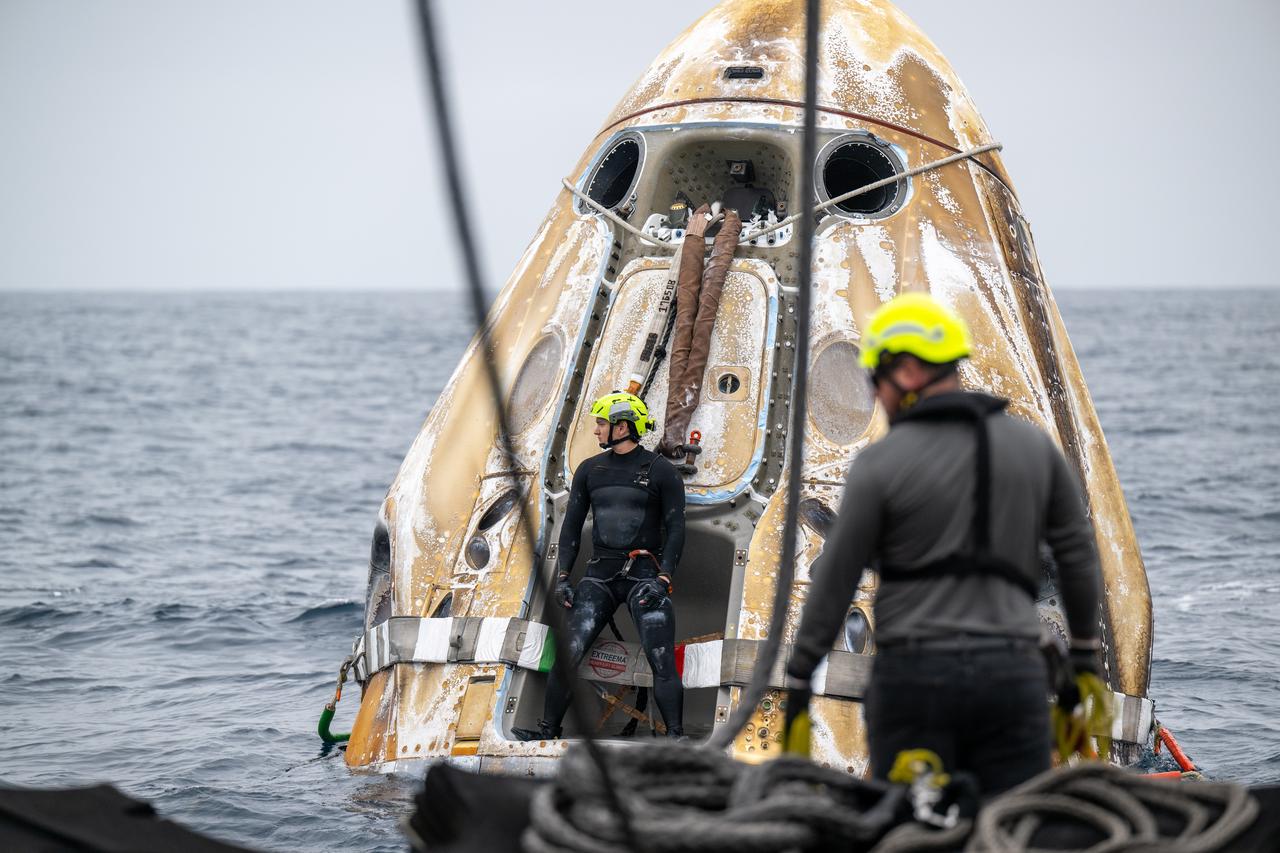
Support teams work around the SpaceX Dragon Endurance spacecraft shortly after it landed with NASA astronauts Anne McClain and Nichole Ayers, JAXA (Japan Aerospace Exploration Agency) astronaut Takuya Onishi, and Roscosmos cosmonaut Kirill Peskov aboard in the Pacific Ocean off the coast of San Diego, Calif., Saturday, Aug. 9,2025. McClain, Ayers, Onishi, and Peskov are returning after 147 days in space as part of Expedition 73 aboard the International Space Station. Photo Credit: (NASA/Keegan Barber)
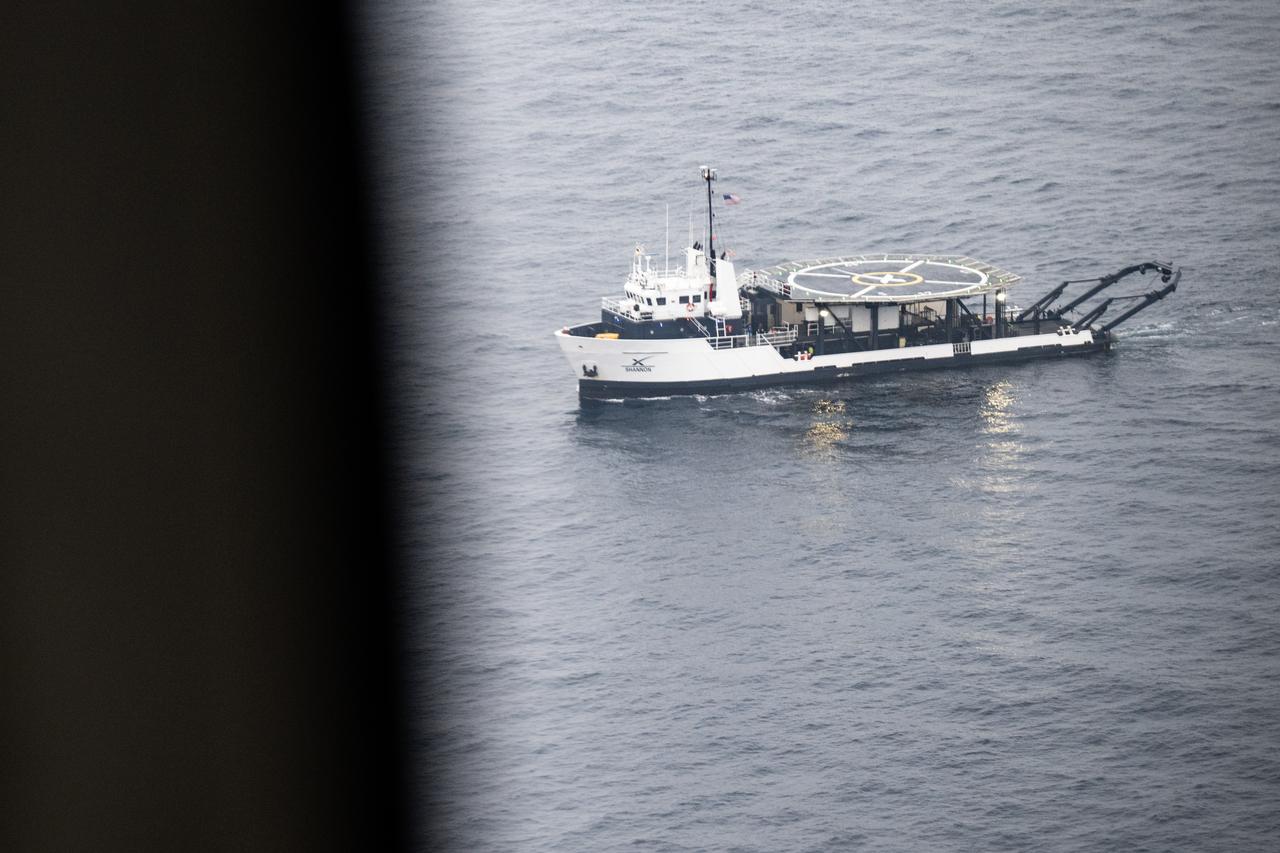
The SpaceX recovery ship SHANNON is seen in the Pacific Ocean as the recovery team prepares for the landing of the SpaceX Dragon spacecraft with NASA astronauts Anne McClain and Nichole Ayers, JAXA (Japan Aerospace Exploration Agency) astronaut Takuya Onishi, and Roscosmos cosmonaut Kirill Peskov aboard, Saturday, Aug. 9, 2025, off the coast of San Diego, Calif.. McClain, Ayers, Onishi, and Peskov are returning after 147 days in space as part of Expedition 73 aboard the International Space Station. Photo Credit: (NASA/Keegan Barber)
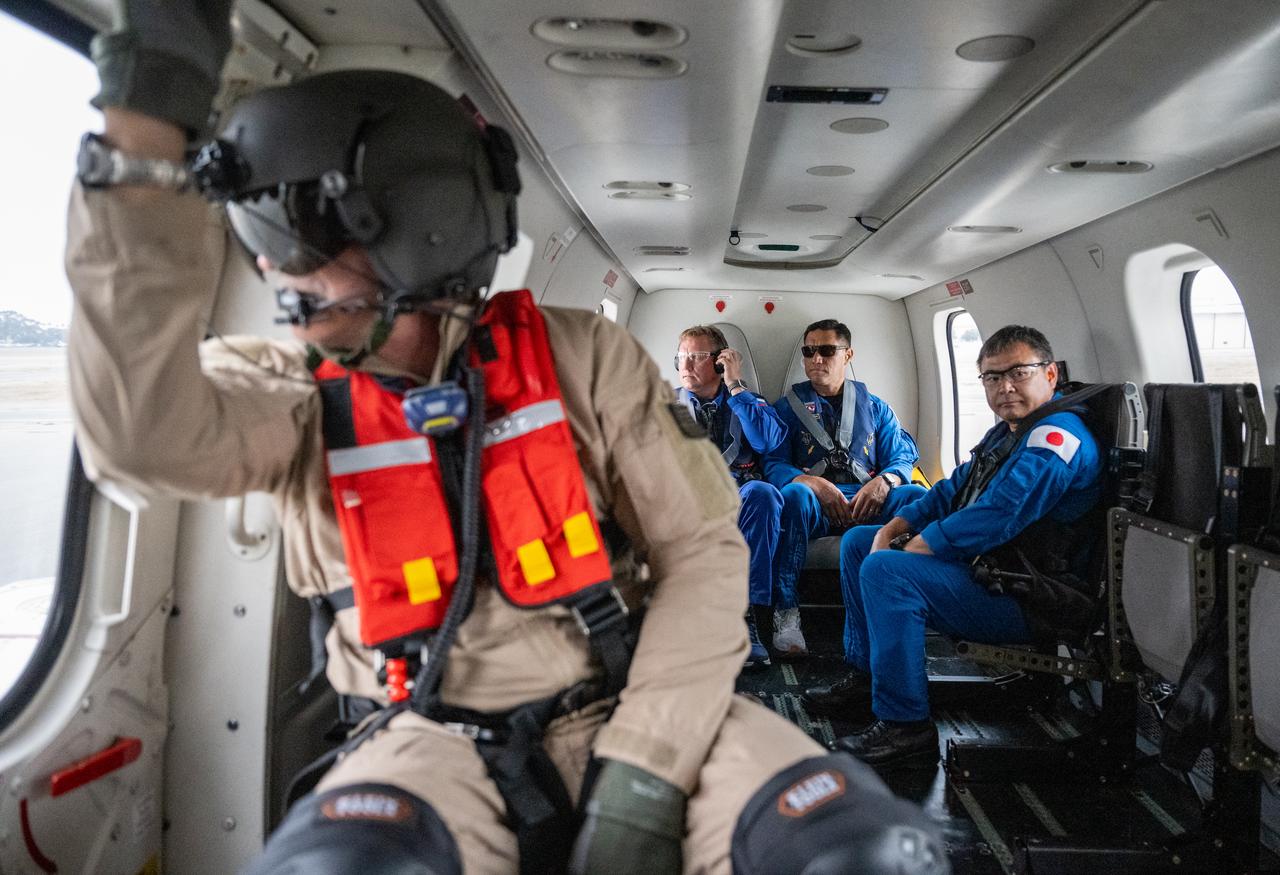
From right to left, Japan Aerospace Exploration Agency (JAXA) astronaut Aki Hoshide, NASA astronaut Frank Rubio, and Roscosmos cosmonaut Sergey Prokopyev are seen aboard a helicopter en route to stage for the landing of the SpaceX Dragon Endurance spacecraft with NASA astronauts Anne McClain and Nichole Ayers, JAXA (Japan Aerospace Exploration Agency) astronaut Takuya Onishi, and Roscosmos cosmonaut Kirill Peskov aboard, Saturday, Aug. 9, 2025, in San Diego, Calif.. McClain, Ayers, Onishi, and Peskov are landing in the Pacific Ocean after 147 days in space as part of Expedition 73 aboard the International Space Station. Photo Credit: (NASA/Keegan Barber)
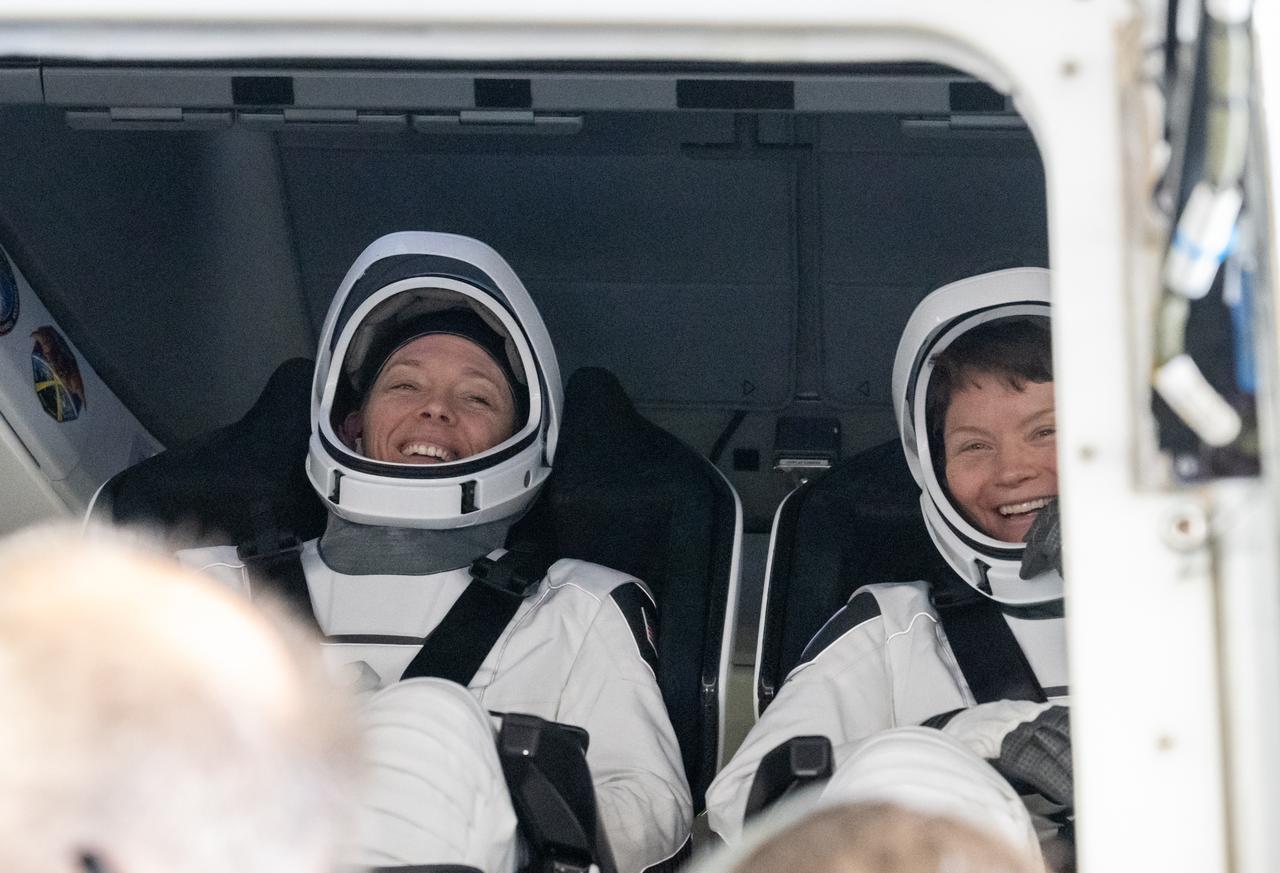
NASA astronaut Nichole Ayers, left, and Anne McClain, right, are seen inside the SpaceX Dragon Endurance spacecraft onboard the SpaceX recovery ship SHANNON after they, JAXA (Japan Aerospace Exploration Agency) astronaut Takuya Onishi, and Roscosmos cosmonaut Kirill Peskov landed in the Pacific Ocean off the coast of San Diego, Calif., Saturday, Aug. 9, 2025. McClain, Ayers, Onishi, and Peskov are returning after 147 days in space as part of Expedition 73 aboard the International Space Station. Photo Credit: (NASA/Keegan Barber)
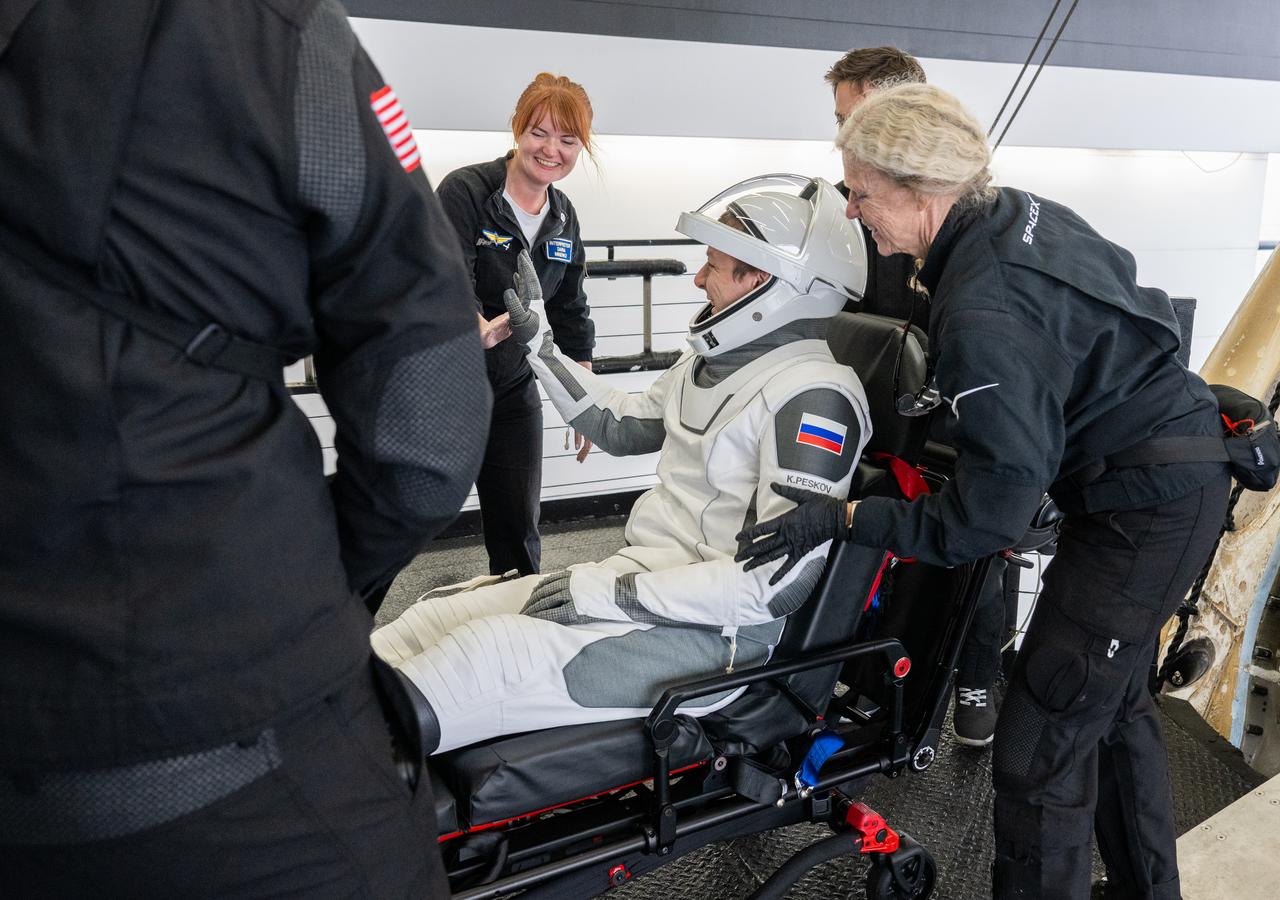
Roscosmos cosmonaut Kirill Peskov is helped out of the SpaceX Dragon Endurance spacecraft onboard the SpaceX recovery ship SHANNON after he, NASA astronauts Nichole Ayers, Anne McClain and JAXA (Japan Aerospace Exploration Agency) astronaut Takuya Onishi landed in the Pacific Ocean off the coast of San Diego, Calif., Saturday, Aug. 9, 2025. McClain, Ayers, Onishi, and Peskov are returning after 147 days in space as part of Expedition 73 aboard the International Space Station. Photo Credit: (NASA/Keegan Barber)
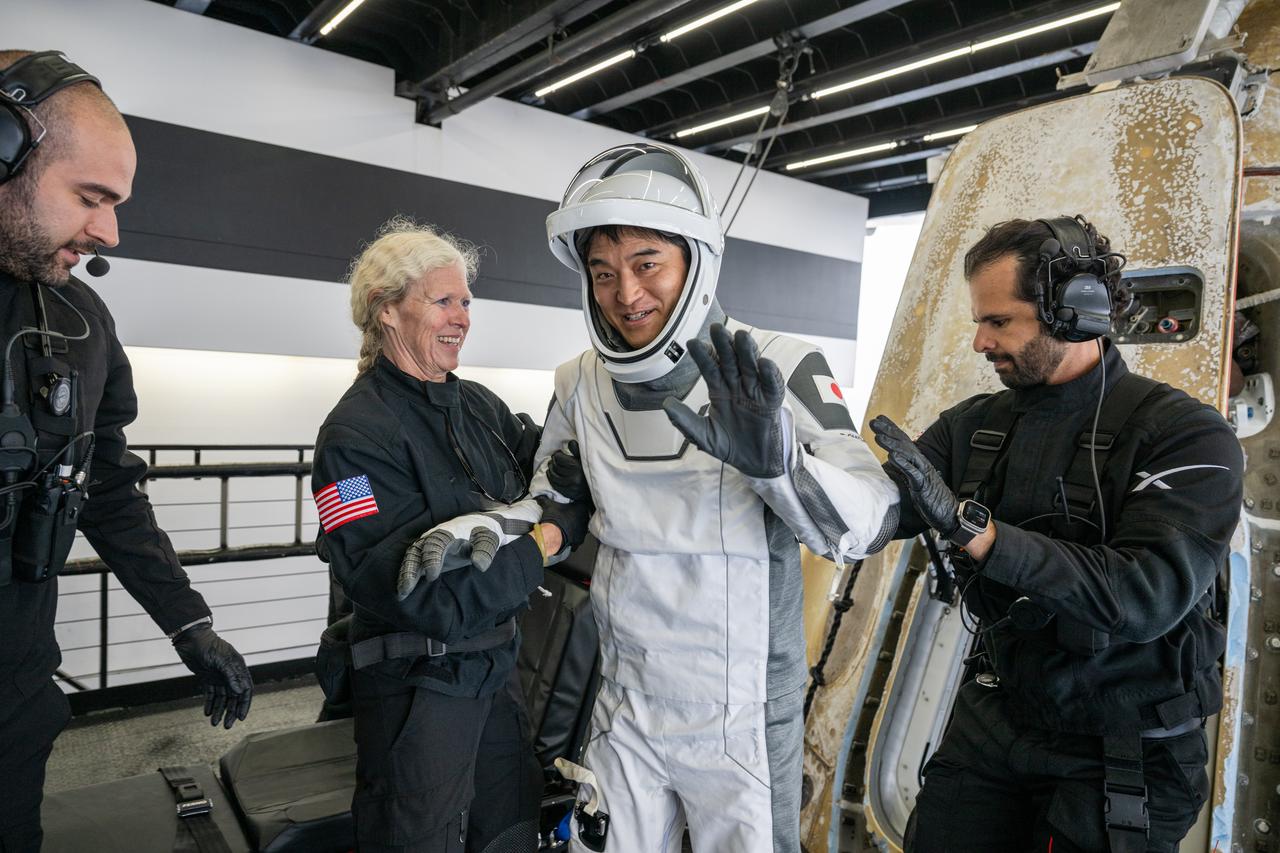
JAXA (Japan Aerospace Exploration Agency) astronaut Takuya Onishi is helped out of the SpaceX Dragon Endurance spacecraft onboard the SpaceX recovery ship SHANNON after he, NASA astronauts Nichole Ayers, Anne McClain, and Roscosmos cosmonaut Kirill Peskov landed in the Pacific Ocean off the coast of San Diego, Calif., Saturday, Aug. 9, 2025. McClain, Ayers, Onishi, and Peskov are returning after 147 days in space as part of Expedition 73 aboard the International Space Station. Photo Credit: (NASA/Keegan Barber)
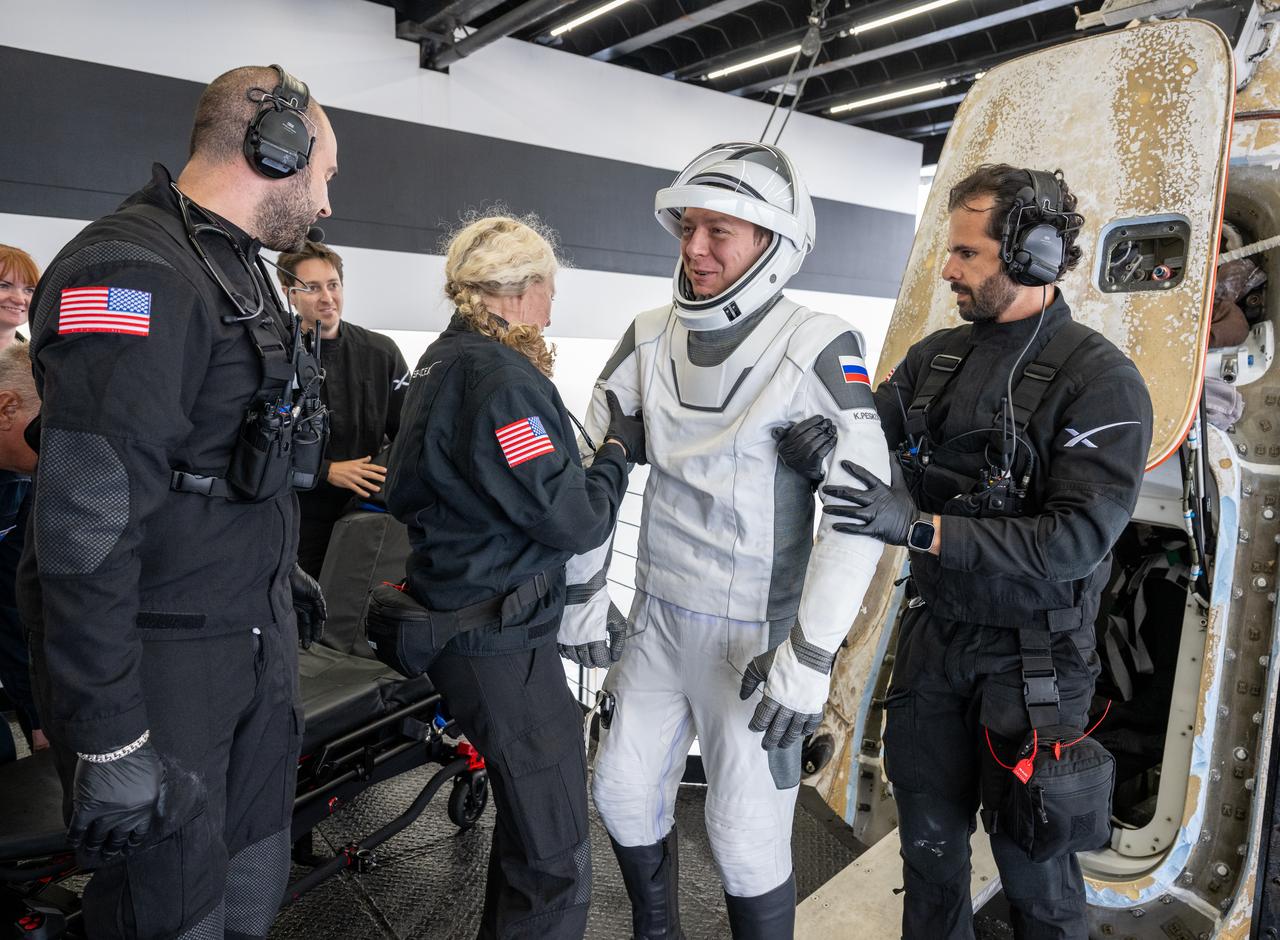
Roscosmos cosmonaut Kirill Peskov is helped out of the SpaceX Dragon Endurance spacecraft onboard the SpaceX recovery ship SHANNON after he, NASA astronauts Nichole Ayers, Anne McClain and JAXA (Japan Aerospace Exploration Agency) astronaut Takuya Onishi landed in the Pacific Ocean off the coast of San Diego, Calif., Saturday, Aug. 9, 2025. McClain, Ayers, Onishi, and Peskov are returning after 147 days in space as part of Expedition 73 aboard the International Space Station. Photo Credit: (NASA/Keegan Barber)\
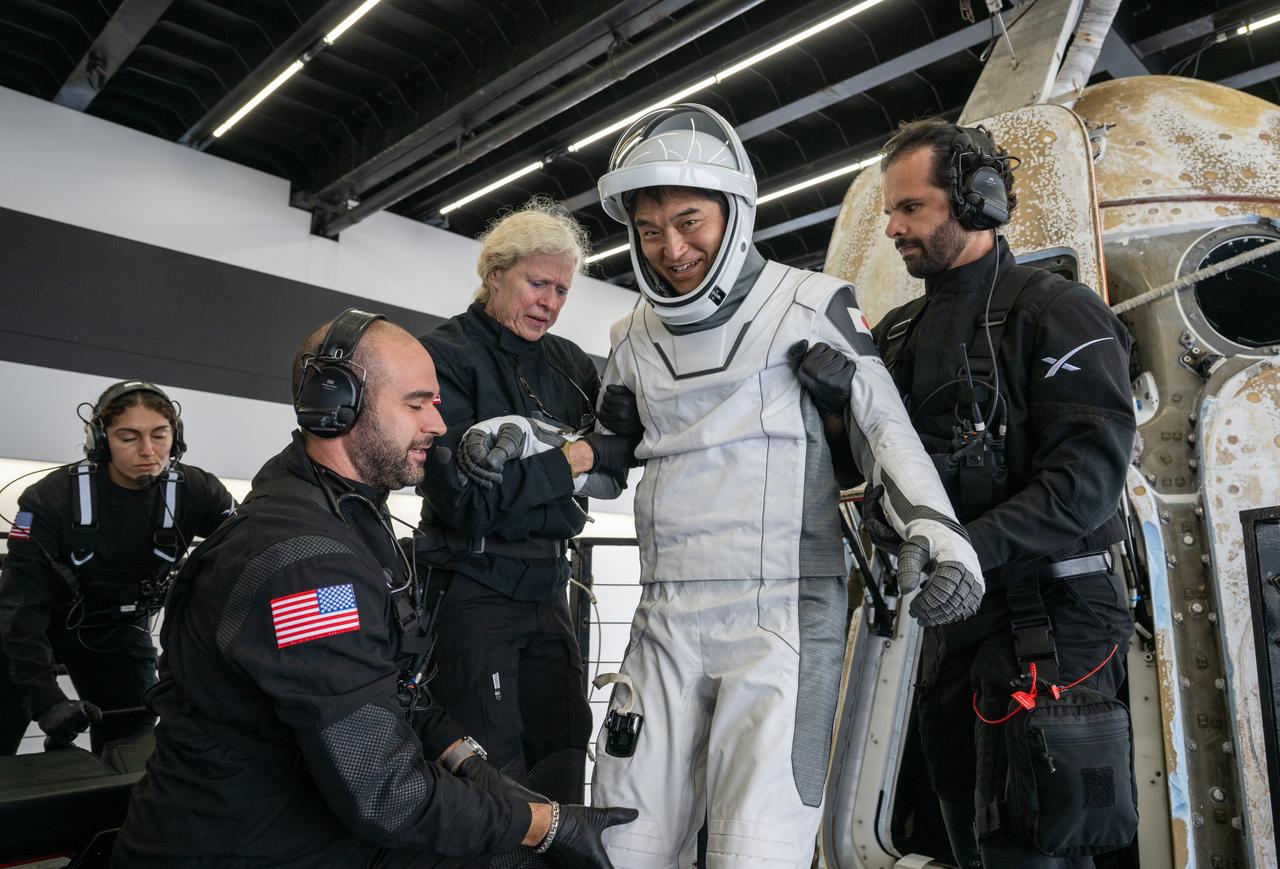
JAXA (Japan Aerospace Exploration Agency) astronaut Takuya Onishi is helped out of the SpaceX Dragon Endurance spacecraft onboard the SpaceX recovery ship SHANNON after he, NASA astronauts Nichole Ayers, Anne McClain, and Roscosmos cosmonaut Kirill Peskov landed in the Pacific Ocean off the coast of San Diego, Calif., Saturday, Aug. 9, 2025. McClain, Ayers, Onishi, and Peskov are returning after 147 days in space as part of Expedition 73 aboard the International Space Station. Photo Credit: (NASA/Keegan Barber)
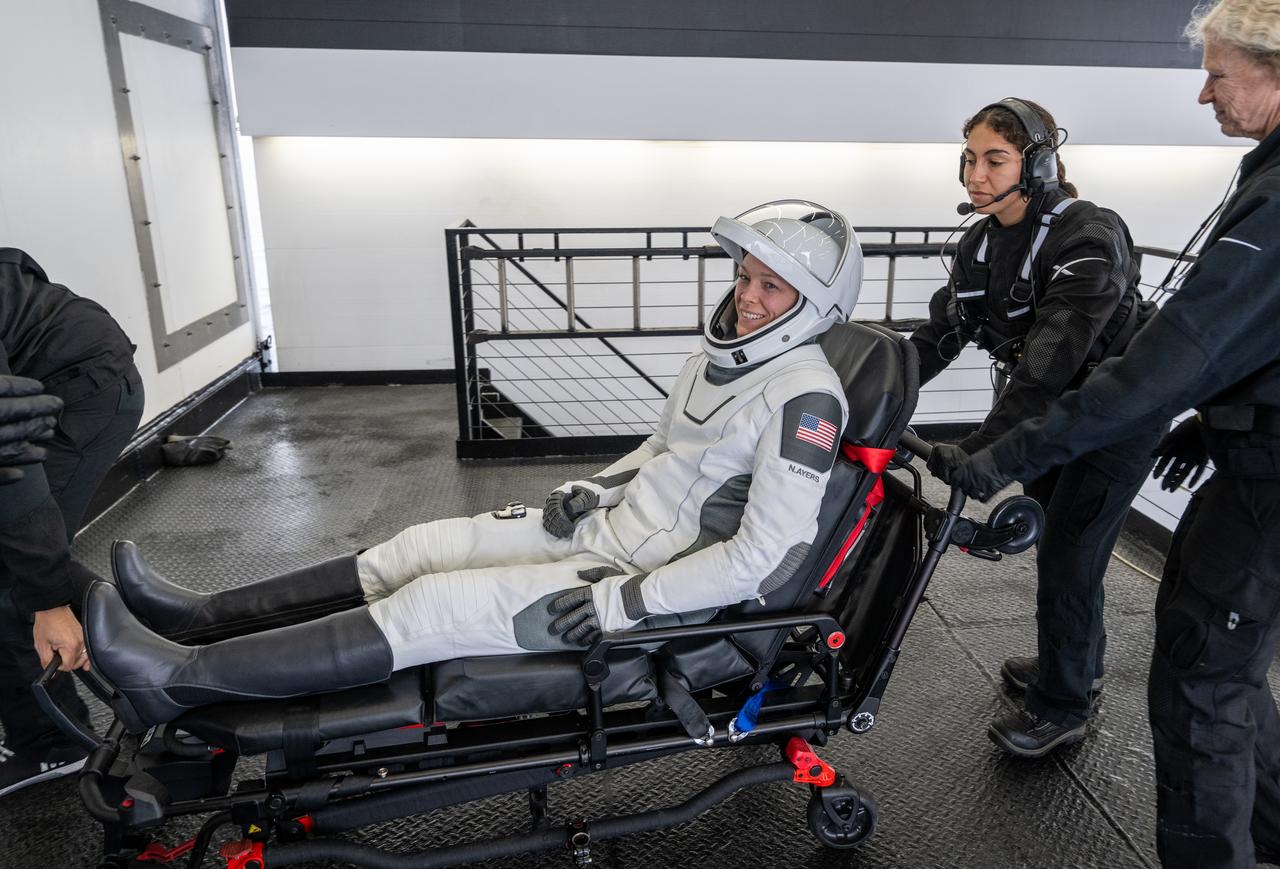
NASA astronaut Nichole Ayers helped out of the SpaceX Dragon Endurance spacecraft onboard the SpaceX recovery ship SHANNON after she, NASA astronaut Anne McClain, JAXA (Japan Aerospace Exploration Agency) astronaut Takuya Onishi, and Roscosmos cosmonaut Kirill Peskov landed in the Pacific Ocean off the coast of San Diego, Calif., Saturday, Aug. 9, 2025. McClain, Ayers, Onishi, and Peskov are returning after 147 days in space as part of Expedition 73 aboard the International Space Station. Photo Credit: (NASA/Keegan Barber)
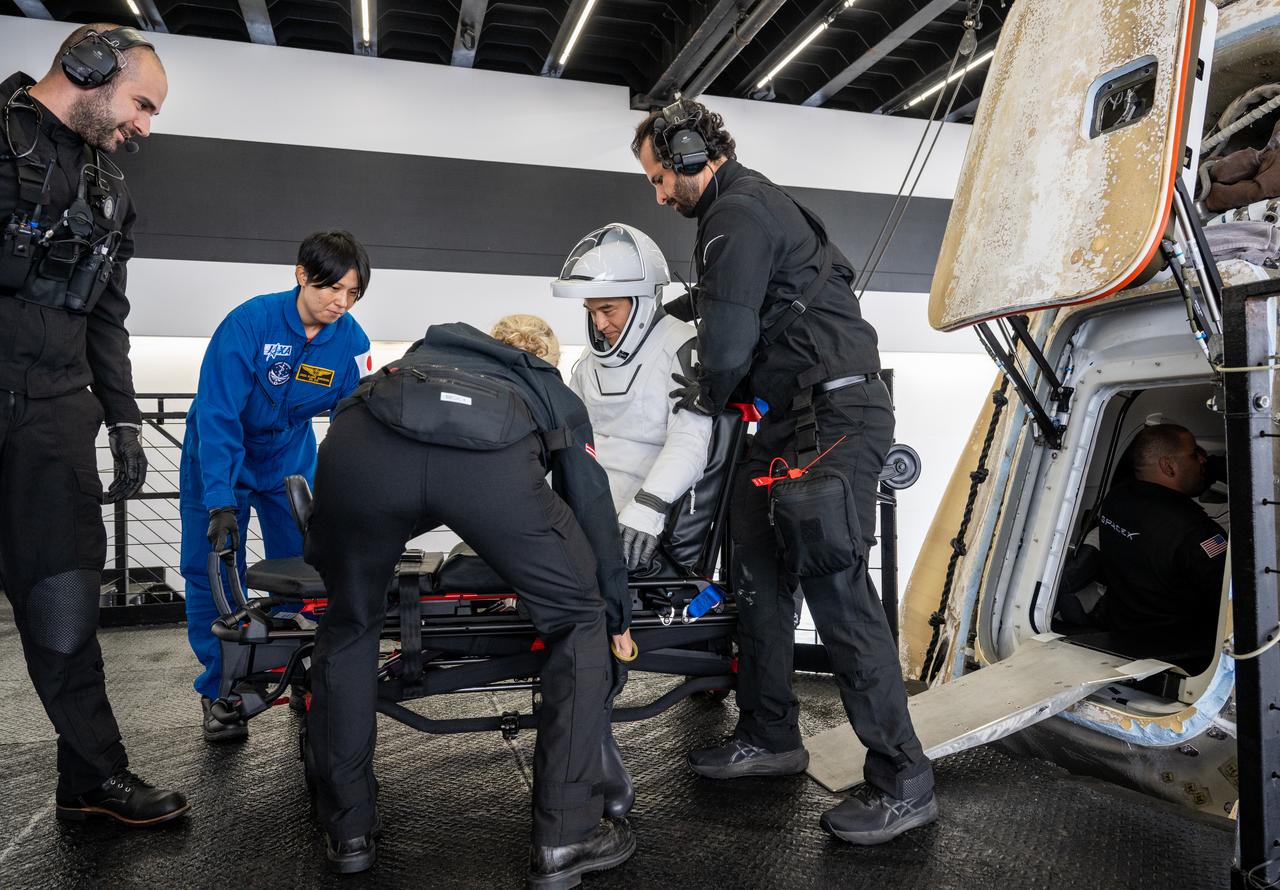
JAXA (Japan Aerospace Exploration Agency) astronaut Takuya Onishi is helped out of the SpaceX Dragon Endurance spacecraft onboard the SpaceX recovery ship SHANNON after he, NASA astronauts Nichole Ayers, Anne McClain, and Roscosmos cosmonaut Kirill Peskov landed in the Pacific Ocean off the coast of San Diego, Calif., Saturday, Aug. 9, 2025. McClain, Ayers, Onishi, and Peskov are returning after 147 days in space as part of Expedition 73 aboard the International Space Station. Photo Credit: (NASA/Keegan Barber)
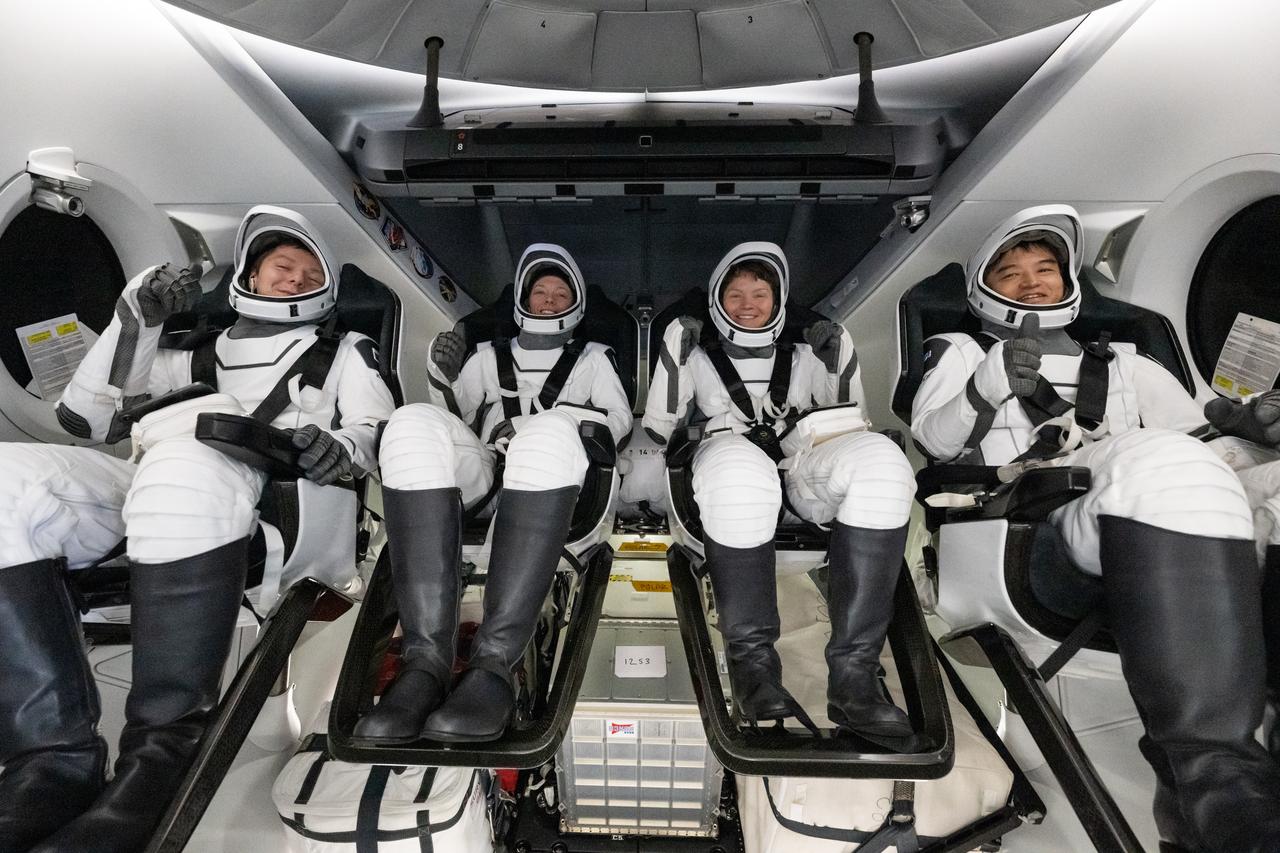
Roscosmos cosmonaut Kirill Peskov, left, NASA astronauts Nichole Ayers, Anne McClain, and JAXA (Japan Aerospace Exploration Agency) astronaut Takuya Onishi are seen inside the SpaceX Dragon Endurance spacecraft onboard the SpaceX recovery ship SHANNON shortly after having landed in the Pacific Ocean off the coast of San Diego, Calif., Saturday, Aug. 9, 2025. McClain, Ayers, Onishi, and Peskov are returning after 147 days in space as part of Expedition 73 aboard the International Space Station. Photo Credit: (NASA/Keegan Barber)
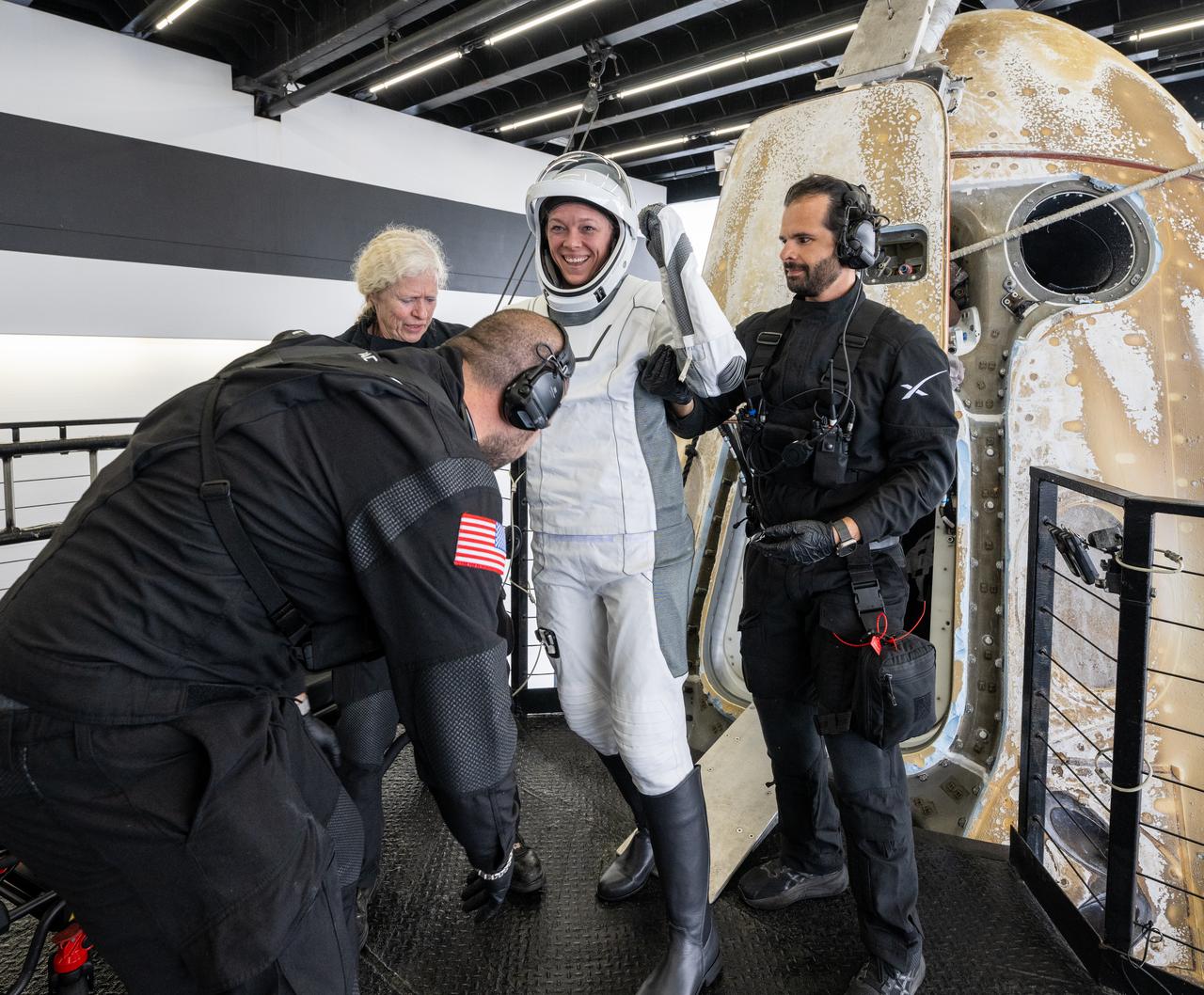
NASA astronaut Nichole Ayers helped out of the SpaceX Dragon Endurance spacecraft onboard the SpaceX recovery ship SHANNON after she, NASA astronaut Anne McClain, JAXA (Japan Aerospace Exploration Agency) astronaut Takuya Onishi, and Roscosmos cosmonaut Kirill Peskov landed in the Pacific Ocean off the coast of San Diego, Calif., Saturday, Aug. 9, 2025. McClain, Ayers, Onishi, and Peskov are returning after 147 days in space as part of Expedition 73 aboard the International Space Station. Photo Credit: (NASA/Keegan Barber)
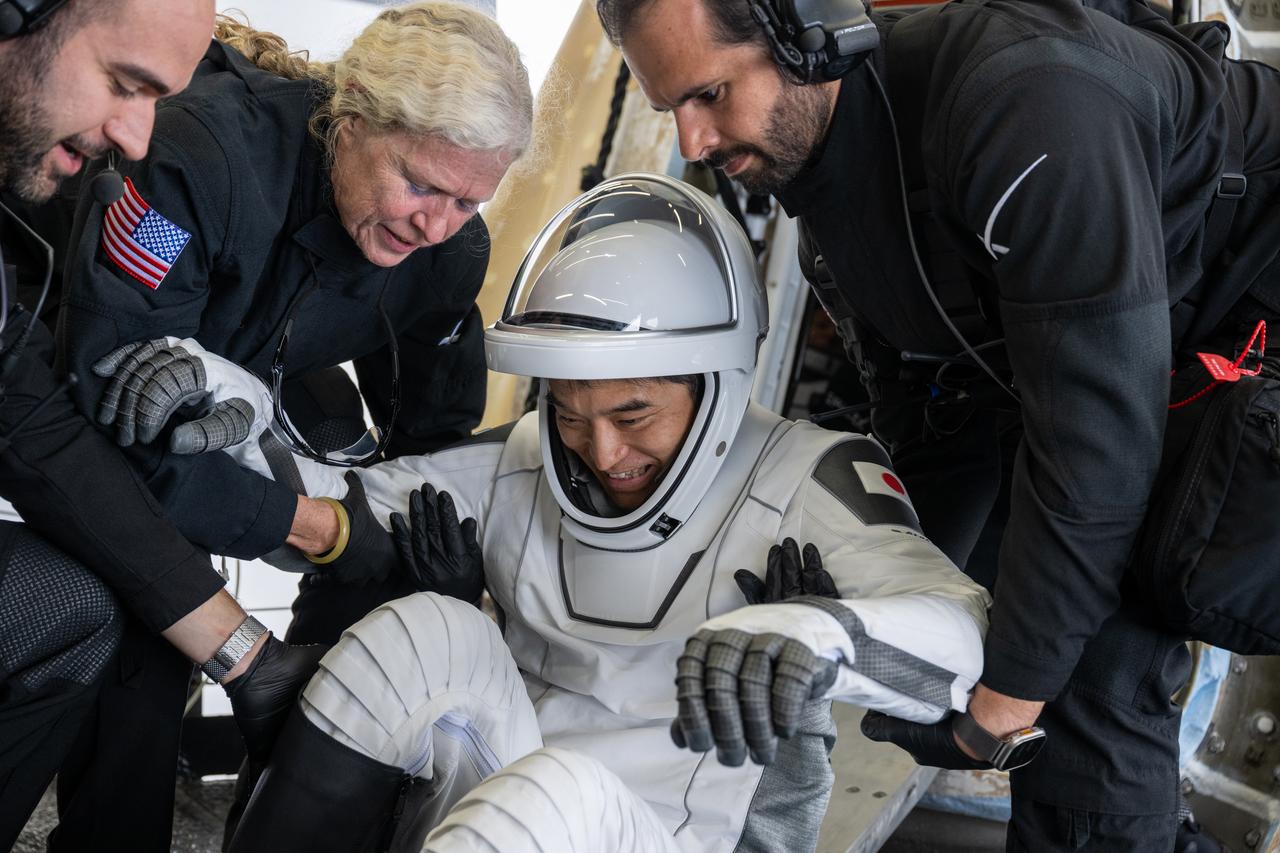
JAXA (Japan Aerospace Exploration Agency) astronaut Takuya Onishi is helped out of the SpaceX Dragon Endurance spacecraft onboard the SpaceX recovery ship SHANNON after he, NASA astronauts Nichole Ayers, Anne McClain, and Roscosmos cosmonaut Kirill Peskov landed in the Pacific Ocean off the coast of San Diego, Calif., Saturday, Aug. 9, 2025. McClain, Ayers, Onishi, and Peskov are returning after 147 days in space as part of Expedition 73 aboard the International Space Station. Photo Credit: (NASA/Keegan Barber)
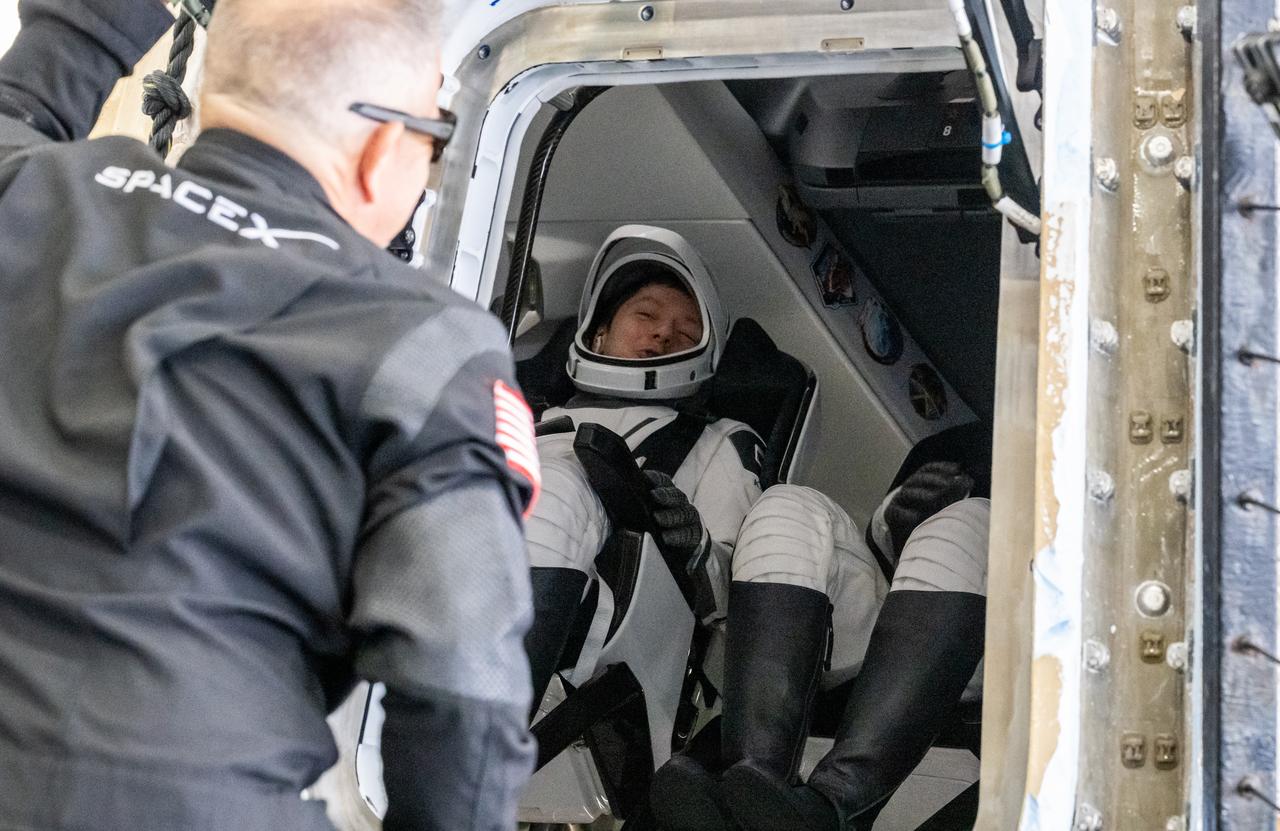
Roscosmos cosmonaut Kirill Peskov is seen inside the SpaceX Dragon Endurance spacecraft onboard the SpaceX recovery ship SHANNON after he, NASA astronauts Nichole Ayers, Anne McClain and JAXA (Japan Aerospace Exploration Agency) astronaut Takuya Onishi landed in the Pacific Ocean off the coast of San Diego, Calif., Saturday, Aug. 9, 2025. McClain, Ayers, Onishi, and Peskov are returning after 147 days in space as part of Expedition 73 aboard the International Space Station. Photo Credit: (NASA/Keegan Barber)
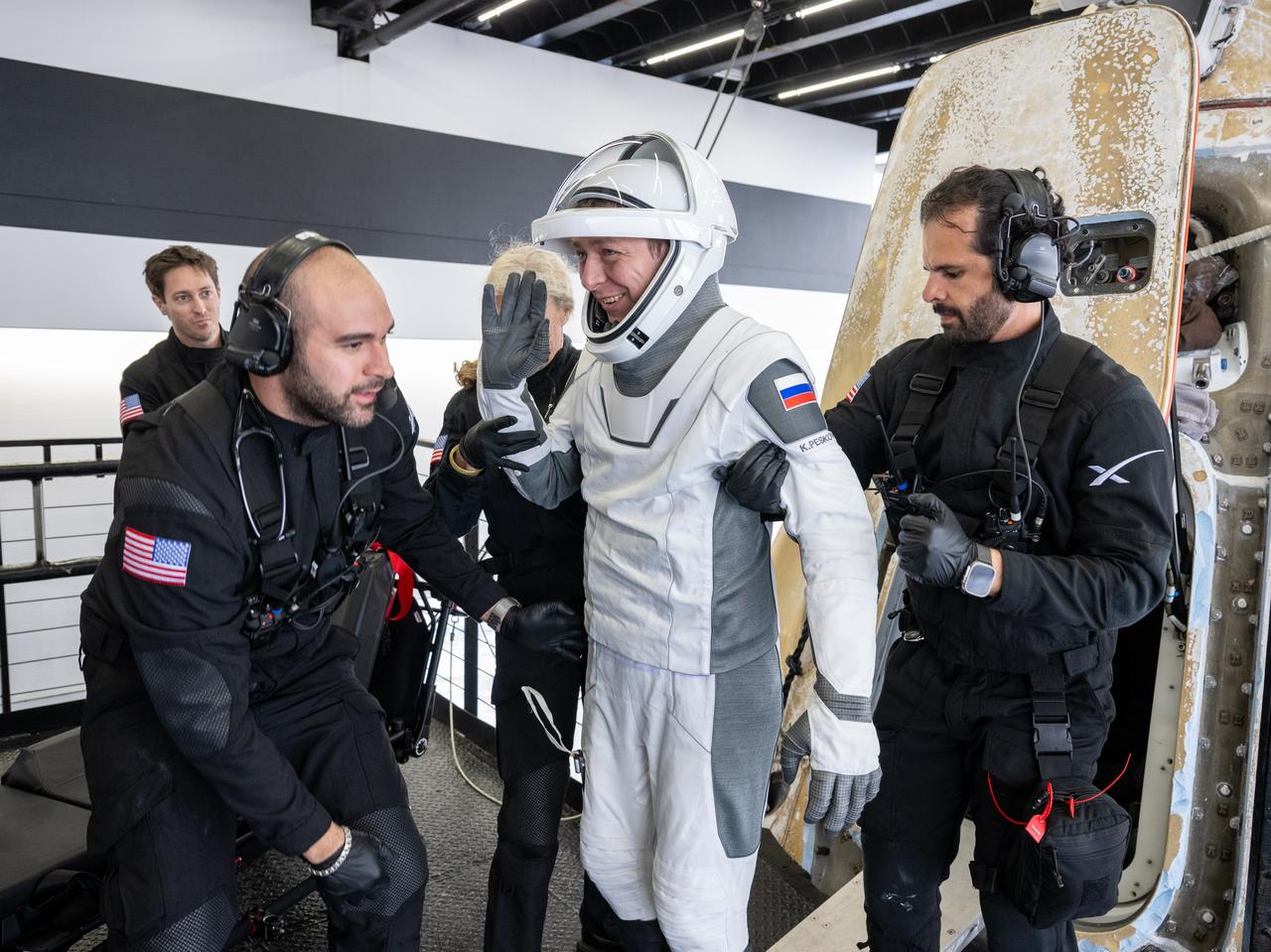
Roscosmos cosmonaut Kirill Peskov is helped out of the SpaceX Dragon Endurance spacecraft onboard the SpaceX recovery ship SHANNON after he, NASA astronauts Nichole Ayers, Anne McClain and JAXA (Japan Aerospace Exploration Agency) astronaut Takuya Onishi landed in the Pacific Ocean off the coast of San Diego, Calif., Saturday, Aug. 9, 2025. McClain, Ayers, Onishi, and Peskov are returning after 147 days in space as part of Expedition 73 aboard the International Space Station. Photo Credit: (NASA/Keegan Barber)\
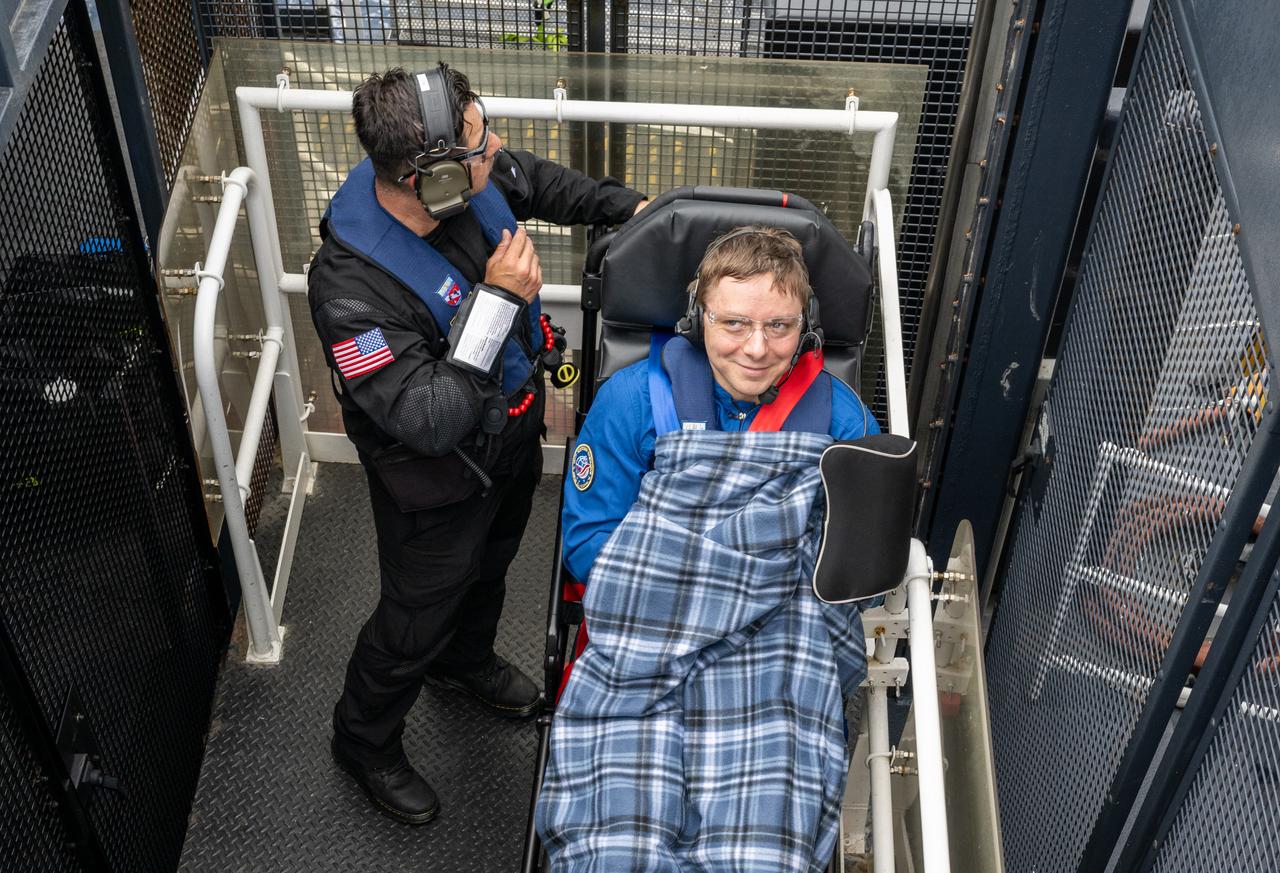
Roscosmos cosmonaut Kirill Peskov is seen inside an elevator onboard the SpaceX recovery ship SHANNON that will take him up to a waiting helicopter to fly to Long Beach, Calif. along with NASA astronauts Nichole Ayers, Anne McClain and JAXA (Japan Aerospace Exploration Agency) astronaut Takuya Onishi shortly after they landed in the Pacific Ocean off the coast of San Diego, Calif., Saturday, Aug. 9, 2025. McClain, Ayers, Onishi, and Peskov are returning after 147 days in space as part of Expedition 73 aboard the International Space Station. Photo Credit: (NASA/Keegan Barber)
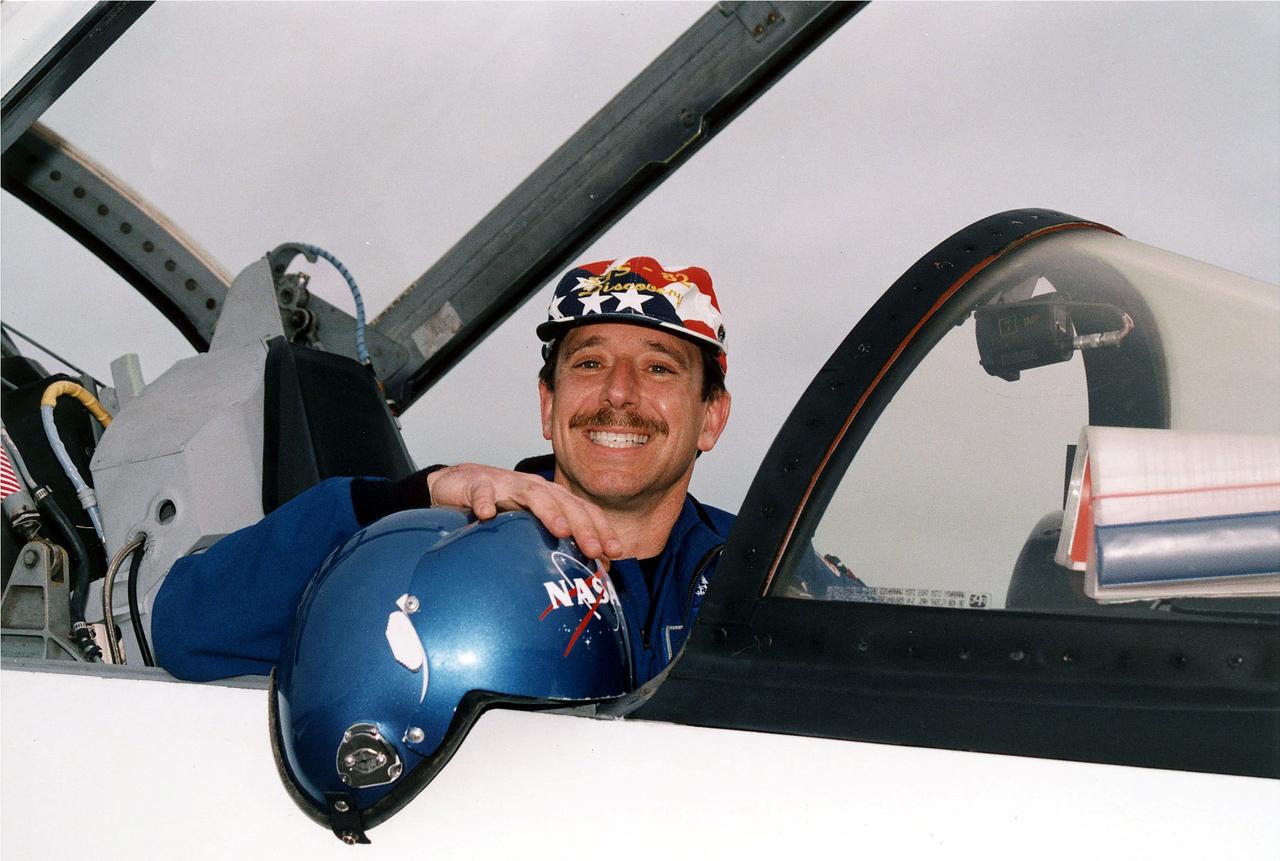
KENNEDY SPACE CENTER, FLA. - STS-82 Pilot Scott J. "Doc" Horowitz flashes a wide grin for photographers after landing his T-38 jet at KSC's Shuttle Landing Facility. Horowitz and the other six members of the STS-82 crew came from their home base at Johnson Space Center in Houston, Texas, to spend the last few days before launch at KSC. STS-82 is scheduled for liftoff on Feb. 11 during a 65-minute launch window that opens at 3:56 a.m. EST. The 10-day flight aboard the Space Shuttle Discovery will be the second Hubble Space Telescope (HST) servicing mission.
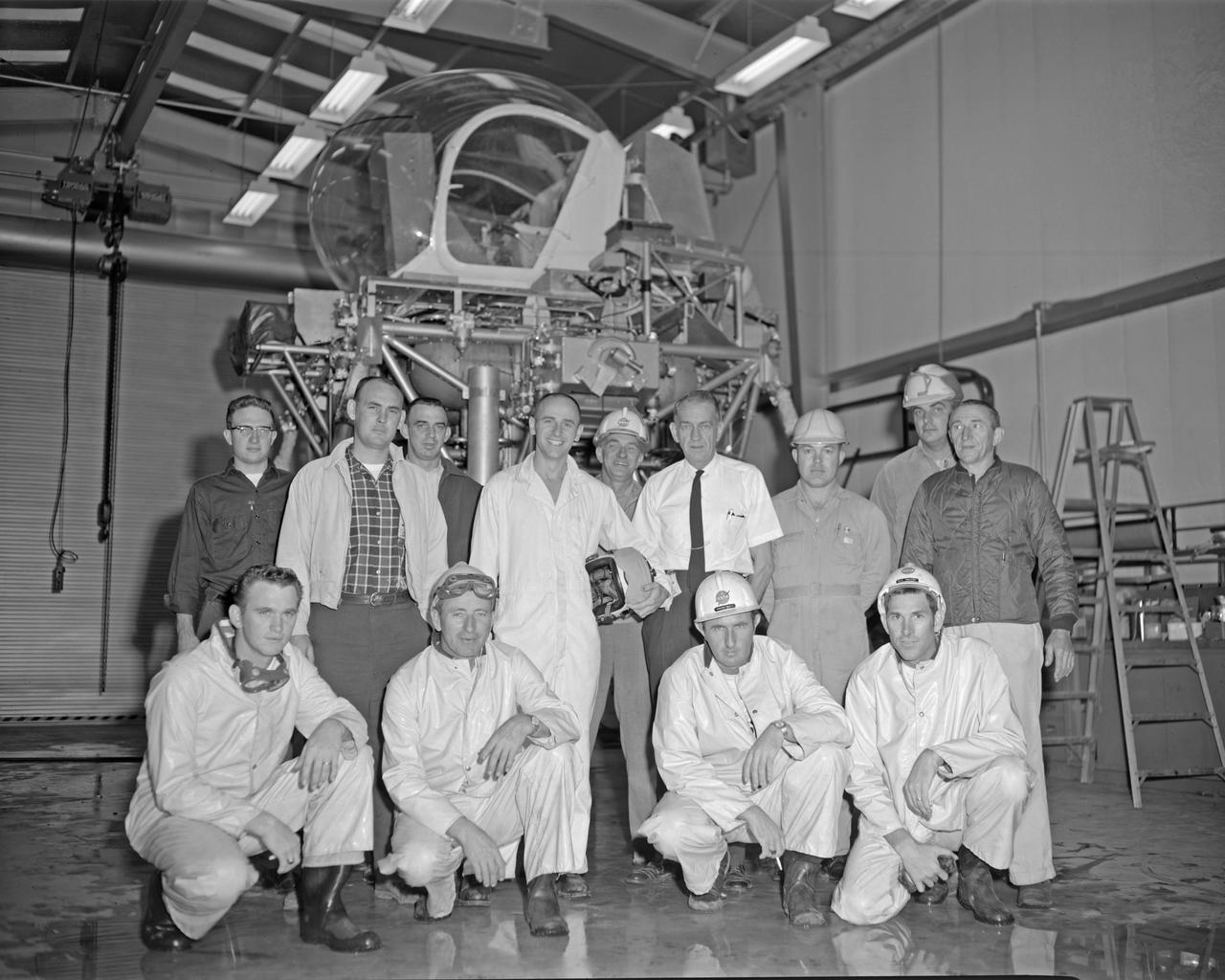
Astronaut Allen Bean with Lunar Landing Research Facility (LLRF) crew. Alan Bean was one of the third group of astronauts named by NASA in October 1963. He served as backup astronaut for the Gemini 10 and Apollo 9 missions.
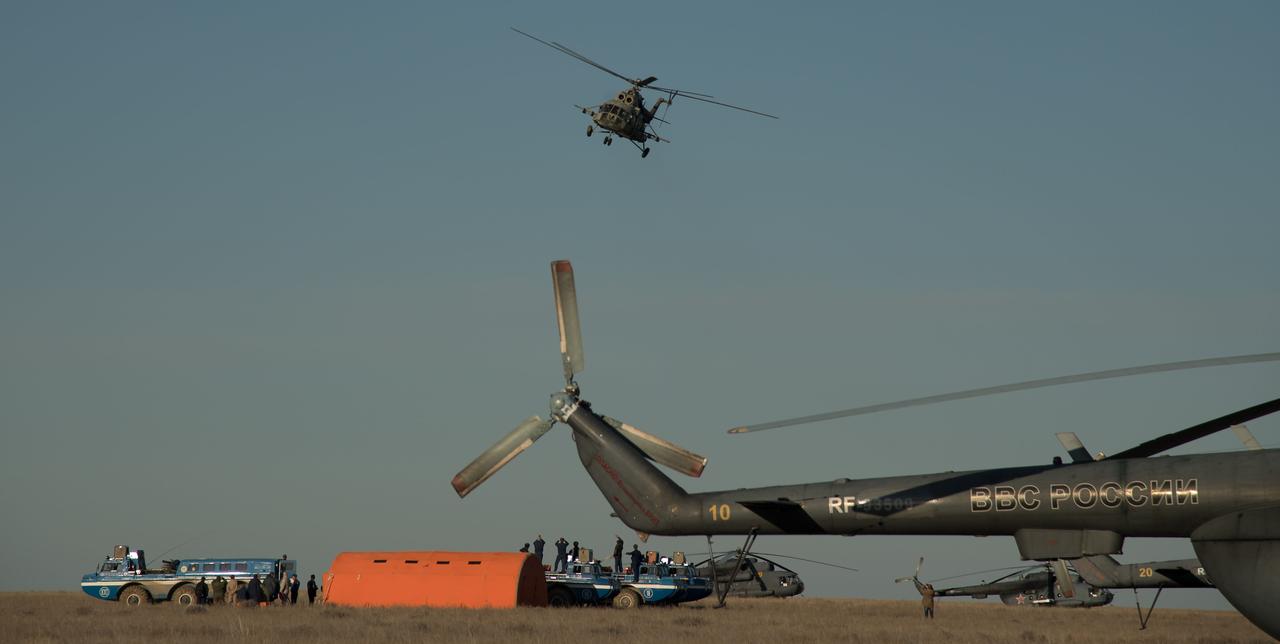
nhq201704100040 (April 10, 2017) --- A Russian support helicopter leaves the Soyuz MS-02 landing site shortly after the capsule landed with Expedition 50 Commander Shane Kimbrough of NASA and Flight Engineers Sergey Ryzhikov and Andrey Borisenko of Roscosmos near the town of Zhezkazgan, Kazakhstan on Monday, April 10, 2017 (Kazakh time). Kimbrough, Ryzhikov, and Borisenko are returning after 173 days in space where they served as members of the Expedition 49 and 50 crews onboard the International Space Station. Photo Credit: (NASA/Bill Ingalls)
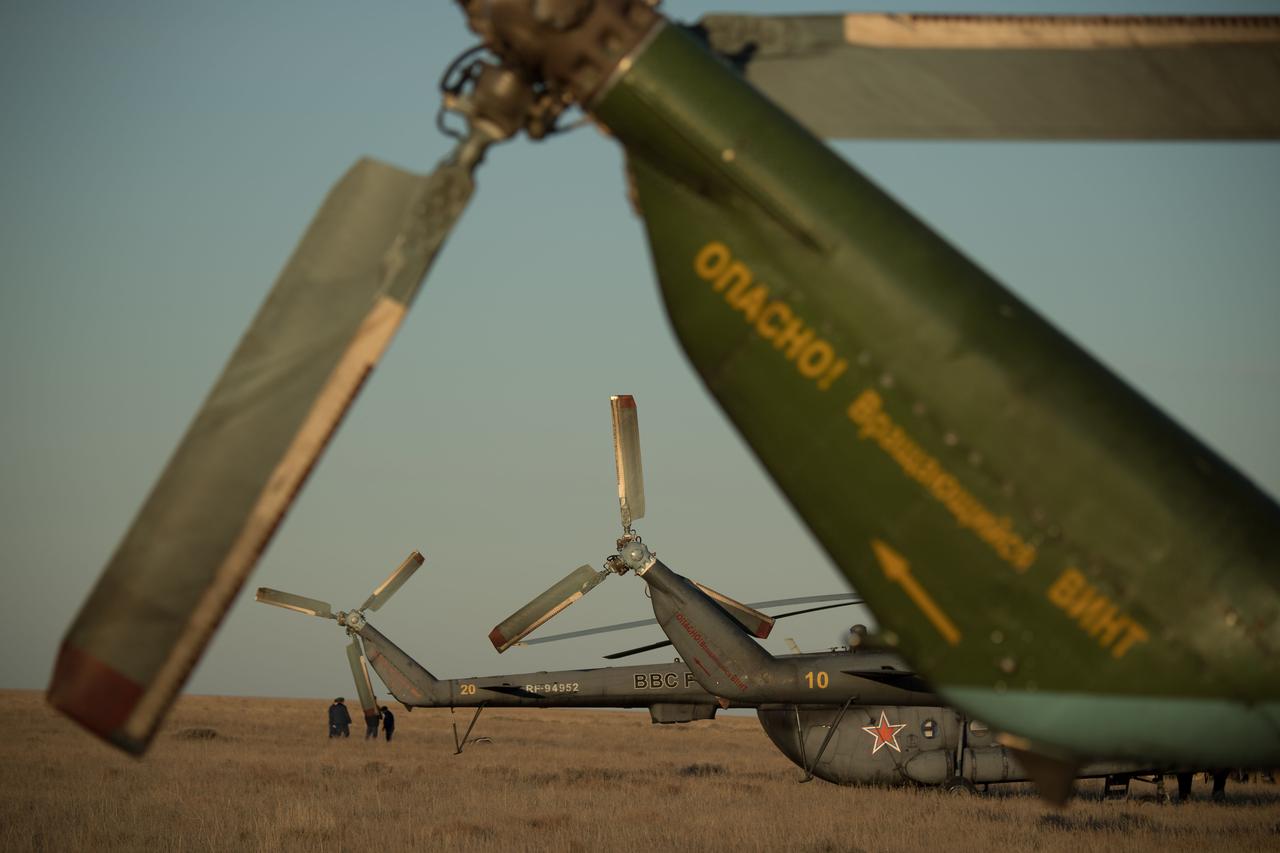
nhq201704100042 (April 10, 2017) --- Russian MI-8 helicopters are seen at the Soyuz MS-02 landing site after the spacecraft landed with Expedition 50 Commander Shane Kimbrough of NASA and Flight Engineers Sergey Ryzhikov and Andrey Borisenko of Roscosmos near the town of Zhezkazgan, Kazakhstan on Monday, April 10, 2017 (Kazakh time). Kimbrough, Ryzhikov, and Borisenko are returning after 173 days in space where they served as members of the Expedition 49 and 50 crews onboard the International Space Station. Photo Credit: (NASA/Bill Ingalls)
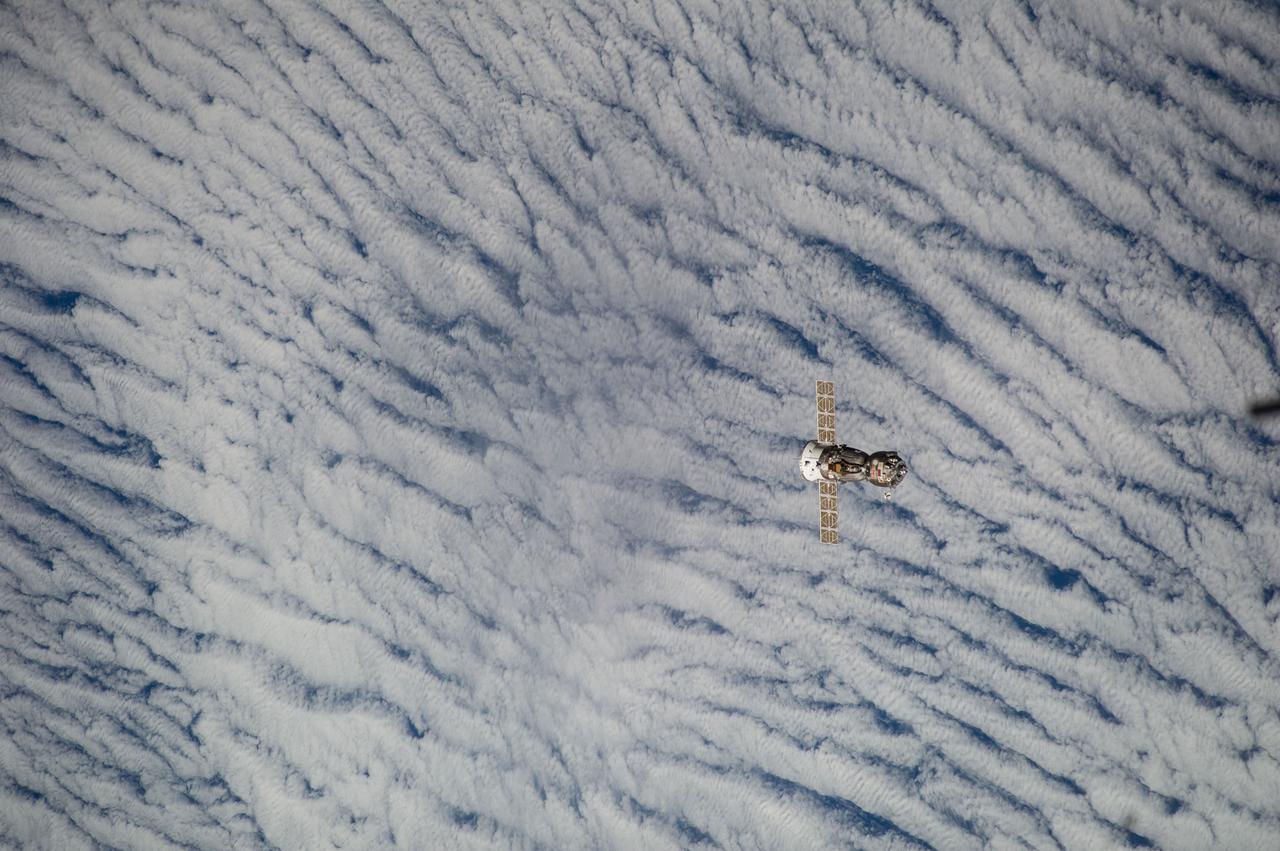
ISS041-E-000047 (10 Sept. 2014) --- The Soyuz TMA-12M spacecraft departs from the International Space Station and heads toward a landing in a remote area near the town of Zhezkazgan, Kazakhstan. NASA astronaut Steve Swanson, Expedition 40 commander; Russian cosmonaut Alexander Skvortsov, Soyuz commander and flight engineer; and Russian cosmonaut Oleg Artemyev, flight engineer, are returning from more than five months aboard the space station where they served as members of the Expedition 39 and 40 crews. Landing occurred at 10:23 p.m. (EDT), Sept. 10, 2014 (8:23 a.m., Sept. 11, Kazakh time).
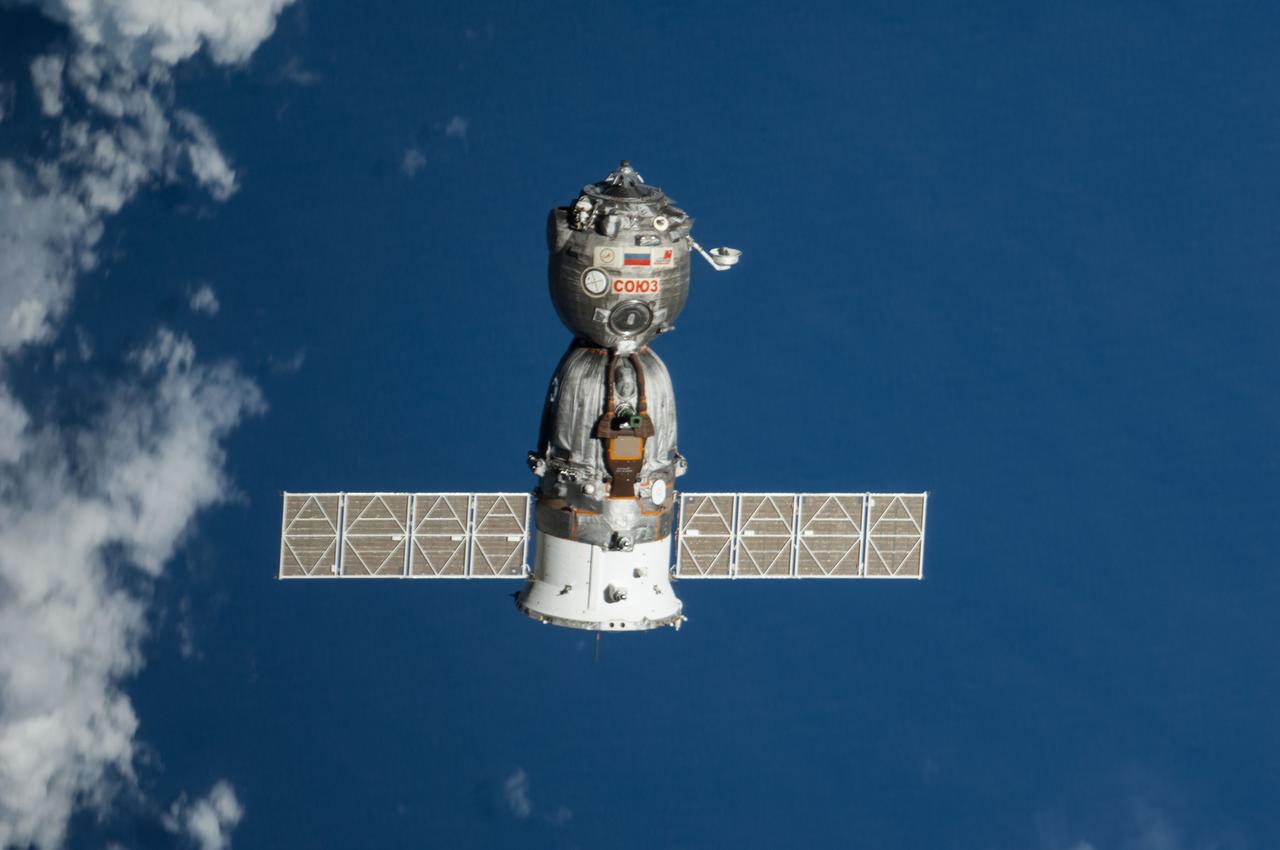
ISS041-E-000027 (10 Sept. 2014) --- The Soyuz TMA-12M spacecraft departs from the International Space Station and heads toward a landing in a remote area near the town of Zhezkazgan, Kazakhstan. NASA astronaut Steve Swanson, Expedition 40 commander; Russian cosmonaut Alexander Skvortsov, Soyuz commander and flight engineer; and Russian cosmonaut Oleg Artemyev, flight engineer, are returning from more than five months aboard the space station where they served as members of the Expedition 39 and 40 crews. Landing occurred at 10:23 p.m. (EDT), Sept. 10, 2014 (8:23 a.m., Sept. 11, Kazakh time).
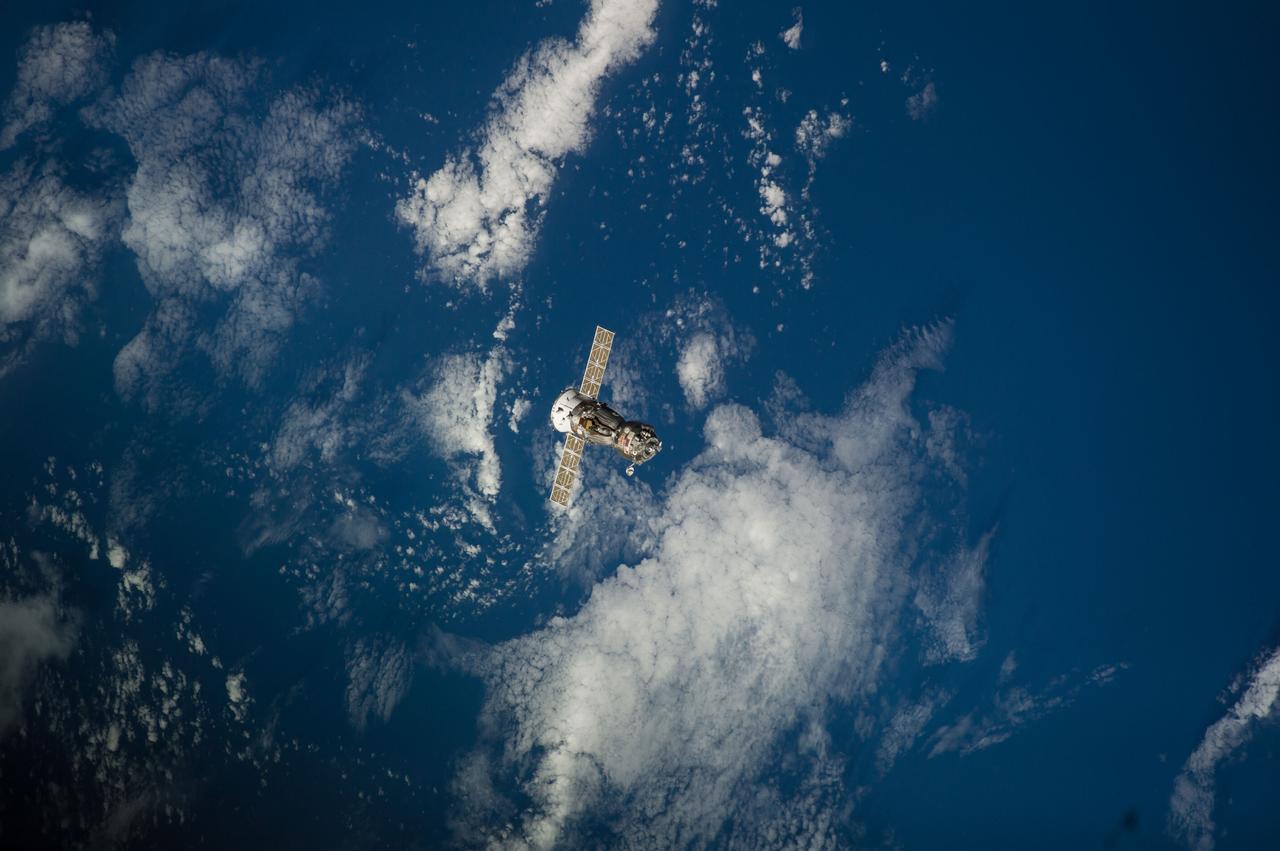
ISS041-E-000044 (10 Sept. 2014) --- The Soyuz TMA-12M spacecraft departs from the International Space Station and heads toward a landing in a remote area near the town of Zhezkazgan, Kazakhstan. NASA astronaut Steve Swanson, Expedition 40 commander; Russian cosmonaut Alexander Skvortsov, Soyuz commander and flight engineer; and Russian cosmonaut Oleg Artemyev, flight engineer, are returning from more than five months aboard the space station where they served as members of the Expedition 39 and 40 crews. Landing occurred at 10:23 p.m. (EDT), Sept. 10, 2014 (8:23 a.m., Sept. 11, Kazakh time).
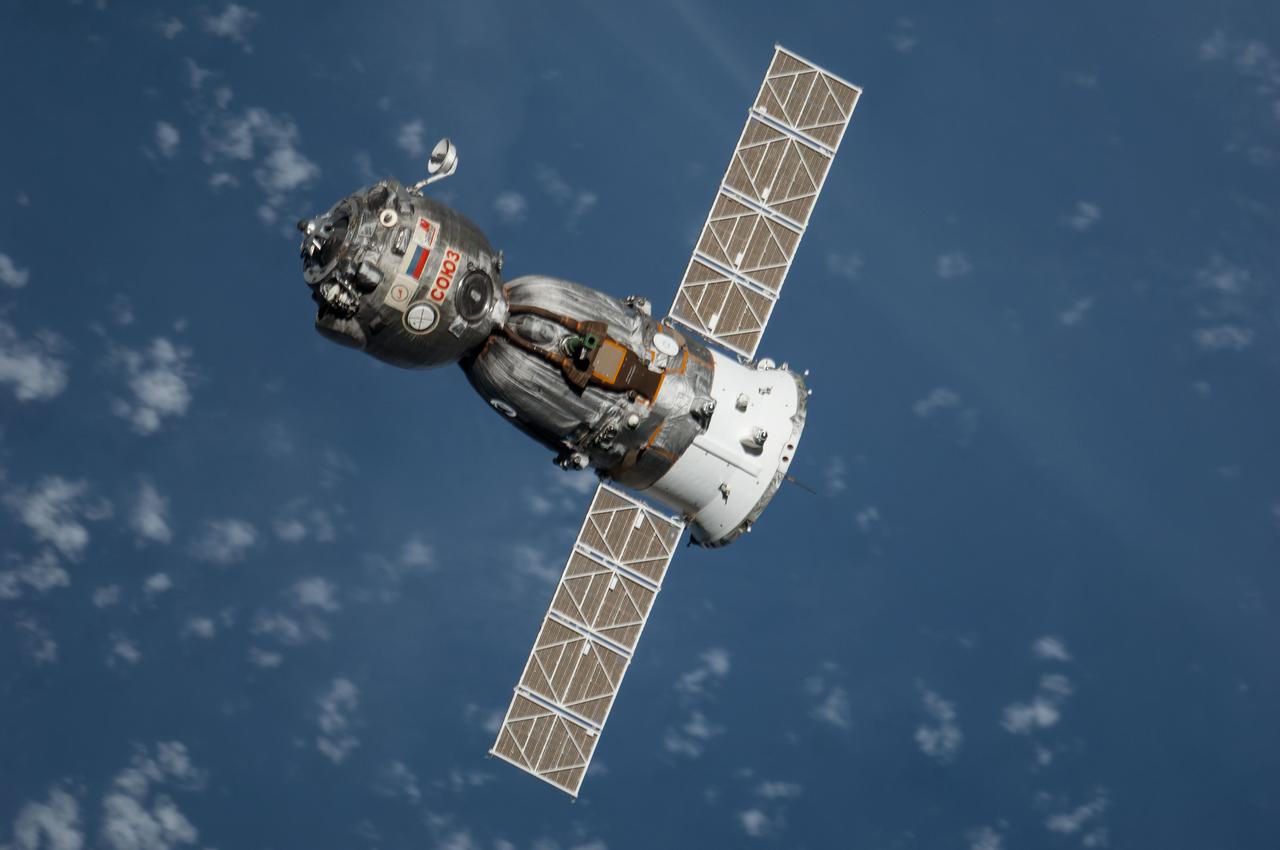
ISS041-E-000005 (10 Sept. 2014) --- The Soyuz TMA-12M spacecraft departs from the International Space Station and heads toward a landing in a remote area near the town of Zhezkazgan, Kazakhstan. NASA astronaut Steve Swanson, Expedition 40 commander; Russian cosmonaut Alexander Skvortsov, Soyuz commander and flight engineer; and Russian cosmonaut Oleg Artemyev, flight engineer, are returning from more than five months aboard the space station where they served as members of the Expedition 39 and 40 crews. Landing occurred at 10:23 p.m. (EDT), Sept. 10, 2014 (8:23 a.m., Sept. 11, Kazakh time).
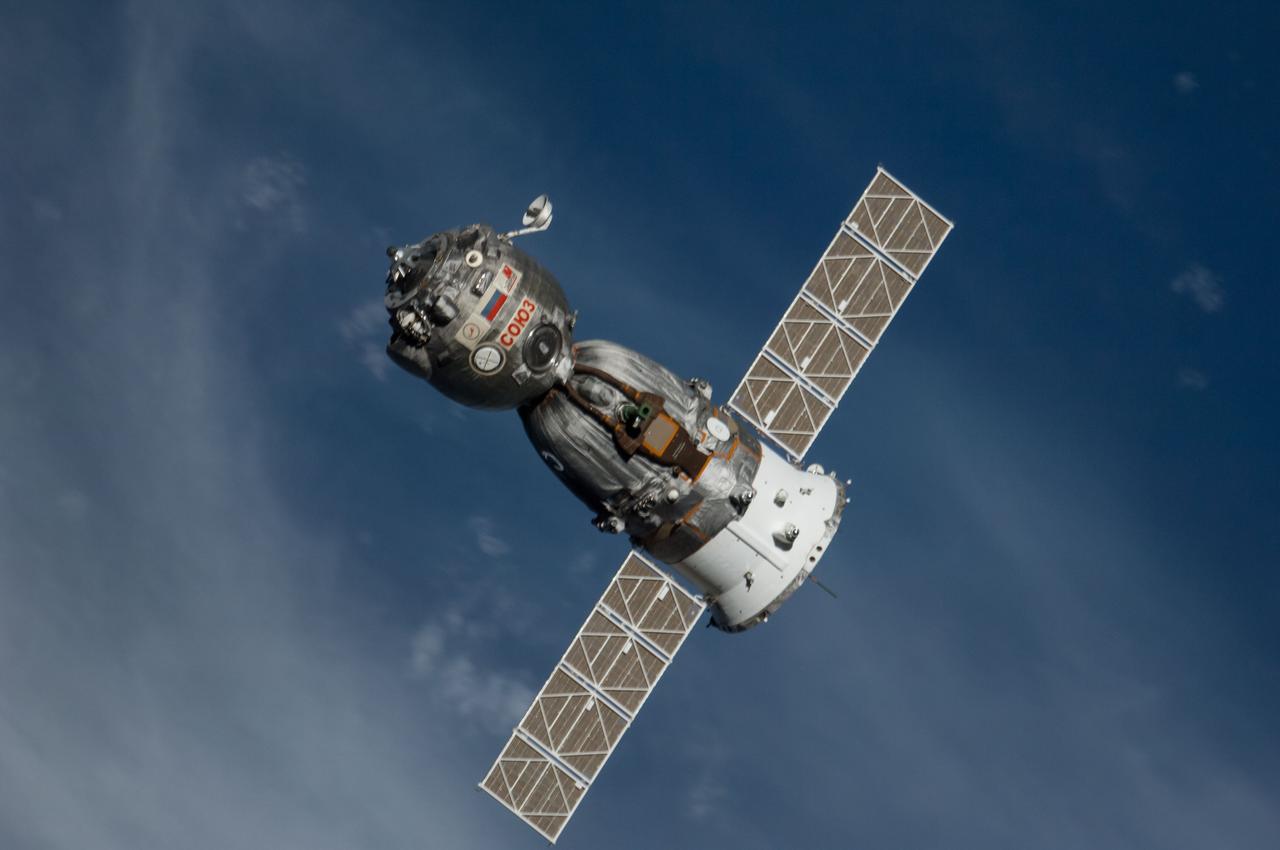
ISS041-E-000012 (10 Sept. 2014) --- The Soyuz TMA-12M spacecraft departs from the International Space Station and heads toward a landing in a remote area near the town of Zhezkazgan, Kazakhstan. NASA astronaut Steve Swanson, Expedition 40 commander; Russian cosmonaut Alexander Skvortsov, Soyuz commander and flight engineer; and Russian cosmonaut Oleg Artemyev, flight engineer, are returning from more than five months aboard the space station where they served as members of the Expedition 39 and 40 crews. Landing occurred at 10:23 p.m. (EDT), Sept. 10, 2014 (8:23 a.m., Sept. 11, Kazakh time).
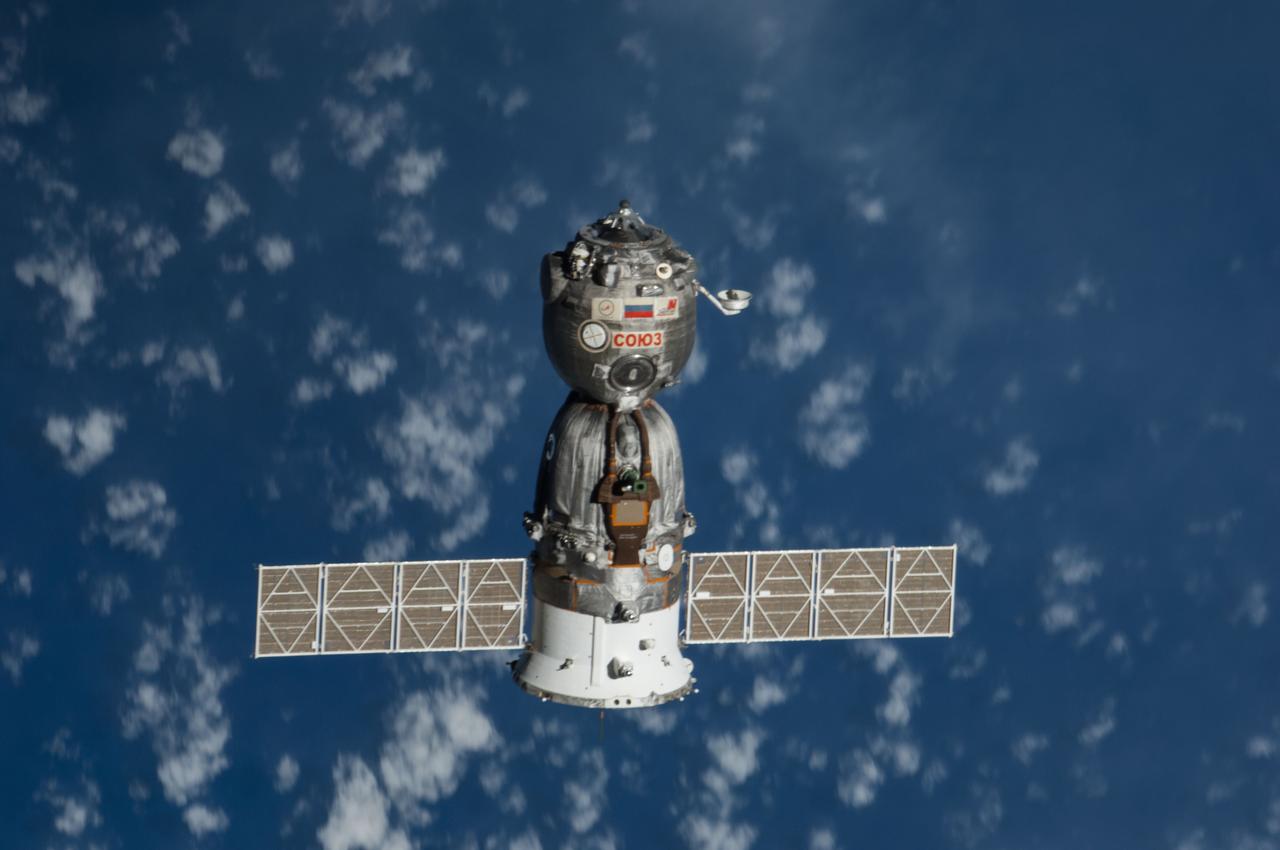
ISS041-E-000017 (10 Sept. 2014) --- The Soyuz TMA-12M spacecraft departs from the International Space Station and heads toward a landing in a remote area near the town of Zhezkazgan, Kazakhstan. NASA astronaut Steve Swanson, Expedition 40 commander; Russian cosmonaut Alexander Skvortsov, Soyuz commander and flight engineer; and Russian cosmonaut Oleg Artemyev, flight engineer, are returning from more than five months aboard the space station where they served as members of the Expedition 39 and 40 crews. Landing occurred at 10:23 p.m. (EDT), Sept. 10, 2014 (8:23 a.m., Sept. 11, Kazakh time).
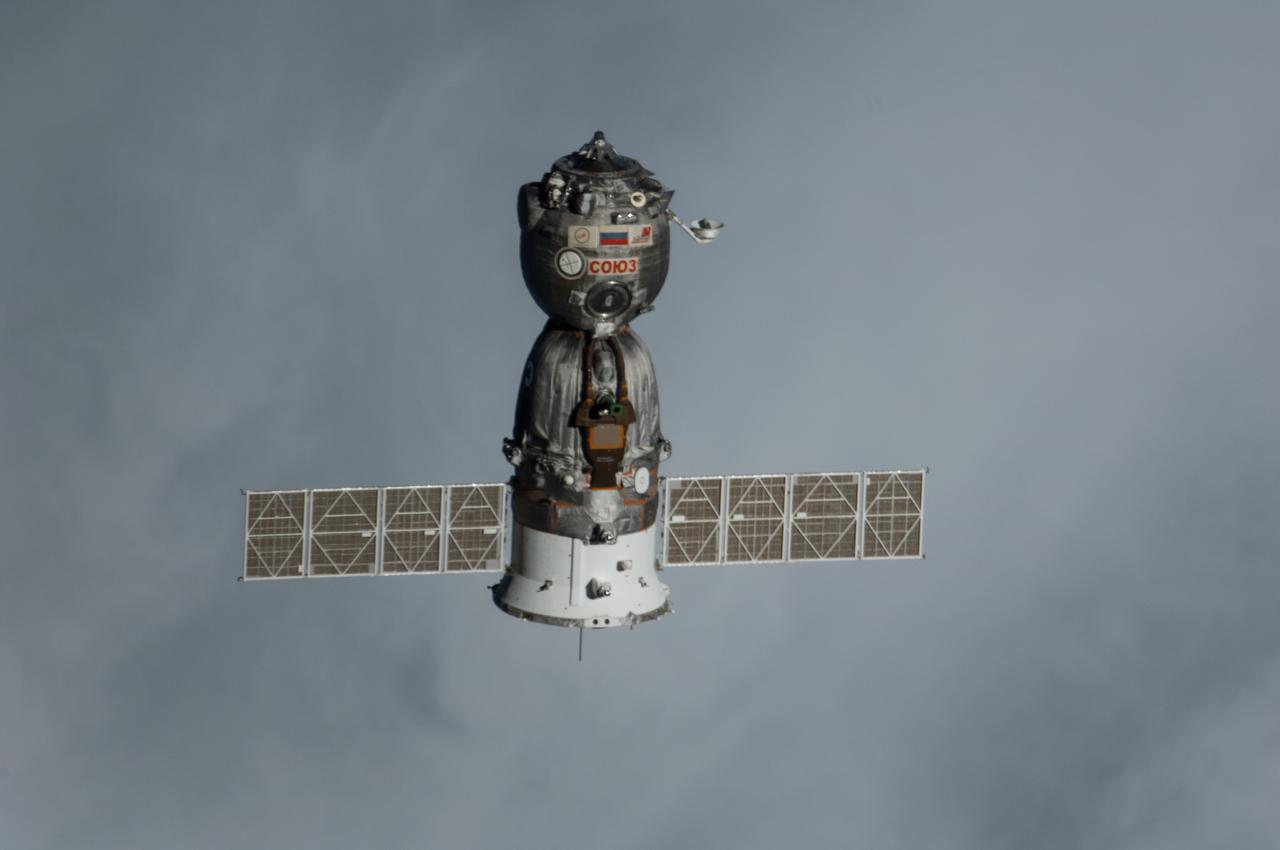
ISS041-E-000021 (10 Sept. 2014) --- The Soyuz TMA-12M spacecraft departs from the International Space Station and heads toward a landing in a remote area near the town of Zhezkazgan, Kazakhstan. NASA astronaut Steve Swanson, Expedition 40 commander; Russian cosmonaut Alexander Skvortsov, Soyuz commander and flight engineer; and Russian cosmonaut Oleg Artemyev, flight engineer, are returning from more than five months aboard the space station where they served as members of the Expedition 39 and 40 crews. Landing occurred at 10:23 p.m. (EDT), Sept. 10, 2014 (8:23 a.m., Sept. 11, Kazakh time).
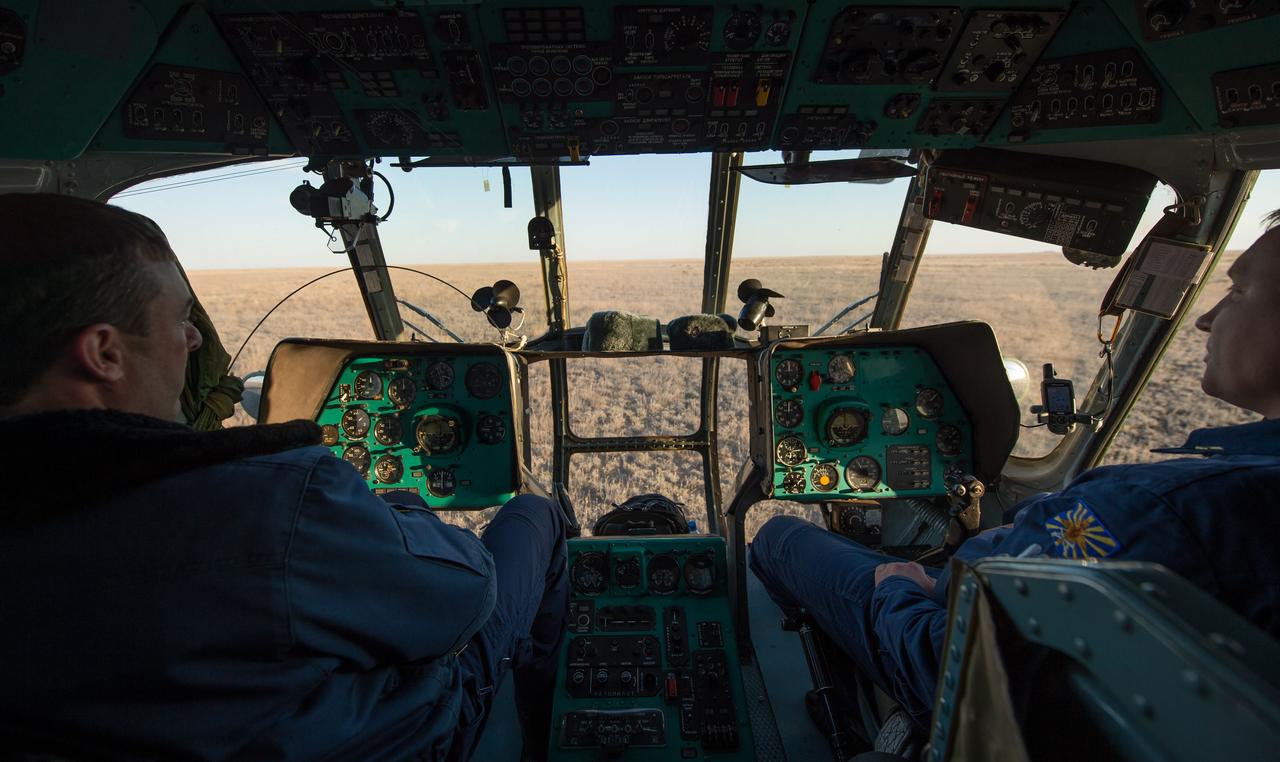
nhq201704100041 (April 10, 2017) --- Russian helicopter crew members wait in the cockpit of an MI-8 at the Soyuz MS-02 landing site after the spacecraft landed with Expedition 50 Commander Shane Kimbrough of NASA and Flight Engineers Sergey Ryzhikov and Andrey Borisenko of Roscosmos near the town of Zhezkazgan, Kazakhstan on Monday, April 10, 2017 (Kazakh time). Kimbrough, Ryzhikov, and Borisenko are returning after 173 days in space where they served as members of the Expedition 49 and 50 crews onboard the International Space Station. Photo Credit: (NASA/Bill Ingalls)
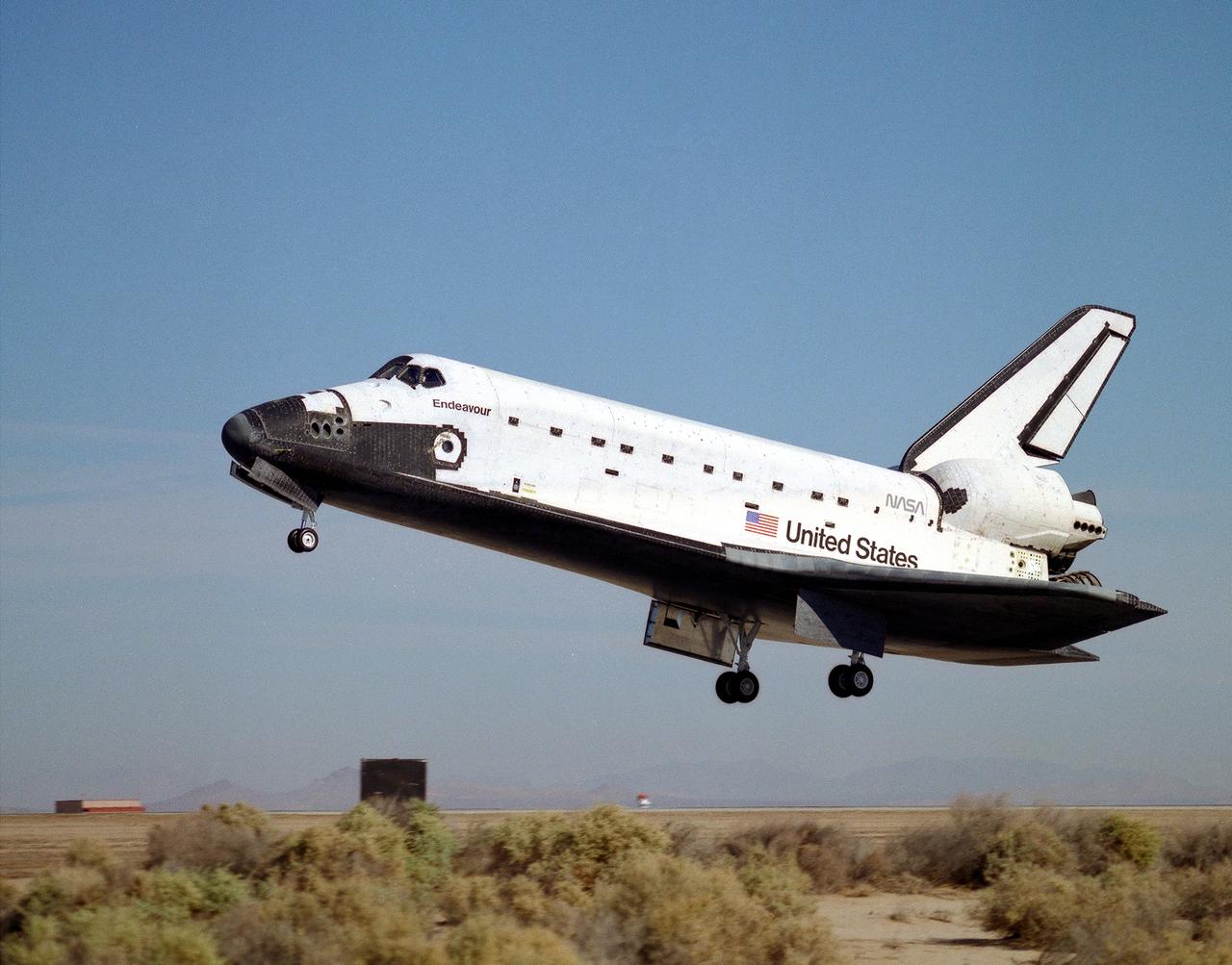
The space shuttle Endeavour glides to a landing on runway 22 at Edwards, California, to complete the highly successful STS-68 mission dedicated to radar imaging of the earth's surface as part of NASA's Mission To Planet Earth program. The landing was at 10:02 a.m. (PDT) 11 October 1994, after waiving off from the Kennedy Space Center, Florida, earlier that morning due to adverse weather at Kennedy. The Endeavour crew was originally scheduled to land at Kennedy the morning of October 10, but mission planners decided early in the flight to extend the mission by one day. Mission commander was Michael A. Baker, making his third flight, and the pilot was Terrence W. Wilcutt, on his first mission.
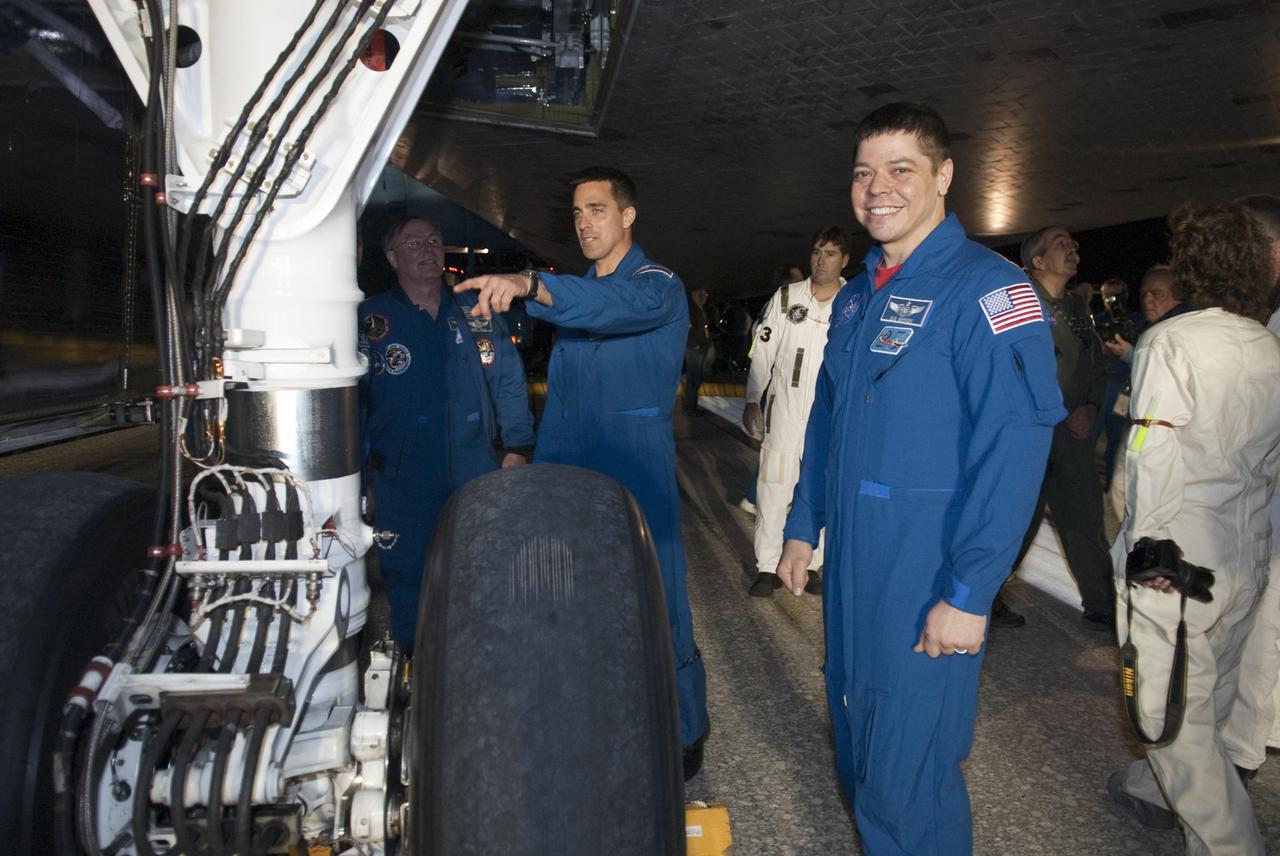
CAPE CANAVERAL, Fla. - STS-130 Mission Specialist Robert Behnken, right, inspects the landing gear on space shuttle Endeavour following its successful landing on Runway 15 at the Shuttle Landing Facility at NASA's Kennedy Space Center in Florida. After 14 days in space, Endeavour's 5.7-million-mile STS-130 mission was completed on orbit 217. Main gear touchdown was at 10:20:31 p.m. EST followed by nose gear touchdown at 10:20:39 p.m. and wheels stop at 10:22:10 p.m. It was the 23rd night landing in shuttle history and the 17th at Kennedy. During Endeavour's STS-130 mission, astronauts installed the Tranquility node, a module that provides additional room for crew members and many of the station's life support and environmental control systems. Attached to Tranquility is a cupola with seven windows that provide a panoramic view of Earth, celestial objects and visiting spacecraft. The module was built in Turin, Italy, by Thales Alenia Space for the European Space Agency. The orbiting laboratory is approximately 90 percent complete now in terms of mass. STS-130 was the 24th flight for Endeavour, the 32nd shuttle mission devoted to ISS assembly and maintenance, and the 130th shuttle mission to date. For information on the STS-130 mission and crew, visit http:__www.nasa.gov_mission_pages_shuttle_shuttlemissions_sts130_index.html. Photo credit: NASA_Kim Shiflett
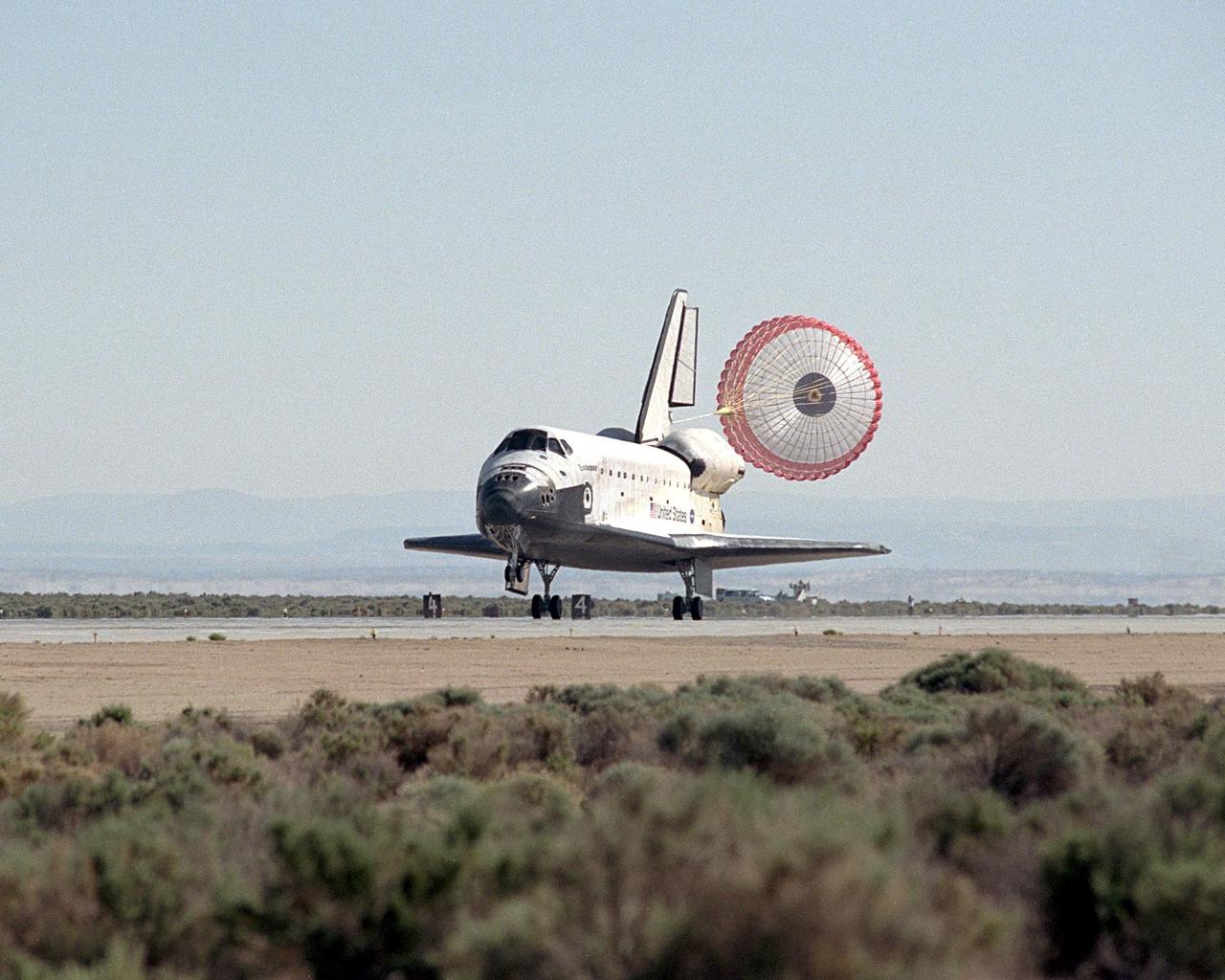
NASA/EDWARDS AFB, CALIF. -- With its drag chute deployed, Endeavour lands on runway 22 at Edwards Air Force Base, Calif., at 12:10:42 p.m. EDT after a mission of 11 days, 12 hours, 54 minutes to the International Space Station on mission STS-100. The orbiter and its crew of seven logged about 4.9 million statute miles in 186 orbits. Due to unfavorable weather conditions, landing at KSC was waved off. The landing marked the third consecutive landing at EAFB.
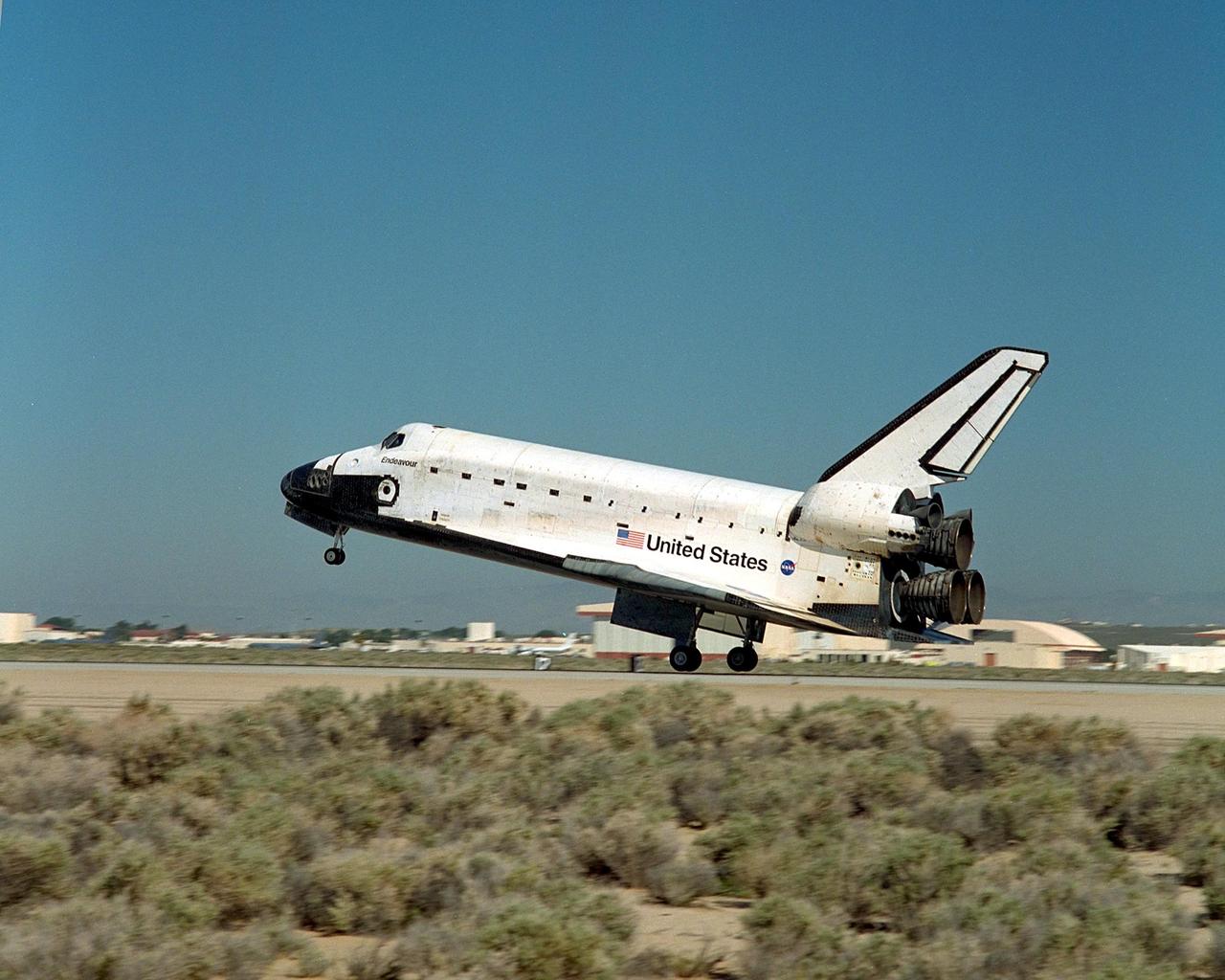
NASA/EDWARDS AFB, CALIF. -- Endeavour’s rear wheels touch down on runway 22 at Edwards Air Force Base, Calif., after the 11-day, 12-hour, 54-minute mission STS-100 to the International Space Station. Landing time was 12:10:42 p.m. EDT. The orbiter and its crew of seven logged about 4.9 million statute miles in 186 orbits. Due to unfavorable weather conditions, landing at KSC was waved off. The landing marked the third consecutive landing at EAFB.
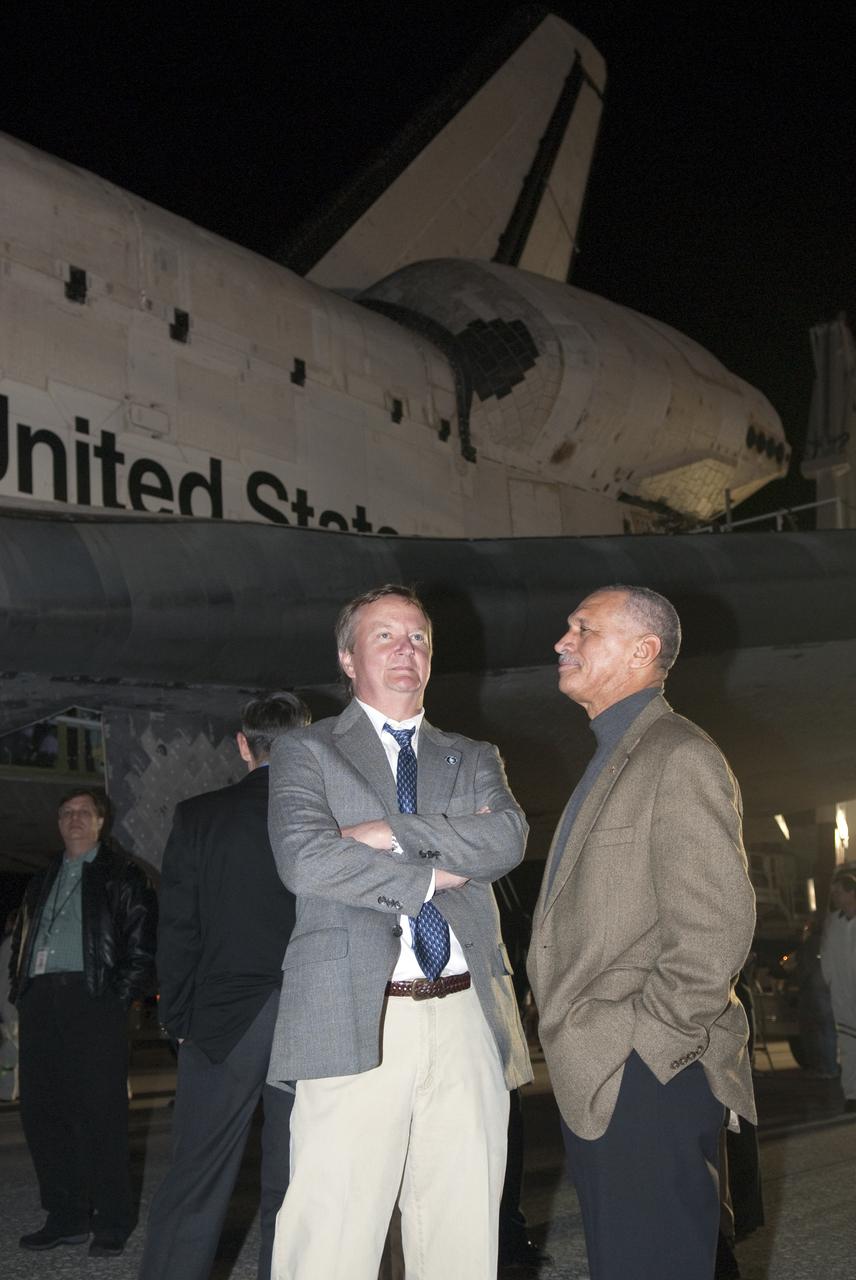
CAPE CANAVERAL, Fla. - NASA's Shuttle Launch Director Mike Leinbach, left, and NASA Administrator Charles Bolden wait to welcome the STS-130 crew back to Earth following space shuttle Endeavour's successful landing on Runway 15 at the Shuttle Landing Facility at NASA's Kennedy Space Center in Florida. After 14 days in space, Endeavour's 5.7-million-mile STS-130 mission was completed on orbit 217. Main gear touchdown was at 10:20:31 p.m. EST followed by nose gear touchdown at 10:20:39 p.m. and wheels stop at 10:22:10 p.m. It was the 23rd night landing in shuttle history and the 17th at Kennedy. During Endeavour's STS-130 mission, astronauts installed the Tranquility node, a module that provides additional room for crew members and many of the station's life support and environmental control systems. Attached to Tranquility is a cupola with seven windows that provide a panoramic view of Earth, celestial objects and visiting spacecraft. The module was built in Turin, Italy, by Thales Alenia Space for the European Space Agency. The orbiting laboratory is approximately 90 percent complete now in terms of mass. STS-130 was the 24th flight for Endeavour, the 32nd shuttle mission devoted to ISS assembly and maintenance, and the 130th shuttle mission to date. For information on the STS-130 mission and crew, visit http:__www.nasa.gov_mission_pages_shuttle_shuttlemissions_sts130_index.html. Photo credit: NASA_Kim Shiflett

Members of NASA’s Landing and Recovery team, along with partners from the Department of Defense, practice Artemis recovery procedures as part of Underway Recovery Test 10 (URT-10) off the coast of San Diego on July 31, 2023. The event involved the use of the Crew Module Test Article (CMTA), a full-scale mockup of NASA’s Orion spacecraft. URT-10 is the 10th in a series of Artemis recovery tests, but marked the first time NASA and its partners from the Department of Defense put their Artemis II recovery procedures to the test.

Members of NASA’s Landing and Recovery team, along with partners from the Department of Defense, practice Artemis recovery procedures as part of Underway Recovery Test 10 (URT-10) off the coast of San Diego on Aug. 1, 2023. The event involved the use of the Crew Module Test Article (CMTA), a full-scale mockup of NASA’s Orion spacecraft. URT-10 is the 10th in a series of Artemis recovery tests, but marked the first time NASA and its partners from the Department of Defense put their Artemis II recovery procedures to the test.

Members of NASA’s Landing and Recovery team, along with partners from the Department of Defense, practice Artemis recovery procedures as part of Underway Recovery Test 10 (URT-10) off the coast of San Diego on July 31, 2023. The event involved the use of the Crew Module Test Article (CMTA), a full-scale mockup of NASA’s Orion spacecraft. URT-10 is the 10th in a series of Artemis recovery tests, but marked the first time NASA and its partners from the Department of Defense put their Artemis II recovery procedures to the test.

Members of NASA’s Landing and Recovery team, along with partners from the Department of Defense, practice Artemis recovery procedures as part of Underway Recovery Test 10 (URT-10) off the coast of San Diego on Aug. 1, 2023. The event involved the use of the Crew Module Test Article (CMTA), a full-scale mockup of NASA’s Orion spacecraft. URT-10 is the 10th in a series of Artemis recovery tests, but marked the first time NASA and its partners from the Department of Defense put their Artemis II recovery procedures to the test.
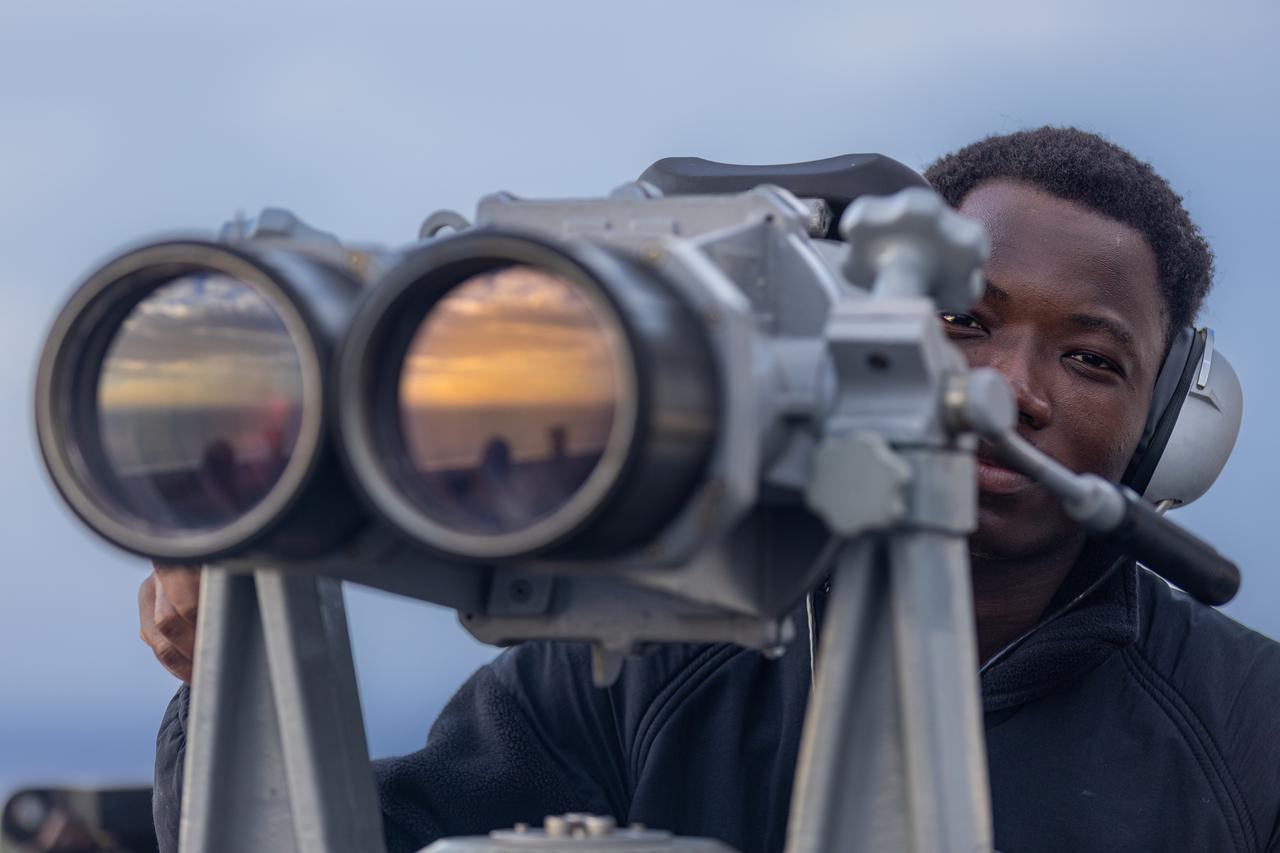
Members of NASA’s Landing and Recovery team, along with partners from the Department of Defense, practice Artemis recovery procedures as part of Underway Recovery Test 10 (URT-10) off the coast of San Diego on July 31, 2023. The event involved the use of the Crew Module Test Article (CMTA), a full-scale mockup of NASA’s Orion spacecraft. URT-10 is the 10th in a series of Artemis recovery tests, but marked the first time NASA and its partners from the Department of Defense put their Artemis II recovery procedures to the test.

Members of NASA’s Landing and Recovery team, along with partners from the Department of Defense, practice Artemis recovery procedures as part of Underway Recovery Test 10 (URT-10) off the coast of San Diego on July 31, 2023. The event involved the use of the Crew Module Test Article (CMTA), a full-scale mockup of NASA’s Orion spacecraft. URT-10 is the 10th in a series of Artemis recovery tests, but marked the first time NASA and its partners from the Department of Defense put their Artemis II recovery procedures to the test.

Members of NASA’s Landing and Recovery team, along with partners from the Department of Defense, practice Artemis recovery procedures as part of Underway Recovery Test 10 (URT-10) off the coast of San Diego on Aug. 1, 2023. The event involved the use of the Crew Module Test Article (CMTA), a full-scale mockup of NASA’s Orion spacecraft. URT-10 is the 10th in a series of Artemis recovery tests, but marked the first time NASA and its partners from the Department of Defense put their Artemis II recovery procedures to the test.

Members of NASA’s Landing and Recovery team, along with partners from the Department of Defense, practice Artemis recovery procedures as part of Underway Recovery Test 10 (URT-10) off the coast of San Diego on July 31, 2023. The event involved the use of the Crew Module Test Article (CMTA), a full-scale mockup of NASA’s Orion spacecraft. URT-10 is the 10th in a series of Artemis recovery tests, but marked the first time NASA and its partners from the Department of Defense put their Artemis II recovery procedures to the test.

Members of NASA’s Landing and Recovery team, along with partners from the Department of Defense, practice Artemis recovery procedures as part of Underway Recovery Test 10 (URT-10) off the coast of San Diego on Aug. 1, 2023. The event involved the use of the Crew Module Test Article (CMTA), a full-scale mockup of NASA’s Orion spacecraft. URT-10 is the 10th in a series of Artemis recovery tests, but marked the first time NASA and its partners from the Department of Defense put their Artemis II recovery procedures to the test.

Members of NASA’s Landing and Recovery team, along with partners from the Department of Defense, practice Artemis recovery procedures as part of Underway Recovery Test 10 (URT-10) off the coast of San Diego on Aug. 1, 2023. The event involved the use of the Crew Module Test Article (CMTA), a full-scale mockup of NASA’s Orion spacecraft. URT-10 is the 10th in a series of Artemis recovery tests, but marked the first time NASA and its partners from the Department of Defense put their Artemis II recovery procedures to the test.
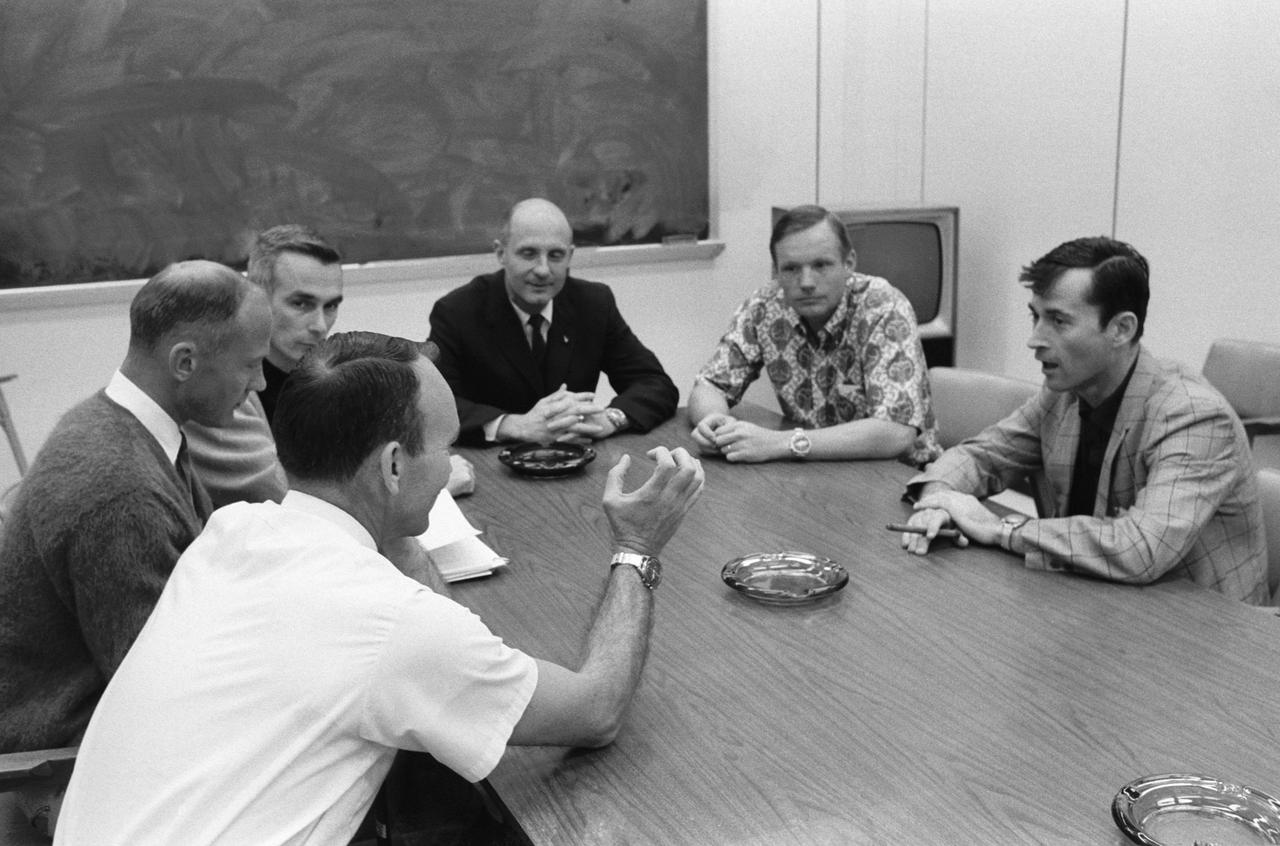
S69-35505 (June 1969) --- The prime crews of the Apollo 10 lunar orbit mission and the Apollo 11 lunar landing mission are photographed during an Apollo 10 postflight de-briefing session. Clockwise, from left foreground, are astronauts Michael Collins, Apollo 11 command module pilot; Edwin E. Aldrin Jr., Apollo 11 lunar module pilot; Eugene A. Cernan, Apollo 10 lunar module pilot; Thomas P. Stafford, Apollo 10 commander; Neil A. Armstrong, Apollo 11 commander; and John W. Young, Apollo 10 command module pilot.
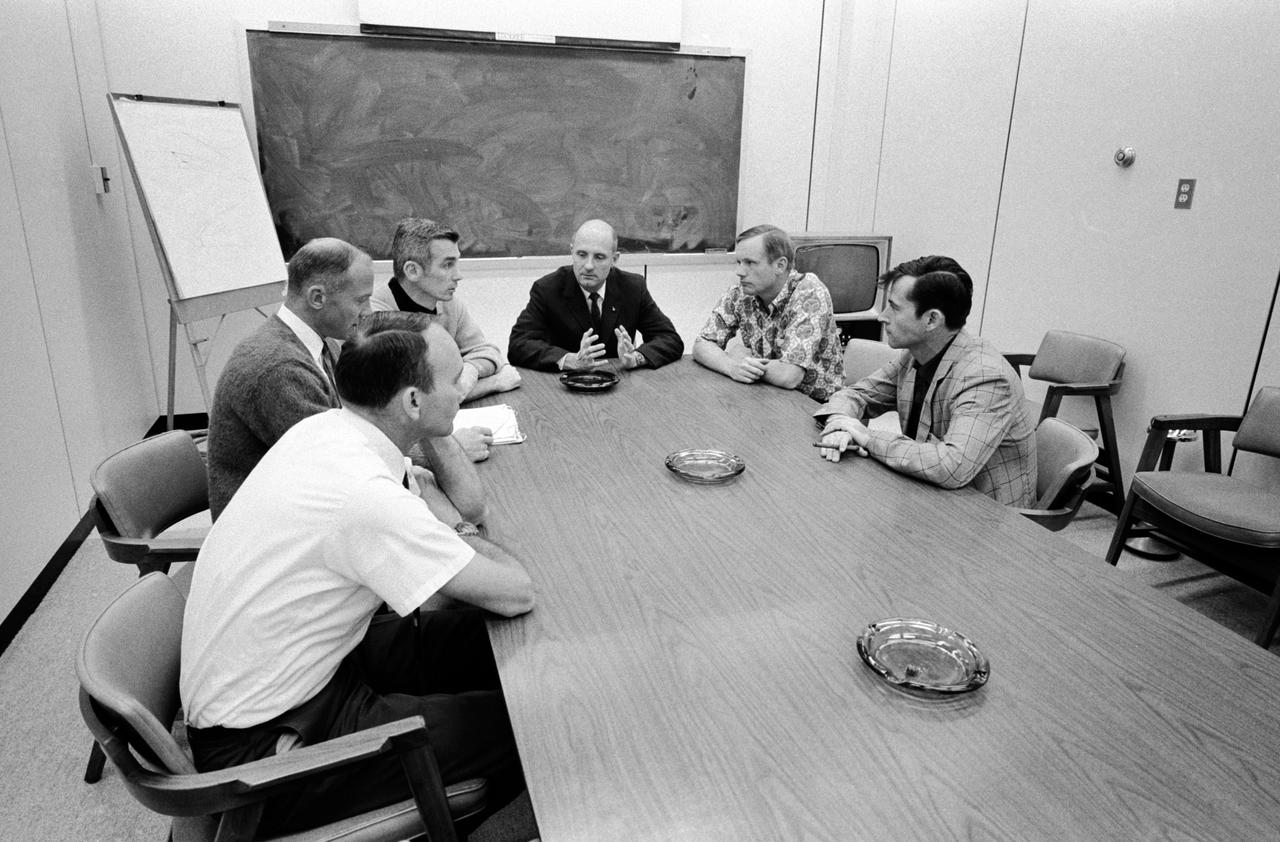
S69-35504 (June 1969) --- The prime crews of the Apollo 10 lunar orbit mission and the Apollo 11 lunar landing mission are photographed during an Apollo 10 postflight de-briefing session. Clockwise, from left foreground, are astronauts Michael Collins, Apollo 11 command module pilot; Edwin E. Aldrin Jr., Apollo 11 lunar module pilot; Eugene A. Cernan, Apollo 10 lunar module pilot; Thomas P. Stafford, Apollo 10 commander; Neil A. Armstrong, Apollo 11 commander; and John W. Young, Apollo 10 command module pilot.
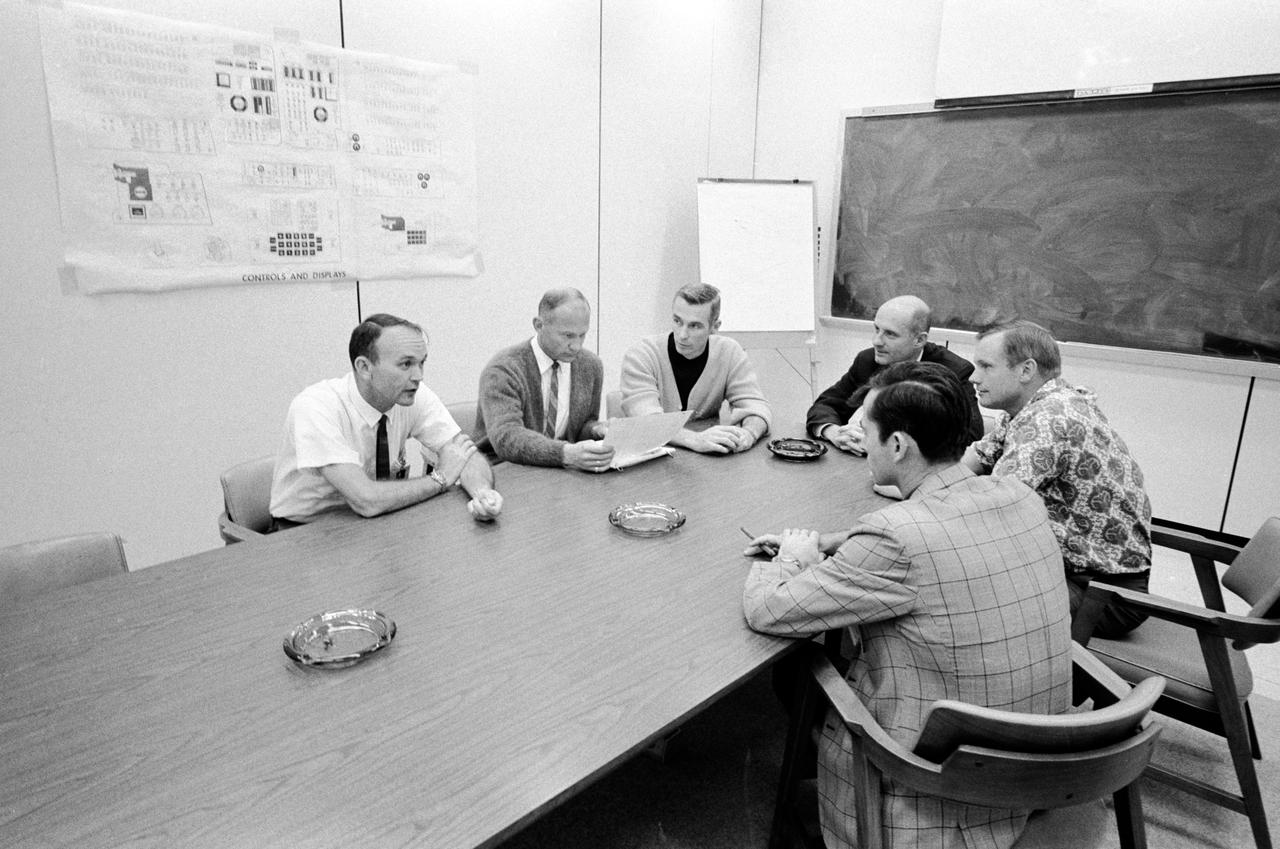
S69-35507 (June 1969) --- The prime crews of the Apollo 10 lunar orbit mission and the Apollo 11 lunar landing mission are photographed during an Apollo 10 postflight de-briefing session. Clockwise, from left, are astronauts Michael Collins, Apollo 11 command module pilot; Edwin E. Aldrin Jr., Apollo 11 lunar module pilot; Eugene A. Cernan, Apollo 10 lunar module pilot; Thomas P. Stafford, Apollo 10 commander; Neil A. Armstrong, Apollo 11 commander; and John W. Young, Apollo 10 command module pilot.
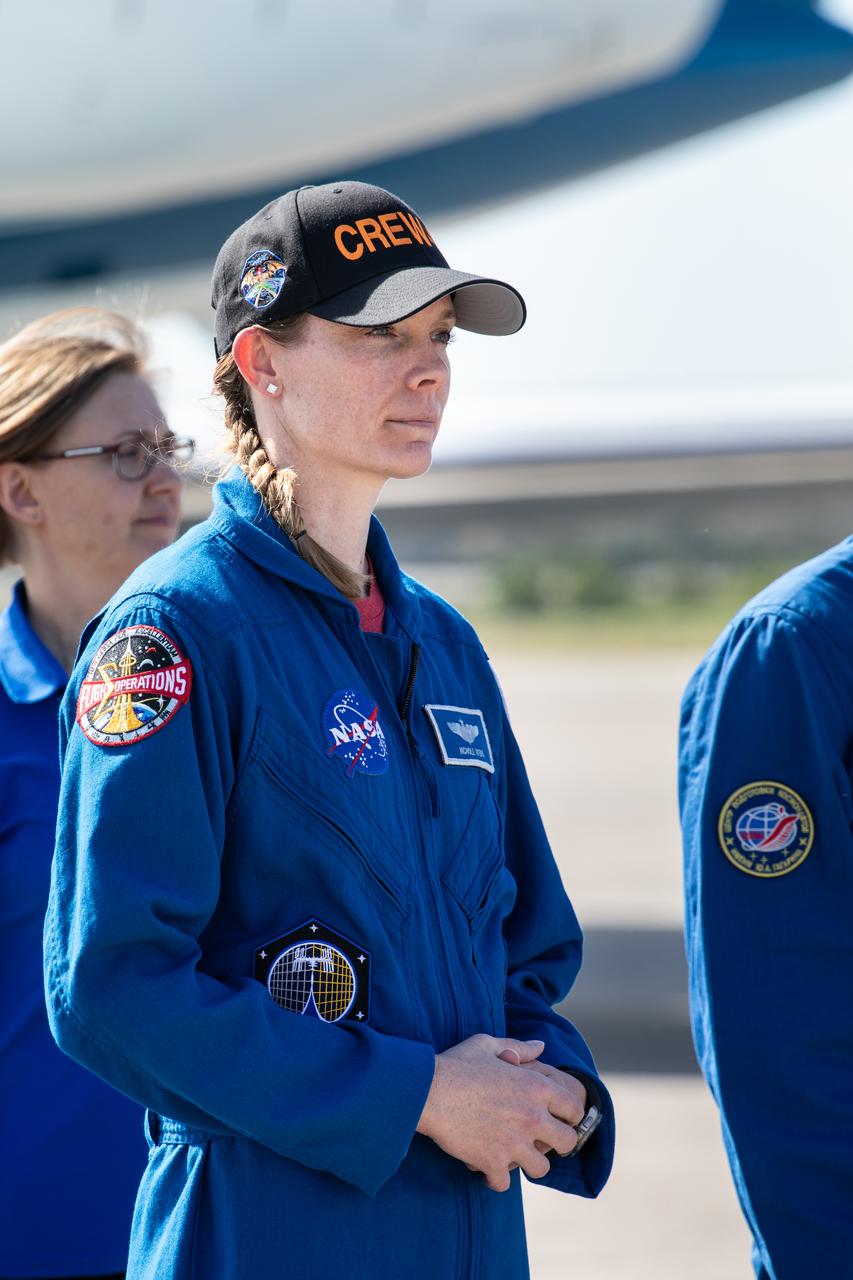
NASA astronaut Nichole Ayers participates in a news media event during crew arrival for NASA’s SpaceX Crew-10 mission at the Launch and Landing Facility at the agency’s Kennedy Space Center in Florida on Friday, March 7, 2025. JAXA (Japan Aerospace Exploration Agency) astronaut Takuya Onishi will launch to the International Space Station aboard SpaceX’s Dragon spacecraft and Falcon 9 rocket. Launch is targeted for 7:48 p.m. EDT on Wednesday, March 12, 2025, from Launch Complex 39A at NASA Kennedy. Crew-10 is the 10th crew rotation mission with SpaceX to the space station as part of the agency’s Commercial Crew Program

CAPE CANAVERAL, Fla. – At NASA's Kennedy Space Center in Florida, Center Director Bob Cabana (left) and NASA Administrator Charles Bolden wait near space shuttle Endeavour for the STS-127 crew to emerge from the crew transport vehicle. Endeavour's landing completed the 16-day, 6.5-million mile journey on the STS-127 mission to the International Space Station. Main gear touchdown was at 10:48:08 a.m. EDT. Nose gear touchdown was at 10:48:21 a.m. and wheels stop was at 10:49:13 a.m. Endeavour delivered the Japanese Experiment Module's Exposed Facility and the Experiment Logistics Module-Exposed Section to the International Space Station. The mission was the 29th flight to the station, the 23rd flight of Endeavour and the 127th in the Space Shuttle Program, as well as the 71st landing at Kennedy. Photo credit: NASA/Kim Shiflett
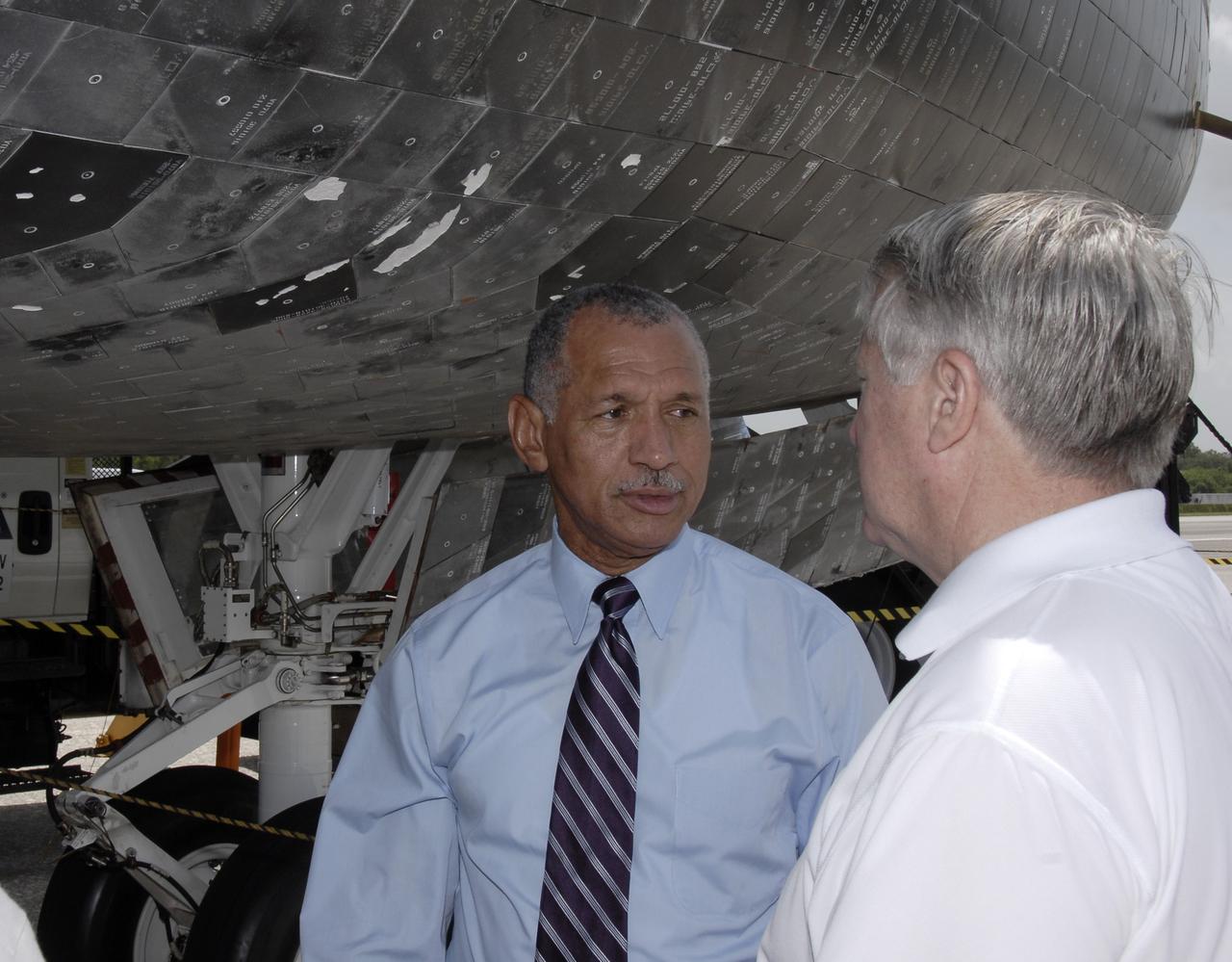
CAPE CANAVERAL, Fla. – NASA Administrator Charles Bolden (left) waits underneath space shuttle Endeavour for the STS-127 crew to emerge from the crew transport vehicle. Endeavour's landing completed the 16-day, 6.5-million mile journey on the STS-127 mission to the International Space Station. Endeavour's main gear touchdown was at 10:48:08 a.m. EDT. Nose gear touchdown was at 10:48:21 a.m. and wheels stop was at 10:49:13 a.m. Endeavour delivered the Japanese Experiment Module's Exposed Facility and the Experiment Logistics Module-Exposed Section to the International Space Station. The mission was the 29th flight to the station, the 23rd flight of Endeavour and the 127th in the Space Shuttle Program, as well as the 71st landing at Kennedy. Photo credit: NASA/Kim Shiflett
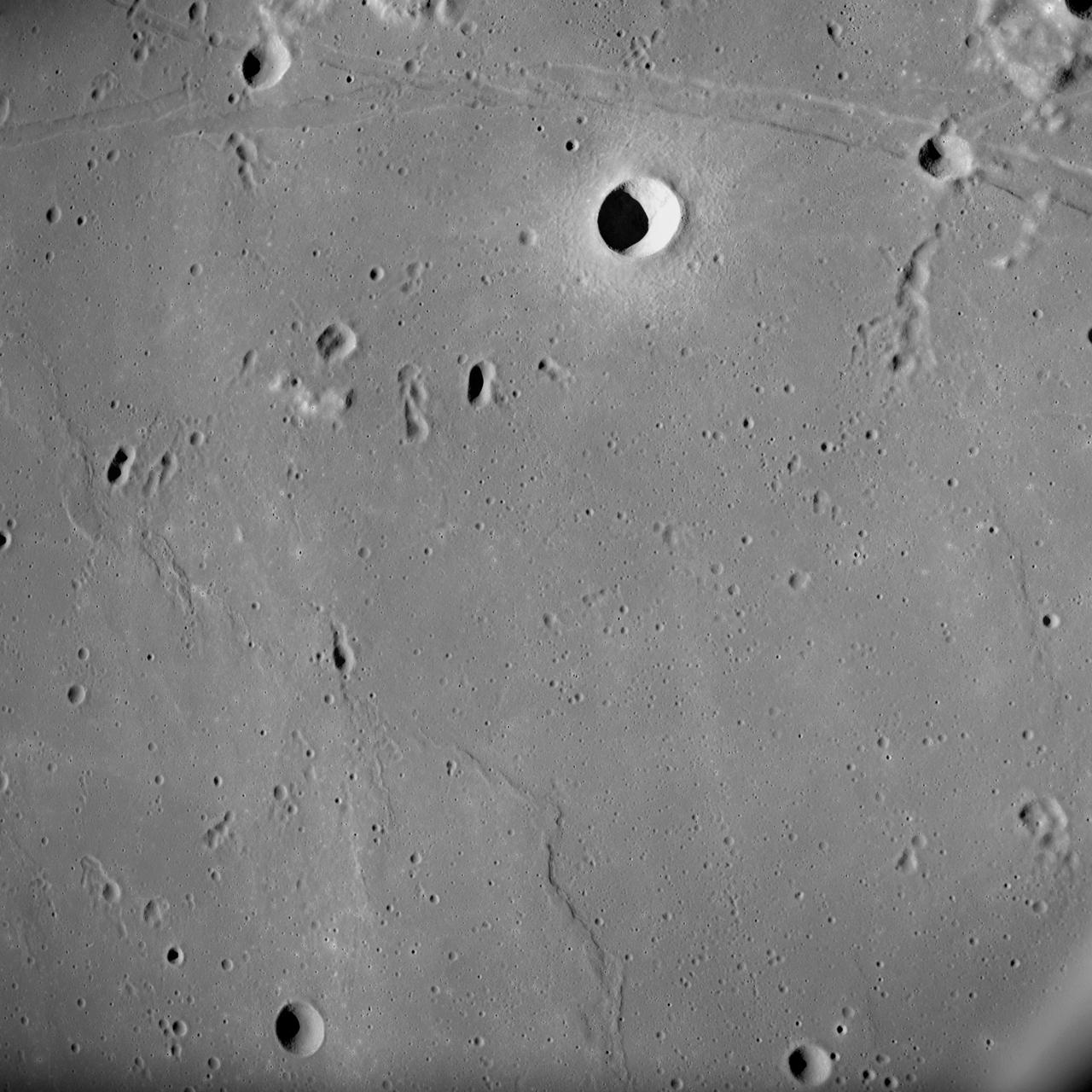
AS10-31-4537 (18-26 May 1969) --- This near vertical photograph taken from the Apollo 10 Command and Service Modules shows features typical of the Sea of Tranquility near Apollo Landing Site 2. HOLD PICTURE WITH PRONOUNCED LINEAR FEATURE PARALLEL TO LEFT MARGIN. The proposed landing area for Apollo 11 (Lunar Landing Site 2) is a relatively smooth maria area in the upper right quadrant of the photographed area. Apollo 10 traveled from the bottom to the top of the picture. The prominent linear feature at left is Hypatia Rille (called "U.S. 1" by the Apollo 10 crew). The prominent crater centered in Hypatia Rille at top left is Moltke AC (code name "Chuck Hole"). Moltke, the prominent crater to the right of Hypatia Rille, is centered near 24.2 degrees east longitude, and 0.6 degrees south latitude.
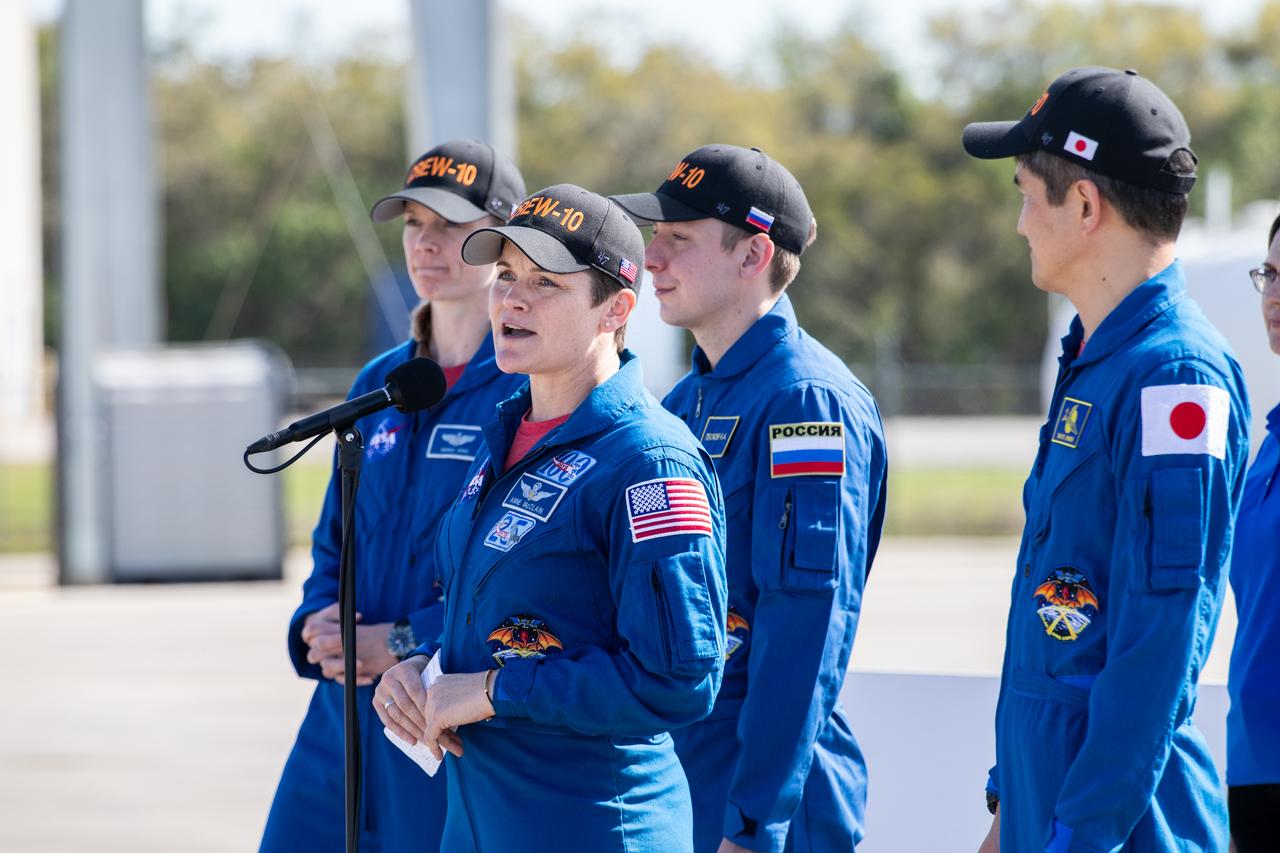
NASA astronaut Anne McClain, Crew-10 commander, delivers remarks to members of the news media during crew arrival for NASA’s SpaceX Crew-10 mission at the Launch and Landing Facility at the agency’s Kennedy Space Center in Florida on Friday, March 7, 2025. McClain and fellow NASA astronaut Nichole Ayers, along with JAXA (Japan Aerospace Exploration Agency) astronaut Takuya Onishi and Roscosmos cosmonaut Kirill Peskov will launch to the International Space Station aboard SpaceX’s Dragon spacecraft and Falcon 9 rocket. Launch is targeted for 7:48 p.m. EDT on Wednesday, March 12, 2025, from Launch Complex 39A at NASA Kennedy. Crew-10 is the 10th crew rotation mission with SpaceX to the space station as part of the agency’s Commercial Crew Program.
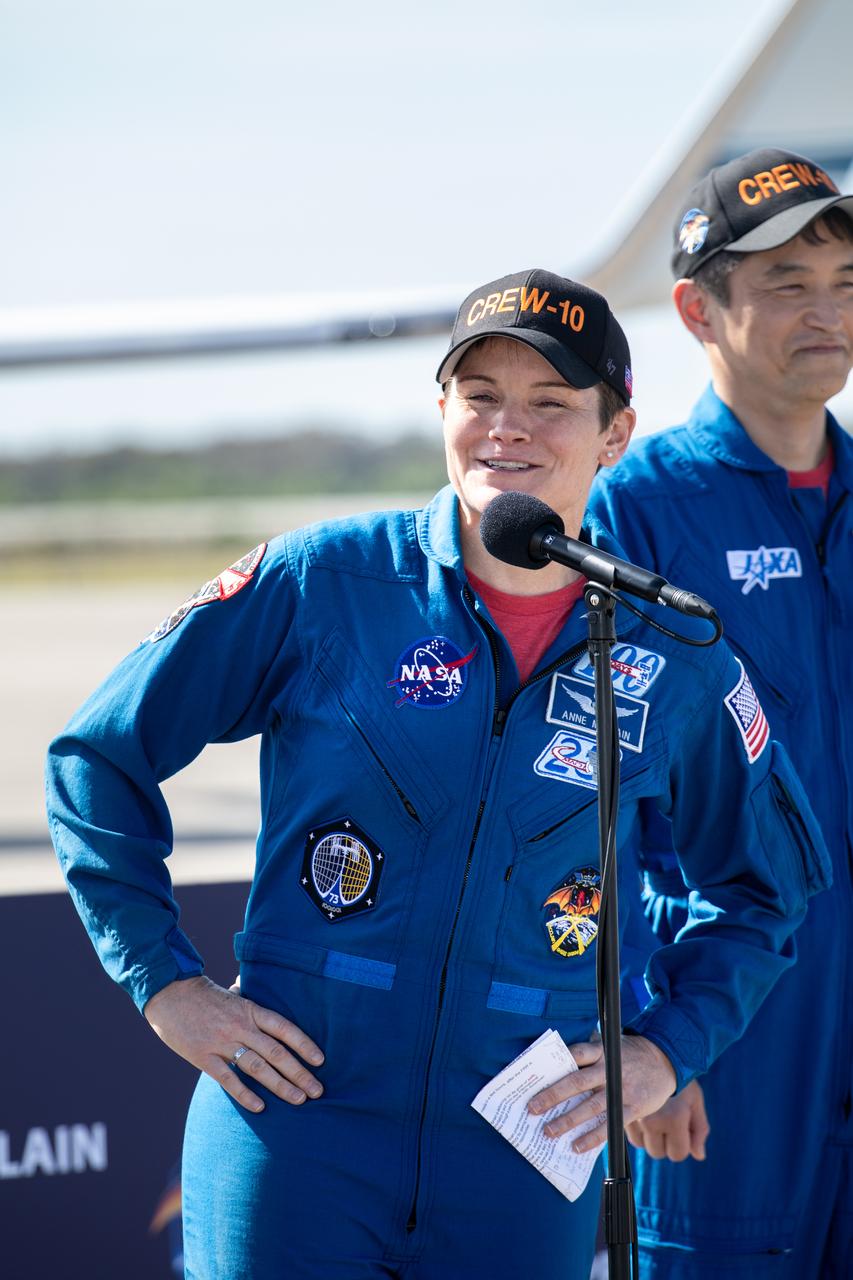
NASA astronaut Anne McClain, Crew-10 commander, delivers remarks to members of the news media during crew arrival for NASA’s SpaceX Crew-10 mission at the Launch and Landing Facility at the agency’s Kennedy Space Center in Florida on Friday, March 7, 2025. McClain and fellow NASA astronaut Nichole Ayers, along with JAXA (Japan Aerospace Exploration Agency) astronaut Takuya Onishi and Roscosmos cosmonaut Kirill Peskov will launch to the International Space Station aboard SpaceX’s Dragon spacecraft and Falcon 9 rocket. Launch is targeted for 7:48 p.m. EDT on Wednesday, March 12, 2025, from Launch Complex 39A at NASA Kennedy. Crew-10 is the 10th crew rotation mission with SpaceX to the space station as part of the agency’s Commercial Crew Program.
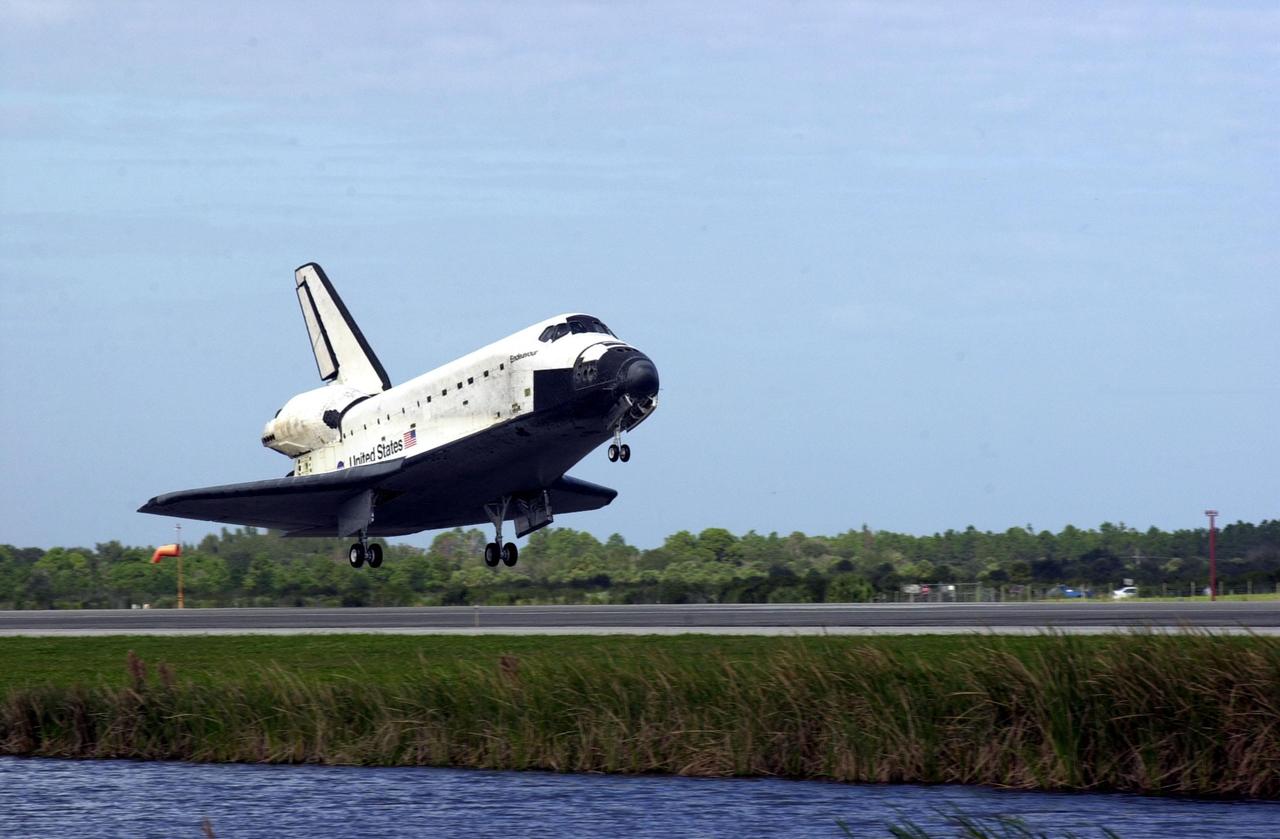
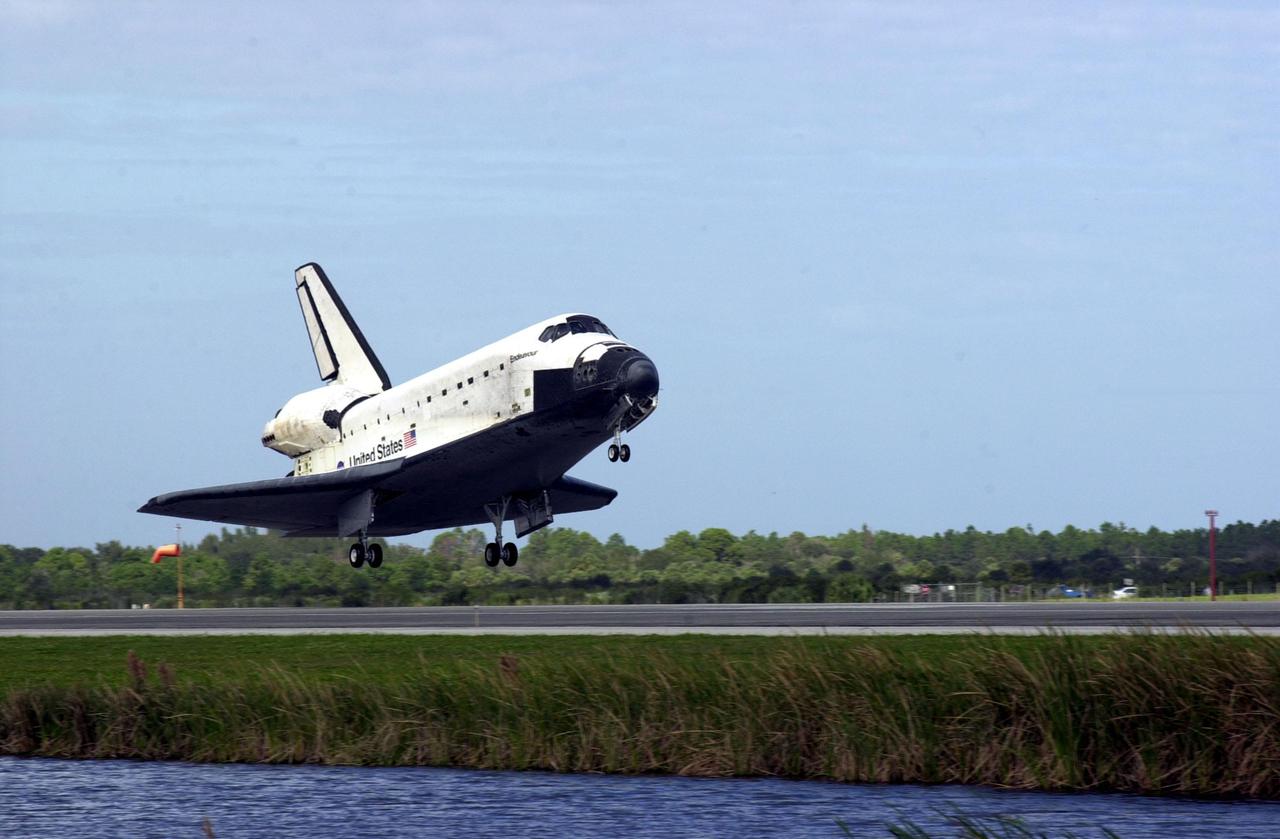
KENNEDY SPACE CENTER, FLA. -- Orbiter Endeavour drops through scattered clouds to land on Runway 15 at the KSC Shuttle Landing Facility, completing mission STS-108. After a mission-elapsed time of 11 days, 19 hours and 35 minutes, the landing is the 57th at KSC in the history of the program. Main gear touchdown occurred at 12:55:10 p.m. EST (17:55:10 GMT), nose gear touchdown at 12:55:23 p.m. (17:55:23 GMT) , wheel stop at 12:56:13 p.m. (17:56:13 GMT). STS-108 was the 12th mission to the International Space Station. This mission was the 107th flight in the Shuttle program and the 17th flight for the orbiter. Endeavour carries both the mission crew and the Expedition 3 crew - Commander Frank Culbertson and cosmonauts Vladimir Dezhurov and Mikhail Tyurin - who are returning to Earth after 129 days in space on the Space Station
KENNEDY SPACE CENTER, FLA. -- Orbiter Endeavour drops through scattered clouds to land on Runway 15 at the KSC Shuttle Landing Facility, completing mission STS-108. After a mission-elapsed time of 11 days, 19 hours and 35 minutes, the landing is the 57th at KSC in the history of the program. Main gear touchdown occurred at 12:55:10 p.m. EST (17:55:10 GMT), nose gear touchdown at 12:55:23 p.m. (17:55:23 GMT) , wheel stop at 12:56:13 p.m. (17:56:13 GMT). STS-108 was the 12th mission to the International Space Station. This mission was the 107th flight in the Shuttle program and the 17th flight for the orbiter. Endeavour carries both the mission crew and the Expedition 3 crew - Commander Frank Culbertson and cosmonauts Vladimir Dezhurov and Mikhail Tyurin - who are returning to Earth after 129 days in space on the Space Station
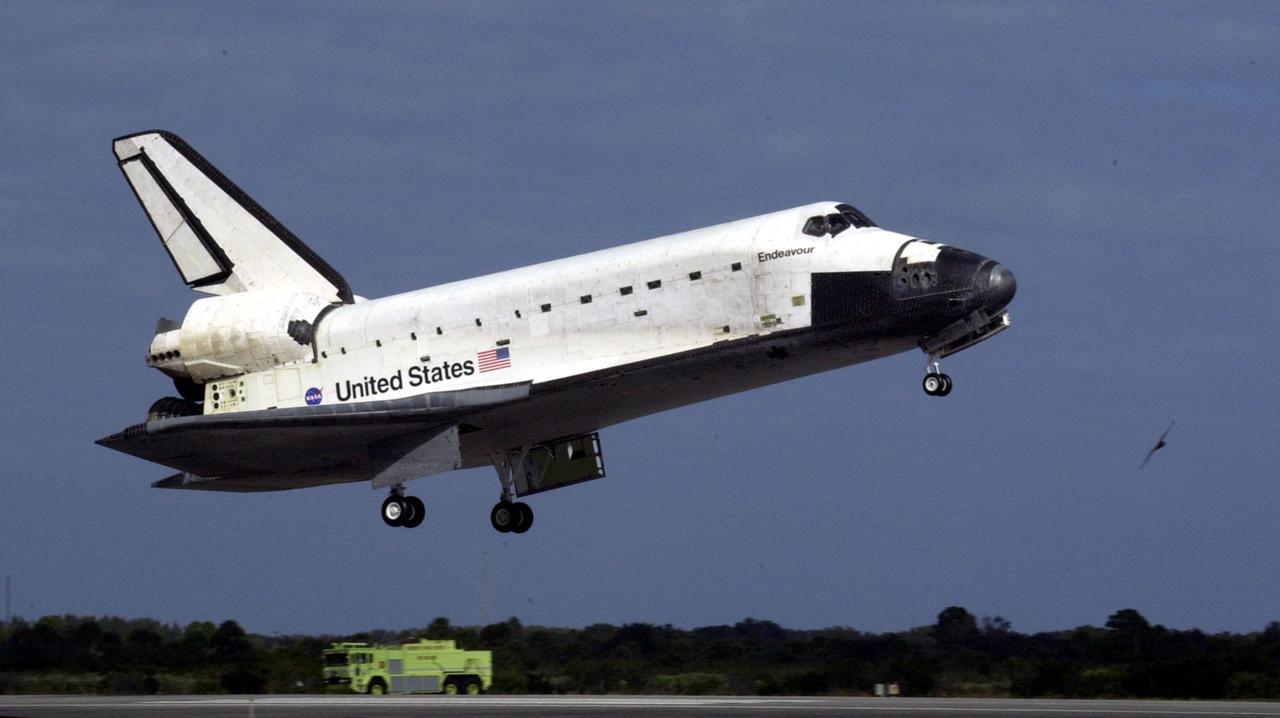
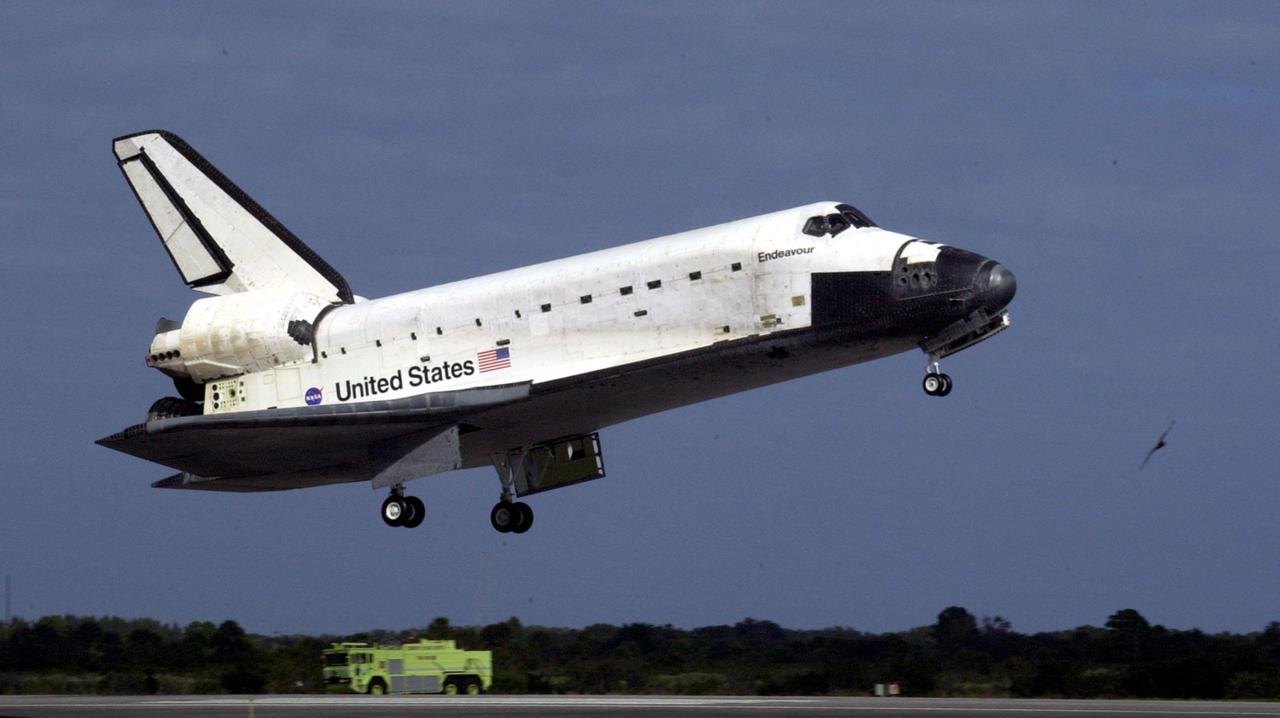
KENNEDY SPACE CENTER, FLA. -- A safety vehicle waits near Runway 15 at the Shuttle Landing Facility as orbiter Endeavour approaches for a landing, completing mission STS-108 after a mission-elapsed time of 11 days, 19 hours and 35 minutes. The landing is the 57th at KSC in the history of the program. Main gear touchdown occurred at 12:55:10 p.m. EST (17:55:10 GMT), nose gear touchdown at 12:55:23 p.m. (17:55:23 GMT) , wheel stop at 12:56:13 p.m. (17:56:13 GMT). STS-108 was the 12th mission to the International Space Station. This mission was the 107th flight in the Shuttle program and the 17th flight for the orbiter. Endeavour carries both the mission crew and the Expedition 3 crew - Commander Frank Culbertson and cosmonauts Vladimir Dezhurov and Mikhail Tyurin - who are returning to Earth after 129 days in space on the Space Station
KENNEDY SPACE CENTER, FLA. -- A safety vehicle waits near Runway 15 at the Shuttle Landing Facility as orbiter Endeavour approaches for a landing, completing mission STS-108 after a mission-elapsed time of 11 days, 19 hours and 35 minutes. The landing is the 57th at KSC in the history of the program. Main gear touchdown occurred at 12:55:10 p.m. EST (17:55:10 GMT), nose gear touchdown at 12:55:23 p.m. (17:55:23 GMT) , wheel stop at 12:56:13 p.m. (17:56:13 GMT). STS-108 was the 12th mission to the International Space Station. This mission was the 107th flight in the Shuttle program and the 17th flight for the orbiter. Endeavour carries both the mission crew and the Expedition 3 crew - Commander Frank Culbertson and cosmonauts Vladimir Dezhurov and Mikhail Tyurin - who are returning to Earth after 129 days in space on the Space Station
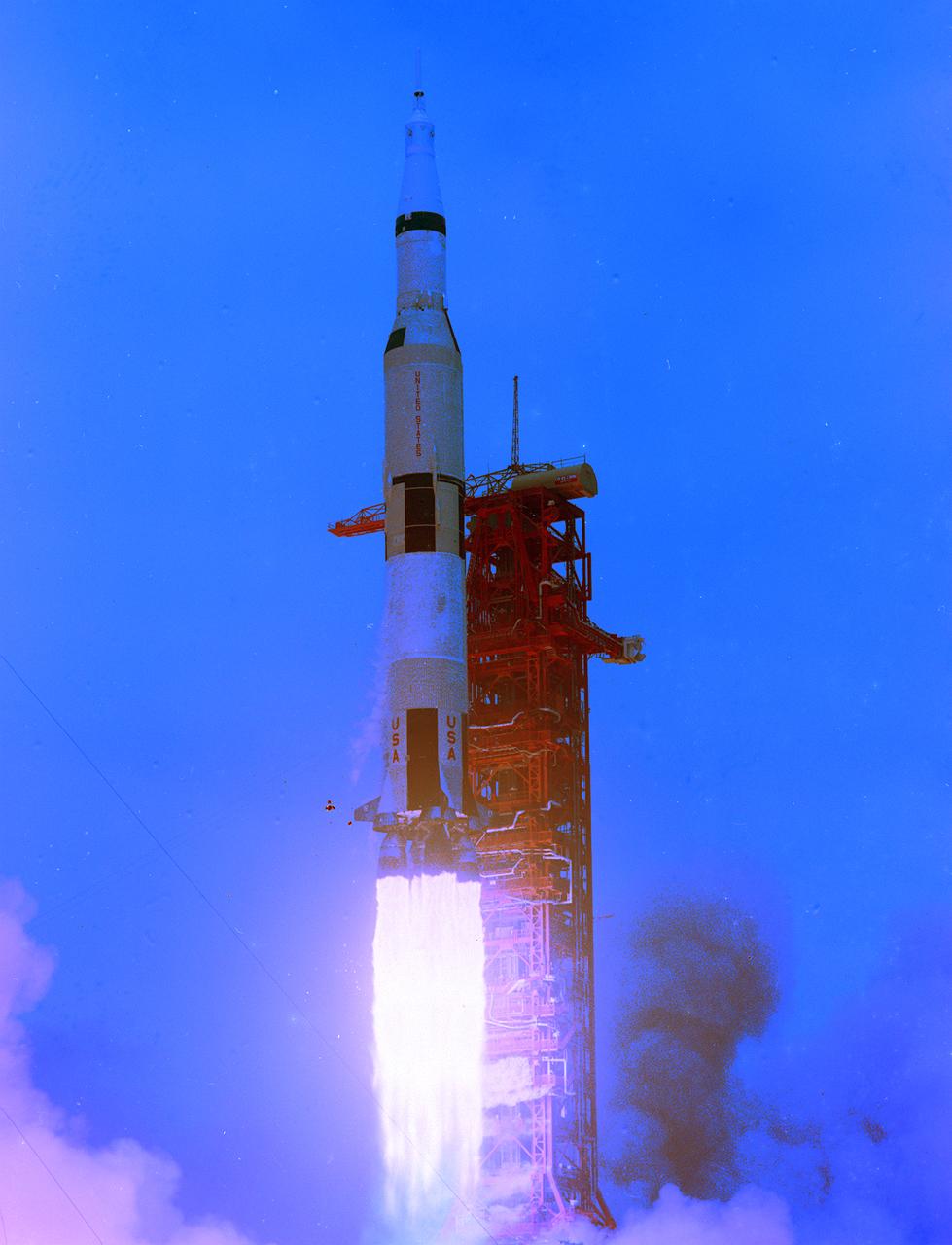
The fifth launch of the Saturn V launch vehicle (SA-505), the Apollo 10 mission with astronauts Thomas P. Stafford, John W. Young, and Eugene A. Cernan, occurred on May 18, 1969. The crew performed the first lunar orbit rendezvous, and the lunar landing mission profile was performed except for powered descent, landing, and ascent of the Lunar Module. The mission objectives were to rehearse all the steps and reproduce all the events of the Apollo 11, the first lunar landing mission, with the exception of the lunar touchdown, stay, and liftoff.
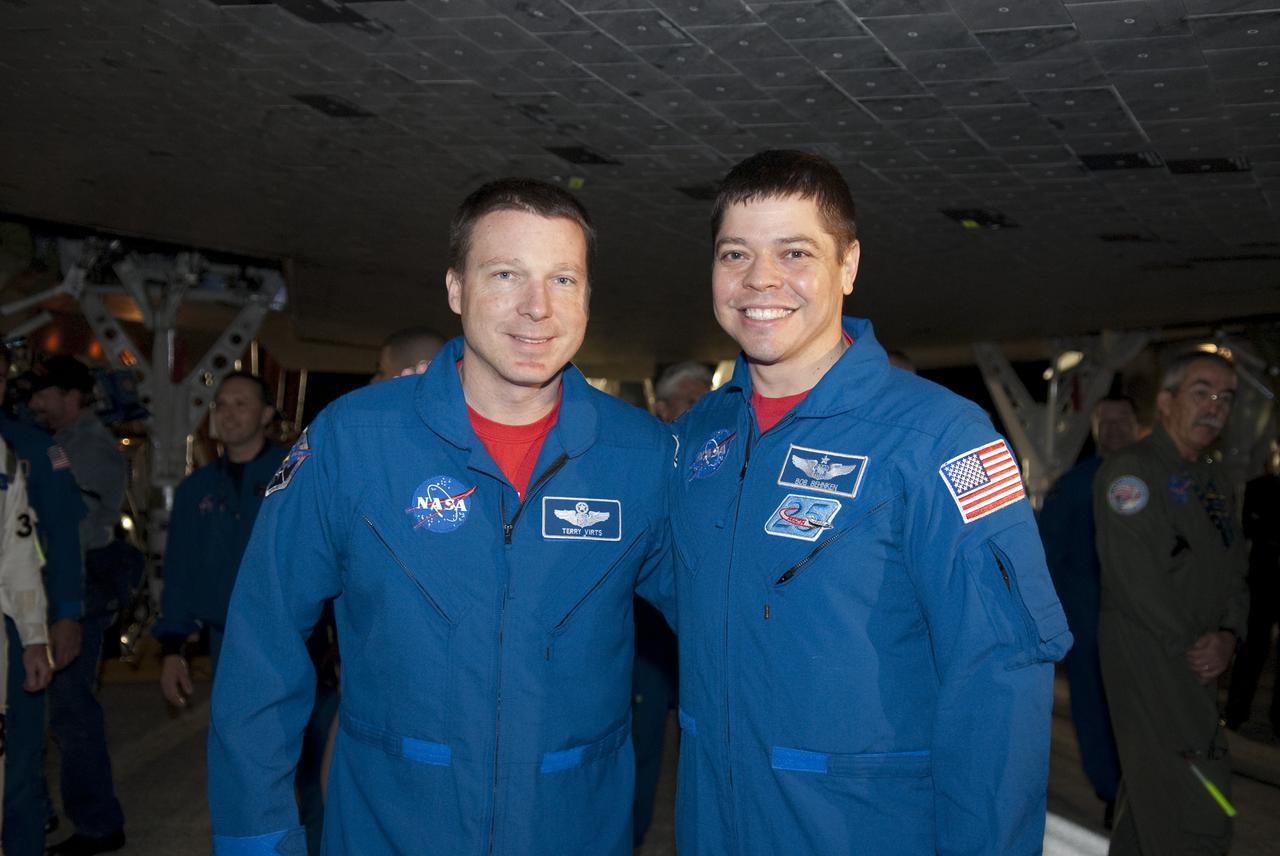
CAPE CANAVERAL, Fla. - STS-130 Pilot Terry Virts, left, and Mission Specialist Robert Behnken pause for a photograph under space shuttle Endeavour following its successful landing on Runway 15 at the Shuttle Landing Facility at NASA's Kennedy Space Center in Florida. After 14 days in space, Endeavour's 5.7-million-mile STS-130 mission was completed on orbit 217. Main gear touchdown was at 10:20:31 p.m. EST followed by nose gear touchdown at 10:20:39 p.m. and wheels stop at 10:22:10 p.m. It was the 23rd night landing in shuttle history and the 17th at Kennedy. During Endeavour's STS-130 mission, astronauts installed the Tranquility node, a module that provides additional room for crew members and many of the station's life support and environmental control systems. Attached to Tranquility is a cupola with seven windows that provide a panoramic view of Earth, celestial objects and visiting spacecraft. The module was built in Turin, Italy, by Thales Alenia Space for the European Space Agency. The orbiting laboratory is approximately 90 percent complete now in terms of mass. STS-130 was the 24th flight for Endeavour, the 32nd shuttle mission devoted to ISS assembly and maintenance, and the 130th shuttle mission to date. For information on the STS-130 mission and crew, visit http:__www.nasa.gov_mission_pages_shuttle_shuttlemissions_sts130_index.html. Photo credit: NASA_Kim Shiflett
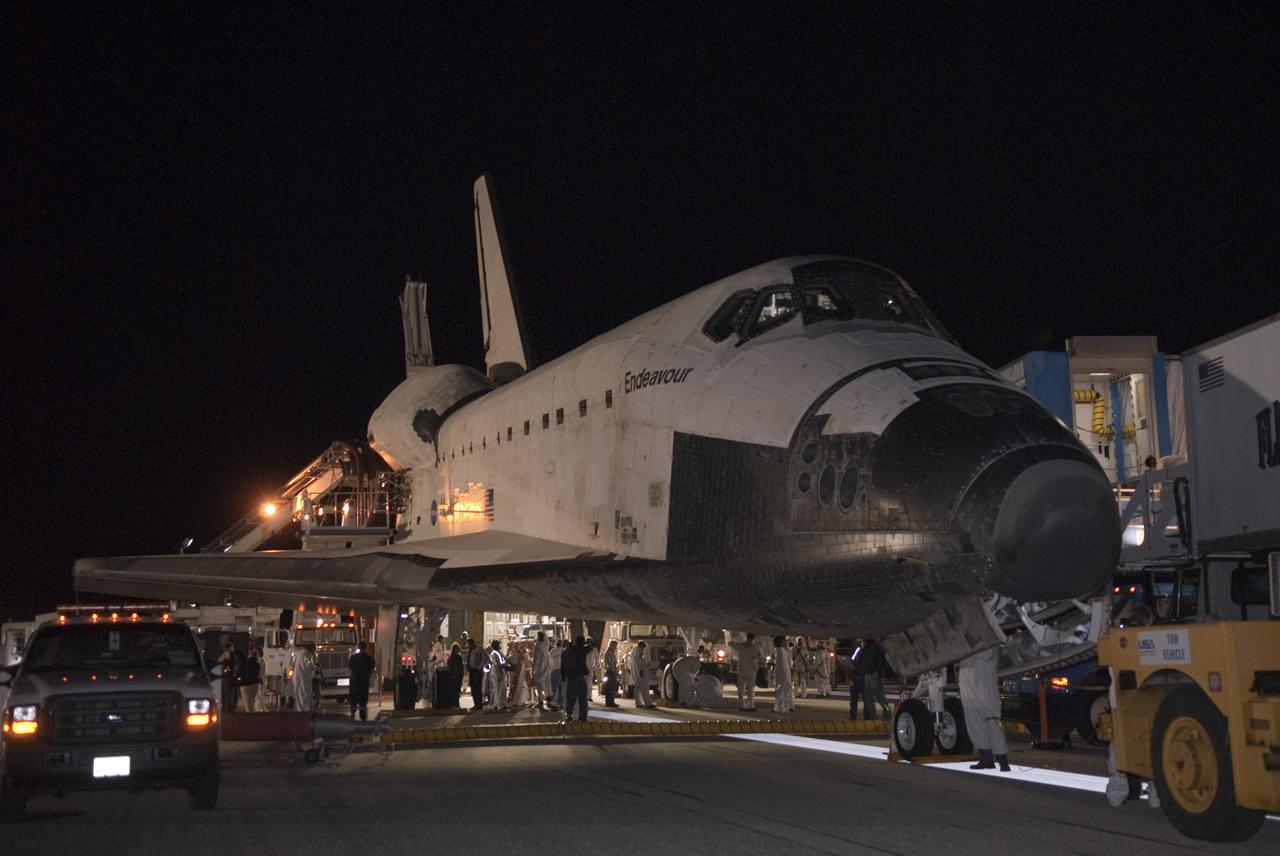
CAPE CANAVERAL, Fla. - Space shuttle Endeavour is prepared for transport to the Orbiter Processing Facility following its successful landing on Runway 15 at the Shuttle Landing Facility at NASA's Kennedy Space Center in Florida. After 14 days in space, Endeavour's 5.7-million-mile STS-130 mission was completed on orbit 217. Main gear touchdown was at 10:20:31 p.m. EST followed by nose gear touchdown at 10:20:39 p.m. and wheels stop at 10:22:10 p.m. It was the 23rd night landing in shuttle history and the 17th at Kennedy. During Endeavour's STS-130 mission, astronauts installed the Tranquility node, a module that provides additional room for crew members and many of the station's life support and environmental control systems. Attached to Tranquility is a cupola with seven windows that provide a panoramic view of Earth, celestial objects and visiting spacecraft. The module was built in Turin, Italy, by Thales Alenia Space for the European Space Agency. The orbiting laboratory is approximately 90 percent complete now in terms of mass. STS-130 was the 24th flight for Endeavour, the 32nd shuttle mission devoted to ISS assembly and maintenance, and the 130th shuttle mission to date. For information on the STS-130 mission and crew, visit http:__www.nasa.gov_mission_pages_shuttle_shuttlemissions_sts130_index.html. Photo credit: NASA_Kim Shiflett
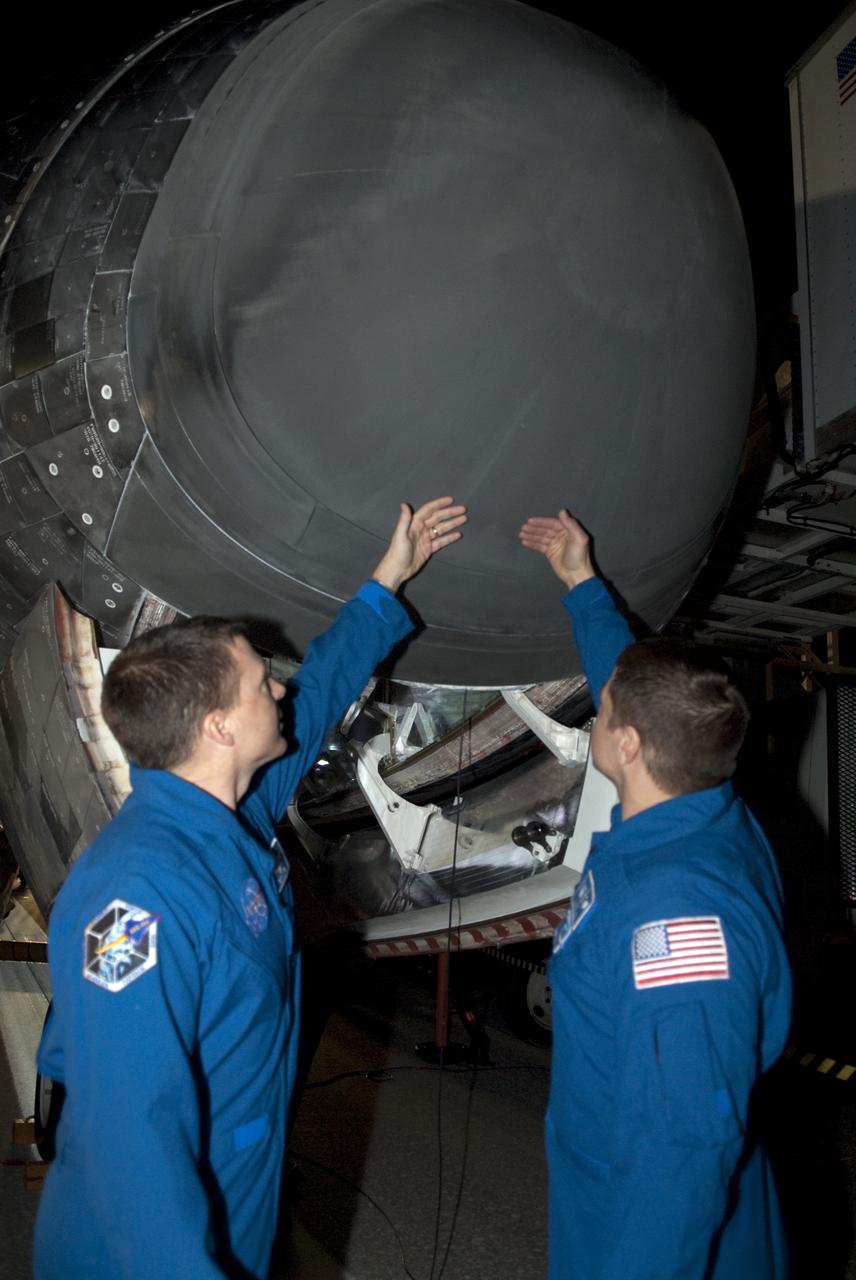
CAPE CANAVERAL, Fla. - STS-130 Mission Specialists Robert Behnken, left, and Nicholas Patrick check the temperature of space shuttle Endeavour's nosecone following its successful landing on Runway 15 at the Shuttle Landing Facility at NASA's Kennedy Space Center in Florida. After 14 days in space, Endeavour's 5.7-million-mile STS-130 mission was completed on orbit 217. Main gear touchdown was at 10:20:31 p.m. EST followed by nose gear touchdown at 10:20:39 p.m. and wheels stop at 10:22:10 p.m. It was the 23rd night landing in shuttle history and the 17th at Kennedy. During Endeavour's STS-130 mission, astronauts installed the Tranquility node, a module that provides additional room for crew members and many of the station's life support and environmental control systems. Attached to Tranquility is a cupola with seven windows that provide a panoramic view of Earth, celestial objects and visiting spacecraft. The module was built in Turin, Italy, by Thales Alenia Space for the European Space Agency. The orbiting laboratory is approximately 90 percent complete now in terms of mass. STS-130 was the 24th flight for Endeavour, the 32nd shuttle mission devoted to ISS assembly and maintenance, and the 130th shuttle mission to date. For information on the STS-130 mission and crew, visit http:__www.nasa.gov_mission_pages_shuttle_shuttlemissions_sts130_index.html. Photo credit: NASA_Kim Shiflett
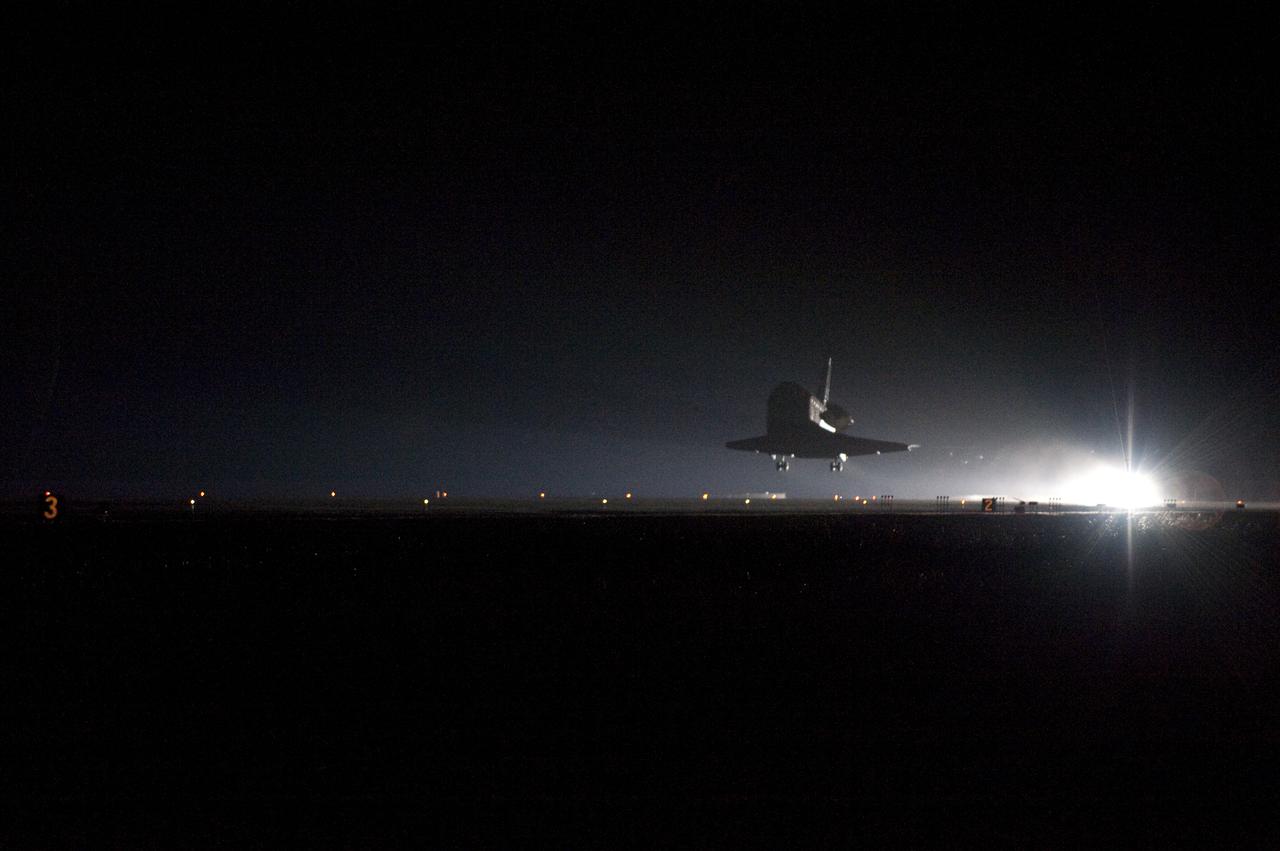
CAPE CANAVERAL, Fla. - With landing gear down, space shuttle Endeavour approaches Runway 15 at the Shuttle Landing Facility at NASA's Kennedy Space Center in Florida after 14 days in space, completing the 5.7-million-mile STS-130 mission on orbit 217. Main gear touchdown was at 10:20:31 p.m. EST followed by nose gear touchdown at 10:20:39 p.m. and wheels stop at 10:22:10 p.m. It was the 23rd night landing in shuttle history and the 17th at Kennedy. Aboard are Commander George Zamka; Pilot Terry Virts; and Mission Specialists Robert Behnken, Nicholas Patrick, Kathryn Hire and Stephen Robinson. During Endeavour's STS-130 mission, astronauts installed the Tranquility node, a module that provides additional room for crew members and many of the station's life support and environmental control systems. Attached to Tranquility is a cupola with seven windows that provide a panoramic view of Earth, celestial objects and visiting spacecraft. The module was built in Turin, Italy, by Thales Alenia Space for the European Space Agency. The orbiting laboratory is approximately 90 percent complete now in terms of mass. STS-130 was the 24th flight for Endeavour, the 32nd shuttle mission devoted to ISS assembly and maintenance, and the 130th shuttle mission to date. For information on the STS-130 mission and crew, visit http:__www.nasa.gov_mission_pages_shuttle_shuttlemissions_sts130_index.html. Photo credit: NASA_ Tom Farrar Jr.
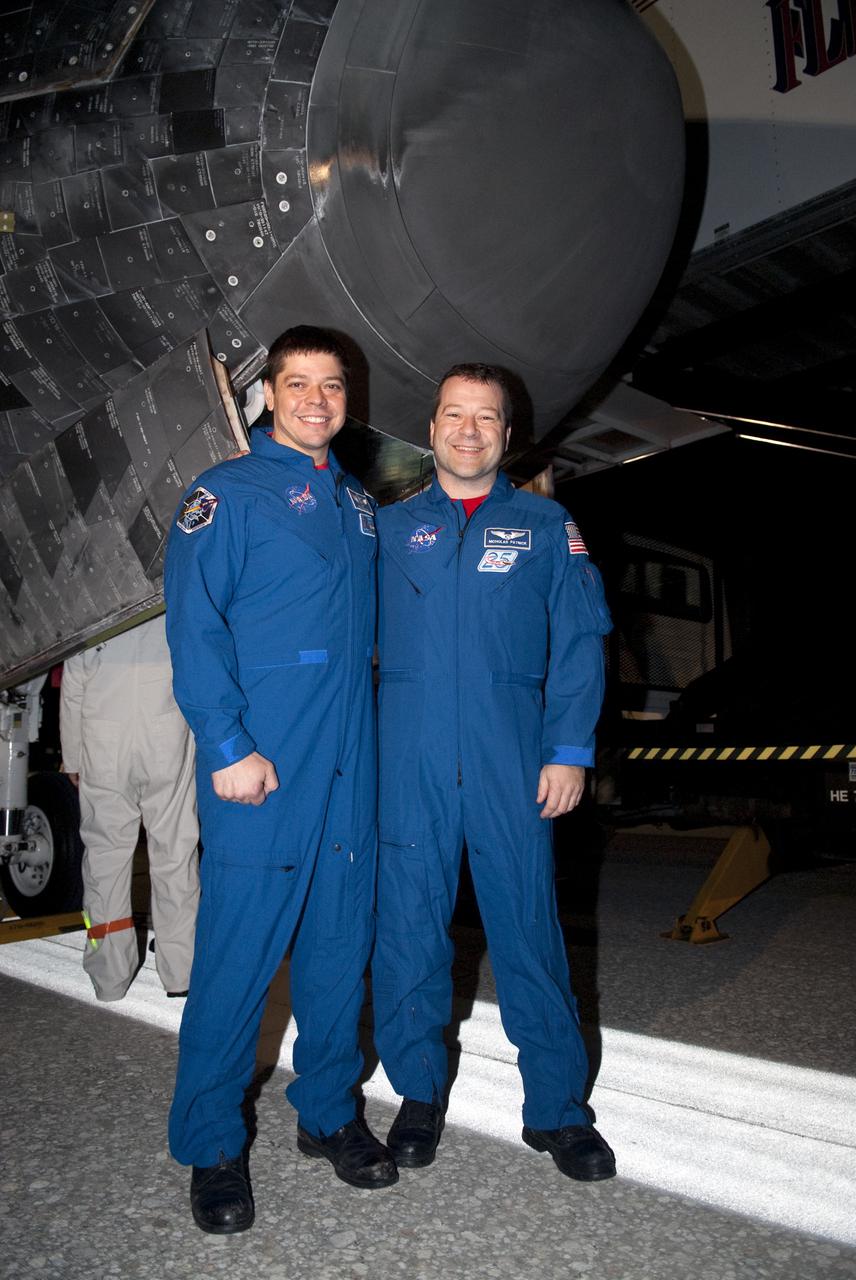
CAPE CANAVERAL, Fla. - STS-130 Mission Specialists Robert Behnken, left, and Nicholas Patrick pause for a photograph under space shuttle Endeavour's nosecone following its successful landing on Runway 15 at the Shuttle Landing Facility at NASA's Kennedy Space Center in Florida. After 14 days in space, Endeavour's 5.7-million-mile STS-130 mission was completed on orbit 217. Main gear touchdown was at 10:20:31 p.m. EST followed by nose gear touchdown at 10:20:39 p.m. and wheels stop at 10:22:10 p.m. It was the 23rd night landing in shuttle history and the 17th at Kennedy. During Endeavour's STS-130 mission, astronauts installed the Tranquility node, a module that provides additional room for crew members and many of the station's life support and environmental control systems. Attached to Tranquility is a cupola with seven windows that provide a panoramic view of Earth, celestial objects and visiting spacecraft. The module was built in Turin, Italy, by Thales Alenia Space for the European Space Agency. The orbiting laboratory is approximately 90 percent complete now in terms of mass. STS-130 was the 24th flight for Endeavour, the 32nd shuttle mission devoted to ISS assembly and maintenance, and the 130th shuttle mission to date. For information on the STS-130 mission and crew, visit http:__www.nasa.gov_mission_pages_shuttle_shuttlemissions_sts130_index.html. Photo credit: NASA_Kim Shiflett

CAPE CANAVERAL, Fla. - NASA Administrator Charles Bolden, center, gets a close-up look at space shuttle Endeavour following its successful landing on Runway 15 at the Shuttle Landing Facility at NASA's Kennedy Space Center in Florida. After 14 days in space, Endeavour's 5.7-million-mile STS-130 mission was completed on orbit 217. Main gear touchdown was at 10:20:31 p.m. EST followed by nose gear touchdown at 10:20:39 p.m. and wheels stop at 10:22:10 p.m. It was the 23rd night landing in shuttle history and the 17th at Kennedy. During Endeavour's STS-130 mission, astronauts installed the Tranquility node, a module that provides additional room for crew members and many of the station's life support and environmental control systems. Attached to Tranquility is a cupola with seven windows that provide a panoramic view of Earth, celestial objects and visiting spacecraft. The module was built in Turin, Italy, by Thales Alenia Space for the European Space Agency. The orbiting laboratory is approximately 90 percent complete now in terms of mass. STS-130 was the 24th flight for Endeavour, the 32nd shuttle mission devoted to ISS assembly and maintenance, and the 130th shuttle mission to date. For information on the STS-130 mission and crew, visit http:__www.nasa.gov_mission_pages_shuttle_shuttlemissions_sts130_index.html. Photo credit: NASA_Kim Shiflett
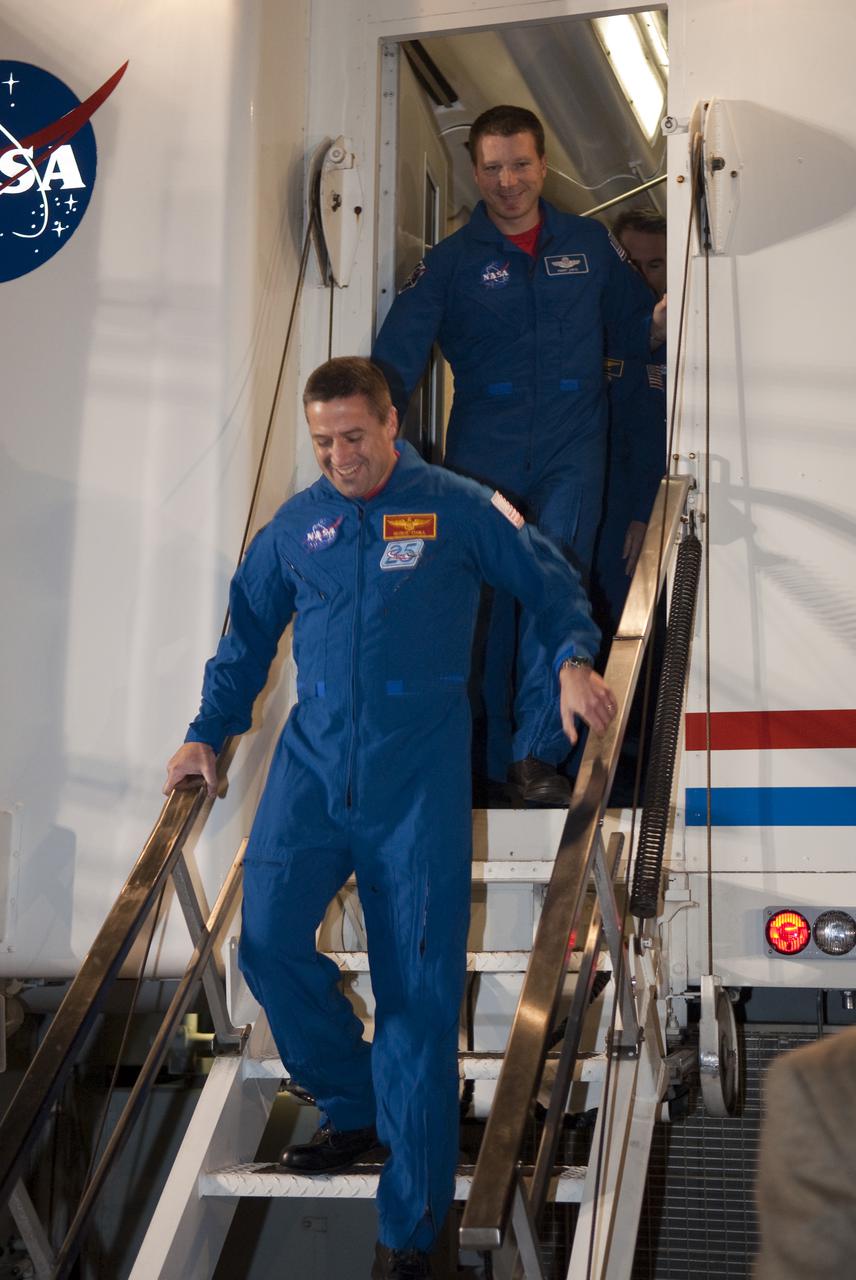
CAPE CANAVERAL, Fla. - STS-130 Commander George Zamka leaves the astronaut support vehicle, followed by Pilot Terry Virts, following space shuttle Endeavour's successful landing on Runway 15 at the Shuttle Landing Facility at NASA's Kennedy Space Center in Florida. After 14 days in space, Endeavour's 5.7-million-mile STS-130 mission was completed on orbit 217. Main gear touchdown was at 10:20:31 p.m. EST followed by nose gear touchdown at 10:20:39 p.m. and wheels stop at 10:22:10 p.m. It was the 23rd night landing in shuttle history and the 17th at Kennedy. During Endeavour's STS-130 mission, astronauts installed the Tranquility node, a module that provides additional room for crew members and many of the station's life support and environmental control systems. Attached to Tranquility is a cupola with seven windows that provide a panoramic view of Earth, celestial objects and visiting spacecraft. The module was built in Turin, Italy, by Thales Alenia Space for the European Space Agency. The orbiting laboratory is approximately 90 percent complete now in terms of mass. STS-130 was the 24th flight for Endeavour, the 32nd shuttle mission devoted to ISS assembly and maintenance, and the 130th shuttle mission to date. For information on the STS-130 mission and crew, visit http:__www.nasa.gov_mission_pages_shuttle_shuttlemissions_sts130_index.html. Photo credit: NASA_Kim Shiflett
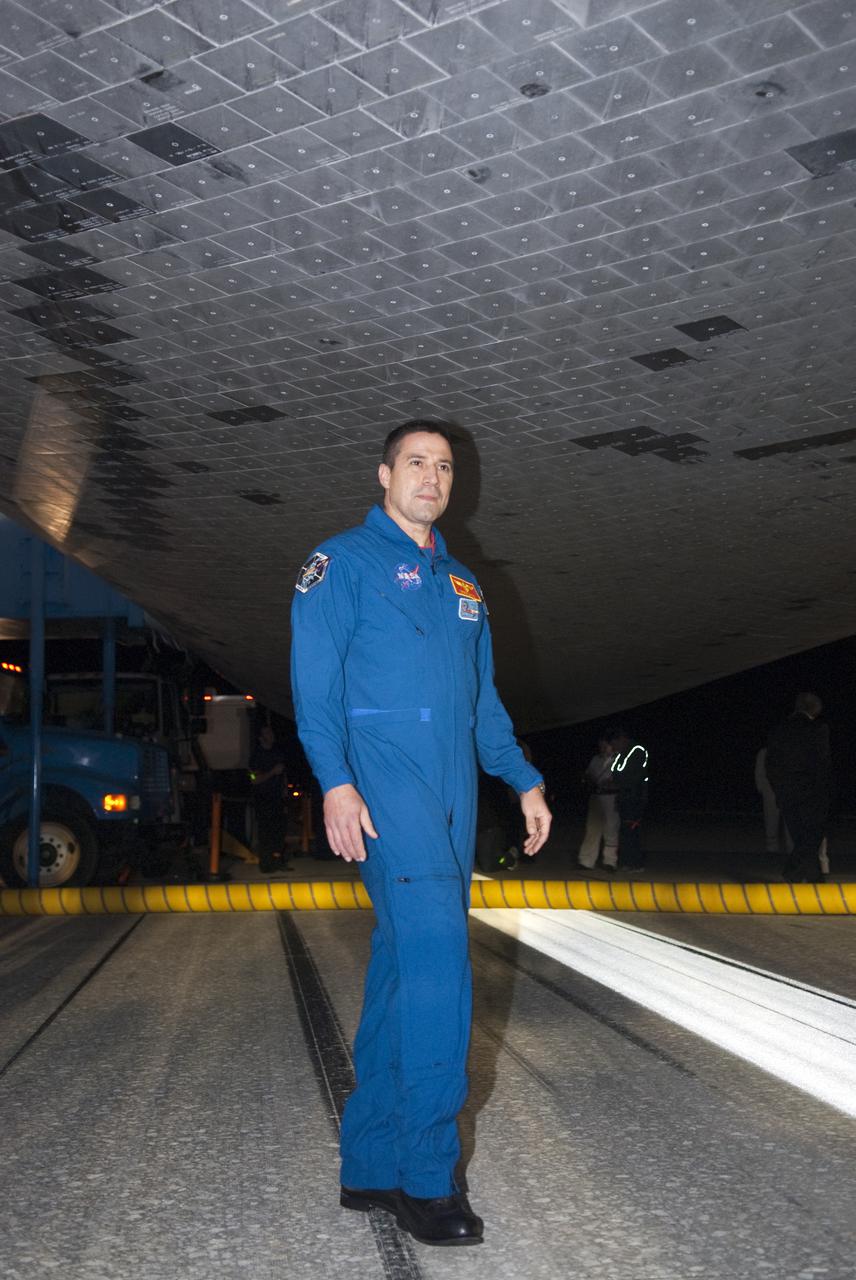
CAPE CANAVERAL, Fla. - STS-130 Commander George Zamka inspects the thermal protection system tiles under space shuttle Endeavour following its successful landing on Runway 15 at the Shuttle Landing Facility at NASA's Kennedy Space Center in Florida. After 14 days in space, Endeavour's 5.7-million-mile STS-130 mission was completed on orbit 217. Main gear touchdown was at 10:20:31 p.m. EST followed by nose gear touchdown at 10:20:39 p.m. and wheels stop at 10:22:10 p.m. It was the 23rd night landing in shuttle history and the 17th at Kennedy. During Endeavour's STS-130 mission, astronauts installed the Tranquility node, a module that provides additional room for crew members and many of the station's life support and environmental control systems. Attached to Tranquility is a cupola with seven windows that provide a panoramic view of Earth, celestial objects and visiting spacecraft. The module was built in Turin, Italy, by Thales Alenia Space for the European Space Agency. The orbiting laboratory is approximately 90 percent complete now in terms of mass. STS-130 was the 24th flight for Endeavour, the 32nd shuttle mission devoted to ISS assembly and maintenance, and the 130th shuttle mission to date. For information on the STS-130 mission and crew, visit http:__www.nasa.gov_mission_pages_shuttle_shuttlemissions_sts130_index.html. Photo credit: NASA_Kim Shiflett
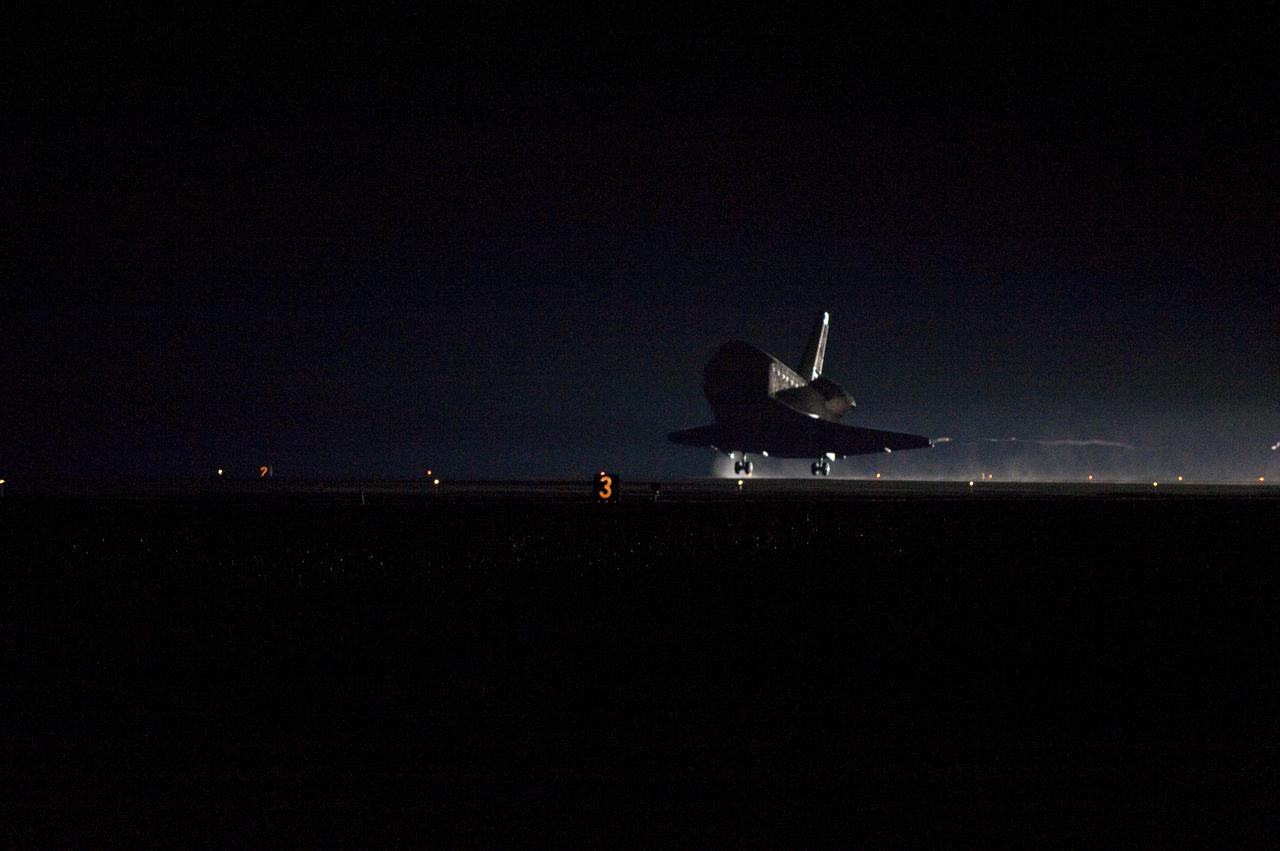
CAPE CANAVERAL, Fla. - Space shuttle Endeavour lands on Runway 15 at the Shuttle Landing Facility at NASA's Kennedy Space Center in Florida after 14 days in space, completing the 5.7-million-mile STS-130 mission to the International Space Station on orbit 217. Main gear touchdown was at 10:20:31 p.m. EST followed by nose gear touchdown at 10:20:39 p.m. and wheels stop at 10:22:10 p.m. It was the 23rd night landing in shuttle history and the 17th at Kennedy. Aboard are Commander George Zamka; Pilot Terry Virts; and Mission Specialists Robert Behnken, Nicholas Patrick, Kathryn Hire and Stephen Robinson. During Endeavour's STS-130 mission, astronauts installed the Tranquility node, a module that provides additional room for crew members and many of the station's life support and environmental control systems. Attached to Tranquility is a cupola with seven windows that provide a panoramic view of Earth, celestial objects and visiting spacecraft. The module was built in Turin, Italy, by Thales Alenia Space for the European Space Agency. The orbiting laboratory is approximately 90 percent complete now in terms of mass. STS-130 was the 24th flight for Endeavour, the 32nd shuttle mission devoted to ISS assembly and maintenance, and the 130th shuttle mission to date. For information on the STS-130 mission and crew, visit http:__www.nasa.gov_mission_pages_shuttle_shuttlemissions_sts130_index.html. Photo credit: NASA_ Tom Farrar Jr.
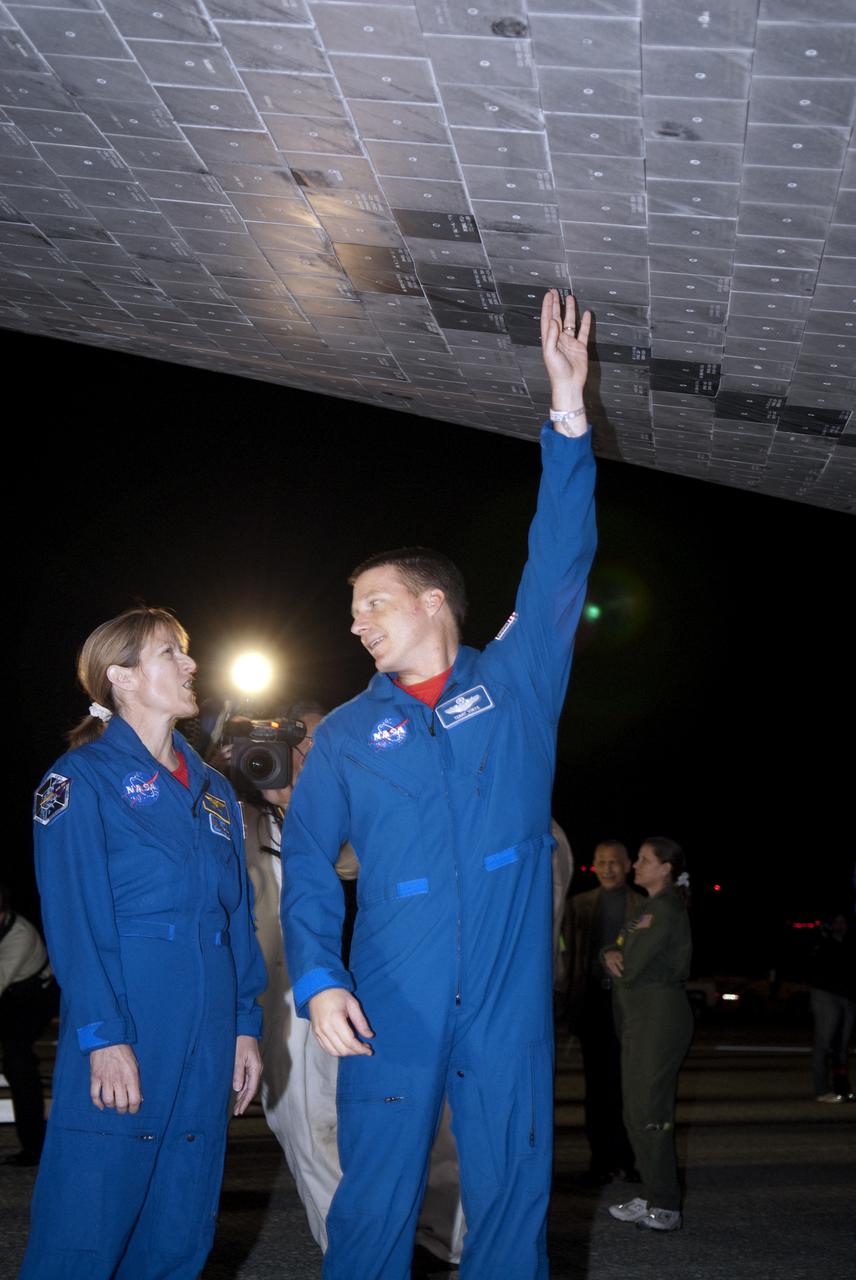
CAPE CANAVERAL, Fla. - STS-130 Mission Specialist Kathryn Hire, left, and Pilot Terry Virts inspect the thermal protection system tiles under space shuttle Endeavour following its successful landing on Runway 15 at the Shuttle Landing Facility at NASA's Kennedy Space Center in Florida. After 14 days in space, Endeavour's 5.7-million-mile STS-130 mission was completed on orbit 217. Main gear touchdown was at 10:20:31 p.m. EST followed by nose gear touchdown at 10:20:39 p.m. and wheels stop at 10:22:10 p.m. It was the 23rd night landing in shuttle history and the 17th at Kennedy. During Endeavour's STS-130 mission, astronauts installed the Tranquility node, a module that provides additional room for crew members and many of the station's life support and environmental control systems. Attached to Tranquility is a cupola with seven windows that provide a panoramic view of Earth, celestial objects and visiting spacecraft. The module was built in Turin, Italy, by Thales Alenia Space for the European Space Agency. The orbiting laboratory is approximately 90 percent complete now in terms of mass. STS-130 was the 24th flight for Endeavour, the 32nd shuttle mission devoted to ISS assembly and maintenance, and the 130th shuttle mission to date. For information on the STS-130 mission and crew, visit http:__www.nasa.gov_mission_pages_shuttle_shuttlemissions_sts130_index.html. Photo credit: NASA_Kim Shiflett

CAPE CANAVERAL, Fla. - With drag chute unfurled, space shuttle Endeavour lands on Runway 15 at the Shuttle Landing Facility at NASA's Kennedy Space Center in Florida after 14 days in space, completing the 5.7-million-mile STS-130 mission on orbit 217. Main gear touchdown was at 10:20:31 p.m. EST followed by nose gear touchdown at 10:20:39 p.m. and wheels stop at 10:22:10 p.m. It was the 23rd night landing in shuttle history and the 17th at Kennedy. Aboard are Commander George Zamka; Pilot Terry Virts; and Mission Specialists Robert Behnken, Nicholas Patrick, Kathryn Hire and Stephen Robinson. During Endeavour's STS-130 mission, astronauts installed the Tranquility node, a module that provides additional room for crew members and many of the station's life support and environmental control systems. Attached to Tranquility is a cupola with seven windows that provide a panoramic view of Earth, celestial objects and visiting spacecraft. The module was built in Turin, Italy, by Thales Alenia Space for the European Space Agency. The orbiting laboratory is approximately 90 percent complete now in terms of mass. STS-130 was the 24th flight for Endeavour, the 32nd shuttle mission devoted to ISS assembly and maintenance, and the 130th shuttle mission to date. For information on the STS-130 mission and crew, visit http:__www.nasa.gov_mission_pages_shuttle_shuttlemissions_sts130_index.html. Photo credit: NASA_Kim Shiflett
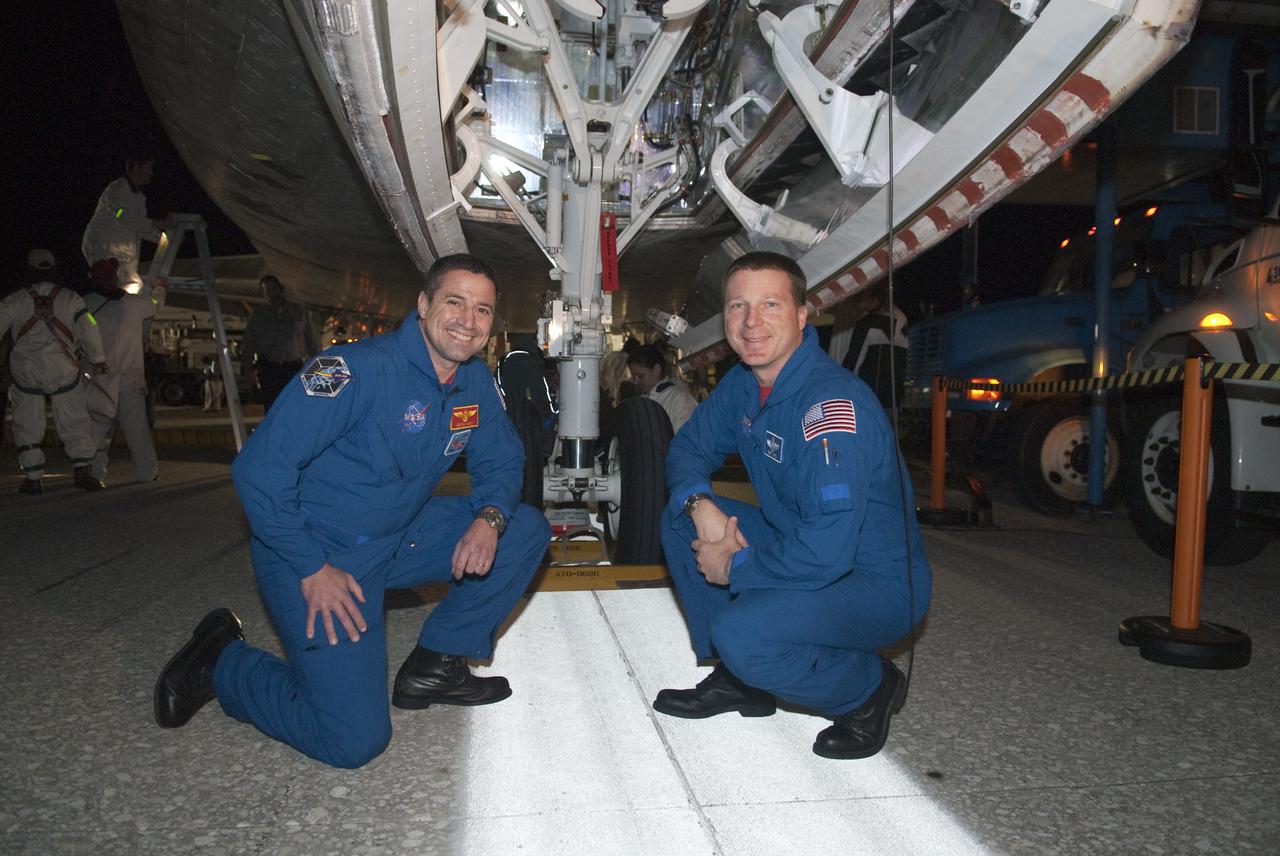
CAPE CANAVERAL, Fla. - STS-130 Commander George Zamka, left, and Pilot Terry Virts pause for a photograph in front of space shuttle Endeavour's nose gear following its successful landing on Runway 15 at the Shuttle Landing Facility at NASA's Kennedy Space Center in Florida. After 14 days in space, Endeavour's 5.7-million-mile STS-130 mission was completed on orbit 217. Main gear touchdown was at 10:20:31 p.m. EST followed by nose gear touchdown at 10:20:39 p.m. and wheels stop at 10:22:10 p.m. It was the 23rd night landing in shuttle history and the 17th at Kennedy. During Endeavour's STS-130 mission, astronauts installed the Tranquility node, a module that provides additional room for crew members and many of the station's life support and environmental control systems. Attached to Tranquility is a cupola with seven windows that provide a panoramic view of Earth, celestial objects and visiting spacecraft. The module was built in Turin, Italy, by Thales Alenia Space for the European Space Agency. The orbiting laboratory is approximately 90 percent complete now in terms of mass. STS-130 was the 24th flight for Endeavour, the 32nd shuttle mission devoted to ISS assembly and maintenance, and the 130th shuttle mission to date. For information on the STS-130 mission and crew, visit http:__www.nasa.gov_mission_pages_shuttle_shuttlemissions_sts130_index.html. Photo credit: NASA_Kim Shiflett
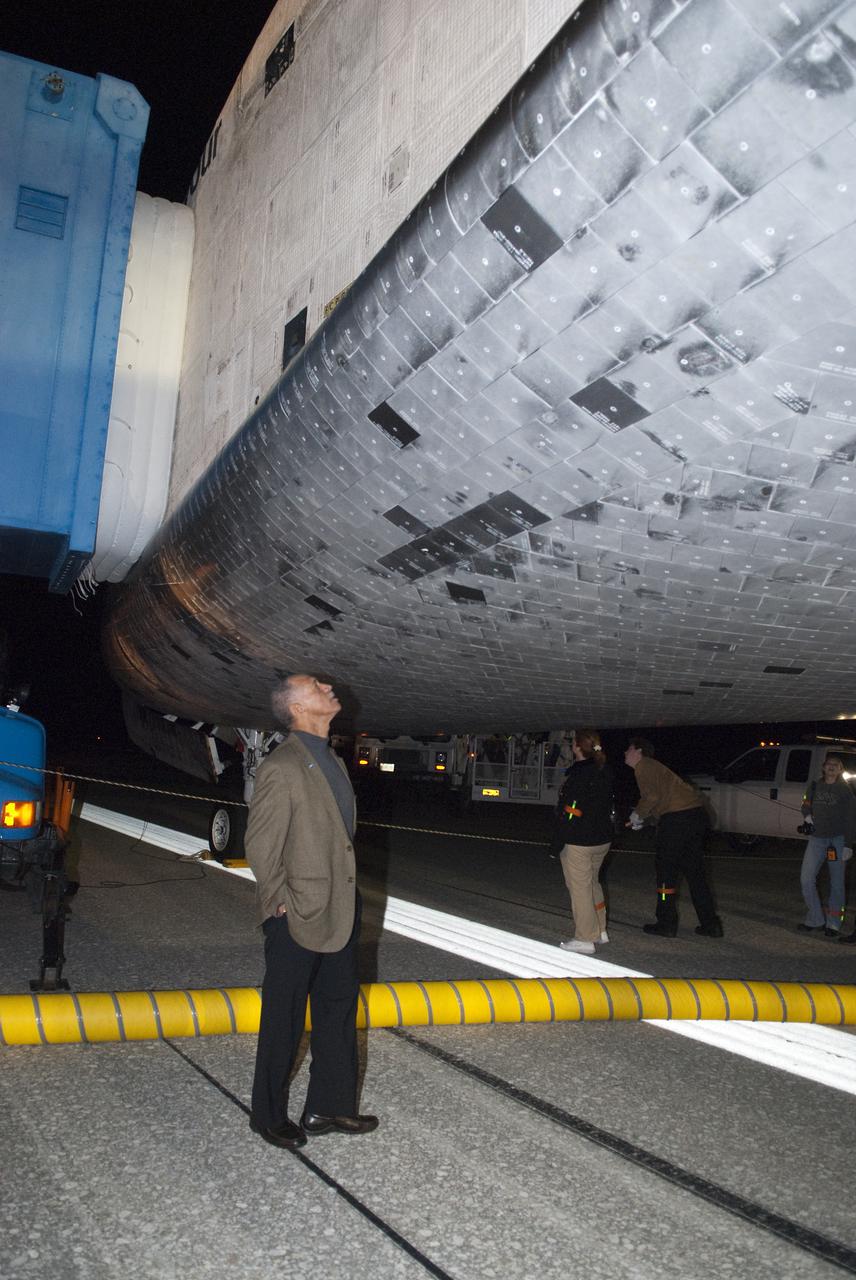
CAPE CANAVERAL, Fla. - NASA Administrator Charles Bolden examines the thermal protection system tiles under space shuttle Endeavour following its successful landing on Runway 15 at the Shuttle Landing Facility at NASA's Kennedy Space Center in Florida. After 14 days in space, Endeavour's 5.7-million-mile STS-130 mission was completed on orbit 217. Main gear touchdown was at 10:20:31 p.m. EST followed by nose gear touchdown at 10:20:39 p.m. and wheels stop at 10:22:10 p.m. It was the 23rd night landing in shuttle history and the 17th at Kennedy. During Endeavour's STS-130 mission, astronauts installed the Tranquility node, a module that provides additional room for crew members and many of the station's life support and environmental control systems. Attached to Tranquility is a cupola with seven windows that provide a panoramic view of Earth, celestial objects and visiting spacecraft. The module was built in Turin, Italy, by Thales Alenia Space for the European Space Agency. The orbiting laboratory is approximately 90 percent complete now in terms of mass. STS-130 was the 24th flight for Endeavour, the 32nd shuttle mission devoted to ISS assembly and maintenance, and the 130th shuttle mission to date. For information on the STS-130 mission and crew, visit http:__www.nasa.gov_mission_pages_shuttle_shuttlemissions_sts130_index.html. Photo credit: NASA_Kim Shiflett
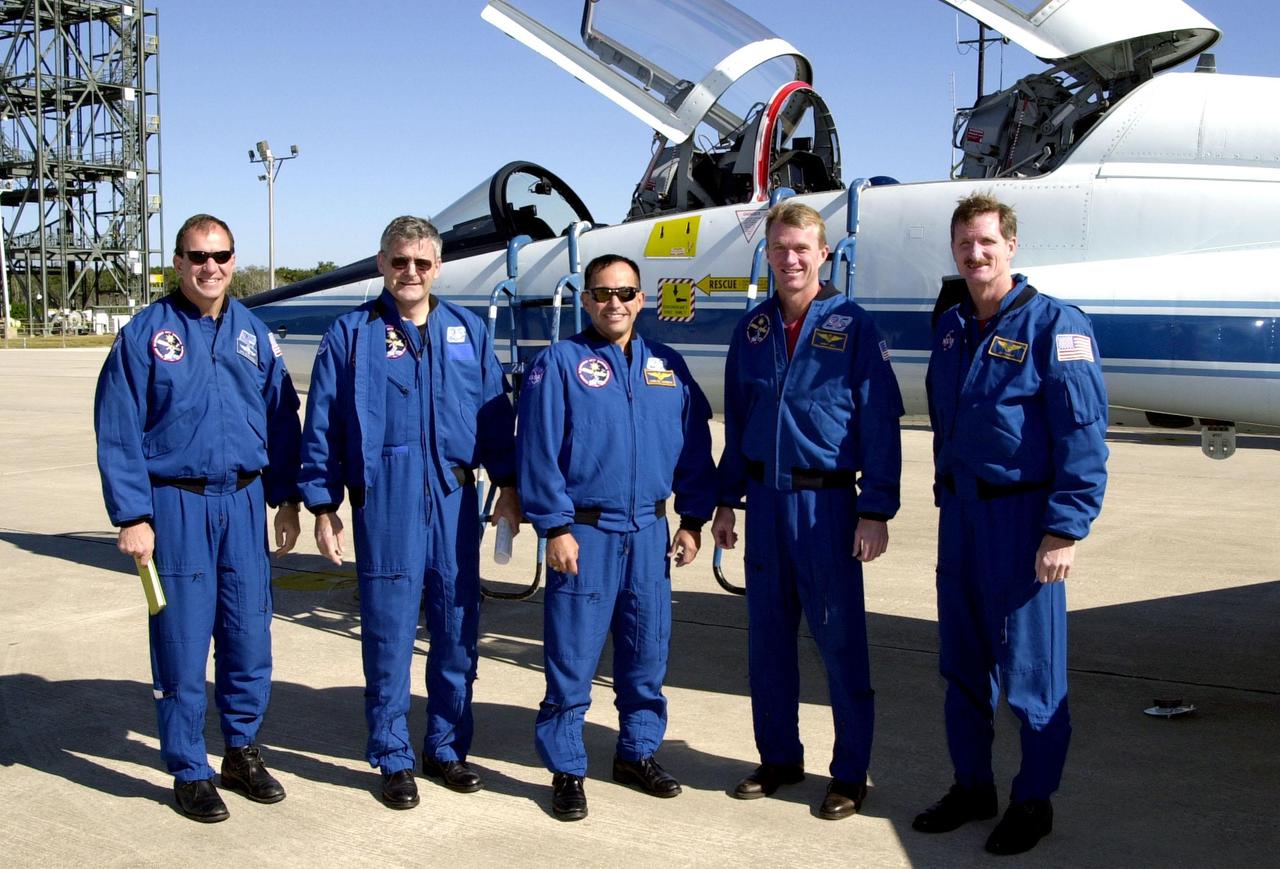
The STS-97 crew poses for a photo after landing at KSC’s Shuttle Landing Facility. Standing, left to right, are Pilot Mike Bloomfield, Mission Specialists Marc Garneau and Carlos Noriega, Commander Brent Jett and Mission Specialist Joe Tanner. They are at KSC for a mini-CEIT (Crew Equipment Interface Test). STS-97 is scheduled to launch Nov. 30 at 10:06 p.m. EST from Launch Pad 39B. The sixth flight to the International Space Station, the mission is expected to last 11 days, with a planned KSC landing at about 5:58 p.m. Dec. 11
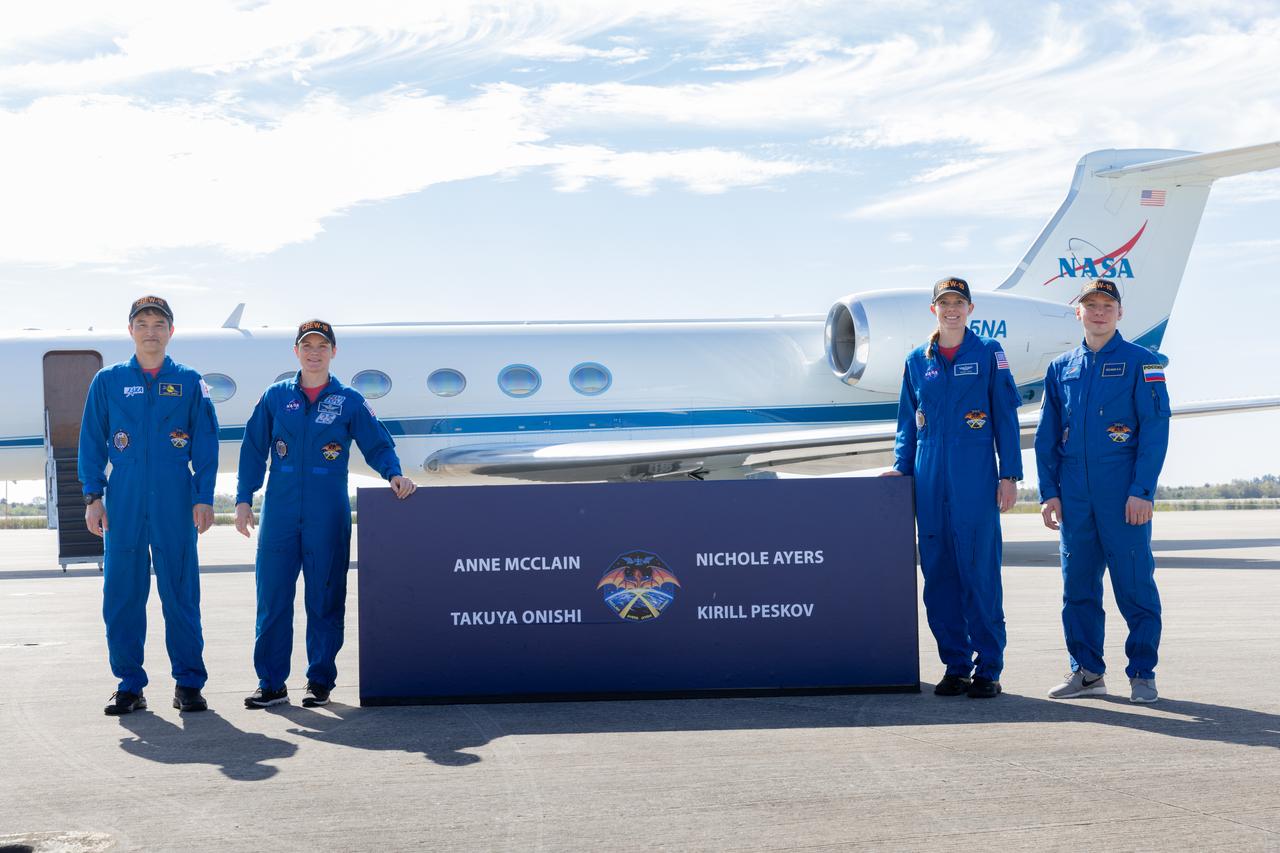
Crew members of NASA’s SpaceX Crew-10 mission to the International Space Station from left to right JAXA (Japan Aerospace Exploration Agency) astronaut Takuya Onishi, NASA astronaut Anne McClain, NASA astronaut Nichole Ayers, and Roscosmos cosmonaut Kirill Peskov stand before members of the news media after arrival to the Launch and Landing Facility at Kennedy Space Center in Florida on Friday, March 7, 2025. The Crew-10 mission is slated to launch aboard SpaceX’s Dragon spacecraft, powered by the company’s Falcon 9 rocket from NASA Kennedy’s Launch Complex 39A no earlier than 7:48 p.m. EDT on Wednesday, March 12, 2025.
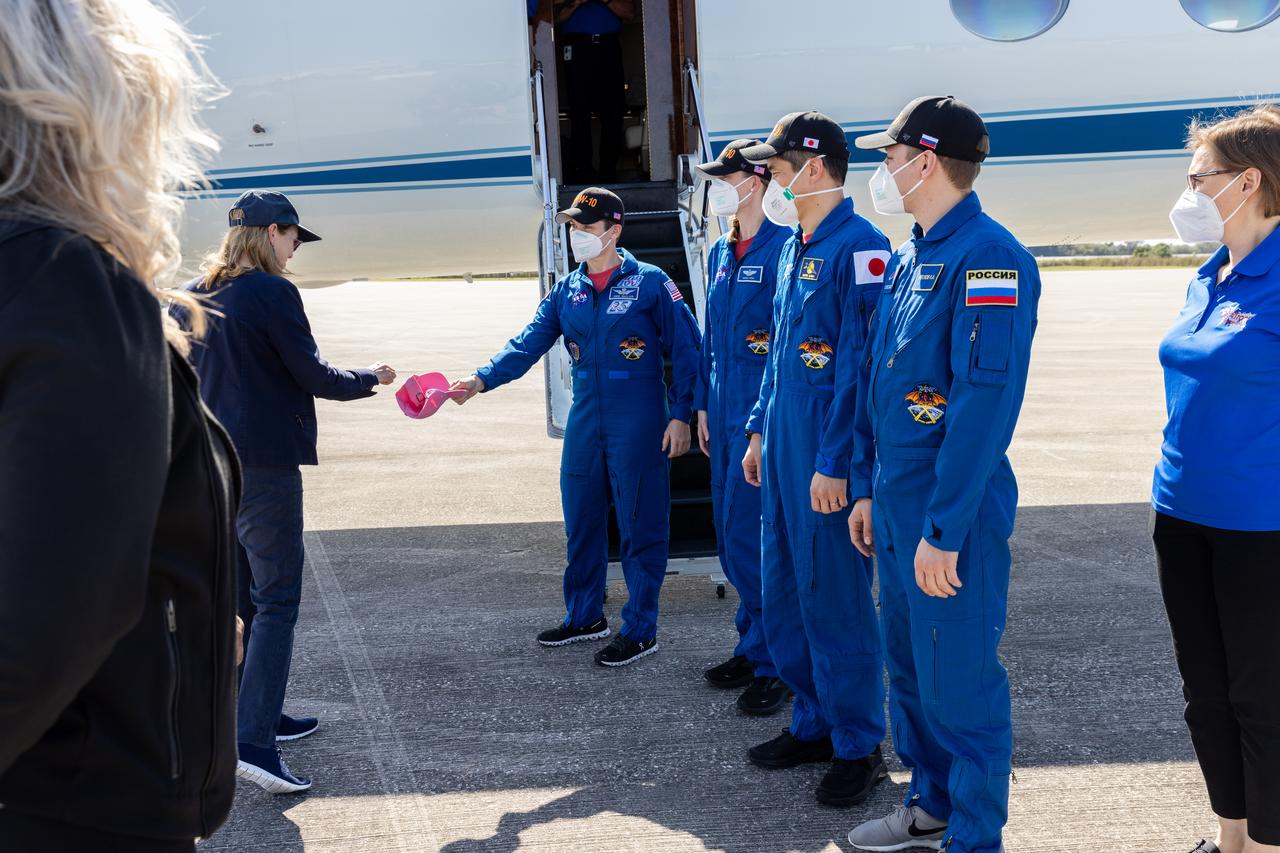
Acting NASA Administrator Janet Petro greets crew members of NASA’s SpaceX Crew-10 mission to the International Space Station after arrival to the Launch and Landing Facility at Kennedy Space Center in Florida on Friday, March 7, 2025. From left to right are Petro, NASA astronauts Anne McClain and Nichole Ayers, JAXA (Japan Aerospace Exploration Agency) astronaut Takuya Onishi, and Roscosmos cosmonaut Kirill Peskov. The Crew-10 mission is slated to launch aboard SpaceX’s Dragon spacecraft, powered by the company’s Falcon 9 rocket from NASA Kennedy’s Launch Complex 39A no earlier than 7:48 p.m. EDT on Wednesday, March 12, 2025.
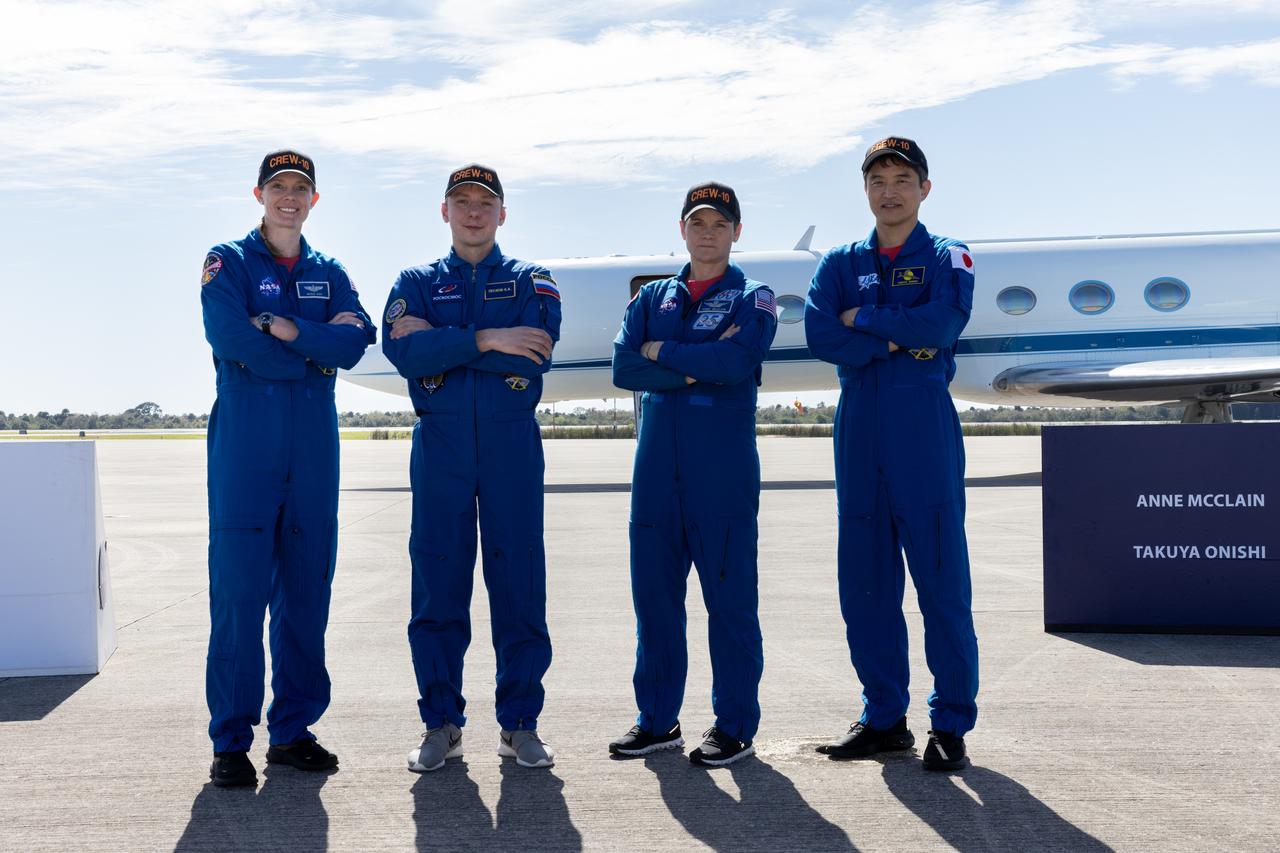
Crew members of NASA’s SpaceX Crew-10 mission to the International Space Station from left to right NASA astronaut Nichole Ayers, Roscosmos cosmonaut Kirill Peskov, NASA astronaut Anne McClain, and JAXA (Japan Aerospace Exploration Agency) astronaut Takuya Onishi stand before members of the news media after arrival to the Launch and Landing Facility at Kennedy Space Center in Florida on Friday, March 7, 2025. The Crew-10 mission is slated to launch aboard SpaceX’s Dragon spacecraft, powered by the company’s Falcon 9 rocket from NASA Kennedy’s Launch Complex 39A no earlier than 7:48 p.m. EDT on Wednesday, March 12, 2025.
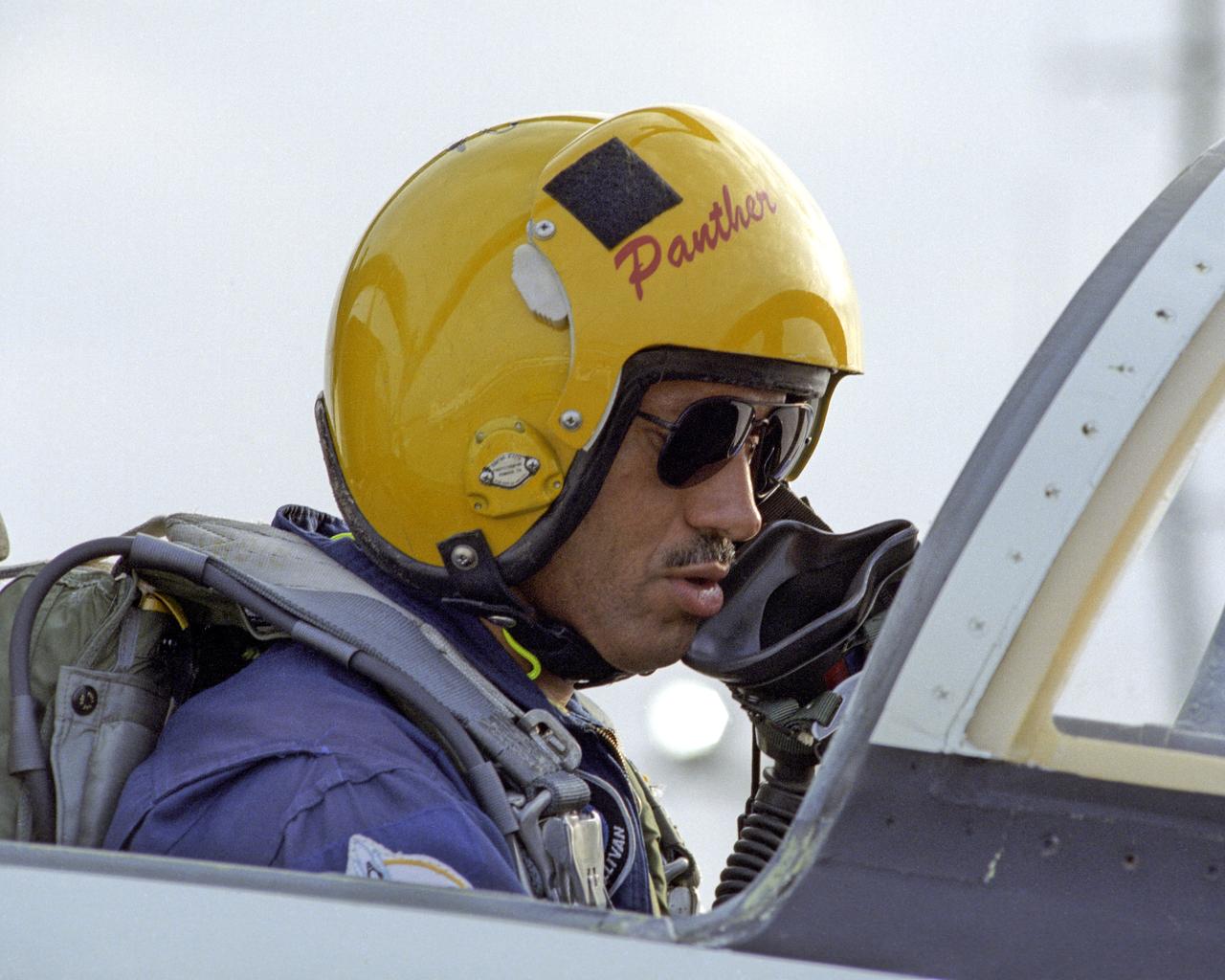
Charles F. Bolden, Jr., Pilot of Space Shuttle Mission STS-31, prepares for rehearsing shuttle contingency landings in the T-38S are among the final pre-launch activities. STS-31, carrying five crew members and the HST is set to liftoff at 8:47 a.m. April 10.
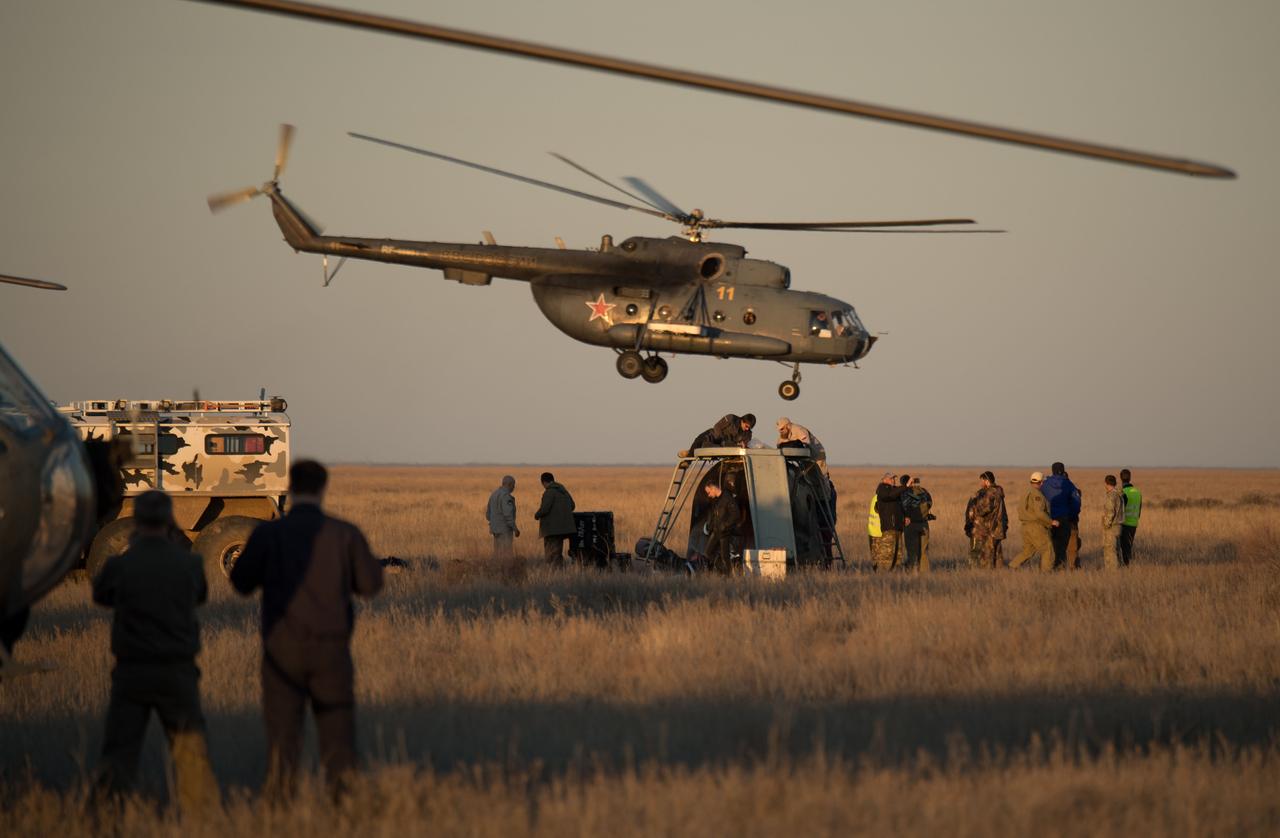
nhq201704100044 (April 10, 2017) --- Russian support personnel work around the Soyuz MS-02 spacecraft shortly after it landed with Expedition 50 Commander Shane Kimbrough of NASA and Flight Engineers Sergey Ryzhikov and Andrey Borisenko of Roscosmos near the town of Zhezkazgan, Kazakhstan on Monday, April 10, 2017 (Kazakh time). Kimbrough, Ryzhikov, and Borisenko are returning after 173 days in space where they served as members of the Expedition 49 and 50 crews onboard the International Space Station. Photo Credit: (NASA/Bill Ingalls)
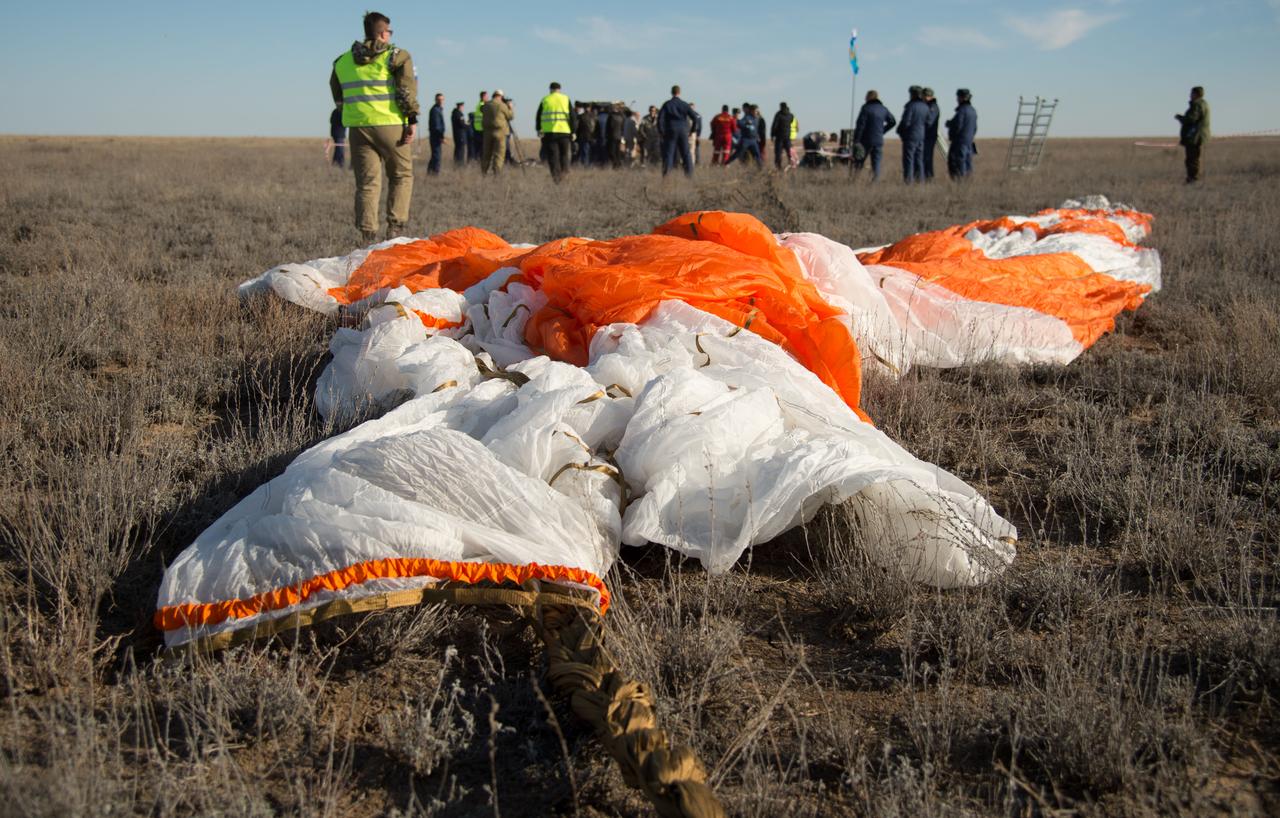
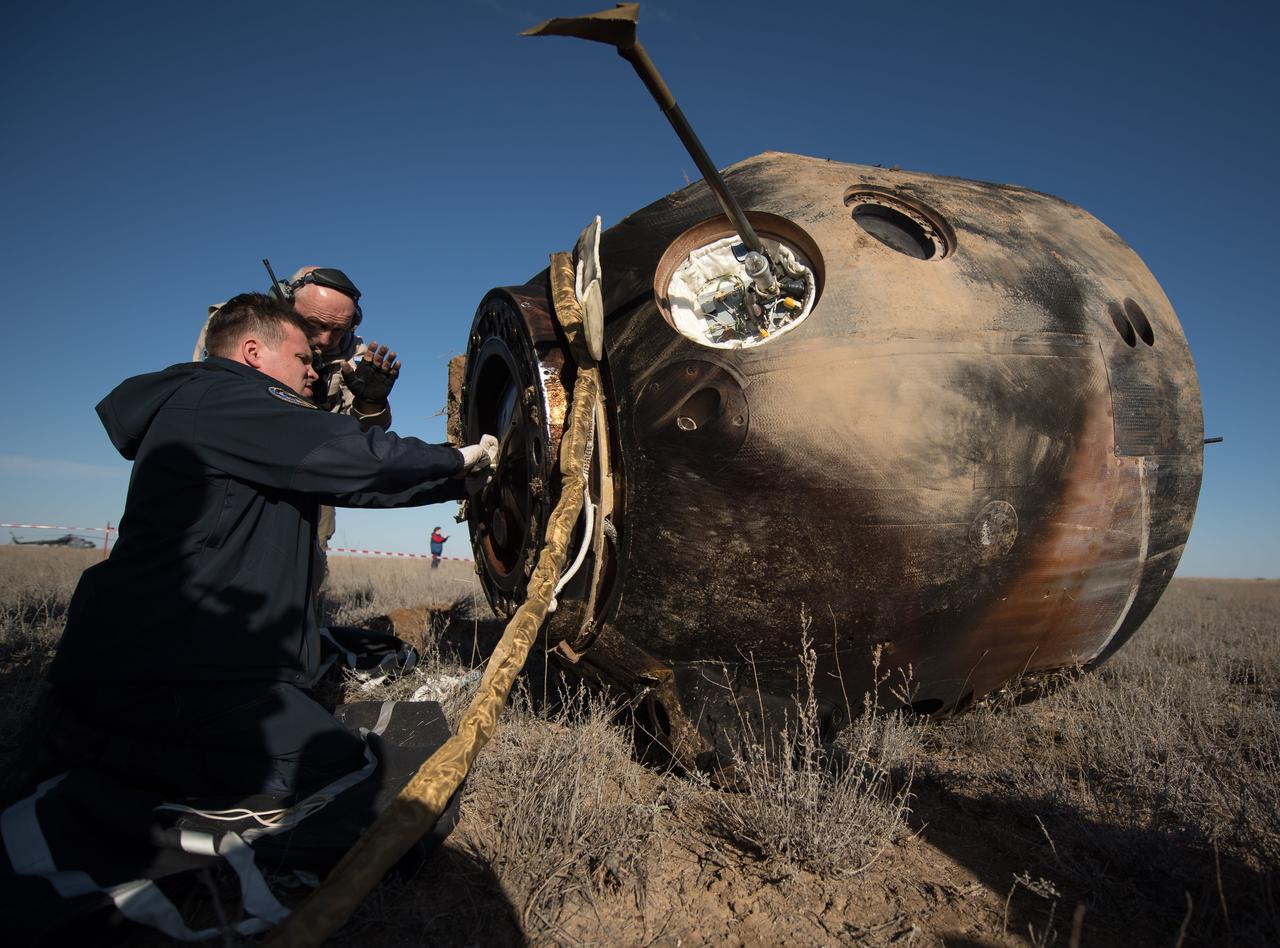
nhq201704100036 (April 10, 2017) --- Russian support personnel work around the Soyuz MS-02 spacecraft shortly after it landed with Expedition 50 Commander Shane Kimbrough of NASA and Flight Engineers Sergey Ryzhikov and Andrey Borisenko of Roscosmos near the town of Zhezkazgan, Kazakhstan on Monday, April 10, 2017 (Kazakh time). Kimbrough, Ryzhikov, and Borisenko are returning after 173 days in space where they served as members of the Expedition 49 and 50 crews onboard the International Space Station. Photo Credit: (NASA/Bill Ingalls)
nhq201704100022 (April 10, 2017) --- Russian Search and Rescue teams arrive at the Soyuz MS-02 spacecraft shortly after it landed with Expedition 50 Commander Shane Kimbrough of NASA and Flight Engineers Sergey Ryzhikov and Andrey Borisenko of Roscosmos near the town of Zhezkazgan, Kazakhstan on Monday, April 10, 2017 (Kazakh time). Kimbrough, Ryzhikov, and Borisenko are returning after 173 days in space where they served as members of the Expedition 49 and 50 crews onboard the International Space Station. Photo Credit: (NASA/Bill Ingalls)