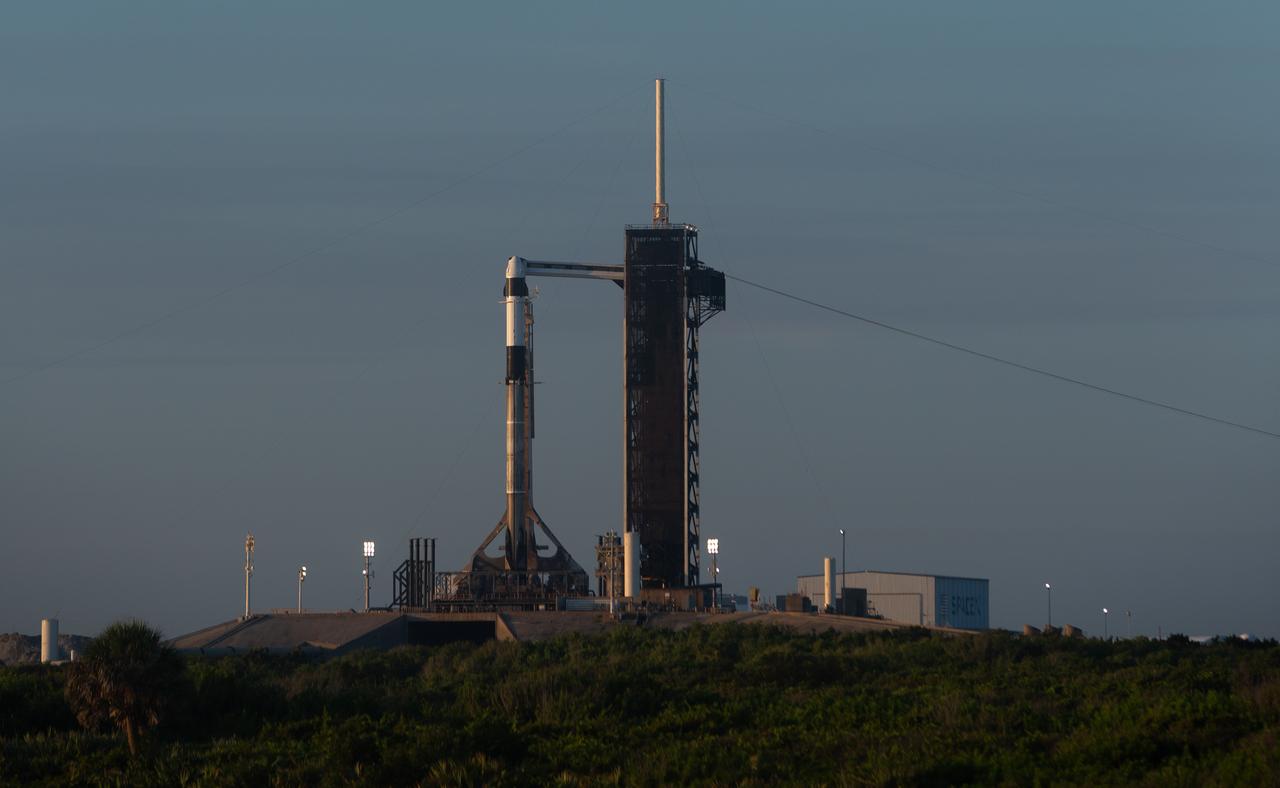
A SpaceX Falcon 9 rocket with the company's Dragon spacecraft on top is seen after sunrise on the launch pad at Launch Complex 39A as preparations continue for the Crew-11 mission, Thursday, July 31, 2025, at NASA's Kennedy Space Center in Florida. NASA’s SpaceX Crew-11 mission is the eleventh crew rotation mission of the SpaceX Dragon spacecraft and Falcon 9 rocket to the International Space Station as part of the agency’s Commercial Crew Program.NASA astronauts Zena Cardman, Mike Fincke, JAXA (Japan Aerospace Exploration Agency) astronaut Kimiya Yui, and Roscosmos cosmonaut Oleg Platonov are scheduled to launch at 11:43 a.m. EDT on Friday, August 1, from Launch Complex 39A at the NASA's Kennedy Space Center. Photo Credit: (NASA/Joel Kowsky)

JSC2006-E-34241 (11 August 2006) --- The STS-115 crew posed for photos following its August 11 preflight press briefing at the Johnson Space Center. From the left are astronauts Joseph R. Tanner, Heidemarie M. Stefanyshyn-Piper, Brent W. Jett Jr., Christopher J. Ferguson, Steven G. MacLean (Canadian Space Agency) and Daniel C. Burbank.
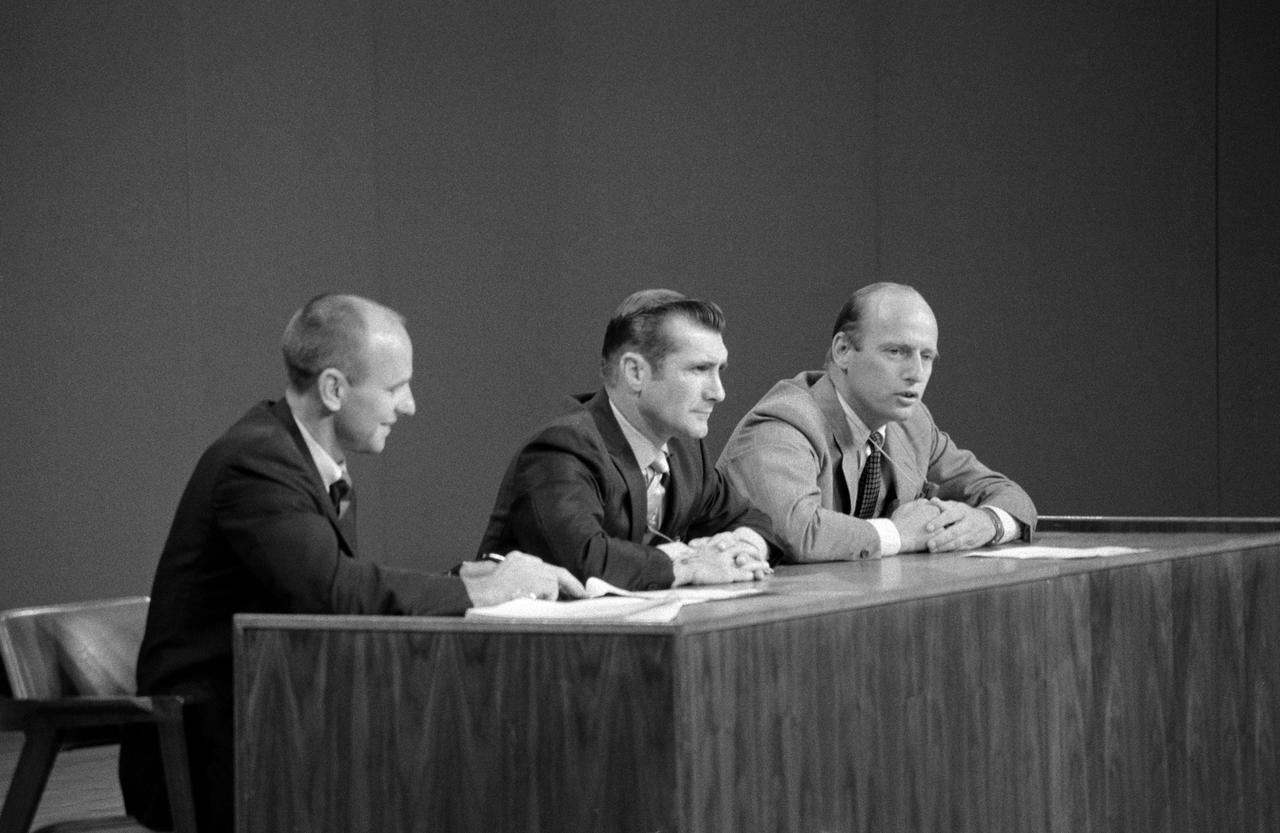
S69-54412 (11 Oct. 1969) --- The members of the Apollo 12 prime crew discuss their scheduled lunar landing mission at a preflight press conference which was held on Oct. 11, 1969, in the Manned Spacecraft Center auditorium. Left to right, are astronauts Alan L. Bean, lunar module pilot; Richard F. Gordon Jr., command module pilot; and Charles Conrad Jr., commander.
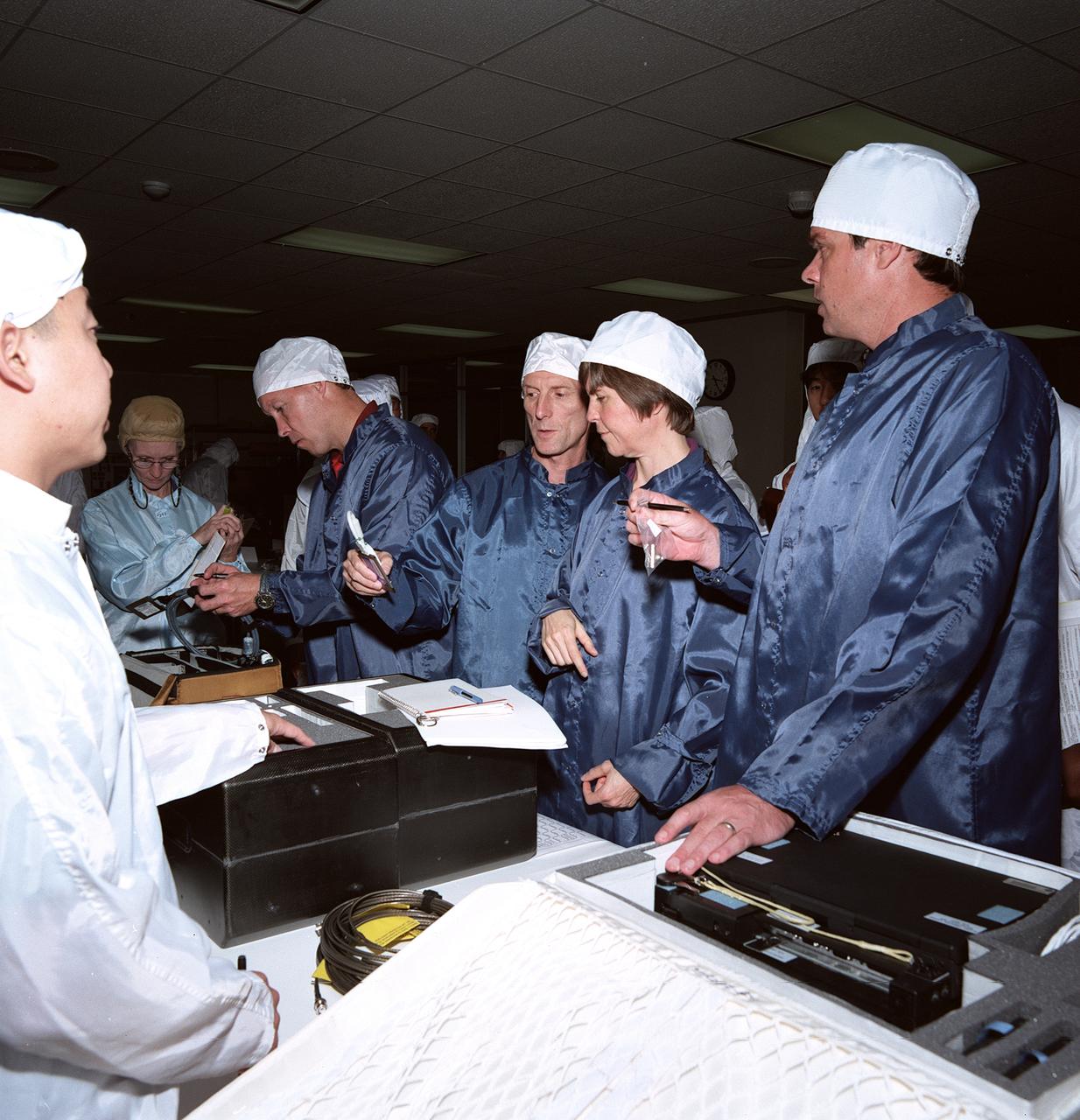
S99-09457 (11 August 1999) --- Wearing clean room suits, members of the STS-99 crew inspect some of the gear they will be using on their upcoming space mission. From the left (in blue lab coats) are astronauts Dominic L. Gorie, pilot; Gerhard P.J. Thiele, mission specialist representing the European Space Agency (ESA); Janice Voss, mission specialist; and Kevin R. Kregel, mission commander. This type flight crew equipment (FCE) bench review is routine preflight procedure for all shuttle crews.
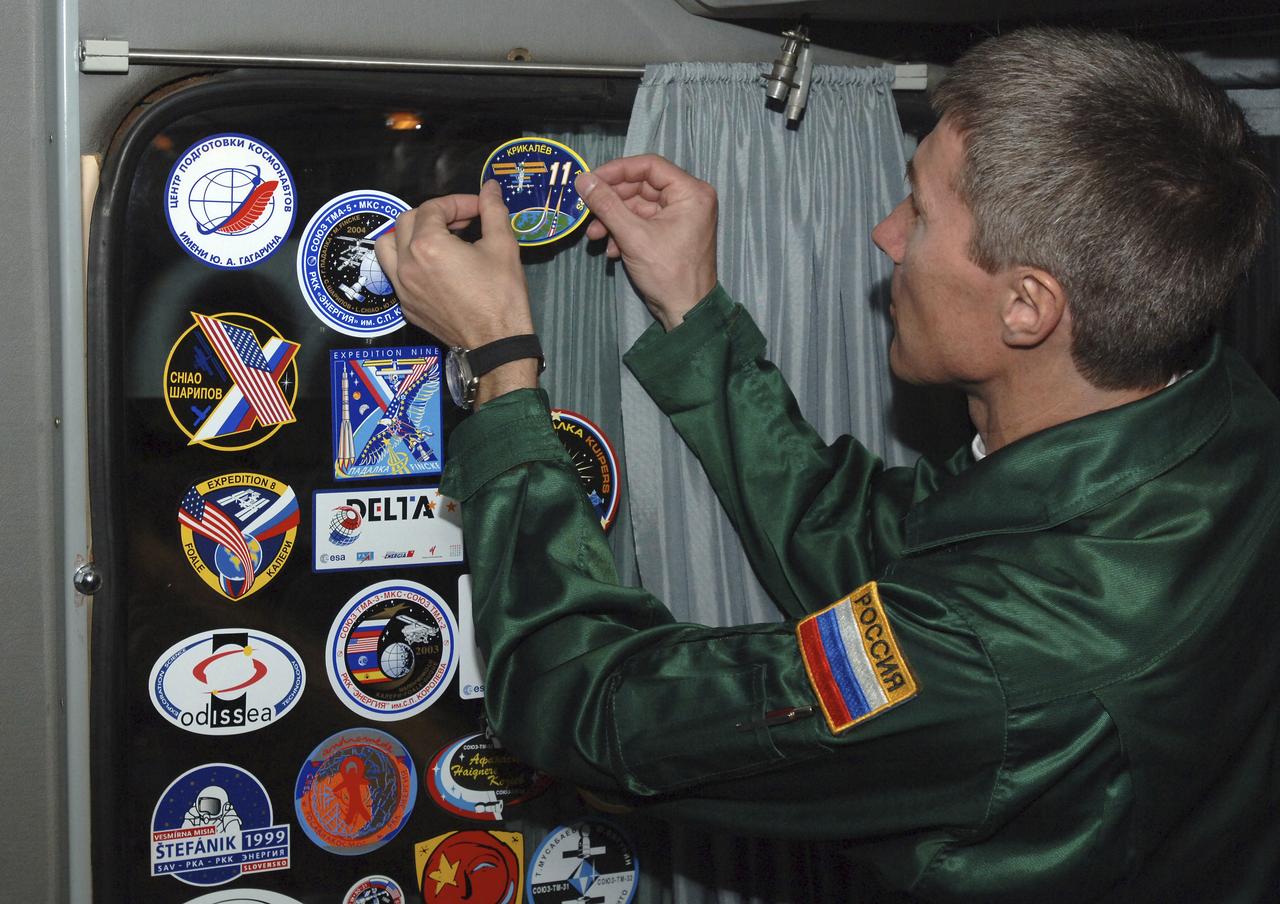
Expedition 11 crew Commander Sergei Krikalev places the Expedition 11 crew logo onboard the prime crew bus as they head to the cosmodrome for suit up, Thursday, April 14, 2005, in Baikonur, Kazakhstan. Photo Credit: (NASA/Bill Ingalls)
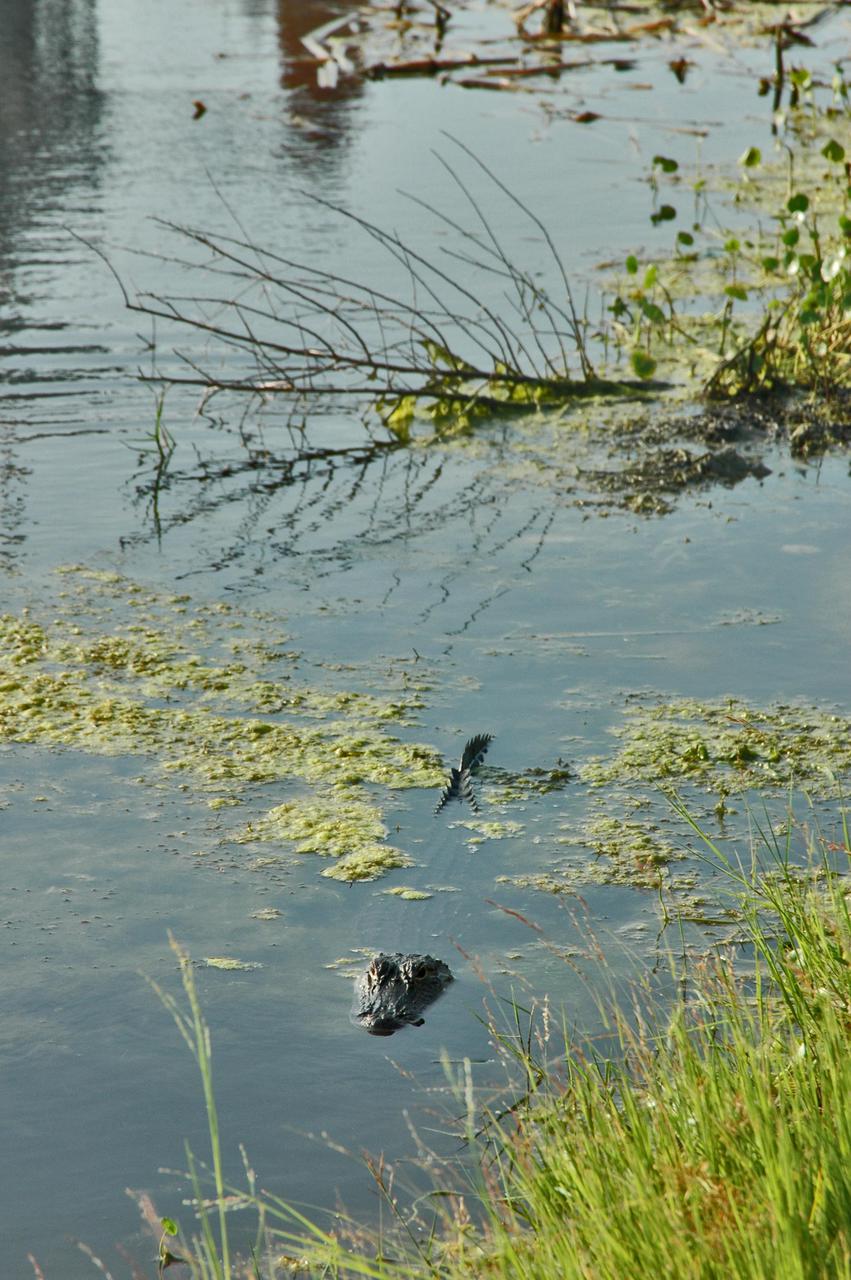
KENNEDY SPACE CENTER, FLA. - In a pond near Launch Pad 39B, an alligator lurks near the tall grass. Nearby is Space Shuttle Discovery, in full launch configuration after rollback of the Rotating Service Structure (RSS). Rollback of the RSS is a major preflight milestone, typically occurring during the T-11-hour hold on L-1 (the day before launch). Discovery is scheduled to lift off on the historic Return to Flight mission STS-114 at 10:39 a.m. EDT July 26 with a crew of seven.
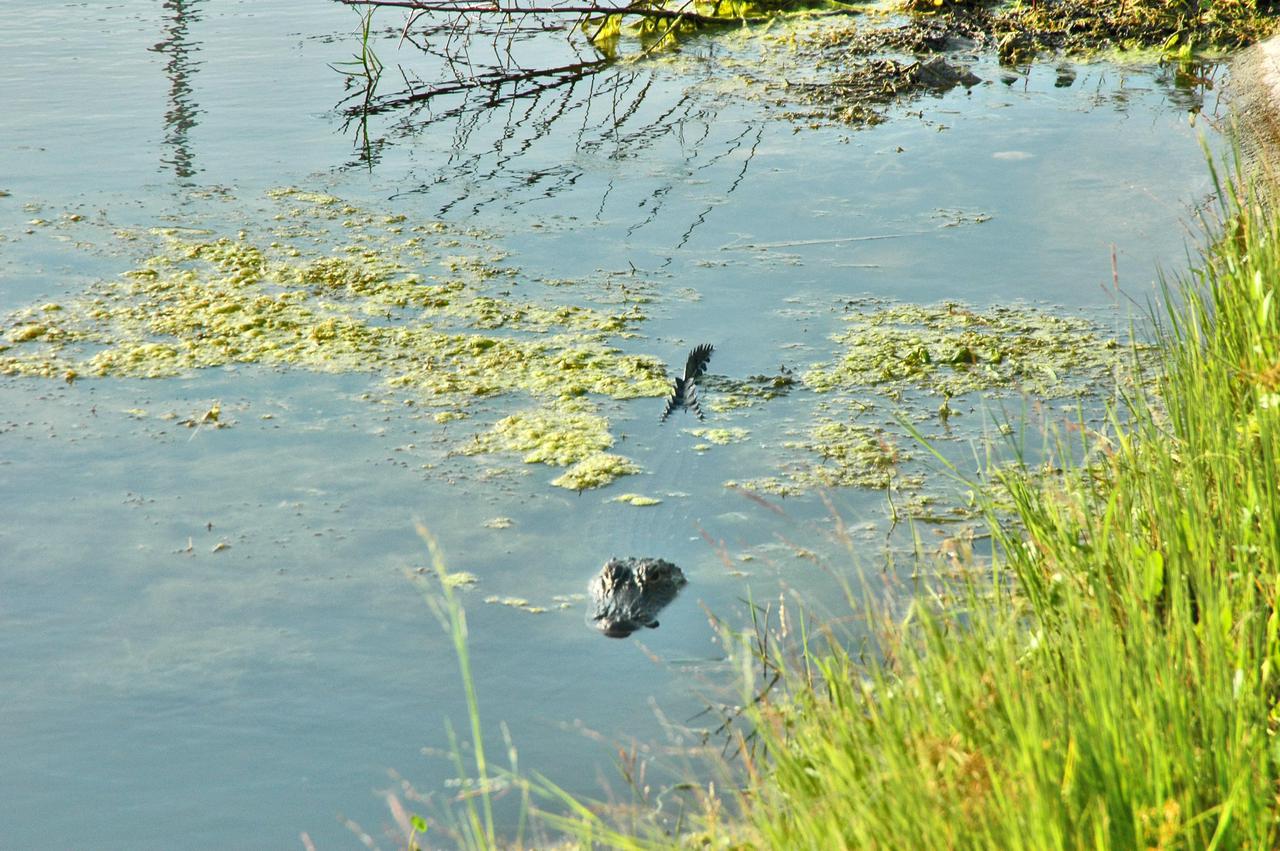
KENNEDY SPACE CENTER, FLA. - In a pond near Launch Pad 39B, an alligator lurks near the tall grass. Nearby is Space Shuttle Discovery, in full launch configuration after rollback of the Rotating Service Structure (RSS). Rollback of the RSS is a major preflight milestone, typically occurring during the T-11-hour hold on L-1 (the day before launch). Discovery is scheduled to lift off on the historic Return to Flight mission STS-114 at 10:39 a.m. EDT July 26 with a crew of seven.
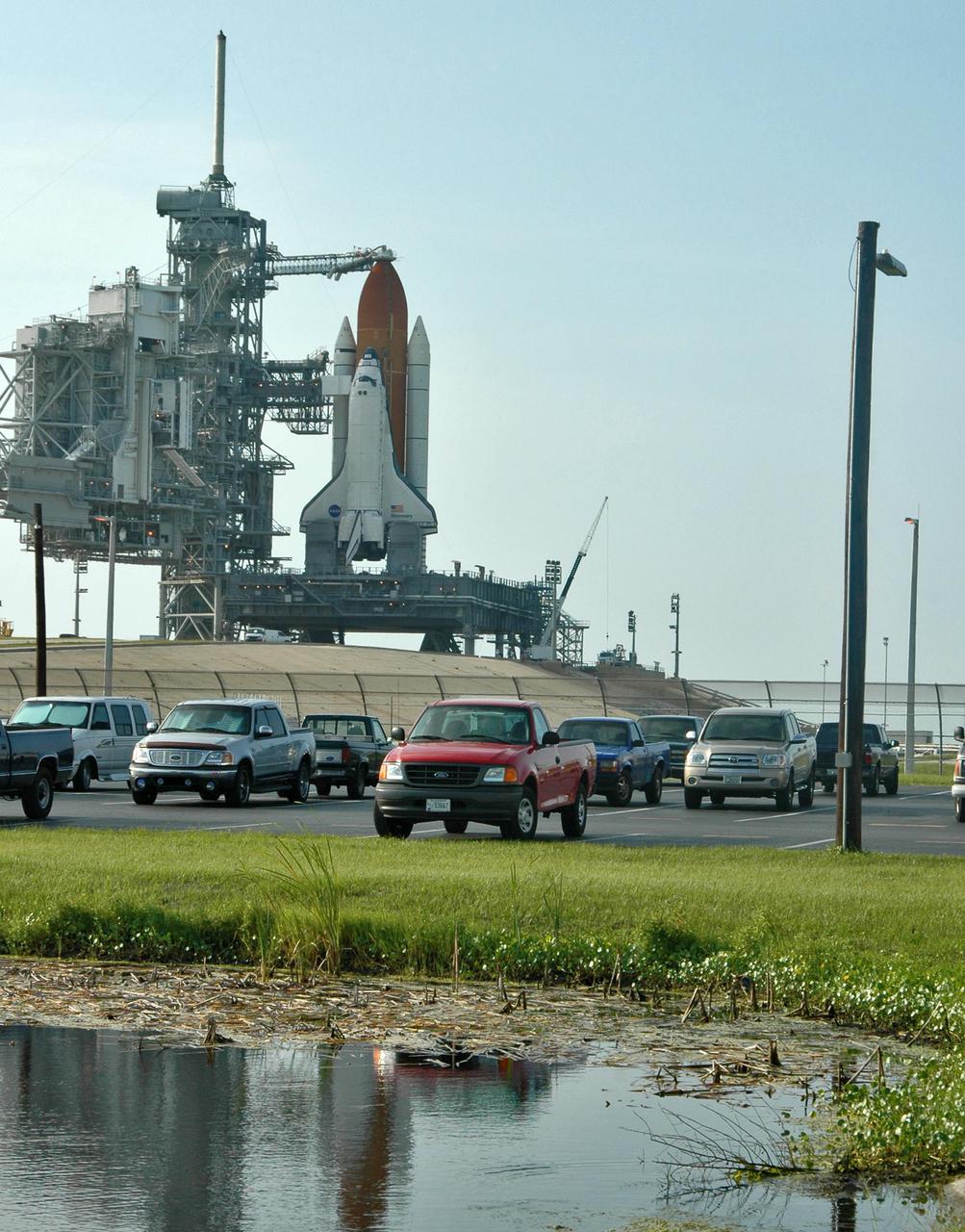
KENNEDY SPACE CENTER, FLA. - Space Shuttle Discovery in full launch configuration is revealed after the Rotating Service Structure (RSS) was rotated back at Launch Pad 39B at NASA Kennedy Space Center. Rollback of the RSS is a major preflight milestone, typically occurring during the T-11-hour hold on L-1 (the day before launch). Discovery is scheduled to lift off on the historic Return to Flight mission STS-114 at 10:39 a.m. EDT July 26 with a crew of seven.
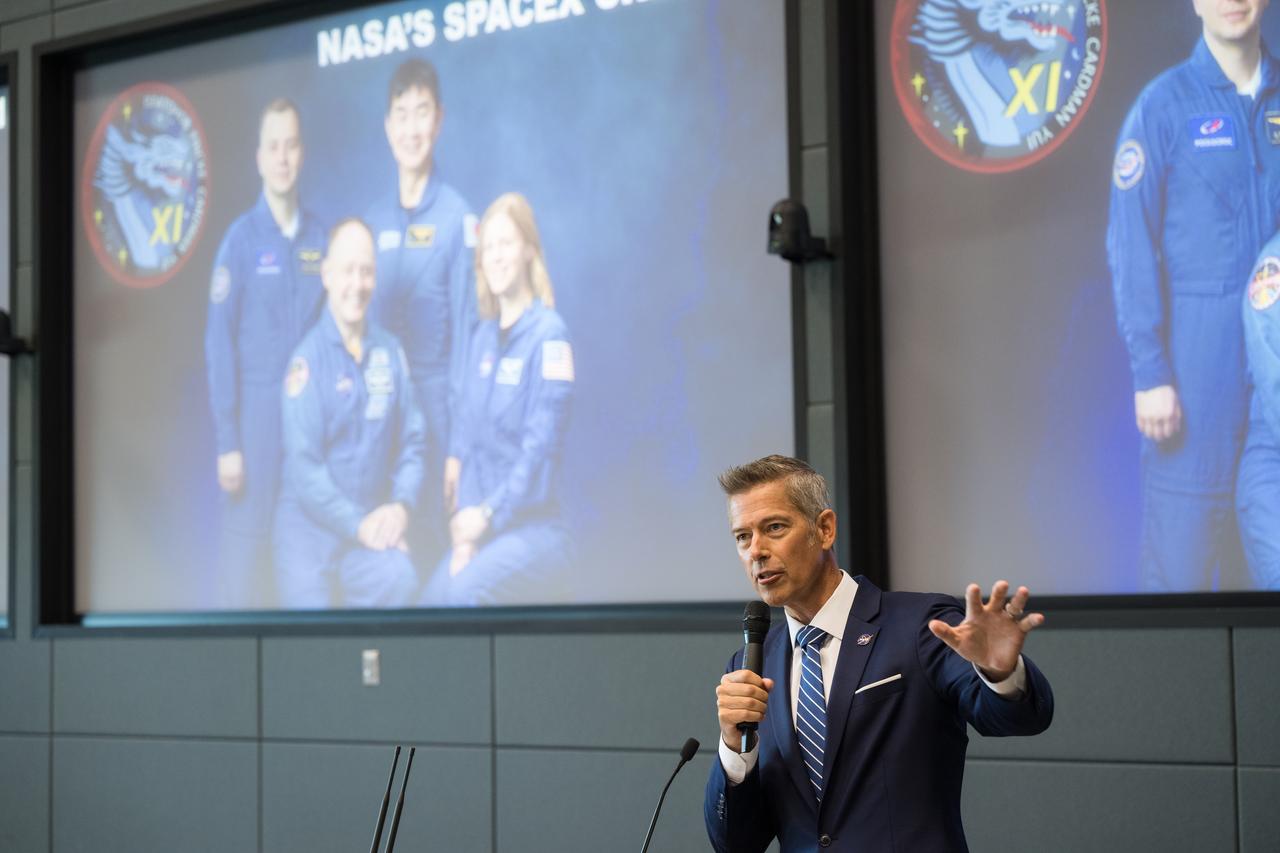
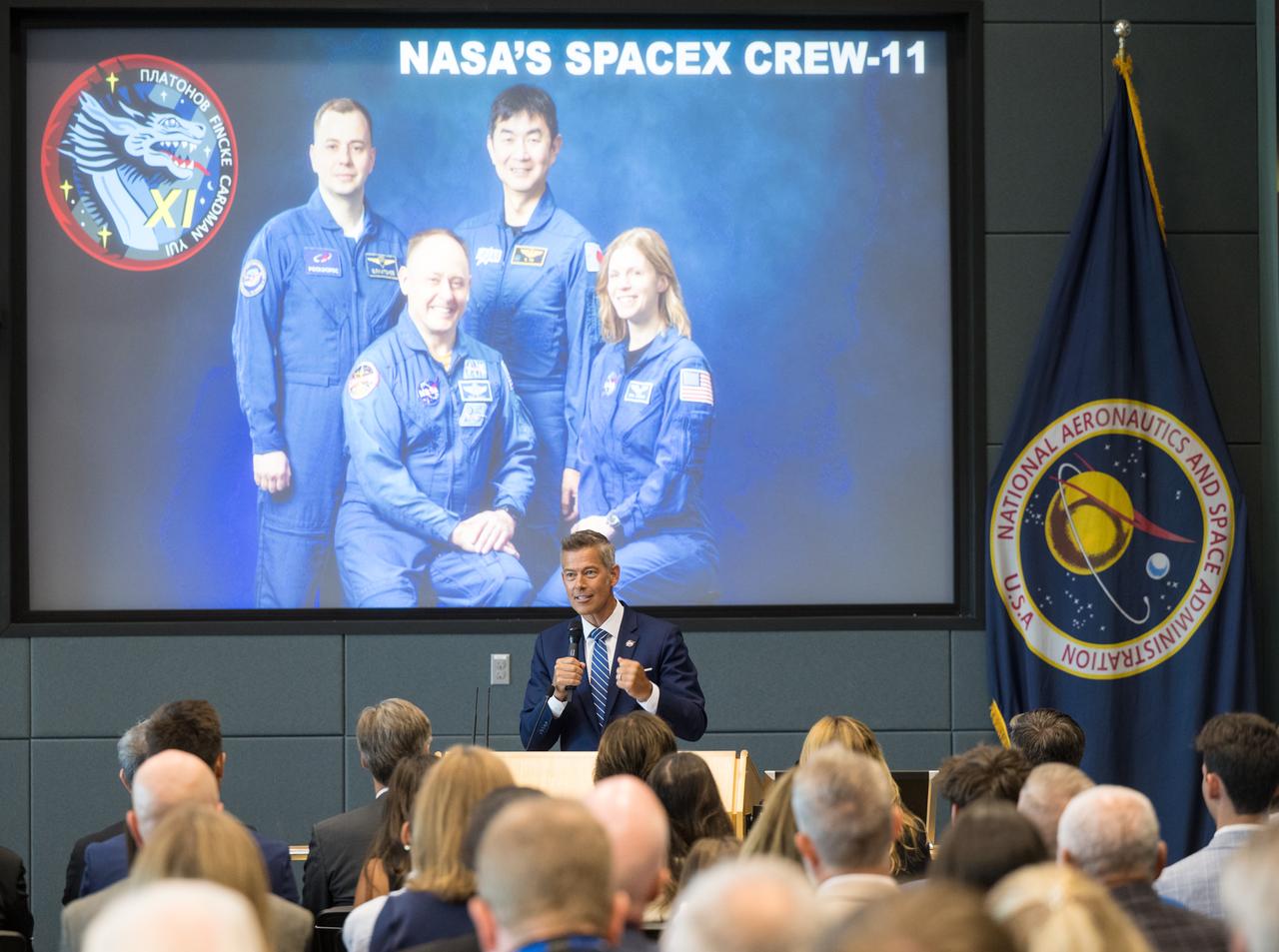
Acting NASA Administrator Sean Duffy, provides remarks at a briefing as NASA astronauts Zena Cardman, Mike Fincke, JAXA (Japan Aerospace Exploration Agency) astronaut Kimiya Yui, and Roscosmos cosmonaut Oleg Platonov, prepare for launch from Launch Complex 39A on NASA's Kennedy Space Center, Thursday, July 31, 2025. The launch was scrubbed due to weather and is now scheduled for 11:43 a.m. EDT on Friday, August 1. Photo Credit: (NASA/Aubrey Gemignani)
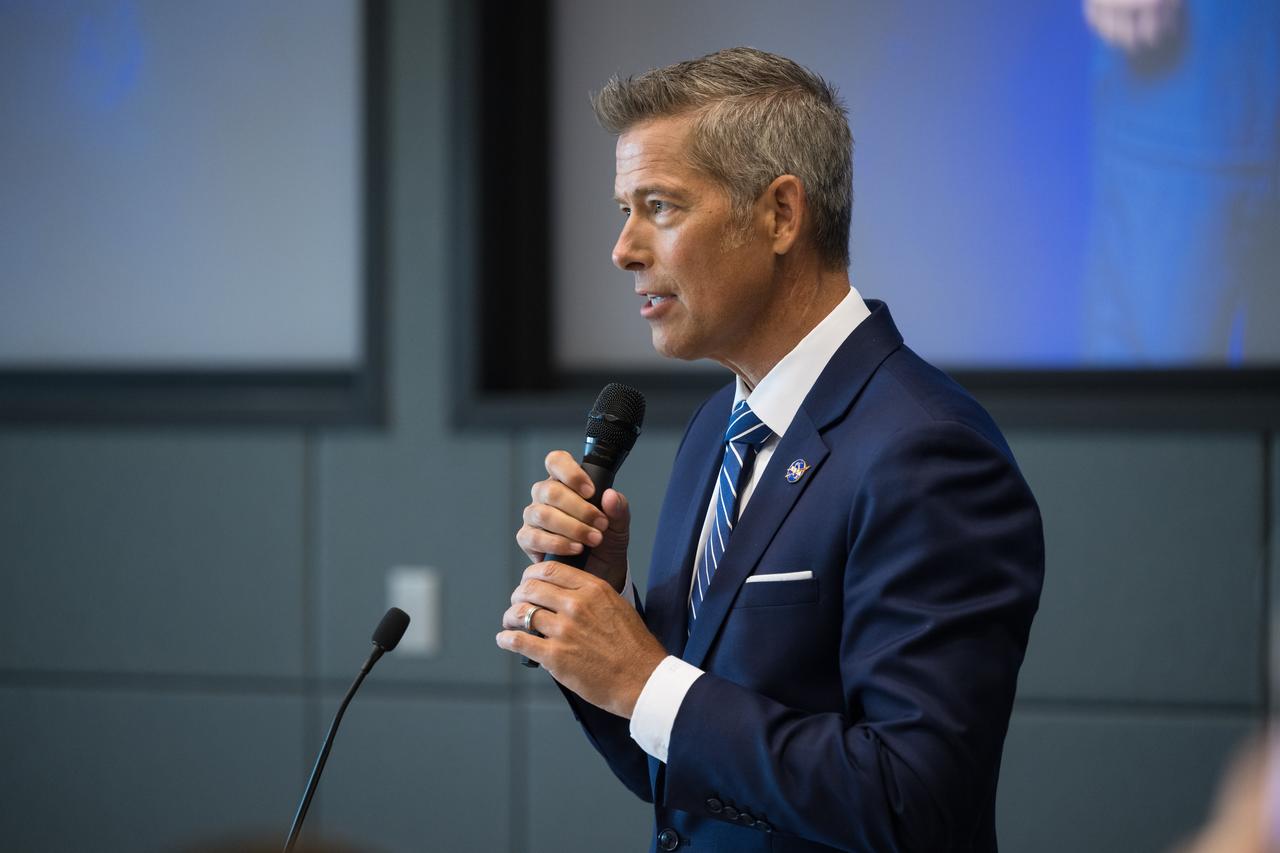
Acting NASA Administrator Sean Duffy, provides remarks at a briefing as NASA astronauts Zena Cardman, Mike Fincke, JAXA (Japan Aerospace Exploration Agency) astronaut Kimiya Yui, and Roscosmos cosmonaut Oleg Platonov, prepared for launch from Launch Complex 39A on NASA's Kennedy Space Center, Thursday, July 31, 2025. The launch was scrubbed due to weather and is now scheduled for 11:43 a.m. EDT on Friday, August 1. Photo Credit: (NASA/Aubrey Gemignani)
Acting NASA Administrator Sean Duffy, provides remarks at a briefing as NASA astronauts Zena Cardman, Mike Fincke, JAXA (Japan Aerospace Exploration Agency) astronaut Kimiya Yui, and Roscosmos cosmonaut Oleg Platonov, prepare for launch from Launch Complex 39A on NASA's Kennedy Space Center, Thursday, July 31, 2025. The launch was scrubbed due to weather and is now scheduled for 11:43 a.m. EDT on Friday, August 1. Photo Credit: (NASA/Aubrey Gemignani)
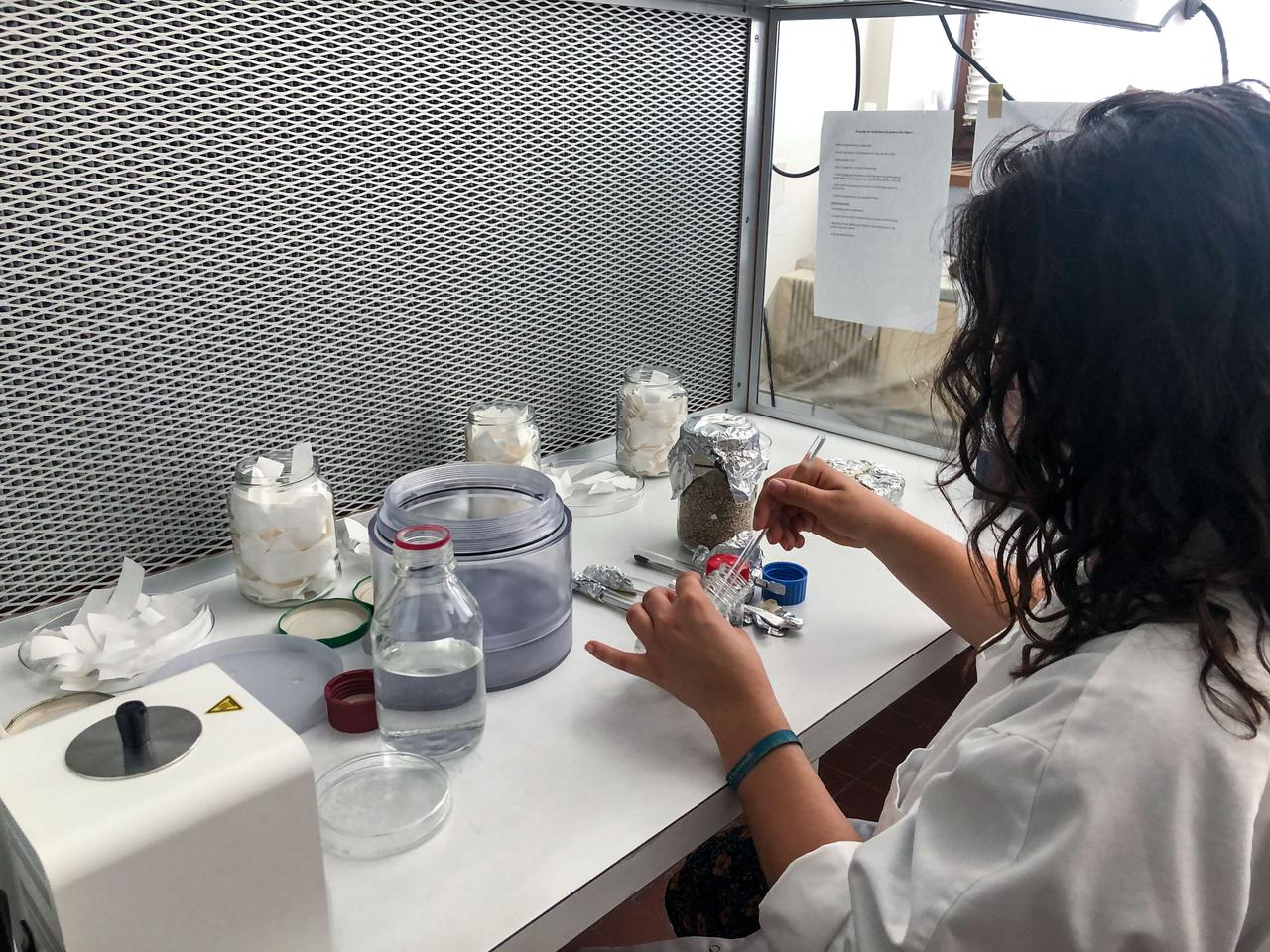
jsc2021e029977 (9/11/2020) --- A preflight biology test on the QM. Eve Teyssier (on the picture) is assembling the pot of the Eklosion capsule under sterile condition. The Eklosion investigation consist of a vase that is utilized by a crew member to grow a Marigold flower (Tagetes patula) aboard the ISS. The investigation takes place at the leisure of the crew member and helps to study the process of plant growth in space, as well as using a personally tended house plant in space to help establish a psychological link between the crew member aboard the ISS and Earth. Image courtesy of Eklo association.
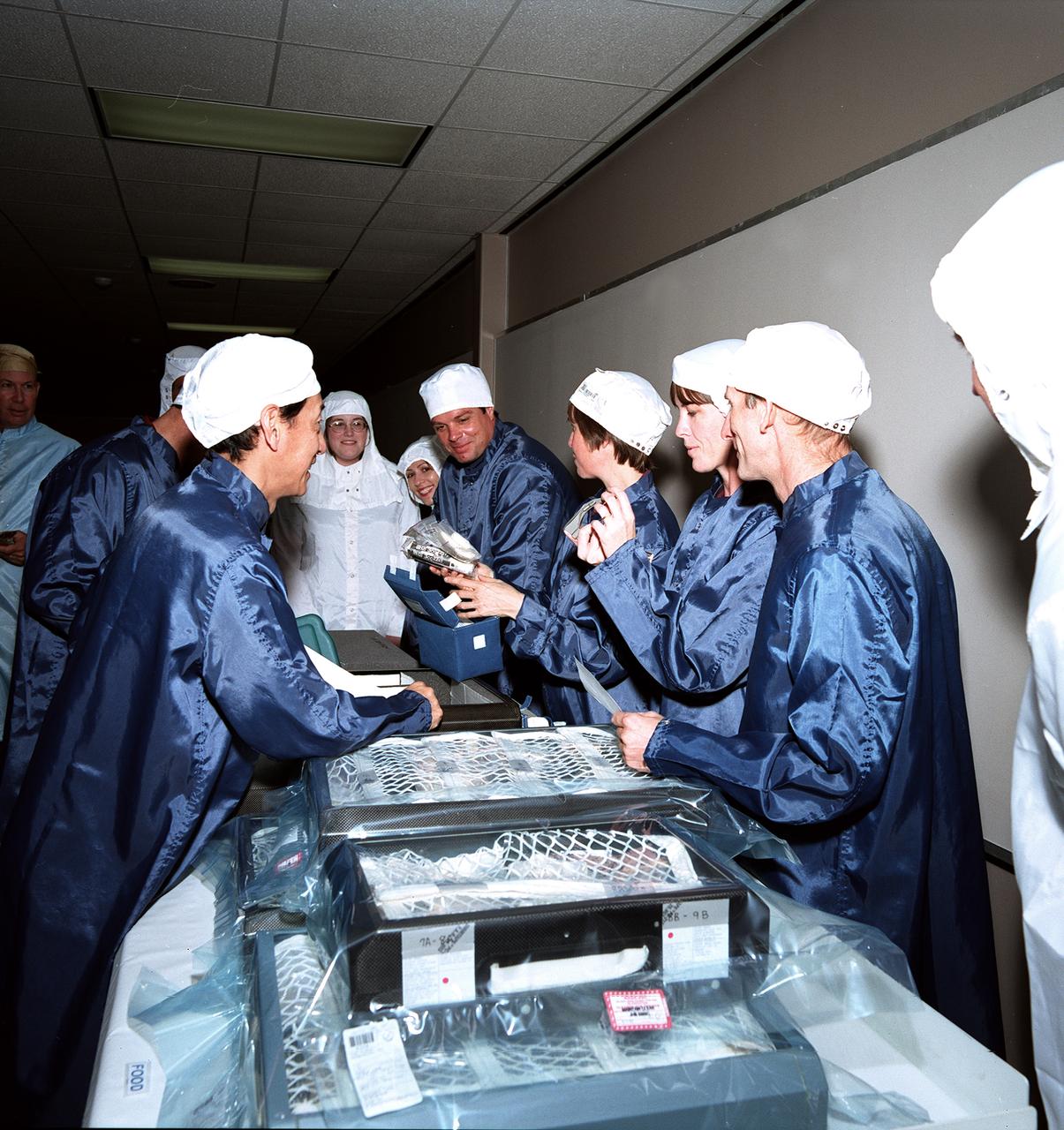
S99-09469 (11 August 1999) --- Wearing clean room suits, all six members of the STS-99 crew inspect some of the gear they will be using on their upcoming space shuttle mission. From the left (in blue lab coats) are astronauts Mamoru Mohri, mission specialist representing Japan's National Development Space Agency (NASDA); Dominic L. Gorie (partially obscured), pilot; Kevin R. Kregel, mission commander; Janice Voss, mission specialist; Janet L. Kavandi, mission specialist; and Gerhard P.J. Thiele, mission specialist representing the European Space Agency (ESA). This type flight crew equipment (FCE) bench review is routine preflight procedure for all shuttle crews.
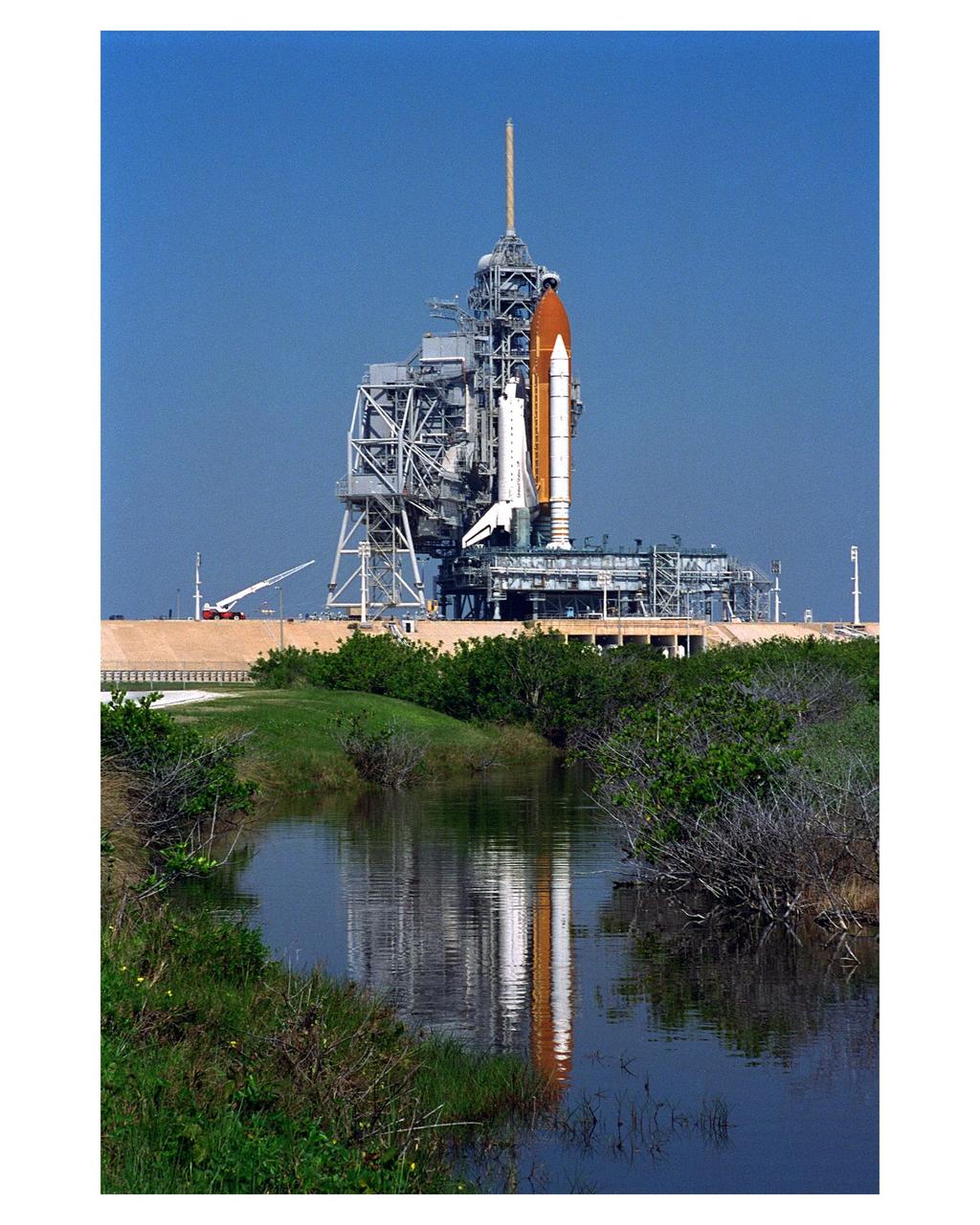
The Space Shuttle Atlantis in full launch configuration is reflected in water around Launch Pad 39A as the Rotating Service Structure (RSS) is rotated back to the park position. Rollback of the RSS is a major preflight milestone, typically occurring during the T-11-hour hold on L-1 (the day before launch). Atlantis and its crew of seven are in final preparations for liftoff on Mission STS-84, the sixth of nine planned dockings of the Space Shuttle with the Russian Space Station Mir. Launch is scheduled at about 4:08 a.m. during an approximately 7-minute launch window. The exact liftoff time will be determined about 90 minutes prior to launch, based on the most current location of Mir
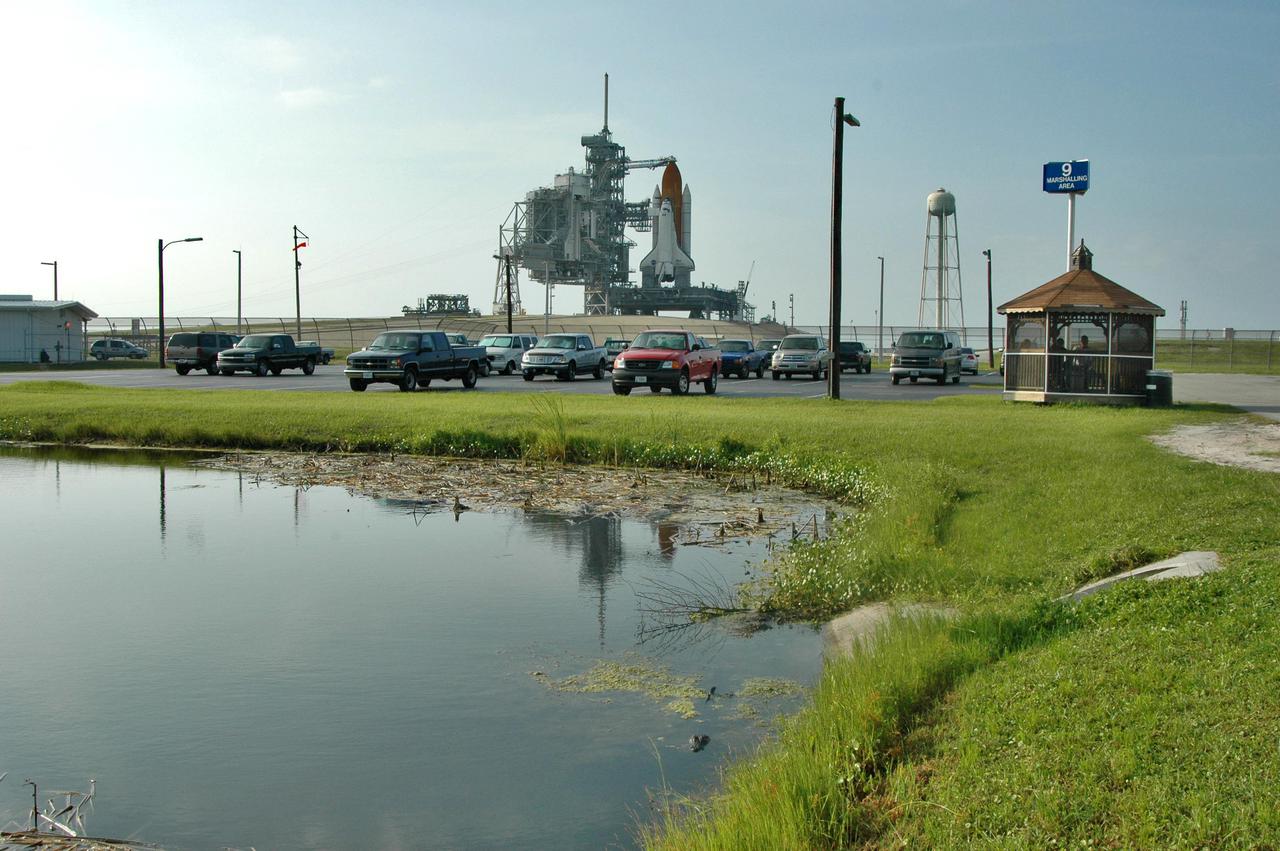
KENNEDY SPACE CENTER, FLA. - In a pond near Launch Pad 39B, an alligator lurks near the tall grass on the lower right side. In the background is Space Shuttle Discovery, in full launch configuration after rollback of the Rotating Service Structure (RSS). Rollback of the RSS is a major preflight milestone, typically occurring during the T-11-hour hold on L-1 (the day before launch). Discovery is scheduled to lift off on the historic Return to Flight mission STS-114 at 10:39 a.m. EDT July 26 with a crew of seven.
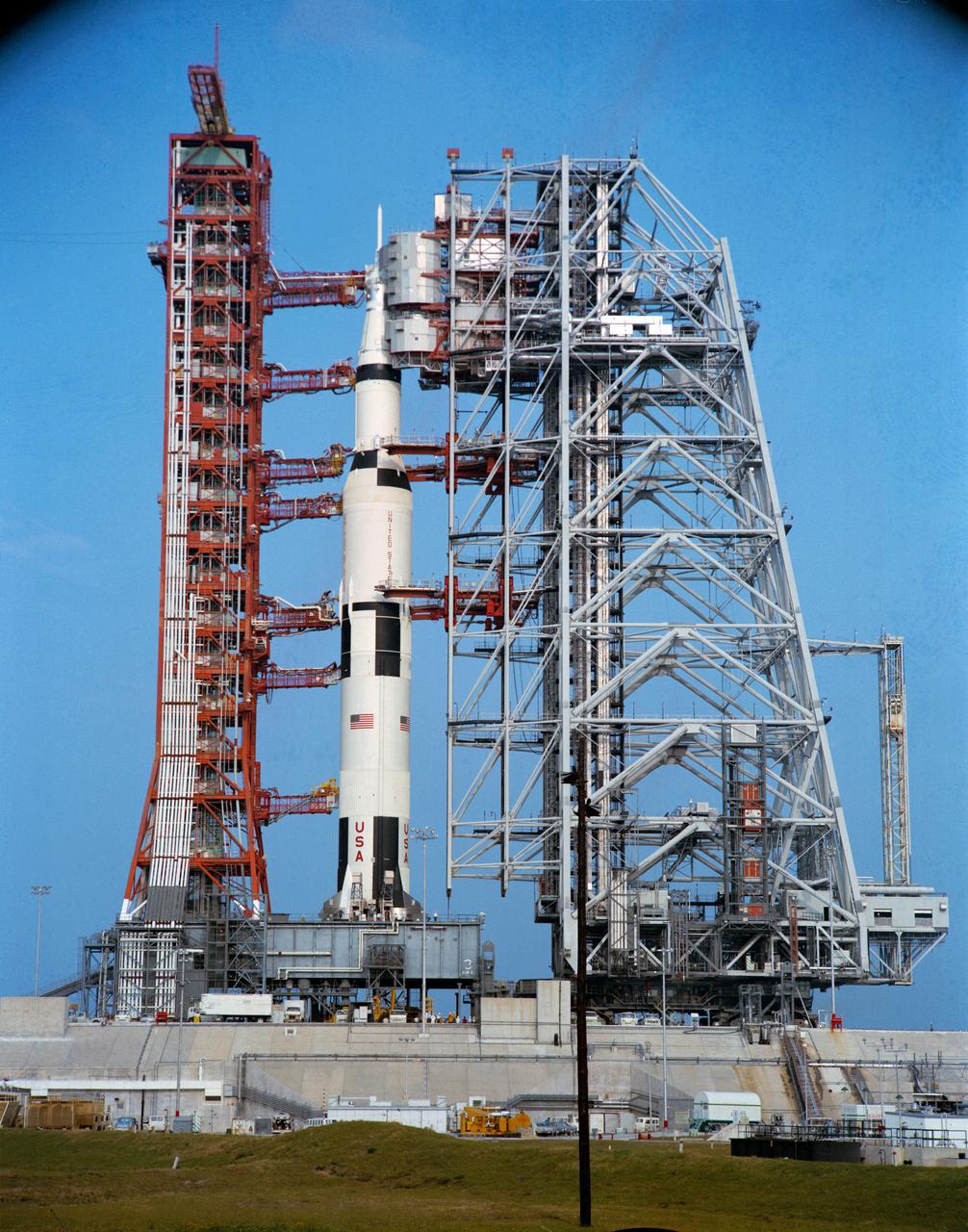
S72-34473 (29 March 1972) --- A ground-level view of Pad A, Launch Complex 39, Kennedy Space Center (KSC), showing the 363-feet tall Apollo 16 (Spacecraft 113/Lunar Module 11/Saturn 511) space vehicle during a Countdown Demonstration Test (CDDT). The CDDT was part of the preflight preparations for the Apollo 16 lunar landing mission. The crew of Apollo 16, scheduled for launch on April 16, 1972, are astronauts John W. Young, commander; Thomas K. (Ken) Mattingly II, command module pilot; and Charles M. Duke Jr., lunar module pilot.
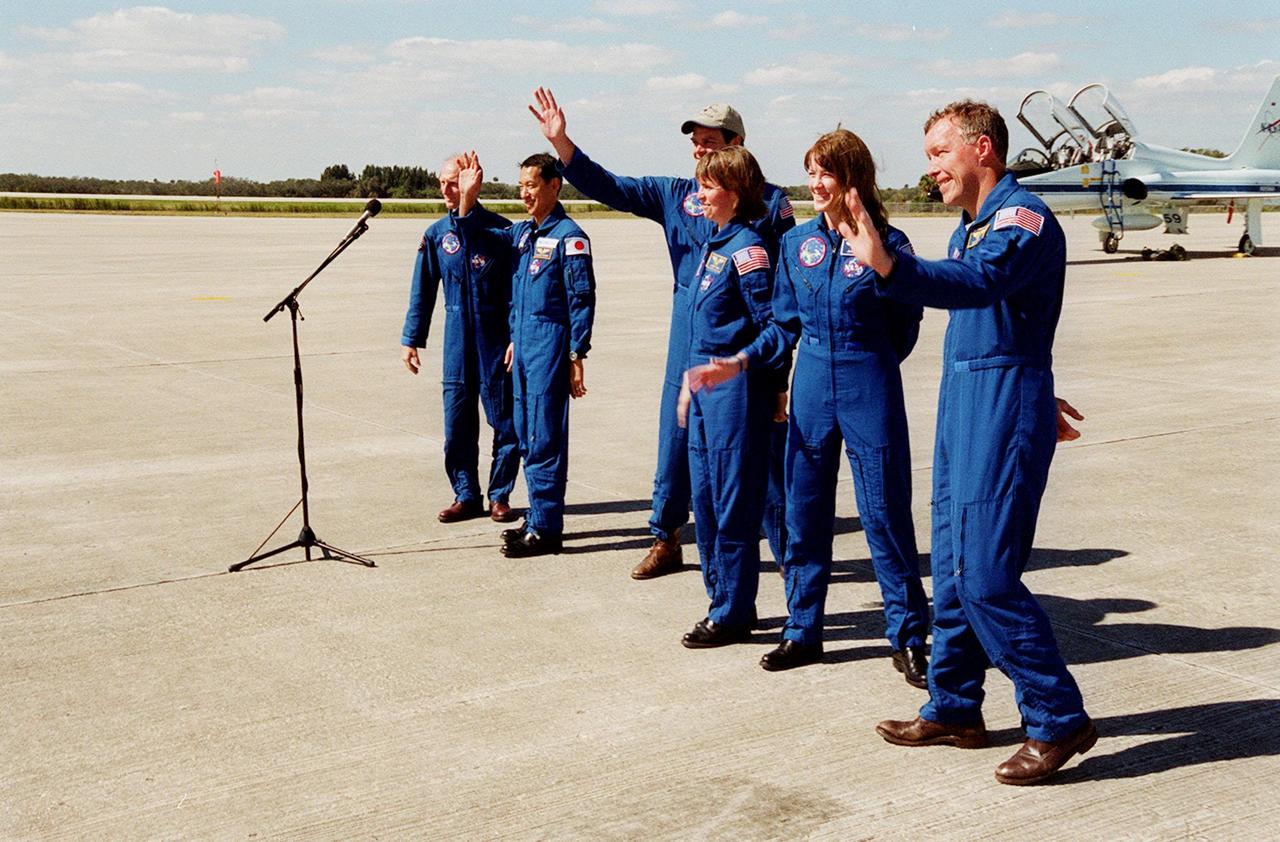
After addressing the media at the Shuttle Landing Facility, the STS-99 crew wave goodbye as they leave for crew quarters in the Operations and Checkout Building. The crew is ready to prepare for the second launch attempt of Endeavour Feb. 11 at 12:30 p.m. EST from Launch Pad 39A. The earlier launch scheduled for Jan. 31 was scrubbed due to poor weather and a faulty Enhanced Master Events Controller in the orbiter's aft compartment. Over the next few days, the crew will review mission procedures, conduct test flights in the Shuttle Training Aircraft and undergo routine preflight medical exams. STS-99 is the Shuttle Radar Topography Mission, which will produce unrivaled 3-D images of the Earth's surface. The result of the Shuttle Radar Topography Mission could be close to 1 trillion measurements of the Earth's topography. Landing is expected at KSC on Feb. 22 at 4:36 p.m. EST
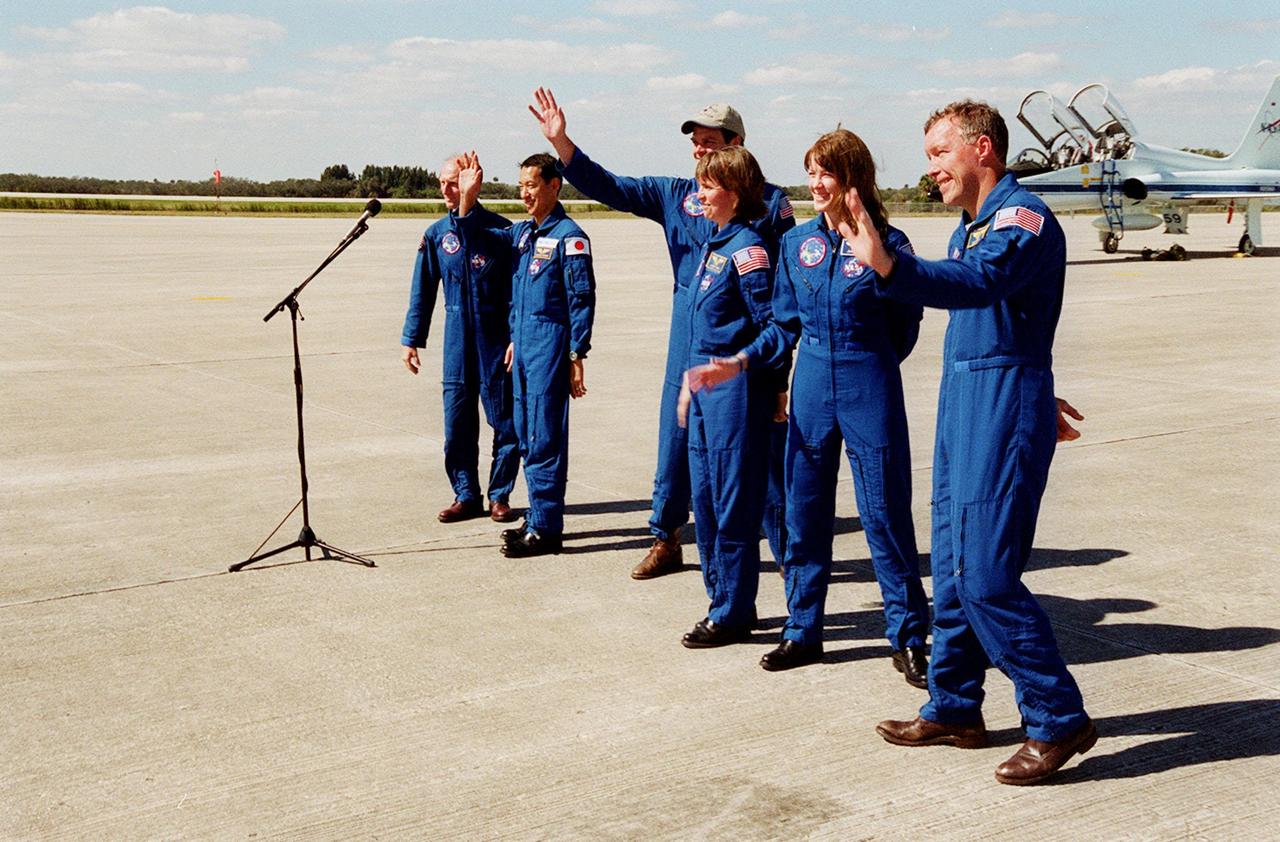
After addressing the media at the Shuttle Landing Facility, the STS-99 crew wave goodbye as they leave for crew quarters in the Operations and Checkout Building. The crew is ready to prepare for the second launch attempt of Endeavour Feb. 11 at 12:30 p.m. EST from Launch Pad 39A. The earlier launch scheduled for Jan. 31 was scrubbed due to poor weather and a faulty Enhanced Master Events Controller in the orbiter's aft compartment. Over the next few days, the crew will review mission procedures, conduct test flights in the Shuttle Training Aircraft and undergo routine preflight medical exams. STS-99 is the Shuttle Radar Topography Mission, which will produce unrivaled 3-D images of the Earth's surface. The result of the Shuttle Radar Topography Mission could be close to 1 trillion measurements of the Earth's topography. Landing is expected at KSC on Feb. 22 at 4:36 p.m. EST
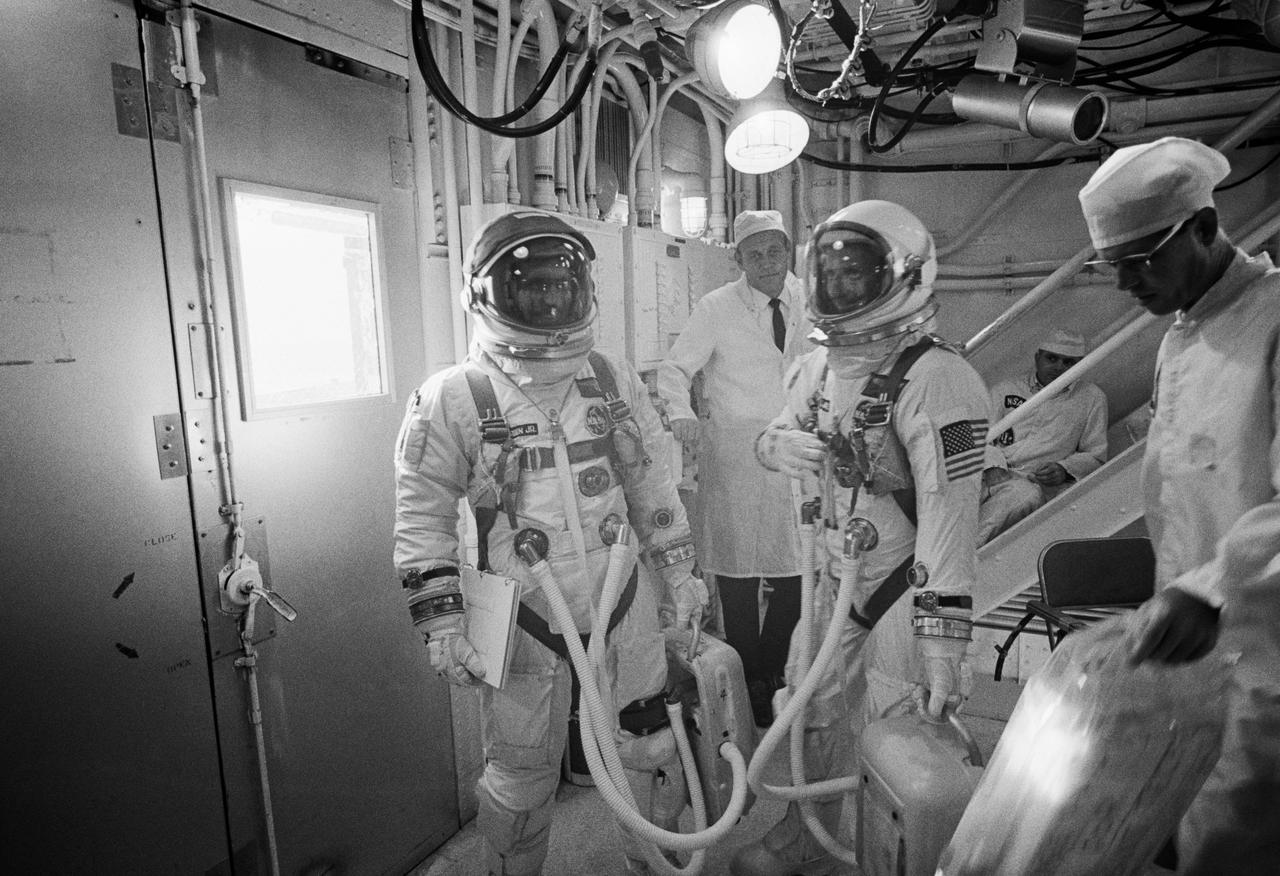
S66-57967 (10 Sept. 1966) --- Gemini-11 prime crew, astronauts Charles Conrad Jr. (right), command pilot, and Richard F. Gordon Jr. (left), pilot, prepare to enter the Gemini-11 spacecraft in the White Room atop Pad 19. Photo credit: NASA
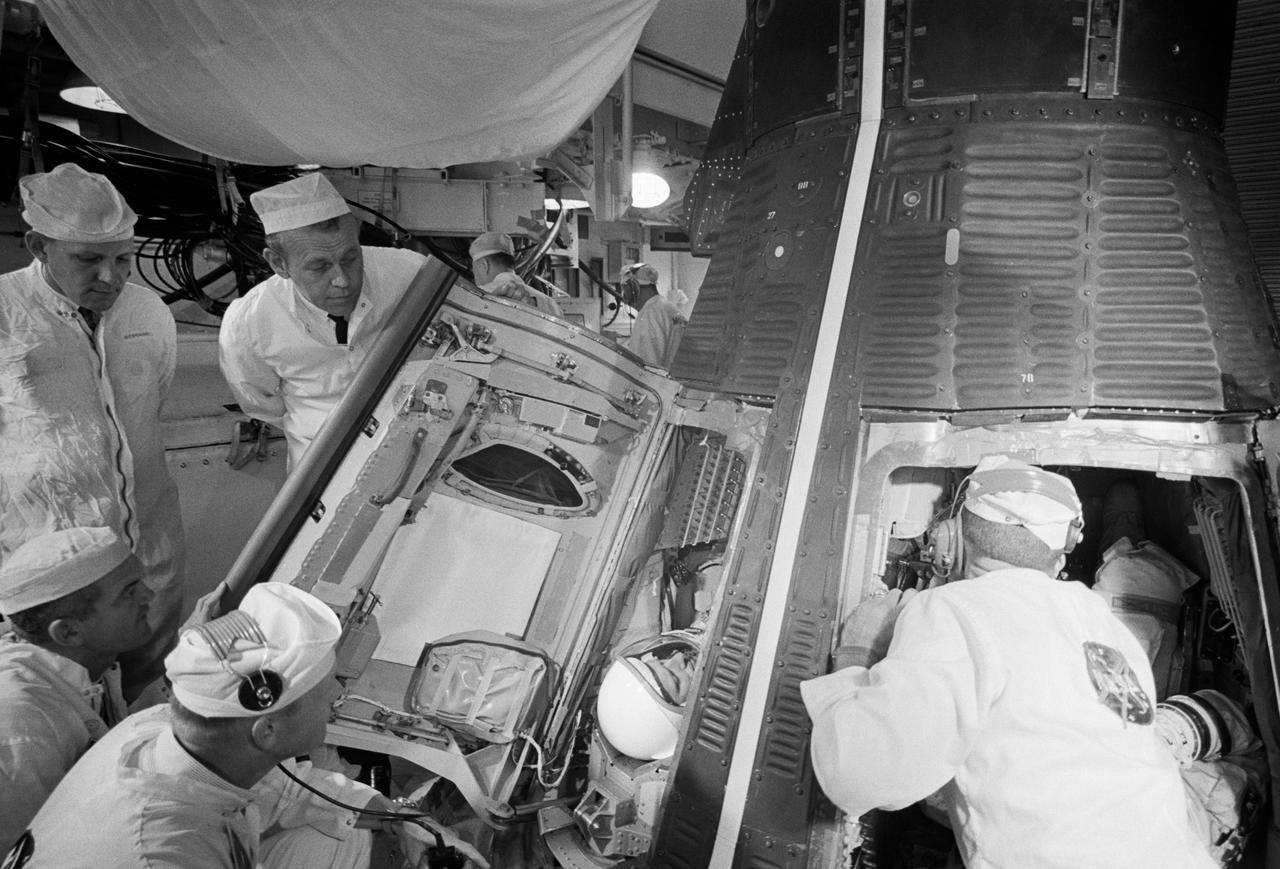
S66-56177 (10 Sept. 1966) --- Technicians in the White Room atop Pad 19 prepare to close hatches on the Gemini-11 spacecraft during prelaunch countdown. Inside the spacecraft are astronauts Charles Conrad Jr., command pilot, and Richard F. Gordon Jr., pilot. Photo credit: NASA
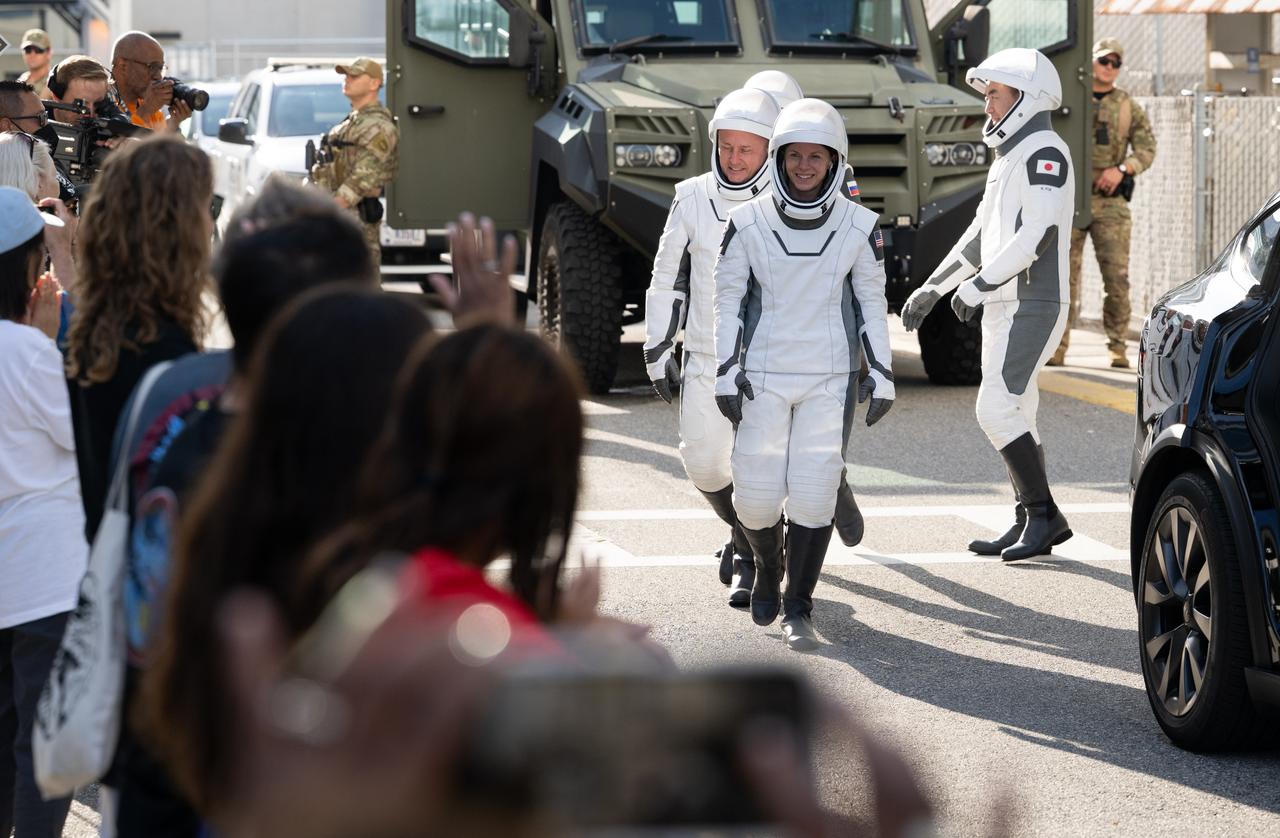
NASA astronauts Zena Cardman, Mike Fincke, Roscosmos cosmonaut Oleg Platonov, and JAXA (Japan Aerospace Exploration Agency) astronaut Kimiya Yui, wearing SpaceX spacesuits, are seen as they prepare to depart the Neil A. Armstrong Operations and Checkout Building for Launch Complex 39A on NASA's Kennedy Space Center to board the SpaceX Dragon spacecraft for the Crew-11 mission launch, Friday, Aug. 1, 2025, at NASA’s Kennedy Space Center in Florida. NASA’s SpaceX Crew-11 mission is the eleventh crew rotation mission of the SpaceX Crew Dragon spacecraft and Falcon 9 rocket to the International Space Station as part of the agency’s Commercial Crew Program. Cardman, Fincke, Yui, Platonov are scheduled to launch at 11:43 a.m. EDT, from Launch Complex 39A at the NASA's Kennedy Space Center. Photo Credit: (NASA/Joel Kowsky)
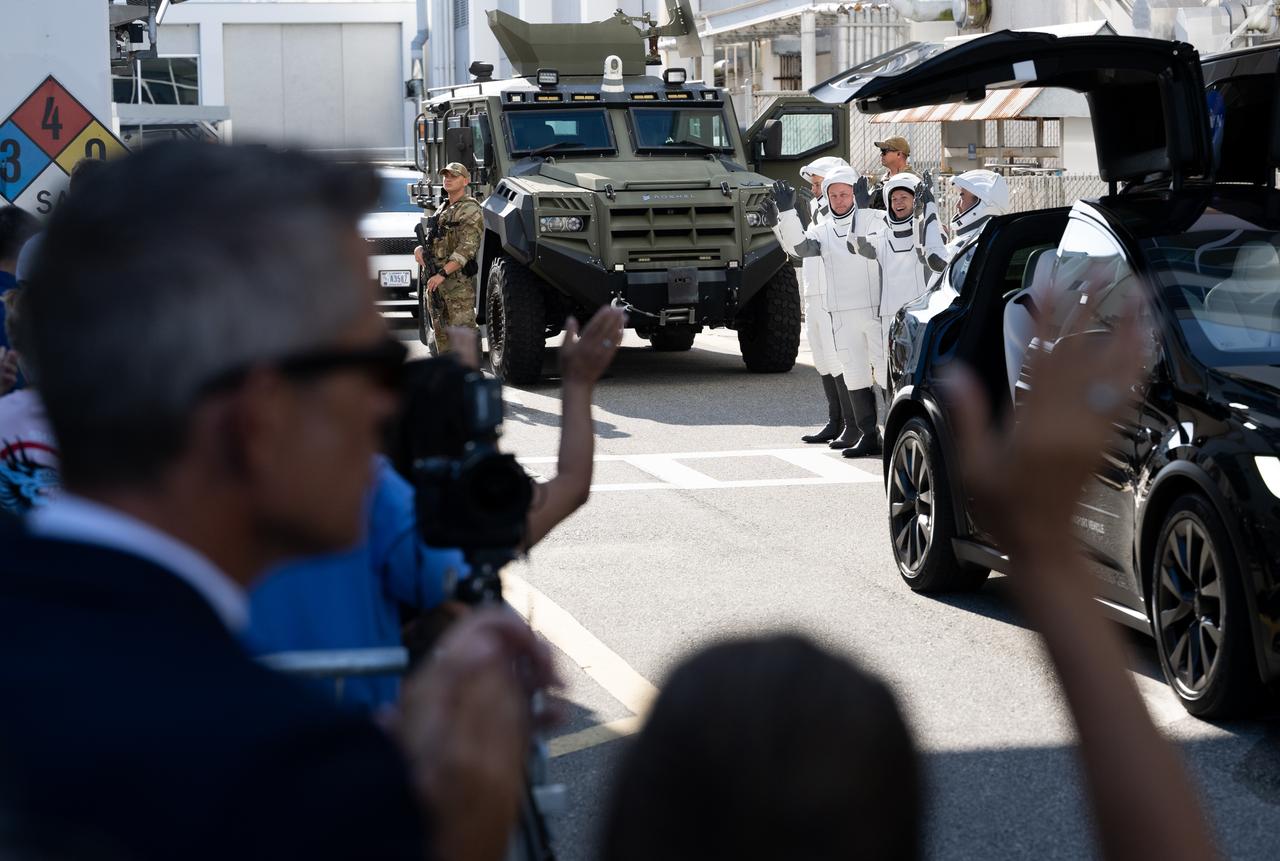
NASA astronauts Zena Cardman, Mike Fincke, JAXA (Japan Aerospace Exploration Agency) astronaut Kimiya Yui, and Roscosmos cosmonaut Oleg Platonov, wearing SpaceX spacesuits, are seen as they prepare to depart the Neil A. Armstrong Operations and Checkout Building for Launch Complex 39A on NASA's Kennedy Space Center to board the SpaceX Dragon spacecraft for the Crew-11 mission launch, Thursday, July 31, 2025, at NASA’s Kennedy Space Center in Florida. NASA’s SpaceX Crew-11 mission is the eleventh crew rotation mission of the SpaceX Crew Dragon spacecraft and Falcon 9 rocket to the International Space Station as part of the agency’s Commercial Crew Program. Cardman, Fincke, Yui, Platonov are scheduled to launch at 12:09 p.m. EDT, from Launch Complex 39A at the NASA's Kennedy Space Center. Photo Credit: (NASA/Joel Kowsky)
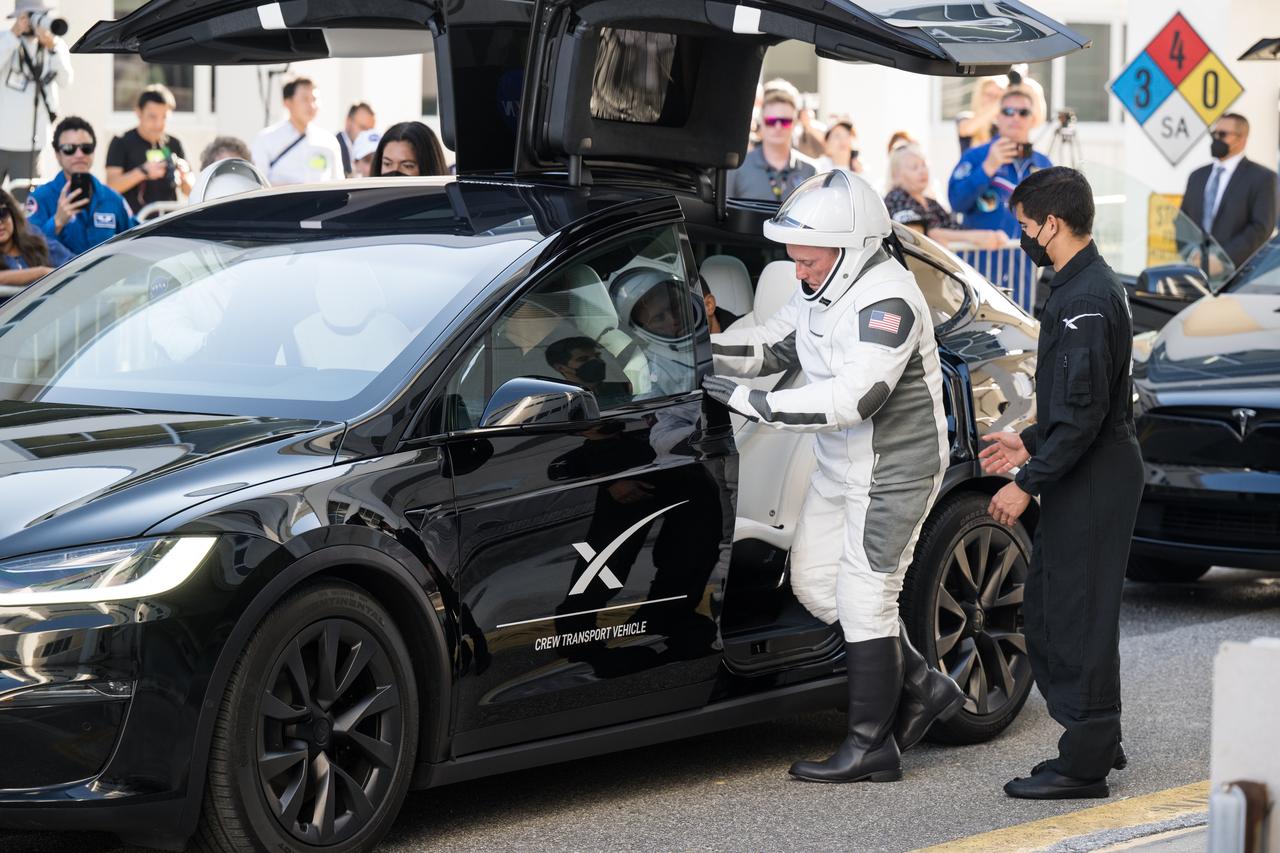
NASA astronaut Mike Fincke enters the vehicle that will take him and fellow crewmates Zena Cardman, JAXA (Japan Aerospace Exploration Agency) astronaut Kimiya Yui, and Roscosmos cosmonaut Oleg Platonov to Launch Complex 39A on NASA's Kennedy Space Center to board the SpaceX Dragon spacecraft for the Crew-11 mission launch, before it was scrubbed due to weather concerns, Thursday, July 31, 2025, at NASA’s Kennedy Space Center in Florida. NASA’s SpaceX Crew-11 mission is the eleventh crew rotation mission of the SpaceX Crew Dragon spacecraft and Falcon 9 rocket to the International Space Station as part of the agency’s Commercial Crew Program. Fincke, Cardman, Yui, and Platonov launched at 11:43 a.m. EDT, Friday, August 1, from Launch Complex 39A at the NASA's Kennedy Space Center. Photo Credit: (NASA/Aubrey Gemignani)
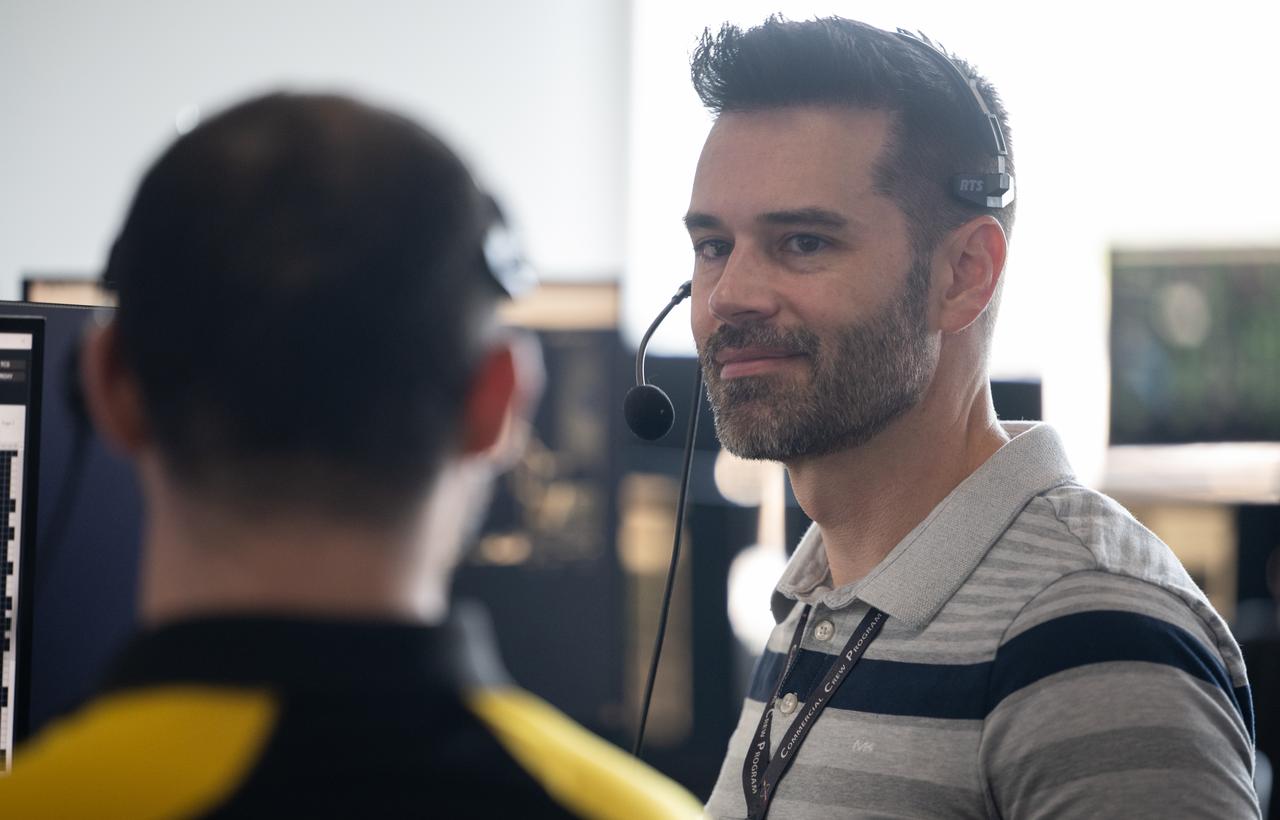
John Posey, lead engineer for Dragon in NASA's Commercial Crew Program, talks with Max Schneiderman, an aerospace flight systems engineer at NASA, as they monitor the countdown during a dress rehearsal in preparation for the launch of a SpaceX Falcon 9 rocket carrying the company's Dragon spacecraft on NASA’s SpaceX Crew-11 mission with NASA astronauts Zena Cardman, Mike Fincke, JAXA (Japan Aerospace Exploration Agency) astronaut Kimiya Yui, and Roscosmos cosmonaut Oleg Platonov onboard, Monday, July 28, 2025, in the control room of SpaceX’s HangerX at NASA’s Kennedy Space Center in Florida. NASA’s SpaceX Crew-11 mission is the eleventh crew rotation mission of the SpaceX Dragon spacecraft and Falcon 9 rocket to the International Space Station as part of the agency’s Commercial Crew Program. Cardman, Fincke, Yui, Platonov are scheduled to launch on 12:09 p.m. EDT on Thursday, July 31, from Launch Complex 39A at the NASA's Kennedy Space Center. Photo Credit: (NASA/Joel Kowsky)
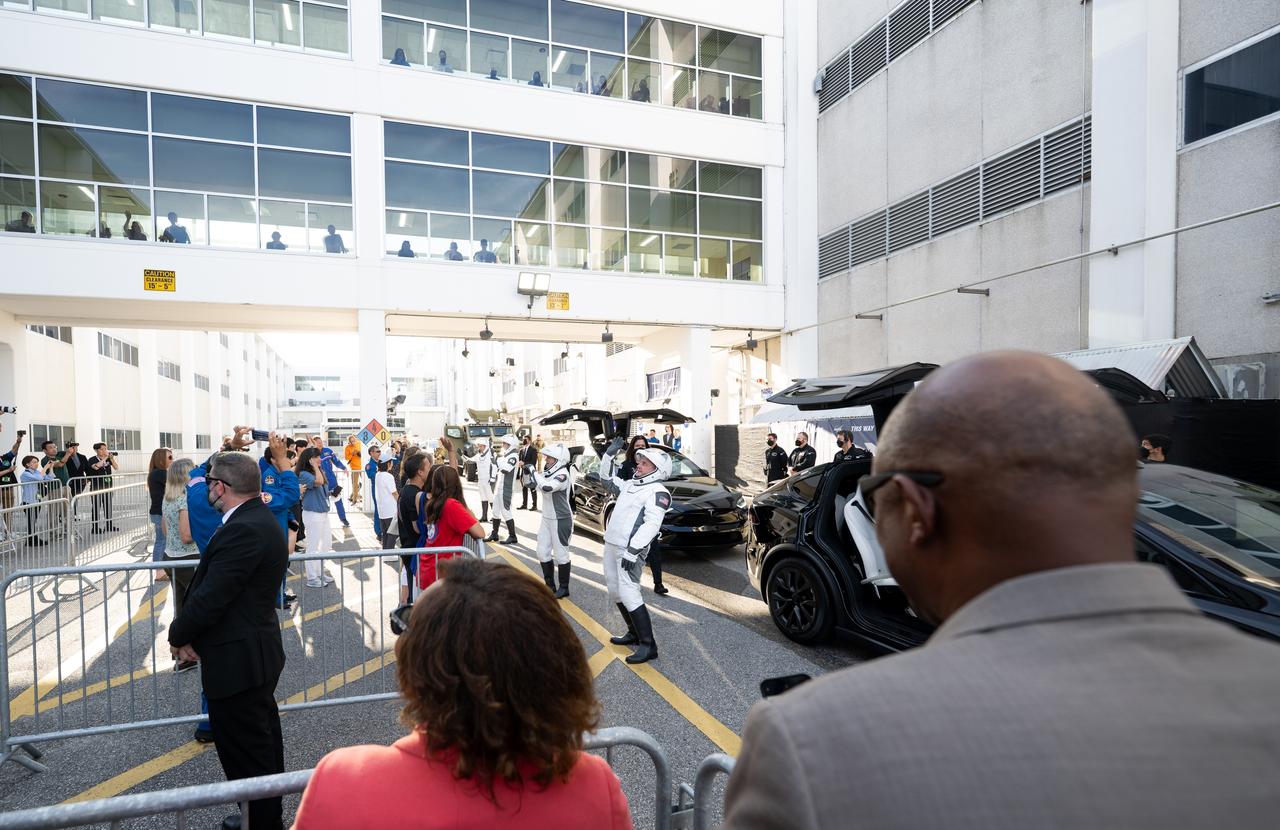
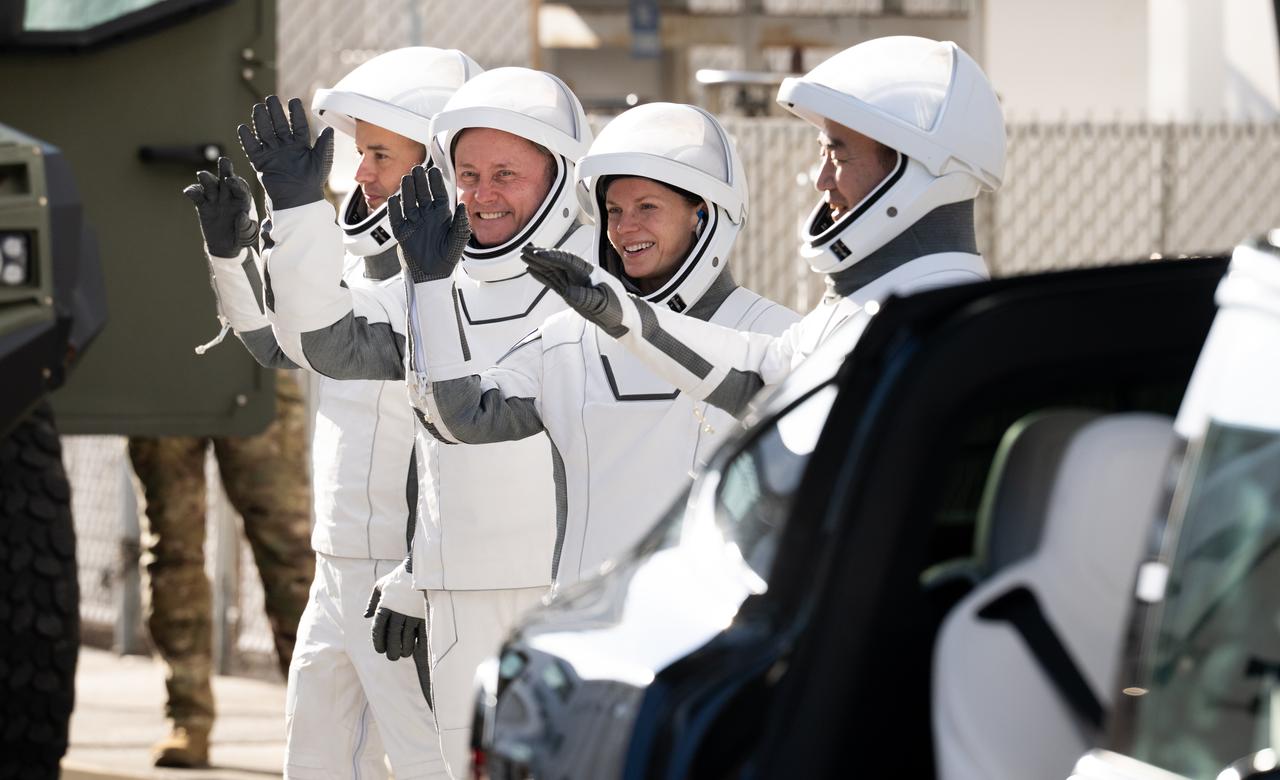
NASA astronaut Mike Fincke waves as he and fellow crewmates NASA astronaut Zena Cardman, JAXA (Japan Aerospace Exploration Agency) astronaut Kimiya Yui, and Roscosmos cosmonaut Oleg Platonov, wearing SpaceX spacesuits, prepare to depart the Neil A. Armstrong Operations and Checkout Building for Launch Complex 39A on NASA's Kennedy Space Center to board the SpaceX Dragon spacecraft for the Crew-11 mission launch, Friday, Aug. 1, 2025, at NASA’s Kennedy Space Center in Florida. NASA’s SpaceX Crew-11 mission is the eleventh crew rotation mission of the SpaceX Crew Dragon spacecraft and Falcon 9 rocket to the International Space Station as part of the agency’s Commercial Crew Program. Cardman, Fincke, Yui, Platonov are scheduled to launch at 11:43 a.m. EDT, from Launch Complex 39A at the NASA's Kennedy Space Center. Photo Credit: (NASA/Joel Kowsky)
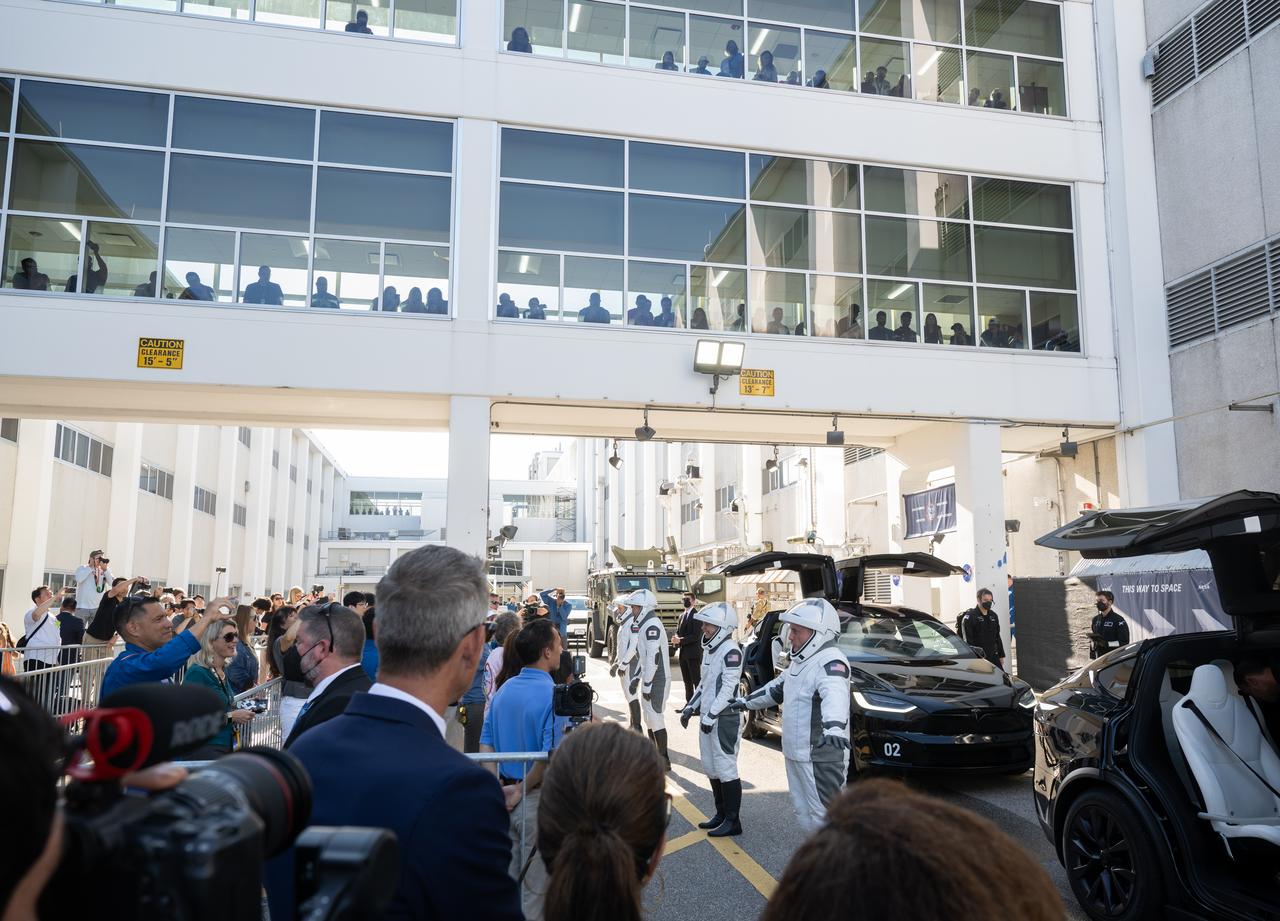
NASA astronauts Mike Fincke, Zena Cardman, JAXA (Japan Aerospace Exploration Agency) astronaut Kimiya Yui, and Roscosmos cosmonaut Oleg Platonov, wearing SpaceX spacesuits, talk to family and friends as they prepare to depart the Neil A. Armstrong Operations and Checkout Building for Launch Complex 39A on NASA's Kennedy Space Center to board the SpaceX Dragon spacecraft for the Crew-11 mission launch, Thursday, July 31, 2025, at NASA’s Kennedy Space Center in Florida. NASA’s SpaceX Crew-11 mission is the eleventh crew rotation mission of the SpaceX Crew Dragon spacecraft and Falcon 9 rocket to the International Space Station as part of the agency’s Commercial Crew Program. Cardman, Fincke, Yui, Platonov are scheduled to launch at 12:09 p.m. EDT, from Launch Complex 39A at the NASA's Kennedy Space Center. Photo Credit: (NASA/Joel Kowsky)

Zeb Scoville, NASA's deputy chief flight director, monitors the countdown during a dress rehearsal in preparation for the launch of a SpaceX Falcon 9 rocket carrying the company's Dragon spacecraft on NASA’s SpaceX Crew-11 mission with NASA astronauts Zena Cardman, Mike Fincke, JAXA (Japan Aerospace Exploration Agency) astronaut Kimiya Yui, and Roscosmos cosmonaut Oleg Platonov onboard, Monday, July 28, 2025, in the control room of SpaceX’s HangerX at NASA’s Kennedy Space Center in Florida. NASA’s SpaceX Crew-11 mission is the eleventh crew rotation mission of the SpaceX Dragon spacecraft and Falcon 9 rocket to the International Space Station as part of the agency’s Commercial Crew Program. Cardman, Fincke, Yui, Platonov are scheduled to launch on 12:09 p.m. EDT on Thursday, July 31, from Launch Complex 39A at the NASA's Kennedy Space Center. Photo Credit: (NASA/Joel Kowsky)
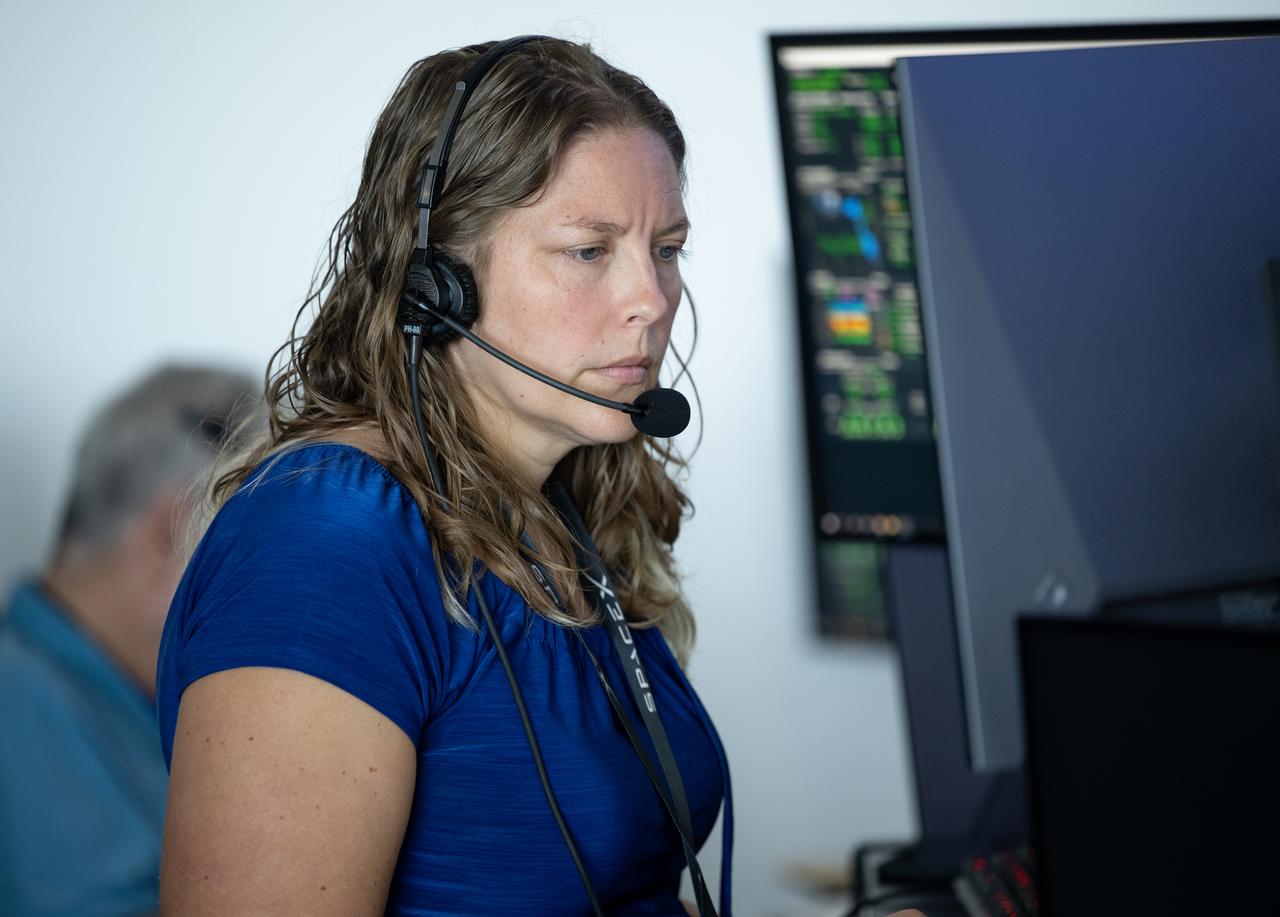
Melissa Mierzwa, a propulsions system engineer at NASA, monitors the countdown during a dress rehearsal in preparation for the launch of a SpaceX Falcon 9 rocket carrying the company's Dragon spacecraft on NASA’s SpaceX Crew-11 mission with NASA astronauts Zena Cardman, Mike Fincke, JAXA (Japan Aerospace Exploration Agency) astronaut Kimiya Yui, and Roscosmos cosmonaut Oleg Platonov onboard, Monday, July 28, 2025, in the control room of SpaceX’s HangerX at NASA’s Kennedy Space Center in Florida. NASA’s SpaceX Crew-11 mission is the eleventh crew rotation mission of the SpaceX Dragon spacecraft and Falcon 9 rocket to the International Space Station as part of the agency’s Commercial Crew Program. Cardman, Fincke, Yui, Platonov are scheduled to launch on 12:09 p.m. EDT on Thursday, July 31, from Launch Complex 39A at the NASA's Kennedy Space Center. Photo Credit: (NASA/Joel Kowsky)
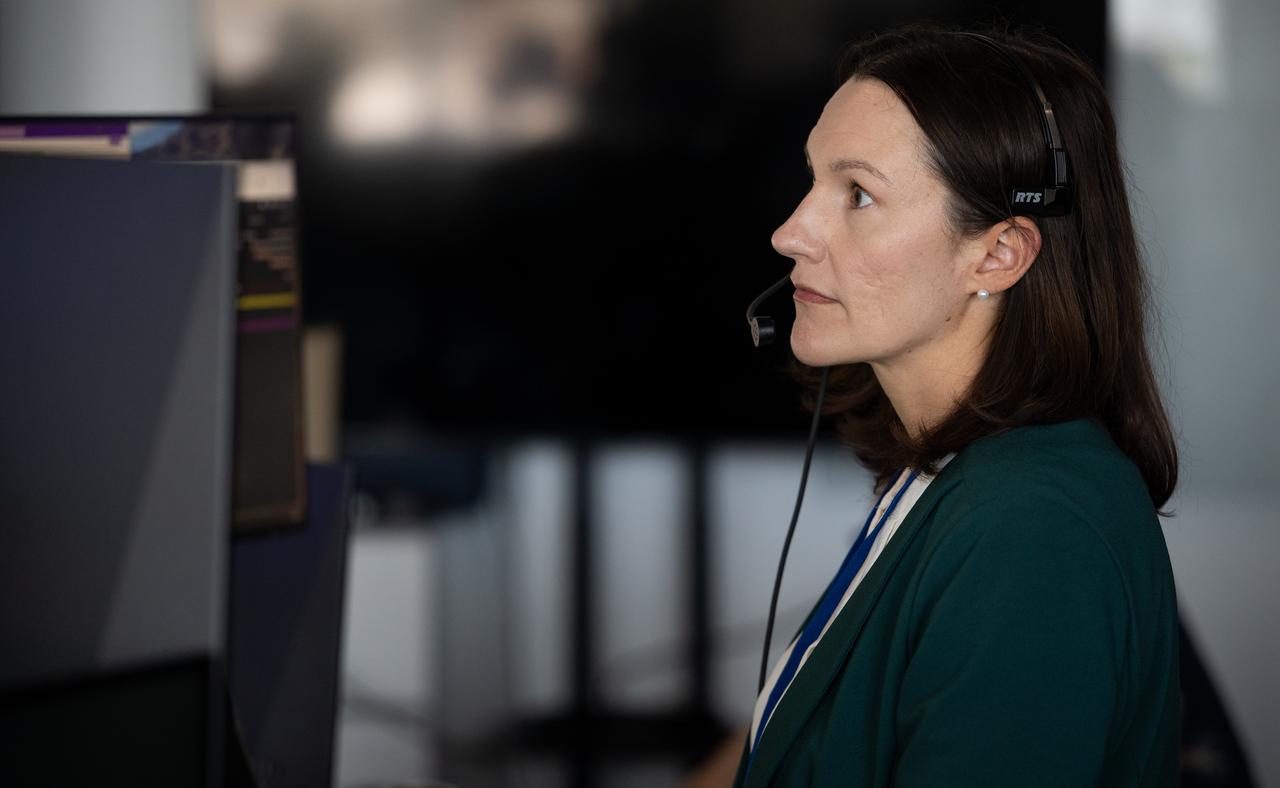
Nicole Jordan, NASA operations manager for the Commercial Crew Program, monitors the countdown during a dress rehearsal in preparation for the launch of a SpaceX Falcon 9 rocket carrying the company's Dragon spacecraft on NASA’s SpaceX Crew-11 mission with NASA astronauts Zena Cardman, Mike Fincke, JAXA (Japan Aerospace Exploration Agency) astronaut Kimiya Yui, and Roscosmos cosmonaut Oleg Platonov onboard, Monday, July 28, 2025, in the control room of SpaceX’s HangerX at NASA’s Kennedy Space Center in Florida. NASA’s SpaceX Crew-11 mission is the eleventh crew rotation mission of the SpaceX Dragon spacecraft and Falcon 9 rocket to the International Space Station as part of the agency’s Commercial Crew Program. Cardman, Fincke, Yui, Platonov are scheduled to launch on 12:09 p.m. EDT on Thursday, July 31, from Launch Complex 39A at the NASA's Kennedy Space Center. Photo Credit: (NASA/Joel Kowsky)

Nicole Jordan, NASA operations manager for the Commercial Crew Program, right, monitors the countdown during a dress rehearsal in preparation for the launch of a SpaceX Falcon 9 rocket carrying the company's Dragon spacecraft on NASA’s SpaceX Crew-11 mission with NASA astronauts Zena Cardman, Mike Fincke, JAXA (Japan Aerospace Exploration Agency) astronaut Kimiya Yui, and Roscosmos cosmonaut Oleg Platonov onboard, Monday, July 28, 2025, in the control room of SpaceX’s HangerX at NASA’s Kennedy Space Center in Florida. NASA’s SpaceX Crew-11 mission is the eleventh crew rotation mission of the SpaceX Dragon spacecraft and Falcon 9 rocket to the International Space Station as part of the agency’s Commercial Crew Program. Cardman, Fincke, Yui, Platonov are scheduled to launch on 12:09 p.m. EDT on Thursday, July 31, from Launch Complex 39A at the NASA's Kennedy Space Center. Photo Credit: (NASA/Joel Kowsky)
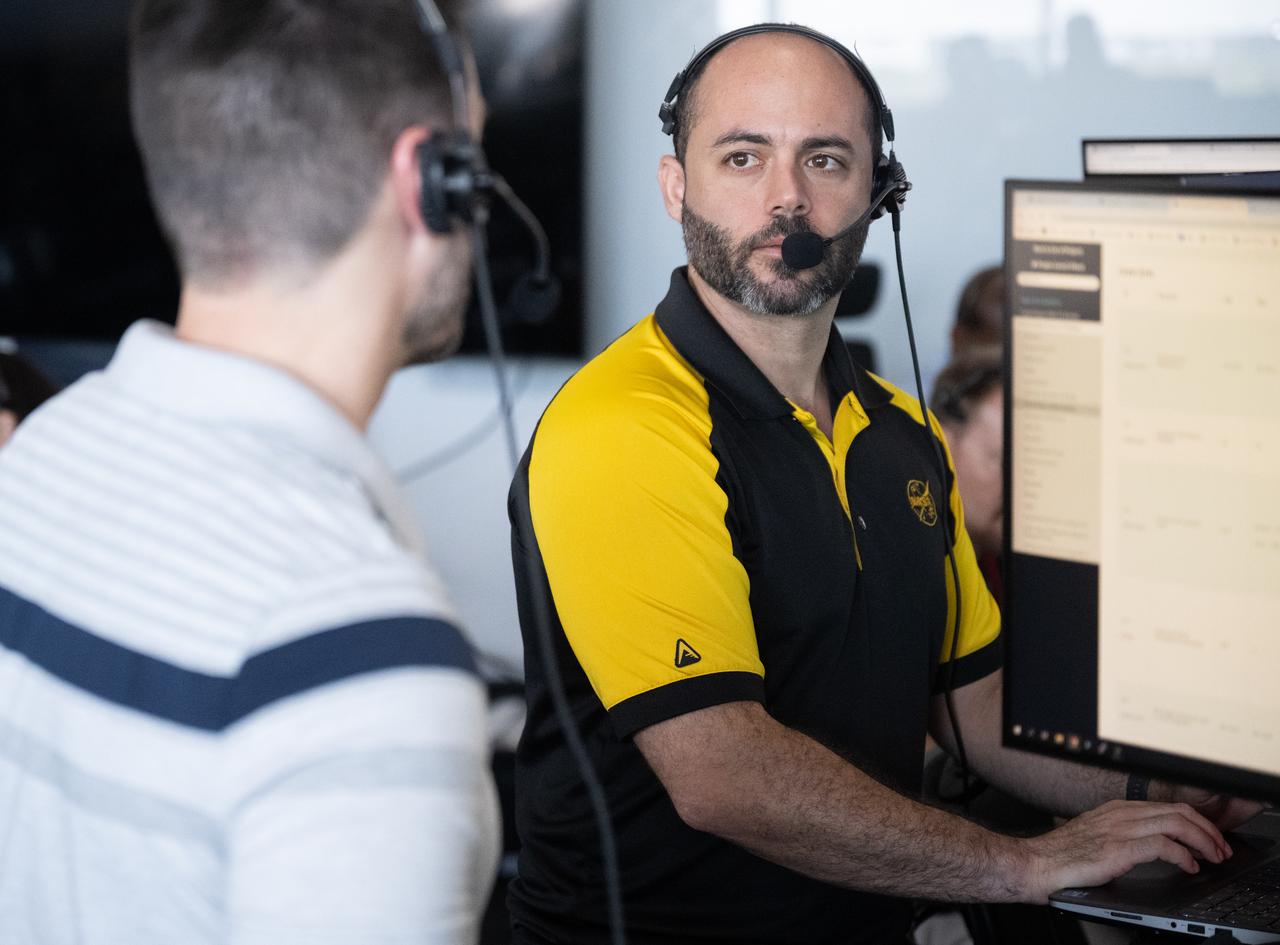
Max Schneiderman, an aerospace flight systems engineer at NASA, talks with John Posey, lead engineer for Dragon in NASA's Commercial Crew Program, as they monitor the countdown during a dress rehearsal in preparation for the launch of a SpaceX Falcon 9 rocket carrying the company's Dragon spacecraft on NASA’s SpaceX Crew-11 mission with NASA astronauts Zena Cardman, Mike Fincke, JAXA (Japan Aerospace Exploration Agency) astronaut Kimiya Yui, and Roscosmos cosmonaut Oleg Platonov onboard, Monday, July 28, 2025, in the control room of SpaceX’s HangerX at NASA’s Kennedy Space Center in Florida. NASA’s SpaceX Crew-11 mission is the eleventh crew rotation mission of the SpaceX Dragon spacecraft and Falcon 9 rocket to the International Space Station as part of the agency’s Commercial Crew Program. Cardman, Fincke, Yui, Platonov are scheduled to launch on 12:09 p.m. EDT on Thursday, July 31, from Launch Complex 39A at the NASA's Kennedy Space Center. Photo Credit: (NASA/Joel Kowsky)
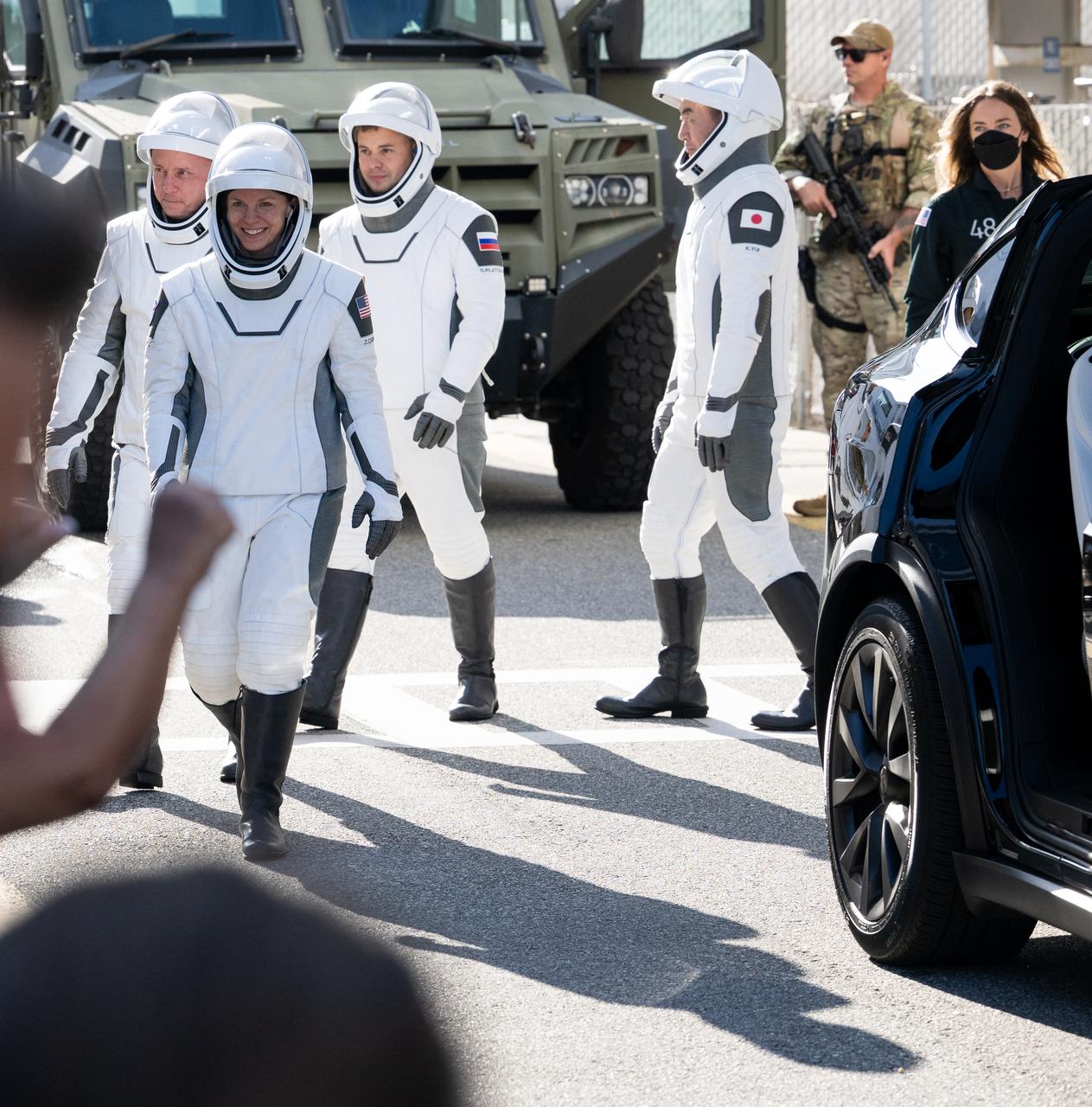
JAXA (Japan Aerospace Exploration Agency) astronaut Kimiya Yui, right, NASA astronauts Zena Cardman, Mike Fincke, and Roscosmos cosmonaut Oleg Platonov, wearing SpaceX spacesuits, are seen as they prepare to depart the Neil A. Armstrong Operations and Checkout Building for Launch Complex 39A on NASA's Kennedy Space Center to board the SpaceX Dragon spacecraft for the Crew-11 mission launch, Friday, Aug. 1, 2025, at NASA’s Kennedy Space Center in Florida. NASA’s SpaceX Crew-11 mission is the eleventh crew rotation mission of the SpaceX Crew Dragon spacecraft and Falcon 9 rocket to the International Space Station as part of the agency’s Commercial Crew Program. Cardman, Fincke, Yui, Platonov are scheduled to launch at 11:43 a.m. EDT, from Launch Complex 39A at the NASA's Kennedy Space Center. Photo Credit: (NASA/Joel Kowsky)
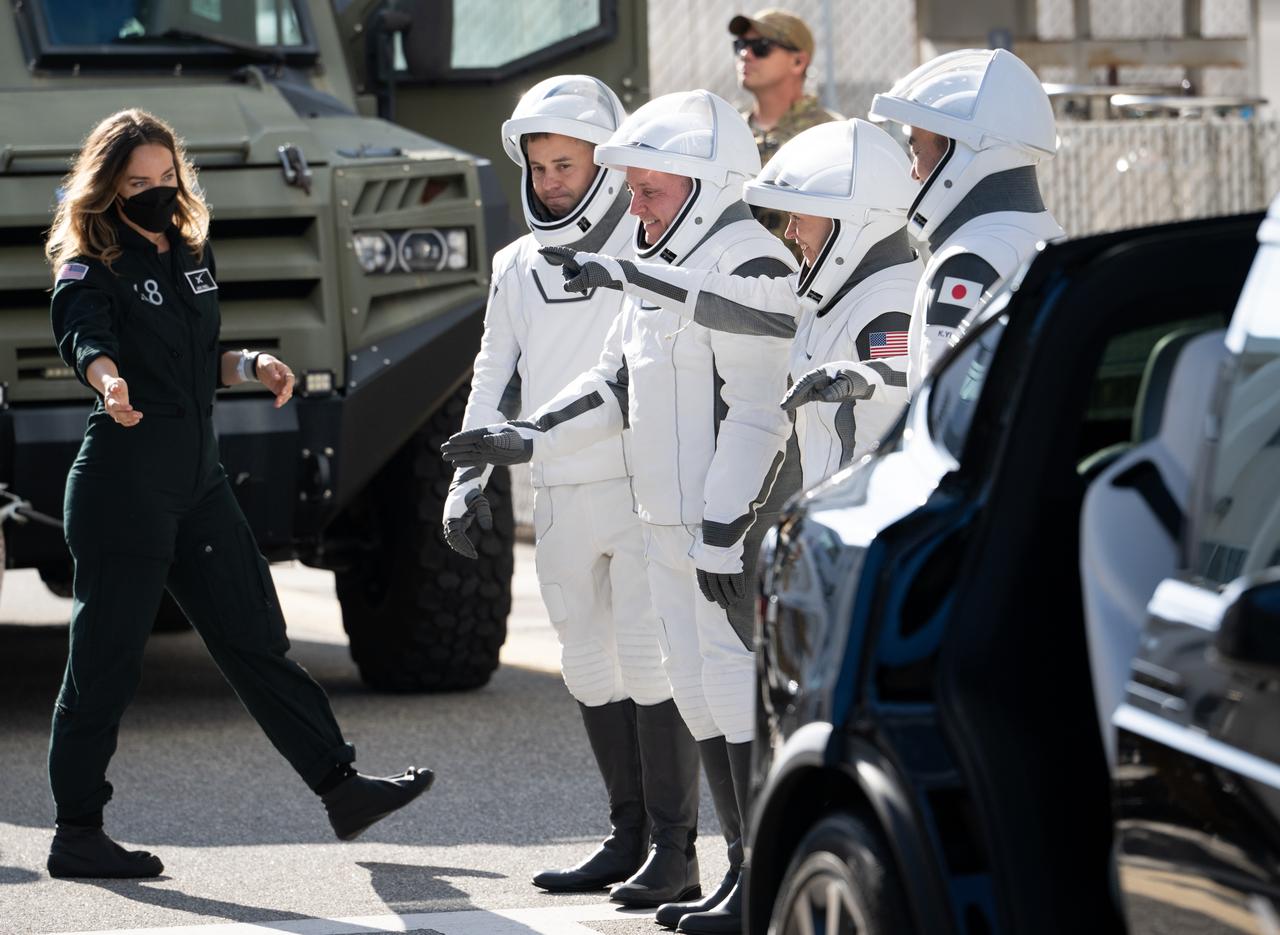
Roscosmos cosmonaut Oleg Platonov, left, NASA astronauts Mike Fincke, Zena Cardman, and JAXA (Japan Aerospace Exploration Agency) astronaut Kimiya Yui, wearing SpaceX spacesuits, are seen as they prepare to depart the Neil A. Armstrong Operations and Checkout Building for Launch Complex 39A on NASA's Kennedy Space Center to board the SpaceX Dragon spacecraft for the Crew-11 mission launch, Thursday, July 31, 2025, at NASA’s Kennedy Space Center in Florida. NASA’s SpaceX Crew-11 mission is the eleventh crew rotation mission of the SpaceX Crew Dragon spacecraft and Falcon 9 rocket to the International Space Station as part of the agency’s Commercial Crew Program. Cardman, Fincke, Yui, Platonov are scheduled to launch at 12:09 p.m. EDT, from Launch Complex 39A at the NASA's Kennedy Space Center. Photo Credit: (NASA/Joel Kowsky)
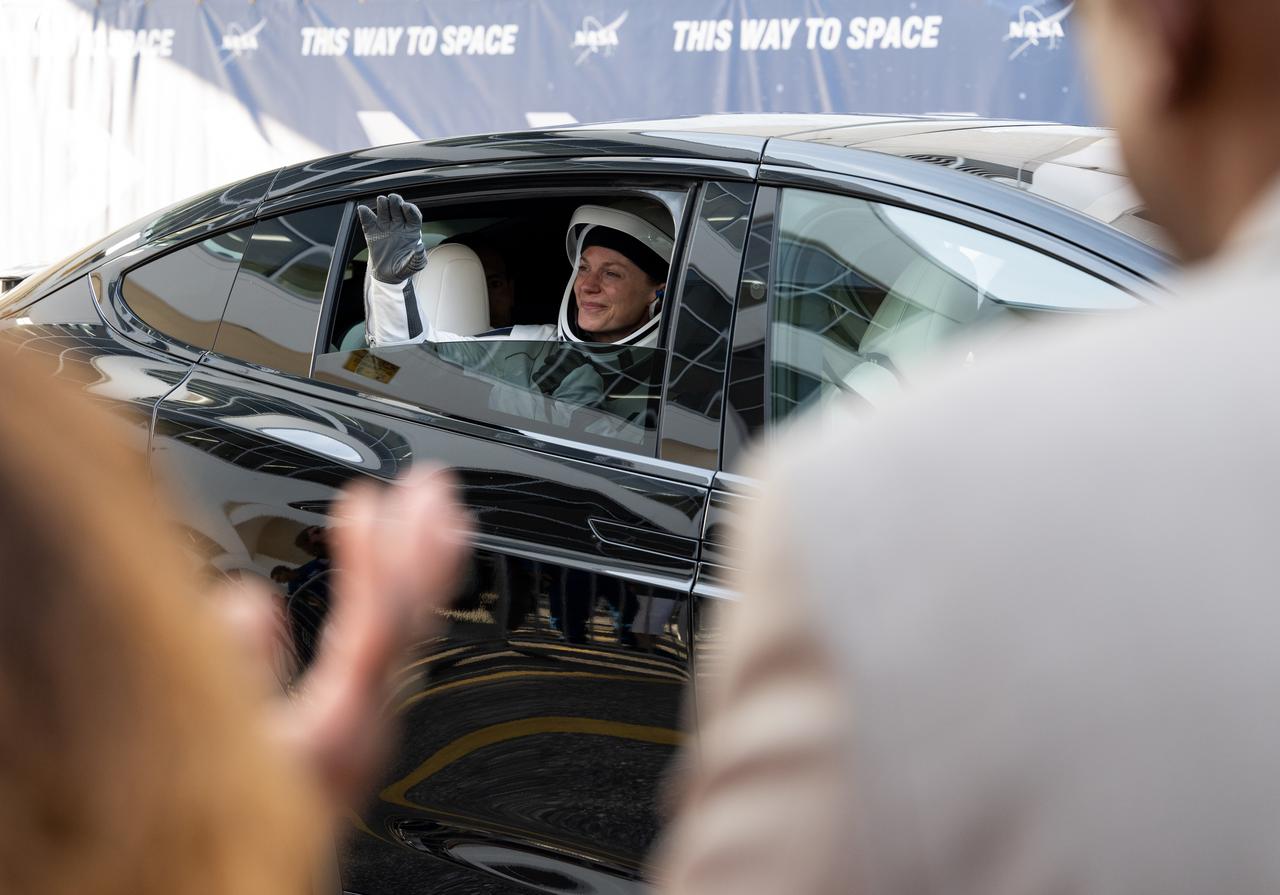
NASA astronauts Zena Cardman waves to friends and family as she and fellow crewmates Mike Fincke, JAXA (Japan Aerospace Exploration Agency) astronaut Kimiya Yui, and Roscosmos cosmonaut Oleg Platonov, depart the Neil A. Armstrong Operations and Checkout Building for Launch Complex 39A on NASA's Kennedy Space Center to board the SpaceX Dragon spacecraft for the Crew-11 mission launch, Friday, Aug. 1, 2025, at NASA’s Kennedy Space Center in Florida. NASA’s SpaceX Crew-11 mission is the eleventh crew rotation mission of the SpaceX Crew Dragon spacecraft and Falcon 9 rocket to the International Space Station as part of the agency’s Commercial Crew Program. Cardman, Fincke, Yui, Platonov are scheduled to launch at 11:43 a.m. EDT, from Launch Complex 39A at the NASA's Kennedy Space Center. Photo Credit: (NASA/Joel Kowsky)
NASA astronauts Zena Cardman, Mike Fincke, Roscosmos cosmonaut Oleg Platonov, and JAXA (Japan Aerospace Exploration Agency) astronaut Kimiya Yui, wearing SpaceX spacesuits, are seen as they prepare to depart the Neil A. Armstrong Operations and Checkout Building for Launch Complex 39A on NASA's Kennedy Space Center to board the SpaceX Dragon spacecraft for the Crew-11 mission launch, Thursday, July 31, 2025, at NASA’s Kennedy Space Center in Florida. NASA’s SpaceX Crew-11 mission is the eleventh crew rotation mission of the SpaceX Crew Dragon spacecraft and Falcon 9 rocket to the International Space Station as part of the agency’s Commercial Crew Program. Cardman, Fincke, Yui, Platonov are scheduled to launch at 12:09 p.m. EDT, from Launch Complex 39A at the NASA's Kennedy Space Center. Photo Credit: (NASA/Joel Kowsky)
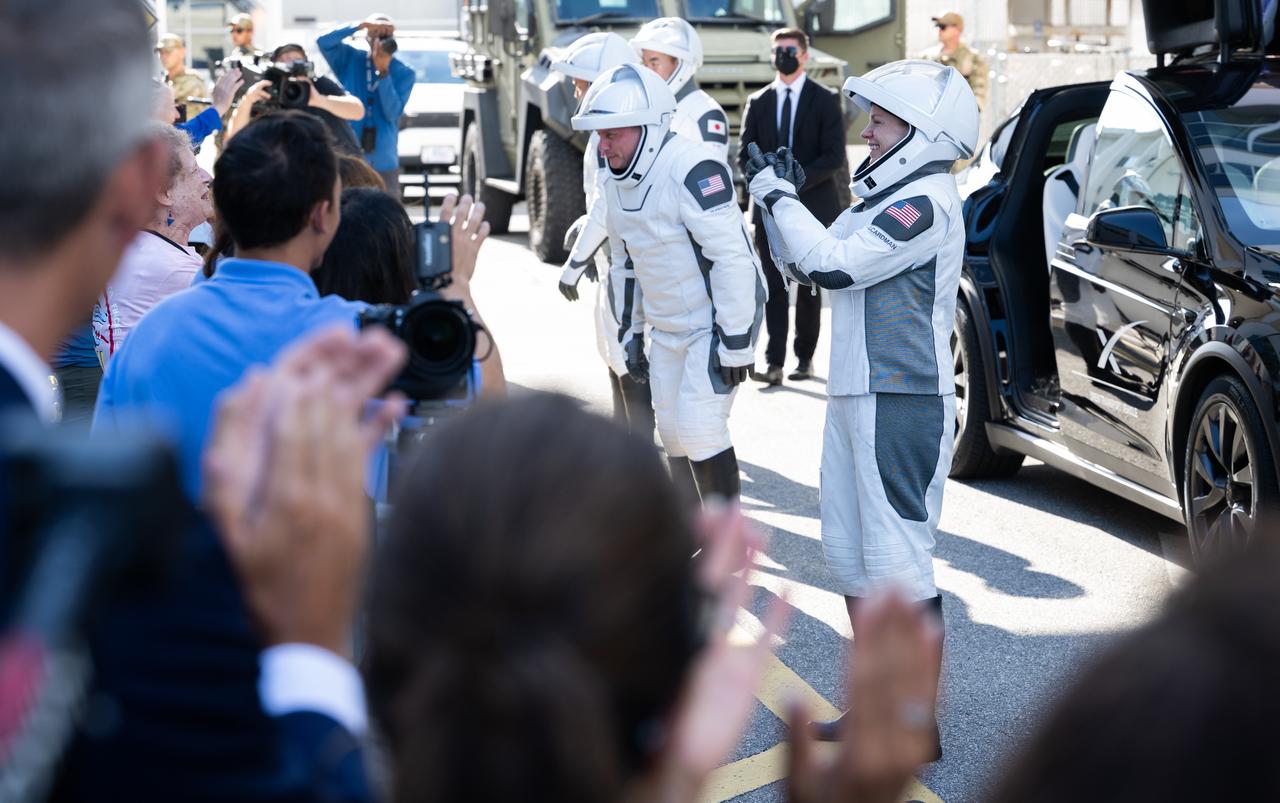
NASA astronauts Zena Cardman, right, Mike Fincke, JAXA (Japan Aerospace Exploration Agency) astronaut Kimiya Yui, and Roscosmos cosmonaut Oleg Platonov, wearing SpaceX spacesuits, talk to family and friends as they prepare to depart the Neil A. Armstrong Operations and Checkout Building for Launch Complex 39A on NASA's Kennedy Space Center to board the SpaceX Dragon spacecraft for the Crew-11 mission launch, Thursday, July 31, 2025, at NASA’s Kennedy Space Center in Florida. NASA’s SpaceX Crew-11 mission is the eleventh crew rotation mission of the SpaceX Crew Dragon spacecraft and Falcon 9 rocket to the International Space Station as part of the agency’s Commercial Crew Program. Cardman, Fincke, Yui, Platonov are scheduled to launch at 12:09 p.m. EDT, from Launch Complex 39A at the NASA's Kennedy Space Center. Photo Credit: (NASA/Joel Kowsky)
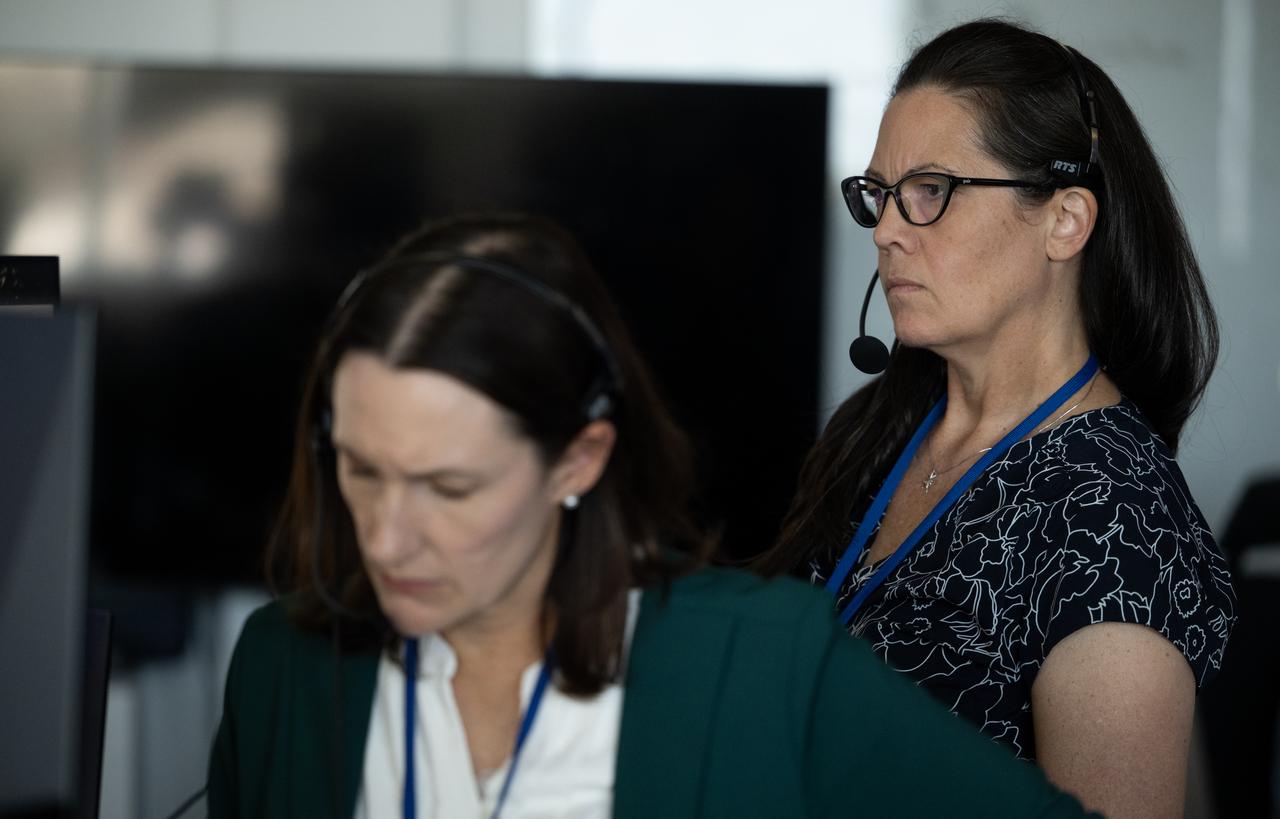
Emily Nelson, NASA's chief flight director, monitors the countdown during a dress rehearsal in preparation for the launch of a SpaceX Falcon 9 rocket carrying the company's Dragon spacecraft on NASA’s SpaceX Crew-11 mission with NASA astronauts Zena Cardman, Mike Fincke, JAXA (Japan Aerospace Exploration Agency) astronaut Kimiya Yui, and Roscosmos cosmonaut Oleg Platonov onboard, Monday, July 28, 2025, in the control room of SpaceX’s HangerX at NASA’s Kennedy Space Center in Florida. NASA’s SpaceX Crew-11 mission is the eleventh crew rotation mission of the SpaceX Dragon spacecraft and Falcon 9 rocket to the International Space Station as part of the agency’s Commercial Crew Program. Cardman, Fincke, Yui, Platonov are scheduled to launch on 12:09 p.m. EDT on Thursday, July 31, from Launch Complex 39A at the NASA's Kennedy Space Center. Photo Credit: (NASA/Joel Kowsky)

NASA astronaut Mike Fincke waves to agency leadership as he and fellow crewmates NASA astronaut Zena Cardman, JAXA (Japan Aerospace Exploration Agency) astronaut Kimiya Yui, and Roscosmos cosmonaut Oleg Platonov, wearing SpaceX spacesuits, prepare to depart the Neil A. Armstrong Operations and Checkout Building for Launch Complex 39A on NASA's Kennedy Space Center to board the SpaceX Dragon spacecraft for the Crew-11 mission launch, Friday, Aug. 1, 2025, at NASA’s Kennedy Space Center in Florida. NASA’s SpaceX Crew-11 mission is the eleventh crew rotation mission of the SpaceX Crew Dragon spacecraft and Falcon 9 rocket to the International Space Station as part of the agency’s Commercial Crew Program. Cardman, Fincke, Yui, Platonov are scheduled to launch at 11:43 a.m. EDT, from Launch Complex 39A at the NASA's Kennedy Space Center. Photo Credit: (NASA/Joel Kowsky)
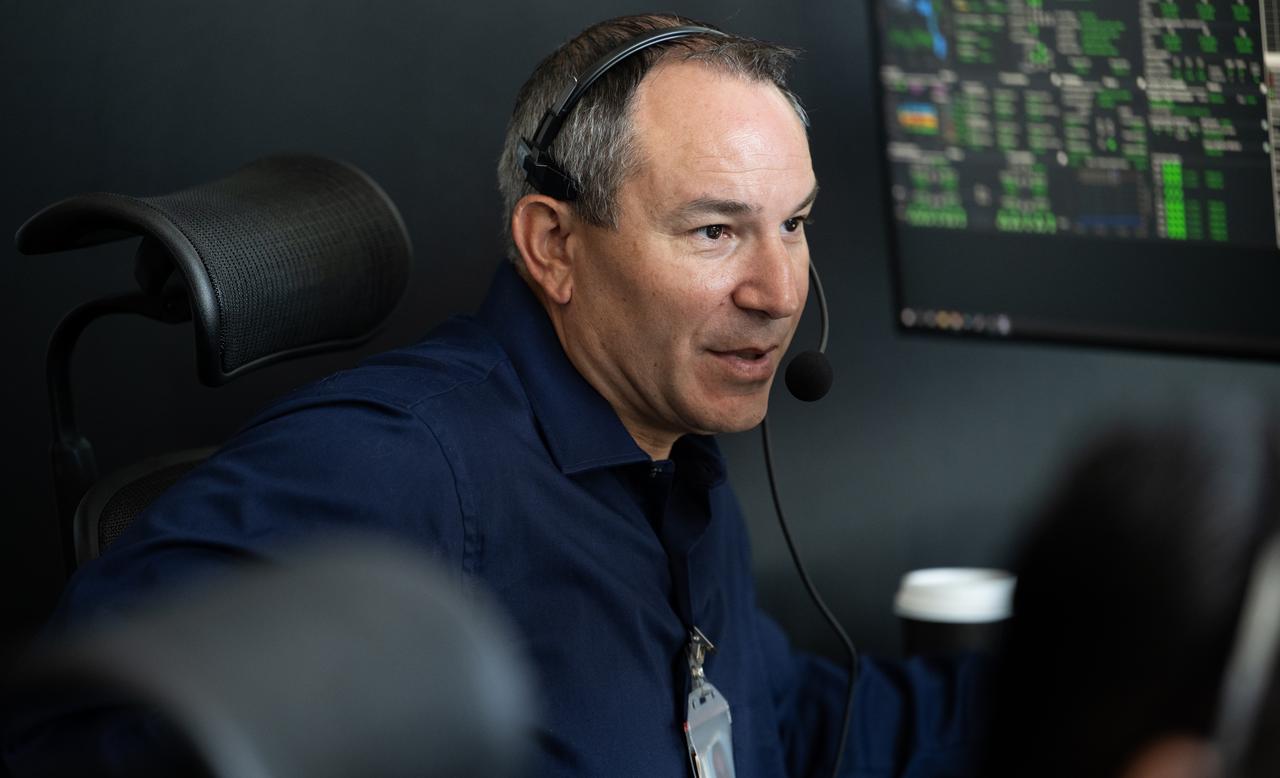
Kevin Vega, Commercial Crew Program Chief Engineer, monitors the countdown during a dress rehearsal in preparation for the launch of a SpaceX Falcon 9 rocket carrying the company's Dragon spacecraft on NASA’s SpaceX Crew-11 mission with NASA astronauts Zena Cardman, Mike Fincke, JAXA (Japan Aerospace Exploration Agency) astronaut Kimiya Yui, and Roscosmos cosmonaut Oleg Platonov onboard, Monday, July 28, 2025, in the control room of SpaceX’s HangerX at NASA’s Kennedy Space Center in Florida. NASA’s SpaceX Crew-11 mission is the eleventh crew rotation mission of the SpaceX Dragon spacecraft and Falcon 9 rocket to the International Space Station as part of the agency’s Commercial Crew Program. Cardman, Fincke, Yui, Platonov are scheduled to launch on 12:09 p.m. EDT on Thursday, July 31, from Launch Complex 39A at the NASA's Kennedy Space Center. Photo Credit: (NASA/Joel Kowsky)

NASA astronauts Zena Cardman, Mike Fincke, Roscosmos cosmonaut Oleg Platonov, and JAXA (Japan Aerospace Exploration Agency) astronaut Kimiya Yui, wearing SpaceX spacesuits, are seen as they prepare to depart the Neil A. Armstrong Operations and Checkout Building for Launch Complex 39A on NASA's Kennedy Space Center to board the SpaceX Dragon spacecraft for the Crew-11 mission launch, Friday, Aug. 1, 2025, at NASA’s Kennedy Space Center in Florida. NASA’s SpaceX Crew-11 mission is the eleventh crew rotation mission of the SpaceX Crew Dragon spacecraft and Falcon 9 rocket to the International Space Station as part of the agency’s Commercial Crew Program. Cardman, Fincke, Yui, Platonov are scheduled to launch at 11:43 a.m. EDT, from Launch Complex 39A at the NASA's Kennedy Space Center. Photo Credit: (NASA/Joel Kowsky)
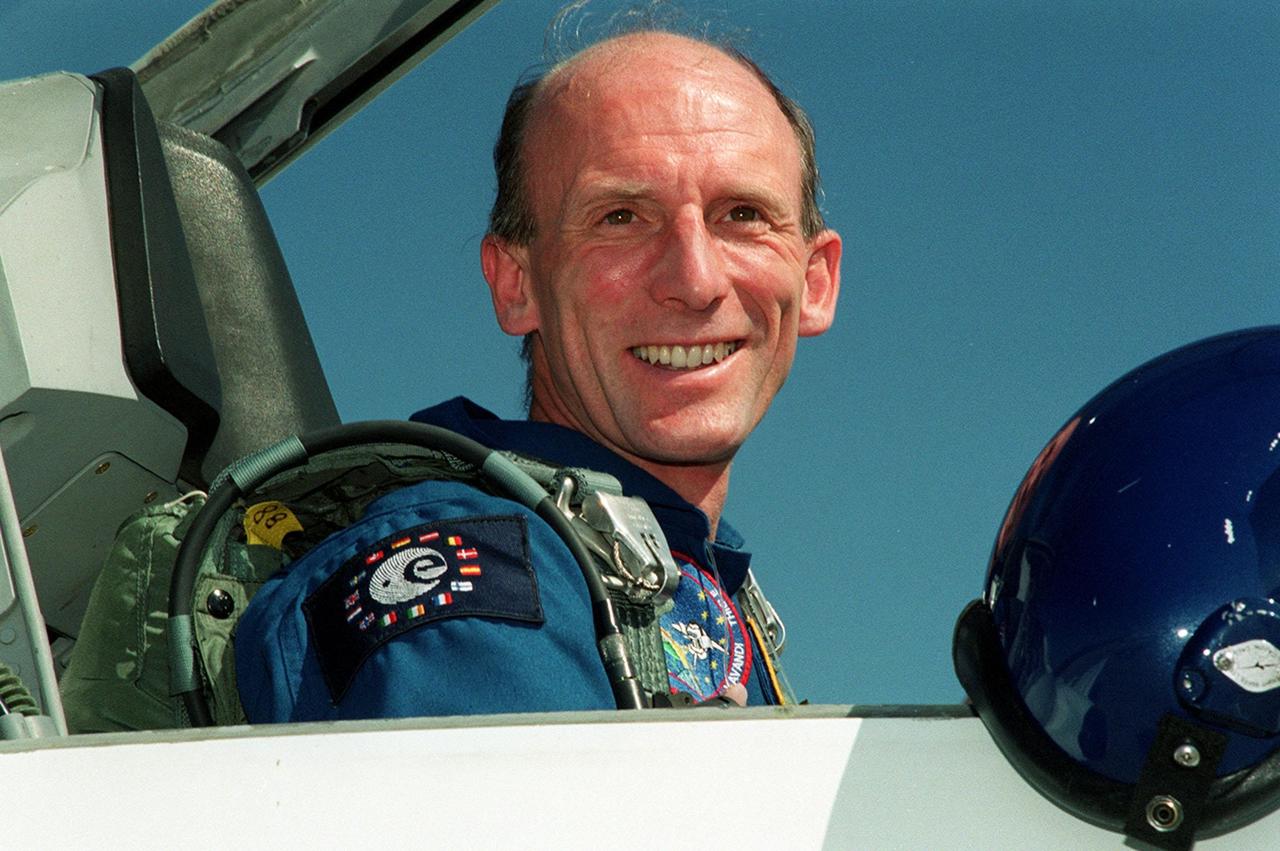
STS-99 Mission Specialist Gerhard P.J. Thiele of Germany arrives at KSC aboard a T-38 jet aircraft eager to prepare for the second launch attempt of Endeavour Feb. 11 at 12:30 p.m. EST from Launch Pad 39A. Thiele is with the European Space Agency. The earlier launch scheduled for Jan. 31 was scrubbed due to poor weather and a faulty Enhanced Master Events Controller in the orbiter's aft compartment. Over the next few days, the crew will review mission procedures, conduct test flights in the Shuttle Training Aircraft and undergo routine preflight medical exams. STS-99 is the Shuttle Radar Topography Mission, which will produce unrivaled 3-D images of the Earth's surface. The result of the Shuttle Radar Topography Mission could be close to 1 trillion measurements of the Earth's topography. Landing is expected at KSC on Feb. 22 at 4:36 p.m. EST

The Rotating Service Structure (RSS) at Launch Pad 39A is rotated back, revealing the Space Shuttle orbiter Atlantis with its external tank and twin solid rocket boosters in full launch configuration. Rollback of the RSS is a major preflight milestone, typically occurring during the T-11-hour hold on L-1 (the day before launch). Atlantis and its crew of seven are in final preparations for liftoff on Mission STS-84, the sixth of nine planned dockings of the Space Shuttle with the Russian Space Station Mir. Launch is scheduled at about 4:08 a.m. during an approximately 7-minute launch window. The exact liftoff time will be determined about 90 minutes prior to launch, based on the most current location of Mir
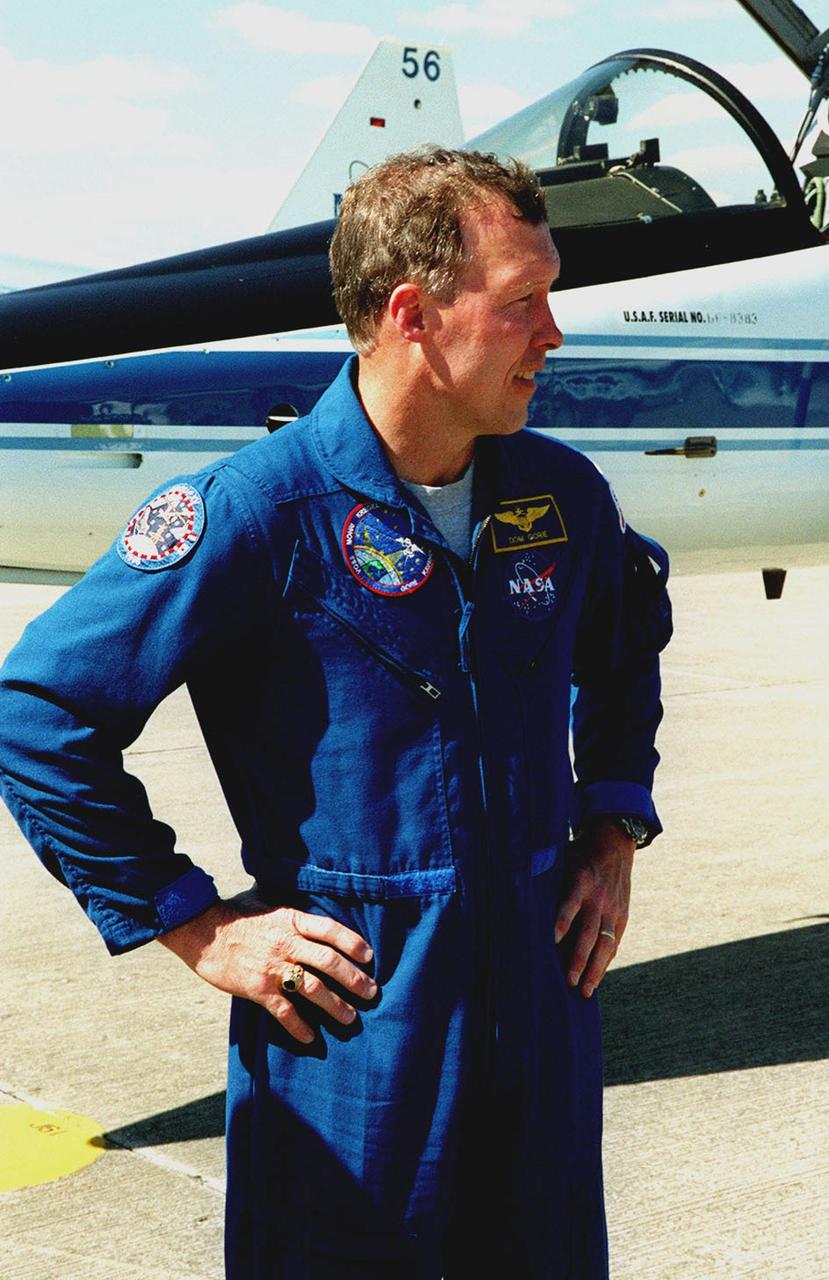
After landing at the Shuttle Landing Facility aboard a T-38 jet aircraft, STS-99 Pilot Dominic Gorie stands ready to prepare for the second launch attempt of Endeavour Feb. 11 at 12:30 p.m. EST from Launch Pad 39A. The earlier launch scheduled for Jan. 31 was scrubbed due to poor weather and a faulty Enhanced Master Events Controller in the orbiter's aft compartment. Over the next few days, the crew will review mission procedures, conduct test flights in the Shuttle Training Aircraft and undergo routine preflight medical exams. STS-99 is the Shuttle Radar Topography Mission, which will produce unrivaled 3-D images of the Earth's surface. The result of the Shuttle Radar Topography Mission could be close to 1 trillion measurements of the Earth's topography. Landing is expected at KSC on Feb. 22 at 4:36 p.m. EST
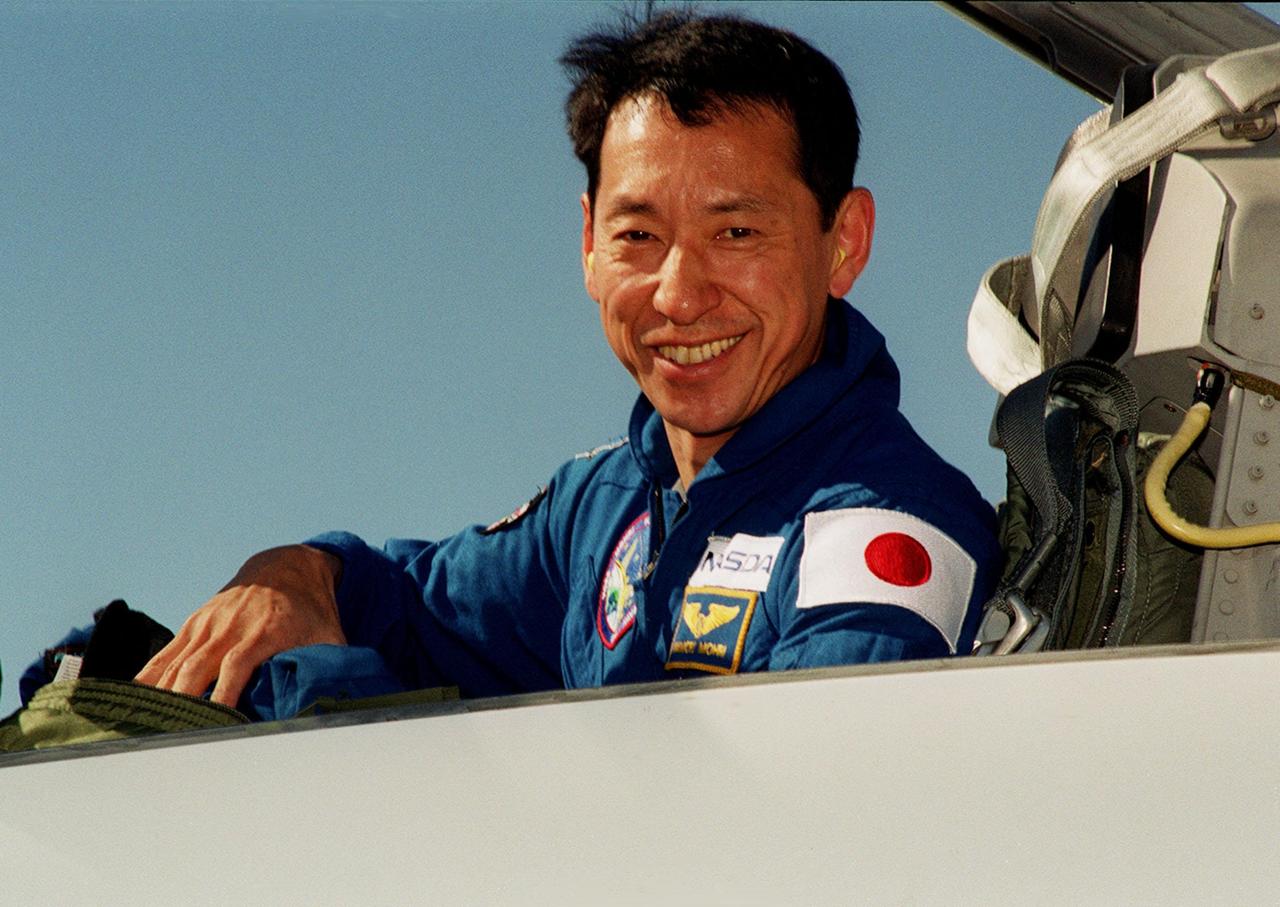
A smiling STS-99 Mission Specialist Mamoru Mohri of Japan arrives at KSC aboard a T-38 jet aircraft eager to prepare for the second launch attempt of Endeavour Feb. 11 at 12:30 p.m. EST from Launch Pad 39A. Mohri is with the Japanese National Space Development Agency (NASDA). The earlier launch scheduled for Jan. 31 was scrubbed due to poor weather and a faulty Enhanced Master Events Controller in the orbiter's aft compartment. Over the next few days, the crew will review mission procedures, conduct test flights in the Shuttle Training Aircraft and undergo routine preflight medical exams. STS-99 is the Shuttle Radar Topography Mission, which will produce unrivaled 3-D images of the Earth's surface. The result of the Shuttle Radar Topography Mission could be close to 1 trillion measurements of the Earth's topography. Landing is expected at KSC on Feb. 22 at 4:36 p.m. EST
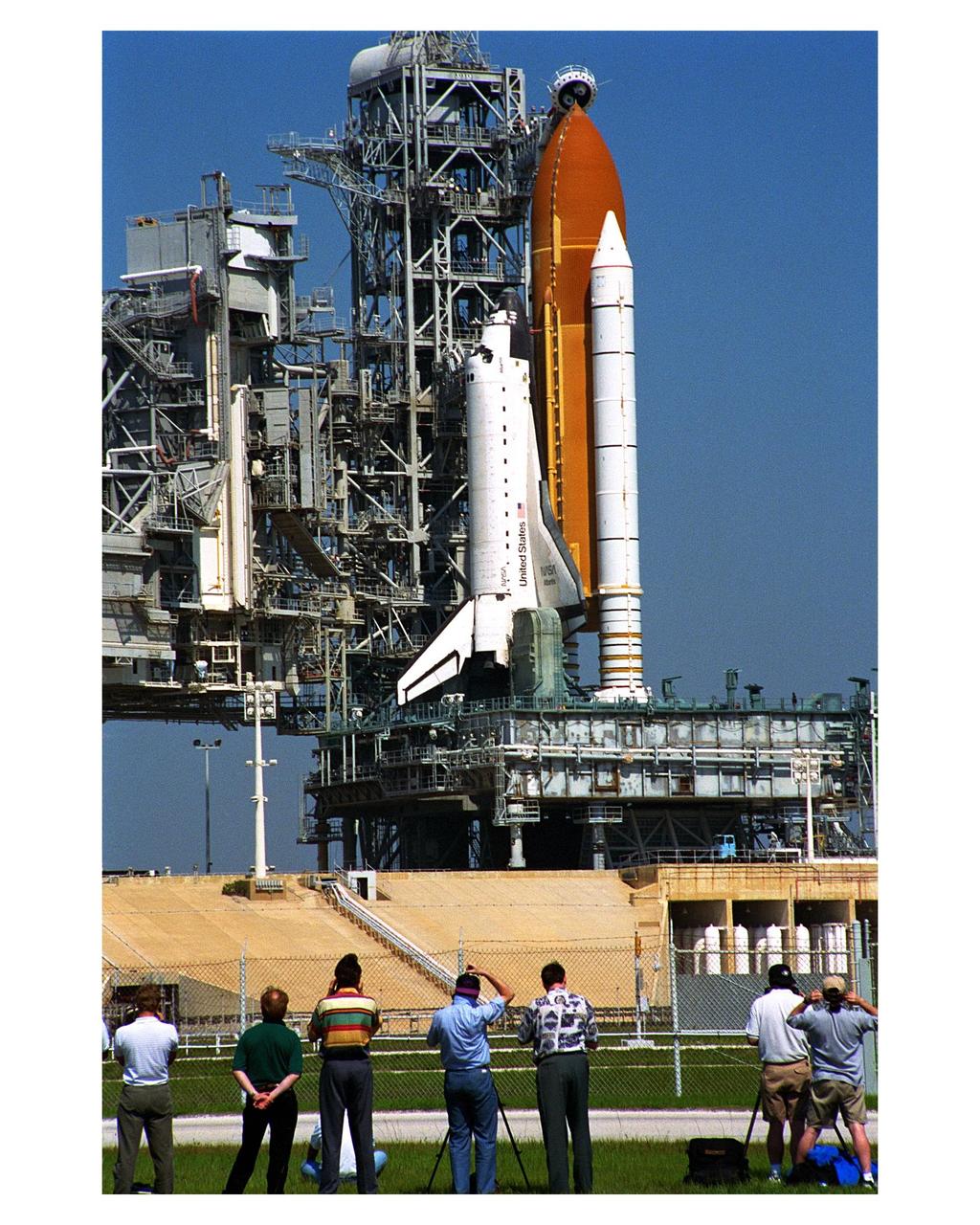
News media representatives watch and record as the Space Shuttle Atlantis in full launch configuration is revealed after the Rotating Service Structure (RSS) is rotated back at Launch Pad 39A. Rollback of the RSS is a major preflight milestone, typically occurring during the T-11-hour hold on L-1 (the day before launch). Atlantis and its crew of seven are in final preparations for liftoff on Mission STS-84, the sixth of nine planned dockings of the Space Shuttle with the Russian Space Station Mir. Launch is scheduled at about 4:08 a.m. during an approximately 7-minute launch window. The exact liftoff time will be determined about 90 minutes prior to launch, based on the most current location of Mir
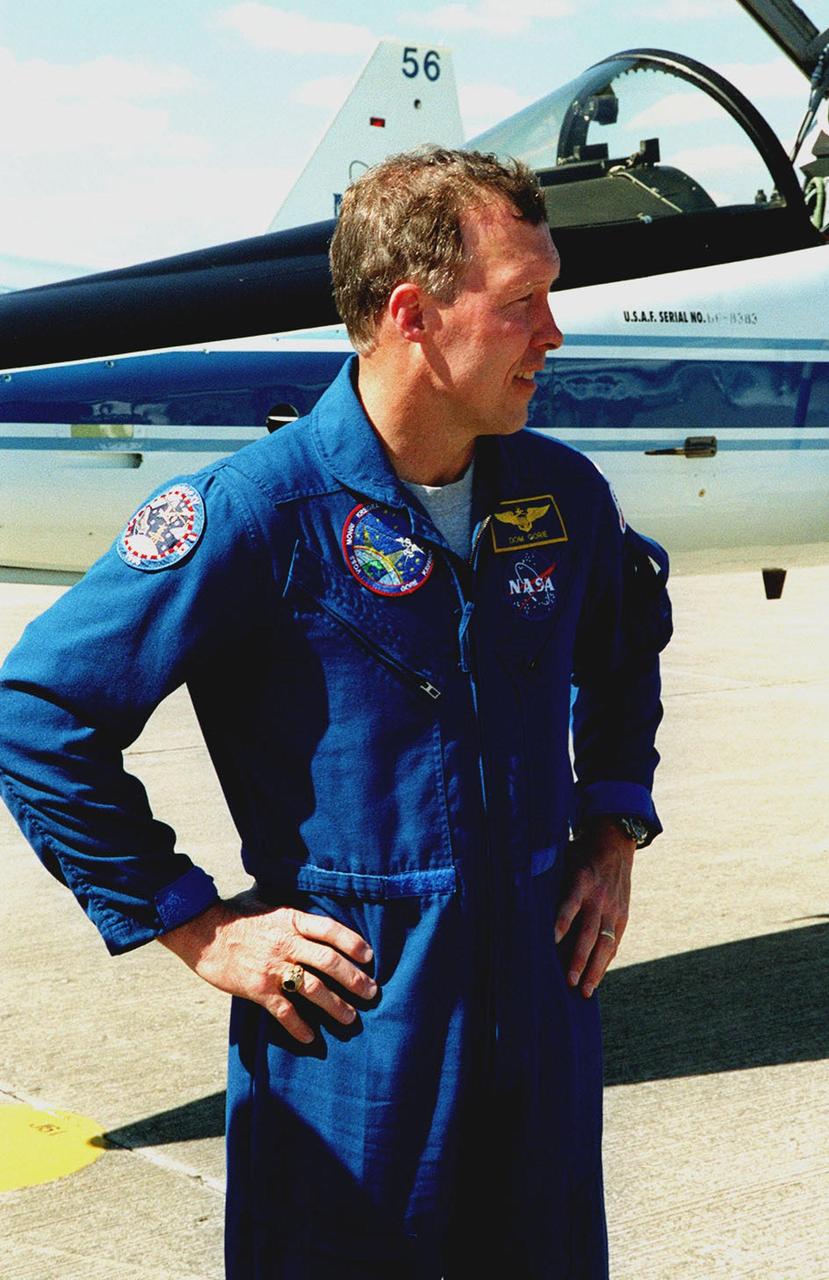
After landing at the Shuttle Landing Facility aboard a T-38 jet aircraft, STS-99 Pilot Dominic Gorie stands ready to prepare for the second launch attempt of Endeavour Feb. 11 at 12:30 p.m. EST from Launch Pad 39A. The earlier launch scheduled for Jan. 31 was scrubbed due to poor weather and a faulty Enhanced Master Events Controller in the orbiter's aft compartment. Over the next few days, the crew will review mission procedures, conduct test flights in the Shuttle Training Aircraft and undergo routine preflight medical exams. STS-99 is the Shuttle Radar Topography Mission, which will produce unrivaled 3-D images of the Earth's surface. The result of the Shuttle Radar Topography Mission could be close to 1 trillion measurements of the Earth's topography. Landing is expected at KSC on Feb. 22 at 4:36 p.m. EST
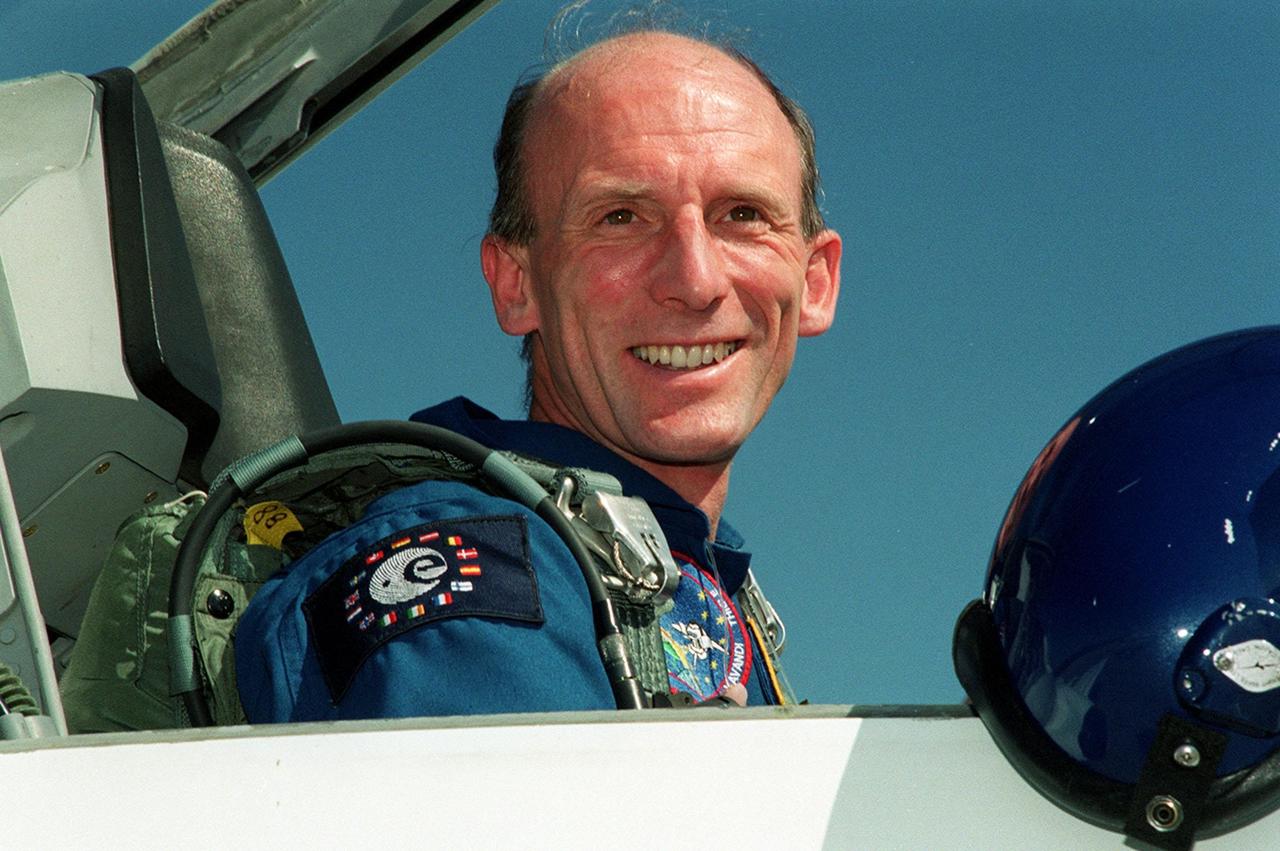
STS-99 Mission Specialist Gerhard P.J. Thiele of Germany arrives at KSC aboard a T-38 jet aircraft eager to prepare for the second launch attempt of Endeavour Feb. 11 at 12:30 p.m. EST from Launch Pad 39A. Thiele is with the European Space Agency. The earlier launch scheduled for Jan. 31 was scrubbed due to poor weather and a faulty Enhanced Master Events Controller in the orbiter's aft compartment. Over the next few days, the crew will review mission procedures, conduct test flights in the Shuttle Training Aircraft and undergo routine preflight medical exams. STS-99 is the Shuttle Radar Topography Mission, which will produce unrivaled 3-D images of the Earth's surface. The result of the Shuttle Radar Topography Mission could be close to 1 trillion measurements of the Earth's topography. Landing is expected at KSC on Feb. 22 at 4:36 p.m. EST
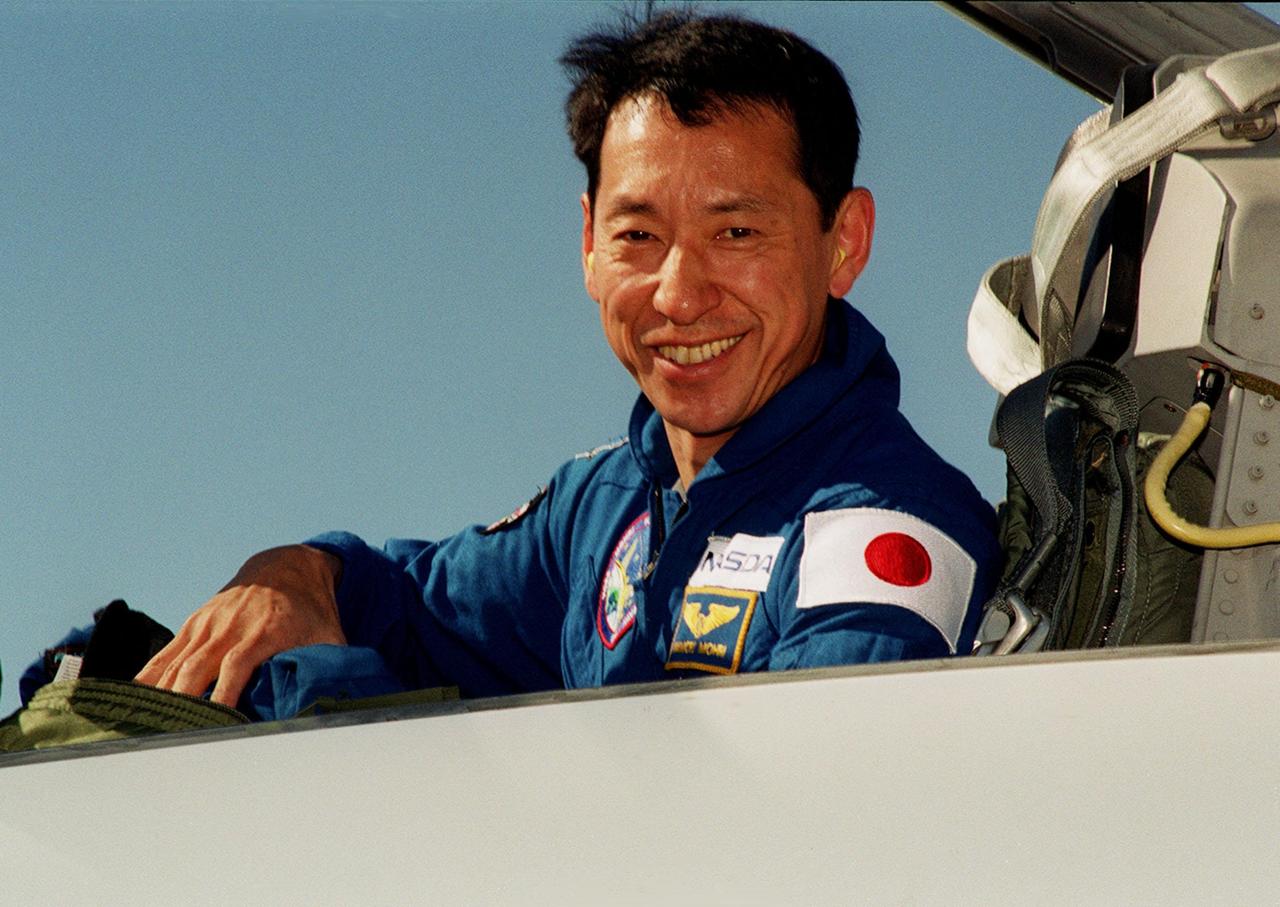
A smiling STS-99 Mission Specialist Mamoru Mohri of Japan arrives at KSC aboard a T-38 jet aircraft eager to prepare for the second launch attempt of Endeavour Feb. 11 at 12:30 p.m. EST from Launch Pad 39A. Mohri is with the Japanese National Space Development Agency (NASDA). The earlier launch scheduled for Jan. 31 was scrubbed due to poor weather and a faulty Enhanced Master Events Controller in the orbiter's aft compartment. Over the next few days, the crew will review mission procedures, conduct test flights in the Shuttle Training Aircraft and undergo routine preflight medical exams. STS-99 is the Shuttle Radar Topography Mission, which will produce unrivaled 3-D images of the Earth's surface. The result of the Shuttle Radar Topography Mission could be close to 1 trillion measurements of the Earth's topography. Landing is expected at KSC on Feb. 22 at 4:36 p.m. EST
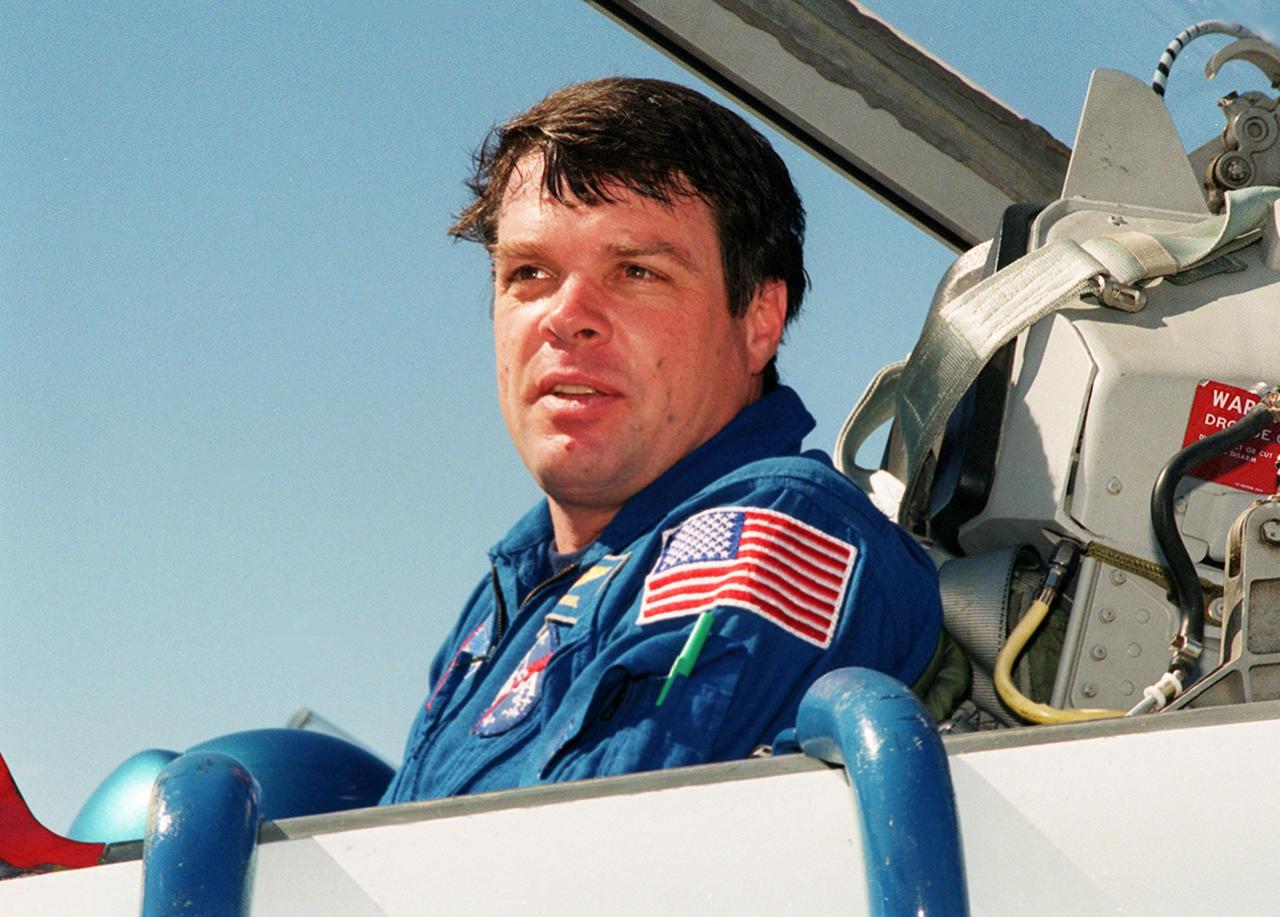
STS-99 Commander Kevin Kregel arrives at Kennedy Space Center aboard a T-38 jet aircraft. He and the other five crew members are back at KSC to prepare for the second launch attempt of Endeavour Feb. 11 at 12:30 p.m. EST from Launch Pad 39A. The earlier launch scheduled for Jan. 31 was scrubbed due to poor weather and a faulty Enhanced Master Events Controller in the orbiter's aft compartment. The crew had returned to Houston after the scrubbed launch. Over the next few days, the crew will review mission procedures, conduct test flights in the Shuttle Training Aircraft and undergo routine preflight medical exams. STS-99 is the Shuttle Radar Topography Mission, which will produce unrivaled 3-D images of the Earth's surface. The result of the Shuttle Radar Topography Mission could be close to 1 trillion measurements of the Earth's topography. Landing is expected at KSC on Feb. 22 at 4:36 p.m. EST
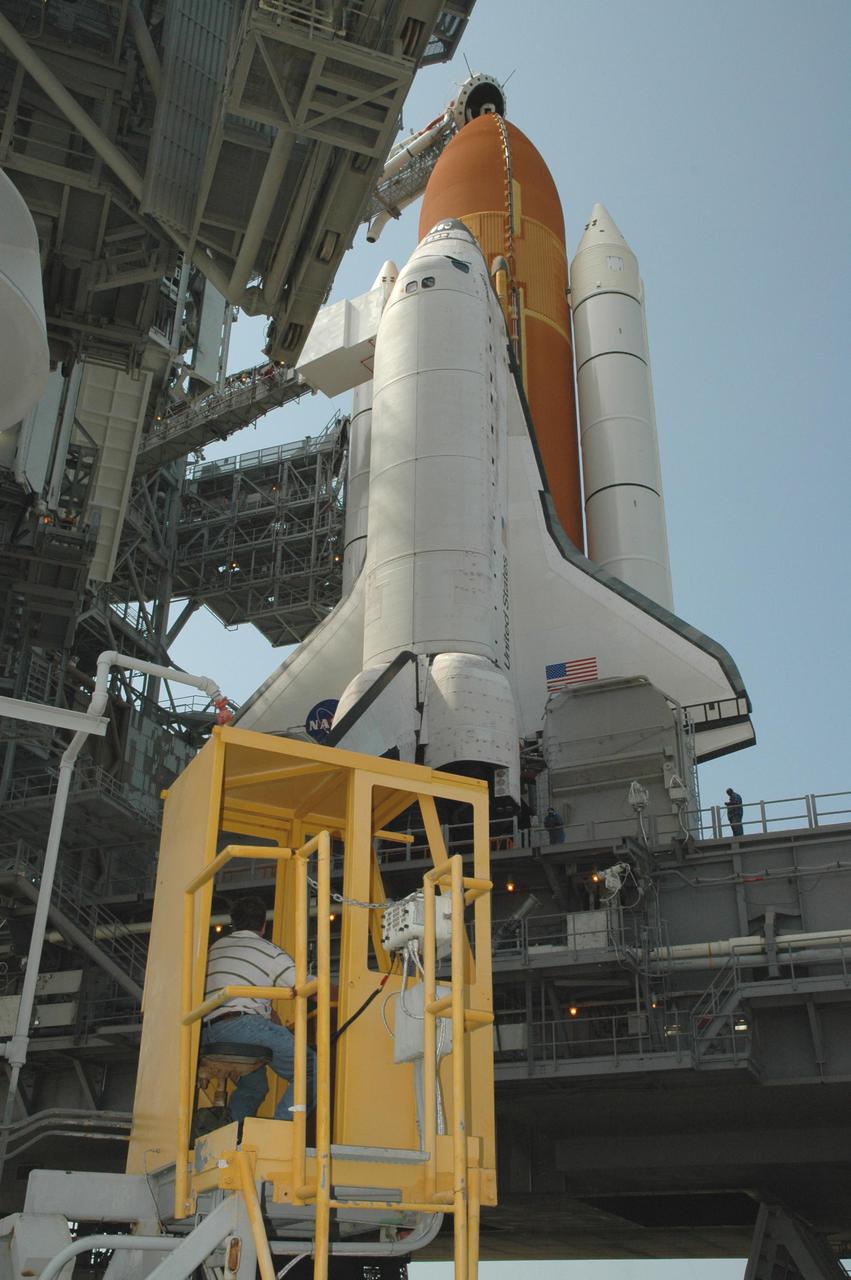
KENNEDY SPACE CENTER, FLA. - A worker on Launch Pad 39B at NASA Kennedy Space Center sits in the control cab of the Rotating Service Structure as it begins rolling back from its position around Space Shuttle Discovery. Rollback of the RSS is a major preflight milestone, typically occurring during the T-11-hour hold on L-1 (the day before launch). Discovery is scheduled to lift off on the historic Return to Flight mission STS-114 at 10:39 a.m. EDT July 26 with a crew of seven. On the mission to the International Space Station the crew will perform inspections on orbit for the first time of all of the Reinforced Carbon-Carbon (RCC) panels on the leading edge of the wings and the Thermal Protection System tiles using the new Canadian-built Orbiter Boom Sensor System and the data from 176 impact and temperature sensors. Mission Specialists will also practice repair techniques on RCC and tile samples during a spacewalk in the payload bay. During two additional spacewalks, the crew will install the External Stowage Platform-2, equipped with spare part assemblies, and a replacement Control Moment Gyroscope contained in the Lightweight Multi-Purpose Experiment Support Structure.

STS-99 Commander Kevin Kregel arrives at Kennedy Space Center aboard a T-38 jet aircraft. He and the other five crew members are back at KSC to prepare for the second launch attempt of Endeavour Feb. 11 at 12:30 p.m. EST from Launch Pad 39A. The earlier launch scheduled for Jan. 31 was scrubbed due to poor weather and a faulty Enhanced Master Events Controller in the orbiter's aft compartment. The crew had returned to Houston after the scrubbed launch. Over the next few days, the crew will review mission procedures, conduct test flights in the Shuttle Training Aircraft and undergo routine preflight medical exams. STS-99 is the Shuttle Radar Topography Mission, which will produce unrivaled 3-D images of the Earth's surface. The result of the Shuttle Radar Topography Mission could be close to 1 trillion measurements of the Earth's topography. Landing is expected at KSC on Feb. 22 at 4:36 p.m. EST
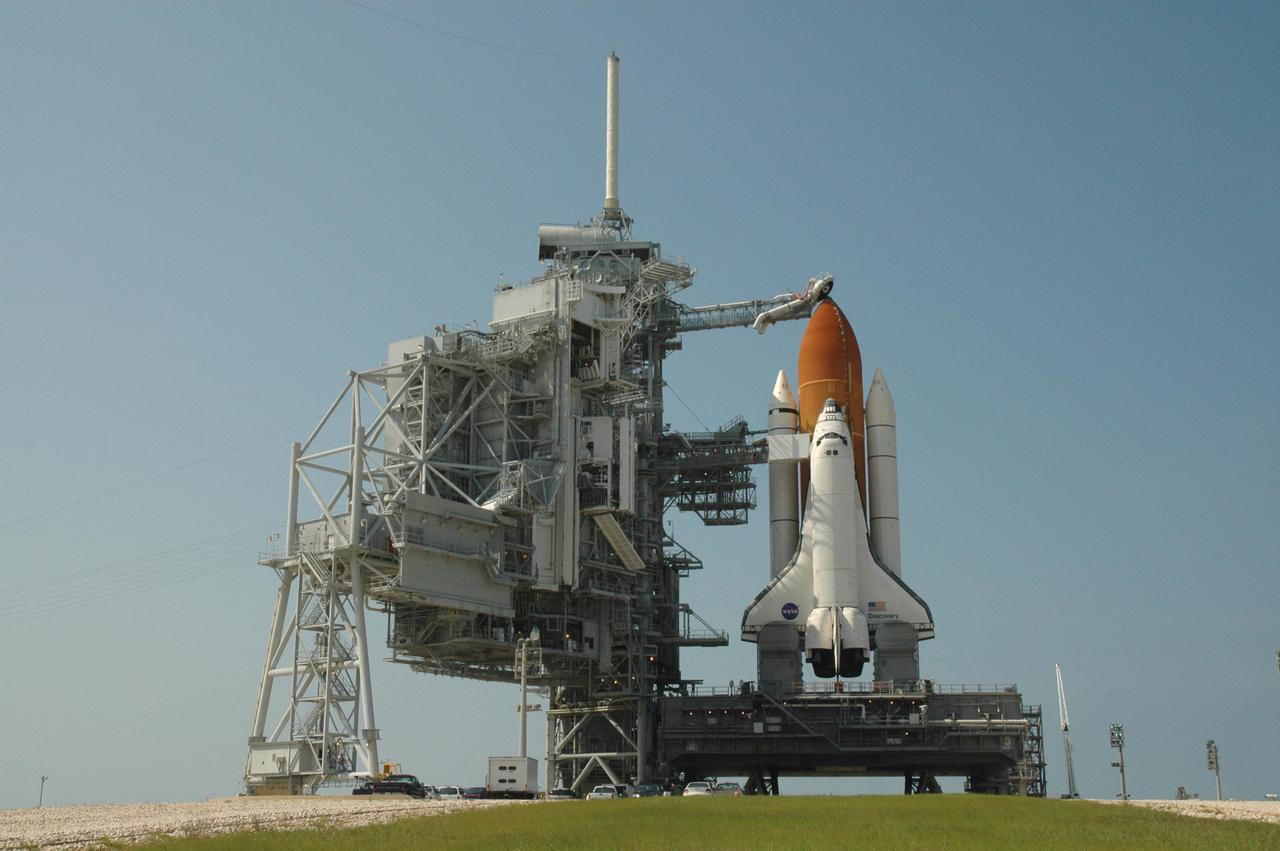
KENNEDY SPACE CENTER, FLA. - Space Shuttle Discovery in full launch configuration is revealed after the Rotating Service Structure (RSS) is rotated back at Launch Pad 39B at NASA Kennedy Space Center. At the top of the Fixed Service Structure is the 80-foot-tall lightning mast. Rollback of the RSS is a major preflight milestone, typically occurring during the T-11-hour hold on L-1 (the day before launch). Discovery is scheduled to lift off on the historic Return to Flight mission STS-114 at 10:39 a.m. EDT July 26 with a crew of seven. On the mission to the International Space Station the crew will perform inspections on orbit for the first time of all of the Reinforced Carbon-Carbon (RCC) panels on the leading edge of the wings and the Thermal Protection System tiles using the new Canadian-built Orbiter Boom Sensor System and the data from 176 impact and temperature sensors. Mission Specialists will also practice repair techniques on RCC and tile samples during a spacewalk in the payload bay. During two additional spacewalks, the crew will install the External Stowage Platform-2, equipped with spare part assemblies, and a replacement Control Moment Gyroscope contained in the Lightweight Multi-Purpose Experiment Support Structure.
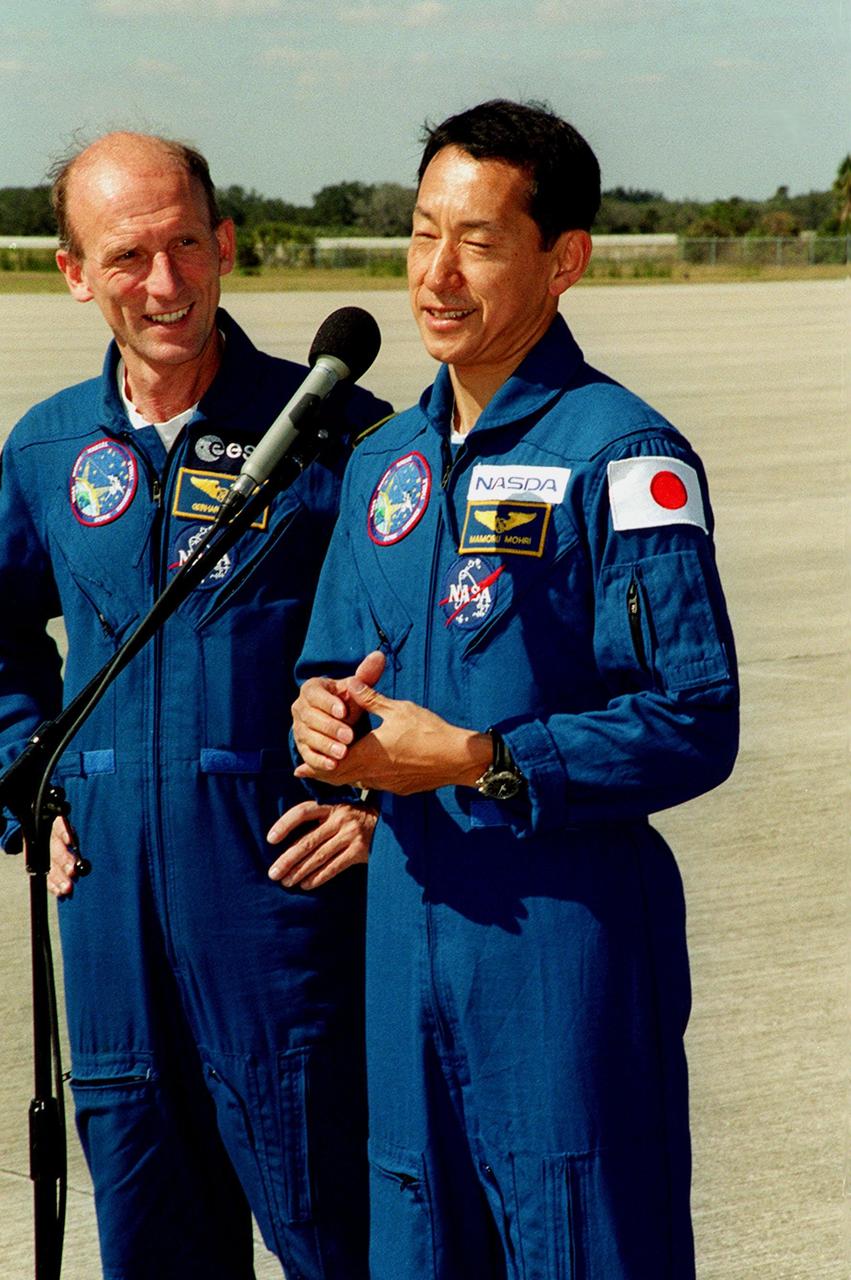
After landing at the Shuttle Landing Facility aboard T-38 jet aircraft, the STS-99 crew addressed the media. Mission Specialists Gerhard Thiele of Germany waits while Mamoru Mohri of Japan (right) responds to a question. The crew is ready to prepare for the second launch attempt of Endeavour Feb. 11 at 12:30 p.m. EST from Launch Pad 39A. The earlier launch scheduled for Jan. 31 was scrubbed due to poor weather and a faulty Enhanced Master Events Controller in the orbiter's aft compartment. Over the next few days, the crew will review mission procedures, conduct test flights in the Shuttle Training Aircraft and undergo routine preflight medical exams. STS-99 is the Shuttle Radar Topography Mission, which will produce unrivaled 3-D images of the Earth's surface. The result of the Shuttle Radar Topography Mission could be close to 1 trillion measurements of the Earth's topography. Landing is expected at KSC on Feb. 22 at 4:36 p.m. EST
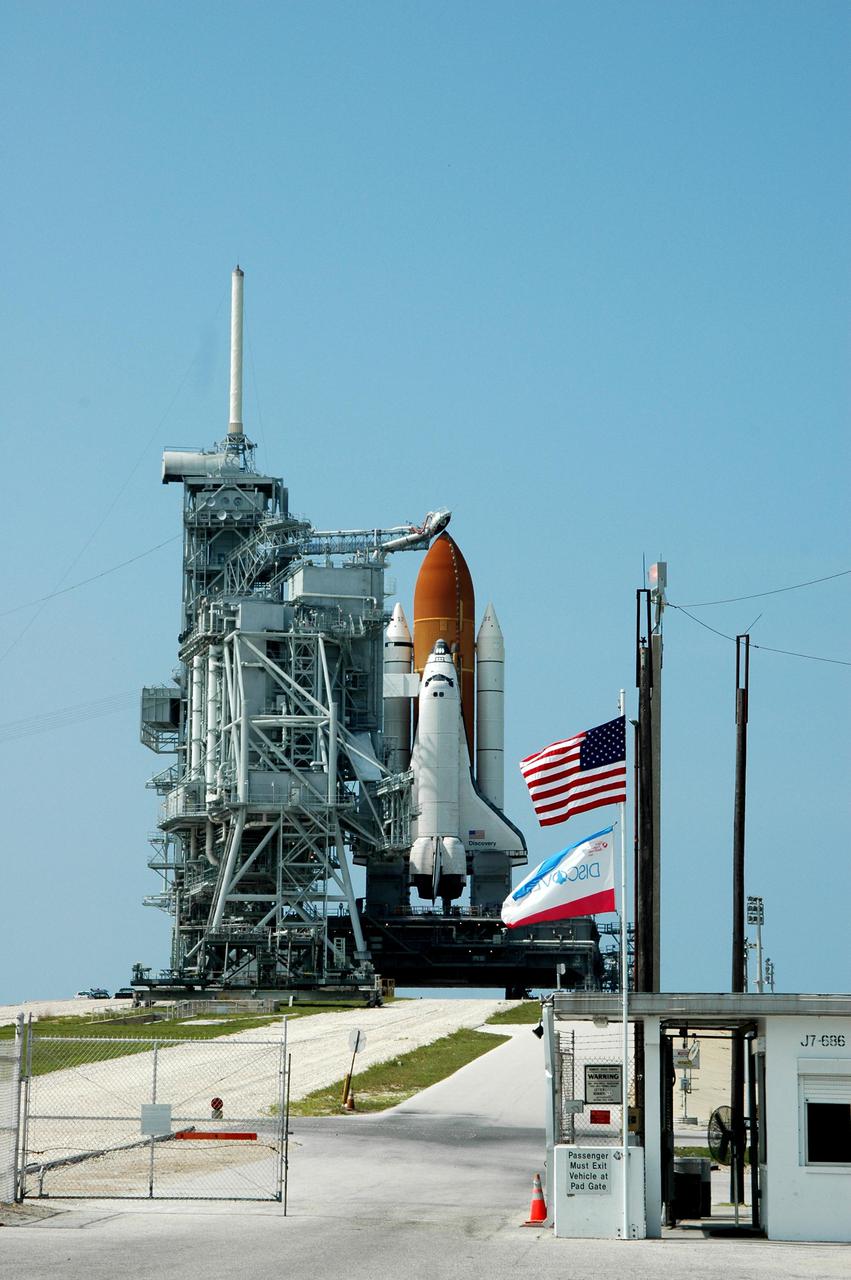
KENNEDY SPACE CENTER, FLA. - Flags are flying on Launch Pad 39B at NASA Kennedy Space Center as Space Shuttle Discovery is ready on the pad for launch after rollback of the Rotating Service Structure. Rollback of the RSS is a major preflight milestone, typically occurring during the T-11-hour hold on L-1 (the day before launch). Discovery is scheduled to lift off on the historic Return to Flight mission STS-114 at 10:39 a.m. EDT July 26 with a crew of seven. On the mission to the International Space Station the crew will perform inspections on orbit for the first time of all of the Reinforced Carbon-Carbon (RCC) panels on the leading edge of the wings and the Thermal Protection System tiles using the new Canadian-built Orbiter Boom Sensor System and the data from 176 impact and temperature sensors. Mission Specialists will also practice repair techniques on RCC and tile samples during a spacewalk in the payload bay. During two additional spacewalks, the crew will install the External Stowage Platform-2, equipped with spare part assemblies, and a replacement Control Moment Gyroscope contained in the Lightweight Multi-Purpose Experiment Support Structure.

KENNEDY SPACE CENTER, FLA. - A worker on Launch Pad 39B at NASA Kennedy Space Center walks alongside the track of the Rotating Service Structure as it begins rolling back from its position around Space Shuttle Discovery. Rollback of the RSS is a major preflight milestone, typically occurring during the T-11-hour hold on L-1 (the day before launch). Discovery is scheduled to lift off on the historic Return to Flight mission STS-114 at 10:39 a.m. EDT July 26 with a crew of seven. On the mission to the International Space Station the crew will perform inspections on orbit for the first time of all of the Reinforced Carbon-Carbon (RCC) panels on the leading edge of the wings and the Thermal Protection System tiles using the new Canadian-built Orbiter Boom Sensor System and the data from 176 impact and temperature sensors. Mission Specialists will also practice repair techniques on RCC and tile samples during a spacewalk in the payload bay. During two additional spacewalks, the crew will install the External Stowage Platform-2, equipped with spare part assemblies, and a replacement Control Moment Gyroscope contained in the Lightweight Multi-Purpose Experiment Support Structure.
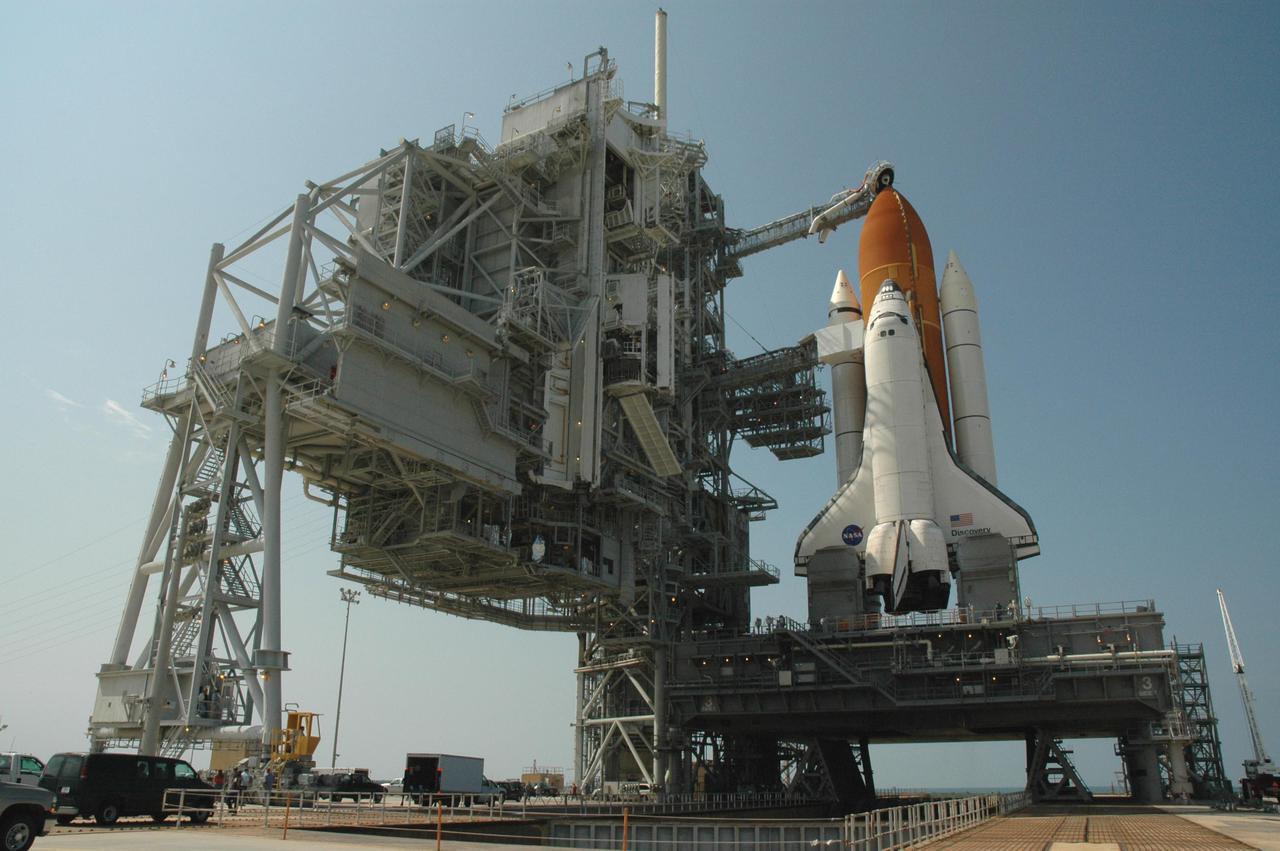
KENNEDY SPACE CENTER, FLA. - Space Shuttle Discovery in full launch configuration is revealed after the Rotating Service Structure (RSS) is rotated back at Launch Pad 39B at NASA Kennedy Space Center. Rollback of the RSS is a major preflight milestone, typically occurring during the T-11-hour hold on L-1 (the day before launch). Discovery is scheduled to lift off on the historic Return to Flight mission STS-114 at 10:39 a.m. EDT July 26 with a crew of seven. On the mission to the International Space Station the crew will perform inspections on orbit for the first time of all of the Reinforced Carbon-Carbon (RCC) panels on the leading edge of the wings and the Thermal Protection System tiles using the new Canadian-built Orbiter Boom Sensor System and the data from 176 impact and temperature sensors. Mission Specialists will also practice repair techniques on RCC and tile samples during a spacewalk in the payload bay. During two additional spacewalks, the crew will install the External Stowage Platform-2, equipped with spare part assemblies, and a replacement Control Moment Gyroscope contained in the Lightweight Multi-Purpose Experiment Support Structure.
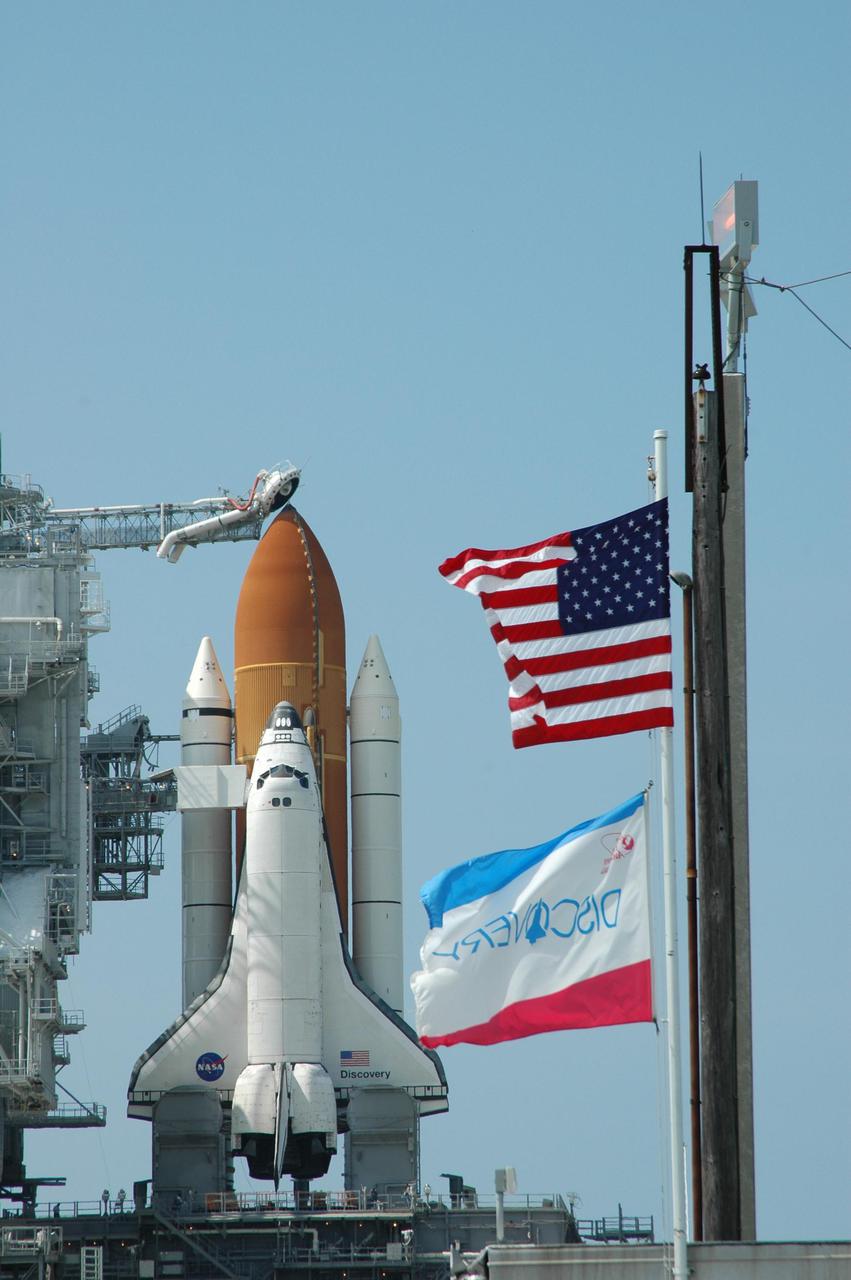
KENNEDY SPACE CENTER, FLA. - Flags are flying on Launch Pad 39B at NASA Kennedy Space Center as Space Shuttle Discovery is ready on the pad for launch after rollback of the Rotating Service Structure. Visible above the External Tank is the gaseous oxygen vent arm (beanie cap). Rollback of the RSS is a major preflight milestone, typically occurring during the T-11-hour hold on L-1 (the day before launch). Discovery is scheduled to lift off on the historic Return to Flight mission STS-114 at 10:39 a.m. EDT July 26 with a crew of seven. On the mission to the International Space Station the crew will perform inspections on orbit for the first time of all of the Reinforced Carbon-Carbon (RCC) panels on the leading edge of the wings and the Thermal Protection System tiles using the new Canadian-built Orbiter Boom Sensor System and the data from 176 impact and temperature sensors. Mission Specialists will also practice repair techniques on RCC and tile samples during a spacewalk in the payload bay. During two additional spacewalks, the crew will install the External Stowage Platform-2, equipped with spare part assemblies, and a replacement Control Moment Gyroscope contained in the Lightweight Multi-Purpose Experiment Support Structure.
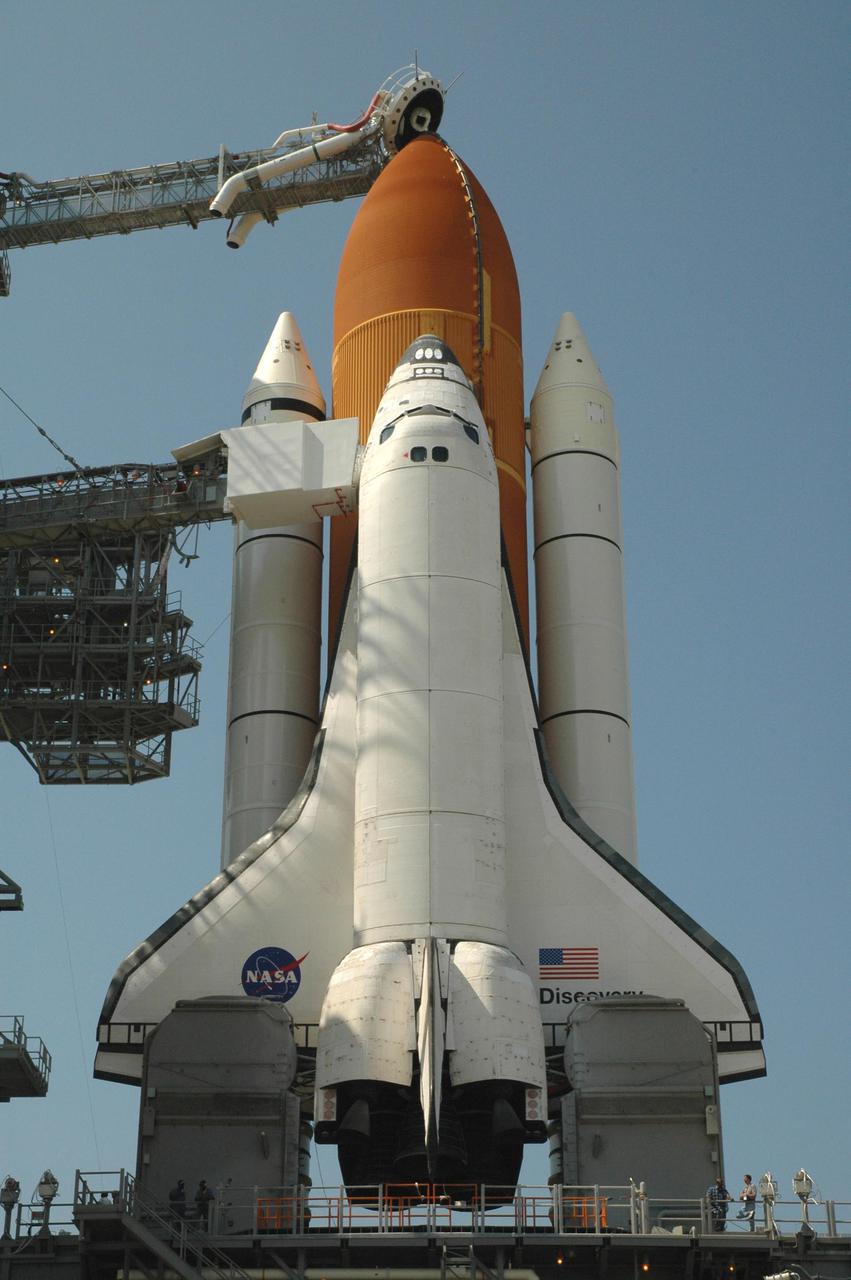
KENNEDY SPACE CENTER, FLA. - Space Shuttle Discovery in full launch configuration is revealed after the Rotating Service Structure (RSS) is rotated back at Launch Pad 39B at NASA Kennedy Space Center. The gaseous oxygen vent arm (beanie cap) has been extended to the top of the External Tank and the orbiter access arm is extended to Discovery’s hatch. Rollback of the RSS is a major preflight milestone, typically occurring during the T-11-hour hold on L-1 (the day before launch). Discovery is scheduled to lift off on the historic Return to Flight mission STS-114 at 10:39 a.m. EDT July 26 with a crew of seven. On the mission to the International Space Station the crew will perform inspections on orbit for the first time of all of the Reinforced Carbon-Carbon (RCC) panels on the leading edge of the wings and the Thermal Protection System tiles using the new Canadian-built Orbiter Boom Sensor System and the data from 176 impact and temperature sensors. Mission Specialists will also practice repair techniques on RCC and tile samples during a spacewalk in the payload bay. During two additional spacewalks, the crew will install the External Stowage Platform-2, equipped with spare part assemblies, and a replacement Control Moment Gyroscope contained in the Lightweight Multi-Purpose Experiment Support Structure.
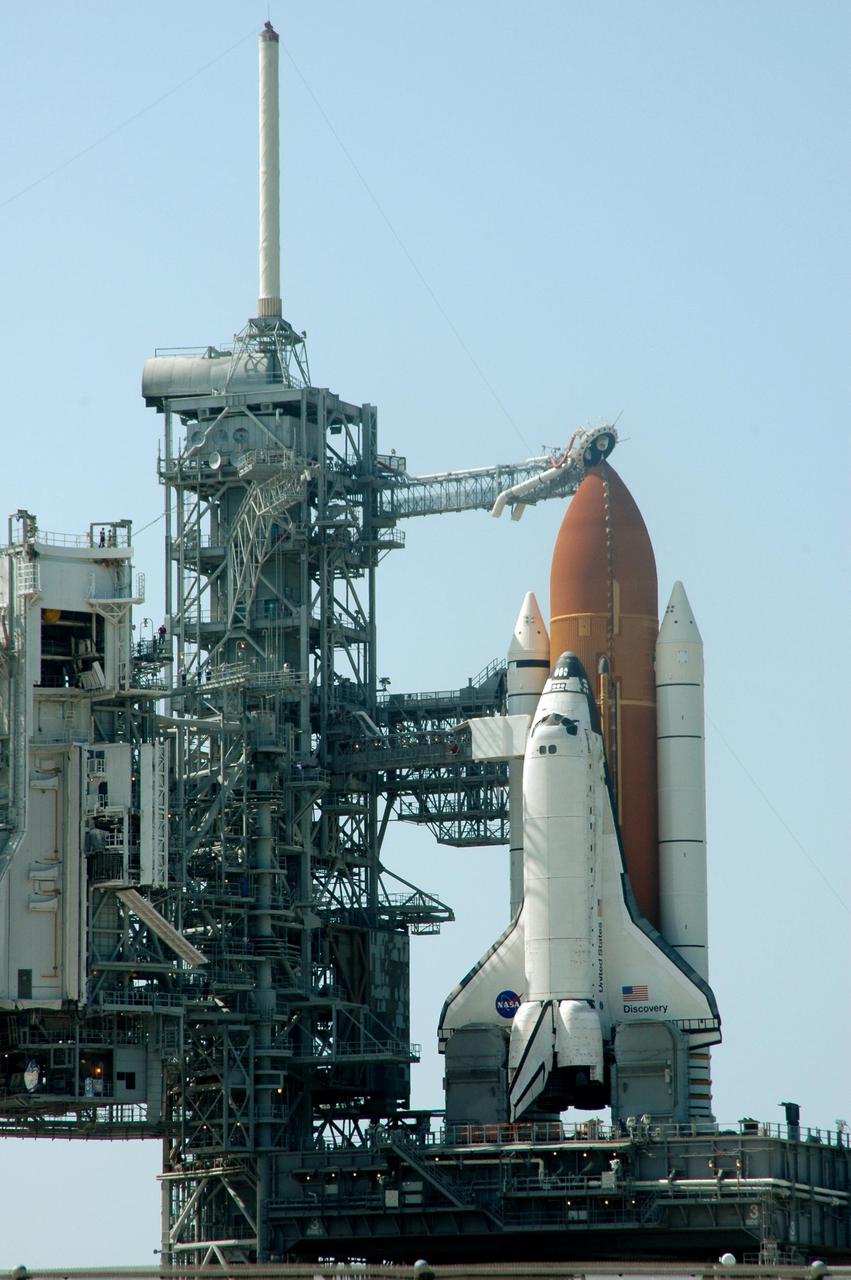
KENNEDY SPACE CENTER, FLA. - Space Shuttle Discovery in full launch configuration is revealed after the Rotating Service Structure (RSS) is rotated back at Launch Pad 39B at NASA Kennedy Space Center. The gaseous oxygen vent arm (beanie cap) has been extended to the top of the External Tank. Rollback of the RSS is a major preflight milestone, typically occurring during the T-11-hour hold on L-1 (the day before launch). Discovery is scheduled to lift off on the historic Return to Flight mission STS-114 at 10:39 a.m. EDT July 26 with a crew of seven. On the mission to the International Space Station the crew will perform inspections on orbit for the first time of all of the Reinforced Carbon-Carbon (RCC) panels on the leading edge of the wings and the Thermal Protection System tiles using the new Canadian-built Orbiter Boom Sensor System and the data from 176 impact and temperature sensors. Mission Specialists will also practice repair techniques on RCC and tile samples during a spacewalk in the payload bay. During two additional spacewalks, the crew will install the External Stowage Platform-2, equipped with spare part assemblies, and a replacement Control Moment Gyroscope contained in the Lightweight Multi-Purpose Experiment Support Structure.
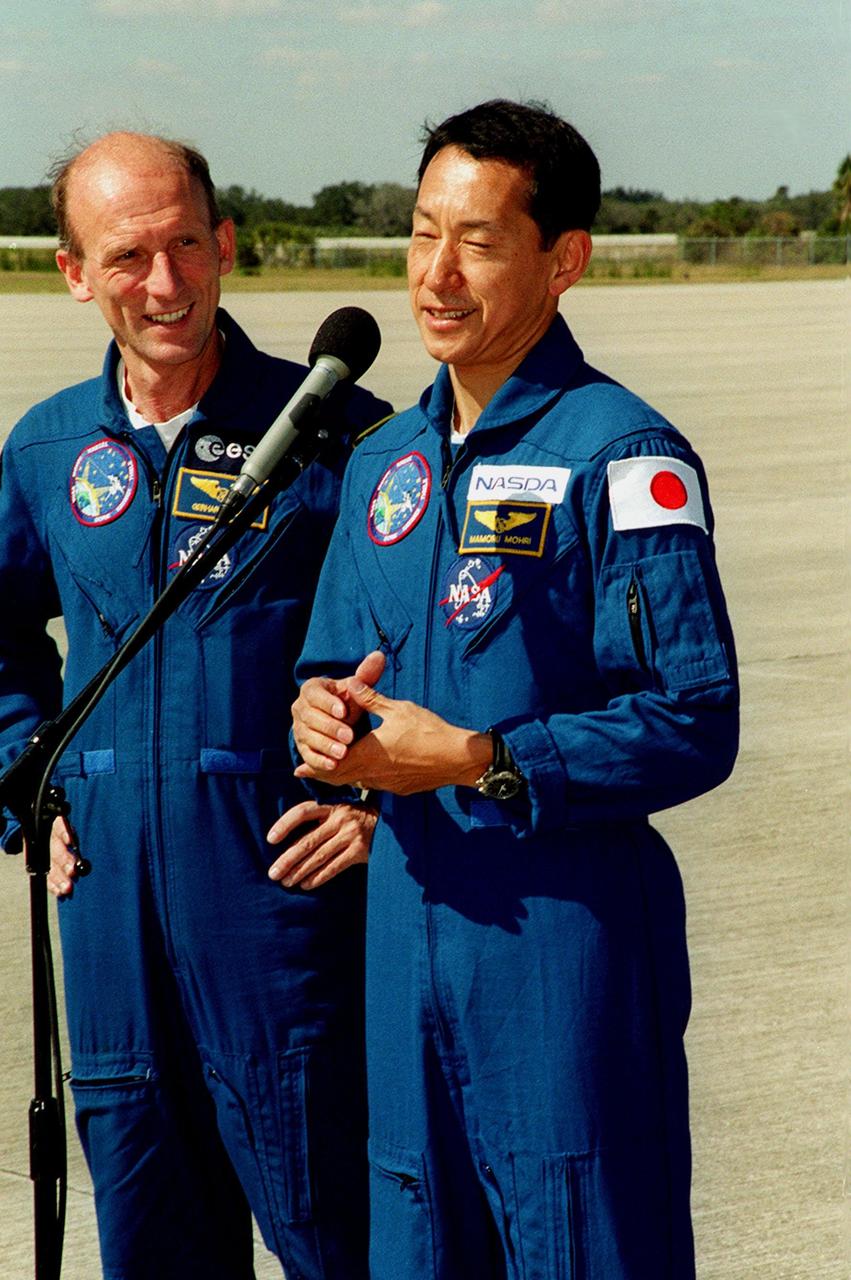
After landing at the Shuttle Landing Facility aboard T-38 jet aircraft, the STS-99 crew addressed the media. Mission Specialists Gerhard Thiele of Germany waits while Mamoru Mohri of Japan (right) responds to a question. The crew is ready to prepare for the second launch attempt of Endeavour Feb. 11 at 12:30 p.m. EST from Launch Pad 39A. The earlier launch scheduled for Jan. 31 was scrubbed due to poor weather and a faulty Enhanced Master Events Controller in the orbiter's aft compartment. Over the next few days, the crew will review mission procedures, conduct test flights in the Shuttle Training Aircraft and undergo routine preflight medical exams. STS-99 is the Shuttle Radar Topography Mission, which will produce unrivaled 3-D images of the Earth's surface. The result of the Shuttle Radar Topography Mission could be close to 1 trillion measurements of the Earth's topography. Landing is expected at KSC on Feb. 22 at 4:36 p.m. EST
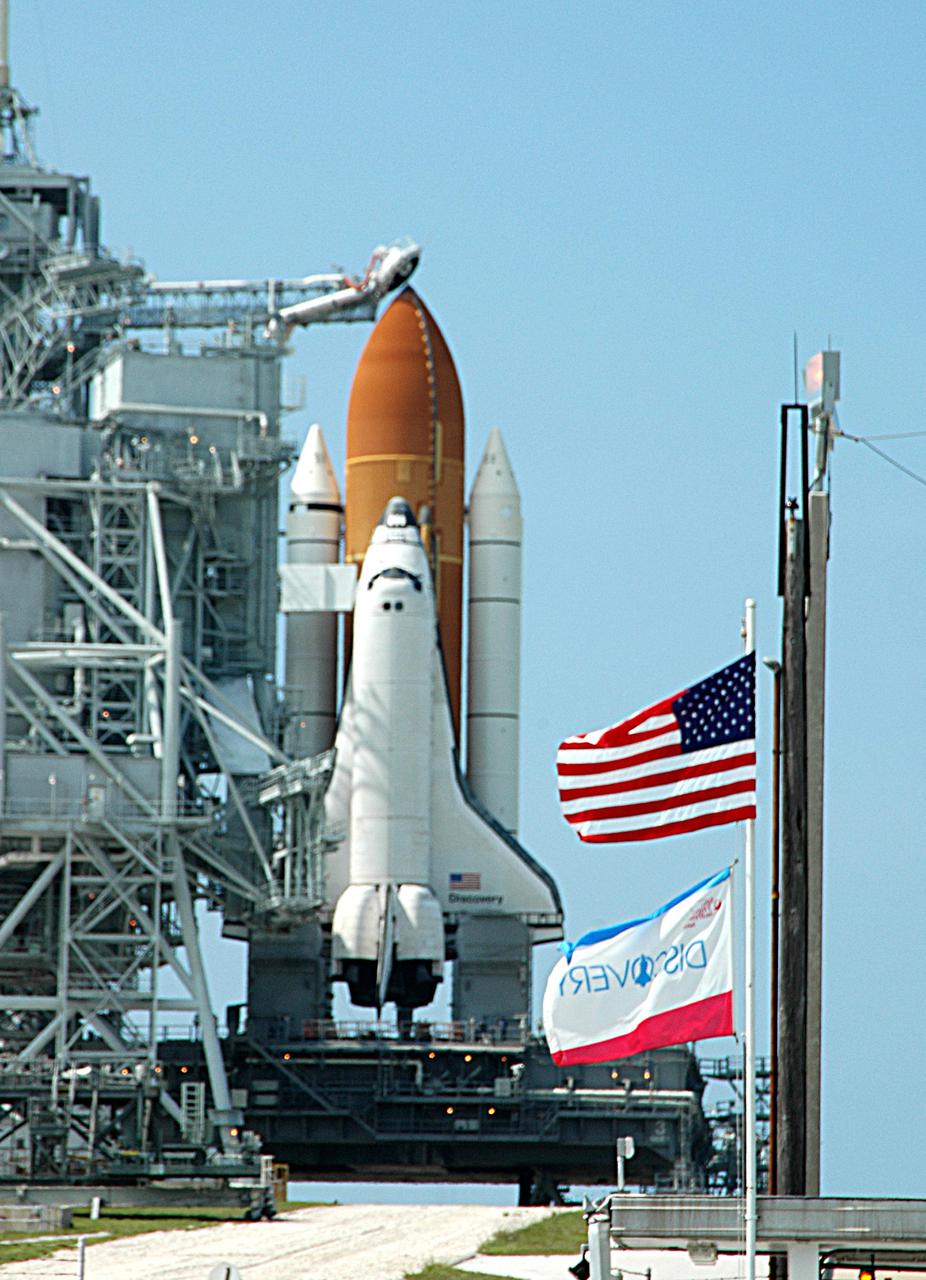
KENNEDY SPACE CENTER, FLA. - Flags are flying on Launch Pad 39B at NASA Kennedy Space Center as Space Shuttle Discovery is ready on the pad for launch after rollback of the Rotating Service Structure. Visible above the External Tank is the gaseous oxygen vent arm (beanie cap). Rollback of the RSS is a major preflight milestone, typically occurring during the T-11-hour hold on L-1 (the day before launch). Discovery is scheduled to lift off on the historic Return to Flight mission STS-114 at 10:39 a.m. EDT July 26 with a crew of seven. On the mission to the International Space Station the crew will perform inspections on orbit for the first time of all of the Reinforced Carbon-Carbon (RCC) panels on the leading edge of the wings and the Thermal Protection System tiles using the new Canadian-built Orbiter Boom Sensor System and the data from 176 impact and temperature sensors. Mission Specialists will also practice repair techniques on RCC and tile samples during a spacewalk in the payload bay. During two additional spacewalks, the crew will install the External Stowage Platform-2, equipped with spare part assemblies, and a replacement Control Moment Gyroscope contained in the Lightweight Multi-Purpose Experiment Support Structure.
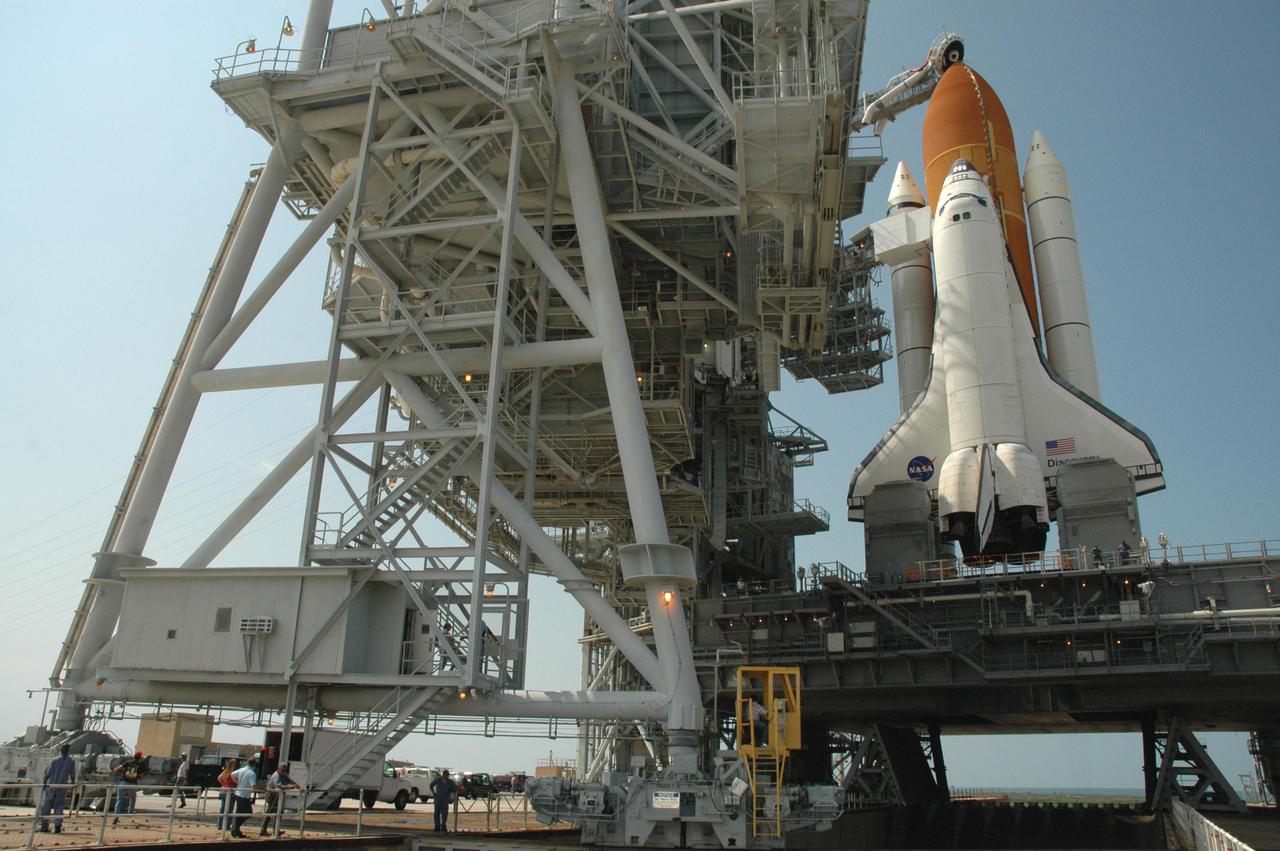
KENNEDY SPACE CENTER, FLA. - Space Shuttle Discovery in full launch configuration is revealed after the Rotating Service Structure (RSS) is rotated back at Launch Pad 39B at NASA Kennedy Space Center. Rollback of the RSS is a major preflight milestone, typically occurring during the T-11-hour hold on L-1 (the day before launch). Discovery is scheduled to lift off on the historic Return to Flight mission STS-114 at 10:39 a.m. EDT July 26 with a crew of seven. On the mission to the International Space Station the crew will perform inspections on orbit for the first time of all of the Reinforced Carbon-Carbon (RCC) panels on the leading edge of the wings and the Thermal Protection System tiles using the new Canadian-built Orbiter Boom Sensor System and the data from 176 impact and temperature sensors. Mission Specialists will also practice repair techniques on RCC and tile samples during a spacewalk in the payload bay. During two additional spacewalks, the crew will install the External Stowage Platform-2, equipped with spare part assemblies, and a replacement Control Moment Gyroscope contained in the Lightweight Multi-Purpose Experiment Support Structure.
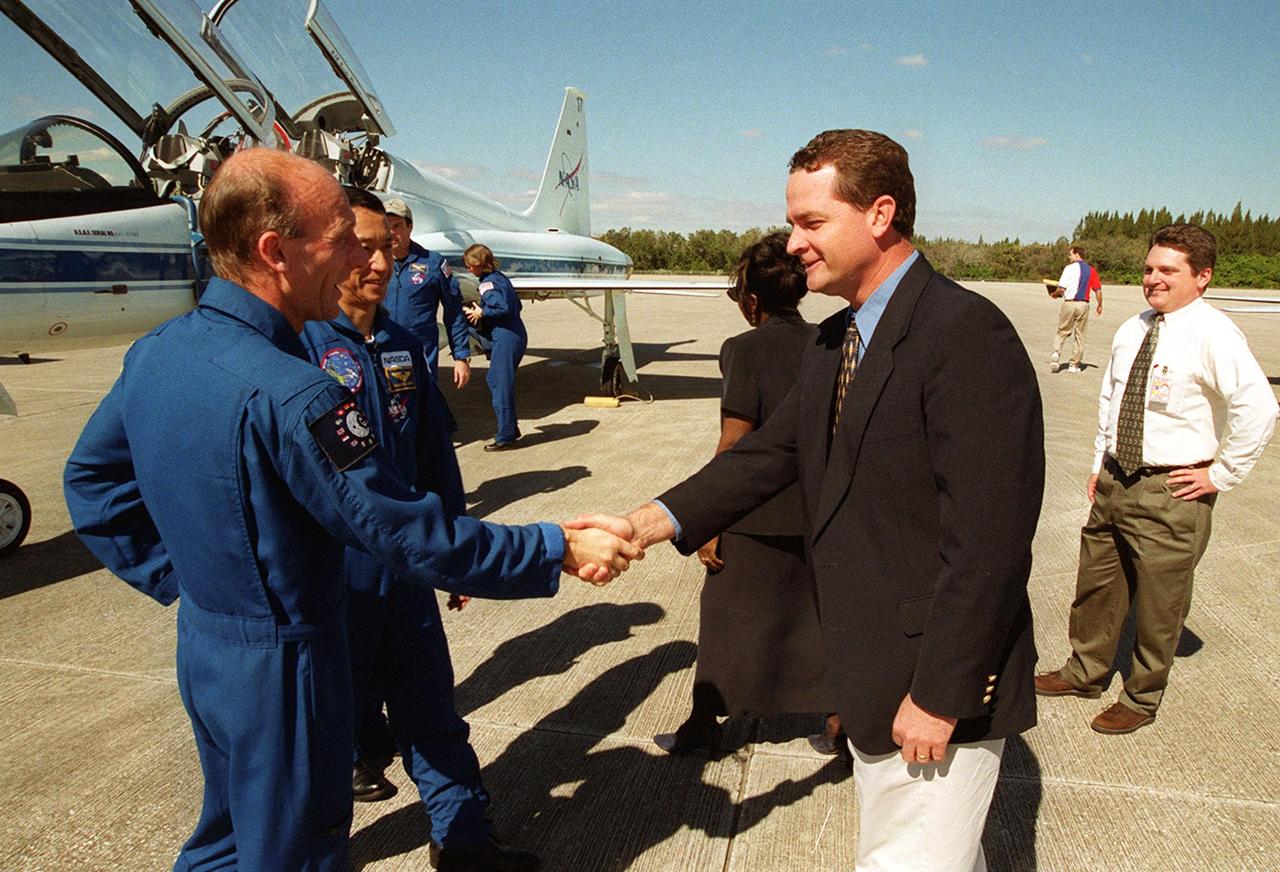
After landing at the Shuttle Landing Facility aboard T-38 jet aircraft, STS-99 Mission Specialists (from left) Gerhard Thiele of Germany and Mamoru Mohri of Japan are greeted by Dave King, director of Shuttle Operations. Behind Mohri can be seen Commander Kevin Kregel and Mission Specialist Janice Voss. The crew, which includes Pilot Dom gorie and Mission Specialist Janet Kavandi, are ready to prepare for the second launch attempt of Endeavour Feb. 11 at 12:30 p.m. EST from Launch Pad 39A. The earlier launch scheduled for Jan. 31 was scrubbed due to poor weather and a faulty Enhanced Master Events Controller in the orbiter's aft compartment. Over the next few days, the crew will review mission procedures, conduct test flights in the Shuttle Training Aircraft and undergo routine preflight medical exams. STS-99 is the Shuttle Radar Topography Mission, which will produce unrivaled 3-D images of the Earth's surface. The result of the Shuttle Radar Topography Mission could be close to 1 trillion measurements of the Earth's topography. Landing is expected at KSC on Feb. 22 at 4:36 p.m. EST
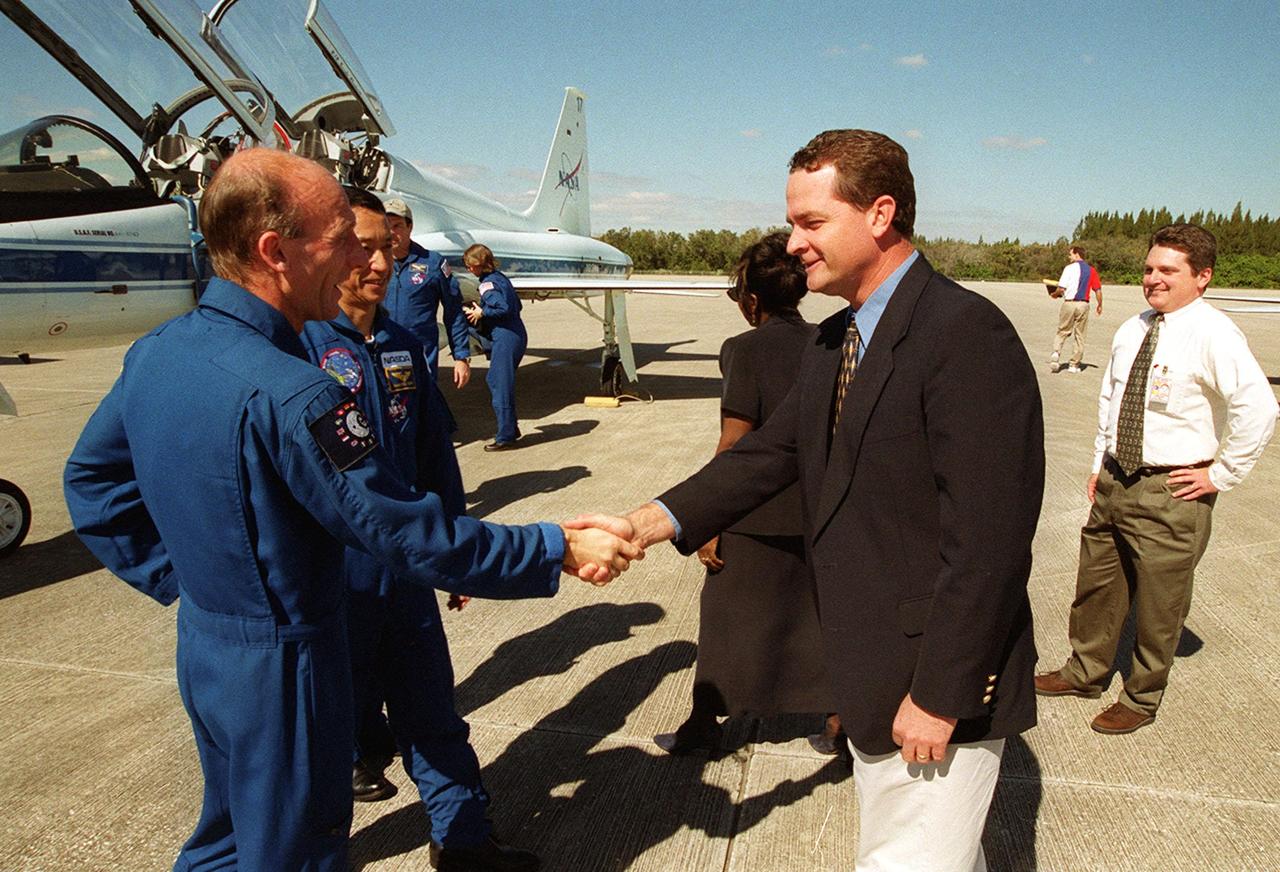
After landing at the Shuttle Landing Facility aboard T-38 jet aircraft, STS-99 Mission Specialists (from left) Gerhard Thiele of Germany and Mamoru Mohri of Japan are greeted by Dave King, director of Shuttle Operations. Behind Mohri can be seen Commander Kevin Kregel and Mission Specialist Janice Voss. The crew, which includes Pilot Dom gorie and Mission Specialist Janet Kavandi, are ready to prepare for the second launch attempt of Endeavour Feb. 11 at 12:30 p.m. EST from Launch Pad 39A. The earlier launch scheduled for Jan. 31 was scrubbed due to poor weather and a faulty Enhanced Master Events Controller in the orbiter's aft compartment. Over the next few days, the crew will review mission procedures, conduct test flights in the Shuttle Training Aircraft and undergo routine preflight medical exams. STS-99 is the Shuttle Radar Topography Mission, which will produce unrivaled 3-D images of the Earth's surface. The result of the Shuttle Radar Topography Mission could be close to 1 trillion measurements of the Earth's topography. Landing is expected at KSC on Feb. 22 at 4:36 p.m. EST
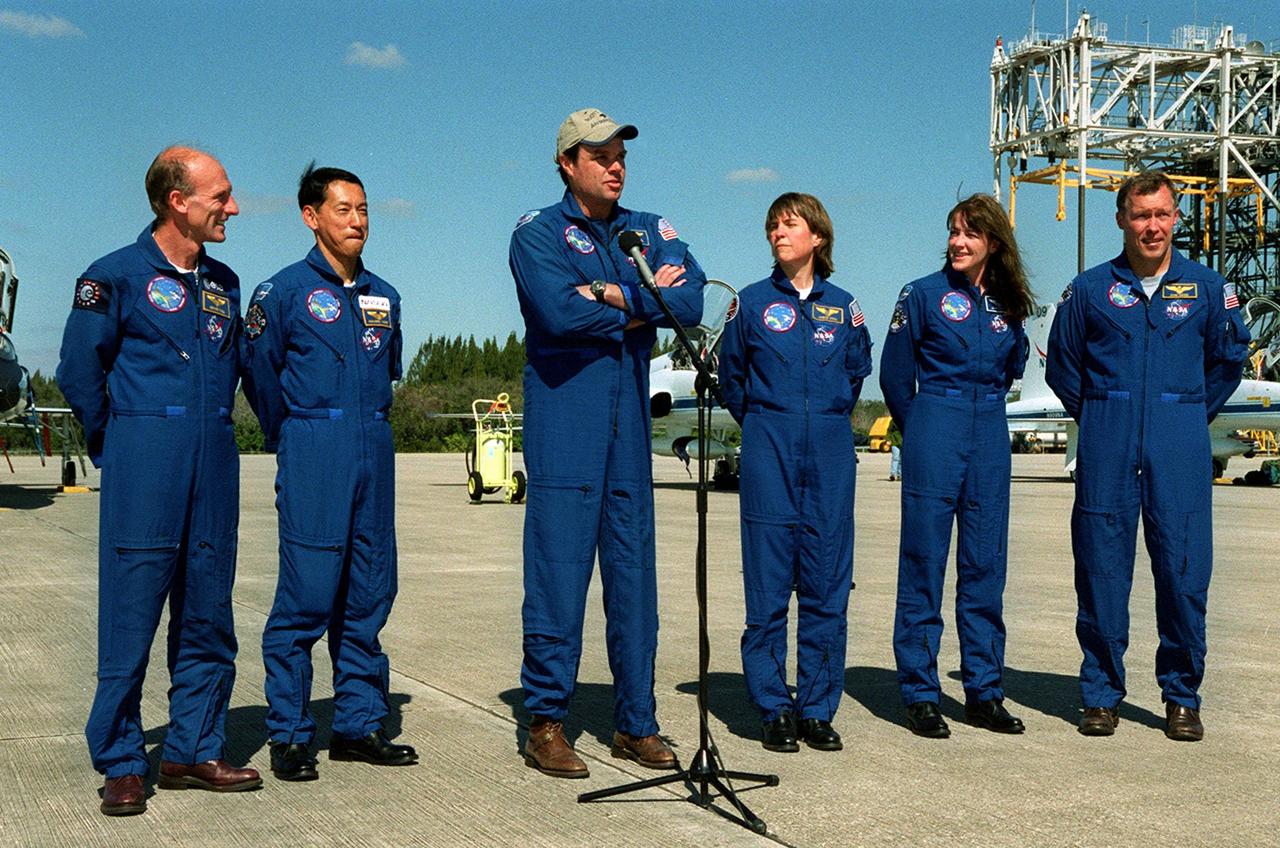
After landing at the Shuttle Landing Facility aboard T-38 jet aircraft, the STS-99 crew addresses the media. Standing, left to right, are Mission Specialists Gerhard Thiele of Germany and Mamoru Mohri of Japan, Commander Kevin Kregel (at the microphone), Mission Specialists Janice Voss and Janet Kavandi, and Pilot Dominic Gorie. They are ready to prepare for the second launch attempt of Endeavour Feb. 11 at 12:30 p.m. EST from Launch Pad 39A. The earlier launch scheduled for Jan. 31 was scrubbed due to poor weather and a faulty Enhanced Master Events Controller in the orbiter's aft compartment. Over the next few days, the crew will review mission procedures, conduct test flights in the Shuttle Training Aircraft and undergo routine preflight medical exams. STS-99 is the Shuttle Radar Topography Mission, which will produce unrivaled 3-D images of the Earth's surface. The result of the Shuttle Radar Topography Mission could be close to 1 trillion measurements of the Earth's topography. Landing is expected at KSC on Feb. 22 at 4:36 p.m. EST
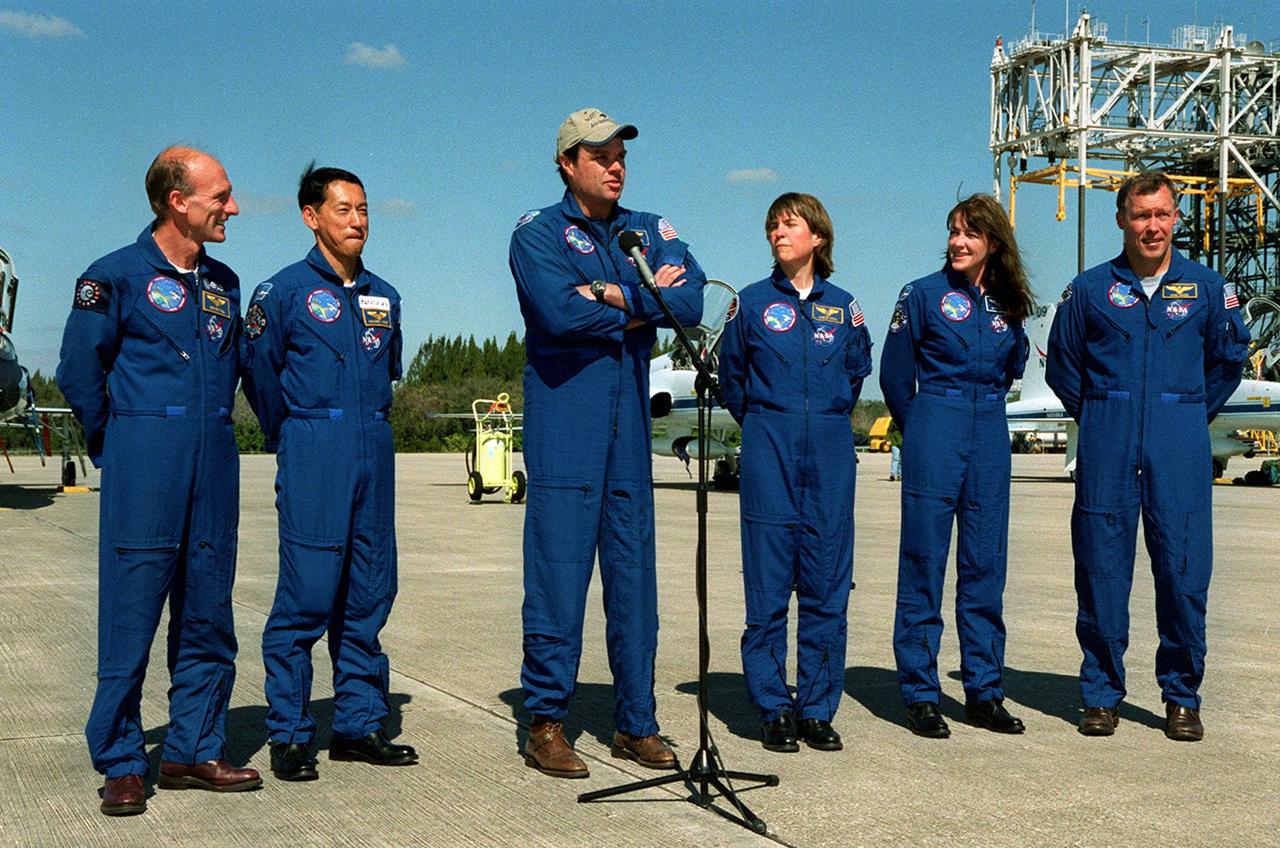
After landing at the Shuttle Landing Facility aboard T-38 jet aircraft, the STS-99 crew addresses the media. Standing, left to right, are Mission Specialists Gerhard Thiele of Germany and Mamoru Mohri of Japan, Commander Kevin Kregel (at the microphone), Mission Specialists Janice Voss and Janet Kavandi, and Pilot Dominic Gorie. They are ready to prepare for the second launch attempt of Endeavour Feb. 11 at 12:30 p.m. EST from Launch Pad 39A. The earlier launch scheduled for Jan. 31 was scrubbed due to poor weather and a faulty Enhanced Master Events Controller in the orbiter's aft compartment. Over the next few days, the crew will review mission procedures, conduct test flights in the Shuttle Training Aircraft and undergo routine preflight medical exams. STS-99 is the Shuttle Radar Topography Mission, which will produce unrivaled 3-D images of the Earth's surface. The result of the Shuttle Radar Topography Mission could be close to 1 trillion measurements of the Earth's topography. Landing is expected at KSC on Feb. 22 at 4:36 p.m. EST
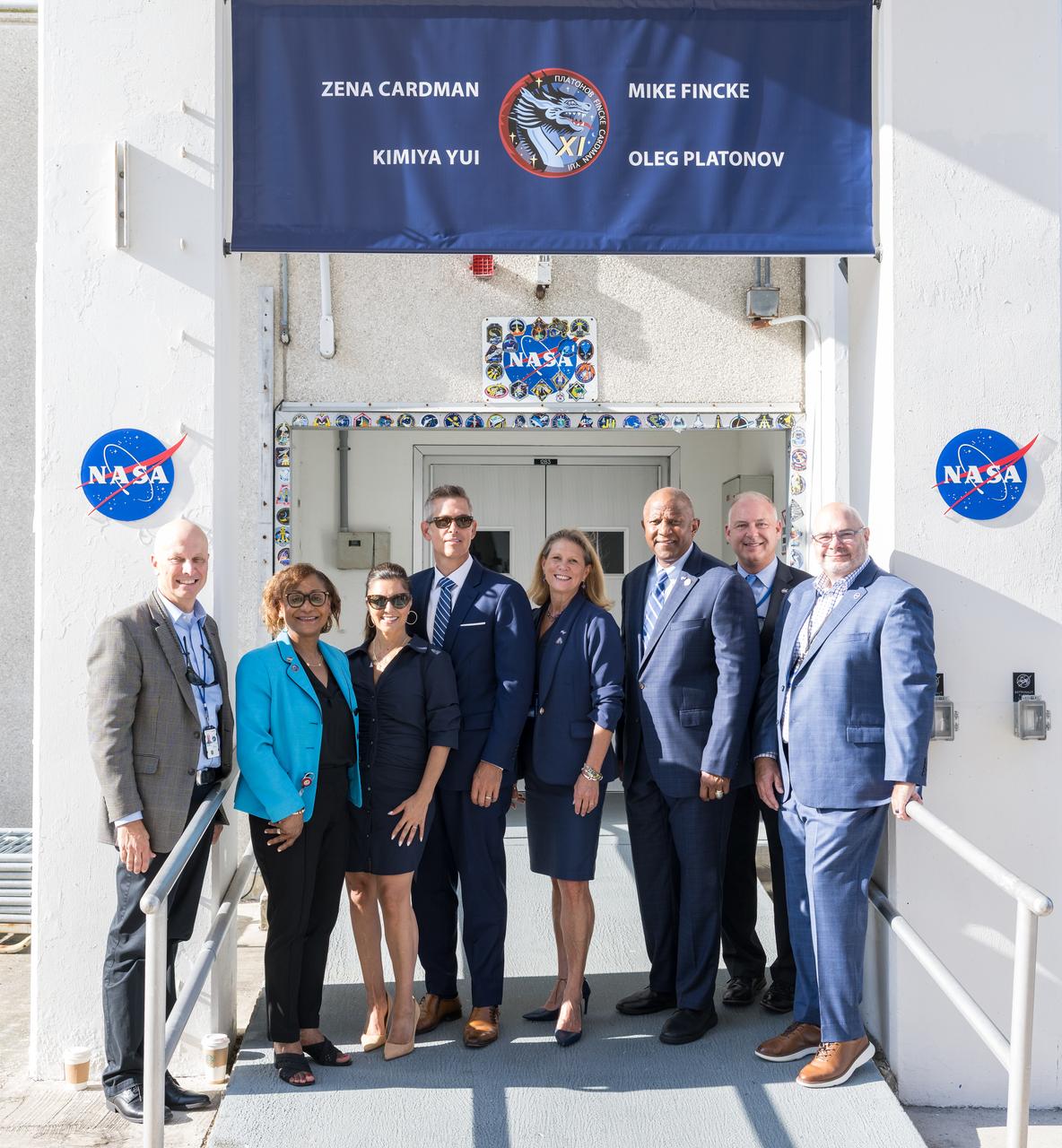
From left to right, Acting Director of NASA's Johnson Space Center, Steve Koerner, Acting NASA Associate Administrator, Vanessa Wyche, wife of Acting NASA Administrator Sean Duffy, Rachel Campos-Duffy, Sean Duffy, Acting Associate Administrator, Exploration Systems Development, Lori Glaze, Acting Director of NASA's John F. Kennedy Space Center, Kelvin Manning, Acting Deputy Director of NASA's Johnson Space Center, Norm Knight, and director of NASA's Marshall Space Flight Center, Joseph Pelfrey pose for a photo at the door to the Neil A. Armstrong Operations and Checkout Building after NASA astronauts Zena Cardman, Mike Fincke, JAXA (Japan Aerospace Exploration Agency) astronaut Kimiya Yui, and Roscosmos cosmonaut Oleg Platonov, departed for Launch Complex 39A to board the SpaceX Dragon spacecraft for the Crew-11 mission launch, before it was scrubbed due to weather concerns, Thursday, July 31, 2025, at NASA’s Kennedy Space Center in Florida. NASA’s SpaceX Crew-11 mission is the eleventh crew rotation mission of the SpaceX Crew Dragon spacecraft and Falcon 9 rocket to the International Space Station as part of the agency’s Commercial Crew Program. Cardman, Fincke, Yui, and Platonov launched at 11:43 a.m. EDT, Friday, August 1, from Launch Complex 39A at the NASA's Kennedy Space Center. Photo Credit: (NASA/Aubrey Gemignani)
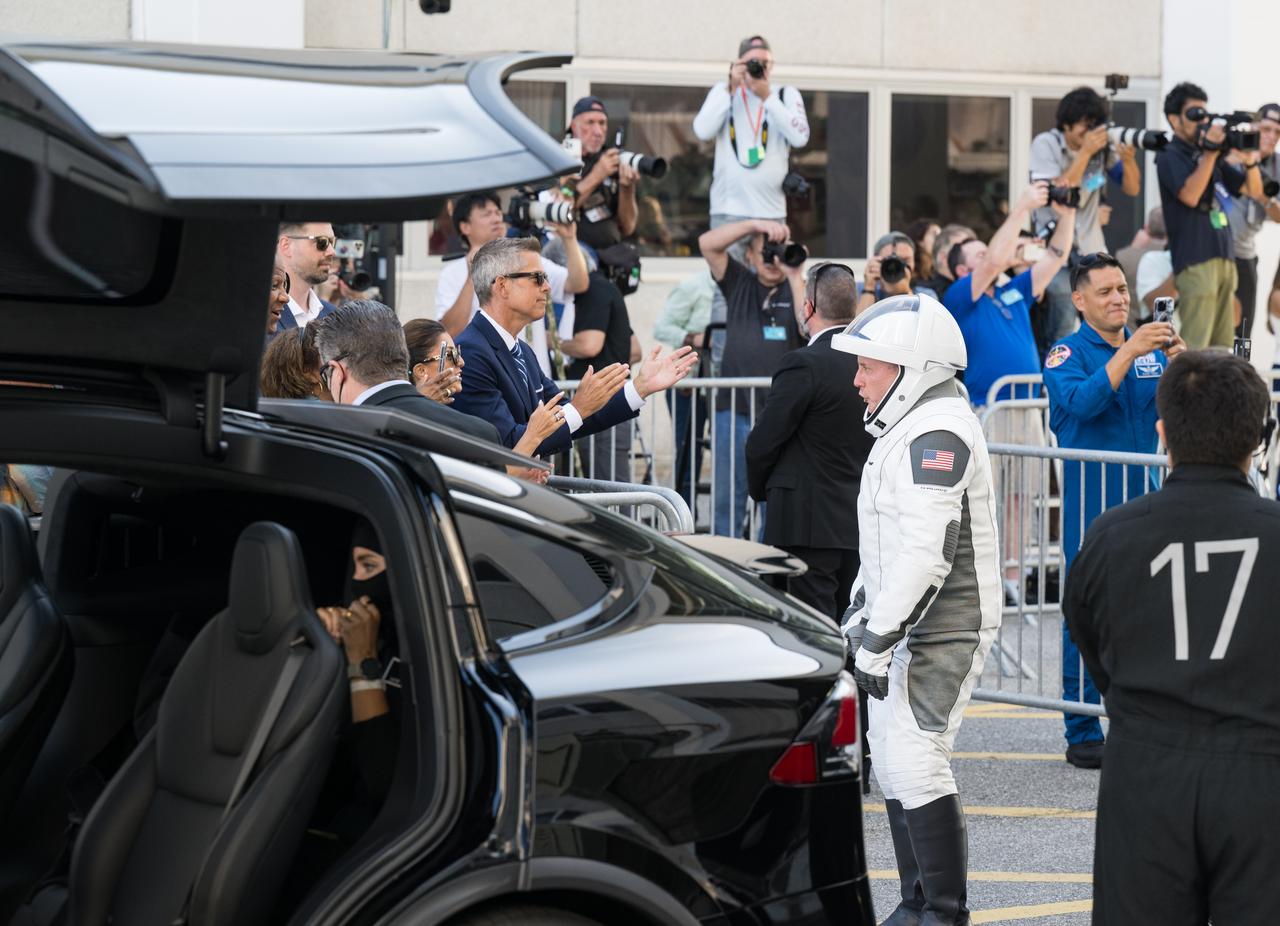
Acting NASA Administrator Sean Duffy, second from left, and his wife Rachel Campos-Duffy, left, react as NASA astronauts Mike Fincke, Zena Cardman, JAXA (Japan Aerospace Exploration Agency) astronaut Kimiya Yui, and Roscosmos cosmonaut Oleg Platonov, depart the Neil A. Armstrong Operations and Checkout Building for Launch Complex 39A on NASA's Kennedy Space Center to board the SpaceX Dragon spacecraft for the Crew-11 mission launch, before it was scrubbed due to weather concerns, Thursday, July 31, 2025, at NASA’s Kennedy Space Center in Florida. NASA’s SpaceX Crew-11 mission is the eleventh crew rotation mission of the SpaceX Crew Dragon spacecraft and Falcon 9 rocket to the International Space Station as part of the agency’s Commercial Crew Program. Cardman, Fincke, Yui, and Platonov launched at 11:43 a.m. EDT, Friday, August 1, from Launch Complex 39A at the NASA's Kennedy Space Center. Photo Credit: (NASA/Aubrey Gemignani)
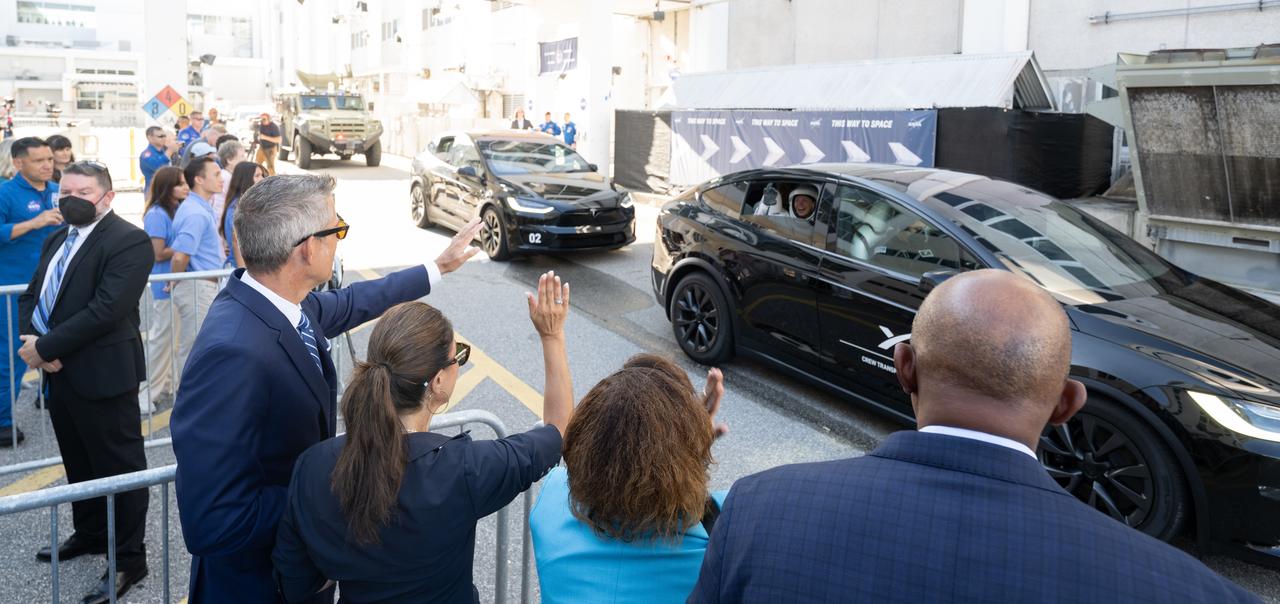
Acting NASA Administrator Sean Duffy, left, his wife Rachel Campos-Duffy, acting NASA Associate Administrator Vanessa Wyche, and acting Kennedy Space Center Director Kelvin Manning, wave as NASA astronauts Zena Cardman, Mike Fincke, JAXA (Japan Aerospace Exploration Agency) astronaut Kimiya Yui, and Roscosmos cosmonaut Oleg Platonov, depart the Neil A. Armstrong Operations and Checkout Building for Launch Complex 39A on NASA's Kennedy Space Center to board the SpaceX Dragon spacecraft for the Crew-11 mission launch, Thursday, July 31, 2025, at NASA’s Kennedy Space Center in Florida. NASA’s SpaceX Crew-11 mission is the eleventh crew rotation mission of the SpaceX Crew Dragon spacecraft and Falcon 9 rocket to the International Space Station as part of the agency’s Commercial Crew Program. Cardman, Fincke, Yui, Platonov are scheduled to launch at 12:09 p.m. EDT, from Launch Complex 39A at the NASA's Kennedy Space Center. Photo Credit: (NASA/Joel Kowsky)

From right to left, Acting NASA Administrator Sean Duffy, his wife Rachel Campos-Duffy, acting NASA Associate Administrator Vanessa Wyche, and Deputy Director of NASA’s Kennedy Space Center, Kelvin Manning, wave as NASA astronauts Zena Cardman, Mike Fincke, JAXA (Japan Aerospace Exploration Agency) astronaut Kimiya Yui, and Roscosmos cosmonaut Oleg Platonov, depart the Neil A. Armstrong Operations and Checkout Building for Launch Complex 39A on NASA's Kennedy Space Center to board the SpaceX Dragon spacecraft for the Crew-11 mission launch, before it was scrubbed due to weather concerns, Thursday, July 31, 2025, at NASA’s Kennedy Space Center in Florida. NASA’s SpaceX Crew-11 mission is the eleventh crew rotation mission of the SpaceX Crew Dragon spacecraft and Falcon 9 rocket to the International Space Station as part of the agency’s Commercial Crew Program. Cardman, Fincke, Yui, and Platonov launched at 11:43 a.m. EDT, Friday, August 1, from Launch Complex 39A at the NASA's Kennedy Space Center. Photo Credit: (NASA/Aubrey Gemignani)
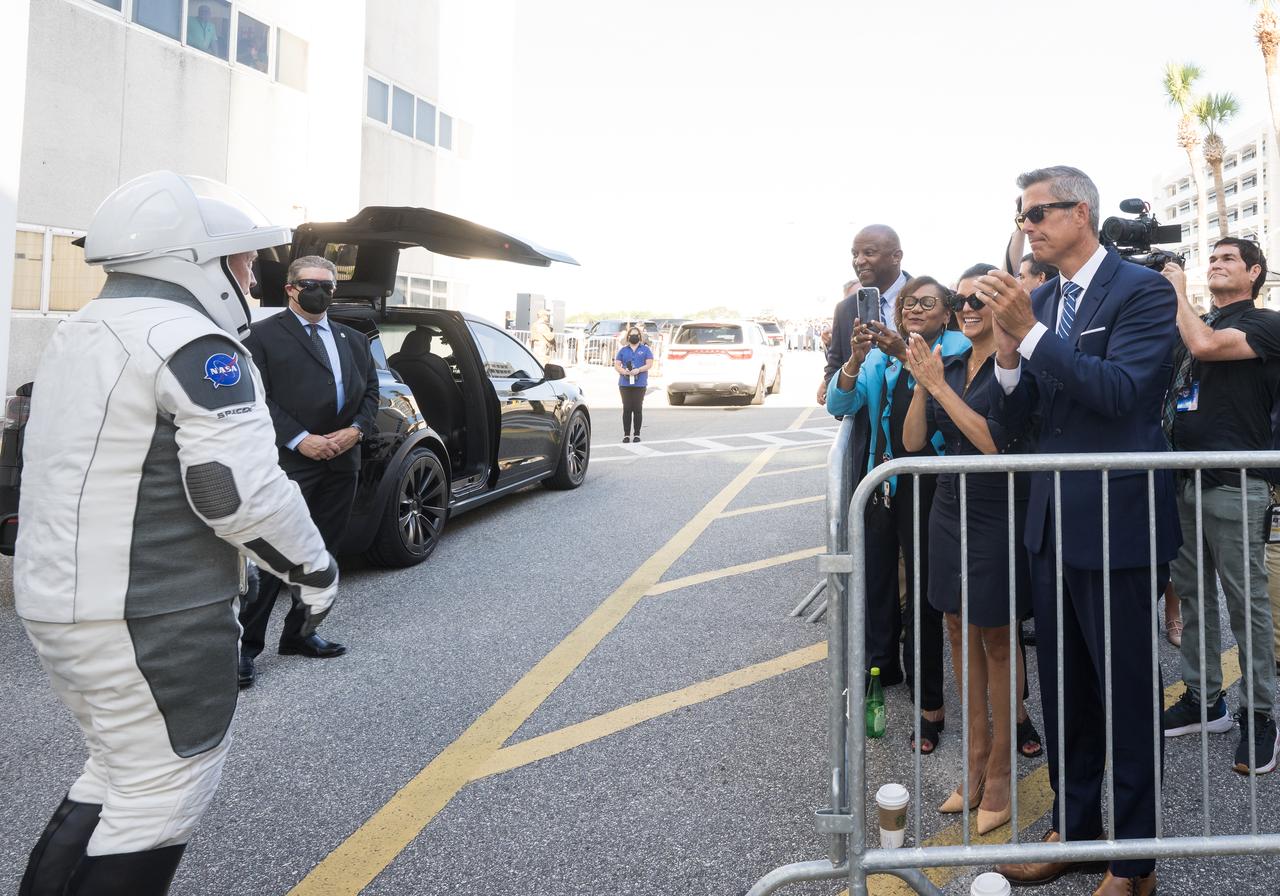
From right to left, Acting NASA Administrator Sean Duffy, his wife Rachel Campos-Duffy, acting NASA Associate Administrator Vanessa Wyche, and Deputy Director of NASA’s Kennedy Space Center, Kelvin Manning, react as NASA astronauts Mike Fincke, Zena Cardman, JAXA (Japan Aerospace Exploration Agency) astronaut Kimiya Yui, and Roscosmos cosmonaut Oleg Platonov, depart the Neil A. Armstrong Operations and Checkout Building for Launch Complex 39A on NASA's Kennedy Space Center to board the SpaceX Dragon spacecraft for the Crew-11 mission launch, before it was scrubbed due to weather concerns, Thursday, July 31, 2025, at NASA’s Kennedy Space Center in Florida. NASA’s SpaceX Crew-11 mission is the eleventh crew rotation mission of the SpaceX Crew Dragon spacecraft and Falcon 9 rocket to the International Space Station as part of the agency’s Commercial Crew Program. Cardman, Fincke, Yui, and Platonov launched at 11:43 a.m. EDT, Friday, August 1, from Launch Complex 39A at the NASA's Kennedy Space Center. Photo Credit: (NASA/Aubrey Gemignani)
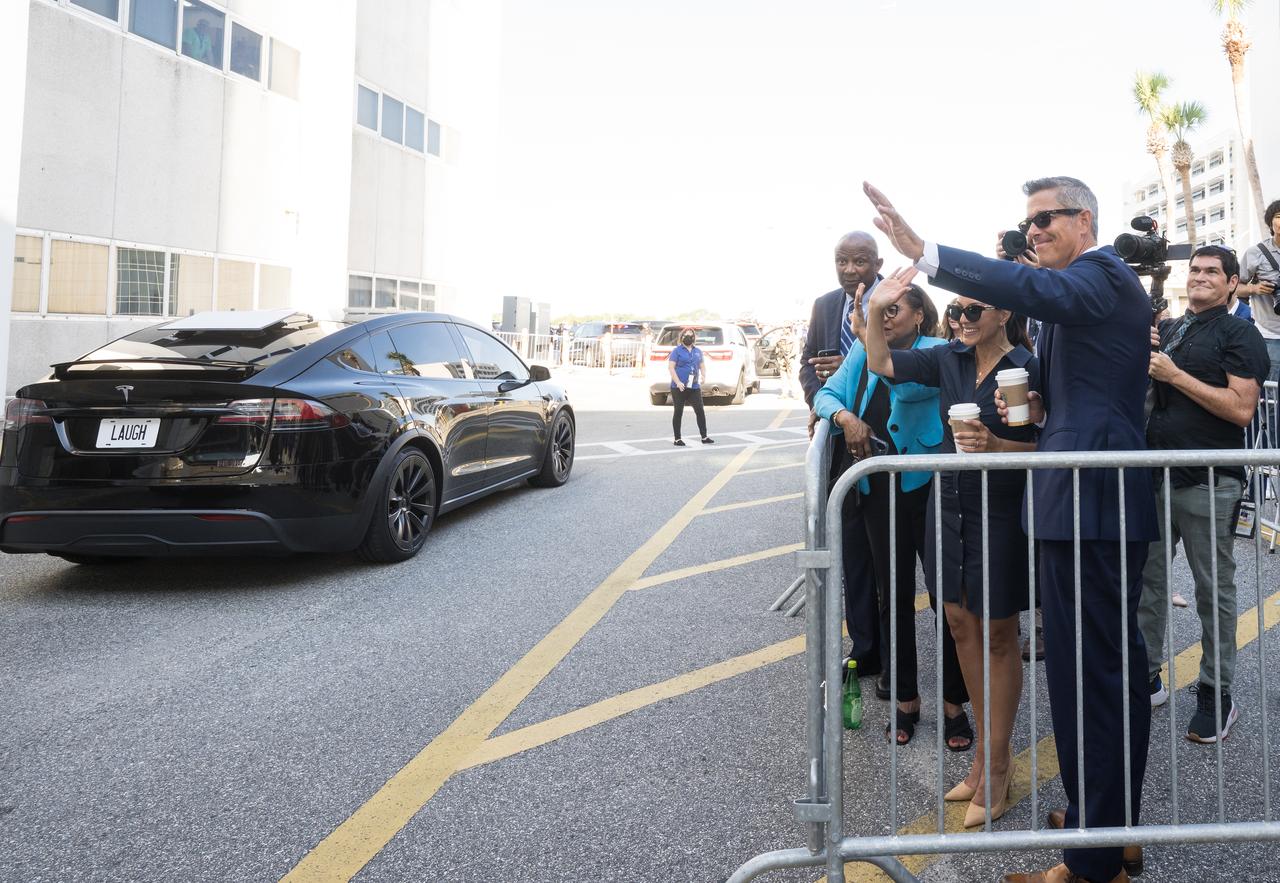
From right to left, Acting NASA Administrator Sean Duffy, his wife Rachel Campos-Duffy, acting NASA Associate Administrator Vanessa Wyche, and Deputy Director of NASA’s Kennedy Space Center, Kelvin Manning, wave as NASA astronauts Zena Cardman, Mike Fincke, JAXA (Japan Aerospace Exploration Agency) astronaut Kimiya Yui, and Roscosmos cosmonaut Oleg Platonov, depart the Neil A. Armstrong Operations and Checkout Building for Launch Complex 39A on NASA's Kennedy Space Center to board the SpaceX Dragon spacecraft for the Crew-11 mission launch, before it was scrubbed due to weather concerns, Thursday, July 31, 2025, at NASA’s Kennedy Space Center in Florida. NASA’s SpaceX Crew-11 mission is the eleventh crew rotation mission of the SpaceX Crew Dragon spacecraft and Falcon 9 rocket to the International Space Station as part of the agency’s Commercial Crew Program. Cardman, Fincke, Yui, and Platonov launched at 11:43 a.m. EDT, Friday, August 1, from Launch Complex 39A at the NASA's Kennedy Space Center. Photo Credit: (NASA/Aubrey Gemignani)

From right to left, Acting NASA Administrator Sean Duffy, his wife Rachel Campos-Duffy, acting NASA Associate Administrator Vanessa Wyche, and Deputy Director of NASA’s Kennedy Space Center, Kelvin Manning, wave as NASA astronauts Zena Cardman, Mike Fincke, JAXA (Japan Aerospace Exploration Agency) astronaut Kimiya Yui, and Roscosmos cosmonaut Oleg Platonov, depart the Neil A. Armstrong Operations and Checkout Building for Launch Complex 39A on NASA's Kennedy Space Center to board the SpaceX Dragon spacecraft for the Crew-11 mission launch, before it was scrubbed due to weather concerns, Thursday, July 31, 2025, at NASA’s Kennedy Space Center in Florida. NASA’s SpaceX Crew-11 mission is the eleventh crew rotation mission of the SpaceX Crew Dragon spacecraft and Falcon 9 rocket to the International Space Station as part of the agency’s Commercial Crew Program. Cardman, Fincke, Yui, and Platonov launched at 11:43 a.m. EDT, Friday, August 1, from Launch Complex 39A at the NASA's Kennedy Space Center. Photo Credit: (NASA/Aubrey Gemignani)

From right to left, Acting NASA Administrator Sean Duffy, his wife Rachel Campos-Duffy, acting NASA Associate Administrator Vanessa Wyche, and Deputy Director of NASA’s Kennedy Space Center, Kelvin Manning, watch as NASA astronauts Zena Cardman, Mike Fincke, JAXA (Japan Aerospace Exploration Agency) astronaut Kimiya Yui, and Roscosmos cosmonaut Oleg Platonov, depart the Neil A. Armstrong Operations and Checkout Building for Launch Complex 39A on NASA's Kennedy Space Center to board the SpaceX Dragon spacecraft for the Crew-11 mission launch, before it was scrubbed due to weather concerns, Thursday, July 31, 2025, at NASA’s Kennedy Space Center in Florida. NASA’s SpaceX Crew-11 mission is the eleventh crew rotation mission of the SpaceX Crew Dragon spacecraft and Falcon 9 rocket to the International Space Station as part of the agency’s Commercial Crew Program. Cardman, Fincke, Yui, and Platonov launched at 11:43 a.m. EDT, Friday, August 1, from Launch Complex 39A at the NASA's Kennedy Space Center. Photo Credit: (NASA/Aubrey Gemignani)