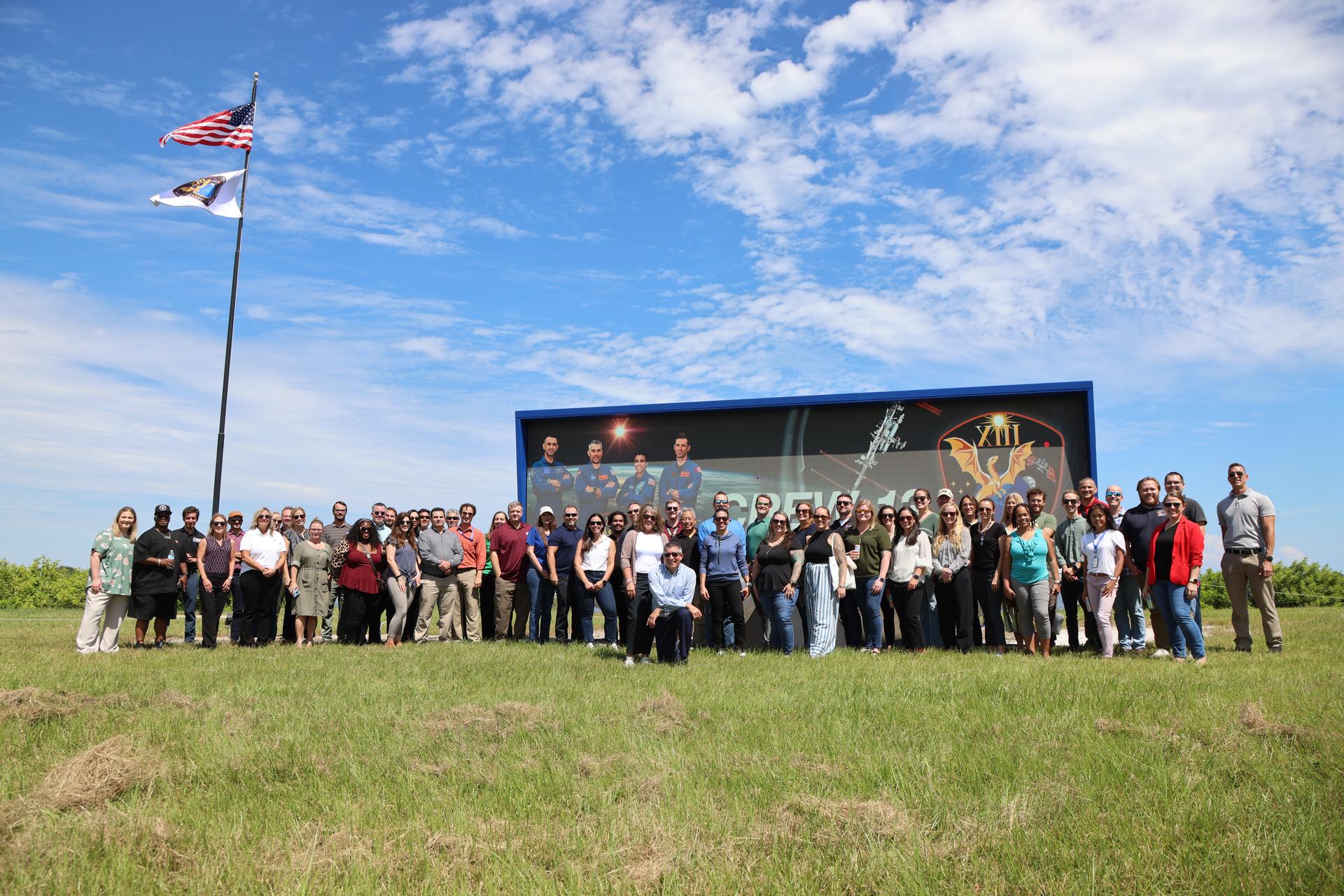
Members of NASA's Commercial Crew Office within the Low Earth Orbit Program pose for a photograph with the agency’s SpaceX Crew-13 mission flag near the countdown clock at the NASA News Center at the agency’s Kennedy Space Center in Florida on Tuesday, Sept. 29, 2026. The Crew-13 mission will send NASA astronauts Jessica Watkins and Luke Delaney, CSA (Canadian Space Agency) astronaut Joshua Kutryk, and Roscosmos cosmonaut Sergey Teteryatnikov to the International Space Station aboard SpaceX’s Dragon spacecraft and Falcon 9 rocket at 11:10 a.m. EDT on Thursday, Oct. 1, from Cape Canaveral Space Force Station’s Space Launch Complex 40.
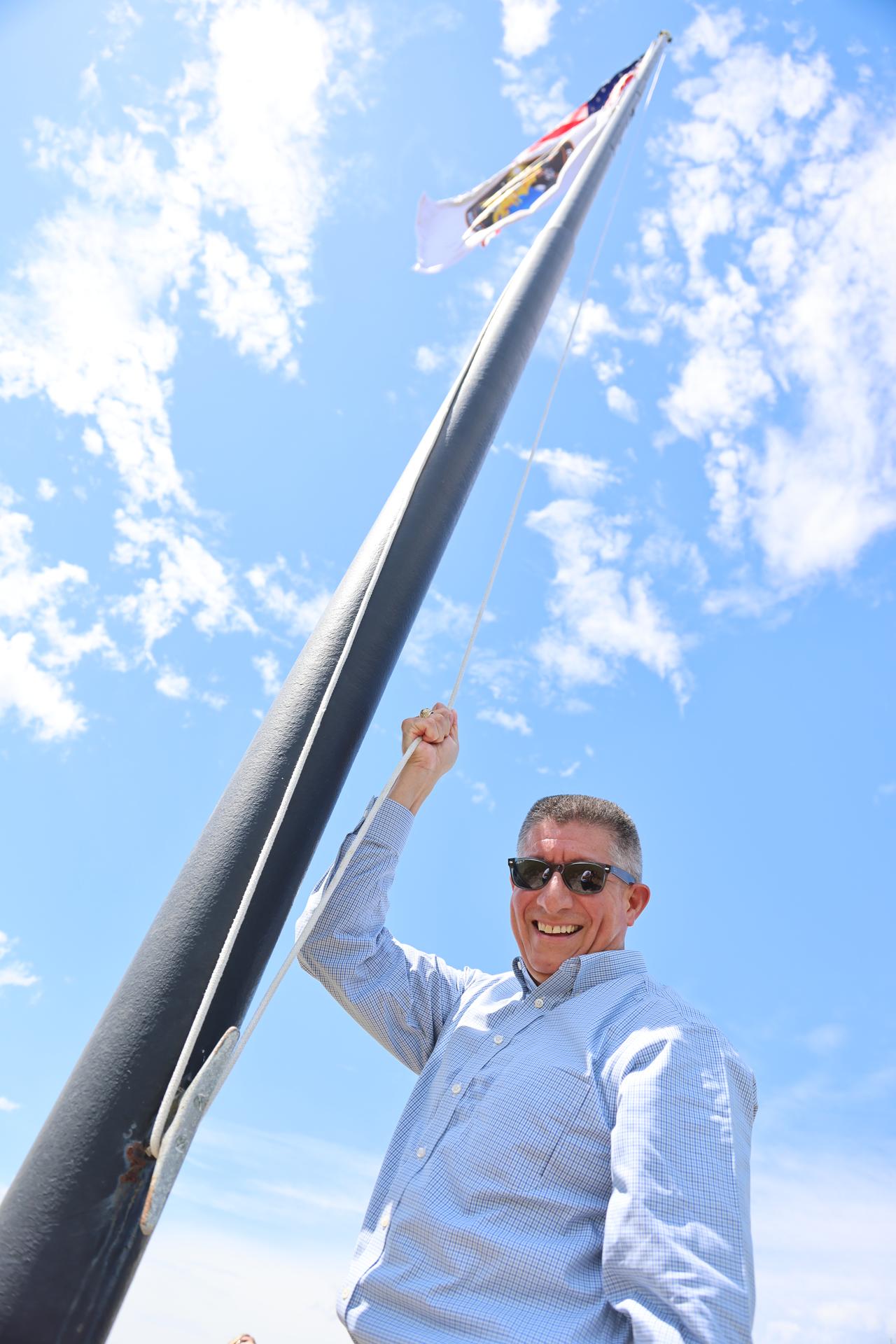
Richard Jones, deputy program manager, Commercial Crew Office, raises the agency’s SpaceX Crew-13 mission flag near the countdown clock at the NASA News Center at the agency’s Kennedy Space Center in Florida on Tuesday, Sept. 29, 2026. The Crew-13 mission will send NASA astronauts Jessica Watkins and Luke Delaney, CSA (Canadian Space Agency) astronaut Joshua Kutryk, and Roscosmos cosmonaut Sergey Teteryatnikov to the International Space Station aboard SpaceX’s Dragon spacecraft and Falcon 9 rocket at 11:10 a.m. EDT on Thursday, Oct. 1, from Cape Canaveral Space Force Station’s Space Launch Complex 40.
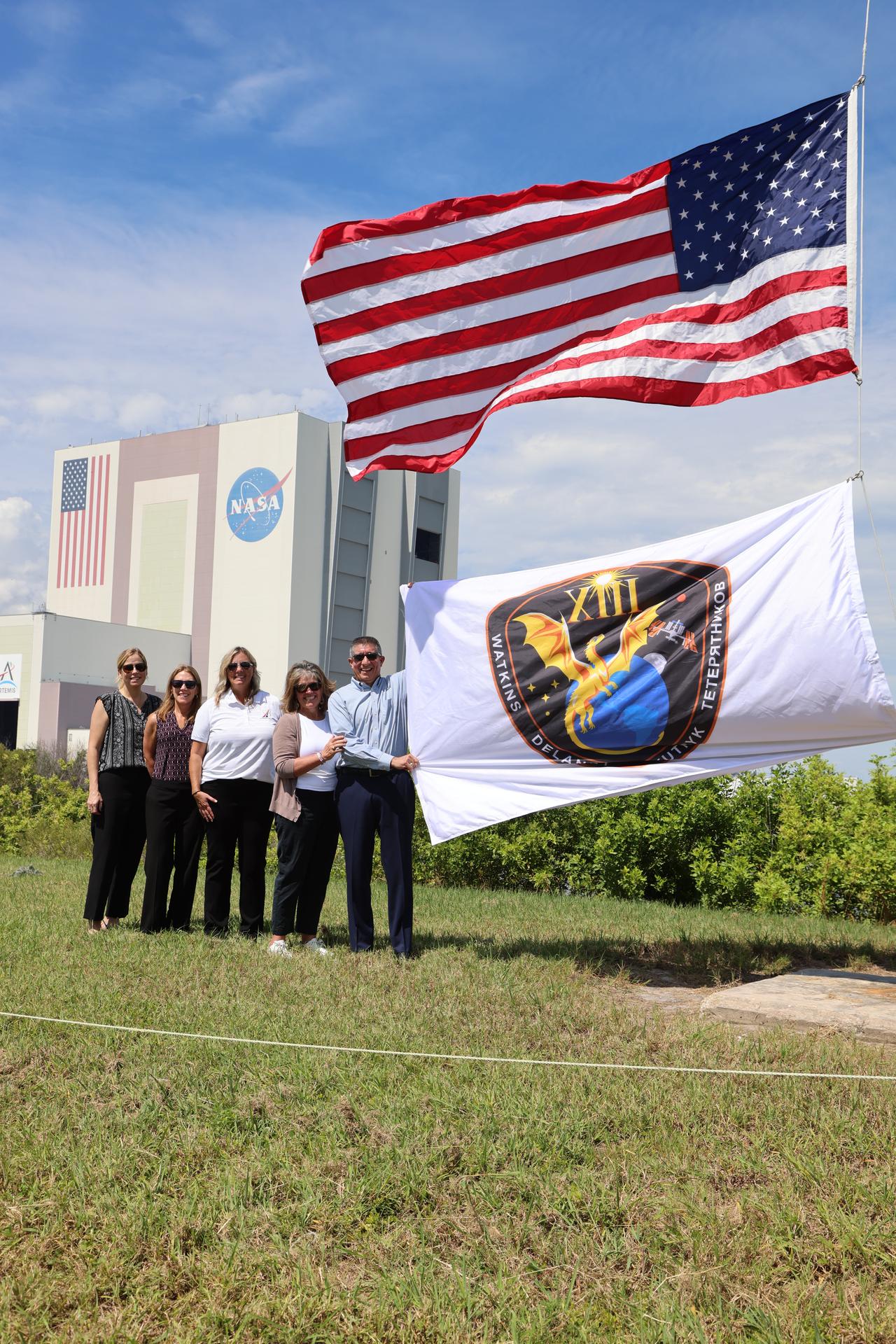
From left to right, Mary Lawrence, director Commercial Crew Office; Dana Weigel, manager, Low Earth Orbit Program; Dana Hutcherson, deputy director, Commercial Crew Office; Jennifer Jones, and Richard Jones, deputy program manager, Commercial Crew Office of Low Earth Orbit Program, raise the agency’s SpaceX Crew-13 mission flag near the countdown clock at the NASA News Center at the agency’s Kennedy Space Center in Florida on Tuesday, Sept. 29, 2026. The Crew-13 mission will send NASA astronauts Jessica Watkins and Luke Delaney, CSA (Canadian Space Agency) astronaut Joshua Kutryk, and Roscosmos cosmonaut Sergey Teteryatnikov to the International Space Station aboard SpaceX’s Dragon spacecraft and Falcon 9 rocket at 11:10 a.m. EDT on Thursday, Oct. 1, from Cape Canaveral Space Force Station’s Space Launch Complex 40.
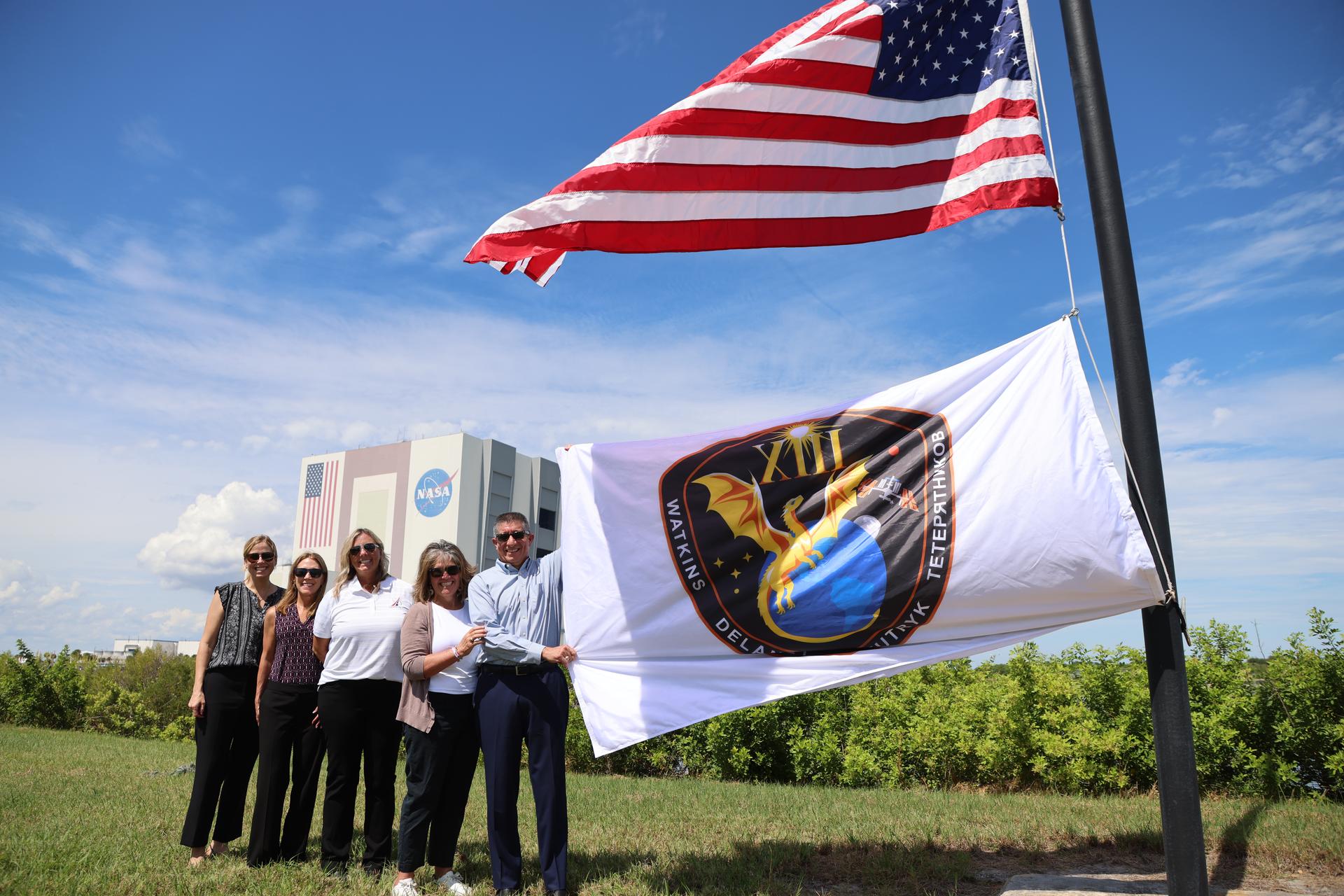
From left to right, Mary Lawrence, director Commercial Crew Office; Dana Weigel, manager, Low Earth Orbit Program; Dana Hutcherson, deputy director, Commercial Crew Office; Jennifer Jones, and Richard Jones, deputy program manager, Commercial Crew Office of Low Earth Orbit Program, raise the agency’s SpaceX Crew-13 mission flag near the countdown clock at the NASA News Center at the agency’s Kennedy Space Center in Florida on Tuesday, Sept. 29, 2026. The Crew-13 mission will send NASA astronauts Jessica Watkins and Luke Delaney, CSA (Canadian Space Agency) astronaut Joshua Kutryk, and Roscosmos cosmonaut Sergey Teteryatnikov to the International Space Station aboard SpaceX’s Dragon spacecraft and Falcon 9 rocket at 11:10 a.m. EDT on Thursday, Oct. 1, from Cape Canaveral Space Force Station’s Space Launch Complex 40.
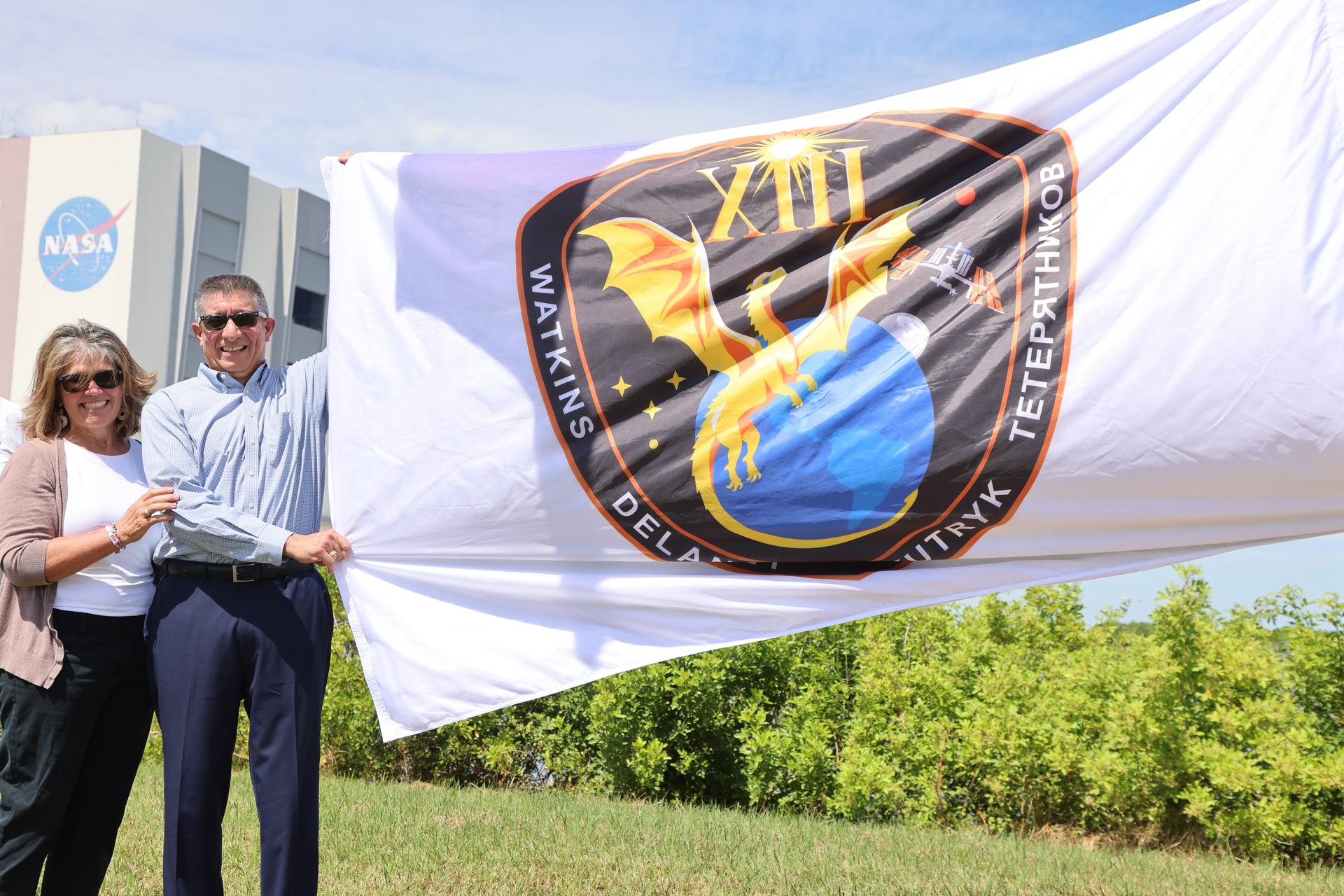
From left to right, Jennifer Jones, and Richard Jones, deputy program manager, Commercial Crew Office of Low Earth Orbit Program, raise the agency’s SpaceX Crew-13 mission flag near the countdown clock at the NASA News Center at the agency’s Kennedy Space Center in Florida on Tuesday, Sept. 29, 2026. The Crew-13 mission will send NASA astronauts Jessica Watkins and Luke Delaney, CSA (Canadian Space Agency) astronaut Joshua Kutryk, and Roscosmos cosmonaut Sergey Teteryatnikov to the International Space Station aboard SpaceX’s Dragon spacecraft and Falcon 9 rocket at 11:10 a.m. EDT on Thursday, Oct. 1, from Cape Canaveral Space Force Station’s Space Launch Complex 40.
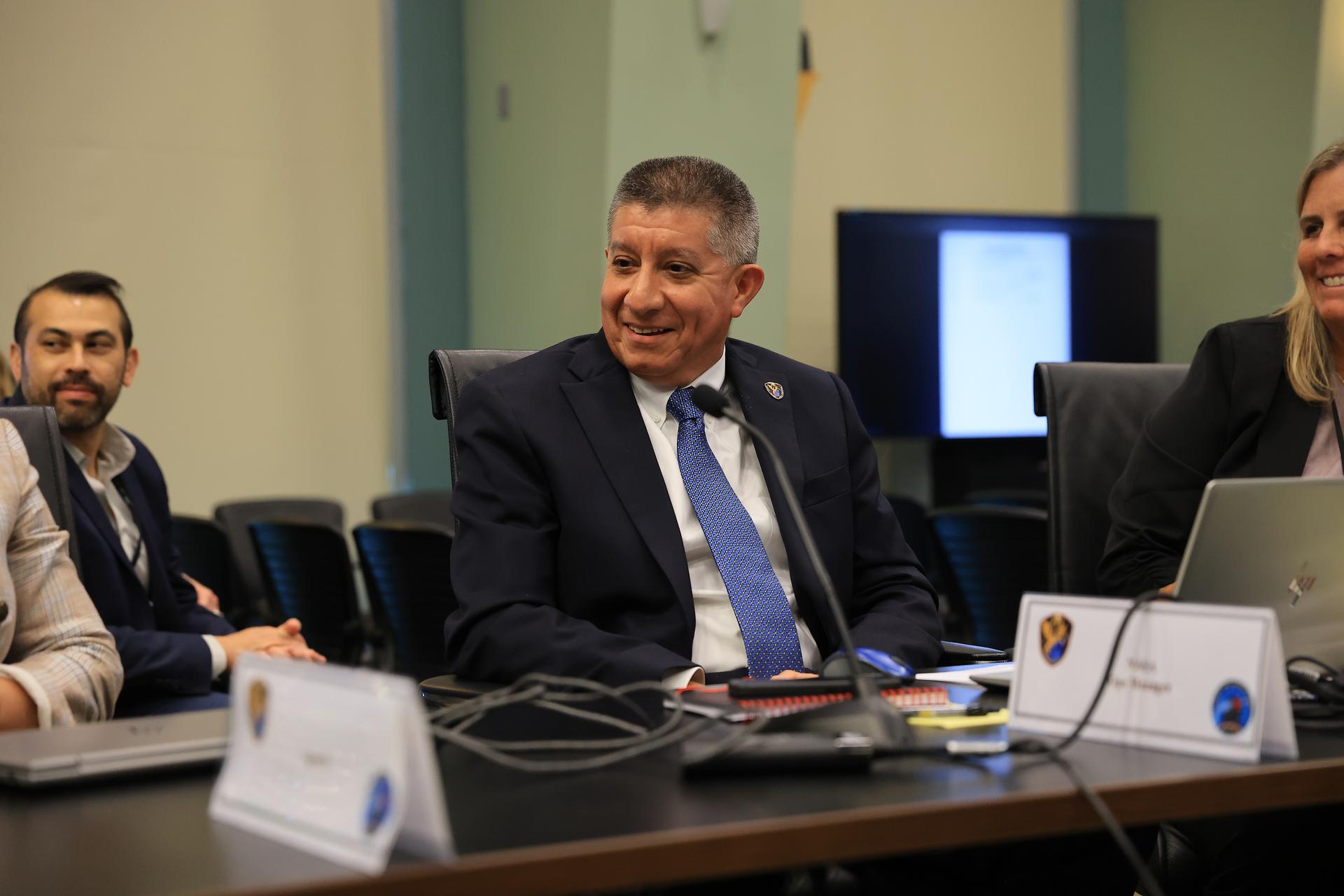
Richard Jones, deputy program manager of NASA’s Commercial Crew Program, participates in NASA’s SpaceX Crew-13 Flight Readiness Review at the agency’s Kennedy Space Center in Florida on Friday, Sept. 25, 2026. NASA astronauts Jessica Watkins and Luke Delaney, CSA (Canadian Space Agency) astronaut Joshua Kutryk, and Roscosmos cosmonaut Sergey Teteryatnikov will launch aboard a SpaceX Dragon spacecraft and Falcon 9 rocket to the International Space Station at 11:10 a.m. EDT on Thursday, Oct. 1, from Cape Canaveral Space Force Station’s Space Launch Complex 40.
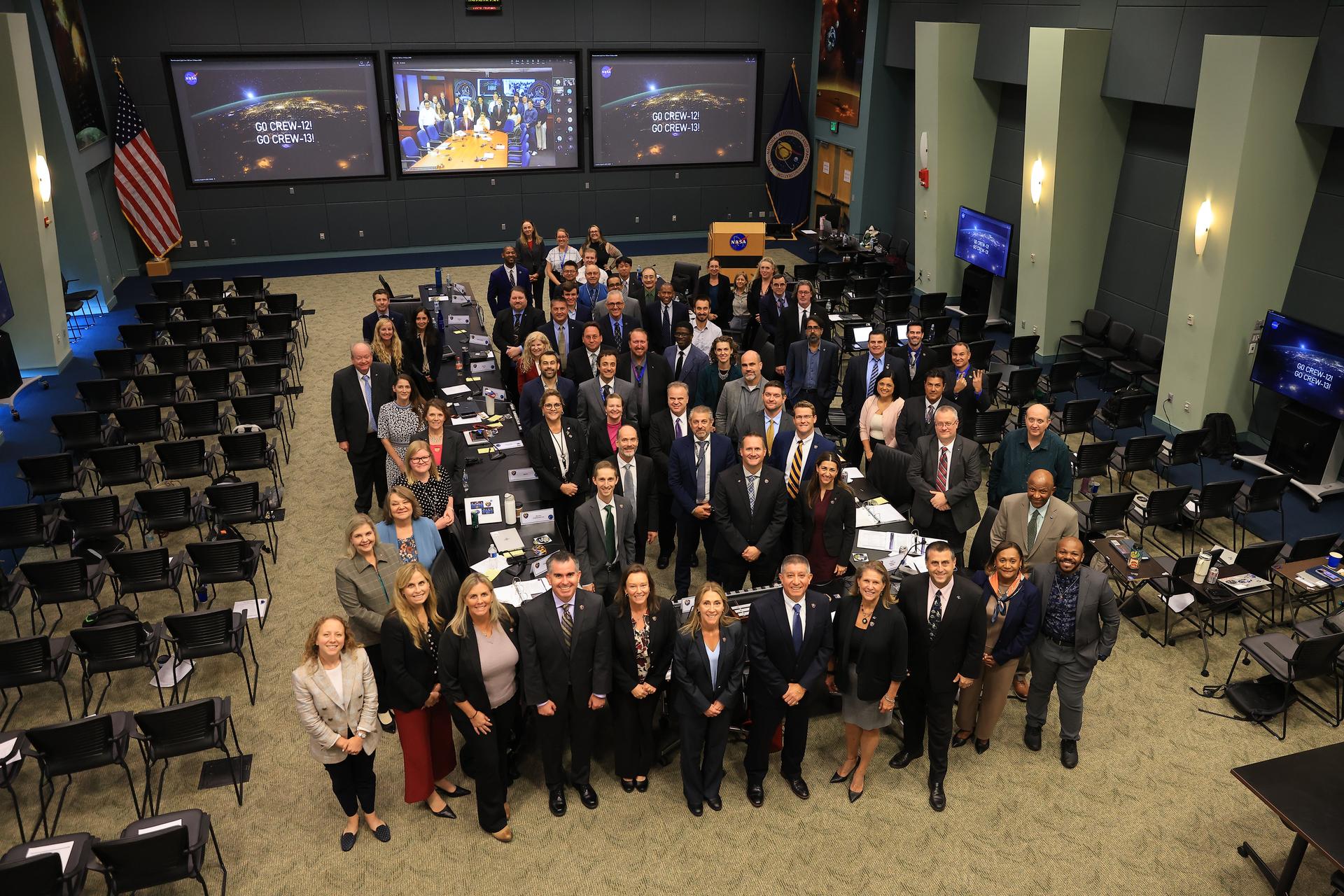
Managers with NASA and SpaceX, along with international partners, participate in NASA’s SpaceX Crew-13 Flight Readiness Review at the agency’s Kennedy Space Center in Florida on Friday, Sept. 25, 2026. NASA astronauts Jessica Watkins and Luke Delaney, CSA (Canadian Space Agency) astronaut Joshua Kutryk, and Roscosmos cosmonaut Sergey Teteryatnikov will launch aboard a SpaceX Dragon spacecraft and Falcon 9 rocket to the International Space Station at 11:10 a.m. EDT on Thursday, Oct. 1, from Cape Canaveral Space Force Station’s Space Launch Complex 40.
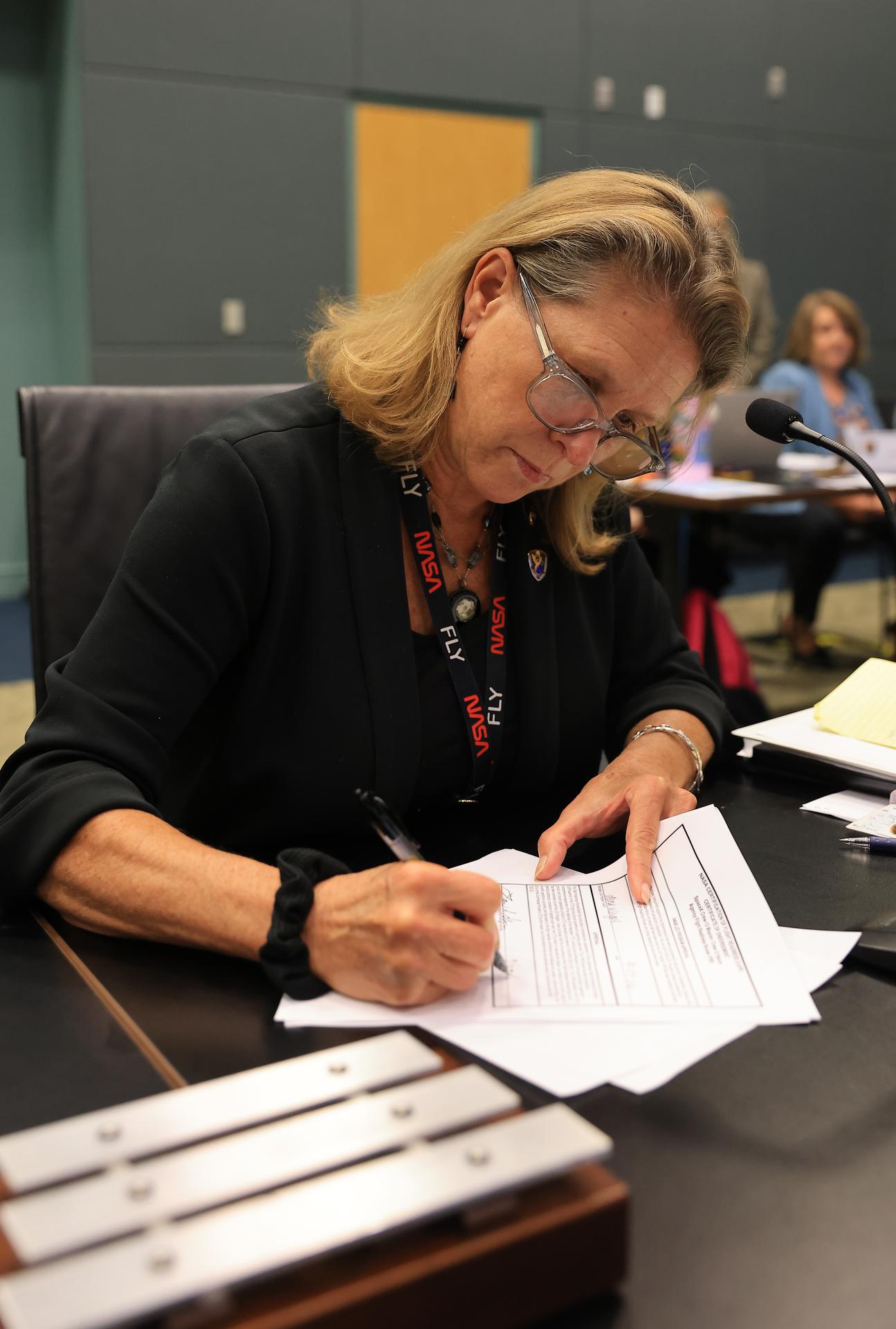
Dr. Lori Glaze, associate administrator for NASA’s Human Spaceflight Mission Directorate, participates in NASA’s SpaceX Crew-13 Flight Readiness Review at the agency’s Kennedy Space Center in Florida on Friday, Sept. 25, 2026. NASA astronauts Jessica Watkins and Luke Delaney, CSA (Canadian Space Agency) astronaut Joshua Kutryk, and Roscosmos cosmonaut Sergey Teteryatnikov will launch aboard a SpaceX Dragon spacecraft and Falcon 9 rocket to the International Space Station at 11:10 a.m. EDT on Thursday, Oct. 1, from Cape Canaveral Space Force Station’s Space Launch Complex 40.
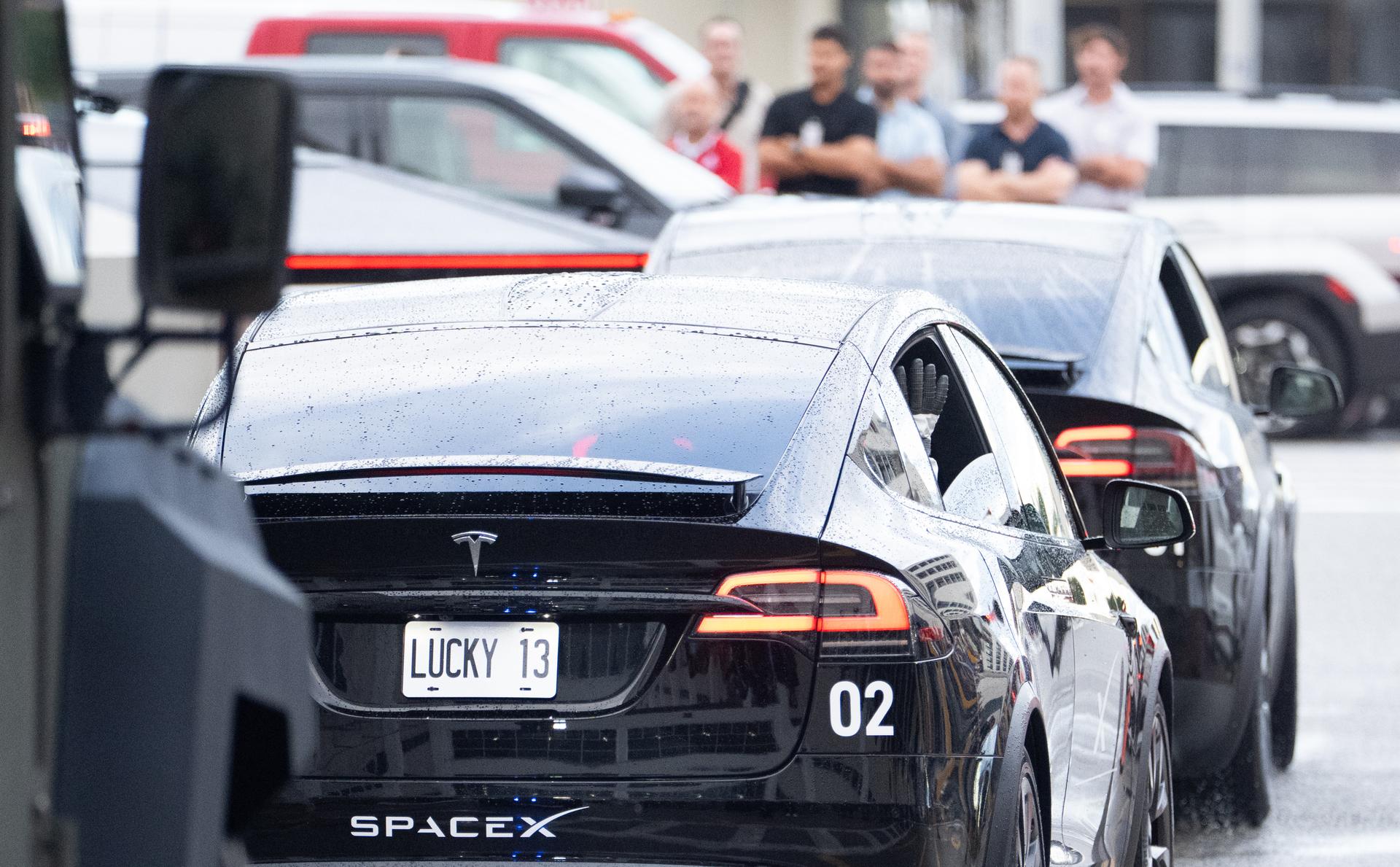
CSA (Canadian Space Agency) astronaut Joshua Kutryk waves as he and fellow crewmates NASA astronauts Jessica Watkins, Luke Delaney, and Roscosmos cosmonaut Sergey Teteryatnikov, wearing SpaceX spacesuits, depart the Neil A. Armstrong Operations and Checkout Building for Space Launch Complex 40 on Cape Canaveral Space Force Station to board the SpaceX Dragon spacecraft for the Crew-13 mission launch, Thursday, Oct. 1, 2026, at NASA’s Kennedy Space Center in Florida. NASA’s SpaceX Crew-13 mission is the 13th crew rotation mission of the SpaceX Crew Dragon spacecraft and Falcon 9 rocket to the International Space Station as part of the agency’s Commercial Crew Program. Watkins, Delaney, Kutryk, Teteryatnikov are scheduled to launch at 11:10 a.m. EDT, from Space Launch Complex 40 at the Cape Canaveral Space Force Station. Photo Credit: (NASA/Joel Kowsky)
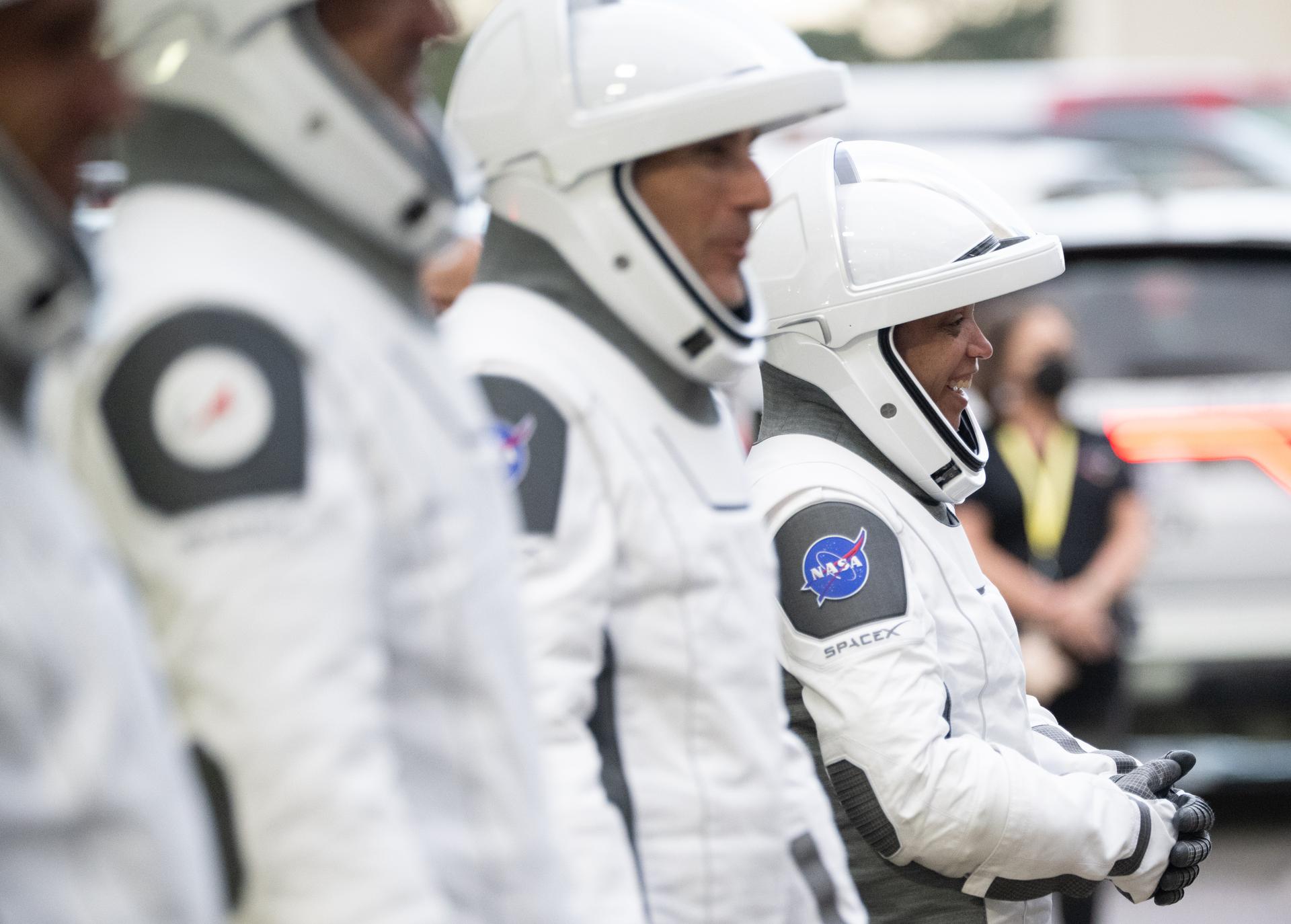
NASA astronaut Jessica Watkins is seen alongside fellow crewmates Luke Delaney, CSA (Canadian Space Agency) astronaut Joshua Kutryk, and Roscosmos cosmonaut Sergey Teteryatnikov, wearing SpaceX spacesuits, as they prepare to depart the Neil A. Armstrong Operations and Checkout Building for Space Launch Complex 40 on Cape Canaveral Space Force Station to board the SpaceX Dragon spacecraft for the Crew-13 mission launch, Thursday, Oct. 1, 2026, at NASA’s Kennedy Space Center in Florida. NASA’s SpaceX Crew-13 mission is the 13th crew rotation mission of the SpaceX Crew Dragon spacecraft and Falcon 9 rocket to the International Space Station as part of the agency’s Commercial Crew Program. Watkins, Delaney, Kutryk, Teteryatnikov are scheduled to launch at 11:10 a.m. EDT, from Space Launch Complex 40 at the Cape Canaveral Space Force Station. Photo Credit: (NASA/Joel Kowsky)
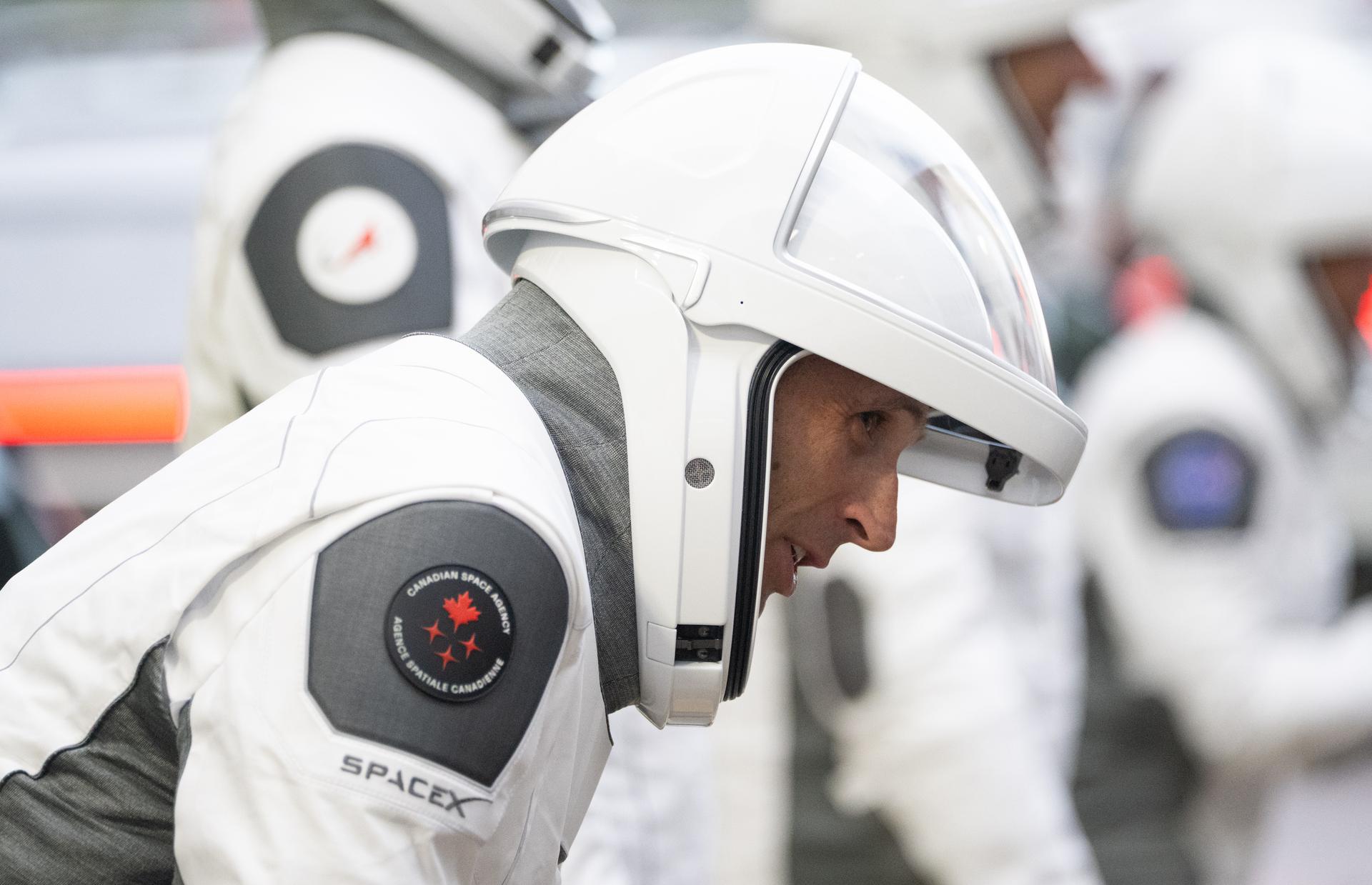
CSA (Canadian Space Agency) astronaut Joshua Kutryk is seen alongside fellow crewmates NASA astronauts Jessica Watkins, Luke Delaney, and Roscosmos cosmonaut Sergey Teteryatnikov, wearing SpaceX spacesuits, as they prepare to depart the Neil A. Armstrong Operations and Checkout Building for Space Launch Complex 40 on Cape Canaveral Space Force Station to board the SpaceX Dragon spacecraft for the Crew-13 mission launch, Thursday, Oct. 1, 2026, at NASA’s Kennedy Space Center in Florida. NASA’s SpaceX Crew-13 mission is the 13th crew rotation mission of the SpaceX Crew Dragon spacecraft and Falcon 9 rocket to the International Space Station as part of the agency’s Commercial Crew Program. Watkins, Delaney, Kutryk, Teteryatnikov are scheduled to launch at 11:10 a.m. EDT, from Space Launch Complex 40 at the Cape Canaveral Space Force Station. Photo Credit: (NASA/Joel Kowsky)
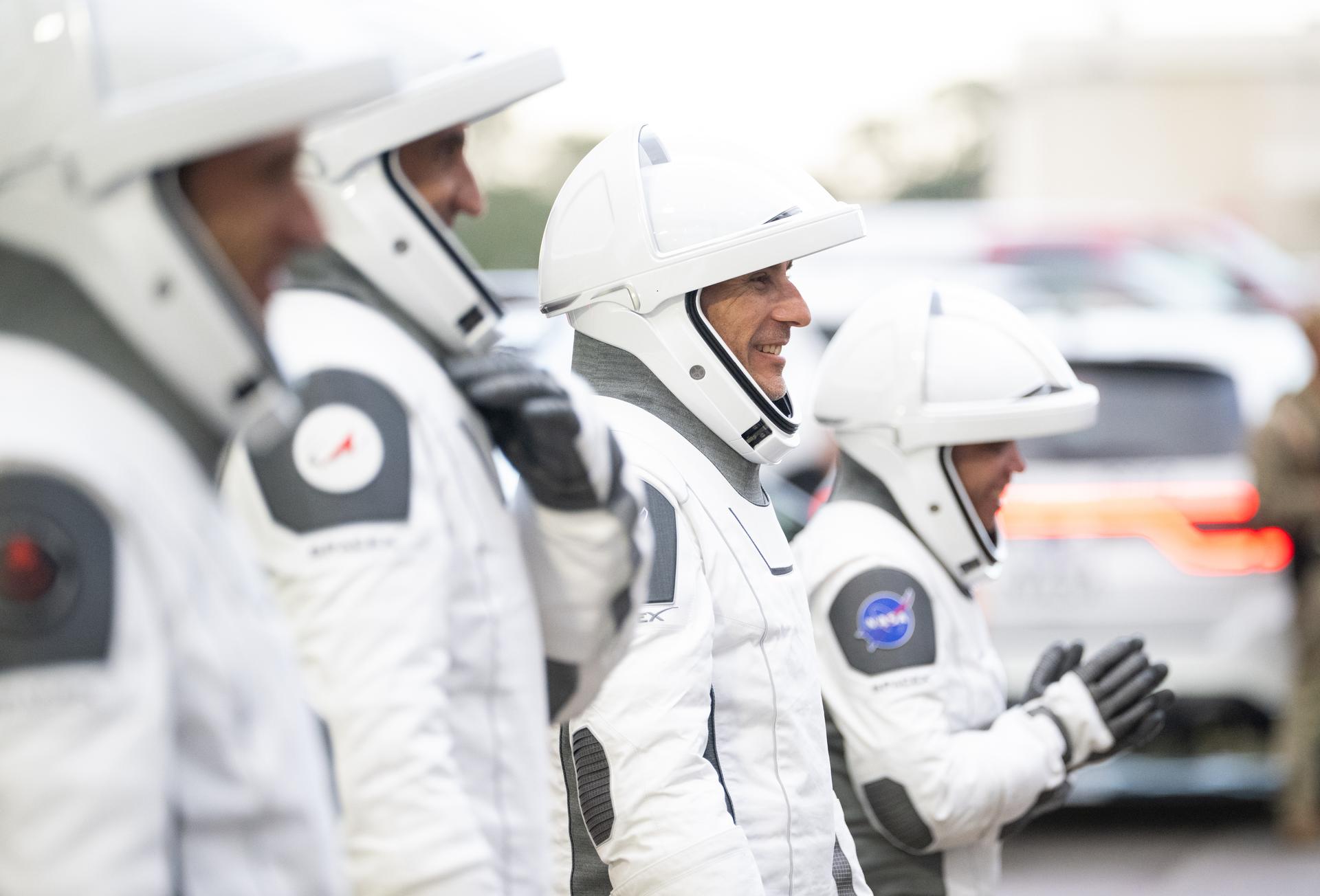
NASA astronaut Luke Delaney is seen alongside fellow crewmates Jessica Watkins, CSA (Canadian Space Agency) astronaut Joshua Kutryk, and Roscosmos cosmonaut Sergey Teteryatnikov, wearing SpaceX spacesuits, as they prepare to depart the Neil A. Armstrong Operations and Checkout Building for Space Launch Complex 40 on Cape Canaveral Space Force Station to board the SpaceX Dragon spacecraft for the Crew-13 mission launch, Thursday, Oct. 1, 2026, at NASA’s Kennedy Space Center in Florida. NASA’s SpaceX Crew-13 mission is the 13th crew rotation mission of the SpaceX Crew Dragon spacecraft and Falcon 9 rocket to the International Space Station as part of the agency’s Commercial Crew Program. Watkins, Delaney, Kutryk, Teteryatnikov are scheduled to launch at 11:10 a.m. EDT, from Space Launch Complex 40 at the Cape Canaveral Space Force Station. Photo Credit: (NASA/Joel Kowsky)
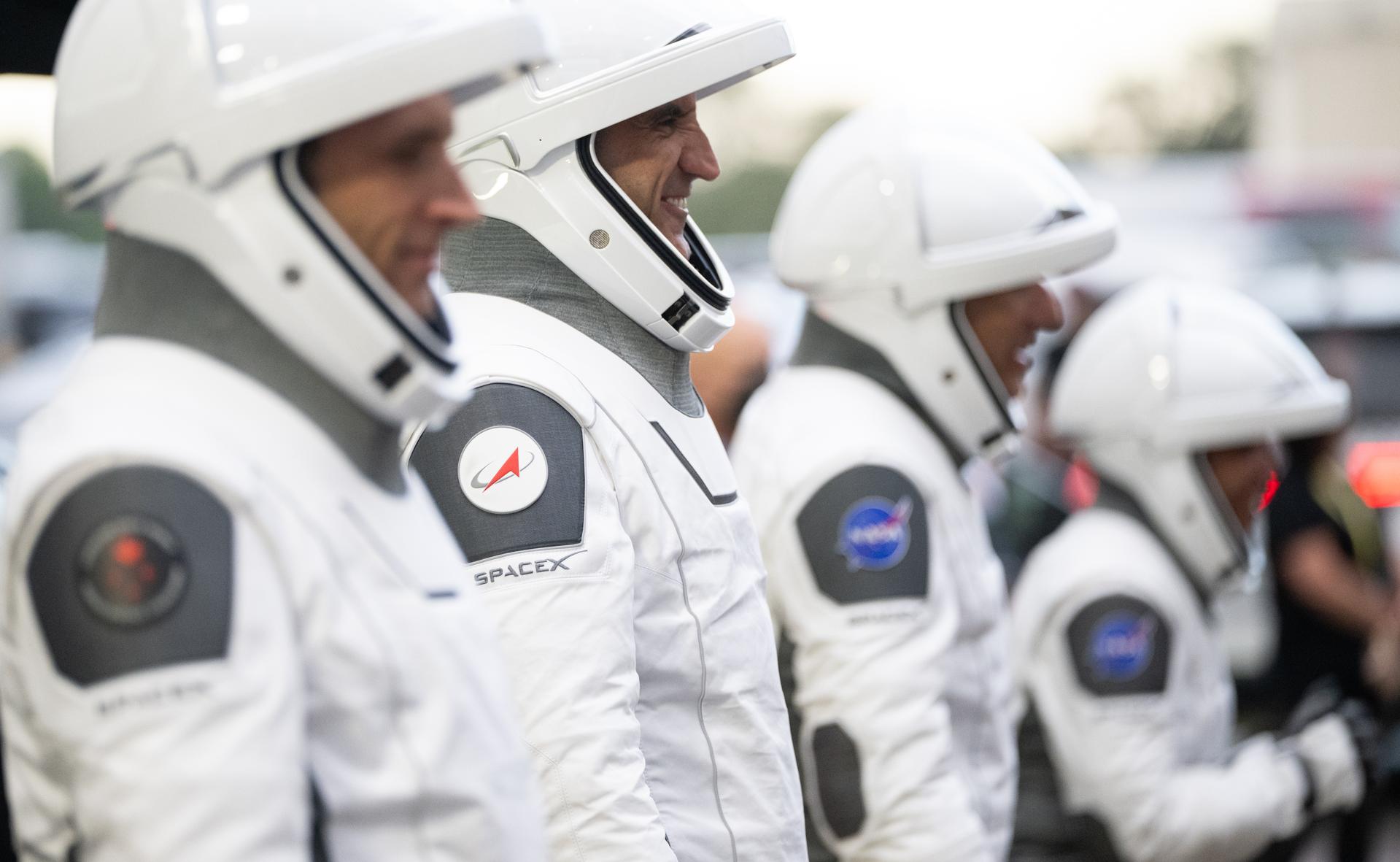
Roscosmos cosmonaut Sergey Teteryatnikov is seen alongside fellow crewmates NASA astronauts Jessica Watkins, Luke Delaney, and CSA (Canadian Space Agency) astronaut Joshua Kutryk, wearing SpaceX spacesuits, as they prepare to depart the Neil A. Armstrong Operations and Checkout Building for Space Launch Complex 40 on Cape Canaveral Space Force Station to board the SpaceX Dragon spacecraft for the Crew-13 mission launch, Thursday, Oct. 1, 2026, at NASA’s Kennedy Space Center in Florida. NASA’s SpaceX Crew-13 mission is the 13th crew rotation mission of the SpaceX Crew Dragon spacecraft and Falcon 9 rocket to the International Space Station as part of the agency’s Commercial Crew Program. Watkins, Delaney, Kutryk, Teteryatnikov are scheduled to launch at 11:10 a.m. EDT, from Space Launch Complex 40 at the Cape Canaveral Space Force Station. Photo Credit: (NASA/Joel Kowsky)
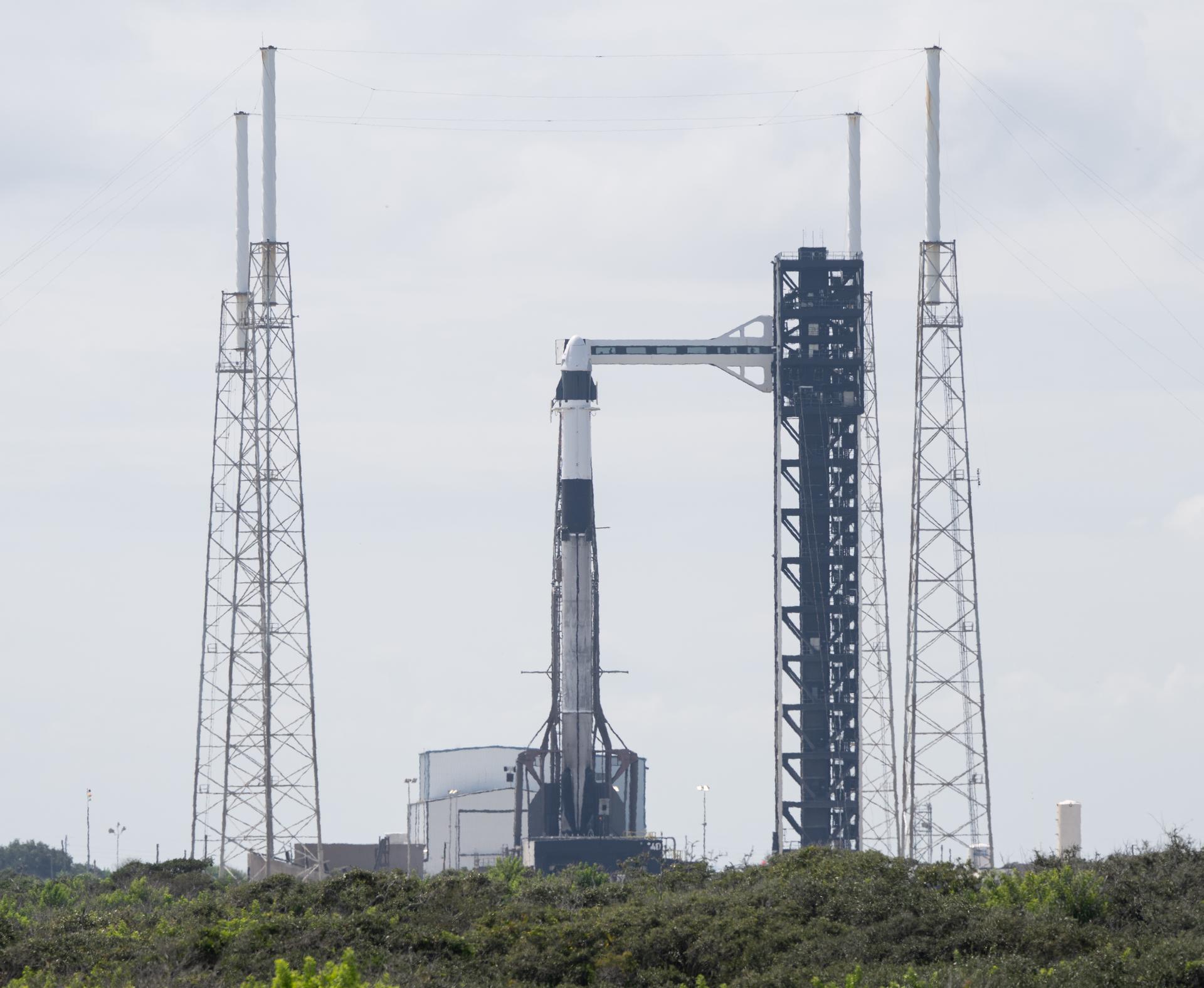
A SpaceX Falcon 9 rocket with the company's Dragon spacecraft on top is seen on the launch pad at Space Launch Complex 40 as preparations continue for the Crew-13 mission, Wednesday, Sept. 30, 2026, at Cape Canaveral Space Force Station in Florida. NASA’s SpaceX Crew-13 mission is the 13th crew rotation mission of the SpaceX Dragon spacecraft and Falcon 9 rocket to the International Space Station as part of the agency’s Commercial Crew Program. NASA astronauts Jessica Watkins and Luke Delaney, CSA (Canadian Space Agency) astronaut Joshua Kutryk, and Roscosmos cosmonaut Sergey Teteryatnikov are scheduled to launch at 11:10 a.m. EDT on Thursday, Oct. 1, from Space Launch Complex 40 at the Cape Canaveral Space Force Station. Photo Credit: (NASA/Joel Kowsky)
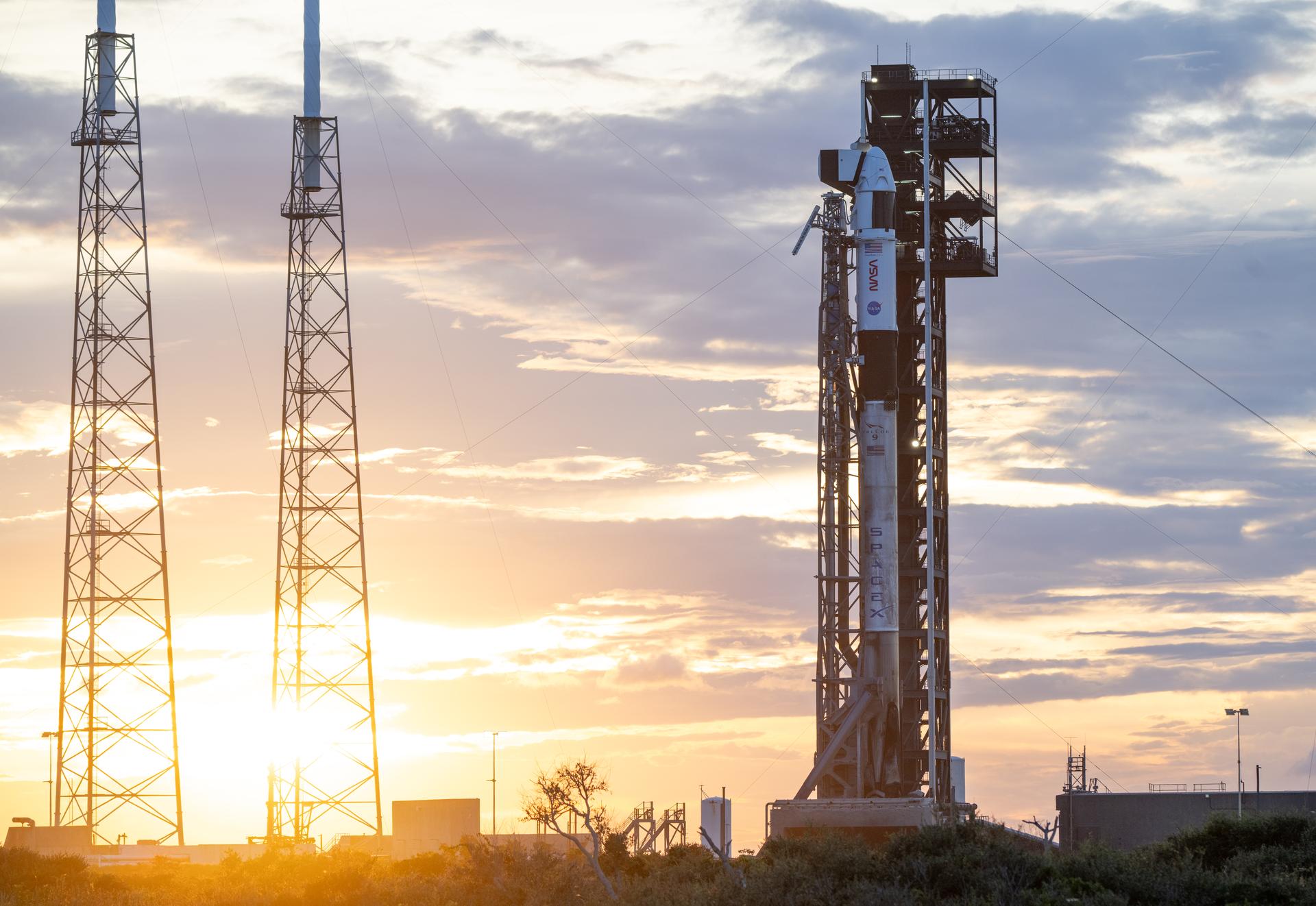
A SpaceX Falcon 9 rocket with the company's Dragon spacecraft on top is seen at sunset on the launch pad at Space Launch Complex 40 as preparations continue for the Crew-13 mission, Wednesday, Sept. 30, 2026, at Cape Canaveral Space Force Station in Florida. NASA’s SpaceX Crew-13 mission is the 13th crew rotation mission of the SpaceX Dragon spacecraft and Falcon 9 rocket to the International Space Station as part of the agency’s Commercial Crew Program. NASA astronauts Jessica Watkins and Luke Delaney, CSA (Canadian Space Agency) astronaut Joshua Kutryk, and Roscosmos cosmonaut Sergey Teteryatnikov are scheduled to launch at 11:10 a.m. EDT on Thursday, Oct. 1, from Space Launch Complex 40 at the Cape Canaveral Space Force Station. Photo Credit: (NASA/Joel Kowsky)
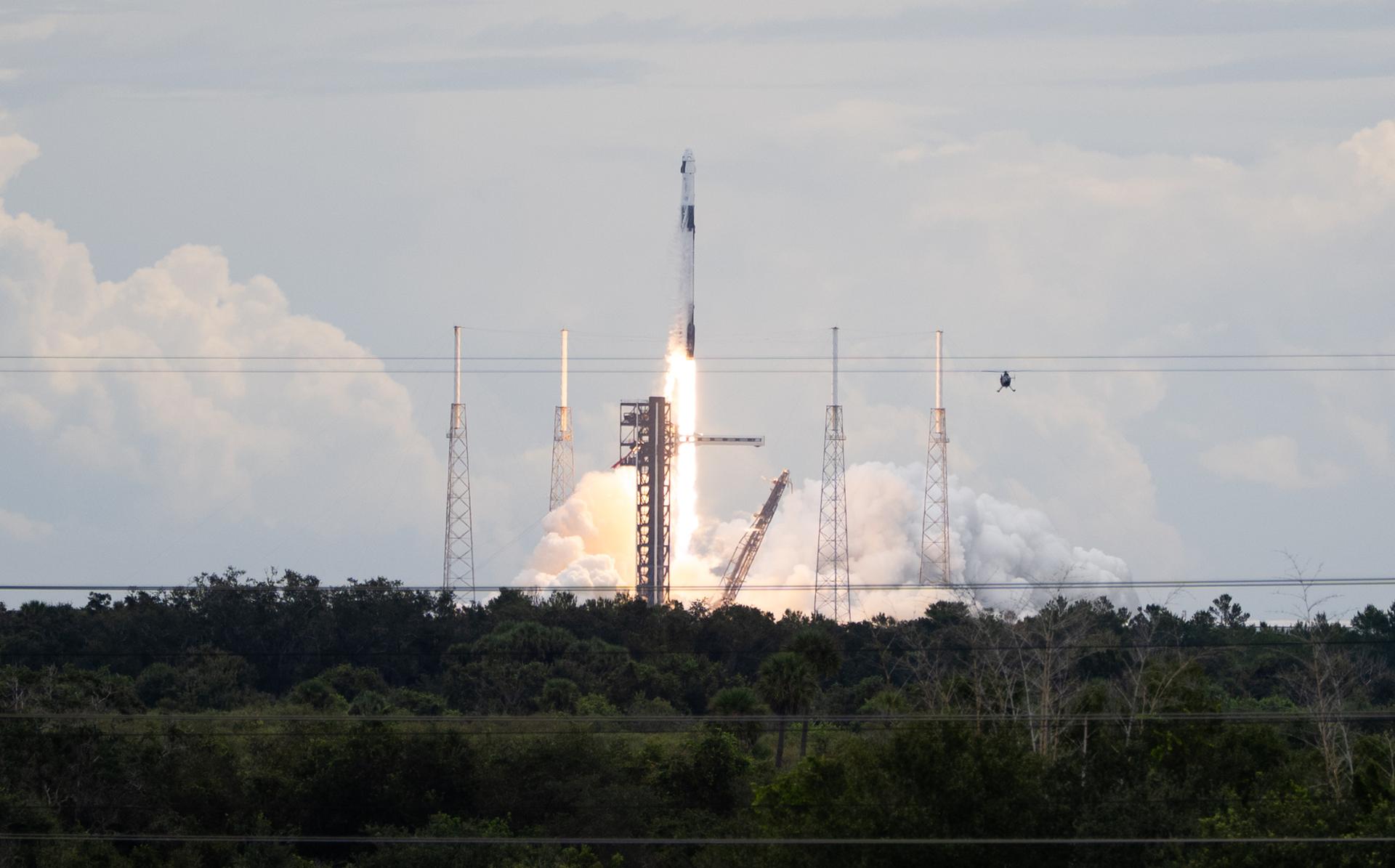
A SpaceX Falcon 9 rocket carrying the company's Dragon spacecraft is launched on NASA’s SpaceX Crew-13 mission to the International Space Station with NASA astronauts Jessica Watkins and Luke Delaney, CSA (Canadian Space Agency) astronaut Joshua Kutryk, and Roscosmos cosmonaut Sergey Teteryatnikov onboard, Thursday, Oct. 1, 2026, from Cape Canaveral Space Force Station in Florida. NASA’s SpaceX Crew-13 mission is the 13th crew rotation mission of the SpaceX Dragon spacecraft and Falcon 9 rocket to the International Space Station as part of the agency’s Commercial Crew Program. Watkins, Delaney, Kutryk, Teteryatnikov launched at 11:10 a.m. EDT from Space Launch Complex 40 at the Cape Canaveral Space Force Station to begin a mission aboard the orbital outpost. Photo Credit: (NASA/Joel Kowsky)
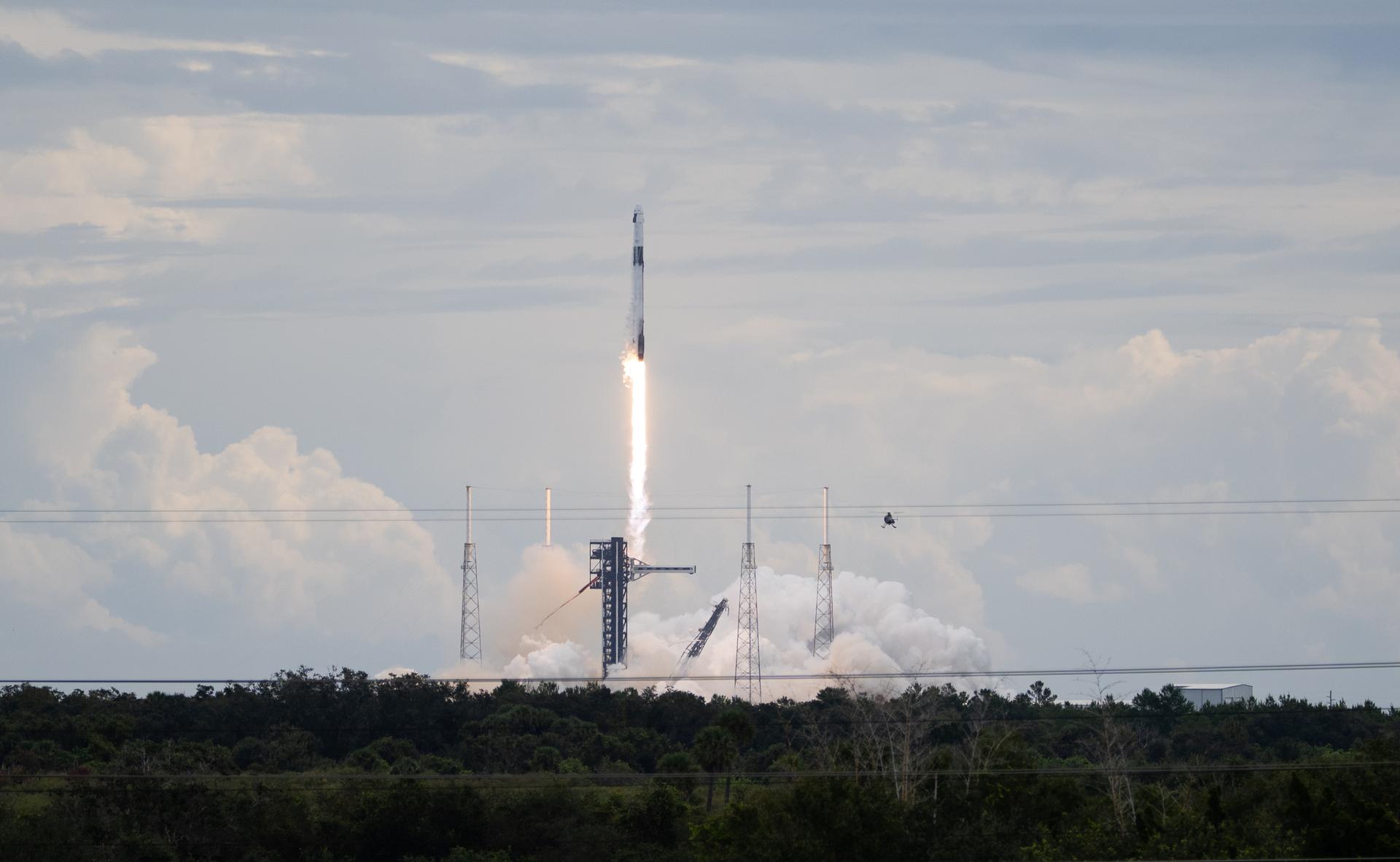
A SpaceX Falcon 9 rocket carrying the company's Dragon spacecraft is launched on NASA’s SpaceX Crew-13 mission to the International Space Station with NASA astronauts Jessica Watkins and Luke Delaney, CSA (Canadian Space Agency) astronaut Joshua Kutryk, and Roscosmos cosmonaut Sergey Teteryatnikov onboard, Thursday, Oct. 1, 2026, from Cape Canaveral Space Force Station in Florida. NASA’s SpaceX Crew-13 mission is the 13th crew rotation mission of the SpaceX Dragon spacecraft and Falcon 9 rocket to the International Space Station as part of the agency’s Commercial Crew Program. Watkins, Delaney, Kutryk, Teteryatnikov launched at 11:10 a.m. EDT from Space Launch Complex 40 at the Cape Canaveral Space Force Station to begin a mission aboard the orbital outpost. Photo Credit: (NASA/Joel Kowsky)
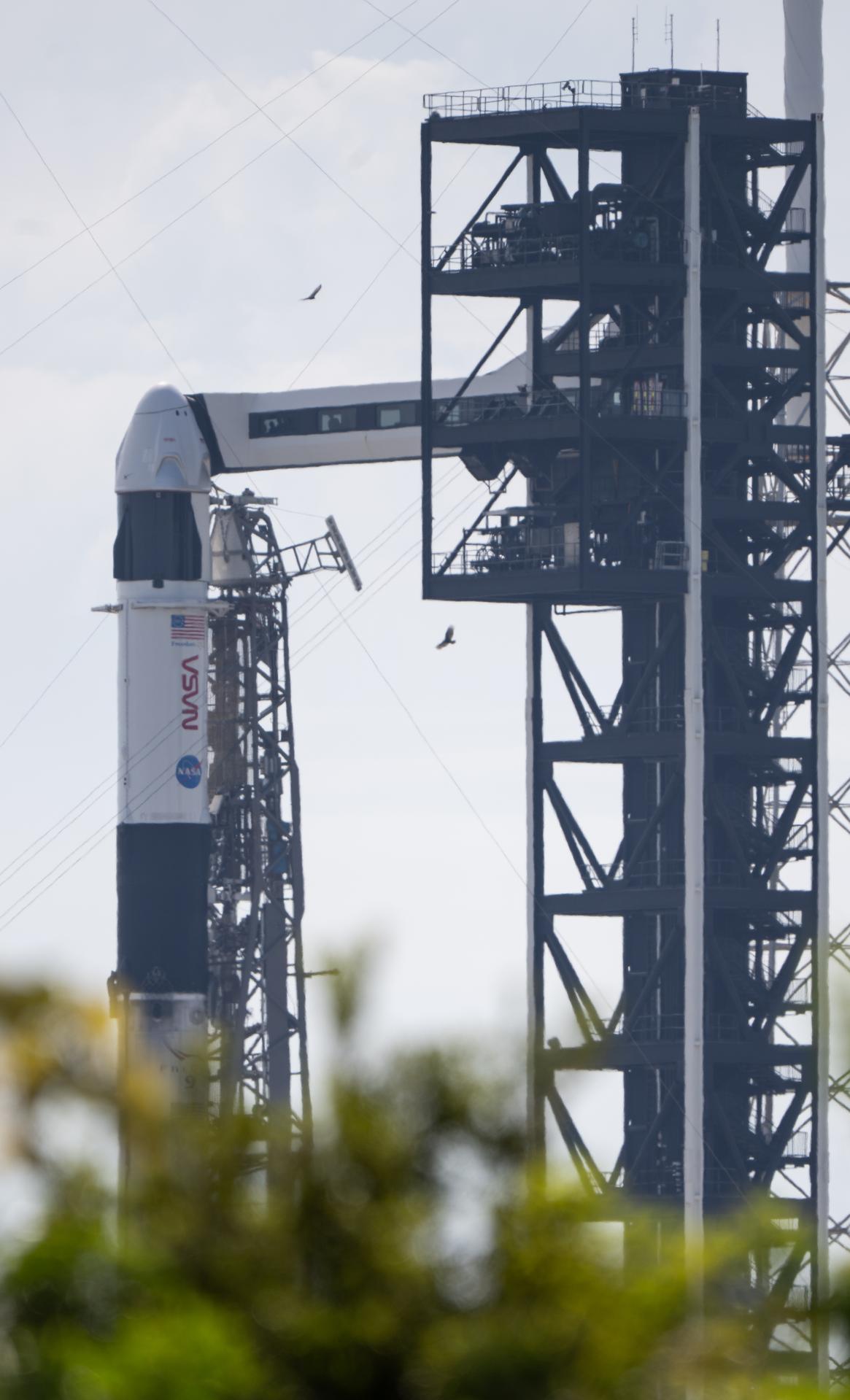
A SpaceX Falcon 9 rocket with the company's Dragon spacecraft on top is seen on the launch pad at Space Launch Complex 40 as preparations continue for the Crew-13 mission, Wednesday, Sept. 30, 2026, at Cape Canaveral Space Force Station in Florida. NASA’s SpaceX Crew-13 mission is the 13th crew rotation mission of the SpaceX Dragon spacecraft and Falcon 9 rocket to the International Space Station as part of the agency’s Commercial Crew Program. NASA astronauts Jessica Watkins and Luke Delaney, CSA (Canadian Space Agency) astronaut Joshua Kutryk, and Roscosmos cosmonaut Sergey Teteryatnikov are scheduled to launch at 11:10 a.m. EDT on Thursday, Oct. 1, from Space Launch Complex 40 at the Cape Canaveral Space Force Station. Photo Credit: (NASA/Joel Kowsky)
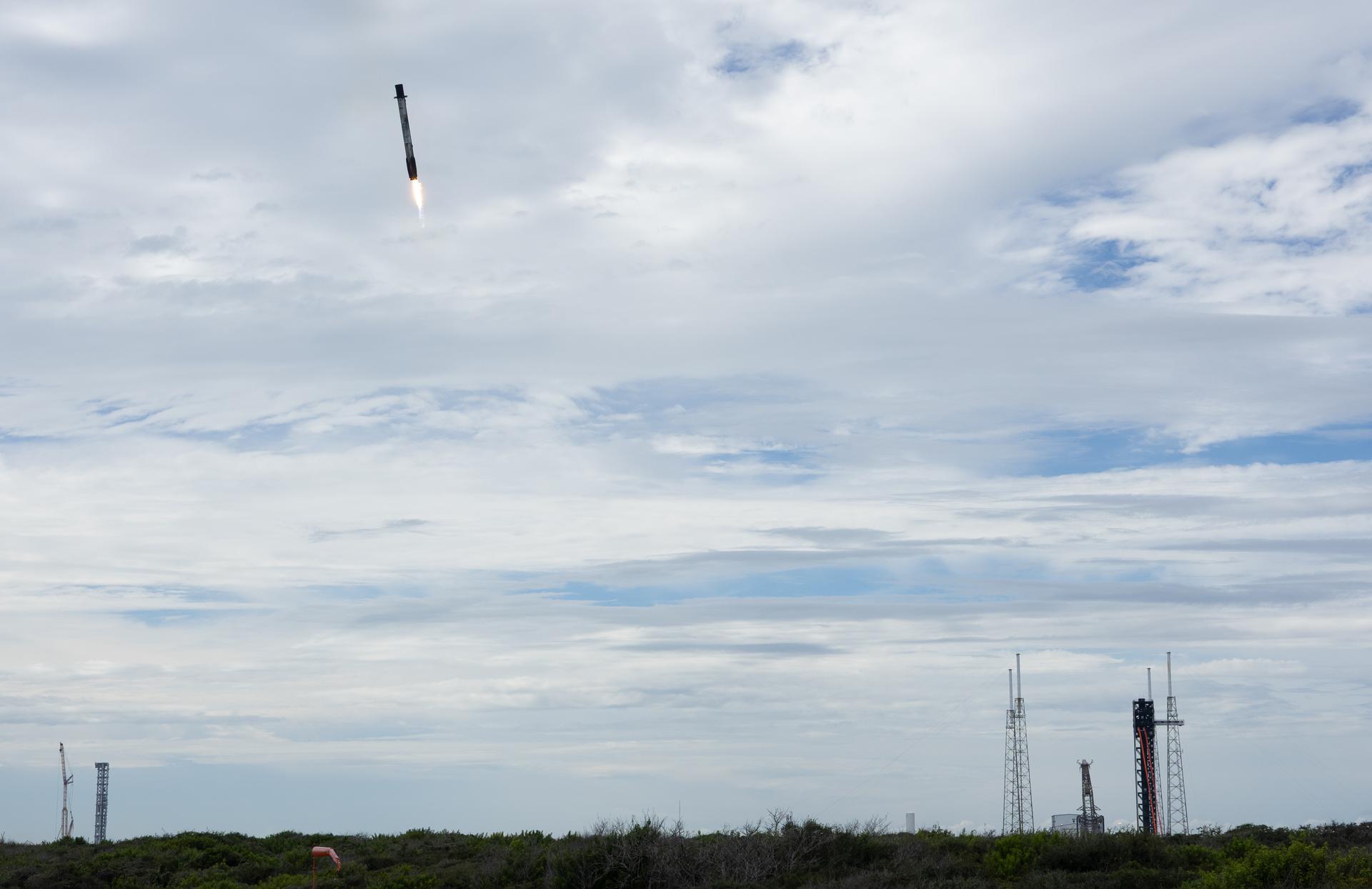
The first stage of the SpaceX Falcon 9 rocket that launched a Dragon spacecraft on NASA’s SpaceX Crew-13 mission to the International Space Station with NASA astronauts Jessica Watkins and Luke Delaney, CSA (Canadian Space Agency) astronaut Joshua Kutryk, and Roscosmos cosmonaut Sergey Teteryatnikov onboard, is seen as it lands at Space Launch Complex 40, Thursday, Oct. 1, 2026, from Cape Canaveral Space Force Station in Florida. NASA’s SpaceX Crew-13 mission is the 13th crew rotation mission of the SpaceX Dragon spacecraft and Falcon 9 rocket to the International Space Station as part of the agency’s Commercial Crew Program. Watkins, Delaney, Kutryk, Teteryatnikov launched at 11:10 a.m. EDT from Space Launch Complex 40 at the Cape Canaveral Space Force Station to begin a mission aboard the orbital outpost. Photo Credit: (NASA/Joel Kowsky)
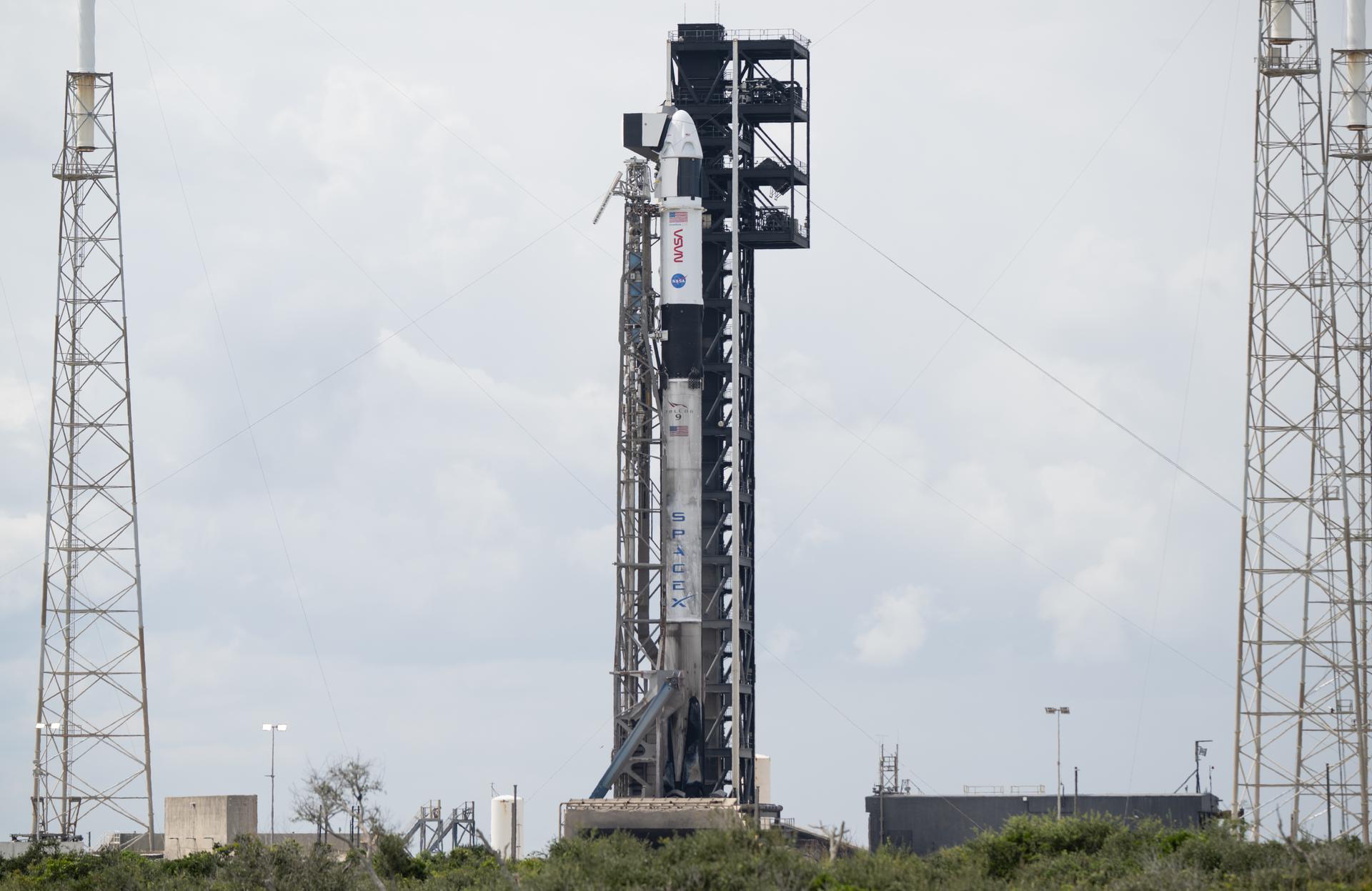
A SpaceX Falcon 9 rocket with the company's Dragon spacecraft on top is seen on the launch pad at Space Launch Complex 40 as preparations continue for the Crew-13 mission, Wednesday, Sept. 30, 2026, at Cape Canaveral Space Force Station in Florida. NASA’s SpaceX Crew-13 mission is the 13th crew rotation mission of the SpaceX Dragon spacecraft and Falcon 9 rocket to the International Space Station as part of the agency’s Commercial Crew Program. NASA astronauts Jessica Watkins and Luke Delaney, CSA (Canadian Space Agency) astronaut Joshua Kutryk, and Roscosmos cosmonaut Sergey Teteryatnikov are scheduled to launch at 11:10 a.m. EDT on Thursday, Oct. 1, from Space Launch Complex 40 at the Cape Canaveral Space Force Station. Photo Credit: (NASA/Joel Kowsky)
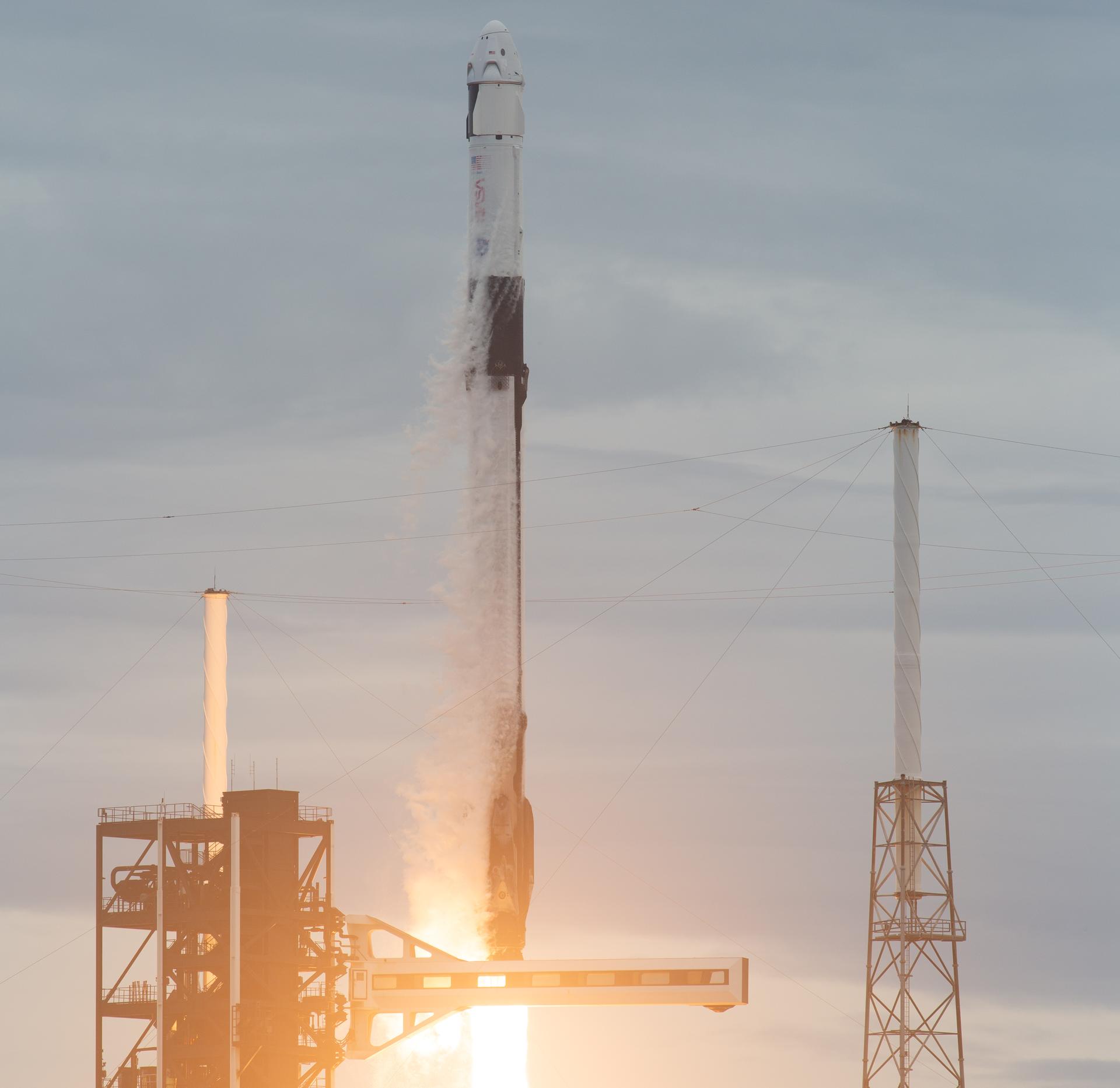
A SpaceX Falcon 9 rocket carrying the company's Dragon spacecraft is launched on NASA’s SpaceX Crew-13 mission to the International Space Station with NASA astronauts Jessica Watkins and Luke Delaney, CSA (Canadian Space Agency) astronaut Joshua Kutryk, and Roscosmos cosmonaut Sergey Teteryatnikov onboard, Thursday, Oct. 1, 2026, from Cape Canaveral Space Force Station in Florida. NASA’s SpaceX Crew-13 mission is the 13th crew rotation mission of the SpaceX Dragon spacecraft and Falcon 9 rocket to the International Space Station as part of the agency’s Commercial Crew Program. Watkins, Delaney, Kutryk, Teteryatnikov launched at 11:10 a.m. EDT from Space Launch Complex 40 at the Cape Canaveral Space Force Station to begin a mission aboard the orbital outpost. Photo Credit: (NASA/Joel Kowsky)
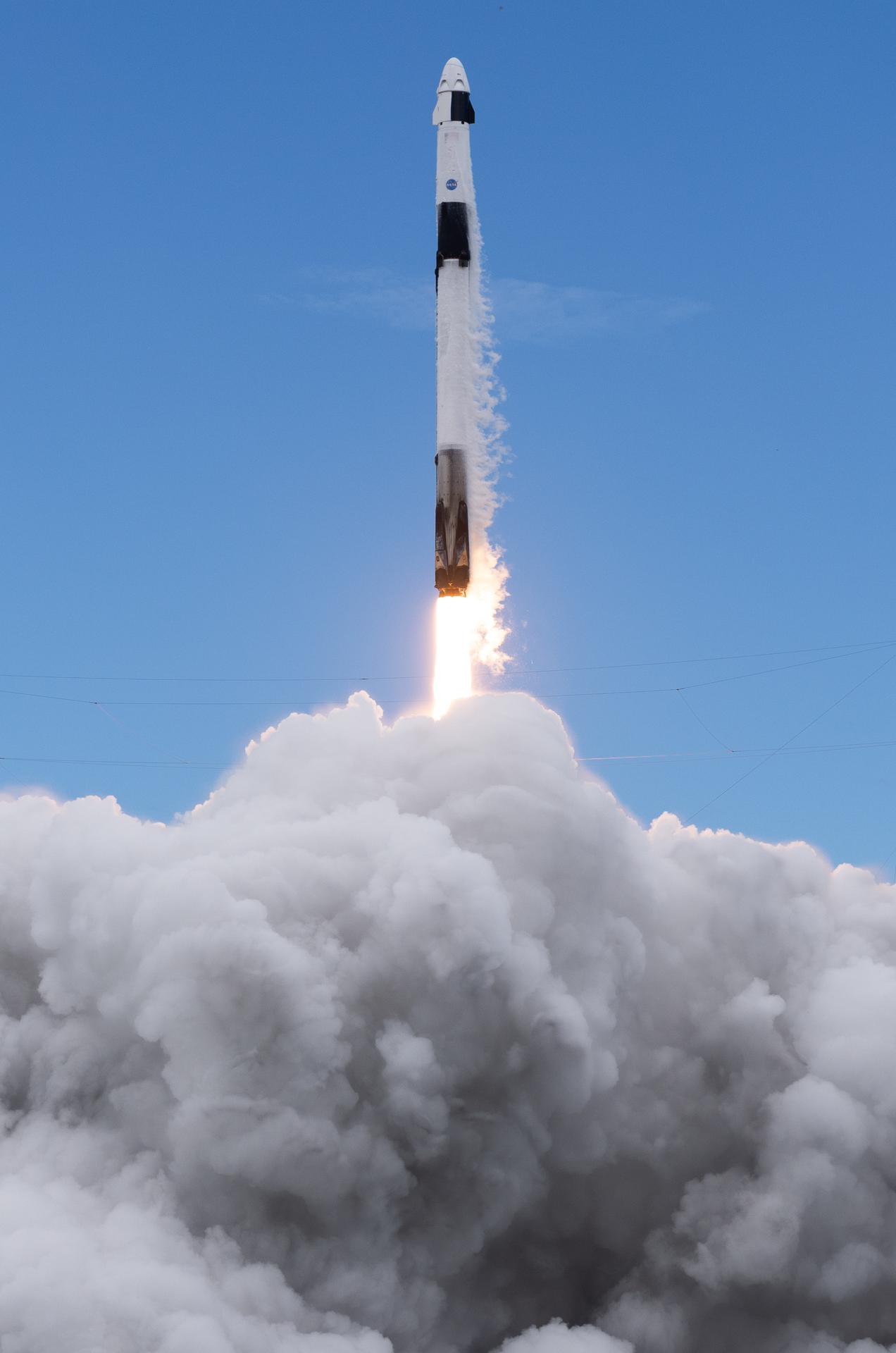
A SpaceX Falcon 9 rocket carrying the company's Dragon spacecraft is launched on NASA’s SpaceX Crew-13 mission to the International Space Station with NASA astronauts Jessica Watkins and Luke Delaney, CSA (Canadian Space Agency) astronaut Joshua Kutryk, and Roscosmos cosmonaut Sergey Teteryatnikov onboard, Thursday, Oct. 1, 2026, from Cape Canaveral Space Force Station in Florida. NASA’s SpaceX Crew-13 mission is the 13th crew rotation mission of the SpaceX Dragon spacecraft and Falcon 9 rocket to the International Space Station as part of the agency’s Commercial Crew Program. Watkins, Delaney, Kutryk, Teteryatnikov launched at 11:10 a.m. EDT from Space Launch Complex 40 at the Cape Canaveral Space Force Station to begin a mission aboard the orbital outpost. Photo Credit: (NASA/Joel Kowsky)
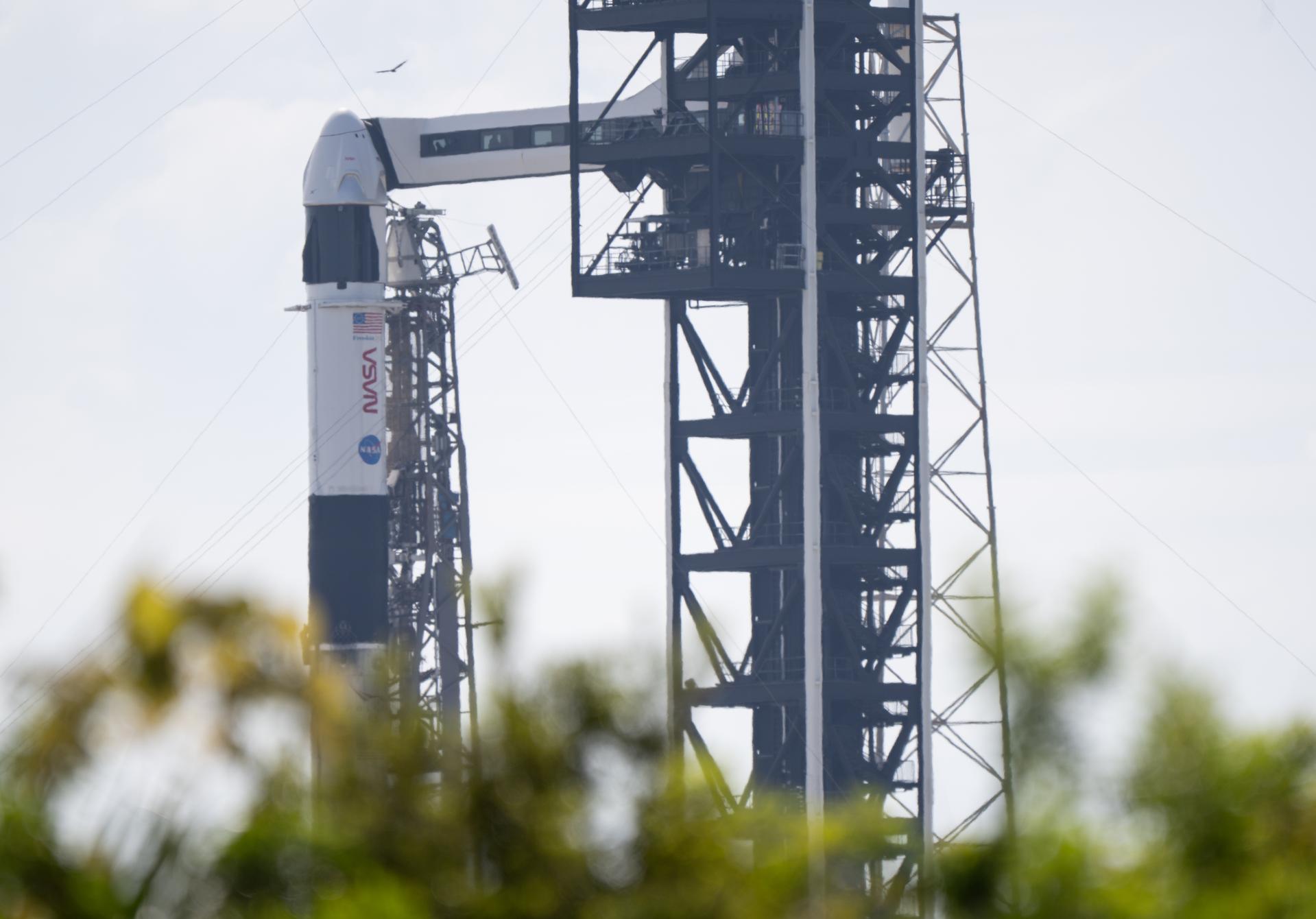
A SpaceX Falcon 9 rocket with the company's Dragon spacecraft on top is seen on the launch pad at Space Launch Complex 40 as preparations continue for the Crew-13 mission, Wednesday, Sept. 30, 2026, at Cape Canaveral Space Force Station in Florida. NASA’s SpaceX Crew-13 mission is the 13th crew rotation mission of the SpaceX Dragon spacecraft and Falcon 9 rocket to the International Space Station as part of the agency’s Commercial Crew Program. NASA astronauts Jessica Watkins and Luke Delaney, CSA (Canadian Space Agency) astronaut Joshua Kutryk, and Roscosmos cosmonaut Sergey Teteryatnikov are scheduled to launch at 11:10 a.m. EDT on Thursday, Oct. 1, from Space Launch Complex 40 at the Cape Canaveral Space Force Station. Photo Credit: (NASA/Joel Kowsky)
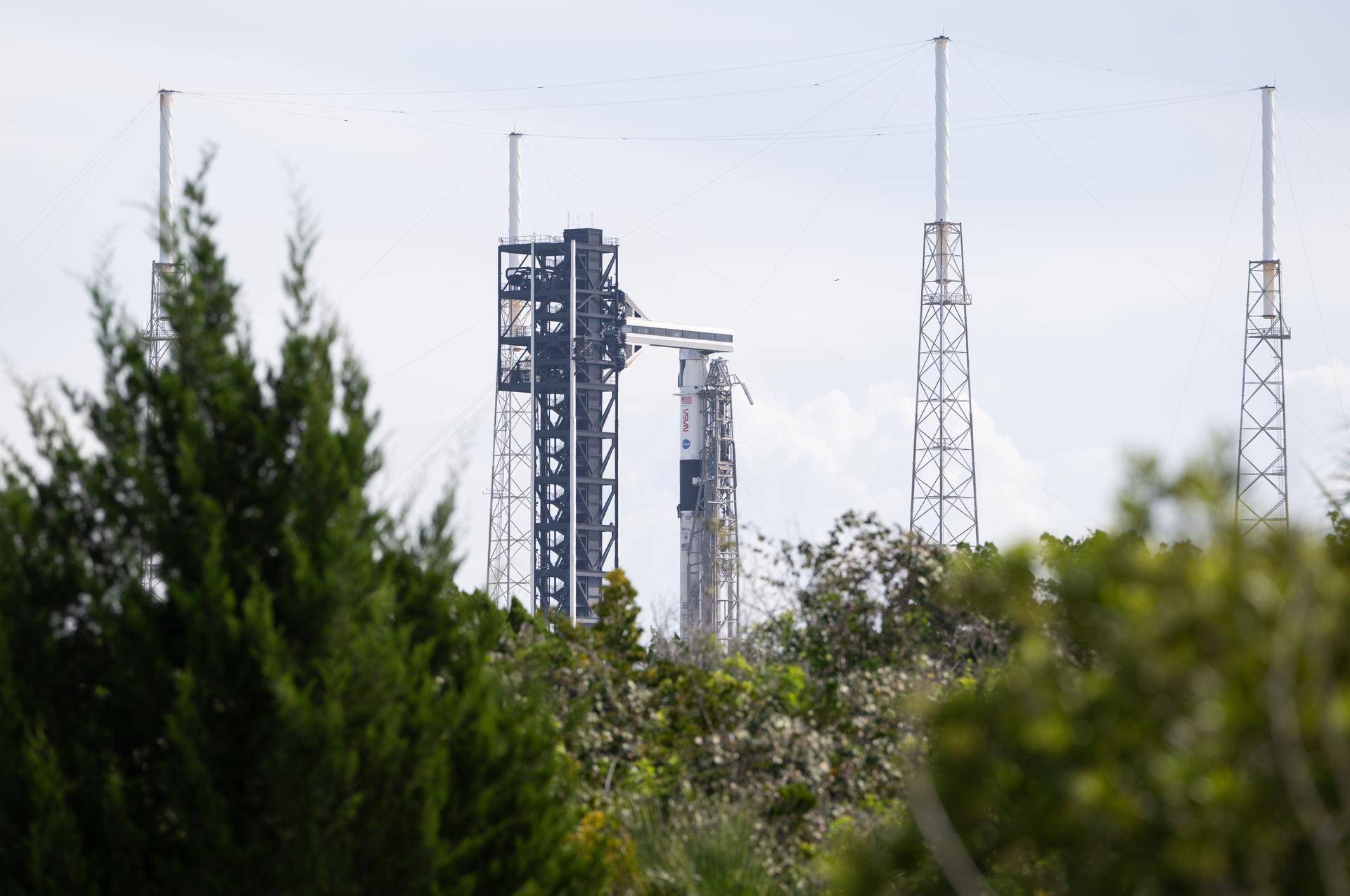
A SpaceX Falcon 9 rocket with the company's Dragon spacecraft on top is seen on the launch pad at Space Launch Complex 40 as preparations continue for the Crew-13 mission, Wednesday, Sept. 30, 2026, at Cape Canaveral Space Force Station in Florida. NASA’s SpaceX Crew-13 mission is the 13th crew rotation mission of the SpaceX Dragon spacecraft and Falcon 9 rocket to the International Space Station as part of the agency’s Commercial Crew Program. NASA astronauts Jessica Watkins and Luke Delaney, CSA (Canadian Space Agency) astronaut Joshua Kutryk, and Roscosmos cosmonaut Sergey Teteryatnikov are scheduled to launch at 11:10 a.m. EDT on Thursday, Oct. 1, from Space Launch Complex 40 at the Cape Canaveral Space Force Station. Photo Credit: (NASA/Joel Kowsky)
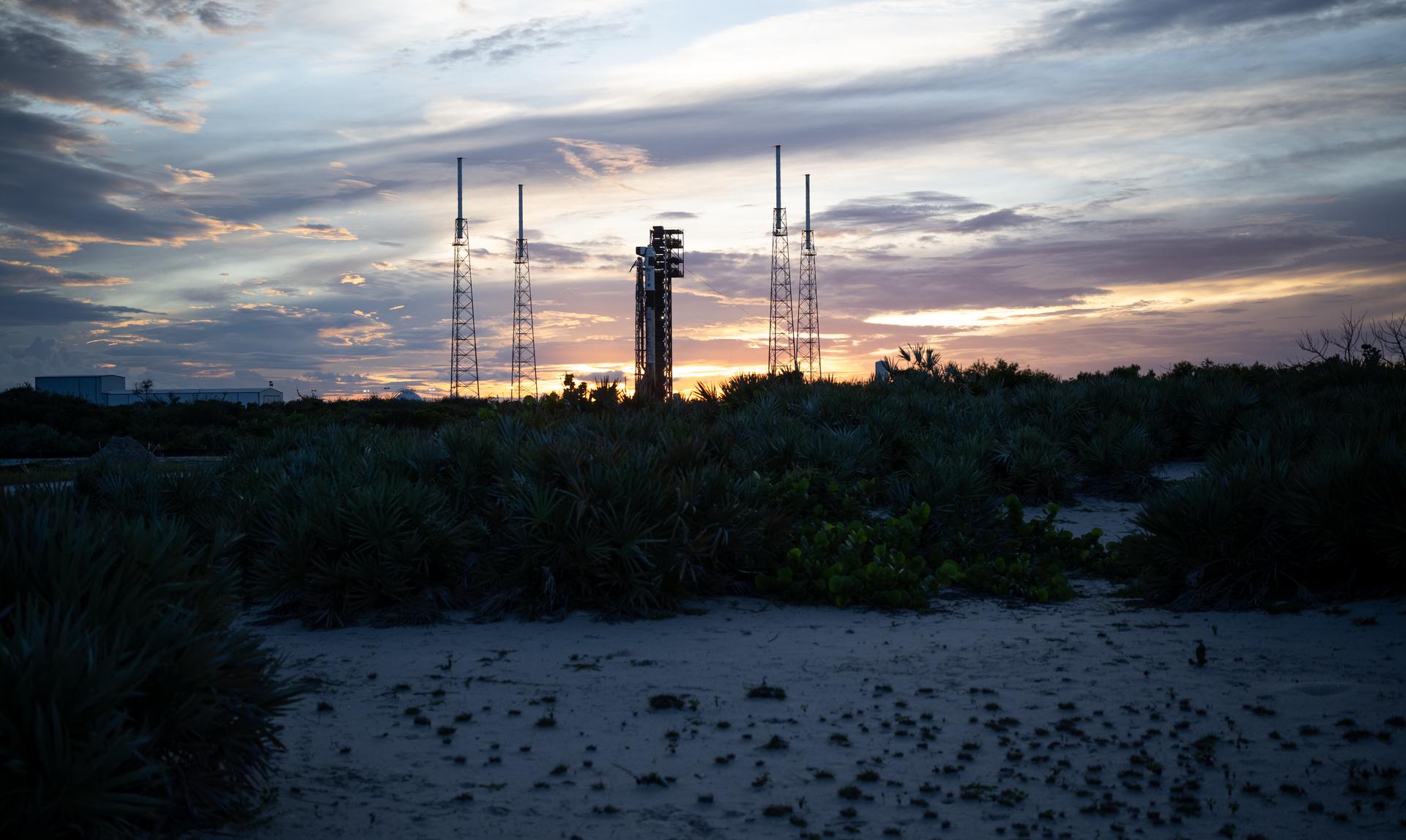
A SpaceX Falcon 9 rocket with the company's Dragon spacecraft on top is seen at sunset on the launch pad at Space Launch Complex 40 as preparations continue for the Crew-13 mission, Wednesday, Sept. 30, 2026, at Cape Canaveral Space Force Station in Florida. NASA’s SpaceX Crew-13 mission is the 13th crew rotation mission of the SpaceX Dragon spacecraft and Falcon 9 rocket to the International Space Station as part of the agency’s Commercial Crew Program. NASA astronauts Jessica Watkins and Luke Delaney, CSA (Canadian Space Agency) astronaut Joshua Kutryk, and Roscosmos cosmonaut Sergey Teteryatnikov are scheduled to launch at 11:10 a.m. EDT on Thursday, Oct. 1, from Space Launch Complex 40 at the Cape Canaveral Space Force Station. Photo Credit: (NASA/Joel Kowsky)
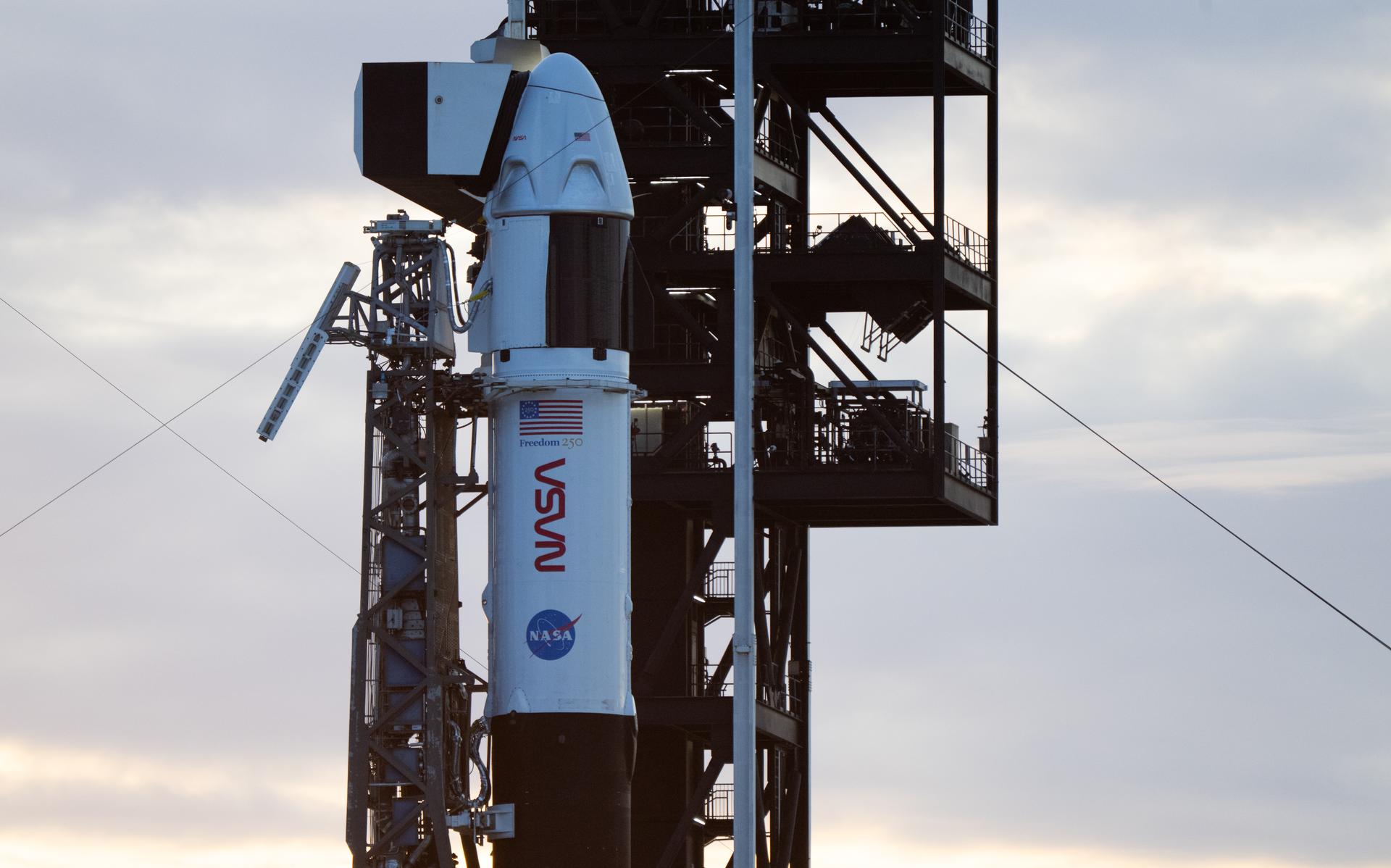
A SpaceX Falcon 9 rocket with the company's Dragon spacecraft on top is seen at sunset on the launch pad at Space Launch Complex 40 as preparations continue for the Crew-13 mission, Wednesday, Sept. 30, 2026, at Cape Canaveral Space Force Station in Florida. NASA’s SpaceX Crew-13 mission is the 13th crew rotation mission of the SpaceX Dragon spacecraft and Falcon 9 rocket to the International Space Station as part of the agency’s Commercial Crew Program. NASA astronauts Jessica Watkins and Luke Delaney, CSA (Canadian Space Agency) astronaut Joshua Kutryk, and Roscosmos cosmonaut Sergey Teteryatnikov are scheduled to launch at 11:10 a.m. EDT on Thursday, Oct. 1, from Space Launch Complex 40 at the Cape Canaveral Space Force Station. Photo Credit: (NASA/Joel Kowsky)
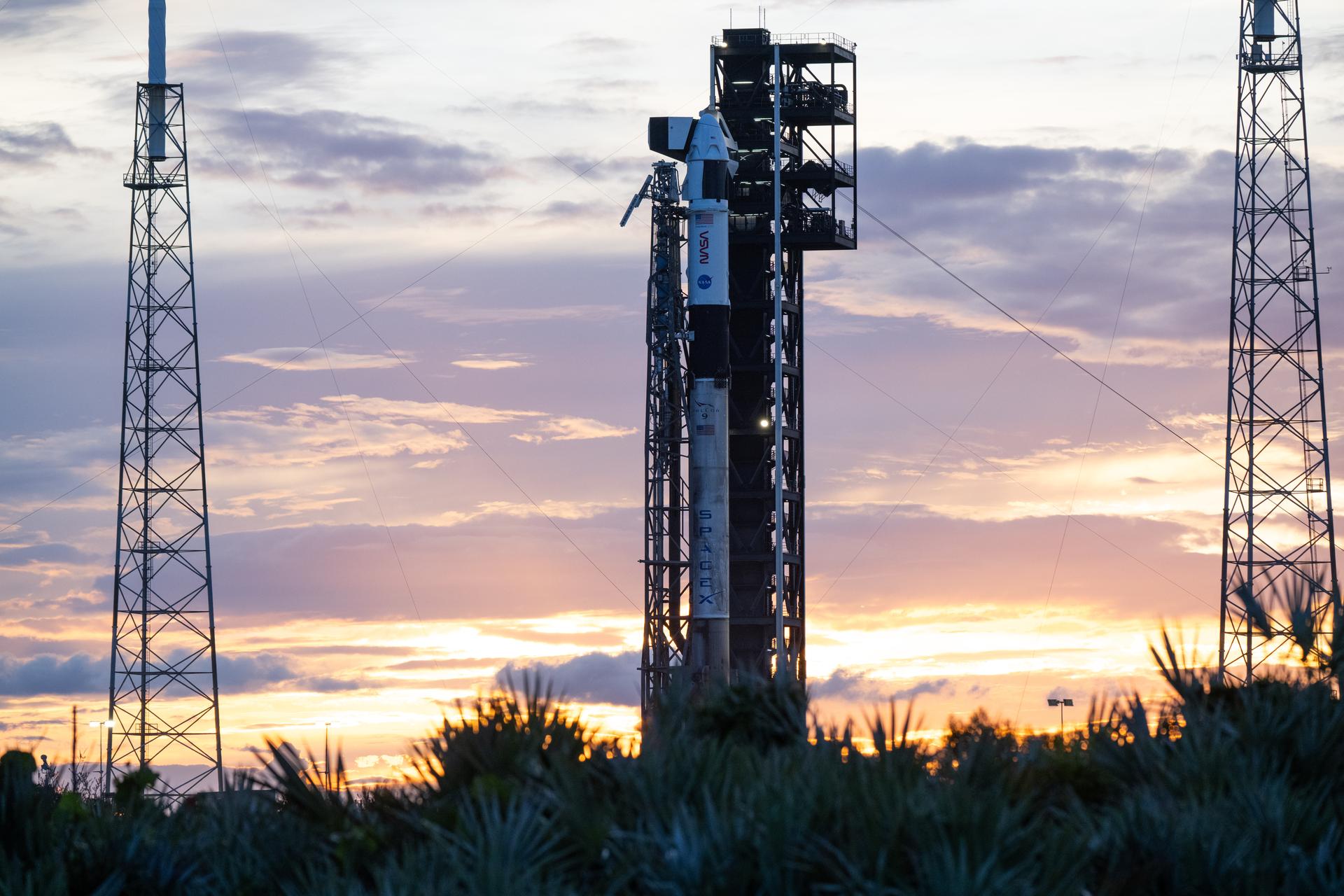
A SpaceX Falcon 9 rocket with the company's Dragon spacecraft on top is seen at sunset on the launch pad at Space Launch Complex 40 as preparations continue for the Crew-13 mission, Wednesday, Sept. 30, 2026, at Cape Canaveral Space Force Station in Florida. NASA’s SpaceX Crew-13 mission is the 13th crew rotation mission of the SpaceX Dragon spacecraft and Falcon 9 rocket to the International Space Station as part of the agency’s Commercial Crew Program. NASA astronauts Jessica Watkins and Luke Delaney, CSA (Canadian Space Agency) astronaut Joshua Kutryk, and Roscosmos cosmonaut Sergey Teteryatnikov are scheduled to launch at 11:10 a.m. EDT on Thursday, Oct. 1, from Space Launch Complex 40 at the Cape Canaveral Space Force Station. Photo Credit: (NASA/Joel Kowsky)
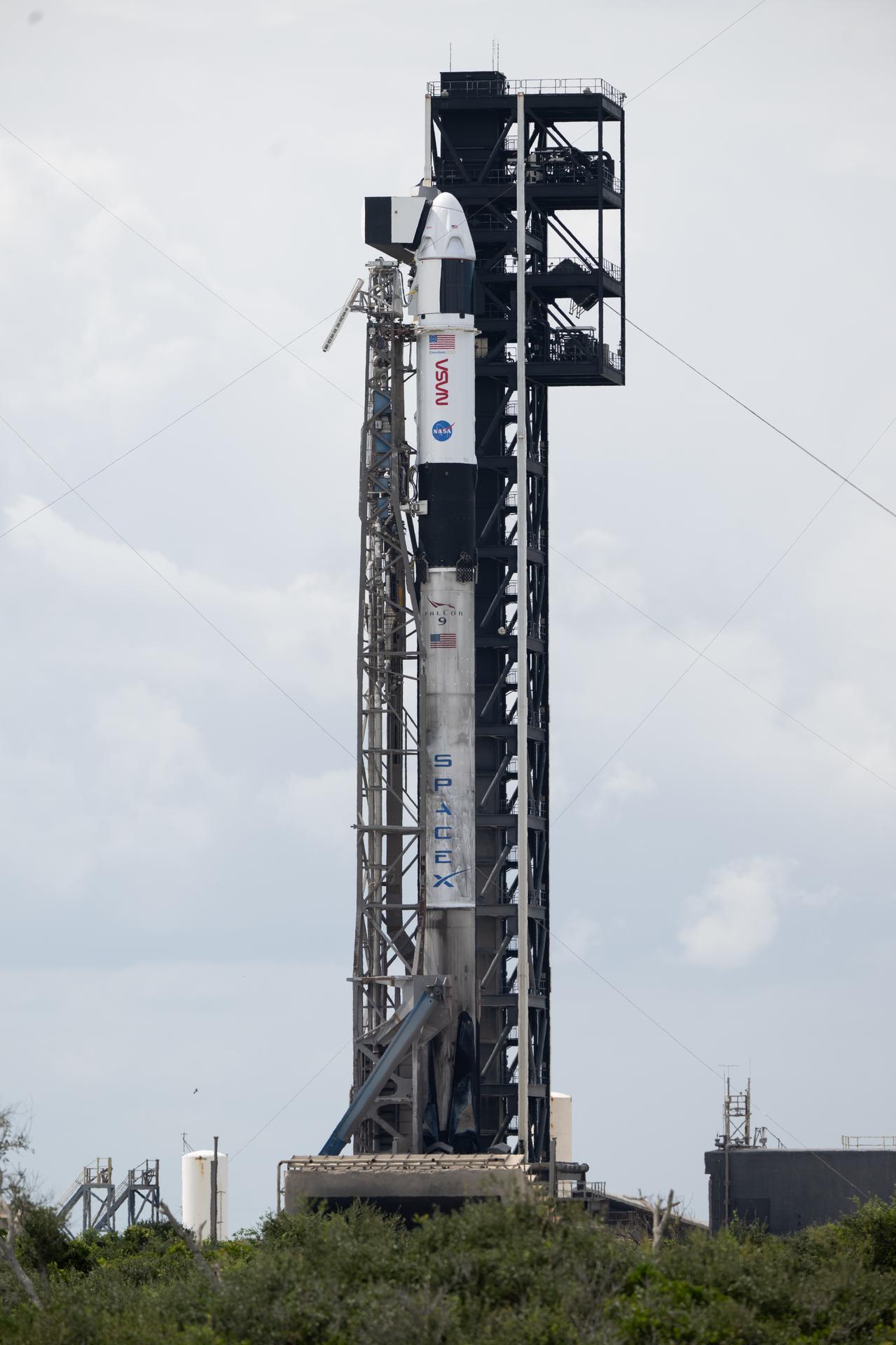
A SpaceX Falcon 9 rocket with the company's Dragon spacecraft on top is seen on the launch pad at Space Launch Complex 40 as preparations continue for the Crew-13 mission, Wednesday, Sept. 30, 2026, at Cape Canaveral Space Force Station in Florida. NASA’s SpaceX Crew-13 mission is the 13th crew rotation mission of the SpaceX Dragon spacecraft and Falcon 9 rocket to the International Space Station as part of the agency’s Commercial Crew Program. NASA astronauts Jessica Watkins and Luke Delaney, CSA (Canadian Space Agency) astronaut Joshua Kutryk, and Roscosmos cosmonaut Sergey Teteryatnikov are scheduled to launch at 11:10 a.m. EDT on Thursday, Oct. 1, from Space Launch Complex 40 at the Cape Canaveral Space Force Station. Photo Credit: (NASA/Joel Kowsky)
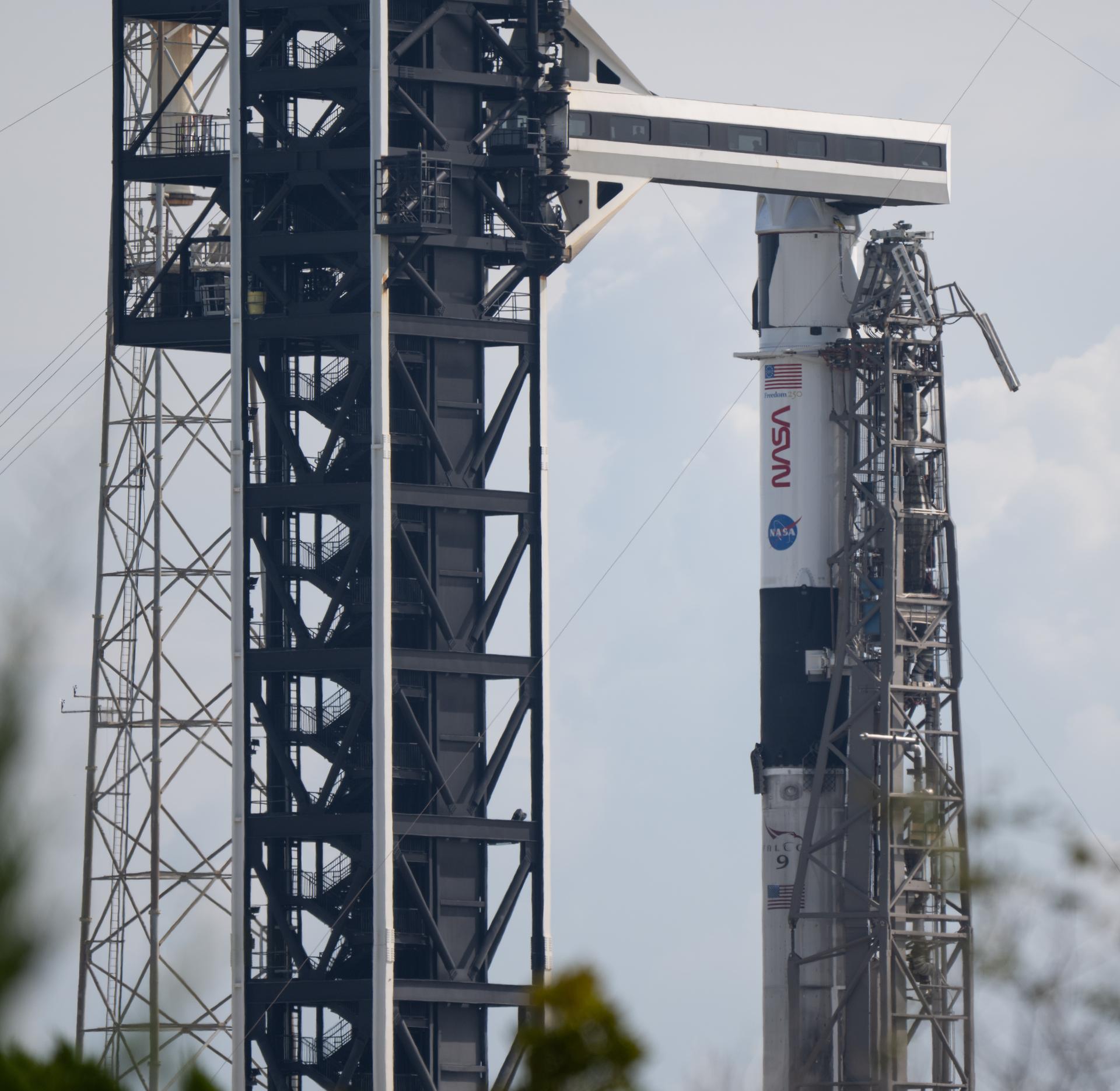
A SpaceX Falcon 9 rocket with the company's Dragon spacecraft on top is seen on the launch pad at Space Launch Complex 40 as preparations continue for the Crew-13 mission, Wednesday, Sept. 30, 2026, at Cape Canaveral Space Force Station in Florida. NASA’s SpaceX Crew-13 mission is the 13th crew rotation mission of the SpaceX Dragon spacecraft and Falcon 9 rocket to the International Space Station as part of the agency’s Commercial Crew Program. NASA astronauts Jessica Watkins and Luke Delaney, CSA (Canadian Space Agency) astronaut Joshua Kutryk, and Roscosmos cosmonaut Sergey Teteryatnikov are scheduled to launch at 11:10 a.m. EDT on Thursday, Oct. 1, from Space Launch Complex 40 at the Cape Canaveral Space Force Station. Photo Credit: (NASA/Joel Kowsky)
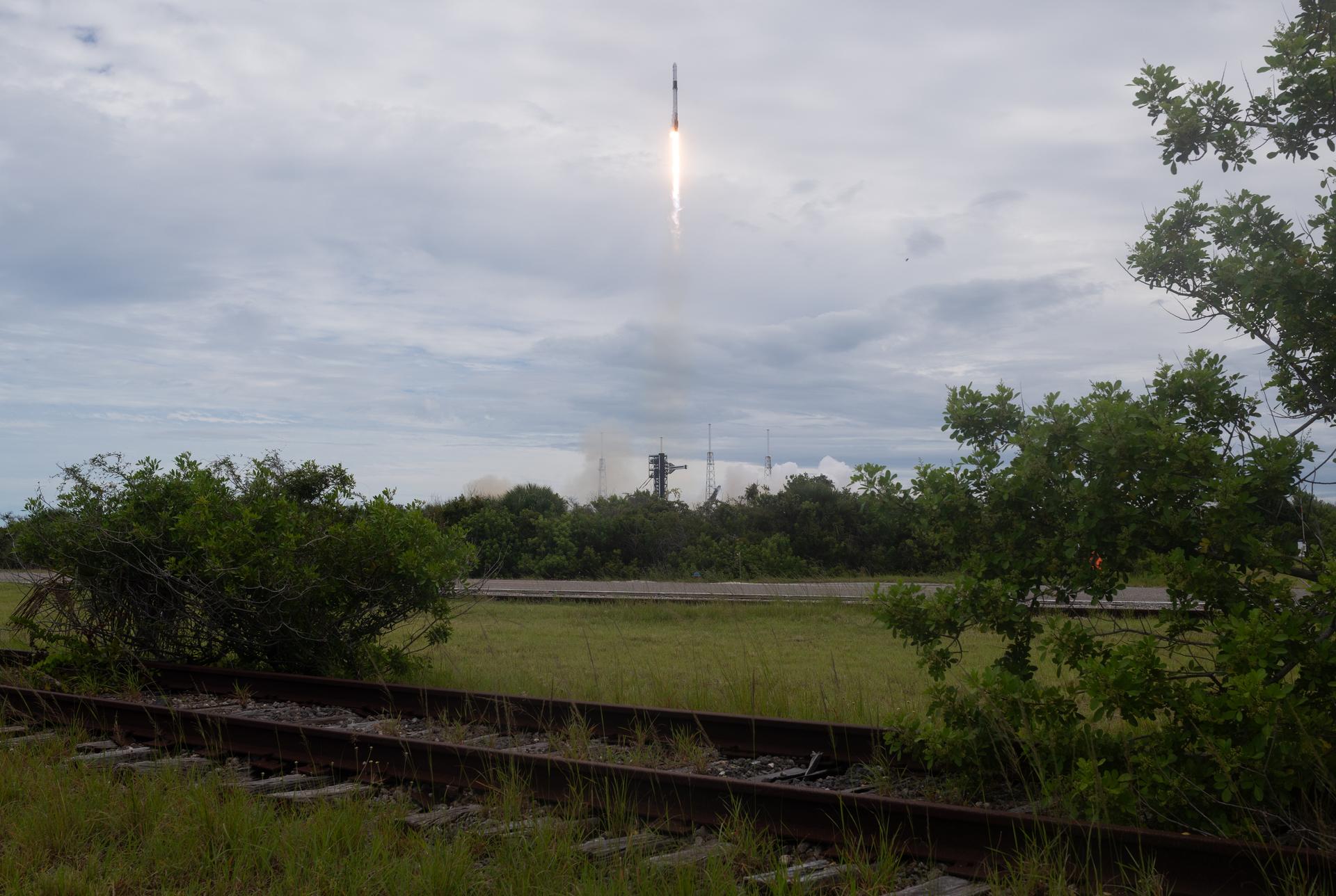
A SpaceX Falcon 9 rocket carrying the company's Dragon spacecraft is launched on NASA’s SpaceX Crew-13 mission to the International Space Station with NASA astronauts Jessica Watkins and Luke Delaney, CSA (Canadian Space Agency) astronaut Joshua Kutryk, and Roscosmos cosmonaut Sergey Teteryatnikov onboard, Thursday, Oct. 1, 2026, from Cape Canaveral Space Force Station in Florida. NASA’s SpaceX Crew-13 mission is the 13th crew rotation mission of the SpaceX Dragon spacecraft and Falcon 9 rocket to the International Space Station as part of the agency’s Commercial Crew Program. Watkins, Delaney, Kutryk, Teteryatnikov launched at 11:10 a.m. EDT from Space Launch Complex 40 at the Cape Canaveral Space Force Station to begin a mission aboard the orbital outpost. Photo Credit: (NASA/Joel Kowsky)
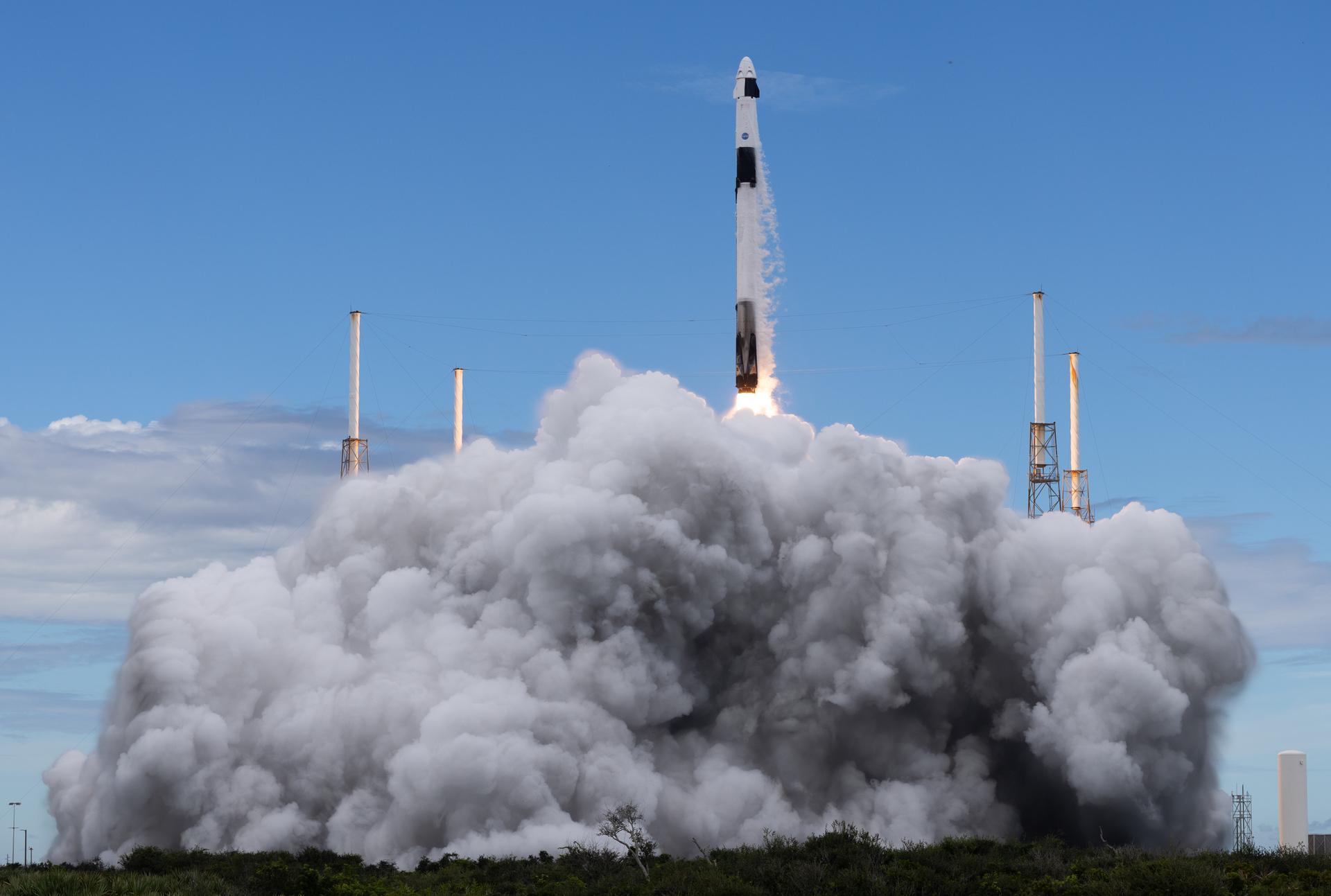
A SpaceX Falcon 9 rocket carrying the company's Dragon spacecraft is launched on NASA’s SpaceX Crew-13 mission to the International Space Station with NASA astronauts Jessica Watkins and Luke Delaney, CSA (Canadian Space Agency) astronaut Joshua Kutryk, and Roscosmos cosmonaut Sergey Teteryatnikov onboard, Thursday, Oct. 1, 2026, from Cape Canaveral Space Force Station in Florida. NASA’s SpaceX Crew-13 mission is the 13th crew rotation mission of the SpaceX Dragon spacecraft and Falcon 9 rocket to the International Space Station as part of the agency’s Commercial Crew Program. Watkins, Delaney, Kutryk, Teteryatnikov launched at 11:10 a.m. EDT from Space Launch Complex 40 at the Cape Canaveral Space Force Station to begin a mission aboard the orbital outpost. Photo Credit: (NASA/Joel Kowsky)
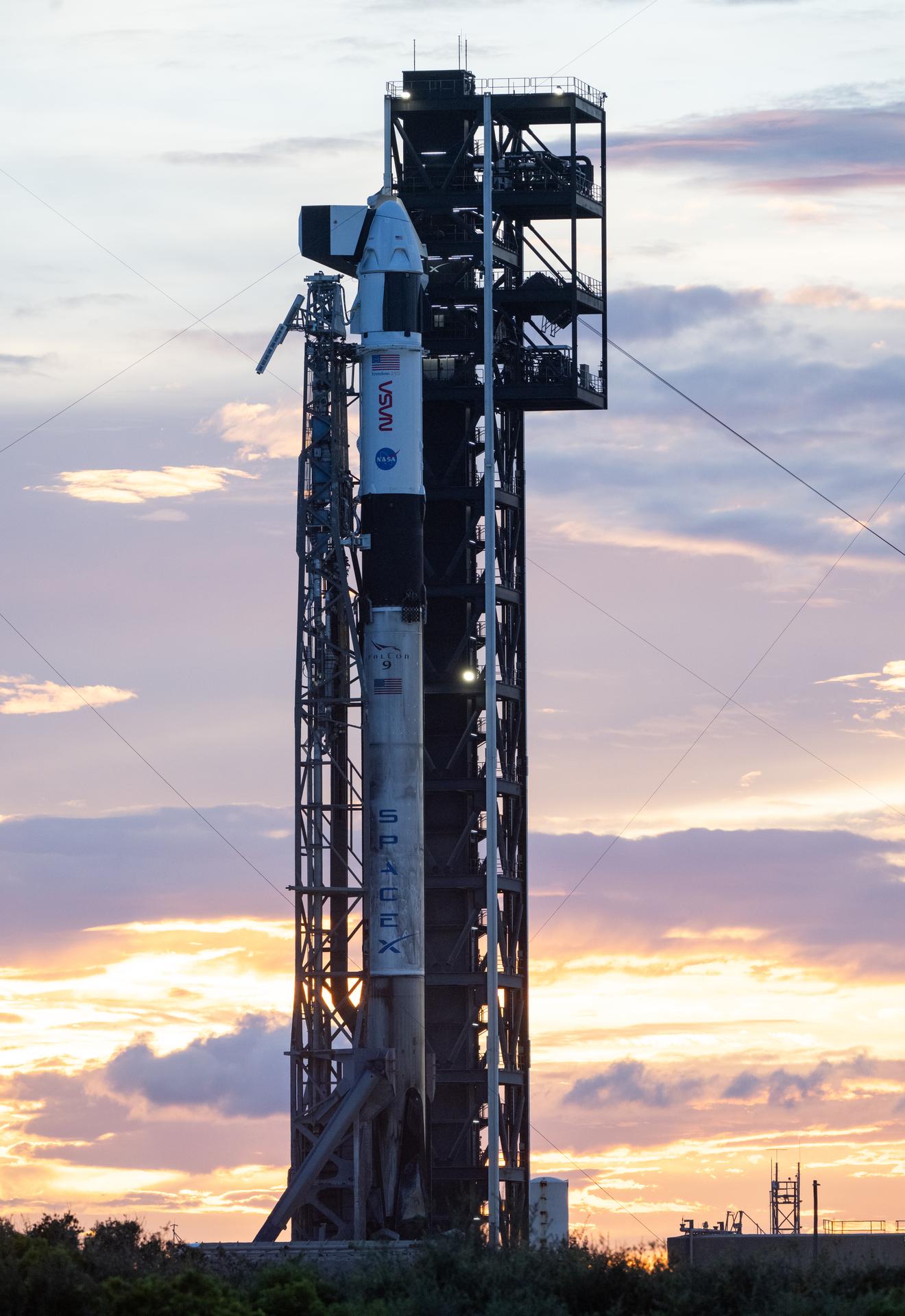
A SpaceX Falcon 9 rocket with the company's Dragon spacecraft on top is seen at sunset on the launch pad at Space Launch Complex 40 as preparations continue for the Crew-13 mission, Wednesday, Sept. 30, 2026, at Cape Canaveral Space Force Station in Florida. NASA’s SpaceX Crew-13 mission is the 13th crew rotation mission of the SpaceX Dragon spacecraft and Falcon 9 rocket to the International Space Station as part of the agency’s Commercial Crew Program. NASA astronauts Jessica Watkins and Luke Delaney, CSA (Canadian Space Agency) astronaut Joshua Kutryk, and Roscosmos cosmonaut Sergey Teteryatnikov are scheduled to launch at 11:10 a.m. EDT on Thursday, Oct. 1, from Space Launch Complex 40 at the Cape Canaveral Space Force Station. Photo Credit: (NASA/Joel Kowsky)
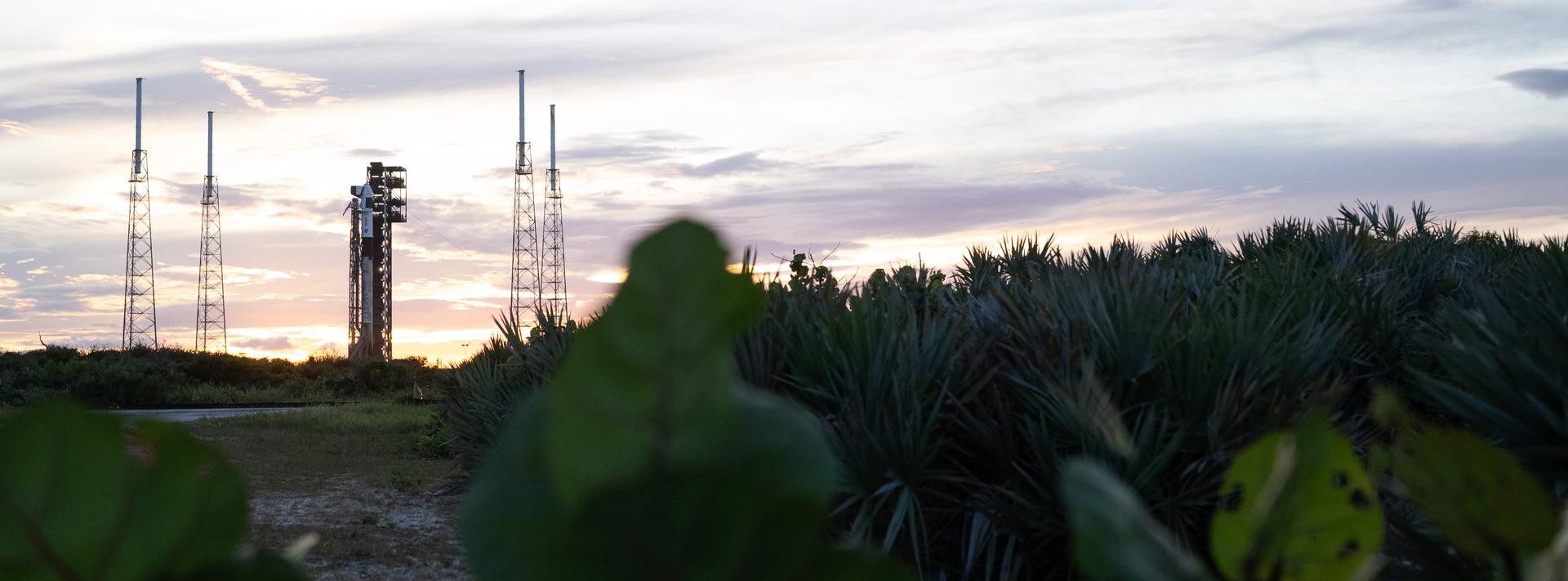
A SpaceX Falcon 9 rocket with the company's Dragon spacecraft on top is seen at sunset on the launch pad at Space Launch Complex 40 as preparations continue for the Crew-13 mission, Wednesday, Sept. 30, 2026, at Cape Canaveral Space Force Station in Florida. NASA’s SpaceX Crew-13 mission is the 13th crew rotation mission of the SpaceX Dragon spacecraft and Falcon 9 rocket to the International Space Station as part of the agency’s Commercial Crew Program. NASA astronauts Jessica Watkins and Luke Delaney, CSA (Canadian Space Agency) astronaut Joshua Kutryk, and Roscosmos cosmonaut Sergey Teteryatnikov are scheduled to launch at 11:10 a.m. EDT on Thursday, Oct. 1, from Space Launch Complex 40 at the Cape Canaveral Space Force Station. Photo Credit: (NASA/Joel Kowsky)
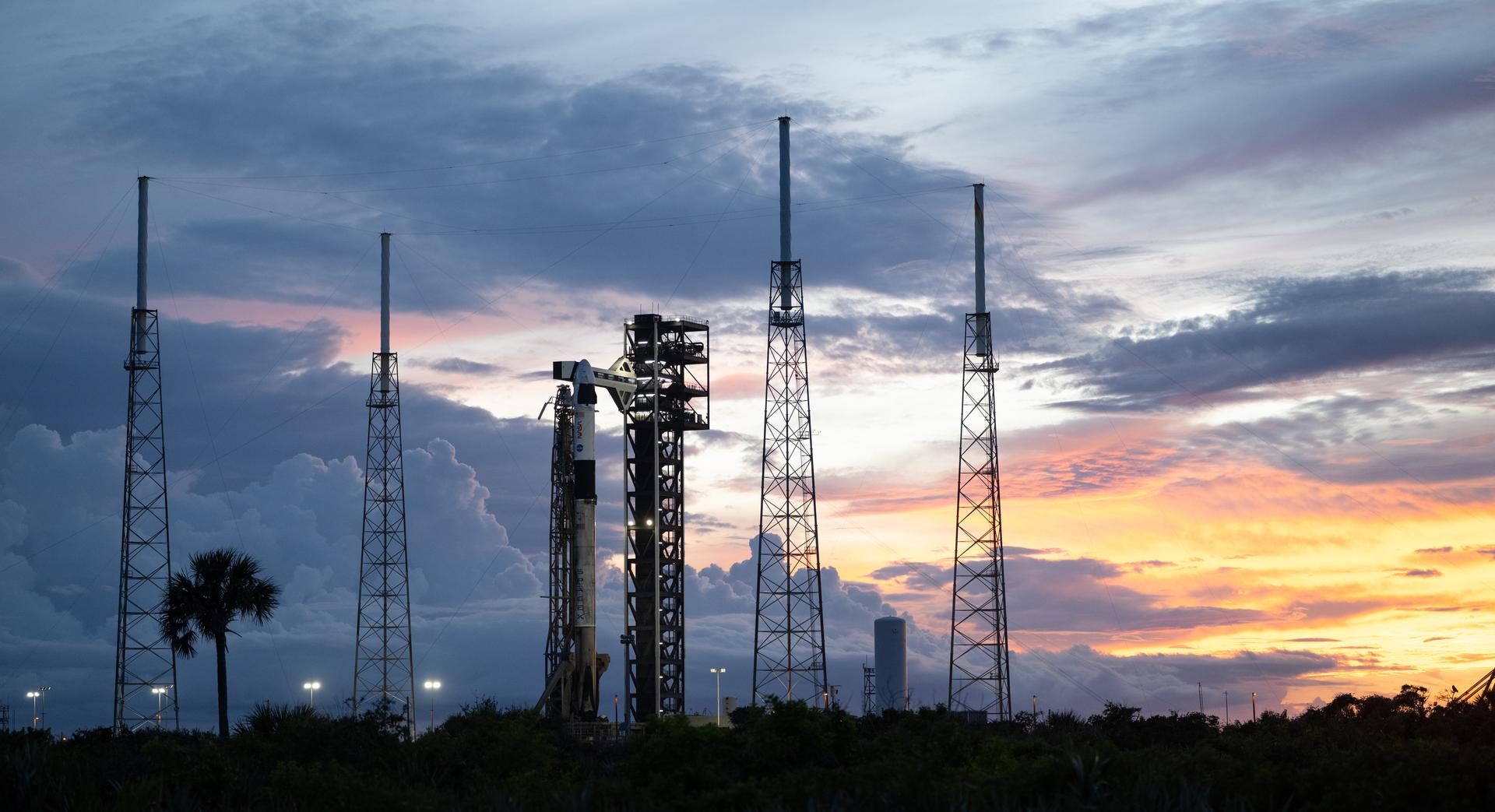
A SpaceX Falcon 9 rocket with the company's Dragon spacecraft on top is seen at sunset on the launch pad at Space Launch Complex 40 as preparations continue for the Crew-13 mission, Wednesday, Sept. 30, 2026, at Cape Canaveral Space Force Station in Florida. NASA’s SpaceX Crew-13 mission is the 13th crew rotation mission of the SpaceX Dragon spacecraft and Falcon 9 rocket to the International Space Station as part of the agency’s Commercial Crew Program. NASA astronauts Jessica Watkins and Luke Delaney, CSA (Canadian Space Agency) astronaut Joshua Kutryk, and Roscosmos cosmonaut Sergey Teteryatnikov are scheduled to launch at 11:10 a.m. EDT on Thursday, Oct. 1, from Space Launch Complex 40 at the Cape Canaveral Space Force Station. Photo Credit: (NASA/Joel Kowsky)
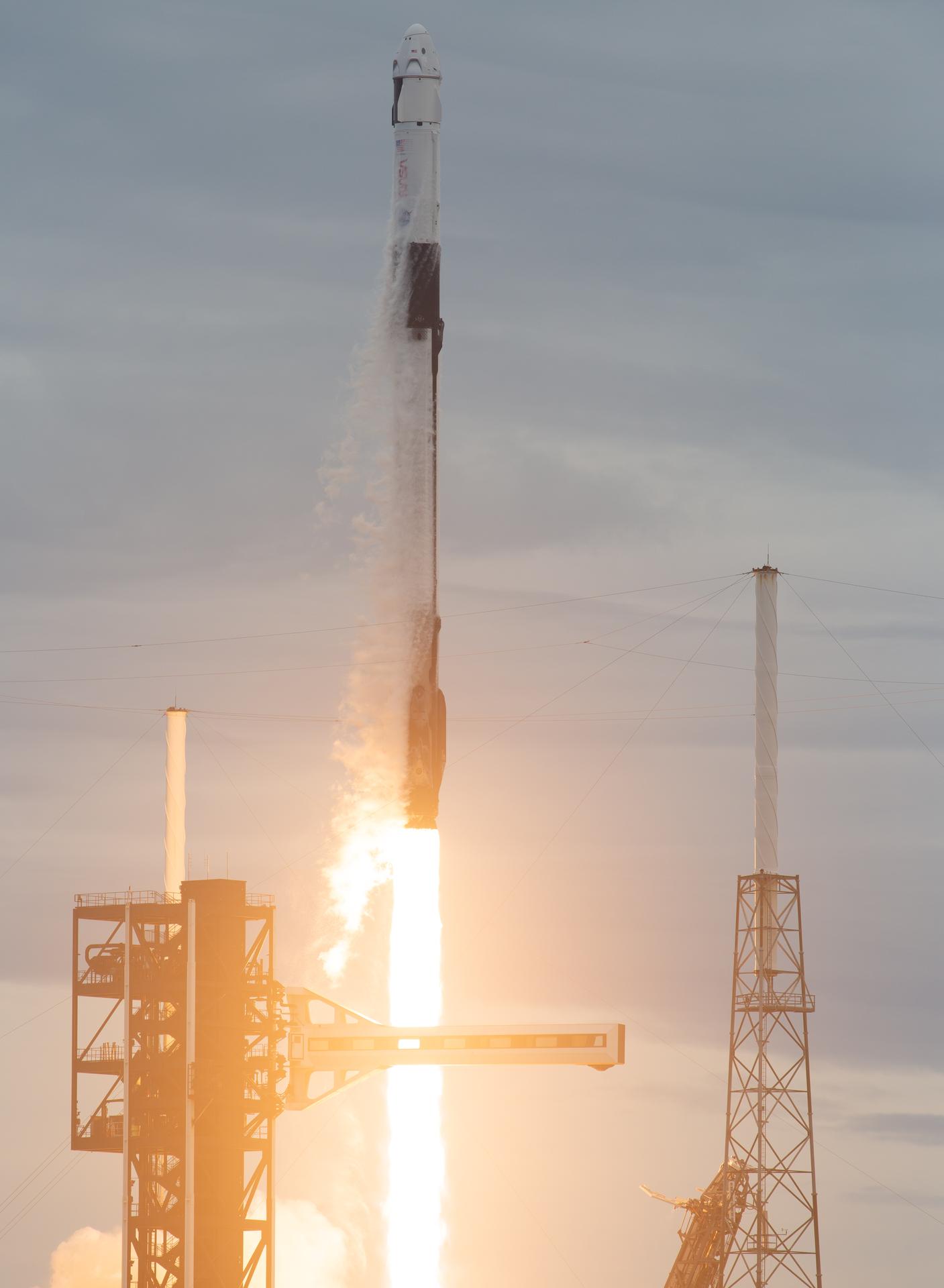
A SpaceX Falcon 9 rocket carrying the company's Dragon spacecraft is launched on NASA’s SpaceX Crew-13 mission to the International Space Station with NASA astronauts Jessica Watkins and Luke Delaney, CSA (Canadian Space Agency) astronaut Joshua Kutryk, and Roscosmos cosmonaut Sergey Teteryatnikov onboard, Thursday, Oct. 1, 2026, from Cape Canaveral Space Force Station in Florida. NASA’s SpaceX Crew-13 mission is the 13th crew rotation mission of the SpaceX Dragon spacecraft and Falcon 9 rocket to the International Space Station as part of the agency’s Commercial Crew Program. Watkins, Delaney, Kutryk, Teteryatnikov launched at 11:10 a.m. EDT from Space Launch Complex 40 at the Cape Canaveral Space Force Station to begin a mission aboard the orbital outpost. Photo Credit: (NASA/Joel Kowsky)
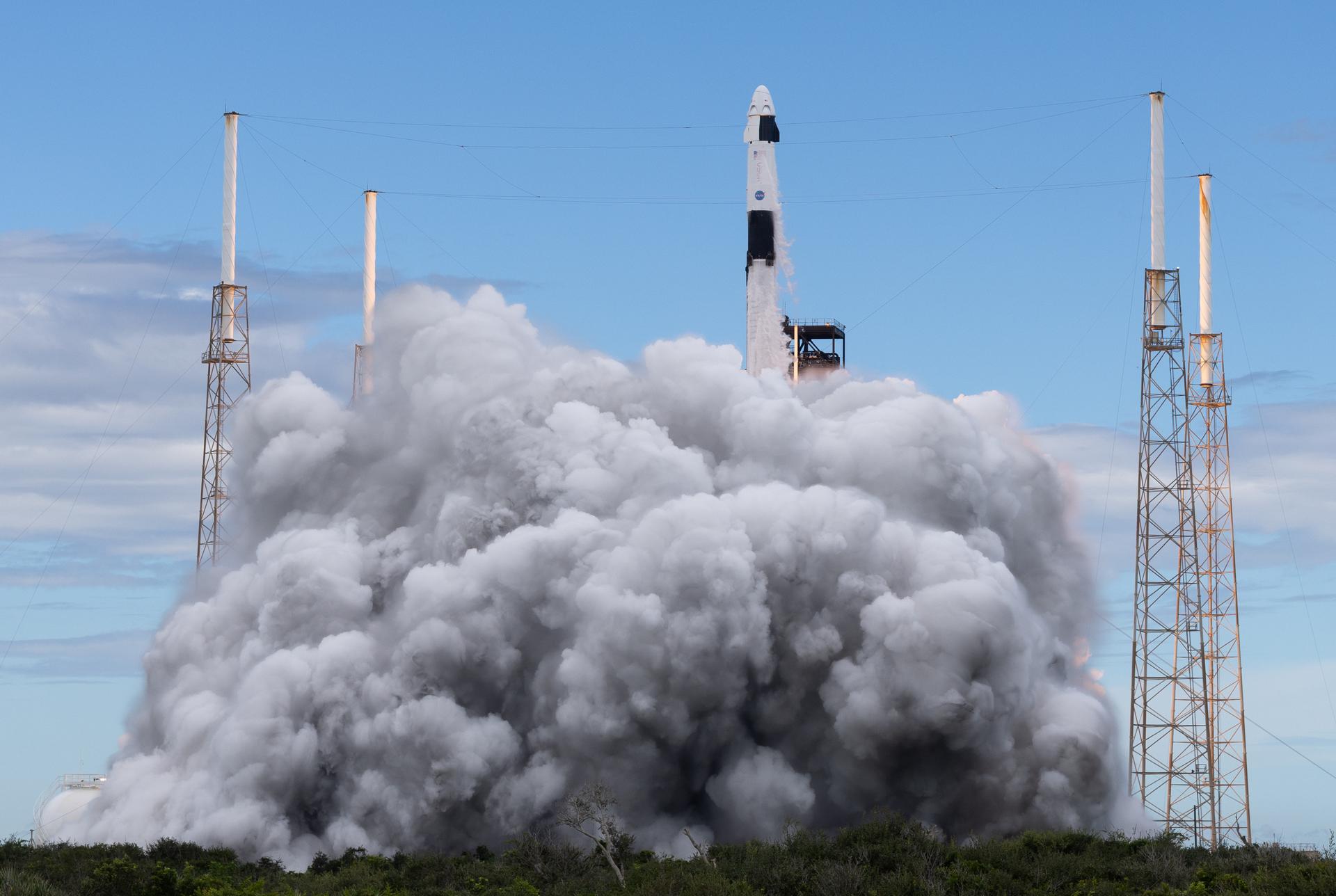
A SpaceX Falcon 9 rocket carrying the company's Dragon spacecraft is launched on NASA’s SpaceX Crew-13 mission to the International Space Station with NASA astronauts Jessica Watkins and Luke Delaney, CSA (Canadian Space Agency) astronaut Joshua Kutryk, and Roscosmos cosmonaut Sergey Teteryatnikov onboard, Thursday, Oct. 1, 2026, from Cape Canaveral Space Force Station in Florida. NASA’s SpaceX Crew-13 mission is the 13th crew rotation mission of the SpaceX Dragon spacecraft and Falcon 9 rocket to the International Space Station as part of the agency’s Commercial Crew Program. Watkins, Delaney, Kutryk, Teteryatnikov launched at 11:10 a.m. EDT from Space Launch Complex 40 at the Cape Canaveral Space Force Station to begin a mission aboard the orbital outpost. Photo Credit: (NASA/Joel Kowsky)
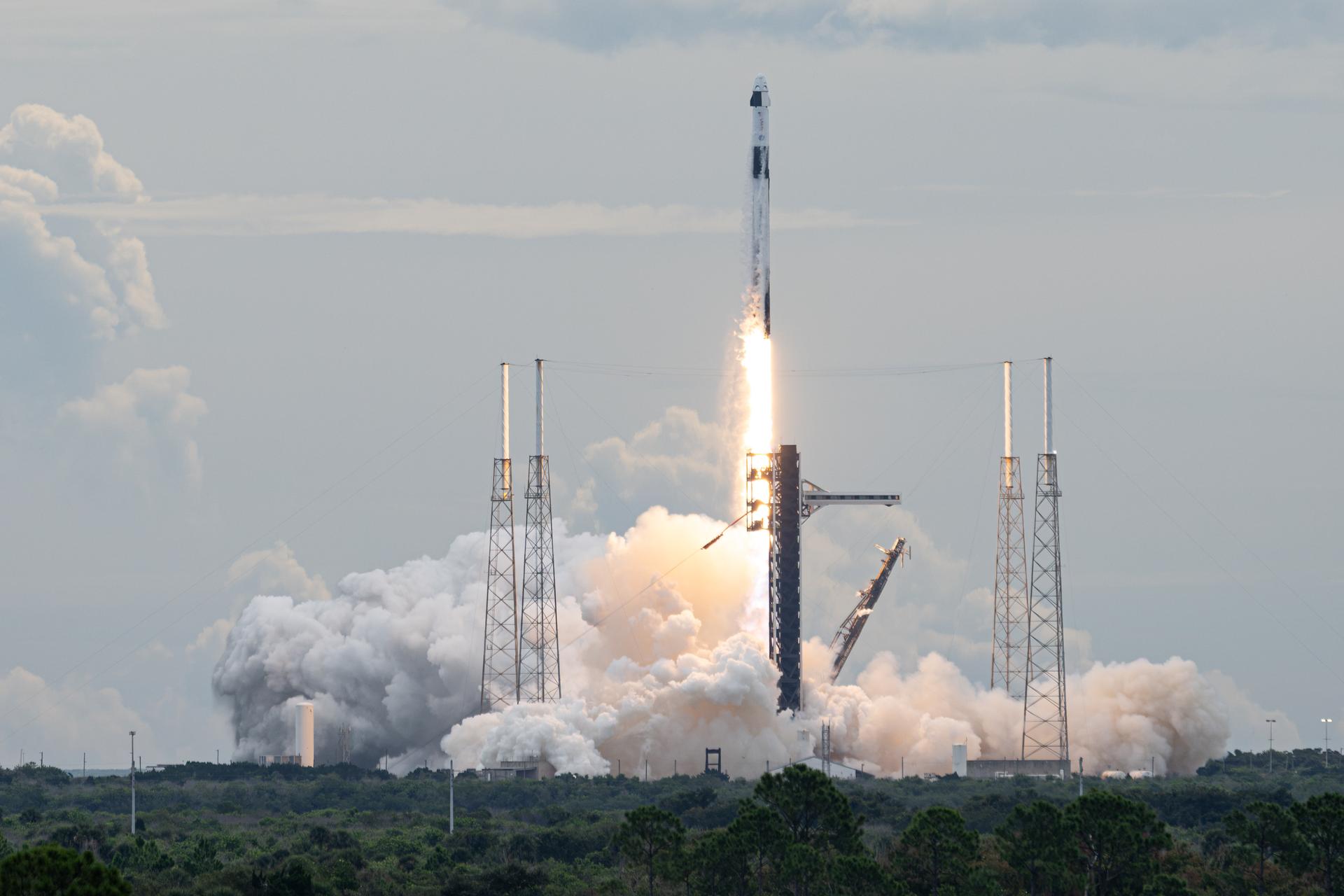
A SpaceX Falcon 9 rocket carrying the company’s Dragon spacecraft is launched on NASA’s SpaceX Crew-13 mission to the International Space Station with NASA astronauts Jessica Watkins and Luke Delaney, CSA (Canadian Space Agency) astronaut Joshua Kutryk, and Roscosmos cosmonaut Sergey Teteryatnikov, Thursday, Oct. 1, 2026, from Cape Canaveral Space Force Station in Florida. NASA’s SpaceX Crew-13 mission is the thirteenth crew rotation mission of the SpaceX Falcon 9 rocket and Dragon spacecraft to the International Space Station as part of the agency’s Commercial Crew Program. Watkins, Delaney, Kutryk, and Teteryatnikov launched at 11:10 a.m. EDT from Space Launch Complex 40 at Cape Canaveral Space Force Station to begin their mission aboard the orbital outpost. Photo Credit: (NASA/John Kraus)
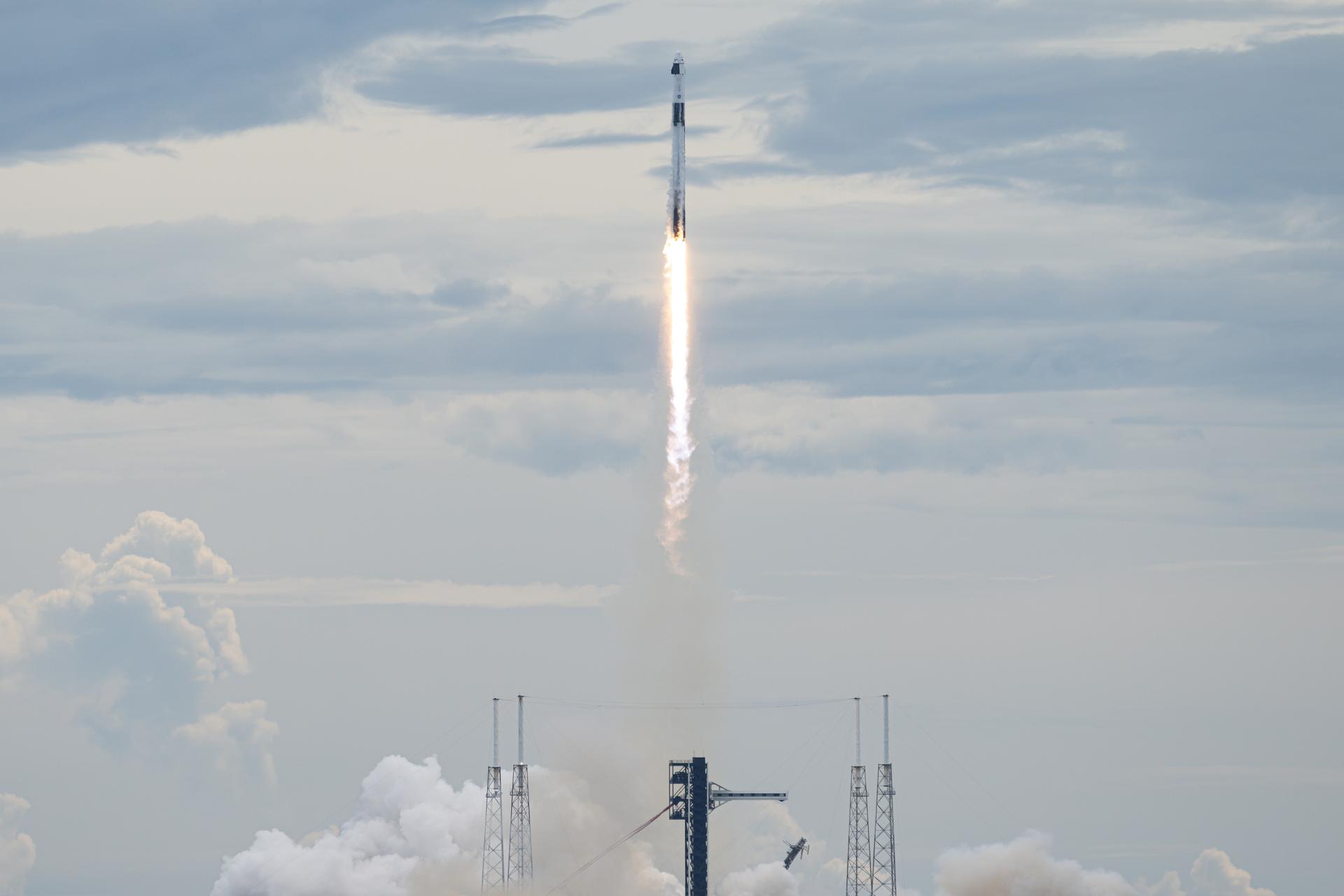
A SpaceX Falcon 9 rocket carrying the company’s Dragon spacecraft is launched on NASA’s SpaceX Crew-13 mission to the International Space Station with NASA astronauts Jessica Watkins and Luke Delaney, CSA (Canadian Space Agency) astronaut Joshua Kutryk, and Roscosmos cosmonaut Sergey Teteryatnikov, Thursday, Oct. 1, 2026, from Cape Canaveral Space Force Station in Florida. NASA’s SpaceX Crew-13 mission is the thirteenth crew rotation mission of the SpaceX Falcon 9 rocket and Dragon spacecraft to the International Space Station as part of the agency’s Commercial Crew Program. Watkins, Delaney, Kutryk, and Teteryatnikov launched at 11:10 a.m. EDT from Space Launch Complex 40 at Cape Canaveral Space Force Station to begin their mission aboard the orbital outpost. Photo Credit: (NASA/John Kraus)
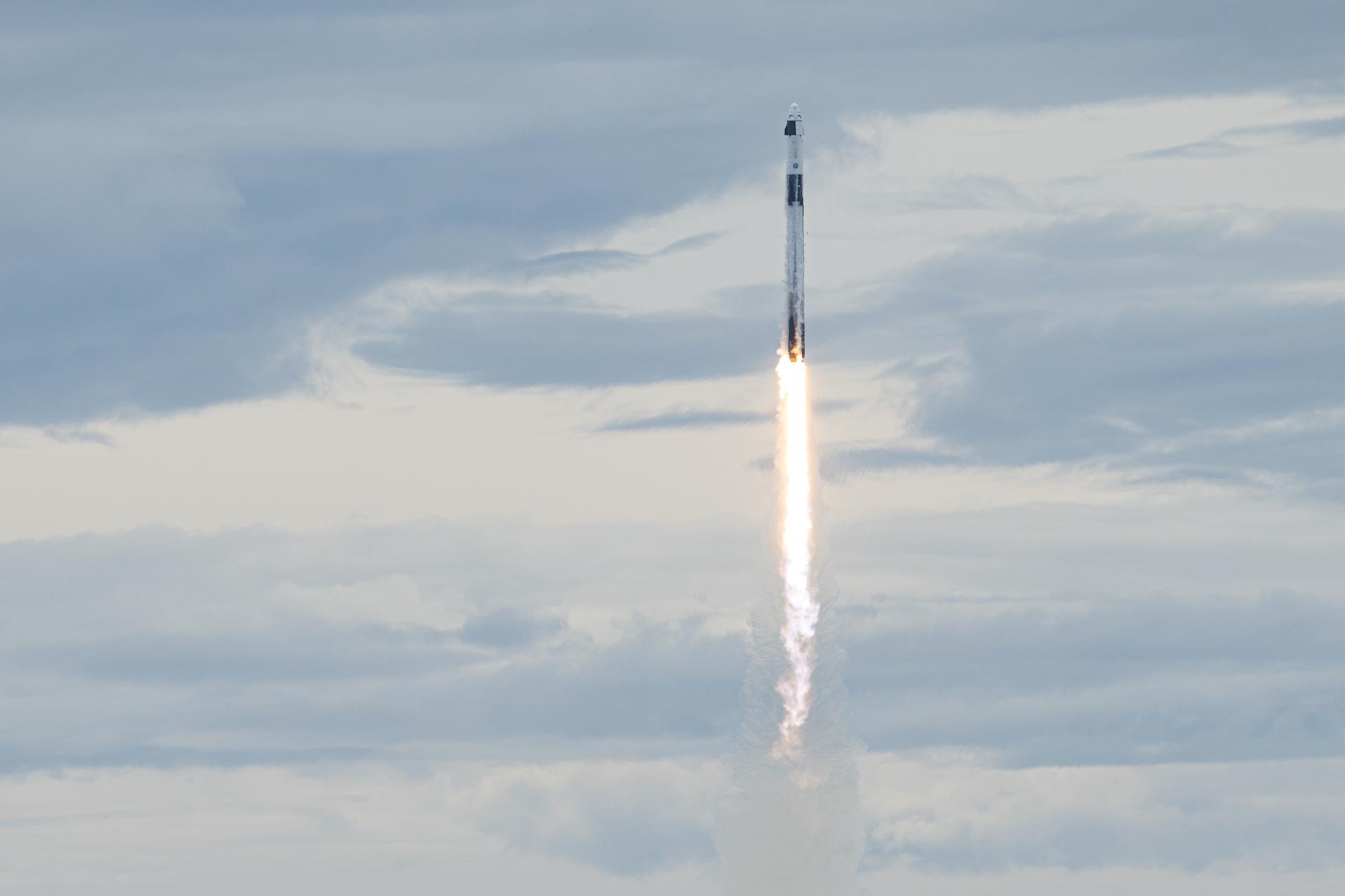
A SpaceX Falcon 9 rocket carrying the company’s Dragon spacecraft is launched on NASA’s SpaceX Crew-13 mission to the International Space Station with NASA astronauts Jessica Watkins and Luke Delaney, CSA (Canadian Space Agency) astronaut Joshua Kutryk, and Roscosmos cosmonaut Sergey Teteryatnikov, Thursday, Oct. 1, 2026, from Cape Canaveral Space Force Station in Florida. NASA’s SpaceX Crew-13 mission is the thirteenth crew rotation mission of the SpaceX Falcon 9 rocket and Dragon spacecraft to the International Space Station as part of the agency’s Commercial Crew Program. Watkins, Delaney, Kutryk, and Teteryatnikov launched at 11:10 a.m. EDT from Space Launch Complex 40 at Cape Canaveral Space Force Station to begin their mission aboard the orbital outpost. Photo Credit: (NASA/John Kraus)
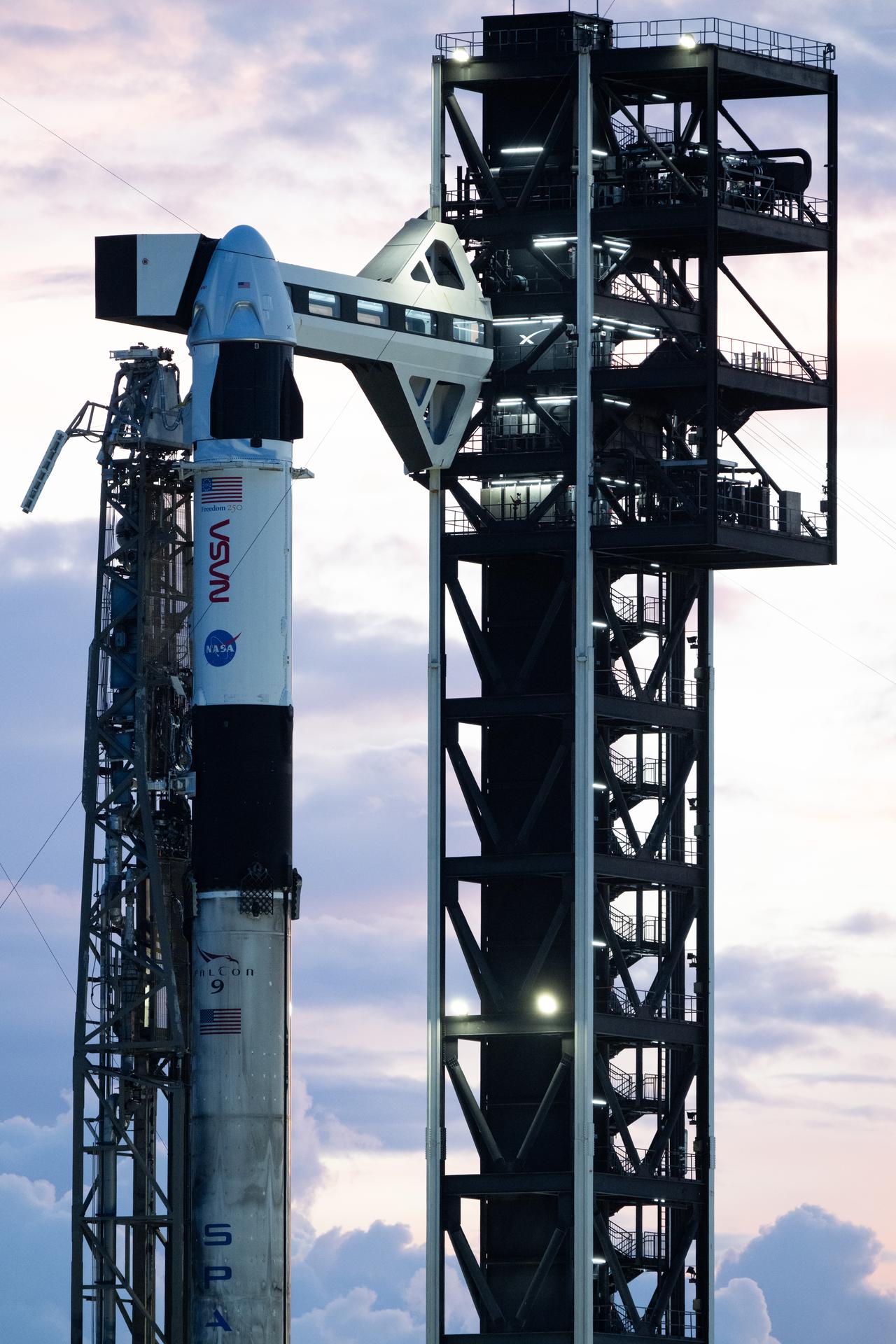
A SpaceX Falcon 9 rocket with the company's Dragon spacecraft on top is seen at sunset on the launch pad at Space Launch Complex 40 as preparations continue for the Crew-13 mission, Wednesday, Sept. 30, 2026, at Cape Canaveral Space Force Station in Florida. NASA’s SpaceX Crew-13 mission is the 13th crew rotation mission of the SpaceX Dragon spacecraft and Falcon 9 rocket to the International Space Station as part of the agency’s Commercial Crew Program. NASA astronauts Jessica Watkins and Luke Delaney, CSA (Canadian Space Agency) astronaut Joshua Kutryk, and Roscosmos cosmonaut Sergey Teteryatnikov are scheduled to launch at 11:10 a.m. EDT on Thursday, Oct. 1, from Space Launch Complex 40 at the Cape Canaveral Space Force Station. Photo Credit: (NASA/Joel Kowsky)
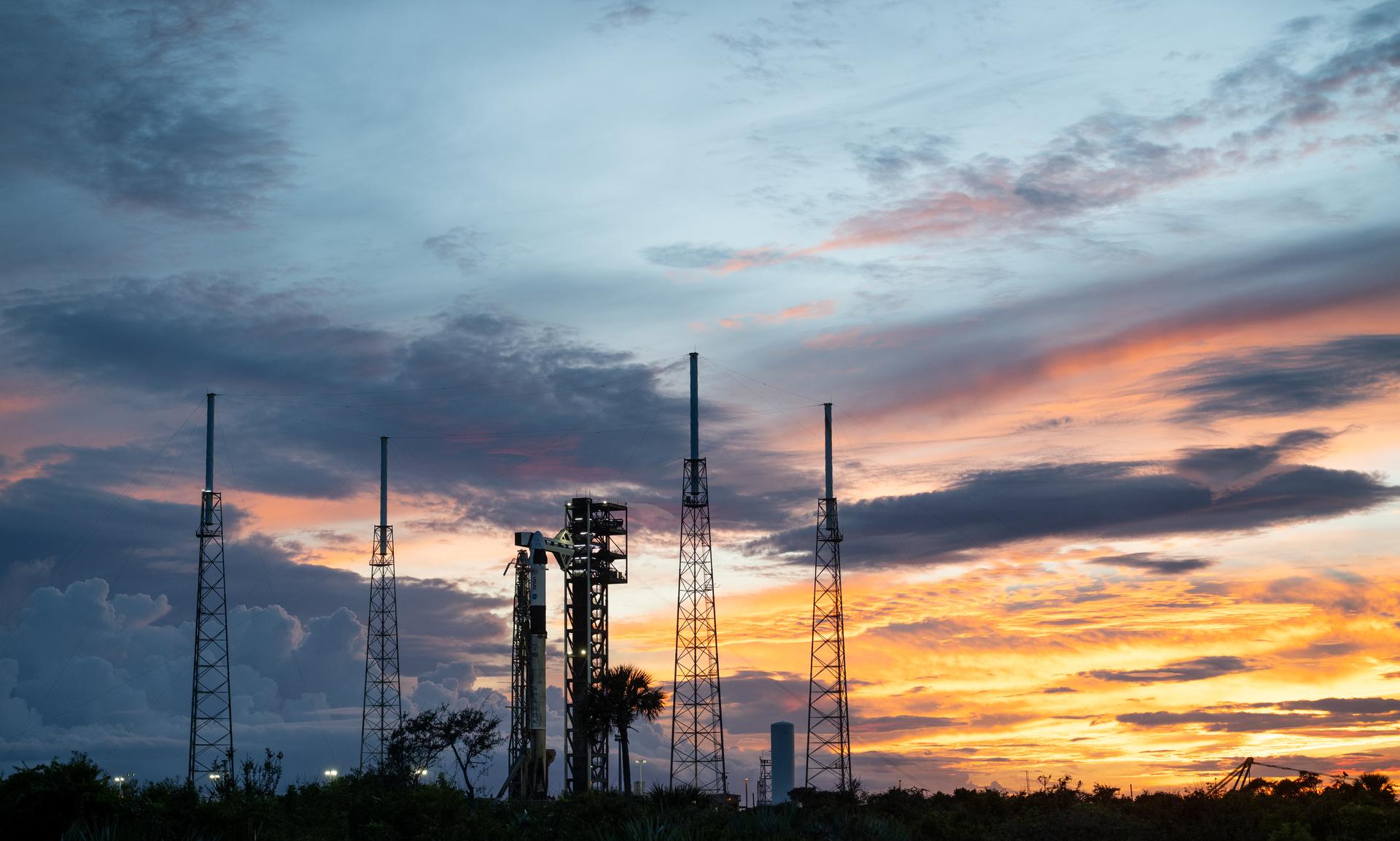
A SpaceX Falcon 9 rocket with the company's Dragon spacecraft on top is seen at sunset on the launch pad at Space Launch Complex 40 as preparations continue for the Crew-13 mission, Wednesday, Sept. 30, 2026, at Cape Canaveral Space Force Station in Florida. NASA’s SpaceX Crew-13 mission is the 13th crew rotation mission of the SpaceX Dragon spacecraft and Falcon 9 rocket to the International Space Station as part of the agency’s Commercial Crew Program. NASA astronauts Jessica Watkins and Luke Delaney, CSA (Canadian Space Agency) astronaut Joshua Kutryk, and Roscosmos cosmonaut Sergey Teteryatnikov are scheduled to launch at 11:10 a.m. EDT on Thursday, Oct. 1, from Space Launch Complex 40 at the Cape Canaveral Space Force Station. Photo Credit: (NASA/Joel Kowsky)
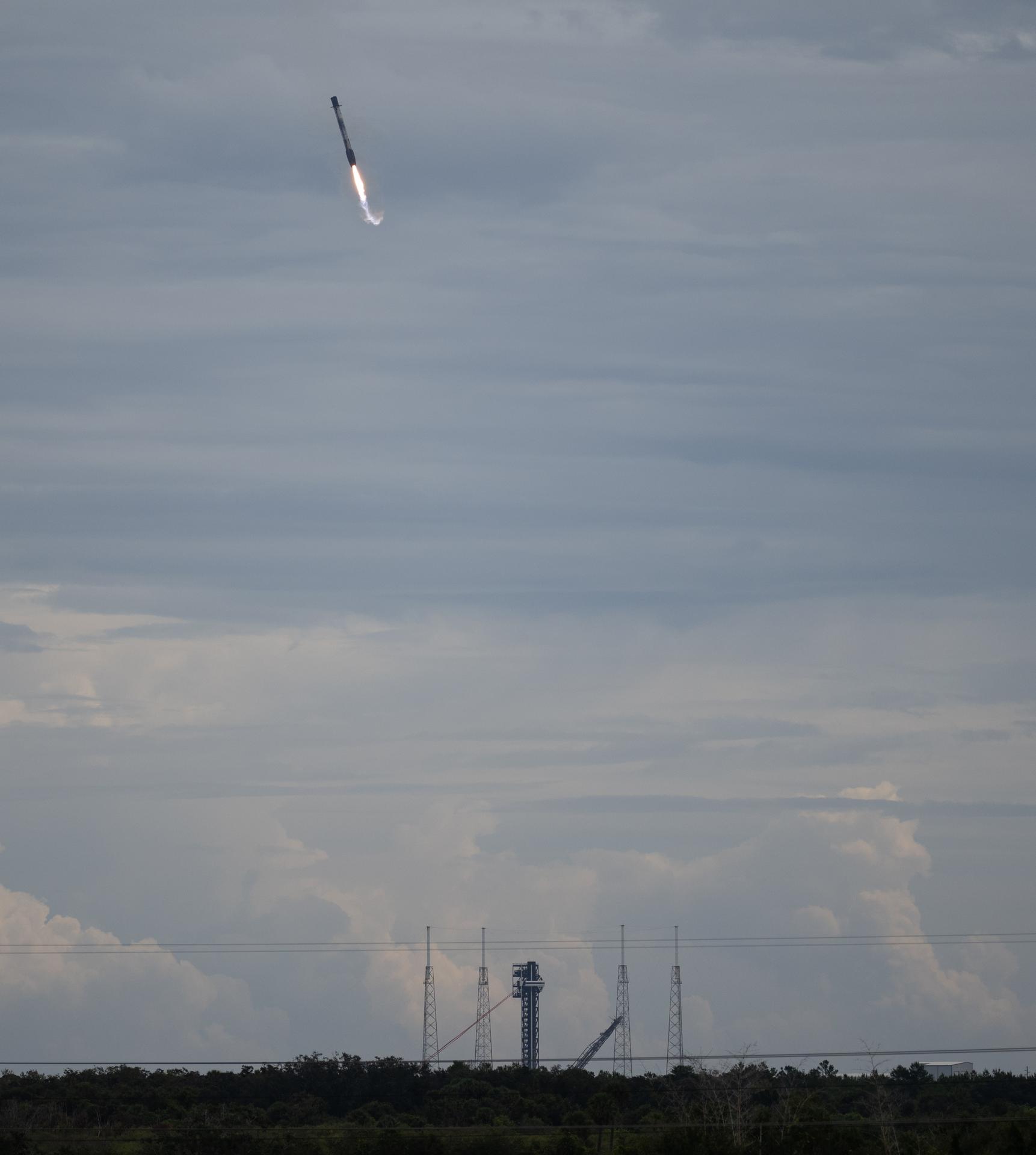
The first stage of the SpaceX Falcon 9 rocket that launched a Dragon spacecraft on NASA’s SpaceX Crew-13 mission to the International Space Station with NASA astronauts Jessica Watkins and Luke Delaney, CSA (Canadian Space Agency) astronaut Joshua Kutryk, and Roscosmos cosmonaut Sergey Teteryatnikov onboard, is seen as it lands at Space Launch Complex 40, Thursday, Oct. 1, 2026, from Cape Canaveral Space Force Station in Florida. NASA’s SpaceX Crew-13 mission is the 13th crew rotation mission of the SpaceX Dragon spacecraft and Falcon 9 rocket to the International Space Station as part of the agency’s Commercial Crew Program. Watkins, Delaney, Kutryk, Teteryatnikov launched at 11:10 a.m. EDT from Space Launch Complex 40 at the Cape Canaveral Space Force Station to begin a mission aboard the orbital outpost. Photo Credit: (NASA/Joel Kowsky)

A SpaceX Falcon 9 rocket carrying the company's Dragon spacecraft is launched on NASA’s SpaceX Crew-13 mission to the International Space Station with NASA astronauts Jessica Watkins and Luke Delaney, CSA (Canadian Space Agency) astronaut Joshua Kutryk, and Roscosmos cosmonaut Sergey Teteryatnikov onboard, Thursday, Oct. 1, 2026, from Cape Canaveral Space Force Station in Florida. NASA’s SpaceX Crew-13 mission is the 13th crew rotation mission of the SpaceX Dragon spacecraft and Falcon 9 rocket to the International Space Station as part of the agency’s Commercial Crew Program. Watkins, Delaney, Kutryk, Teteryatnikov launched at 11:10 a.m. EDT from Space Launch Complex 40 at the Cape Canaveral Space Force Station to begin a mission aboard the orbital outpost. Photo Credit: (NASA/Joel Kowsky)
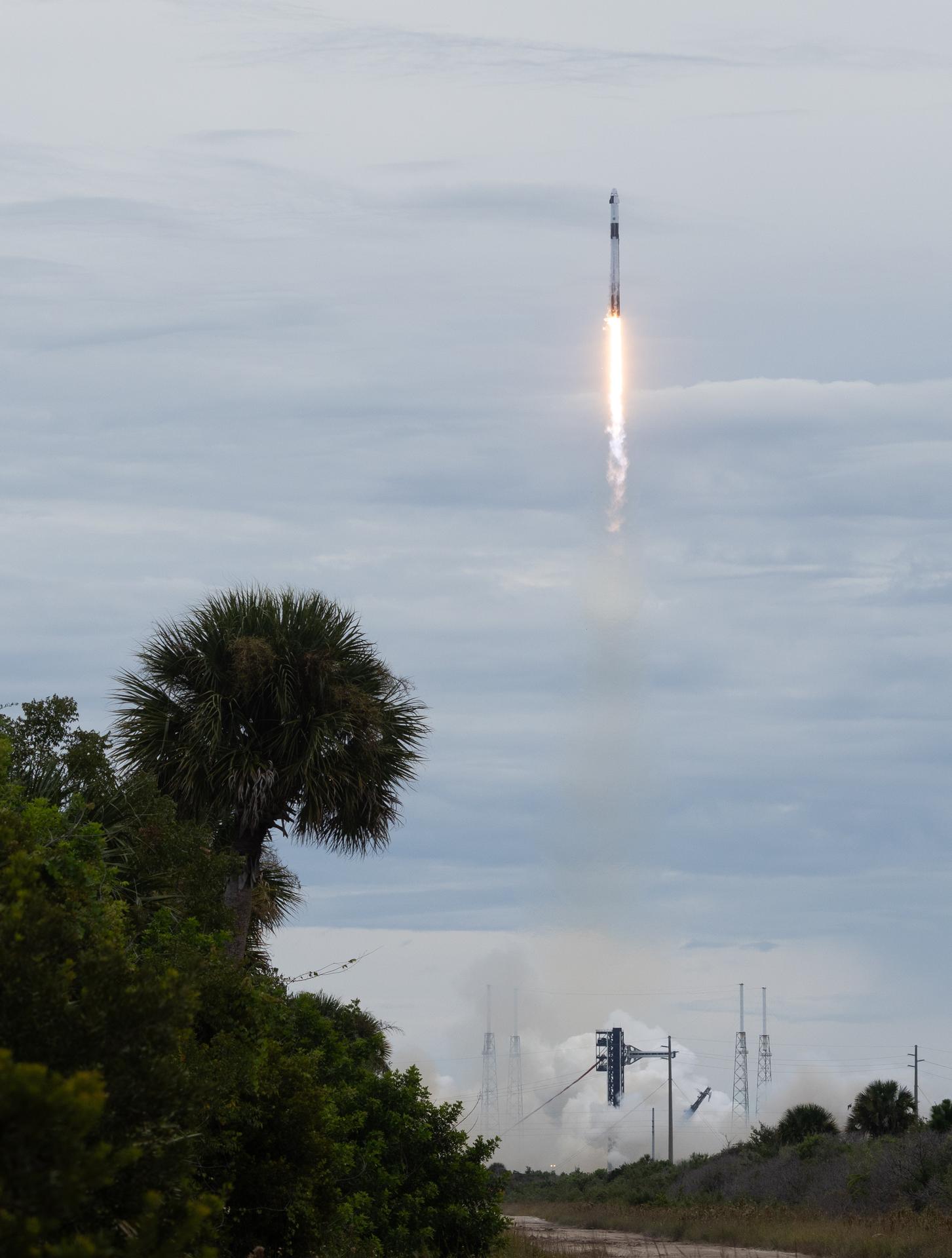
A SpaceX Falcon 9 rocket carrying the company's Dragon spacecraft is launched on NASA’s SpaceX Crew-13 mission to the International Space Station with NASA astronauts Jessica Watkins and Luke Delaney, CSA (Canadian Space Agency) astronaut Joshua Kutryk, and Roscosmos cosmonaut Sergey Teteryatnikov onboard, Thursday, Oct. 1, 2026, from Cape Canaveral Space Force Station in Florida. NASA’s SpaceX Crew-13 mission is the 13th crew rotation mission of the SpaceX Dragon spacecraft and Falcon 9 rocket to the International Space Station as part of the agency’s Commercial Crew Program. Watkins, Delaney, Kutryk, Teteryatnikov launched at 11:10 a.m. EDT from Space Launch Complex 40 at the Cape Canaveral Space Force Station to begin a mission aboard the orbital outpost. Photo Credit: (NASA/Joel Kowsky)
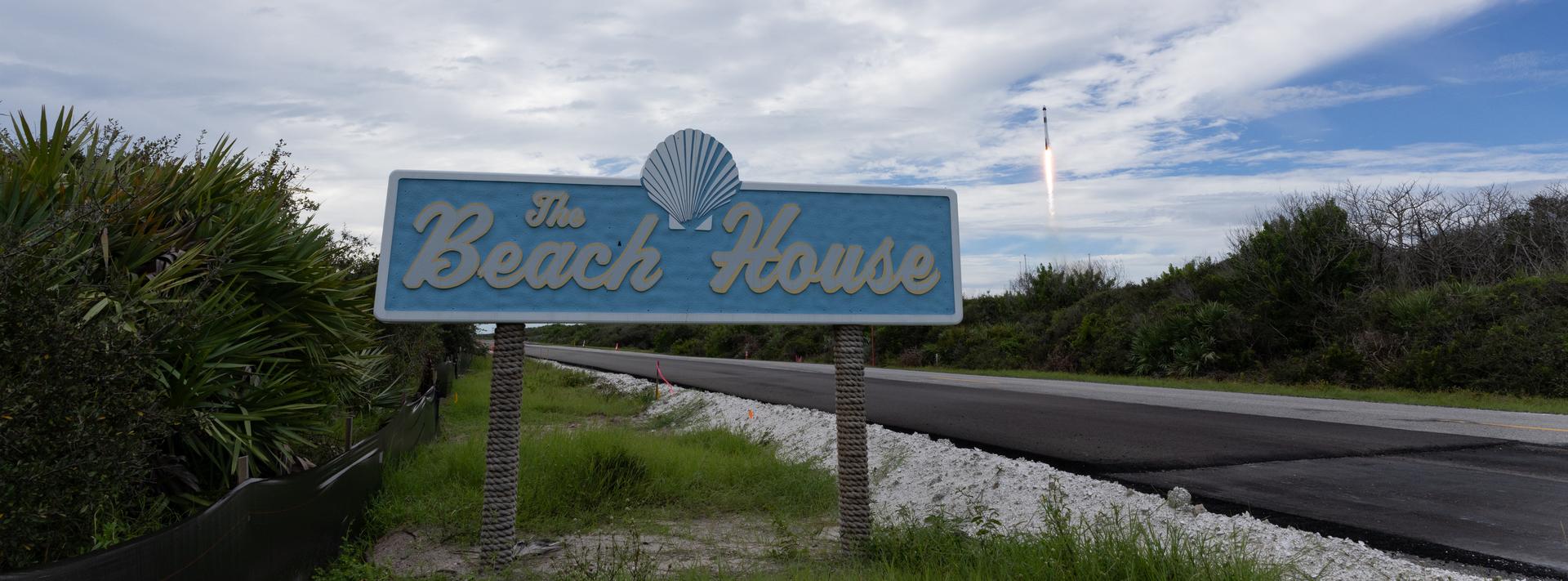
A SpaceX Falcon 9 rocket carrying the company's Dragon spacecraft is launched on NASA’s SpaceX Crew-13 mission to the International Space Station with NASA astronauts Jessica Watkins and Luke Delaney, CSA (Canadian Space Agency) astronaut Joshua Kutryk, and Roscosmos cosmonaut Sergey Teteryatnikov onboard, Thursday, Oct. 1, 2026, from Cape Canaveral Space Force Station in Florida. NASA’s SpaceX Crew-13 mission is the 13th crew rotation mission of the SpaceX Dragon spacecraft and Falcon 9 rocket to the International Space Station as part of the agency’s Commercial Crew Program. Watkins, Delaney, Kutryk, Teteryatnikov launched at 11:10 a.m. EDT from Space Launch Complex 40 at the Cape Canaveral Space Force Station to begin a mission aboard the orbital outpost. Photo Credit: (NASA/Joel Kowsky)
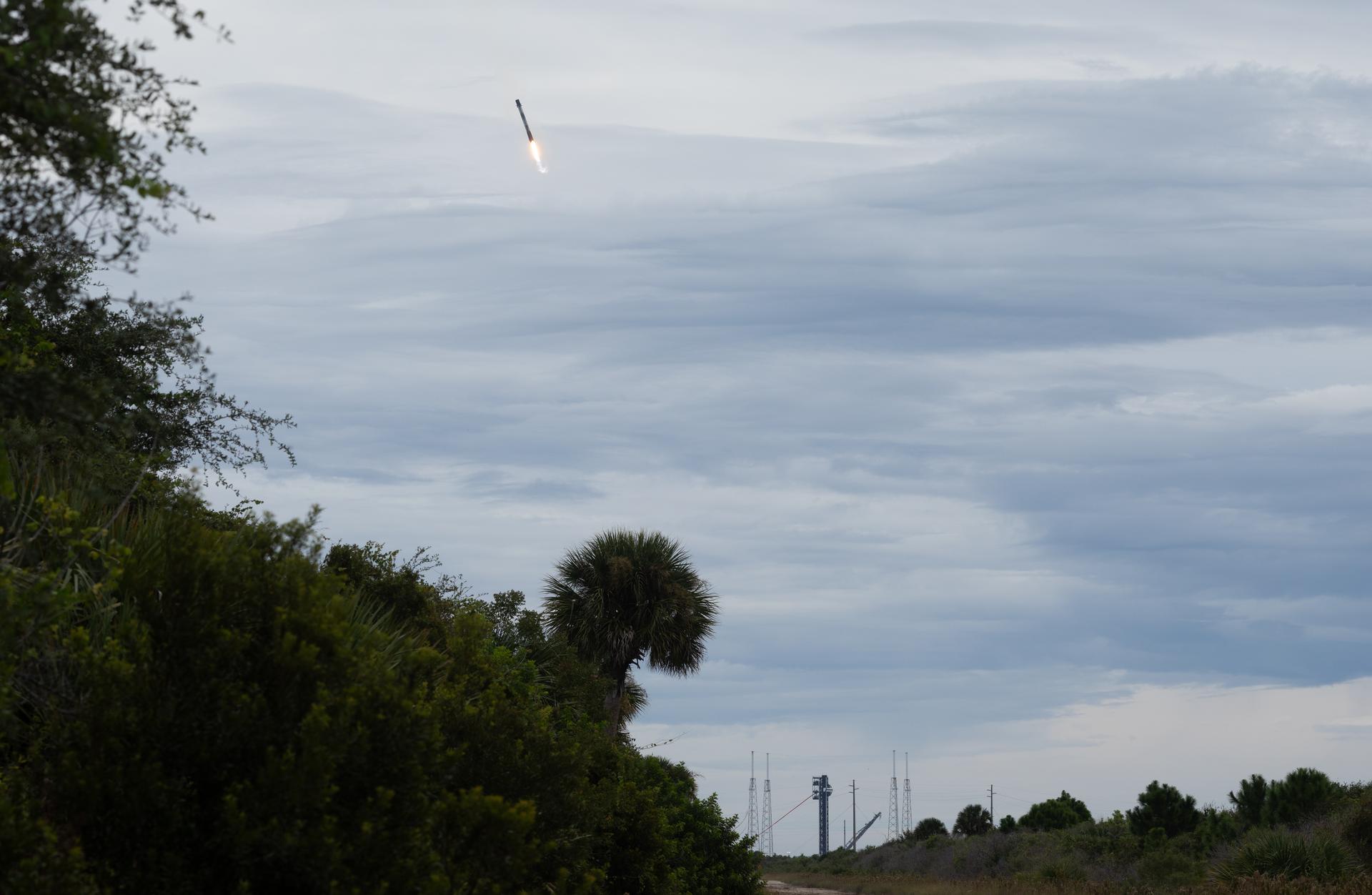
The first stage of the SpaceX Falcon 9 rocket that launched a Dragon spacecraft on NASA’s SpaceX Crew-13 mission to the International Space Station with NASA astronauts Jessica Watkins and Luke Delaney, CSA (Canadian Space Agency) astronaut Joshua Kutryk, and Roscosmos cosmonaut Sergey Teteryatnikov onboard, is seen as it lands at Space Launch Complex 40, Thursday, Oct. 1, 2026, from Cape Canaveral Space Force Station in Florida. NASA’s SpaceX Crew-13 mission is the 13th crew rotation mission of the SpaceX Dragon spacecraft and Falcon 9 rocket to the International Space Station as part of the agency’s Commercial Crew Program. Watkins, Delaney, Kutryk, Teteryatnikov launched at 11:10 a.m. EDT from Space Launch Complex 40 at the Cape Canaveral Space Force Station to begin a mission aboard the orbital outpost. Photo Credit: (NASA/Joel Kowsky)
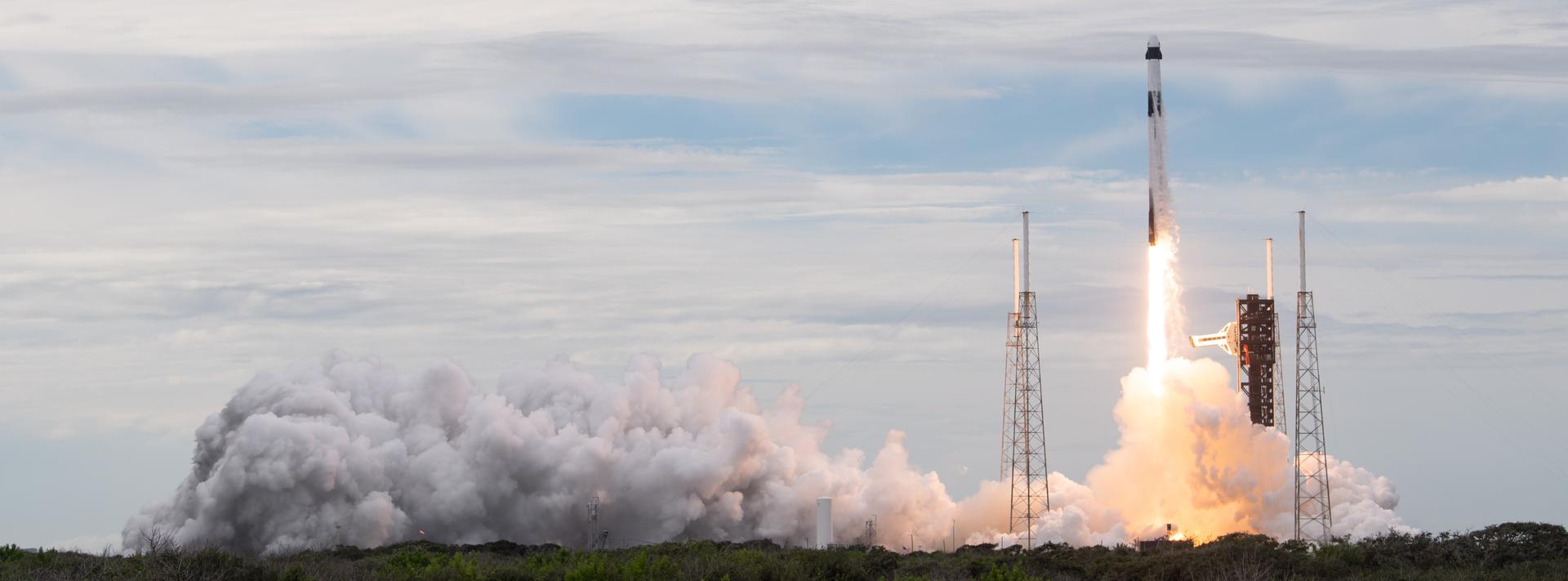
A SpaceX Falcon 9 rocket carrying the company's Dragon spacecraft is launched on NASA’s SpaceX Crew-13 mission to the International Space Station with NASA astronauts Jessica Watkins and Luke Delaney, CSA (Canadian Space Agency) astronaut Joshua Kutryk, and Roscosmos cosmonaut Sergey Teteryatnikov onboard, Thursday, Oct. 1, 2026, from Cape Canaveral Space Force Station in Florida. NASA’s SpaceX Crew-13 mission is the 13th crew rotation mission of the SpaceX Dragon spacecraft and Falcon 9 rocket to the International Space Station as part of the agency’s Commercial Crew Program. Watkins, Delaney, Kutryk, Teteryatnikov launched at 11:10 a.m. EDT from Space Launch Complex 40 at the Cape Canaveral Space Force Station to begin a mission aboard the orbital outpost. Photo Credit: (NASA/Joel Kowsky)
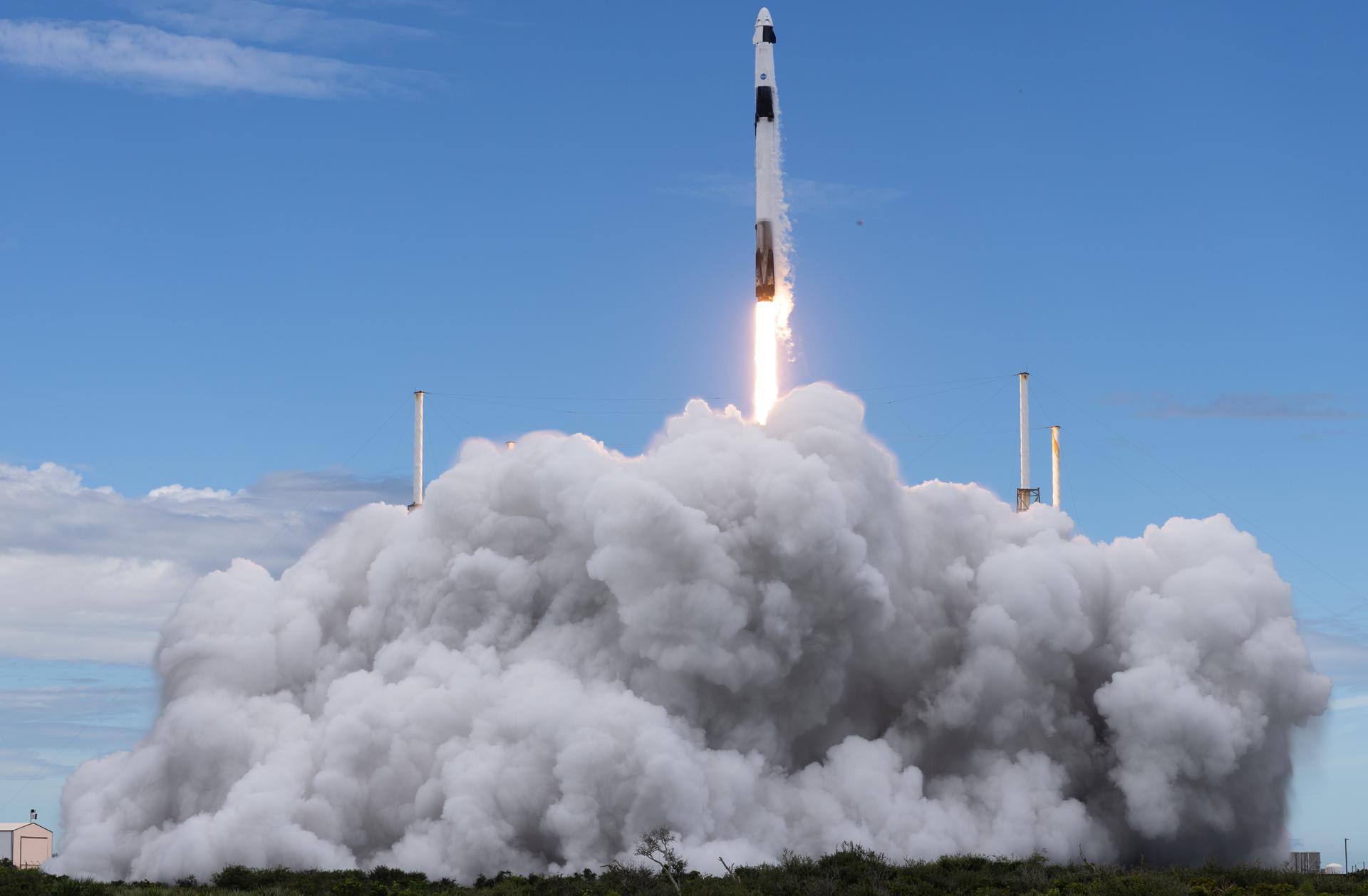
A SpaceX Falcon 9 rocket carrying the company's Dragon spacecraft is launched on NASA’s SpaceX Crew-13 mission to the International Space Station with NASA astronauts Jessica Watkins and Luke Delaney, CSA (Canadian Space Agency) astronaut Joshua Kutryk, and Roscosmos cosmonaut Sergey Teteryatnikov onboard, Thursday, Oct. 1, 2026, from Cape Canaveral Space Force Station in Florida. NASA’s SpaceX Crew-13 mission is the 13th crew rotation mission of the SpaceX Dragon spacecraft and Falcon 9 rocket to the International Space Station as part of the agency’s Commercial Crew Program. Watkins, Delaney, Kutryk, Teteryatnikov launched at 11:10 a.m. EDT from Space Launch Complex 40 at the Cape Canaveral Space Force Station to begin a mission aboard the orbital outpost. Photo Credit: (NASA/Joel Kowsky)
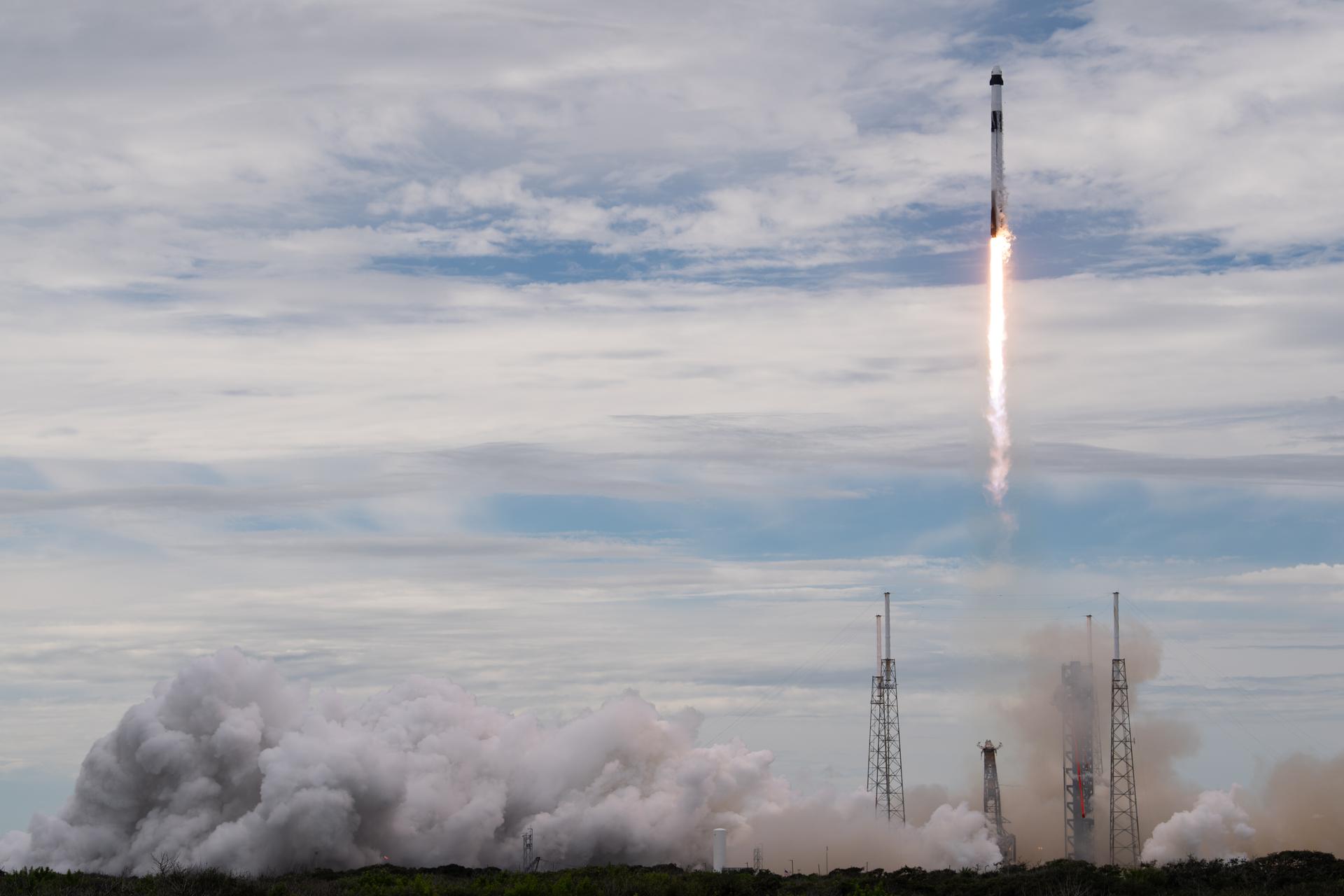
A SpaceX Falcon 9 rocket carrying the company's Dragon spacecraft is launched on NASA’s SpaceX Crew-13 mission to the International Space Station with NASA astronauts Jessica Watkins and Luke Delaney, CSA (Canadian Space Agency) astronaut Joshua Kutryk, and Roscosmos cosmonaut Sergey Teteryatnikov onboard, Thursday, Oct. 1, 2026, from Cape Canaveral Space Force Station in Florida. NASA’s SpaceX Crew-13 mission is the 13th crew rotation mission of the SpaceX Dragon spacecraft and Falcon 9 rocket to the International Space Station as part of the agency’s Commercial Crew Program. Watkins, Delaney, Kutryk, Teteryatnikov launched at 11:10 a.m. EDT from Space Launch Complex 40 at the Cape Canaveral Space Force Station to begin a mission aboard the orbital outpost. Photo Credit: (NASA/Joel Kowsky)
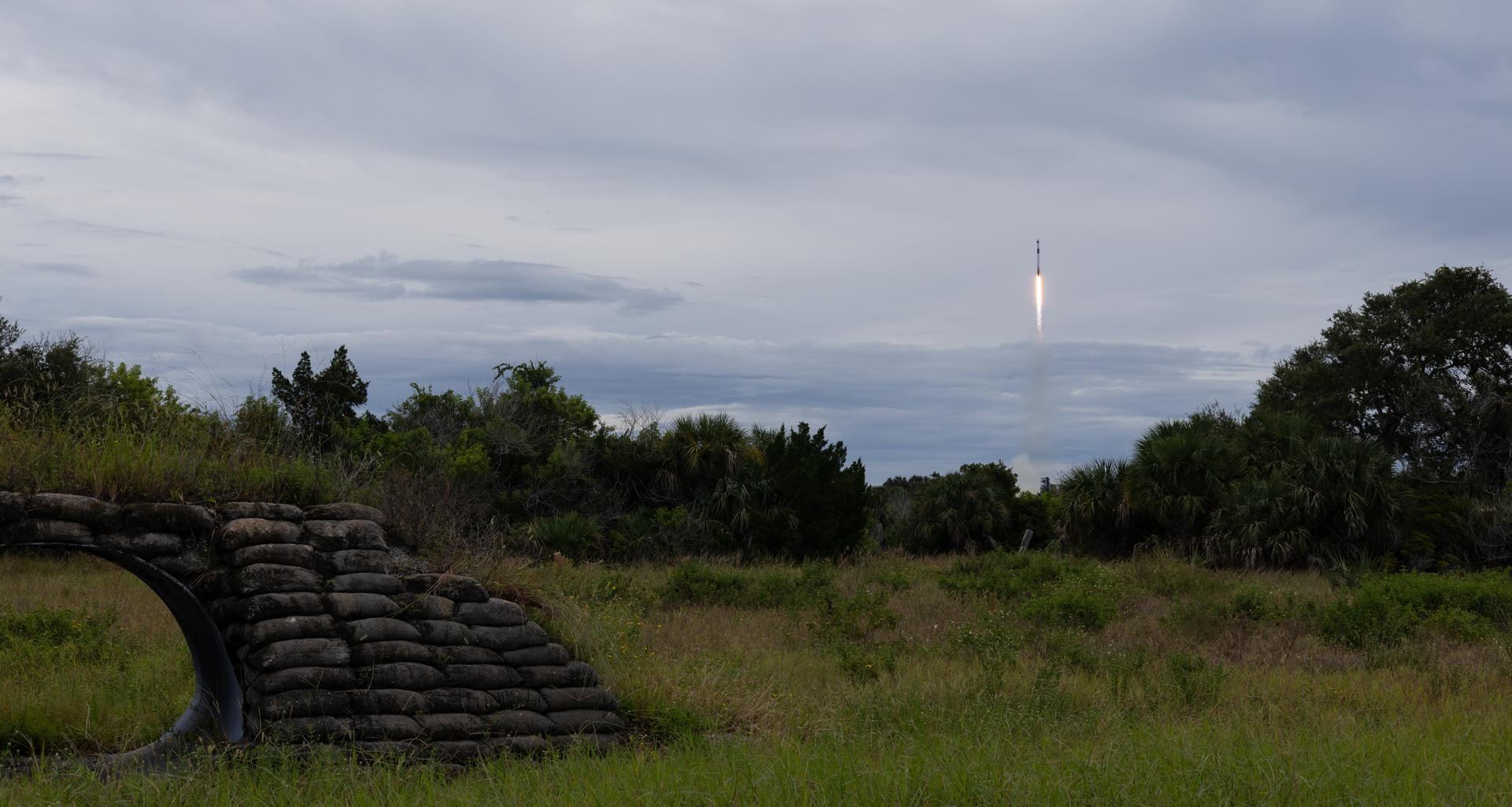
A SpaceX Falcon 9 rocket carrying the company's Dragon spacecraft is launched on NASA’s SpaceX Crew-13 mission to the International Space Station with NASA astronauts Jessica Watkins and Luke Delaney, CSA (Canadian Space Agency) astronaut Joshua Kutryk, and Roscosmos cosmonaut Sergey Teteryatnikov onboard, Thursday, Oct. 1, 2026, from Cape Canaveral Space Force Station in Florida. NASA’s SpaceX Crew-13 mission is the 13th crew rotation mission of the SpaceX Dragon spacecraft and Falcon 9 rocket to the International Space Station as part of the agency’s Commercial Crew Program. Watkins, Delaney, Kutryk, Teteryatnikov launched at 11:10 a.m. EDT from Space Launch Complex 40 at the Cape Canaveral Space Force Station to begin a mission aboard the orbital outpost. Photo Credit: (NASA/Joel Kowsky)
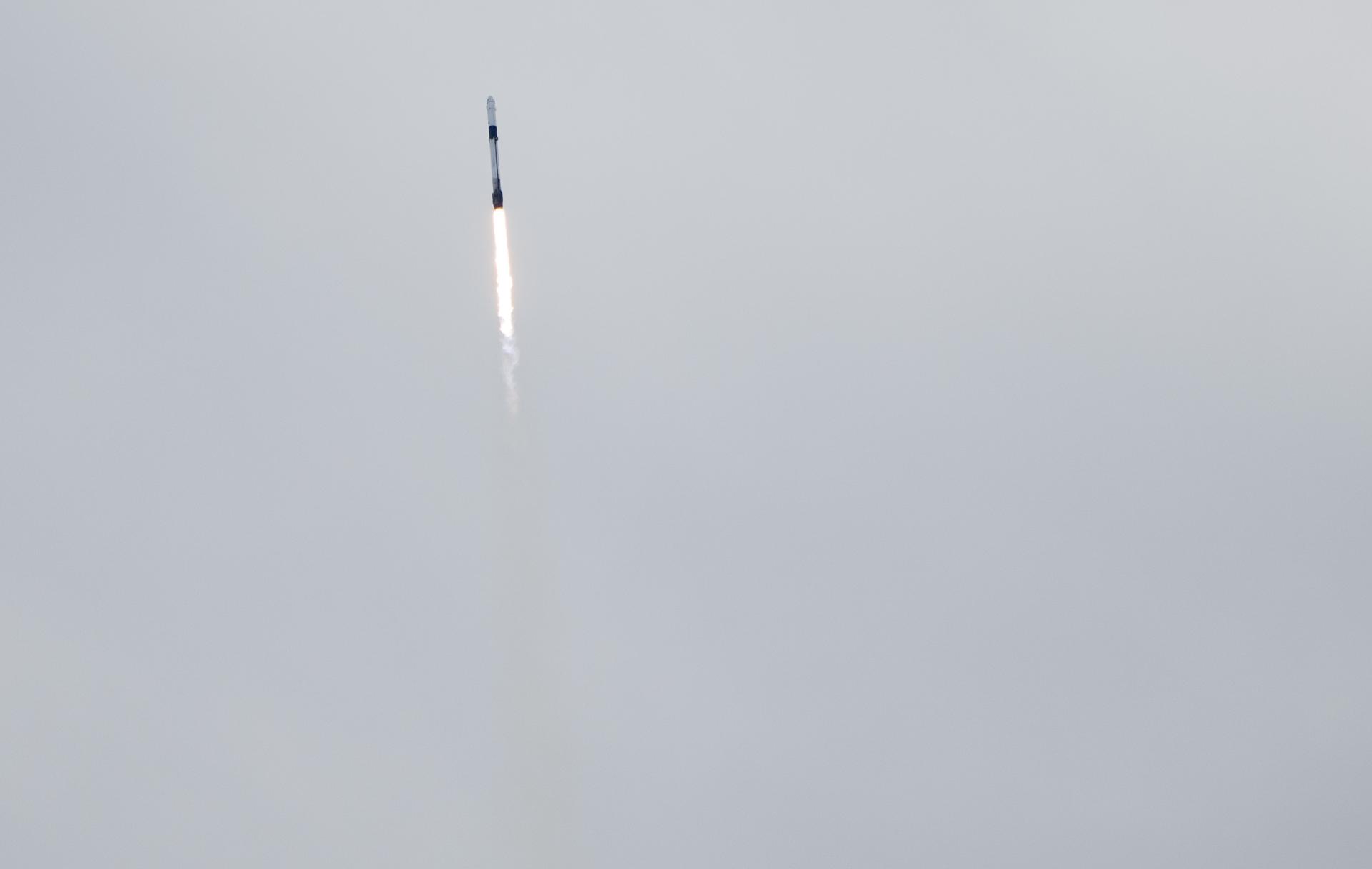
A SpaceX Falcon 9 rocket carrying the company's Dragon spacecraft is launched on NASA’s SpaceX Crew-13 mission to the International Space Station with NASA astronauts Jessica Watkins and Luke Delaney, CSA (Canadian Space Agency) astronaut Joshua Kutryk, and Roscosmos cosmonaut Sergey Teteryatnikov onboard, Thursday, Oct. 1, 2026, from Cape Canaveral Space Force Station in Florida. NASA’s SpaceX Crew-13 mission is the 13th crew rotation mission of the SpaceX Dragon spacecraft and Falcon 9 rocket to the International Space Station as part of the agency’s Commercial Crew Program. Watkins, Delaney, Kutryk, Teteryatnikov launched at 11:10 a.m. EDT from Space Launch Complex 40 at the Cape Canaveral Space Force Station to begin a mission aboard the orbital outpost. Photo Credit: (NASA/Joel Kowsky)
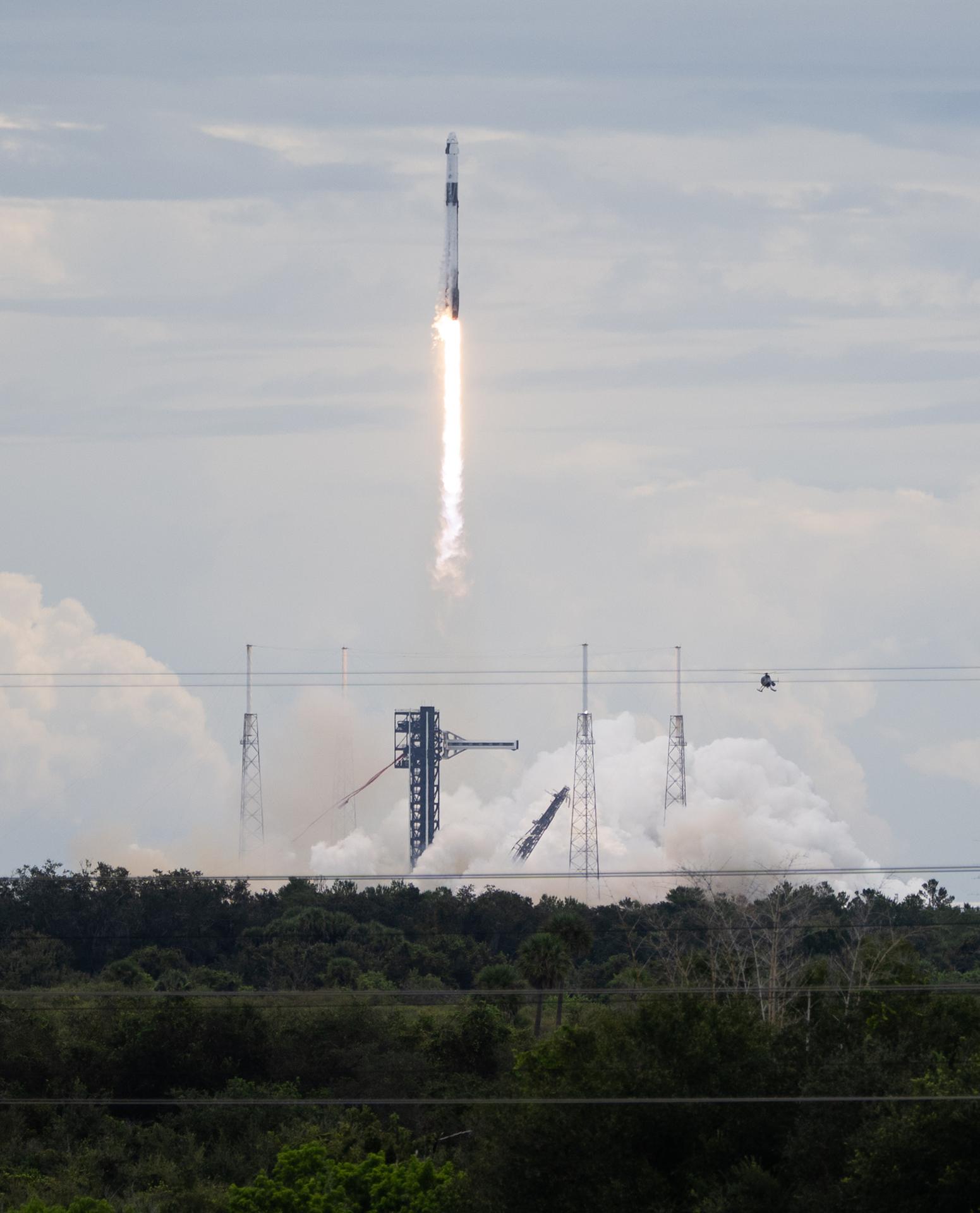
A SpaceX Falcon 9 rocket carrying the company's Dragon spacecraft is launched on NASA’s SpaceX Crew-13 mission to the International Space Station with NASA astronauts Jessica Watkins and Luke Delaney, CSA (Canadian Space Agency) astronaut Joshua Kutryk, and Roscosmos cosmonaut Sergey Teteryatnikov onboard, Thursday, Oct. 1, 2026, from Cape Canaveral Space Force Station in Florida. NASA’s SpaceX Crew-13 mission is the 13th crew rotation mission of the SpaceX Dragon spacecraft and Falcon 9 rocket to the International Space Station as part of the agency’s Commercial Crew Program. Watkins, Delaney, Kutryk, Teteryatnikov launched at 11:10 a.m. EDT from Space Launch Complex 40 at the Cape Canaveral Space Force Station to begin a mission aboard the orbital outpost. Photo Credit: (NASA/Joel Kowsky)
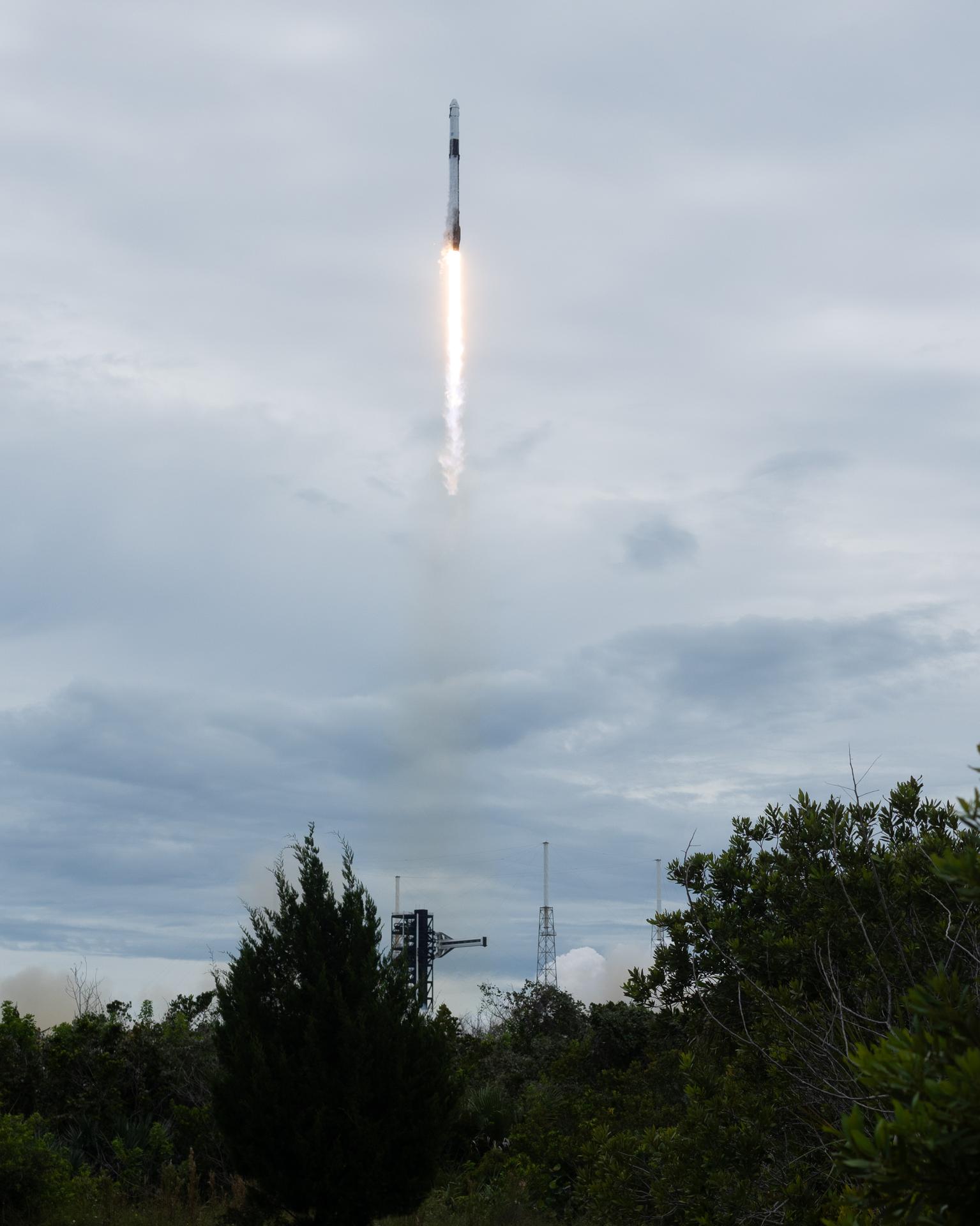
A SpaceX Falcon 9 rocket carrying the company's Dragon spacecraft is launched on NASA’s SpaceX Crew-13 mission to the International Space Station with NASA astronauts Jessica Watkins and Luke Delaney, CSA (Canadian Space Agency) astronaut Joshua Kutryk, and Roscosmos cosmonaut Sergey Teteryatnikov onboard, Thursday, Oct. 1, 2026, from Cape Canaveral Space Force Station in Florida. NASA’s SpaceX Crew-13 mission is the 13th crew rotation mission of the SpaceX Dragon spacecraft and Falcon 9 rocket to the International Space Station as part of the agency’s Commercial Crew Program. Watkins, Delaney, Kutryk, Teteryatnikov launched at 11:10 a.m. EDT from Space Launch Complex 40 at the Cape Canaveral Space Force Station to begin a mission aboard the orbital outpost. Photo Credit: (NASA/Joel Kowsky)
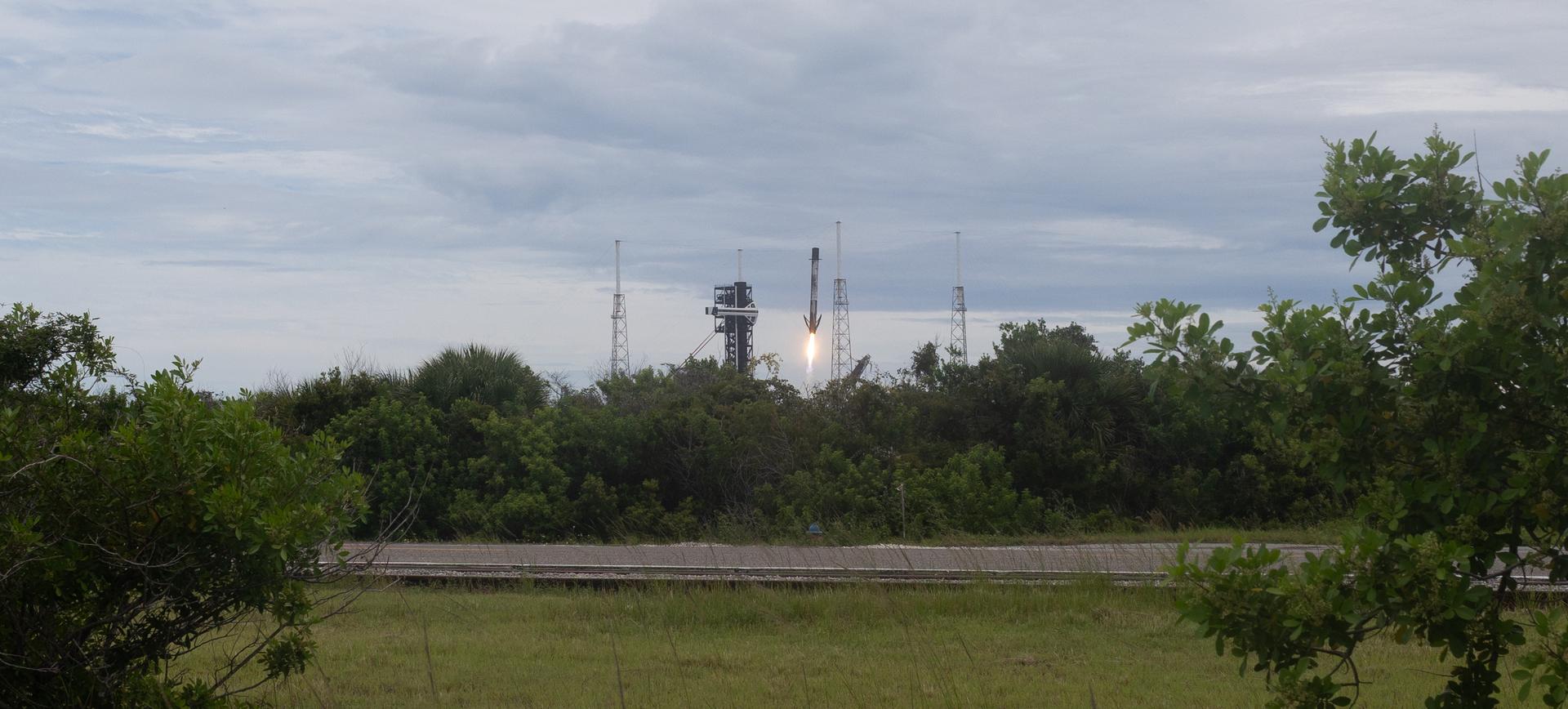
The first stage of the SpaceX Falcon 9 rocket that launched a Dragon spacecraft on NASA’s SpaceX Crew-13 mission to the International Space Station with NASA astronauts Jessica Watkins and Luke Delaney, CSA (Canadian Space Agency) astronaut Joshua Kutryk, and Roscosmos cosmonaut Sergey Teteryatnikov onboard, is seen as it lands at Space Launch Complex 40, Thursday, Oct. 1, 2026, from Cape Canaveral Space Force Station in Florida. NASA’s SpaceX Crew-13 mission is the 13th crew rotation mission of the SpaceX Dragon spacecraft and Falcon 9 rocket to the International Space Station as part of the agency’s Commercial Crew Program. Watkins, Delaney, Kutryk, Teteryatnikov launched at 11:10 a.m. EDT from Space Launch Complex 40 at the Cape Canaveral Space Force Station to begin a mission aboard the orbital outpost. Photo Credit: (NASA/Joel Kowsky)
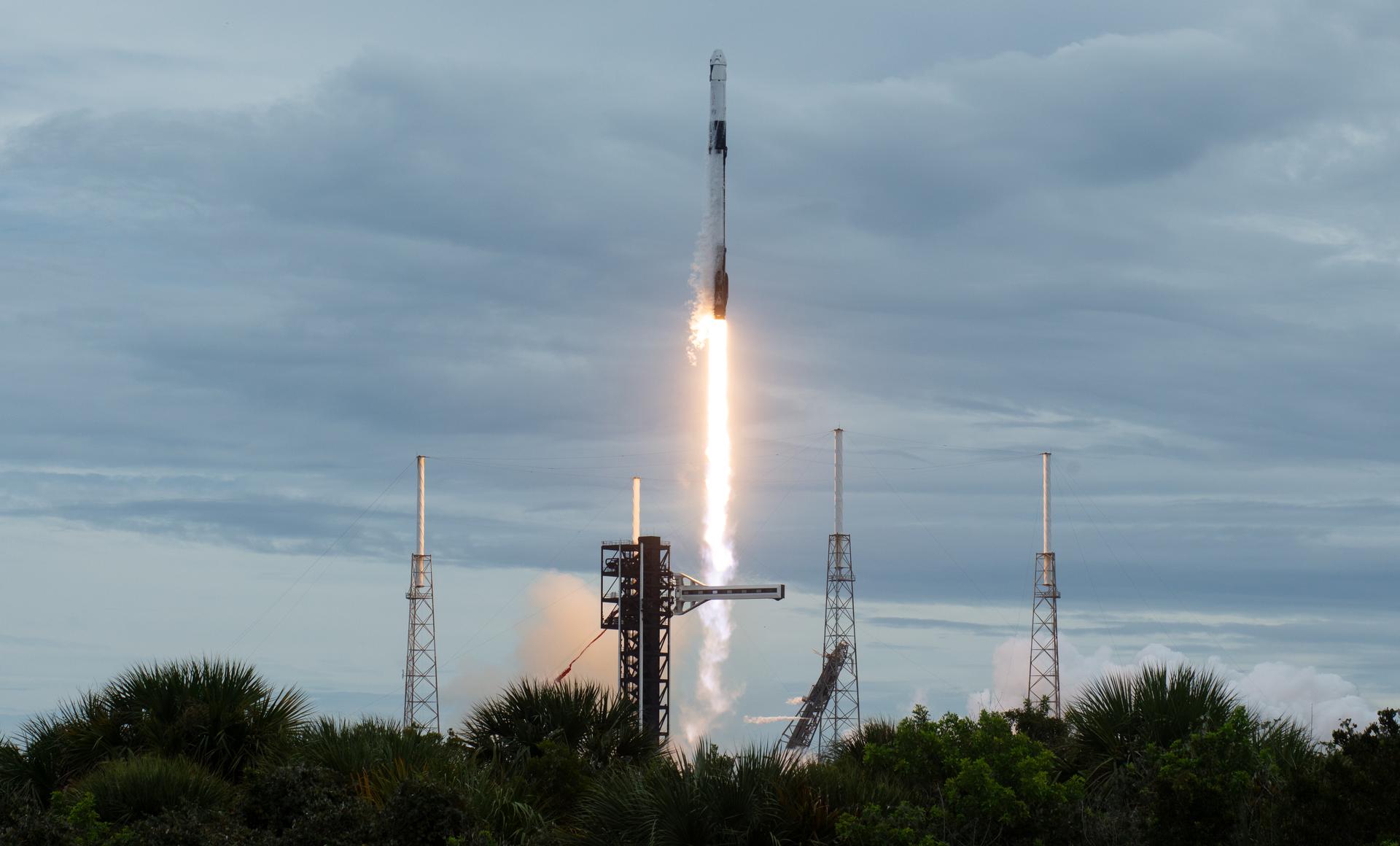
A SpaceX Falcon 9 rocket carrying the company's Dragon spacecraft is launched on NASA’s SpaceX Crew-13 mission to the International Space Station with NASA astronauts Jessica Watkins and Luke Delaney, CSA (Canadian Space Agency) astronaut Joshua Kutryk, and Roscosmos cosmonaut Sergey Teteryatnikov onboard, Thursday, Oct. 1, 2026, from Cape Canaveral Space Force Station in Florida. NASA’s SpaceX Crew-13 mission is the 13th crew rotation mission of the SpaceX Dragon spacecraft and Falcon 9 rocket to the International Space Station as part of the agency’s Commercial Crew Program. Watkins, Delaney, Kutryk, Teteryatnikov launched at 11:10 a.m. EDT from Space Launch Complex 40 at the Cape Canaveral Space Force Station to begin a mission aboard the orbital outpost. Photo Credit: (NASA/Joel Kowsky)
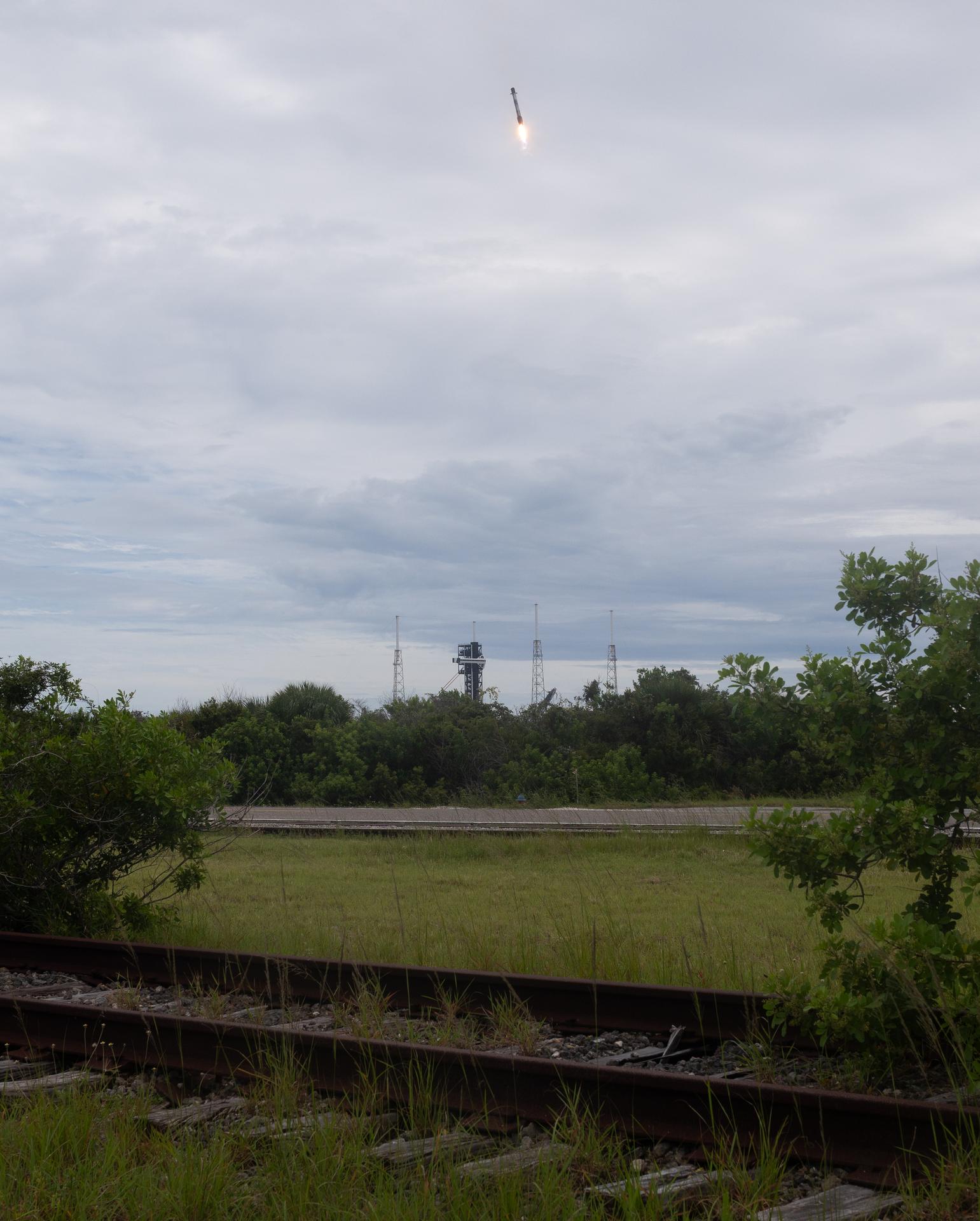
The first stage of the SpaceX Falcon 9 rocket that launched a Dragon spacecraft on NASA’s SpaceX Crew-13 mission to the International Space Station with NASA astronauts Jessica Watkins and Luke Delaney, CSA (Canadian Space Agency) astronaut Joshua Kutryk, and Roscosmos cosmonaut Sergey Teteryatnikov onboard, is seen as it lands at Space Launch Complex 40, Thursday, Oct. 1, 2026, from Cape Canaveral Space Force Station in Florida. NASA’s SpaceX Crew-13 mission is the 13th crew rotation mission of the SpaceX Dragon spacecraft and Falcon 9 rocket to the International Space Station as part of the agency’s Commercial Crew Program. Watkins, Delaney, Kutryk, Teteryatnikov launched at 11:10 a.m. EDT from Space Launch Complex 40 at the Cape Canaveral Space Force Station to begin a mission aboard the orbital outpost. Photo Credit: (NASA/Joel Kowsky)
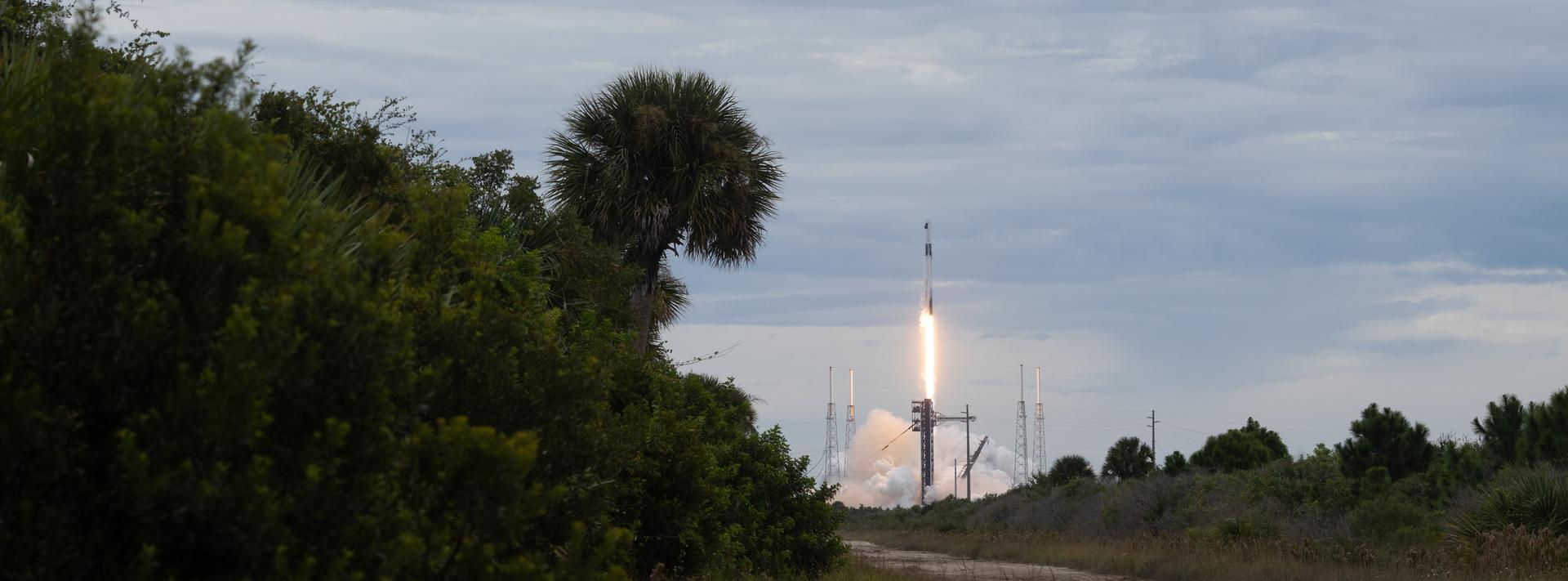
A SpaceX Falcon 9 rocket carrying the company's Dragon spacecraft is launched on NASA’s SpaceX Crew-13 mission to the International Space Station with NASA astronauts Jessica Watkins and Luke Delaney, CSA (Canadian Space Agency) astronaut Joshua Kutryk, and Roscosmos cosmonaut Sergey Teteryatnikov onboard, Thursday, Oct. 1, 2026, from Cape Canaveral Space Force Station in Florida. NASA’s SpaceX Crew-13 mission is the 13th crew rotation mission of the SpaceX Dragon spacecraft and Falcon 9 rocket to the International Space Station as part of the agency’s Commercial Crew Program. Watkins, Delaney, Kutryk, Teteryatnikov launched at 11:10 a.m. EDT from Space Launch Complex 40 at the Cape Canaveral Space Force Station to begin a mission aboard the orbital outpost. Photo Credit: (NASA/Joel Kowsky)
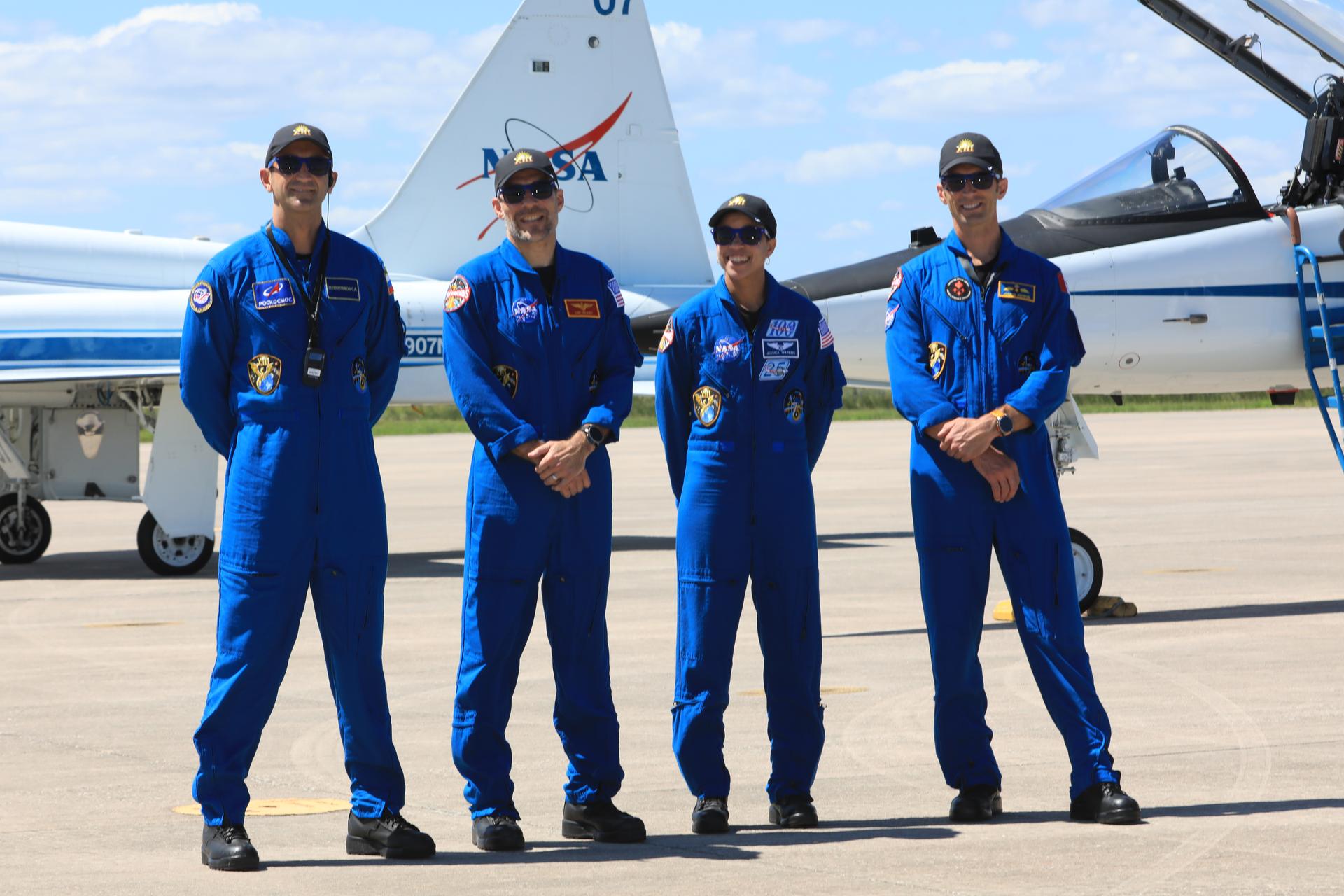
From left, crew members of NASA’s SpaceX Crew-13 mission, Roscosmos cosmonaut Sergey Teteryatnikov, NASA astronauts Luke Delaney and Jessica Watkins, and CSA (Canadian Space Agency) astronaut Joshua Kutryk arrive Saturday, Sept. 26, 2026, at the Shuttle Landing Facility at the agency’s Kennedy Space Center in Florida. The Crew-13 mission is slated to launch to the International Space Station aboard SpaceX’s Dragon spacecraft atop company’s Falcon 9 rocket from Cape Canaveral Space Force Station’s Space Launch Complex 40 at 11:10 a.m. EDT on Thursday, Oct. 1.
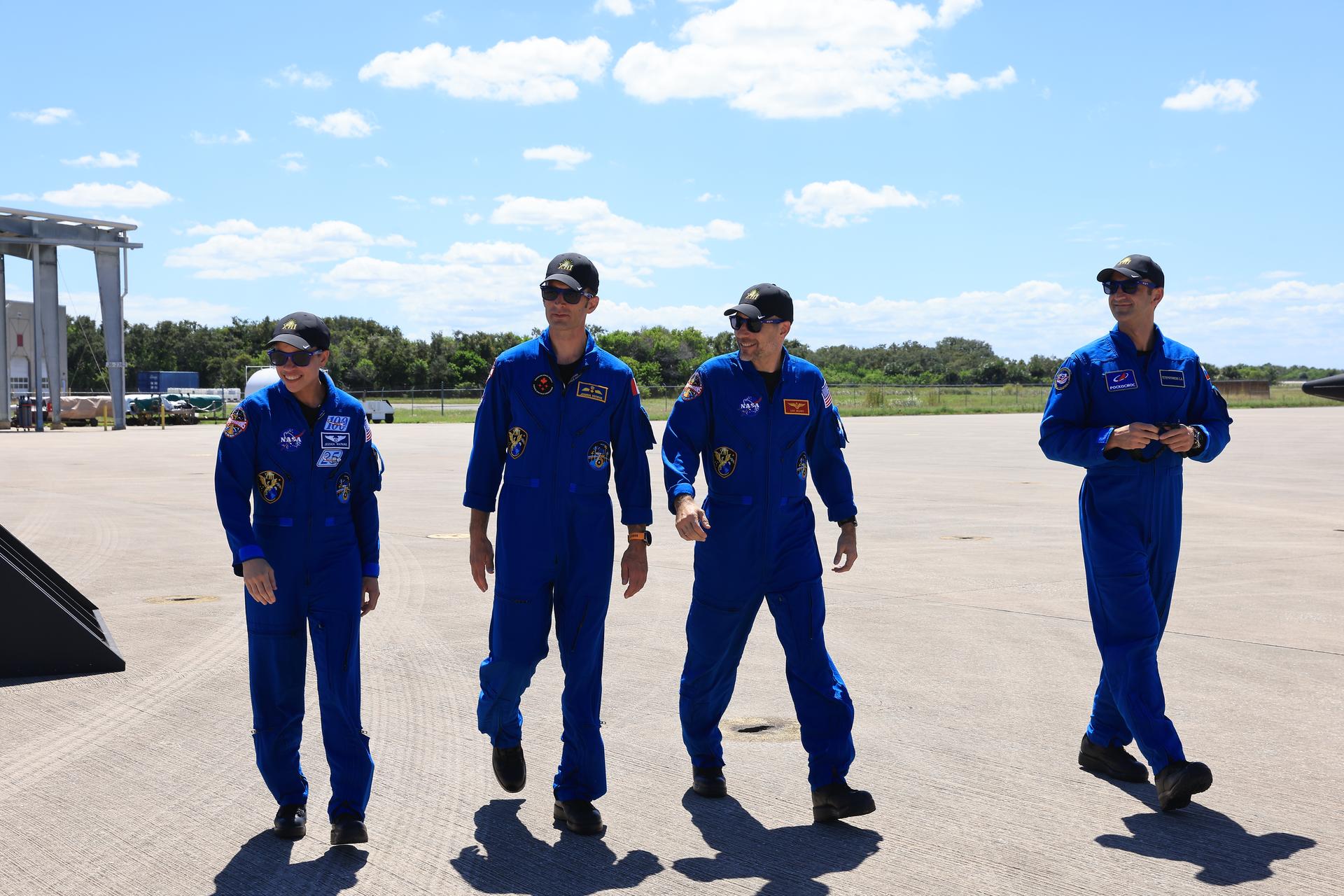
From left, crew members of NASA’s SpaceX Crew-13 mission, NASA astronaut Jessica Watkins, CSA (Canadian Space Agency) astronaut Joshua Kutryk, NASA astronaut Luke Delaney, and Roscosmos cosmonaut Sergey Teteryatnikov arrive Saturday, Sept. 26, 2026, at the Shuttle Landing Facility at the agency’s Kennedy Space Center in Florida. The Crew-13 mission is slated to launch to the International Space Station aboard SpaceX’s Dragon spacecraft atop company’s Falcon 9 rocket from Cape Canaveral Space Force Station’s Space Launch Complex 40 at 11:10 a.m. EDT on Thursday, Oct. 1.
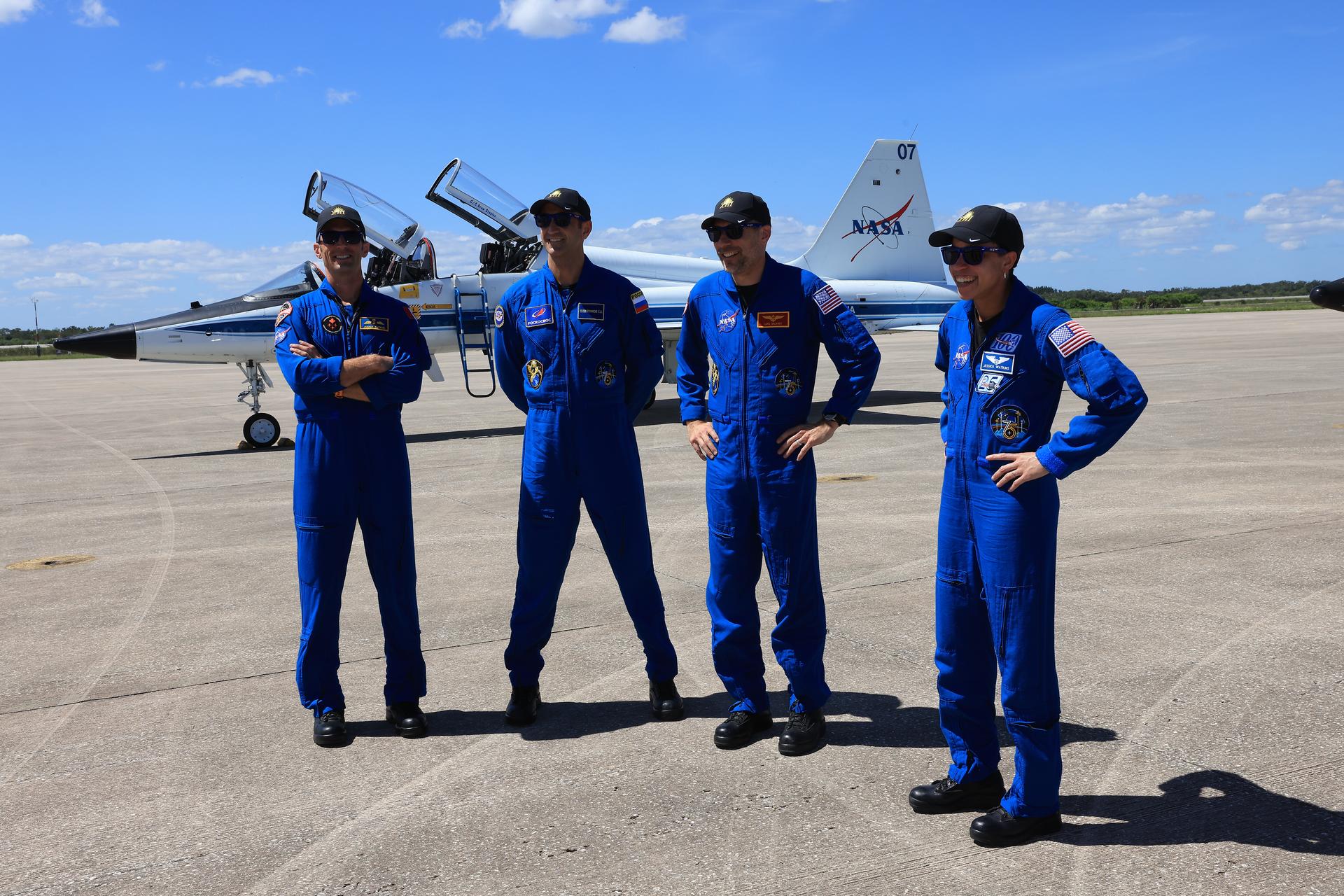
From left, crew members of NASA’s SpaceX Crew-13 mission, CSA (Canadian Space Agency) astronaut Joshua Kutryk, Roscosmos cosmonaut Sergey Teteryatnikov, and NASA astronauts Luke Delaney and Jessica Watkins arrive Saturday, Sept. 26, 2026, at the Shuttle Landing Facility at the agency’s Kennedy Space Center in Florida. The Crew-13 mission is slated to launch to the International Space Station aboard SpaceX’s Dragon spacecraft atop company’s Falcon 9 rocket from Cape Canaveral Space Force Station’s Space Launch Complex 40 at 11:10 a.m. EDT on Thursday, Oct. 1.
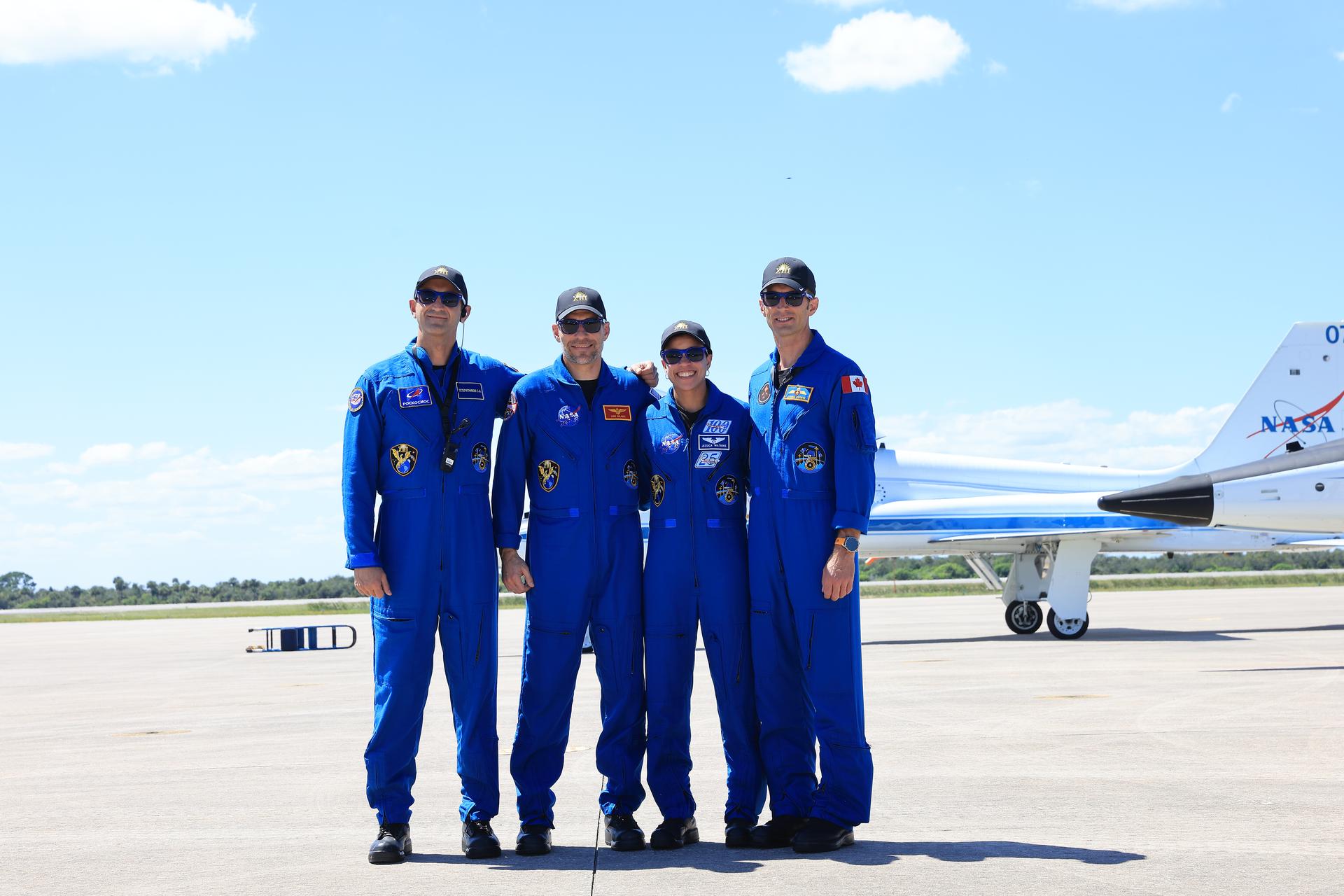
From left, crew members of NASA’s SpaceX Crew-13 mission, Roscosmos cosmonaut Sergey Teteryatnikov, NASA astronauts Luke Delaney and Jessica Watkins, and CSA (Canadian Space Agency) astronaut Joshua Kutryk arrive Saturday, Sept. 26, 2026, at the Shuttle Landing Facility at the agency’s Kennedy Space Center in Florida. The Crew-13 mission is slated to launch to the International Space Station aboard SpaceX’s Dragon spacecraft atop company’s Falcon 9 rocket from Cape Canaveral Space Force Station’s Space Launch Complex 40 at 11:10 a.m. EDT on Thursday, Oct. 1.
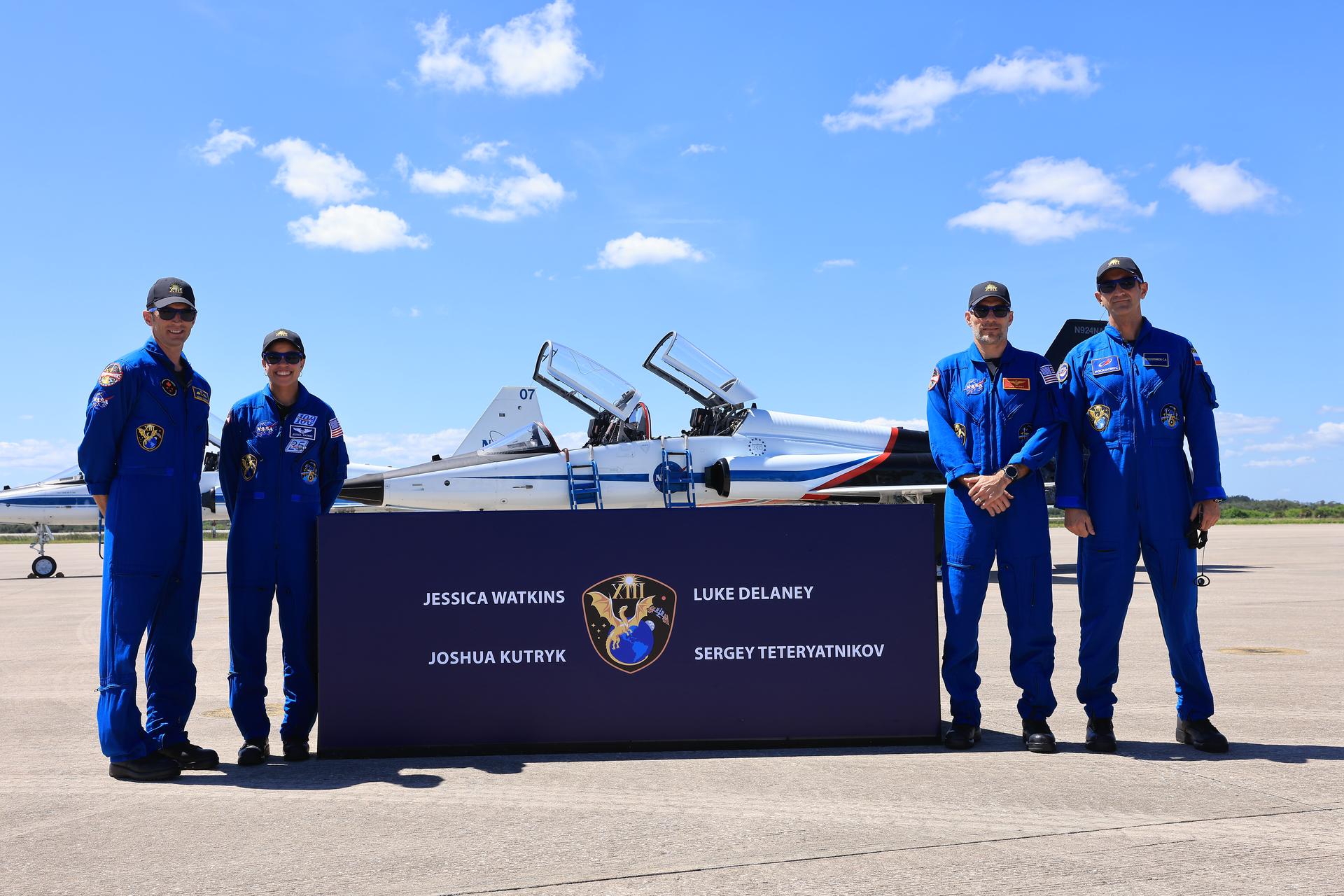
From left, crew members of NASA’s SpaceX Crew-13 mission, CSA (Canadian Space Agency) astronaut Joshua Kutryk, NASA astronaut Jessica Watkins, NASA astronaut Luke Delaney, and Roscosmos cosmonaut Sergey Teteryatnikov arrive Saturday, Sept. 26, 2026, at the Shuttle Landing Facility at the agency’s Kennedy Space Center in Florida. The Crew-13 mission is slated to launch to the International Space Station aboard SpaceX’s Dragon spacecraft atop company’s Falcon 9 rocket from Cape Canaveral Space Force Station’s Space Launch Complex 40 at 11:10 a.m. EDT on Thursday, Oct. 1.
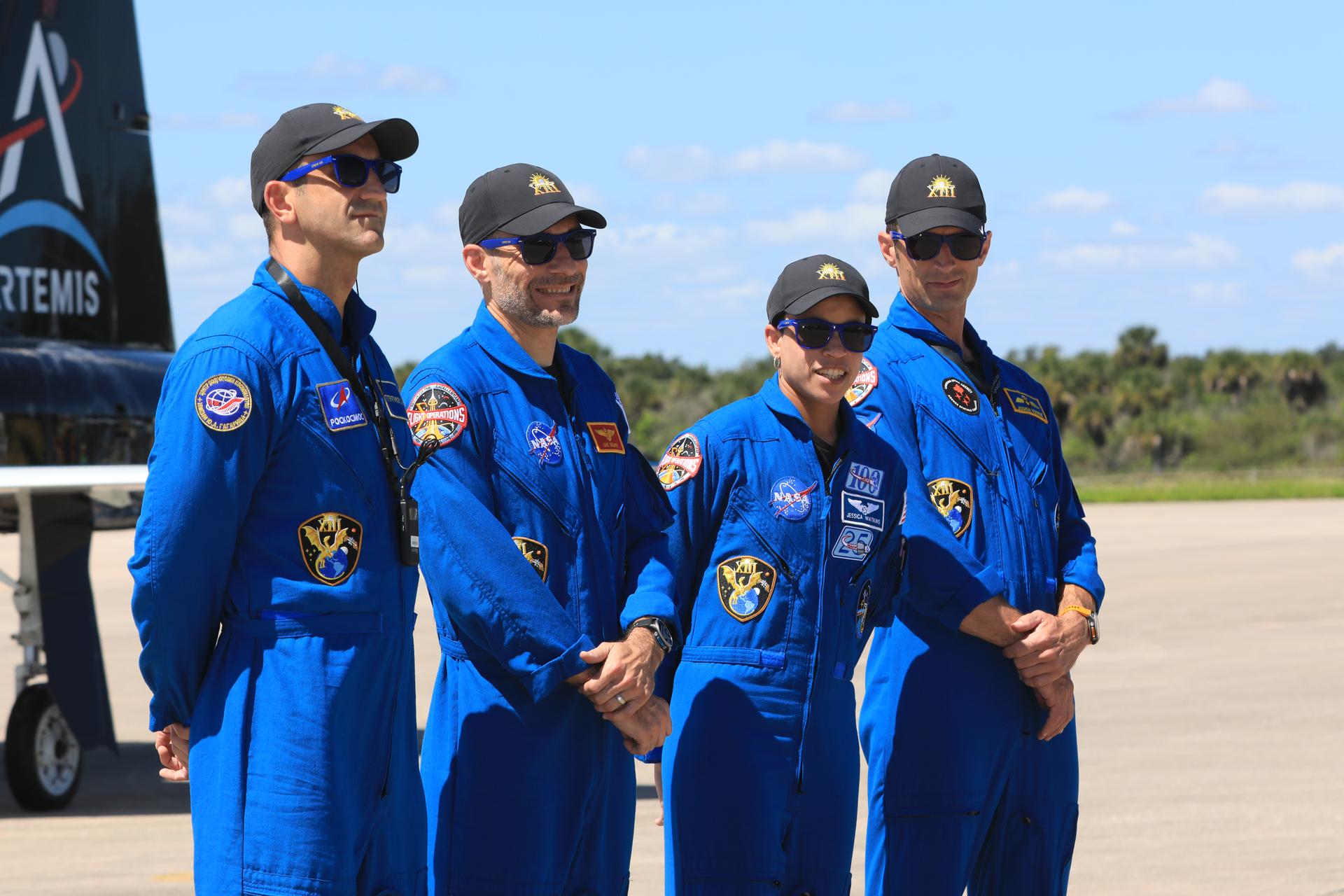
From left, crew members of NASA’s SpaceX Crew-13 mission, Roscosmos cosmonaut Sergey Teteryatnikov, NASA astronauts Luke Delaney and Jessica Watkins, and CSA (Canadian Space Agency) astronaut Joshua Kutryk arrive Saturday, Sept. 26, 2026, at the Shuttle Landing Facility at the agency’s Kennedy Space Center in Florida. The Crew-13 mission is slated to launch to the International Space Station aboard SpaceX’s Dragon spacecraft atop company’s Falcon 9 rocket from Cape Canaveral Space Force Station’s Space Launch Complex 40 at 11:10 a.m. EDT on Thursday, Oct. 1.
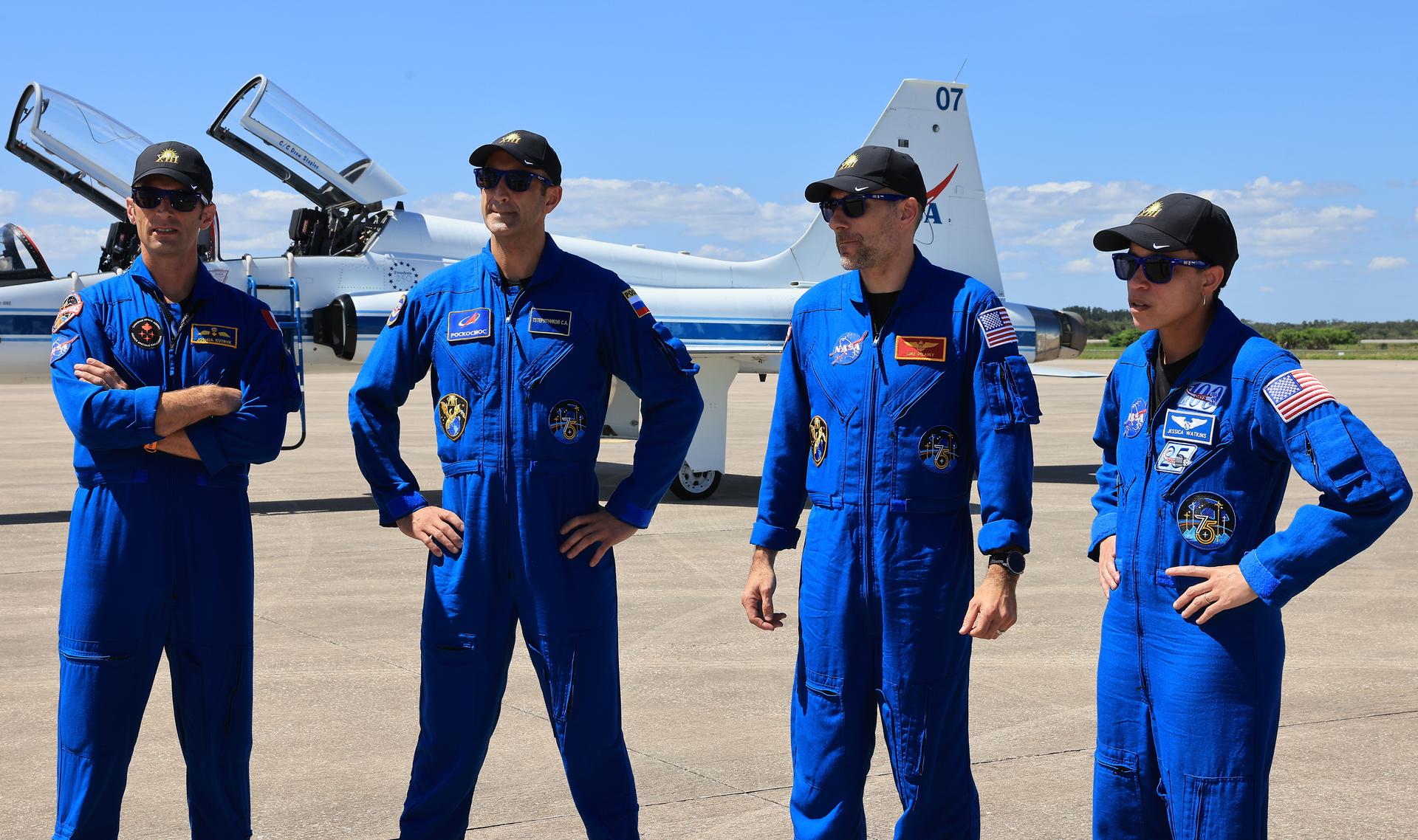
From left, crew members of NASA’s SpaceX Crew-13 mission, CSA (Canadian Space Agency) astronaut Joshua Kutryk, Roscosmos cosmonaut Sergey Teteryatnikov, and NASA astronauts Luke Delaney and Jessica Watkins arrive Saturday, Sept. 26, 2026, at the Shuttle Landing Facility at the agency’s Kennedy Space Center in Florida. The Crew-13 mission is slated to launch to the International Space Station aboard SpaceX’s Dragon spacecraft atop company’s Falcon 9 rocket from Cape Canaveral Space Force Station’s Space Launch Complex 40 at 11:10 a.m. EDT on Thursday, Oct. 1.
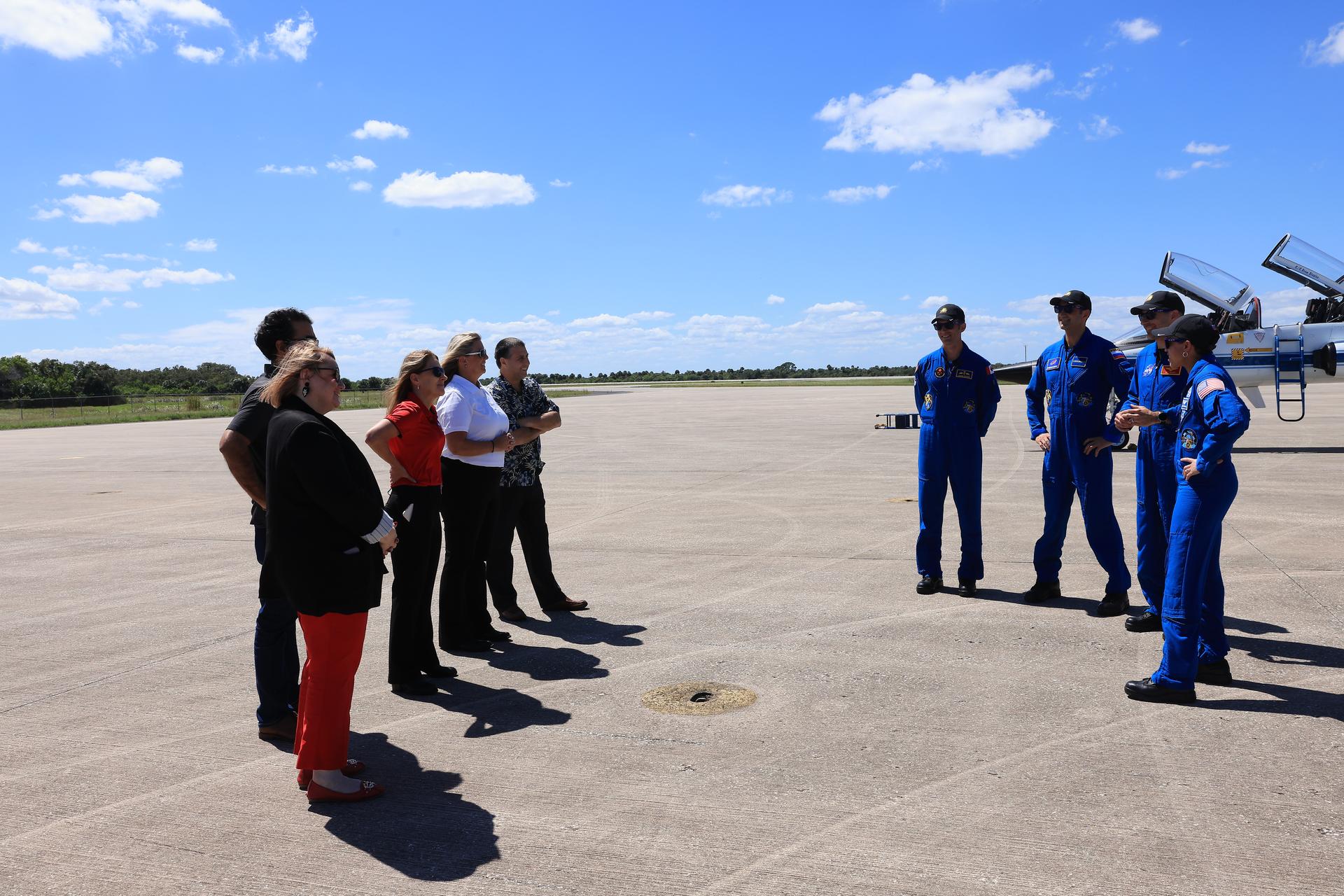
Crew members of NASA’s SpaceX Crew-13 mission NASA astronauts Jessica Watkins and Luke Delaney, CSA (Canadian Space Agency) astronaut Joshua Kutryk, and Roscosmos cosmonaut Sergey Teteryatnikov arrive Saturday, Sept. 26, 2026, at the Shuttle Landing Facility at the agency’s Kennedy Space Center in Florida. The Crew-13 mission is slated to launch to the International Space Station aboard SpaceX’s Dragon spacecraft atop company’s Falcon 9 rocket from Cape Canaveral Space Force Station’s Space Launch Complex 40 at 11:10 a.m. EDT on Thursday, Oct. 1.
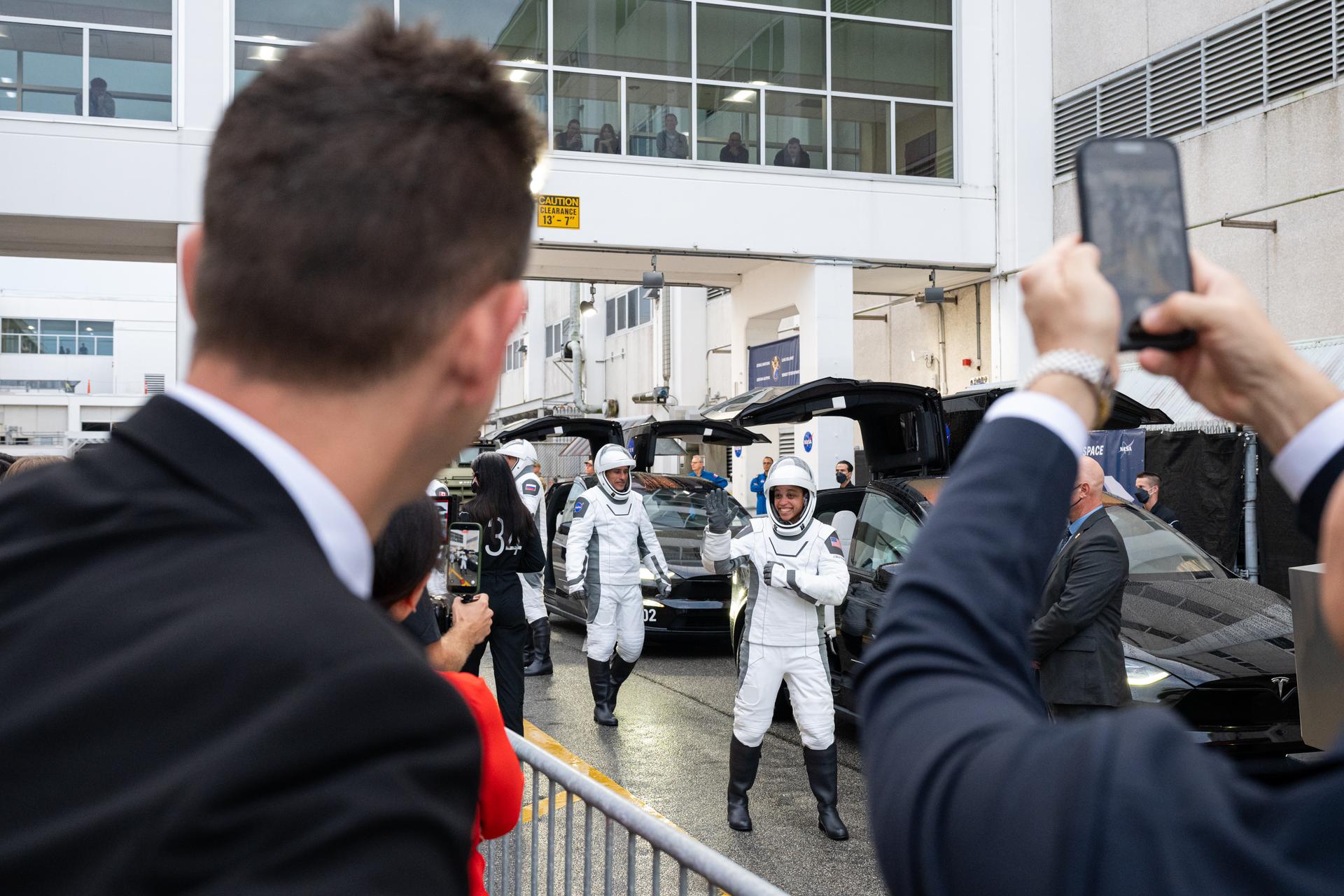
NASA Administrator Jared Isaacman watches as NASA’s SpaceX Crew-13 crew members walk out of the Neil A. Armstrong Operations and Checkout Building ahead of their launch to the International Space Station, Thursday, Oct. 1, 2026, at NASA’s Kennedy Space Center in Florida. NASA’s SpaceX Crew-13 mission is the thirteenth crew rotation mission of the SpaceX Falcon 9 rocket and Dragon spacecraft to the International Space Station as part of the agency’s Commercial Crew Program. NASA astronauts Jessica Watkins and Luke Delaney, CSA (Canadian Space Agency) astronaut Joshua Kutryk, and Roscosmos cosmonaut Sergey Teteryatnikov will conduct scientific research, technology demonstrations, and maintenance during their long-duration stay aboard the orbital outpost. Photo Credit: (NASA/John Kraus)
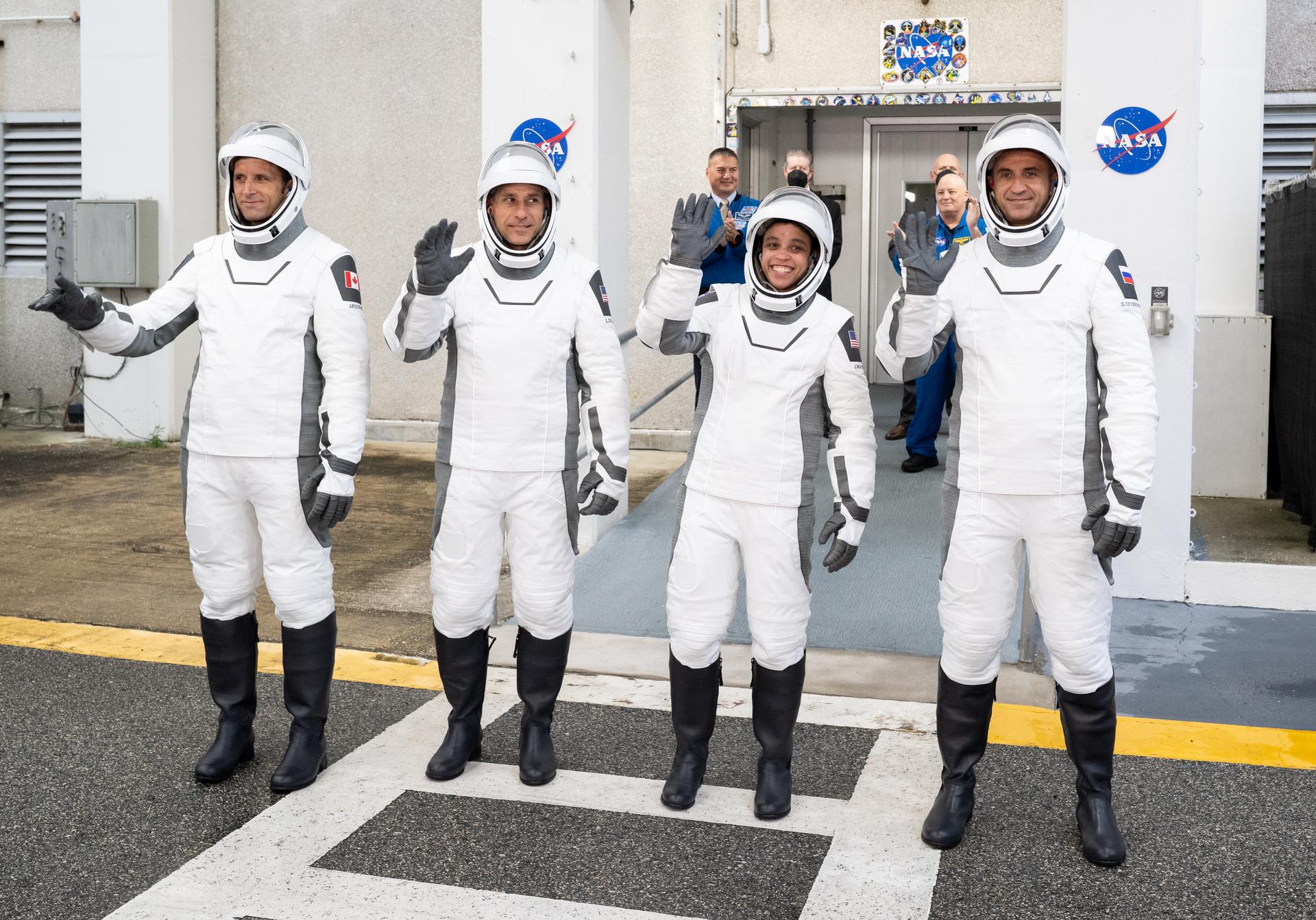
CSA (Canadian Space Agency) astronaut Joshua Kutryk, left, NASA astronauts Luke Delaney and Jessica Watkins, and Roscosmos cosmonaut Sergey Teteryatnikov, wearing SpaceX spacesuits, are seen as they prepare to depart the Neil A. Armstrong Operations and Checkout Building for Space Launch Complex 40 on Cape Canaveral Space Force Station to board the SpaceX Dragon spacecraft for the Crew-13 mission launch, Thursday, Oct. 1, 2026, at NASA’s Kennedy Space Center in Florida. NASA’s SpaceX Crew-13 mission is the 13th crew rotation mission of the SpaceX Dragon spacecraft and Falcon 9 rocket to the International Space Station as part of the agency’s Commercial Crew Program. Watkins, Delaney, Kutryk, Teteryatnikov are scheduled to launch at 11:10 a.m. EDT, from Space Launch Complex 40 at the Cape Canaveral Space Force Station. Photo Credit: (NASA/Joel Kowsky)
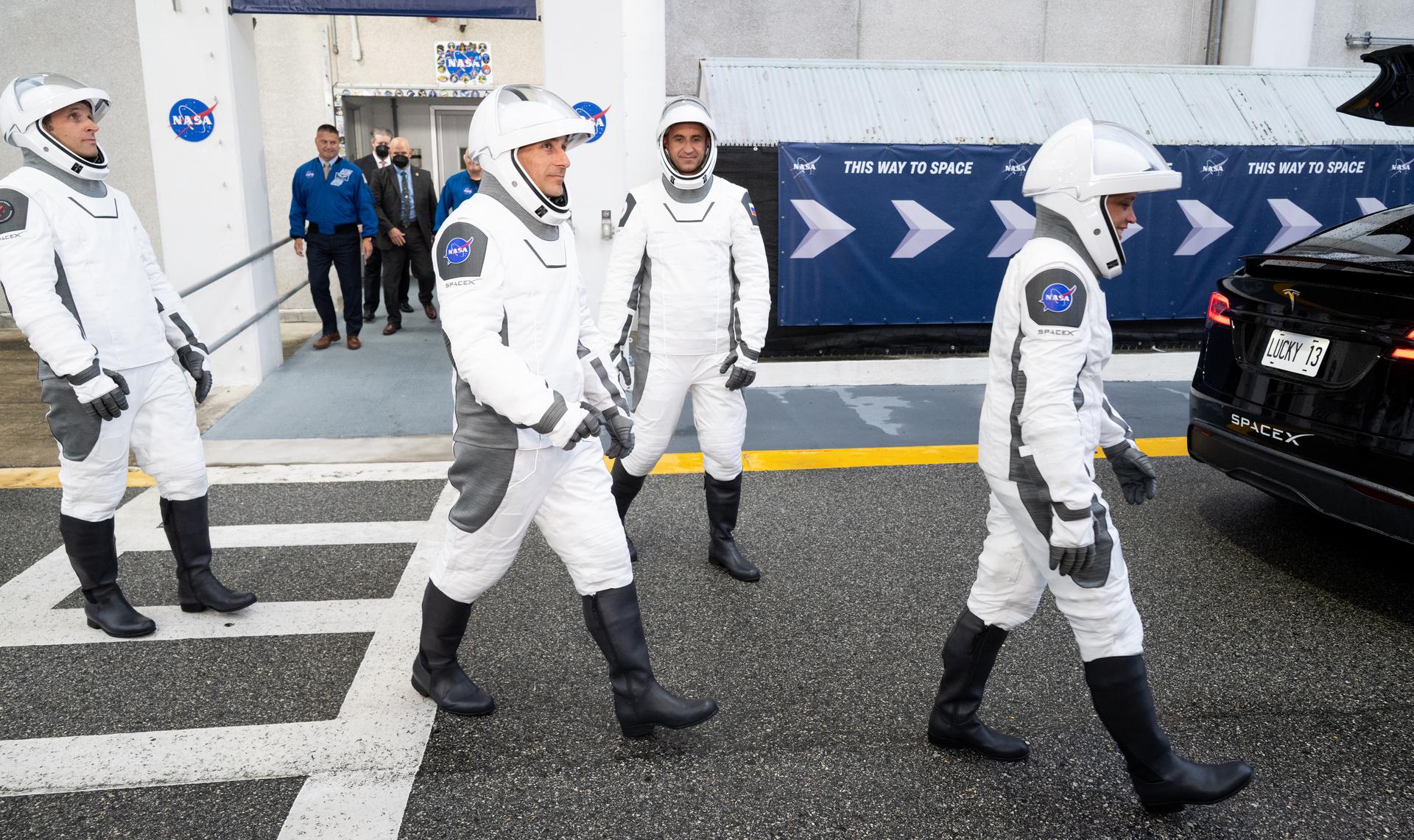
CSA (Canadian Space Agency) astronaut Joshua Kutryk, left, NASA astronaut Luke Delaney, Roscosmos cosmonaut Sergey Teteryatnikov, and NASA astronaut Jessica Watkins, wearing SpaceX spacesuits, are seen as they prepare to depart the Neil A. Armstrong Operations and Checkout Building for Space Launch Complex 40 on Cape Canaveral Space Force Station to board the SpaceX Dragon spacecraft for the Crew-13 mission launch, Thursday, Oct. 1, 2026, at NASA’s Kennedy Space Center in Florida. NASA’s SpaceX Crew-13 mission is the 13th crew rotation mission of the SpaceX Dragon spacecraft and Falcon 9 rocket to the International Space Station as part of the agency’s Commercial Crew Program. Watkins, Delaney, Kutryk, Teteryatnikov are scheduled to launch at 11:10 a.m. EDT, from Space Launch Complex 40 at the Cape Canaveral Space Force Station. Photo Credit: (NASA/Joel Kowsky)
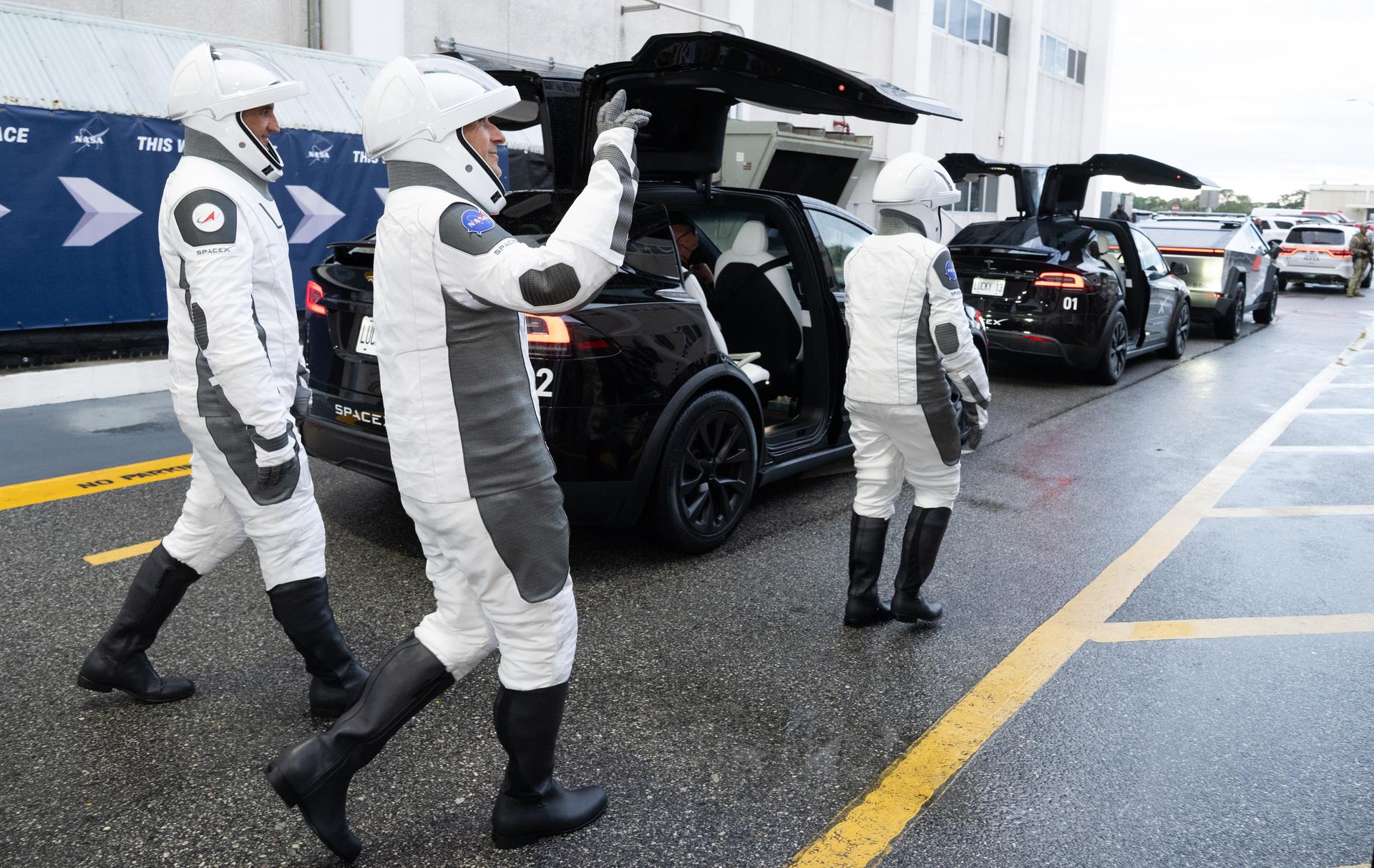
Roscosmos cosmonaut Sergey Teteryatnikov, NASA astronauts Luke Delaney and Jessica Watkins, wearing SpaceX spacesuits, are seen as they prepare to depart the Neil A. Armstrong Operations and Checkout Building for Space Launch Complex 40 on Cape Canaveral Space Force Station to board the SpaceX Dragon spacecraft for the Crew-13 mission launch, Thursday, Oct. 1, 2026, at NASA’s Kennedy Space Center in Florida. NASA’s SpaceX Crew-13 mission is the 13th crew rotation mission of the SpaceX Dragon spacecraft and Falcon 9 rocket to the International Space Station as part of the agency’s Commercial Crew Program. Watkins, Delaney, Kutryk, Teteryatnikov are scheduled to launch at 11:10 a.m. EDT, from Space Launch Complex 40 at the Cape Canaveral Space Force Station. Photo Credit: (NASA/Joel Kowsky)
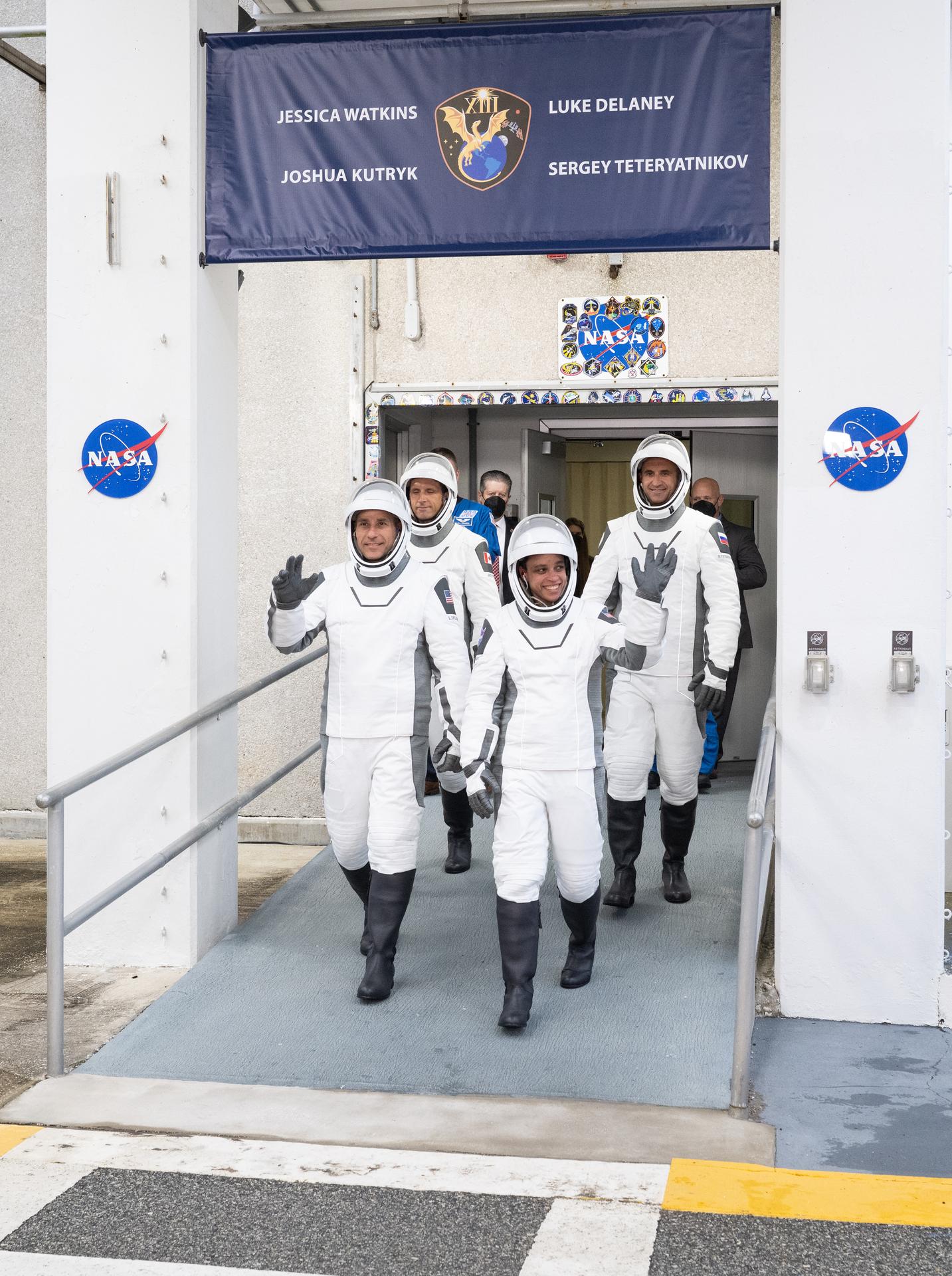
NASA astronauts Luke Delaney, front left, and Jessica Watkins, front right, CSA (Canadian Space Agency) astronaut Joshua Kutryk, back left, and Roscosmos cosmonaut Sergey Teteryatnikov, back right, wearing SpaceX spacesuits, are seen as they prepare to depart the Neil A. Armstrong Operations and Checkout Building for Space Launch Complex 40 on Cape Canaveral Space Force Station to board the SpaceX Dragon spacecraft for the Crew-13 mission launch, Thursday, Oct. 1, 2026, at NASA’s Kennedy Space Center in Florida. NASA’s SpaceX Crew-13 mission is the 13th crew rotation mission of the SpaceX Dragon spacecraft and Falcon 9 rocket to the International Space Station as part of the agency’s Commercial Crew Program. Watkins, Delaney, Kutryk, Teteryatnikov are scheduled to launch at 11:10 a.m. EDT, from Space Launch Complex 40 at the Cape Canaveral Space Force Station. Photo Credit: (NASA/Joel Kowsky)
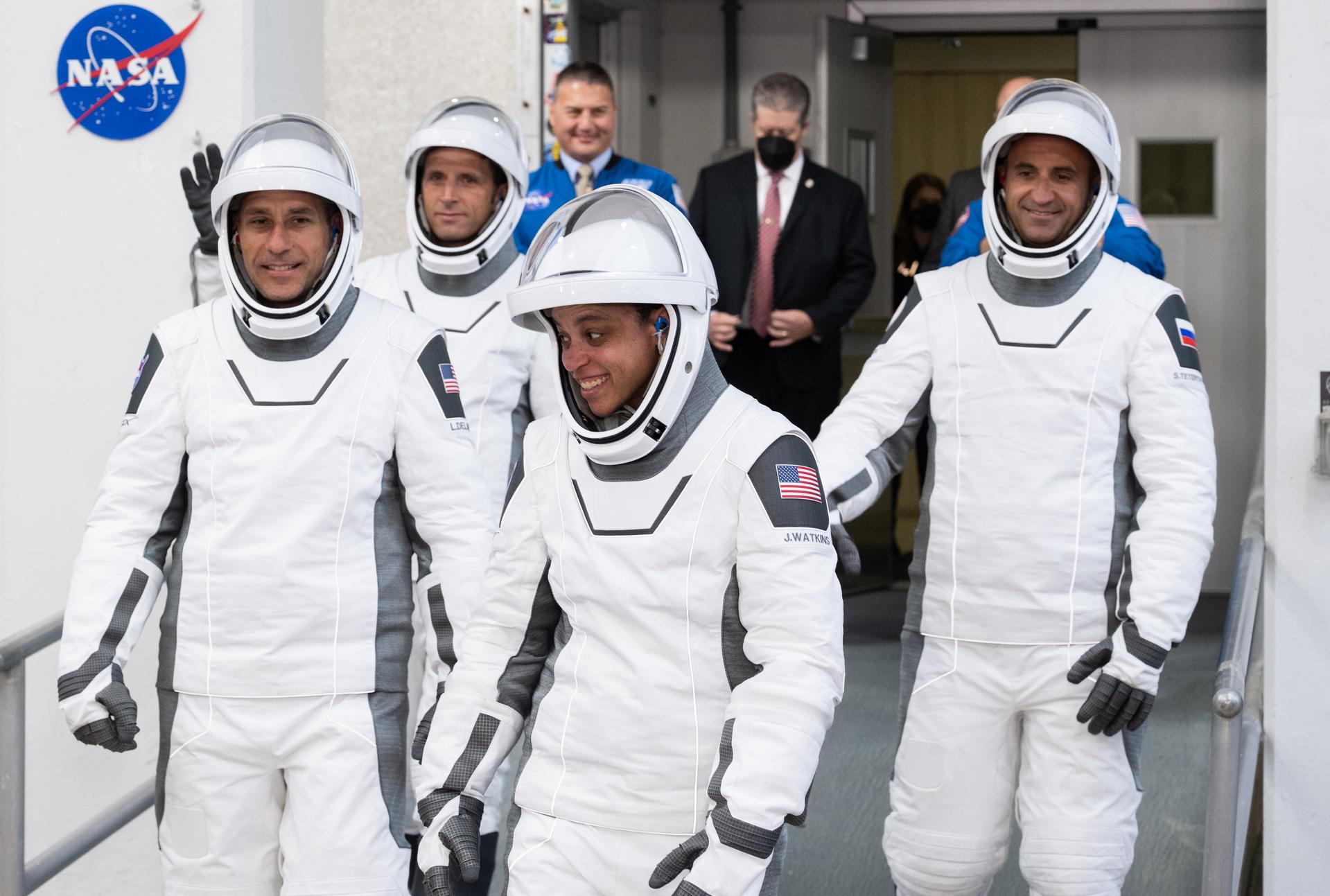
NASA astronauts Luke Delaney, front left, and Jessica Watkins, front right, CSA (Canadian Space Agency) astronaut Joshua Kutryk, back left, and Roscosmos cosmonaut Sergey Teteryatnikov, back right, wearing SpaceX spacesuits, are seen as they prepare to depart the Neil A. Armstrong Operations and Checkout Building for Space Launch Complex 40 on Cape Canaveral Space Force Station to board the SpaceX Dragon spacecraft for the Crew-13 mission launch, Thursday, Oct. 1, 2026, at NASA’s Kennedy Space Center in Florida. NASA’s SpaceX Crew-13 mission is the 13th crew rotation mission of the SpaceX Dragon spacecraft and Falcon 9 rocket to the International Space Station as part of the agency’s Commercial Crew Program. Watkins, Delaney, Kutryk, Teteryatnikov are scheduled to launch at 11:10 a.m. EDT, from Space Launch Complex 40 at the Cape Canaveral Space Force Station. Photo Credit: (NASA/Joel Kowsky)
NASA astronauts Luke Delaney, front left, and Jessica Watkins, front right, CSA (Canadian Space Agency) astronaut Joshua Kutryk, back left, and Roscosmos cosmonaut Sergey Teteryatnikov, back right, wearing SpaceX spacesuits, are seen as they prepare to depart the Neil A. Armstrong Operations and Checkout Building for Space Launch Complex 40 on Cape Canaveral Space Force Station to board the SpaceX Dragon spacecraft for the Crew-13 mission launch, Thursday, Oct. 1, 2026, at NASA’s Kennedy Space Center in Florida. NASA’s SpaceX Crew-13 mission is the 13th crew rotation mission of the SpaceX Dragon spacecraft and Falcon 9 rocket to the International Space Station as part of the agency’s Commercial Crew Program. Watkins, Delaney, Kutryk, Teteryatnikov are scheduled to launch at 11:10 a.m. EDT, from Space Launch Complex 40 at the Cape Canaveral Space Force Station. Photo Credit: (NASA/Joel Kowsky)
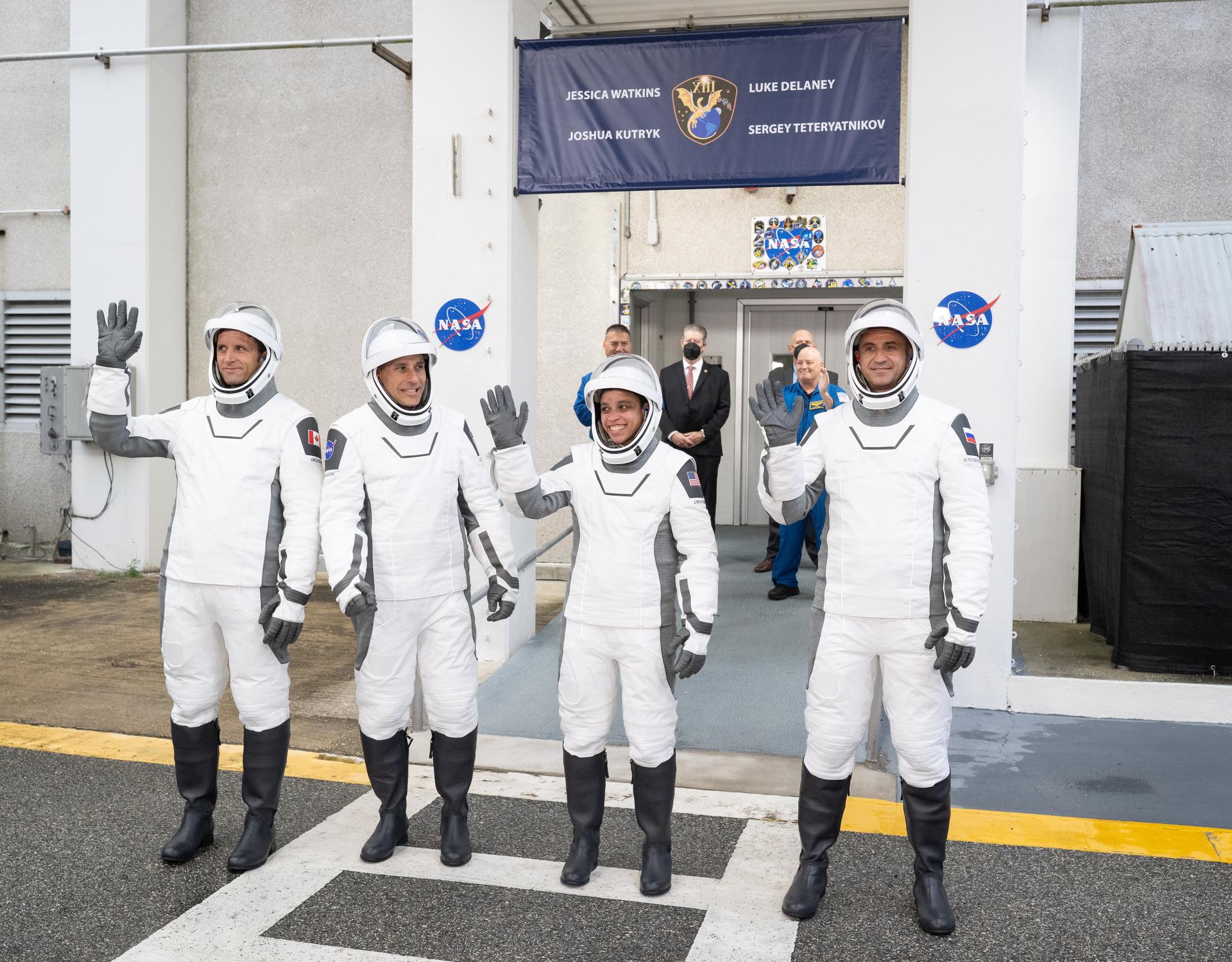
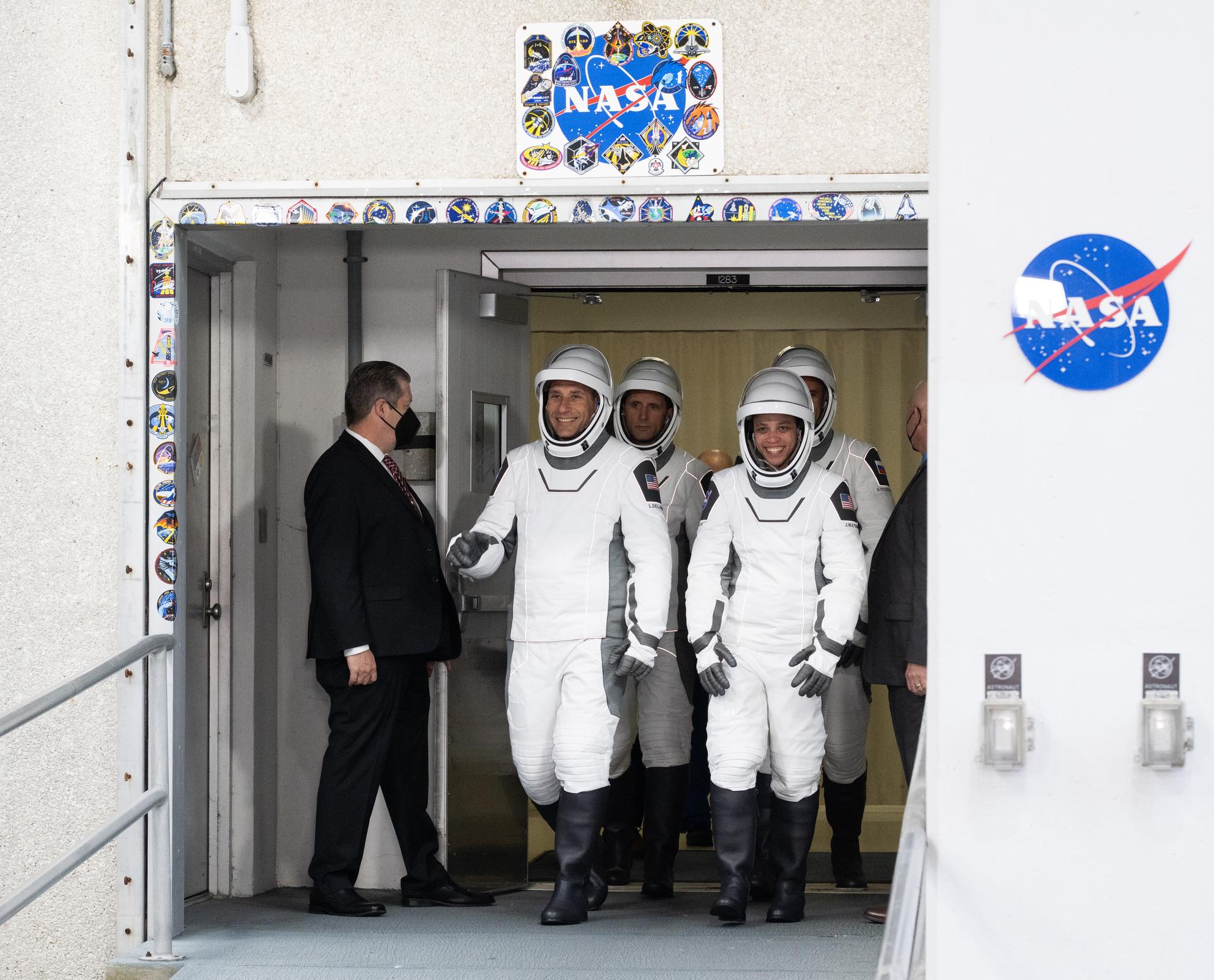
CSA (Canadian Space Agency) astronaut Joshua Kutryk, left, NASA astronauts Luke Delaney and Jessica Watkins, and Roscosmos cosmonaut Sergey Teteryatnikov, wearing SpaceX spacesuits, are seen as they prepare to depart the Neil A. Armstrong Operations and Checkout Building for Space Launch Complex 40 on Cape Canaveral Space Force Station to board the SpaceX Dragon spacecraft for the Crew-13 mission launch, Thursday, Oct. 1, 2026, at NASA’s Kennedy Space Center in Florida. NASA’s SpaceX Crew-13 mission is the 13th crew rotation mission of the SpaceX Dragon spacecraft and Falcon 9 rocket to the International Space Station as part of the agency’s Commercial Crew Program. Watkins, Delaney, Kutryk, Teteryatnikov are scheduled to launch at 11:10 a.m. EDT, from Space Launch Complex 40 at the Cape Canaveral Space Force Station. Photo Credit: (NASA/Joel Kowsky)
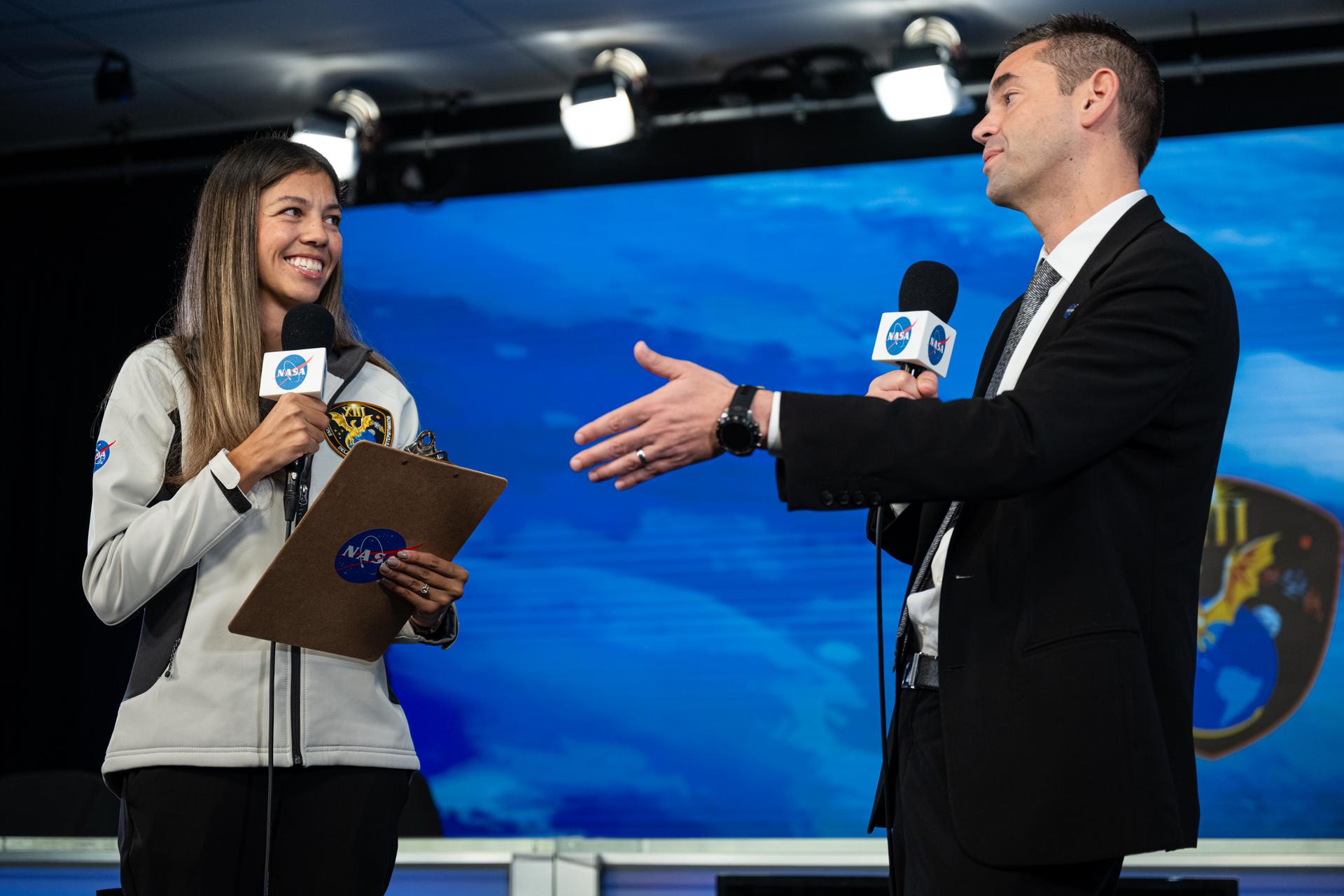
NASA Administrator Jared Isaacman, right, participates in a webcast appearance with Antonia Jaramillo, NASA communications, ahead of the launch of NASA’s SpaceX Crew-13 mission, Thursday, Oct. 1, 2026, at NASA’s Kennedy Space Center in Florida. NASA’s SpaceX Crew-13 mission is the thirteenth crew rotation mission of the SpaceX Falcon 9 rocket and Dragon spacecraft to the International Space Station as part of the agency’s Commercial Crew Program. NASA astronauts Jessica Watkins and Luke Delaney, CSA (Canadian Space Agency) astronaut Joshua Kutryk, and Roscosmos cosmonaut Sergey Teteryatnikov are scheduled to launch at 11:10 a.m. EDT on Thursday, Oct. 1, from Space Launch Complex 40 at Cape Canaveral Space Force Station in Florida. Photo Credit: (NASA/John Kraus)
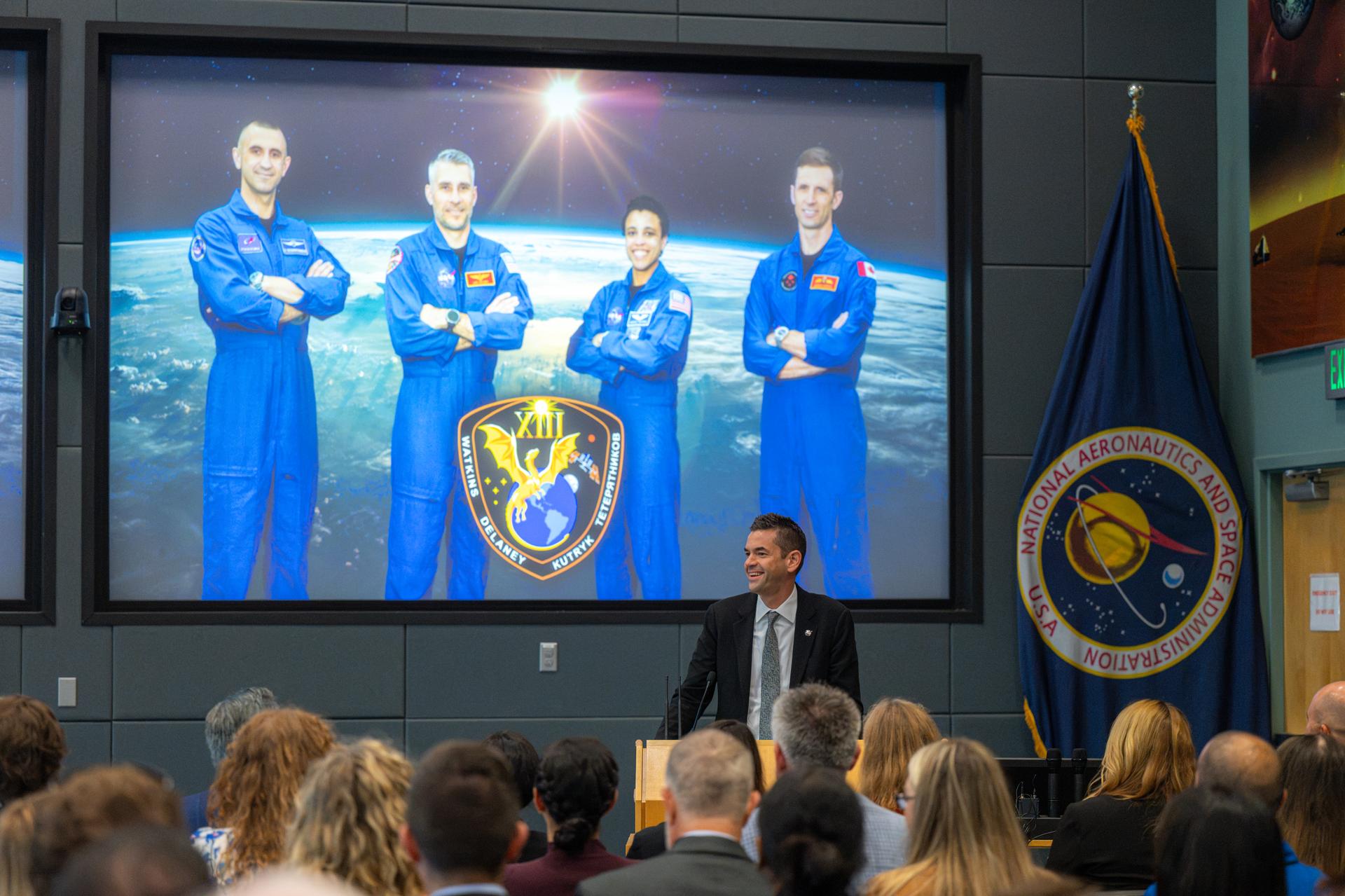
NASA Administrator Jared Isaacman gives remarks during a prelaunch briefing for NASA’s SpaceX Crew-13 mission, Thursday, Oct. 1, 2026, at the Operations Support Building II at NASA’s Kennedy Space Center in Florida. NASA’s SpaceX Crew-13 mission is the thirteenth crew rotation mission of the SpaceX Falcon 9 rocket and Dragon spacecraft to the International Space Station as part of the agency’s Commercial Crew Program. NASA astronauts Jessica Watkins and Luke Delaney, CSA (Canadian Space Agency) astronaut Joshua Kutryk, and Roscosmos cosmonaut Sergey Teteryatnikov will conduct scientific research, technology demonstrations, and maintenance during their long-duration stay aboard the orbital outpost. Photo Credit: (NASA/John Kraus)
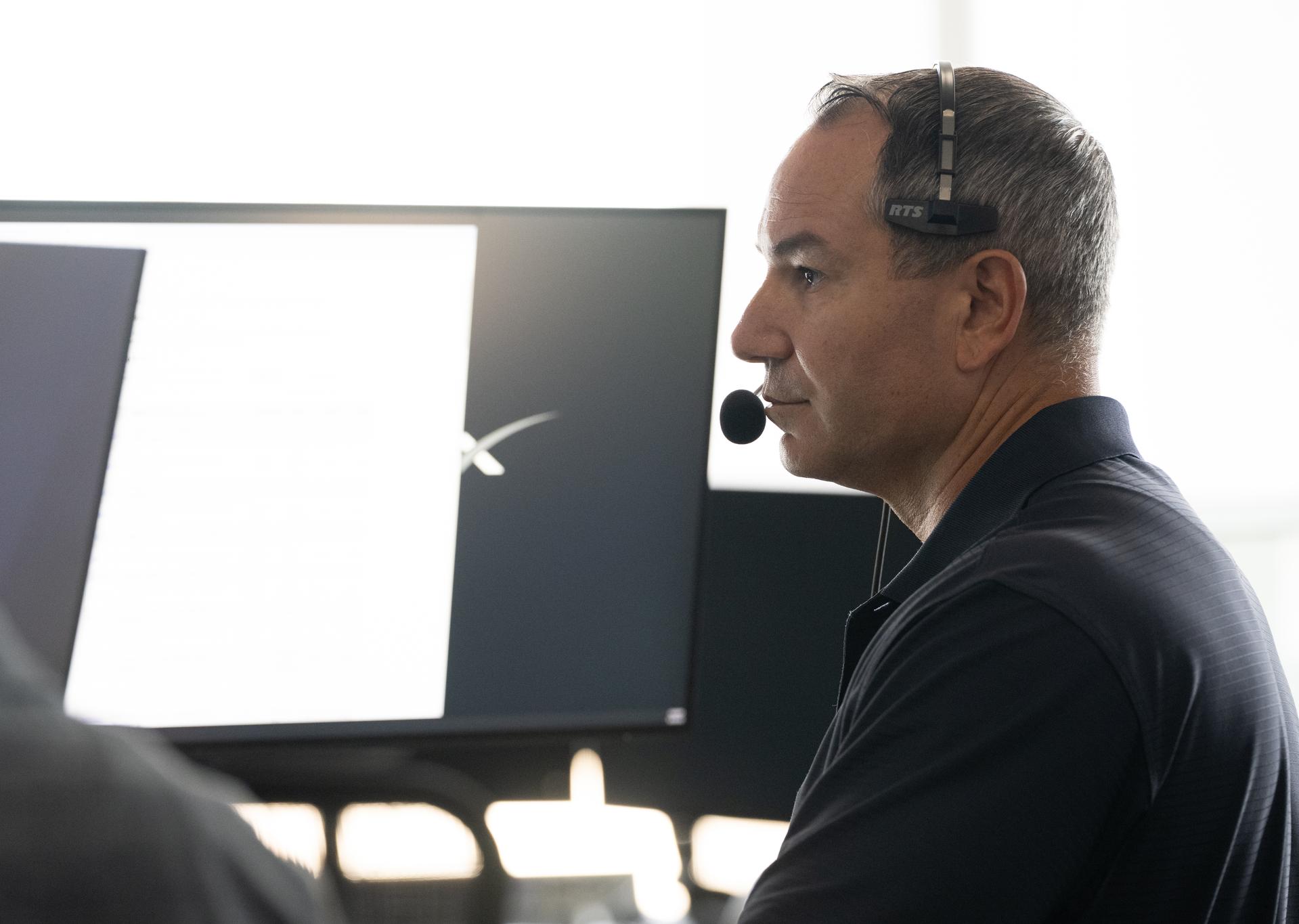
Kevin Vega, NASA’s Commercial Crew Program Chief Engineer, monitors the countdown during a dress rehearsal in preparation for the launch of a SpaceX Falcon 9 rocket carrying the company's Dragon spacecraft on NASA’s SpaceX Crew-13 mission with NASA astronauts Jessica Watkins and Luke Delaney, CSA (Canadian Space Agency) astronaut Joshua Kutryk, and Roscosmos cosmonaut Sergey Teteryatnikov onboard, Tuesday, Sept. 29, 2026, in the control room of SpaceX’s HangarX at NASA’s Kennedy Space Center in Florida. NASA’s SpaceX Crew-13 mission is the 13th crew rotation mission of the SpaceX Dragon spacecraft and Falcon 9 rocket to the International Space Station as part of the agency’s Commercial Crew Program. Watkins, Delaney, Kutryk, Teteryatnikov are scheduled to launch on 11:10 a.m. EDT on Thursday, Oct. 1, from Space Launch Complex 40 at the Cape Canaveral Space Force Station. Photo Credit: (NASA/Joel Kowsky)

Richard Jones, manager of the Mission Management and Integration Office for NASA's Commercial Crew Program, monitors the countdown during a dress rehearsal in preparation for the launch of a SpaceX Falcon 9 rocket carrying the company's Dragon spacecraft on NASA’s SpaceX Crew-13 mission with NASA astronauts Jessica Watkins and Luke Delaney, CSA (Canadian Space Agency) astronaut Joshua Kutryk, and Roscosmos cosmonaut Sergey Teteryatnikov onboard, Tuesday, Sept. 29, 2026, in the control room of SpaceX’s HangarX at NASA’s Kennedy Space Center in Florida. NASA’s SpaceX Crew-13 mission is the 13th crew rotation mission of the SpaceX Dragon spacecraft and Falcon 9 rocket to the International Space Station as part of the agency’s Commercial Crew Program. Watkins, Delaney, Kutryk, Teteryatnikov are scheduled to launch on 11:10 a.m. EDT on Thursday, Oct. 1, from Space Launch Complex 40 at the Cape Canaveral Space Force Station. Photo Credit: (NASA/Joel Kowsky)
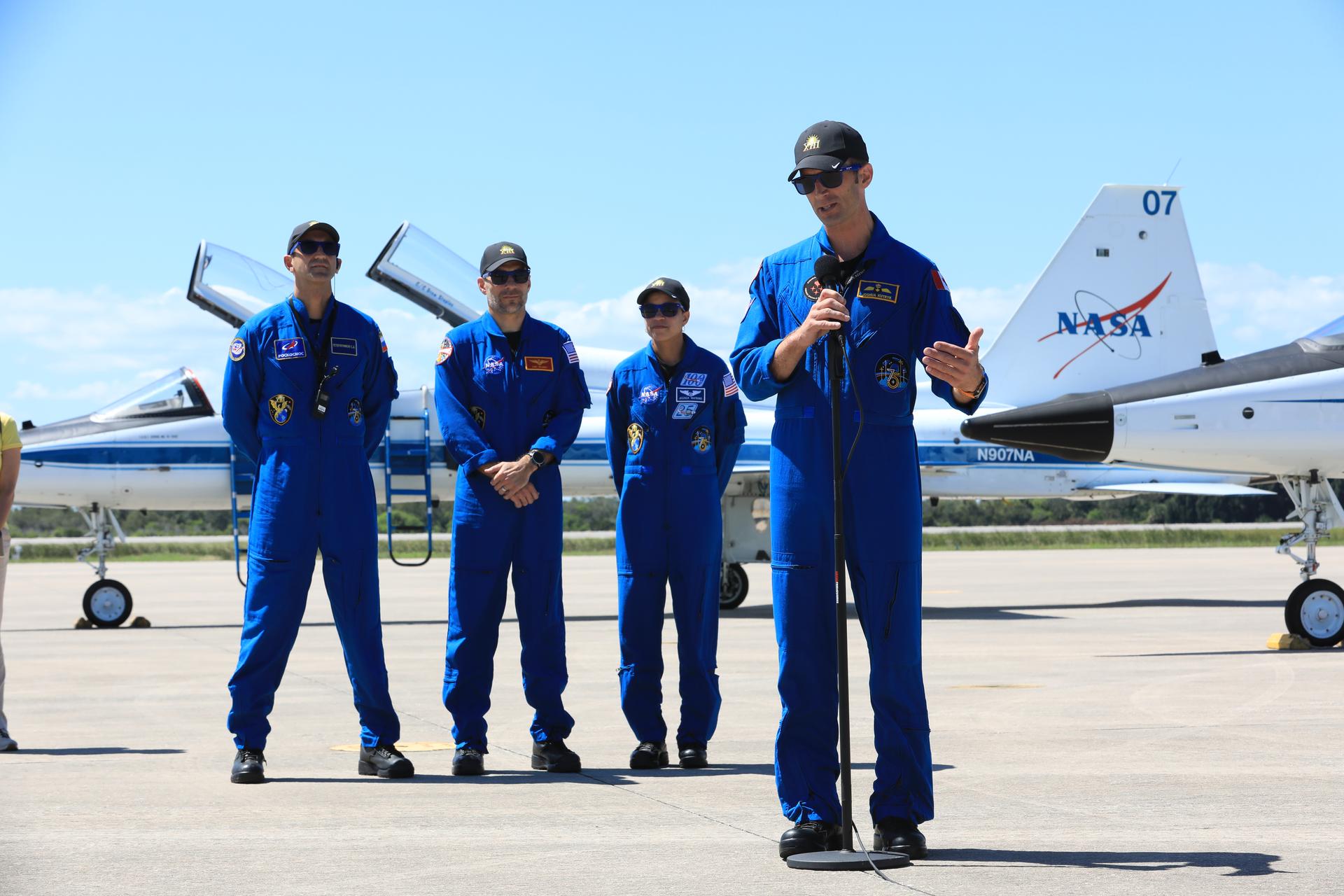
CSA (Canadian Space Agency) astronaut Joshua Kutryk, mission specialist, speaks to the news media during crew arrival for NASA’s SpaceX Crew-13 mission at the Shuttle Landing Facility at the agency’s Kennedy Space Center in Florida on Saturday, Sept. 26, 2026. NASA astronauts Jessica Watkins and Luke Delaney, and Roscosmos cosmonaut Sergey Teteryatnikov will launch along with Kutryk to the International Space Station aboard SpaceX’s Dragon spacecraft and Falcon 9 rocket at 11:10 a.m. EDT on Thursday, Oct. 1, from Cape Canaveral Space Force Station’s Space Launch Complex 40.
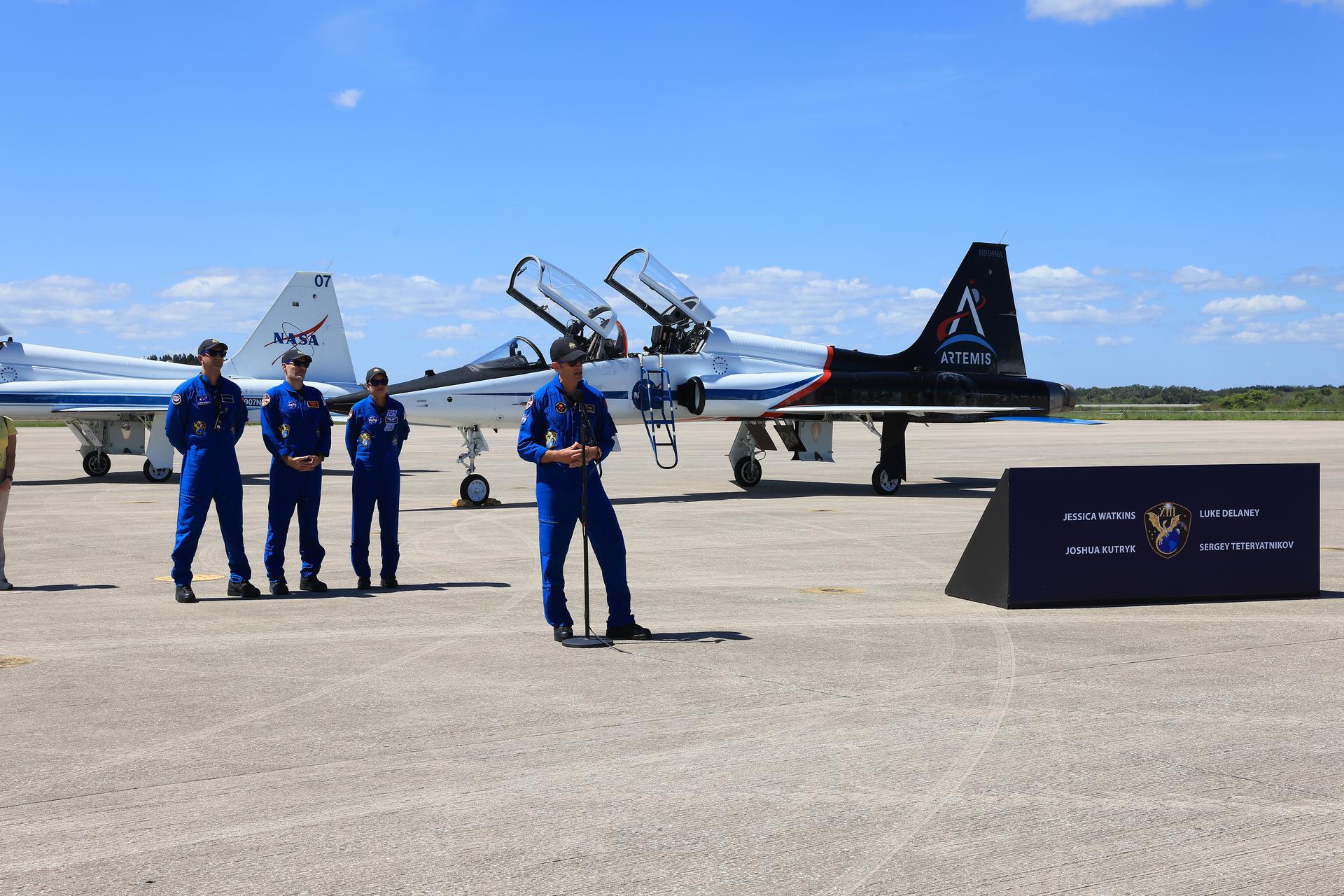
CSA (Canadian Space Agency) astronaut Joshua Kutryk, mission specialist, speaks to the news media during crew arrival for NASA’s SpaceX Crew-13 mission at the Shuttle Landing Facility at the agency’s Kennedy Space Center in Florida on Saturday, Sept. 26, 2026. NASA astronauts Jessica Watkins and Luke Delaney, and Roscosmos cosmonaut Sergey Teteryatnikov will launch along with Kutryk to the International Space Station aboard SpaceX’s Dragon spacecraft and Falcon 9 rocket at 11:10 a.m. EDT on Thursday, Oct. 1, from Cape Canaveral Space Force Station’s Space Launch Complex 40.
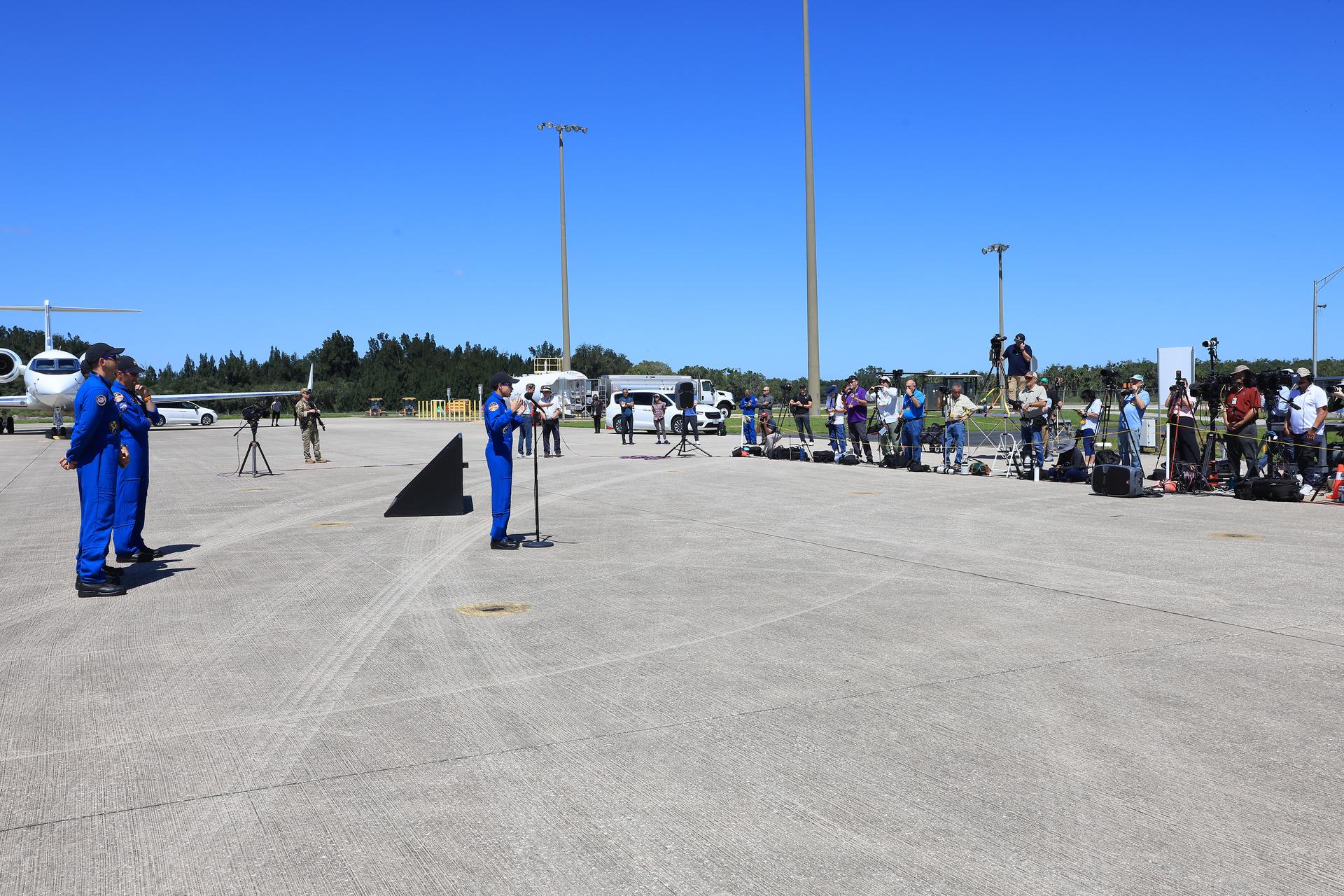
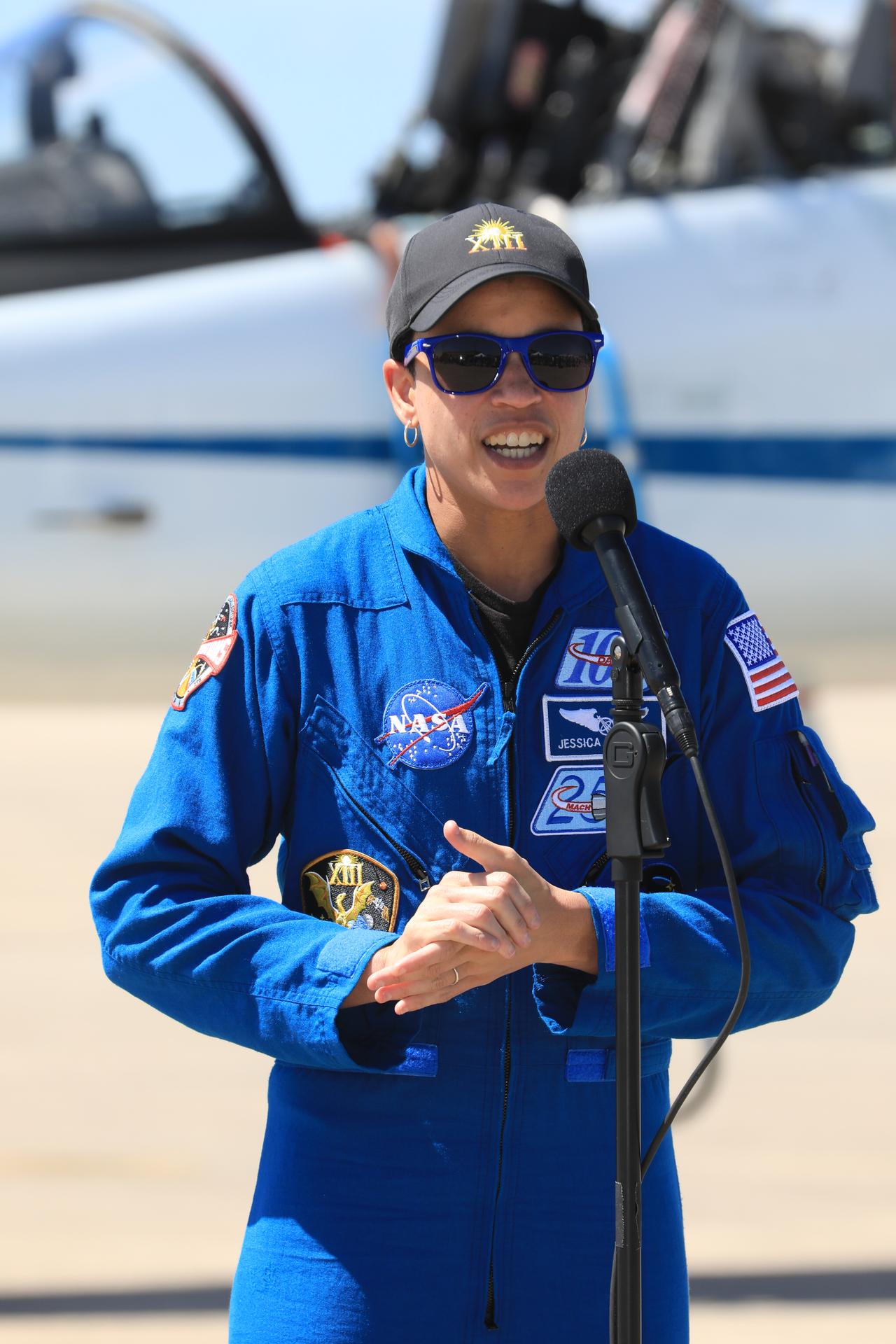
NASA astronaut Jessica Watkins, commander, speaks to the news media during crew arrival for NASA’s SpaceX Crew-13 mission at the Shuttle Landing Facility at the agency’s Kennedy Space Center in Florida on Saturday, Sept. 26, 2026. Watkins and fellow NASA astronaut Luke Delaney, along with CSA (Canadian Space Agency) astronaut Joshua Kutryk, and Roscosmos cosmonaut Sergey Teteryatnikov will launch to the International Space Station aboard SpaceX’s Dragon spacecraft and Falcon 9 rocket at 11:10 a.m. EDT on Thursday, Oct. 1, from Cape Canaveral Space Force Station’s Space Launch Complex 40.
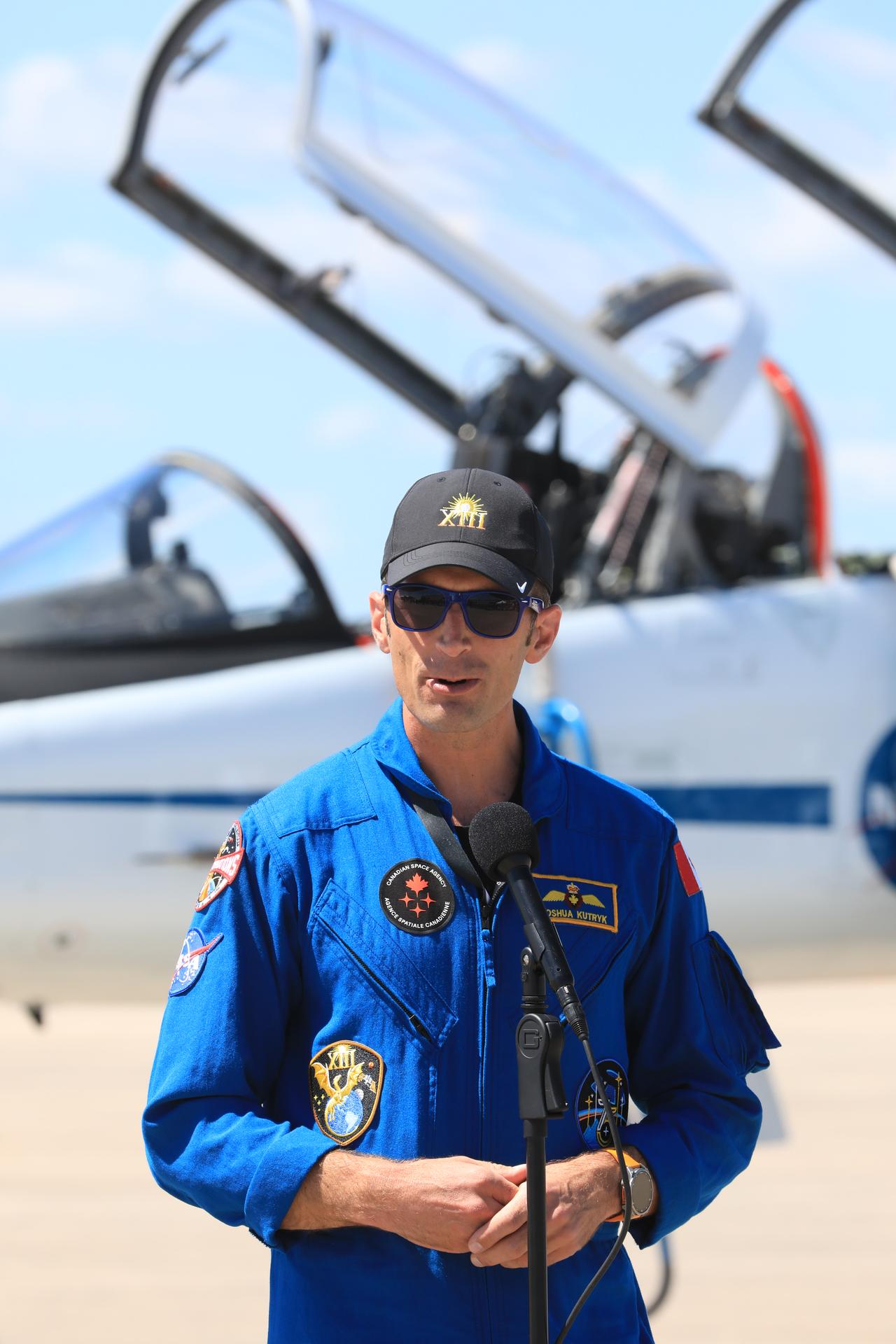
CSA (Canadian Space Agency) astronaut Joshua Kutryk, mission specialist, speaks to the news media during crew arrival for NASA’s SpaceX Crew-13 mission at the Shuttle Landing Facility at the agency’s Kennedy Space Center in Florida on Saturday, Sept. 26, 2026. NASA astronauts Jessica Watkins and Luke Delaney, and Roscosmos cosmonaut Sergey Teteryatnikov will launch along with Kutryk to the International Space Station aboard SpaceX’s Dragon spacecraft and Falcon 9 rocket at 11:10 a.m. EDT on Thursday, Oct. 1, from Cape Canaveral Space Force Station’s Space Launch Complex 40.
NASA astronaut Jessica Watkins, commander, speaks to the news media during crew arrival for NASA’s SpaceX Crew-13 mission at the Shuttle Landing Facility at the agency’s Kennedy Space Center in Florida on Saturday, Sept. 26, 2026. Watkins and fellow NASA astronaut Luke Delaney, along with CSA (Canadian Space Agency) astronaut Joshua Kutryk, and Roscosmos cosmonaut Sergey Teteryatnikov will launch to the International Space Station aboard SpaceX’s Dragon spacecraft and Falcon 9 rocket at 11:10 a.m. EDT on Thursday, Oct. 1, from Cape Canaveral Space Force Station’s Space Launch Complex 40.
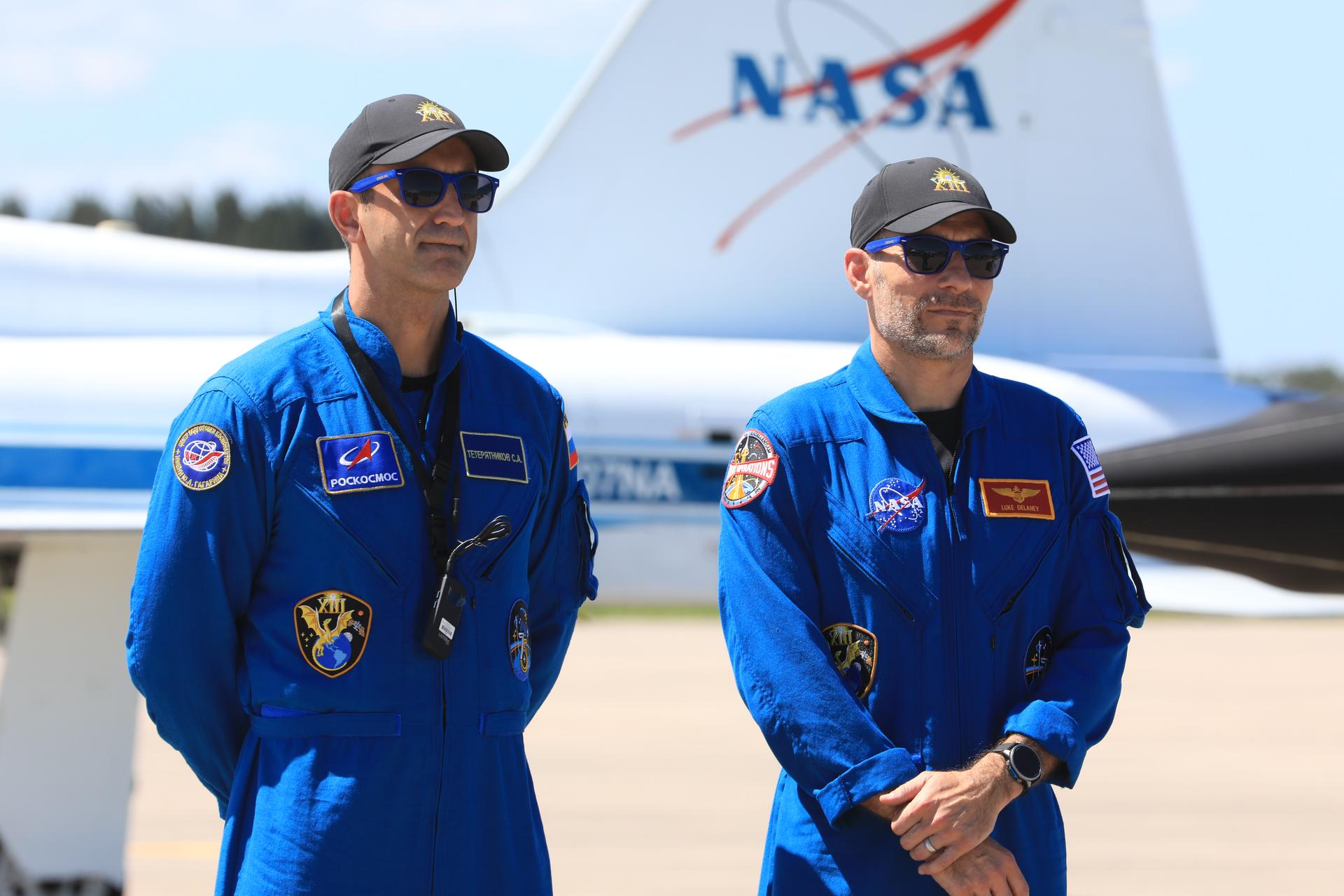
From left, Roscosmos cosmonaut mission specialist Sergey Teteryatnikov and NASA astronaut Luke Delaney participate in a news media event during crew arrival for NASA’s SpaceX Crew-13 mission at the Shuttle Landing Facility at the agency’s Kennedy Space Center in Florida on Saturday, Sept. 26, 2026. NASA astronauts Jessica Watkins and Delaney, along with CSA (Canadian Space Agency) astronaut Joshua Kutryk and Teteryatnikov will launch to the International Space Station aboard SpaceX’s Dragon spacecraft and Falcon 9 rocket at 11:10 a.m. EDT on Thursday, Oct. 1, from Cape Canaveral Space Force Station’s Space Launch Complex 40.
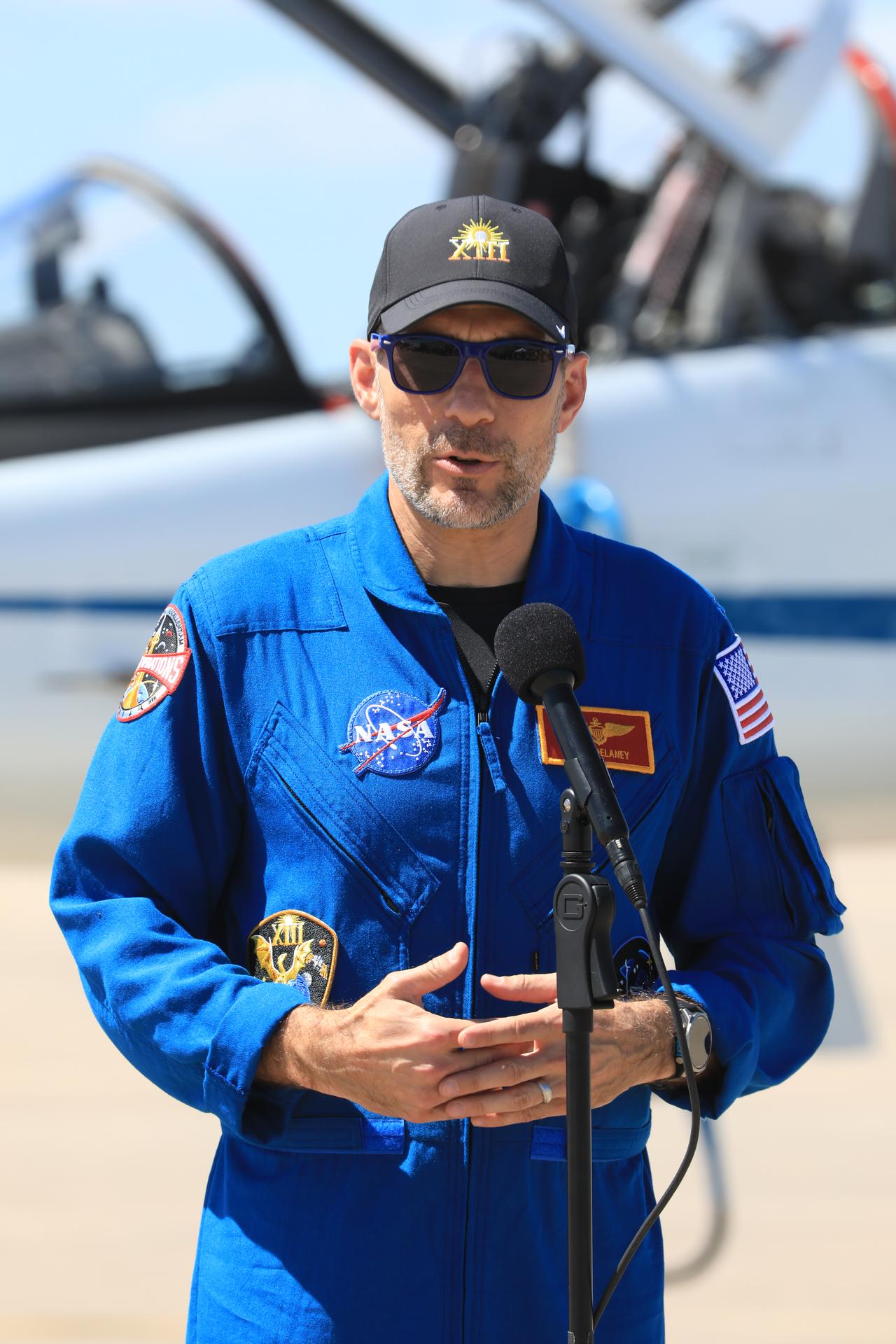
NASA astronaut Luke Delaney, pilot, speaks to the news media during crew arrival for NASA’s SpaceX Crew-13 mission at the Shuttle Landing Facility at the agency’s Kennedy Space Center in Florida on Saturday, Sept. 26, 2026. Delaney and fellow NASA astronaut Jessica Watkins, along with CSA (Canadian Space Agency) astronaut Joshua Kutryk, and Roscosmos cosmonaut Sergey Teteryatnikov will launch to the International Space Station aboard SpaceX’s Dragon spacecraft and Falcon 9 rocket at 11:10 a.m. EDT on Thursday, Oct. 1, from Cape Canaveral Space Force Station’s Space Launch Complex 40.
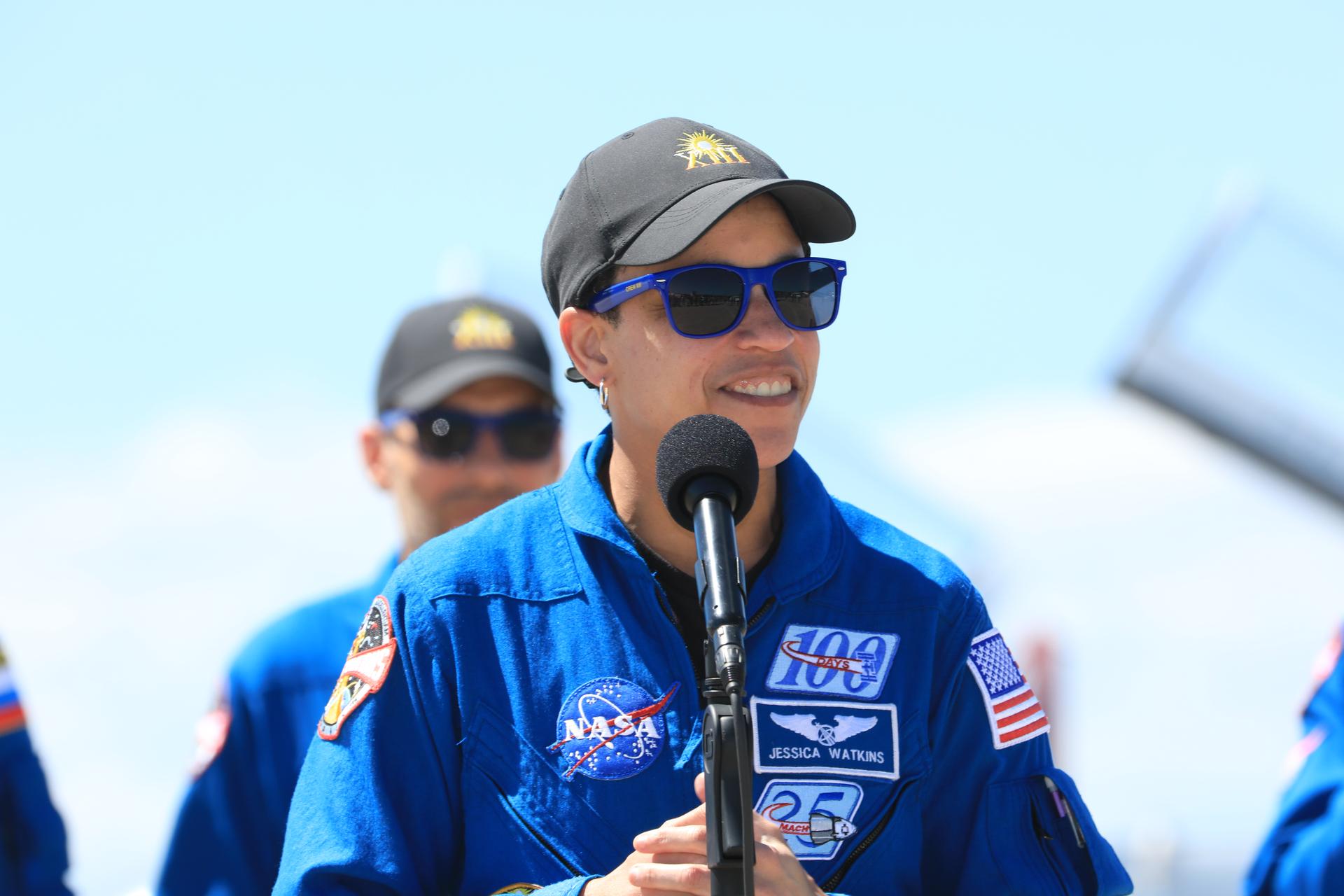
NASA astronaut Jessica Watkins, commander, speaks to the news media during crew arrival for NASA’s SpaceX Crew-13 mission at the Shuttle Landing Facility at the agency’s Kennedy Space Center in Florida on Saturday, Sept. 26, 2026. Watkins and fellow NASA astronaut Luke Delaney, along with CSA (Canadian Space Agency) astronaut Joshua Kutryk, and Roscosmos cosmonaut Sergey Teteryatnikov will launch to the International Space Station aboard SpaceX’s Dragon spacecraft and Falcon 9 rocket at 11:10 a.m. EDT on Thursday, Oct. 1, from Cape Canaveral Space Force Station’s Space Launch Complex 40.
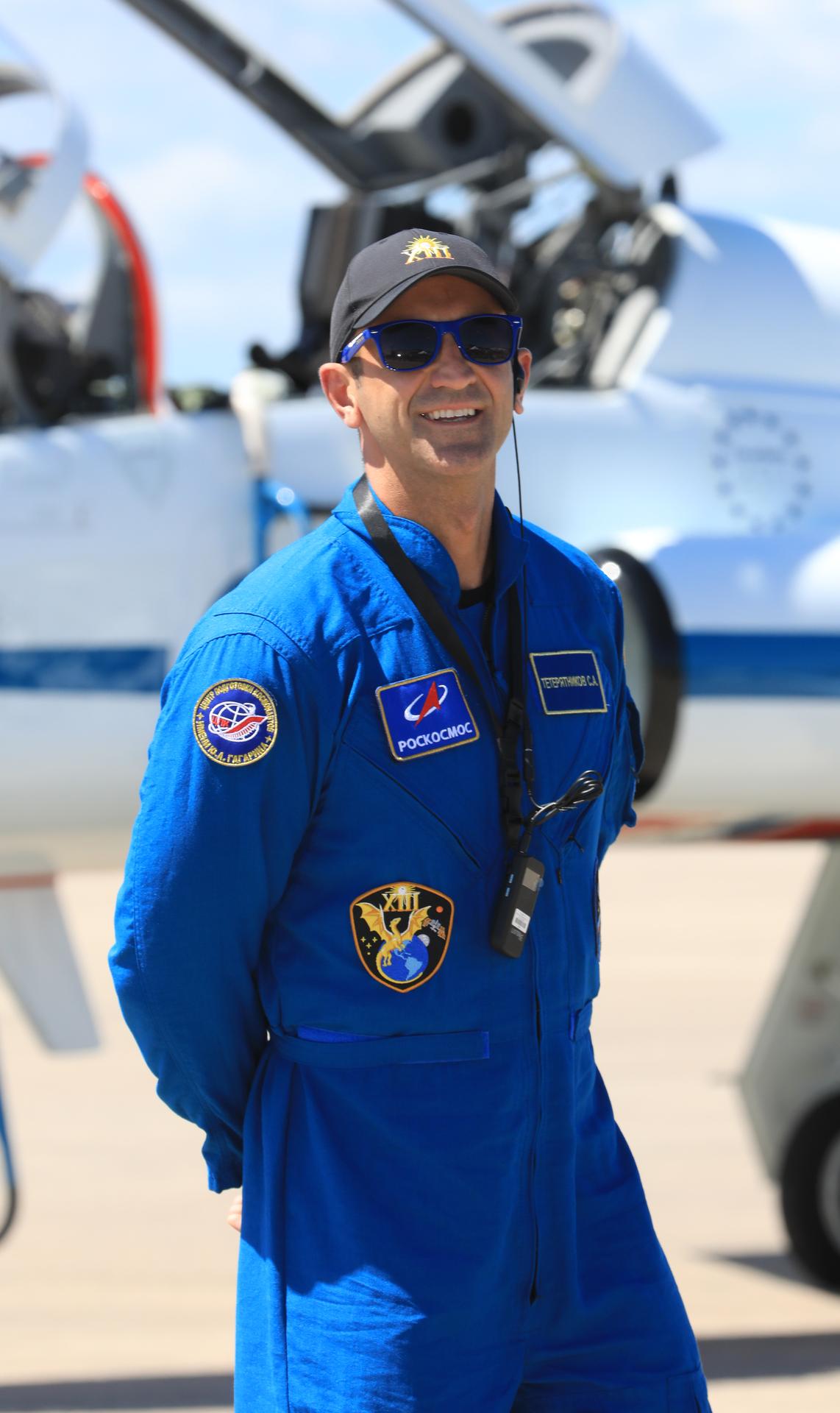
Roscosmos cosmonaut mission specialist Sergey Teteryatnikov participates in a news media event during crew arrival for NASA’s SpaceX Crew-13 mission at the Shuttle Landing Facility at the agency’s Kennedy Space Center in Florida on Saturday, Sept. 26, 2026. NASA astronauts NASA astronauts Jessica Watkins and Luke Delaney, and CSA (Canadian Space Agency) astronaut Joshua Kutryk will launch along with Teteryatnikov to the International Space Station aboard SpaceX’s Dragon spacecraft and Falcon 9 rocket at 11:10 a.m. EDT on Thursday, Oct. 1, from Cape Canaveral Space Force Station’s Space Launch Complex 40.
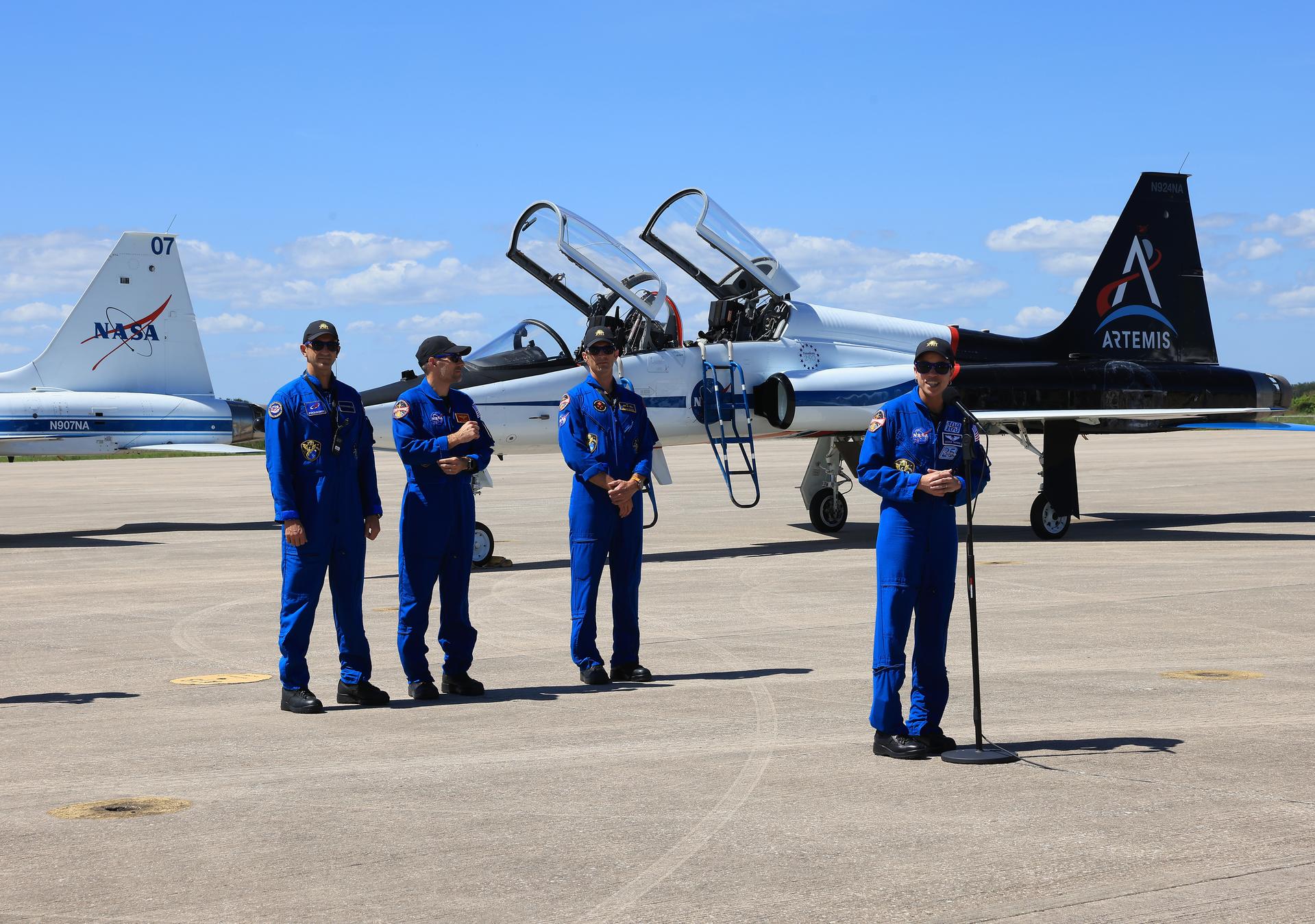
NASA astronaut Jessica Watkins, commander, speaks to the news media during crew arrival for NASA’s SpaceX Crew-13 mission at the Shuttle Landing Facility at the agency’s Kennedy Space Center in Florida on Saturday, Sept. 26, 2026. Watkins and fellow NASA astronaut Luke Delaney, along with CSA (Canadian Space Agency) astronaut Joshua Kutryk, and Roscosmos cosmonaut Sergey Teteryatnikov will launch to the International Space Station aboard SpaceX’s Dragon spacecraft and Falcon 9 rocket at 11:10 a.m. EDT on Thursday, Oct. 1, from Cape Canaveral Space Force Station’s Space Launch Complex 40.
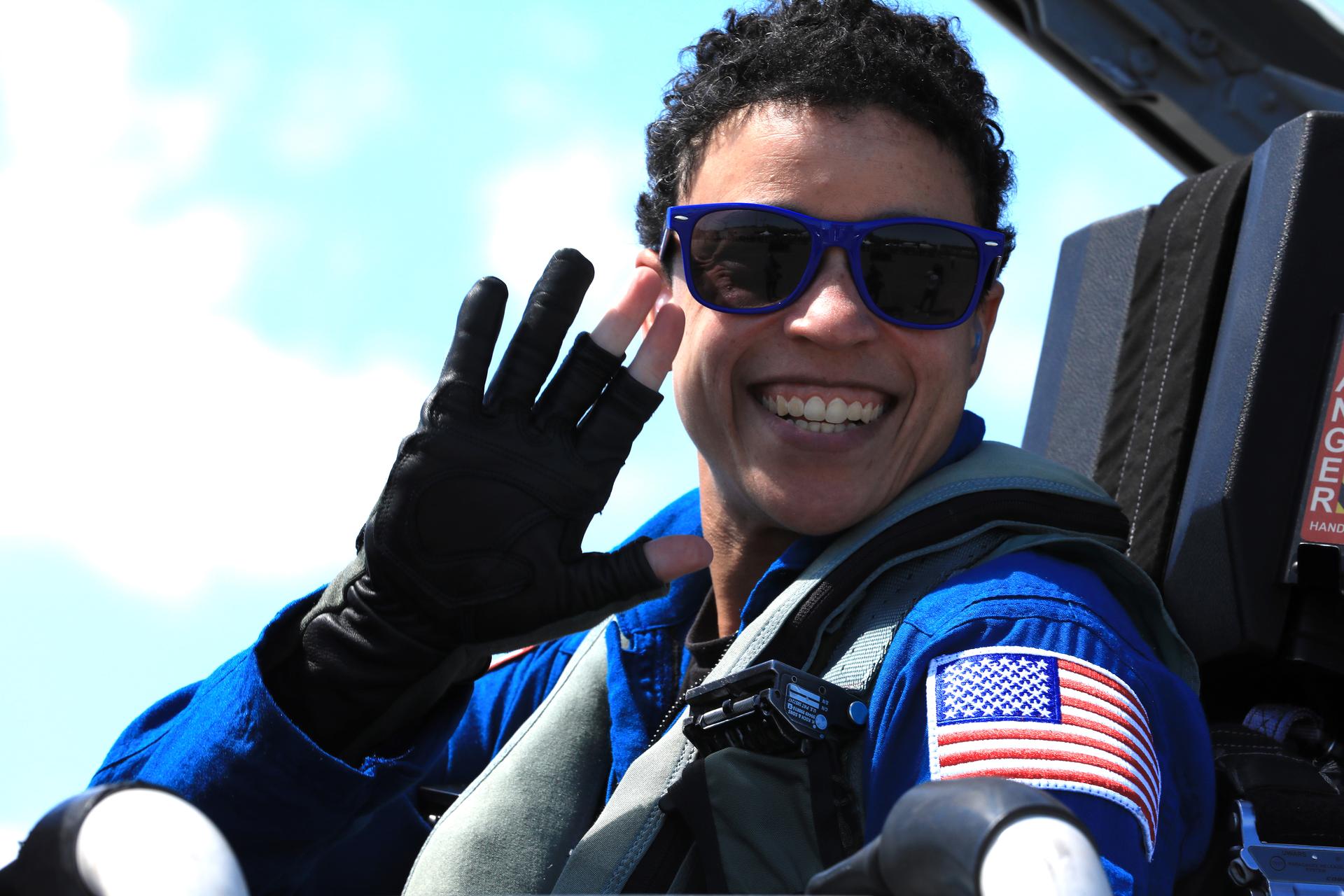
NASA astronaut Jessica Watkins, commander, waves from a T-38 jet during crew arrival for NASA’s SpaceX Crew-13 mission at the Shuttle Landing Facility at the agency’s Kennedy Space Center in Florida on Saturday, Sept. 26, 2026. Watkins and fellow NASA astronaut Luke Delaney, along with CSA (Canadian Space Agency) astronaut Joshua Kutryk, and Roscosmos cosmonaut Sergey Teteryatnikov will launch to the International Space Station aboard SpaceX’s Dragon spacecraft and Falcon 9 rocket at 11:10 a.m. EDT on Thursday, Oct. 1, from Cape Canaveral Space Force Station’s Space Launch Complex 40.
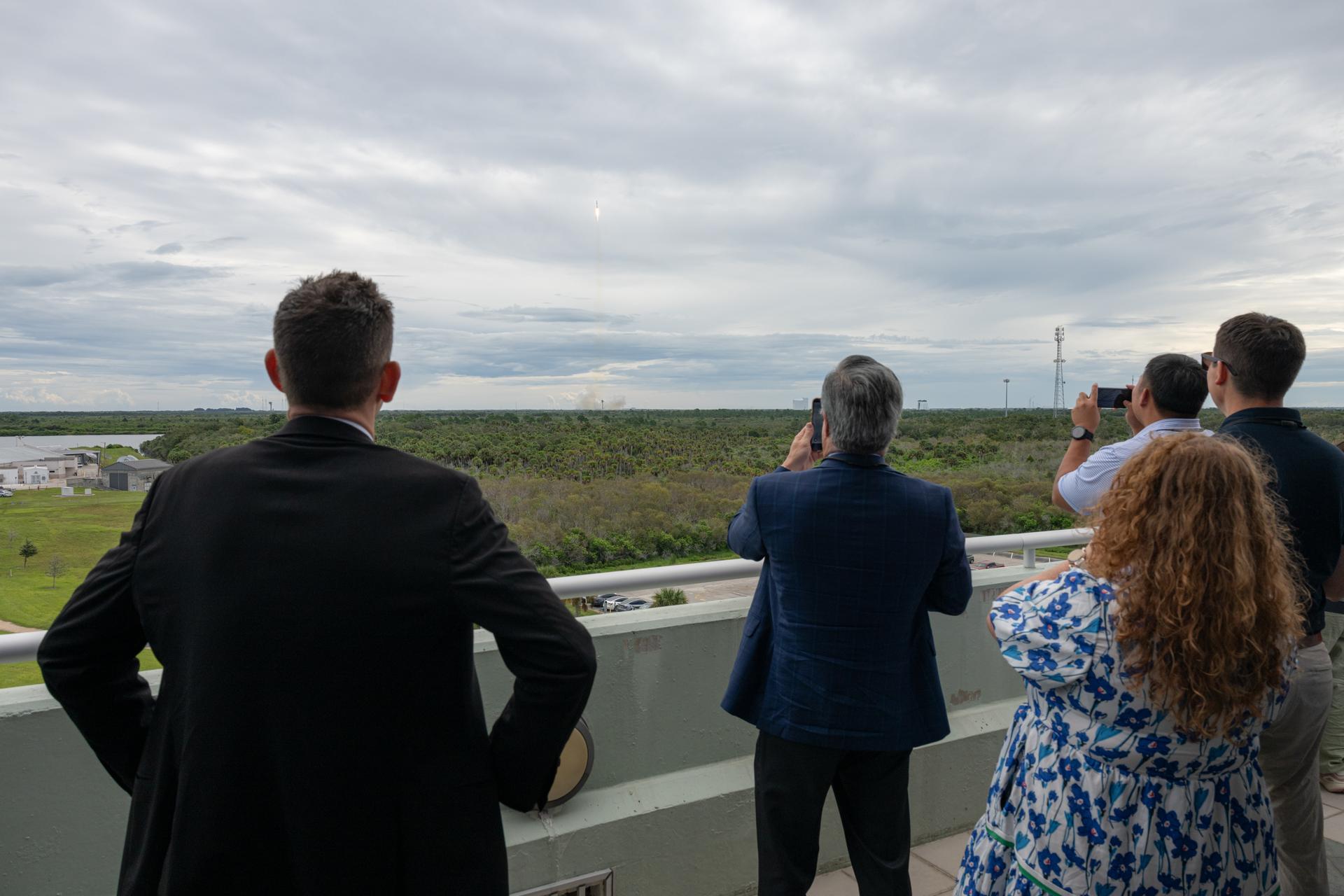
NASA Administrator Jared Isaacman, left, and invited guests and NASA employees watch as a SpaceX Falcon 9 rocket carrying the company’s Dragon spacecraft launches on NASA’s SpaceX Crew-13 mission to the International Space Station with NASA astronauts Jessica Watkins and Luke Delaney, CSA (Canadian Space Agency) astronaut Joshua Kutryk, and Roscosmos cosmonaut Sergey Teteryatnikov, Thursday, Oct. 1, 2026, at the Operations Support Building II at NASA’s Kennedy Space Center in Florida. NASA’s SpaceX Crew-13 mission is the thirteenth crew rotation mission of the SpaceX Falcon 9 rocket and Dragon spacecraft to the International Space Station as part of the agency’s Commercial Crew Program. Watkins, Delaney, Kutryk, and Teteryatnikov launched at 11:10 a.m. EDT from Space Launch Complex 40 at Cape Canaveral Space Force Station to begin their mission aboard the orbital outpost. Photo Credit: (NASA/John Kraus)
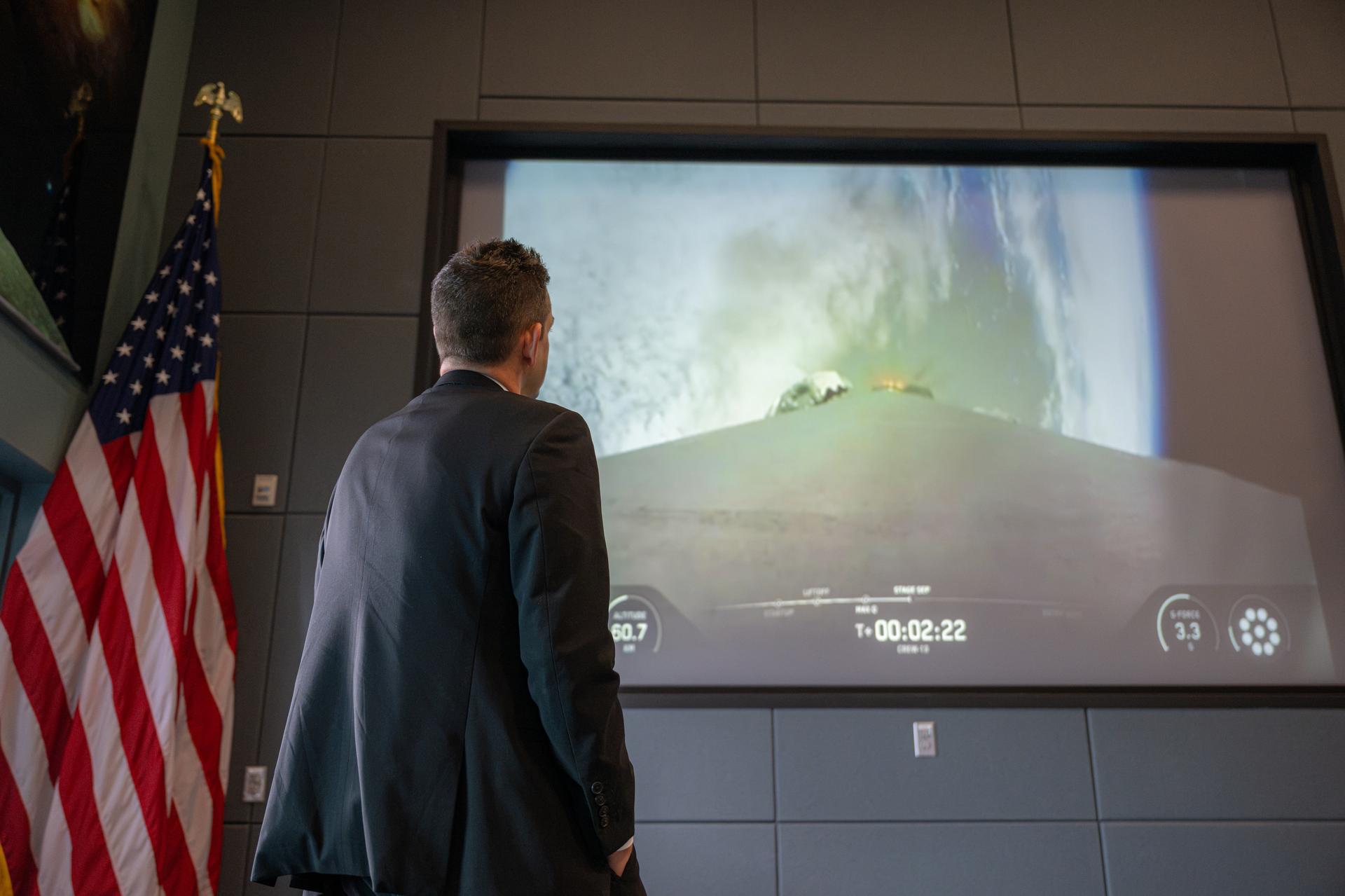
NASA Administrator Jared Isaacman watches a webcast of the launch of a SpaceX Falcon 9 rocket carrying the company’s Dragon spacecraft on NASA’s SpaceX Crew-13 mission to the International Space Station with NASA astronauts Jessica Watkins and Luke Delaney, CSA (Canadian Space Agency) astronaut Joshua Kutryk, and Roscosmos cosmonaut Sergey Teteryatnikov, Thursday, Oct. 1, 2026, at the Operations Support Building II at NASA’s Kennedy Space Center in Florida. NASA’s SpaceX Crew-13 mission is the thirteenth crew rotation mission of the SpaceX Falcon 9 rocket and Dragon spacecraft to the International Space Station as part of the agency’s Commercial Crew Program. Watkins, Delaney, Kutryk, and Teteryatnikov launched at 11:10 a.m. EDT from Space Launch Complex 40 at Cape Canaveral Space Force Station in Florida to begin their mission aboard the orbital outpost. Photo Credit: (NASA/John Kraus)
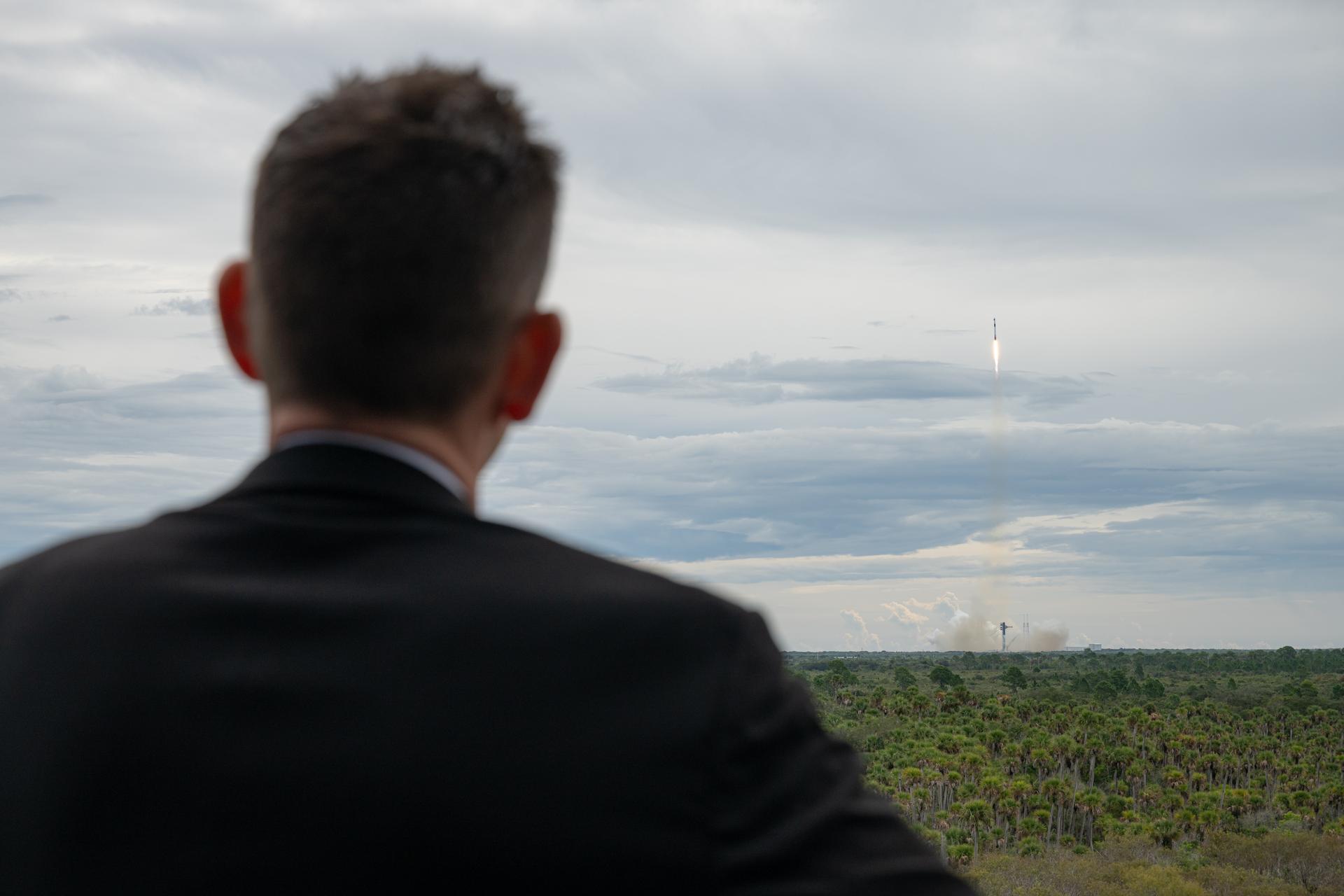
NASA Administrator Jared Isaacman watches as a SpaceX Falcon 9 rocket carrying the company’s Dragon spacecraft launches on NASA’s SpaceX Crew-13 mission to the International Space Station with NASA astronauts Jessica Watkins and Luke Delaney, CSA (Canadian Space Agency) astronaut Joshua Kutryk, and Roscosmos cosmonaut Sergey Teteryatnikov, Thursday, Oct. 1, 2026, at the Operations Support Building II at NASA’s Kennedy Space Center in Florida. NASA’s SpaceX Crew-13 mission is the thirteenth crew rotation mission of the SpaceX Falcon 9 rocket and Dragon spacecraft to the International Space Station as part of the agency’s Commercial Crew Program. Watkins, Delaney, Kutryk, and Teteryatnikov launched at 11:10 a.m. EDT from Space Launch Complex 40 at Cape Canaveral Space Force Station to begin their mission aboard the orbital outpost. Photo Credit: (NASA/John Kraus)
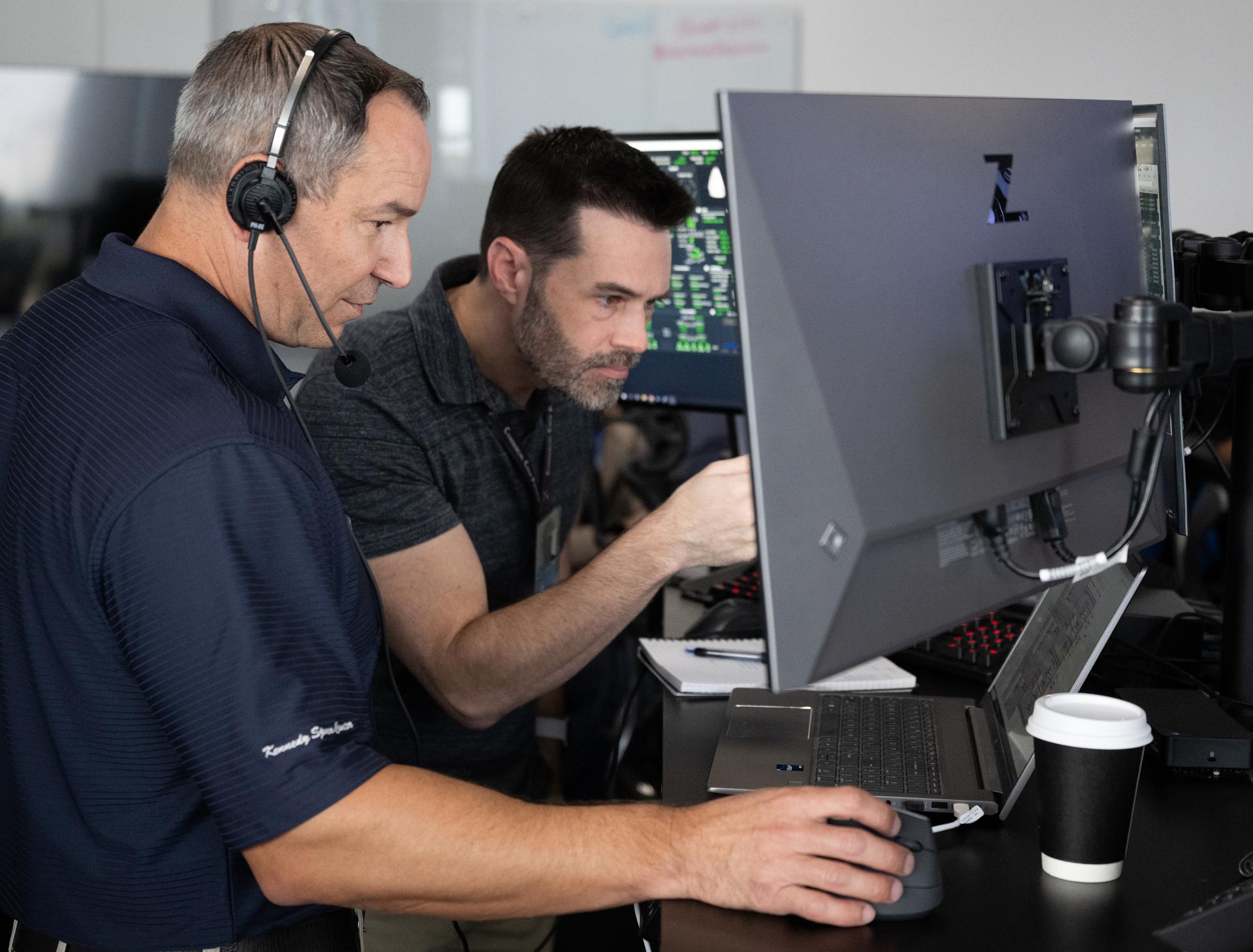
Kevin Vega, NASA’s Commercial Crew Program Chief Engineer, left, John Posey, lead engineer for Dragon in NASA's Commercial Crew Program are seen as they monitor the countdown during a dress rehearsal in preparation for the launch of a SpaceX Falcon 9 rocket carrying the company's Dragon spacecraft on NASA’s SpaceX Crew-13 mission with NASA astronauts Jessica Watkins and Luke Delaney, CSA (Canadian Space Agency) astronaut Joshua Kutryk, and Roscosmos cosmonaut Sergey Teteryatnikov onboard, Tuesday, Sept. 29, 2026, in the control room of SpaceX’s HangarX at NASA’s Kennedy Space Center in Florida. NASA’s SpaceX Crew-13 mission is the 13th crew rotation mission of the SpaceX Dragon spacecraft and Falcon 9 rocket to the International Space Station as part of the agency’s Commercial Crew Program. Watkins, Delaney, Kutryk, Teteryatnikov are scheduled to launch on 11:10 a.m. EDT on Thursday, Oct. 1, from Space Launch Complex 40 at the Cape Canaveral Space Force Station. Photo Credit: (NASA/Joel Kowsky)

NASA Administrator Jared Isaacman, second from left, and Kennedy Space Center Director Brian Hughes, left, watch as NASA’s SpaceX Crew-13 crew members depart the Neil A. Armstrong Operations and Checkout Building ahead of their launch to the International Space Station, Thursday, Oct. 1, 2026, at NASA’s Kennedy Space Center in Florida. NASA’s SpaceX Crew-13 mission is the thirteenth crew rotation mission of the SpaceX Falcon 9 rocket and Dragon spacecraft to the International Space Station as part of the agency’s Commercial Crew Program. NASA astronauts Jessica Watkins and Luke Delaney, CSA (Canadian Space Agency) astronaut Joshua Kutryk, and Roscosmos cosmonaut Sergey Teteryatnikov will conduct scientific research, technology demonstrations, and maintenance during their long-duration stay aboard the orbital outpost. Photo Credit: (NASA/John Kraus)
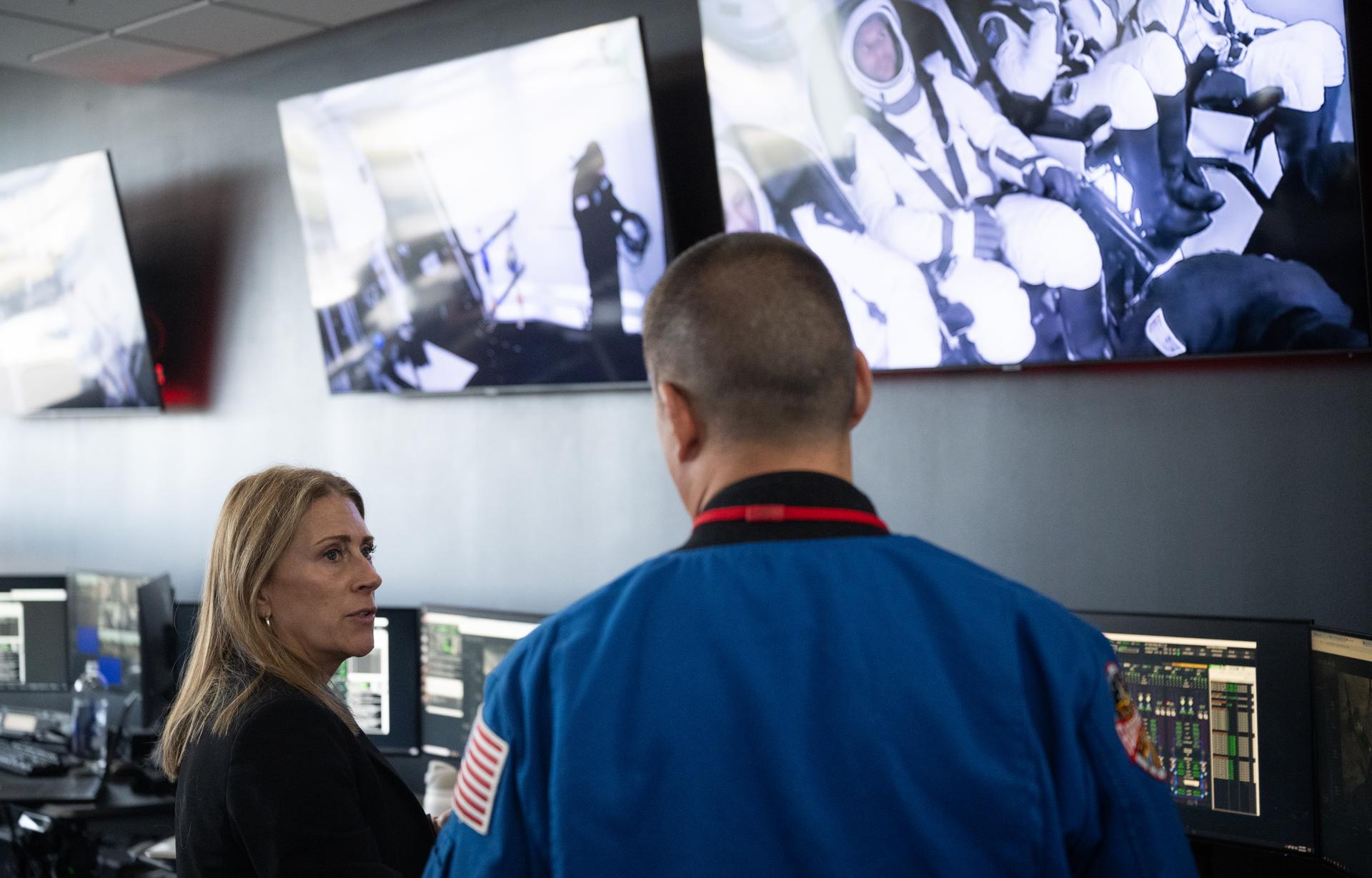
Dana Weigel, manager of NASA’s Low Earth Orbit Program, speaks with Kjell Lindgren deputy director of Flight Operations at NASA’s Johnson Space Center as teams monitor the countdown during a dress rehearsal in preparation for the launch of a SpaceX Falcon 9 rocket carrying the company's Dragon spacecraft on NASA’s SpaceX Crew-13 mission with NASA astronauts Jessica Watkins and Luke Delaney, CSA (Canadian Space Agency) astronaut Joshua Kutryk, and Roscosmos cosmonaut Sergey Teteryatnikov onboard, Tuesday, Sept. 29, 2026, in the control room of SpaceX’s HangarX at NASA’s Kennedy Space Center in Florida. NASA’s SpaceX Crew-13 mission is the 13th crew rotation mission of the SpaceX Dragon spacecraft and Falcon 9 rocket to the International Space Station as part of the agency’s Commercial Crew Program. Watkins, Delaney, Kutryk, Teteryatnikov are scheduled to launch on 11:10 a.m. EDT on Thursday, Oct. 1, from Space Launch Complex 40 at the Cape Canaveral Space Force Station. Photo Credit: (NASA/Joel Kowsky)
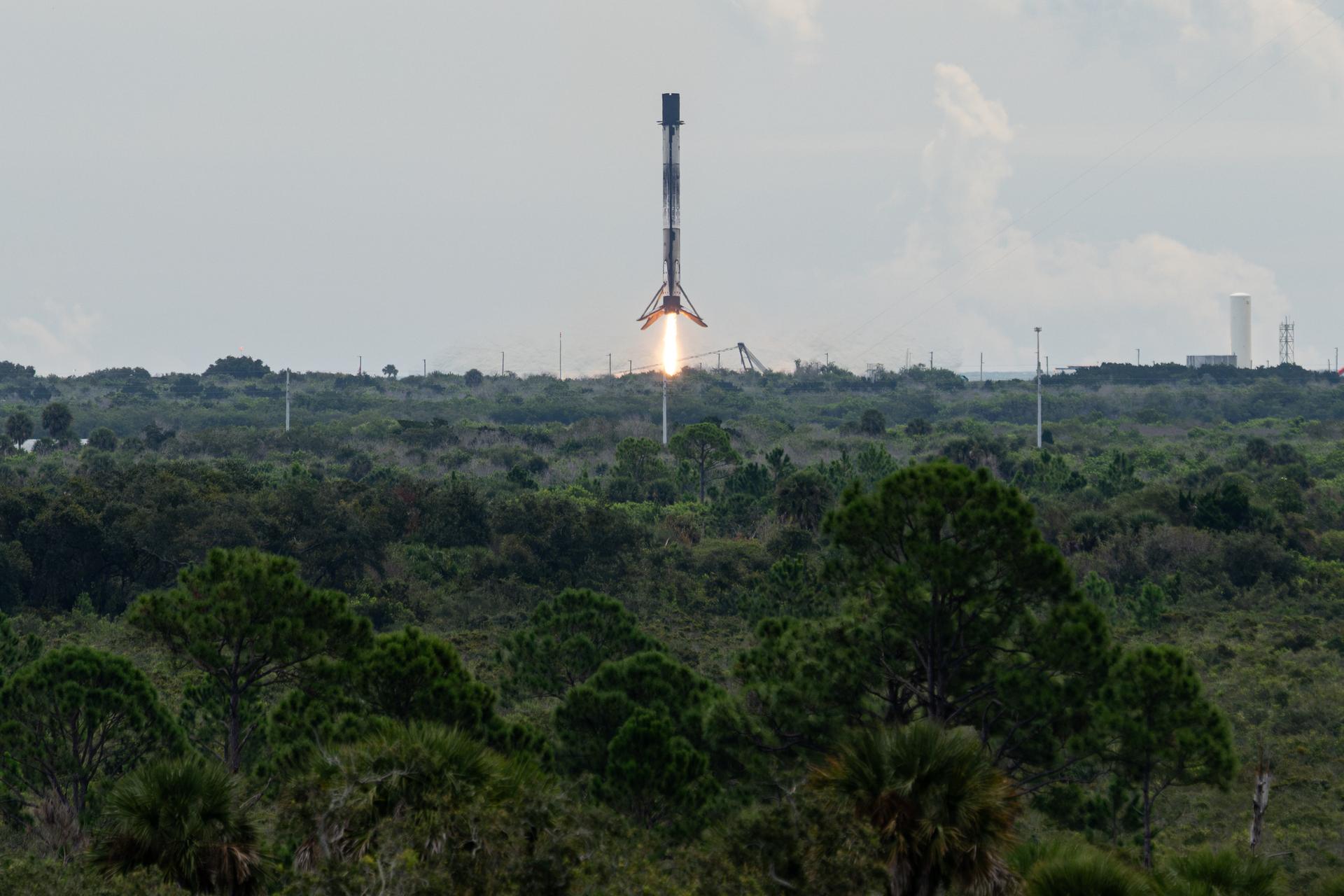
The first stage of a SpaceX Falcon 9 rocket lands at Landing Zone 40, Thursday, Oct. 1, 2026, at Cape Canaveral Space Force Station in Florida. The Falcon 9 first stage supported the launch of NASA’s SpaceX Crew-13 mission to the International Space Station with NASA astronauts Jessica Watkins and Luke Delaney, CSA (Canadian Space Agency) astronaut Joshua Kutryk, and Roscosmos cosmonaut Sergey Teteryatnikov. NASA’s SpaceX Crew-13 mission is the thirteenth crew rotation mission of the SpaceX Falcon 9 rocket and Dragon spacecraft to the International Space Station as part of the agency’s Commercial Crew Program. Watkins, Delaney, Kutryk, and Teteryatnikov launched at 11:10 a.m. EDT from Space Launch Complex 40 at Cape Canaveral Space Force Station to begin their mission aboard the orbital outpost. Photo Credit: (NASA/John Kraus)
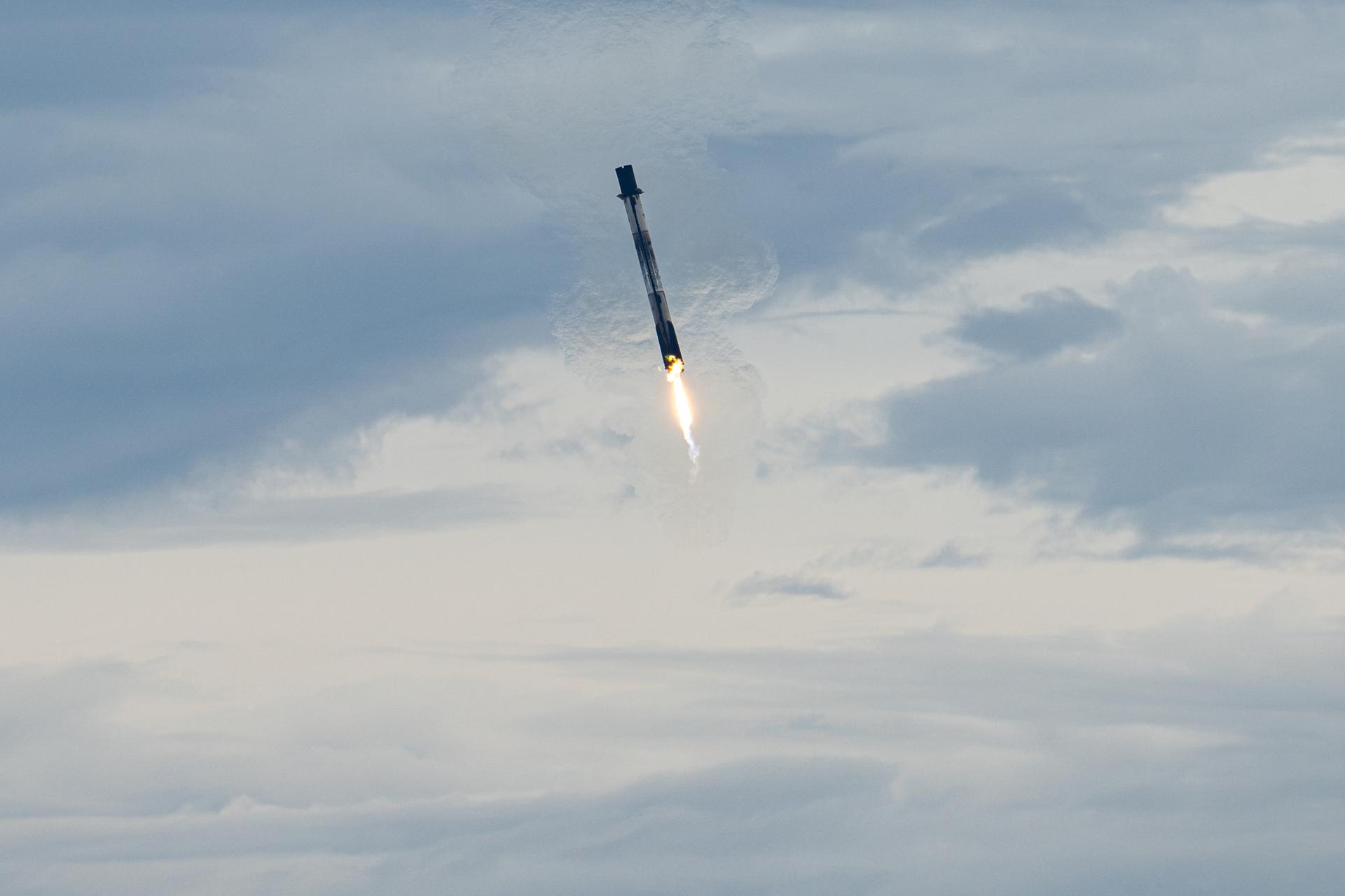
The first stage of a SpaceX Falcon 9 rocket lands at Landing Zone 40, Thursday, Oct. 1, 2026, at Cape Canaveral Space Force Station in Florida. The Falcon 9 first stage supported the launch of NASA’s SpaceX Crew-13 mission to the International Space Station with NASA astronauts Jessica Watkins and Luke Delaney, CSA (Canadian Space Agency) astronaut Joshua Kutryk, and Roscosmos cosmonaut Sergey Teteryatnikov. NASA’s SpaceX Crew-13 mission is the thirteenth crew rotation mission of the SpaceX Falcon 9 rocket and Dragon spacecraft to the International Space Station as part of the agency’s Commercial Crew Program. Watkins, Delaney, Kutryk, and Teteryatnikov launched at 11:10 a.m. EDT from Space Launch Complex 40 at Cape Canaveral Space Force Station to begin their mission aboard the orbital outpost. Photo Credit: (NASA/John Kraus)
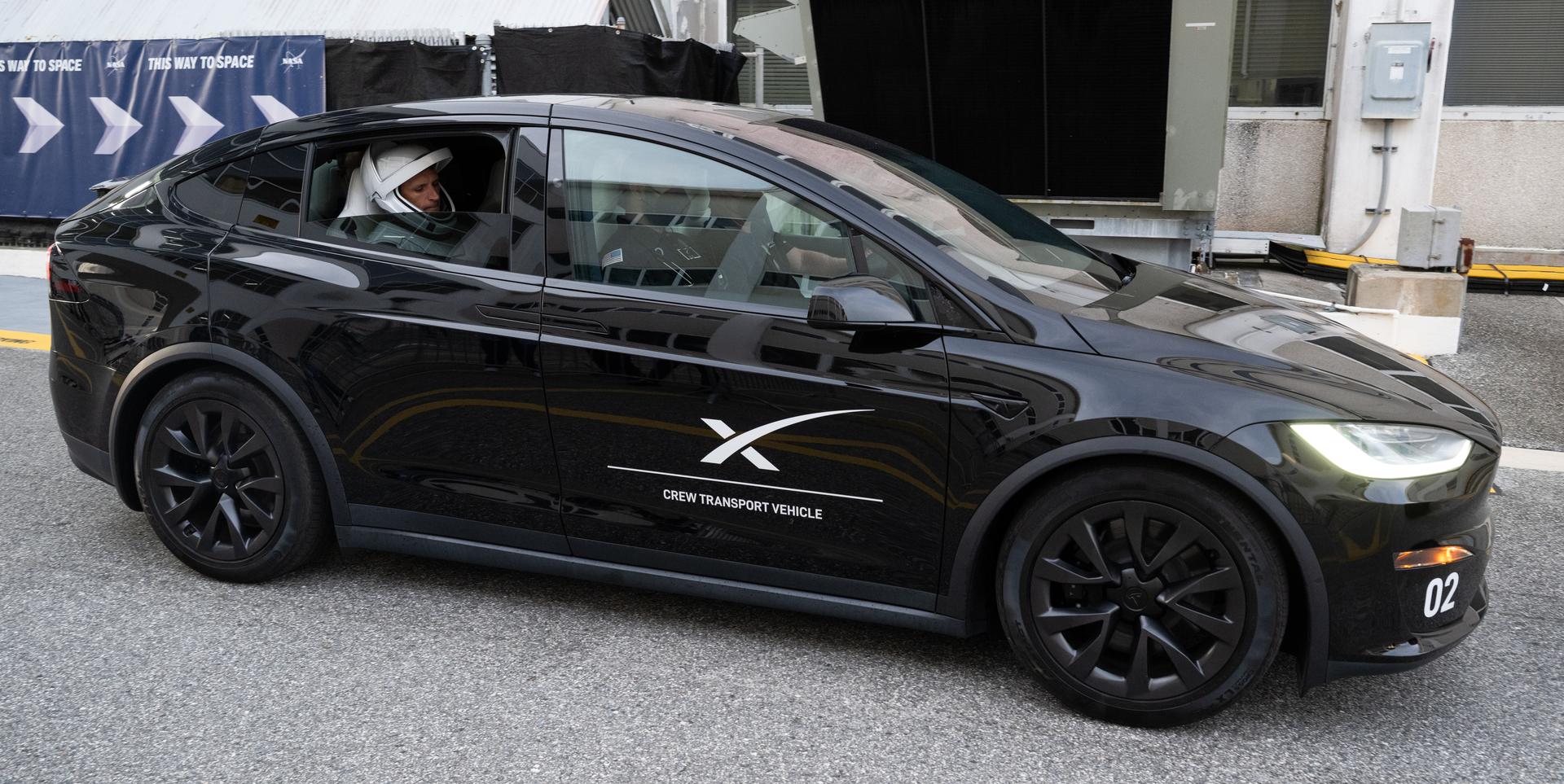
CSA (Canadian Space Agency) astronaut Joshua Kutryk and Roscosmos cosmonaut Sergey Teteryatnikov, wearing SpaceX spacesuits, are seen inside a crew transportation vehicle as they and fellow crewmates NASA astronauts Jessica Watkins and Luke Delaney depart the Neil A. Armstrong Operations and Checkout Building for Space Launch Complex 40 on Cape Canaveral Space Force Station during a dress rehearsal prior to the Crew-13 mission launch, Tuesday, Sept. 29, 2026, at NASA’s Kennedy Space Center in Florida. NASA’s SpaceX Crew-13 mission is the 13th crew rotation mission of the SpaceX Dragon spacecraft and Falcon 9 rocket to the International Space Station as part of the agency’s Commercial Crew Program. Watkins, Delaney, Kutryk, Teteryatnikov are scheduled to launch at 11:10 a.m. EDT on Thursday, Oct. 1, from Space Launch Complex 40 at the Cape Canaveral Space Force Station. Photo Credit: (NASA/Joel Kowsky)
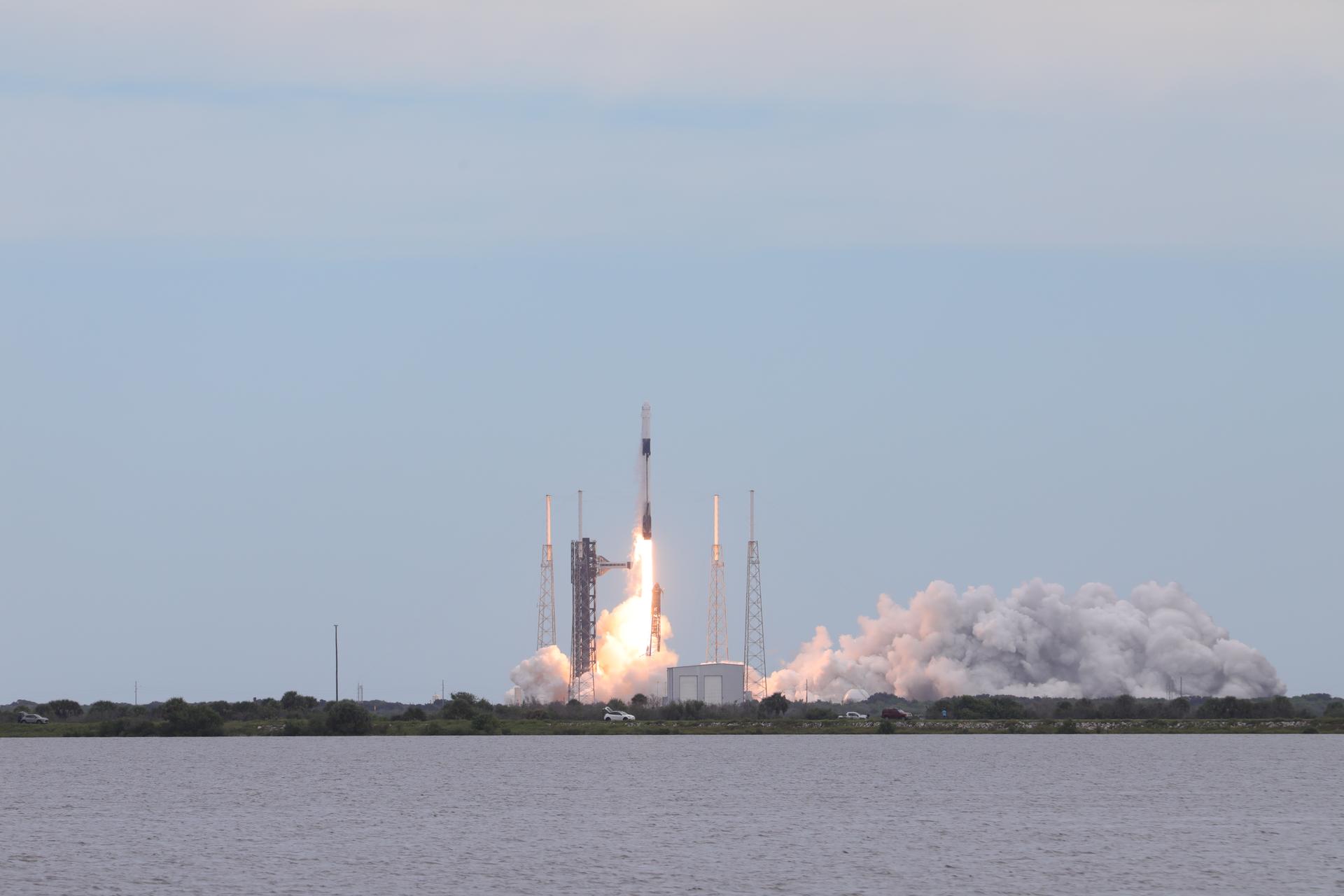
A SpaceX Falcon 9 rocket with a Dragon spacecraft atop carrying NASA astronauts Jessica Watkins and Luke Delaney, CSA (Canadian Space Agency) astronaut Joshua Kutryk, and Roscosmos cosmonaut Sergey Teteryatnikov lifts off at 11:10 a.m. EDT Thursday, Oct. 1, 2026, from Space Launch Complex 40 at Cape Canaveral Space Force Station in Florida to the International Space Station. NASA’s SpaceX Crew-13 is the 13th crew rotation mission of the SpaceX Dragon spacecraft and Falcon 9 rocket to the space station.
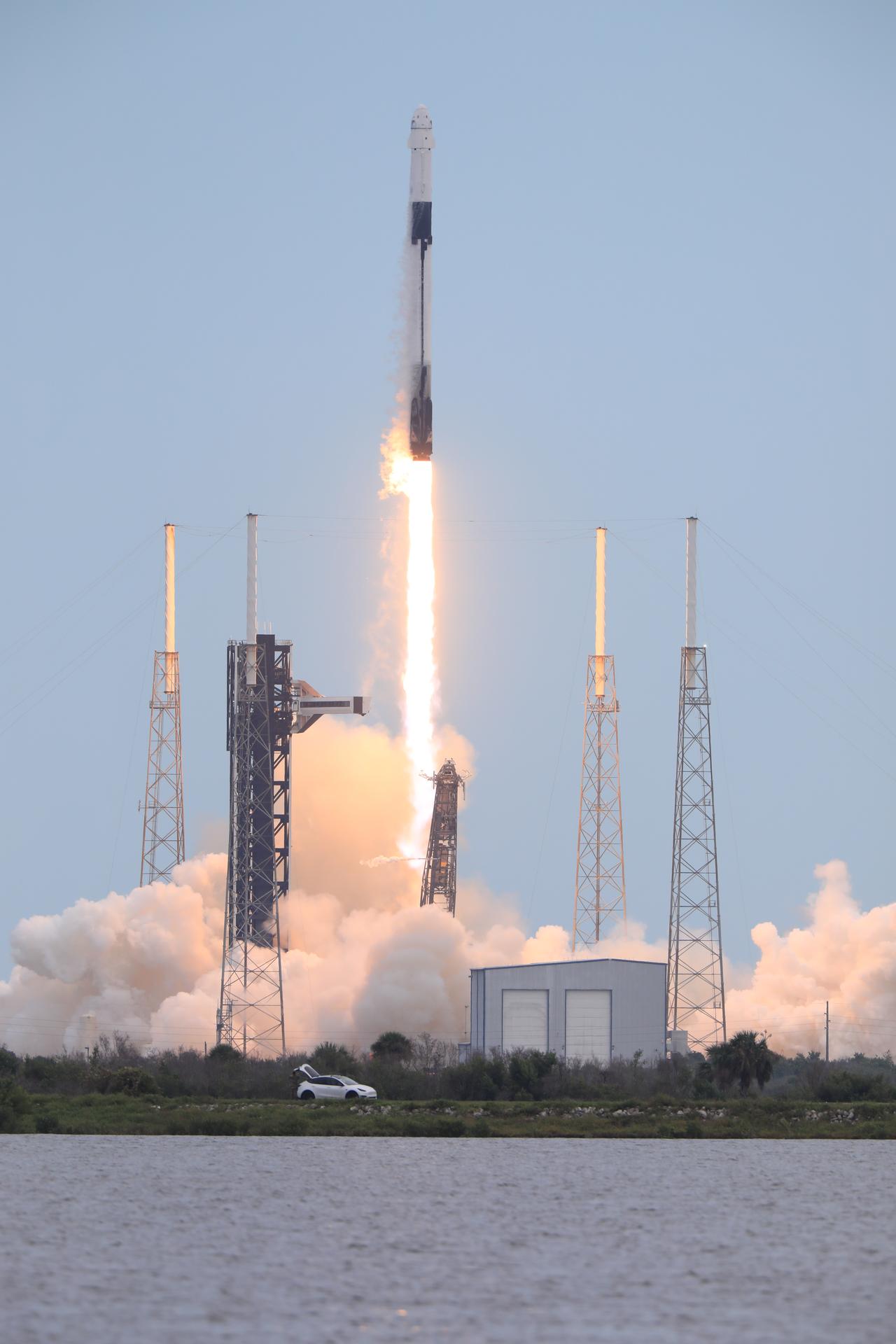
A SpaceX Falcon 9 rocket with a Dragon spacecraft atop carrying NASA astronauts Jessica Watkins and Luke Delaney, CSA (Canadian Space Agency) astronaut Joshua Kutryk, and Roscosmos cosmonaut Sergey Teteryatnikov lifts off at 11:10 a.m. EDT Thursday, Oct. 1, 2026, from Space Launch Complex 40 at Cape Canaveral Space Force Station in Florida to the International Space Station. NASA’s SpaceX Crew-13 is the 13th crew rotation mission of the SpaceX Dragon spacecraft and Falcon 9 rocket to the space station.
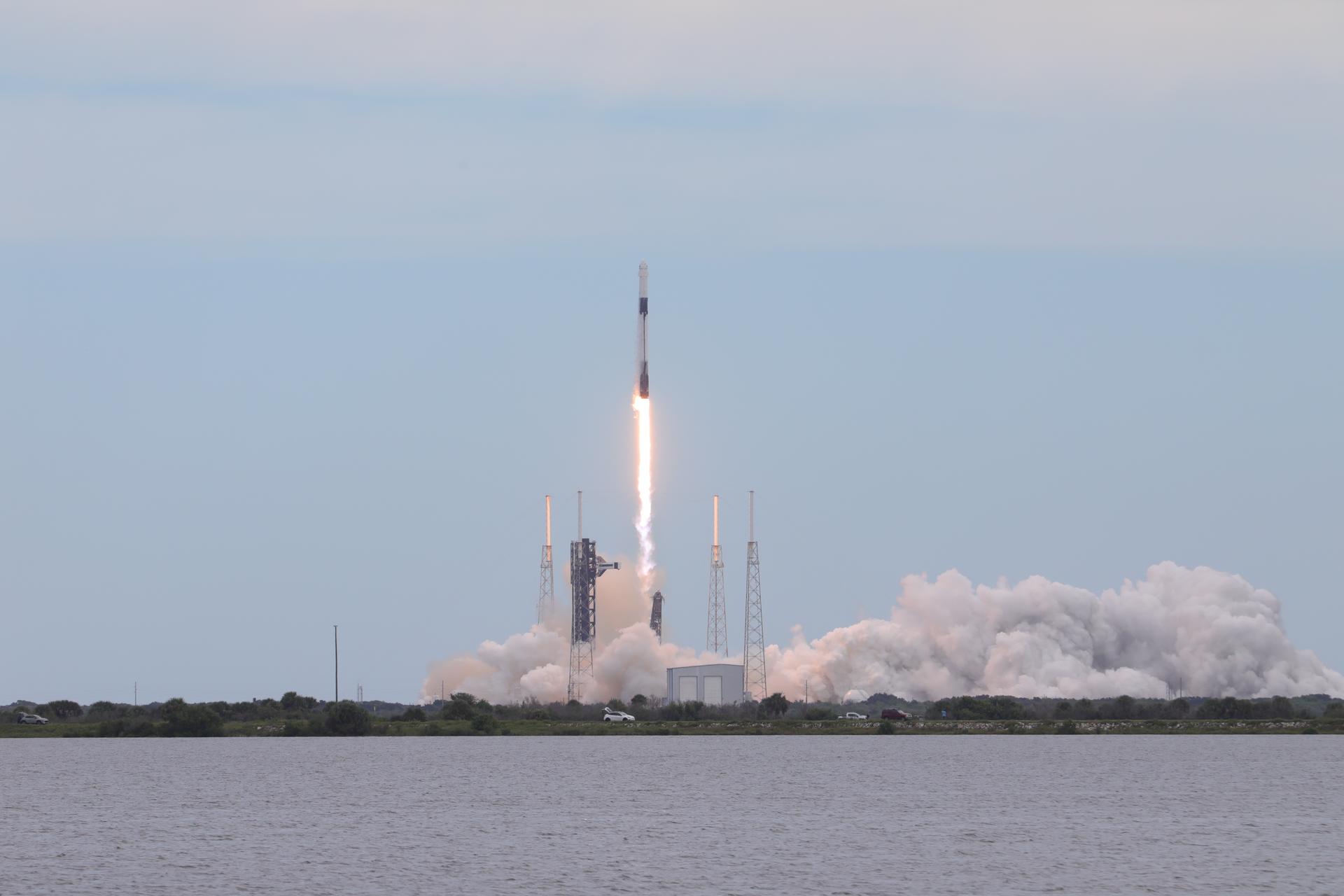
A SpaceX Falcon 9 rocket with a Dragon spacecraft atop carrying NASA astronauts Jessica Watkins and Luke Delaney, CSA (Canadian Space Agency) astronaut Joshua Kutryk, and Roscosmos cosmonaut Sergey Teteryatnikov lifts off at 11:10 a.m. EDT Thursday, Oct. 1, 2026, from Space Launch Complex 40 at Cape Canaveral Space Force Station in Florida to the International Space Station. NASA’s SpaceX Crew-13 is the 13th crew rotation mission of the SpaceX Dragon spacecraft and Falcon 9 rocket to the space station.