
Kennedy Space Center director Janet Petro speaks after NASA astronauts Nicole Mann and Josh Cassada, Japan Aerospace Exploration Agency (JAXA) astronaut Koichi Wakata, and Roscosmos cosmonaut Anna Kikina arrived at the Launch and Landing Facility at NASA’s Kennedy Space Center ahead of SpaceX’s Crew-5 mission, Saturday, Oct. 1, 2022, in Florida. NASA’s SpaceX Crew-5 mission is the fifth crew rotation mission of the SpaceX Crew Dragon spacecraft and Falcon 9 rocket to the International Space Station as part of the agency’s Commercial Crew Program. Mann, Cassada, Wakata, and Kikini are scheduled to launch at 12:00 p.m. EDT on Oct. 5, from Launch Complex 39A at the Kennedy Space Center. Photo Credit: (NASA/Joel Kowsky)
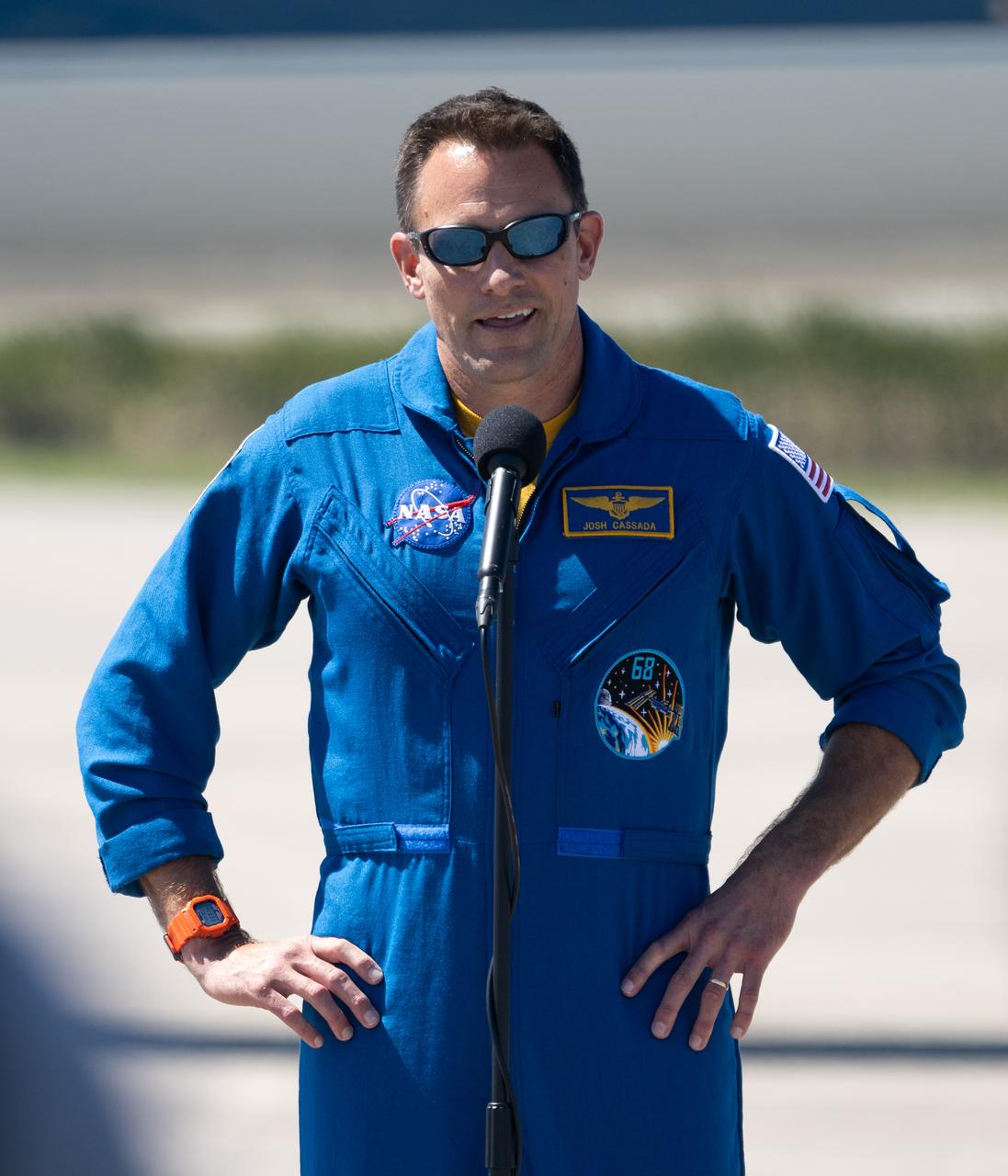
NASA astronaut Josh Cassada speaks to members of the media after arriving at the Launch and Landing Facility with fellow crewmembers NASA astronaut Nicole Mann, Japan Aerospace Exploration Agency (JAXA) astronaut Koichi Wakata, and Roscosmos cosmonaut Anna Kikina, at NASA’s Kennedy Space Center ahead of SpaceX’s Crew-5 mission, Saturday, Oct. 1, 2022, in Florida. NASA’s SpaceX Crew-5 mission is the fifth crew rotation mission of the SpaceX Crew Dragon spacecraft and Falcon 9 rocket to the International Space Station as part of the agency’s Commercial Crew Program. Mann, Cassada, Wakata, and Kikini are scheduled to launch at 12:00 p.m. EDT on Oct. 5, from Launch Complex 39A at the Kennedy Space Center. Photo Credit: (NASA/Joel Kowsky)
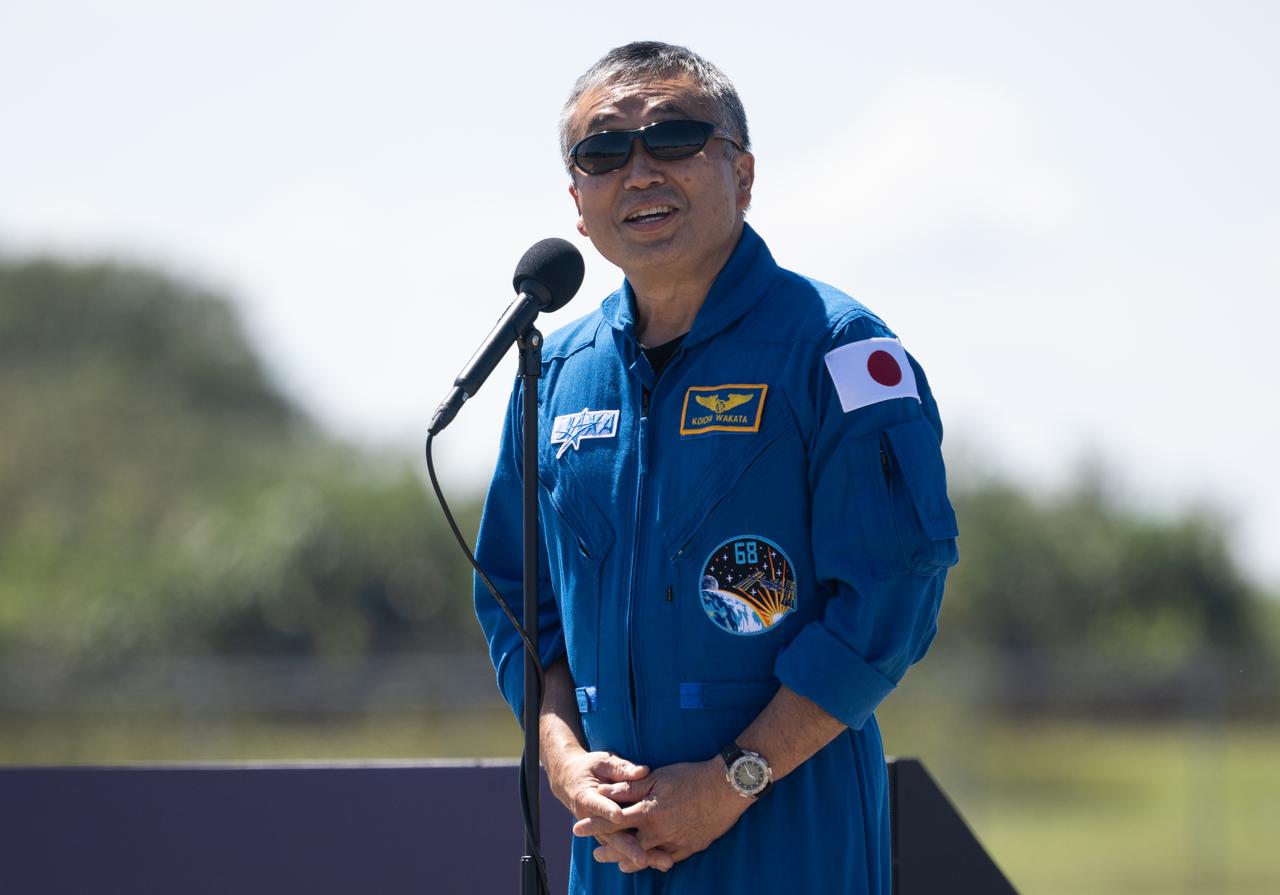
Japan Aerospace Exploration Agency (JAXA) astronaut Koichi Wakata speaks to members of the media after arriving at the Launch and Landing Facility with fellow crewmembers NASA astronauts Nicole Mann and Josh Cassada and Roscosmos cosmonaut Anna Kikina, at NASA’s Kennedy Space Center ahead of SpaceX’s Crew-5 mission, Saturday, Oct. 1, 2022, in Florida. NASA’s SpaceX Crew-5 mission is the fifth crew rotation mission of the SpaceX Crew Dragon spacecraft and Falcon 9 rocket to the International Space Station as part of the agency’s Commercial Crew Program. Mann, Cassada, Wakata, and Kikini are scheduled to launch at 12:00 p.m. EDT on Oct. 5, from Launch Complex 39A at the Kennedy Space Center. Photo Credit: (NASA/Joel Kowsky)
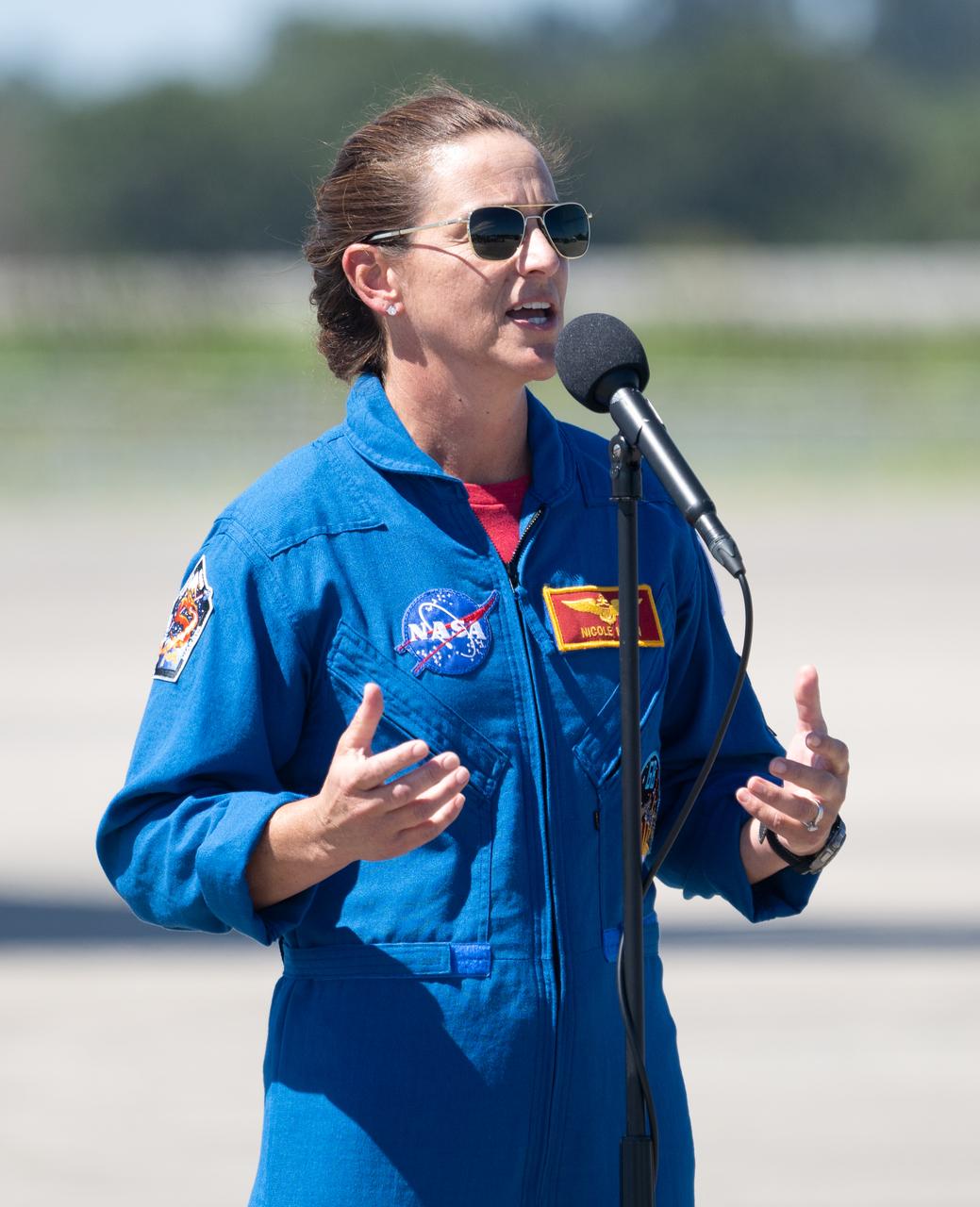
NASA astronaut Nicole Mann speaks to members of the media after arriving at the Launch and Landing Facility with fellow crewmembers NASA astronaut Josh Cassada, Japan Aerospace Exploration Agency (JAXA) astronaut Koichi Wakata, and Roscosmos cosmonaut Anna Kikina, at NASA’s Kennedy Space Center ahead of SpaceX’s Crew-5 mission, Saturday, Oct. 1, 2022, in Florida. NASA’s SpaceX Crew-5 mission is the fifth crew rotation mission of the SpaceX Crew Dragon spacecraft and Falcon 9 rocket to the International Space Station as part of the agency’s Commercial Crew Program. Mann, Cassada, Wakata, and Kikini are scheduled to launch at 12:00 p.m. EDT on Oct. 5, from Launch Complex 39A at the Kennedy Space Center. Photo Credit: (NASA/Joel Kowsky)
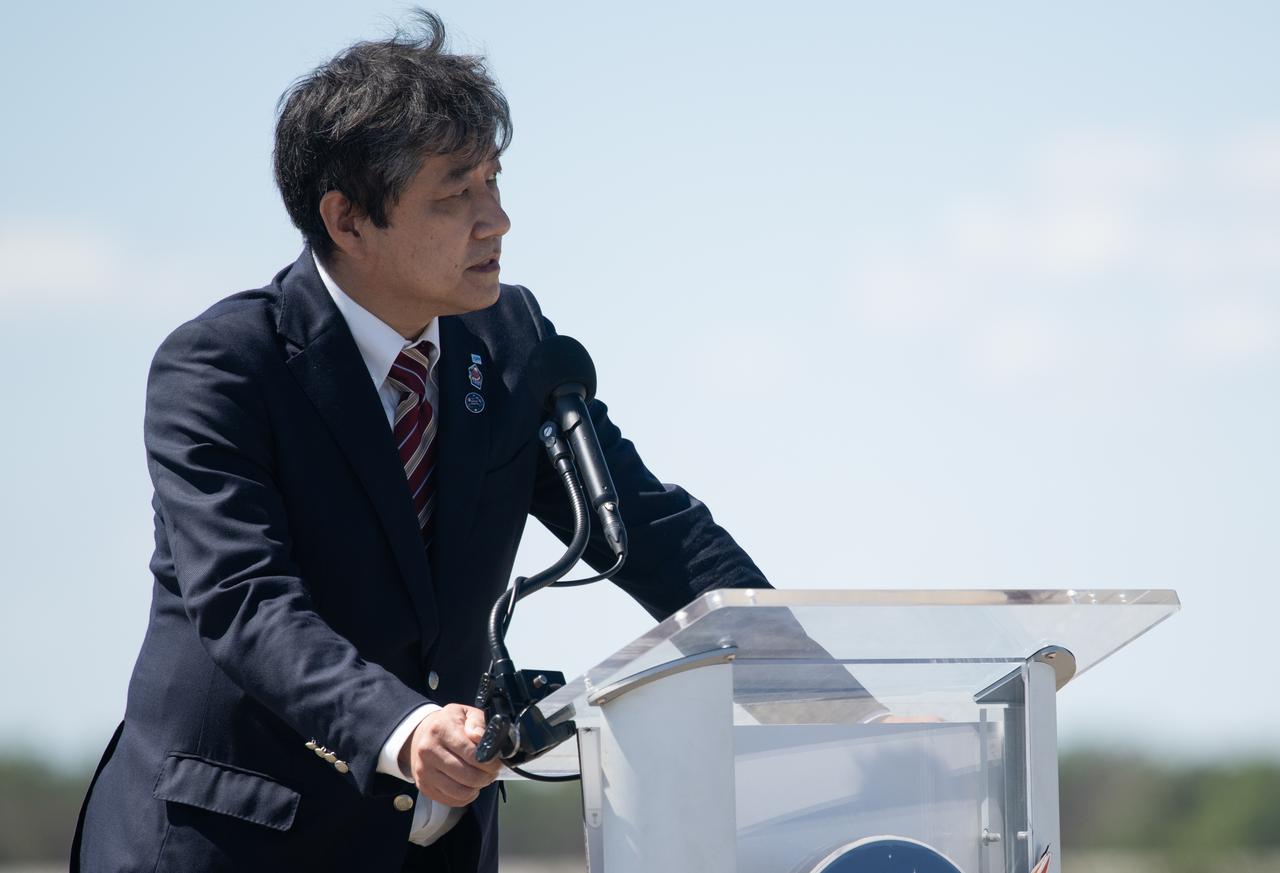
Junichi Sakai, manager of the International Space Station Program for the Japan Aerospace Exploration Agency (JAXA), speaks after NASA astronauts Nicole Mann and Josh Cassada, Japan Aerospace Exploration Agency (JAXA) astronaut Koichi Wakata, and Roscosmos cosmonaut Anna Kikina arrived at the Launch and Landing Facility at NASA’s Kennedy Space Center ahead of SpaceX’s Crew-5 mission, Saturday, Oct. 1, 2022, in Florida. NASA’s SpaceX Crew-5 mission is the fifth crew rotation mission of the SpaceX Crew Dragon spacecraft and Falcon 9 rocket to the International Space Station as part of the agency’s Commercial Crew Program. Mann, Cassada, Wakata, and Kikini are scheduled to launch at 12:00 p.m. EDT on Oct. 5, from Launch Complex 39A at the Kennedy Space Center. Photo Credit: (NASA/Joel Kowsky)
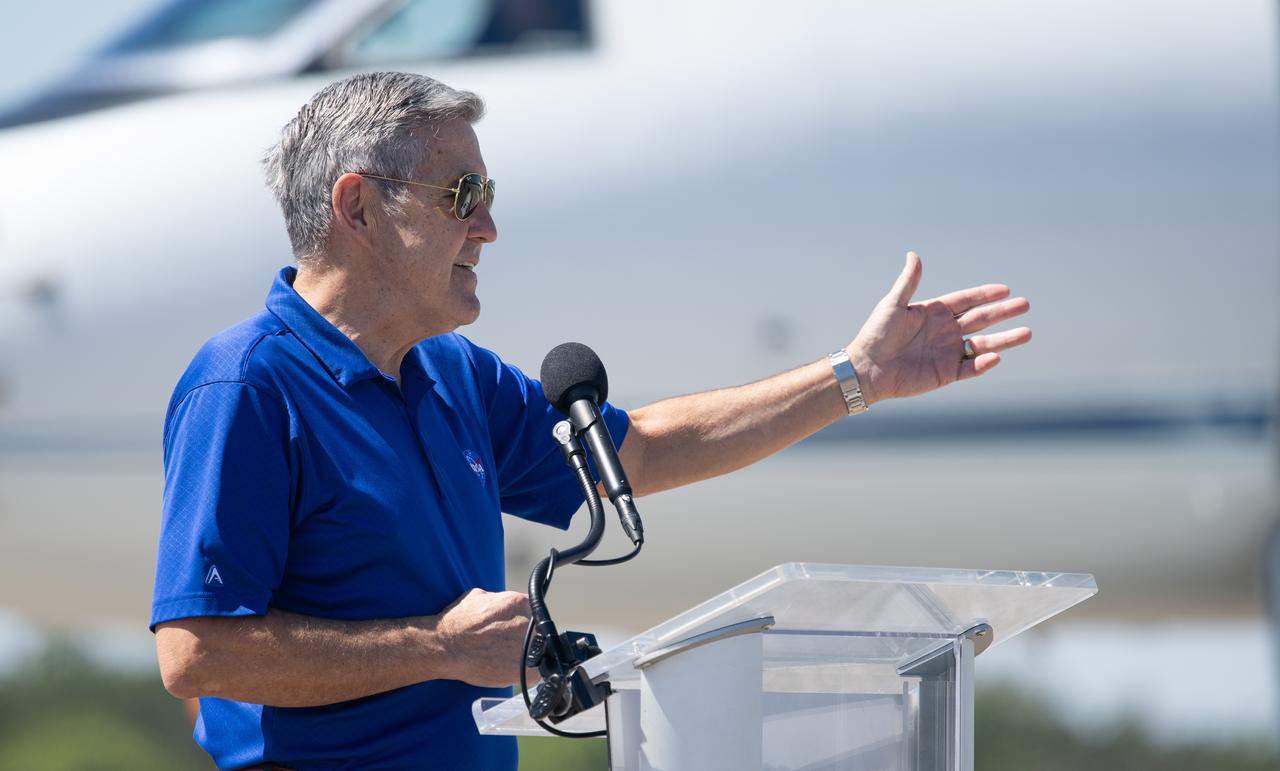
Bob Cabana, NASA associate administrator, speaks after NASA astronauts Nicole Mann and Josh Cassada, Japan Aerospace Exploration Agency (JAXA) astronaut Koichi Wakata, and Roscosmos cosmonaut Anna Kikina arrived at the Launch and Landing Facility at NASA’s Kennedy Space Center ahead of SpaceX’s Crew-5 mission, Saturday, Oct. 1, 2022, in Florida. NASA’s SpaceX Crew-5 mission is the fifth crew rotation mission of the SpaceX Crew Dragon spacecraft and Falcon 9 rocket to the International Space Station as part of the agency’s Commercial Crew Program. Mann, Cassada, Wakata, and Kikini are scheduled to launch at 12:00 p.m. EDT on Oct. 5, from Launch Complex 39A at the Kennedy Space Center. Photo Credit: (NASA/Joel Kowsky)
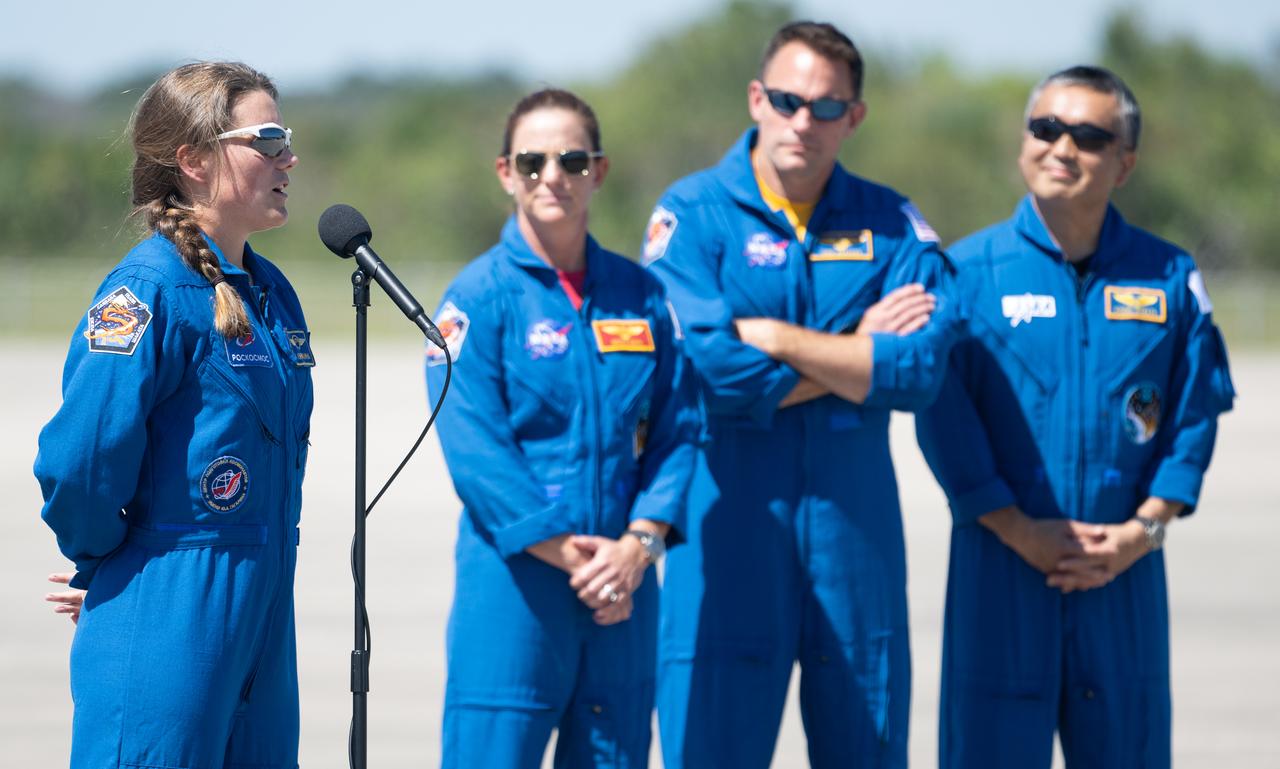
Roscosmos cosmonaut Anna Kikina, left, speaks to members of the media after arriving at the Launch and Landing Facility with fellow crew members NASA astronaut Nicole Mann, second from left, NASA astronaut Josh Cassada, second from right, and Japan Aerospace Exploration Agency (JAXA) astronaut Koichi Wakata, right, at NASA’s Kennedy Space Center ahead of SpaceX’s Crew-5 mission, Saturday, Oct. 1, 2022, in Florida. NASA’s SpaceX Crew-5 mission is the fifth crew rotation mission of the SpaceX Crew Dragon spacecraft and Falcon 9 rocket to the International Space Station as part of the agency’s Commercial Crew Program. Mann, Cassada, Wakata, and Kikini are scheduled to launch at 12:00 p.m. EDT on Oct. 5, from Launch Complex 39A at the Kennedy Space Center. Photo Credit: (NASA/Joel Kowsky)
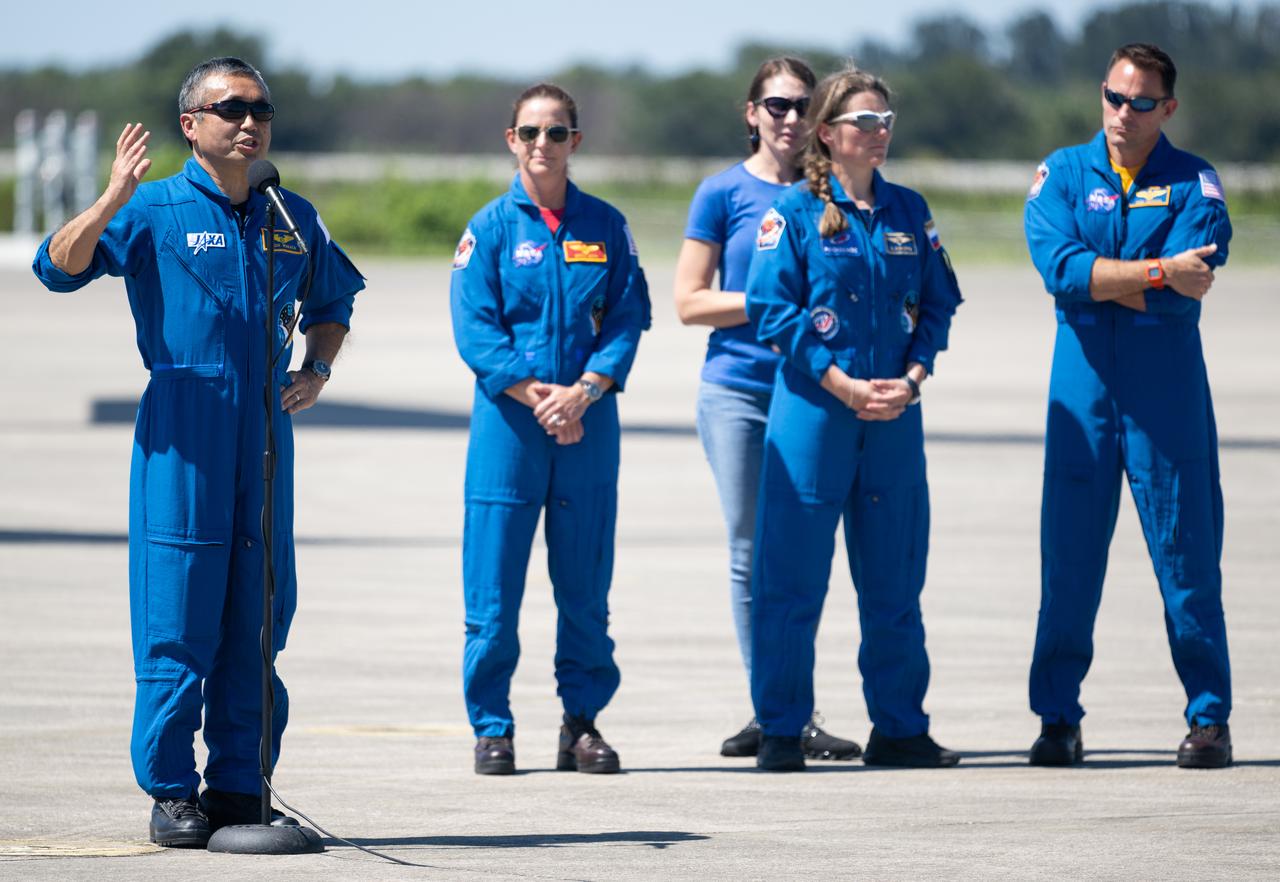
Japan Aerospace Exploration Agency (JAXA) astronaut Koichi Wakata, left, speaks to members of the media after arriving at the Launch and Landing Facility with fellow crew members NASA astronaut Nicole Mann, second from left, Roscosmos cosmonaut Anna Kikina, second from right, and NASA astronaut Josh Cassada, right, at NASA’s Kennedy Space Center ahead of SpaceX’s Crew-5 mission, Saturday, Oct. 1, 2022, in Florida. NASA’s SpaceX Crew-5 mission is the fifth crew rotation mission of the SpaceX Crew Dragon spacecraft and Falcon 9 rocket to the International Space Station as part of the agency’s Commercial Crew Program. Mann, Cassada, Wakata, and Kikini are scheduled to launch at 12:00 p.m. EDT on Oct. 5, from Launch Complex 39A at the Kennedy Space Center. Photo Credit: (NASA/Joel Kowsky)
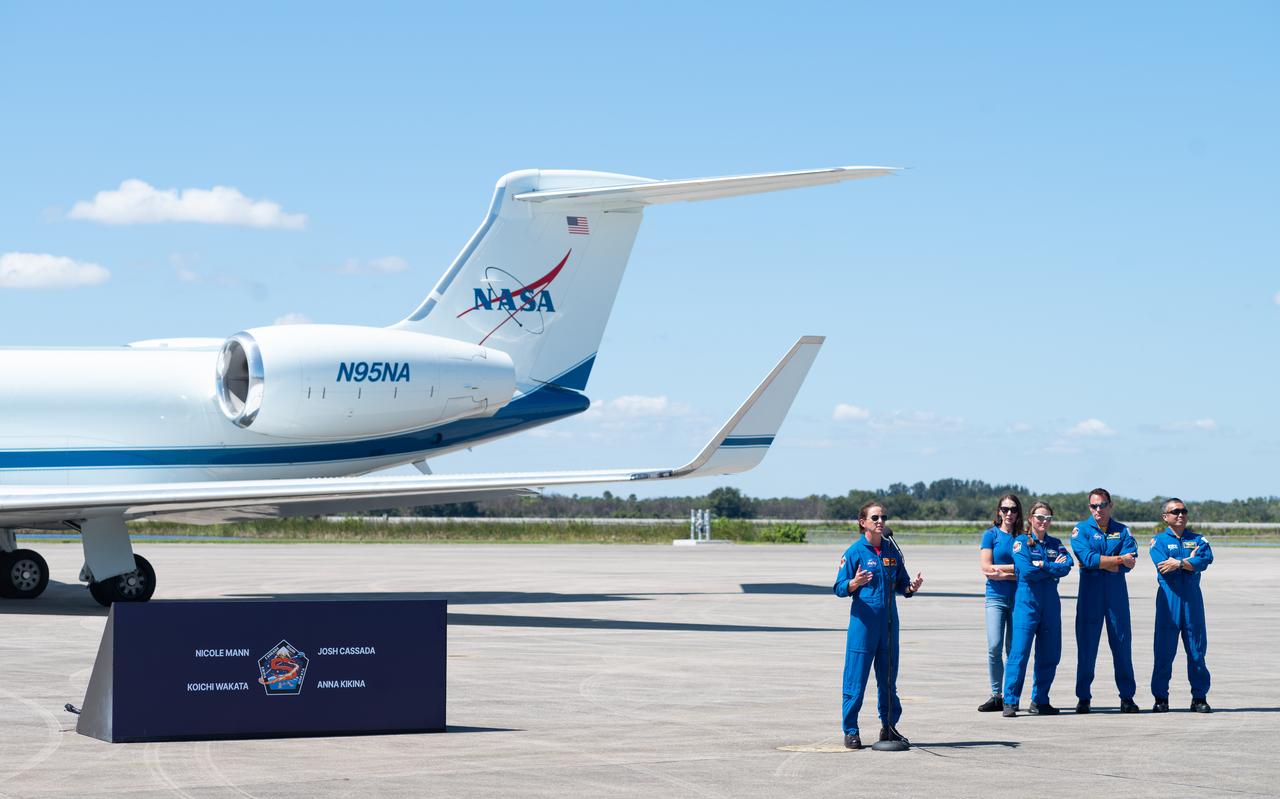
NASA astronaut Nicole Mann, left, speaks to members of the media after arriving at the Launch and Landing Facility with fellow crew members Roscosmos cosmonaut Anna Kikina, second from left, NASA astronaut Josh Cassada, second from right, and Japan Aerospace Exploration Agency (JAXA) astronaut Koichi Wakata, right, at NASA’s Kennedy Space Center ahead of SpaceX’s Crew-5 mission, Saturday, Oct. 1, 2022, in Florida. NASA’s SpaceX Crew-5 mission is the fifth crew rotation mission of the SpaceX Crew Dragon spacecraft and Falcon 9 rocket to the International Space Station as part of the agency’s Commercial Crew Program. Mann, Cassada, Wakata, and Kikini are scheduled to launch at 12:00 p.m. EDT on Oct. 5, from Launch Complex 39A at the Kennedy Space Center. Photo Credit: (NASA/Joel Kowsky)
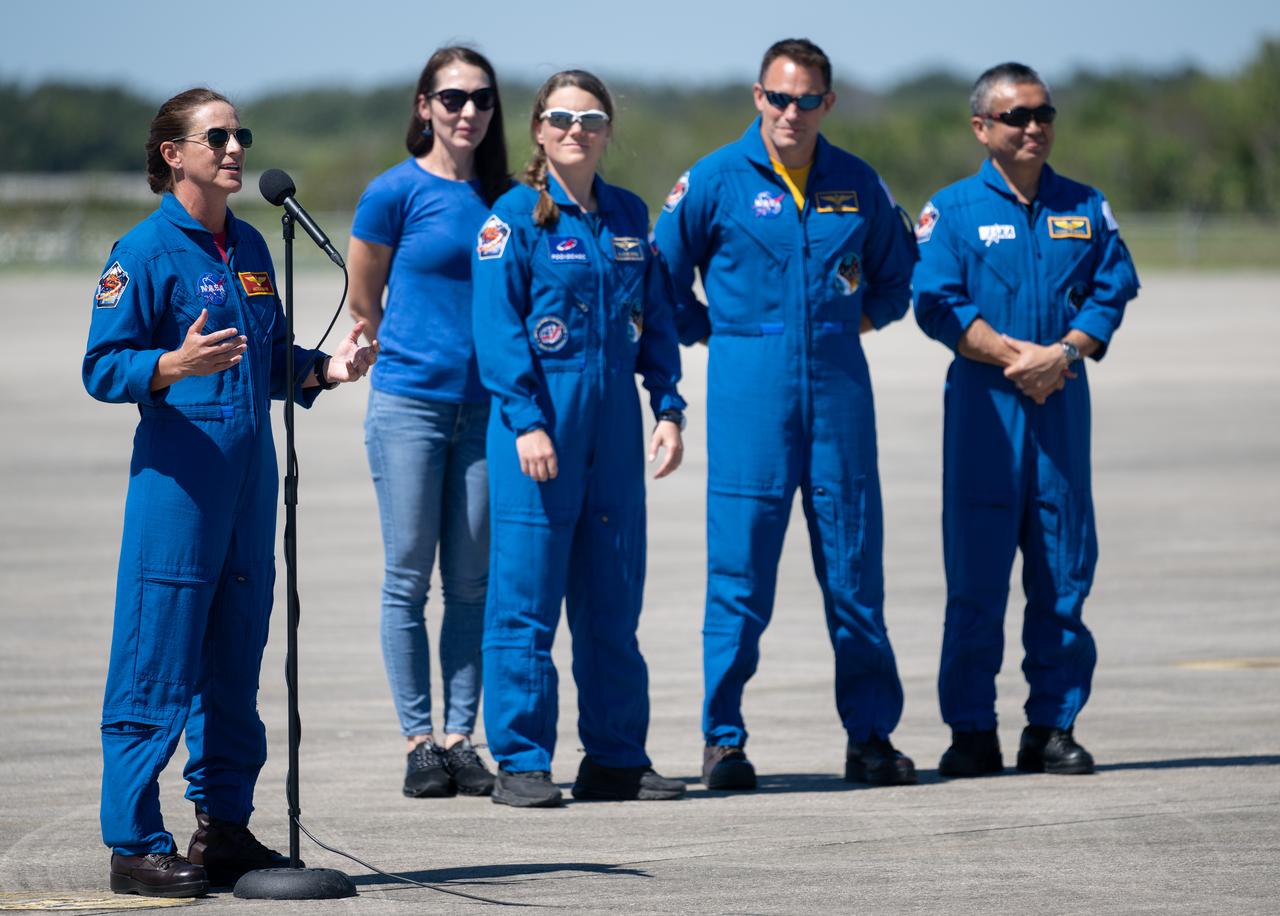
NASA astronaut Nicole Mann, left, speaks to members of the media after arriving at the Launch and Landing Facility with fellow crew members Roscosmos cosmonaut Anna Kikina, second from left, NASA astronaut Josh Cassada, second from right, and Japan Aerospace Exploration Agency (JAXA) astronaut Koichi Wakata, right, at NASA’s Kennedy Space Center ahead of SpaceX’s Crew-5 mission, Saturday, Oct. 1, 2022, in Florida. NASA’s SpaceX Crew-5 mission is the fifth crew rotation mission of the SpaceX Crew Dragon spacecraft and Falcon 9 rocket to the International Space Station as part of the agency’s Commercial Crew Program. Mann, Cassada, Wakata, and Kikini are scheduled to launch at 12:00 p.m. EDT on Oct. 5, from Launch Complex 39A at the Kennedy Space Center. Photo Credit: (NASA/Joel Kowsky)
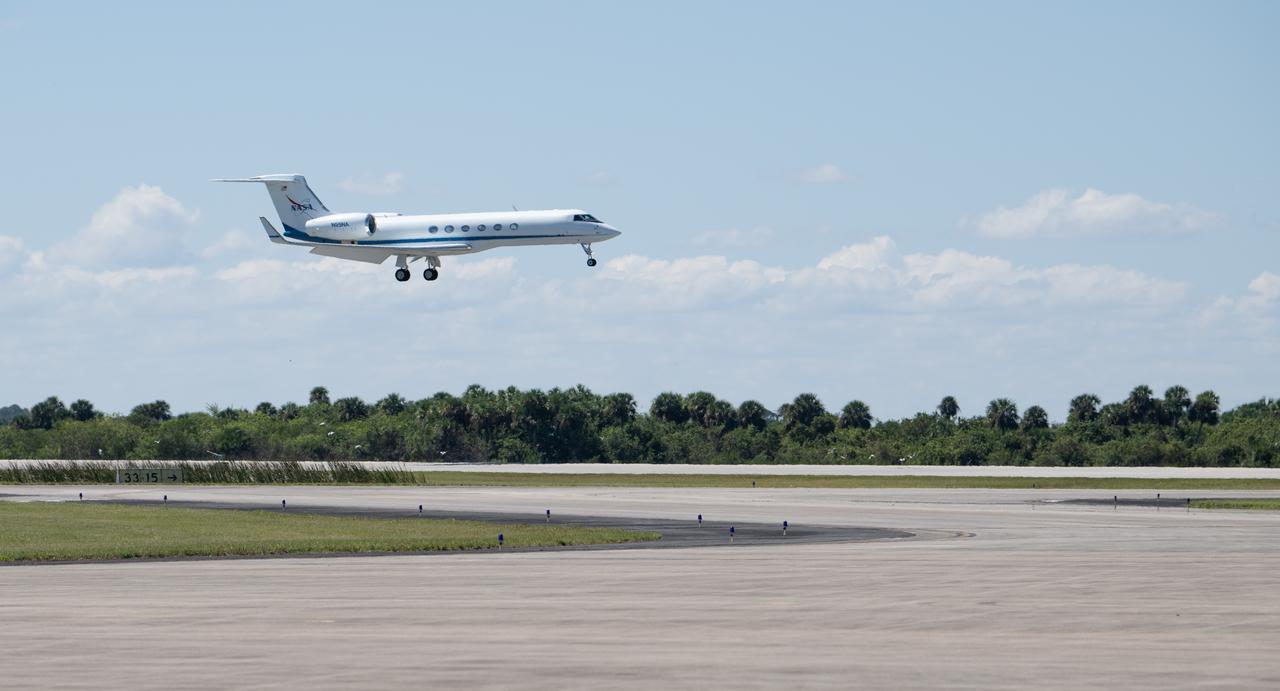
The NASA Gulfstream V carrying NASA astronauts Nicole Mann and Josh Cassada, Japan Aerospace Exploration Agency (JAXA) astronaut Koichi Wakata, and Roscosmos cosmonaut Anna Kikina is seen as it arrives at the Launch and Landing Facility at NASA’s Kennedy Space Center ahead of SpaceX’s Crew-5 mission, Saturday, Oct. 1, 2022, in Florida. NASA’s SpaceX Crew-5 mission is the fifth crew rotation mission of the SpaceX Crew Dragon spacecraft and Falcon 9 rocket to the International Space Station as part of the agency’s Commercial Crew Program. Mann, Cassada, Wakata, and Kikini are scheduled to launch at 12:00 p.m. EDT on Oct. 5, from Launch Complex 39A at the Kennedy Space Center. Photo Credit: (NASA/Joel Kowsky)
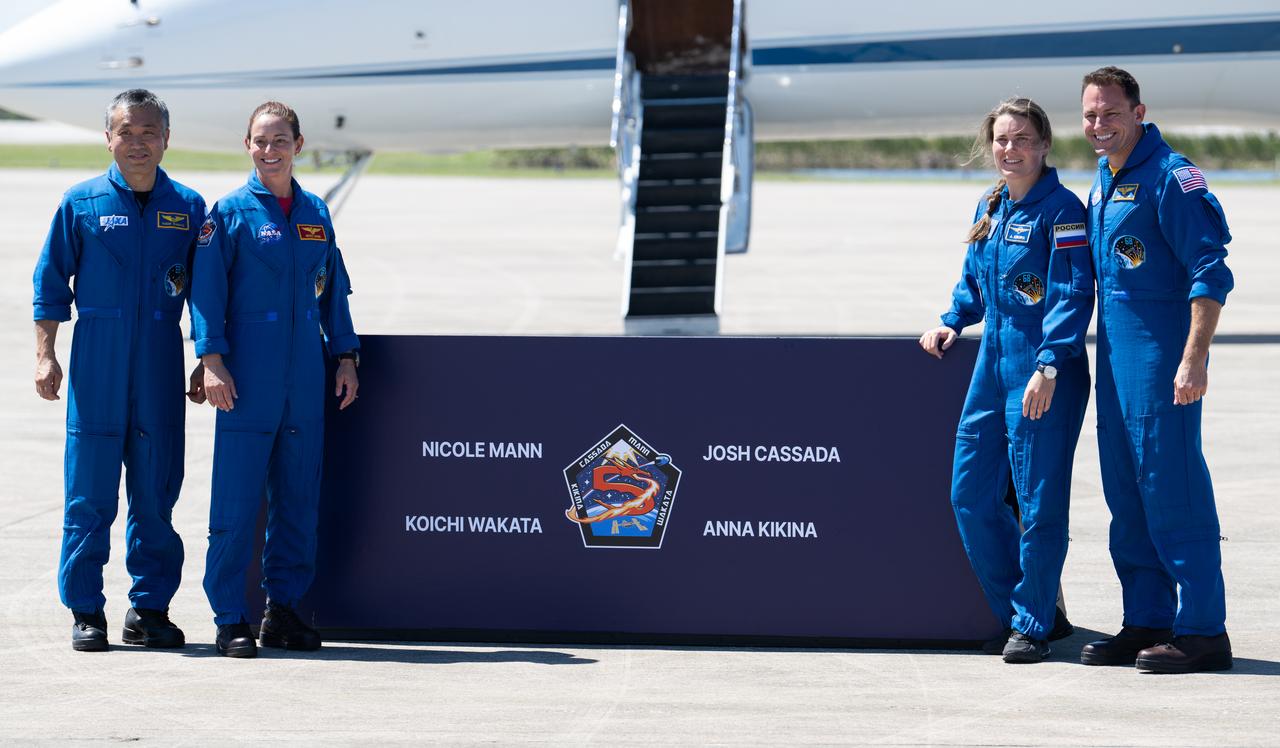
Japan Aerospace Exploration Agency (JAXA) astronaut Koichi Wakata, left, NASA astronaut Nicole Mann, second from left, Roscosmos cosmonaut Anna Kikina, second from right, and NASA astronaut Josh Cassada, right, pose for a picture after speaking to members of the media following their arrival at the Launch and Landing Facility at NASA’s Kennedy Space Center ahead of SpaceX’s Crew-5 mission, Saturday, Oct. 1, 2022, in Florida. NASA’s SpaceX Crew-5 mission is the fifth crew rotation mission of the SpaceX Crew Dragon spacecraft and Falcon 9 rocket to the International Space Station as part of the agency’s Commercial Crew Program. Mann, Cassada, Wakata, and Kikini are scheduled to launch at 12:00 p.m. EDT on Oct. 5, from Launch Complex 39A at the Kennedy Space Center. Photo Credit: (NASA/Joel Kowsky)
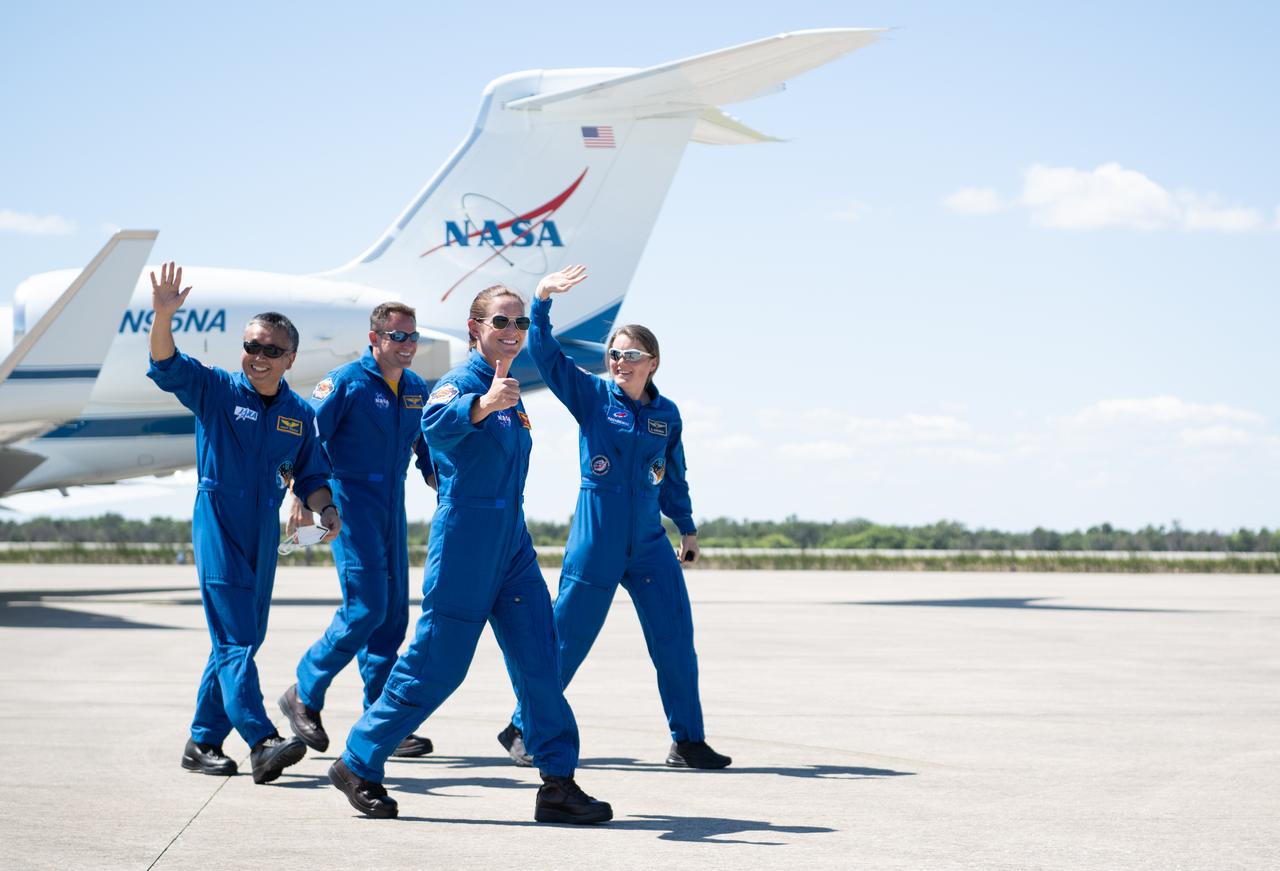
Japan Aerospace Exploration Agency (JAXA) astronaut Koichi Wakata, left, NASA astronaut Josh Cassada, second from left, NASA astronaut Nicole Mann, second from right, and Roscosmos cosmonaut Anna Kikina, right, wave as they depart the Launch and Landing Facility at NASA’s Kennedy Space Center ahead of SpaceX’s Crew-5 mission, Saturday, Oct. 1, 2022, in Florida. NASA’s SpaceX Crew-5 mission is the fifth crew rotation mission of the SpaceX Crew Dragon spacecraft and Falcon 9 rocket to the International Space Station as part of the agency’s Commercial Crew Program. Mann, Cassada, Wakata, and Kikini are scheduled to launch at 12:00 p.m. EDT on Oct. 5, from Launch Complex 39A at the Kennedy Space Center. Photo Credit: (NASA/Joel Kowsky)
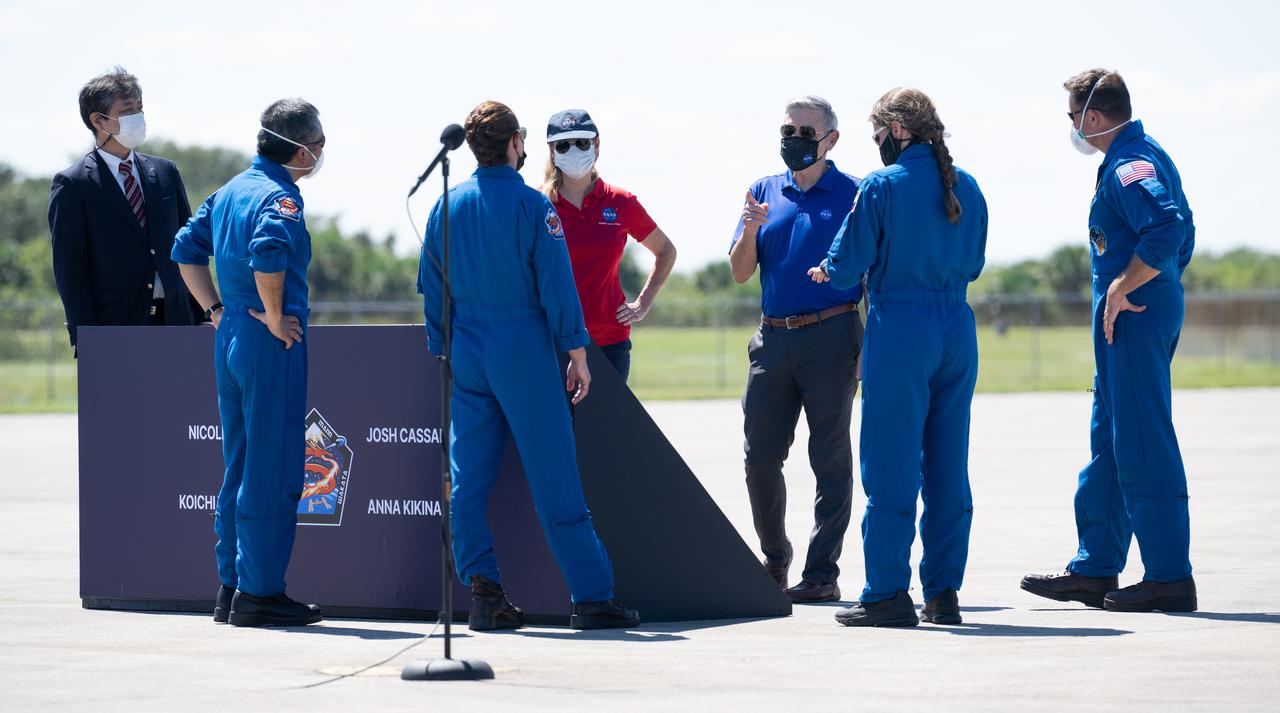
Junichi Sakai, manager of the International Space Station Program for the Japan Aerospace Exploration Agency (JAXA), Kennedy Space Center director Janet Petro, and Bob Cabana, NASA associate administrator, speak with NASA astronauts Nicole Mann and Josh Cassada, Japan Aerospace Exploration Agency (JAXA) astronaut Koichi Wakata, and Roscosmos cosmonaut Anna Kikina, after their arrival at the Launch and Landing Facility at NASA’s Kennedy Space Center ahead of SpaceX’s Crew-5 mission, Saturday, Oct. 1, 2022, in Florida. NASA’s SpaceX Crew-5 mission is the fifth crew rotation mission of the SpaceX Crew Dragon spacecraft and Falcon 9 rocket to the International Space Station as part of the agency’s Commercial Crew Program. Mann, Cassada, Wakata, and Kikini are scheduled to launch at 12:00 p.m. EDT on Oct. 5, from Launch Complex 39A at the Kennedy Space Center. Photo Credit: (NASA/Joel Kowsky)
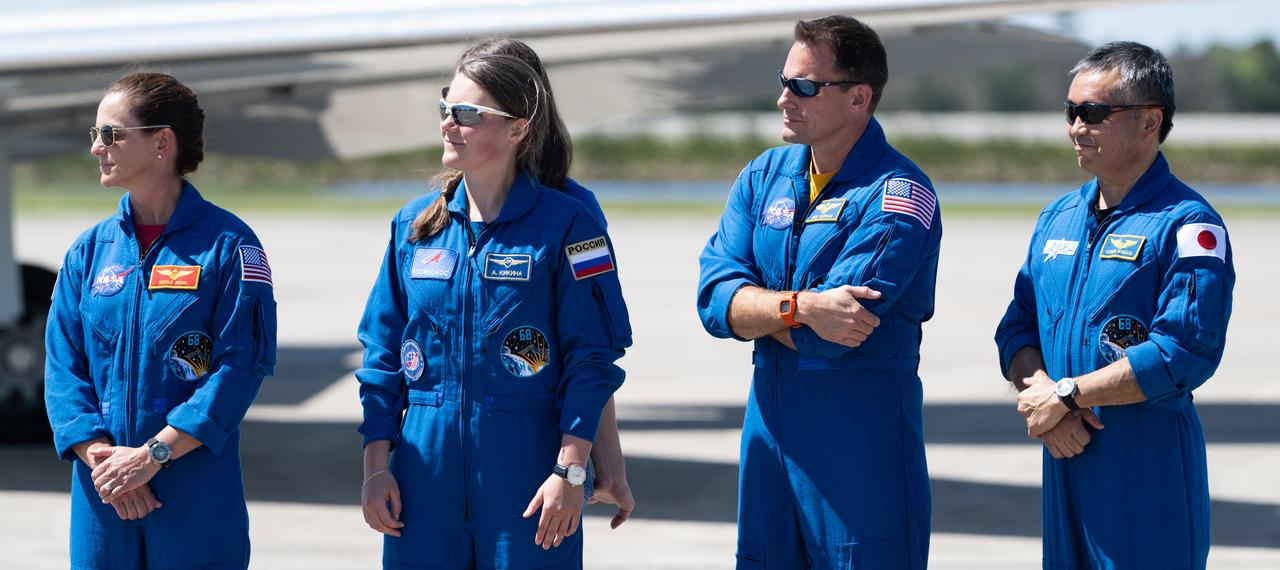
NASA astronaut Nicole Mann, left, Roscosmos cosmonaut Anna Kikina, second from left, NASA astronaut Josh Cassada, second from right, and Japan Aerospace Exploration Agency (JAXA) astronaut Koichi Wakata, right, are seen after arriving at the Launch and Landing Facility at NASA’s Kennedy Space Center ahead of SpaceX’s Crew-5 mission, Saturday, Oct. 1, 2022, in Florida. NASA’s SpaceX Crew-5 mission is the fifth crew rotation mission of the SpaceX Crew Dragon spacecraft and Falcon 9 rocket to the International Space Station as part of the agency’s Commercial Crew Program. Mann, Cassada, Wakata, and Kikini are scheduled to launch at 12:00 p.m. EDT on Oct. 5, from Launch Complex 39A at the Kennedy Space Center. Photo Credit: (NASA/Joel Kowsky)
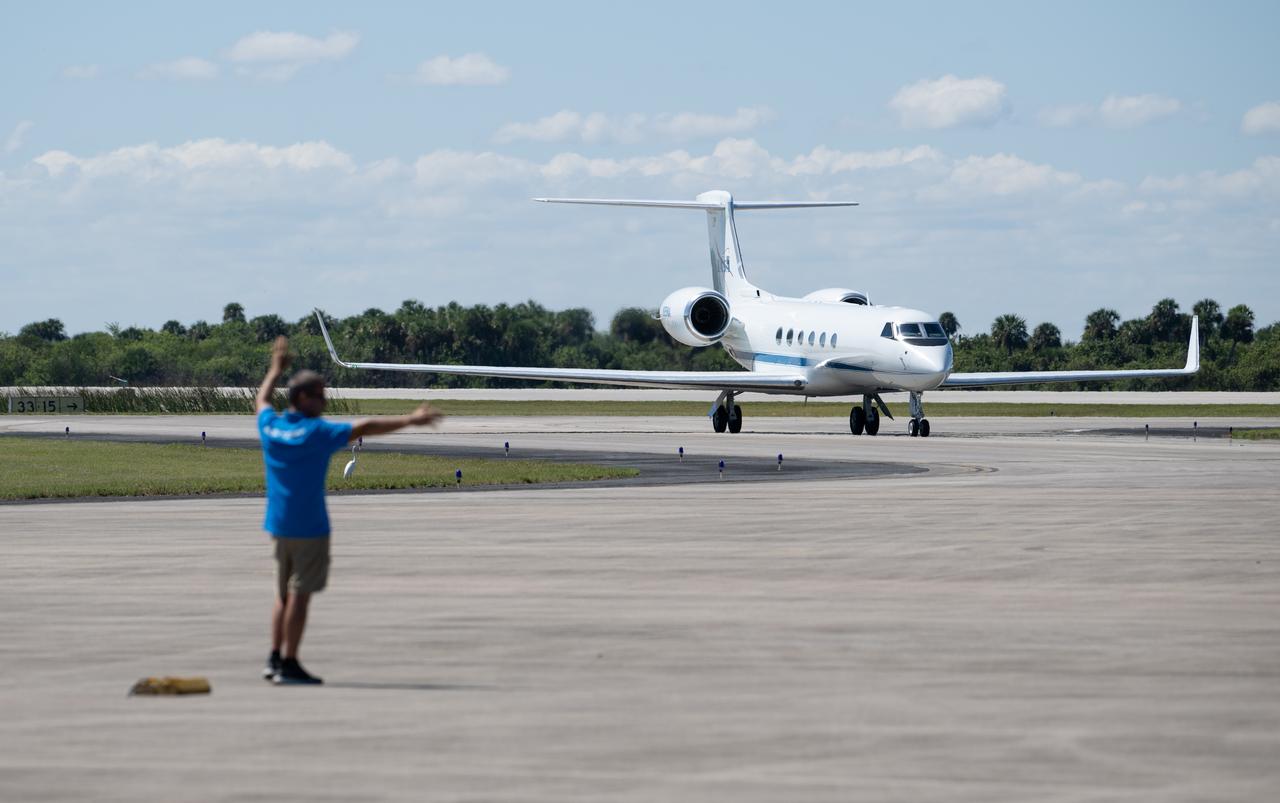
The NASA Gulfstream V carrying NASA astronauts Nicole Mann and Josh Cassada, Japan Aerospace Exploration Agency (JAXA) astronaut Koichi Wakata, and Roscosmos cosmonaut Anna Kikina is seen as it arrives at the Launch and Landing Facility at NASA’s Kennedy Space Center ahead of SpaceX’s Crew-5 mission, Saturday, Oct. 1, 2022, in Florida. NASA’s SpaceX Crew-5 mission is the fifth crew rotation mission of the SpaceX Crew Dragon spacecraft and Falcon 9 rocket to the International Space Station as part of the agency’s Commercial Crew Program. Mann, Cassada, Wakata, and Kikini are scheduled to launch at 12:00 p.m. EDT on Oct. 5, from Launch Complex 39A at the Kennedy Space Center. Photo Credit: (NASA/Joel Kowsky)
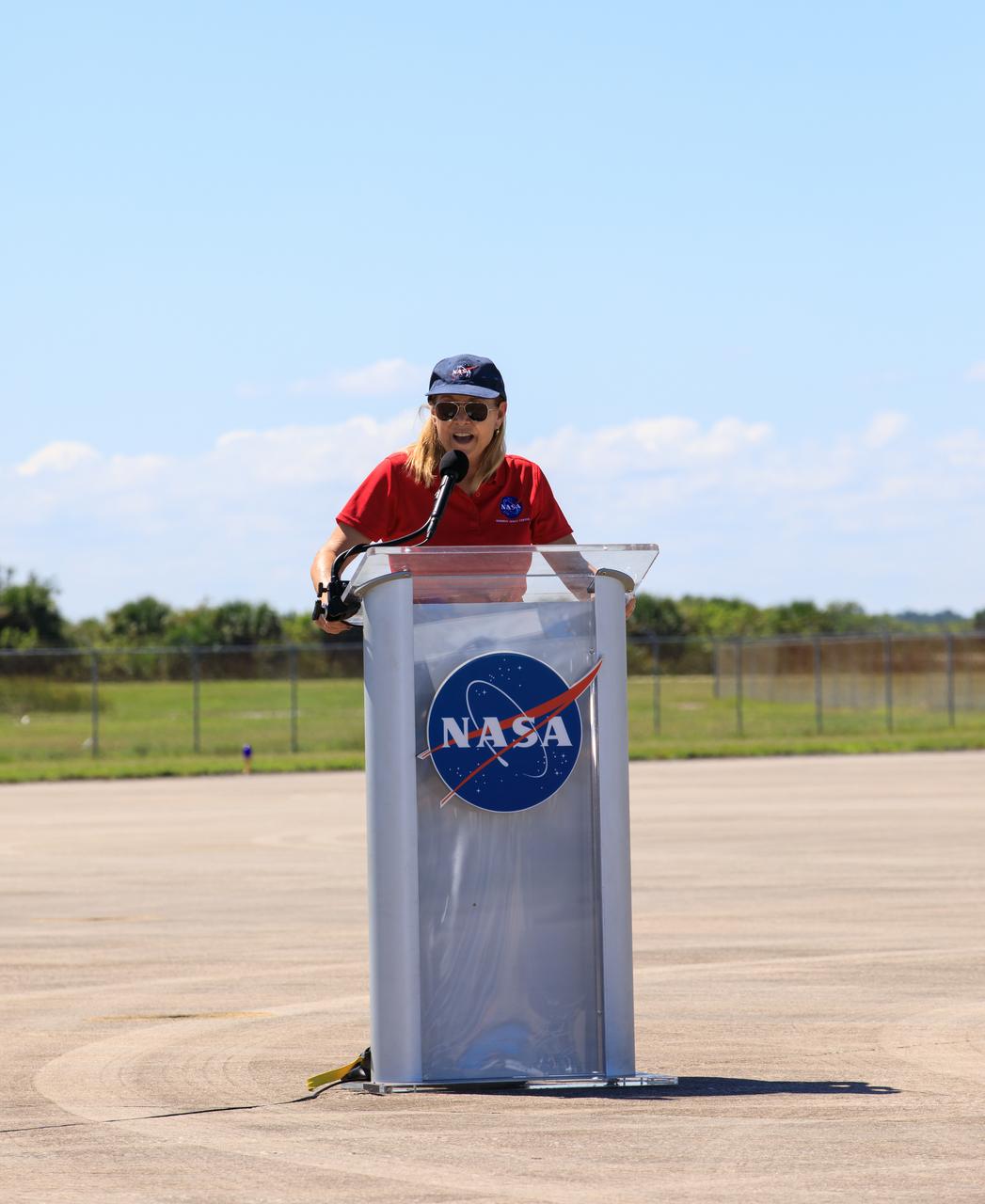
Kennedy Space Center Director Janet Petro speaks to members of the news media during crew arrival for NASA’s SpaceX Crew-5 mission at the Launch and Landing Facility at Kennedy Space Center in Florida on Oct. 1, 2022. The astronauts will launch aboard the Crew Dragon on a SpaceX Falcon 9 rocket on Oct. 5. Launch is targeted for noon EDT from Launch Complex 39A. Crew-5 is the fifth crew rotation mission with SpaceX to the station, and the sixth flight of Dragon with people as part of the agency’s Commercial Crew Program.
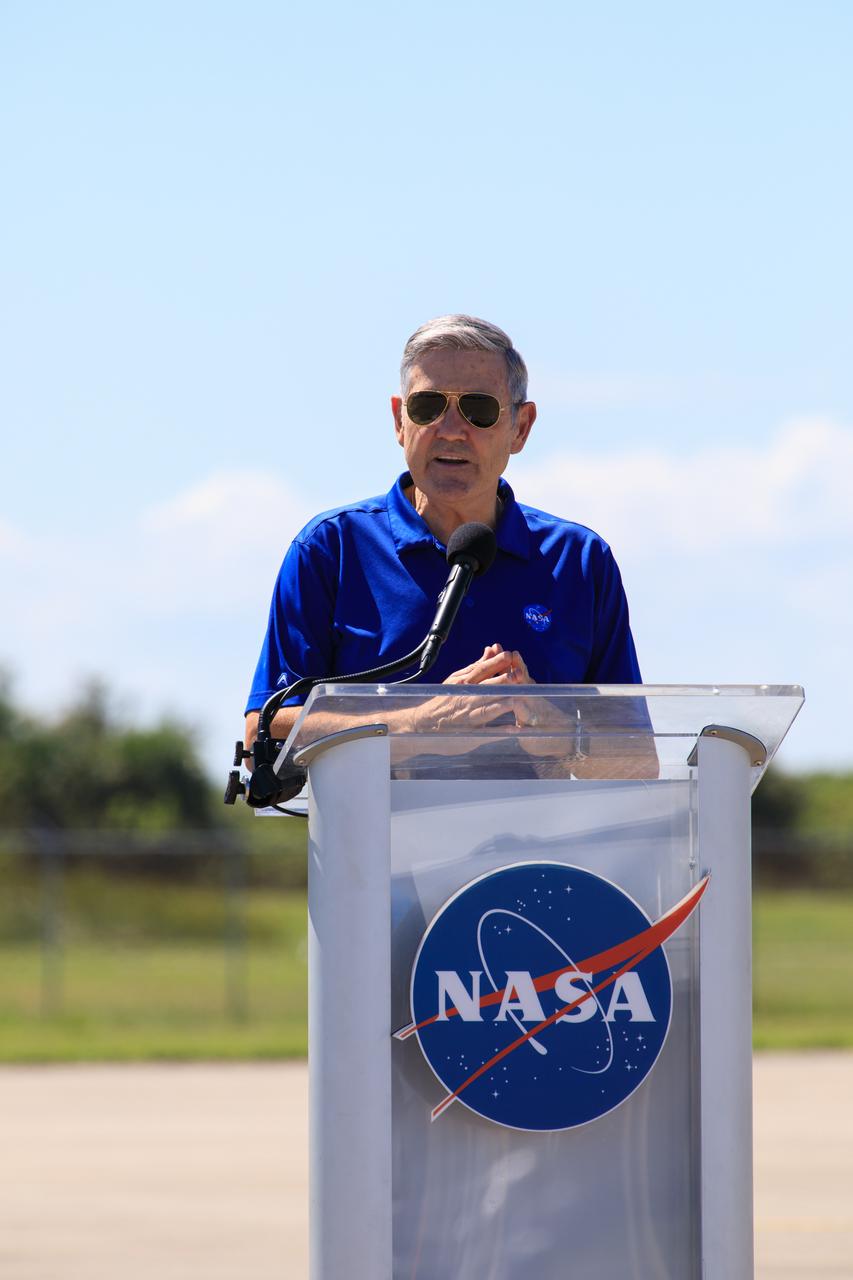
NASA Associate Administrator Bob Cabana speaks to members of the news media during crew arrival for NASA’s SpaceX Crew-5 mission at the Launch and Landing Facility at Kennedy Space Center in Florida on Oct. 1, 2022. The astronauts will launch aboard the Crew Dragon on a SpaceX Falcon 9 rocket on Oct. 5. Launch is targeted for noon EDT from Launch Complex 39A. Crew-5 is the fifth crew rotation mission with SpaceX to the station, and the sixth flight of Dragon with people as part of the agency’s Commercial Crew Program.
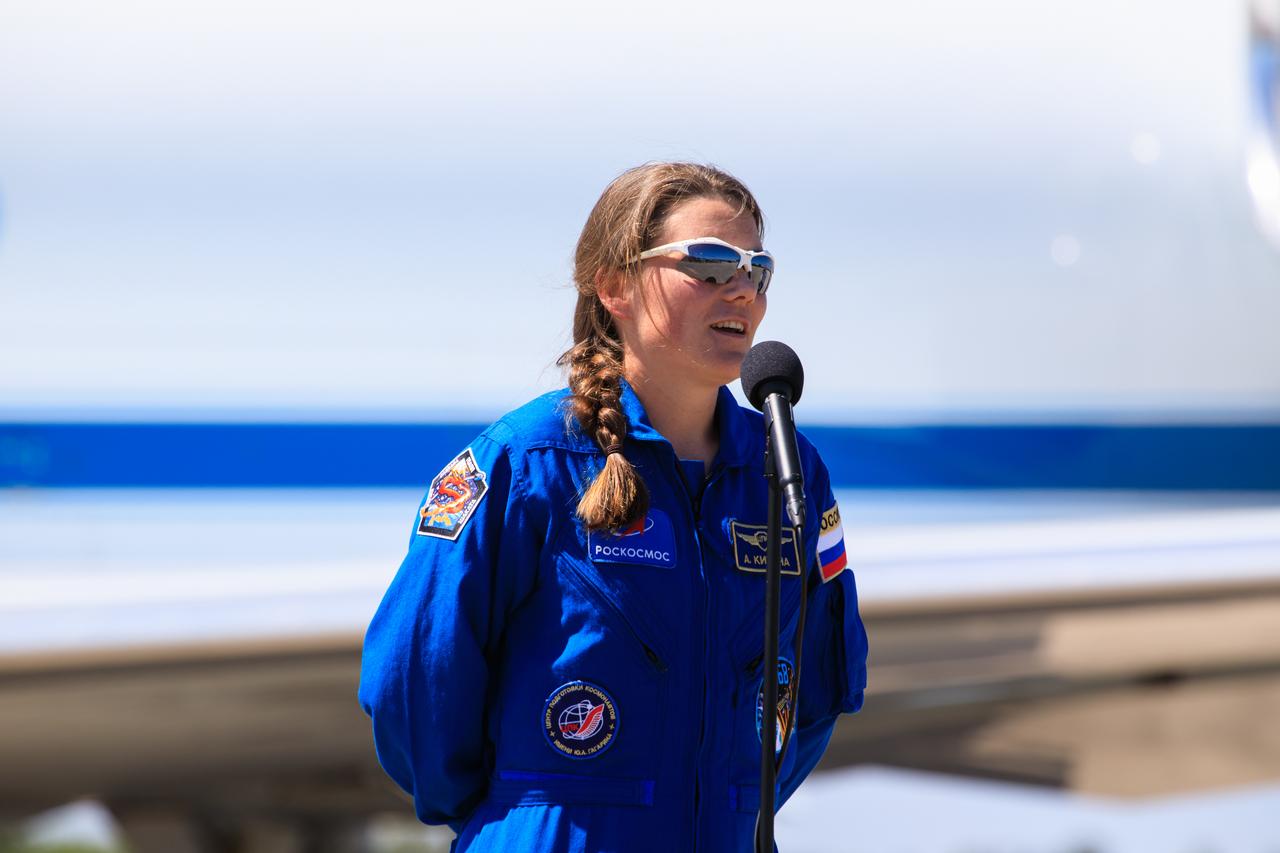
Roscosmos cosmonaut Anna Kikina speaks to members of the news media during crew arrival for NASA’s SpaceX Crew-5 mission at the Launch and Landing Facility at Kennedy Space Center in Florida on Oct. 1, 2022. The astronauts will launch aboard the Crew Dragon on a SpaceX Falcon 9 rocket on Oct. 5. Launch is targeted for noon EDT from Launch Complex 39A. Crew-5 is the fifth crew rotation mission with SpaceX to the station, and the sixth flight of Dragon with people as part of the agency’s Commercial Crew Program.
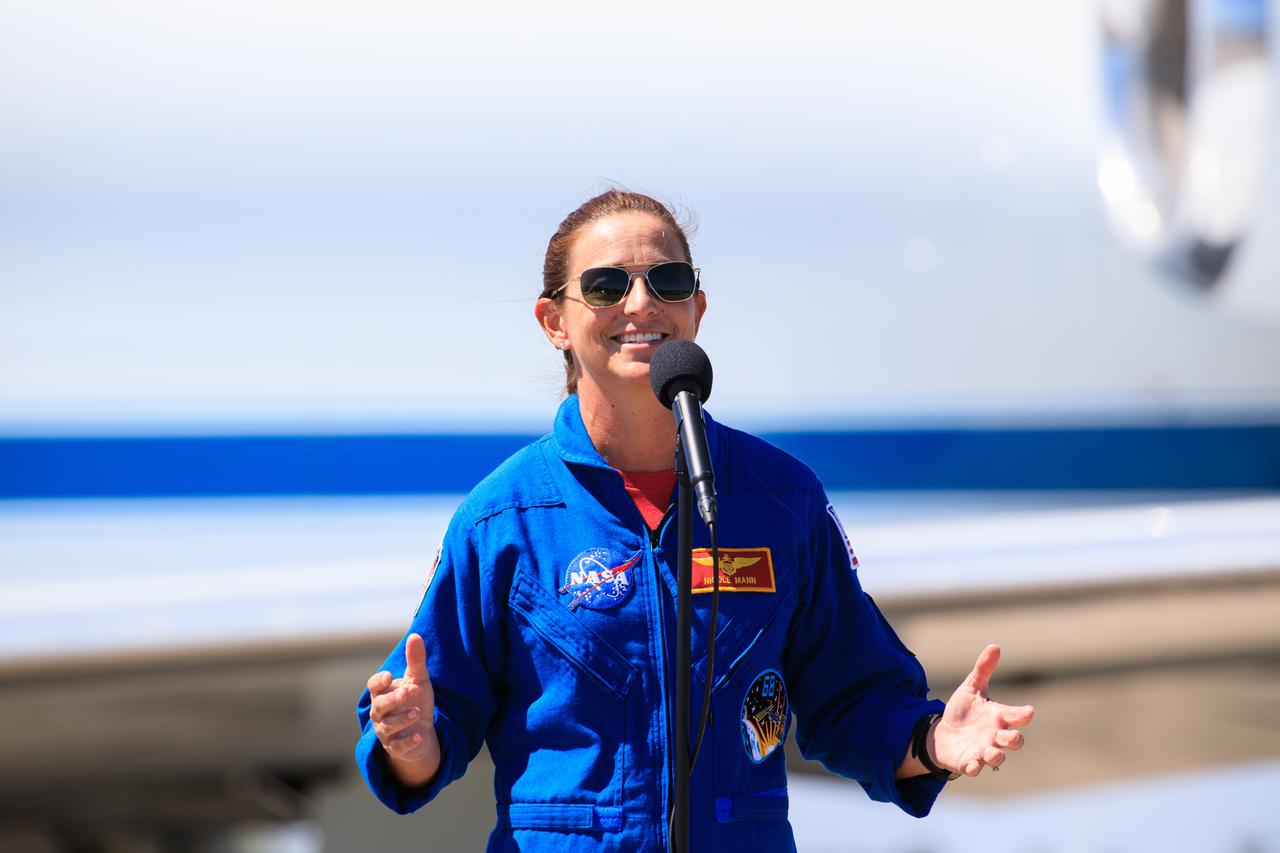
NASA astronaut Nicole Mann speaks to members of the news media during crew arrival for NASA’s SpaceX Crew-5 mission at the Launch and Landing Facility at Kennedy Space Center in Florida on Oct. 1, 2022. The astronauts will launch aboard the Crew Dragon on a SpaceX Falcon 9 rocket on Oct. 5. Launch is targeted for noon EDT from Launch Complex 39A. Crew-5 is the fifth crew rotation mission with SpaceX to the station, and the sixth flight of Dragon with people as part of the agency’s Commercial Crew Program.
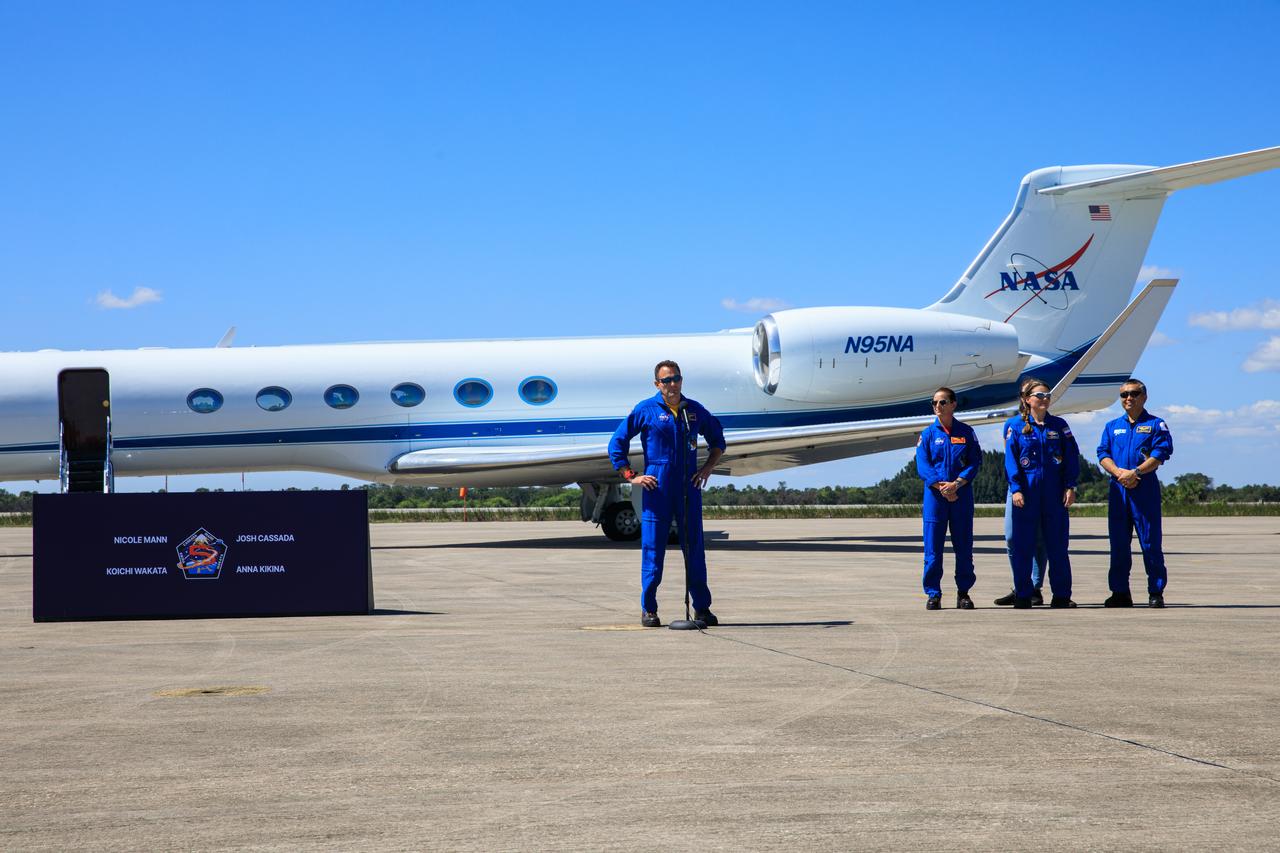
NASA astronaut Josh Cassada speaks to members of the news media during crew arrival for NASA’s SpaceX Crew-5 mission at the Launch and Landing Facility at Kennedy Space Center in Florida on Oct. 1, 2022. The astronauts will launch aboard the Crew Dragon on a SpaceX Falcon 9 rocket on Oct. 5. Launch is targeted for noon EDT from Launch Complex 39A. Crew-5 is the fifth crew rotation mission with SpaceX to the station, and the sixth flight of Dragon with people as part of the agency’s Commercial Crew Program.
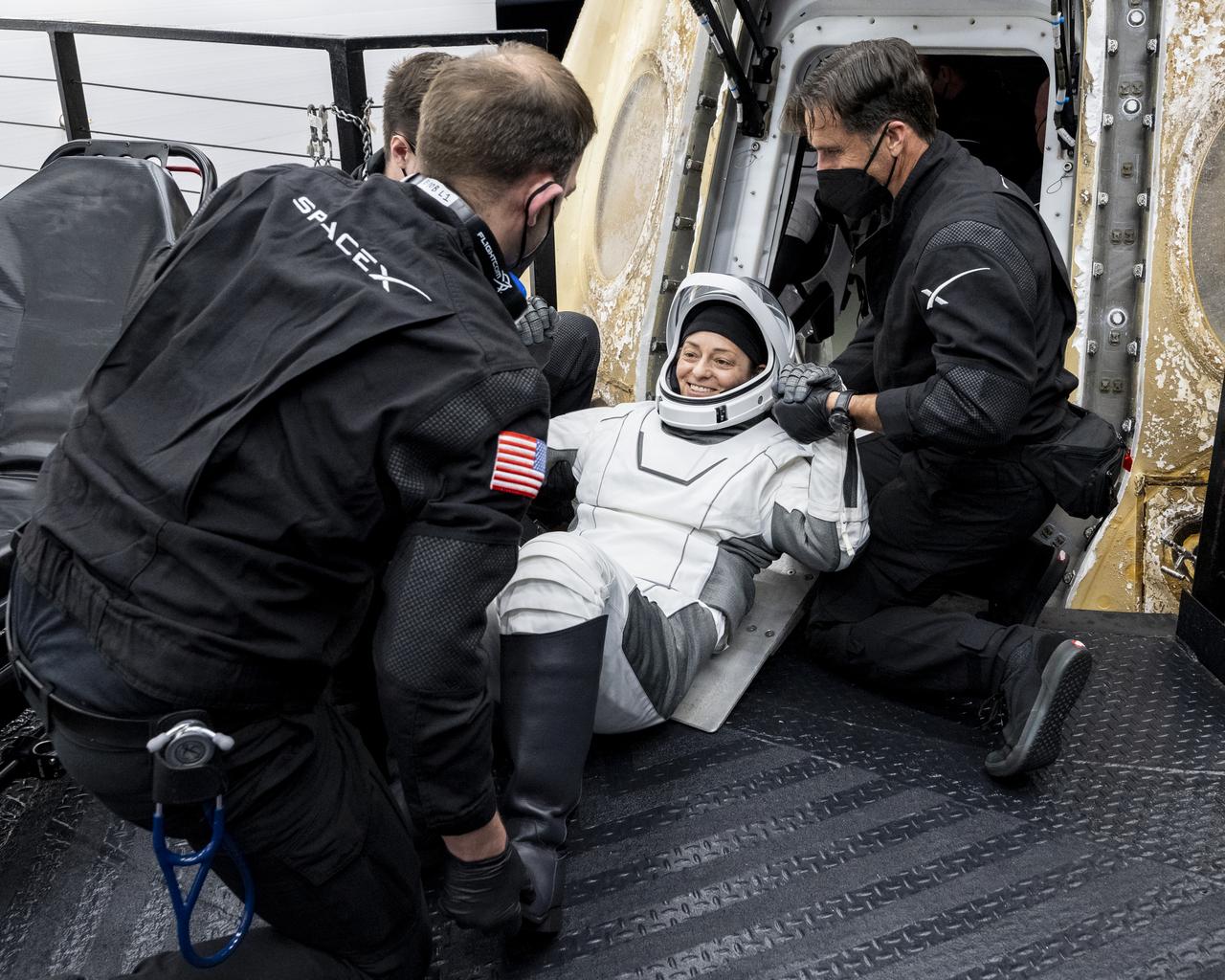
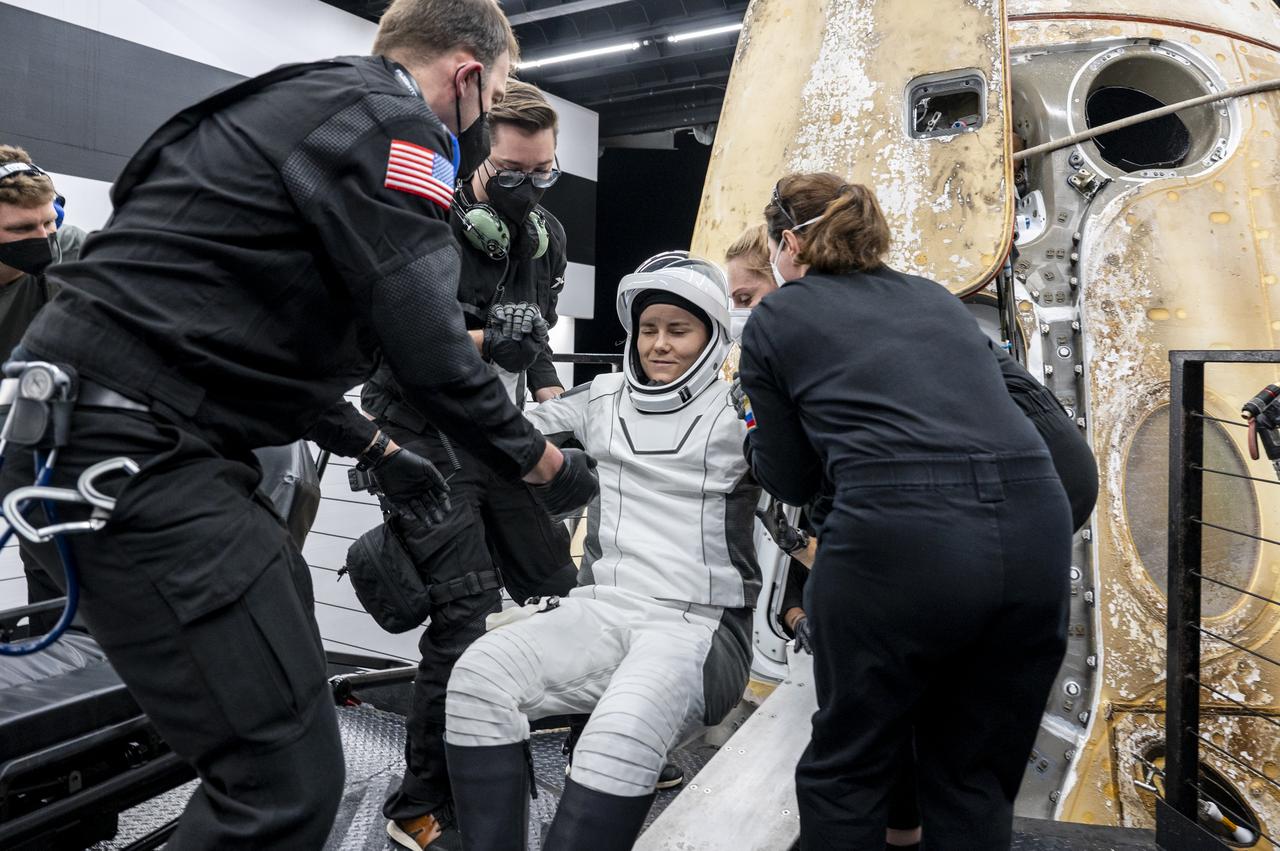
NASA Astronaut Nicole Mann is helped out of the SpaceX Dragon Endurance spacecraft onboard the SpaceX recovery ship Shannon shortly after she, along with NASA astronaut Josh Cassada, Roscosmos cosmonaut Anna Kikina, and Japan Aerospace Exploration Agency (JAXA) astronaut Koichi Wakata, landed in the Gulf of Mexico off the coast of Tampa, Florida, Saturday, March 11, 2023. Mann, Cassada, Wakata, and Kikina are returning after 157 days in space as part of Expedition 68 aboard the International Space Station. Photo Credit: (NASA/Keegan Barber).
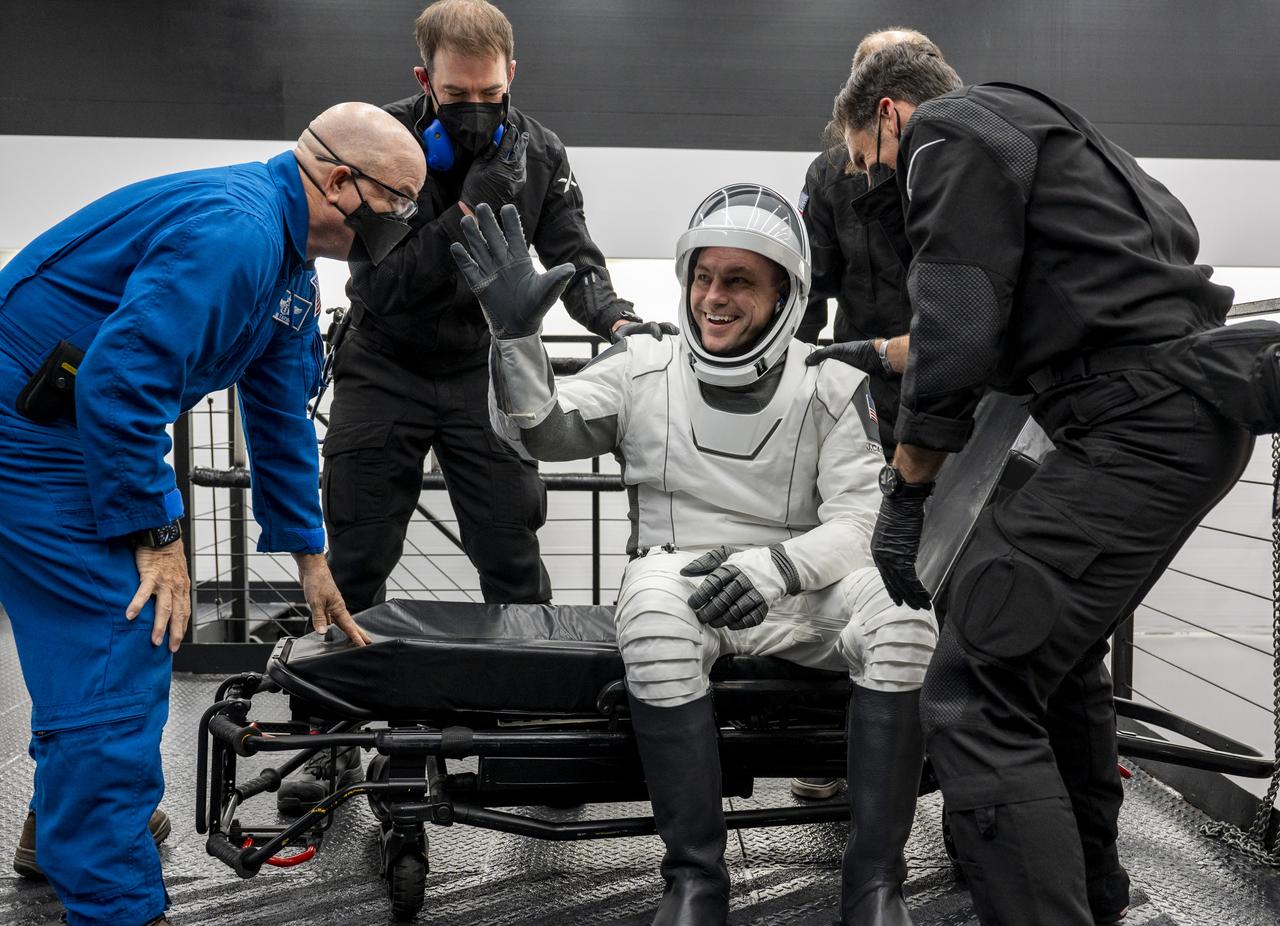
NASA Astronaut Josh Cassada waves after being helped out of the SpaceX Dragon Endurance spacecraft onboard the SpaceX recovery ship Shannon shortly after he, along with NASA astronaut Nicole Mann, Roscosmos cosmonaut Anna Kikina, and Japan Aerospace Exploration Agency (JAXA) astronaut Koichi Wakata, landed in the Gulf of Mexico off the coast of Tampa, Florida, Saturday, March 11, 2023. Mann, Cassada, Wakata, and Kikina are returning after 157 days in space as part of Expedition 68 aboard the International Space Station. Photo Credit: (NASA/Keegan Barber).
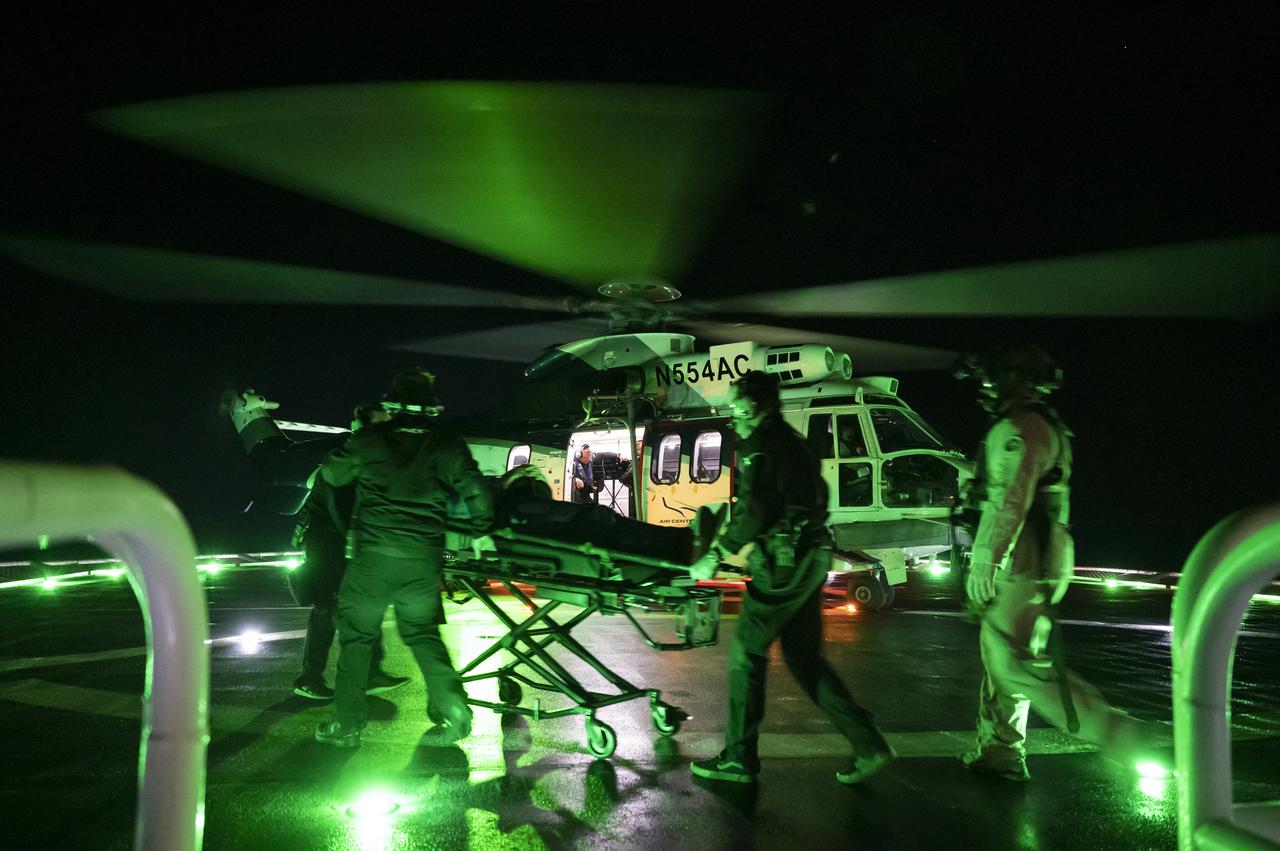
NASA Astronaut Josh Cassada is helped onto a helicopter onboard the SpaceX recovery ship Shannon shortly after he, along with NASA astronaut Nicole Mann, Roscosmos cosmonaut Anna Kikina, and Japan Aerospace Exploration Agency (JAXA) astronaut Koichi Wakata, landed while onboard SpaceX Dragon Endeavor spacecraft in the Gulf of Mexico off the coast of Tampa, Florida, Saturday, March 11, 2023. Mann, Cassada, Wakata, and Kikina are returning after 157 days in space as part of Expedition 68 aboard the International Space Station. Photo Credit: (NASA/Keegan Barber).
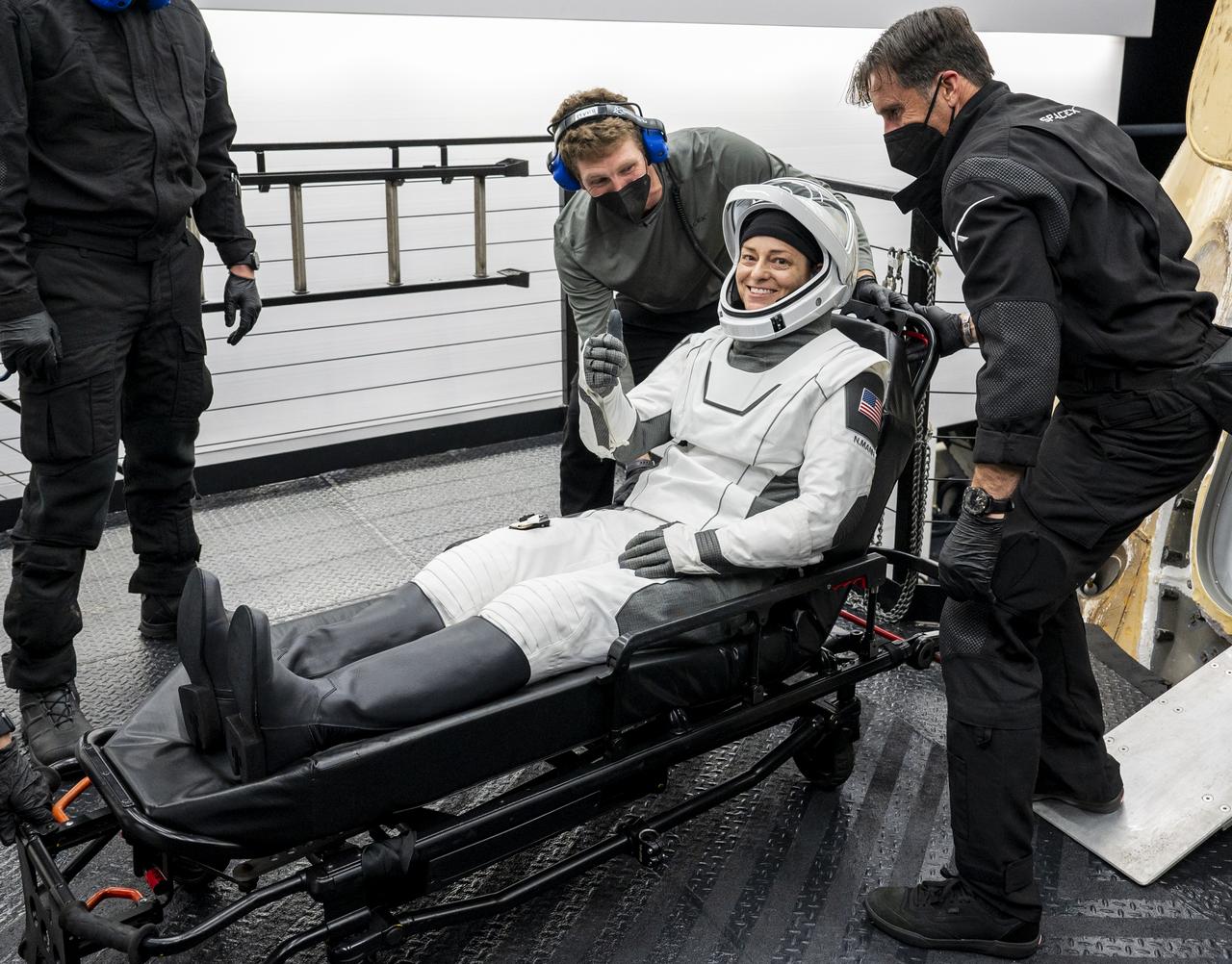
NASA Astronaut Nicole Mann gives a thumbs up after being helped out of the SpaceX Dragon Endurance spacecraft onboard the SpaceX recovery ship Shannon shortly after she, along with NASA astronaut Josh Cassada, Roscosmos cosmonaut Anna Kikina, and Japan Aerospace Exploration Agency (JAXA) astronaut Koichi Wakata, landed in the Gulf of Mexico off the coast of Tampa, Florida, Saturday, March 11, 2023. Mann, Cassada, Wakata, and Kikina are returning after 157 days in space as part of Expedition 68 aboard the International Space Station. Photo Credit: (NASA/Keegan Barber).
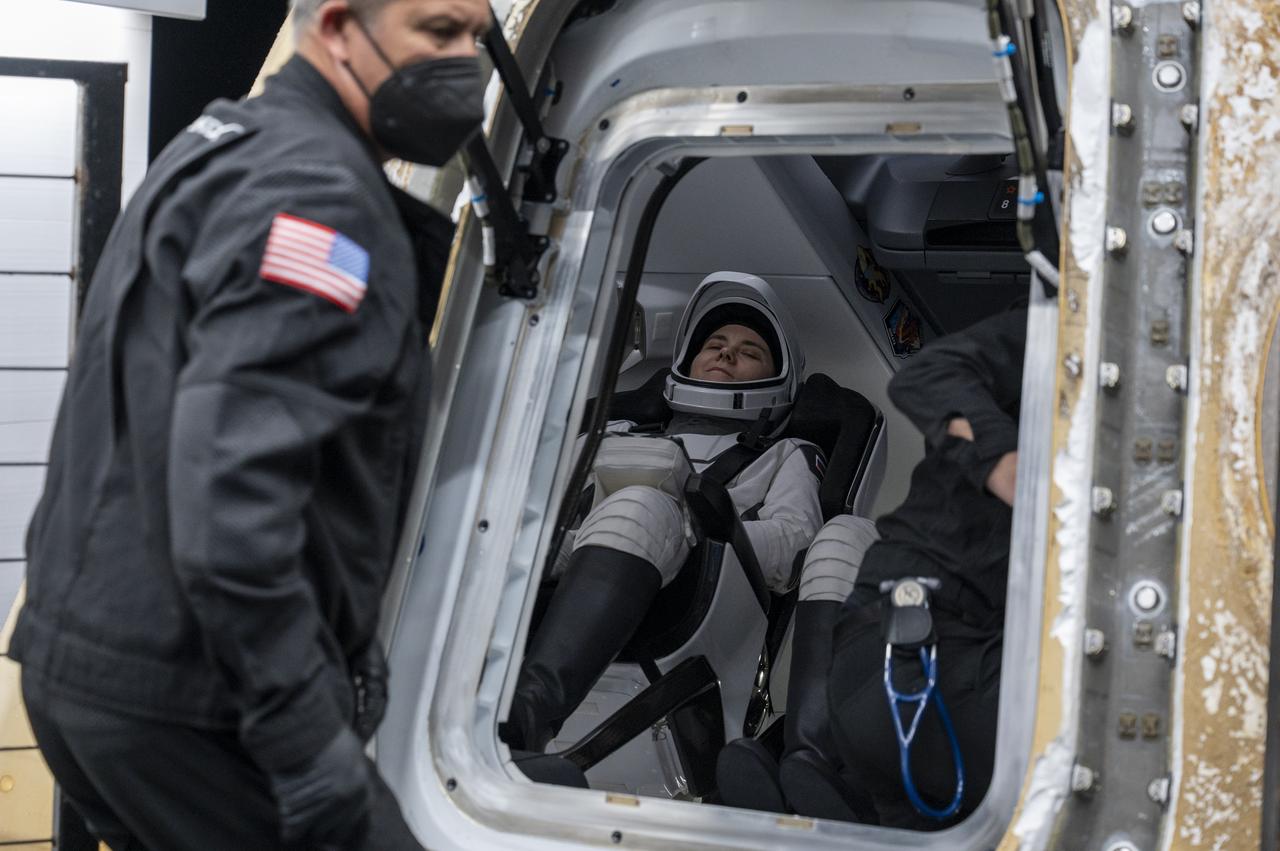
Roscosmos cosmonaut Anna Kikina is seen inside the SpaceX Dragon Endurance spacecraft onboard the SpaceX recovery ship Shannon shortly after she, along with NASA astronauts Josh Cassada, Nicole Mann, and Japan Aerospace Exploration Agency (JAXA) astronaut Koichi Wakata, landed in the Gulf of Mexico off the coast of Tampa, Florida, Saturday, March 11, 2023. Mann, Cassada, Wakata, and Kikina are returning after 157 days in space as part of Expedition 68 aboard the International Space Station. Photo Credit: (NASA/Keegan Barber).
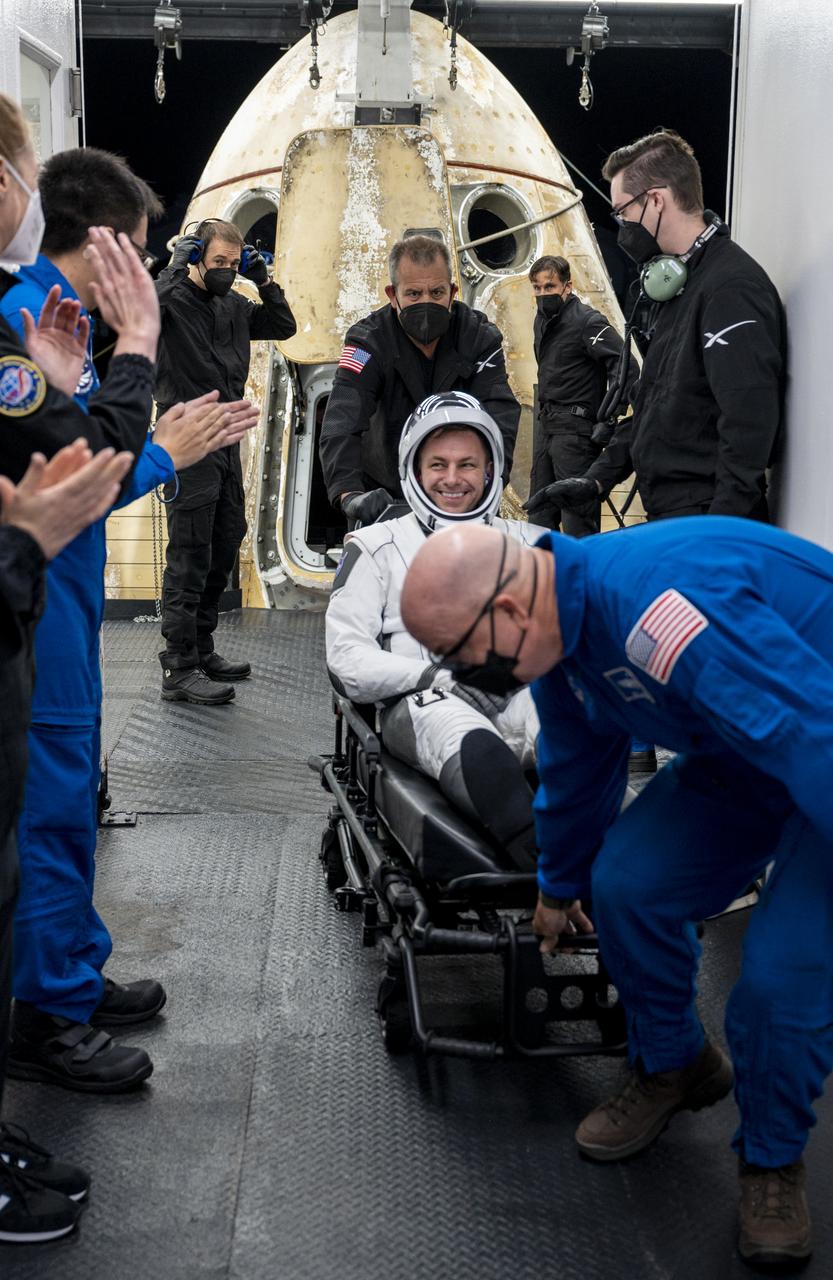
NASA Astronaut Josh Cassada is seen after being helped out of the SpaceX Dragon Endurance spacecraft onboard the SpaceX recovery ship Shannon shortly after he, along with NASA astronaut Nicole Mann, Roscosmos cosmonaut Anna Kikina, and Japan Aerospace Exploration Agency (JAXA) astronaut Koichi Wakata, landed in the Gulf of Mexico off the coast of Tampa, Florida, Saturday, March 11, 2023. Mann, Cassada, Wakata, and Kikina are returning after 157 days in space as part of Expedition 68 aboard the International Space Station. Photo Credit: (NASA/Keegan Barber).
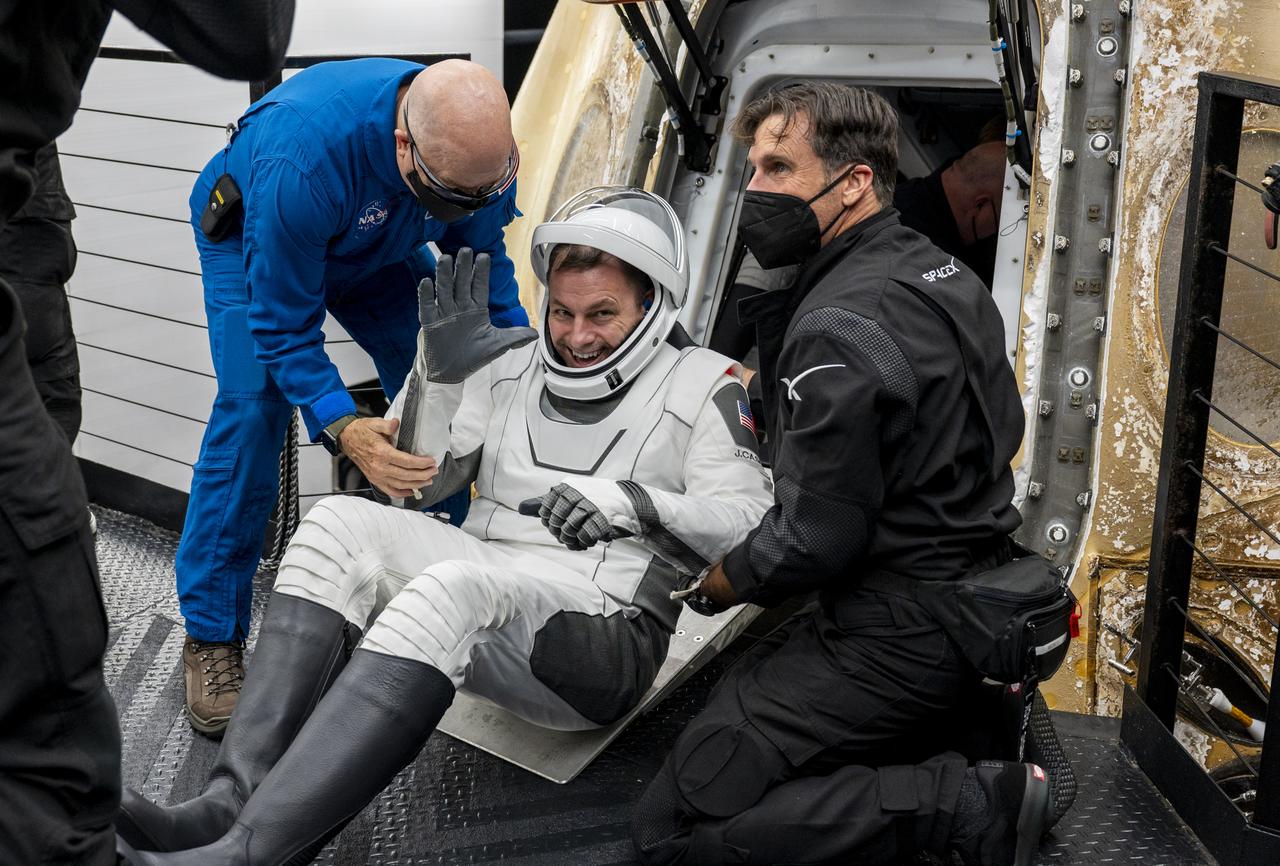
NASA Astronaut Josh Cassada waves after being helped out of the SpaceX Dragon Endurance spacecraft onboard the SpaceX recovery ship Shannon shortly after he, along with NASA astronaut Nicole Mann, Roscosmos cosmonaut Anna Kikina, and Japan Aerospace Exploration Agency (JAXA) astronaut Koichi Wakata, landed in the Gulf of Mexico off the coast of Tampa, Florida, Saturday, March 11, 2023. Mann, Cassada, Wakata, and Kikina are returning after 157 days in space as part of Expedition 68 aboard the International Space Station. Photo Credit: (NASA/Keegan Barber).
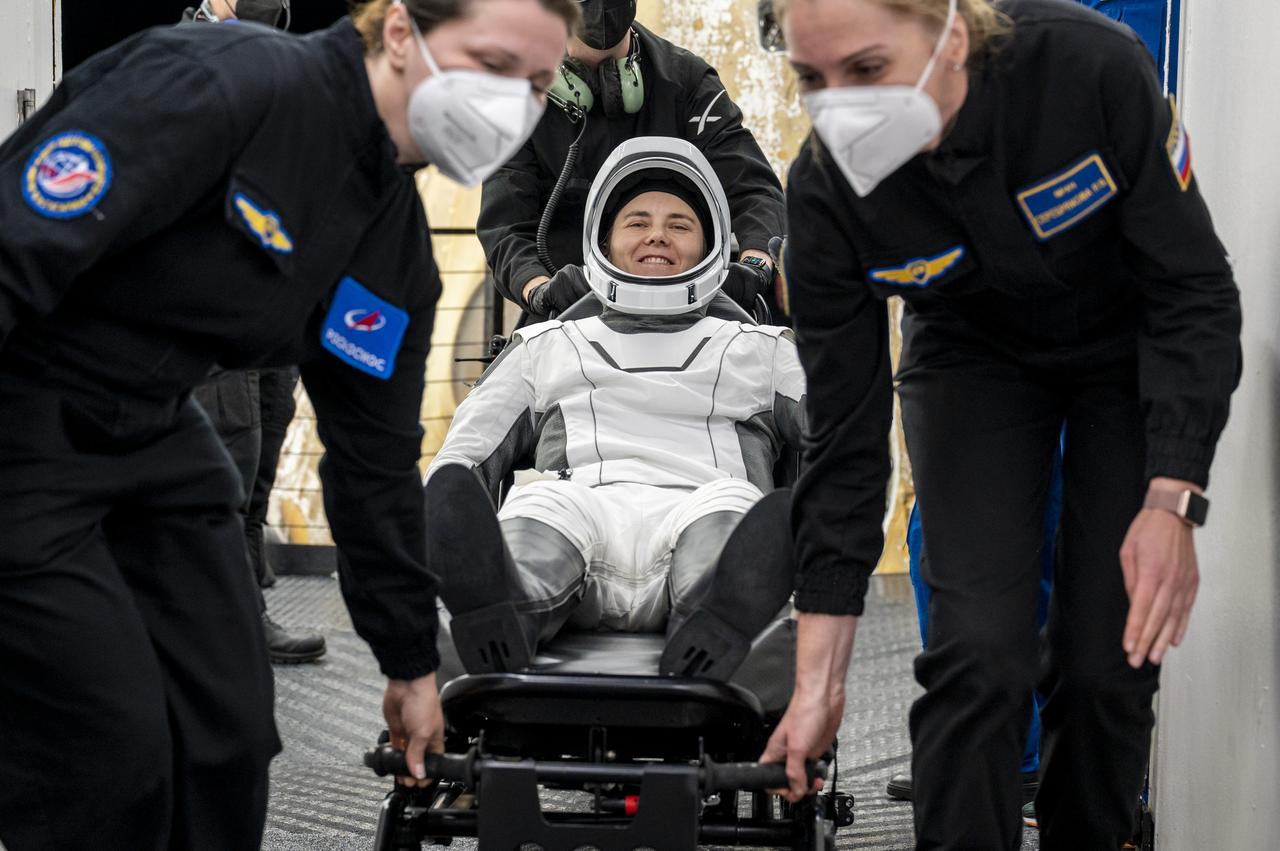
Roscosmos cosmonaut Anna Kikina is seen after being helped out of the SpaceX Dragon Endurance spacecraft onboard the SpaceX recovery ship Shannon shortly after she, along with NASA astronauts Josh Cassada, Nicole Mann, and Japan Aerospace Exploration Agency (JAXA) astronaut Koichi Wakata, landed in the Gulf of Mexico off the coast of Tampa, Florida, Saturday, March 11, 2023. Mann, Cassada, Wakata, and Kikina are returning after 157 days in space as part of Expedition 68 aboard the International Space Station. Photo Credit: (NASA/Keegan Barber).
Roscosmos cosmonaut Anna Kikina is helped out of the SpaceX Dragon Endurance spacecraft onboard the SpaceX recovery ship Shannon shortly after she, along with NASA astronauts Josh Cassada, Nicole Mann, and Japan Aerospace Exploration Agency (JAXA) astronaut Koichi Wakata, landed in the Gulf of Mexico off the coast of Tampa, Florida, Saturday, March 11, 2023. Mann, Cassada, Wakata, and Kikina are returning after 157 days in space as part of Expedition 68 aboard the International Space Station. Photo Credit: (NASA/Keegan Barber).
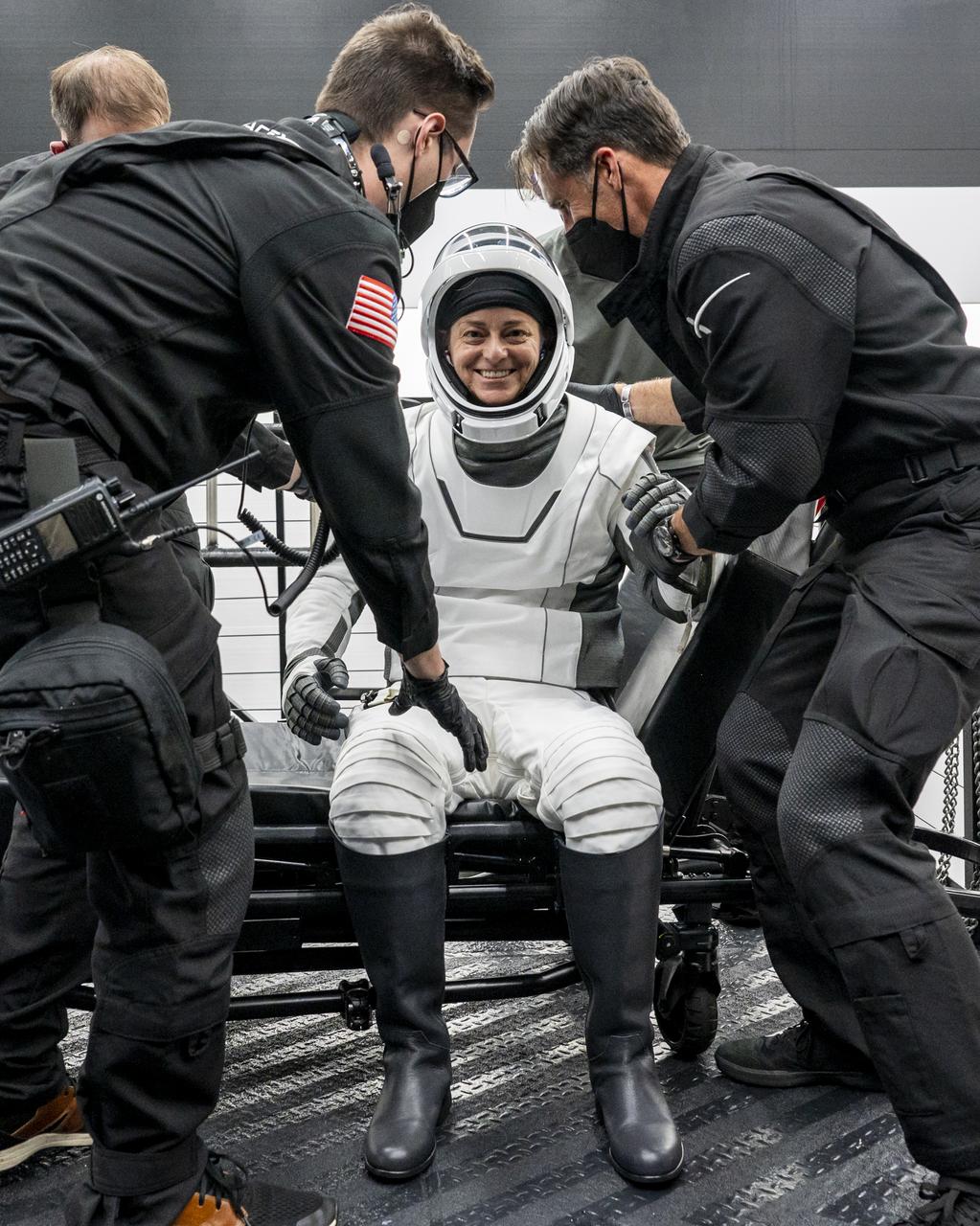
NASA Astronaut Nicole Mann is seen after being helped out of the SpaceX Dragon Endurance spacecraft onboard the SpaceX recovery ship Shannon shortly after she, along with NASA astronaut Josh Cassada, Roscosmos cosmonaut Anna Kikina, and Japan Aerospace Exploration Agency (JAXA) astronaut Koichi Wakata, landed in the Gulf of Mexico off the coast of Tampa, Florida, Saturday, March 11, 2023. Mann, Cassada, Wakata, and Kikina are returning after 157 days in space as part of Expedition 68 aboard the International Space Station. Photo Credit: (NASA/Keegan Barber).
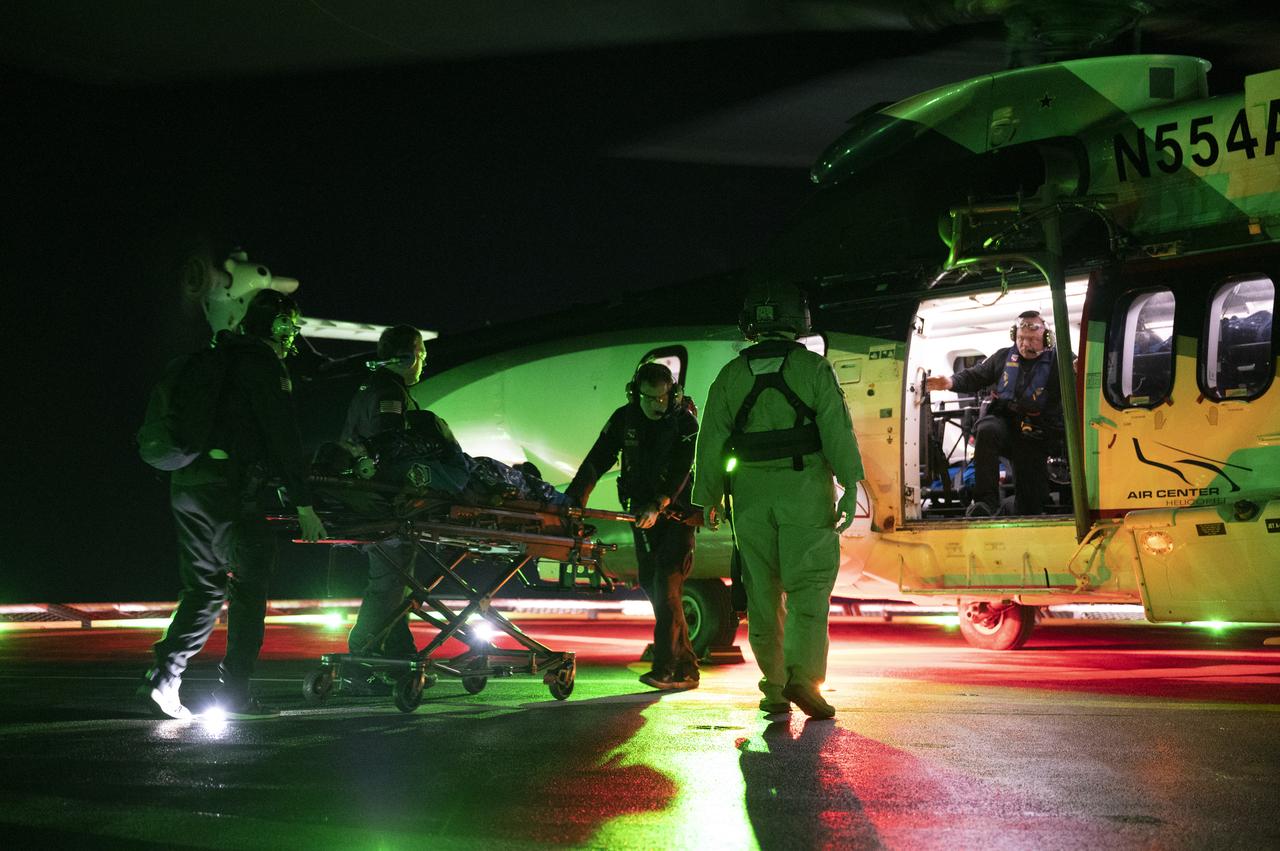
Roscosmos cosmonaut Anna Kikina is helped onto a helicopter onboard the SpaceX recovery ship Shannon shortly after she, along with NASA astronauts Josh Cassada, Nicole Mann, and Japan Aerospace Exploration Agency (JAXA) astronaut Koichi Wakata, landed while onboard SpaceX Dragon Endeavor spacecraft in the Gulf of Mexico off the coast of Tampa, Florida, Saturday, March 11, 2023. Mann, Cassada, Wakata, and Kikina are returning after 157 days in space as part of Expedition 68 aboard the International Space Station. Photo Credit: (NASA/Keegan Barber).
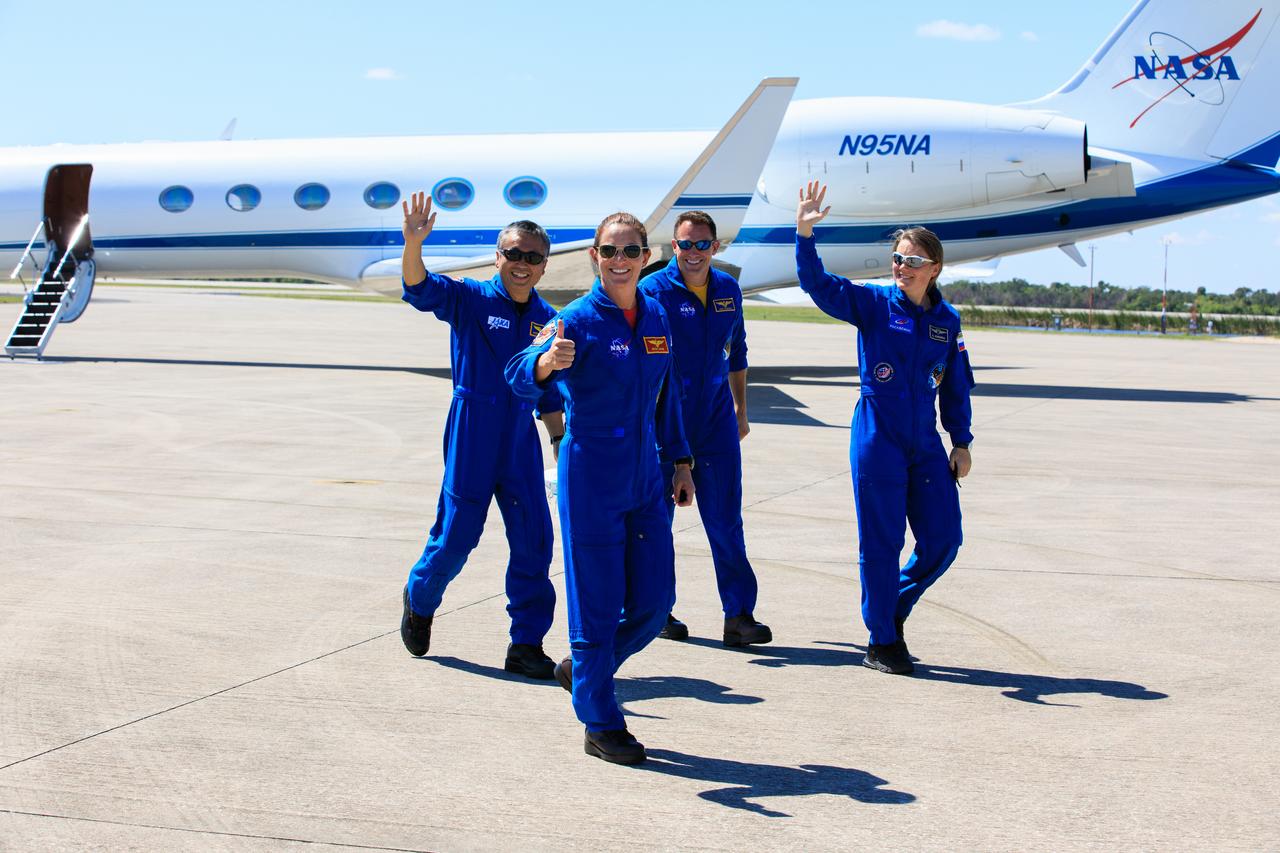
Crew members for NASA’s SpaceX Crew-5 mission to the International Space Station wave during a crew arrival media event at the Launch and Landing Facility at Kennedy Space Center in Florida on Oct. 1, 2022. From left are Koichi Wakata, mission specialist; Nicole Mann, commander; Josh Cassada, pilot; and Anna Kikina, mission specialist. The crew will head to the center’s Crew Quarters as they await launch aboard the Crew Dragon on a SpaceX Falcon 9 rocket. Launch is targeted for noon EDT on Oct. 5 from Launch Complex 39A. Crew-5 is the fifth crew rotation mission with SpaceX to the station, and the sixth flight of Dragon with people as part of the agency’s Commercial Crew Program.
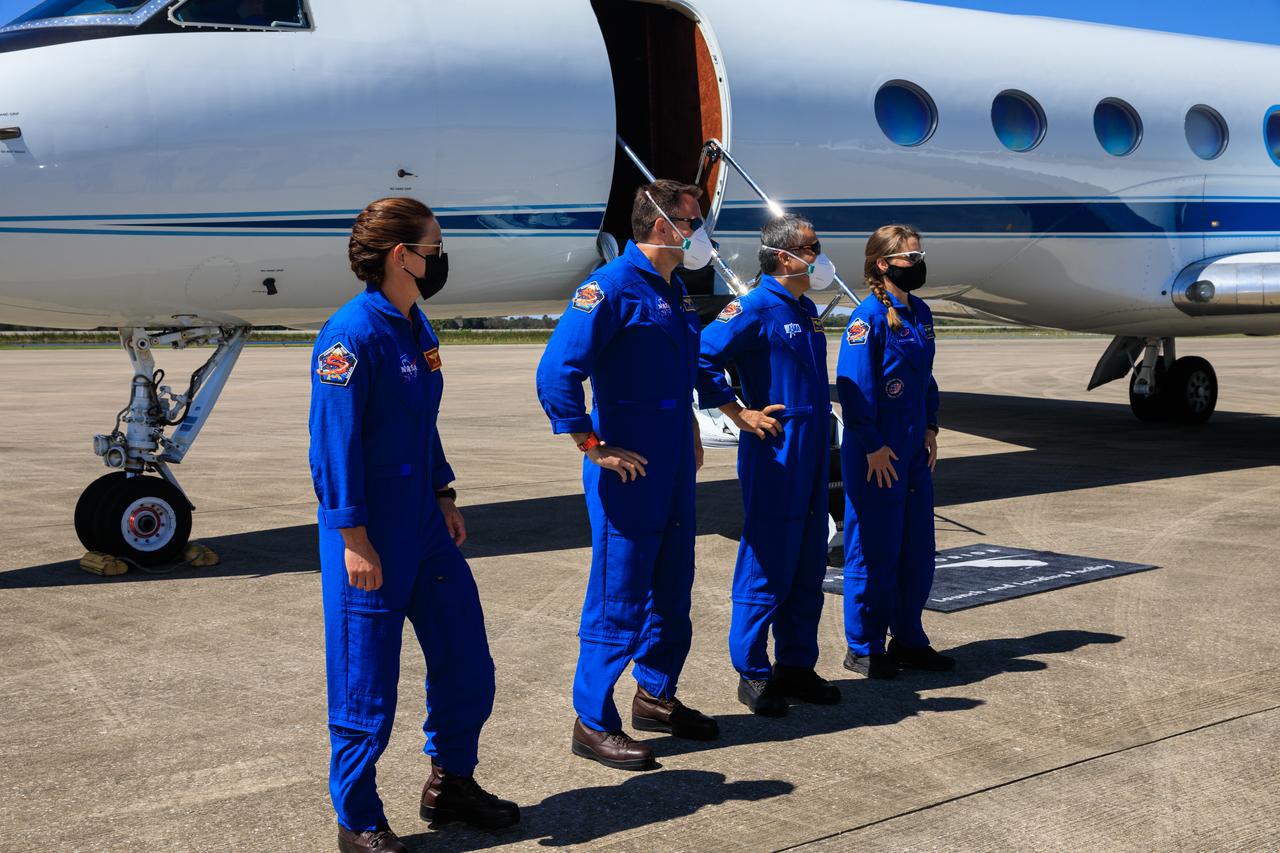
Crew members for NASA’s SpaceX Crew-5 mission to the International Space Station arrive at the Launch and Landing Facility at Kennedy Space Center in Florida on Oct. 1, 2022. From left are Nicole Mann, commander; Josh Cassada, pilot; Koichi Wakata, mission specialist; and Anna Kikina, mission specialist. The crew will head to the center’s Crew Quarters as they await launch aboard the Crew Dragon on a SpaceX Falcon 9 rocket. Launch is targeted for noon EDT on Oct. 5 from Launch Complex 39A. Crew-5 is the fifth crew rotation mission with SpaceX to the station, and the sixth flight of Dragon with people as part of the agency’s Commercial Crew Program.
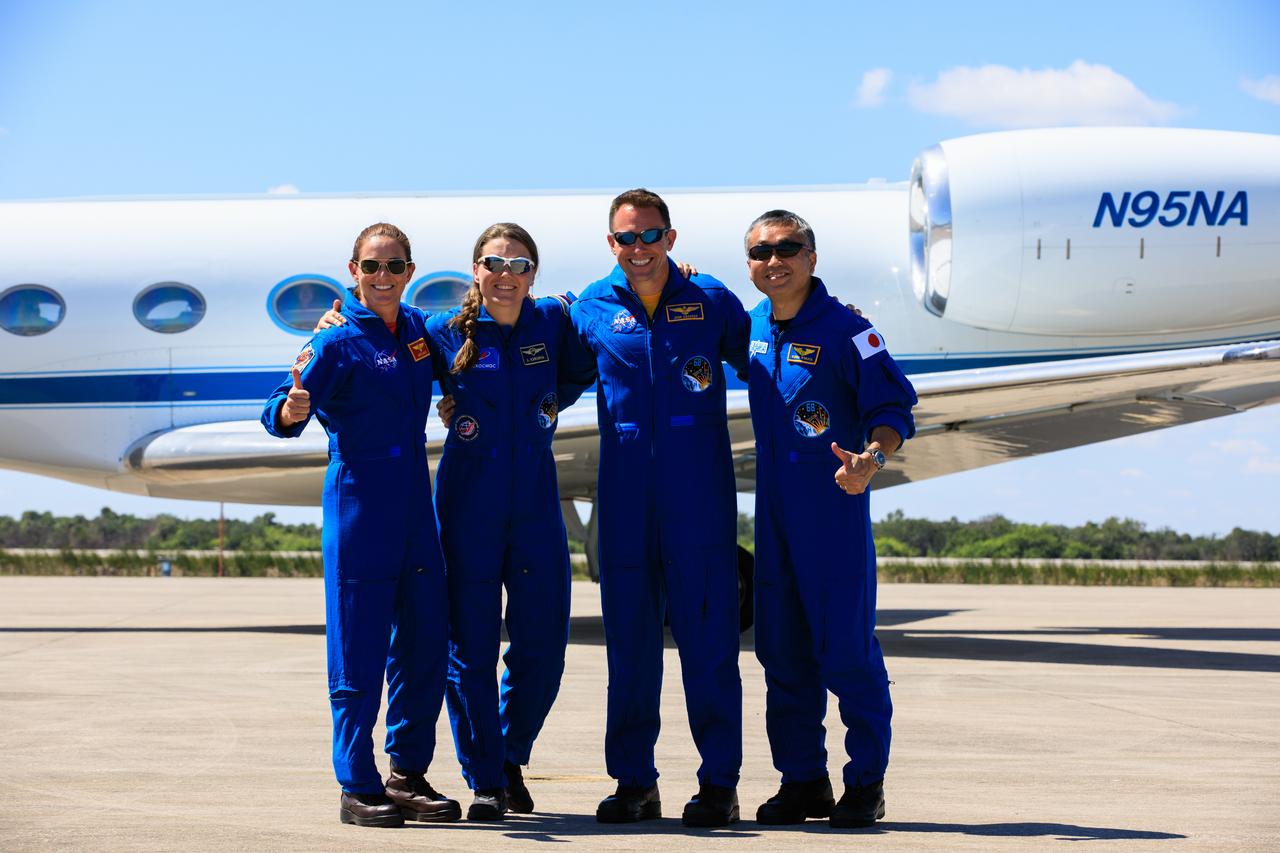
Crew members for NASA’s SpaceX Crew-5 mission to the International Space Station pose at the Launch and Landing Facility at Kennedy Space Center in Florida on Oct. 1, 2022. From left are Nicole Mann, commander; Anna Kikina, mission specialist; Josh Cassada, pilot; and Koichi Wakata, mission specialist. The crew will head to the center’s Crew Quarters as they await launch aboard the Crew Dragon on a SpaceX Falcon 9 rocket. Launch is targeted for noon EDT on Oct. 5 from Launch Complex 39A. Crew-5 is the fifth crew rotation mission with SpaceX to the station, and the sixth flight of Dragon with people as part of the agency’s Commercial Crew Program.
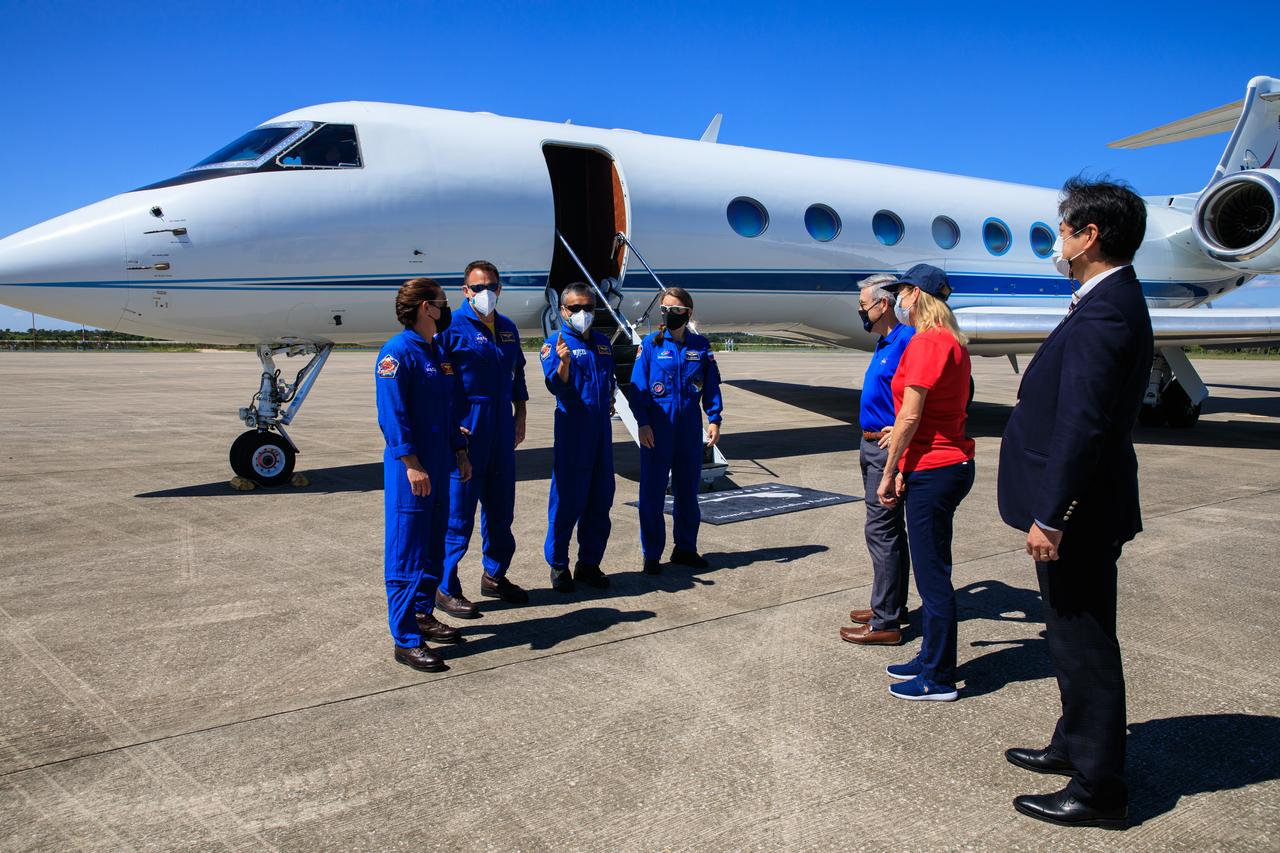
Crew members for NASA’s SpaceX Crew-5 mission to the International Space Station arrive at the Launch and Landing Facility at Kennedy Space Center in Florida on Oct. 1, 2022. From left are Nicole Mann, commander; Josh Cassada, pilot; Koichi Wakata, mission specialist; and Anna Kikina, mission specialist. Greeting the crew, from left, are Bob Cabana, NASA associate administrator; Janet Petro, Kennedy director; and Junichi Sakai, manager, International Space Station, JAXA. The crew will head to the center’s Crew Quarters as they await launch aboard the Crew Dragon on a SpaceX Falcon 9 rocket. Launch is targeted for noon EDT on Oct. 5 from Launch Complex 39A. Crew-5 is the fifth crew rotation mission with SpaceX to the station, and the sixth flight of Dragon with people as part of the agency’s Commercial Crew Program.
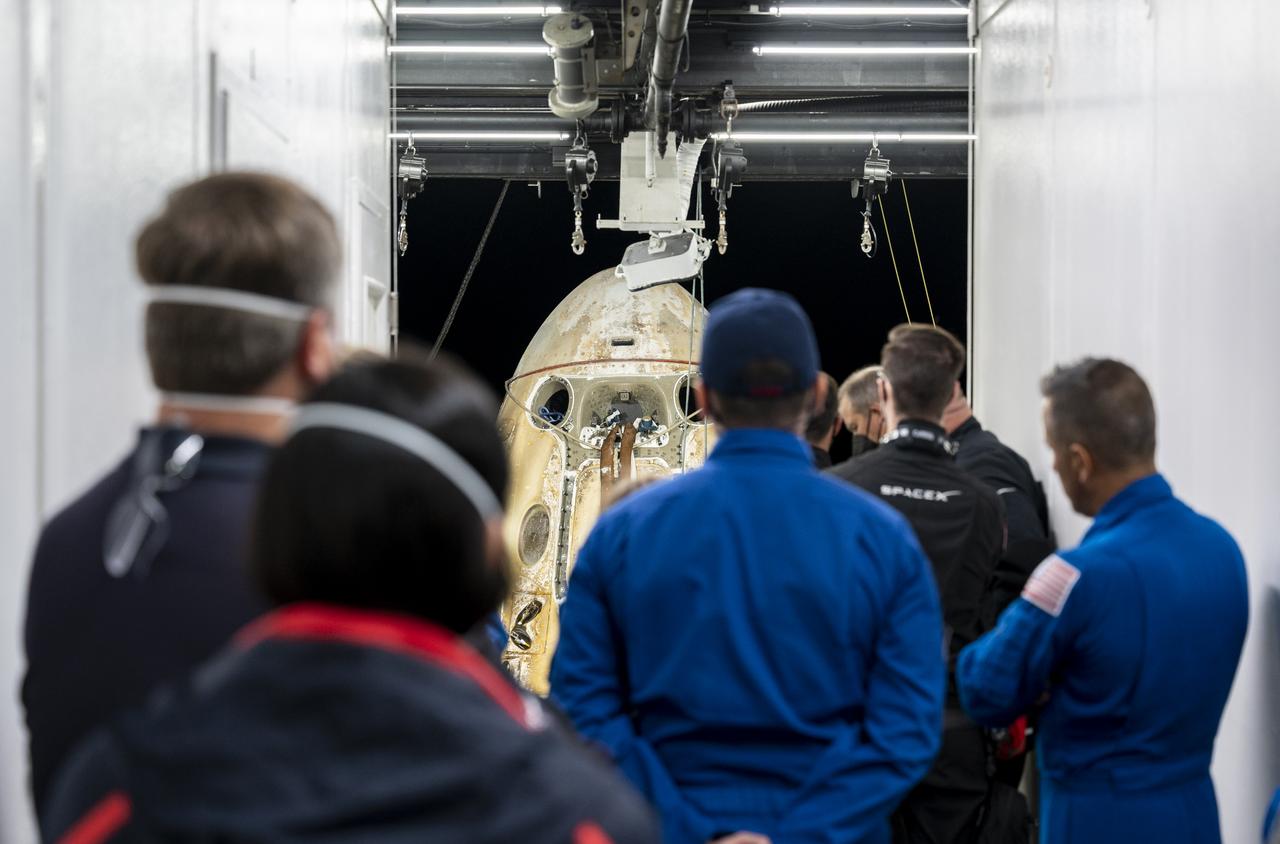
Support teams onboard the SpaceX recovery ship Shannon work around the SpaceX Dragon Endurance spacecraft shortly after it landed with with NASA astronauts Nicole Mann and Josh Cassada, Japan Aerospace Exploration Agency (JAXA) astronaut Koichi Wakata, and Roscosmos cosmonaut Anna Kikina onboard in the Gulf of Mexico off the coast of Tampa, Florida, Saturday, March 11, 2023. Mann, Cassada, Wakata, and Kikina are returning after 157 days in space as part of Expedition 68 aboard the International Space Station. Photo Credit: (NASA/Keegan Barber).
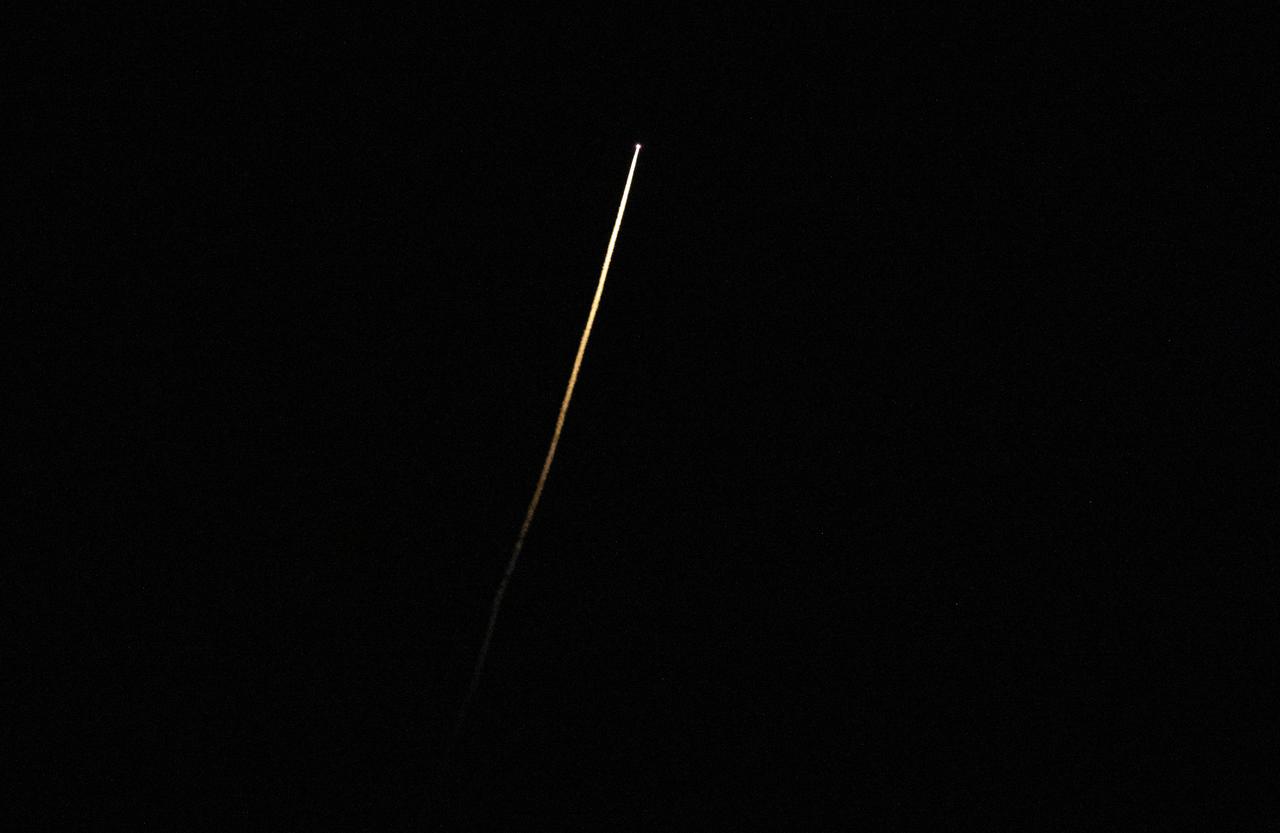
The SpaceX Dragon Endurance spacecraft is seen as it lands with NASA astronauts Nicole Mann and Josh Cassada, Japan Aerospace Exploration Agency (JAXA) astronaut Koichi Wakata, and Roscosmos cosmonaut Anna Kikina onboard in the Gulf of Mexico off the coast of Tampa, Florida, Saturday, March 11, 2023. Mann, Cassada, Wakata, and Kikina are returning after 157 days in space as part of Expedition 68 aboard the International Space Station. Photo Credit: (NASA/Keegan Barber).
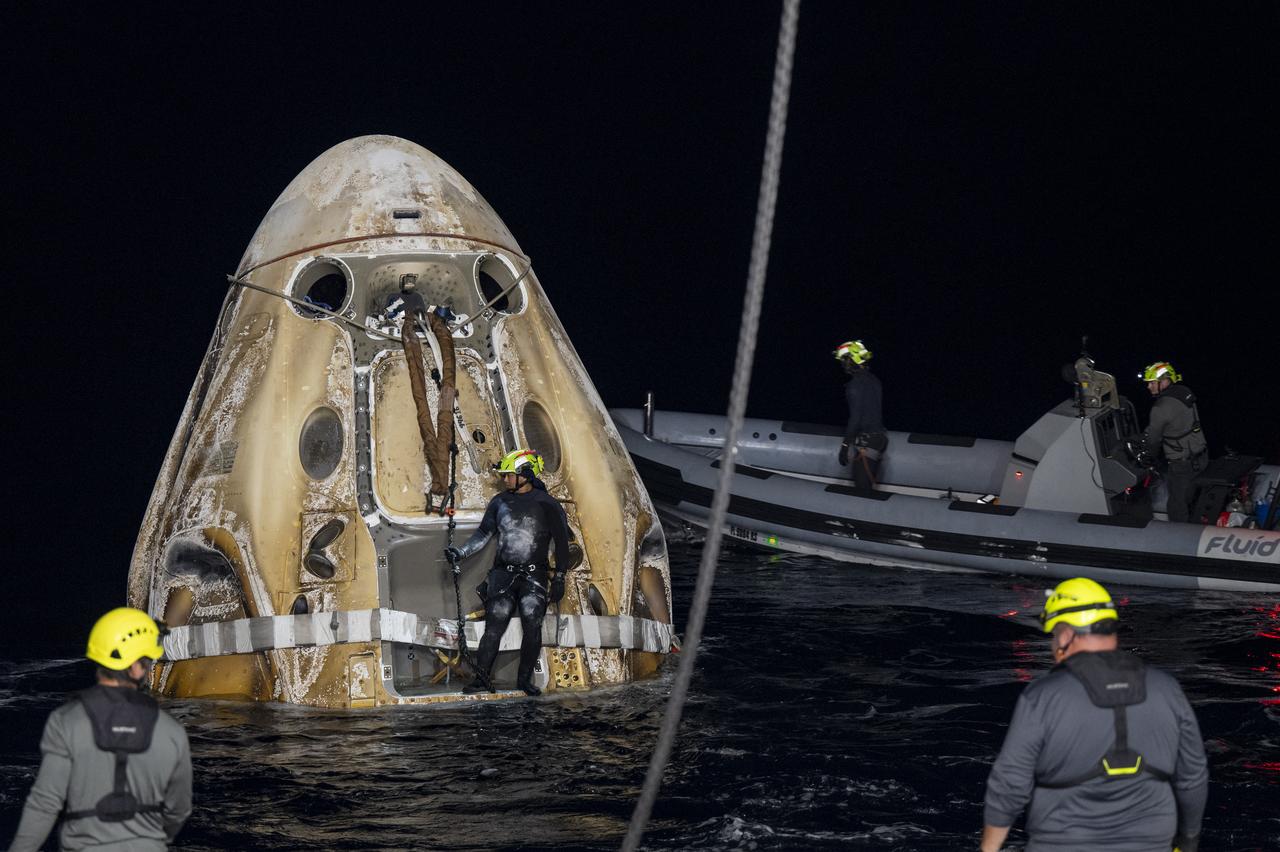
Support teams work around the SpaceX Dragon Endurance spacecraft shortly after it landed with with NASA astronauts Nicole Mann and Josh Cassada, Japan Aerospace Exploration Agency (JAXA) astronaut Koichi Wakata, and Roscosmos cosmonaut Anna Kikina onboard in the Gulf of Mexico off the coast of Tampa, Florida, Saturday, March 11, 2023. Mann, Cassada, Wakata, and Kikina are returning after 157 days in space as part of Expedition 68 aboard the International Space Station. Photo Credit: (NASA/Keegan Barber).
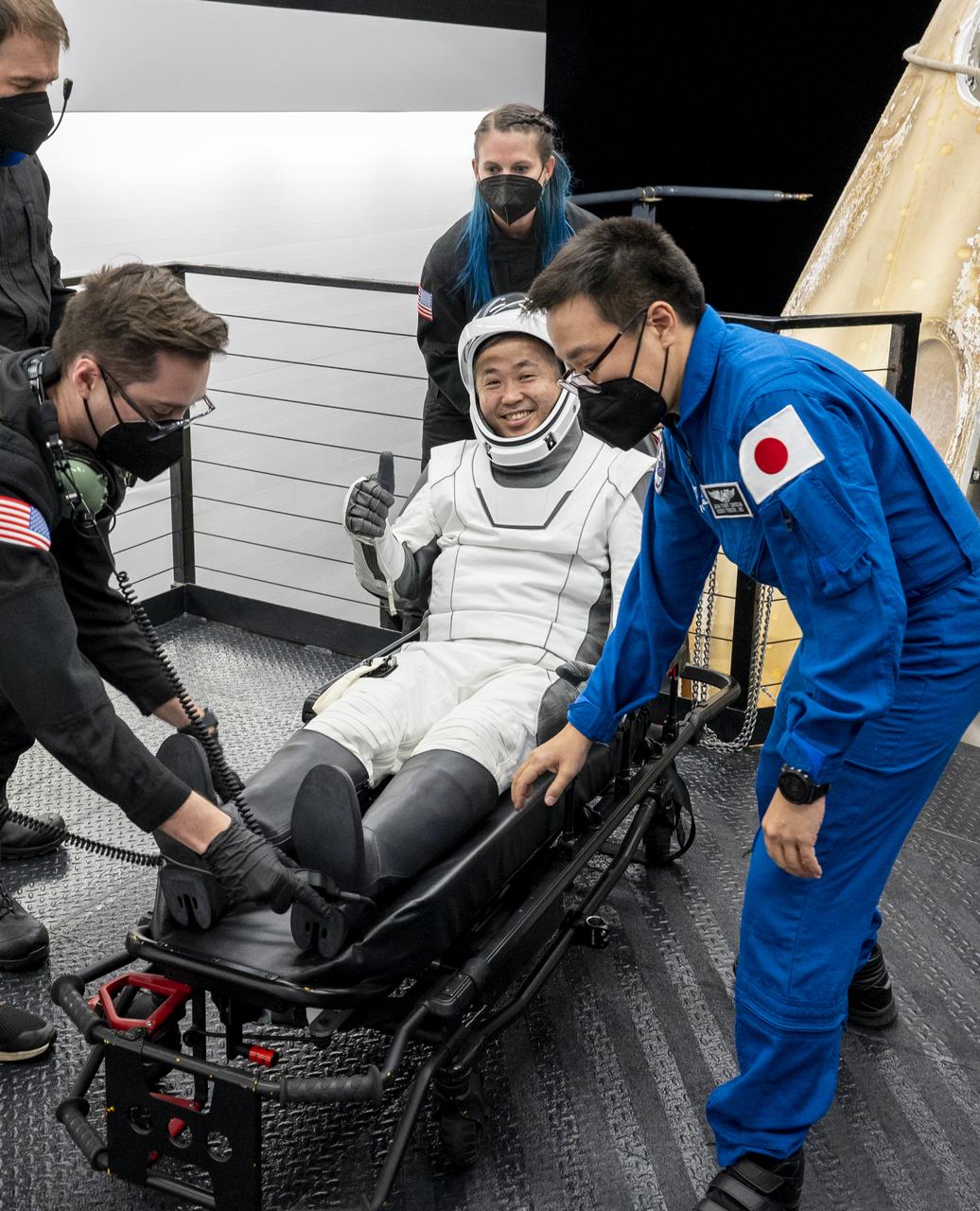
Japan Aerospace Exploration Agency (JAXA) astronaut Koichi Wakata gives a thumbs up after being helped out of the SpaceX Dragon Endurance spacecraft onboard the SpaceX recovery ship Shannon shortly after he, along with NASA astronauts Nicole Mann, Josh Cassada, and Roscosmos cosmonaut Anna Kikina, landed in the Gulf of Mexico off the coast of Tampa, Florida, Saturday, March 11, 2023. Mann, Cassada, Wakata, and Kikina are returning after 157 days in space as part of Expedition 68 aboard the International Space Station. Photo Credit: (NASA/Keegan Barber).
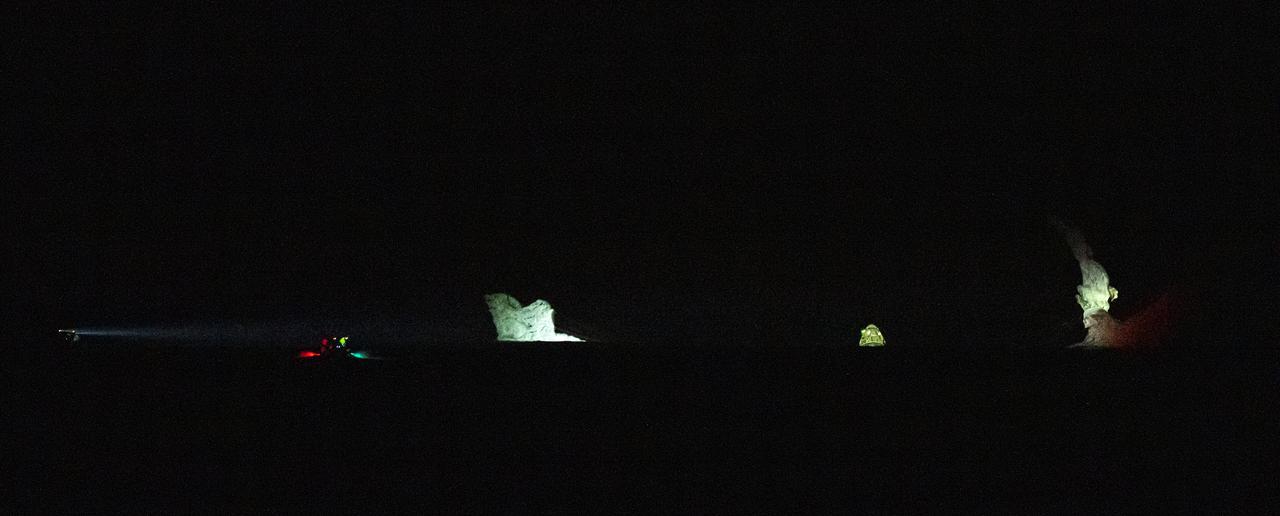
The SpaceX Dragon Endurance spacecraft is seen as it lands with NASA astronauts Nicole Mann and Josh Cassada, Japan Aerospace Exploration Agency (JAXA) astronaut Koichi Wakata, and Roscosmos cosmonaut Anna Kikina onboard in the Gulf of Mexico off the coast of Tampa, Florida, Saturday, March 11, 2023. Mann, Cassada, Wakata, and Kikina are returning after 157 days in space as part of Expedition 68 aboard the International Space Station. Photo Credit: (NASA/Keegan Barber).
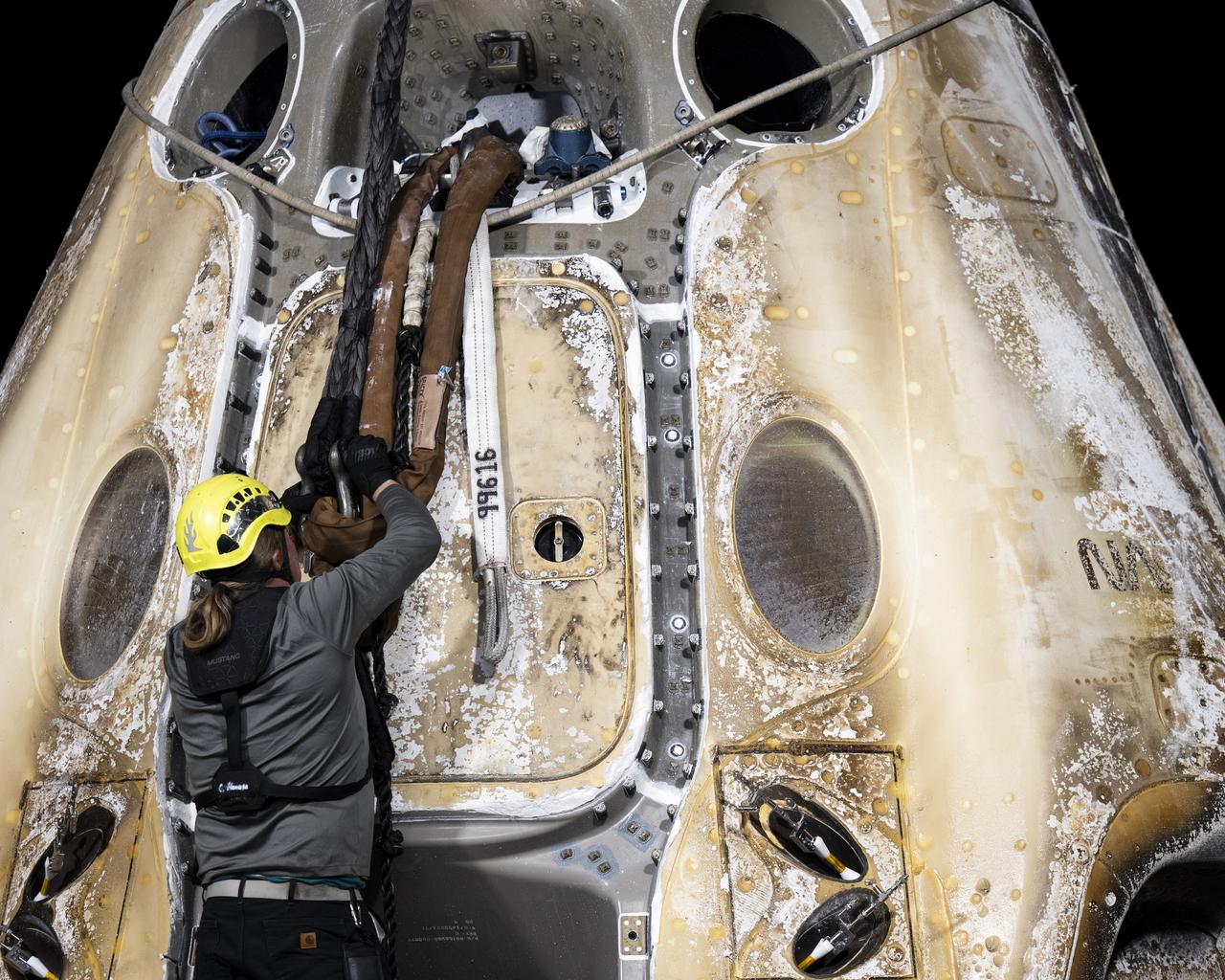
Support teams onboard the SpaceX recovery ship Shannon work around the SpaceX Dragon Endurance spacecraft shortly after it landed with with NASA astronauts Nicole Mann and Josh Cassada, Japan Aerospace Exploration Agency (JAXA) astronaut Koichi Wakata, and Roscosmos cosmonaut Anna Kikina onboard in the Gulf of Mexico off the coast of Tampa, Florida, Saturday, March 11, 2023. Mann, Cassada, Wakata, and Kikina are returning after 157 days in space as part of Expedition 68 aboard the International Space Station. Photo Credit: (NASA/Keegan Barber).
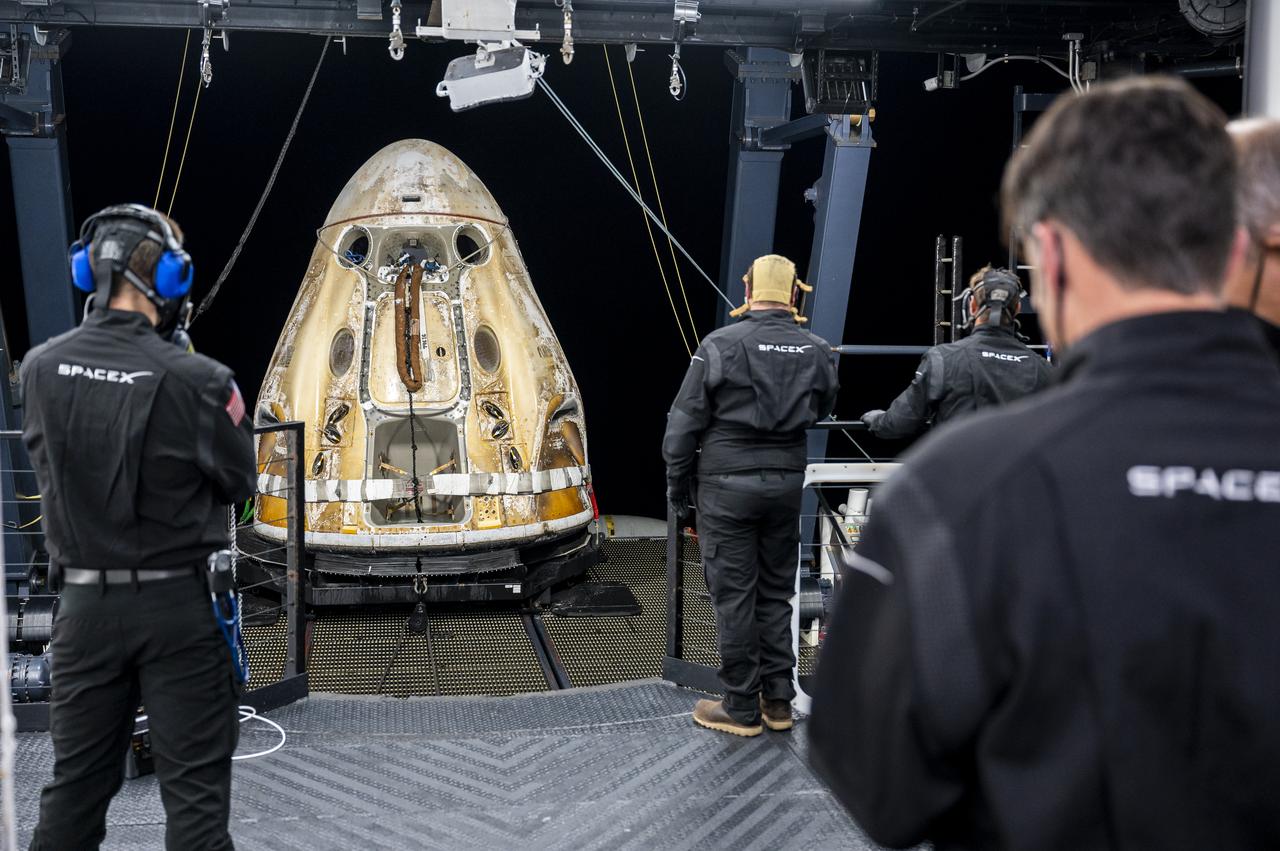
Support teams onboard the SpaceX recovery ship Shannon work around the SpaceX Dragon Endurance spacecraft shortly after it landed with with NASA astronauts Nicole Mann and Josh Cassada, Japan Aerospace Exploration Agency (JAXA) astronaut Koichi Wakata, and Roscosmos cosmonaut Anna Kikina onboard in the Gulf of Mexico off the coast of Tampa, Florida, Saturday, March 11, 2023. Mann, Cassada, Wakata, and Kikina are returning after 157 days in space as part of Expedition 68 aboard the International Space Station. Photo Credit: (NASA/Keegan Barber).
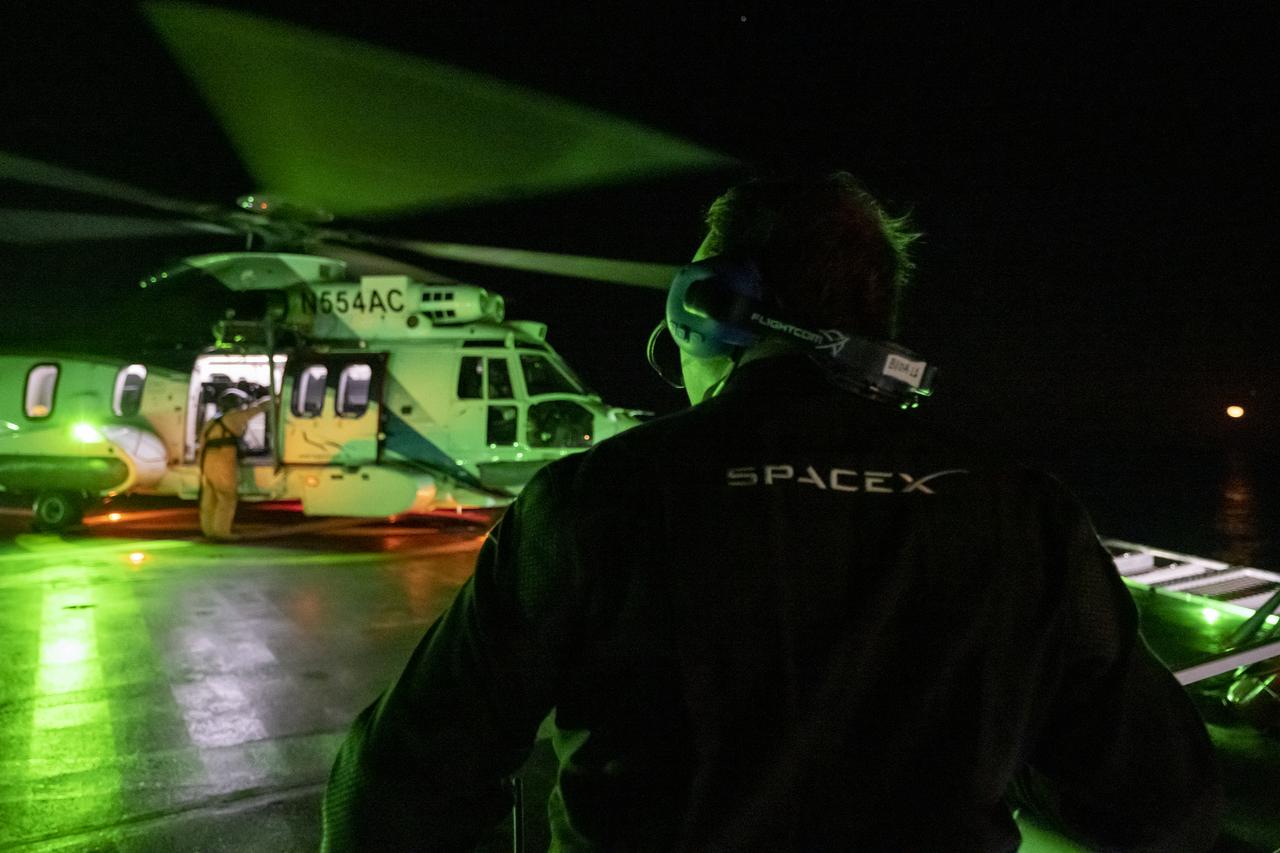
NASA Astronaut Josh Cassada is helped onto a helicopter onboard the SpaceX recovery ship Shannon shortly after he, along with NASA astronaut Nicole Mann, Roscosmos cosmonaut Anna Kikina, and Japan Aerospace Exploration Agency (JAXA) astronaut Koichi Wakata, landed while onboard SpaceX Dragon Endeavor spacecraft in the Gulf of Mexico off the coast of Tampa, Florida, Saturday, March 11, 2023. Mann, Cassada, Wakata, and Kikina are returning after 157 days in space as part of Expedition 68 aboard the International Space Station. Photo Credit: (NASA/Keegan Barber).
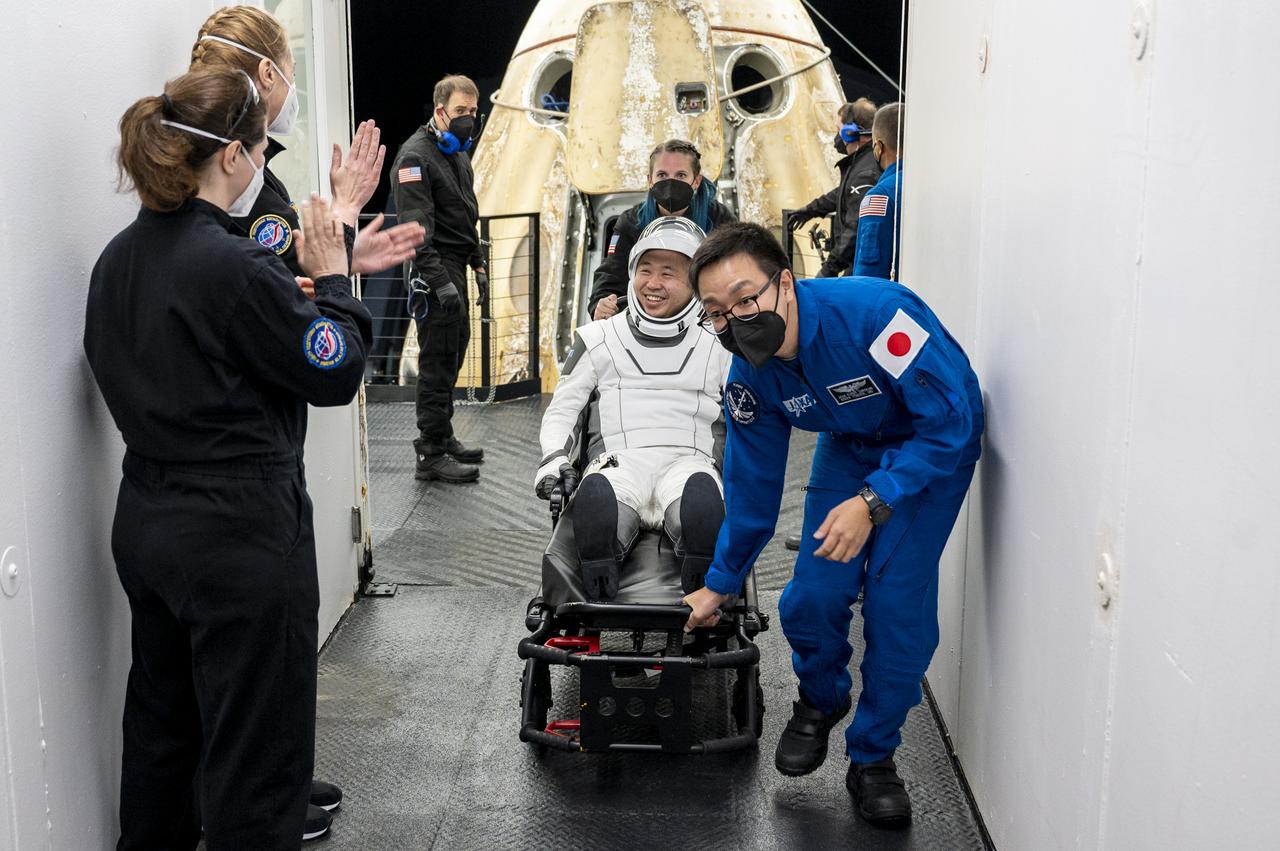
Japan Aerospace Exploration Agency (JAXA) astronaut Koichi Wakata is seen after being helped out of the SpaceX Dragon Endurance spacecraft onboard the SpaceX recovery ship Shannon shortly after he, along with NASA astronauts Nicole Mann, Josh Cassada, and Roscosmos cosmonaut Anna Kikina, landed in the Gulf of Mexico off the coast of Tampa, Florida, Saturday, March 11, 2023. Mann, Cassada, Wakata, and Kikina are returning after 157 days in space as part of Expedition 68 aboard the International Space Station. Photo Credit: (NASA/Keegan Barber).
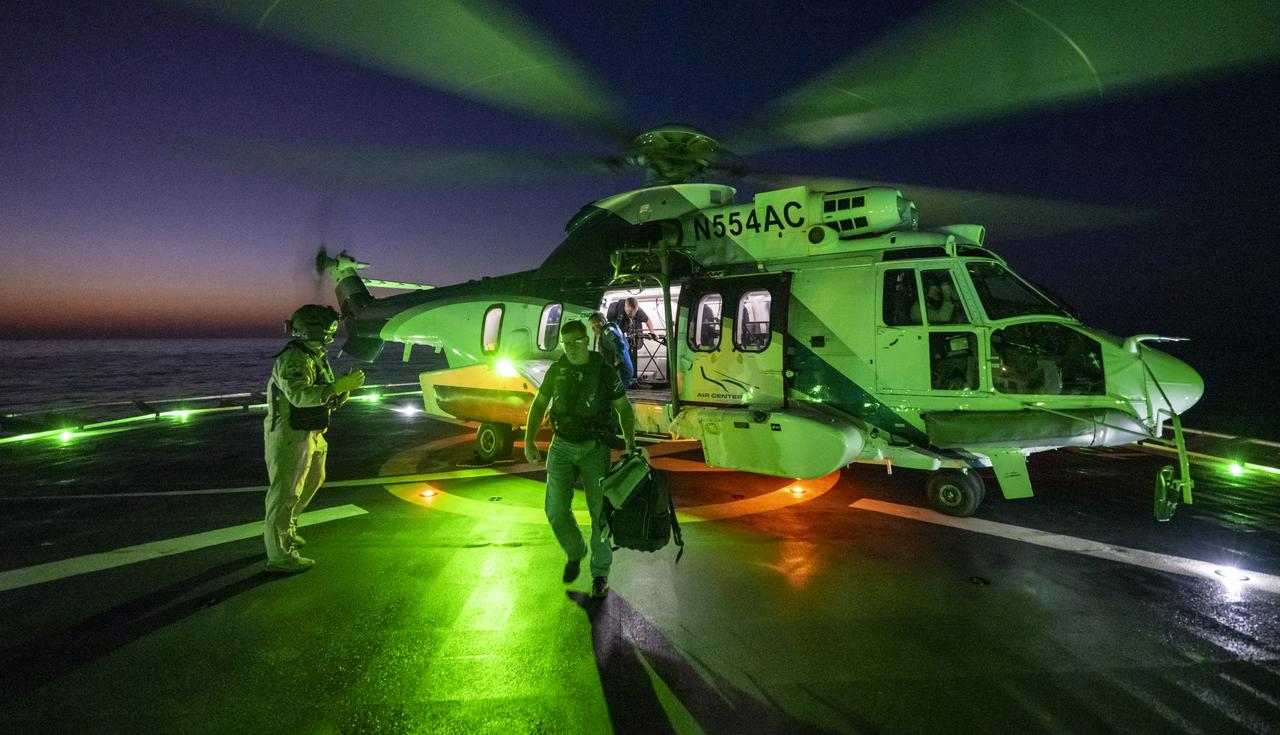
Support teams arrive via helicopter to the SpaceX recovery ship Shannon to prepare for the landing of the SpaceX Dragon Endurance spacecraft with NASA astronauts Nicole Mann and Josh Cassada, Japan Aerospace Exploration Agency (JAXA) astronaut Koichi Wakata, and Roscosmos cosmonaut Anna Kikina onboard in the Gulf of Mexico off the coast of Tampa, Florida, Saturday, March 11, 2023. Mann, Cassada, Wakata, and Kikina are returning after 157 days in space as part of Expedition 68 aboard the International Space Station. Photo Credit: (NASA/Keegan Barber).
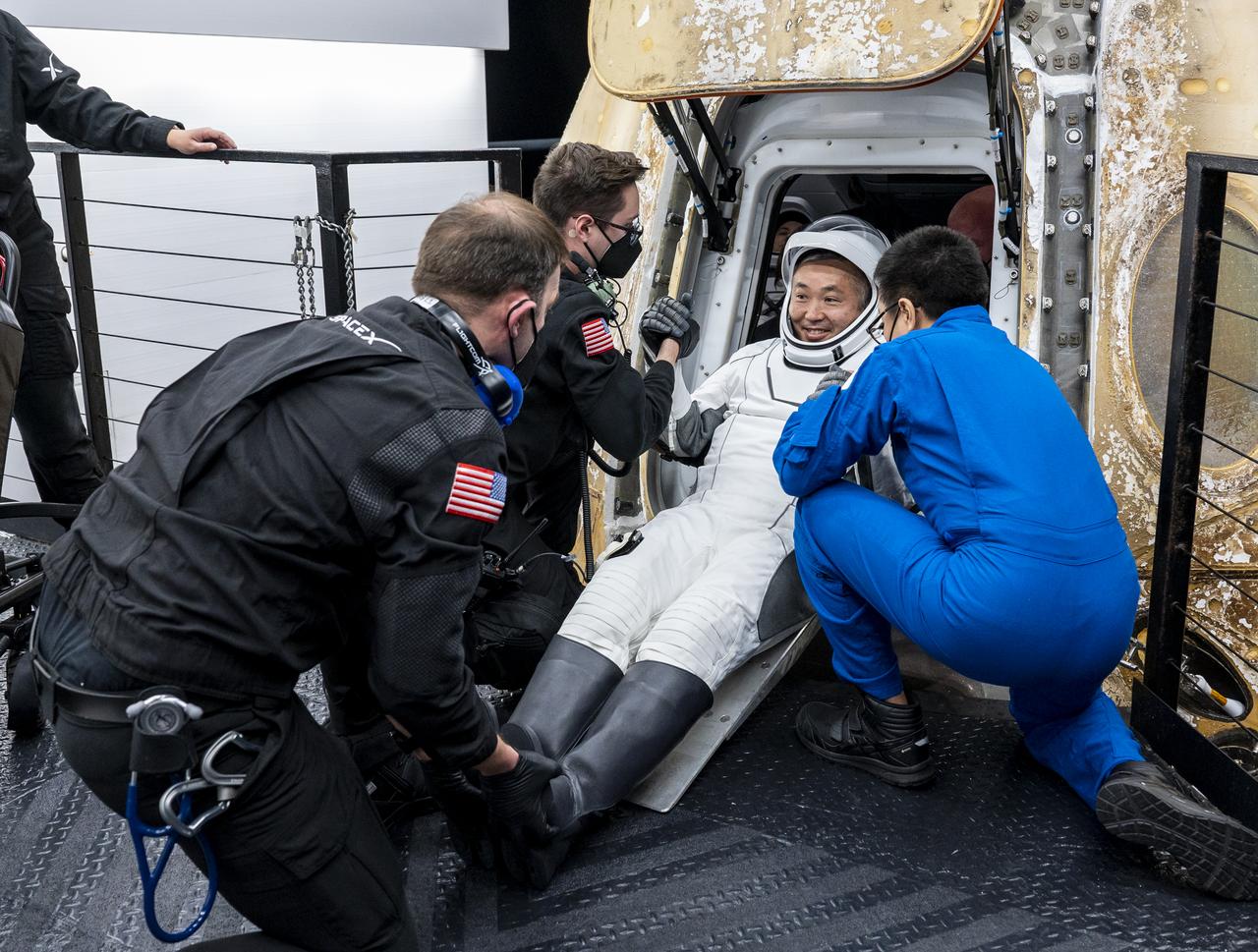
Japan Aerospace Exploration Agency (JAXA) astronaut Koichi Wakata is helped out of the SpaceX Dragon Endurance spacecraft onboard the SpaceX recovery ship Shannon shortly after he, along with NASA astronauts Nicole Mann, Josh Cassada, and Roscosmos cosmonaut Anna Kikina, landed in the Gulf of Mexico off the coast of Tampa, Florida, Saturday, March 11, 2023. Mann, Cassada, Wakata, and Kikina are returning after 157 days in space as part of Expedition 68 aboard the International Space Station. Photo Credit: (NASA/Keegan Barber).
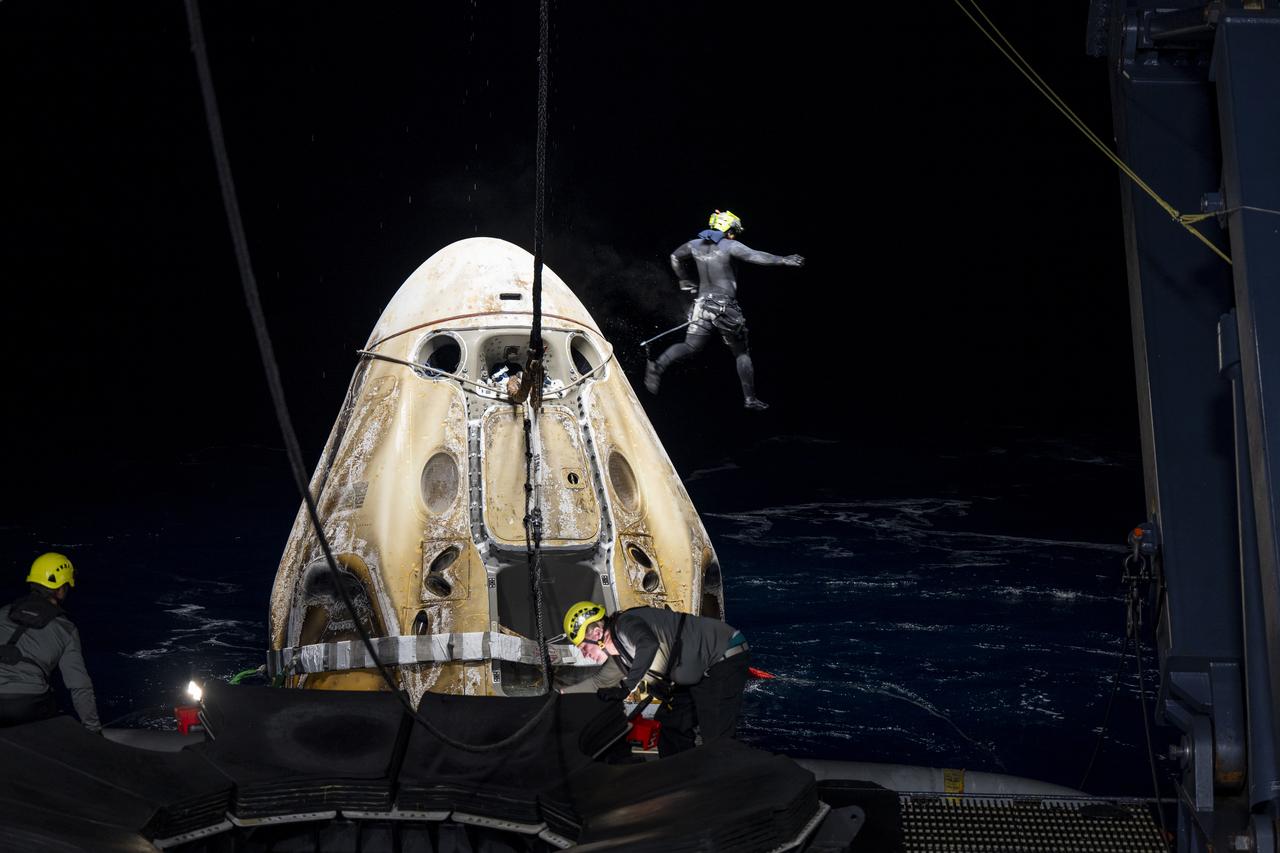
Support teams work around the SpaceX Dragon Endurance spacecraft shortly after it landed with with NASA astronauts Nicole Mann and Josh Cassada, Japan Aerospace Exploration Agency (JAXA) astronaut Koichi Wakata, and Roscosmos cosmonaut Anna Kikina onboard in the Gulf of Mexico off the coast of Tampa, Florida, Saturday, March 11, 2023. Mann, Cassada, Wakata, and Kikina are returning after 157 days in space as part of Expedition 68 aboard the International Space Station. Photo Credit: (NASA/Keegan Barber).
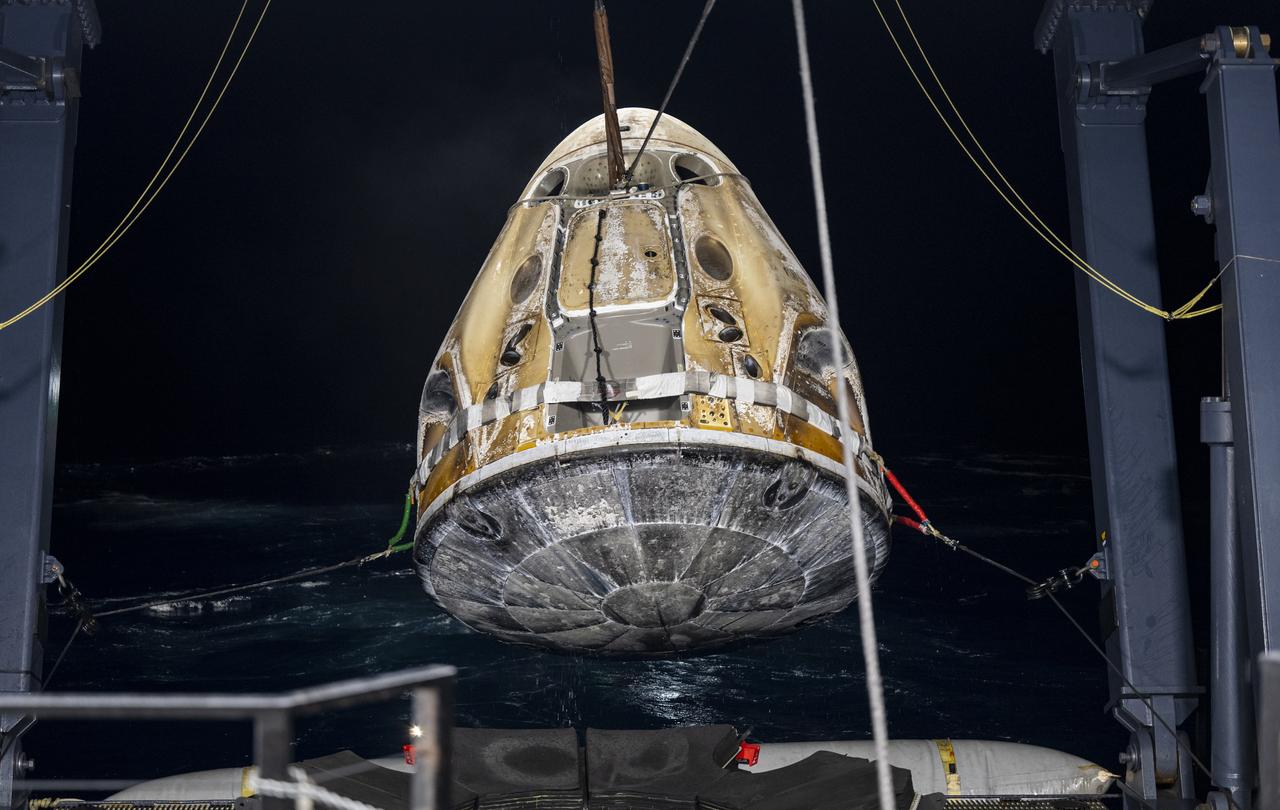
Support teams raise the SpaceX Dragon Endurance spacecraft onto the SpaceX recovery ship Shannon shortly after it landed with with NASA astronauts Nicole Mann and Josh Cassada, Japan Aerospace Exploration Agency (JAXA) astronaut Koichi Wakata, and Roscosmos cosmonaut Anna Kikina onboard in the Gulf of Mexico off the coast of Tampa, Florida, Saturday, March 11, 2023. Mann, Cassada, Wakata, and Kikina are returning after 157 days in space as part of Expedition 68 aboard the International Space Station. Photo Credit: (NASA/Keegan Barber).
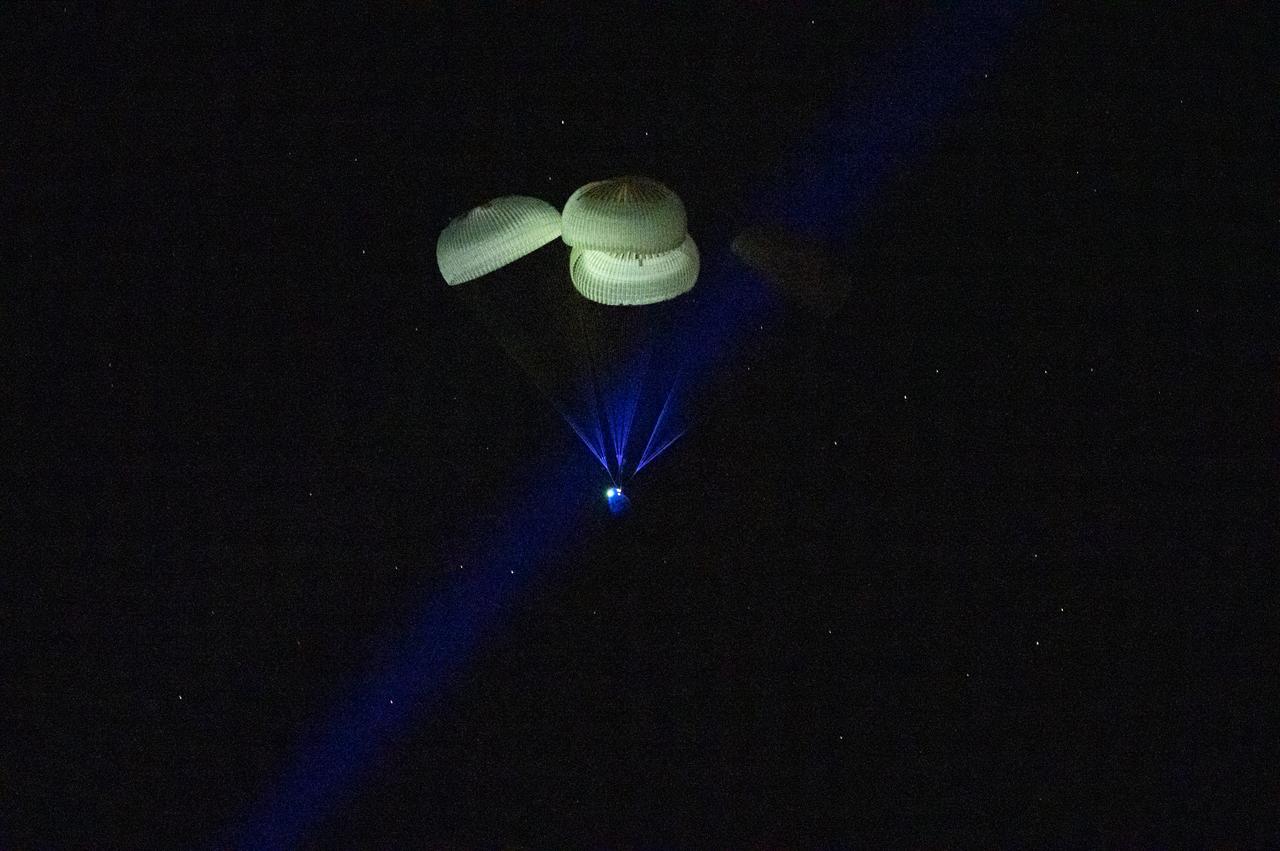
The SpaceX Dragon Endurance spacecraft is seen as it lands with NASA astronauts Nicole Mann and Josh Cassada, Japan Aerospace Exploration Agency (JAXA) astronaut Koichi Wakata, and Roscosmos cosmonaut Anna Kikina onboard in the Gulf of Mexico off the coast of Tampa, Florida, Saturday, March 11, 2023. Mann, Cassada, Wakata, and Kikina are returning after 157 days in space as part of Expedition 68 aboard the International Space Station. Photo Credit: (NASA/Keegan Barber).
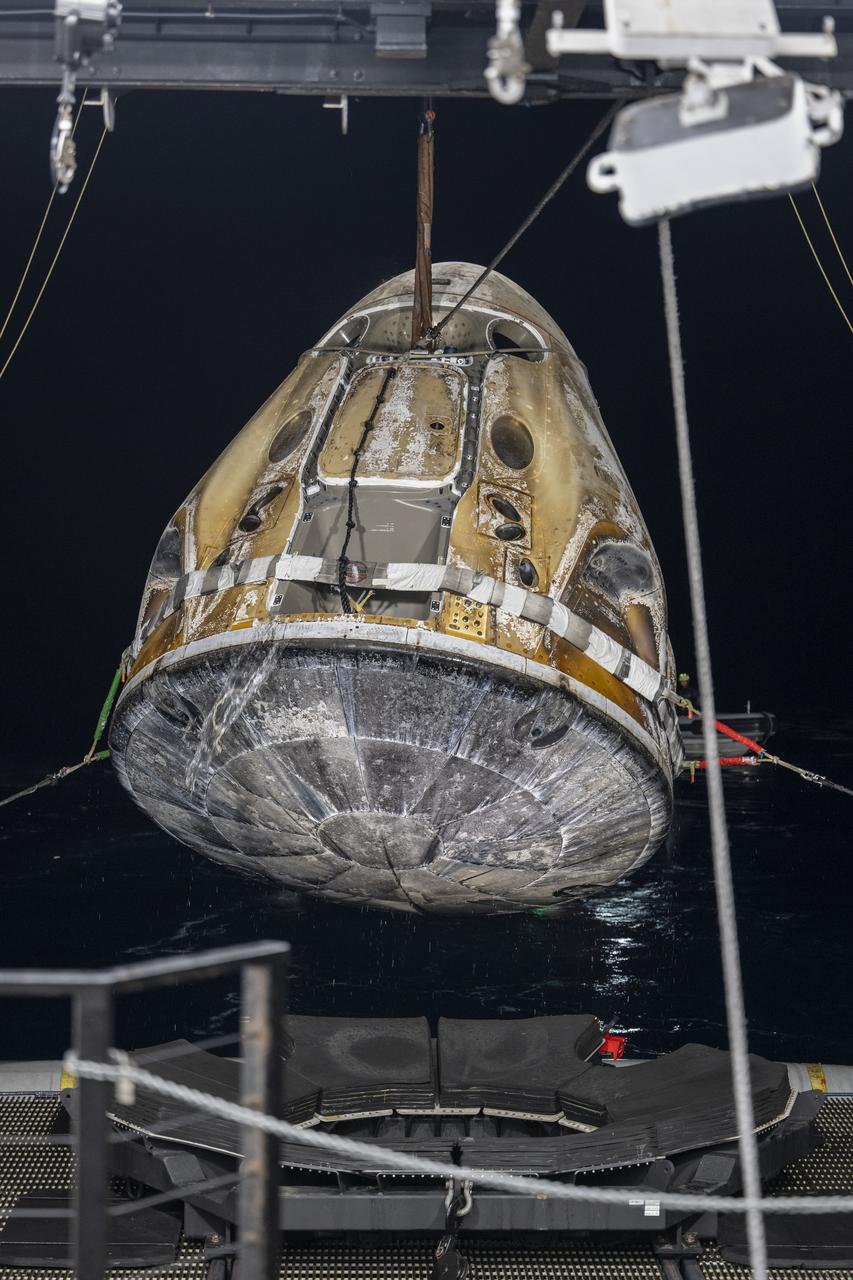
Support teams raise the SpaceX Dragon Endurance spacecraft onto the SpaceX recovery ship Shannon shortly after it landed with with NASA astronauts Nicole Mann and Josh Cassada, Japan Aerospace Exploration Agency (JAXA) astronaut Koichi Wakata, and Roscosmos cosmonaut Anna Kikina onboard in the Gulf of Mexico off the coast of Tampa, Florida, Saturday, March 11, 2023. Mann, Cassada, Wakata, and Kikina are returning after 157 days in space as part of Expedition 68 aboard the International Space Station. Photo Credit: (NASA/Keegan Barber).
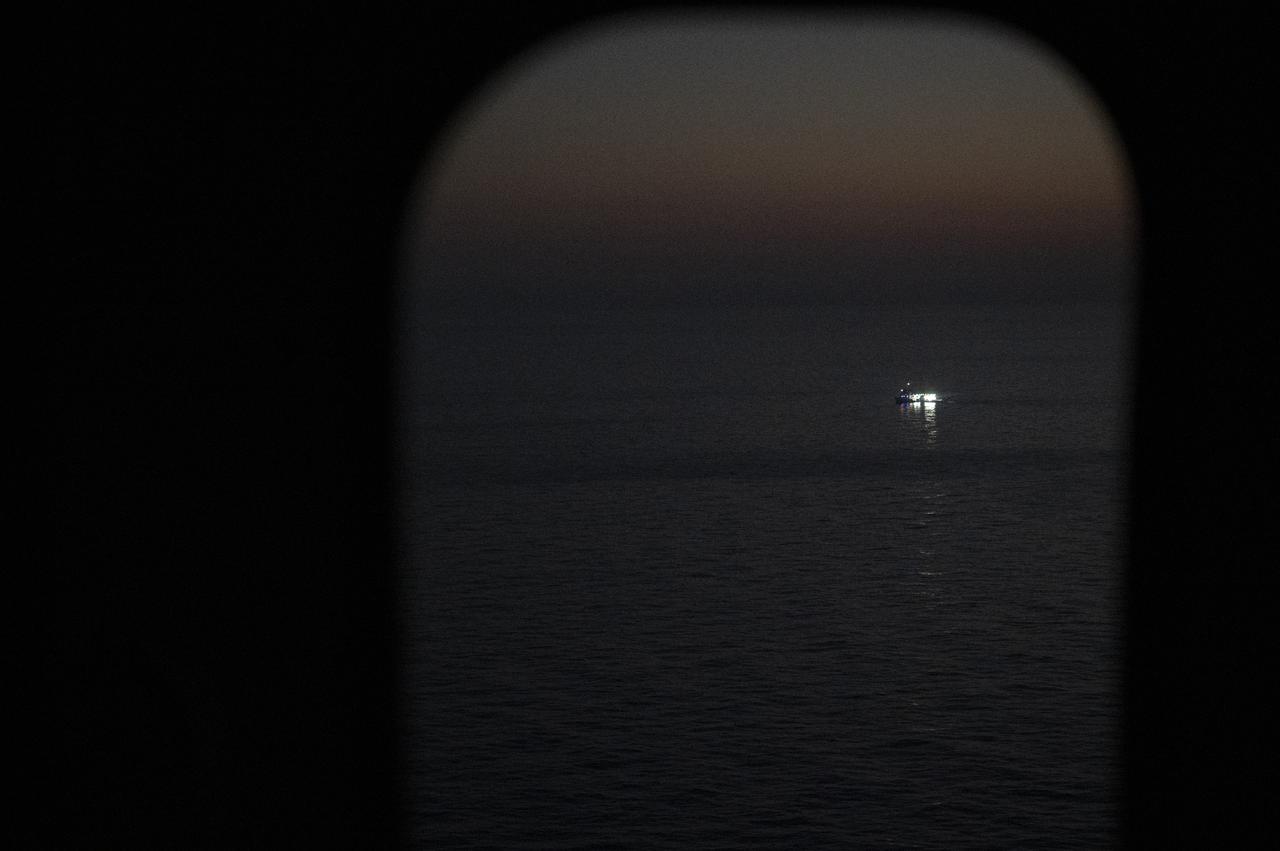
The SpaceX recovery ship Shannon is seen as support teams prepare for the landing of the SpaceX Dragon Endurance spacecraft with NASA astronauts Nicole Mann and Josh Cassada, Japan Aerospace Exploration Agency (JAXA) astronaut Koichi Wakata, and Roscosmos cosmonaut Anna Kikina onboard in the Gulf of Mexico off the coast of Tampa, Florida, Saturday, March 11, 2023. Mann, Cassada, Wakata, and Kikina are returning after 157 days in space as part of Expedition 68 aboard the International Space Station. Photo Credit: (NASA/Keegan Barber).
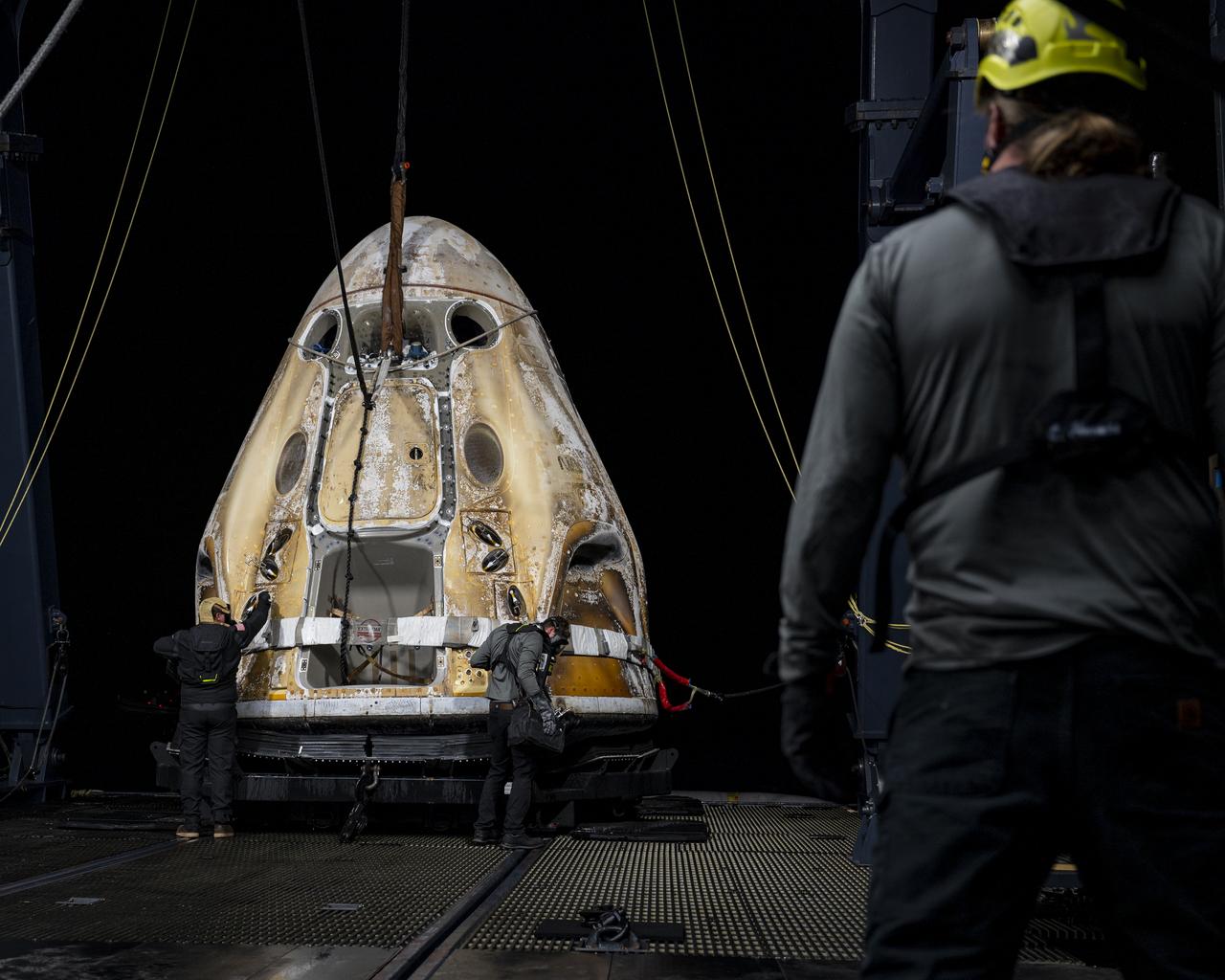
Support teams onboard the SpaceX recovery ship Shannon work around the SpaceX Dragon Endurance spacecraft shortly after it landed with with NASA astronauts Nicole Mann and Josh Cassada, Japan Aerospace Exploration Agency (JAXA) astronaut Koichi Wakata, and Roscosmos cosmonaut Anna Kikina onboard in the Gulf of Mexico off the coast of Tampa, Florida, Saturday, March 11, 2023. Mann, Cassada, Wakata, and Kikina are returning after 157 days in space as part of Expedition 68 aboard the International Space Station. Photo Credit: (NASA/Keegan Barber).

Japan Aerospace Exploration Agency (JAXA) astronaut Koichi Wakata is seen inside an elevator onboard the SpaceX recovery ship Shannon shortly after he, along with NASA astronauts Nicole Mann, Josh Cassada, and Roscosmos cosmonaut Anna Kikina, landed while onboard the SpaceX Dragon Endoevour spacecraft in the Gulf of Mexico off the coast of Tampa, Florida, Saturday, March 11, 2023. Mann, Cassada, Wakata, and Kikina are returning after 157 days in space as part of Expedition 68 aboard the International Space Station. Photo Credit: (NASA/Keegan Barber).
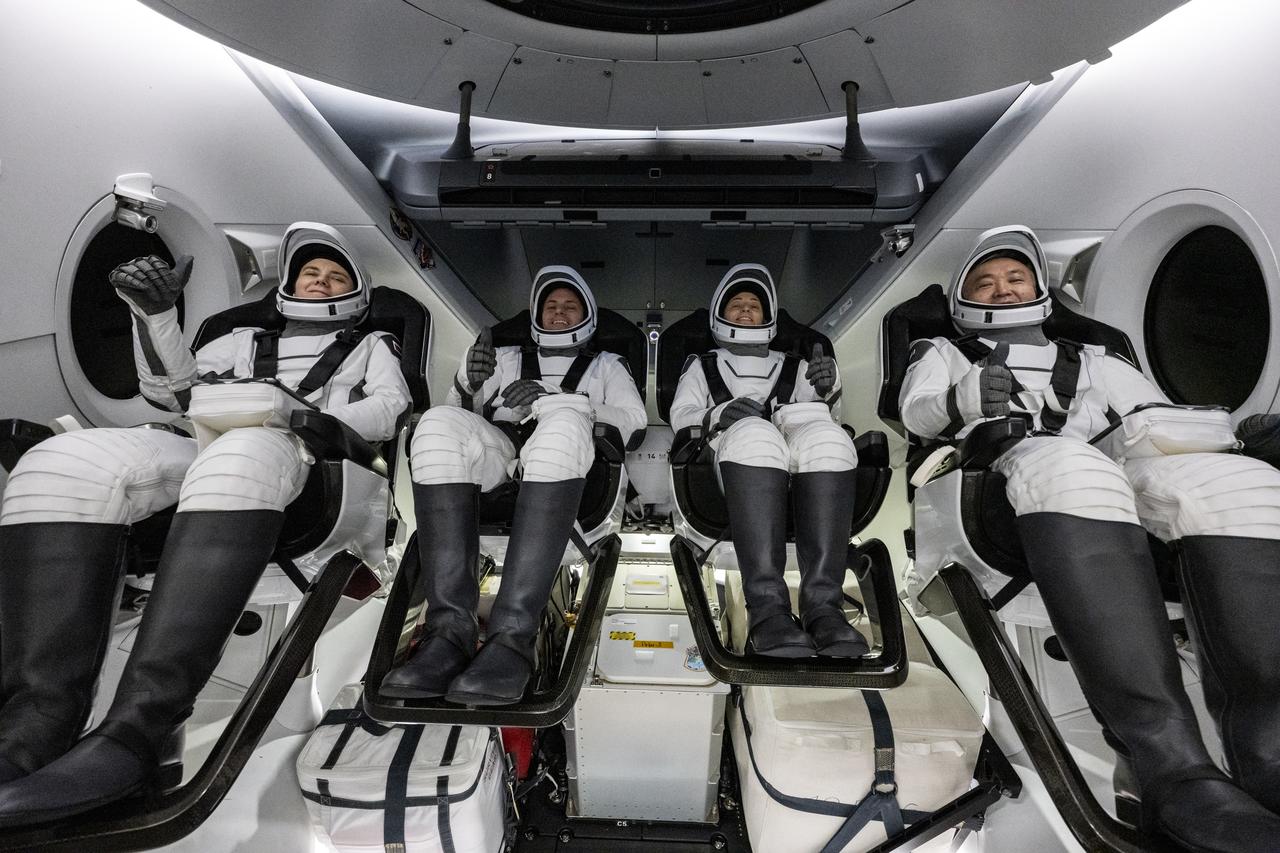
Roscosmos cosmonaut Anna Kikina, left, NASA astronauts Josh Cassada and Nicole Mann, and Japan Aerospace Exploration Agency (JAXA) astronaut Koichi Wakata, right, are seen inside the SpaceX Dragon Endurance spacecraft onboard the SpaceX recovery ship Shannon shortly after having landed in the Gulf of Mexico off the coast of Tampa, Florida, Saturday, March 11, 2023. Mann, Cassada, Wakata, and Kikina are returning after 157 days in space as part of Expedition 68 aboard the International Space Station. Photo Credit: (NASA/Keegan Barber).
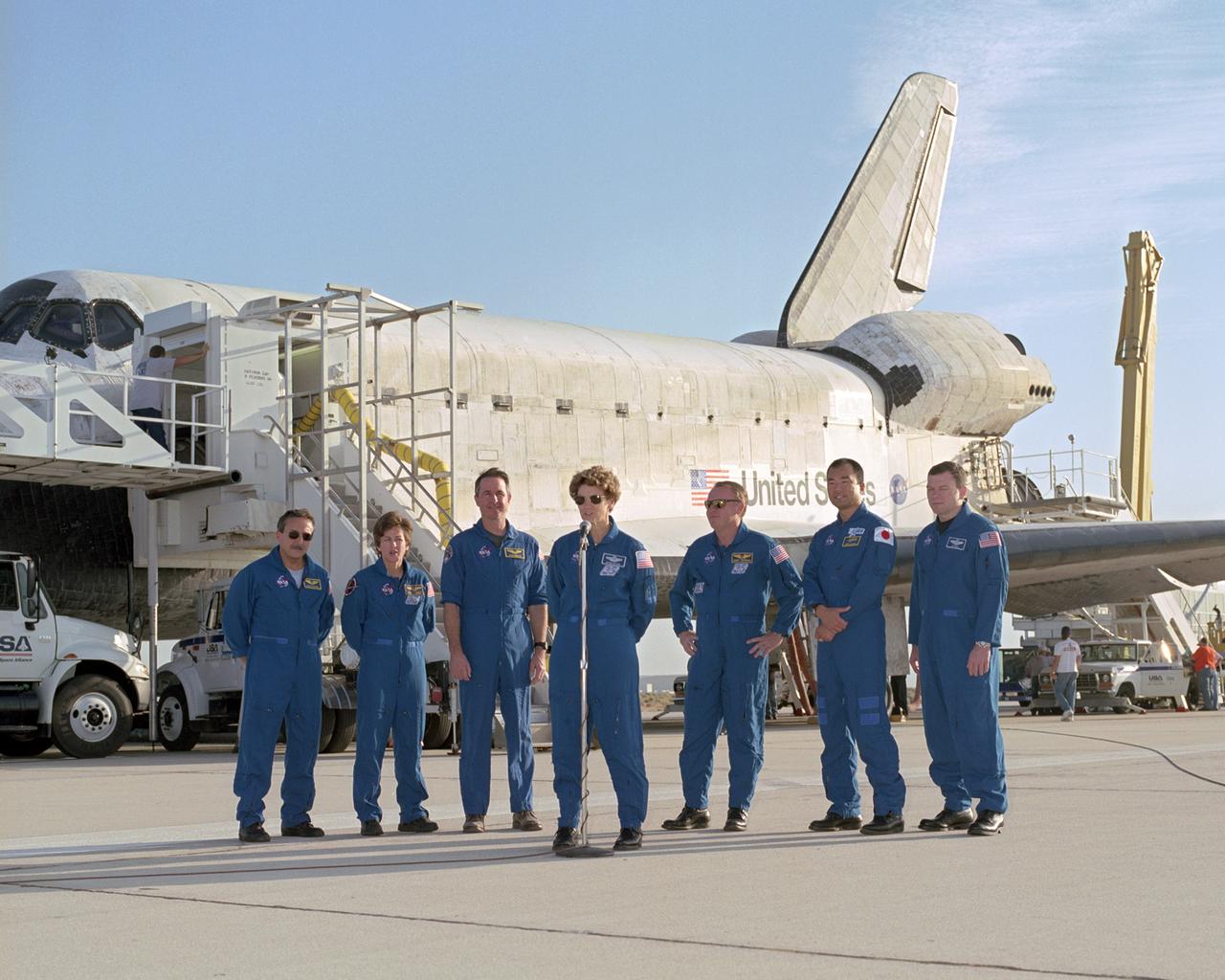
The crew of Space Shuttle mission STS-114 gathered for a press brief following landing at Edwards Air Force Base, California, 5:11 am, August 9, 2005. Left to right: Mission Specialists Charles Camarda, Wendy Lawrence and Stephen Robinson, Commander Eileen Collins at microphone, Mission Specialists Andrew Thomas and Soichi Noguchi, and Pilot James Kelly. Space Shuttle Discovery landed safely at NASA's Dryden Flight Research Center at Edwards Air Force Base in California at 5:11:22 a.m. PDT this morning, following the very successful 14-day STS-114 return to flight mission. During their two weeks in space, Commander Eileen Collins and her six crewmates tested out new safety procedures and delivered supplies and equipment the International Space Station. Discovery spent two weeks in space, where the crew demonstrated new methods to inspect and repair the Shuttle in orbit. The crew also delivered supplies, outfitted and performed maintenance on the International Space Station. A number of these tasks were conducted during three spacewalks. In an unprecedented event, spacewalkers were called upon to remove protruding gap fillers from the heat shield on Discovery's underbelly. In other spacewalk activities, astronauts installed an external platform onto the Station's Quest Airlock and replaced one of the orbital outpost's Control Moment Gyroscopes. Inside the Station, the STS-114 crew conducted joint operations with the Expedition 11 crew. They unloaded fresh supplies from the Shuttle and the Raffaello Multi-Purpose Logistics Module. Before Discovery undocked, the crews filled Raffeallo with unneeded items and returned to Shuttle payload bay. Discovery launched on July 26 and spent almost 14 days on orbit.
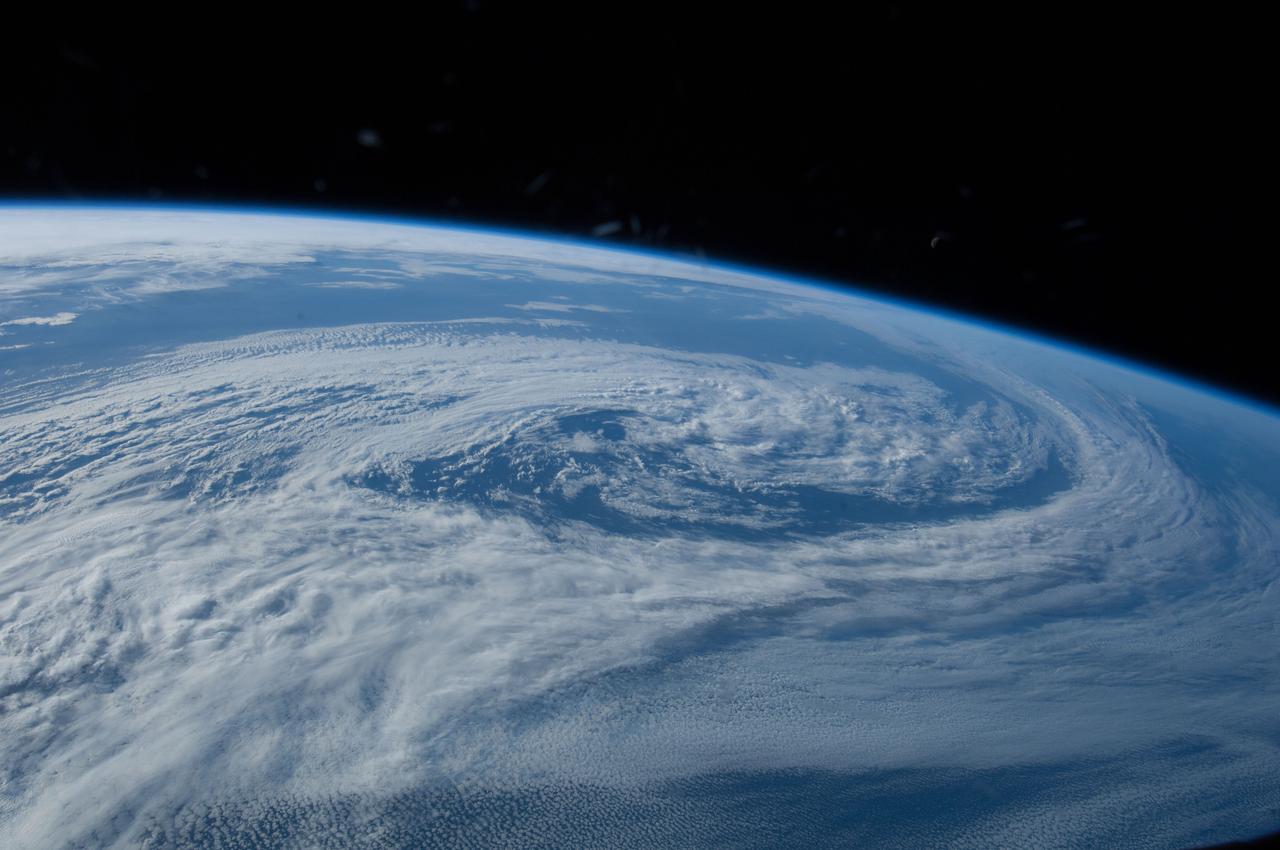
ISS040-E-007623 (5 June 2014) --- This cyclone spinning around in the southern Pacific was captured with a digital still camera by one of the Expedition 40 crew members aboard the International Space Station on June 5. Located at 51 degrees south latitude and 151.3 degrees west longitude, it is apparently not a major thrreat to land.
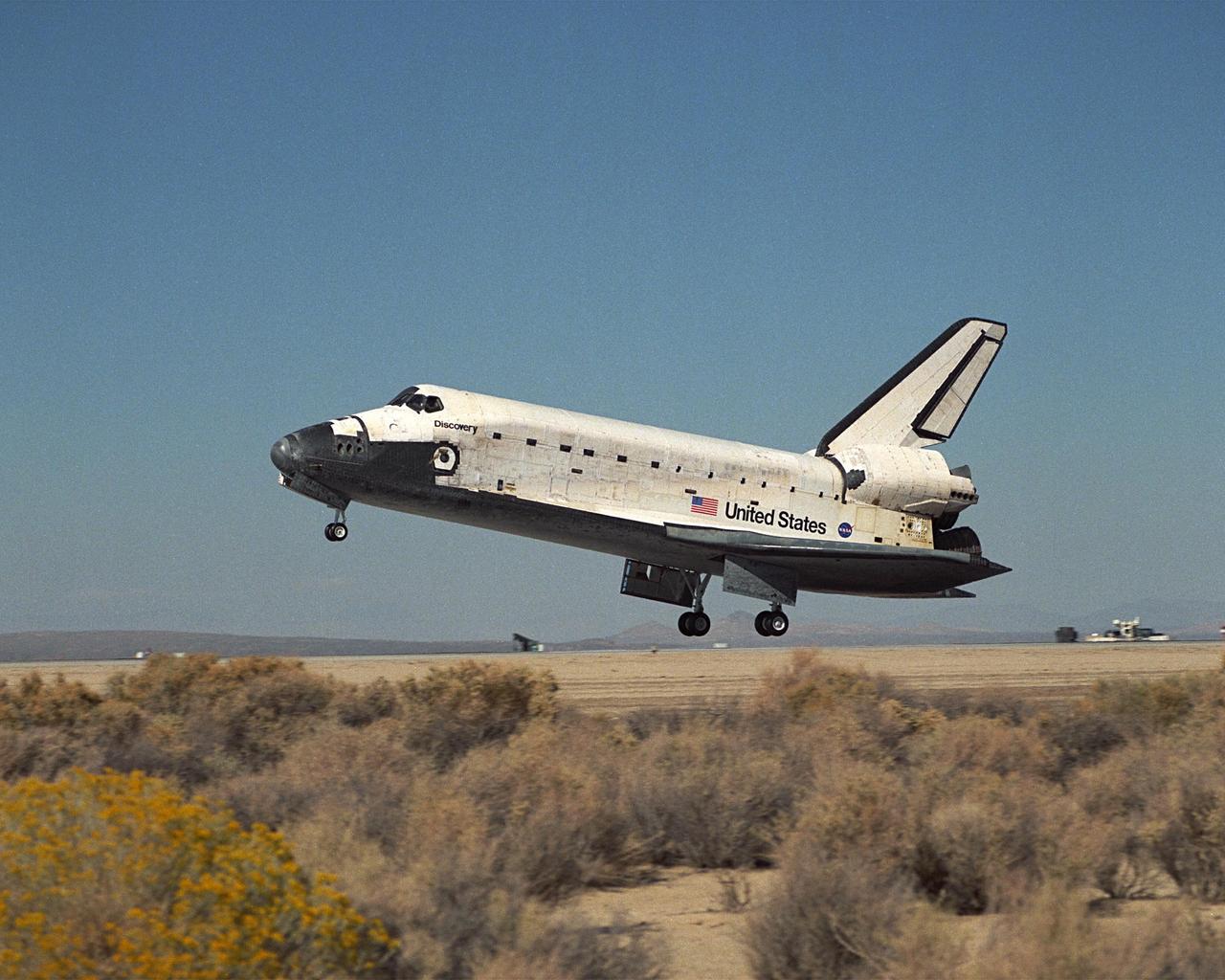
Viewed from the side, orbiter Discovery, with its seven-member crew, is about to touch down on the landing strip at Edwards Air Force Base, Calif., after an 11-day mission to the International Space Station. The orbiter’s main landing gear touched down on EAFB runway 22 at 5 p.m. With the aid of its drag chute, Discovery came to a complete stop at 5:01 p.m. At the conclusion of mission STS-92, Discovery and crew had traveled about 5.3 million statute miles. Following vehicle safing and preliminary offloading efforts, workers will begin preparations for Discovery’s transcontinental ferry flight back to KSC on the back of NASA’s modified Boeing 747
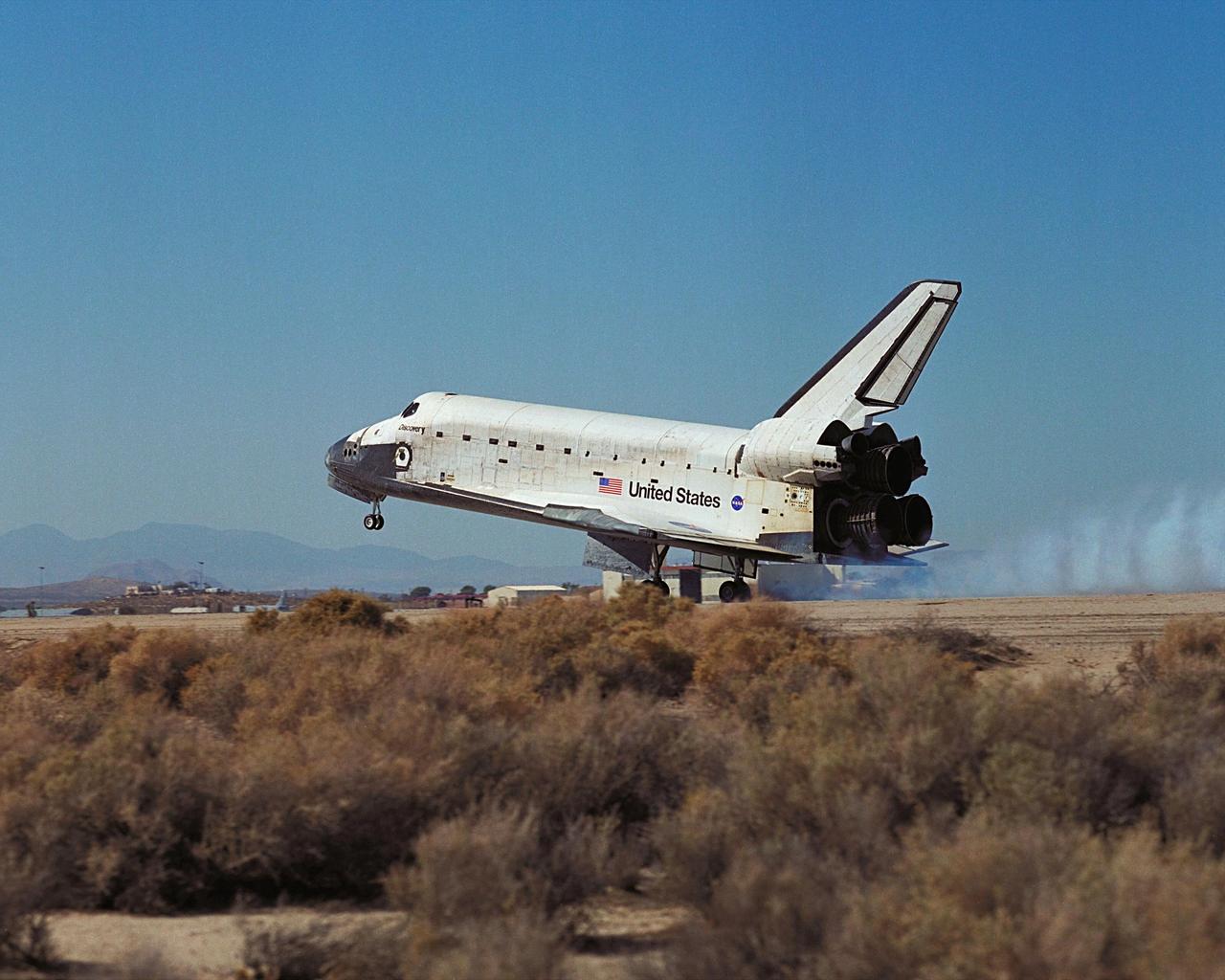
Viewed from the side, orbiter Discovery, with its seven-member crew, touches down on the landing strip at Edwards Air Force Base, Calif., after an 11-day mission to the International Space Station. The orbiter’s main landing gear touched down on EAFB runway 22 at 5 p.m. With the aid of its drag chute, Discovery came to a complete stop at 5:01 p.m. At the conclusion of mission STS-92, Discovery and crew had traveled about 5.3 million statute miles. Following vehicle safing and preliminary offloading efforts, workers will begin preparations for Discovery’s transcontinental ferry flight back to KSC on the back of NASA’s modified Boeing 747
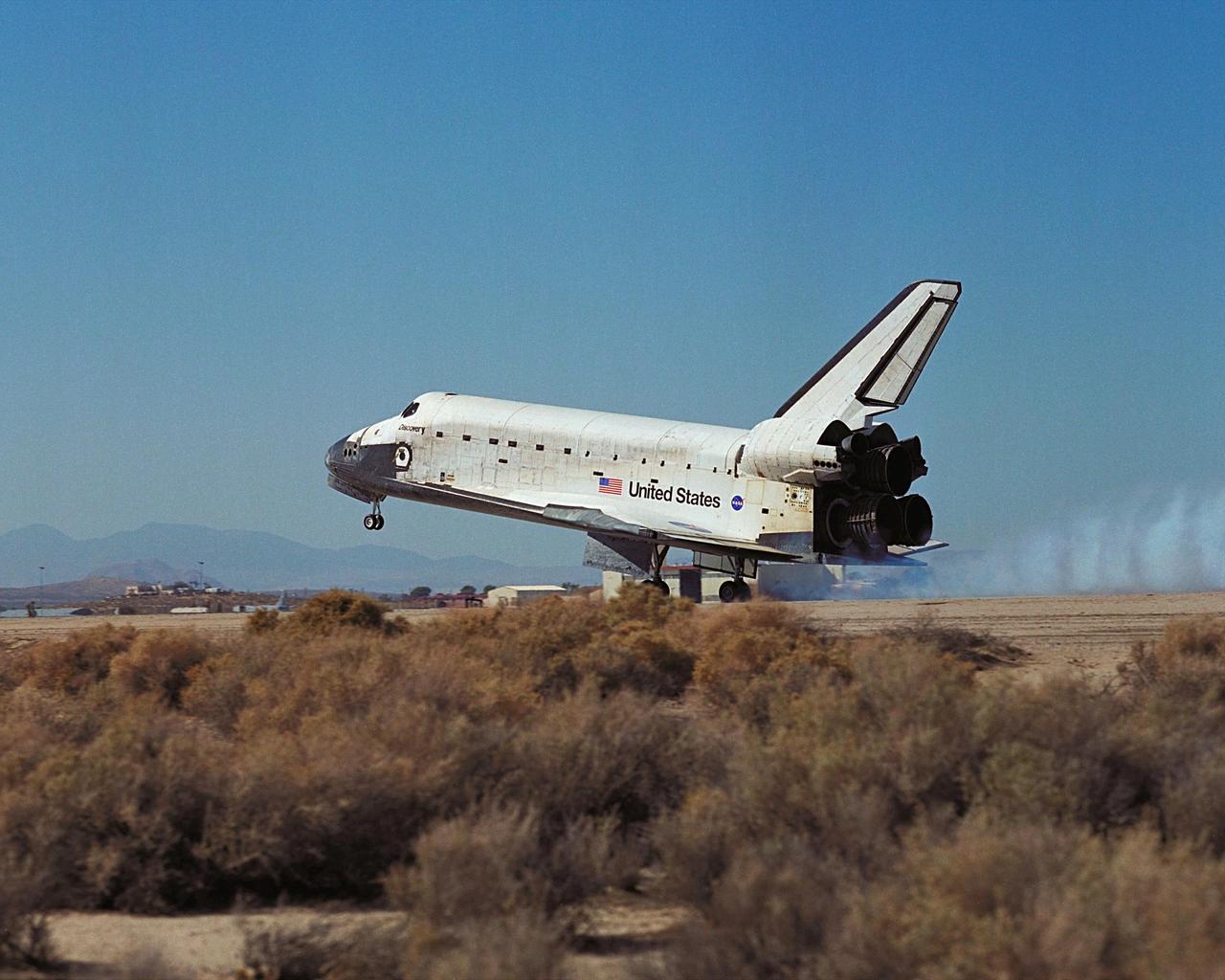
Viewed from the side, orbiter Discovery, with its seven-member crew, touches down on the landing strip at Edwards Air Force Base, Calif., after an 11-day mission to the International Space Station. The orbiter’s main landing gear touched down on EAFB runway 22 at 5 p.m. With the aid of its drag chute, Discovery came to a complete stop at 5:01 p.m. At the conclusion of mission STS-92, Discovery and crew had traveled about 5.3 million statute miles. Following vehicle safing and preliminary offloading efforts, workers will begin preparations for Discovery’s transcontinental ferry flight back to KSC on the back of NASA’s modified Boeing 747
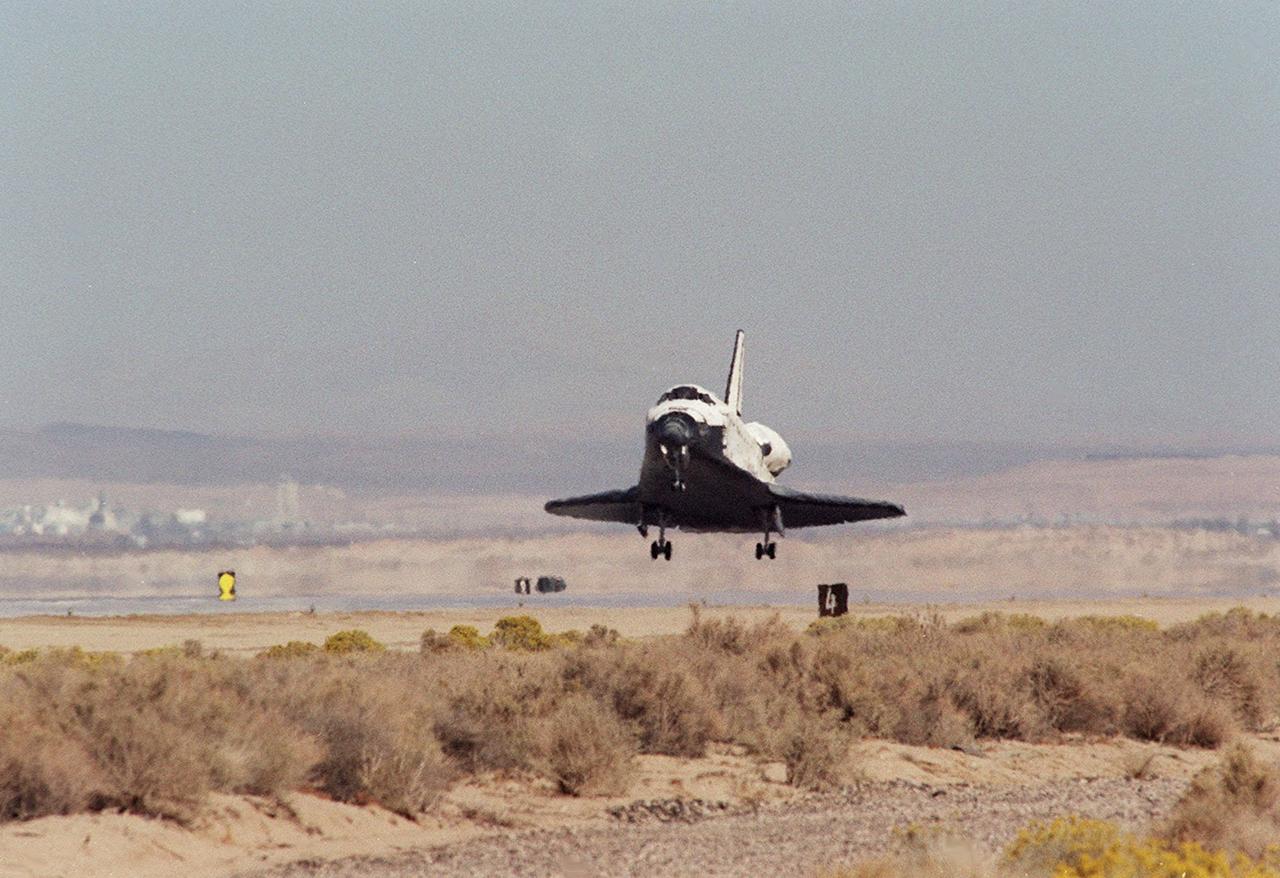
Orbiter Discovery, with its seven-member crew, approaches the landing strip at Edwards Air Force Base, Calif., after an 11-day mission to the International Space Station. The orbiter’s main landing gear touched down on EAFB runway 22 at 5 p.m. With the aid of its drag chute, Discovery came to a complete stop at 5:01 p.m. At the conclusion of mission STS-92, Discovery and crew had traveled about 5.3 million statute miles. Following vehicle safing and preliminary offloading efforts, workers will begin preparations for Discovery’s transcontinental ferry flight back to KSC on the back of NASA’s modified Boeing 747
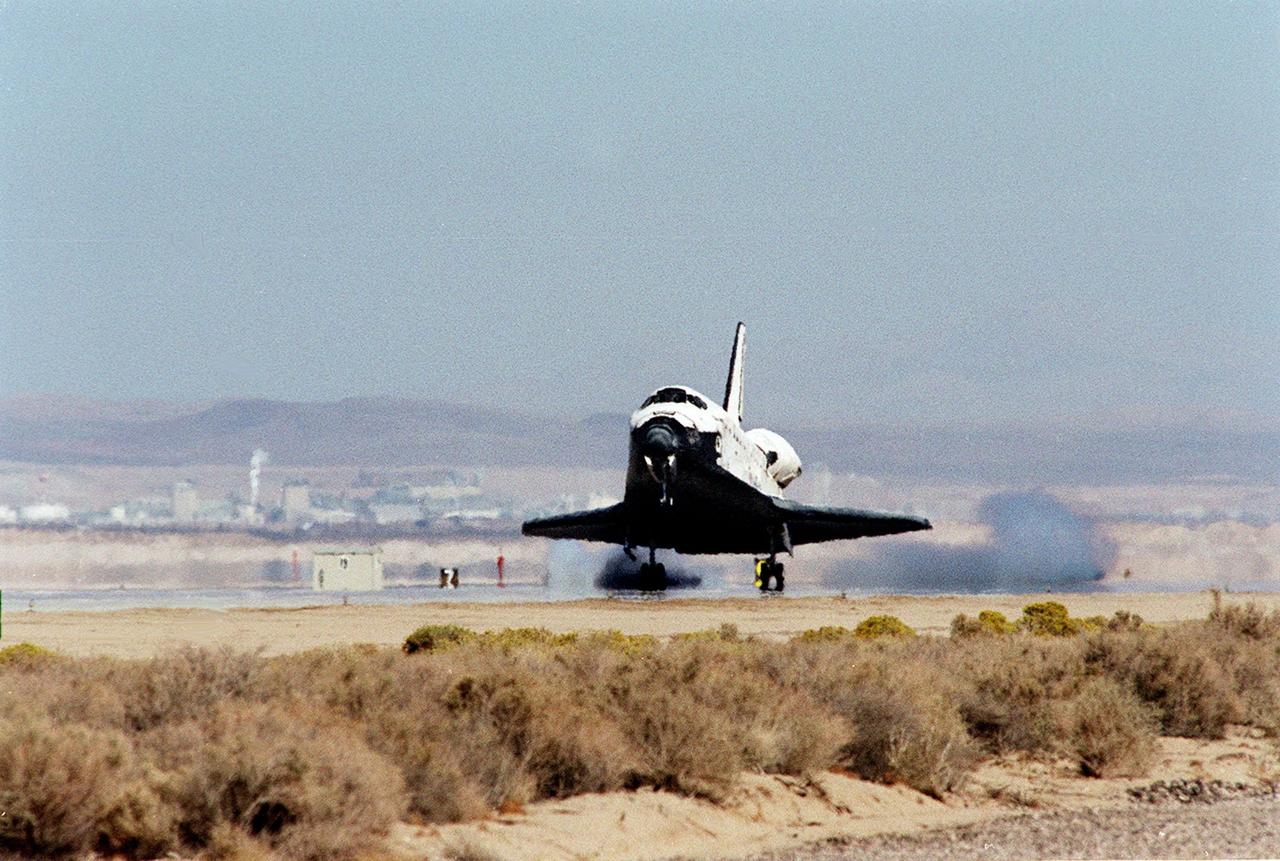
Orbiter Discovery, with its seven-member crew, touches down on the landing strip at Edwards Air Force Base, Calif., after an 11-day mission to the International Space Station. The orbiter’s main landing gear touched down on EAFB runway 22 at 5 p.m. With the aid of its drag chute, Discovery came to a complete stop at 5:01 p.m. At the conclusion of mission STS-92, Discovery and crew had traveled about 5.3 million statute miles. Following vehicle safing and preliminary offloading efforts, workers will begin preparations for Discovery’s transcontinental ferry flight back to KSC on the back of NASA’s modified Boeing 747
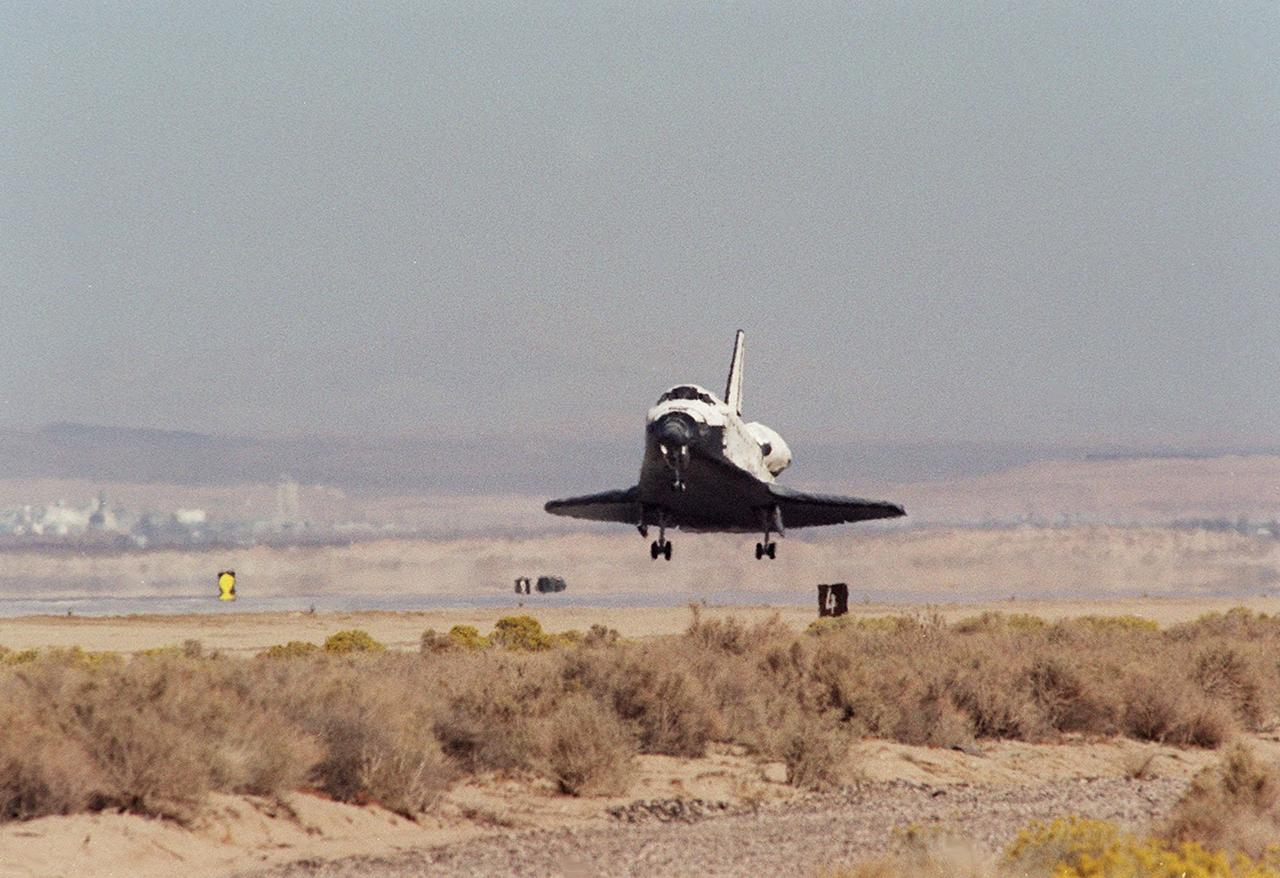
Orbiter Discovery, with its seven-member crew, approaches the landing strip at Edwards Air Force Base, Calif., after an 11-day mission to the International Space Station. The orbiter’s main landing gear touched down on EAFB runway 22 at 5 p.m. With the aid of its drag chute, Discovery came to a complete stop at 5:01 p.m. At the conclusion of mission STS-92, Discovery and crew had traveled about 5.3 million statute miles. Following vehicle safing and preliminary offloading efforts, workers will begin preparations for Discovery’s transcontinental ferry flight back to KSC on the back of NASA’s modified Boeing 747
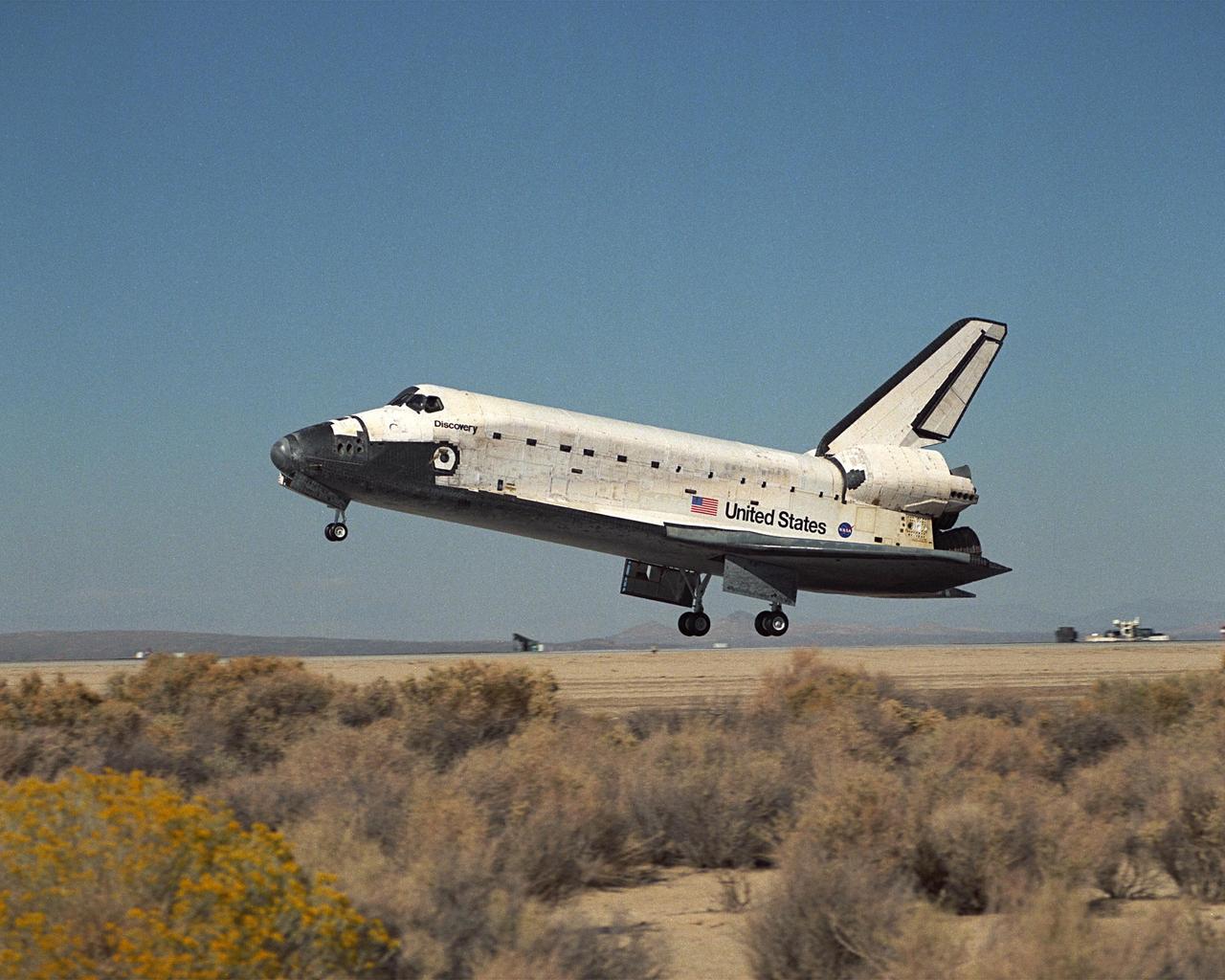
Viewed from the side, orbiter Discovery, with its seven-member crew, is about to touch down on the landing strip at Edwards Air Force Base, Calif., after an 11-day mission to the International Space Station. The orbiter’s main landing gear touched down on EAFB runway 22 at 5 p.m. With the aid of its drag chute, Discovery came to a complete stop at 5:01 p.m. At the conclusion of mission STS-92, Discovery and crew had traveled about 5.3 million statute miles. Following vehicle safing and preliminary offloading efforts, workers will begin preparations for Discovery’s transcontinental ferry flight back to KSC on the back of NASA’s modified Boeing 747
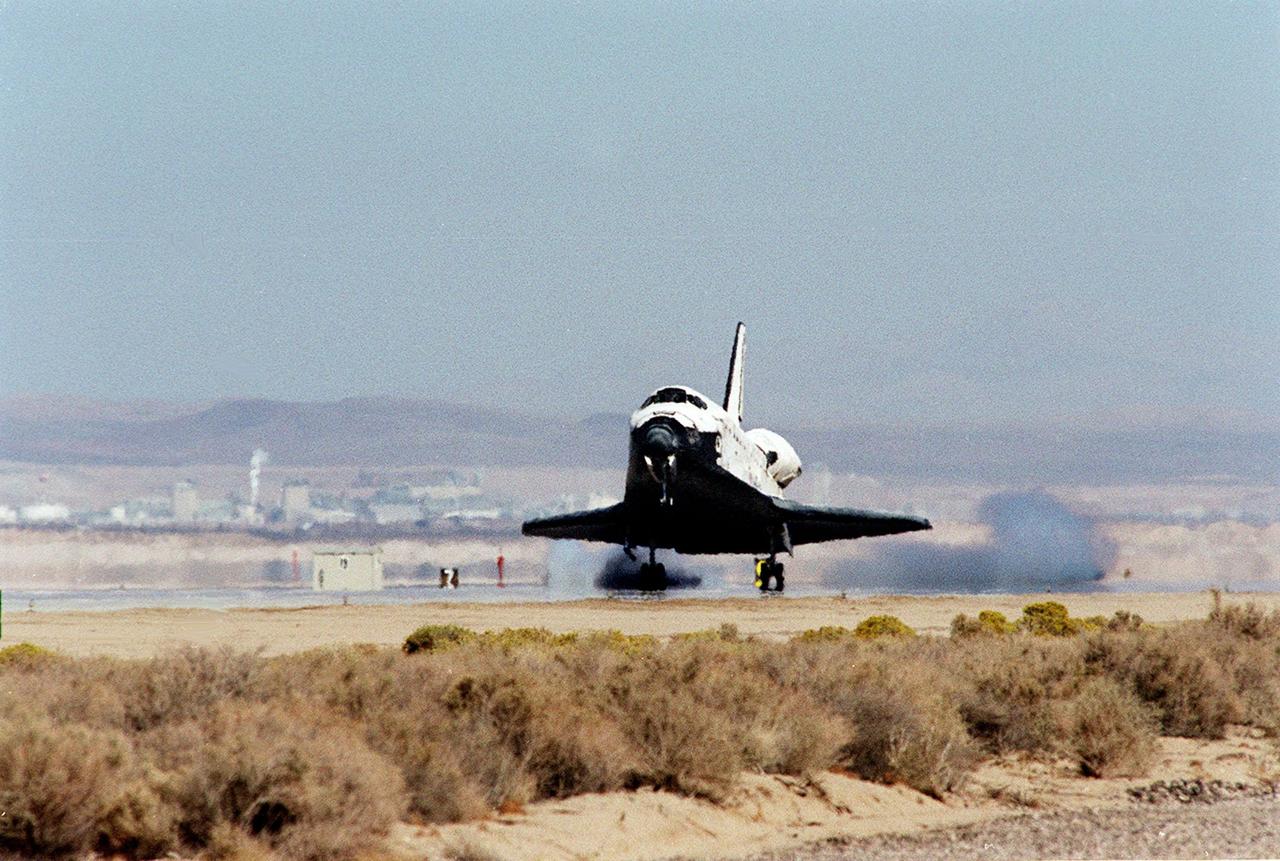
Orbiter Discovery, with its seven-member crew, touches down on the landing strip at Edwards Air Force Base, Calif., after an 11-day mission to the International Space Station. The orbiter’s main landing gear touched down on EAFB runway 22 at 5 p.m. With the aid of its drag chute, Discovery came to a complete stop at 5:01 p.m. At the conclusion of mission STS-92, Discovery and crew had traveled about 5.3 million statute miles. Following vehicle safing and preliminary offloading efforts, workers will begin preparations for Discovery’s transcontinental ferry flight back to KSC on the back of NASA’s modified Boeing 747
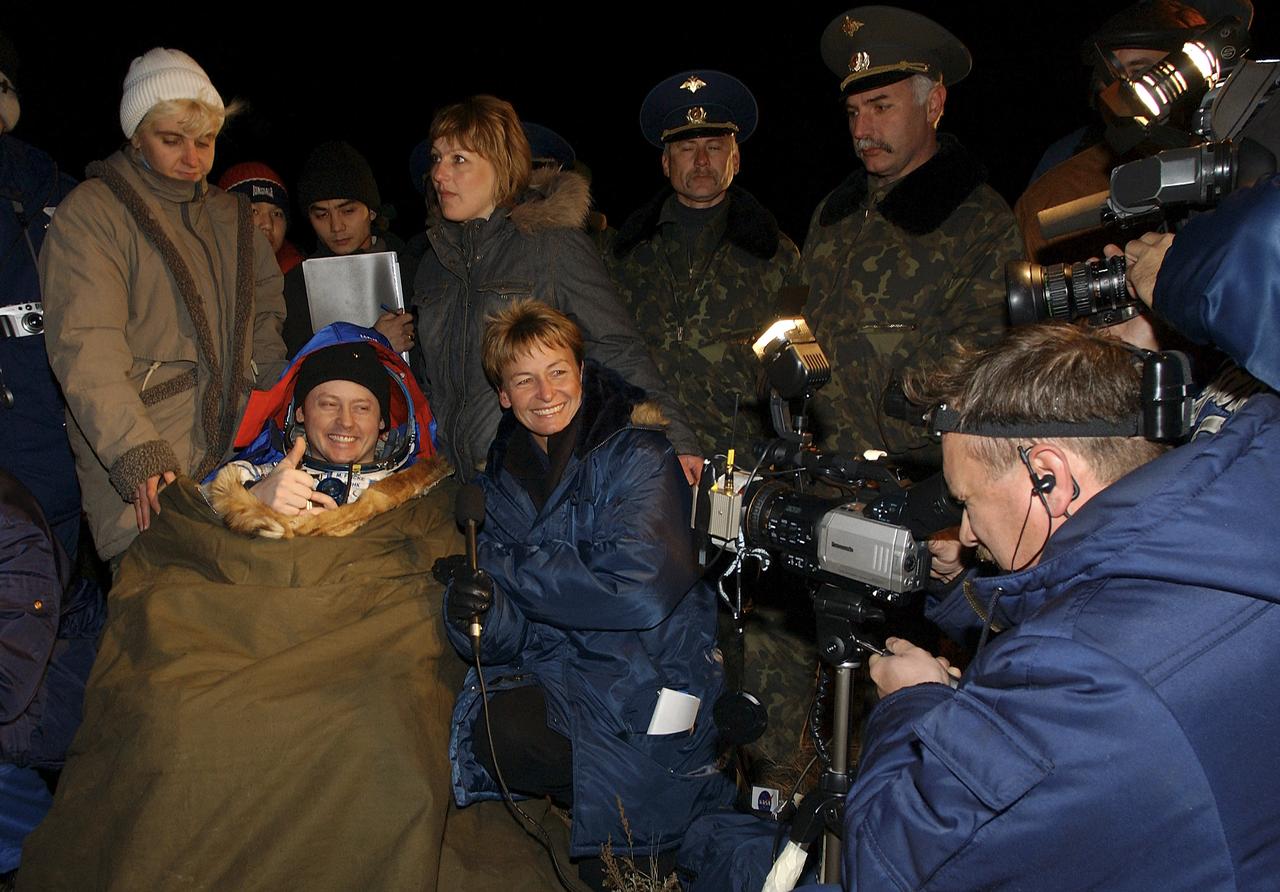
Expedition 9 Flight Engineer Michael Fincke is interviewed by former Expedition 5 Flight Engineer Peggy Whitson for the video phone after the successful landing in the Soyuz spacecraft with fellow crew members Expedition 9 Commander Gennady Padalka and Russian Space Forces cosmonaut Yuri Shargin. The crew landed in their Soyuz capsule approximately 85 kilometers northeast of Arkalyk in northern Kazakhstan, Sunday, October 24, 2004. Photo Credit: (NASA/Bill Ingalls)

KENNEDY SPACE CENTER, FLA. -- European Space Agency astronaut Thomas Reiter, returning from a 6-month stay on the International Space Station, relaxes in the crew quarters at Kennedy Space Center. Reiter returned to Earth with the STS-116 crew aboard Space Shuttle Discovery. Landing took place on Runway 15 at NASA Kennedy Space Center's Shuttle Landing Facility as the sun set on the shortest day of the year. During the STS-116 mission, three spacewalks attached the P5 integrated truss structure to the station, and completed the rewiring of the orbiting laboratory's power system. A fourth spacewalk retracted a stubborn solar array. Main gear touchdown was at 5:32 p.m. EST. Nose gear touchdown was at 5:32:12 p.m. and wheel stop was at 5:32:52 p.m. At touchdown -- nominally about 2,500 ft. beyond the runway threshold -- the orbiter is traveling at a speed ranging from 213 to 226 mph. Discovery traveled 5,330,000 miles, landing on orbit 204. Mission elapsed time was 12 days, 20 hours, 44 minutes and 16 seconds. This is the 64th landing at KSC. Photo credit: NASA/Kim Shiflett
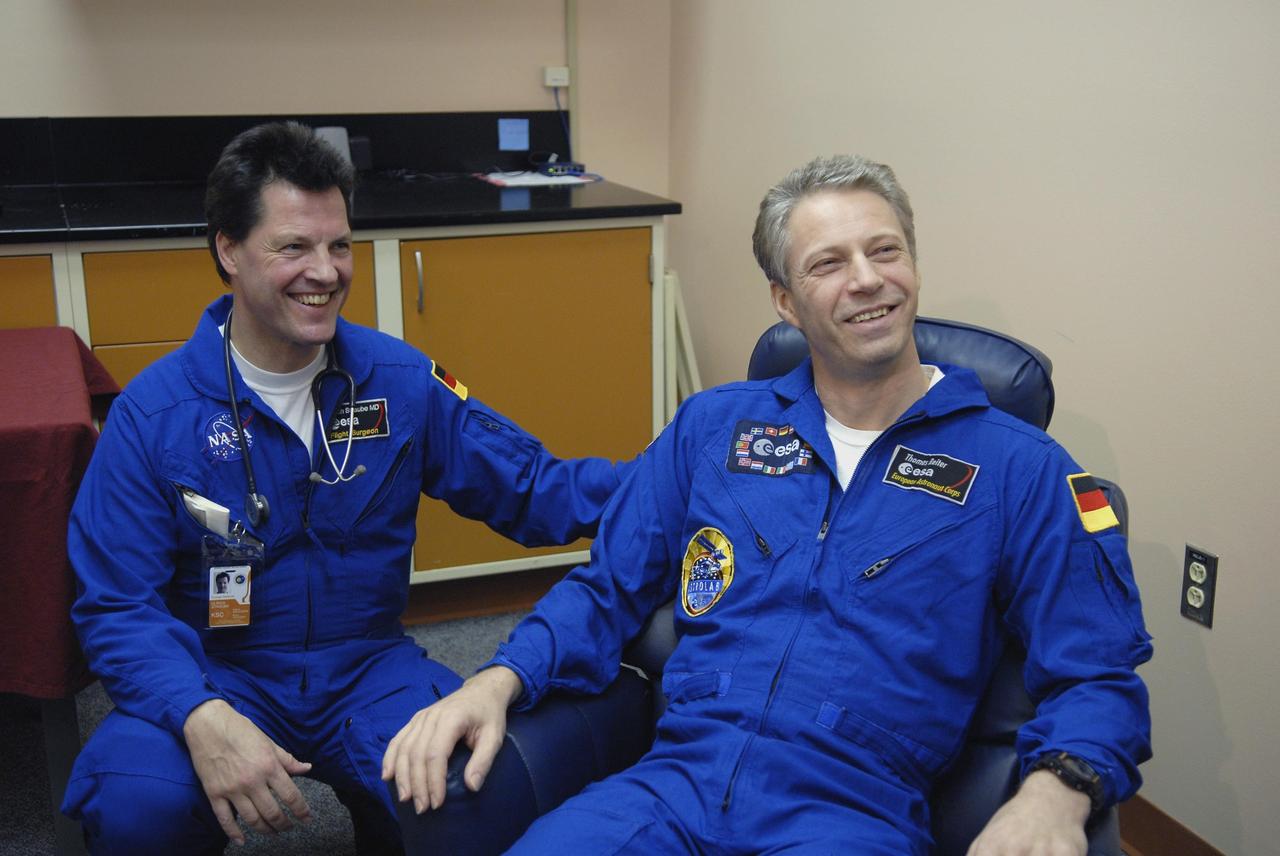
KENNEDY SPACE CENTER, FLA. -- European Space Agency astronaut Thomas Reiter (seated), returning from a 6-month stay on the International Space Station, visits with colleagues in the crew quarters at Kennedy Space Center. Reiter returned to Earth with the STS-116 crew aboard Space Shuttle Discovery. Landing took place on Runway 15 at NASA Kennedy Space Center's Shuttle Landing Facility as the sun set on the shortest day of the year. During the STS-116 mission, three spacewalks attached the P5 integrated truss structure to the station, and completed the rewiring of the orbiting laboratory's power system. A fourth spacewalk retracted a stubborn solar array. Main gear touchdown was at 5:32 p.m. EST. Nose gear touchdown was at 5:32:12 p.m. and wheel stop was at 5:32:52 p.m. At touchdown -- nominally about 2,500 ft. beyond the runway threshold -- the orbiter is traveling at a speed ranging from 213 to 226 mph. Discovery traveled 5,330,000 miles, landing on orbit 204. Mission elapsed time was 12 days, 20 hours, 44 minutes and 16 seconds. This is the 64th landing at KSC. Photo credit: NASA/Kim Shiflett
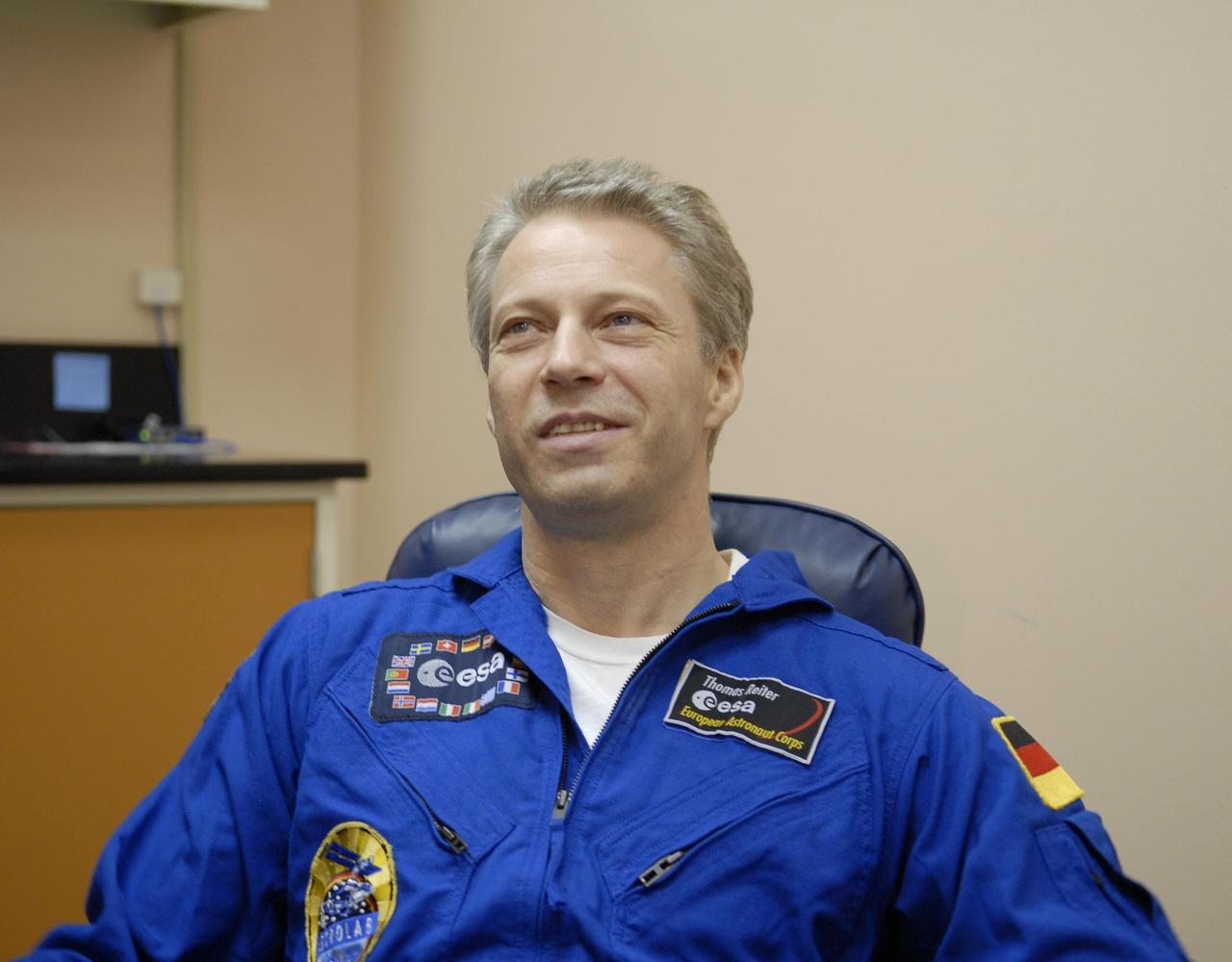
KENNEDY SPACE CENTER, FLA. -- European Space Agency astronaut Thomas Reiter, returning from a 6-month stay on the International Space Station, relaxes in the crew quarters at Kennedy Space Center. Reiter returned to Earth with the STS-116 crew aboard Space Shuttle Discovery. Landing took place on Runway 15 at NASA Kennedy Space Center's Shuttle Landing Facility as the sun set on the shortest day of the year. During the STS-116 mission, three spacewalks attached the P5 integrated truss structure to the station, and completed the rewiring of the orbiting laboratory's power system. A fourth spacewalk retracted a stubborn solar array. Main gear touchdown was at 5:32 p.m. EST. Nose gear touchdown was at 5:32:12 p.m. and wheel stop was at 5:32:52 p.m. At touchdown -- nominally about 2,500 ft. beyond the runway threshold -- the orbiter is traveling at a speed ranging from 213 to 226 mph. Discovery traveled 5,330,000 miles, landing on orbit 204. Mission elapsed time was 12 days, 20 hours, 44 minutes and 16 seconds. This is the 64th landing at KSC. Photo credit: NASA/Kim Shiflett
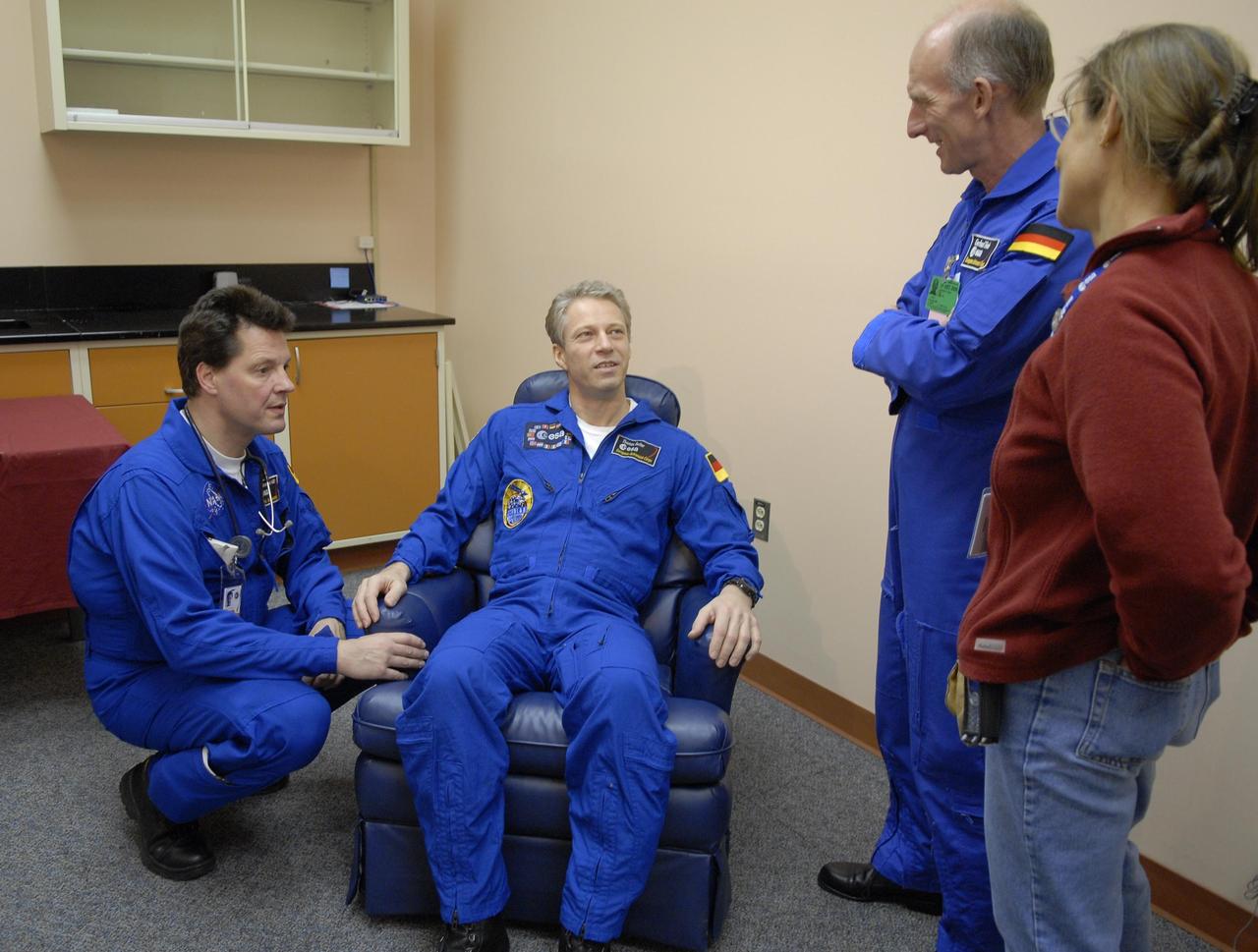
KENNEDY SPACE CENTER, FLA. -- European Space Agency astronaut Thomas Reiter (seated), returning from a 6-month stay on the International Space Station, talks to colleagues in the crew quarters at Kennedy Space Center. Reiter returned to Earth with the STS-116 crew aboard Space Shuttle Discovery. Landing took place on Runway 15 at NASA Kennedy Space Center's Shuttle Landing Facility as the sun set on the shortest day of the year. During the STS-116 mission, three spacewalks attached the P5 integrated truss structure to the station, and completed the rewiring of the orbiting laboratory's power system. A fourth spacewalk retracted a stubborn solar array. Main gear touchdown was at 5:32 p.m. EST. Nose gear touchdown was at 5:32:12 p.m. and wheel stop was at 5:32:52 p.m. At touchdown -- nominally about 2,500 ft. beyond the runway threshold -- the orbiter is traveling at a speed ranging from 213 to 226 mph. Discovery traveled 5,330,000 miles, landing on orbit 204. Mission elapsed time was 12 days, 20 hours, 44 minutes and 16 seconds. This is the 64th landing at KSC. Photo credit: NASA/Kim Shiflett
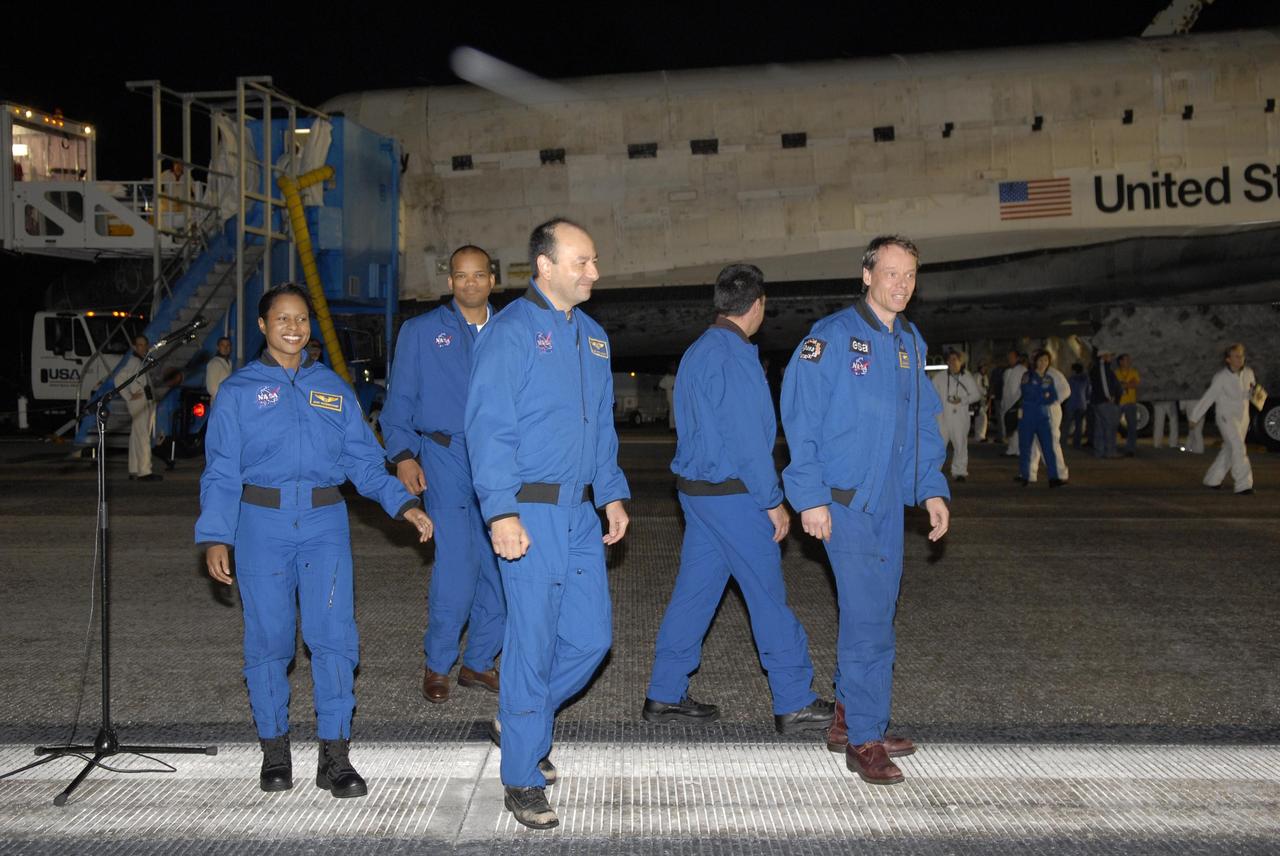
KENNEDY SPACE CENTER, FLA. -- Members of the STS-116 crew head for crew quarters following the landing of Discovery on Runway 15 at NASA Kennedy Space Center's Shuttle Landing Facility. From left are Mission Specialists Joan Higginbotham and Robert Curbeam, Commander Mark Polansky, Pilot William Oefelein and Mission Specialist Christer Fuglesang, who represents the European Space Agency. Other astronauts aboard Discovery not shown are Mission Specialist Nicholas Patrick and European Space Agency astronaut Thomas Reiter, who is returning from a 6-month stay on the International Space Station. During the mission, three spacewalks attached the P5 integrated truss structure to the station, and completed the rewiring of the orbiting laboratory's power system. A fourth spacewalk retracted a stubborn solar array. Main gear touchdown was at 5:32 p.m. EST. Nose gear touchdown was at 5:32:12 p.m. and wheel stop was at 5:32:52 p.m. At touchdown -- nominally about 2,500 ft. beyond the runway threshold -- the orbiter is traveling at a speed ranging from 213 to 226 mph. Discovery traveled 5,330,000 miles, landing on orbit 204. Mission elapsed time was 12 days, 20 hours, 44 minutes and 16 seconds. This is the 64th landing at KSC. Photo credit: NASA/Kim Shiflett
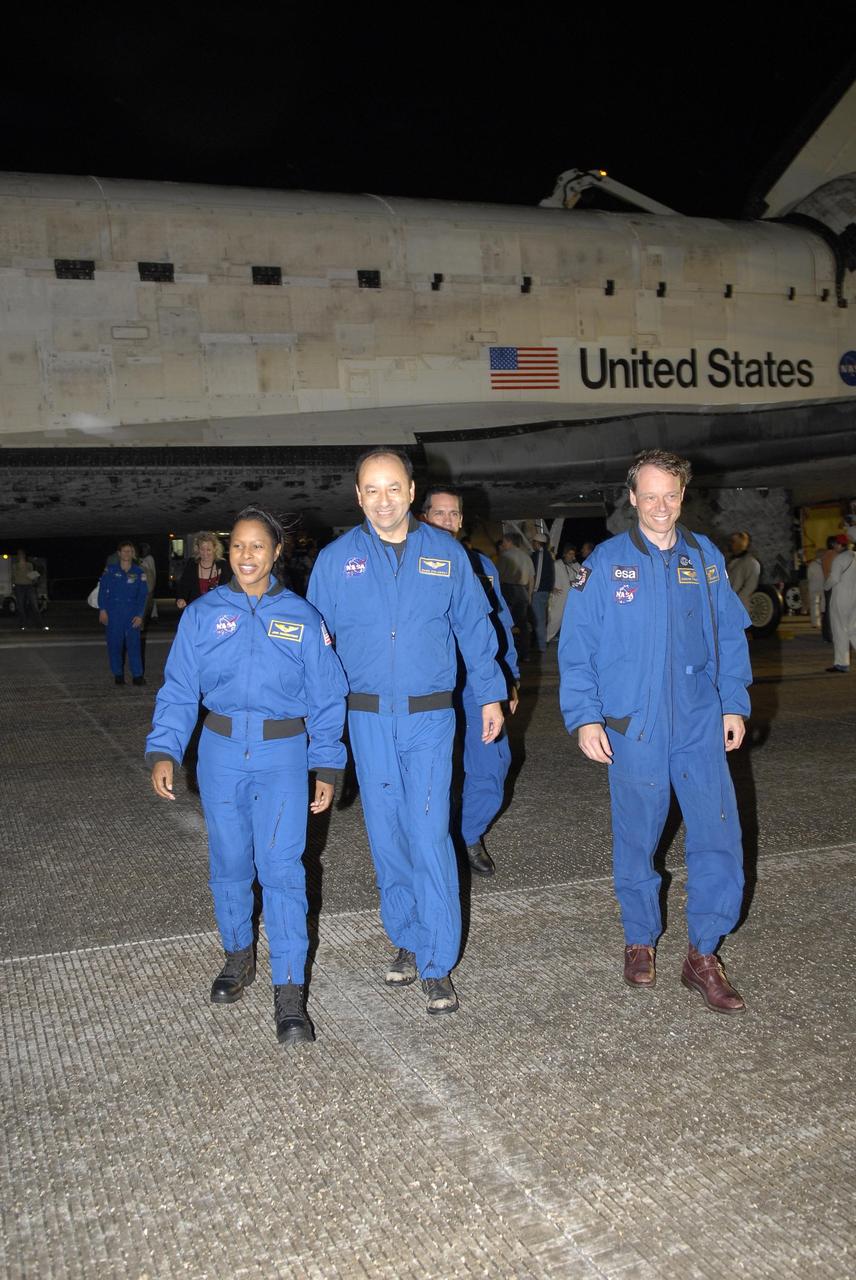
KENNEDY SPACE CENTER, FLA. -- Members of the STS-116 crew head for crew quarters following the landing of Discovery on Runway 15 at NASA Kennedy Space Center's Shuttle Landing Facility. From left are Mission Specialist Joan Higginbotham, Commander Mark Polansky, Pilot William Oefelein and Mission Specialist Christer Fuglesang, who represents the European Space Agency. Other astronauts aboard Discovery not shown are Mission Specialists Robert Curbeam and Nicholas Patrick and European Space Agency astronaut Thomas Reiter, who is returning from a 6-month stay on the International Space Station. During the STS-116 mission, three spacewalks attached the P5 integrated truss structure to the station, and completed the rewiring of the orbiting laboratory's power system. A fourth spacewalk retracted a stubborn solar array. Main gear touchdown was at 5:32 p.m. EST. Nose gear touchdown was at 5:32:12 p.m. and wheel stop was at 5:32:52 p.m. At touchdown -- nominally about 2,500 ft. beyond the runway threshold -- the orbiter is traveling at a speed ranging from 213 to 226 mph. Discovery traveled 5,330,000 miles, landing on orbit 204. Mission elapsed time was 12 days, 20 hours, 44 minutes and 16 seconds. This is the 64th landing at KSC. Photo credit: NASA/Kim Shiflett
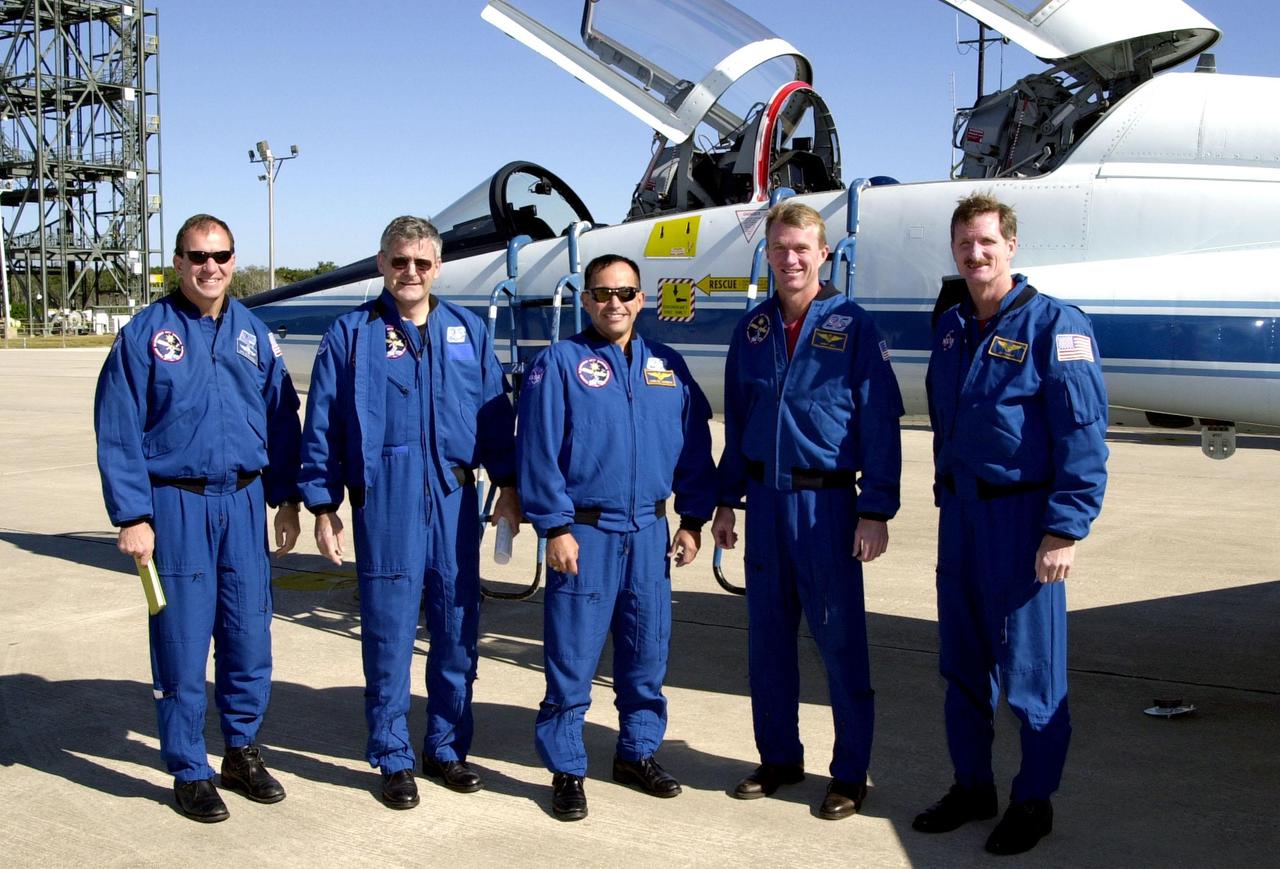
The STS-97 crew poses for a photo after landing at KSC’s Shuttle Landing Facility. Standing, left to right, are Pilot Mike Bloomfield, Mission Specialists Marc Garneau and Carlos Noriega, Commander Brent Jett and Mission Specialist Joe Tanner. They are at KSC for a mini-CEIT (Crew Equipment Interface Test). STS-97 is scheduled to launch Nov. 30 at 10:06 p.m. EST from Launch Pad 39B. The sixth flight to the International Space Station, the mission is expected to last 11 days, with a planned KSC landing at about 5:58 p.m. Dec. 11
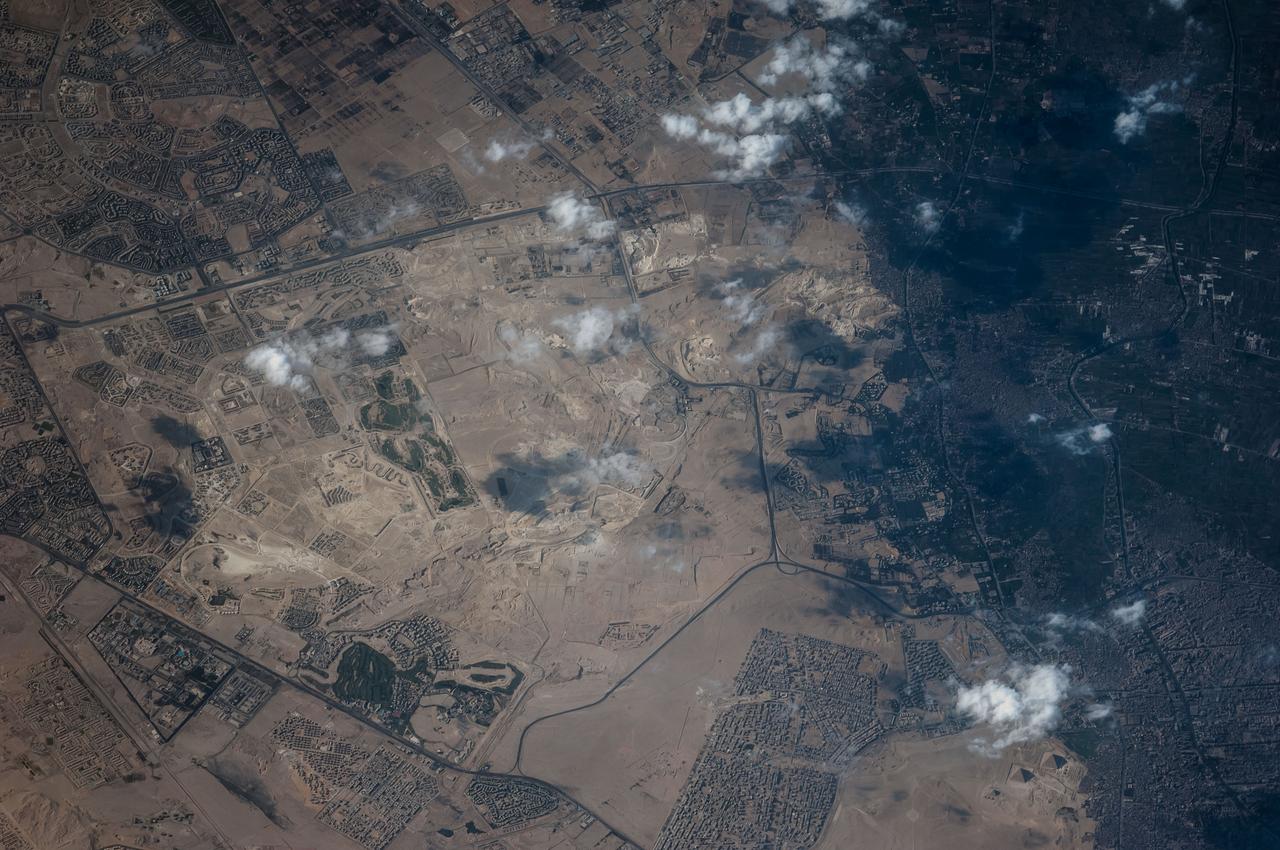
ISS040-E-124097 (5 Sept. 2014) --- A close look in the lower right corner of this photograph of Egyptian land near Cairo reveals three pyramids making up the Pyramids of Giza which have a history dating back over two millennia B.C. One of the Expedition 40 crew members aboard the International Space Station recorded the image on Sept. 5, 2014.
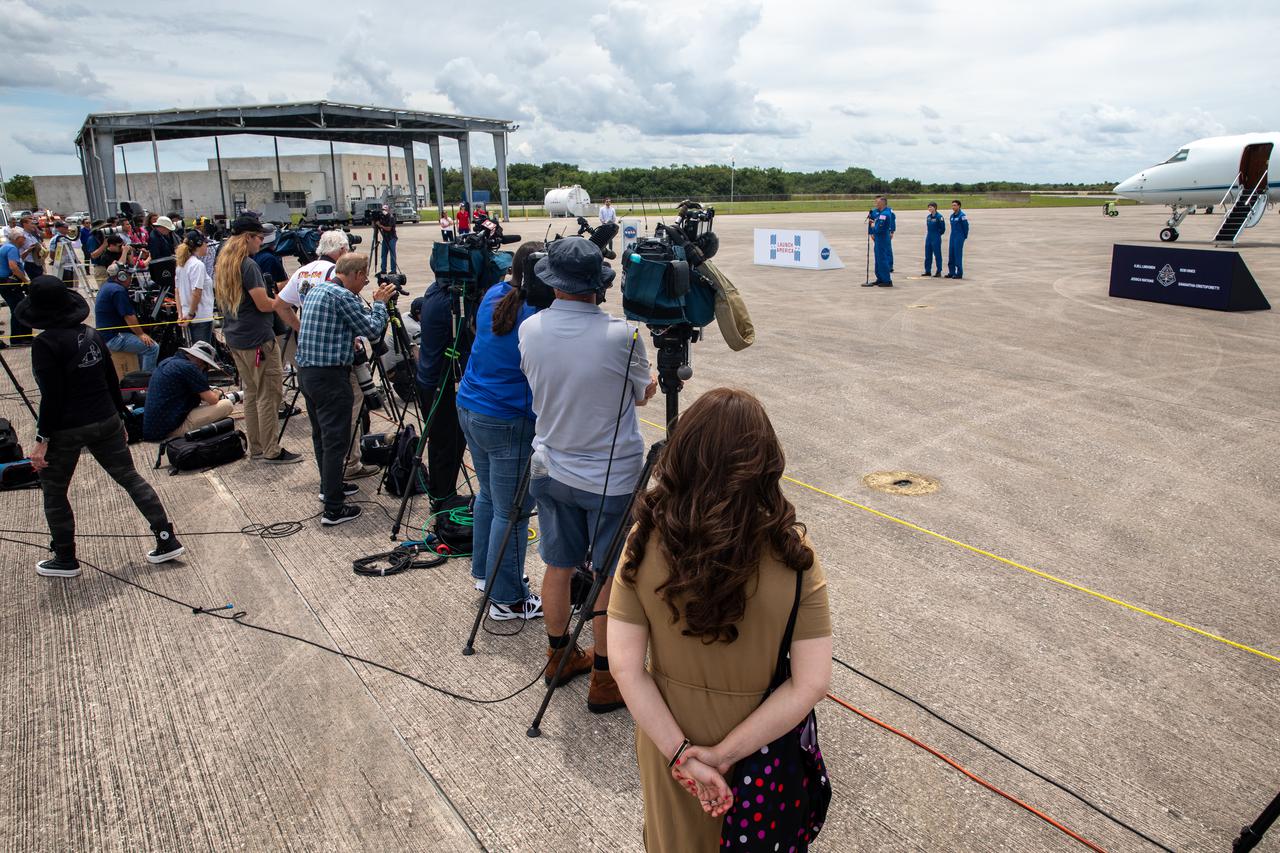
NASA astronaut Bob Hines speaks to members of the news media during crew arrival for NASA’s SpaceX Crew-4 mission at the Launch and Landing Facility at Kennedy Space Center in Florida on April 18, 2022. Behind him from left are NASA astronaut Kjell Lindgren, ESA (European Space Agency) astronaut Samantha Cristoforetti, and NASA astronaut Jessica Watkins. They arrived at the landing facility from Houston. The astronauts will launch aboard SpaceX’s Crew Dragon and Falcon 9 rocket on April 23, 2022. Launch is targeted for 5:26 a.m. EDT from Kennedy’s Launch Complex 39A.
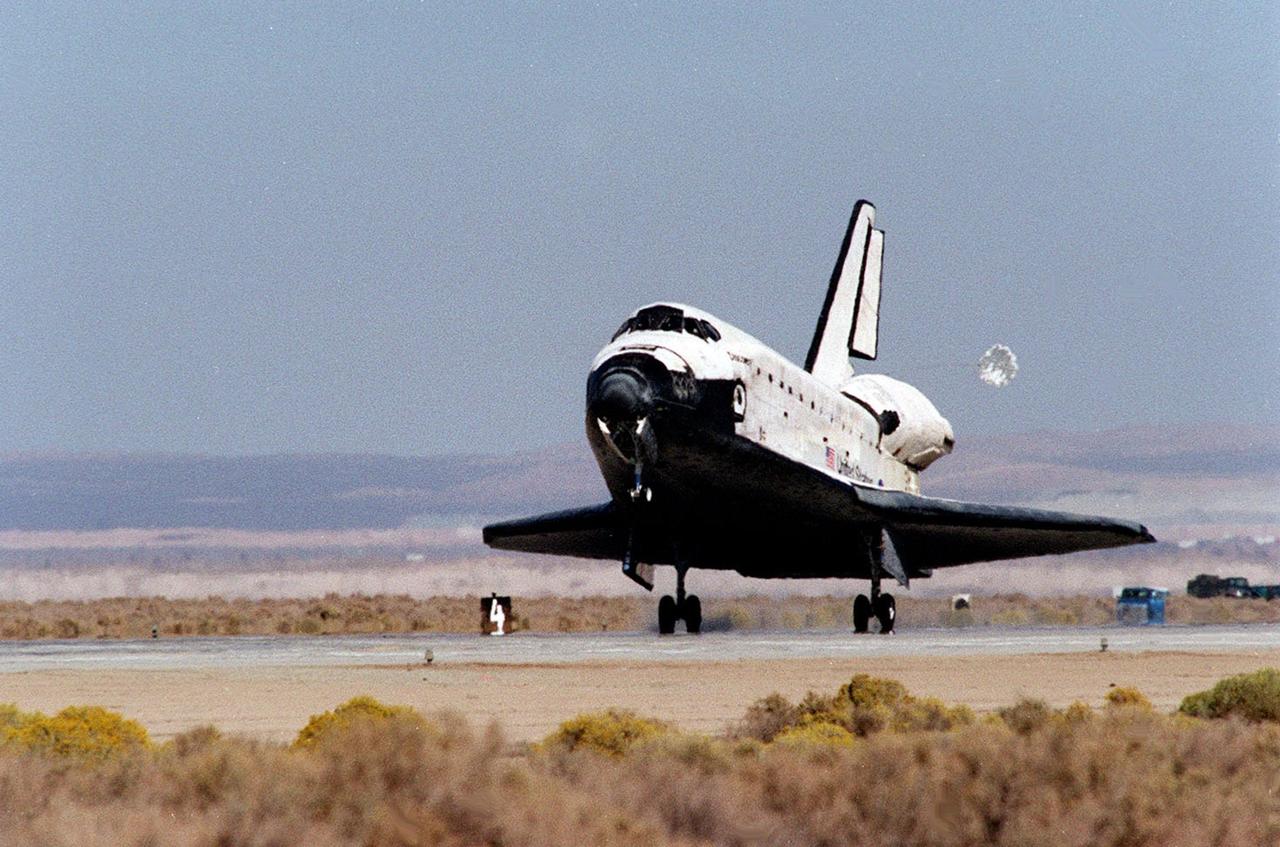
With its drag chute deployed, orbiter Discovery and its seven-member crew roll toward a stop at Edwards Air Force Base, Calif., after an 11-day mission to the International Space Station. The orbiter’s main landing gear touched down on EAFB runway 22 at 5 p.m. With the aid of its drag chute, Discovery came to a complete stop at 5:01 p.m. At the conclusion of mission STS-92, Discovery and crew had traveled about 5.3 million statute miles. Following vehicle safing and preliminary offloading efforts, workers will begin preparations for Discovery’s transcontinental ferry flight back to KSC on the back of NASA’s modified Boeing 747
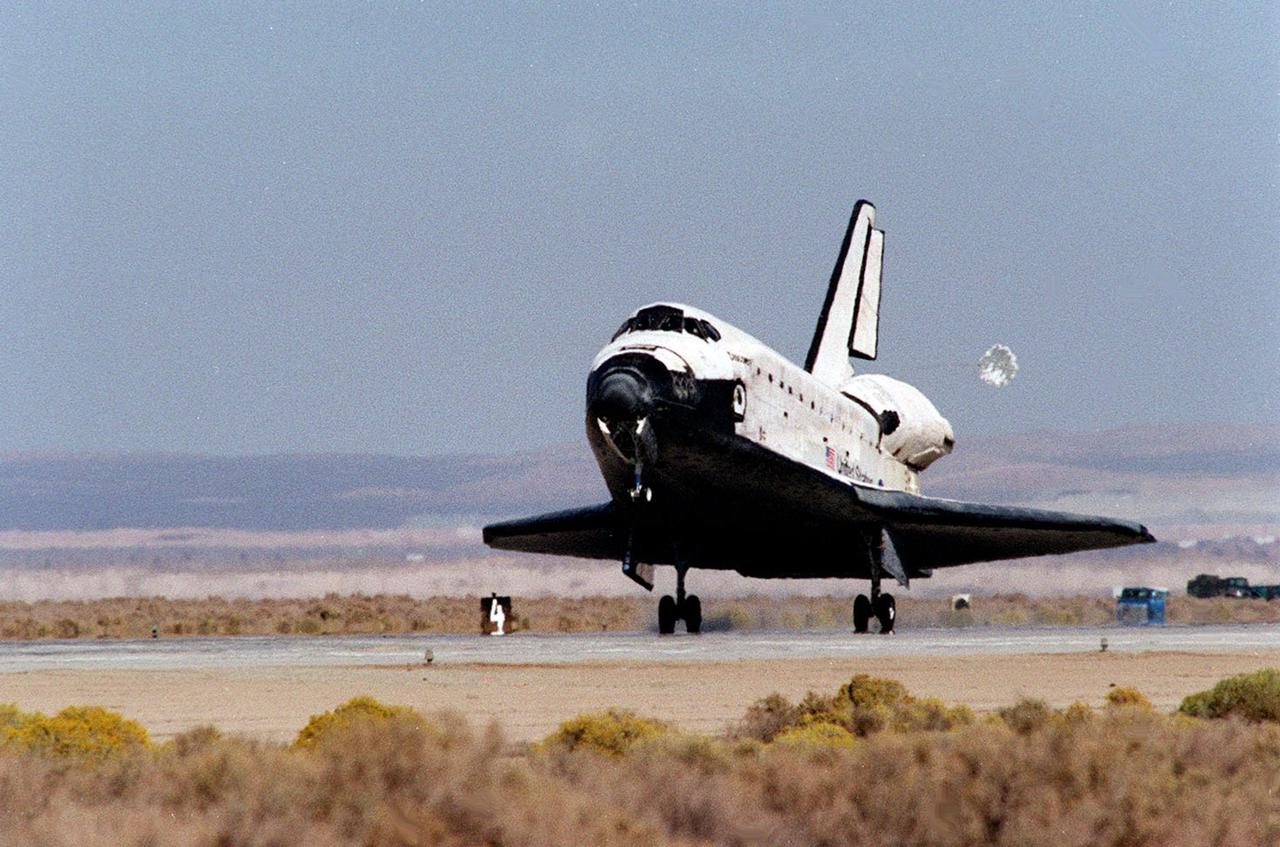
With its drag chute deployed, orbiter Discovery and its seven-member crew roll toward a stop at Edwards Air Force Base, Calif., after an 11-day mission to the International Space Station. The orbiter’s main landing gear touched down on EAFB runway 22 at 5 p.m. With the aid of its drag chute, Discovery came to a complete stop at 5:01 p.m. At the conclusion of mission STS-92, Discovery and crew had traveled about 5.3 million statute miles. Following vehicle safing and preliminary offloading efforts, workers will begin preparations for Discovery’s transcontinental ferry flight back to KSC on the back of NASA’s modified Boeing 747
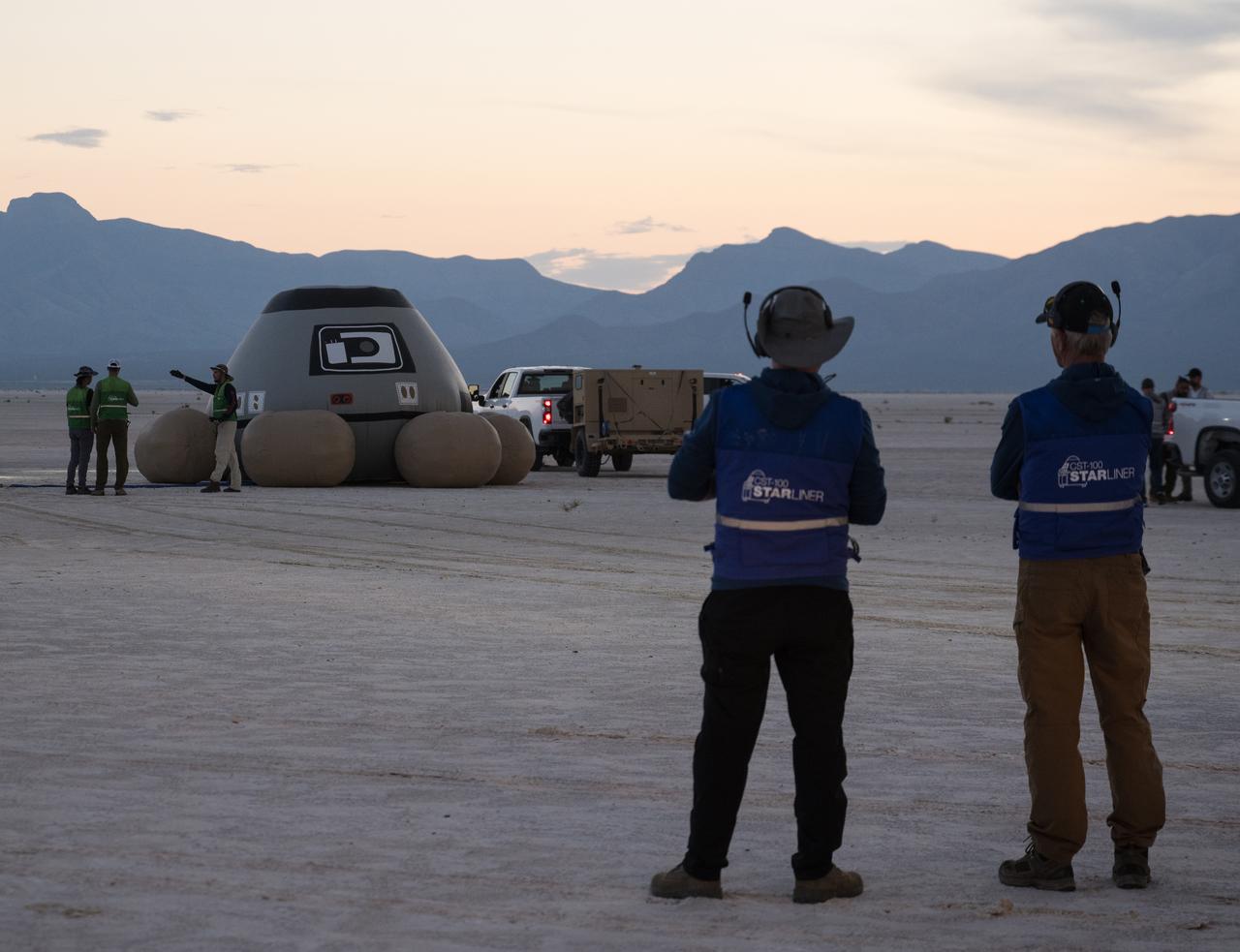
Boeing and NASA teams participate in a mission dress rehearsal to prepare for the landing of NASA’s Boeing Crew Flight Test Starliner spacecraft, Thursday, Sept. 5, 2024, at White Sands, New Mexico. The uncrewed spacecraft is scheduled to land at White Sands Missile Range’s Space Harbor, Friday, Sept. 6, 2024 Mountain Time. This approach allows NASA and Boeing to continue gathering testing data. Photo Credit: (NASA/Aubrey Gemignani)
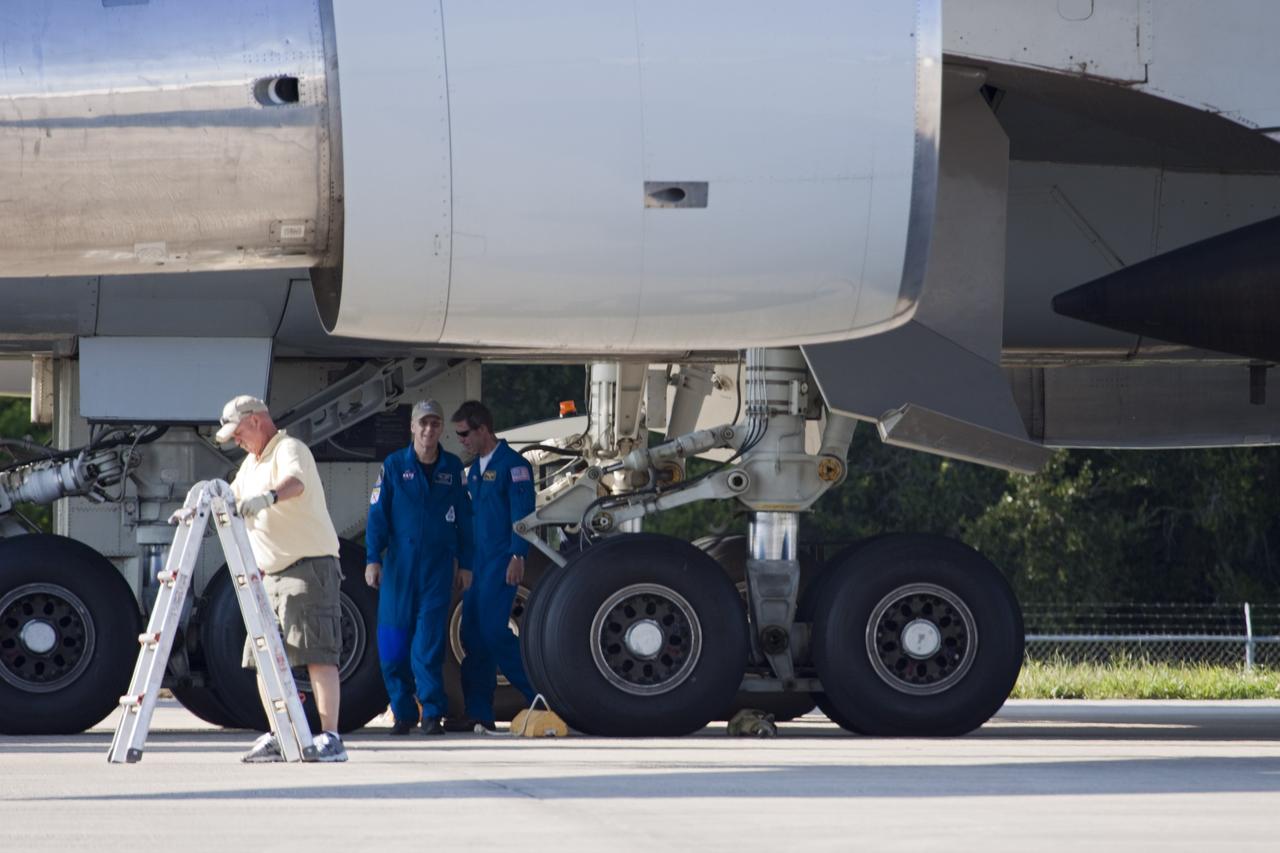
CAPE CANAVERAL, Fla. – Pilots and crew members look over the landing gear on the Shuttle Carrier Aircraft, or SCA, after it parked on the ramp area at NASA Kennedy Space Center’s Shuttle Landing Facility in Florida. The SCA touched down at 5:05 p.m. EDT to prepare for shuttle Endeavour’s ferry flight to the Los Angeles International Airport on Sept. 17. Photo credit: NASA/Jim Grossmann
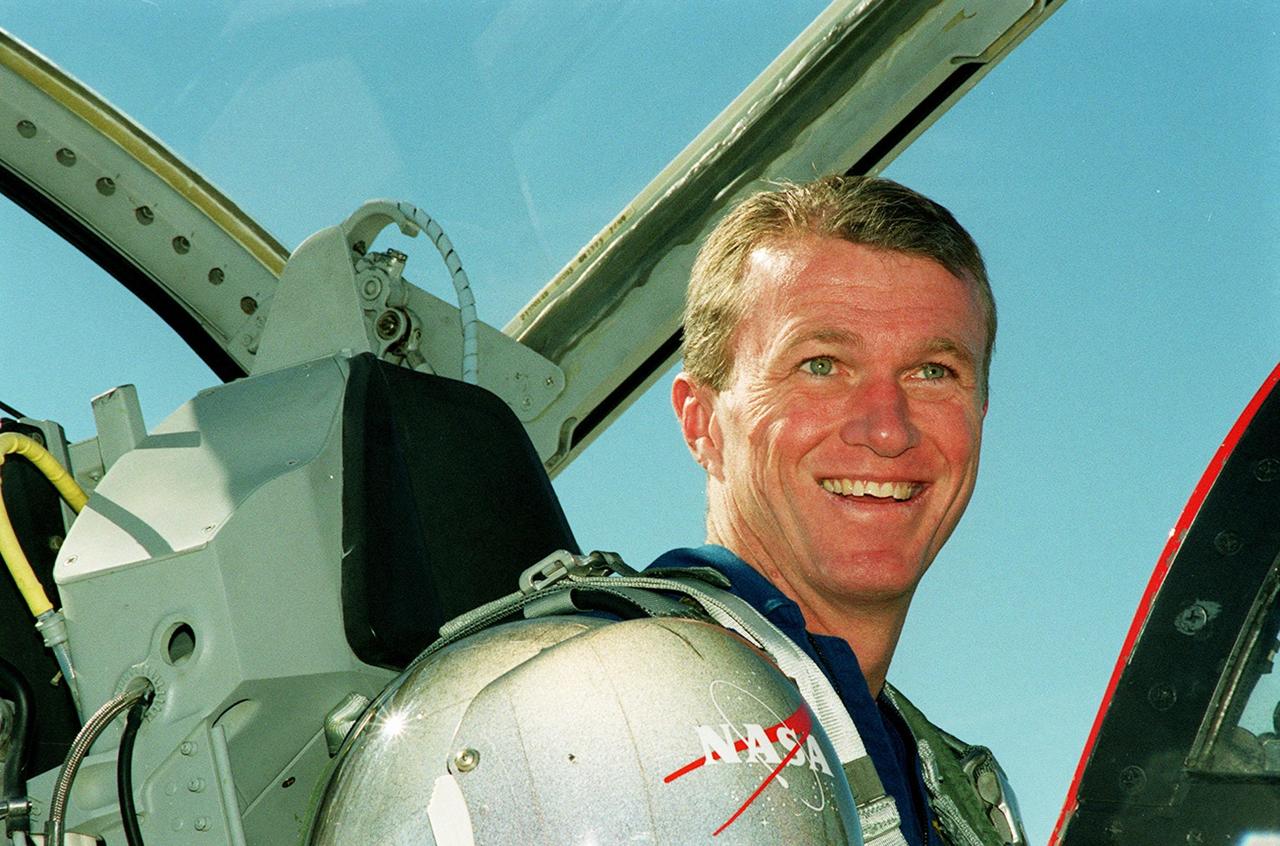
STS-97 Commander Brent Jett waits in the T-38 jet aircraft he piloted to the KSC Shuttle Landing Facility. He and the crew are on site for further work with equipment that will be on the mission. STS-97 is scheduled to launch Nov. 30 at 10:06 p.m. EST from Launch Pad 39B. The sixth flight to the International Space Station, the mission is expected to last 11 days, with a planned KSC landing at about 5:58 p.m. Dec. 11
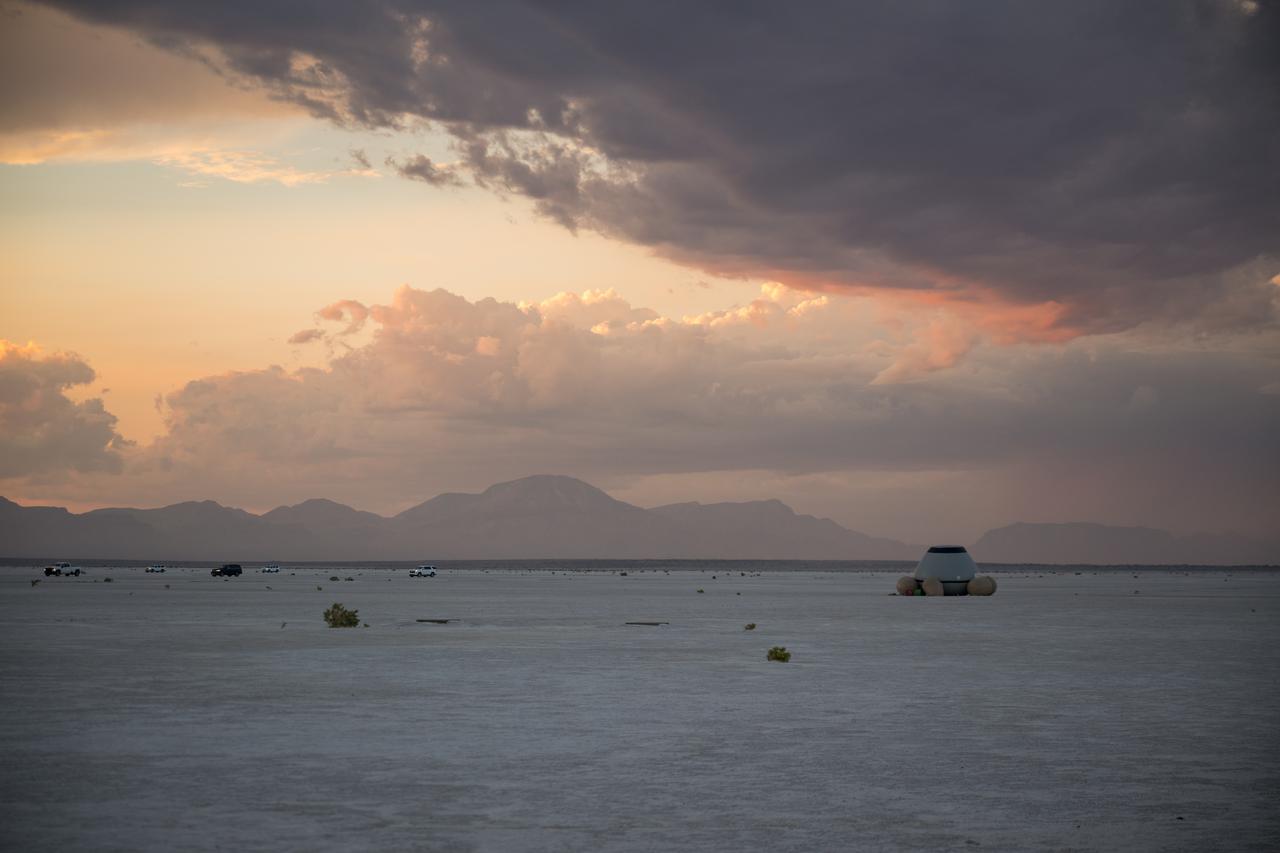
Boeing and NASA teams participate in a mission dress rehearsal to prepare for the landing of NASA’s Boeing Crew Flight Test Starliner spacecraft, Thursday, Sept. 5, 2024, at White Sands, New Mexico. The uncrewed spacecraft is scheduled to land at White Sands Missile Range’s Space Harbor, Friday, Sept. 6, 2024 Mountain Time. This approach allows NASA and Boeing to continue gathering testing data. Photo Credit: (NASA/Aubrey Gemignani)
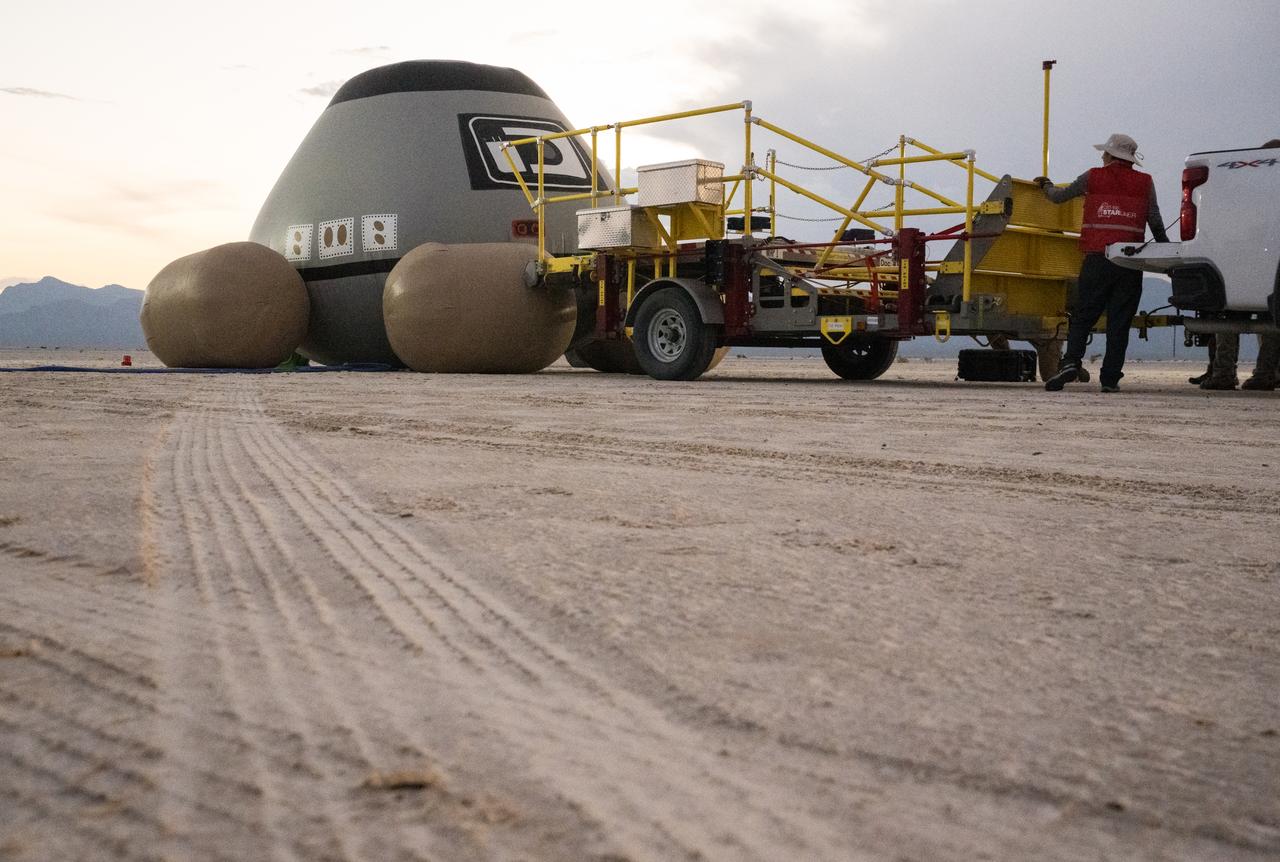
Boeing and NASA teams participate in a mission dress rehearsal to prepare for the landing of NASA’s Boeing Crew Flight Test Starliner spacecraft, Thursday, Sept. 5, 2024, at White Sands, New Mexico. The uncrewed spacecraft is scheduled to land at White Sands Missile Range’s Space Harbor, Friday, Sept. 6, 2024 Mountain Time. This approach allows NASA and Boeing to continue gathering testing data. Photo Credit: (NASA/Aubrey Gemignani)
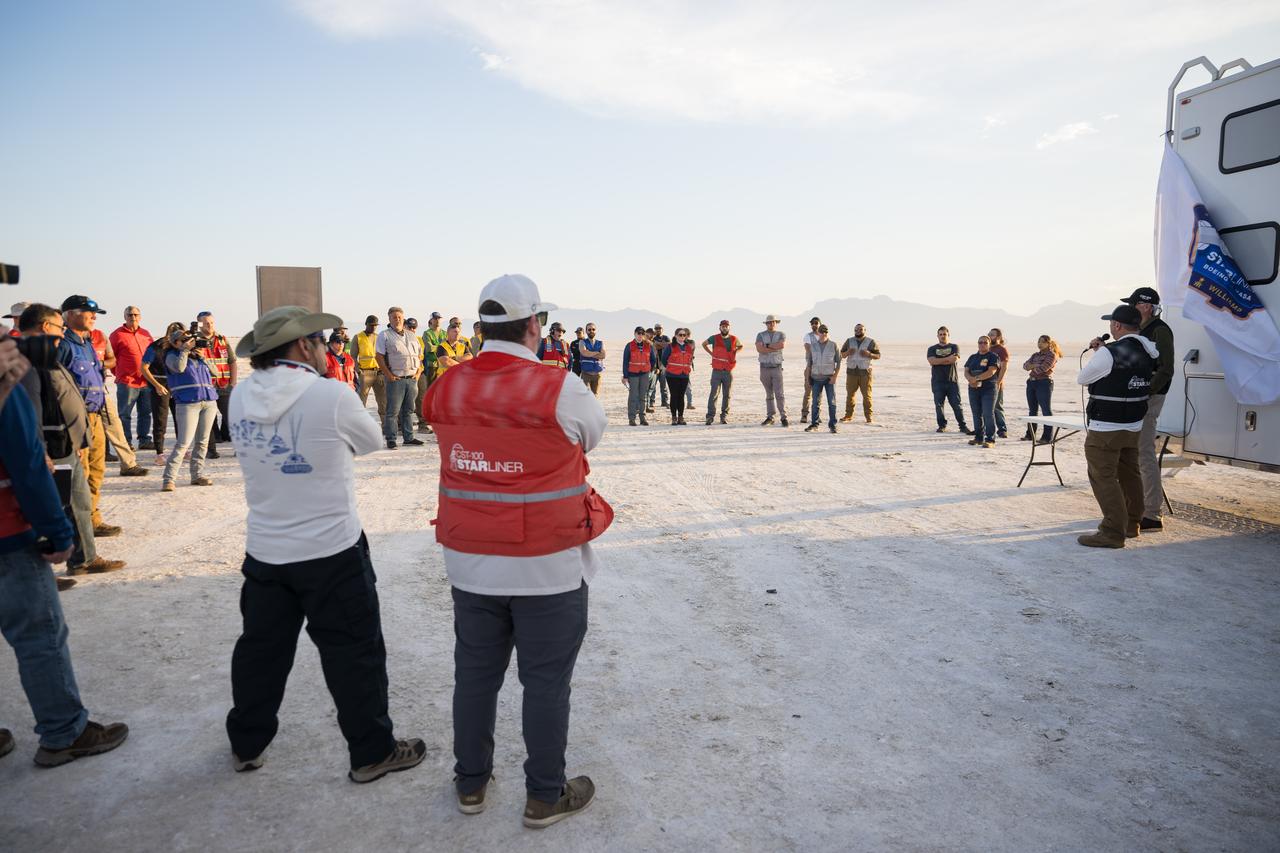
Boeing and NASA teams participate in a mission dress rehearsal to prepare for the landing of NASA’s Boeing Crew Flight Test Starliner spacecraft, Thursday, Sept. 5, 2024, at White Sands, New Mexico. The uncrewed spacecraft is scheduled to land at White Sands Missile Range’s Space Harbor, Friday, Sept. 6, 2024 Mountain Time. This approach allows NASA and Boeing to continue gathering testing data. Photo Credit: (NASA/Aubrey Gemignani)

41G-121-099 (5-13 Oct. 1984) --- Hurricane Josephine was photographed with a medium format camera aimed through the space shuttle Challenger's aft flight deck windows during NASA's 41-G mission. The hurricane's eye can be seen below the orbiter's vertical stabilizer. The large storm off the Florida coast did not prevent the spacecraft with its record of seven crew members aboard from landing safely at the KSC landing facility. Photo credit: NASA
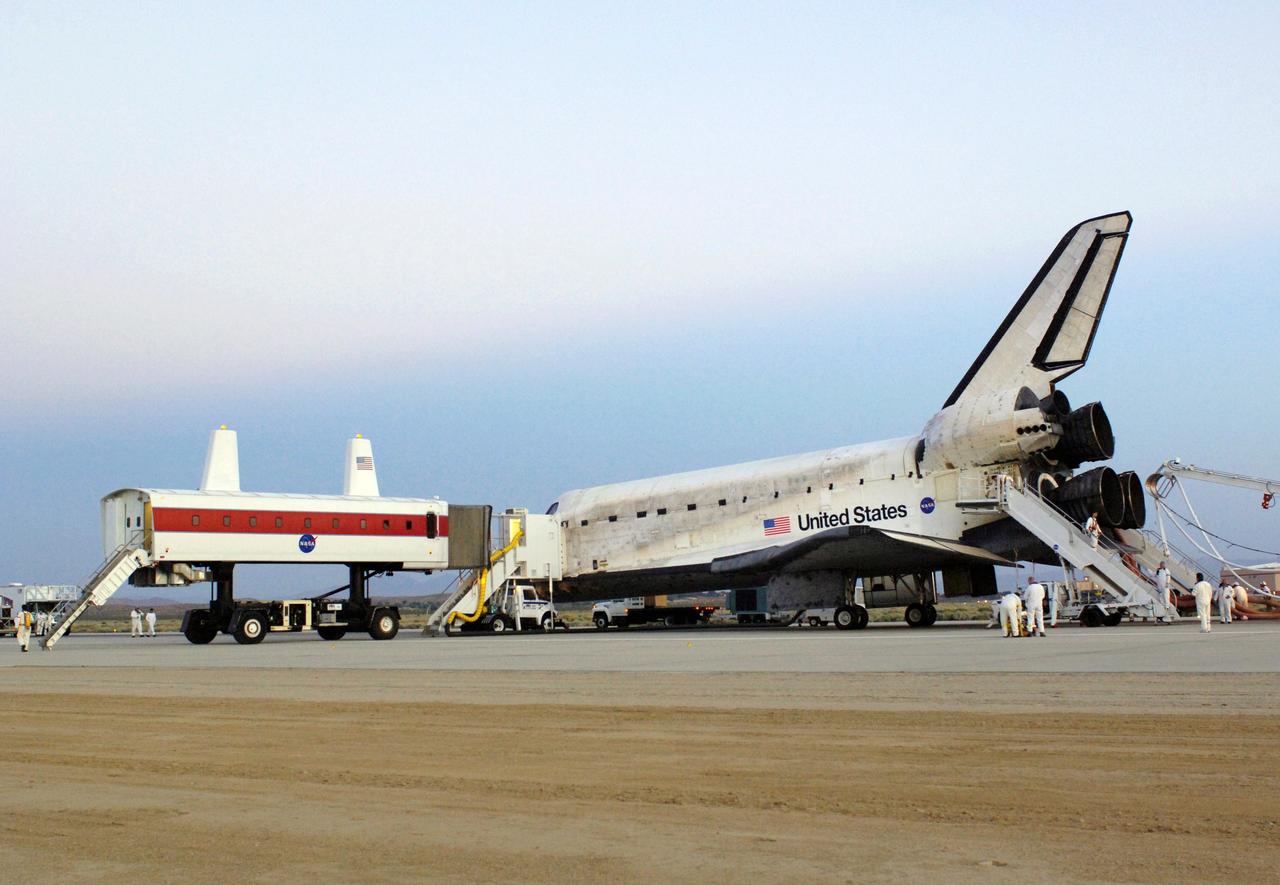
STS114-S-047 (9 August 2005) --- NASA’s Crew Transport Vehicle (CTV) pulls up to the Space Shuttle Discovery to offload the STS-114 crewmembers after a successful landing at 5:11 a.m. (PDT) on August 9, 2005 at Edwards Air Force Base in California. The landing concludes a historic 14-day, Return to Flight mission to the International Space Station.
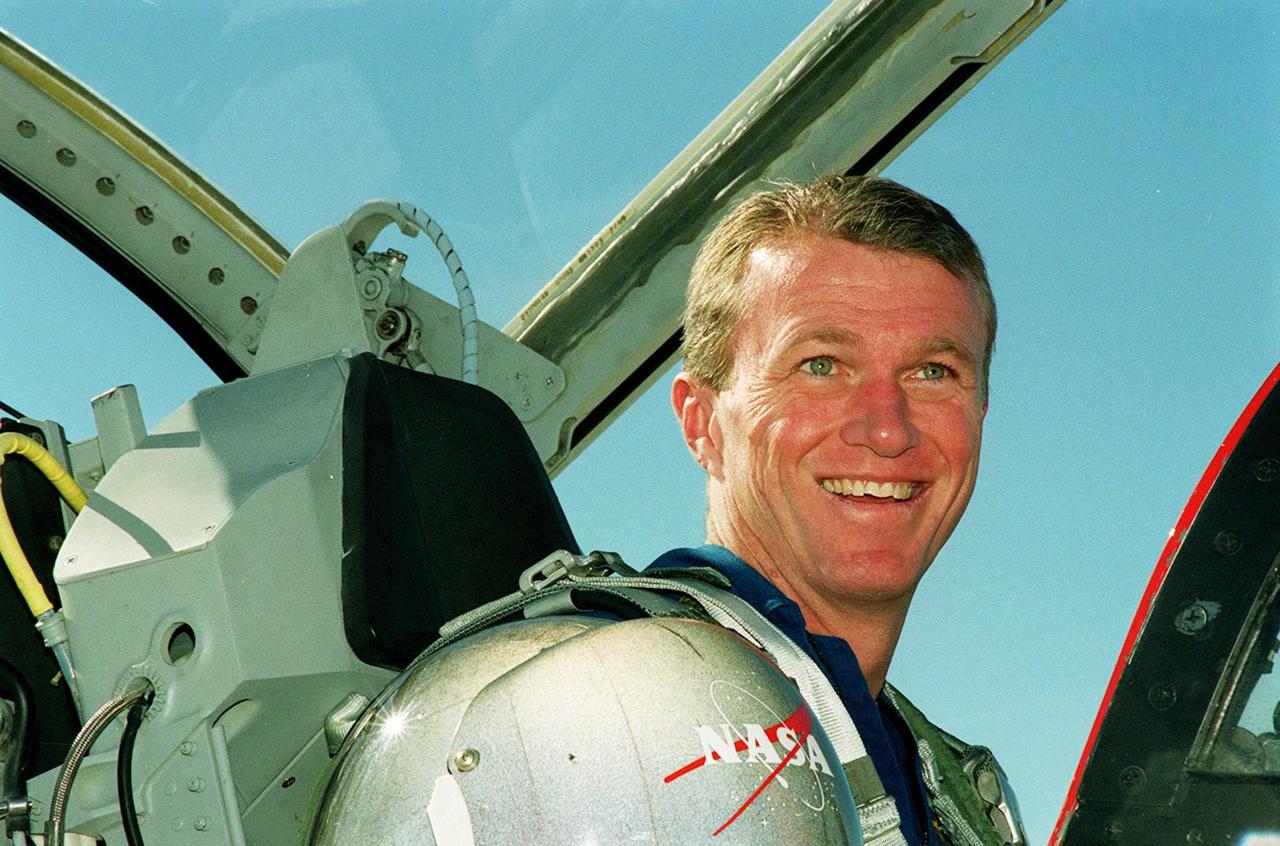
STS-97 Commander Brent Jett waits in the T-38 jet aircraft he piloted to the KSC Shuttle Landing Facility. He and the crew are on site for further work with equipment that will be on the mission. STS-97 is scheduled to launch Nov. 30 at 10:06 p.m. EST from Launch Pad 39B. The sixth flight to the International Space Station, the mission is expected to last 11 days, with a planned KSC landing at about 5:58 p.m. Dec. 11
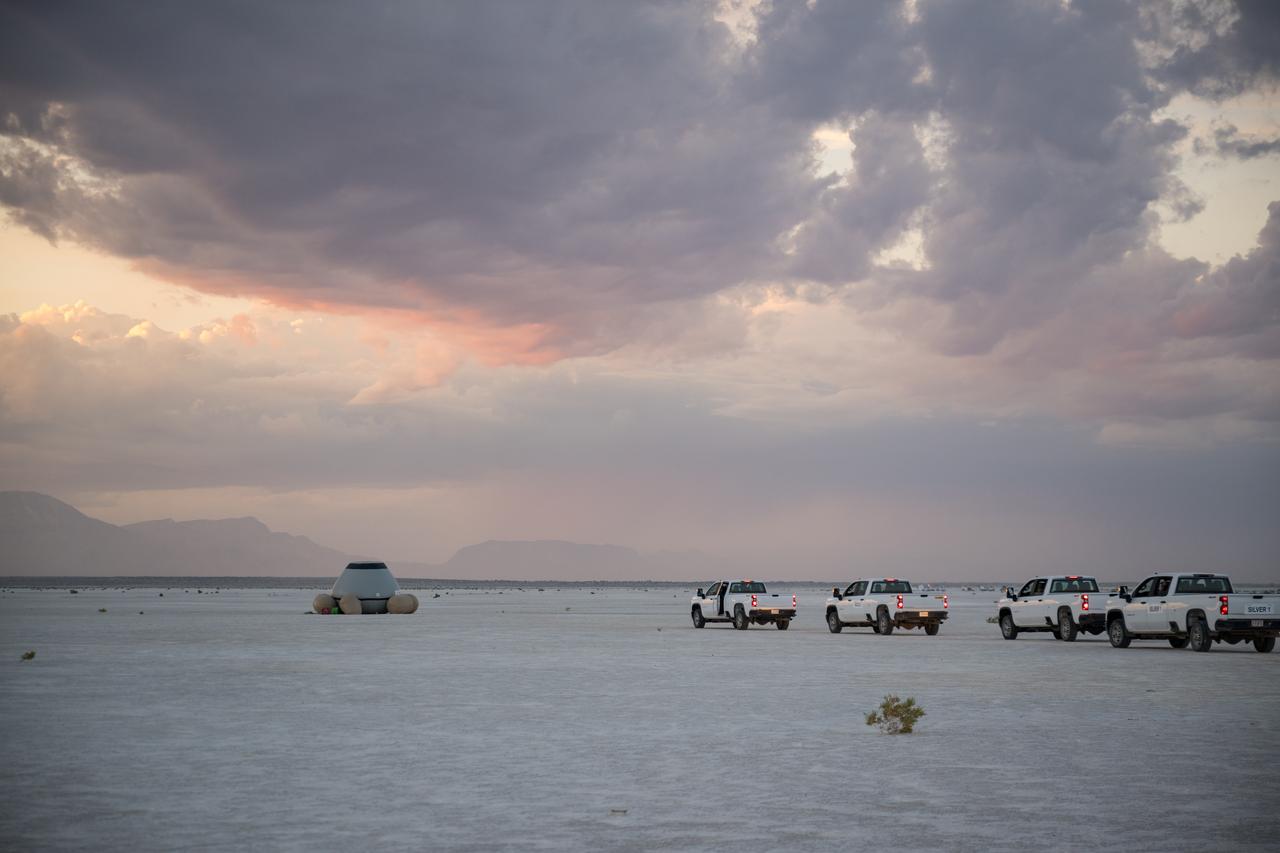
Boeing and NASA teams participate in a mission dress rehearsal to prepare for the landing of NASA’s Boeing Crew Flight Test Starliner spacecraft, Thursday, Sept. 5, 2024, at White Sands, New Mexico. The uncrewed spacecraft is scheduled to land at White Sands Missile Range’s Space Harbor, Friday, Sept. 6, 2024 Mountain Time. This approach allows NASA and Boeing to continue gathering testing data. Photo Credit: (NASA/Aubrey Gemignani)
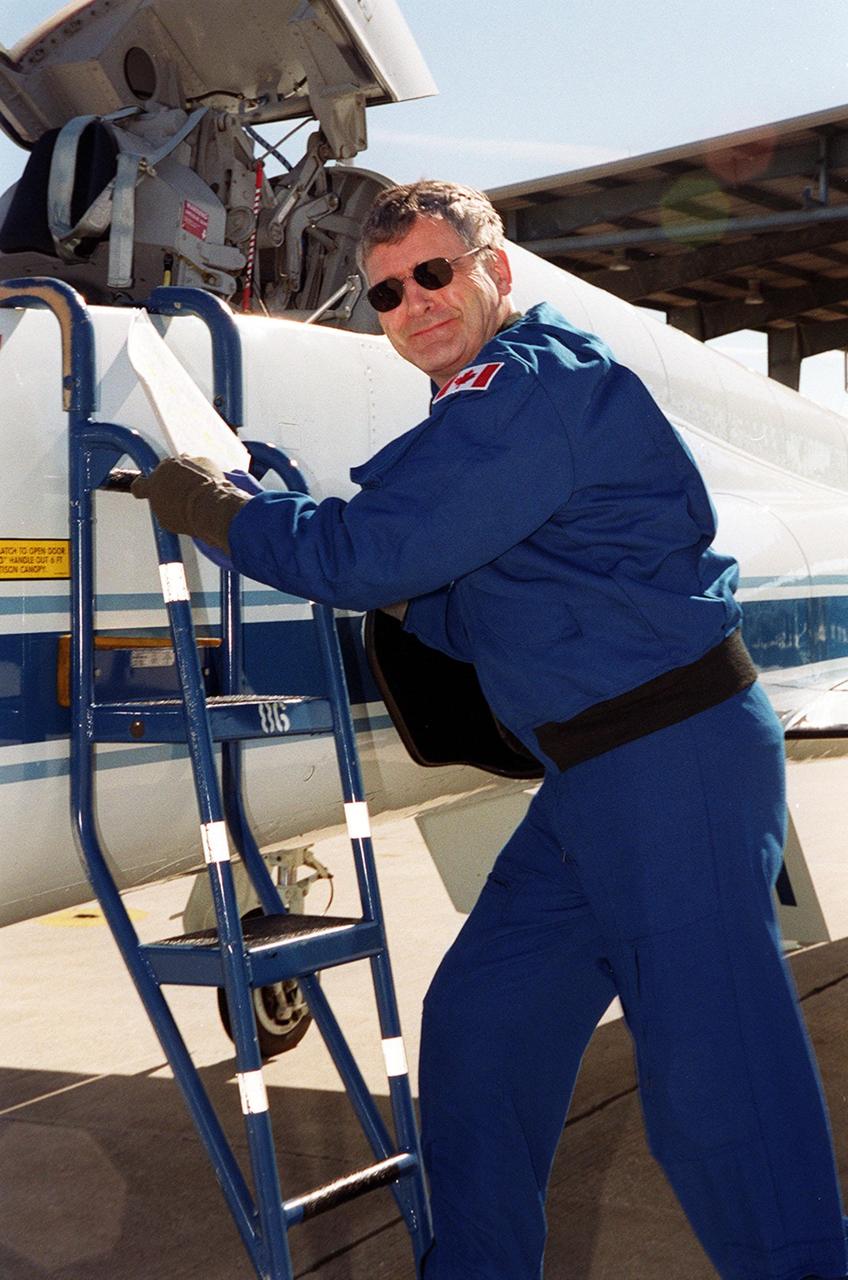
STS-97 Pilot Michael Bloomfield climbs down from the T-38 jet aircraft he piloted to the KSC Shuttle Landing Facility. He and the crew are on site for further work with equipment that will be on the mission. STS-97 is scheduled to launch Nov. 30 at 10:06 p.m. EST from Launch Pad 39B. The sixth flight to the International Space Station, the mission is expected to last 11 days, with a planned KSC landing at about 5:58 p.m. Dec. 11
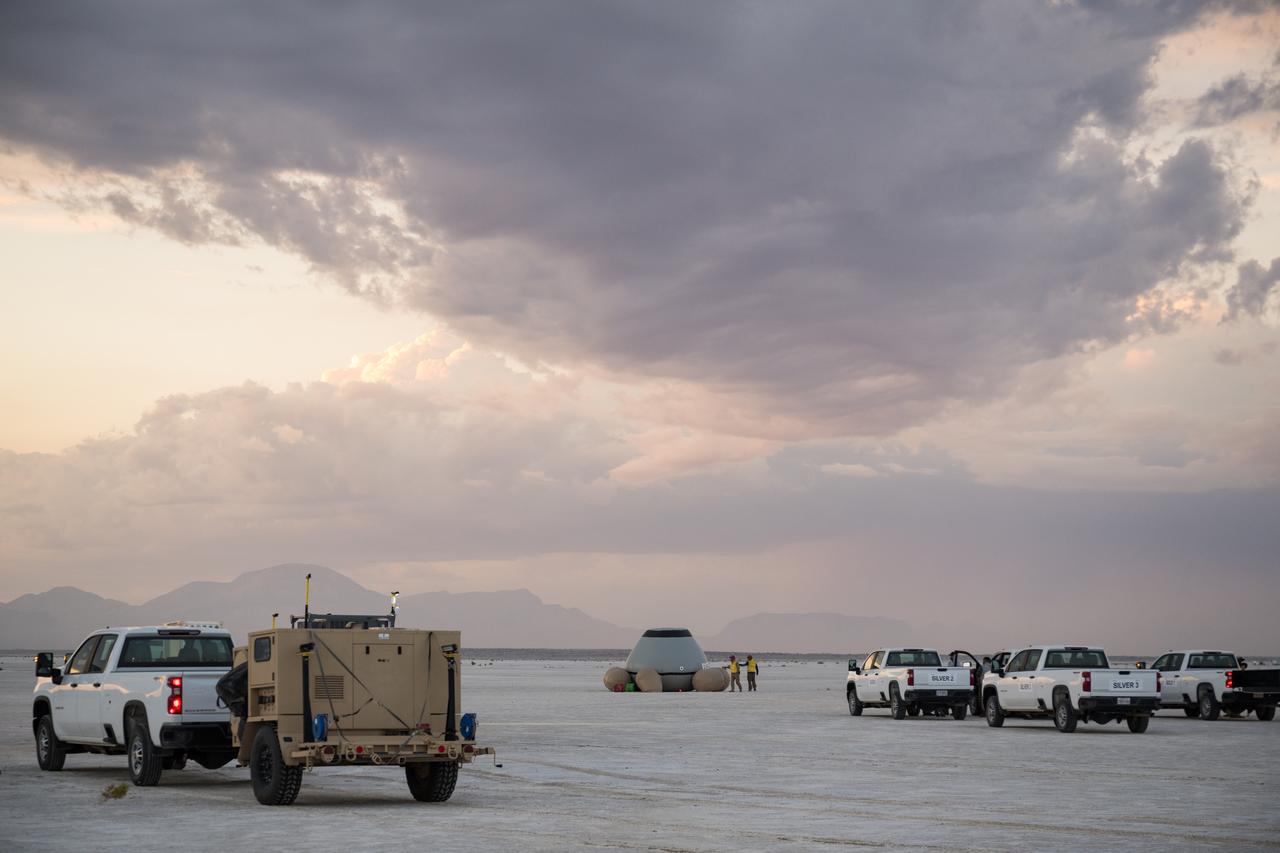
Boeing and NASA teams participate in a mission dress rehearsal to prepare for the landing of NASA’s Boeing Crew Flight Test Starliner spacecraft, Thursday, Sept. 5, 2024, at White Sands, New Mexico. The uncrewed spacecraft is scheduled to land at White Sands Missile Range’s Space Harbor, Friday, Sept. 6, 2024 Mountain Time. This approach allows NASA and Boeing to continue gathering testing data. Photo Credit: (NASA/Aubrey Gemignani)

STS-97 Pilot Michael Bloomfield climbs down from the T-38 jet aircraft he piloted to the KSC Shuttle Landing Facility. He and the crew are on site for further work with equipment that will be on the mission. STS-97 is scheduled to launch Nov. 30 at 10:06 p.m. EST from Launch Pad 39B. The sixth flight to the International Space Station, the mission is expected to last 11 days, with a planned KSC landing at about 5:58 p.m. Dec. 11
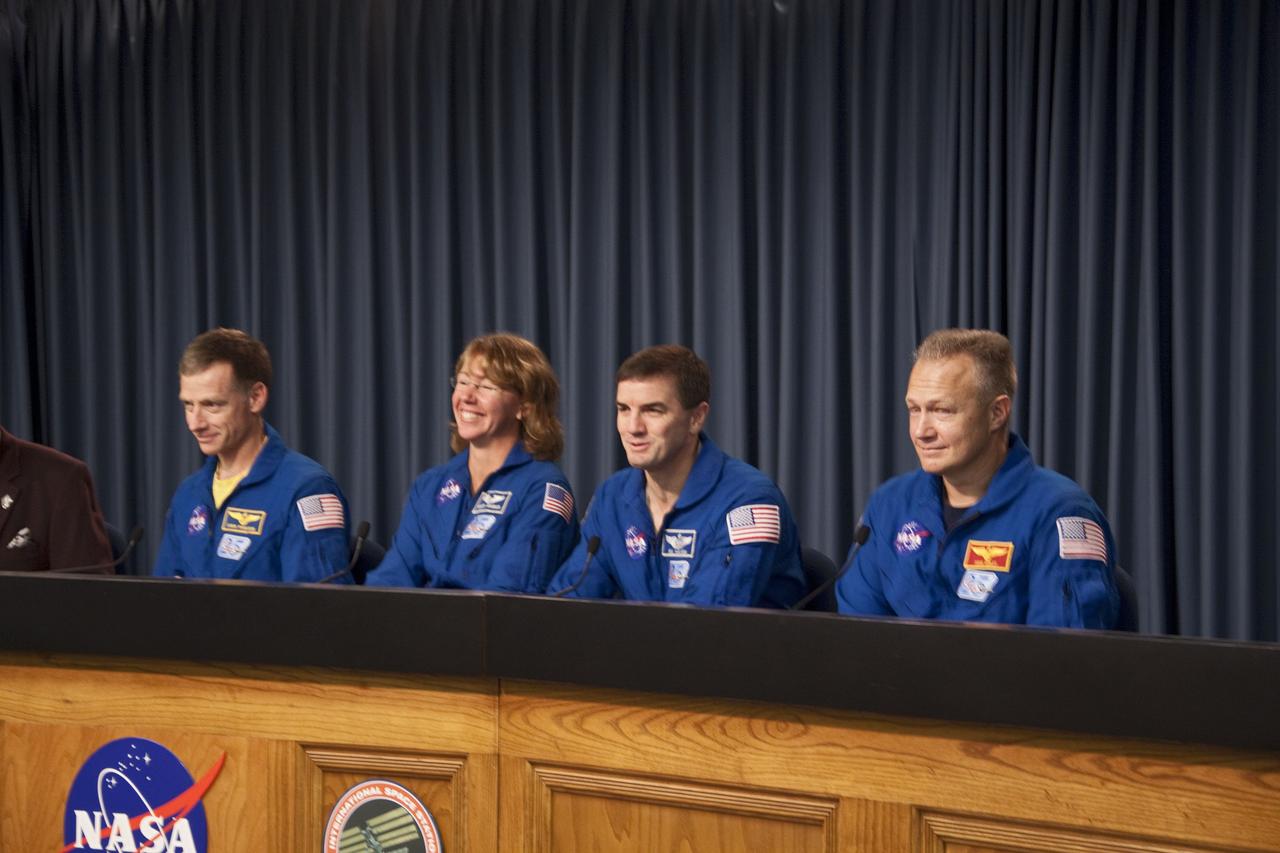
CAPE CANAVERAL, Fla. -- The crew of space shuttle Atlantis' STS-135 and final Space Shuttle Program Flight, participates in a news conference in the Press Site auditorium at NASA's Kennedy Space Center in Florida on landing day. Seen here are STS-135 Commander Chris Ferguson (left), Mission Specialists Sandy Magnus and Rex Walheim and Pilot Doug Hurley. Securing the space shuttle fleet's place in history, Atlantis marked the 26th nighttime landing of NASA's Space Shuttle Program and the 78th landing at Kennedy. Main gear touchdown was at 5:57:00 a.m. EDT, followed by nose gear touchdown at 5:57:20 a.m., and wheelstop at 5:57:54 a.m. Atlantis and its crew delivered to the International Space Station the Raffaello multi-purpose logistics module packed with more than 9,400 pounds of spare parts, equipment and supplies that will sustain station operations for the next year. STS-135 was the 33rd and final flight for Atlantis, which has spent 307 days in space, orbited Earth 4,848 times and traveled 125,935,769 miles. For more information, visit www.nasa.gov/mission_pages/shuttle/shuttlemissions/sts135/index.html. Photo credit: NASA/Jim Grossmann
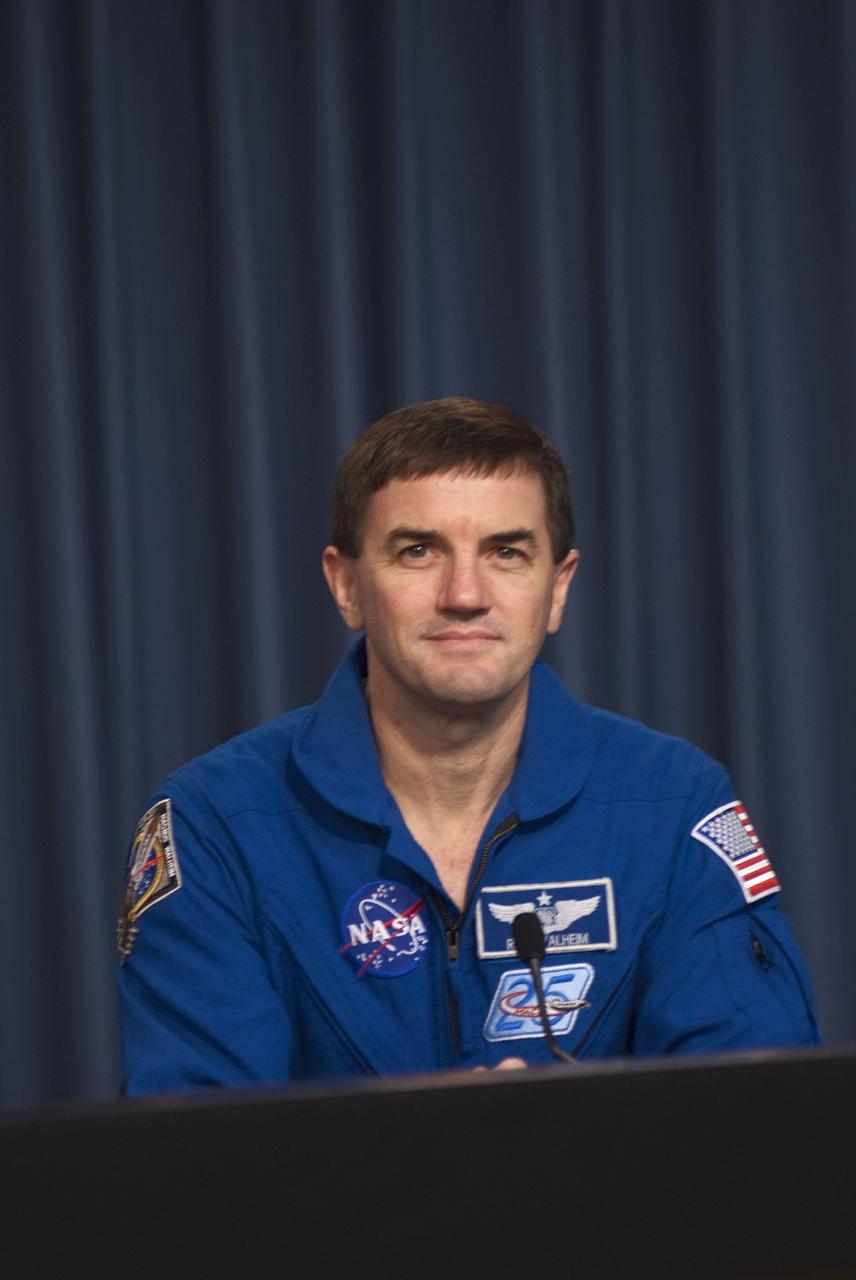
CAPE CANAVERAL, Fla. -- The crew of space shuttle Atlantis' STS-135 and final Space Shuttle Program Flight, participates in a news conference in the Press Site auditorium at NASA's Kennedy Space Center in Florida on landing day. Seen here is STS-135 Mission Specialist Rex Walheim speaking to media. Securing the space shuttle fleet's place in history, Atlantis marked the 26th nighttime landing of NASA's Space Shuttle Program and the 78th landing at Kennedy. Main gear touchdown was at 5:57:00 a.m. EDT, followed by nose gear touchdown at 5:57:20 a.m., and wheelstop at 5:57:54 a.m. Atlantis and its crew delivered to the International Space Station the Raffaello multi-purpose logistics module packed with more than 9,400 pounds of spare parts, equipment and supplies that will sustain station operations for the next year. STS-135 was the 33rd and final flight for Atlantis, which has spent 307 days in space, orbited Earth 4,848 times and traveled 125,935,769 miles. For more information, visit www.nasa.gov/mission_pages/shuttle/shuttlemissions/sts135/index.html. Photo credit: NASA/Jim Grossmann
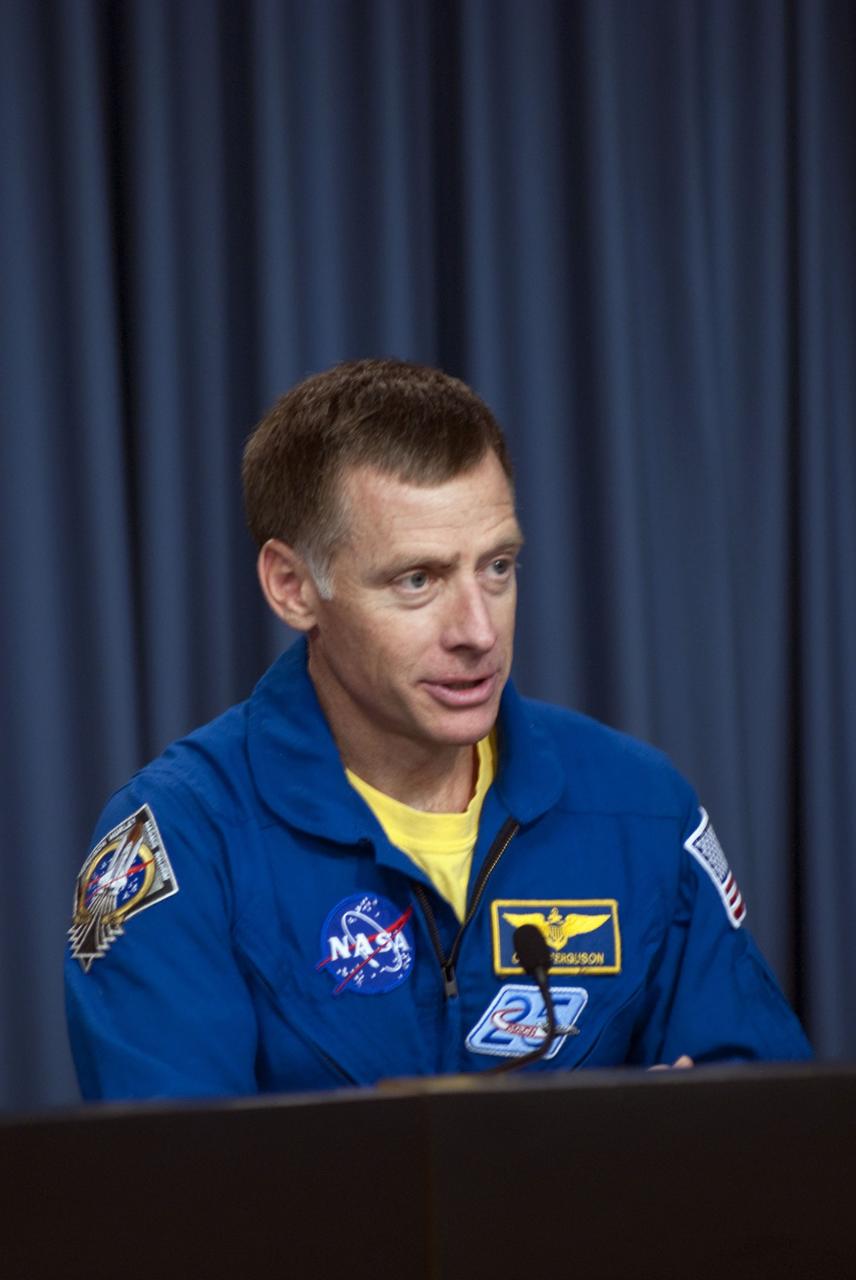
CAPE CANAVERAL, Fla. -- The crew of space shuttle Atlantis' STS-135 and final Space Shuttle Program Flight, participates in a news conference in the Press Site auditorium at NASA's Kennedy Space Center in Florida on landing day. Seen here is STS-135 Commander Chris Ferguson speaking to media. Securing the space shuttle fleet's place in history, Atlantis marked the 26th nighttime landing of NASA's Space Shuttle Program and the 78th landing at Kennedy. Main gear touchdown was at 5:57:00 a.m. EDT, followed by nose gear touchdown at 5:57:20 a.m., and wheelstop at 5:57:54 a.m. Atlantis and its crew delivered to the International Space Station the Raffaello multi-purpose logistics module packed with more than 9,400 pounds of spare parts, equipment and supplies that will sustain station operations for the next year. STS-135 was the 33rd and final flight for Atlantis, which has spent 307 days in space, orbited Earth 4,848 times and traveled 125,935,769 miles. For more information, visit www.nasa.gov/mission_pages/shuttle/shuttlemissions/sts135/index.html. Photo credit: NASA/Jim Grossmann
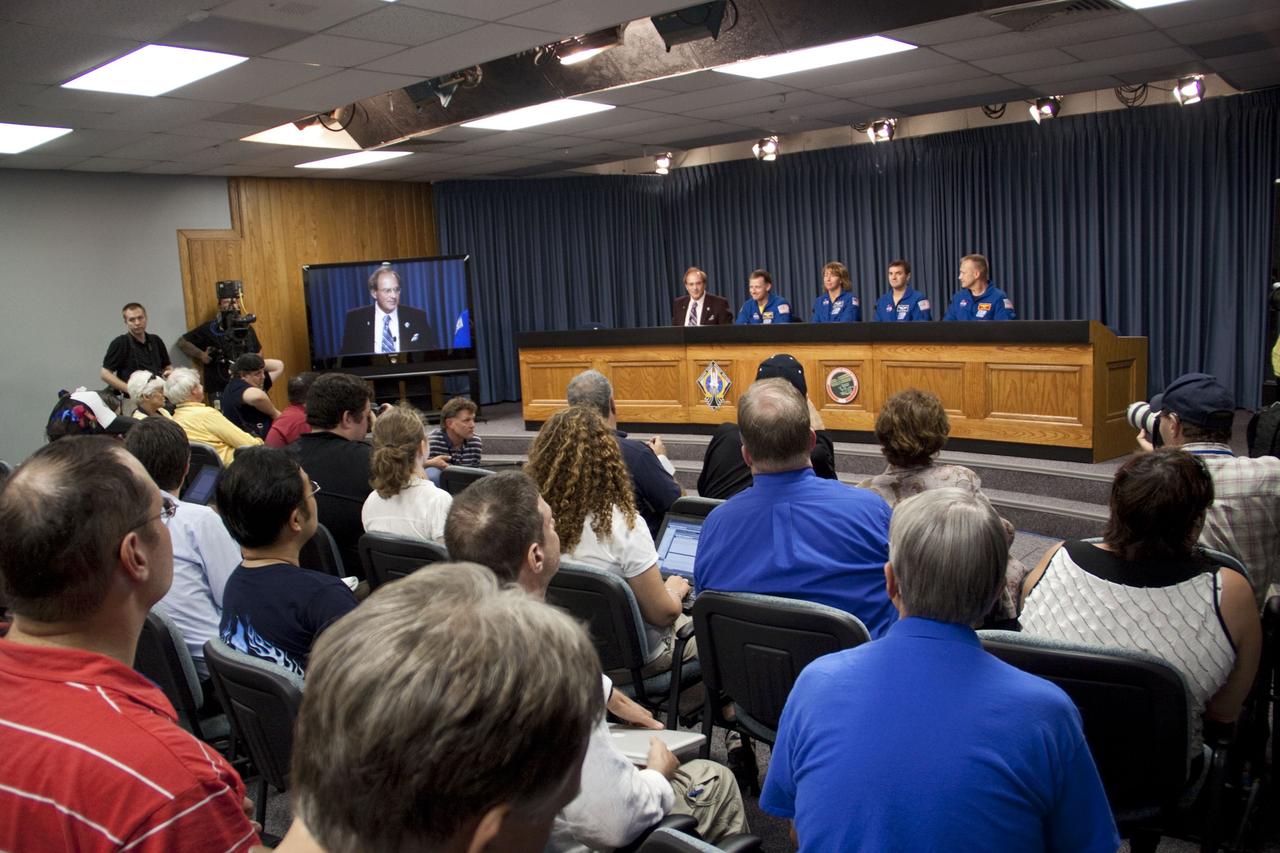
CAPE CANAVERAL, Fla. -- The crew of space shuttle Atlantis' STS-135 and Space Shuttle Program Flight, participates in a news conference in the Press Site auditorium at NASA's Kennedy Space Center in Florida on landing day. Seen here are NASA Commentator and Public Affairs Officer George Diller (left), STS-135 Commander Chris Ferguson, Mission Specialists Sandy Magnus and Rex Walheim, and Pilot Doug Hurley. Securing the space shuttle fleet's place in history, Atlantis marked the 26th nighttime landing of NASA's Space Shuttle Program and the 78th landing at Kennedy. Main gear touchdown was at 5:57:00 a.m. EDT, followed by nose gear touchdown at 5:57:20 a.m., and wheelstop at 5:57:54 a.m. Atlantis and its crew delivered to the International Space Station the Raffaello multi-purpose logistics module packed with more than 9,400 pounds of spare parts, equipment and supplies that will sustain station operations for the next year. STS-135 was the 33rd and final flight for Atlantis, which has spent 307 days in space, orbited Earth 4,848 times and traveled 125,935,769 miles. For more information, visit www.nasa.gov/mission_pages/shuttle/shuttlemissions/sts135/index.html. Photo credit: NASA/Jim Grossmann
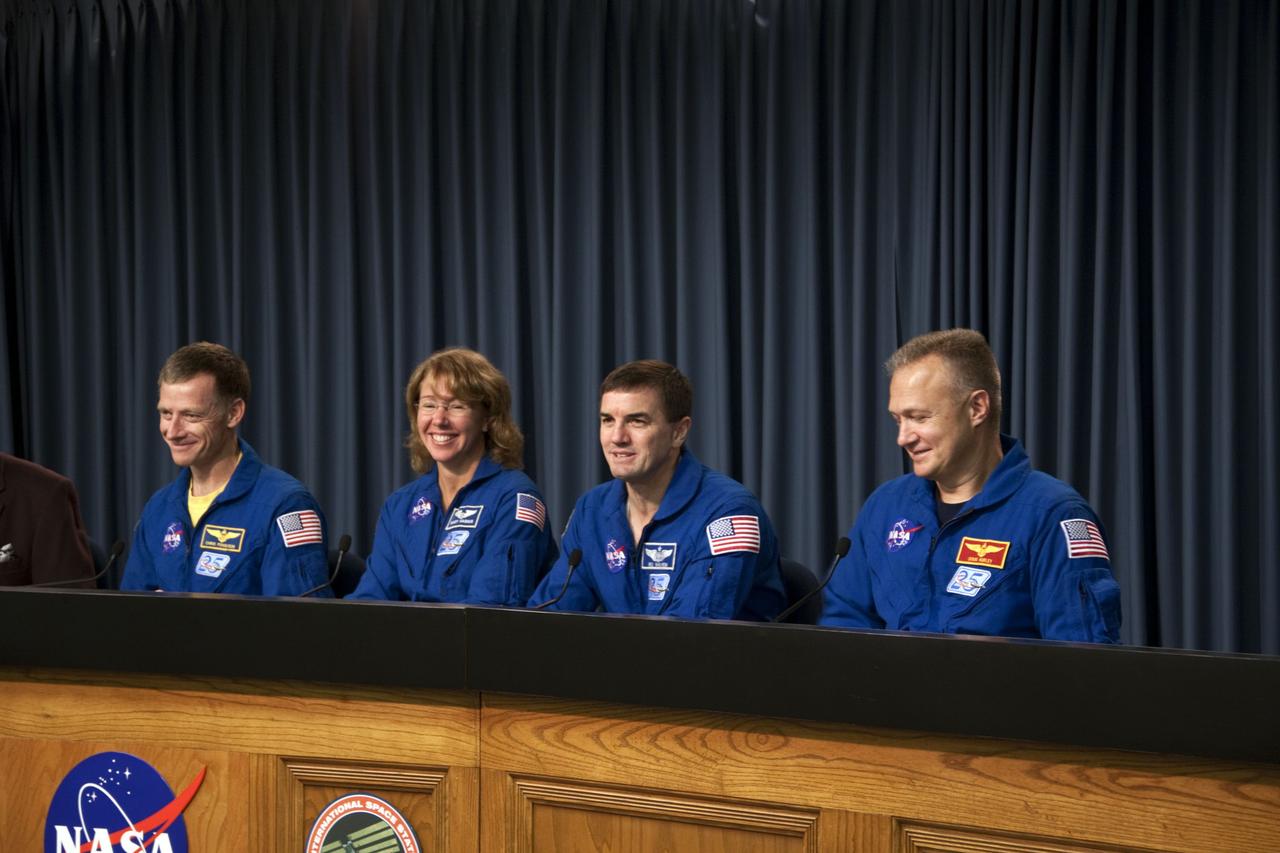
CAPE CANAVERAL, Fla. -- The crew of space shuttle Atlantis' STS-135 and final Space Shuttle Program Flight, participates in a news conference in the Press Site auditorium at NASA's Kennedy Space Center in Florida on landing day. Seen here are STS-135 Commander Chris Ferguson (left), Mission Specialists Sandy Magnus and Rex Walheim and Pilot Doug Hurley. Securing the space shuttle fleet's place in history, Atlantis marked the 26th nighttime landing of NASA's Space Shuttle Program and the 78th landing at Kennedy. Main gear touchdown was at 5:57:00 a.m. EDT, followed by nose gear touchdown at 5:57:20 a.m., and wheelstop at 5:57:54 a.m. Atlantis and its crew delivered to the International Space Station the Raffaello multi-purpose logistics module packed with more than 9,400 pounds of spare parts, equipment and supplies that will sustain station operations for the next year. STS-135 was the 33rd and final flight for Atlantis, which has spent 307 days in space, orbited Earth 4,848 times and traveled 125,935,769 miles. For more information, visit www.nasa.gov/mission_pages/shuttle/shuttlemissions/sts135/index.html. Photo credit: NASA/Jim Grossmann
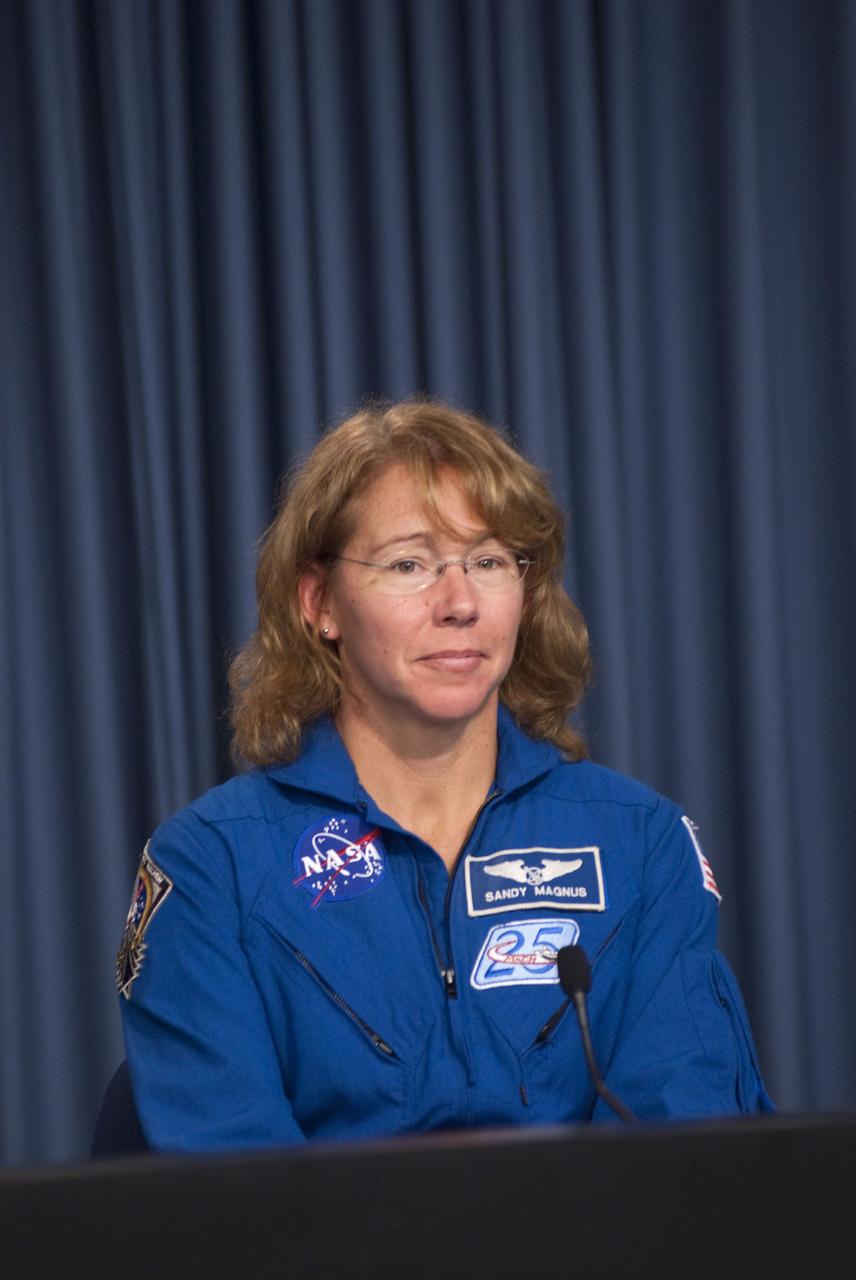
CAPE CANAVERAL, Fla. -- The crew of space shuttle Atlantis' STS-135 and final Space Shuttle Program Flight, participates in a news conference in the Press Site auditorium at NASA's Kennedy Space Center in Florida on landing day. Seen here is STS-135 Mission Specialist Sandy Magnus speaking to media. Securing the space shuttle fleet's place in history, Atlantis marked the 26th nighttime landing of NASA's Space Shuttle Program and the 78th landing at Kennedy. Main gear touchdown was at 5:57:00 a.m. EDT, followed by nose gear touchdown at 5:57:20 a.m., and wheelstop at 5:57:54 a.m. Atlantis and its crew delivered to the International Space Station the Raffaello multi-purpose logistics module packed with more than 9,400 pounds of spare parts, equipment and supplies that will sustain station operations for the next year. STS-135 was the 33rd and final flight for Atlantis, which has spent 307 days in space, orbited Earth 4,848 times and traveled 125,935,769 miles. For more information, visit www.nasa.gov/mission_pages/shuttle/shuttlemissions/sts135/index.html. Photo credit: NASA/Jim Grossmann
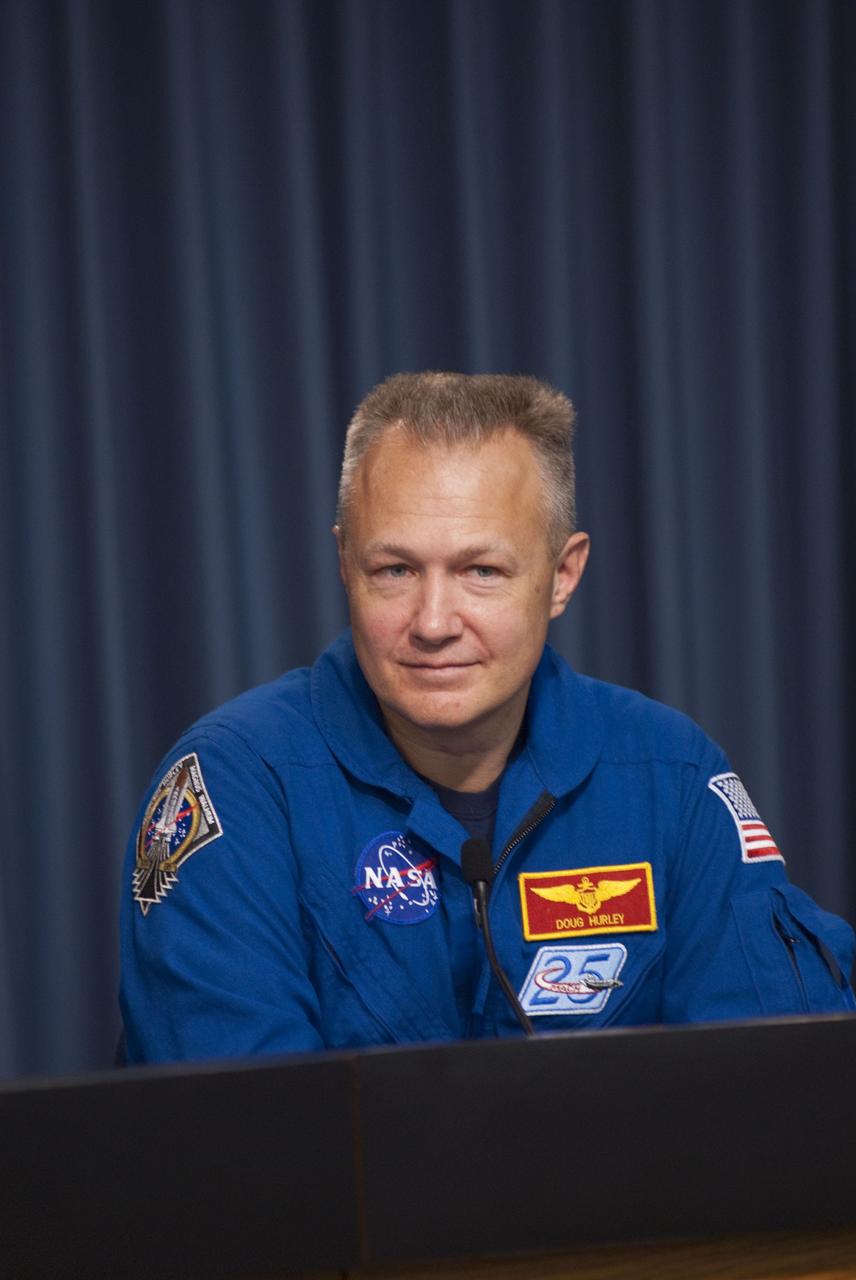
CAPE CANAVERAL, Fla. -- The crew of space shuttle Atlantis' STS-135 and final Space Shuttle Program Flight, participates in a news conference in the Press Site auditorium at NASA's Kennedy Space Center in Florida on landing day. Seen here is STS-135 Pilot Doug Hurley speaking to media. Securing the space shuttle fleet's place in history, Atlantis marked the 26th nighttime landing of NASA's Space Shuttle Program and the 78th landing at Kennedy. Main gear touchdown was at 5:57:00 a.m. EDT, followed by nose gear touchdown at 5:57:20 a.m., and wheelstop at 5:57:54 a.m. Atlantis and its crew delivered to the International Space Station the Raffaello multi-purpose logistics module packed with more than 9,400 pounds of spare parts, equipment and supplies that will sustain station operations for the next year. STS-135 was the 33rd and final flight for Atlantis, which has spent 307 days in space, orbited Earth 4,848 times and traveled 125,935,769 miles. For more information, visit www.nasa.gov/mission_pages/shuttle/shuttlemissions/sts135/index.html. Photo credit: NASA/Jim Grossmann
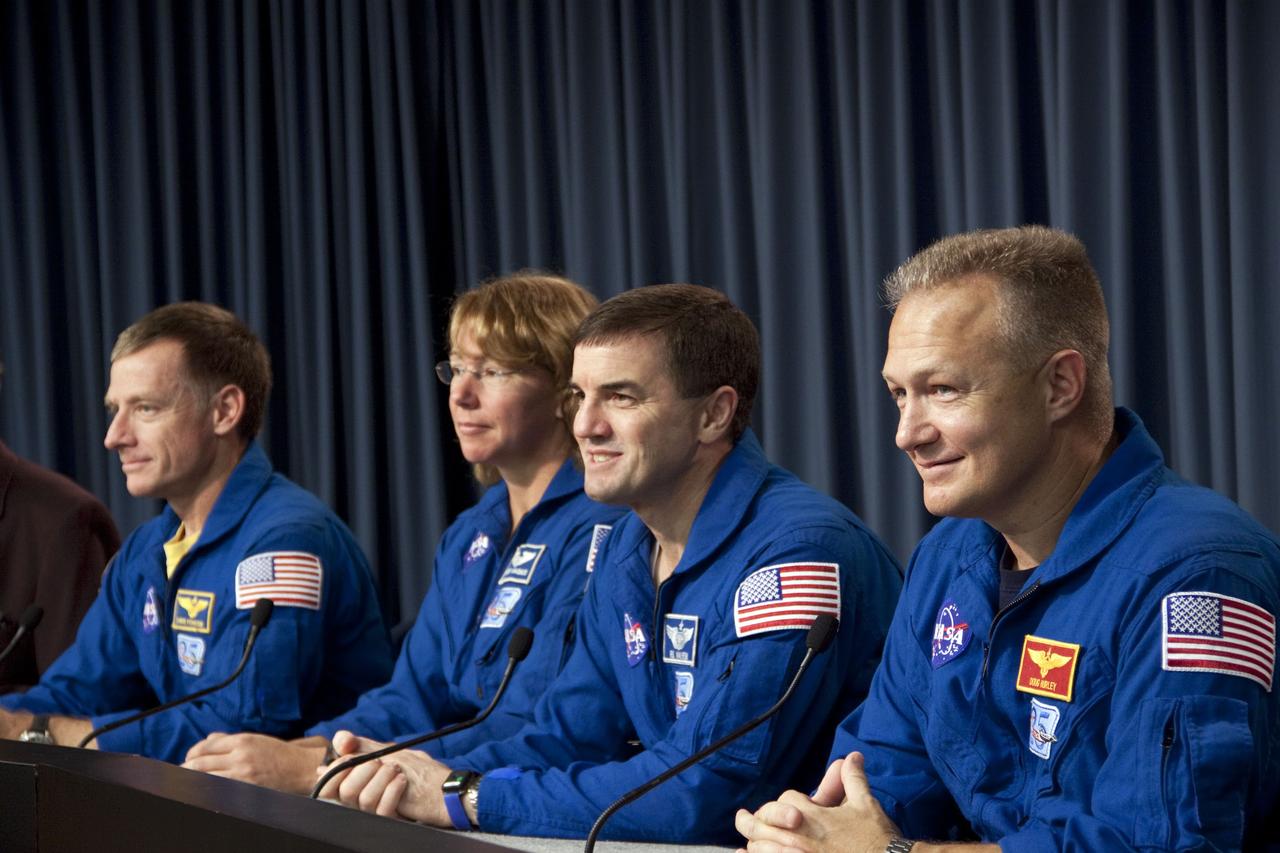
CAPE CANAVERAL, Fla. -- The crew of space shuttle Atlantis' STS-135 and final Space Shuttle Program Flight, participates in a news conference in the Press Site auditorium at NASA's Kennedy Space Center in Florida on landing day. Seen here are STS-135 Commander Chris Ferguson (left), Mission Specialists Sandy Magnus and Rex Walheim and Pilot Doug Hurley. Securing the space shuttle fleet's place in history, Atlantis marked the 26th nighttime landing of NASA's Space Shuttle Program and the 78th landing at Kennedy. Main gear touchdown was at 5:57:00 a.m. EDT, followed by nose gear touchdown at 5:57:20 a.m., and wheelstop at 5:57:54 a.m. Atlantis and its crew delivered to the International Space Station the Raffaello multi-purpose logistics module packed with more than 9,400 pounds of spare parts, equipment and supplies that will sustain station operations for the next year. STS-135 was the 33rd and final flight for Atlantis, which has spent 307 days in space, orbited Earth 4,848 times and traveled 125,935,769 miles. For more information, visit www.nasa.gov/mission_pages/shuttle/shuttlemissions/sts135/index.html. Photo credit: NASA/Jim Grossmann
EDWARDS AIR FORCE BASE, CALIF. -- Viewed from the side, orbiter Discovery, with its seven-member crew, touches down on the landing strip at Edwards Air Force Base, Calif., after an 11-day mission to the International Space Station. The orbiter’s main landing gear touched down on EAFB runway 22 at 5 p.m. With the aid of its drag chute, Discovery came to a complete stop at 5:01 p.m. At the conclusion of mission STS-92, Discovery and crew had traveled about 5.3 million statute miles. Following vehicle safing and preliminary offloading efforts, workers will begin preparations for Discovery’s transcontinental ferry flight back to KSC on the back of NASA’s modified Boeing 747
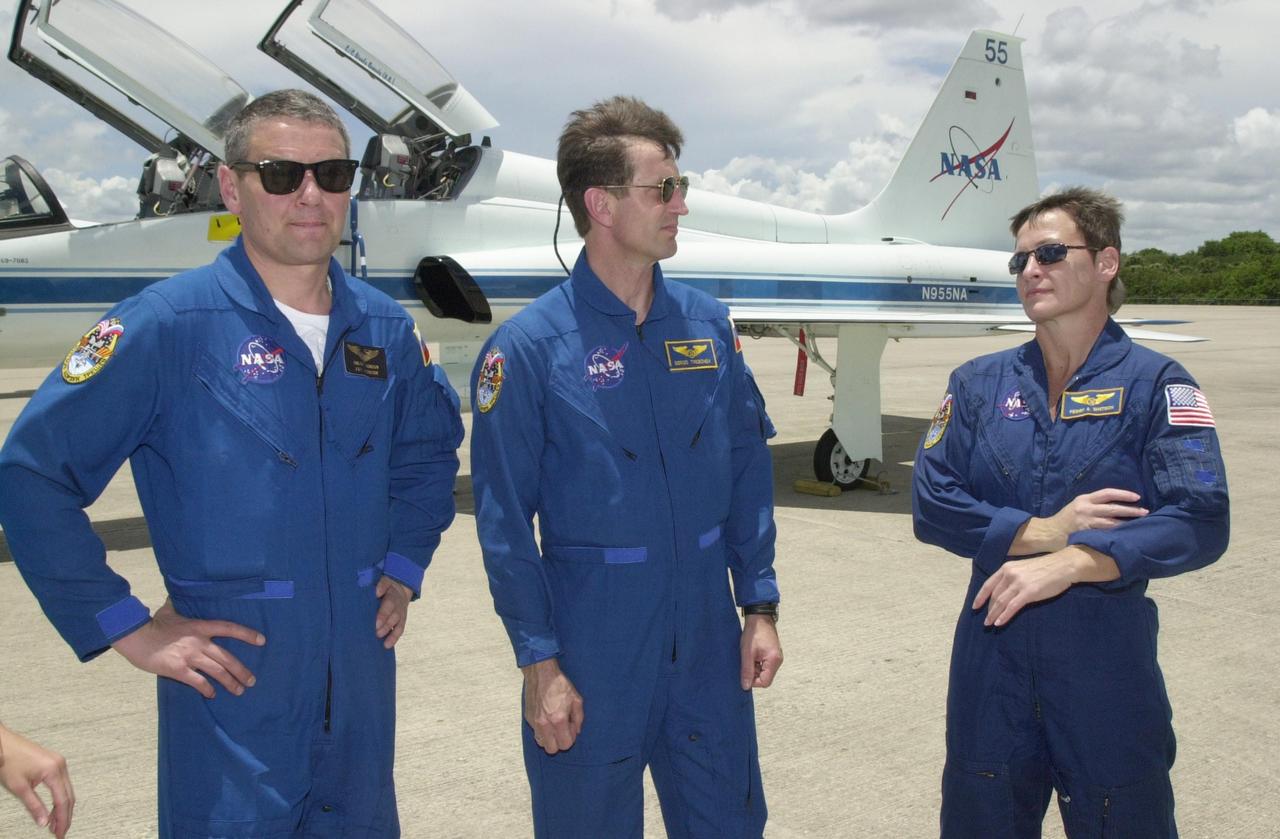
KENNEDY SPACE CENTER, FLA. -- Expedition 5 crew members Commander Valeri Korzun, cosmonaut Sergei Treschev and astronaut Peggy Whitson get together after landing at the Shuttle Landing Facility to prepare for launch on mission STS-111. Korzun and Treschev are with the Russian Space Agency. Expedition 5 will travel to the Station on Space Shuttle Endeavour as the replacement crew for Expedition 4, who will return to Earth aboard the orbiter. Mission STS-111, known as Utilization Flight 2, is carrying supplies and equipment to the International Space Station. The payload includes the Multi-Purpose Logistics Module Leonardo, the Mobile Base System, which will be installed on the Mobile Transporter to complete the Canadian Mobile Servicing System, or MSS, and a replacement wrist/roll joint for Canadarm 2. The mechanical arm will then have the capability to "inchworm" from the U.S. Lab Destiny to the MSS and travel along the truss to work sites. Launch is scheduled for May 30, 2002