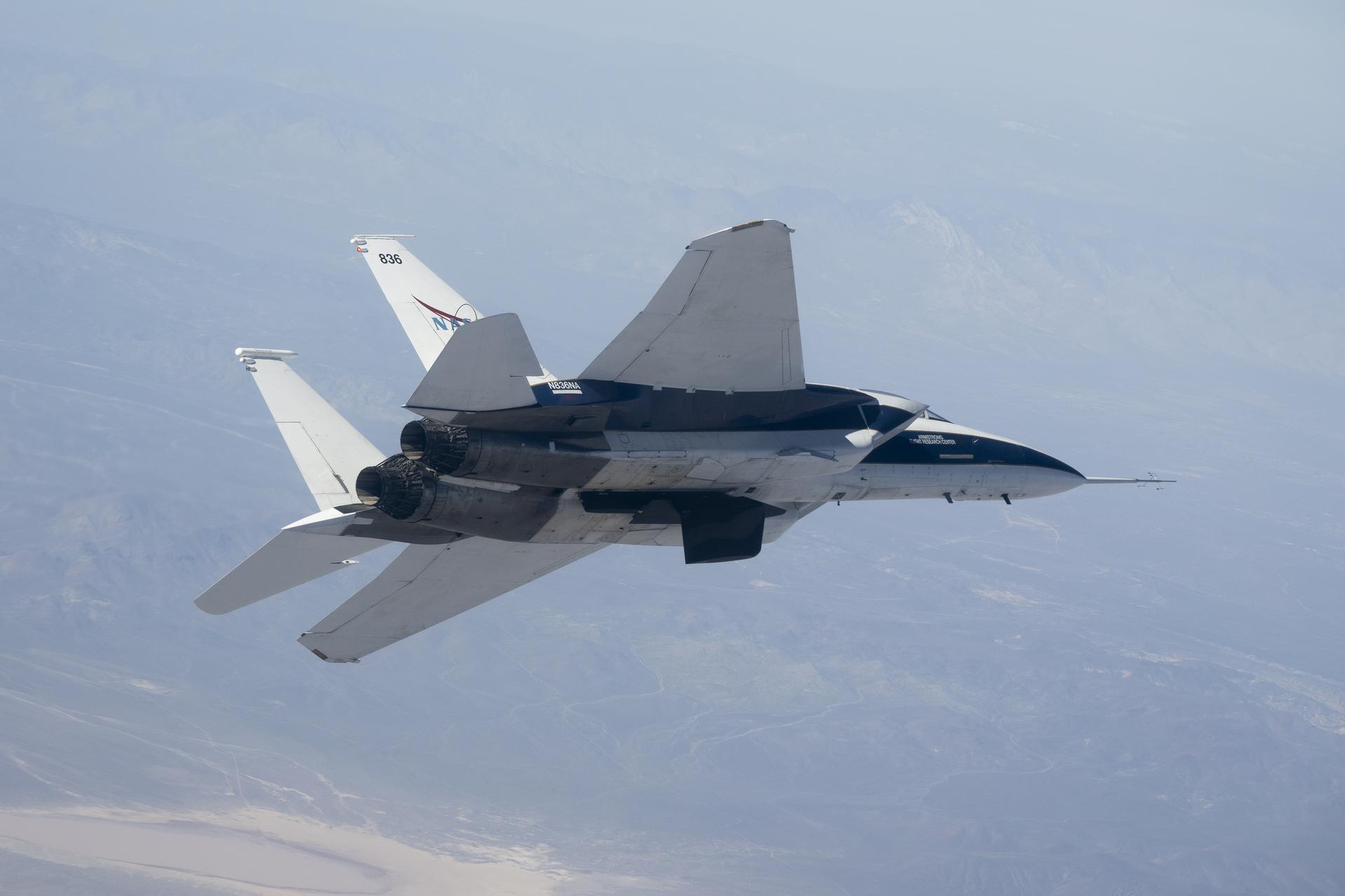
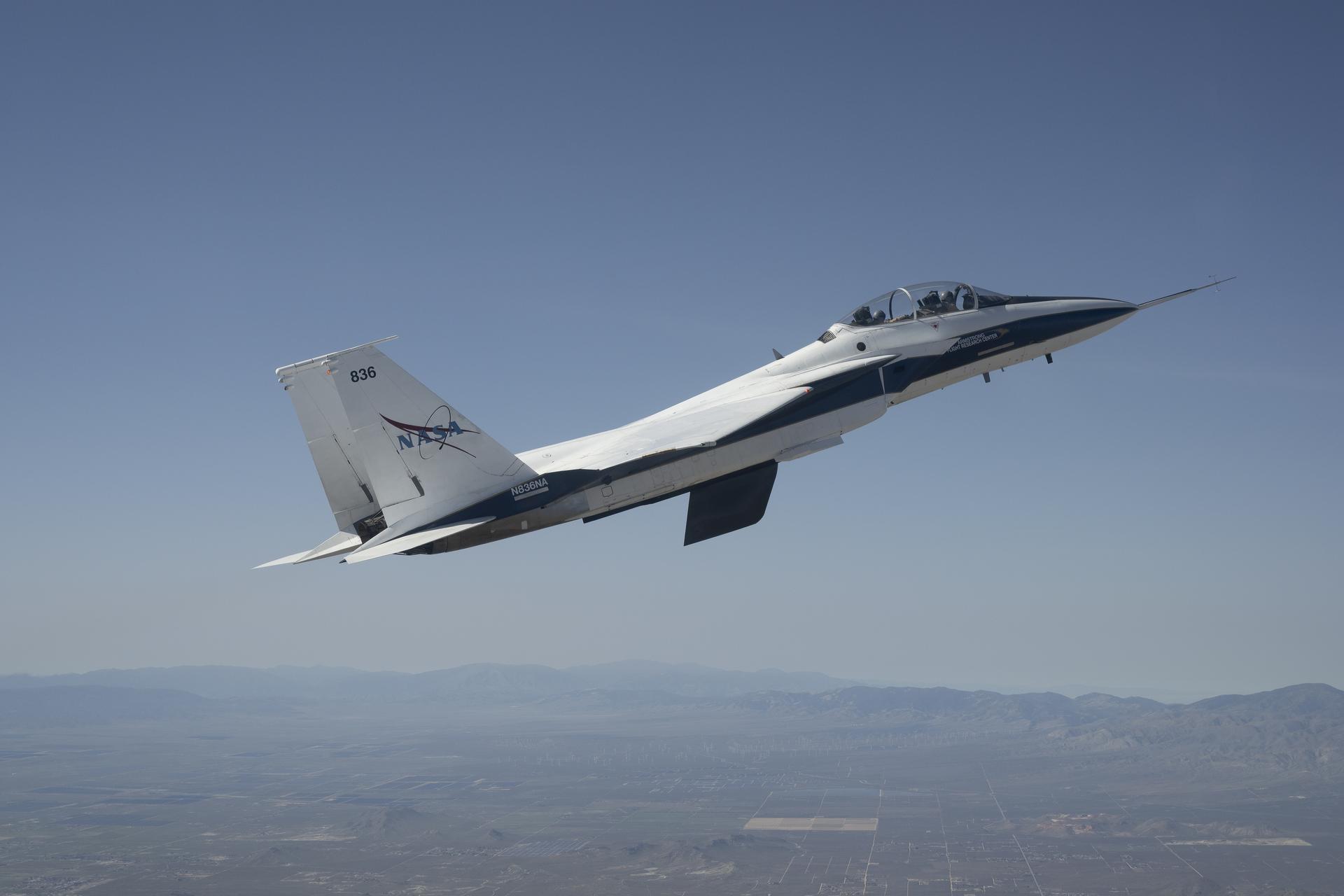
A F-15 aircraft owned by NASA’s Armstrong Flight Research Center in Edwards, California, flies above a mountain range on Tuesday, April 21, 2026. The agency’s Crossflow Attenuated Natural Laminar Flow (CATNLF) test article is attached to the bottom of this F-15. This project aims to lower fuel costs for future commercial aircraft by testing a scale-model wing designed to improve laminar flow. 
NASA’s Crossflow Attenuated Natural Laminar Flow (CATNLF) Project Tests Model Wing on F-15
An F-15 aircraft flies above the world’s largest compass rose above NASA’s Armstrong Flight Research Center in Edwards, California, on Monday, April 20, 2026. NASA’s Crossflow Attenuated Natural Laminar Flow (CATNLF) test article is attached to the bottom of the F-15. The project aims to lower fuel costs for future commercial aircraft by testing a scale-model wing designed to improve laminar flow.
NASA’s Crossflow Attenuated Natural Laminar Flow (CATNLF) Project Tests Model Wing on F-15
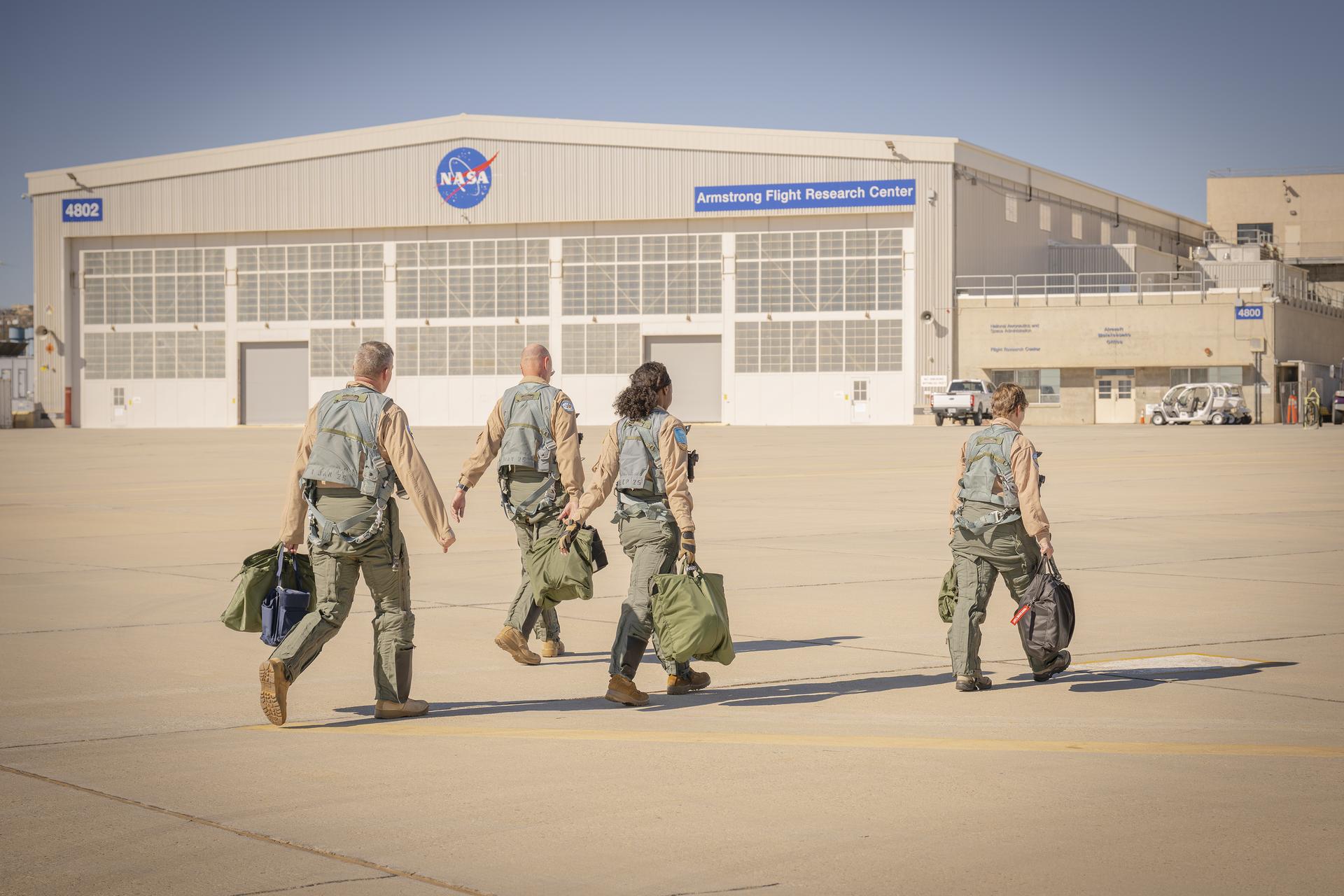
Four NASA employees walk toward a hangar after a flight Thursday, Feb. 4, 2026, at NASA’s Armstrong Flight Research Center in Edwards, California. The team supports the agency’s Crossflow Attenuated Natural Laminar Flow (CATNLF) project, which aims to lower fuel costs for future commercial aircraft by testing a scale-model wing designed to improve laminar flow.
NASA’s Crossflow Attenuated Natural Laminar Flow (CATNLF) Project Tests Model Wing on F-15
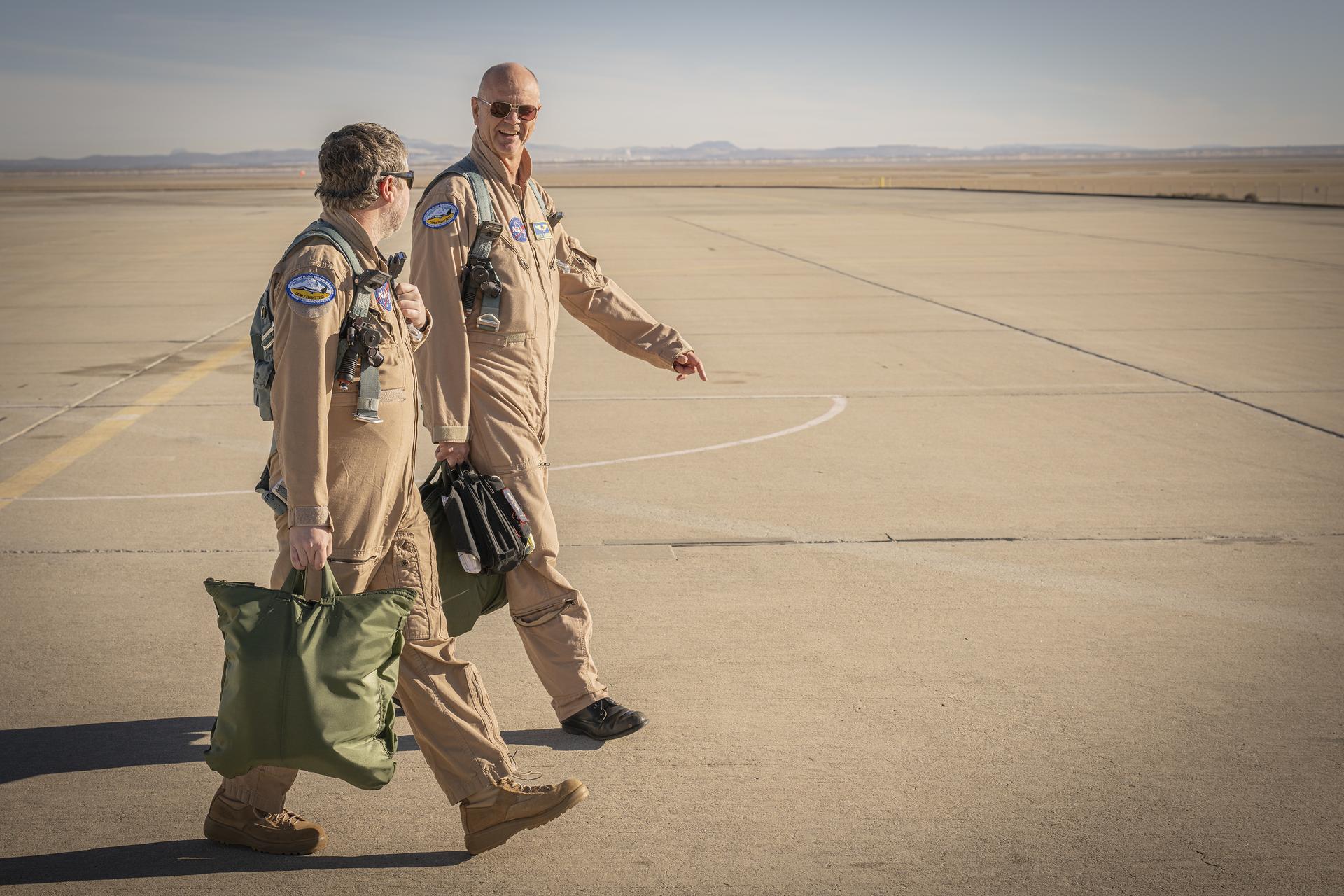
NASA test pilots Jim Less, left, and Nils Larson walk away from a hangar at NASA’s Armstrong Flight Research Center in Edwards, California, on Thursday, Feb. 4, 2026. The pilots support the agency’s Crossflow Attenuated Natural Laminar Flow (CATNLF) project, which aims to lower fuel costs for future commercial aircraft by testing a scale-model wing designed to improve laminar flow.
NASA’s Crossflow Attenuated Natural Laminar Flow (CATNLF) Project Tests Model Wing on F-15
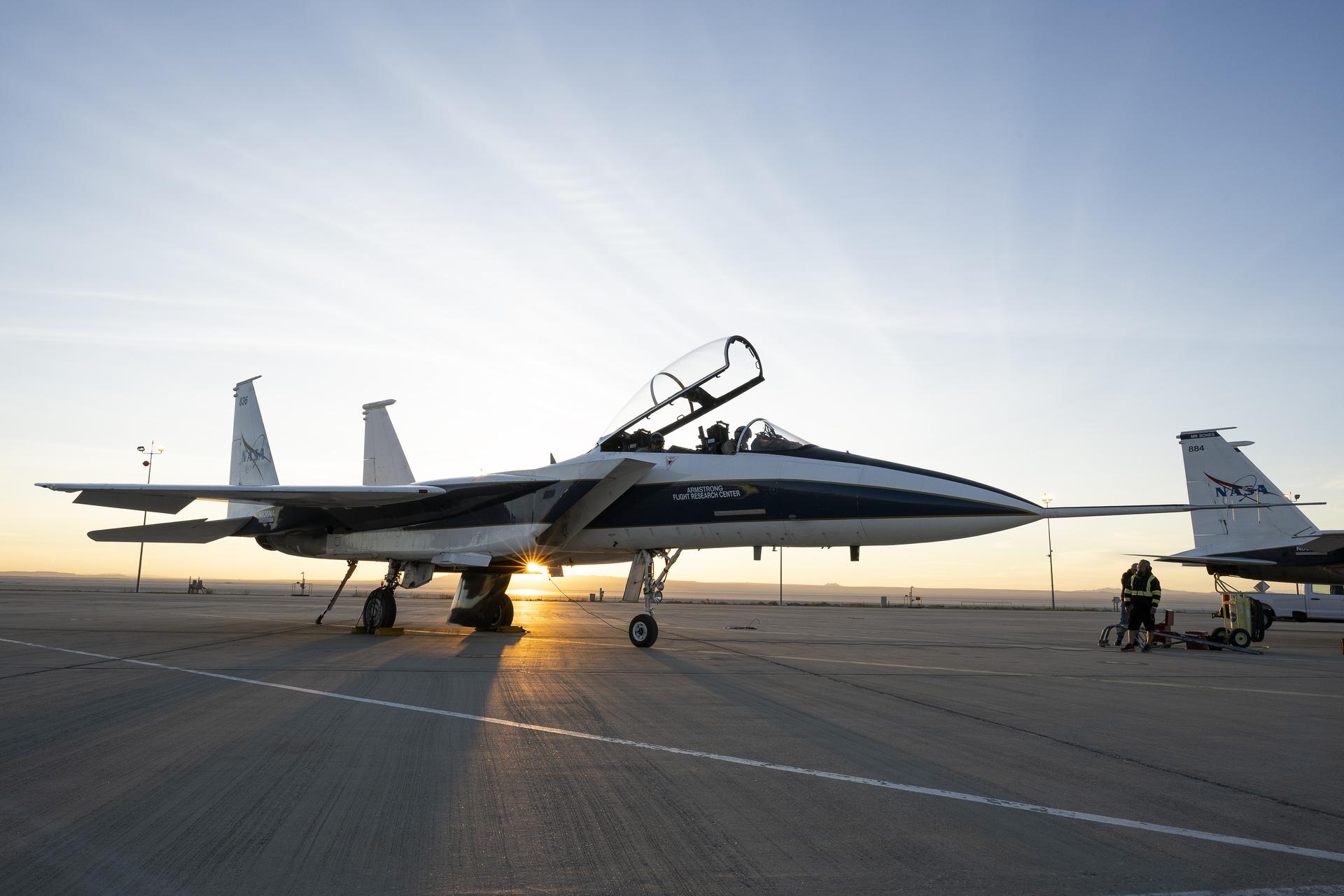
An F-15 research aircraft sits on the ramp at NASA’s Armstrong Flight Research Center in Edwards, California, on Tuesday, March 17, 2026. NASA pilots Jim Less, front seat, and Carrie Worth prepare for the flight. The agency’s Crossflow Attenuated Natural Laminar Flow (CATNLF) test article is attached to the bottom of the F-15. The project aims to lower fuel costs for future commercial aircraft by testing a scale-model wing designed to improve laminar flow.
NASA’s Crossflow Attenuated Natural Laminar Flow (CATNLF) Project Tests Model Wing on F-15
NASA researchers Mike Frederick, right, and Michelle Banchy, left, along with Ashante Jordan and intern Phillip Nguyen, sit in a control room and prepare for a flight test Thursday, Jan. 29, 2026, at NASA’s Armstrong Flight Research Center in Edwards, California. The agency’s Crossflow Attenuated Natural Laminar Flow (CATNLF) project aims to lower fuel costs for future commercial aircraft by testing a scale-model wing designed to improve laminar flow.
NASA’s Crossflow Attenuated Natural Laminar Flow (CATNLF) Project Tests Model Wing on F-15
NASA flight test engineer A.J. Jaffe and pilot Nils Larson walk on the ramp before a flight Tuesday, Jan. 13, 2026, at NASA’s Armstrong Flight Research Center in Edwards, California. The two support the agency’s Crossflow Attenuated Natural Laminar Flow (CATNLF) project, which aims to lower fuel costs for future commercial aircraft by testing a scale-model wing designed to improve laminar flow.
NASA’s Crossflow Attenuated Natural Laminar Flow (CATNLF) Project Tests Model Wing on F-15
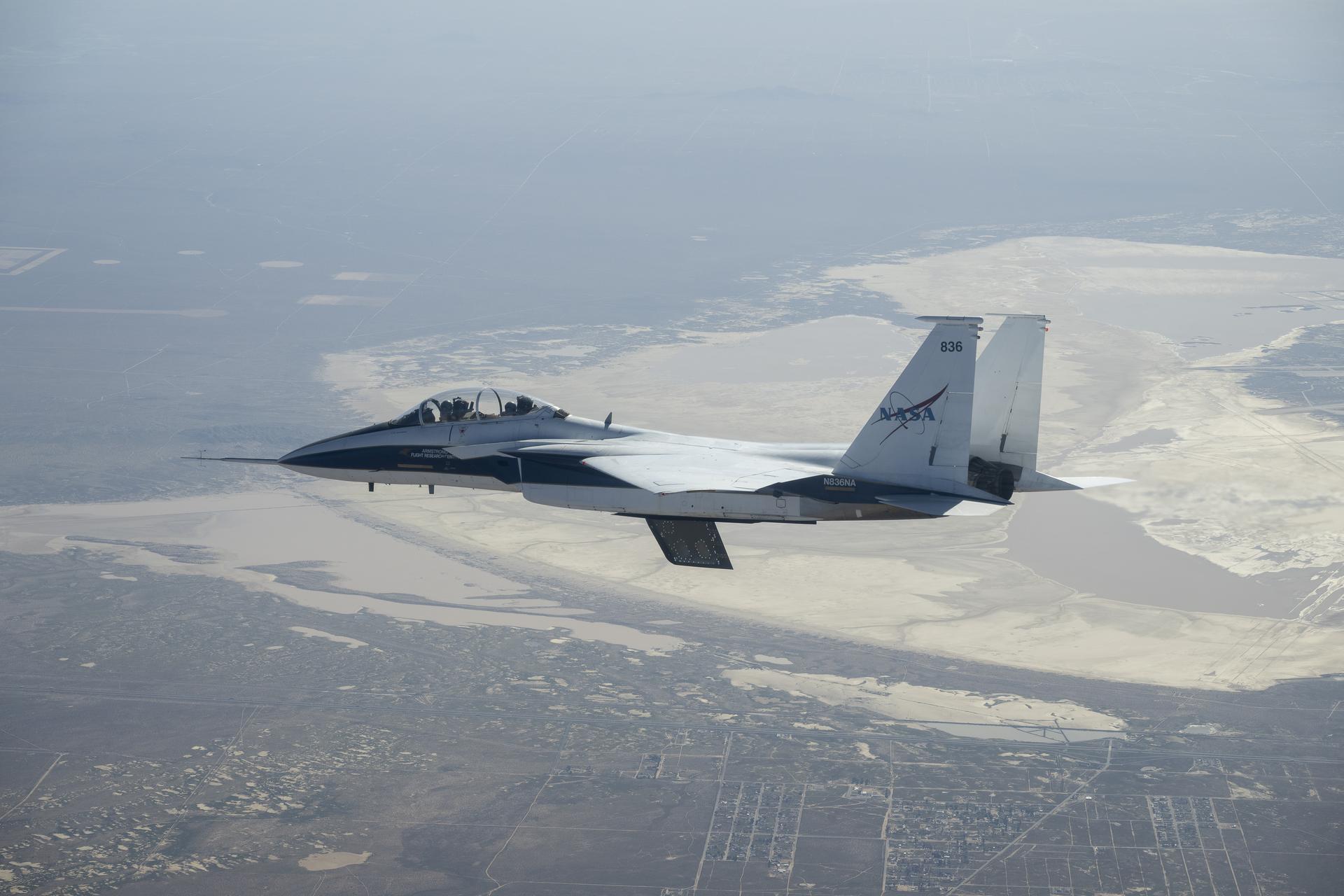
NASA’s Crossflow Attenuated Natural Laminar Flow (CATNLF) scale-model wing flies on a NASA F-15 research jet during a test flight from NASA’s Armstrong Flight Research Center in Edwards, California. The CATNLF technology is designed to maintain smooth airflow, known as laminar flow. NASA will continue flight tests to collect data that validates the CATNLF design and its potential to improve laminar flow, reducing drag and lowering fuel costs for future commercial aircraft.
NASA Completes First Flight of Laminar Flow Scaled Wing Design
NASA’s Crossflow Attenuated Natural Laminar Flow (CATNLF) scale-model wing flies for the first time on a NASA F-15 research jet during a test flight from NASA’s Armstrong Flight Research Center in Edwards, California. The 75-minute flight confirmed the aircraft could maneuver safely with the approximately 3-foot-tall test article mounted beneath it. NASA will continue flight tests to collect data that validates the CATNLF design and its potential to improve laminar flow, reducing drag and lowering fuel costs for future commercial aircraft.
NASA Completes First Flight of Laminar Flow Scaled Wing Design
NASA’s Crossflow Attenuated Natural Laminar Flow (CATNLF) scale-model wing flies for the first time on a NASA F-15 research jet during a test flight from NASA’s Armstrong Flight Research Center in Edwards, California. The 75-minute flight confirmed the aircraft could maneuver safely with the approximately 3-foot-tall test article mounted beneath it. NASA will continue flight tests to collect data that validates the CATNLF design and its potential to improve laminar flow, reducing drag and lowering fuel costs for future commercial aircraft. 
NASA Completes First Flight of Laminar Flow Scaled Wing Design