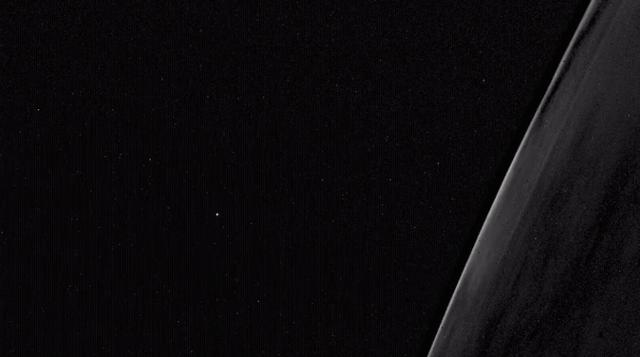
A brief laser flash at the center of the frame was part of an experiment conducted by two NASA CubeSats. In it, one small satellite used a laser to send information to the ISARA CubeSat, managed by JPL. Movie available at https://photojournal.jpl.nasa.gov/catalog/PIA23117

The RainCube 6U CubeSat with fully-deployed antenna. RainCube, CubeRRT and TEMPEST-D are currently integrated aboard Orbital ATKs Cygnus spacecraft and are awaiting launch on an Antares rocket. After the CubeSats have arrived at the station, they will be deployed into low-Earth orbit and will begin their missions to test these new technologies useful for predicting weather, ensuring data quality, and helping researchers better understand storms. https://photojournal.jpl.nasa.gov/catalog/PIA22457
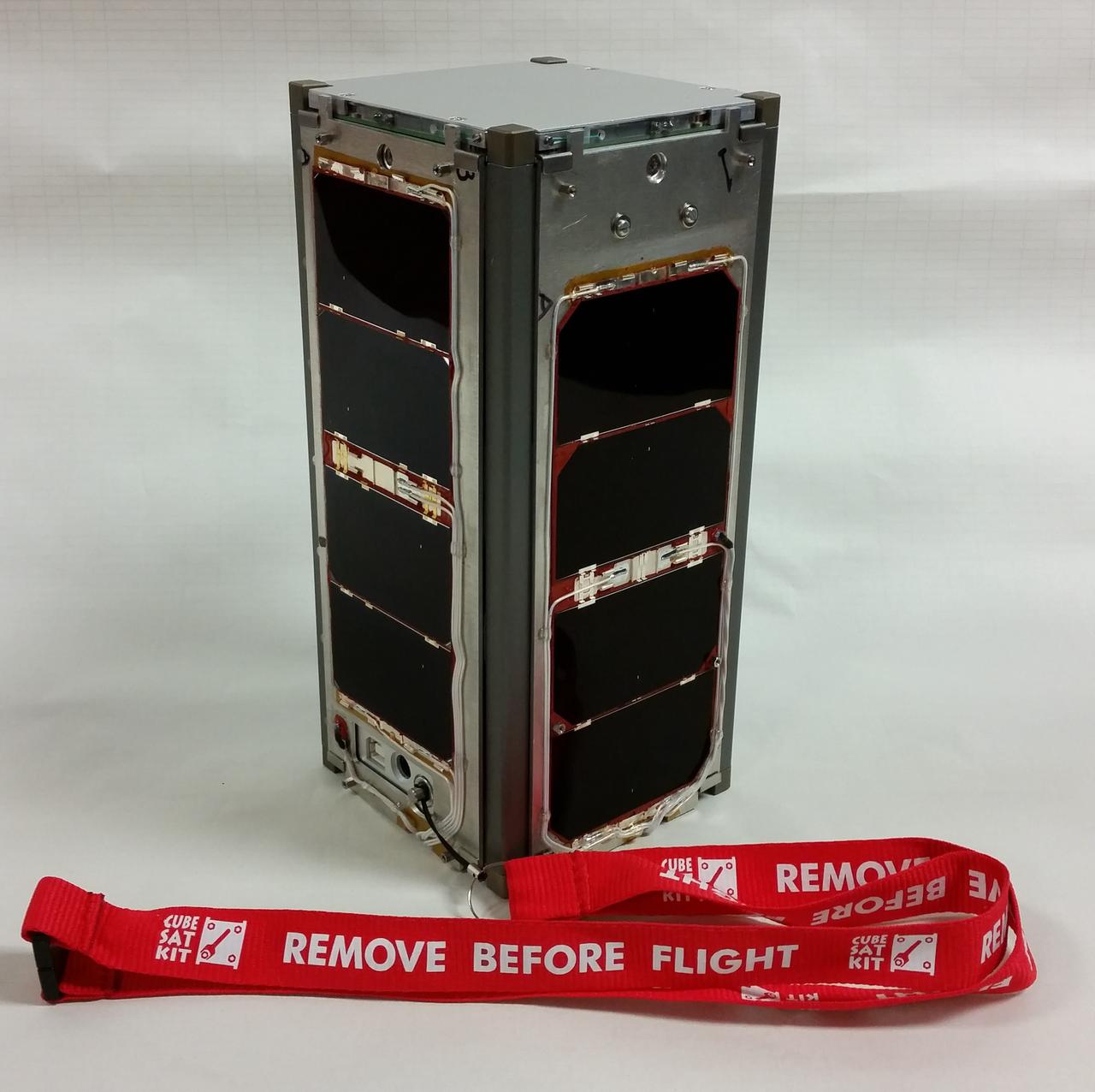
The primary mission of CSUNSat1 is to space test an innovative low temperature capable energy storage system developed by the Jet Propulsion Laboratory, raising its TRL level to 7 from 4 to 5. The success of this energy storage system will enable future missions, especially those in deep space to do more science while requiring less energy, mass and volume. This CubeSat was designed, built, programmed, and tested by a team of over 70 engineering and computer science students at CSUN. The primary source of funding for CSUNSat1 comes from NASA’s Smallest Technology Partnership program. Launched by NASA’s CubeSat Launch Initiative on the NET April 18, 2017 ELaNa XVII mission on the seventh Orbital-ATK Cygnus Commercial Resupply Services (OA-7) to the International Space Station and deployed on tbd.

This poster highlights the JPL cubesat missions. NASA CubeSat Programs provide opportunities for small satellite systems to fly as auxiliary payloads on planned missions.
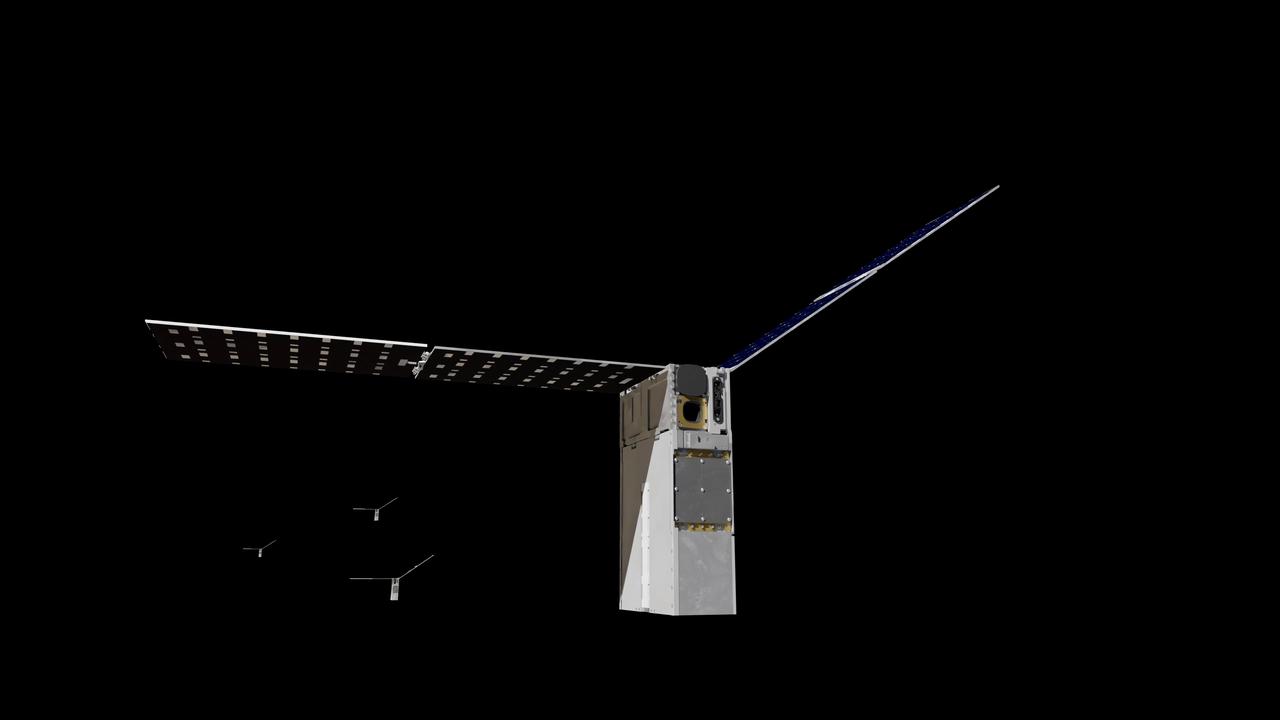
NASA’s Starling six-month mission will use a team of four CubeSats in low-Earth orbit to test technologies that let spacecraft operate in a synchronized manner without resources from the ground. The technologies will advance capabilities in swarm maneuver planning and execution, communications networking, relative navigation, and autonomous coordination between spacecraft.
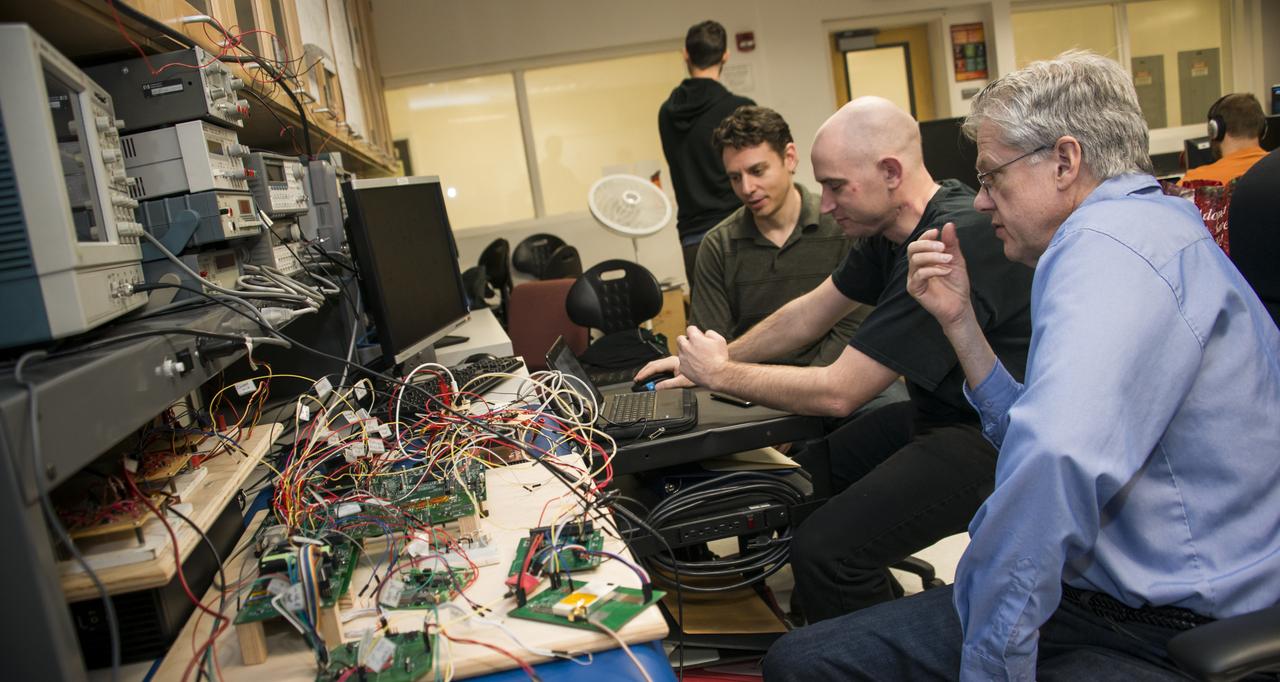
CSUNSat-1 Team (Adam Kaplan, James Flynn, Donald Eckels) working on their CubeSat at California State University Northridge. The primary mission of CSUNSat1 is to space test an innovative low temperature capable energy storage system developed by the Jet Propulsion Laboratory, raising its TRL level to 7 from 4 to 5. The success of this energy storage system will enable future missions, especially those in deep space to do more science while requiring less energy, mass and volume. This CubeSat was designed, built, programmed, and tested by a team of over 70 engineering and computer science students at CSUN. The primary source of funding for CSUNSat1 comes from NASA’s Smallest Technology Partnership program. Launched by NASA’s CubeSat Launch Initiative NET April 18, 2017 ELaNa XVII mission on the seventh Orbital-ATK Cygnus Commercial Resupply Services (OA-7) to the International Space Station and deployed on tbd.

NASA’s Starling six-month mission will use a team of four CubeSats in low-Earth orbit to test technologies that let spacecraft operate in a synchronized manner without resources from the ground. The technologies will advance capabilities in swarm maneuver planning and execution, communications networking, relative navigation, and autonomous coordination between spacecraft.
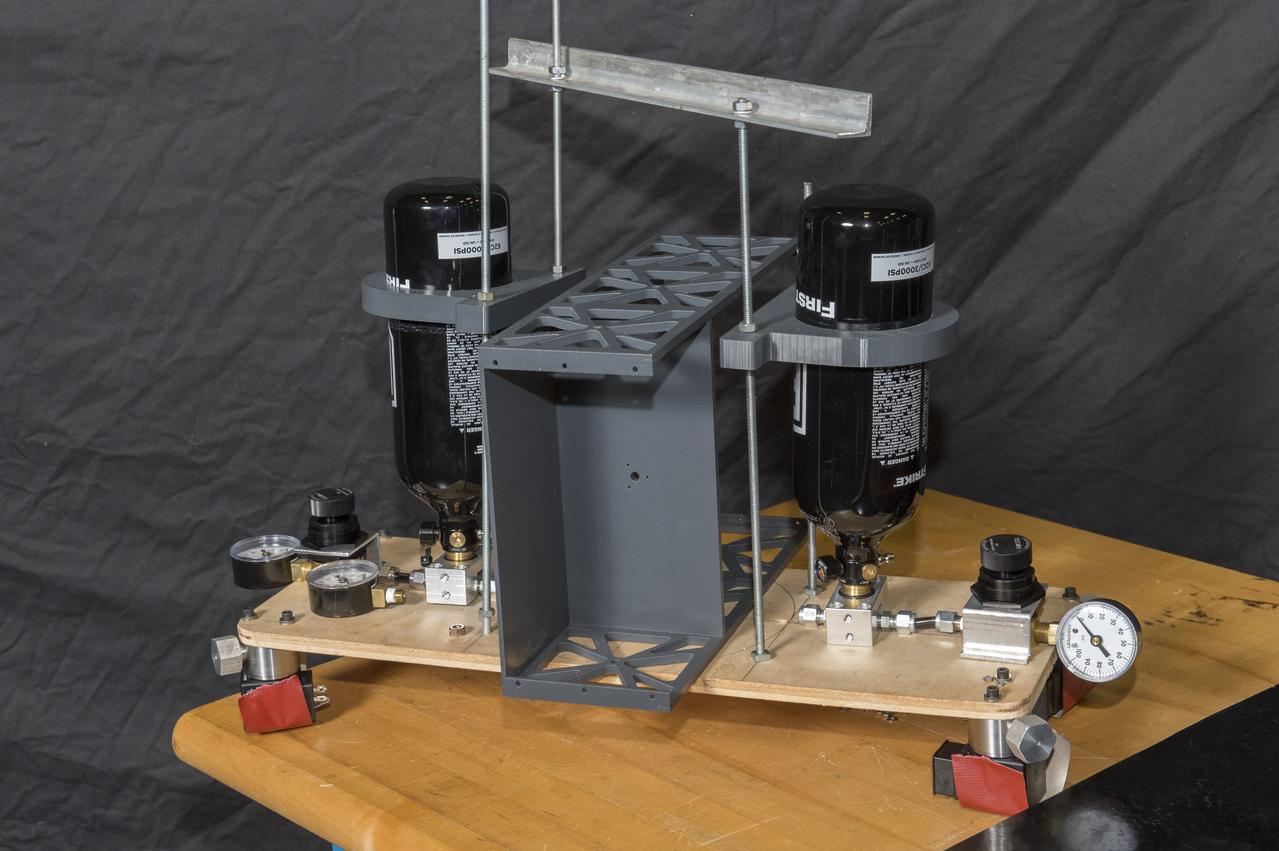
Second Generation Agile Engineering Prototype of Electric Sail 6U CubeSat Testbed Article
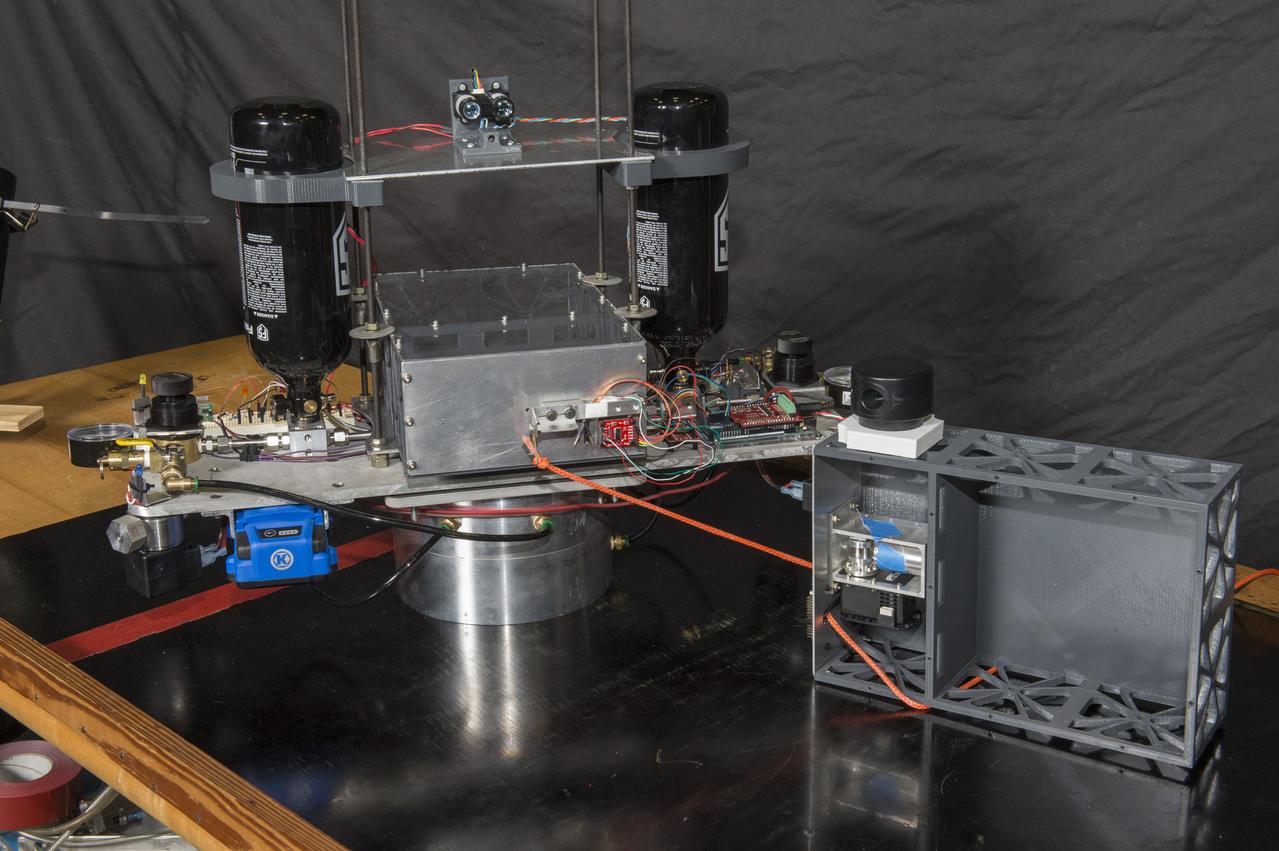
Electric Sail 6U CubeSat Testbed Article with Tether Mockup
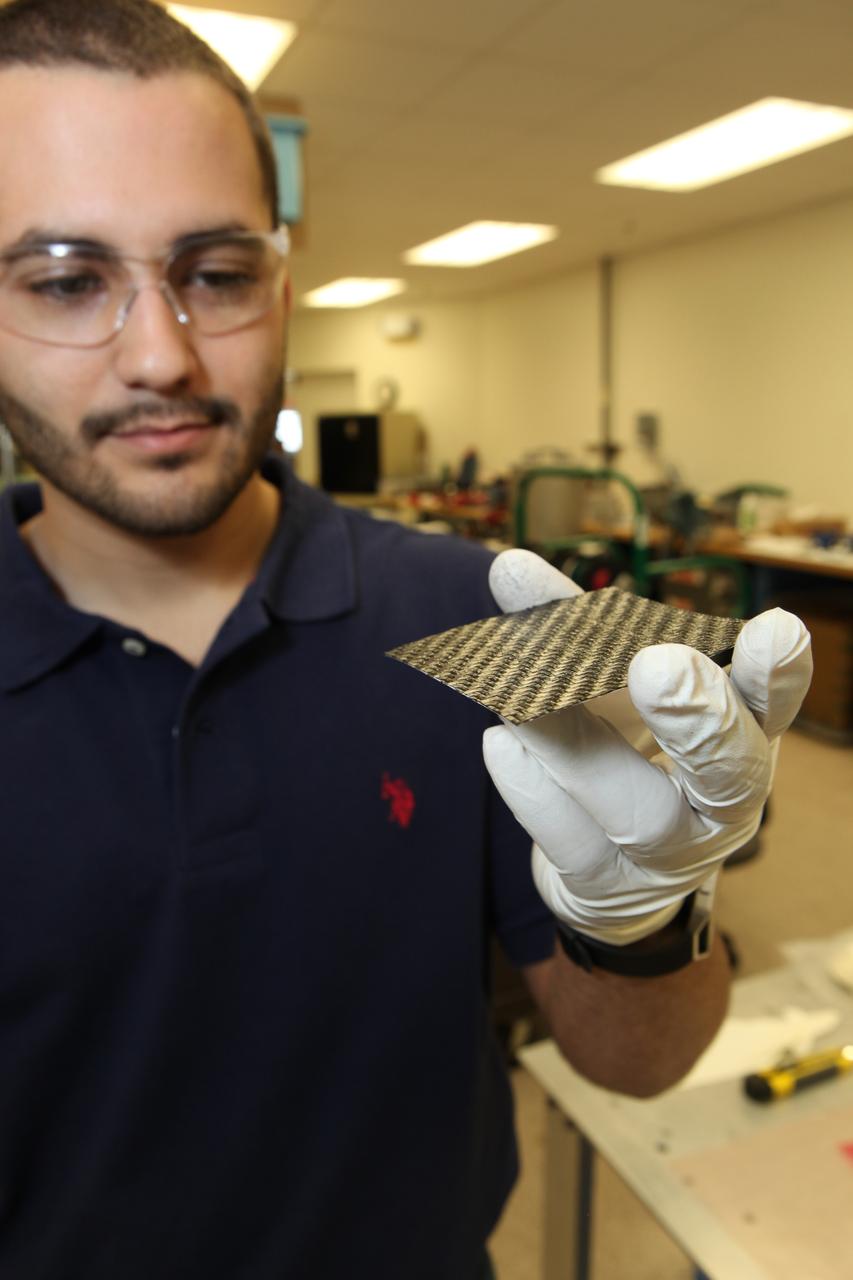
Daniel Perez, Ph.D., a graduate student from the University of Miami, displays a piece of the prototype structure for a new solid-state battery in the Prototype Laboratory at NASA's Kennedy Space Center in Florida. The size of the battery is so small that it could be a prime candidate for use in microsatellites, including CubeSats. Researchers at Kennedy are collaborating with experts at the University of Miami. The university partnership is funded through the Small Spacecraft Technology Program, in NASA's Space Technology Mission Directorate.
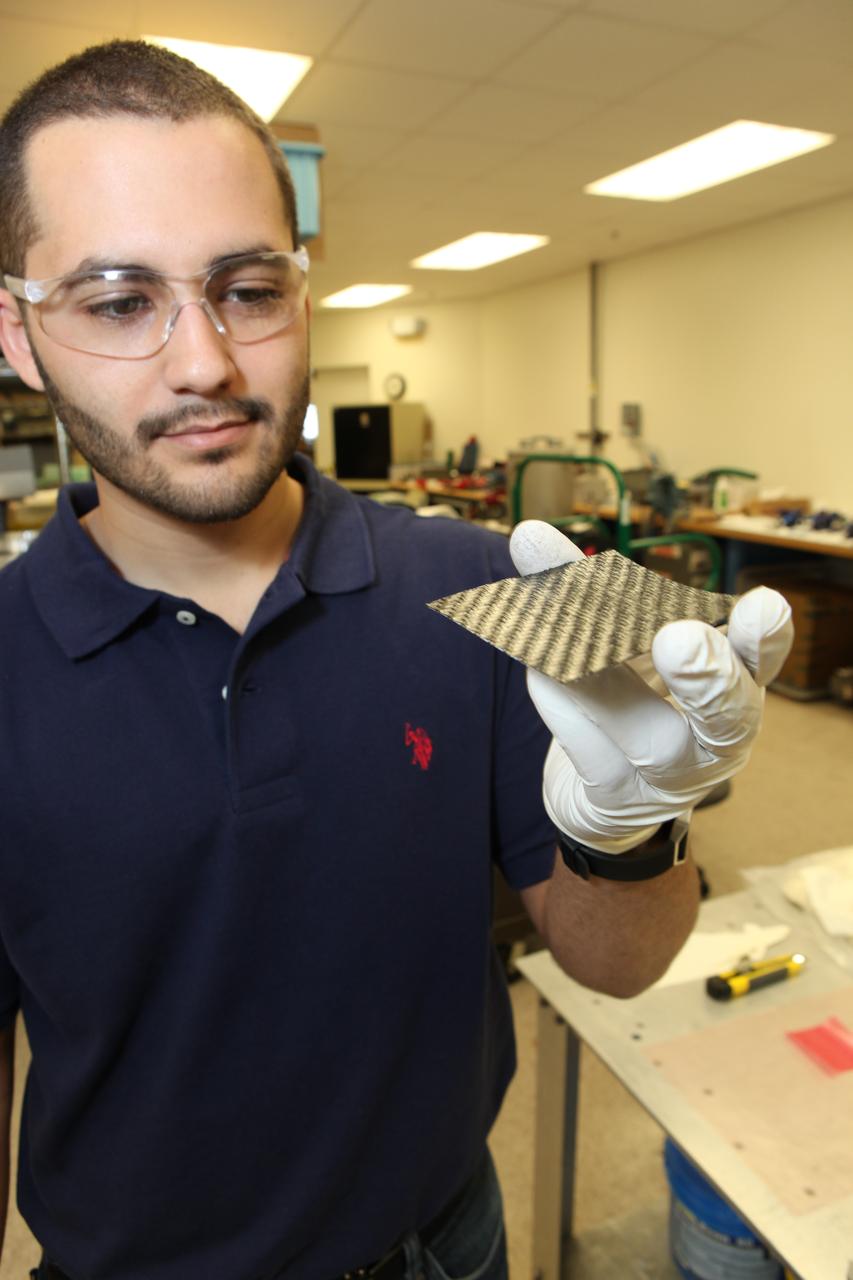
Daniel Perez, Ph.D., a graduate student from the University of Miami, displays a piece of the prototype structure for a new solid-state battery in the Prototype Laboratory at NASA's Kennedy Space Center in Florida. The size of the battery is so small that it could be a prime candidate for use in microsatellites, including CubeSats. Researchers at Kennedy are collaborating with experts at the University of Miami. The university partnership is funded through the Small Spacecraft Technology Program, in NASA's Space Technology Mission Directorate.
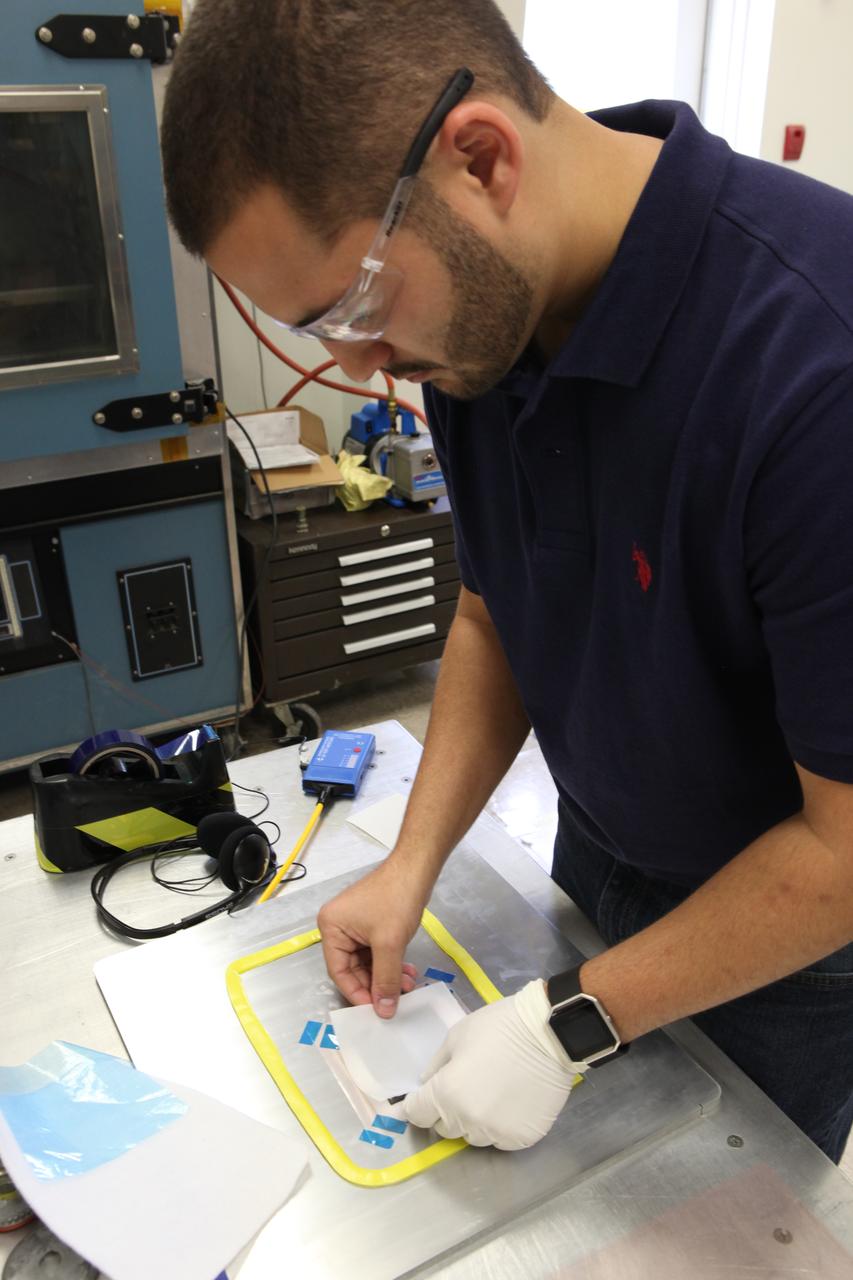
Daniel Perez, Ph.D., a graduate student from the University of Miami, prepares layers of the prototype structure for a new solid-state battery in the Prototype Laboratory at NASA's Kennedy Space Center in Florida. The size of the battery is so small that it could be a prime candidate for use in microsatellites, including CubeSats. Researchers at Kennedy are collaborating with experts at the University of Miami. The university partnership is funded through the Small Spacecraft Technology Program, in NASA's Space Technology Mission Directorate.
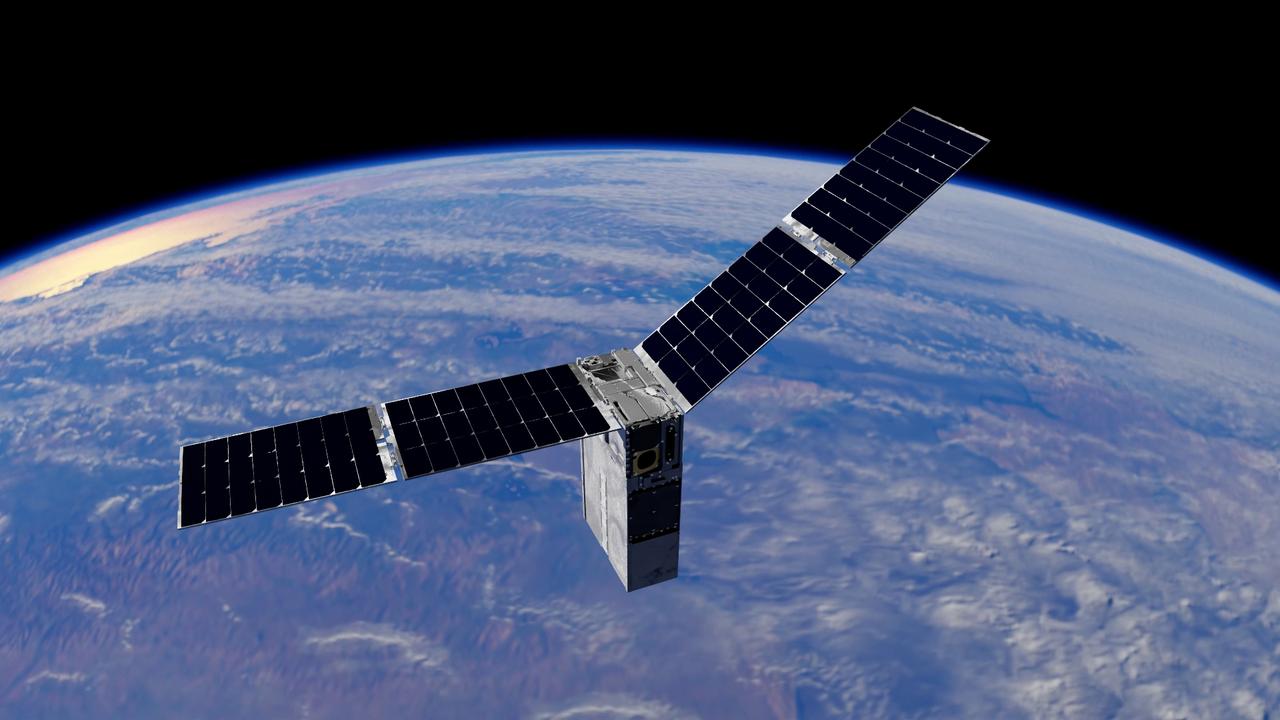
NASA’s Starling six-month mission will use a team of four CubeSats in low-Earth orbit to test technologies that let spacecraft operate in a synchronized manner without resources from the ground. The technologies will advance capabilities in swarm maneuver planning and execution, communications networking, relative navigation, and autonomous coordination between spacecraft. NASA/Conceptual Image Lab/Ross Walter
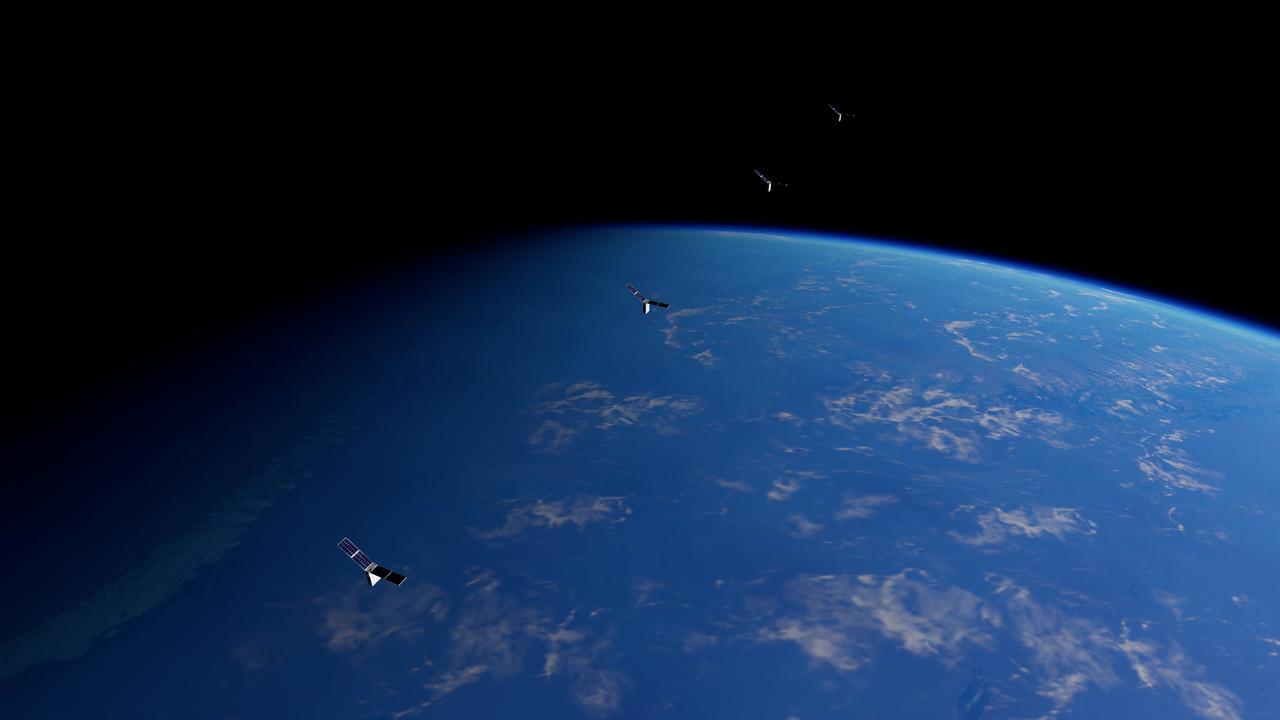
NASA’s Starling six-month mission will use a team of four CubeSats in low-Earth orbit to test technologies that let spacecraft operate in a synchronized manner without resources from the ground. The technologies will advance capabilities in swarm maneuver planning and execution, communications networking, relative navigation, and autonomous coordination between spacecraft.
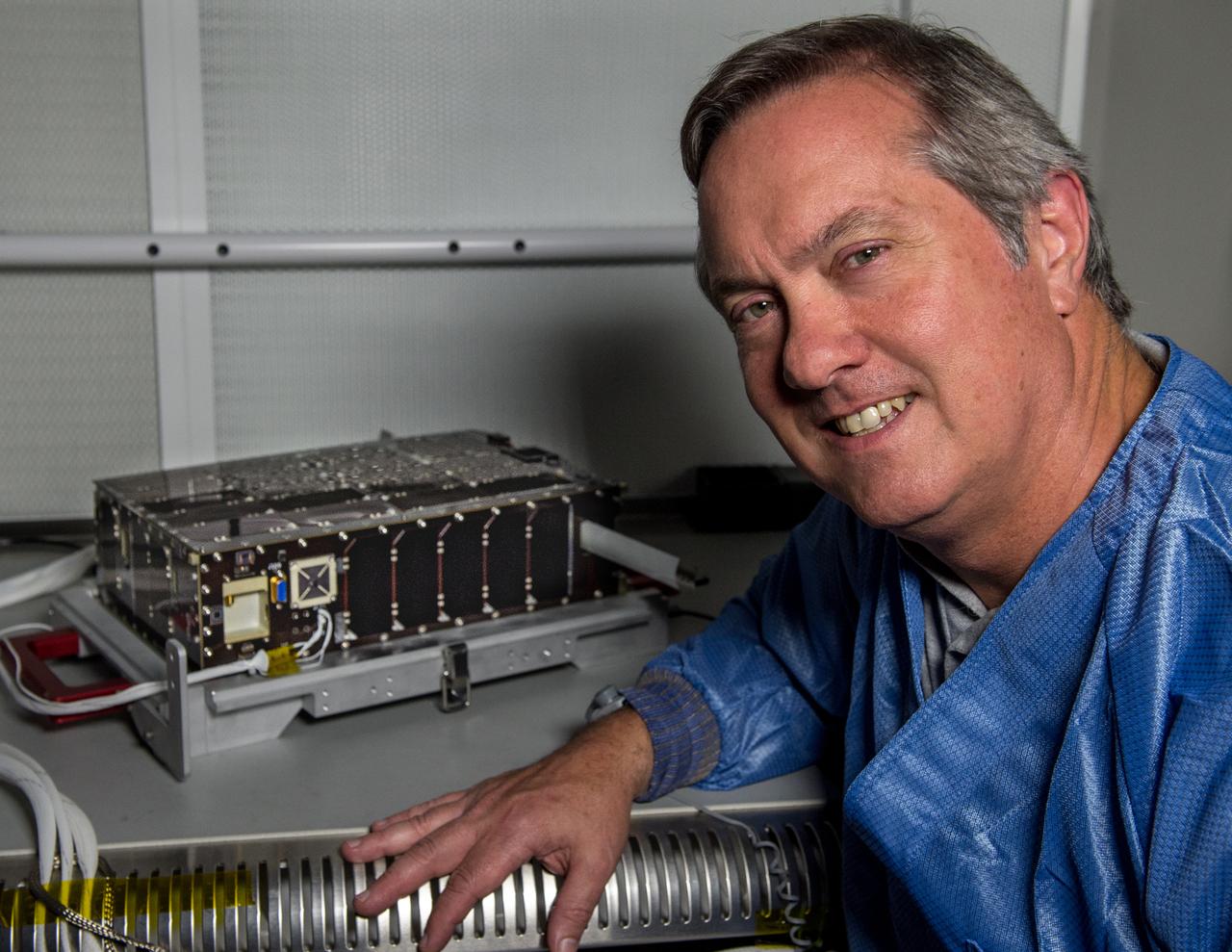
Larry Kepko - Lead scientist for Dellingr CubeSat
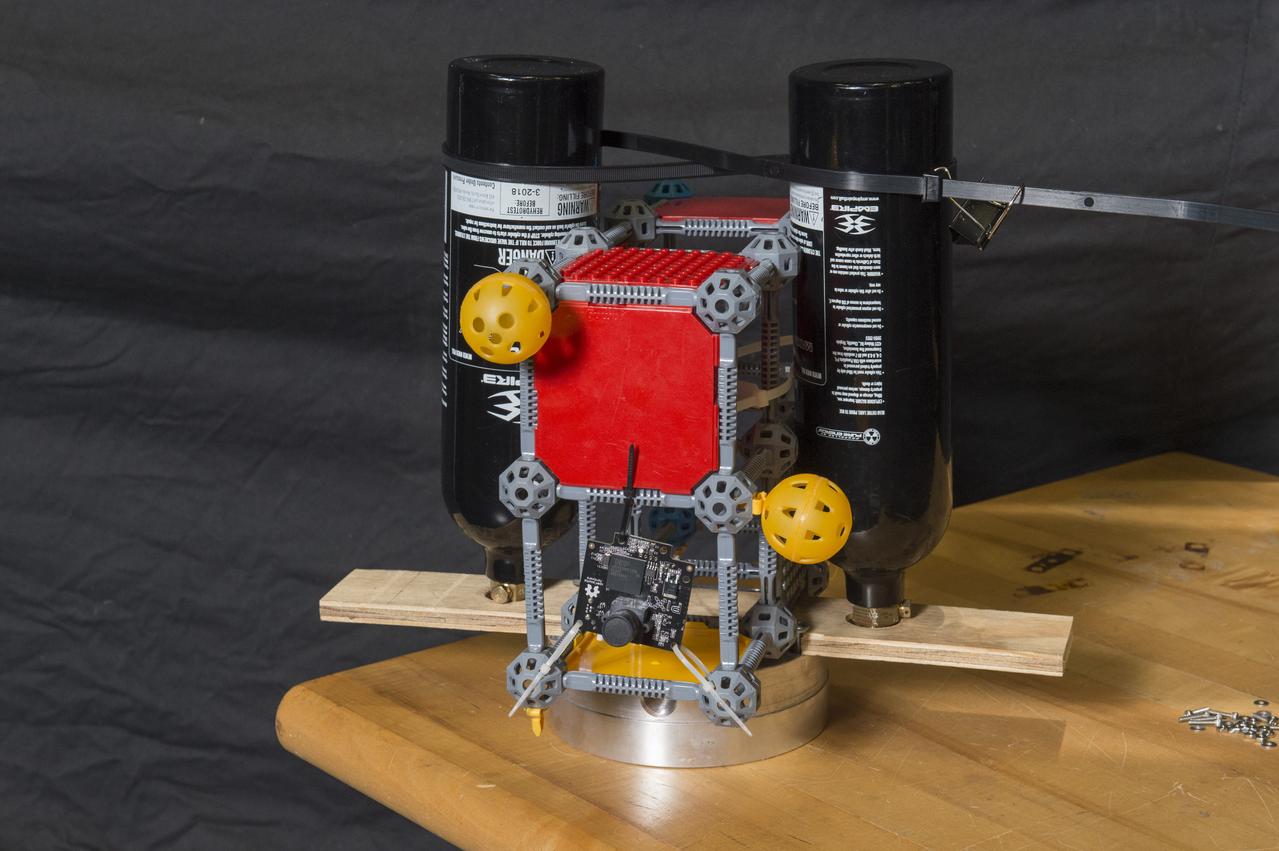
First Generation Agile Engineering Prototype of Electric Sail 6U CubeSat Testbed Article
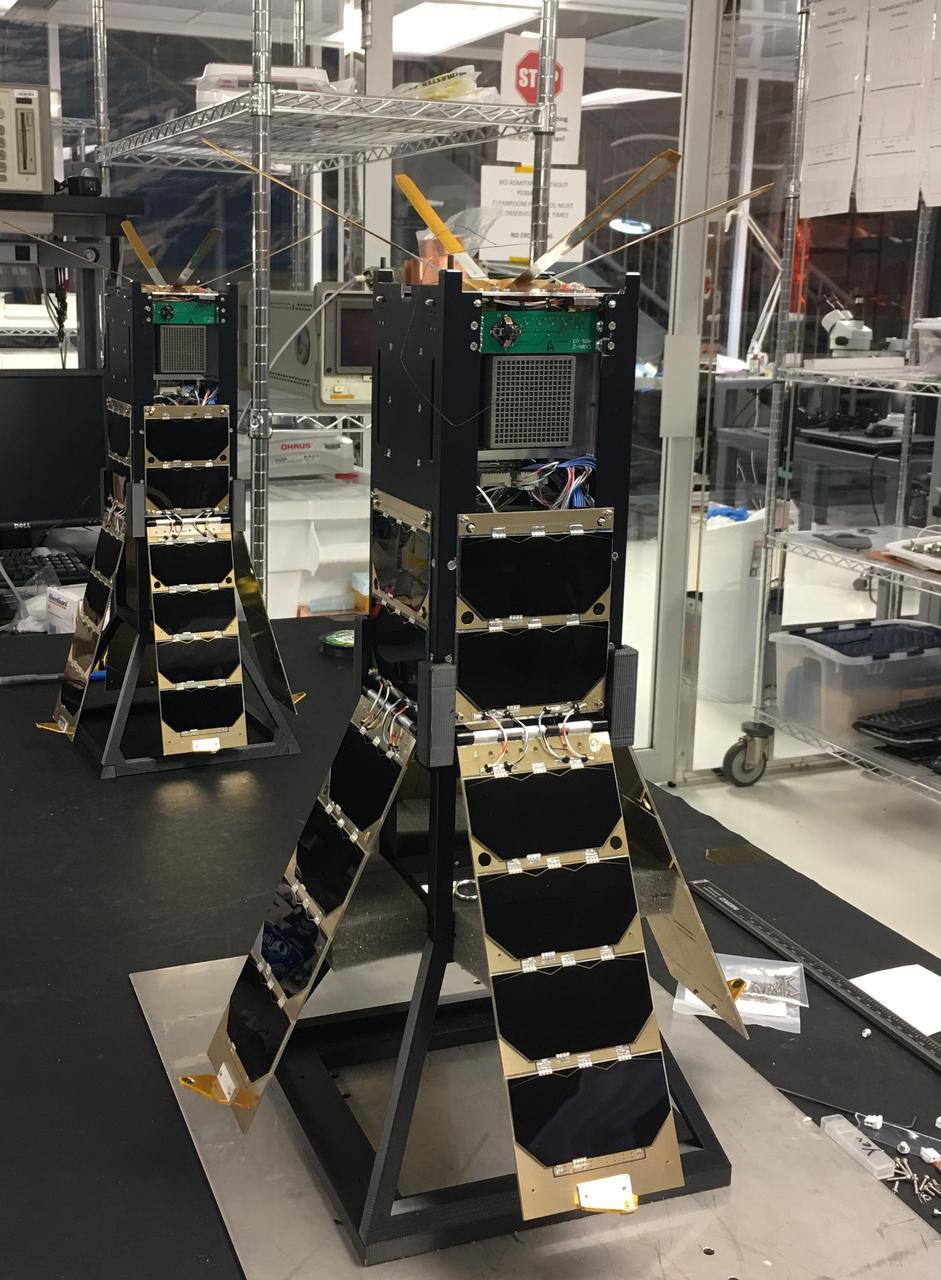
The Cosmic X-Ray Background NanoSat-2 (CXBN-2) CubeSat Mission developed by Morehead State University and its partners the Keldysh Institute (Moscow, Russia), the Maysville Community and Technical College (Morehead, KY) and KYSpace LLC (Lexington, KY) will increase the precision of measurements of the Cosmic X-Ray Background in the 30-50 keV range to a precision of <5%, thereby constraining models that attempt to explain the relative contribution of proposed sources lending insight into the underlying physics of the early universe. The mission addresses a fundamental science question that is central to our understanding of the structure, origin, and evolution of the universe by potentially lending insight into both the high-energy background radiation and into the evolution of primordial galaxies. Launched by NASA’s CubeSat Launch Initiative NET April 18, 2017 ELaNa XVII mission on the seventh Orbital-ATK Cygnus Commercial Resupply Services (OA-7) to the International Space Station and deployed on tbd.
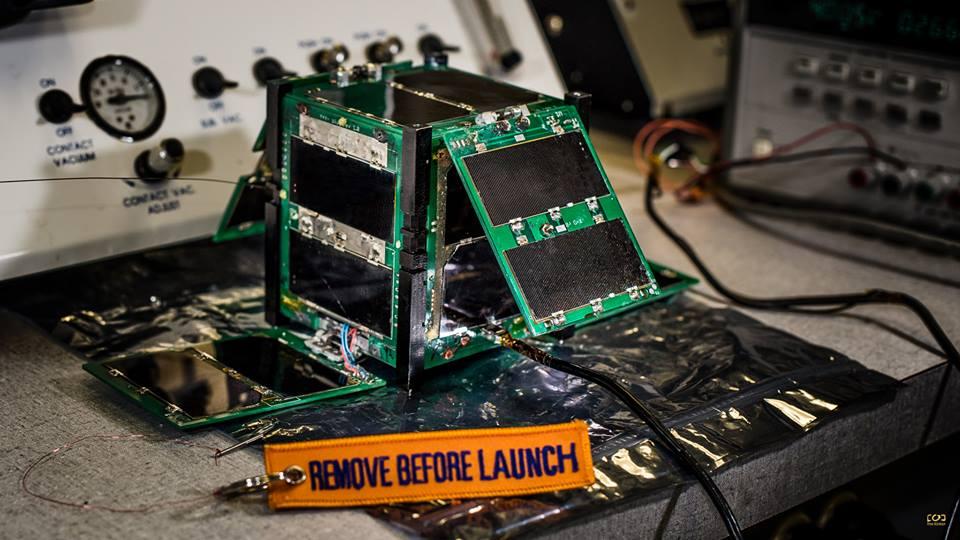
CAPE-2: Cajun Advanced Picosatellite Experiment – ELaNa IV CAPE-2 was developed by students from the University of Louisiana Lafayette to engage, inspire and educate K-12 students to encourage them to pursue STEM careers. The secondary focus is the technology demonstration of deployed solar panels to support the following payloads: text to speech, voice repeater, tweeting, email, file transfer and data collection from buoys. Launched by NASA’s CubeSat Launch Initiative on the ELaNa IV mission as an auxiliary payload aboard the U.S. Air Force-led Operationally Responsive Space (ORS-3) Mission on November 19, 2013.
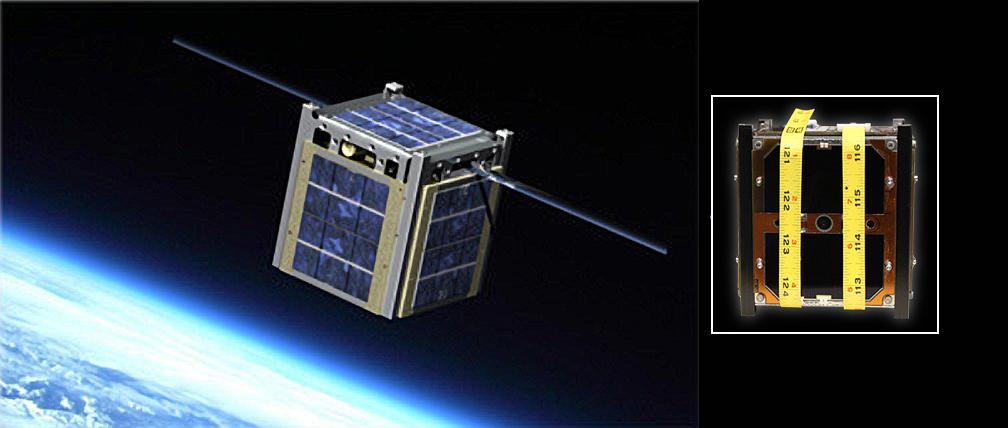
The image on the left is an artist rendering of Montana State University Explorer 1 CubeSat; at right is a CubeSat created by the University of Michigan designated the Michigan Mulitpurpose Mini-satellite, or M-Cubed.
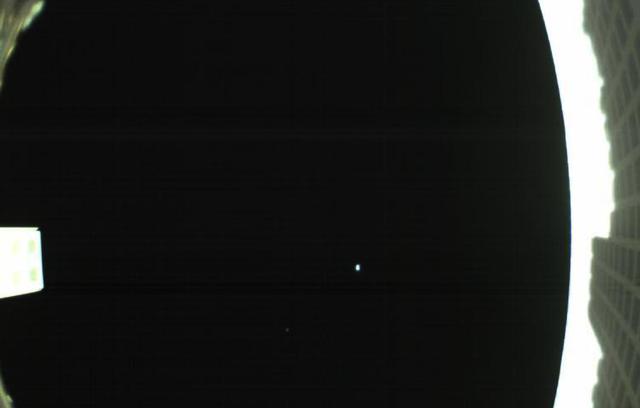
The first image captured by one of NASA's Mars Cube One (MarCO) CubeSats. The image, which shows both the CubeSat's unfolded high-gain antenna at right and the Earth and its moon in the center, was acquired by MarCO-B on May 9. MarCO is a pair of small spacecraft accompanying NASA's InSight (Interior Investigations Using Seismic Investigations, Geodesy and Heat Transport) lander. Together, MarCO-A and MarCO-B are the first CubeSats ever sent to deep space. InSight is the first mission to ever explore Mars' deep interior. If the MarCO CubeSats make the entire journey to Mars, they will attempt to relay data about InSight back to Earth as the lander enters the Martian atmosphere and lands. MarCO will not collect any science, but are intended purely as a technology demonstration. They could serve as a pathfinder for future CubeSat missions. An annotated version is available at https://photojournal.jpl.nasa.gov/catalog/PIA22323
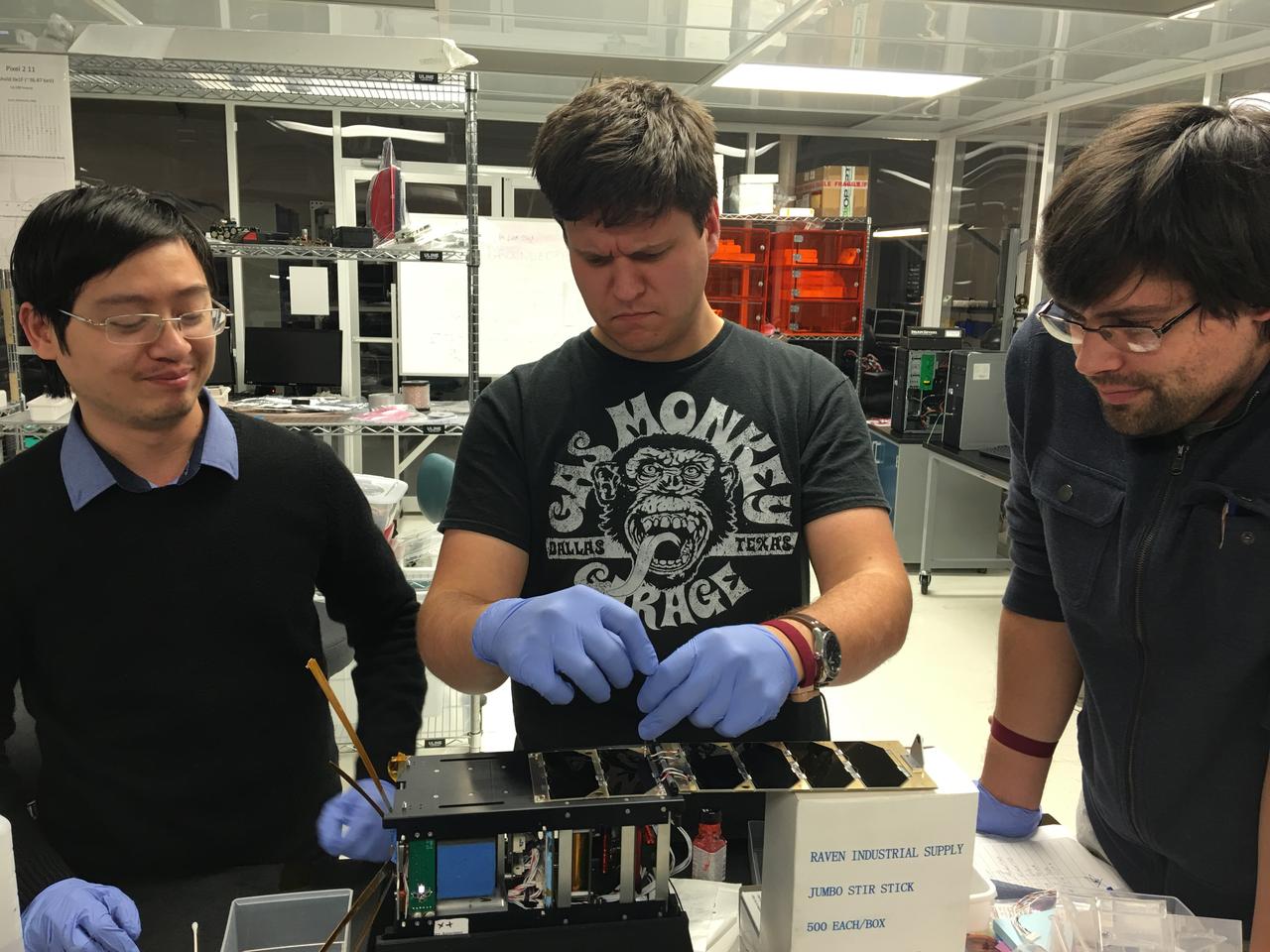
CXBN-2 Integration Team in the Morehead State University Spacecraft Integration and Assembly Facility. Left to right: Kein Dant, Yevgeniy Byleborodov, and Nate Richard. The Cosmic X-Ray Background NanoSat-2 (CXBN-2) CubeSat Mission developed by Morehead State University and its partners the Keldysh Institute (Moscow, Russia), the Maysville Community and Technical College (Morehead, KY) and KYSpace LLC (Lexington, KY) will increase the precision of measurements of the Cosmic X-Ray Background in the 30-50 keV range to a precision of <5%, thereby constraining models that attempt to explain the relative contribution of proposed sources lending insight into the underlying physics of the early universe. The mission addresses a fundamental science question that is central to our understanding of the structure, origin, and evolution of the universe by potentially lending insight into both the high-energy background radiation and into the evolution of primordial galaxies. Launched by NASA’s CubeSat Launch Initiative NET April 18, 2017 ELaNa XVII mission on the seventh Orbital-ATK Cygnus Commercial Resupply Services (OA-7) to the International Space Station and deployed on tbd.
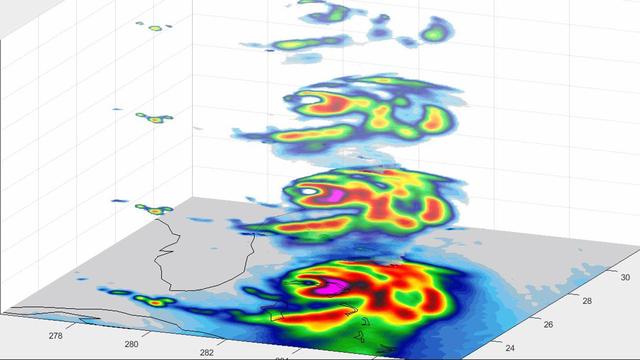
In this animation, TEMPEST-D — a weather-observing satellite the size of a cereal box — captured imagery of Hurricane Dorian off the coast of Florida at 2 a.m. EDT on Sep. 3, 2019 (11 p.m. PDT on Sept. 2, 2019). At a vantage point 250 miles (400 kilometers) above the storm, the CubeSat used its miniaturized radio-wave-based instrument to see through the clouds, revealing different depths of the hurricane with areas with heavy rainfall and moisture being pulled into the storm. The green colors indicate moisture spiraling into the storm's center, and the yellow, red and pink areas correspond to the most intense rainfall. TEMPEST-D — short for Temporal Experiment for Storms and Tropical Systems Demonstration — is an experiment in shrinking weather satellites to a size that makes them inexpensive enough to produce in multiples. The goal is eventual real-time storm coverage with many small satellites that can track storms around the world. Movie available at https://photojournal.jpl.nasa.gov/catalog/PIA23431
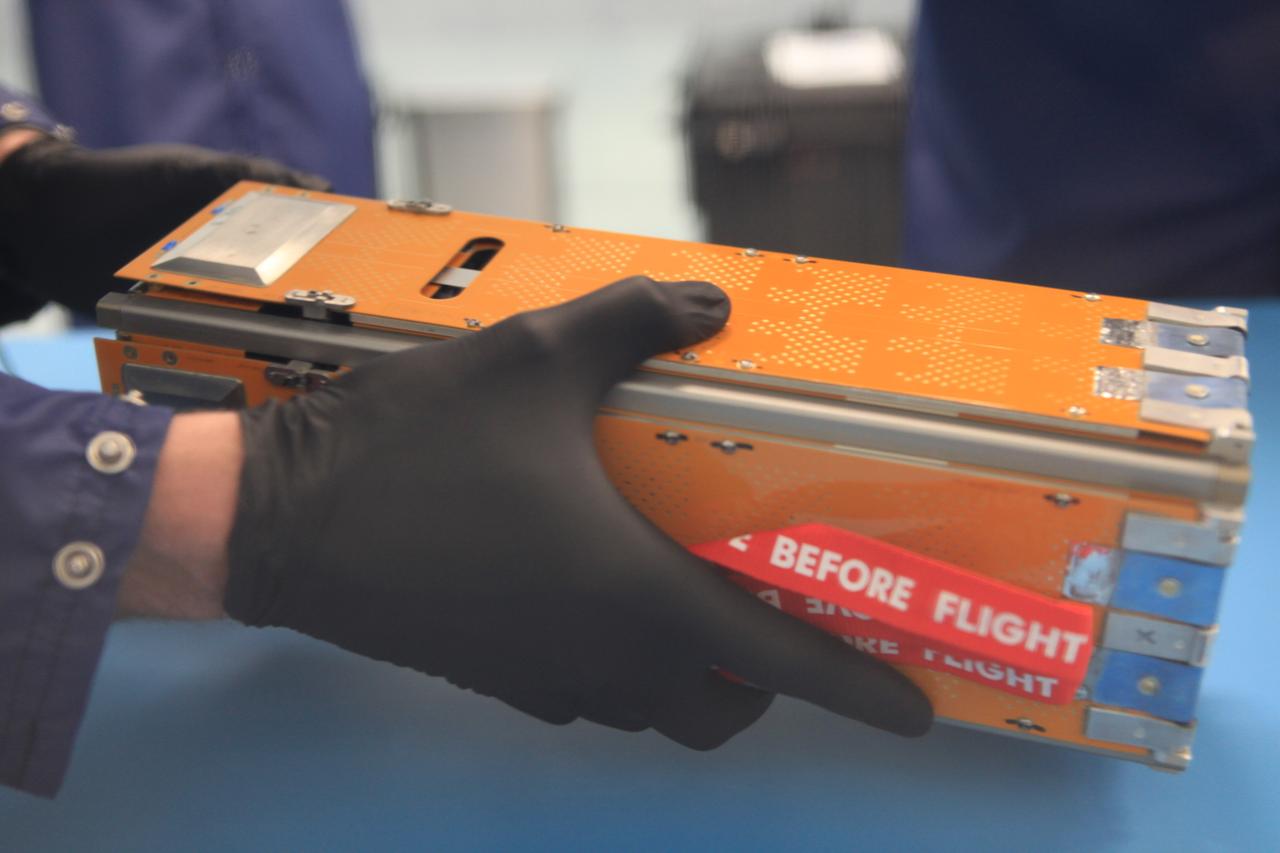
The Advanced Electrical Bus (ALBus) mission is a technology demonstration of resettable Shape Memory Alloy (SMA) mechanisms for deployable solar arrays and a pathfinder for high power density CubeSats. The mission has two primary objectives. The first is to demonstrate the functionality of the novel SMA activated solar array mechanisms in the on-orbit environment. The second objective is to assess the system level ability to charge a high capacity battery, distribute 100 W of electrical power and thermally control the 3-U CubeSat system. Performance from the mission will be used to mature the SMA mechanism designs for CubeSat applications and plan for future high power density CubeSat missions.
The Advanced Electrical Bus (ALBus) mission is a technology demonstration of resettable Shape Memory Alloy (SMA) mechanisms for deployable solar arrays and a pathfinder for high power density CubeSats. The mission has two primary objectives. The first is to demonstrate the functionality of the novel SMA activated solar array mechanisms in the on-orbit environment. The second objective is to assess the system level ability to charge a high capacity battery, distribute 100 W of electrical power and thermally control the 3-U CubeSat system. Performance from the mission will be used to mature the SMA mechanism designs for CubeSat applications and plan for future high power density CubeSat missions.
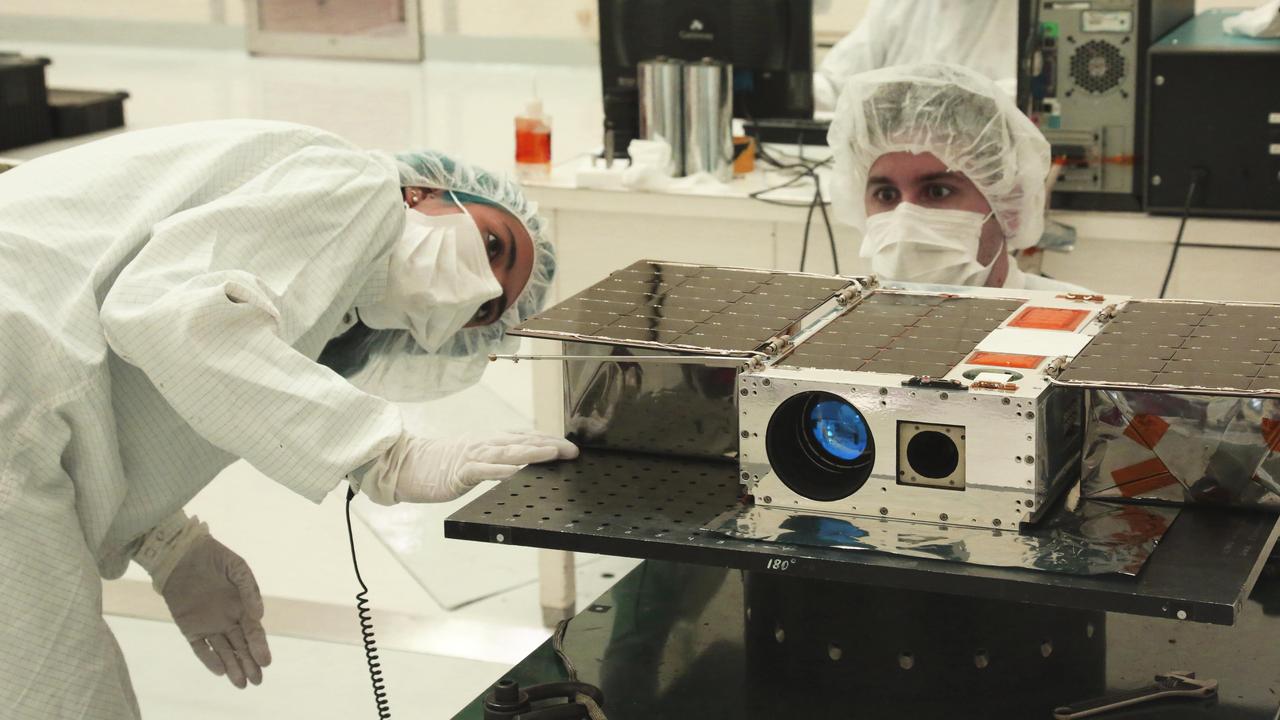
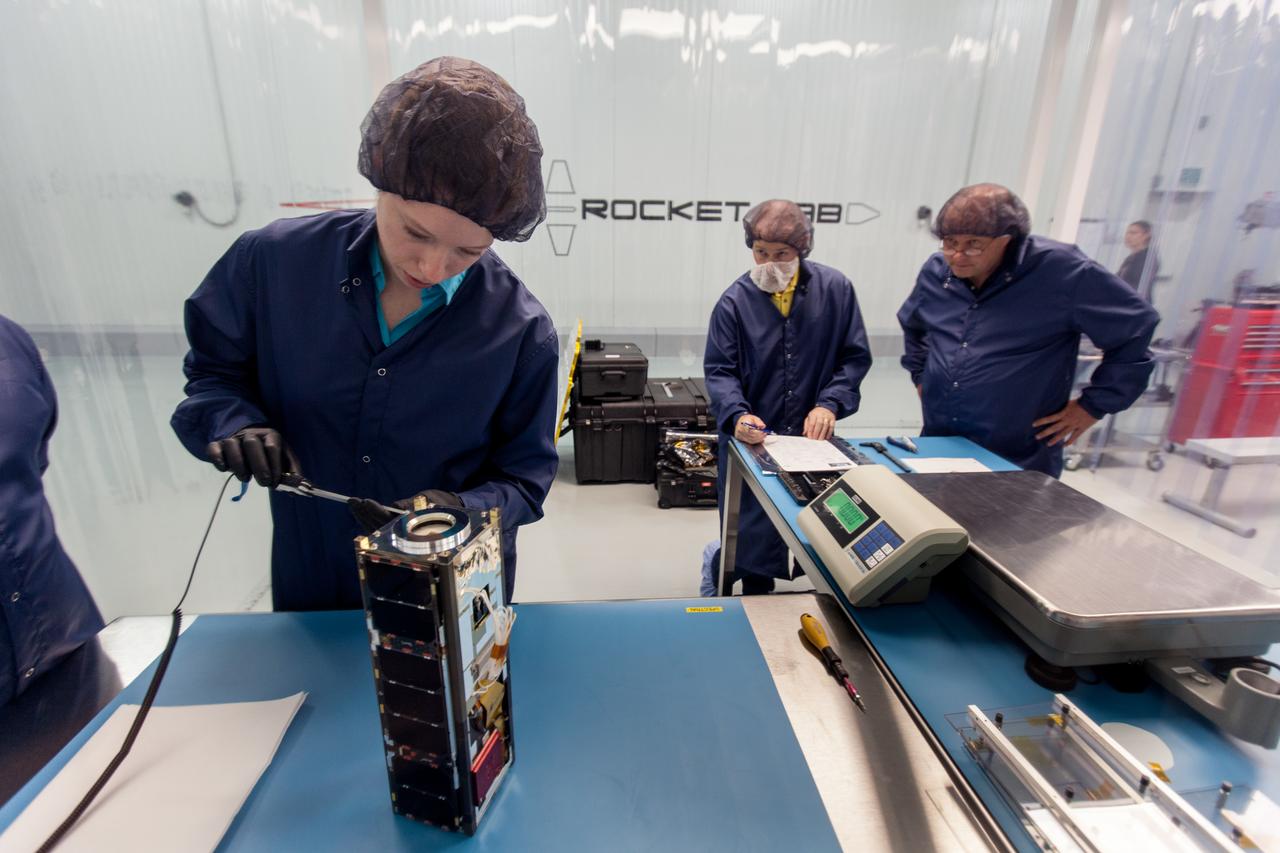
Left to right: Electrical Test Engineer Esha Murty and Integration and Test Lead Cody Colley prepare the ASTERIA spacecraft for mass-properties measurements in April 2017 prior to spacecraft delivery ahead of launch. ASTERIA was deployed from the International Space Station in November 2017. https://photojournal.jpl.nasa.gov/catalog/PIA23406
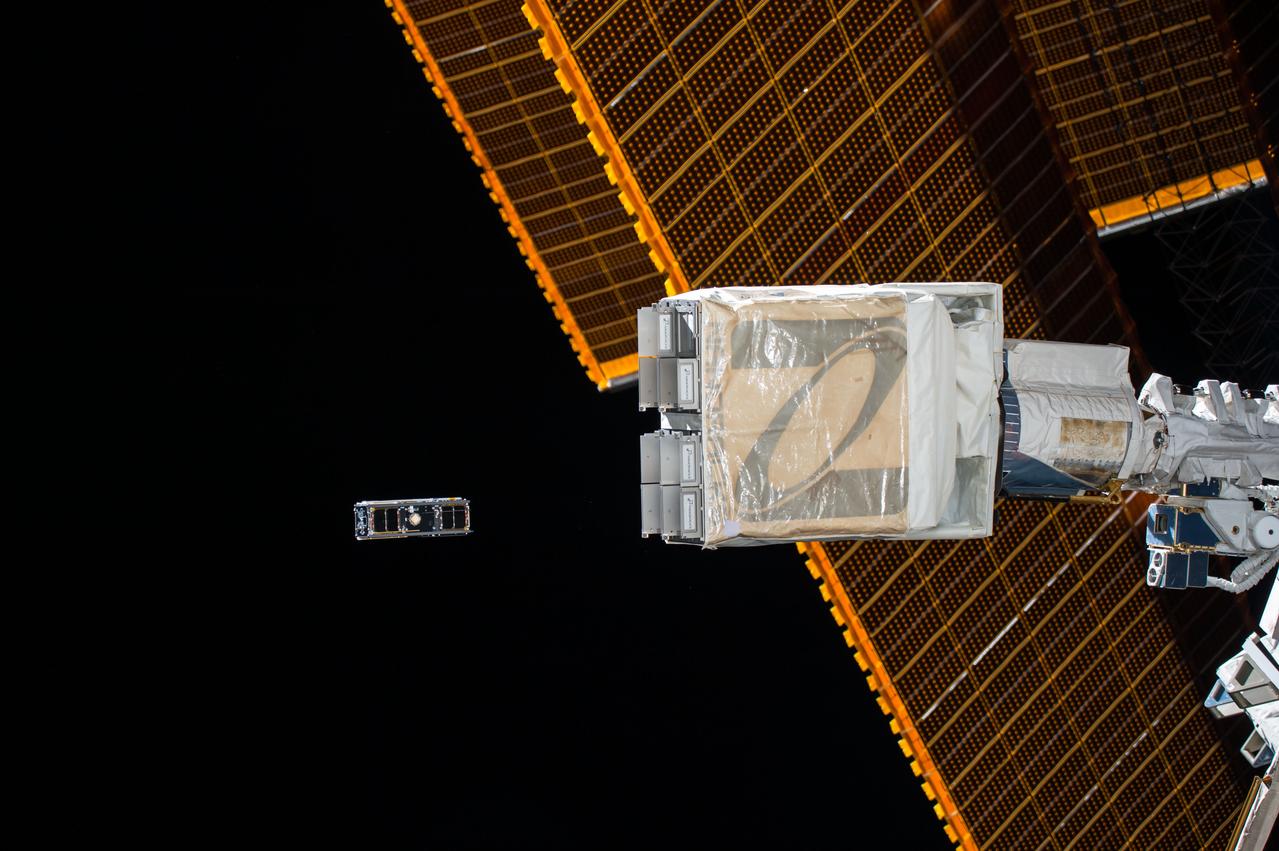
iss051e049985 )5/26/2017) --- A view of the NanoRacks CubeSat Deployer (NRCSD) 12 during the release of ExAlta-1, part of the NanoRacks-QB50 group of CubeSats. The NanoRacks CubeSat Deployer is a stackable, modular, ground loaded launch case. Each NanoRacks CubeSat Deployer accommodates up to 6.5U and eight launch cases are stacked for each JEM Airlock opening.
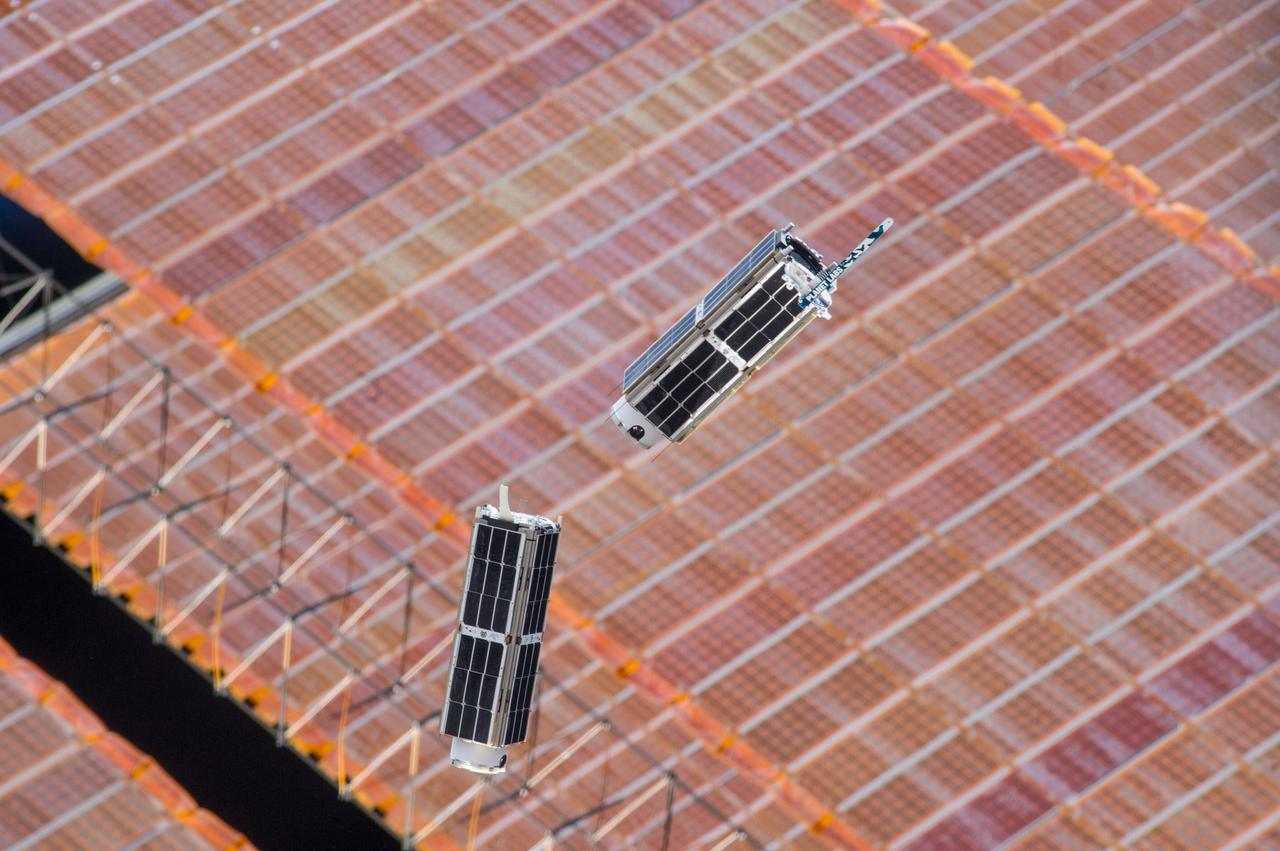
ISS038-E-047232 (14 Feb. 2014) --- A set of NanoRacks CubeSats is photographed by an Expedition 38 crew member after the deployment by the NanoRacks Launcher attached to the end of the Japanese robotic arm. The CubeSats program contains a variety of experiments such as Earth observations and advanced electronics testing. International Space Station solar array panels provide the backdrop for the scene.
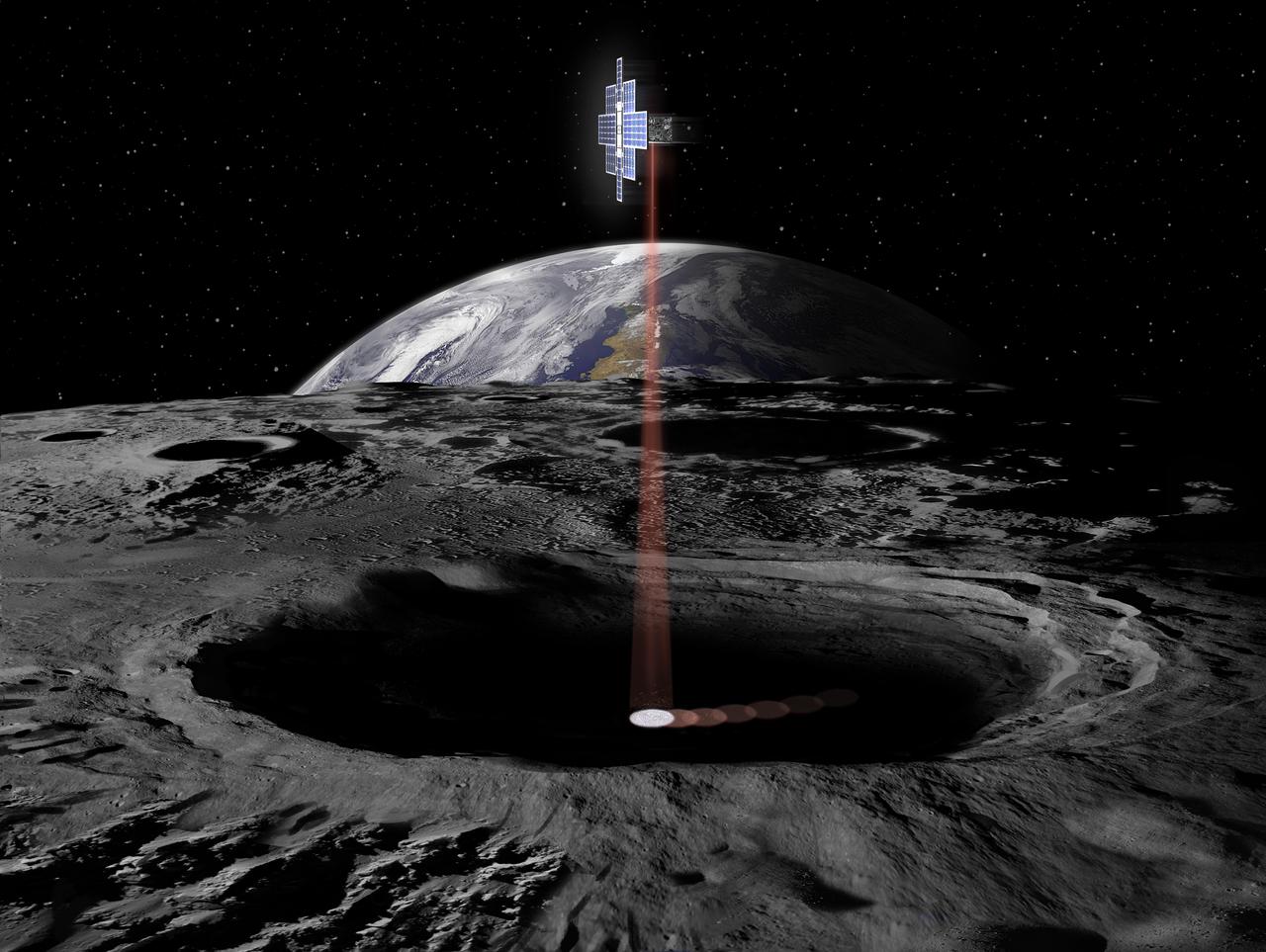
This artist's concept shows the Lunar Flashlight spacecraft, a six-unit CubeSat designed to search for ice on the Moon's surface using special lasers. The spacecraft will use its near-infrared lasers to shine light into shaded polar regions on the Moon, while an onboard reflectometer will measure surface reflection and composition. https://photojournal.jpl.nasa.gov/catalog/PIA23131
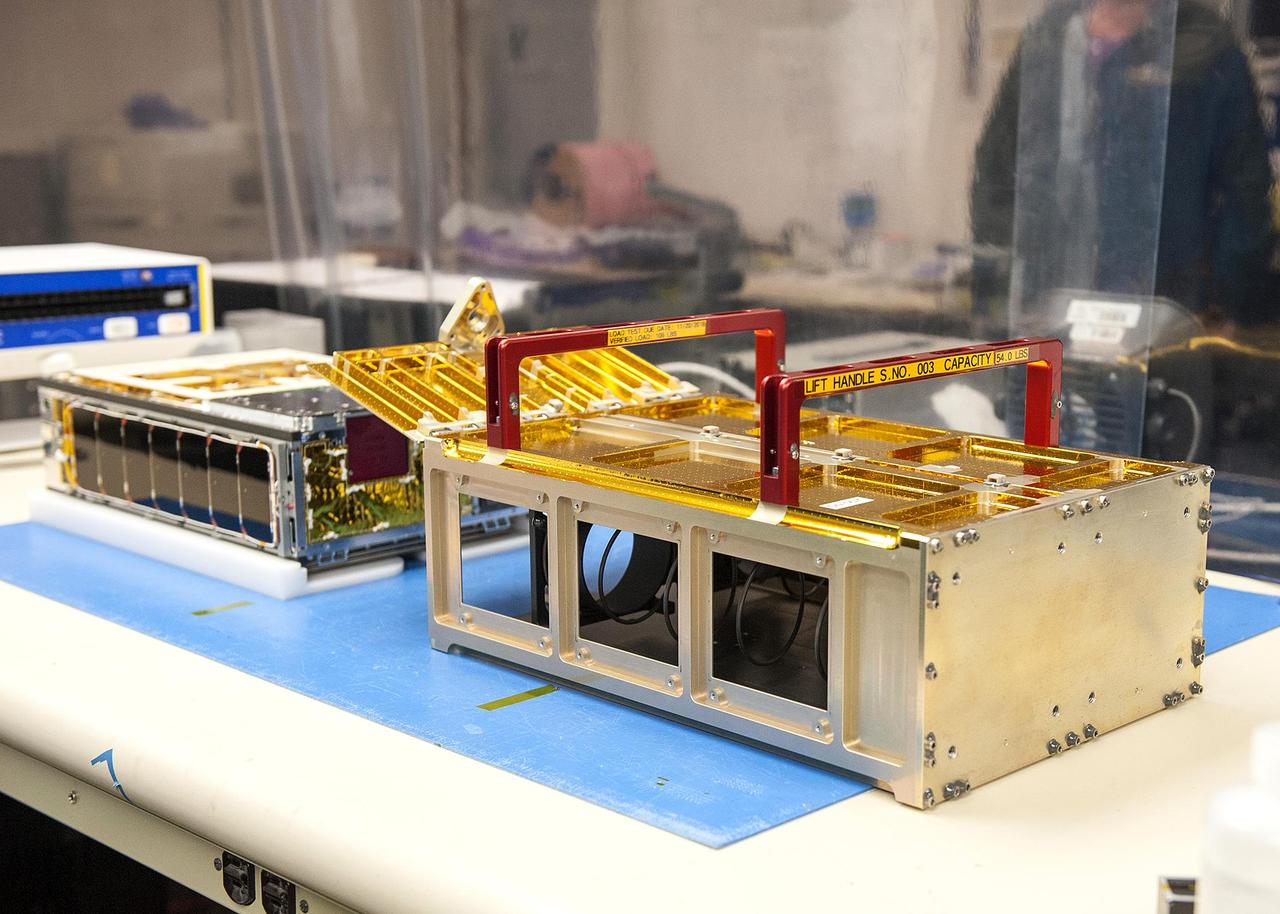
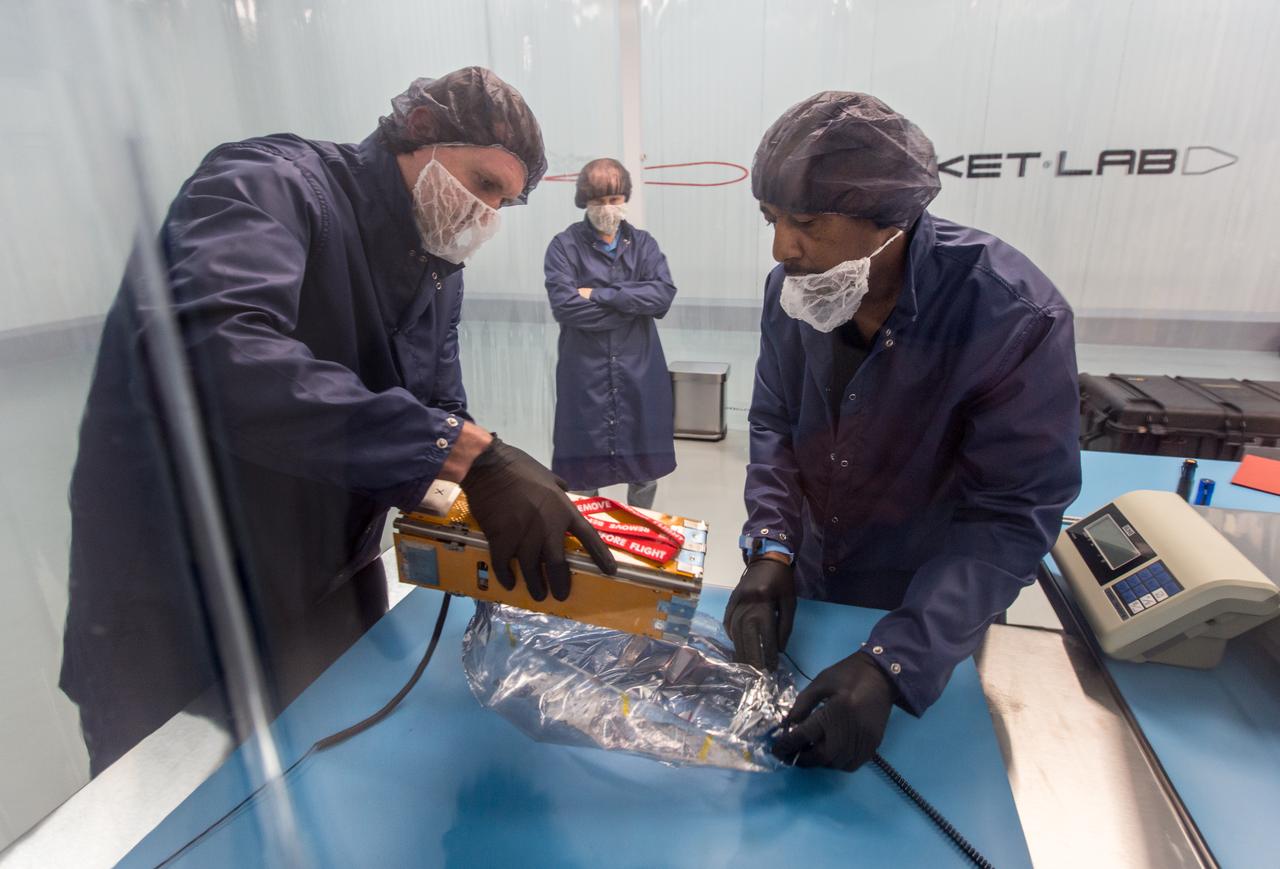
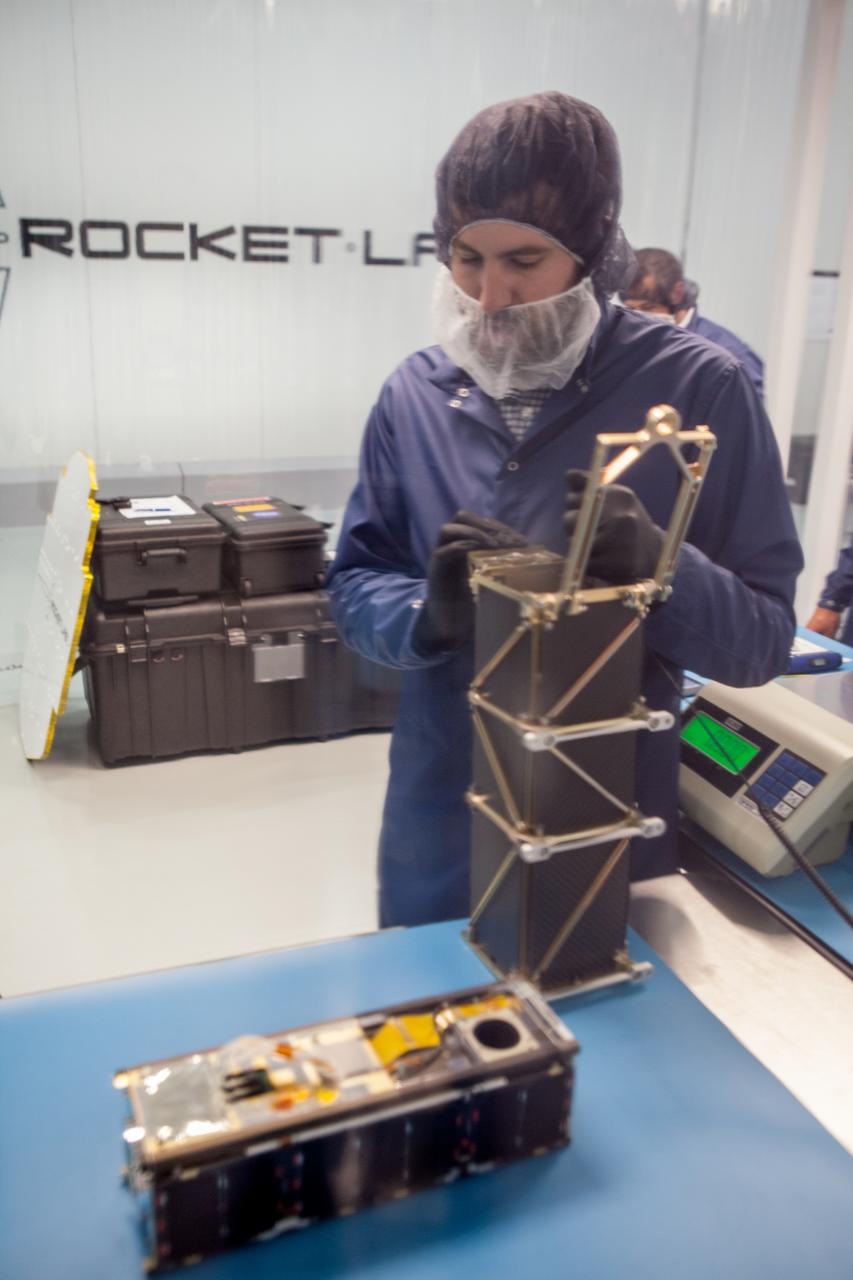
One of the MarCO CubeSats inside a cleanroom at Cal Poly San Luis Obispo, before being placed into its deployment box. The deployment box will eject the briefcase-sized CubeSat into space after launch. It and its twin will accompany the InSight Mars lander when it lifts off from Vandenberg Air Force Base in May. https://photojournal.jpl.nasa.gov/catalog/PIA22322
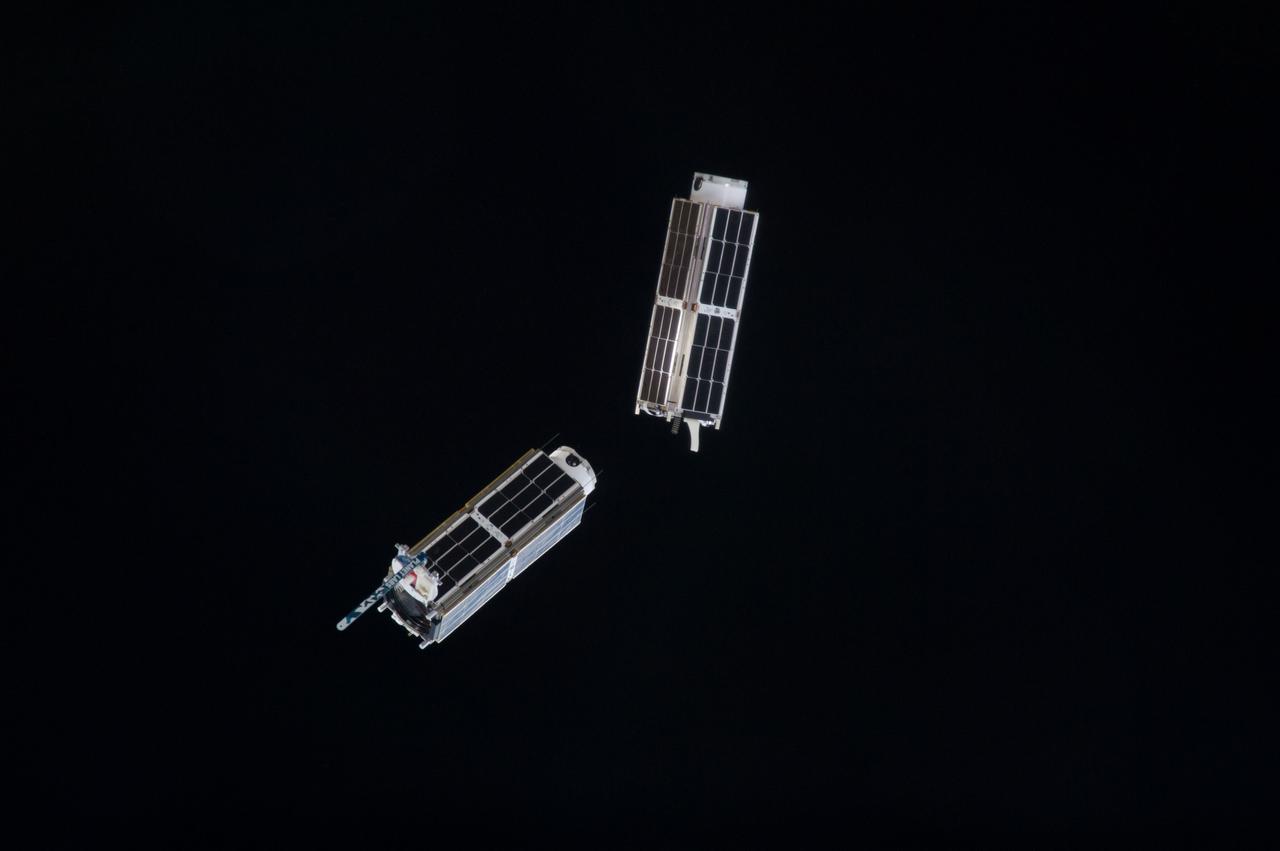
ISS038-E-046579 (13 Feb. 2014) --- A set of NanoRacks CubeSats is photographed by an Expedition 38 crew member after the deployment by the NanoRacks Launcher attached to the end of the Japanese robotic arm. The CubeSats program contains a variety of experiments such as Earth observations and advanced electronics testing.
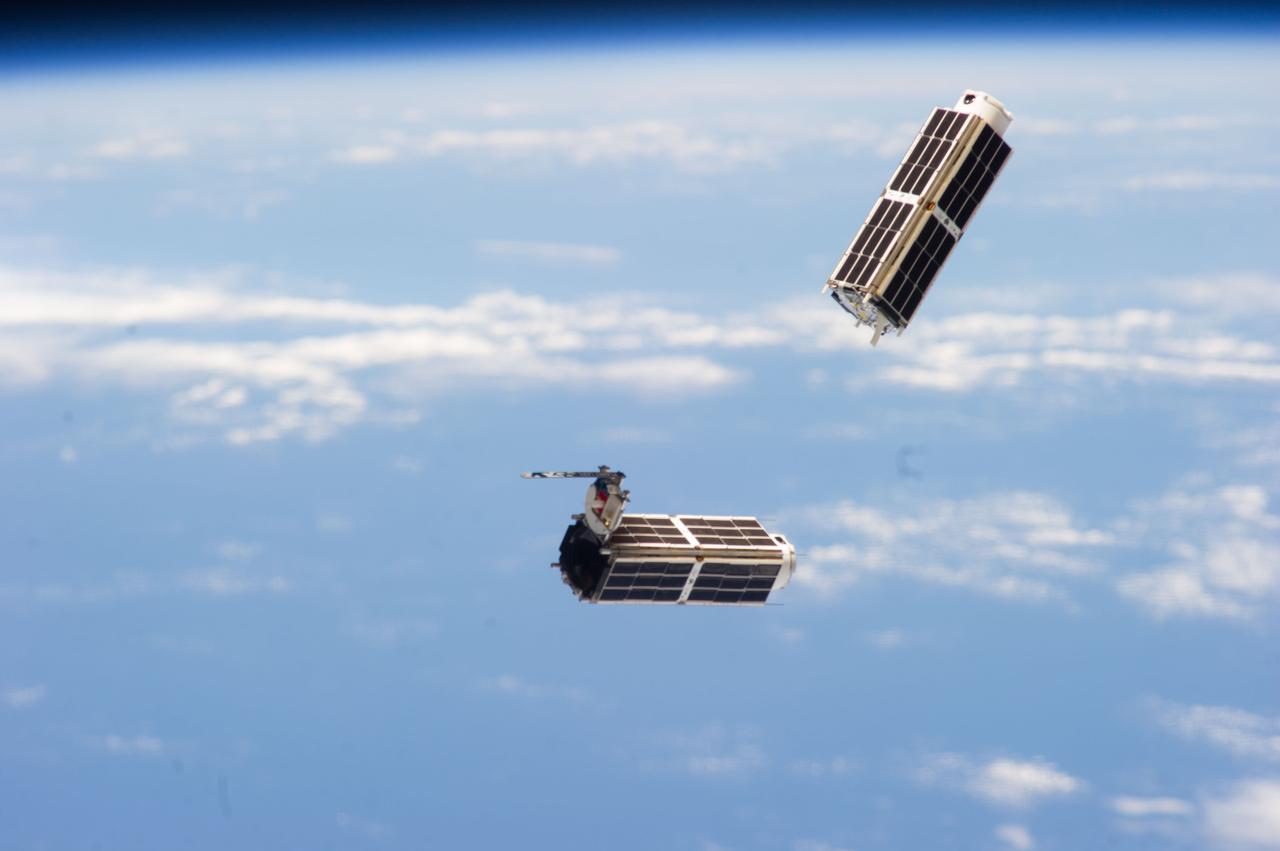
ISS038-E-044916 (11 Feb. 2014) --- A set of NanoRacks CubeSats is photographed by an Expedition 38 crew member after the deployment by the Small Satellite Orbital Deployer (SSOD). The CubeSats program contains a variety of experiments such as Earth observations and advanced electronics testing.
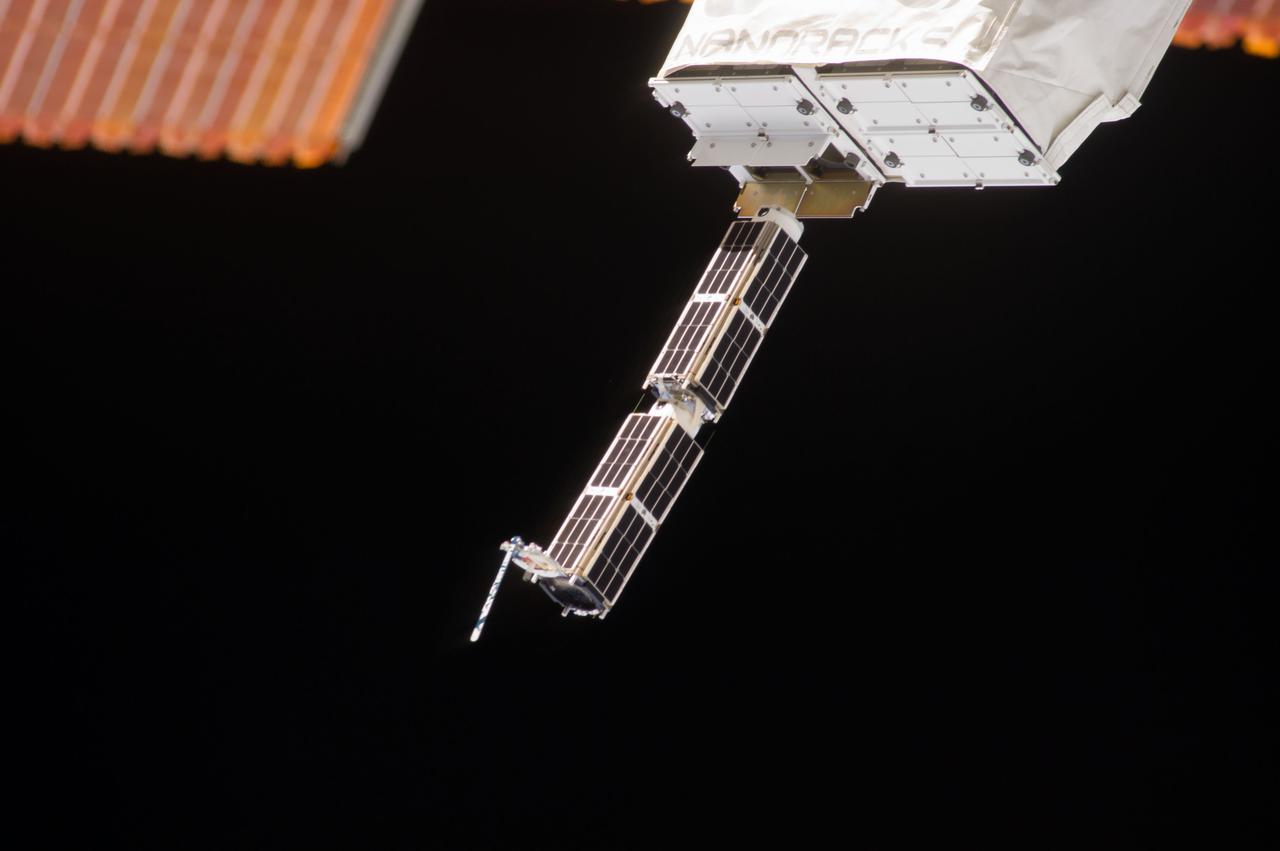
ISS038-E-044889 (11 Feb. 2014) --- The Small Satellite Orbital Deployer (SSOD), in the grasp of the Kibo laboratory robotic arm, is photographed by an Expedition 38 crew member on the International Space Station as it deploys a set of NanoRacks CubeSats. The CubeSats program contains a variety of experiments such as Earth observations and advanced electronics testing.
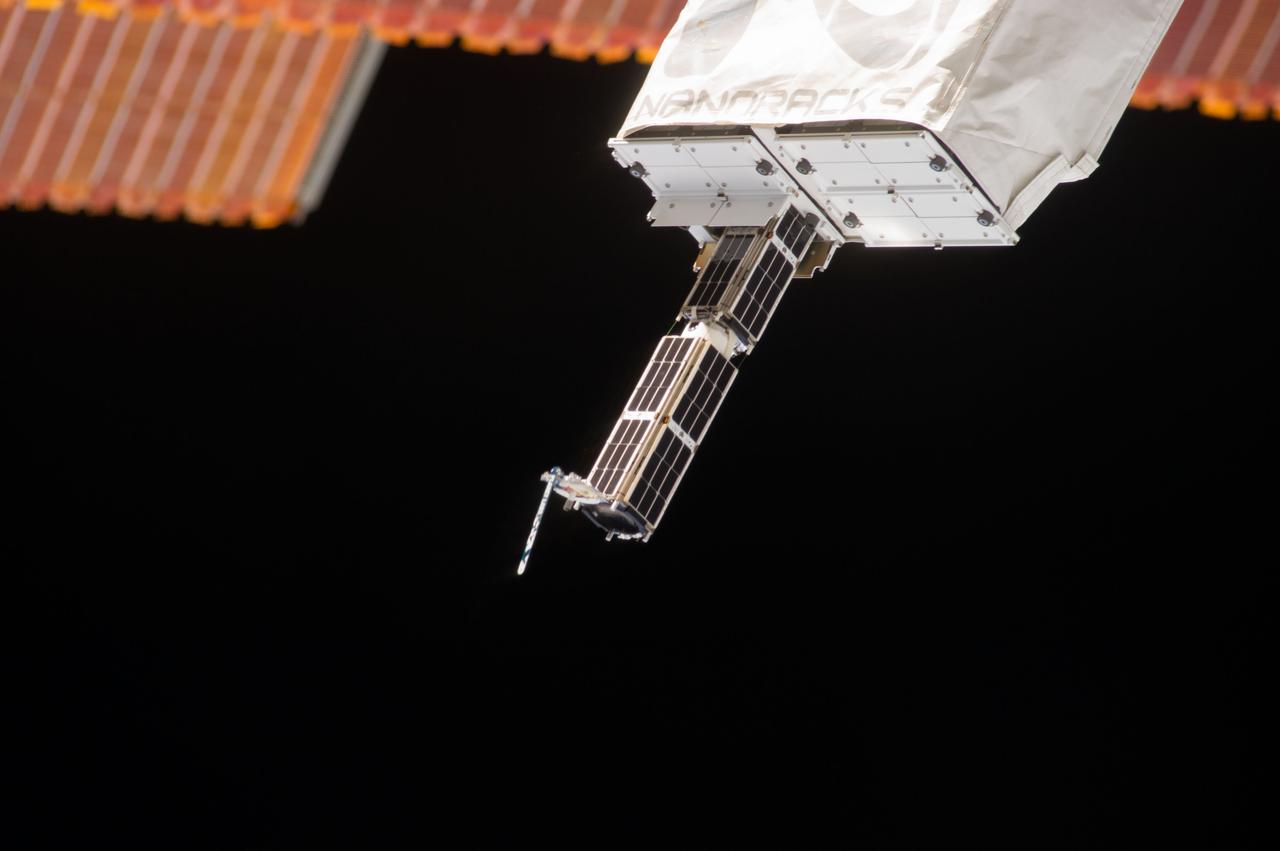
ISS038-E-044887 (11 Feb. 2014) --- The Small Satellite Orbital Deployer (SSOD), in the grasp of the Kibo laboratory robotic arm, is photographed by an Expedition 38 crew member on the International Space Station as it deploys a set of NanoRacks CubeSats. The CubeSats program contains a variety of experiments such as Earth observations and advanced electronics testing.
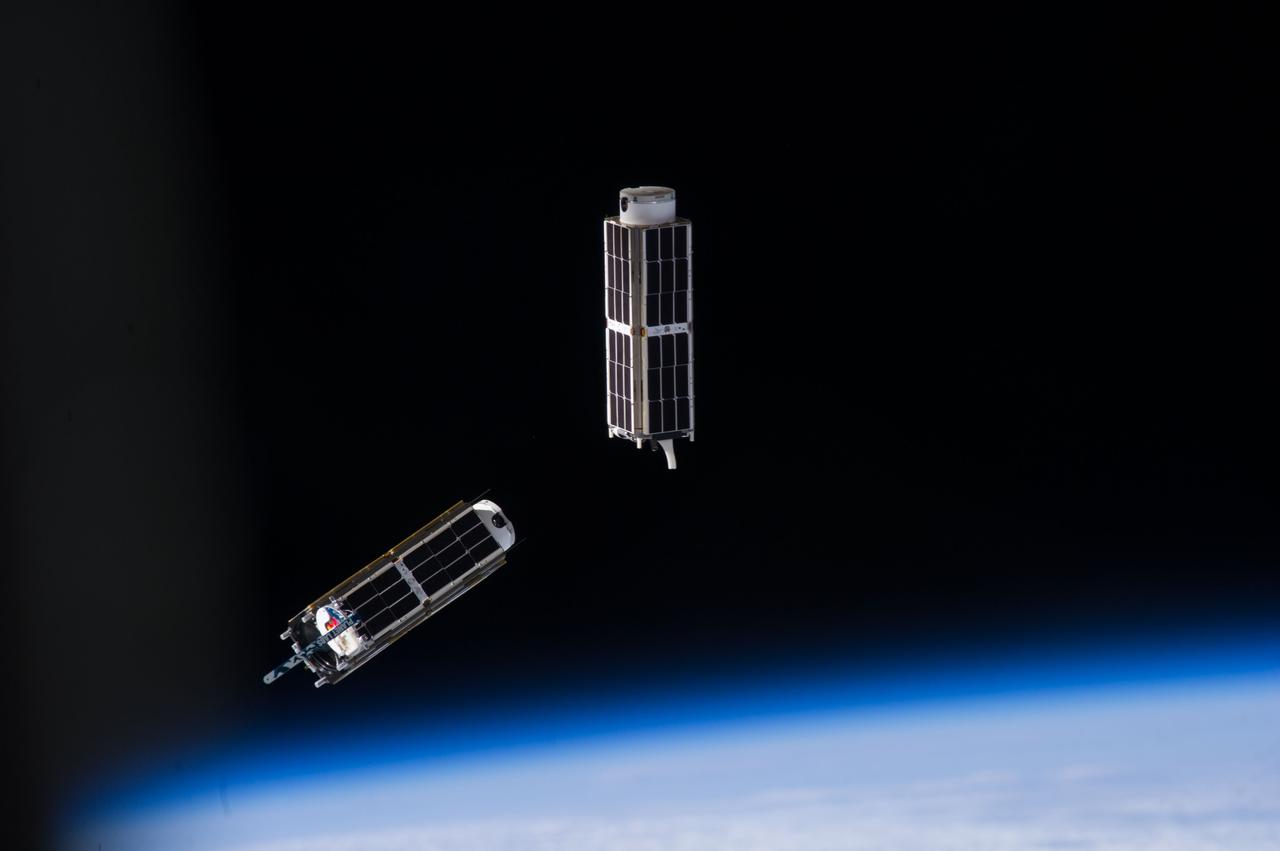
ISS038-E-046586 (13 Feb. 2014) --- A set of NanoRacks CubeSats is photographed by an Expedition 38 crew member after the deployment by the NanoRacks Launcher attached to the end of the Japanese robotic arm. The CubeSats program contains a variety of experiments such as Earth observations and advanced electronics testing.
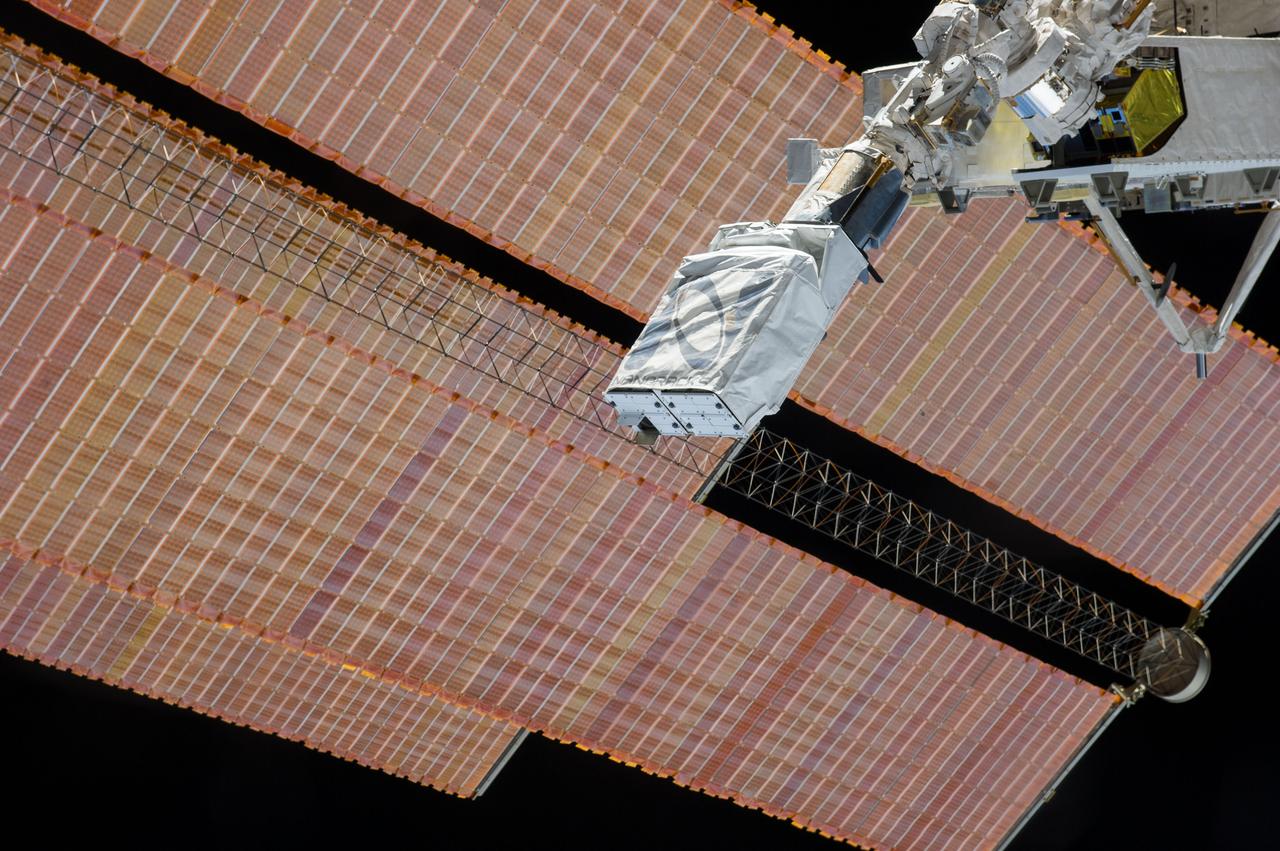
ISS038-E-044994 (11 Feb. 2014) --- The Small Satellite Orbital Deployer (SSOD), in the grasp of the Kibo laboratory robotic arm, is photographed by an Expedition 38 crew member on the International Space Station prior to the deployment of a set of NanoRacks CubeSats. The CubeSats program contains a variety of experiments such as Earth observations and advanced electronics testing.
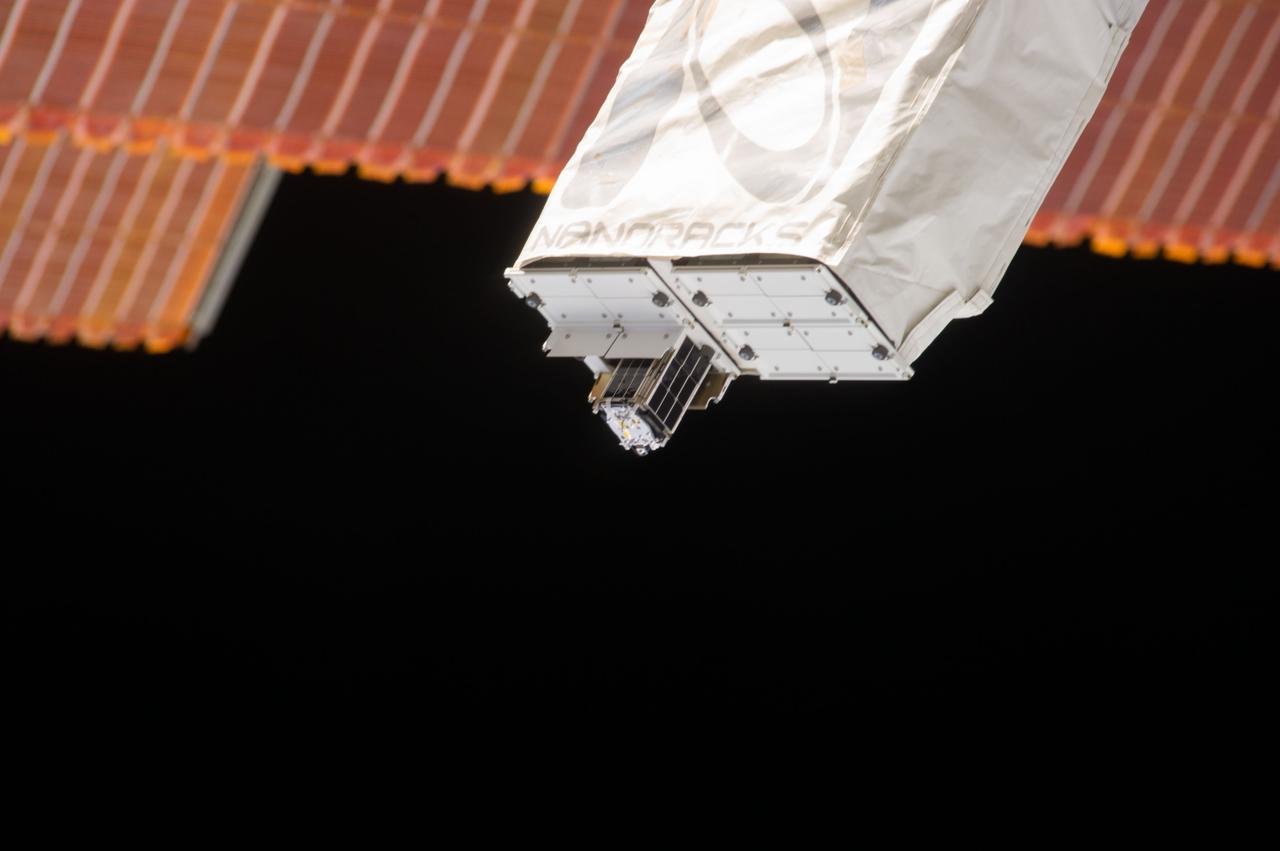
ISS038-E-044883 (11 Feb. 2014) --- The Small Satellite Orbital Deployer (SSOD), in the grasp of the Kibo laboratory robotic arm, is photographed by an Expedition 38 crew member on the International Space Station as it begins the deployment of a set of NanoRacks CubeSats. The CubeSats program contains a variety of experiments such as Earth observations and advanced electronics testing.

As the size of a satellite is scaled down to the form factor of a CubeSat, the hardware must scale down as well. Unfortunately, the software inside does not follow the same trend. Simulation-to-Flight 1 (STF-1) aims to solve this problem by providing a simulation of the CubeSat that can be used for developing and testing the software on any laptop or desktop computer. Additionally, STF-1 hosts payloads that aim to increase the accuracy of navigation for CubeSats, monitor Space Weather over the North and South Poles, and test the durability of new materials used for Light Emitting Diodes (LEDs). The first spacecraft built in the state of West Virginia, STF-1, is a collaborative effort between the NASA Independent Verification and Validation Program, West Virginia University, and West Virginia small businesses.

As the size of a satellite is scaled down to the form factor of a CubeSat, the hardware must scale down as well. Unfortunately, the software inside does not follow the same trend. Simulation-to-Flight 1 (STF-1) aims to solve this problem by providing a simulation of the CubeSat that can be used for developing and testing the software on any laptop or desktop computer. Additionally, STF-1 hosts payloads that aim to increase the accuracy of navigation for CubeSats, monitor Space Weather over the North and South Poles, and test the durability of new materials used for Light Emitting Diodes (LEDs). The first spacecraft built in the state of West Virginia, STF-1, is a collaborative effort between the NASA Independent Verification and Validation Program, West Virginia University, and West Virginia small businesses.

As the size of a satellite is scaled down to the form factor of a CubeSat, the hardware must scale down as well. Unfortunately, the software inside does not follow the same trend. Simulation-to-Flight 1 (STF-1) aims to solve this problem by providing a simulation of the CubeSat that can be used for developing and testing the software on any laptop or desktop computer. Additionally, STF-1 hosts payloads that aim to increase the accuracy of navigation for CubeSats, monitor Space Weather over the North and South Poles, and test the durability of new materials used for Light Emitting Diodes (LEDs). The first spacecraft built in the state of West Virginia, STF-1, is a collaborative effort between the NASA Independent Verification and Validation Program, West Virginia University, and West Virginia small businesses.
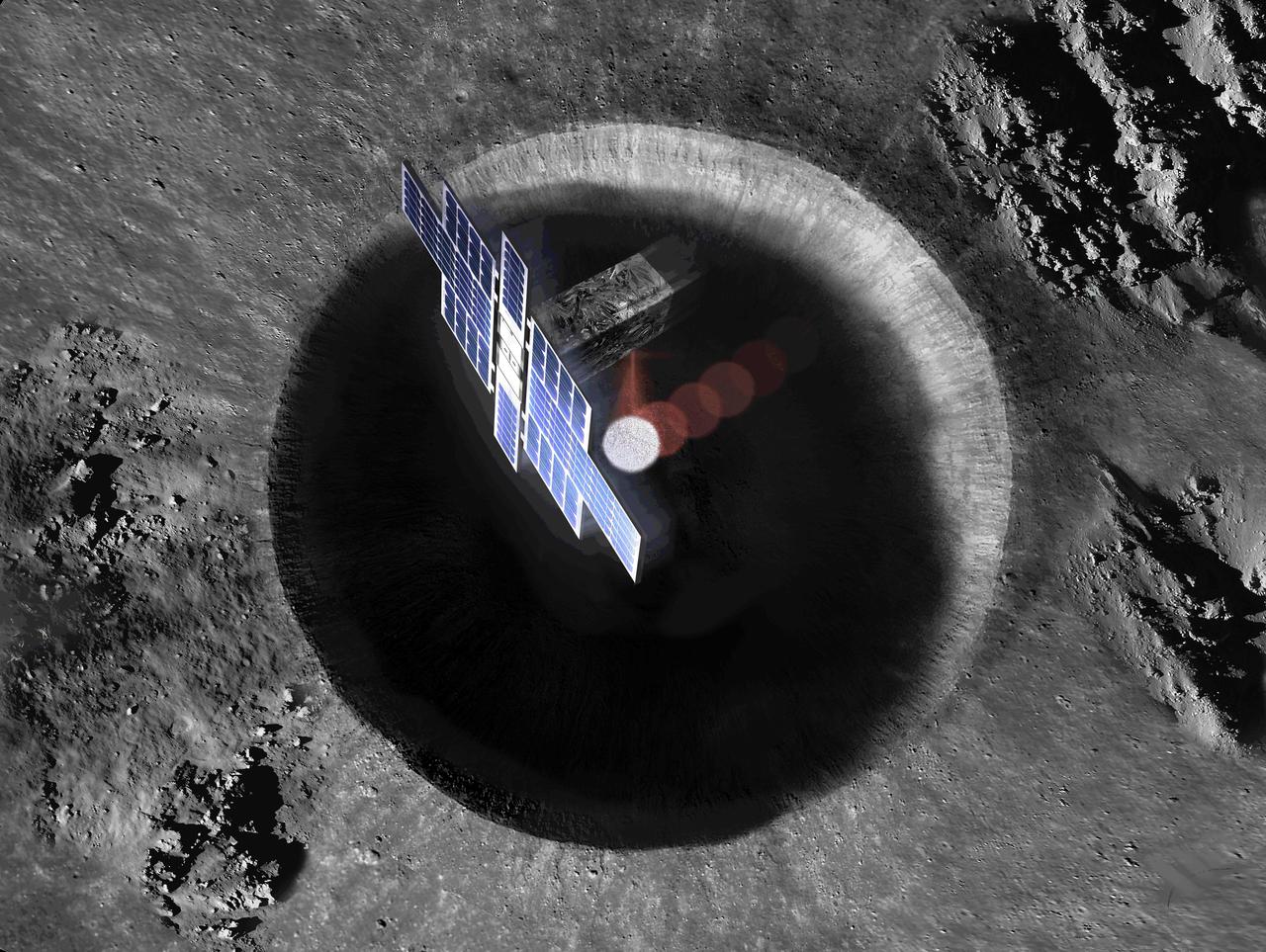
This artist's concept shows a view from above the Lunar Flashlight spacecraft, a six-unit CubeSat designed to search for ice on the Moon's surface using special lasers. The spacecraft uses its near-infrared lasers to shine light into shaded polar regions on the Moon, while an on-board reflectometer measures surface reflection and composition. https://photojournal.jpl.nasa.gov/catalog/PIA23132
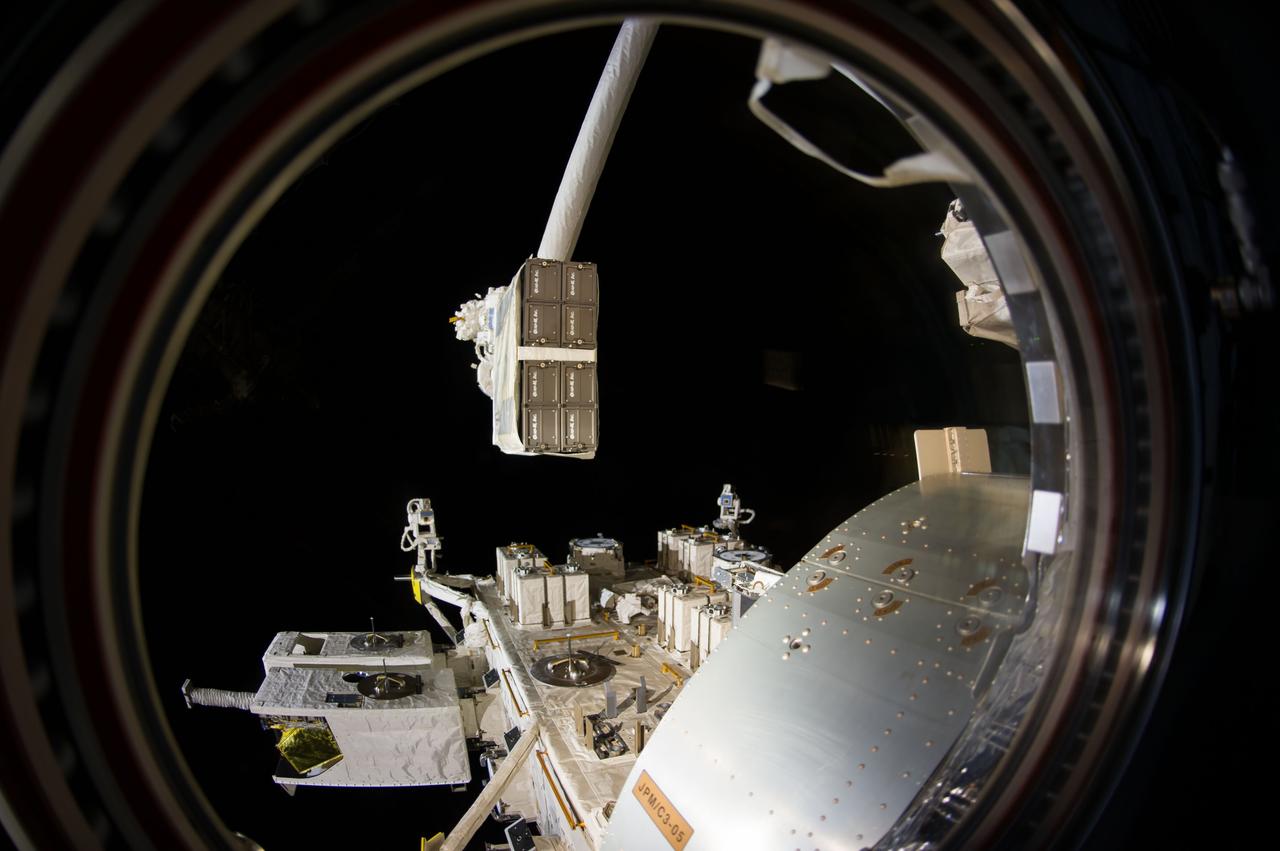
ISS040-E-100890 (19 Aug. 2014) --- Through a window in the International Space Station?s Kibo laboratory, an Expedition 40 crew member photographed the CubeSat deployer mechanism in the grasp of the Japanese robotic arm prior to a series of NanoRacks CubeSat miniature satellite deployments.
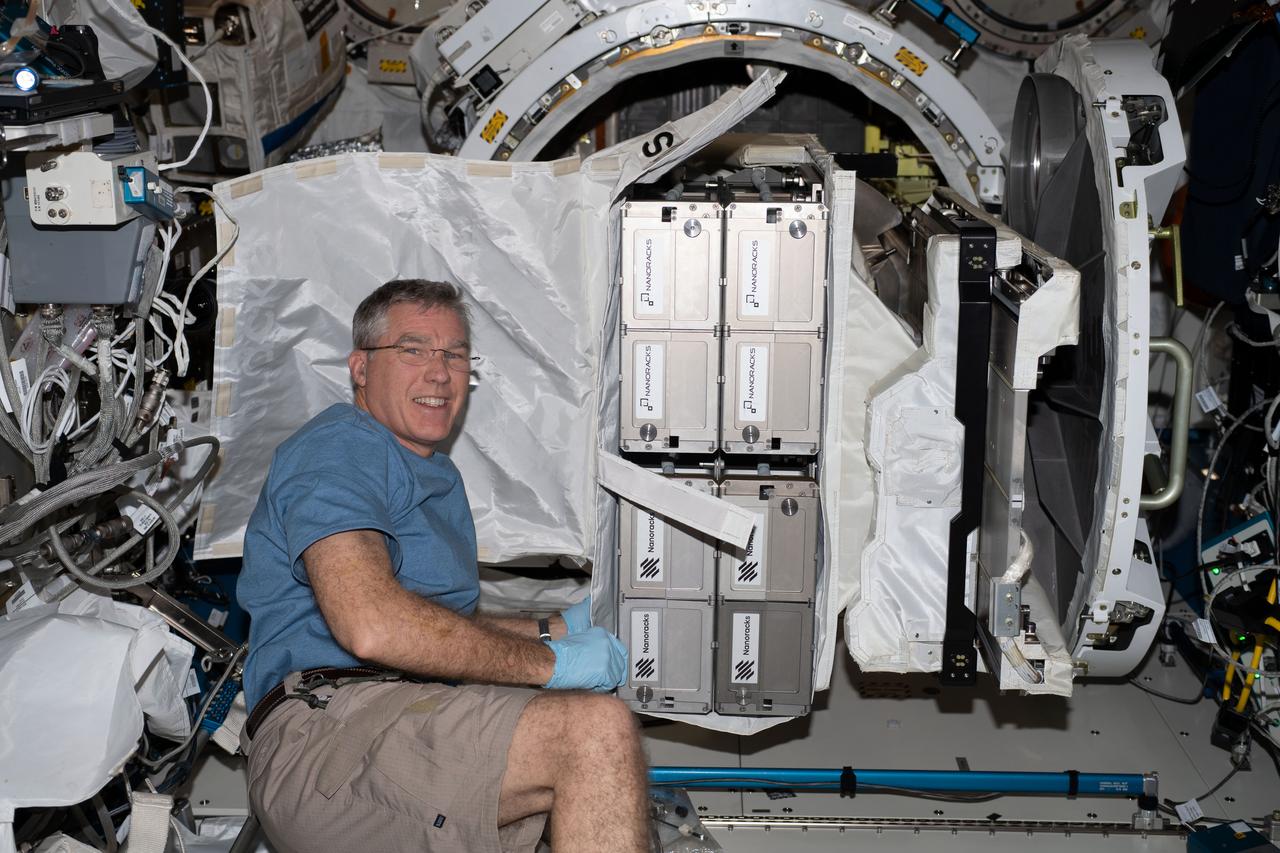
iss069e025743 (June 28, 2023) --- NASA astronaut and Expedition 69 Flight Engineer Stephen Bowen installs the NanoRacks CubeSat Deployer into the Kibo laboratory module's airlock.
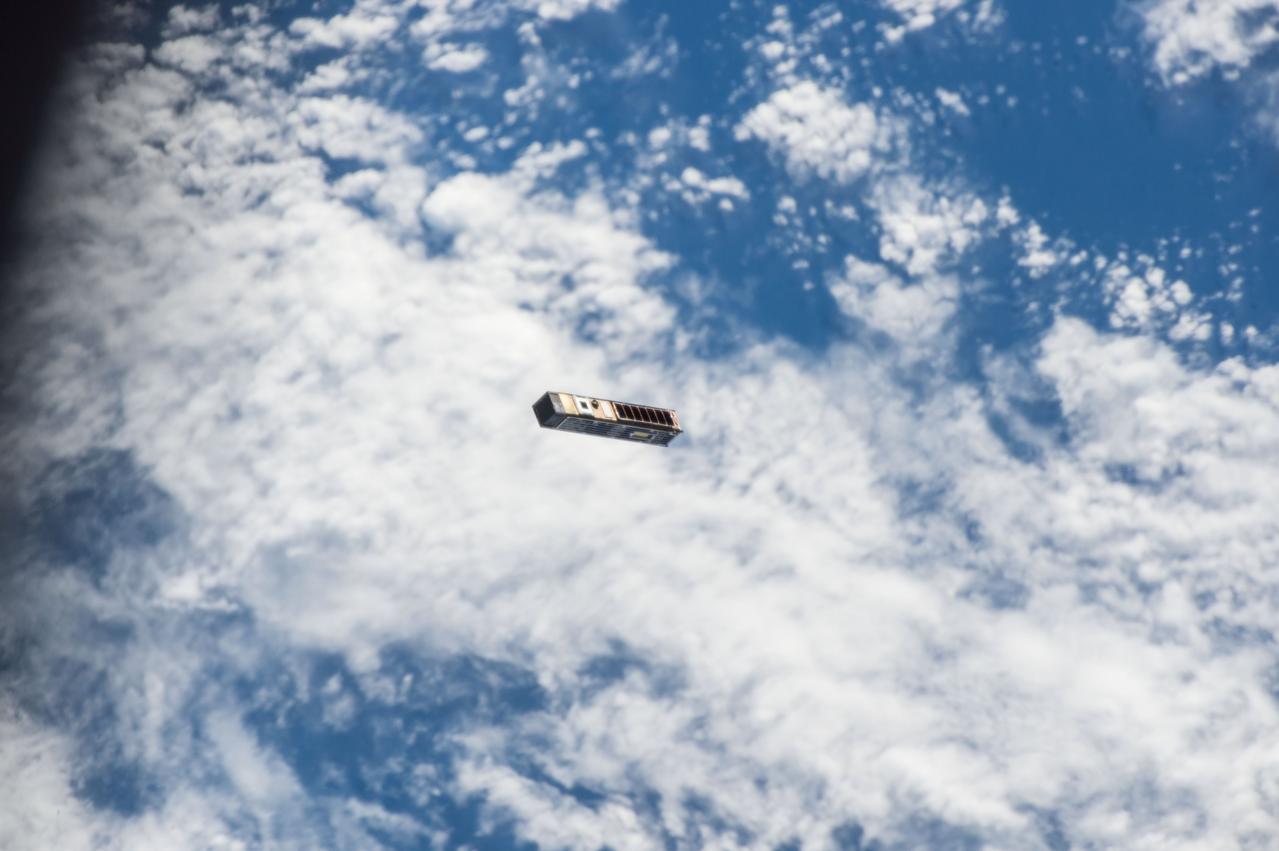
iss051e044839 (5/17/2017) -- The NanoRacks CubeSat Deployer "ejects" the Spacecraft for High Accuracy Radar Calibrationa (SHARC) microsatellite into orbit from the International Space Station.
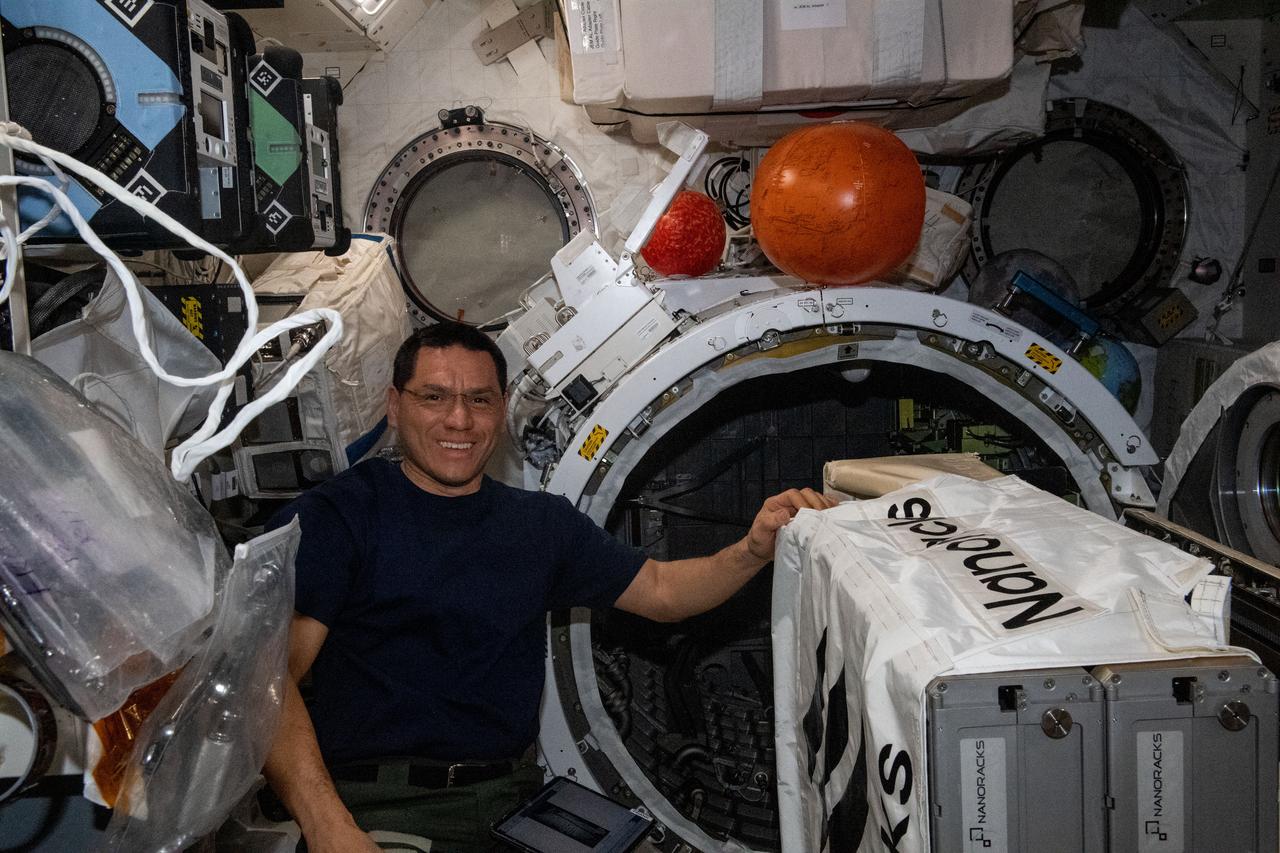
iss069e004397 (April 20, 2023) --- NASA astronaut and Expedition 69 Flight Engineer Frank Rubio works to install the NanoRacks CubeSat Deployer inside the Kibo laboratory module's airlock. After the airlock is depressurized, the Japanese robotic arm grapples the deployer and places it outside in the vacuum of microgravity pointing it away from the International Space Station. CubeSats from private, governmental, and academic organizations are then deployed into Earth orbit for a variety of research objectives.
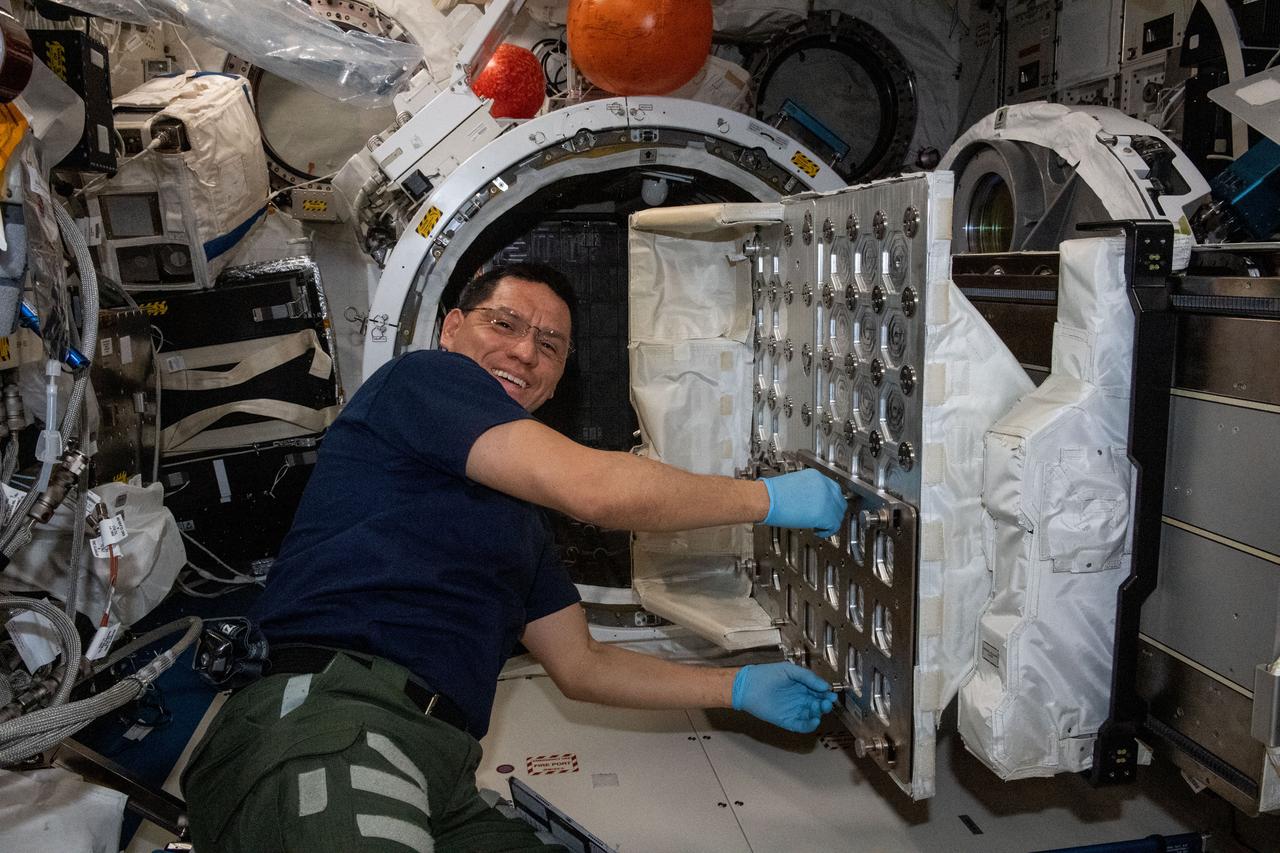
iss069e004389 (April 20, 2023) --- NASA astronaut and Expedition 69 Flight Engineer Frank Rubio works to install the NanoRacks CubeSat Deployer inside the Kibo laboratory module's airlock. After the airlock is depressurized, the Japanese robotic arm grapples the deployer and places it outside in the vacuum of microgravity pointing it away from the International Space Station. CubeSats from private, governmental, and academic organizations are then deployed into Earth orbit for a variety of research objectives.
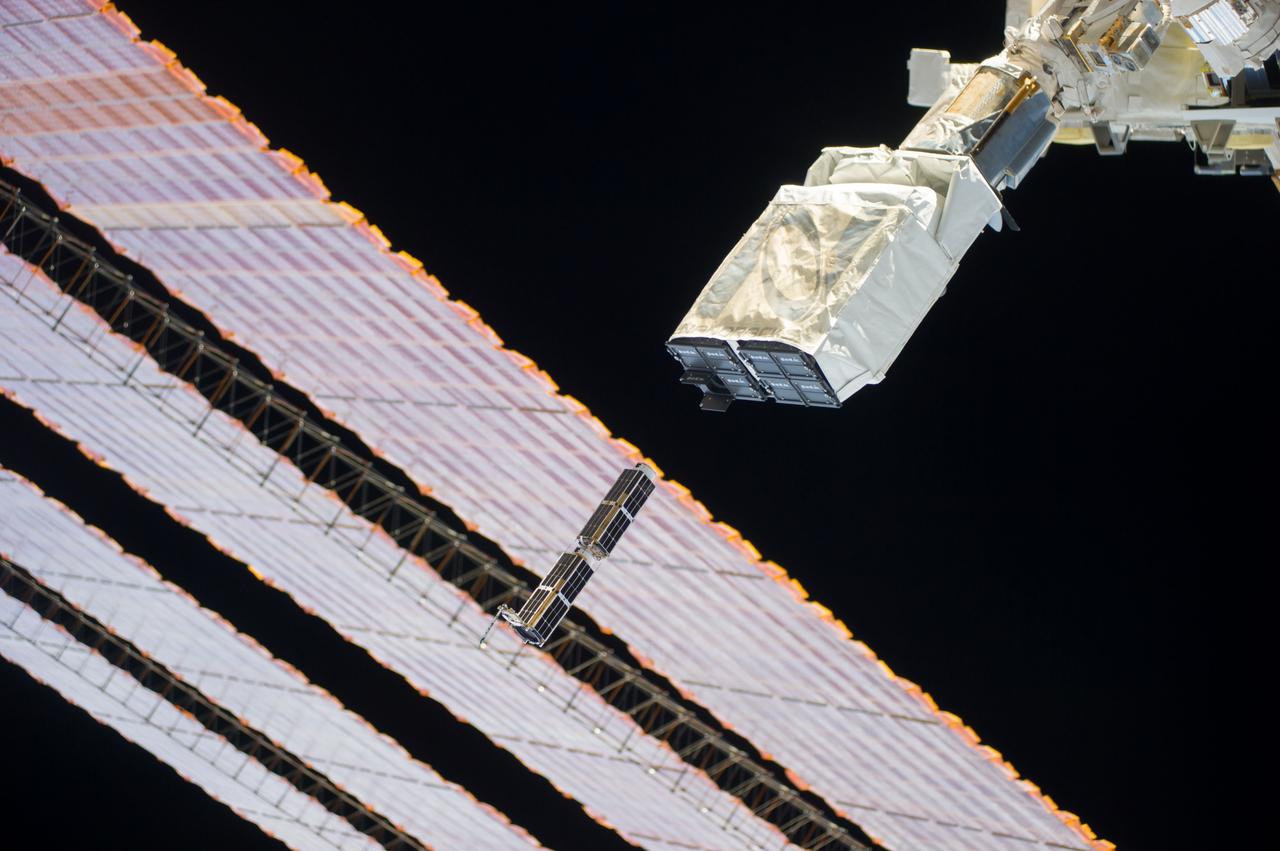
ISS040-E-102490 (19 Aug. 2014) --- In the grasp of the Japanese robotic arm, the CubeSat deployer releases a pair of NanoRacks CubeSat miniature satellites. The Planet Labs Dove satellites that were carried to the International Space Station aboard the Orbital Sciences Cygnus commercial cargo craft are being deployed between Aug. 19 and Aug. 25. A section of the station solar array wings is at left.
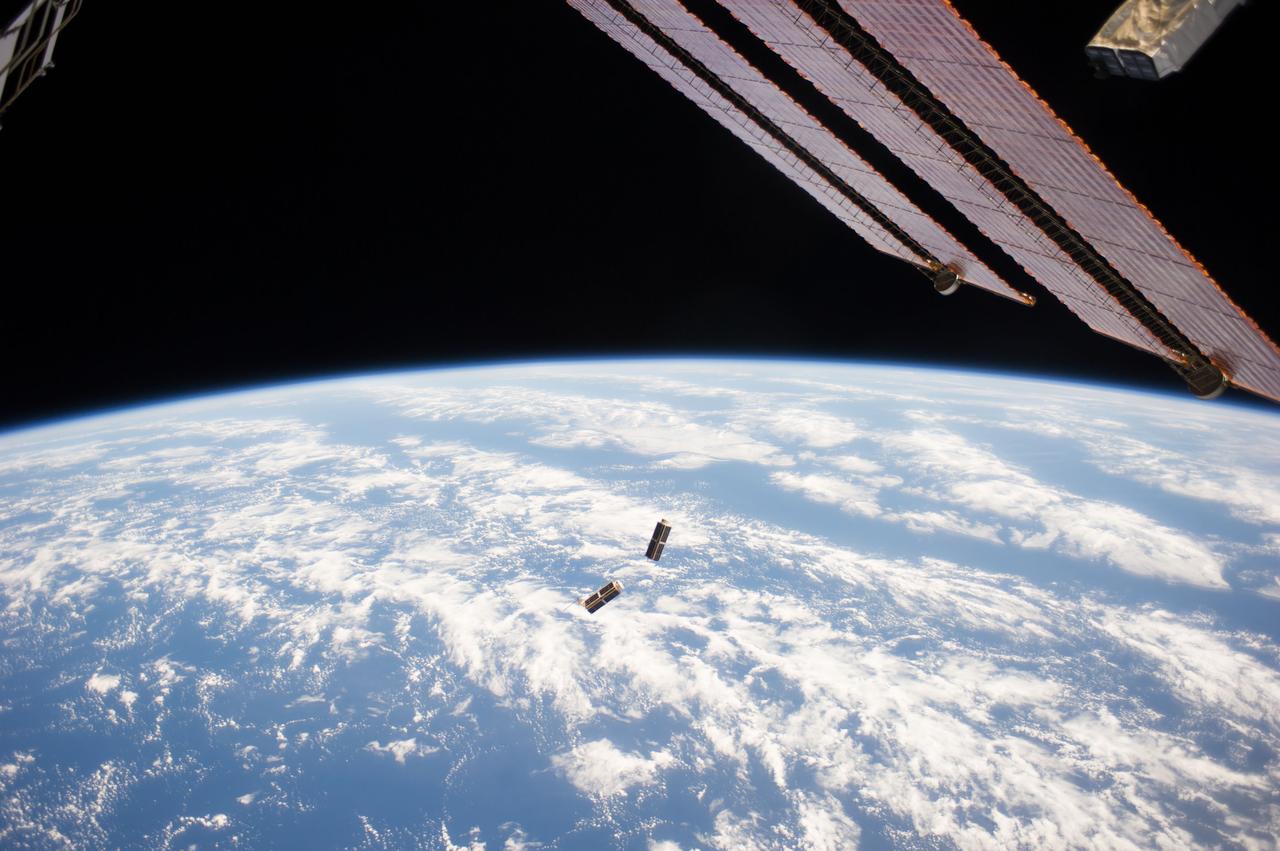
ISS040-E-103545 (19 Aug. 2014) --- In the grasp of the Japanese robotic arm, the CubeSat deployer (mostly out of frame, upper right) releases a pair of NanoRacks CubeSat miniature satellites (center). The Planet Labs Dove satellites that were carried to the International Space Station aboard the Orbital Sciences Cygnus commercial cargo craft are being deployed between Aug. 19 and Aug. 25. A section of the station solar array wings is at top right. A blue and white part of Earth and the blackness of space provide the backdrop for the scene.
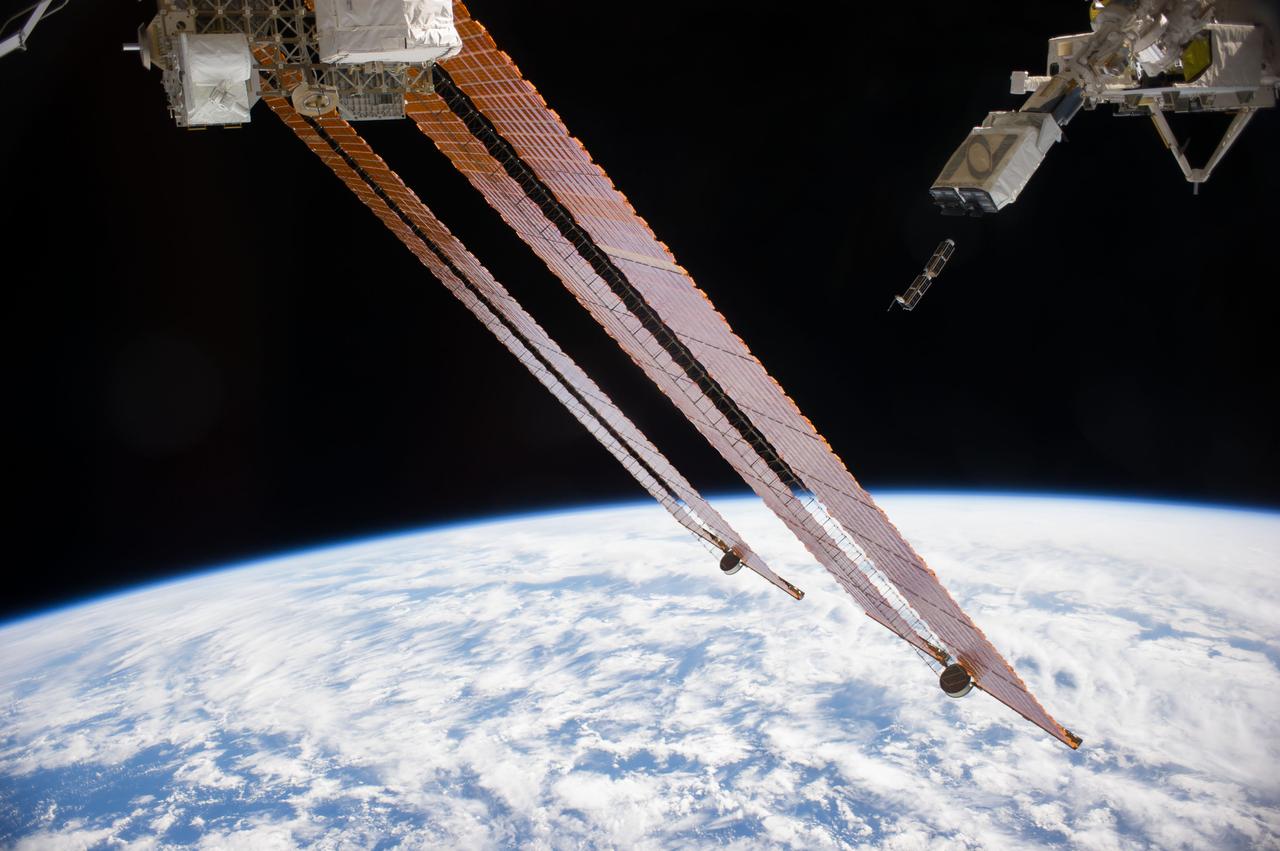
ISS040-E-103340 (20 Aug. 2014) --- In the grasp of the Japanese robotic arm, the CubeSat deployer (upper right) releases a pair of NanoRacks CubeSat miniature satellites. The Planet Labs Dove satellites that were carried to the International Space Station aboard the Orbital Sciences Cygnus commercial cargo craft are being deployed between Aug. 19 and Aug. 25. A section of the station solar array wings is at center. A blue and white part of Earth and the blackness of space provide the backdrop for the scene.
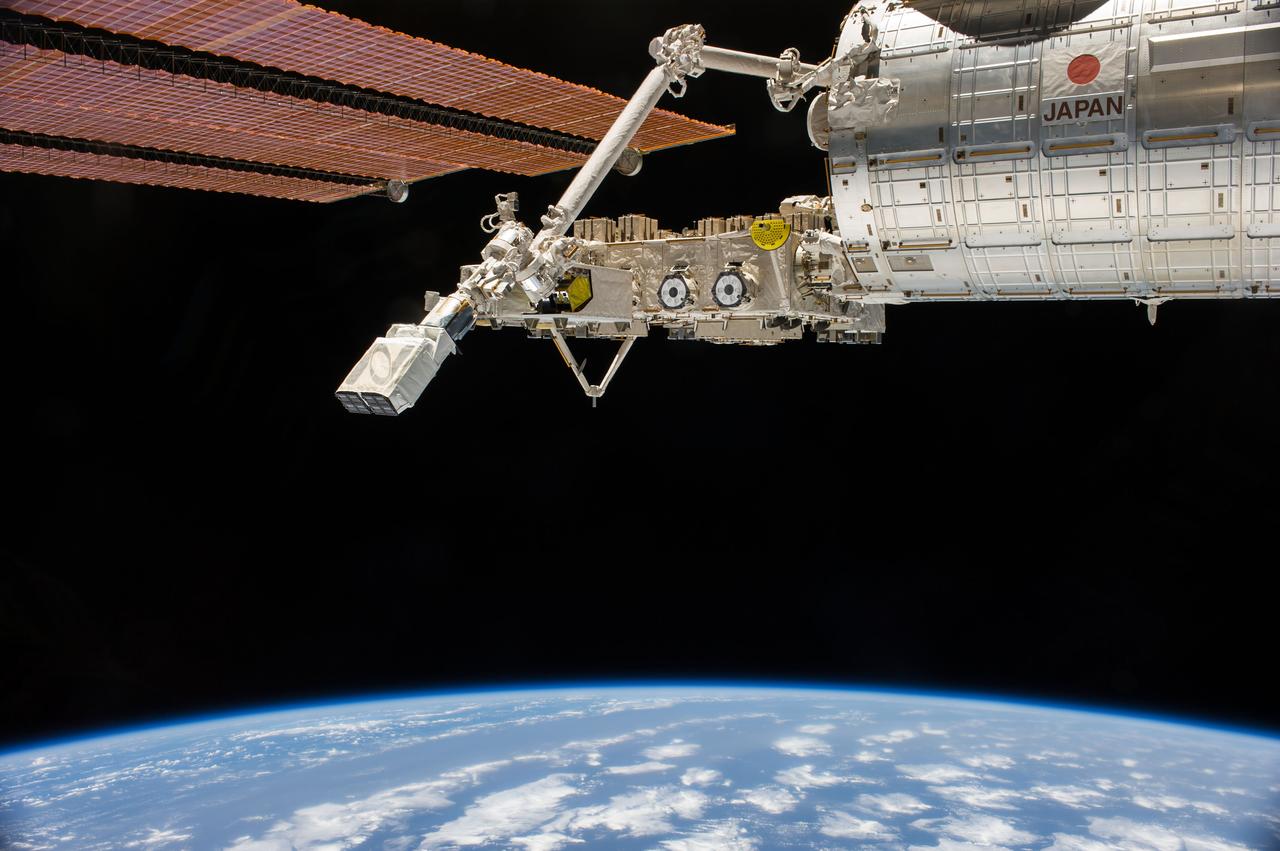
ISS040-E-103506 (19 Aug. 2014) --- In the grasp of the Japanese robotic arm, the CubeSat deployer is about to release a pair of NanoRacks CubeSat miniature satellites. The Planet Labs Dove satellites that were carried to the International Space Station aboard the Orbital Sciences Cygnus commercial cargo craft are being deployed between Aug. 19 and Aug. 25. The station?s Kibo laboratory is at top right. A blue and white part of Earth and the blackness of space provide the backdrop for the scene.
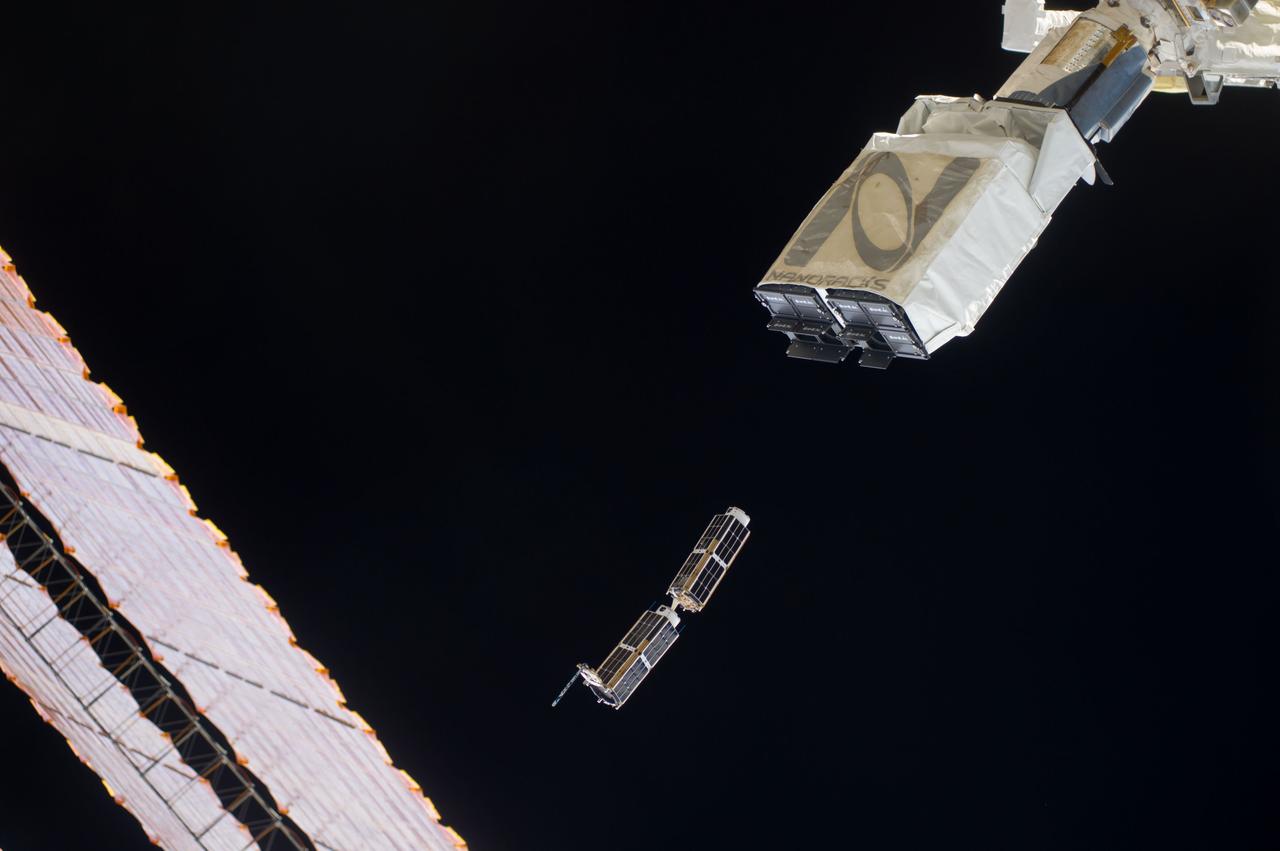
ISS040-E-102425 (20 Aug. 2014) --- In the grasp of the Japanese robotic arm, the CubeSat deployer releases a pair of NanoRacks CubeSat miniature satellites. The Planet Labs Dove satellites that were carried to the International Space Station aboard the Orbital Sciences Cygnus commercial cargo craft are being deployed between Aug. 19 and Aug. 25. A section of the station solar array wings is at left.
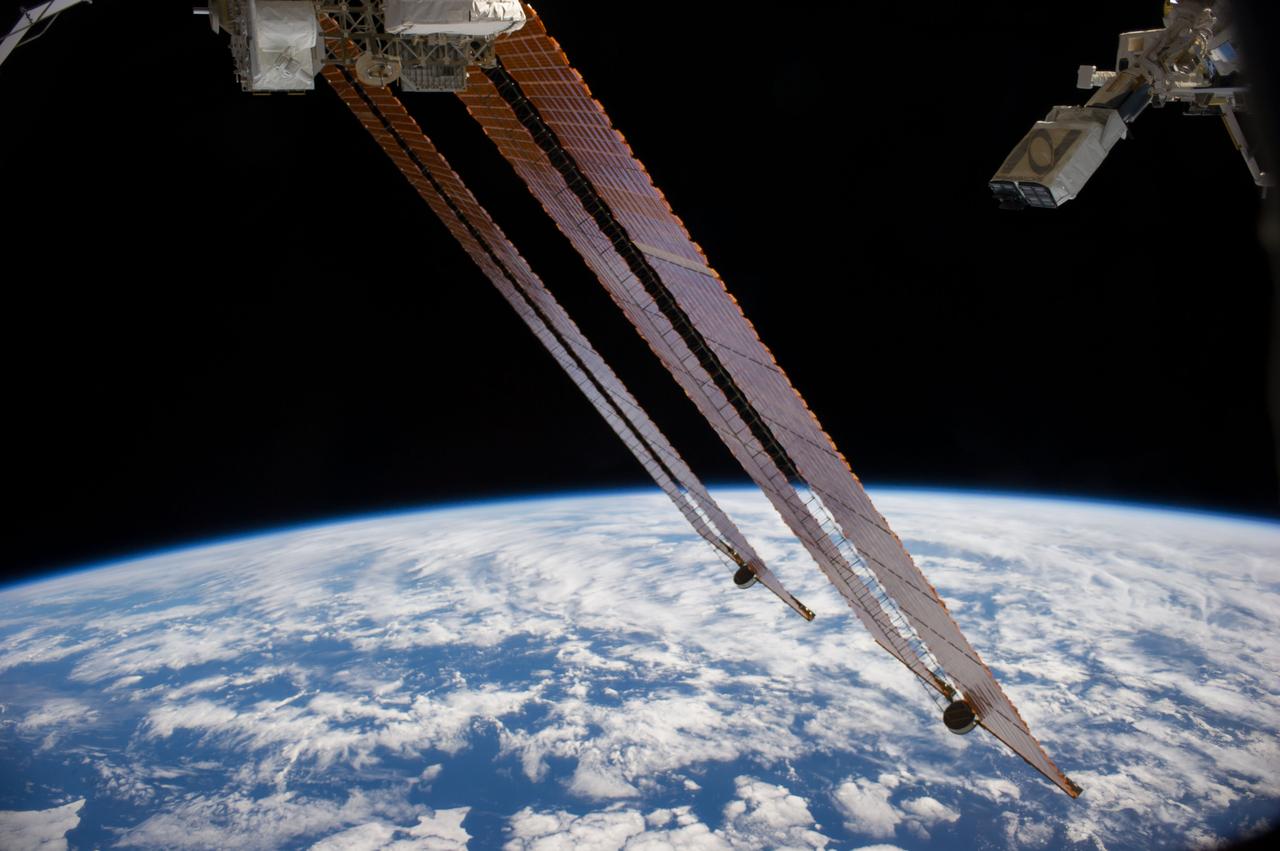
ISS040-E-103327 (20 Aug. 2014) --- In the grasp of the Japanese robotic arm, the CubeSat deployer (upper right) is about to release a pair of NanoRacks CubeSat miniature satellites. The Planet Labs Dove satellites that were carried to the International Space Station aboard the Orbital Sciences Cygnus commercial cargo craft are being deployed between Aug. 19 and Aug. 25. A section of the station solar array wings is at center. A blue and white part of Earth and the blackness of space provide the backdrop for the scene.
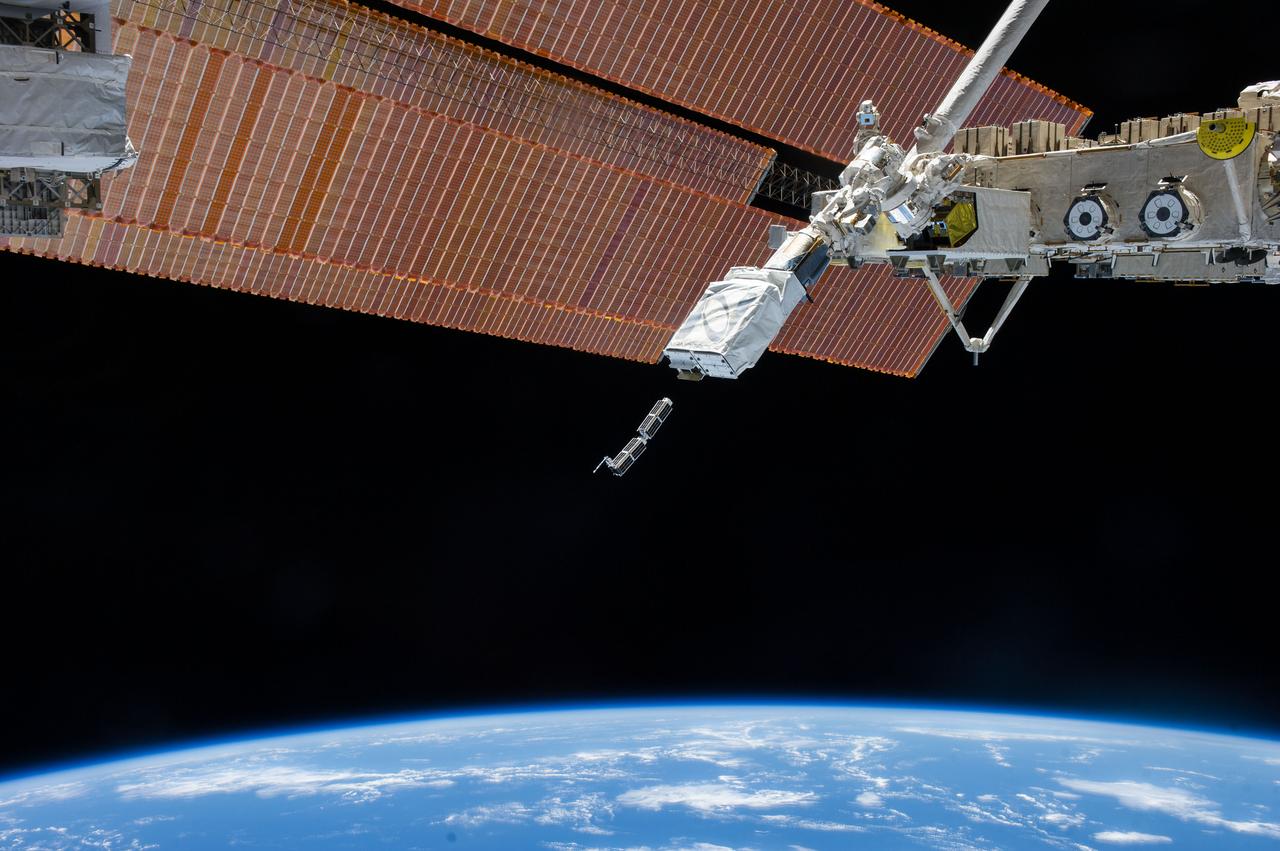
ISS038-E-045009 (11 Feb. 2014) --- The Small Satellite Orbital Deployer (SSOD), in the grasp of the Kibo laboratory robotic arm, is photographed by an Expedition 38 crew member on the International Space Station as it deploys a set of NanoRacks CubeSats. The CubeSats program contains a variety of experiments such as Earth observations and advanced electronics testing. Station solar array panels, Earth's horizon and the blackness of space provide the backdrop for the scene.
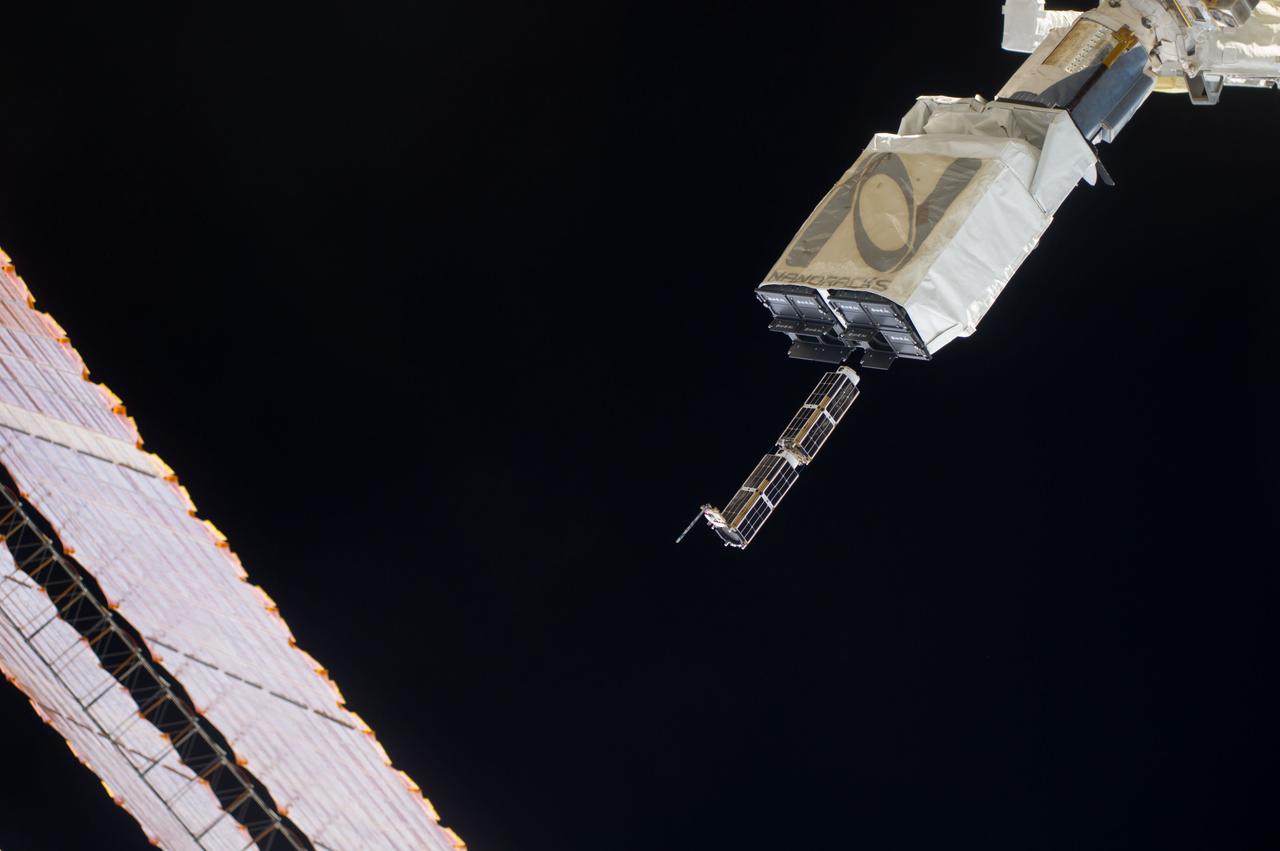
ISS040-E-102420 (20 Aug. 2014) --- In the grasp of the Japanese robotic arm, the CubeSat deployer releases a pair of NanoRacks CubeSat miniature satellites. The Planet Labs Dove satellites that were carried to the International Space Station aboard the Orbital Sciences Cygnus commercial cargo craft are being deployed between Aug. 19 and Aug. 25. A section of the station solar array wings is at left.
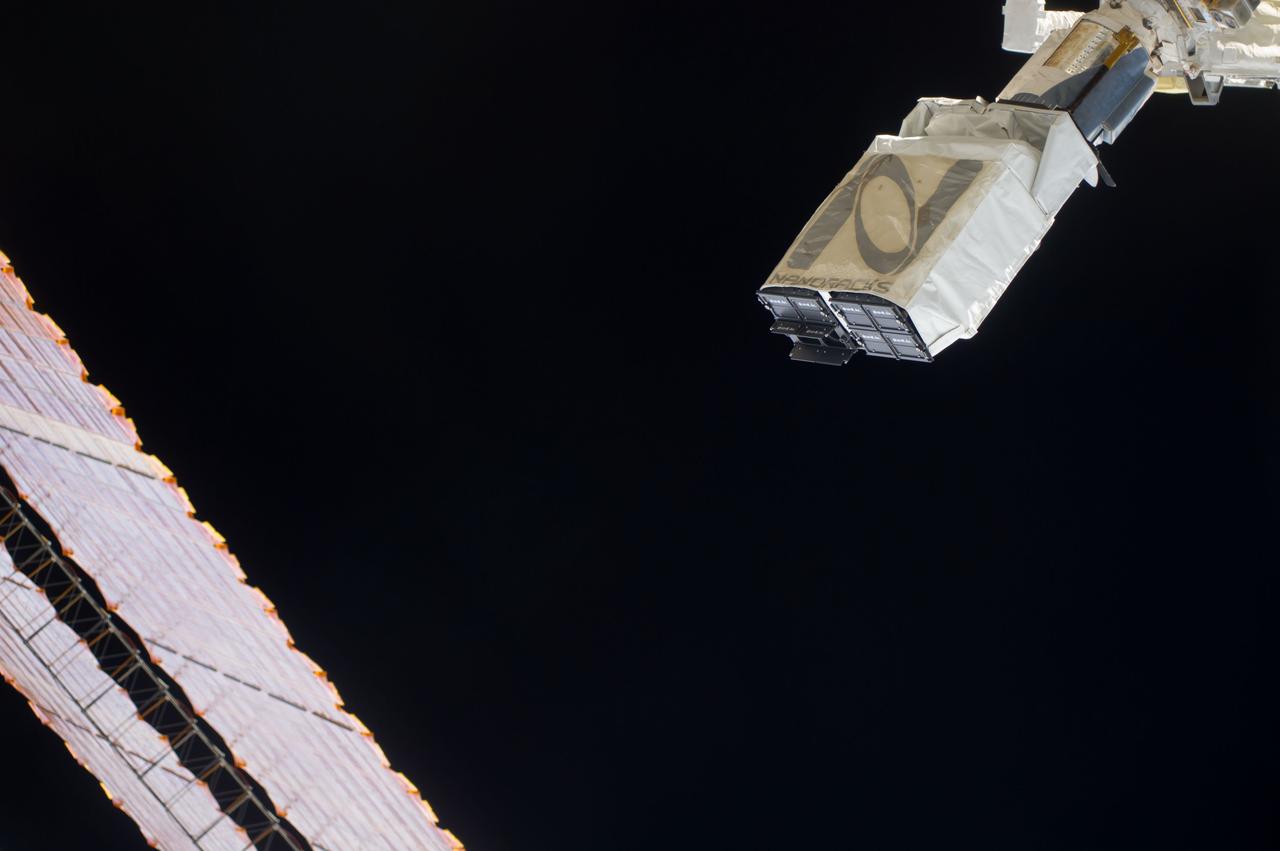
ISS040-E-102410 (20 Aug. 2014) --- In the grasp of the Japanese robotic arm, the CubeSat deployer is about to release a pair of NanoRacks CubeSat miniature satellites. The Planet Labs Dove satellites that were carried to the International Space Station aboard the Orbital Sciences Cygnus commercial cargo craft are being deployed between Aug. 19 and Aug. 25. A section of the station solar array wings is at left.

RainCube was deployed into low-Earth orbit from the International Space Station in July, 2018, where it has been measuring rain and snowfall from space. The size of the tiny weather satellite can be seen in comparison to the Space Station. RainCube is a prototype for a possible fleet of small satellites that could one day help monitor severe storms, lead to improving the accuracy of weather forecasts and track climate change over time. A closer look at these images reveals there are two CubeSats very close together -- RainCube is the bottom CubeSat closer to Earth, while the one above it is HaloSat, used to map the distribution of hot gas in the Milky Way. https://photojournal.jpl.nasa.gov/catalog/PIA22653

Small satellites, called CubeSats, are shown secured inside NASA’s Orion stage adapter at NASA’s Kennedy Space Center in Florida on Aug. 5, 2021. Technicians from Exploration Ground Systems and Jacobs teams are working with developers of the shoebox-sized secondary payloads as they undergo final processing. The ring-shaped stage adapter will be connected to the Space Launch System’s Interim Cryogenic Propulsion Stage, and the Orion spacecraft will be secured on top. The CubeSats will conduct a variety of science experiments and technology demonstrations that will expand our knowledge of the lunar surface during the Artemis I mission.
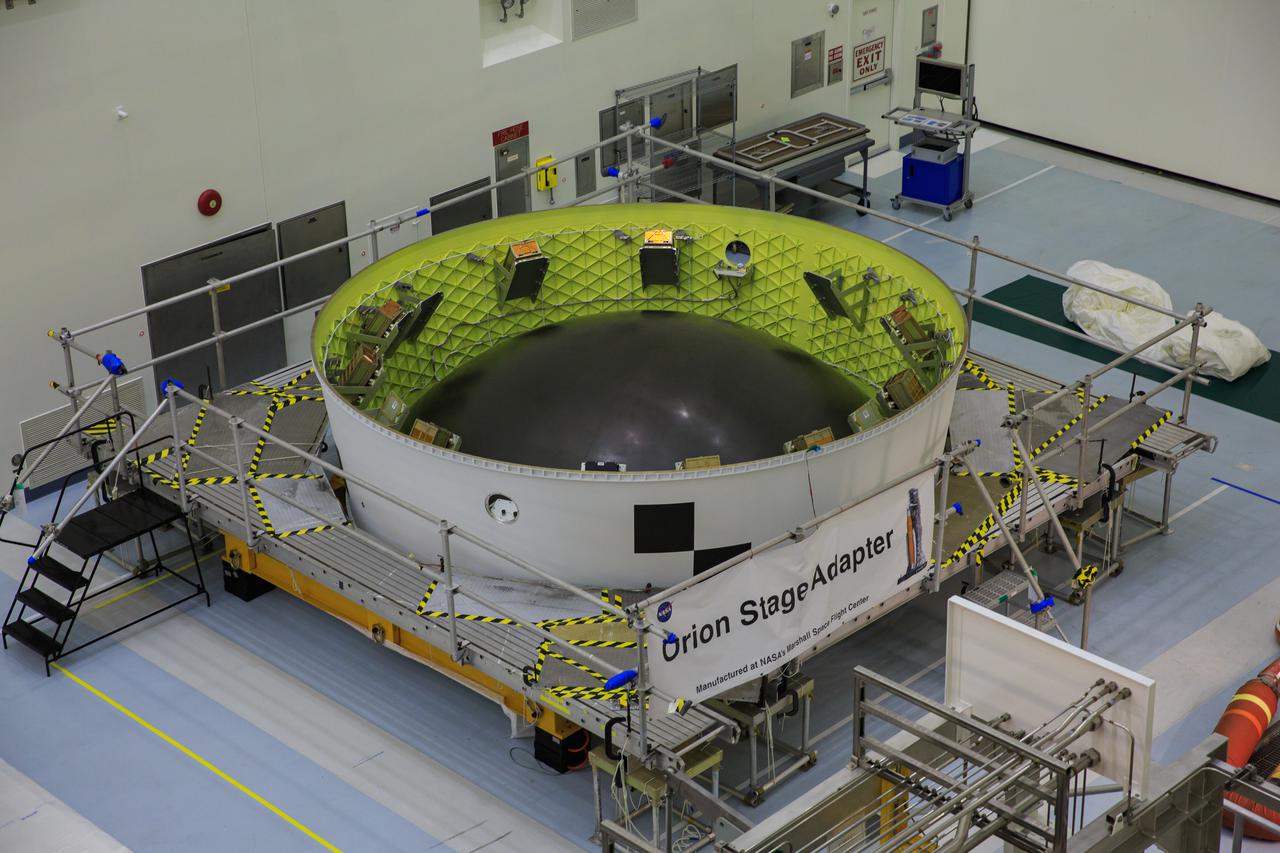
Small satellites, called CubeSats, are shown secured inside NASA’s Orion stage adapter at NASA’s Kennedy Space Center in Florida on Aug. 5, 2021. Technicians from Exploration Ground Systems and Jacobs teams are working with developers of the shoebox-sized secondary payloads as they undergo final processing. The ring-shaped stage adapter will be connected to the Space Launch System’s Interim Cryogenic Propulsion Stage, and the Orion spacecraft will be secured on top. The CubeSats will conduct a variety of science experiments and technology demonstrations that will expand our knowledge of the lunar surface during the Artemis I mission.
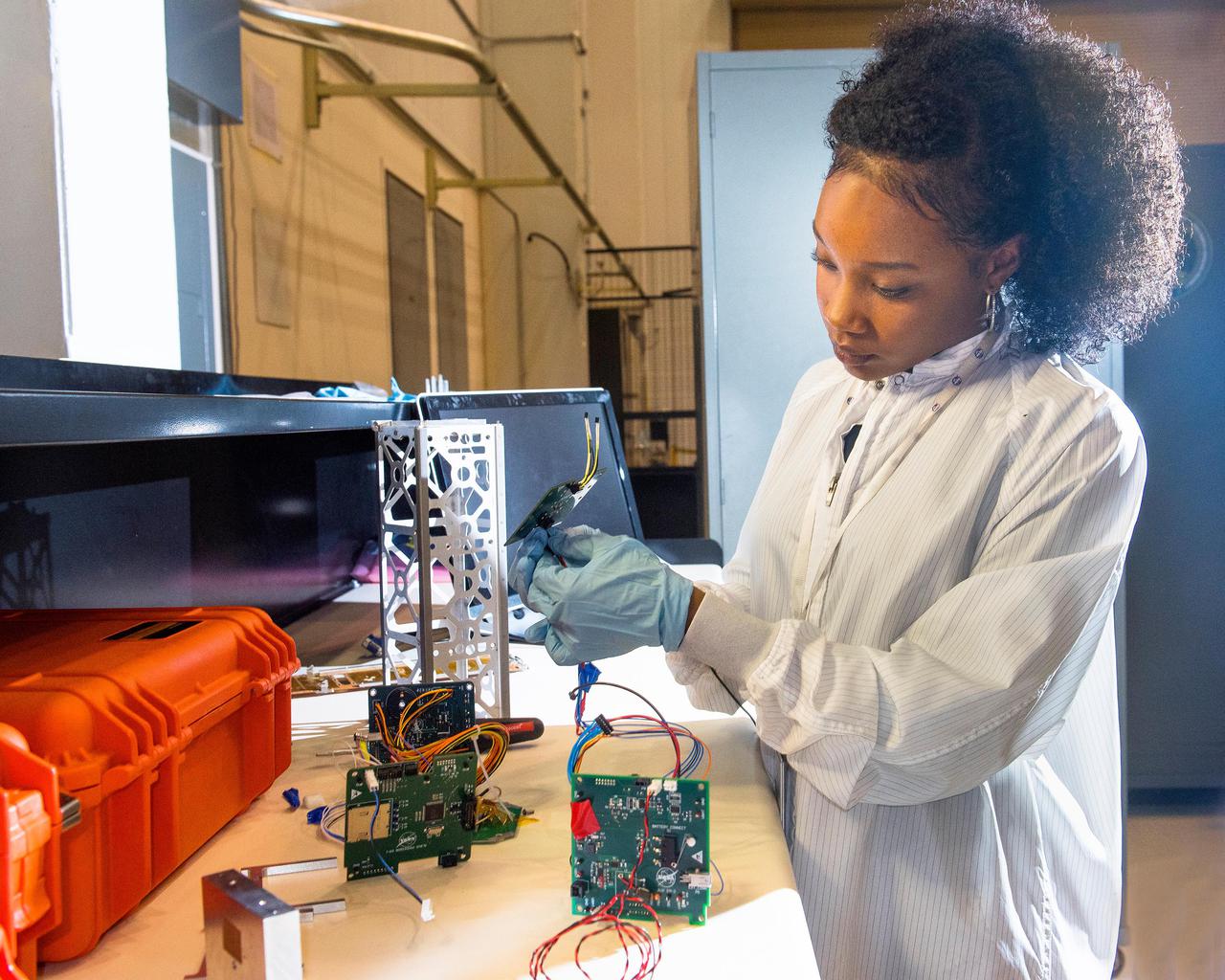
Advanced eLectrical Bus (ALBus) CubeSat: From Build to Flight A new CubeSat, launched Sunday, December 16, will test high power electric systems and the use of unique shape memory alloy (SMA) components for the first time. CubeSats are very small, lightweight satellites, about the size of a loaf of bread, and typically operate within a power range of 5-20 watts. Lower power systems are typically used in CubeSats because of size and weight limits, while higher power systems and components cause excessive heat. Completely designed and led by a team of 12 early career scientists and engineers at NASA’s Glenn Research Center in Cleveland, the Advanced Electrical Bus, or ALBus, will be the first CubeSat to demonstrate power management and distribution of a 100-watt electrical system. The CubeSat will also employ a custom-built SMA release mechanism and hinges to deploy solar arrays and conduct electricity.
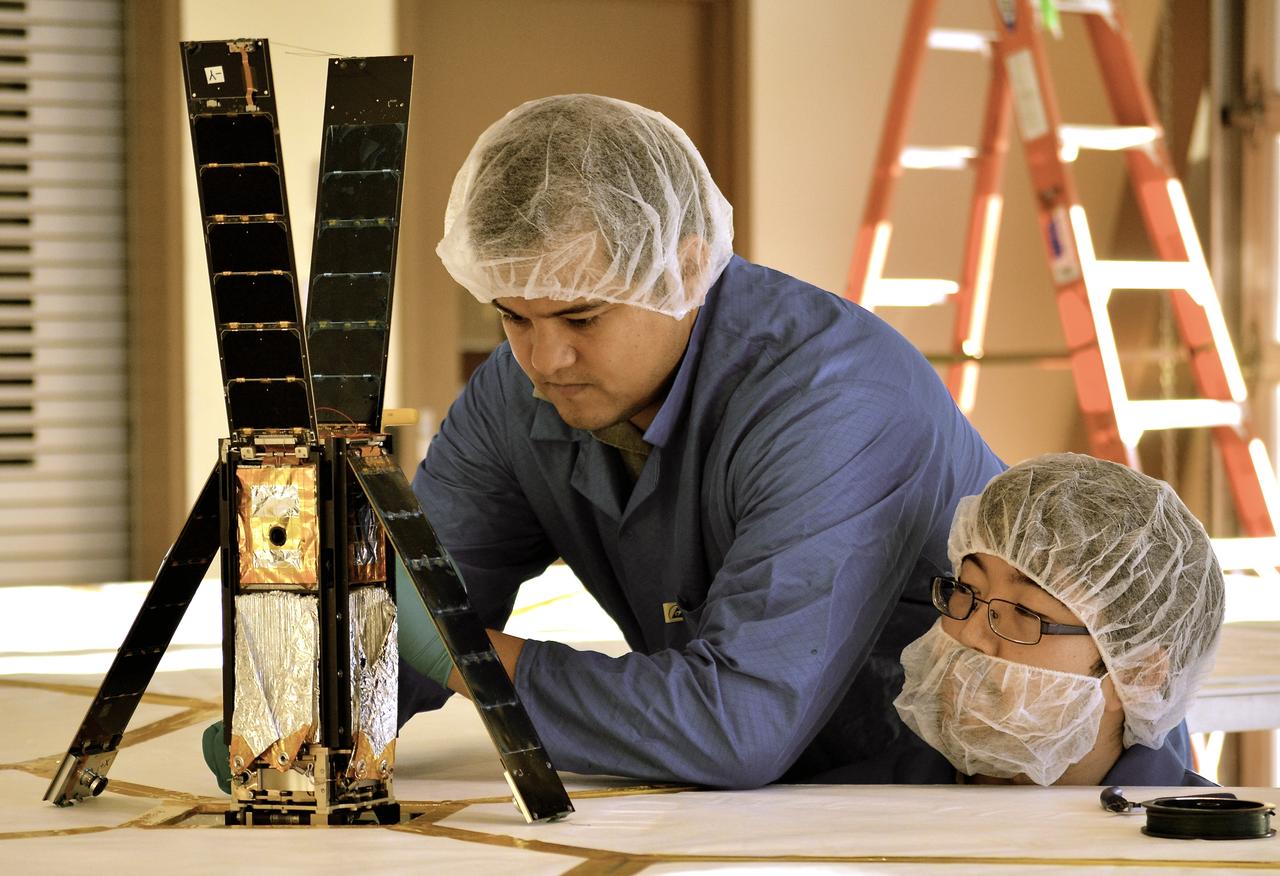
Students Alex Diaz and Riki Munakata of California Polytechnic State University testing the LightSail CubeSat. LightSail is a citizen-funded technology demonstration mission sponsored by the Planetary Society using solar propulsion for CubeSats. The spacecraft is designed to “sail” on the energy of solar photons striking the thin, reflective sail material. The first LightSail mission is designed to test the spacecraft’s critical systems, including the sequence to autonomously deploy a Mylar solar sail with an area of 32 square meters (344 square feet). The Planetary Society is planning a second, full solar sailing demonstration flight for 2016. Light is made of packets of energy called photons. While photons have no mass, they have energy and momentum. Solar sails use this momentum as a method of propulsion, creating flight by light. LightSail’s solar sail is packaged into a three-unit CubeSat about the size of a loaf of bread. Launched by NASA’s CubeSat Launch Initiative on the ELaNa XI mission as an auxiliary payload aboard the U.S. Air Force X-37B space plane mission on May 20, 2015.
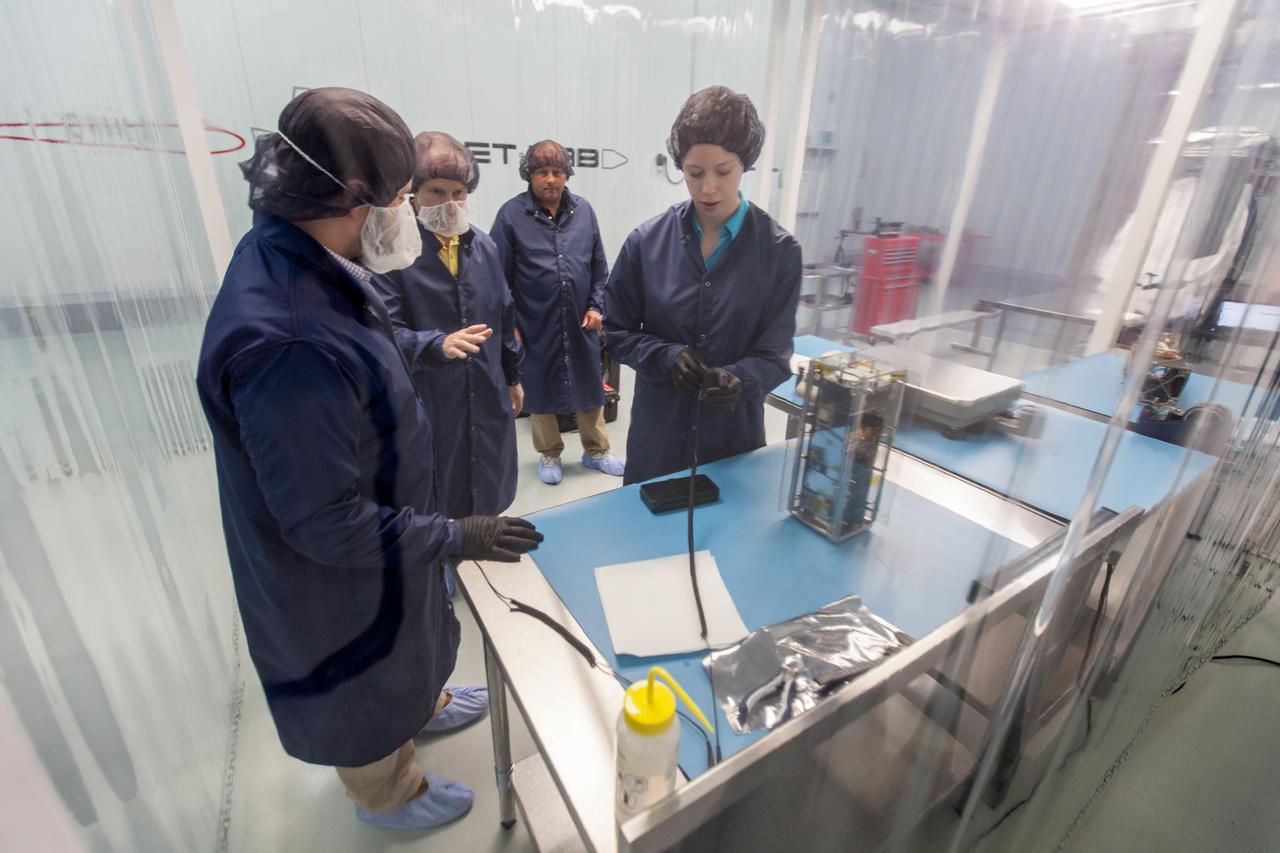
The CubeSat CeREs — short for Compact Radiation Belt Explorer. Its final destination: Earth’s radiation belts. Our planet is nestled in the center of two immense doughnut-shaped rings of radiation that swell and shrink in response to solar activity. This is a dynamic region of near-Earth space through which spacecraft and astronauts travel; understanding the belts’ behavior is crucial for ensuring their safety. From its high inclination, low-Earth orbit, the CubeSat — no larger than a loaf of bread — will face the tumultuous storms of the radiation belts. In particular, CeREs will examine how radiation belt electrons are energized and lost, particularly during events called microbursts — when sudden swarms of electrons stream into the atmosphere. CeREs will also inspect and characterize the high-energy particles that arrive at near-Earth space by way of the solar wind, the constant flow of charged particles from the Sun, 93 million miles away. The CubeSat was designed and built at NASA’s Goddard Space Flight Center in Greenbelt, Maryland.
The CubeSat CeREs — short for Compact Radiation Belt Explorer. Its final destination: Earth’s radiation belts. Our planet is nestled in the center of two immense doughnut-shaped rings of radiation that swell and shrink in response to solar activity. This is a dynamic region of near-Earth space through which spacecraft and astronauts travel; understanding the belts’ behavior is crucial for ensuring their safety. From its high inclination, low-Earth orbit, the CubeSat — no larger than a loaf of bread — will face the tumultuous storms of the radiation belts. In particular, CeREs will examine how radiation belt electrons are energized and lost, particularly during events called microbursts — when sudden swarms of electrons stream into the atmosphere. CeREs will also inspect and characterize the high-energy particles that arrive at near-Earth space by way of the solar wind, the constant flow of charged particles from the Sun, 93 million miles away. The CubeSat was designed and built at NASA’s Goddard Space Flight Center in Greenbelt, Maryland.
The CubeSat CeREs — short for Compact Radiation Belt Explorer. Its final destination: Earth’s radiation belts. Our planet is nestled in the center of two immense doughnut-shaped rings of radiation that swell and shrink in response to solar activity. This is a dynamic region of near-Earth space through which spacecraft and astronauts travel; understanding the belts’ behavior is crucial for ensuring their safety. From its high inclination, low-Earth orbit, the CubeSat — no larger than a loaf of bread — will face the tumultuous storms of the radiation belts. In particular, CeREs will examine how radiation belt electrons are energized and lost, particularly during events called microbursts — when sudden swarms of electrons stream into the atmosphere. CeREs will also inspect and characterize the high-energy particles that arrive at near-Earth space by way of the solar wind, the constant flow of charged particles from the Sun, 93 million miles away. The CubeSat was designed and built at NASA’s Goddard Space Flight Center in Greenbelt, Maryland.
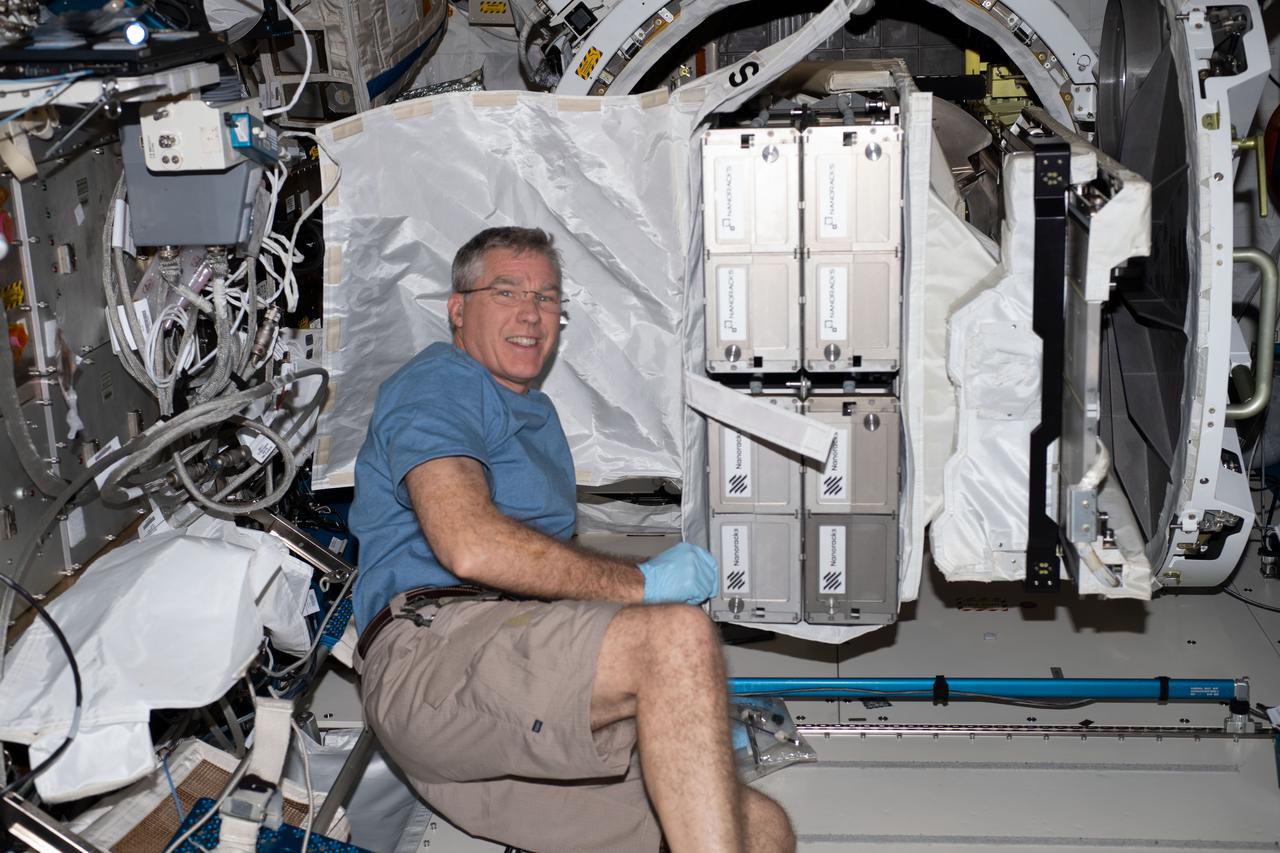
iss069e025742 (June 28, 2023) --- NASA astronaut and Expedition 69 Flight Engineer Stephen Bowen with CubeSats to be deployed from the space station for the 26th NanoRacks CubeSat Deployer (NRCSD-26) mission. The satellites included Nanoracks-RADSAT-SK, which tests a radiation detection system; Nanoracks-SC-ODIN that captures data on dust in storms in Argentina and Namibia; Nanoracks-ESSENCE, to monitor solar storms, arctic ice, permafrost thaw, and forests in the Canadian Arctic region; Nanoracks-Iris, an observation of space weathering of geological samples; and Nanoracks-Ukpik-1, which uses a VR camera to capture 360-degree images and video of Northern Canada.
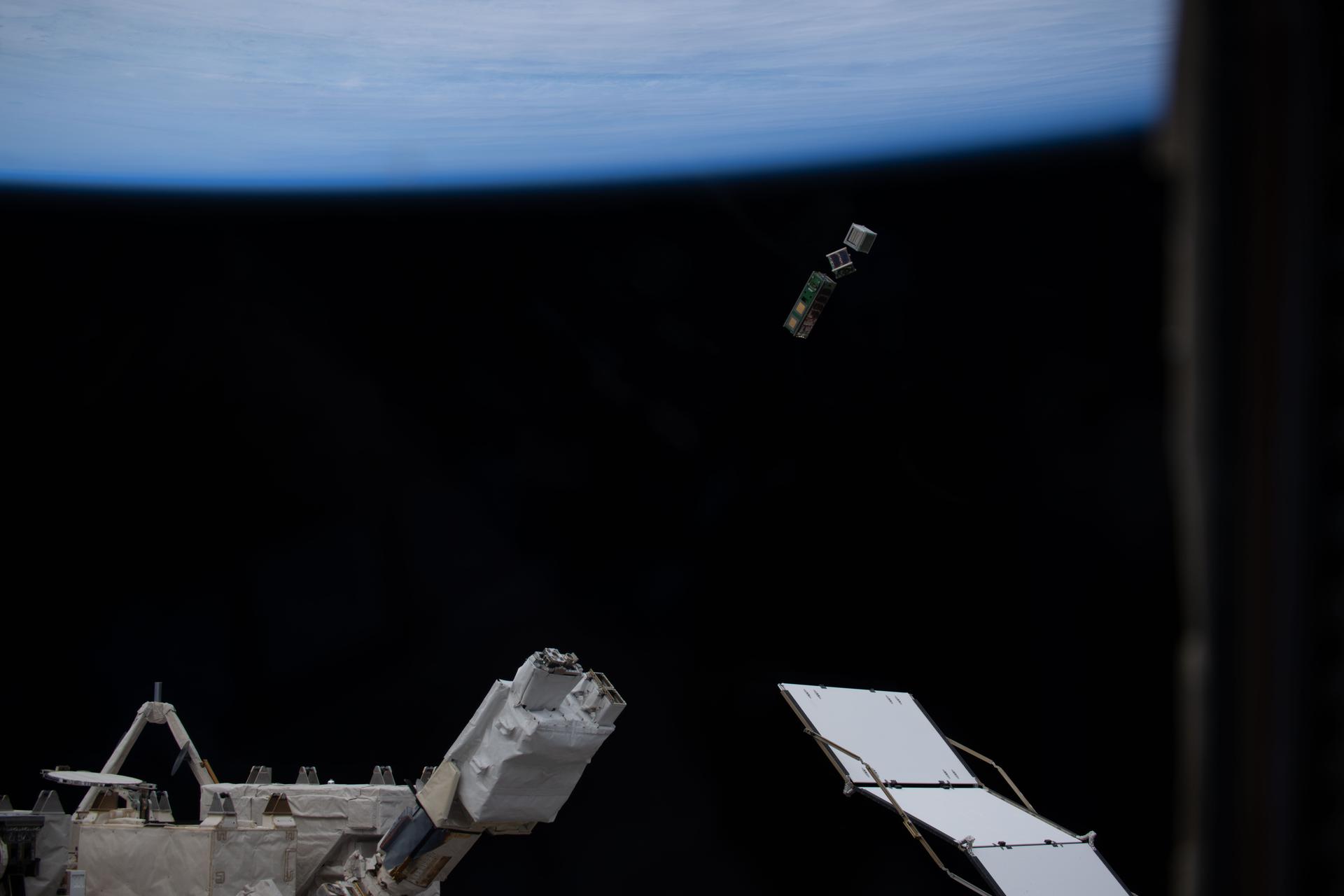
iss074e0301636 (Feb. 3, 2026) --- A trio of CubeSats designed by college students from around the world is deployed into Earth orbit from a small satellite orbital deployer on the outside of the International Space Station's Kibo laboratory module. Students from Mexico, Italy, Thailand, Malaysia, and Japan designed the shoe-boxed sized satellites for a series of Earth observations and technology demonstrations.
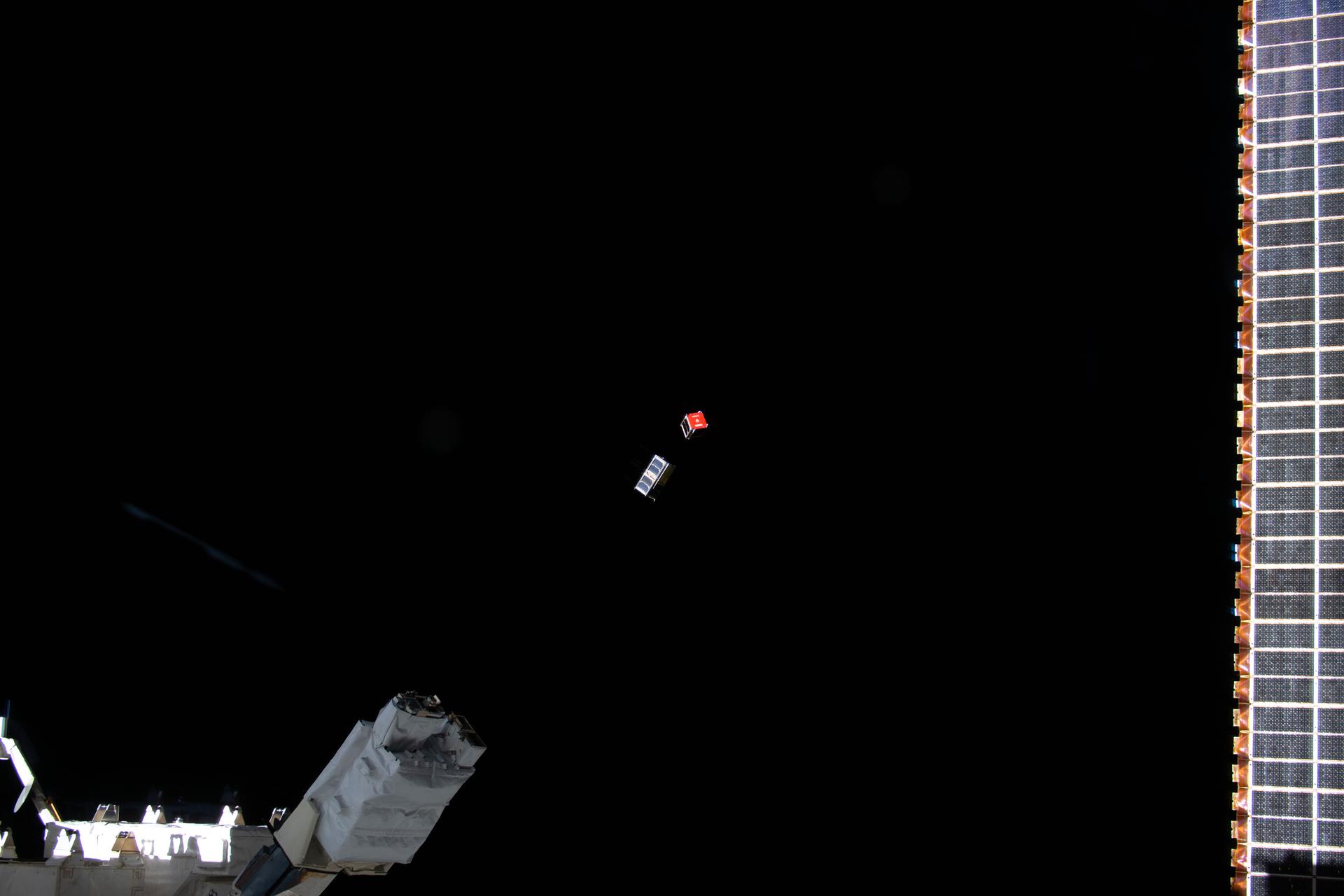
iss074e0301064 (Feb. 3, 2026) --- A pair of CubeSats designed by college students from around the world is deployed into Earth orbit from a small satellite orbital deployer on the outside of the International Space Station's Kibo laboratory module. Students from Mexico, Italy, Thailand, Malaysia, and Japan designed the shoe-boxed sized satellites for a series of Earth observations and technology demonstrations.
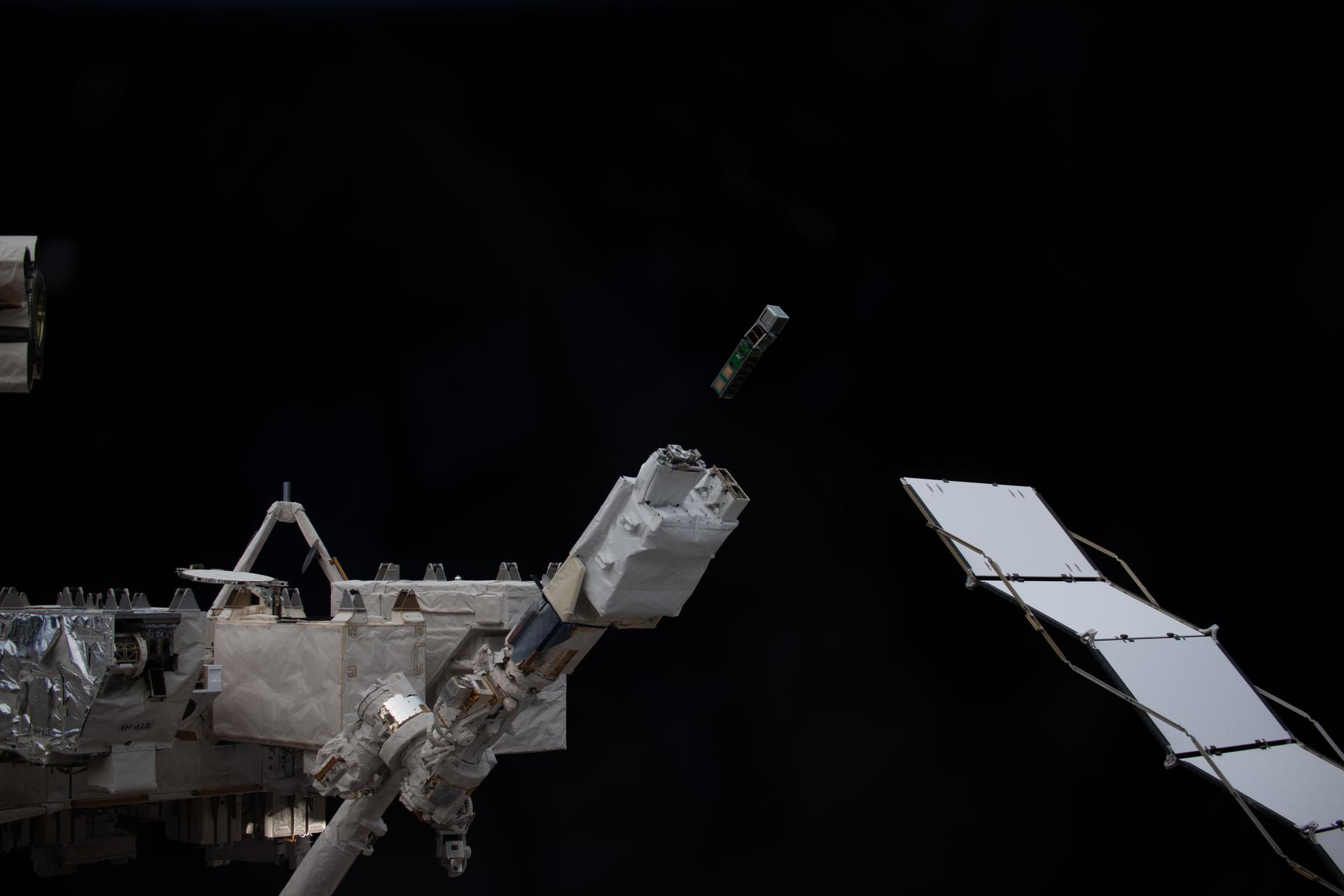
iss074e0301612 (Feb. 3, 2026) --- A trio of CubeSats designed by college students from around the world is deployed into Earth orbit from a small satellite orbital deployer on the outside of the International Space Station's Kibo laboratory module. Students from Mexico, Italy, Thailand, Malaysia, and Japan designed the shoe-boxed sized satellites for a series of Earth observations and technology demonstrations.
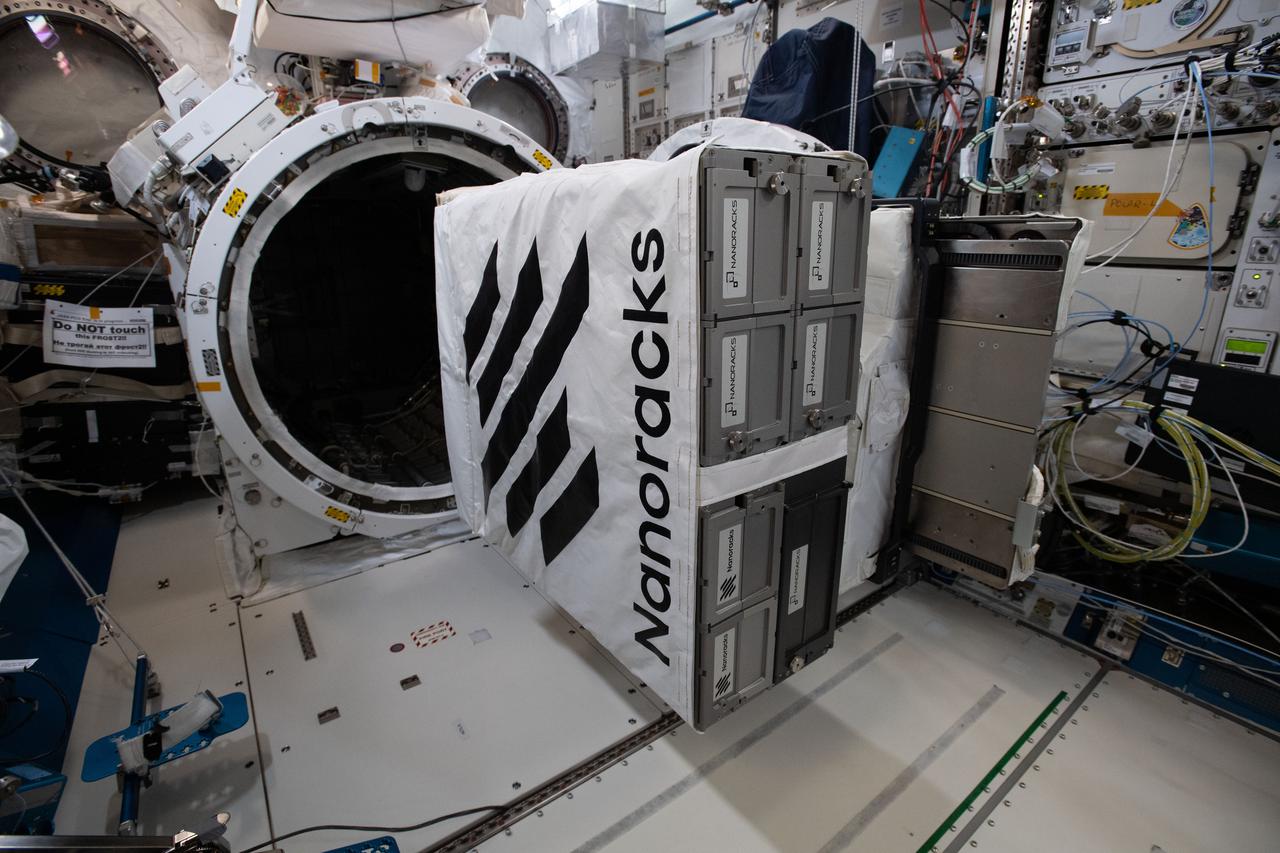
iss065e444435 (10/11/2021) --- A view of NanoRacks CubeSat Deployers hardware on the MPEP (Multipurpose Experiment Platform) aboard the International Space Station (ISS).
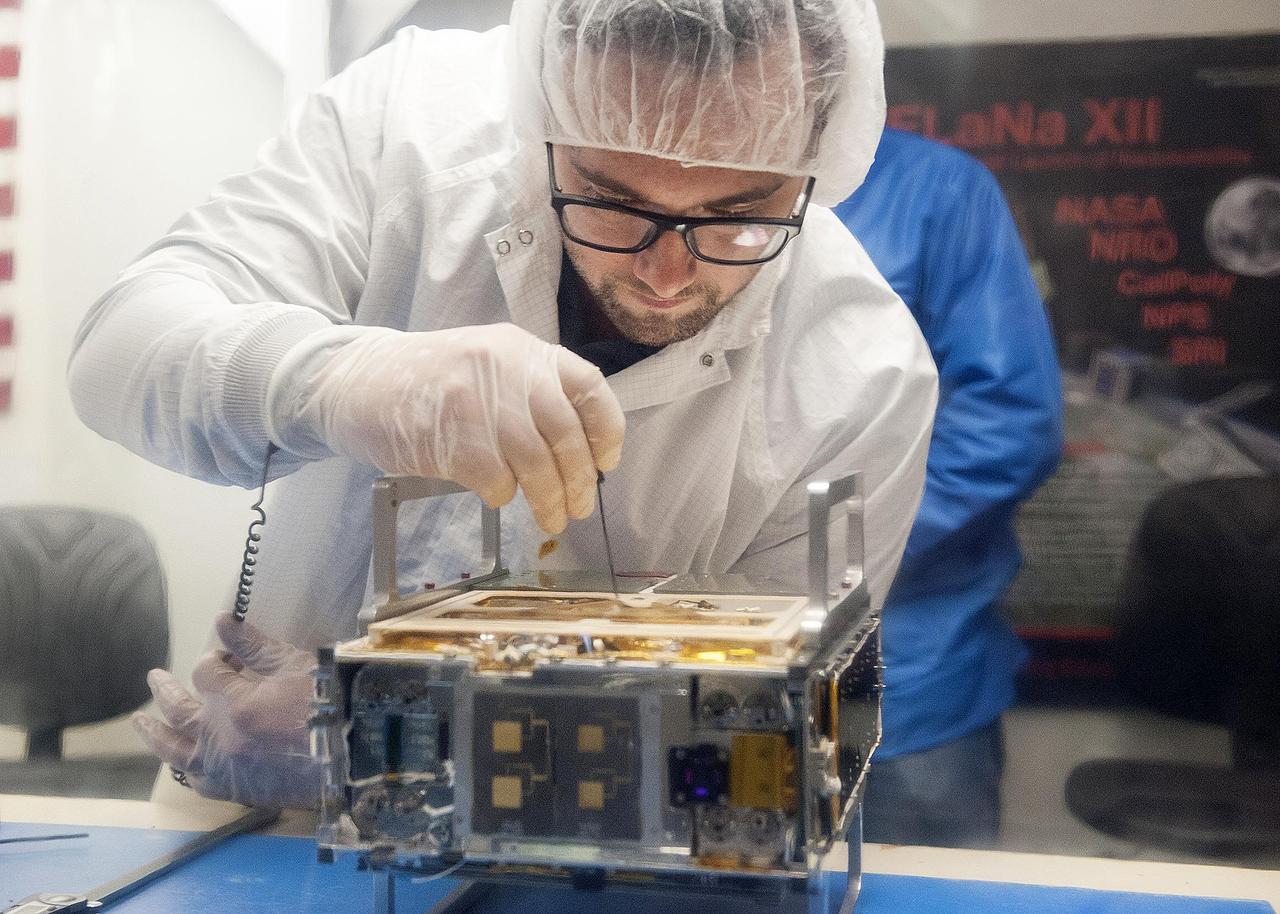
Joel Steinkraus, MarCO lead mechanical engineer from JPL, makes an adjustment on the CubeSat prior to integration in a deployment box as seen inside the cleanroom lab at Cal Poly San Luis Obispo on Monday, March 12, 2018. https://photojournal.jpl.nasa.gov/catalog/PIA22321

This image of the greater Los Angeles area was taken on March 29, 2019, by ASTERIA, the Arcsecond Space Telescope Enabling Research in Astrophysics satellite. The Port of Long Beach is visible near the center of the image. ASTERIA is a CubeSat, or a small satellite composed of cube units that measure 10 centimeters (4.5 inches) on each side. ASTERIA was designed to demonstrate precision pointing technology in a CubeSat, which could be used to observe planets around other stars. A slight decrease in a star's brightness as detected by ASTERIA could indicate that a planet is orbiting the star and passed in front of the star. This is called a planet transit. After completing its primary mission objectives in January 2018, ASTERIA has continued to operate on an extended mission. The mission team took this image to further test the capabilities of the satellite. https://photojournal.jpl.nasa.gov/catalog/PIA23124
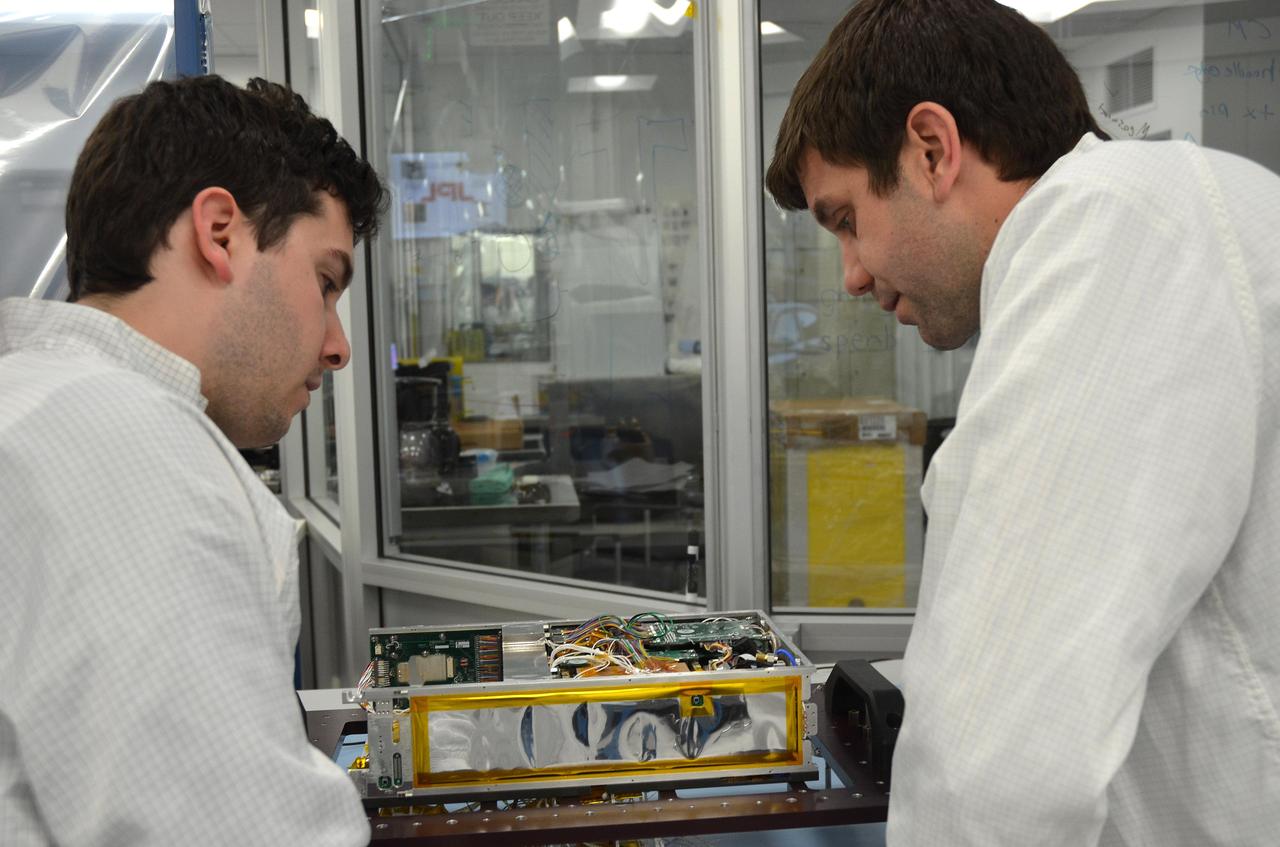
Engineers for NASA's MarCO (Mars Cube One) technology demonstration inspect one of the two MarCO CubeSats. Cody Colley, MarCO integration and test deputy, left, and Andy Klesh, MarCO chief engineer, are on the team at NASA's Jet Propulsion Laboratory, Pasadena, California, preparing twin MarCO CubeSats. The briefcase-size MarCO twins were designed to ride along with NASA's next Mars lander, InSight. Its planned March 2016 launch was suspended. InSight -- an acronym for Interior Exploration using Seismic Investigations, Geodesy and Heat Transport -- will study the interior of Mars to improve understanding of the processes that formed and shaped rocky planets, including Earth. Note: After thorough examination, NASA managers have decided to suspend the planned March 2016 launch of the Interior Exploration using Seismic Investigations Geodesy and Heat Transport (InSight) mission. The decision follows unsuccessful attempts to repair a leak in a section of the prime instrument in the science payload. http://photojournal.jpl.nasa.gov/catalog/PIA20342
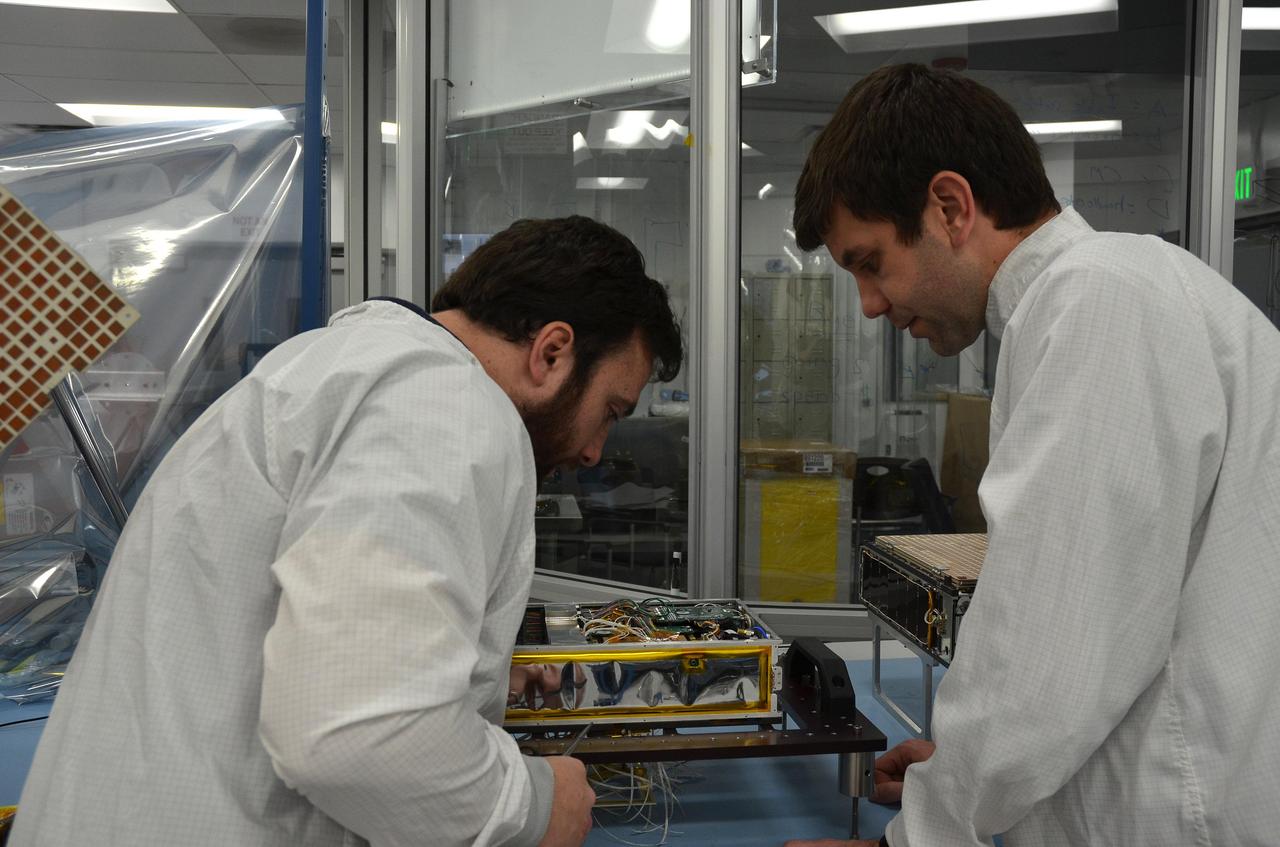
Engineers for NASA's MarCO (Mars Cube One) technology demonstration inspect one of the two MarCO CubeSats. Joel Steinkraus, MarCO lead mechanical engineer, left, and Andy Klesh, MarCO chief engineer, are on the team at NASA's Jet Propulsion Laboratory, Pasadena, California, preparing twin MarCO CubeSats. The briefcase-size MarCO twins were designed to ride along with NASA's next Mars lander, InSight. Its planned March 2016 launch was suspended. InSight -- an acronym for Interior Exploration using Seismic Investigations, Geodesy and Heat Transport -- will study the interior of Mars to improve understanding of the processes that formed and shaped rocky planets, including Earth. Note: After thorough examination, NASA managers have decided to suspend the planned March 2016 launch of the Interior Exploration using Seismic Investigations Geodesy and Heat Transport (InSight) mission. The decision follows unsuccessful attempts to repair a leak in a section of the prime instrument in the science payload. http://photojournal.jpl.nasa.gov/catalog/PIA20343
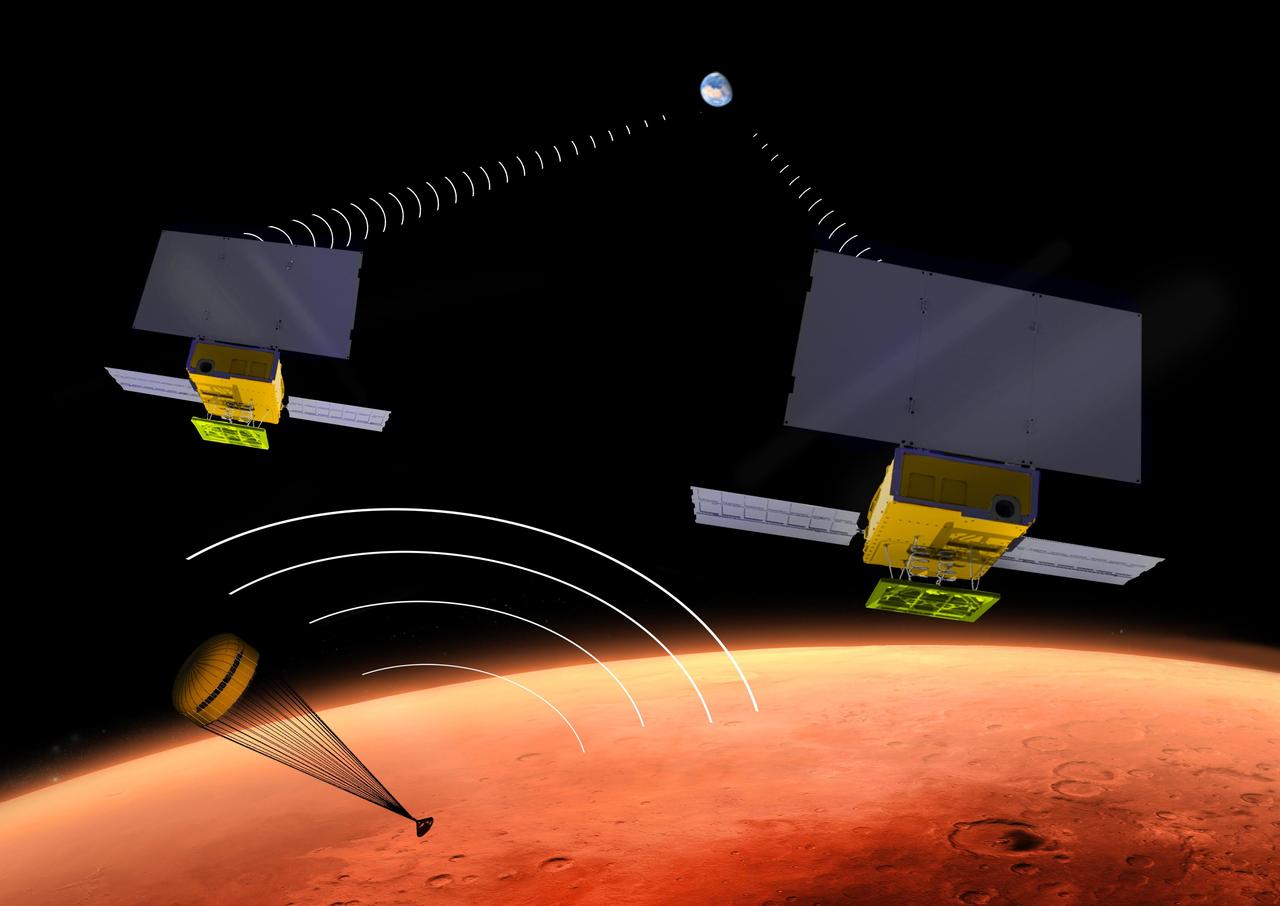
NASA's two MarCO CubeSats will be flying past Mars in September 2016 just as NASA's next Mars lander, InSight, is descending through the Martian atmosphere and landing on the surface. MarCO, for Mars Cube One, will provide an experimental communications relay to inform Earth quickly about the landing. This illustration depicts a moment during the lander's descent when it is transmitting data in the UHF radio band, and the twin MarCO craft are receiving those transmissions while simultaneously relaying the data to Earth in a different radio band. Each of the MarCO twins carries two solar panels for power, and both UHF-band and X-band radio antennas. As a technology demonstration, MarCO could lead to other "bring-your-own-relay" mission designs and also to use of miniature spacecraft for a wide diversity of interplanetary missions. MarCO is the first interplanetary use of CubeSat technologies for small spacecraft. CubeSats are a class of spacecraft based on a standardized small size and modular use of off-the-shelf technologies to streamline development. Many have been made by university students, and dozens have been launched into Earth orbit using extra payload mass available on launches of larger spacecraft. The two briefcase-size MarCO CubeSats will ride along with InSight on an Atlas V launch vehicle lifting off in March 2016 from Vandenberg Air Force Base, California. MarCO is a technology demonstration aspect of the InSight mission and not needed for that mission's success. InSight, an acronym for Interior Exploration using Seismic Investigations, Geodesy and Heat Transport, will investigate the deep interior of Mars to advance understanding of how rocky planets, including Earth, formed and evolved. After launch, the MarCO twins and InSight will be navigated separately to Mars. Note: After thorough examination, NASA managers have decided to suspend the planned March 2016 launch of the Interior Exploration using Seismic Investigations Geodesy and Heat Transport (InSight) mission. The decision follows unsuccessful attempts to repair a leak in a section of the prime instrument in the science payload. http://photojournal.jpl.nasa.gov/catalog/PIA19388
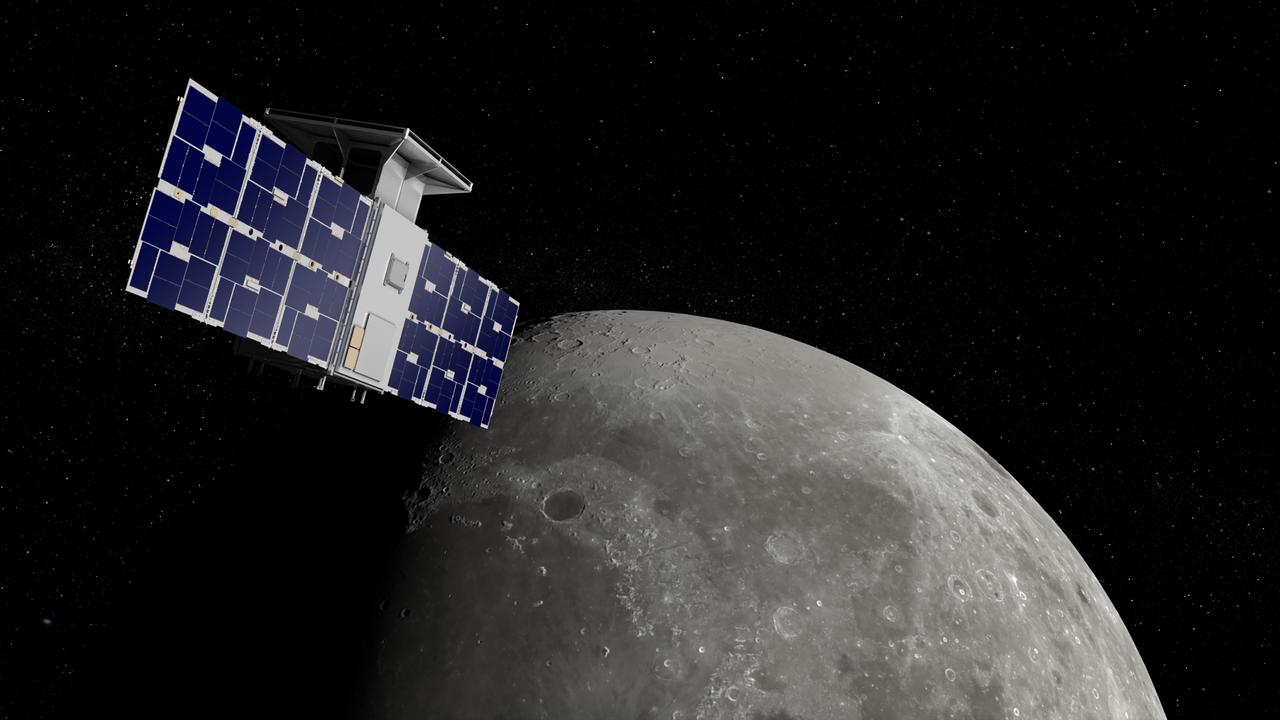
CAPSTONE, a microwave oven-sized CubeSat, will fly in cislunar space – the orbital space near and around the Moon. The mission will demonstrate an innovative spacecraft-to-spacecraft navigation solution at the Moon from a near rectilinear halo orbit slated for Artemis’ Gateway. Illustration by Daniel Rutter.
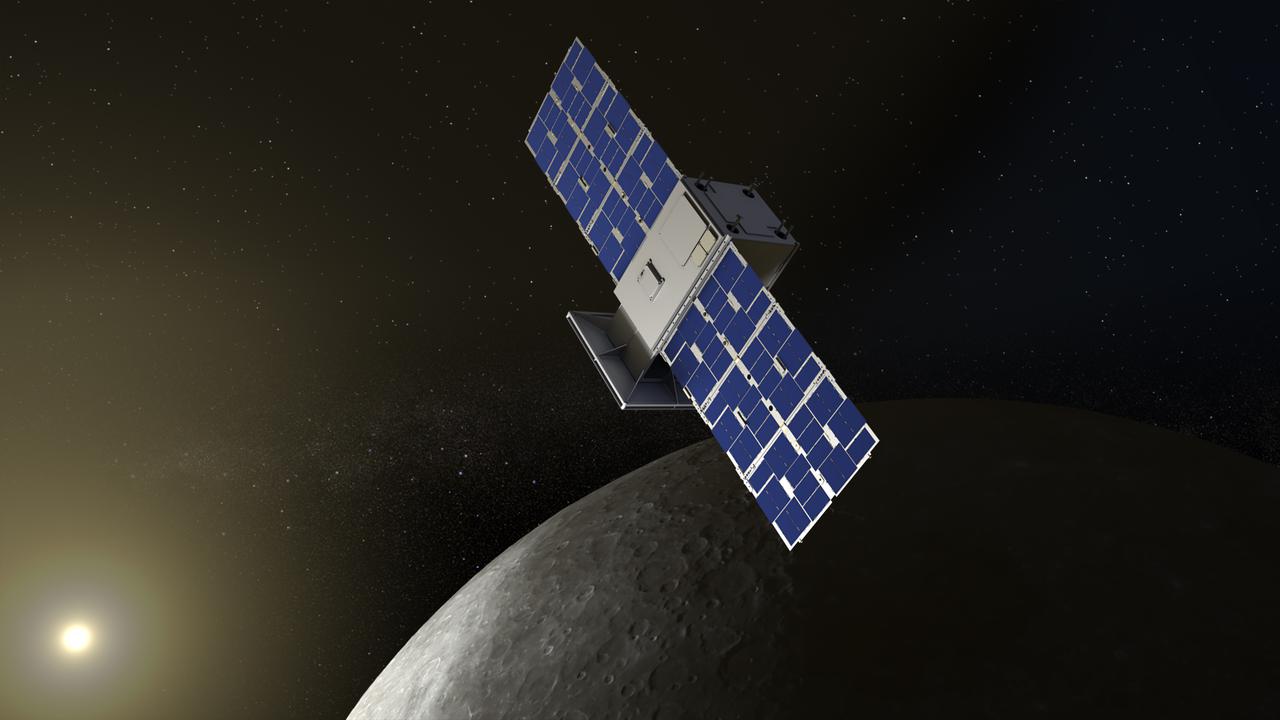
CAPSTONE, a microwave oven-sized CubeSat, will fly in cislunar space – the orbital space near and around the Moon. The mission will demonstrate an innovative spacecraft-to-spacecraft navigation solution at the Moon from a near rectilinear halo orbit slated for Artemis’ Gateway. Illustration by Daniel Rutter.

CAPSTONE, a microwave oven-sized CubeSat, will fly in cislunar space – the orbital space near and around the Moon. The mission will demonstrate an innovative spacecraft-to-spacecraft navigation solution at the Moon from a near rectilinear halo orbit slated for Artemis’ Gateway. Illustration by Daniel Rutter.
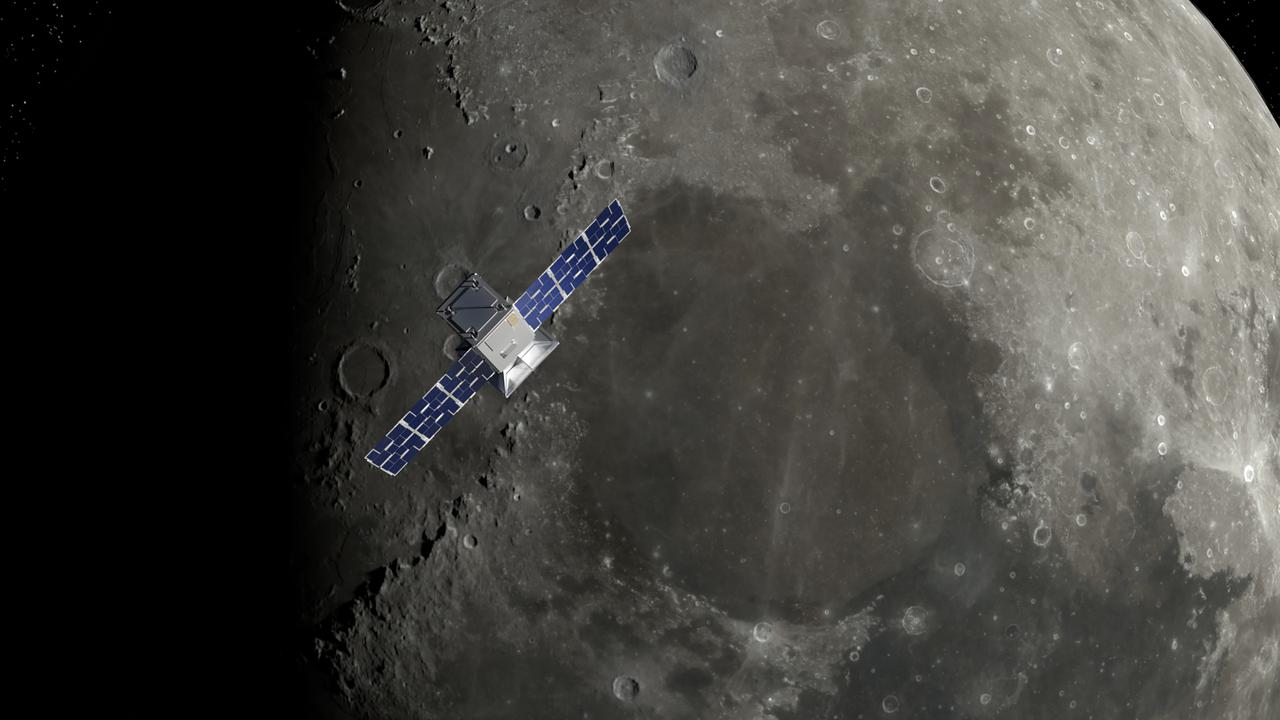
CAPSTONE, a microwave oven-sized CubeSat, will fly in cislunar space – the orbital space near and around the Moon. The mission will demonstrate an innovative spacecraft-to-spacecraft navigation solution at the Moon from a near rectilinear halo orbit slated for Artemis’ Gateway. Illustration by Daniel Rutter.

CAPSTONE, a microwave oven-sized CubeSat, will fly in cislunar space – the orbital space near and around the Moon. The mission will demonstrate an innovative spacecraft-to-spacecraft navigation solution at the Moon from a near rectilinear halo orbit slated for Artemis’ Gateway. Illustration by Daniel Rutter.
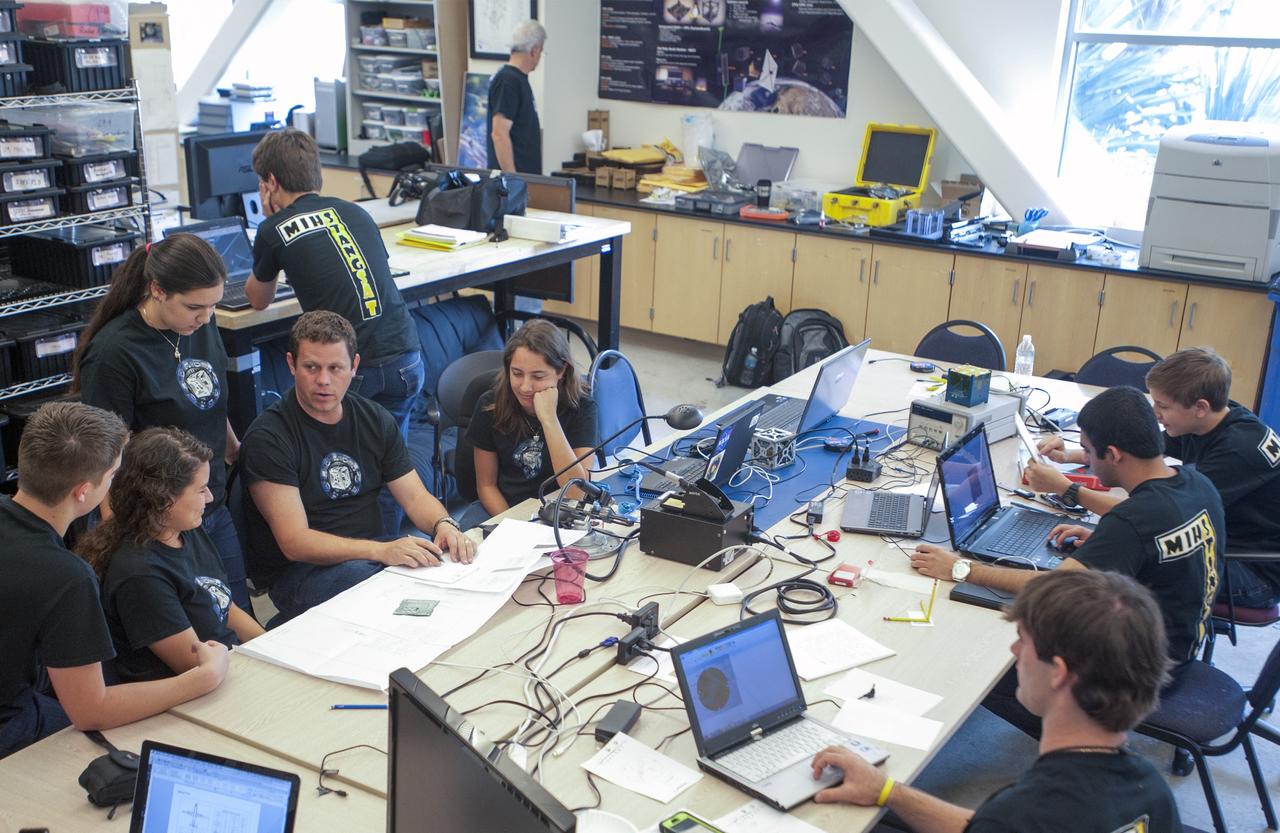
SAN LUIS OBISPO, Calif. – NASA mentors and the student launch team for the StangSat and Polysat go through final checks in the CubeSat lab facility at California Polytechnic Institute, or CalPoly. The payloads, which include sensors and equipment carefully packaged into 4-inch cubes, will ride in the body of a Garvey Spacecraft Corporation's Prospector P-18D rocket during a June 15 launch on a high-altitude, suborbital flight. Collectively known as CubeSats, the satellites will record shock, vibrations and heat inside the rocket. They will not be released during the test flight, but the results will be used to prove or strengthen their designs before they are carried into orbit in 2014 on a much larger rocket. A new, lightweight carrier is also being tested for use on future missions to deploy the small spacecraft. The flight also is being watched closely as a model for trying out new or off-the-shelf technologies quickly before putting them in the pipeline for use on NASA's largest launchers. Built by several different organizations, including a university, a NASA field center and a high school, the spacecraft are four-inch cubes designed to fly on their own eventually, but will remain firmly attached to the rocket during the upcoming mission. For more information, visit http://www.nasa.gov/mission_pages/smallsats/elana/cubesatlaunchpreview.html Photo credit: VAFB/Kathi PeoplesCollectively known as CubeSats, the satellites will record shock, vibrations and heat inside the rocket. They will not be released during the test flight, but the results will be used to prove or strengthen their designs before they are carried into orbit in 2014 on a much larger rocket. A new, lightweight carrier is also being tested for use on future missions to deploy the small spacecraft. The flight also is being watched closely as a model for trying out new or off-the-shelf technologies quickly before putting them in the pipeline for use on NASA's largest launchers. Built by several different organizations, including a university, a NASA field center and a high school, the spacecraft are four-inch cubes designed to fly on their own eventually, but will remain firmly attached to the rocket during the upcoming mission. For more information, visit http://www.nasa.gov/mission_pages/smallsats/elana/cubesatlaunchpreview.html Photo credit: NASA/Dimitri Gerondidakis
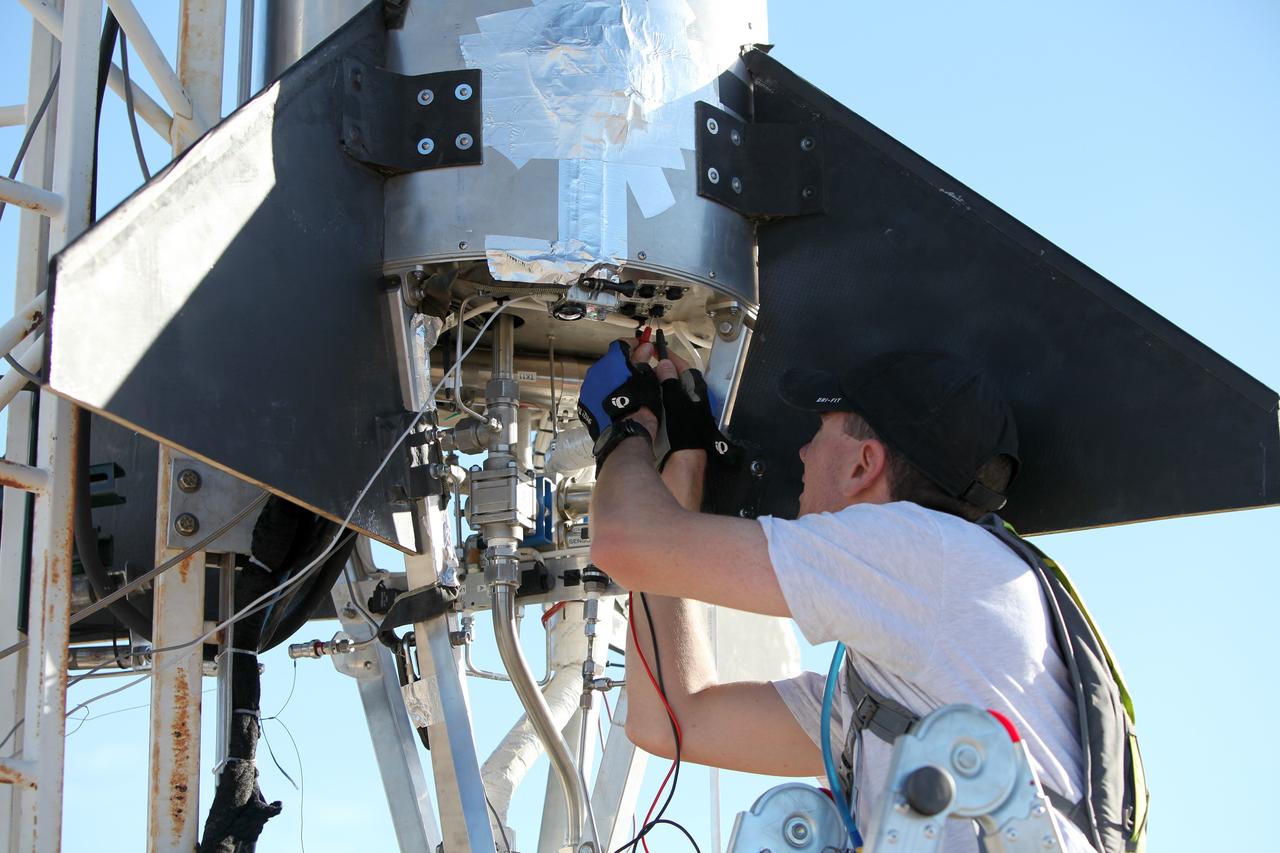
MOJAVE DESERT, Calif. – In the Mojave Desert in California, final checkouts are completed on the Garvey Spacecraft Corporation's Prospector P-18D rocket positioned for launch with the RUBICS-1 payload on a high-altitude, suborbital flight. The rocket will carry four satellites made from four-inch cube sections. The rocket reached a peak altitude of about 9,000 feet, however the parachute deployed prematurely and the vehicle continued on its trajectory, coasting and tumbling to a hard landing on its side. In spite of the rough ride, all four CubeSats were recovered. PhoneSat and RUBICS received data in flight, but sustained structural damage. CP-9 and StangSat fared better, and their teams are working to recover as much information as possible. Collectively known as CubeSats, the satellites were designed to record shock, vibrations and heat inside the rocket. The results will be used to prove or strengthen their designs before they are carried into orbit in 2014 on a much larger rocket. Built by several different organizations, including a university, a NASA field center and a high school, the spacecraft are four-inch cubes designed to fly on their own eventually, but will remain firmly attached to the rocket during the upcoming mission. For more information, visit http://www.nasa.gov/mission_pages/smallsats/elana/cubesatlaunchpreview.html Photo credit: NASA/Dimitri Gerondidakis
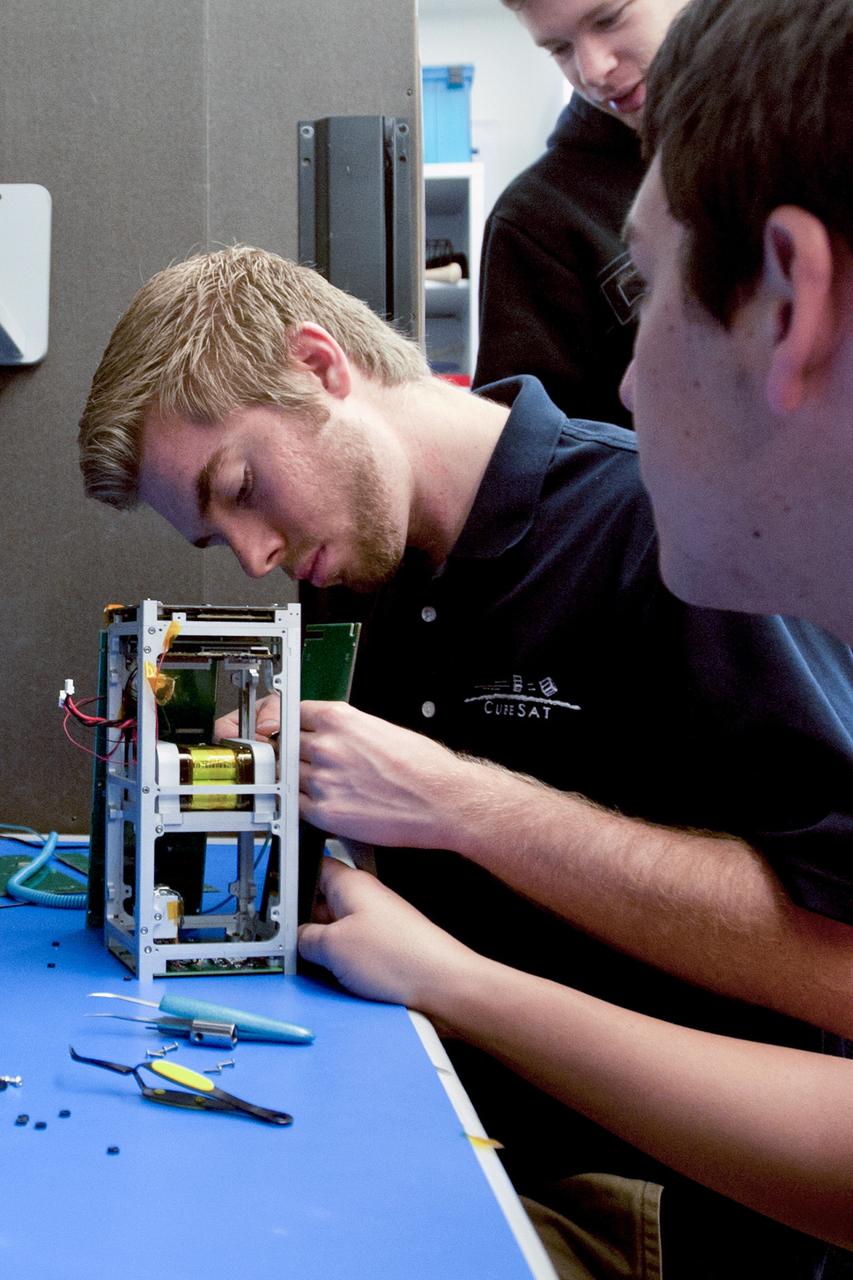
SAN LUIS OBISPO, Calif. – A member of the student launch team for the Polysat works through final checks in the CubeSat lab facility at California Polytechnic Institute, or CalPoly. The payloads, which include sensors and equipment carefully packaged into 4-inch cubes, will ride in the body of a Garvey Spacecraft Corporation's Prospector P-18D rocket during a June 15 launch on a high-altitude, suborbital flight. Collectively known as CubeSats, the satellites will record shock, vibrations and heat inside the rocket. They will not be released during the test flight, but the results will be used to prove or strengthen their designs before they are carried into orbit in 2014 on a much larger rocket. A new, lightweight carrier is also being tested for use on future missions to deploy the small spacecraft. The flight also is being watched closely as a model for trying out new or off-the-shelf technologies quickly before putting them in the pipeline for use on NASA's largest launchers. Built by several different organizations, including a university, a NASA field center and a high school, the spacecraft are four-inch cubes designed to fly on their own eventually, but will remain firmly attached to the rocket during the upcoming mission. For more information, visit http://www.nasa.gov/mission_pages/smallsats/elana/cubesatlaunchpreview.html Photo credit: VAFB/Kathi Peoples
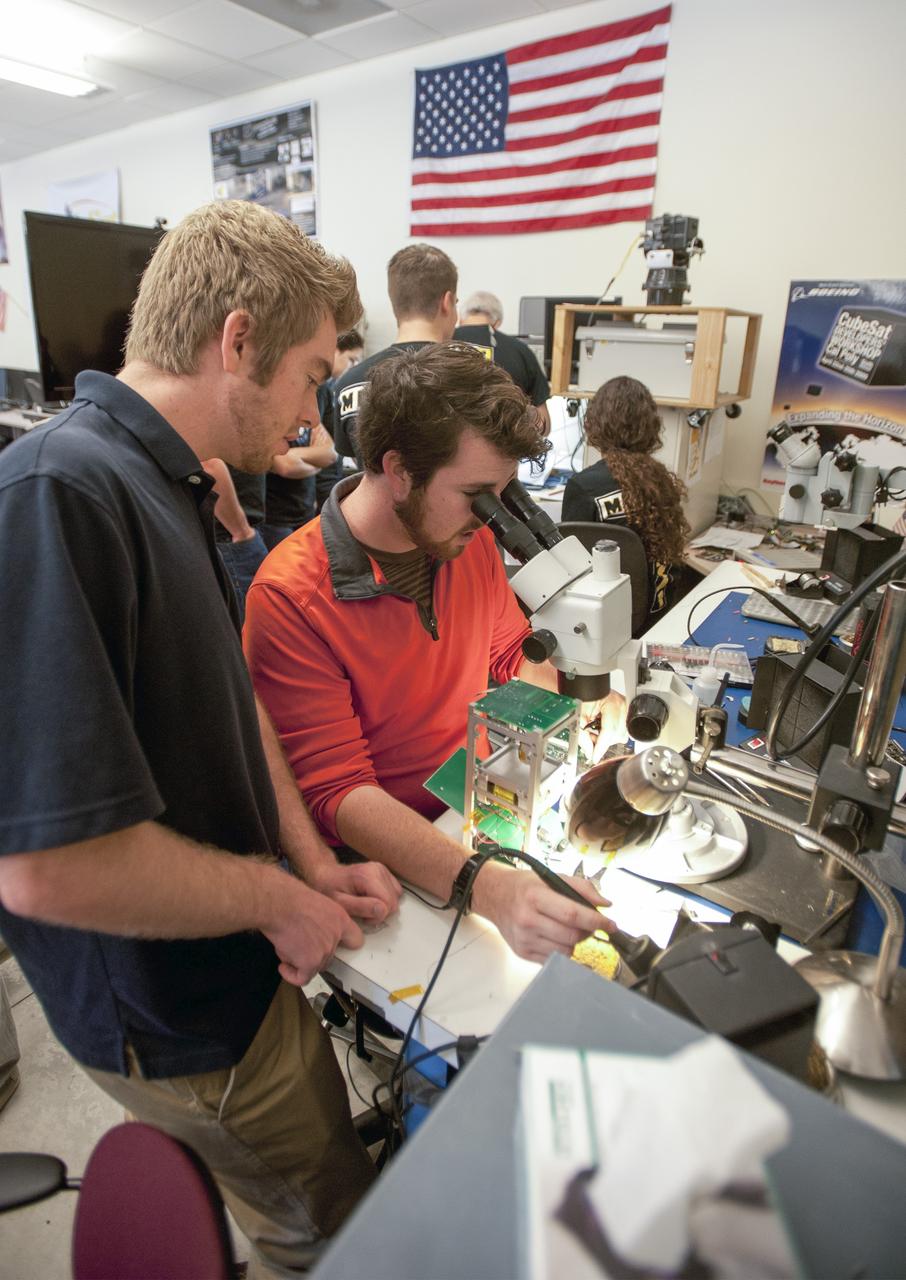
SAN LUIS OBISPO, Calif. – Members of the student launch team for the Polysat works through final checks in the CubeSat lab facility at California Polytechnic Institute, or CalPoly. The payload, which includes sensors and equipment carefully packaged into 4-inch cube sections, will ride in the body of a Garvey Spacecraft Corporation's Prospector P-18D rocket during a June 15 launch on a high-altitude, suborbital flight. Known as a CubeSat, the satellite will record shock, vibrations and heat inside the rocket. It will not be released during the test flight, but the results will be used to prove or strengthen their designs before they are carried into orbit in 2014 on a much larger rocket. A new, lightweight carrier is also being tested for use on future missions to deploy the small spacecraft. The flight also is being watched closely as a model for trying out new or off-the-shelf technologies quickly before putting them in the pipeline for use on NASA's largest launchers. Built by several different organizations, including a university, a NASA field center and a high school, the spacecraft are four-inch cubes designed to fly on their own eventually, but will remain firmly attached to the rocket during the upcoming mission. For more information, visit http://www.nasa.gov/mission_pages/smallsats/elana/cubesatlaunchpreview.html Photo credit: VAFB/Kathi Peoples
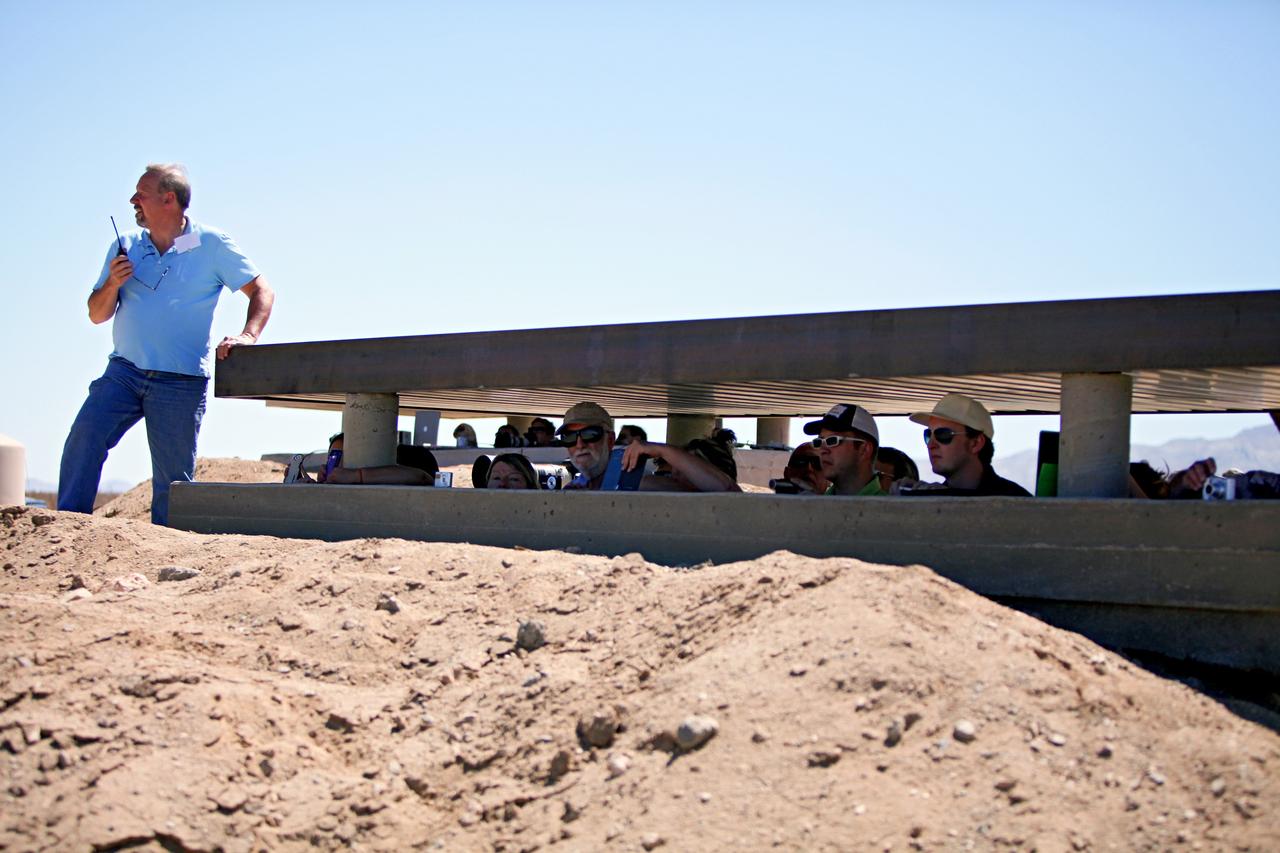
MOJAVE DESERT, Calif. – In the Mojave Desert in California, Kevin Baxter, a range representative of the Friends of Amateur Rocketry launch site, ensures all is ready for launch of the Garvey Spacecraft Corporation's Prospector P-18D rocket with the RUBICS-1 payload on a high-altitude, suborbital flight. The rocket will carry four satellites made from four-inch cube sections. The rocket reached a peak altitude of about 9,000 feet, however the parachute deployed prematurely and the vehicle continued on its trajectory, coasting and tumbling to a hard landing on its side. In spite of the rough ride, all four CubeSats were recovered. PhoneSat and RUBICS received data in flight, but sustained structural damage. CP-9 and StangSat fared better, and their teams are working to recover as much information as possible. Collectively known as CubeSats, the satellites were designed to record shock, vibrations and heat inside the rocket. The results will be used to prove or strengthen their designs before they are carried into orbit in 2014 on a much larger rocket. Built by several different organizations, including a university, a NASA field center and a high school, the spacecraft are four-inch cubes designed to fly on their own eventually, but will remain firmly attached to the rocket during the upcoming mission. For more information, visit http://www.nasa.gov/mission_pages/smallsats/elana/cubesatlaunchpreview.html Photo credit: NASA/Dimitri Gerondidakis
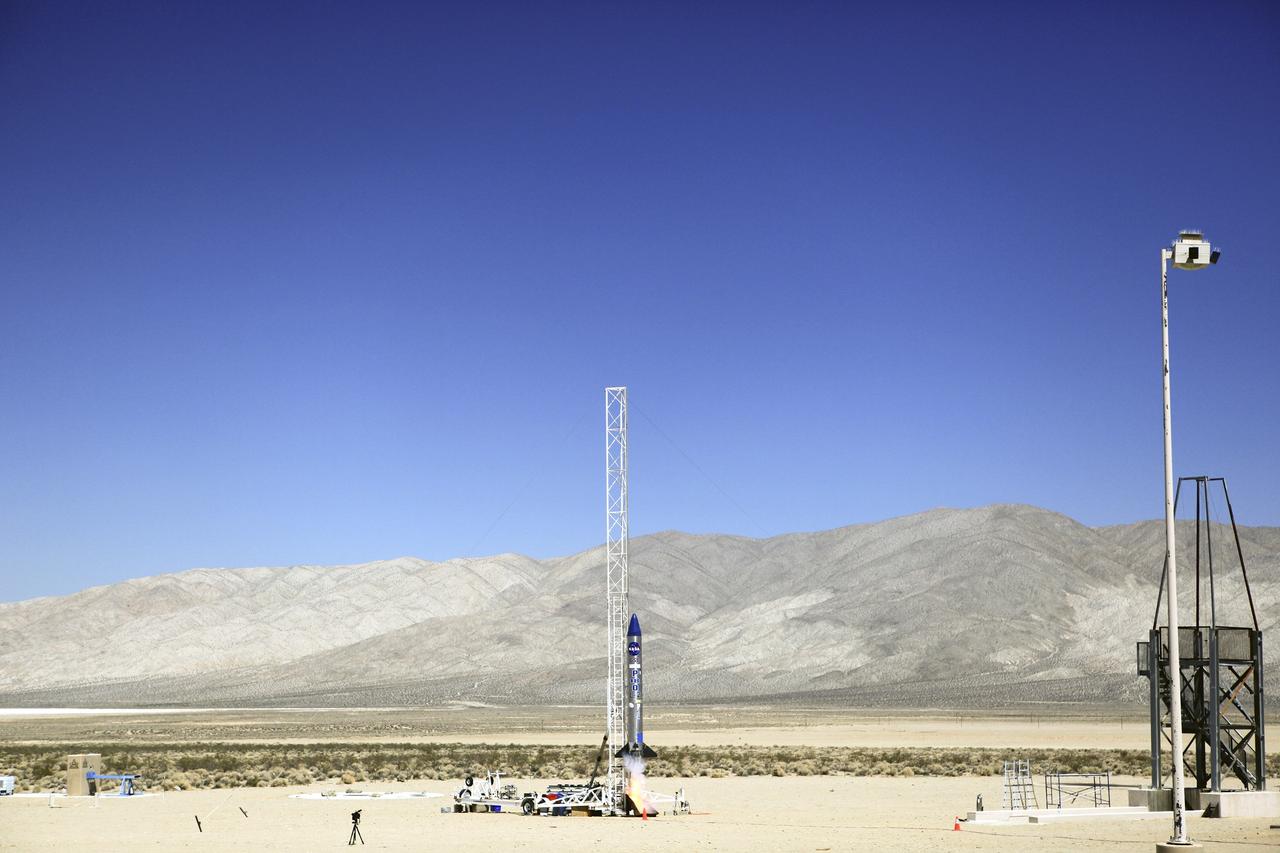
MOJAVE DESERT, Calif. – In the Mojave Desert in California, the Garvey Spacecraft Corporation's Prospector P-18D rocket lifts off at 10:52 a.m. PDT carrying the RUBICS-1 payload on a high-altitude, suborbital flight. The rocket carried four satellites made from four-inch cube sections. The rocket reached a peak altitude of about 9,000 feet, however the parachute deployed prematurely and the vehicle continued on its trajectory, coasting and tumbling to a hard landing on its side. In spite of the rough ride, all four CubeSats were recovered. PhoneSat and RUBICS received data in flight, but sustained structural damage. CP-9 and StangSat fared better, and their teams are working to recover as much information as possible. Collectively known as CubeSats, the satellites were designed to record shock, vibrations and heat inside the rocket. The results will be used to prove or strengthen their designs before they are carried into orbit in 2014 on a much larger rocket. Built by several different organizations, including a university, a NASA field center and a high school, the spacecraft are four-inch cubes designed to fly on their own eventually, but will remain firmly attached to the rocket during the upcoming mission. For more information, visit http://www.nasa.gov/mission_pages/smallsats/elana/cubesatlaunchpreview.html Photo credit: NASA/Dimitri Gerondidakis
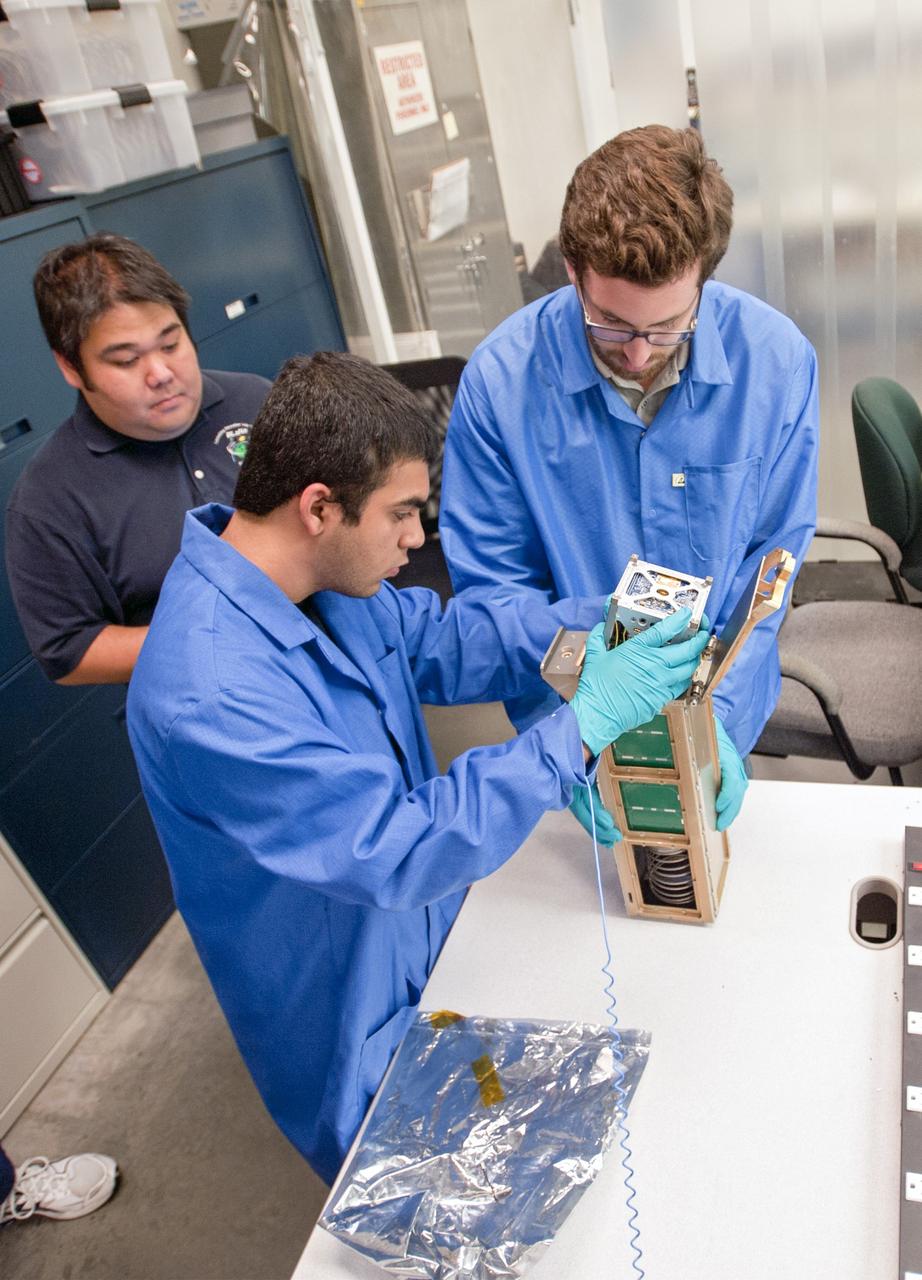
SAN LUIS OBISPO, Calif. – Roland Coelho, third from left, CalPoly program lead, and members of the student launch team load a payload into a Poly Picosatellite Orbital Dispensor, or P-Pod nanolauncher/carrier in the CubeSat lab facility at California Polytechnic Institute, or CalPoly. The payload, which includes sensors and equipment carefully packaged into 4-inch cube sections, will ride in the body of a Garvey Spacecraft Corporation's Prospector P-18D rocket during a June 15 launch on a high-altitude, suborbital flight. Known as a CubeSat, the satellite will record shock, vibrations and heat inside the rocket. It will not be released during the test flight, but the results will be used to prove or strengthen their designs before they are carried into orbit in 2014 on a much larger rocket. Also, a new launcher/carrier of a lightweight design also is being tested for use on future missions to deploy the small spacecraft. The flight also is being watched closely as a model for trying out new or off-the-shelf technologies quickly before putting them in the pipeline for use on NASA's largest launchers. Built by several different organizations, including a university, a NASA field center and a high school, the spacecraft are four-inch cubes designed to fly on their own eventually, but will remain firmly attached to the rocket during the upcoming mission. For more information, visit http://www.nasa.gov/mission_pages/smallsats/elana/cubesatlaunchpreview.html Photo credit: VAFB/Kathi Peoples
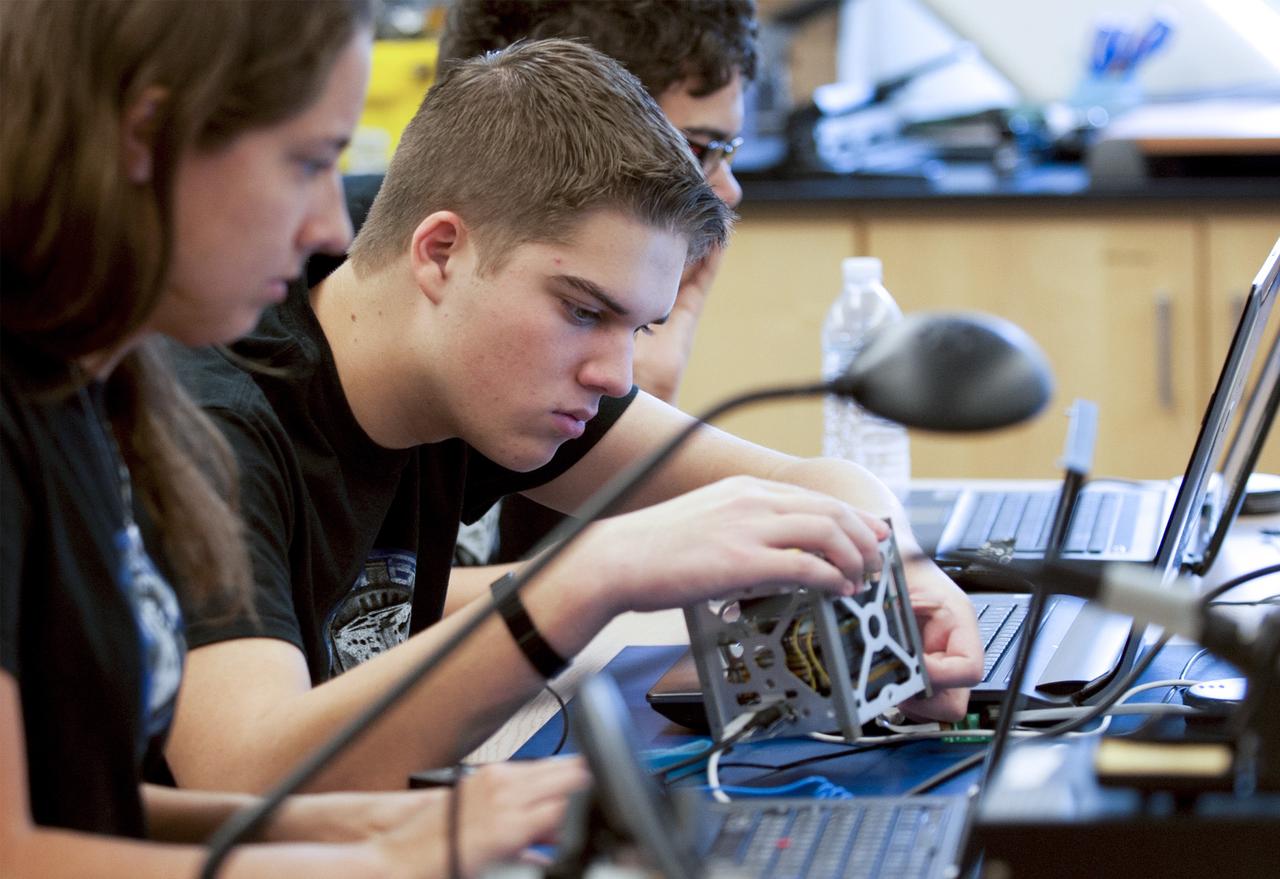
SAN LUIS OBISPO, Calif. – Members of the student launch team for the StangSat go through final checks in the CubeSat lab facility at California Polytechnic Institute, or CalPoly. The payloads, which include sensors and equipment carefully packaged into 4-inch cubes, will ride in the body of a Garvey Spacecraft Corporation's Prospector P-18D rocket during a June 15 launch on a high-altitude, suborbital flight. Collectively known as CubeSats, the satellites will record shock, vibrations and heat inside the rocket. They will not be released during the test flight, but the results will be used to prove or strengthen their designs before they are carried into orbit in 2014 on a much larger rocket. A new, lightweight carrier is also being tested for use on future missions to deploy the small spacecraft. The flight also is being watched closely as a model for trying out new or off-the-shelf technologies quickly before putting them in the pipeline for use on NASA's largest launchers. Built by several different organizations, including a university, a NASA field center and a high school, the spacecraft are four-inch cubes designed to fly on their own eventually, but will remain firmly attached to the rocket during the upcoming mission. For more information, visit http://www.nasa.gov/mission_pages/smallsats/elana/cubesatlaunchpreview.html Photo credit: VAFB/Kathi Peoples
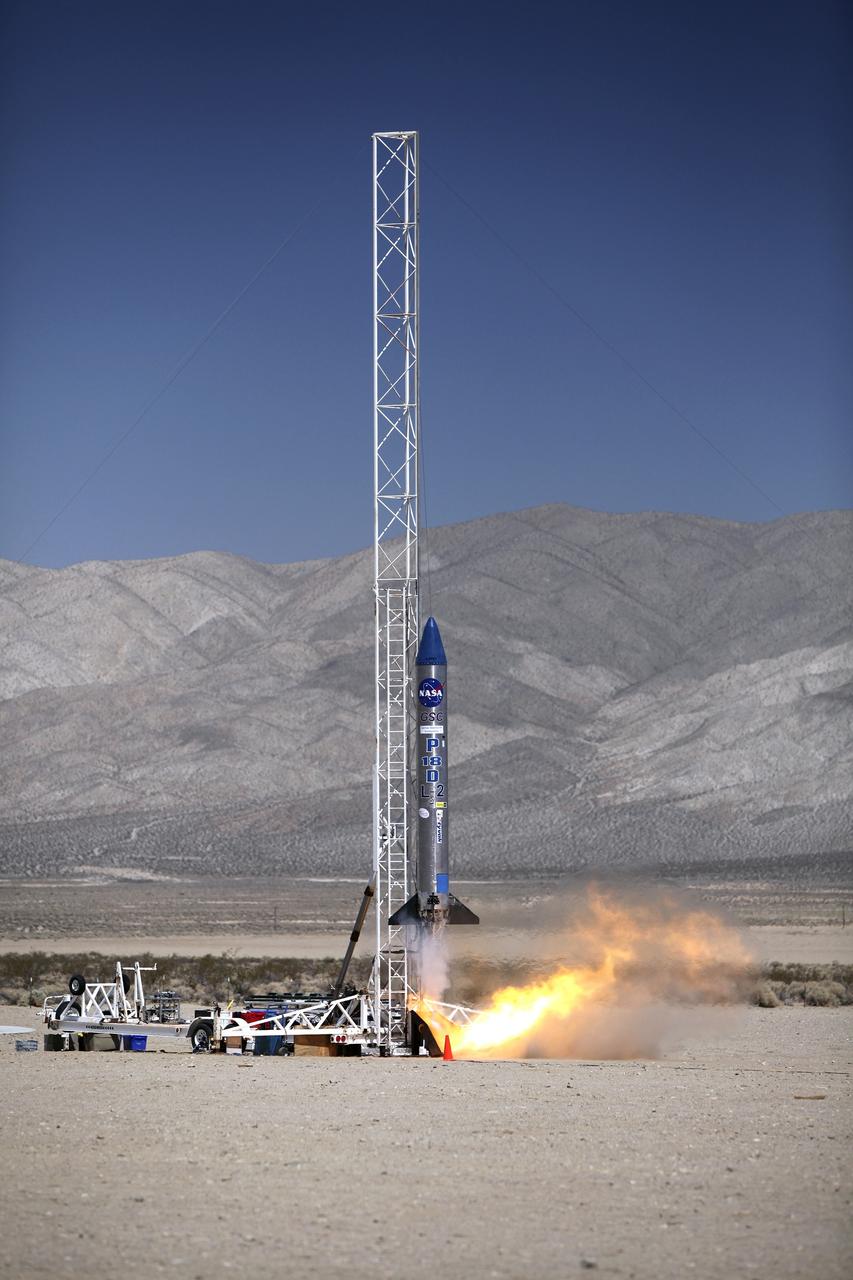
MOJAVE DESERT, Calif. – In the Mojave Desert in California, the Garvey Spacecraft Corporation's Prospector P-18D rocket lifts off at 10:52 a.m. PDT carrying the RUBICS-1 payload on a high-altitude, suborbital flight. The rocket carried four satellites made from four-inch cube sections. The rocket reached a peak altitude of about 9,000 feet, however the parachute deployed prematurely and the vehicle continued on its trajectory, coasting and tumbling to a hard landing on its side. In spite of the rough ride, all four CubeSats were recovered. PhoneSat and RUBICS received data in flight, but sustained structural damage. CP-9 and StangSat fared better, and their teams are working to recover as much information as possible. Collectively known as CubeSats, the satellites were designed to record shock, vibrations and heat inside the rocket. The results will be used to prove or strengthen their designs before they are carried into orbit in 2014 on a much larger rocket. Built by several different organizations, including a university, a NASA field center and a high school, the spacecraft are four-inch cubes designed to fly on their own eventually, but will remain firmly attached to the rocket during the upcoming mission. For more information, visit http://www.nasa.gov/mission_pages/smallsats/elana/cubesatlaunchpreview.html Photo credit: NASA/Dimitri Gerondidakis
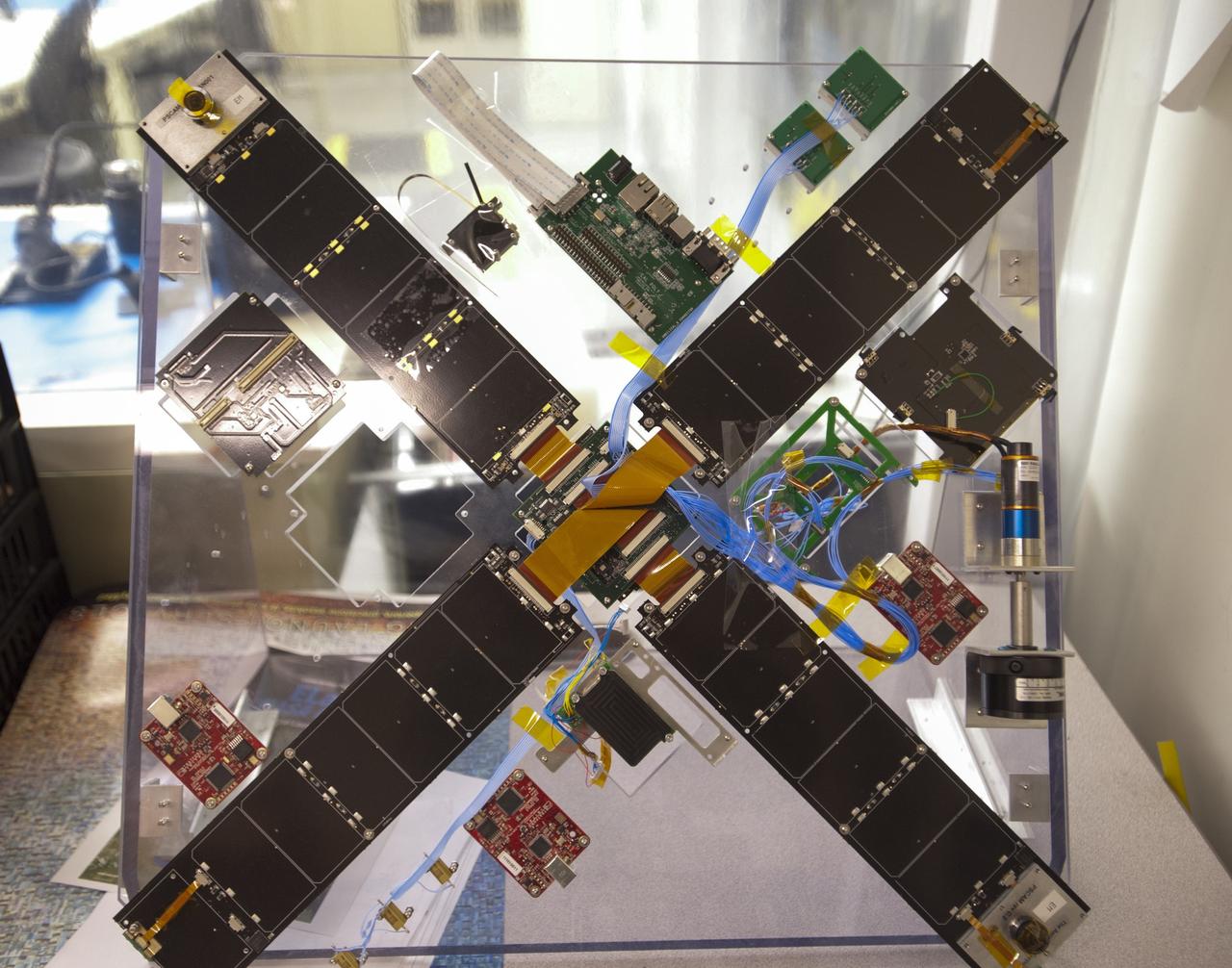
SAN LUIS OBISPO, Calif. – Some of the componentry for the Polysat in the CubeSat lab facility at California Polytechnic Institute, or CalPoly. The payload, which includes sensors and equipment carefully packaged into 4-inch cube sections, will ride in the body of a Garvey Spacecraft Corporation's Prospector P-18D rocket during a June 15 launch on a high-altitude, suborbital flight. Known as a CubeSat, the satellite will record shock, vibrations and heat inside the rocket. It will not be released during the test flight, but the results will be used to prove or strengthen their designs before they are carried into orbit in 2014 on a much larger rocket. A new, lightweight carrier is also being tested for use on future missions to deploy the small spacecraft. The flight also is being watched closely as a model for trying out new or off-the-shelf technologies quickly before putting them in the pipeline for use on NASA's largest launchers. Built by several different organizations, including a university, a NASA field center and a high school, the spacecraft are four-inch cubes designed to fly on their own eventually, but will remain firmly attached to the rocket during the upcoming mission. For more information, visit http://www.nasa.gov/mission_pages/smallsats/elana/cubesatlaunchpreview.html Photo credit: VAFB/Kathi Peoples
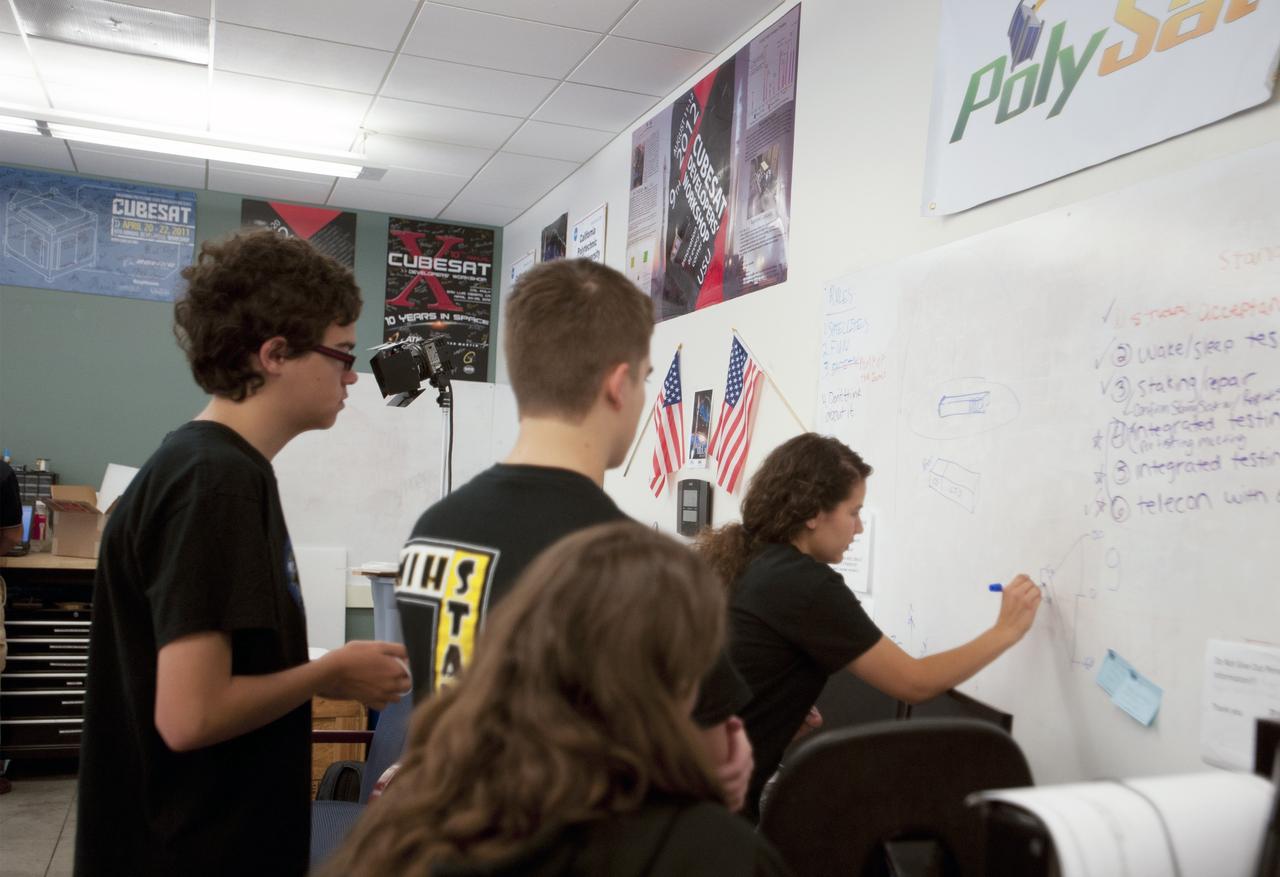
SAN LUIS OBISPO, Calif. – Members of the student launch team for the StangSat go through final checks in the CubeSat lab facility at California Polytechnic Institute, or CalPoly. The payloads, which include sensors and equipment carefully packaged into 4-inch cubes, will ride in the body of a Garvey Spacecraft Corporation's Prospector P-18D rocket during a June 15 launch on a high-altitude, suborbital flight. Collectively known as CubeSats, the satellites will record shock, vibrations and heat inside the rocket. They will not be released during the test flight, but the results will be used to prove or strengthen their designs before they are carried into orbit in 2014 on a much larger rocket. A new, lightweight carrier is also being tested for use on future missions to deploy the small spacecraft. The flight also is being watched closely as a model for trying out new or off-the-shelf technologies quickly before putting them in the pipeline for use on NASA's largest launchers. Built by several different organizations, including a university, a NASA field center and a high school, the spacecraft are four-inch cubes designed to fly on their own eventually, but will remain firmly attached to the rocket during the upcoming mission. For more information, visit http://www.nasa.gov/mission_pages/smallsats/elana/cubesatlaunchpreview.html Photo credit: VAFB/Kathi Peoples
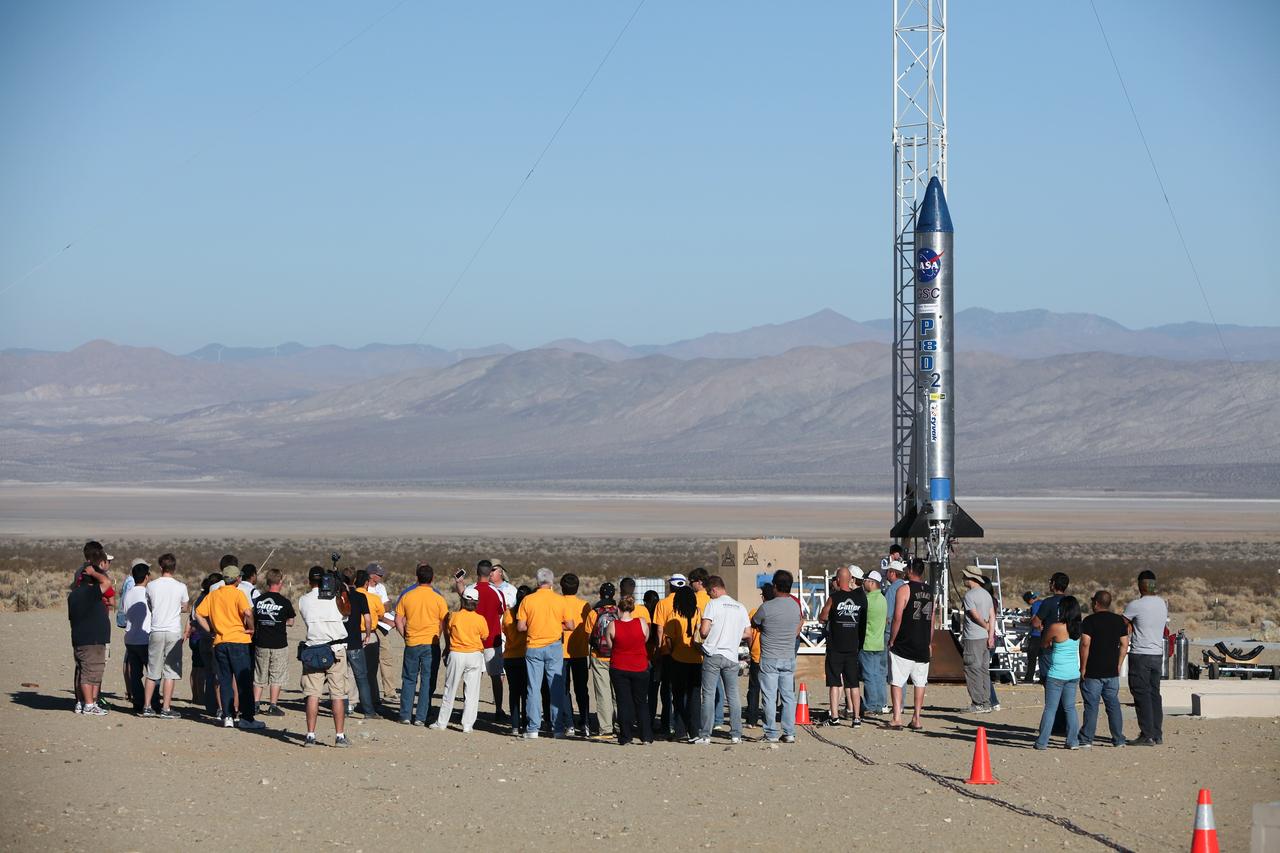
MOJAVE DESERT, Calif. – In the Mojave Desert in California, students and engineers participate in a pre-launch briefing before the lift off of the Garvey Spacecraft Corporation's Prospector P-18D rocket. The rocket is scheduled to launch the RUBICS-1 payload on a high-altitude, suborbital flight. The rocket will carry four satellites made from four-inch cube sections. The rocket reached a peak altitude of about 9,000 feet, however the parachute deployed prematurely and the vehicle continued on its trajectory, coasting and tumbling to a hard landing on its side. In spite of the rough ride, all four CubeSats were recovered. PhoneSat and RUBICS received data in flight, but sustained structural damage. CP-9 and StangSat fared better, and their teams are working to recover as much information as possible. Collectively known as CubeSats, the satellites were designed to record shock, vibrations and heat inside the rocket. The results will be used to prove or strengthen their designs before they are carried into orbit in 2014 on a much larger rocket. Built by several different organizations, including a university, a NASA field center and a high school, the spacecraft are four-inch cubes designed to fly on their own eventually, but will remain firmly attached to the rocket during the upcoming mission. For more information, visit http://www.nasa.gov/mission_pages/smallsats/elana/cubesatlaunchpreview.html Photo credit: NASA/Dimitri Gerondidakis
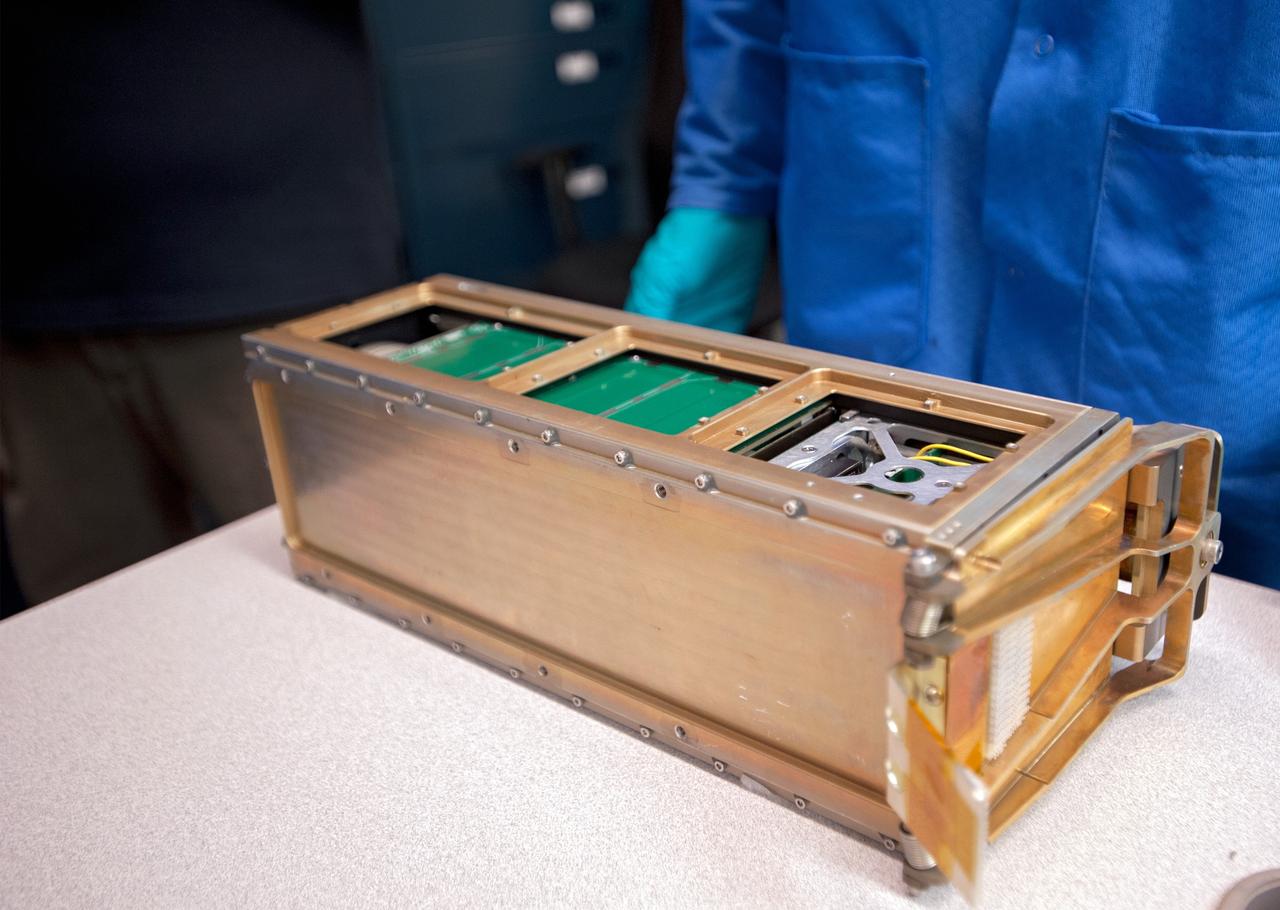
SAN LUIS OBISPO, Calif. – A Poly Picosatellite Orbital Dispensor, or P-Pod nanolauncher/carrier in the CubeSat lab facility at California Polytechnic Institute, or CalPoly. The payload, which includes sensors and equipment carefully packaged into 4-inch cube sections, will ride in the body of a Garvey Spacecraft Corporation's Prospector P-18D rocket during a June 15 launch on a high-altitude, suborbital flight. Known as a CubeSat, the satellite will record shock, vibrations and heat inside the rocket. It will not be released during the test flight, but the results will be used to prove or strengthen their designs before they are carried into orbit in 2014 on a much larger rocket. The flight also is being watched closely as a model for trying out new or off-the-shelf technologies quickly before putting them in the pipeline for use on NASA's largest launchers. Built by several different organizations, including a university, a NASA field center and a high school, the spacecraft are four-inch cubes designed to fly on their own eventually, but will remain firmly attached to the rocket during the upcoming mission. For more information, visit http://www.nasa.gov/mission_pages/smallsats/elana/cubesatlaunchpreview.html Photo credit: VAFB/Kathi Peoples
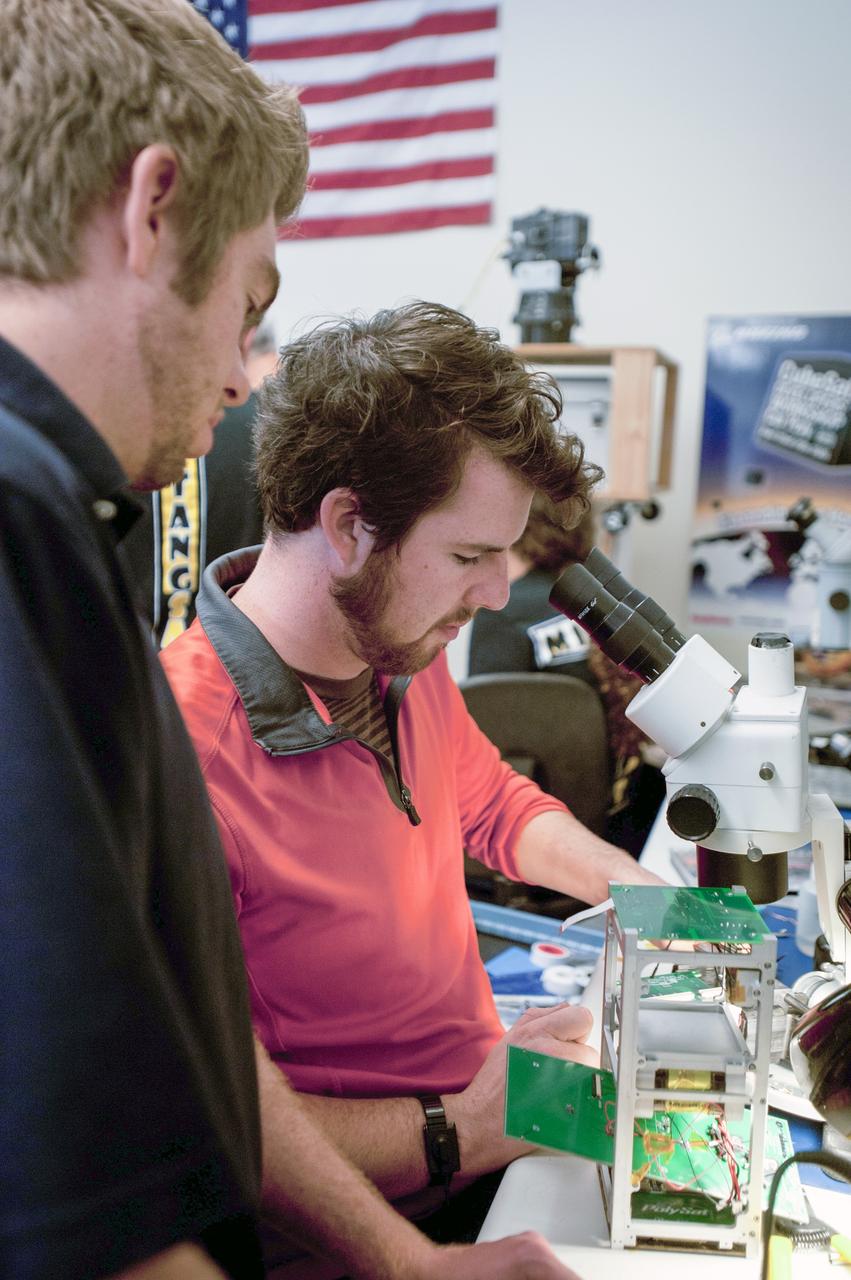
SAN LUIS OBISPO, Calif. – Members of the student launch team for the Polysat works through final checks in the CubeSat lab facility at California Polytechnic Institute, or CalPoly. The payload, which includes sensors and equipment carefully packaged into 4-inch cube sections, will ride in the body of a Garvey Spacecraft Corporation's Prospector P-18D rocket during a June 15 launch on a high-altitude, suborbital flight. Known as a CubeSat, the satellite will record shock, vibrations and heat inside the rocket. It will not be released during the test flight, but the results will be used to prove or strengthen their designs before they are carried into orbit in 2014 on a much larger rocket. A new, lightweight carrier is also being tested for use on future missions to deploy the small spacecraft. The flight also is being watched closely as a model for trying out new or off-the-shelf technologies quickly before putting them in the pipeline for use on NASA's largest launchers. Built by several different organizations, including a university, a NASA field center and a high school, the spacecraft are four-inch cubes designed to fly on their own eventually, but will remain firmly attached to the rocket during the upcoming mission. For more information, visit http://www.nasa.gov/mission_pages/smallsats/elana/cubesatlaunchpreview.html Photo credit: VAFB/Kathi Peoples
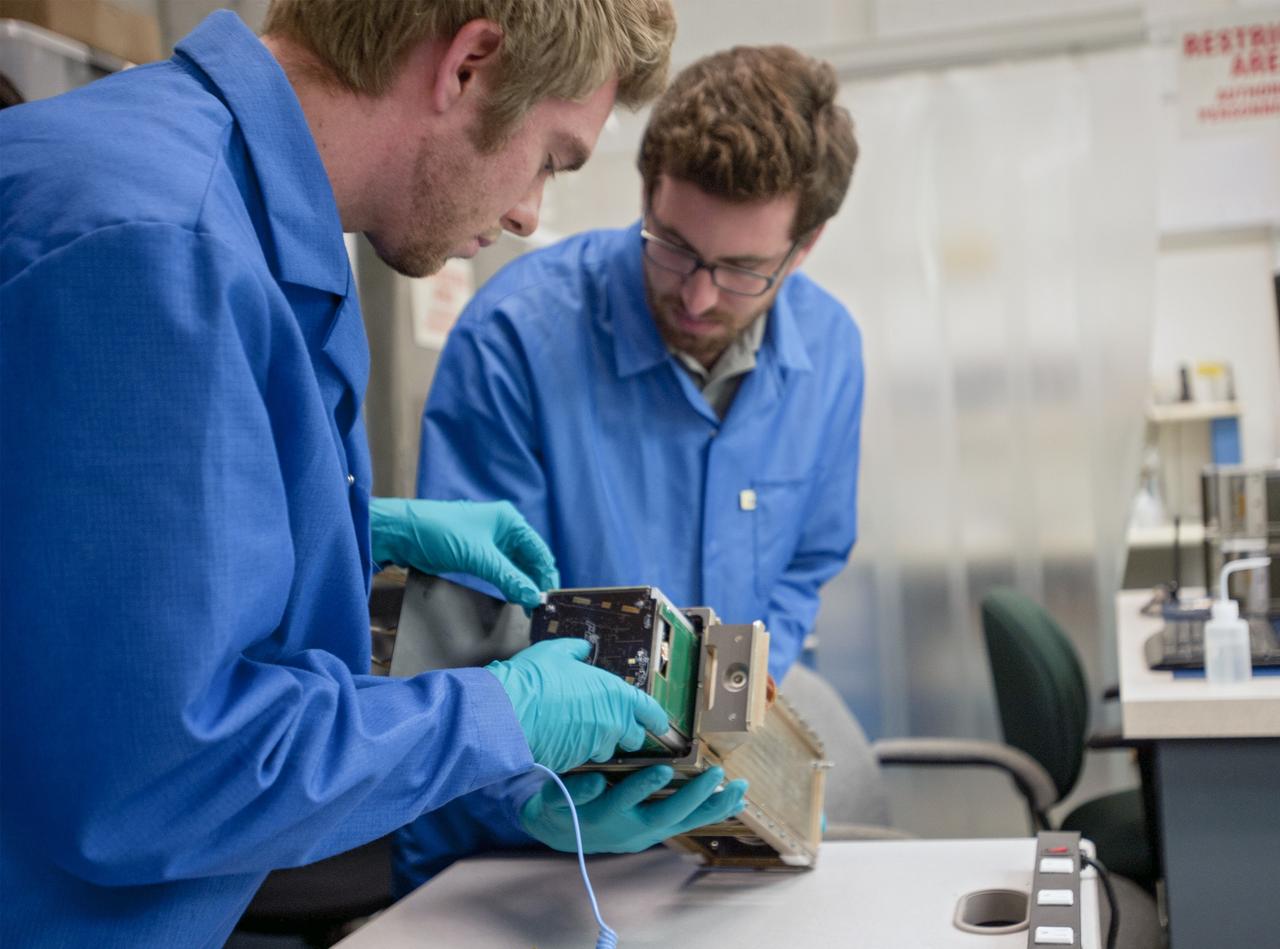
KSC-2013-2721 – SAN LUIS OBISPO, Calif. –Members of the student launch team load a payload into a Poly Picosatellite Orbital Dispensor, or P-Pod nanolauncher/carrier in the CubeSat lab facility at California Polytechnic Institute, or CalPoly. The payload, which includes sensors and equipment carefully packaged into 4-inch cube sections, will ride in the body of a Garvey Spacecraft Corporation's Prospector P-18D rocket during a June 15 launch on a high-altitude, suborbital flight. Known as a CubeSat, the satellite will record shock, vibrations and heat inside the rocket. It will not be released during the test flight, but the results will be used to prove or strengthen their designs before they are carried into orbit in 2014 on a much larger rocket. Also, a new launcher/carrier of a lightweight design also is being tested for use on future missions to deploy the small spacecraft. The flight also is being watched closely as a model for trying out new or off-the-shelf technologies quickly before putting them in the pipeline for use on NASA's largest launchers. Built by several different organizations, including a university, a NASA field center and a high school, the spacecraft are four-inch cubes designed to fly on their own eventually, but will remain firmly attached to the rocket during the upcoming mission. For more information, visit http://www.nasa.gov/mission_pages/smallsats/elana/cubesatlaunchpreview.html Photo credit: VAFB/Kathi Peoples
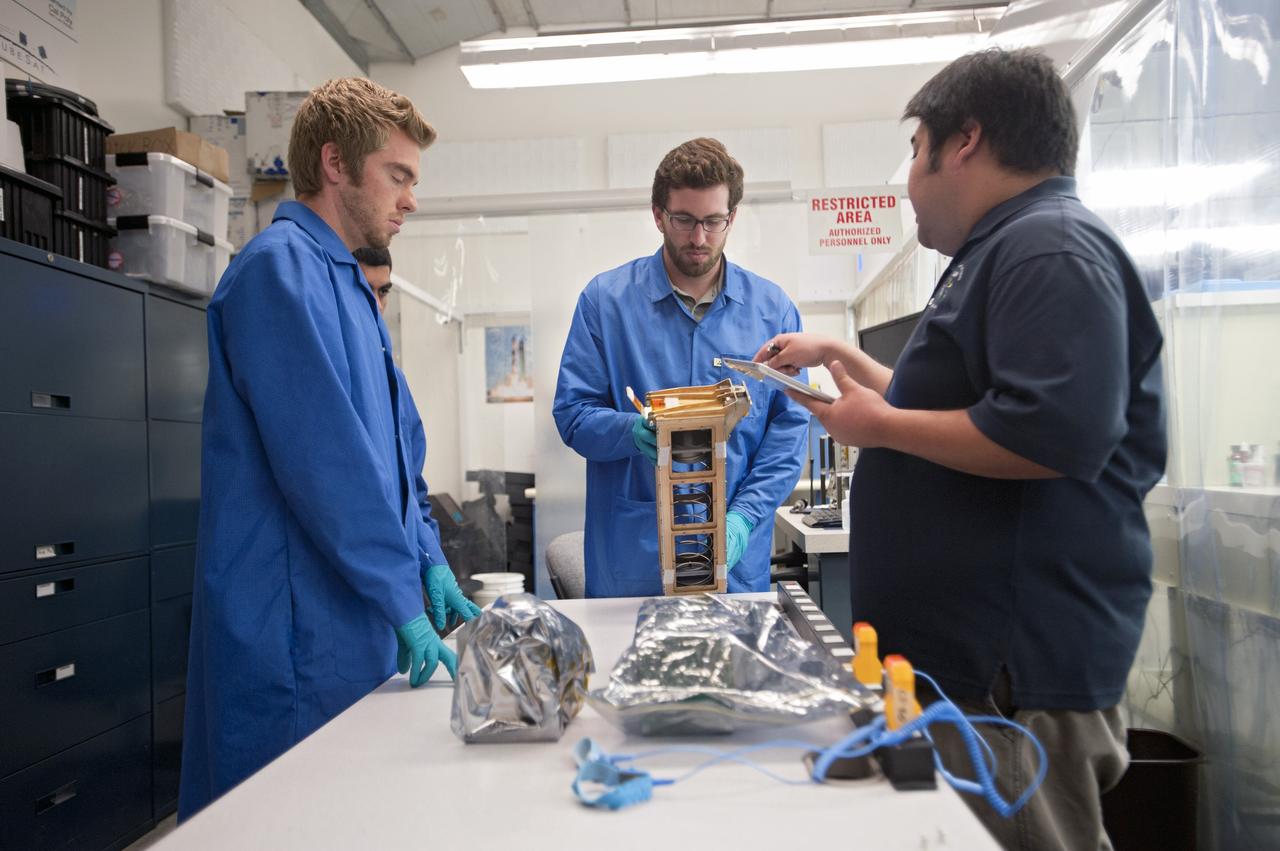
SAN LUIS OBISPO, Calif. – Roland Coelho, right, CalPoly program lead, and members of the student launch team for the Polysat works through final checks in the CubeSat lab facility at California Polytechnic Institute, or CalPoly. The payload, which includes sensors and equipment carefully packaged into 4-inch cube sections, will ride in the body of a Garvey Spacecraft Corporation's Prospector P-18D rocket during a June 15 launch on a high-altitude, suborbital flight. Known as a CubeSat, the satellite will record shock, vibrations and heat inside the rocket. It will not be released during the test flight, but the results will be used to prove or strengthen their designs before they are carried into orbit in 2014 on a much larger rocket. A new, lightweight carrier is also being tested for use on future missions to deploy the small spacecraft. The flight also is being watched closely as a model for trying out new or off-the-shelf technologies quickly before putting them in the pipeline for use on NASA's largest launchers. Built by several different organizations, including a university, a NASA field center and a high school, the spacecraft are four-inch cubes designed to fly on their own eventually, but will remain firmly attached to the rocket during the upcoming mission. For more information, visit http://www.nasa.gov/mission_pages/smallsats/elana/cubesatlaunchpreview.html Photo credit: VAFB/Kathi Peoples

This image of the greater Los Angeles area was taken on March 29, 2019 by ASTERIA, the Arcsecond Space Telescope Enabling Research in Astrophysics satellite. It shows a region of about 43.5 square miles (70 square kilometers) with a resolution of about 100 feet (30 meters) per pixel. A bright spot near the center of the image marks the location of Dodger Stadium. (The Dodgers played the Arizona Diamondbacks at home that night.) To the northeast, near the darkness of the San Gabriel Mountains, is NASA's Jet Propulsion Laboratory in Pasadena, California, which built and operates ASTERIA, and the nearby Rose Bowl Stadium. The close-cropped image shows a region of about 43.5 square miles (70 square kilometers) with a resolution of about 100 feet (30 meters) per pixel. ASTERIA is a CubeSat, or a small satellite composed of cube units that measure 10 centimeters (4.5 inches) on each side. ASTERIA was designed to demonstrate precision pointing technology in a CubeSat, which could be used to observe planets around other stars. A slight decrease in a star's brightness as detected by ASTERIA could indicate that a planet is orbiting the star and passed in front of the star. This is called a planet transit. After completing its primary mission objectives in January 2018, ASTERIA has continued to operate on an extended mission. The mission team took this image to further test the capabilities of the satellite. https://photojournal.jpl.nasa.gov/catalog/PIA23125

MOJAVE DESERT, Calif. – In the Mojave Desert in California, the Garvey Spacecraft Corporation's Prospector P-18D rocket lifts off at 10:52 a.m. PDT carrying the RUBICS-1 payload on a high-altitude, suborbital flight. The rocket carried four satellites made from four-inch cube sections. The rocket reached a peak altitude of about 9,000 feet, however the parachute deployed prematurely and the vehicle continued on its trajectory, coasting and tumbling to a hard landing on its side. In spite of the rough ride, all four CubeSats were recovered. PhoneSat and RUBICS received data in flight, but sustained structural damage. CP-9 and StangSat fared better, and their teams are working to recover as much information as possible. Collectively known as CubeSats, the satellites were designed to record shock, vibrations and heat inside the rocket. The results will be used to prove or strengthen their designs before they are carried into orbit in 2014 on a much larger rocket. Built by several different organizations, including a university, a NASA field center and a high school, the spacecraft are four-inch cubes designed to fly on their own eventually, but will remain firmly attached to the rocket during the upcoming mission. For more information, visit http://www.nasa.gov/mission_pages/smallsats/elana/cubesatlaunchpreview.html Photo credit: NASA/Dimitri Gerondidakis
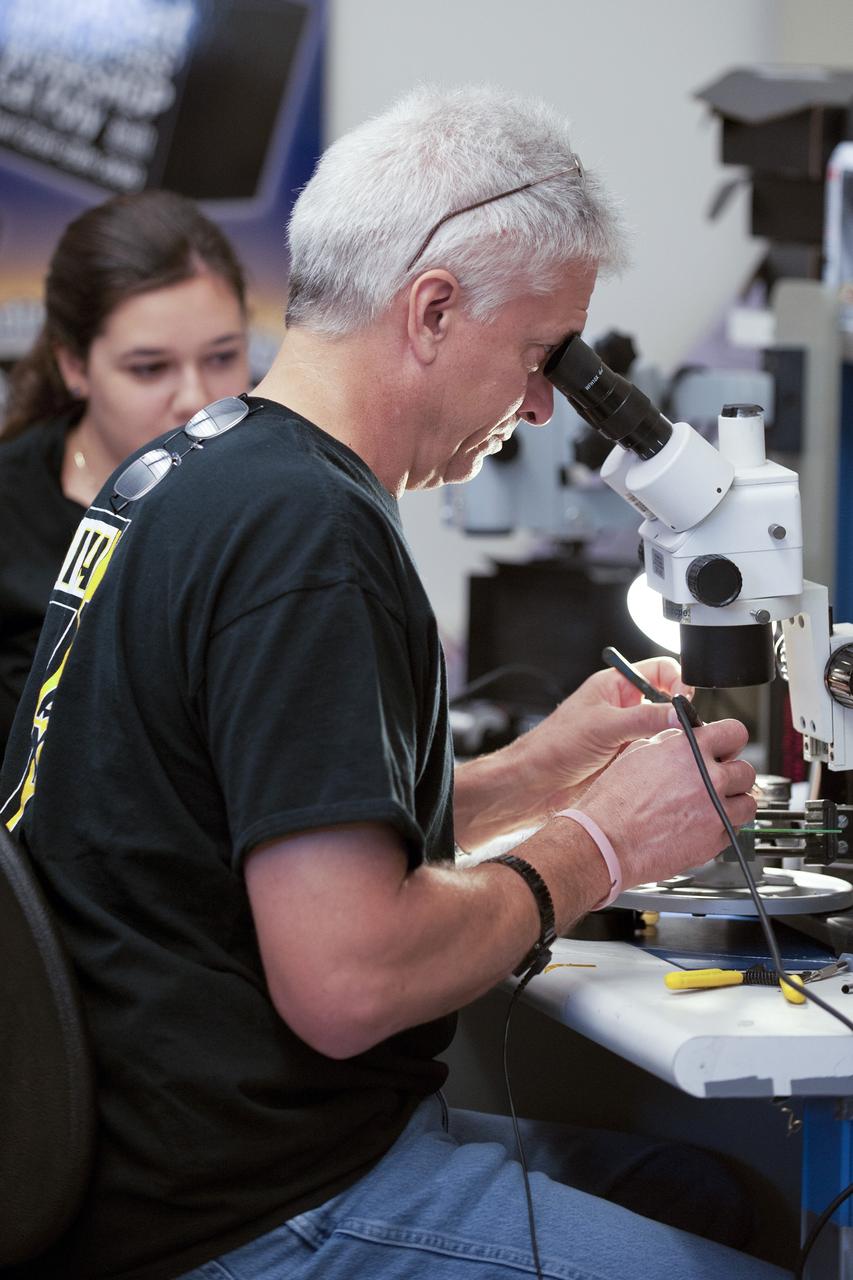
SAN LUIS OBISPO, Calif. – Jim Kinney, a NASA mentor for the student launch team of the StangSat, works inside the CubeSat lab facility at California Polytechnic Institute, or CalPoly. The payload, which includes sensors and equipment carefully packaged into 4-inch cubes, will ride in the body of a Garvey Spacecraft Corporation's Prospector P-18D rocket during a June 15 launch on a high-altitude, suborbital flight. Known as a CubeSat, the StangSat will record shock, vibrations and heat inside the rocket. It will not be released during the test flight, but the results will be used to prove or strengthen the design before it is carried into orbit in 2014 on a much larger rocket. A new, lightweight carrier is also being tested for use on future missions to deploy the small spacecraft. The flight also is being watched closely as a model for trying out new or off-the-shelf technologies quickly before putting them in the pipeline for use on NASA's largest launchers. Built by several different organizations, including a university, a NASA field center and a high school, the spacecraft are four-inch cubes designed to fly on their own eventually, but will remain firmly attached to the rocket during the upcoming mission. For more information, visit http://www.nasa.gov/mission_pages/smallsats/elana/cubesatlaunchpreview.html Photo credit: VAFB/Kathi Peoples
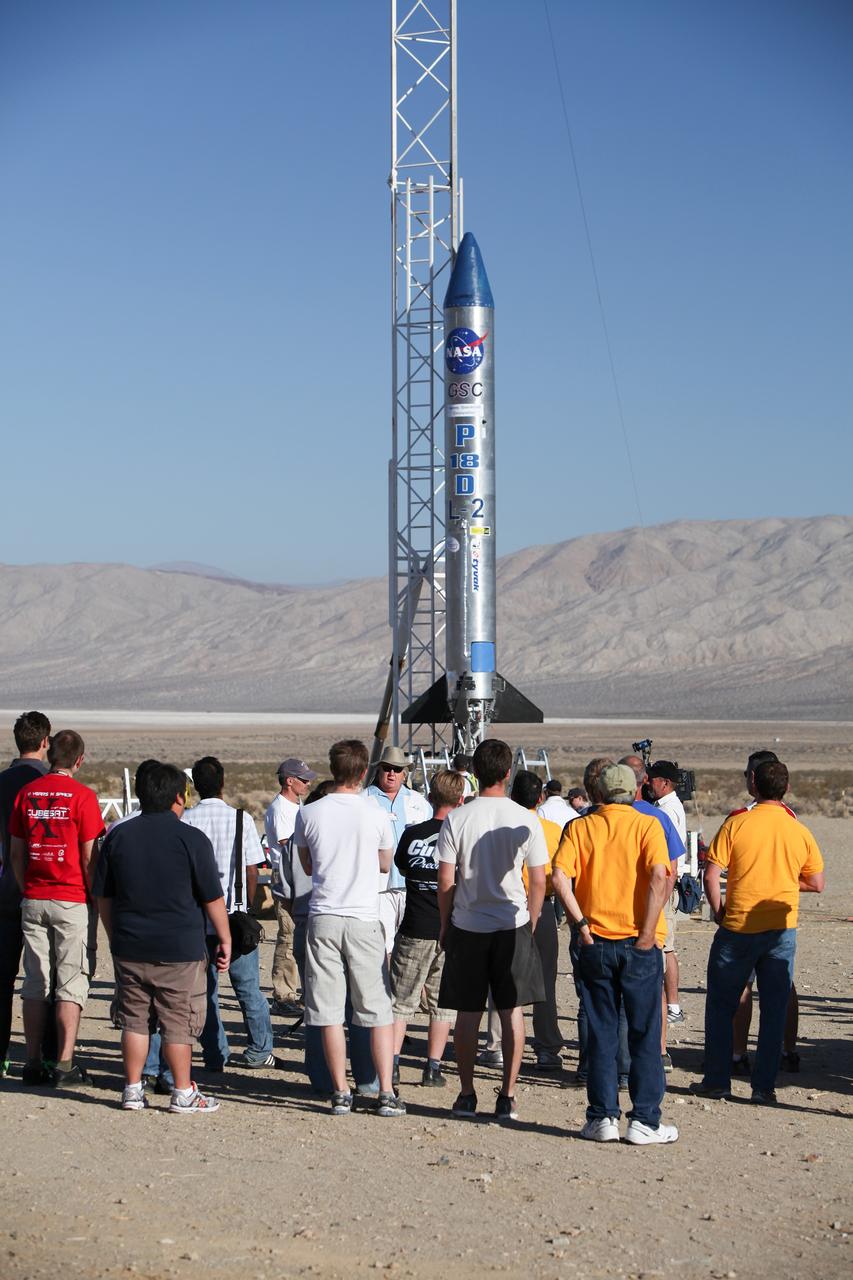
MOJAVE DESERT, Calif. – In the Mojave Desert in California, students and engineers participate in a pre-launch briefing before the lift off of the Garvey Spacecraft Corporation's Prospector P-18D rocket. The rocket is scheduled to launch the RUBICS-1 payload on a high-altitude, suborbital flight. The rocket will carry four satellites made from four-inch cube sections. The rocket reached a peak altitude of about 9,000 feet, however the parachute deployed prematurely and the vehicle continued on its trajectory, coasting and tumbling to a hard landing on its side. In spite of the rough ride, all four CubeSats were recovered. PhoneSat and RUBICS received data in flight, but sustained structural damage. CP-9 and StangSat fared better, and their teams are working to recover as much information as possible. Collectively known as CubeSats, the satellites were designed to record shock, vibrations and heat inside the rocket. The results will be used to prove or strengthen their designs before they are carried into orbit in 2014 on a much larger rocket. Built by several different organizations, including a university, a NASA field center and a high school, the spacecraft are four-inch cubes designed to fly on their own eventually, but will remain firmly attached to the rocket during the upcoming mission. For more information, visit http://www.nasa.gov/mission_pages/smallsats/elana/cubesatlaunchpreview.html Photo credit: NASA/Dimitri Gerondidakis
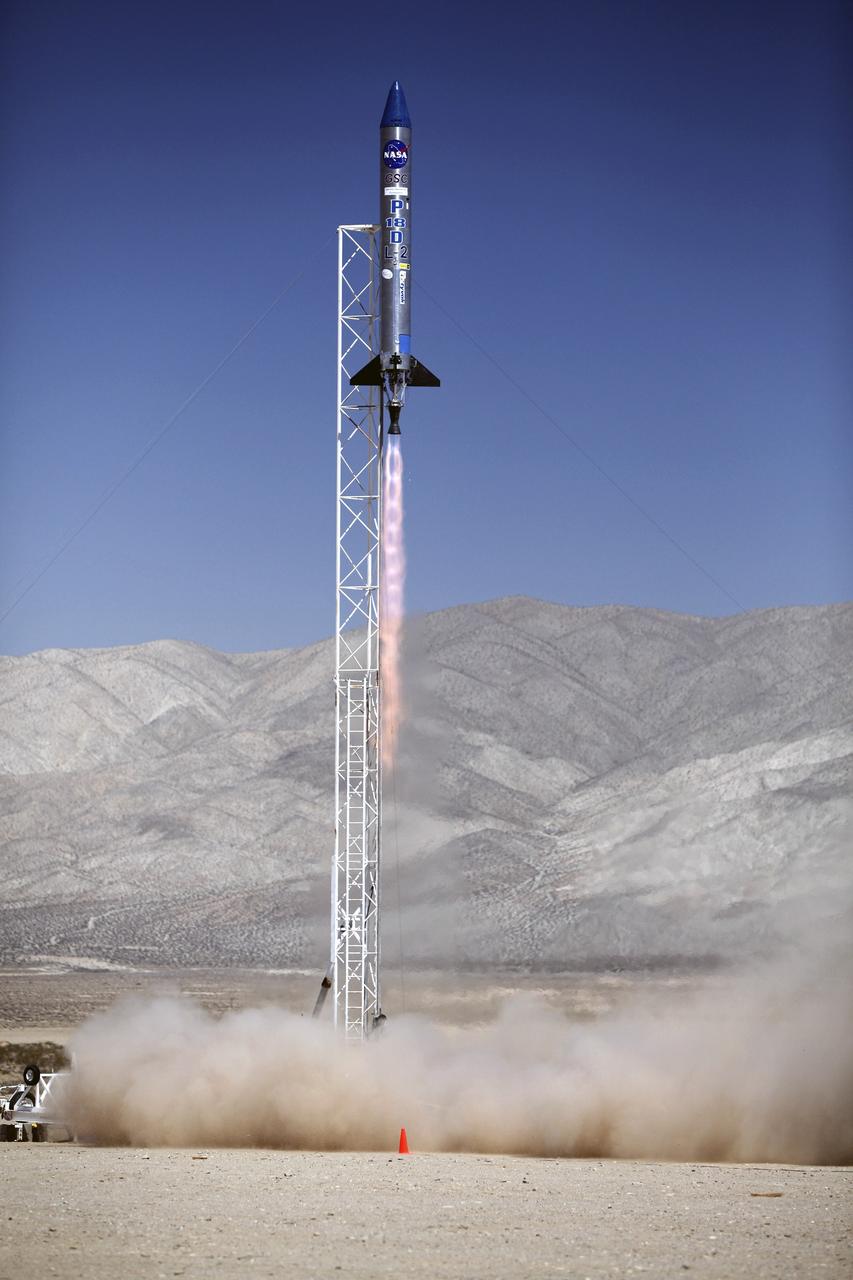
MOJAVE DESERT, Calif. – In the Mojave Desert in California, the Garvey Spacecraft Corporation's Prospector P-18D rocket lifts off at 10:52 a.m. PDT carrying the RUBICS-1 payload on a high-altitude, suborbital flight. The rocket carried four satellites made from four-inch cube sections. The rocket reached a peak altitude of about 9,000 feet, however the parachute deployed prematurely and the vehicle continued on its trajectory, coasting and tumbling to a hard landing on its side. In spite of the rough ride, all four CubeSats were recovered. PhoneSat and RUBICS received data in flight, but sustained structural damage. CP-9 and StangSat fared better, and their teams are working to recover as much information as possible. Collectively known as CubeSats, the satellites were designed to record shock, vibrations and heat inside the rocket. The results will be used to prove or strengthen their designs before they are carried into orbit in 2014 on a much larger rocket. Built by several different organizations, including a university, a NASA field center and a high school, the spacecraft are four-inch cubes designed to fly on their own eventually, but will remain firmly attached to the rocket during the upcoming mission. For more information, visit http://www.nasa.gov/mission_pages/smallsats/elana/cubesatlaunchpreview.html Photo credit: NASA/Dimitri Gerondidakis
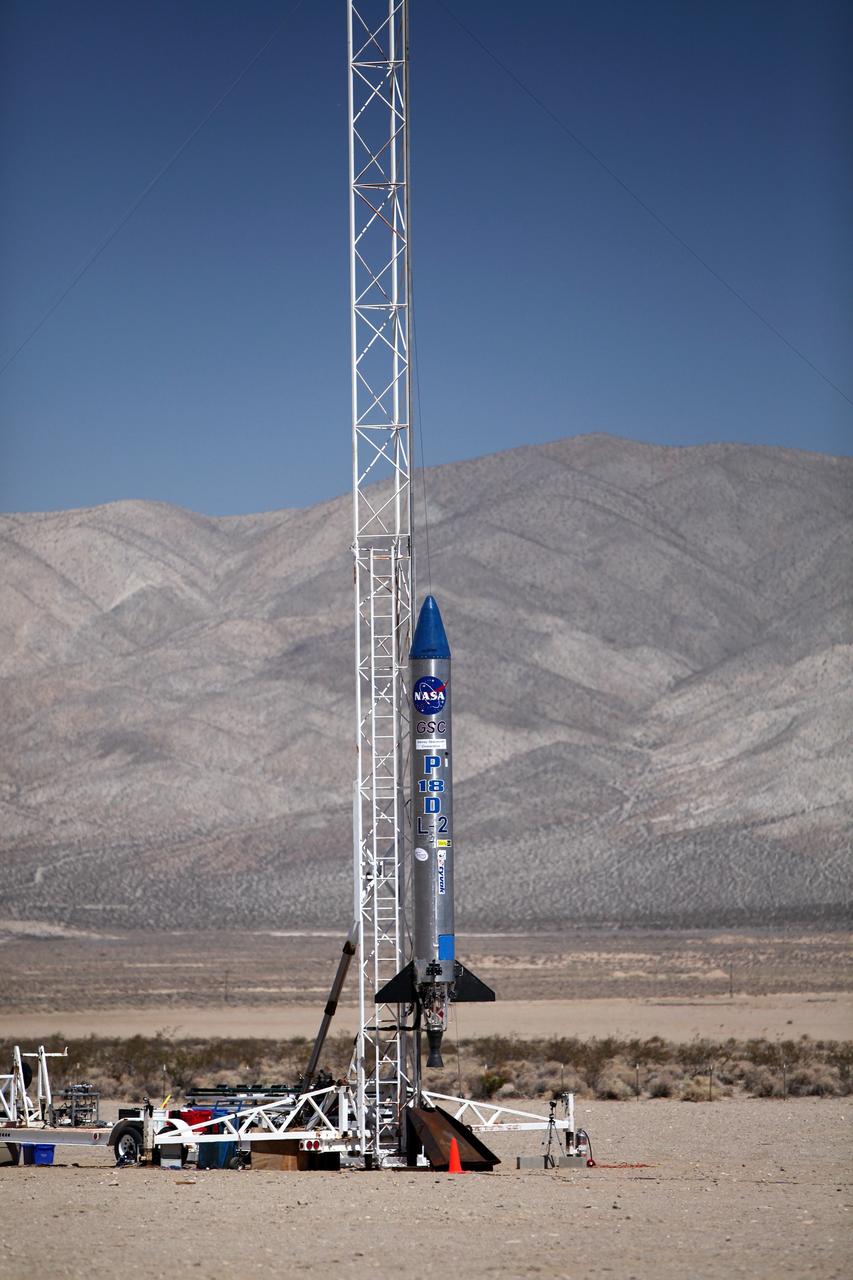
MOJAVE DESERT, Calif. – In the Mojave Desert in California, the Garvey Spacecraft Corporation's Prospector P-18D rocket is positioned for launch with the RUBICS-1 payload on a high-altitude, suborbital flight. The rocket will carry four satellites made from four-inch cube sections. The rocket reached a peak altitude of about 9,000 feet, however the parachute deployed prematurely and the vehicle continued on its trajectory, coasting and tumbling to a hard landing on its side. In spite of the rough ride, all four CubeSats were recovered. PhoneSat and RUBICS received data in flight, but sustained structural damage. CP-9 and StangSat fared better, and their teams are working to recover as much information as possible. Collectively known as CubeSats, the satellites were designed to record shock, vibrations and heat inside the rocket. The results will be used to prove or strengthen their designs before they are carried into orbit in 2014 on a much larger rocket. Built by several different organizations, including a university, a NASA field center and a high school, the spacecraft are four-inch cubes designed to fly on their own eventually, but will remain firmly attached to the rocket during the upcoming mission. For more information, visit http://www.nasa.gov/mission_pages/smallsats/elana/cubesatlaunchpreview.html Photo credit: NASA/Dimitri Gerondidakis
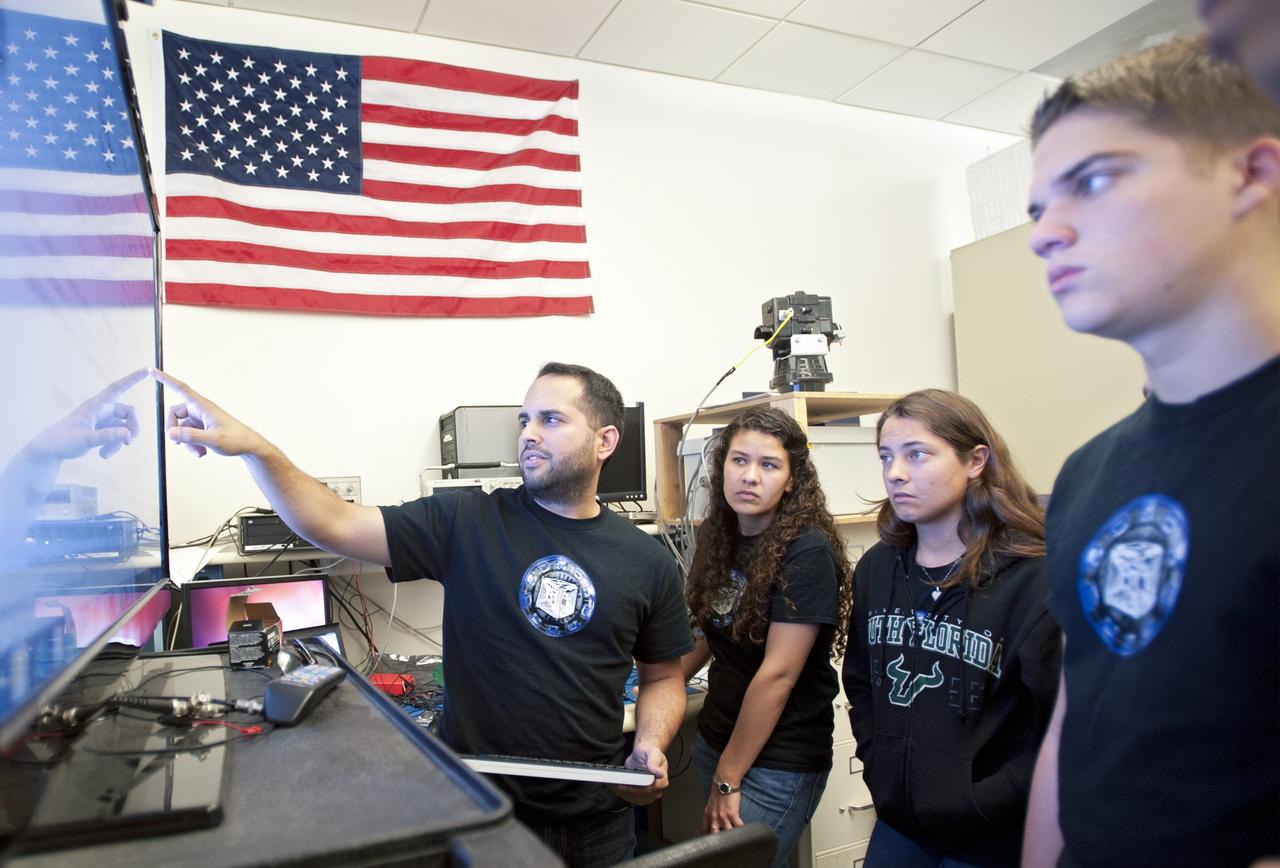
SAN LUIS OBISPO, Calif. – NASA mentors and the student launch team for the StangSat and Polysat go through final checks in the CubeSat lab facility at California Polytechnic Institute, or CalPoly. The payloads, which include sensors and equipment carefully packaged into 4-inch cubes, will ride in the body of a Garvey Spacecraft Corporation's Prospector P-18D rocket during a June 15 launch on a high-altitude, suborbital flight. Collectively known as CubeSats, the satellites will record shock, vibrations and heat inside the rocket. They will not be released during the test flight, but the results will be used to prove or strengthen their designs before they are carried into orbit in 2014 on a much larger rocket. A new, lightweight carrier is also being tested for use on future missions to deploy the small spacecraft. The flight also is being watched closely as a model for trying out new or off-the-shelf technologies quickly before putting them in the pipeline for use on NASA's largest launchers. Built by several different organizations, including a university, a NASA field center and a high school, the spacecraft are four-inch cubes designed to fly on their own eventually, but will remain firmly attached to the rocket during the upcoming mission. For more information, visit http://www.nasa.gov/mission_pages/smallsats/elana/cubesatlaunchpreview.html Photo credit: VAFB/Kathi Peoples