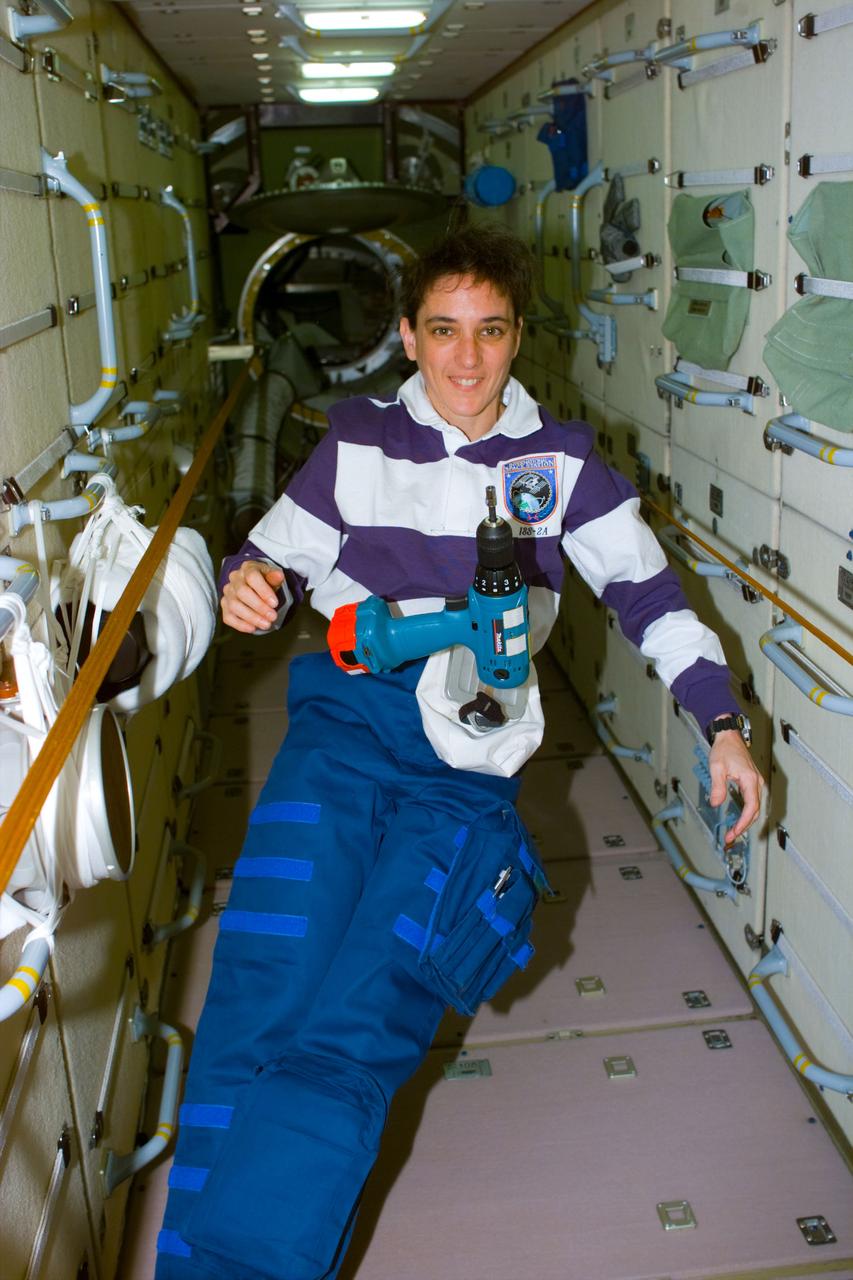
S88-E-5083 (12-11-98) --- Astronaut Nancy J. Currie, mission specialist, with a rechargeable power tool on Zarya. One of Currie's tasks was to replace a faulty unit which controls the discharging of stored energy from one of the Russian-built module's six batteries. The photo was taken with an electronic still camera (ESC) at 05:24:08 GMT, Dec. 11.
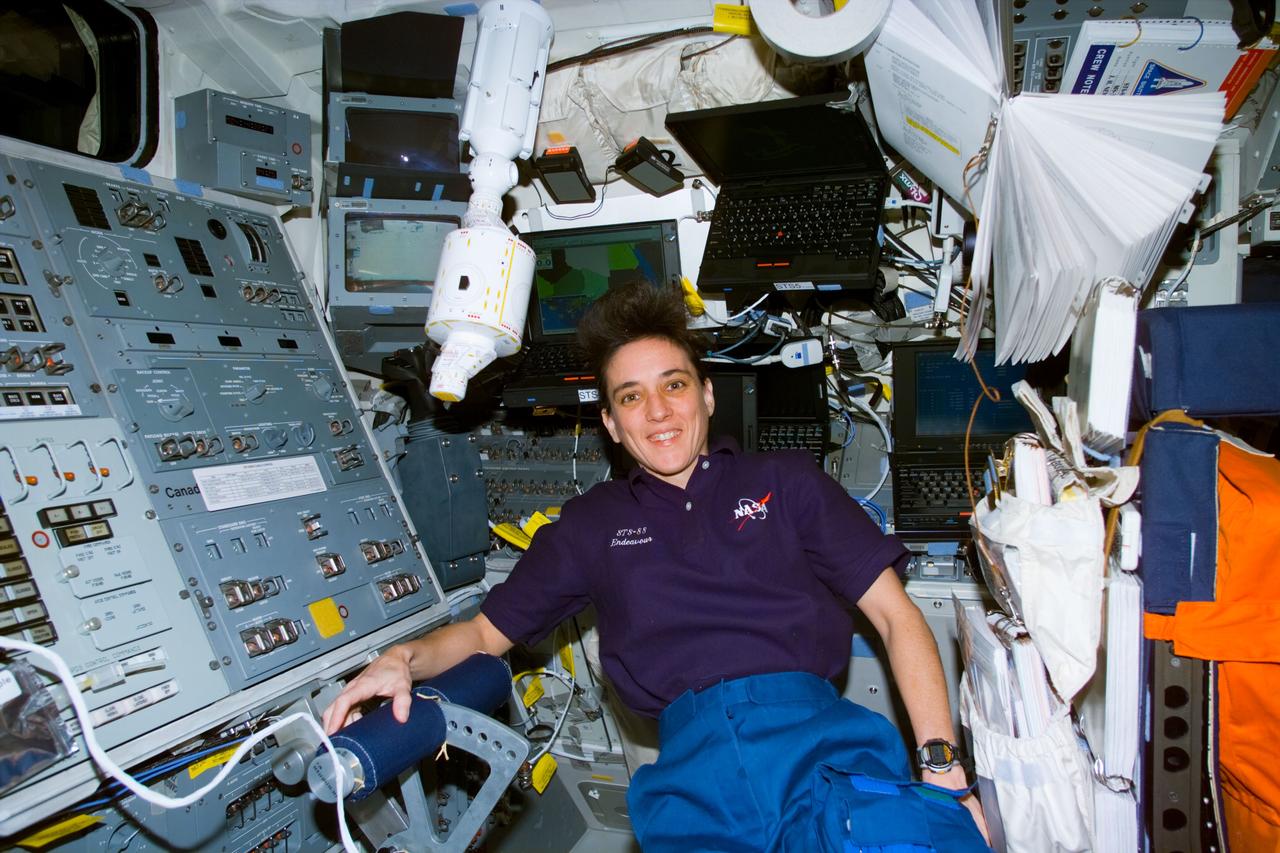
S88-E-5165 (12-08-98) --- Astronaut Nancy J. Currie spent a great deal of time at controls on the aft flight deck of the Space Shuttle Endeavour during the STS-88 mission. Earlier in the mission, from this station, Currie performed some precise maneuvers with the remote manipulator system (RMS)in mating the U.S.-built Unity module and the Russian-built Zarya. This photo was taken with an electronic still camera (ESC) at 23:18:23 GMT, Dec. 8.
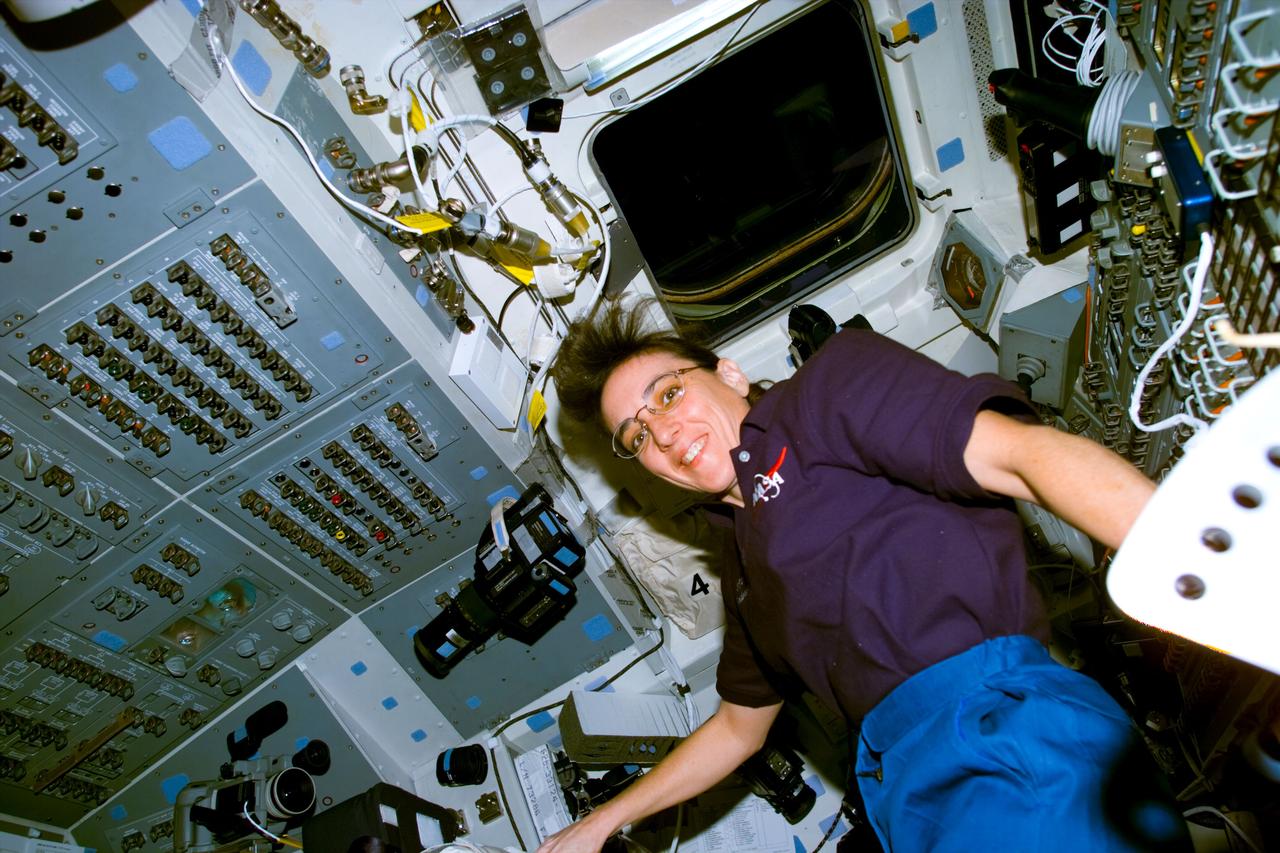
S88-E-5164 (12-08-98) --- Astronaut Nancy J. Currie spent a great deal of time at controls on the aft flight deck of the Space Shuttle Endeavour during the STS-88 mission. Earlier in the mission, from a nearby station, Currie performed some precise maneuvers with the remote manipulator system (RMS)in mating the U.S.-built Unity module and the Russian-built Zarya. This photo was taken with an electronic still camera (ESC) at 23:18:23 GMT, Dec. 8.
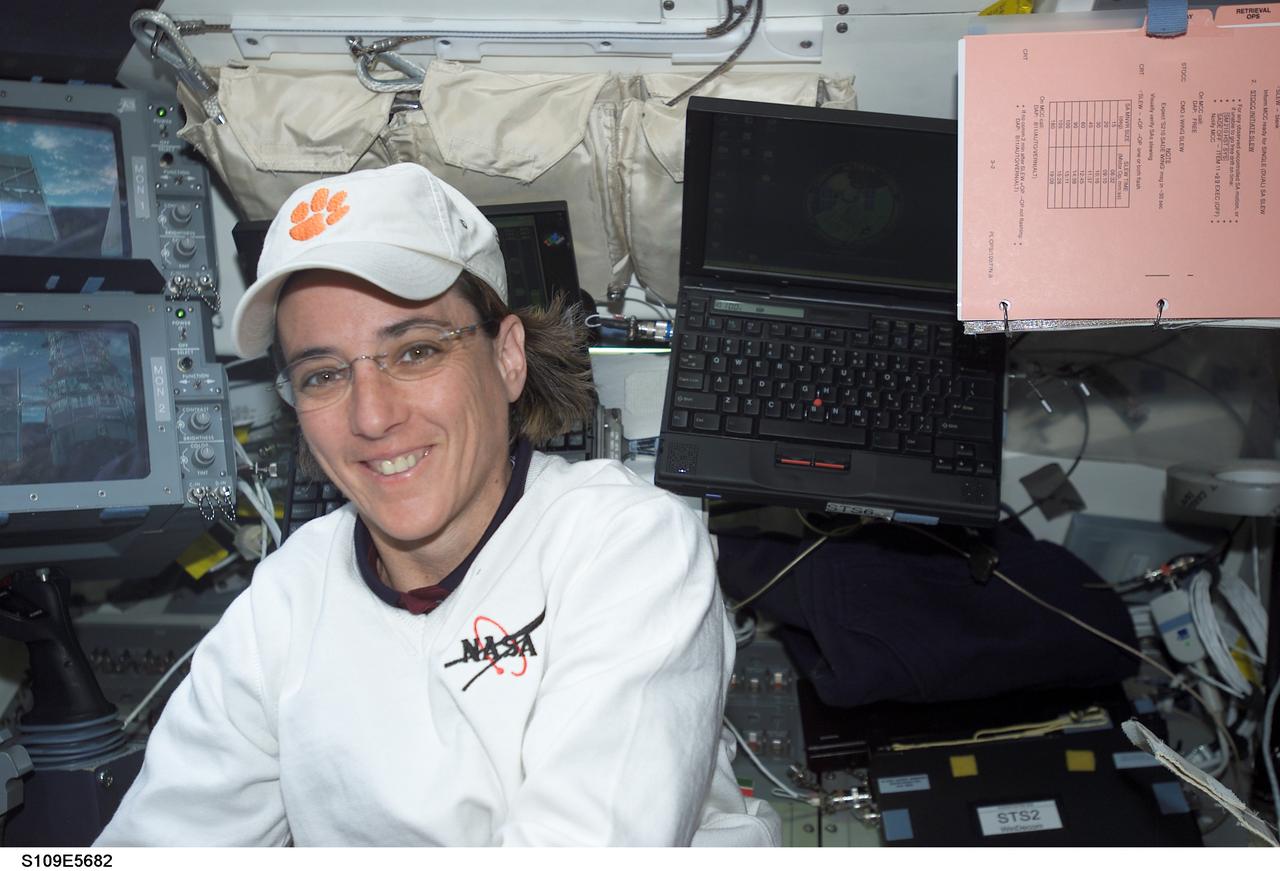
STS109-E-5682 (7 March 2002) --- Astronaut Nancy J. Currie, mission specialist, remains very near the controls for Columbia's Remote Manipulator System (out of frame) on the crew cabin's aft flight deck. On a week with one lengthy space walk per day, Currie has had her hands full with RMS duties to support the space walks of four crewmates. A short time later on this day, astronauts James H. Newman and Michael J. Massimino began EVA-4, during which the duo required the services of Currie to control the robotic arm to maneuver them around the various work stations on the Hubble Space Telescope (HST). The image was recorded with a digital still camera.
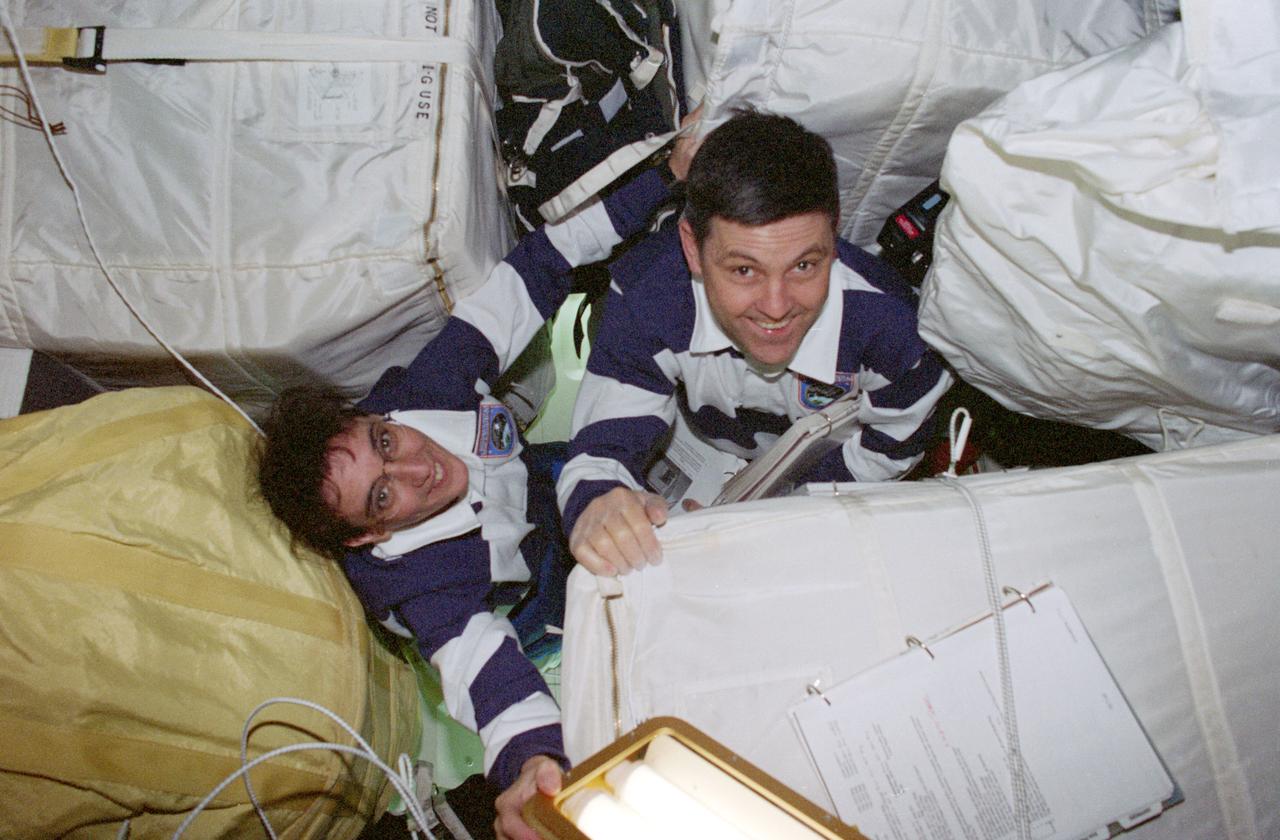
STS088-370-028 (4-15 Dec. 1998) --- Astronauts Nancy J. Currie, mission specialist, and Robert D. Cabana, commander, are surrounded by bags of supplies and equipment on the Space Shuttle Endeavour?s middeck. The crew was in the process of readying the docked Unity and Zarya Modules for International Space Station (ISS) duty.
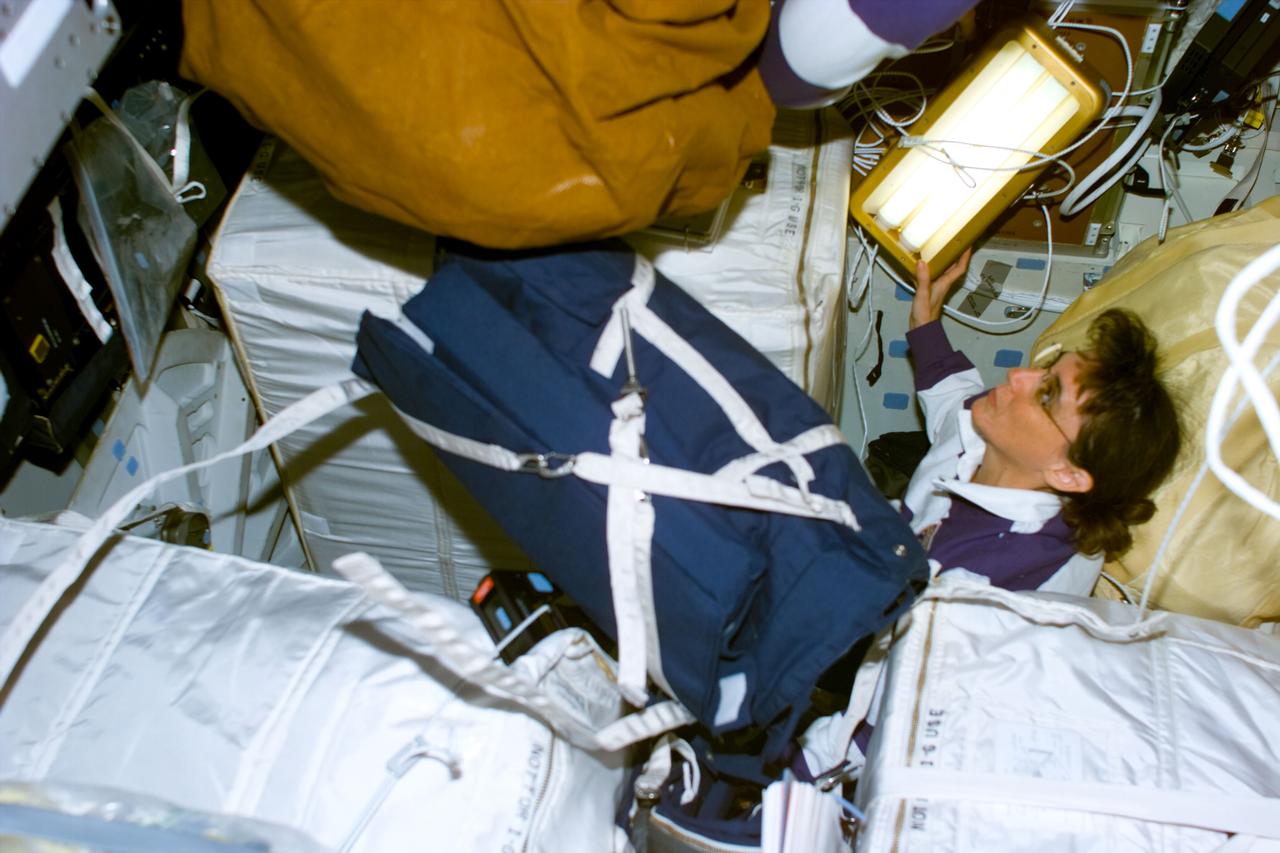
S88-E-5135 (12-12-98) --- Astronaut Nancy J. Currie, mission specialist, totes a lamp while sorting through a mountain of bags filled with hardware, equipment and supplies onboard Endeavour. The photo was taken with an electronic still camera at 03:49:03 GMT, Dec. 12.
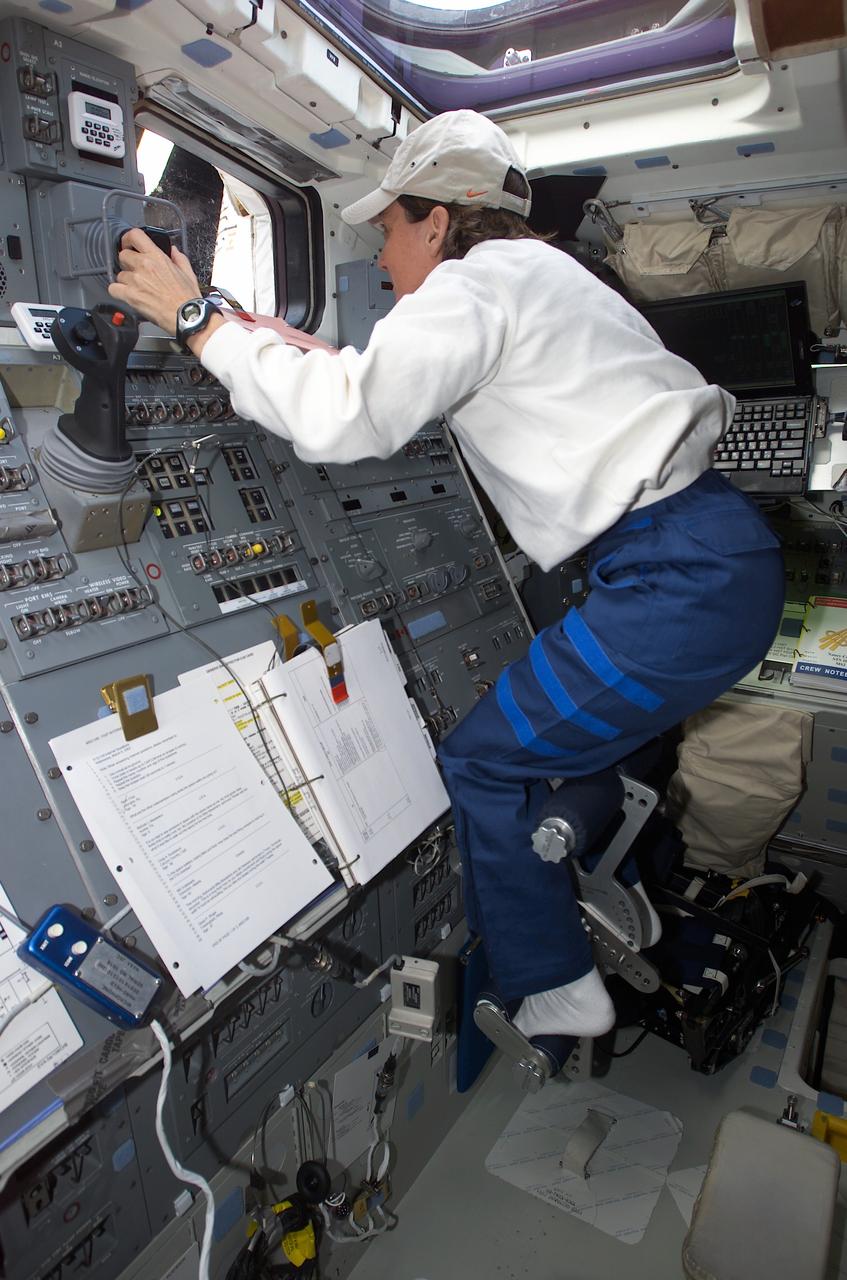
STS109-E-5685 (7 March 2002) --- Astronaut Nancy J. Currie, mission specialist, works the controls for Columbia's Remote Manipulator System (RMS) on the crew cabin's aft flight deck. On a week with one lengthy space walk per day, Currie has had her hands full with RMS duties to support the space walks of four crewmates. Astronauts James H. Newman and Michael J. Massimino had just begin EVA-4, during which the duo required the services of Currie to control the robotic arm to maneuver them around the various workstations on the Hubble Space Telescope (HST). The image was recorded with a digital still camera.
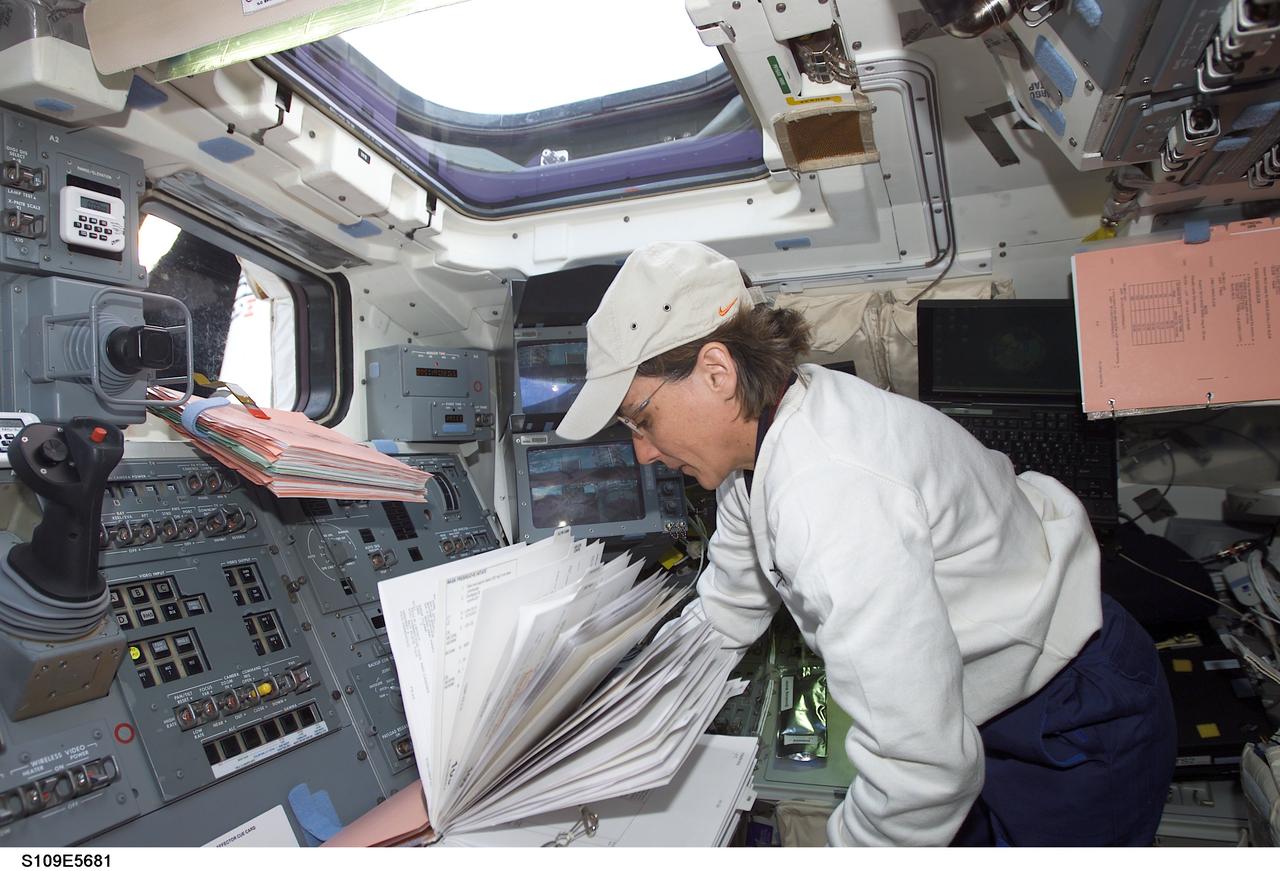
STS109-E-5681 (7 March 2002) --- Astronaut Nancy J. Currie, mission specialist, remains very near the controls (upper left) for Columbia's Remote Manipulator System (RMS). On a week with one lengthy space walk per day, Currie has had her hands full with RMS duties to support the space walks of four crewmates. A short time later on this day, astronauts James H. Newman and Michael J. Massimino began EVA-4 and the duo required the services of Currie to control the robotic arm to maneuver them around the various work stations on the Hubble Space Telescope (HST). The image was recorded with a digital still camera.
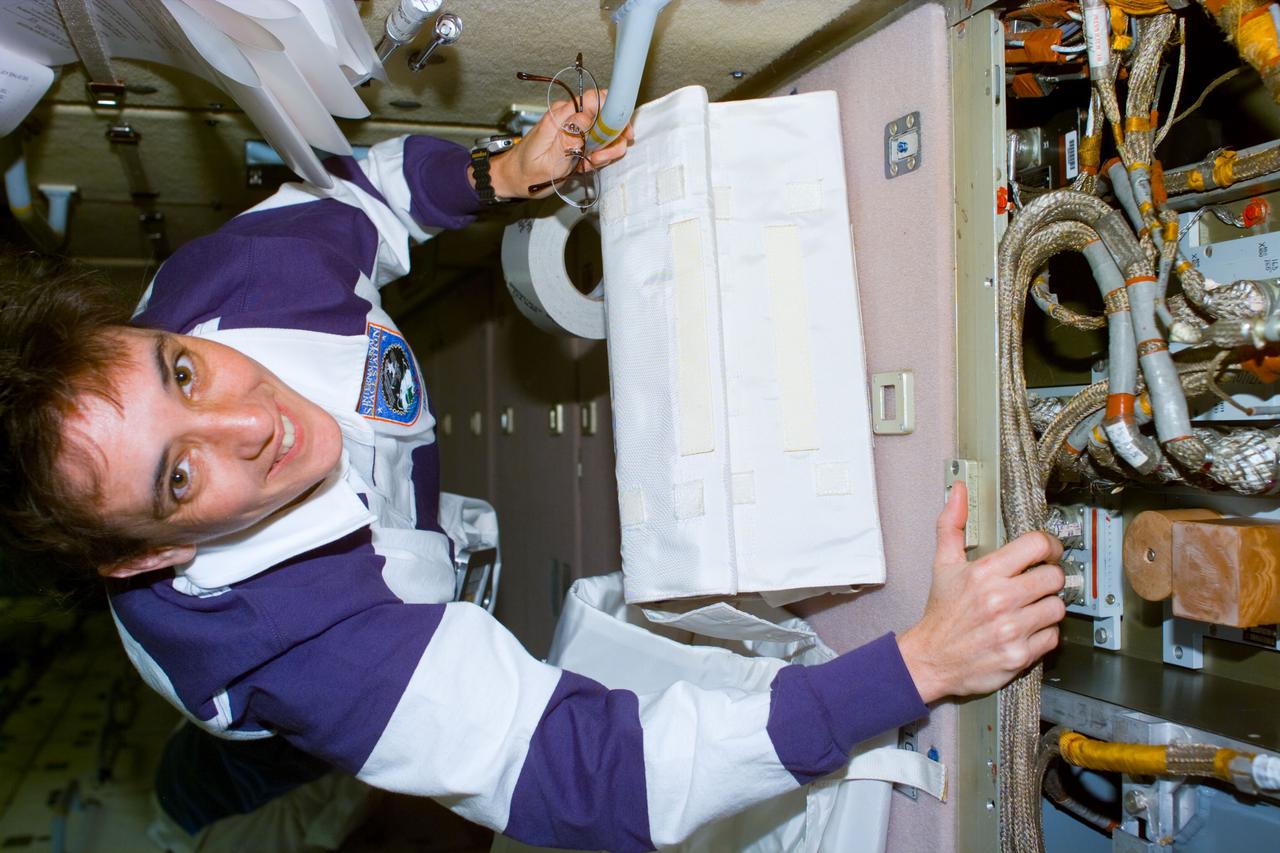
S88-E-5076 (12-11-98) --- Astronaut Nancy J. Currie, mission specialist, participates in work aboard Zarya. One of Currie's tasks was to replace a faulty unit which controls the discharging of stored energy from one of the module's six batteries. The photo was taken with an electronic still camera (ESC) at 01:58:16 GMT, Dec. 11.
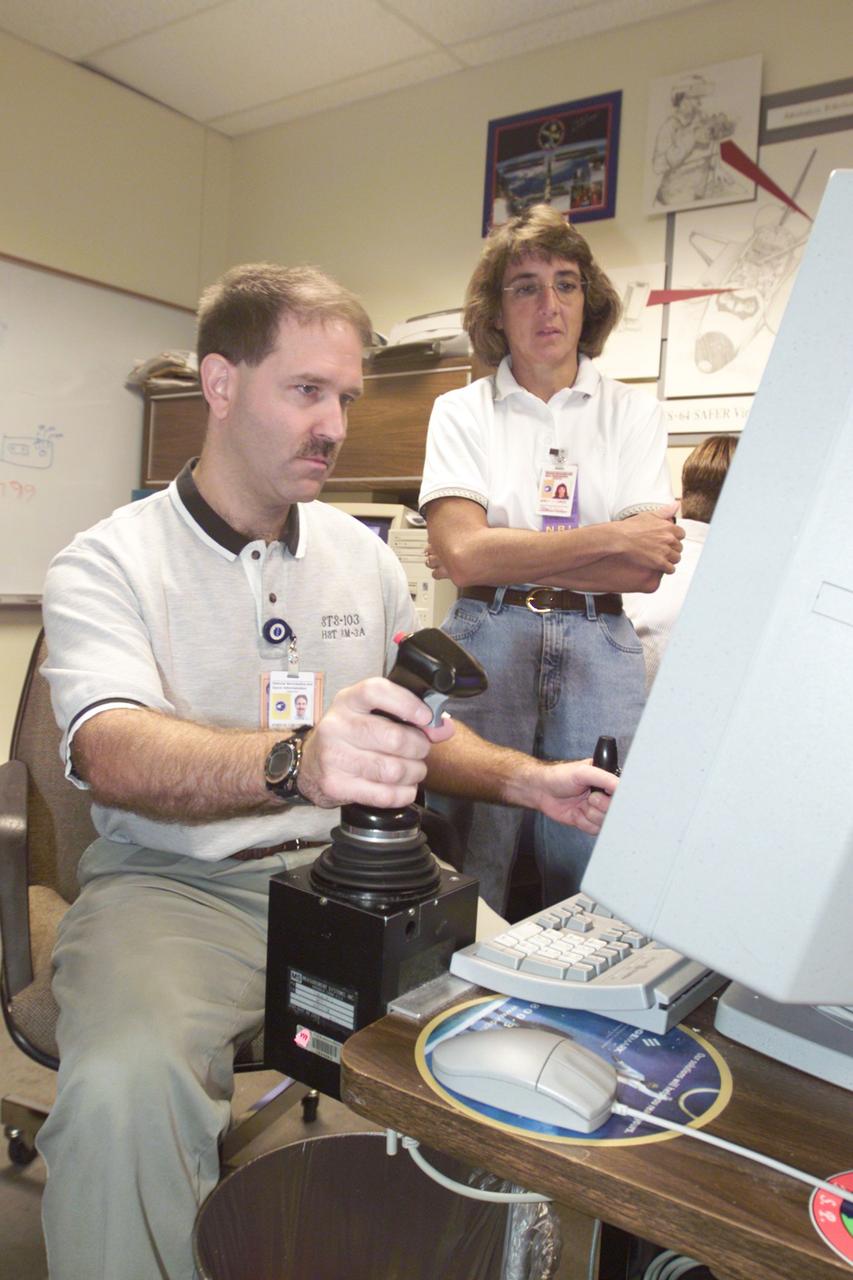
Astronauts John M. Grunsfeld (left), STS-109 payload commander, and Nancy J. Currie, mission specialist, use the virtual reality lab at Johnson Space Center to train for upcoming duties aboard the Space Shuttle Columbia. This type of computer interface paired with virtual reality training hardware and software helps to prepare the entire team to perform its duties for the fourth Hubble Space Telescope Servicing mission. The most familiar form of virtual reality technology is some form of headpiece, which fits over your eyes and displays a three dimensional computerized image of another place. Turn your head left and right, and you see what would be to your sides; turn around, and you see what might be sneaking up on you. An important part of the technology is some type of data glove that you use to propel yourself through the virtual world. Currently, the medical community is using the new technologies in four major ways: To see parts of the body more accurately, for study, to make better diagnosis of disease and to plan surgery in more detail; to obtain a more accurate picture of a procedure during surgery; to perform more types of surgery with the most noninvasive, accurate methods possible; and to model interactions among molecules at a molecular level.
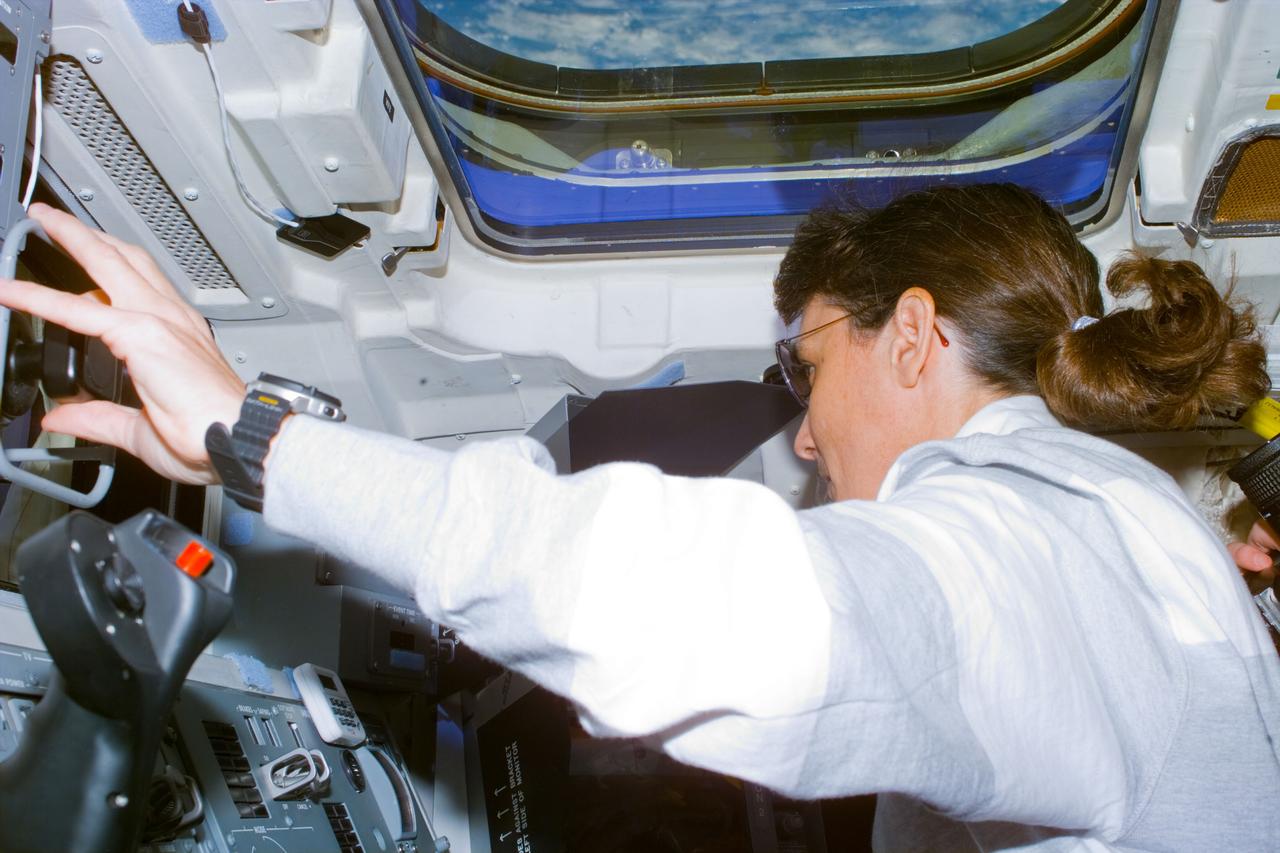
S88-E-5030 (12-05-98) --- Astronaut Nancy J. Currie gently mated the 12.8-ton Unity connecting module to Endeavour's docking system late afternoon of Dec. 5, successfully completing the first task in assembling the new International Space Station. Deftly manipulating the shuttle's 50-foot-long robot arm, Currie placed Unity just inches above the extended outer ring on Endeavour's docking mechanism, enabling astronaut Robert D. Cabana, mission commander, to fire downward maneuvering jets, locking the shuttle's docking system to one of two Pressurized Mating Adapters (PMA) attached to Unity. Turning her head to her right, Currie is using one of the TV monitors on the aft flight deck to assist in the precise maneuver. The photo was taken with an electronic still camera (ESC) at 22:31:08 GMT, Dec. 5.
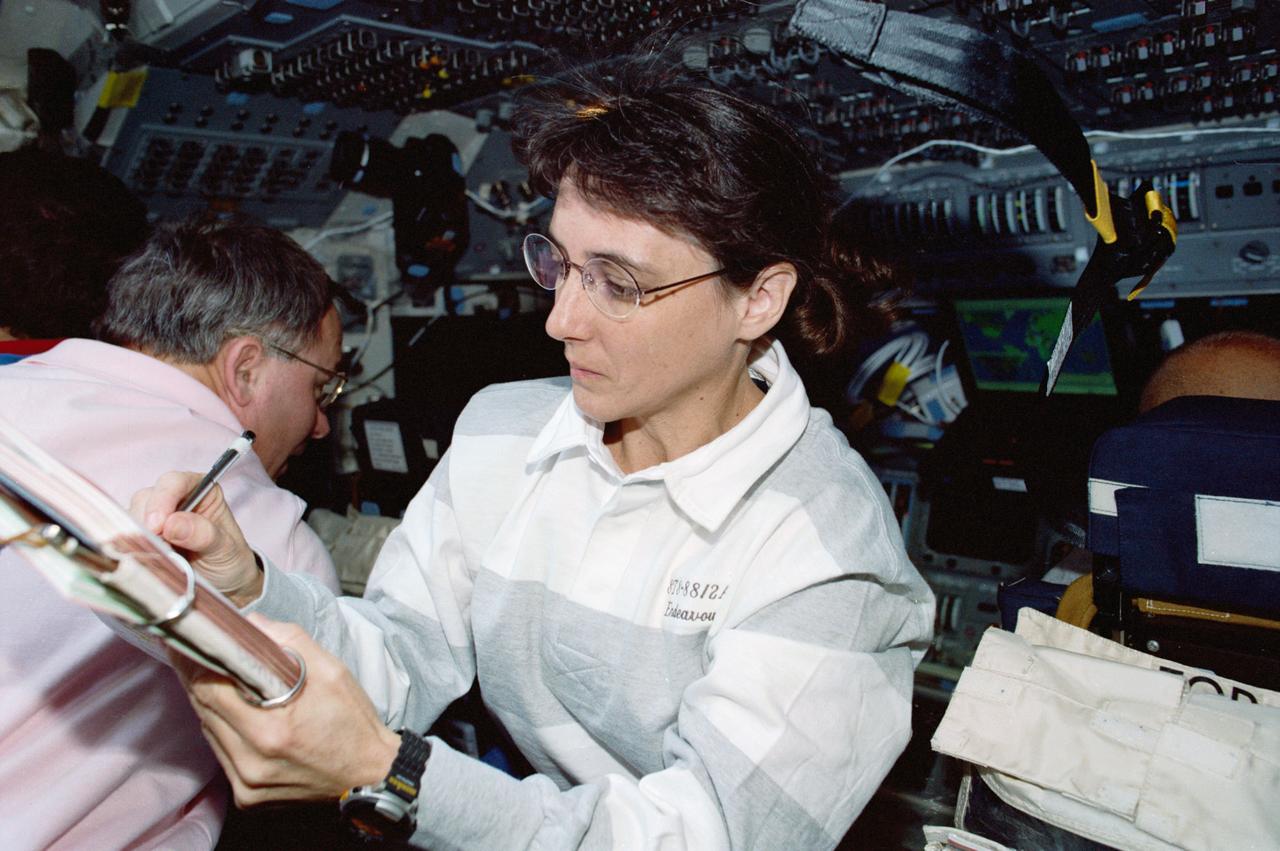
STS088-335-031 (4-15 Dec. 1998) --- Astronaut Nancy J. Currie, mission specialist, makes a notation in a log book on Endeavour's flight deck as astronaut Jerry L. Ross, mission specialist, eyes a control display near the commander's station. The two were joined by a Russian cosmonaut and three NASA astronauts for eleven days in Earth orbit, spending the majority of their time and efforts in support of important initial links to the International Space Station (ISS).
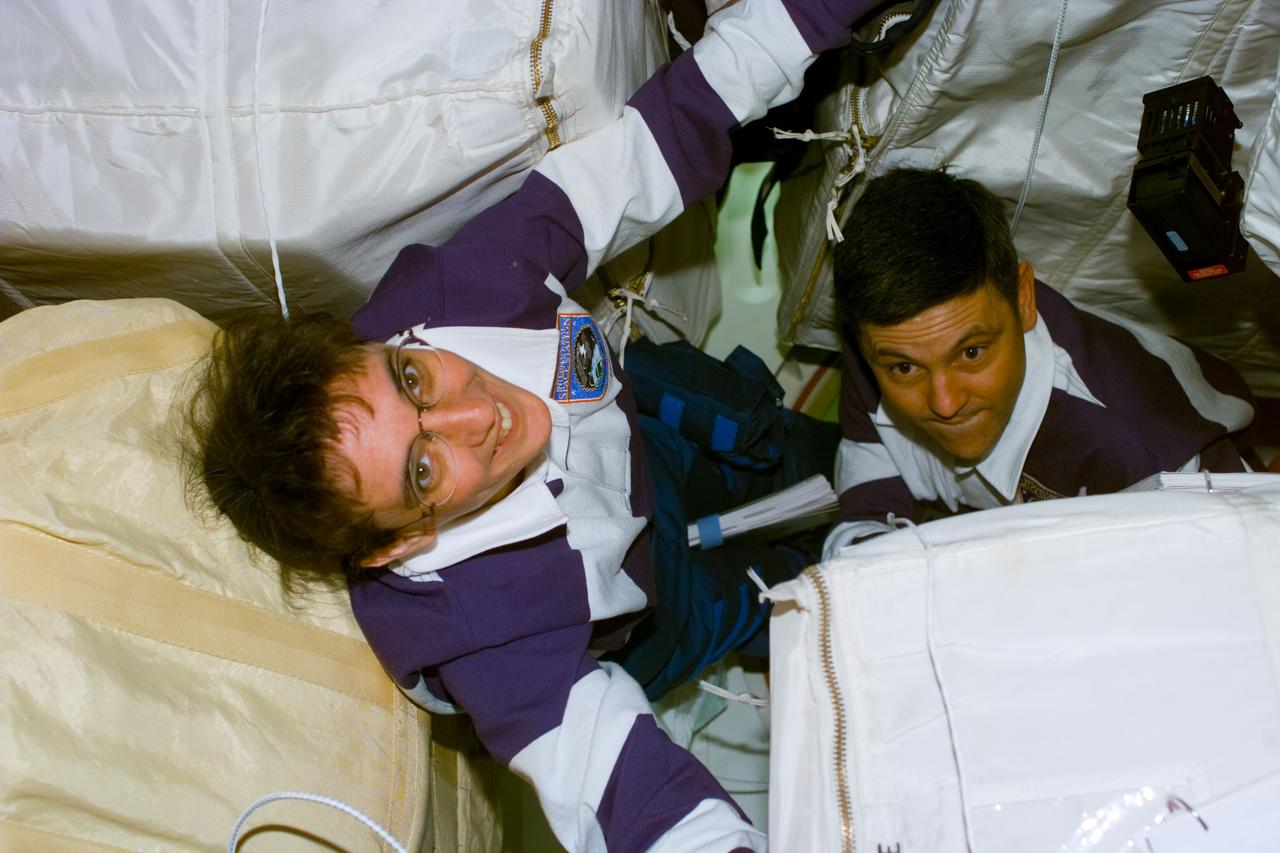
S88-E-5133 (12-12-98)--- Astronauts Nancy J. Currie, mission specialist, and Robert D. Cabana, mission commander, are surrounded by bags of gear and supplies as their historical mission winds toward its last couple of days. All seven members of the STS-88 crew have been busy preparing the recently connected Russian-built Zarya and the U.S.-built Unity modules for their roles in the International Space Station (ISS). The photo was taken with an electronic still camera (ESC) at 03:47:03 GMT, Dec. 12.
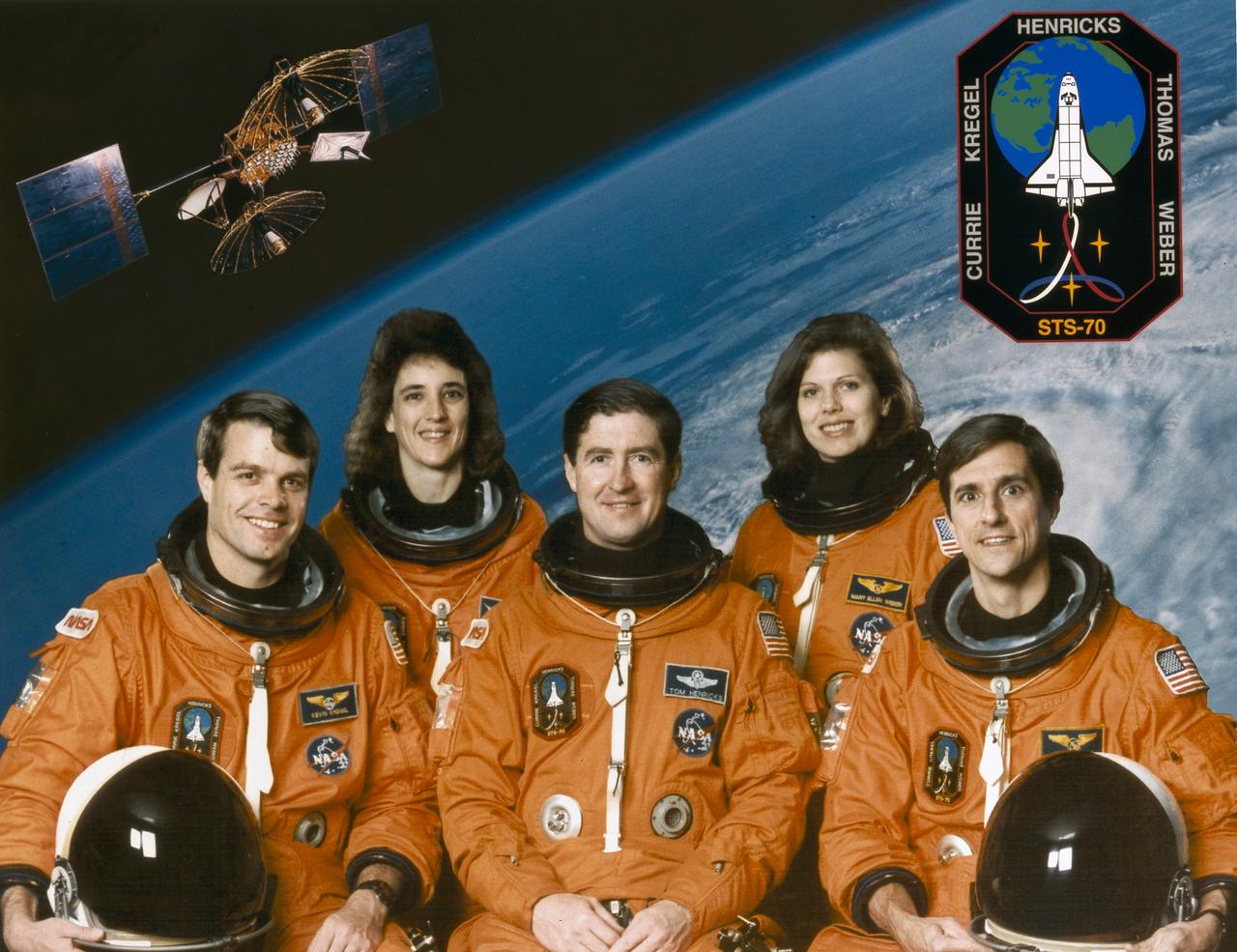
The crew assigned to the STS-70 mission included (front left to right) Kevin R. Kregel, pilot; Nancy J. Currie, mission specialist; Terrence T, Henricks, commander; Mary Ellen Weber, mission specialist, and Donald A. Thomas, mission specialist. Launched aboard the Space Shuttle Discovery on July 13,9:41:55.078 am (EDT), the STS-70 mission’s primary payload was the Tracking and Data Relay Satellite-G (TDRS-G).
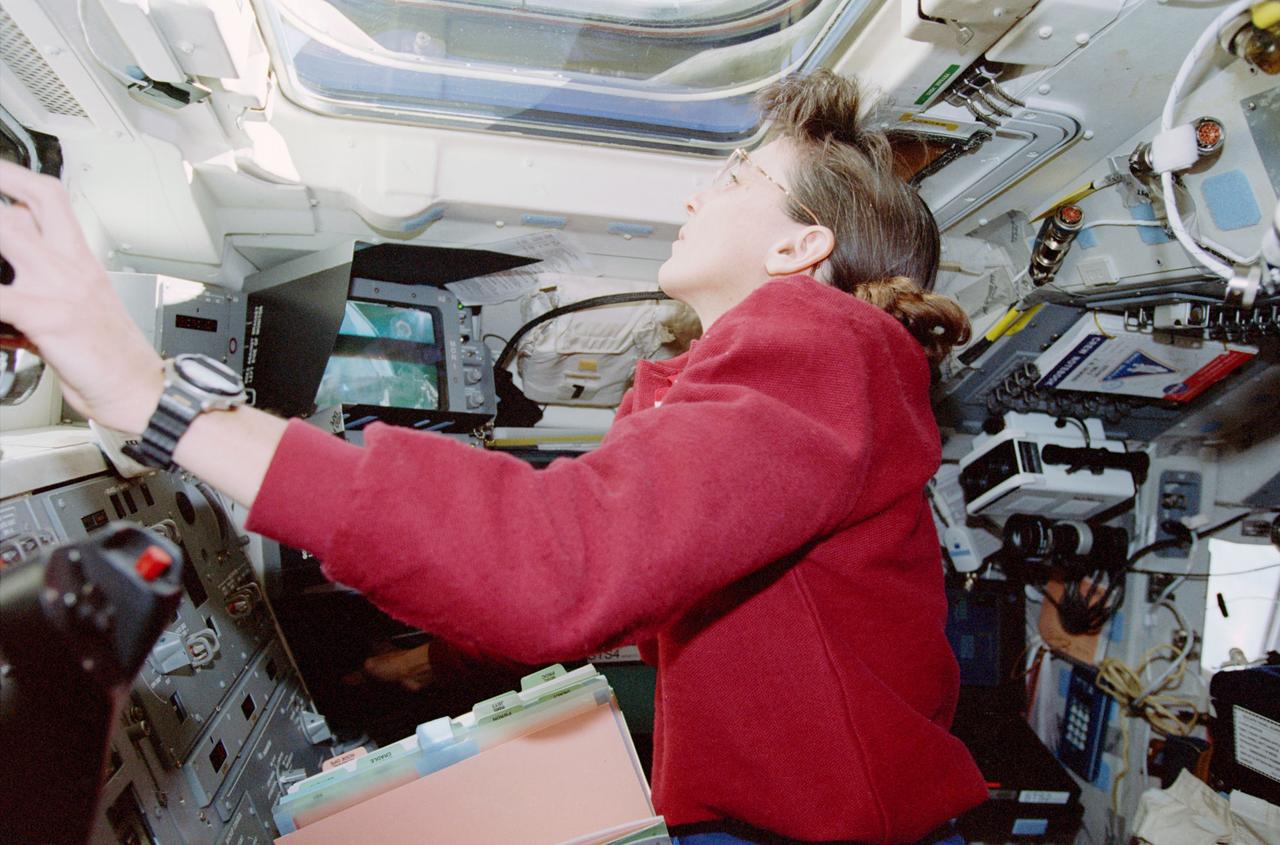
STS088-363-012 (4-15 Dec. 1998) --- Astronaut Nancy J. Currie, mission specialist, looks out the aft flight deck window while operating the Space Shuttle Endeavour?s Remote Manipulator System (RMS). The robot arm was being used to assist Endeavour?s two space walking astronauts -- Jerry L. Ross and James H. Newman, mission specialists.
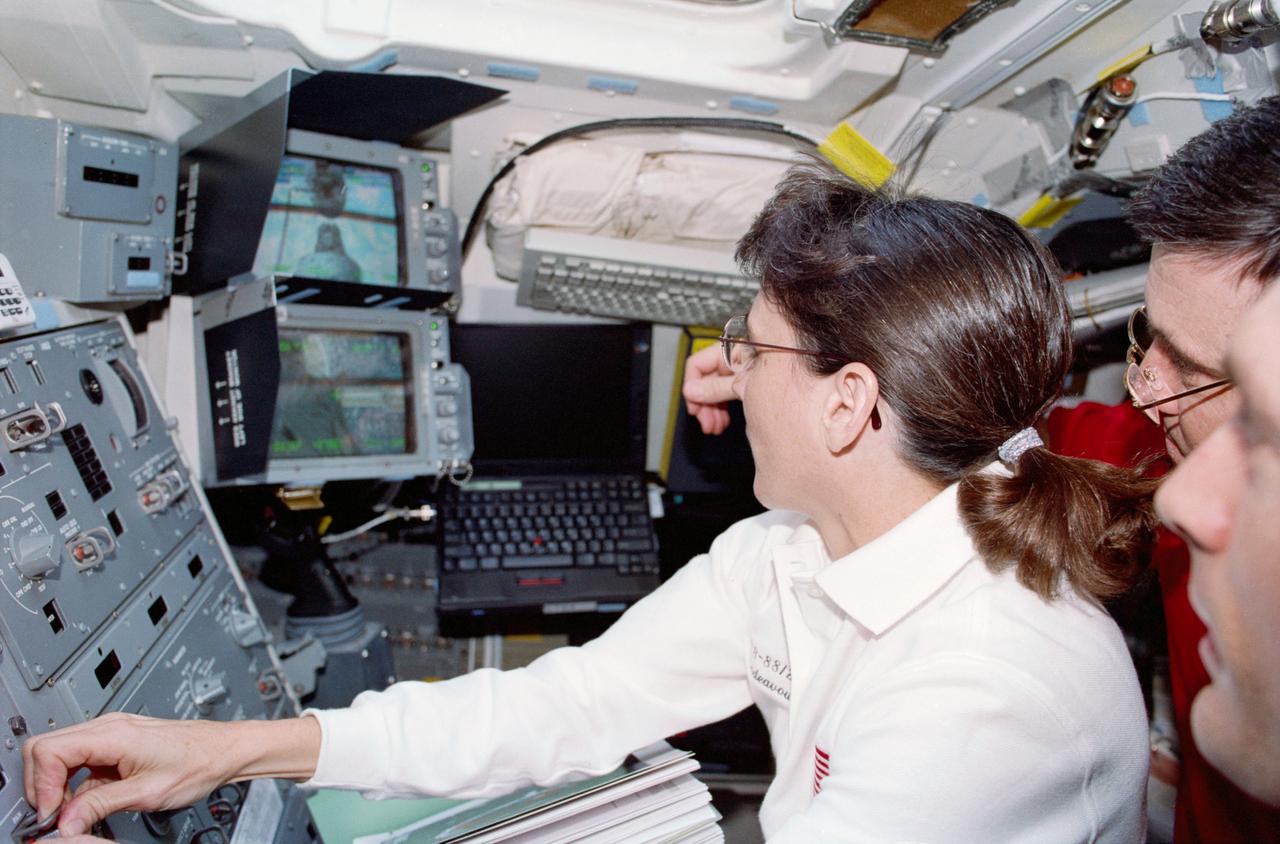
STS088-341-024 (4-15 Dec. 1998) --- Astronaut Nancy J. Currie, mission specialist, operates the controls of Endeavour's remote manipulator system (RMS) arm to ease the Russian-built Zarya module onto the U.S.-built Unity connecting module in the shuttle's cargo bay. At right are astronauts Robert D. Cabana, mission commander; and James H. Newman, mission specialist, partially out of frame.
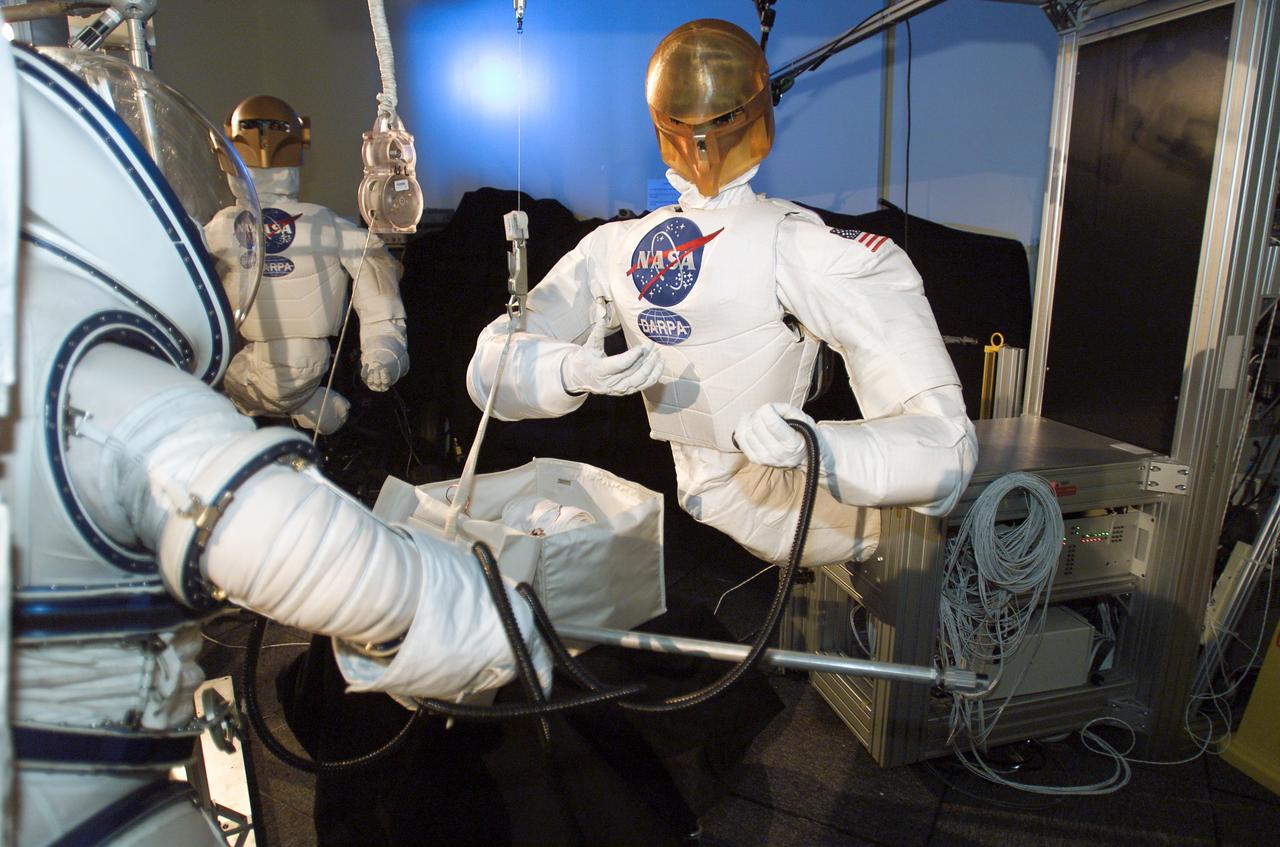
JSC2003-E-42622 (June 2003) --- Astronaut Nancy J. Currie (partially visible in foreground), wearing an advanced concept space suit, participates in a test at the Johnson Space Center to evaluate hand-in-hand work with robots. The Robonaut pictured is one of two that were used in the demonstration's task -- the assembly of an aluminum truss structure.
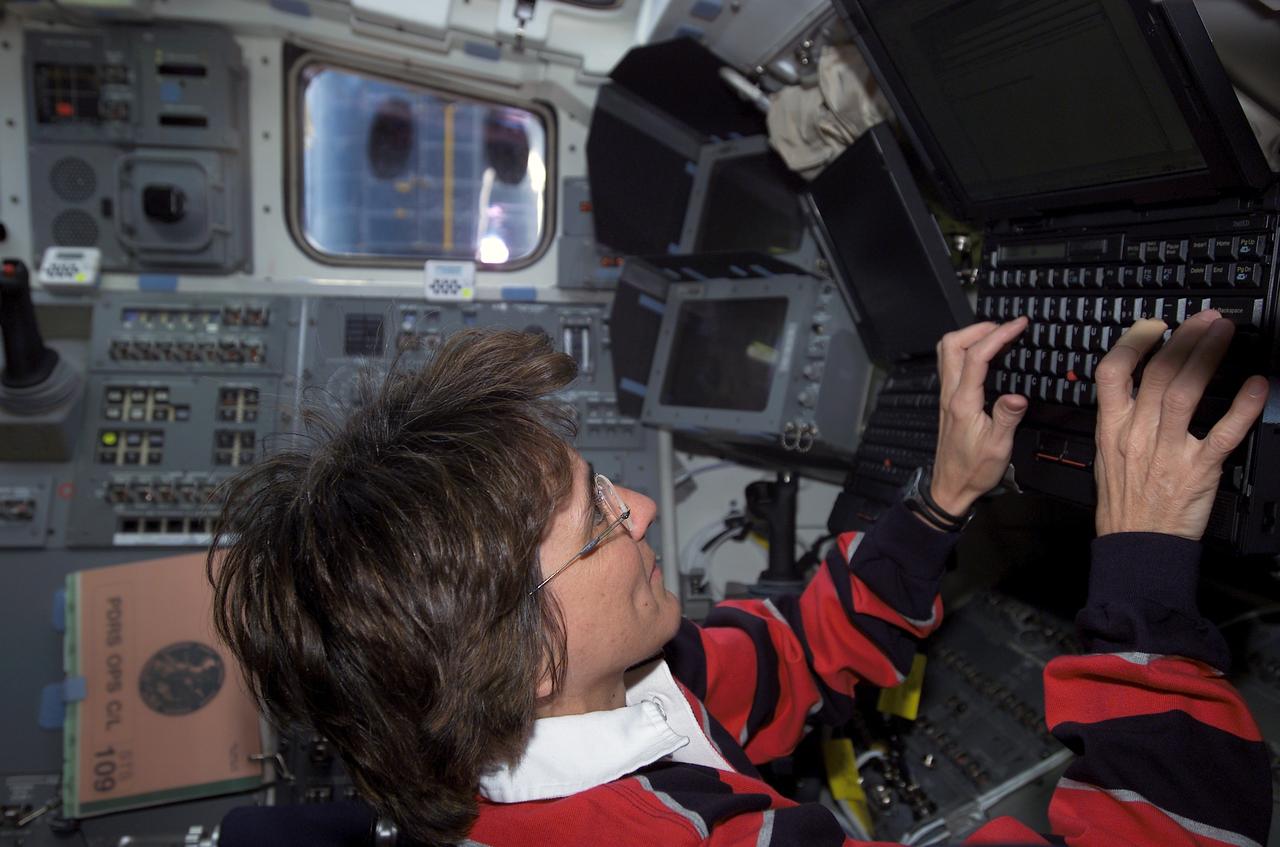
STS109-E-5291 (1-12 March 2002) --- Astronaut Nancy J. Currie, STS-109 mission specialist, works with Payload and General Support Computers (PGSC) on the mid deck of the Space Shuttle Columbia. The image was taken with digital still camera.

JSC2003-E-43922 (June 2003) --- Astronaut Nancy J. Currie, wearing an advanced concept space suit, participates in a test at the Johnson Space Center to evaluate hand-in-hand work with robots. The Robonaut pictured is one of two that were used in the demonstration's task -- the assembly of an aluminum truss structure.

JSC2003-E-42631 (June 2003) --- Astronaut Nancy J. Currie, wearing a training version of an advanced concept space suit, participates in a test at the Johnson Space Center to evaluate hand-in-hand work with robots. The second of the two Robonauts used in the demonstration's task -- the assembly of an aluminum truss structure--is out of frame.
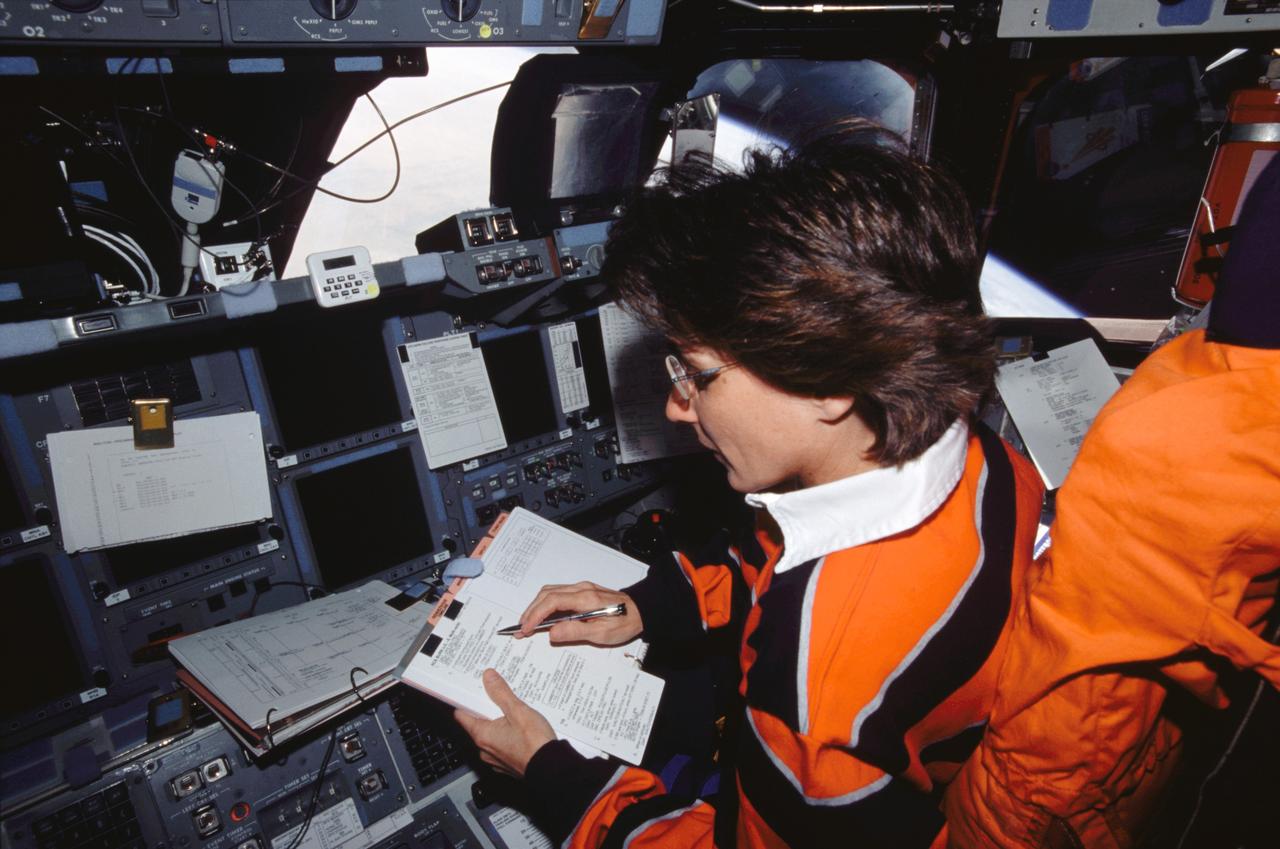
STS109-346-007 (1;12 March 2002) --- Astronaut Nancy J. Currie, STS-109 mission specialist, looks over a procedures check list while occupying the pilot;s station on the forward flight deck of the Space Shuttle Columbia.
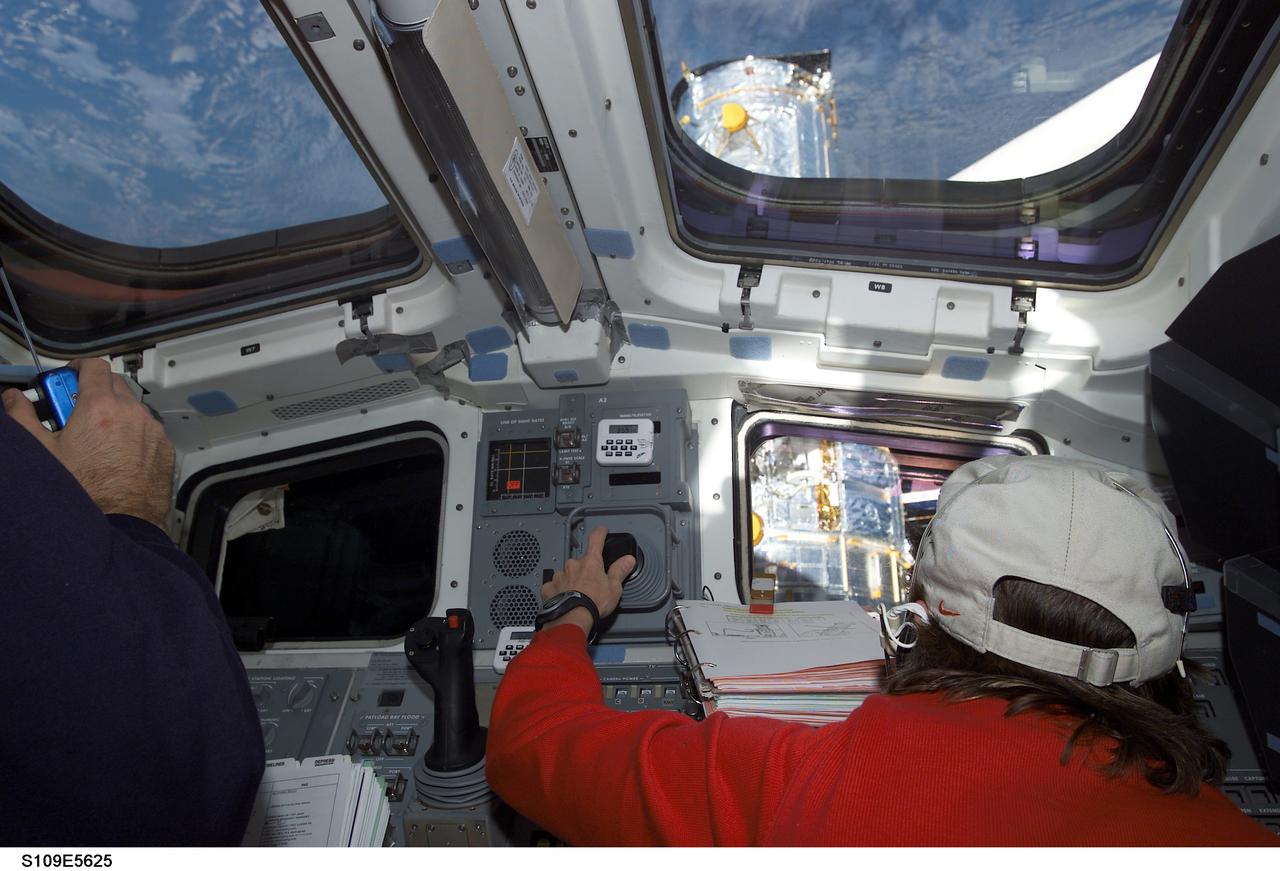
STS109-E-5625 (5 March 2002) --- Astronaut Nancy J. Currie, mission specialist, controls the Remote Manipulator System (RMS) robotic arm of the Space Shuttle Columbia as two astronauts perform work on the Hubble Space Telescope (HST), temporarily hosted in the shuttle's cargo bay. The image was recorded with a digital still camera.
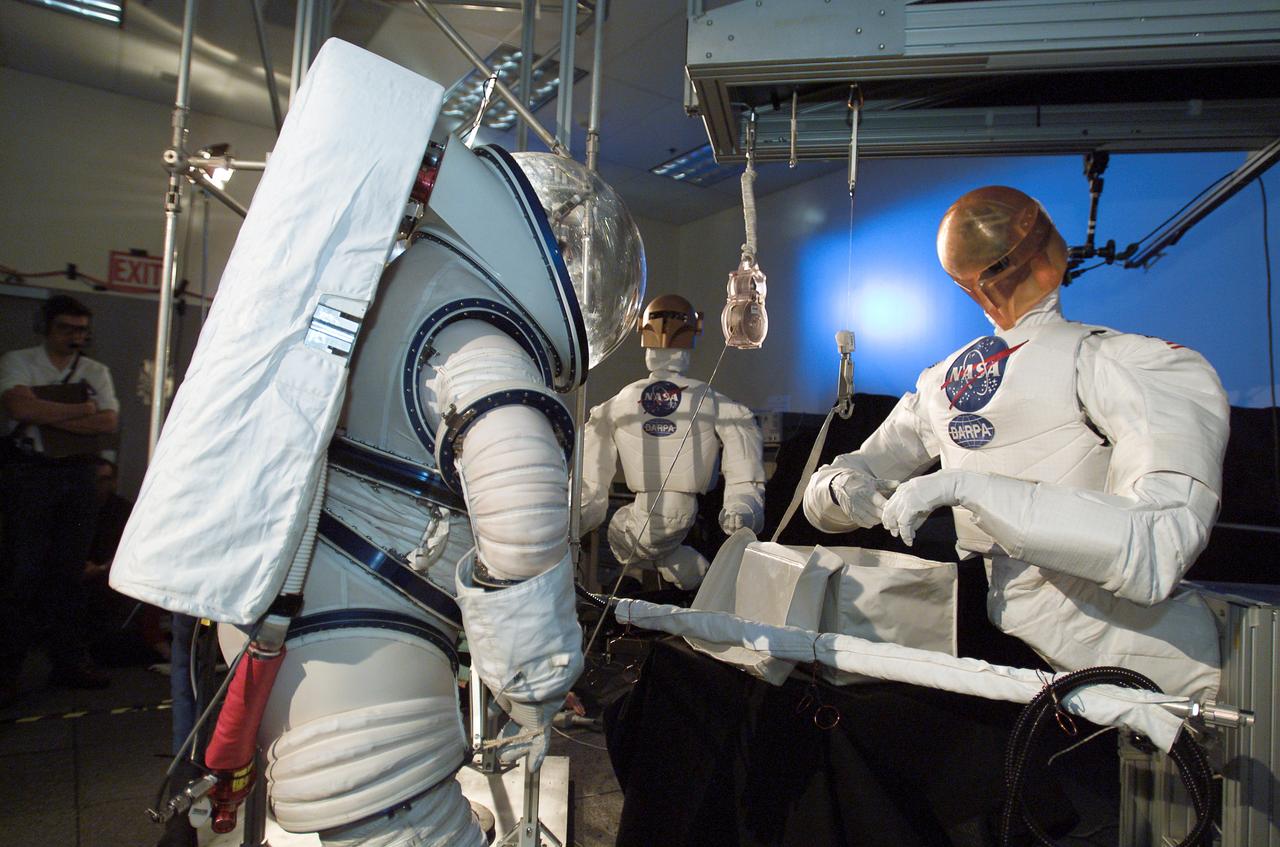
JSC2003-E-42632 (June 2003) --- Astronaut Nancy J. Currie, wearing an advanced concept space suit, participates in a test at the Johnson Space Center to evaluate hand-in-hand work with robots. The Robonaut pictured is one of two that were used in the demonstration's task -- the assembly of an aluminum truss structure.

JSC2003-E-42603 (June 2003) --- Astronaut Nancy J. Currie, puts on communications gear for a training version of an advanced concept space suit in order to participate in a test at the Johnson Space Center to evaluate hand-in-hand work with robots. The two Robonauts used in the demonstration's task -- the assembly of an aluminum truss structure--are out of frame.

JSC2003-E-42609 (June 2003) --- Astronaut Nancy J. Currie, wearing an advanced concept space suit, participates in a test at the Johnson Space Center to evaluate hand-in-hand work with robots. The Robonaut pictured is one of two that were used in the demonstration's task -- the assembly of an aluminum truss structure.
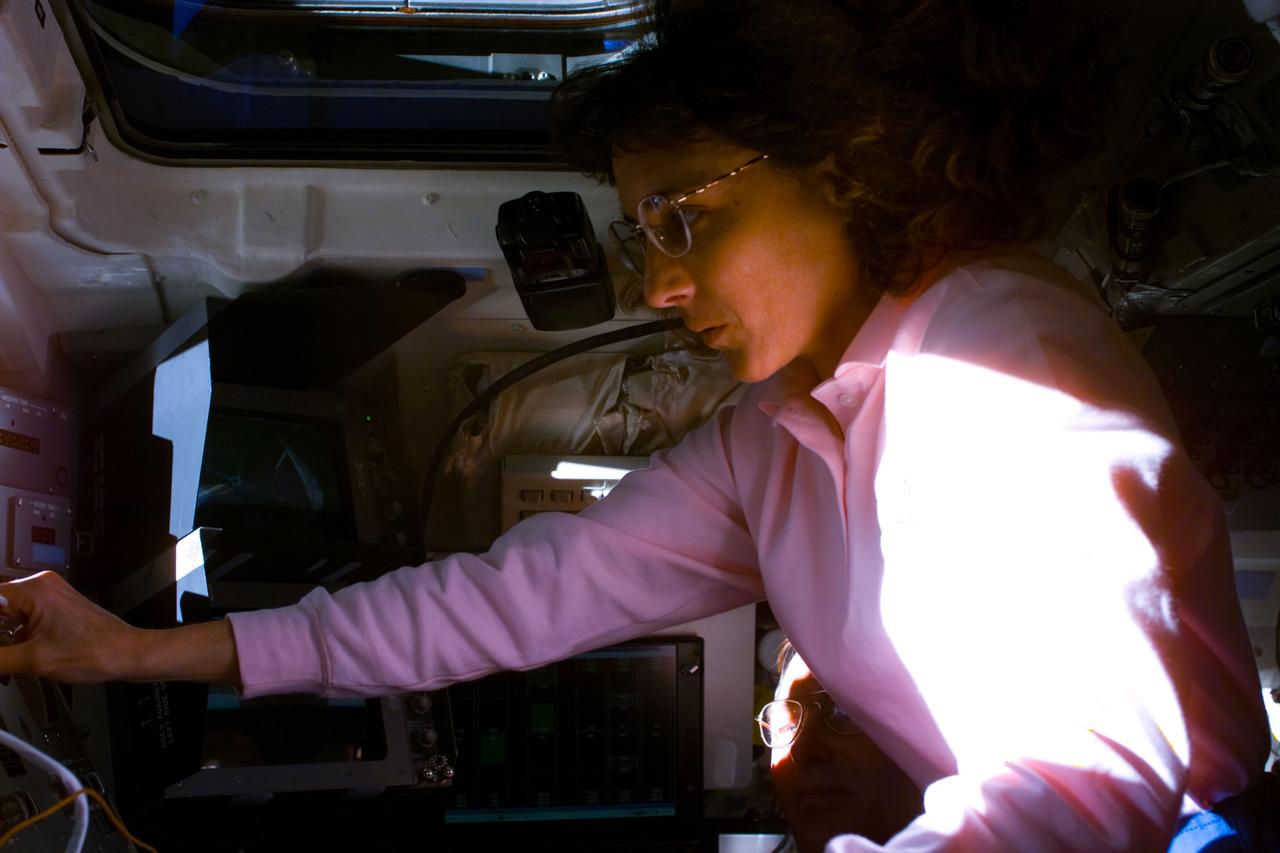
S88-E-5010 (12-05-98) --- Operating at a control panel on Endeavour's aft flight deck, astronaut Nancy J. Currie works with the robot arm prior to mating the 12.8-ton Unity connecting module to Endeavour's docking system. The mating took place on late afternoon of Dec. 5. A nearby monitor provides a view of the remote manipulator system's (RMS) movements in the cargo bay. The feat marked an important step in assembling the new International Space Station. Manipulating the shuttle's 50-foot-long robot arm, Currie placed Unity just inches above the extended outer ring on Endeavour's docking mechanism, enabling Robert D. Cabana, mission commander to fire downward maneuvering jets, locking the shuttle's docking system to one of two Pressurized Mating Adapters (PMA) attached to Unity. The mating occurred at 5:45 p.m. Central time, as Endeavour sailed over eastern China.
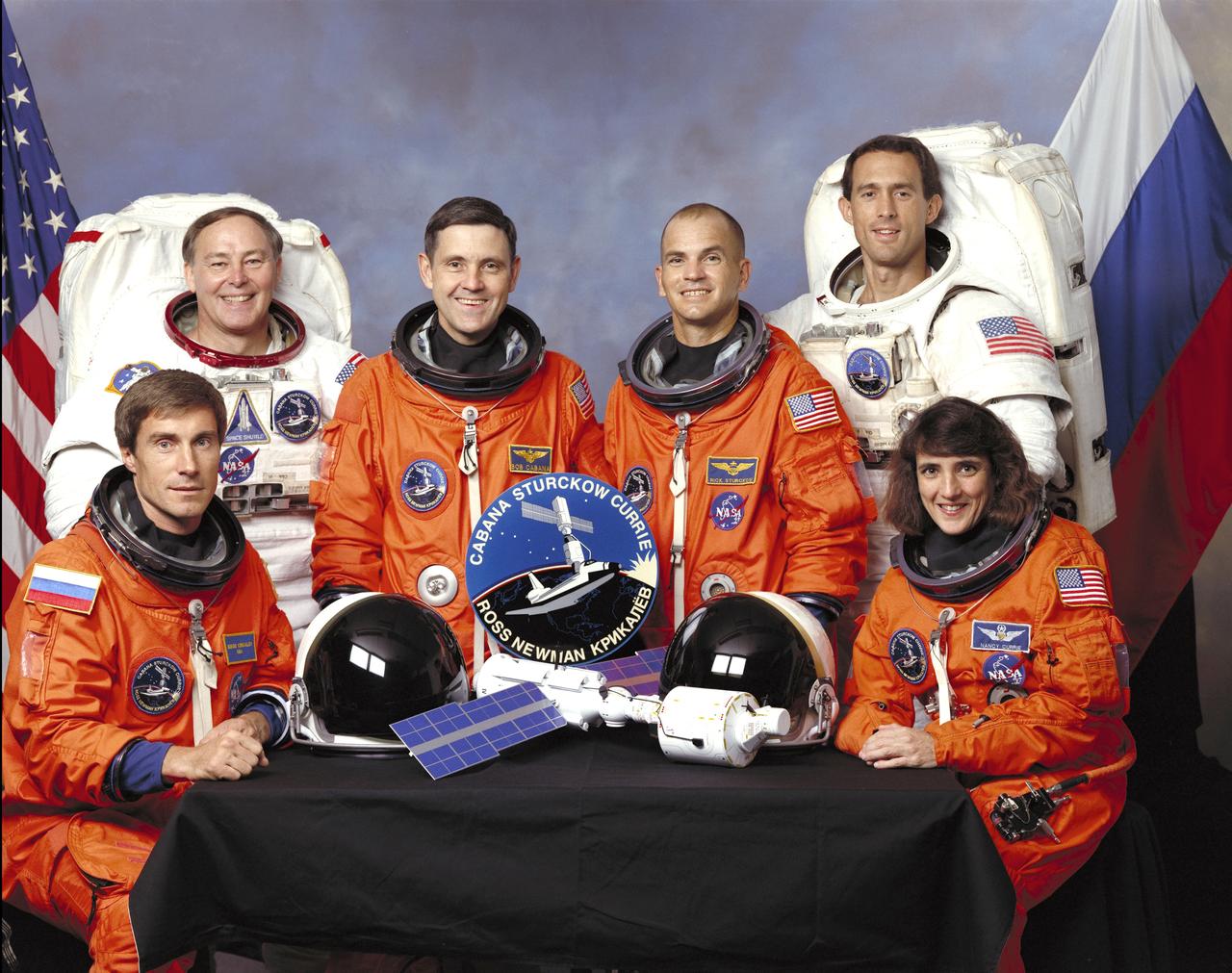
Five NASA astronauts and a Russian cosmonaut assigned to the STS-88 mission pose for a crew portrait. Seated in front (left to right) are mission specialists Sergei K. Krikalev, representing the Russian Space Agency (RSA), and astronaut Nancy J. Currie. In the rear from the left, are astronauts Jerry L. Ross, mission specialist; Robert D. Cabana, mission commander; Frederick W. “Rick” Sturckow, pilot; and James H. Newman, mission specialist. The STS-88 mission launched aboard the Space Shuttle Endeavor on December 4, 1998 at 2:35 a.m. (CST) to deliver the Unity Node to the International Space Station (ISS).
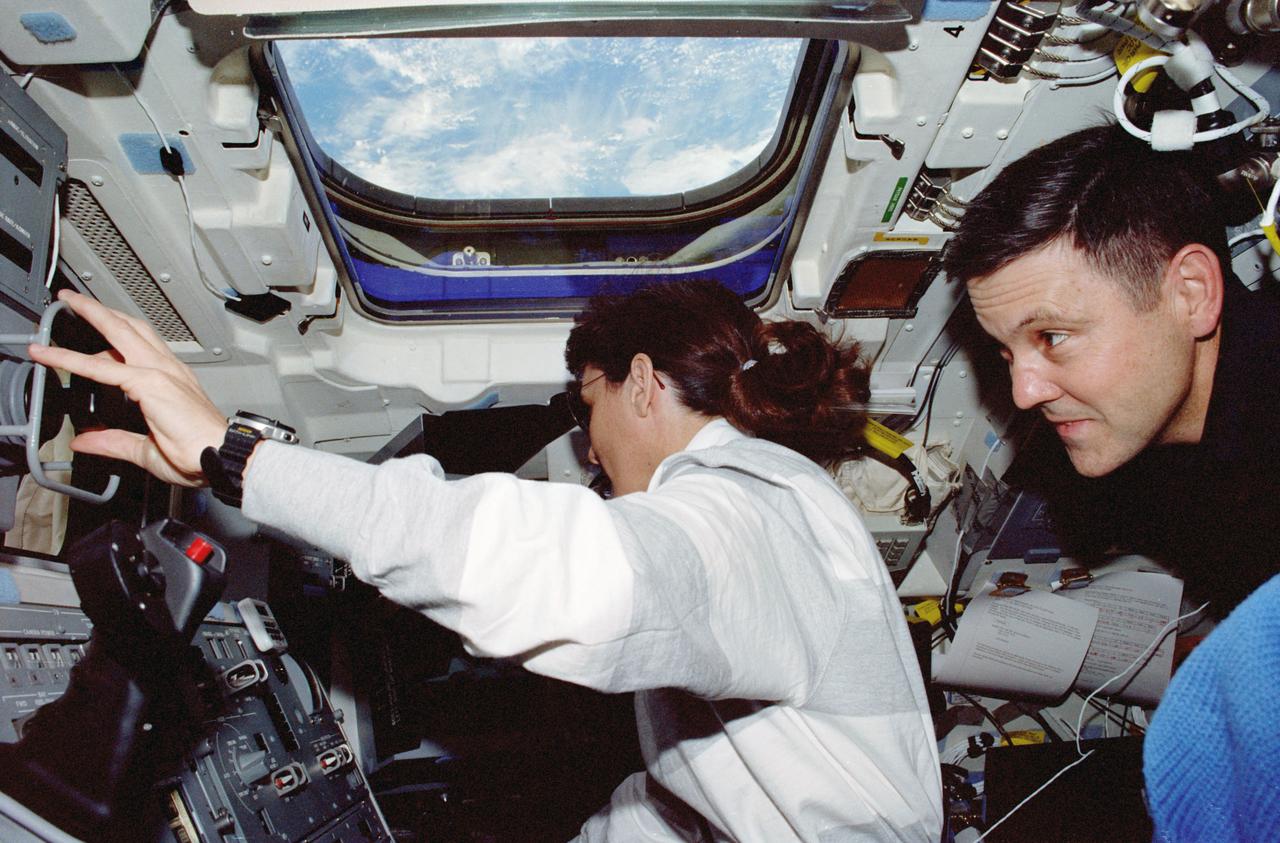
STS088-335-015 (4-15 Dec. 1998) --- Astronauts Nancy J. Currie, mission specialist, and Robert D. Cabana, commander, are busy on the flight deck of the Earth-orbiting Space Shuttle Endeavour. Currie is working the controls of the Remote Manipulator System (RMS) arm, while Cabana observes. The crew used the RMS for docking and extravehicular activity (EVA) support during the mission. At mission?s end, the connected United States-built Unity Module (Node 1) and the Russian-built FGB Module (Zarya) were released in Earth-orbit.
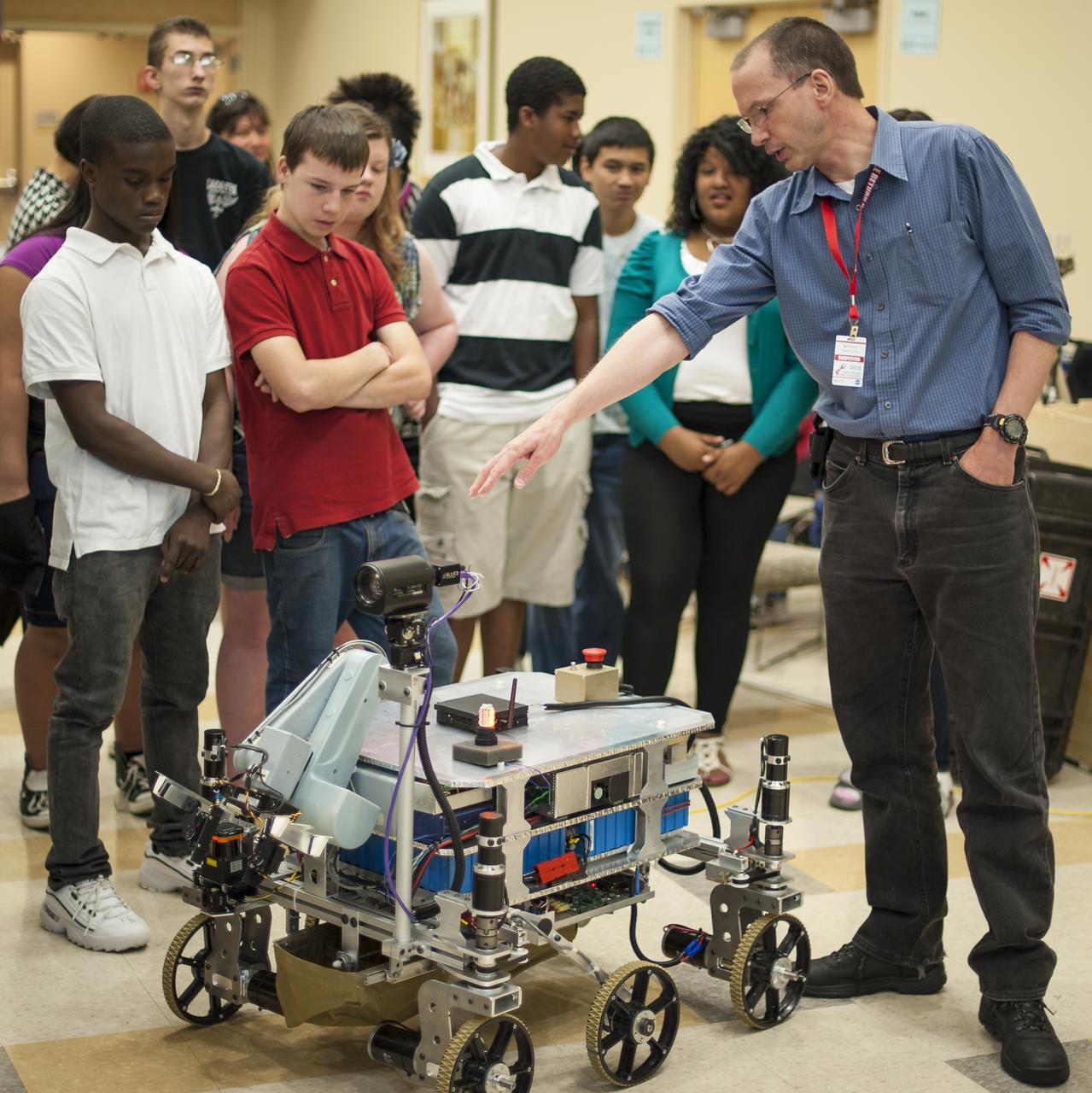
Intrepid Systems Team member Mark Curry, right, answers questions from 8th grade Sullivan Middle School (Mass.) students about his robot named "MXR - Mark's Exploration Robot" on Friday, June 15, 2012, at the Worcester Polytechnic Institute (WPI) in Worcester, Mass. Curry's robot team will compete for a $1.5 million NASA prize in the NASA-WPI Sample Return Robot Centennial Challenge at WPI. Teams have been challenged to build autonomous robots that can identify, collect and return samples. NASA needs autonomous robotic capability for future planetary exploration. Photo Credit: (NASA/Bill Ingalls)
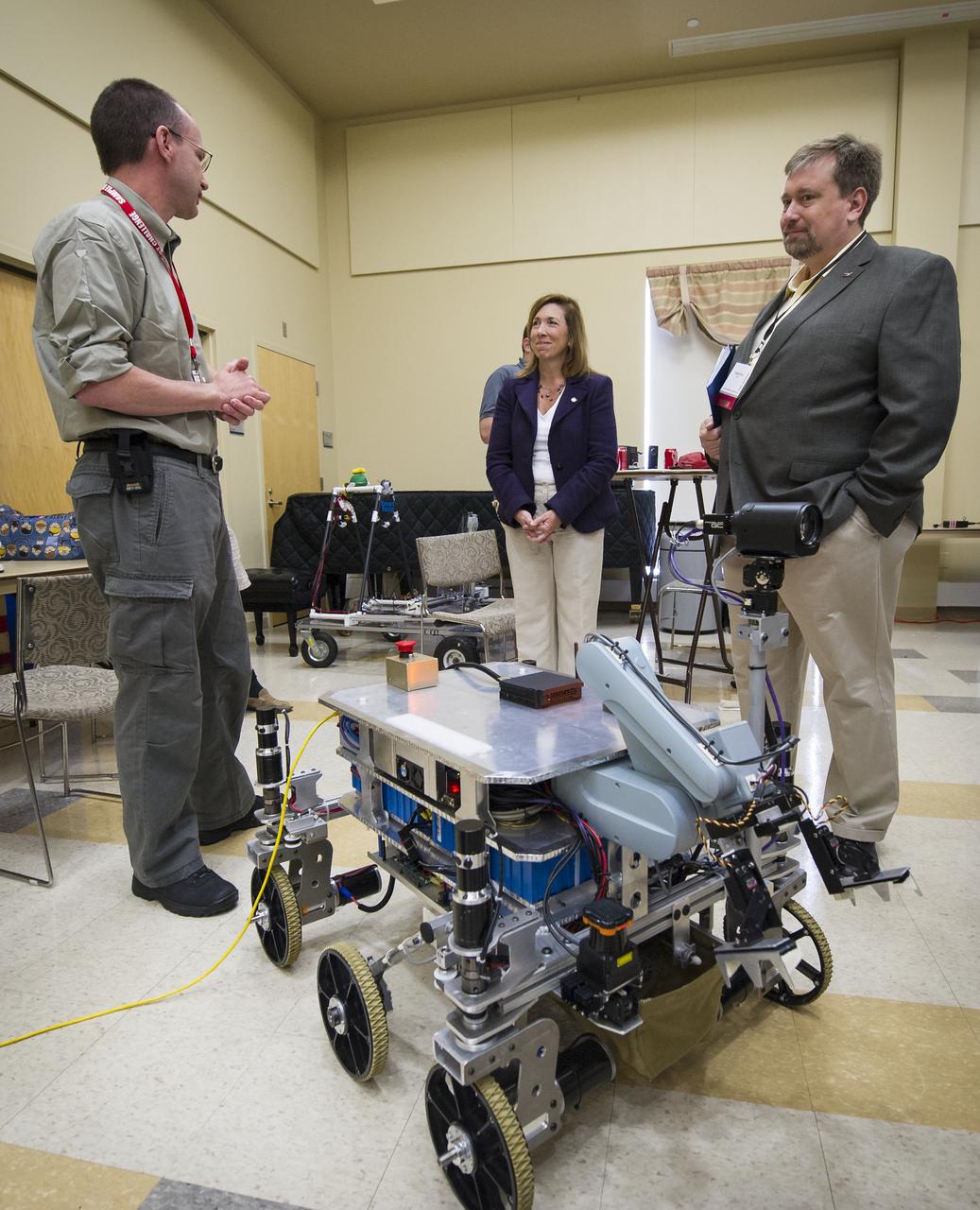
Intrepid Systems Team member Mark Curry, left, talks with NASA Deputy Administrator Lori Garver and NASA Chief Technologist Mason Peck, right, about his robot named "MXR - Mark's Exploration Robot" on Saturday, June 16, 2012 at the Worcester Polytechnic Institute (WPI) in Worcester, Mass. Curry's robot team was one of the final teams participating in the NASA-WPI Sample Return Robot Centennial Challenge at WPI. Teams were challenged to build autonomous robots that can identify, collect and return samples. NASA needs autonomous robotic capability for future planetary exploration. Photo Credit: (NASA/Bill Ingalls)
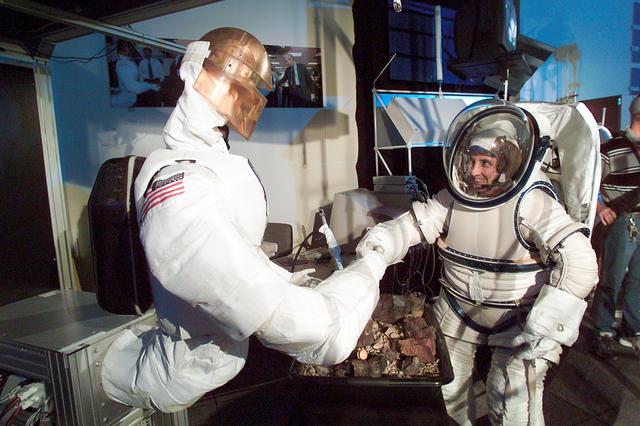
JSC2003-E-42601 (June 2003) --- Astronaut Nancy J. Currie, wearing a training version of an advanced concept space suit, shakes hands with a Robonaut prior to participating in a test at the Johnson Space Center to evaluate hand-in-hand work with robots. The second of the two Robonauts used in the demonstration's task -- the assembly of an aluminum truss structure--is out of frame.
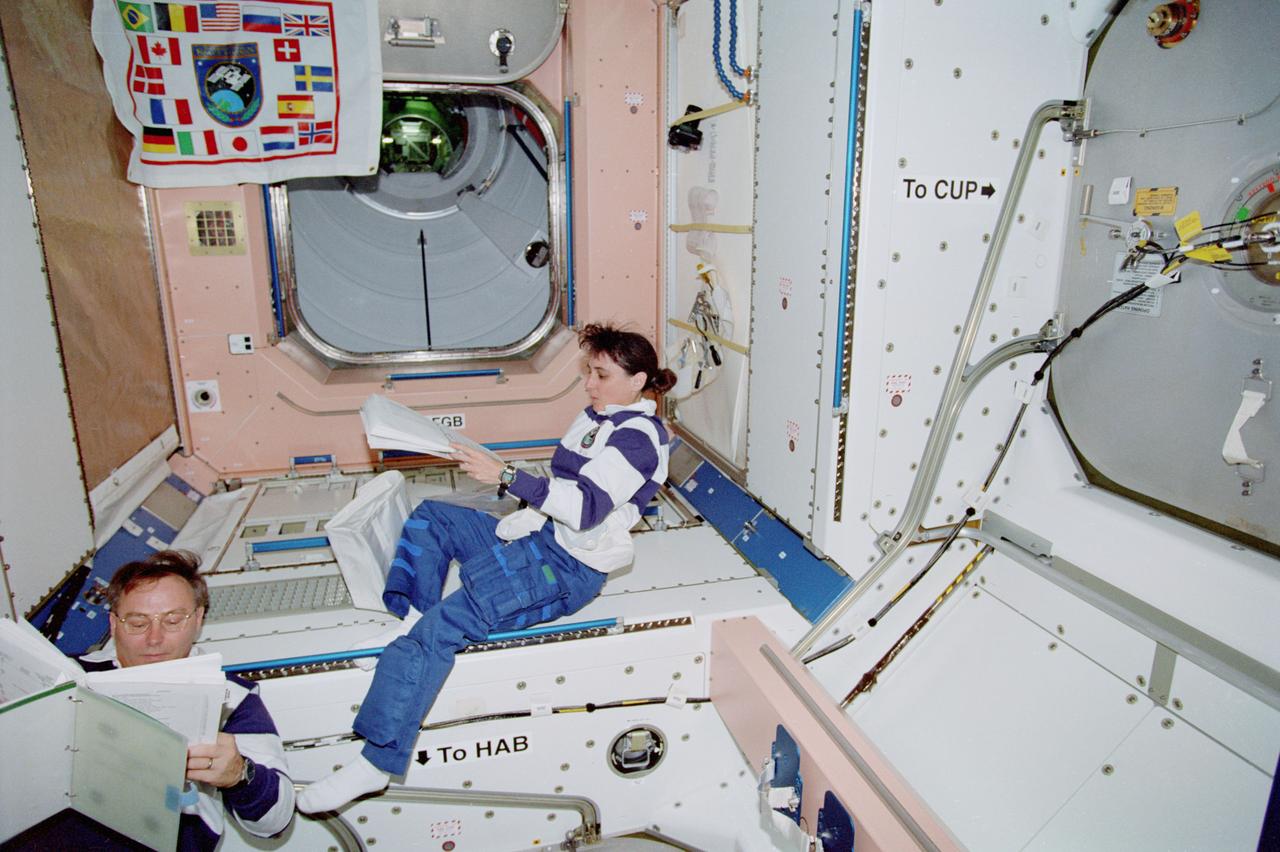
STS088-357-020 (4-15 Dec. 1998) --- Astronauts Jerry L. Ross and Nancy J. Currie, both mission specialists, check procedures list prior to performing a variety of tasks in the United States-built Node 1 or Unity Module. The hatchway in upper left corner accesses the Russian-built FGB or Zarya Module, which had earlier been retrieved with the aid of the Canadian-built Remote Manipulator System (RMS) and linked with Unity.
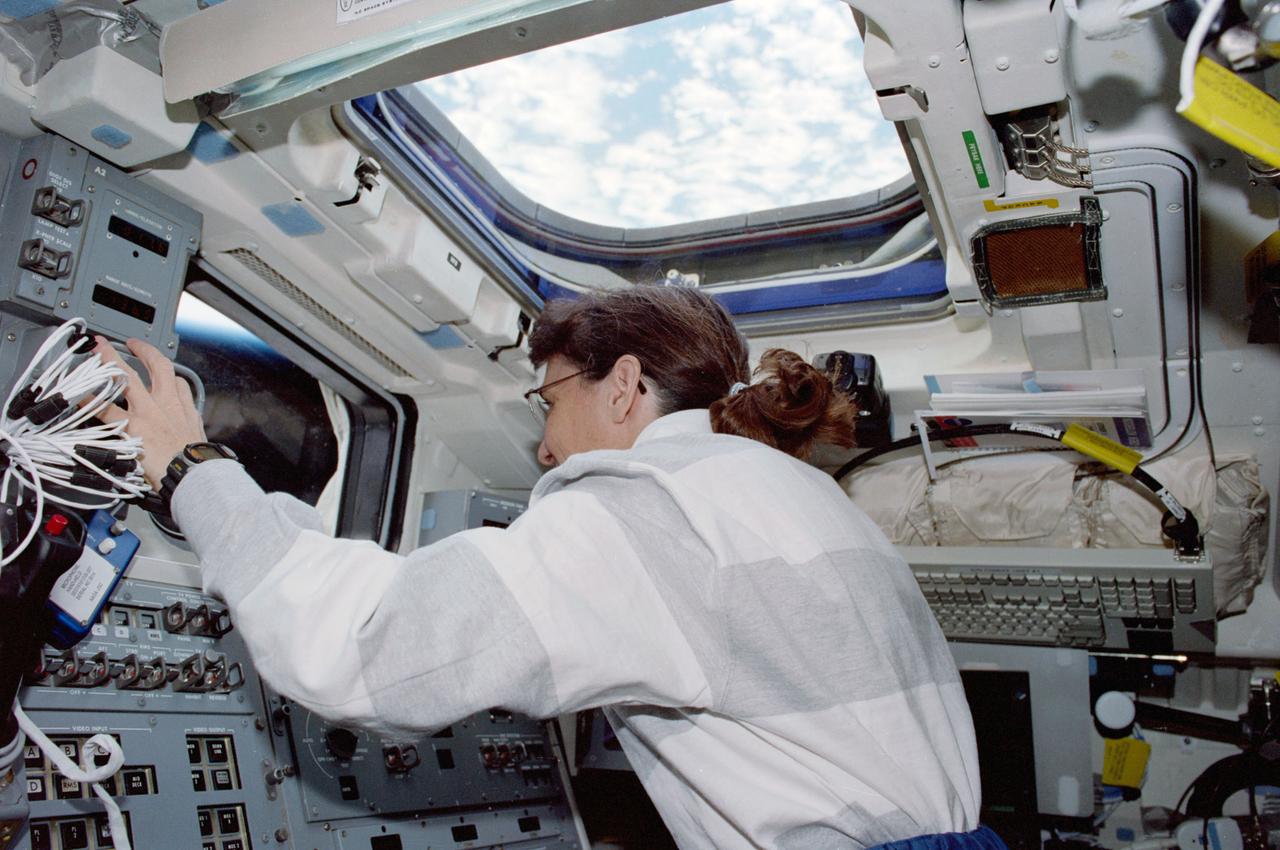
STS088-335-006 (4-15 Dec. 1998) --- Astronaut Nancy J. Currie, mission specialist, looking out the aft flight window, works the controls of the Remote Manipulator System (RMS) arm onboard the Earth-orbiting Space Shuttle Endeavour. She was in the process of moving the stowed United States-built Unity Module (Node 1) into a docked configuration with Endeavour?s docking system. This process preceded rendezvous and docking with the Russian-built FGB Module (Zarya).

STS088-361-022 (4-15 Dec. 1998) --- Astronaut Nancy J. Currie, mission specialist, works at the controls of the Space Shuttle Endeavour?s Remote Manipulator System (RMS) to unberth the United States-built Unity module. The crew also used the RMS for docking and extravehicular activity (EVA) support during the mission. At mission?s end, the connected node and the Russian-built FGB module were released in Earth-orbit.
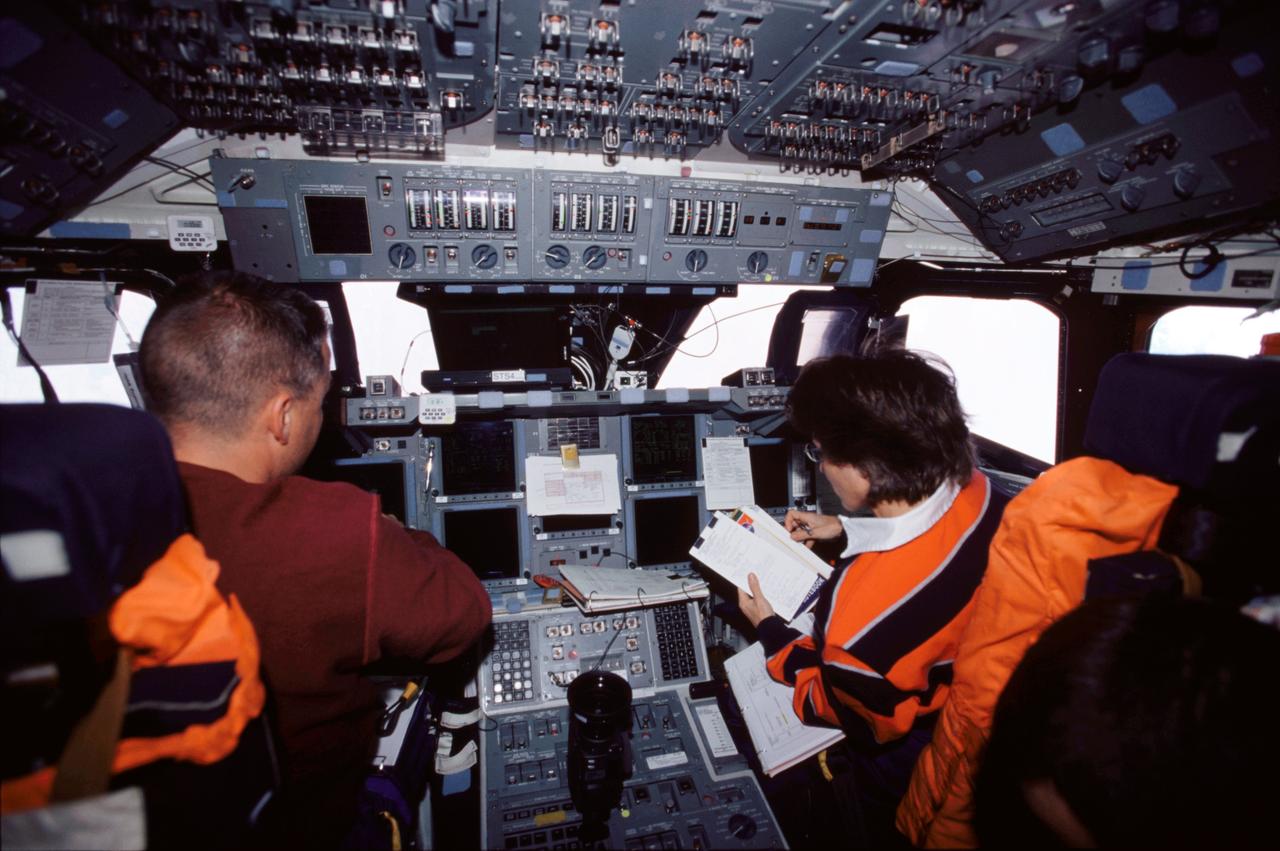
STS109-346-004 (3 March 2002) --- Astronauts Duane G. Carey (left) and Nancy J. Currie, STS-109 pilot and mission specialist, respectively, are photographed on the forward flight deck of the Space Shuttle Columbia during rendezvous with the Hubble Space Telescope (HST).
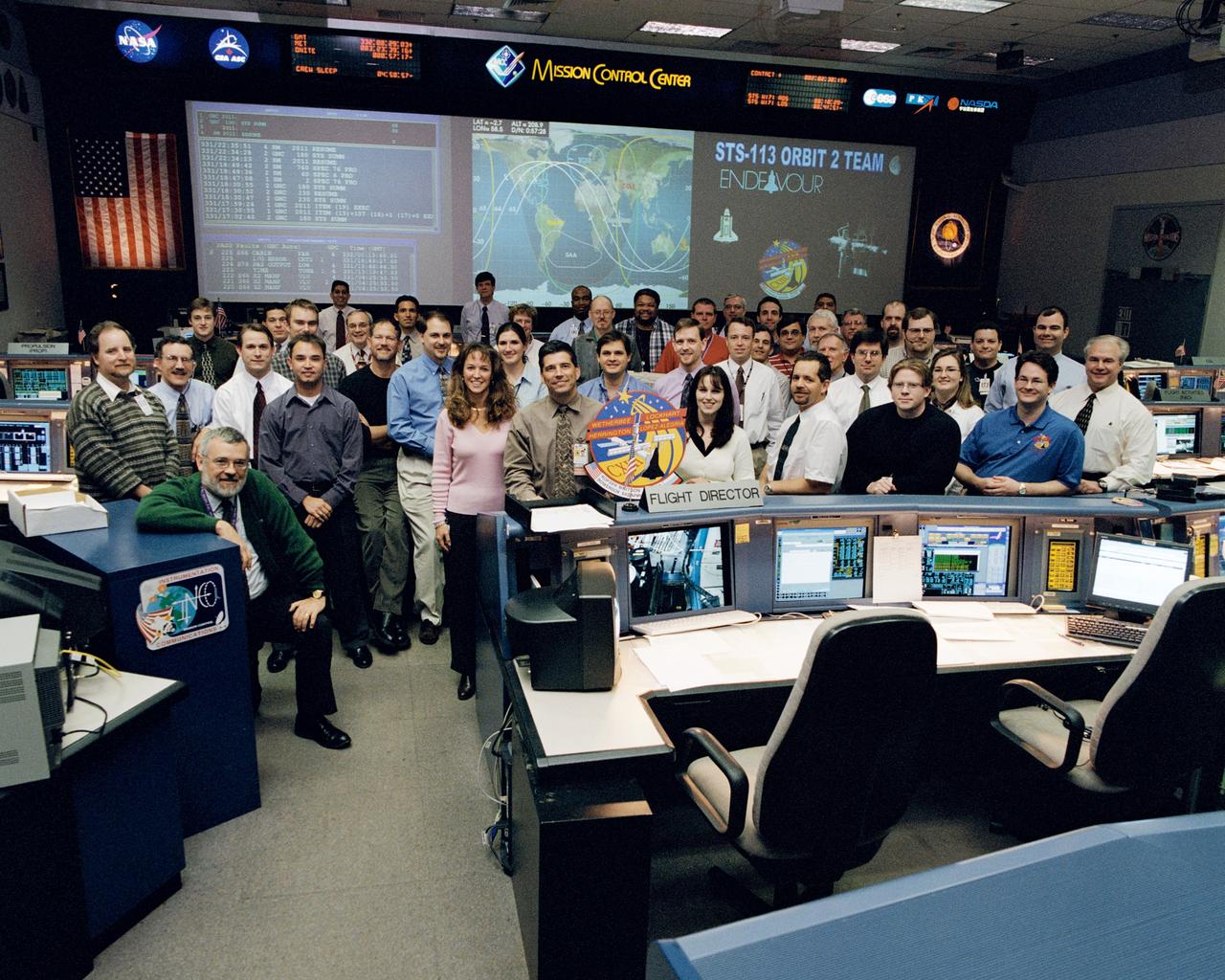
JSC2002-02106 (27 November 2002) --- The members of the STS-113 Orbit 2 Team pose for a group portrait in the shuttle flight control room (WFCR) in Houston’s Mission Control Center (MCC). Flight Director John Curry stands to the left of the STS-113 mission logo and astronaut Lisa M. Nowak, spacecraft communicator (CAPCOM), stands to the left of Curry.

The Most Reverend Michael Curry speaks during the Smithsonian National Air and Space Museum's Spirit of Apollo event commemorating the 50th anniversary of Apollo 8, Tuesday, Dec. 11, 2018 at the Washington National Cathedral in Washington, DC. Apollo 8 was humanity's first journey to another world, taking astronauts Frank Borman, Jim Lovell, and William Anders to the Moon and back in December of 1968. Photo Credit: (NASA/Joel Kowsky)
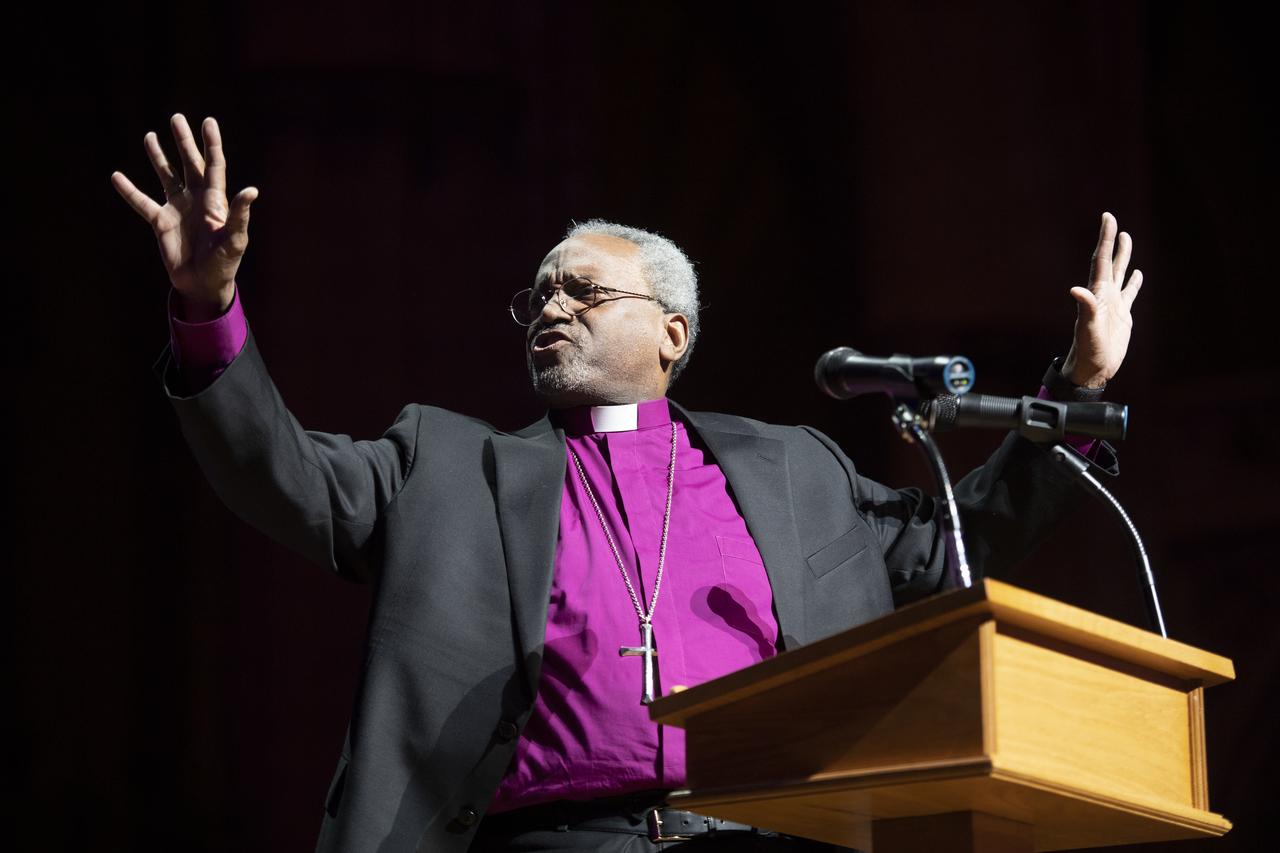
The Most Reverend Michael Curry speaks during the Smithsonian National Air and Space Museum's Spirit of Apollo event commemorating the 50th anniversary of Apollo 8, Tuesday, Dec. 11, 2018 at the Washington National Cathedral in Washington, DC. Apollo 8 was humanity's first journey to another world, taking astronauts Frank Borman, Jim Lovell, and William Anders to the Moon and back in December of 1968. Photo Credit: (NASA/Joel Kowsky)
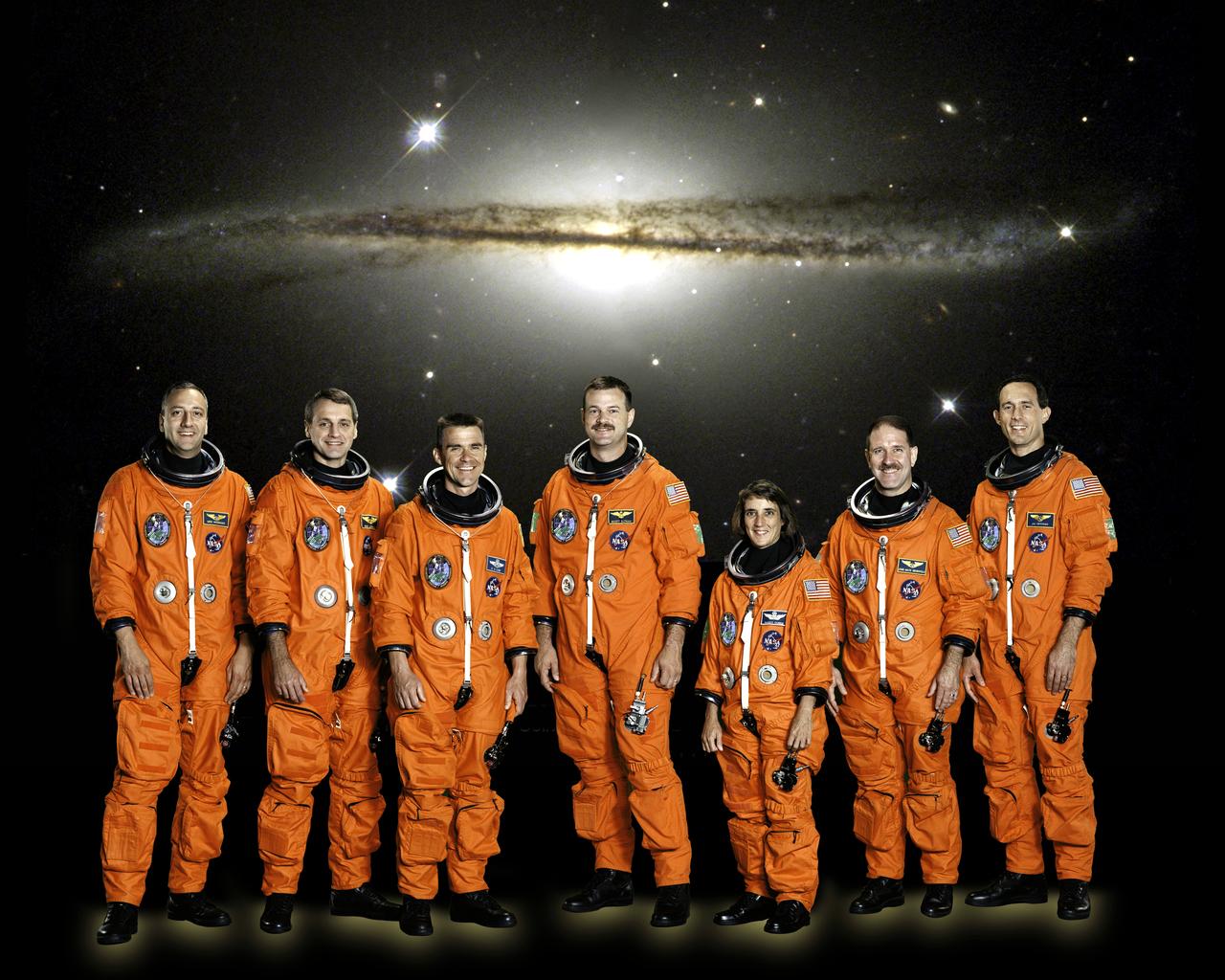
Posing for the traditional preflight crew portrait, the seven astronauts of the STS-109 mission are (left to right) astronauts Michael J. Massimino, Richard M. Linnehan, Duane G. Carey, Scott D. Altman, Nancy J. Currie, John M. Grunsfeld and James H. Newman. Altman and Carey were commander and pilot, respectively, with the others serving as mission specialists. Grunsfeld was payload commander. Launched aboard the Space Shuttle Columbia on March 1, 2002, the group was the fourth visit to the the Hubble Space Telescope (HST) for performing upgrade and servicing on the giant orbital observatory.
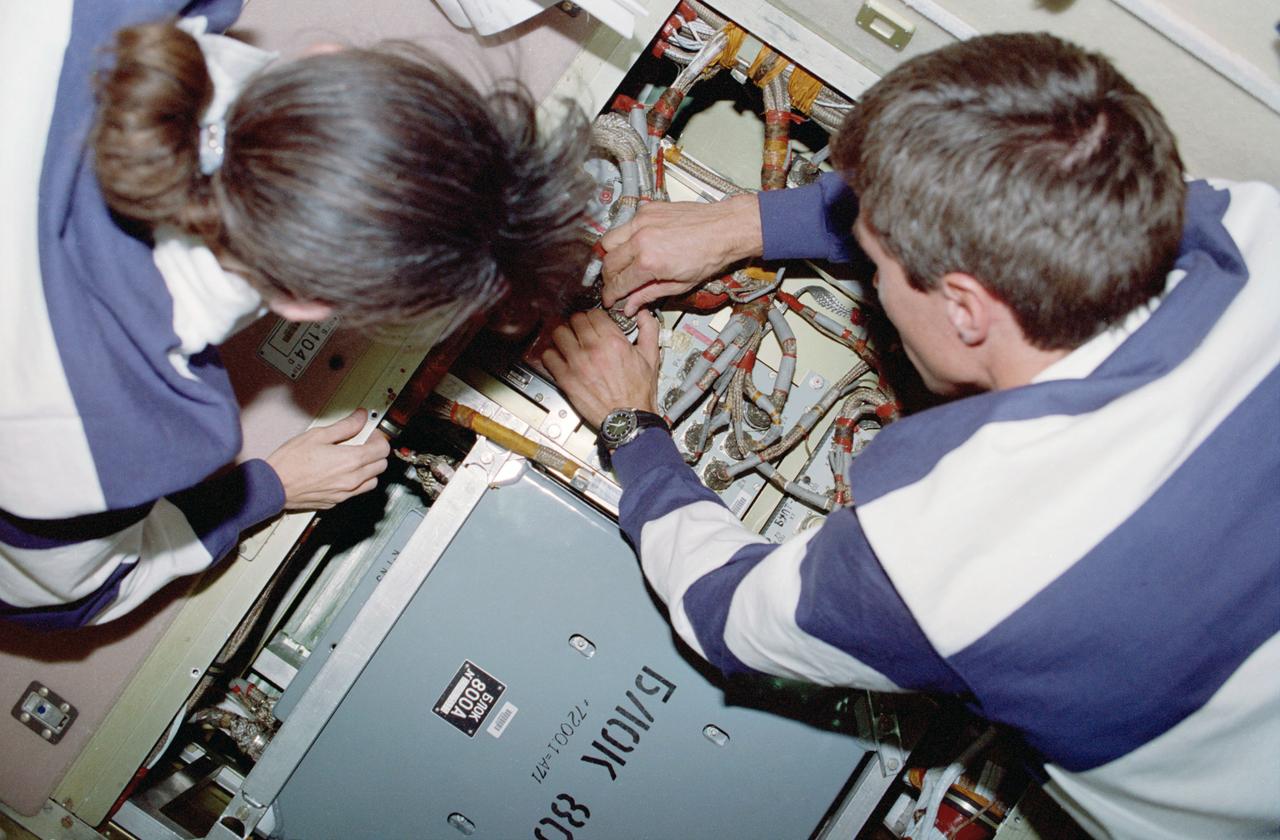
STS088-334-029 (4-15 Dec. 1998) --- Astronaut Nancy J. Currie, mission specialist, and cosmonaut Sergei K. Krikalev, mission specialist representing the Russian Space Agency (RSA), perform an in-flight maintenance on a battery charging unit on the Russian-built FGB Module (Zarya). One of Zarya's six batteries had experienced a problem discharging stored energy in its automatic configuration. Krikalev had swapped out an identical component during two previous flights on the Russia?s Mir Space Station.
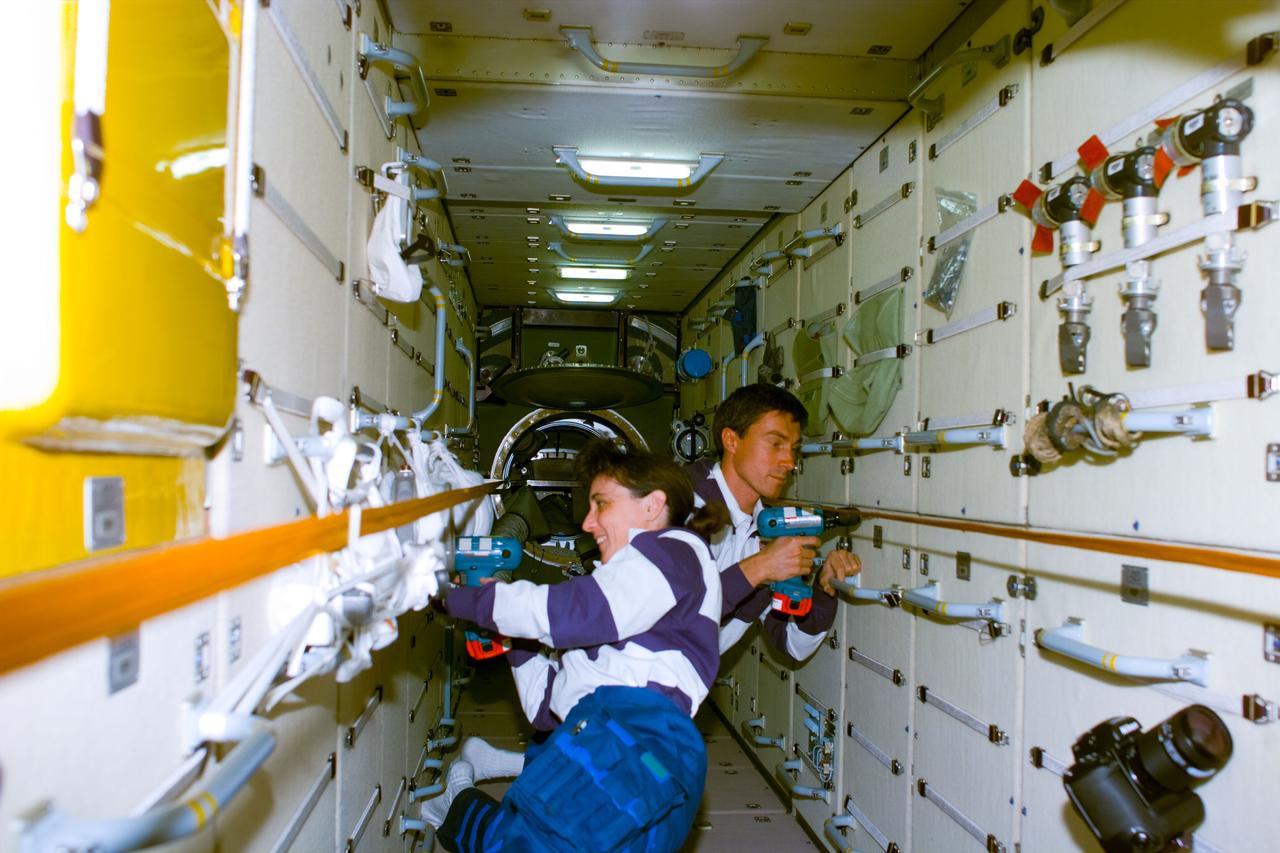
S88-E-5085 (12-11-98) --- Nancy J. Currie and Sergei Krikalev use rechargeable power tools to tighten and loosen nuts onboard the Russian-built Zarya module which they entered on Flight Day 8. The two are mission specialists, with Krikalev representing the Russian Space Agency (RSA). The photo was taken with an electronic still camera (ESC) at 05:28:53 GMT, Dec. 11.
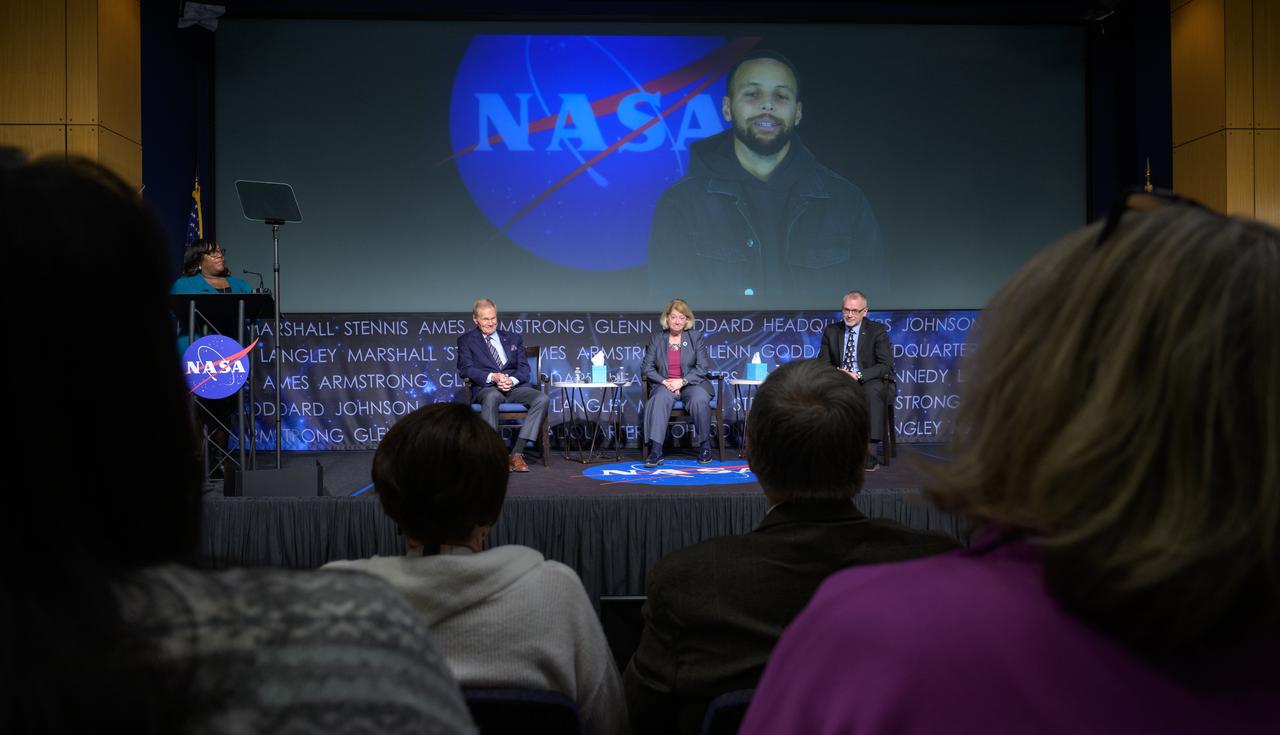
American professional basketball player Stephen Curry gives pre-recorded remarks during a NASA agencywide all hands, Friday, Dec. 6, 2024, at the NASA Headquarters Mary W. Jackson Building in Washington. Photo Credit: (NASA/Bill Ingalls)
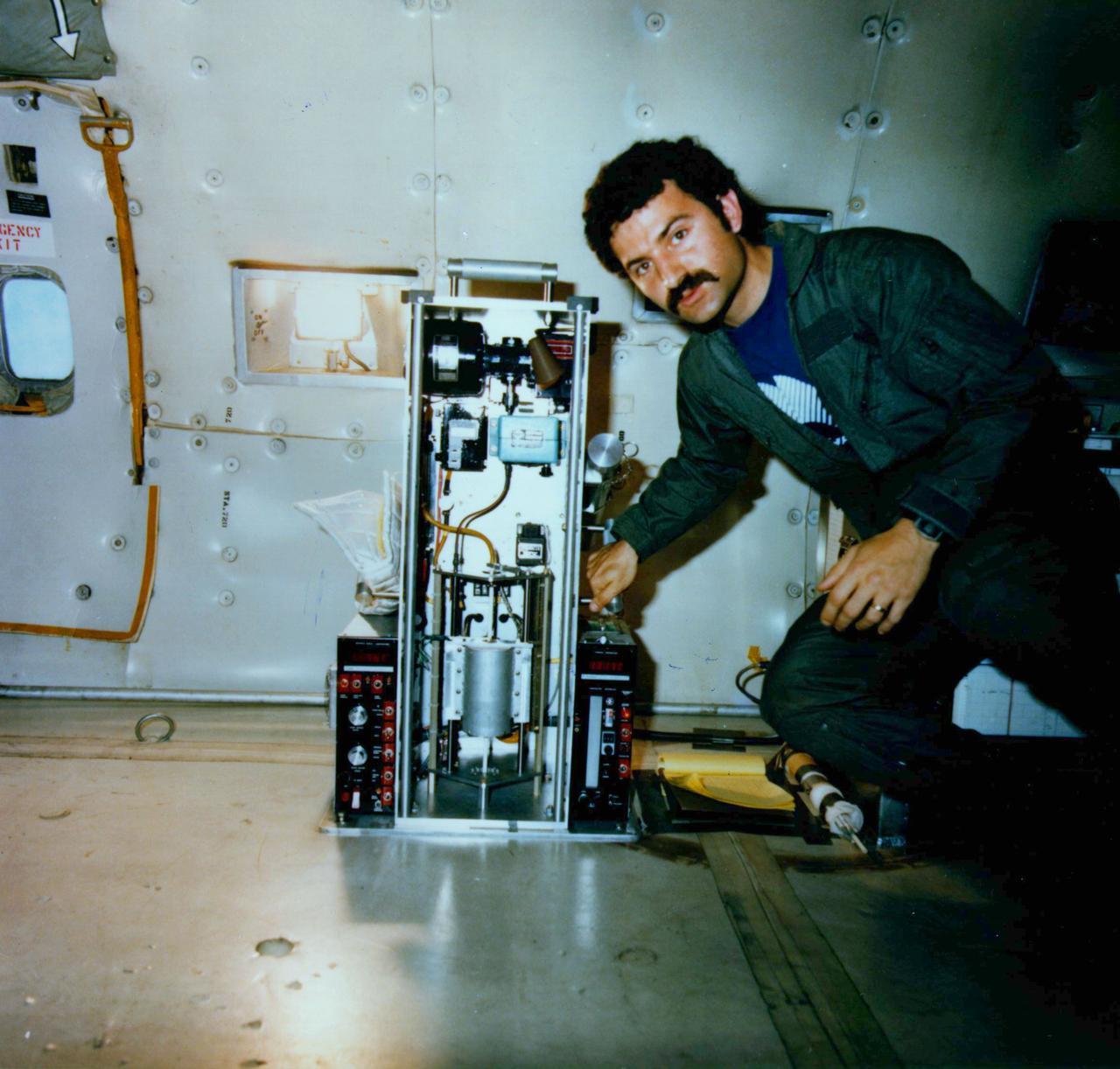
Peter Curerri with KC-135 experiment hardware, a prototype aircraft version of Advanced Automated Directional Solidification Furnace (AADSF).
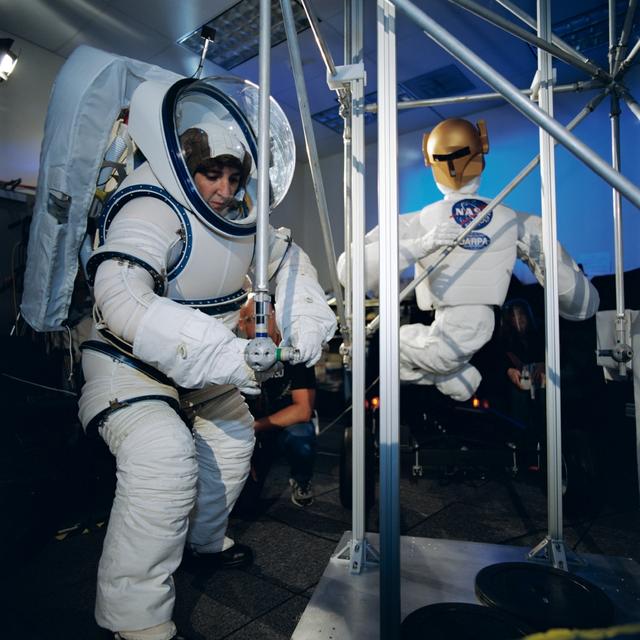
Photographic documentation of Robonaut activities involving joint task operations with a EVA suited astronaut (Nancy Currie) in bldg 9N,rm 1113 (Robonaut lab). Close-up view of Currie (in her EMU) working with the Robonauts (00299). Currie and one Robonaut work at a task .
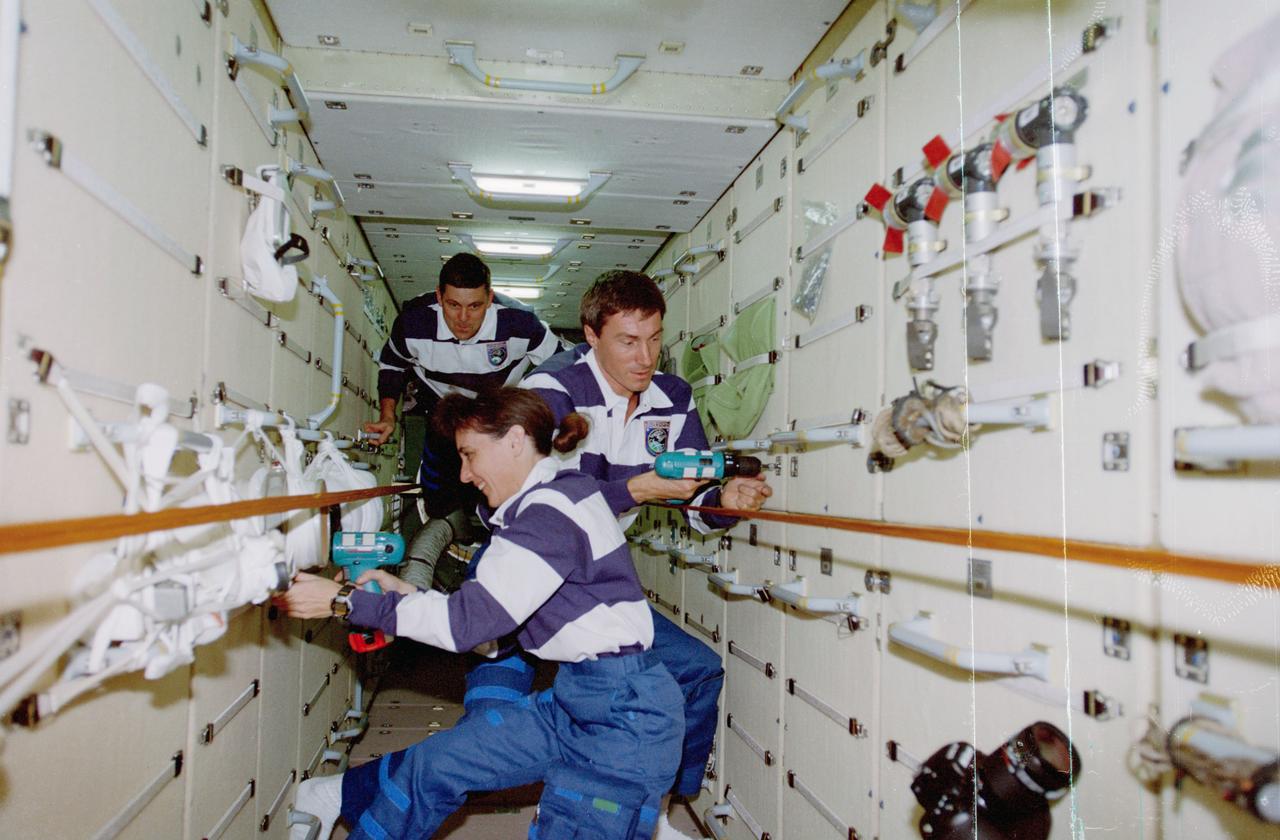
STS088-359-037 (4-15 Dec. 1998) --- Astronaut Nancy J. Currie and cosmonaut Sergei K. Krikalev, both mission specialists, use rechargeable power tools to manipulate nuts and bolts on the Russian-built Zarya module. Astronaut Robert D. Cabana, mission commander, translates along the rail network in the background. The six STS-88 crew members had earlier entered the module through the U.S.-built Unity connecting module. Rails, straps and tools indicate the crewmembers had been working awhile when this photo was taken. Krikalev, representing the Russian Space Agency (RSA), has been assigned as a member of the three-man initial International Space Station (ISS) crew.
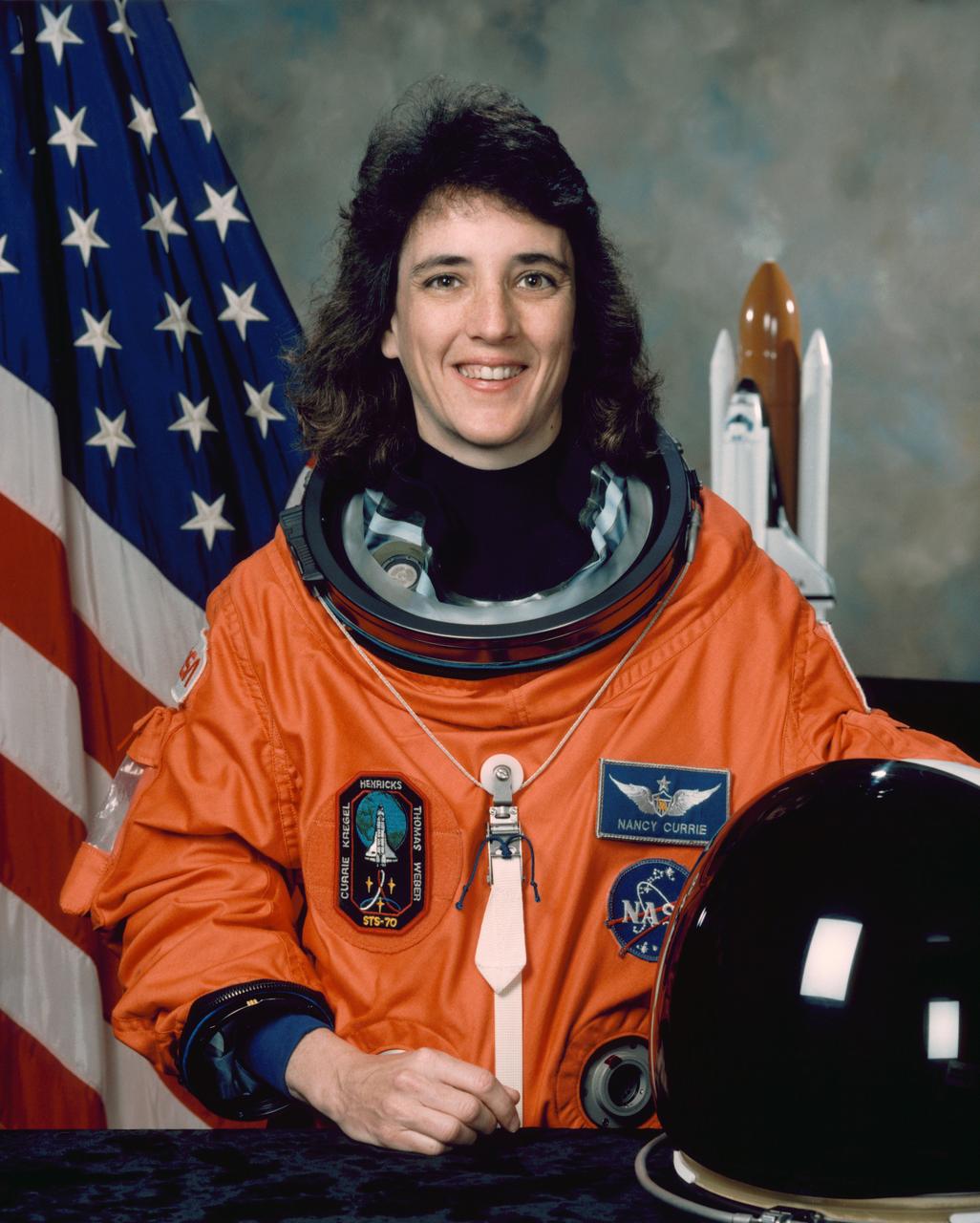
S95-06514 (14 March 1995) --- Astronaut Nancy J. Currie, mission specialist.
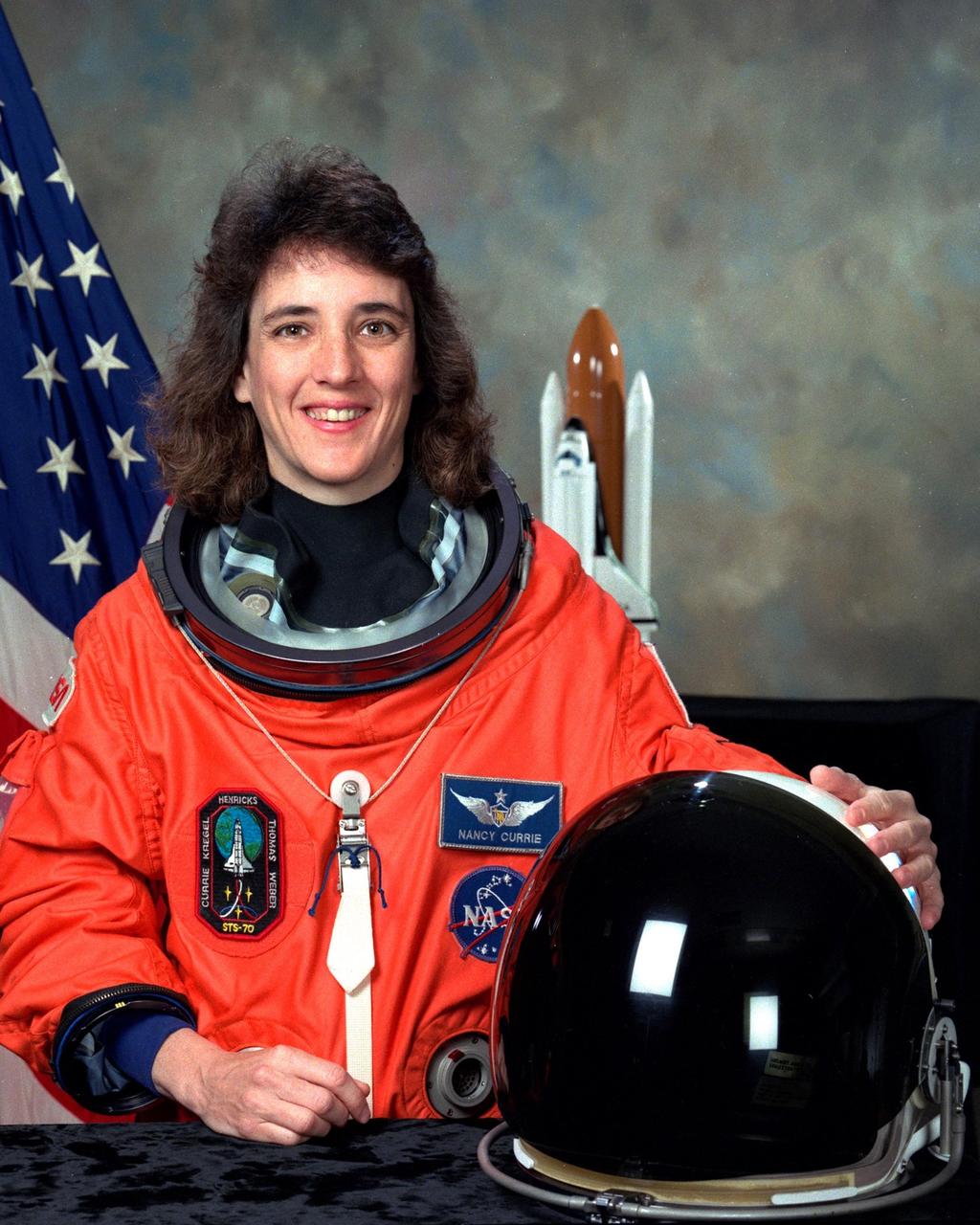
JOHNSON SPACE CENTER, HOUSTON, TEXAS -- (JSC 595-06514) -- Official portrait of astronaut Nancy J. Currie, Mission Specialist
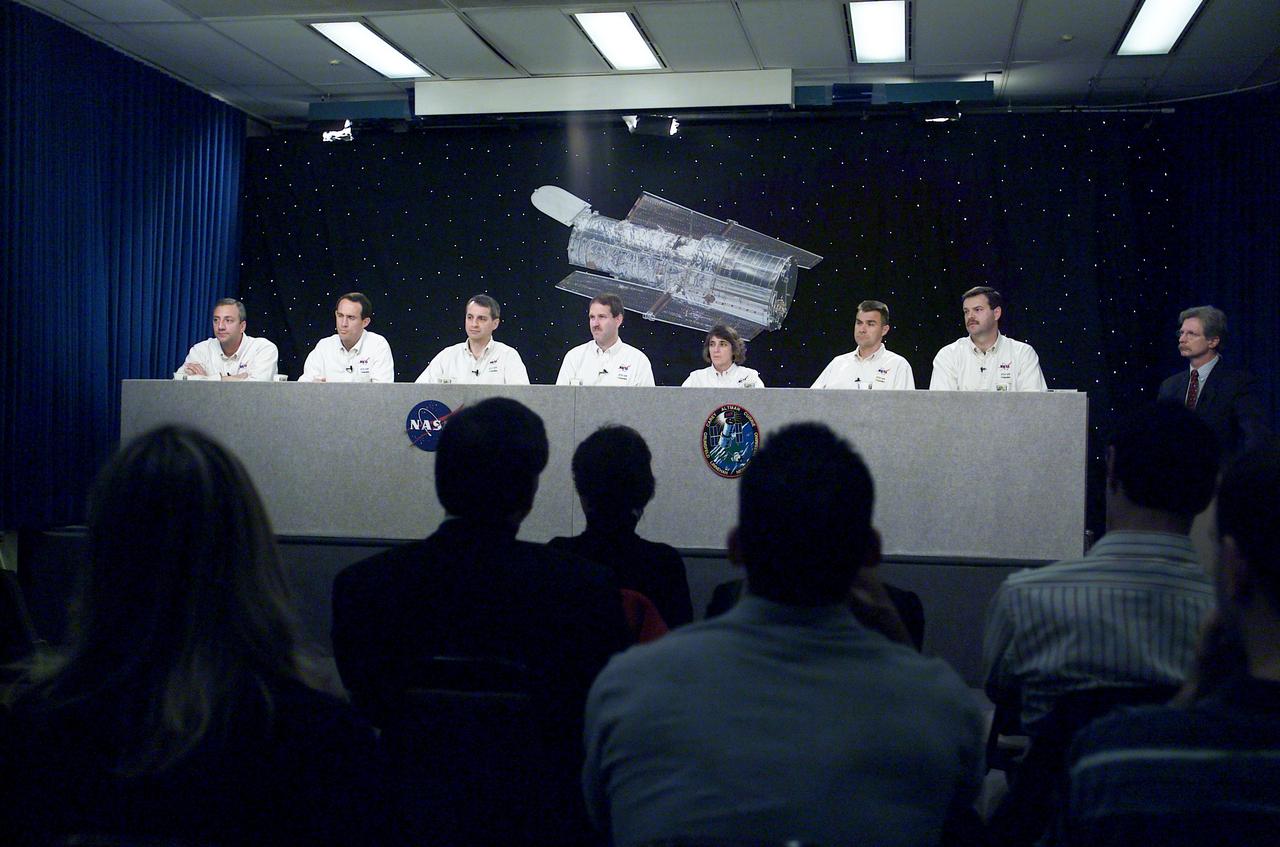
JSC2002-E-05104 (15 February 2002) --- The STS-109 crewmembers are photographed during a pre-flight press conference at Johnson Space Center (JSC). From the left are astronauts Michael J. Massimino, James H. Newman, Richard M. Linnehan, John M. Grunsfeld, Nancy J. Currie, Duane G. Carey, and Scott D. Altman. Altman and Carey are mission commander and pilot, respectively. Grunsfeld is payload commander and Currie, Linnehan, Newman and Massimino are mission specialists.
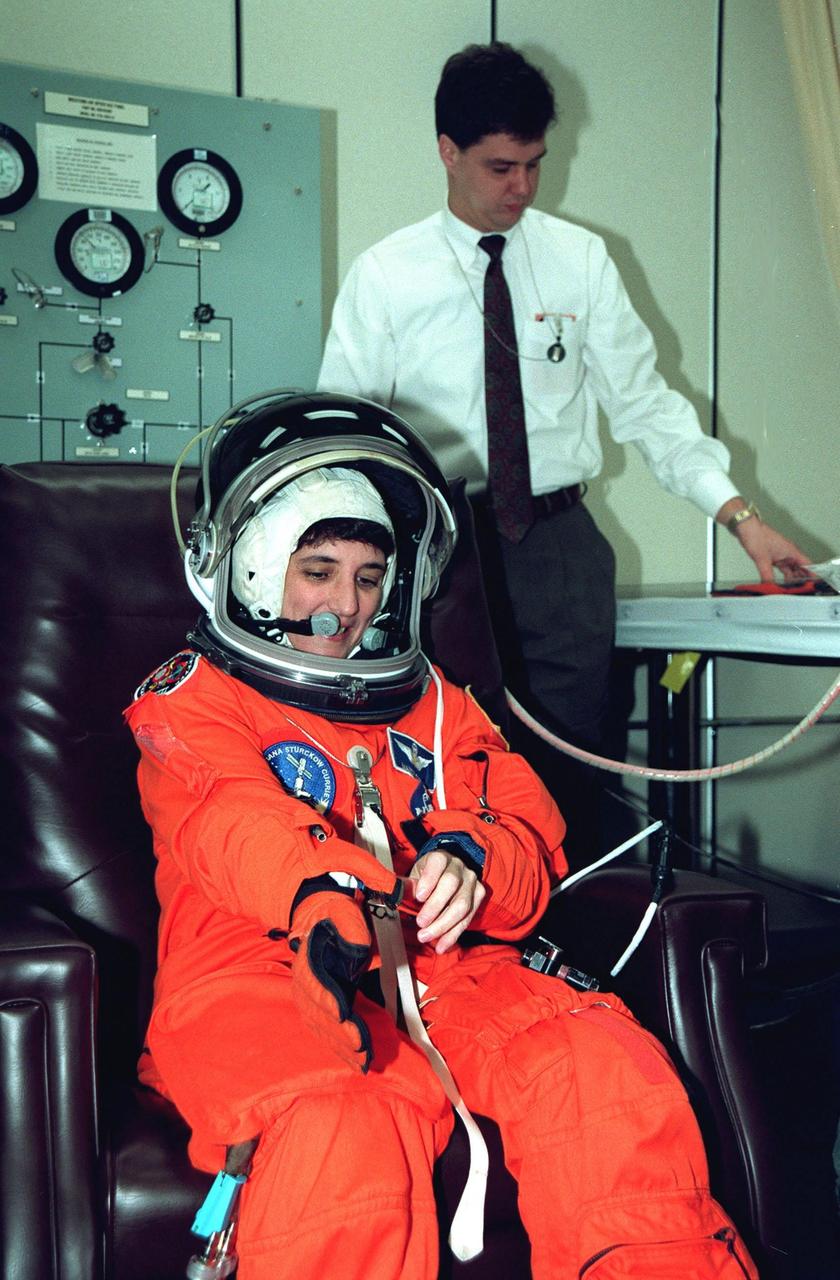
STS-88 Mission Specialist Nancy J. Currie dons her orange launch and entry suit in the Operations and Checkout Building. STS-88 will be Currie’s third spaceflight. She and the five other STS-88 crew members will depart shortly for Launch Pad 39A where the Space Shuttle Endeavour is poised for liftoff on the first U.S. mission dedicated to the assembly of the International Space Station
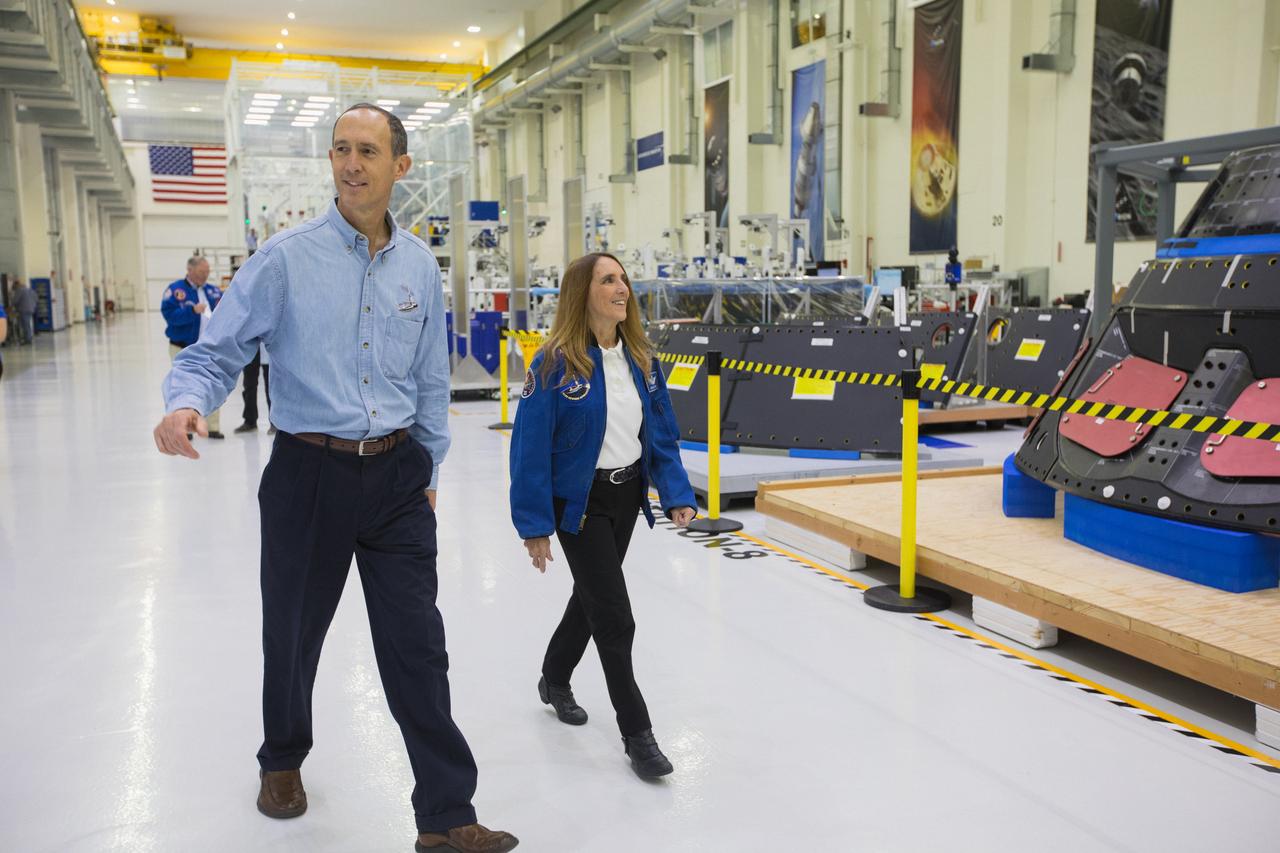
From left, STS-88 mission specialists Jim Newman and Nancie Currie-Gregg tour the Neil Armstrong Operations & Checkout building at Kennedy Space Center on Dec. 10, 2018. Newman and Currie-Gregg were visiting the Florida spaceport as part of a 20th anniversary celebration of STS-88, the first International Space Station assembly mission.
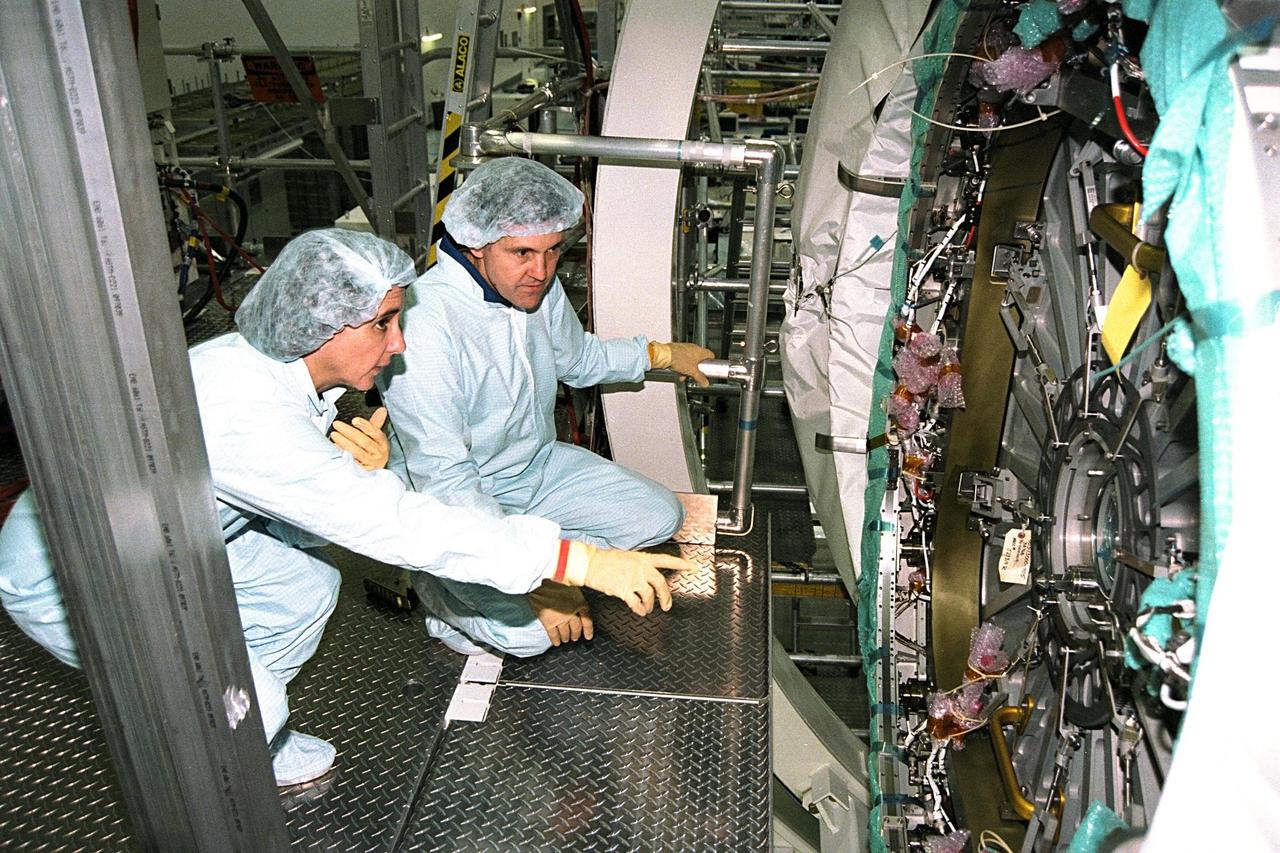
Mission Specialist Nancy Currie and Commander Bob Cabana participate in the Crew Equipment Interface Test (CEIT) for STS-88 in KSC's Space Station Processing Facility. The CEIT gives astronauts an opportunity to get a hands-on look at the payloads with which they will be working on-orbit. Here, Currie and Cabana inspect one of the six hatches on Node 1 of the International Space Station (ISS). STS-88, the first ISS assembly flight, is targeted for launch in July 1998 aboard Space Shuttle Endeavour
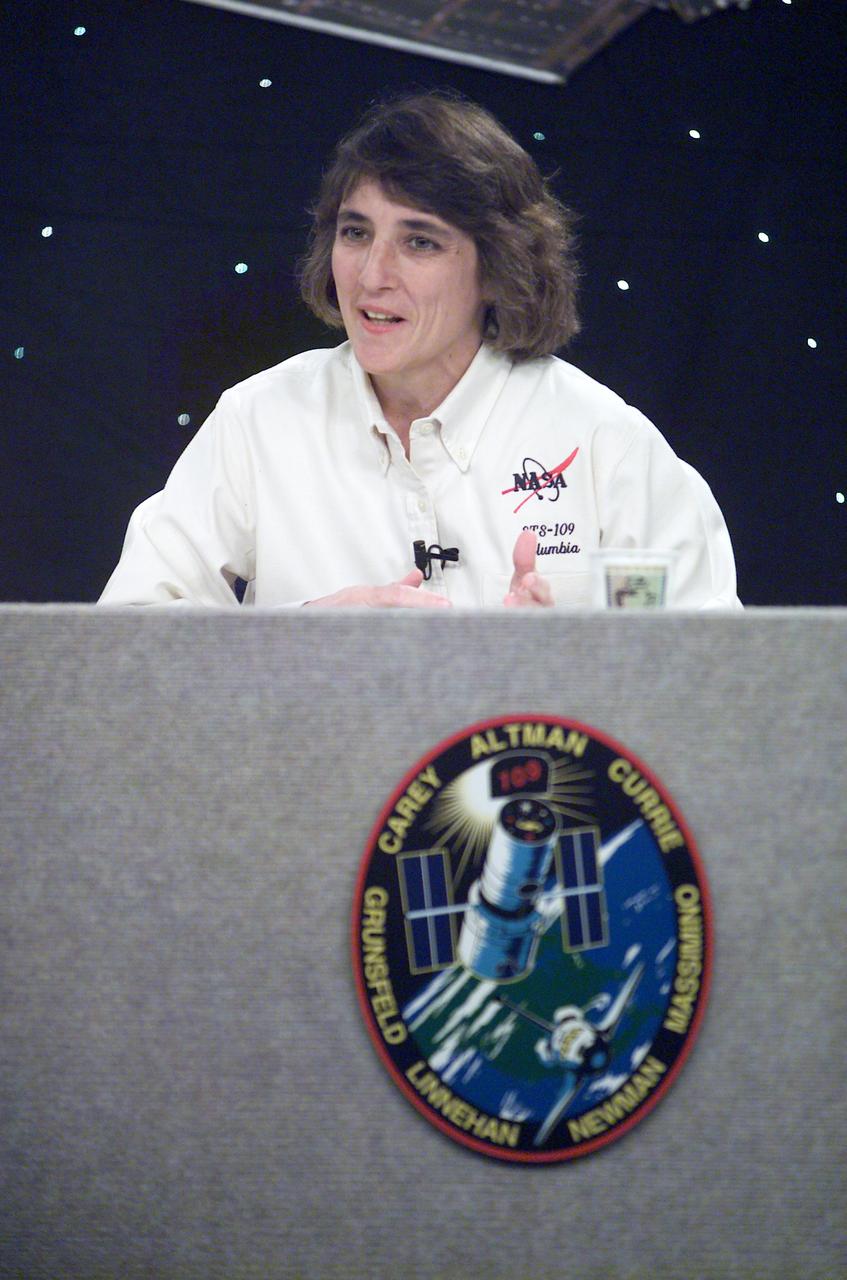
JSC2002-E-05099 (15 February 2002) --- Astronaut Nancy J. Currie, STS-109 mission specialist, fields a question during a pre-flight press conference at Johnson Space Center (JSC).
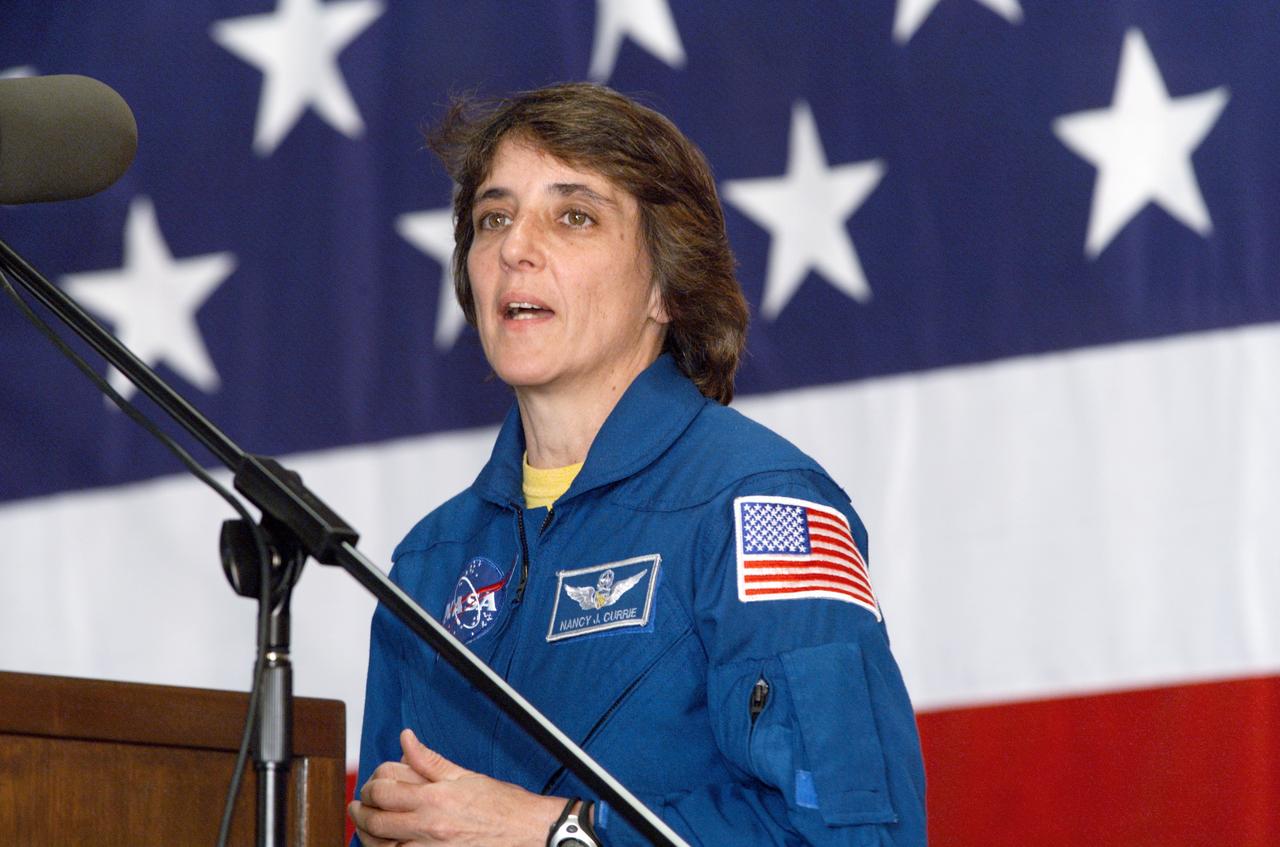
JSC2002-E-09340 (13 March 2002) --- Astronaut Nancy J. Currie, STS-109 mission specialist, speaks from the lectern in Hangar 990 at Ellington Field during the crew return ceremonies.
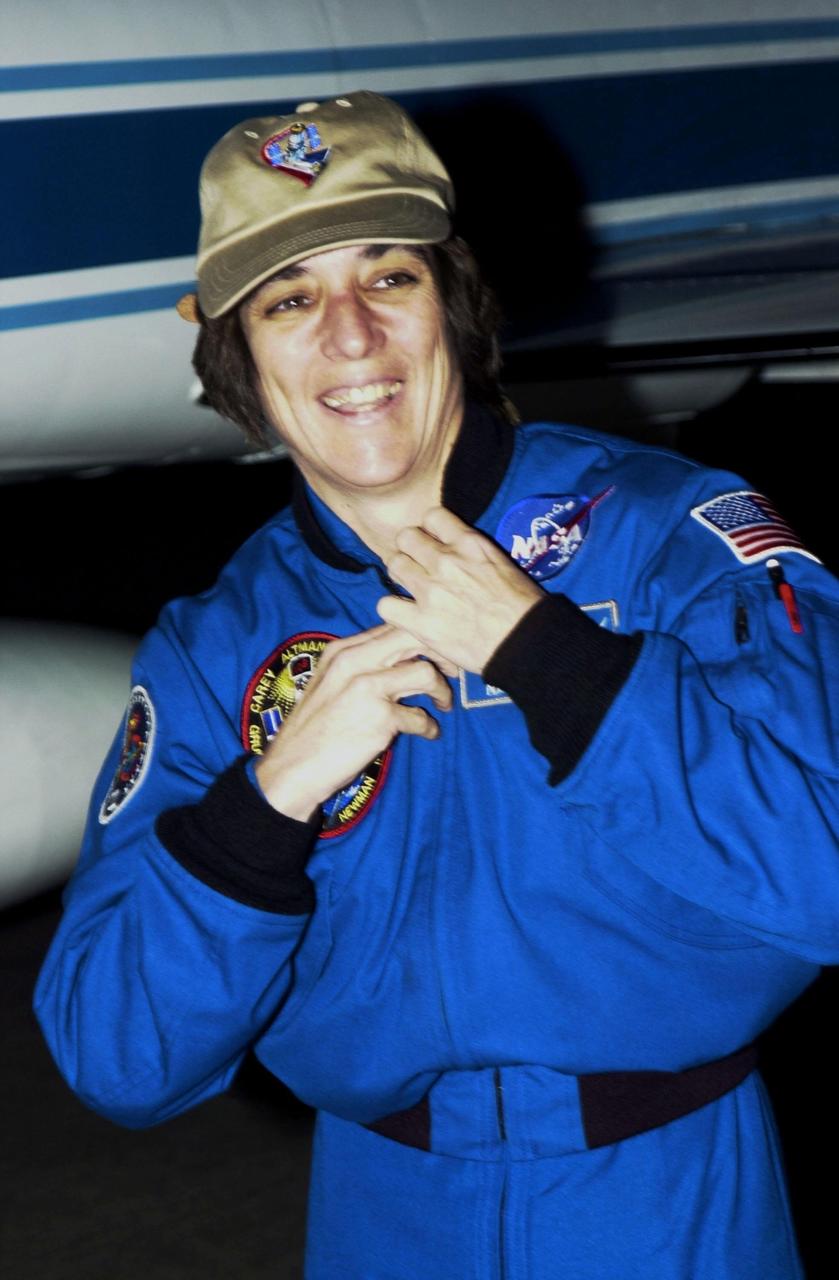
KENNEDY SPACE CENTER, Fla. - STS-109 Mission Specialist Nancy Currie arrives at KSC aboard a T-38 jet aircraft to begin launch preparations. This is Currie's fourth Shuttle flight. The goal of the 11-day mission is repair and maintenance on the Hubble Space Telescope. Five spacewalks are planned to replace Solar Array 2 with Solar Array 3, replace the Power Control Unit, remove the Faint Object Camera and install the Advanced Camera for Surveys (ACS), install the Near Infrared Camera and Multi-Object Spectrometer (NICMOS) Cooling System, and install New Outer Blanket Layer insulation. Launch is scheduled for Feb. 28 at 6:48 a.m. EST
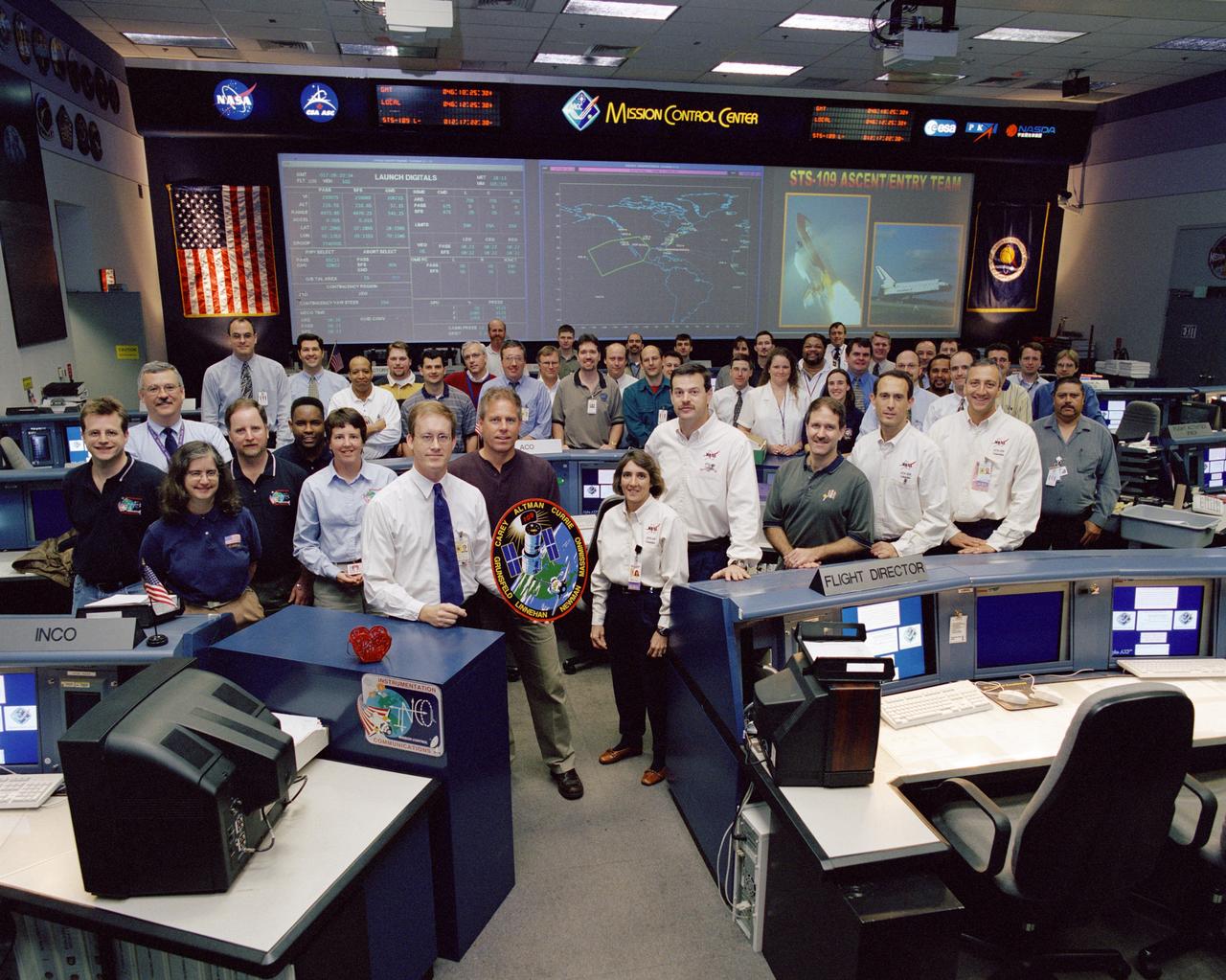
JSC2002-00514 (February 2002)--- The STS-109 flight crew poses with the ascent and entry shift team in the Shuttle Flight Control Room of the Johnson Space Center's Mission Control Center. Flight Director John Shannon holds the mission insignia. Members of the flight crew are astronauts Scott D. Altman, commander; Duane G. Carey, pilot; John M. Grunsfeld, payload commander; and James H. Newman, Nancy J. Currie, Richard M. Linnehan and Michael J. Massimino, all mission specialists. Currie stands to the right of the logo, followed by, left to right, Altman, Grunsfeld, Newman and Massimino. Linnehan and Carey are not pictured.
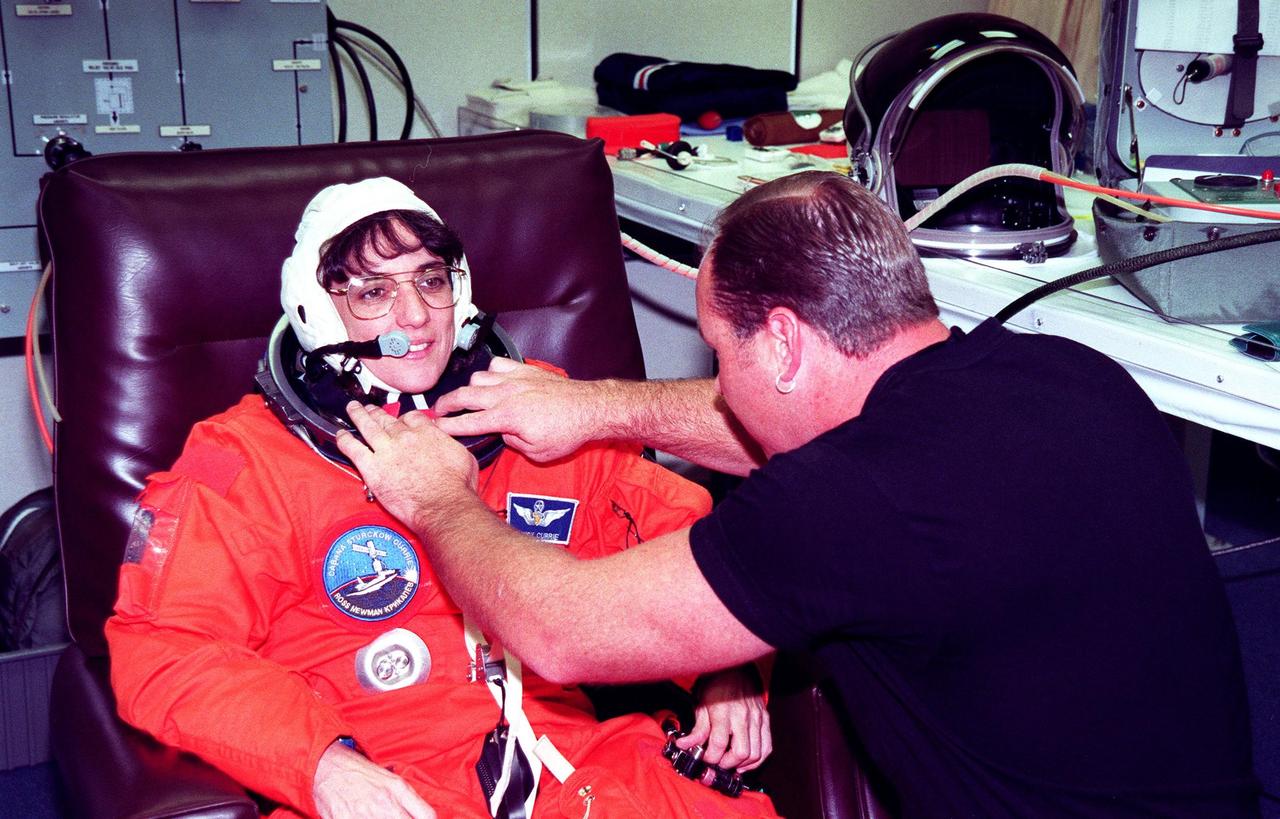
STS-88 Mission Specialist Nancy J. Currie suits up in the Operations and Checkout Building, as part of flight crew equipment fit check, prior to her trip to Launch Pad 39A. She is helped by suit tech Drew Billingsley. The crew are at KSC to participate in the Terminal Countdown Demonstration Test (TCDT) which includes mission familiarization activities, emergency egress training, and the simulated main engine cut-off exercise. This is Currie's third space flight. Mission STS-88 is targeted for launch on Dec. 3, 1998. It is the first U.S. flight for the assembly of the International Space Station and will carry the Unity connecting module
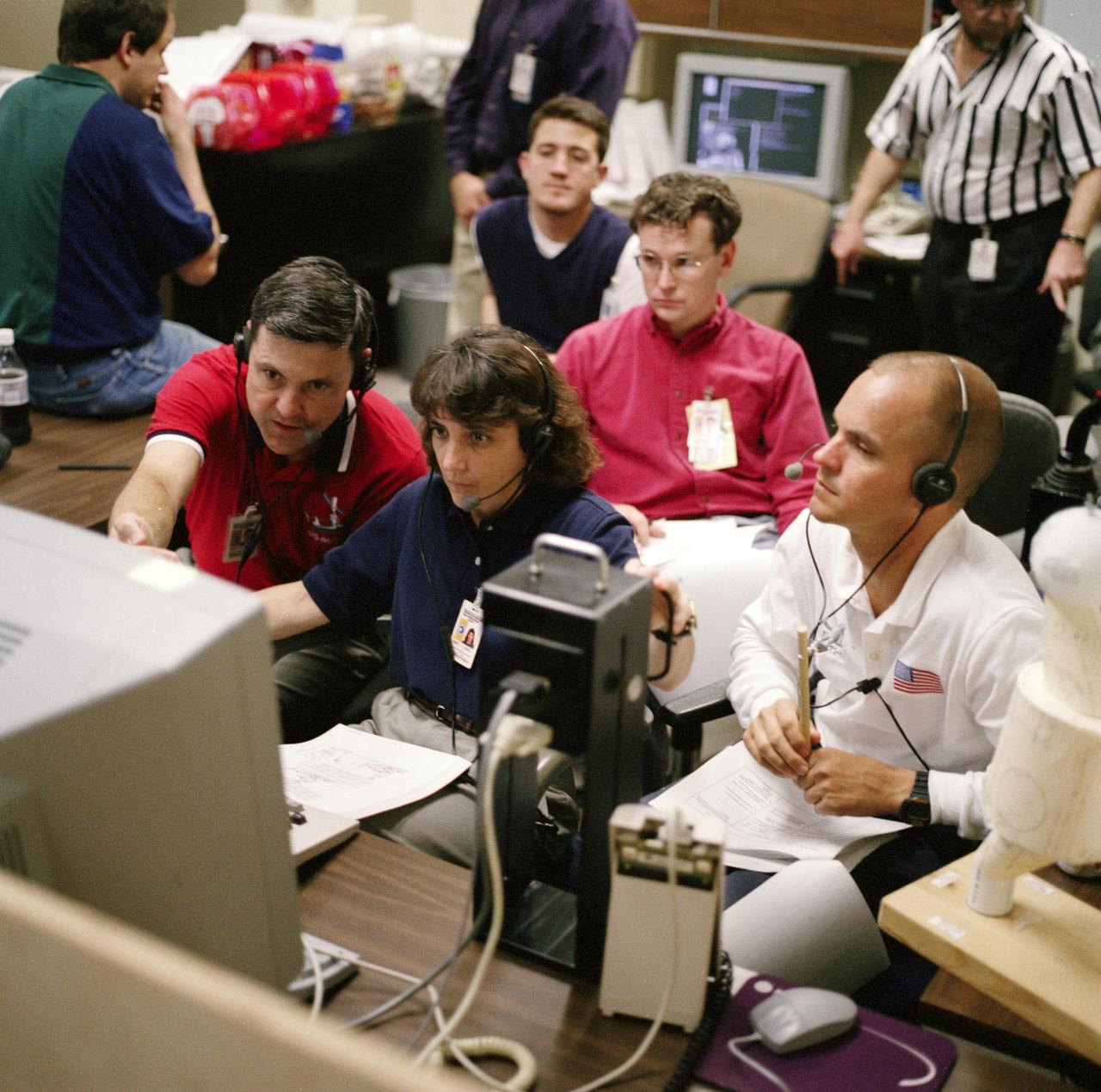
S98-05078 (8 Apr. 1998) --- With crew mates looking on, astronaut Nancy J. Currie, mission specialist, uses hardware in the virtual reality lab at the Johnson Space Center (JSC) to train for her duties aboard the Space Shuttle Endeavour. She is flanked by astronaut Robert Cabana (left), commander; and Frederick W. Sturckow (right), pilot. This type computer interface paired with virtual reality training hardware for the assigned space-walking astronauts -- Jerry L. Ross and James H. Newman -- helps to prepare the entire team for dealing with International Space Station (ISS) elements. One of those elements will be the Functional Cargo Block (FGB), which will have been launched a couple of weeks prior to STS-88. Once the FGB is captured using the Remote Manipulator System (RMS) of the Endeavour, Currie will maneuver the robot arm to dock the FGB to the conical mating adapter at the top of Node 1, to be carried in the Endeavour's cargo bay. In ensuing days, three Extravehicular Activity?s (EVA) by Ross and Newman will be performed to make power, data and utility connections between the two modules. Looking on is Scott A. Bleisath (behind Currie), with the EVA Systems Group at JSC.
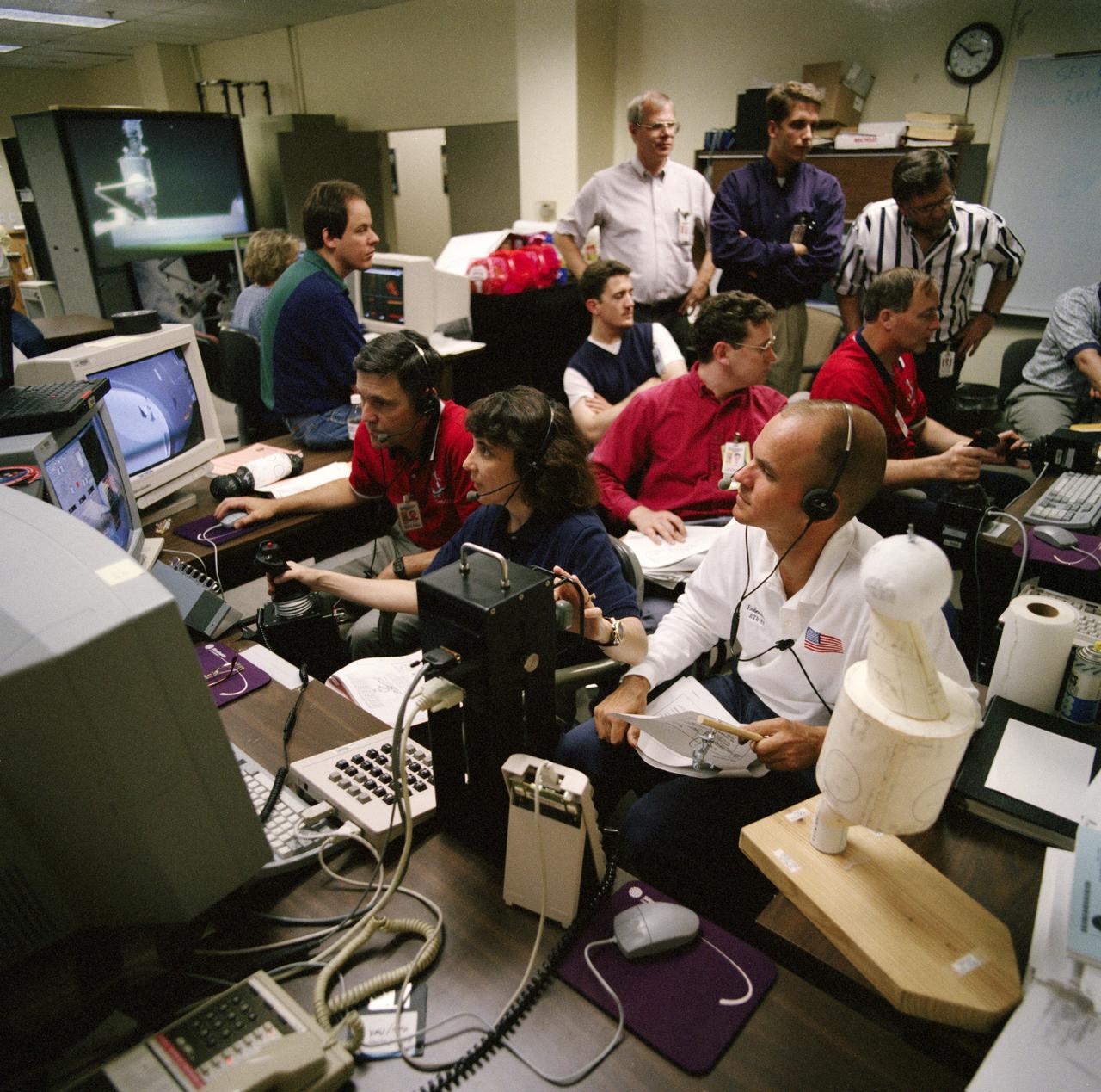
S98-05077 (8 Apr. 1998) --- With crew mates looking on, astronaut Nancy J. Currie, mission specialist, uses hardware in the virtual reality lab at the Johnson Space Center (JSC) to train for her duties aboard the Space Shuttle Endeavour. She is flanked by astronaut Robert Cabana (left), commander; and Frederick W. Sturckow (right), pilot. This type computer interface paired with virtual reality training hardware for the assigned space-walking astronauts -- Jerry L. Ross and James H. Newman -- helps to prepare the entire team for dealing with International Space Station (ISS) elements. One of those elements will be the Functional Cargo Block (FGB), which will have been launched a couple of weeks prior to STS-88. Once the FGB is captured using the Remote Manipulator System (RMS) of the Endeavour, Currie will maneuver the robot arm to dock the FGB to the conical mating adapter at the top of Node 1, to be carried in the Endeavour's cargo bay. In ensuing days, three Extravehicular Activity?s (EVA) by Ross and Newman will be performed to make power, data and utility connections between the two modules. Looking on is Scott A. Bleisath (behind Currie), with the EVA Systems Group at JSC.

STS088-359-029 (4-15 Dec. 1998) --- Astronauts James H. Newman and Nancy J. Currie, both mission specialists, work in the FGB or Zarya Module of the International Space Station (ISS). The two were using the computers to confer with ground controllers about tasks they were attempting to perform in Zarya.
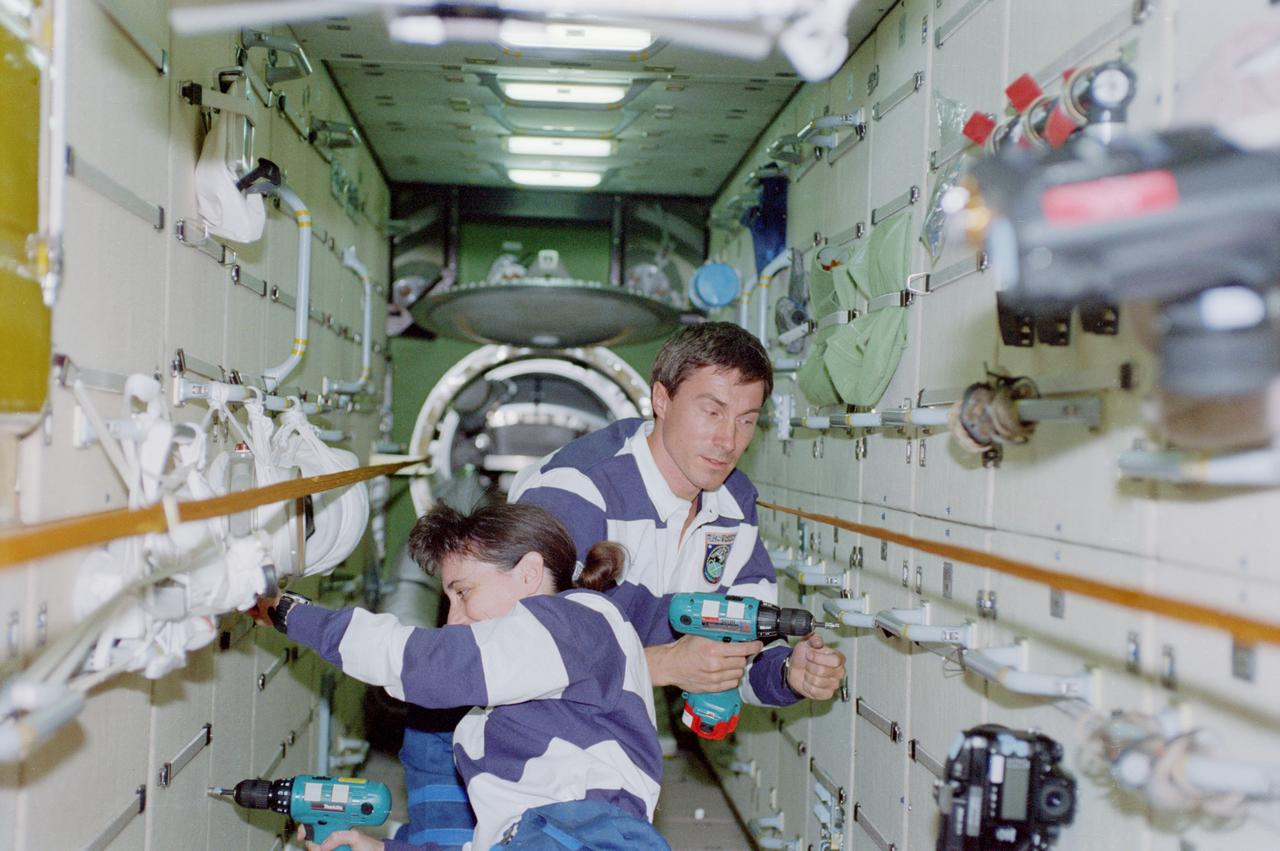
STS088-357-011 (4-15 Dec. 1998) --- Astronaut Nancy J. Currie, mission specialist, and cosmonaut Sergei K. Krikalev, mission specialist representing the Russian Space Agency (RSA), work in the FGB or Zarya Module of the International Space Station (ISS). The two are using battery powered tools to extract bolts.
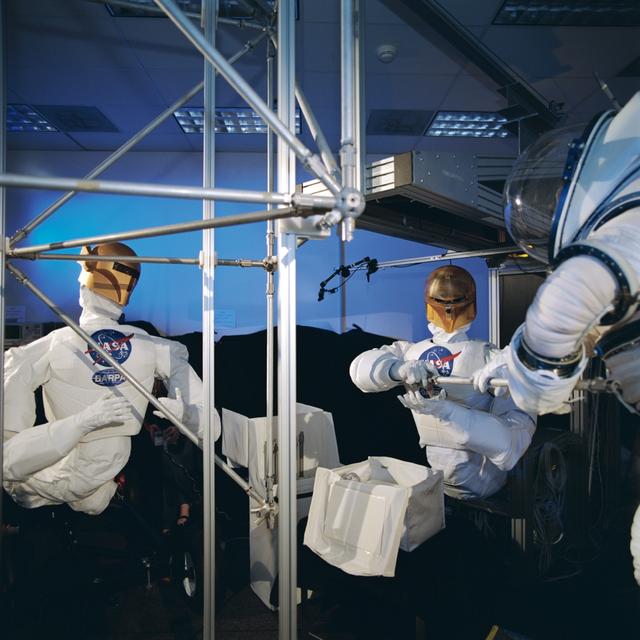
JSC2003-00300 (June 2003) --- Two Robonauts work hand-in-hand with astronaut Nancy J. Currie, partially visible at right edge of frame, during an evaluation at the Johnson Space Center to determine the capabilities of human beings and robots to perform certain extravehicular tasks.
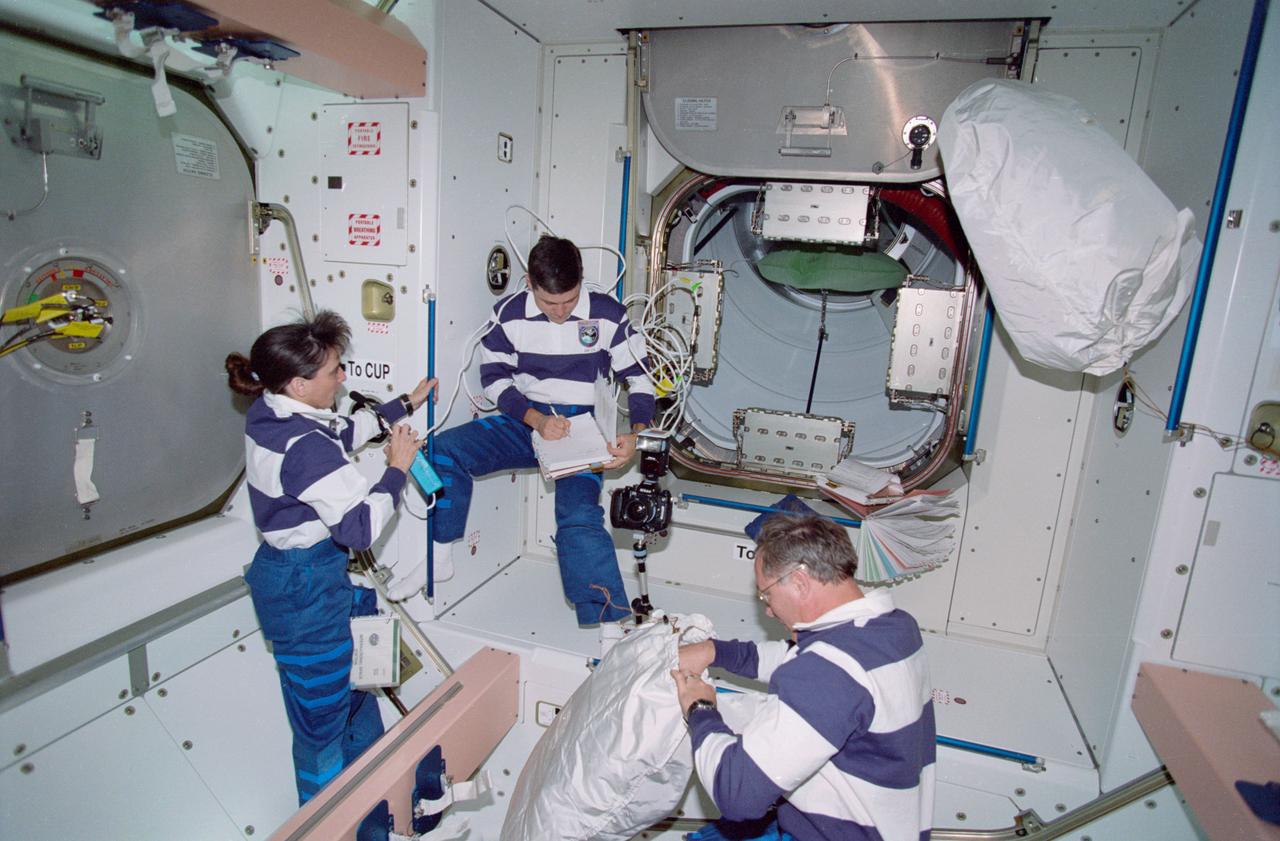
STS088-332-017 (4-15 Dec. 1998) --- From the left, astronauts Nancy J. Currie, mission specialist; Robert D. Cabana, commander, and Jerry L. Ross, mission specialist, go about various chores designed to put the United States-built Unity Connecting Module (Node 1) in readiness for its impending release in Earth-orbit. Currie talks with ground controllers while Cabana logs a note and Ross checks a supply bag. After devoting the major portion of its mission time to various tasks to ready the Russian-built FGB Module (Zarya) and the docked United States-built node, the six-member crew released the tandem from the Space Shuttle Endeavour’s cargo bay toward mission’s end.
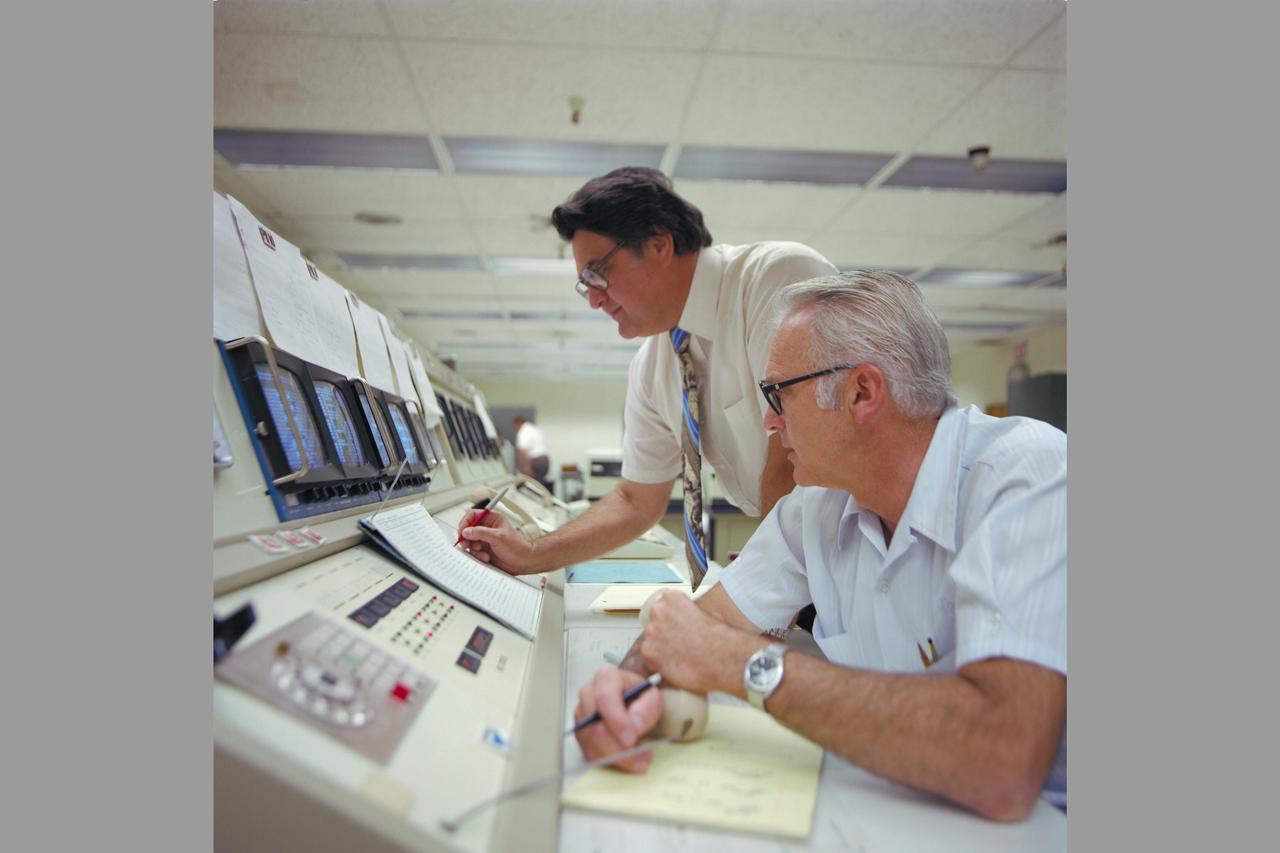
Pioneer Mission Control Center with personnel monitoring spacecraft (PMOC) includes Dr Richard Fimmel
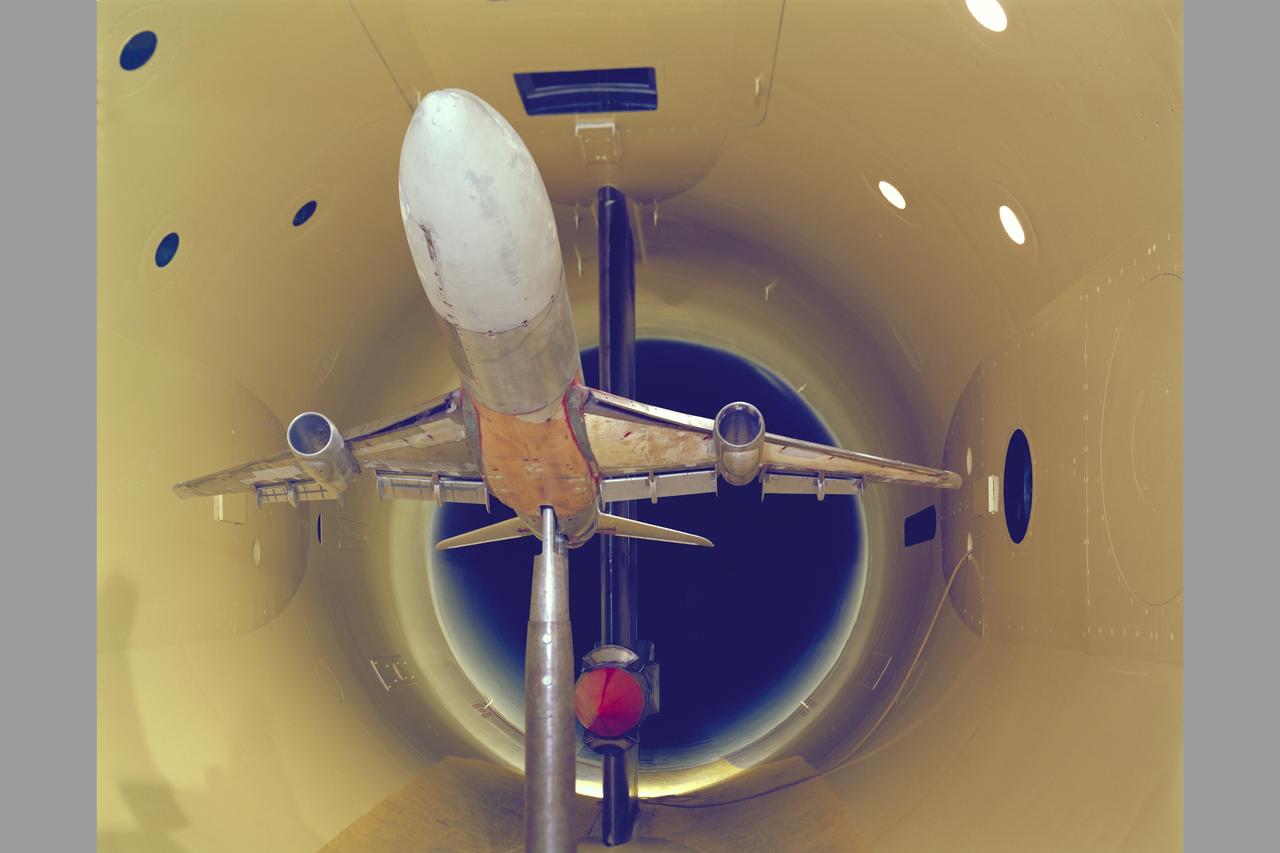
Lockheed L-1011 EET (Energy Efficient Transport) test-516 in 12ft. W.T.
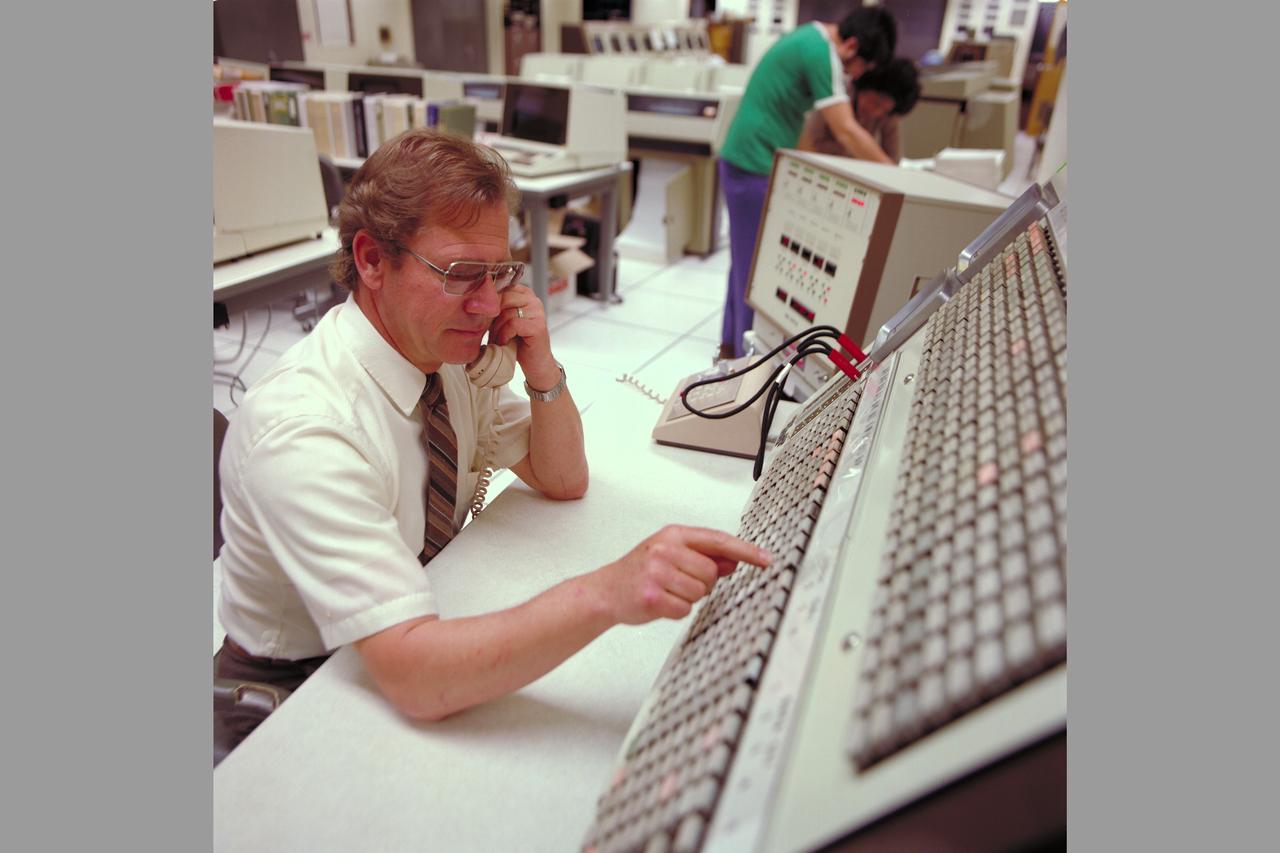
Pioneer Mission Control Center with personnel monitoring spacecraft (PMOC)
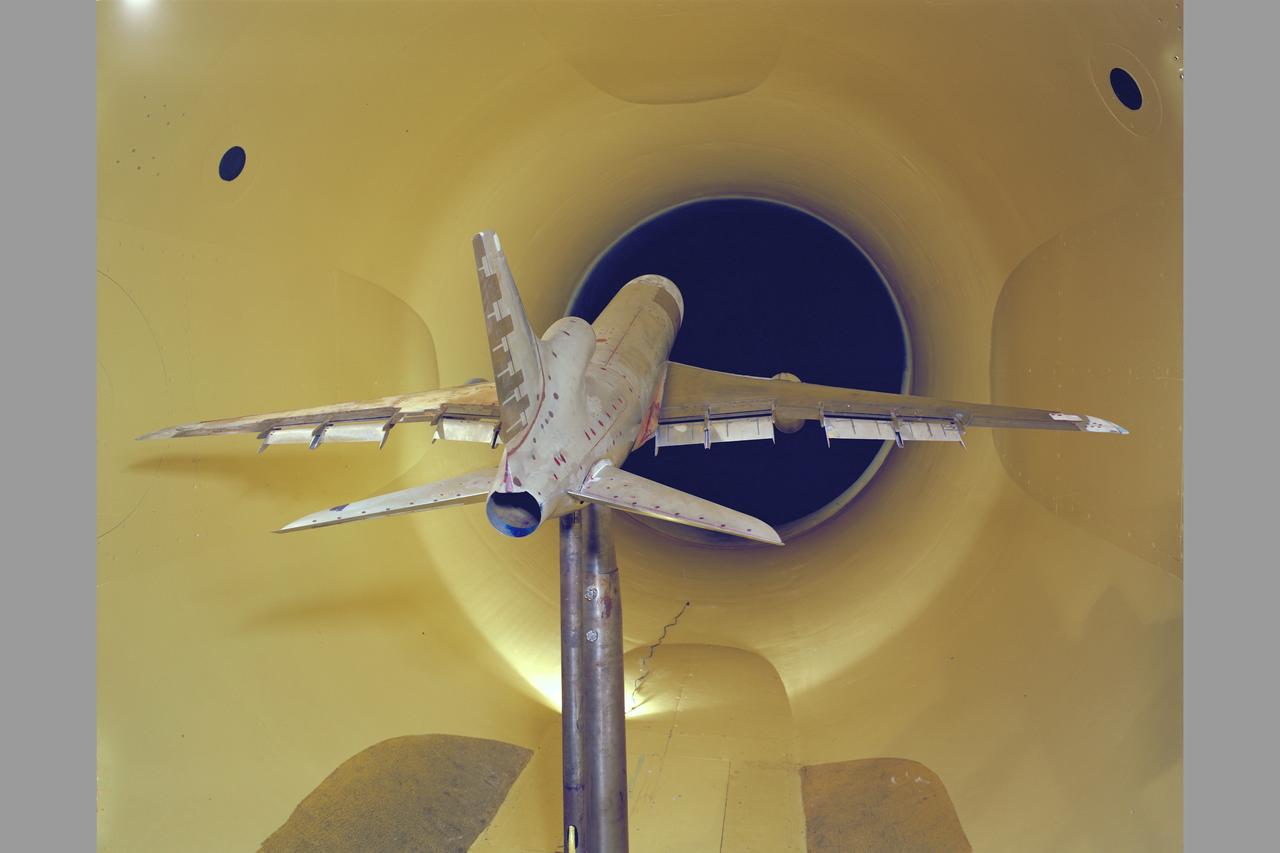
Lockheed L-1011 EET (Energy Efficient Transport) 12ft w.t. test-516
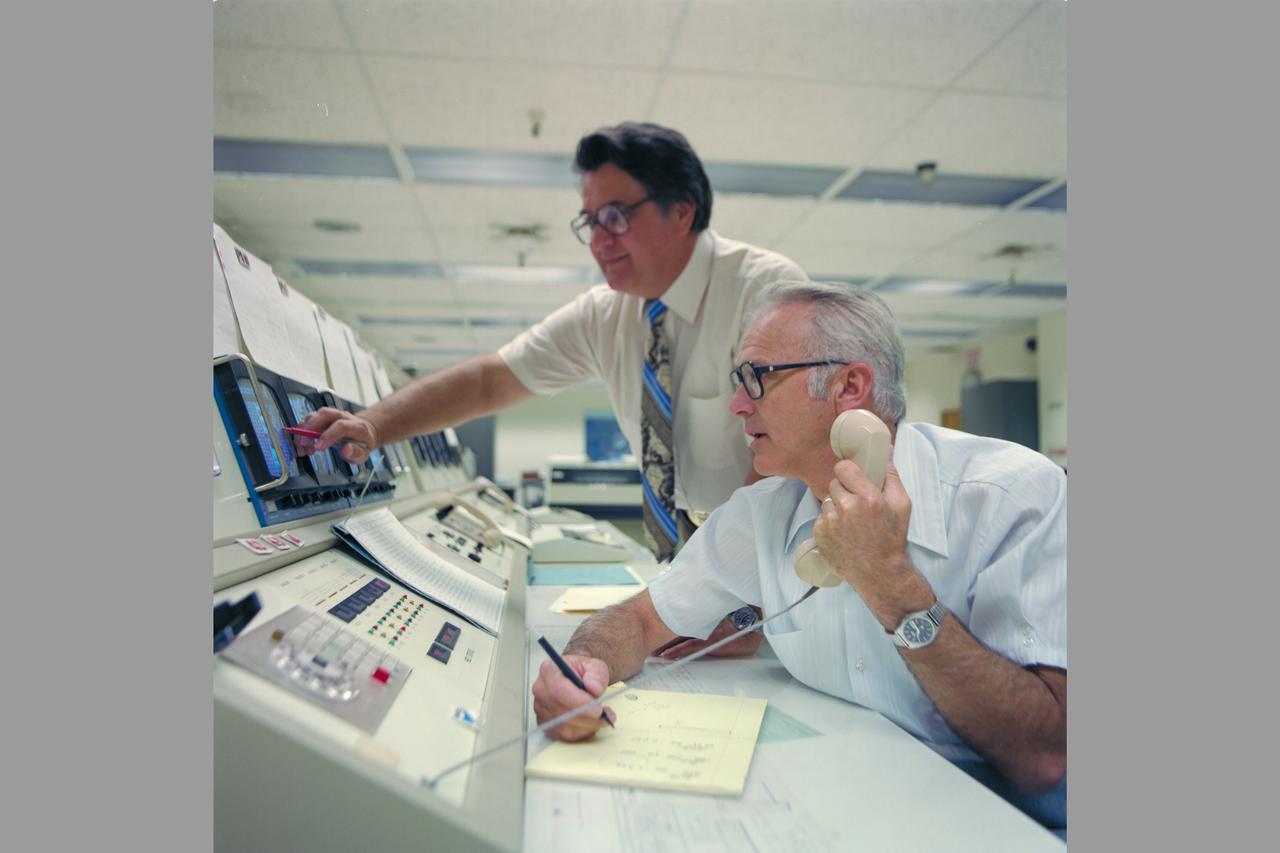
Pioneer Mission Control Center with personnel monitoring spacecraft (PMOC) includes Dr Richard Fimmel
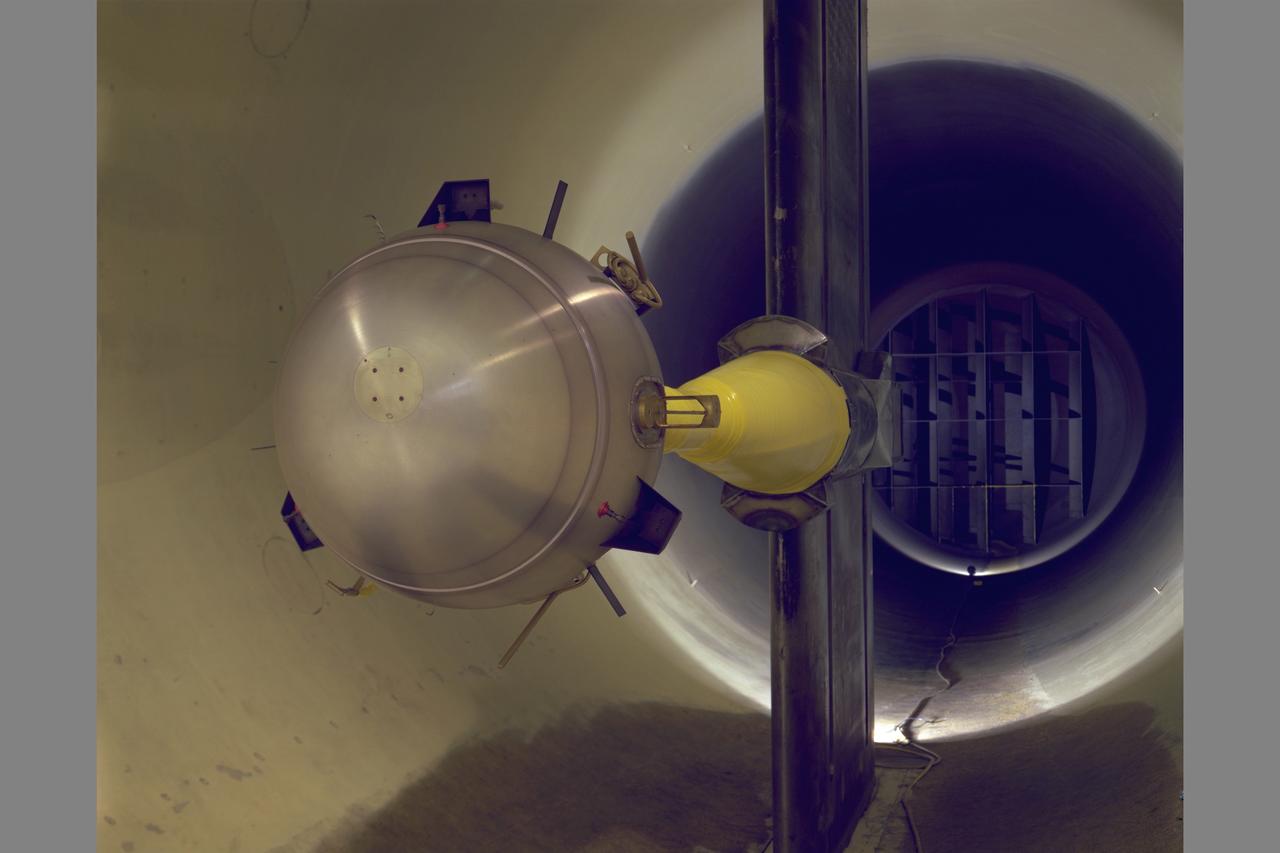
Galileo Probe test-358 in NASA Ames Research Center12ft Pressure Wind Tunnel
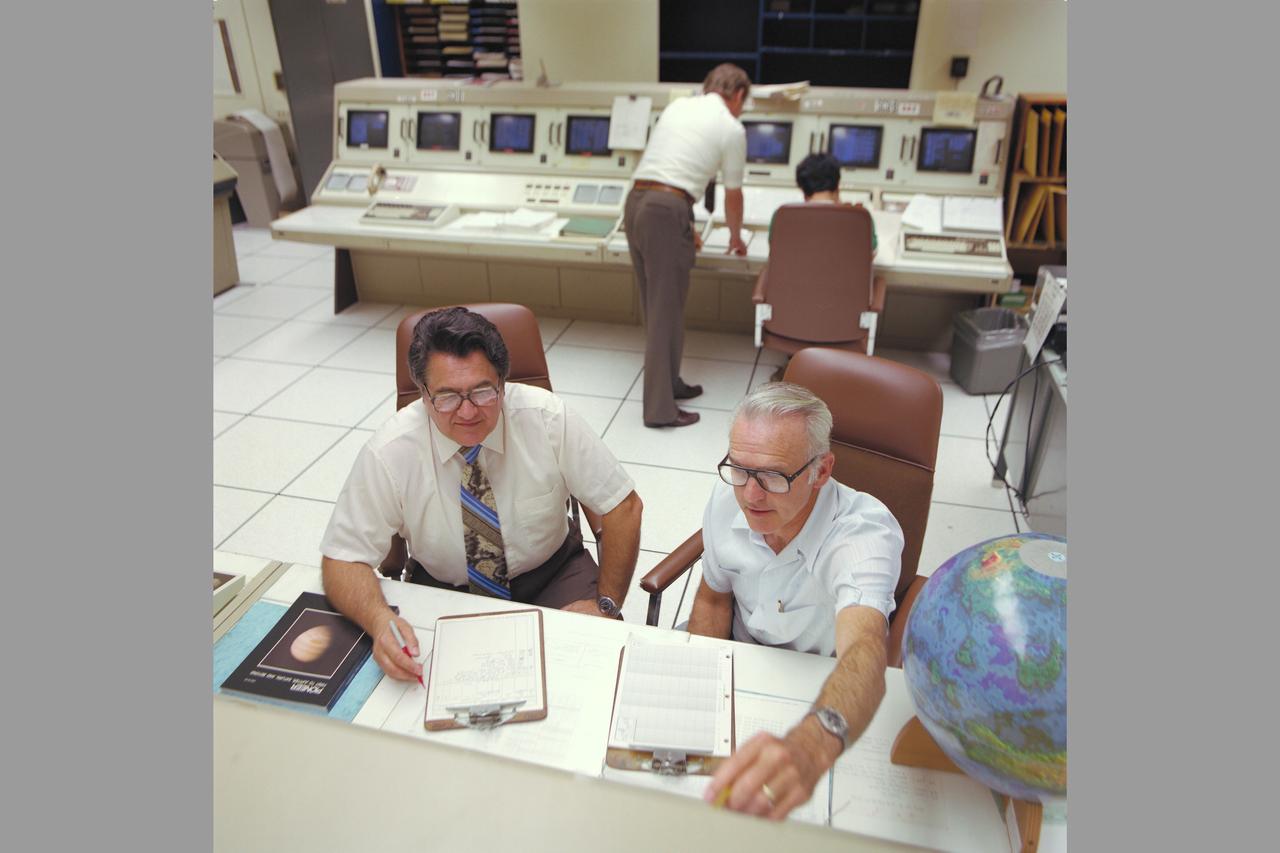
Pioneer Mission Control Center with personnel monitoring spacecraft (PMOC) including Dr Richard Fimmel
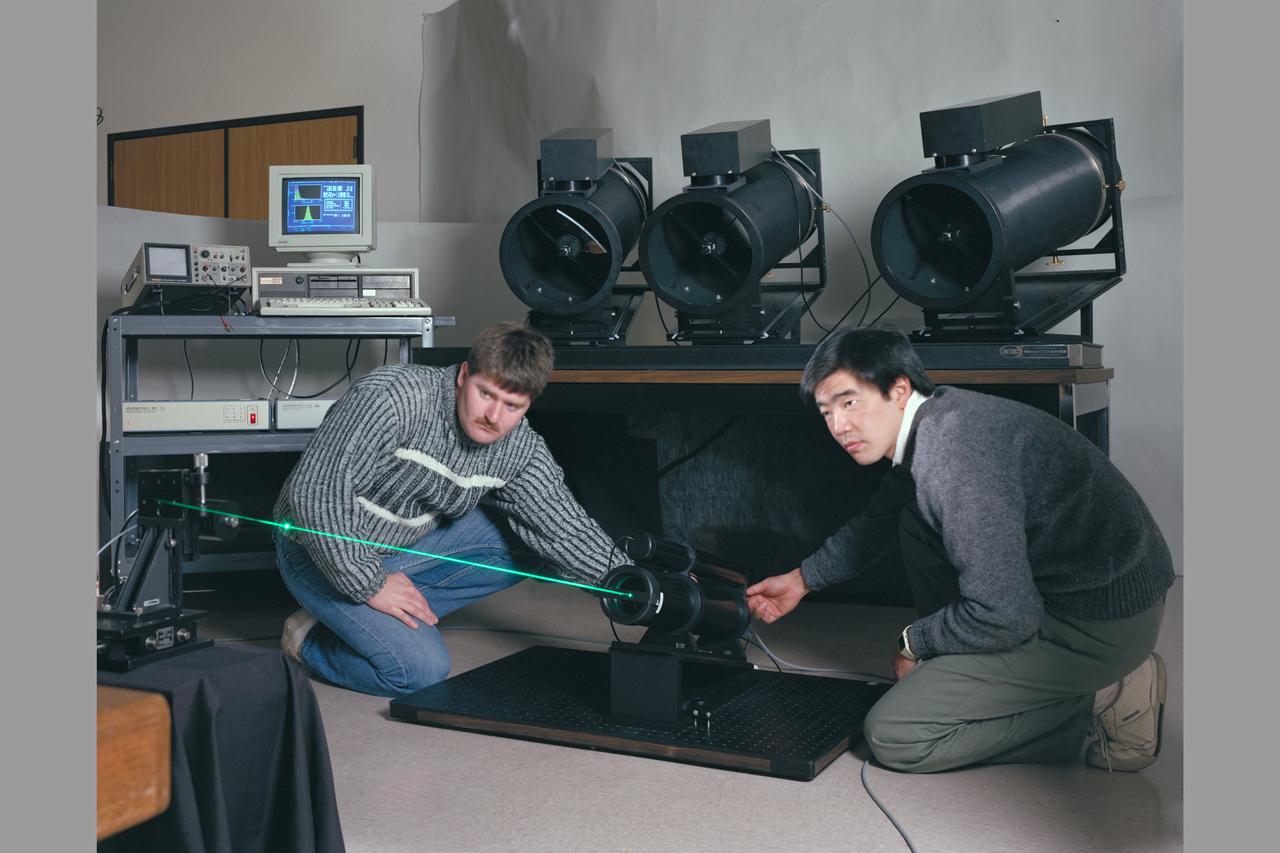
N-213 detector set up for 3d LV (laser velocimeter)
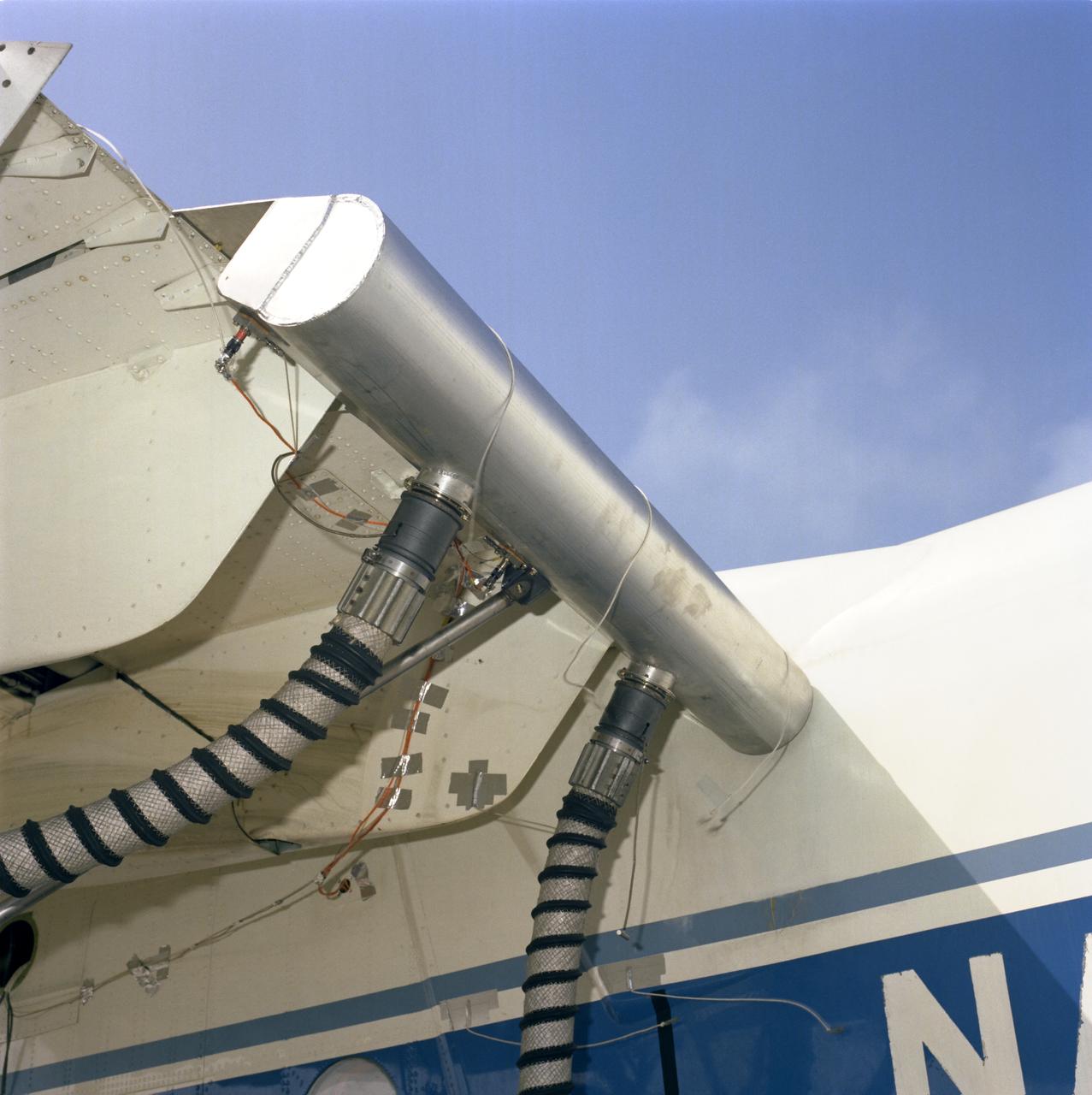
QSRA (Quite STOL Research Aircraft) NASA-715 C-8A Tufts during the CCW tests out of NASA Ames
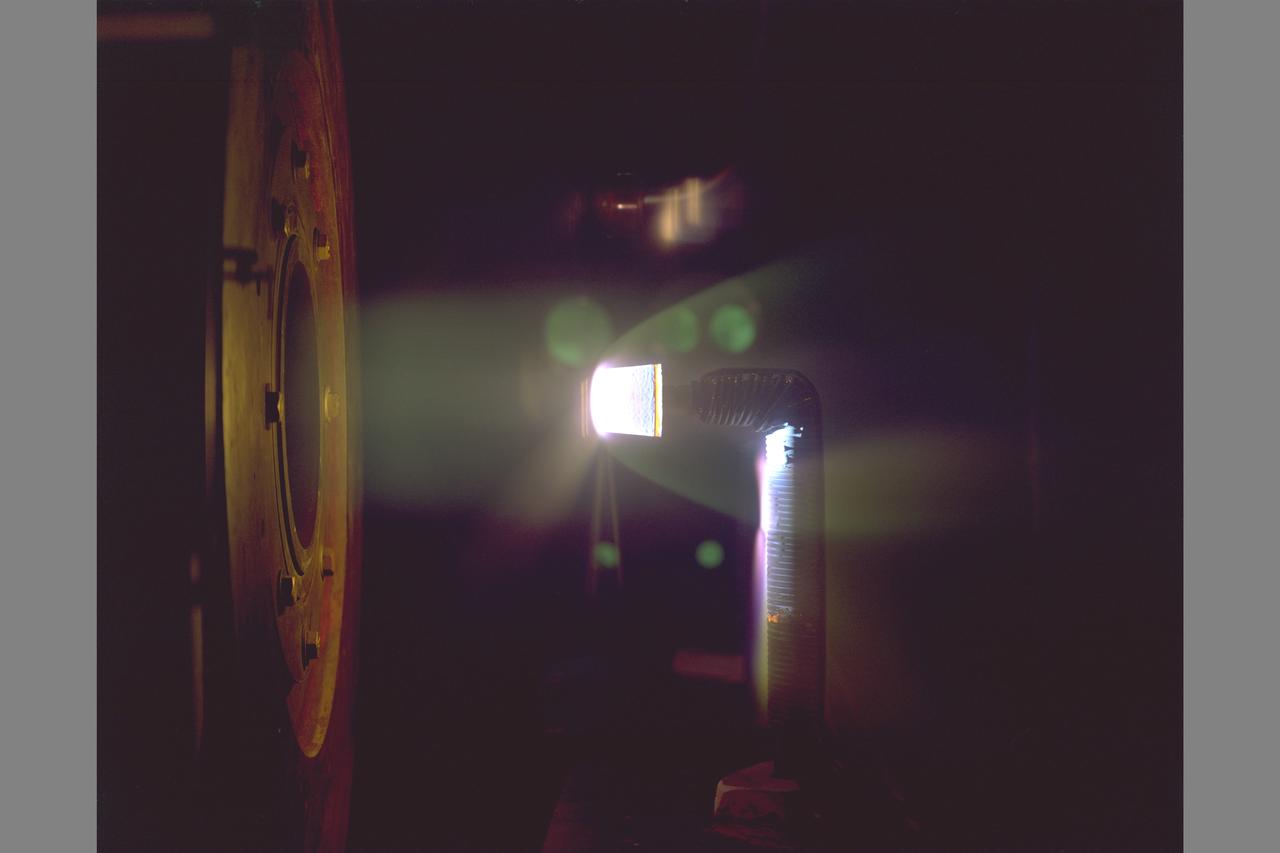
Advanced Space Shuttle TPS (Thermal Protection System) Plasma Stream during run in Arc Heater Facility
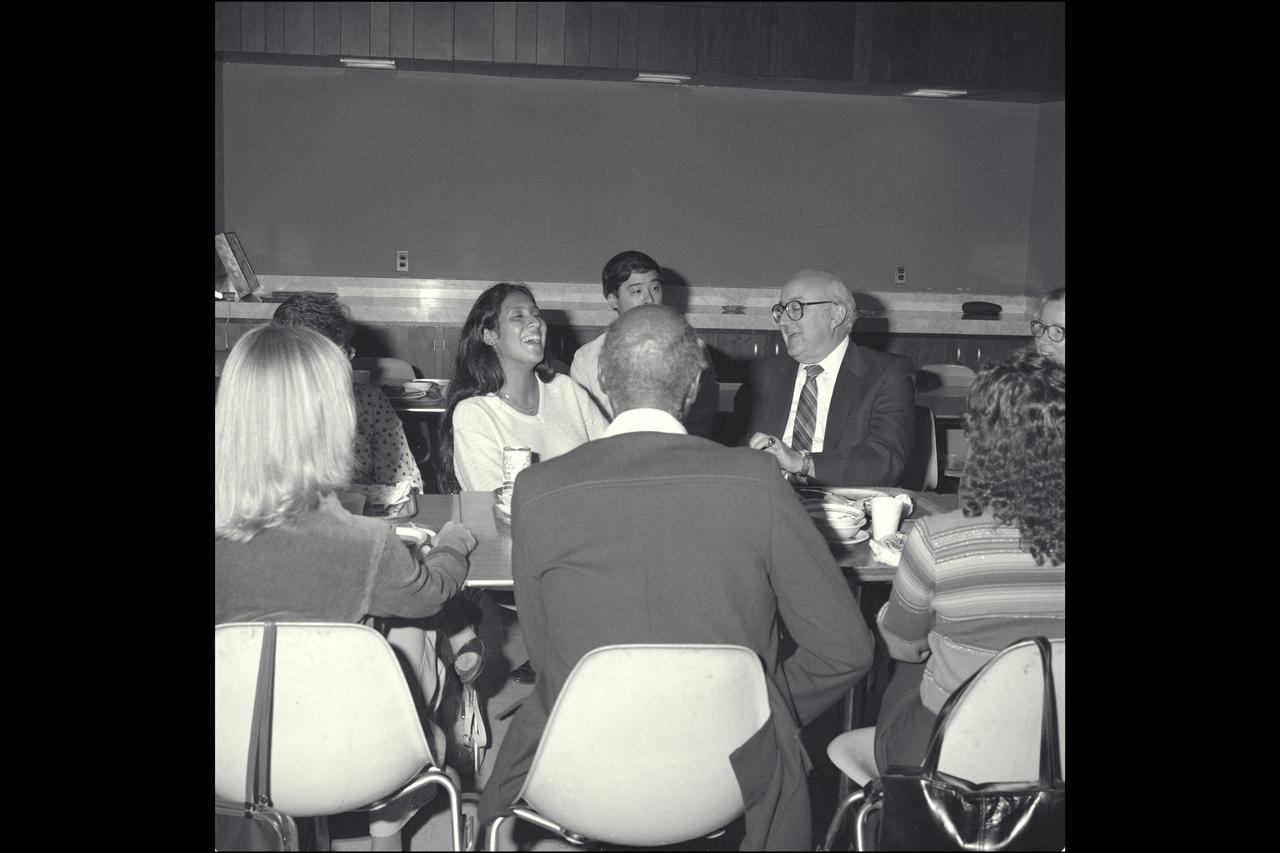
Ames Center Director Sy Syverston enjoys a moment with fellow employees during Ames Heritage Week lunch.
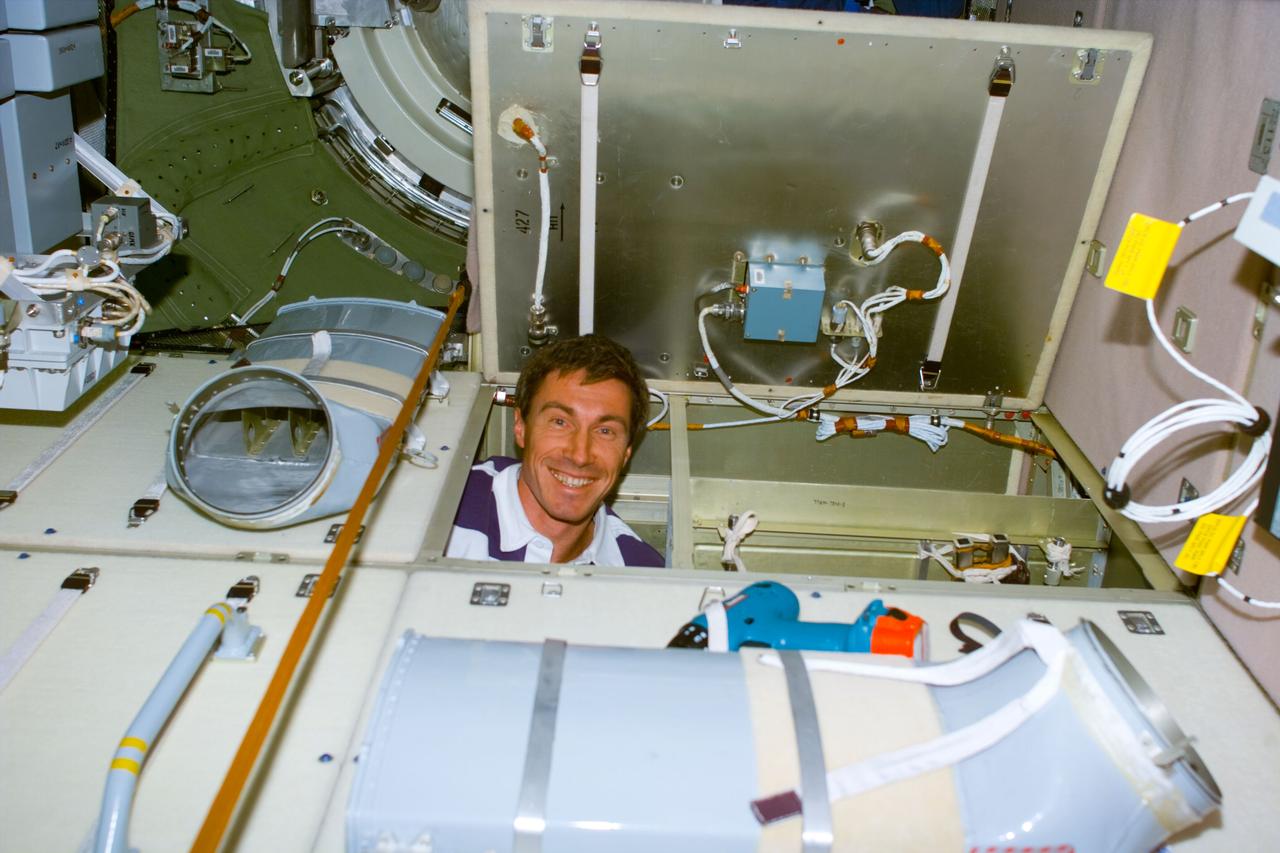
S88-E-5086 (12-11-98) --- Sergei Krikalev, mission specialist representing the Russian Space Agency (RSA), pokes his head up from inside one of the bays inside the walls on the Russian-built Zarya module. Krikalev and astronaut Nancy J. Currie replaced a faulty unit which controls the discharging of stored energy from one of Zarya's six batteries. The photo was taken with an electronic still camera (ESC) at 05:41:18 GMT, Dec. 11.
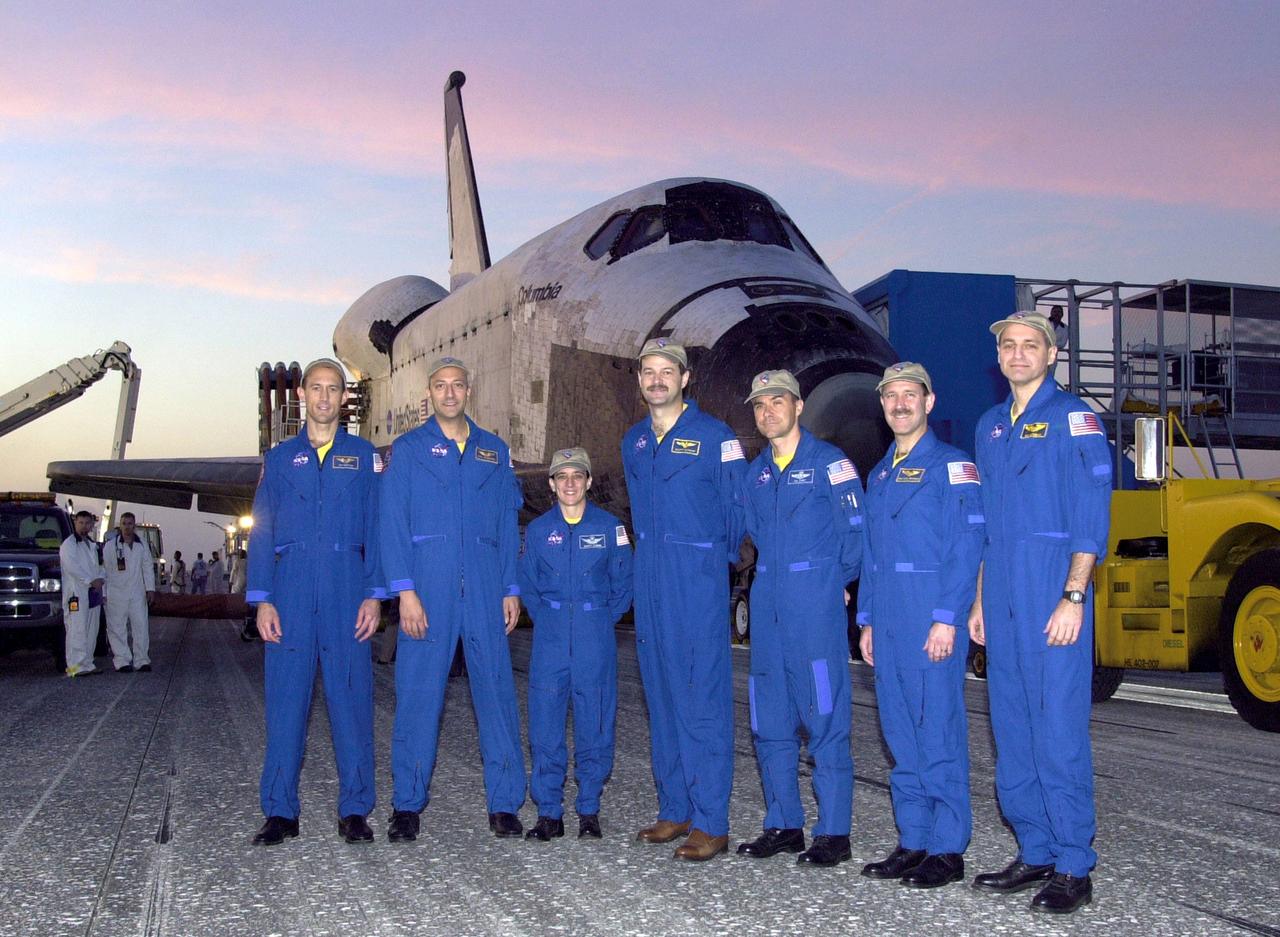
Posing in front of the Space Shuttle Columbia is the returning STS-109 crew. From left are astronauts James H. Newman, Michael J. Massimino, Nancy J. Currie, Scott D. Altman, Duane G. Carey, John M. Grunsfeld and Richard M. Linnehan. The crew returned to Earth after a successful 11-day mission servicing and upgrading the Hubble Space Telescope.
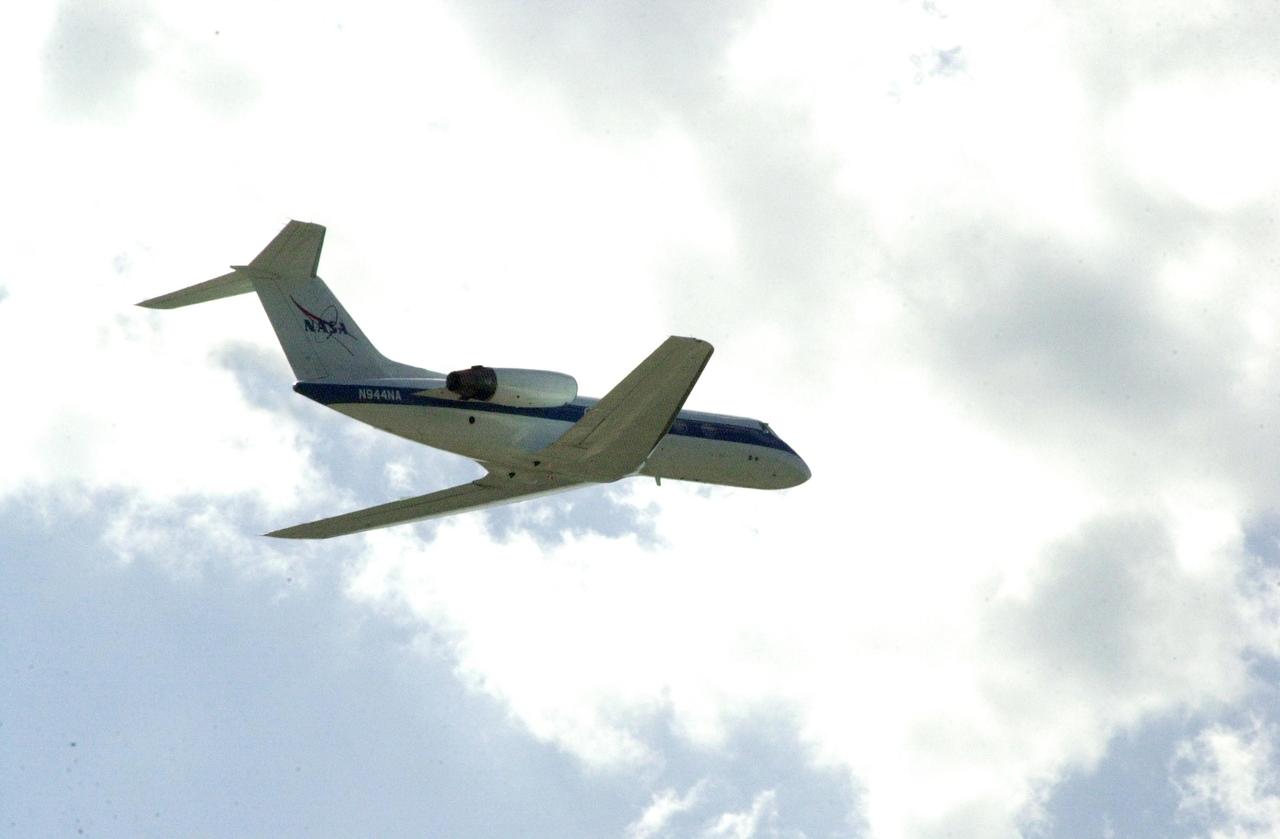
KENNEDY SPACE CENTER, FLA. - The NASA aircraft departs for Houston with the STS-109 crew on board: Commander Scott Altman, Pilot Duane Carey and Mission Specialists John Grunsfeld, James Newman, Nancy Currie, Richard Linnehan and Michael Massimino. The crew returned to KSC aboard Columbia March 12 after an 11-day mission servicing the Hubble Space Telescope
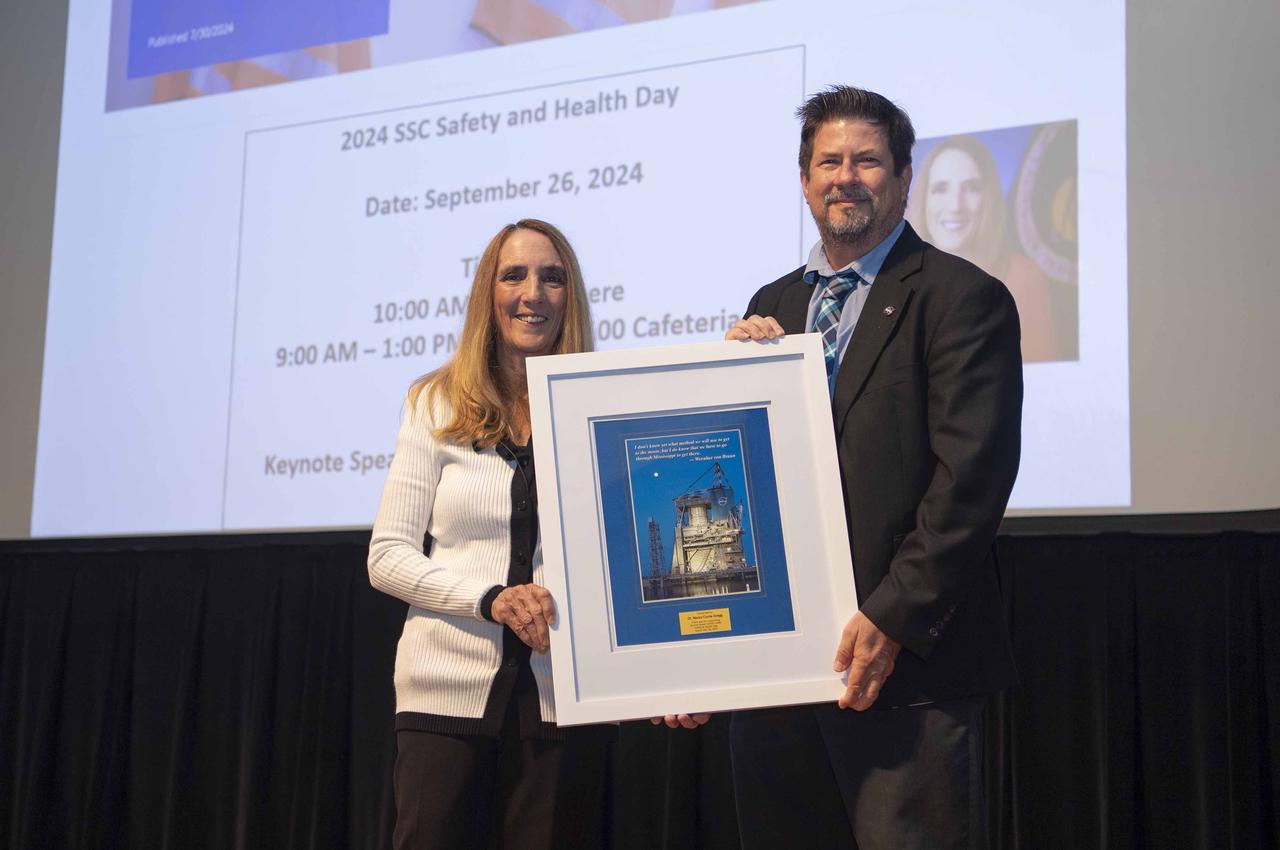
NASA Stennis Safety and Mission Assurance Director Gary Benton, right, presents a token of appreciation to keynote speaker and former NASA astronaut Dr. Nancy Currie-Gregg at the annual Safety and Health Day in the StenniSphere Auditorium at NASA’s Stennis Space Center on Sept. 26. The yearly event is a reminder to the NASA Stennis workforce about the importance of a safe work environment.
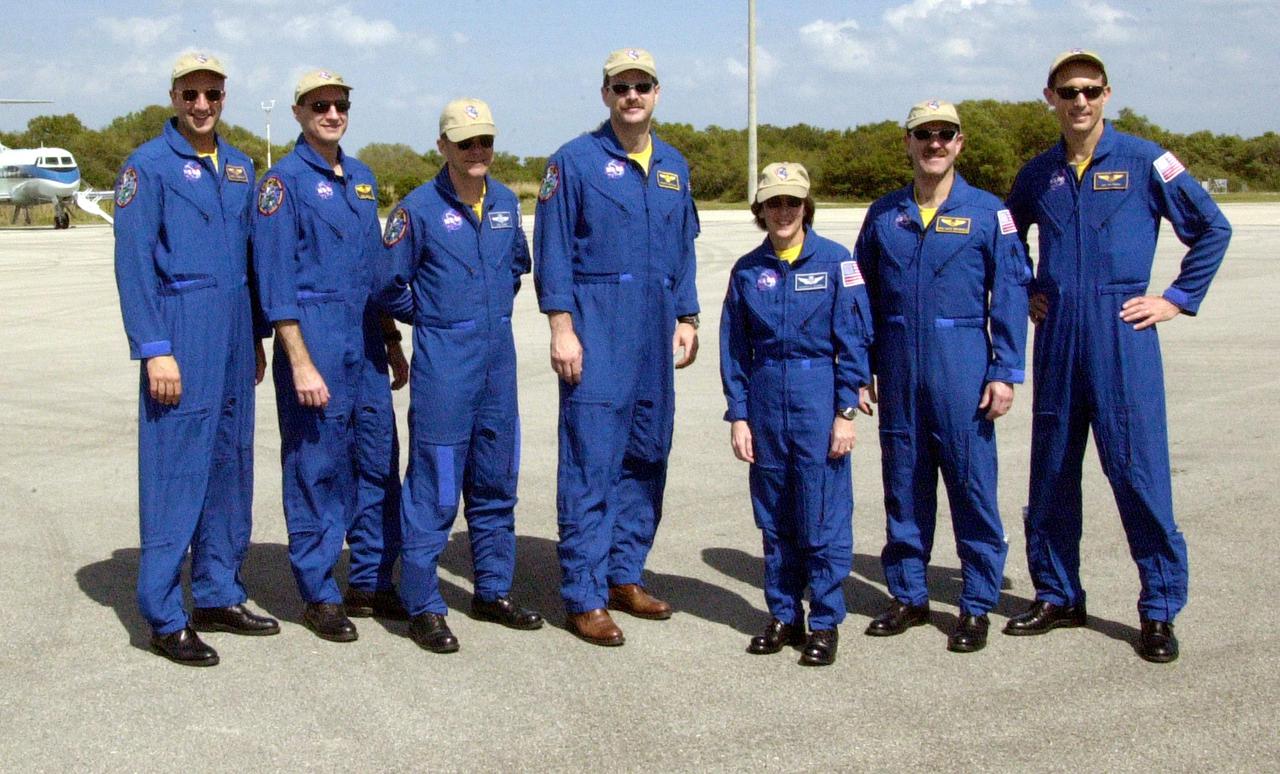
KENNEDY SPACE CENTER, FLA. - The STS-109 crew poses at the Cape Canaveral Air Force Station Skid Strip before departing for Houston. The crew returned to KSC aboard Columbia March 12 after an 11-day mission servicing the Hubble Space Telescope. From left to right are Mission Specialists Michael Massimino and Richard Linnehan; Pilot Duane Carey; Commander Scott Altman; and Mission Specialists Nancy Currie, John Grunsfeld and James Newman. Grunsfeld was Payload Commander on the mission
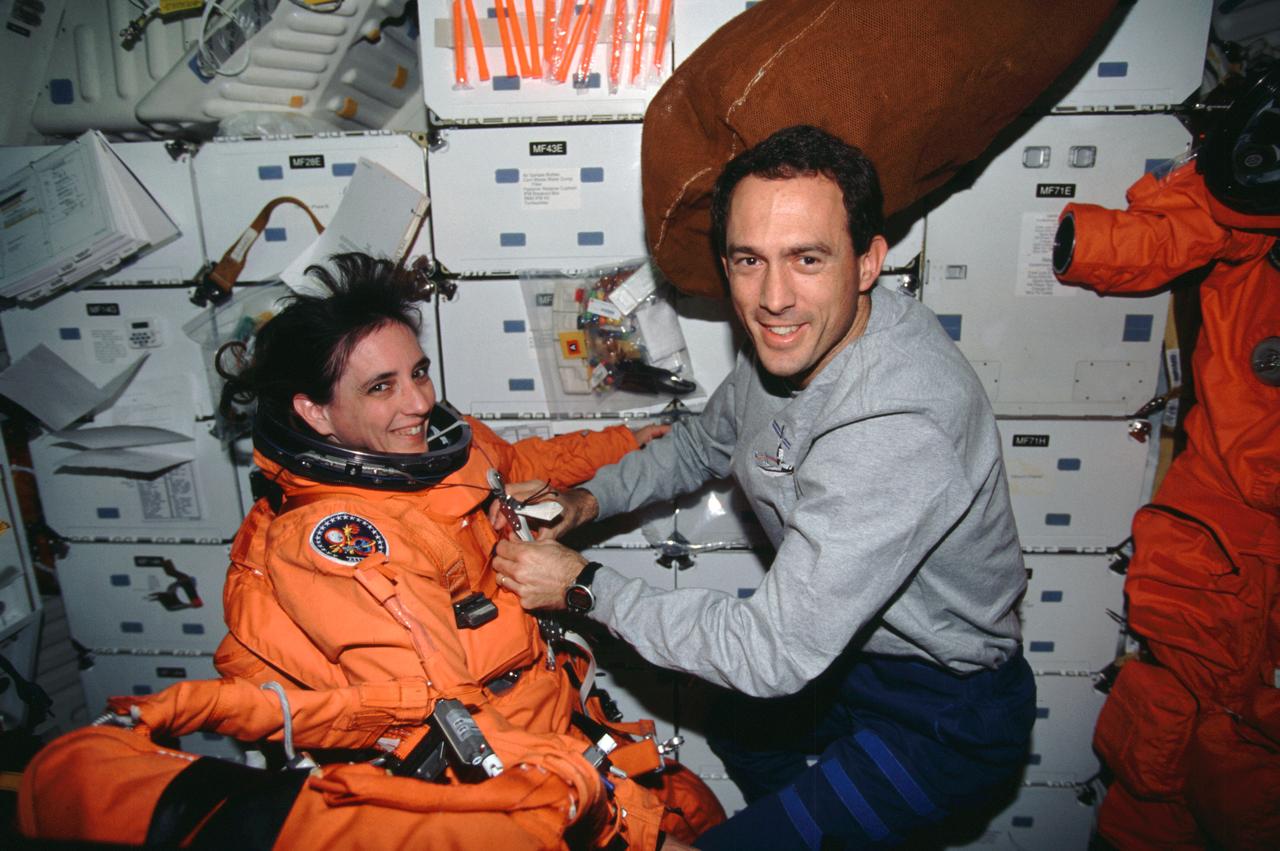
STS088-313-030 (4-15 December 1998) --- Astronaut James H. Newman assists astronaut Nancy J. Currie, both mission specialists, with her launch and entry suit (LES) on the middeck of the Earth-orbiting Space Shuttle Endeavour. The burnt-orange colored suits are high altitude, partial-pressure garments worn by each crew member for ascent and entry phases of the shuttle flights.
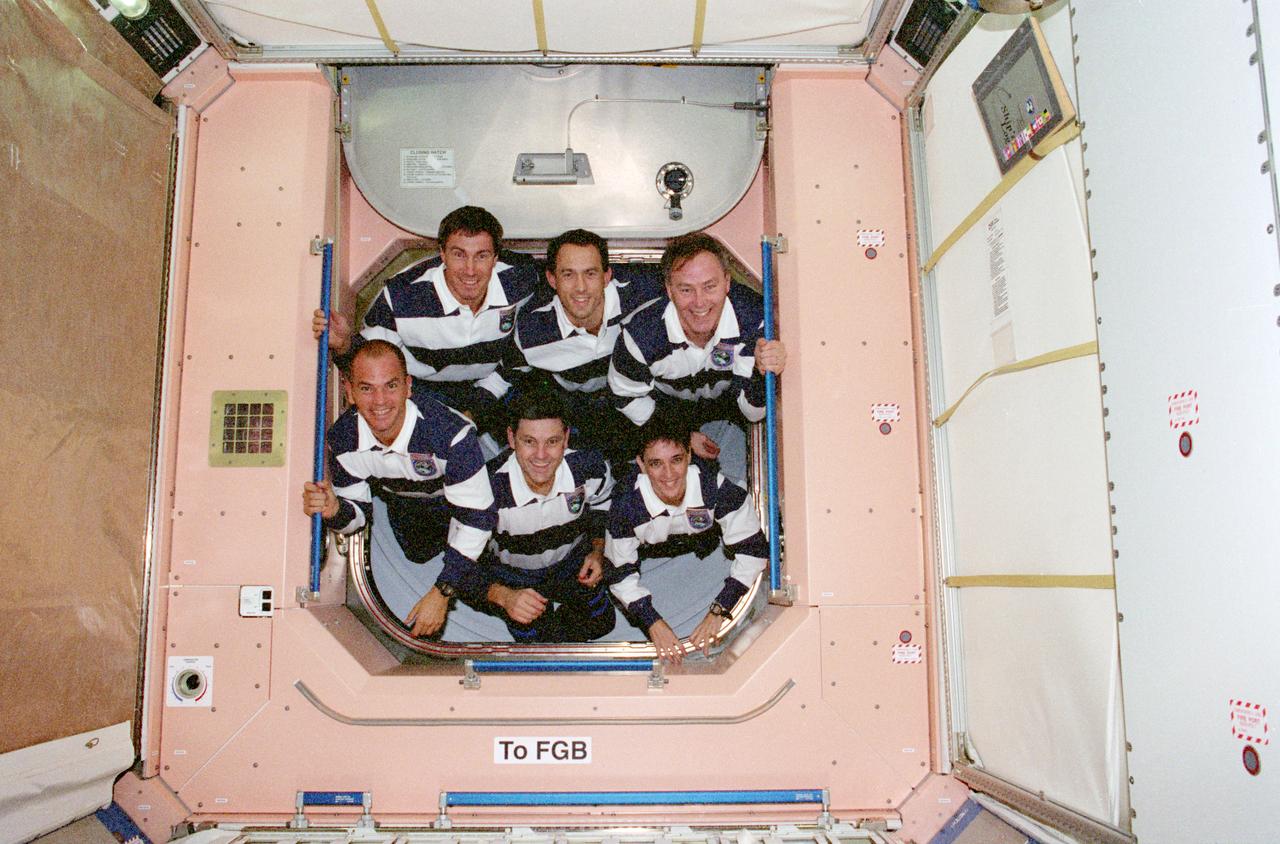
STS088-370-006 (4-15 Dec. 1998) --- The STS-88 crew members pose for the traditional inflight crew portrait in the U.S.-built Unity connecting module. From left to right, bottom, are astronauts Frederick W. (Rick) Sturckow, pilot; Robert D. Cabana, mission commander; and Nancy J. Currie, mission specialist. Top row, cosmonaut Sergei K. Krikalev, representing the Russian Space Agency, along with astronauts James H. Newman and Jerry L. Ross, all mission specialists.
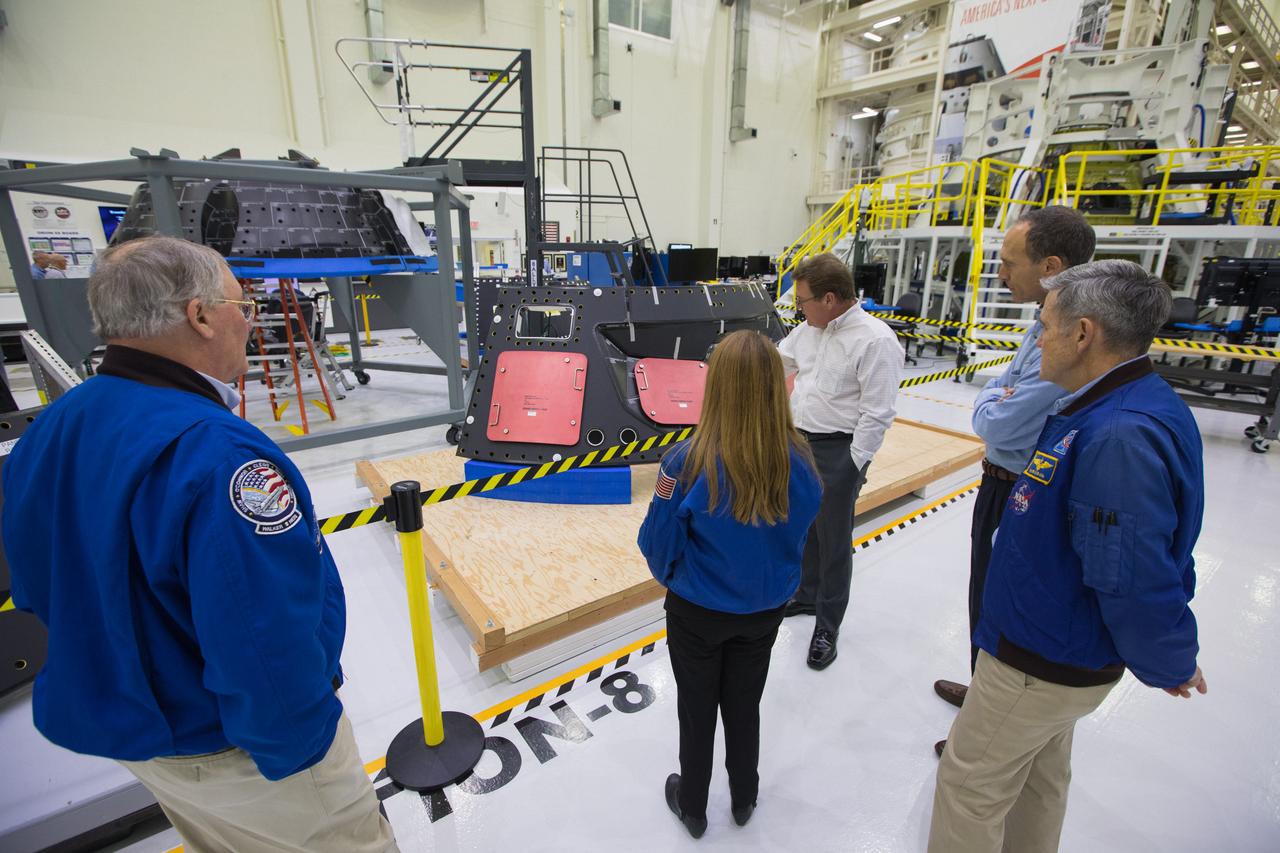
Members of the STS-88 crew tour Kennedy Space Center’s Neil Armstrong Operations & Checkout building on Dec. 10, 2018. Earlier in the day, STS-88 commander Bob Cabana, along with mission specialists Jerry Ross, Nancy Currie-Gregg and Jim Newman, held a panel discussion in recognition of the 20th anniversary of the first International Space Station assembly mission.
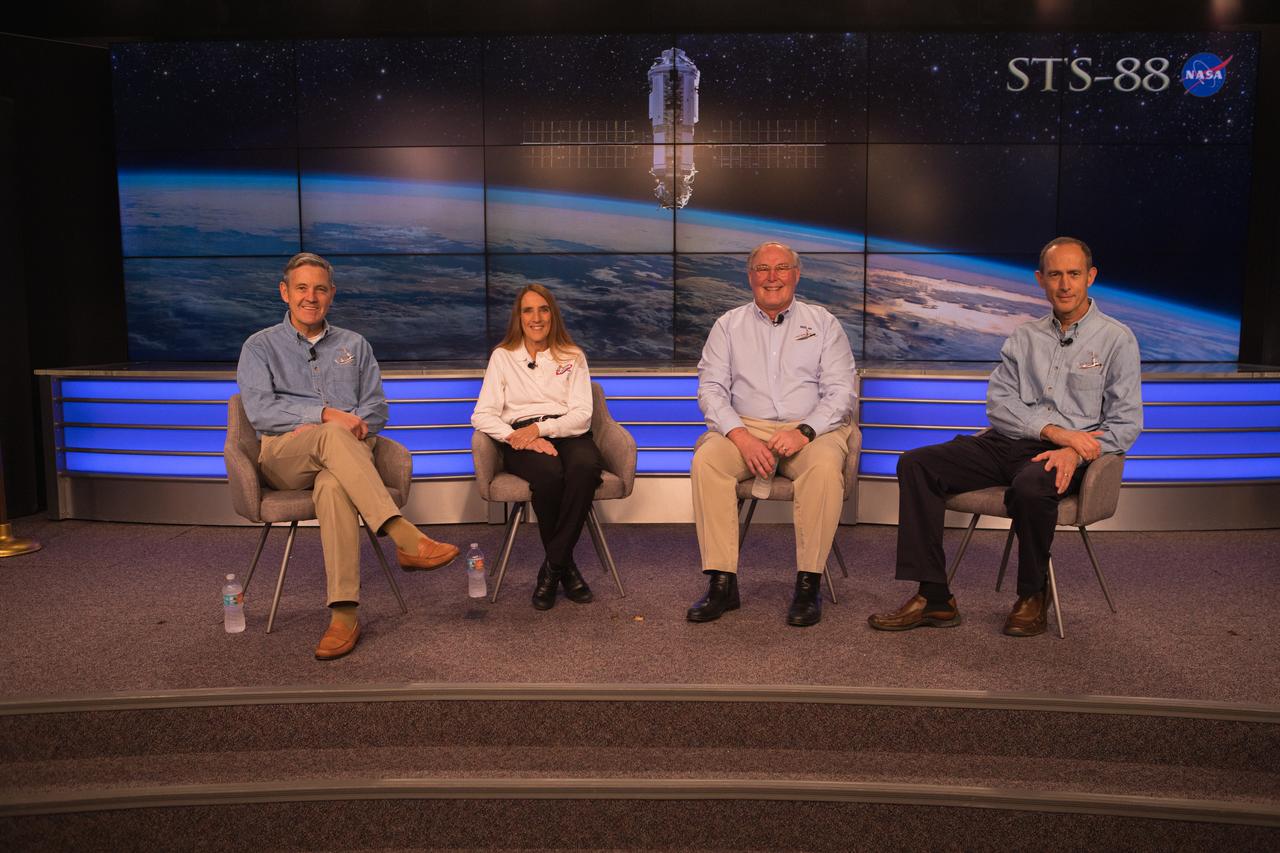
From left, Kennedy Space Center Director and STS-88 commander Bob Cabana, along with STS-88 mission specialists Nancy Currie-Gregg, Jerry Ross and Jim Newman, are recognized Dec. 10, 2018, at Kennedy Space Center in Florida during a 20th anniversary celebration of the first International Space Station assembly mission. The STS-88 mission paved the way for humans to live and work on the space station.
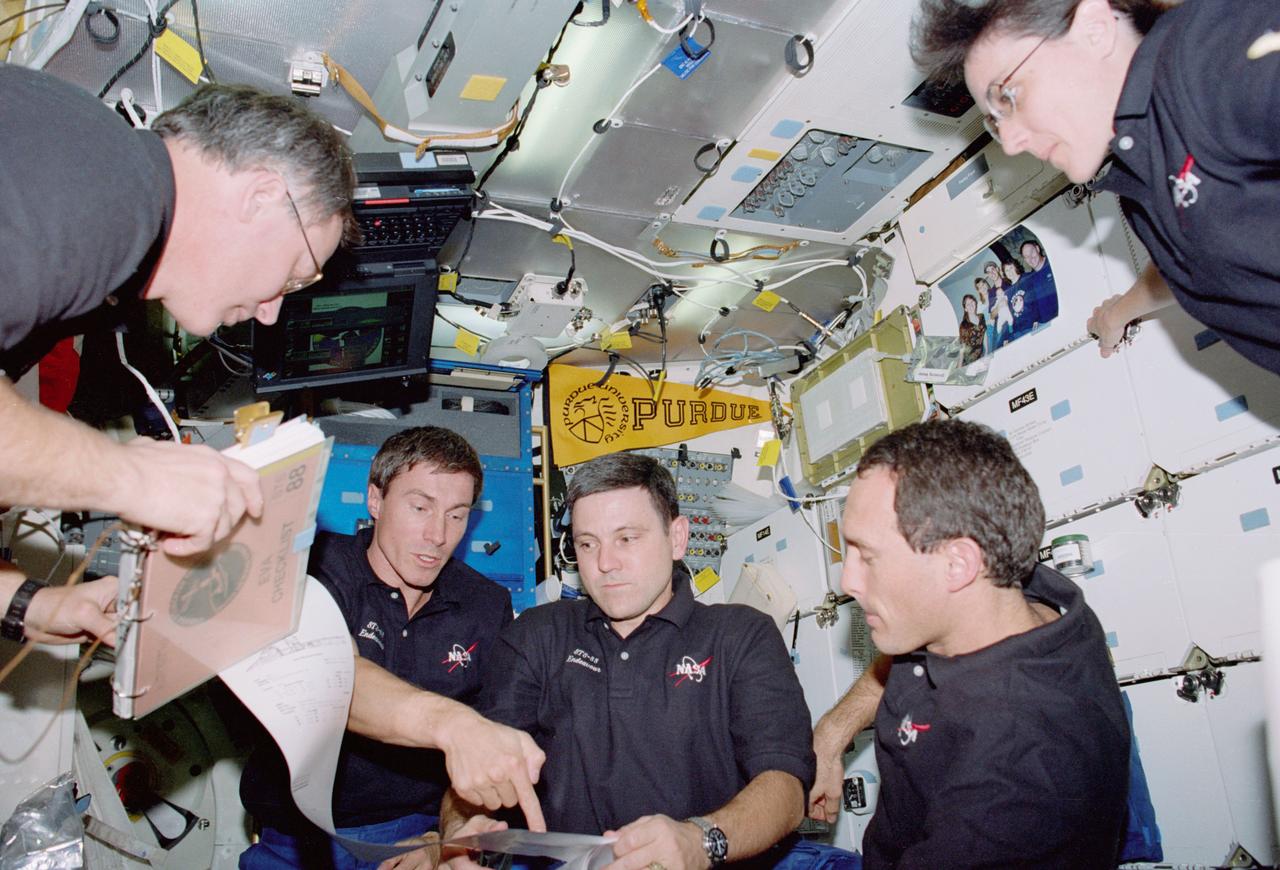
STS088-319-019 (4 - 15 DECEMBER 1998) --- A planning session on Endeavour's middeck includes all but one of the crew members. From the left are astronaut Jerry L. Ross, cosmonaut Sergei K. Krikalev, and astronauts Robert D. Cabana, James H. Newman and Nancy J. Currie. Missing from the scene is astronaut Frederick W. (Rick) Sturckow, who took the photo.
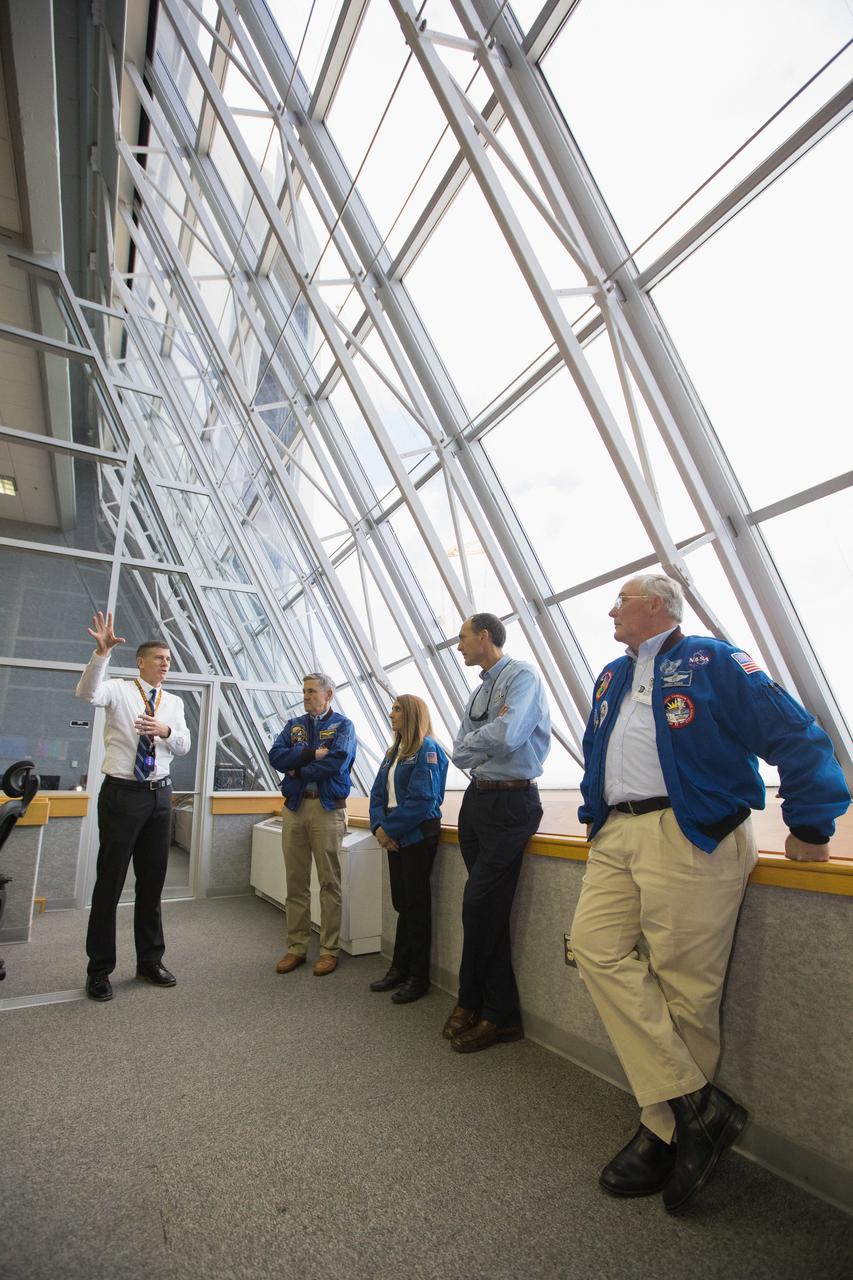
Chief NASA Test Director Jeremy Graeber, left, talks with members of the STS-88 crew inside the Launch Control Center at Kennedy Space Center in Florida on Dec. 10, 2018. They are, from left, Commander Bob Cabana, and mission specialists Nancy Currie-Gregg, Jim Newman and Jerry Ross. Earlier in the day, the group held a panel discussion in recognition of the 20th anniversary of the mission.

JSC2001-E-24459 (8 August 2001) --- Astronaut Nancy J. Currie, STS-109 mission specialist, uses the virtual reality lab at the Johnson Space Center (JSC) to train for some of her duties aboard the Space Shuttle Columbia. This type of computer interface paired with virtual reality training hardware and software helps to prepare the entire team to perform their duties during the fourth Hubble Space Telescope (HST) servicing mission.
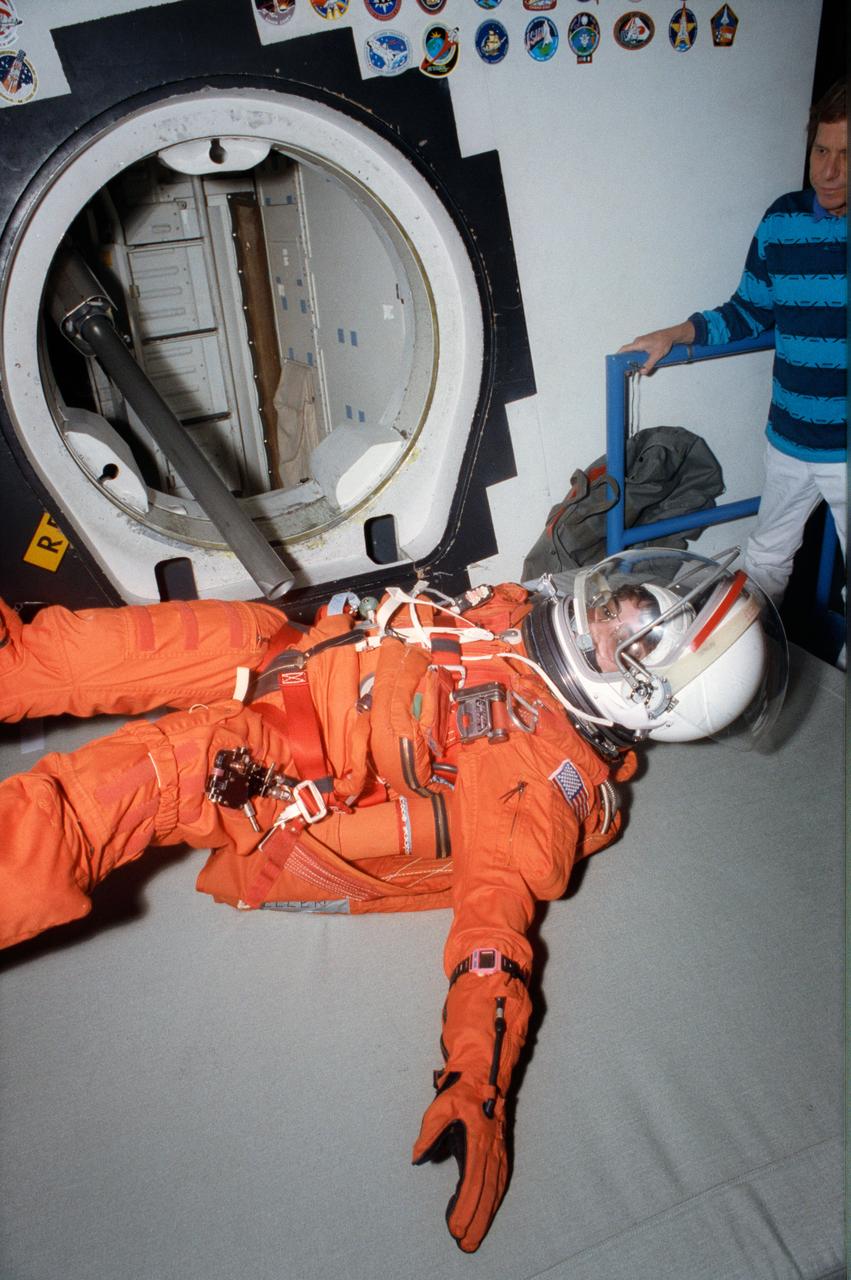
S93-31980 (April 1993) --- Attired in a training version of the Shuttle launch and entry garment, astronaut Nancy J. Sherlock participates in a bailout training session at the Johnson Space Center's (JSC) systems integration facility. Training as a mission specialist for the STS-57 mission, Sherlock was rehearsing using the slide pole escape device. EDITOR'S NOTE: Nancy J. Currie (formerly Sherlock) has been assigned as a mission specialist for the STS-70 mission, scheduled for launch in spring of 1995.
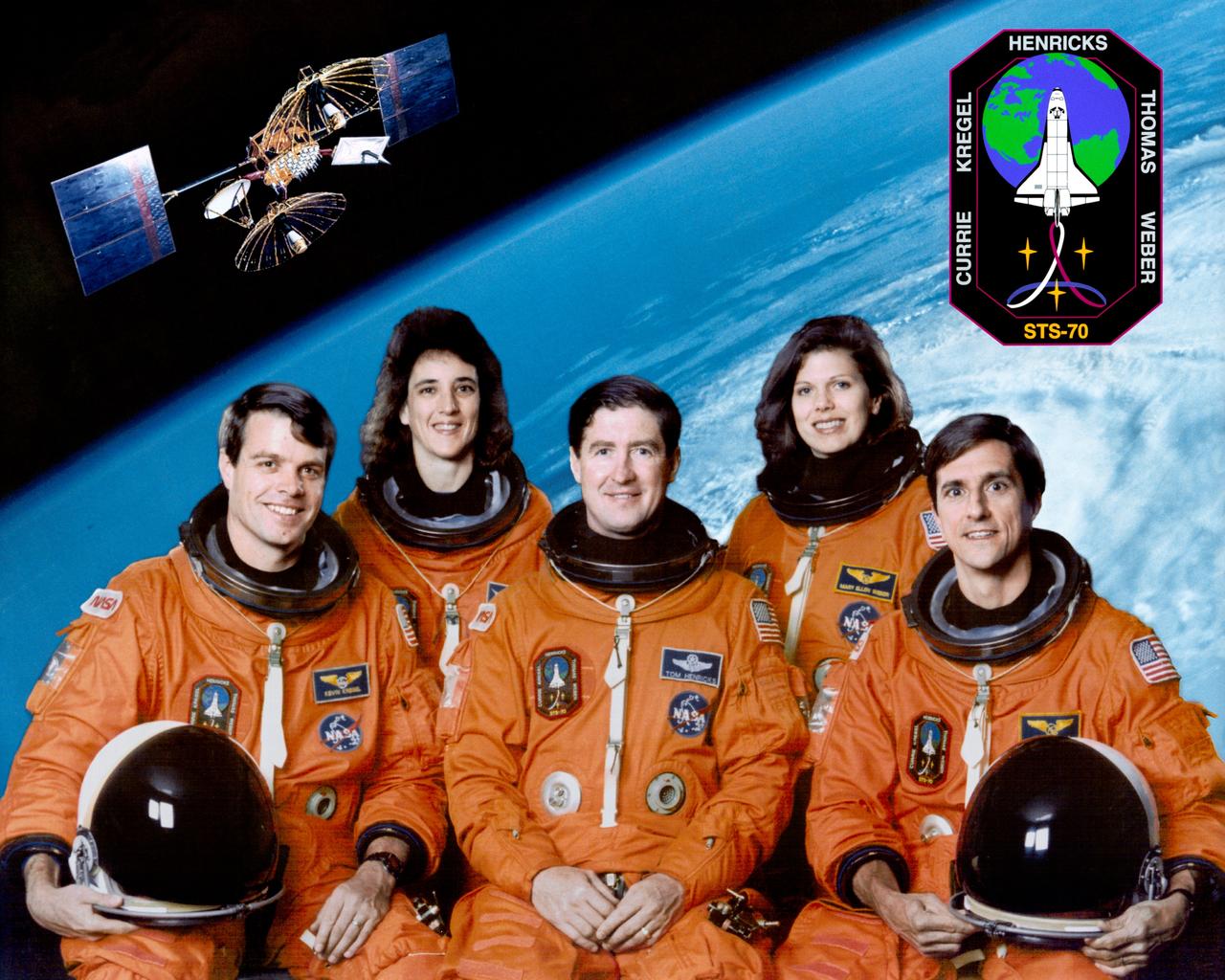
STS070-S-002 (May 1995) --- These five NASA astronauts are in training for the STS-70 mission aboard the Space Shuttle Discovery. Left to right are astronauts Kevin R. Kregel, Nancy J. Currie, Terence T. (Tom) Henricks, Mary Ellen Weber and Donald A. Thomas. Henricks and Kregel are commander and pilot, respectively. The other three are mission specialists. Among the tasks they are expected to perform is the deployment of another satellite in the network of the Tracking and Data Relay Satellite System (TDRSS).
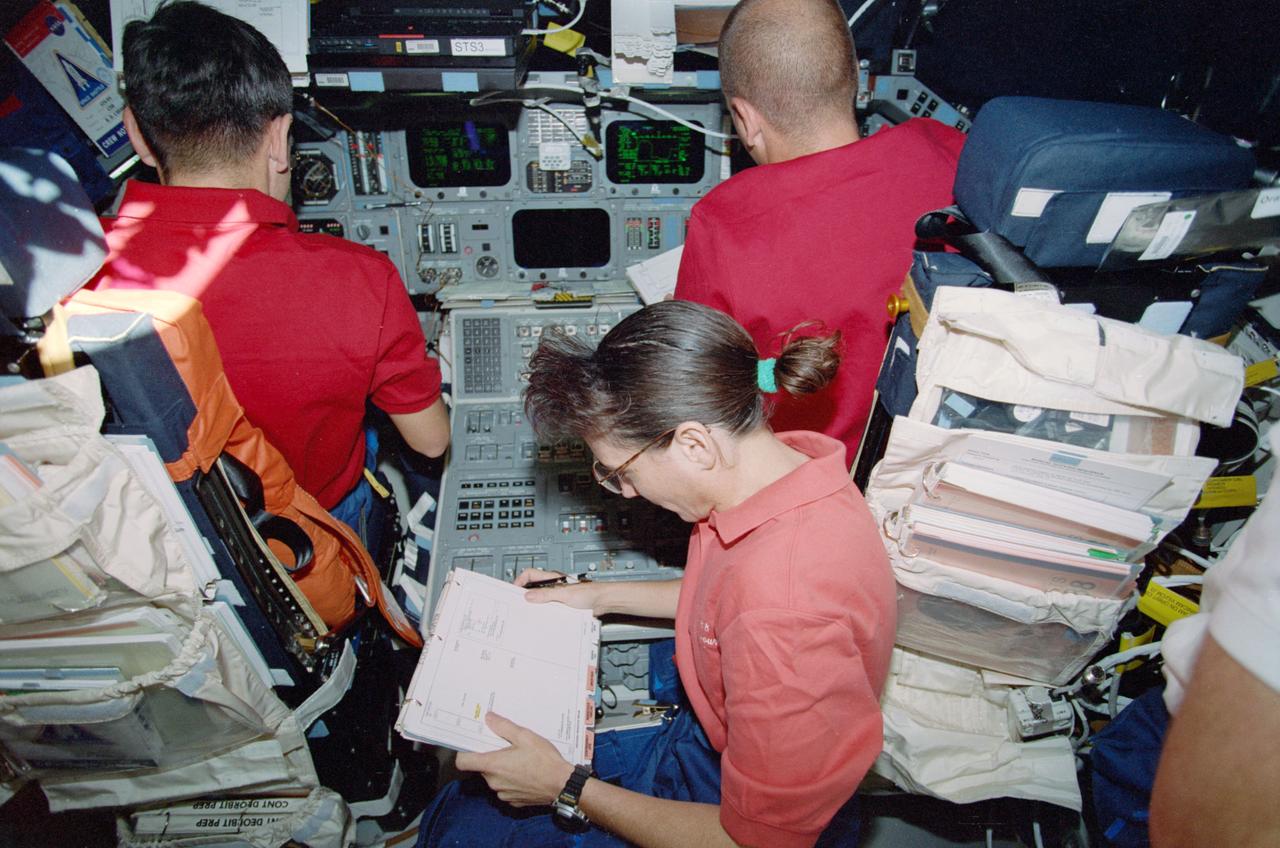
STS088-329-025 (4-15 Dec. 1998) --- Astronauts Robert D. Cabana, commander (left), seated in the commanders station; Frederick W. “Rick” Sturckow, pilot (right), seated in the pilot’s station; and Nancy J. Currie, mission specialist, on the flight deck of the Space Shuttle Endeavour. The three were involved with rendezvous operations with the Russian-built FGB Module (Zarya) at the time the photo was taken.
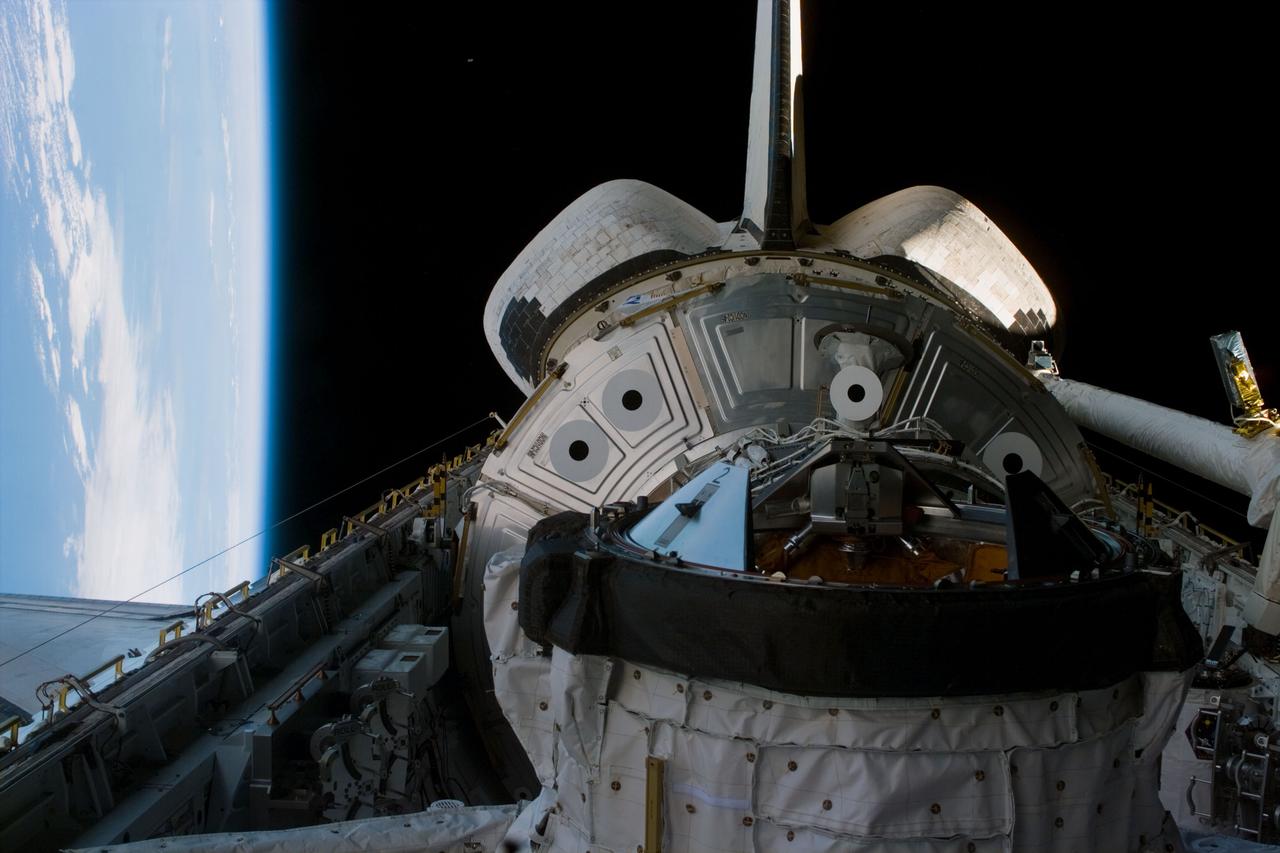
S88-E-5009 (12-04-98) --- This medium closeup electronic still camera (ESC) photograph shows Endeavour's docking system in the cargo bay. Though partially obscured, Unity can be seen in its stowed position in aft payload pay. The photo was taken prior to astronaut Nancy Currie's moving of the 12.8-ton Unity connecting module to link it with Endeavour's docking system. The photo was taken at 21:28:19 GMT, Dec. 4, and downlinked later to flight controllers in Houston.

JSC2001-E-24452 (8 August 2001) --- Astronauts John M. Grunsfeld (left), STS-109 payload commander, and Nancy J. Currie, mission specialist, use the virtual reality lab at the Johnson Space Center (JSC) to train for some of their duties aboard the Space Shuttle Columbia. This type of computer interface paired with virtual reality training hardware and software helps to prepare the entire team to perform its duties during the fourth Hubble Space Telescope (HST) servicing mission.
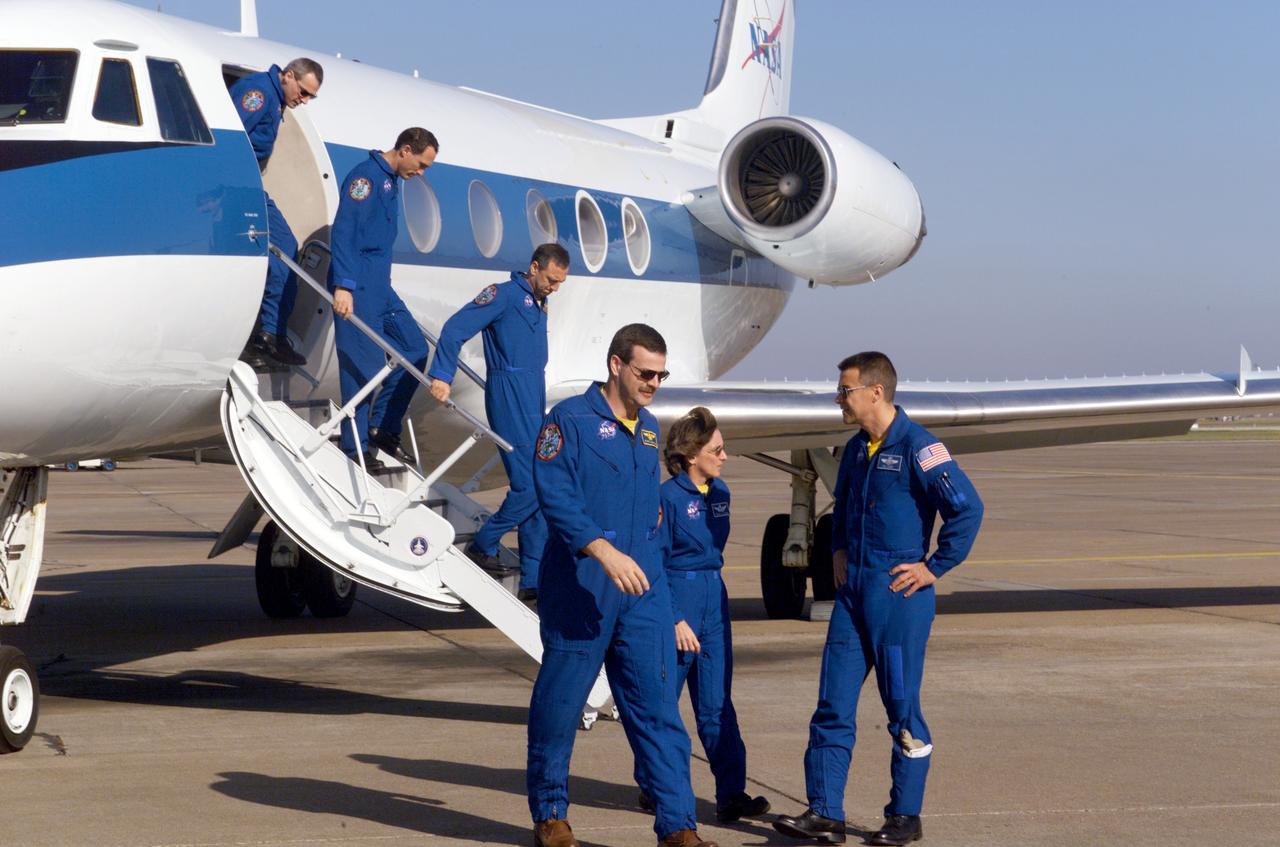
JSC2002-E-09328 (13 March 2002) --- The STS-109 crew exit a Gulfstream aircraft during the crew return ceremonies at Ellington Field. From the left (foreground) are astronauts Scott D. Altman, mission commander, Nancy J. Currie, mission specialist, and Duane G. Carey, pilot. From the top of the stairs are astronauts Richard M. Linnehan, James H. Newman, and Michael J. Massimino, all mission specialists. Astronaut John M. Grunsfeld, payload commander, is out of frame.
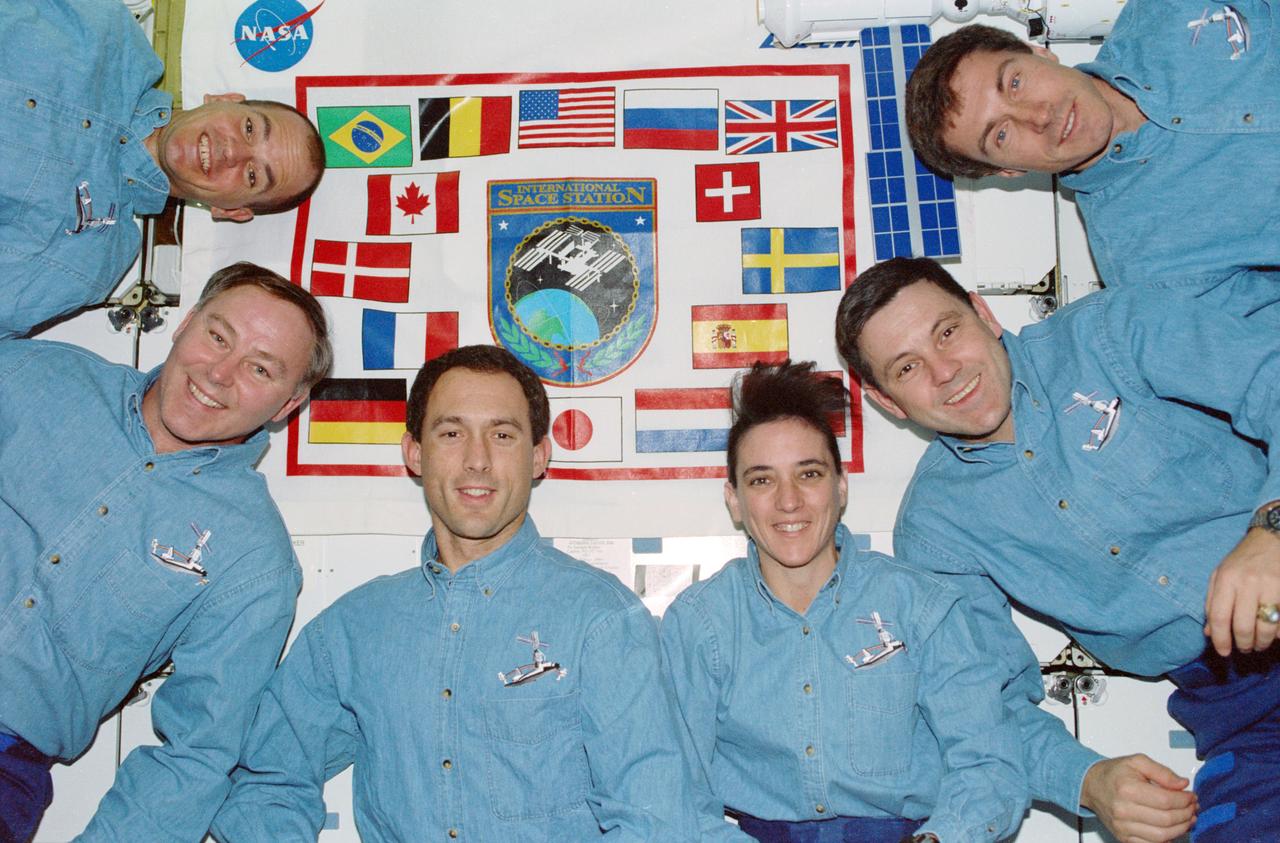
STS088-350-010 (4-15 Dec. 1998) --- STS-88 in-flight crew portrait taken on the Endeavour's middeck with a banner in the background which depicts the flags of all the international partners. From left to right are: Frederick W. "Rick" Sturckow, pilot; Jerry L. Ross, James H. Newman and Nancy J. Currie, all mission specialists; Robert D. Cabana, mission commander; and Sergei K. Krikalev, mission specialist, representing the Russian Aviaiton and Space Agency (Rosaviakosmos).
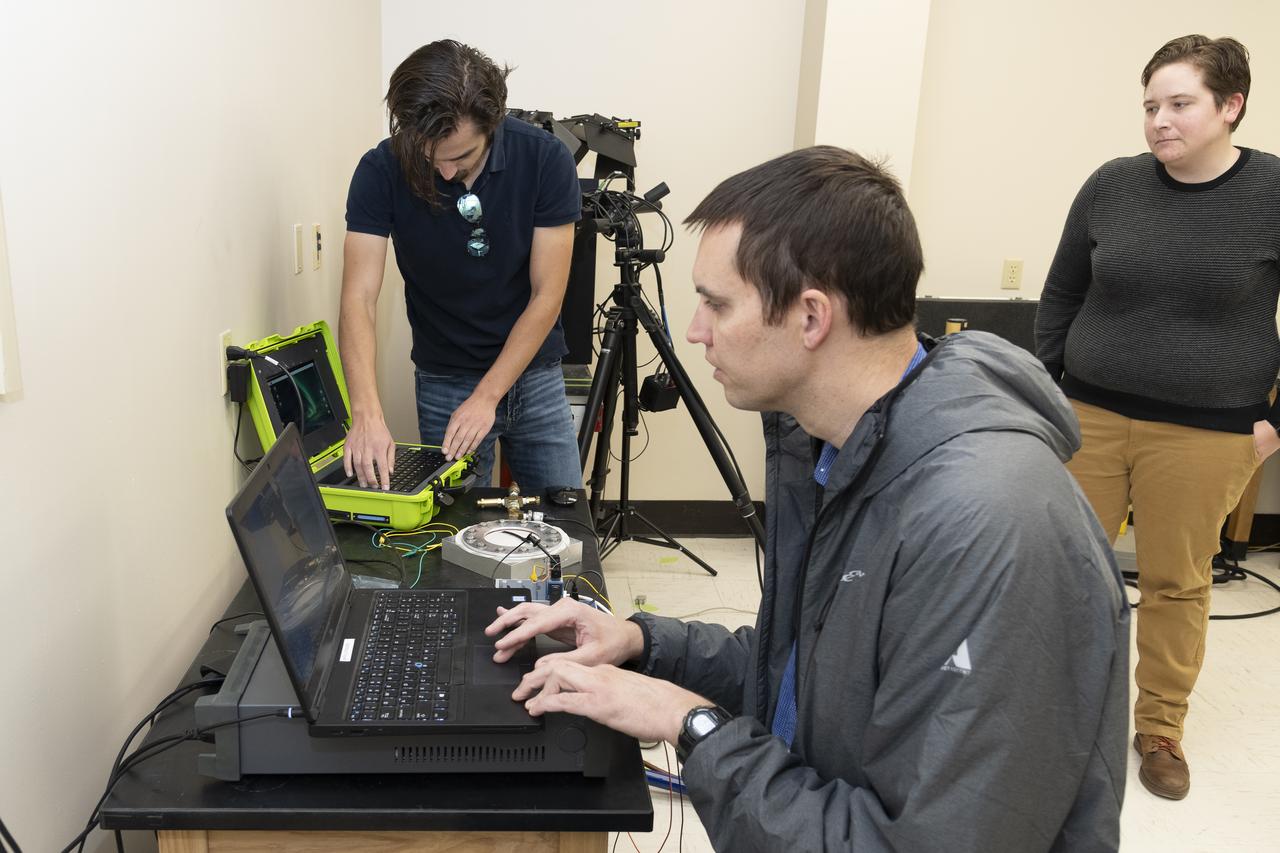
Coby Asselin, from left, Adam Curry, and L. J. Hantsche set up the data acquisition systems used during testing of a senor to determine parachute canopy material strength at NASA’s Armstrong Flight Research Center in Edwards, California. The sensor tests seek to quantify the limits of the material to improve computer models and make more reliable supersonic parachutes.
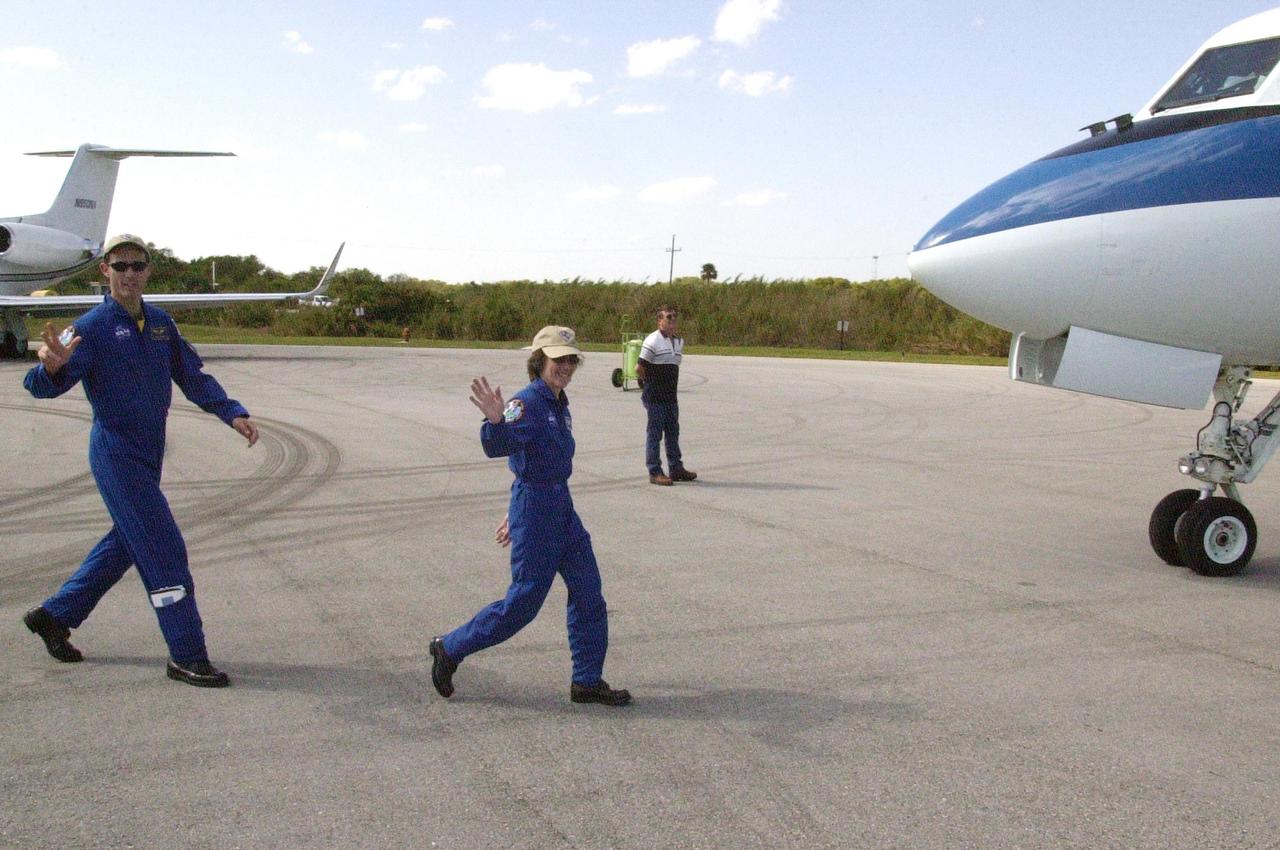
KENNEDY SPACE CENTER, FLA. - At the Cape Canaveral Air Force Station Skid Strip, STS-109 Mission Specialists James Newman and Nancy Currie wave to onlookers as they head for the aircraft and departure for Houston. The crew returned to KSC aboard Columbia March 12 after an 11-day mission servicing the Hubble Space Telescope. The other crew members are Commander Scott Altman, Pilot Duane Carey and Mission Specialists John Grunsfeld, Richard Linnehan and Michael Massimino
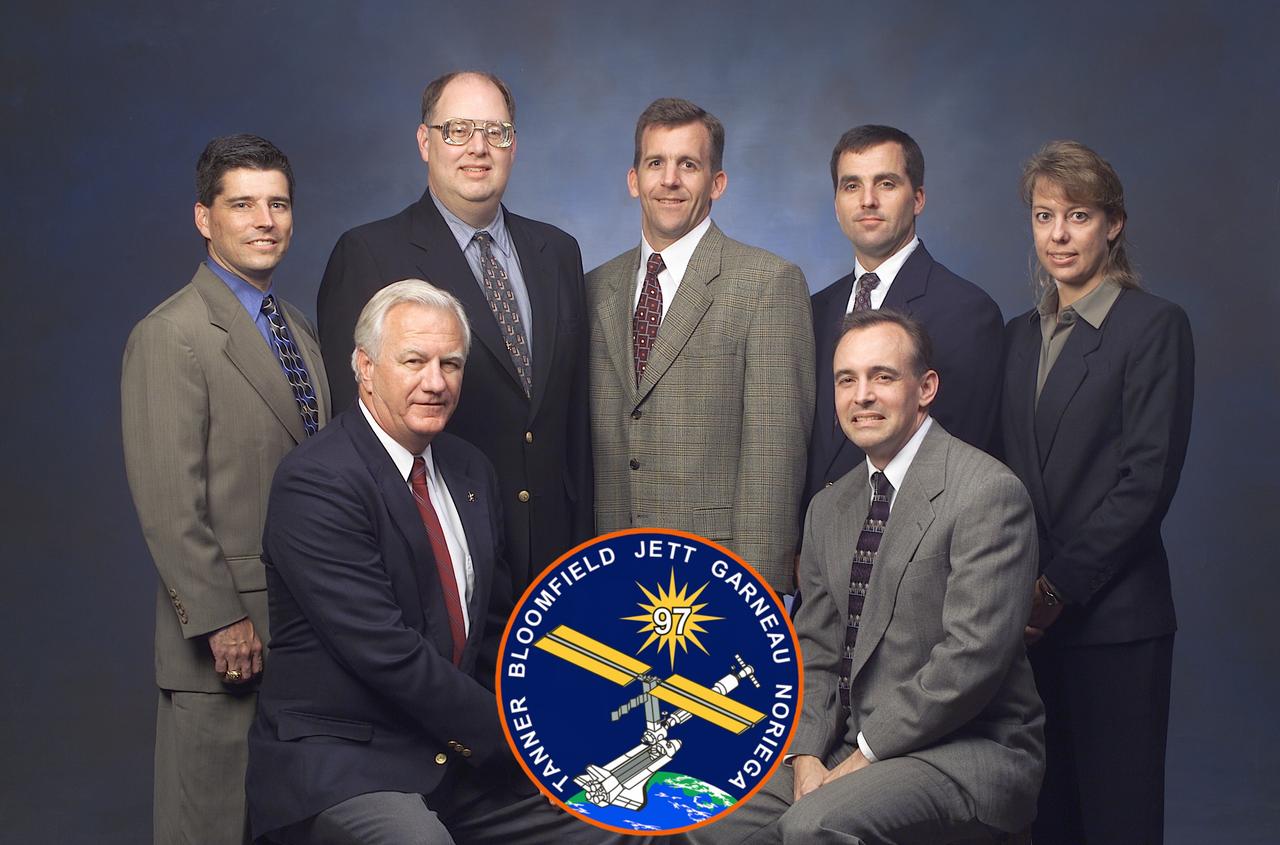
JSC2000-E-29413 (November 2000) --- Flight directors (FD) for the STS-97 mission pose for a pre-flight group portrait with the mission's insignia. Front row: Lead FD Bill Reeves (left), and Jeff Hanley. Back row, from the left: John Curry, Wayne Hale, LeRoy Cain, Paul Hill and Kelly Beck.
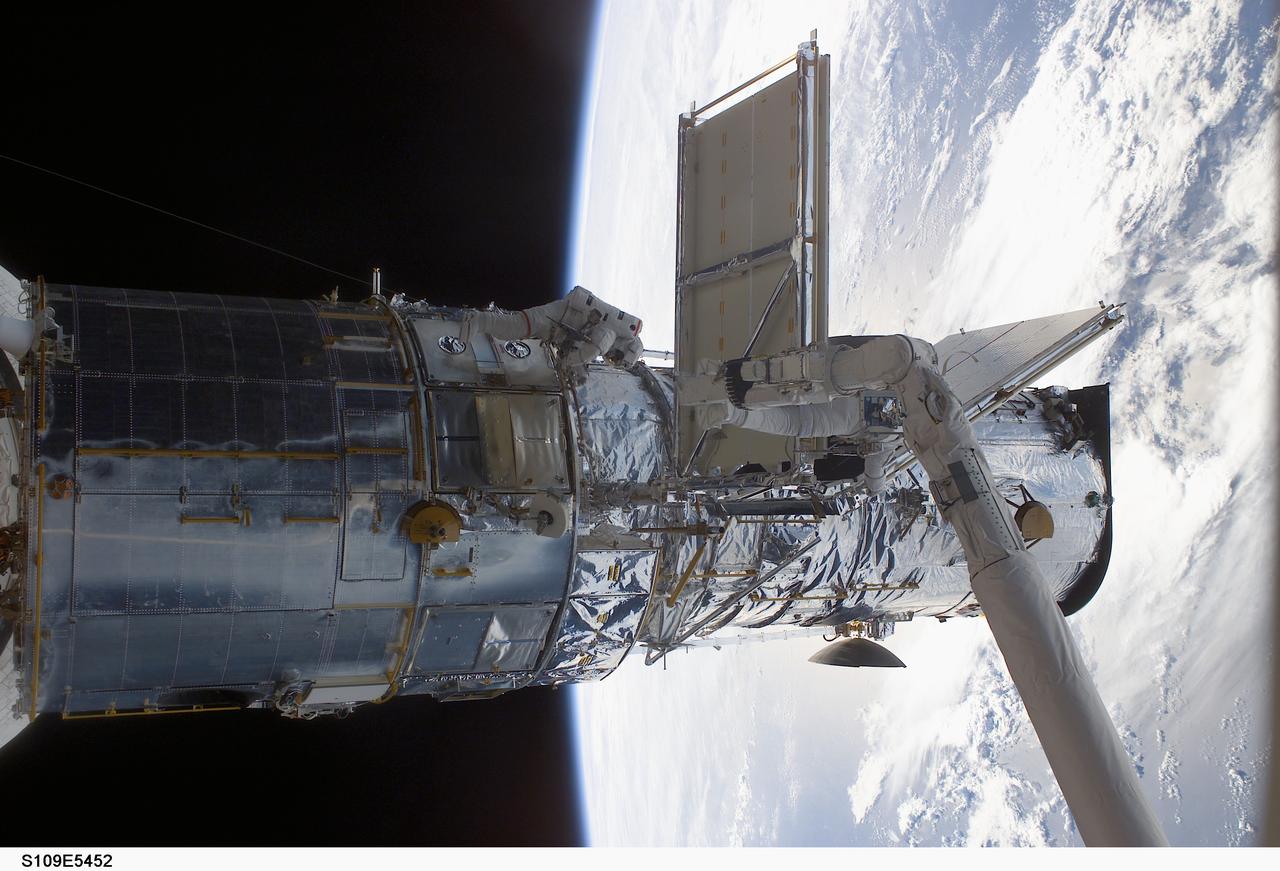
STS109-E-5452 (4 March 2002) --- Astronauts Richard M. Linnehan (partially visible on the end of Columbia's robotic arm), STS-109 mission specialist, and John M. Grunsfeld (center frame), payload commander, work to replace the starboard solar array on the Hubble Space Telescope (HST). Linnehan works while anchored to a foot restraint connected to the shuttle's Remote Manipulator System (RMS), controlled inside the shuttle's crew cabin by astronaut Nancy J. Currie, mission specialist. The image was recorded with a digital still camera.
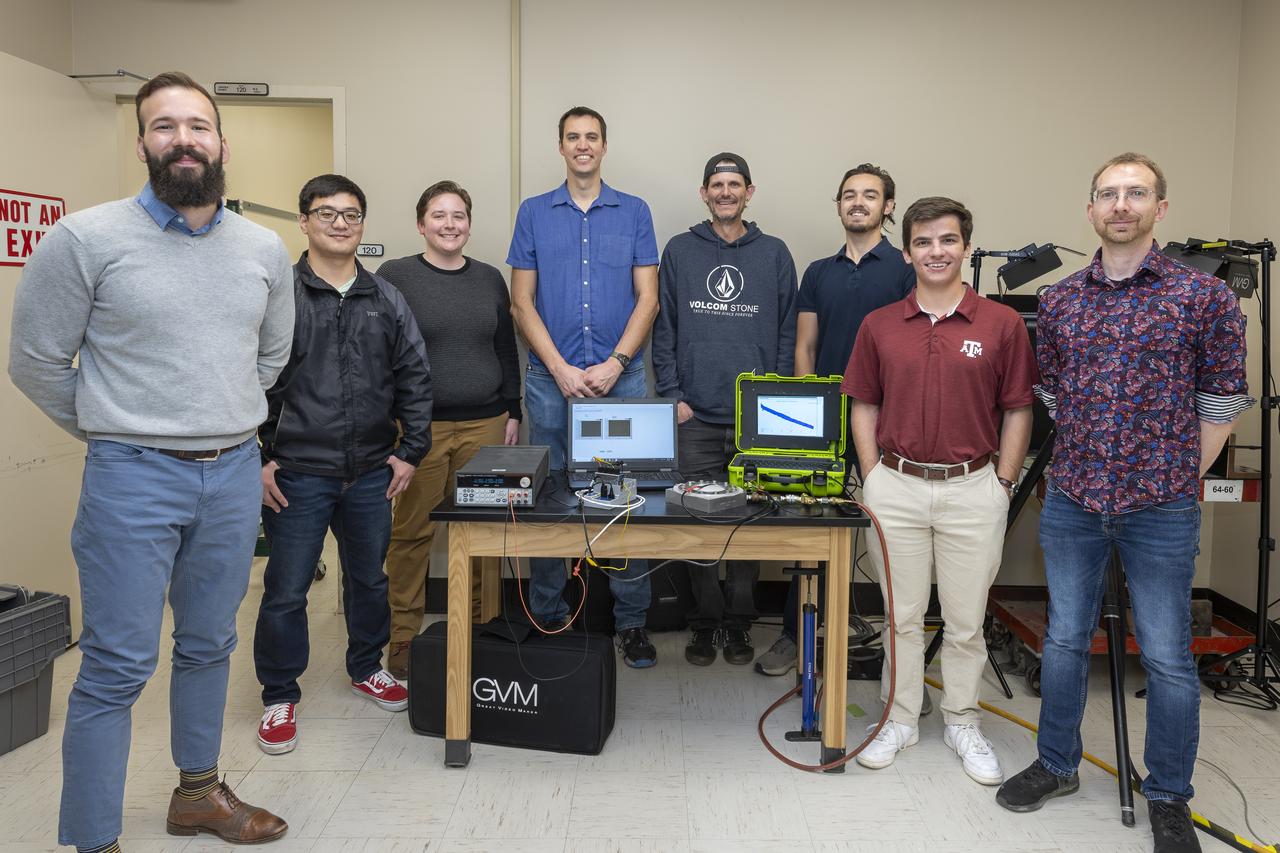
Erick Rossi De La Fuente, from left, John Rudy, L. J. Hantsche, Adam Curry, Jeff Howell, Coby Asselin, Benjamin Mayeux, and Paul Bean pose with a test fixture, material, sensor, and data acquisition systems at NASA’s Armstrong Flight Research Center in Edwards, California. The sensor tests seek to quantify the limits of the material to improve computer models and make more reliable supersonic parachutes.

JSC2002-E-03553 (17 January 2002) --- The STS-109 crewmembers participate in a bench review of equipment and gear in an offsite facility near Johnson Space Center (JSC). From the left (in blue lab coats) are astronauts Michael J. Massimino, mission specialist, John M. Grunsfeld, payload commander, Richard M. Linnehan, mission specialist, Duane G. Carey, pilot, Nancy J. Currie, mission specialist, Scott D. Altman, mission commander, and James H. Newman, mission specialist.

STS109-E-5660 (6 March 2002) --- Astronauts John M. Grunsfeld (top) and Richard M. Linnehan participate in a 6 hour, 48 minute space walk designed to install a new Power Control Unit (PCU) on the Hubble Space Telescope (HST). The two went on to replace the original unit launched with the telescope in April 1990. Grunsfeld is on the end of Columbia's Remote Manipulator System (RMS) robotic arm, controlled from inside the crew cabin by astronaut Nancy J. Currie. The image was recorded with a digital still camera.

Kennedy Space Center Director Bob Cabana, front left, talks with Scott Wilson, manager of production operations for the Orion Program, inside Kennedy’s Neil Armstrong Operations and Checkout building on Dec. 10, 2018. Cabana, who commanded the first International Space Station assembly mission, was accompanied by fellow STS-88 crew members Jim Newman, Nancie Currie-Gregg and Jerry Ross. Earlier in the day, the group held a panel discussion in recognition of the 20th anniversary of the mission.