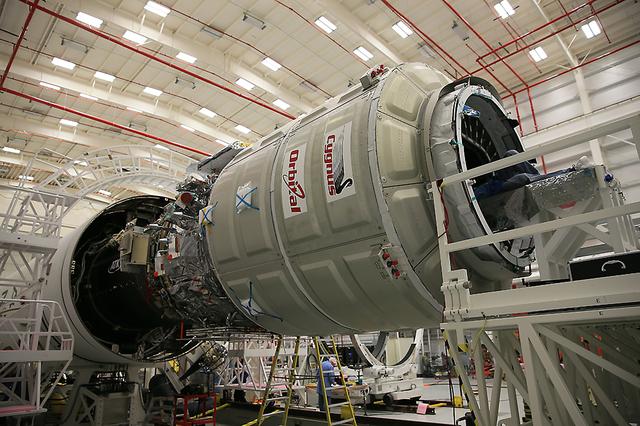
Orbital Sciences Corp. completed final cargo load of the Cygnus cargo spacecraft Oct. 23, 2014, in preparation for launch to the International Space Station, scheduled for 6:45 p.m. EDT, Monday, Oct. 27, from Mid-Atlantic Regional Spaceport Pad 0A at NASA's Wallops Flight Facility. The spacecraft is mated to the company's Antares rocket with roll-out to the launch pad scheduled for Friday, Oct. 24. This mission is the third of eight Orbital flights NASA contracted with the company to resupply the space station, and the fourth trip by a Cygnus spacecraft to the ISS. Cygnus will transport some 5,000 pounds of supplies and experiments to the orbiting laboratory. More at <a href="http://www.nasa.gov/orbital" rel="nofollow">www.nasa.gov/orbital</a> Credit: NASA's Wallops Flight Facility/Patrick Black <b><a href="http://www.nasa.gov/audience/formedia/features/MP_Photo_Guidelines.html" rel="nofollow">NASA image use policy.</a></b> <b><a href="http://www.nasa.gov/centers/goddard/home/index.html" rel="nofollow">NASA Goddard Space Flight Center</a></b> enables NASA’s mission through four scientific endeavors: Earth Science, Heliophysics, Solar System Exploration, and Astrophysics. Goddard plays a leading role in NASA’s accomplishments by contributing compelling scientific knowledge to advance the Agency’s mission. <b>Follow us on <a href="http://twitter.com/NASAGoddardPix" rel="nofollow">Twitter</a></b> <b>Like us on <a href="http://www.facebook.com/pages/Greenbelt-MD/NASA-Goddard/395013845897?ref=tsd" rel="nofollow">Facebook</a></b> <b>Find us on <a href="http://instagram.com/nasagoddard?vm=grid" rel="nofollow">Instagram</a></b>
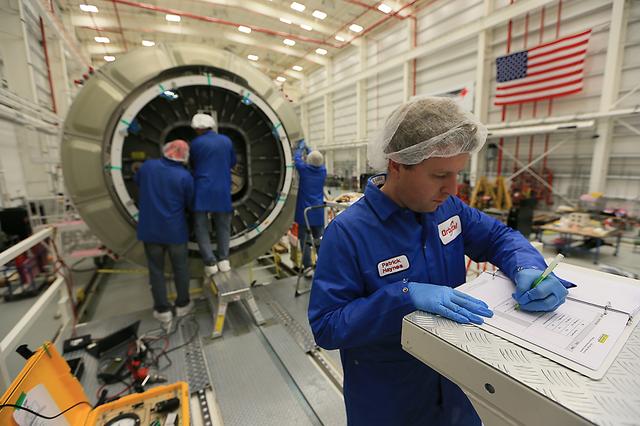
Orbital Sciences Corp. completed final cargo load of the Cygnus cargo spacecraft Oct. 23, 2014, in preparation for launch to the International Space Station, scheduled for 6:45 p.m. EDT, Monday, Oct. 27, from Mid-Atlantic Regional Spaceport Pad 0A at NASA's Wallops Flight Facility. The spacecraft is mated to the company's Antares rocket with roll-out to the launch pad scheduled for Friday, Oct. 24. This mission is the third of eight Orbital flights NASA contracted with the company to resupply the space station, and the fourth trip by a Cygnus spacecraft to the ISS. Cygnus will transport some 5,000 pounds of supplies and experiments to the orbiting laboratory. More at <a href="http://www.nasa.gov/orbital" rel="nofollow">www.nasa.gov/orbital</a> Credit: NASA's Wallops Flight Facility/Patrick Black <b><a href="http://www.nasa.gov/audience/formedia/features/MP_Photo_Guidelines.html" rel="nofollow">NASA image use policy.</a></b> <b><a href="http://www.nasa.gov/centers/goddard/home/index.html" rel="nofollow">NASA Goddard Space Flight Center</a></b> enables NASA’s mission through four scientific endeavors: Earth Science, Heliophysics, Solar System Exploration, and Astrophysics. Goddard plays a leading role in NASA’s accomplishments by contributing compelling scientific knowledge to advance the Agency’s mission. <b>Follow us on <a href="http://twitter.com/NASAGoddardPix" rel="nofollow">Twitter</a></b> <b>Like us on <a href="http://www.facebook.com/pages/Greenbelt-MD/NASA-Goddard/395013845897?ref=tsd" rel="nofollow">Facebook</a></b> <b>Find us on <a href="http://instagram.com/nasagoddard?vm=grid" rel="nofollow">Instagram</a></b>
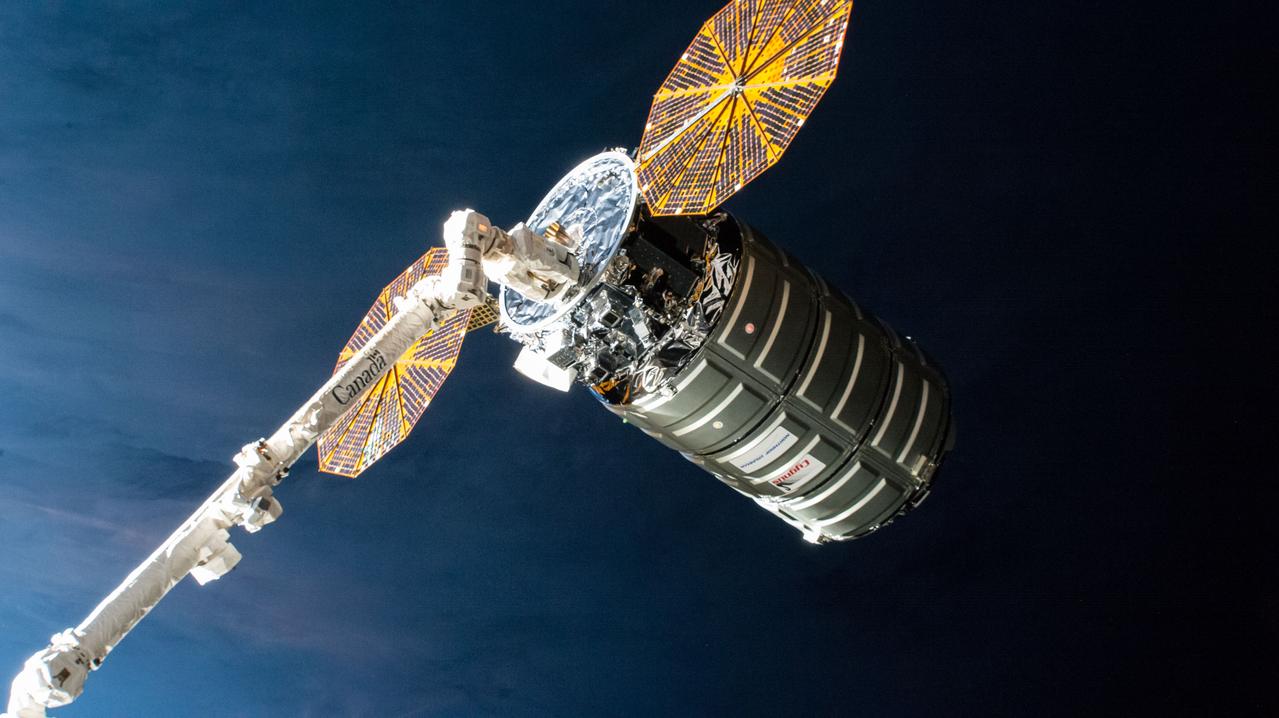
iss058e011396 (Feb. 8, 2019) --- The Cygnus cargo craft from Northrop Grumman is pictured firmly in the grips of the Canadarm2 robotic arm just before its release from the International Space Station.
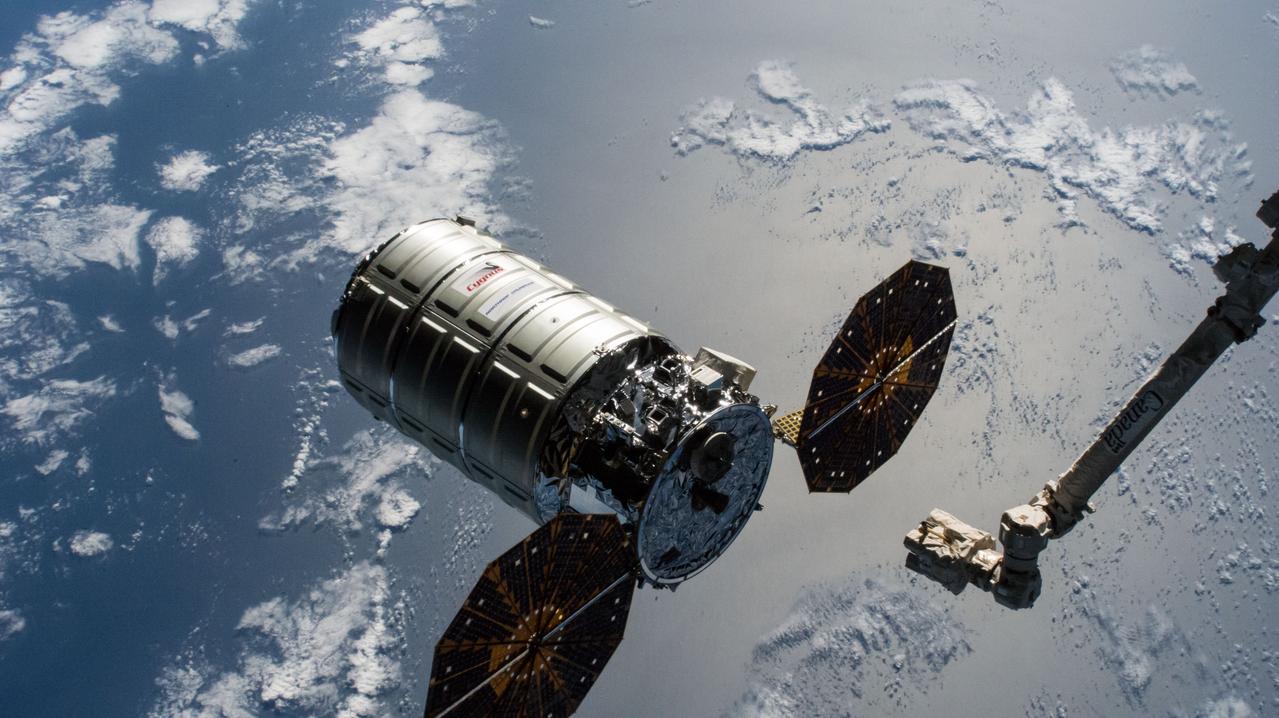
iss058e011814 (Feb. 8, 2019) --- The Cygnus cargo craft from Northrop Grumman is released from the grips of the Canadarm2 robotic arm as the International Space Station was orbiting over the Pacific Ocean off the coast of Peru.

iss058e011813 (Feb. 8, 2019) --- The Cygnus cargo craft from Northrop Grumman is pictured in the grips of the Canadarm2 robotic arm moments before its release as the International Space Station was orbiting over the Pacific Ocean.
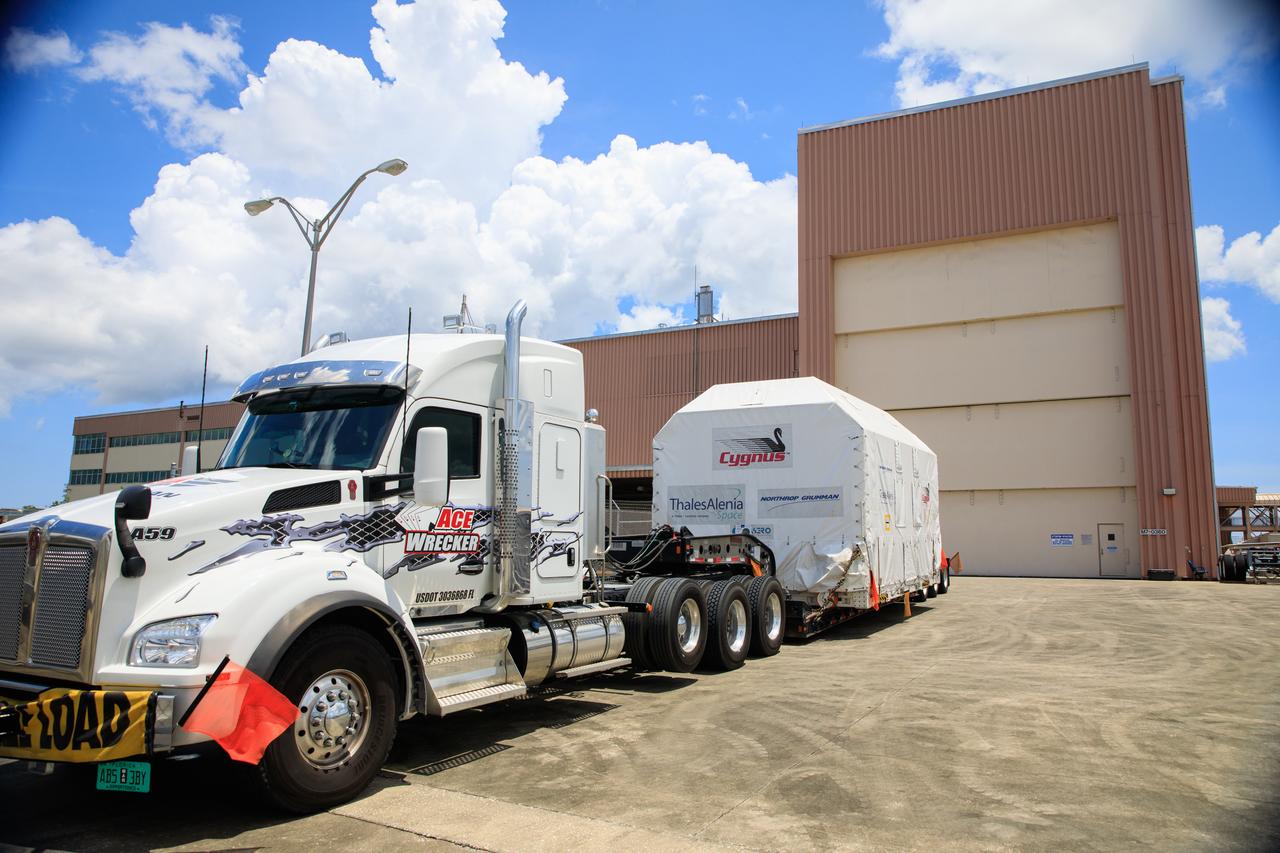
The Northrop Grumman Cygnus spacecraft's pressurized cargo module (PCM) arrives at the Space Station Processing Facility of NASA's Kennedy Space Center in Florida on Aug. 2, 2023. The PCM is sealed in an environmentally controlled shipping container, pulled in by truck on a flatbed trailer. Cygnus will launch later this year atop a SpaceX Falcon 9 rocket from Cape Canaveral Space Force Station’s Space Launch Complex 40 to the International Space Station. Cygnus will undergo prelaunch processing at Kennedy before it is transported to SpaceX’s integration facility.
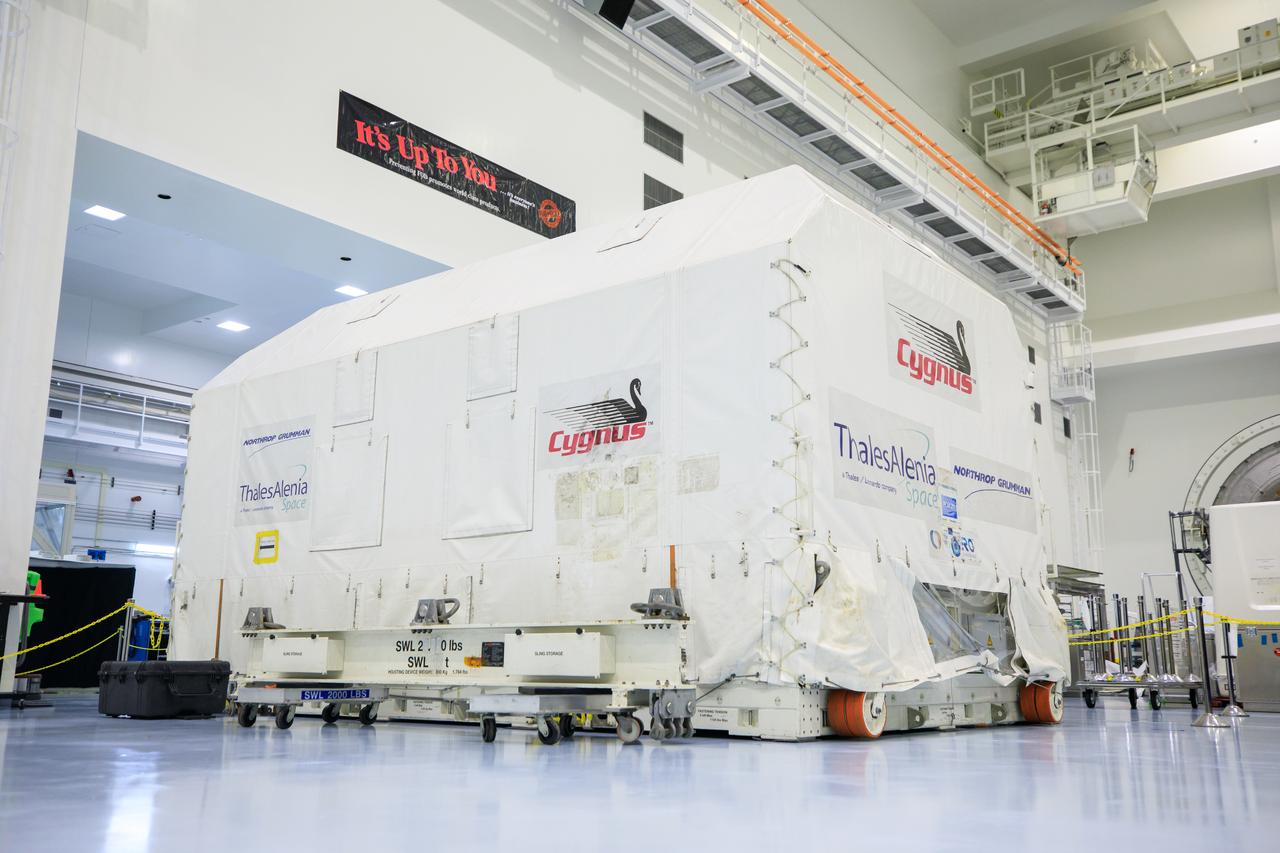
Northrop Grumman’s Cygnus pressurized cargo module for the company’s 20th commercial resupply mission arrives in its environmentally controlled shipping container inside the high bay in the Space Station Processing Facility at NASA's Kennedy Space Center in Florida on Aug. 2, 2023. Cygnus will launch later this year atop a SpaceX Falcon 9 rocket from Cape Canaveral Space Force Station’s Space Launch Complex 40 to the International Space Station. Cygnus will undergo prelaunch processing at Kennedy before it is transported to SpaceX’s integration facility.
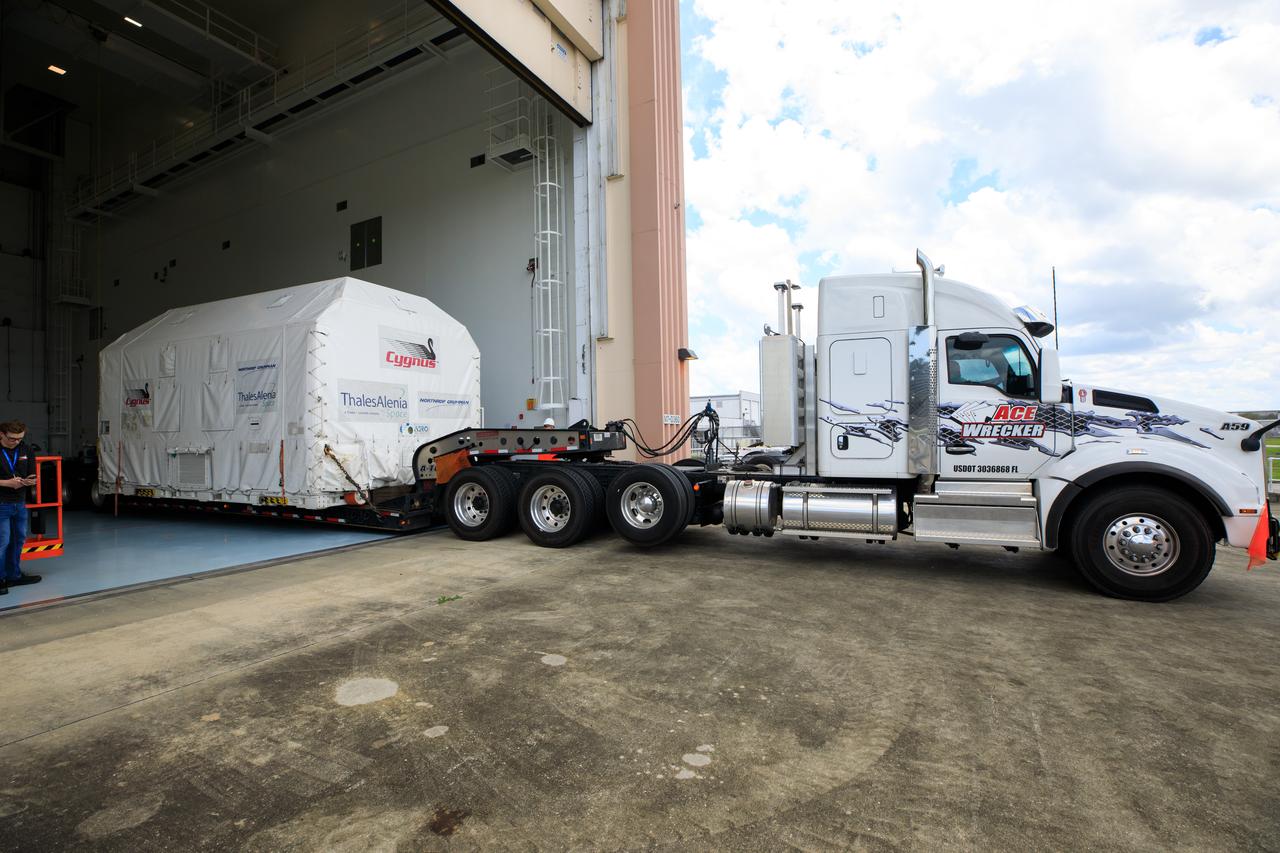
The Northrop Grumman Cygnus spacecraft's pressurized cargo module (PCM) arrives at the Space Station Processing Facility of NASA's Kennedy Space Center in Florida on Aug. 2, 2023. The PCM is sealed in an environmentally controlled shipping container, pulled in by truck on a flatbed trailer. Cygnus will launch later this year atop a SpaceX Falcon 9 rocket from Cape Canaveral Space Force Station’s Space Launch Complex 40 to the International Space Station. Cygnus will undergo prelaunch processing at Kennedy before it is transported to SpaceX’s integration facility.
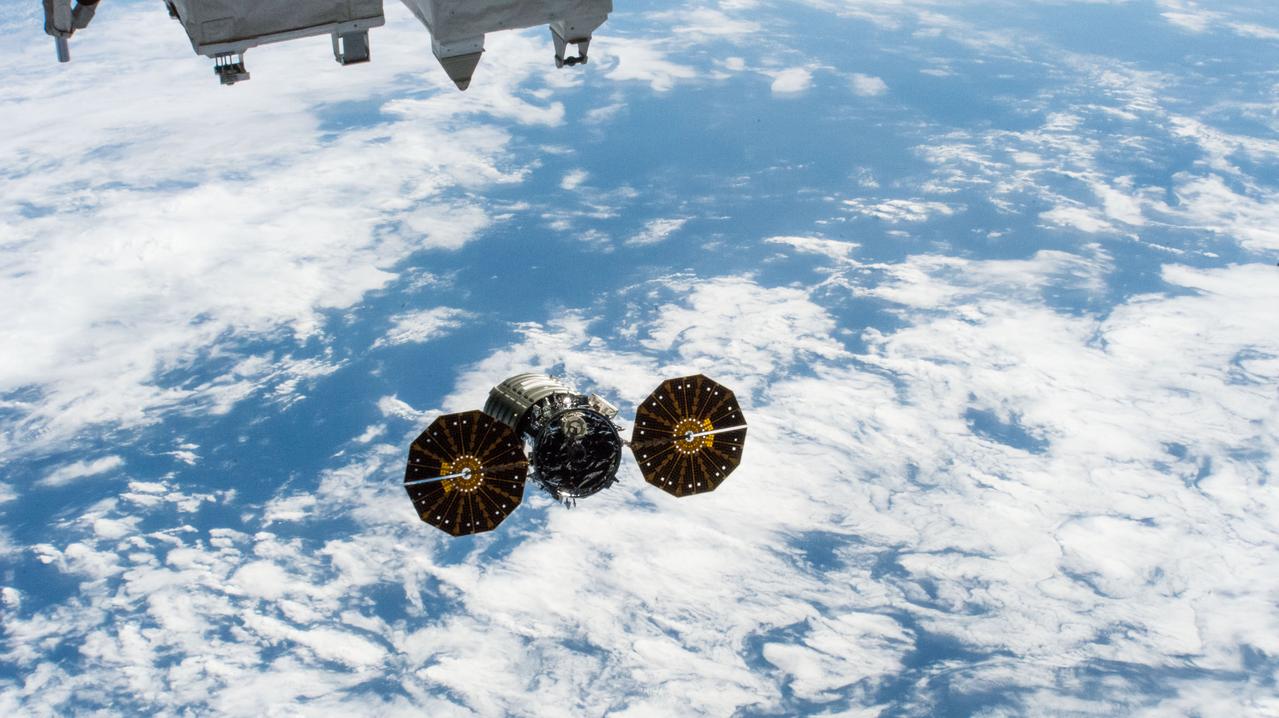
iss058e011816 (Feb. 8, 2019) --- The Cygnus cargo craft from Northrop Grumman begins its departure from the International Space Station as both spacecraft were orbiting 252 miles over the Pacific Ocean off the coast of Peru.
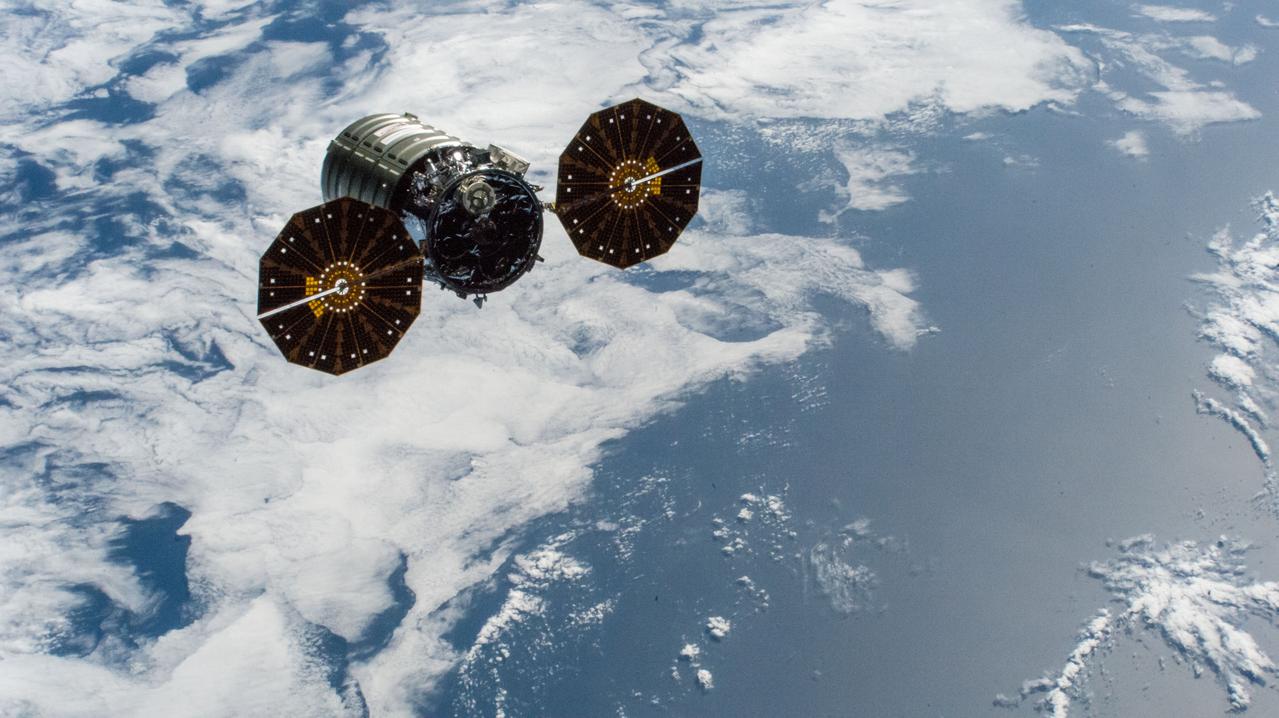
iss058e011815 (Feb. 8, 2019) --- The Cygnus cargo craft from Northrop Grumman begins its departure from the International Space Station as both spacecraft were orbiting 252 miles over the Pacific Ocean off the coast of Peru.
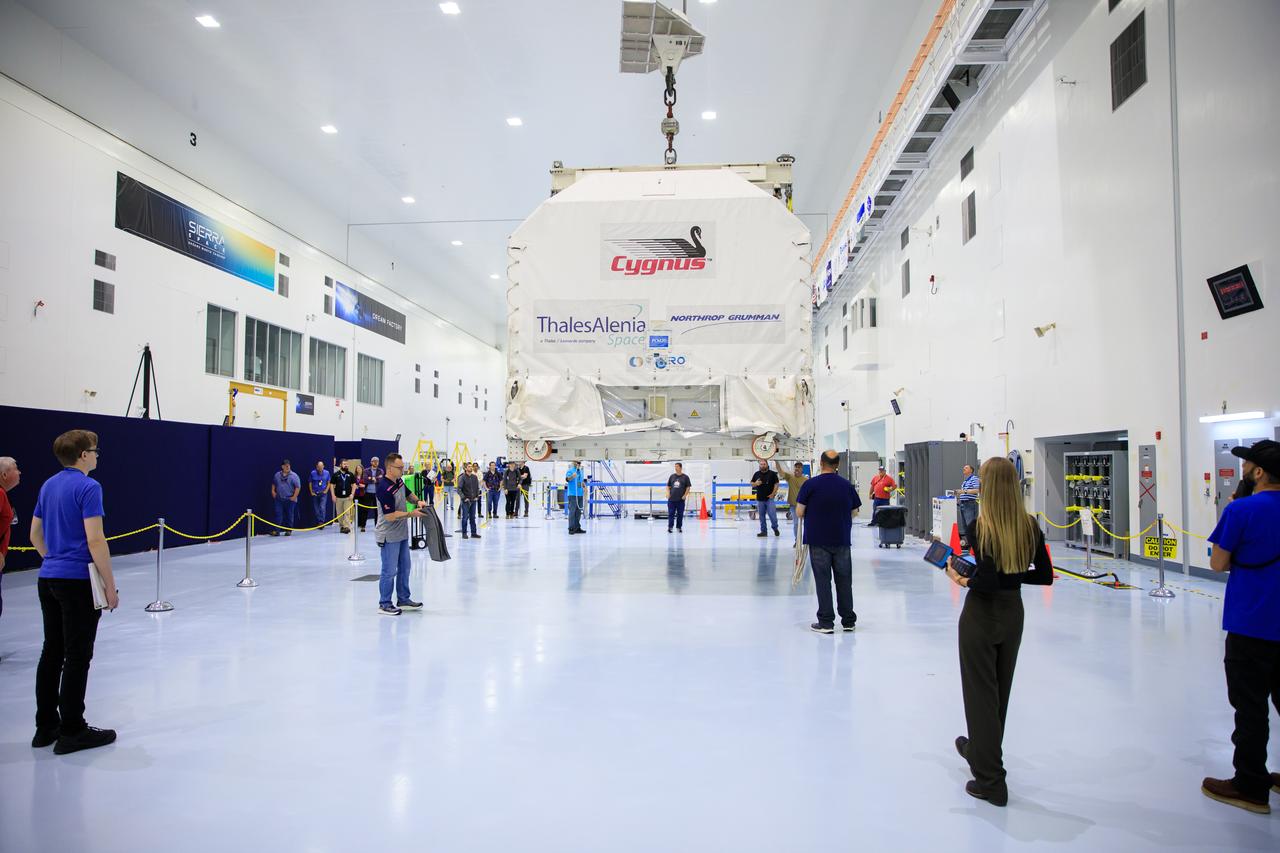
The Northrop Grumman Cygnus spacecraft’s pressurized cargo module (PCM) for the company’s 20th commercial resupply mission is lifted and moved by crane in its environmentally controlled shipping container inside the high bay in the Space Station Processing Facility at NASA's Kennedy Space Center in Florida on Aug. 2, 2023. Cygnus will launch later this year atop a SpaceX Falcon 9 rocket from Cape Canaveral Space Force Station’s Space Launch Complex 40 to the International Space Station. Cygnus will undergo prelaunch processing at Kennedy before it is transported to SpaceX’s integration facility.
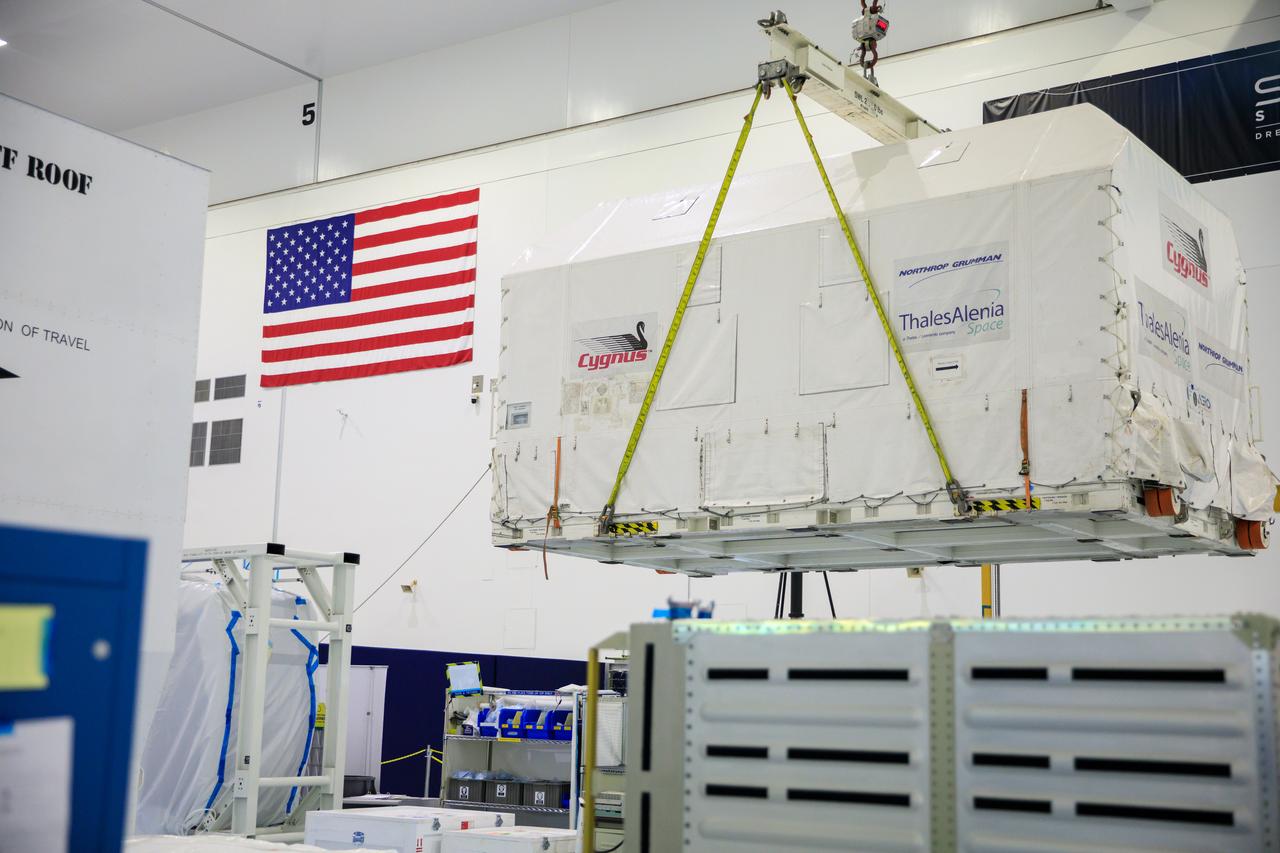
The Northrop Grumman Cygnus spacecraft’s pressurized cargo module (PCM) for the company’s 20th commercial resupply mission is moved by crane in its environmentally controlled shipping container in to the Space Station Processing Facility’s high bay at NASA's Kennedy Space Center in Florida on Aug. 2, 2023. Cygnus will launch later this year atop a SpaceX Falcon 9 rocket from Cape Canaveral Space Force Station’s Space Launch Complex 40 to the International Space Station. Cygnus will undergo prelaunch processing at Kennedy before it is transported to SpaceX’s integration facility.
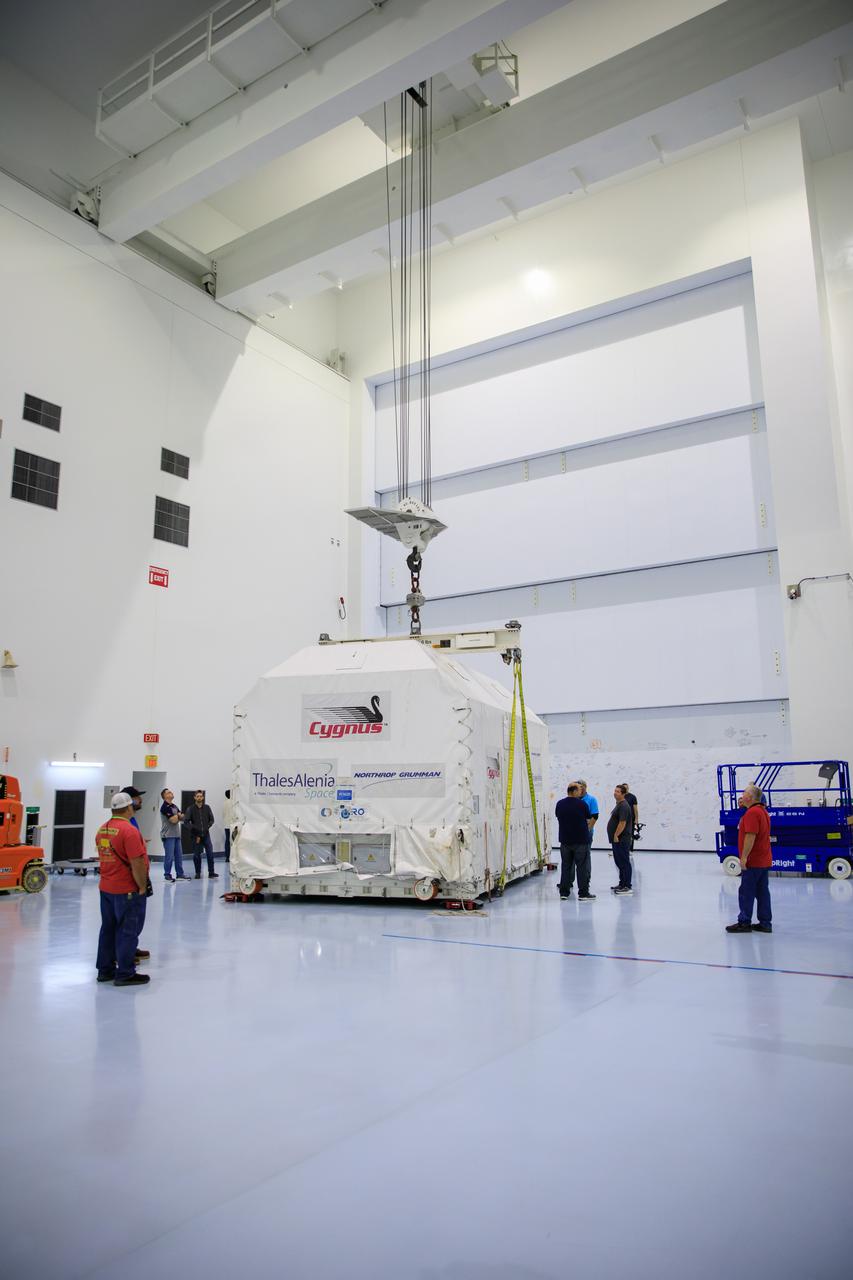
The Cygnus pressurized cargo module for Northrop Grumman’s 20th commercial resupply mission is lowered by crane in its carrier and secured onto a transport base inside the low bay in the Space Station Processing Facility at NASA's Kennedy Space Center in Florida on Aug. 2, 2023. Cygnus will launch later this year atop a SpaceX Falcon 9 rocket from Cape Canaveral Space Force Station’s Space Launch Complex 40 to the International Space Station. Cygnus will undergo prelaunch processing at Kennedy before it is transported to SpaceX’s integration facility.
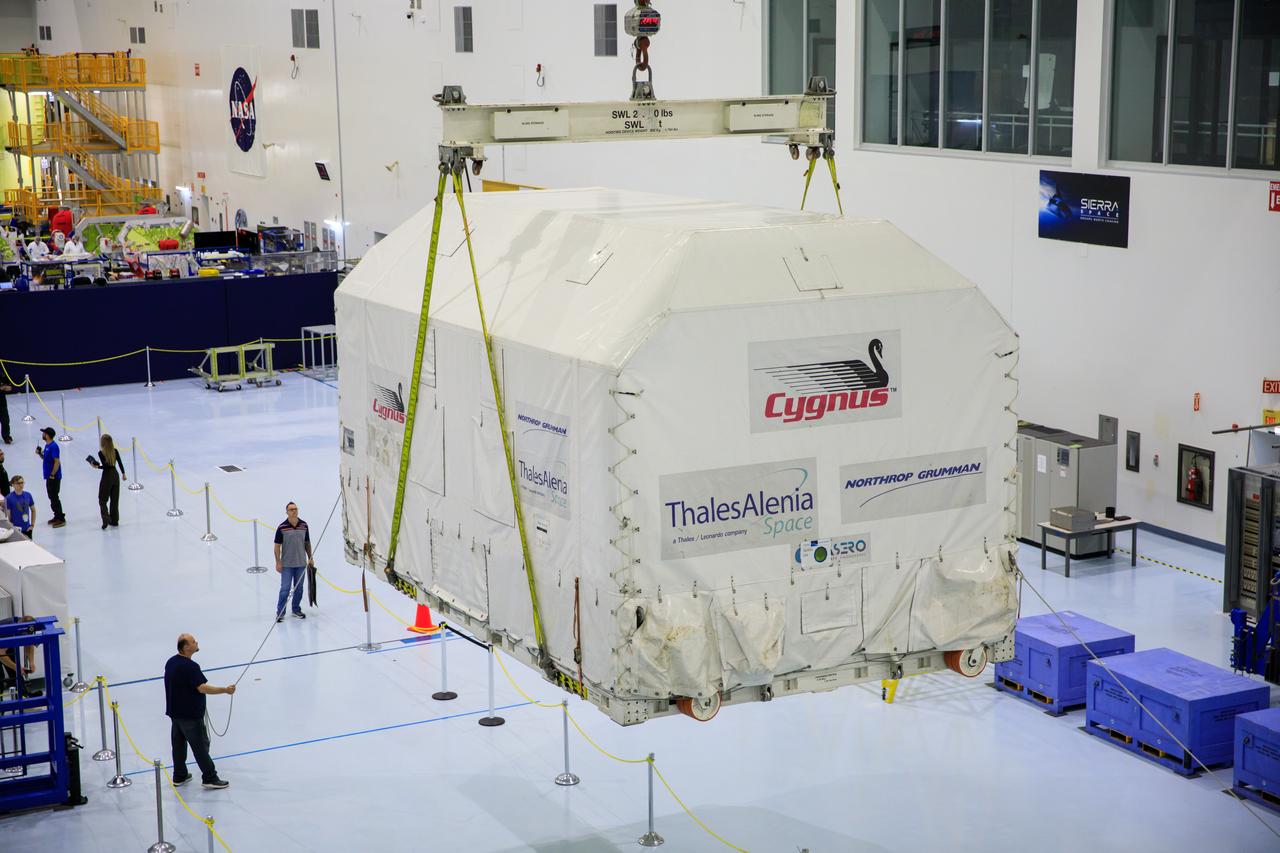
A crane is used to lift the Northrop Grumman Cygnus spacecraft's pressurized cargo module (PCM) off a flatbed truck after arrival at the Space Station Processing Facility of NASA's Kennedy Space Center in Florida on Aug. 2, 2023. The PCM is sealed in an environmentally controlled shipping container. Cygnus will launch later this year atop a SpaceX Falcon 9 rocket from Cape Canaveral Space Force Station’s Space Launch Complex 40 to the International Space Station. Cygnus will undergo prelaunch processing at Kennedy before it is transported to SpaceX’s integration facility.
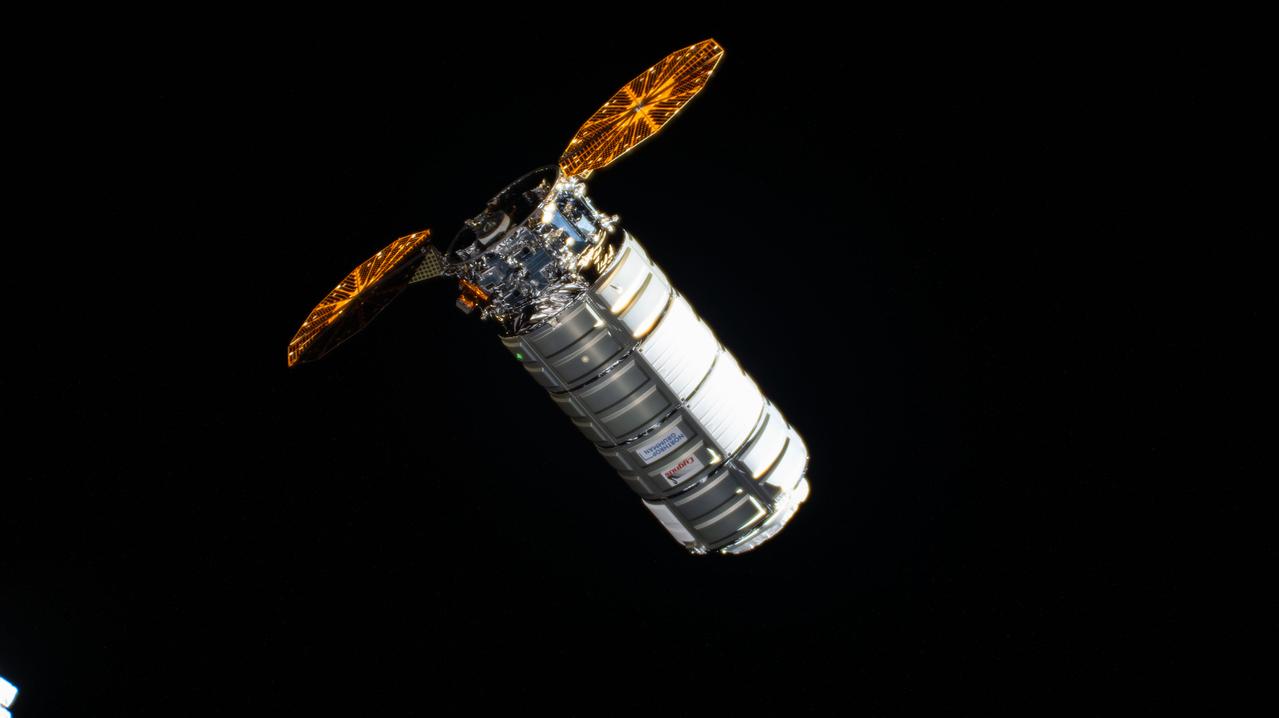
iss073e0703405 (Sept. 18, 2025) --- Northrop Grumman's Cygnus XL cargo craft, carrying over 11,000 pounds of new science and supplies for the Expedition 73 crew, approaches the International Space Station during orbital nighttime as both spacecraft were orbiting 261 miles above the Pacific Ocean. Cygnus XL is Northrop Grumman's expanded version of its previous Cygnus cargo craft increasing its payload capacity and pressurized cargo volume.
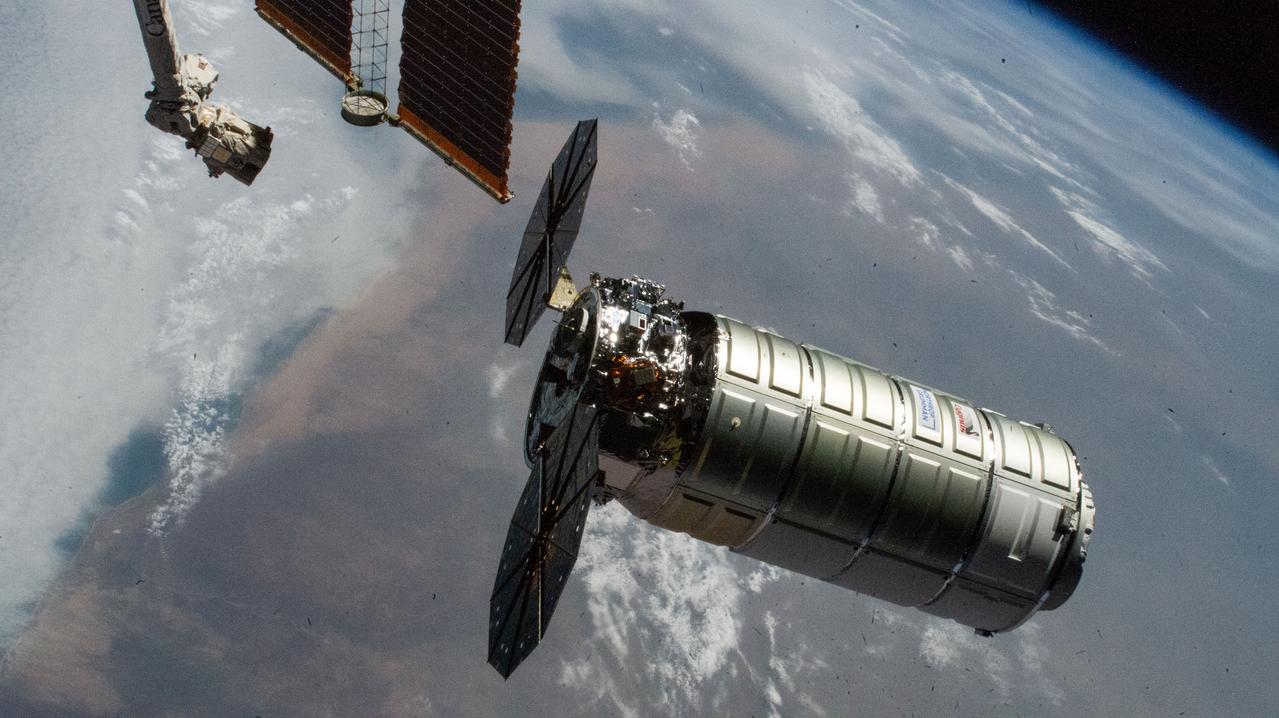
iss073e0703407 (Sept. 18, 2025) --- Northrop Grumman's Cygnus XL cargo craft, carrying over 11,000 pounds of new science and supplies for the Expedition 73 crew, is pictiured moments before its capture with the International Space Station's Canadarm2 robotic arm. Both spacecraft were orbiting 257 miles above Namibia. Cygnus XL is Northrop Grumman's expanded version of its previous Cygnus cargo craft increasing its payload capacity and pressurized cargo volume.
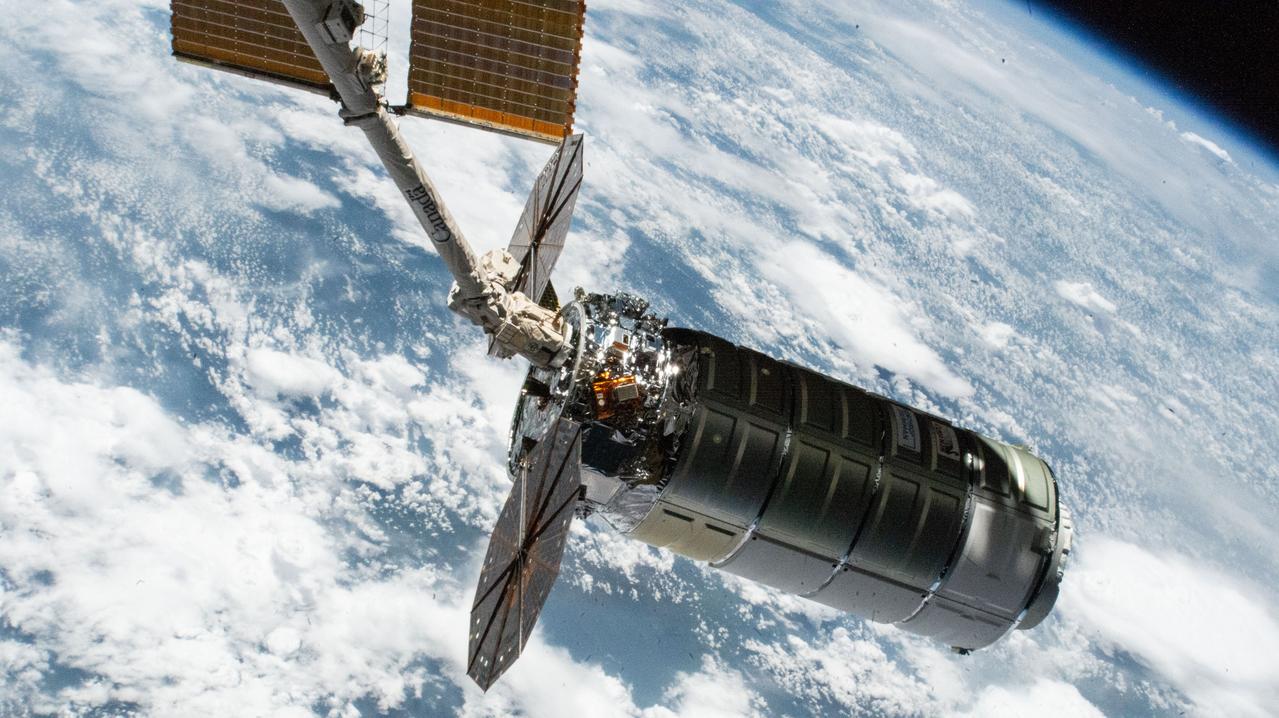
iss073e0703409 (Sept. 18, 2025) --- Northrop Grumman's Cygnus XL cargo craft, carrying over 11,000 pounds of new science and supplies for the Expedition 73 crew, is pictured in the grips of the International Space Station's Canadarm2 robotic arm following its capture. Both spacecraft were orbiting 257 miles above Tanzania. Cygnus XL is Northrop Grumman's expanded version of its previous Cygnus cargo craft increasing its payload capacity and pressurized cargo volume.

iss073e0816140 (Sept. 18, 2025) --- Northrop Grumman’s Cygnus XL cargo spacecraft, carrying more than 11,000 pounds of new science investigations and supplies for the Expedition 73 crew, approaches the International Space Station. The two spacecraft were orbiting 257 miles above a cloudy Mumbai, India. Cygnus XL is an expanded version of Northrop Grumman’s previous Cygnus cargo vehicle, offering increased payload capacity and pressurized cargo volume.
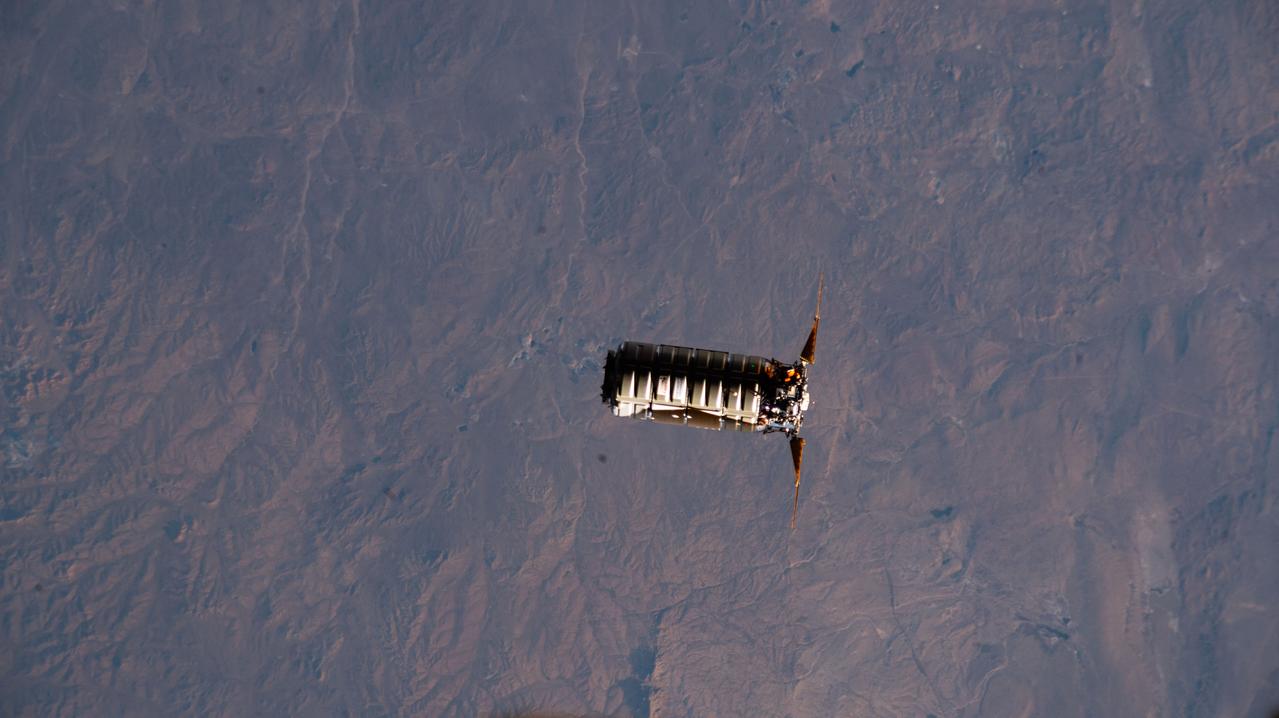
iss073e0703410 (Sept. 18, 2025) --- Northrop Grumman's Cygnus XL cargo craft, carrying over 11,000 pounds of new science and supplies for the Expedition 73 crew, approaches the International Space Station as both spacecraft were orbiting 261 miles above Mongolia. Cygnus XL is Northrop Grumman's expanded version of its previous Cygnus cargo craft increasing its payload capacity and pressurized cargo volume.
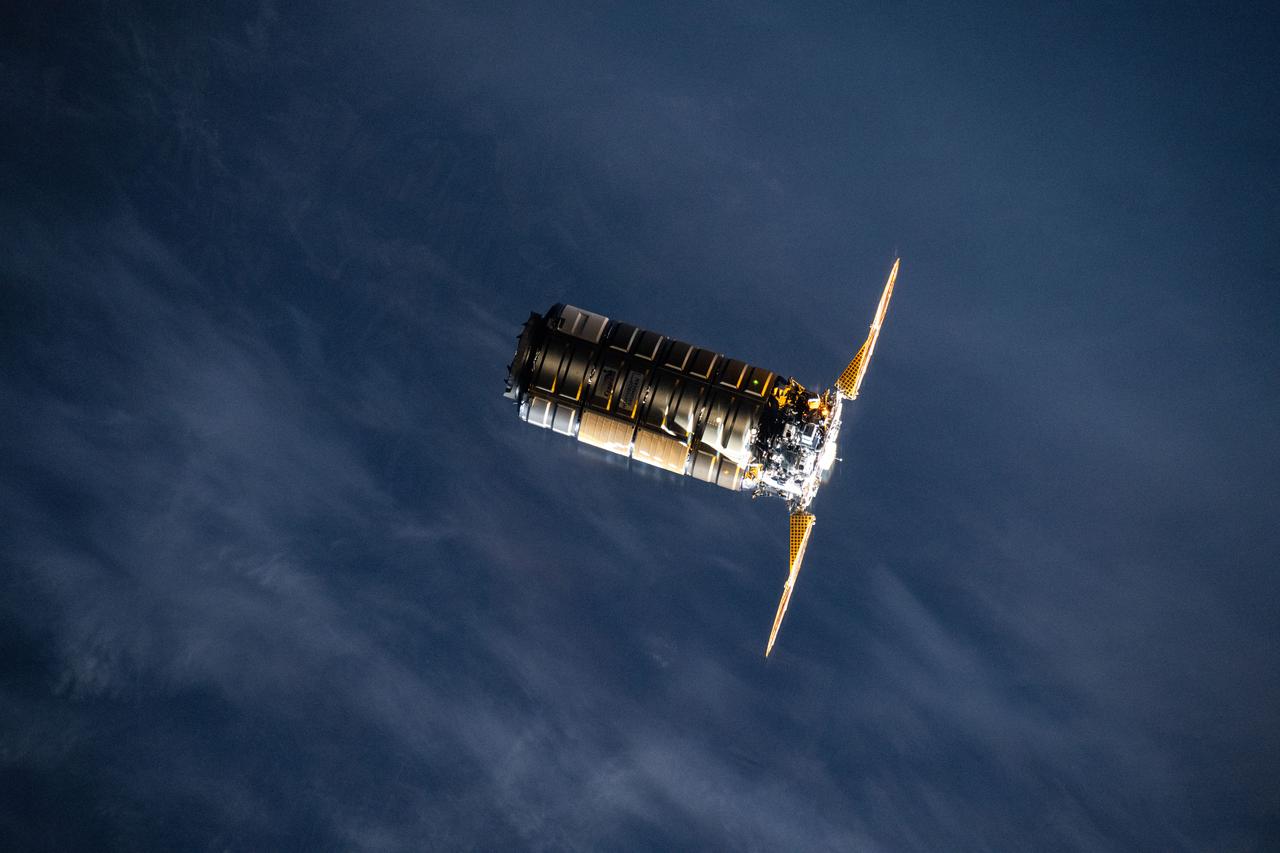
iss073e0816153 (Sept. 18, 2025) --- Northrop Grumman’s Cygnus XL cargo spacecraft, carrying more than 11,000 pounds of new science investigations and supplies for the Expedition 73 crew, approaches the International Space Station. The two spacecraft were orbiting 262 miles above northeastern China just before an orbital sunset. Cygnus XL is an expanded version of Northrop Grumman’s previous Cygnus cargo vehicle, offering increased payload capacity and pressurized cargo volume.
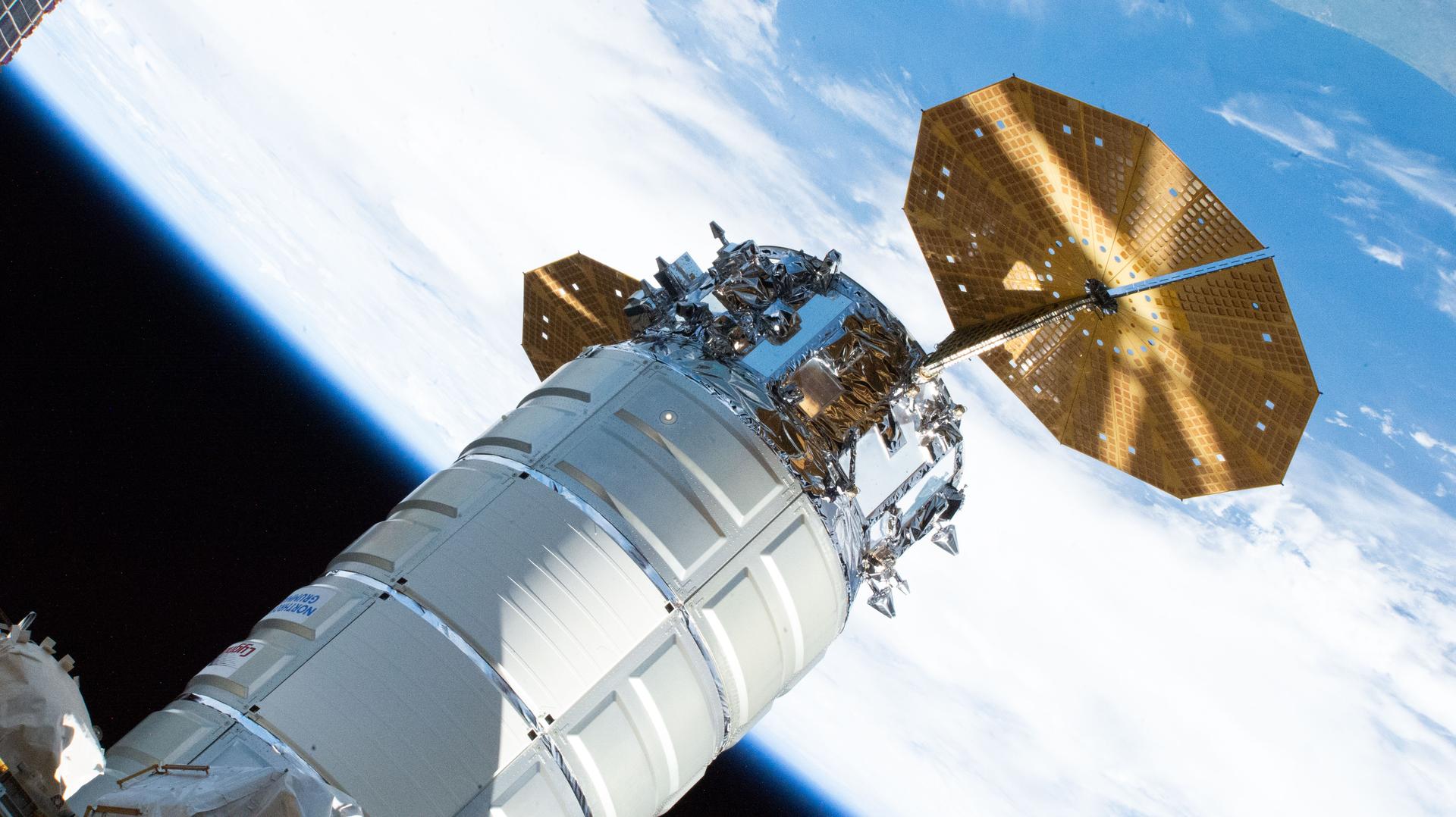
iss075e0085136 (Aug. 27, 2026) --- Northrop Grumman’s Cygnus XL cargo spacecraft, with its prominent cymbal‑shaped UltraFlex solar arrays, is pictured berthed to the International Space Station’s Unity module. Credit: NASA
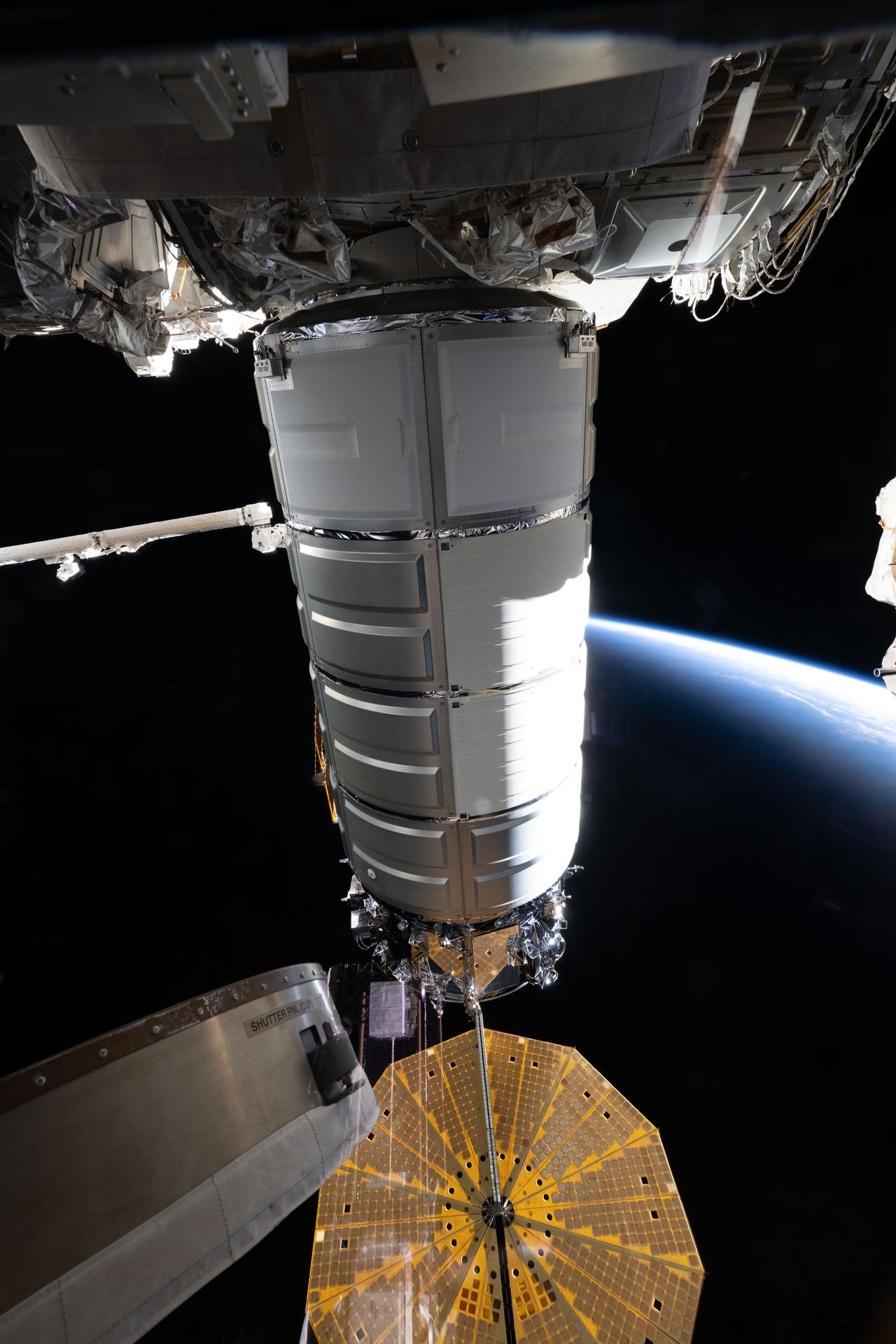
iss075e0155789 (Sept. 26, 2026) --- Northrop Grumman's Cygnus XL cargo spacecraft is pictured berthed to the International Space Station's Earth-facing port on the Unity module. At the bottom is one of two cymbal‑shaped UltraFlex solar arrays attached to Cygnus XL's service module, which provides navigation, power, and propulsion for the spacecraft. The orbital outpost was soaring 257 miles above the Arabian Sea, heading into an orbital sunset at the time of this photograph. Credit: ESA/Sophie Adenot
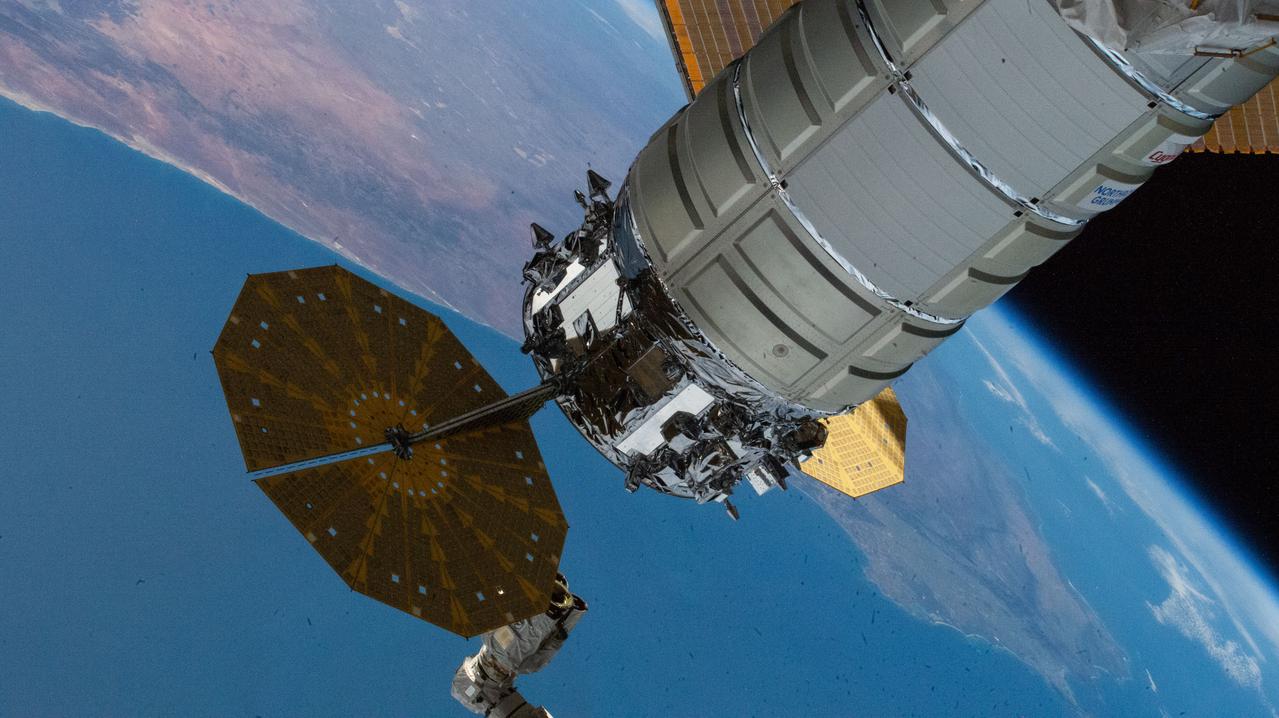
iss073e0768303 (Sept. 25, 2025) --- Northrop Grumman's Cygnus XL cargo craft is pictured installed to the Unity module's Earth-facing port as the International Space Station orbited 262 miles above the Atlantic Ocean off the coast of South Africa.
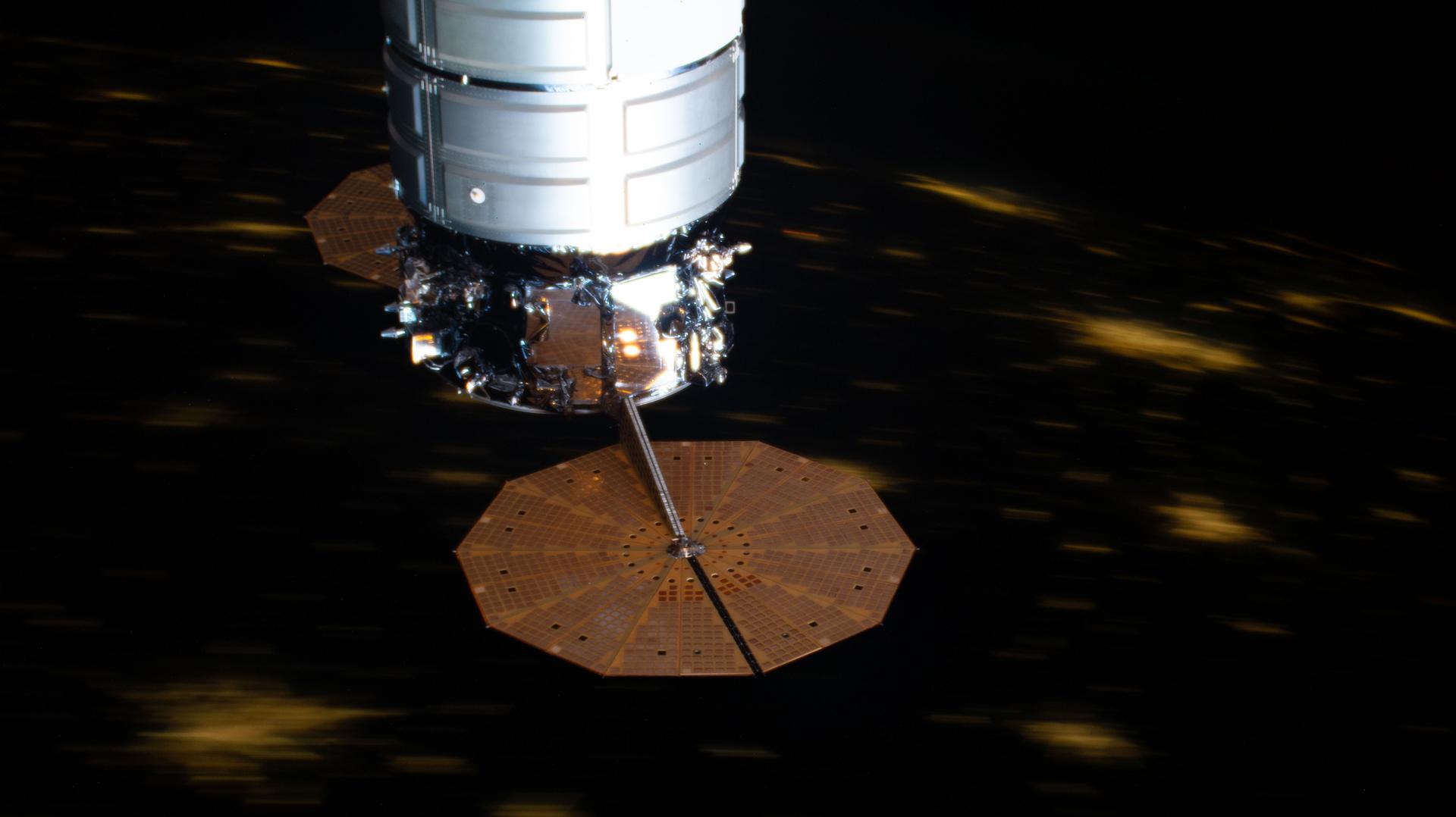
iss075e0091367 (Sept. 9, 2026) --- A portion of Northrop Grumman’s Cygnus XL cargo spacecraft, with its prominent cymbal‑shaped UltraFlex solar arrays, is pictured as the International Space Station orbited above the United States at approximately 9:56 p.m. local time. Credit: NASA
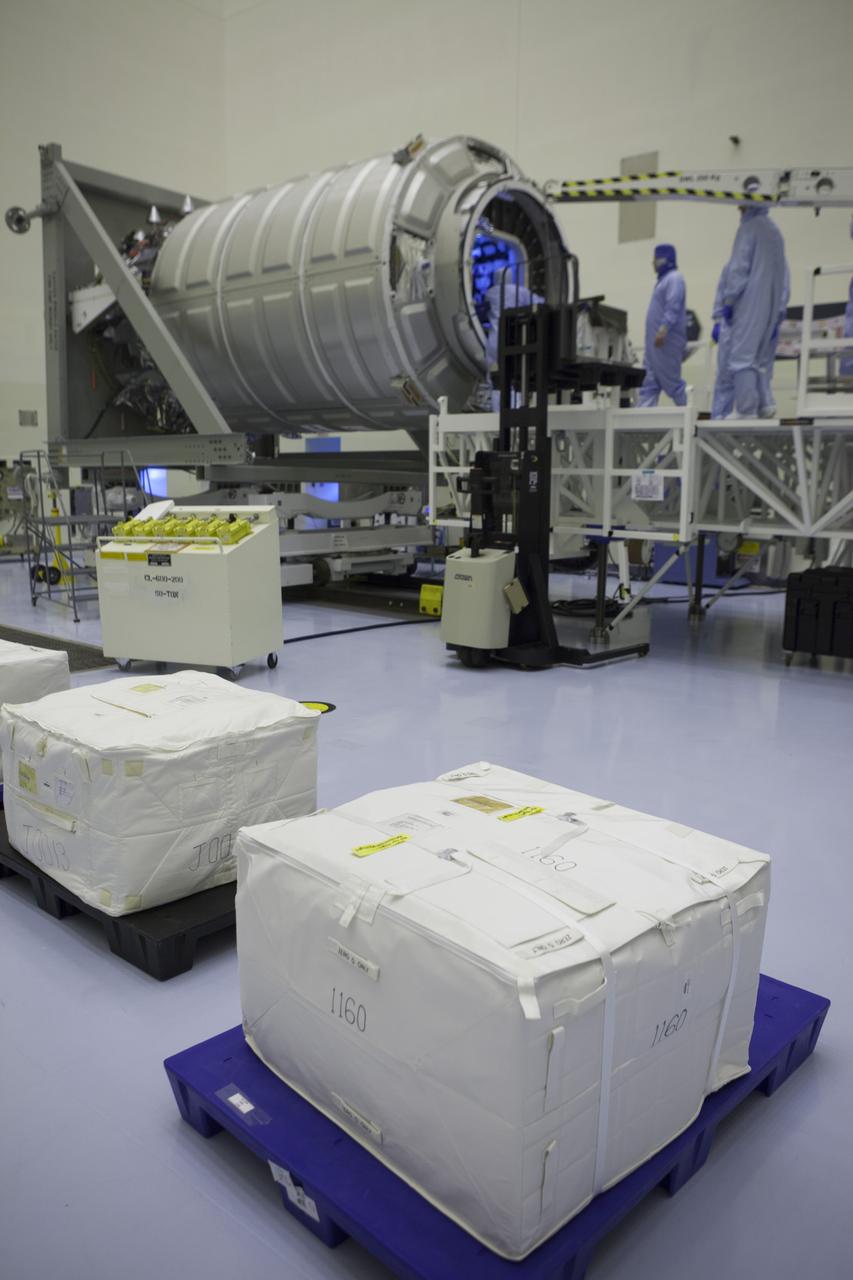
Carefully packaged cargo waits on pallets inside the Payload Hazardous Servicing Facility at NASA’s Kennedy Space Center in Florida. In the background, technicians prepare to begin loading the cargo into the Orbital ATK Cygnus pressurized module during late stowage operations. The spacecraft is scheduled for the upcoming Orbital ATK Commercial Resupply Services-6 mission to deliver hardware and supplies to the International Space Station. The Cygnus is scheduled to lift off atop a United Launch Alliance Atlas V rocket on March 22.
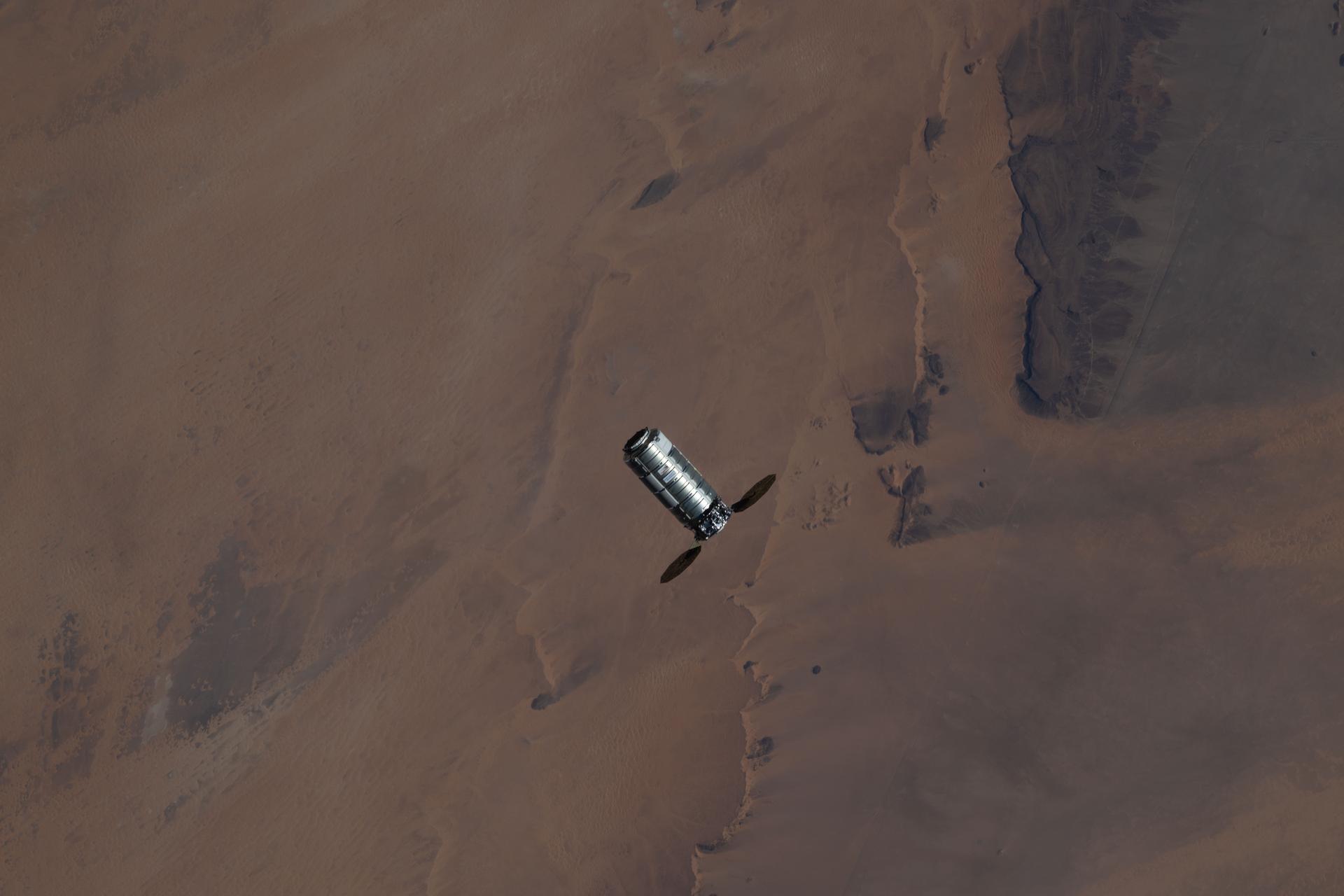
iss074e0504295 (April 13, 2026) --- Northrop Grumman’s Cygnus XL cargo spacecraft approaches the International Space Station while orbiting 264 miles above the Sahara Desert in Mauritania. Credit: NASA/Chris Williams
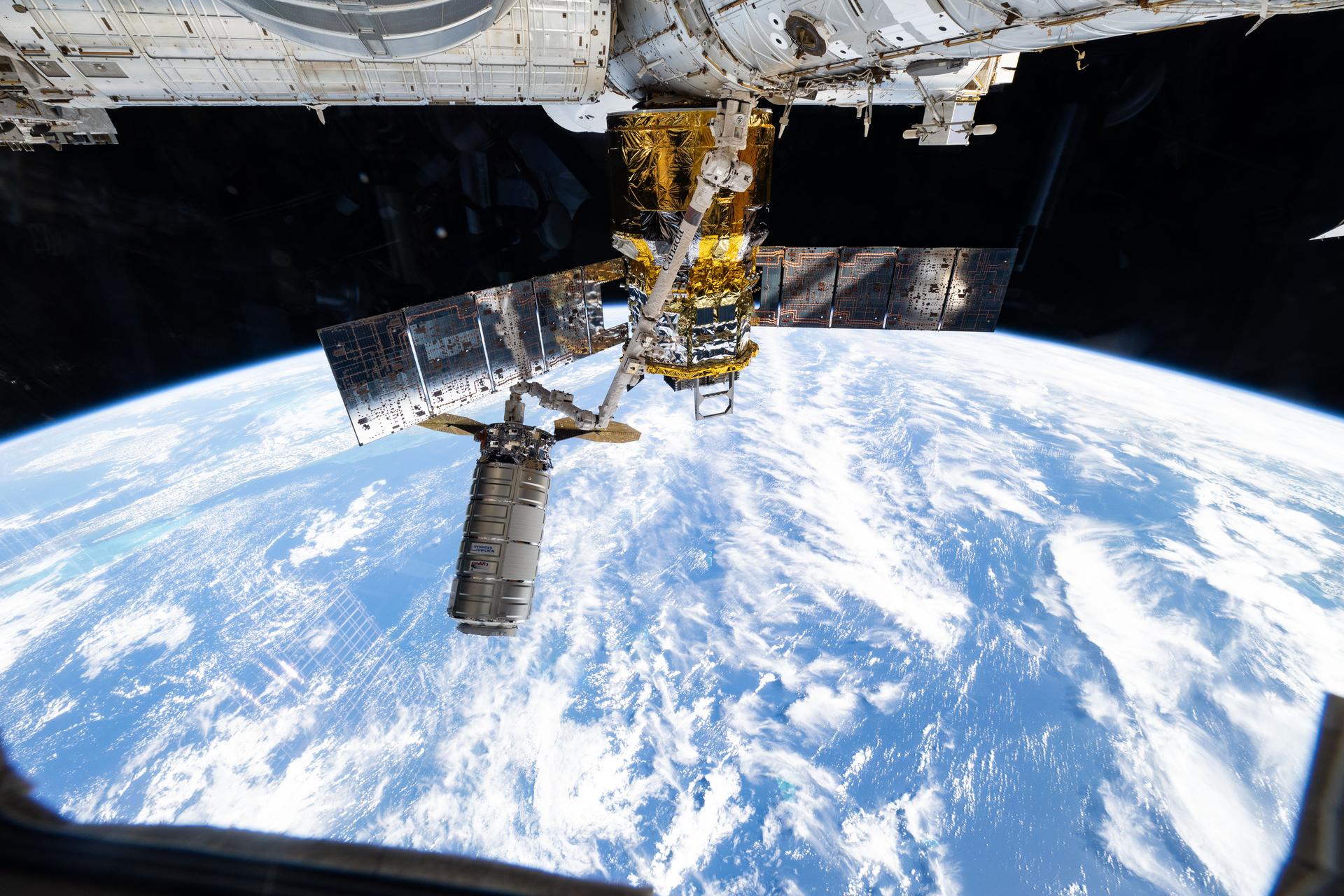
iss073e1196882 (Nov. 25, 2025) --- Northrop Grumman's Cygnus XL cargo craft is pictured in the grips of the International Space Station Canadarm2 robotic arm. Cygnus XL had been temporarily released from its Earth-facing port on the Unity module to make room for the Soyuz MS-28 crew spacecraft, which was scheduled to arrive the next day and dock to the Rassvet module. JAXA's (Japan Aerospace Exploration Agency) HTV-X1 cargo craft, with its solar arrays deployed, is seen berthed to the Earth-facing port of the Harmony module. The orbital outpost was soaring 262 miles above the Caribbean Sea east of the Yucatan Peninsula.
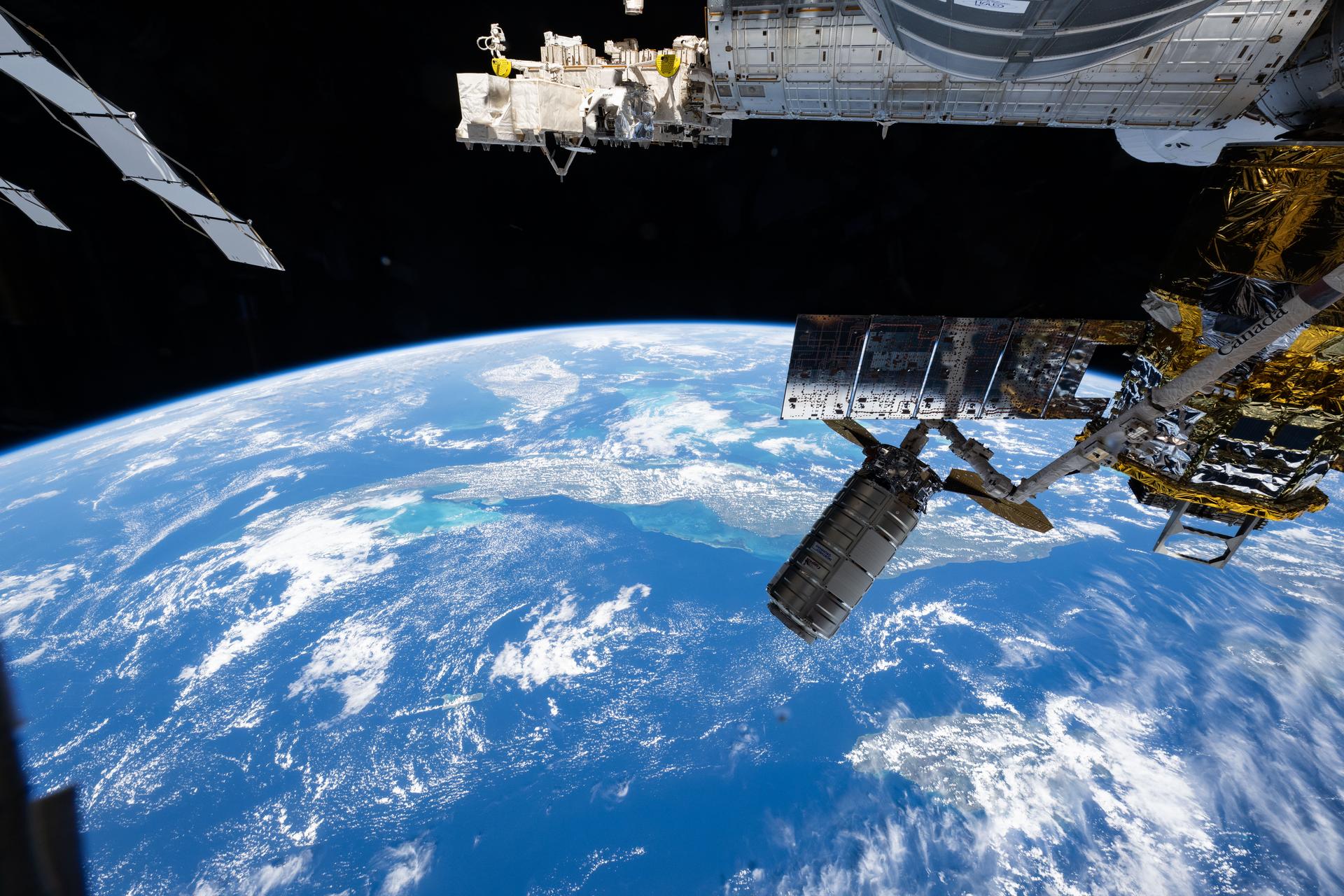
iss073e1196921 (Nov. 25, 2025) --- Northrop Grumman's Cygnus XL cargo craft is pictured in the grips of the International Space Station Canadarm2 robotic arm. Cygnus XL had been temporarily released from its Earth-facing port on the Unity module to make room for the Soyuz MS-28 crew spacecraft, which was scheduled to arrive the next day and dock to the Rassvet module. JAXA's (Japan Aerospace Exploration Agency) HTV-X1 cargo craft, with its solar arrays deployed, is seen berthed to the Earth-facing port of the Harmony module. The orbital outpost was soaring 262 miles above the Caribbean Sea south of Cuba at the time of this photograph.
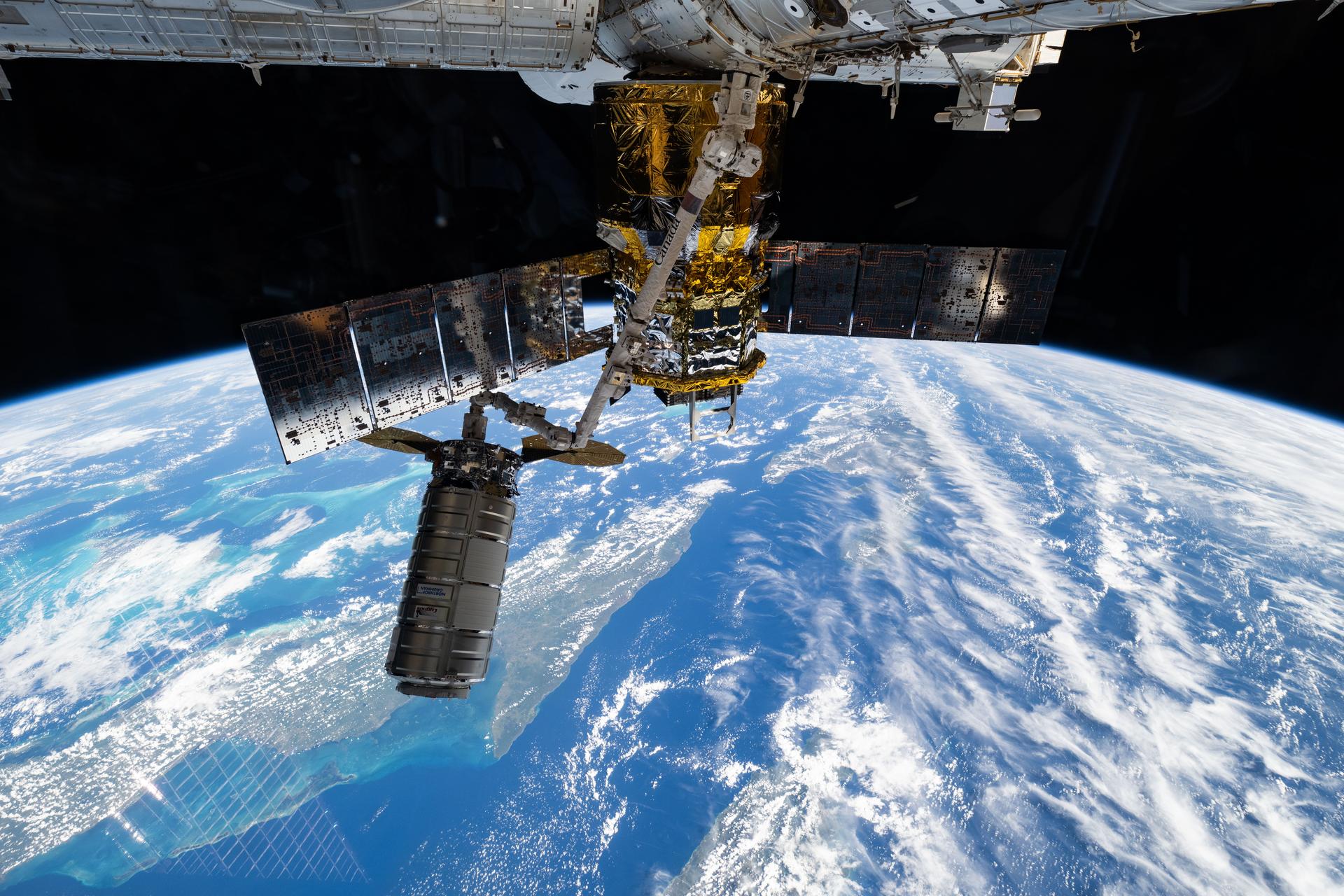
iss073e1196940 (Nov. 25, 2025) --- Northrop Grumman's Cygnus XL cargo craft is pictured in the grips of the International Space Station Canadarm2 robotic arm. Cygnus XL had been temporarily released from its Earth-facing port on the Unity module to make room for the Soyuz MS-28 crew spacecraft, which was scheduled to arrive the next day and dock to the Rassvet module. JAXA's (Japan Aerospace Exploration Agency) HTV-X1 cargo craft, with its solar arrays deployed, is seen berthed to the Earth-facing port of the Harmony module. The orbital outpost was soaring 261 miles above the Caribbean Sea south of Cuba at the time of this photograph.
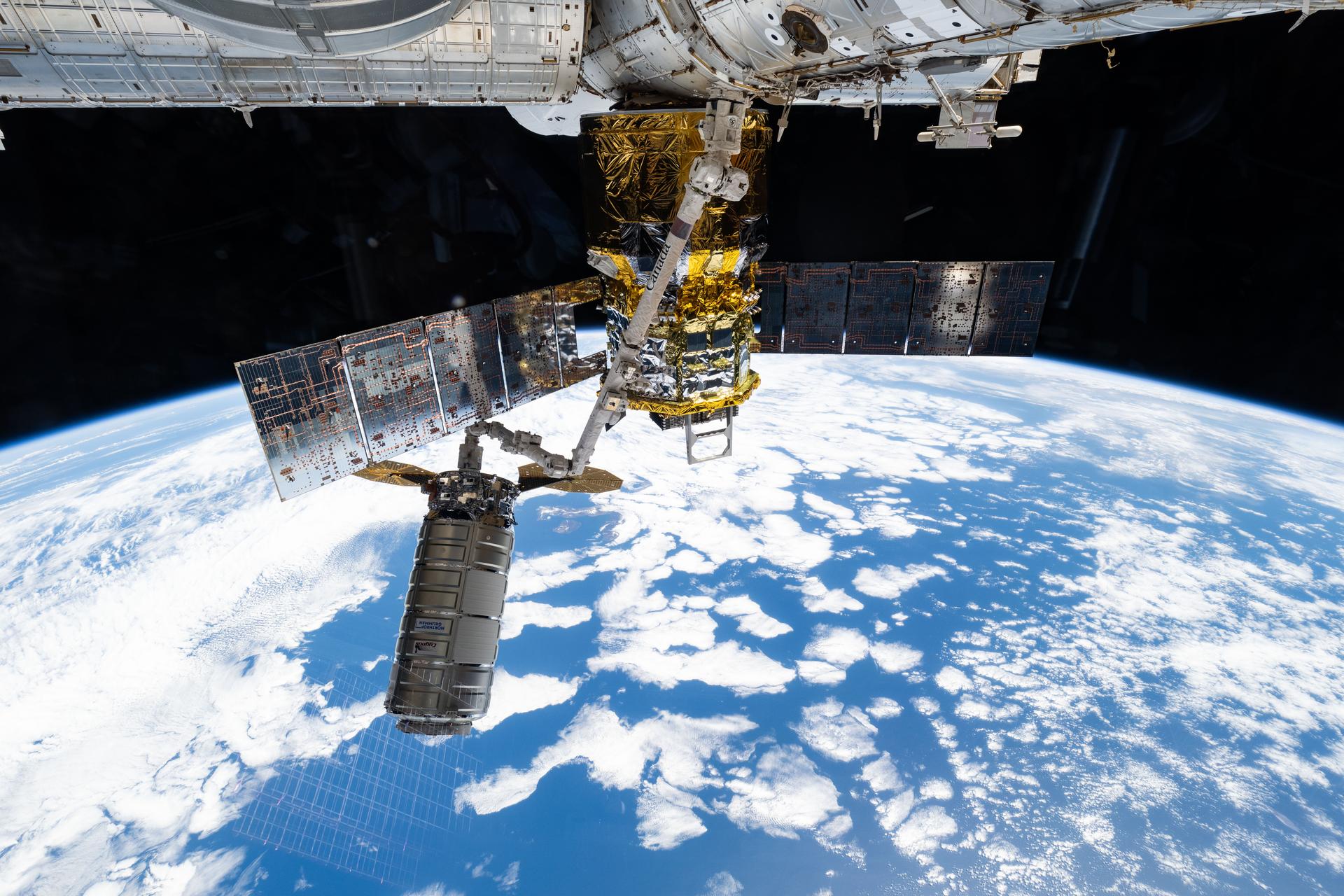
iss073e1196791 (Nov. 25, 2025) --- Northrop Grumman's Cygnus XL cargo craft is pictured in the grips of the International Space Station Canadarm2 robotic arm. Cygnus XL had been temporarily released from its Earth-facing port on the Unity module to make room for the Soyuz MS-28 crew spacecraft, which was scheduled to arrive the next day and dock to the Rassvet module. JAXA's (Japan Aerospace Exploration Agency) HTV-X1 cargo craft, with its solar arrays deployed, is seen berthed to the Earth-facing port of the Harmony module. The orbital outpost was soaring 263 miles above the Pacific Ocean southwest of Galapagos Islands at the time of this photograph.
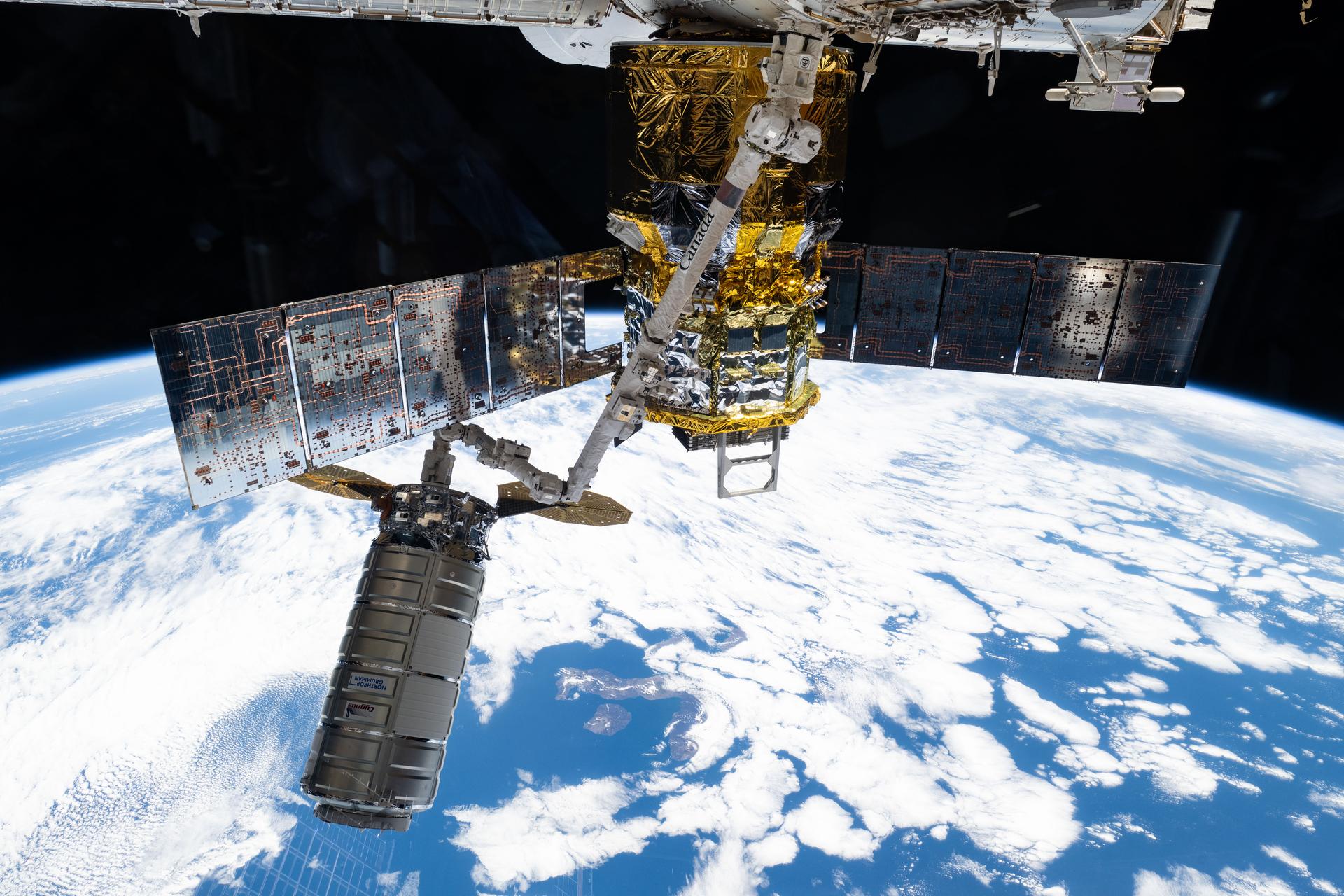
iss073e1196807 (Nov. 25, 2025) --- Northrop Grumman's Cygnus XL cargo craft is pictured in the grips of the International Space Station Canadarm2 robotic arm. Cygnus XL had been temporarily released from its Earth-facing port on the Unity module to make room for the Soyuz MS-28 crew spacecraft, which was scheduled to arrive the next day and dock to the Rassvet module. JAXA's (Japan Aerospace Exploration Agency) HTV-X1 cargo craft, with its solar arrays deployed, is seen berthed to the Earth-facing port of the Harmony module. The orbital outpost was soaring 263 miles above the Pacific Ocean southwest of Galapagos Islands at the time of this photograph.
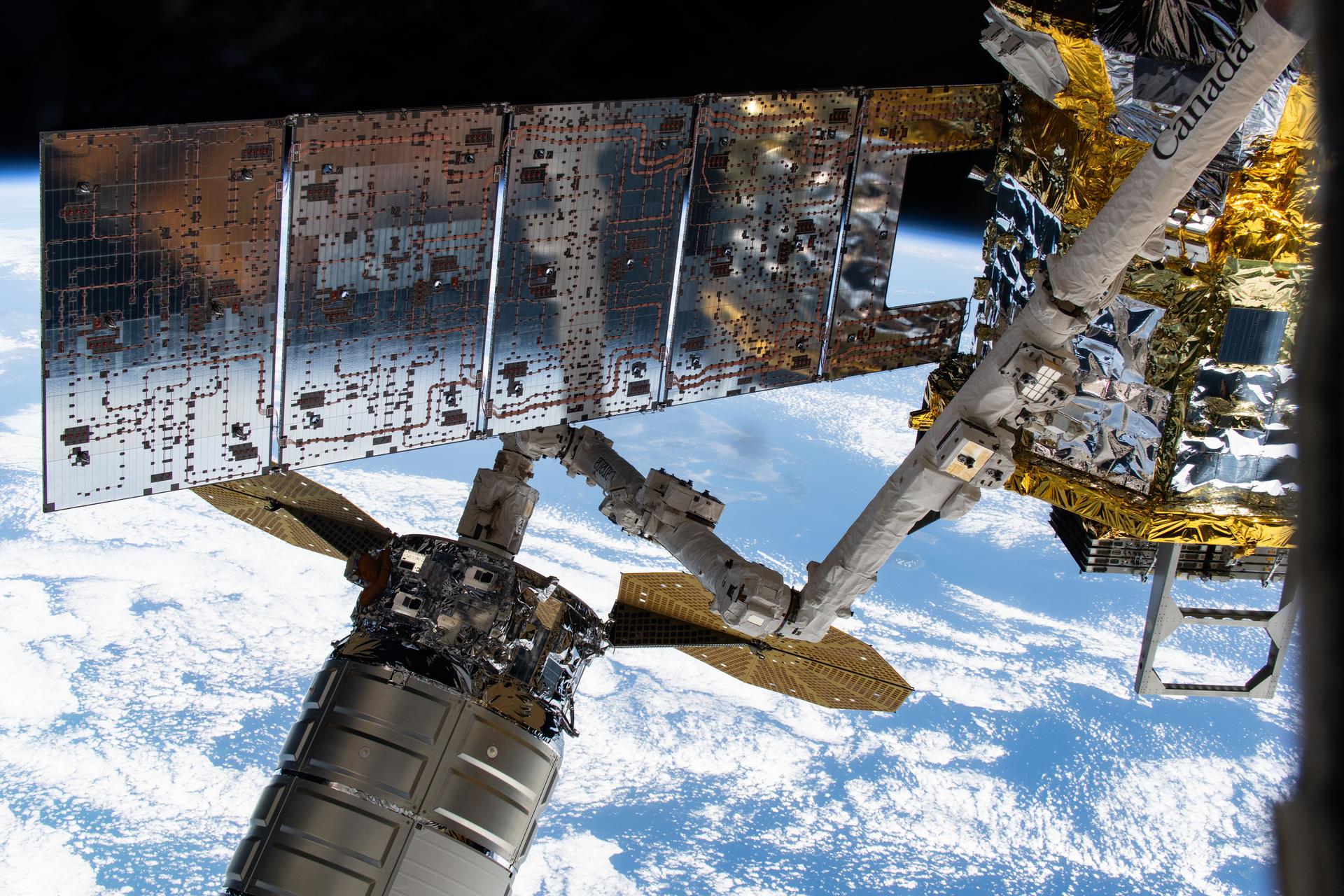
iss073e1197220 (Nov. 26, 2025) --- This close-up view from a window on the International Space Station's cupola shows Northrop Grumman's Cygnus XL cargo craft in the grips of the Canadarm2 robotic arm. Cygnus XL had been temporarily released from its Earth-facing port on the Unity module to make room for the Soyuz MS-28 crew spacecraft, which was scheduled to arrive the next day and dock to the Rassvet module. A solar array belonging to JAXA's (Japan Aerospace Exploration Agency) HTV-X1 cargo craft extends across the frame.
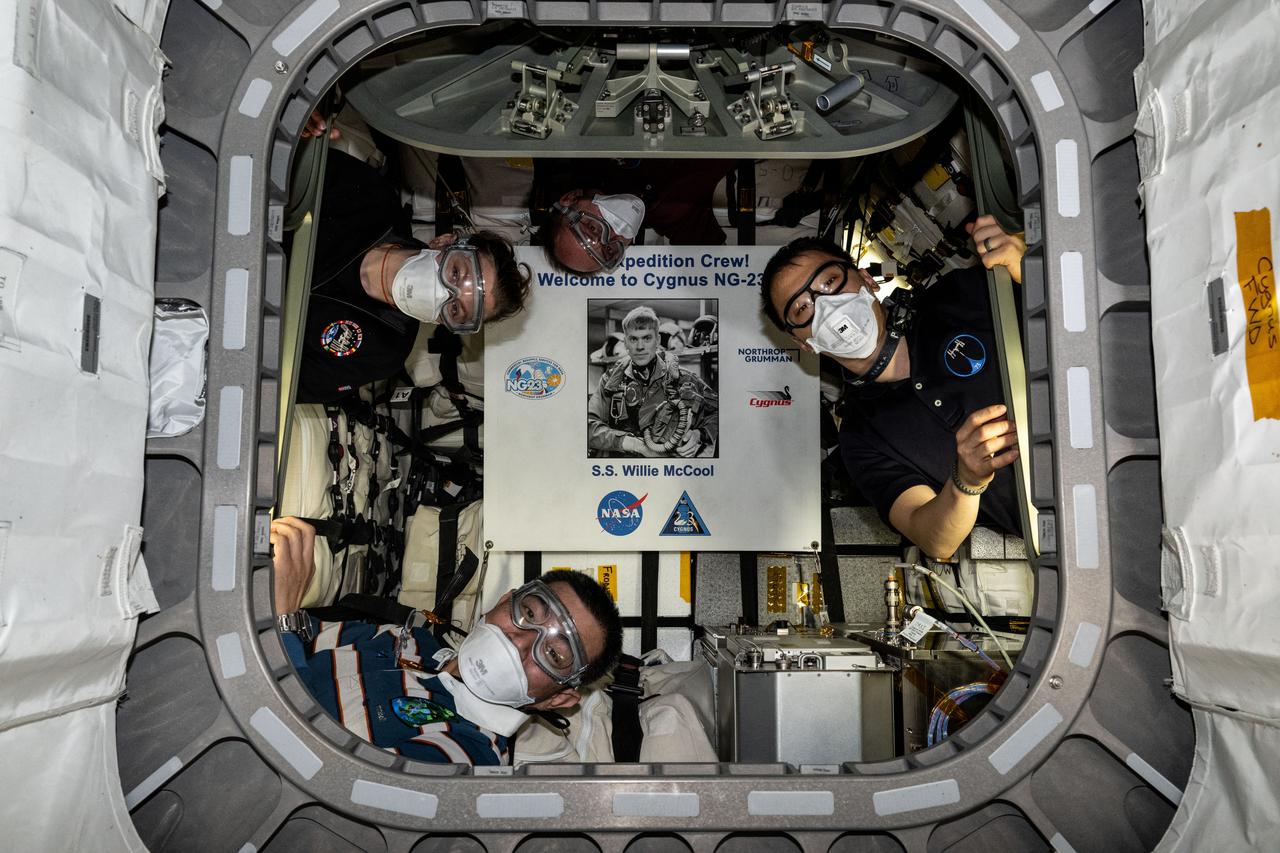
iss073e0704080 (Sept. 18, 2025) --- Pictured inside the Northrop Grumman Cygnus XL cargo craft are (clockwise from left) Flight Engineers Zena Cardman, Mike Fincke, and Jonny Kim of NASA, and Flight Engineer Kimiya Yui of JAXA (Japan Aerospace Exploration Agency). The four astronauts are wearing personnel protective equipment as is standard protocol to shield their eyes and lungs from potential dust and debris that may have been dislodged during Cygnus launch to the International Space Station. Highlighted at center, is a poster of William “Willie” McCool, in honor of the NASA astronaut who perished in 2003 during the space shuttle Columbia accident and for whom the Cygnus spacecraft is named.
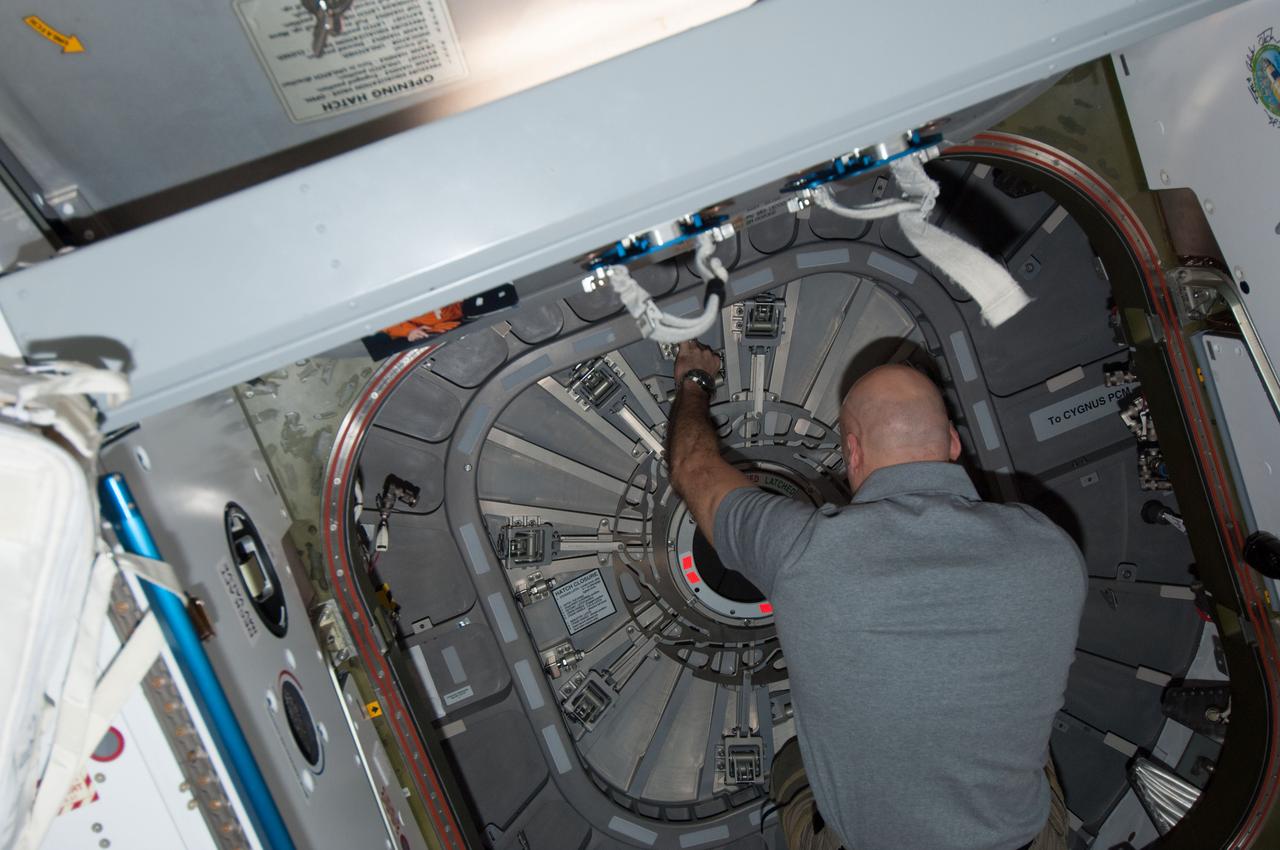
ISS037-E-016750 (21 Oct. 2013) --- European Space Agency astronaut Luca Parmitano, Expedition 37 flight engineer, closes the hatch between the International Space Station’s Harmony node and the Orbital Sciences’ Cygnus commercial cargo spacecraft in preparation for its release after completing a successful demonstration mission to the space station. Cygnus delivered 1,300 pounds of gear on Sept. 29 when it arrived and was captured by Canadarm2 and berthed to the Harmony node.
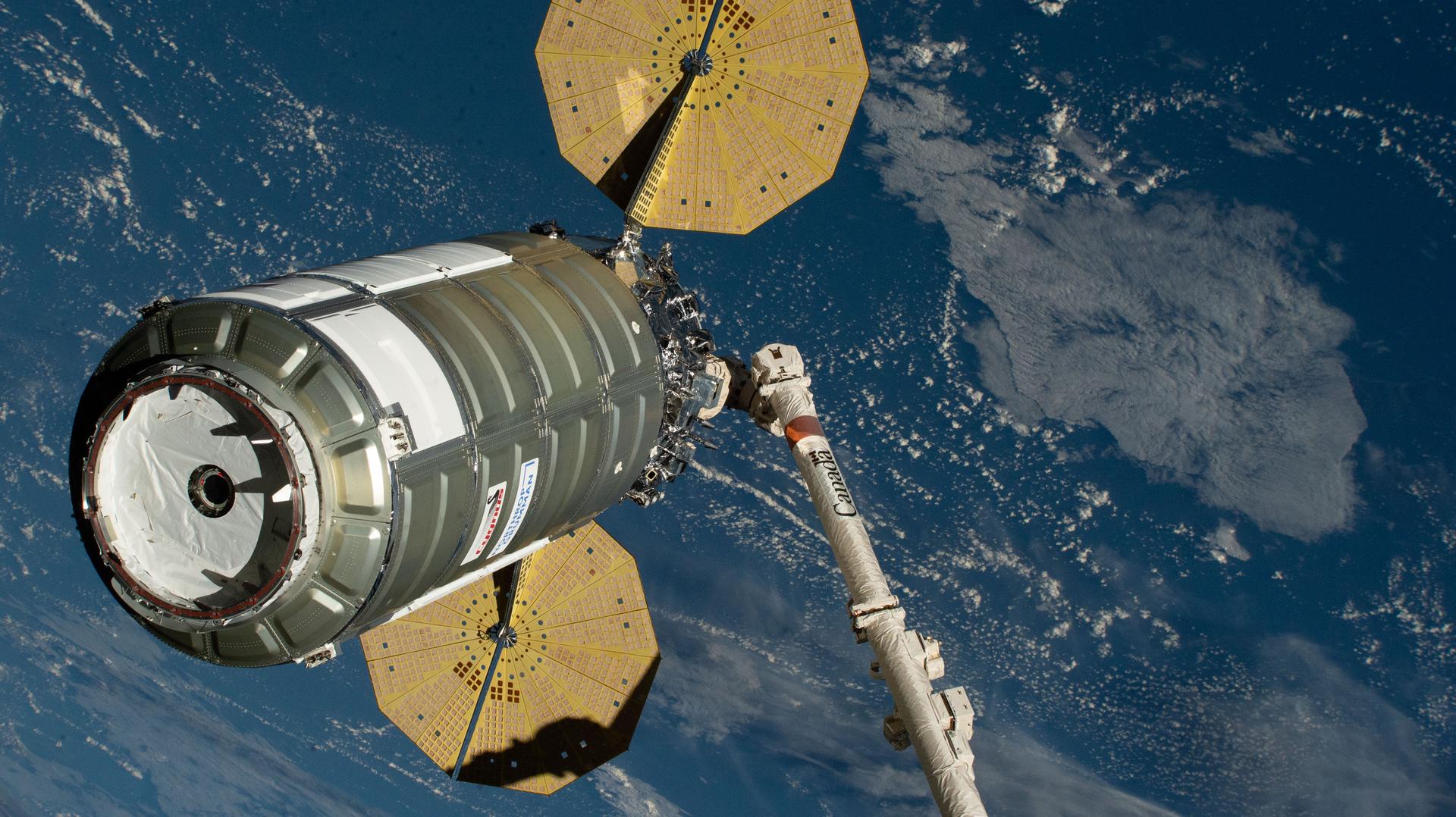
iss074e0459130 (April 13, 2026) --- Northrop Grumman's Cygnus XL cargo spacecraft is held in the grips of the Canadarm2 robotic arm as it is maneuvered toward the International Space Station’s Unity module for installation. Cygnus XL delivered more than 11,000 pounds of new science experiments, lab hardware, and crew supplies for the Expedition 74 crew. Credit: NASA
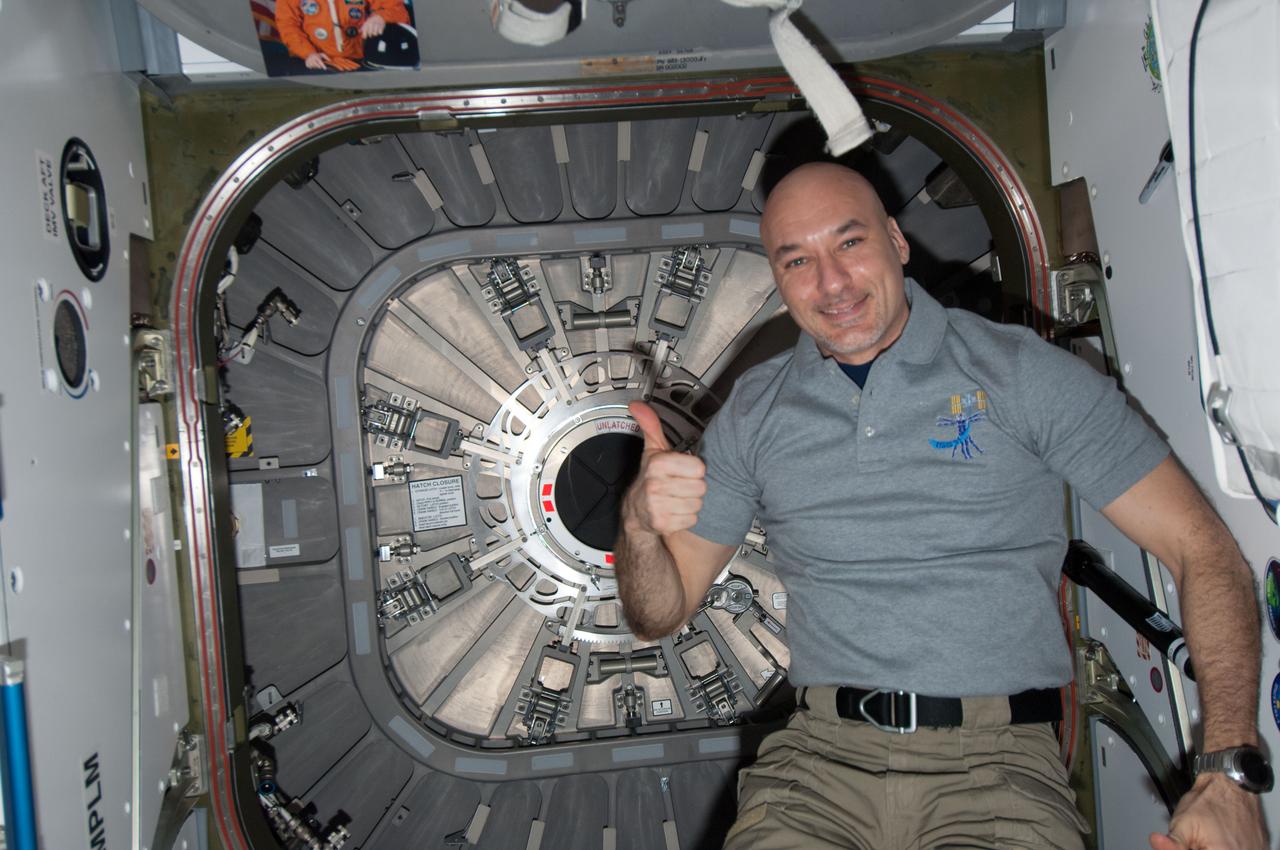
ISS037-E-016758 (21 Oct. 2013) --- European Space Agency astronaut Luca Parmitano, Expedition 37 flight engineer, gives a thumbs up signal after closing the hatch between the International Space Station’s Harmony node and the Orbital Sciences’ Cygnus commercial cargo spacecraft in preparation for its release after completing a successful demonstration mission to the space station. Cygnus delivered 1,300 pounds of gear on Sept. 29 when it arrived and was captured by Canadarm2 and berthed to the Harmony node.
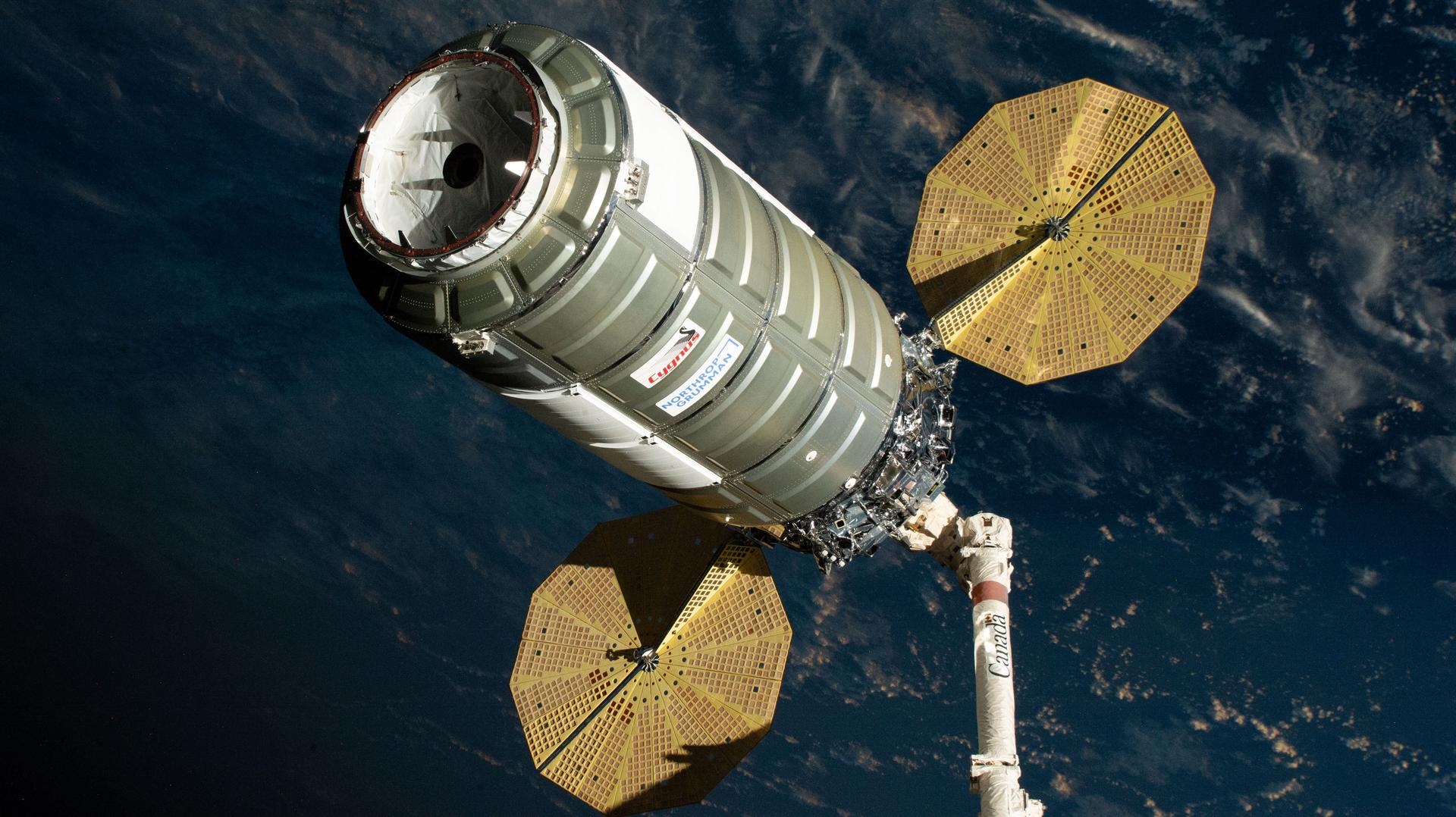
iss074e0459132 (April 13, 2026) --- Northrop Grumman's Cygnus XL cargo spacecraft is held in the grips of the Canadarm2 robotic arm as it is maneuvered toward the International Space Station’s Unity module for installation. Cygnus XL delivered more than 11,000 pounds of new science experiments, lab hardware, and crew supplies for the Expedition 74 crew. Credit: NASA/Jessica Meir
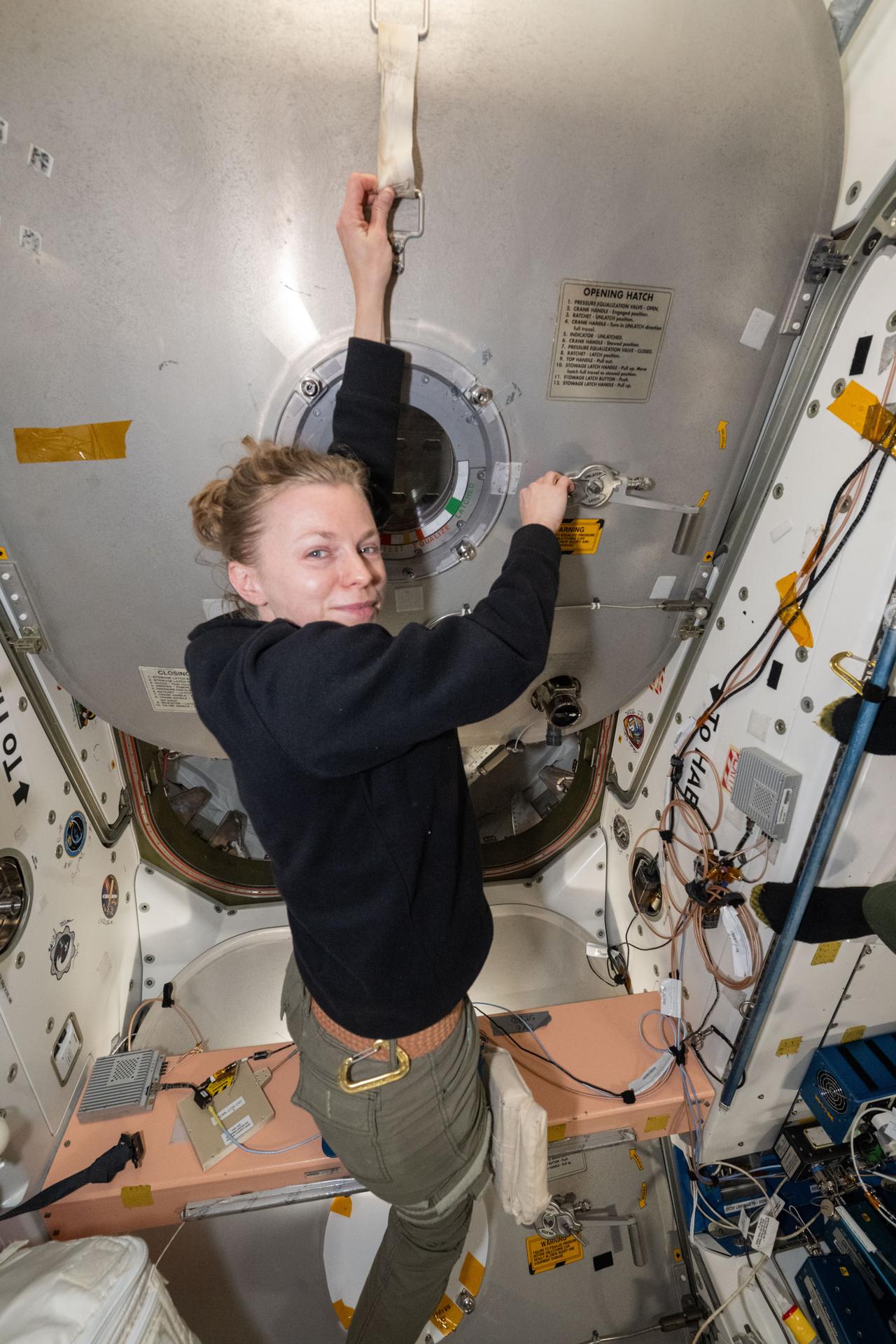
iss073e0814456 (Sept. 18, 2025) --- NASA astronaut and Expedition 73 Flight Engineer Zena Cardman is pictured inside the International Space Station’s Unity module opening the hatch to Northrop Grumman’s Cygnus XL cargo craft. Cygnus had arrived at the orbital outpost just a few hours earlier, where it was captured by the Canadarm2 robotic arm and installed on Unity’s Earth-facing port.
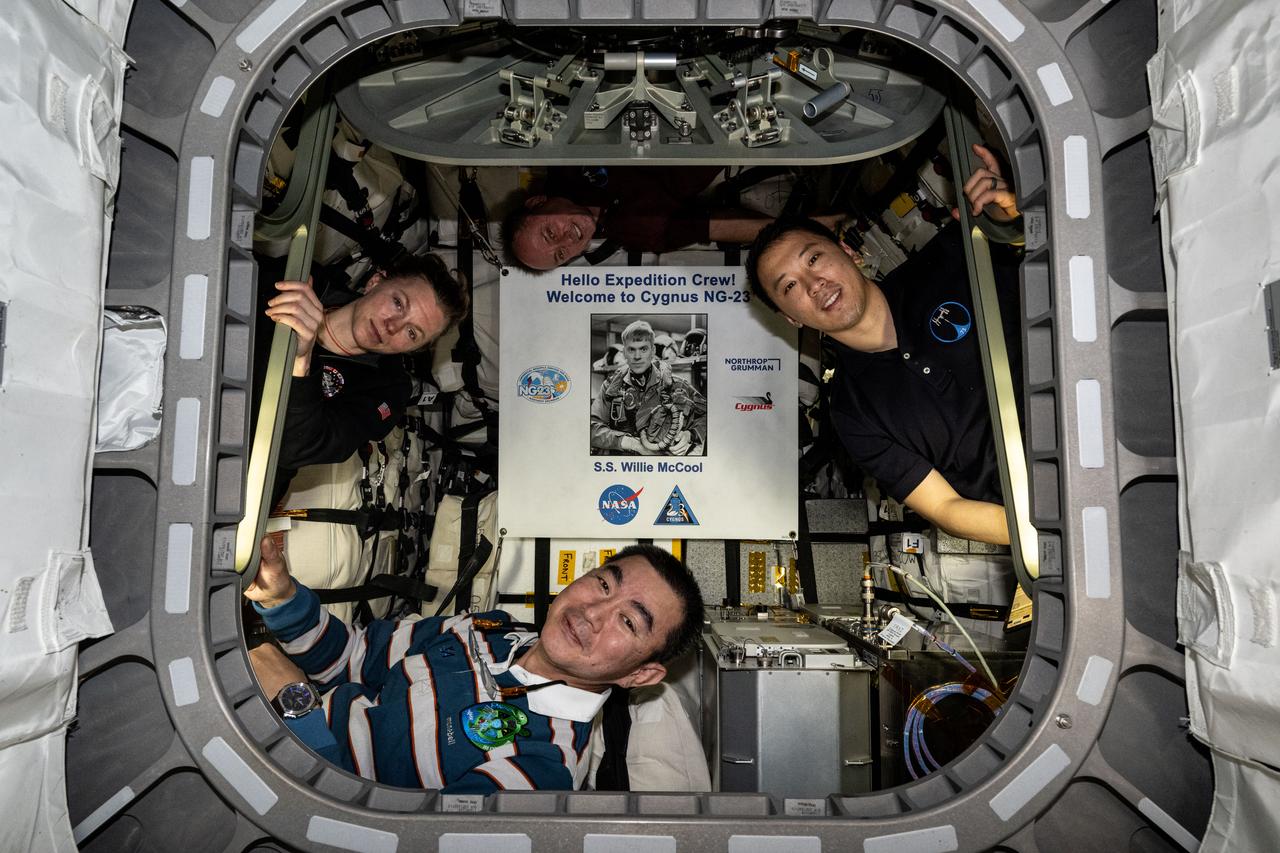
iss073e0704084 (Sept. 18, 2025) --- Pictured inside the Northrop Grumman Cygnus XL cargo craft are (clockwise from left) Flight Engineers Zena Cardman, Mike Fincke, and Jonny Kim of NASA, and Flight Engineer Kimiya Yui of JAXA (Japan Aerospace Exploration Agency). Highlighted at center, is a poster of William “Willie” McCool, in honor of the NASA astronaut who perished in 2003 during the space shuttle Columbia accident and for whom the Cygnus spacecraft is named.
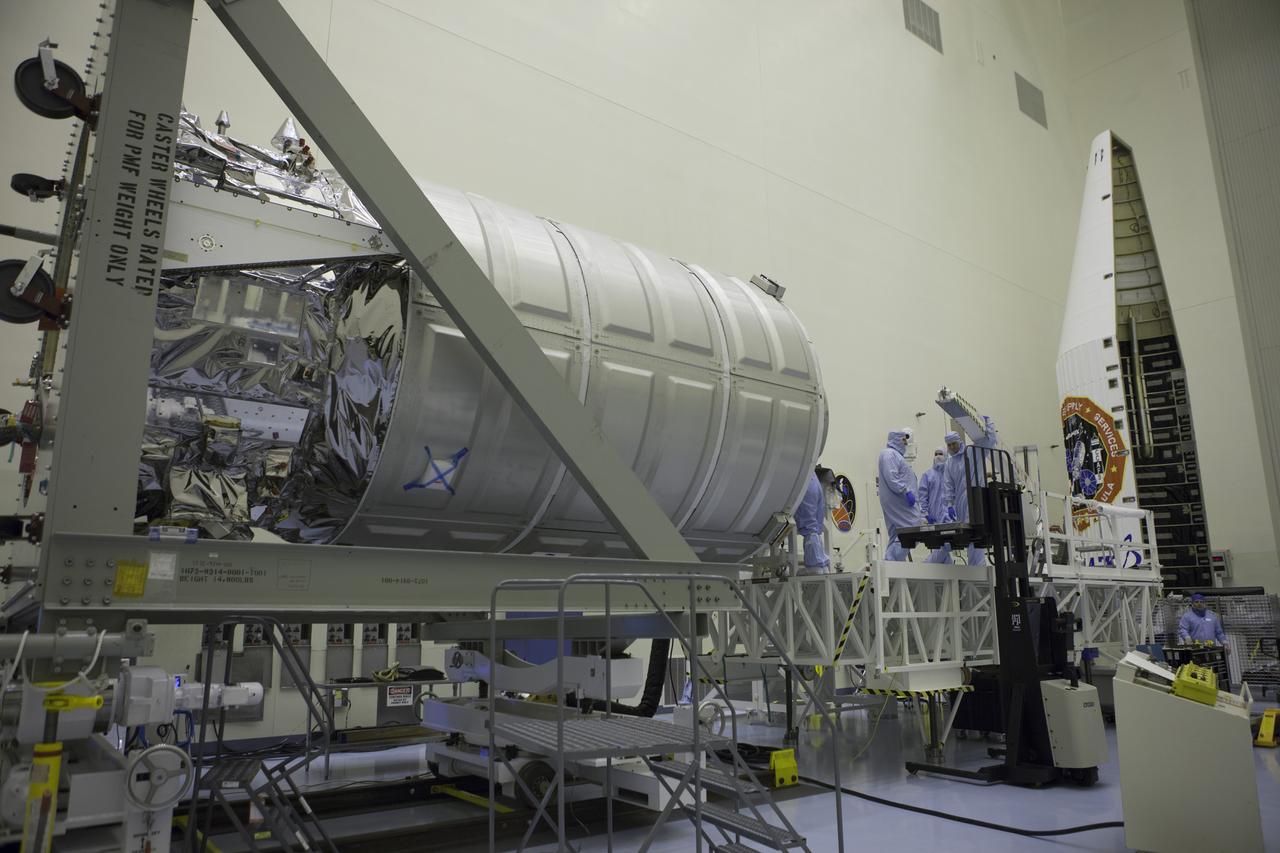
Technicians prepare load cargo into the Orbital ATK Cygnus pressurized module during late stowage operations inside the Payload Hazardous Servicing Facility at NASA's Kennedy Space Center in Florida. The spacecraft is scheduled for the upcoming Orbital ATK Commercial Resupply Services-6 mission to deliver hardware and supplies to the International Space Station. The Cygnus is scheduled to lift off atop a United Launch Alliance Atlas V rocket on March 22.
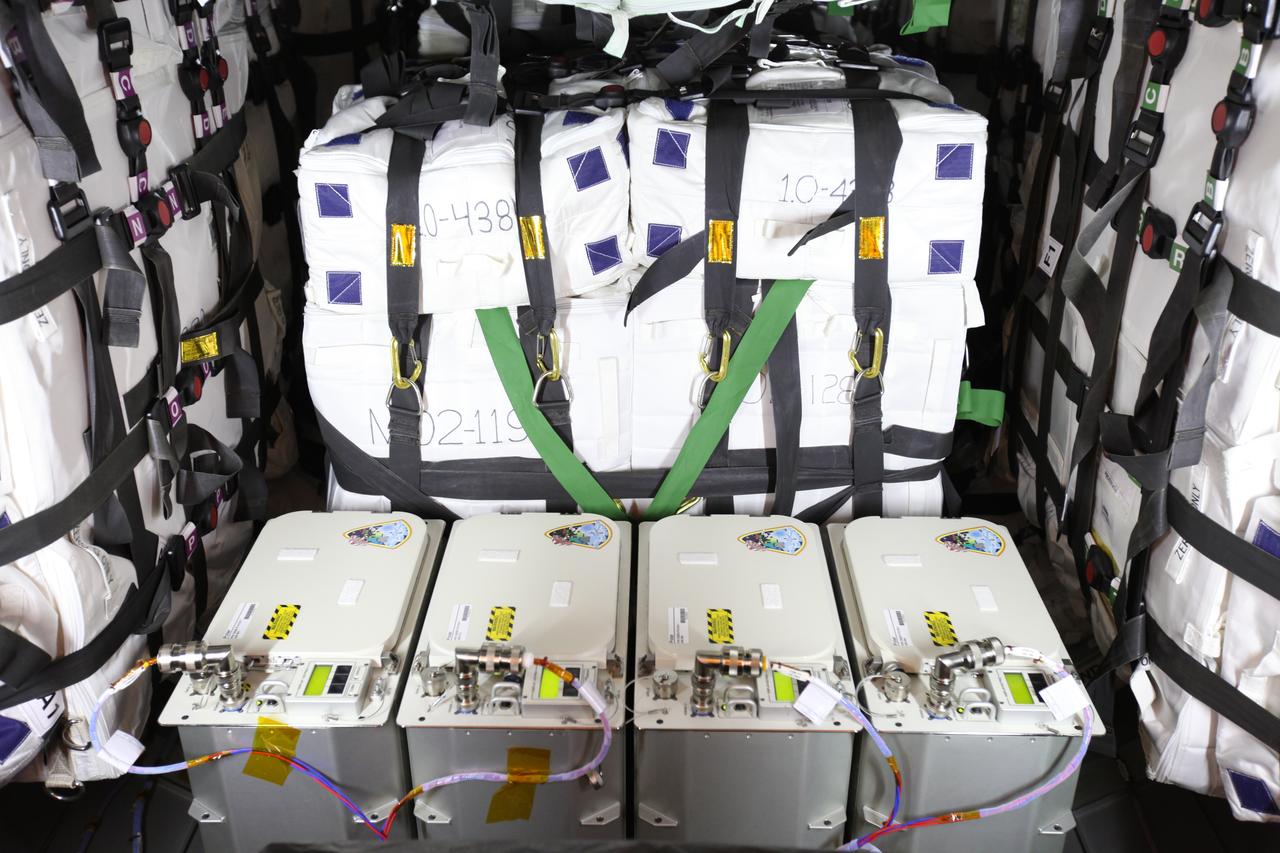
Inside the Payload Hazardous Servicing Facility at NASA's Kennedy Space Center in Florida, technicians have completed installation of the final cargo and power in the Orbital ATK Cygnus pressurized cargo module. The Orbital ATK CRS-7 commercial resupply services mission to the International Space Station is scheduled to launch atop a United Launch Alliance Atlas V rocket from Space Launch Complex 41 at Cape Canaveral Air Force Station no earlier than March 21, 2017. Cygnus will deliver 7,600 pounds of supplies, equipment and scientific research materials to the space station.
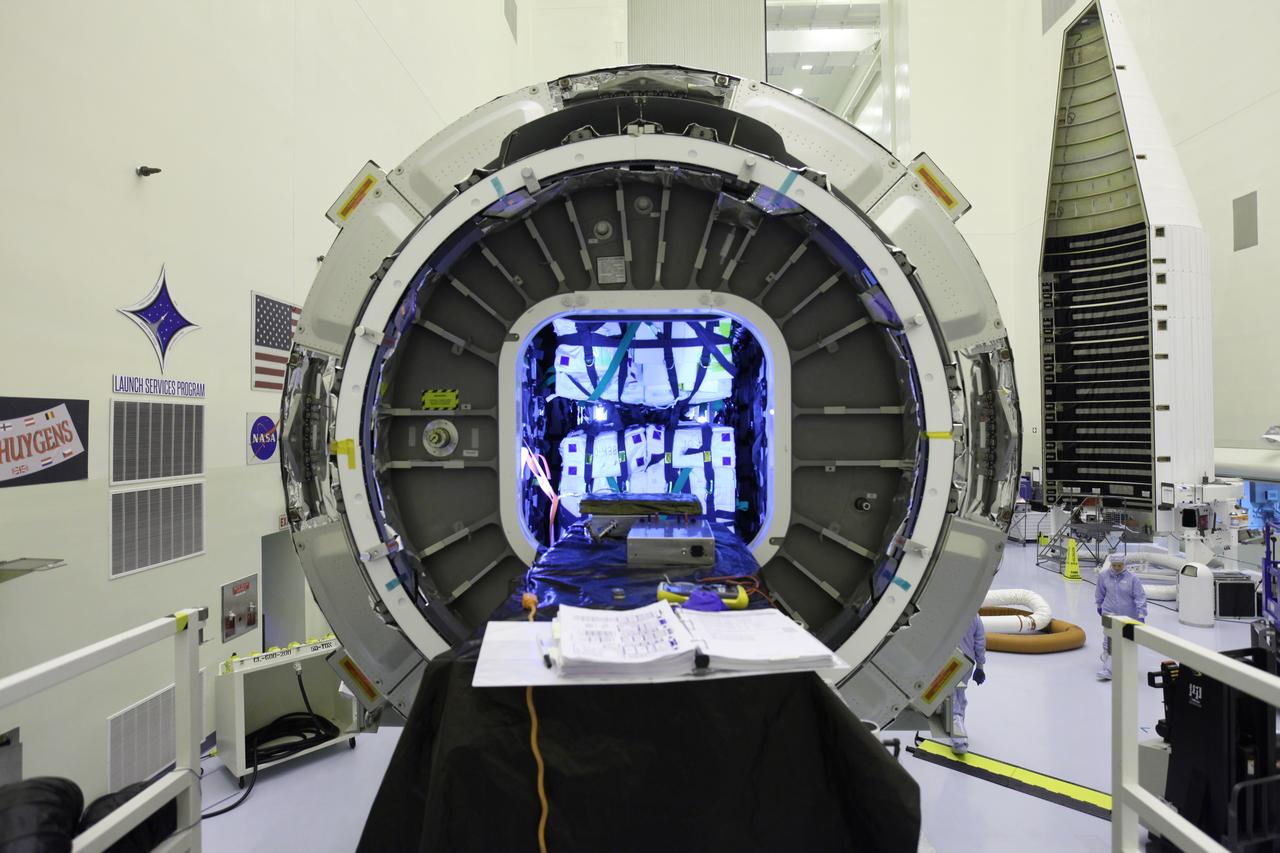
Inside the Payload Hazardous Servicing Facility at NASA's Kennedy Space Center in Florida, preparations are underway for final stowage of powered cargo in the Orbital ATK Cygnus pressurized cargo module. The Orbital ATK CRS-7 commercial resupply services mission to the International Space Station is scheduled to launch atop a United Launch Alliance Atlas V rocket from Space Launch Complex 41 at Cape Canaveral Air Force Station targeted for March 24, 2017. Cygnus will deliver 7,600 pounds of supplies, equipment and scientific research materials to the space station.
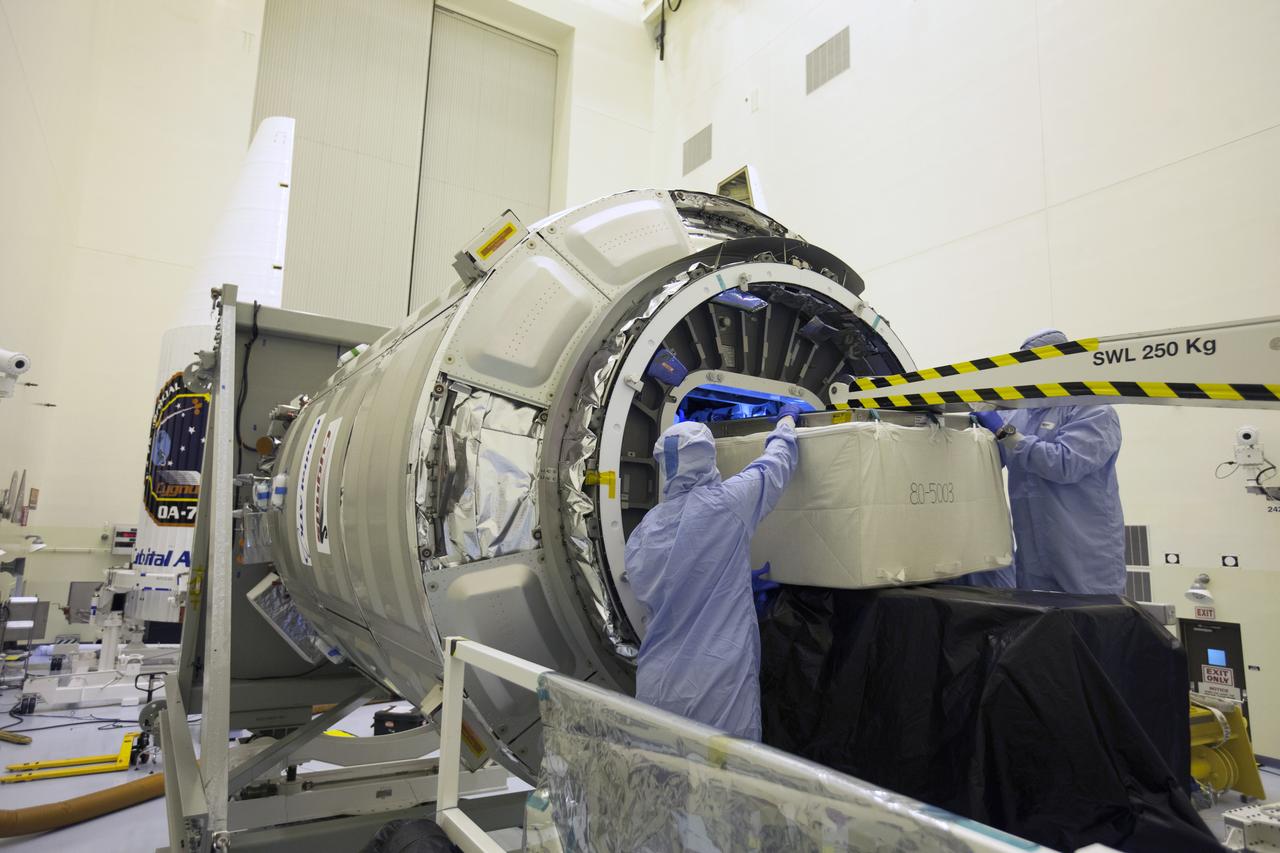
Inside the Payload Hazardous Servicing Facility at NASA's Kennedy Space Center in Florida, technicians use a special mechanism to assist with late cargo installation in the Orbital ATK Cygnus pressurized cargo module. The Orbital ATK CRS-7 commercial resupply services mission to the International Space Station is scheduled to launch atop a United Launch Alliance Atlas V rocket from Space Launch Complex 41 at Cape Canaveral Air Force Station targeted for March 24, 2017. Cygnus will deliver 7,600 pounds of supplies, equipment and scientific research materials to the space station.
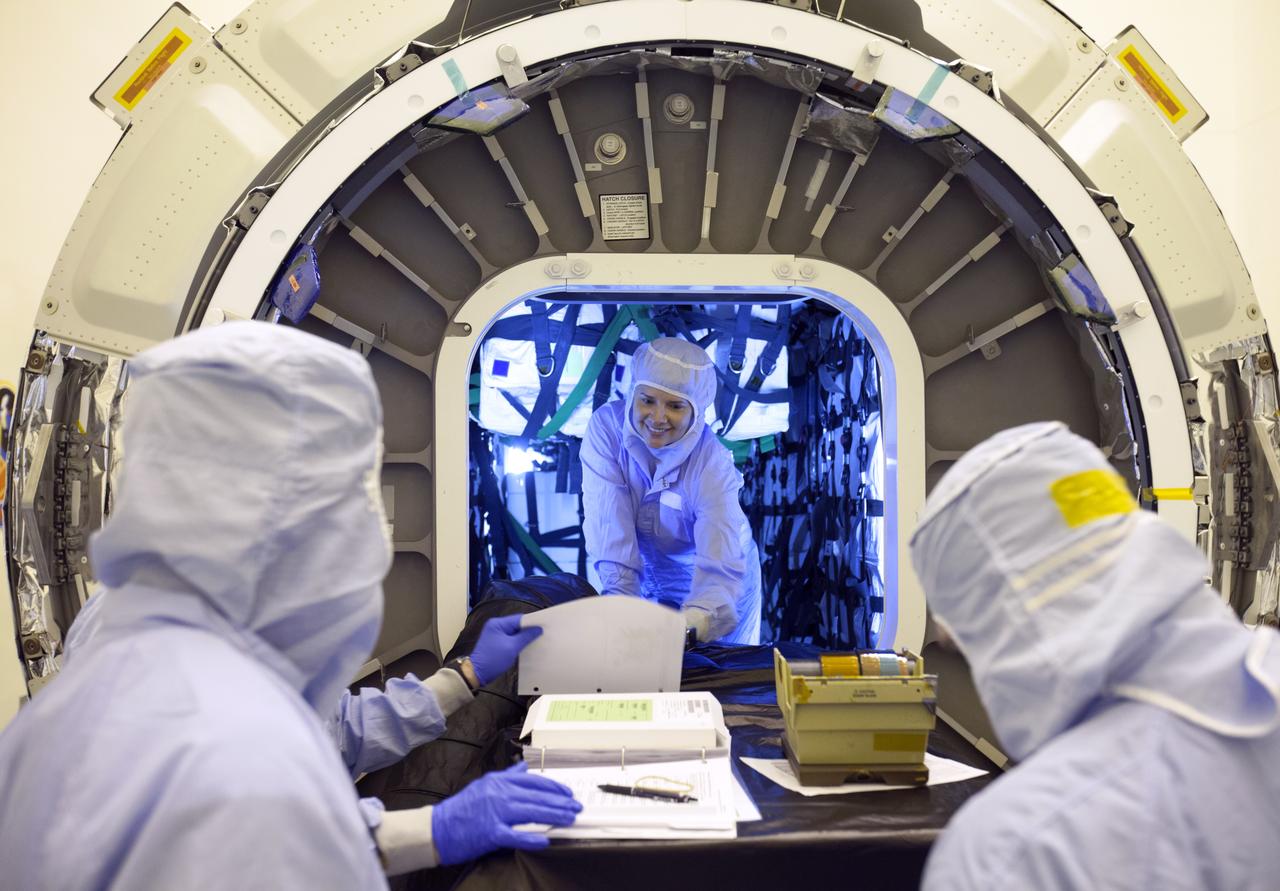
Inside the Payload Hazardous Servicing Facility at NASA's Kennedy Space Center in Florida, preparations are underway for late cargo installation in the Orbital ATK Cygnus pressurized cargo module. The Orbital ATK CRS-7 commercial resupply services mission to the International Space Station is scheduled to launch atop a United Launch Alliance Atlas V rocket from Space Launch Complex 41 at Cape Canaveral Air Force Station targeted for March 24, 2017. Cygnus will deliver 7,600 pounds of supplies, equipment and scientific research materials to the space station.
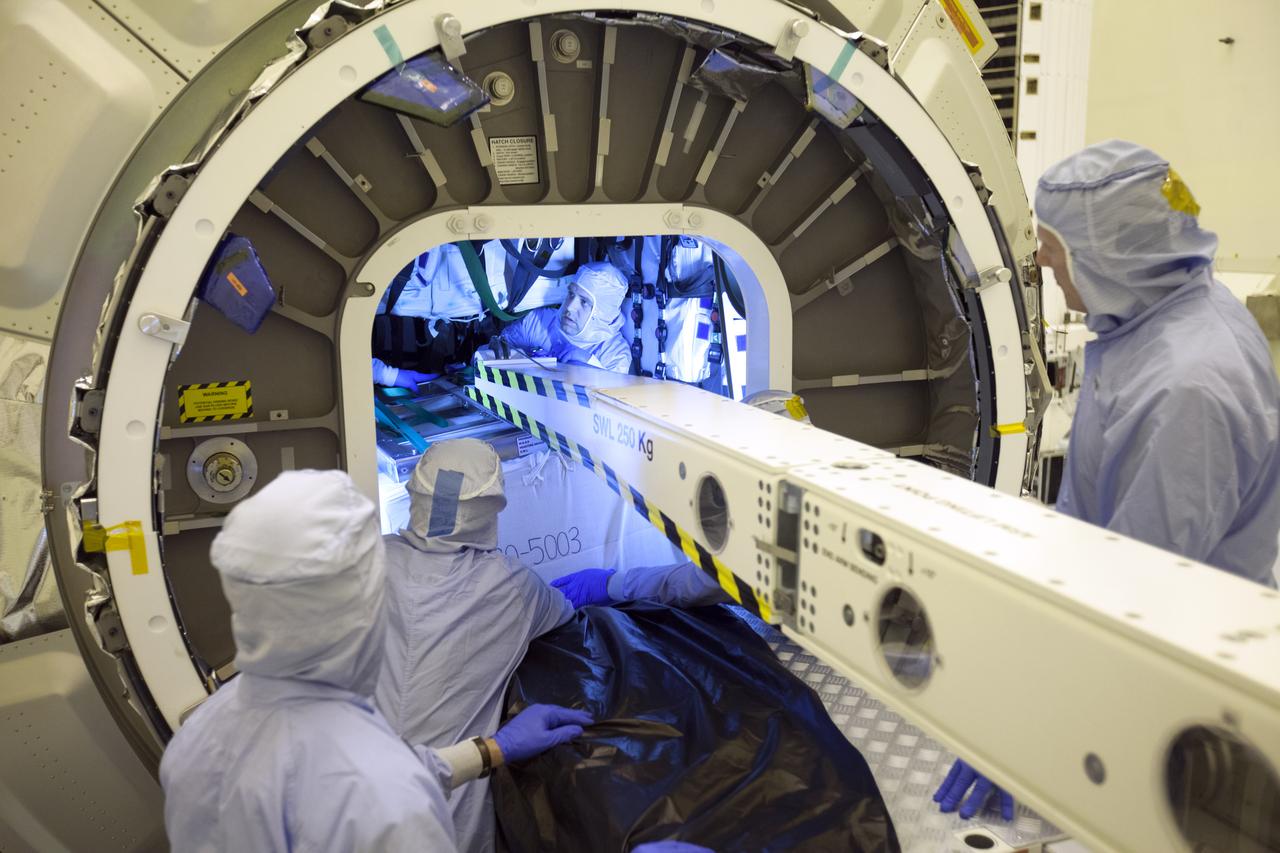
Inside the Payload Hazardous Servicing Facility at NASA's Kennedy Space Center in Florida, technicians use a special mechanism to assist with late cargo installation in the Orbital ATK Cygnus pressurized cargo module. The Orbital ATK CRS-7 commercial resupply services mission to the International Space Station is scheduled to launch atop a United Launch Alliance Atlas V rocket from Space Launch Complex 41 at Cape Canaveral Air Force Station targeted for March 24, 2017. Cygnus will deliver 7,600 pounds of supplies, equipment and scientific research materials to the space station.
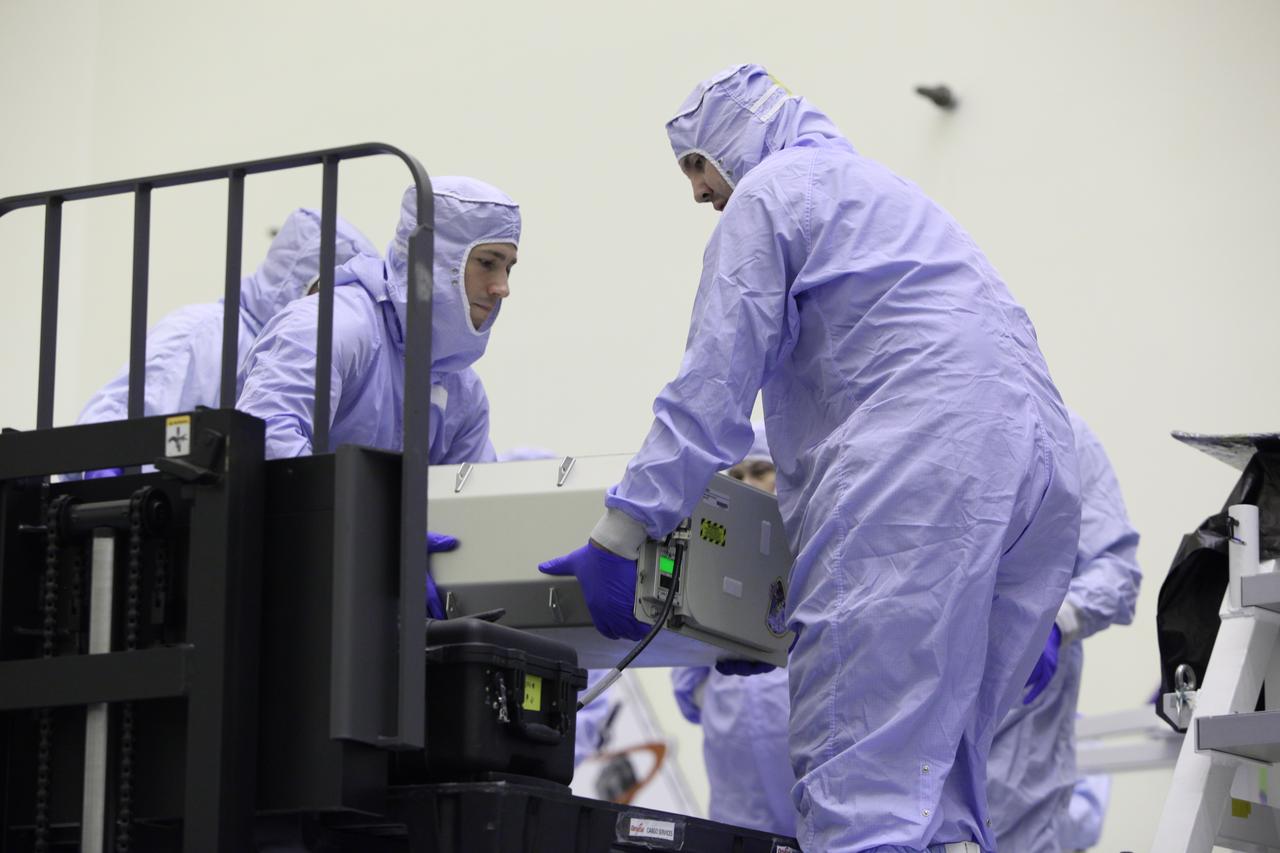
Inside the Payload Hazardous Servicing Facility at NASA's Kennedy Space Center in Florida, technicians prepare a powered cargo unit for late stowage in the Orbital ATK Cygnus pressurized cargo module. The Orbital ATK CRS-7 commercial resupply services mission to the International Space Station is scheduled to launch atop a United Launch Alliance Atlas V rocket from Space Launch Complex 41 at Cape Canaveral Air Force Station targeted for March 24, 2017. Cygnus will deliver 7,600 pounds of supplies, equipment and scientific research materials to the space station.
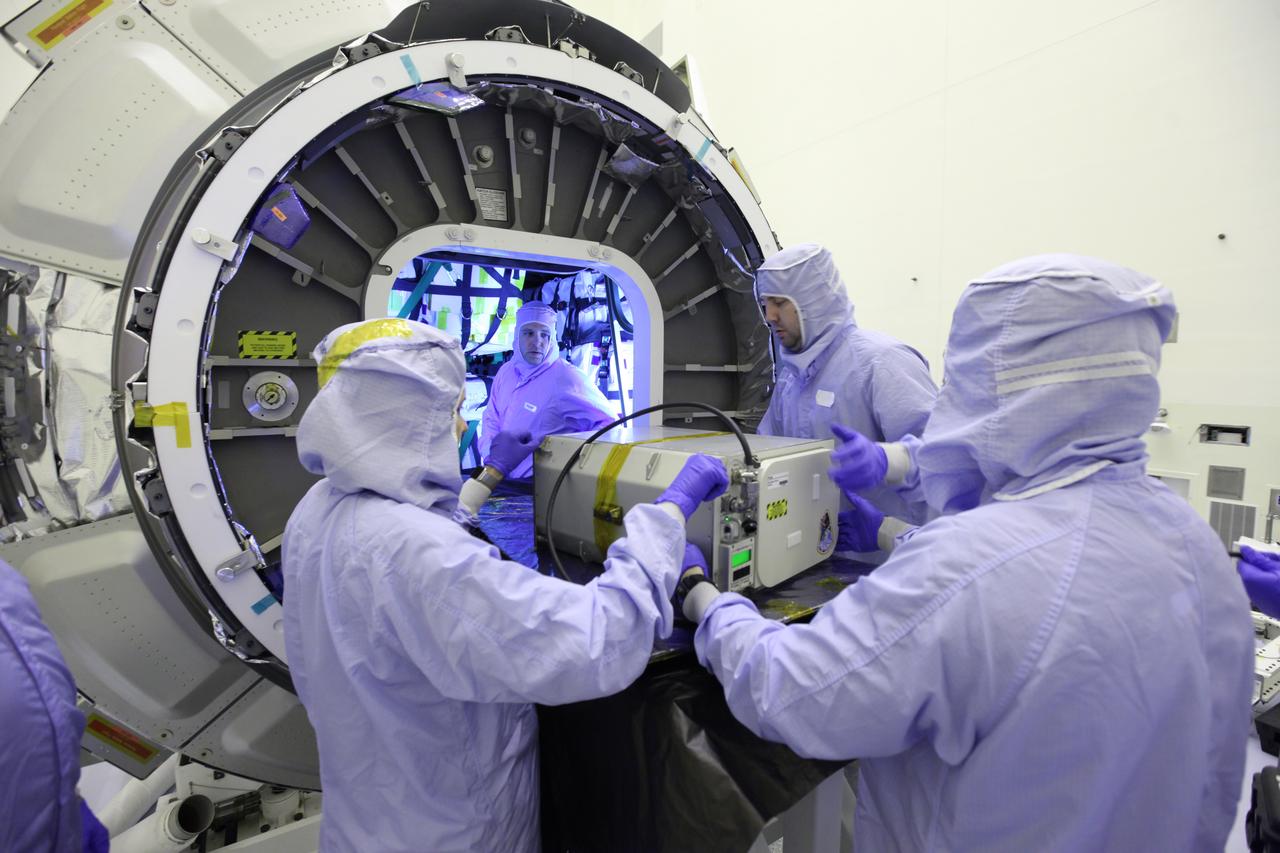
Inside the Payload Hazardous Servicing Facility at NASA's Kennedy Space Center in Florida, technicians perform final cargo installation in the Orbital ATK Cygnus pressurized cargo module. The Orbital ATK CRS-7 commercial resupply services mission to the International Space Station is scheduled to launch atop a United Launch Alliance Atlas V rocket from Space Launch Complex 41 at Cape Canaveral Air Force Station no earlier than March 21, 2017. Cygnus will deliver 7,600 pounds of supplies, equipment and scientific research materials to the space station.
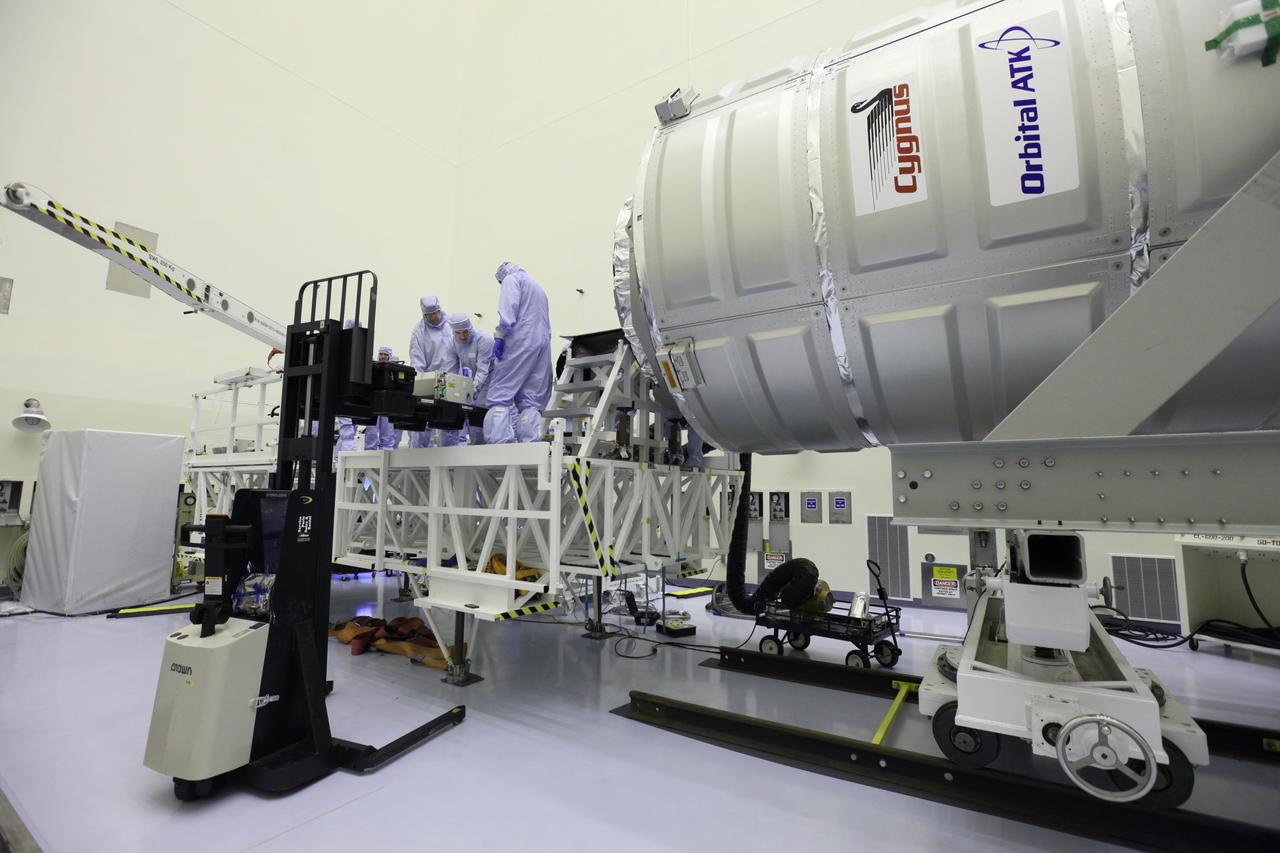
Inside the Payload Hazardous Servicing Facility at NASA's Kennedy Space Center in Florida, technicians prepare a powered cargo unit for late stowage in the Orbital ATK Cygnus pressurized cargo module. The Orbital ATK CRS-7 commercial resupply services mission to the International Space Station is scheduled to launch atop a United Launch Alliance Atlas V rocket from Space Launch Complex 41 at Cape Canaveral Air Force Station targeted for March 24, 2017. Cygnus will deliver 7,600 pounds of supplies, equipment and scientific research materials to the space station.
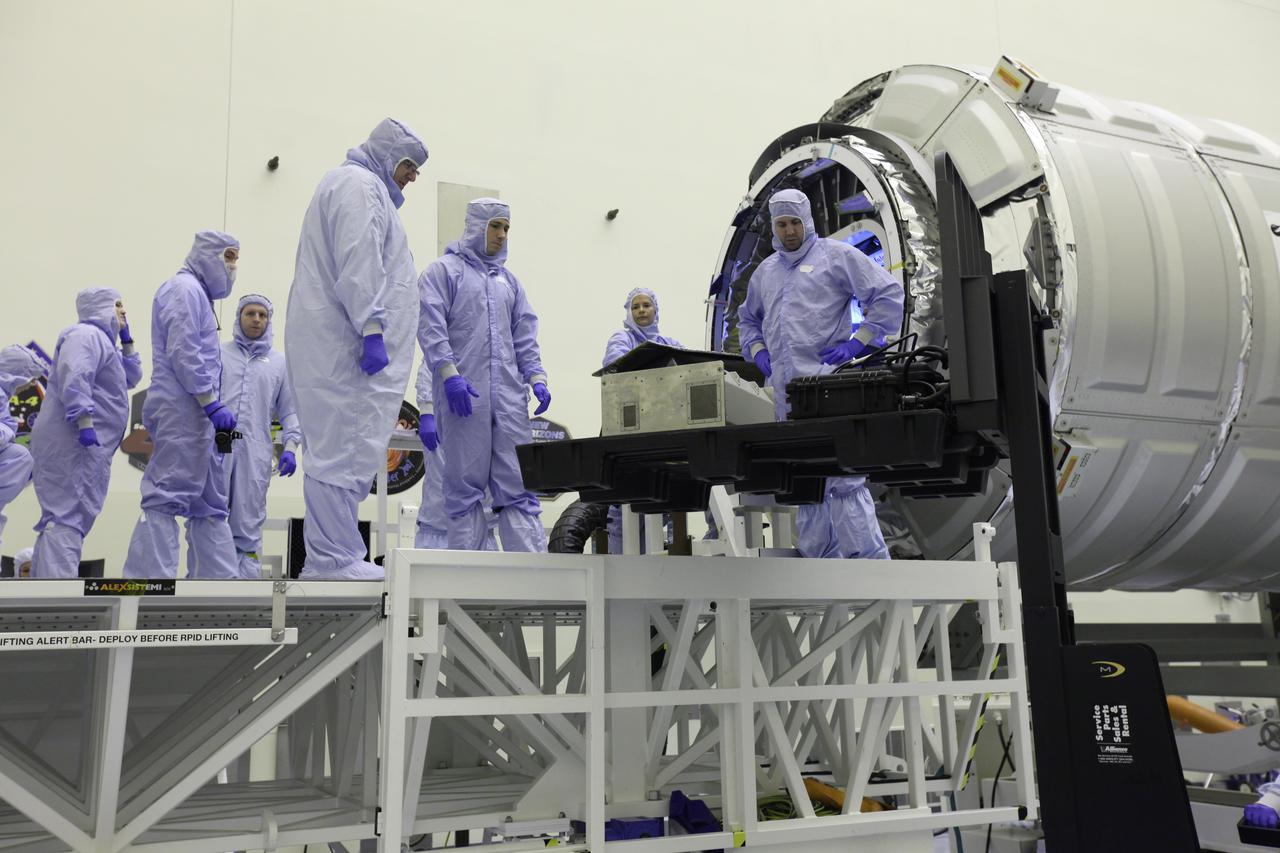
Inside the Payload Hazardous Servicing Facility at NASA's Kennedy Space Center in Florida, technicians prepare a powered cargo unit for late stowage in the Orbital ATK Cygnus pressurized cargo module. The Orbital ATK CRS-7 commercial resupply services mission to the International Space Station is scheduled to launch atop a United Launch Alliance Atlas V rocket from Space Launch Complex 41 at Cape Canaveral Air Force Station targeted for March 24, 2017. Cygnus will deliver 7,600 pounds of supplies, equipment and scientific research materials to the space station.
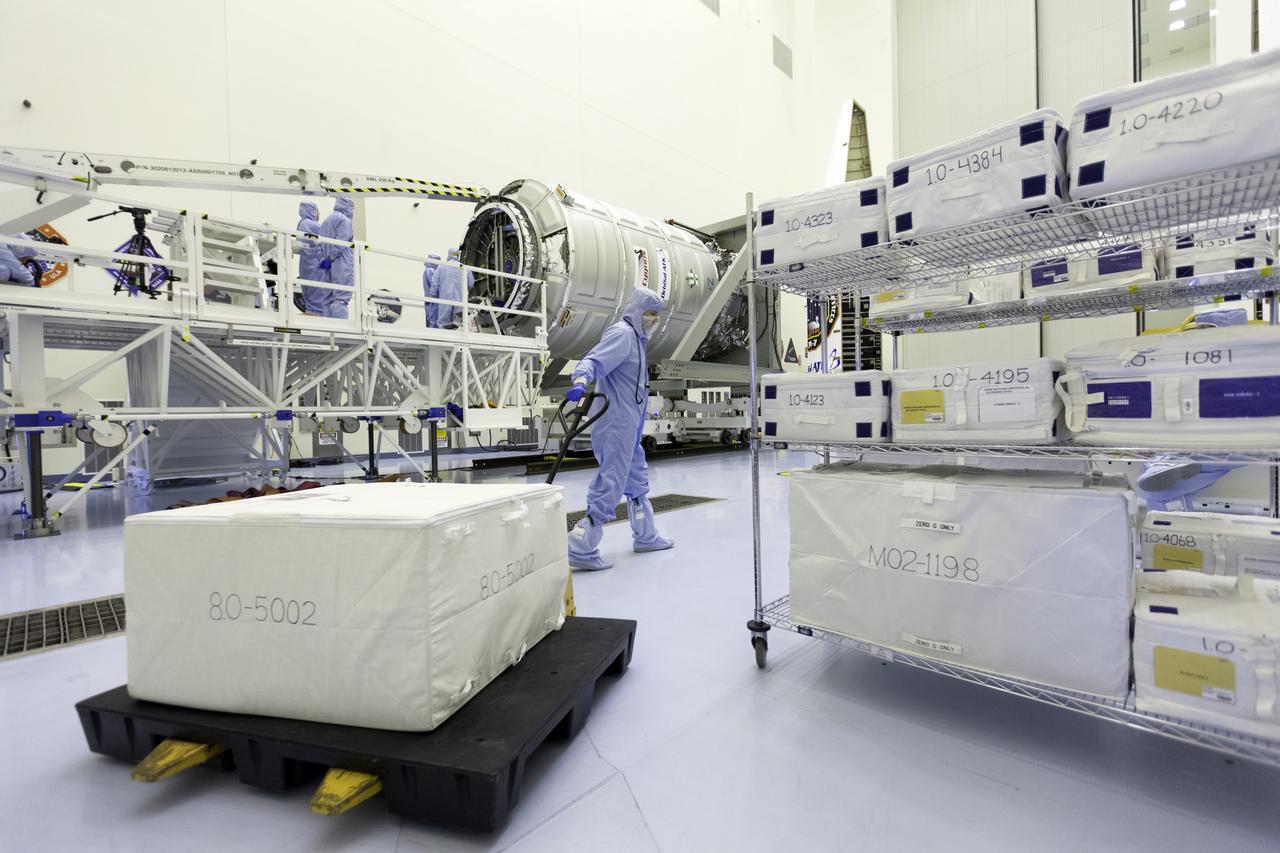
Inside the Payload Hazardous Servicing Facility at NASA's Kennedy Space Center in Florida, cargo has arrived for late loading in the Orbital ATK Cygnus pressurized cargo module. The Orbital ATK CRS-7 commercial resupply services mission to the International Space Station is scheduled to launch atop a United Launch Alliance Atlas V rocket from Space Launch Complex 41 at Cape Canaveral Air Force Station targeted for March 24, 2017. Cygnus will deliver 7,600 pounds of supplies, equipment and scientific research materials to the space station.
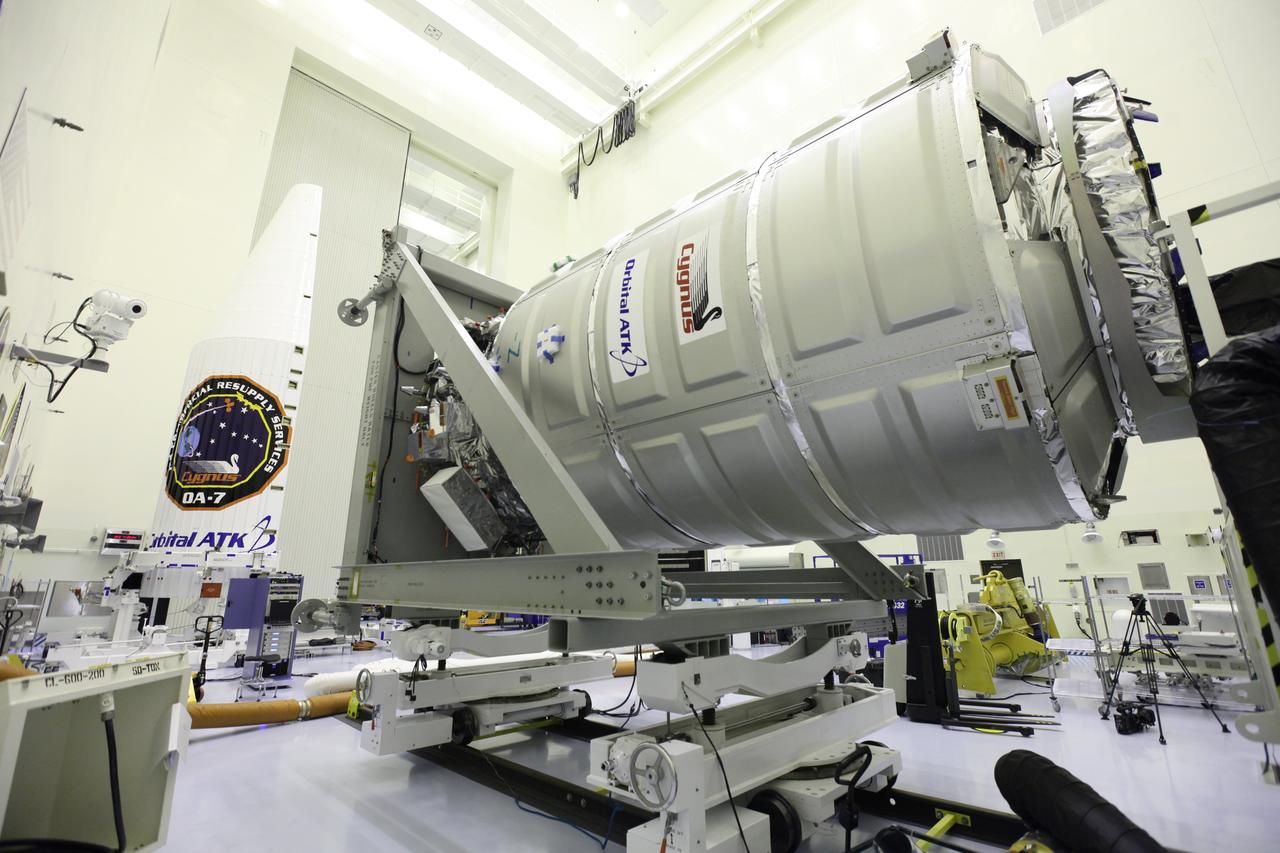
Inside the Payload Hazardous Servicing Facility at NASA's Kennedy Space Center in Florida, the Orbital ATK Cygnus pressurized cargo module is tilted to the horizontal position to prepare for final stowage of powered cargo. The Orbital ATK CRS-7 commercial resupply services mission to the International Space Station is scheduled to launch atop a United Launch Alliance Atlas V rocket from Space Launch Complex 41 at Cape Canaveral Air Force Station targeted for March 24, 2017. Cygnus will deliver 7,600 pounds of supplies, equipment and scientific research materials to the space station.
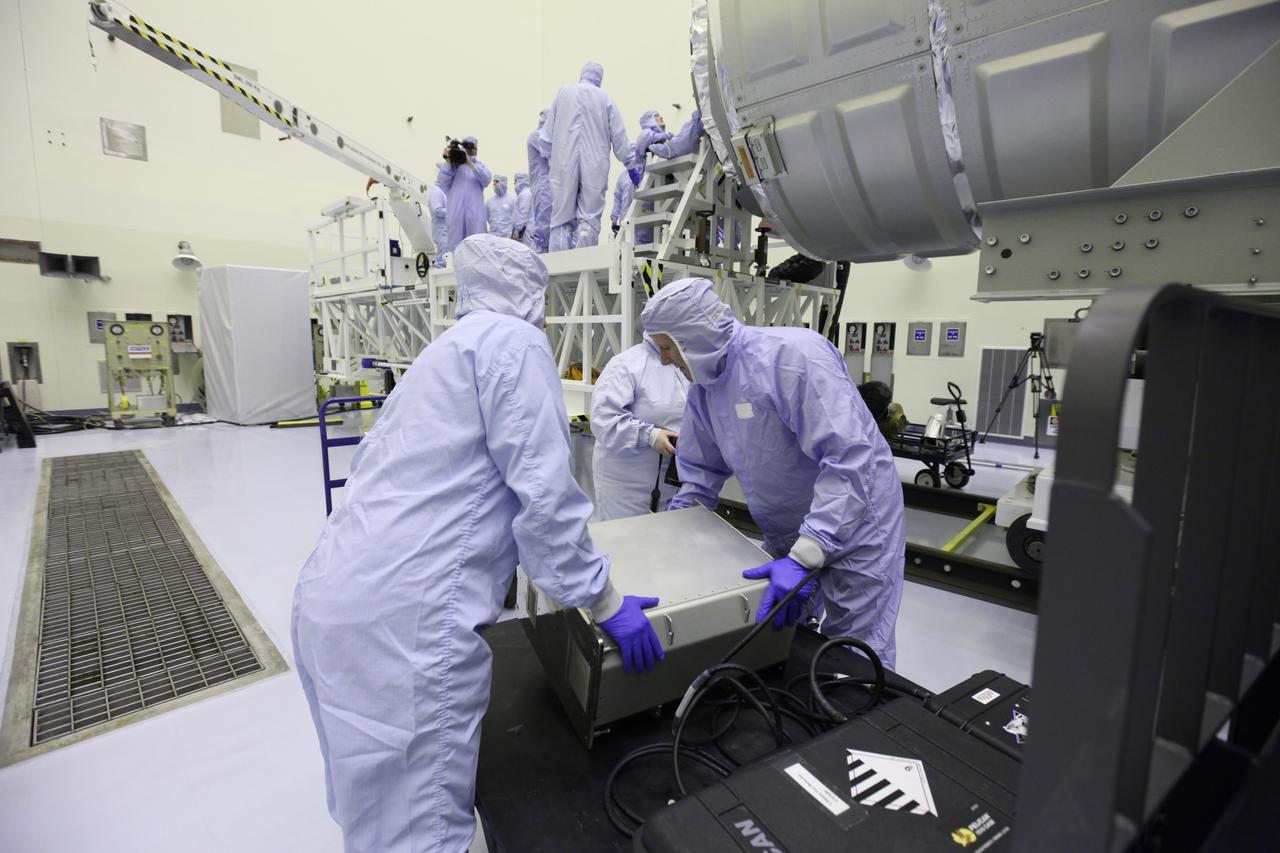
Inside the Payload Hazardous Servicing Facility at NASA's Kennedy Space Center in Florida, preparations are underway for final cargo installation in the Orbital ATK Cygnus pressurized cargo module. The Orbital ATK CRS-7 commercial resupply services mission to the International Space Station is scheduled to launch atop a United Launch Alliance Atlas V rocket from Space Launch Complex 41 at Cape Canaveral Air Force Station no earlier than March 21, 2017. Cygnus will deliver 7,600 pounds of supplies, equipment and scientific research materials to the space station.

Inside the Payload Hazardous Servicing Facility at NASA's Kennedy Space Center in Florida, technicians begin late cargo installation in the Orbital ATK Cygnus pressurized cargo module. The Orbital ATK CRS-7 commercial resupply services mission to the International Space Station is scheduled to launch atop a United Launch Alliance Atlas V rocket from Space Launch Complex 41 at Cape Canaveral Air Force Station targeted for March 24, 2017. Cygnus will deliver 7,600 pounds of supplies, equipment and scientific research materials to the space station.
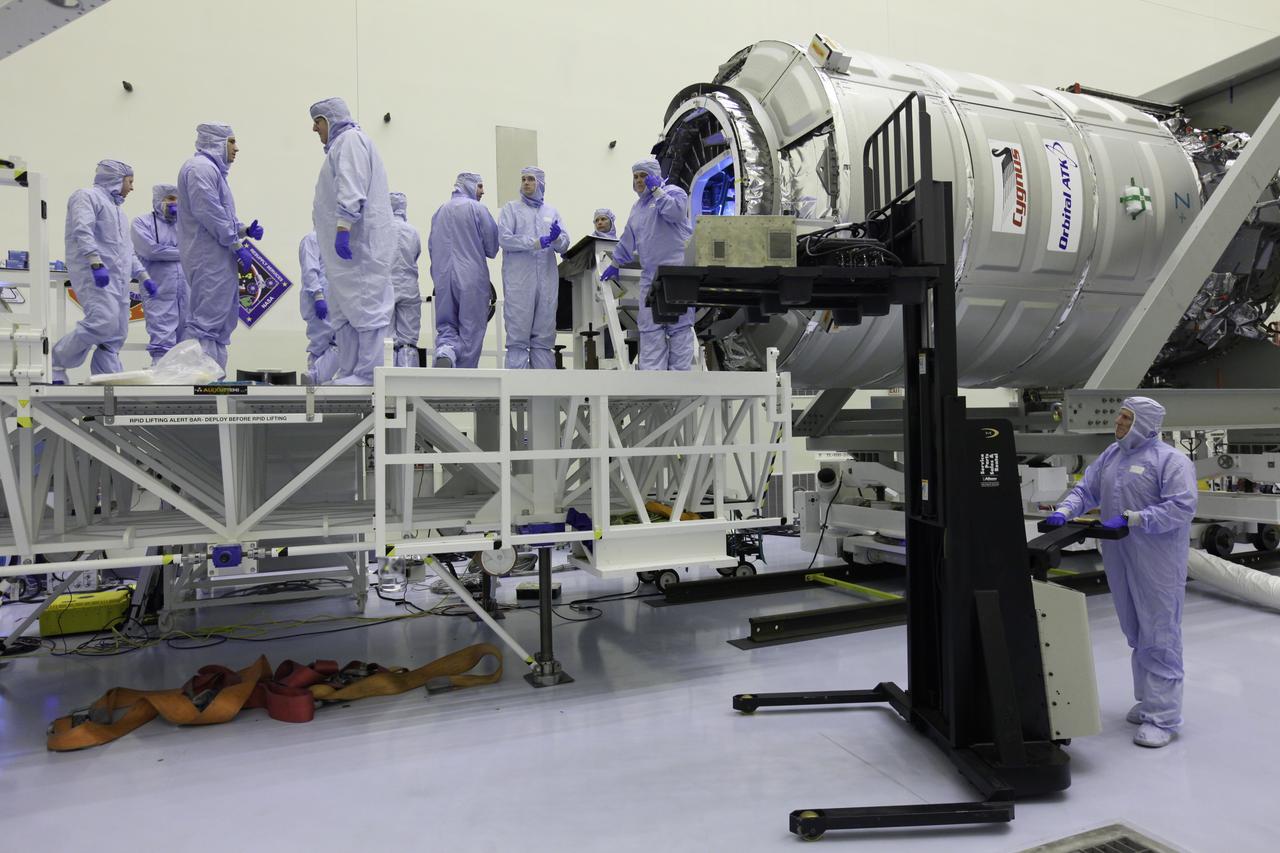
Inside the Payload Hazardous Servicing Facility at NASA's Kennedy Space Center in Florida, technicians prepare payloads for final cargo installation in the Orbital ATK Cygnus pressurized cargo module. The Orbital ATK CRS-7 commercial resupply services mission to the International Space Station is scheduled to launch atop a United Launch Alliance Atlas V rocket from Space Launch Complex 41 at Cape Canaveral Air Force Station no earlier than March 21, 2017. Cygnus will deliver 7,600 pounds of supplies, equipment and scientific research materials to the space station.
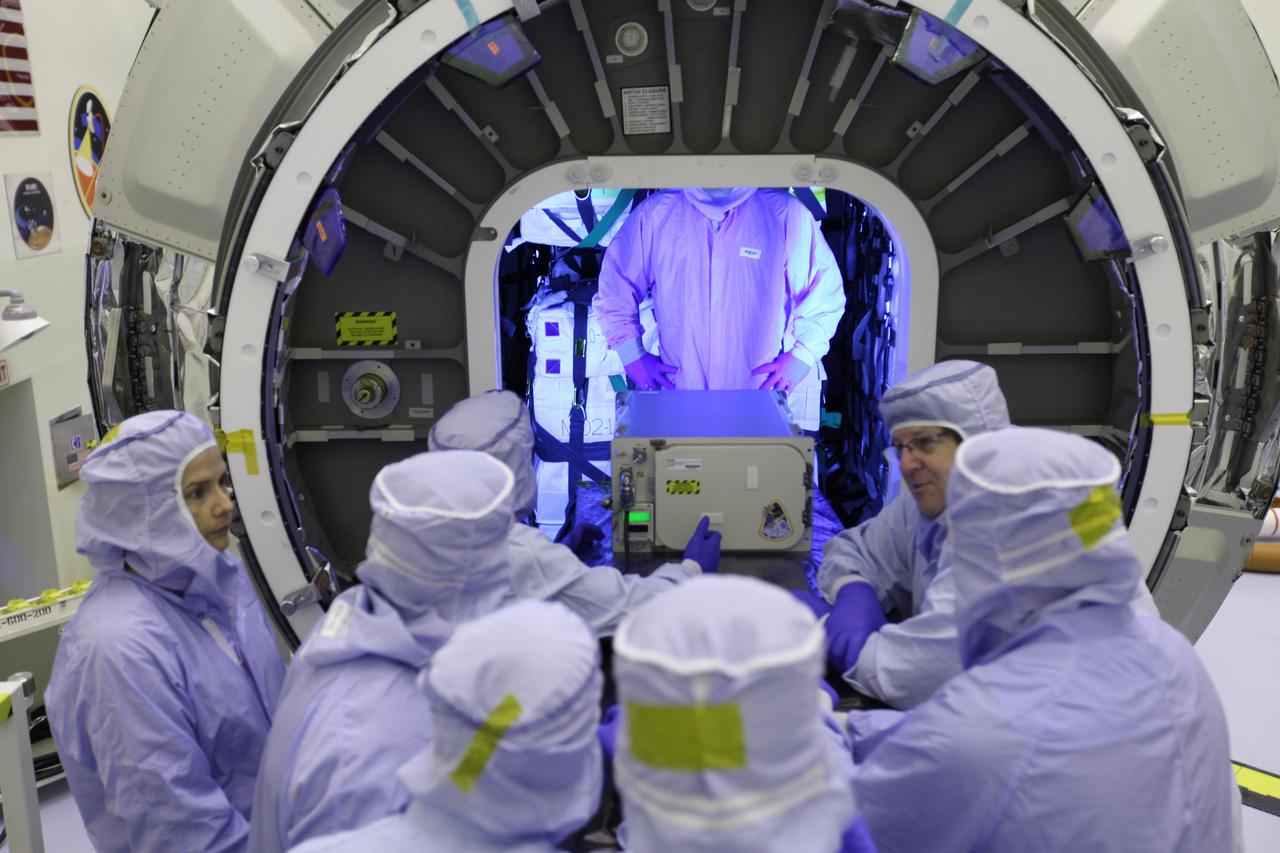
Inside the Payload Hazardous Servicing Facility at NASA's Kennedy Space Center in Florida, technicians load a powered cargo unit into the Orbital ATK Cygnus pressurized cargo module during final stowage. The Orbital ATK CRS-7 commercial resupply services mission to the International Space Station is scheduled to launch atop a United Launch Alliance Atlas V rocket from Space Launch Complex 41 at Cape Canaveral Air Force Station targeted for March 24, 2017. Cygnus will deliver 7,600 pounds of supplies, equipment and scientific research materials to the space station.
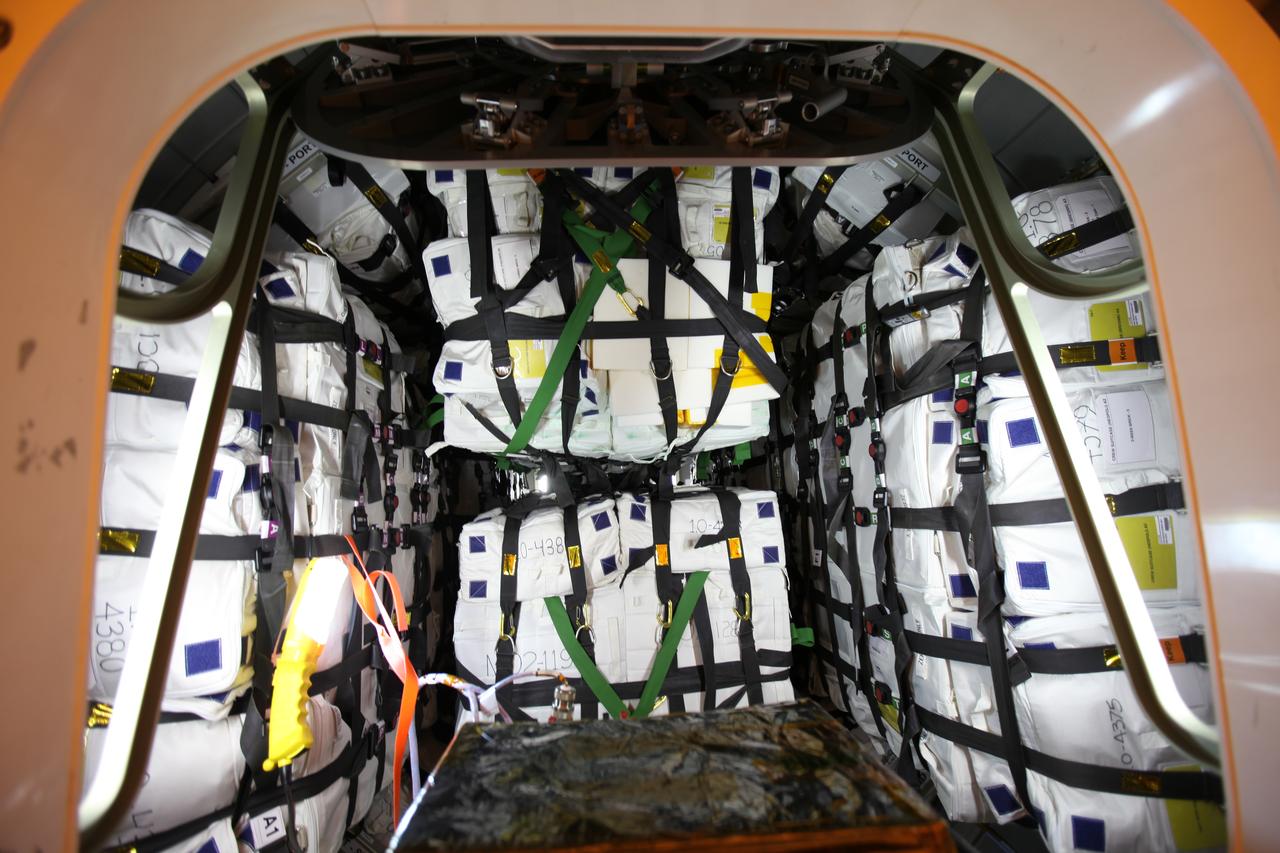
Inside the Payload Hazardous Servicing Facility at NASA's Kennedy Space Center in Florida, the hatch on the Orbital ATK Cygnus pressurized cargo module is open for final stowage of powered cargo. The Orbital ATK CRS-7 commercial resupply services mission to the International Space Station is scheduled to launch atop a United Launch Alliance Atlas V rocket from Space Launch Complex 41 at Cape Canaveral Air Force Station targeted for March 24, 2017. Cygnus will deliver 7,600 pounds of supplies, equipment and scientific research materials to the space station.
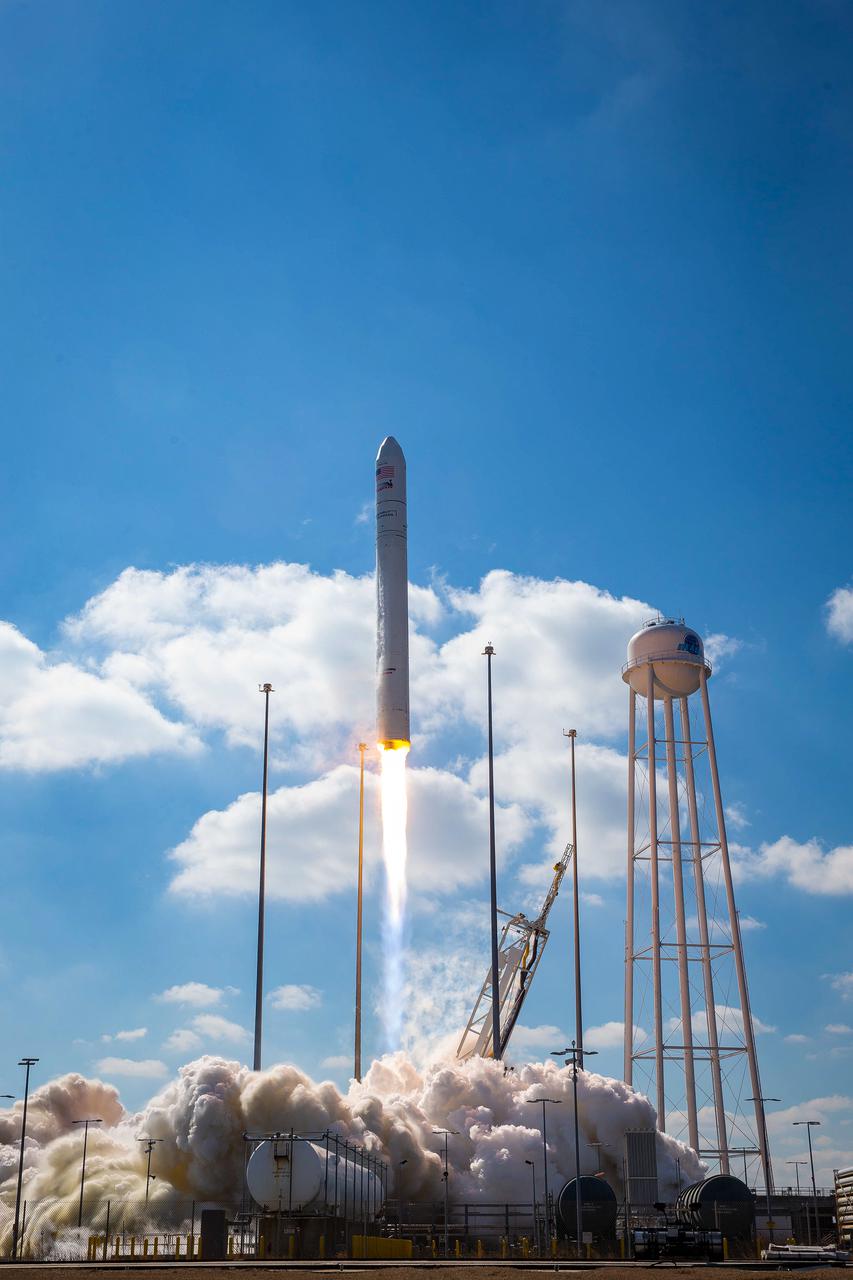
The Northrop Grumman Antares rocket, with Cygnus resupply spacecraft aboard, launches from Pad-0A, Saturday, Feb. 20, 2021, at NASA's Wallops Flight Facility in Virginia. Northrop Grumman's 15th contracted cargo resupply mission for NASA to the International Space Station will deliver about 8,000 pounds of science and research, crew supplies, and vehicle hardware to the orbital laboratory and its crew. Photo Credit: NASA's Wallops Flight Facility/Patrick Black

The Northrop Grumman Antares rocket, with Cygnus resupply spacecraft aboard, launches from Pad-0A, Saturday, Feb. 20, 2021, at NASA's Wallops Flight Facility in Virginia. Northrop Grumman's 15th contracted cargo resupply mission for NASA to the International Space Station will deliver about 8,000 pounds of science and research, crew supplies, and vehicle hardware to the orbital laboratory and its crew. Photo Credit: NASA's Wallops Flight Facility/Patrick Black
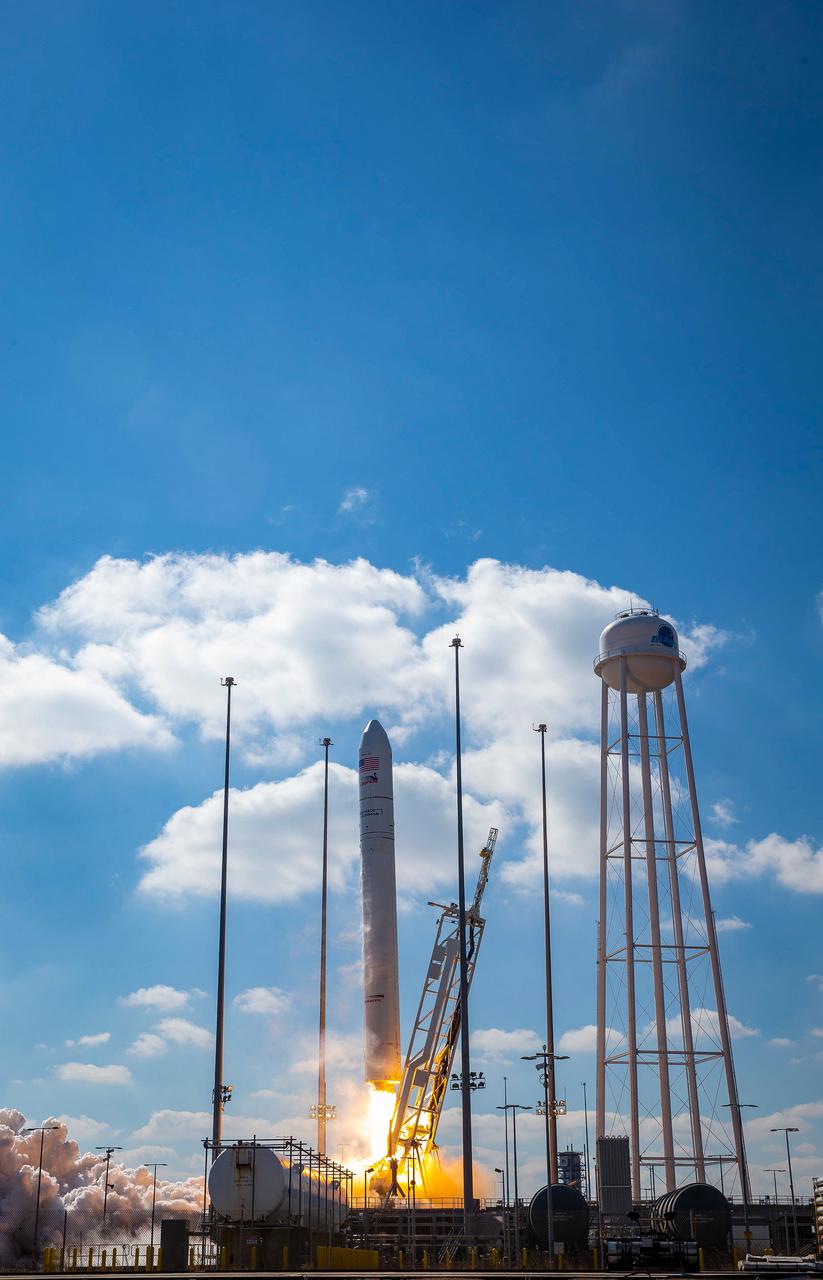
The Northrop Grumman Antares rocket, with Cygnus resupply spacecraft aboard, launches from Pad-0A, Saturday, Feb. 20, 2021, at NASA's Wallops Flight Facility in Virginia. Northrop Grumman's 15th contracted cargo resupply mission for NASA to the International Space Station will deliver about 8,000 pounds of science and research, crew supplies, and vehicle hardware to the orbital laboratory and its crew. Photo Credit: NASA's Wallops Flight Facility/Patrick Black
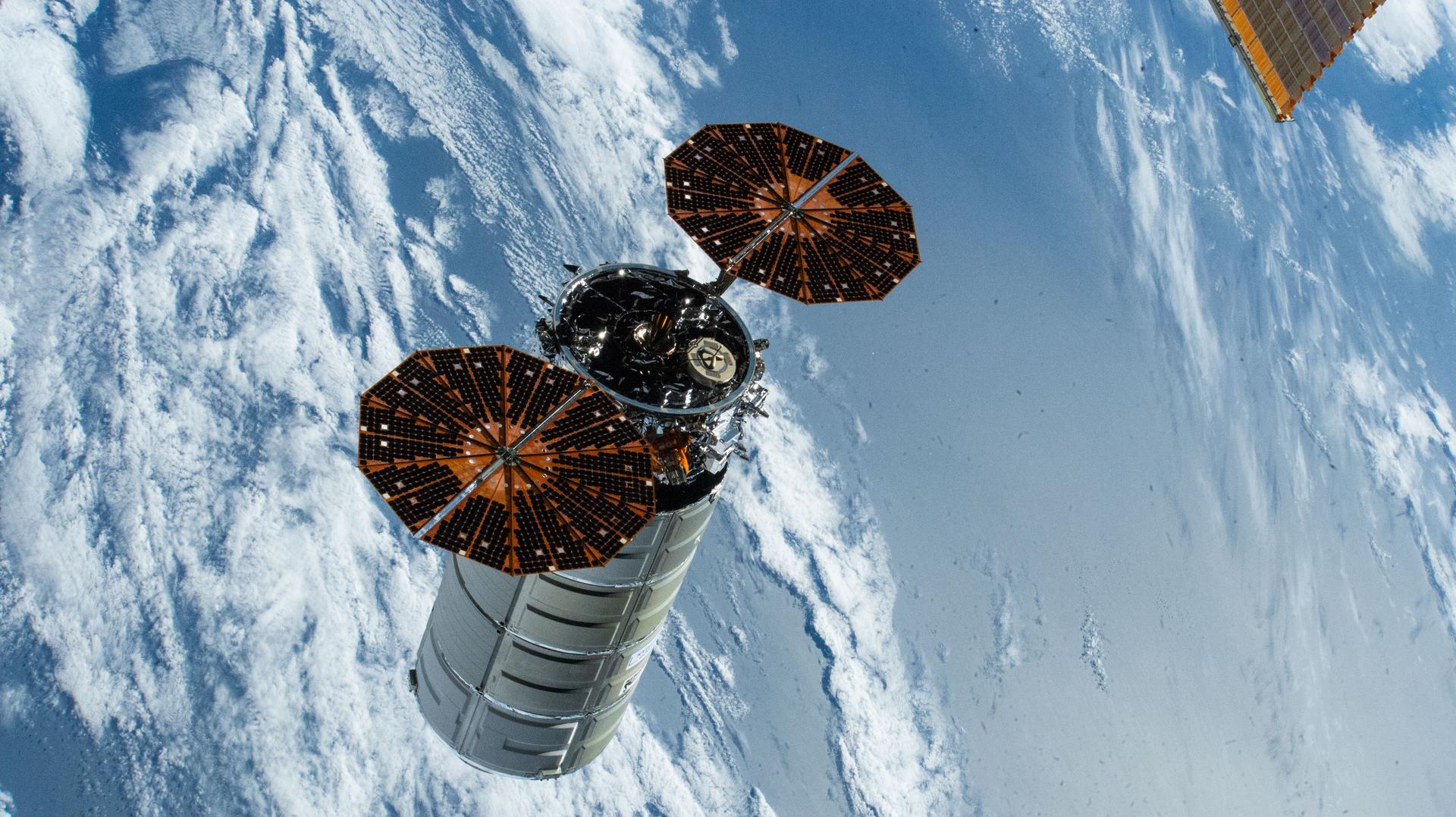
iss074e0379134 (March 12, 2026) --- Northrop Grumman's Cygnus XL cargo spacecraft, with its two prominent cymbal-shaped UltraFlex solar arrays, departs the International Space Station moments after being released from the grasp of the Canadarm2 robotic arm completing its resupply mission. Credit: NASA
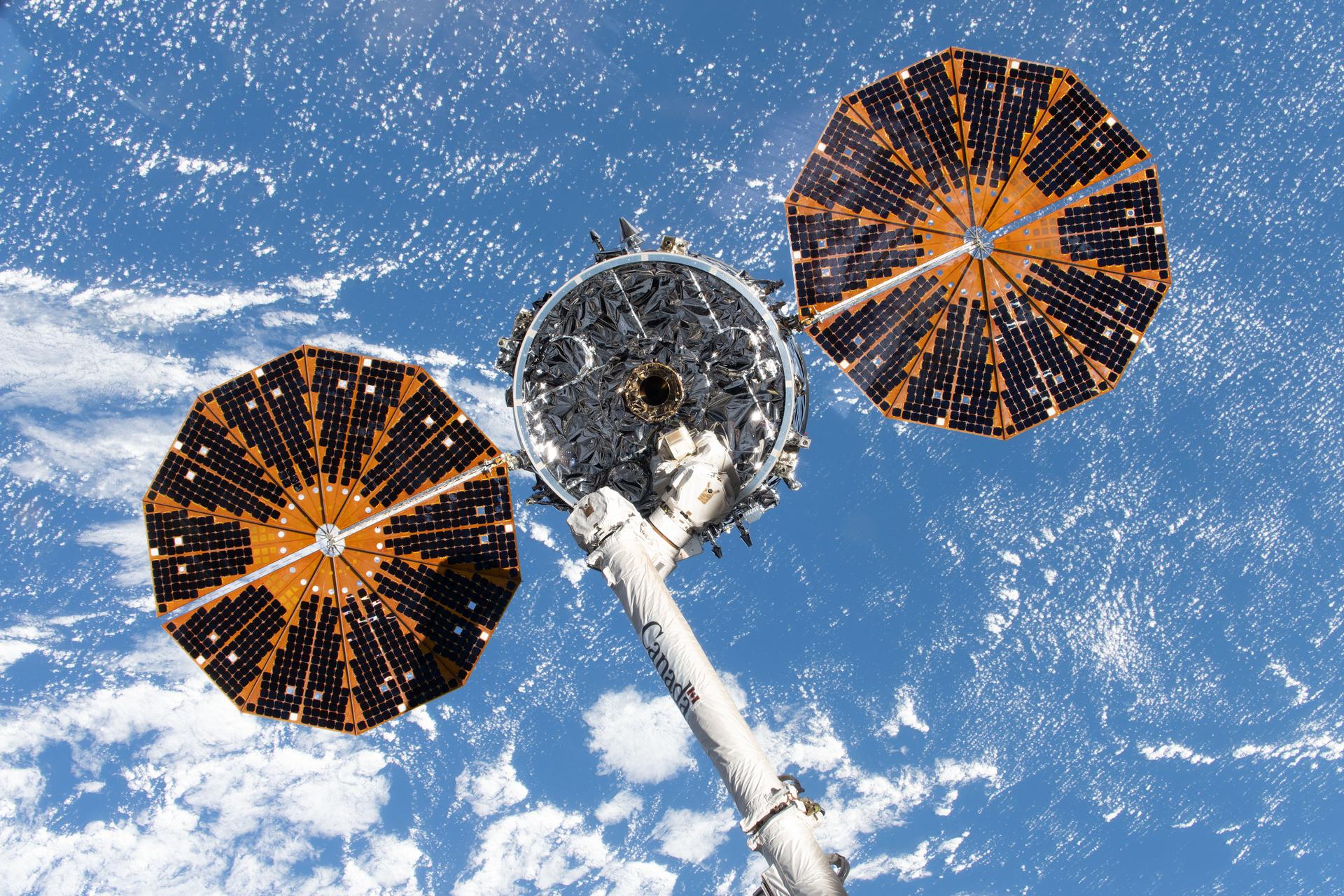
iss074e0378294 (March 12, 2026) --- Northrop Grumman's Cygnus XL cargo spacecraft, with its two prominent cymbal-shaped UltraFlex solar arrays, is in the grasp of the Canadarm2 robotic arm before being released and departing the International Space Station to complete its resupply mission. Credit: NASA/Jessica Meir
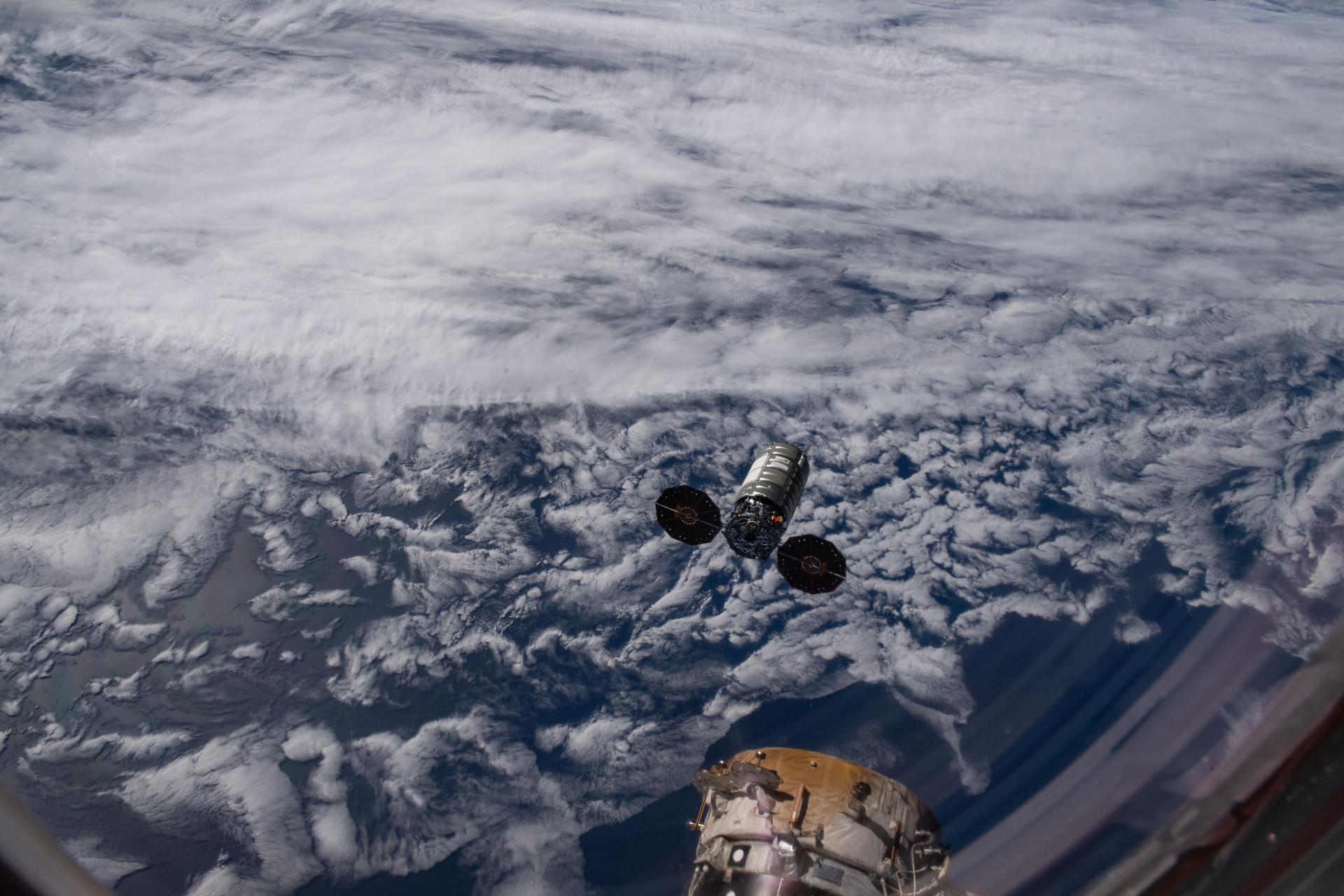
iss074e0378577 (March 12, 2026) --- Northrop Grumman's Cygnus XL cargo spacecraft, with its two prominent cymbal-shaped UltraFlex solar arrays, departs the International Space Station moments after being released from the grasp of the Canadarm2 robotic arm completing its resupply mission. Credit: NASA/Jessica Meir
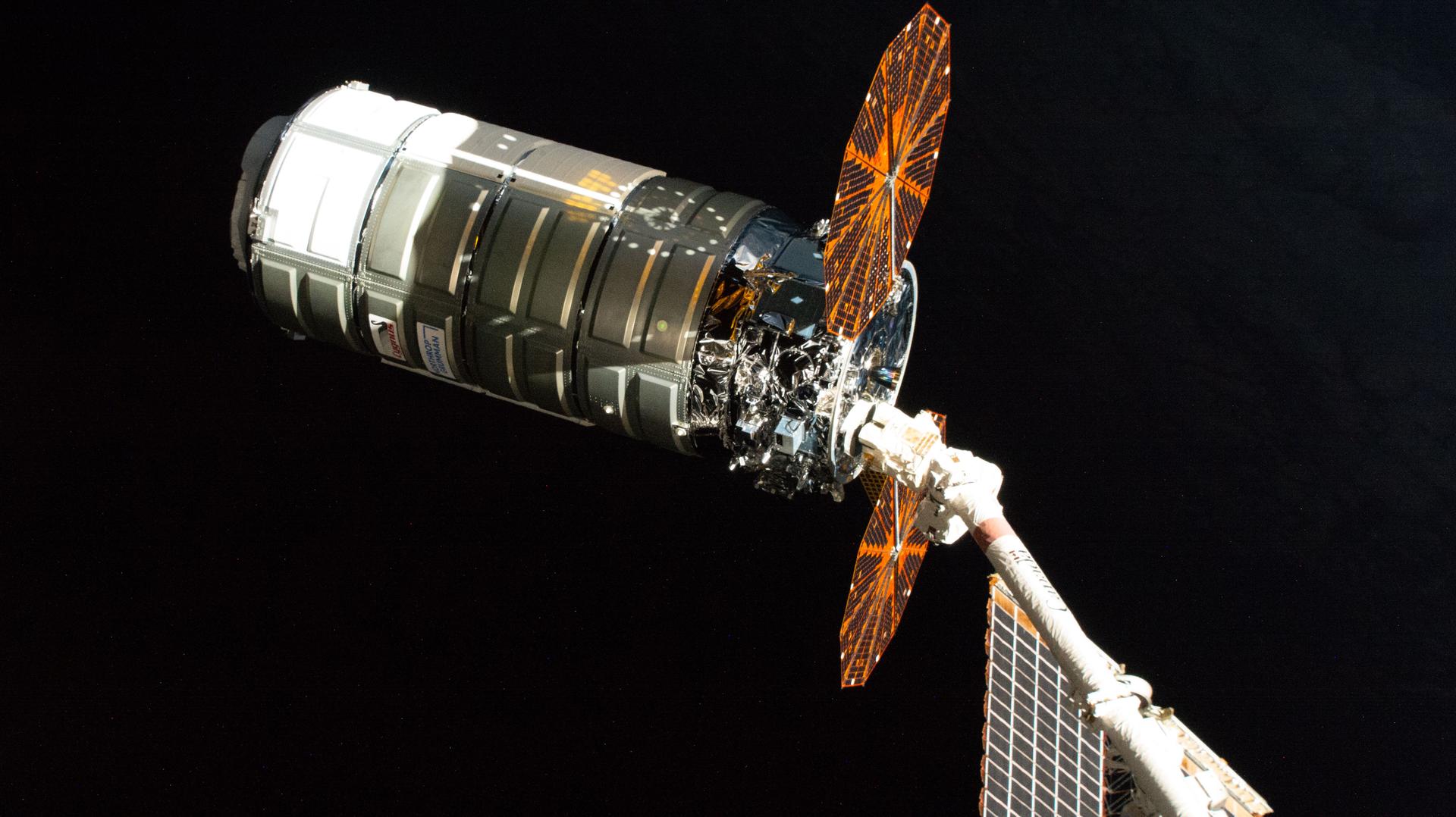
iss074e0458279 (April 13, 2026) --- Northrop Grumman's Cygnus XL cargo spacecraft, carrying over 11,000 pounds of new science experiments, lab hardware, and crew supplies, is pictured in the grips of the Canadarm2 robotic arm following its capture at the International Space Station. Credit: NASA
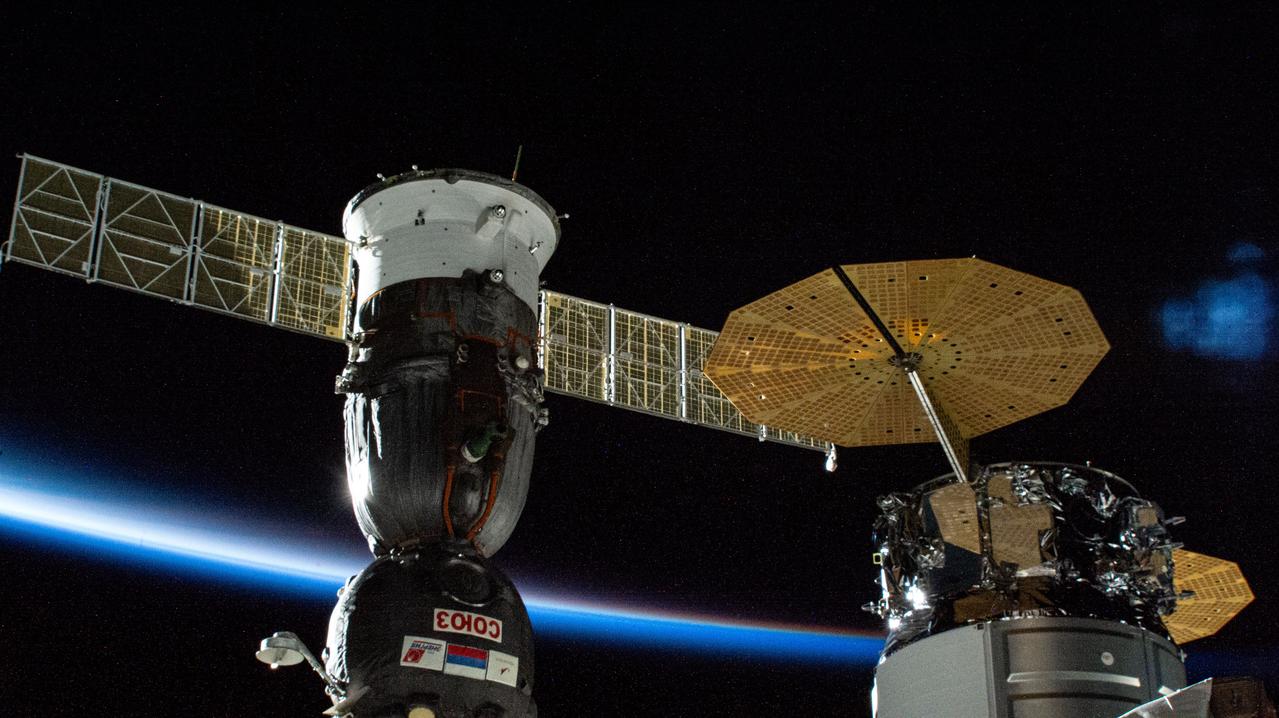
iss072e096335 (Oct. 22, 2024) --- Two spacecraft (from left), the Soyuz MS-26 crew ship and the Northrop Grumman Cygnus cargo spacecraft, are pictured attached to the International Space Station while soaring into an orbital sunset 273 miles above the Pacific Ocean south of New Zealand.
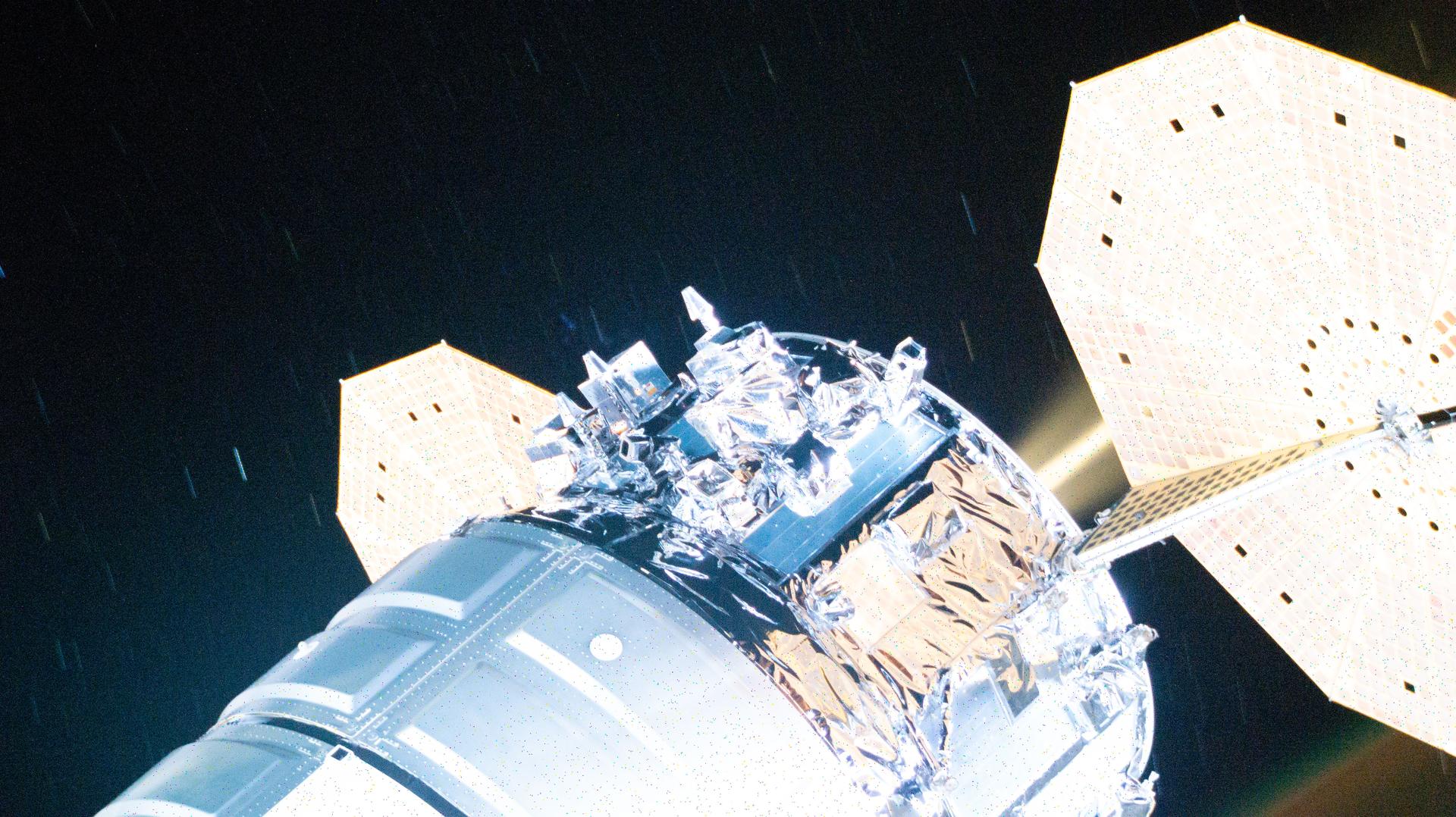
iss075e0085138 (Aug. 27, 2026) --- Northrop Grumman’s Cygnus XL cargo spacecraft fires its engines while berthed to the Unity module, lifting the International Space Station’s orbit. The orbital reboost placed the station at the correct altitude for the rendezvous and docking of the Progress 96 resupply ship, scheduled to launch in early September. Credit: NASA
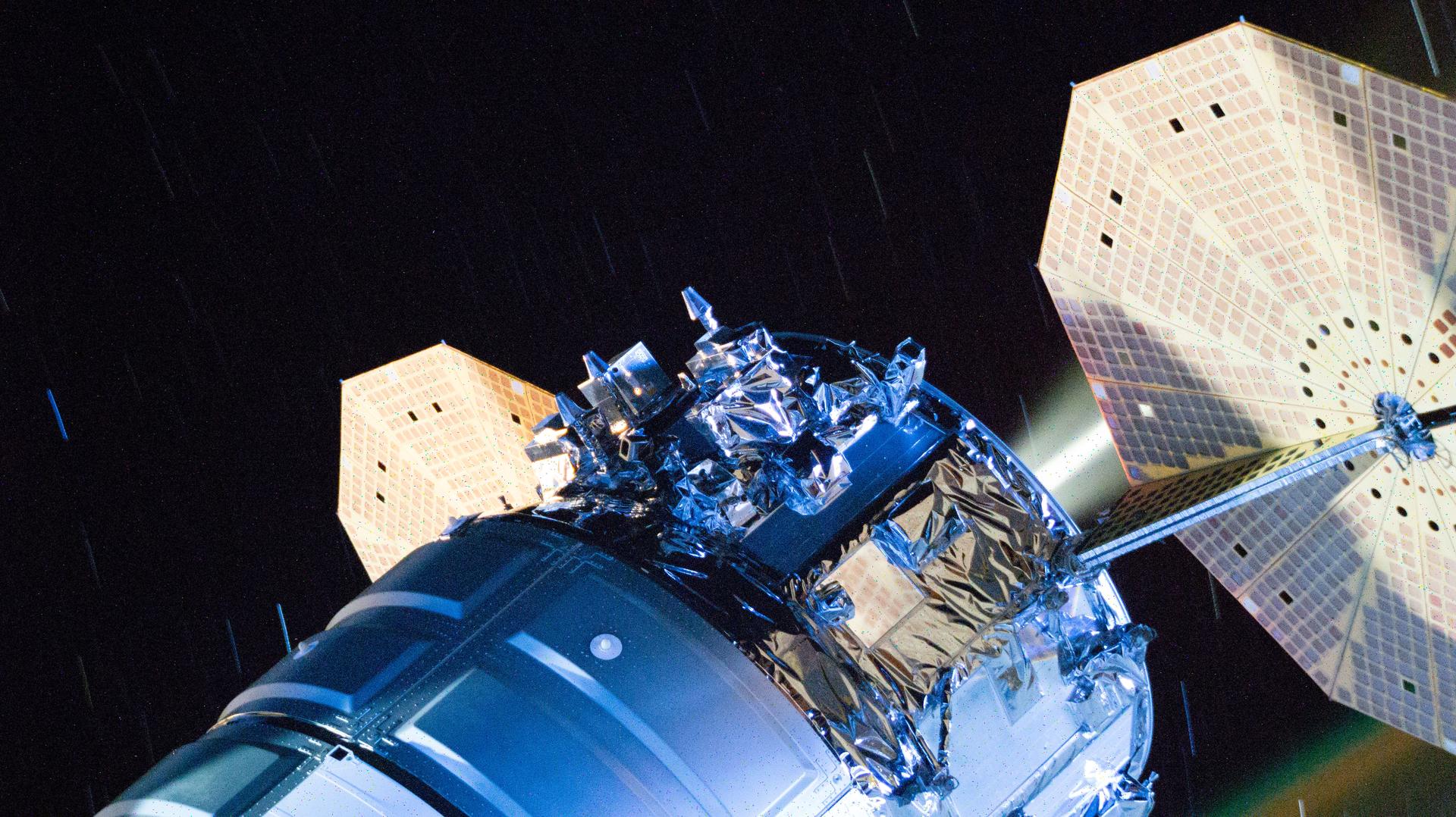
iss075e0085139 (Aug. 27, 2026) --- Northrop Grumman’s Cygnus XL cargo spacecraft fires its engines while berthed to the Unity module, lifting the International Space Station’s orbit. The orbital reboost placed the station at the correct altitude for the rendezvous and docking of the Progress 96 resupply ship, scheduled to launch in early September. Credit: NASA

iss073e0920711 (Oct. 21, 2025) --- The Canadarm2 robotic arm releases Northrop Grumman’s Cygnus XL cargo craft after it was installed on the Earth-facing port of the Unity module. The International Space Station was soaring into an orbital sunrise 269 miles above the Atlantic Ocean southwest of Cape Town, South Africa, at the time of this photgraph.
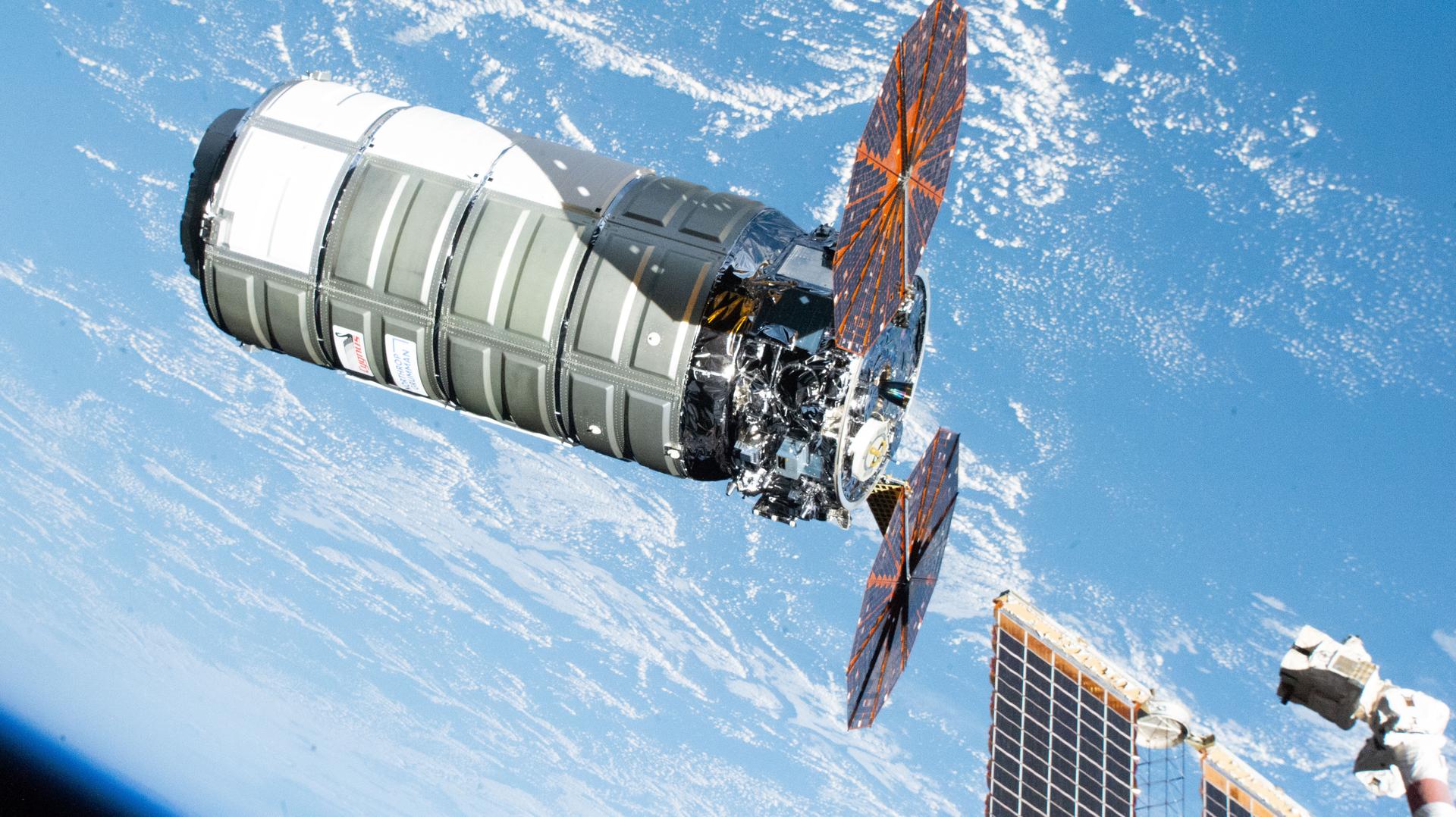
iss074e0458270 (April 13, 2026) --- Northrop Grumman's Cygnus XL cargo spacecraft, carrying over 11,000 pounds of new science experiments, lab hardware, and crew supplies, is pictured moments before its capture with the Canadarm2 robotic arm following its approach and rendezvous with the International Space Station. Credit: NASA
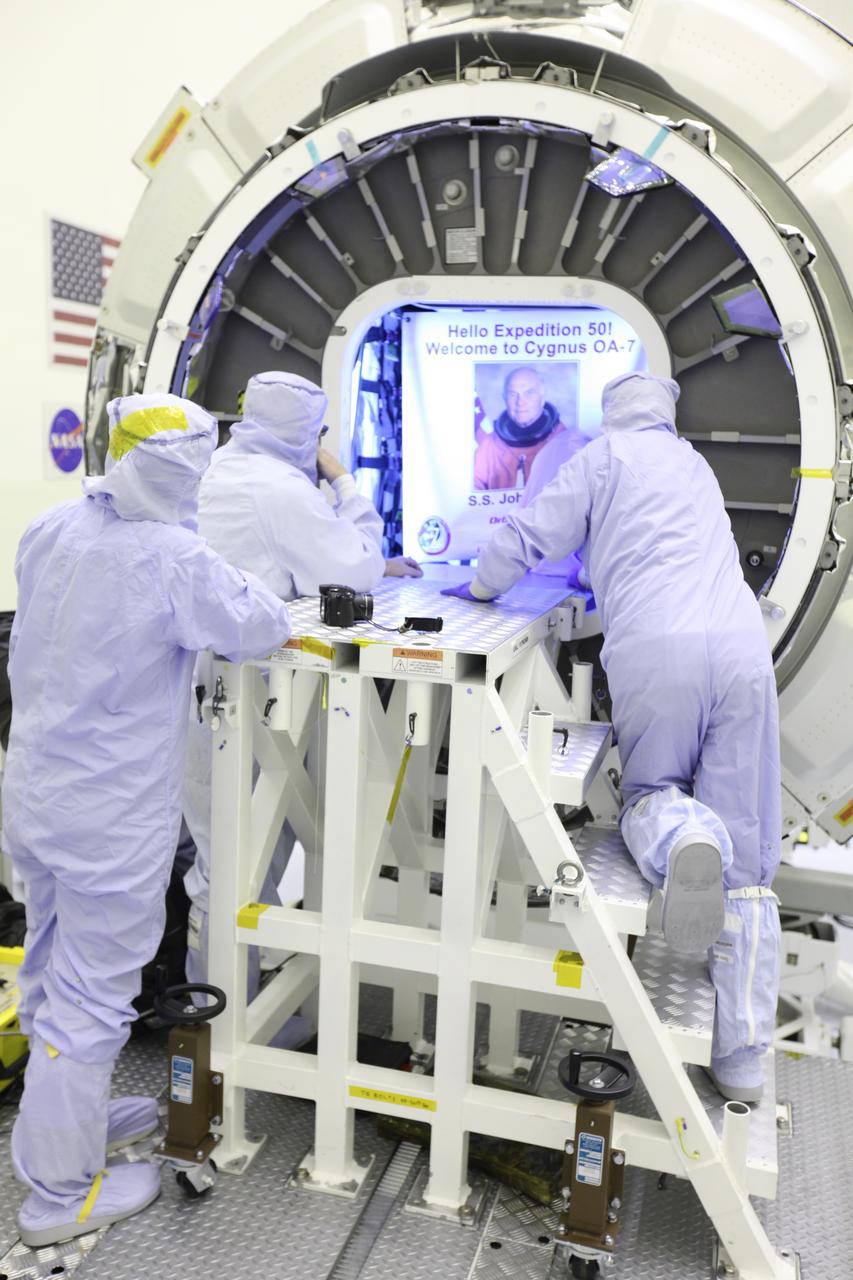
Inside the Payload Hazardous Servicing Facility at NASA's Kennedy Space Center in Florida, technicians attach the John Glenn banner to inside the Orbital ATK Cygnus pressurized cargo module. The Cygnus cargo module has been renamed the S.S. John Glenn to honor the late former Project Mercury and space shuttle astronaut. The Orbital ATK CRS-7 commercial resupply services mission to the International Space Station is scheduled to launch atop a United Launch Alliance Atlas V rocket from Space Launch Complex 41 at Cape Canaveral Air Force Station no earlier than March 21, 2017. Cygnus will deliver 7,600 pounds of supplies, equipment and scientific research materials to the space station.
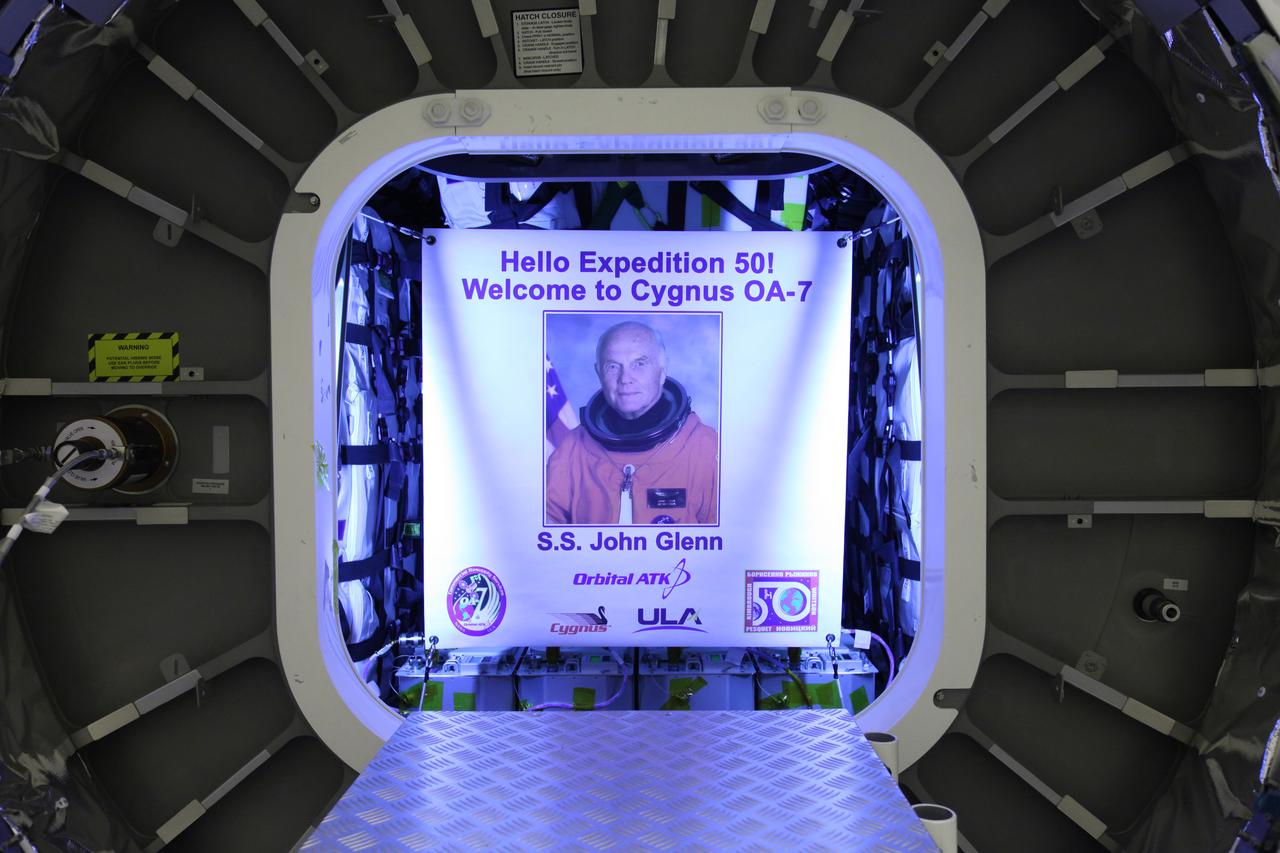
Inside the Payload Hazardous Servicing Facility at NASA's Kennedy Space Center in Florida, the John Glenn banner is attached inside the Orbital ATK Cygnus pressurized cargo module. The Cygnus cargo module has been renamed the S.S. John Glenn to honor the late former Project Mercury and space shuttle astronaut. The Orbital ATK CRS-7 commercial resupply services mission to the International Space Station is scheduled to launch atop a United Launch Alliance Atlas V rocket from Space Launch Complex 41 at Cape Canaveral Air Force Station no earlier than March 21, 2017. Cygnus will deliver 7,600 pounds of supplies, equipment and scientific research materials to the space station.
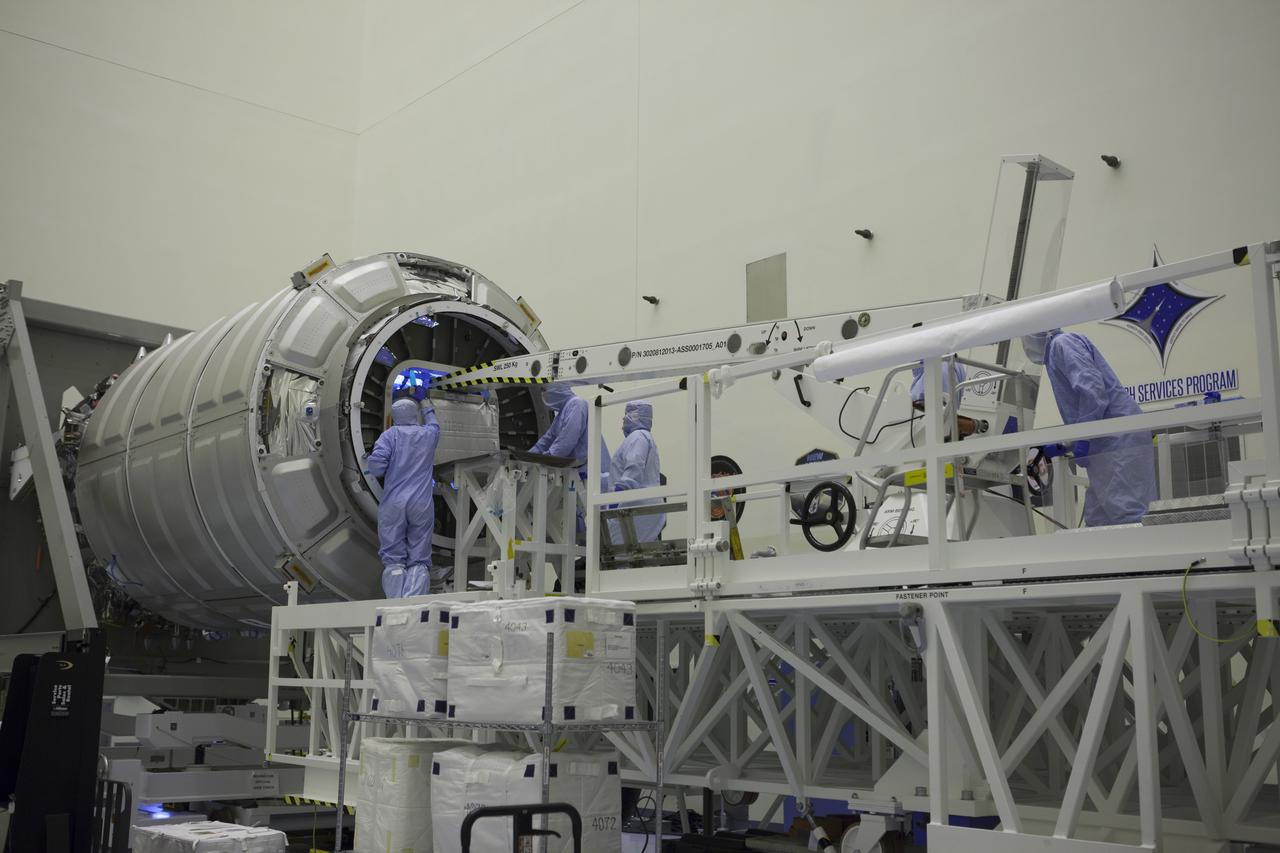
Technicians move cargo into the Orbital ATK CRS-6 pressurized cargo module during late stowage inside the Payload Hazardous Servicing Facility at NASA’s Kennedy Space Center in Florida. The spacecraft is scheduled for the upcoming Orbital ATK Commercial Resupply Services-6 mission to deliver hardware and supplies to the International Space Station. The Cygnus is scheduled to lift off atop a United Launch Alliance Atlas V rocket on March 22.
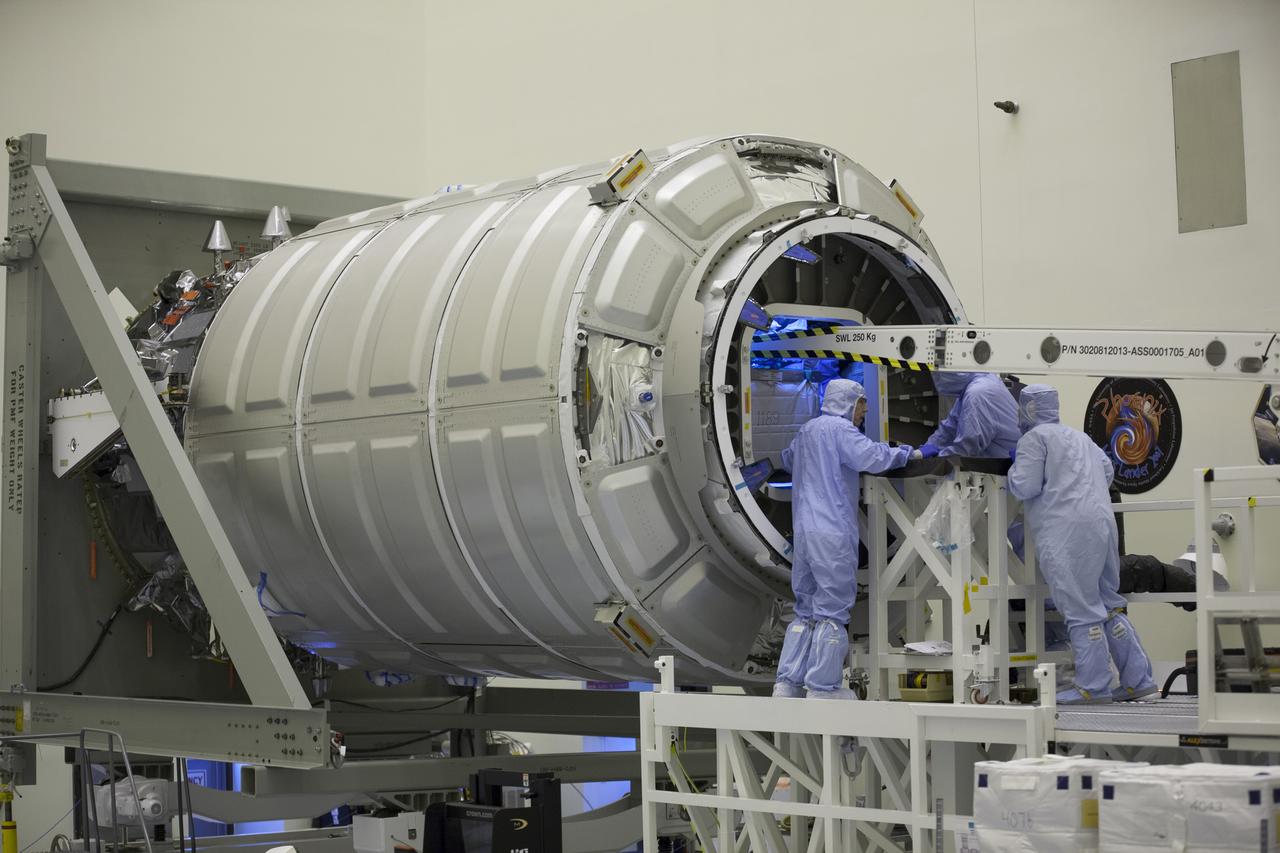
Technicians move cargo into the Orbital ATK CRS-6 pressurized cargo module during late stowage inside the Payload Hazardous Servicing Facility at NASA’s Kennedy Space Center in Florida. The spacecraft is scheduled for the upcoming Orbital ATK Commercial Resupply Services-6 mission to deliver hardware and supplies to the International Space Station. The Cygnus is scheduled to lift off atop a United Launch Alliance Atlas V rocket on March 22.
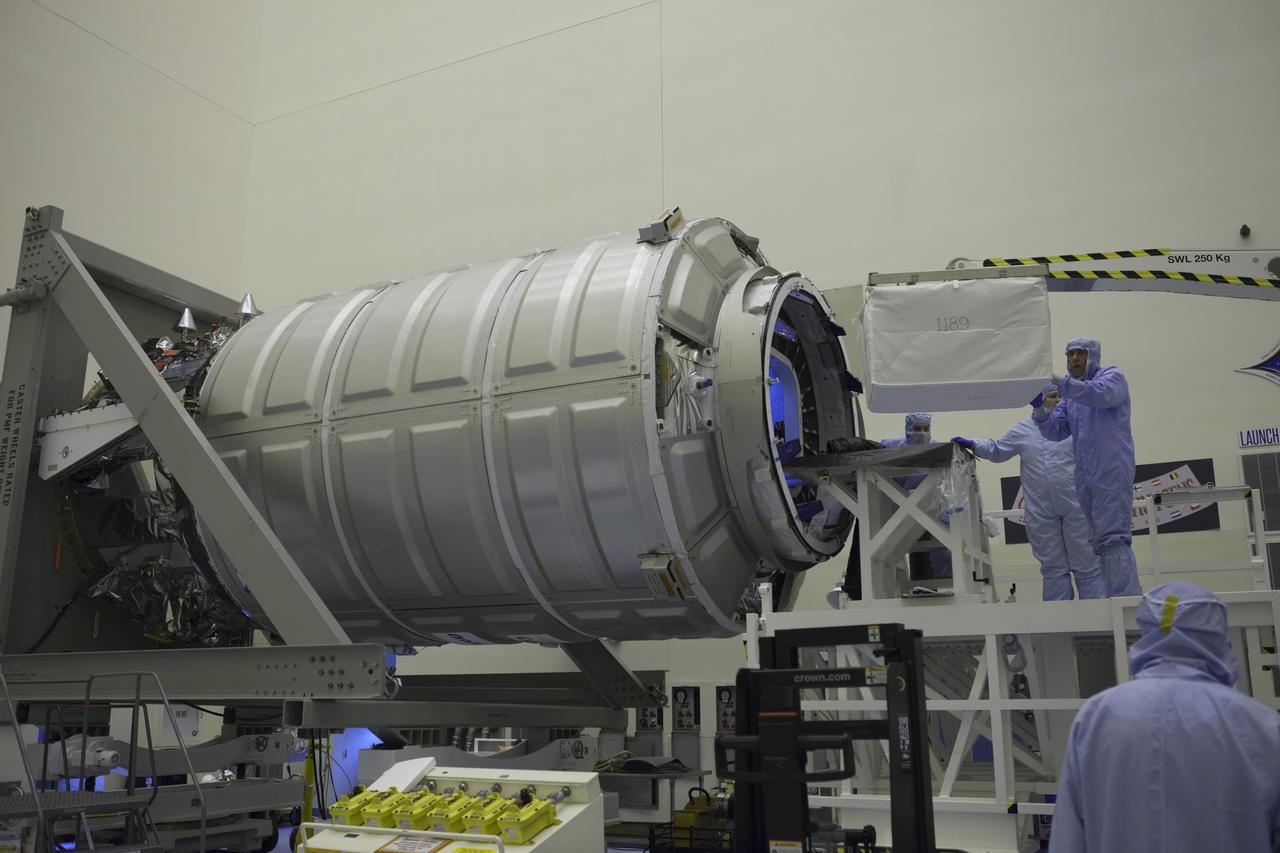
Technicians move cargo into the Orbital ATK CRS-6 pressurized cargo module during late stowage inside the Payload Hazardous Servicing Facility at NASA’s Kennedy Space Center in Florida. The spacecraft is scheduled for the upcoming Orbital ATK Commercial Resupply Services-6 mission to deliver hardware and supplies to the International Space Station. The Cygnus is scheduled to lift off atop a United Launch Alliance Atlas V rocket on March 22.
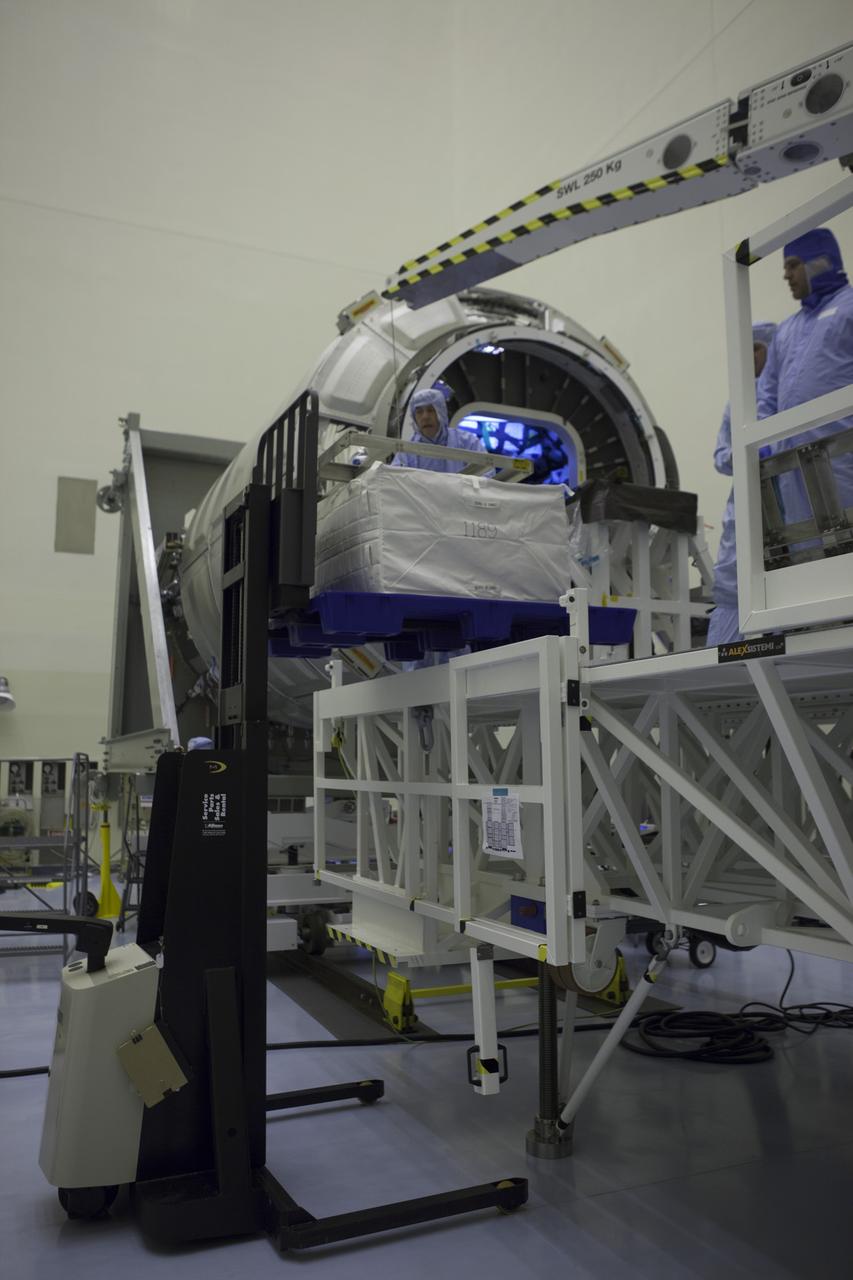
Technicians prepare to move a cargo package from a forklift into the Orbital ATK CRS-6 pressurized cargo module during late stowage inside the Payload Hazardous Servicing Facility at NASA’s Kennedy Space Center in Florida. The spacecraft is scheduled for the upcoming Orbital ATK Commercial Resupply Services-6 mission to deliver hardware and supplies to the International Space Station. The Cygnus is scheduled to lift off atop a United Launch Alliance Atlas V rocket on March 22.
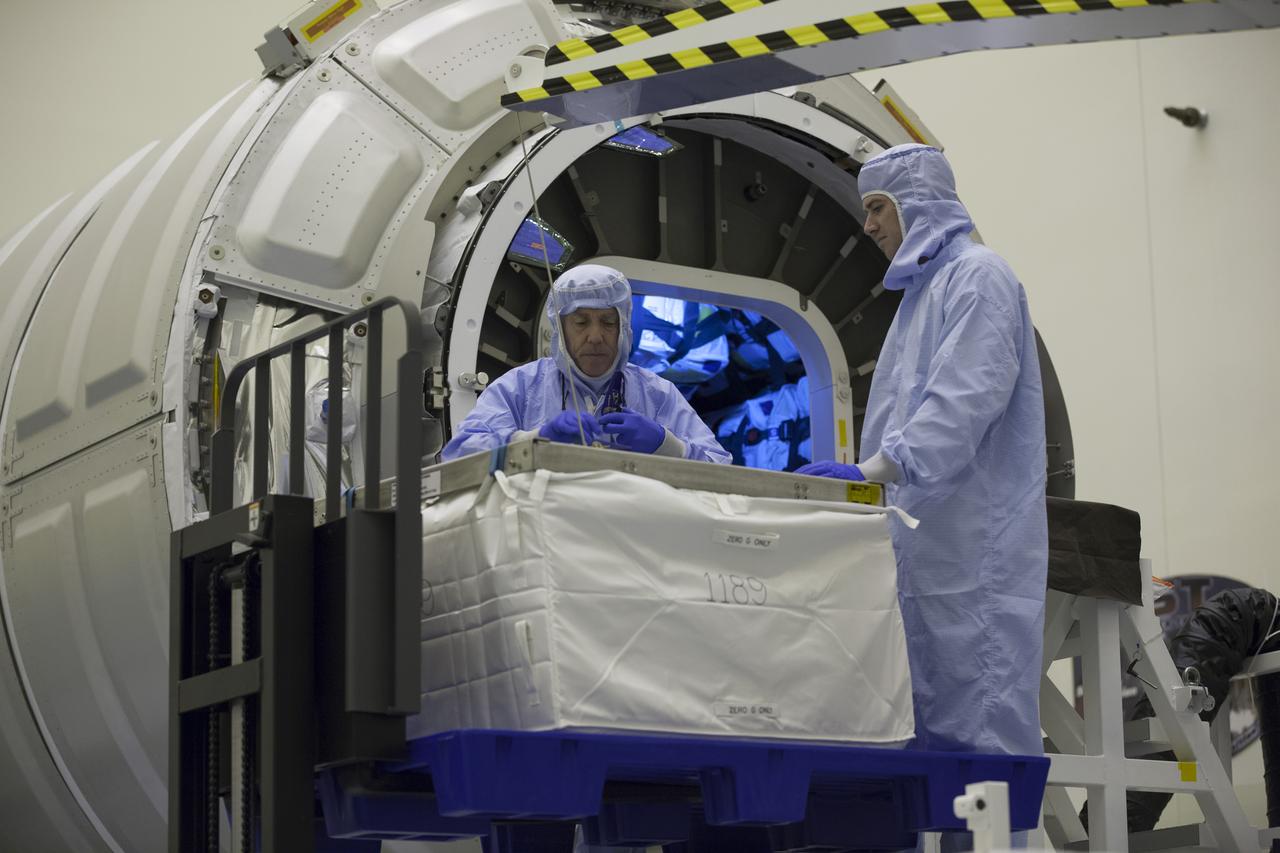
Technicians prepare to move cargo into the Orbital ATK CRS-6 pressurized cargo module during late stowage inside the Payload Hazardous Servicing Facility at NASA’s Kennedy Space Center in Florida. The spacecraft is scheduled for the upcoming Orbital ATK Commercial Resupply Services-6 mission to deliver hardware and supplies to the International Space Station. The Cygnus is scheduled to lift off atop a United Launch Alliance Atlas V rocket on March 22.
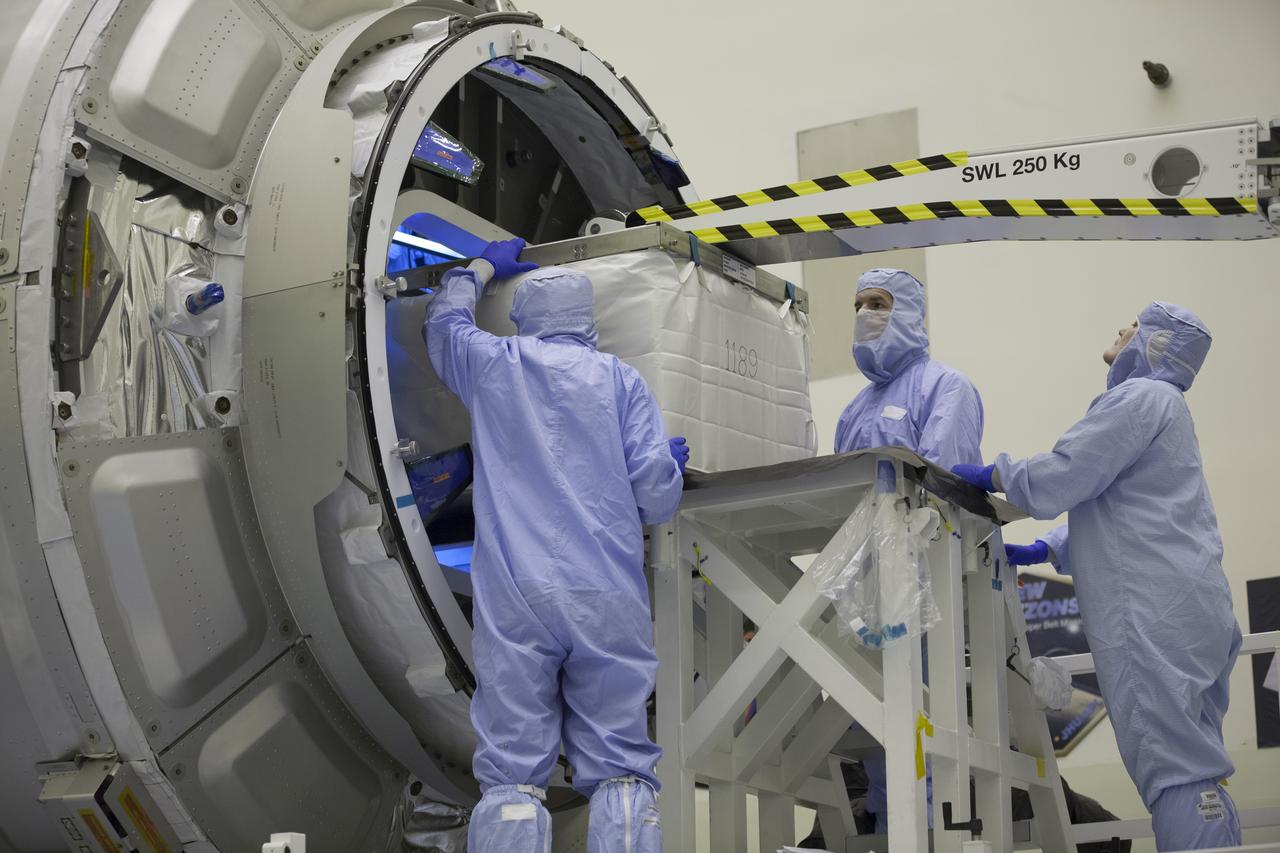
Technicians move cargo into the Orbital ATK CRS-6 pressurized cargo module during late stowage inside the Payload Hazardous Servicing Facility at NASA’s Kennedy Space Center in Florida. The spacecraft is scheduled for the upcoming Orbital ATK Commercial Resupply Services-6 mission to deliver hardware and supplies to the International Space Station. The Cygnus is scheduled to lift off atop a United Launch Alliance Atlas V rocket on March 22.
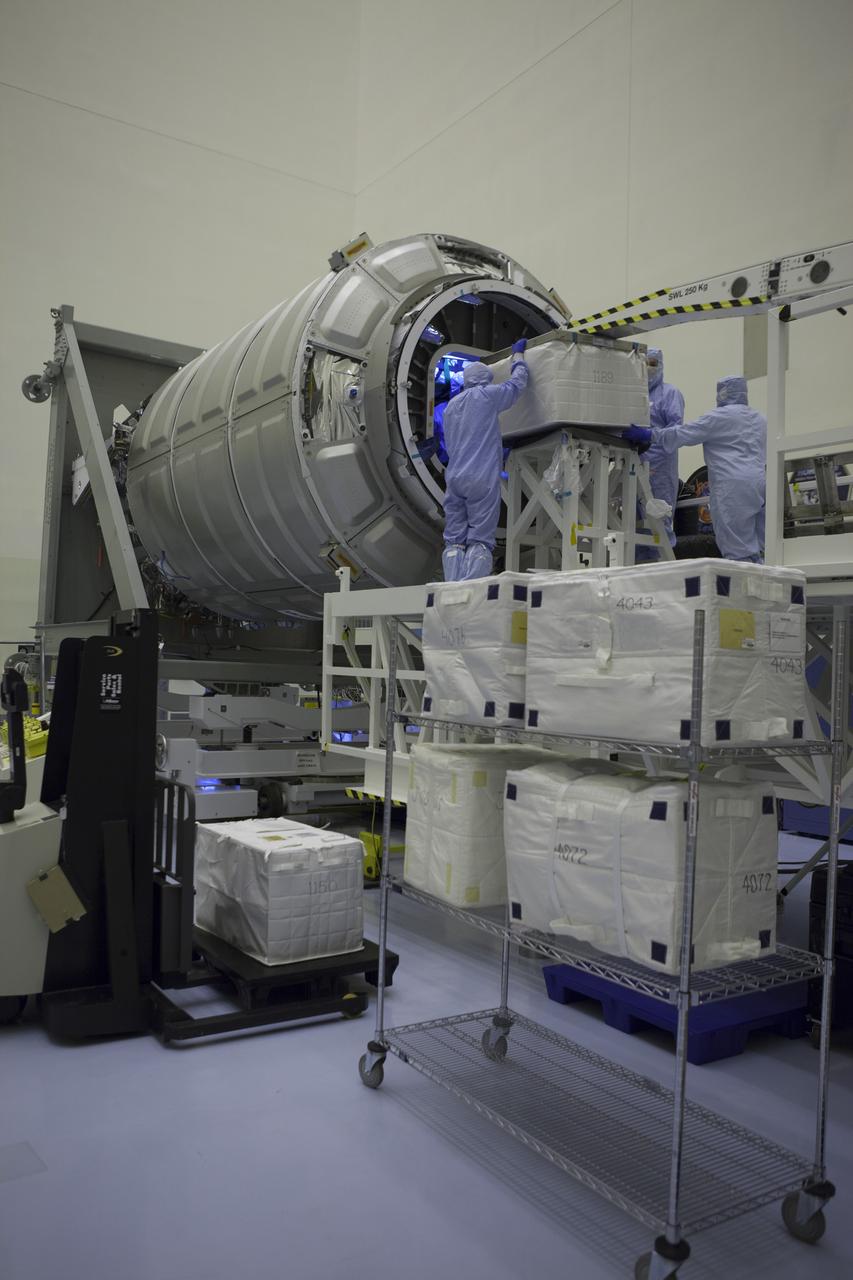
Technicians move cargo into the Orbital ATK CRS-6 pressurized cargo module during late stowage inside the Payload Hazardous Servicing Facility at NASA’s Kennedy Space Center in Florida. The spacecraft is scheduled for the upcoming Orbital ATK Commercial Resupply Services-6 mission to deliver hardware and supplies to the International Space Station. The Cygnus is scheduled to lift off atop a United Launch Alliance Atlas V rocket on March 22.
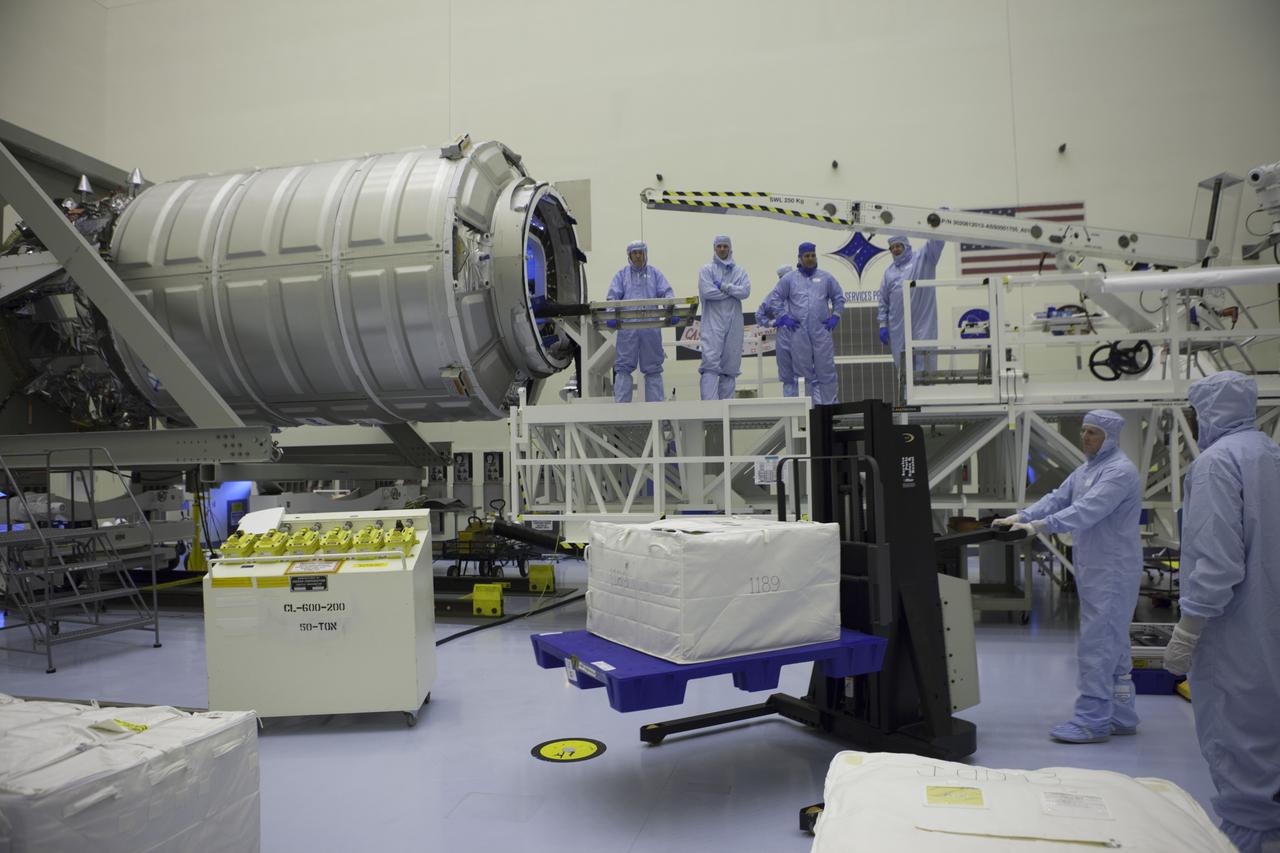
Technicians are positioned at the hatch of the Orbital ATK CRS-6 pressurized cargo module as a forklift moves a cargo package into position for installation into the spacecraft inside the Payload Hazardous Servicing Facility at NASA’s Kennedy Space Center in Florida. The spacecraft is scheduled for the upcoming Orbital ATK Commercial Resupply Services-6 mission to deliver hardware and supplies to the International Space Station. The Cygnus is scheduled to lift off atop a United Launch Alliance Atlas V rocket on March 22
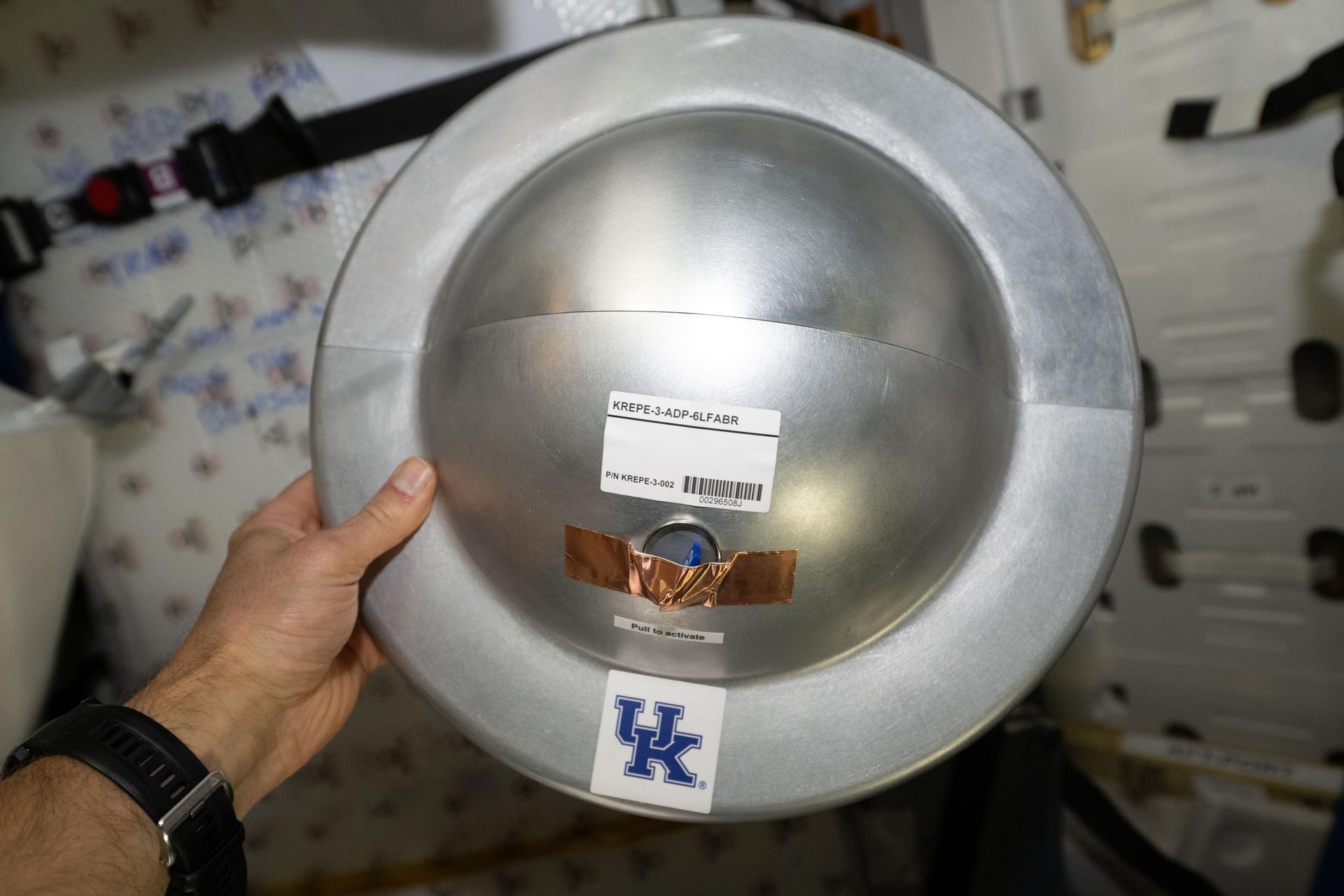
iss075e0185956 (Oct. 7, 2026) --- NASA astronaut Anil Menon holds a KREPE-3 capsule inside the Northrup Grumman Cygnus XL 24 cargo spacecraft. The capsule is one of 10 that will be packed inside Cygnus XL for unberthing and release from the International Space Station. Inside the capsule is an Adaptable Deployable Entry and Placement Technology (ADEPT) heat shield developed at NASA’s Ames Research Center in California’s Silicon Valley. ADEPT is shaped like an umbrella to increase surface area and slow descent. At full size, its design is foldable, making it ideal for deploying payloads that are larger than the rockets that launch them into flight. Credit: NASA/Anil Menon
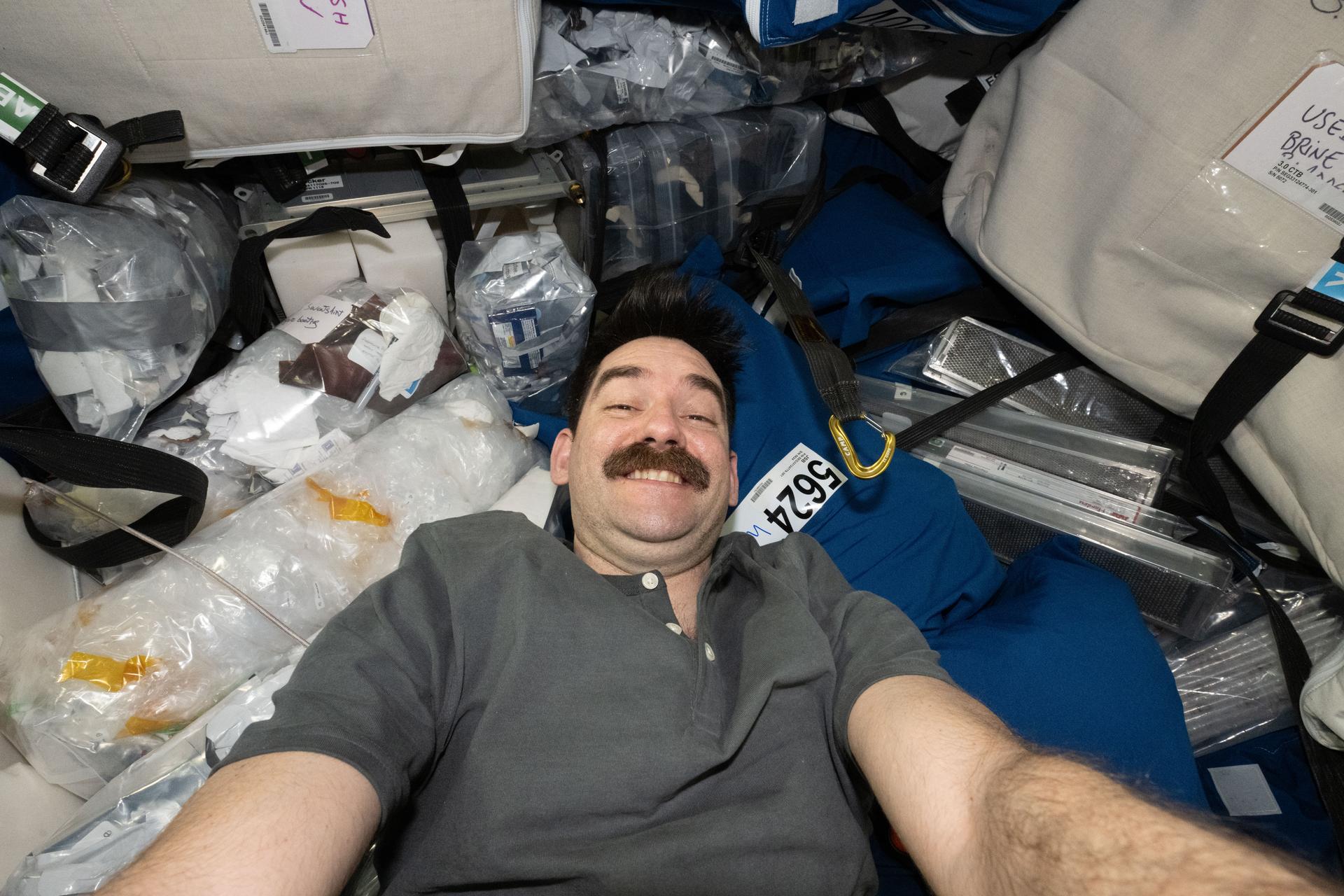
iss075e0161437 (Oct. 5, 2026) --- NASA astronaut and Expedition 75 flight engineer Jack Hathaway takes a selfie inside Northrop Grumman's Cygnus XL cargo spacecraft during cargo transfer activities. Credit: NASA/Jack Hathaway
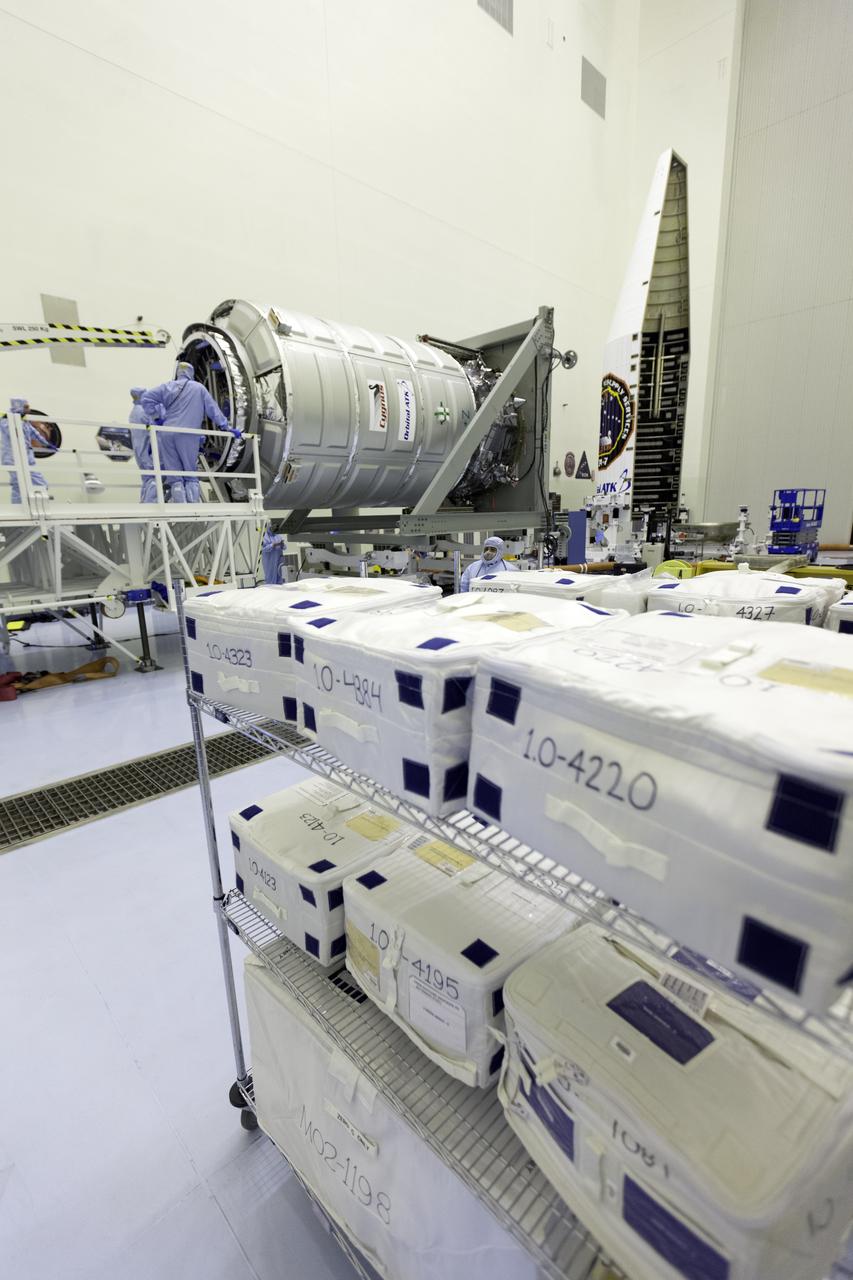
Inside the Payload Hazardous Servicing Facility at NASA's Kennedy Space Center in Florida, technicians are opening the hatch on the Orbital ATK Cygnus pressurized cargo module to prepare for late stowage of supplies and hardware. The Orbital ATK CRS-7 commercial resupply services mission to the International Space Station is scheduled to launch atop a United Launch Alliance Atlas V rocket from Space Launch Complex 41 at Cape Canaveral Air Force Station targeted for March 24, 2017. Cygnus will deliver 7,600 pounds of supplies, equipment and scientific research materials to the space station.
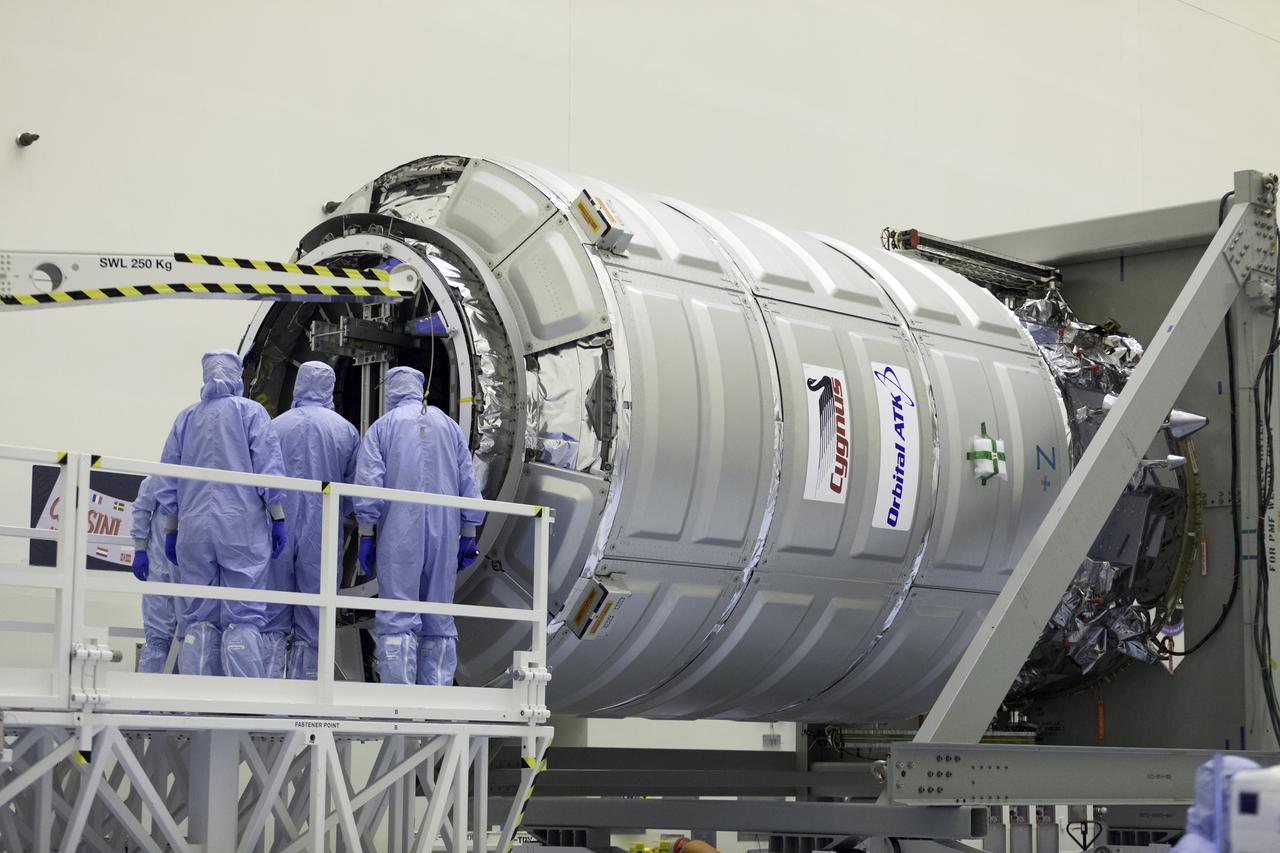
Inside the Payload Hazardous Servicing Facility at NASA's Kennedy Space Center in Florida, technicians have opened the hatch on the Orbital ATK Cygnus pressurized cargo module to prepare for late stowage of supplies and hardware. The Orbital ATK CRS-7 commercial resupply services mission to the International Space Station is scheduled to launch atop a United Launch Alliance Atlas V rocket from Space Launch Complex 41 at Cape Canaveral Air Force Station targeted for March 24, 2017. Cygnus will deliver 7,600 pounds of supplies, equipment and scientific research materials to the space station.
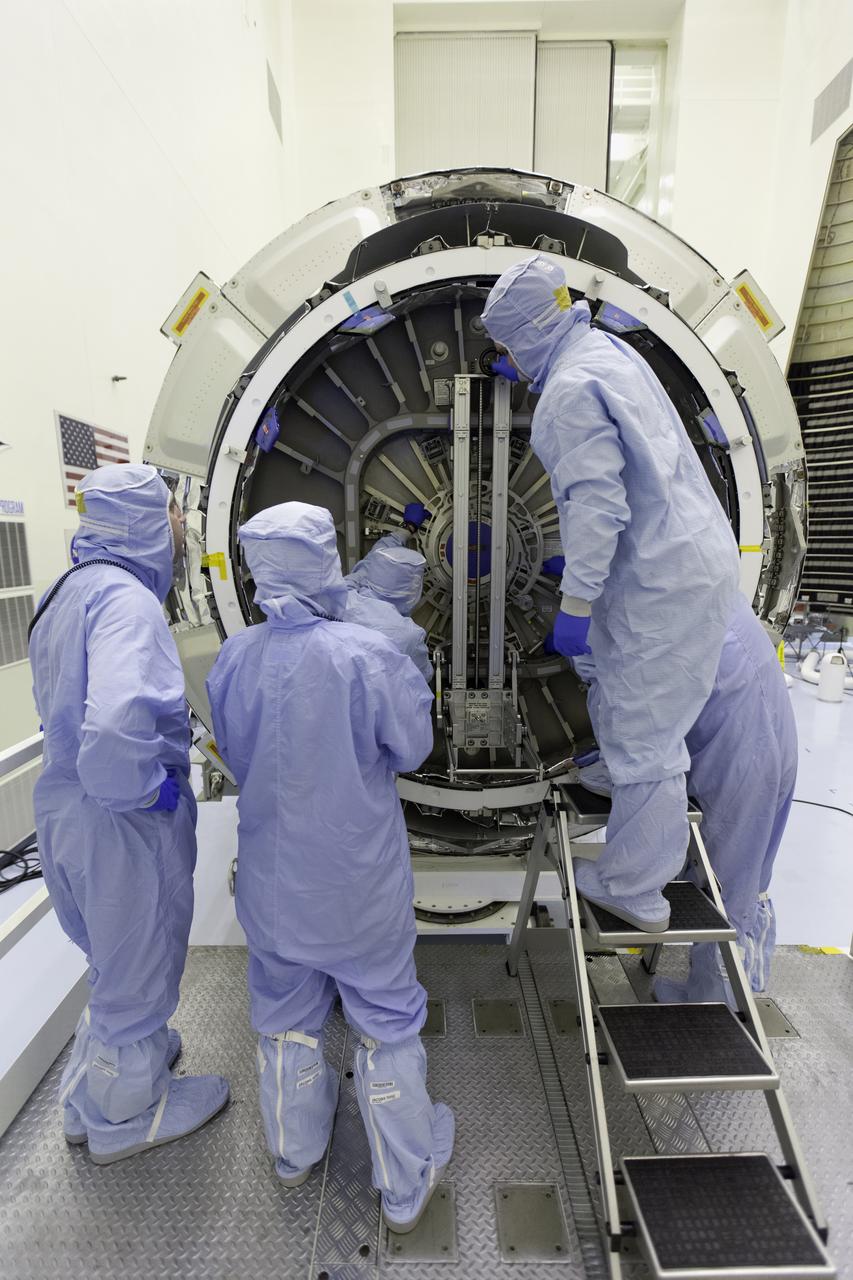
Inside the Payload Hazardous Servicing Facility at NASA's Kennedy Space Center in Florida, technicians are opening the hatch on the Orbital ATK Cygnus pressurized cargo module to prepare for late stowage of supplies and hardware. The Orbital ATK CRS-7 commercial resupply services mission to the International Space Station is scheduled to launch atop a United Launch Alliance Atlas V rocket from Space Launch Complex 41 at Cape Canaveral Air Force Station targeted for March 24, 2017. Cygnus will deliver 7,600 pounds of supplies, equipment and scientific research materials to the space station.
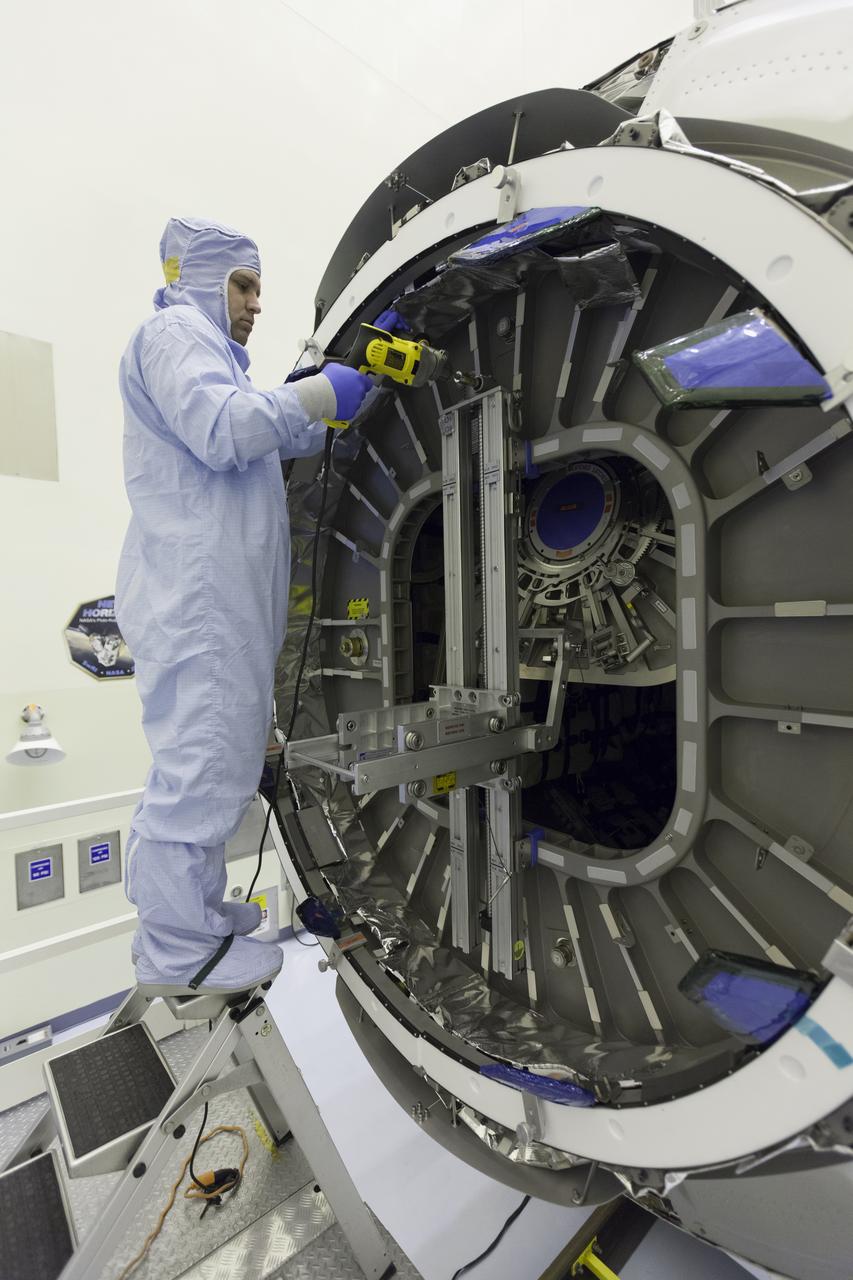
Inside the Payload Hazardous Servicing Facility at NASA's Kennedy Space Center in Florida, a technician open the hatch on the Orbital ATK Cygnus pressurized cargo module to prepare for late stowage of supplies and hardware. The Orbital ATK CRS-7 commercial resupply services mission to the International Space Station is scheduled to launch atop a United Launch Alliance Atlas V rocket from Space Launch Complex 41 at Cape Canaveral Air Force Station targeted for March 24, 2017. Cygnus will deliver 7,600 pounds of supplies, equipment and scientific research materials to the space station.
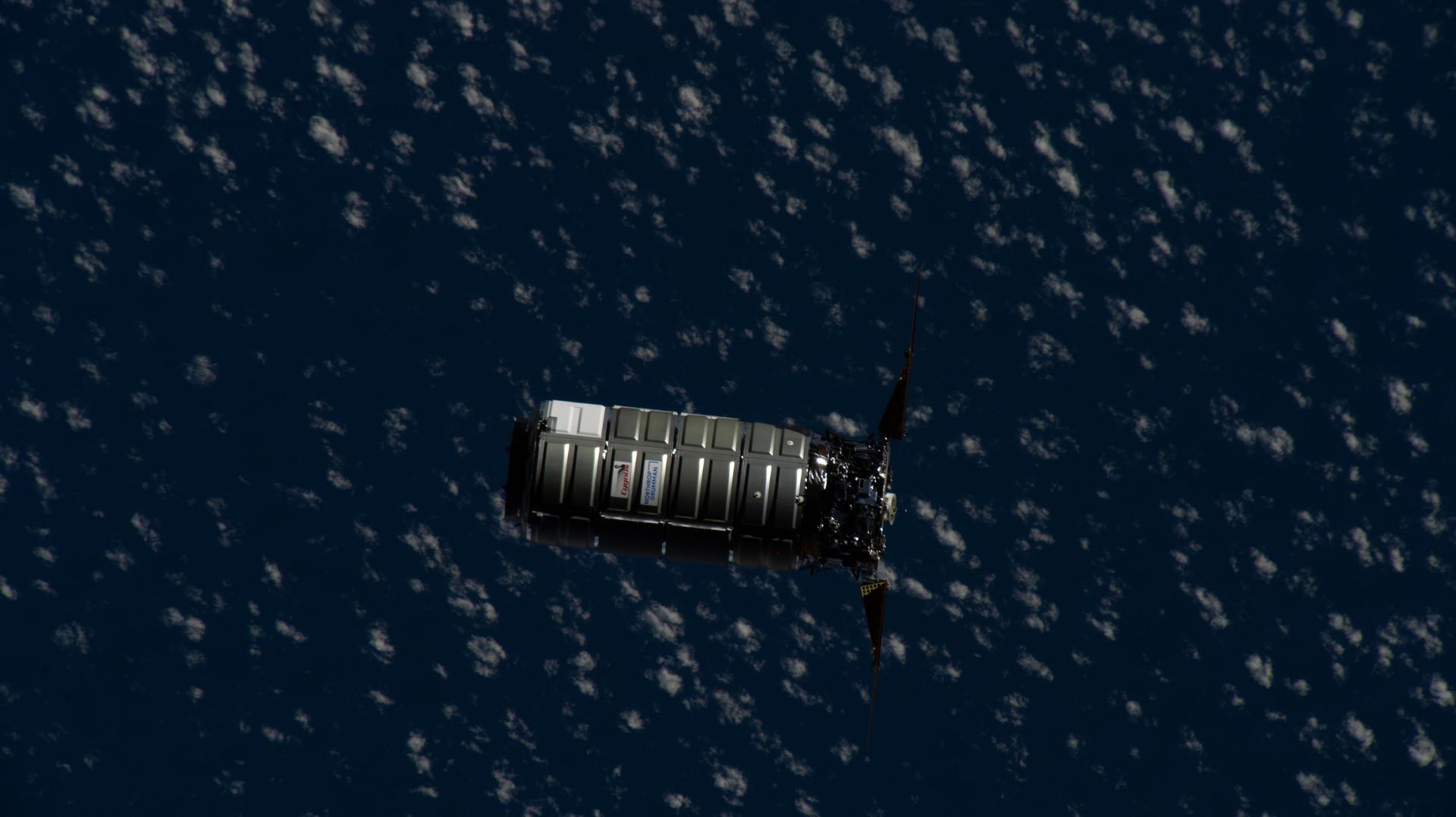
iss074e0458292 (April 13, 2026) --- Northrop Grumman's Cygnus XL cargo spacecraft, carrying over 11,000 pounds of new science experiments, lab hardware, and crew supplies, approaches the International Space Station as both spaceships were orbiting 264 miles above the Atlantic Ocean off the coast of Angola on the Africa continent. Credit: NASA
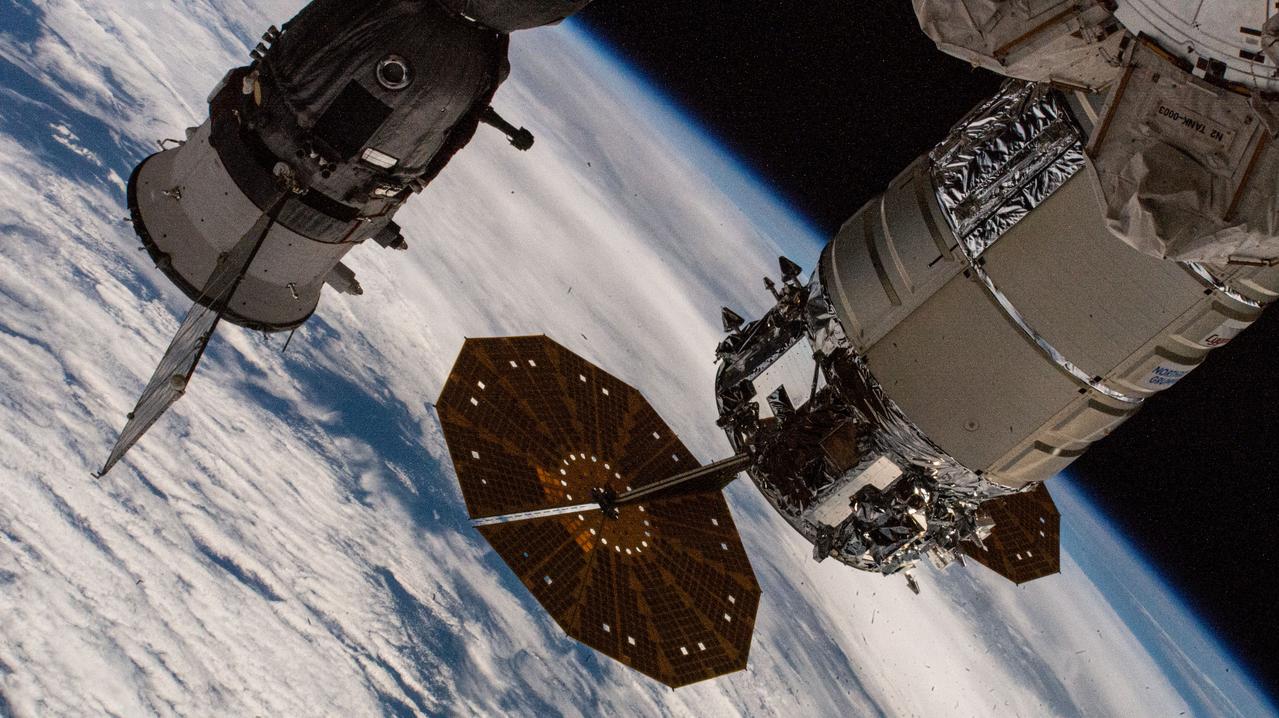
iss072e188878 (Nov. 15, 2024) --- Northrop Grumman's Cygnus cargo spacecraft, with its prominent cymbal-shaped solar arrays, is pictured attached to the Earth-facing port on the International Space Station's Unity module. At left, is a portion of the Soyuz MS-26 crew spacecraft docked to the Rassvet module. The orbital outpost was soaring 260 miles above the Indian Ocean south of South Africa at the time of this photograph.
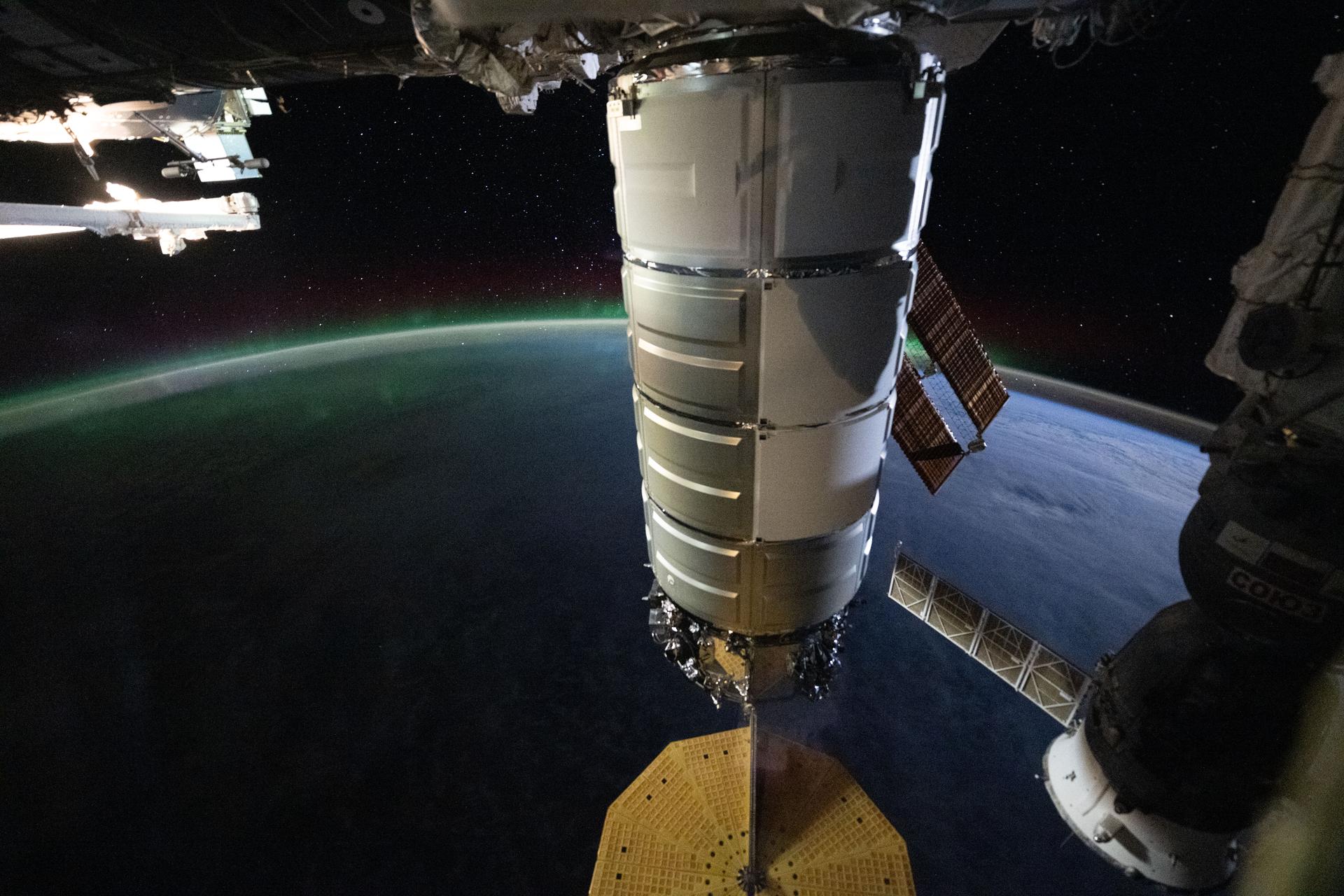
iss074e0609033 (May 26, 2026) --- Northrop Grumman's Cygnus XL cargo spacecraft, berthed to the Earth-facing port of the Unity module, is pictured from a window in the International Space Station's cupola. The orbital outpost was soaring 274 miles above the South Indian Ocean east of the French Southern and Antarctic Lands as an aurora australis beamed above Earth's horizon beneath a starry sky. Credit: NASA/Chris Williams
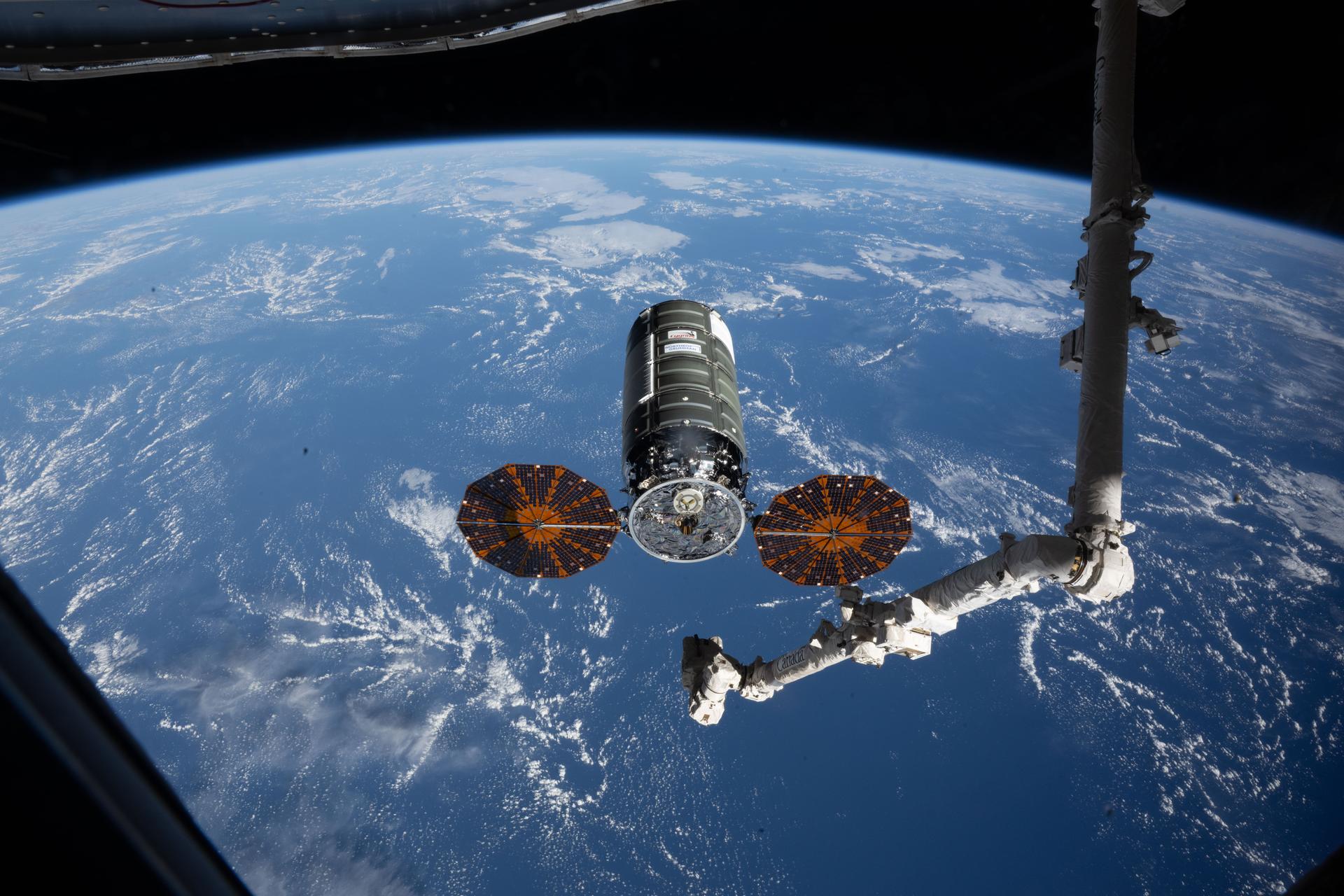
iss074e0458241 (April 13, 2026) --- Northrop Grumman's Cygnus XL cargo spacecraft rests at its capture point, 12 meters from the International Space Station, as the Canadarm2 robotic arm prepares to grapple the resupply ship. Cygnus XL delivered more than 11,000 pounds of new science experiments, lab hardware, and crew supplies for the Expedition 74 crew. Credit: NASA/Jessica Meir
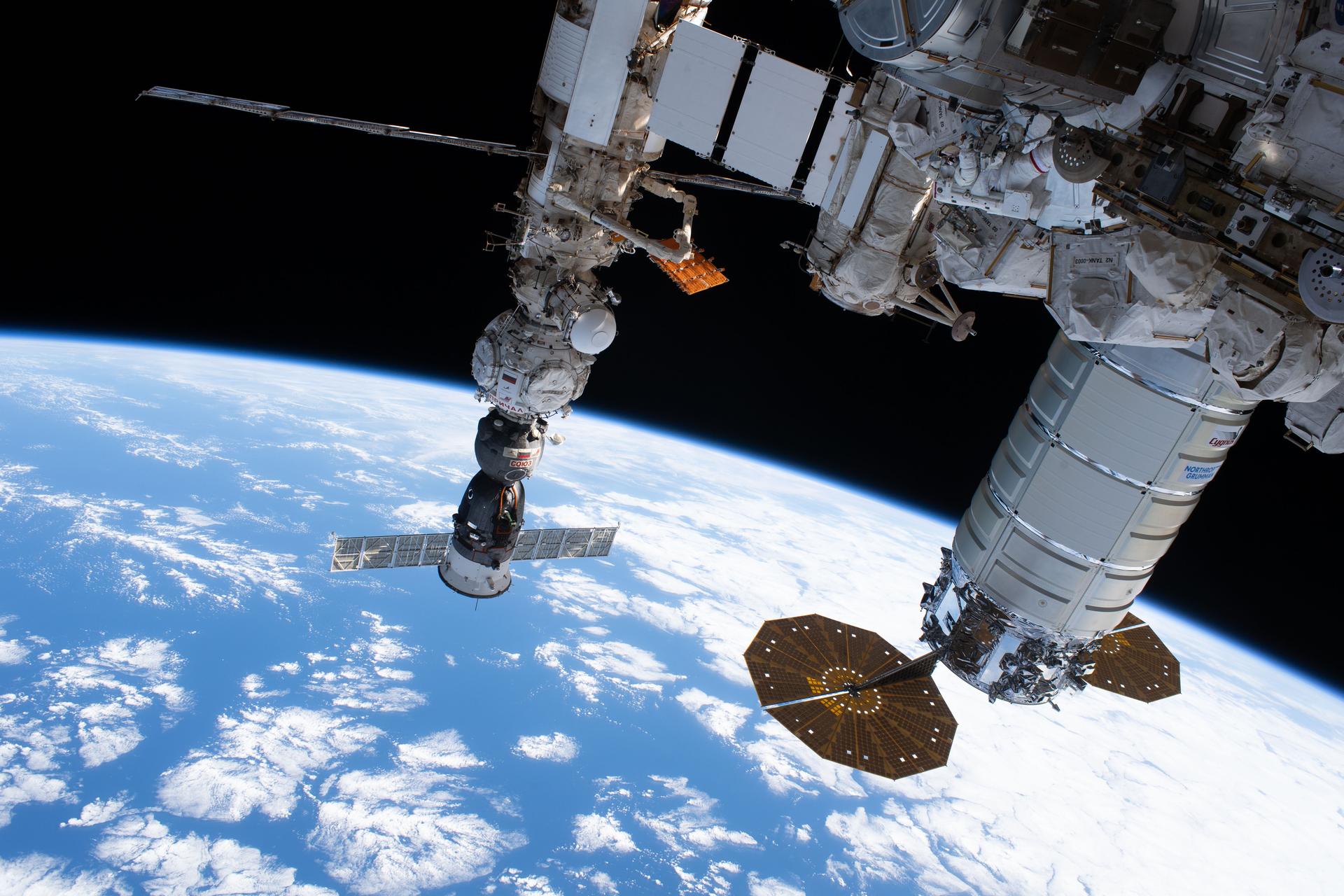
iss075e0086076 (Sept. 1, 2026) --- From left, the Soyuz MS‑29 crew spacecraft, docked to the Prichal module, and Northrop Grumman’s Cygnus XL cargo spacecraft, berthed to the Unity module, are pictured as the International Space Station orbited 261 miles above the Pacific Ocean west of Peru. Credit: NASA/Jessica Meir
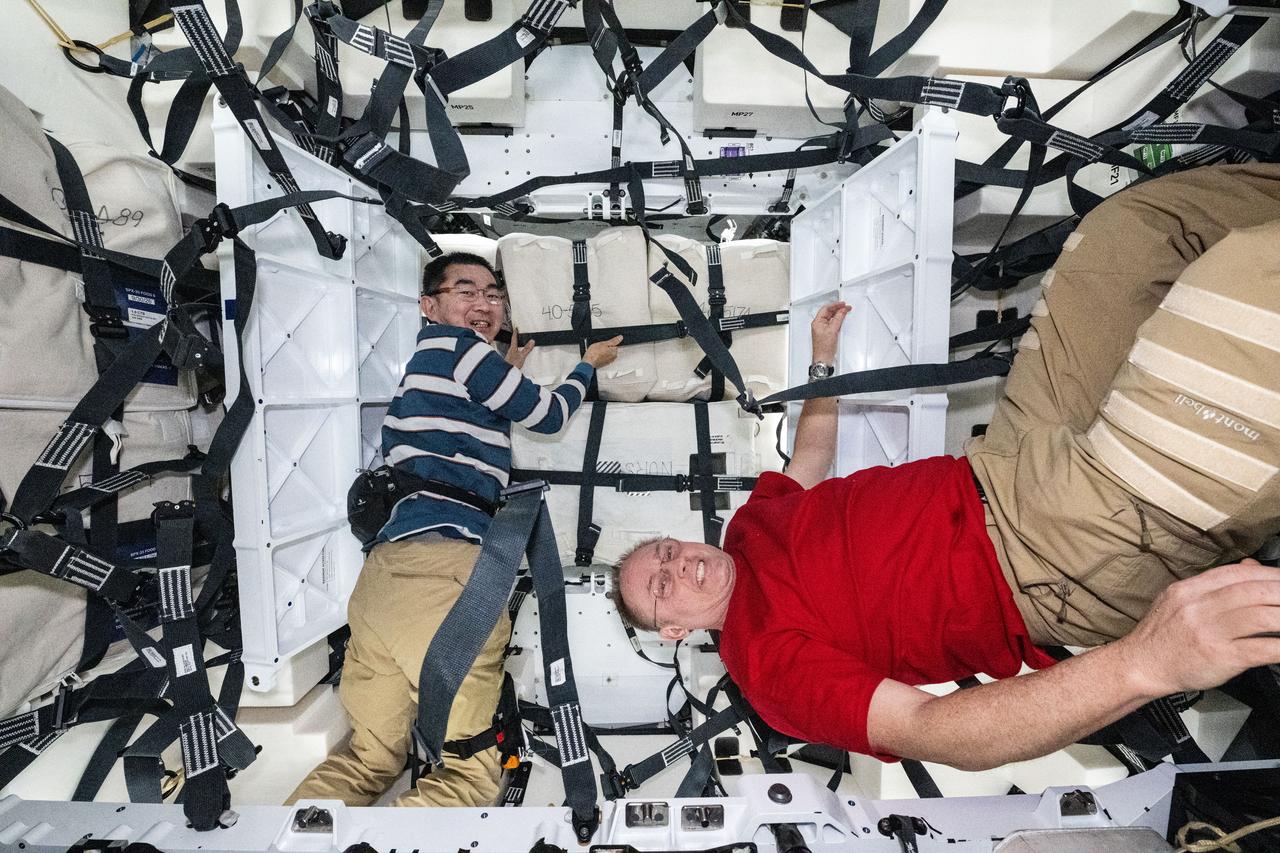
iss073e0764364 (Sept. 22, 2025) --- Expedition 73 Flight Engineers (from left) Kimiya Yui of JAXA (Japan Aerospace Exploration Agency) and Mike Finke of NASA are pictured inside Northrop Grumman's Cygnus XL cargo craft unpacking some of its 11,000 pounds of new science and supplies delivered on Sept. 18, 2025.
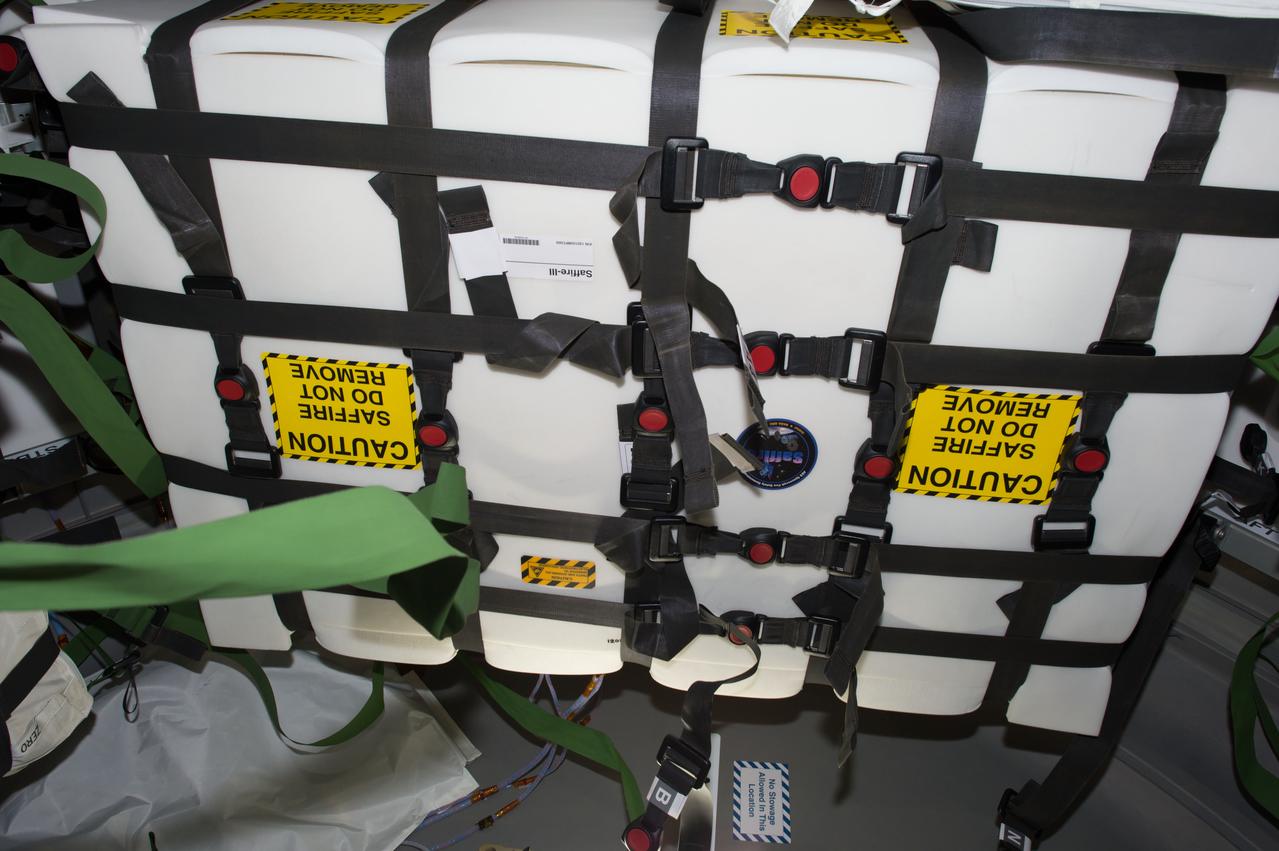
iss051e039882 (5/8/2017) --- A view of Spacecraft Fire Experiment-III (Saffire-III) award the John Glenn Orbital ATK 7 (OA-7) Cygnus spacecraft, taken during cargo transfer operations (OPS). The NASA Advanced Exploration Systems program began a project to develop and demonstrate spacecraft fire safety technologies in relevant environments. The keystone of these demonstrations is a large-scale fire safety experiment conducted on an International Space Station (ISS) re-supply vehicle after it has undocked from the ISS and before it enters the atmosphere.
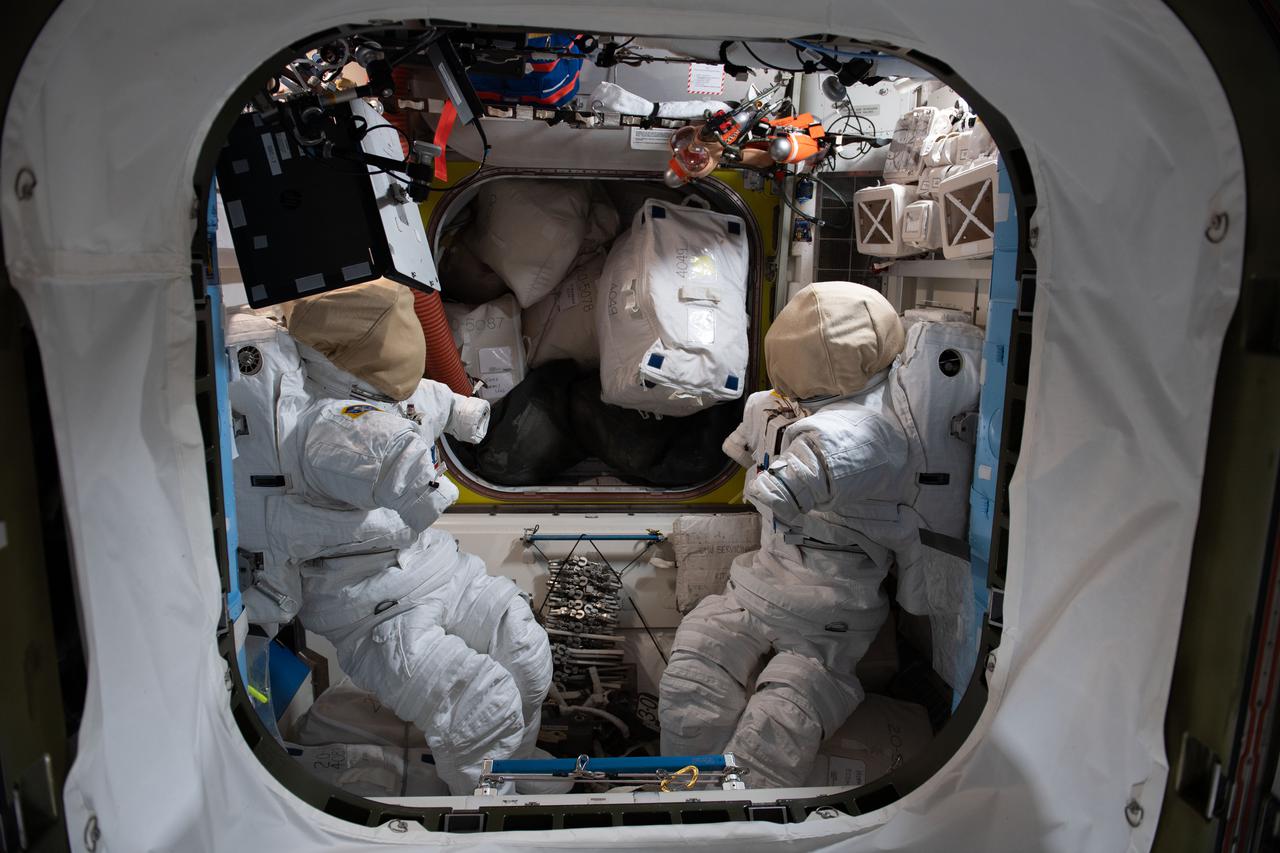
iss065e026376 (May 5, 2021) --- Two U.S. spacesuits are pictured inside the International Space Station's Quest airlock where spacewalks are staged.
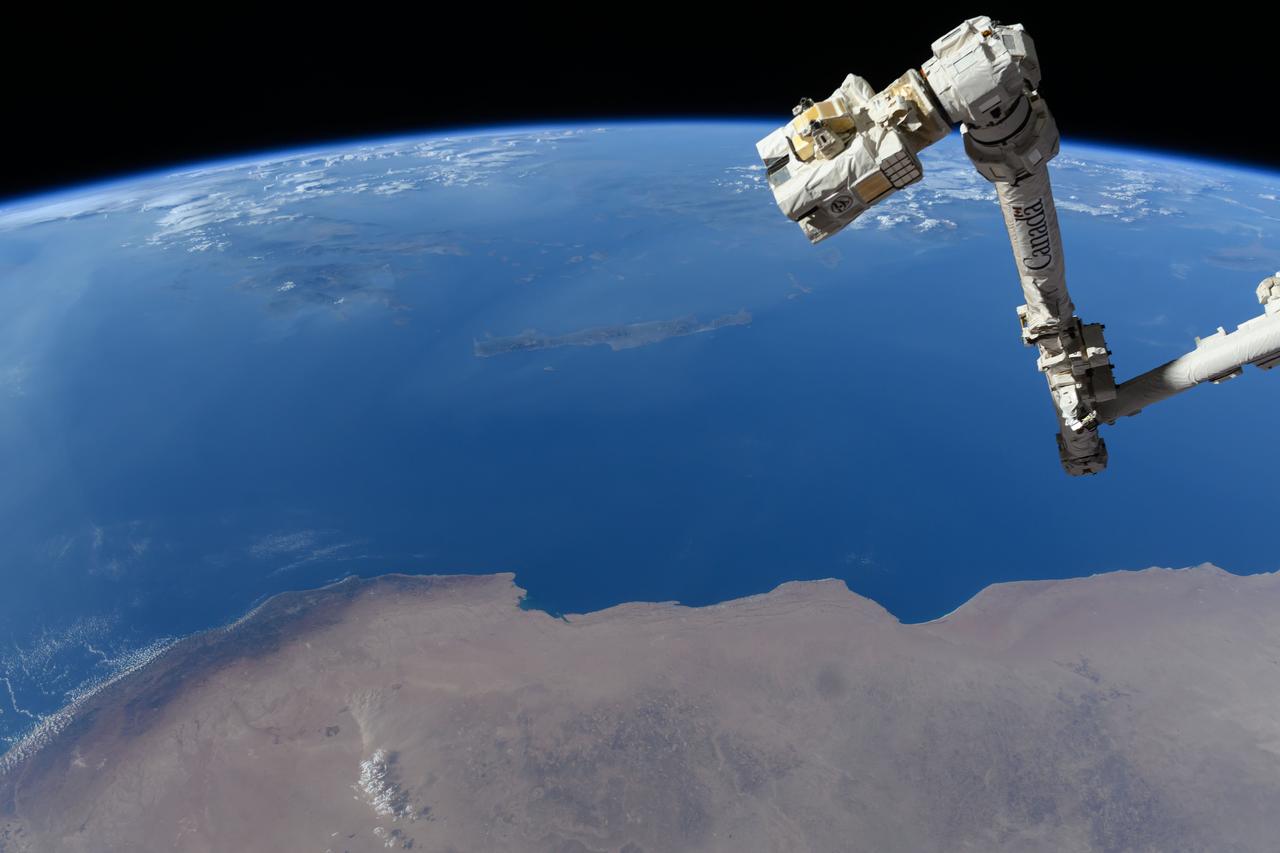
iss071e384199 (July 17, 2024) --- The Canadarm2 robotic arm's latching end effector, or LEE, is used to grapple fixtures on the International Space Station, as well as capture the approaching Cygnus cargo craft from Northrop Grumman and attach it to the Unity module for cargo transfer operations. 256 miles below the outpost is the Mediterranean coast of Libya and Egypt and the Greek island of Crete.
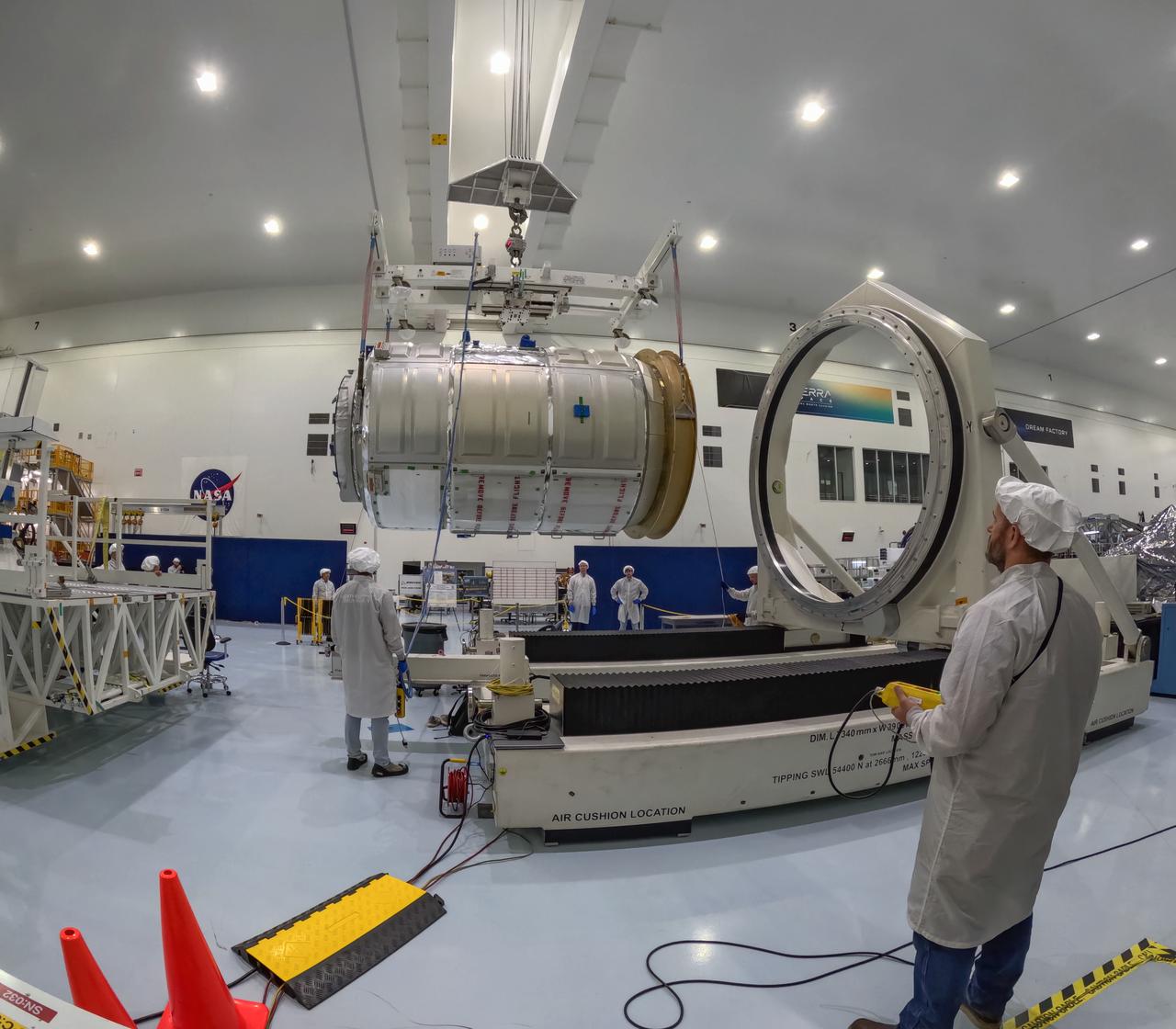
The Northrop Grumman Cygnus spacecraft’s pressurized cargo module for the company’s 21st commercial resupply mission is lifted and moved by a crane inside the Space Systems Processing Facility at NASA’s Kennedy Space Center in Florida on Saturday, June 1, 2024, as prelaunch processing operations continue. The Cygnus spacecraft will launch to the International Space Station aboard a SpaceX Falcon 9 rocket from Space Launch Complex 40 at Cape Canaveral Space Force Station.
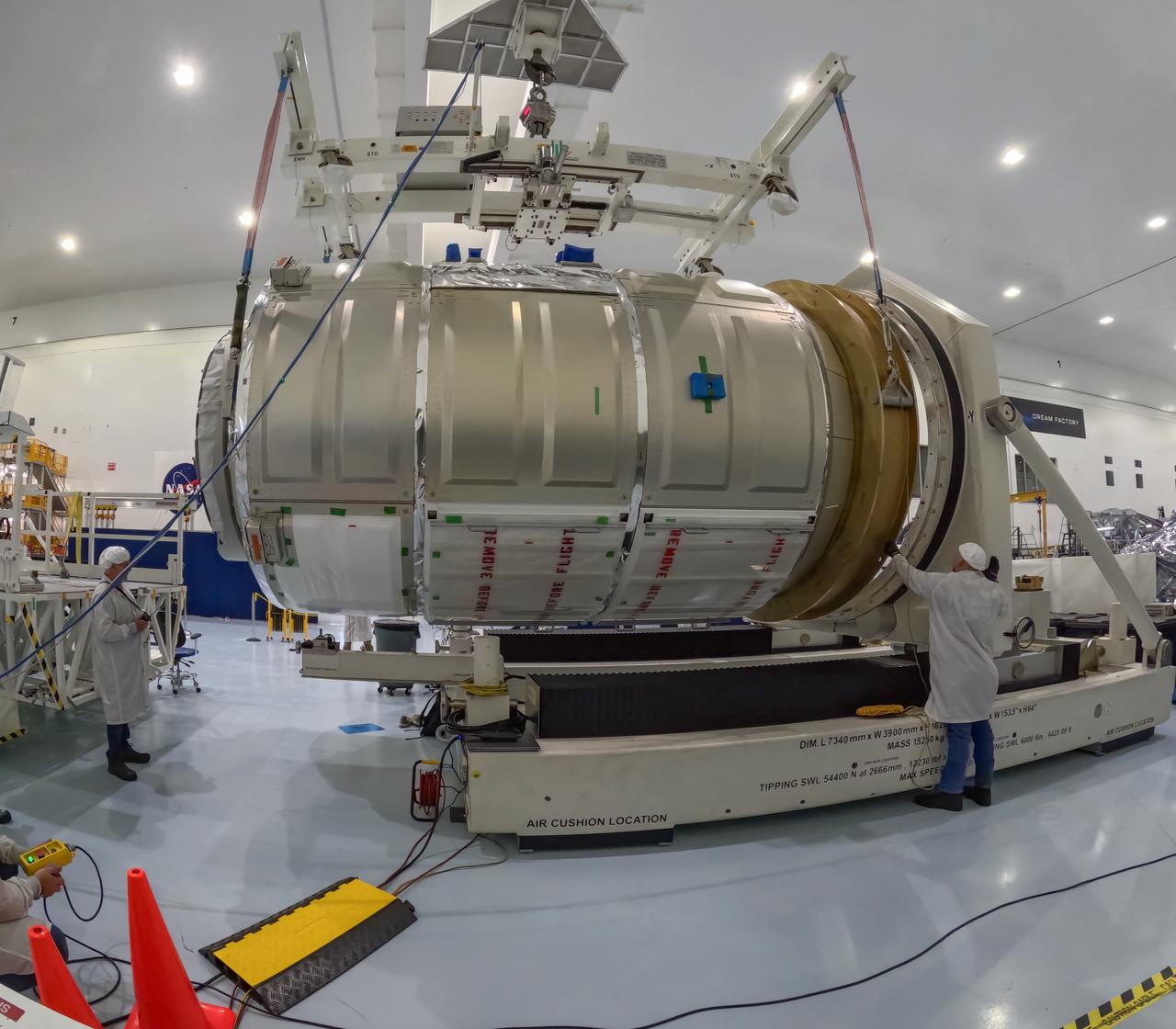
The Northrop Grumman Cygnus spacecraft’s pressurized cargo module for the company’s 21st commercial resupply mission is lifted and moved by a crane inside the Space Systems Processing Facility at NASA’s Kennedy Space Center in Florida on Saturday, June 1, 2024, as prelaunch processing operations continue. The Cygnus spacecraft will launch to the International Space Station aboard a SpaceX Falcon 9 rocket from Space Launch Complex 40 at Cape Canaveral Space Force Station.
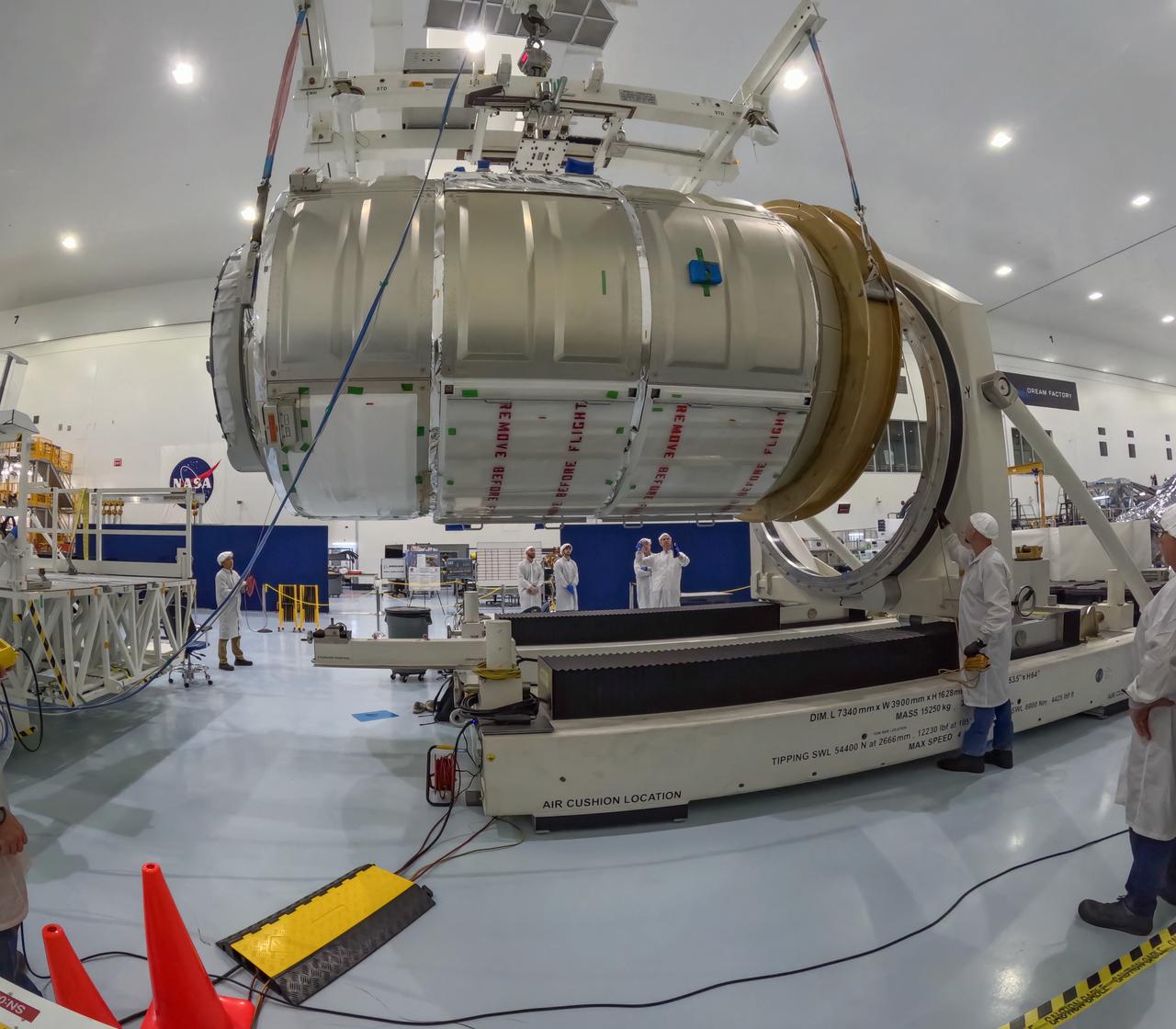
The Northrop Grumman Cygnus spacecraft’s pressurized cargo module for the company’s 21st commercial resupply mission is lifted and moved by a crane inside the Space Systems Processing Facility at NASA’s Kennedy Space Center in Florida on Saturday, June 1, 2024, as prelaunch processing operations continue. The Cygnus spacecraft will launch to the International Space Station aboard a SpaceX Falcon 9 rocket from Space Launch Complex 40 at Cape Canaveral Space Force Station.
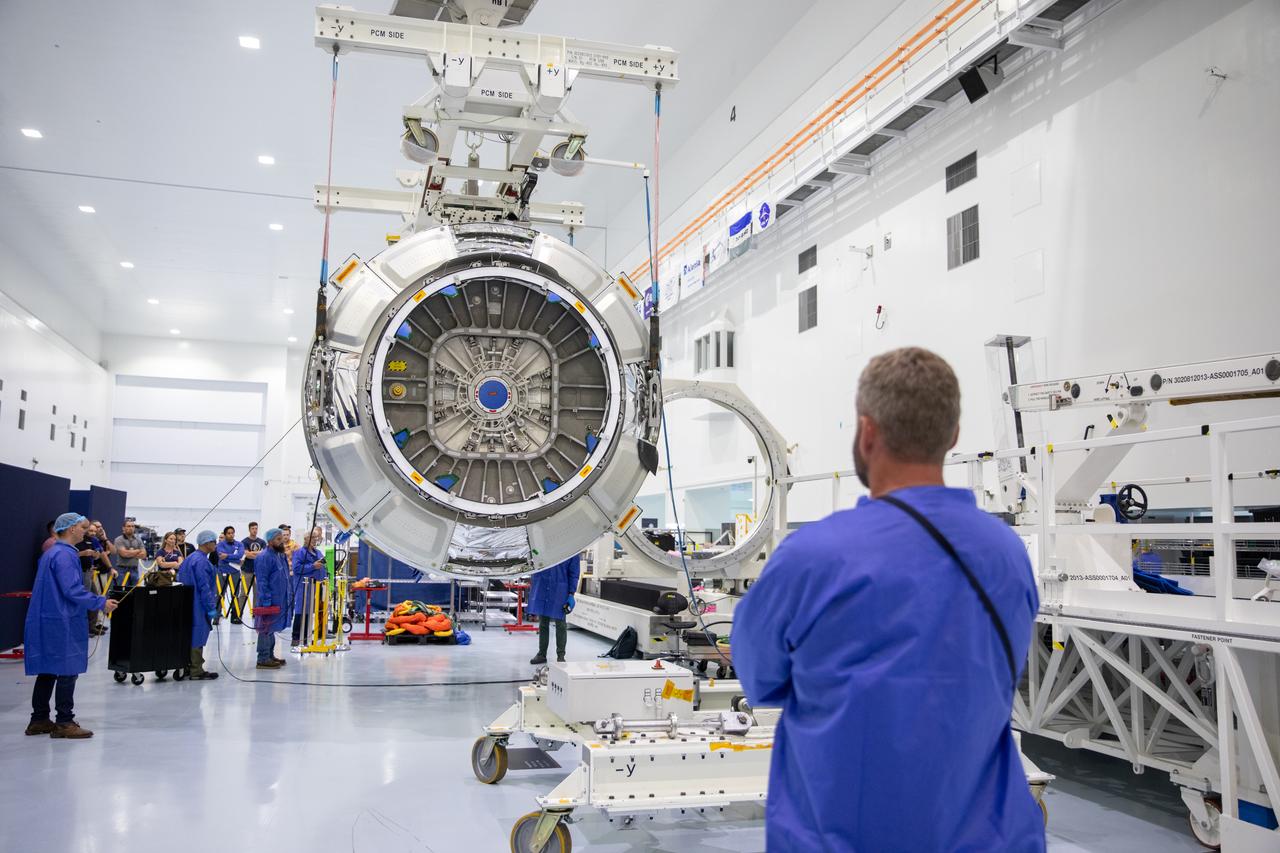
The Northrop Grumman Cygnus spacecraft’s pressurized cargo module (PCM) for the company’s 20th commercial resupply mission is lifted and moved by crane inside the high bay in the Space Station Processing Facility at NASA’s Kennedy Space Center in Florida on Monday, Sept. 18, 2023. The next step is vehicle processing for the mission to the International Space Station. Liftoff, aboard a SpaceX Falcon 9 rocket, will be from Cape Canaveral Space Force Station’s Space Launch Complex 40.
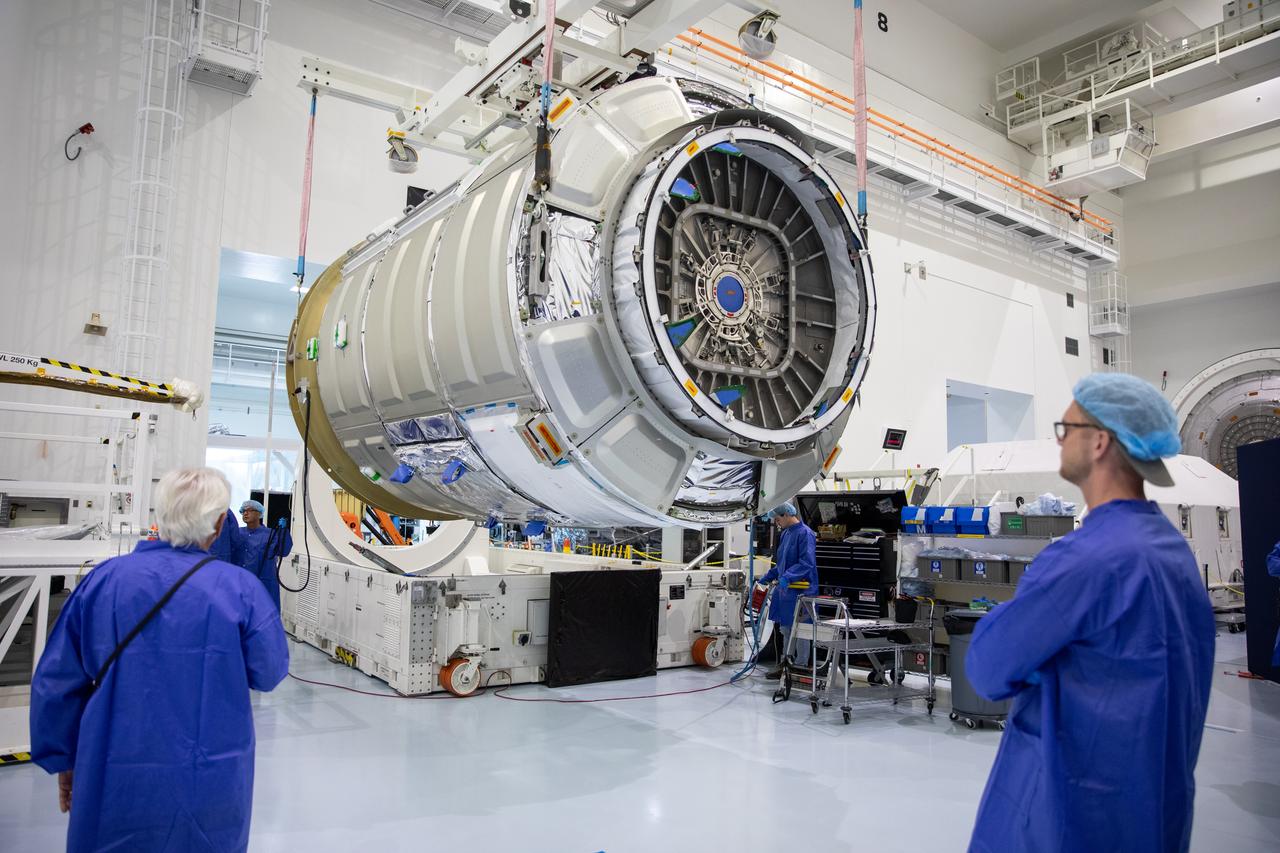
The Northrop Grumman Cygnus spacecraft’s pressurized cargo module (PCM) for the company’s 20th commercial resupply mission is lifted and moved by crane inside the high bay in the Space Station Processing Facility at NASA’s Kennedy Space Center in Florida on Monday, Sept. 18, 2023. The next step is vehicle processing for the mission to the International Space Station. Liftoff, aboard a SpaceX Falcon 9 rocket, will be from Cape Canaveral Space Force Station’s Space Launch Complex 40.
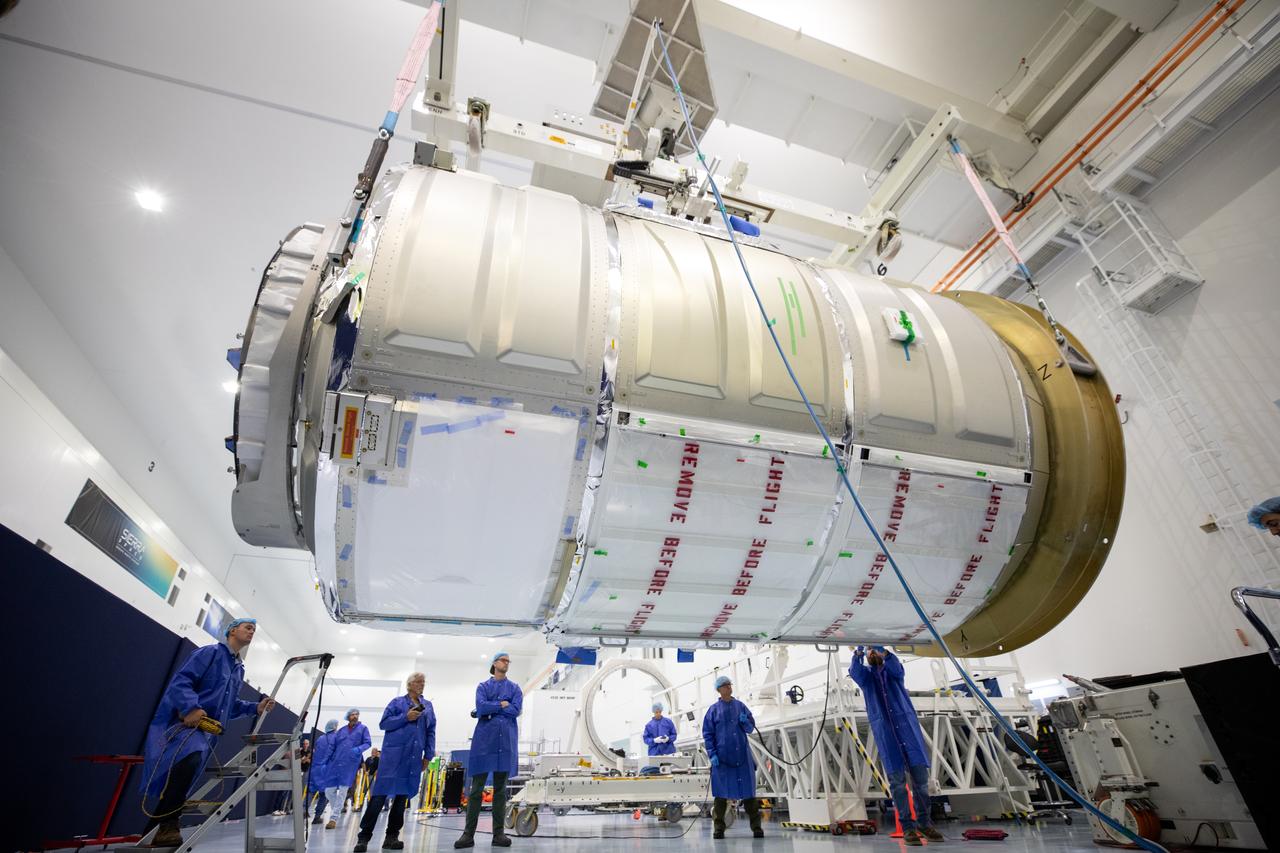
The Northrop Grumman Cygnus spacecraft’s pressurized cargo module (PCM) for the company’s 20th commercial resupply mission is lifted and moved by crane inside the high bay in the Space Station Processing Facility at NASA’s Kennedy Space Center in Florida on Monday, Sept. 18, 2023. The next step is vehicle processing for the mission to the International Space Station. Liftoff, aboard a SpaceX Falcon 9 rocket, will be from Cape Canaveral Space Force Station’s Space Launch Complex 40.
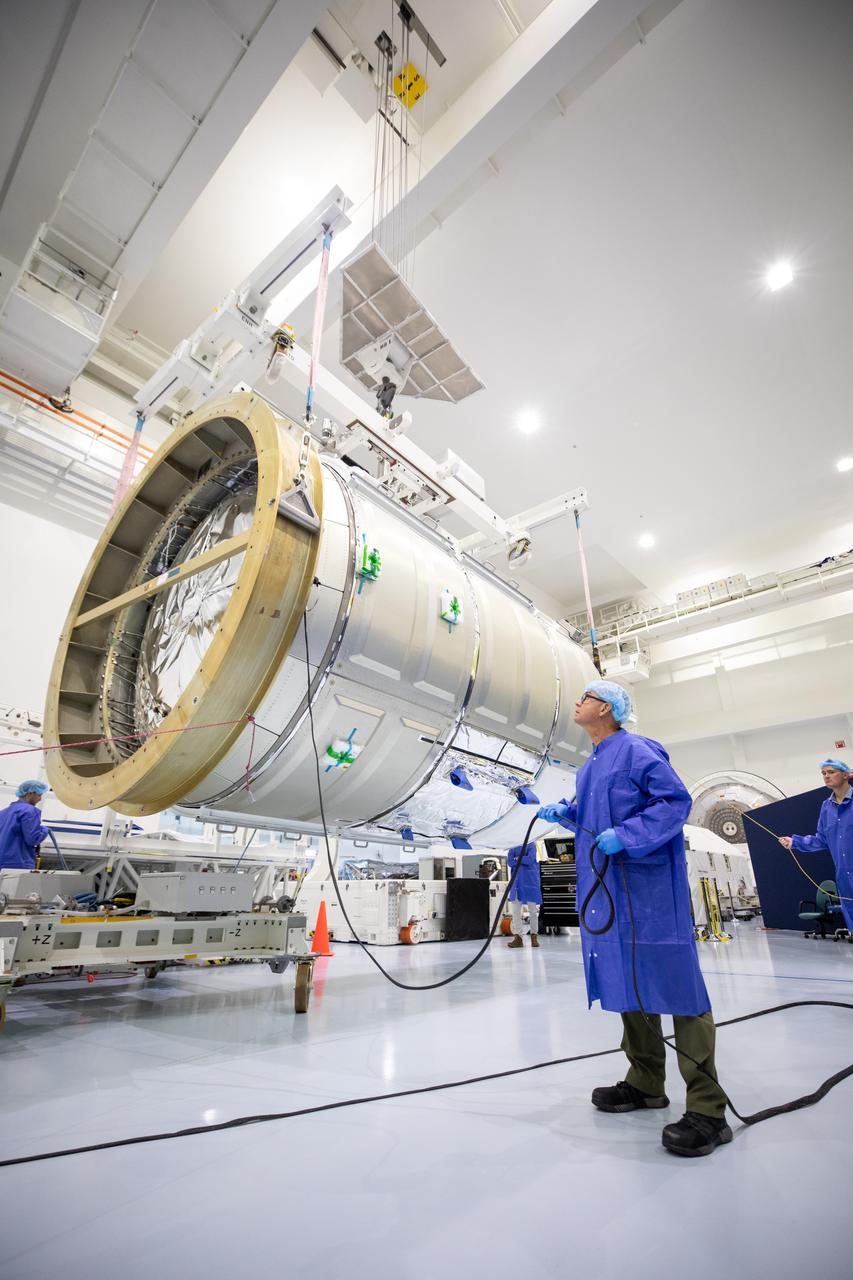
The Northrop Grumman Cygnus spacecraft’s pressurized cargo module (PCM) for the company’s 20th commercial resupply mission is lifted and moved by crane inside the high bay in the Space Station Processing Facility at NASA’s Kennedy Space Center in Florida on Monday, Sept. 18, 2023. The next step is vehicle processing for the mission to the International Space Station. Liftoff, aboard a SpaceX Falcon 9 rocket, will be from Cape Canaveral Space Force Station’s Space Launch Complex 40.