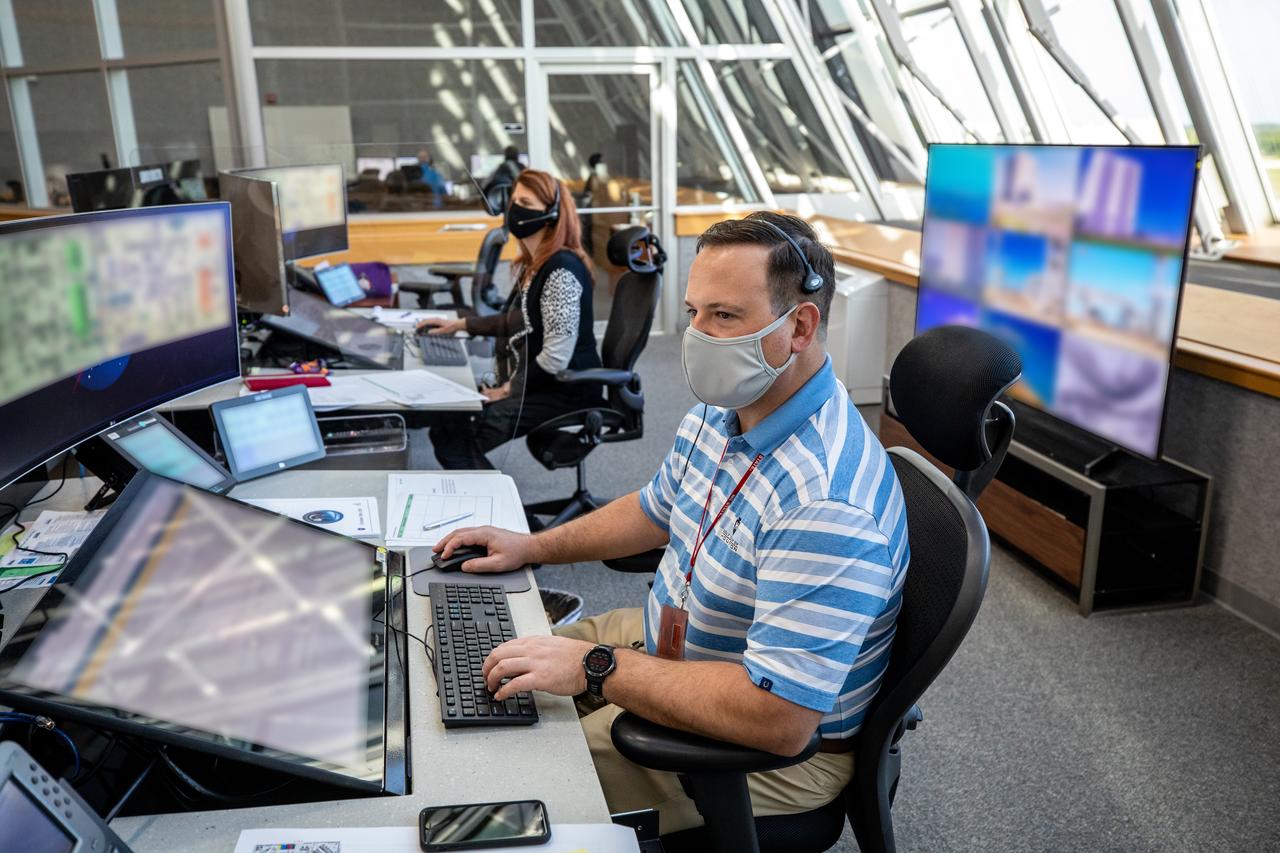
Charlie Blackwell-Thompson, at left, NASA Artemis launch director; and Wes Mosedale, technical assistant to the launch director, monitor a cryogenic propellant loading simulation inside Firing Room 1 in the Launch Control Center on Nov. 2, 2020, at NASA’s Kennedy Space Center in Florida. A team of engineers with Exploration Ground Systems and Jacobs, members of the cryogenics launch team, are rehearsing the steps to load the super-cooled liquid hydrogen and liquid oxygen into the Space Launch System’s (SLS) core and second stages to prepare for Artemis I. The first in a series of increasingly complex missions, Artemis I will test the Orion spacecraft and Space Launch System as an integrated system ahead of crewed flights to the Moon. NASA will land the first woman and the next man on the Moon in 2024.
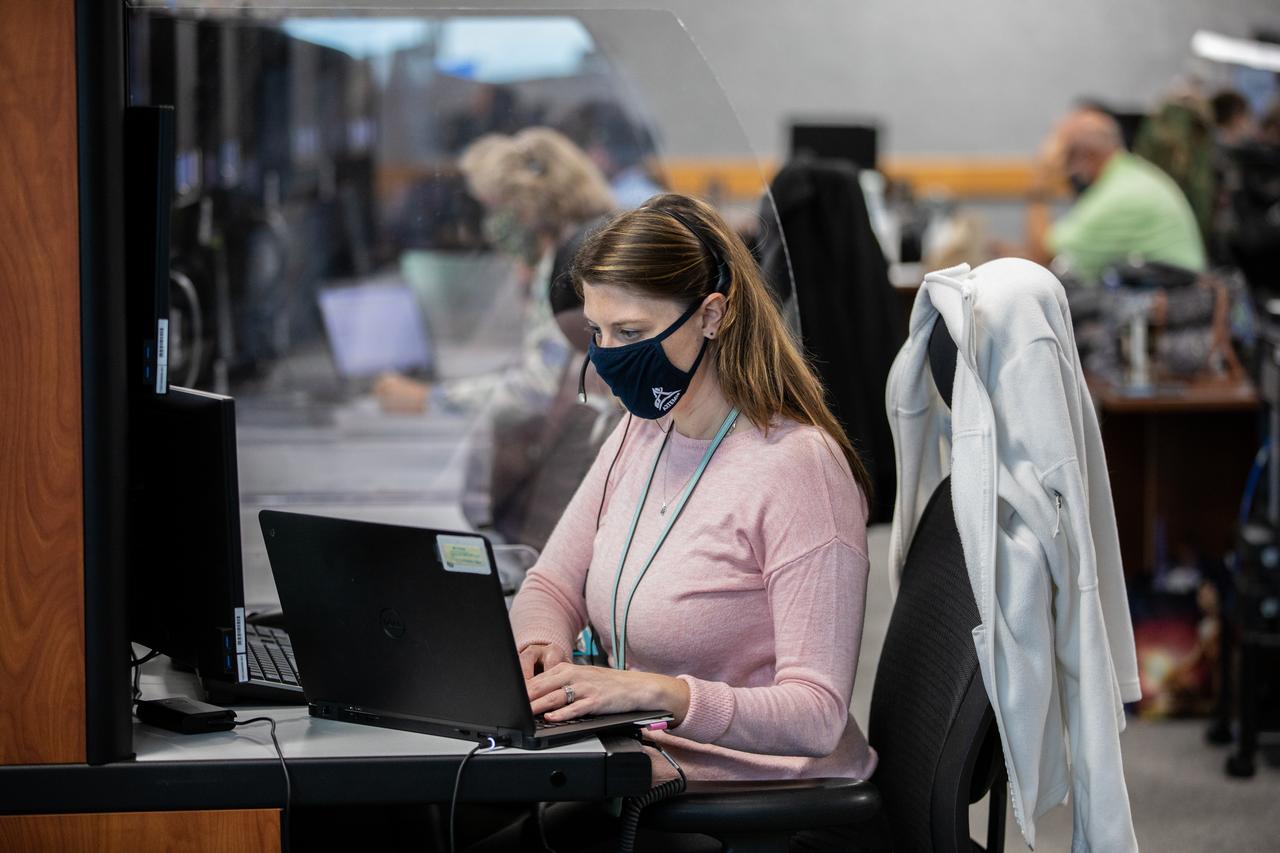
Amanda Arrieta, a members of the cryogenics launch team, participates in a cryogenic propellant loading simulation inside Firing Room 1 in the Launch Control Center on Nov. 2, 2020, at NASA’s Kennedy Space Center in Florida. A team of engineers with Exploration Ground Systems and Jacobs are rehearsing the steps to load the super-cooled liquid hydrogen and liquid oxygen into the Space Launch System’s (SLS) core and second stages to prepare for Artemis I. The first in a series of increasingly complex missions, Artemis I will test the Orion spacecraft and Space Launch System as an integrated system ahead of crewed flights to the Moon. NASA will land the first woman and the next man on the Moon in 2024.

Charlie Blackwell-Thompson, standing, NASA Artemis launch director; and Jeremy Graeber, chief of the Test, Launch and Recovery Operations Branch within Exploration Ground Systems (EGS), monitor a cryogenic propellant loading simulation inside Firing Room 1 in the Launch Control Center on Nov. 2, 2020, at NASA’s Kennedy Space Center in Florida. A team of engineers with EGS and Jacobs, members of the cryogenics launch team, are rehearsing the steps to load the super-cooled liquid hydrogen and liquid oxygen into the Space Launch System’s (SLS) core and second stages to prepare for Artemis I. The first in a series of increasingly complex missions, Artemis I will test the Orion spacecraft and Space Launch System as an integrated system ahead of crewed flights to the Moon. NASA will land the first woman and the next man on the Moon in 2024.
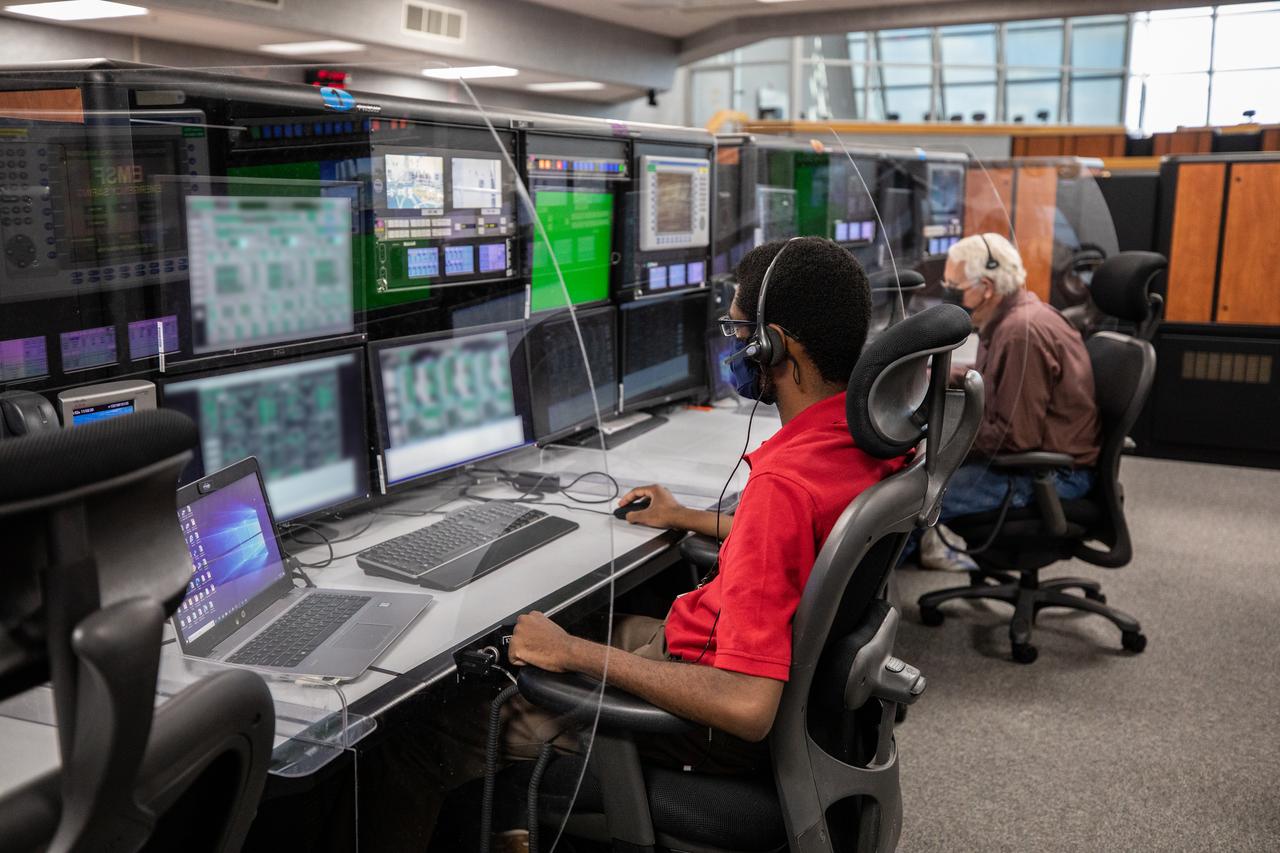
Theo Henderson, left, and Phillip Youmans, members of the cryogenics launch team, participate in a cryogenic propellant loading simulation inside Firing Room 1 in the Launch Control Center on Nov. 2, 2020, at NASA’s Kennedy Space Center in Florida. A team of engineers with Exploration Ground Systems and Jacobs are rehearsing the steps to load the super-cooled liquid hydrogen and liquid oxygen into the Space Launch System’s (SLS) core and second stages to prepare for Artemis I. The first in a series of increasingly complex missions, Artemis I will test the Orion spacecraft and Space Launch System as an integrated system ahead of crewed flights to the Moon. NASA will land the first woman and the next man on the Moon in 2024.
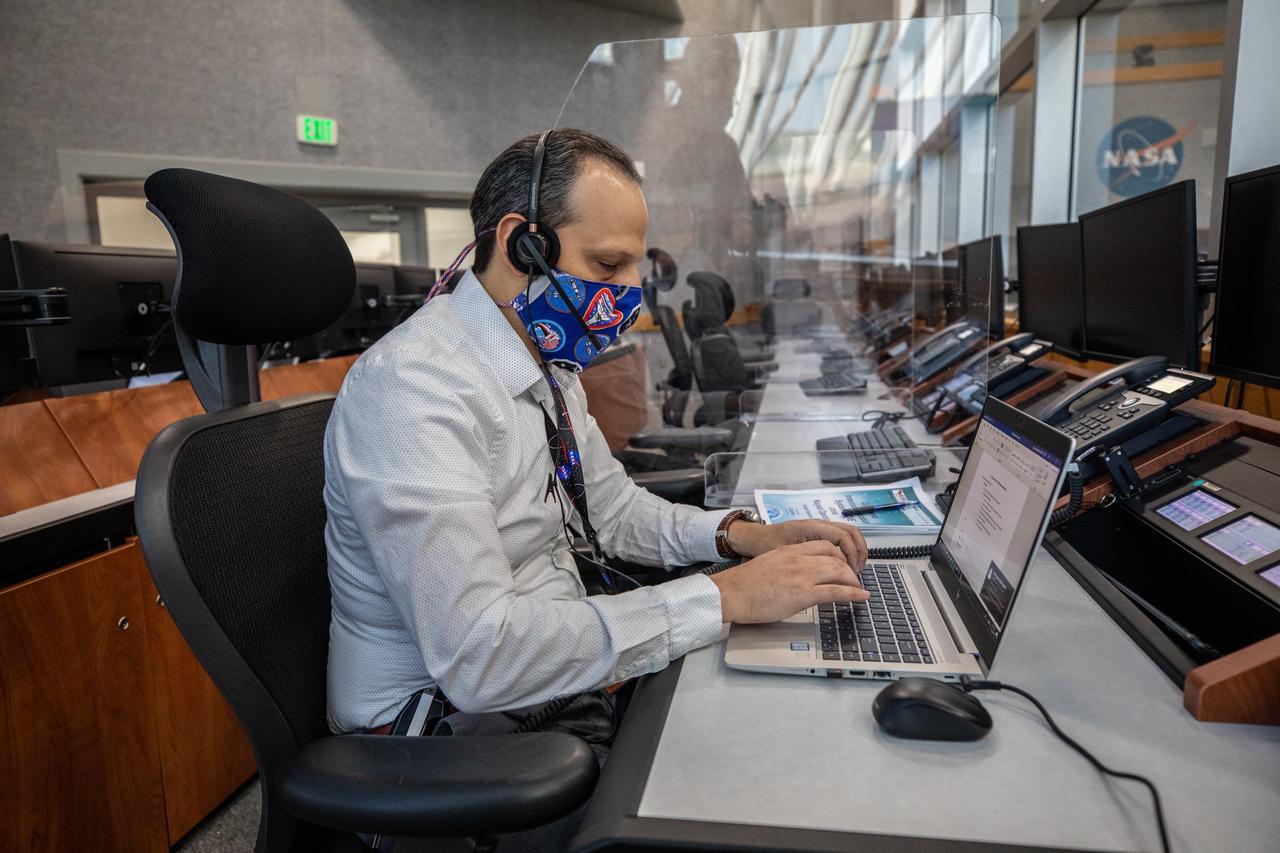
Pete Dizuzio, a system safety engineer, participates in a cryogenic propellant loading simulation inside Firing Room 1 in the Launch Control Center on Nov. 2, 2020, at NASA’s Kennedy Space Center in Florida. A team of engineers with Exploration Ground Systems and Jacobs, members of the cryogenics launch team, are rehearsing the steps to load the super-cooled liquid hydrogen and liquid oxygen into the Space Launch System’s (SLS) core and second stages to prepare for Artemis I. The first in a series of increasingly complex missions, Artemis I will test the Orion spacecraft and Space Launch System as an integrated system ahead of crewed flights to the Moon. NASA will land the first woman and the next man on the Moon in 2024.
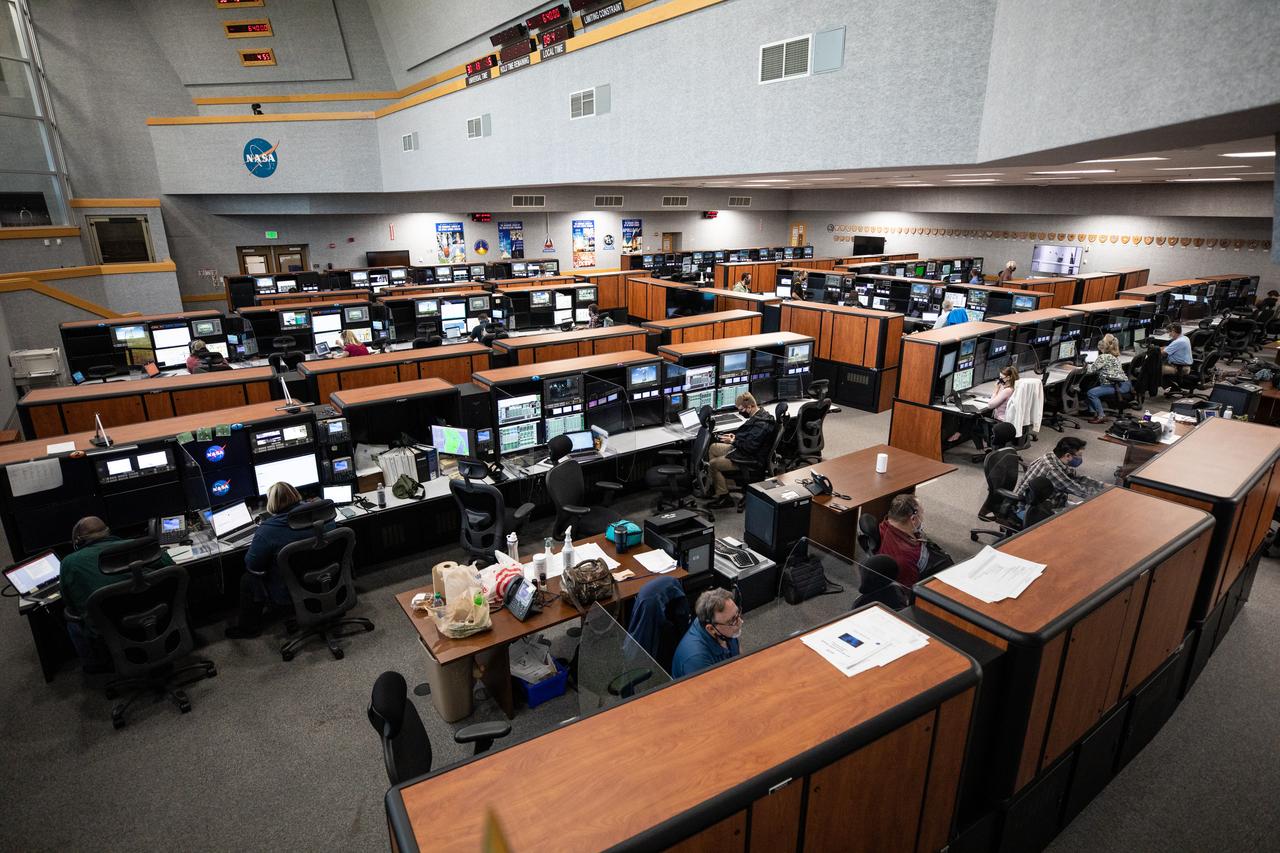
Members of the cryogenics launch team with Exploration Ground Systems and Jacobs participate in a cryogenic propellant loading simulation inside Firing Room 1 in the Launch Control Center on Nov. 2, 2020, at NASA’s Kennedy Space Center in Florida. A team of engineers with Exploration Ground Systems and Jacobs, members of the cryogenics launch team, are rehearsing the steps to load the super-cooled liquid hydrogen and liquid oxygen into the Space Launch System’s (SLS) core and second stages to prepare for Artemis I. The first in a series of increasingly complex missions, Artemis I will test the Orion spacecraft and Space Launch System as an integrated system ahead of crewed flights to the Moon. NASA will land the first woman and the next man on the Moon in 2024.
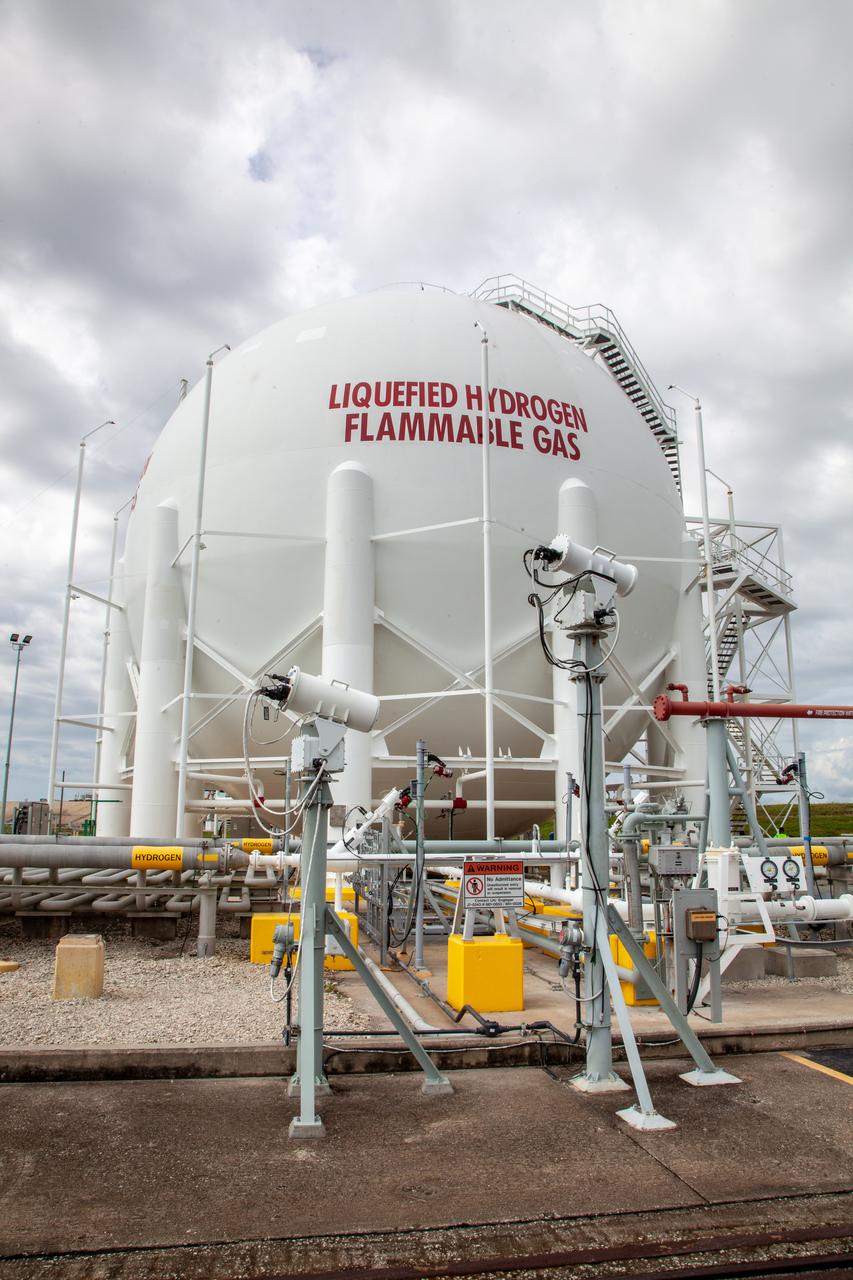
A liquid hydrogen storage tank is photographed at Launch Pad 39B on Nov. 8, 2019, at NASA’s Kennedy Space Center in Florida. The agency’s Exploration Ground Systems oversaw testing of the pad’s cryogenic systems – the infrastructure that will support the flow of liquid hydrogen and liquid oxygen from the storage tanks to the Space Launch System (SLS) rocket – in preparation for the launch of SLS with the Orion spacecraft atop for the uncrewed Artemis I mission. Each of the liquid hydrogen and liquid oxygen tanks can hold more than 800,000 gallons of propellant. The liquid hydrogen, lighter than liquid oxygen, will make its way from the tank to the rocket using gaseous hydrogen to pressurize the sphere at the time of launch, while the liquid oxygen will be sent to the rocket via pumps.
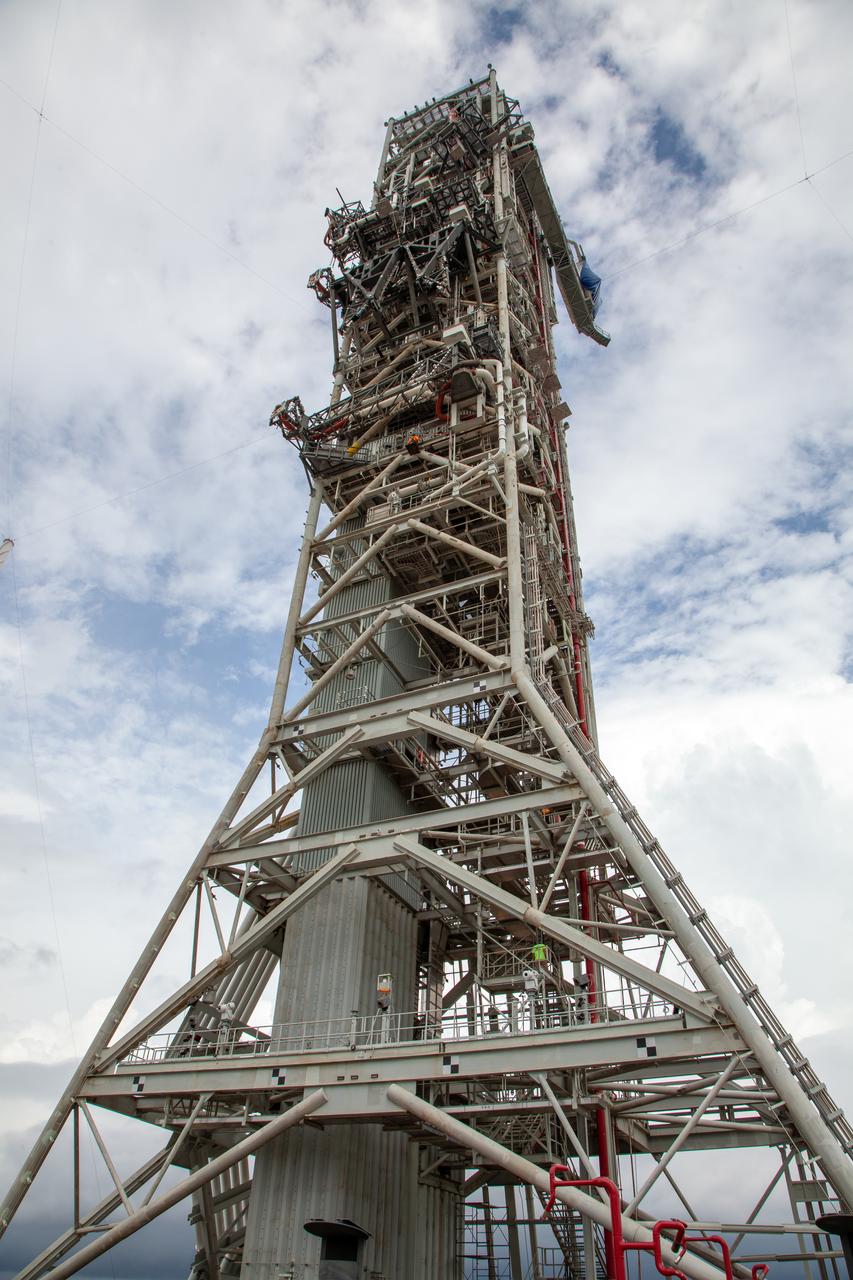
NASA’s mobile launcher is photographed on the pad surface at Launch Pad 39B on Nov. 8, 2019, at the agency’s Kennedy Space Center in Florida. The 380-foot-tall mobile launcher is the ground structure that will support the assembly and launch of NASA’s Space Launch System rocket and Orion spacecraft for the uncrewed Artemis I mission.
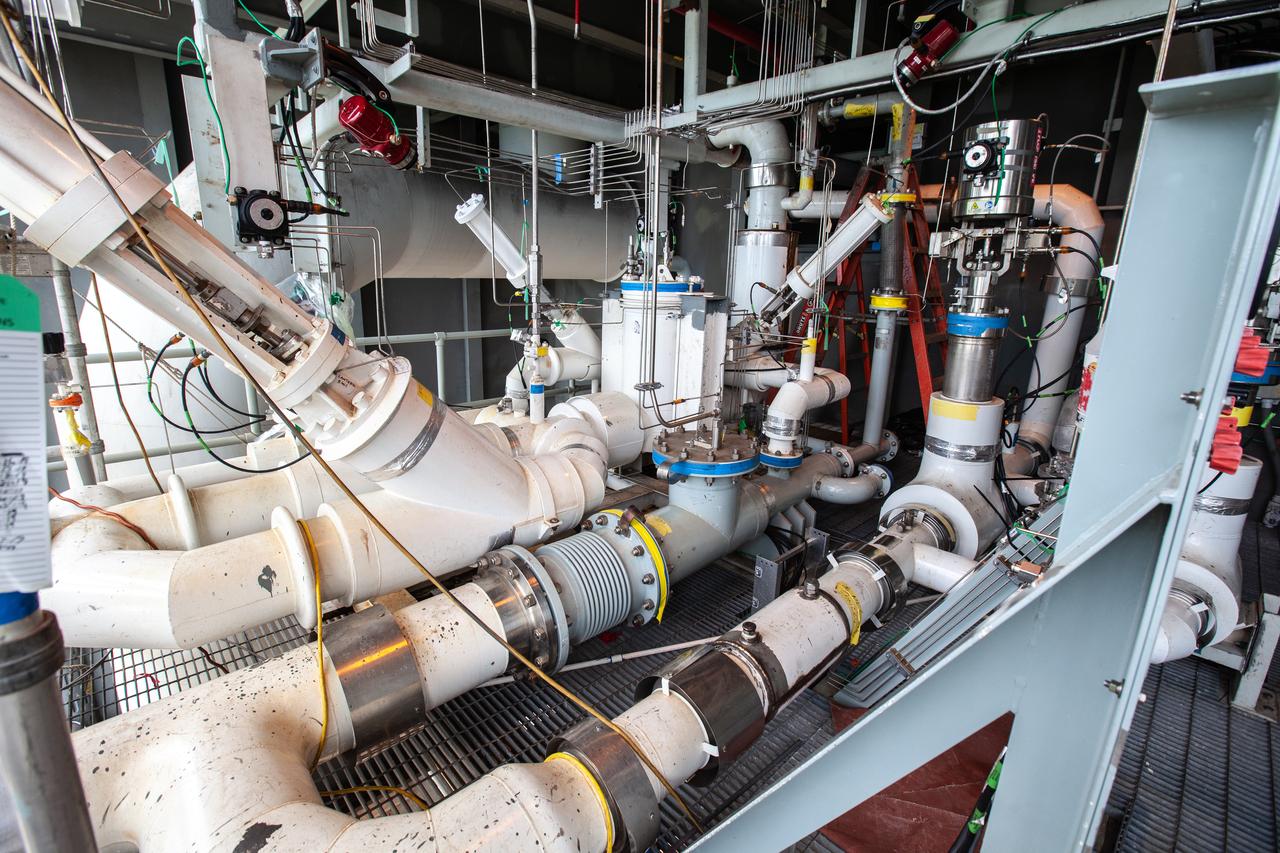
The control panel that will direct and control the flow of liquid oxygen and liquid oxygen, referred to as a skid, is photographed at Launch Pad 39B on Nov. 8, 2019, at NASA’s Kennedy Space Center in Florida. The agency’s Exploration Ground Systems oversaw testing of the pad’s cryogenic systems – the infrastructure that will send the liquid hydrogen and liquid oxygen from the storage tanks to the Space Launch System (SLS) rocket – in preparation for the launch of SLS with the Orion spacecraft atop for the uncrewed Artemis I mission. Each of the liquid oxygen and liquid hydrogen tanks can hold more than 800,000 gallons of propellant. The liquid oxygen will require the use of pumps to push it from the tank to the rocket, while the lighter liquid hydrogen will make its way up to the pad using gaseous hydrogen to pressurize the sphere.
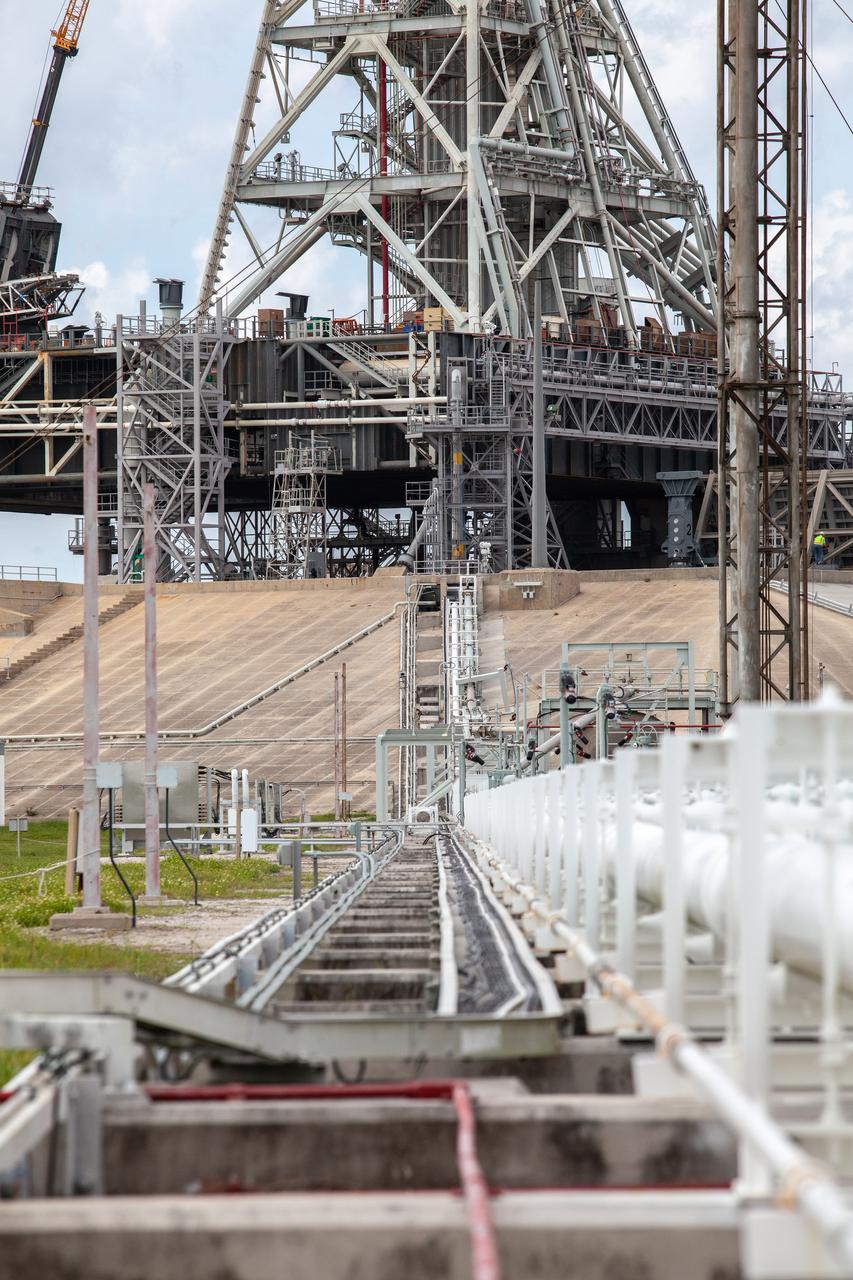
In this view, the cross country line that liquid hydrogen will flow through can be seen stretching from the storage tank to the mobile launcher (ML) at Launch Pad 39B on Nov. 8, 2019, at NASA’s Kennedy Space Center in Florida. The agency’s Exploration Ground Systems oversaw testing of the pad’s cryogenic systems – the infrastructure that will send liquid hydrogen and liquid oxygen from the storage tanks to the Space Launch System (SLS) rocket – in preparation for the launch of SLS with the Orion spacecraft atop for the uncrewed Artemis I mission. Each of the liquid hydrogen and liquid oxygen tanks can hold more than 800,000 gallons of propellant. The liquid hydrogen, lighter than liquid oxygen, will make its way from the tank to the rocket using gaseous hydrogen to pressurize the sphere at the time of launch, while the liquid oxygen will be sent to the rocket via pumps.
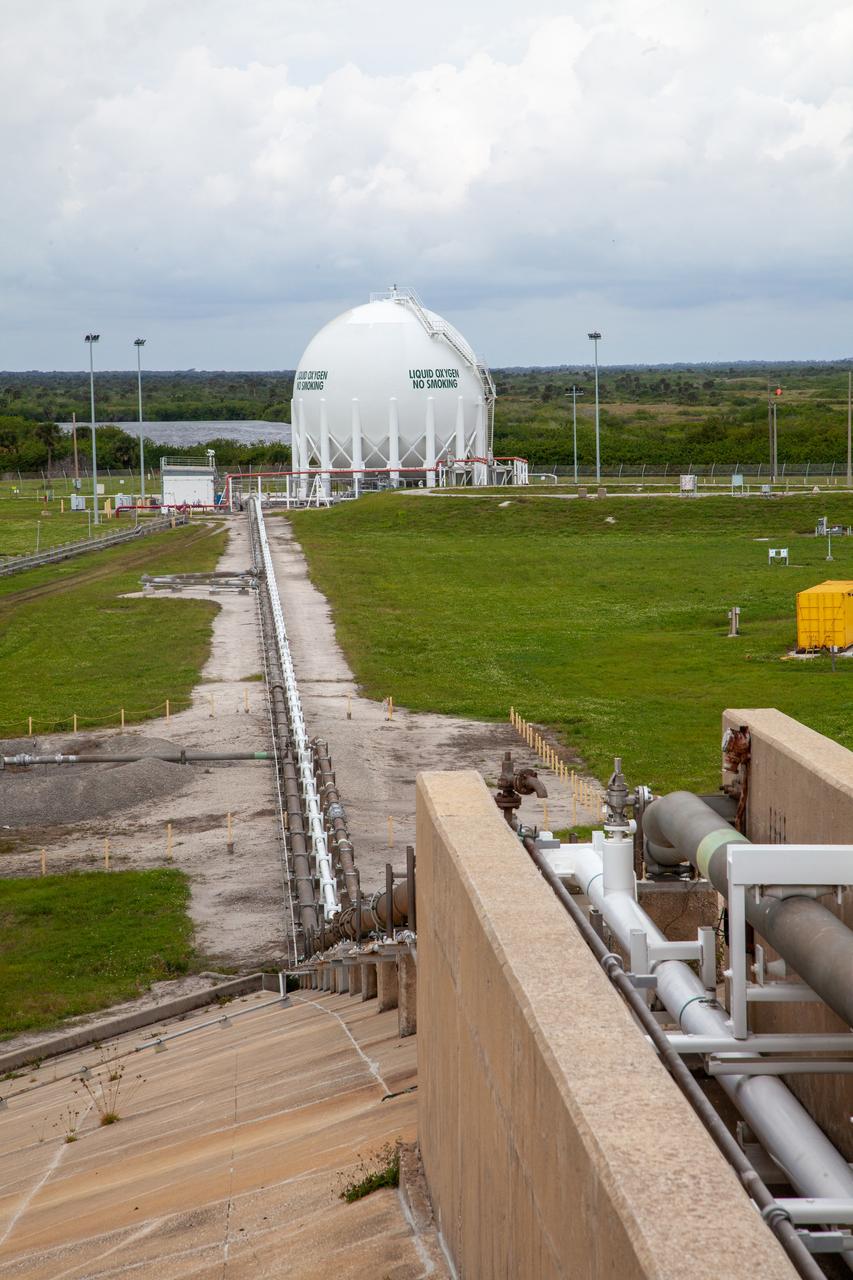
In this view from the pad surface at Kennedy Space Center’s Launch Pad 39B, the cross country line that liquid oxygen will flow through can be seen stretching from the pad to the liquid oxygen storage tank on Nov. 8, 2019. The agency’s Exploration Ground Systems oversaw testing of the pad’s cryogenic systems – the infrastructure that will support the flow of liquid hydrogen and liquid oxygen from the storage tanks to the Space Launch System (SLS) rocket – in preparation for the launch of SLS with the Orion spacecraft atop for the uncrewed Artemis I mission. Each of the liquid oxygen and liquid hydrogen tanks can hold more than 800,000 gallons of propellant. The liquid oxygen will require the use of pumps to push it from the tank to the rocket, while the lighter liquid hydrogen will make its way up to the pad using gaseous hydrogen to pressurize the sphere.
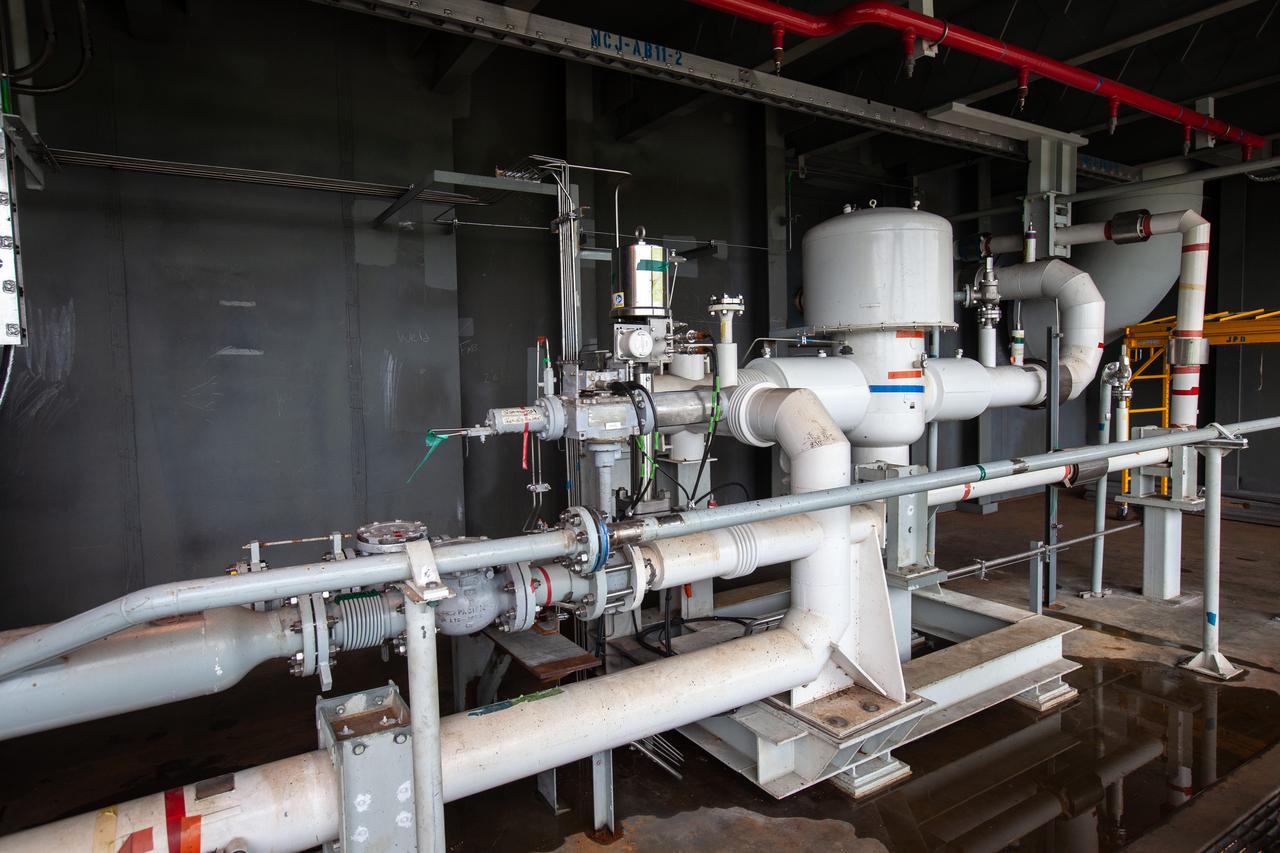
The control panel that will direct and control the flow of liquid oxygen, referred to as a skid, is photographed at Launch Pad 39B on Nov. 8, 2019, at NASA’s Kennedy Space Center in Florida. The agency’s Exploration Ground Systems oversaw testing of the pad’s cryogenic systems – the infrastructure that will support the flow of liquid hydrogen and liquid oxygen from the storage tanks, located near the pad, to the Space Launch System (SLS) rocket – in preparation for the launch of SLS with the Orion spacecraft atop for the uncrewed Artemis I mission. Each of the liquid oxygen and liquid hydrogen tanks can hold more than 800,000 gallons of propellant. The liquid oxygen will require the use of pumps to push it from the tank to the rocket, while the lighter liquid hydrogen will make its way up to the pad using gaseous hydrogen to pressurize the sphere.
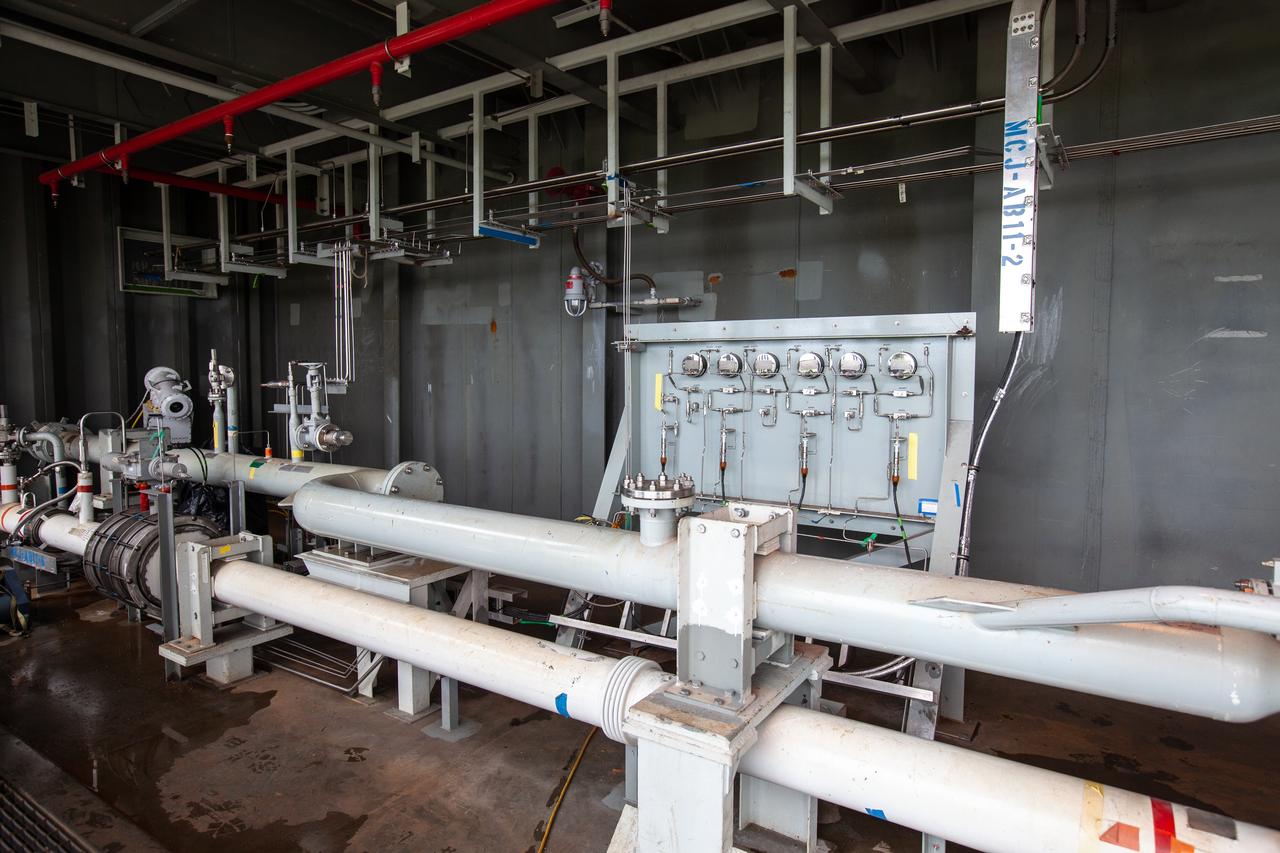
The control panel that will direct and control the flow of liquid oxygen, referred to as a skid, is photographed at Launch Pad 39B on Nov. 8, 2019, at NASA’s Kennedy Space Center in Florida. The agency’s Exploration Ground Systems oversaw testing of the pad’s cryogenic systems – the infrastructure that will support the flow of liquid hydrogen and liquid oxygen from the storage tanks, located near the pad, to the Space Launch System (SLS) rocket – in preparation for the launch of SLS with the Orion spacecraft atop for the uncrewed Artemis I mission. Each of the liquid oxygen and liquid hydrogen tanks can hold more than 800,000 gallons of propellant. The liquid oxygen will require the use of pumps to push it from the tank to the rocket, while the lighter liquid hydrogen will make its way up to the pad using gaseous hydrogen to pressurize the sphere.
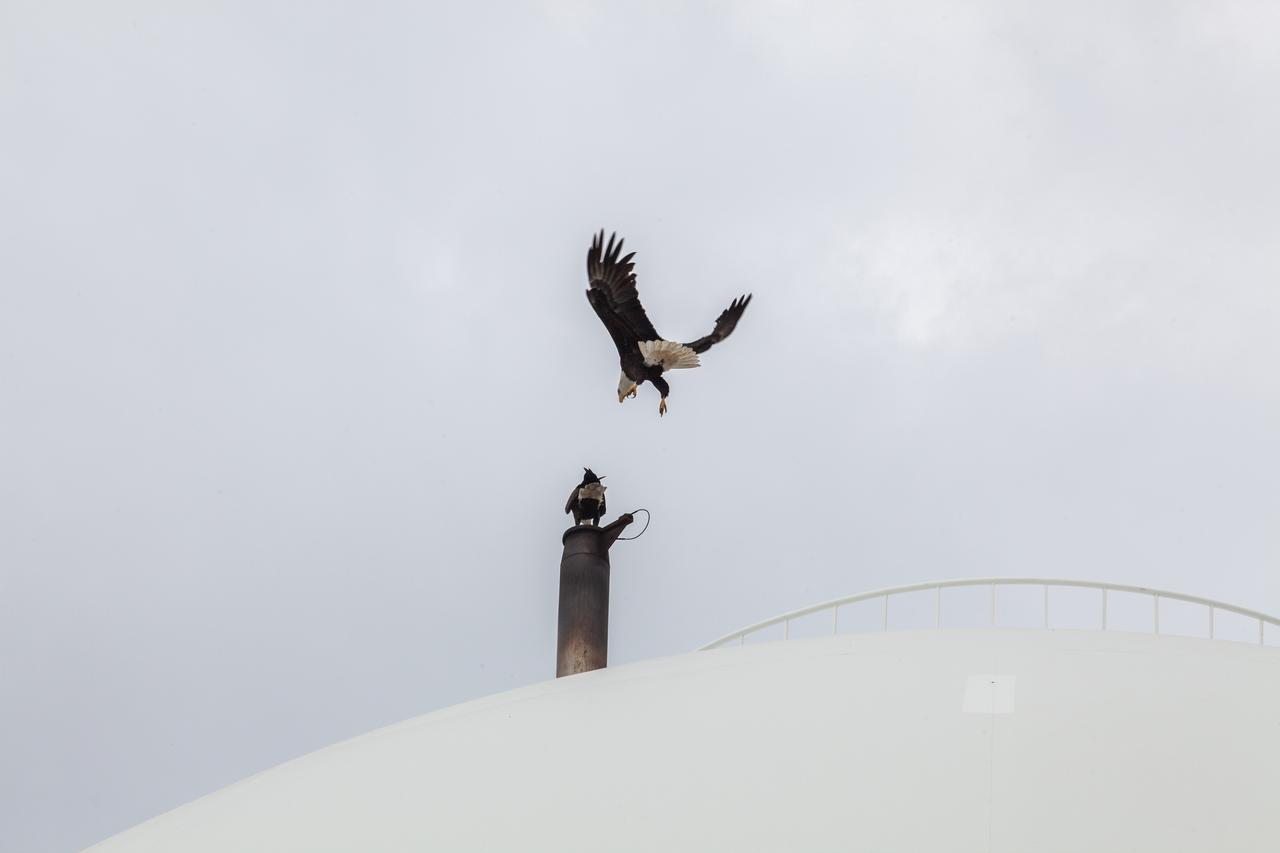
A bald eagle approaches the liquid hydrogen storage tank at Launch Pad 39B on Nov. 8, 2019, at NASA’s Kennedy Space Center in Florida. Kennedy shares a border with the Merritt Island National Wildlife Refuge, consisting of 144,000 acres of land, water and marshes. Many species of birds, reptiles, fish, amphibians and mammals can be found within the refuge.
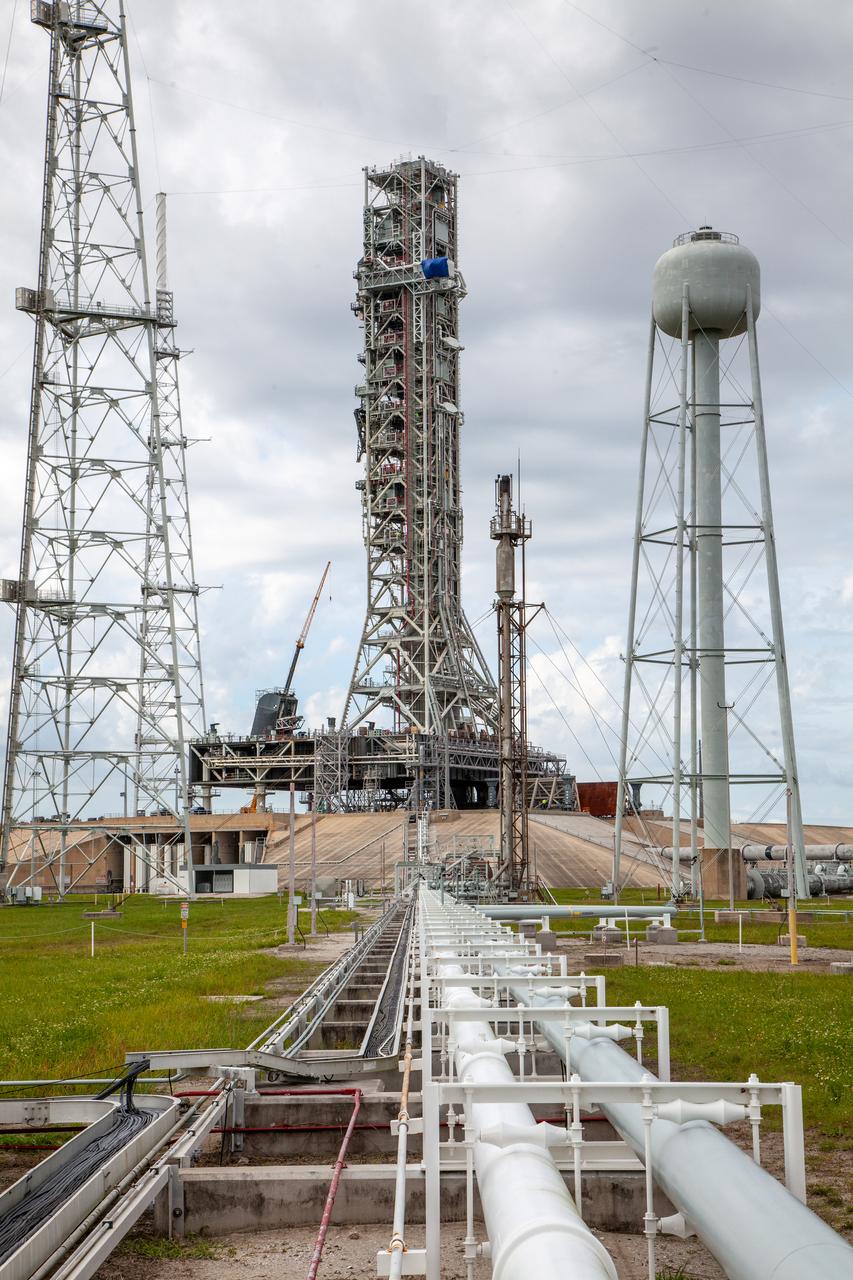
In this view, the cross country line that liquid hydrogen will flow through can be seen stretching from the storage tank to the mobile launcher (ML) at Launch Pad 39B on Nov. 8, 2019, at NASA’s Kennedy Space Center in Florida. The agency’s Exploration Ground Systems oversaw testing of the pad’s cryogenic systems – the infrastructure that will send liquid hydrogen and liquid oxygen from the storage tanks to the Space Launch System (SLS) rocket – in preparation for the launch of SLS with the Orion spacecraft atop for the uncrewed Artemis I mission. Each of the liquid hydrogen and liquid oxygen tanks can hold more than 800,000 gallons of propellant. The liquid hydrogen, lighter than liquid oxygen, will make its way from the tank to the rocket using gaseous hydrogen to pressurize the sphere at the time of launch, while the liquid oxygen will be sent to the rocket via pumps.
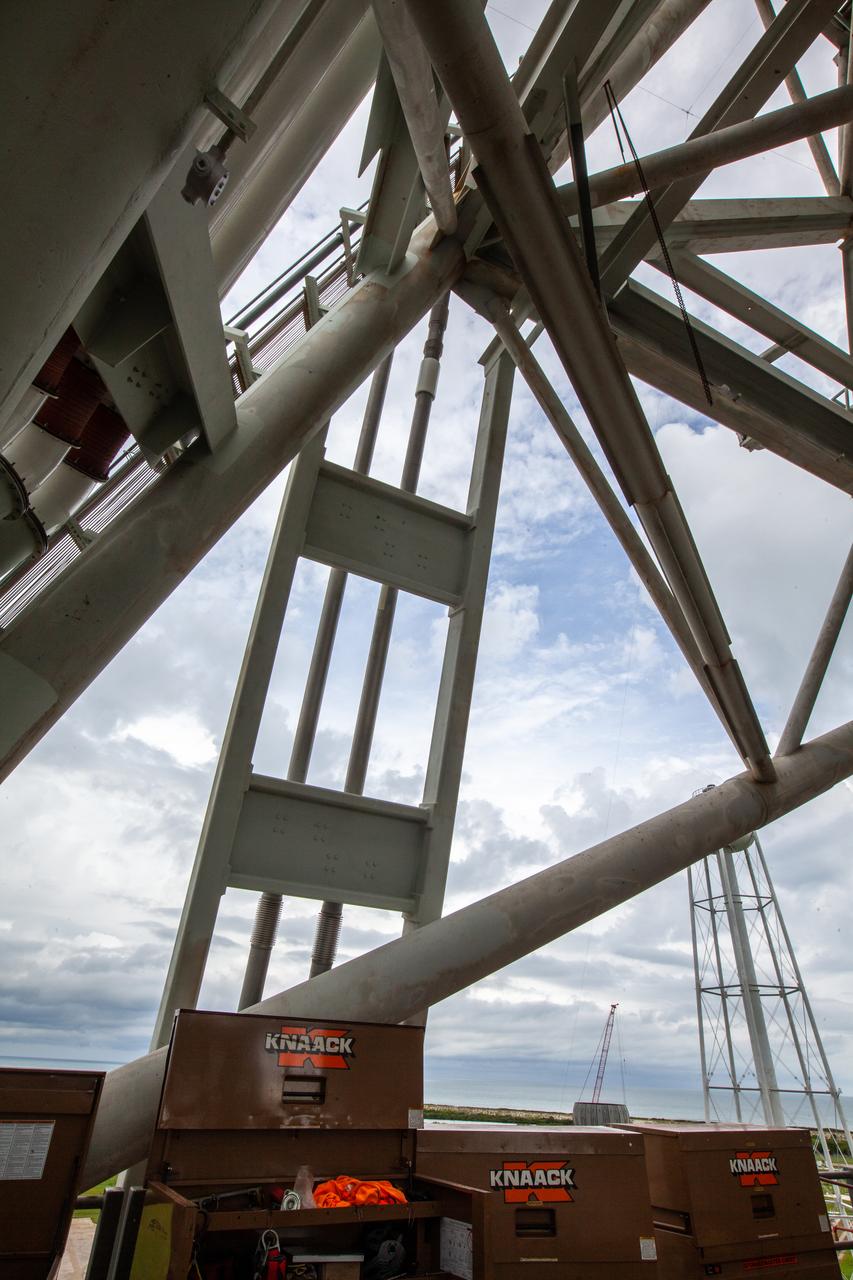
In this view, liquid oxygen lines can be seen going up the mobile launcher at Launch Pad 39B on Nov. 8, 2019, at NASA’s Kennedy Space Center in Florida. The agency’s Exploration Ground Systems oversaw testing of the pad’s cryogenic systems – the infrastructure that will support the flow of liquid hydrogen and liquid oxygen from the storage tanks, located near the pad, to the Space Launch System (SLS) rocket – in preparation for the launch of SLS with the Orion spacecraft atop for the uncrewed Artemis I mission. Each of the liquid oxygen and liquid hydrogen tanks can hold more than 800,000 gallons of propellant. The liquid oxygen will require the use of pumps to push it from the tank to the rocket, while the lighter liquid hydrogen will make its way up to the pad using gaseous hydrogen to pressurize the sphere.
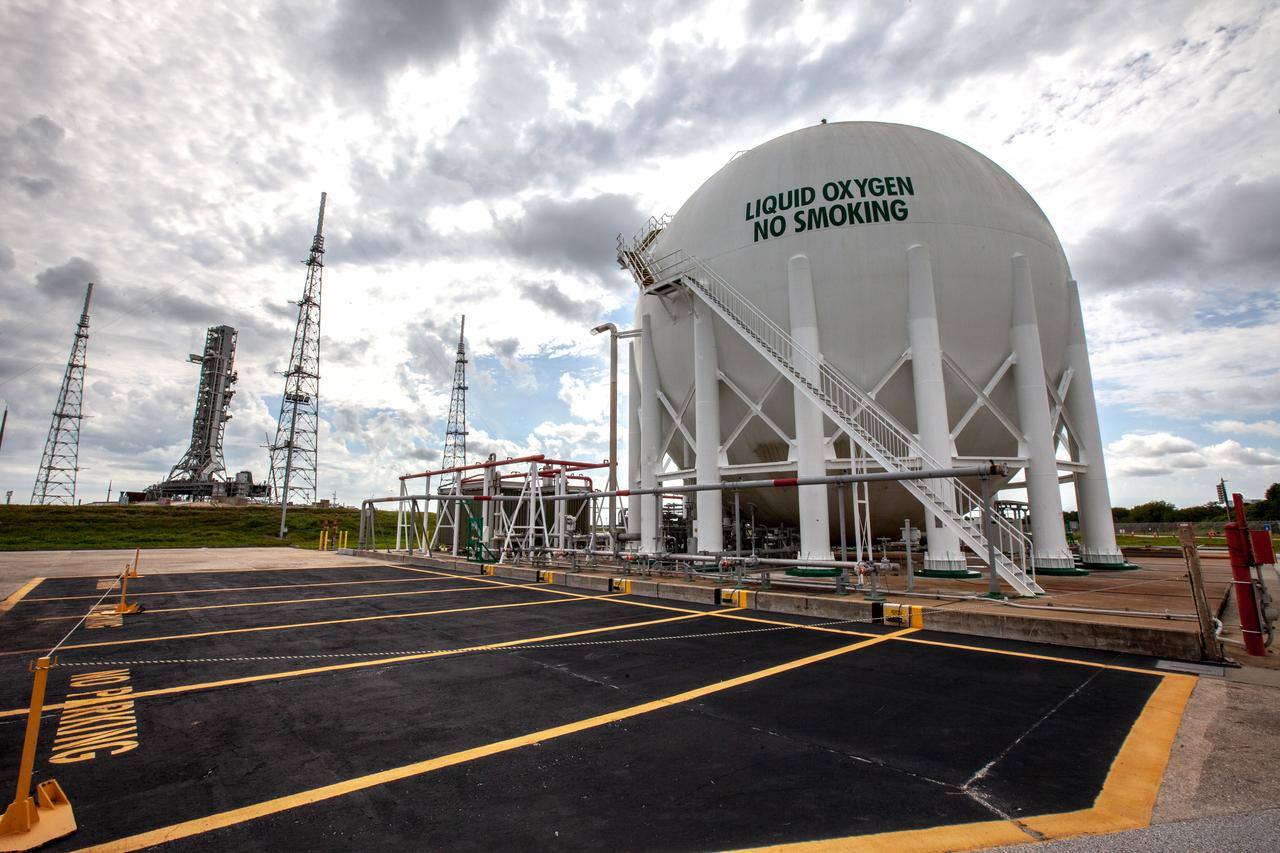
A liquid oxygen storage tank, with a view of the mobile launcher on the pad surface in the background, is photographed at Launch Pad 39B on Nov. 8, 2019, at NASA’s Kennedy Space Center in Florida. The agency’s Exploration Ground Systems oversaw testing of the pad’s cryogenic systems – the infrastructure that will support the flow of liquid hydrogen and liquid oxygen from the storage tanks to the Space Launch System (SLS) rocket – in preparation for the launch of SLS with the Orion spacecraft atop for the uncrewed Artemis I mission. Each of the liquid oxygen and liquid hydrogen tanks can hold more than 800,000 gallons of propellant. The liquid oxygen will require the use of pumps to push it from the tank to the rocket, while the lighter liquid hydrogen will make its way up to the pad using gaseous hydrogen to pressurize the sphere.

In this view, the cross country line that liquid oxygen will flow through can be seen stretching from the storage tank to the mobile launcher at Launch Pad 39B on Nov. 8, 2019, at NASA’s Kennedy Space Center in Florida. The agency’s Exploration Ground Systems oversaw testing of the pad’s cryogenic systems – the infrastructure that will send liquid hydrogen and liquid oxygen from the storage tanks to the Space Launch System (SLS) rocket – in preparation for the launch of SLS with the Orion spacecraft atop for the uncrewed Artemis I mission. Each of the liquid oxygen and liquid hydrogen tanks can hold more than 800,000 gallons of propellant. The liquid oxygen will require the use of pumps to push it from the tank to the rocket, while the lighter liquid hydrogen will make its way up to the pad using gaseous hydrogen to pressurize the sphere.
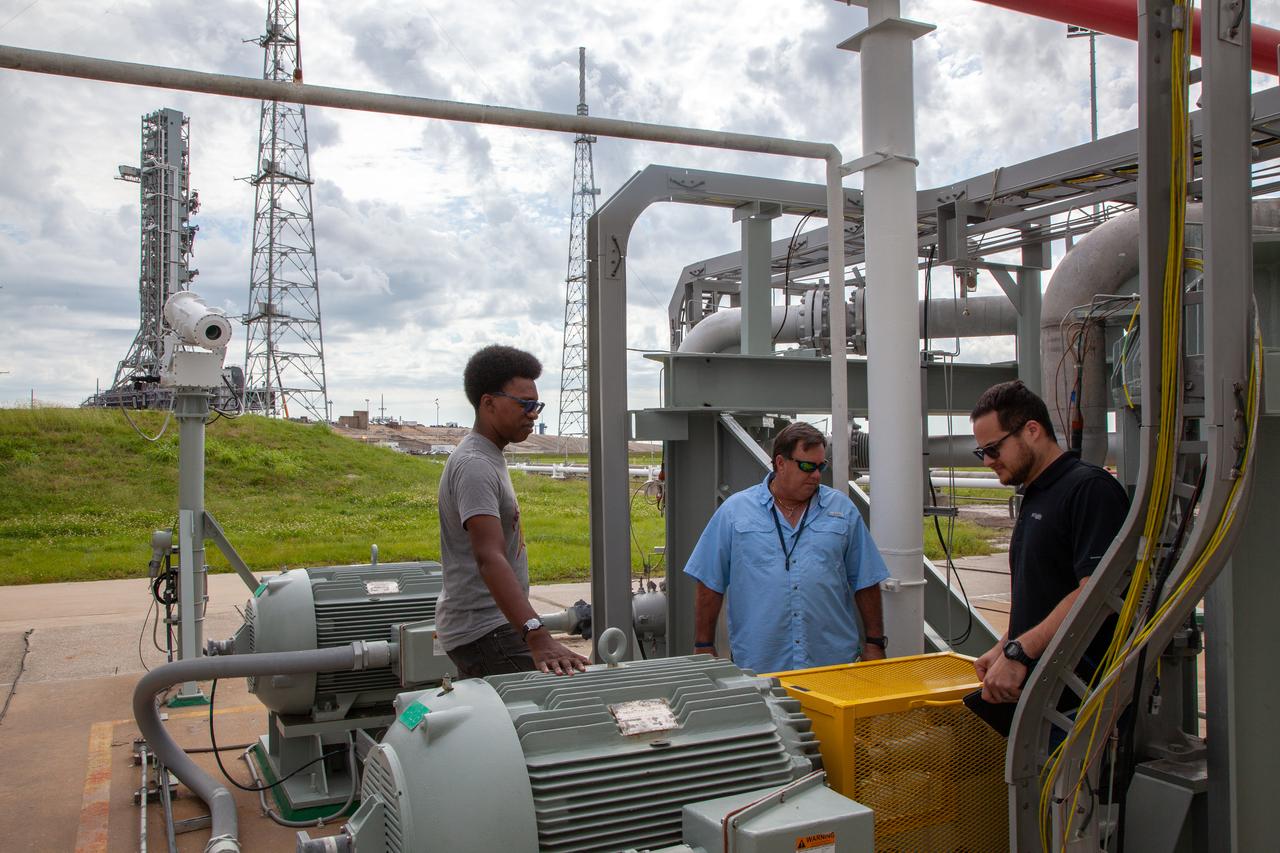
From left, liquid oxygen engineers Josh Jones, Jim Loup and Rene DeLaCruz on Kennedy Space Center’s Test Operations and Support Contract inspect equipment surrounding the liquid oxygen storage tank at Launch Pad 39B on Nov. 8, 2019. The agency’s Exploration Ground Systems oversaw testing of the pad’s cryogenic systems – the infrastructure that will support the flow of liquid hydrogen and liquid oxygen from the storage tanks to the Space Launch System (SLS) rocket – in preparation for the launch of SLS with the Orion spacecraft atop for the uncrewed Artemis I mission. Each of the liquid oxygen and liquid hydrogen tanks can hold more than 800,000 gallons of propellant. The liquid oxygen will require the use of pumps to push it from the tank to the rocket, while the lighter liquid hydrogen will make its way up to the pad using gaseous hydrogen to pressurize the sphere.
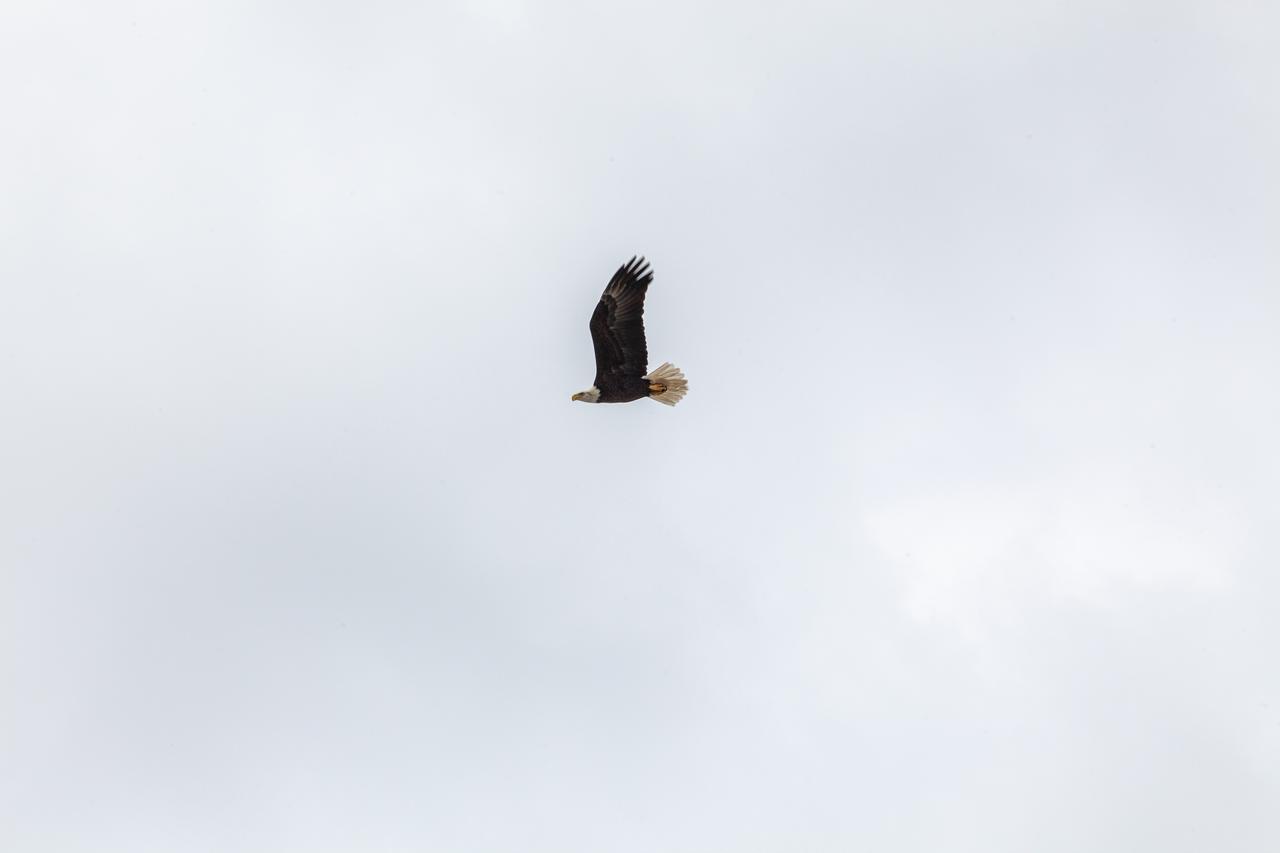
A bald eagle flies near Launch Pad 39B on Nov. 8, 2019, at NASA’s Kennedy Space Center in Florida. Kennedy shares a border with the Merritt Island National Wildlife Refuge, consisting of 144,000 acres of land, water and marshes. Many species of birds, reptiles, fish, amphibians and mammals can be found within the refuge.
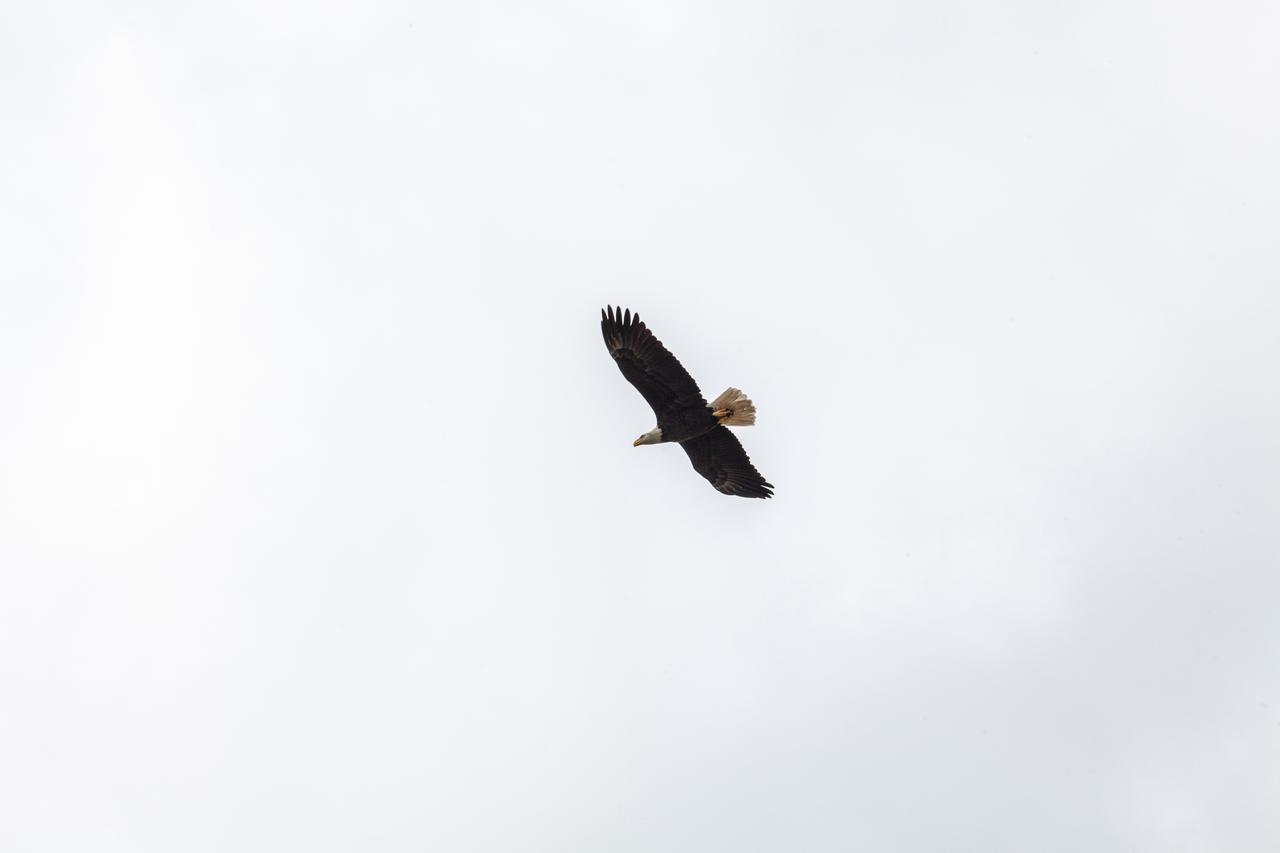
A bald eagle flies near Launch Pad 39B on Nov. 8, 2019, at NASA’s Kennedy Space Center in Florida. Kennedy shares a border with the Merritt Island National Wildlife Refuge, consisting of 144,000 acres of land, water and marshes. Many species of birds, reptiles, fish, amphibians and mammals can be found within the refuge.
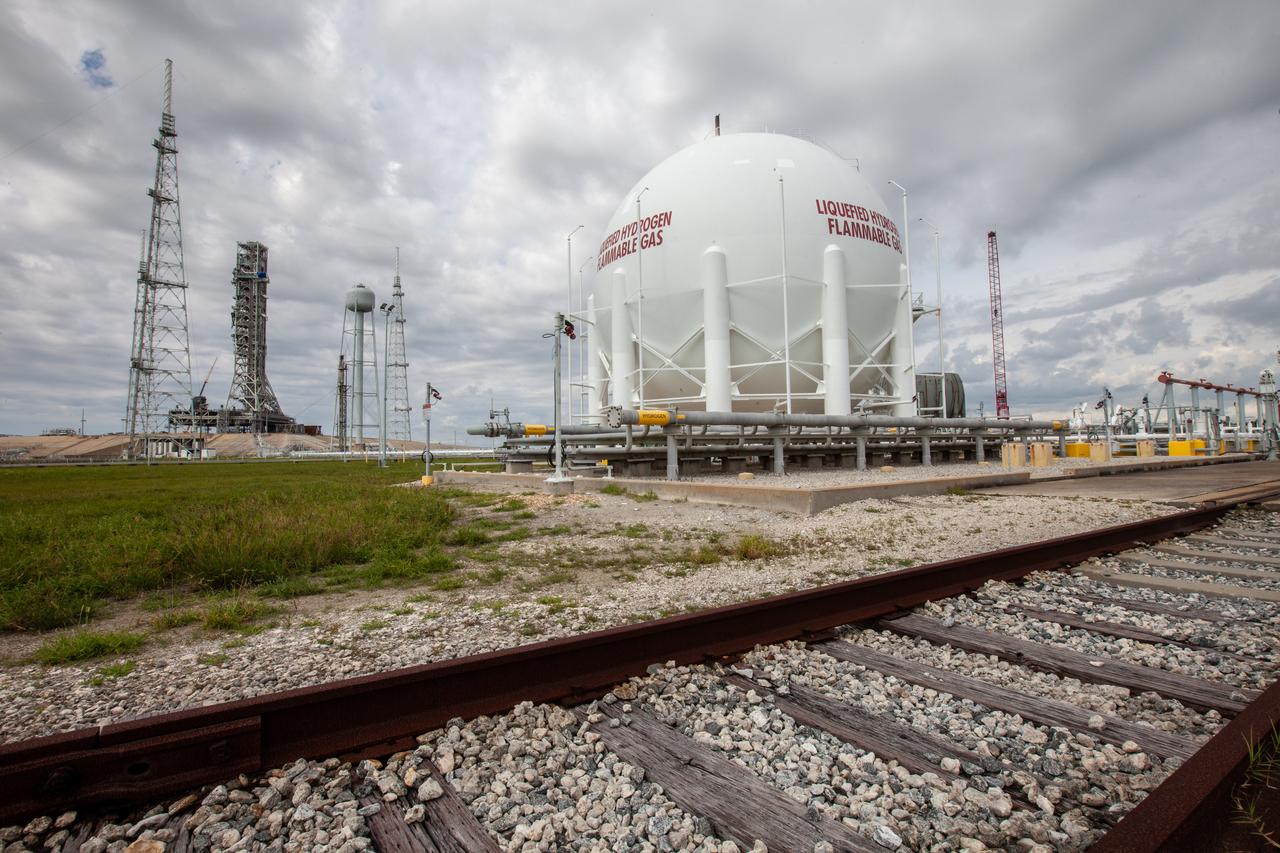
A liquid hydrogen storage tank, with a view of the mobile launcher on the pad surface in the background, is photographed at Launch Pad 39B on Nov. 8, 2019, at NASA’s Kennedy Space Center in Florida. The agency’s Exploration Ground Systems oversaw testing of the pad’s cryogenic systems – the infrastructure that will support the flow of liquid hydrogen and liquid oxygen from the storage tanks to the Space Launch System (SLS) rocket – in preparation for the launch of SLS with the Orion spacecraft atop for the uncrewed Artemis I mission. Each of the liquid hydrogen and liquid oxygen tanks can hold more than 800,000 gallons of propellant. The liquid hydrogen, lighter than liquid oxygen, will make its way from the tank to the rocket using gaseous hydrogen to pressurize the sphere at the time of launch, while the liquid oxygen will be sent to the rocket via pumps.
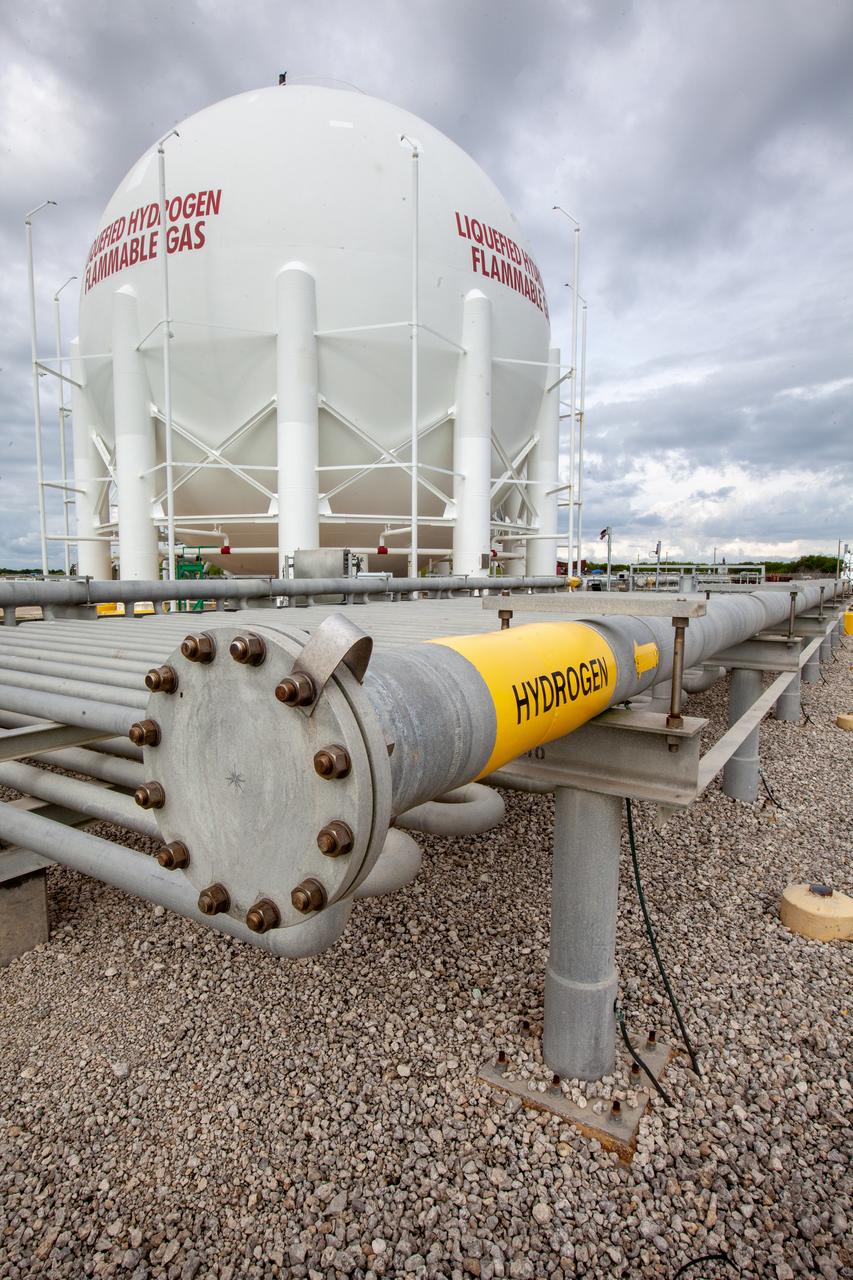
A liquid hydrogen storage tank is photographed at Launch Pad 39B on Nov. 8, 2019, at NASA’s Kennedy Space Center in Florida. The agency’s Exploration Ground Systems oversaw testing of the pad’s cryogenic systems – the infrastructure that will support the flow of liquid hydrogen and liquid oxygen from the storage tanks to the Space Launch System (SLS) rocket – in preparation for the launch of SLS with the Orion spacecraft atop for the uncrewed Artemis I mission. Each of the liquid hydrogen and liquid oxygen tanks can hold more than 800,000 gallons of propellant. The liquid hydrogen, lighter than liquid oxygen, will make its way from the tank to the rocket using gaseous hydrogen to pressurize the sphere at the time of launch, while the liquid oxygen will be sent to the rocket via pumps.
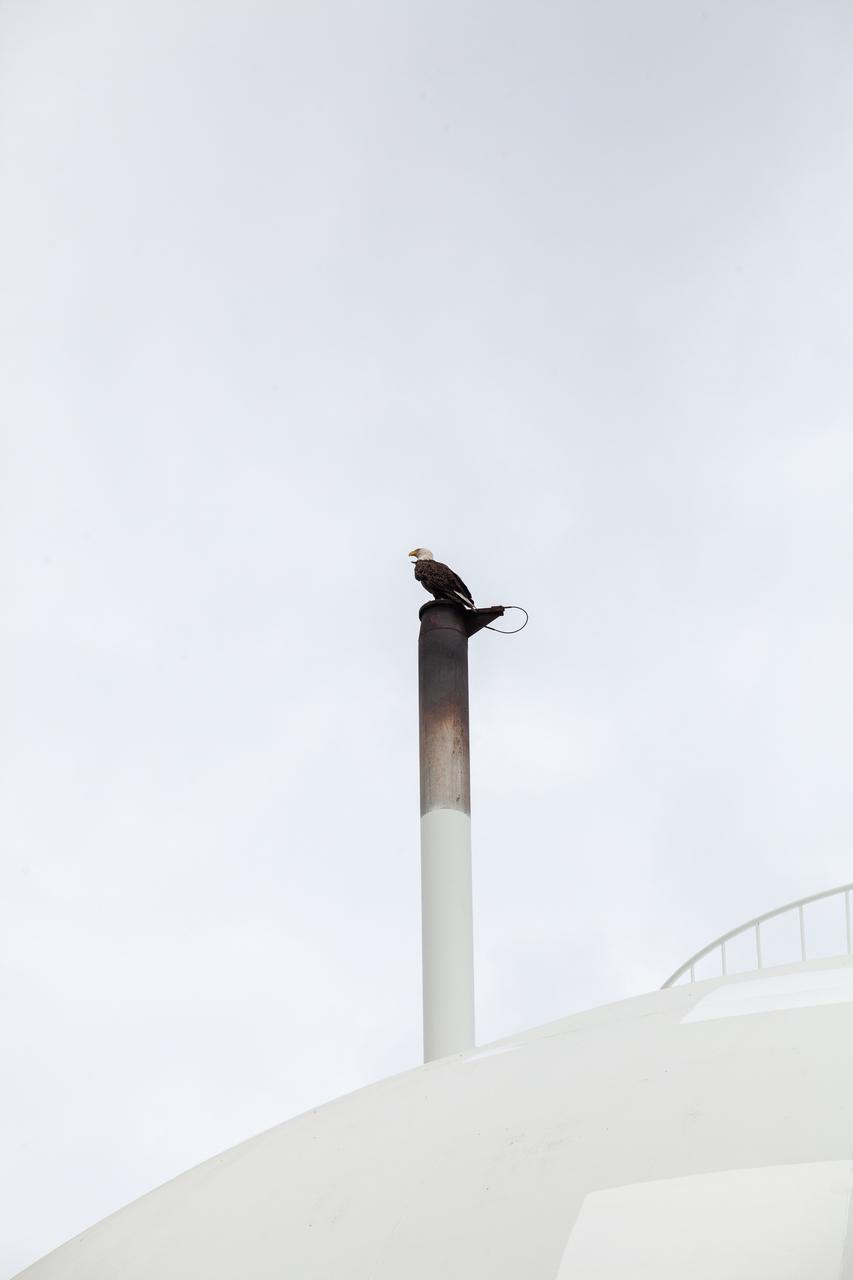
A bald eagle perches on the liquid hydrogen storage tank at Launch Pad 39B on Nov. 8, 2019, at NASA’s Kennedy Space Center in Florida. Kennedy shares a border with the Merritt Island National Wildlife Refuge, consisting of 144,000 acres of land, water and marshes. Many species of birds, reptiles, fish, amphibians and mammals can be found within the refuge.
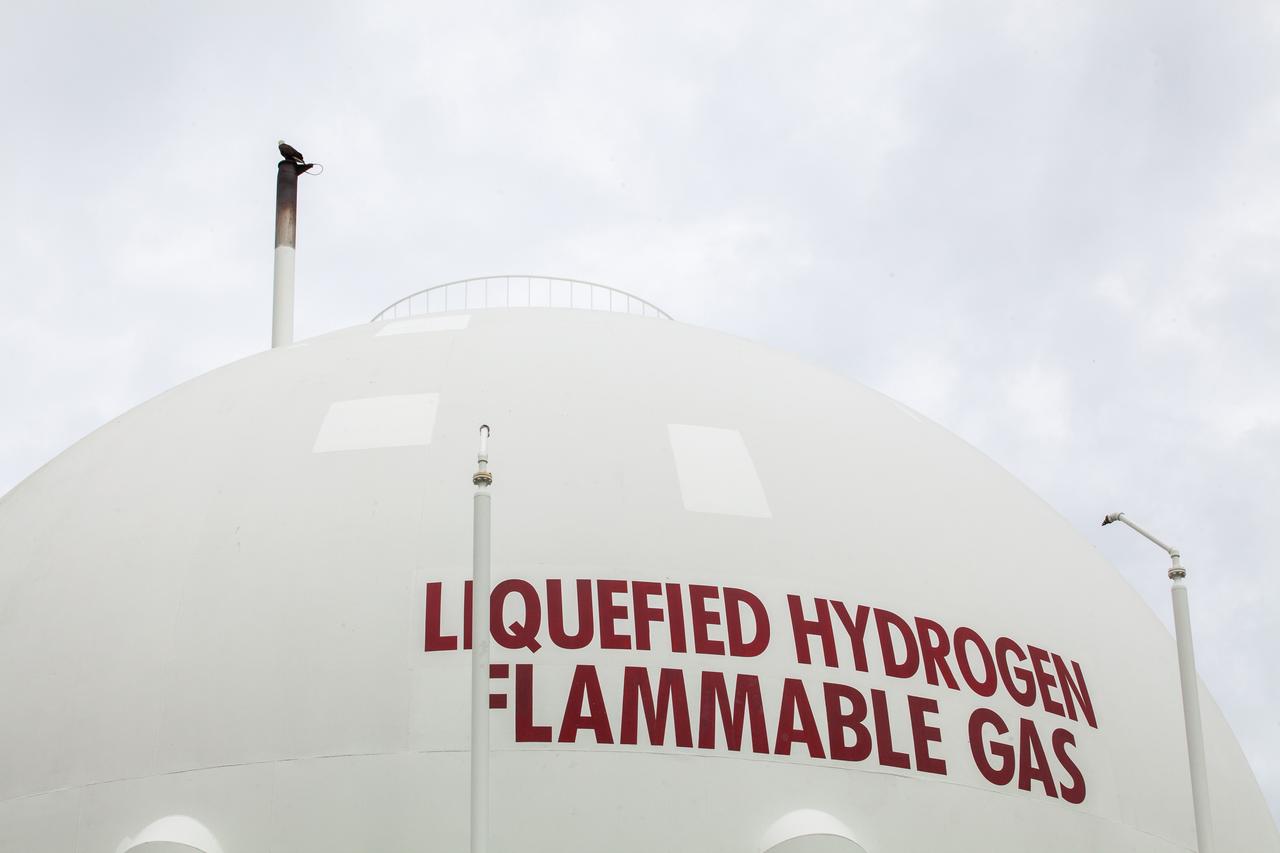
A bald eagle perches on the liquid hydrogen storage tank at Launch Pad 39B on Nov. 8, 2019, at NASA’s Kennedy Space Center in Florida. Kennedy shares a border with the Merritt Island National Wildlife Refuge, consisting of 144,000 acres of land, water and marshes. Many species of birds, reptiles, fish, amphibians and mammals can be found within the refuge.
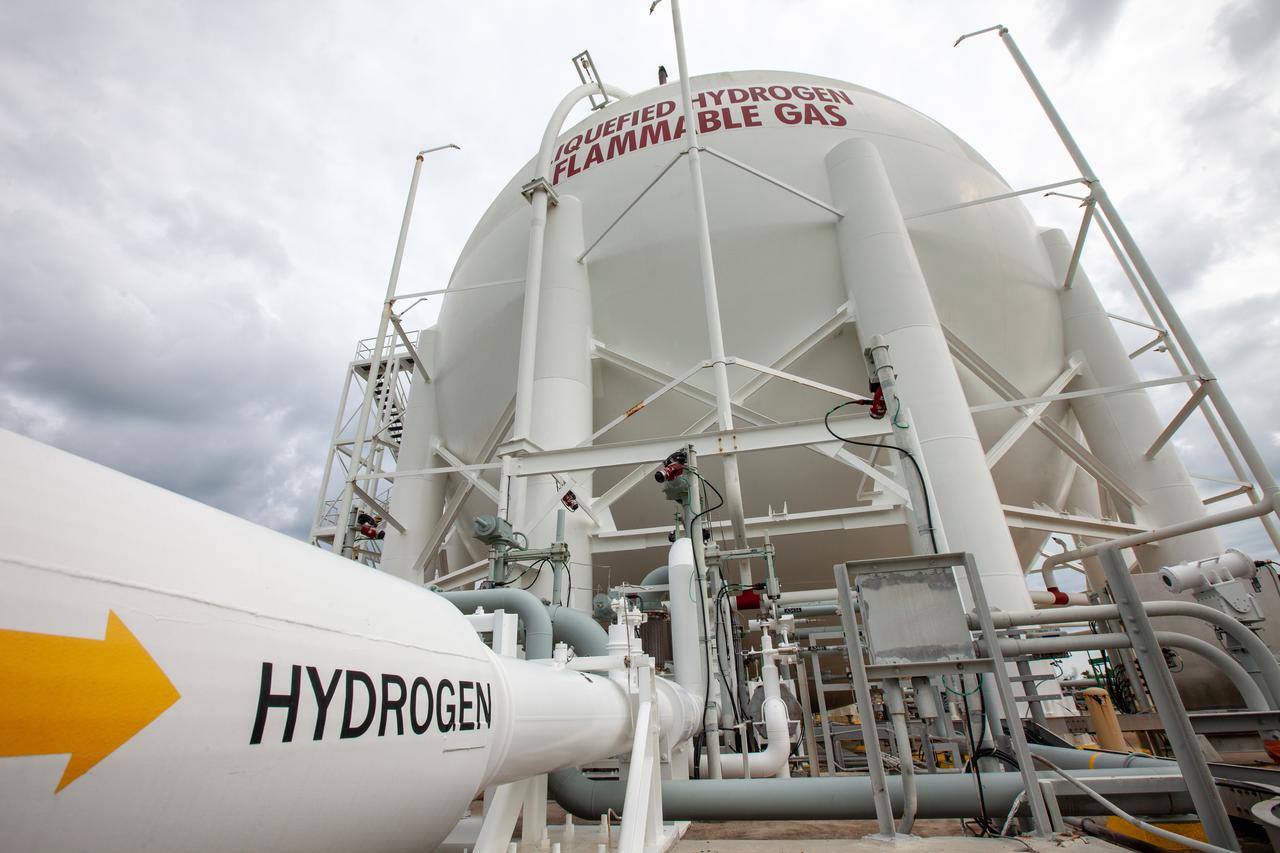
A liquid hydrogen storage tank is photographed at Launch Pad 39B on Nov. 8, 2019, at NASA’s Kennedy Space Center in Florida. The agency’s Exploration Ground Systems oversaw testing of the pad’s cryogenic systems – the infrastructure that will support the flow of liquid hydrogen and liquid oxygen from the storage tanks to the Space Launch System (SLS) rocket – in preparation for the launch of SLS with the Orion spacecraft atop for the uncrewed Artemis I mission. Each of the liquid hydrogen and liquid oxygen tanks can hold more than 800,000 gallons of propellant. The liquid hydrogen, lighter than liquid oxygen, will make its way from the tank to the rocket using gaseous hydrogen to pressurize the sphere at the time of launch, while the liquid oxygen will be sent to the rocket via pumps.
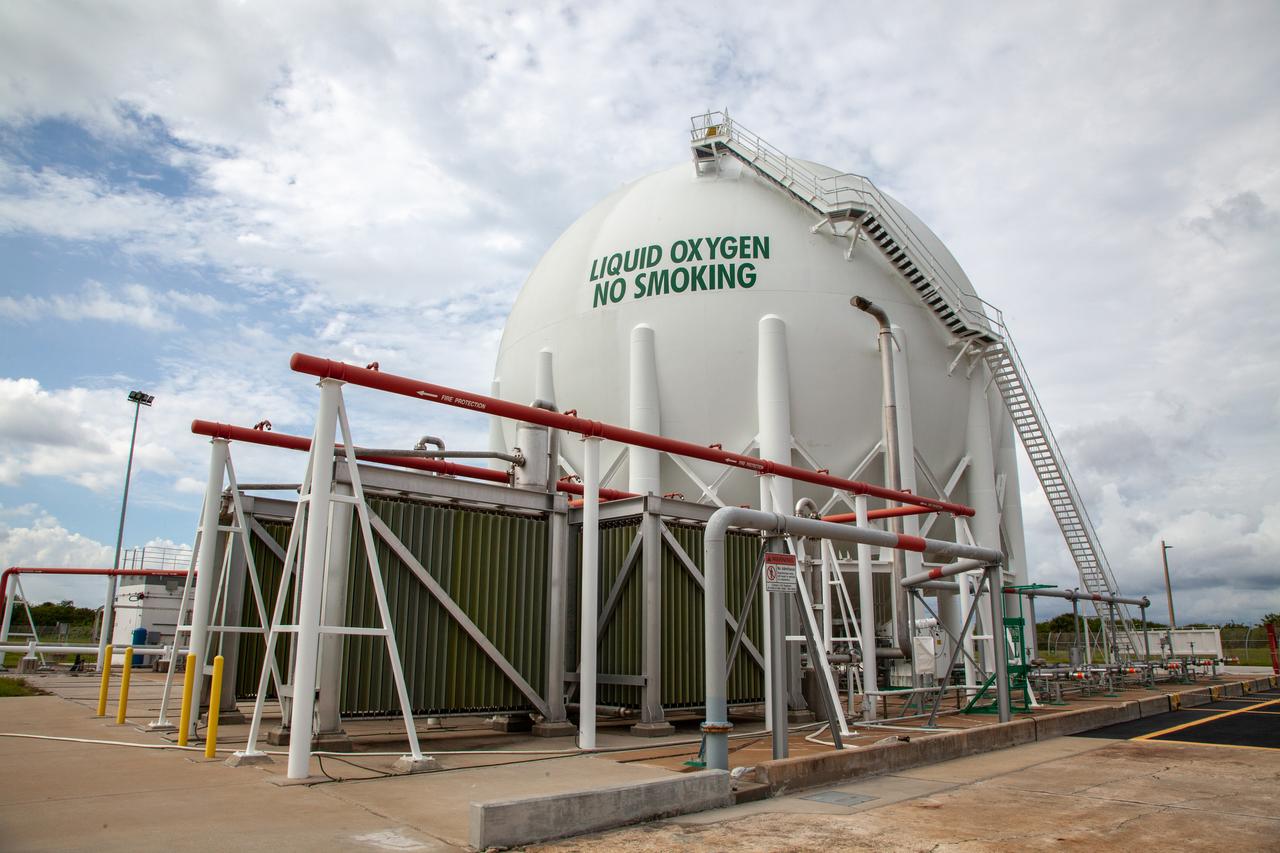
A liquid oxygen storage tank is photographed at Launch Pad 39B on Nov. 8, 2019, at NASA’s Kennedy Space Center in Florida. The agency’s Exploration Ground Systems oversaw testing of the pad’s cryogenic systems – the infrastructure that will support the flow of liquid hydrogen and liquid oxygen from the storage tanks to the Space Launch System (SLS) rocket – in preparation for the launch of SLS with the Orion spacecraft atop for the uncrewed Artemis I mission. Each of the liquid oxygen and liquid hydrogen tanks can hold more than 800,000 gallons of propellant. The liquid oxygen will require the use of pumps to push it from the tank to the rocket, while the lighter liquid hydrogen will make its way up to the pad using gaseous hydrogen to pressurize the sphere.
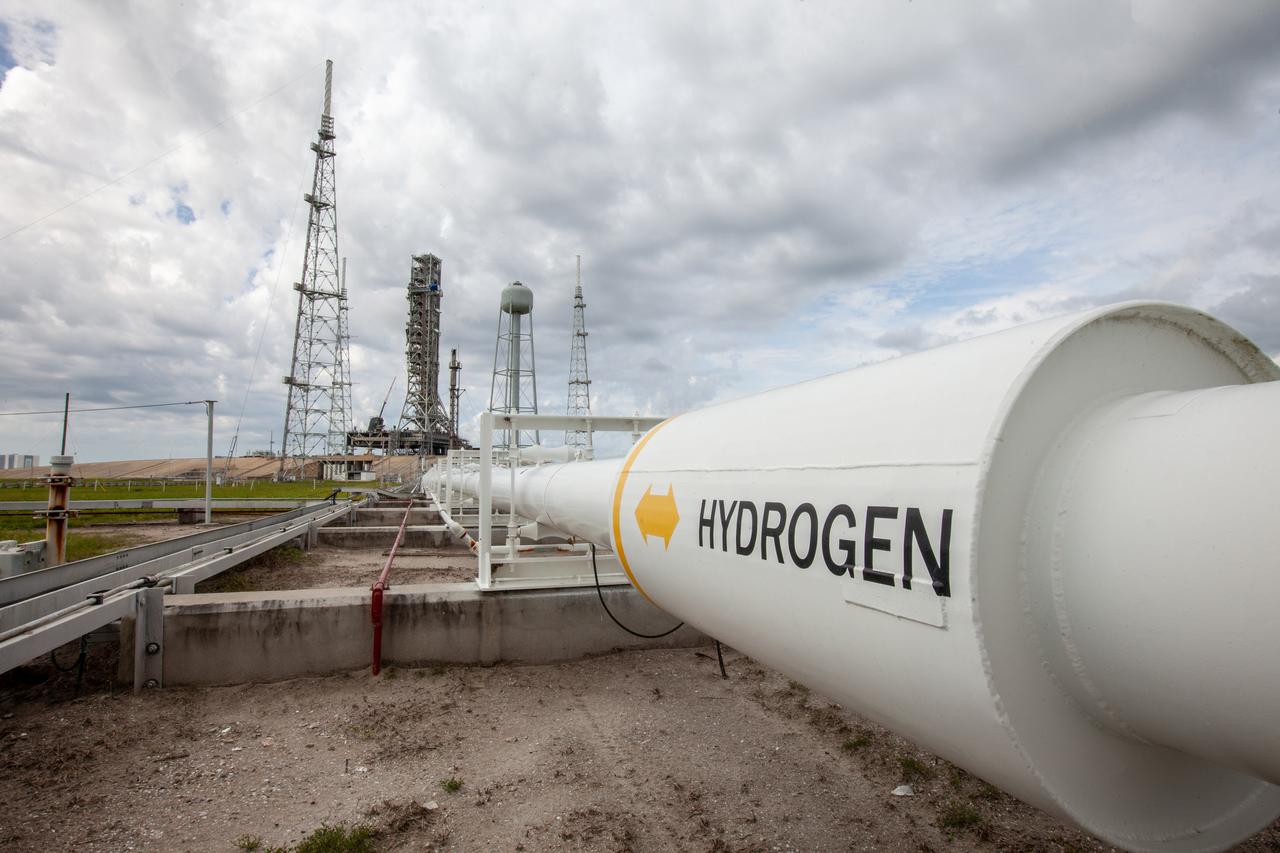
The cross country line that liquid hydrogen will flow through from the storage tank to the mobile launcher for the launch of NASA’s uncrewed Artemis I mission is photographed at Launch pad 39B on Nov. 8, 2019, at the agency’s Kennedy Space Center in Florida. NASA’s Exploration Ground Systems oversaw testing of the pad’s cryogenic systems – the infrastructure that will send the liquid hydrogen and liquid oxygen from the storage tanks to the Space Launch System (SLS) rocket – in preparation for the launch of SLS with the Orion spacecraft atop. Each of the liquid hydrogen and liquid oxygen tanks can hold more than 800,000 gallons of propellant. The liquid hydrogen, lighter than liquid oxygen, will make its way from the tank to the rocket using gaseous hydrogen to pressurize the sphere at the time of launch, while the liquid oxygen will be sent to the rocket via pumps.
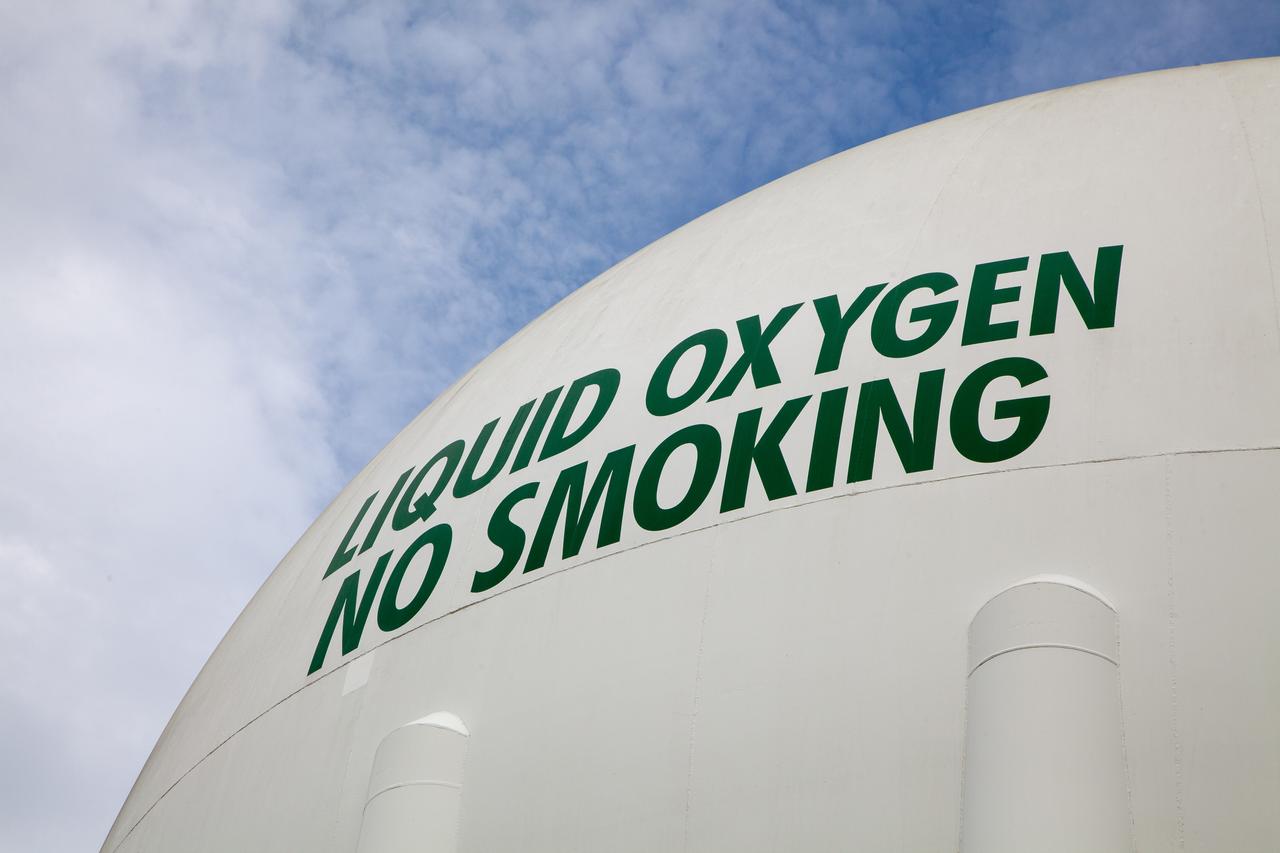
A liquid oxygen storage tank is photographed at Launch Pad 39B on Nov. 8, 2019, at NASA’s Kennedy Space Center in Florida. The agency’s Exploration Ground Systems oversaw testing of the pad’s cryogenic systems – the infrastructure that will support the flow of liquid hydrogen and liquid oxygen from the storage tanks to the Space Launch System (SLS) rocket – in preparation for the launch of SLS with the Orion spacecraft atop for the uncrewed Artemis I mission. Each of the liquid oxygen and liquid hydrogen tanks can hold more than 800,000 gallons of propellant. The liquid oxygen will require the use of pumps to push it from the tank to the rocket, while the lighter liquid hydrogen will make its way up to the pad using gaseous hydrogen to pressurize the sphere.
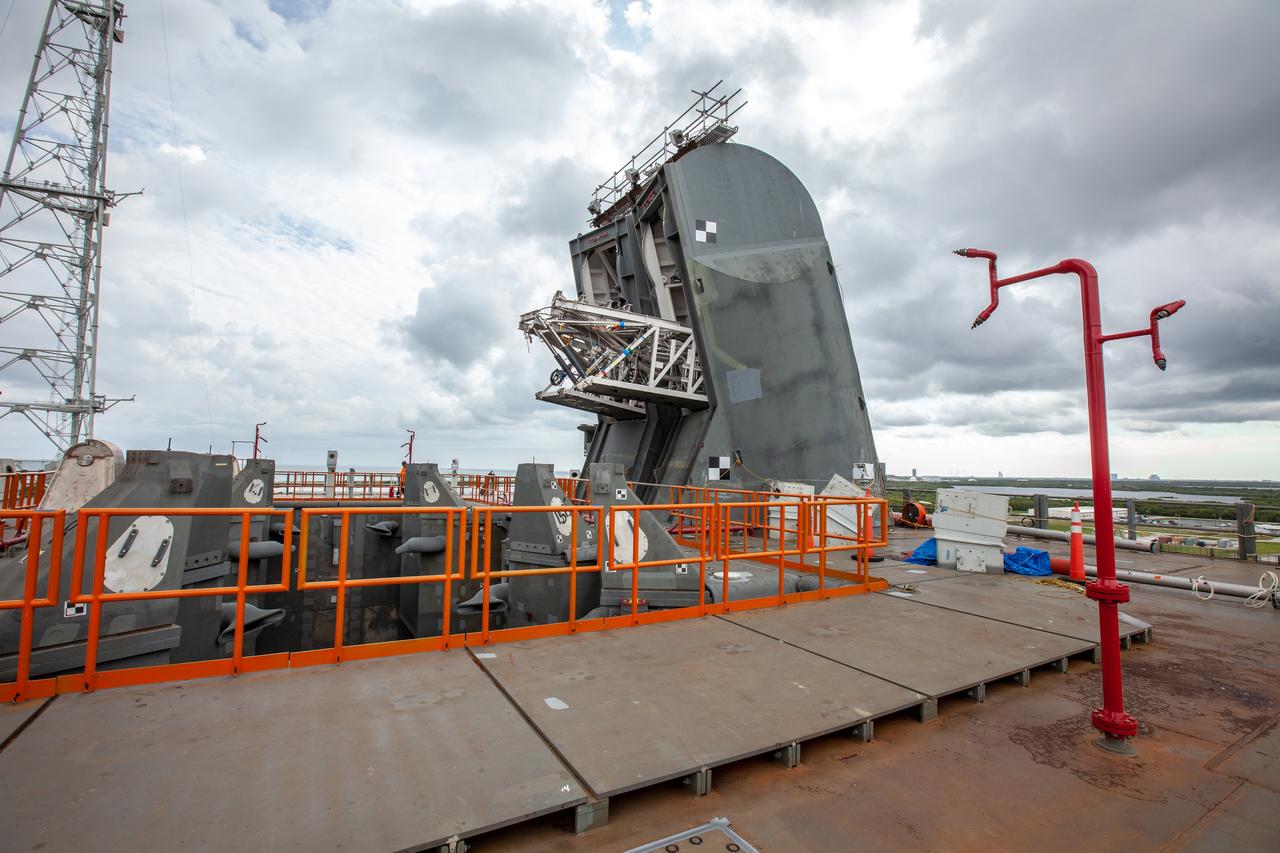
The Tail Service Mast Umbilicals that will connect to NASA’s Space Launch System (SLS) rocket, containing fluid lines for liquid oxygen and liquid hydrogen propellant loading, are photographed on the mobile launcher at Launch Pad 39B on Nov. 8, 2019, at the agency’s Kennedy Space Center in Florida. NASA’s Exploration Ground Systems oversaw testing of the pad’s cryogenic systems – the infrastructure that will support the flow of liquid hydrogen and liquid oxygen from the storage tanks to the rocket – in preparation for the launch of SLS with the Orion spacecraft atop for the uncrewed Artemis I mission. Each of the liquid oxygen and liquid hydrogen tanks can hold more than 800,000 gallons of propellant. The liquid oxygen will require the use of pumps to push it from the tank to the rocket, while the lighter liquid hydrogen will make its way up to the pad using gaseous hydrogen to pressurize the sphere.

Inside the Launch Control Center’s Firing Room 1 at NASA’s Kennedy Space Center in Florida, members of the Artemis I launch team rehearse the procedures for fueling the Space Launch System (SLS) rocket with super cold propellants, or cryogenics, on Aug. 18, 2020. During the cryogenic simulation, potential problem scenarios were introduced to test the tools, processes, and procedures necessary for fueling the rocket. Artemis I will be the first integrated test flight of SLS and the Orion spacecraft – the system that will ultimately land the first woman and the next man on the Moon by 2024.

Inside the Launch Control Center’s Firing Room 1 at NASA’s Kennedy Space Center in Florida, members of the Artemis I launch team rehearse the procedures for fueling the Space Launch System (SLS) rocket with super cold propellants, or cryogenics, on Aug. 18, 2020. During the cryogenic simulation, potential problem scenarios were introduced to test the tools, processes, and procedures necessary for fueling the rocket. Artemis I will be the first integrated test flight of SLS and the Orion spacecraft – the system that will ultimately land the first woman and the next man on the Moon by 2024.

Inside the Launch Control Center’s Firing Room 1 at NASA’s Kennedy Space Center in Florida, members of the Artemis I launch team rehearse the procedures for fueling the Space Launch System (SLS) rocket with super cold propellants, or cryogenics, on Aug. 18, 2020. During the cryogenic simulation, potential problem scenarios were introduced to test the tools, processes, and procedures necessary for fueling the rocket. Artemis I will be the first integrated test flight of SLS and the Orion spacecraft – the system that will ultimately land the first woman and the next man on the Moon by 2024.

Artemis I Launch Director Charlie Blackwell-Thompson stands at her console inside the Launch Control Center’s Firing Room 1 at NASA’s Kennedy Space Center in Florida during a simulation rehearsing propellant loading on Aug. 18, 2020. The simulation involved members of the launch team practicing the procedures for loading the Space Launch System (SLS) rocket with cryogenics, or super cold propellants. During the exercise, potential problem scenarios were introduced to test the tools, processes, and procedures necessary for fueling the rocket. Artemis I will be the first integrated test flight of SLS and the Orion spacecraft – the system that will ultimately land the first woman and the next man on the Moon by 2024.

Artemis I Launch Director Charlie Blackwell-Thompson stands at her console inside the Launch Control Center’s Firing Room 1 at NASA’s Kennedy Space Center in Florida during a simulation rehearsing propellant loading on Aug. 18, 2020. The simulation involved members of the launch team practicing the procedures for loading the Space Launch System (SLS) rocket with cryogenics, or super cold propellants. During the exercise, potential problem scenarios were introduced to test the tools, processes, and procedures necessary for fueling the rocket. Artemis I will be the first integrated test flight of SLS and the Orion spacecraft – the system that will ultimately land the first woman and the next man on the Moon by 2024.

Inside the Launch Control Center’s Firing Room 1 at NASA’s Kennedy Space Center in Florida, members of the Artemis I launch team rehearse the procedures for fueling the Space Launch System (SLS) rocket with super cold propellants, or cryogenics, on Aug. 18, 2020. During the cryogenic simulation, potential problem scenarios were introduced to test the tools, processes, and procedures necessary for fueling the rocket. Artemis I will be the first integrated test flight of SLS and the Orion spacecraft – the system that will ultimately land the first woman and the next man on the Moon by 2024.

Inside the Launch Control Center’s Firing Room 1 at NASA’s Kennedy Space Center in Florida, members of the Artemis I launch team rehearse the procedures for fueling the Space Launch System (SLS) rocket with super cold propellants, or cryogenics, on Aug. 18, 2020. During the cryogenic simulation, potential problem scenarios were introduced to test the tools, processes, and procedures necessary for fueling the rocket. Artemis I will be the first integrated test flight of SLS and the Orion spacecraft – the system that will ultimately land the first woman and the next man on the Moon by 2024.