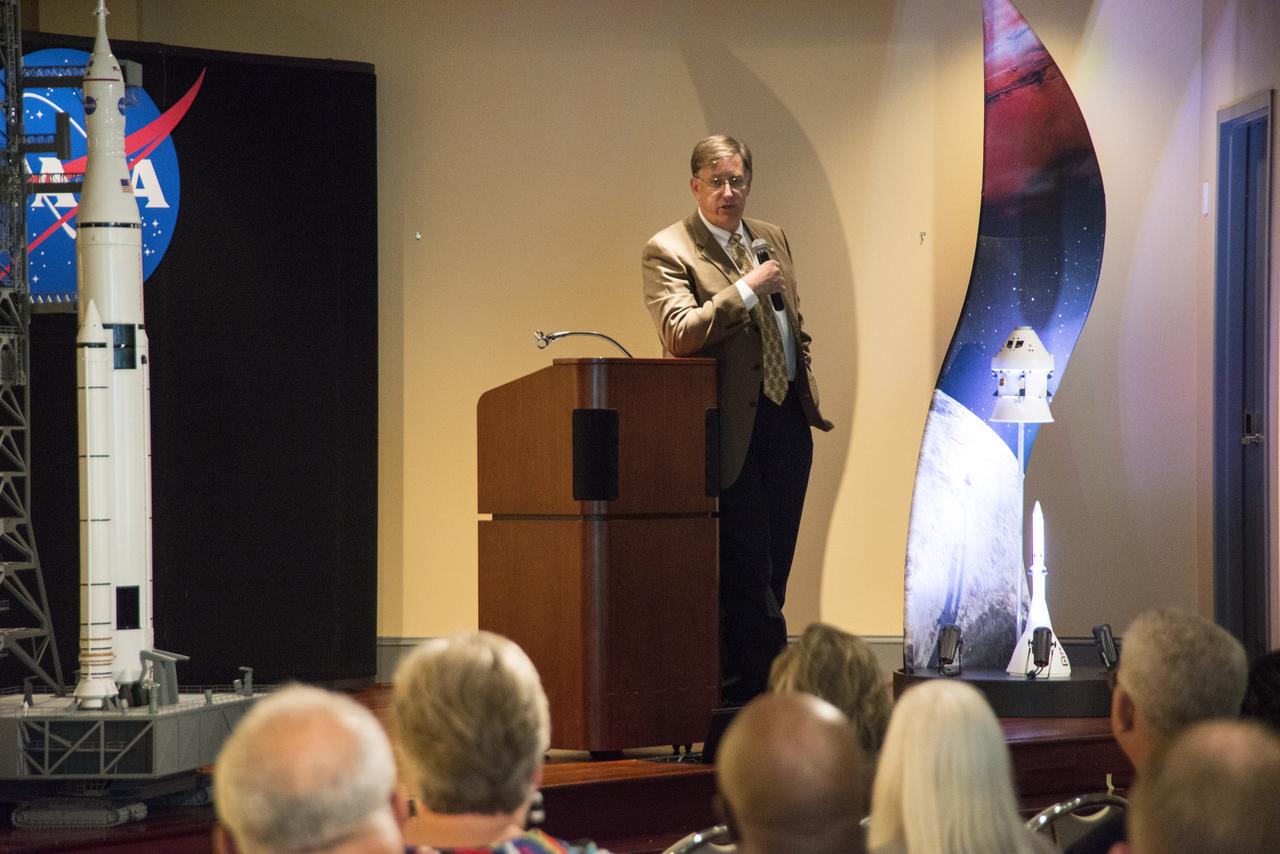
DAN DUMBACHER, DEPUTY ASSOCIATE ADMINISTRATOR FOR EXPLORATION SYSTEMS DEVELOPMENT, ADDRESSES THE SMBA ESD-HUB ZONE EVENT AT THE HUNTSVILLE MUSEUM OF ART.
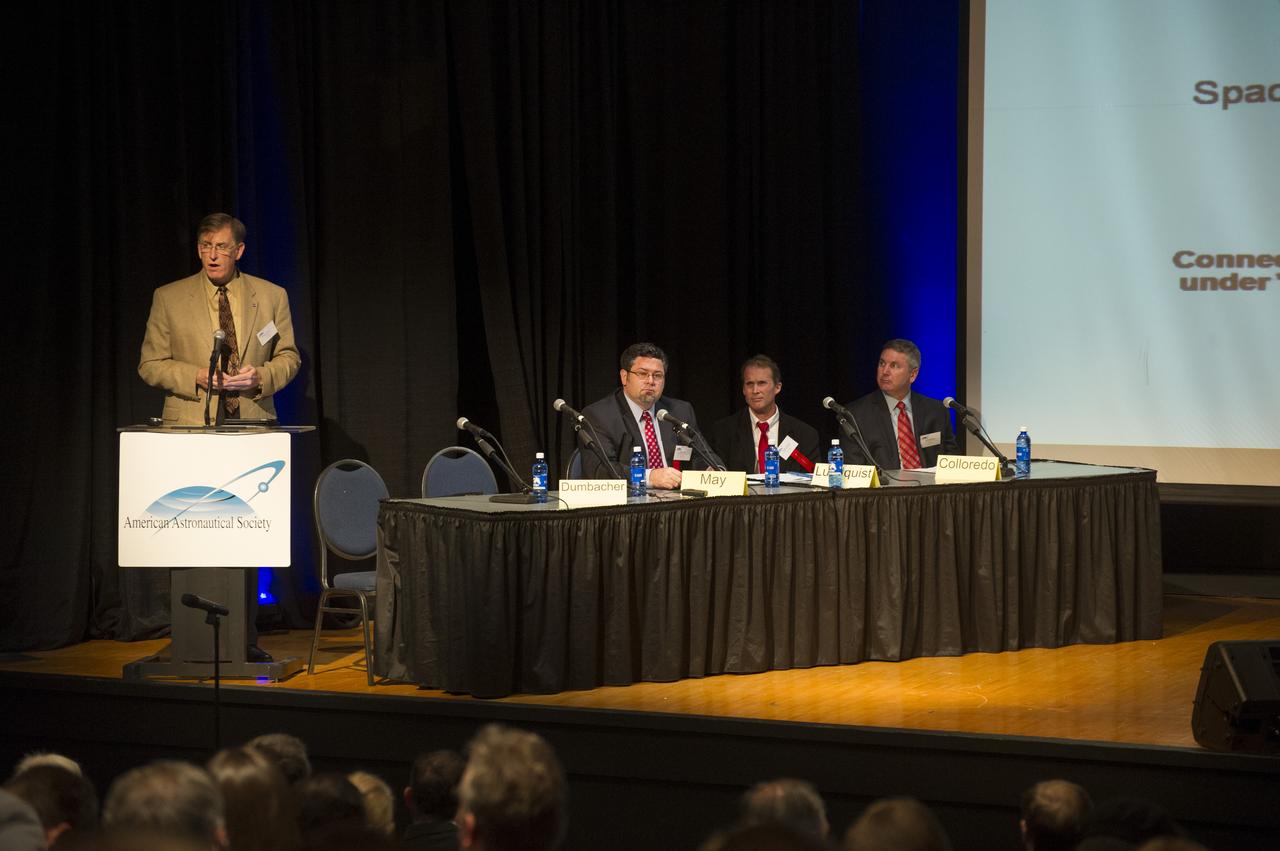
DAN DUMBACHER, LEFT, NASA'S DEPUTY ASSOCIATE ADMINISTRATOR FOR EXPLORATION SYSTEMS DEVELOPMENT, MODERATES A PANEL TITLED "NASA HUMAN SPACE EXPLORATION PLANS AND UPDATE" AT THE 5TH VON BRAUN MEMORIAL SYMPOSIUM AT THE UNIVERSITY OF ALABAMA IN HUNTSVILLE ON OCT. 16. FEATURED PANELISTS INCLUDED, SEATED FROM LEFT, SPACE LAUNCH SYSTEM PROGRAM MANAGER TODD MAY FROM THE MARSHALL SPACE FLIGHT CENTER, ORION CREW AND SERVICE MODULE MANAGER CHARLIE LUNDQUIST FROM THE JOHNSON SPACE CENTER, AND CHIEF ARCHITECT OF THE GROUND SYSTEMS DEVELOPMENT AND OPERATIONS PROGRAM SCOTT COLLOREDO FROM THE KENNEDYSPACE CENTER.
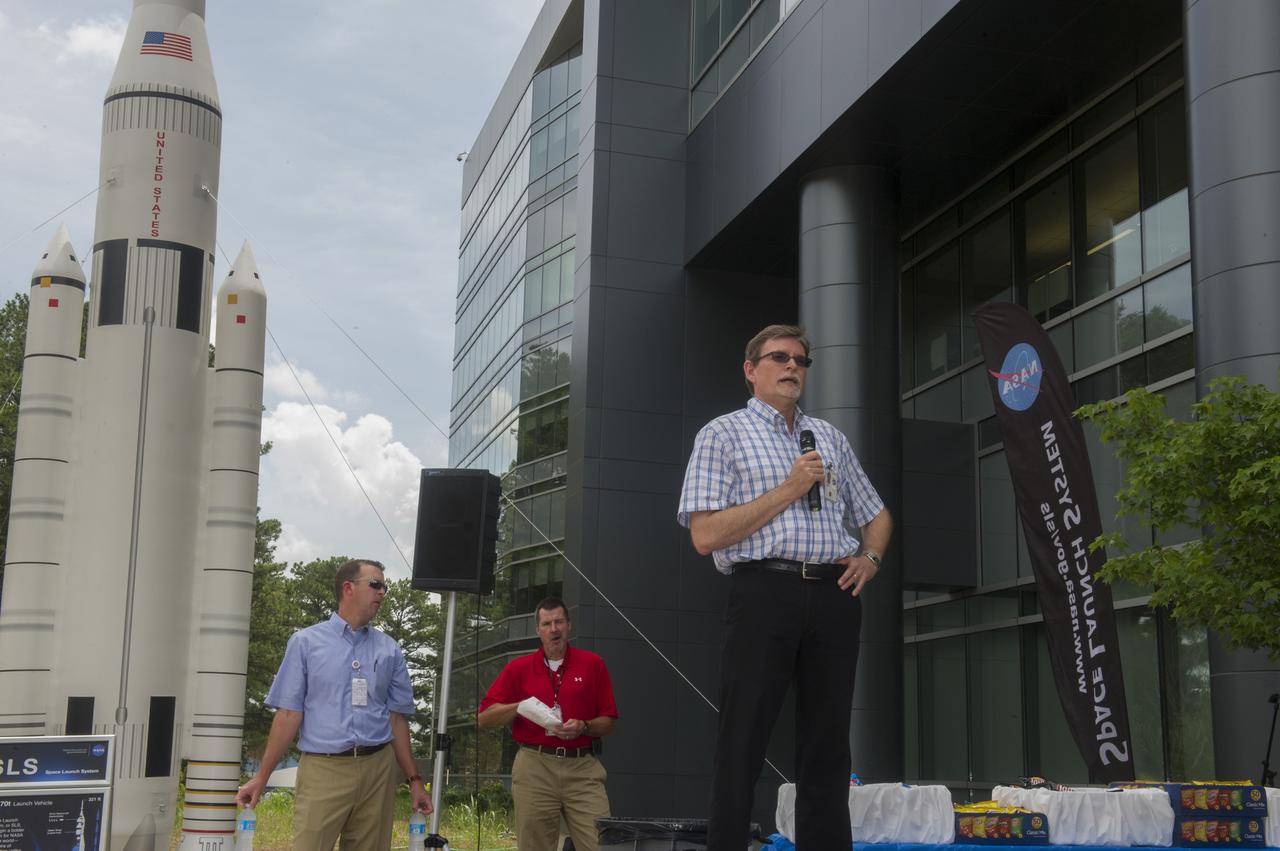
GARRY LYLES MAKES COMMENTS AT DUMBACHER FAREWELL
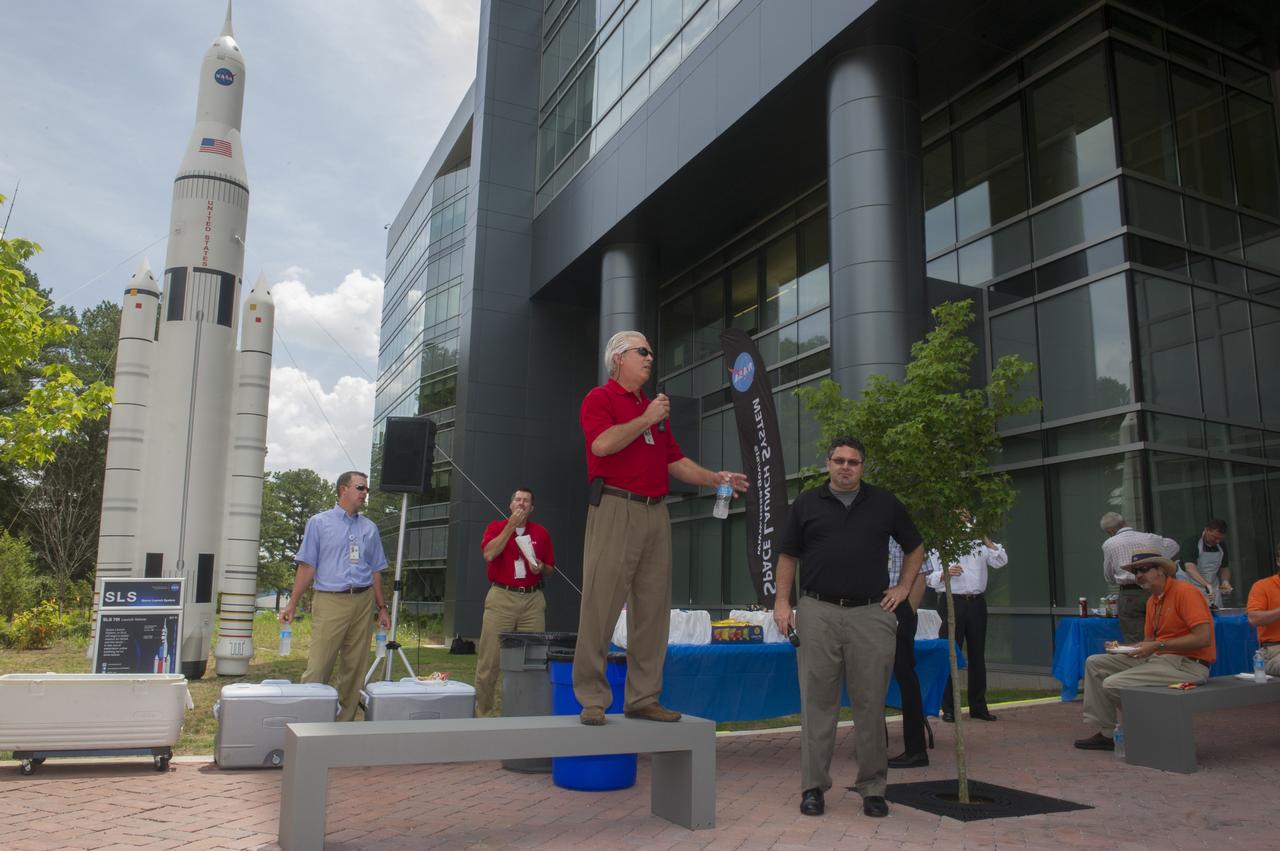
CHRIS SINGER MAKES COMMENTS AT DUMBACHER FAREWELL
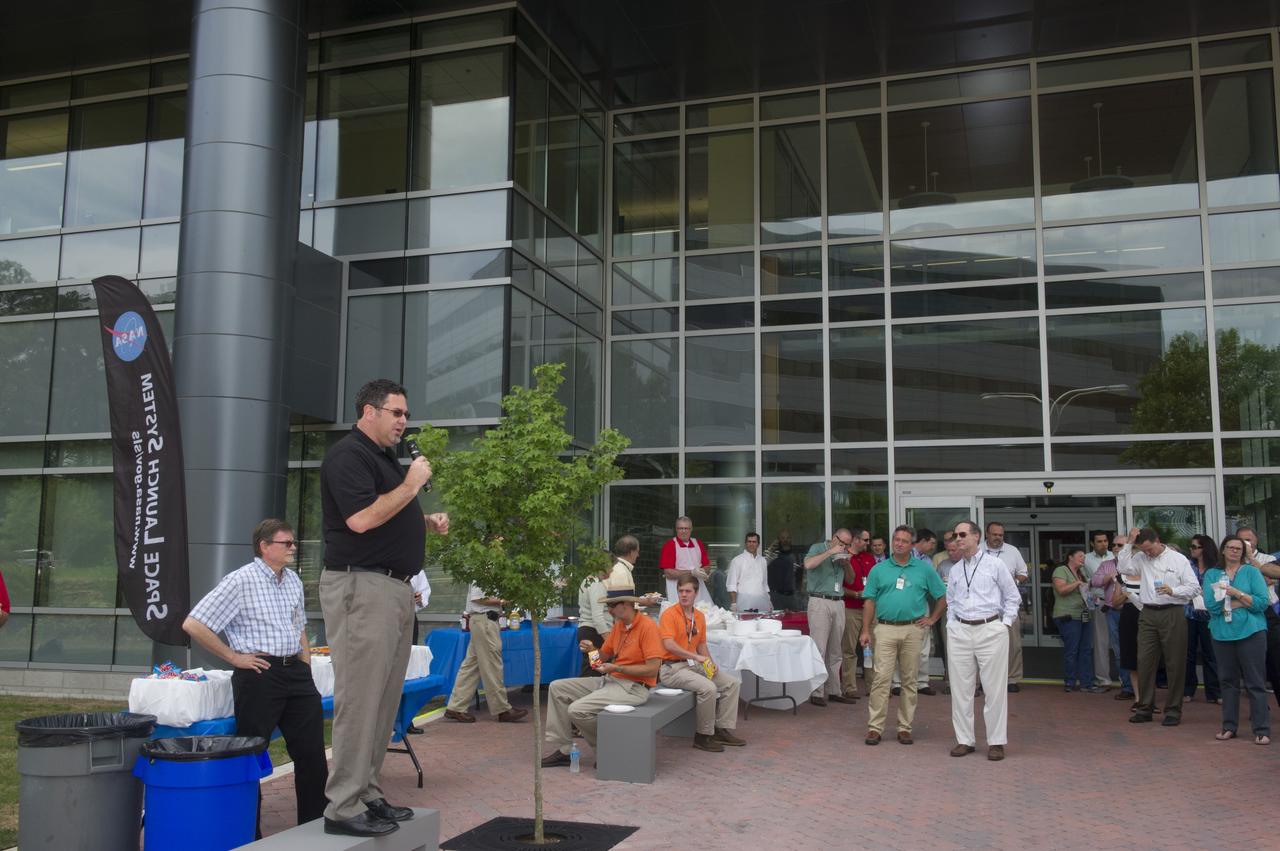
TODD MAY MAKES COMMENTS AT DUMBACHER FAREWELL
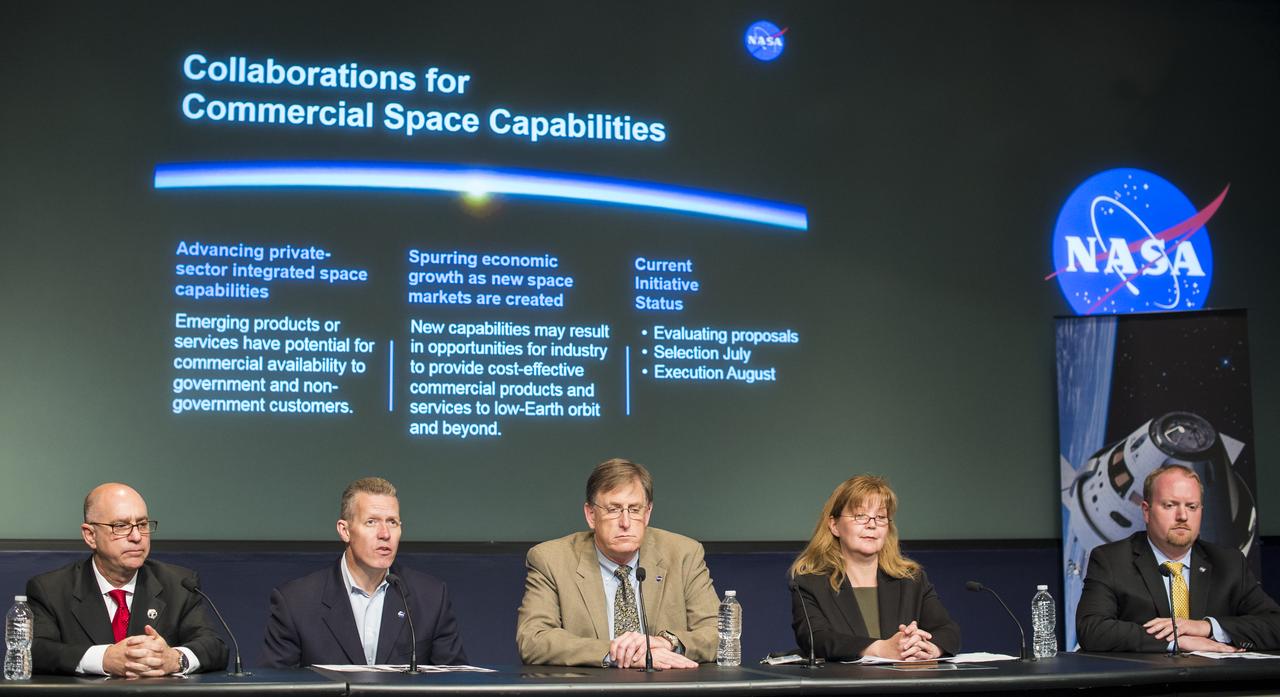
Sam Scimemi, Director of NASA's International Space Station Division, left, Phil McAlister, Director of NASA's Commercial Spaceflight Division, second from left, Dan Dumbacher, Deputy Associate Administrator of NASA's Exploration Systems Development, center, Michele Gates, Senior Technical Advisor of NASA's Human Exploration and Operations Mission Directorate, second from right, and Jason Crusan, Director of NASA's Advanced Exploration Systems Division, right, sit on a panel during an Exploration Forum showcasing NASA's human exploration path to Mars in the James E. Webb Auditorium at NASA Headquarters on Tuesday, April 29, 2014. Photo Credit: (NASA/Joel Kowsky)
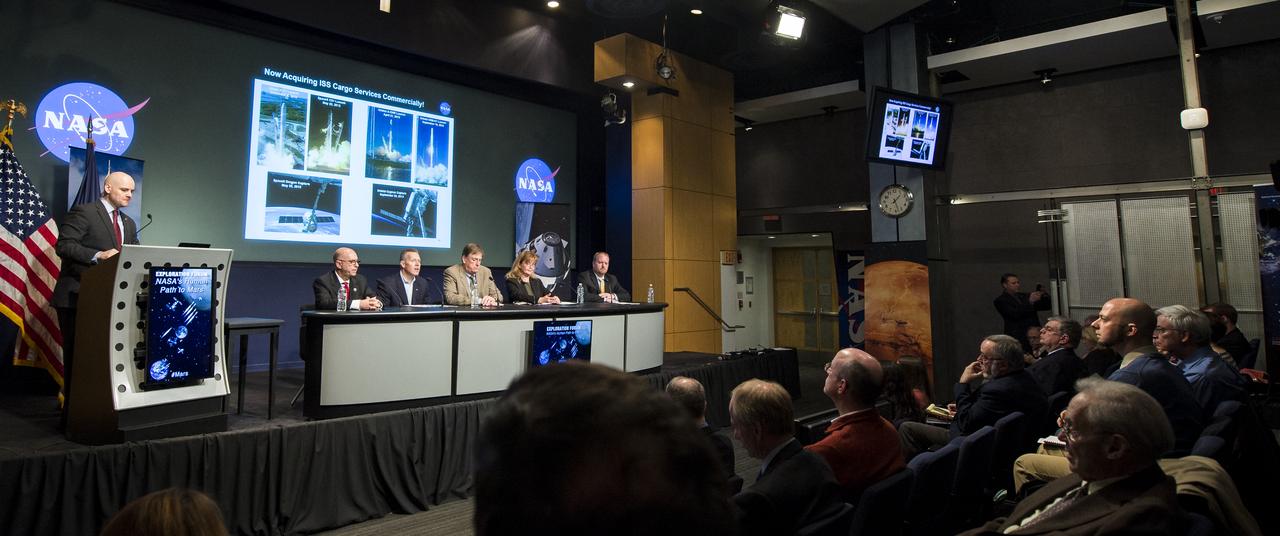
Sam Scimemi, Director of NASA's International Space Station Division, second from left, Phil McAlister, Director of NASA's Commercial Spaceflight Division, third from left, Dan Dumbacher, Deputy Associate Administrator of NASA's Exploration Systems Development, center, Michele Gates, Senior Technical Advisor of NASA's Human Exploration and Operations Mission Directorate, second from right, and Jason Crusan, Director of NASA's Advanced Exploration Systems Division, right, sit on a panel during an Exploration Forum showcasing NASA's human exploration path to Mars in the James E. Webb Auditorium at NASA Headquarters on Tuesday, April 29, 2014. Photo Credit: (NASA/Joel Kowsky)
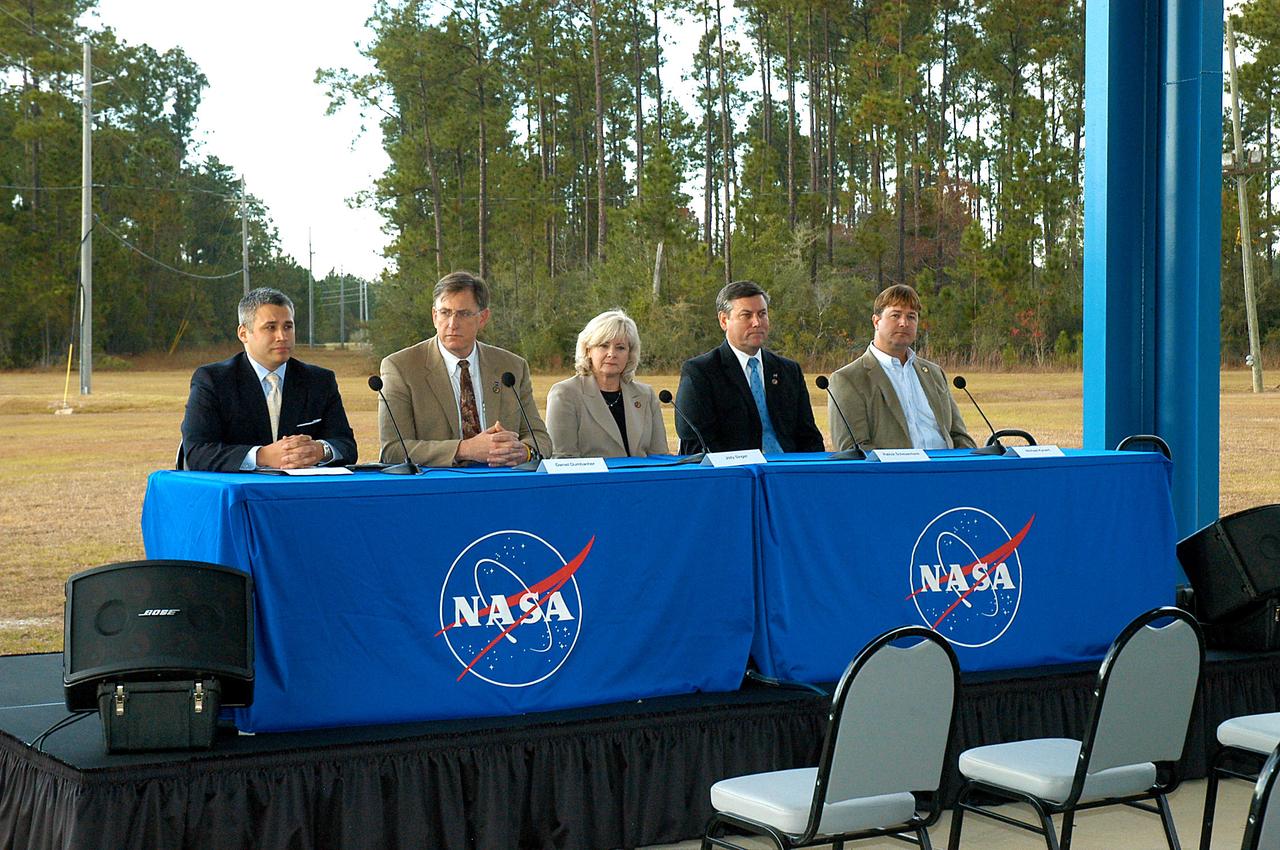
In a news conference broadcast live on NASA TV, key NASA leaders discussed the significance of the successful 500-second test of the agency's new J-2X rocket engine at Stennis Space Center on Nov. 9. The engine will provide upper-stage power for NASA's new Space Launch System being developed to carry humans deeper into space than ever before. Participating in the session were: (l to r) Dan Kanigan, Dan Dumbacher, Joan 'Jody' Singer, Stennis Director Patrick Scheuermann and Mike Kynard.
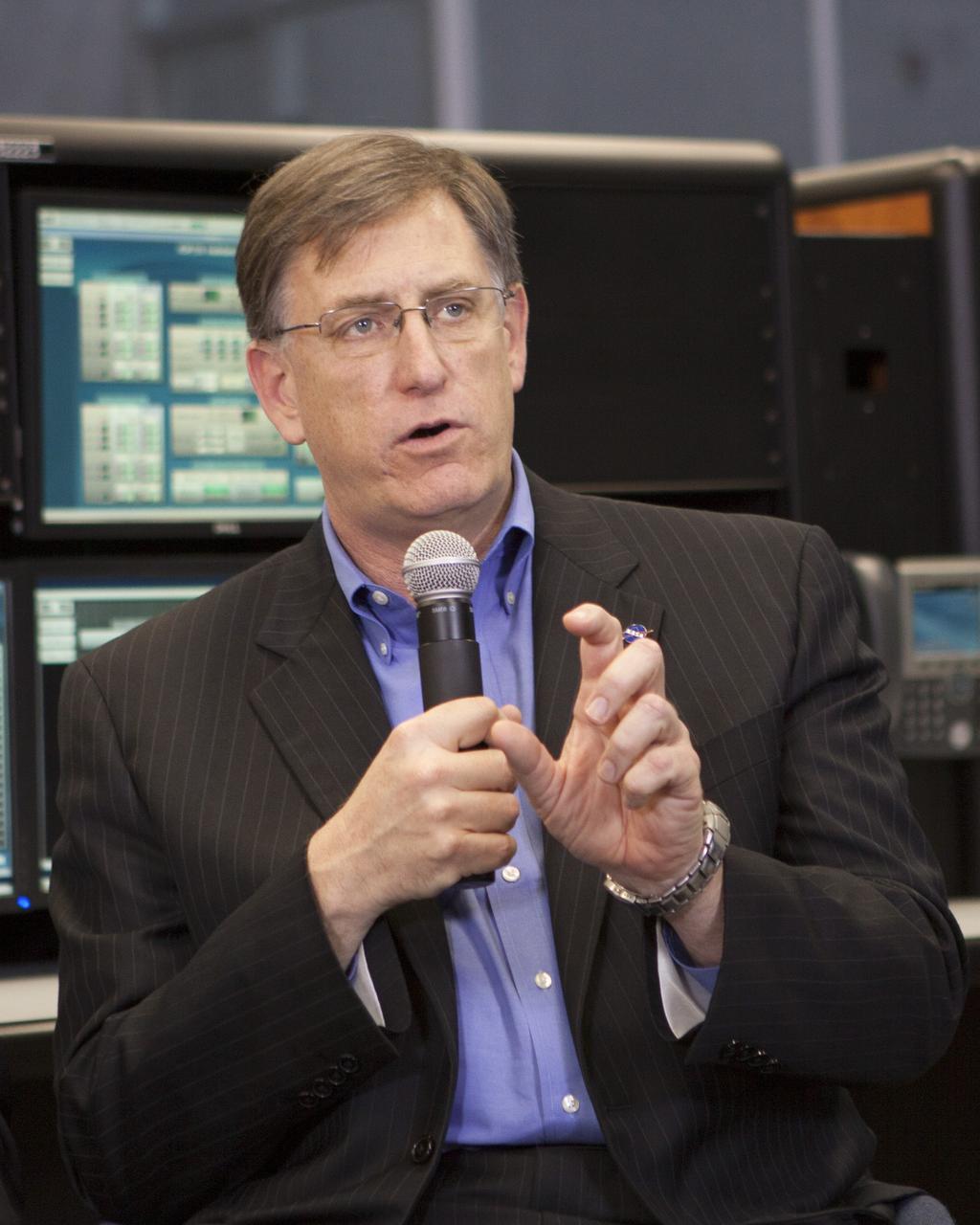
CAPE CANAVERAL, Fla. – Dan Dumbacher, deputy associate administrator for the Exploration Systems Development Division, takes part in a briefing inside the Young-Crippen Firing Room at NASA's Kennedy Space Center in Florida. NASA officials discussed the goals and expectations for a September 2014 flight test called Exploration Flight Test-1 or EFT-1 as part of the agency's goal of launching astronauts into deep space. Photo credit: NASA/Jim Grossmann
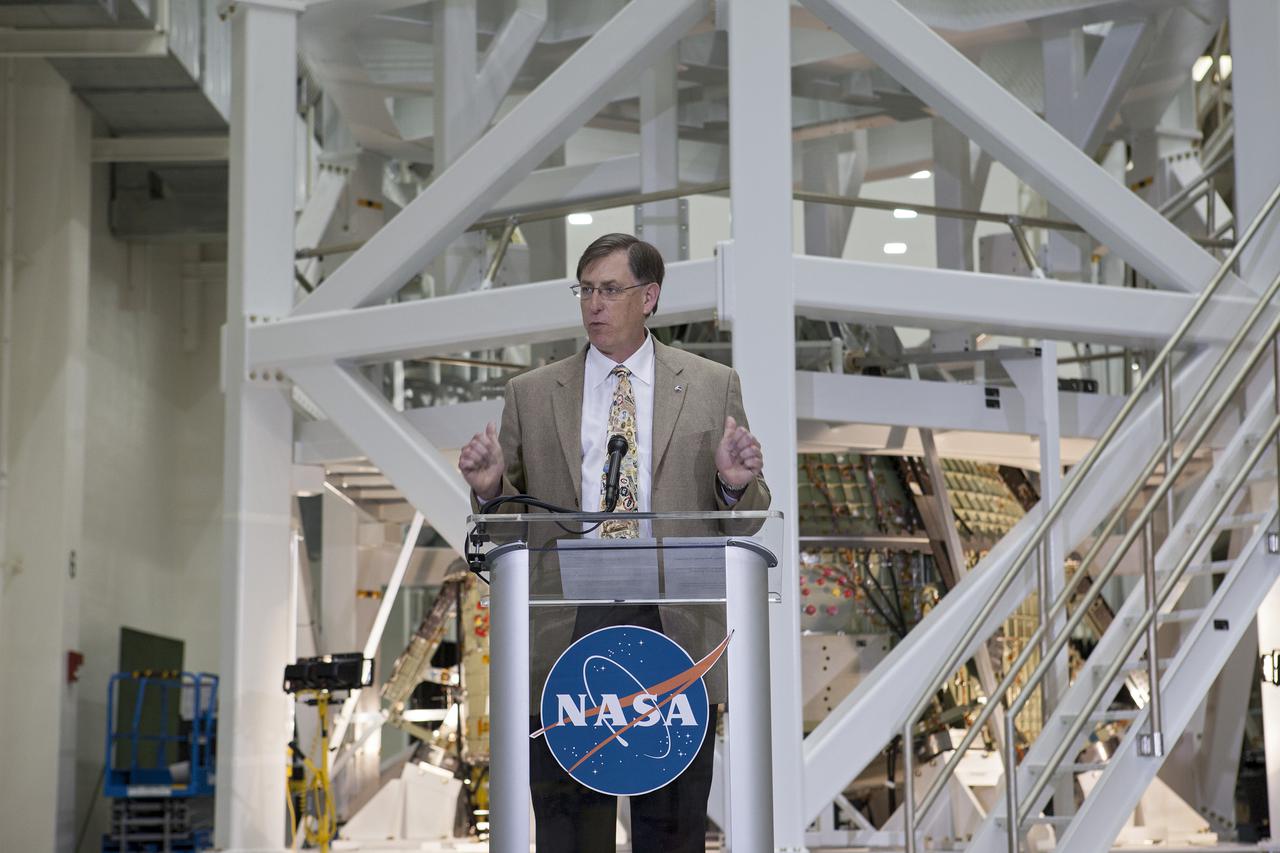
CAPE CANAVERAL, Fla. – In the Operations and Checkout Building OandC at the Kennedy Space Center in Florida, Dan Dumbacher, NASA's deputy associate administrator for Exploration Systems Development, speaks to news media representatives updating progress on preparing the Orion spacecraft for its first uncrewed mission, Exploration Flight Test-1 EFT-1 in 2014. The crew module is seen behind Dumbacher in its test stand. Launched atop NASA's heavy-lift Space Launch System rocket, Orion is now targeted to take astronauts in a sample return mission to an asteroid as early as 2021. On the third anniversary of President Barack Obama issuing his challenge to NASA to send astronauts to an asteroid, news media representatives were given an opportunity to see up-close the Orion spacecraft which could take astronauts on such a flight. They also heard from key leaders of that effort in Kennedy's OandC where Orion's assembly is taking place. Photo credit: NASA_Kim Shiflett
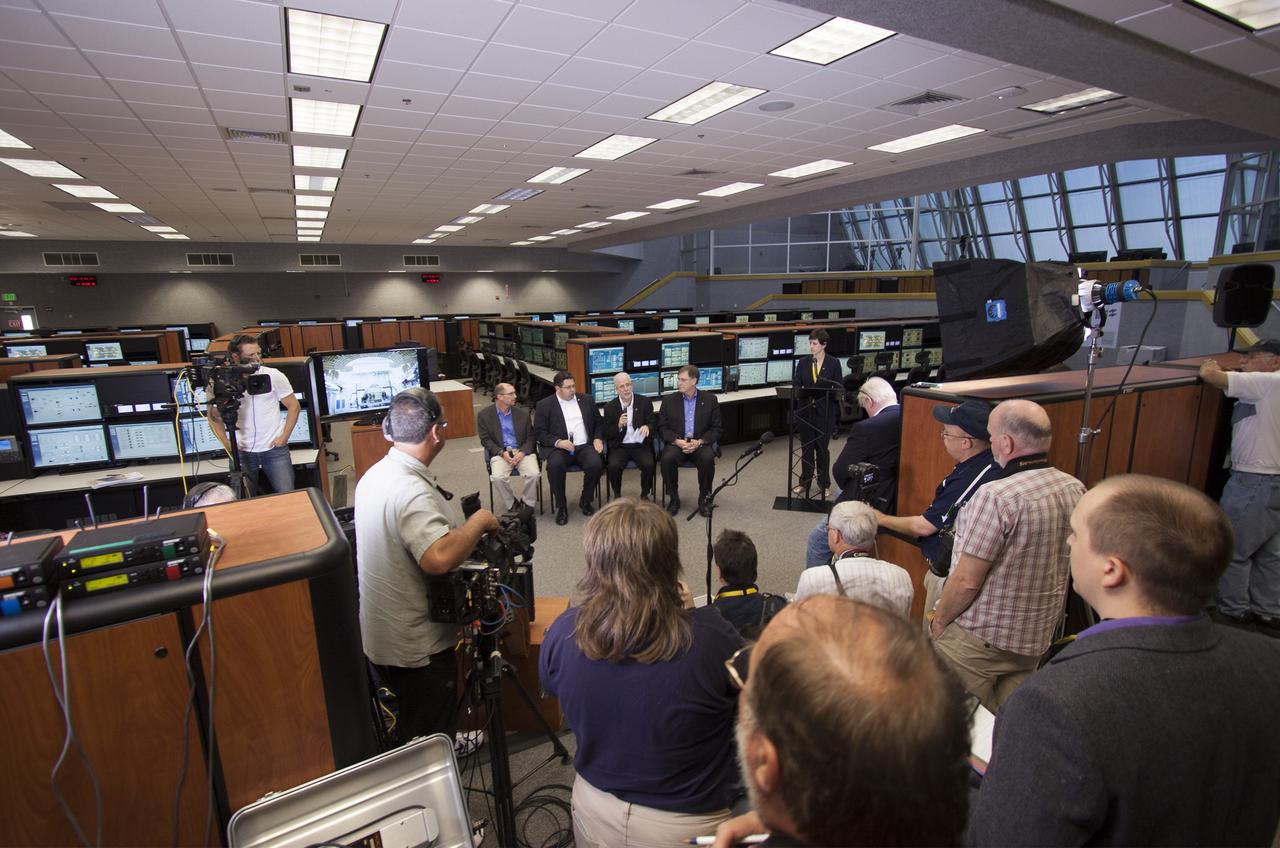
CAPE CANAVERAL, Fla. – NASA officials detail progress toward a September 2014 flight test called Exploration Flight Test-1 or EFT-1 as part of the agency's goal of launching astronauts into deep space. Speaking inside the Young-Crippen Firing Room at NASA's Kennedy Space Center in Florida, the officials discussed the goals and expectations for EFT-1 with news media. Seated, facing the camera from left to right are Pepper Phillips, Ground Systems Development and Operations program manager, Todd May, Space Launch System program manager, Mark Geyer, Orion program manager and Dan Dumbacher, deputy associate administrator for the Exploration Systems Development Division. Standing is Rachel Kraft, a public affairs officer from NASA Headquarters in Washington D.C. Photo credit: NASA/Jim Grossmann
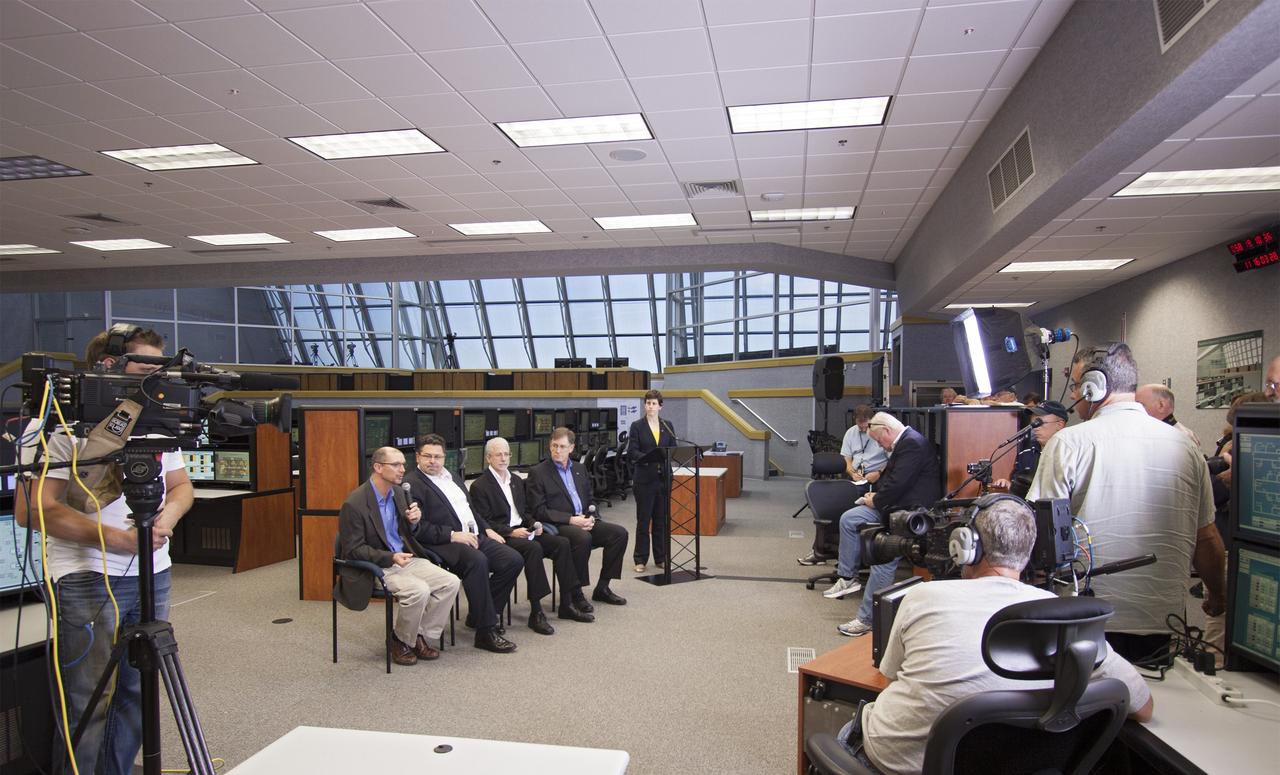
CAPE CANAVERAL, Fla. – NASA officials detail progress toward a September 2014 flight test called Exploration Flight Test-1 or EFT-1 as part of the agency's goal of launching astronauts into deep space. Speaking inside the Young-Crippen Firing Room at NASA's Kennedy Space Center in Florida, the officials discussed the goals and expectations for EFT-1 with news media. Seated, facing the camera from left to right are Pepper Phillips, Ground Systems Development and Operations program manager, Todd May, Space Launch System program manager, Mark Geyer, Orion program manager and Dan Dumbacher, deputy associate administrator for the Exploration Systems Development Division. Standing is Rachel Kraft, a public affairs officer from NASA Headquarters in Washington D.C. Photo credit: NASA/Jim Grossmann
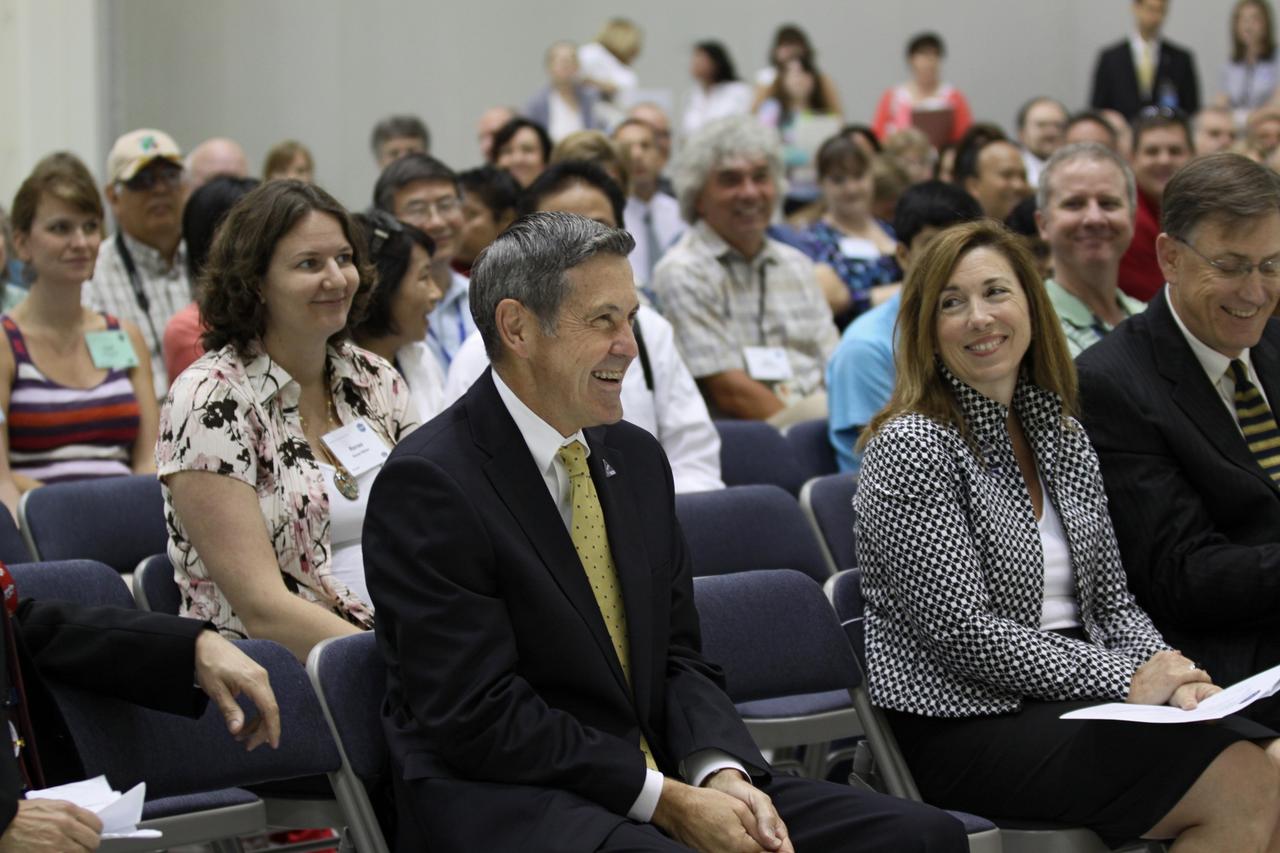
CAPE CANAVERAL, Fla. – NASA dignitaries await their turns at the podium in Kennedy Space Center's Operations and Checkout Building high bay during an event marking the arrival of NASA's first space-bound Orion capsule in Florida. From left are Kennedy's Director Robert Cabana, NASA Deputy Administrator Lori Garver and Dan Dumbacher, NASA deputy associate administrator for Exploration Systems Development. Slated for Exploration Flight Test-1, an uncrewed mission planned for 2014, the capsule will travel farther into space than any human spacecraft has gone in more than 40 years. The capsule was shipped to Kennedy from NASA's Michoud Assembly Facility in New Orleans where the crew module pressure vessel was built. The Orion production team will prepare the module for flight at Kennedy by installing heat-shielding thermal protection systems, avionics and other subsystems. For more information, visit http://www.nasa.gov/orion. Photo credit: NASA/Kim Shiflett
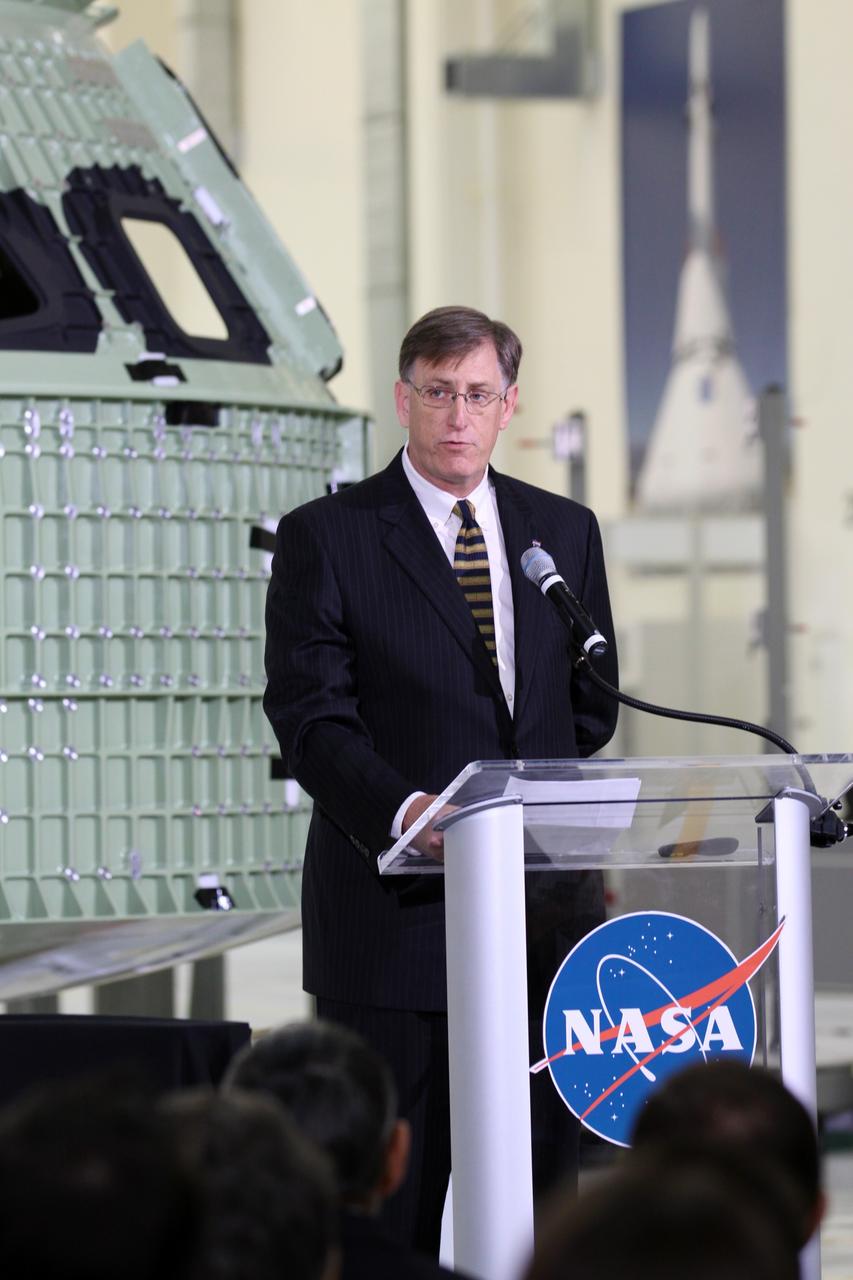
CAPE CANAVERAL, Fla. – Dan Dumbacher, NASA deputy associate administrator for Exploration Systems Development, addresses the audience assembled in Kennedy Space Center's Operations and Checkout Building high bay for an event marking the arrival of NASA's first space-bound Orion capsule in Florida. Slated for Exploration Flight Test-1, an uncrewed mission planned for 2014, the capsule will travel farther into space than any human spacecraft has gone in more than 40 years. The capsule was shipped to Kennedy from NASA's Michoud Assembly Facility in New Orleans where the crew module pressure vessel was built. The Orion production team will prepare the module for flight at Kennedy by installing heat-shielding thermal protection systems, avionics and other subsystems. For more information, visit http://www.nasa.gov/orion. Photo credit: NASA/Kim Shiflett
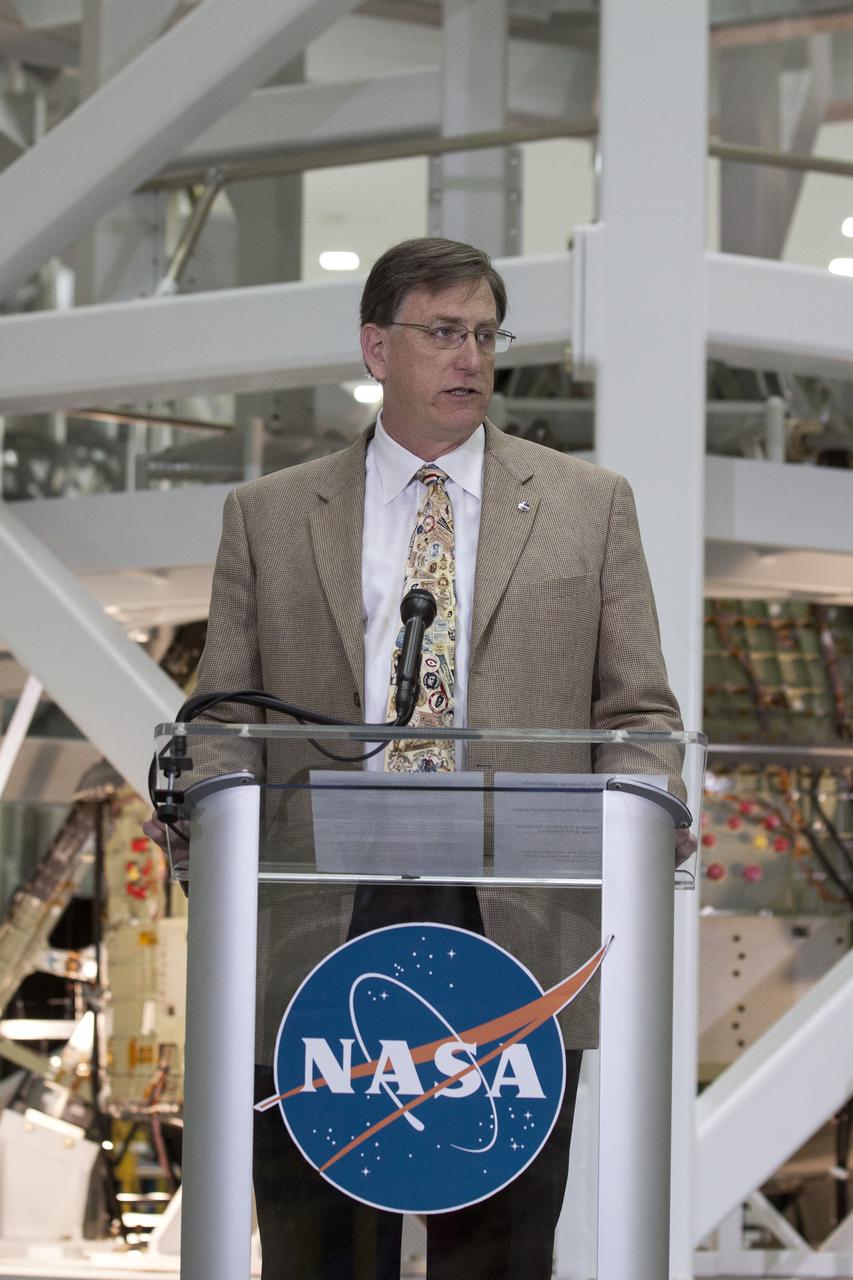
CAPE CANAVERAL, Fla. – In the Operations and Checkout Building OandC at the Kennedy Space Center in Florida, Dan Dumbacher, NASA's deputy associate administrator for Exploration Systems Development, speaks to news media representatives updating progress on preparing the Orion spacecraft for its first uncrewed mission, Exploration Flight Test-1 EFT-1 in 2014. Launched atop NASA's heavy-lift Space Launch System rocket, Orion is now targeted to take astronauts in a sample return mission to an asteroid as early as 2021. On the third anniversary of President Barack Obama issuing his challenge to NASA to send astronauts to an asteroid, news media representatives were given an opportunity to see up-close the Orion spacecraft which could take astronauts on such a flight. They also heard from key leaders of that effort in Kennedy's OandC where Orion's assembly is taking place. Photo credit: NASA_Kim Shiflett
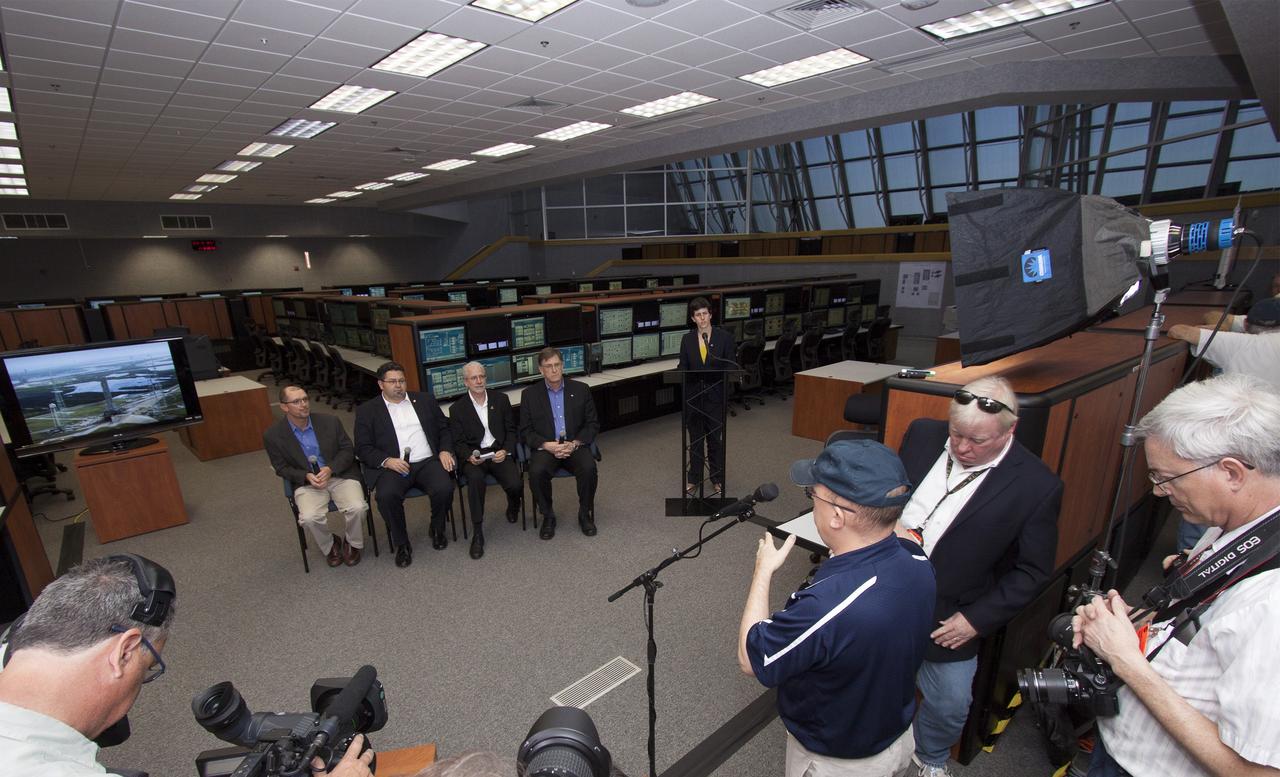
CAPE CANAVERAL, Fla. – NASA officials detail progress toward a September 2014 flight test called Exploration Flight Test-1 or EFT-1 as part of the agency's goal of launching astronauts into deep space. Speaking inside the Young-Crippen Firing Room at NASA's Kennedy Space Center in Florida, the officials discussed the goals and expectations for EFT-1 with news media. Seated, facing the camera from left to right are Pepper Phillips, Ground Systems and Development program manager, Todd May, Space Launch System program manager, Mark Geyer, Orion program manager and Dan Dumbacher, deputy associate administrator for the Exploration Systems Development Division. Standing is Rachel Kraft, a public affairs officer from NASA Headquarters in Washington D.C. Photo credit: NASA/Jim Grossmann
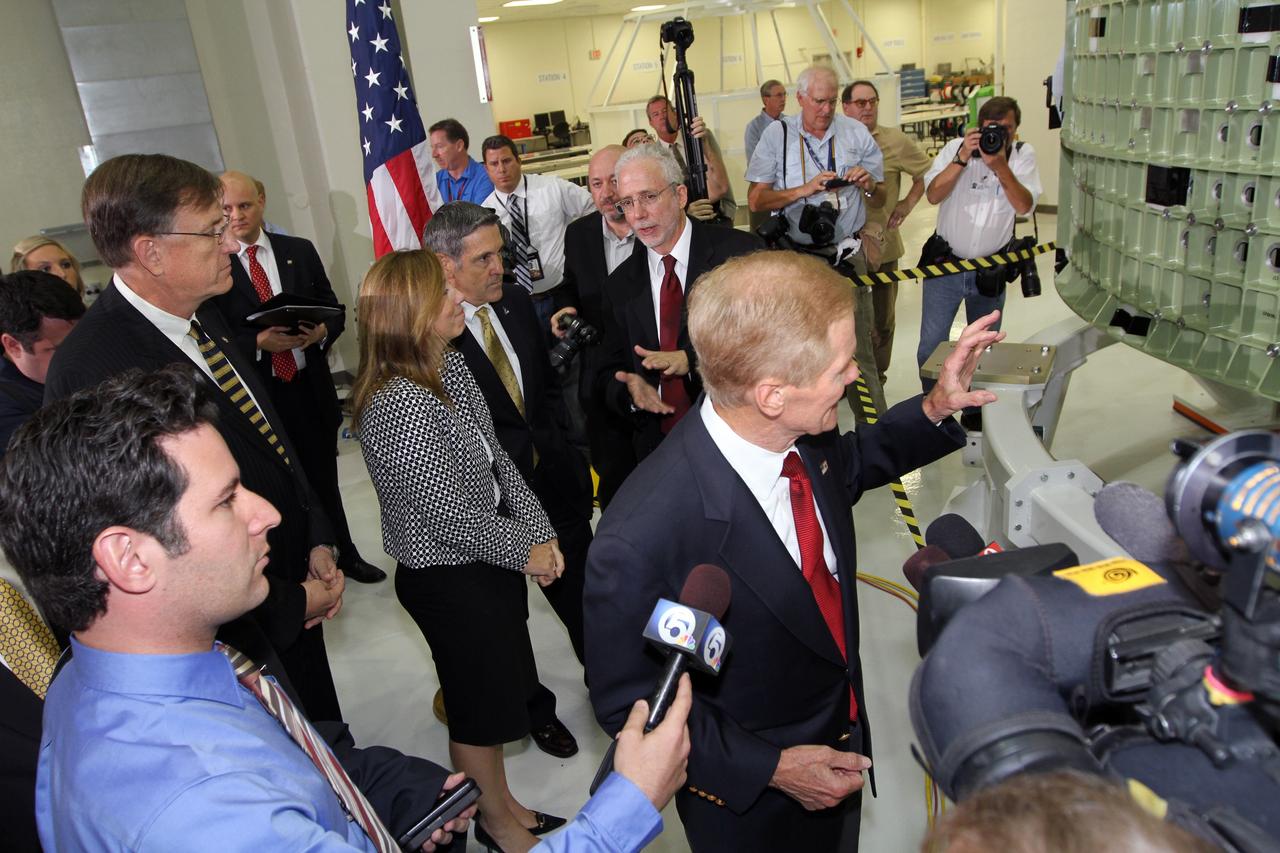
CAPE CANAVERAL, Fla. – U.S. Senator Bill Nelson, right, takes questions from the media in Kennedy Space Center's Operations and Checkout Building high bay following an event marking the arrival in Florida of NASA's first space-bound Orion capsule. Behind Nelson are, from left, Dan Dumbacher, NASA deputy associate administrator for Exploration Systems Development, NASA Deputy Director Lori Garver, Kennedy Space Center Director Robert Cabana and Mark Geyer, Orion program manager. Slated for Exploration Flight Test-1, an uncrewed mission planned for 2014, the capsule will travel farther into space than any human spacecraft has gone in more than 40 years. The capsule was shipped to Kennedy from NASA's Michoud Assembly Facility in New Orleans where the crew module pressure vessel was built. The Orion production team will prepare the module for flight at Kennedy by installing heat-shielding thermal protection systems, avionics and other subsystems. For more information, visit http://www.nasa.gov/orion. Photo credit: NASA/Kim Shiflett
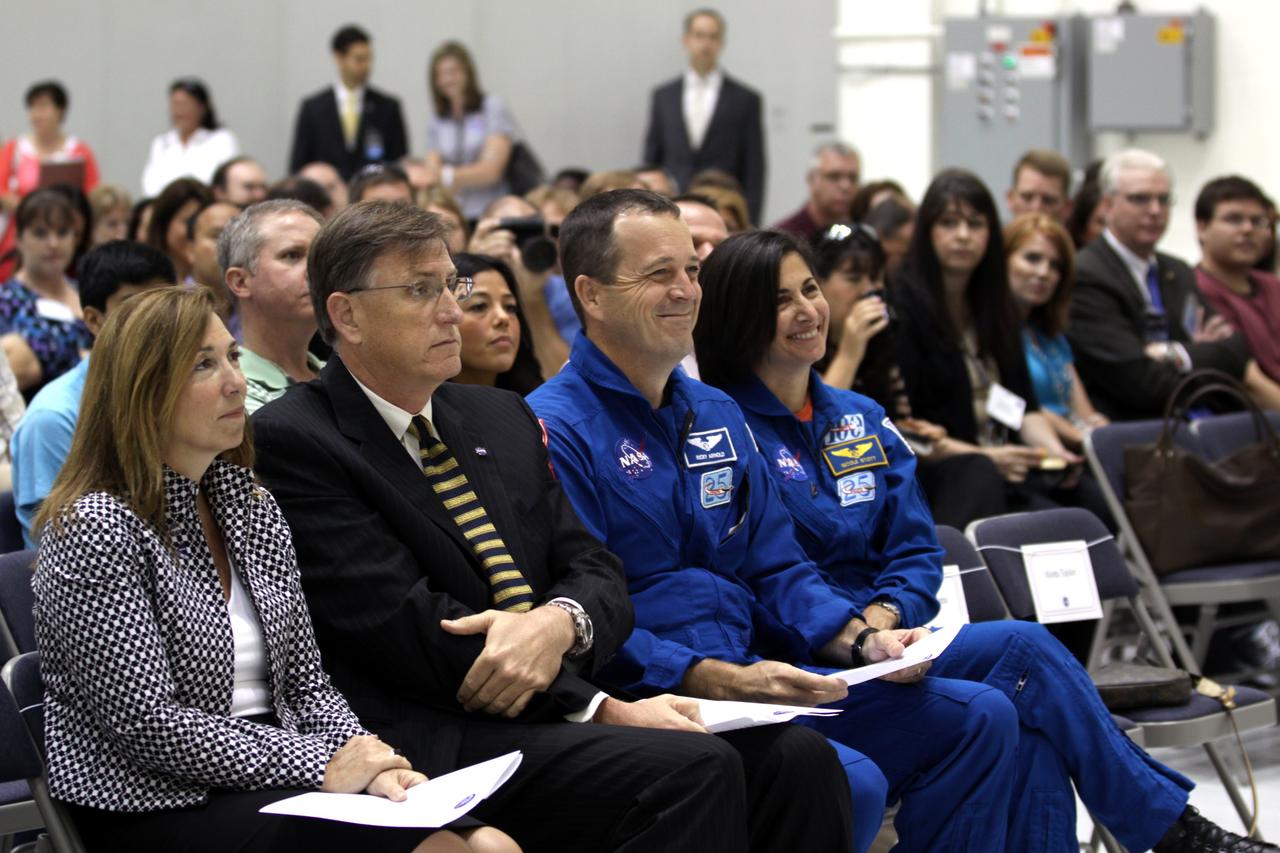
CAPE CANAVERAL, Fla. – NASA dignitaries await their turns at the podium in Kennedy Space Center's Operations and Checkout Building high bay during an event marking the arrival of NASA's first space-bound Orion capsule in Florida. From left are NASA Deputy Administrator Lori Garver Dan Dumbacher, NASA deputy associate administrator for Exploration Systems Development and NASA astronauts Ricky Arnold and Nicole Stott. Slated for Exploration Flight Test-1, an uncrewed mission planned for 2014, the capsule will travel farther into space than any human spacecraft has gone in more than 40 years. The capsule was shipped to Kennedy from NASA's Michoud Assembly Facility in New Orleans where the crew module pressure vessel was built. The Orion production team will prepare the module for flight at Kennedy by installing heat-shielding thermal protection systems, avionics and other subsystems. For more information, visit http://www.nasa.gov/orion. Photo credit: NASA/Kim Shiflett
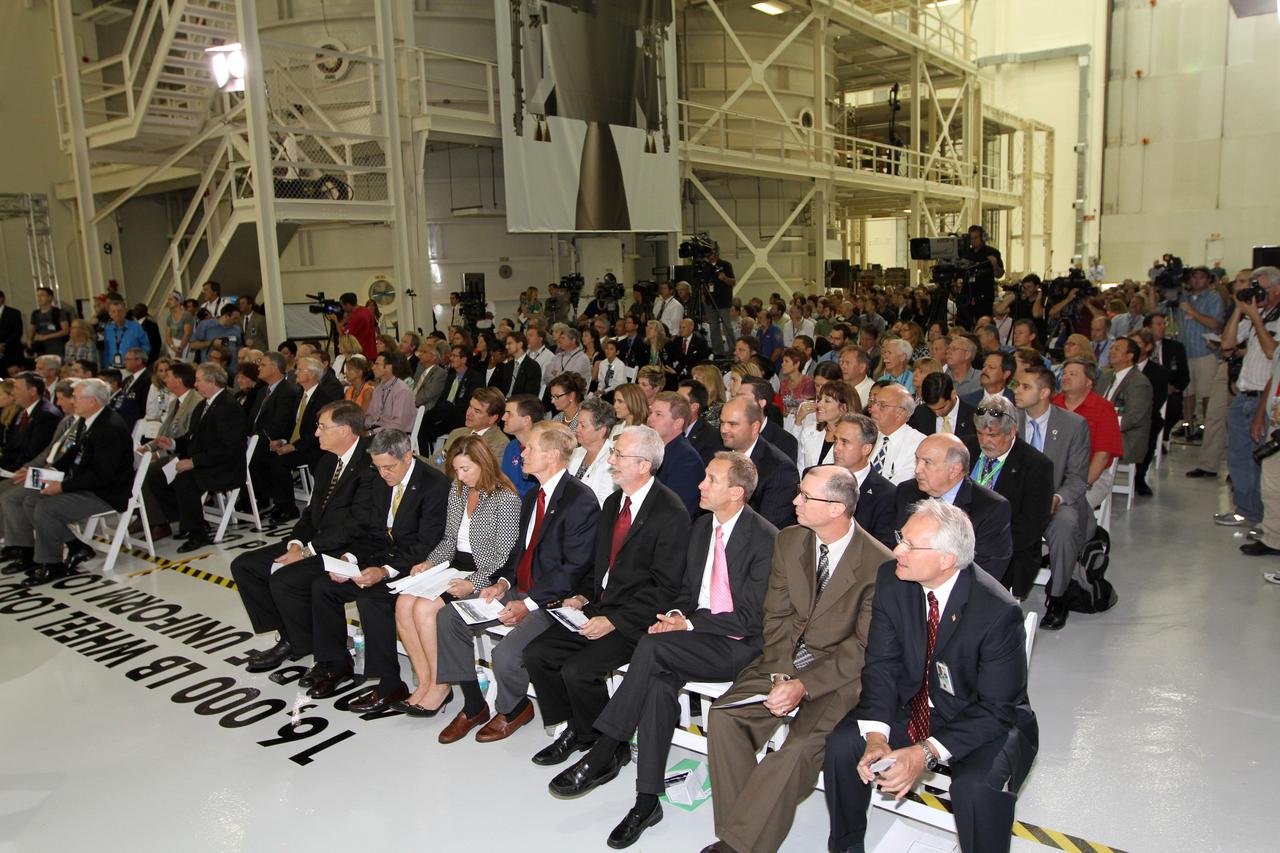
CAPE CANAVERAL, Fla. – Distinguished speakers are seated in the front row in Kennedy Space Center's Operations and Checkout Building high bay for an event marking the arrival of NASA's first space-bound Orion capsule in Florida. From left are Dan Dumbacher, NASA deputy associate administrator for Exploration Systems Development, NASA Kennedy Space Center Director Robert Cabana, NASA Deputy Administrator Lori Garver, U.S. Senator Bill Nelson, Mark Geyer, Orion program manager, David Beaman, NASA Space Launch System spacecraft and payload integration manager, Pepper Phillips, program manager for NASA's Ground Systems Development and Operations, and John Karas, vice president and general manager of Human Spaceflight for Lockheed Martin Space Systems. Slated for Exploration Flight Test-1, an uncrewed mission planned for 2014, the capsule will travel farther into space than any human spacecraft has gone in more than 40 years. The capsule was shipped to Kennedy from NASA's Michoud Assembly Facility in New Orleans where the crew module pressure vessel was built. The Orion production team will prepare the module for flight at Kennedy by installing heat-shielding thermal protection systems, avionics and other subsystems. For more information, visit http://www.nasa.gov/orion. Photo credit: NASA/Kim Shiflett
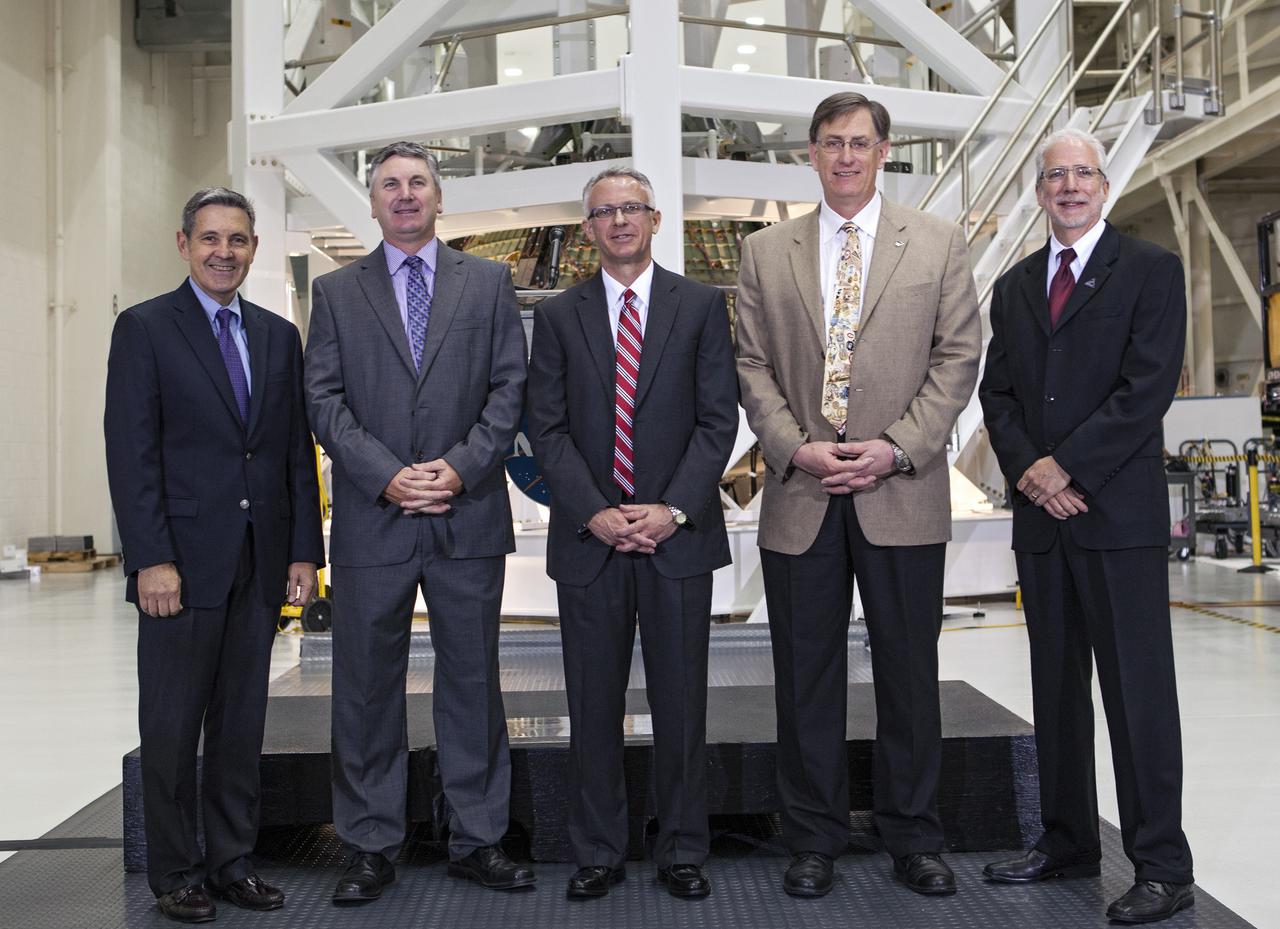
CAPE CANAVERAL, Fla. – In the Operations and Checkout Building OandC at the Kennedy Space Center in Florida, news media representatives were updated progress on preparing the Orion spacecraft for its first uncrewed mission, Exploration Flight Test-1 EFT-1 in 2014. Speakers included, from left, Kennedy Director Bob Cabana Scott Colloredo, chief architect for the Ground Systems Development and Operations Program Keith Hefner, NASA's Space Launch System program planning and control manager Dan Dumbacher, NASA's deputy associate administrator for Exploration Systems Development and Mark Geyer, NASA's Orion program manager. Launched atop NASA's heavy-lift Space Launch System rocket, Orion is now targeted to take astronauts in a sample return mission to an asteroid as early as 2021. On the third anniversary of President Barack Obama issuing his challenge to NASA to send astronauts to an asteroid, news media representatives were given an opportunity to see up-close the Orion spacecraft which could take astronauts on such a flight. They also heard from key leaders of that effort in Kennedy's OandC where Orion's assembly is taking place. Photo credit: NASA_Kim Shiflett