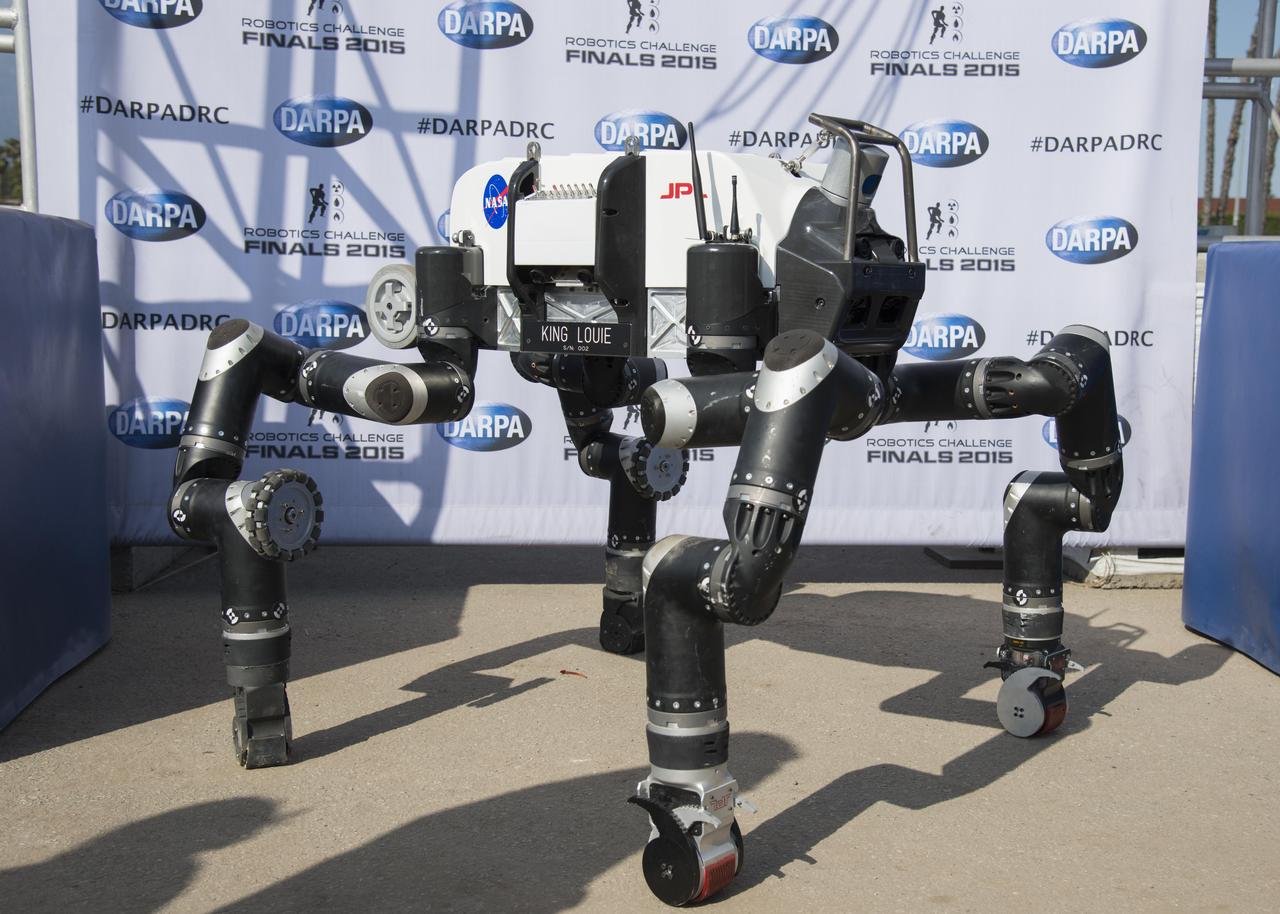
The spindly appearance of JPL's RoboSimian was somewhat unique among competitors in the DARPA Robotics Challenge Finals in Pomona, California, as most were bipedal walkers. This image was taken on June 5, 2015.   http://photojournal.jpl.nasa.gov/catalog/PIA19328
RoboSimian at DARPA Robotics Challenge
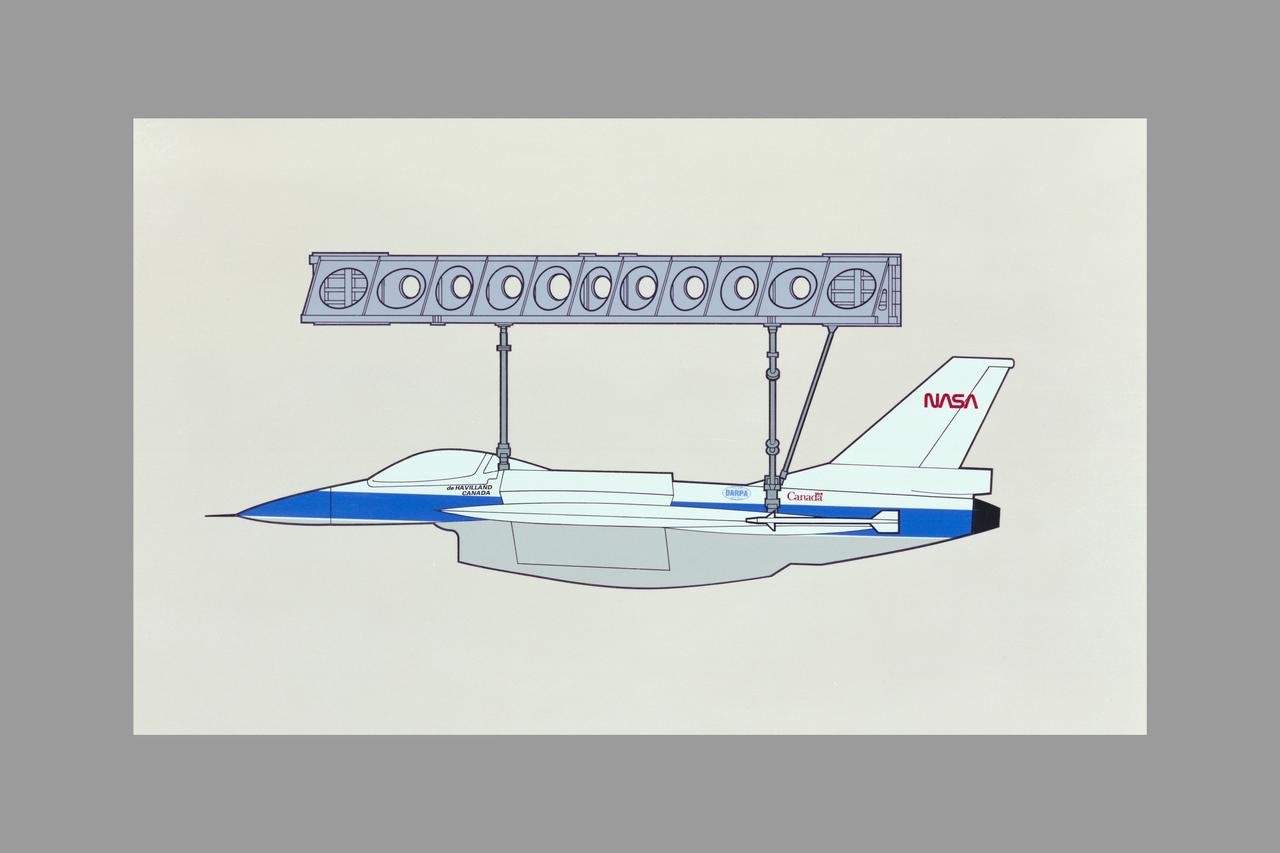
Drawing DARPA Ejector fighter model  (deHavilland/Canada/NASA) E-7
ARC-1989-AC89-0060
Stefanie Tompkins, director of the Defense Advance Research Projects Agency (DARPA), is seen during a fireside chat announcing a new collaboration on nuclear thermal propulsion at the American Institute of Aeronautics and Astronautics SciTech Forum, Tuesday, Jan. 24, 2023, at the Gaylord National Resort and Convention Center in National Harbor, Md. NASA and the Defense Advanced Research Projects Agency (DARPA) will partner on the Demonstration Rocket for Agile Cislunar Operations, or DRACO, project to develop and demonstrate in-space a nuclear thermal engine. Photo Credit: (NASA/Joel Kowsky)
NASA and DARPA Collaboration on Rocket Propulsion Technology Ann
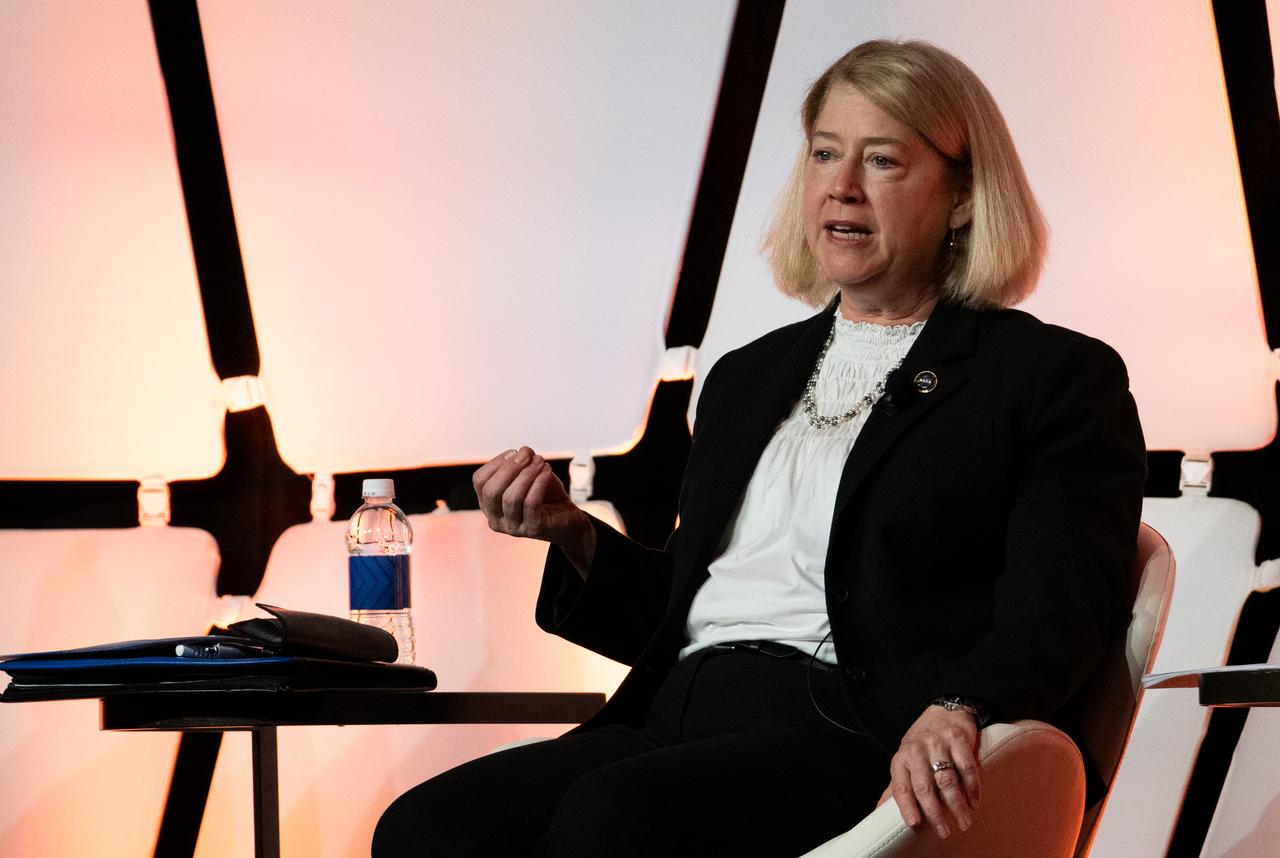
NASA Deputy Administrator Pam Melroy, left, and Stefanie Tompkins, director of the Defense Advance Research Projects Agency (DARPA), right, are seen during a fireside chat announcing a new collaboration on nuclear thermal propulsion at the American Institute of Aeronautics and Astronautics SciTech Forum, Tuesday, Jan. 24, 2023, at the Gaylord National Resort and Convention Center in National Harbor, Md. NASA and the Defense Advanced Research Projects Agency (DARPA) will partner on the Demonstration Rocket for Agile Cislunar Operations, or DRACO, project to develop and demonstrate in-space a nuclear thermal engine. Photo Credit: (NASA/Joel Kowsky)
NASA and DARPA Collaboration on Rocket Propulsion Technology Ann
NASA Deputy Administrator Pam Melroy, left, and Stefanie Tompkins, director of the Defense Advance Research Projects Agency (DARPA), right, are seen during a fireside chat announcing a new collaboration on nuclear thermal propulsion at the American Institute of Aeronautics and Astronautics SciTech Forum, Tuesday, Jan. 24, 2023, at the Gaylord National Resort and Convention Center in National Harbor, Md. NASA and the Defense Advanced Research Projects Agency (DARPA) will partner on the Demonstration Rocket for Agile Cislunar Operations, or DRACO, project to develop and demonstrate in-space a nuclear thermal engine. Photo Credit: (NASA/Joel Kowsky)
NASA and DARPA Collaboration on Rocket Propulsion Technology Ann
Steve Howe, former director of the Center for Space Nuclear Research at the Idaho National Laboratory, left, NASA Deputy Administrator Pam Melroy, center, and Stefanie Tompkins, director of the Defense Advance Research Projects Agency (DARPA), right, are seen during a fireside chat announcing a new collaboration on nuclear thermal propulsion at the American Institute of Aeronautics and Astronautics SciTech Forum, Tuesday, Jan. 24, 2023, at the Gaylord National Resort and Convention Center in National Harbor, Md. NASA and the Defense Advanced Research Projects Agency (DARPA) will partner on the Demonstration Rocket for Agile Cislunar Operations, or DRACO, project to develop and demonstrate in-space a nuclear thermal engine. Photo Credit: (NASA/Joel Kowsky)
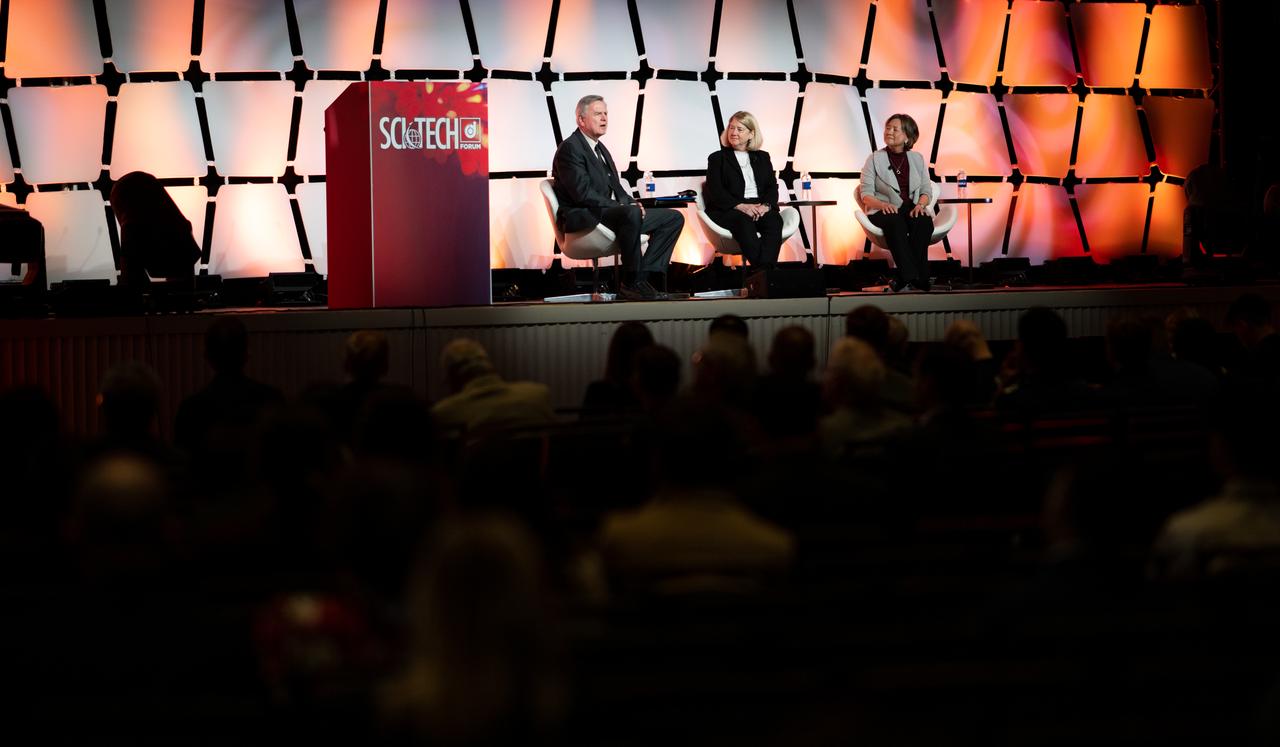
NASA and DARPA Collaboration on Rocket Propulsion Technology Ann
NASA Deputy Administrator Pam Melroy, left, and Stefanie Tompkins, director of the Defense Advance Research Projects Agency (DARPA), right, are seen during a fireside chat announcing a new collaboration on nuclear thermal propulsion at the American Institute of Aeronautics and Astronautics SciTech Forum, Tuesday, Jan. 24, 2023, at the Gaylord National Resort and Convention Center in National Harbor, Md. NASA and the Defense Advanced Research Projects Agency (DARPA) will partner on the Demonstration Rocket for Agile Cislunar Operations, or DRACO, project to develop and demonstrate in-space a nuclear thermal engine. Photo Credit: (NASA/Joel Kowsky)
NASA and DARPA Collaboration on Rocket Propulsion Technology Ann
Steve Howe, former director of the Center for Space Nuclear Research at the Idaho National Laboratory, left, NASA Deputy Administrator Pam Melroy, center, and Stefanie Tompkins, director of the Defense Advance Research Projects Agency (DARPA), right, are seen during a fireside chat announcing a new collaboration on nuclear thermal propulsion at the American Institute of Aeronautics and Astronautics SciTech Forum, Tuesday, Jan. 24, 2023, at the Gaylord National Resort and Convention Center in National Harbor, Md. NASA and the Defense Advanced Research Projects Agency (DARPA) will partner on the Demonstration Rocket for Agile Cislunar Operations, or DRACO, project to develop and demonstrate in-space a nuclear thermal engine. Photo Credit: (NASA/Joel Kowsky)
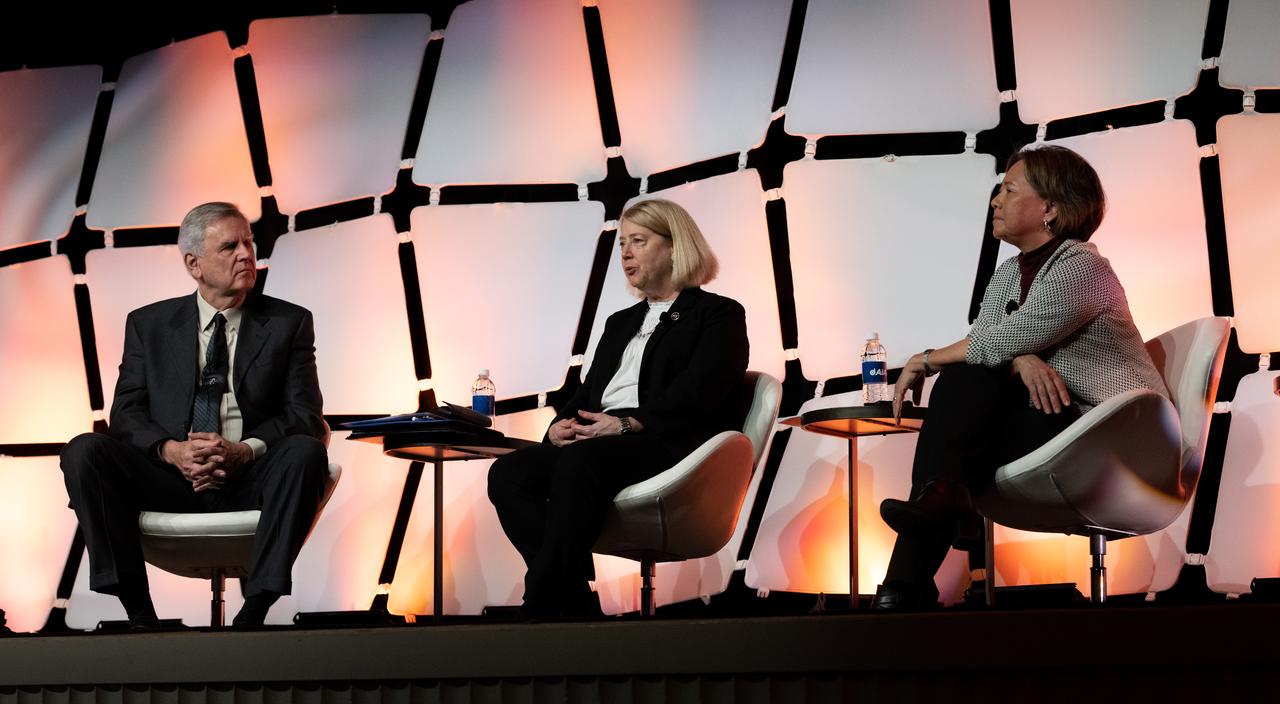
NASA and DARPA Collaboration on Rocket Propulsion Technology Ann
Steve Howe, former director of the Center for Space Nuclear Research at the Idaho National Laboratory, left, NASA Deputy Administrator Pam Melroy, center, and Stefanie Tompkins, director of the Defense Advance Research Projects Agency (DARPA), right, are seen during a fireside chat announcing a new collaboration on nuclear thermal propulsion at the American Institute of Aeronautics and Astronautics SciTech Forum, Tuesday, Jan. 24, 2023, at the Gaylord National Resort and Convention Center in National Harbor, Md. NASA and the Defense Advanced Research Projects Agency (DARPA) will partner on the Demonstration Rocket for Agile Cislunar Operations, or DRACO, project to develop and demonstrate in-space a nuclear thermal engine. Photo Credit: (NASA/Joel Kowsky)
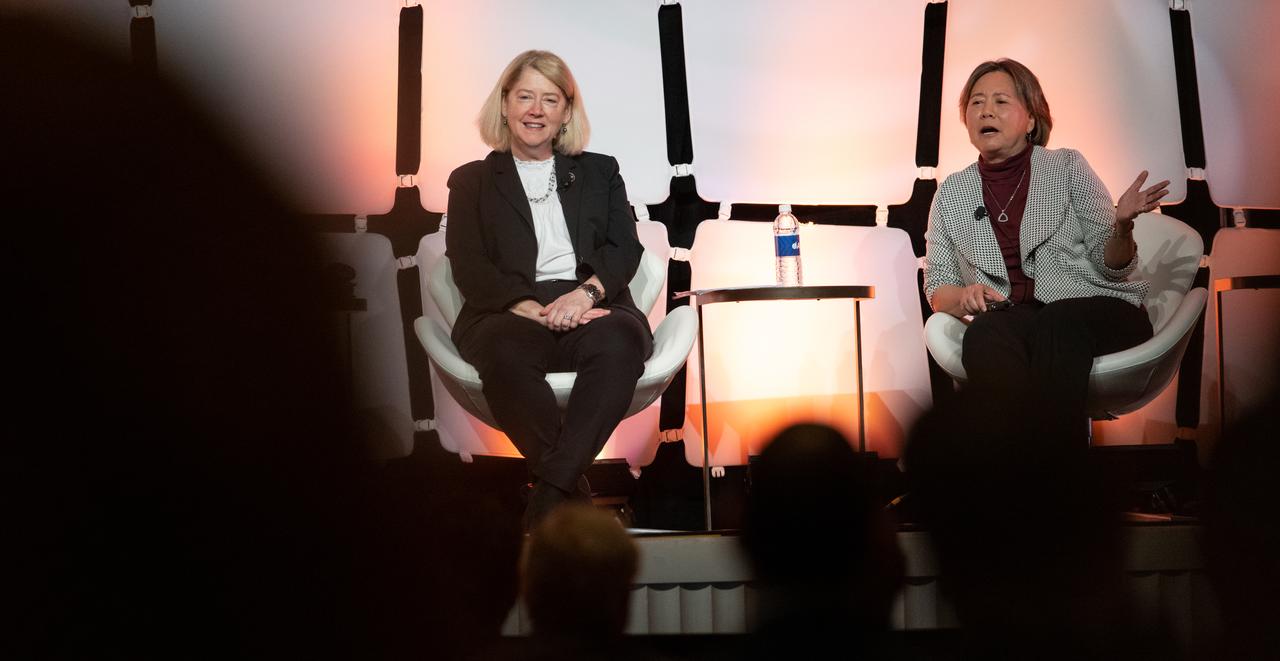
NASA and DARPA Collaboration on Rocket Propulsion Technology Ann
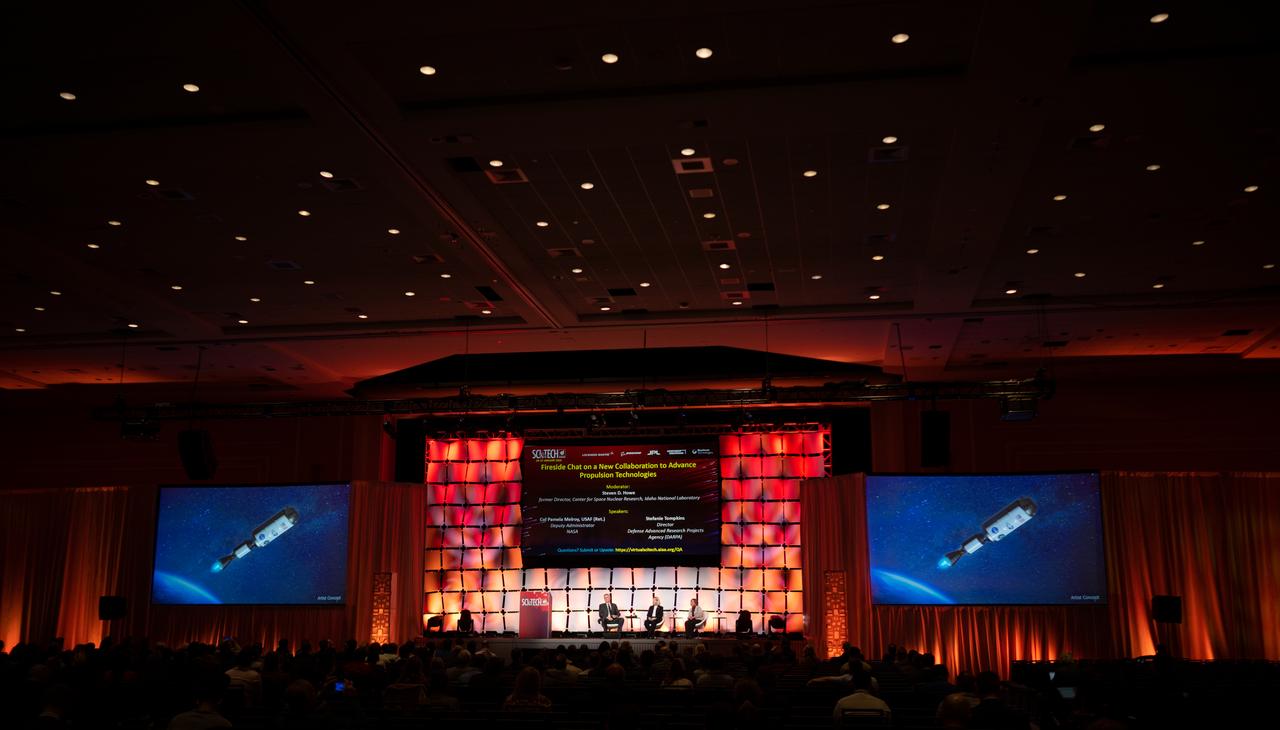
An artists concept of the Demonstration Rocket for Agile Cislunar Operations, or DRACO, spacecraft is seen on a screen as Steve Howe, former director of the Center for Space Nuclear Research at the Idaho National Laboratory, left, NASA Deputy Administrator Pam Melroy, center, and Stefanie Tompkins, director of the Defense Advance Research Projects Agency (DARPA), right, participate in a fireside chat announcing a new collaboration on nuclear thermal propulsion at the American Institute of Aeronautics and Astronautics SciTech Forum, Tuesday, Jan. 24, 2023, at the Gaylord National Resort and Convention Center in National Harbor, Md. NASA and the Defense Advanced Research Projects Agency (DARPA) will partner on the Demonstration Rocket for Agile Cislunar Operations, or DRACO, project to develop and demonstrate in-space a nuclear thermal engine. Photo Credit: (NASA/Joel Kowsky)
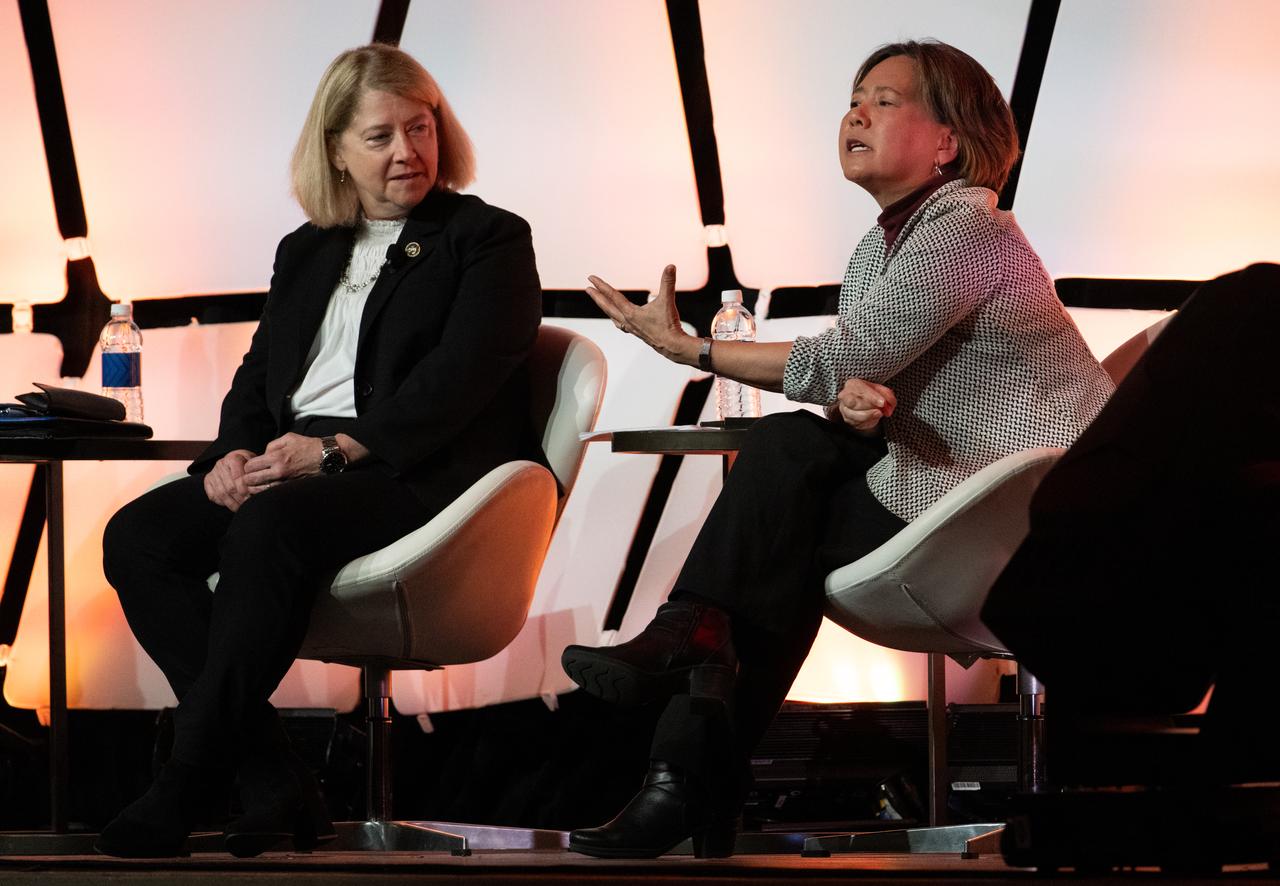
NASA and DARPA Collaboration on Rocket Propulsion Technology Ann
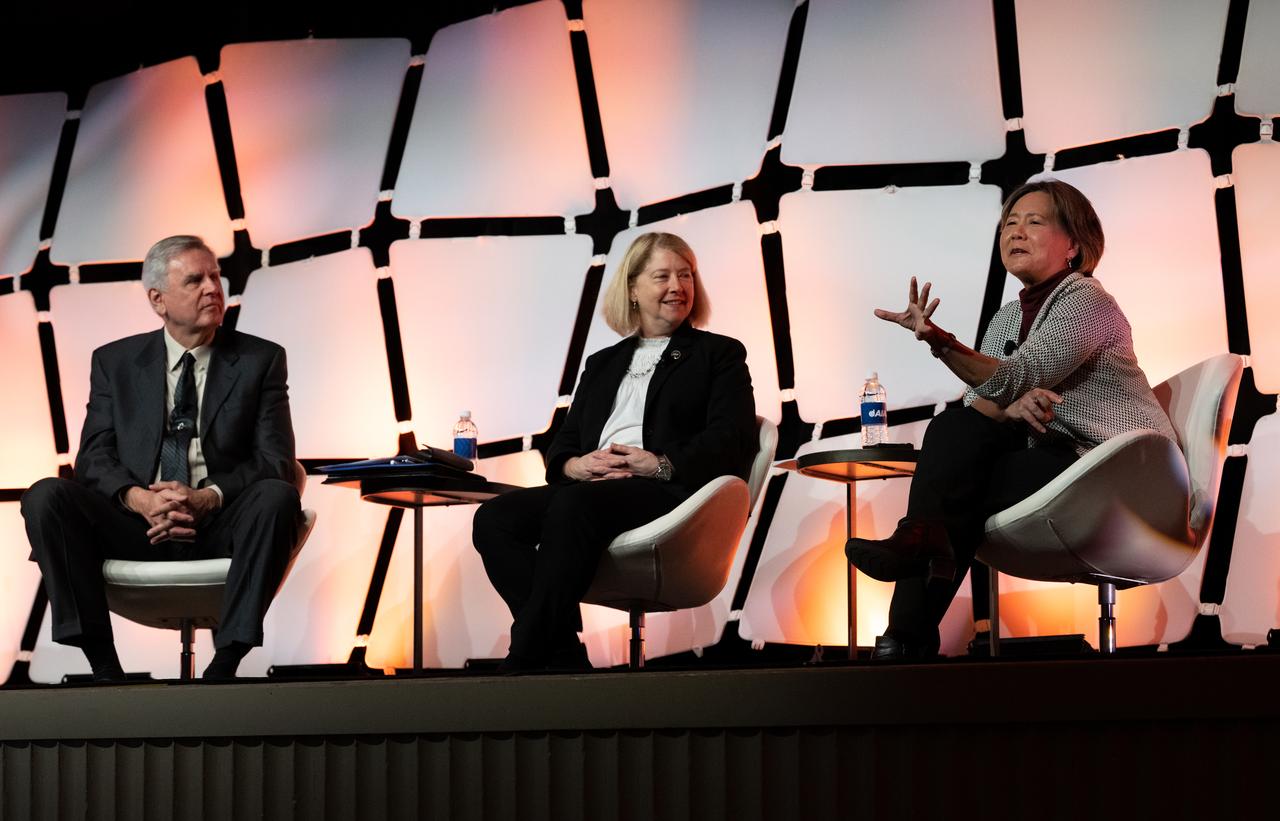
Stefanie Tompkins, director of the Defense Advance Research Projects Agency (DARPA), right, answers a question alongside Steve Howe, former director of the Center for Space Nuclear Research at the Idaho National Laboratory, left, NASA Deputy Administrator Pam Melroy, center, during a fireside chat announcing a new collaboration on nuclear thermal propulsion at the American Institute of Aeronautics and Astronautics SciTech Forum, Tuesday, Jan. 24, 2023, at the Gaylord National Resort and Convention Center in National Harbor, Md. NASA and the Defense Advanced Research Projects Agency (DARPA) will partner on the Demonstration Rocket for Agile Cislunar Operations, or DRACO, project to develop and demonstrate in-space a nuclear thermal engine. Photo Credit: (NASA/Joel Kowsky)
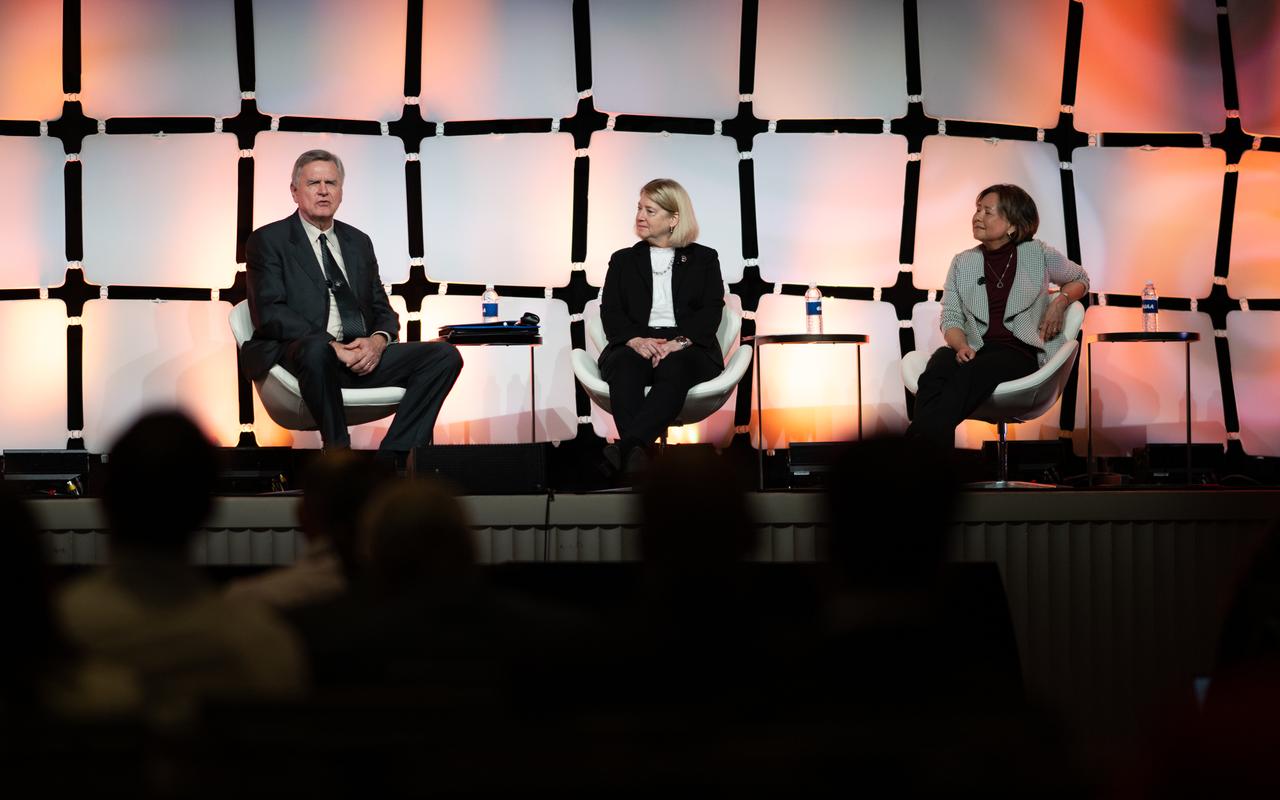
NASA and DARPA Collaboration on Rocket Propulsion Technology Ann
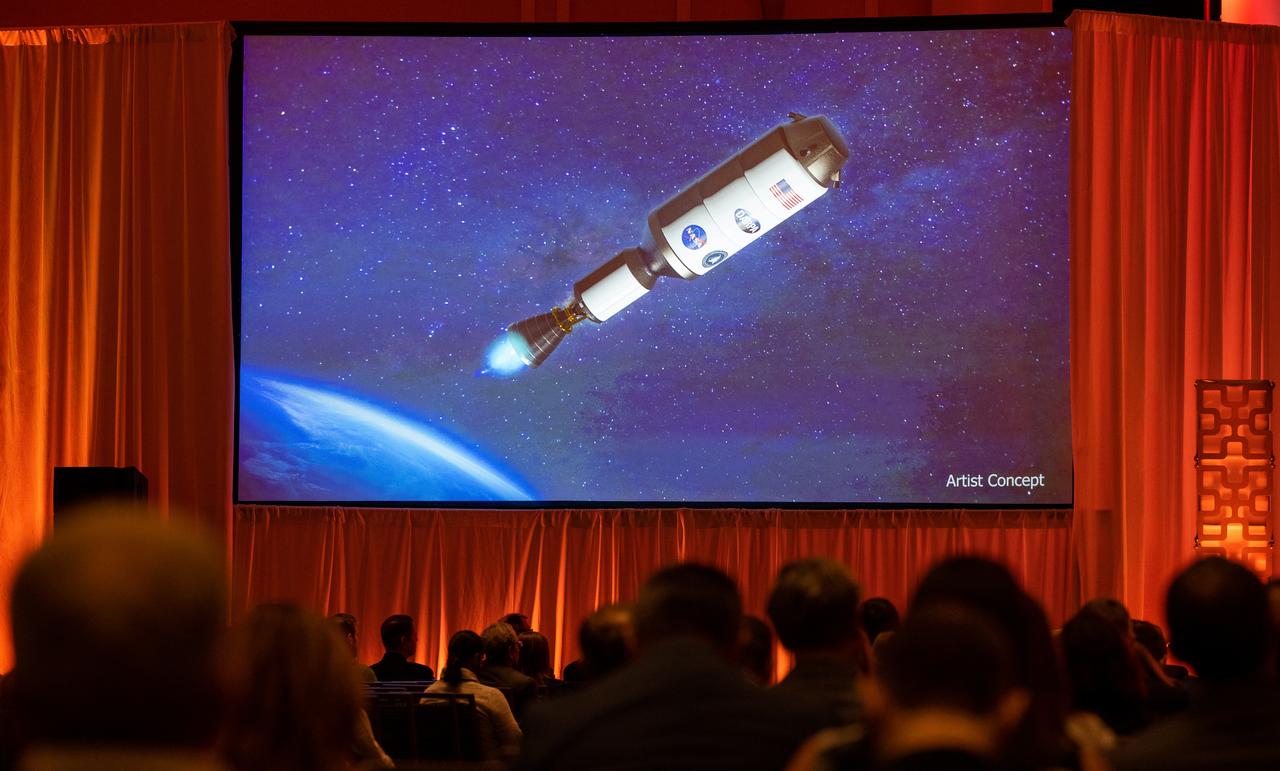
An artists concept of the Demonstration Rocket for Agile Cislunar Operations, or DRACO, spacecraft is seen on a screen during a fireside chat announcing a new collaboration on nuclear thermal propulsion at the American Institute of Aeronautics and Astronautics SciTech Forum, Tuesday, Jan. 24, 2023, at the Gaylord National Resort and Convention Center in National Harbor, Md. NASA and the Defense Advanced Research Projects Agency (DARPA) will partner on the Demonstration Rocket for Agile Cislunar Operations, or DRACO, project to develop and demonstrate in-space a nuclear thermal engine. Photo Credit: (NASA/Joel Kowsky)
NASA and DARPA Collaboration on Rocket Propulsion Technology Ann
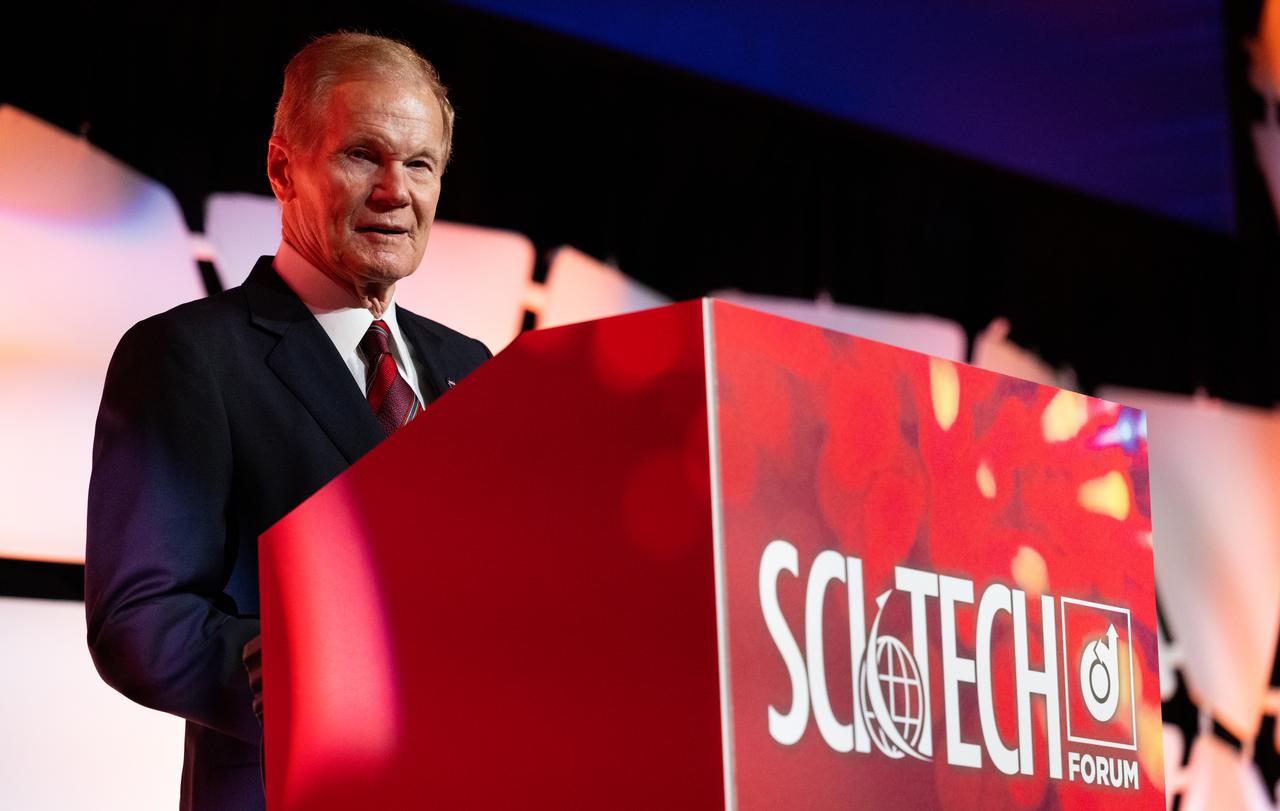
NASA Administrator Bill Nelson delivers opening remarks during a fireside chat announcing a new collaboration on nuclear thermal propulsion at the American Institute of Aeronautics and Astronautics SciTech Forum, Tuesday, Jan. 24, 2023, at the Gaylord National Resort and Convention Center in National Harbor, Md. NASA and the Defense Advanced Research Projects Agency (DARPA) will partner on the Demonstration Rocket for Agile Cislunar Operations, or DRACO, project to develop and demonstrate in-space a nuclear thermal engine. Photo Credit: (NASA/Joel Kowsky)
NASA and DARPA Collaboration on Rocket Propulsion Technology Ann
NASA Deputy Administrator Pam Melroy answers a question during a fireside chat announcing a new collaboration on nuclear thermal propulsion at the American Institute of Aeronautics and Astronautics SciTech Forum, Tuesday, Jan. 24, 2023, at the Gaylord National Resort and Convention Center in National Harbor, Md. NASA and the Defense Advanced Research Projects Agency (DARPA) will partner on the Demonstration Rocket for Agile Cislunar Operations, or DRACO, project to develop and demonstrate in-space a nuclear thermal engine. Photo Credit: (NASA/Joel Kowsky)
NASA and DARPA Collaboration on Rocket Propulsion Technology Ann
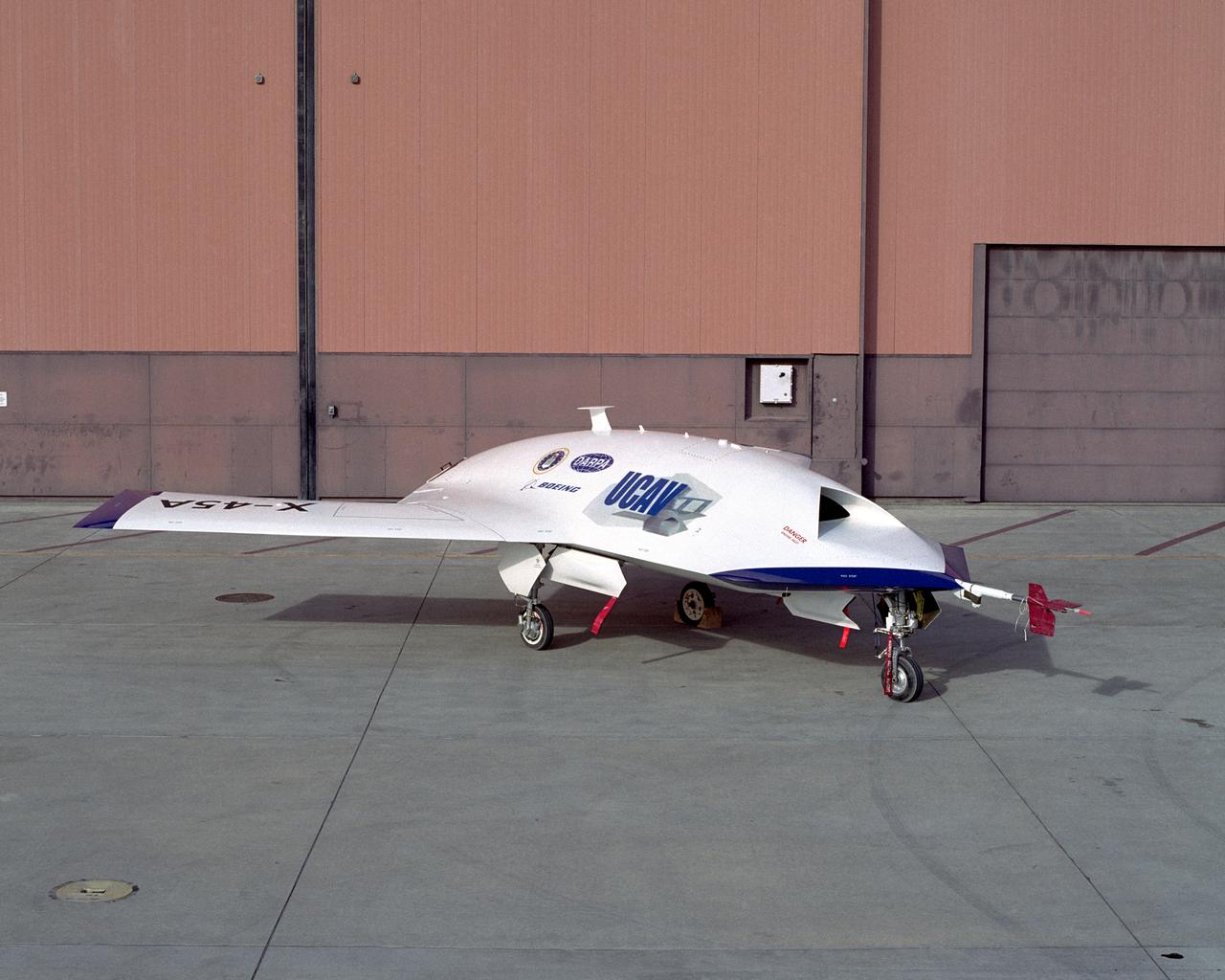
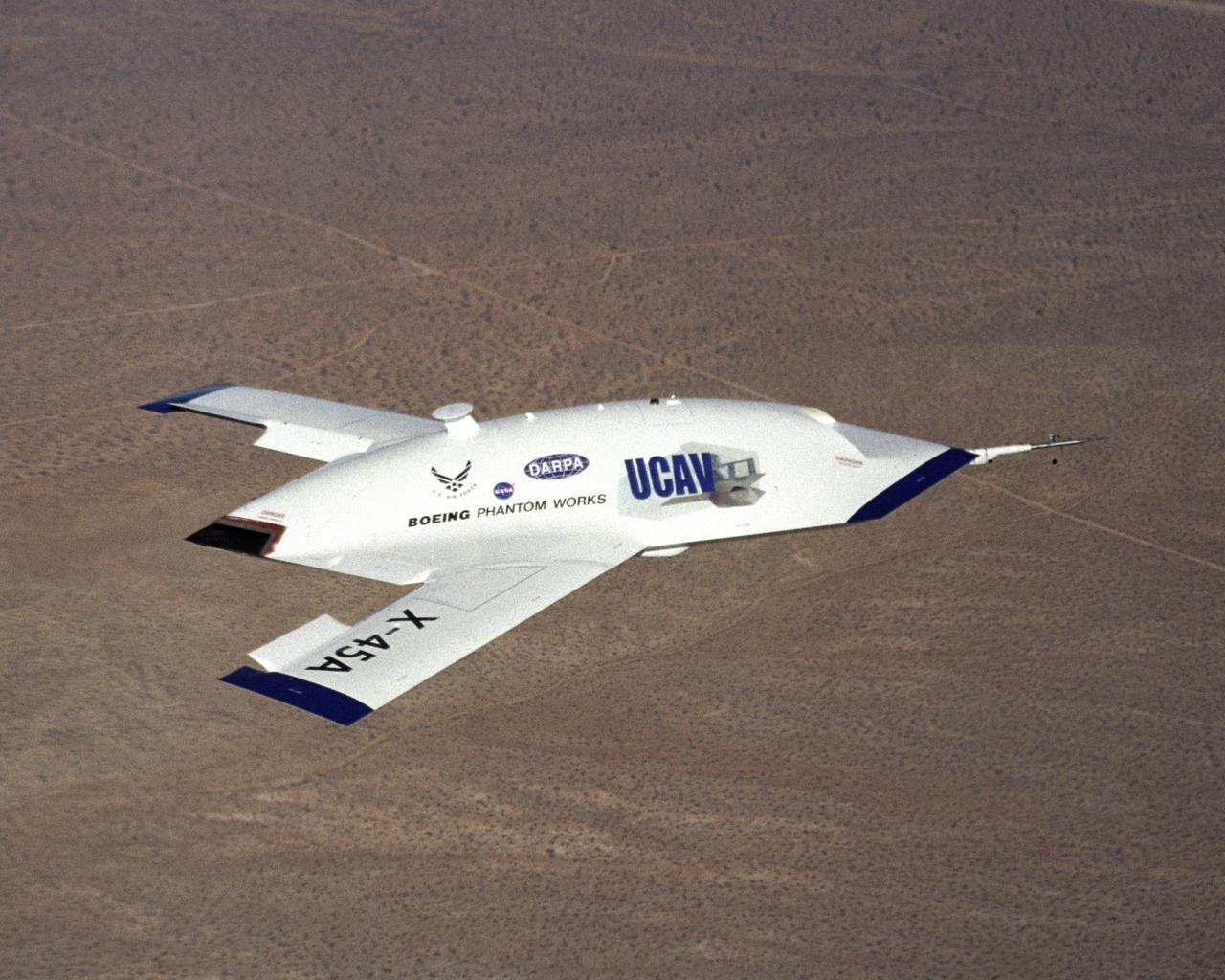
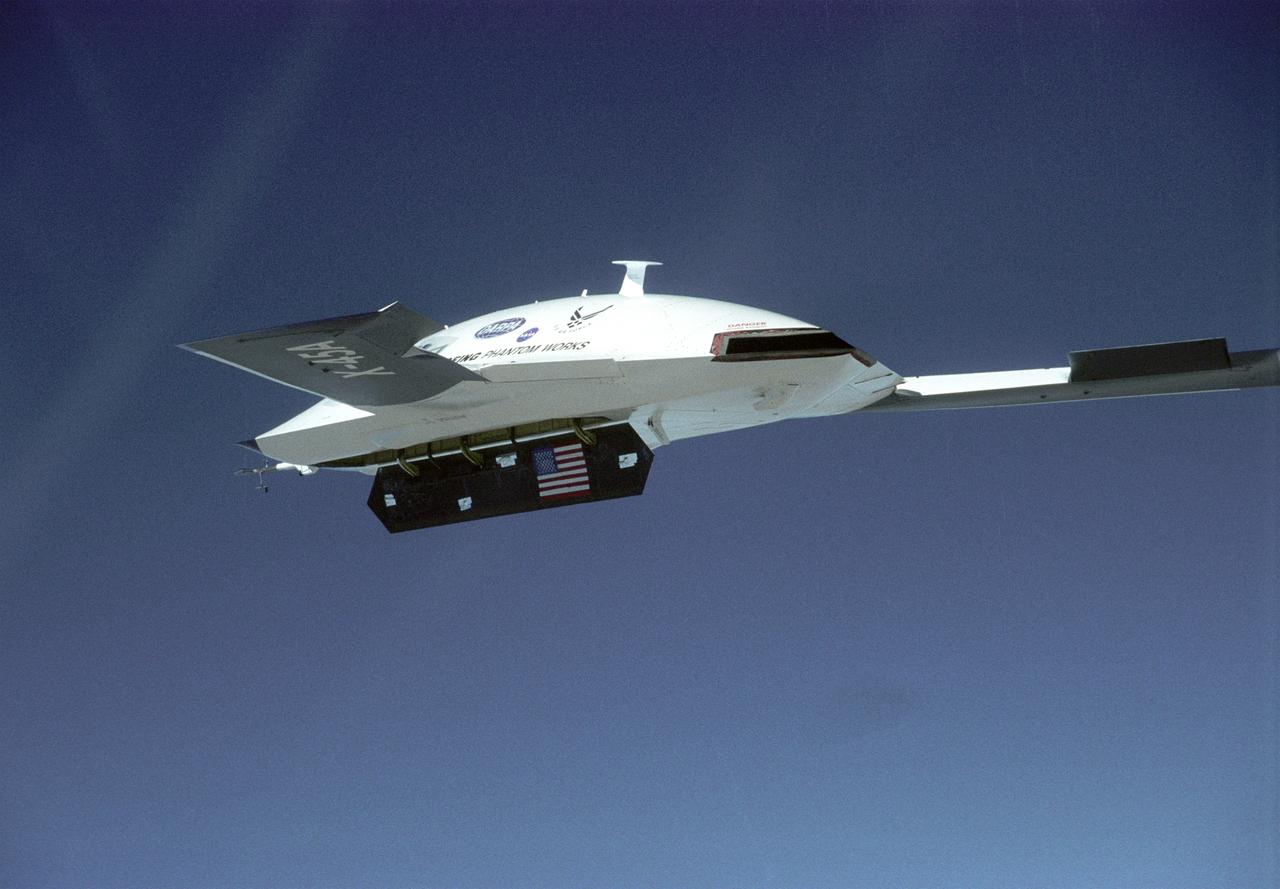
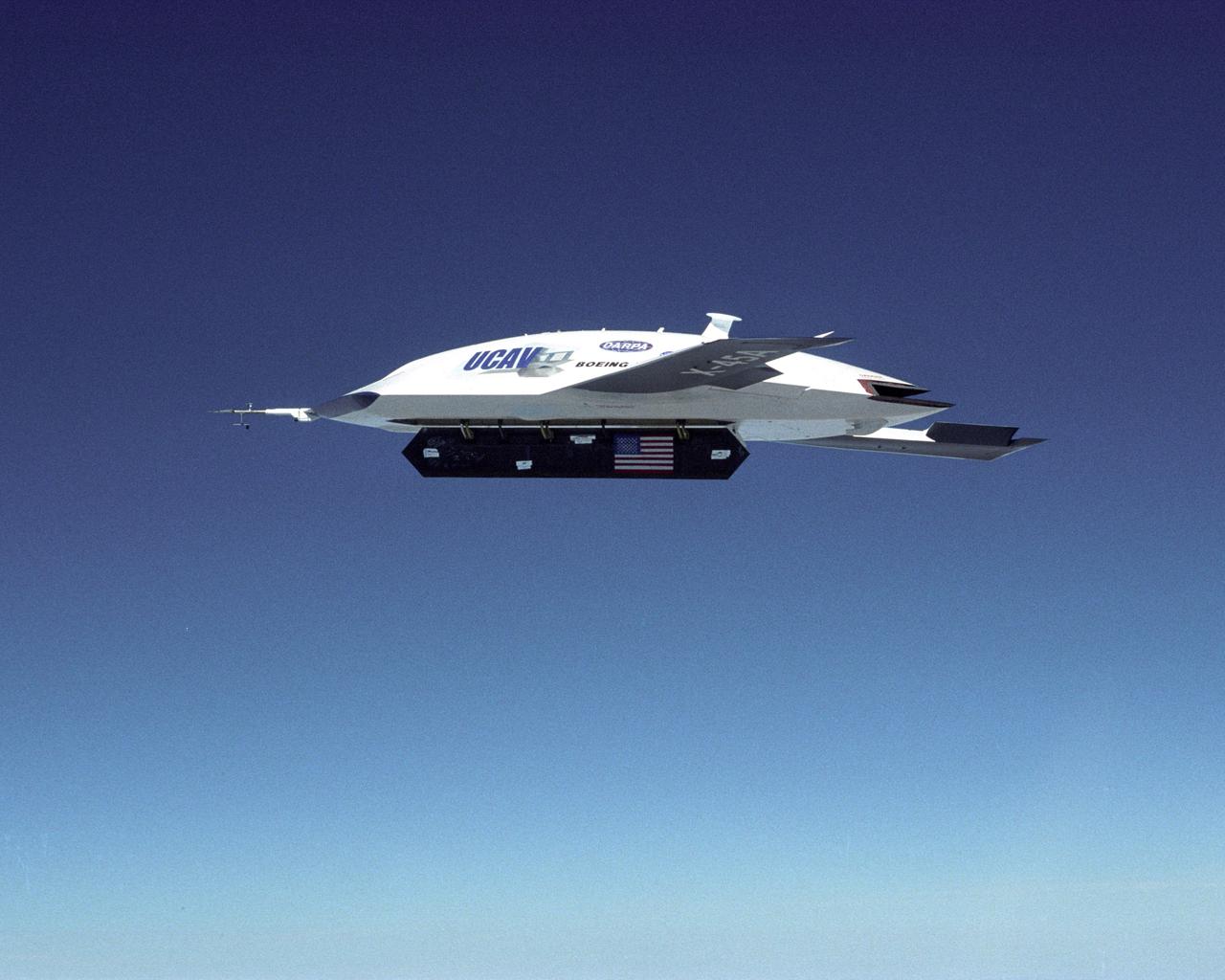
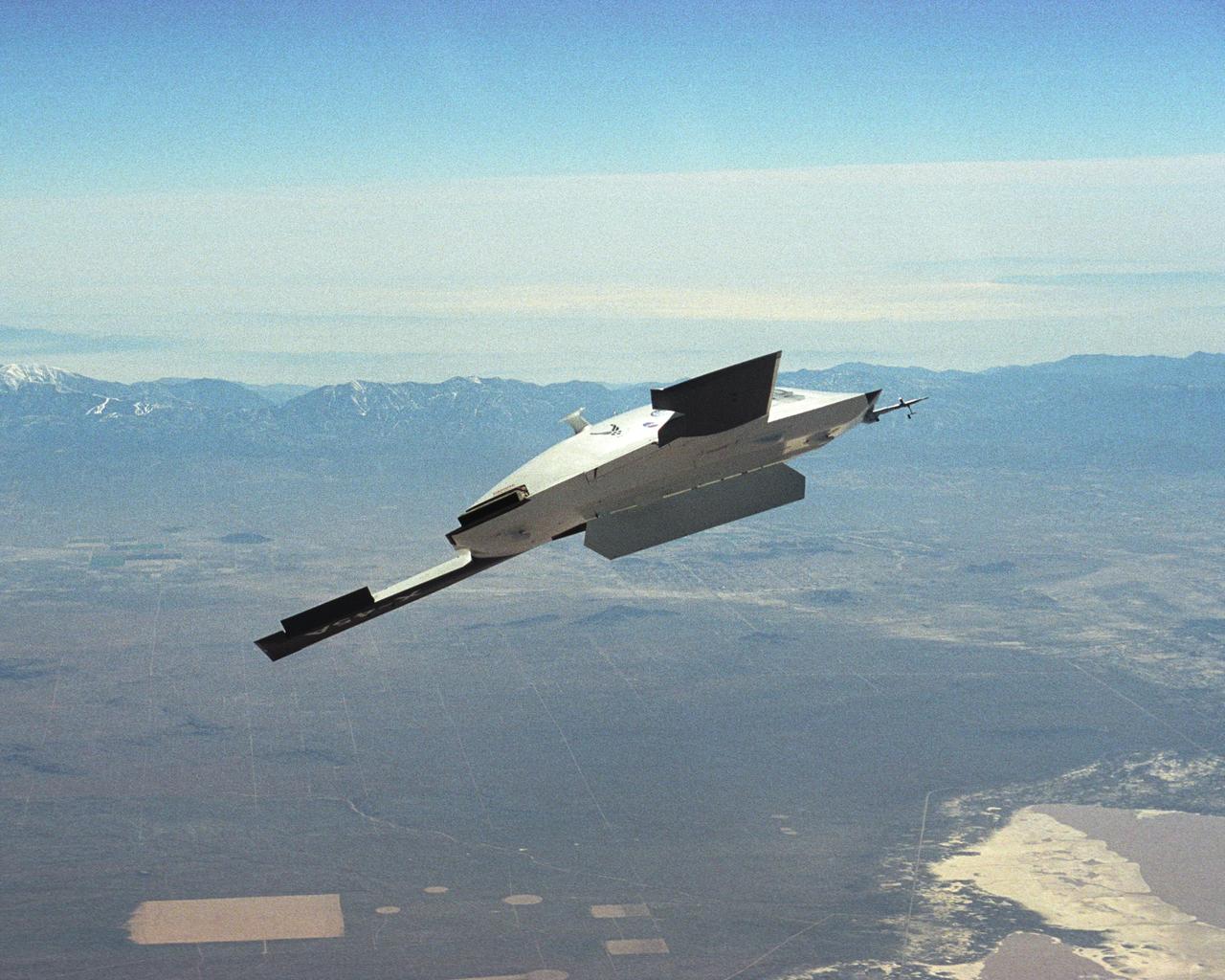
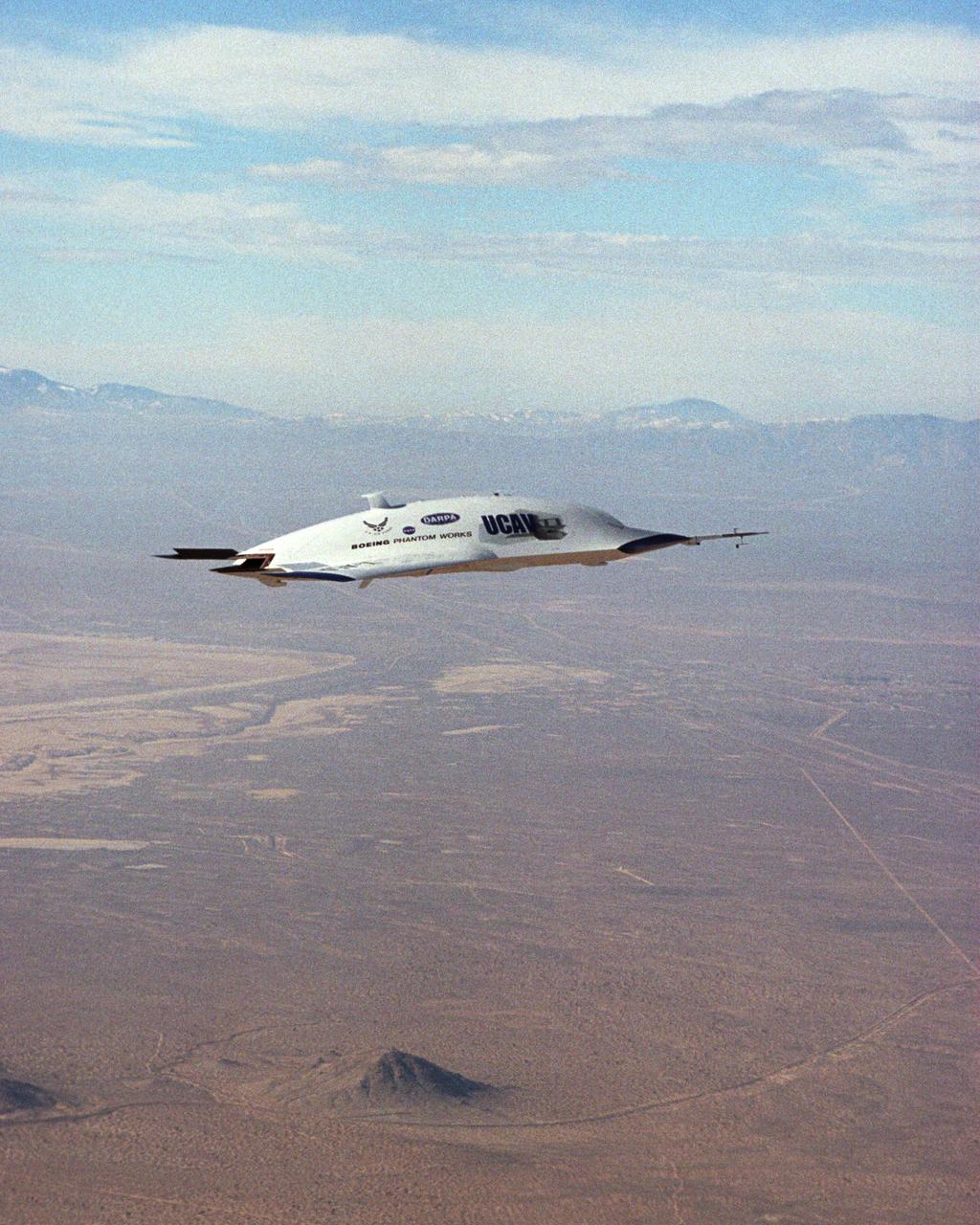
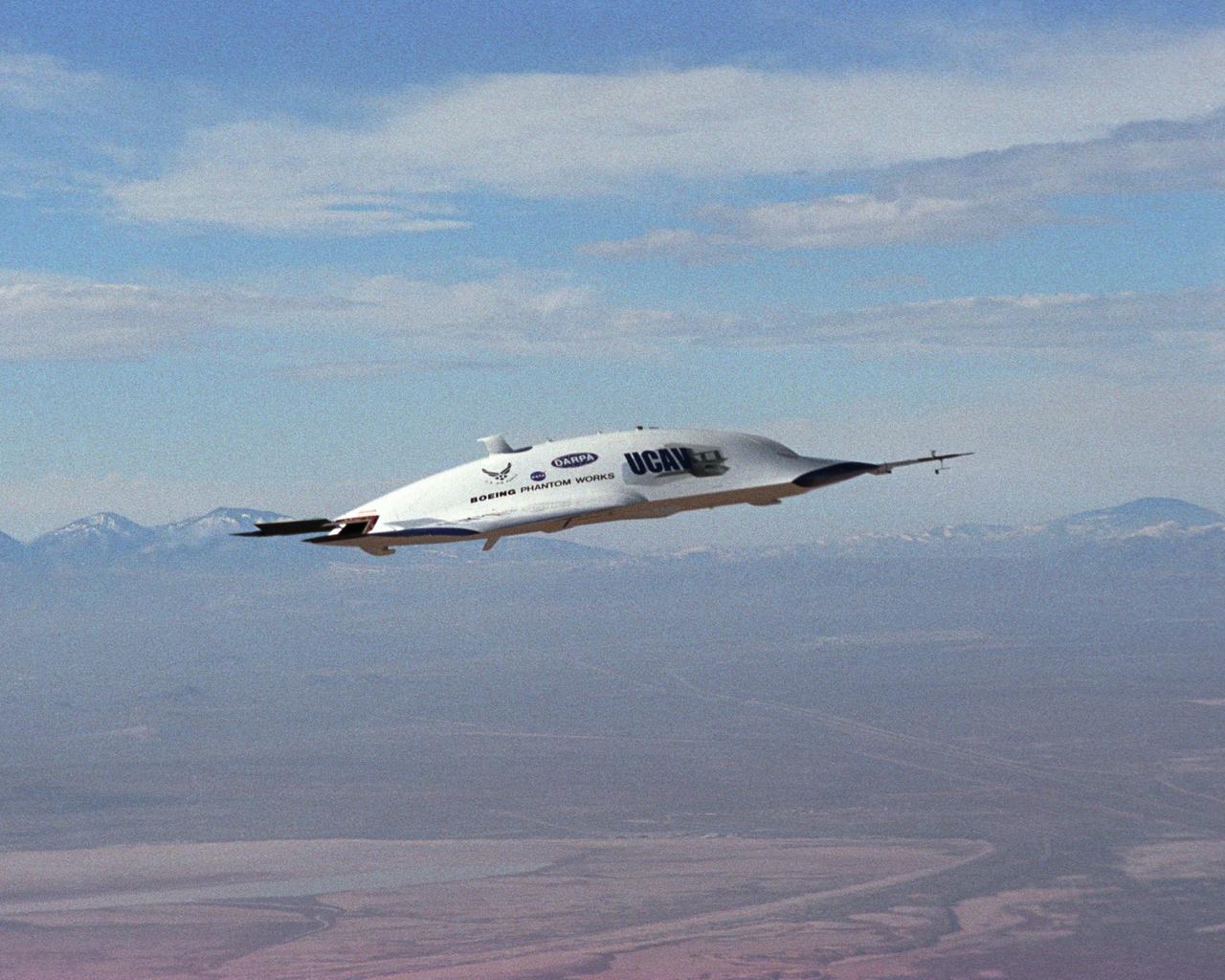
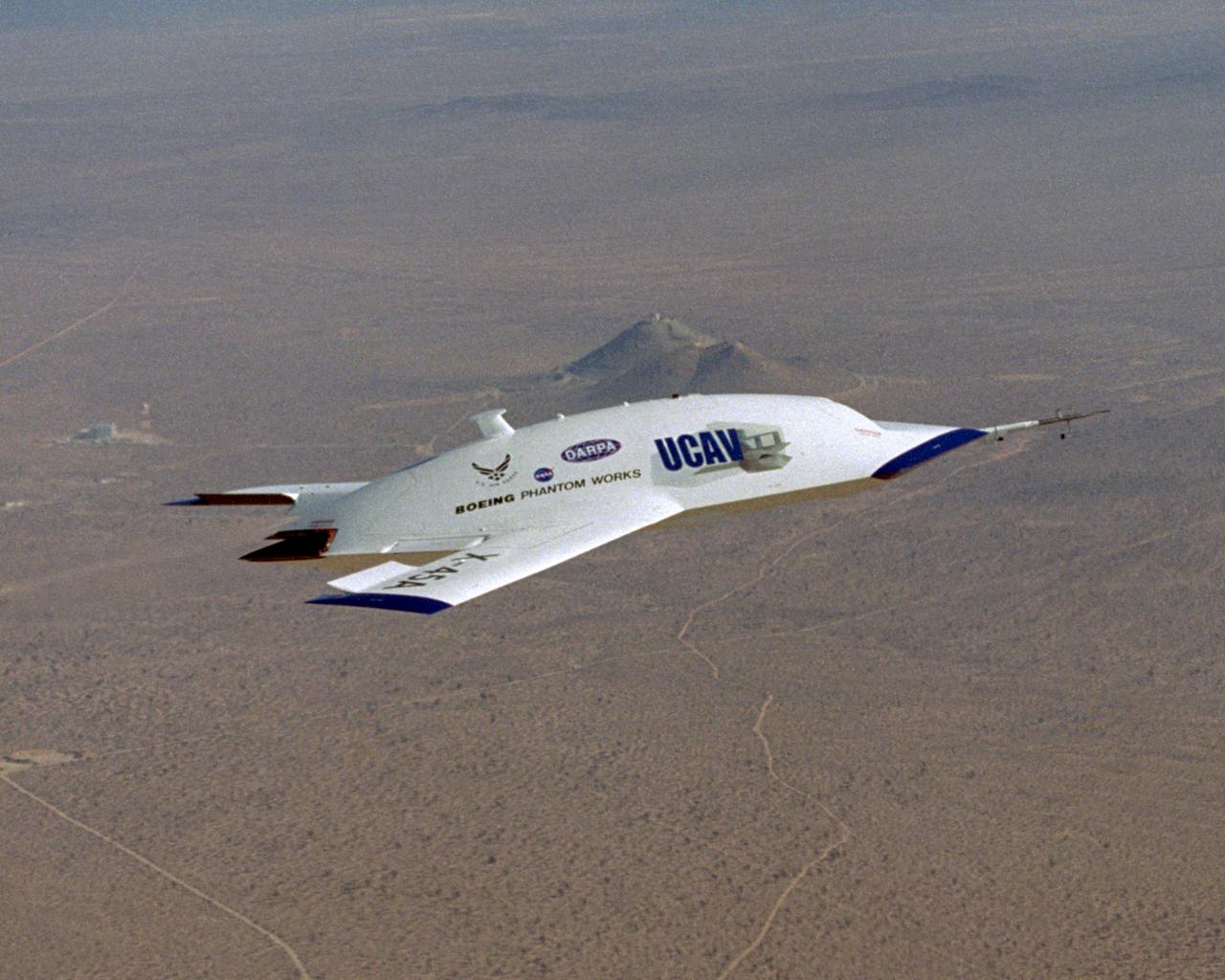
DARPA, U.S. Air Force, Boeing X-45A UCAV (Unmanned Combat Air Vehicle) at NASA Dryden Flight Research Center.
DARPA, U.S. Air Force, Boeing X-45A UCAV at NASA Dryden
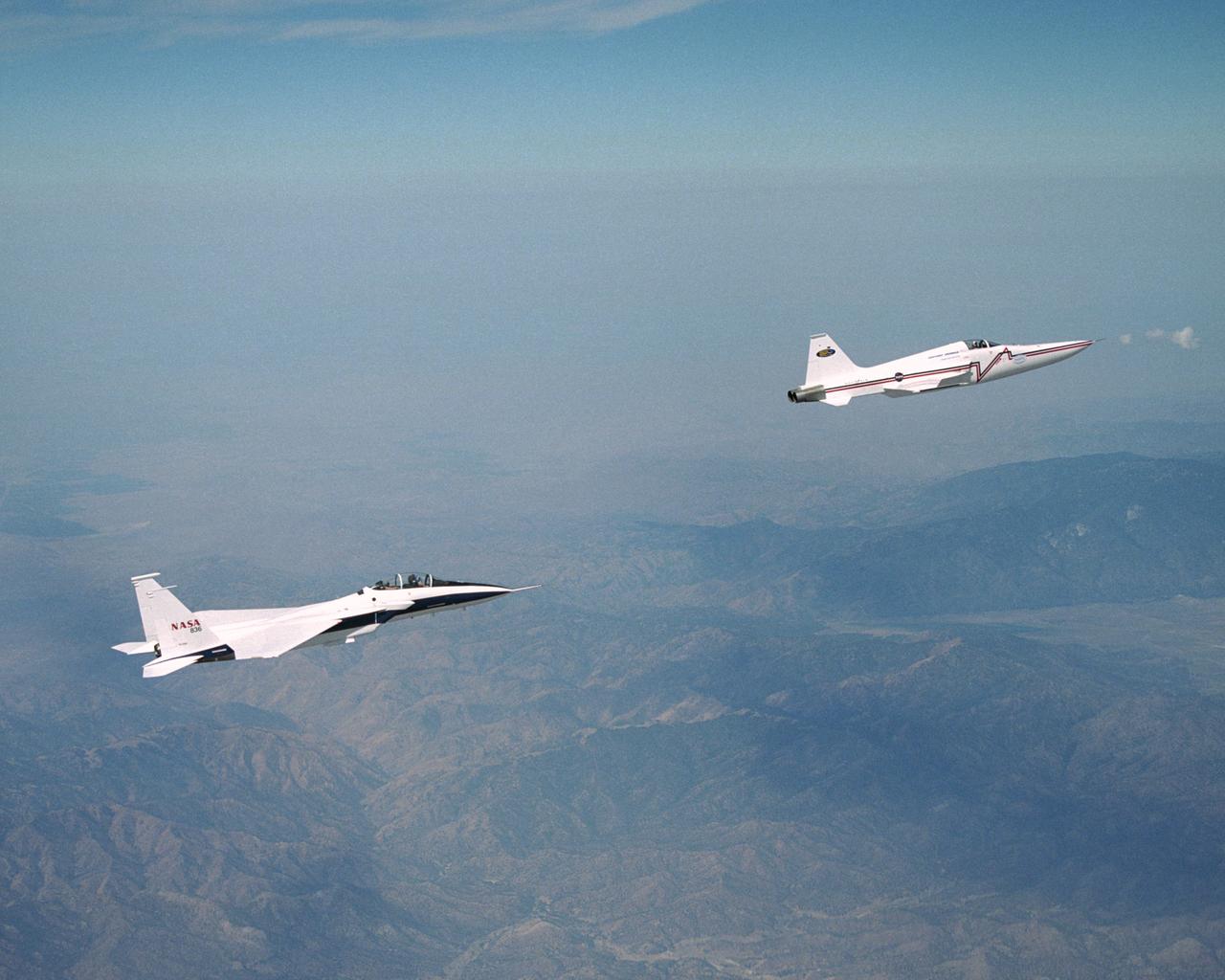
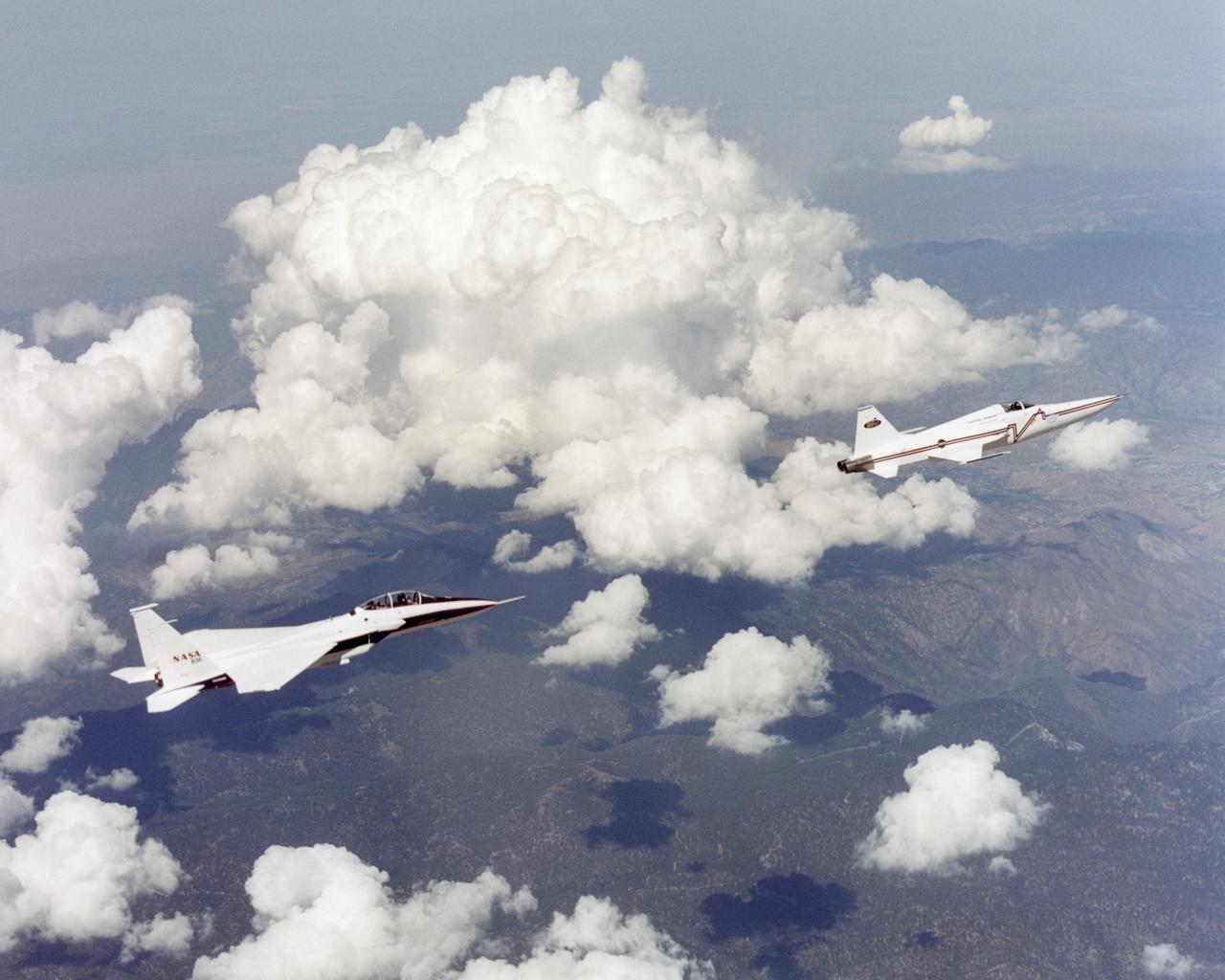
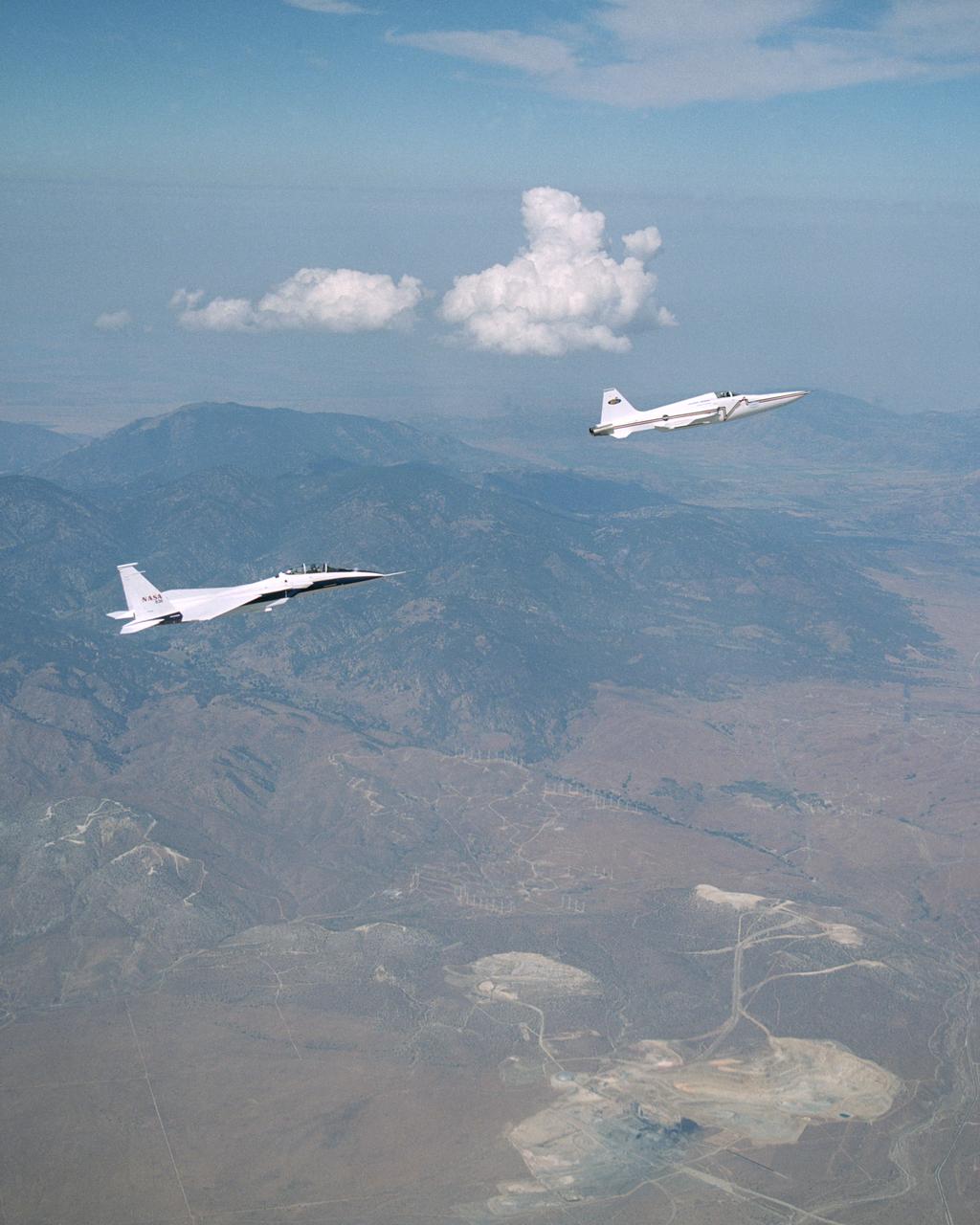
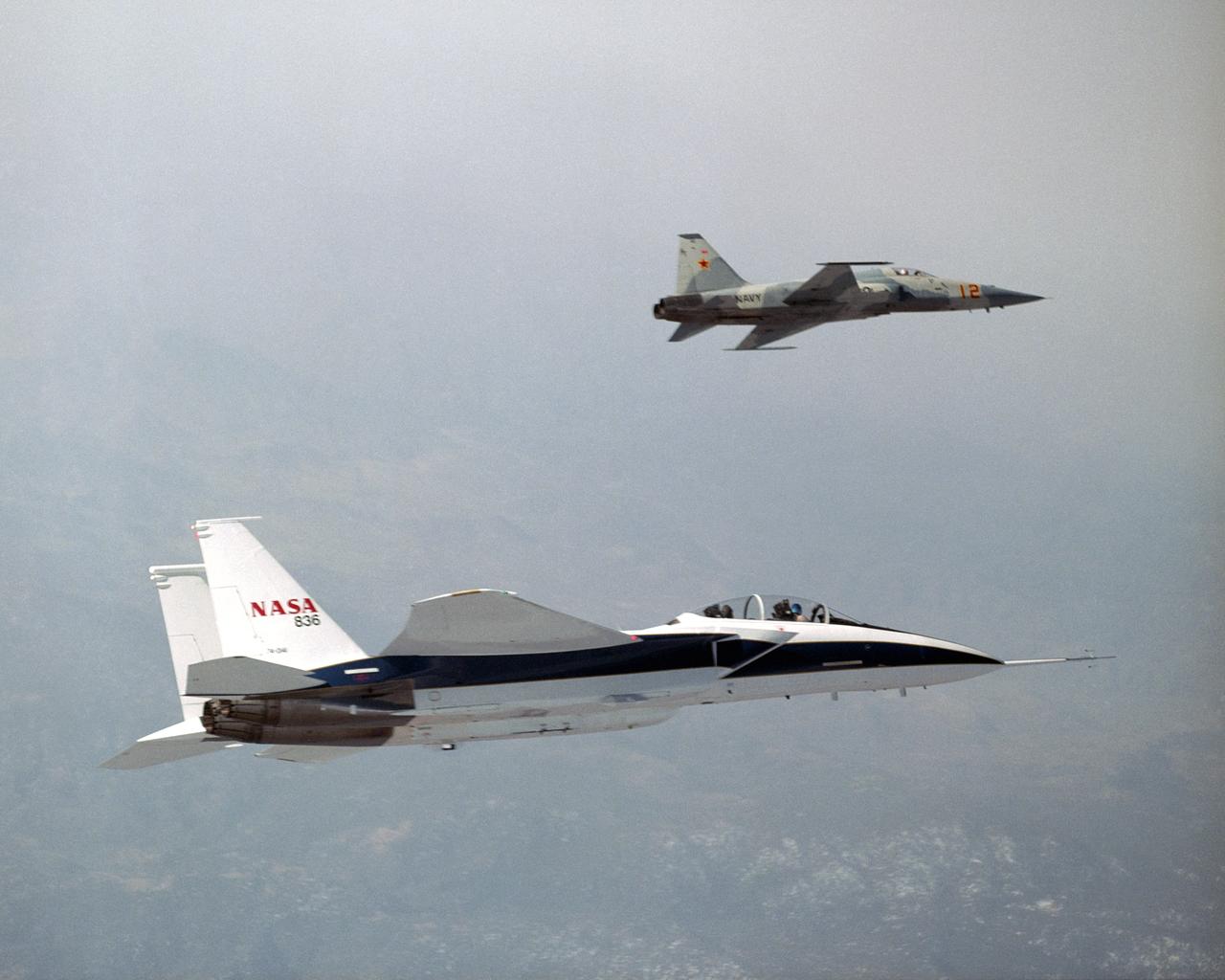
NASA's F-15B research testbed jet from the NASA Dryden Flight Research Center flew in the supersonic shockwave of a Northrop Grumman Corp. modified F-5E in support of the Shaped Sonic Boom Demonstration (SSBD) project, which is part of the DARPA's Quiet Supersonic Platform (QSP) program.
NASA's F-15B research testbed jet from the NASA Dryden Flight Research Center flew in the supersonic shockwave of a Northrop Grumman Corp. modified F-5E in support of the Shaped Sonic Boom Demonstration (SSBD) project, which is part of DARPA's Quiet Supers
RoboSimian, a limbed robot developed by engineers at NASA Jet Propulsion Laboratory in Pasadena, California, competed in the DARPA Robotics Challenge Trials in Florida in December 2013.
RoboSimian Inner Workings
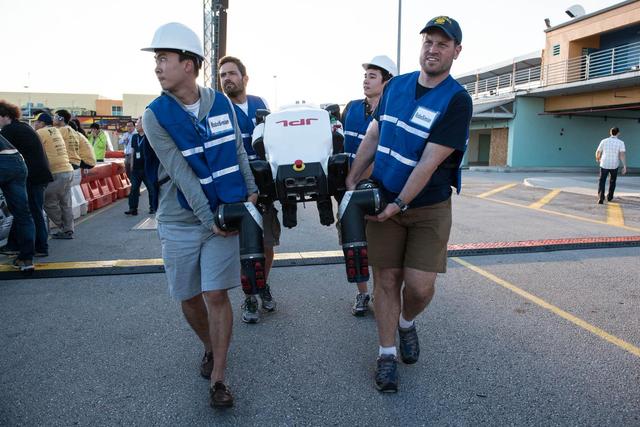
Engineers from NASA Jet Propulsion Laboratory carry RoboSimian, a robot developed at JPL, at the DARPA Robotics Challenge Trials in Florida in December 2013.
Carrying RoboSimian
RoboSimian, a limbed robot developed by engineers at NASA Jet Propulsion Laboratory in Pasadena, California, competed in the DARPA Robotics Challenge DRC Trials in Florida in December 2013.
RoboSimian Competes
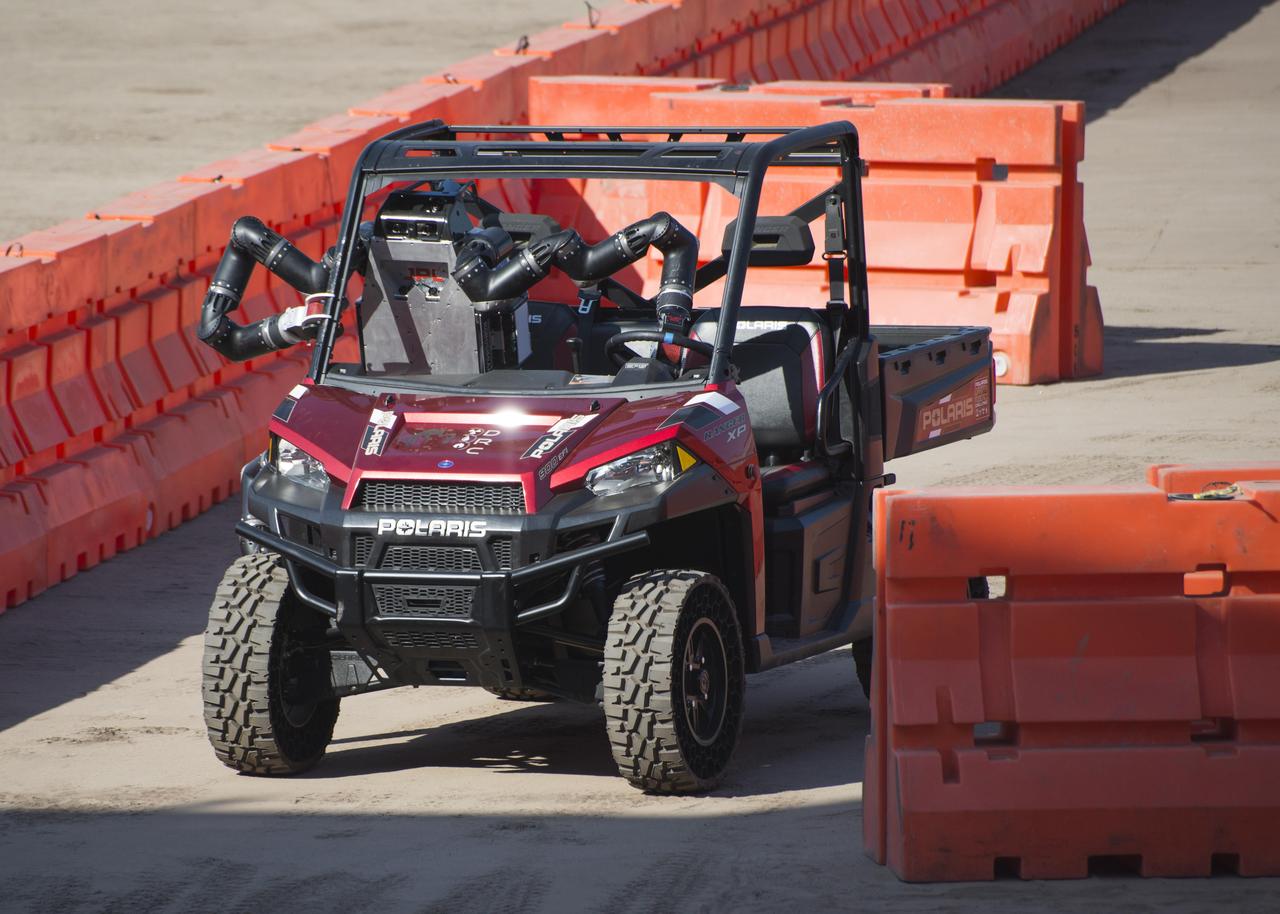
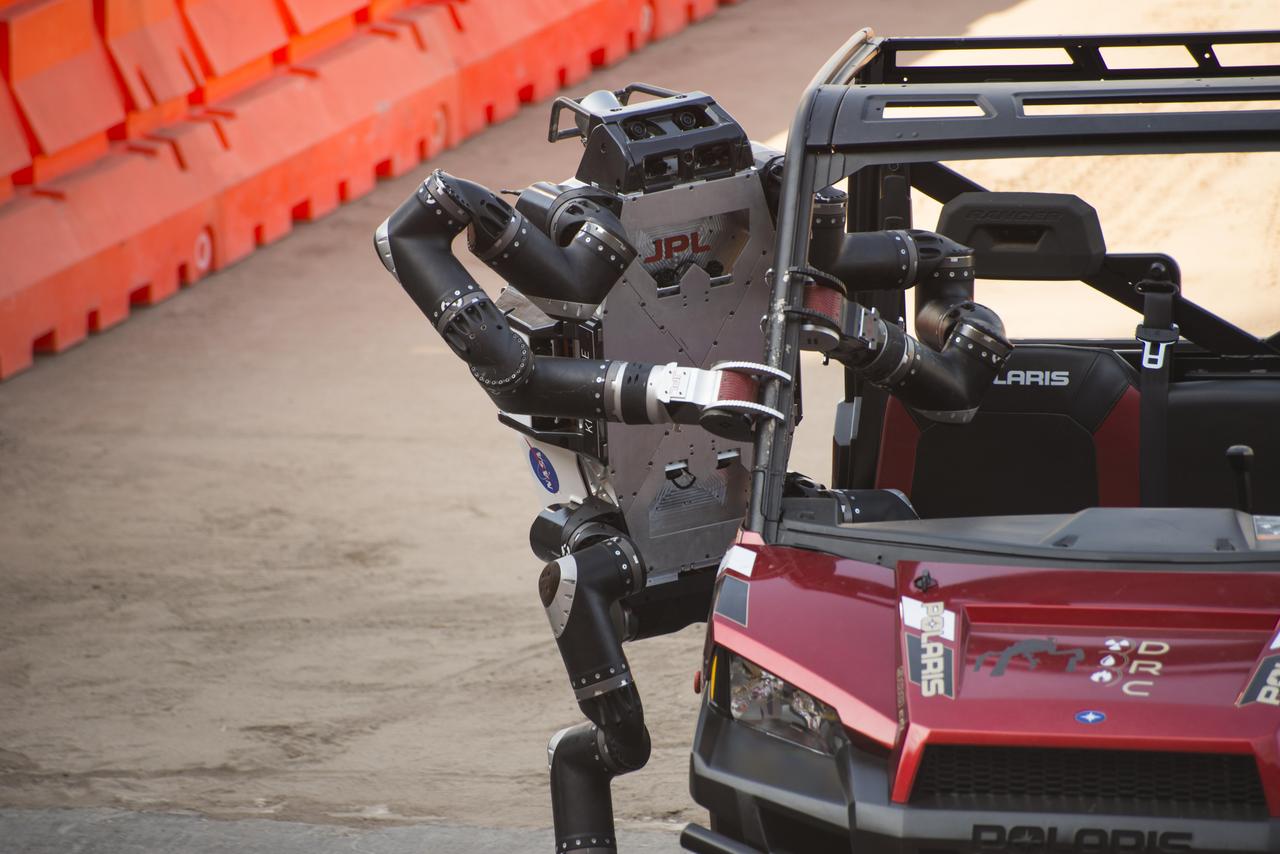
JPL's RoboSimian exits its vehicle following a brief drive through a slalom course at the DARPA Robotics Challenge in Pomona, California. This image was taken June 6, 2015.  http://photojournal.jpl.nasa.gov/catalog/PIA19324
RoboSimian Exits Vehicle
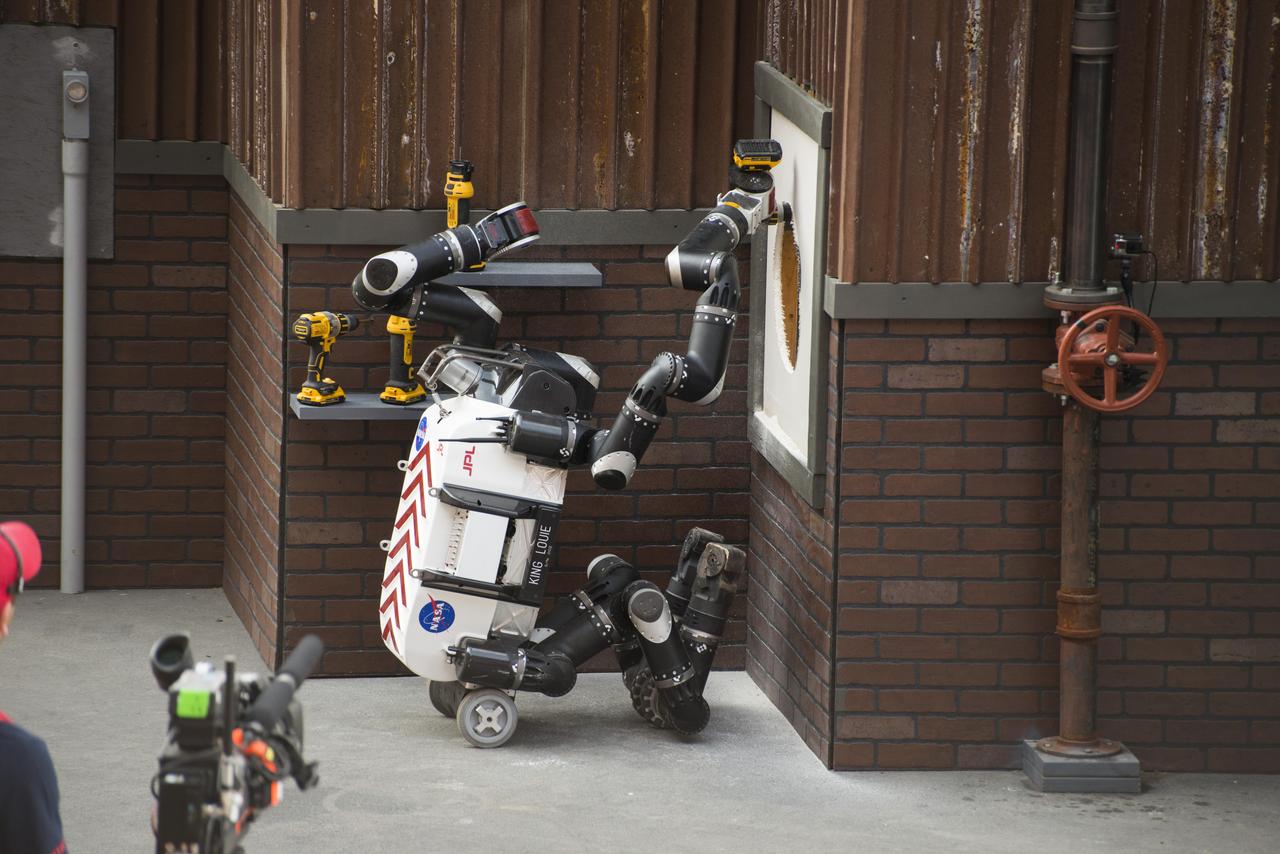
Using a cordless power drill, RoboSimian cuts a hole into a panel of drywall to complete one of the tasks in the DARPA Robotics Challenge Finals in Pomona, California. This image was taken on June 6, 2015.  http://photojournal.jpl.nasa.gov/catalog/PIA19326
RoboSimian Cuts Hole in Wall
JPL's RoboSimian drives a four-wheeled vehicle through a slalom course at the DARPA Robotics Challenge Finals in Pomona, California. This image was taken on June 6, 2015.   http://photojournal.jpl.nasa.gov/catalog/PIA19325
RoboSimian Driving
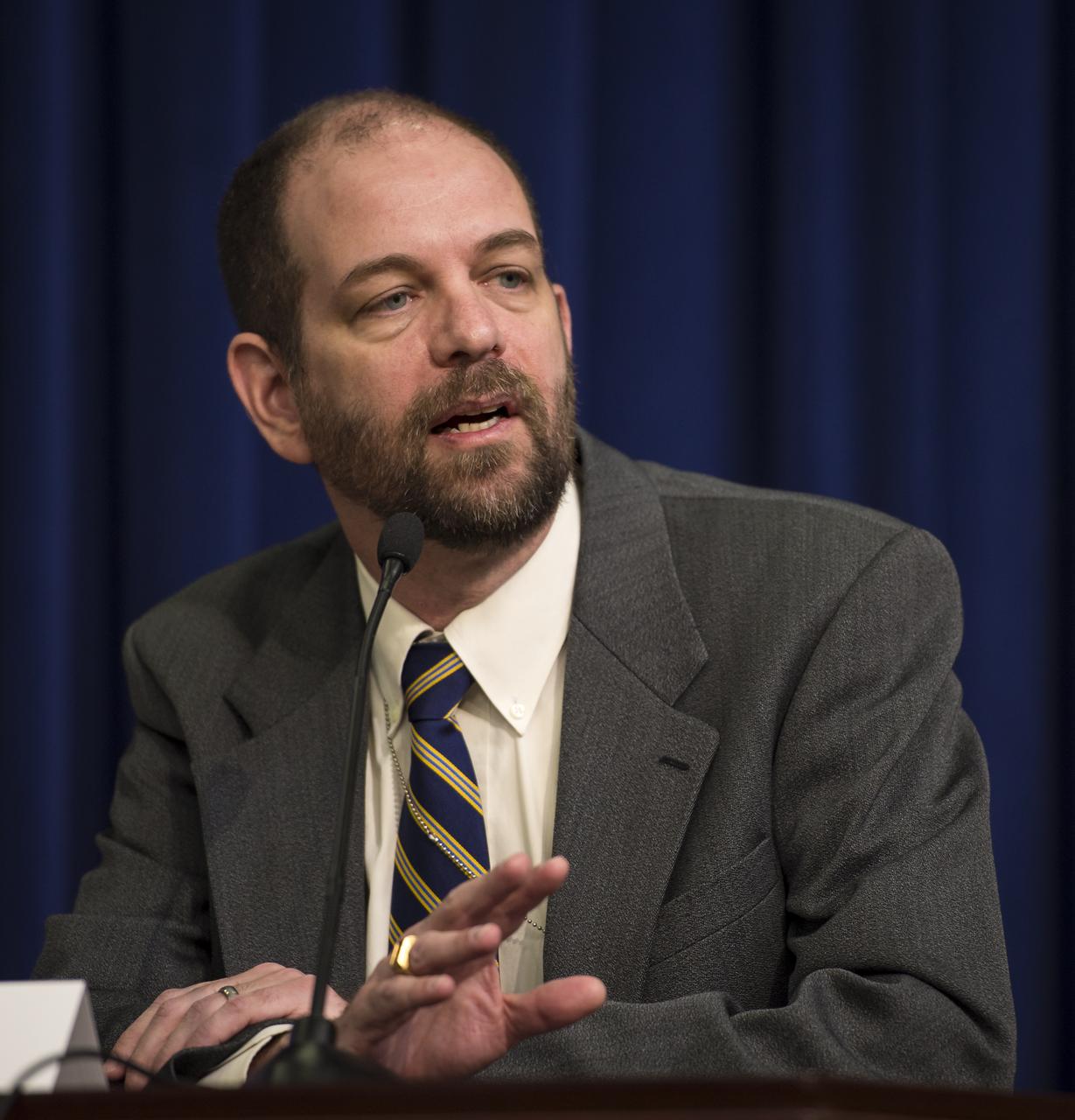
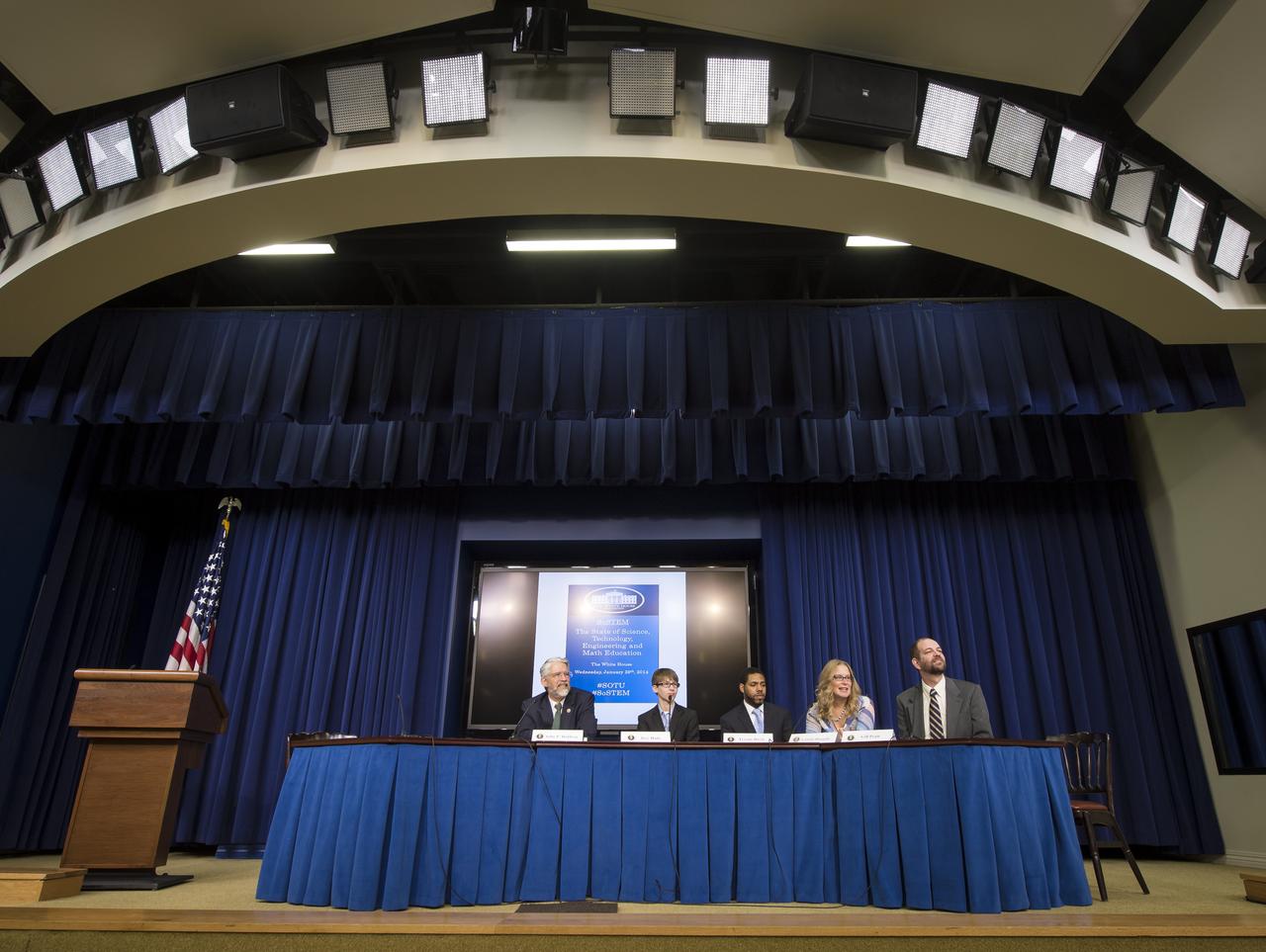
Defense Advanced Research Projects Agency  (DARPA) Gill Pratt speaks at the annual White House State of Science, Technology, Engineering, and Math (SoSTEM) address, Wednesday, Jan. 29, 2014, in the South Court Auditorium in the Eisenhower Executive Office Building on the White House complex in Washington. Photo Credit: (NASA/Bill Ingalls)
State of STEM (SoSTEM) Address
The first X-45A Unmanned Combat Air Vehicle (UCAV) technology demonstrator completed its sixth flight on Dec. 19, 2002, raising its landing gear in flight for the first time. The X-45A flew for 40 minutes and reached an airspeed of 195 knots and an altitude of 7,500 feet. Dryden is supporting the DARPA/Boeing team in the design, development, integration, and demonstration of the critical technologies, processes, and system attributes leading to an operational UCAV system. Dryden support of the X-45A demonstrator system includes analysis, component development, simulations, ground and flight tests.
X-45A in flight with F-18 #846 chase aircraft, during first GPS-guided weapon demonstration flight
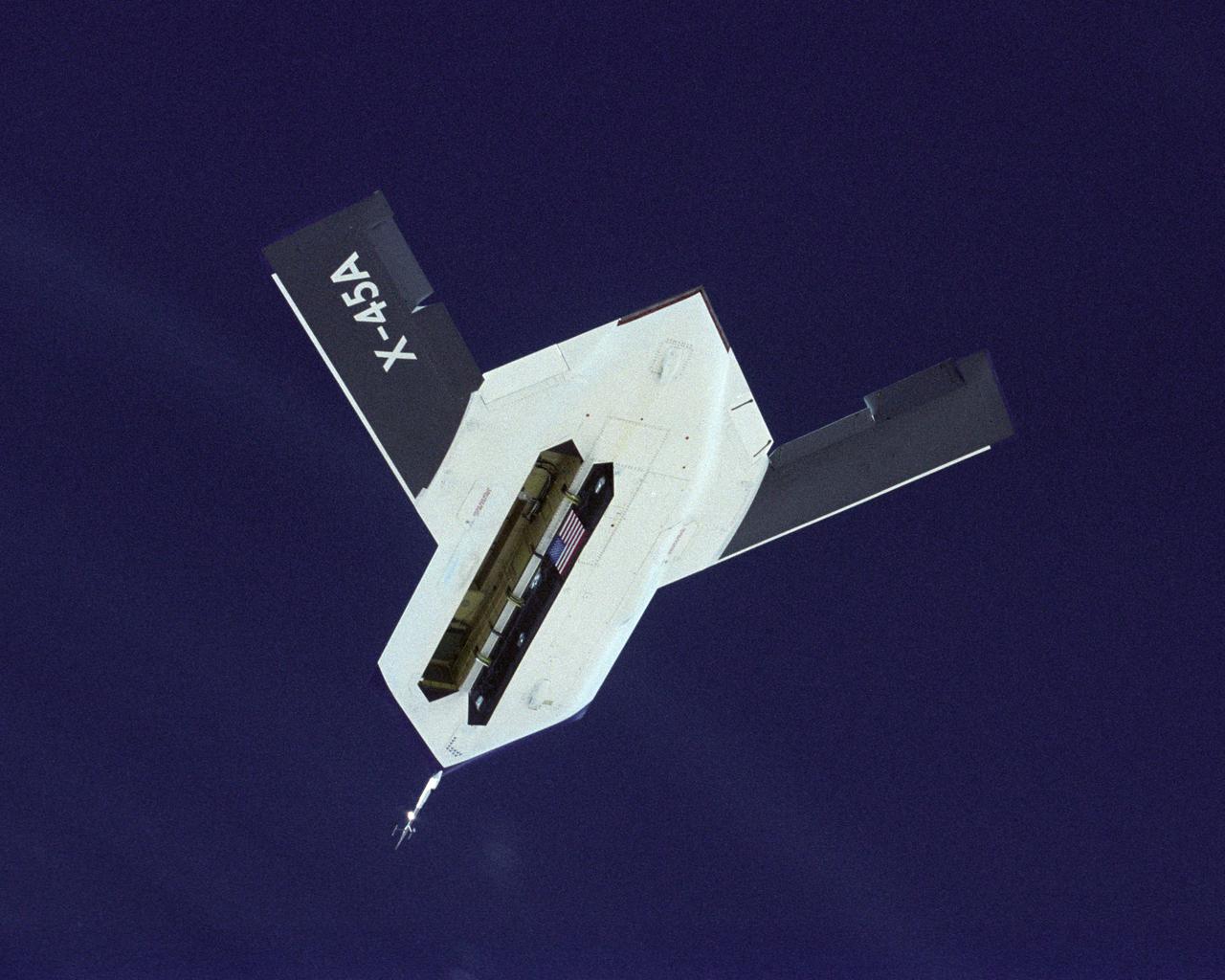
The DARPA/U.S. Air Force X-45A Unmanned Combat Air Vehicle (UCAV) system demonstration program completed the first phase of demonstrations, known as Block I, on Feb. 28, 2003. The final Block I activities included two flights at Dryden, during which safe operation of the weapons bay door was verified at 35,000 feet and speeds of Mach 0.75, the maximum planned altitude and speed for the two X-45A demonstrator vehicles.
X-45A Air Vehicle #1 during flight #13, with weapons bay door open
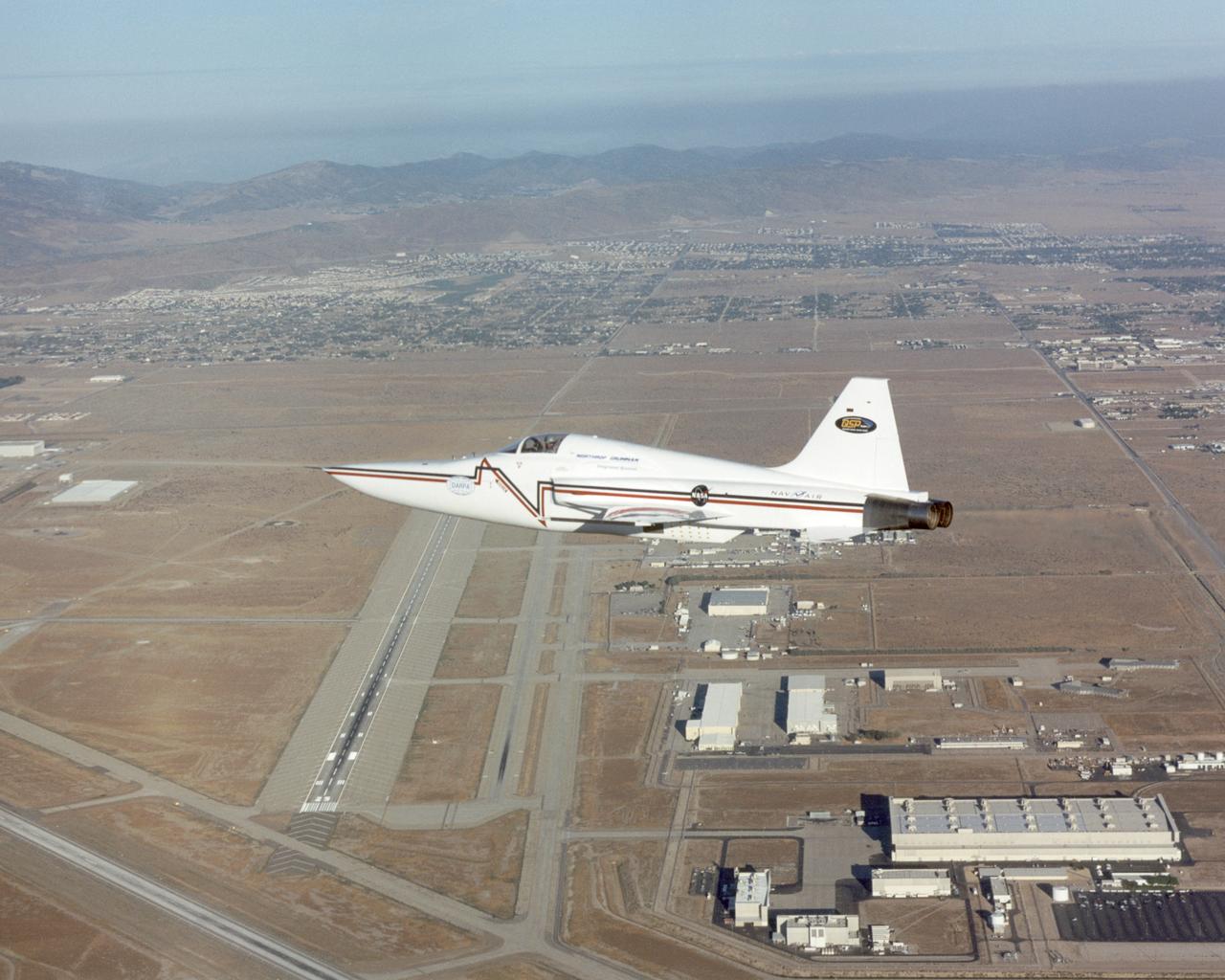
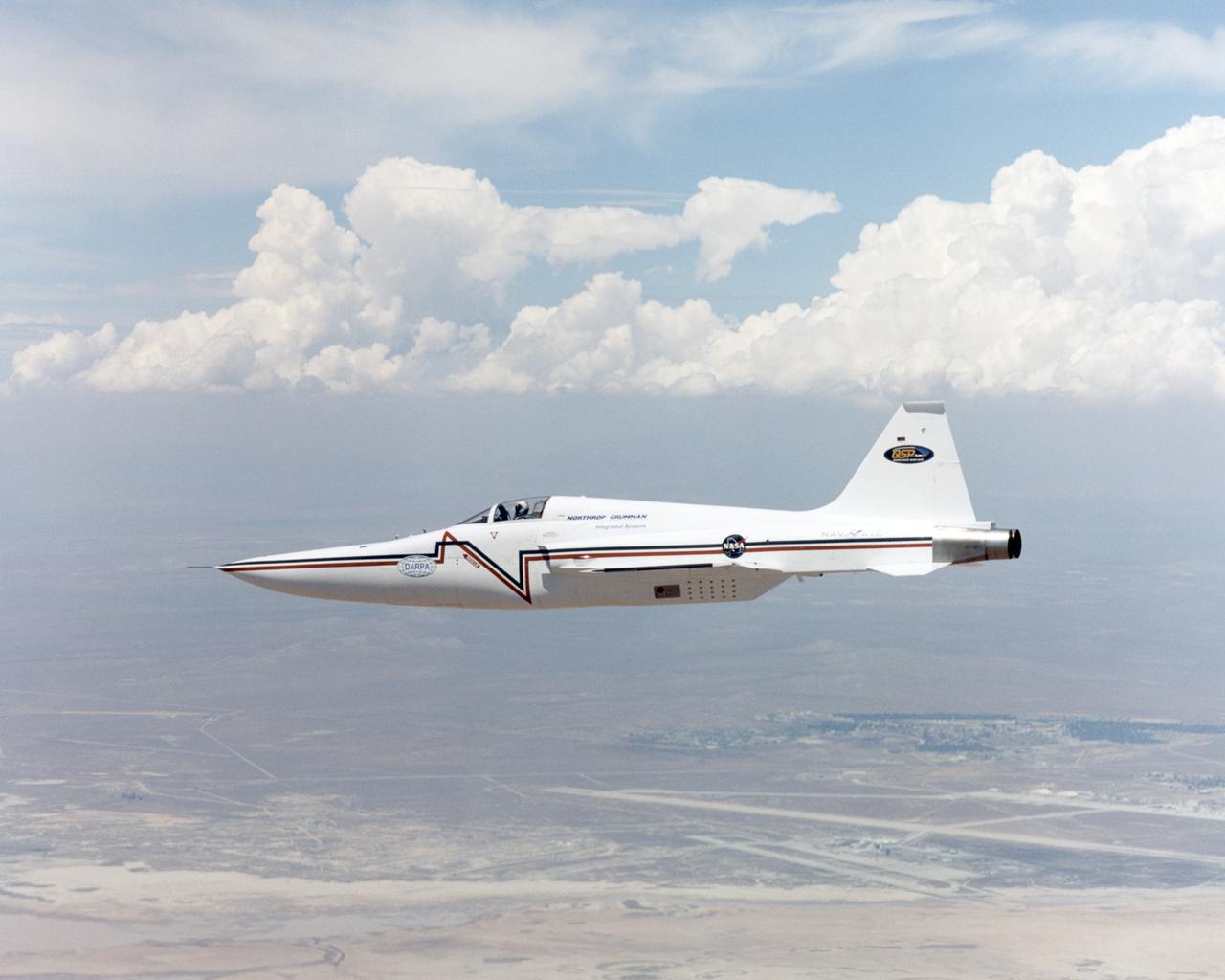
Northrop Grumman Corporation's modified U.S. Navy F-5E Shaped Sonic Boom Demonstration (SSBD) aircraft flies over the company's Palmdale, California facilities on Aug. 2, 2003. NASA Dryden provided range, air and ground data-gathering support for the SSBD project, which is part of DARPA's Quiet Supersonic Platform (QSP) program.
Northrop Grumman Corporation's modified U.S. Navy F-5E Shaped Sonic Boom Demonstration (SSBD) aircraft flies over the company's Palmdale, Calif. facilities on Aug. 2, 2003
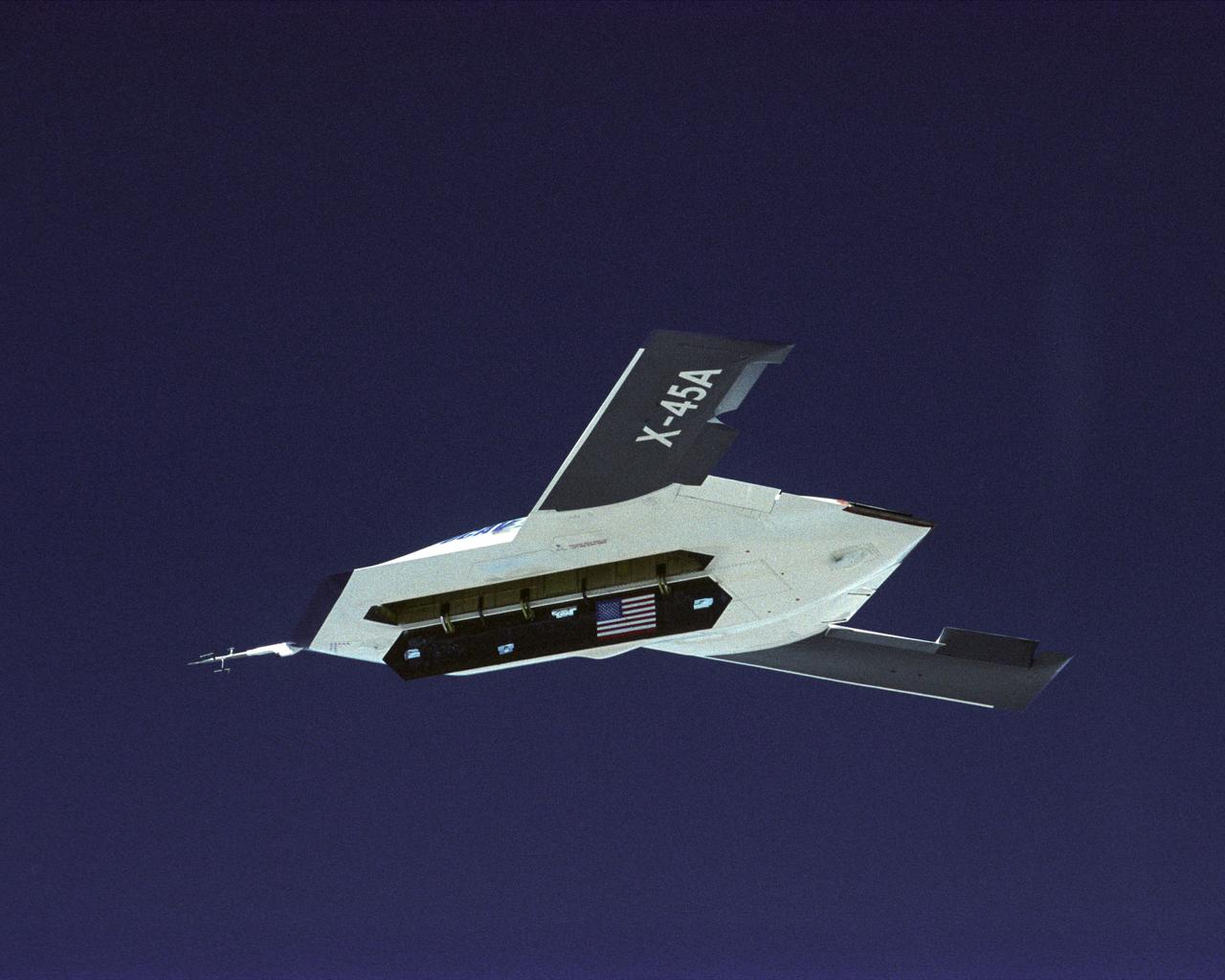
The DARPA/U.S. Air Force X-45A Unmanned Combat Air Vehicle (UCAV) system demonstration program completed the first phase of demonstrations, known as Block I, on Feb. 28, 2003. The final Block I activities included two flights at Dryden, during which safe operation of the weapons bay door was verified at 35,000 feet and speeds of Mach 0.75, the maximum planned altitude and speed for the two X-45A demonstrator vehicles.
X-45A Air Vehicle #1 during flight #13, with weapons bay door open
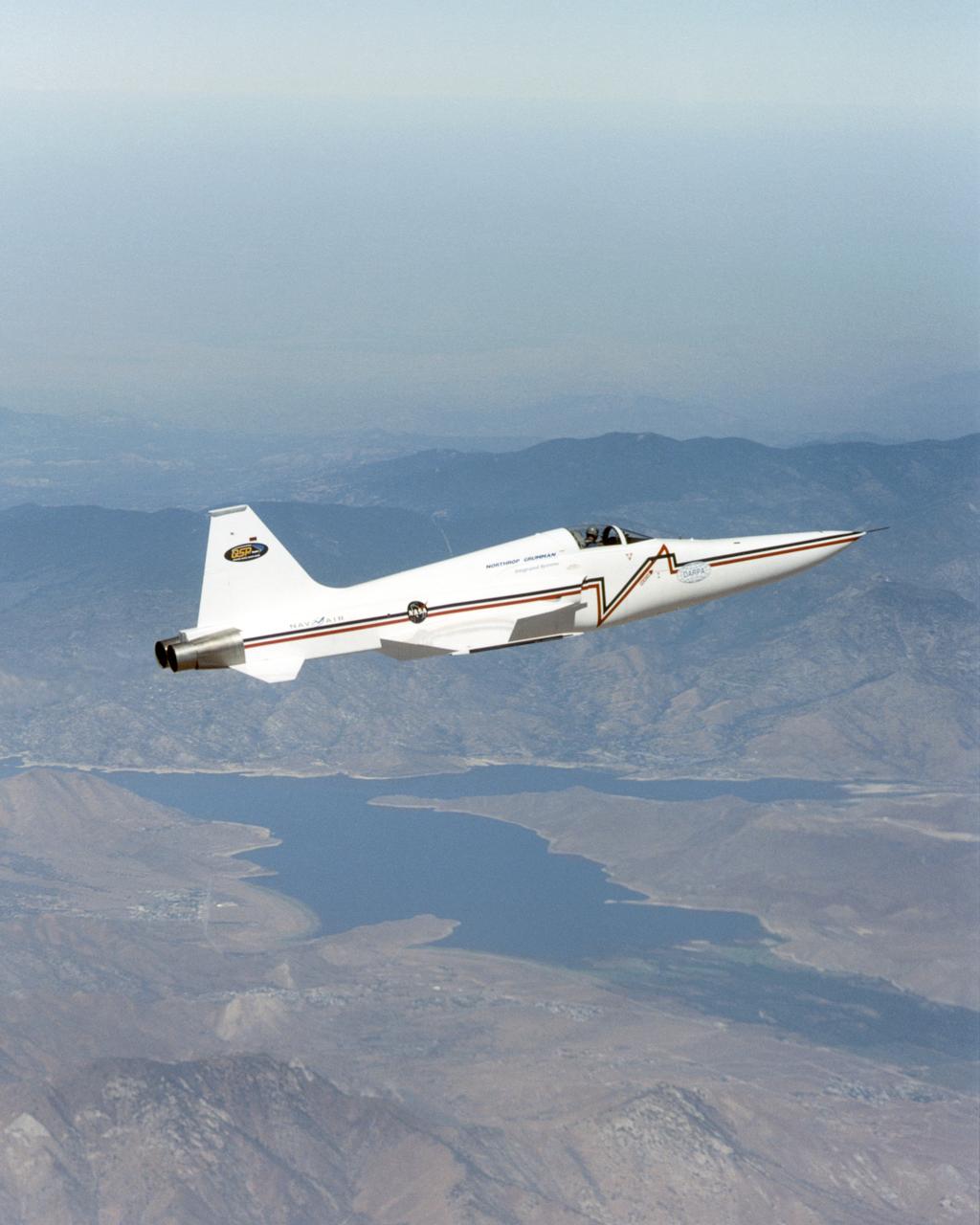
Northrop Grumman Corporation's modified U.S. Navy F-5E Shaped Sonic Boom Demonstration (SSBD) aircraft flies over Lake Isabella, California on Aug. 4, 2003. NASA Dryden provided range, air and ground data-gathering support for the SSBD project, which is part of DARPA's Quiet Supersonic Platform (QSP) program.
Northrop Grumman Corporation's modified U.S. Navy F-5E Shaped Sonic Boom Demonstration (SSBD) aircraft flies over Lake Isabella, Calif., on Aug. 4, 2003
NASA's F-15B research testbed jet from NASA's Dryden Flight Research Center flew in the supersonic shockwave of a Northrop Grumman Corp. modified U.S. Navy F-5E jet in support of the Shaped Sonic Boom Demonstration (SSBD) project, which is part of the DARPA's Quiet Supersonic Platform (QSP) program. On Aug. 27, 2003, the F-5 SSBD aircraft demonstrated a method to reduce the intensity of sonic booms.
NASA's F-15B from the Dryden Flight Research Center flew in the supersonic shockwave of a modified U.S. Navy F-5E jet in support of the Shaped Sonic Boom Demonstration (SSBD) project. On Aug. 27, 2003, the F-5 SSBD aircraft demonstrated a method to reduce
The DARPA/U.S. Air Force X-45A Unmanned Combat Air Vehicle (UCAV) system demonstration program completed the first phase of demonstrations, known as Block I, on Feb. 28, 2003. The final Block I activities included two flights at Dryden, during which safe operation of the weapons bay door was verified at 35,000 feet and speeds of Mach 0.75, the maximum planned altitude and speed for the two X-45A demonstrator vehicles.
X-45A Air Vehicle #1 during flight #13, with weapons bay door open
The DARPA/U.S. Air Force X-45A Unmanned Combat Air Vehicle (UCAV) system demonstration program completed the first phase of demonstrations, known as Block I, on Feb. 28, 2003. The final Block I activities included two flights at Dryden, during which safe operation of the weapons bay door was verified at 35,000 feet and speeds of Mach 0.75, the maximum planned altitude and speed for the two X-45A demonstrator vehicles.
X-45A Air Vehicle #1 during flight #13, with weapons bay door open
The DARPA/U.S. Air Force X-45A Unmanned Combat Air Vehicle (UCAV) system demonstration program completed the first phase of demonstrations, known as Block I, on Feb. 28, 2003. The final Block I activities included two flights at Dryden, during which safe operation of the weapons bay door was verified at 35,000 feet and speeds of Mach 0.75, the maximum planned altitude and speed for the two X-45A demonstrator vehicles.
X-45A Air Vehicle #1 during flight #13, with weapons bay door open
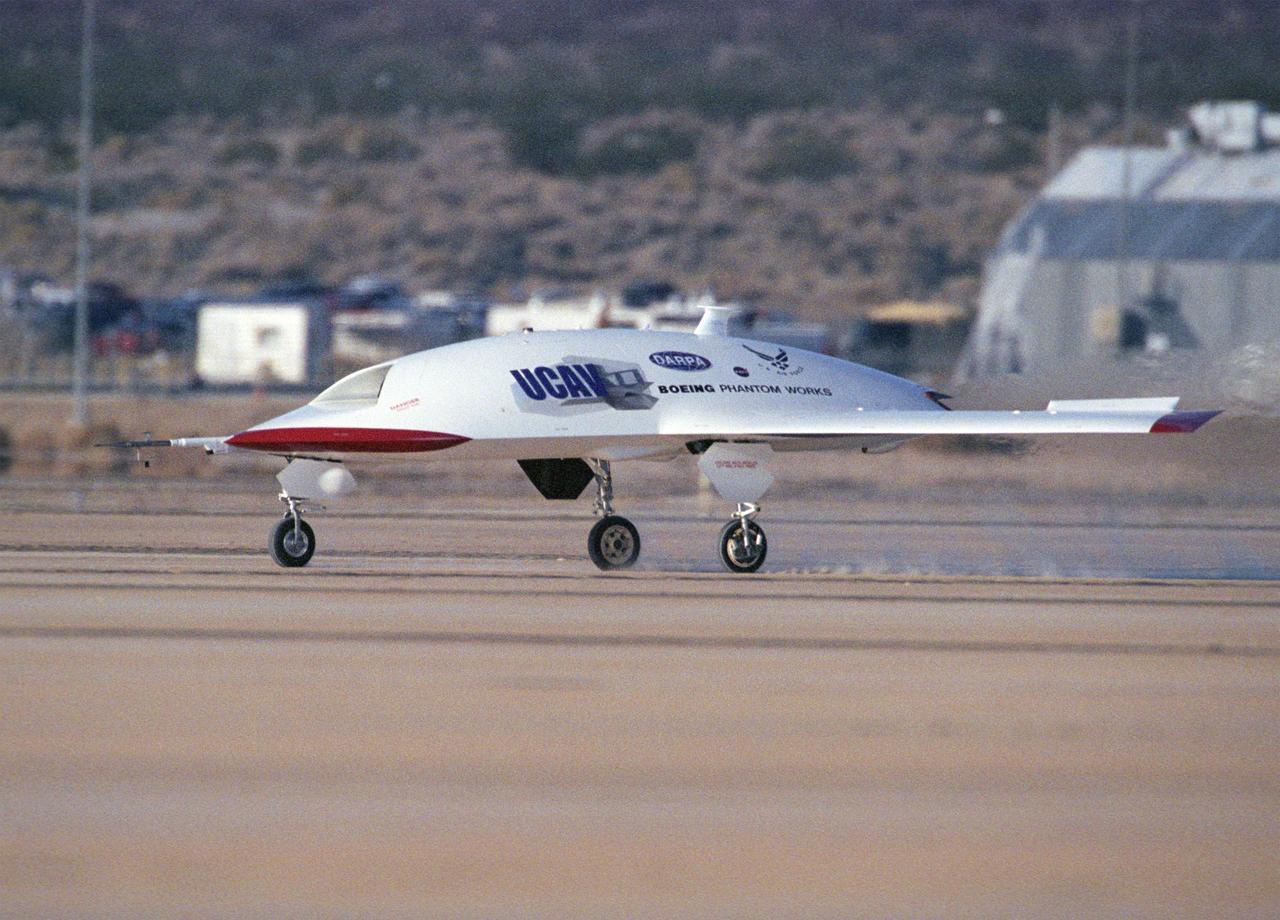
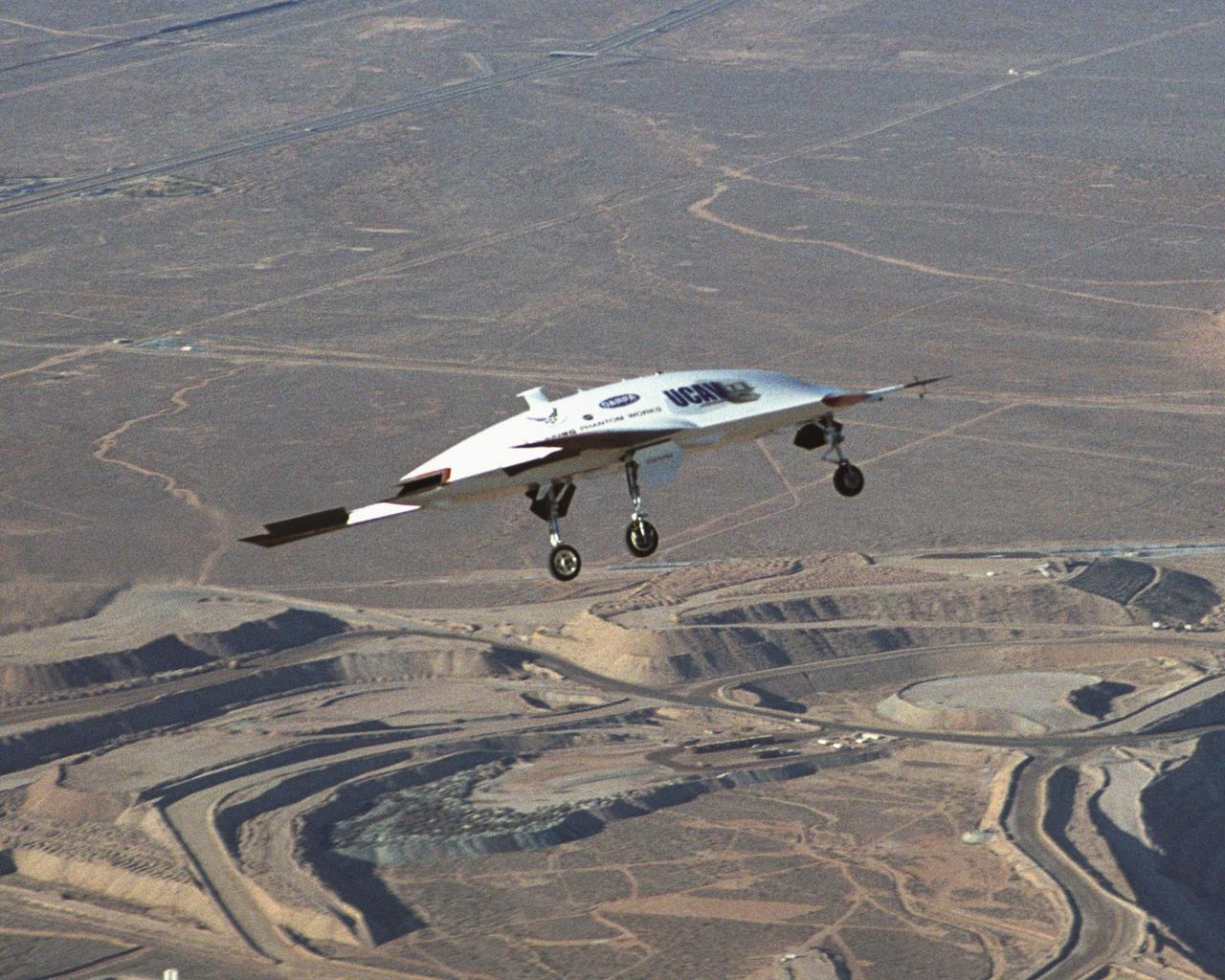
The second X-45A Unmanned Combat Air Vehicle (UCAV) technology demonstrator completed its first flight on November 21, 2002, after taking off from a dry lakebed at NASA's Dryden Flight Research Center, Edwards Air Force Base, California.  X-45A vehicle two flew for approximately 30 minutes and reached an airspeed of 195 knots and an altitude of 7500 feet. This flight validated the functionality of the UCAV flight software on the second air vehicle.  Dryden is supporting the DARPA/Boeing team in the design, development, integration, and demonstration of the critical technologies, processes, and system attributes leading to an operational UCAV system. Dryden support of the X-45A demonstrator system includes analysis, component development, simulations, ground and flight tests.
The second X-45A Unmanned Combat Air Vehicle (UCAV) technology demonstrator aircraft during its maiden flight. The flight marks another milestone for the UCAV program, and verified the aircraft's flight control software
The second X-45A Unmanned Combat Air Vehicle (UCAV) technology demonstrator completed its first flight on November 21, 2002, after taking off from a dry lakebed at NASA's Dryden Flight Research Center, Edwards Air Force Base, California.  X-45A vehicle two flew for approximately 30 minutes and reached an airspeed of 195 knots and an altitude of 7500 feet. This flight validated the functionality of the UCAV flight software on the second air vehicle.  Dryden is supporting the DARPA/Boeing team in the design, development, integration, and demonstration of the critical technologies, processes, and system attributes leading to an operational UCAV system. Dryden support of the X-45A demonstrator system includes analysis, component development, simulations, ground and flight tests.
The second X-45A Unmanned Combat Air Vehicle (UCAV) technology demonstrator aircraft during its maiden flight. The flight marks another milestone for the UCAV program, and verified the aircraft's flight control software
The second X-45A Unmanned Combat Air Vehicle (UCAV) technology demonstrator completed its first flight on November 21, 2002, after taking off from a dry lakebed at NASA's Dryden Flight Research Center, Edwards Air Force Base, California.  X-45A vehicle two flew for approximately 30 minutes and reached an airspeed of 195 knots and an altitude of 7500 feet. This flight validated the functionality of the UCAV flight software on the second air vehicle.  Dryden is supporting the DARPA/Boeing team in the design, development, integration, and demonstration of the critical technologies, processes, and system attributes leading to an operational UCAV system. Dryden support of the X-45A demonstrator system includes analysis, component development, simulations, ground and flight tests.
The second X-45A Unmanned Combat Air Vehicle (UCAV) technology demonstrator aircraft during its maiden flight. The flight marks another milestone for the UCAV program, and verified the aircraft's flight control software
The second X-45A Unmanned Combat Air Vehicle (UCAV) technology demonstrator completed its first flight on November 21, 2002, after taking off from a dry lakebed at NASA's Dryden Flight Research Center, Edwards Air Force Base, California.  X-45A vehicle two flew for approximately 30 minutes and reached an airspeed of 195 knots and an altitude of 7500 feet. This flight validated the functionality of the UCAV flight software on the second air vehicle.  Dryden is supporting the DARPA/Boeing team in the design, development, integration, and demonstration of the critical technologies, processes, and system attributes leading to an operational UCAV system. Dryden support of the X-45A demonstrator system includes analysis, component development, simulations, ground and flight tests.
The second X-45A Unmanned Combat Air Vehicle (UCAV) technology demonstrator aircraft during its maiden flight. The flight marks another milestone for the UCAV program, and verified the aircraft's flight control software
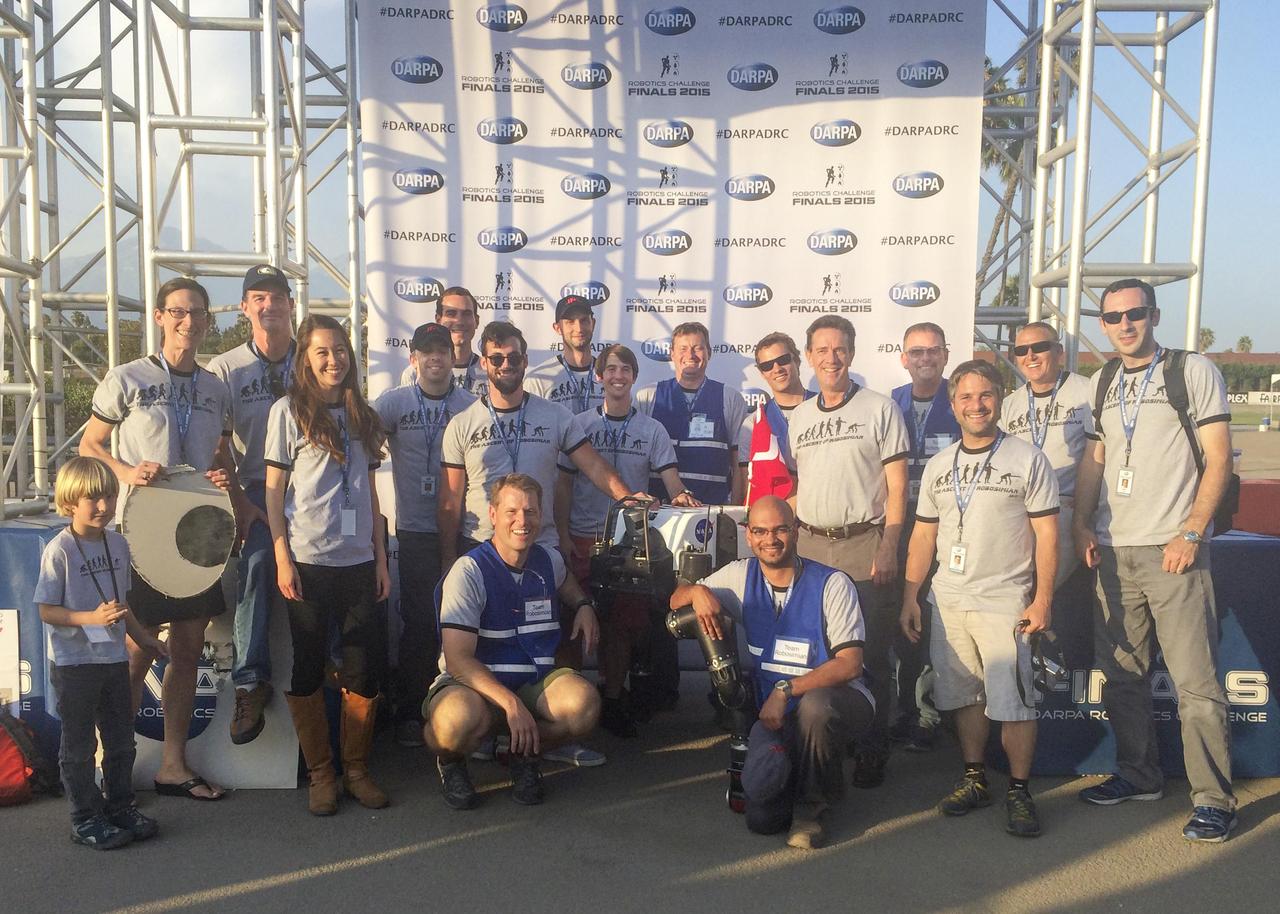
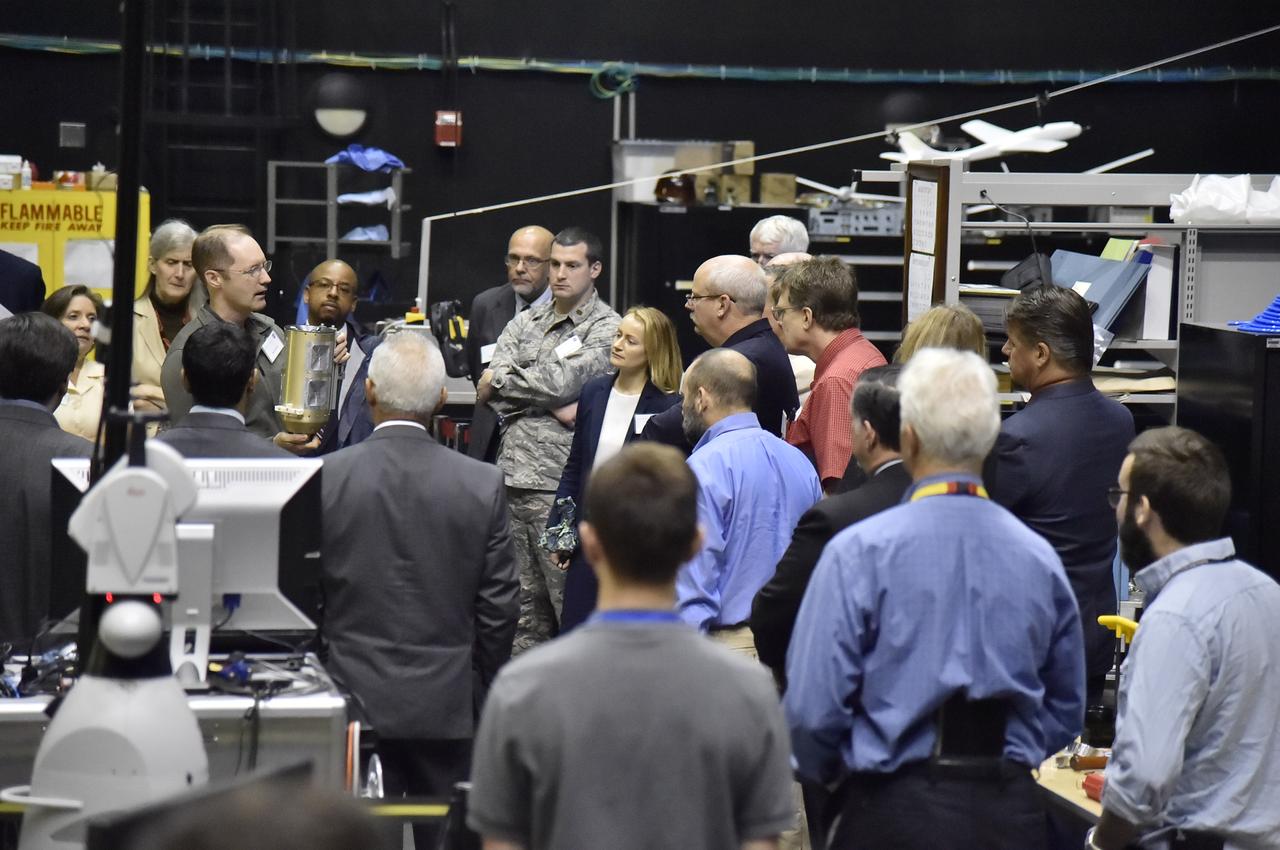
Many members of Team RoboSimian and a few guests gather with competition hardware at a "Meet the Robots" event during the DARPA Robotics Challenge Finals in Pomona, California, on June 6, 2015. The RoboSimian team at JPL is collaborating with partners at the University of California, Santa Barbara, and the California Institute of Technology in Pasadena. Caltech manages JPL for NASA.  http://photojournal.jpl.nasa.gov/catalog/PIA19329
Team RoboSimian
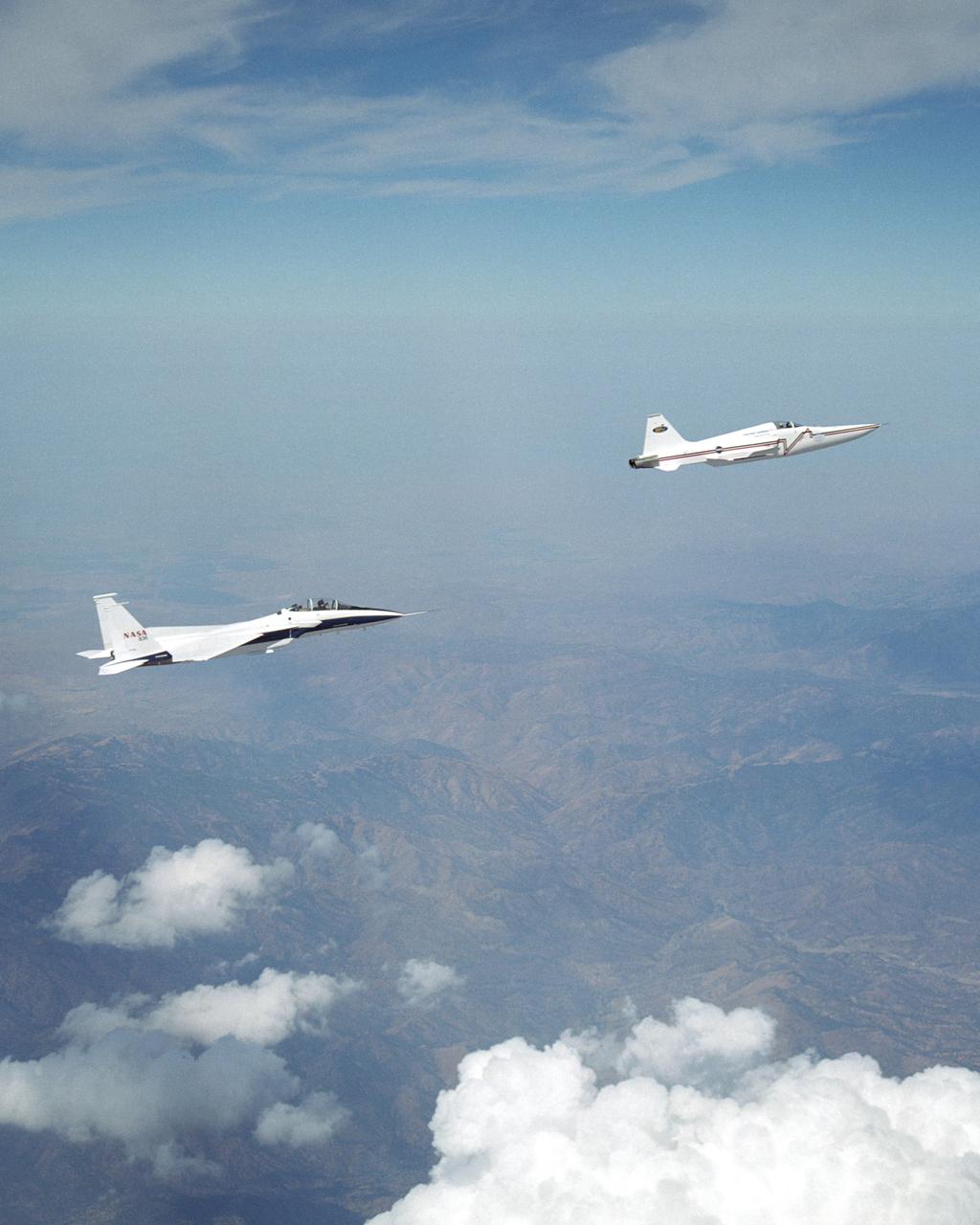
NASA's F-15B Research Testbed aircraft recently flew in the supersonic shock wave of a U.S. Navy F-5E in support of the F-5 Shaped Sonic Boom Demonstration (SSBD) project, part of the Defense Advanced Research Projects Agency's (DARPA) Quiet Supersonic Platform (QSP) program.  The flights originated from the NASA Dryden Flight Research Center at Edwards, California. Four flights were flown in order to measure the F-5E's near-field (close-up) sonic boom signature at Mach 1.4, during which more than 50 shockwave patterns were measured at distances as close as 100 feet below the F-5E.
NASA's F-15B Research Testbed aircraft flies in the supersonic shock wave of a U.S. Navy F-5E as part of the F-5 Shaped Sonic Boom Demonstration (SSBD) project.
NASA's F-15B Research Testbed aircraft recently flew in the supersonic shock wave of a U.S. Navy F-5E in support of the F-5 Shaped Sonic Boom Demonstration (SSBD) project, part of the Defense Advanced Research Projects Agency's (DARPA) Quiet Supersonic Platform (QSP) program.  The flights originated from the NASA Dryden Flight Research Center at Edwards, California. Four flights were flown in order to measure the F-5E's near-field (close-up) sonic boom signature at Mach 1.4, during which more than 50 shockwave patterns were measured at distances as close as 100 feet below the F-5E.
NASA's F-15B Research Testbed aircraft flies in the supersonic shock wave of a U.S. Navy F-5E as part of the F-5 Shaped Sonic Boom Demonstration (SSBD) project.
NASA's F-15B research testbed jet from NASA's Dryden Flight Research Center flew in the supersonic shockwave of a Northrop Grumman Corp. modified U.S. Navy F-5E jet in support of the Shaped Sonic Boom Demonstration (SSBD) project, which is part of the DARPA's Quiet Supersonic Platform (QSP) program.  The project is an effort to lessen sonic booms.  During the recent demonstration, the F-15B flew behind the modified F-5E sonic boom demonstrator aircraft in order to measure the aircraft's sonic boom characteristics.  Flying behind and below the F-5E, and using its specially-instrumented nose boom, the F-15B recorded many shockwave patterns from the F-5E at various distances and orientations from the aircraft.
NASA's F-15B research testbed jet flew in the supersonic shockwave of a Northrop Grumman Corp. - modified U.S. Navy F-5E jet in support of the Shaped Sonic Boom Demonstration project.
NASA's F-15B research testbed jet from NASA's Dryden Flight Research Center flew in the supersonic shockwave of a Northrop Grumman Corp. modified U.S. Navy F-5E jet in support of the Shaped Sonic Boom Demonstration (SSBD) project, which is part of the DARPA's Quiet Supersonic Platform (QSP) program.  The project is an effort to lessen sonic booms.  During the recent demonstration, the F-15B flew behind the modified F-5E sonic boom demonstrator aircraft in order to measure the aircraft's sonic boom characteristics.  Flying behind and below the F-5E, and using its specially-instrumented nose boom, the F-15B recorded many shockwave patterns from the F-5E at various distances and orientations from the aircraft.
NASA's F-15B research testbed jet flew in the supersonic shockwave of a Northrop Grumman Corp. - modified U.S. Navy F-5E jet in support of the Shaped Sonic Boom Demonstration project.
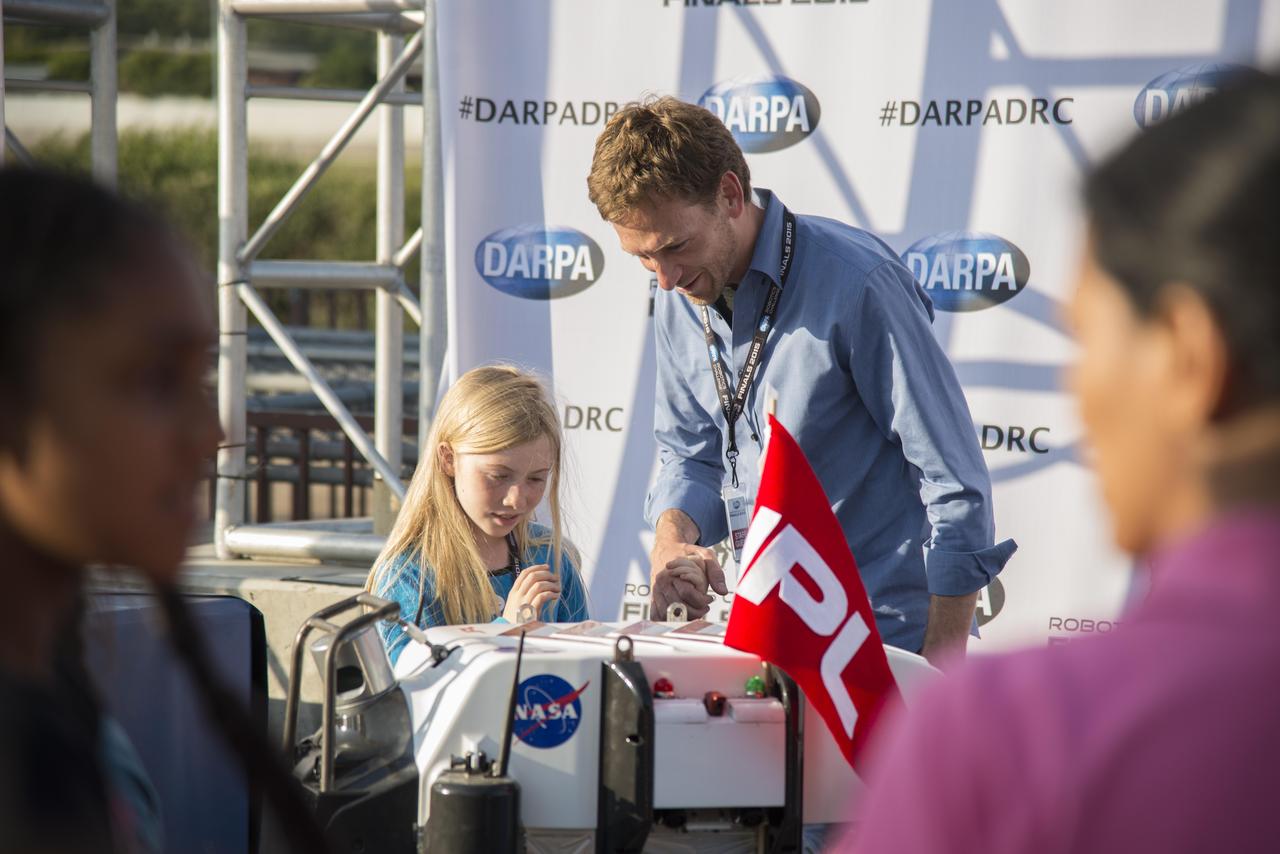
This image was taken on June 6, 2015 at the DARPA Robotics Challenge in Pomona, California. Following each competition run, spectators at the event were able to get a close-up look at the robot competitors and meet the teams who built them.   http://photojournal.jpl.nasa.gov/catalog/PIA19327
Meeting RoboSimian
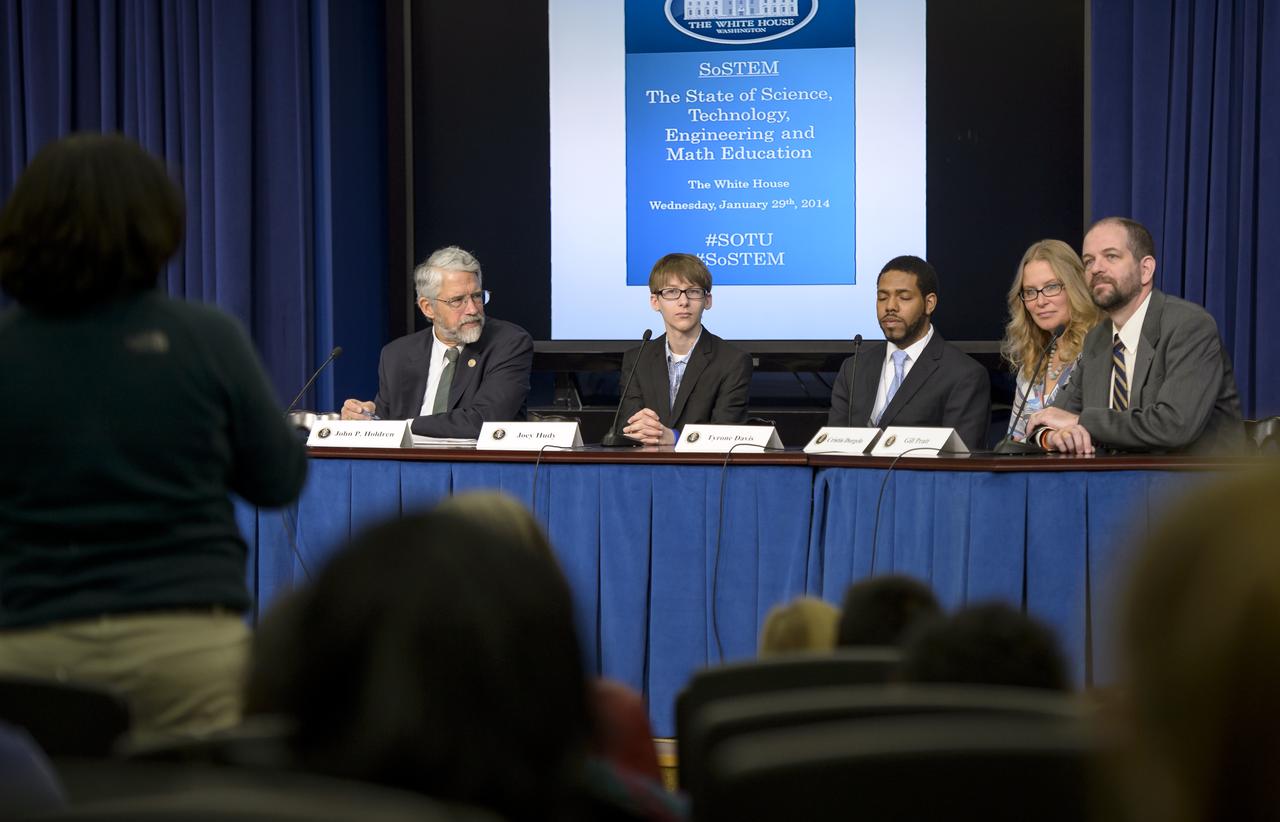
Panels participants, from left, Dr. John P. Holdren, Assistant to the President for Science and Technology and Director of the White House Office of Science & Technology Policy, former White House Science Fair participant Joey Hudy, Environmentalist and third-year law student at Elon University School of Law Tyrone Davis, White House innovation expert Cristin Dorgelo, and Defense Advanced Research Projects Agency  (DARPA) Gill Pratt, take a question from the audience during the annual White House State of Science, Technology, Engineering, and Math (SoSTEM) address, Wednesday, Jan. 29, 2014,  in the South Court Auditorium in the Eisenhower Executive Office Building on the White House complex in Washington. Photo Credit: (NASA/Bill Ingalls)
State of STEM (SoSTEM) Address
Panels participants, from left, Dr. John P. Holdren, Assistant to the President for Science and Technology and Director of the White House Office of Science & Technology Policy, former White House Science Fair participant Joey Hudy, Environmentalist and third-year law student at Elon University School of Law Tyrone Davis, White House innovation expert Cristin Dorgelo, and Defense Advanced Research Projects Agency  (DARPA) Gill Pratt, take a question from the audience during the annual White House State of Science, Technology, Engineering, and Math (SoSTEM) address, Wednesday, Jan. 29, 2014,  in the South Court Auditorium in the Eisenhower Executive Office Building on the White House complex in Washington. Photo Credit: (NASA/Bill Ingalls)
State of STEM (SoSTEM) Address
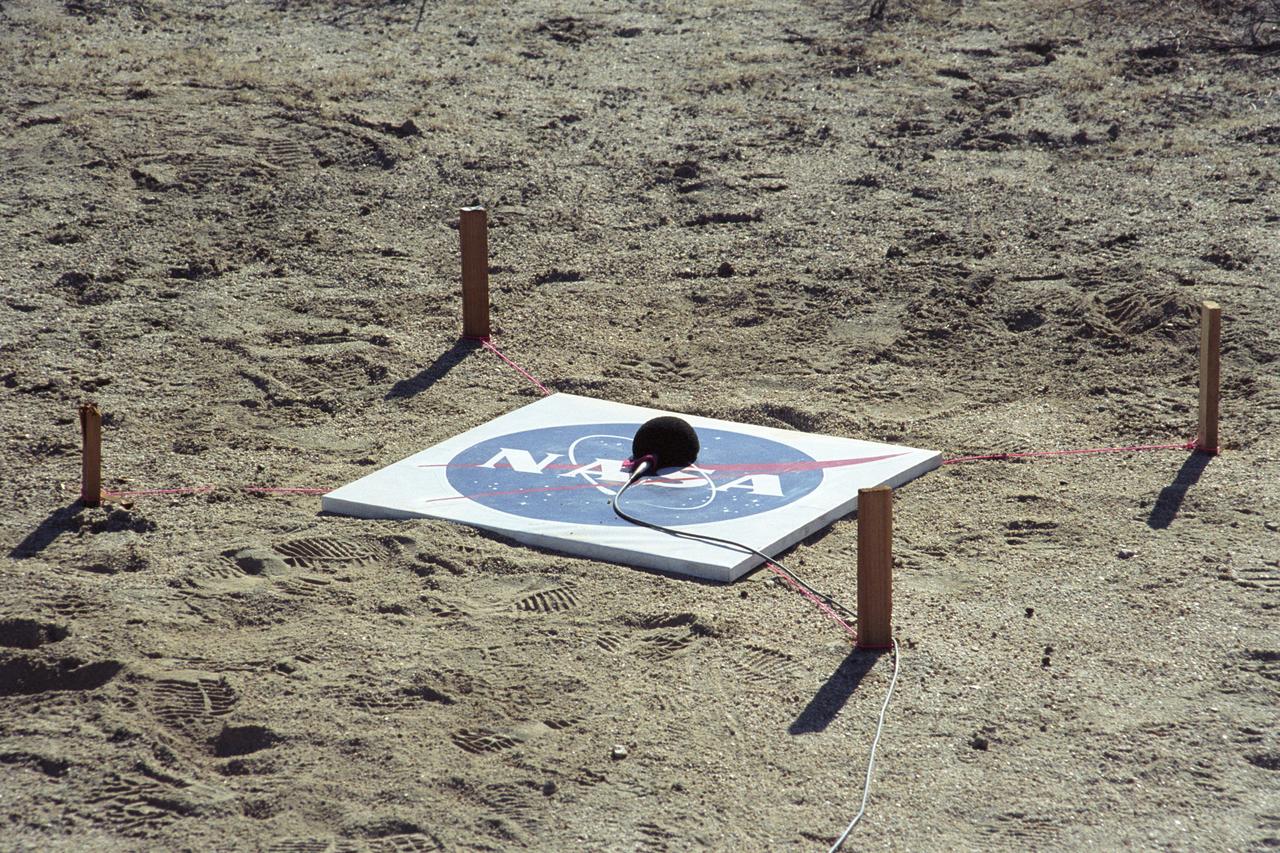
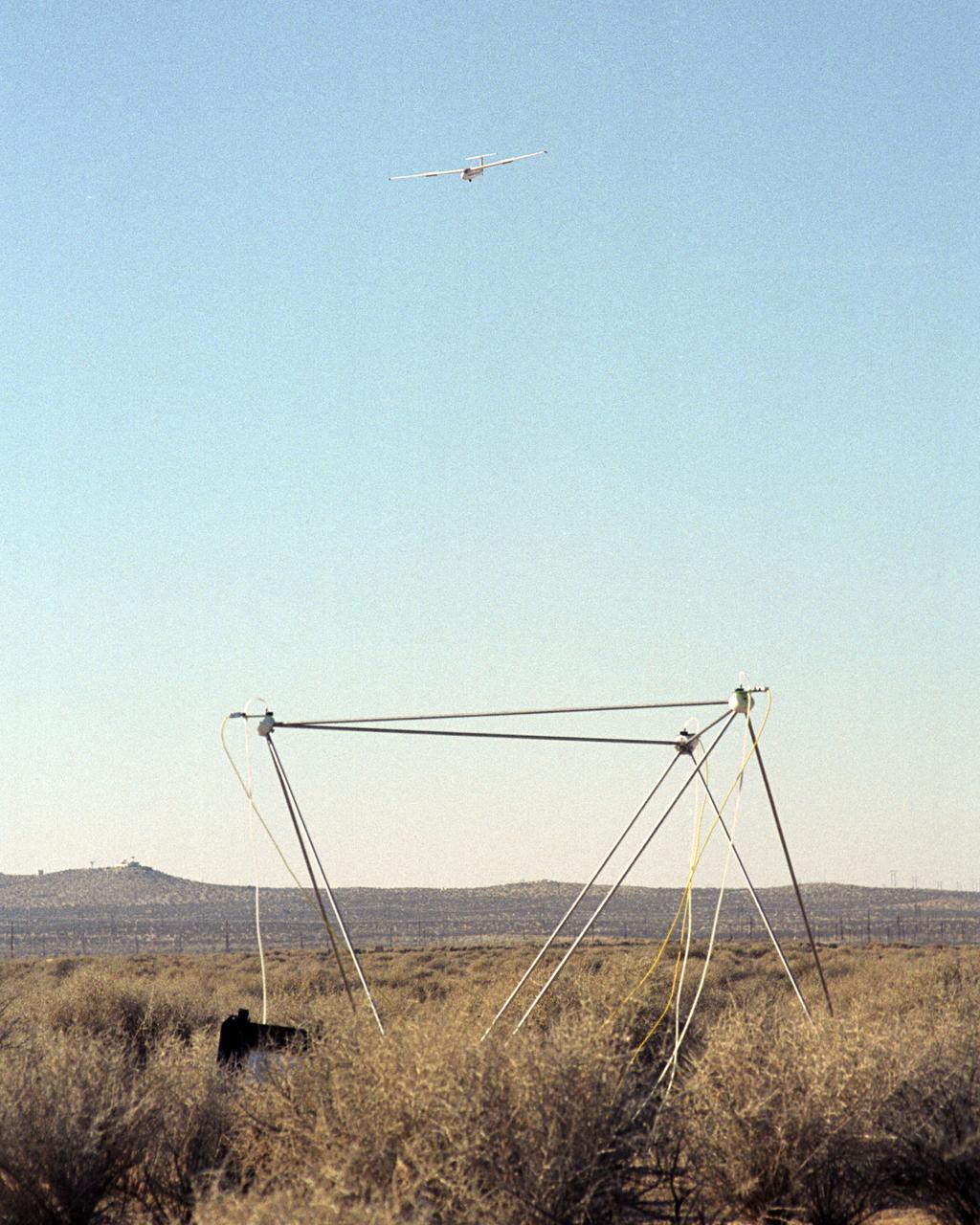
One of many microphones arrayed under the path of the F-5E SSBE (Shaped Sonic Boom Experiment) aircraft to record sonic booms. The SSBE (Shaped Sonic Boom Experiment) was formerly known as the Shaped Sonic Boom Demonstration, or SSBD, and is part of DARPA's Quiet Supersonic Platform (QSP) program. On August 27, 2003, the F-5E SSBD aircraft demonstrated a method to reduce the intensity of sonic booms.
One of many microphones arrayed under the path of the F-5E SSBE aircraft to record sonic booms
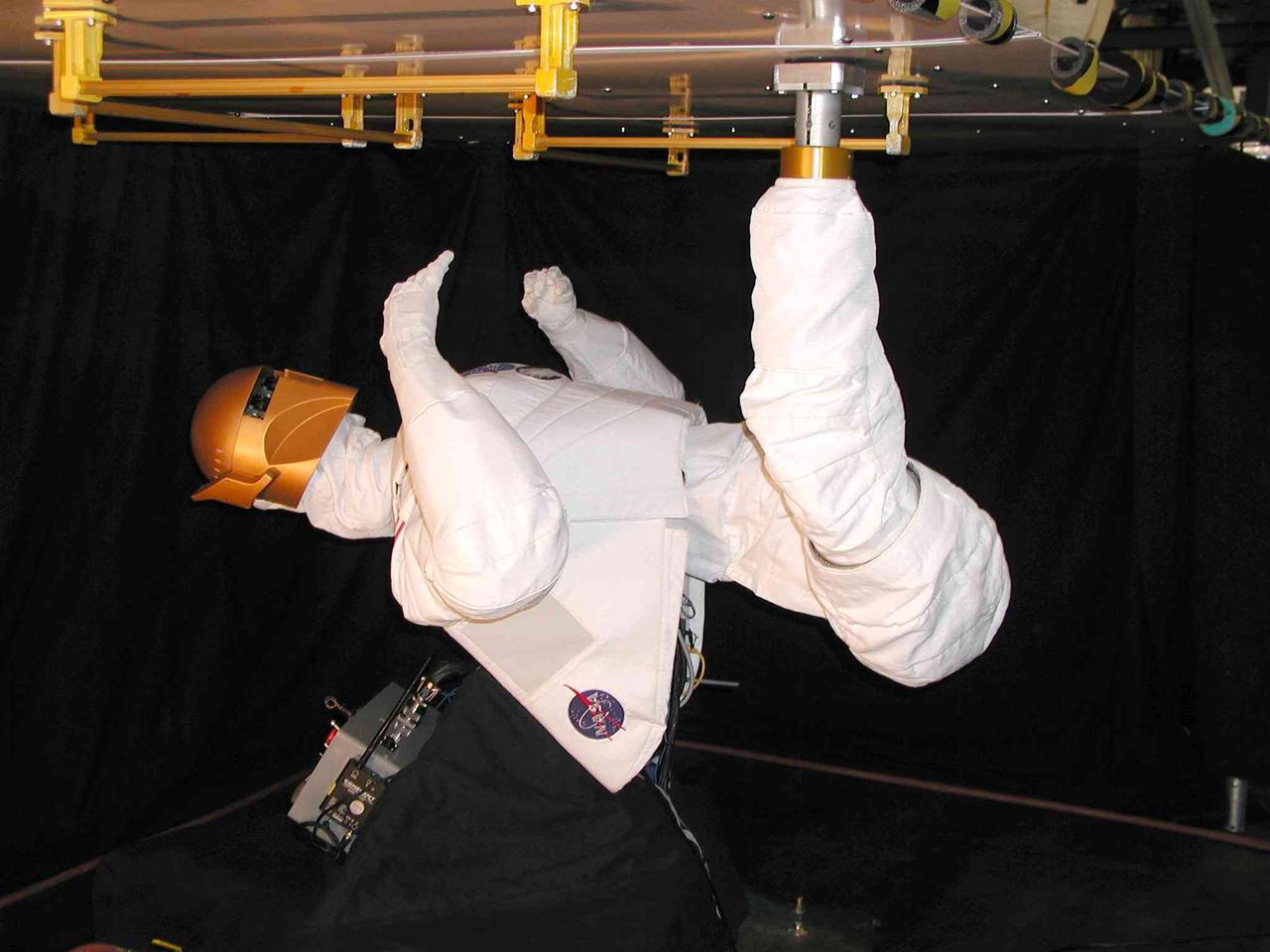
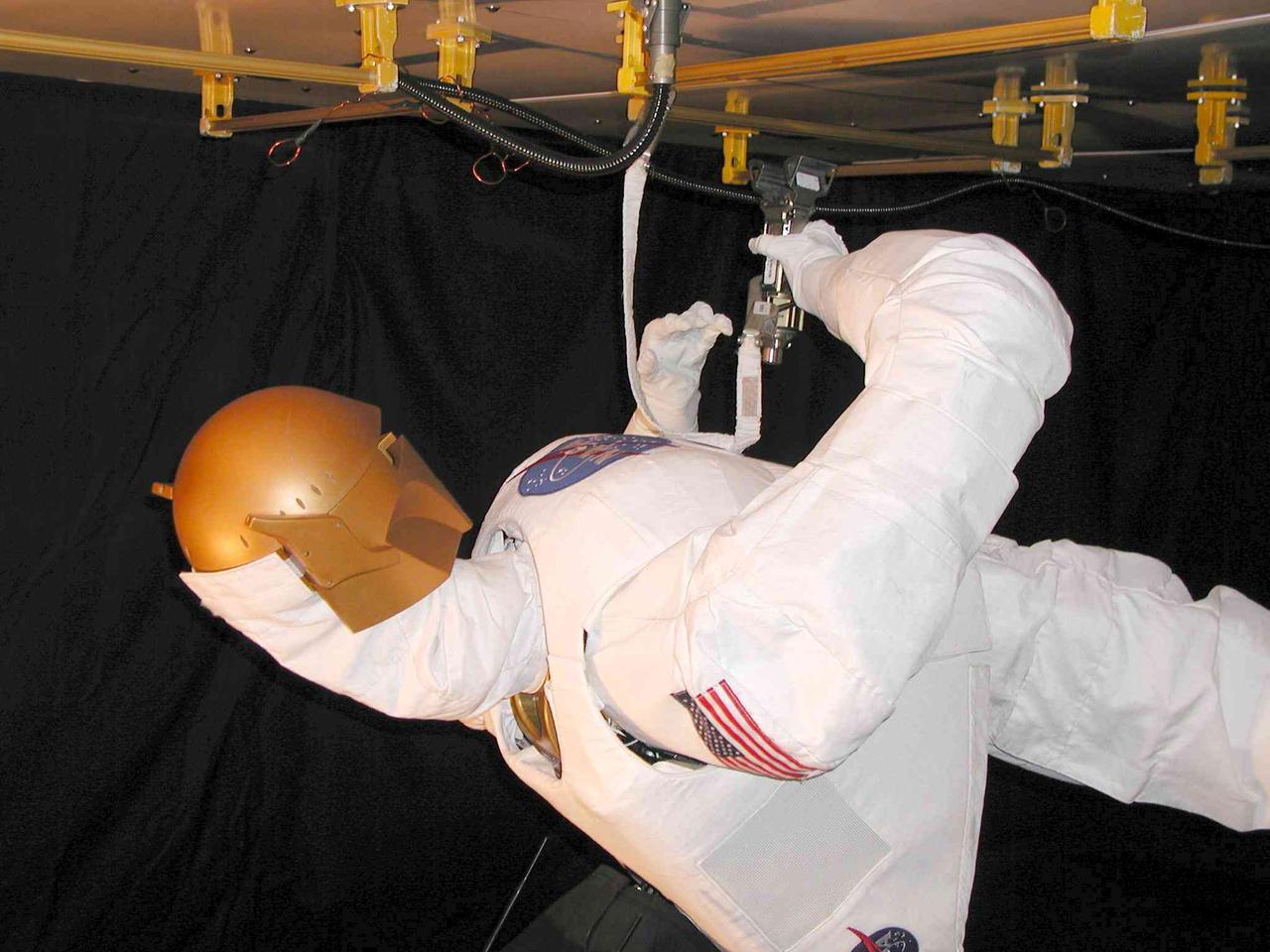
JSC2004-E-16343 (March 2004) --- Robonaut – which uses a head, torso, arms and dexterous hands to perform tasks using the same tools used by human spacewalkers – was fitted with a movable leg that ended in a “foot” that was a common interface for the standard Work Interface Facility (WIF) anchors on the International Space Station (ISS). The Robonaut Project is a collaborative effort with the Defense Advanced Research Projects Agency (DARPA), and has been under development at Johnson Space Center (JSC) for several years.
Robonaut Project
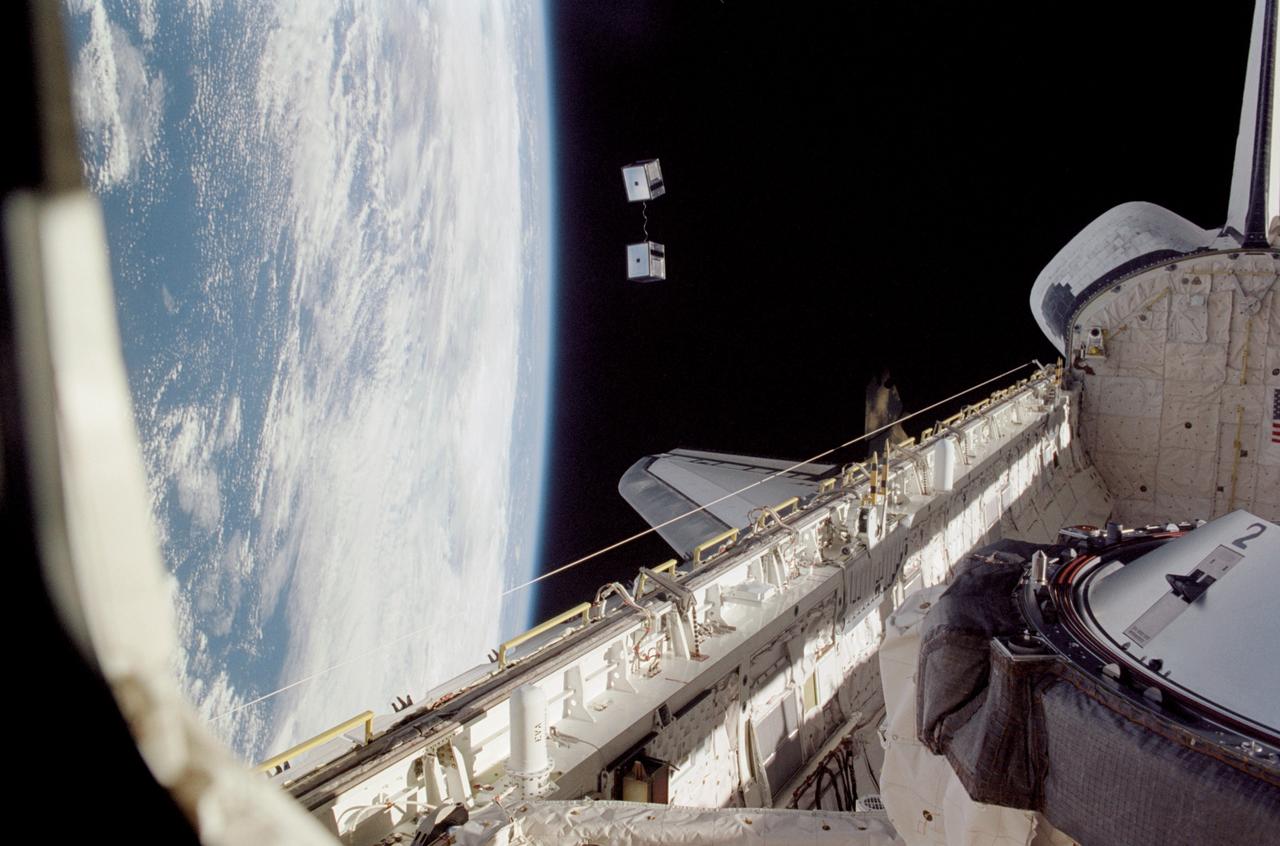
STS113-370-012 (2 December 2002) --- The horizon of a blue and white Earth and the blackness of space form the backdrop for this view, as two miniature satellites are released from the Space Shuttle Endeavour as part of an experiment referred to as MEPSI. Funded by the Defense Advance Research Projects Agency (DARPA), the two small satellites, which are tethered together, were released from Endeavour’s payload bay (visible in foreground) to fly free for three days as a technology demonstration of the launcher and use of micro- and nano-technologies in space systems.
View of Endeavour's STBD longeron and MEPSI deploy during STS-113
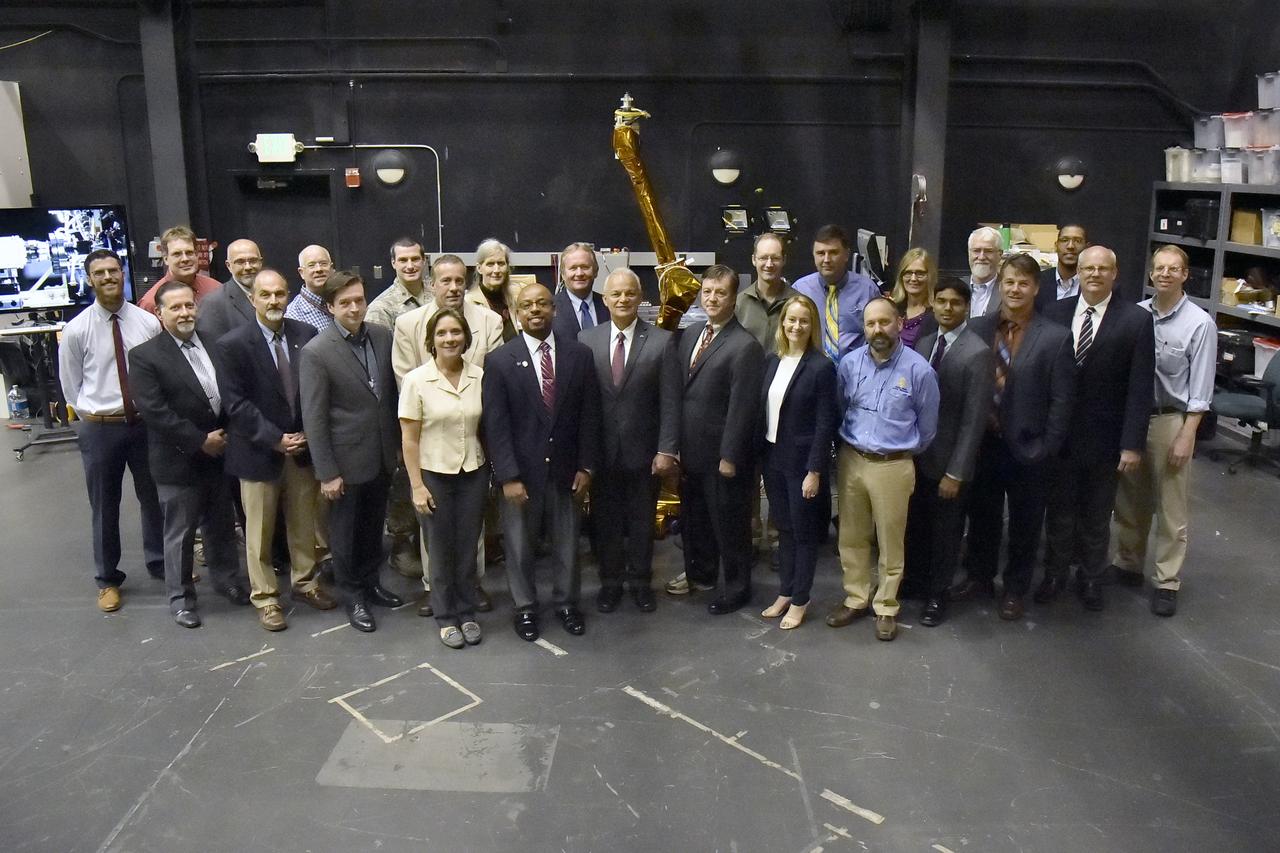
WASHINGTON, D.C.---S&T Partnership Forum In-Space Assembly Technical Interchange Meeting-On September 6th 2017, many of the United States government experts on In-Space Assembly met at the U.S. Naval Research Lab to discuss both technology development and in-space applications that would advance national capabilities in this area.  Expertise from NASA, USAF, NRO, DARPA and NRL met in this meeting which was coordinated by the NASA Headquarters, Office of the Chief Technologist.  This technical interchange meeting was the second meeting of the members of this Science and Technology Partnership Forum.
Members of the S&T Partnership Forum Meet for an In-Space Assembly Technical Interchange Meeting on September 6th, 2017
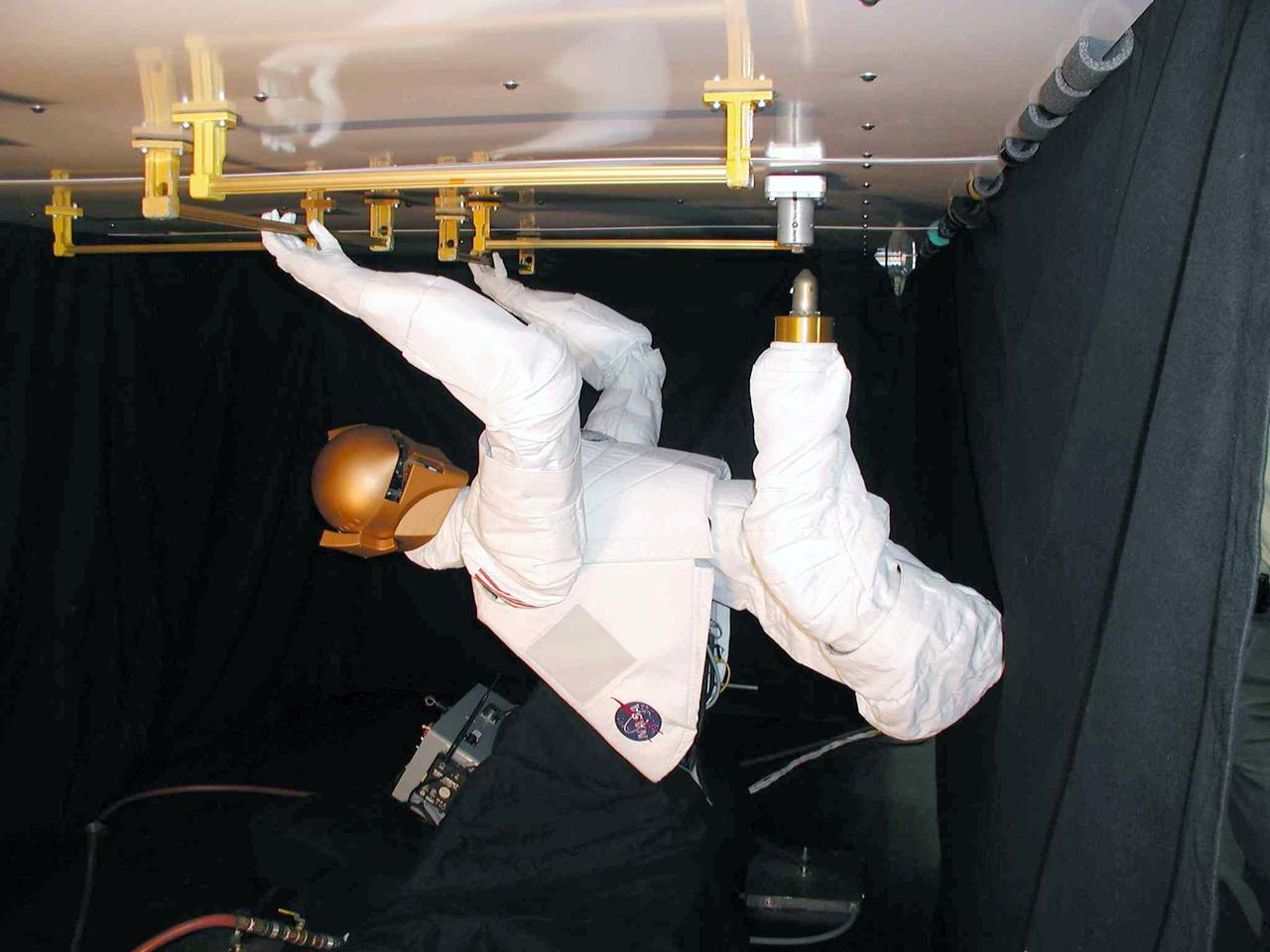
JSC2004-E-16339 (March 2004) --- Robonaut - which uses a head, torso, arms and dexterous hands to perform tasks using the same tools used by human spacewalkers – has both hands free once its leg is anchored in a standard Work Interface Facility (WIF) attached to the test panel. The Robonaut Project is a collaborative effort with the Defense Advanced Research Projects Agency (DARPA), and has been under development at Johnson Space Center (JSC) for several years.
Robonaut Project
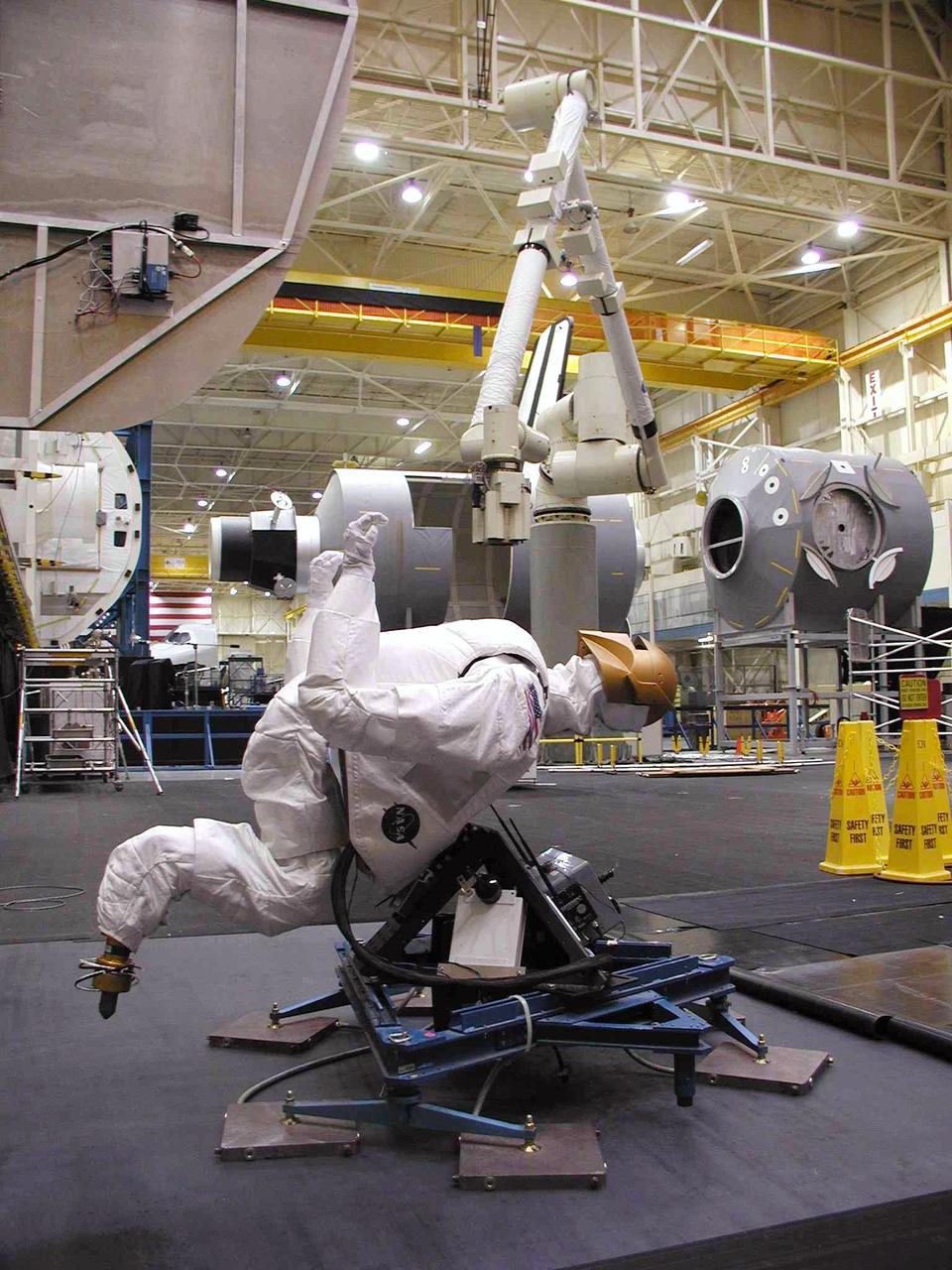
JSC2004-E-16342 (March 2004) --- Tests of Robonaut’s ability were conducted on the Precision Air-Bearing Floor in Johnson Space Center’s (JSC) Space Vehicle Mockup Facility. Robonaut was mounted to a pressurized air sled, which allowed teleoperators to emulate some of the conditions of weightlessness. The Robonaut Project is a collaborative effort with the Defense Advanced Research Projects Agency (DARPA), and has been under development at JSC for several years.
Robonaut Project
JSC2004-E-16341 (March 2004) --- Robonaut uses a standard human spacewalk tether to connect itself to an International Space Station (ISS) exterior handrail on the test panel. The Robonaut Project is a collaborative effort with the Defense Advanced Research Projects Agency (DARPA), and has been under development at Johnson Space Center (JSC) for several years.
Robonaut Project
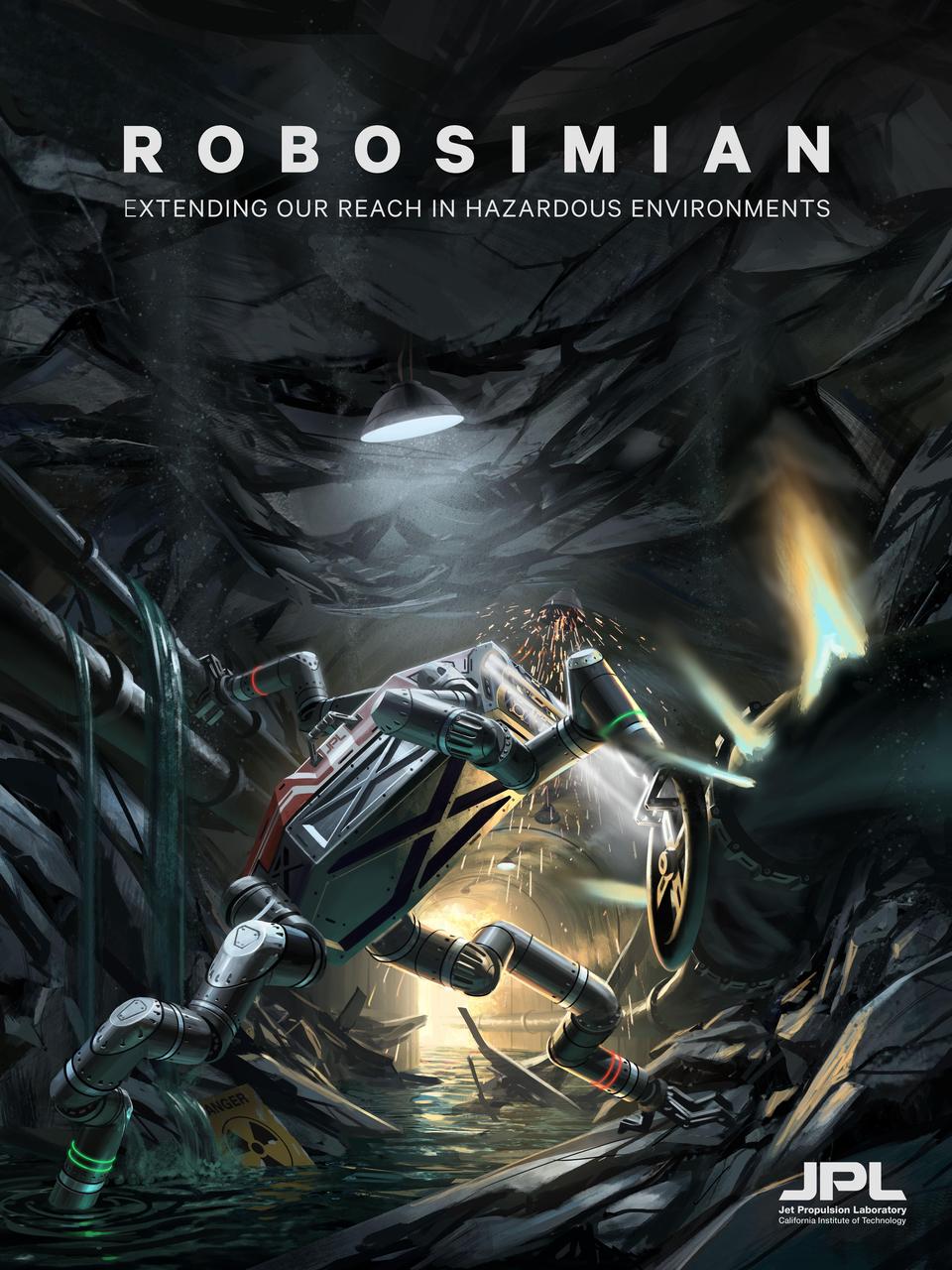
This artist's concept shows RoboSimian, a robot intended to assist with disaster relief and mitigation.  RoboSimian is an ape-like robot that moves around on four limbs. It was designed and built at the Jet Propulsion Laboratory in Pasadena, California. It will compete in the 2015 DARPA Robotics Challenge Finals. To get the robot in shape for the contest, researchers at JPL are collaborating with partners at University of California, Santa Barbara, and the California Institute of Technology.  http://photojournal.jpl.nasa.gov/catalog/PIA19313
RoboSimian Disaster Relief Poster Artist Concept
A United States Air Force Test Pilot School Blanik L-23 glider carrying a microphone and a pressure transducer flies near a BADS (Boom Amplitudes Direction System) sensor following flight at an altitude of 10 thousand feet under the path of the F-5E SSBE aircraft. The SSBE (Shaped Sonic Boom Experiment) was formerly known as the Shaped Sonic Boom Demonstration, or SSBD, and is part of DARPA's Quiet Supersonic Platform (QSP) program. On August 27, 2003, the F-5E SSBD aircraft demonstrated a method to reduce the intensity of sonic booms.
A Blanik L-23 glider carrying a microphone and a pressure transducer flies near a BADS sensor following flight under the path of the F-5E SSBE aircraft
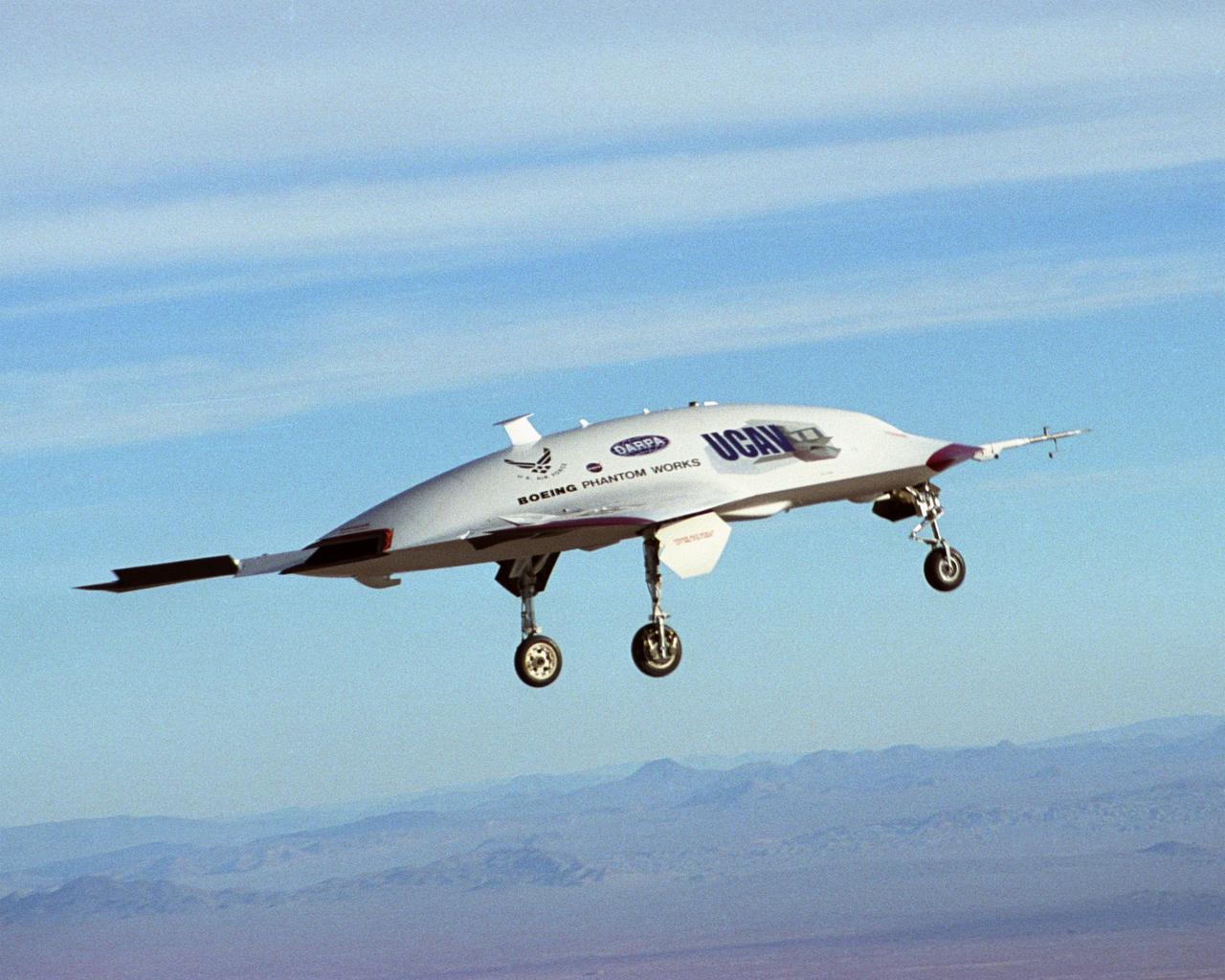
The first X-45A Unmanned Combat Air Vehicle (UCAV) technology demonstrator completed its sixth flight on Dec. 19, 2002, raising its landing gear in flight for the first time. The X-45A flew for 40 minutes and reached an airspeed of 195 knots and an altitude of 7,500 feet.  Dryden is supporting the DARPA/Boeing team in the design, development, integration, and demonstration of the critical technologies, processes, and system attributes leading to an operational UCAV system. Dryden support of the X-45A demonstrator system includes analysis, component development, simulations, ground and flight tests.
The first X-45A Unmanned Combat Air Vehicle (UCAV) technology demonstrator completed its sixth flight on Dec. 19, 2002, raising its landing gear in flight for the first time. The X-45A flew for 40 minutes and reached an airspeed of 195 knots
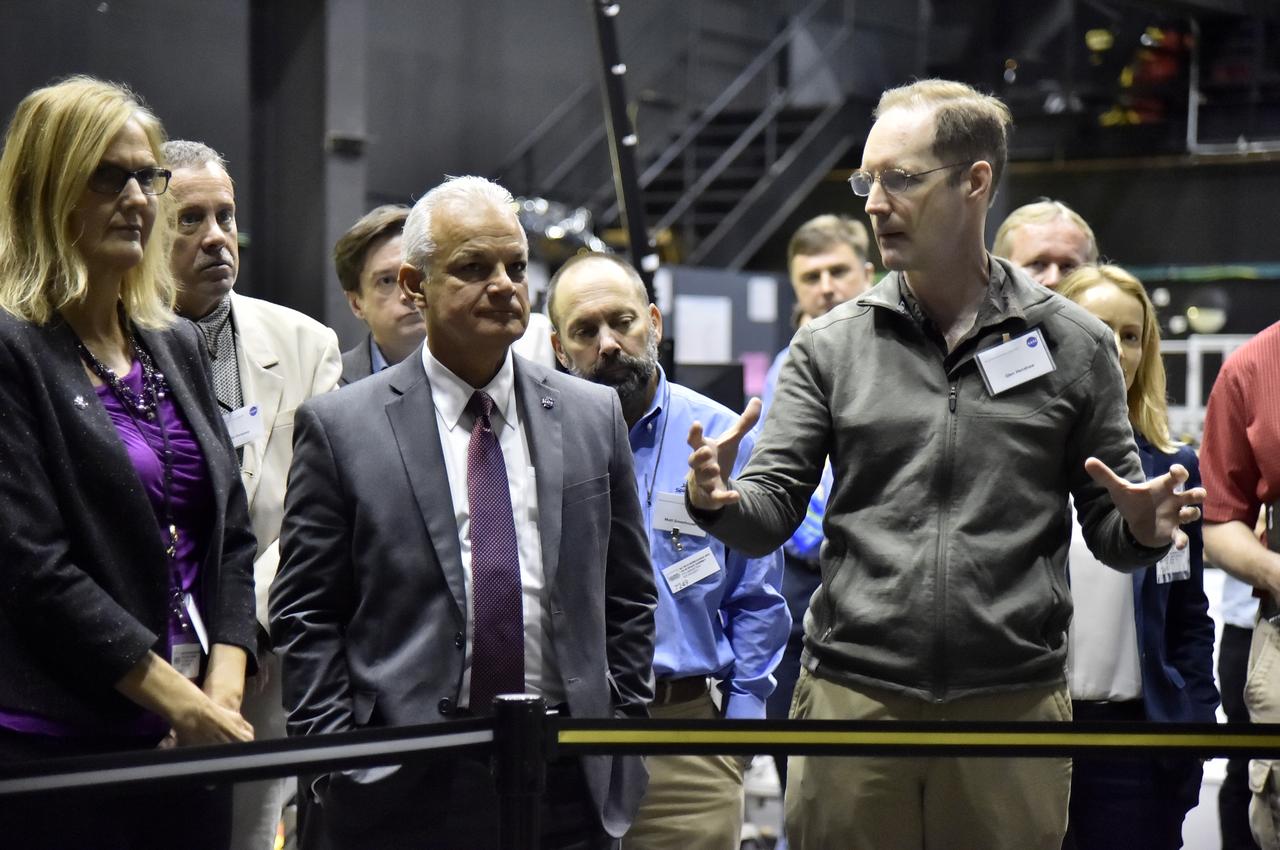
WASHINGTON, D.C.---S&T Partnership Forum In-Space Assembly Technical Interchange Meeting-On September 6th 2017, many of the United States government experts on In-Space Assembly met at the U.S. Naval Research Lab to discuss both technology development and in-space applications that would advance national capabilities in this area.  Expertise from NASA, USAF, NRO, DARPA and NRL met in this meeting which was coordinated by the NASA Headquarters, Office of the Chief Technologist.  This technical interchange meeting was the second meeting of the members of this Science and Technology Partnership Forum. Glen Henshaw of Code 8231 talks to the group in the Space Robotics Lab.
Members of the Science and Technology Partnership Forum Listen to a Presentation about In-Space Assembly and Satellite Servicing
The first X-45A Unmanned Combat Air Vehicle (UCAV) technology demonstrator completed its sixth flight on Dec. 19, 2002, raising its landing gear in flight for the first time. The X-45A flew for 40 minutes and reached an airspeed of 195 knots and an altitude of 7,500 feet.  Dryden is supporting the DARPA/Boeing team in the design, development, integration, and demonstration of the critical technologies, processes, and system attributes leading to an operational UCAV system. Dryden support of the X-45A demonstrator system includes analysis, component development, simulations, ground and flight tests.
The first X-45A Unmanned Combat Air Vehicle (UCAV) technology demonstrator completed its sixth flight on Dec. 19, 2002, raising its landing gear in flight for the first time. The X-45A flew for 40 minutes and reached an airspeed of 195 knots
WASHINGTON, D.C.---S&T Partnership Forum In-Space Assembly Technical Interchange Meeting-On September 6th 2017, many of the United States government experts on In-Space Assembly met at the U.S. Naval Research Lab to discuss both technology development and in-space applications that would advance national capabilities in this area.  Expertise from NASA, USAF, NRO, DARPA and NRL met in this meeting which was coordinated by the NASA Headquarters, Office of the Chief Technologist.  This technical interchange meeting was the second meeting of the members of this Science and Technology Partnership Forum. Glen Henshaw of Code 8231 talks to the group in the Space Robotics Lab.
Glen Henshaw Briefs NASA Chief and Deputy Chief Technologists at the In-Space Assembly Technical Interchange Meeting on September 6, 2017
The first X-45A Unmanned Combat Air Vehicle (UCAV) technology demonstrator completed its sixth flight on Dec. 19, 2002, raising its landing gear in flight for the first time. The X-45A flew for 40 minutes and reached an airspeed of 195 knots and an altitude of 7,500 feet.  Dryden is supporting the DARPA/Boeing team in the design, development, integration, and demonstration of the critical technologies, processes, and system attributes leading to an operational UCAV system. Dryden support of the X-45A demonstrator system includes analysis, component development, simulations, ground and flight tests.
The first X-45A Unmanned Combat Air Vehicle (UCAV) technology demonstrator completed its sixth flight on Dec. 19, 2002, raising its landing gear in flight for the first time. The X-45A flew for 40 minutes and reached an airspeed of 195 knots
The first X-45A Unmanned Combat Air Vehicle (UCAV) technology demonstrator completed its sixth flight on Dec. 19, 2002, raising its landing gear in flight for the first time. The X-45A flew for 40 minutes and reached an airspeed of 195 knots and an altitude of 7,500 feet.  Dryden is supporting the DARPA/Boeing team in the design, development, integration, and demonstration of the critical technologies, processes, and system attributes leading to an operational UCAV system. Dryden support of the X-45A demonstrator system includes analysis, component development, simulations, ground and flight tests.
The first X-45A Unmanned Combat Air Vehicle (UCAV) technology demonstrator completed its sixth flight on Dec. 19, 2002, raising its landing gear in flight for the first time. The X-45A flew for 40 minutes and reached an airspeed of 195 knots
Northrop-Grumman Corporation's modified U.S. Navy F-5E Shaped Sonic Boom Demonstration (SSBD) aircraft.
Northrop-Grumman Corporation's modified U.S. Navy F-5E Shaped Sonic Boom Demonstration (SSBD) aircraft
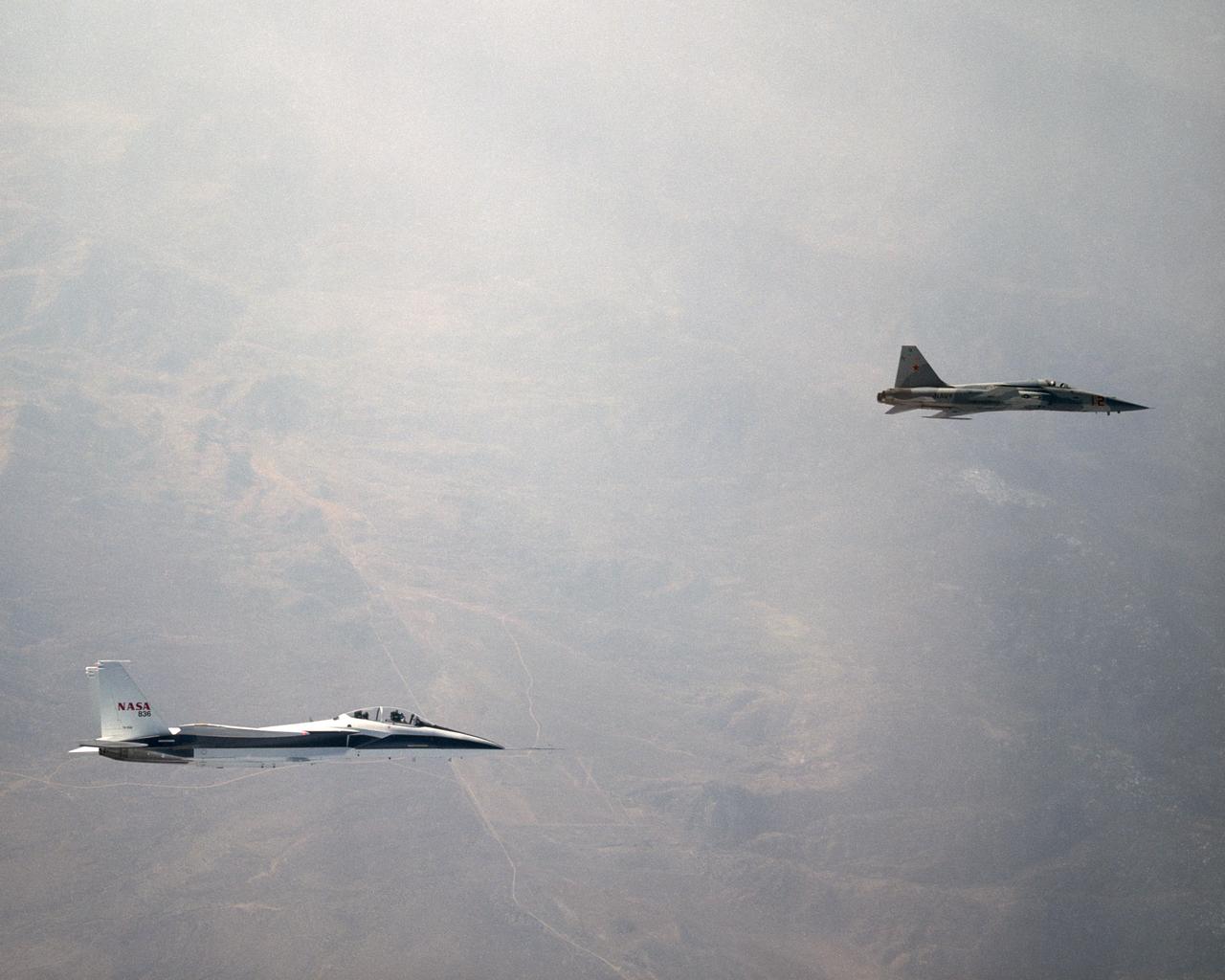
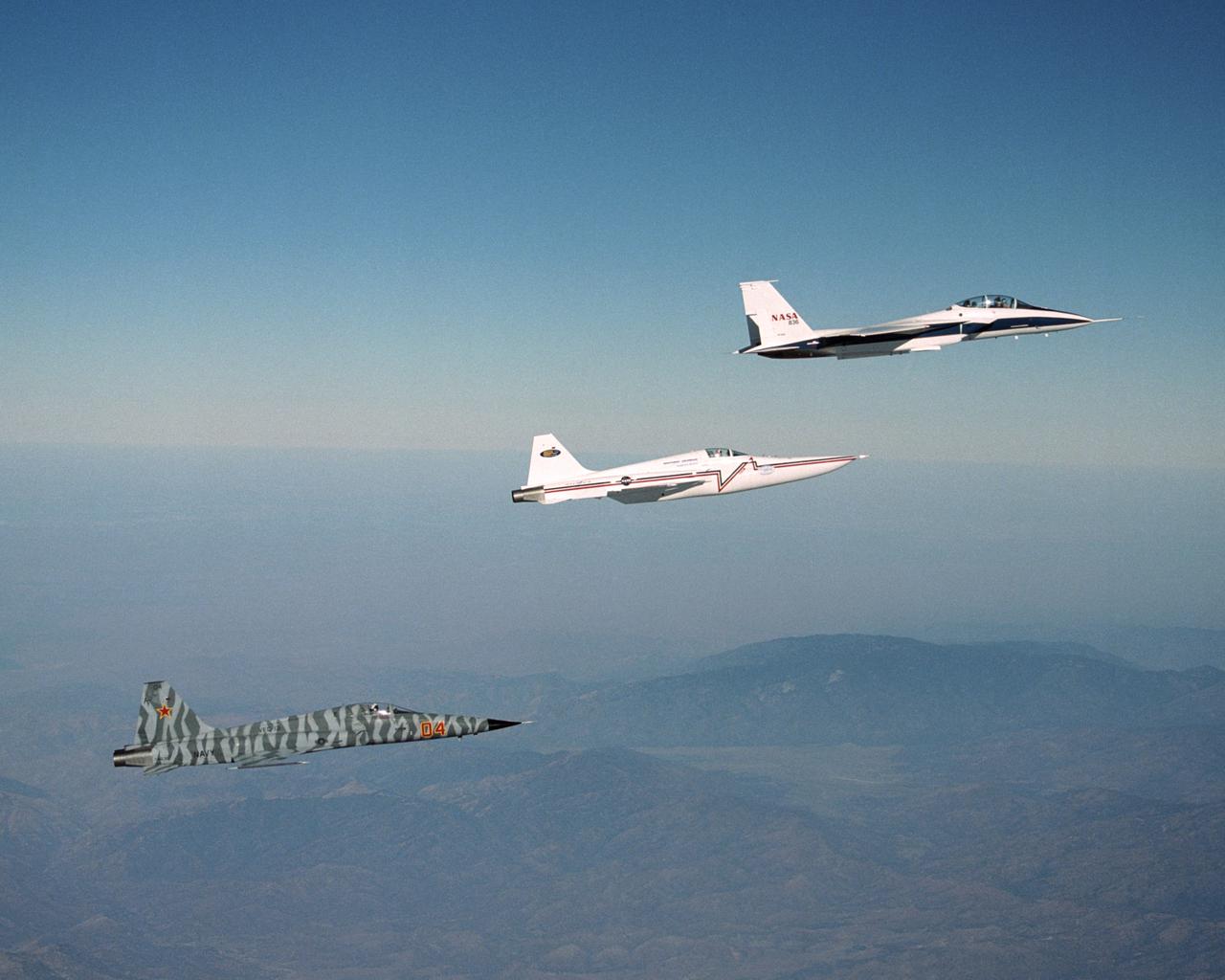
In a role-reversal, Northrop Grumman Corp.'s modified F-5E Shaped Sonic Boom Demonstration (SSBD) aircraft flies off the wing of NASA's F-15B Research testbed aircraft. The F-15B, from NASA's Dryden Flight Research Center, flew in the supersonic shockwave of the F-5E as part of the SSBD project. Following the two aircraft is an unmodified U.S. Navy F-5E used for baseline sonic boom measurements.
Northrop Grumman Corp.'s modified F-5E Shaped Sonic Boom Demonstration (SSBD) aircraft flies off the wing of NASA's F-15B Research testbed aircraft.
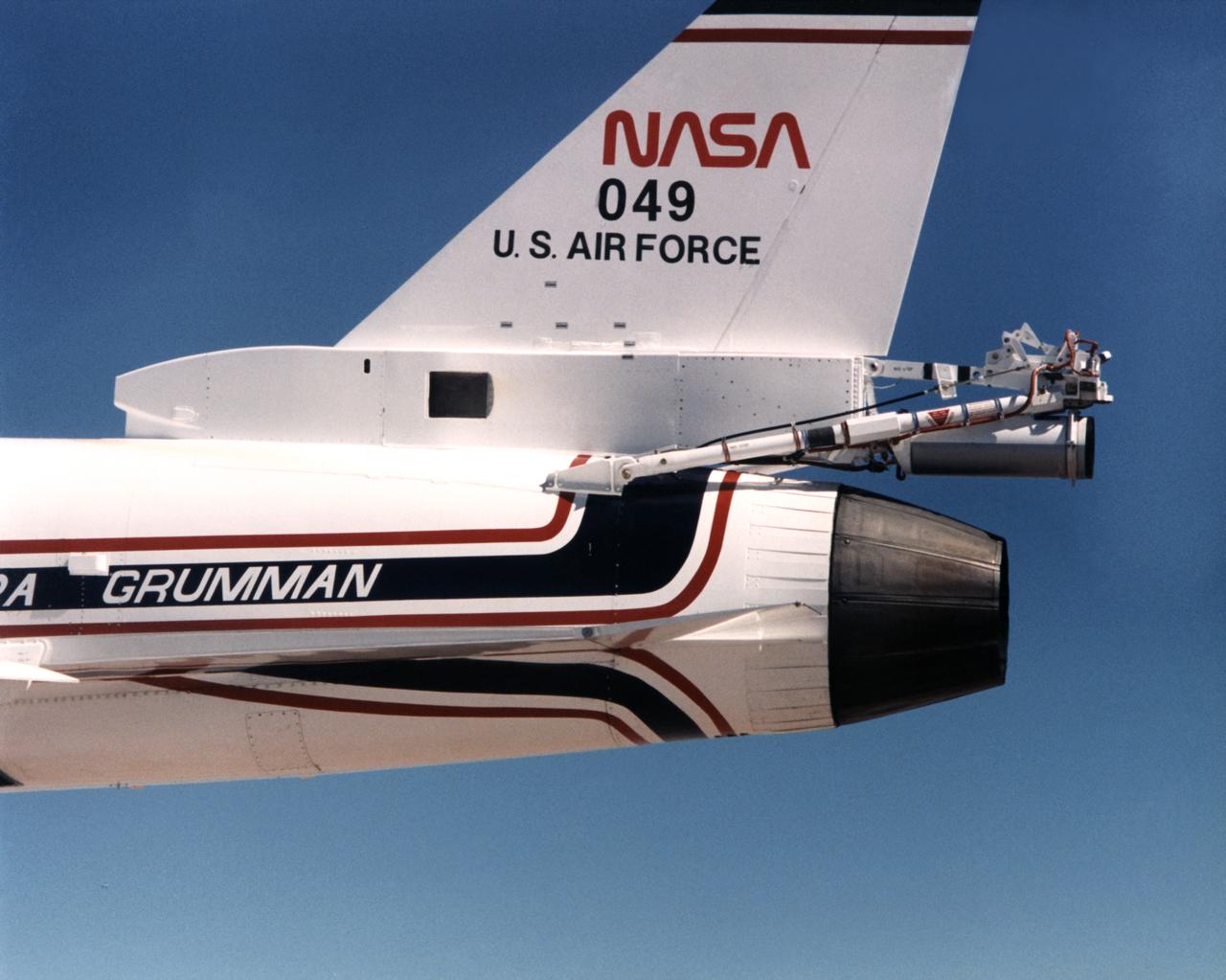
Because the number two X-29 at NASA's Ames-Dryden Flight Research Facility (later the Dryden Flight Research Center) flew at higher angles of attack than the number one aircraft, it required a spin chute system for safety. The system deployed a parachute for recovery of the aircraft if it inadvertently entered an uncontrolled spin. Most of the components of the spin chute system were located on a truss at the aft end of the aircraft. In addition, there were several cockpit modifications to facilitate use of the chute. The parachute was made of nylon and was of the conical ribbon type.
X-29 Number Two in Flight Closeup of Spin Chute Mechanism
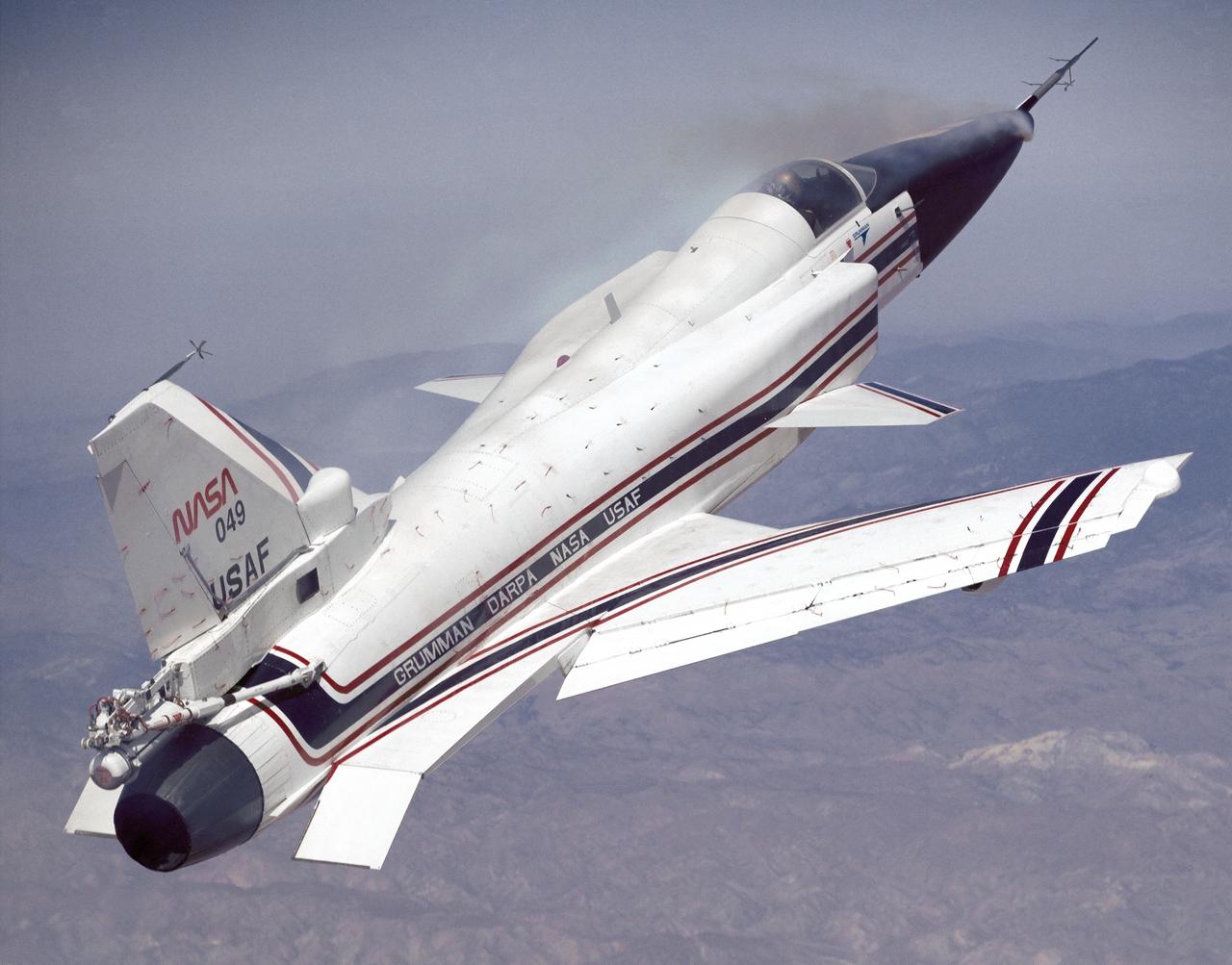
This photo shows the X-29 during a 1991 research flight. Smoke generators in the nose of the aircraft were used to help researchers see the behavior of the air flowing over the aircraft. The smoke here is demonstrating forebody vortex flow. This mission was flown September 10, 1991, by NASA research pilot Rogers Smith.
X-29 at High Angle of Attack with Smoke Generators