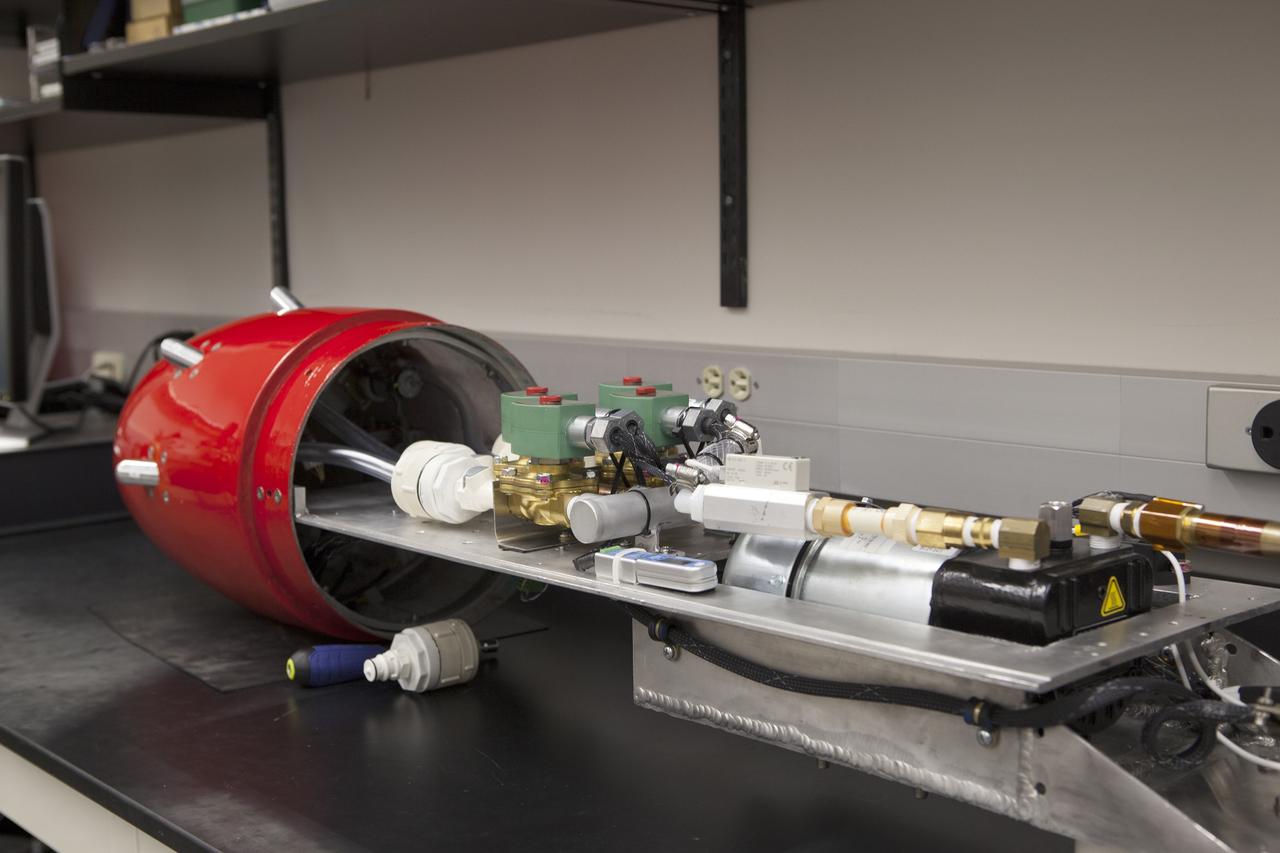
CAPE CANAVERAL, Fla. – The Dust Atmospheric Recovery Technology, or DART, spacecraft is being assembled in a laboratory inside the Space Life Sciences Lab at NASA’s Kennedy Space Center in Florida. DART will characterize the dust loading and microbial diversity in the atmosphere over Florida during summer months with a special emphasis on their interactions during an African dust storm. DART will be used to collect atmospheric aerosols and suspended microbial cells over Florida and Kennedy. Results will help predict the risks of excessive microbial contamination adhering to spacecraft surfaces. Photo credit: NASA/Dimitri Gerondidakis
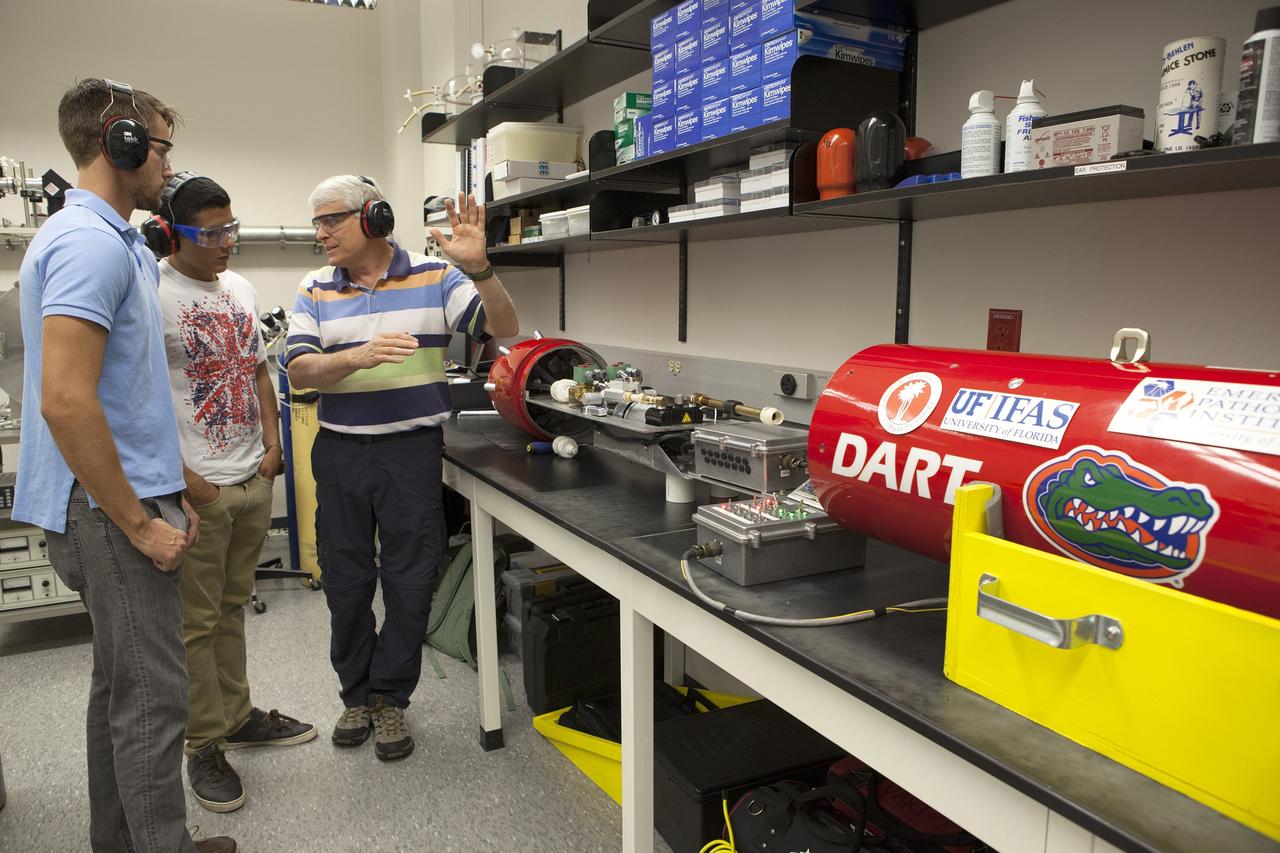
CAPE CANAVERAL, Fla. – Researchers at NASA’s Kennedy Space Center in Florida check readings on the Dust Atmospheric Recovery Technology, or DART, spacecraft inside a laboratory at the Space Life Sciences Lab. DART will characterize the dust loading and microbial diversity in the atmosphere over Florida during summer months with a special emphasis on their interactions during an African dust storm. DART will be used to collect atmospheric aerosols and suspended microbial cells over Florida and Kennedy. Results will help predict the risks of excessive microbial contamination adhering to spacecraft surfaces. Photo credit: NASA/Dimitri Gerondidakis
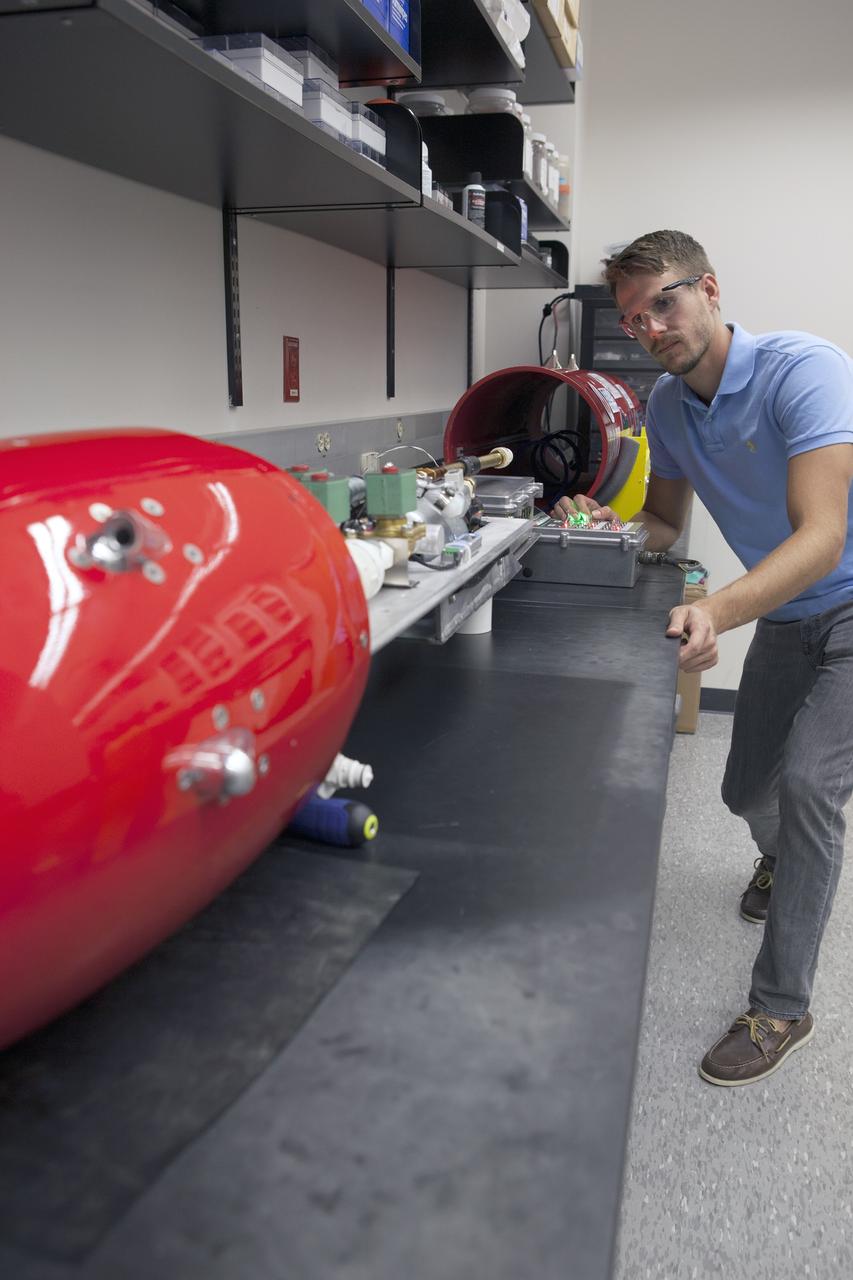
CAPE CANAVERAL, Fla. – A researcher at NASA’s Kennedy Space Center in Florida checks a reading on the Dust Atmospheric Recovery Technology, or DART, spacecraft inside a laboratory at the Space Life Sciences Lab. DART will characterize the dust loading and microbial diversity in the atmosphere over Florida during summer months with a special emphasis on their interactions during an African dust storm. DART will be used to collect atmospheric aerosols and suspended microbial cells over Florida and Kennedy. Results will help predict the risks of excessive microbial contamination adhering to spacecraft surfaces. Photo credit: NASA/Dimitri Gerondidakis
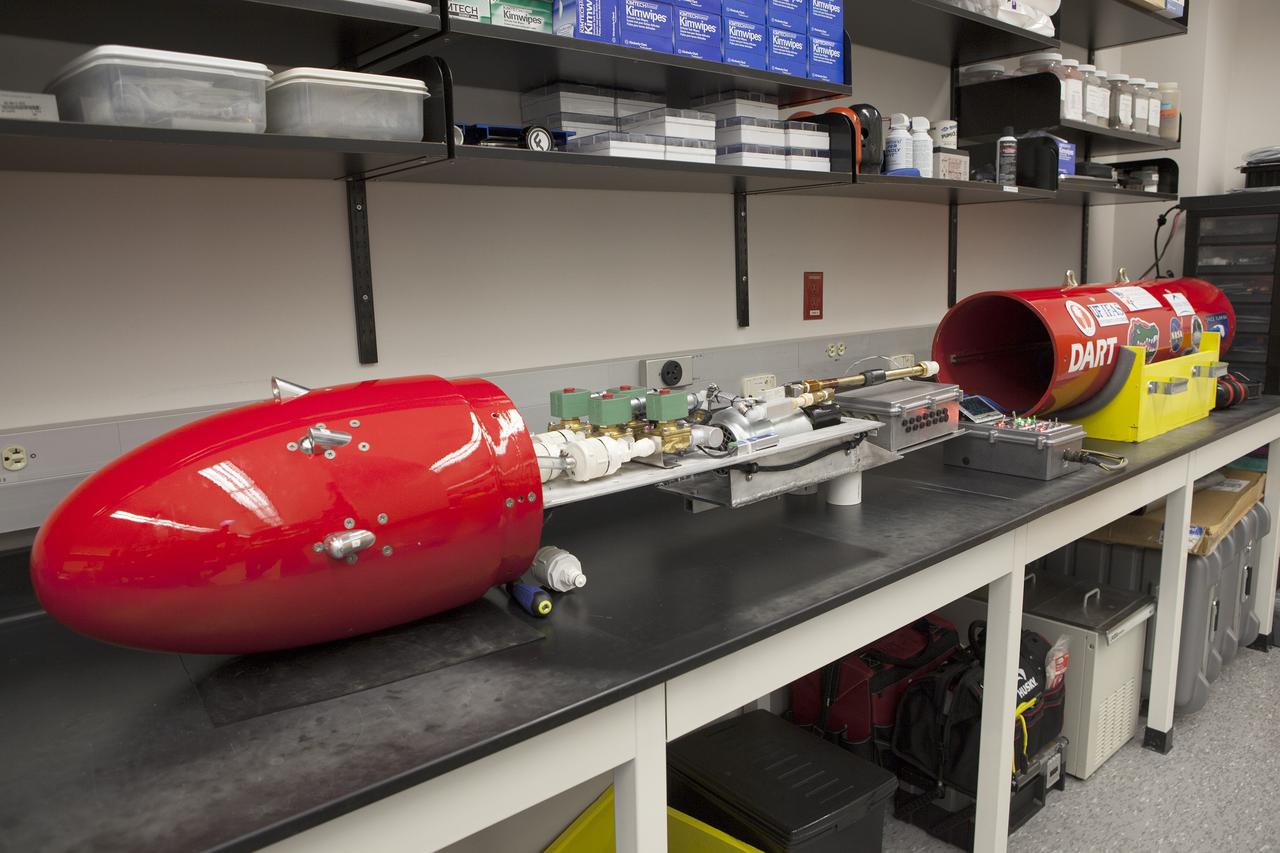
CAPE CANAVERAL, Fla. – The Dust Atmospheric Recovery Technology, or DART, spacecraft is being assembled in a laboratory inside the Space Life Sciences Lab at NASA’s Kennedy Space Center in Florida. DART will characterize the dust loading and microbial diversity in the atmosphere over Florida during summer months with a special emphasis on their interactions during an African dust storm. DART will be used to collect atmospheric aerosols and suspended microbial cells over Florida and Kennedy. Results will help predict the risks of excessive microbial contamination adhering to spacecraft surfaces. Photo credit: NASA/Dimitri Gerondidakis
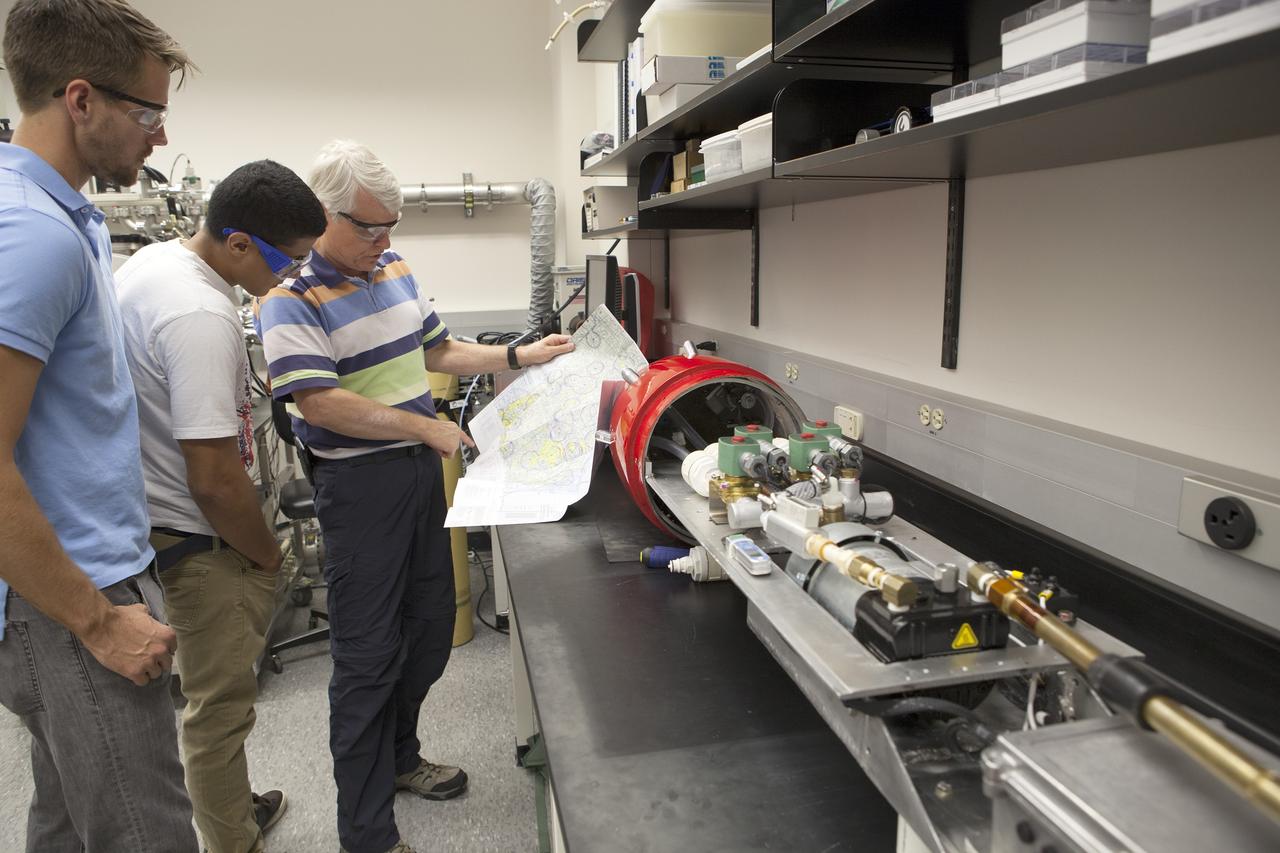
CAPE CANAVERAL, Fla. – Researchers at NASA’s Kennedy Space Center in Florida check readings on the Dust Atmospheric Recovery Technology, or DART, spacecraft inside a laboratory at the Space Life Sciences Lab. DART will characterize the dust loading and microbial diversity in the atmosphere over Florida during summer months with a special emphasis on their interactions during an African dust storm. DART will be used to collect atmospheric aerosols and suspended microbial cells over Florida and Kennedy. Results will help predict the risks of excessive microbial contamination adhering to spacecraft surfaces. Photo credit: NASA/Dimitri Gerondidakis
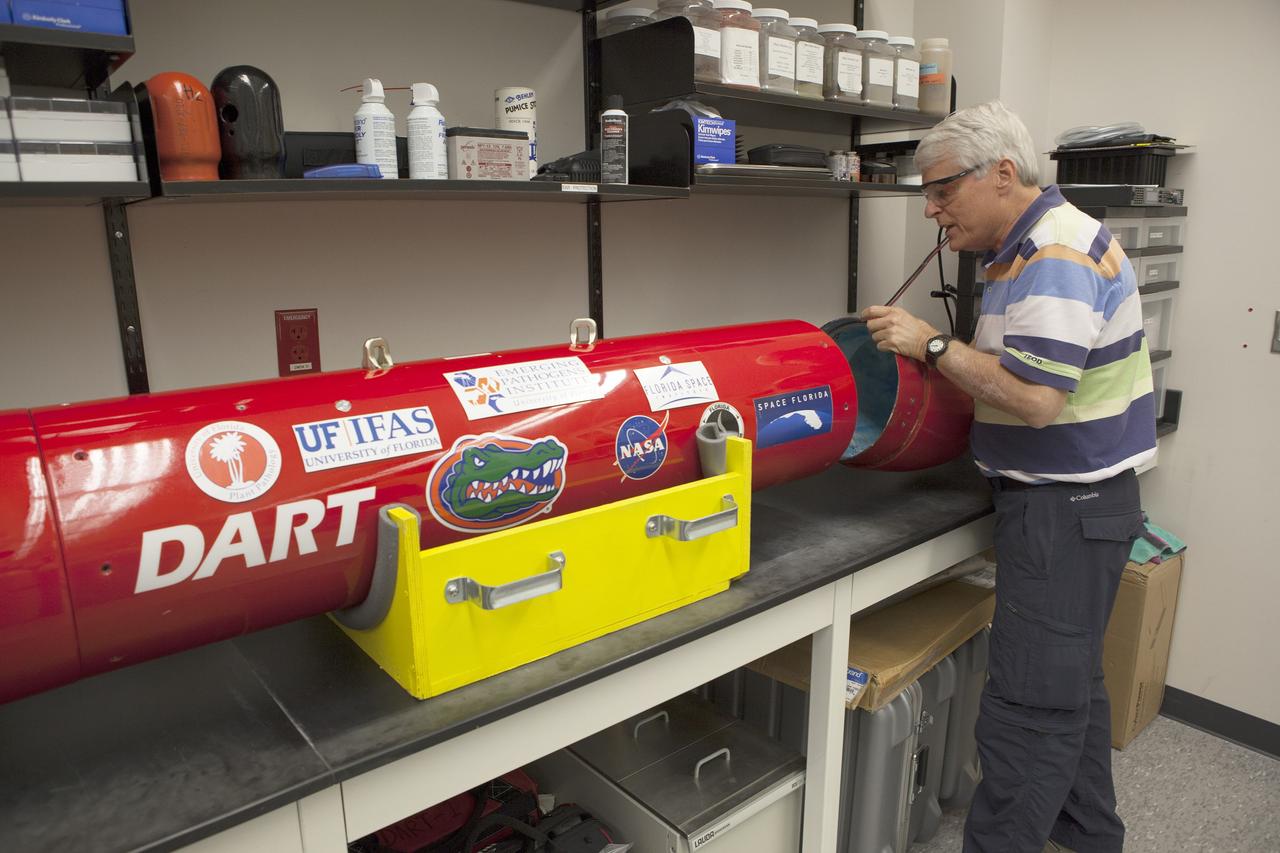
CAPE CANAVERAL, Fla. – A researcher from the University of Florida in Gainesville, checks the Dust Atmospheric Recovery Technology, or DART, spacecraft in a laboratory inside the Space Life Sciences Lab at NASA’s Kennedy Space Center in Florida. DART will characterize the dust loading and microbial diversity in the atmosphere over Florida during summer months with a special emphasis on their interactions during an African dust storm. DART will be used to collect atmospheric aerosols and suspended microbial cells over Florida and Kennedy. Results will help predict the risks of excessive microbial contamination adhering to spacecraft surfaces. Photo credit: NASA/Dimitri Gerondidakis
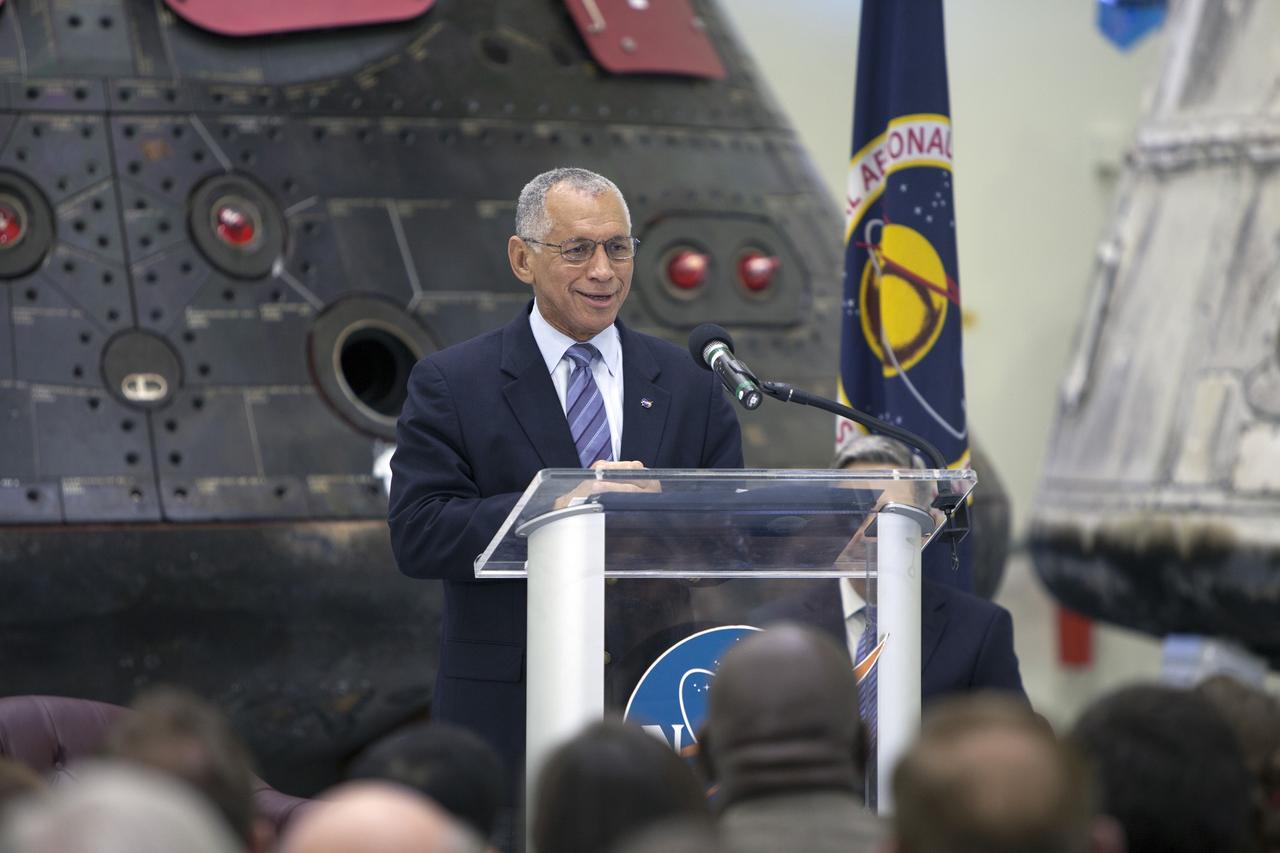
CAPE CANAVERAL, Fla. – In the Neil Armstrong Operations and Checkout Building high bay at NASA's Kennedy Space Center in Florida, NASA Administrator Charlie Bolden delivers a “state of the agency” address at NASA's televised fiscal year 2016 budget rollout event. Representatives from the Kennedy workforce, news media and social media were in attendance. NASA's Orion, SpaceX Dragon and Boeing CST-100 spacecraft, all destined to play a role in NASA’s overall exploration objectives, were on display. For information on NASA's budget, visit http://www.nasa.gov/budget. Photo credit: NASA/Gianni Woods
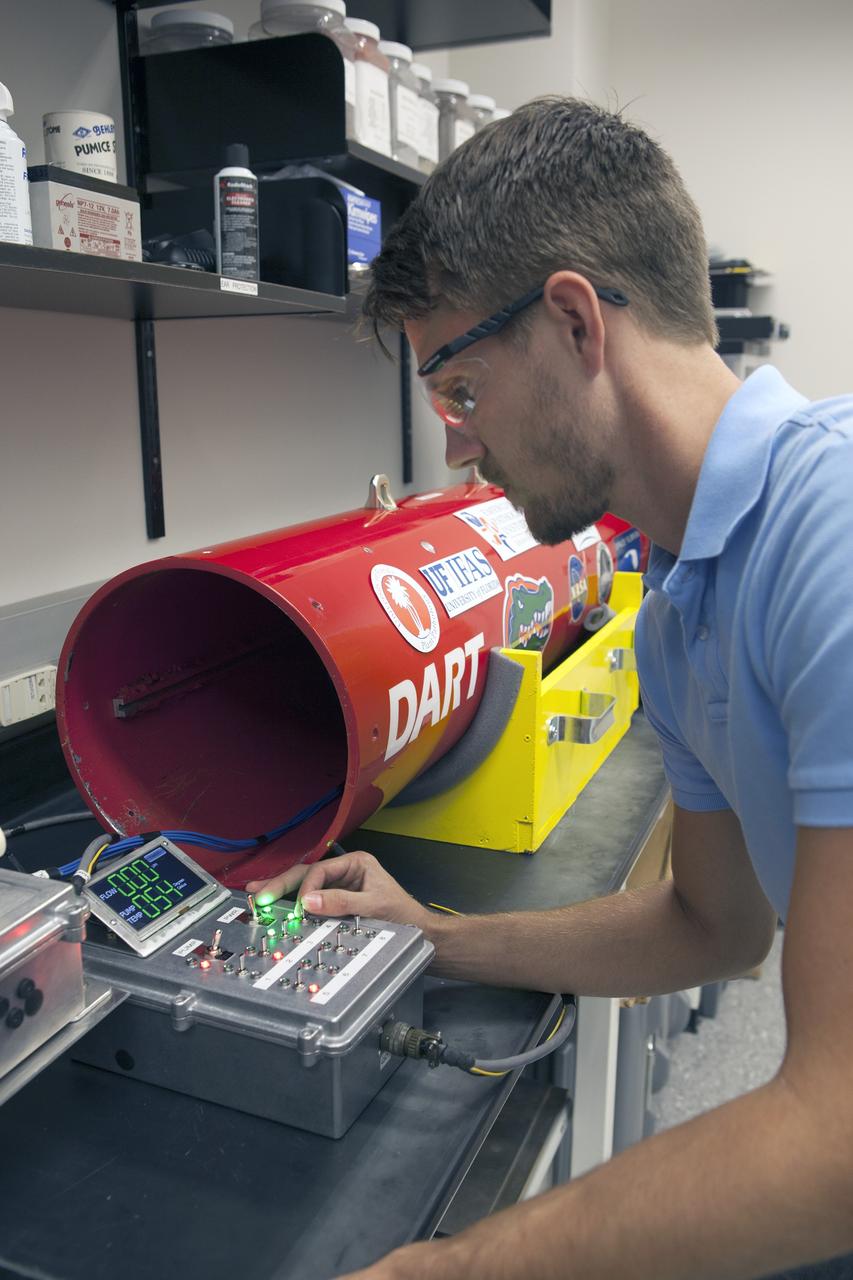
CAPE CANAVERAL, Fla. – A researcher at NASA’s Kennedy Space Center in Florida checks a reading on the Dust Atmospheric Recovery Technology, or DART, spacecraft inside a laboratory at the Space Life Sciences Lab. DART will characterize the dust loading and microbial diversity in the atmosphere over Florida during summer months with a special emphasis on their interactions during an African dust storm. DART will be used to collect atmospheric aerosols and suspended microbial cells over Florida and Kennedy. Results will help predict the risks of excessive microbial contamination adhering to spacecraft surfaces. Photo credit: NASA/Dimitri Gerondidakis