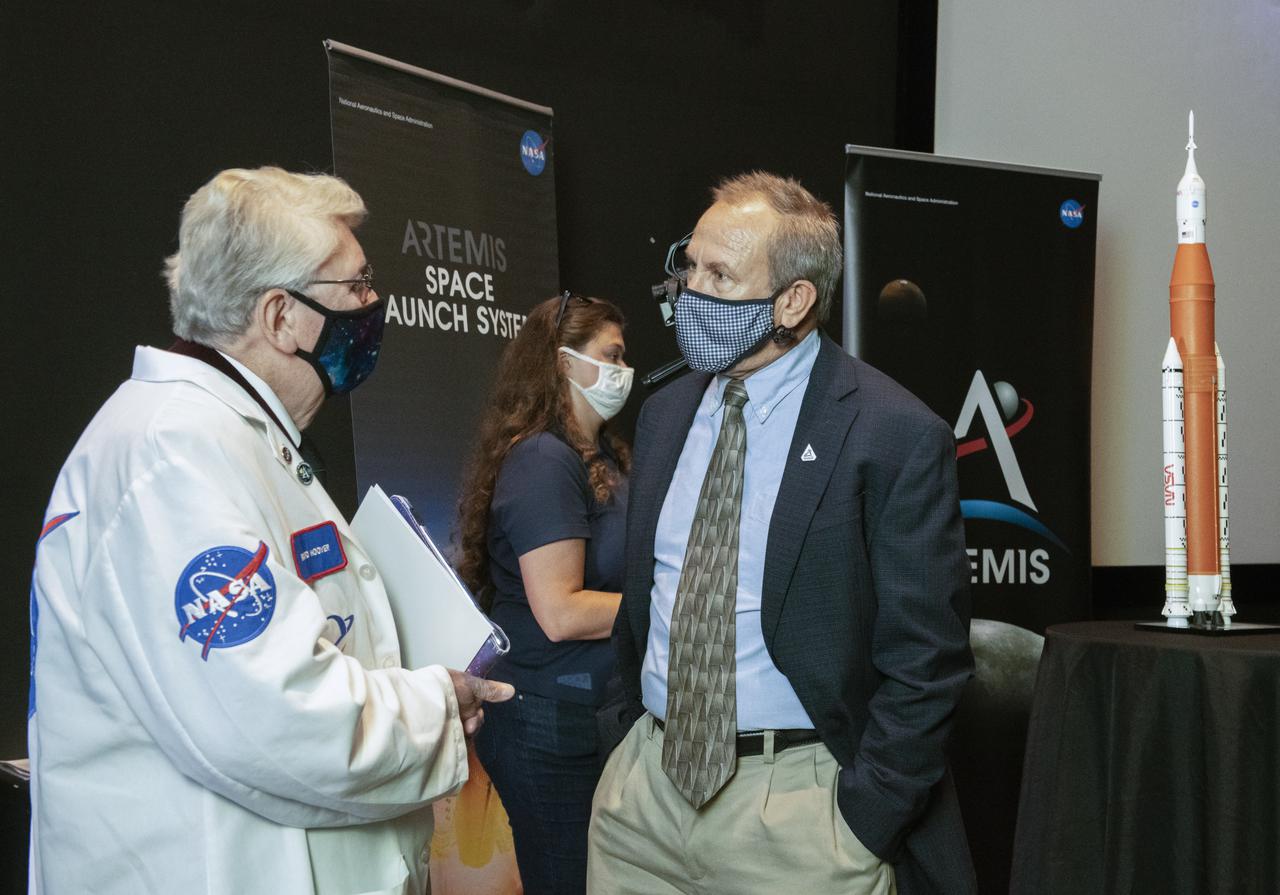
Dr. Richard Hoover talks to David Beaman, SLS Systems Engineering and Integration Manager, at conclusion of Chamber Media Briefing event at USSRC
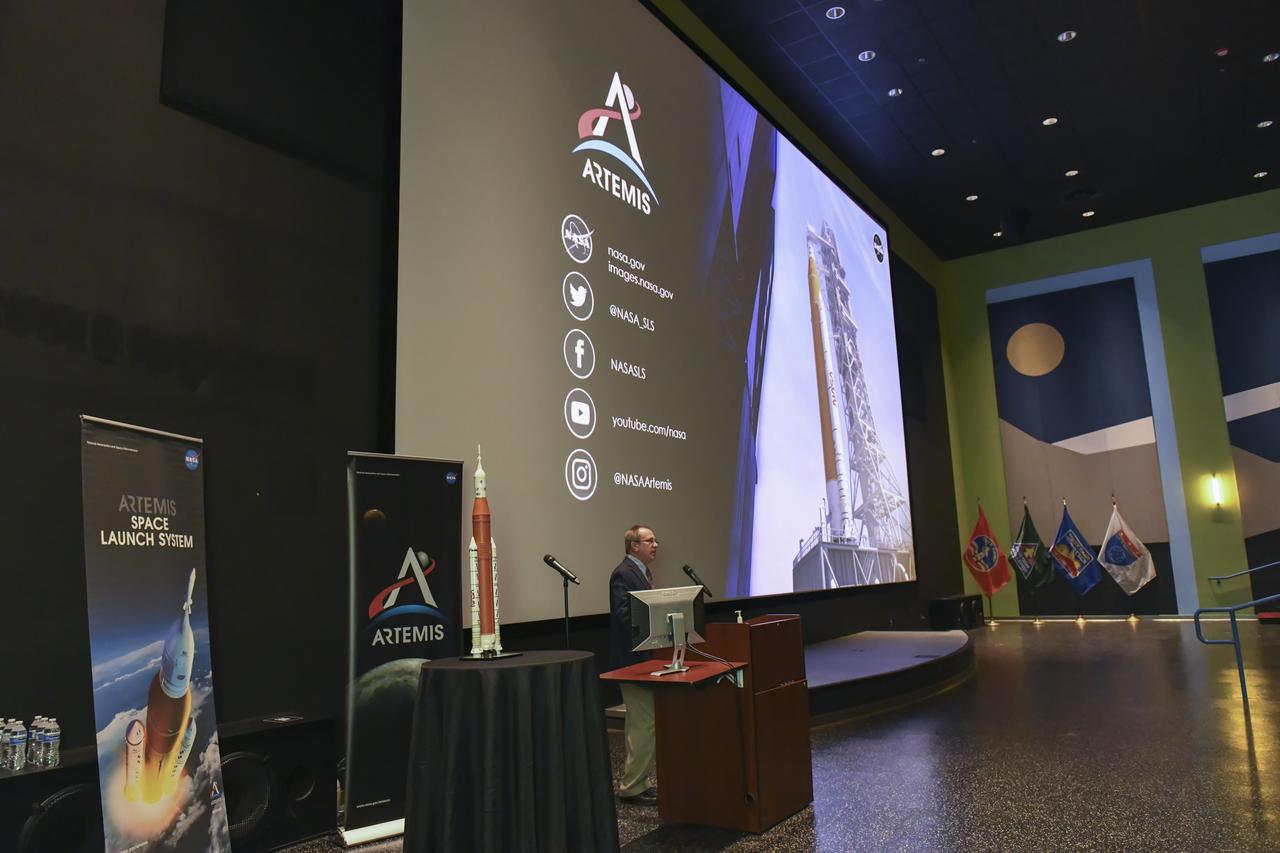
David Beaman, SLS Systems Engineering and Integration Manager, addresses audience at Chamber Media Briefing at USSRC.
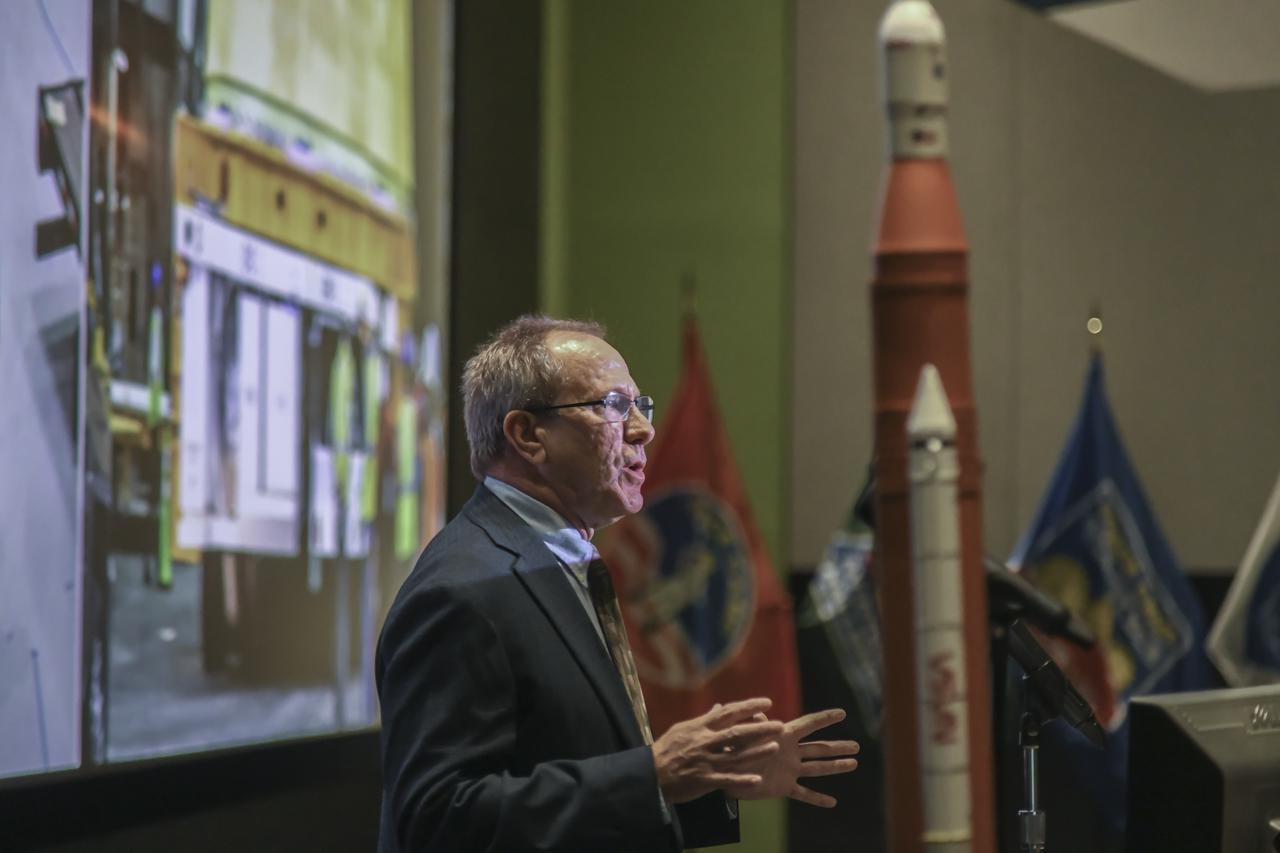
David Beaman, SLS Systems Engineering and Integration Manager, addresses audience at Chamber Media Briefing at USSRC.
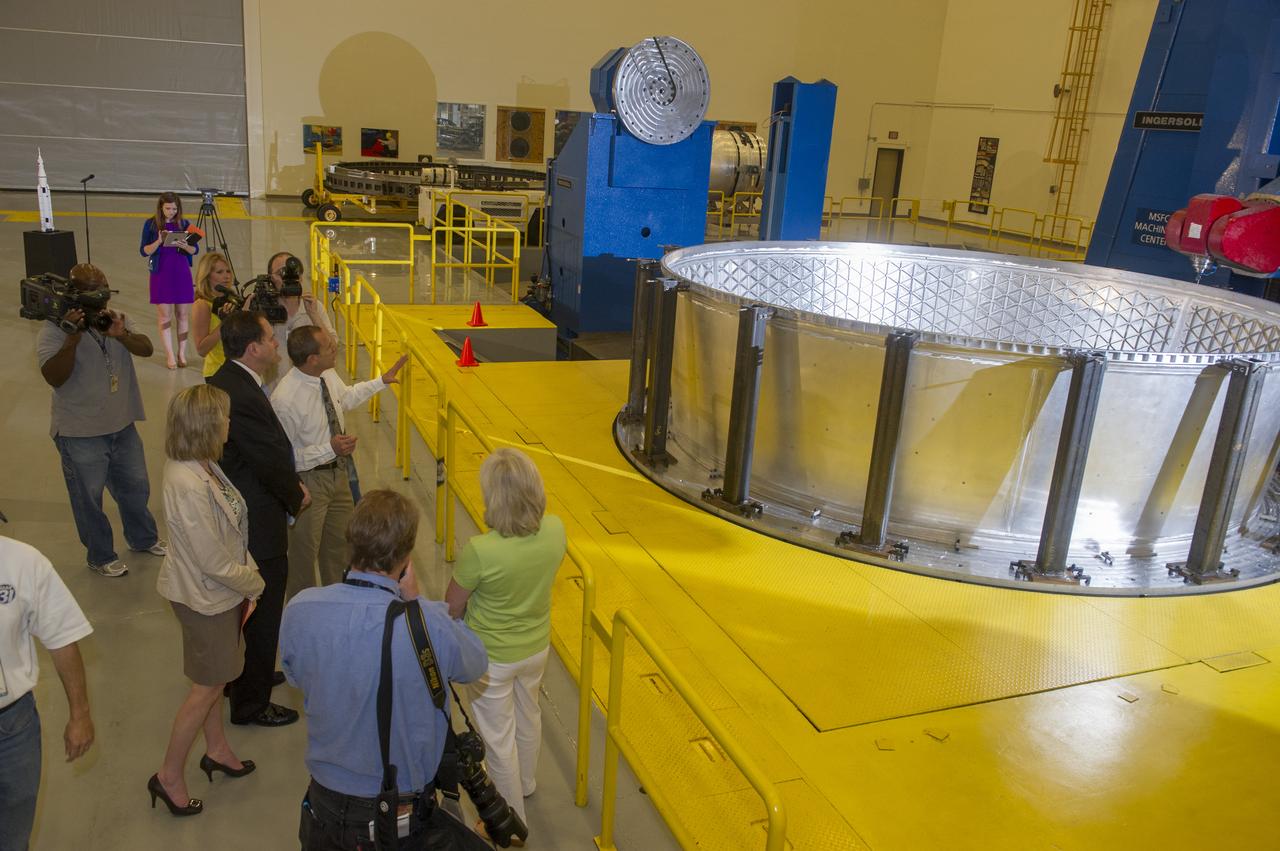
DAVID BEAMAN, MANAGER OF THE SPACECRAFT & PAYLOAD INTEGRATION OFFICE AT NASA'S SPACE LAUNCH SYSTEM, DISCUSSES THE FINER POINTS OF THE CONSTRUCTIONS OF THE SLS ADAPTER RING WITH NASA ASSOCIATE ADMINISTRATOR ROBERT LIGHTFOOT DURING MR. LIGHTFOOT'S VISIT TO THE MARSHALL SPACE FLIGHT CENTER
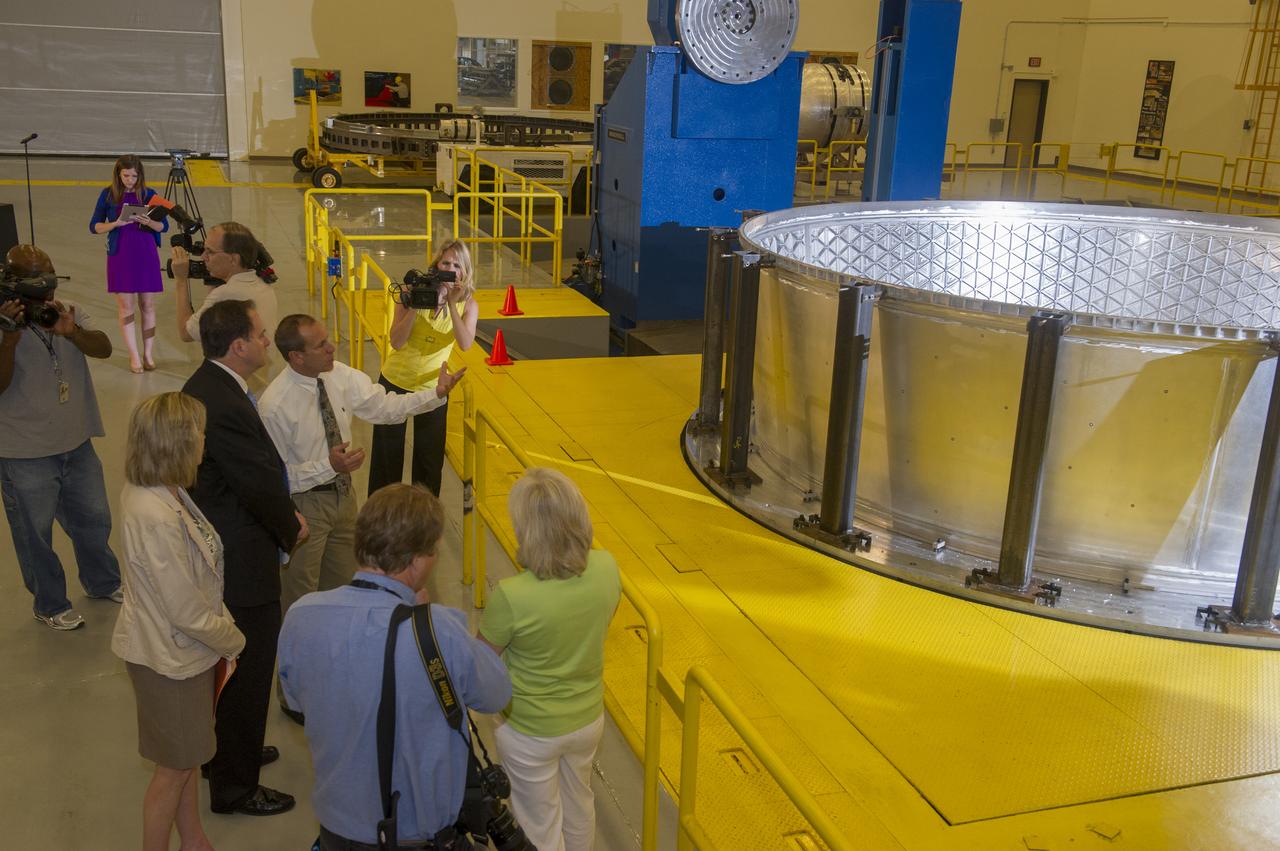
DAVID BEAMAN, MANAGER OF THE SPACECRAFT & PAYLOAD INTEGRATION OFFICE AT NASA'S SPACE LAUNCH SYSTEM, DISCUSSES THE FINER POINTS OF THE CONSTRUCTIONS OF THE SLS ADAPTER RING WITH NASA ASSOCIATE ADMINISTRATOR ROBERT LIGHTFOOT DURING MR. LIGHTFOOT'S VISIT TO THE MARSHALL SPACE FLIGHT CENTER
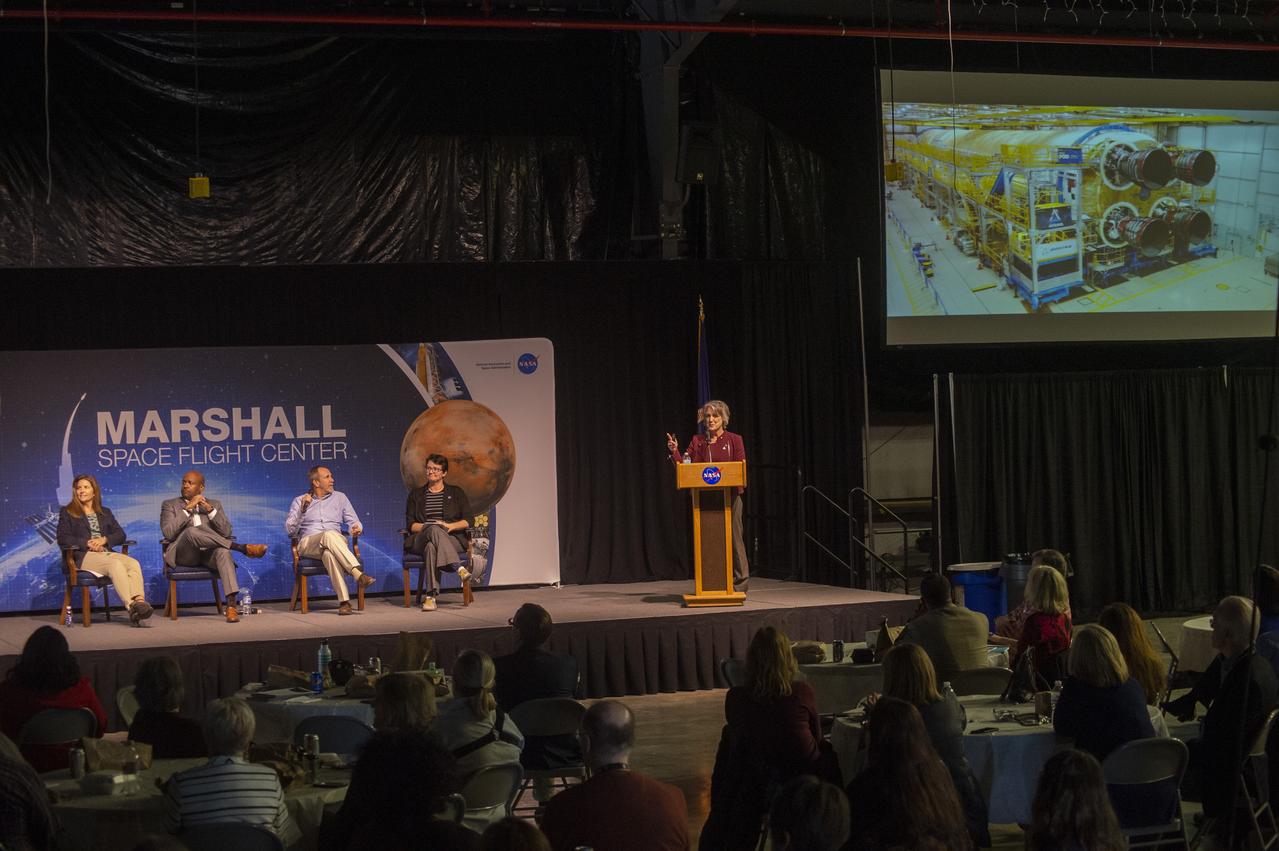
MARCIA LINDSTROM, AT PODIUM, FACILITATES ARTEMIS PROGRAM PANEL DISCUSSION AT NOVEMBER MARSHALL ASSOCIATION LUNCHEON. (L TO R), LISA WATSON-MORGAN, PROGRAM MANAGER, HUMAN LANDING SYSTEM; BOBBY WATKINS, DIRECTOR HUMAN EXPLORATION DEVELOPMENT & OPERATIONS OFFICE; DAVID BEAMAN, MANAGER, SYSTEMS ENGINEERING & INTEGRATION OFFICE, RENEE WEBER, ACTING CENTER CHIEF SCIENTIST
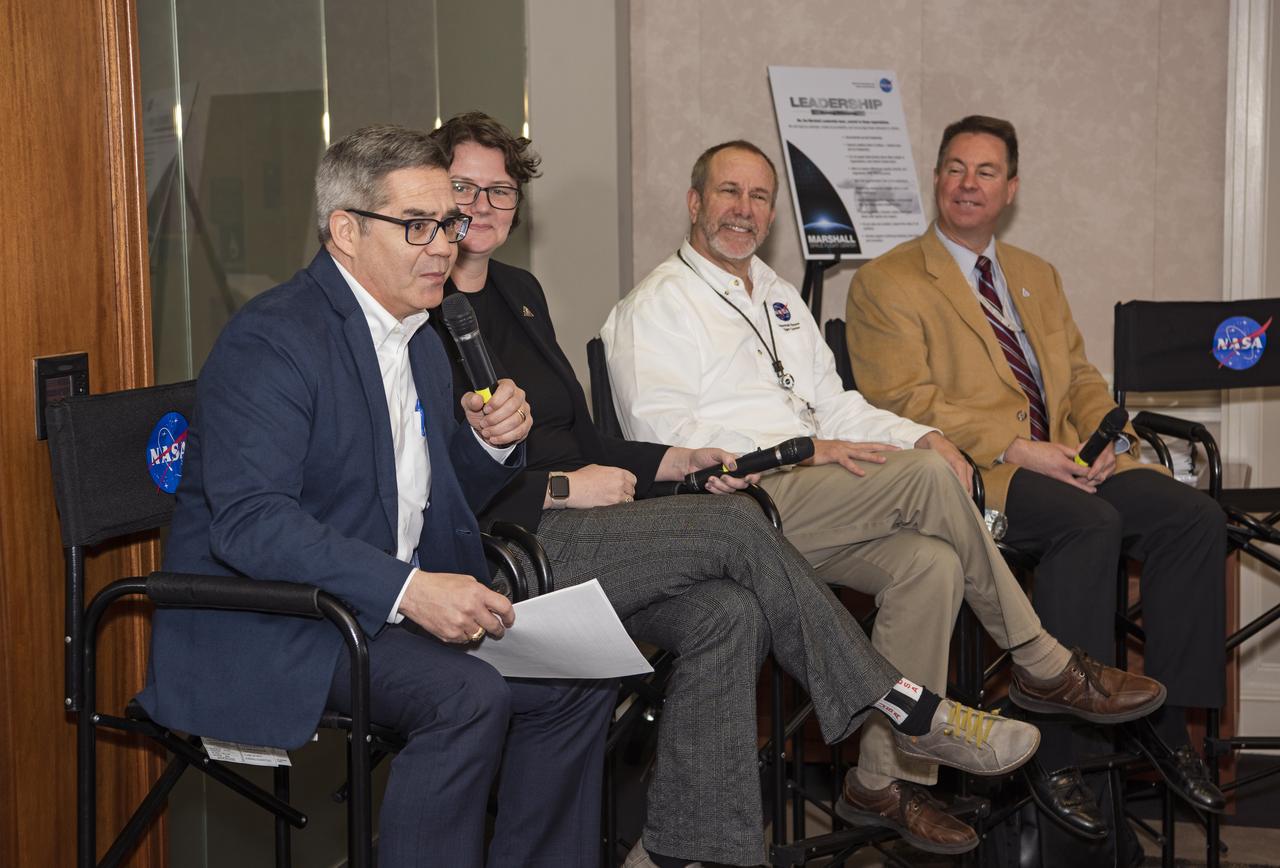
Sam Ortega, left, manager of the Partnerships Office at NASA’s Marshall Space Flight Center, moderates an Artemis Program panel featuring, second from left, Renee Weber, Marshall chief scientist; David Beaman, manager of Marshall’s Systems Engineering & Integration Office; and Don Krupp, associate program manager for the Human Landing System Program, during Universities of the Tennessee Valley Corridor activities Feb. 27 at Marshall. Leadership staff from eight universities and 10 junior colleges in Alabama, Tennessee and Kentucky also heard presentations on Office of STEM Engagement opportunities, partnership opportunities, Marshall’s Technology Transfer Office, the NASA software catalog and Marshall’s Advanced Concepts Office. The group toured several Marshall facilities to learn more about center capabilities.
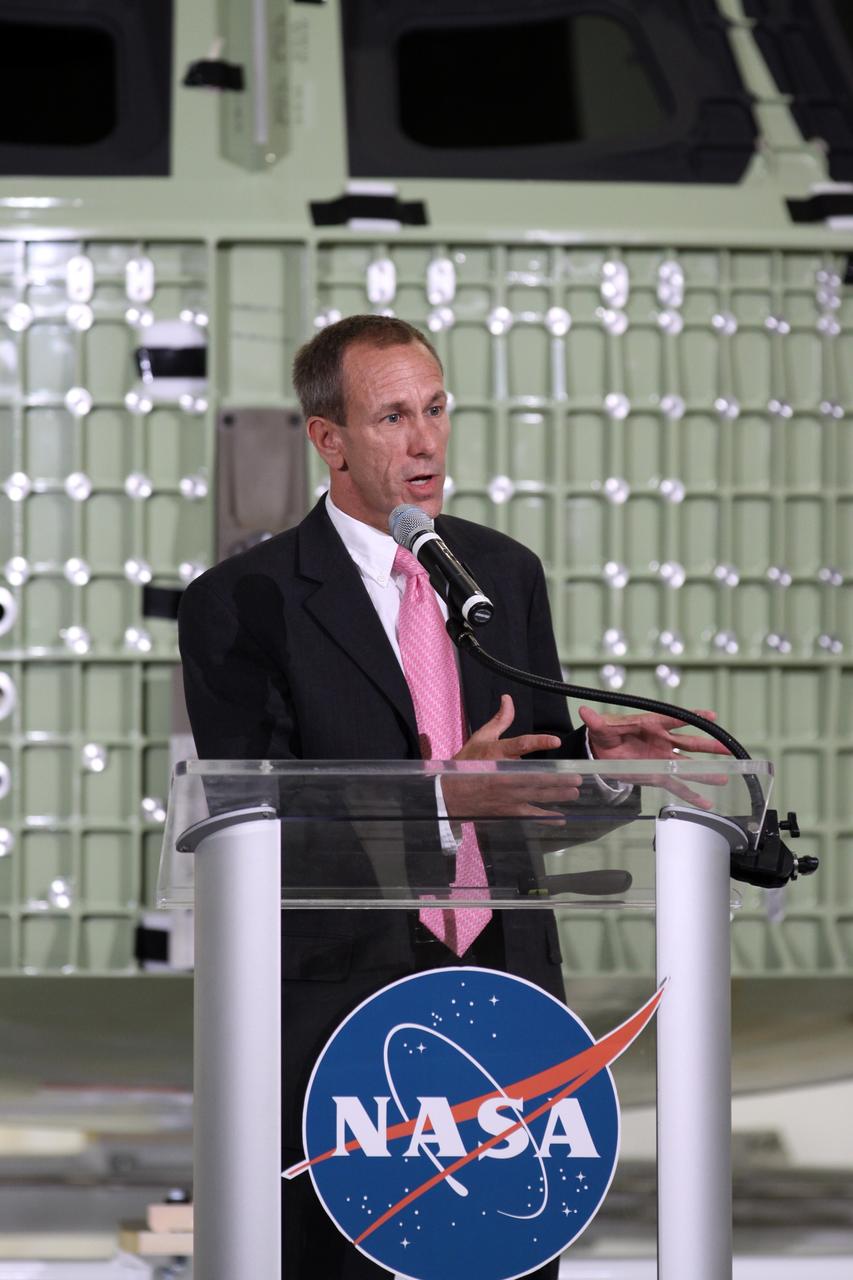
CAPE CANAVERAL, Fla. – David Beaman, NASA Space Launch System spacecraft and payload integration manager, addresses the audience assembled in Kennedy Space Center's Operations and Checkout Building high bay for an event marking the arrival of NASA's first space-bound Orion capsule in Florida. Slated for Exploration Flight Test-1, an uncrewed mission planned for 2014, the capsule will travel farther into space than any human spacecraft has gone in more than 40 years. The capsule was shipped to Kennedy from NASA's Michoud Assembly Facility in New Orleans where the crew module pressure vessel was built. The Orion production team will prepare the module for flight at Kennedy by installing heat-shielding thermal protection systems, avionics and other subsystems. For more information, visit http://www.nasa.gov/orion. Photo credit: NASA/Kim Shiflett
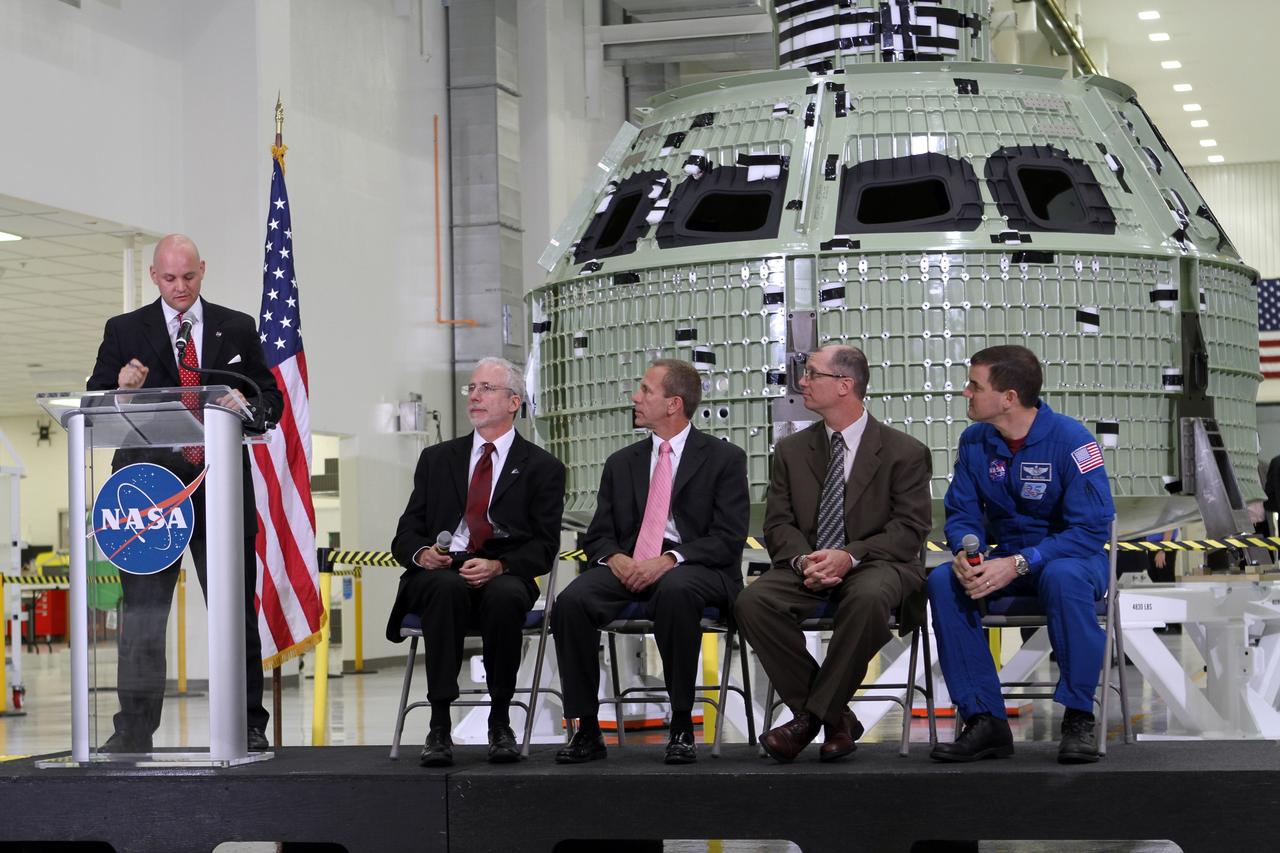
CAPE CANAVERAL, Fla. – Trent Perrotto of NASA Public Affairs addresses an audience of participants during a NASA social question and answer session. The group is assembled in Kennedy Space Center's Operations and Checkout Building high bay for an event marking the arrival of NASA's first space-bound Orion capsule in Florida. Joining Perrotto on stage, from the left, are Mark Geyer, Orion program manager David Beaman, NASA Space Launch System spacecraft and payload integration manager Pepper Phillips, program manager for NASA's Ground Systems Development and Operations and NASA astronaut Rex Walheim. The tweeters will share their experiences with followers through the social networking site Twitter. Slated for Exploration Flight Test-1, an uncrewed mission planned for 2014, the capsule will travel farther into space than any human spacecraft has gone in more than 40 years. NASA's Michoud Assembly Facility in New Orleans built the crew module pressure vessel. The Orion production team will prepare the module for flight by installing heat-shielding thermal protection systems, avionics and other subsystems. For more information, visit http://www.nasa.gov/orion Photo credit: NASA/Kim Shiflett
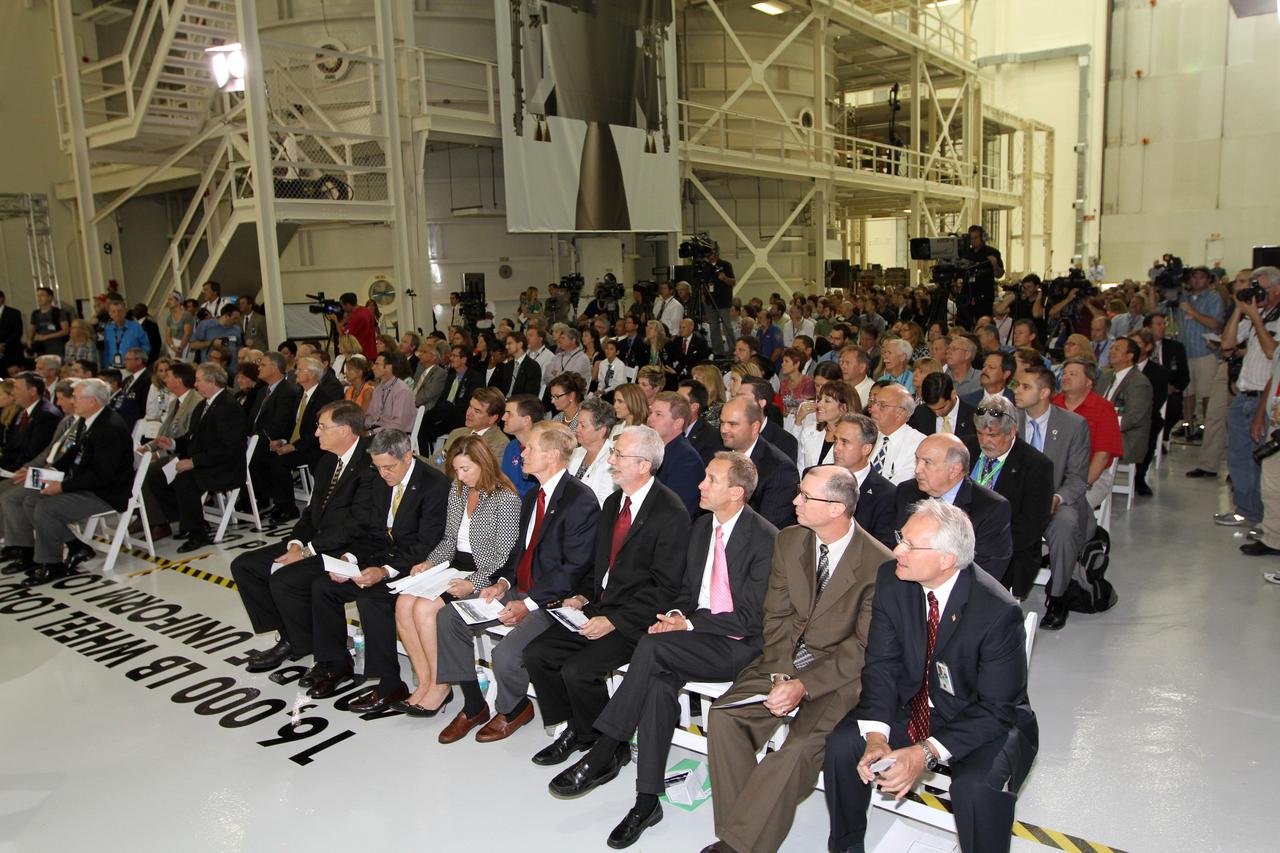
CAPE CANAVERAL, Fla. – Distinguished speakers are seated in the front row in Kennedy Space Center's Operations and Checkout Building high bay for an event marking the arrival of NASA's first space-bound Orion capsule in Florida. From left are Dan Dumbacher, NASA deputy associate administrator for Exploration Systems Development, NASA Kennedy Space Center Director Robert Cabana, NASA Deputy Administrator Lori Garver, U.S. Senator Bill Nelson, Mark Geyer, Orion program manager, David Beaman, NASA Space Launch System spacecraft and payload integration manager, Pepper Phillips, program manager for NASA's Ground Systems Development and Operations, and John Karas, vice president and general manager of Human Spaceflight for Lockheed Martin Space Systems. Slated for Exploration Flight Test-1, an uncrewed mission planned for 2014, the capsule will travel farther into space than any human spacecraft has gone in more than 40 years. The capsule was shipped to Kennedy from NASA's Michoud Assembly Facility in New Orleans where the crew module pressure vessel was built. The Orion production team will prepare the module for flight at Kennedy by installing heat-shielding thermal protection systems, avionics and other subsystems. For more information, visit http://www.nasa.gov/orion. Photo credit: NASA/Kim Shiflett
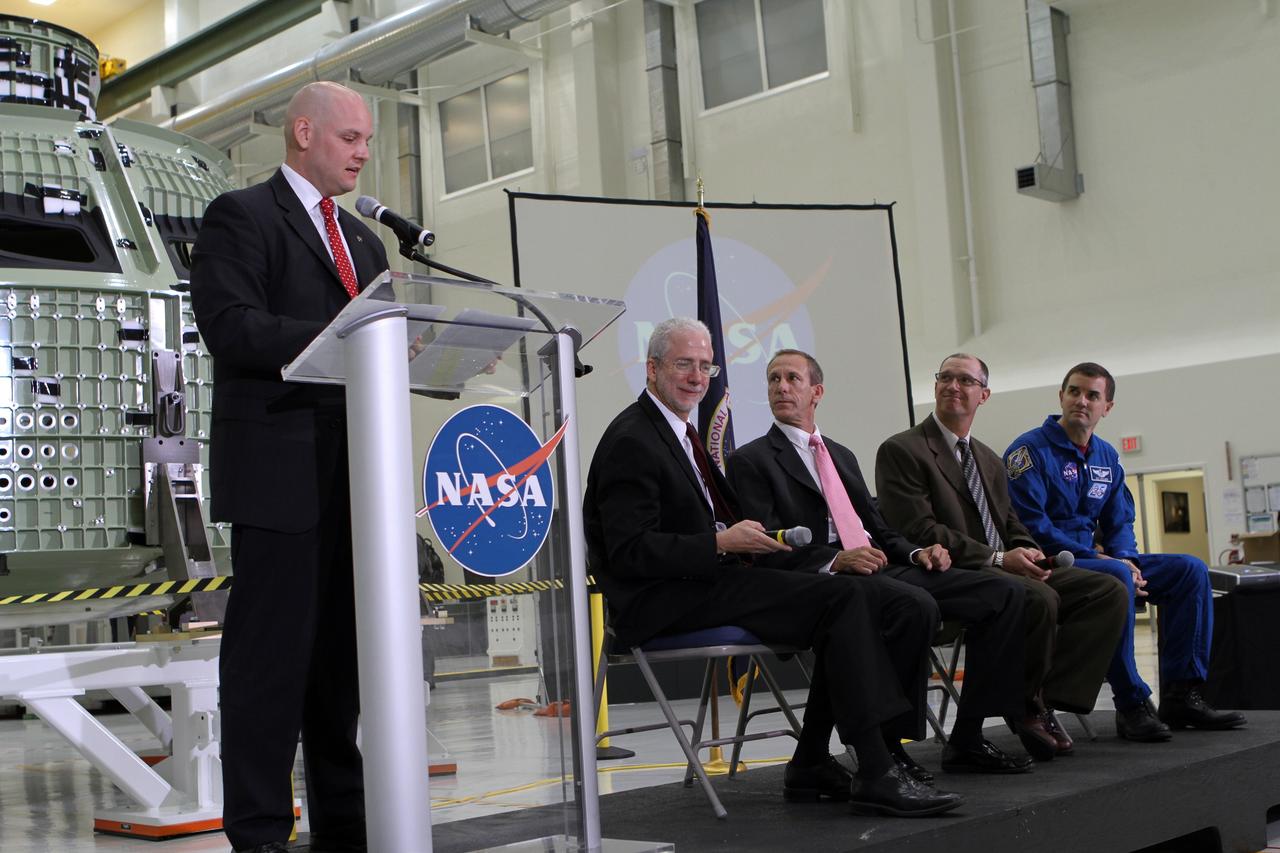
CAPE CANAVERAL, Fla. – Trent Perrotto of NASA Public Affairs addresses an audience of participants during a NASA social question and answer session. The group is assembled in Kennedy Space Center's Operations and Checkout Building high bay for an event marking the arrival of NASA's first space-bound Orion capsule in Florida. Joining Perrotto on stage, from the left, are Mark Geyer, Orion program manager David Beaman, NASA Space Launch System spacecraft and payload integration manager Pepper Phillips, program manager for NASA's Ground Systems Development and Operations and NASA astronaut Rex Walheim. The tweeters will share their experiences with followers through the social networking site Twitter. Slated for Exploration Flight Test-1, an uncrewed mission planned for 2014, the capsule will travel farther into space than any human spacecraft has gone in more than 40 years. NASA's Michoud Assembly Facility in New Orleans built the crew module pressure vessel. The Orion production team will prepare the module for flight by installing heat-shielding thermal protection systems, avionics and other subsystems. For more information, visit http://www.nasa.gov/orion Photo credit: NASA/Kim Shiflett
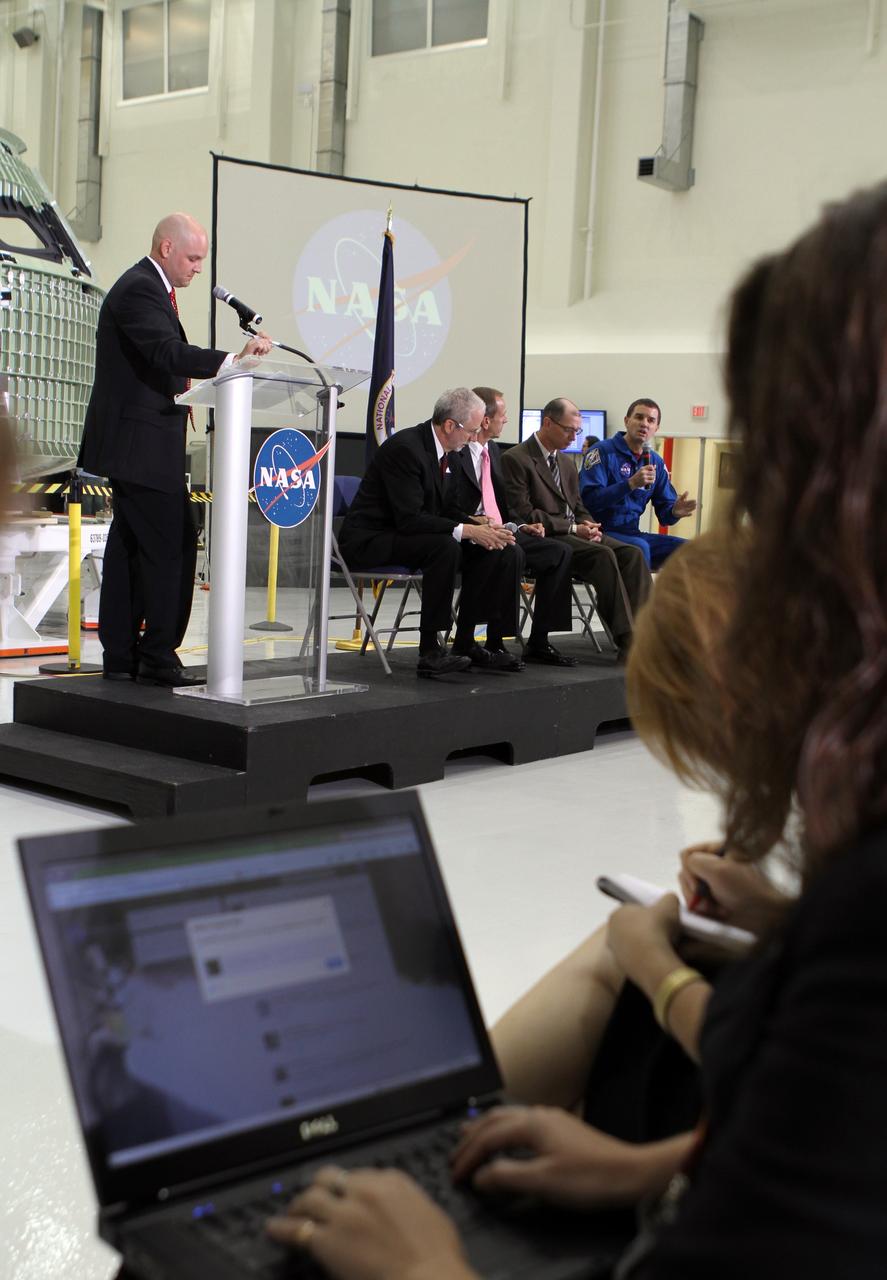
CAPE CANAVERAL, Fla. – NASA astronaut Rex Walheim, far right, addresses an participants during a NASA social question and answer session. The group is assembled in Kennedy Space Center's Operations and Checkout Building high bay for an event marking the arrival of NASA's first space-bound Orion capsule in Florida. At the podium is Trent Perrotto of NASA Public Affairs. Joining Perrotto on stage, from the left, are Mark Geyer, Orion program manager David Beaman, NASA Space Launch System spacecraft and payload integration manager Pepper Phillips, program manager for NASA's Ground Systems Development and Operations and Walheim. The tweeters will share their experiences with followers through the social networking site Twitter. Slated for Exploration Flight Test-1, an uncrewed mission planned for 2014, the capsule will travel farther into space than any human spacecraft has gone in more than 40 years. NASA's Michoud Assembly Facility in New Orleans built the crew module pressure vessel. The Orion production team will prepare the module for flight by installing heat-shielding thermal protection systems, avionics and other subsystems. For more information, visit http://www.nasa.gov/orion Photo credit: NASA/Kim Shiflett