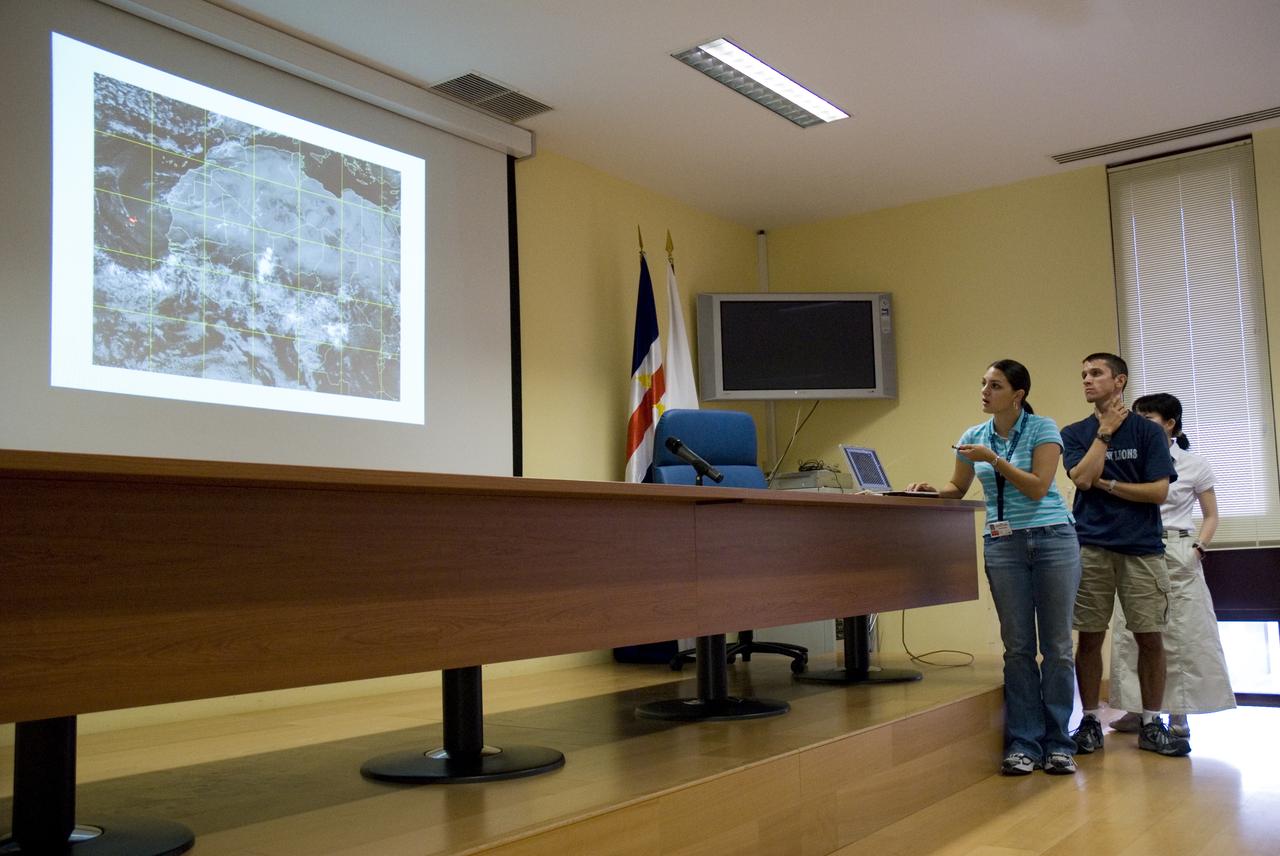
NASA African Monsoon Multidisciplinary Analyses (NAMMA) DC-8 deployment to Cape Verde, Sal island, Africa
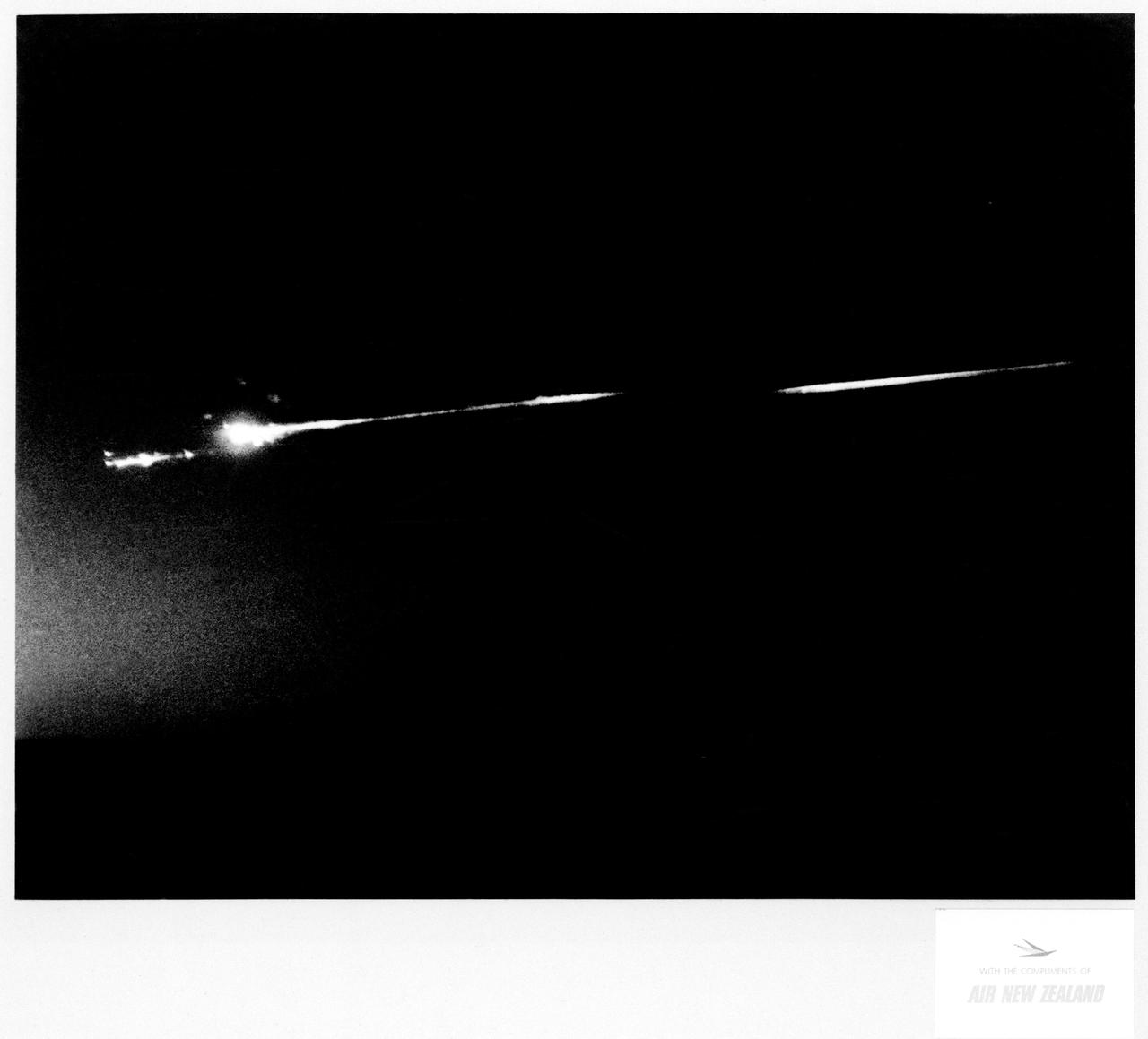
S70-17646 (18 April 1970) --- An unidentified airline passenger snapped these bright objects, believed to be the Apollo 13 Service Module (SM) and Lunar Module (LM) as they entered Earth's atmosphere over the Pacific Ocean on April 18, 1970. The aircraft, an Air New Zealand DC-8 was midway between the Fiji Islands (Nandi Island to be specific) and Auckland, New Zealand, when the photograph was taken. The crew men of the problem plagued Apollo 13 mission jettisoned the LM and SM prior to entering Earth's atmosphere in the Apollo 13 Command Module (CM).

ISS013-E-13549 (2 May 2006) --- Washington, DC is featured in this image photographed by an Expedition 13 crewmember on the International Space Station. When the image was exposed, the orbital outpost was located over the western border of Maryland and West Virginia. The resolution and extent of the true-color, handheld image is similar to the 15-meter/pixel data obtained by sensors onboard the unmanned Landsat-7 and Terra satellites. This resolution is sufficient to capture the sunglint off the Capitol Building's dome. Other major landmarks that are visible include the Washington Monument, the Pentagon (bottom left, southwest of the Potomac River), and the Lincoln Memorial, along the northwest bank of the Potomac.
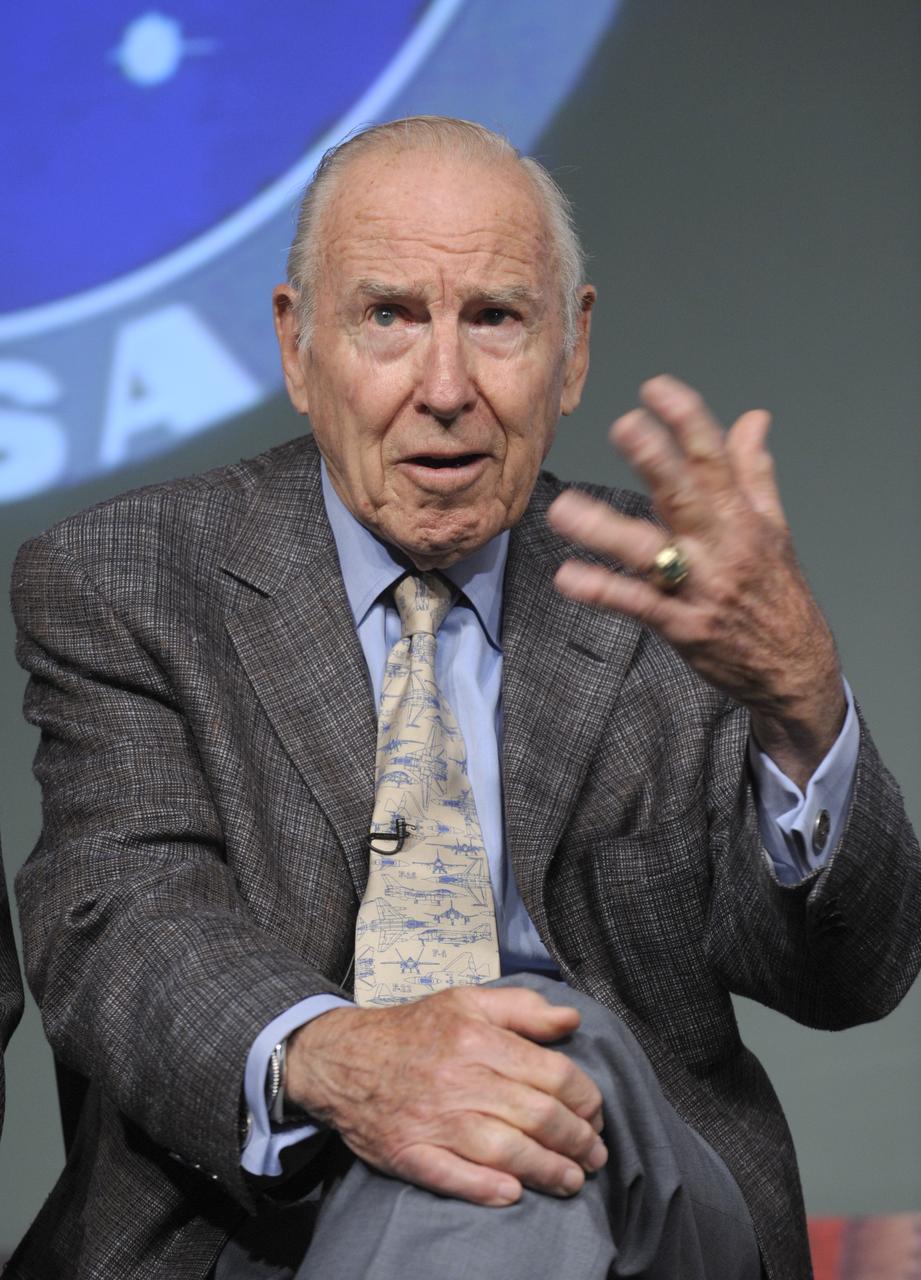
Astronaut James Lovell (Apollo 8 Apollo 13) gestures during the 40th anniversary of the Apollo 11 mission and the walk on the moon press conference, Monday, July 20, 2009, at NASA Headquarters in Washington. Photo Credit: (NASA/Paul E. Alers)
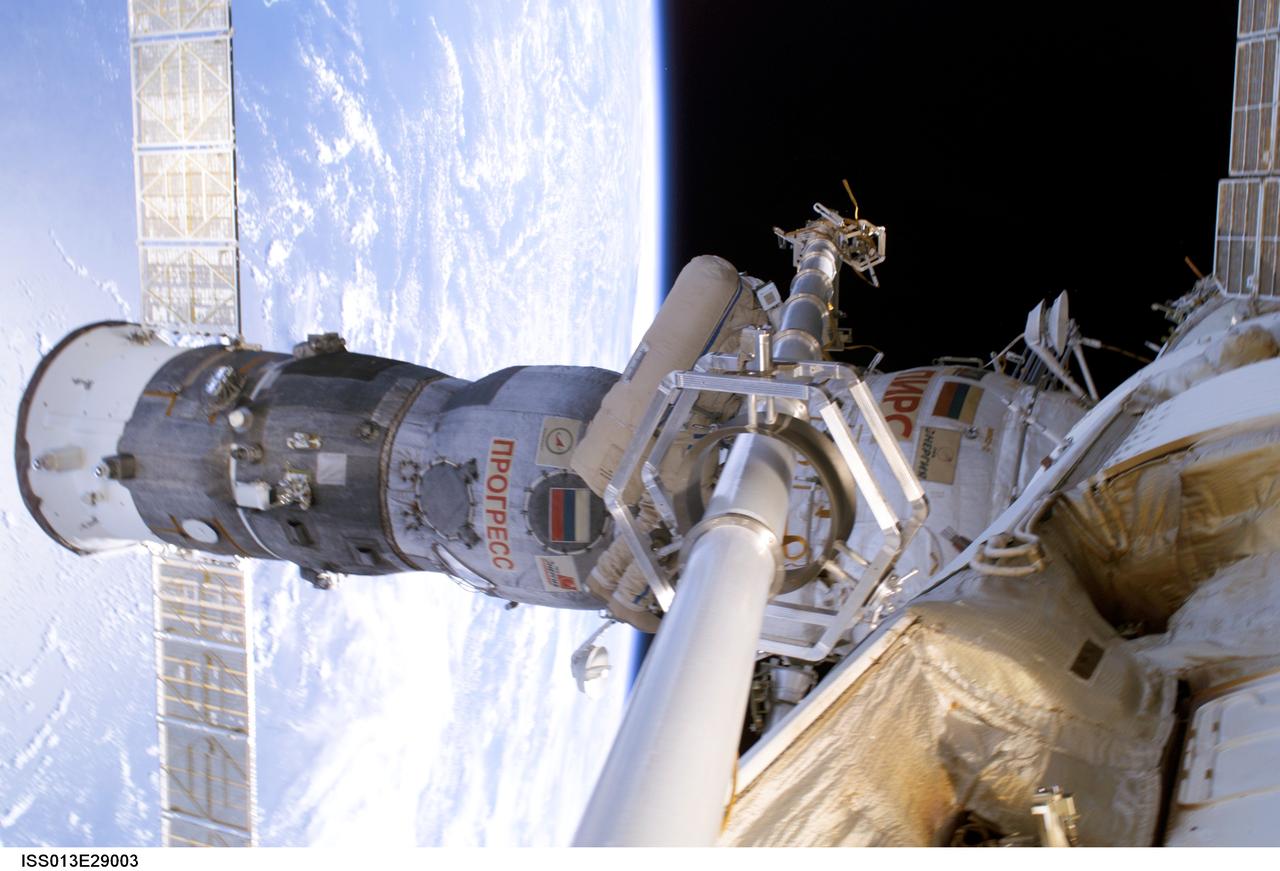
ISS013-E-29003 (1 June 2006) --- The Progress 20 supply vehicle, docked to the Pirs Docking Compartment of the International Space Station, is featured in this image photographed by an Expedition 13 crewmember during today’s spacewalk. Progress 20 will remain docked until mid-June. It will be used to stow trash, and its supply of oxygen will help replenish the station’s atmosphere. A blue and white Earth and the blackness of space provided the backdrop for this image.
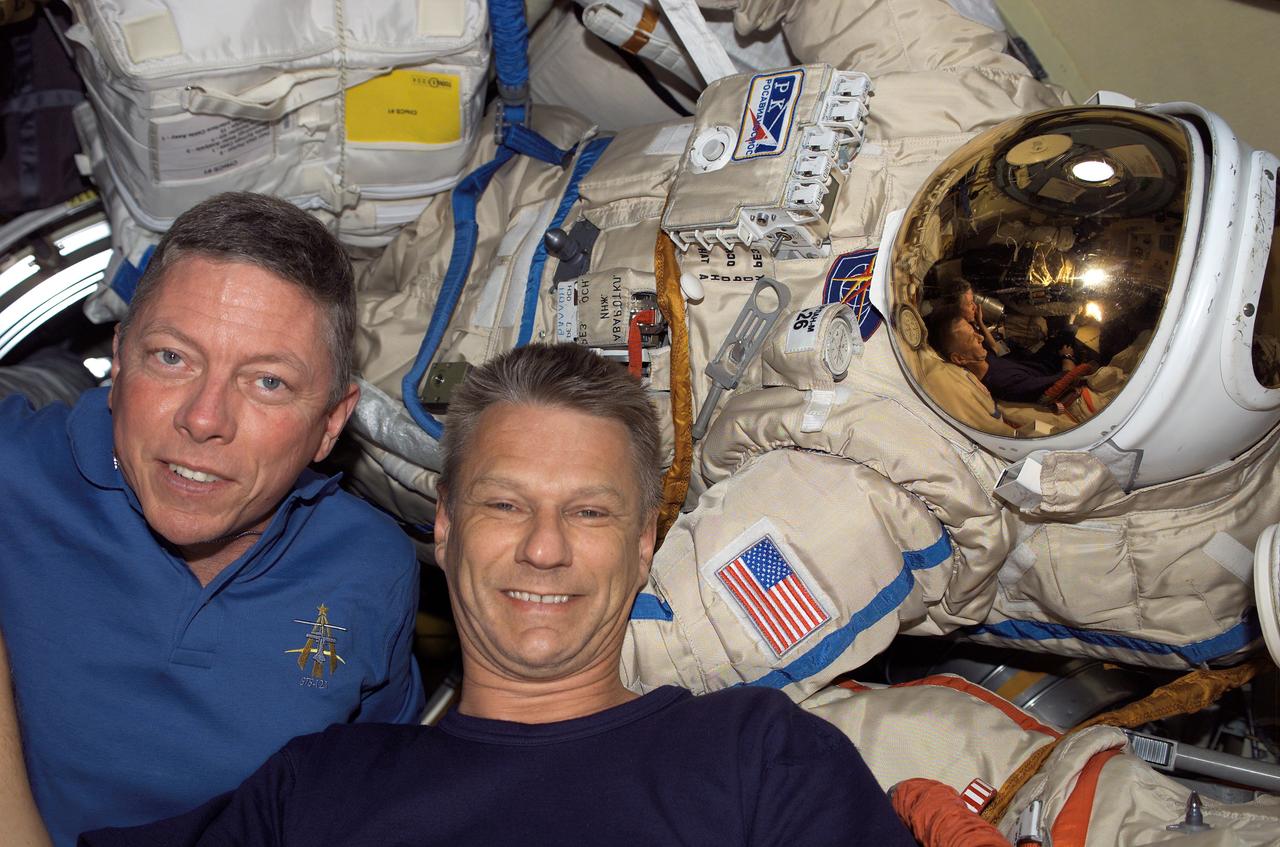
S121-E-06552 (13 July 2006) --- Astronauts Michael E. Fossum (left) and Piers J. Sellers, both STS-121 mission specialists, pose for a photo near a Russian Orlan space suit in the Pirs Docking Compartment of the International Space Station while Space Shuttle Discovery was docked with the station.
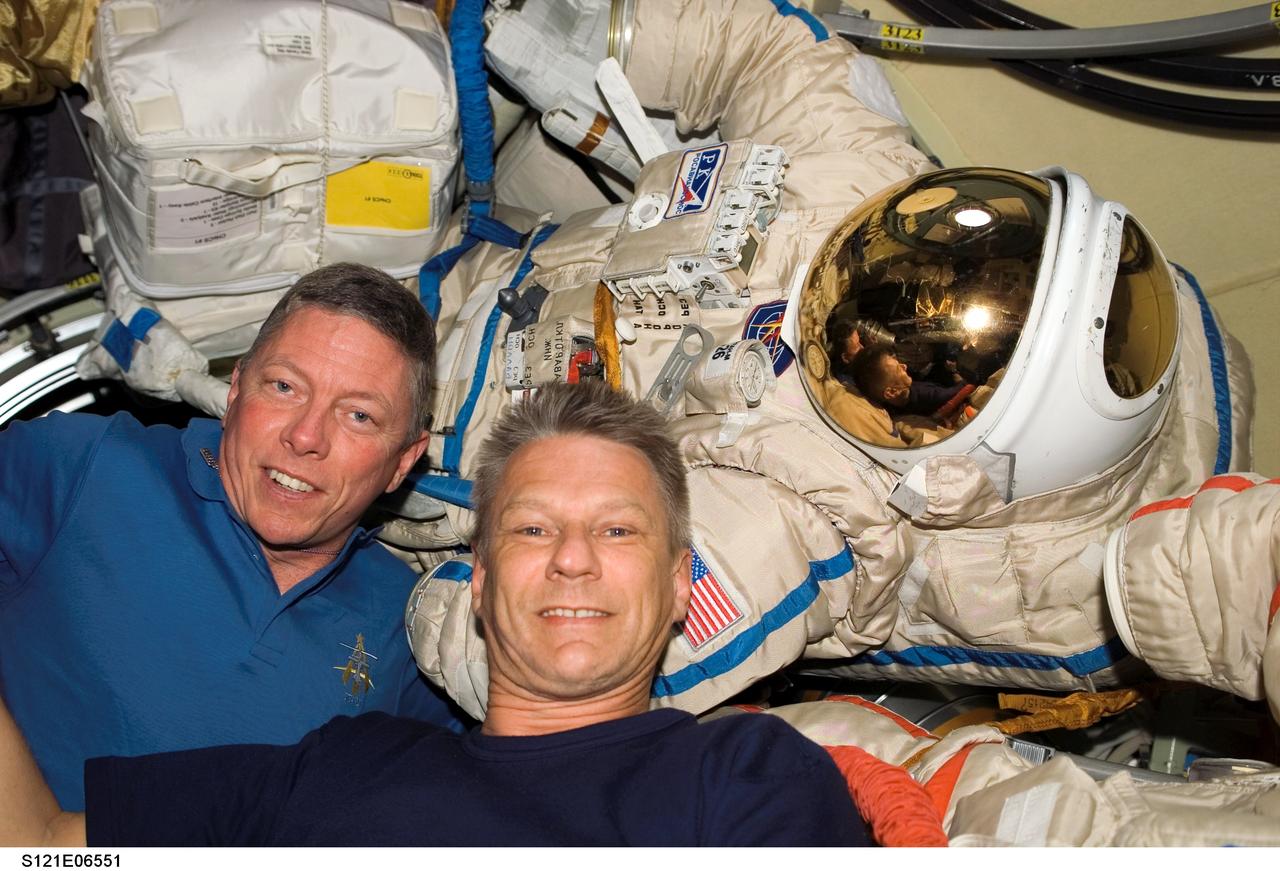
S121-E-06551 (13 July 2006) -- Astronauts Michael E. Fossum (left) and Piers J. Sellers, both STS-121 mission specialists, pose for a photo near a Russian Orlan space suit in the Pirs Docking Compartment of the International Space Station while Space Shuttle Discovery was docked with the station.
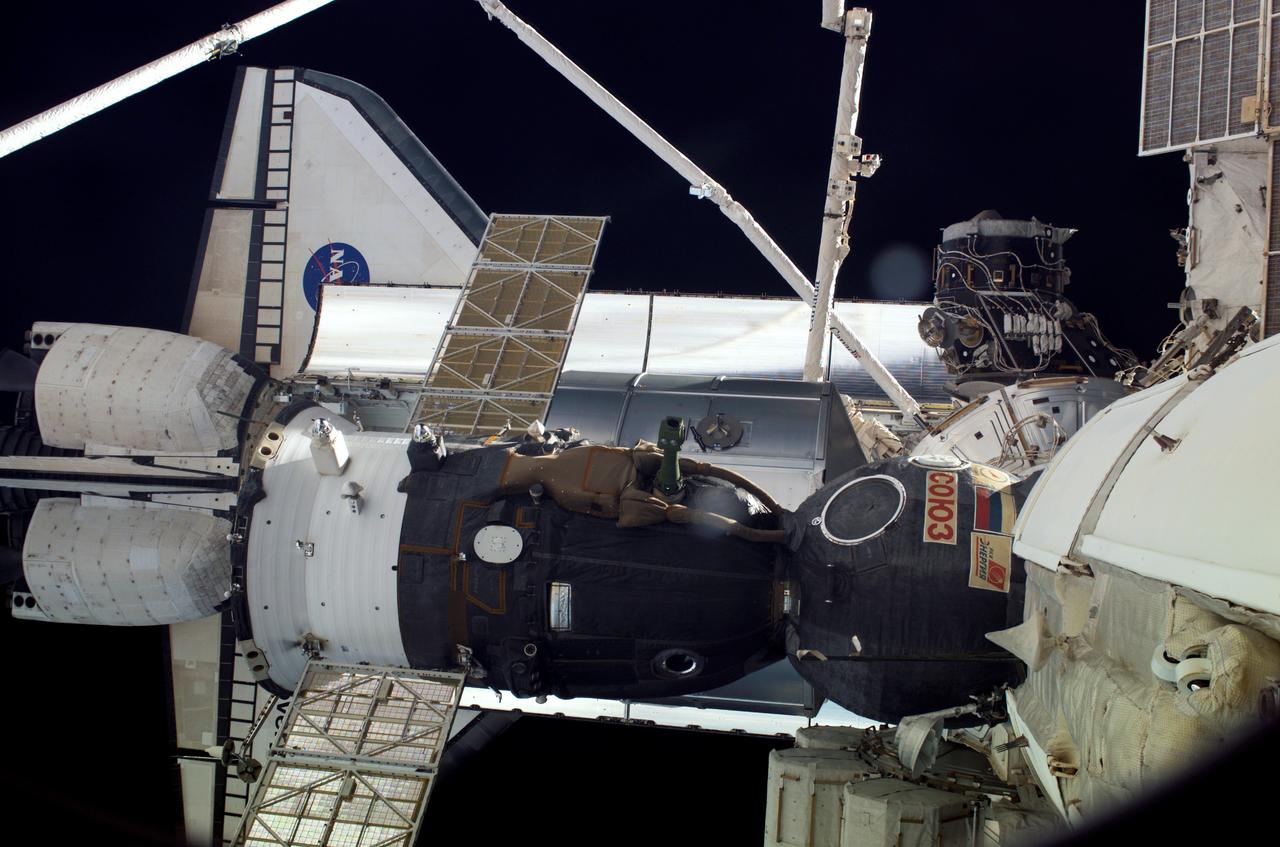
S121-E-06540 (13 July 2006) --- This scene, photographed from the International Space Station while docked with Space Shuttle Discovery, shows the orbiter, the orbiter's Remote Manipulator System (RMS) arm, the Space Station RMS (Canadarm2), the Orbiter Boom and Sensor System (OBSS) and a Soyuz vehicle docked with the orbital outpost.
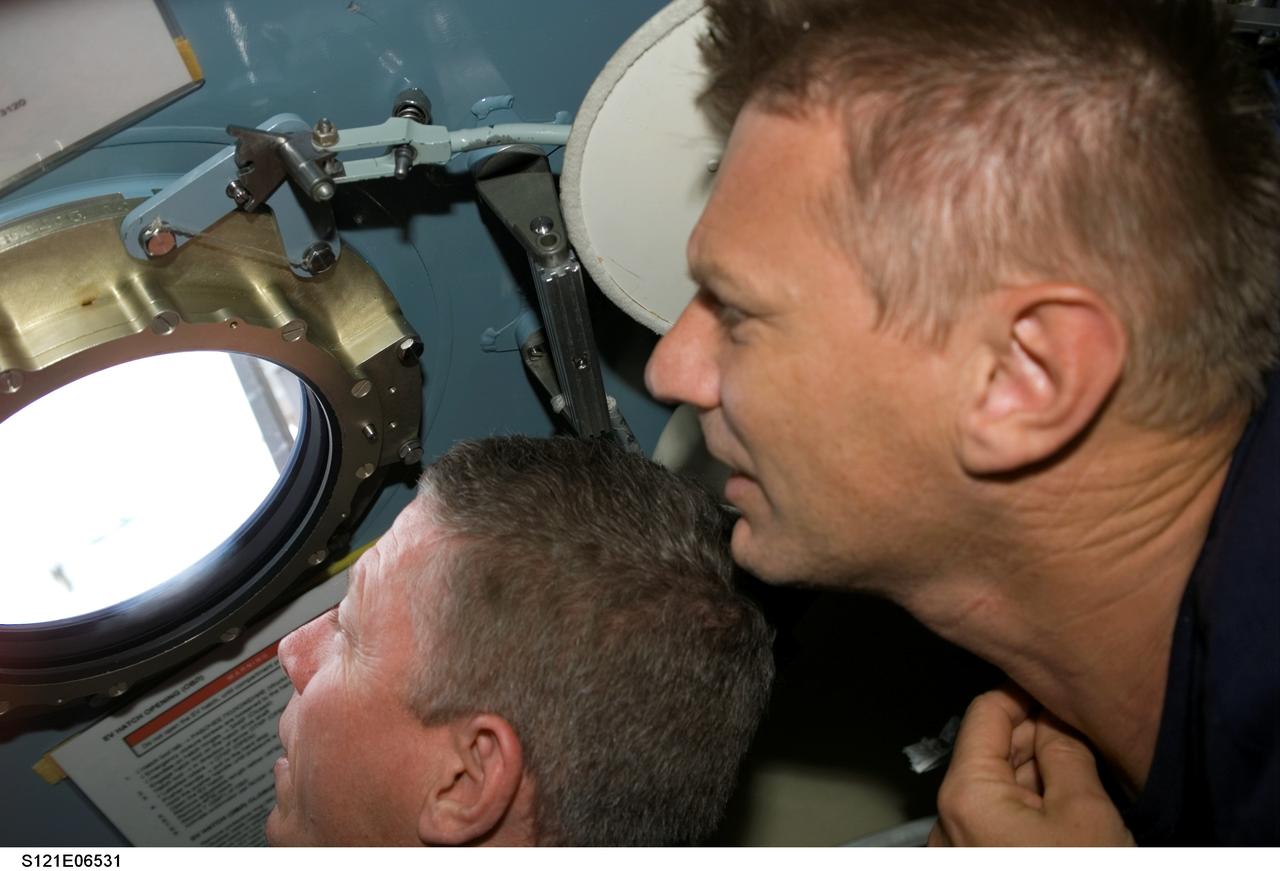
S121-E-06531 (13 July 2006) --- Astronauts Michael E. Fossum (left) and Piers J. Sellers, both STS-121 mission specialists, look out a window in the Pirs Docking Compartment of the International Space Station while Space Shuttle Discovery was docked with the station.
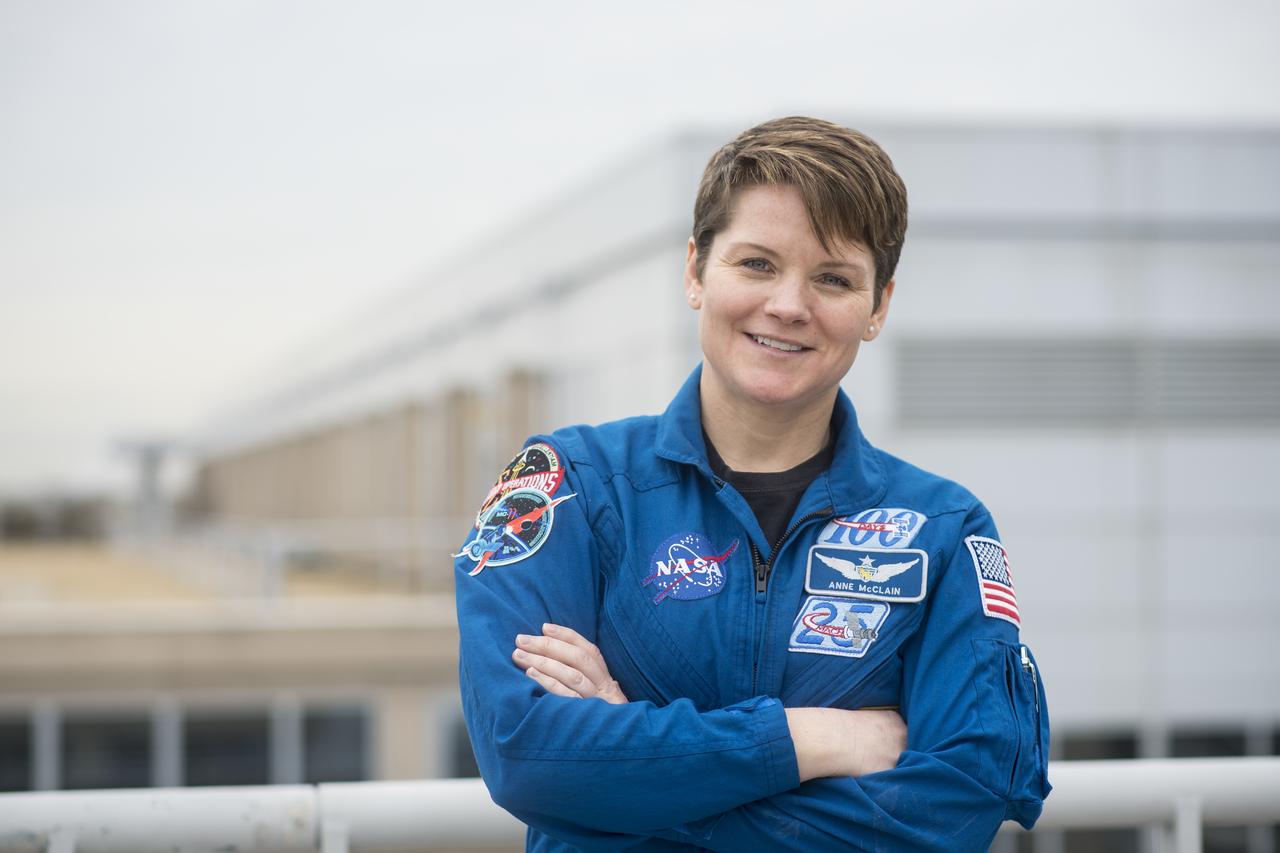
"As a kid, I was really mystified and obsessed with space and flying. So I used to watch any video, any show, anything I could about flying, launching to space, floating in space… everything. There was definitely something magical about seeing astronauts on spacewalks and working in the back of the shuttle. All those IMAX movies, I couldn’t get enough of them. But you know what’s funny about it? My whole life I knew I wanted to go to space, but it pales in comparison to how badly I want to go back having been there. It’s even worse now. The FOMO is so bad. "That was the first thing I said to my doctors when I landed. She asked, 'How are you feeling?' And I said, 'I want to get back in the line and go up again.' "People look at the International Space Station and think, this is a marvel of what humans can achieve. Which is true, but also I look at it like… that’s the place I used to live. Almost like it’s my old college dorm, or my apartment. And I love that. It’s like a part of it is mine." NASA astronaut Anne McClain, Monday, Jan. 13, 2020 in Washington, DC. McClain most recently spent 204 days living and working onboard the International Space Station as part of Expeditions 58 and 59. McClain ventured outside the space station on two spacewalks totaling 13 hours and 8 minutes. Photo Credit: (NASA/Aubrey Gemignani)
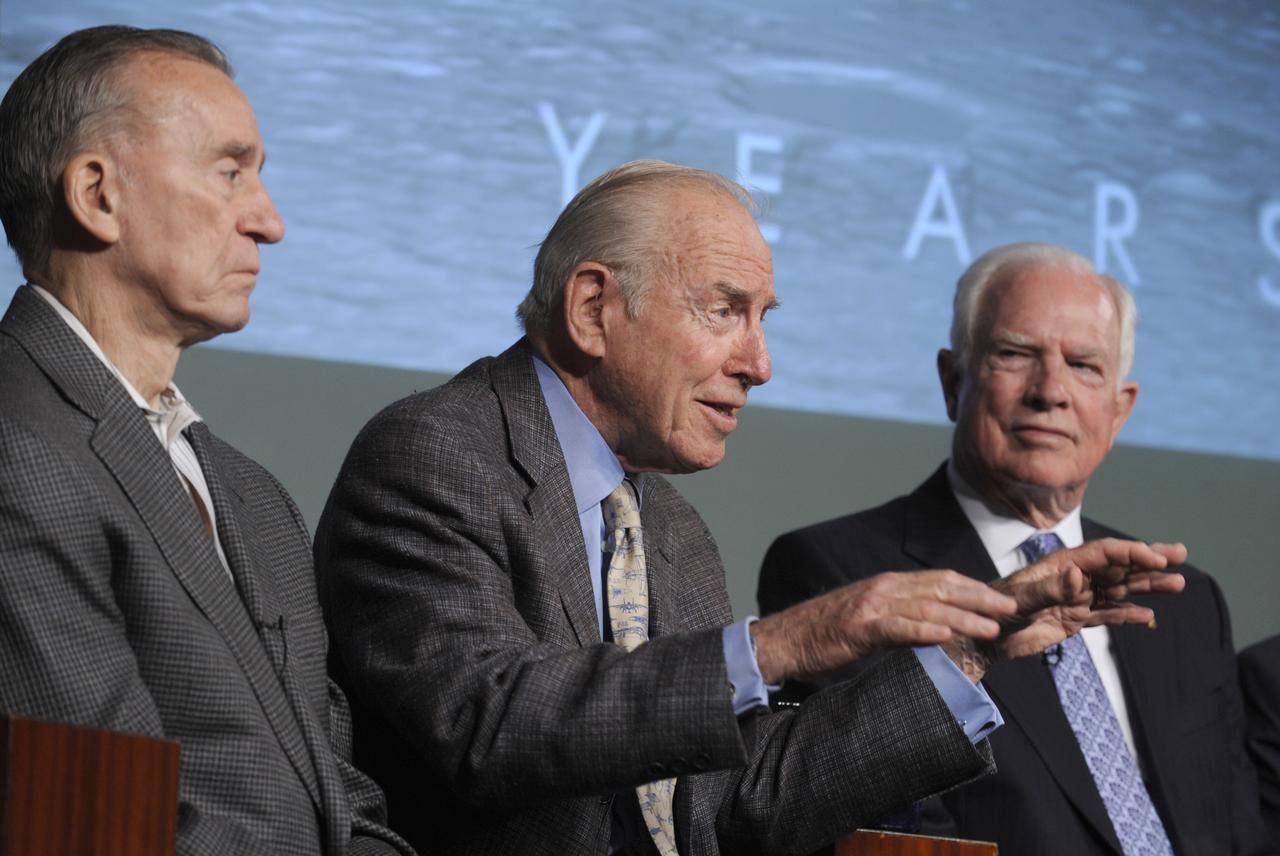
Astronaut James Lovell (Apollo 8 Apollo 13), center, flanked by Walt Cunningham (Apollo 7), left, and David Scott (Apollo 9 Apollo 15) responds during the 40th anniversary of the Apollo 11 mission and the walk on the moon press conference, Monday, July 20, 2009, at NASA Headquarters in Washington. Photo Credit: (NASA/Paul E. Alers)
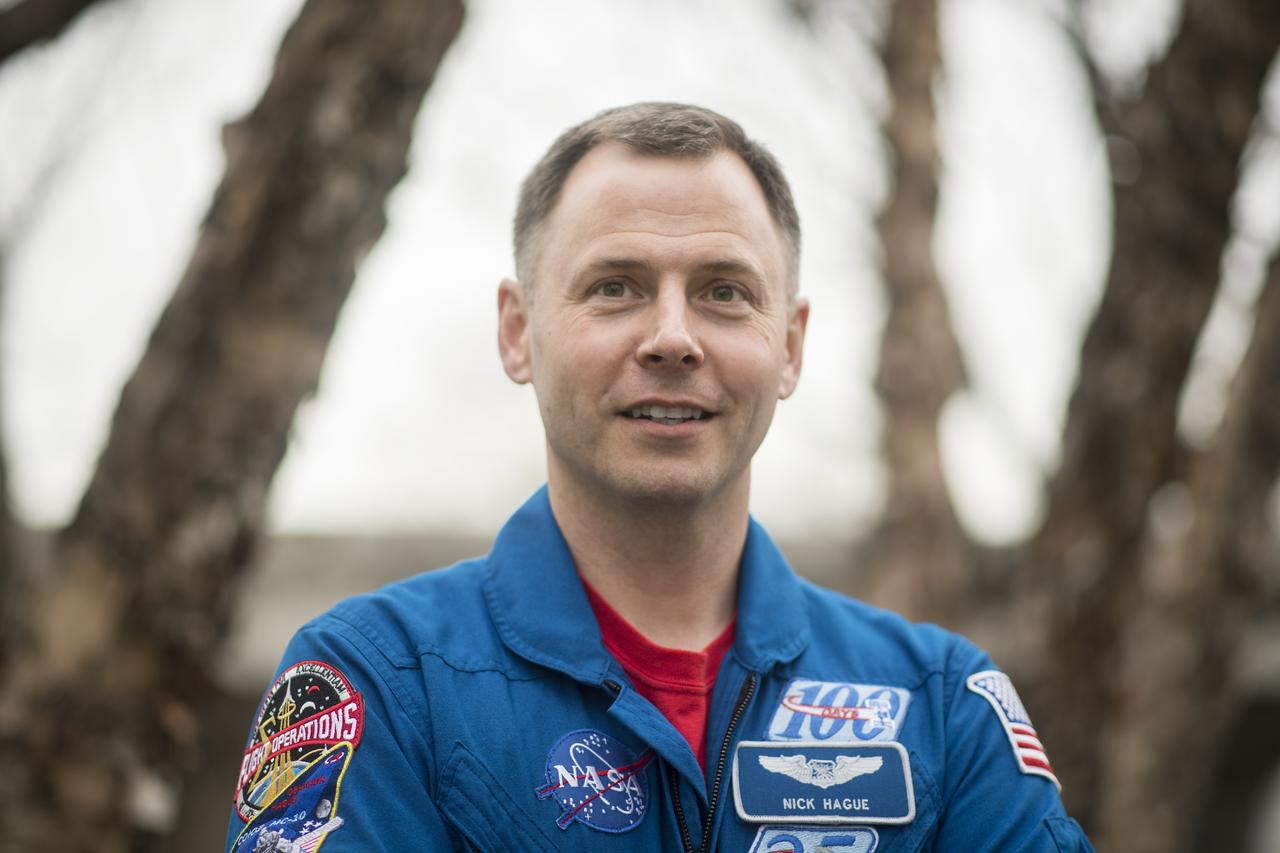
"When we do passes over parts of the world where you can see the human impact to the world, you get to really see the magnitude of the impact. When we’re flying over North America, we come up over Vancouver, and a short five minutes later we’re flying over Houston. We’d just cross over all of the Western United States. And during the daylight, you may not really see a whole lot of human influence, with all the great plains are stretched out and the cities blending into everything. "But when we’d do that same view over South America, at what at one point was rainforest, as far as we can see, has all been deforested. You can understand the reasons why people are doing it. They’re trying to survive. But you also know at your core that we’re having a significant impact on how life is balancing on the world. And so, I walked away with a deep sense of stewardship of the planet. My wife chuckles at this being my mid-life crisis. I came home and signed up for 100% renewable energy and looked at EV cars and everything. "When you look out into space, and you see all those stars and all those galaxies — there’s just so much stuff out there. But the only thing you see with any life on it is what’s right below you. You know that we’re on this island out in the middle of this vast darkness, and we need to just take care of it as best we can." NASA astronaut Nick Hague, Monday, Jan. 13, 2020 in Washington, DC. Hague most recently spent 203 days living and working onboard the International Space Station as part of Expeditions 59 and 60. Hague ventured outside the space station on three spacewalks totaling 19 hours and 56 minutes. Photo Credit: (NASA/Aubrey Gemignani)

“Since I was 13, I’ve had maybe two or three jobs. Right now, I feel like I have four jobs. I have the NASA job, the Navy job. I’m also the chair for the Hispanic Outreach and Leadership Alliance, and I’m a new dad. It’s a lot. They say that the more you do, the more you can do. That’s a motto we have in the military. It’s true. The more you do, the more you can do, and unless you try to do something, you won’t know if you can. I have this philosophy in life that you’re only ever going to do things related to four categories: fitness and health, social and family time, your career, or faith and spirituality. You’re never, ever going to get those things perfectly in balance because nobody’s perfect. But I think the goal is to try to maintain balance. You’re going to have periods in your life where you may have a lot of work assignments and you’re spending a lot of time on the career side of things, but you need to also remember that you owe some time to your family and your friends. Are you taking time off for your health? Recognize when you’re a little bit off-balanced on one end. Success is in the journey of trying to work your way back to balanced.” Magdiel Santana, Senior Program Analyst at NASA Headquarters, poses for a portrait, Tuesday, Sept. 1, 2020, near NASA Headquarters in Washington, DC. Photo Credit: (NASA/Joel Kowsky)
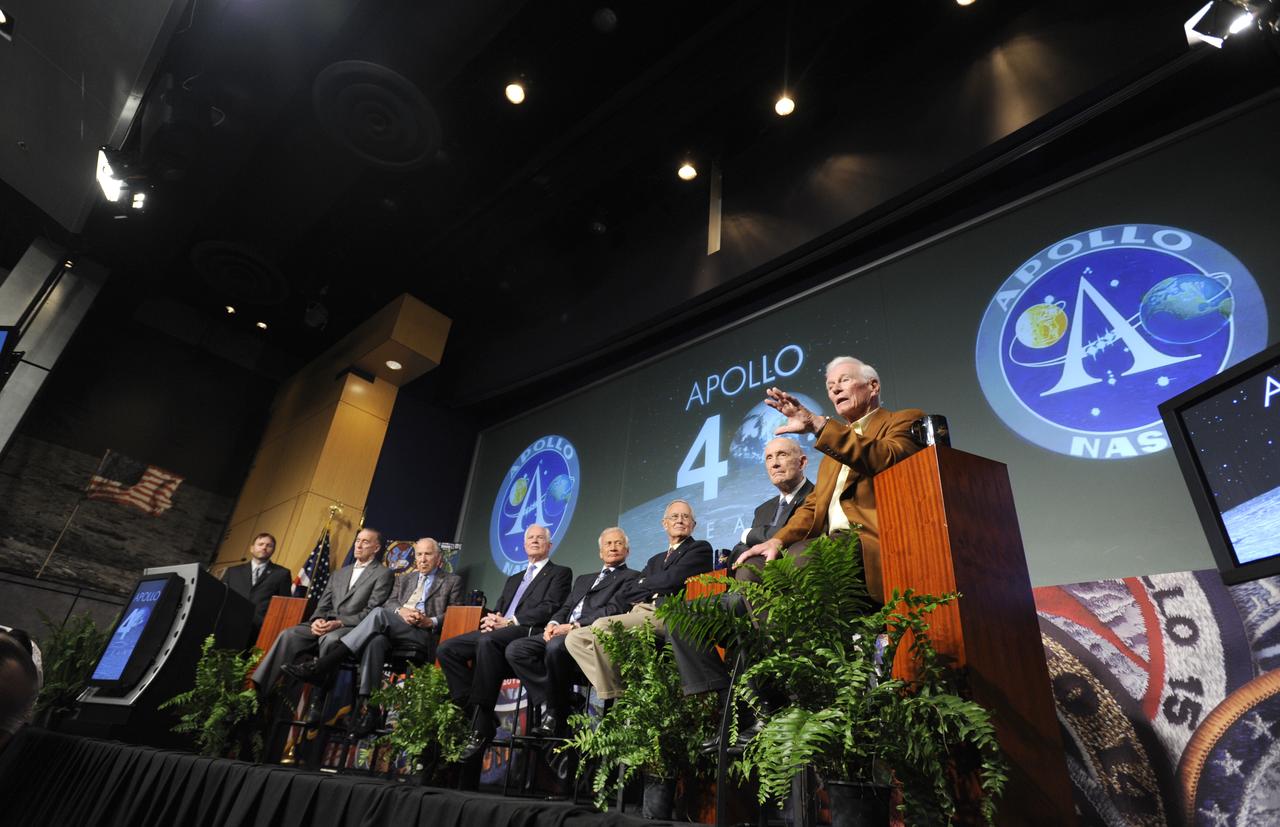
Apollo astronauts from left, Walt Cunningham (Apollo 17), James Lovell (Apollo 8 Apollo 13), David Scott (Apollo 9 Apollo 15), Buzz Aldrin (Apollo 11), Charles Duke (Apollo 16), Thomas Stafford (Apollo 10) and Eugene Cernan (Apollo 17) are seen during the 40th anniversary of the Apollo 11 mission and the walk on the moon press conference, Monday, July 20, 2009, at NASA Headquarters in Washington. Photo Credit: (NASA/Paul E. Alers)
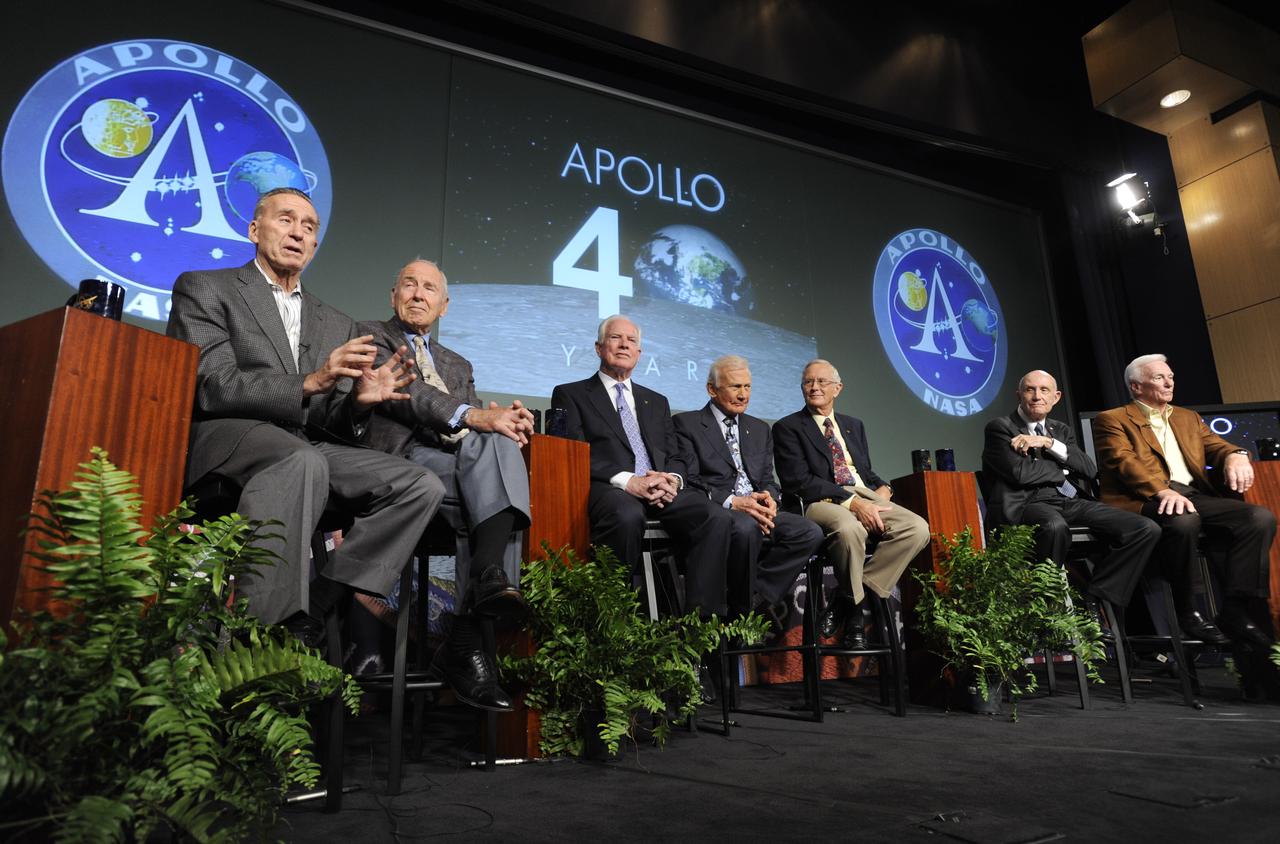
Apollo astronauts from left, Walt Cunningham (Apollo 17), James Lovell (Apollo 8 Apollo 13), David Scott (Apollo 9 Apollo 15), Buzz Aldrin (Apollo 11), Charles Duke (Apollo 16), Thomas Stafford (Apollo 10) and Eugene Cernan (Apollo 17) are seen during the 40th anniversary of the Apollo 11 mission and the walk on the moon press conference, Monday, July 20, 2009, at NASA Headquarters in Washington. Photo Credit: (NASA/Paul E. Alers)

Apollo astronauts from left, Walt Cunningham (Apollo 17), James Lovell (Apollo 8 Apollo 13), David Scott (Apollo 9 Apollo 15), Buzz Aldrin (Apollo 11), Charles Duke (Apollo 16), Thomas Stafford (Apollo 10) and Eugene Cernan (Apollo 17) are seen during the 40th anniversary of the Apollo 11 mission and the walk on the moon press conference, Monday, July 20, 2009, at NASA Headquarters in Washington. Photo Credit: (NASA/Paul E. Alers)