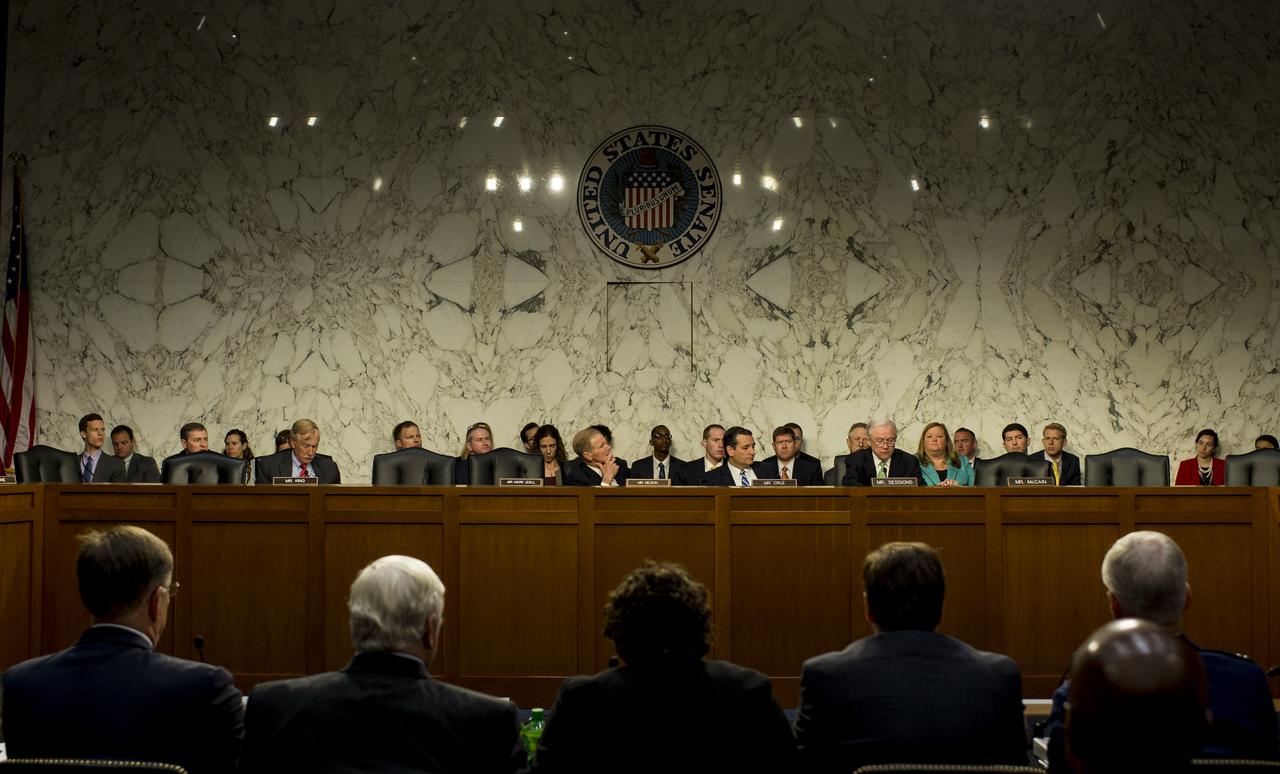
A general view of a hearing in front of the Senate Subcommittee on Strategic Forces and Senate Committee on Commerce, Science, and Transportation regarding assured access to space on Wednesday, July 16, 2014, at the Hart Senate Office Building in Washington, DC.
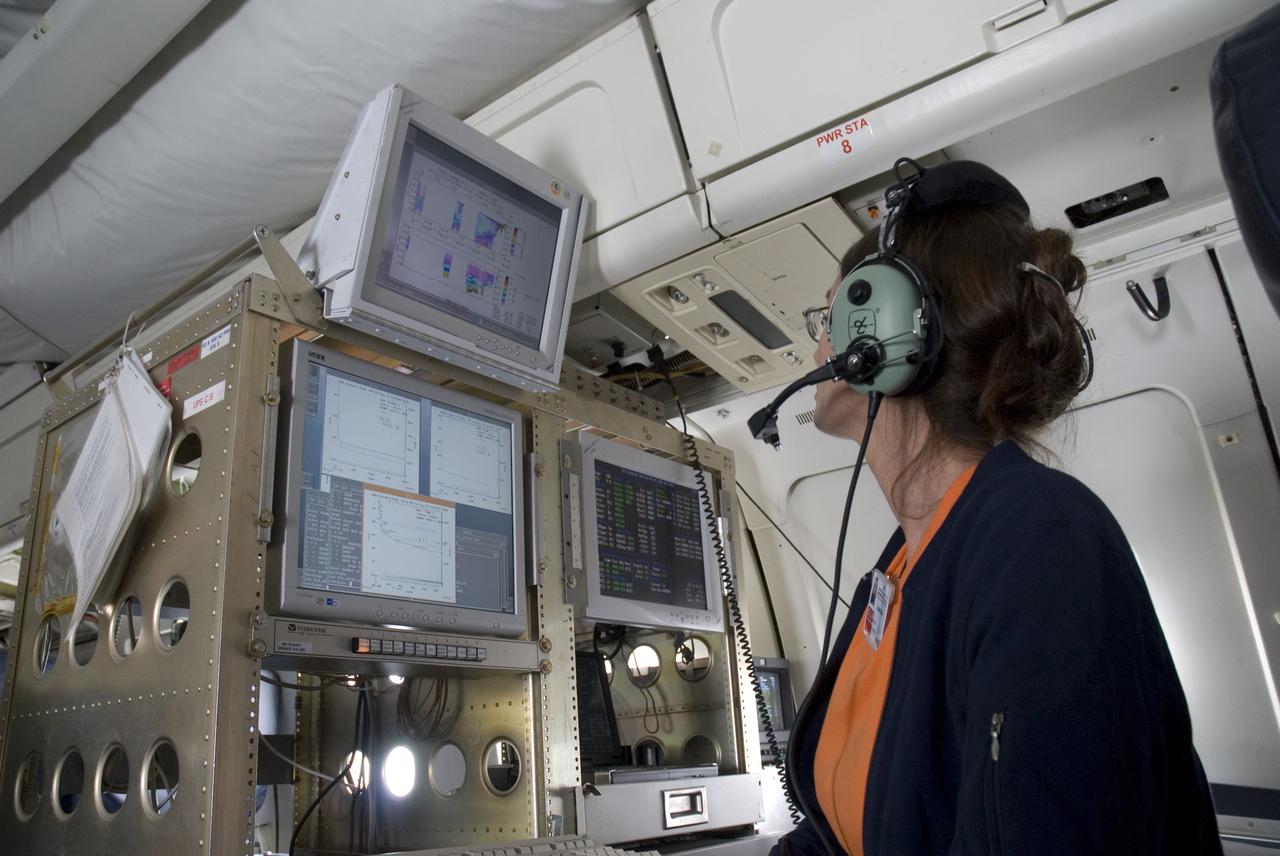
NASA African Monsoon Multidisciplinary Analyses (NAMMA) DC-8 deployment to Cape Verde, Sal island, Africa
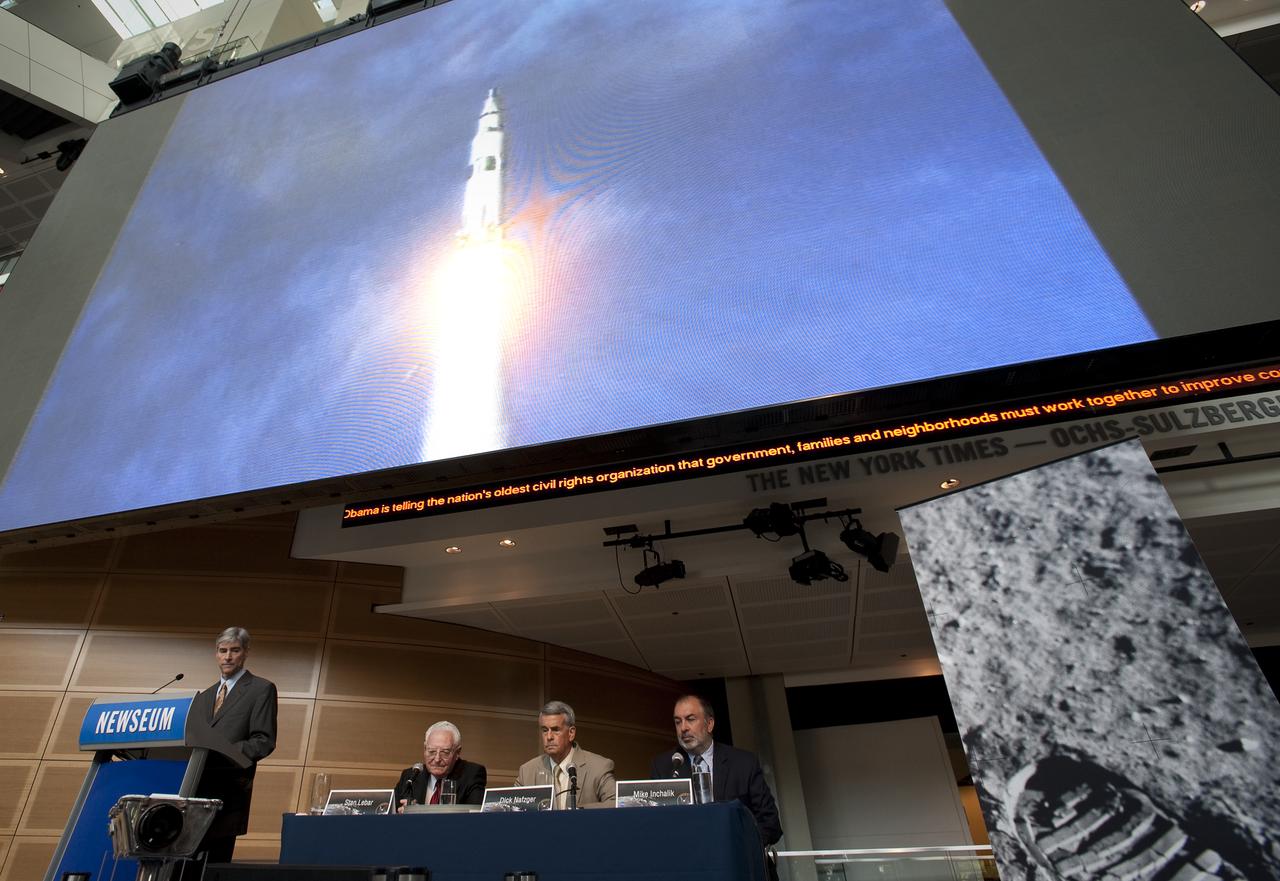
Footage of the Saturn V Apollo 11 rocket launch is seen on a large video monitor above panelists at NASA's briefing where restored Apollo 11 moonwalk footage was revealed for the first time at the Newseum, Thursday, July 16, 2009, in Washington, DC. Photo Credit: (NASA/Bill Ingalls)
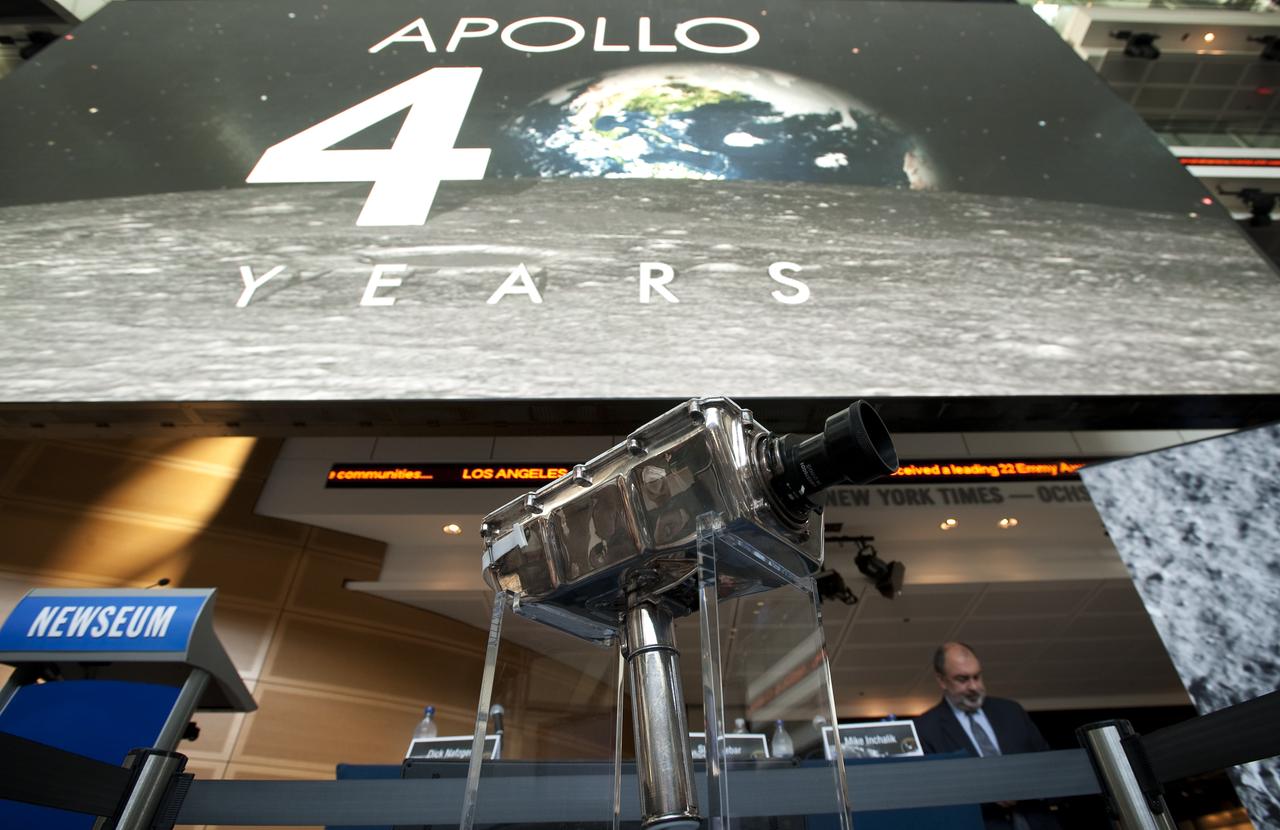
An Apollo TV camera from the National Electronic Museum in Baltimore, Maryland is on display for NASA's briefing to release restored Apollo 11 moonwalk footage at the Newseum, Thursday, July 16, 2009, in Washington, DC. Photo Credit: (NASA/Bill Ingalls)
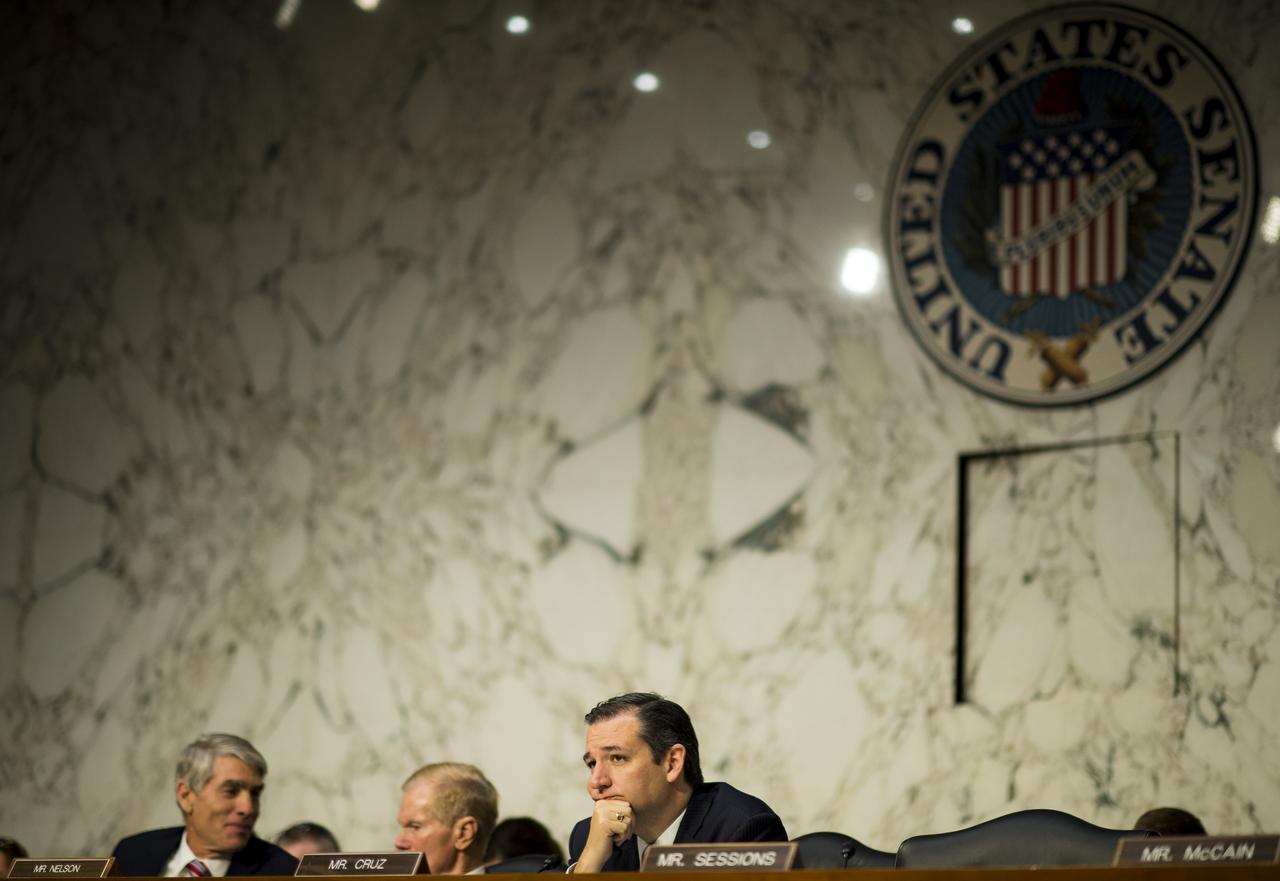
Sen. Ted Cruz, R-Texas, listens during testimony in front of the Senate Subcommittee on Strategic Forces and Senate Committee on Commerce, Science, and Transportation on Wednesday, July 16, 2014, at the Hart Senate Office Building in Washington, DC. The Senate hearing focused on assured access to space.
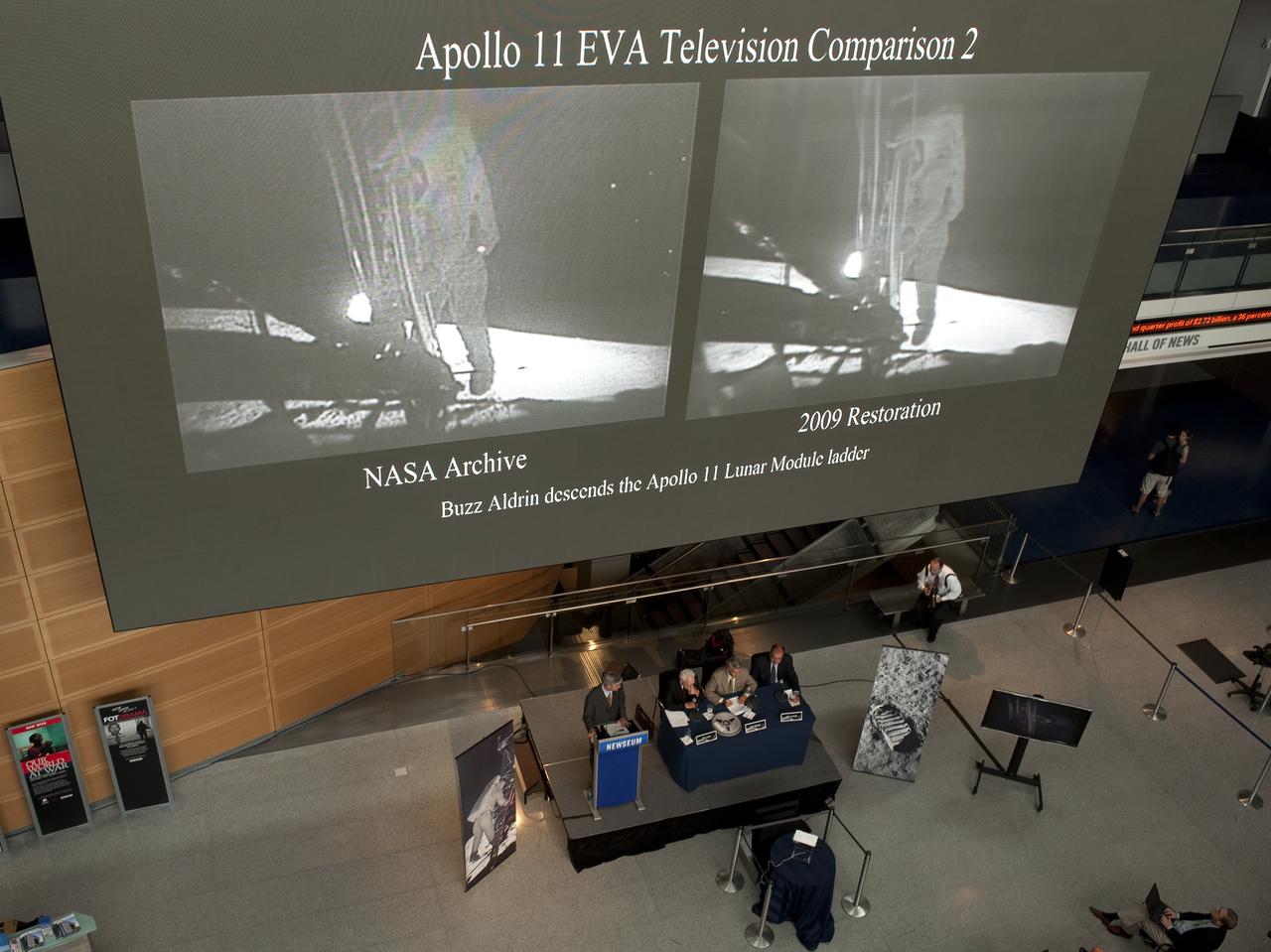
Archived and restored Apollo 11 moonwalk footage is shown on a large video monitor above panelists at a NASA briefing where restored Apollo 11 moonwalk footage was revealed for the first time at the Newseum, Thursday, July 16, 2009, in Washington, DC. Photo Credit: (NASA/Carla Cioffi)
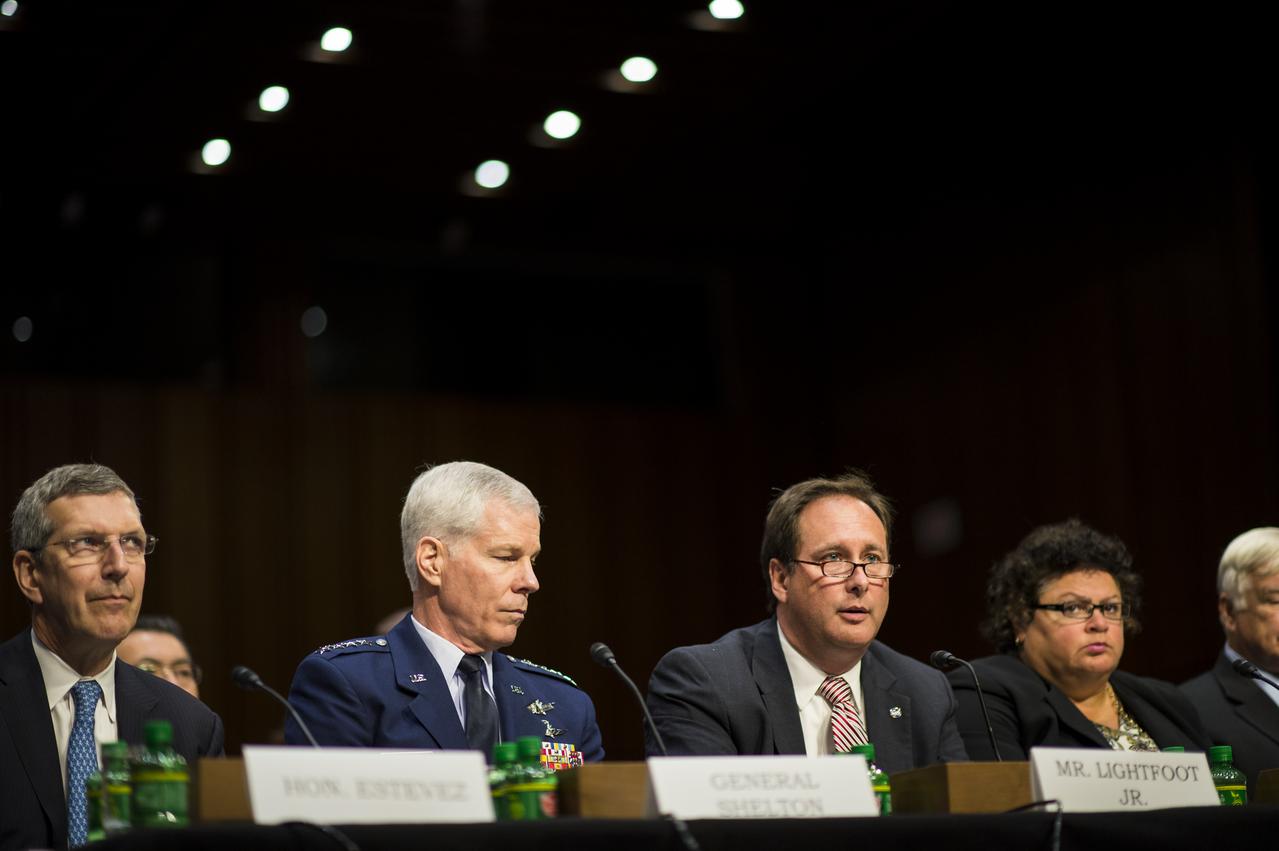
Robert Lightfoot, NASA Associate Administrator, third from left, answers a question during testimony in front of the Senate Subcommittee on Strategic Forces and Senate Committee on Commerce, Science, and Transportation on Wednesday, July 16, 2014, at the Hart Senate Office Building in Washington, DC. The Senate hearing focused on assured access to space.
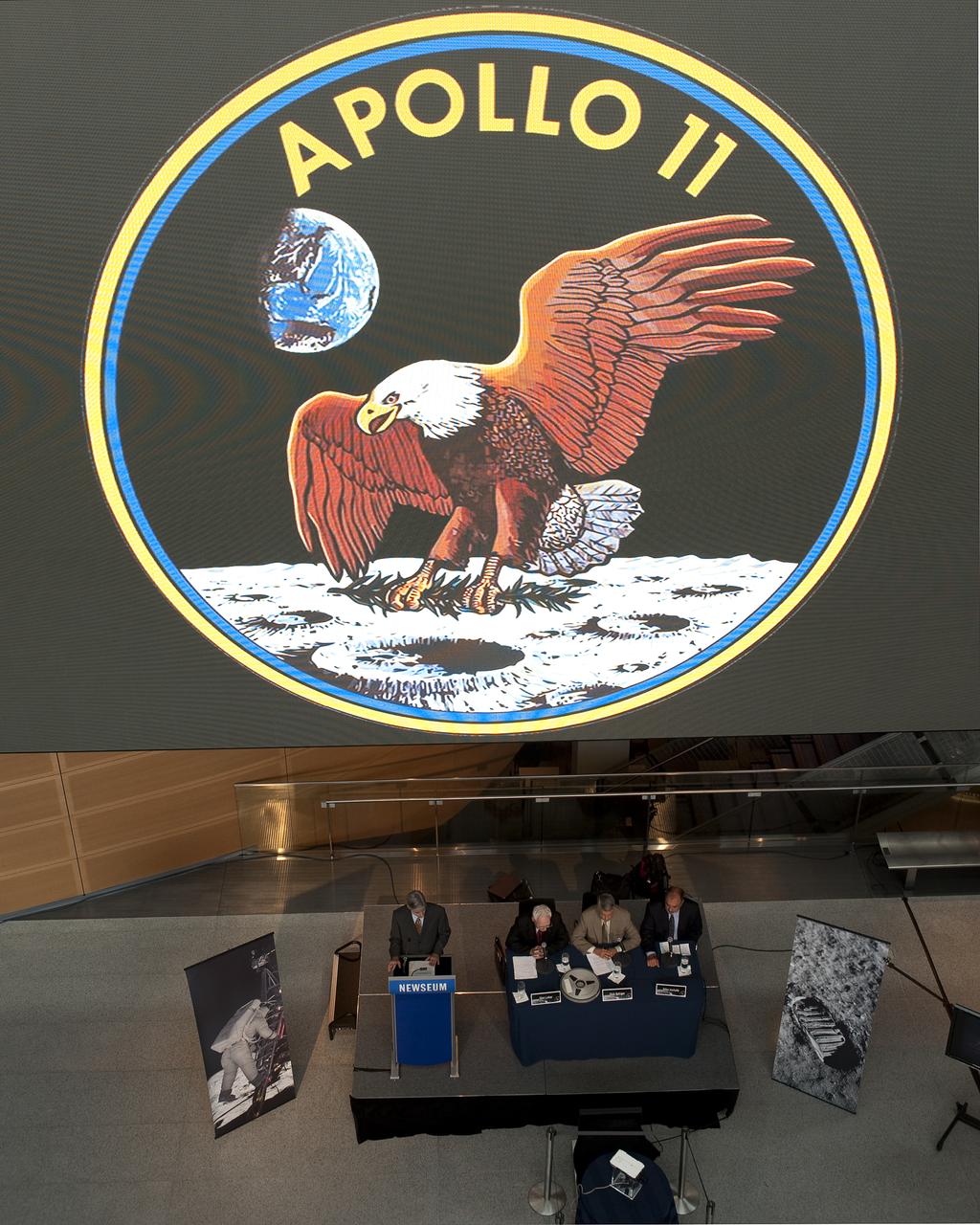
The Apollo 11 logo is seen on a large video monitor above panelists at NASA's briefing where restored Apollo 11 moonwalk footage was revealed for the first time at the Newseum, Thursday, July 16, 2009, in Washington, DC. Photo Credit: (NASA/Carla Cioffi)
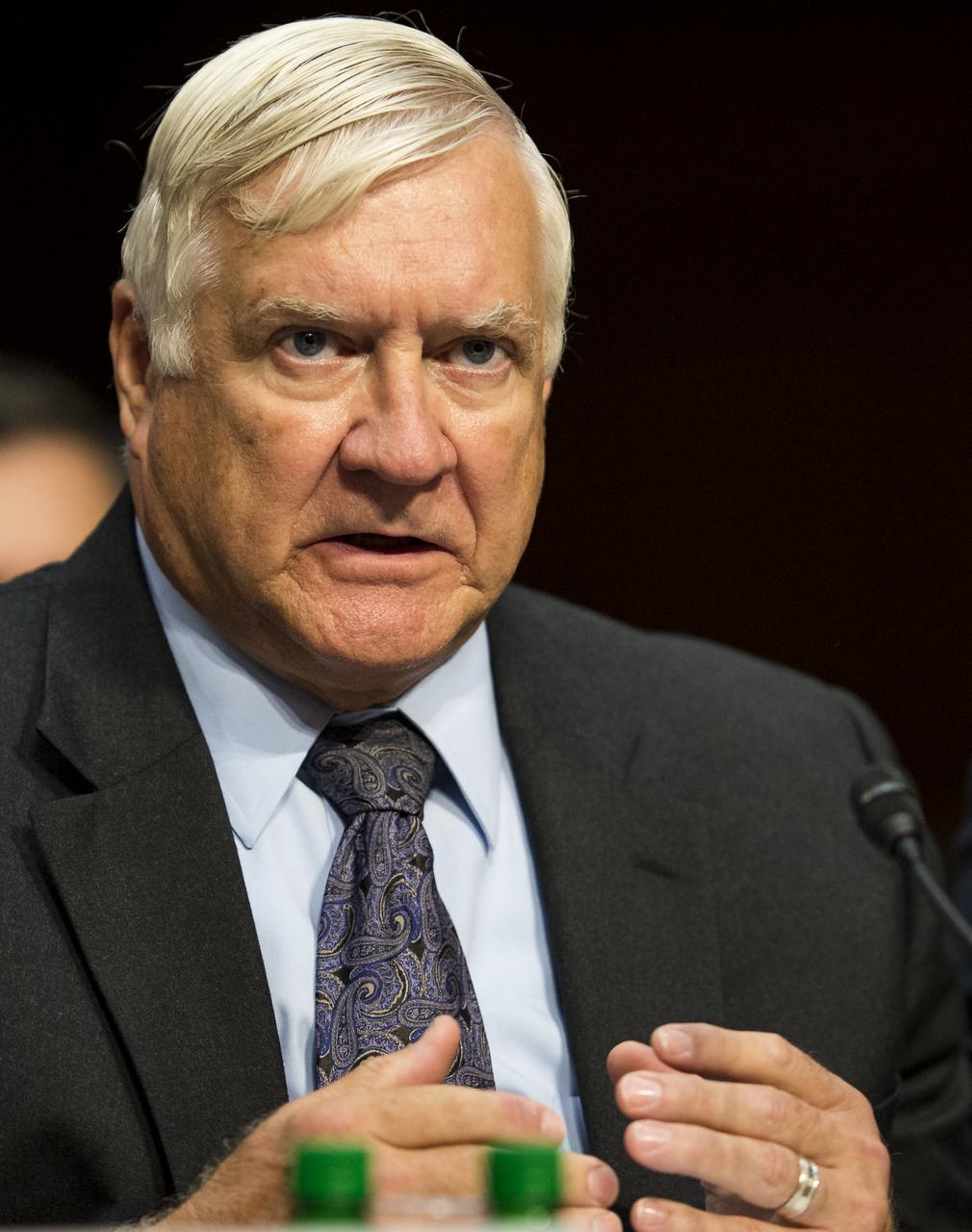
Howard Mitchell, Vice President of Program Assessments at The Aerospace Corporation, delivers his opening statement during a hearing in front of the Senate Subcommittee on Strategic Forces and Senate Committee on Commerce, Science, and Transportation on Wednesday, July 16, 2014, at the Hart Senate Office Building in Washington, DC. The Senate hearing focused on assured access to space.
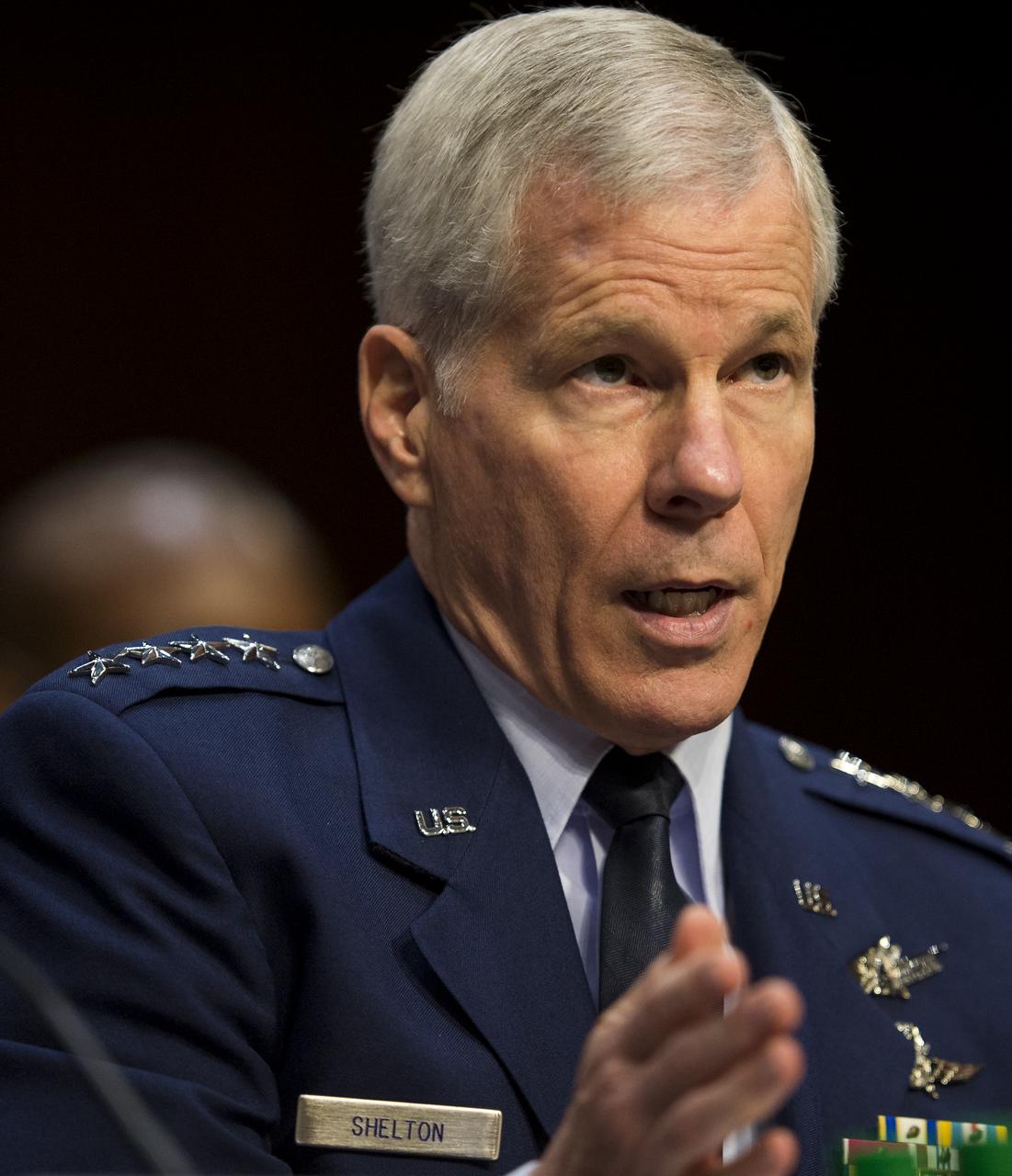
General William Sherlton, Commander of the United States Air Force Space Command, answers a question during testimony in front of the Senate Subcommittee on Strategic Forces and Senate Committee on Commerce, Science, and Transportation on Wednesday, July 16, 2014, at the Hart Senate Office Building in Washington, DC. The Senate hearing focused on assured access to space.
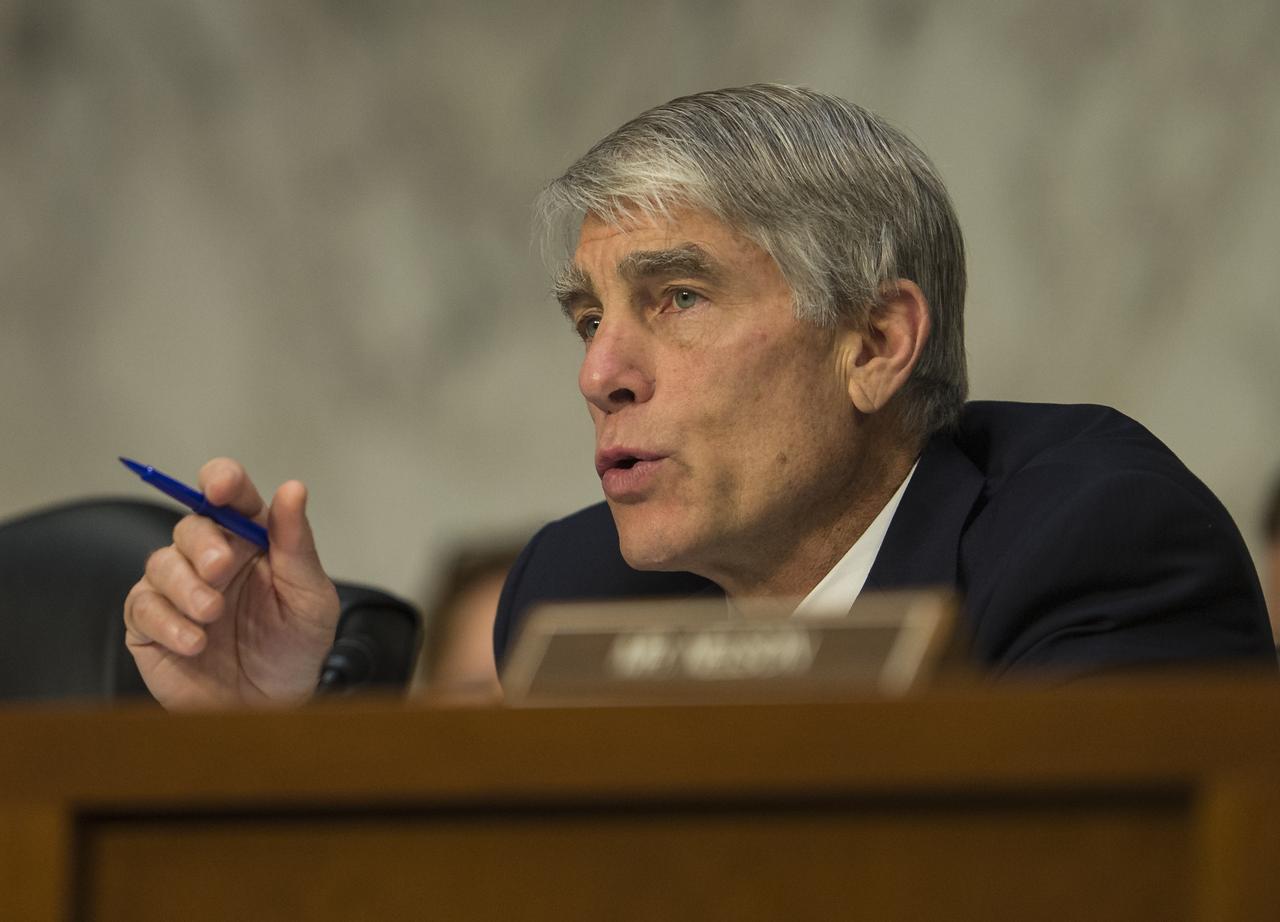
Sen. Mark Udall, D-CO, asks a question during a hearing in front of the Senate Subcommittee on Strategic Forces and Senate Committee on Commerce, Science, and Transportation on Wednesday, July 16, 2014, at the Hart Senate Office Building in Washington, DC. The Senate hearing focused on assured access to space.
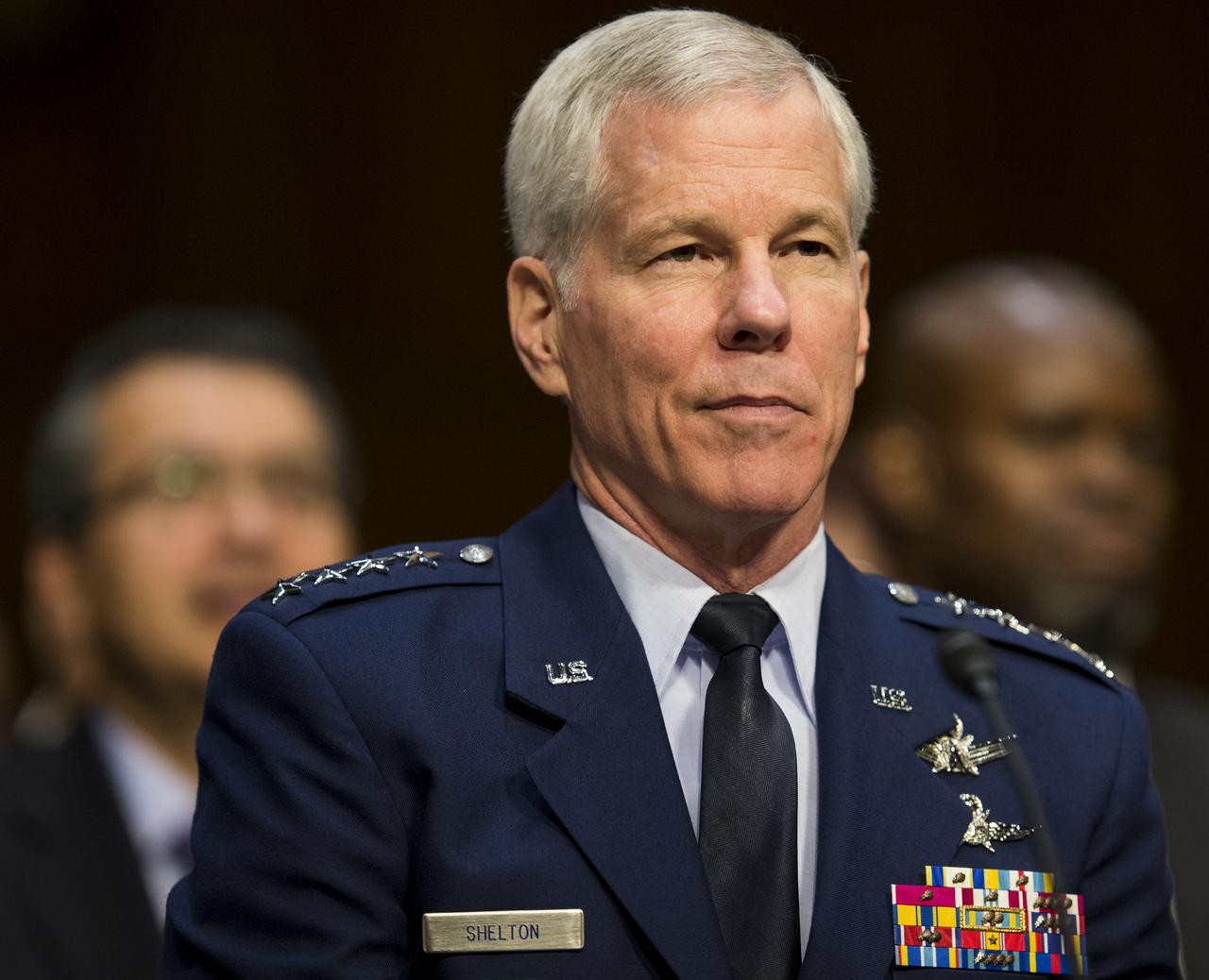
General William Sherlton, Commander of the United States Air Force Space Command, answers a question during testimony in front of the Senate Subcommittee on Strategic Forces and Senate Committee on Commerce, Science, and Transportation on Wednesday, July 16, 2014, at the Hart Senate Office Building in Washington, DC. The Senate hearing focused on assured access to space.
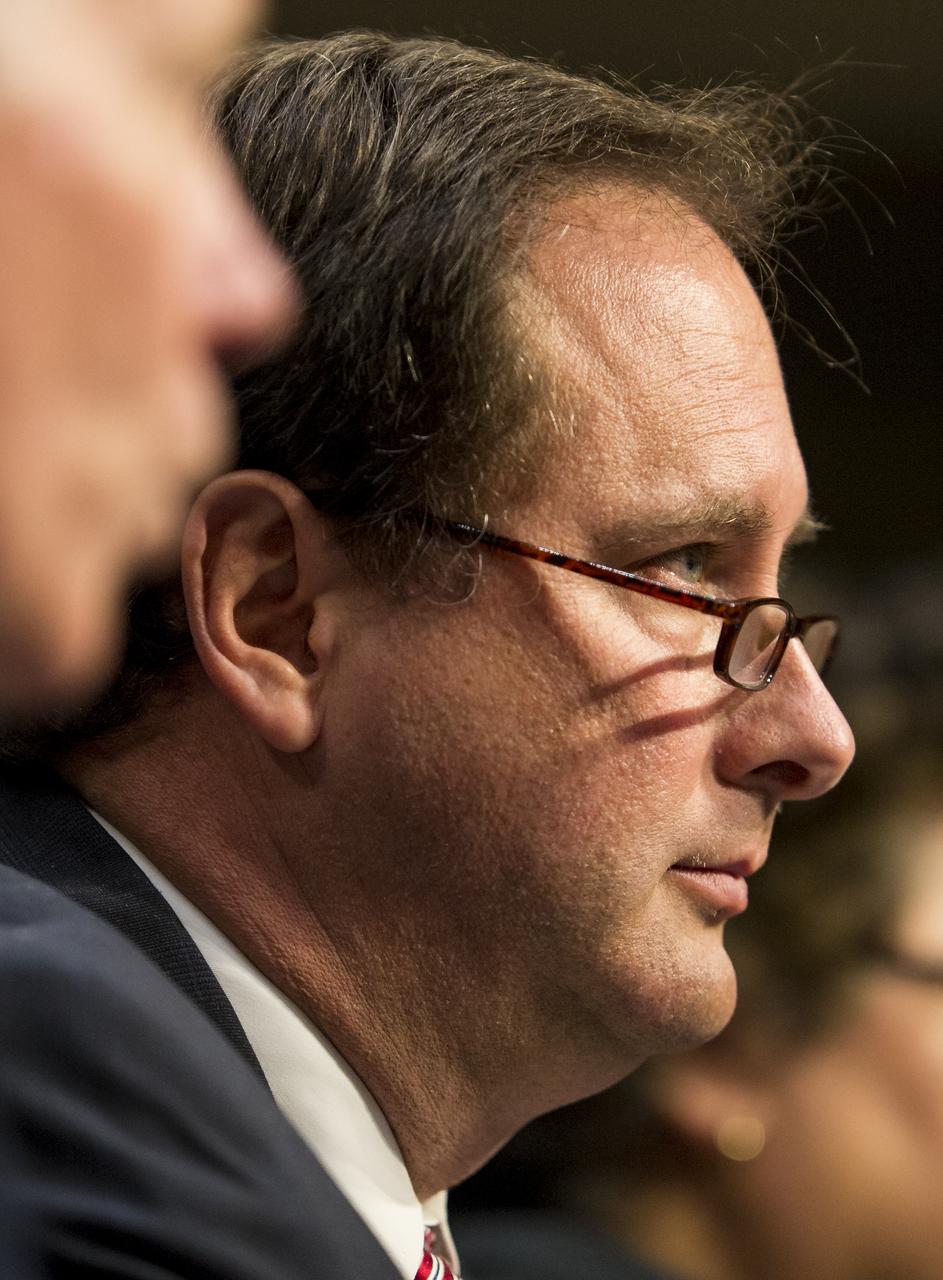
Robert Lightfoot, NASA Associate Administrator, answers a question during testimony in front of the Senate Subcommittee on Strategic Forces and Senate Committee on Commerce, Science, and Transportation on Wednesday, July 16, 2014, at the Hart Senate Office Building in Washington, DC. The Senate hearing focused on assured access to space.
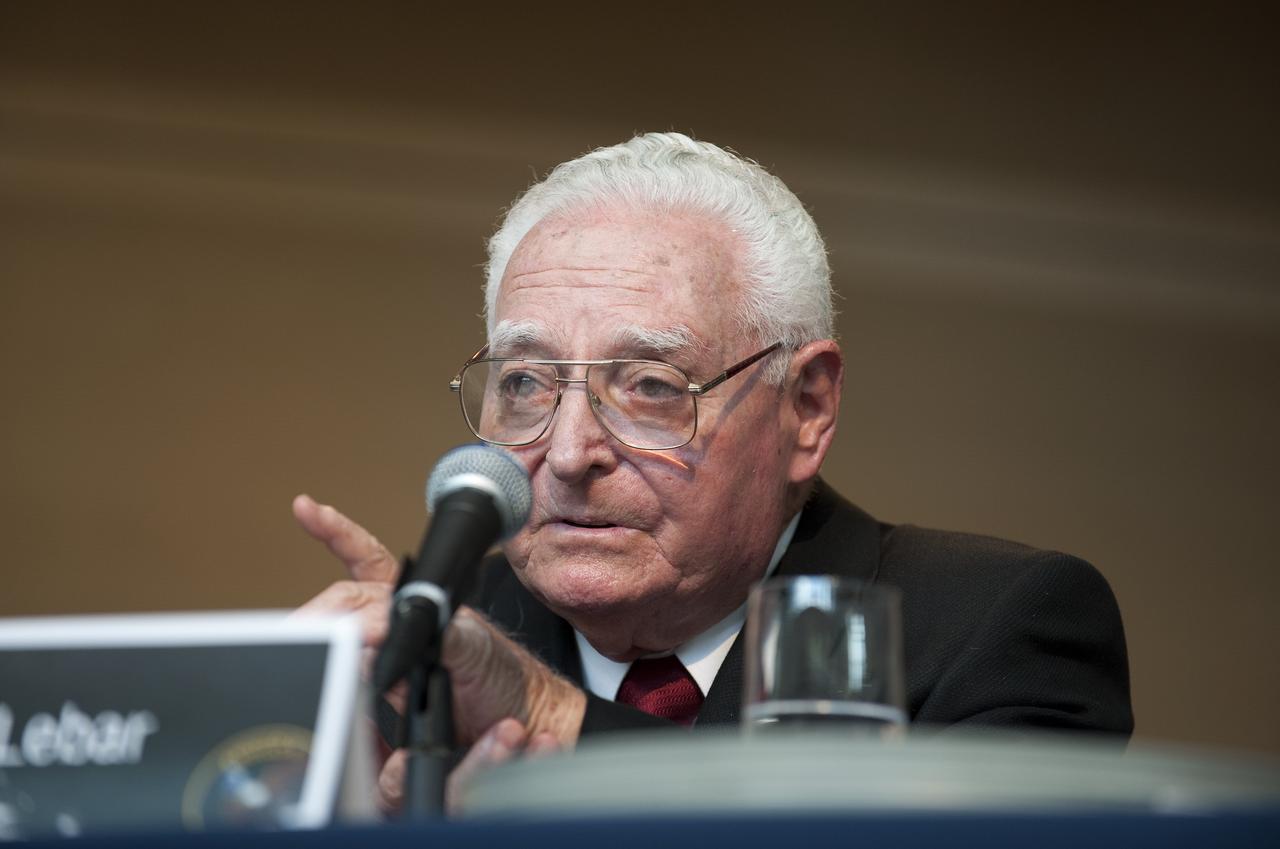
Stan Lebar, former Westinghouse Electric program manager, talks about the Apollo era TV cameras during NASA's briefing where restored Apollo 11 moonwalk footage was revealed for the first time at the Newseum, Thursday, July 16, 2009, in Washington, DC. Photo Credit: (NASA/Bill Ingalls)
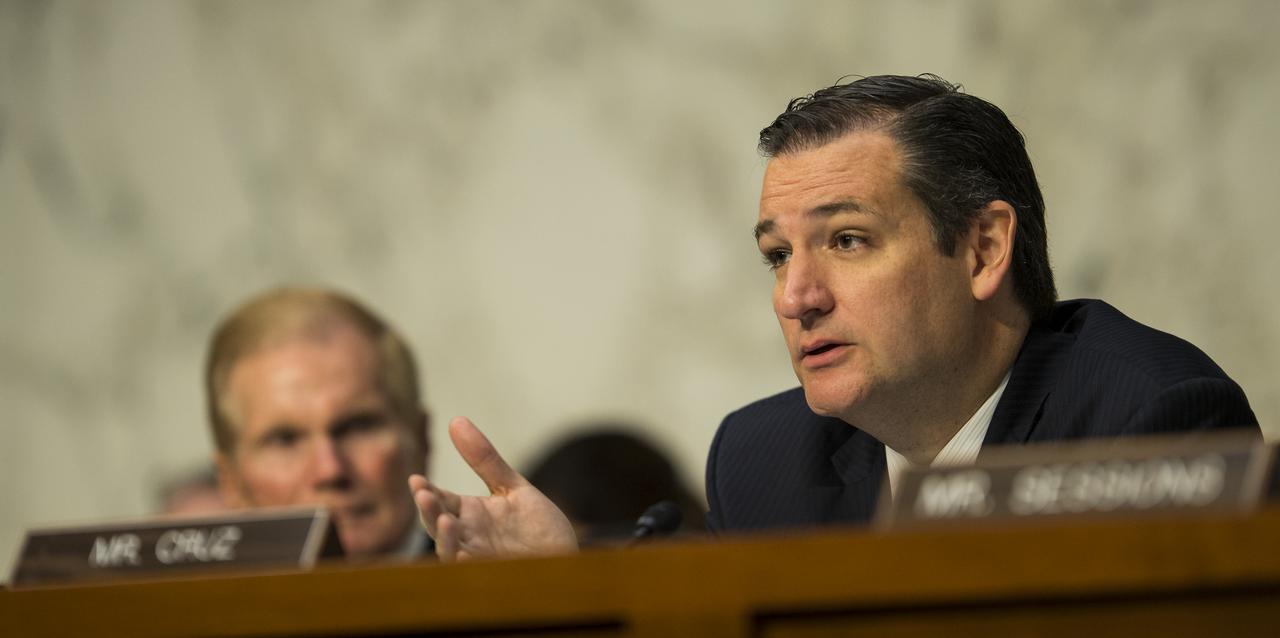
Sen. Ted Cruz, R-Texas, asks a question during a hearing in front of the Senate Subcommittee on Strategic Forces and Senate Committee on Commerce, Science, and Transportation on Wednesday, July 16, 2014, at the Hart Senate Office Building in Washington, DC. The Senate hearing focused on assured access to space.
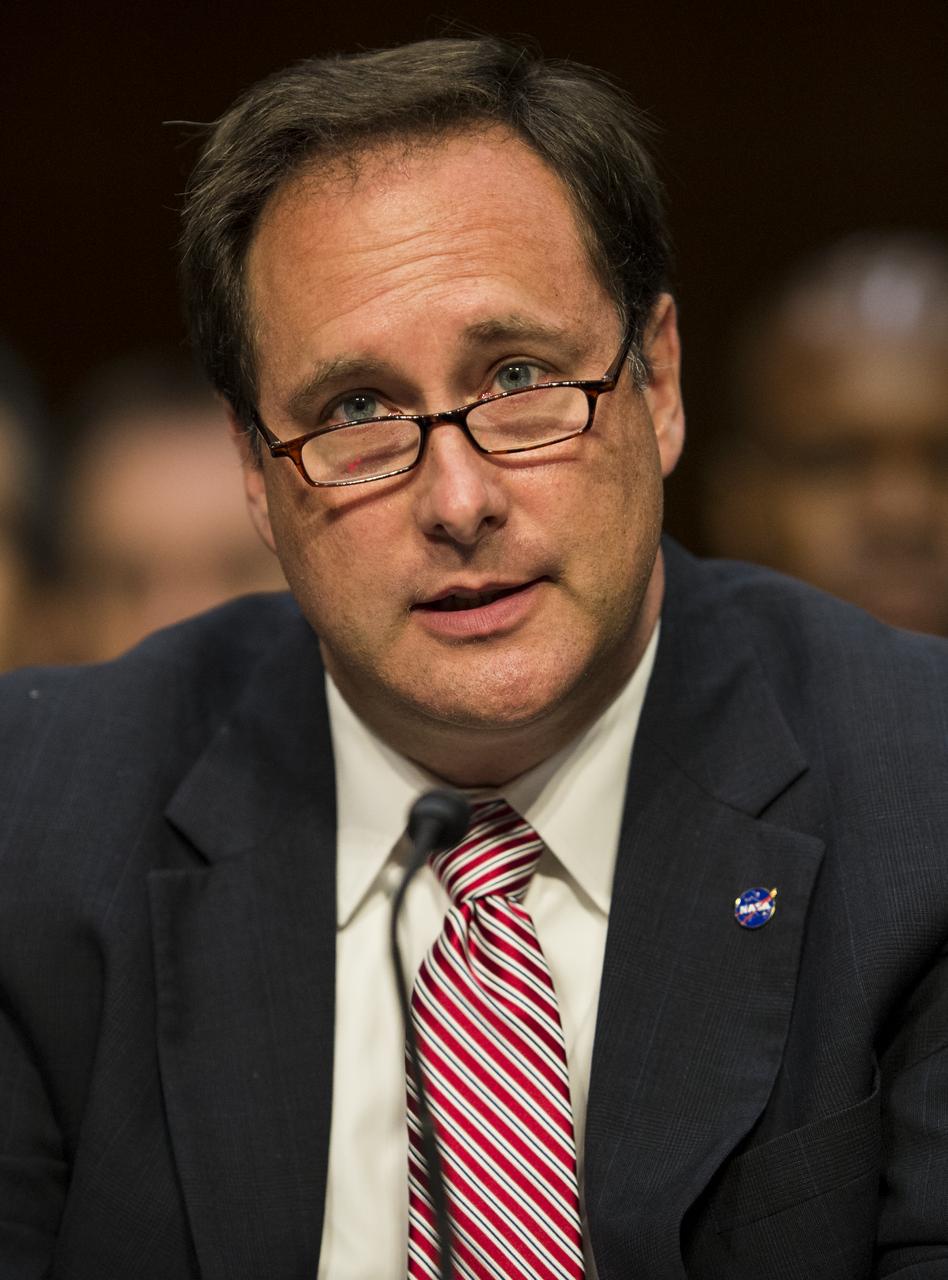
Robert Lightfoot, NASA Associate Administrator, delivers his opening statement during a hearing in front of the Senate Subcommittee on Strategic Forces and Senate Committee on Commerce, Science, and Transportation on Wednesday, July 16, 2014, at the Hart Senate Office Building in Washington, DC. The Senate hearing focused on assured access to space.
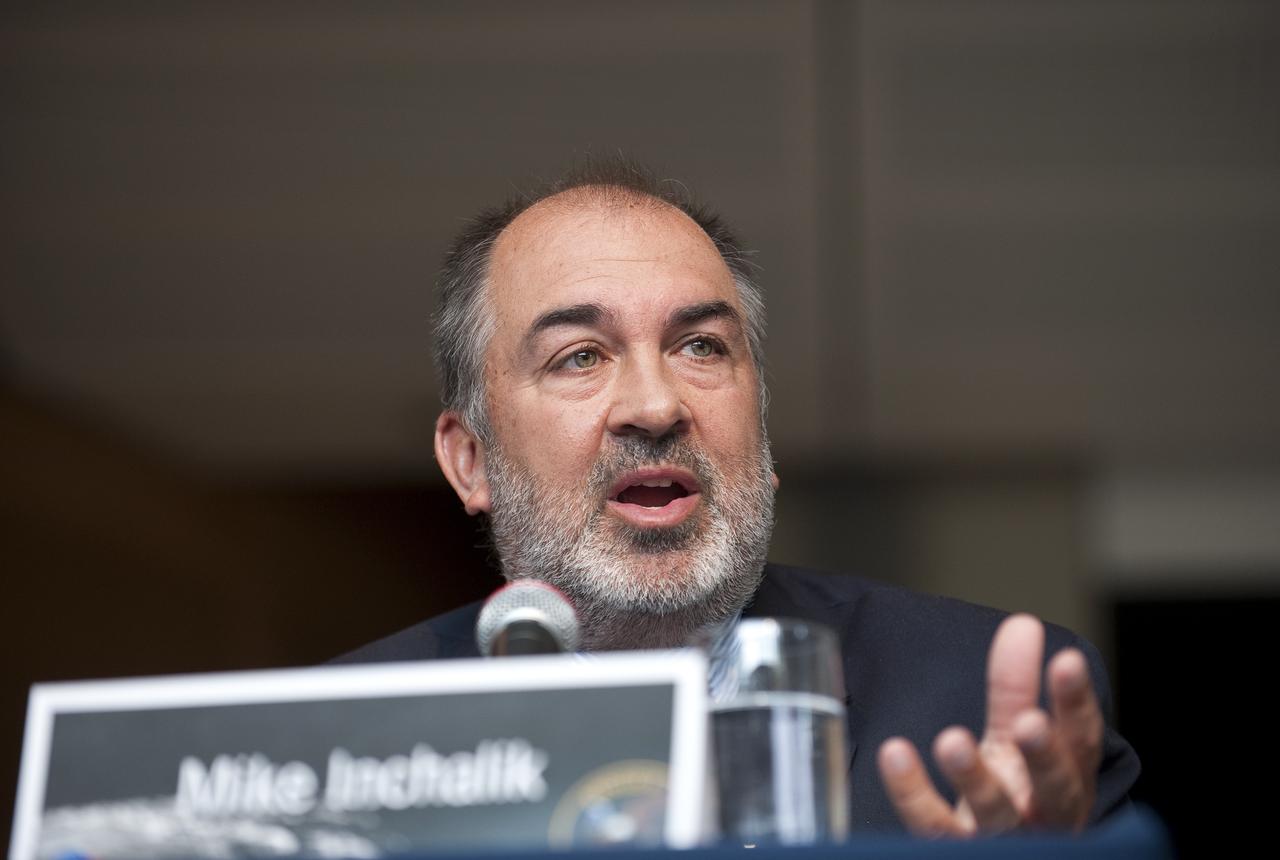
Mike Inchalik, president of Lowry Digital, talks about the job of restoring Apollo 11 moonwalk footage at a NASA briefing where restored Apollo 11 moonwalk footage was revealed for the first time at the Newseum, Thursday, July 16, 2009, in Washington, DC. Photo Credit: (NASA/Bill Ingalls)
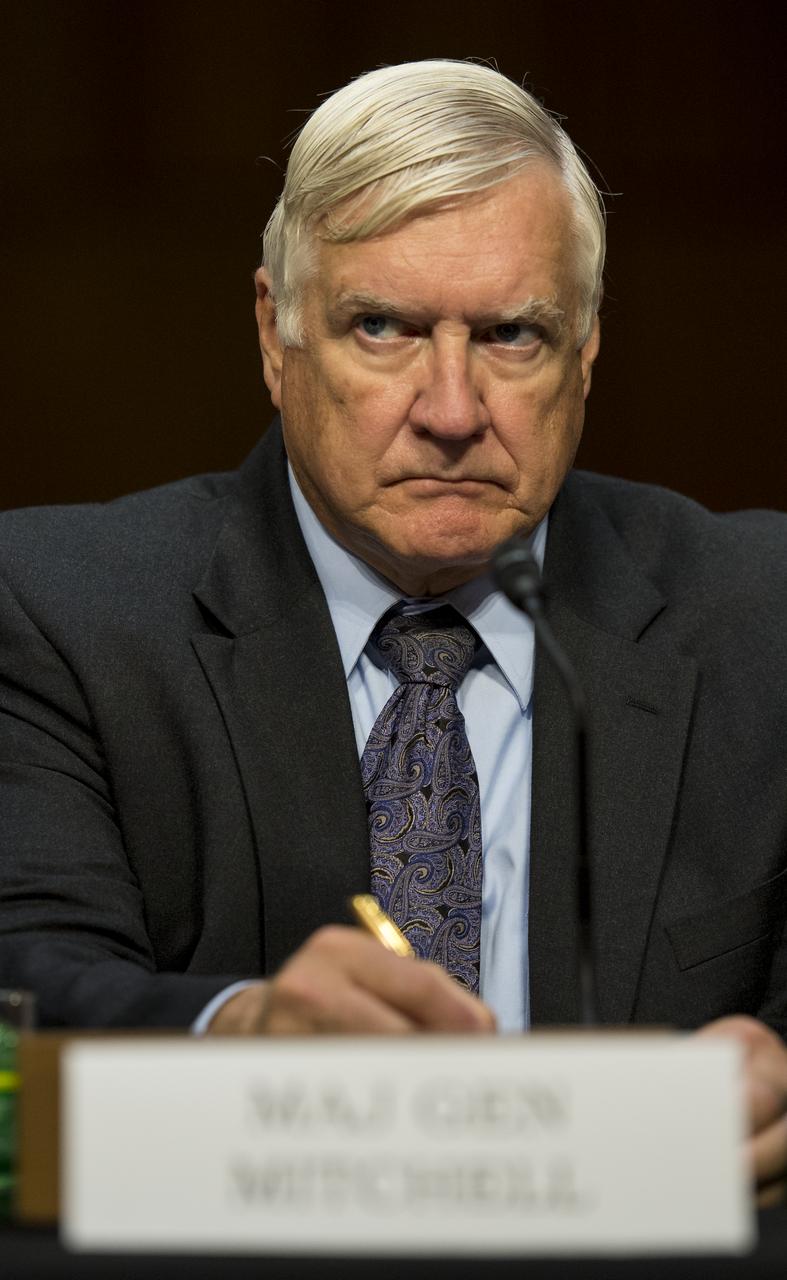
Howard Mitchell, Vice President of Program Assessments at The Aerospace Corporation, listens to opening statements during a hearing in front of the Senate Subcommittee on Strategic Forces and Senate Committee on Commerce, Science, and Transportation on Wednesday, July 16, 2014, at the Hart Senate Office Building in Washington, DC. The Senate hearing focused on assured access to space.
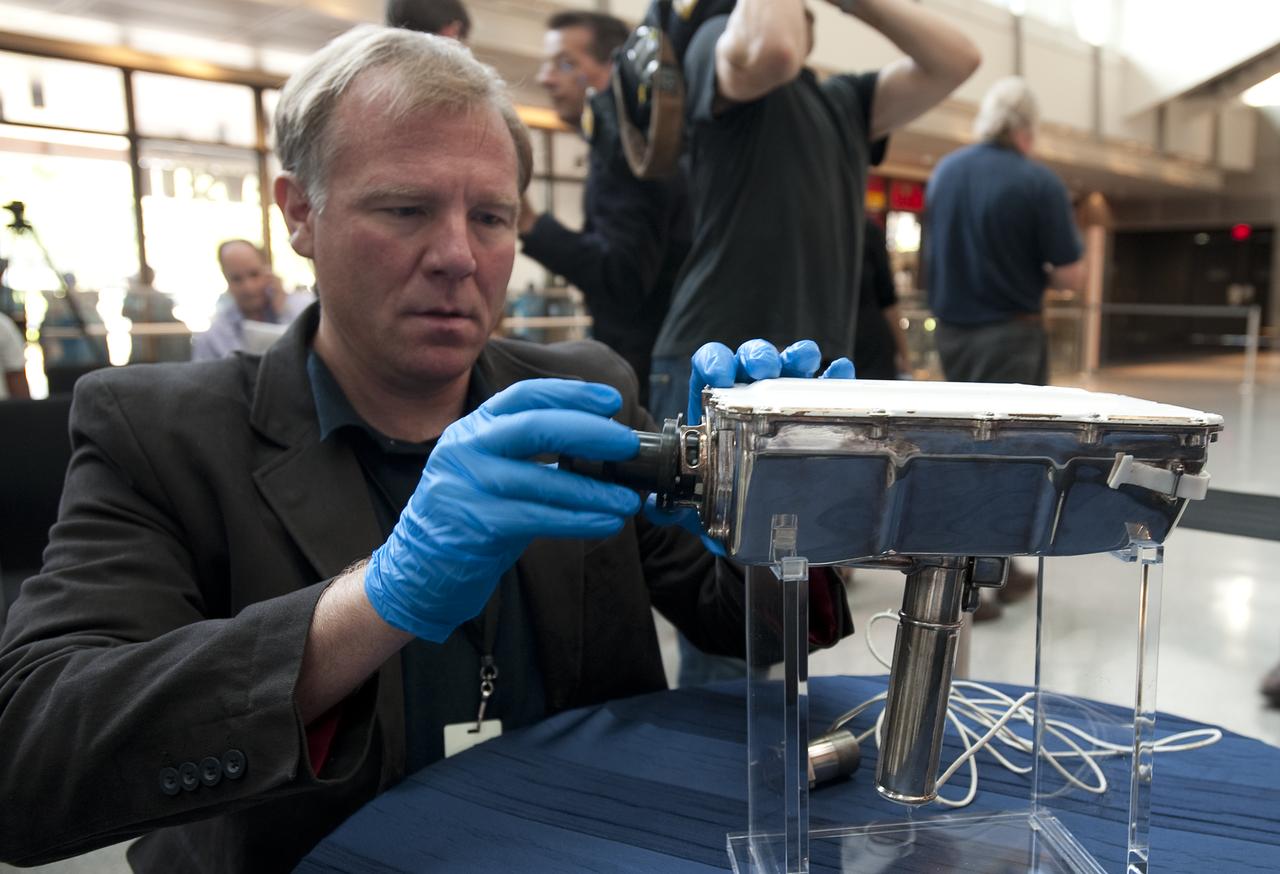
Mike Simons, Director of the National Electronic Museum in Baltimore, Maryland assembles an Apollo TV camera for display prior to NASA's briefing to release restored Apollo 11 moonwalk footage at the Newseum, Thursday, July 16, 2009, in Washington, DC. Photo Credit: (NASA/Bill Ingalls)
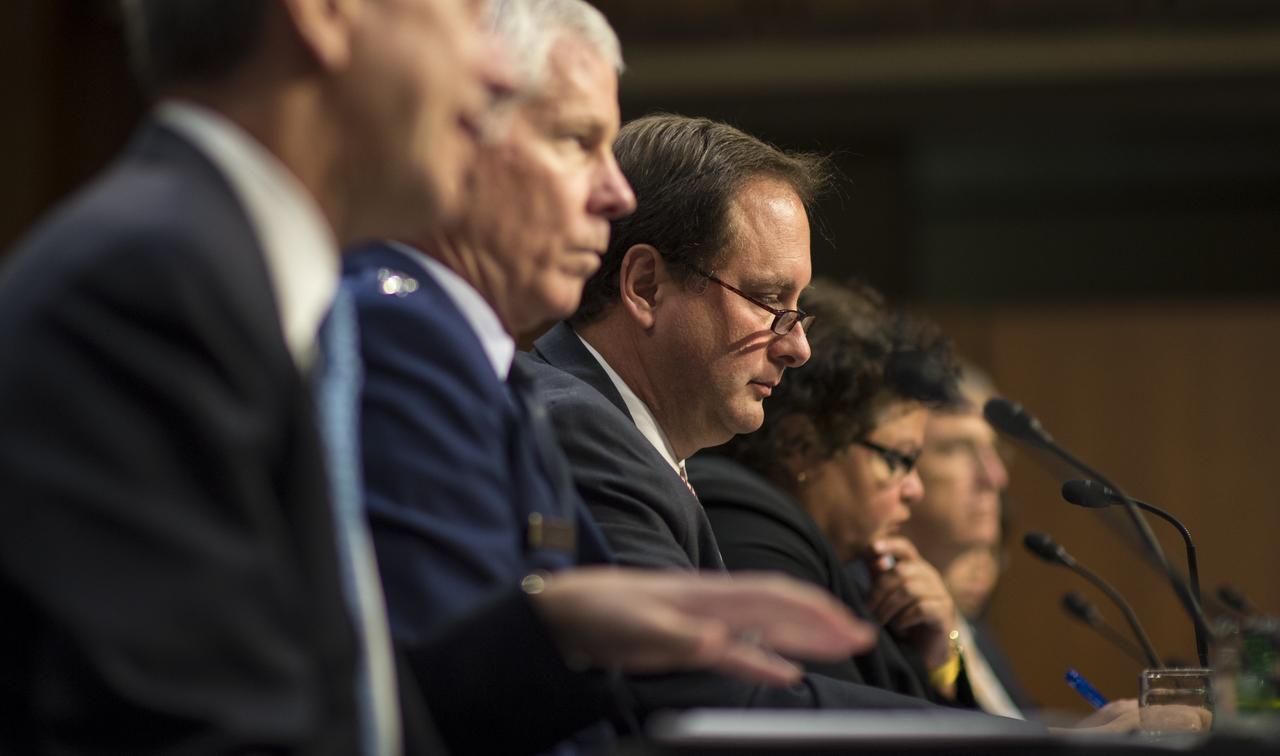
Robert Lightfoot, NASA Associate Administrator, answers a question during testimony in front of the Senate Subcommittee on Strategic Forces and Senate Committee on Commerce, Science, and Transportation on Wednesday, July 16, 2014, at the Hart Senate Office Building in Washington, DC. The Senate hearing focused on assured access to space.

Dr. Yool Kim, Senior Engineer at the Rand Corporation, delivers her opening statment during a hearing in front of the Senate Subcommittee on Strategic Forces and Senate Committee on Commerce, Science, and Transportation on Wednesday, July 16, 2014, at the Hart Senate Office Building in Washington, DC. The Senate hearing focused on assured access to space.
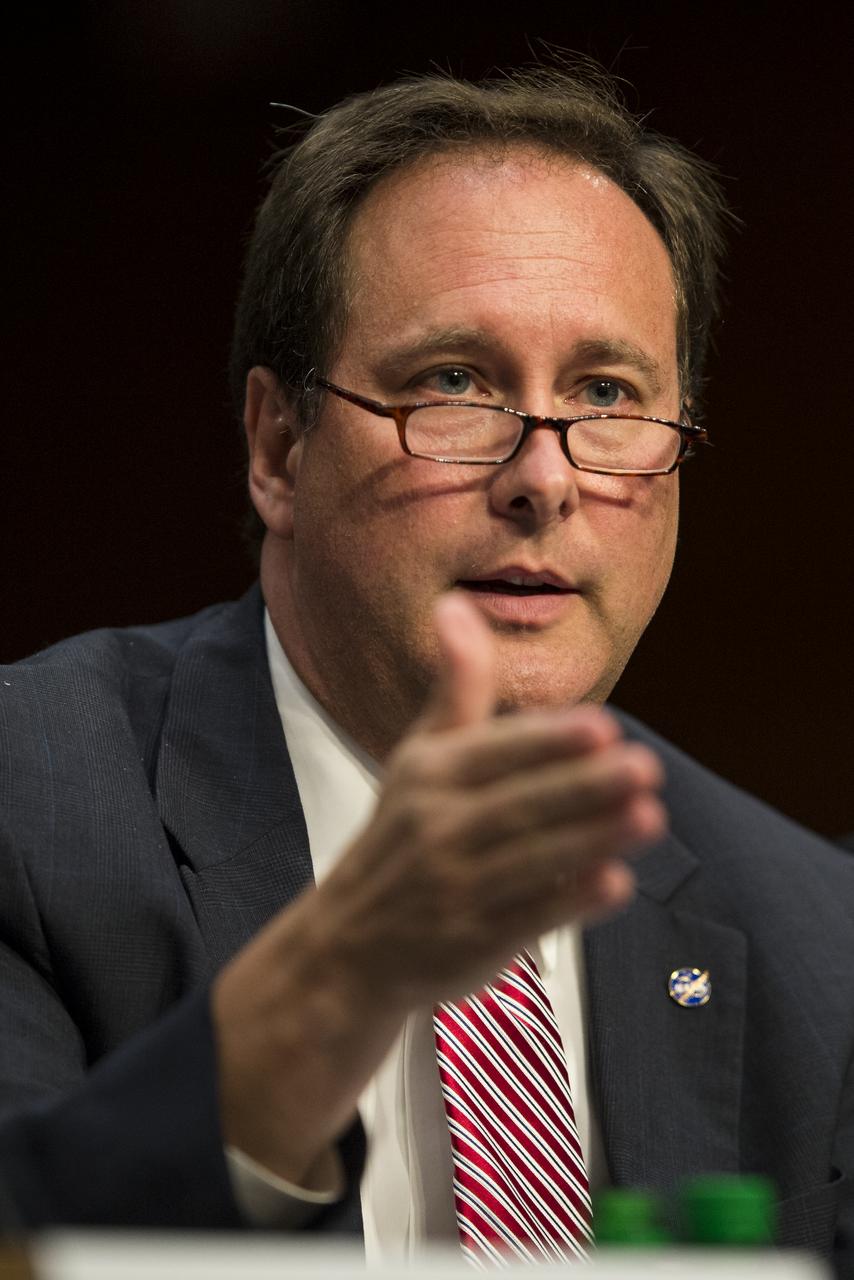
Robert Lightfoot, NASA Associate Administrator, answers a question during testimony in front of the Senate Subcommittee on Strategic Forces and Senate Committee on Commerce, Science, and Transportation on Wednesday, July 16, 2014, at the Hart Senate Office Building in Washington, DC. The Senate hearing focused on assured access to space.
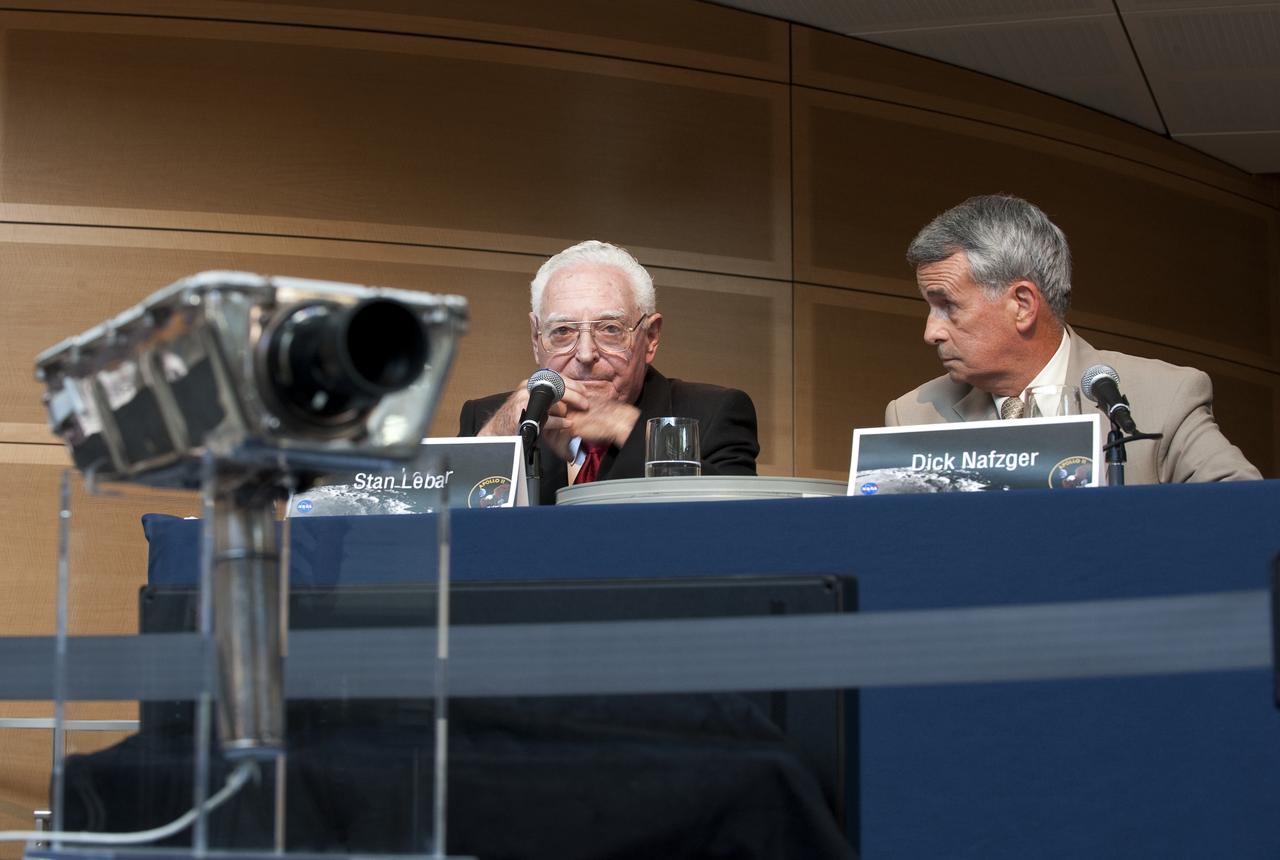
Stan Lebar, former Westinghouse Electric program manager, left, talks about the Apollo era TV cameras such as the one on display in the foreground as Richard Nafzger, team lead and Goddard engineer, listens at NASA's briefing where restored Apollo 11 moonwalk footage was revealed for the first time at the Newseum, Thursday, July 16, 2009, in Washington, DC. Photo Credit: (NASA/Bill Ingalls)
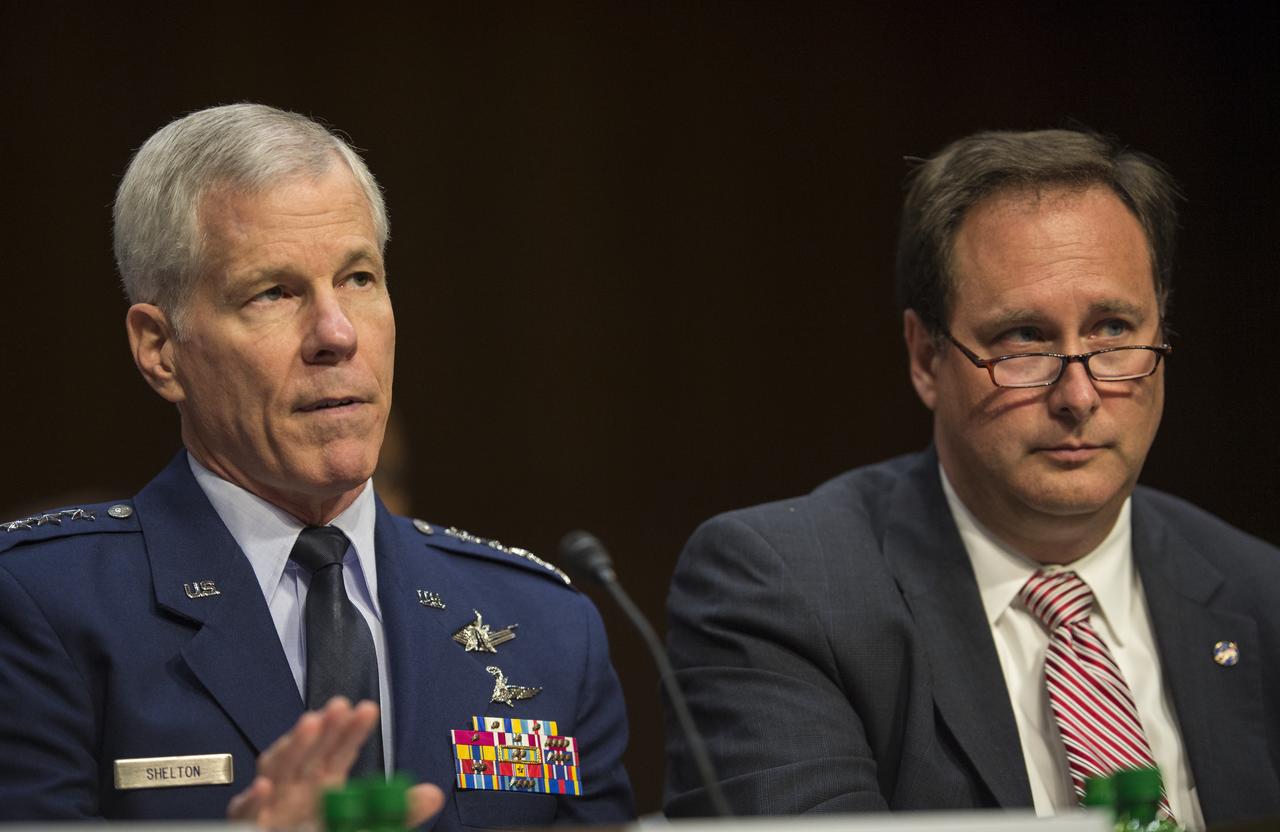
General William Sherlton, Commander of the United States Air Force Space Command, left; answers a question during testimony in front of the Senate Subcommittee on Strategic Forces and Senate Committee on Commerce, Science, and Transportation on Wednesday, July 16, 2014, at the Hart Senate Office Building in Washington, DC. The Senate hearing focused on assured access to space.
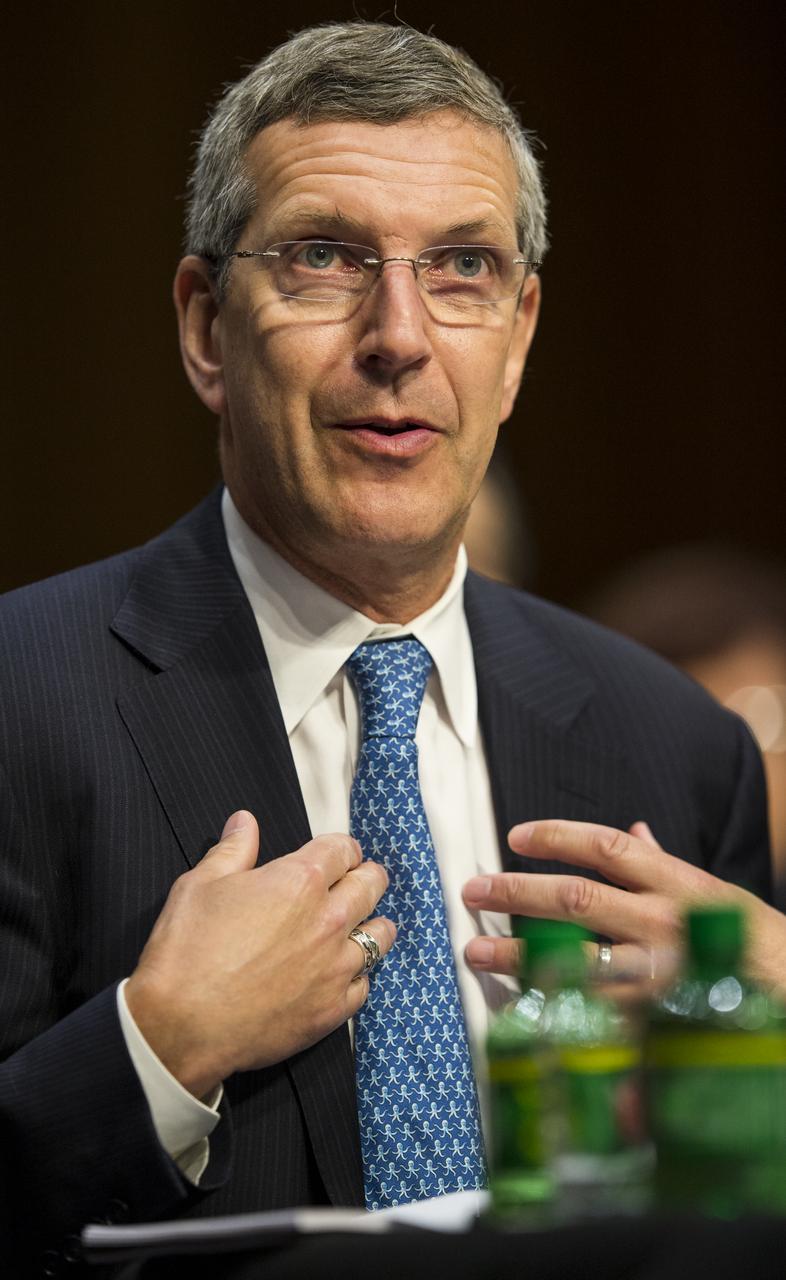
The Hon. Alan Estevez, Principle Deputy Under Secretary of Defense for Acquision, TEchnology, and Logitics, answers a question during testimony in front of the Senate Subcommittee on Strategic Forces and Senate Committee on Commerce, Science, and Transportation on Wednesday, July 16, 2014, at the Hart Senate Office Building in Washington, DC. The Senate hearing focused on assured access to space.
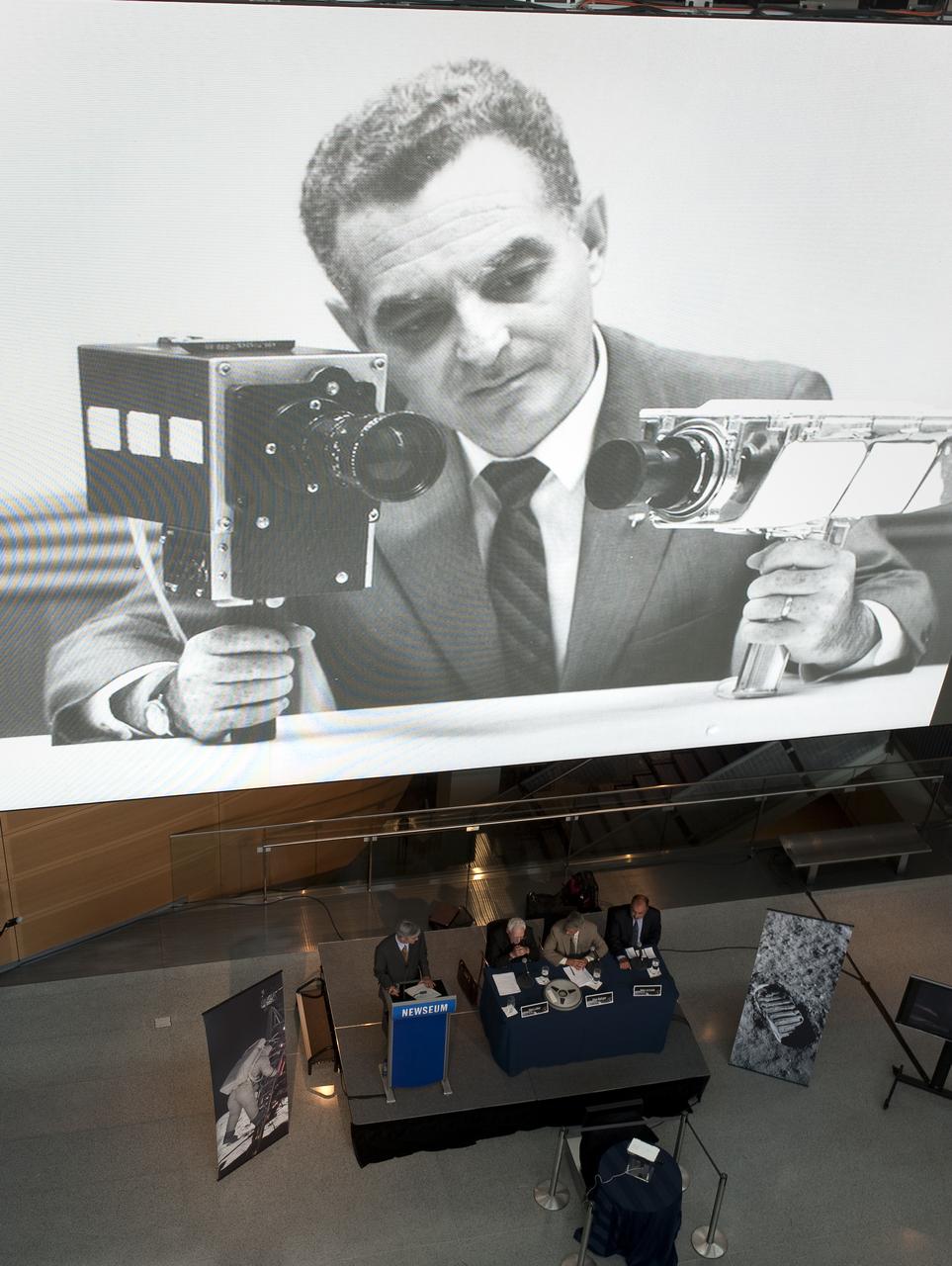
A photograph from the 1960's showing Stan Lebar, former Westinghouse Electric program manager, holding two cameras used during the Apollo missions is seen on a large video monitor above panelists, including Stan Lebar, at NASA's briefing where restored Apollo 11 moonwalk footage was revealed for the first time at the Newseum, Thursday, July 16, 2009, in Washington, DC. Photo Credit: (NASA/Carla Cioffi)
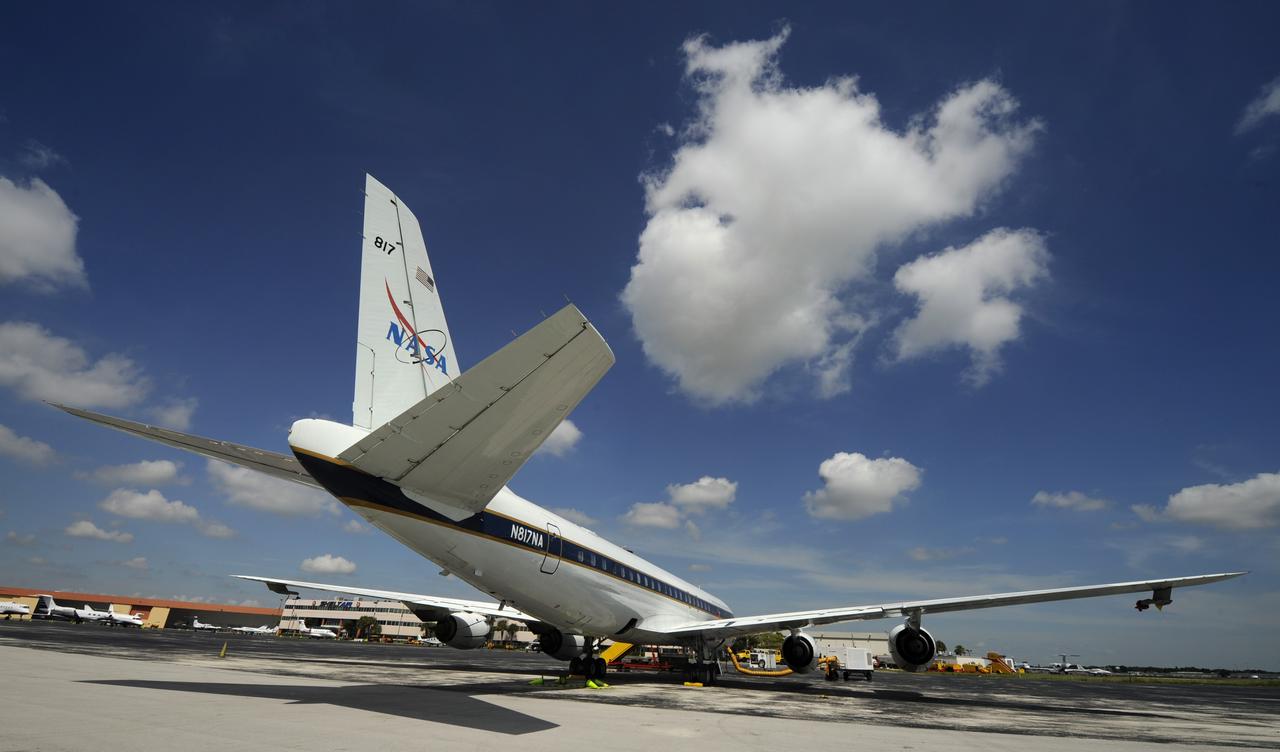
The NASA DC-8 airplane sits on the tarmac, Monday, Aug. 16, 2010, at Fort Lauderdale Hollywood International Airport in Fort Lauderdale, Fla. , as preparations continue for its part in the GRIP experiment. The Genesis and Rapid Intensification Processes (GRIP) experiment is a NASA Earth science field experiment in 2010 that is being conducted to better understand how tropical storms form and develop into major hurricanes. Photo Credit: (NASA/Paul E. Alers)
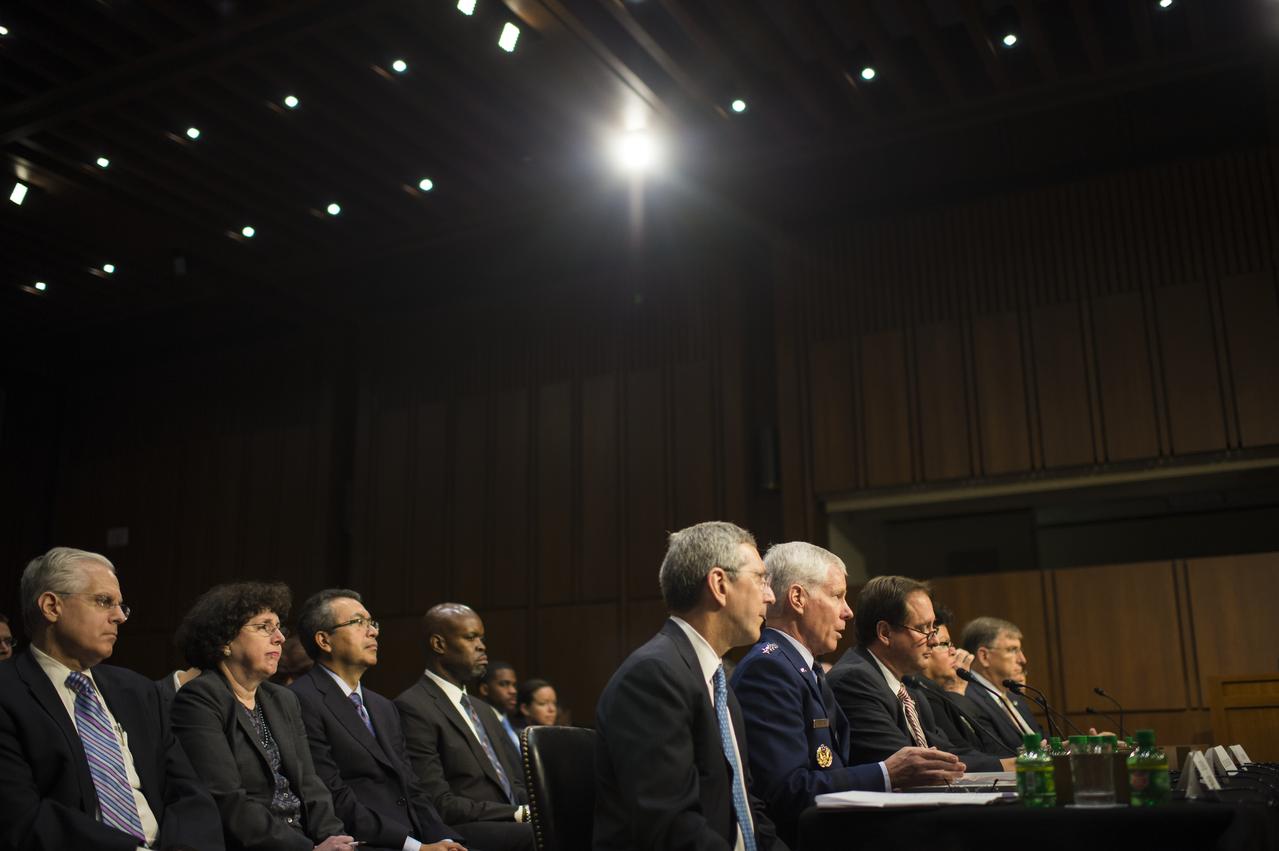
General William Shelton, Commander of the United States Air Force Space Command, second from right, answers a question during testimony in front of the Senate Subcommittee on Strategic Forces and Senate Committee on Commerce, Science, and Transportation on Wednesday, July 16, 2014, at the Hart Senate Office Building in Washington, DC. The Senate hearing focused on assured access to space.
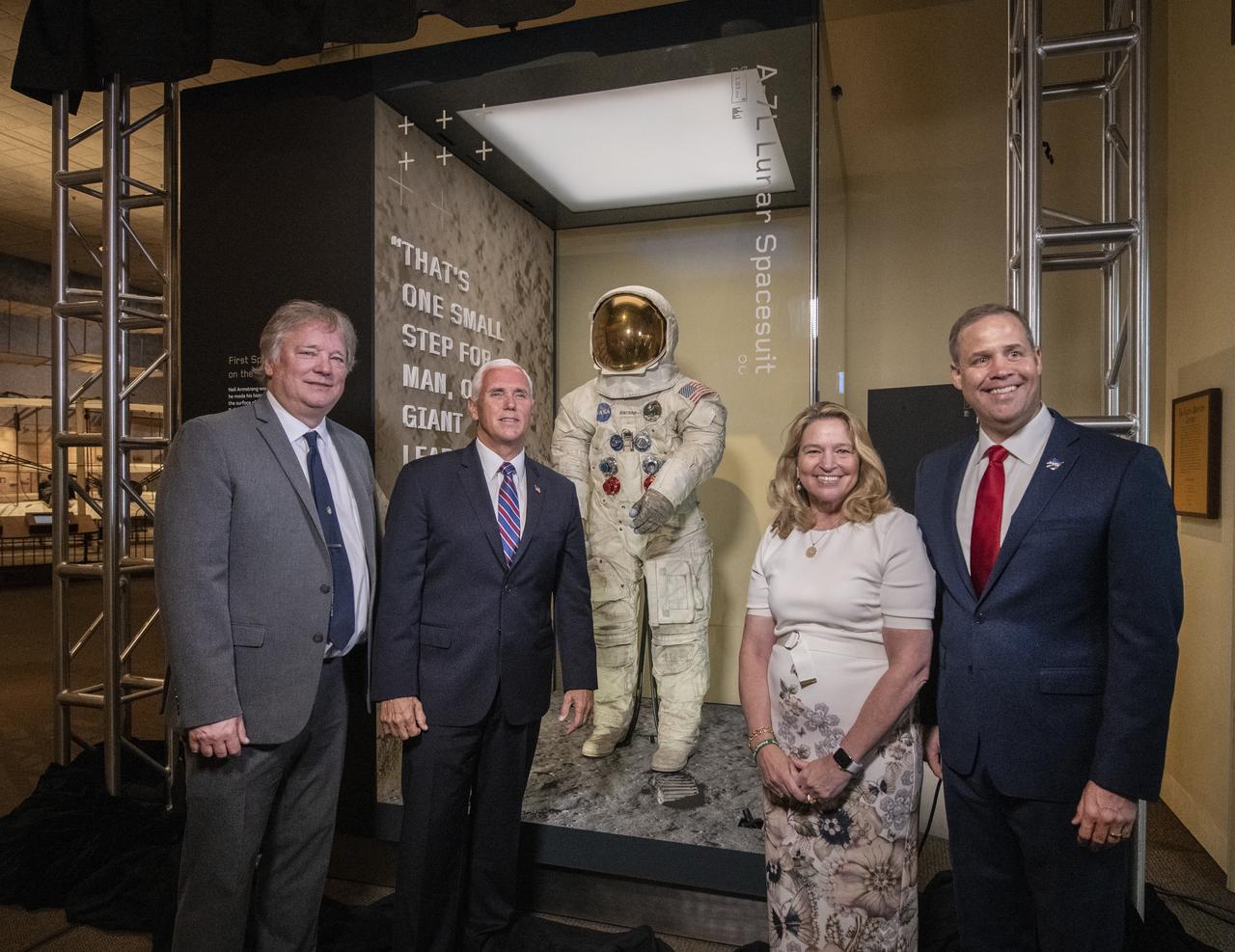
In celebration of the 50th anniversary of Apollo 11, NASA Astronaut Neil Armstrong's spacesuit was unveiled today in The Wright Brothers and The Invention of the Aerial Age Gallery of the Smithsonian Air and Space Museum, in Washington, DC, July 16, 2019. Unveiling the spacesuit, from left, Rick Armstrong, son of Neil Armstrong, Vice President Mike Pence, Dr. Ellen Stofan, The John and Adrienne Mars Director of the National Air and Space Museum, and James Bridenstine, Administrator of NASA. (Smithsonian Air and Space photo by Jim Preston)
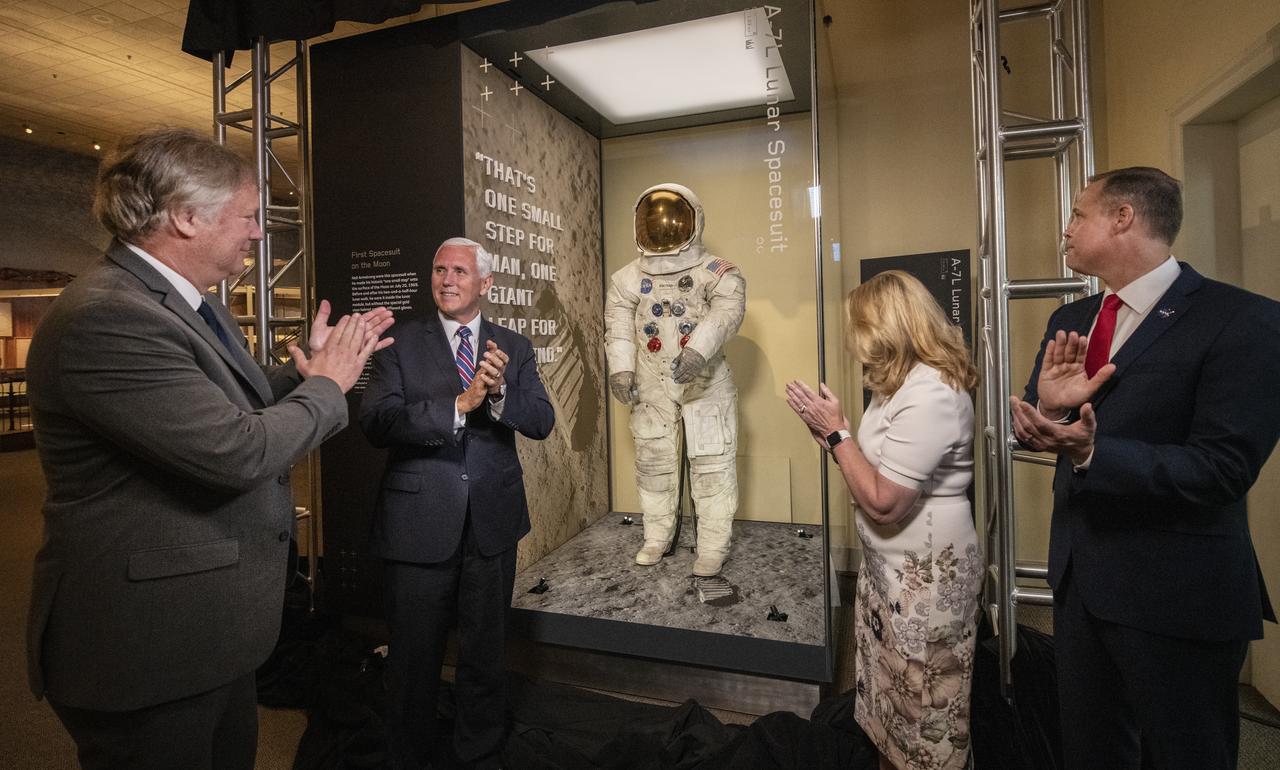
In celebration of the 50th anniversary of Apollo 11, NASA Astronaut Neil Armstrong's spacesuit was unveiled today in The Wright Brothers and The Invention of the Aerial Age Gallery of the Smithsonian Air and Space Museum, in Washington, DC, July 16, 2019. Unveiling the spacesuit, from left, Rick Armstrong, son of Neil Armstrong, Vice President Mike Pence, Dr. Ellen Stofan, The John and Adrienne Mars Director of the National Air and Space Museum, and James Bridenstine, Administrator of NASA. (Smithsonian Air and Space photo by Jim Preston)
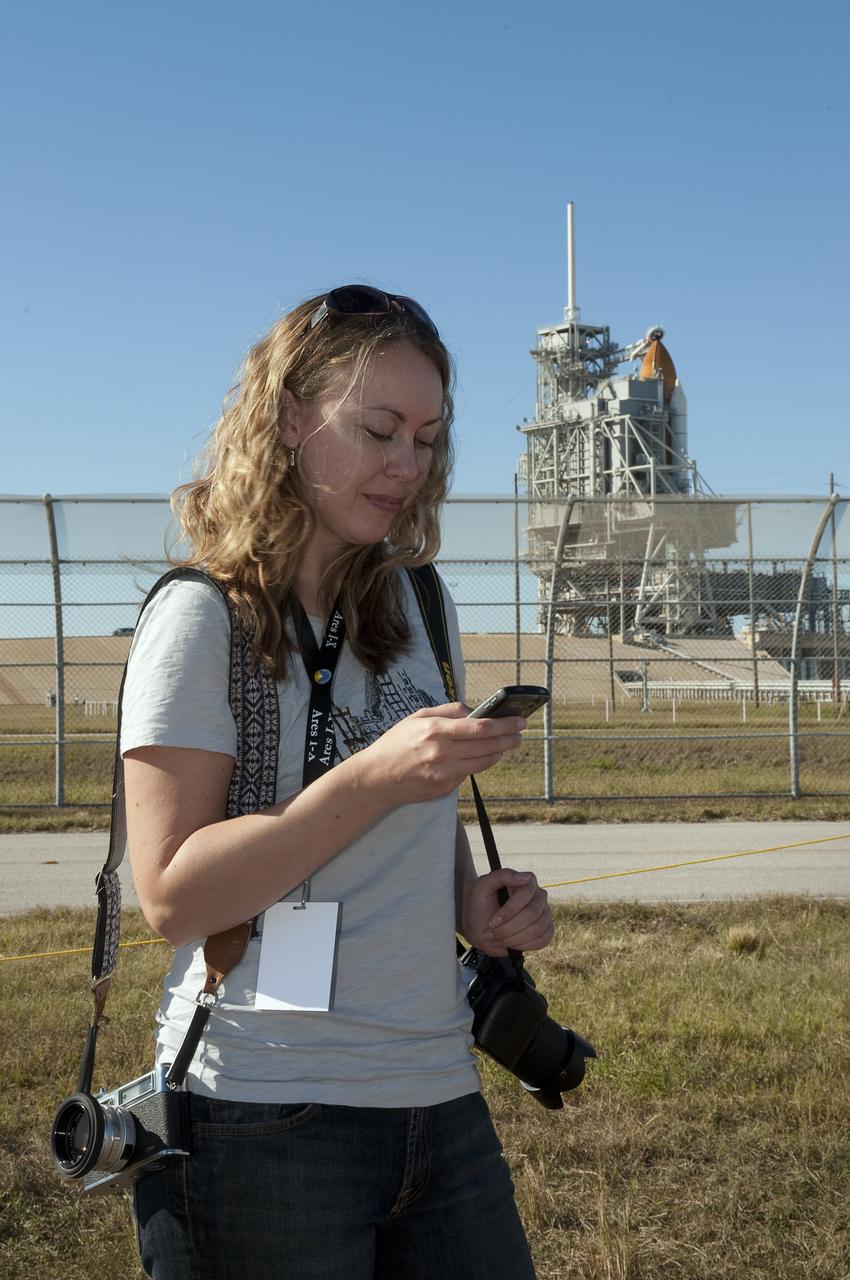
NASA Twitter follower Heather Goss from Washington, DC, who goes by the twitter name @heathermg, twitters as she stands in front of space shuttle Atlantis at launch pad 39A as part of during a tour of Kennedy Space Center in Cape Canaveral, Fla, Sunday, Nov. 15, 2009. Space shuttle Atlantis is set to launch on Monday, Nov. 16, 2009 and dock with the International Space Station (ISS) two days later. Photo Credit: (NASA/Carla Cioffi)
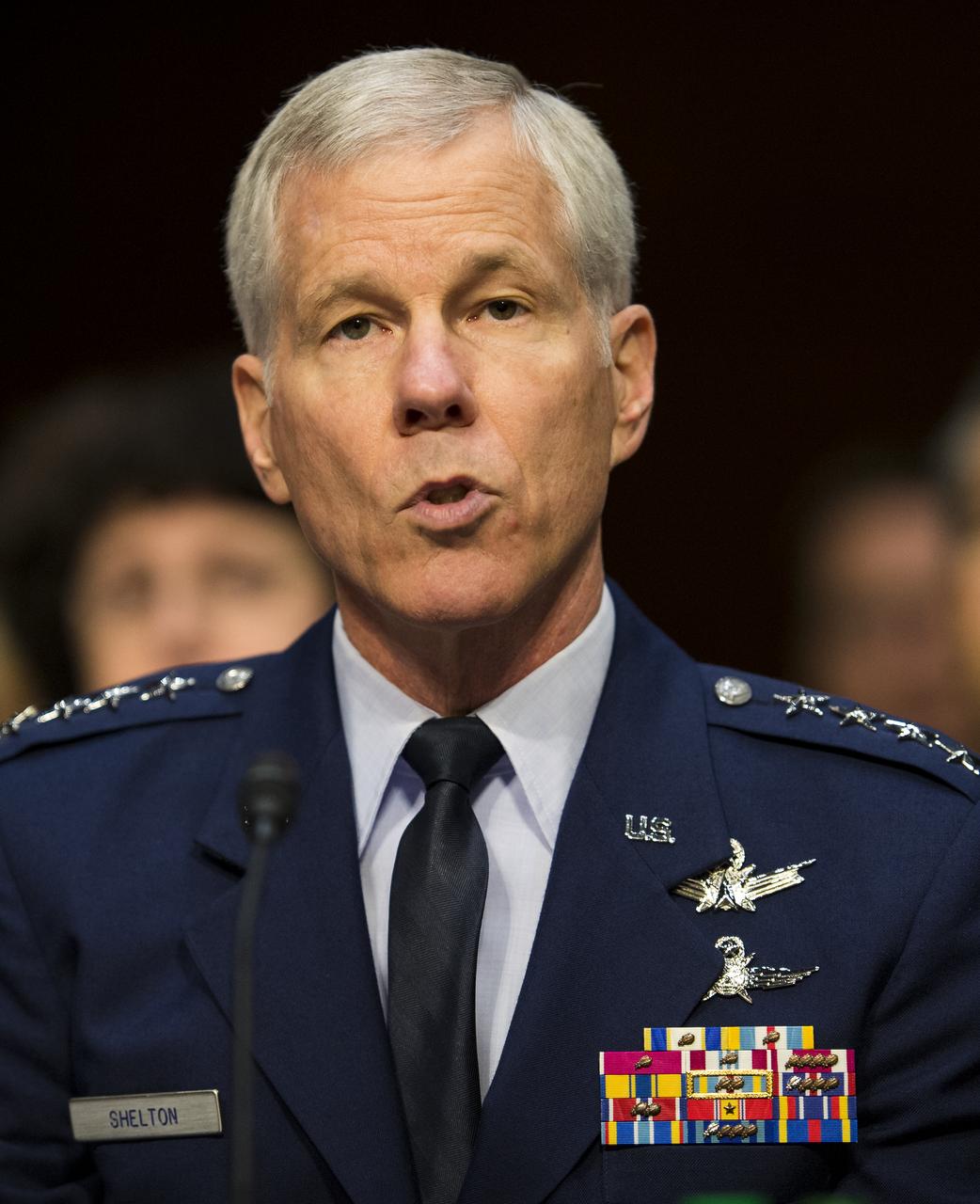
General William Shelton, Commander of the United States Air Force Space Command, delivers his opening statement during testimony in front of the Senate Subcommittee on Strategic Forces and Senate Committee on Commerce, Science, and Transportation on Wednesday, July 16, 2014, at the Hart Senate Office Building in Washington, DC. The Senate hearing focused on assured access to space.
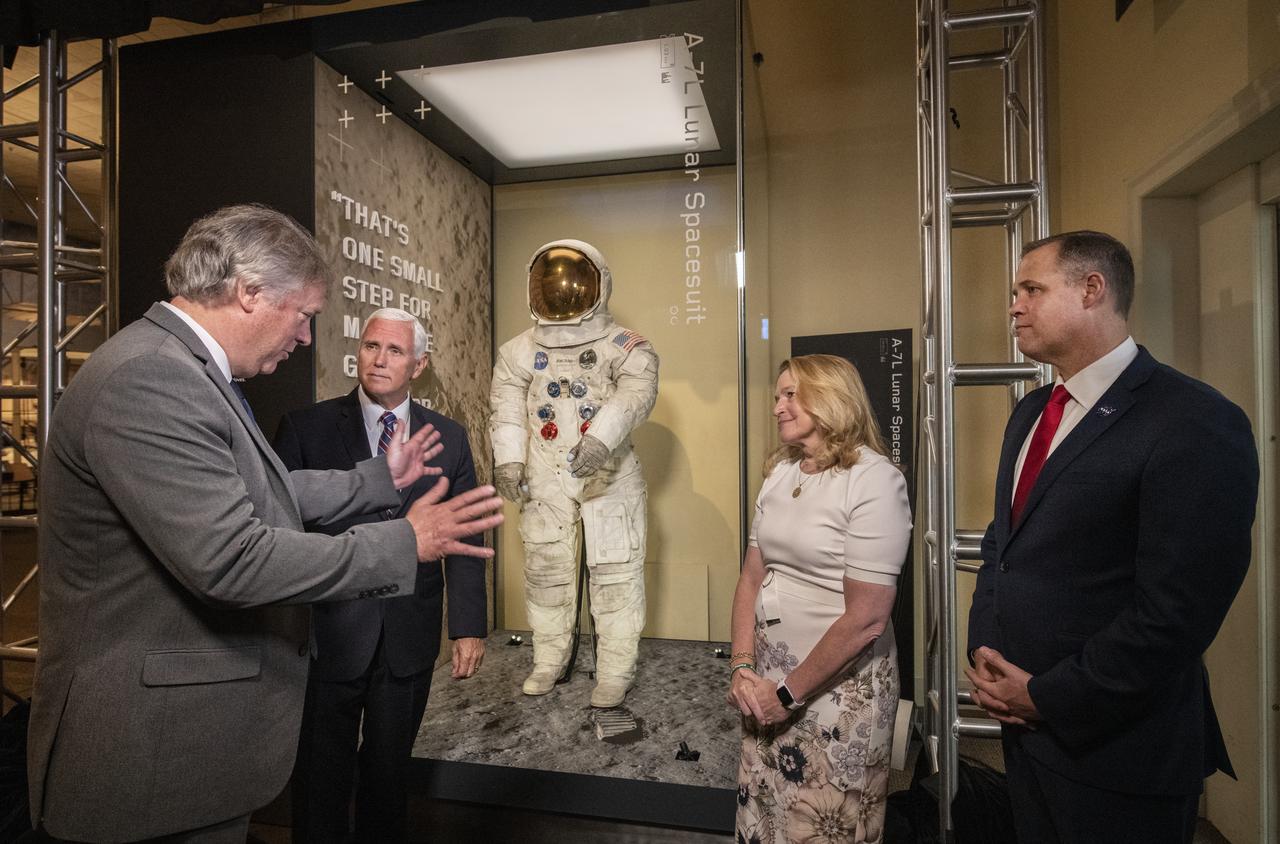
In celebration of the 50th anniversary of Apollo 11, NASA Astronaut Neil Armstrong's spacesuit was unveiled today in The Wright Brothers and The Invention of the Aerial Age Gallery of the Smithsonian Air and Space Museum, in Washington, DC, July 16, 2019. Unveiling the spacesuit, from left, Rick Armstrong, son of Neil Armstrong, Vice President Mike Pence, Dr. Ellen Stofan, The John and Adrienne Mars Director of the National Air and Space Museum, and James Bridenstine, Administrator of NASA. (Smithsonian Air and Space photo by Jim Preston)
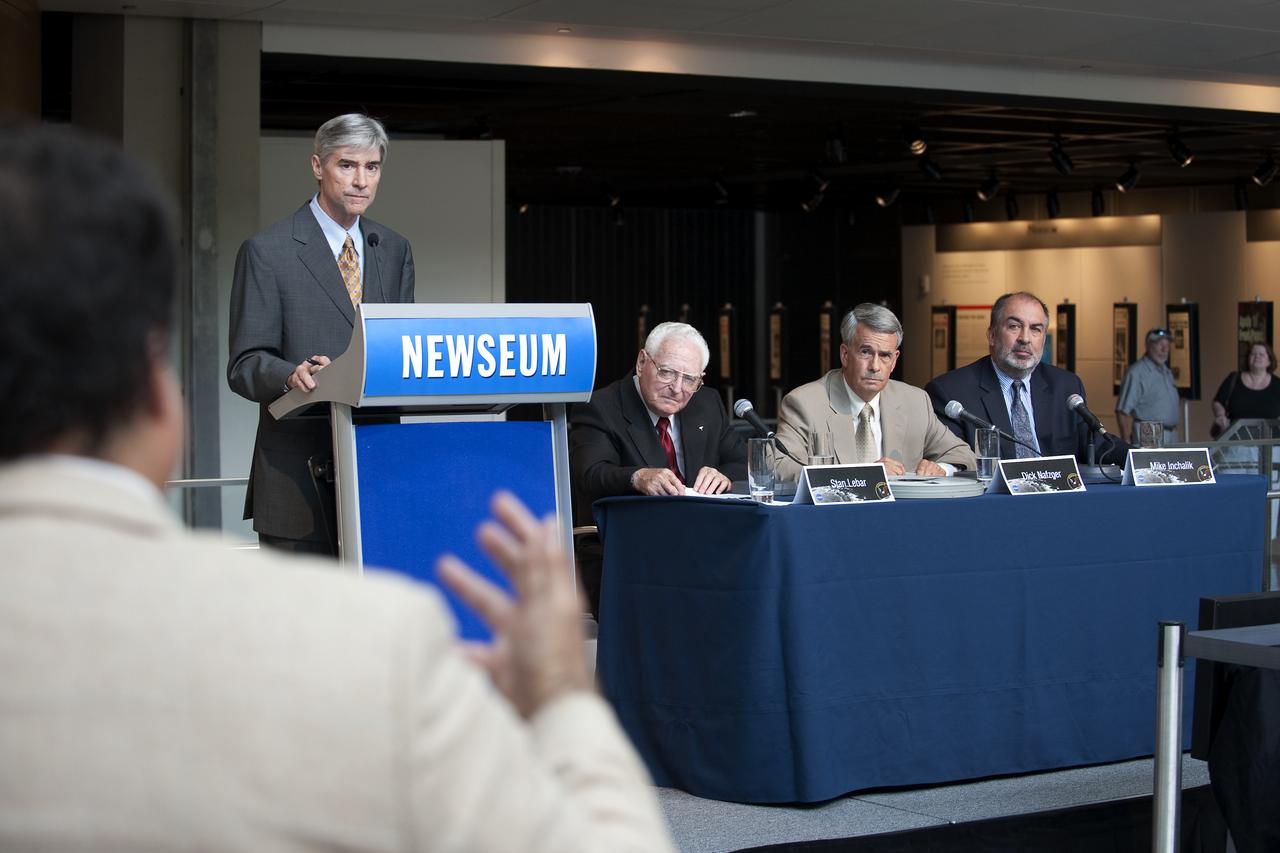
NASA moderator Mark Hess, left, directs reporters' questions to former Westinghouse Electric program manager Stan Lebar, second from left, team lead and Goddard engineer Richard Nafzger and president of Lowry Digital Mike Inchalik, far right, at a NASA briefing where restored Apollo 11 moonwalk footage was revealed for the first time at the Newseum, Thursday, July 16, 2009, in Washington, DC. Photo Credit: (NASA/Bill Ingalls)
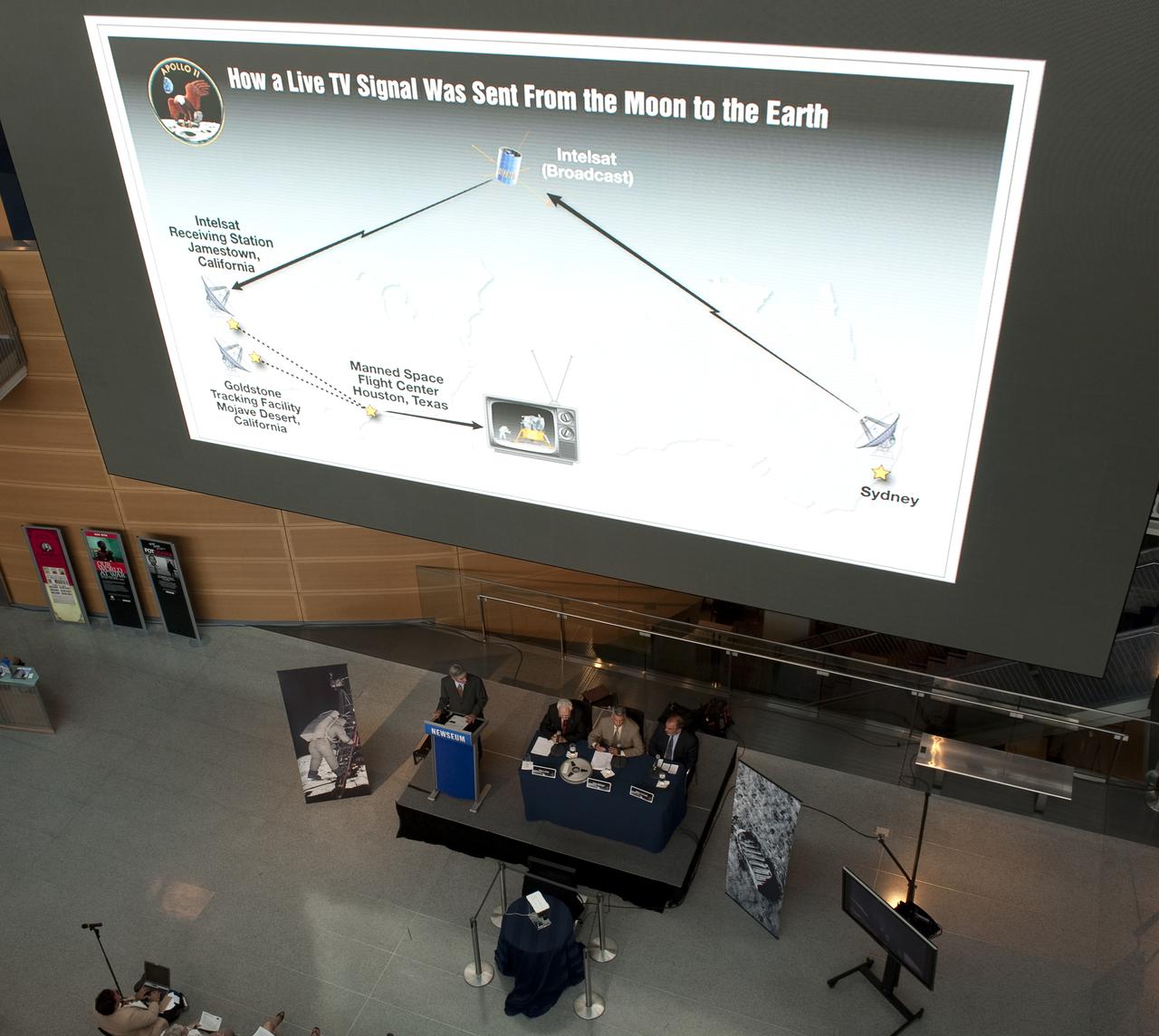
Graphics showing how TV signals were sent from the Apollo 11 mission back to Earth are shown on a large video monitor above panelists at NASA's briefing where restored Apollo 11 moonwalk footage was revealed for the first time at the Newseum, Thursday, July 16, 2009, in Washington, DC. Photo Credit: (NASA/Carla Cioffi)
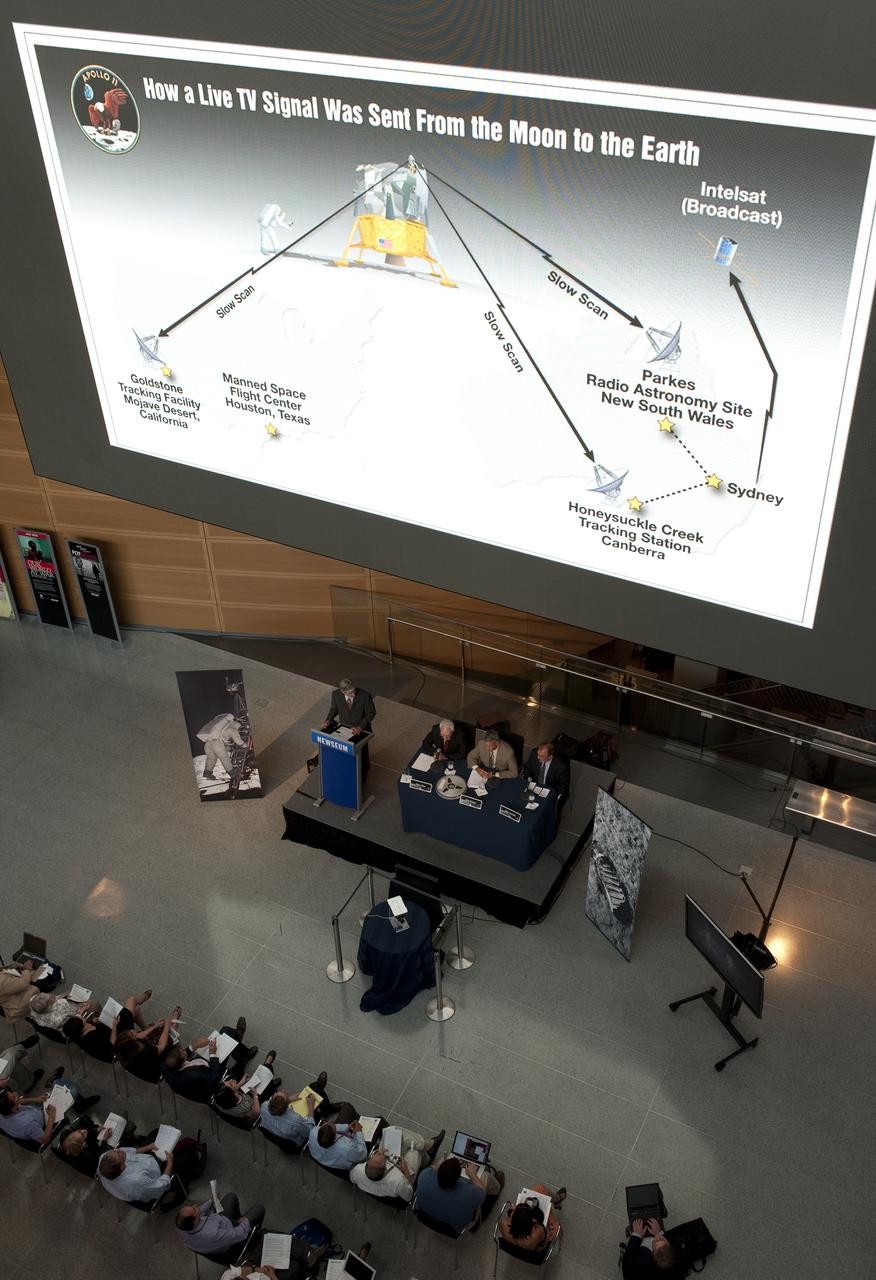
Graphics showing how TV signals were sent from the Apollo 11 mission back to Earth are shown on a large video monitor above panelists at NASA's briefing where restored Apollo 11 moonwalk footage was revealed for the first time at the Newseum, Thursday, July 16, 2009, in Washington, DC. Photo Credit: (NASA/Carla Cioffi)
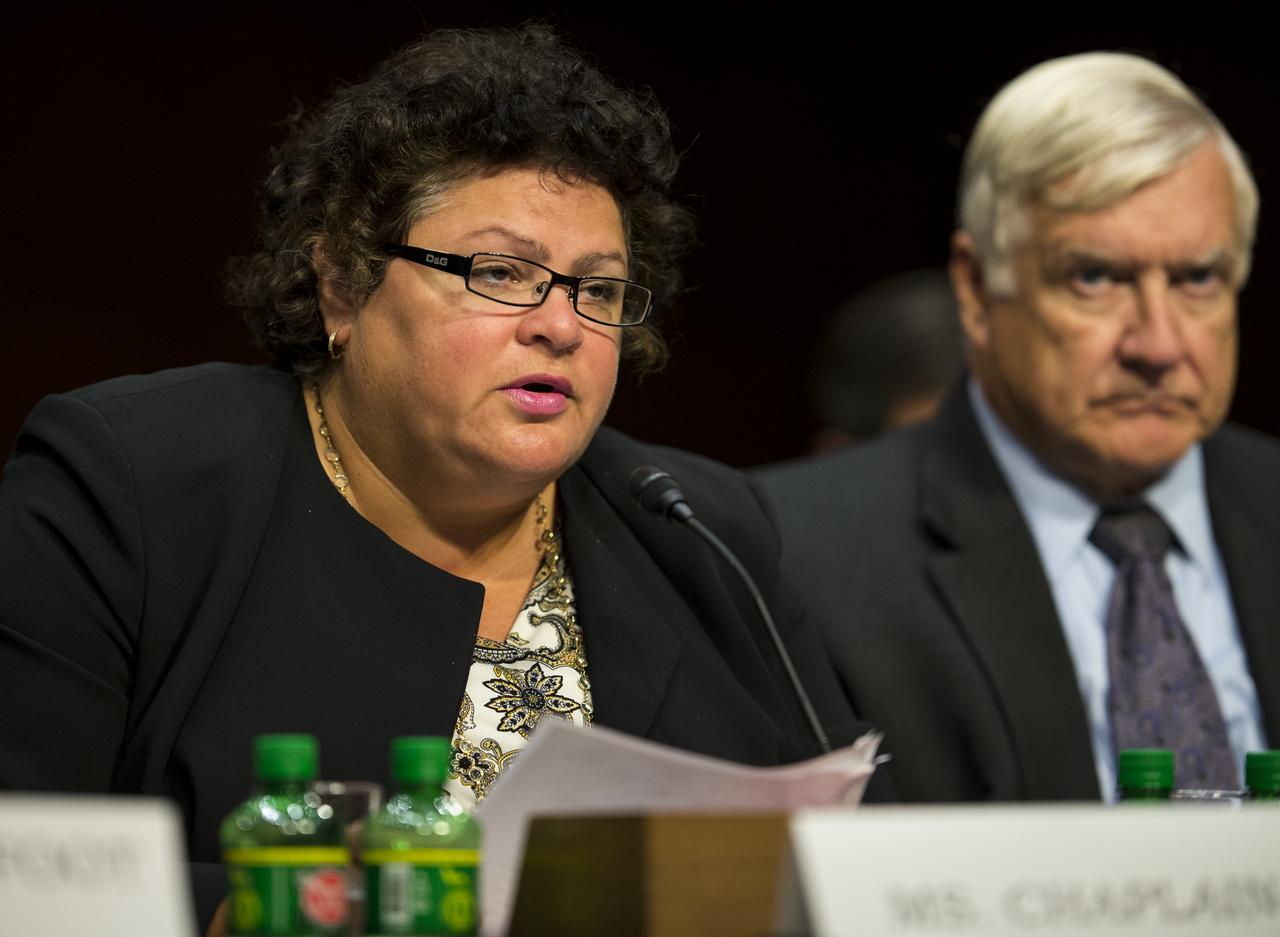
Cristina Chaplain, Director of Acquisition and Sourcing Management at the Government Accountability Office, delivers her opening statement during a hearing in front of the Senate Subcommittee on Strategic Forces and Senate Committee on Commerce, Science, and Transportation on Wednesday, July 16, 2014, at the Hart Senate Office Building in Washington, DC. The Senate hearing focused on assured access to space.
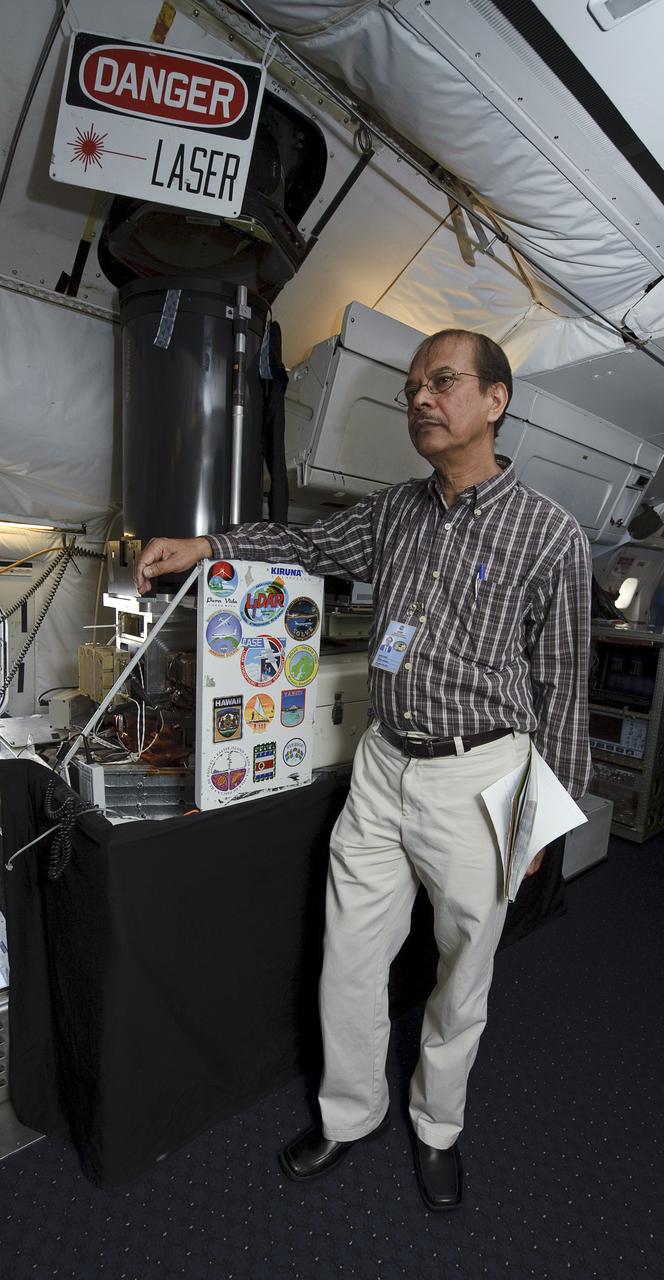
Syed Ismail, from the Langley Research Center, principal investigator for the Lidar Atmospheric Sensing Experiment (LASE) is seen aboard the NASA DC-8 aircraft, Monday, August 16, 2010, at Fort Lauderdale Hollywood International Airport in Fort Lauderdale, Fla. The Genesis and Rapid Intensification Processes (GRIP) experiment is a NASA Earth science field experiment in 2010 that is being conducted to better understand how tropical storms form and develop into major hurricanes. Photo Credit: (NASA/Paul E. Alers)
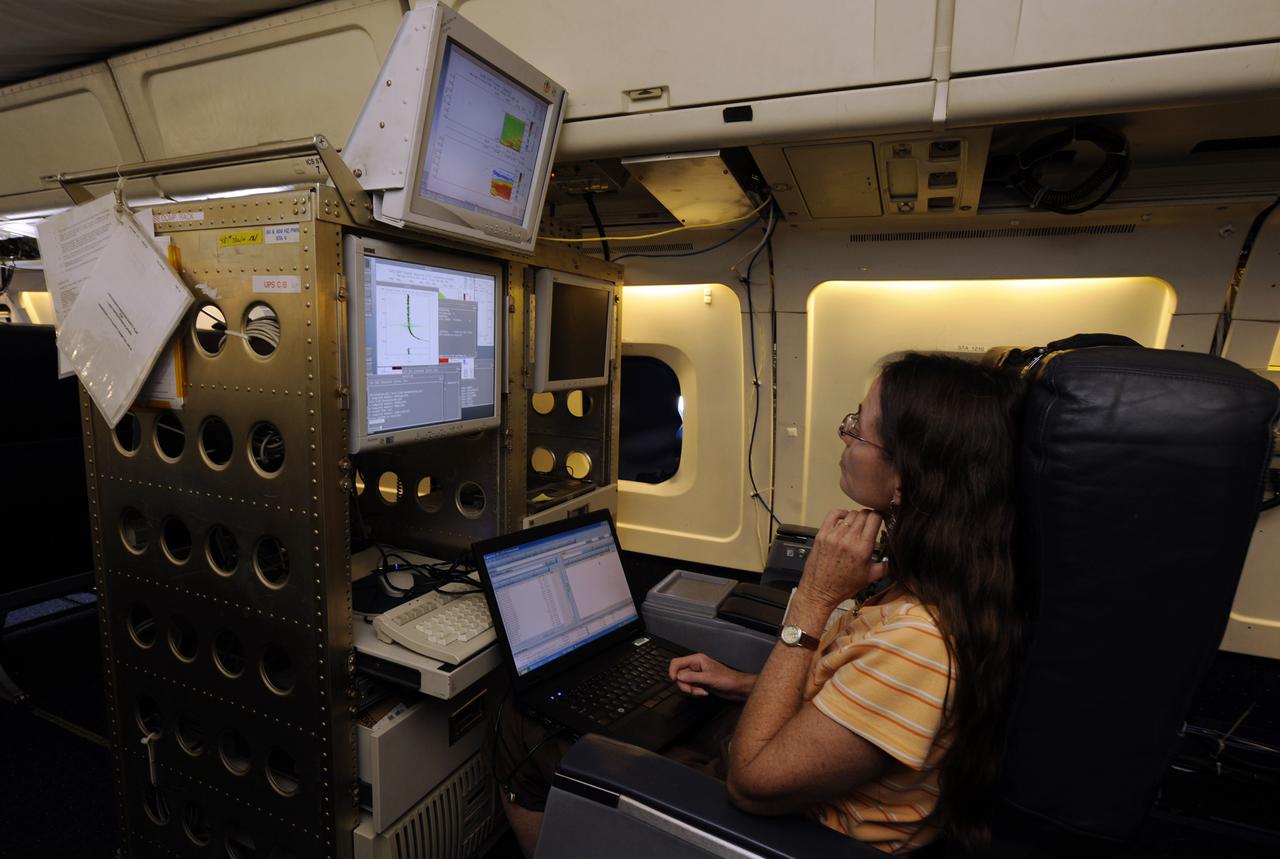
Susan Kool, a researcher from the Langley Research Center, works on monitoring the Lidar Atmospheric Sensing Experiment (LASE) aboard the NASA DC-8 aircraft, Monday, Aug. 16, 2010, at Fort Lauderdale Hollywood International Airport in Fort Lauderdale, Fla. LASE probes the atmosphere using lasers and is part of the Genesis and Rapid Intensification Processes (GRIP) experiment is a NASA Earth science field experiment in 2010 that is being conducted to better understand how tropical storms form and develop into major hurricanes. Photo Credit: (NASA/Paul E. Alers)
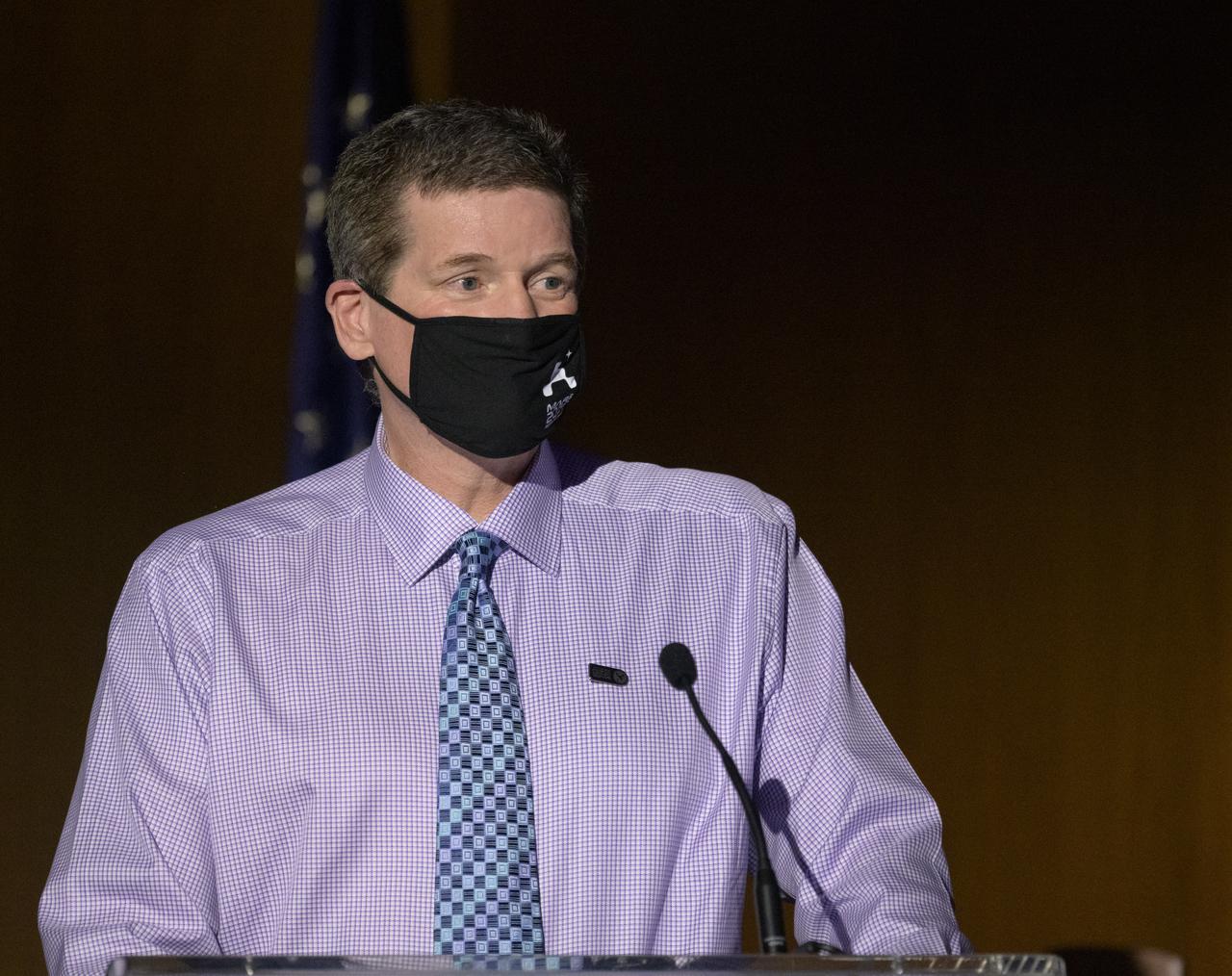
Media Affairs Specialist, JPL, DC Agle, moderates a NASA Perseverance rover mission engineering and technology overview, Tuesday, Feb. 16, 2021, at NASA's Jet Propulsion Laboratory in Pasadena, California. The Perseverance Mars rover is due to land on Mars Thursday, Feb. 18, 2021. A key objective for Perseverance’s mission on Mars is astrobiology, including the search for signs of ancient microbial life. The rover will characterize the planet’s geology and past climate, pave the way for human exploration of the Red Planet, and be the first mission to collect and cache Martian rock and regolith. Photo Credit: (NASA/Bill Ingalls)

Simone Tanelli, a researcher from the Jet Propulsion Laboratory, talks about the Airbrorne Precipitation Radar (APR-2) aboard the NASA DC-8 aircraft, Monday, Aug.16, 2010, at Fort Lauderdale Hollywood International Airport in Fort Lauderdale, Fla. The APR-2, a dual frequency weather radar, is just one of the experiments supporting the Genesis and Rapid Intensification Processes (GRIP) mission, a NASA Earth science field experiment that is being conducted to better understand how tropical storms form and develop into major hurricanes. Photo Credit: (NASA/Paul E. Alers)
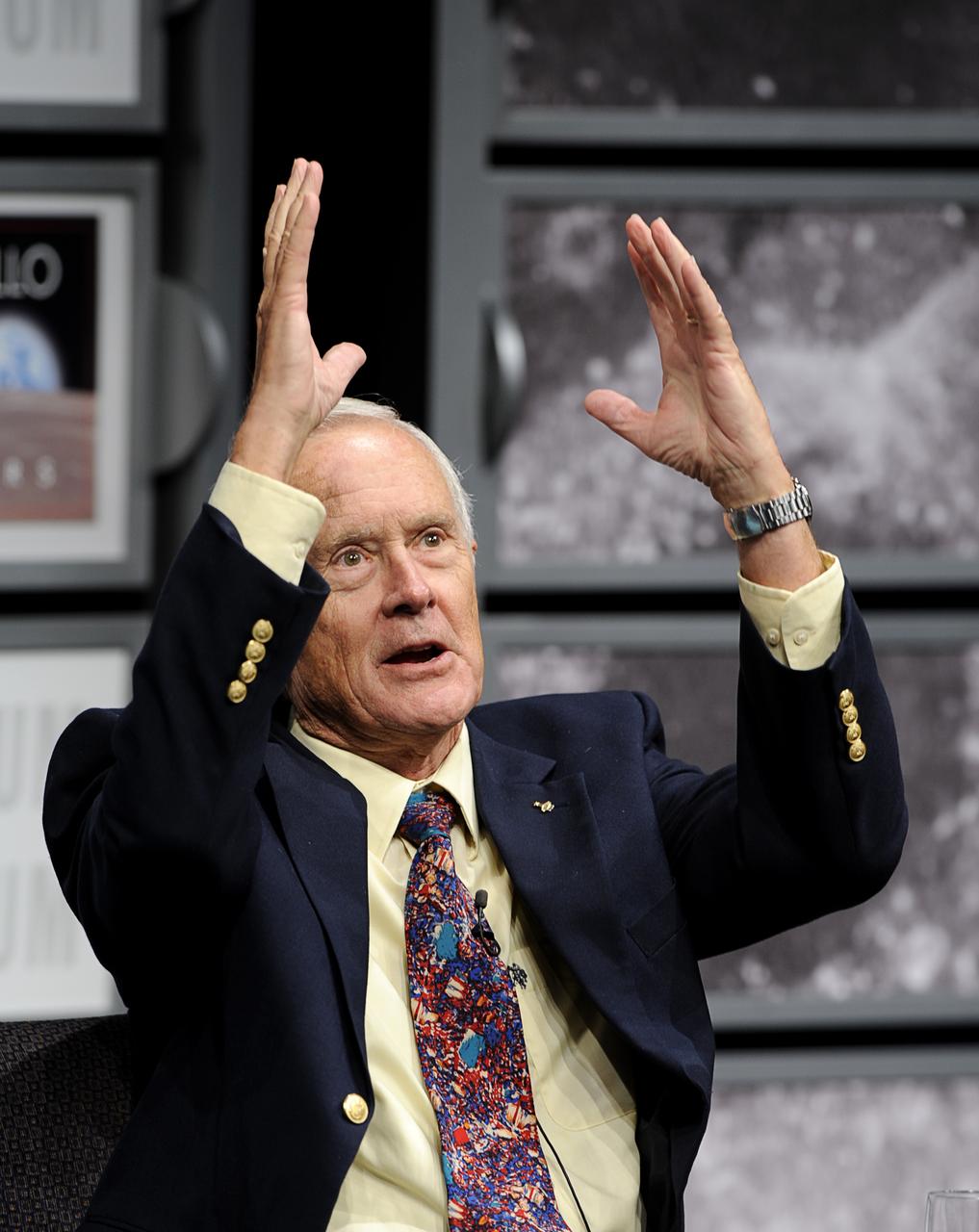
Apollo 16 astronaut Charlie Duke, the 10th person to walk on the moon who spent 71 hours on the lunar surface, talks during a panel discussion, Monday, July 20, 2009, hosted by Nick Clooney at the Newseum in Washington as part of the commemoration of the 40th Anniversary of the Apollo 11 moon landing. Photo Credit: (NASA/Bill Ingalls)
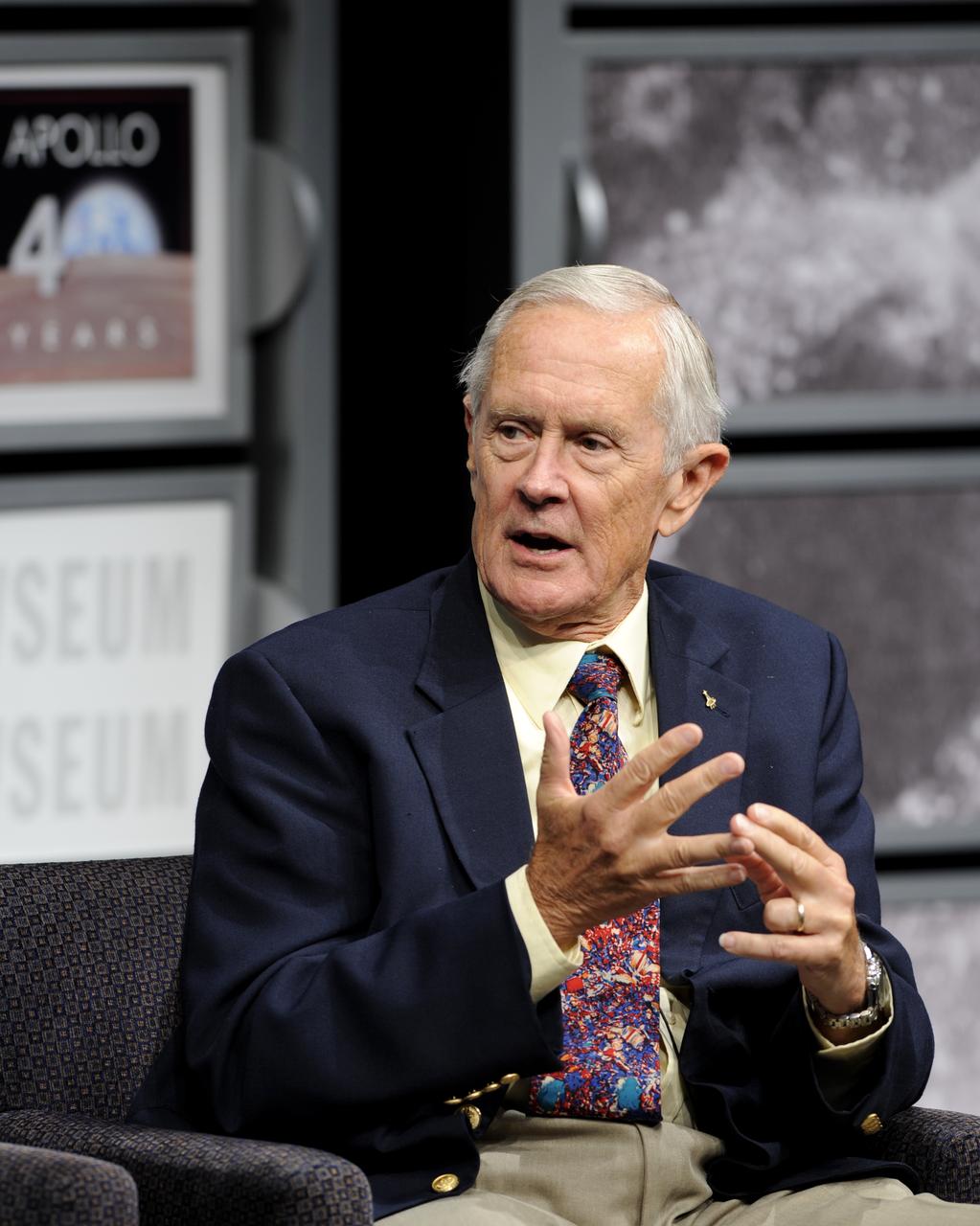
Apollo 16 astronaut Charlie Duke, the 10th person to walk on the moon who spent 71 hours on the lunar surface, talks during a panel discussion, Monday, July 20, 2009, hosted by Nick Clooney at the Newseum in Washington as part of the commemoration of the 40th Anniversary of the Apollo 11 moon landing. Photo Credit: (NASA/Bill Ingalls)
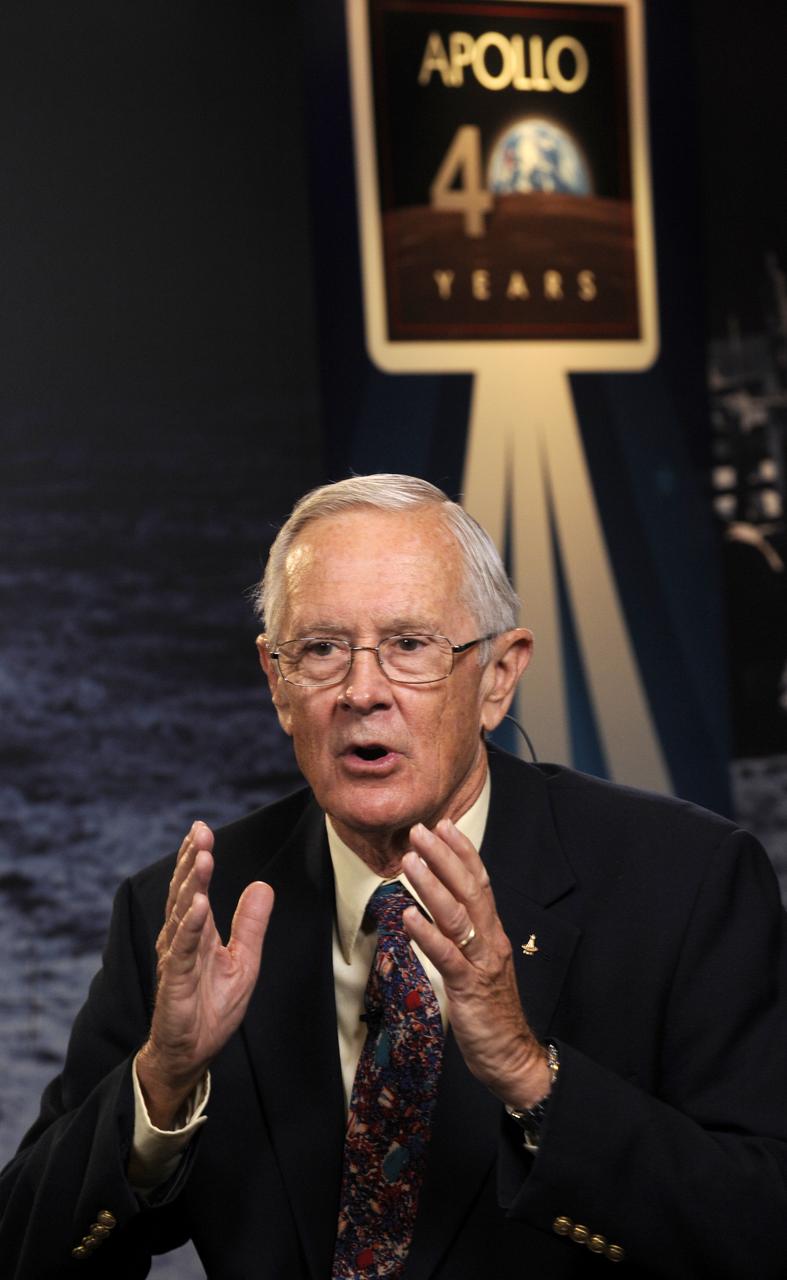
Apollo 16 astronaut Charles Duke responds to a question during a live television interview on Monday, July 20, 2009, at NASA Headquarters in Washington. Photo Credit: (NASA/Paul E. Alers)
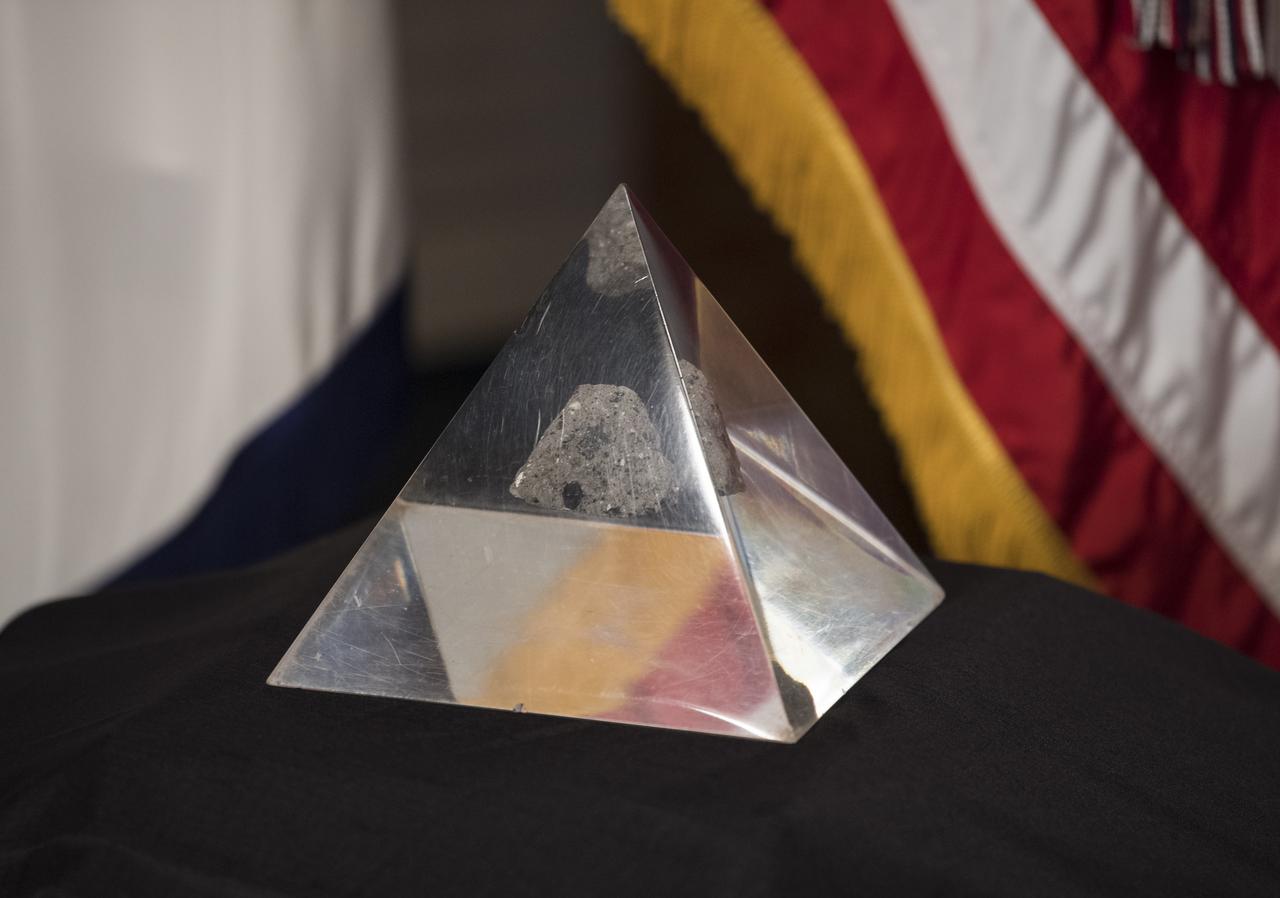
A moon rock collected by astronaut John Young during the Apollo 16 mission is seen before the swearing-in ceremony for former Senator Bill Nelson, as the 14th NASA Administrator, by Vice President Kamala Harris, Monday, May 3, 2021, at the Ceremonial Office in the Old Executive Office Building in Washington. Photo Credit: (NASA/Aubrey Gemignani)
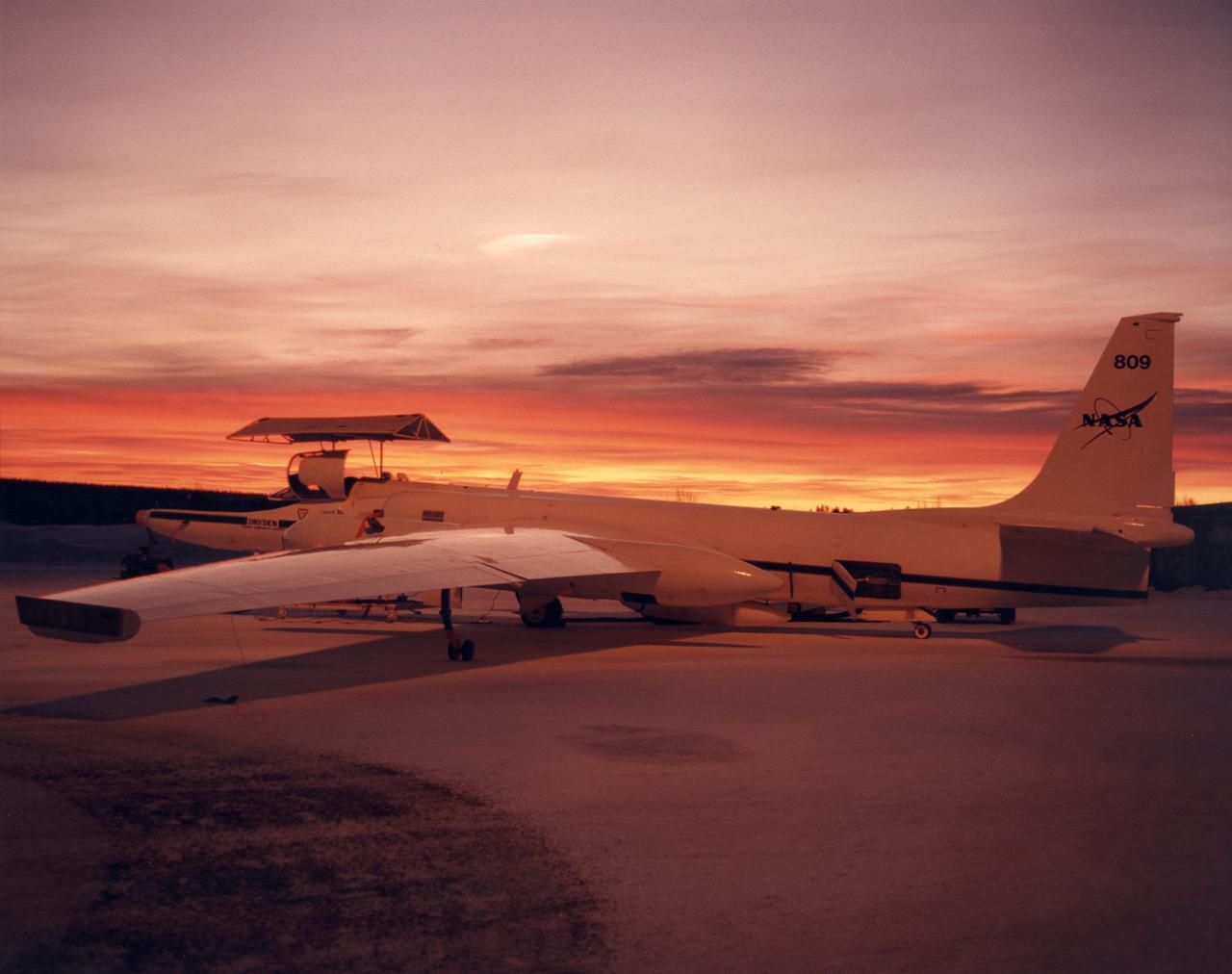
ER-2 #809 awaiting pilot entry for the third flight of the SAGE III Ozone Loss and Validation Experiment (SOLVE). The ER-2, a civilian variant of Lockheed's U-2, and another NASA flying laboratory, Dryden's DC-8, were based north of the Arctic Circle in Kiruna, Sweden during the winter of 2000 to study ozone depletion as part of SOLVE. A large hangar built especially for research, "Arena Arctica" housed the instrumented aircraft and the scientists. Scientists have observed unusually low levels of ozone over the Arctic during recent winters, raising concerns that ozone depletion there could become more widespread as in the Antarctic ozone hole. The NASA-sponsored international mission took place between November 1999 and March 2000 and was divided into three phases. The DC-8 was involved in all three phases returning to Dryden between each phase. The ER-2 flew sample collection flights between January and March, remaining in Sweden from Jan. 9 through March 16. "The collaborative campaign will provide an immense new body of information about the Arctic stratosphere," said program scientist Dr. Michael Kurylo, NASA Headquarters. "Our understanding of the Earth's ozone will be greatly enhanced by this research."
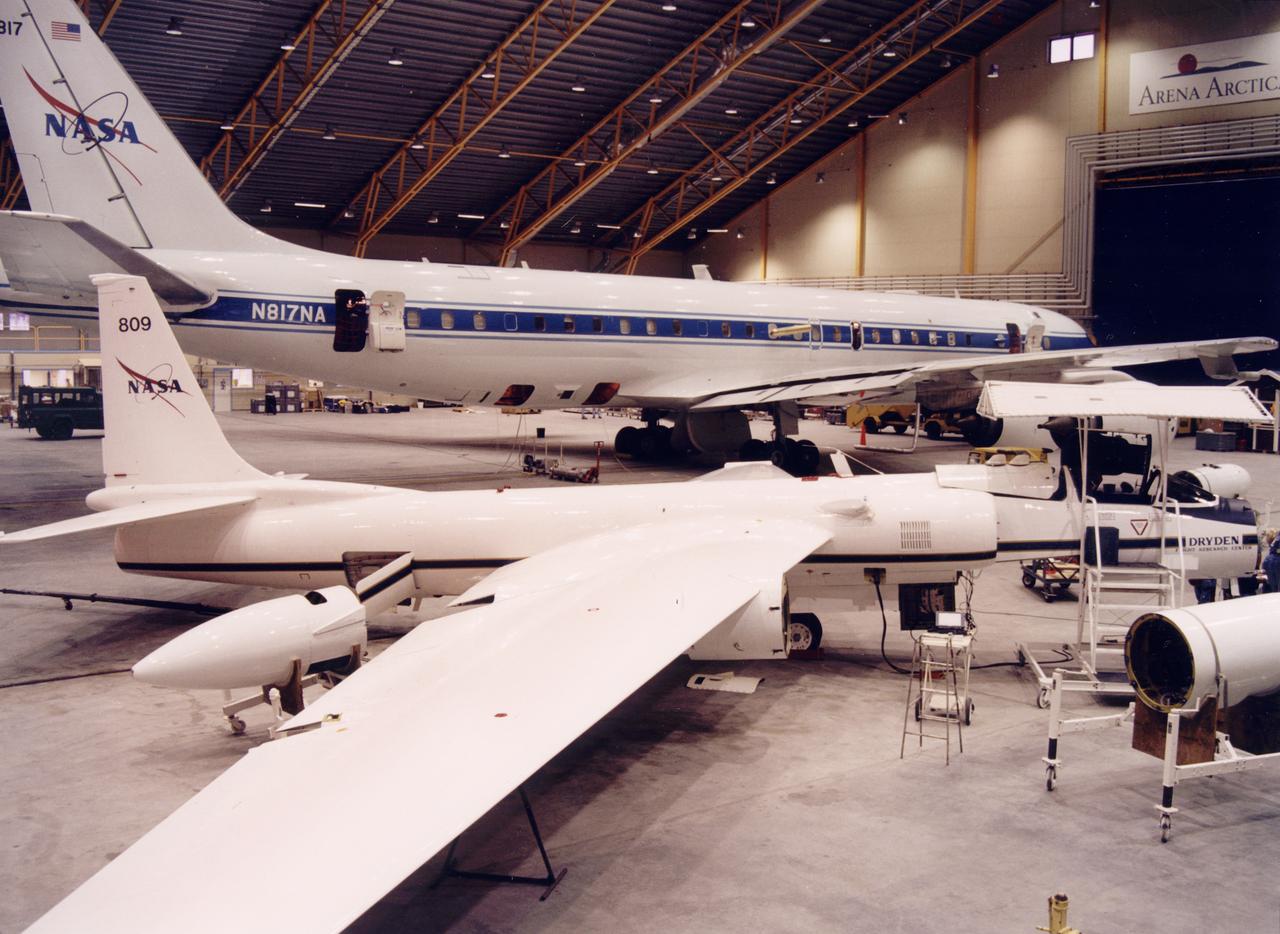
NASA ER-2 # 809 and its DC-8 shown in Arena Arctica before the SAGE III Ozone Loss and Validation Experiment (SOLVE). The two airborne science platforms were based north of the Arctic Circle in Kiruna, Sweden, during the winter of 2000 to study ozone depletion as part of SOLVE. A large hangar built especially for research, "Arena Arctica" housed the instrumented aircraft and the scientists. Scientists have observed unusually low levels of ozone over the Arctic during recent winters, raising concerns that ozone depletion there could become more widespread as in the Antarctic ozone hole. The NASA-sponsored international mission took place between November 1999 and March 2000 and was divided into three phases. The DC-8 was involved in all three phases returning to Dryden between each phase. The ER-2 flew sample collection flights between January and March, remaining in Sweden from Jan. 9 through March 16. "The collaborative campaign will provide an immense new body of information about the Arctic stratosphere," said program scientist Dr. Michael Kurylo, NASA Headquarters. "Our understanding of the Earth's ozone will be greatly enhanced by this research."
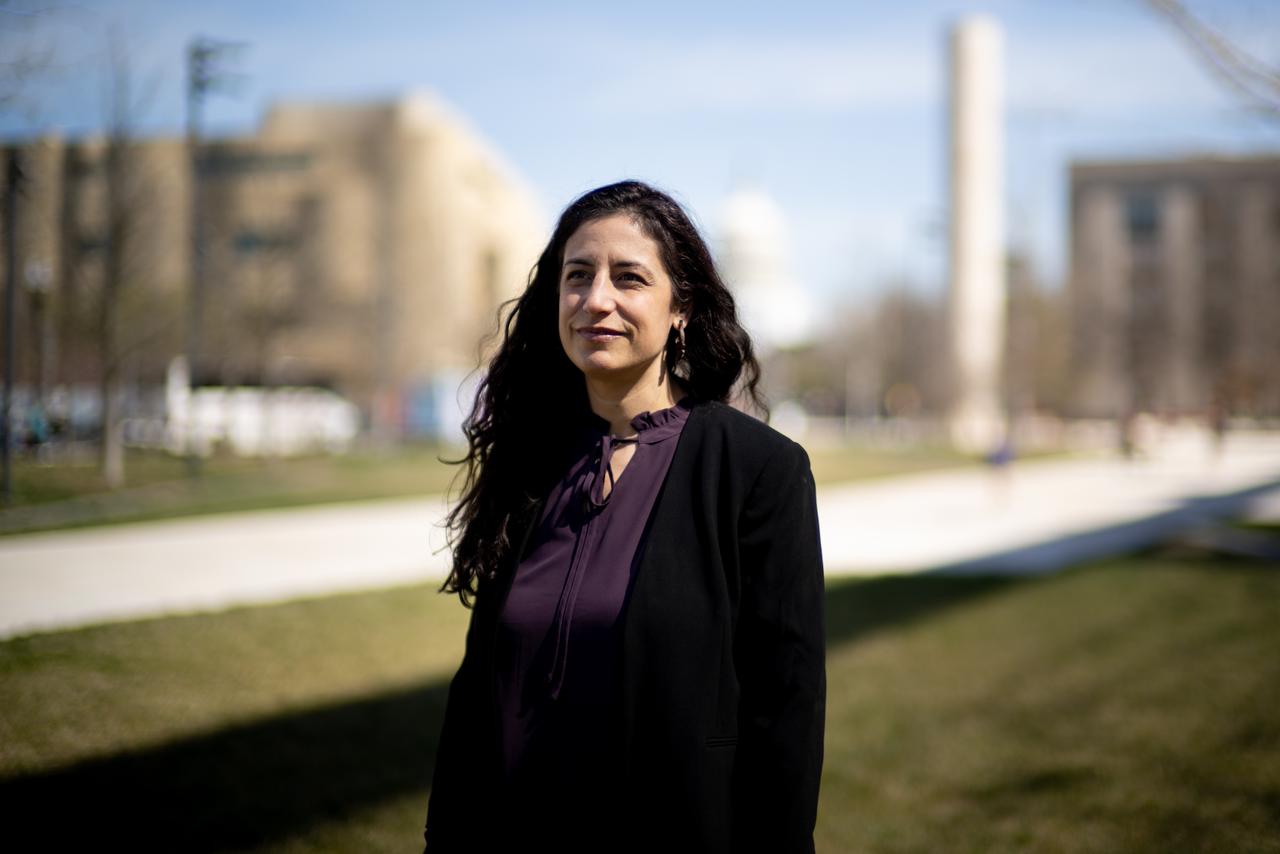
"People aren’t always recognized for who they are at work. “So giving a person time to actually talk about themselves, and be proud of what they do, and talk about how hard it might be to maintain their career with everything else going on — makes them feel valued and appreciated. And highlighting them in that way on the Faces of NASA page, makes that pride permanent. “I think I’m always seeking out projects that help people feel seen. And maybe that’s why I got so into photography initially. I struggle with that myself — feeling seen. And so to help other people feel seen is definitely an interest of mine that I keep coming back to." Aubrey Gemignani, Photo Archivist/Photographer, Mori Associates, in NASA’s Office of Communications, poses for a portrait, Thursday, March 16, 2023, in Washington, DC. Photo Credit: (NASA/Joel Kowsky)
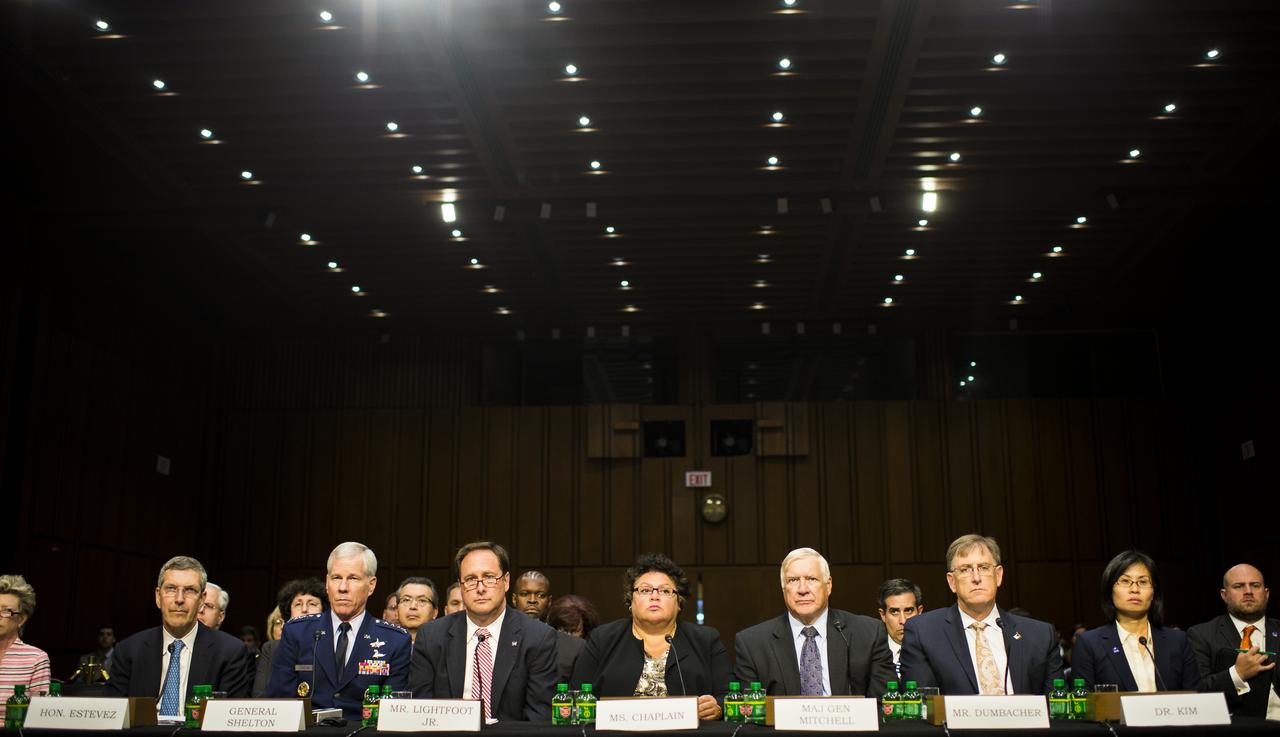
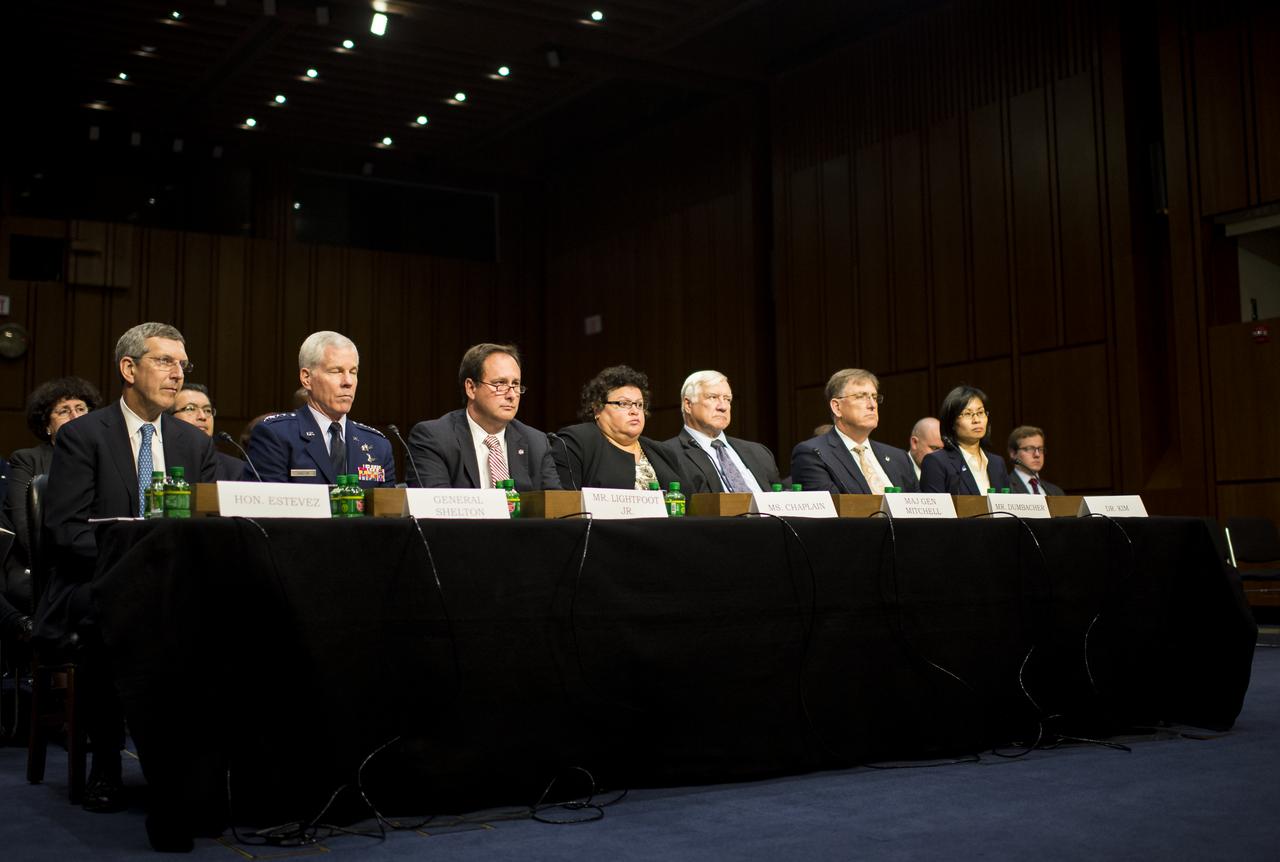
From left; Hon. Alan Estevez, Principle Deputy Under Secretary of Defense for Acquisition, Technology, and Logistics; General William Shelton, Commander of the United States Air Force Space Command; Robert Lightfoot, NASA Associate Administrator; Cristina Chaplain, Director of Acquisition and Sourcing Management at the Government Accountability Office; major General Howard Mitchell (USAF Ret.), Vice President for Program Assessments at The Aerospace Corporation; Daniel Dunbacher, Professor of Practice in the Department of Aeronautics and Aerospace Engineering at Purdue University; and Dr. Yool Kim, Senior Engineer at The Rand Corporation; are seen during a hearing in front of the Senate Subcommittee on Strategic Forces and Senate Committee on Commerce, Science, and Transportation on Wednesday, July 16, 2014, at the Hart Senate Office Building in Washington, DC. The Senate hearing focused on assured access to space.
From left; Hon. Alan Estevez, Principle Deputy Under Secretary of Defense for Acquisition, Technology, and Logistics; General William Shelton, Commander of the United States Air Force Space Command; Robert Lightfoot, NASA Associate Administrator; Cristina Chaplain, Director of Acquisition and Sourcing Management at the Government Accountability Office; major General Howard Mitchell (USAF Ret.), Vice President for Program Assessments at The Aerospace Corporation; Daniel Dunbacher, Professor of Practice in the Department of Aeronautics and Aerospace Engineering at Purdue University; and Dr. Yool Kim, Senior Engineer at The Rand Corporation; are seen during a hearing in front of the Senate Subcommittee on Strategic Forces and Senate Committee on Commerce, Science, and Transportation on Wednesday, July 16, 2014, at the Hart Senate Office Building in Washington, DC. The Senate hearing focused on assured access to space.
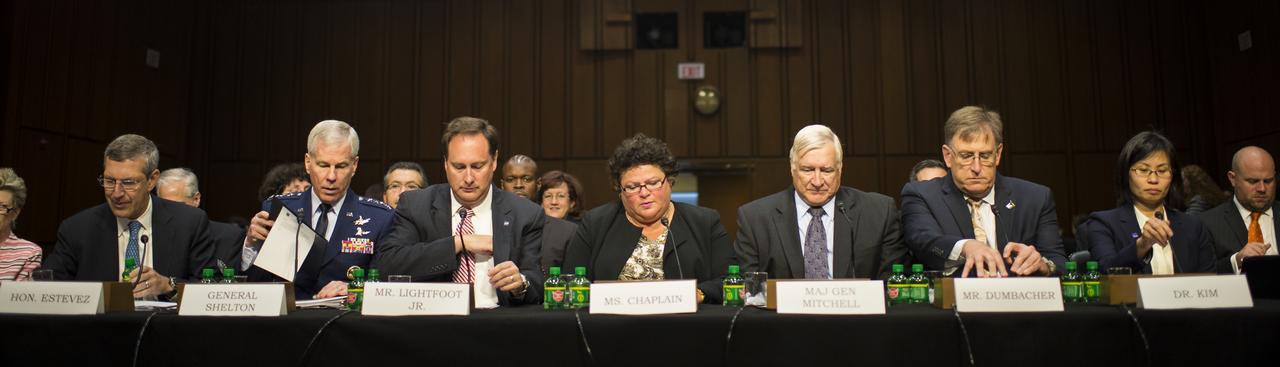
From left; Hon. Alan Estevez, Principle Deputy Under Secretary of Defense for Acquisition, Technology, and Logistics; General William Shelton, Commander of the United States Air Force Space Command; Robert Lightfoot, NASA Associate Administrator; Cristina Chaplain, Director of Acquisition and Sourcing Management at the Government Accountability Office; major General Howard Mitchell (USAF Ret.), Vice President for Program Assessments at The Aerospace Corporation; Daniel Dunbacher, Professor of Practice in the Department of Aeronautics and Aerospace Engineering at Purdue University; and Dr. Yool Kim, Senior Engineer at The Rand Corporation; are seen during a hearing in front of the Senate Subcommittee on Strategic Forces and Senate Committee on Commerce, Science, and Transportation on Wednesday, July 16, 2014, at the Hart Senate Office Building in Washington, DC. The Senate hearing focused on assured access to space.

Apollo astronaut Alan Bean, center, laughs at a comment made by Apollo astronaut Charles Duke, right, as Apollo astronaut Buzz Aldrin, left, looks on during a live television interview on Monday, July 20, 2009, at NASA Headquarters in Washington. Monday marked the 40th Anniversary of the historic landing of Apollo 11 on the Moon. Photo Credit: (NASA/Paul E. Alers)
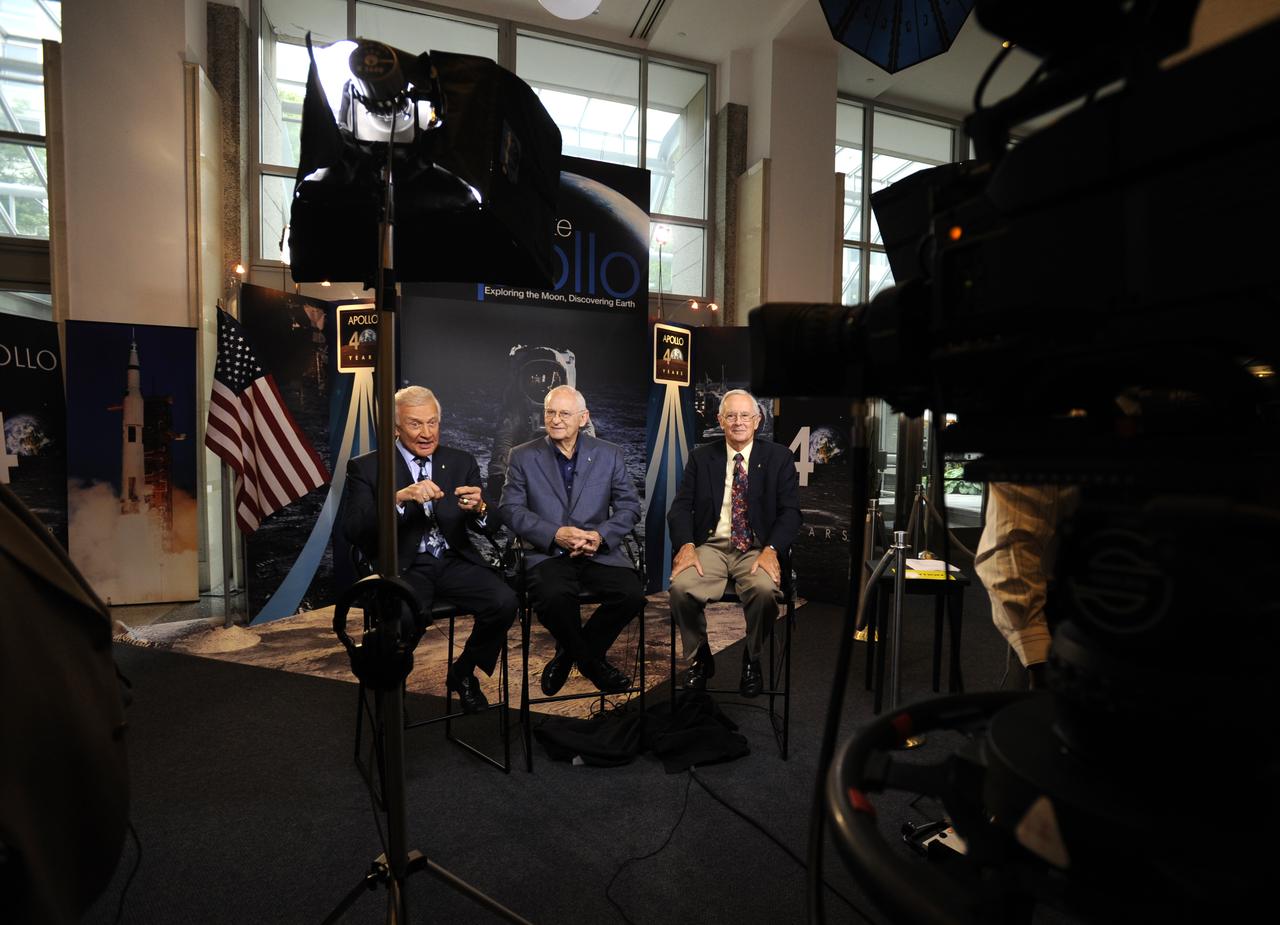
Apollo 11 astronaut Buzz Aldrin, the second man to walk on the Moon, seated left, responds to a question during a live television interview on Monday, July 20, 2009, at NASA Headquarters in Washington as Apollo 12 astronaut Alan Bean and Apollo 16 astronaut Charles Duke, right look on. The three sat in for interviews with morning talks shows covering the 40th Anniversary of the Apollo 11 landing on the Moon. Photo Credit: (NASA/Paul E. Alers)
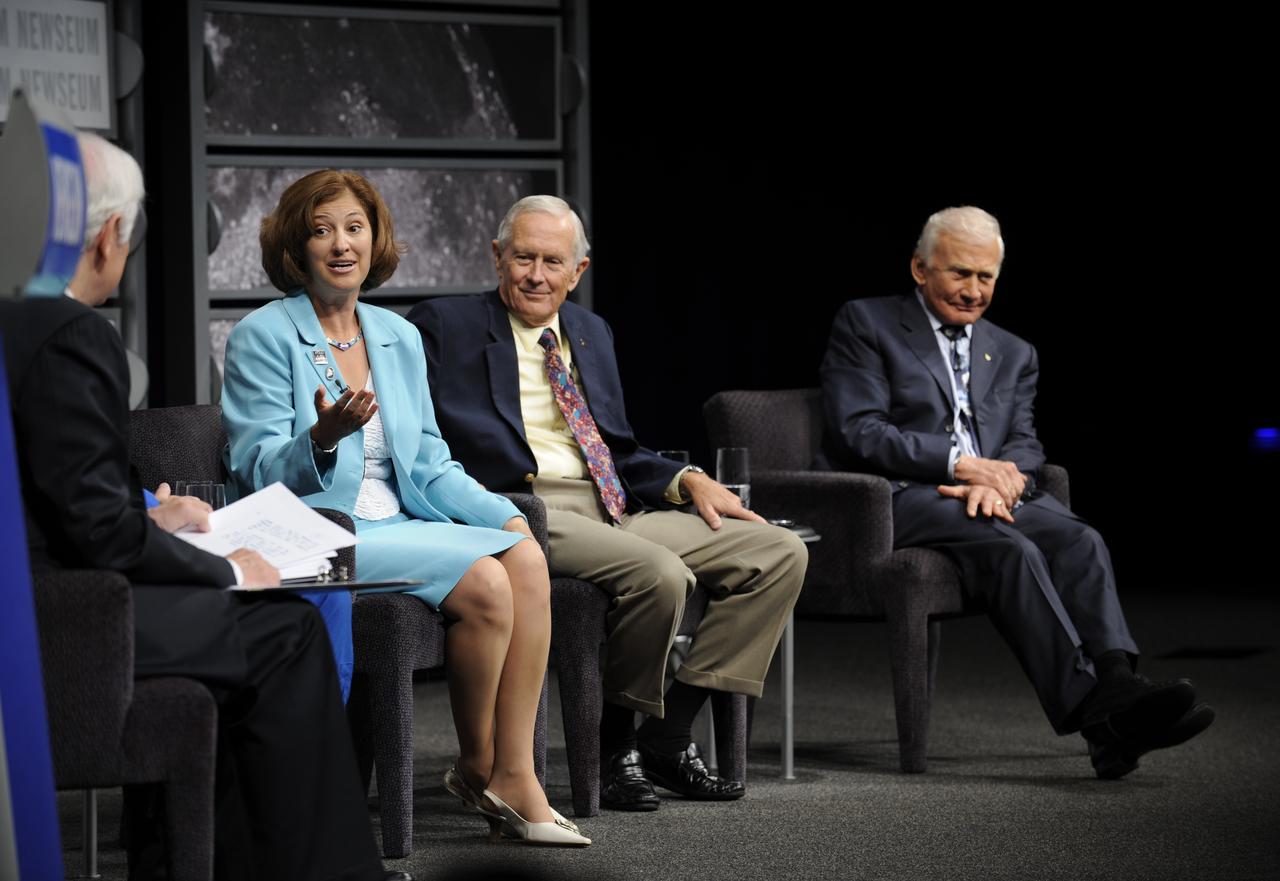
Veteran journalist Nick Clooney, seated left back to camera, moderated a panel discussion with Apollo 11 astronaut Buzz Aldrin, far right, Charlie Duke of Apollo 16, John Grunsfeld, of the recent Hubble mission, not seen and Goddard Space Flight Center deputy director Laurie Leshin, second from left, Monday, July 20, 2009, at the Newseum in Washington as part of the commemoration of the 40th Anniversary of the Apollo 11 moon landing. Photo Credit: (NASA/Bill Ingalls)
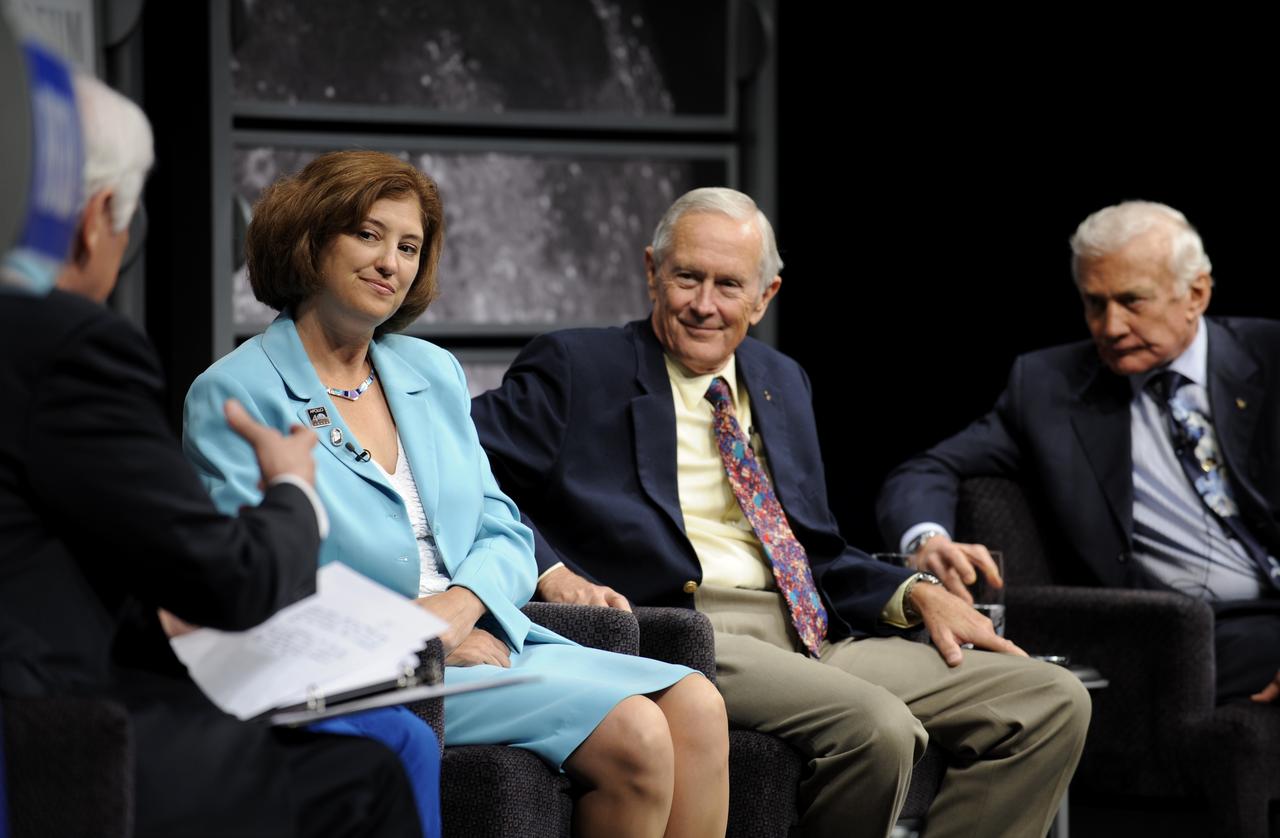
Veteran journalist Nick Clooney, seated left back to camera, moderated a panel discussion with Apollo 11 astronaut Buzz Aldrin, far right, Charlie Duke of Apollo 16, John Grunsfeld, of the recent Hubble mission, not seen, and Goddard Space Flight Center deputy director Laurie Leshin, second from left, Monday, July 20, 2009, at the Newseum in Washington as part of the commemoration of the 40th Anniversary of the Apollo 11 moon landing. Photo Credit: (NASA/Bill Ingalls)
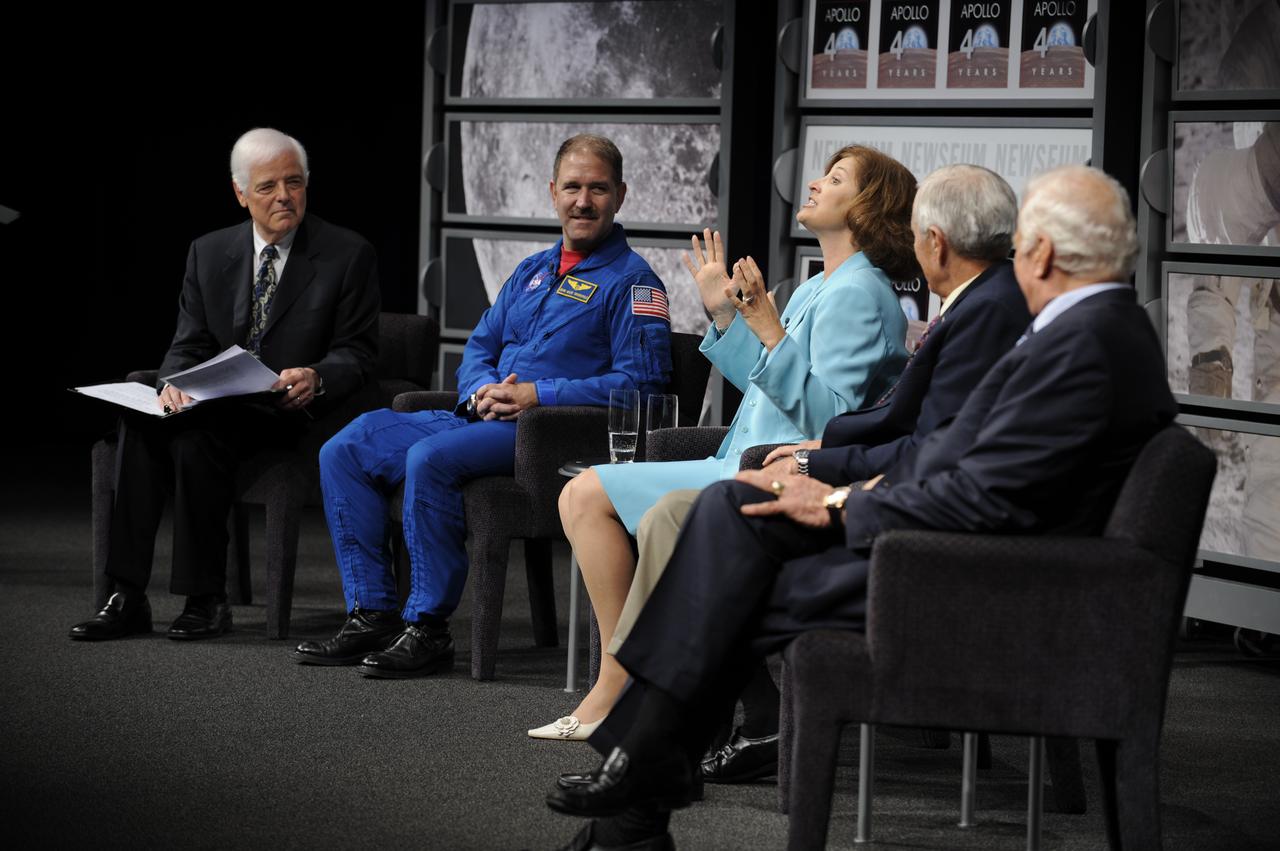
Veteran journalist Nick Clooney, seated left, moderated a panel discussion with Apollo 11 astronaut Buzz Aldrin, far right, Charlie Duke of Apollo 16, John Grunsfeld, of the recent Hubble mission, and Goddard Space Flight Center deputy director Laurie Leshin, Monday, July 20, 2009, at the Newseum in Washington as part of the commemoration of the 40th Anniversary of the Apollo 11 moon landing. Photo Credit: (NASA/Bill Ingalls)
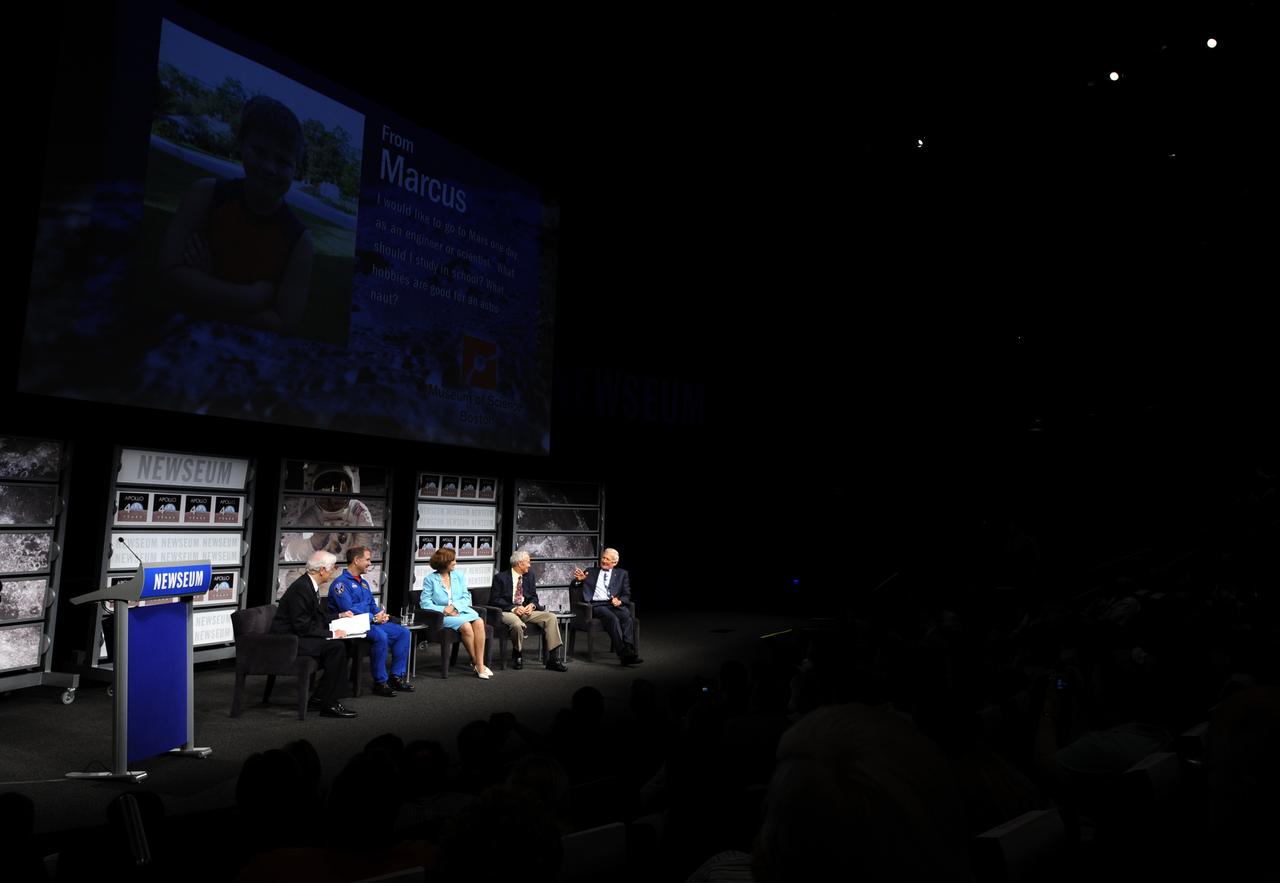
Veteran journalist Nick Clooney, seated left, moderated a panel discussion with Apollo 11 astronaut Buzz Aldrin, far right, Charlie Duke of Apollo 16, John Grunsfeld, of the recent Hubble mission, and Goddard Space Flight Center deputy director Laurie Leshin, Monday, July 20, 2009, at the Newseum in Washington as part of the commemoration of the 40th Anniversary of the Apollo 11 moon landing. Photo Credit: (NASA/Bill Ingalls)
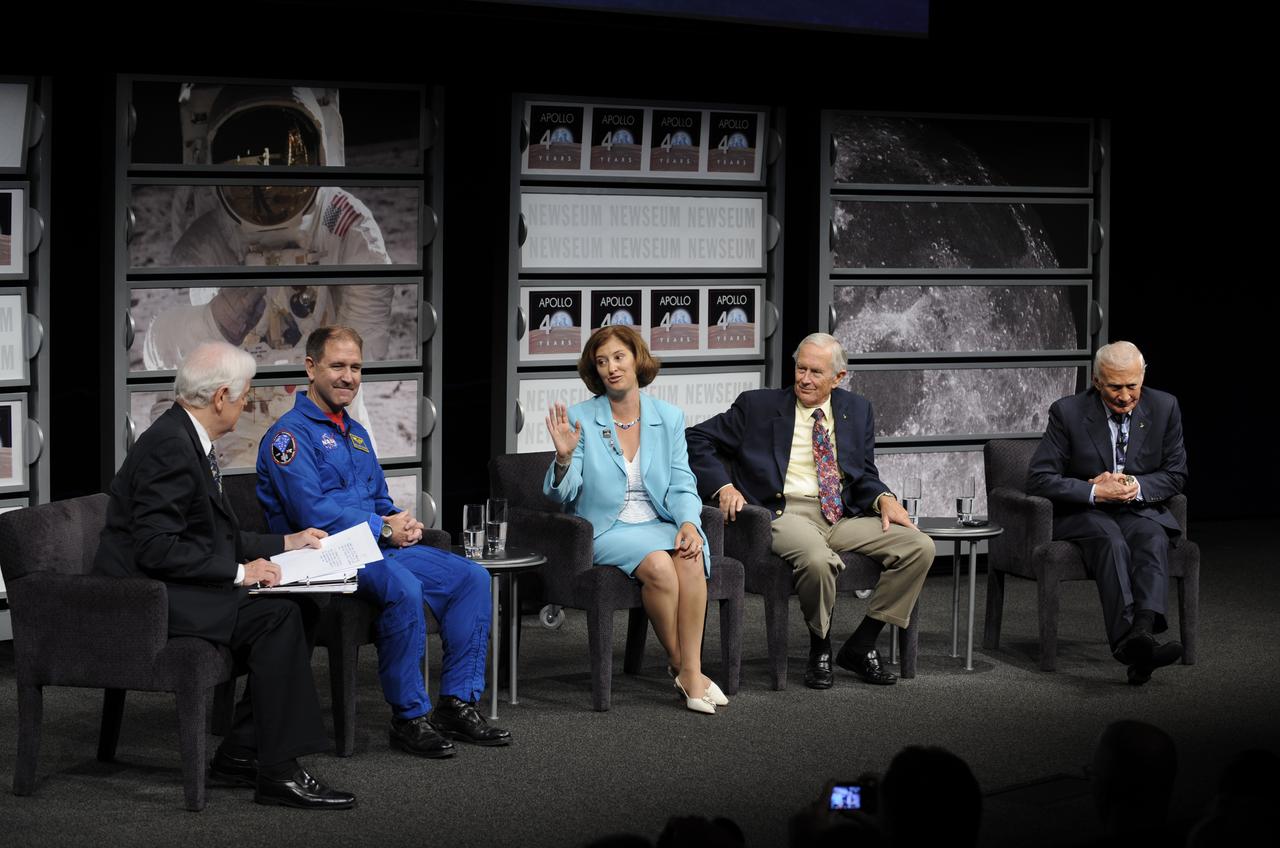
Veteran journalist Nick Clooney, seated left, moderated a panel discussion with Apollo 11 astronaut Buzz Aldrin, far right, Charlie Duke of Apollo 16, John Grunsfeld, of the recent Hubble mission, and Goddard Space Flight Center deputy director Laurie Leshin, Monday, July 20, 2009, at the Newseum in Washington as part of the commemoration of the 40th Anniversary of the Apollo 11 moon landing. Photo Credit: (NASA/Bill Ingalls)
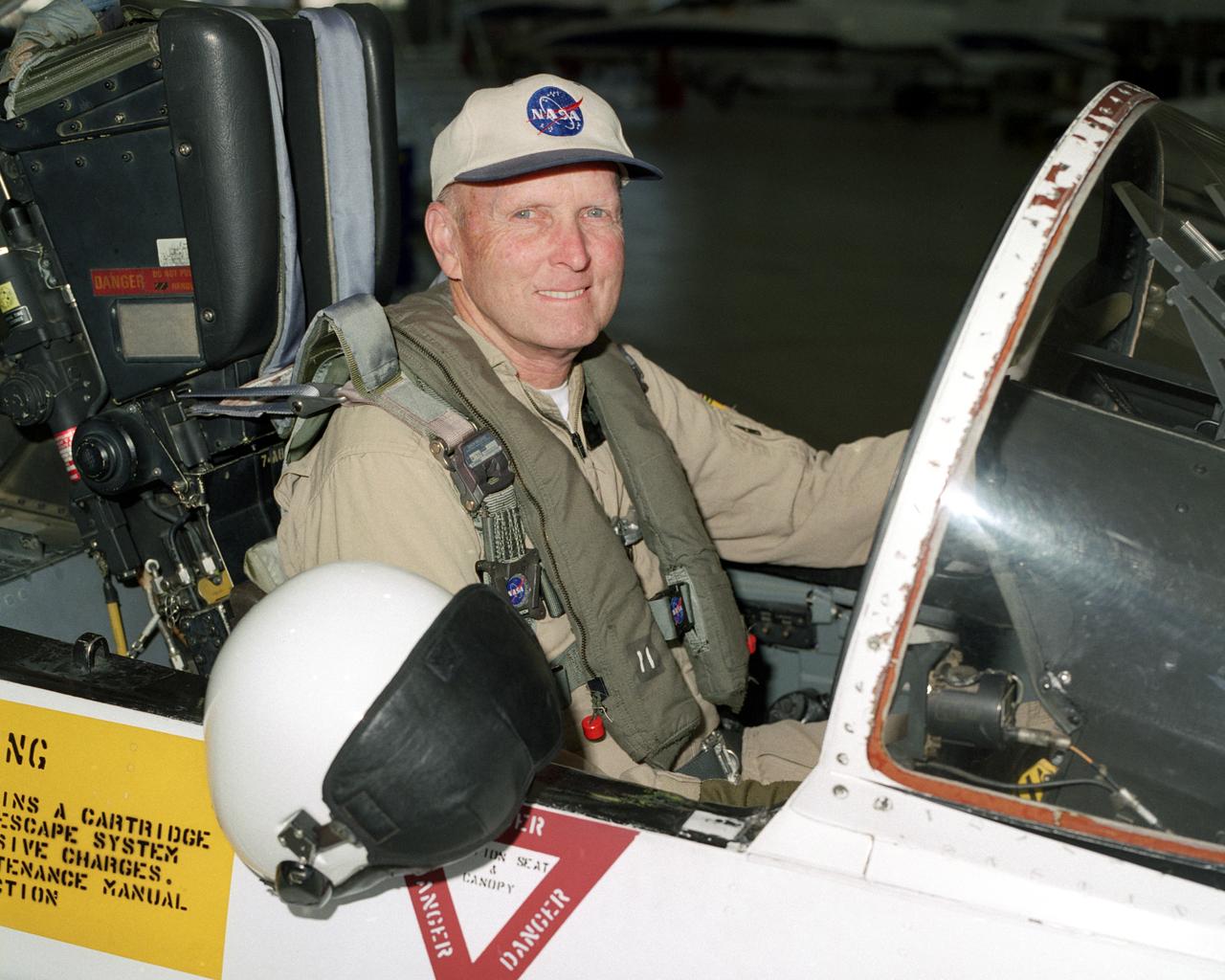
Former NASA astronaut C. Gordon Fullerton, seated in the cockpit of an F/A-18, is a research pilot at NASA's Dryden Flight Research Center, Edwards, Calif. Since transferring to Dryden in 1986, his assignments have included a variety of flight research and support activities piloting NASA's B-52 launch aircraft, the 747 Shuttle Carrier Aircraft (SCA), and other multi-engine and high performance aircraft. He flew a series of development air launches of the X-38 prototype Crew Return Vehicle and in the launches for the X-43A Hyper-X project. Fullerton also flies Dryden's DC-8 Airborne Science aircraft in support a variety of atmospheric physics, ground mapping and meteorology studies. Fullerton also was project pilot on the Propulsion Controlled Aircraft program, during which he successfully landed both a modified F-15 and an MD-11 transport with all control surfaces neutralized, using only engine thrust modulation for control. Fullerton also evaluated the flying qualities of the Russian Tu-144 supersonic transport during two flights in 1998, one of only two non-Russian pilots to fly that aircraft. With more than 15,000 hours of flying time, Fullerton has piloted 135 different types of aircraft in his career. As an astronaut, Fullerton served on the support crews for the Apollo 14, 15, 16, and 17 lunar missions. In 1977, Fullerton was on one of the two flight crews that piloted the Space Shuttle prototype Enterprise during the Approach and Landing Test Program at Dryden. Fullerton was the pilot on the STS-3 Space Shuttle orbital flight test mission in 1982, and commanded the STS-51F Spacelab 2 mission in 1985. He has logged 382 hours in space flight. In July 1988, he completed a 30-year career with the U.S. Air Force and retired as a colonel.

In May 2014, two new studies concluded that a section of the land-based West Antarctic ice sheet had reached a point of inevitable collapse. Meanwhile, fresh observations from September 2014 showed sea ice around Antarctica had reached its greatest extent since the late 1970s. To better understand such dynamic and dramatic differences in the region's land and sea ice, researchers are travelling south to Antarctica this month for the sixth campaign of NASA’s Operation IceBridge. The airborne campaign, which also flies each year over Greenland, makes annual surveys of the ice with instrumented research aircraft. Instruments range from lasers that map the elevation of the ice surface, radars that "see" below it, and downward looking cameras to provide a natural-color perspective. The Digital Mapping System (DMS) camera acquired the above photo during the mission’s first science flight on October 16, 2009. At the time of the image, the DC-8 aircraft was flying at an altitude of 515 meters (1,700 feet) over heavily compacted first-year sea ice along the edge of the Amundsen Sea. Since that first flight, much has been gleaned from IceBridge data. For example, images from an IceBridge flight in October 2011 revealed a massive crack running about 29 kilometers (18 miles) across the floating tongue of Antarctica's Pine Island Glacier. The crack ultimately led to a 725-square-kilometer (280-square-mile) iceberg. In 2012, IceBridge data was a key part of a new map of Antarctica called Bedmap2. By combining surface elevation, ice thickness, and bedrock topography, Bedmap2 gives a clearer picture of Antarctica from the ice surface down to the land surface. Discoveries have been made in Greenland, too, including the identification of a 740-kilometer-long (460-mile-long) mega canyon below the ice sheet. Repeated measurements of land and sea ice from aircraft extend the record of observations once made by NASA’s Ice, Cloud, and Land Elevation Satellite, or ICESat, which stopped functioning in 2009. In addition to extending the ICESat record, IceBridge also sets the stage for ICESat-2, which is scheduled for launch in 2017. Credit: IceBridge DMS L0 Raw Imagery courtesy of the Digital Mapping System (DMS) team/NASA DAAC at the National Snow and Ice Data Center More info: <a href="http://earthobservatory.nasa.gov/IOTD/view.php?id=84549" rel="nofollow">earthobservatory.nasa.gov/IOTD/view.php?id=84549</a> <a href="http://earthobservatory.nasa.gov/IOTD/view.php?id=84549" rel="nofollow">earthobservatory.nasa.gov/IOTD/view.php?id=84549</a>
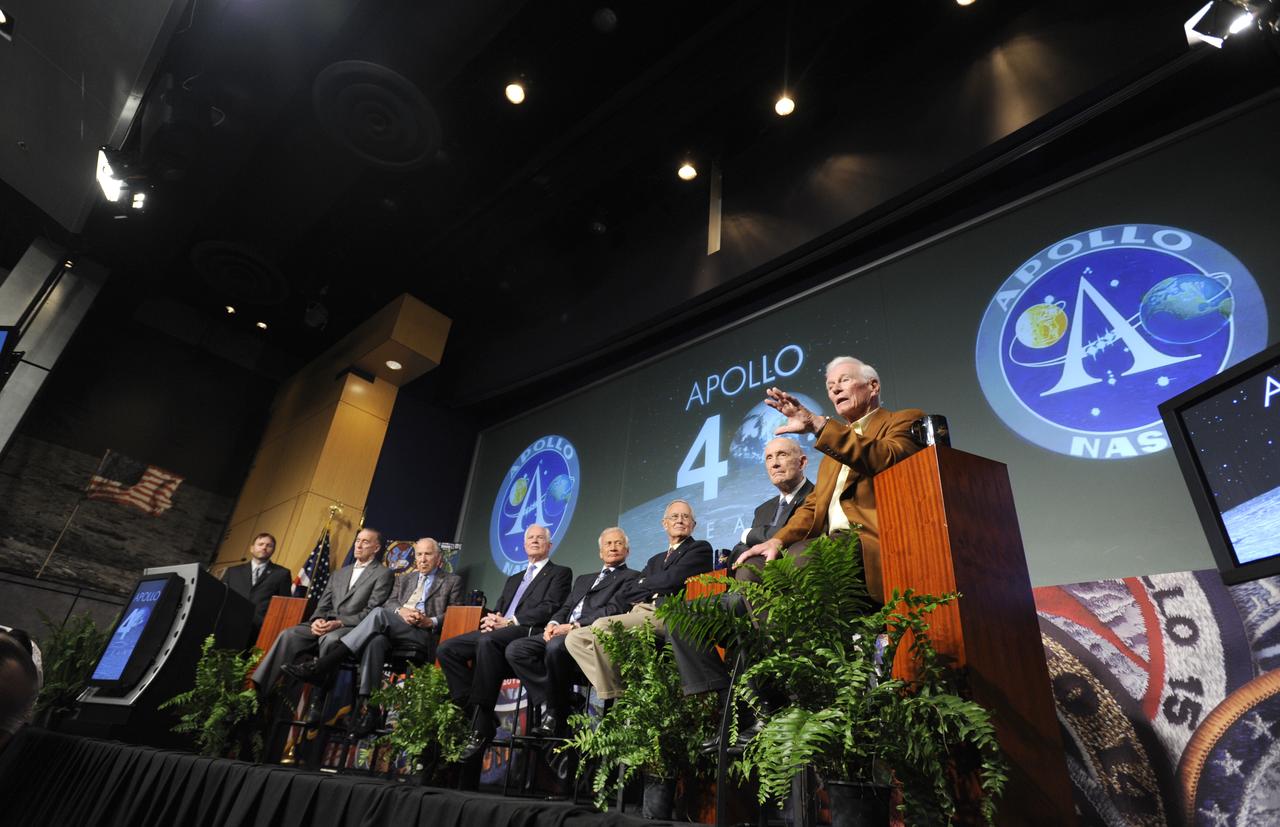
Apollo astronauts from left, Walt Cunningham (Apollo 17), James Lovell (Apollo 8 Apollo 13), David Scott (Apollo 9 Apollo 15), Buzz Aldrin (Apollo 11), Charles Duke (Apollo 16), Thomas Stafford (Apollo 10) and Eugene Cernan (Apollo 17) are seen during the 40th anniversary of the Apollo 11 mission and the walk on the moon press conference, Monday, July 20, 2009, at NASA Headquarters in Washington. Photo Credit: (NASA/Paul E. Alers)
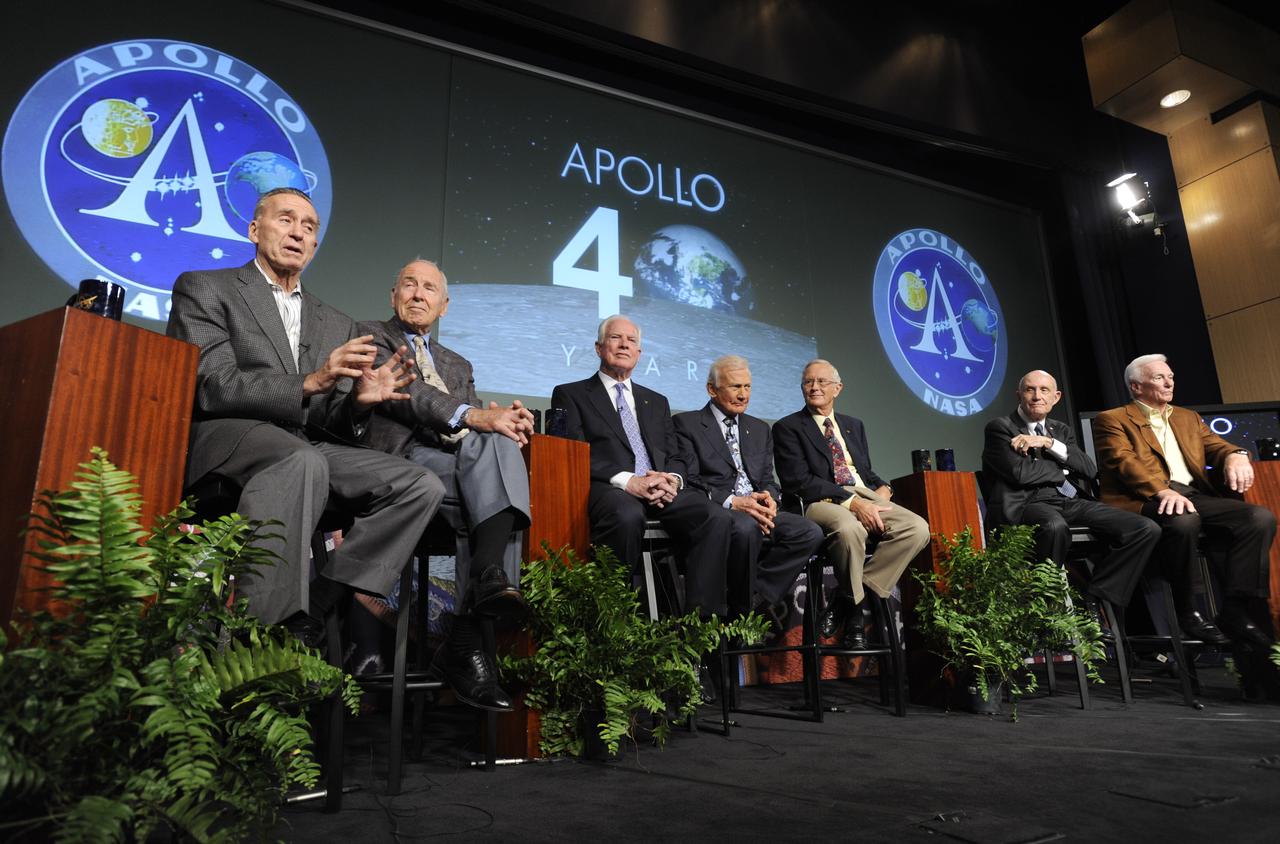
Apollo astronauts from left, Walt Cunningham (Apollo 17), James Lovell (Apollo 8 Apollo 13), David Scott (Apollo 9 Apollo 15), Buzz Aldrin (Apollo 11), Charles Duke (Apollo 16), Thomas Stafford (Apollo 10) and Eugene Cernan (Apollo 17) are seen during the 40th anniversary of the Apollo 11 mission and the walk on the moon press conference, Monday, July 20, 2009, at NASA Headquarters in Washington. Photo Credit: (NASA/Paul E. Alers)

Apollo astronauts from left, Walt Cunningham (Apollo 17), James Lovell (Apollo 8 Apollo 13), David Scott (Apollo 9 Apollo 15), Buzz Aldrin (Apollo 11), Charles Duke (Apollo 16), Thomas Stafford (Apollo 10) and Eugene Cernan (Apollo 17) are seen during the 40th anniversary of the Apollo 11 mission and the walk on the moon press conference, Monday, July 20, 2009, at NASA Headquarters in Washington. Photo Credit: (NASA/Paul E. Alers)