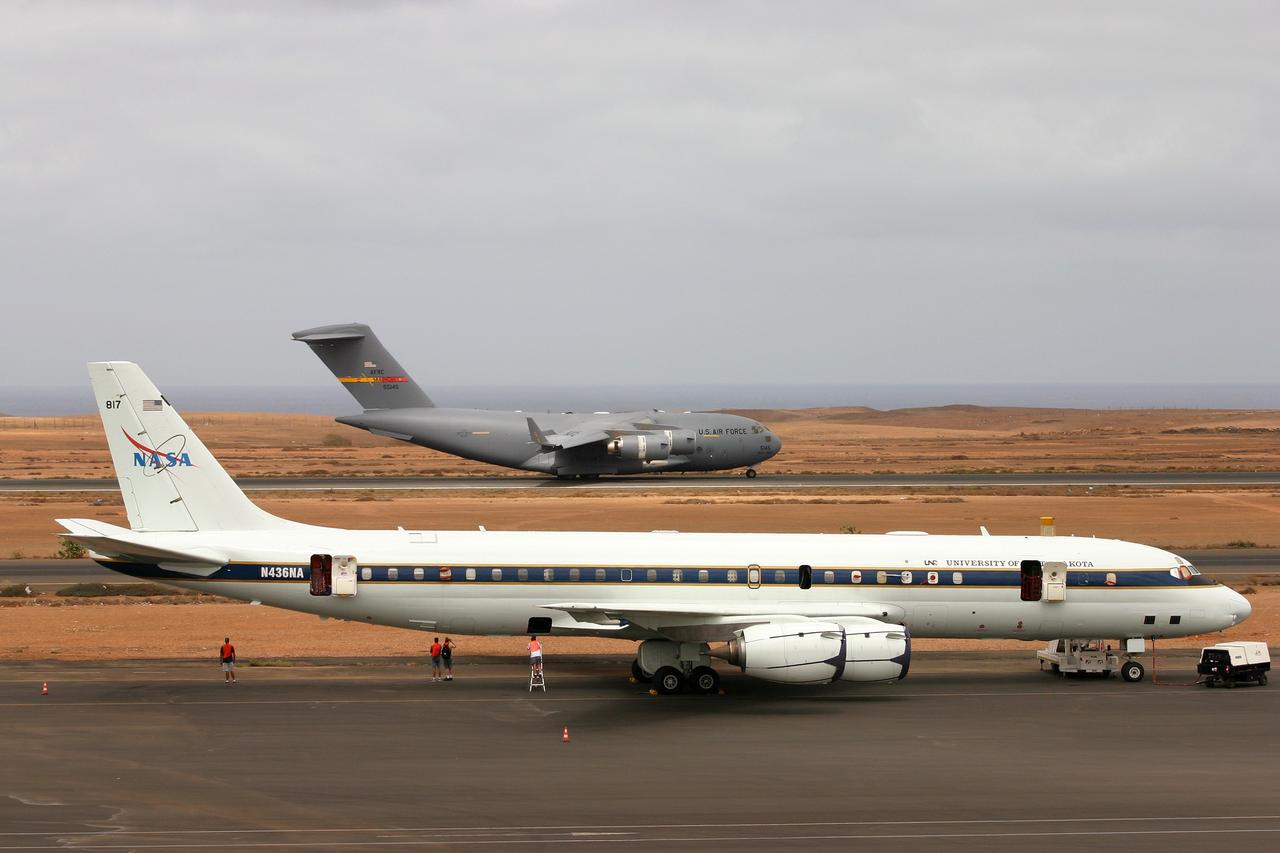
DC-8 NAMMA MISSION TO CAPE VERDE, AFRICA: U.S. Air Force C-17, Spirit of Ronald Reagan, lands at Sal Island's Amilcar Cabral International Airport carrying equipment and supplies for the mission, NASA DC-8 in foreground.
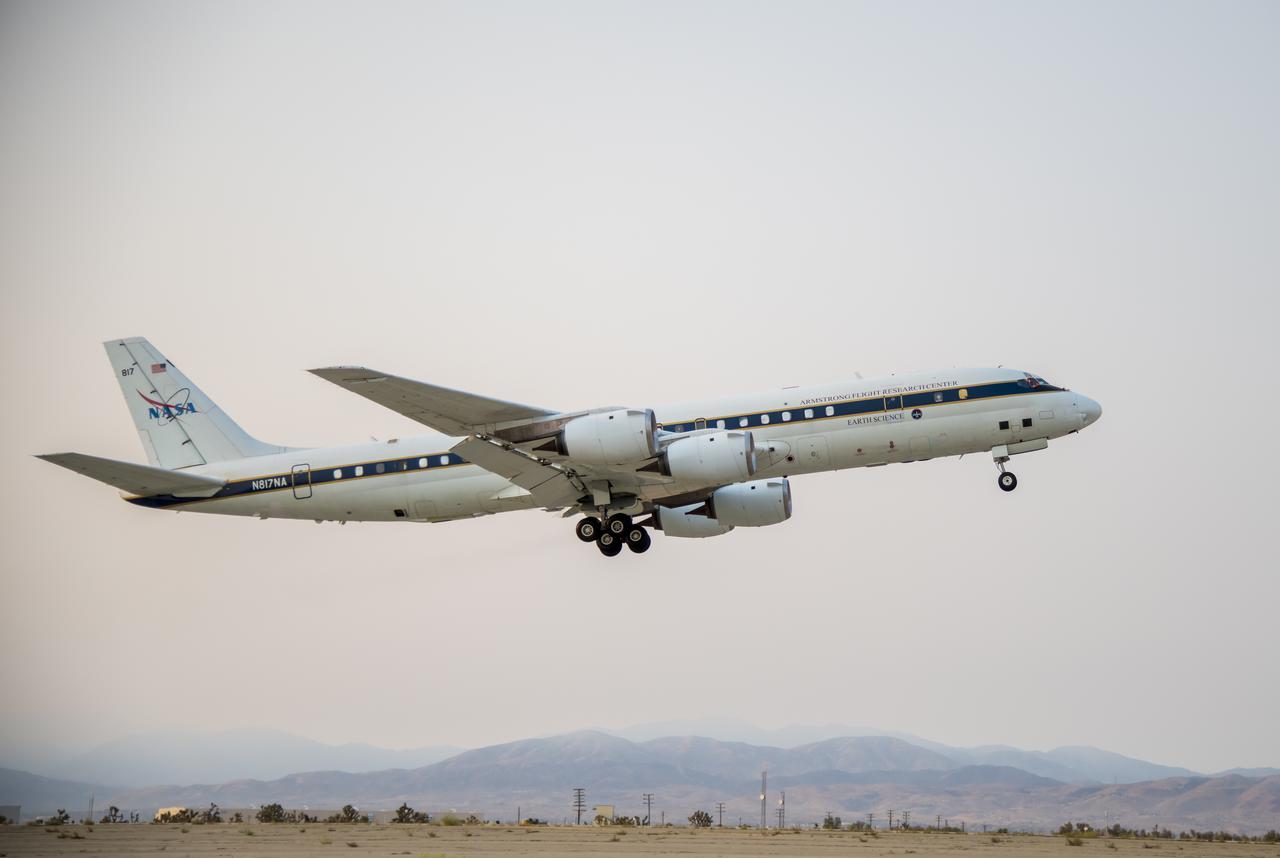
NASA's DC-8 taking off to St. Croix in support of the Convective Processes Experiment - Aerosols and Winds campaign (CPEX-AW) on Aug 17, 2021.
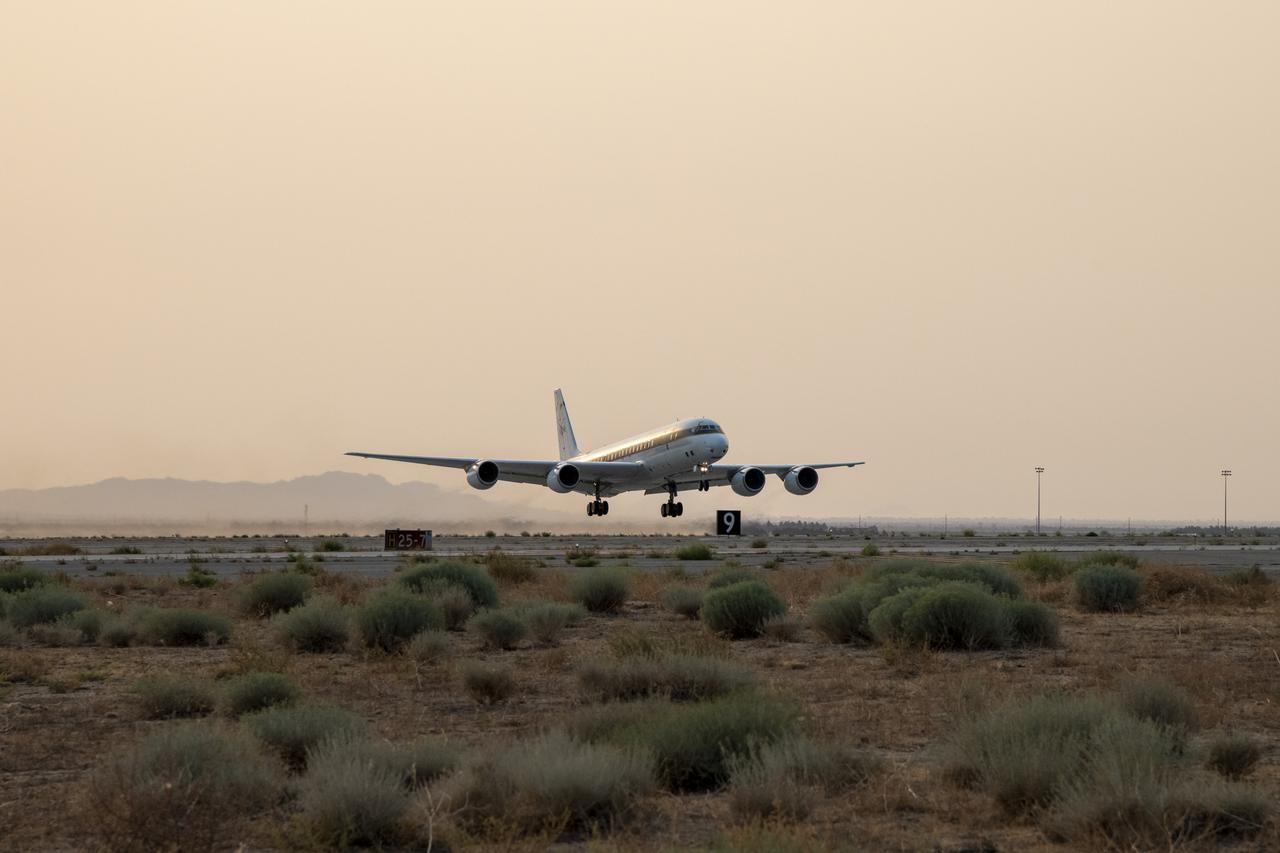
NASA's DC-8 taking off to St. Croix in support of the Convective Processes Experiment - Aerosols and Winds campaign (CPEX-AW) on Aug 17, 2021.
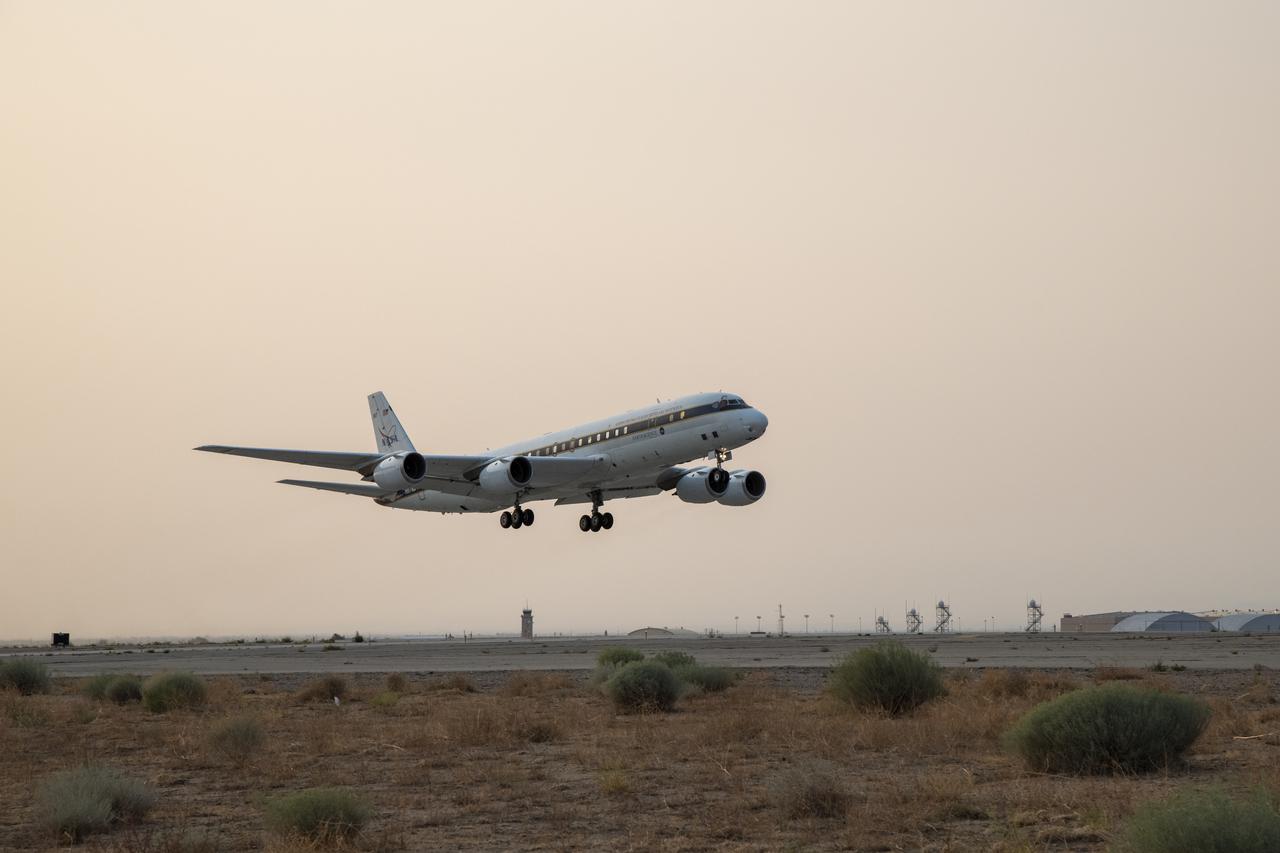
NASA’s DC-8 taking off to St. Croix in support of the Convective Processes Experiment – Aerosols and Winds campaign (CPEX-AW) on Aug 17, 2021.
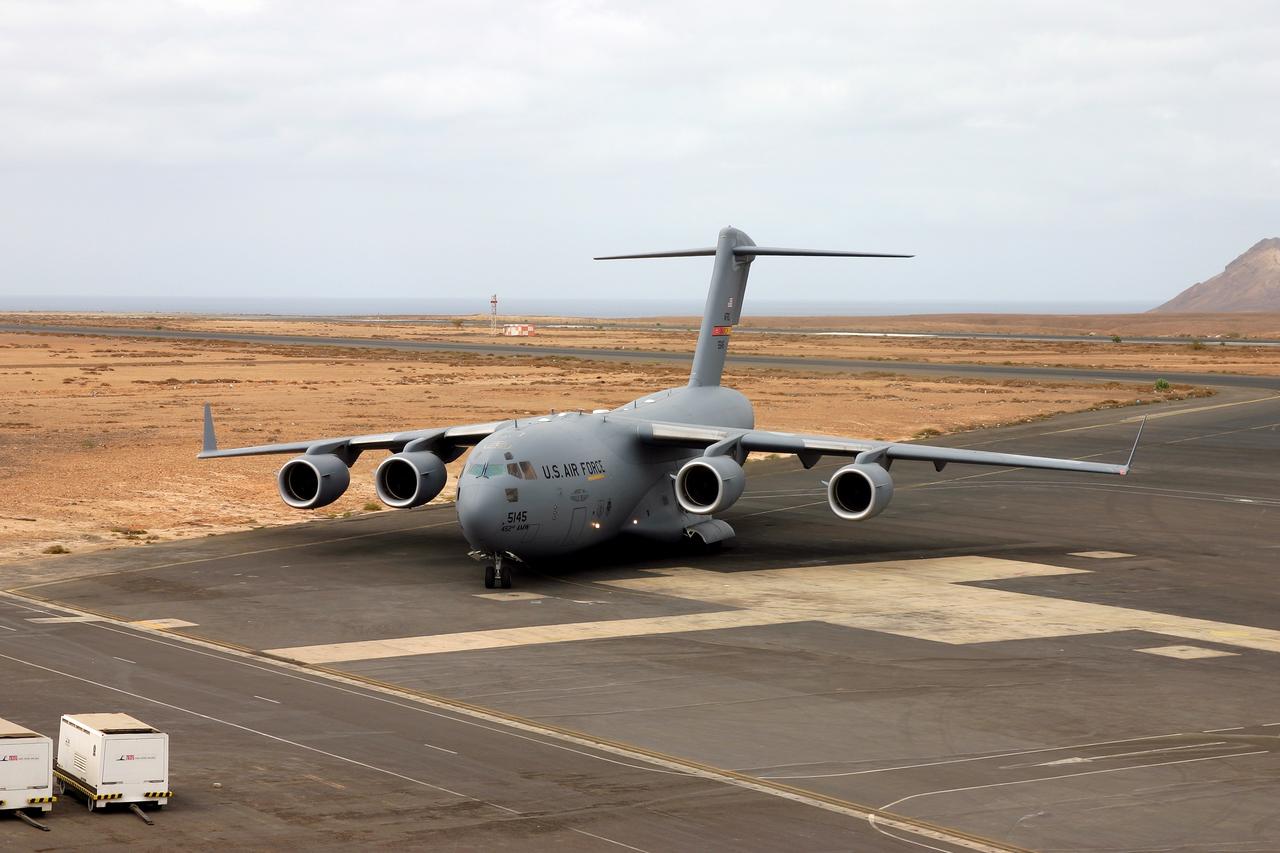
DC-8 NAMMA MISSION TO CAPE VERDE, AFRICA: U.S. Air Force C-17, Spirit of Ronald Reagan, taxis after landing at Sal Island's Amilcar Cabral International Airport carrying equipment and supplies for the mission
NASA African Monsoon Multidisciplinary Analyses (NAMMA) DC-8 deployment to Cape Verde, Sal island, Africa

NASA Administrator Bill Nelson is seen as he testifies before the House Appropriations Committee’s Commerce, Justice, Science, and Related Agencies Subcommittee, during a hearing on the fiscal year 2025 budget request, Wednesday, April 17, 2024 at the Rayburn House Office Building in Washington, DC. Photo Credit: (NASA/Joel Kowsky)

NASA Administrator Bill Nelson is seen as he testifies before the House Appropriations Committee’s Commerce, Justice, Science, and Related Agencies Subcommittee, during a hearing on the fiscal year 2025 budget request, Wednesday, April 17, 2024 at the Rayburn House Office Building in Washington, DC. Photo Credit: (NASA/Joel Kowsky)

NASA Administrator Bill Nelson is seen as he testifies before the House Appropriations Committee’s Commerce, Justice, Science, and Related Agencies Subcommittee, during a hearing on the fiscal year 2025 budget request, Wednesday, April 17, 2024 at the Rayburn House Office Building in Washington, DC. Photo Credit: (NASA/Joel Kowsky)

NASA Administrator Bill Nelson is seen as he testifies before the House Appropriations Committee’s Commerce, Justice, Science, and Related Agencies Subcommittee, during a hearing on the fiscal year 2025 budget request, Wednesday, April 17, 2024 at the Rayburn House Office Building in Washington, DC. Photo Credit: (NASA/Joel Kowsky)

NASA Administrator Bill Nelson is seen as he testifies before the House Appropriations Committee’s Commerce, Justice, Science, and Related Agencies Subcommittee, during a hearing on the fiscal year 2025 budget request, Wednesday, April 17, 2024 at the Rayburn House Office Building in Washington, DC. Photo Credit: (NASA/Joel Kowsky)

NASA Administrator Bill Nelson is seen as he testifies before the House Appropriations Committee’s Commerce, Justice, Science, and Related Agencies Subcommittee, during a hearing on the fiscal year 2025 budget request, Wednesday, April 17, 2024 at the Rayburn House Office Building in Washington, DC. Photo Credit: (NASA/Joel Kowsky)

NASA Administrator Bill Nelson is seen as he testifies before the House Appropriations Committee’s Commerce, Justice, Science, and Related Agencies Subcommittee, during a hearing on the fiscal year 2025 budget request, Wednesday, April 17, 2024 at the Rayburn House Office Building in Washington, DC. Photo Credit: (NASA/Joel Kowsky)
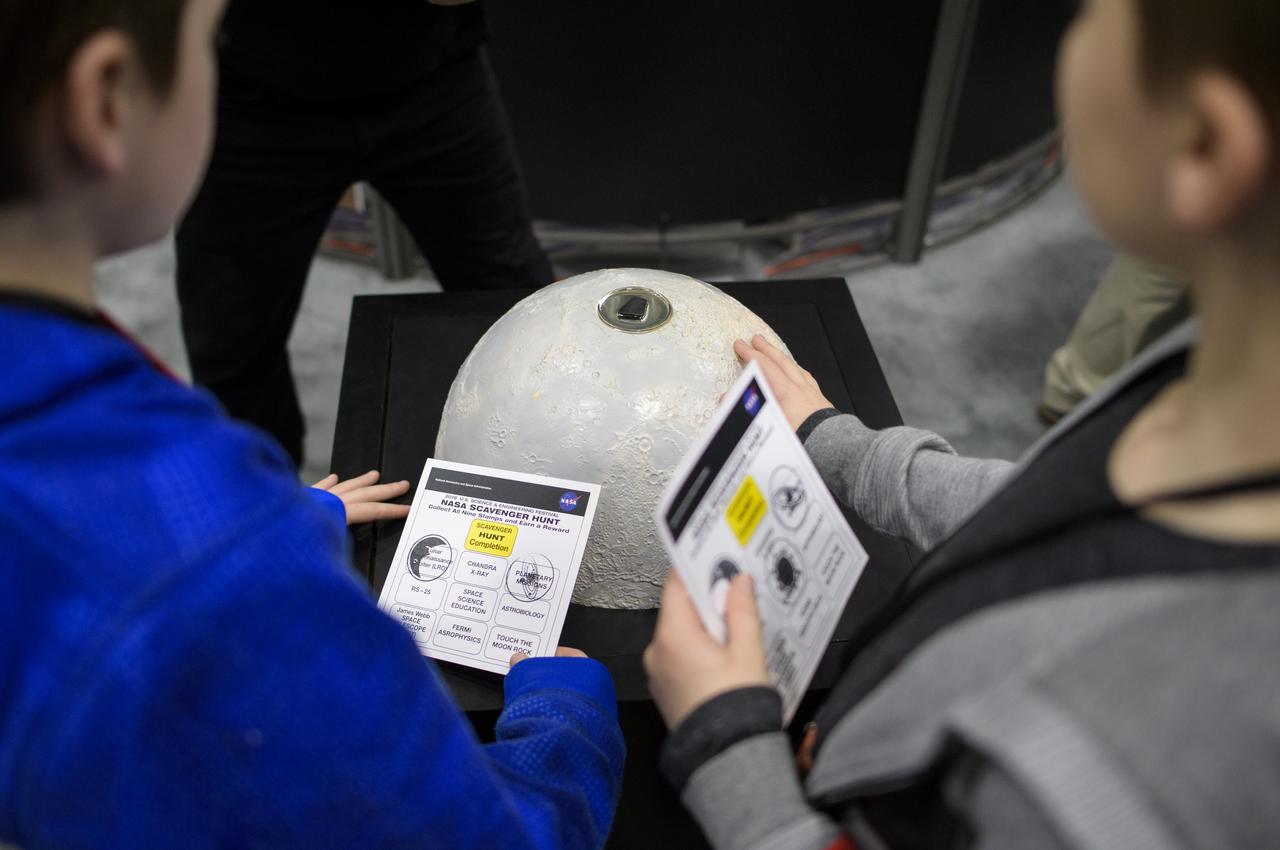
Attendees view a Moon rock that was returned by the Apollo 17 mission during Sneak Peek Friday at the USA Science and Engineering Festival, Friday, April 6, 2018 at the Walter E. Washington Convention Center in Washington, DC. The festival is open to the public April 7-8. Photo Credit: (NASA/Joel Kowsky)

NASA Administrator Bill Nelson is seen as he testifies before the House Appropriations Committee’s Commerce, Justice, Science, and Related Agencies Subcommittee, during a hearing on the fiscal year 2025 budget request, Wednesday, April 17, 2024 at the Rayburn House Office Building in Washington, DC. Photo Credit: (NASA/Joel Kowsky)

NASA Administrator Bill Nelson is seen as he testifies before the House Appropriations Committee’s Commerce, Justice, Science, and Related Agencies Subcommittee, during a hearing on the fiscal year 2025 budget request, Wednesday, April 17, 2024 at the Rayburn House Office Building in Washington, DC. Photo Credit: (NASA/Joel Kowsky)

NASA Administrator Bill Nelson is seen as he testifies before the House Appropriations Committee’s Commerce, Justice, Science, and Related Agencies Subcommittee, during a hearing on the fiscal year 2025 budget request, Wednesday, April 17, 2024 at the Rayburn House Office Building in Washington, DC. Photo Credit: (NASA/Joel Kowsky)

NASA Administrator Bill Nelson is seen as he testifies before the House Appropriations Committee’s Commerce, Justice, Science, and Related Agencies Subcommittee, during a hearing on the fiscal year 2025 budget request, Wednesday, April 17, 2024 at the Rayburn House Office Building in Washington, DC. Photo Credit: (NASA/Joel Kowsky)

NASA Administrator Bill Nelson is seen as he testifies before the House Appropriations Committee’s Commerce, Justice, Science, and Related Agencies Subcommittee, during a hearing on the fiscal year 2025 budget request, Wednesday, April 17, 2024 at the Rayburn House Office Building in Washington, DC. Photo Credit: (NASA/Joel Kowsky)

NASA Administrator Bill Nelson is seen as he testifies before the House Appropriations Committee’s Commerce, Justice, Science, and Related Agencies Subcommittee, during a hearing on the fiscal year 2025 budget request, Wednesday, April 17, 2024 at the Rayburn House Office Building in Washington, DC. Photo Credit: (NASA/Joel Kowsky)

NASA Administrator Bill Nelson is seen as he testifies before the House Appropriations Committee’s Commerce, Justice, Science, and Related Agencies Subcommittee, during a hearing on the fiscal year 2025 budget request, Wednesday, April 17, 2024 at the Rayburn House Office Building in Washington, DC. Photo Credit: (NASA/Joel Kowsky)
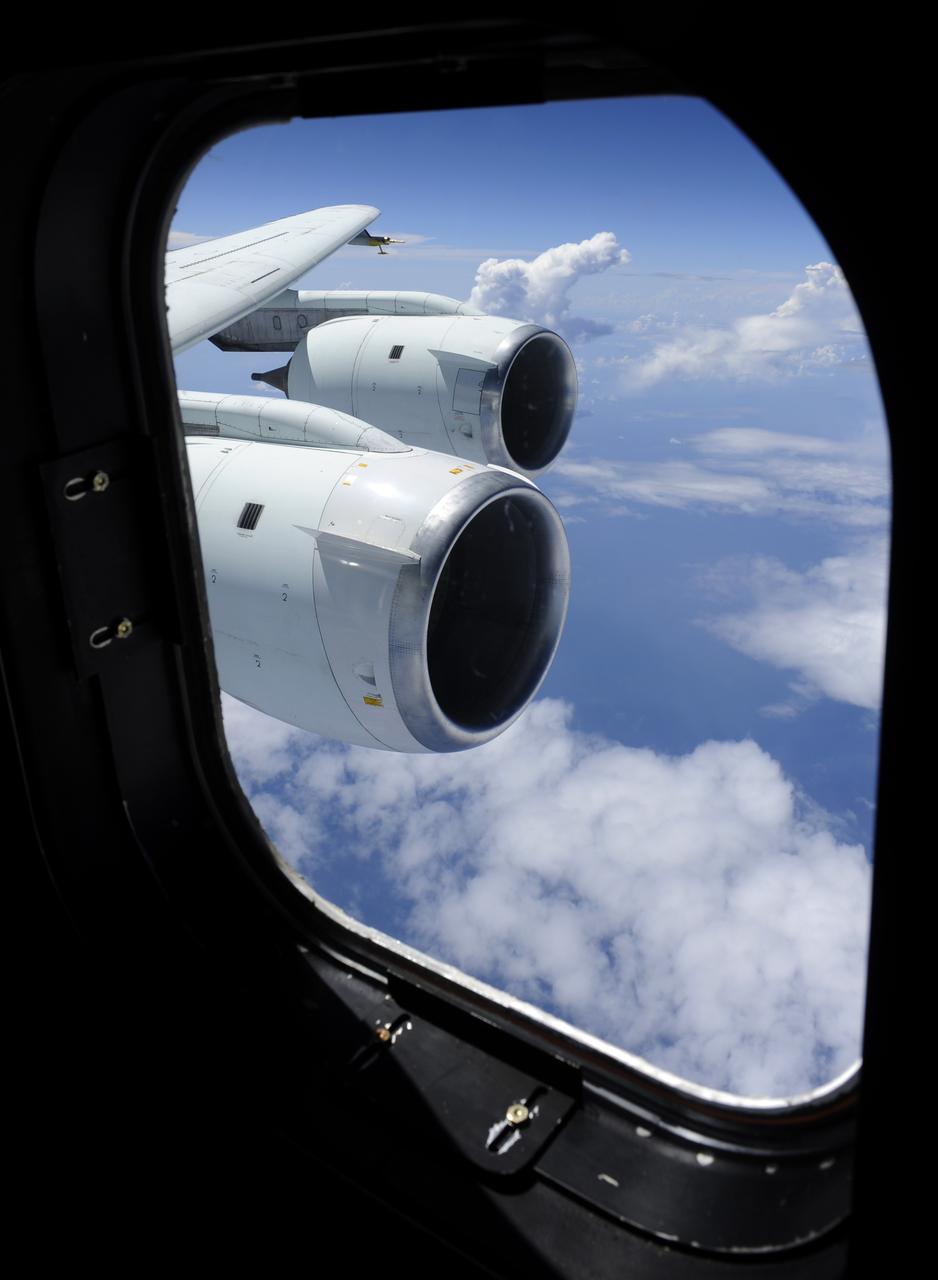
Cloud formations are seen through the window of NASA DC-8 aircraft during a flight, Tuesday, Aug. 17, 2010, over the Gulf of Mexico where researchers were studying weather patterns as part of trhe Genesis and Rapid Intensification Processes (GRIP) experiment, a NASA Earth science field experiment in 2010 that is being conducted to better understand how tropical storms form and develop into major hurricanes. Photo Credit: (NASA/Paul E. Alers)
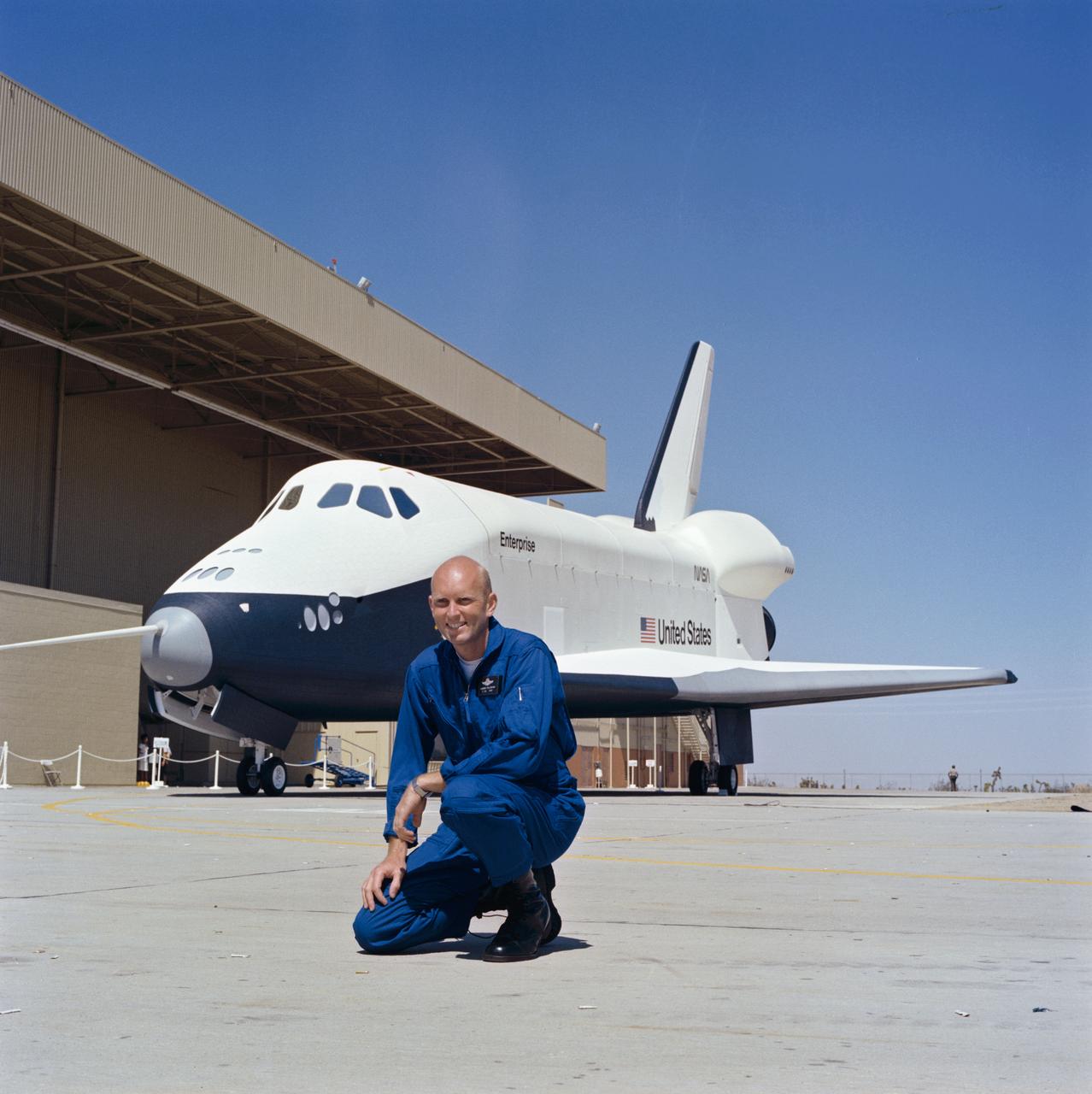
S76-29559 (17 Sept 1976) --- Astronaut C. Gordon Fullerton, pilot of the first crew for the Space Shuttle Approach and Landing Tests (ALT), is photographed at the Rockwell International Space Division's Orbiter assembly facility at Palmdale, California on the day of the rollout of the Shuttle Orbiter 101 "Enterprise" spacecraft. The DC-9 size airplane-like Orbiter 101 is in the background.

S76-29557 (17 Sept 1976) --- The two members of the first crew for the Space Shuttle Approach and Landing Tests (ALT) are photographed at the Rockwell International Space Division's Orbiter assembly facility at Palmdale, California on the day of the rollout of the Shuttle Orbiter 101 "Enterprise" spacecraft. They are Astronauts Fred W. Haise Jr. (left), commander; and C. Gordon Fullerton, pilot. The DC-9 size airplane-like Orbiter 101 is in the background.

Chairman Hal Rogers, R-Ky., delivers an opening statement before NASA Administrator Bill Nelson testifies before the House Appropriations Committee’s Commerce, Justice, Science, and Related Agencies Subcomittee, during a hearing on the fiscal year 2025 budget request, Wednesday, April 17, 2024 at the Rayburn House Office Building in Washington, DC. Photo Credit: (NASA/Joel Kowsky)
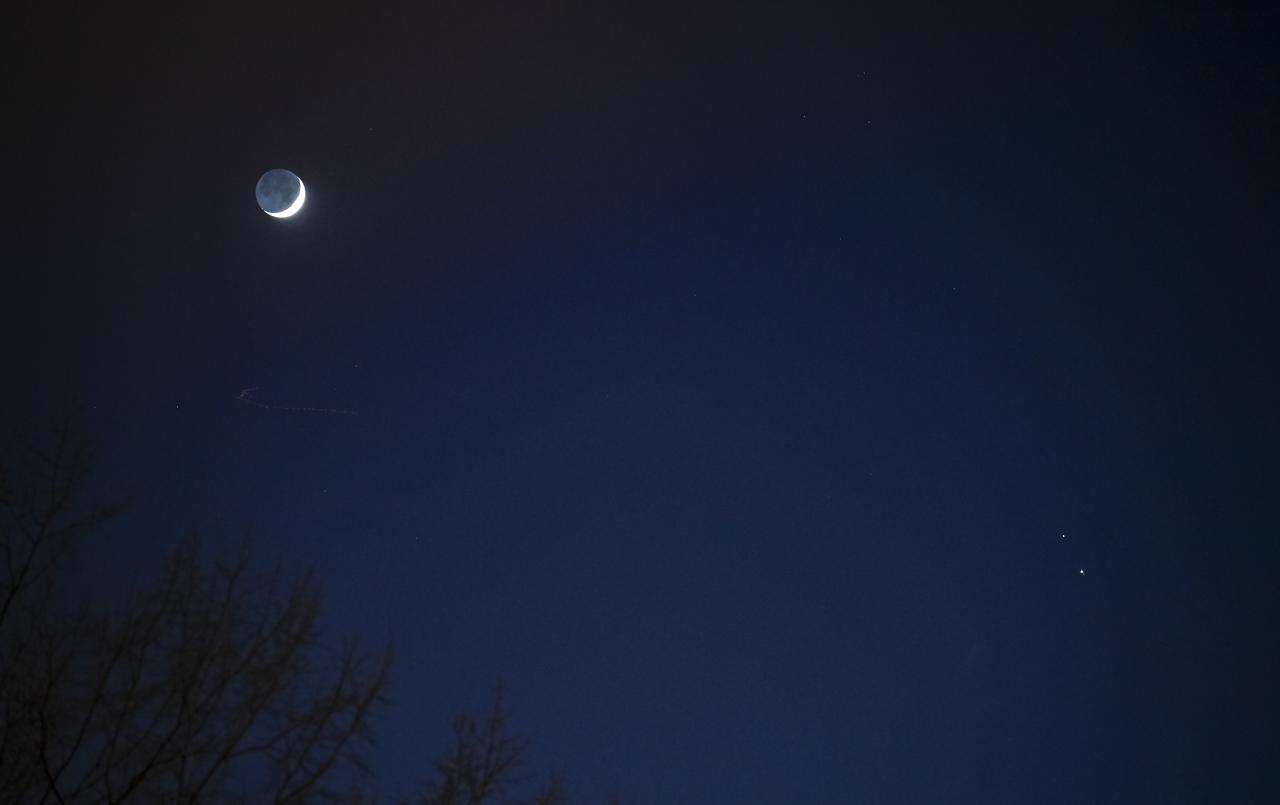
The Moon, left, Saturn, upper right, and Jupiter, lower right, are seen after sunset from Washington, DC, Thurs. Dec. 17, 2020. The two planets are drawing closer to each other in the sky as they head towards a “great conjunction” on December 21, where the two giant planets will appear a tenth of a degree apart. Photo Credit: (NASA/Aubrey Gemignani)
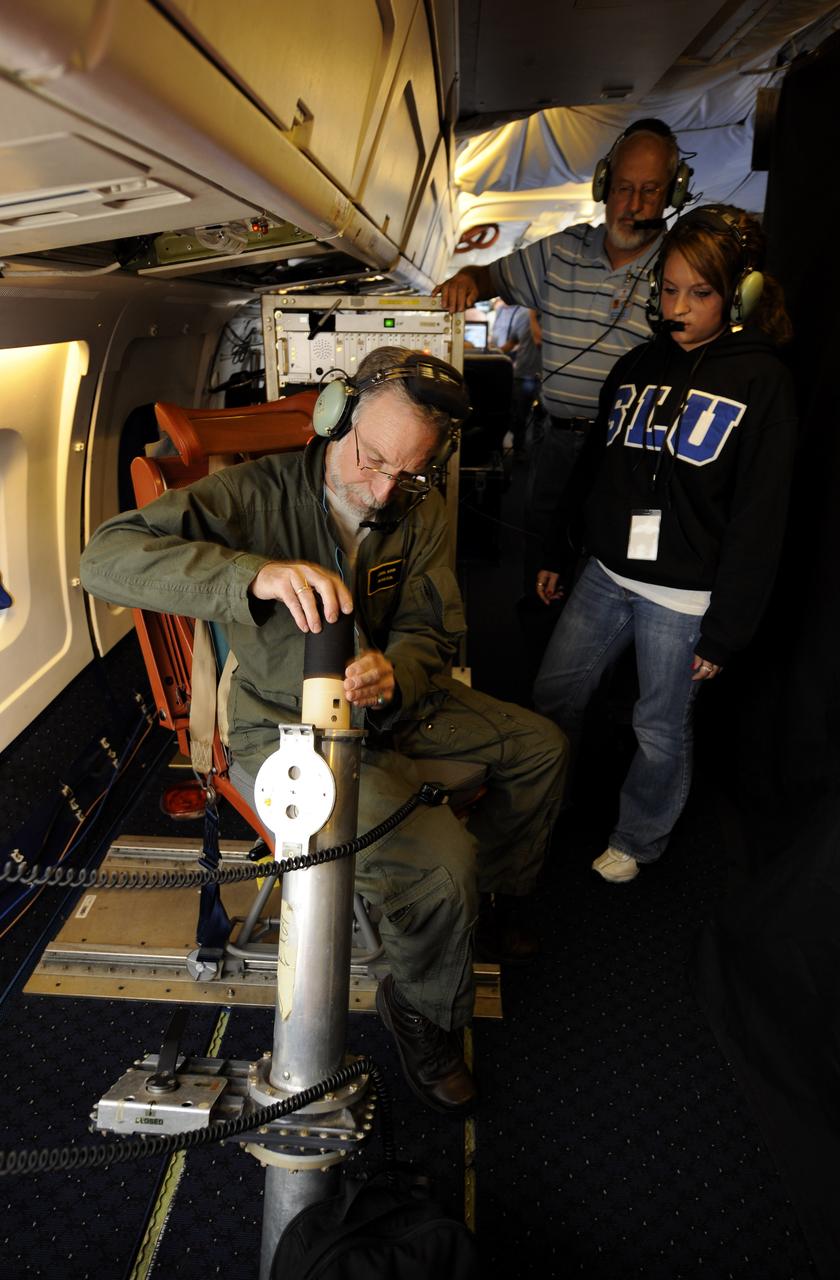
Errol Korn, seated left, deploys a dropsonde experiment over the Gulf of Mexico during a flight aboard the NASA DC-8 as Janel Thomas, a University of Maryland Baltimore County (UMBC) graduate student, and Bob Pasken, look on , Tuesday, Aug. 17, 2010. The Genesis and Rapid Intensification Processes (GRIP) experiment is a NASA Earth science field experiment in 2010 that is being conducted to better understand how tropical storms form and develop into major hurricanes. Photo Credit: (NASA/Paul E. Alers)

Ranking Member Matt Cartwright, D-Pa., delivers an opening statement before NASA Administrator Bill Nelson testifies before the House Appropriations Committee’s Commerce, Justice, Science, and Related Agencies Subcomittee, during a hearing on the fiscal year 2025 budget request, Wednesday, April 17, 2024 at the Rayburn House Office Building in Washington, DC. Photo Credit: (NASA/Joel Kowsky)
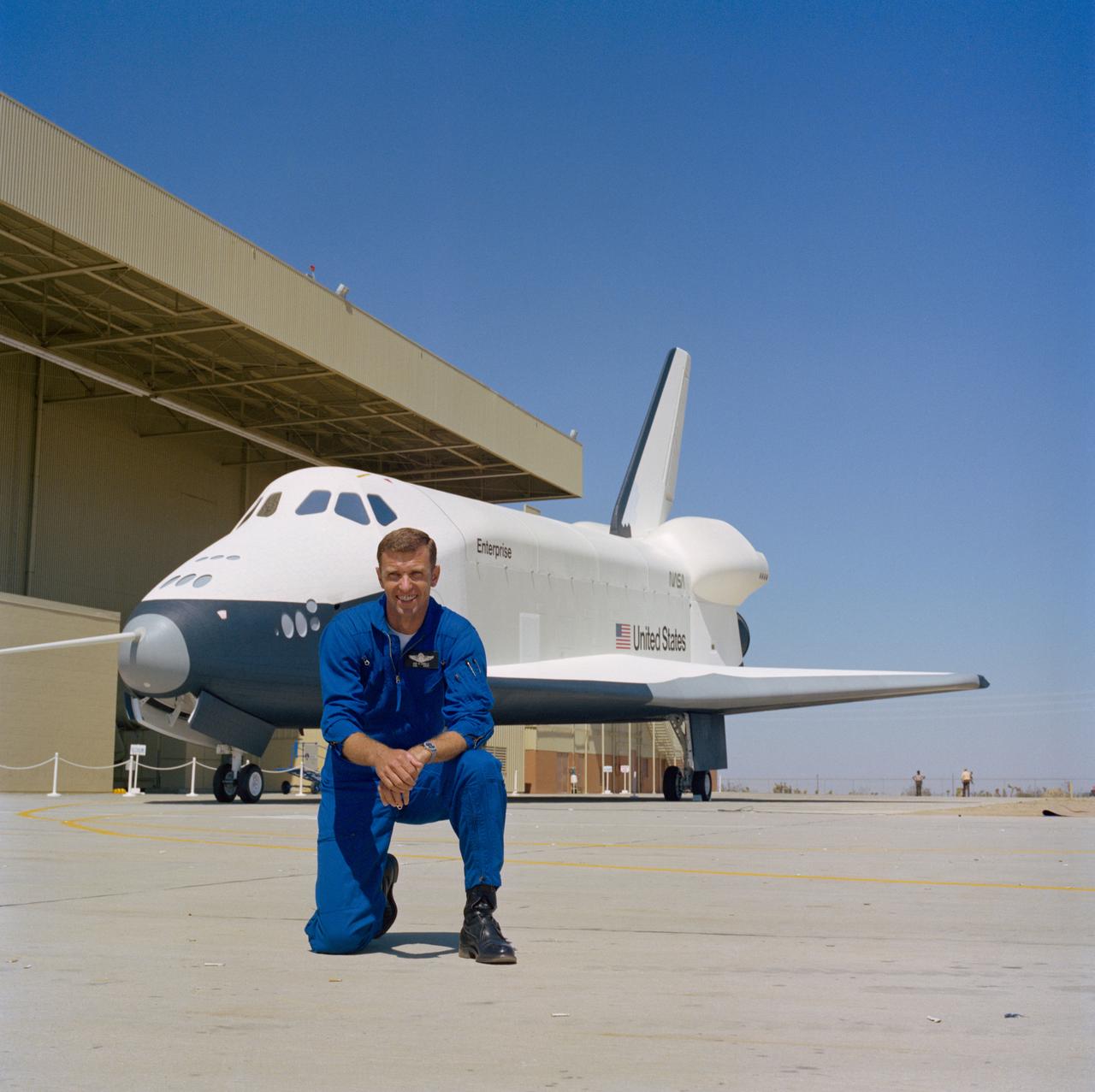
S76-29560 (17 Sept 1976) - - - Astronaut Joe H. Engle, commander of the second crew for the Space Shuttle Approach and Landing Tests (ALT), is photographed at the Rockwell International Space Division?s Orbiter assembly facility at Palmdale, California on the day of the roll out of the Space Shuttle Orbiter 101 ?Enterprise? spacecraft. The DC-size airplane-like Orbiter 101 is in the background.
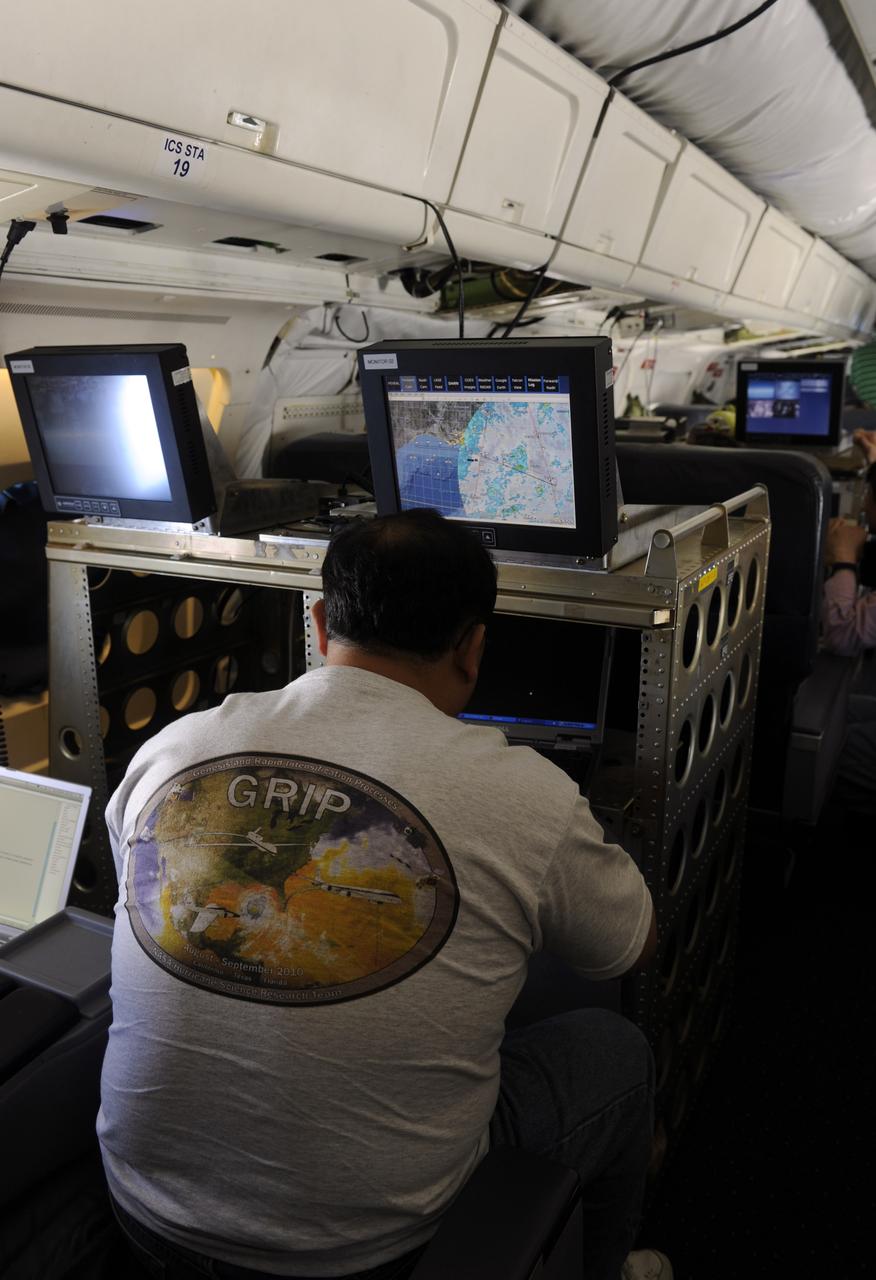
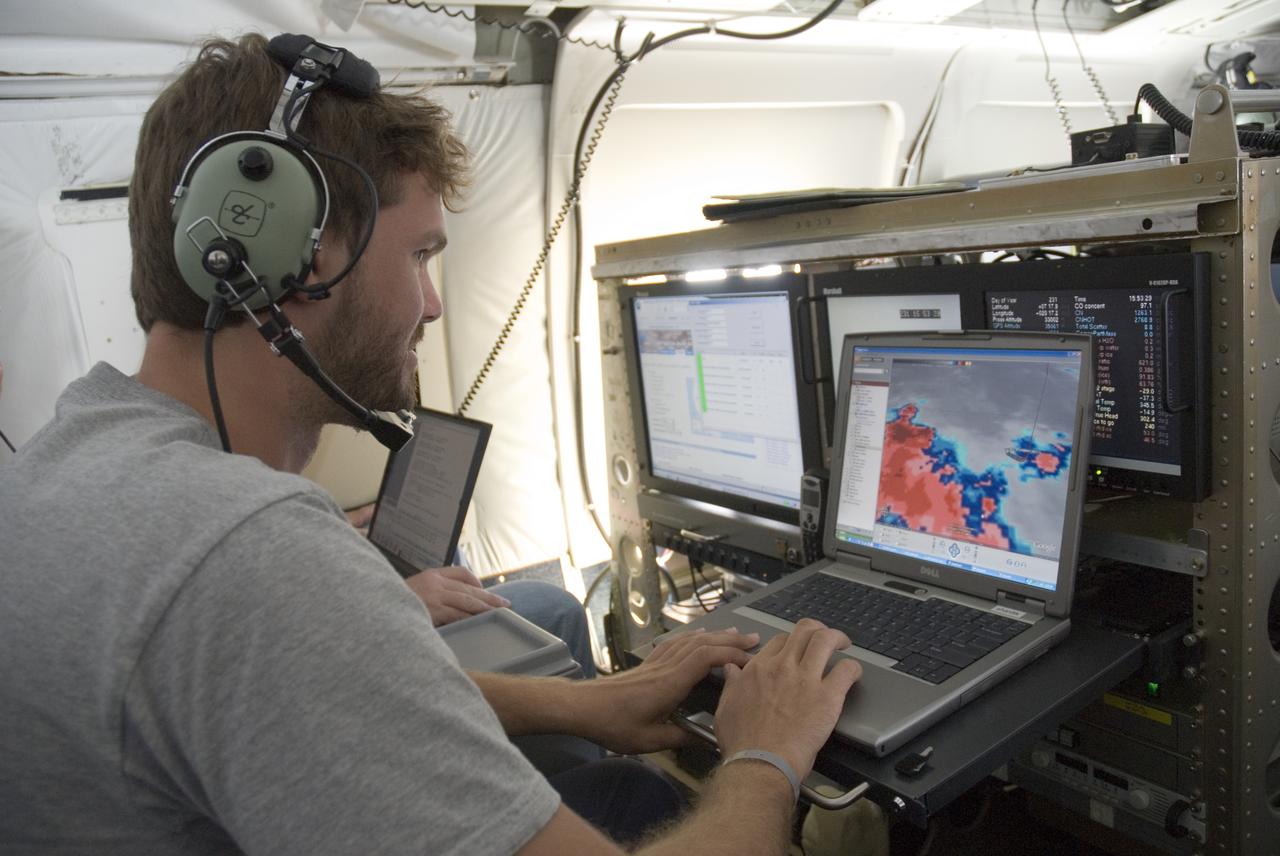
A researcher with the Genesis and Rapid Intensification Processes (GRIP) experiment works aboard the NASA DC-8 during a flight over the Gulf of Mexico, Tuesday, Aug. 17, 2010. GRIP is a NASA Earth science field experiment in 2010 that is being conducted to better understand how tropical storms form and develop into major hurricanes. Photo Credit: (NASA/Paul E. Alers)
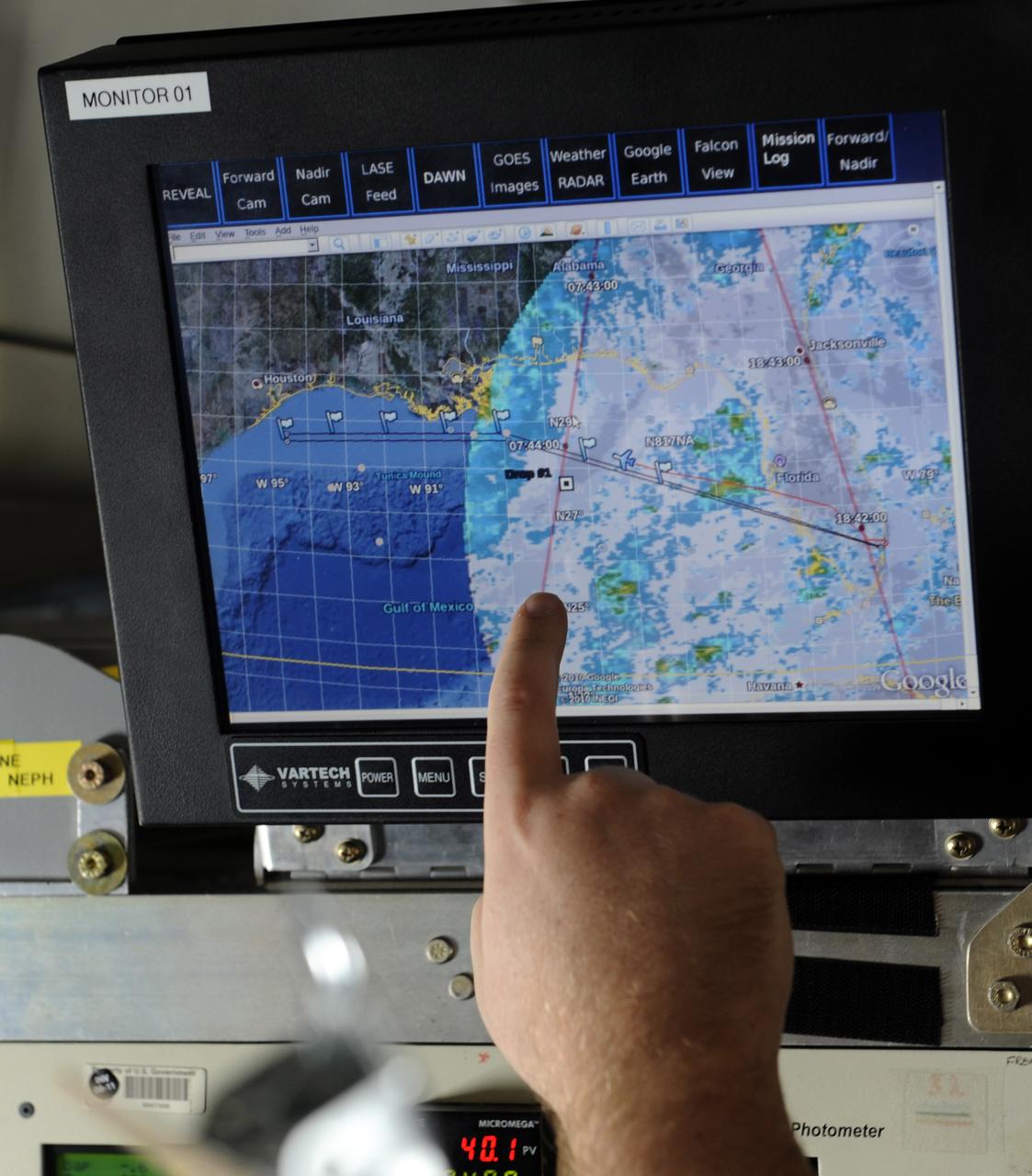
A researcher points out the trajectory of a weather pattern on a computer monitor during a flight aboard the NASA DC-8 aircraft, Tuesday, Aug. 17, 2010, over the Gulf of Mexico. Sceintists and researchers flew Tuesday to study weather as part of the Genesis and Rapid Intensification Processes (GRIP) experiment is a NASA Earth science field experiment in 2010 that is being conducted to better understand how tropical storms form and develop into major hurricanes. Photo Credit: (NASA/Paul E. Alers)
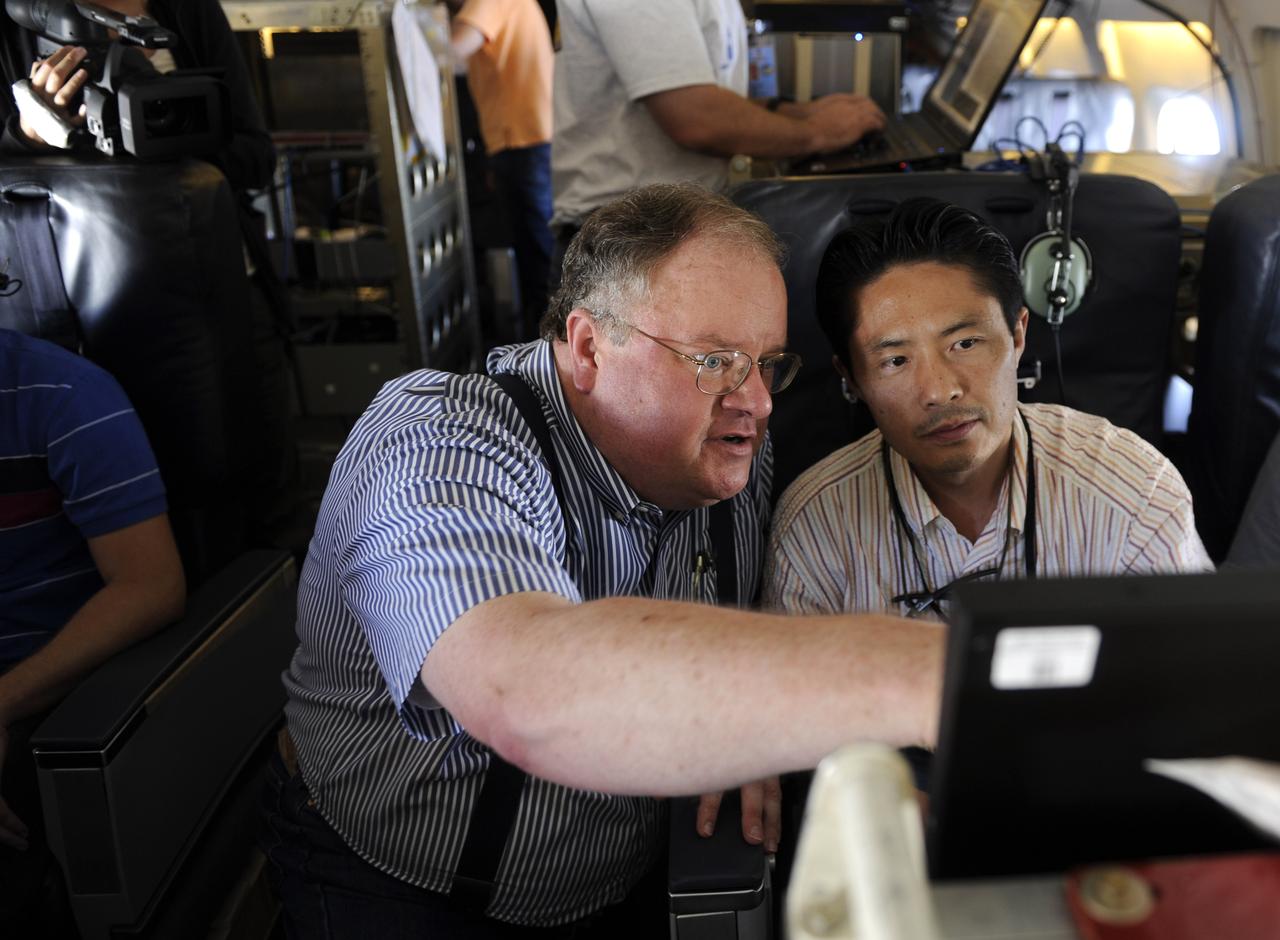
Michael Kavaya, of the NASA Langley Research Center, a Principal Investigator for the DAWN experiment, looks over data with Jeffrey Beyon during a flight of the NASA DC-8, Tuesday, Aug. 17, 2010, in the Gulf of Mexico. The DAWN experiment, also known as the Doppler Aerosol Wind Lidar, is one of many experiments supporting the Genesis and Rapid Intensification Processes (GRIP) experiment, a NASA Earth science field experiment in 2010 that is being conducted to better understand how tropical storms form and develop into major hurricanes. Photo Credit: (NASA/Paul E. Alers)
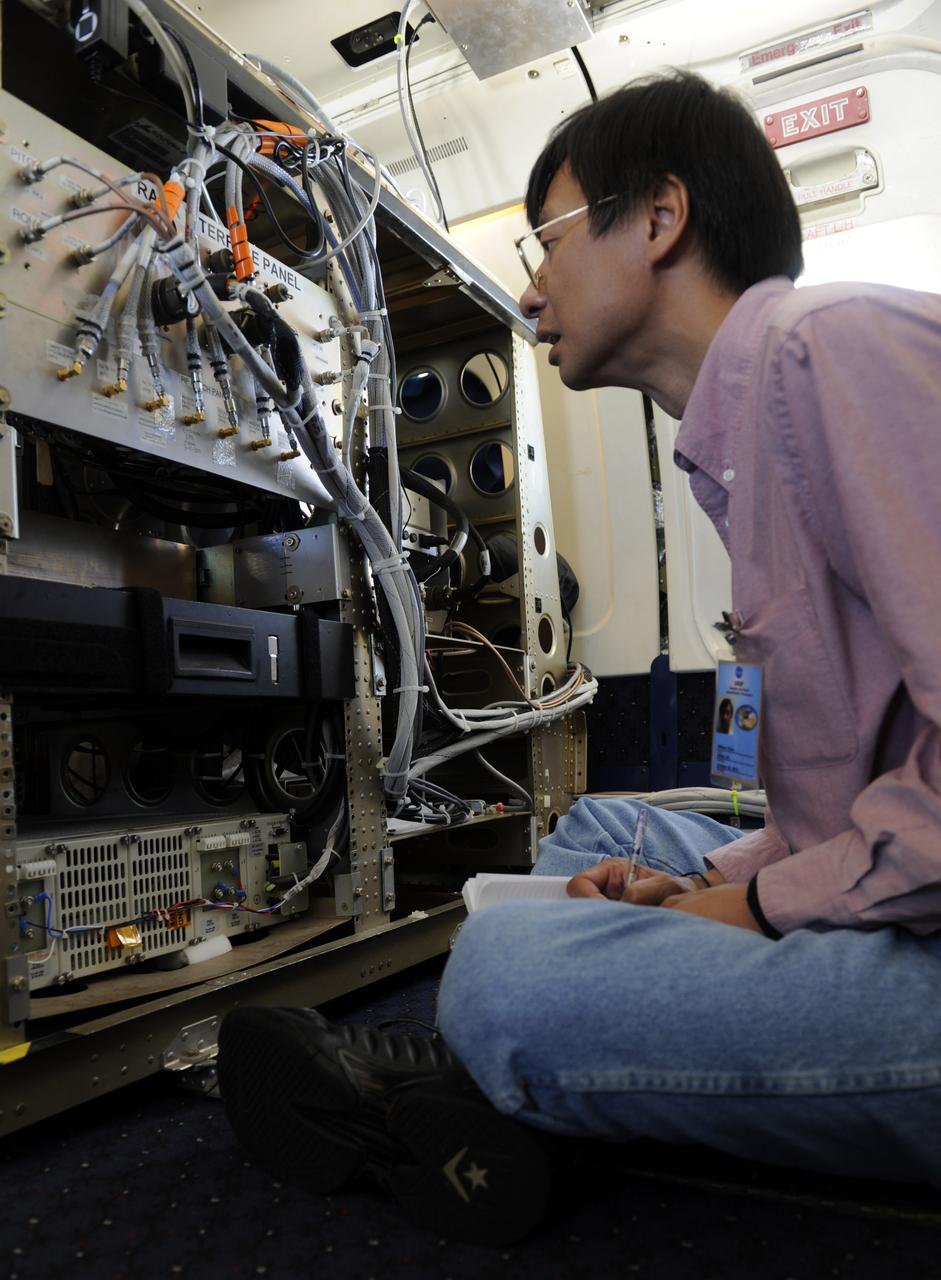
An unidentified researcher looks over the wiring connecting the Airbrorne Precipitation Radar (APR-2) during a flight aboard the NASA DC-8 aircraft, Tuesday, Aug. 17, 2010, over the Gulf of Mexico. Scientists taking part in the Genesis and Rapid Intensification Processes (GRIP) experiment, a NASA Earth science field experiment in 2010 that is being conducted to better understand how tropical storms form and develop into major hurricanes, flew out over a weather pattern Tuesday to begin their research. Photo Credit: (NASA/Paul E. Alers)
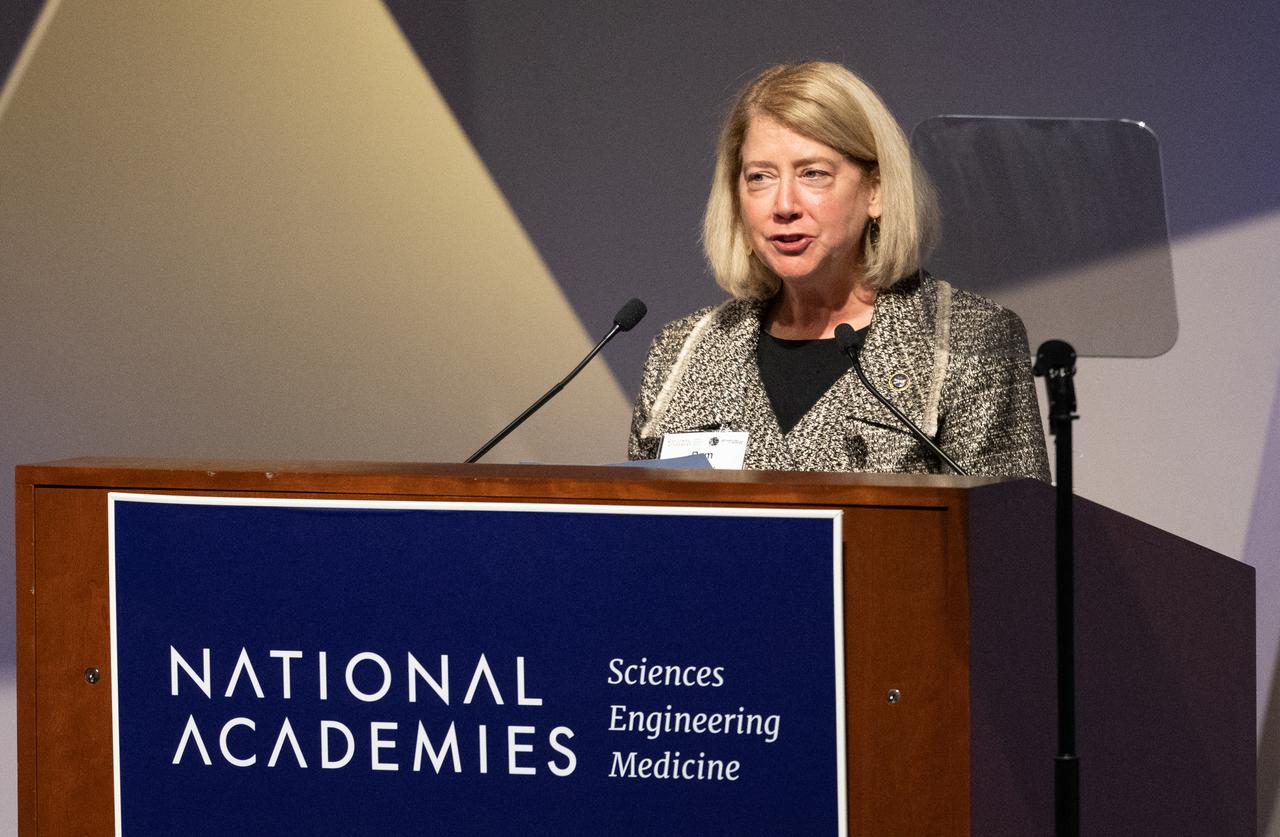
NASA Deputy Administrator Pam Melroy delivers remarks during an event celebrating the 50th anniversary of the Apollo 17 mission, Wednesday, Dec. 14, 2022, at the National Academies of Science in Washington. The three-astronaut crew of Apollo 17 - commander Eugene Cernan, lunar module pilot Harrison Schmitt, and command module pilot Ronald Evans, embarked on the last mission of the Apollo program to land humans on the Moon in December of 1972. Cernan and Schmitt spent three days on the lunar surface collecting samples and performing scientific experiments before lifting off from the Taurus-Littrow Valley on December 14, 1972. Photo Credit: (NASA/Joel Kowsky)
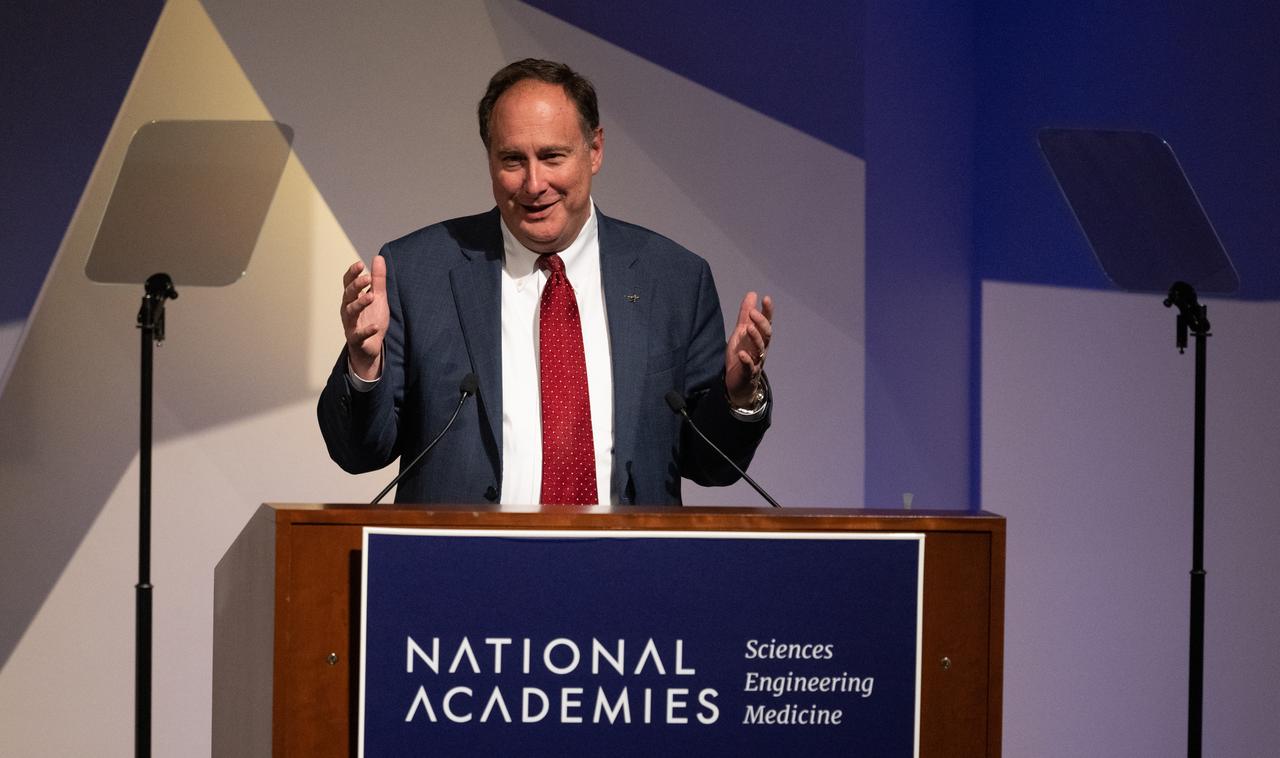
Robert Lightfoot, executive vice president of Lockheed Martin Space, speaks during an event celebrating the 50th anniversary of the Apollo 17 mission, Wednesday, Dec. 14, 2022, at the National Academies of Science in Washington. The three-astronaut crew of Apollo 17 - commander Eugene Cernan, lunar module pilot Harrison Schmitt, and command module pilot Ronald Evans, embarked on the last mission of the Apollo program to land humans on the Moon in December of 1972. Cernan and Schmitt spent three days on the lunar surface collecting samples and performing scientific experiments before lifting off from the Taurus-Littrow Valley on December 14, 1972. Photo Credit: (NASA/Joel Kowsky)
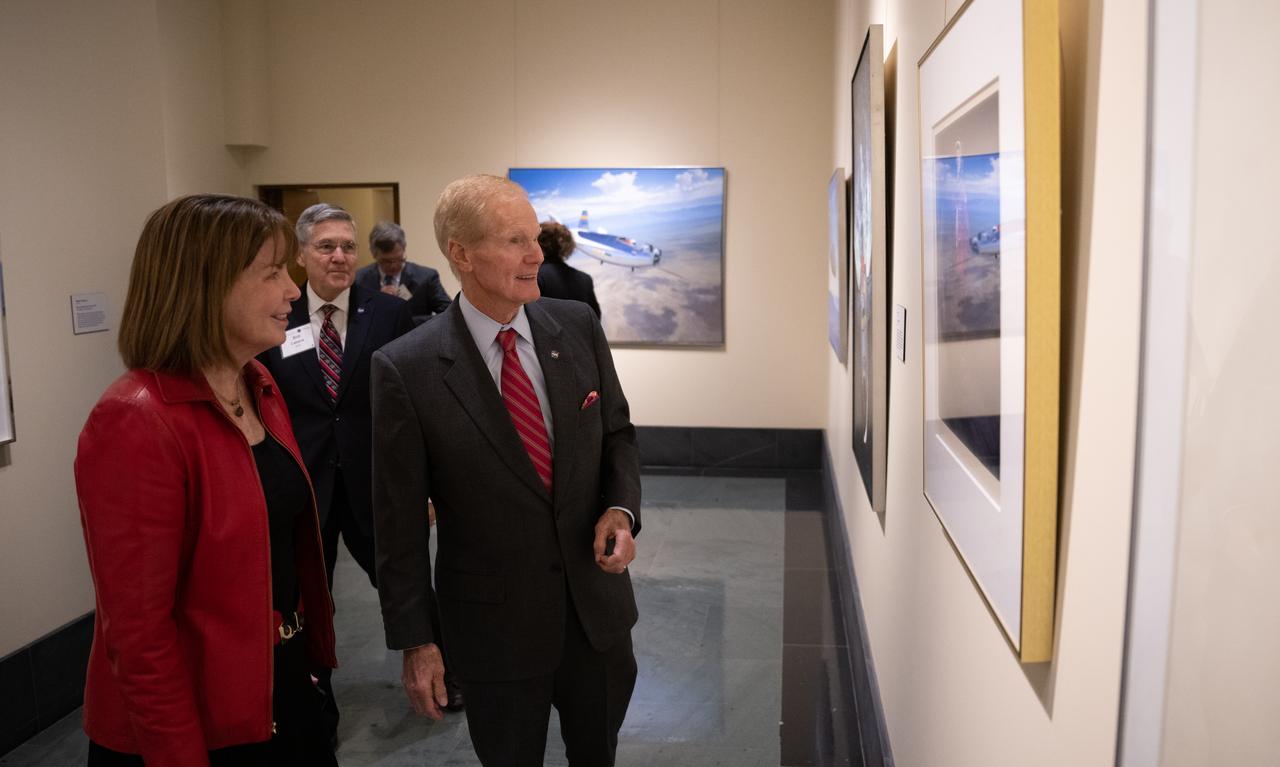
Colleen Hartman, director of physics, aeronautics, and space science at the National Academies of Science , left, and NASA Administrator Bill Nelson are seen as they view the NASA Art Program Exhibition “Launching the Future: Looking Back to Look Forward” during an event celebrating the 50th anniversary of the Apollo 17 mission, Wednesday, Dec. 14, 2022, at the National Academies of Science in Washington. The three-astronaut crew of Apollo 17 - commander Eugene Cernan, lunar module pilot Harrison Schmitt, and command module pilot Ronald Evans, embarked on the last mission of the Apollo program to land humans on the Moon in December of 1972. Cernan and Schmitt spent three days on the lunar surface collecting samples and performing scientific experiments before lifting off from the Taurus-Littrow Valley on December 14, 1972. Photo Credit: (NASA/Joel Kowsky)
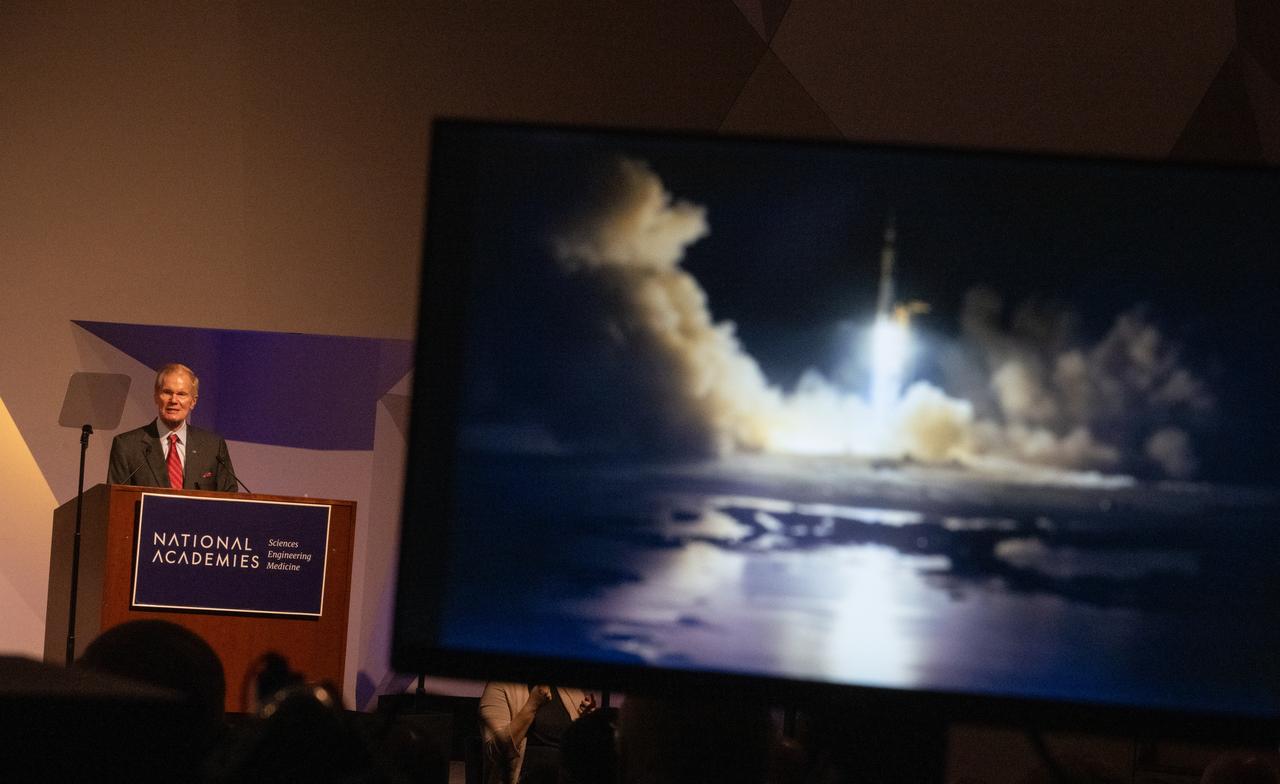
NASA Administrator Bill Nelson delivers remarks during an event celebrating the 50th anniversary of the Apollo 17 mission, Wednesday, Dec. 14, 2022, at the National Academies of Science in Washington. The three-astronaut crew of Apollo 17 - commander Eugene Cernan, lunar module pilot Harrison Schmitt, and command module pilot Ronald Evans, embarked on the last mission of the Apollo program to land humans on the Moon in December of 1972. Cernan and Schmitt spent three days on the lunar surface collecting samples and performing scientific experiments before lifting off from the Taurus-Littrow Valley on December 14, 1972. Photo Credit: (NASA/Joel Kowsky)
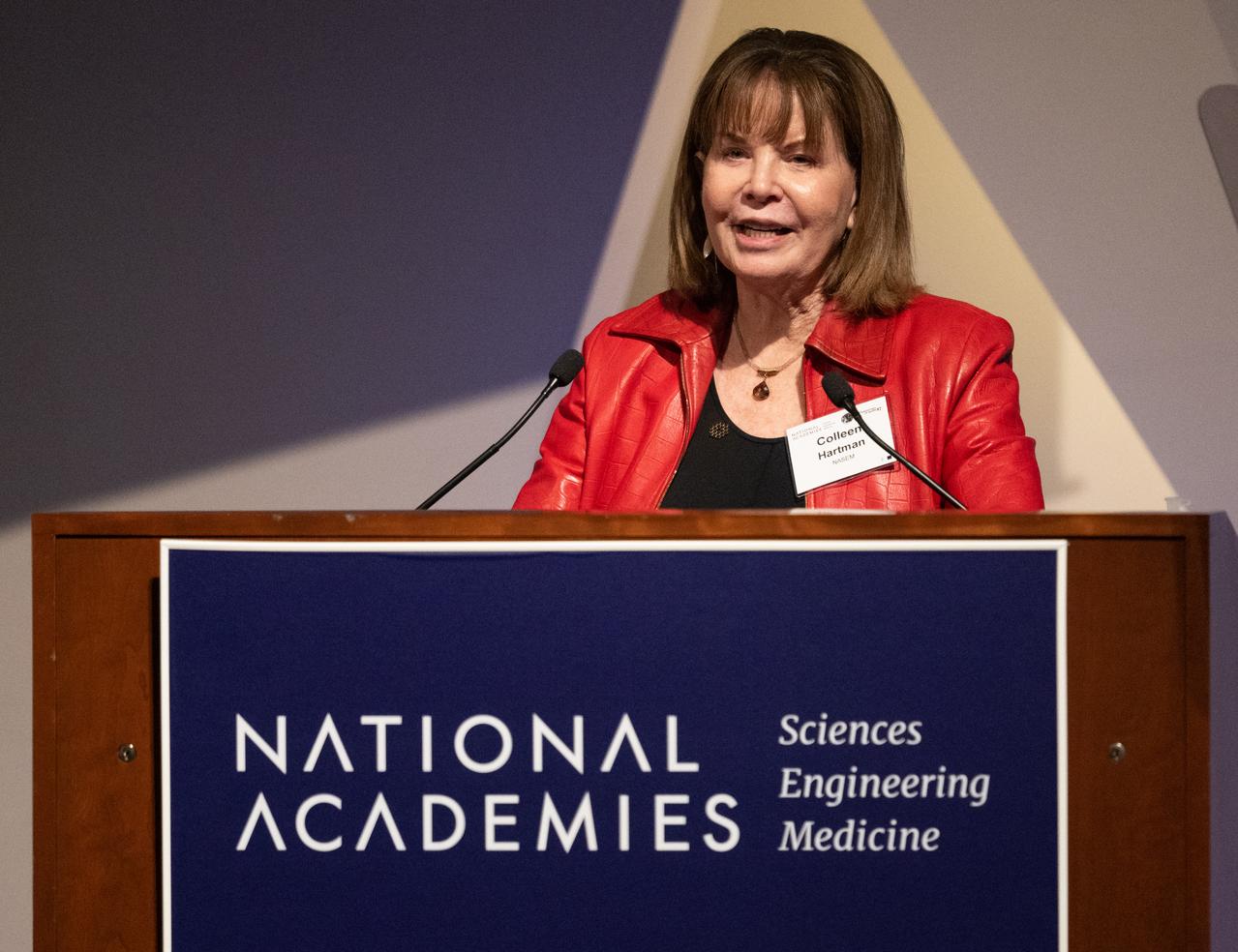
Colleen Hartman, director of physics, aeronautics, and space science at the National Academies of Science gives closing remarks during an event celebrating the 50th anniversary of the Apollo 17 mission, Wednesday, Dec. 14, 2022, at the National Academies of Science in Washington. The three-astronaut crew of Apollo 17 - commander Eugene Cernan, lunar module pilot Harrison Schmitt, and command module pilot Ronald Evans, embarked on the last mission of the Apollo program to land humans on the Moon in December of 1972. Cernan and Schmitt spent three days on the lunar surface collecting samples and performing scientific experiments before lifting off from the Taurus-Littrow Valley on December 14, 1972. Photo Credit: (NASA/Joel Kowsky)
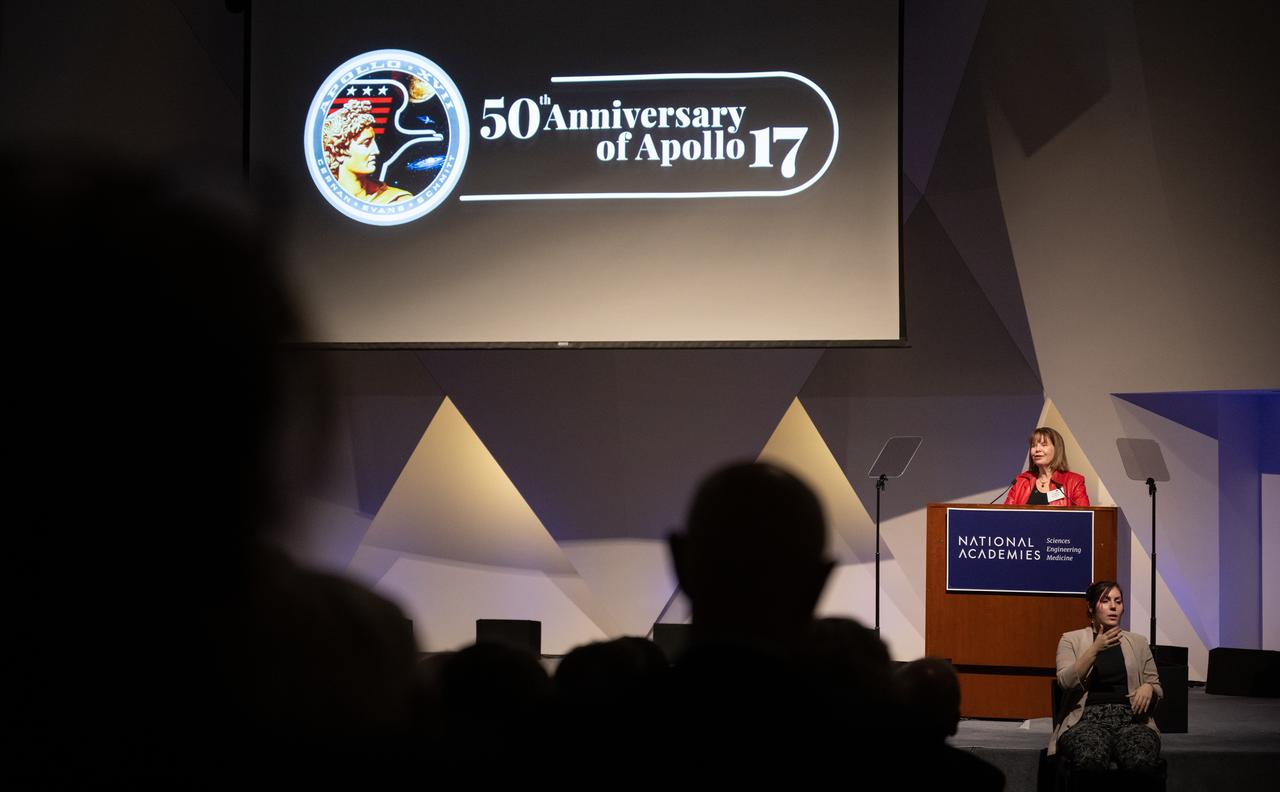
Colleen Hartman, director of physics, aeronautics, and space science at the National Academies of Science gives closing remarks during an event celebrating the 50th anniversary of the Apollo 17 mission, Wednesday, Dec. 14, 2022, at the National Academies of Science in Washington. The three-astronaut crew of Apollo 17 - commander Eugene Cernan, lunar module pilot Harrison Schmitt, and command module pilot Ronald Evans, embarked on the last mission of the Apollo program to land humans on the Moon in December of 1972. Cernan and Schmitt spent three days on the lunar surface collecting samples and performing scientific experiments before lifting off from the Taurus-Littrow Valley on December 14, 1972. Photo Credit: (NASA/Joel Kowsky)
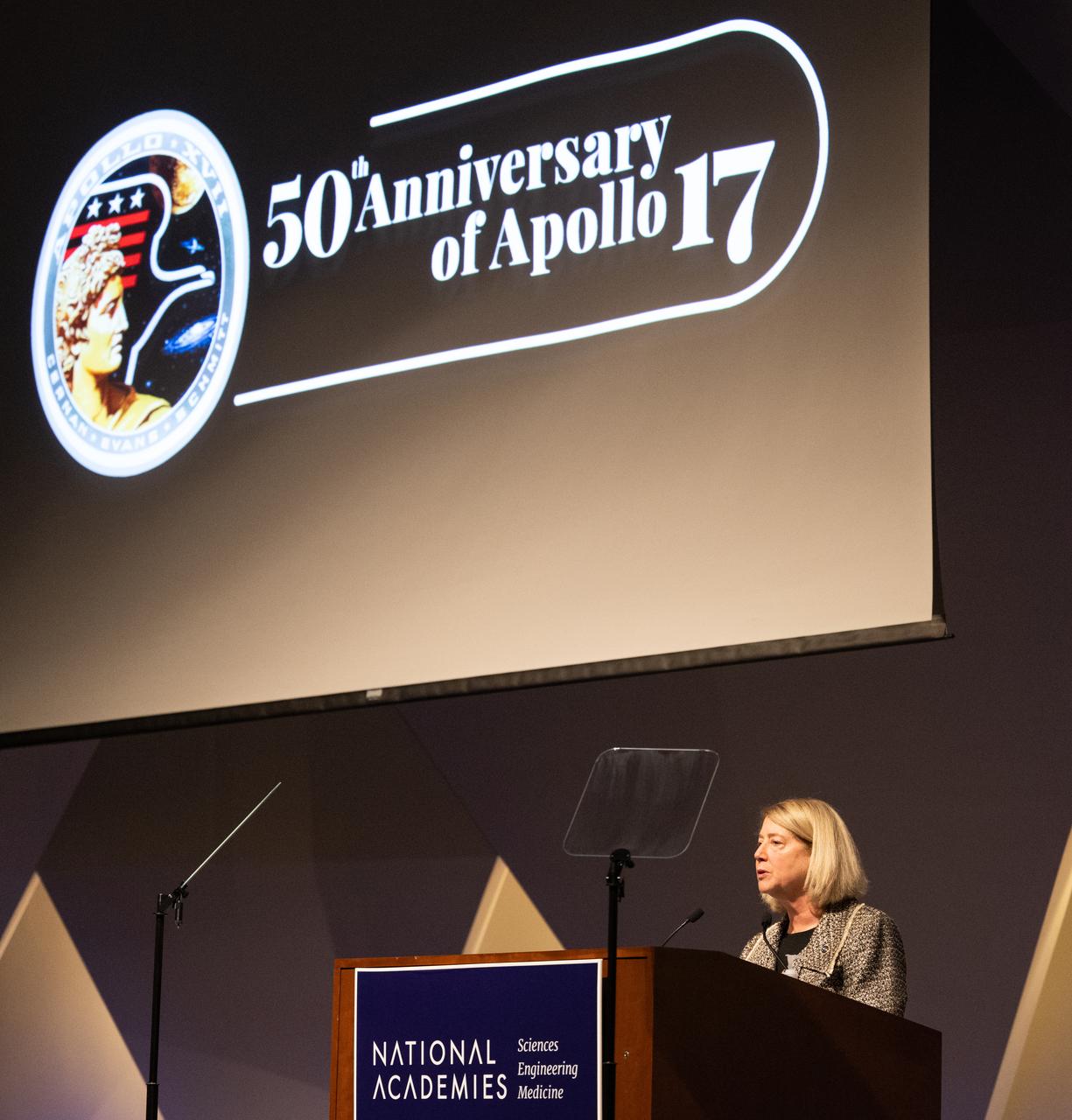
NASA Deputy Administrator Pam Melroy delivers remarks during an event celebrating the 50th anniversary of the Apollo 17 mission, Wednesday, Dec. 14, 2022, at the National Academies of Science in Washington. The three-astronaut crew of Apollo 17 - commander Eugene Cernan, lunar module pilot Harrison Schmitt, and command module pilot Ronald Evans, embarked on the last mission of the Apollo program to land humans on the Moon in December of 1972. Cernan and Schmitt spent three days on the lunar surface collecting samples and performing scientific experiments before lifting off from the Taurus-Littrow Valley on December 14, 1972. Photo Credit: (NASA/Joel Kowsky)
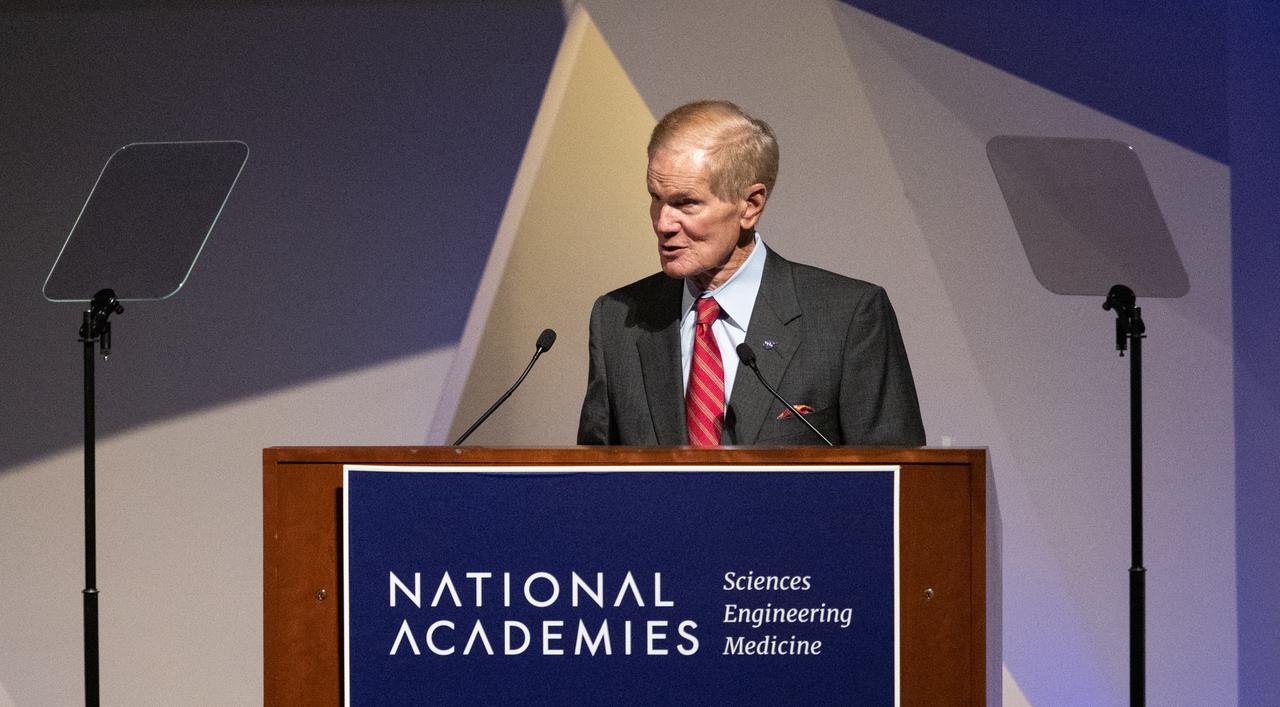
NASA Administrator Bill Nelson delivers remarks during an event celebrating the 50th anniversary of the Apollo 17 mission, Wednesday, Dec. 14, 2022, at the National Academies of Science in Washington. The three-astronaut crew of Apollo 17 - commander Eugene Cernan, lunar module pilot Harrison Schmitt, and command module pilot Ronald Evans, embarked on the last mission of the Apollo program to land humans on the Moon in December of 1972. Cernan and Schmitt spent three days on the lunar surface collecting samples and performing scientific experiments before lifting off from the Taurus-Littrow Valley on December 14, 1972. Photo Credit: (NASA/Joel Kowsky)
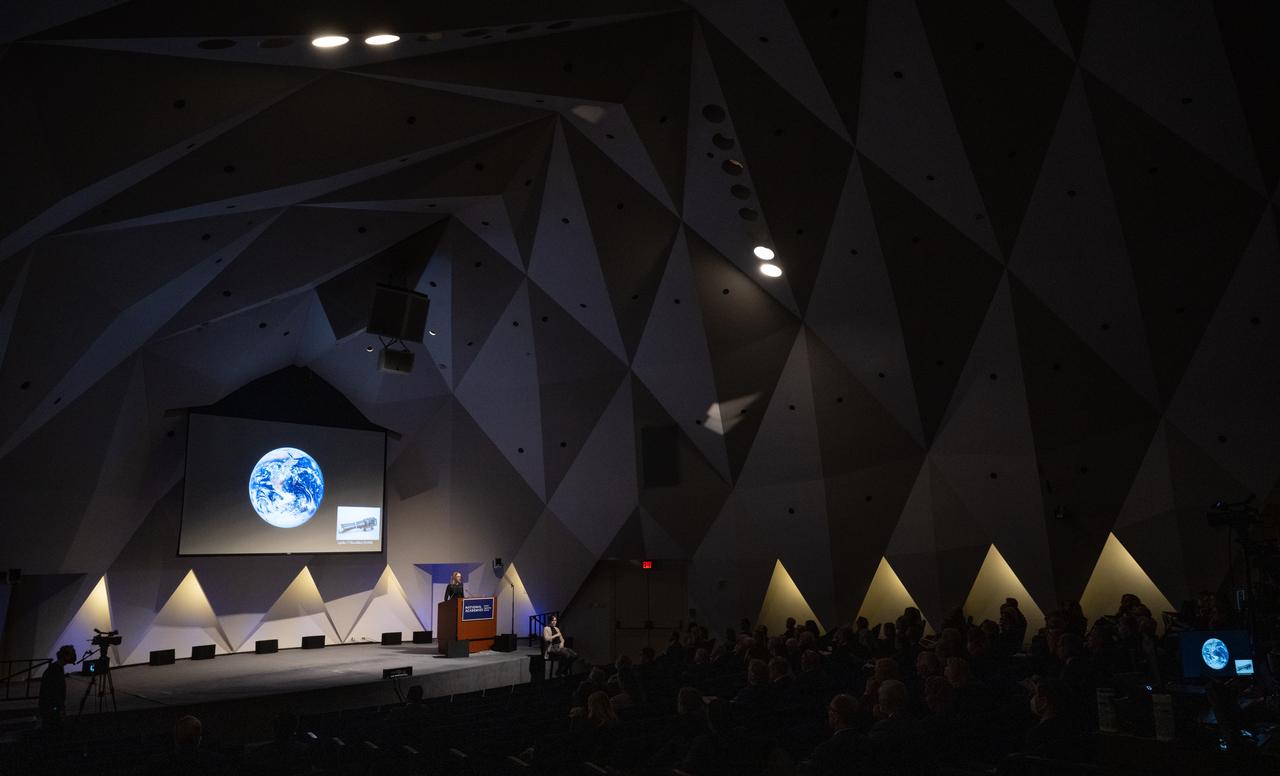
Teasel Muir-Harmony, curator of the Apollo collection at the Smithsonian National Air and Space Museum, speaks during an event celebrating the 50th anniversary of the Apollo 17 mission, Wednesday, Dec. 14, 2022, at the National Academies of Science in Washington. The three-astronaut crew of Apollo 17 - commander Eugene Cernan, lunar module pilot Harrison Schmitt, and command module pilot Ronald Evans, embarked on the last mission of the Apollo program to land humans on the Moon in December of 1972. Cernan and Schmitt spent three days on the lunar surface collecting samples and performing scientific experiments before lifting off from the Taurus-Littrow Valley on December 14, 1972. Photo Credit: (NASA/Joel Kowsky)
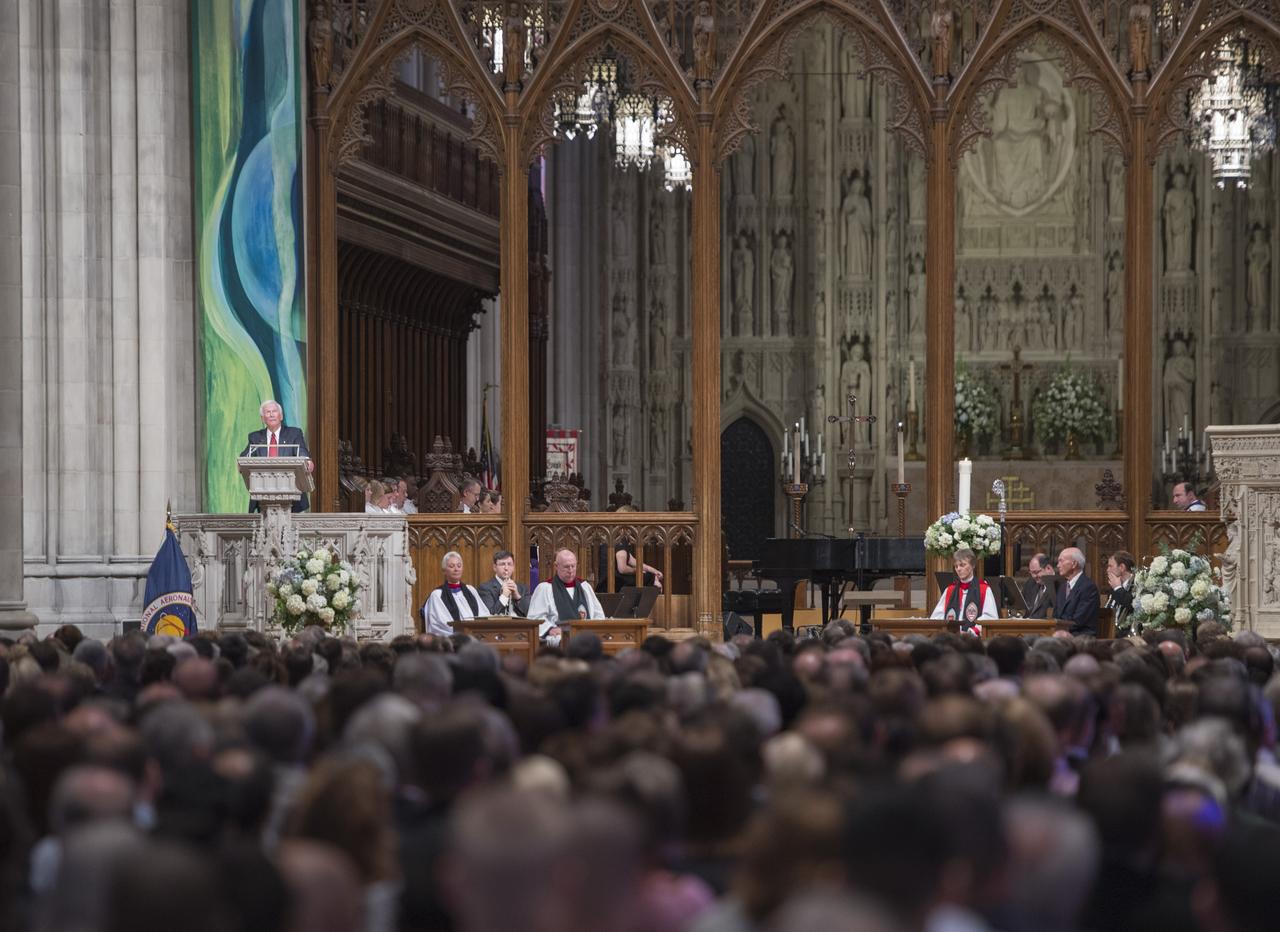
Apollo 17 mission commander Gene Cernan, the last man to walk on the moon, speaks during a memorial service celebrating the life of Neil Armstrong at the Washington National Cathedral, Thursday, Sept. 13, 2012. Armstrong, the first man to walk on the moon during the 1969 Apollo 11 mission, died Saturday, Aug. 25. He was 82. Photo Credit: (NASA/Bill Ingalls)
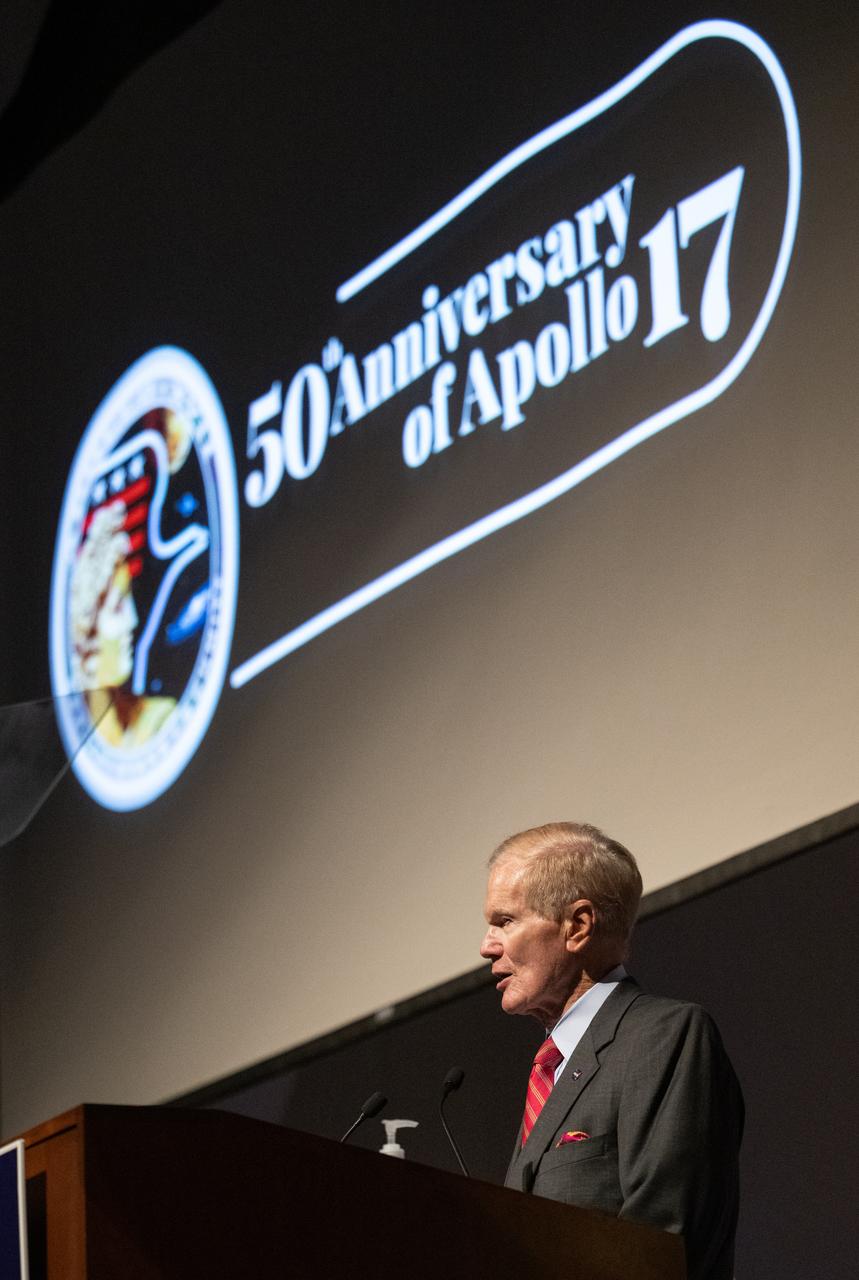
NASA Administrator Bill Nelson delivers remarks during an event celebrating the 50th anniversary of the Apollo 17 mission, Wednesday, Dec. 14, 2022, at the National Academies of Science in Washington. The three-astronaut crew of Apollo 17 - commander Eugene Cernan, lunar module pilot Harrison Schmitt, and command module pilot Ronald Evans, embarked on the last mission of the Apollo program to land humans on the Moon in December of 1972. Cernan and Schmitt spent three days on the lunar surface collecting samples and performing scientific experiments before lifting off from the Taurus-Littrow Valley on December 14, 1972. Photo Credit: (NASA/Joel Kowsky)
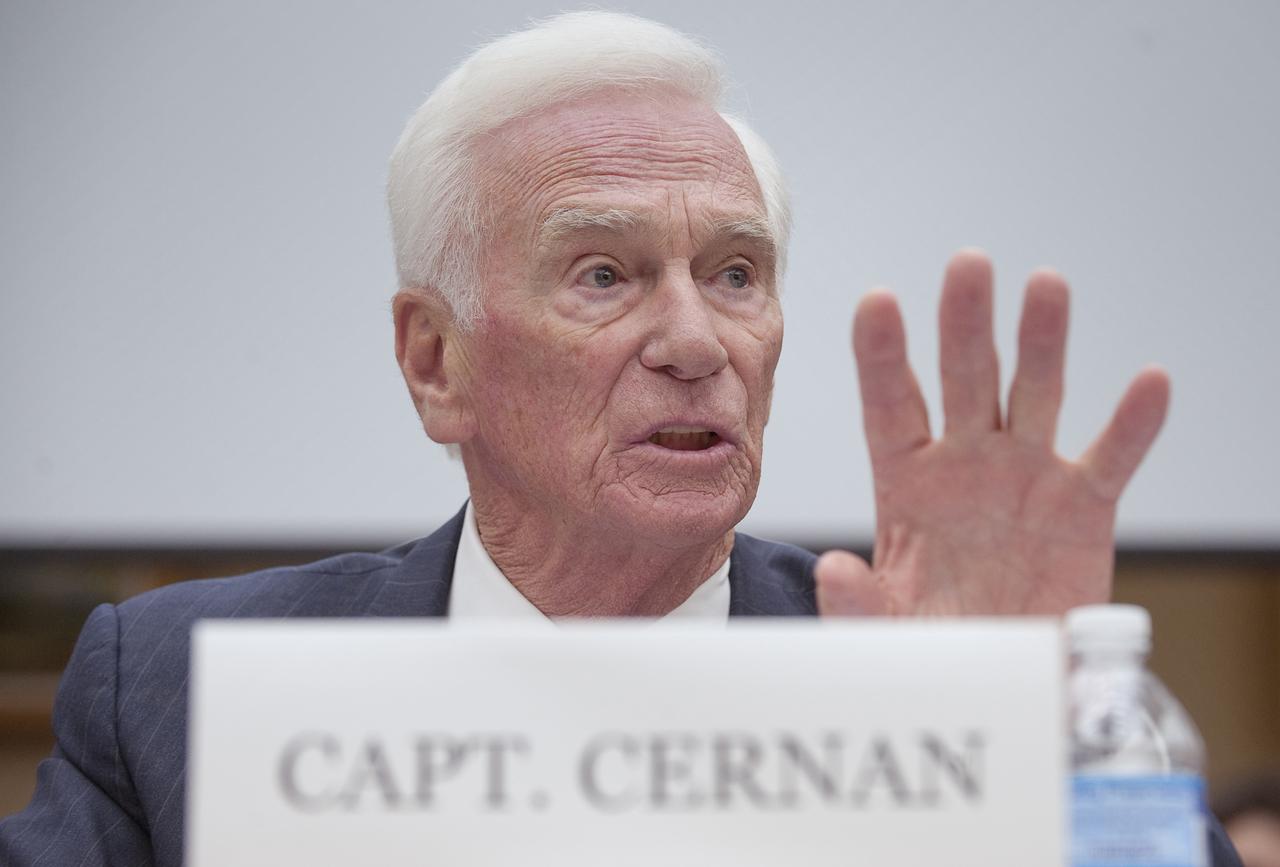
Retired Navy Captain and commander of Apollo 17 Eugene Cernan testifies during a hearing before the House Science and Technology Committee, Tuesday, May 26, 2010, at the Rayburn House office building on Capitol Hill in Washington. The hearing was to review proposed human spaceflight plan by NASA. Photo Credit: (NASA/Paul E. Alers)
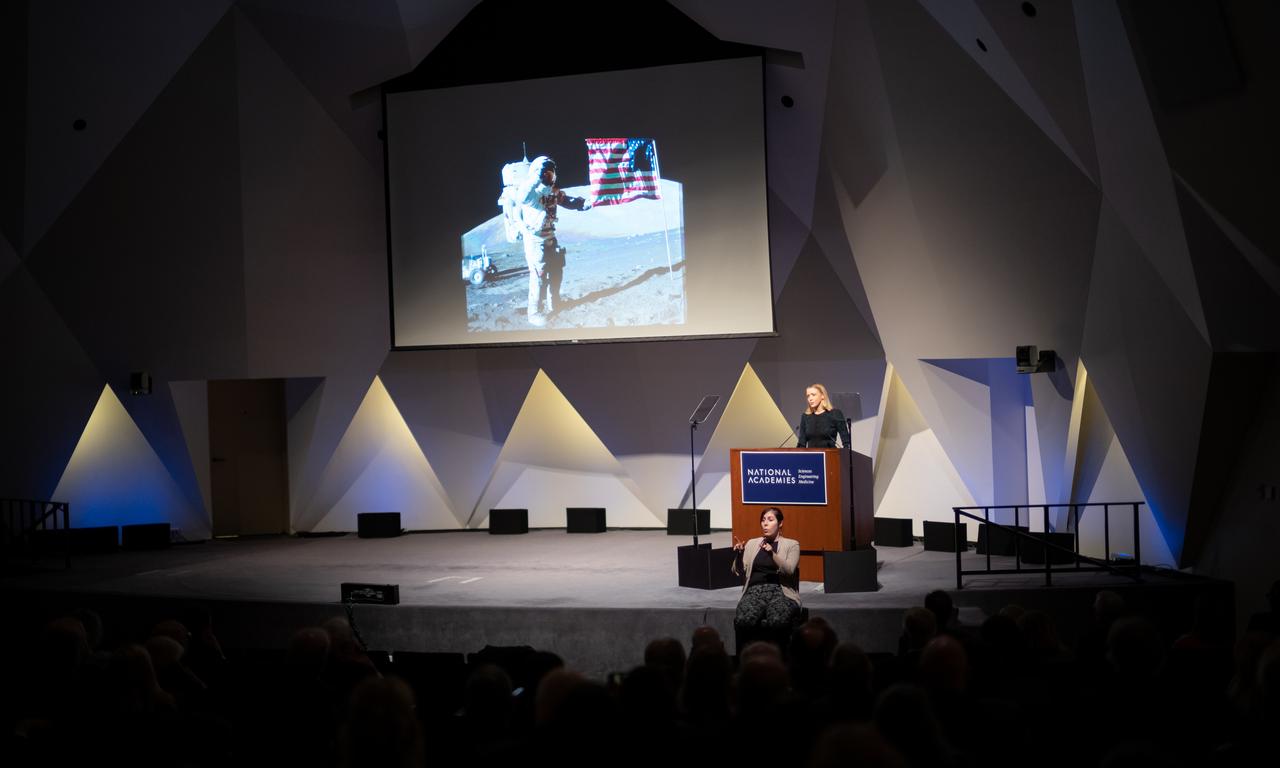
Teasel Muir-Harmony, curator of the Apollo collection at the Smithsonian National Air and Space Museum speaks during an event celebrating the 50th anniversary of the Apollo 17 mission, Wednesday, Dec. 14, 2022, at the National Academies of Science in Washington. The three-astronaut crew of Apollo 17 - commander Eugene Cernan, lunar module pilot Harrison Schmitt, and command module pilot Ronald Evans, embarked on the last mission of the Apollo program to land humans on the Moon in December of 1972. Cernan and Schmitt spent three days on the lunar surface collecting samples and performing scientific experiments before lifting off from the Taurus-Littrow Valley on December 14, 1972. Photo Credit: (NASA/Joel Kowsky)
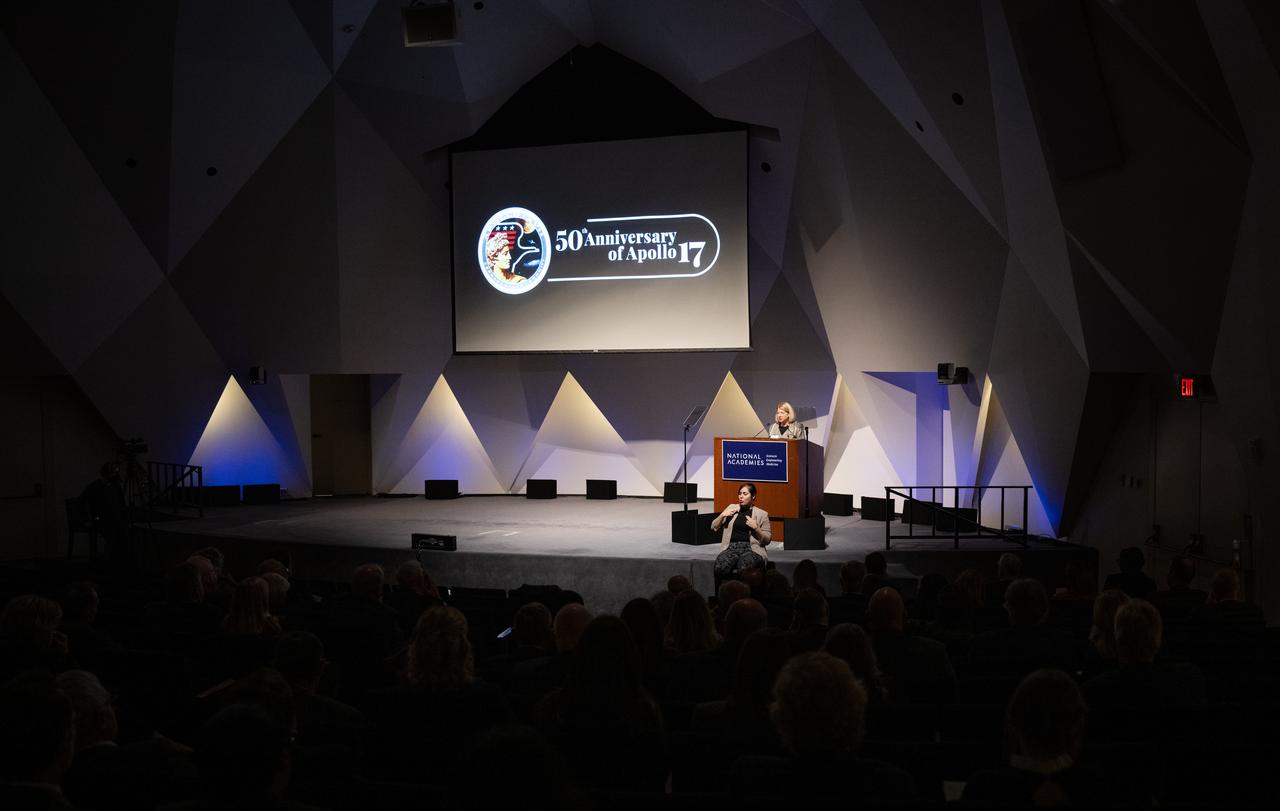
NASA Deputy Administrator Pam Melroy delivers remarks during an event celebrating the 50th anniversary of the Apollo 17 mission, Wednesday, Dec. 14, 2022, at the National Academies of Science in Washington. The three-astronaut crew of Apollo 17 - commander Eugene Cernan, lunar module pilot Harrison Schmitt, and command module pilot Ronald Evans, embarked on the last mission of the Apollo program to land humans on the Moon in December of 1972. Cernan and Schmitt spent three days on the lunar surface collecting samples and performing scientific experiments before lifting off from the Taurus-Littrow Valley on December 14, 1972. Photo Credit: (NASA/Joel Kowsky)
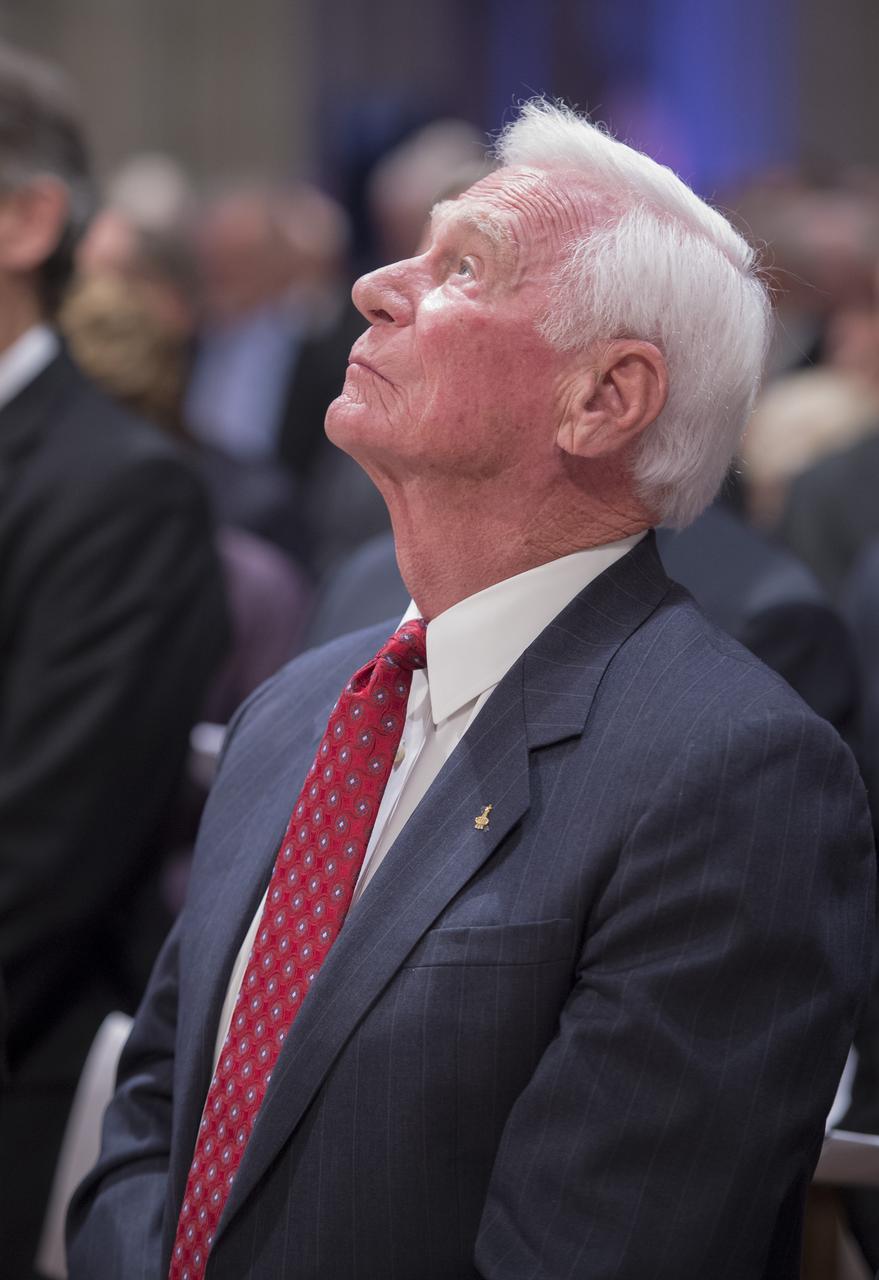
Apollo 17 mission commander Gene Cernan, the last man to walk on the moon, looks skyward during a memorial service celebrating the life of Neil Armstrong at the Washington National Cathedral, Thursday, Sept. 13, 2012. Armstrong, the first man to walk on the moon during the 1969 Apollo 11 mission, died Saturday, Aug. 25. He was 82. Photo Credit: (NASA/Bill Ingalls)
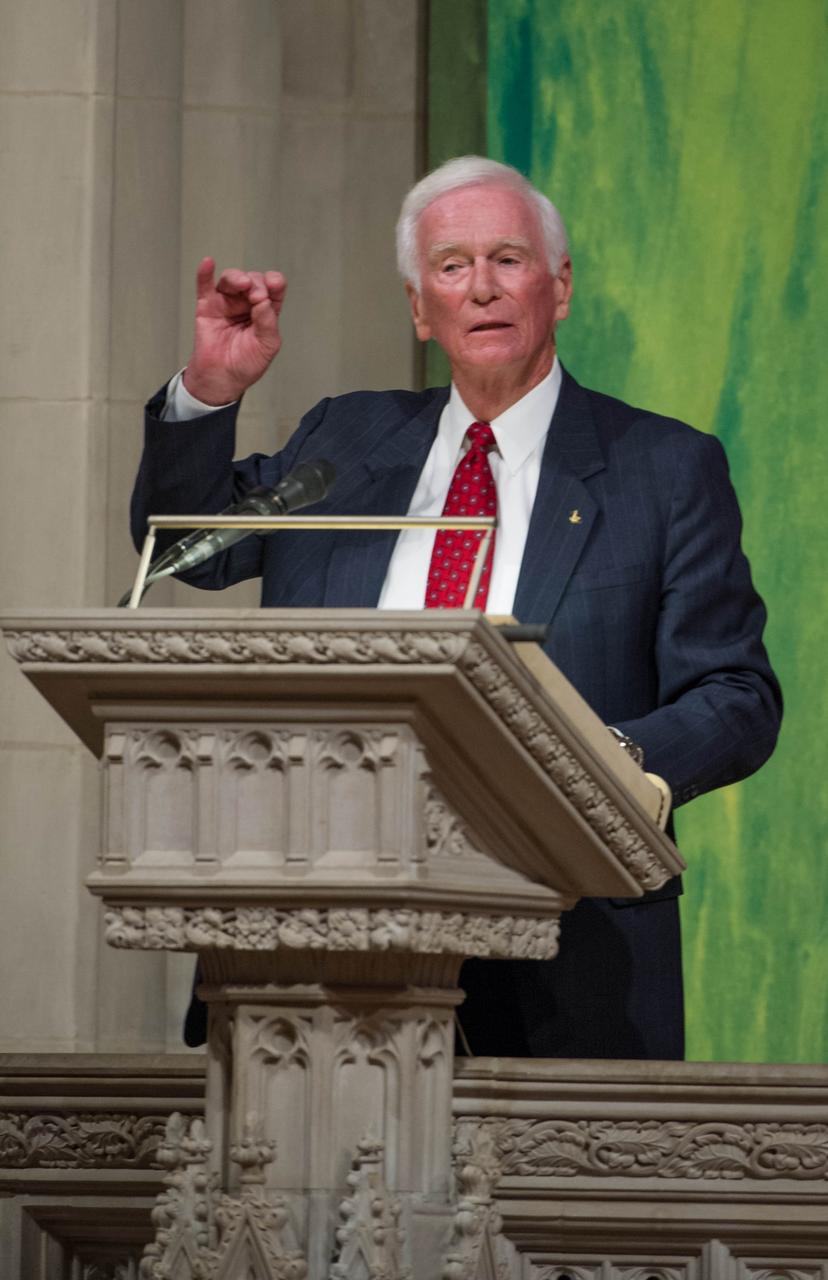
Apollo 17 astronaut Gene Cernan, the last man to walk on the moon, speaks during a memorial service celebrating the life of Neil Armstrong at the Washington National Cathedral, Thursday, Sept. 13, 2012. Armstrong, the first man to walk on the moon during the 1969 Apollo 11 mission, died Saturday, Aug. 25. He was 82. Photo Credit: (NASA/Paul E. Alers)
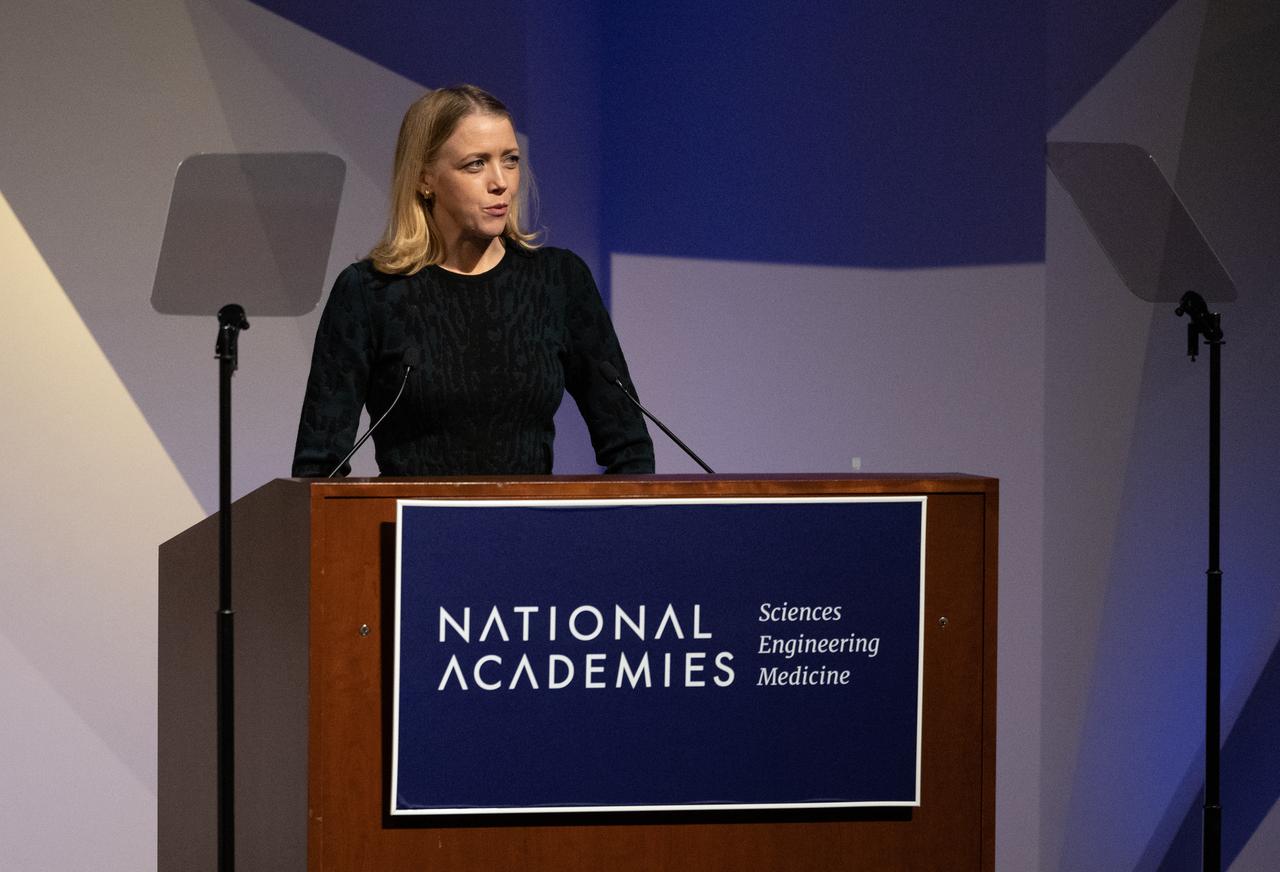
Teasel Muir-Harmony, curator of the Apollo collection at the Smithsonian National Air and Space Museum, speaks during an event celebrating the 50th anniversary of the Apollo 17 mission, Wednesday, Dec. 14, 2022, at the National Academies of Science in Washington. The three-astronaut crew of Apollo 17 - commander Eugene Cernan, lunar module pilot Harrison Schmitt, and command module pilot Ronald Evans, embarked on the last mission of the Apollo program to land humans on the Moon in December of 1972. Cernan and Schmitt spent three days on the lunar surface collecting samples and performing scientific experiments before lifting off from the Taurus-Littrow Valley on December 14, 1972. Photo Credit: (NASA/Joel Kowsky)
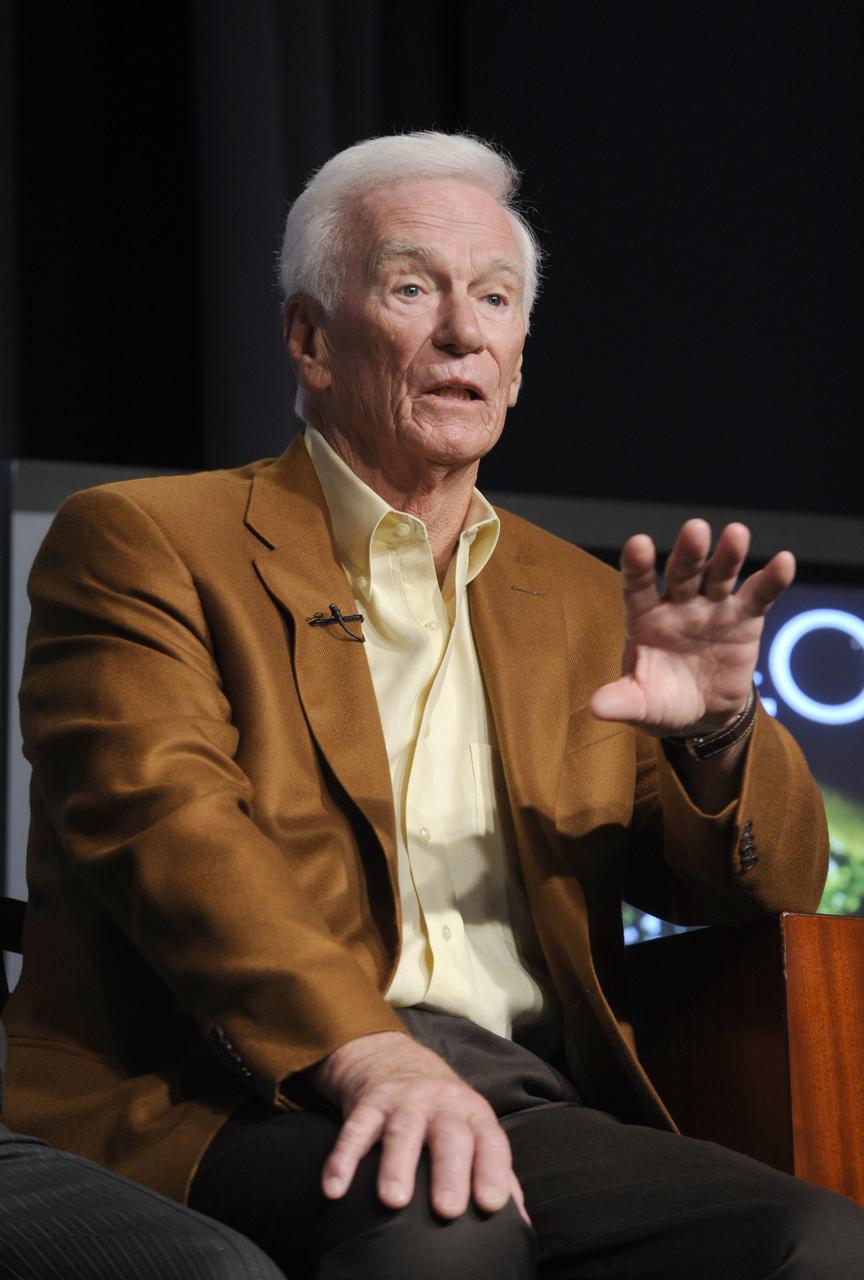
Eugene Cernan (Apollo 17) speaks during the 40th anniversary of the Apollo 11 mission and the walk on the moon press conference, Monday, July 20, 2009, at NASA Headquarters in Washington. Photo Credit: (NASA/Paul E. Alers)
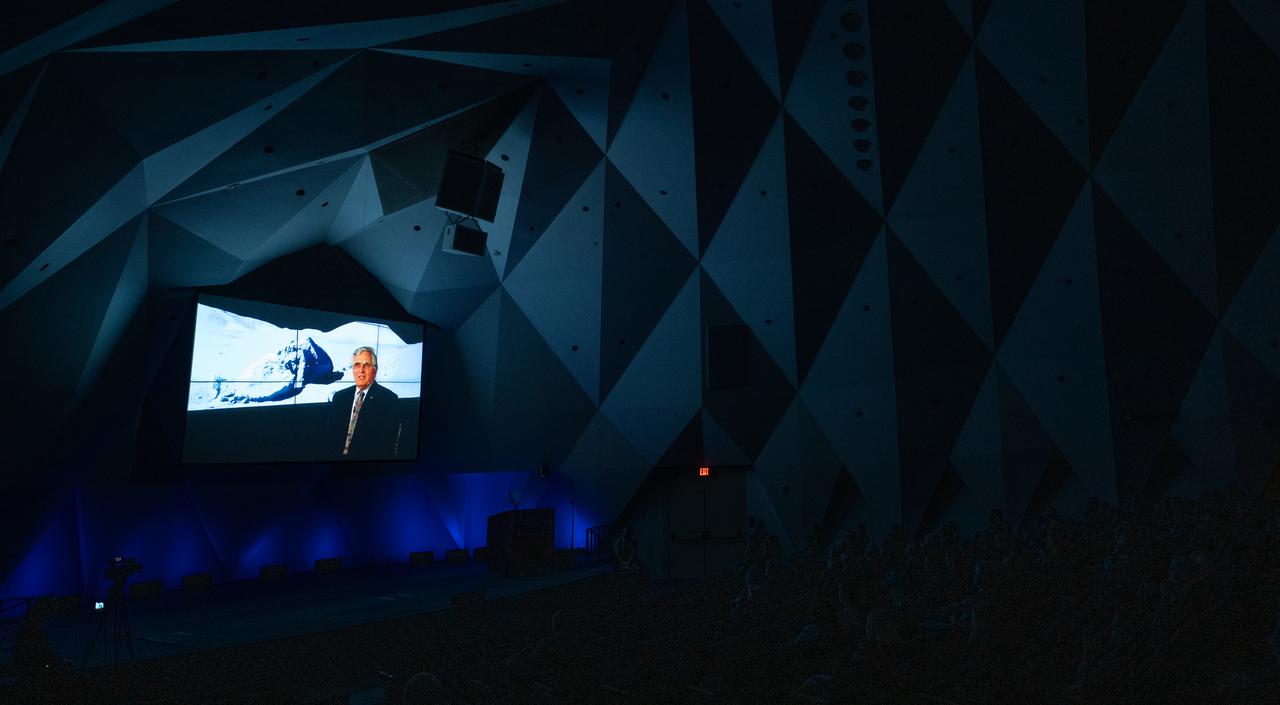
Apollo 17 astronaut Harrison Schmitt is seen in a video during an event celebrating the 50th anniversary of the Apollo 17 mission, Wednesday, Dec. 14, 2022, at the National Academies of Science in Washington. The three-astronaut crew of Apollo 17 - commander Eugene Cernan, lunar module pilot Harrison Schmitt, and command module pilot Ronald Evans, embarked on the last mission of the Apollo program to land humans on the Moon in December of 1972. Cernan and Schmitt spent three days on the lunar surface collecting samples and performing scientific experiments before lifting off from the Taurus-Littrow Valley on December 14, 1972. Photo Credit: (NASA/Joel Kowsky)
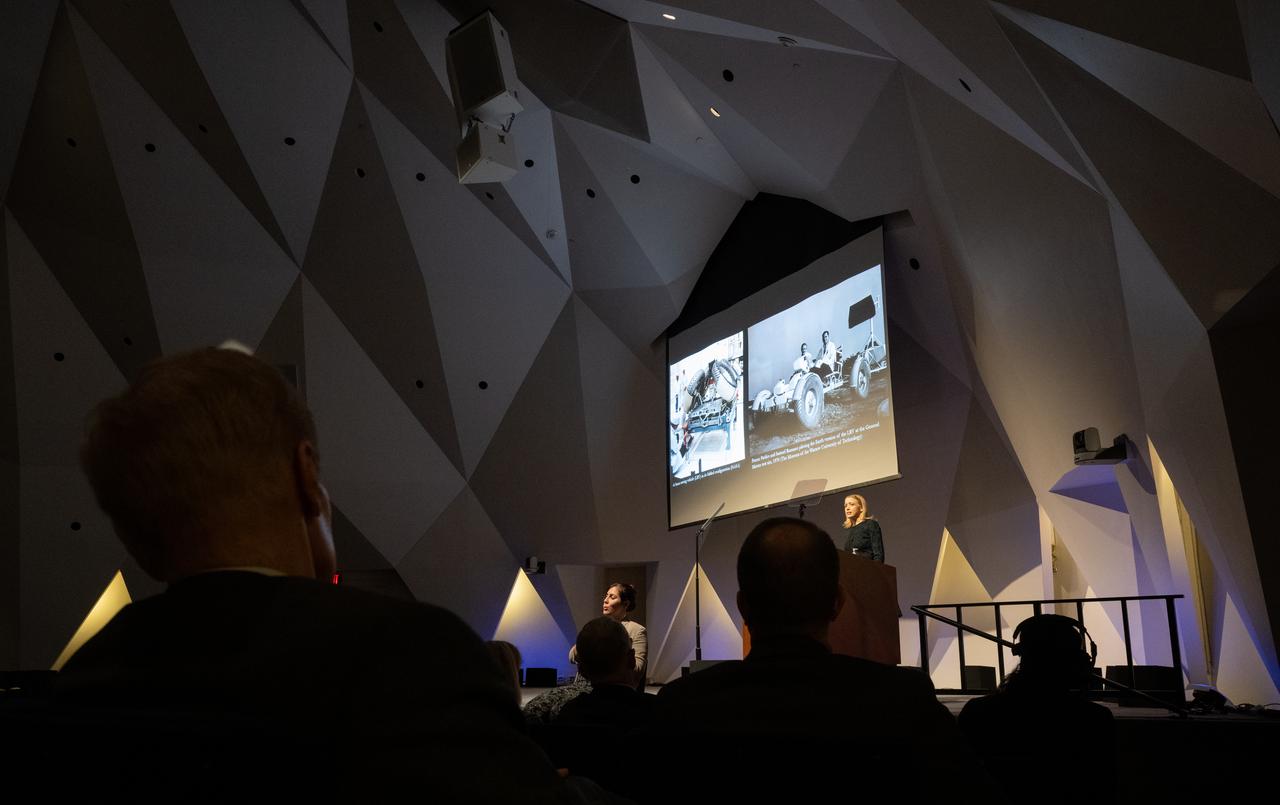
Teasel Muir-Harmony, curator of the Apollo collection at the Smithsonian National Air and Space Museum, speaks during an event celebrating the 50th anniversary of the Apollo 17 mission, Wednesday, Dec. 14, 2022, at the National Academies of Science in Washington. The three-astronaut crew of Apollo 17 - commander Eugene Cernan, lunar module pilot Harrison Schmitt, and command module pilot Ronald Evans, embarked on the last mission of the Apollo program to land humans on the Moon in December of 1972. Cernan and Schmitt spent three days on the lunar surface collecting samples and performing scientific experiments before lifting off from the Taurus-Littrow Valley on December 14, 1972. Photo Credit: (NASA/Joel Kowsky)
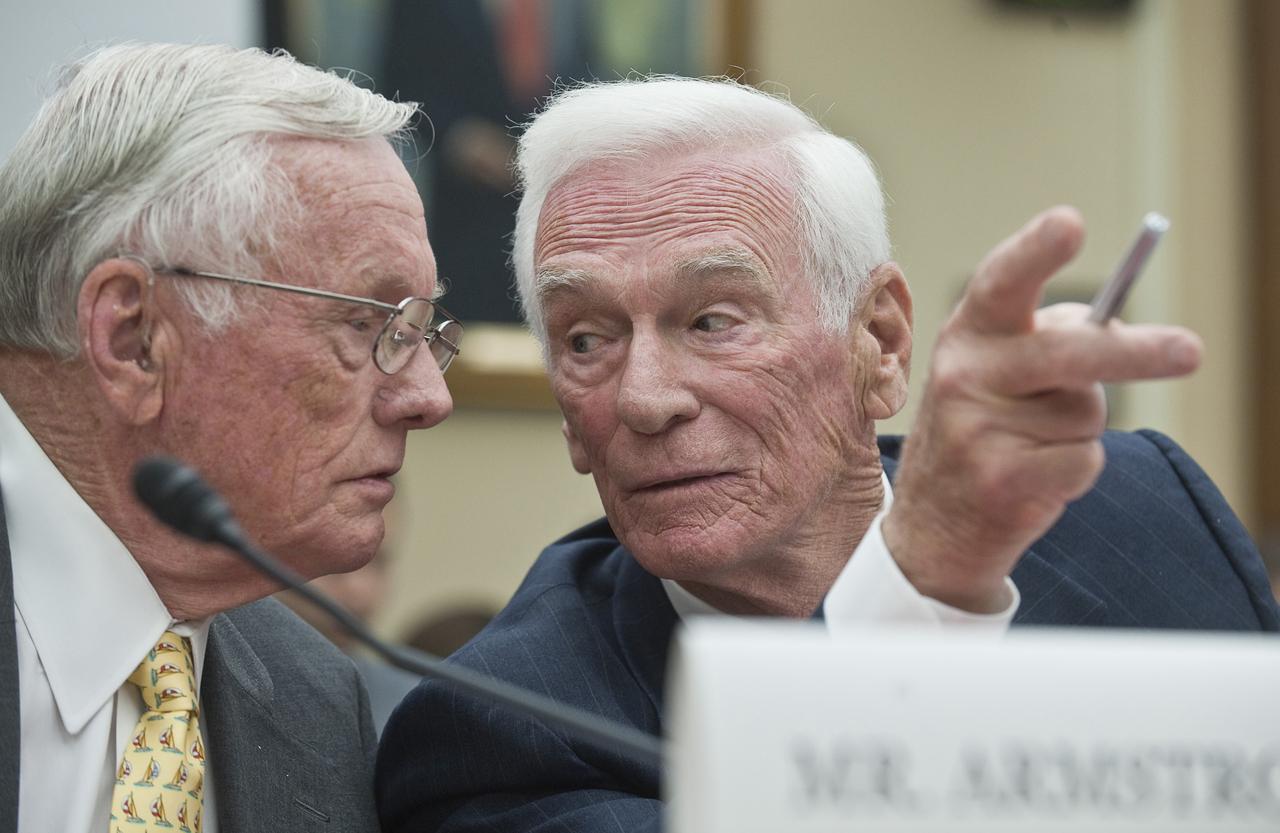
Apollo 11 Commander Neil Armstrong, left, and retired Navy Captain and commander of Apollo 17 Eugene Cernana, confer prior to testifying at a hearing before the House Science and Technology Committee, Tuesday, May 26, 2010, at the Rayburn House office building on Capitol Hill in Washington. The hearing was to review proposed human spaceflight plan by NASA. Photo Credit: (NASA/Paul E. Alers)
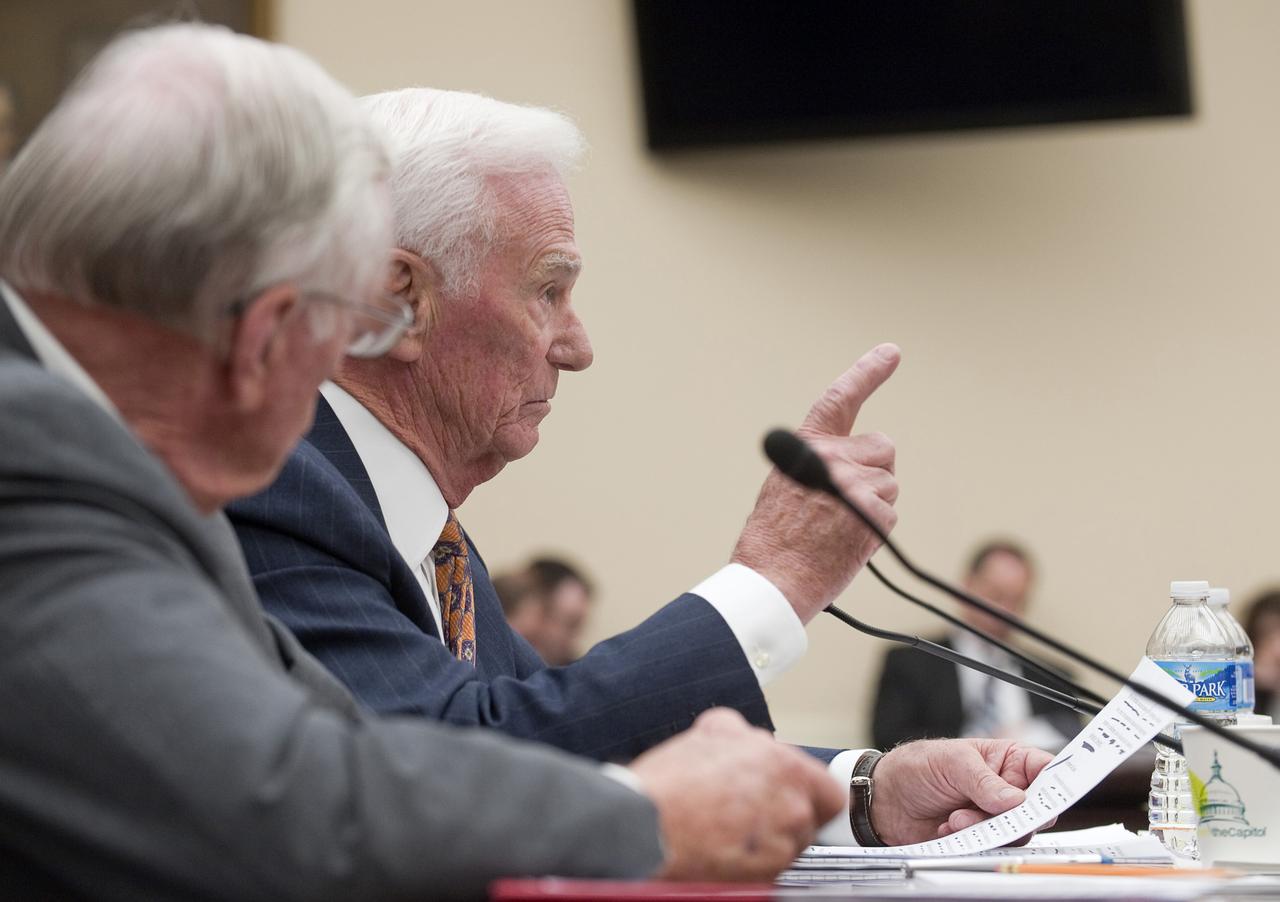
Retired Navy Captain and commander of Apollo 17 Eugene Cernan, center, testifies during a hearing before the House Science and Technology Committee, Tuesday, May 26, 2010, at the Rayburn House office building on Capitol Hill in Washington as Apollo 11 Commander Neil Armstrong, left, looks on. The hearing was to review proposed human spaceflight plan by NASA. Photo Credit: (NASA/Paul E. Alers)
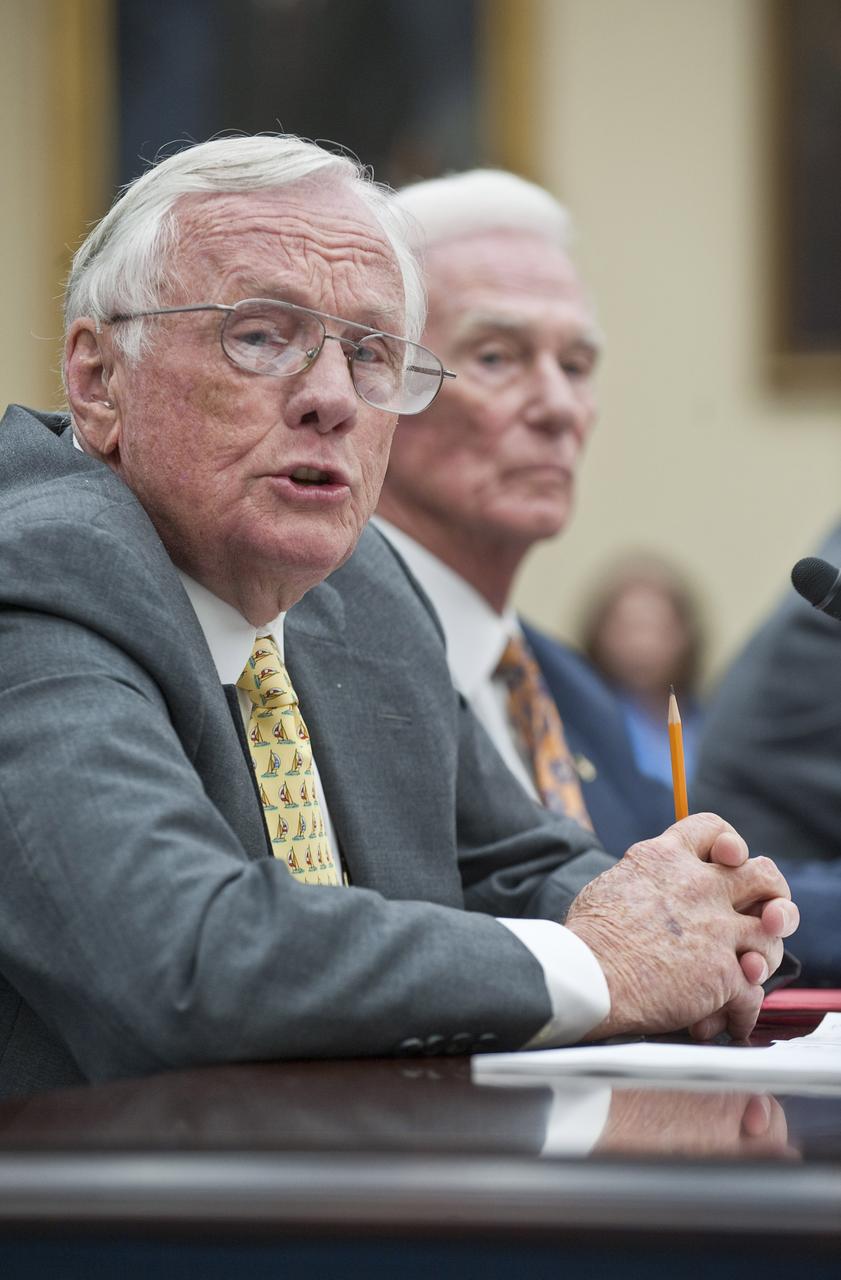
Apollo 11 Commander Neil Armstrong, left, testifies during a hearing before the House Science and Technology Committee, Tuesday, May 26, 2010, at the Rayburn House office building on Capitol Hill in Washington as retired Navy Captain and commander of Apollo 17 Eugene Cernan looks on. The hearing was to review proposed human spaceflight plan by NASA. Photo Credit: (NASA/Paul E. Alers)
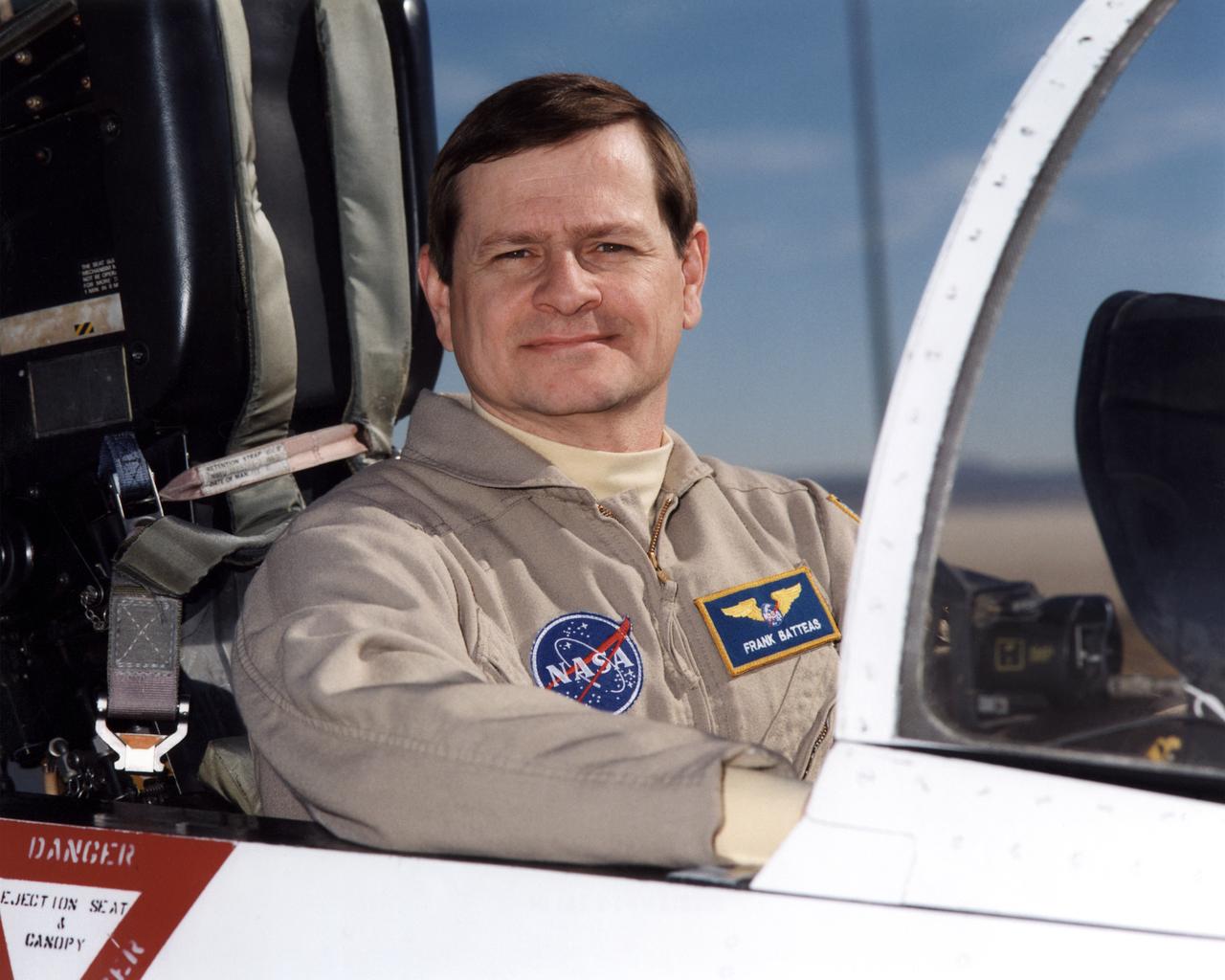
Frank Batteas is a research test pilot in the Flight Crew Branch of NASA's Dryden Flight Research Center, Edwards, California. He is currently a project pilot for the F/A-18 and C-17 flight research projects. In addition, his flying duties include operation of the DC-8 Flying Laboratory in the Airborne Science program, and piloting the B-52B launch aircraft, the King Air, and the T-34C support aircraft. Batteas has accumulated more than 4,700 hours of military and civilian flight experience in more than 40 different aircraft types. Batteas came to NASA Dryden in April 1998, following a career in the U.S. Air Force. His last assignment was at Wright-Patterson Air Force Base, Dayton, Ohio, where Lieutenant Colonel Batteas led the B-2 Systems Test and Evaluation efforts for a two-year period. Batteas graduated from Class 88A of the Air Force Test Pilot School, Edwards Air Force Base, California, in December 1988. He served more than five years as a test pilot for the Air Force's newest airlifter, the C-17, involved in nearly every phase of testing from flutter and high angle-of-attack tests to airdrop and air refueling envelope expansion. In the process, he achieved several C-17 firsts including the first day and night aerial refuelings, the first flight over the North Pole, and a payload-to-altitude world aviation record. As a KC-135 test pilot, he also was involved in aerial refueling certification tests on a number of other Air Force aircraft. Batteas received his commission as a second lieutenant in the U. S. Air Force through the Reserve Officer Training Corps and served initially as an engineer working on the Peacekeeper and Minuteman missile programs at the Ballistic Missile Office, Norton Air Force Base, Calif. After attending pilot training at Williams Air Force Base, Phoenix, Ariz., he flew operational flights in the KC-135 tanker aircraft and then was assigned to research flying at the 4950th Test Wing, Wright-Patterson. He flew extensively modified C-135
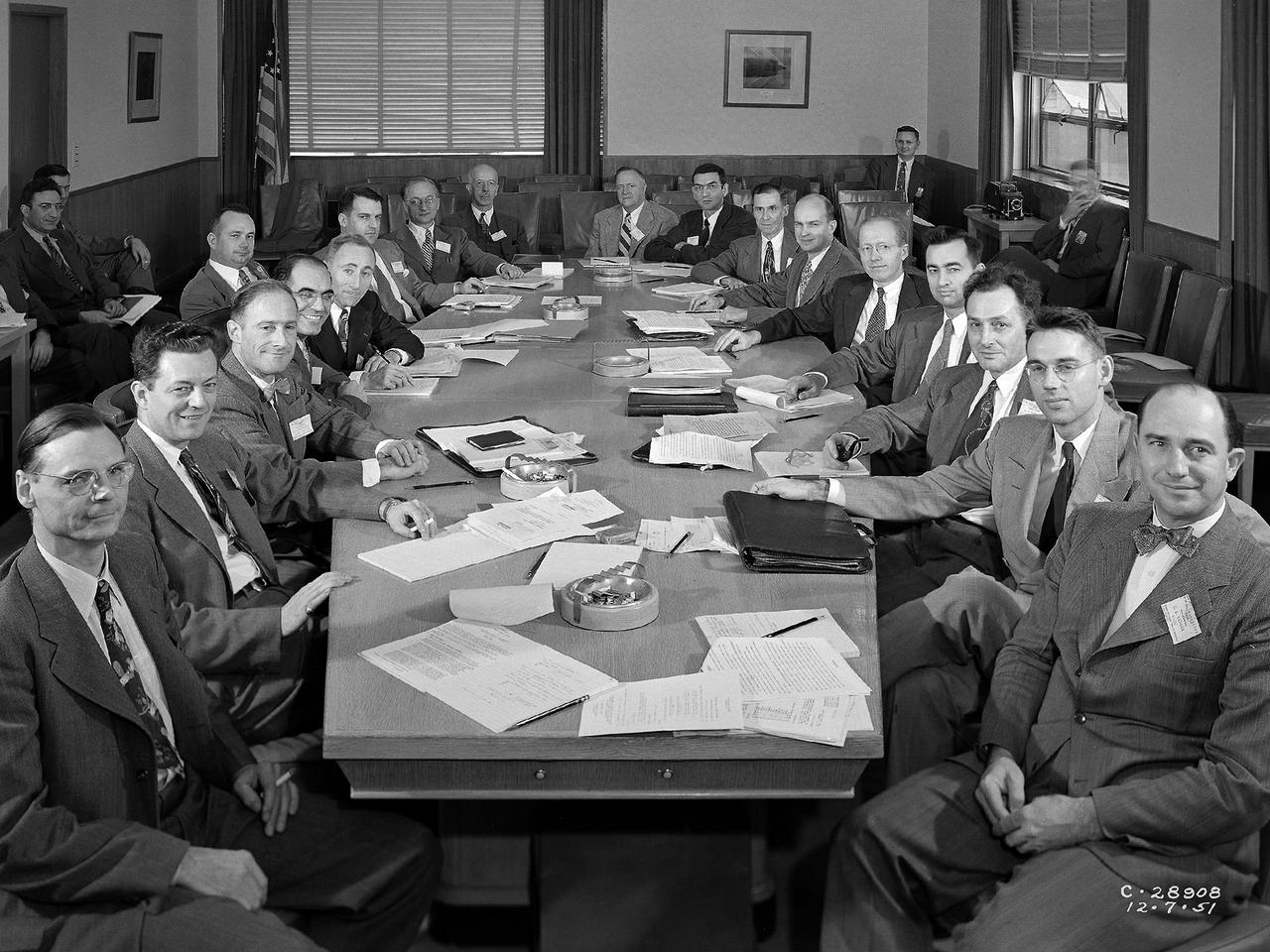
The National Advisory Committee for Aeronautics (NACA) Subcommittee on Combustion holds a meeting at Lewis Flight Propulsion Laboratory in Cleveland, Ohio. The NACA was managed by committees that included members of their own staff along with representatives from industry, the military, other government agencies, and universities. The 17-person Executive Committee was the NACA’s primary administrative body. They met several times a year at the NACA headquarters office in Washington DC to discuss broad issues confronting the US aeronautical community. Jerome Hunsaker, head of the Department of Aeronautical Engineering at the Massachusetts Institute of Technology, served as the NACA chairman from 1941 to 1956. George Lewis was not a member of the Executive Committee but served a key role as the NACA’s Director of Aeronautical Research. The NACA’s organizational chart also included 11 technical committees, several of which had specialized subcommittees. There were over 100 different subcommittees between World War I and 1958. The number of active subcommittees varied over the years. Most existed only for a few years, but some continued for over a decade. The subcommittees met three or four times per year, often at the laboratory most closely associated with the area of research. A team of laboratory researchers presented briefings on their recent activities and plans for the future. The Subcommittee on Combustion existed from 1945 to the NACA’s demise in 1958.
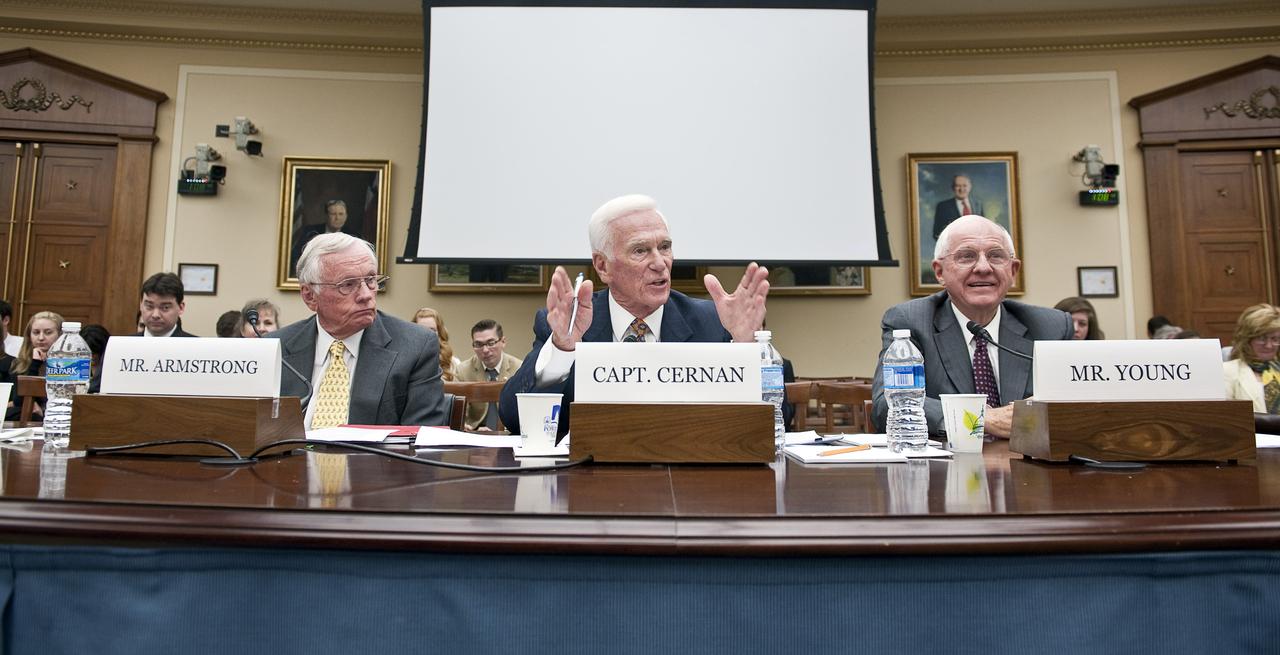
Retired Navy Captain and commander of Apollo 17 Eugene Cernan, center, is flanked by Apollo 11 Commander Neil Armstrong, left, and A. Thomas Young, as he testifies during a hearing before the House Science and Technology Committee, Tuesday, May 26, 2010, at the Rayburn House office building on Capitol Hill in Washington. The hearing was to review proposed human spaceflight plan by NASA. Photo Credit: (NASA/Paul E. Alers)
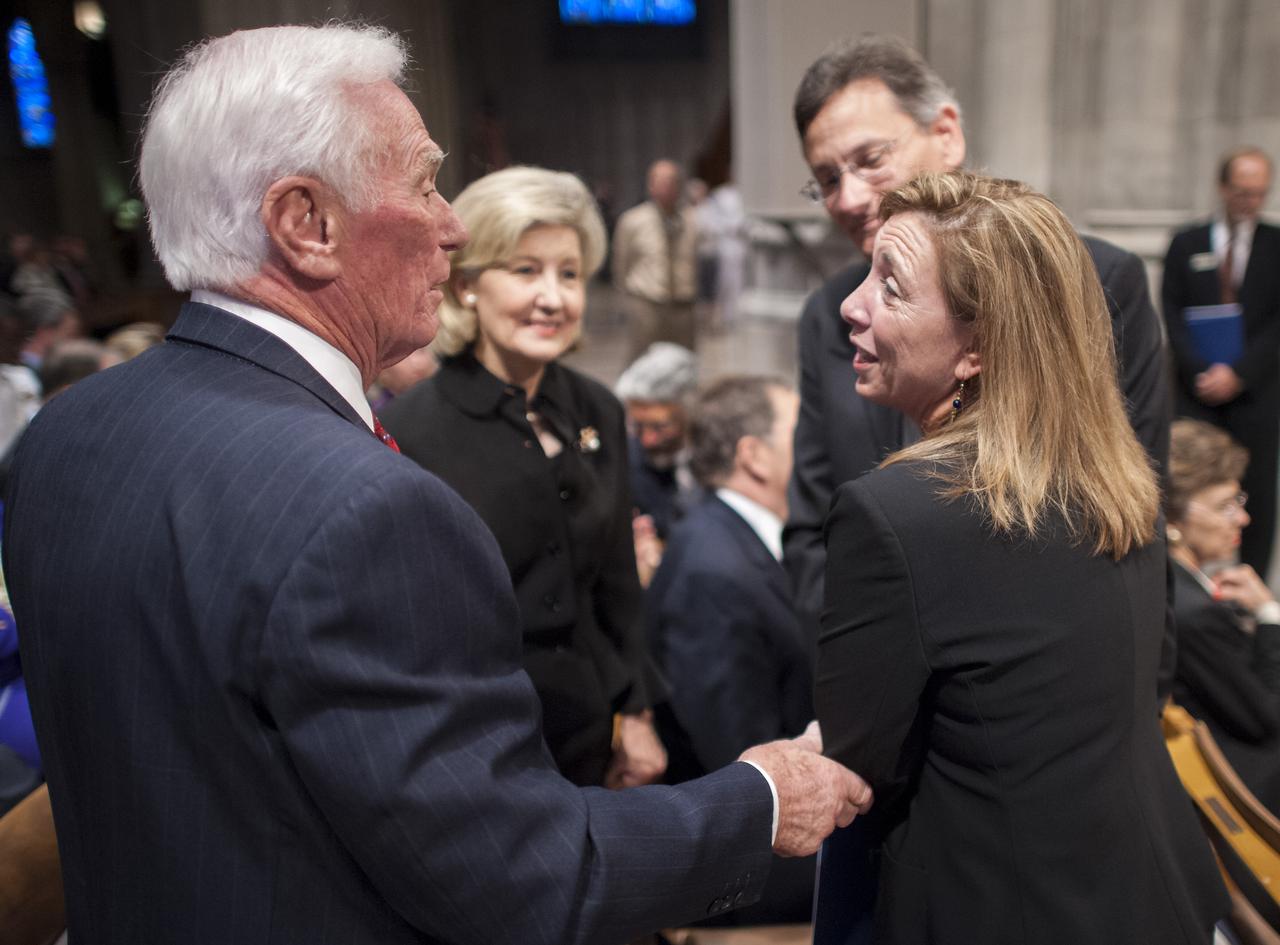
NASA Deputy Administrator Lori Garver, right, shares a moment with Apollo 17 mission commander Gene Cernan, the last man to walk on the moon, left, as U.S. Sen. Kay Bailey Hutchison, R-Texas, center looks on prior to a memorial service celebrating the life of Neil Armstrong, Thursday, Sept. 13, 2012, at the Washington National Cathedral. Armstrong, the first man to walk on the moon during the 1969 Apollo 11 mission, died Saturday, Aug. 25. He was 82. Photo Credit: (NASA/Bill Ingalls)
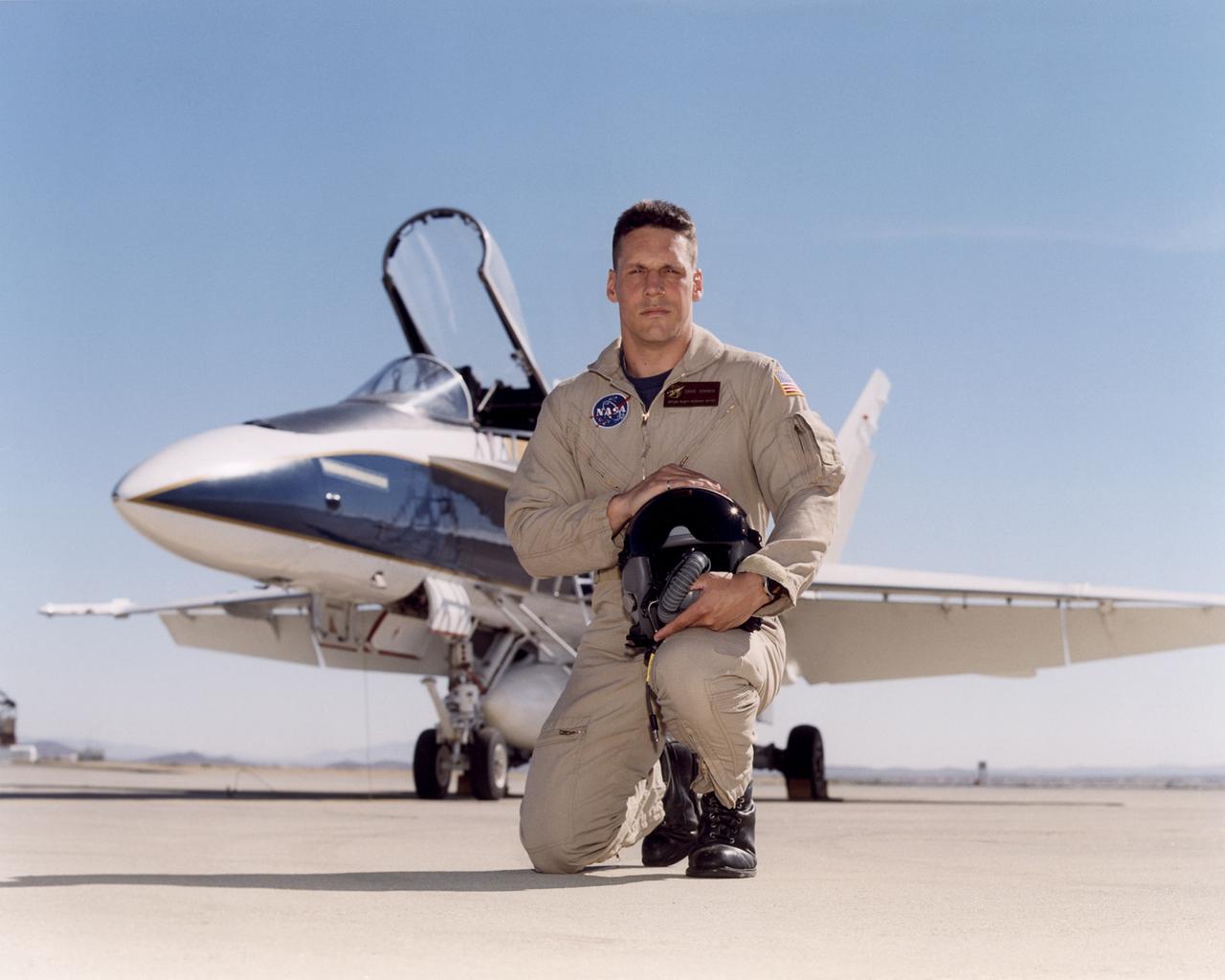
Craig R. Bomben became a pilot in the Flight Crew Branch of NASA's Dryden Flight Research Center, Edwards, Calif., in June 2001. His flying duties include a variety of research and support activities while piloting the F/A-18, DC-8, T-34C and King Air aircraft. He has more than 17 years and 3,800 hours of military and civilian flight experience in over 50 different aircraft types. Bomben came to NASA Dryden from a U.S. Navy assignment to the Personnel Exchange Program, Canada. He served as a test pilot in the Canadian Armed Forces located in Cold Lake, Alberta. He participated in numerous developmental programs to include CT-133 airborne ejection seat testing, F/A-18 weapons flutter testing and F/A-18 night vision goggles integration. Bomben performed U.S. Navy fleet service in 1995 as a strike-fighter department head. He completed two overseas deployments onboard the USS George Washington and USS Stennis. As a combat strike leader, he headed numerous multi-national missions over Iraq in support of Operation Southern Watch. Bomben graduated from the U.S. Naval Test Pilot School in 1992 and was subsequently assigned to the Naval Weapons Test Squadron at Pt. Mugu, Calif. During this tour he developed the F-14D bombsight and worked on various other F-14D and F/A-18 weapon systems developmental programs. Bomben is a 1985 graduate of Washington State University with a bachelor of science degree in electrical engineering. He graduated from naval flight training in 1987 and was recognized as a Commodore List graduate. His first assignment was to Naval Air Station Pensacola, Fla., where he was an instructor in the T-2B Buckeye. When selected to fly the F/A-18 in 1989, he joined a fleet squadron and deployed aboard the USS Forrestal. Bomben is married to the former Aissa Asuncion. They live in Lancaster, Calif., with their 3 children.
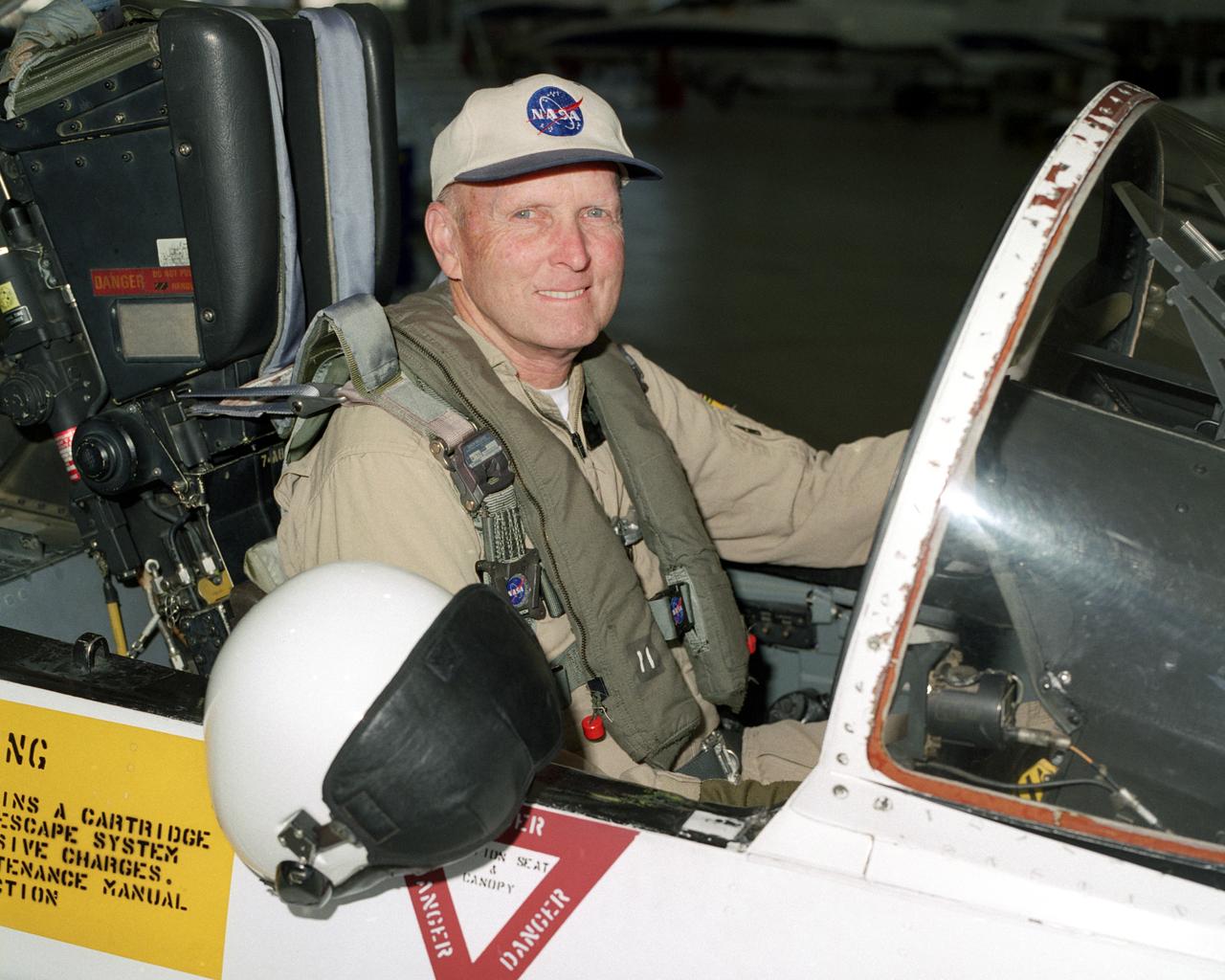
Former NASA astronaut C. Gordon Fullerton, seated in the cockpit of an F/A-18, is a research pilot at NASA's Dryden Flight Research Center, Edwards, Calif. Since transferring to Dryden in 1986, his assignments have included a variety of flight research and support activities piloting NASA's B-52 launch aircraft, the 747 Shuttle Carrier Aircraft (SCA), and other multi-engine and high performance aircraft. He flew a series of development air launches of the X-38 prototype Crew Return Vehicle and in the launches for the X-43A Hyper-X project. Fullerton also flies Dryden's DC-8 Airborne Science aircraft in support a variety of atmospheric physics, ground mapping and meteorology studies. Fullerton also was project pilot on the Propulsion Controlled Aircraft program, during which he successfully landed both a modified F-15 and an MD-11 transport with all control surfaces neutralized, using only engine thrust modulation for control. Fullerton also evaluated the flying qualities of the Russian Tu-144 supersonic transport during two flights in 1998, one of only two non-Russian pilots to fly that aircraft. With more than 15,000 hours of flying time, Fullerton has piloted 135 different types of aircraft in his career. As an astronaut, Fullerton served on the support crews for the Apollo 14, 15, 16, and 17 lunar missions. In 1977, Fullerton was on one of the two flight crews that piloted the Space Shuttle prototype Enterprise during the Approach and Landing Test Program at Dryden. Fullerton was the pilot on the STS-3 Space Shuttle orbital flight test mission in 1982, and commanded the STS-51F Spacelab 2 mission in 1985. He has logged 382 hours in space flight. In July 1988, he completed a 30-year career with the U.S. Air Force and retired as a colonel.
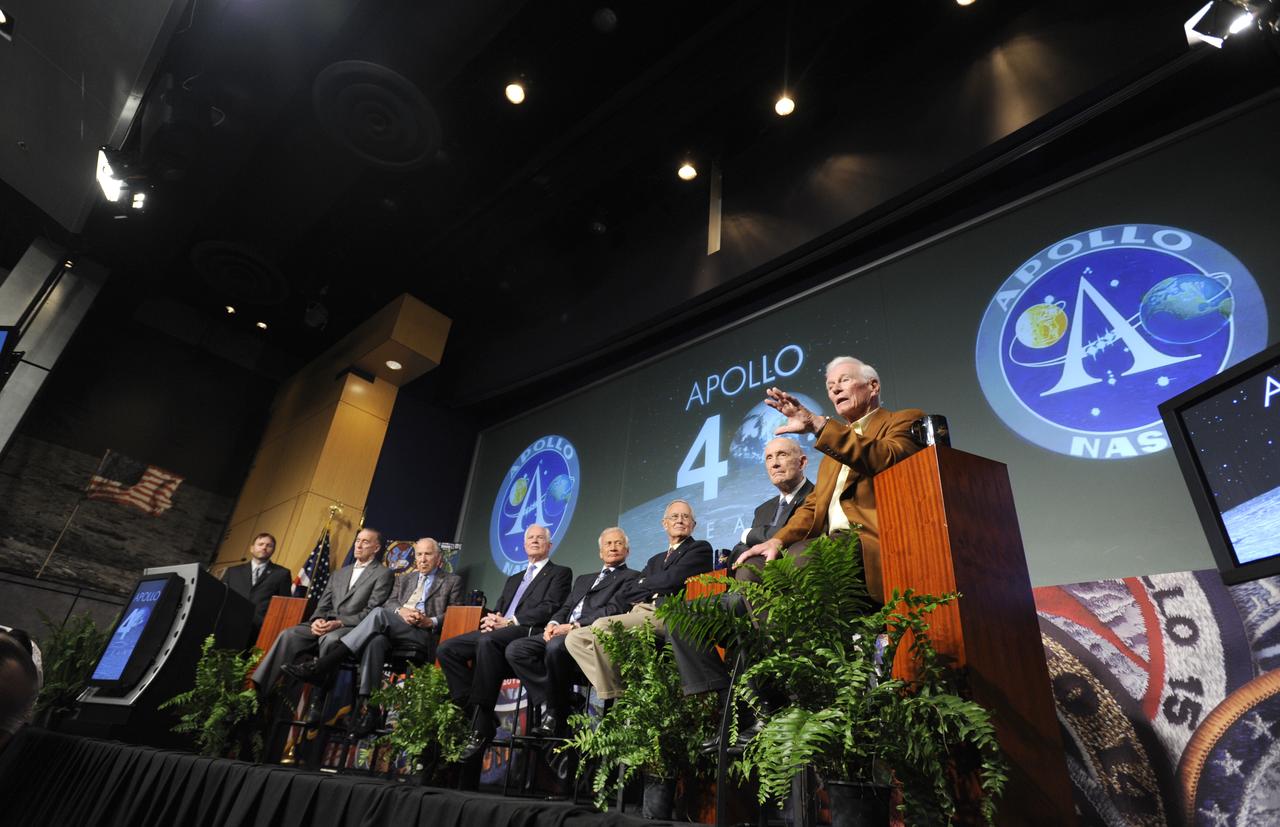
Apollo astronauts from left, Walt Cunningham (Apollo 17), James Lovell (Apollo 8 Apollo 13), David Scott (Apollo 9 Apollo 15), Buzz Aldrin (Apollo 11), Charles Duke (Apollo 16), Thomas Stafford (Apollo 10) and Eugene Cernan (Apollo 17) are seen during the 40th anniversary of the Apollo 11 mission and the walk on the moon press conference, Monday, July 20, 2009, at NASA Headquarters in Washington. Photo Credit: (NASA/Paul E. Alers)
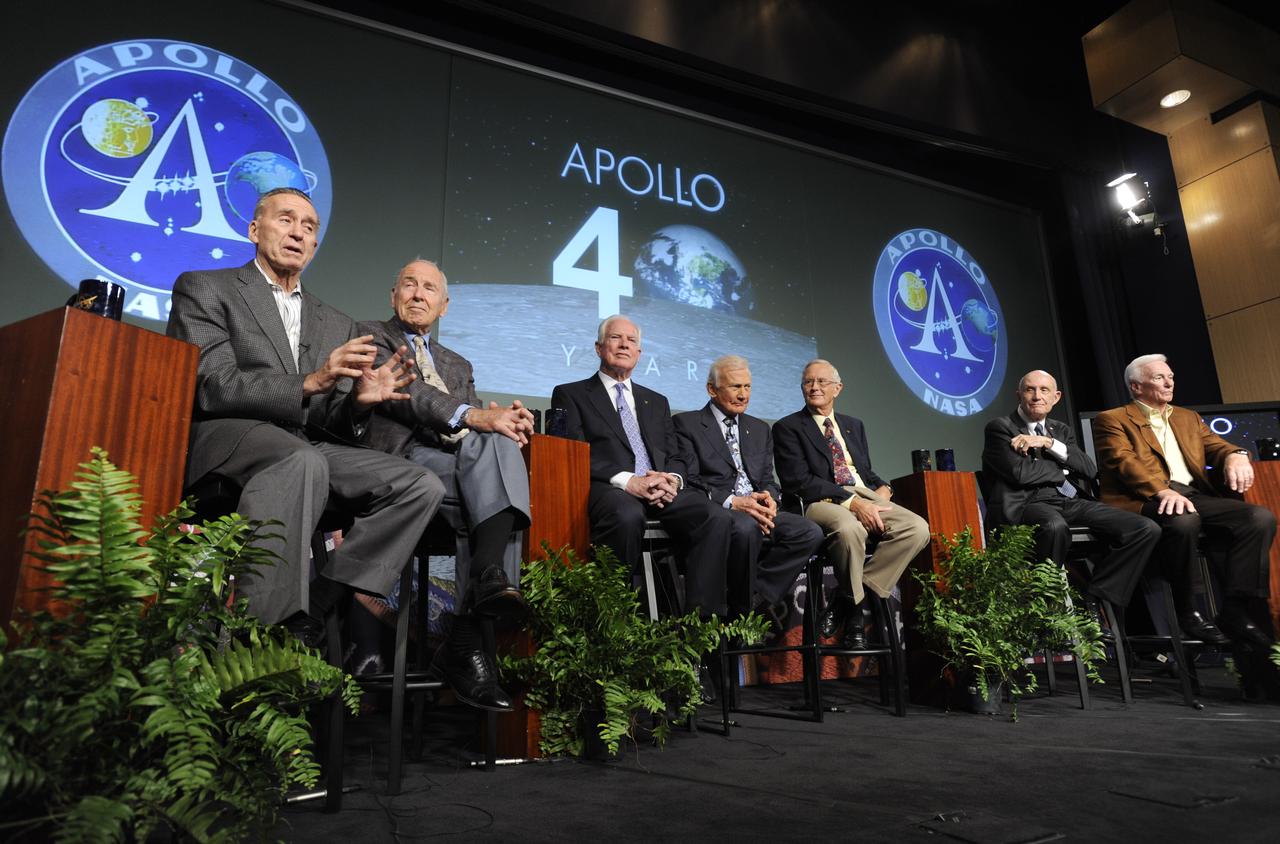
Apollo astronauts from left, Walt Cunningham (Apollo 17), James Lovell (Apollo 8 Apollo 13), David Scott (Apollo 9 Apollo 15), Buzz Aldrin (Apollo 11), Charles Duke (Apollo 16), Thomas Stafford (Apollo 10) and Eugene Cernan (Apollo 17) are seen during the 40th anniversary of the Apollo 11 mission and the walk on the moon press conference, Monday, July 20, 2009, at NASA Headquarters in Washington. Photo Credit: (NASA/Paul E. Alers)

Apollo astronauts from left, Walt Cunningham (Apollo 17), James Lovell (Apollo 8 Apollo 13), David Scott (Apollo 9 Apollo 15), Buzz Aldrin (Apollo 11), Charles Duke (Apollo 16), Thomas Stafford (Apollo 10) and Eugene Cernan (Apollo 17) are seen during the 40th anniversary of the Apollo 11 mission and the walk on the moon press conference, Monday, July 20, 2009, at NASA Headquarters in Washington. Photo Credit: (NASA/Paul E. Alers)