
NASA Administrator Jim Bridenstine speaks prior to the National Symphony Orchestra’s performance of Gustav Holst’s “The Planets,” Wednesday, Jan. 22, 2020, at The Anthem in Washington, DC. Photo Credit: (NASA/Joel Kowsky)

Conductor Gemma New speaks to the audience during the National Symphony Orchestra’s performance of Gustav Holst’s “The Planets” Wednesday, Jan. 22, 2020, at The Anthem in Washington, DC. Photo Credit: (NASA/Joel Kowsky)

Attendees of the National Symphony Orchestra’s performance of Gustav Holst’s “The Planets” view a model of NASA’s Gateway, Wednesday, Jan. 22, 2020, at The Anthem in Washington, DC. Photo Credit: (NASA/Joel Kowsky)

Attendees of the National Symphony Orchestra’s performance of Gustav Holst’s “The Planets” take pictures in a model of a spacesuit, Wednesday, Jan. 22, 2020, at The Anthem in Washington, DC. Photo Credit: (NASA/Joel Kowsky)
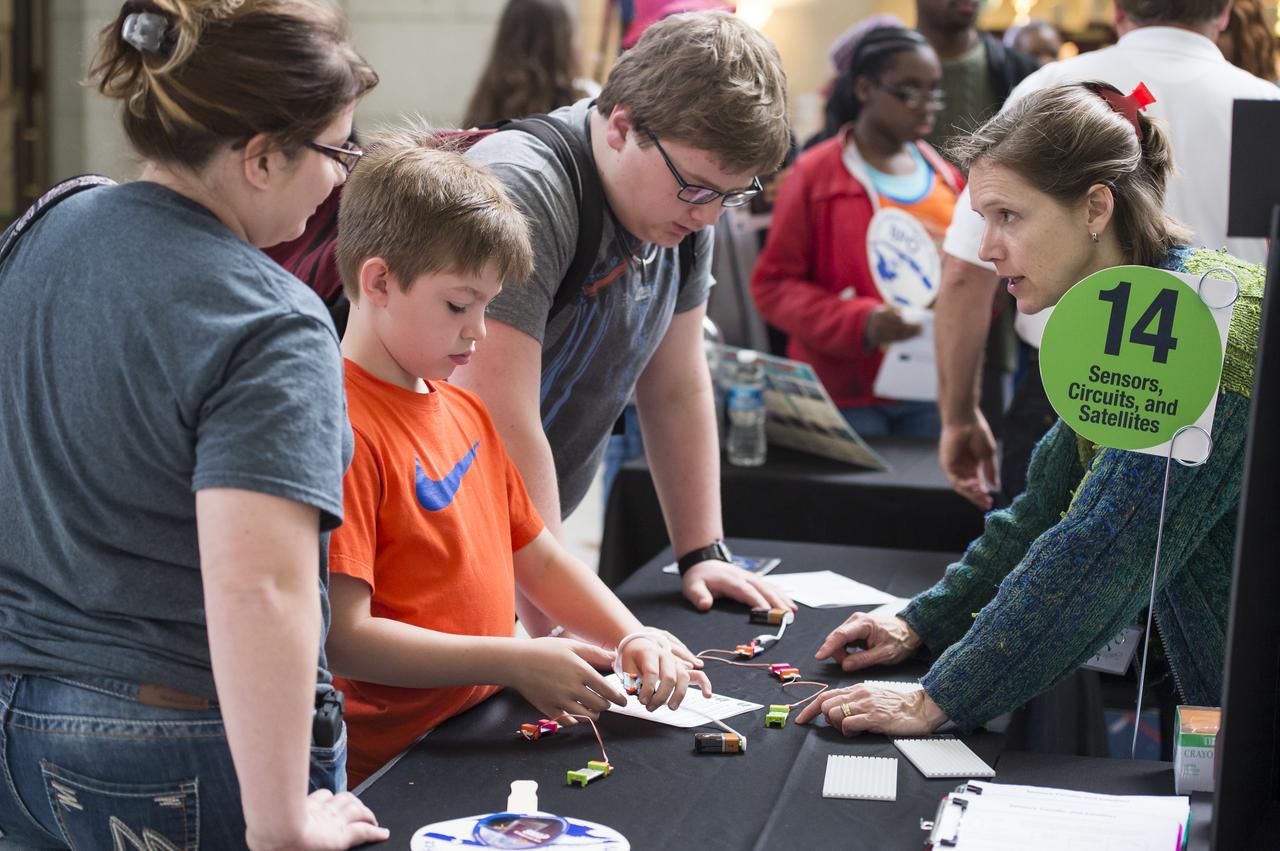
An attendee of NASA's Earth Day event conducts an experiment with circuits. The event took place at Union Station in Washington, DC on April 22, 2014. Photo Credit: (NASA/Aubrey Gemignani)
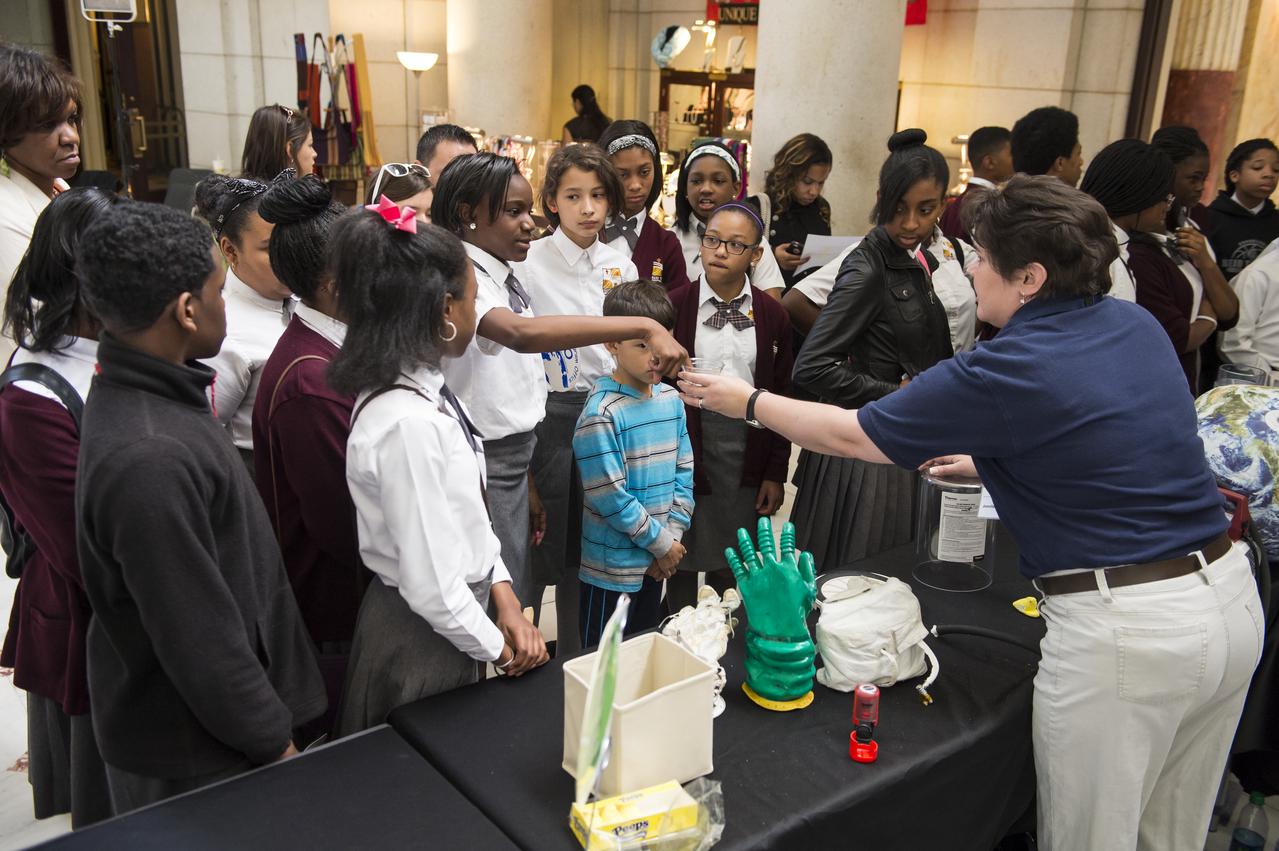
Students listen intently while an exhibitor conducts an experiment at NASA's Earth Day event. The event took place at Union Station in Washington, DC on April 22, 2014. Photo Credit: (NASA/Aubrey Gemignani)
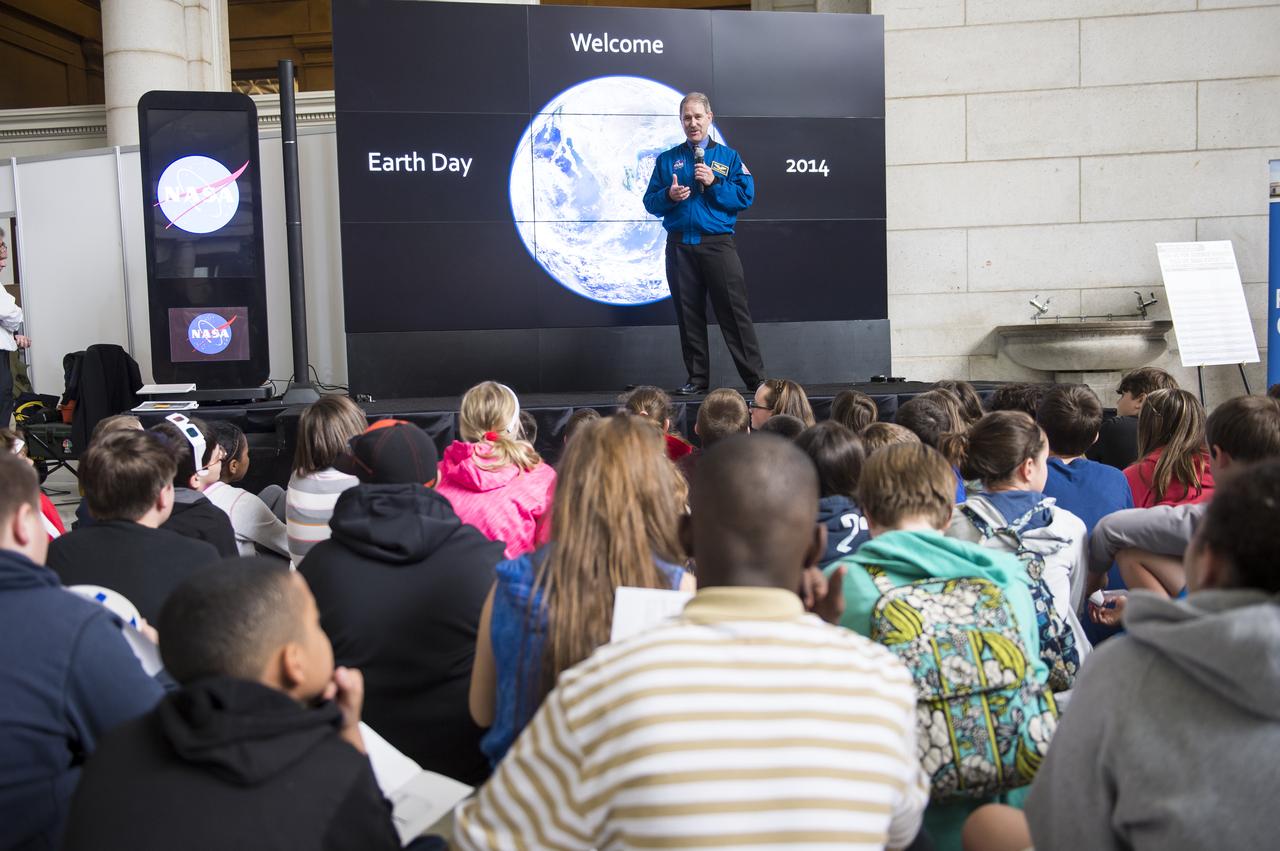
Students listen intently while Astronaut John Mace Grunsfeld speaks at NASA's Earth Day event. The event took place at Union Station in Washington, DC on April 22, 2014. Photo Credit: (NASA/Aubrey Gemignani)

NASA's Administrator, Charles Bolden, conducts an experiment using circuits at NASA's Earth Day event. The event took place at Union Station in Washington, DC on April 22, 2014. Photo Credit: (NASA/Aubrey Gemignani)
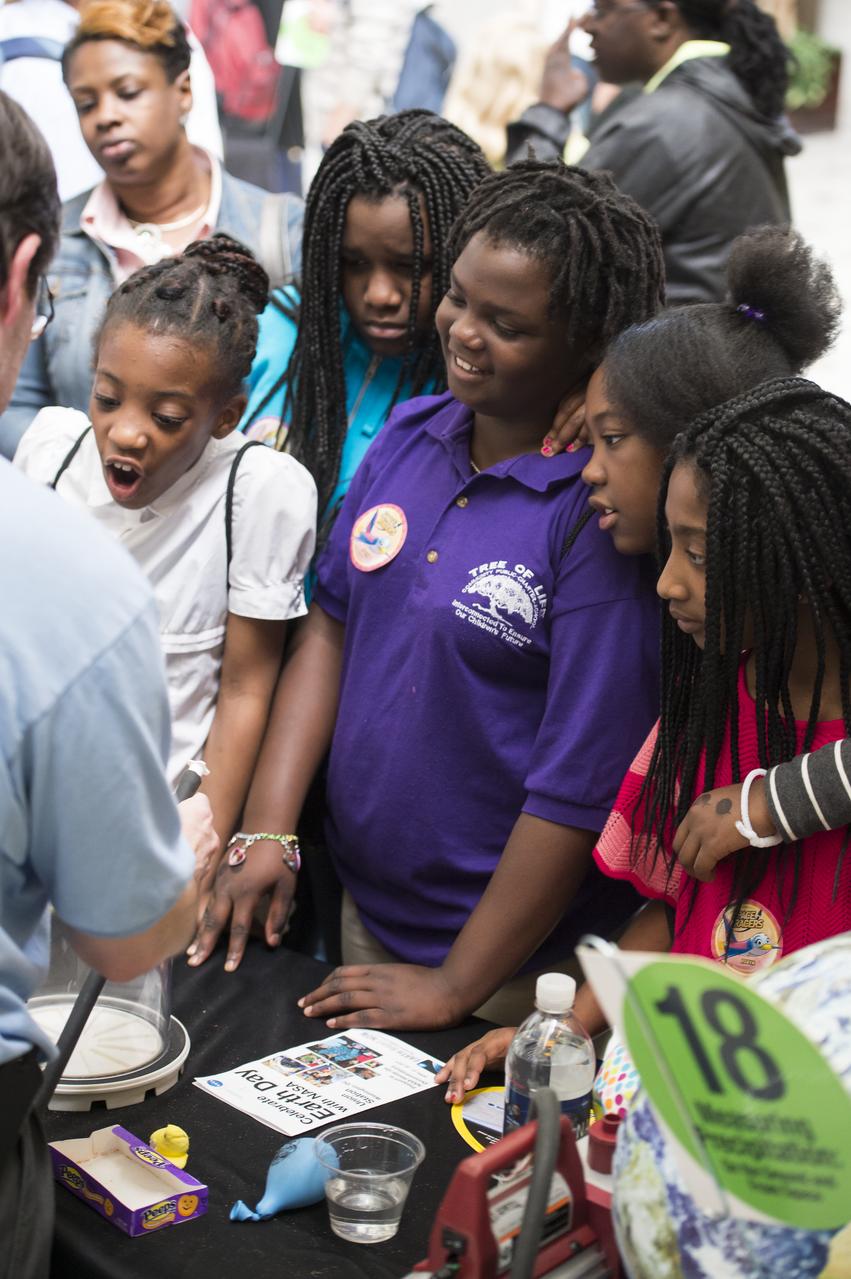
Students listen intently while an exhibitor conducts an experiment at NASA's Earth Day event. The event took place at Union Station in Washington, DC on April 22, 2014. Photo Credit: (NASA/Aubrey Gemignani)

Attendees of the National Symphony Orchestra’s performance of Gustav Holst’s “The Planets” view an interactive projection of planetary imagery, Wednesday, Jan. 22, 2020, at The Anthem in Washington, DC. Photo Credit: (NASA/Joel Kowsky)
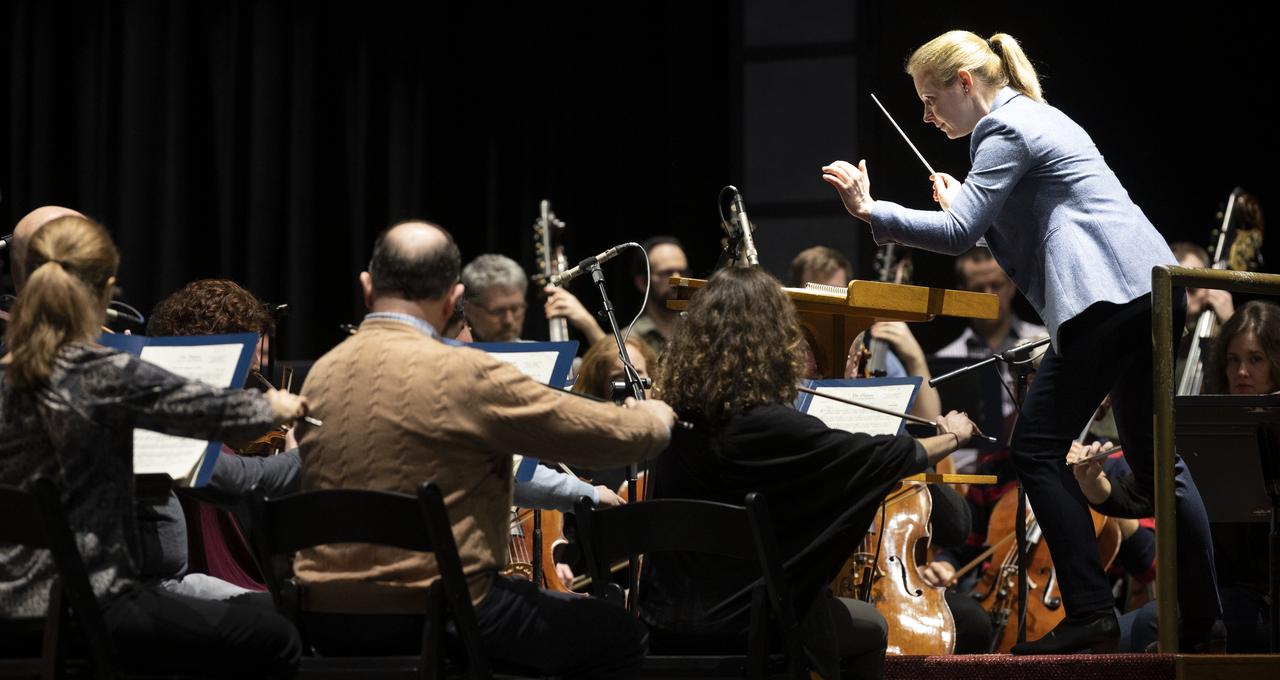
Gemma New conducts the National Symphony Orchestra as they perform Gustav Holst’s “The Planets” Wednesday, Jan. 22, 2020, at The Anthem in Washington, DC. Photo Credit: (NASA/Joel Kowsky)
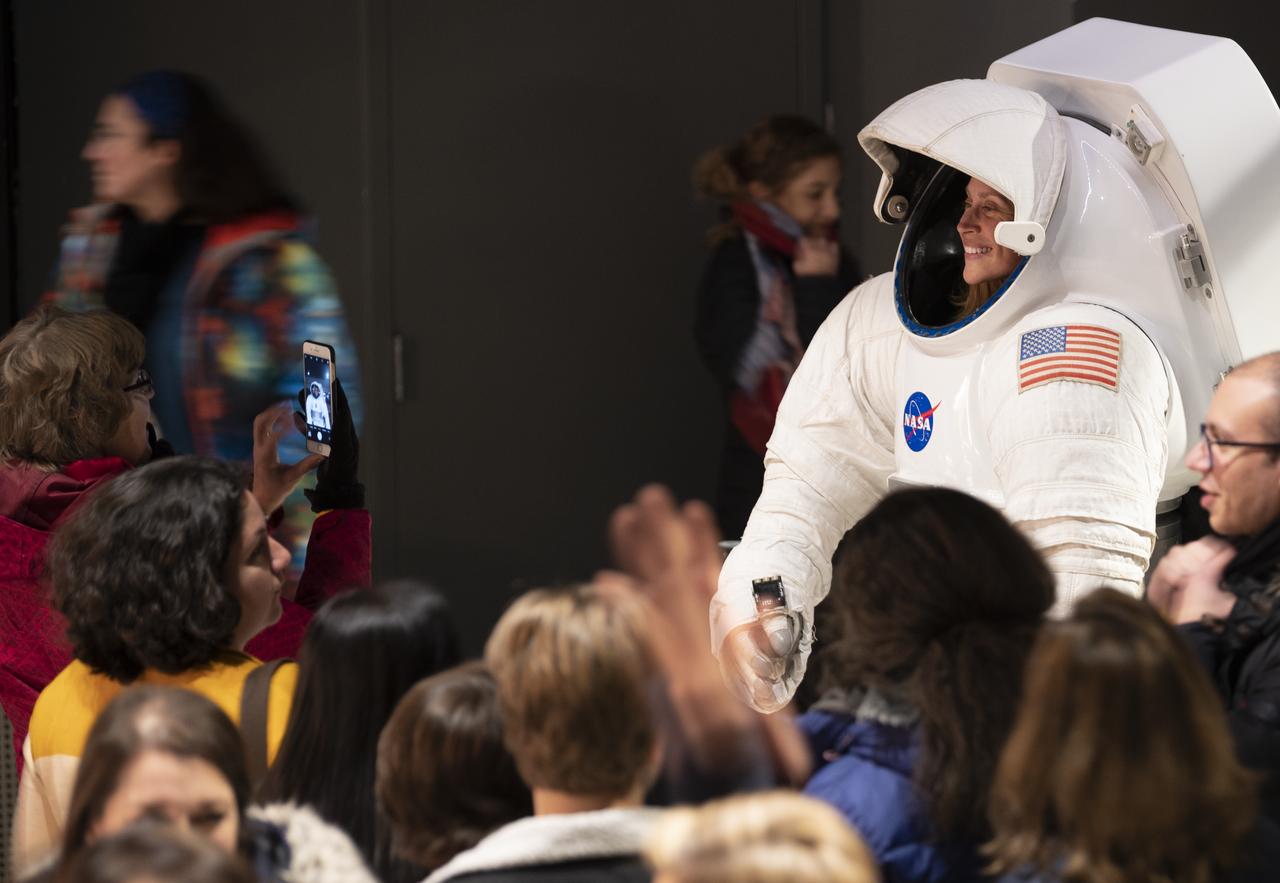
Attendees of the National Symphony Orchestra’s performance of Gustav Holst’s “The Planets” take pictures in a model of a spacesuit, Wednesday, Jan. 22, 2020, at The Anthem in Washington, DC. Photo Credit: (NASA/Joel Kowsky)
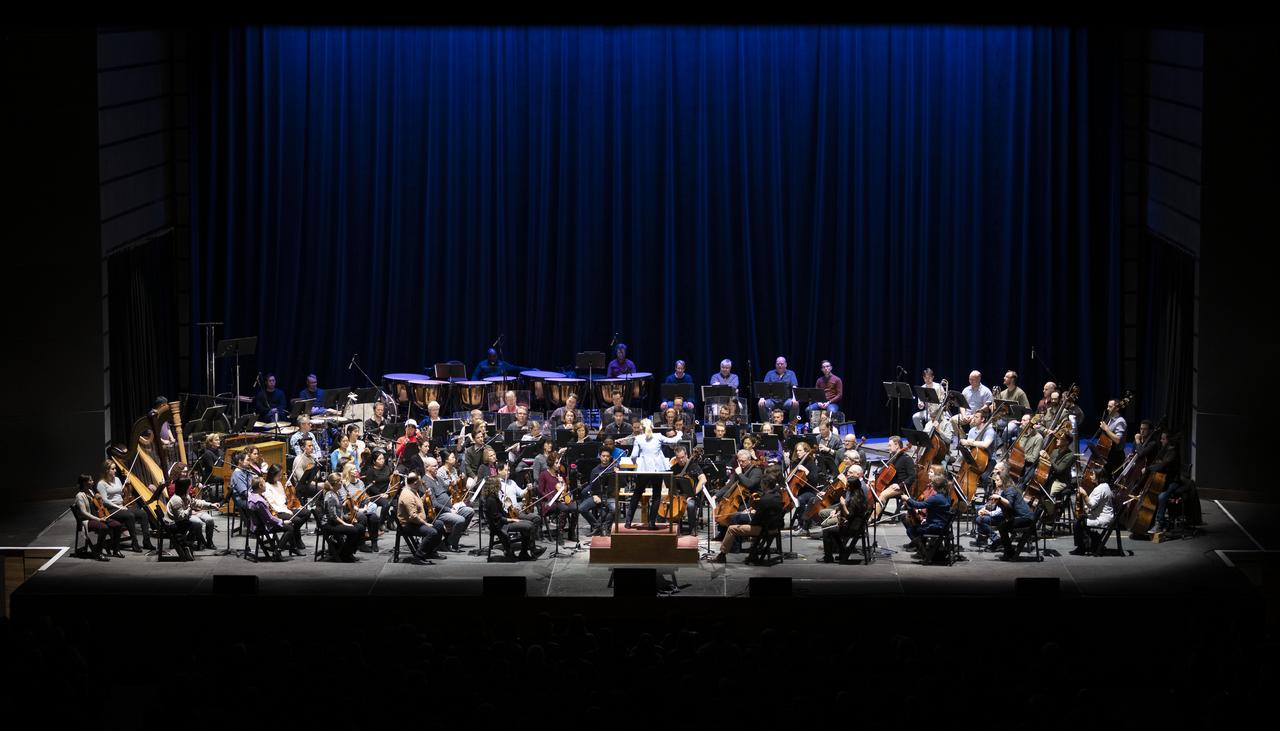
Gemma New conducts the National Symphony Orchestra as they perform Gustav Holst’s “The Planets” Wednesday, Jan. 22, 2020, at The Anthem in Washington, DC. Photo Credit: (NASA/Joel Kowsky)

Gemma New conducts the National Symphony Orchestra as they perform Gustav Holst’s “The Planets” Wednesday, Jan. 22, 2020, at The Anthem in Washington, DC. Photo Credit: (NASA/Joel Kowsky)
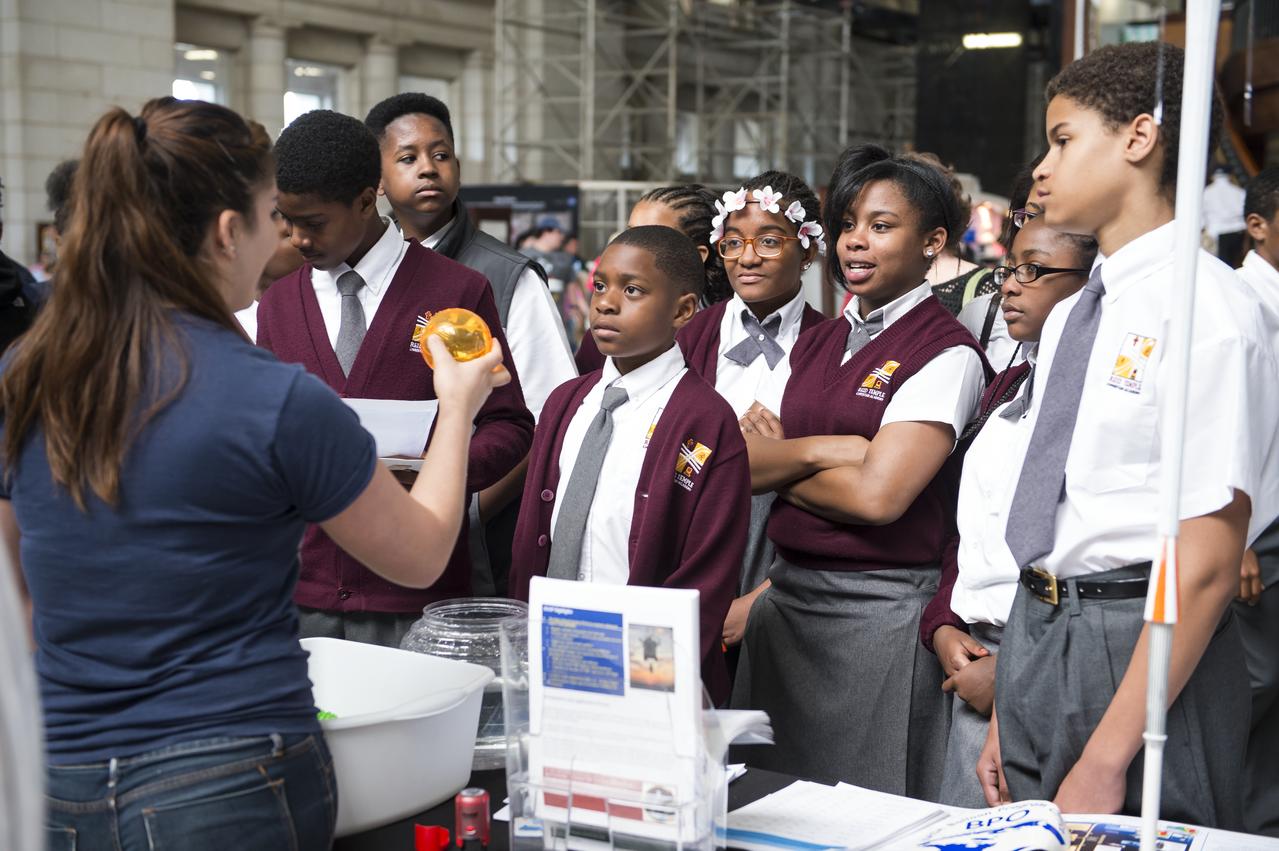
Students listen intently while an exhibitor conducts an experiment at NASA's Earth Day event. The event took place at Union Station in Washington, DC on April 22, 2014. Photo Credit: (NASA/Aubrey Gemignani)

Attendees of the National Symphony Orchestra performance of Gustav Holst’s “The Planets” listen to a presentation about Mars and Jupiter as they arrive, Wednesday, Jan. 22, 2020, at The Anthem in Washington, DC. Photo Credit: (NASA/Joel Kowsky)

NASA Administrator Jim Bridenstine speaks prior to the National Symphony Orchestra’s performance of Gustav Holst’s “The Planets,” Wednesday, Jan. 22, 2020, at The Anthem in Washington, DC. Photo Credit: (NASA/Joel Kowsky)

The Chromatics perform prior to a performance by National Symphony Orchestra of Gustav Holst’s “The Planets,” Wednesday, Jan. 22, 2020, at The Anthem in Washington, DC. Photo Credit: (NASA/Joel Kowsky)
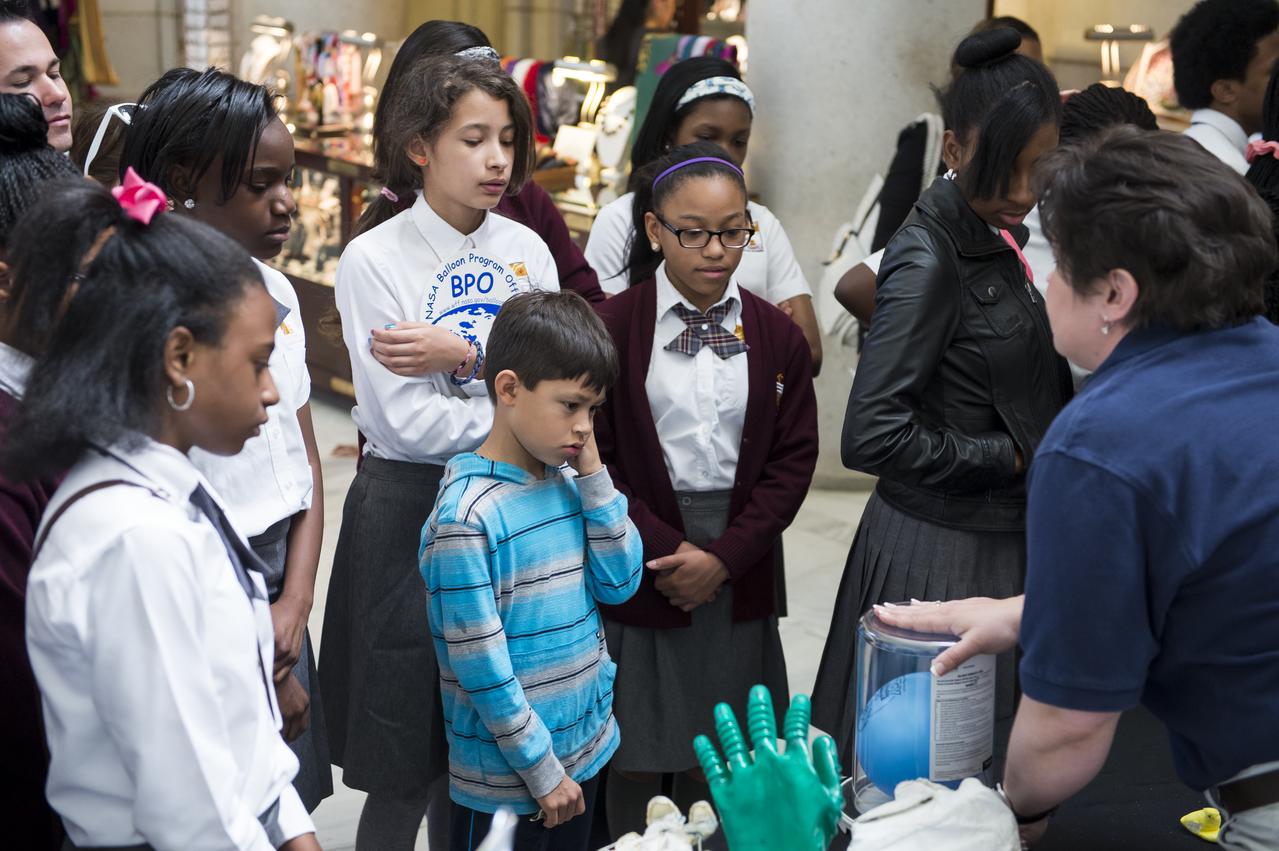
Students listen intently while an exhibitor conducts an experiment at NASA's Earth Day event. The event took place at Union Station in Washington, DC on April 22, 2014. Photo Credit: (NASA/Aubrey Gemignani)
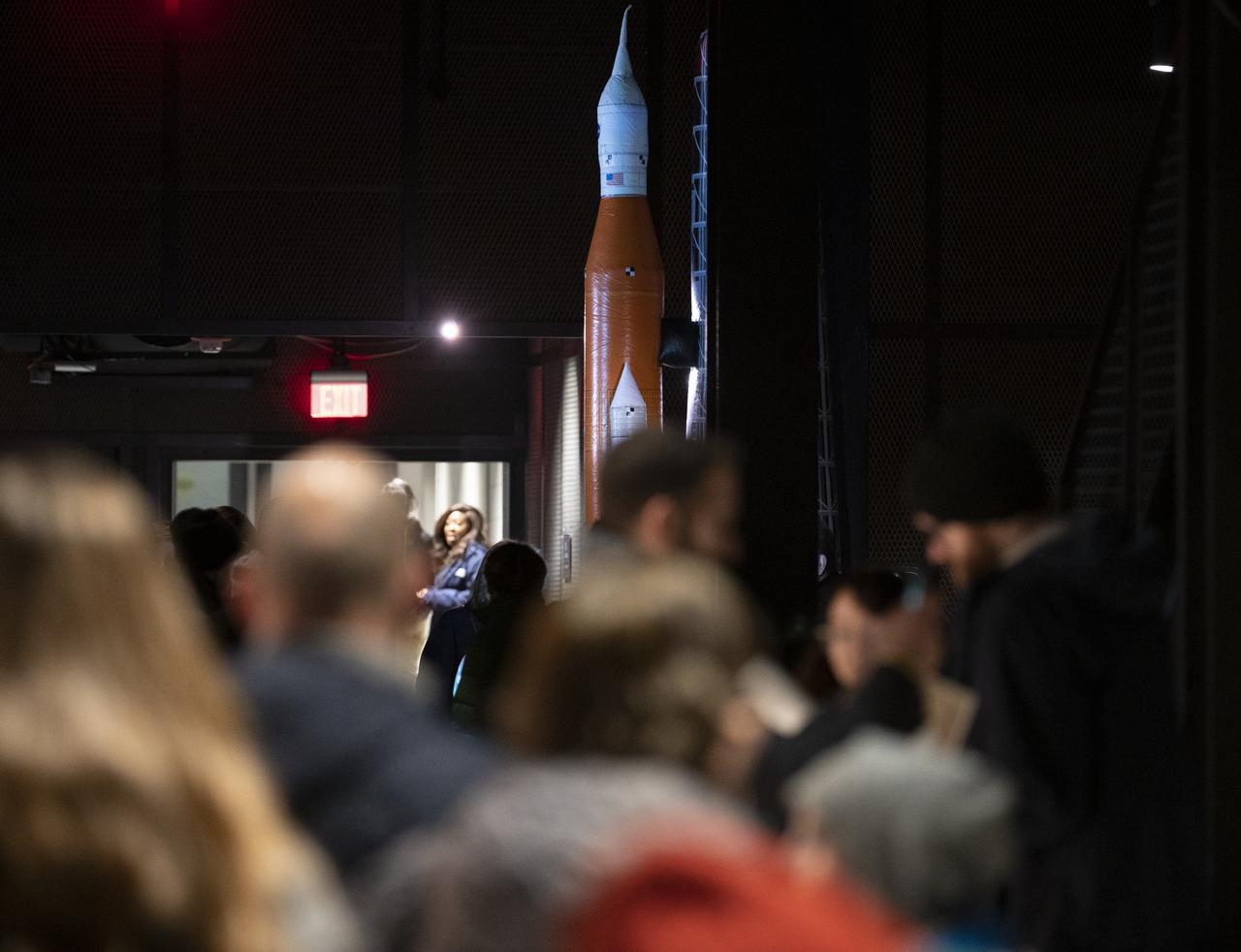
An inflatable model of NASA’s Space Launch System is seen prior to the National Symphony Orchestra’s performance of Gustav Holst’s “The Planets,” Wednesday, Jan. 22, 2020, at The Anthem in Washington, DC. Photo Credit: (NASA/Joel Kowsky)

Students listen intently while an exhibitor conducts an experiment at NASA's Earth Day event. The event took place at Union Station in Washington, DC on April 22, 2014. Photo Credit: (NASA/Aubrey Gemignani)

NASA Administrator Jim Bridenstine speaks prior to the National Symphony Orchestra’s performance of Gustav Holst’s “The Planets,” Wednesday, Jan. 22, 2020, at The Anthem in Washington, DC. Photo Credit: (NASA/Joel Kowsky)

The marquee at The Anthem is seen prior to the doors opening for the National Symphony Orchestra performance of Gustav Holst’s “The Planets” Wednesday, Jan. 22, 2020, in Washington, DC. Photo Credit: (NASA/Joel Kowsky)

Gemma New conducts the National Symphony Orchestra as they perform Gustav Holst’s “The Planets” Wednesday, Jan. 22, 2020, at The Anthem in Washington, DC. Photo Credit: (NASA/Joel Kowsky)
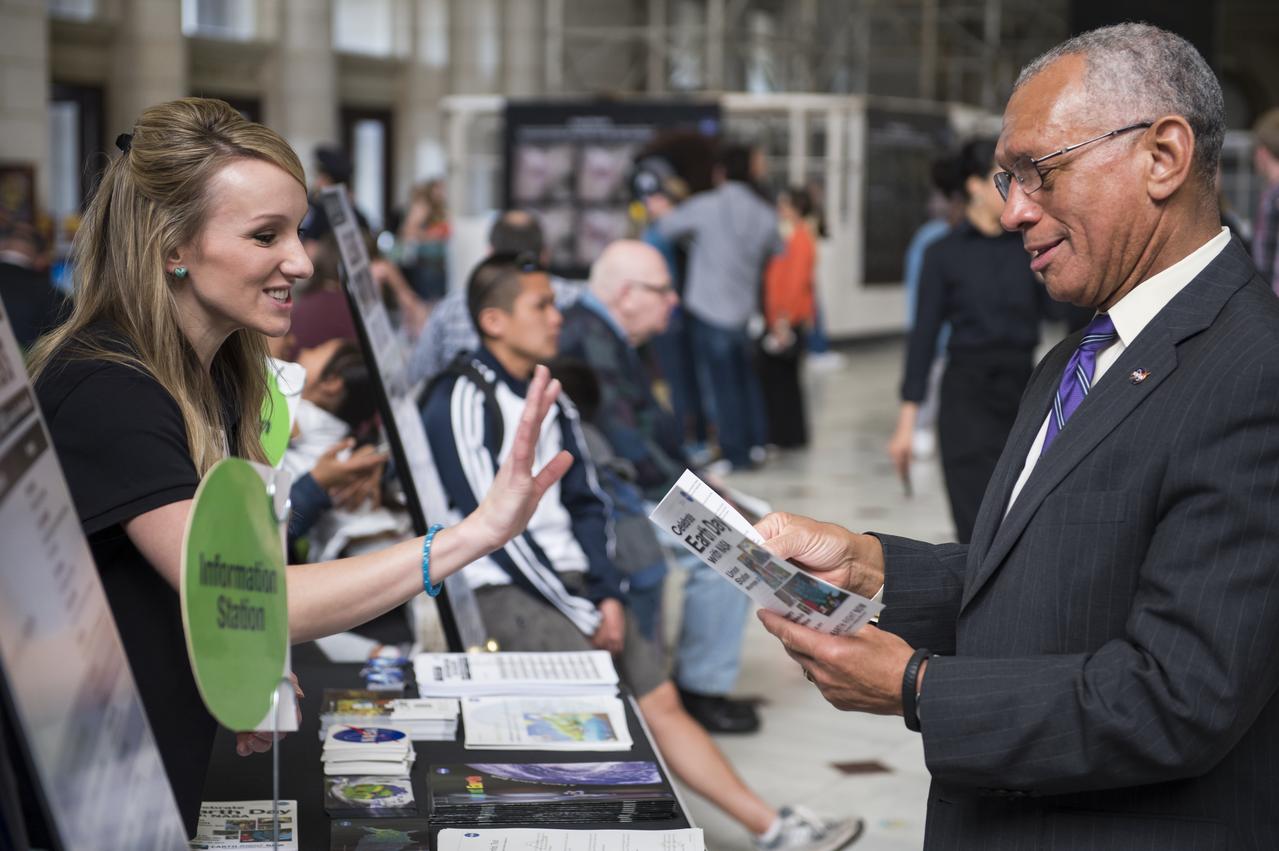
NASA's Administrator, Charles Bolden, visits the exhibits at NASA's Earth Day event. The event took place at Union Station in Washington, DC on April 22, 2014. Photo Credit: (NASA/Aubrey Gemignani)
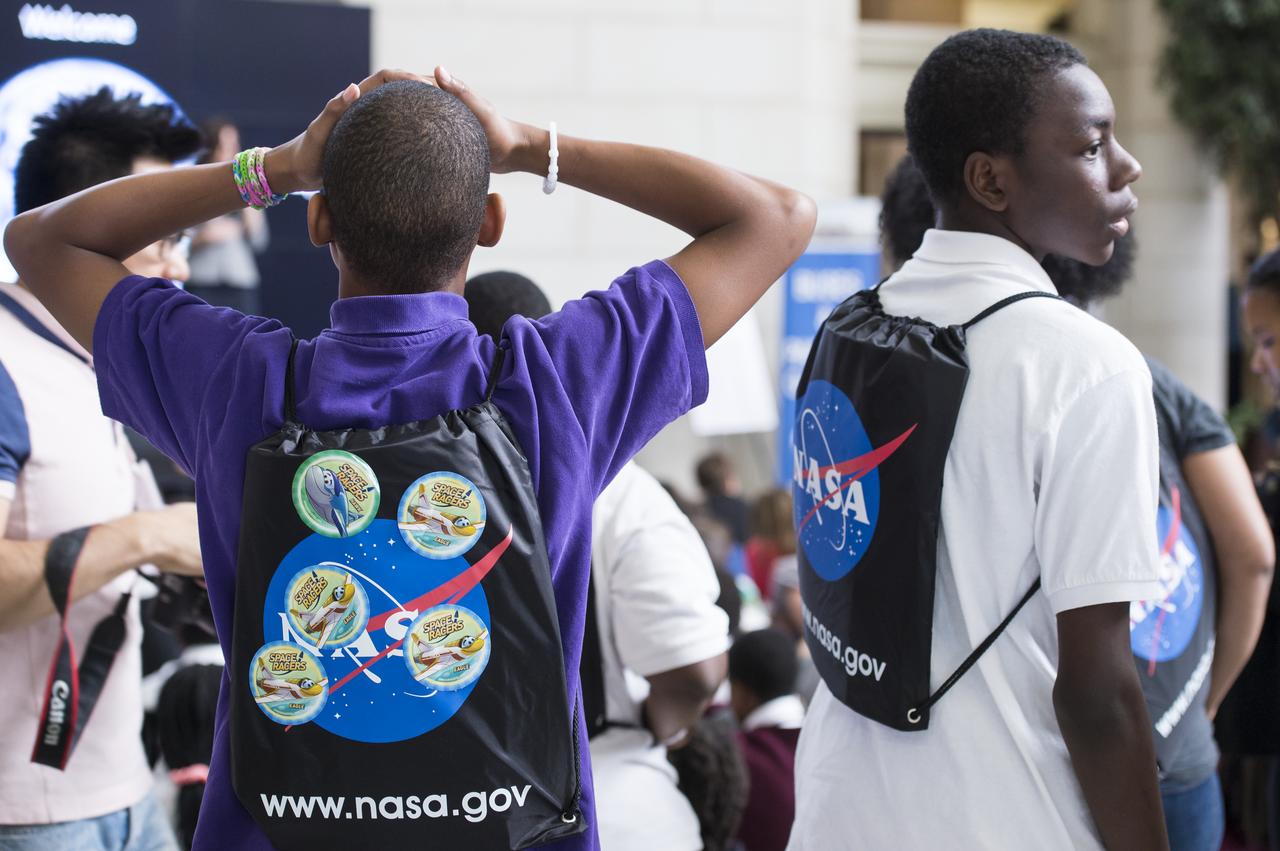
Students listen intently to a speaker while at NASA's Earth Day event. The event took place at Union Station in Washington, DC on April 22, 2014. Photo Credit: (NASA/Aubrey Gemignani)
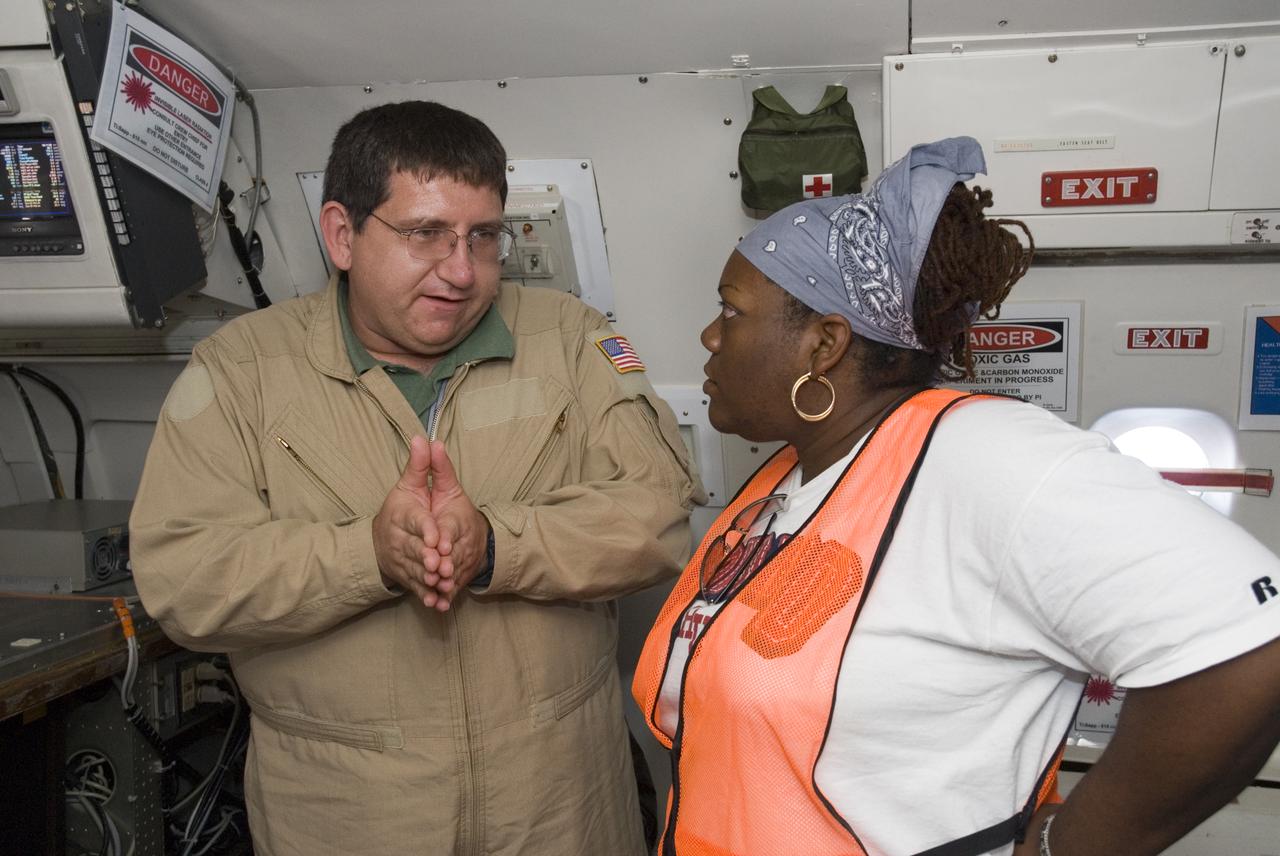
NASA African Monsoon Multidisciplinary Analyses (NAMMA) DC-8 deployment to Cape Verde, Sal island, Africa
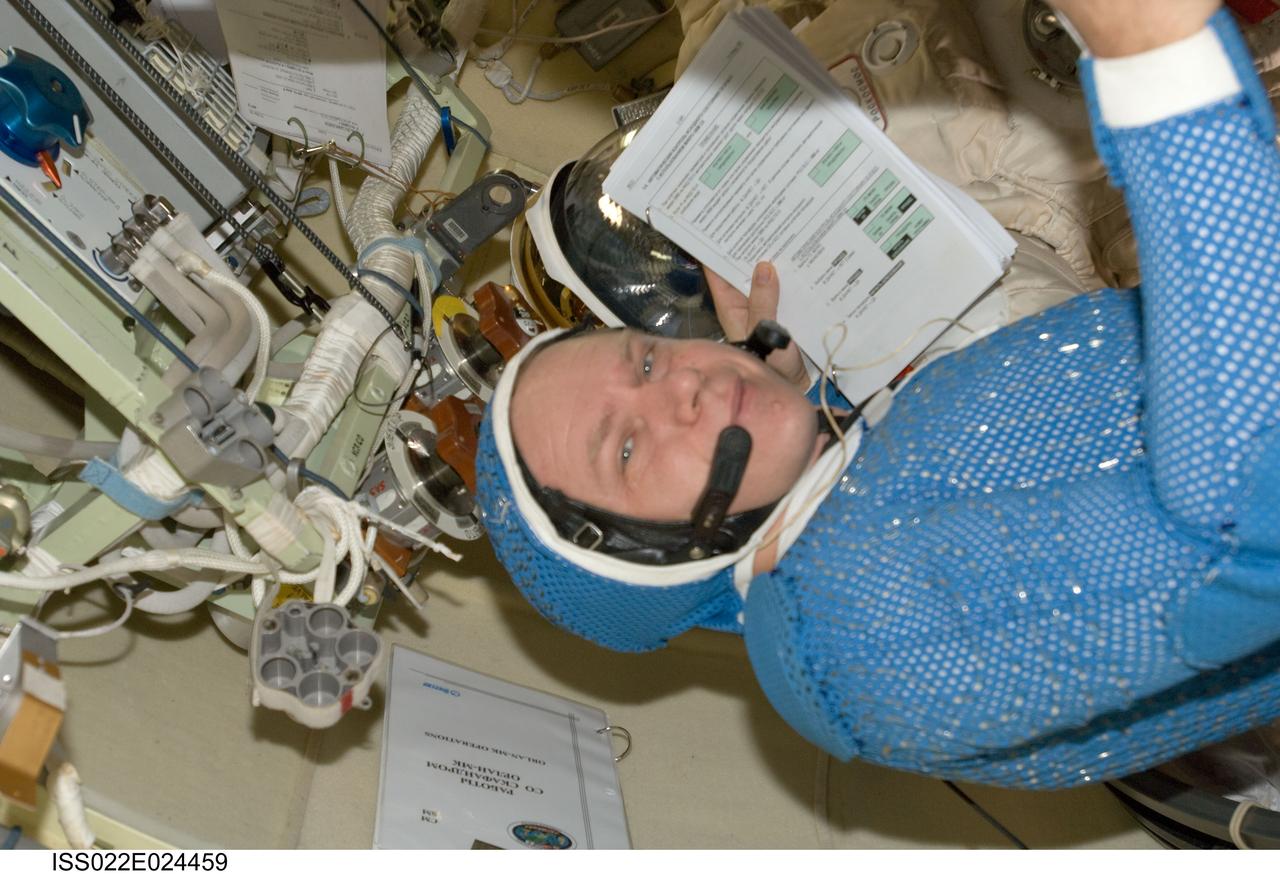
ISS022-E-024459 (12 Jan. 2010) --- Attired in a blue thermal undergarment that complements the Russian Orlan spacesuit, Russian cosmonaut Oleg Kotov, Expedition 22 flight engineer, is pictured in the Pirs Docking Compartment of the International Space Station.
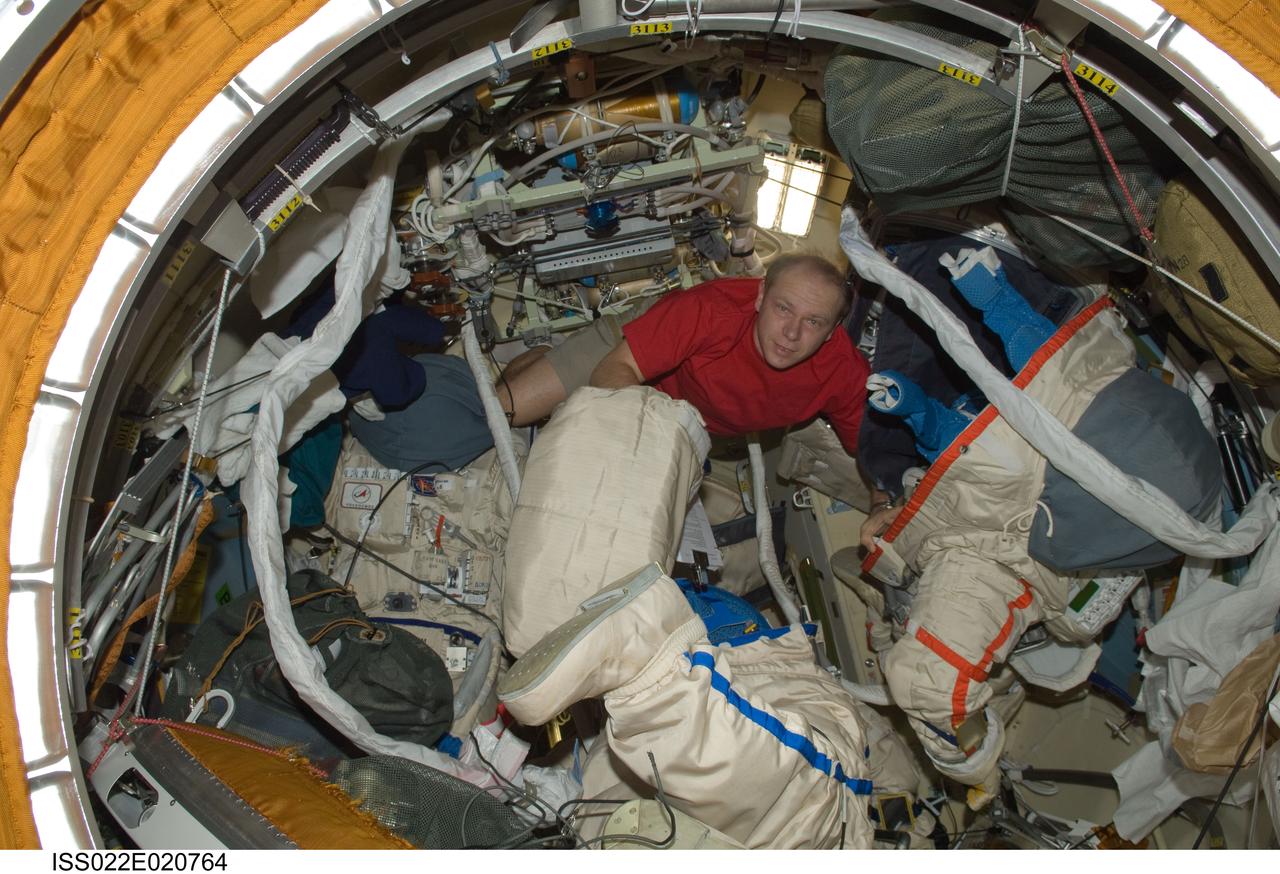
ISS022-E-020764 (7 Jan. 2010) --- Russian cosmonaut Oleg Kotov, Expedition 22 flight engineer, works with extravehicular activity (EVA) equipment and Russian Orlan spacesuits in the Pirs Docking Compartment of the International Space Station.

ISS022-E-020762 (7 Jan. 2010) --- Russian cosmonaut Maxim Suraev, Expedition 22 flight engineer, works with extravehicular activity (EVA) equipment and Russian Orlan spacesuits in the Pirs Docking Compartment of the International Space Station.
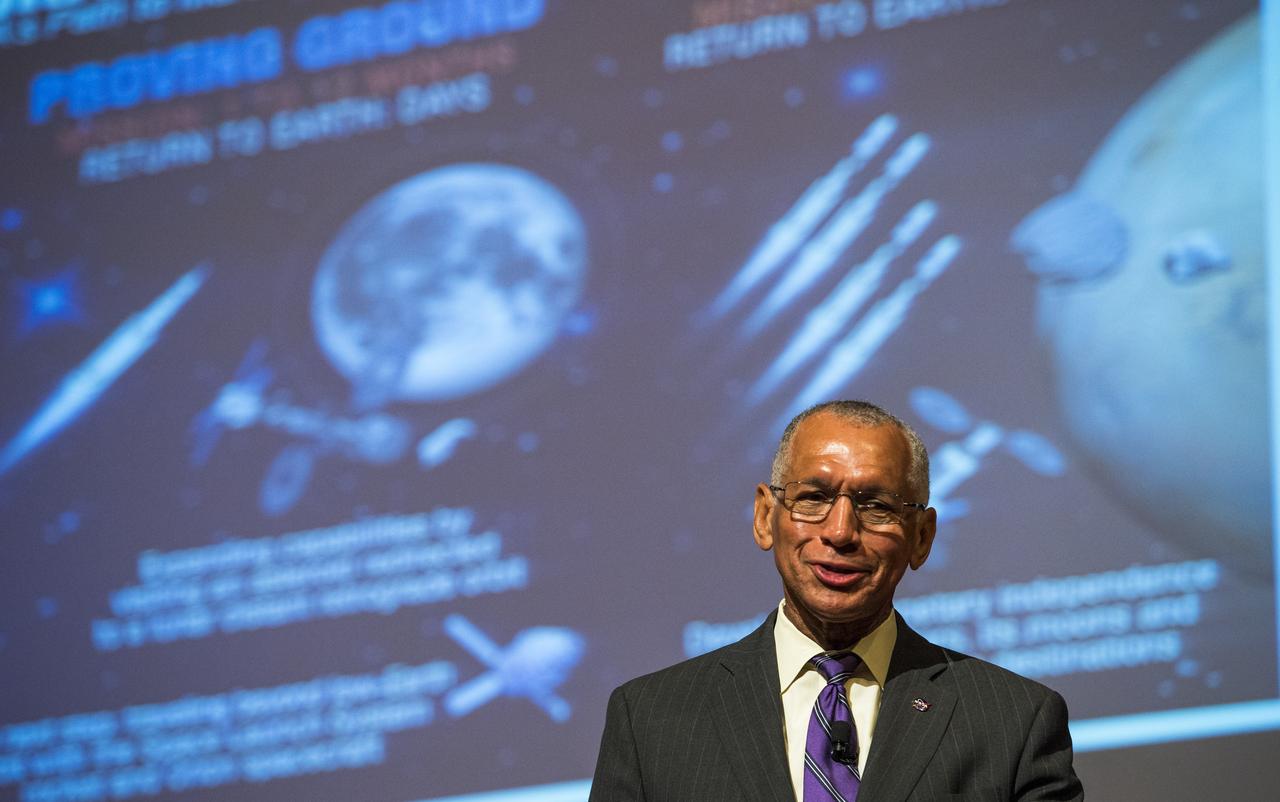
NASA Administrator Charles Bolden answers questions from the audience after giving the opening keynote address at the Humans to Mars Summit on April 22, 2014 at George Washington University in Washington, DC. Administrator Bolden spoke of NASA's path to the human exploration of Mars during his remarks. Photo Credit: (NASA/Joel Kowsky)
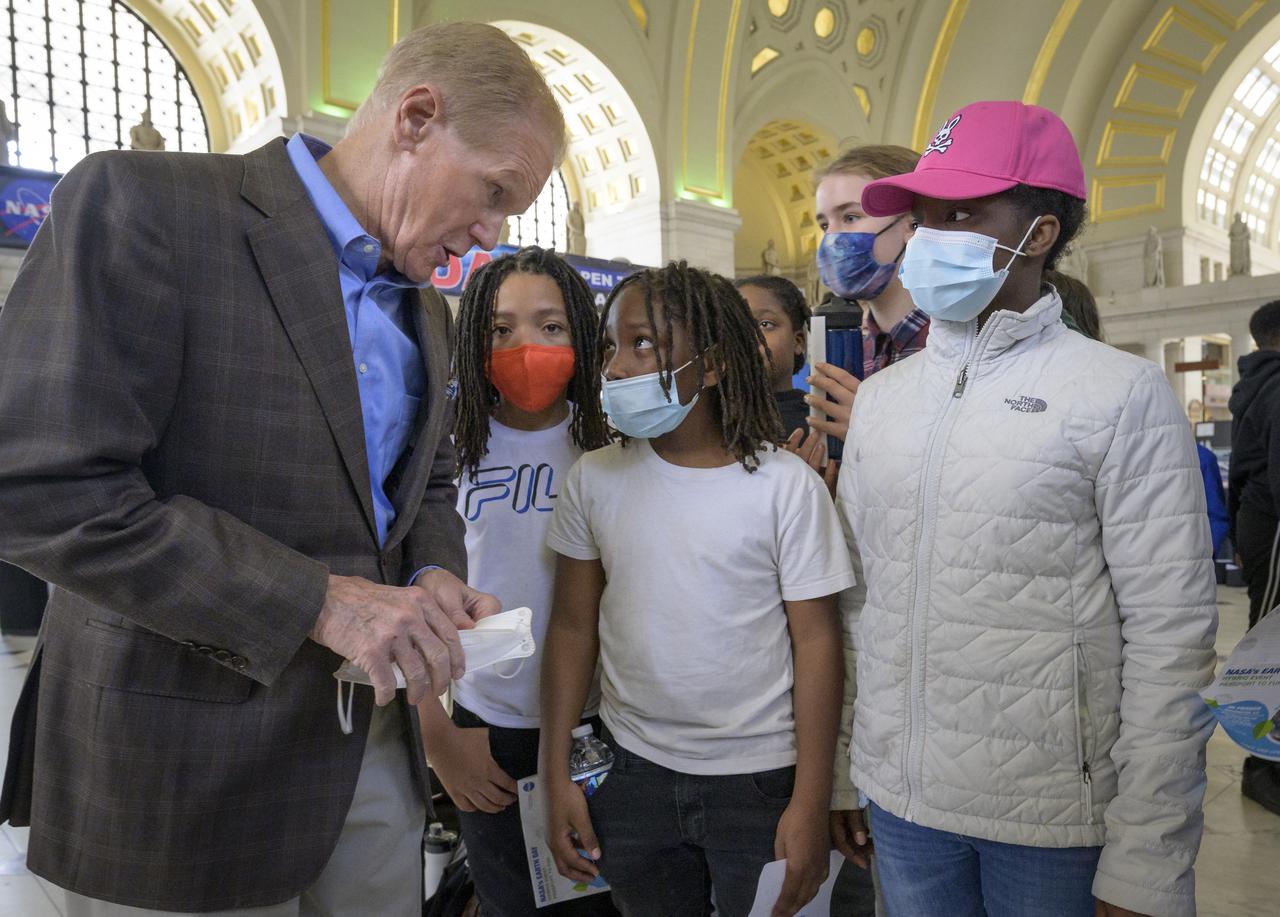
NASA Administrator Bill Nelson, left, talks with DC area school children about Earth Day during his visit of NASA hands-on exhibits inside Union Station in Washington, Friday, April 22, 2022. Photo Credit: (NASA/Bill Ingalls)
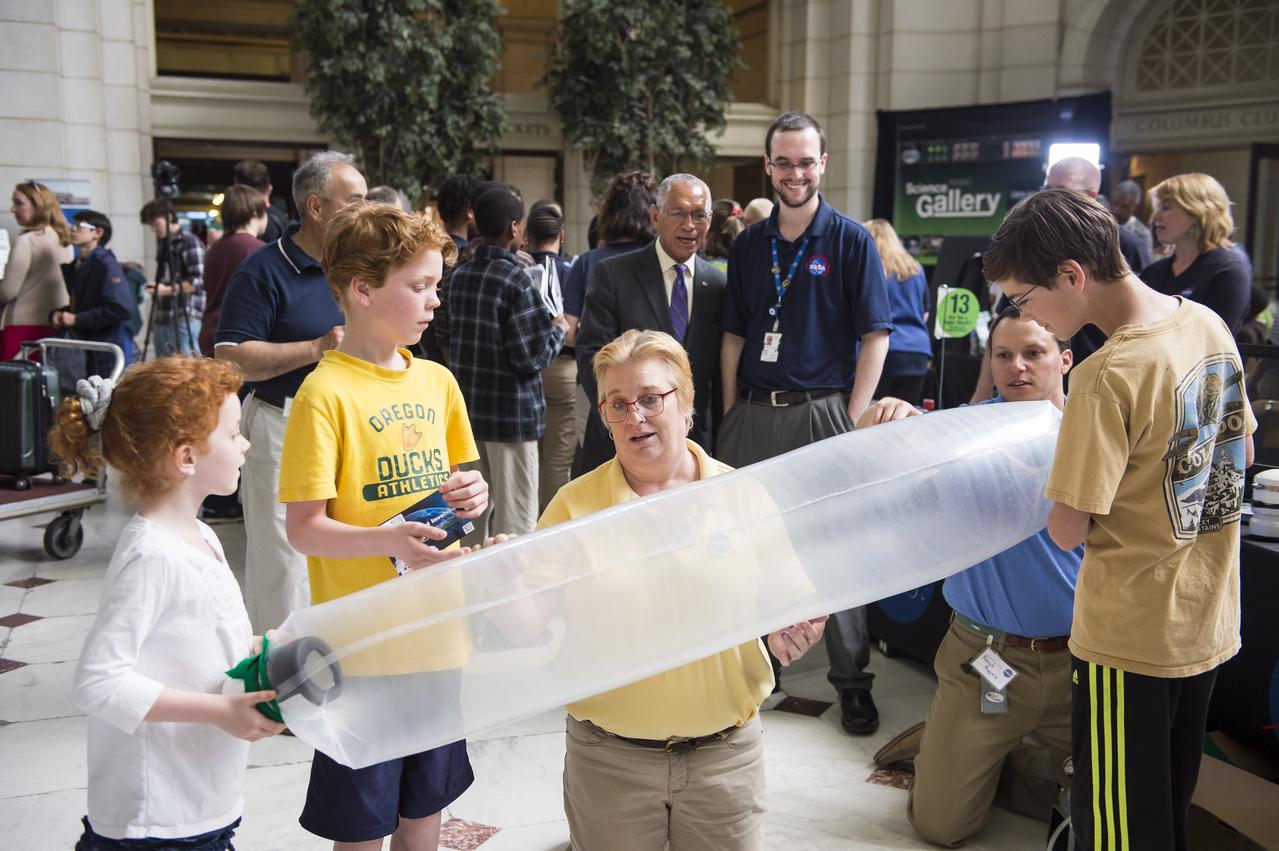
NASA's Administrator, Charles Bolden watches as some students conduct an experiment with a balloon at NASA's Earth Day event. The event took place at Union Station in Washington, DC on April 22, 2014. Photo Credit: (NASA/Aubrey Gemignani)
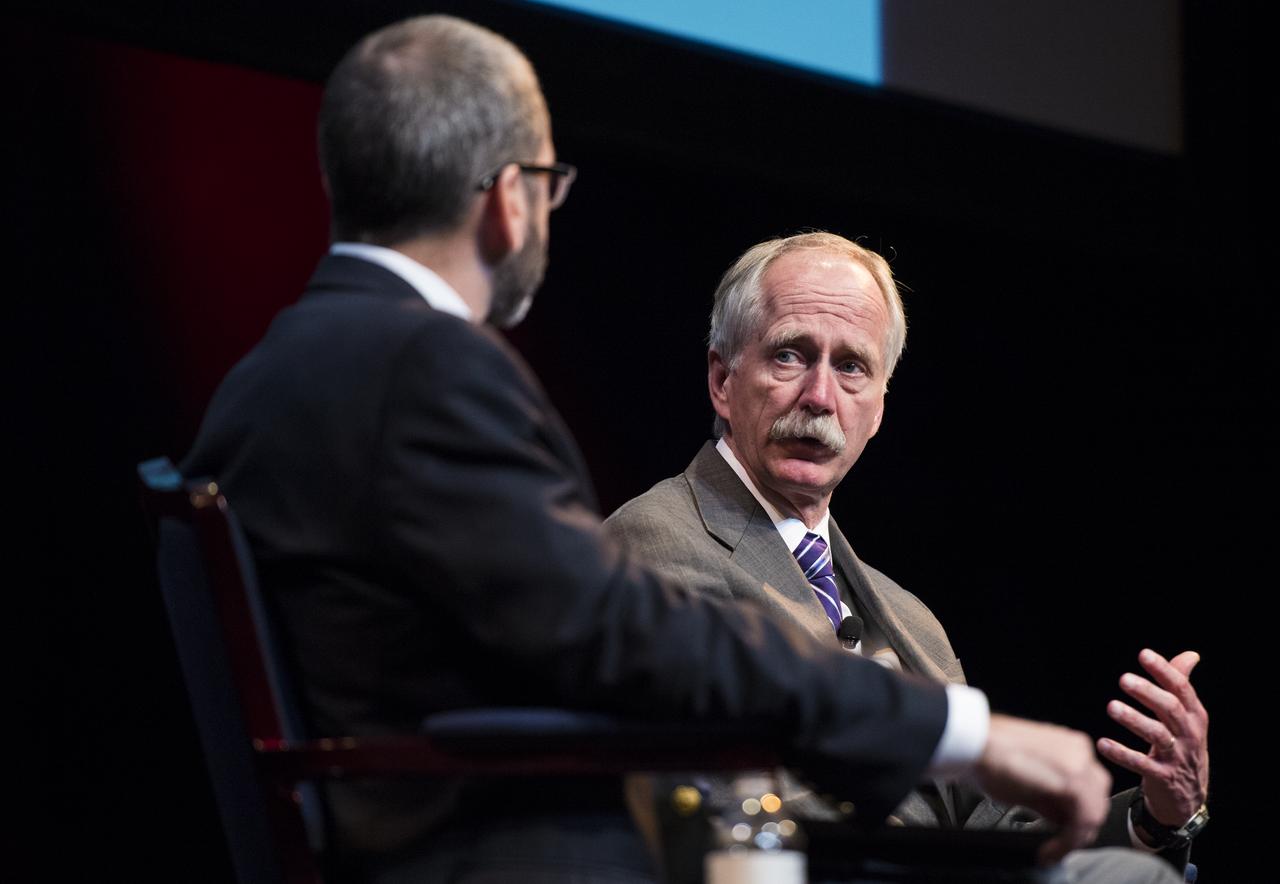
William Gerstenmaier, NASA Associatate Administrator for Human Exploration and Operations, right, answers a question during a panel discussion moderated by PBS NewsHour's Miles O'Brien at the Humans to Mars Summit on April 22, 2014 at George Washington University in Washington, DC. Photo Credit: (NASA/Joel Kowsky)
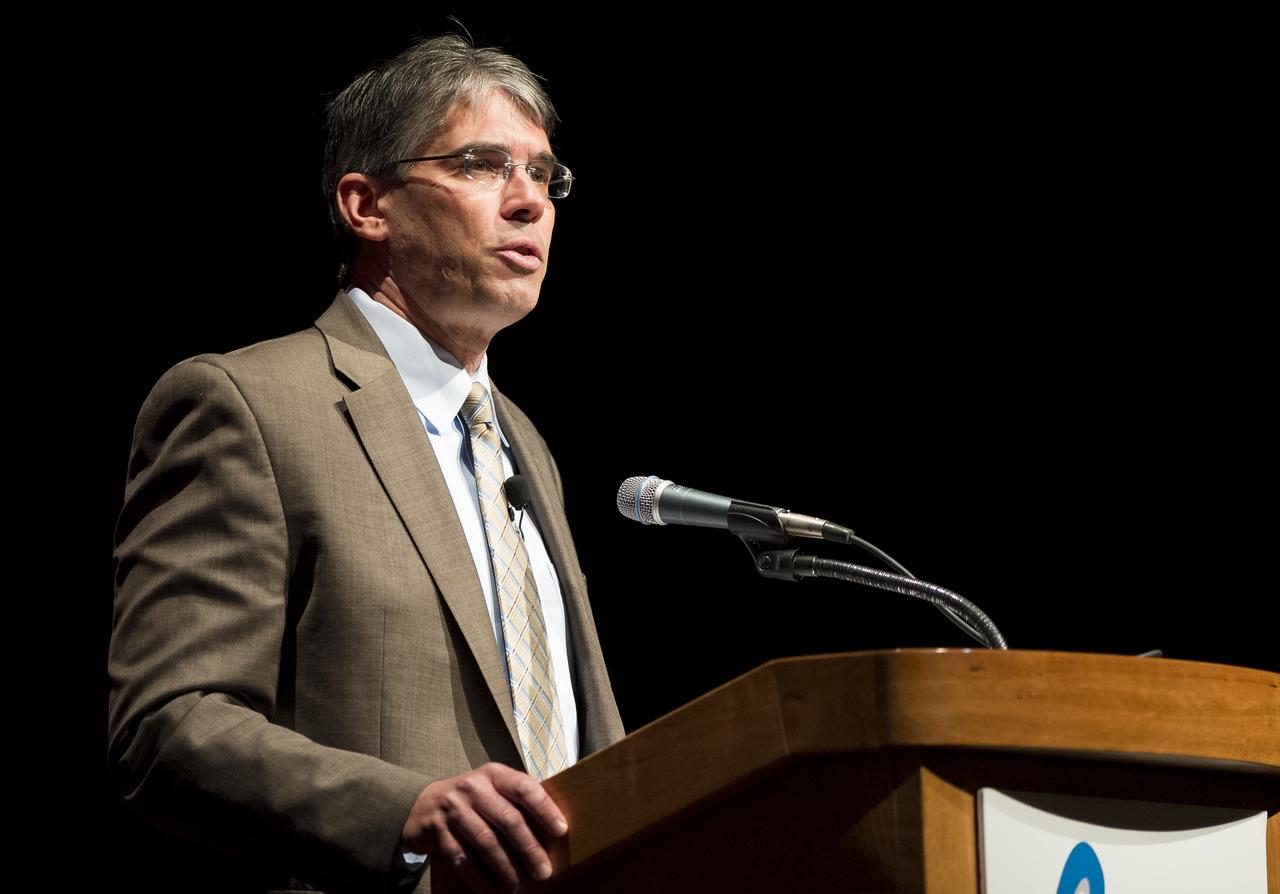
Michael Gazarik, NASA Associate Administrator for Space Technology gives a short presentation on NASA's human exploration path to Mars during a panel discussion moderated by PBS NewsHour's Miles O'Brien at the Humans to Mars Summit on April 22, 2014 at George Washington University in Washington, DC. Photo Credit: (NASA/Joel Kowsky)
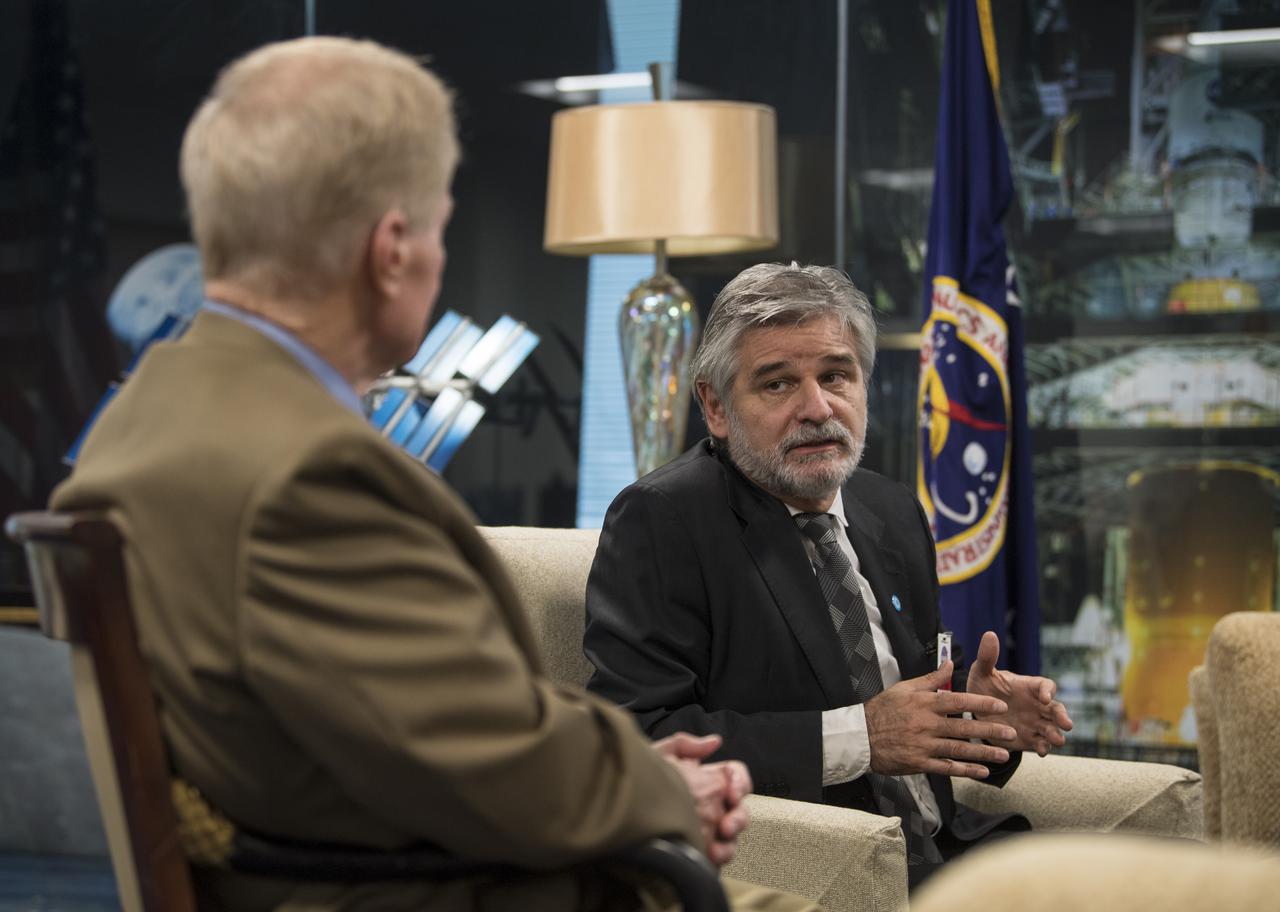
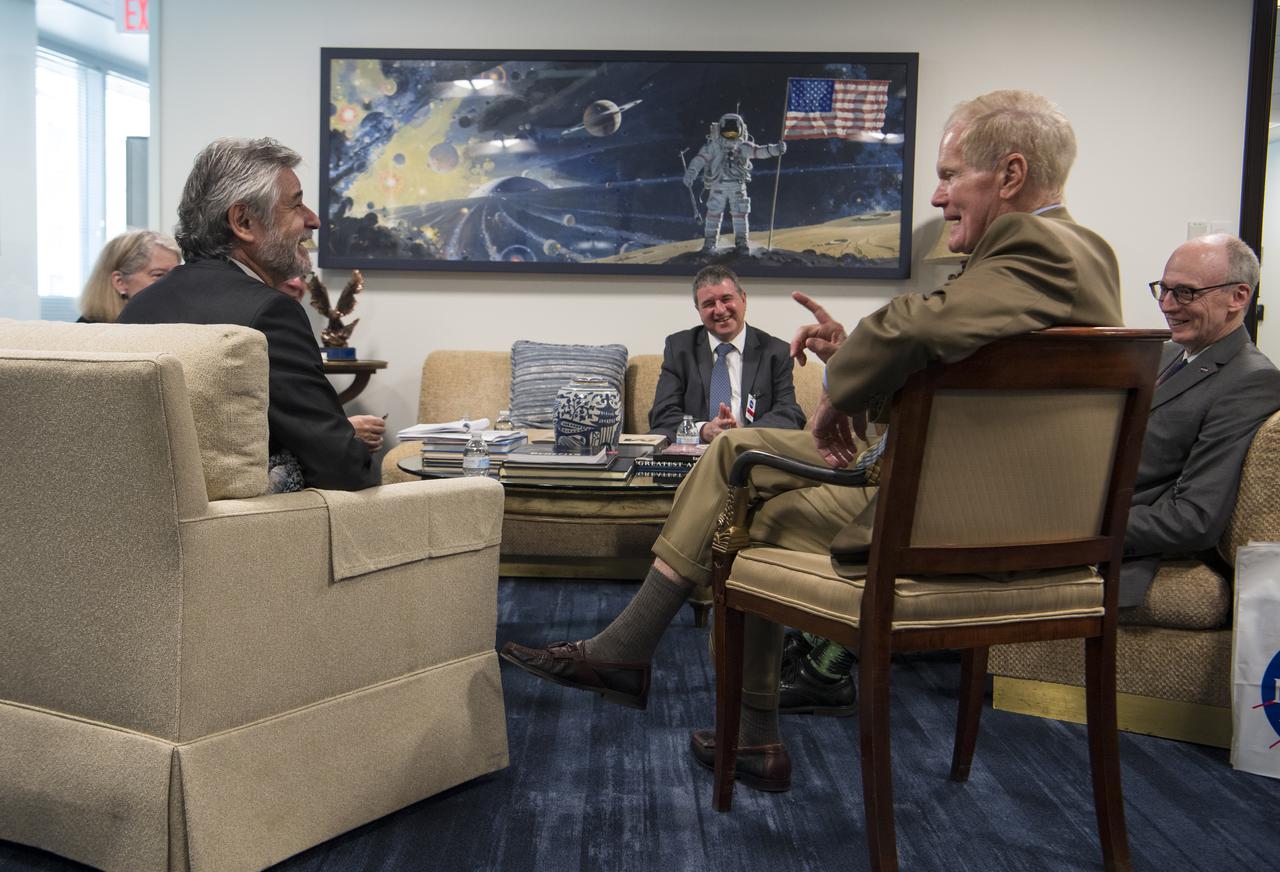
NASA Administrator Bill Nelson, speaks with the Minister of Science, Technology and Innovation in Argentina and Chairman of the Board of the Comisión Nacional de Actividades Espaciales (CONAE), Daniel Filmus, during a meeting, Tuesday, March 22, 2022, at NASA Headquarters in Washington DC. Photo Credit: (NASA/Aubrey Gemignani)
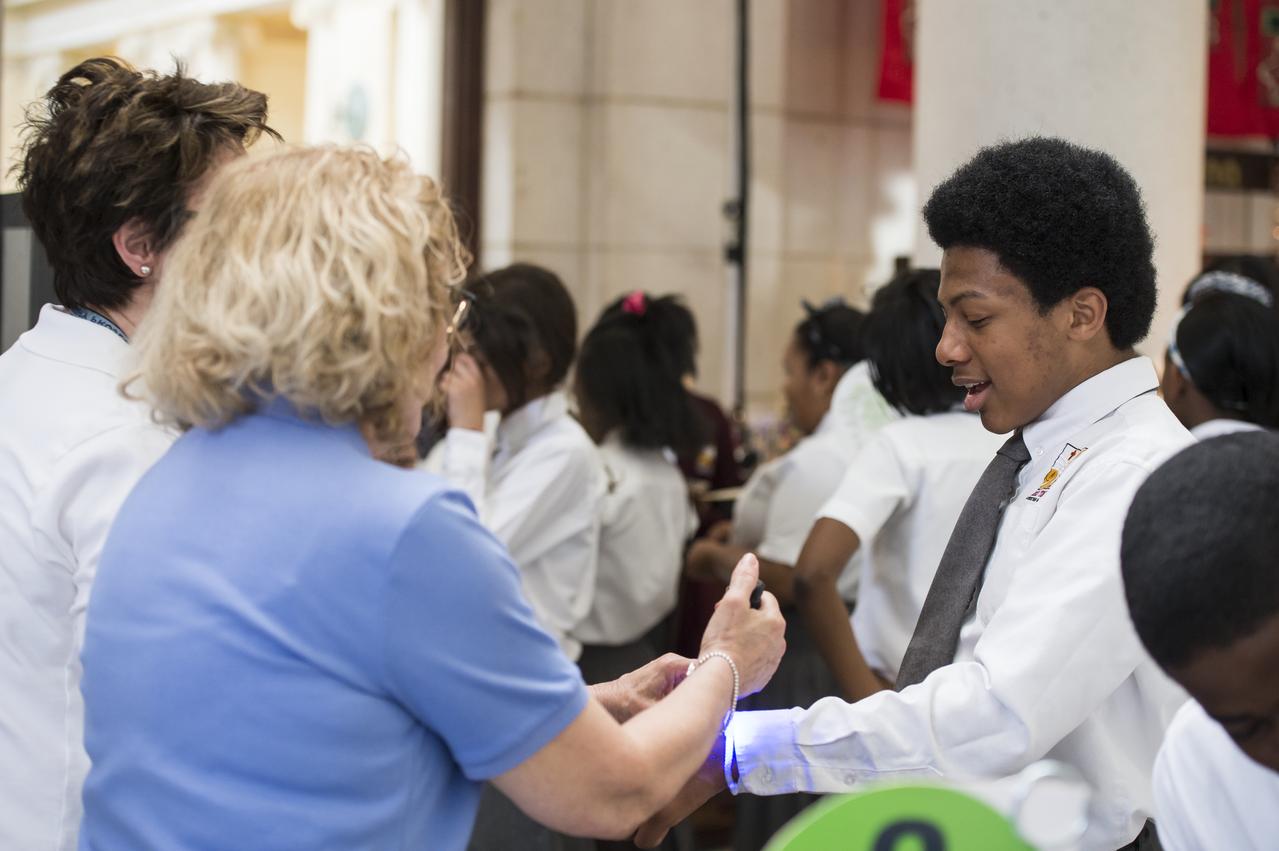
An attendee of NASA's Earth Day event observes the glow from a bracelet that is part of an exhibit at the event. The Earth Day event took place at Union Station in Washington, DC on April 22, 2014. Photo Credit: (NASA/Aubrey Gemignani)
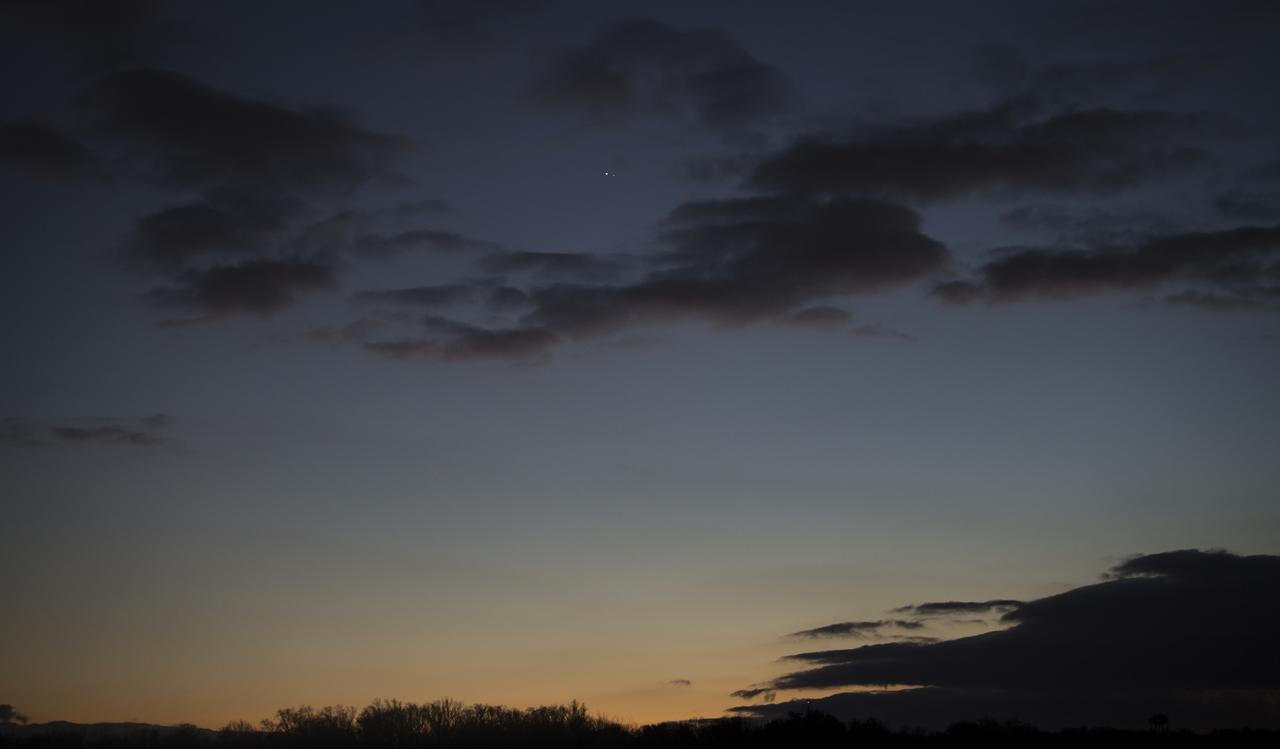
Jupiter, left, and Saturn, right, are seen after sunset from Washington, DC, Tuesday, Dec. 22, 2020. The two planets are now slowly separating from each other in the sky, after appearing a tenth of a degree apart during the "great conjunction" on December 21. Photo Credit: (NASA/Aubrey Gemignani)
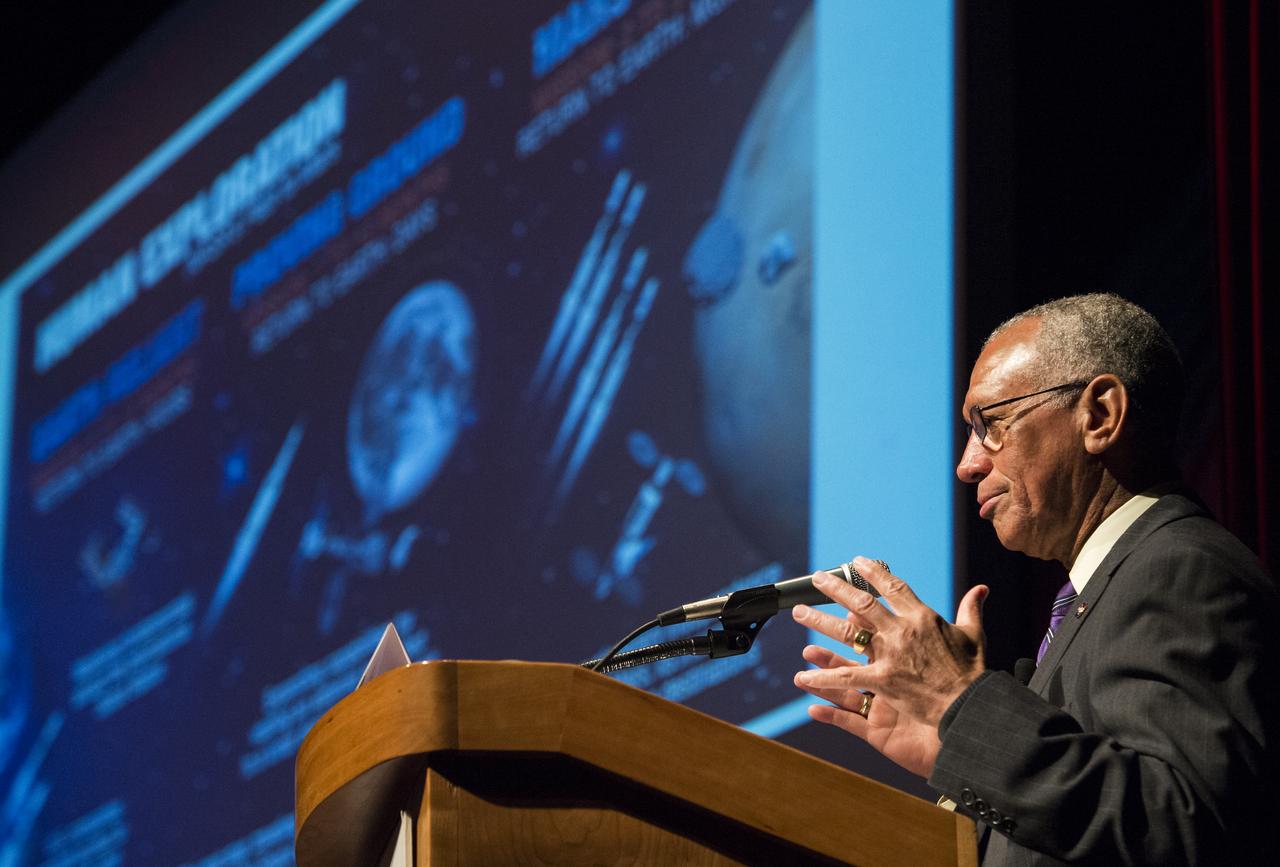
NASA Administrator Charles Bolden delivers the opening keynote address at the Humans to Mars Summit on April 22, 2014 at George Washington University in Washington, DC. Administrator Bolden spoke of NASA's path to the human exploration of Mars during his remarks. Photo Credit: (NASA/Joel Kowsky)
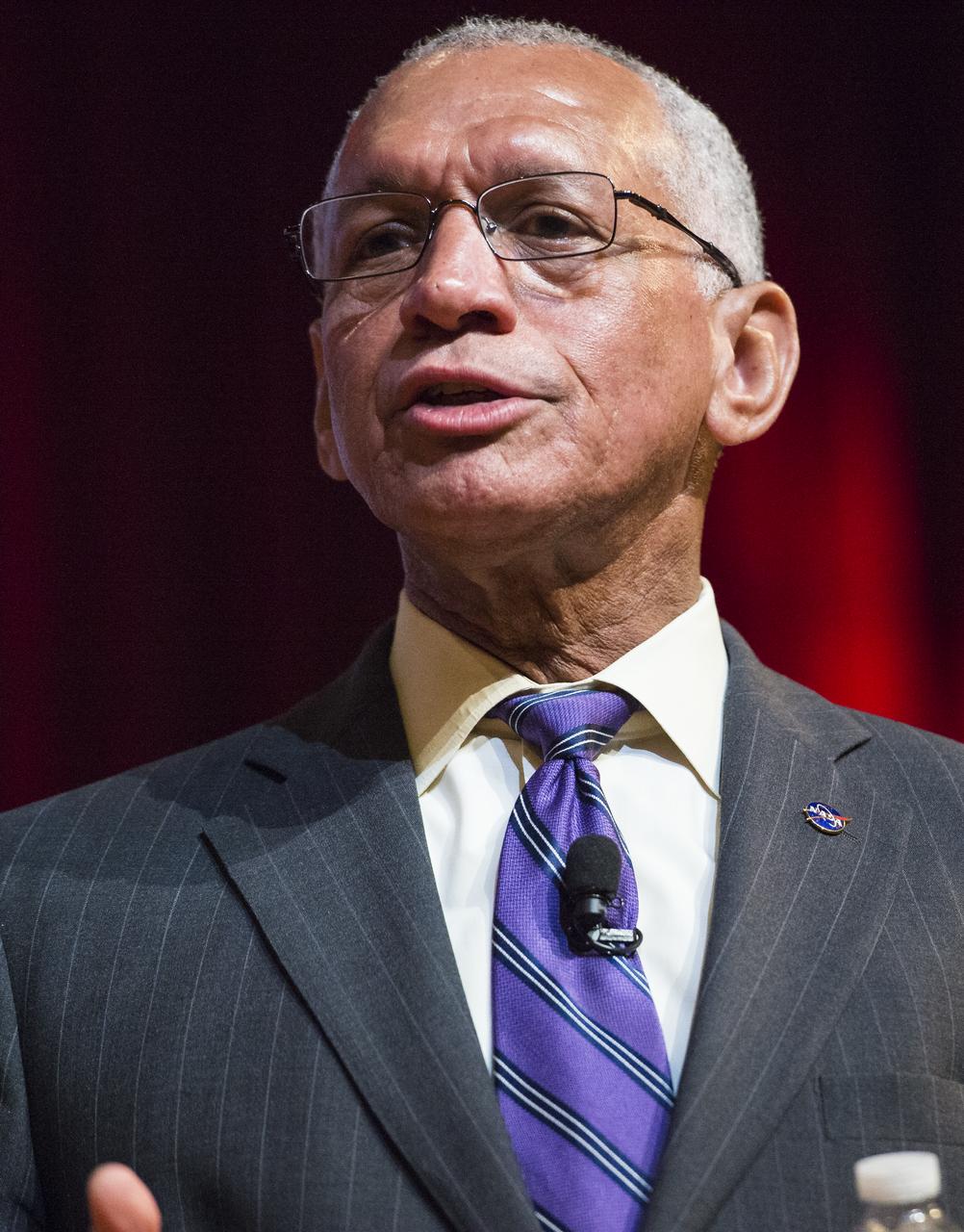
NASA Administrator Charles Bolden answers questions from the audience after giving the opening keynote address at the Humans to Mars Summit on April 22, 2014 at George Washington University in Washington, DC. Administrator Bolden spoke of NASA's path to the human exploration of Mars during his remarks. Photo Credit: (NASA/Joel Kowsky)
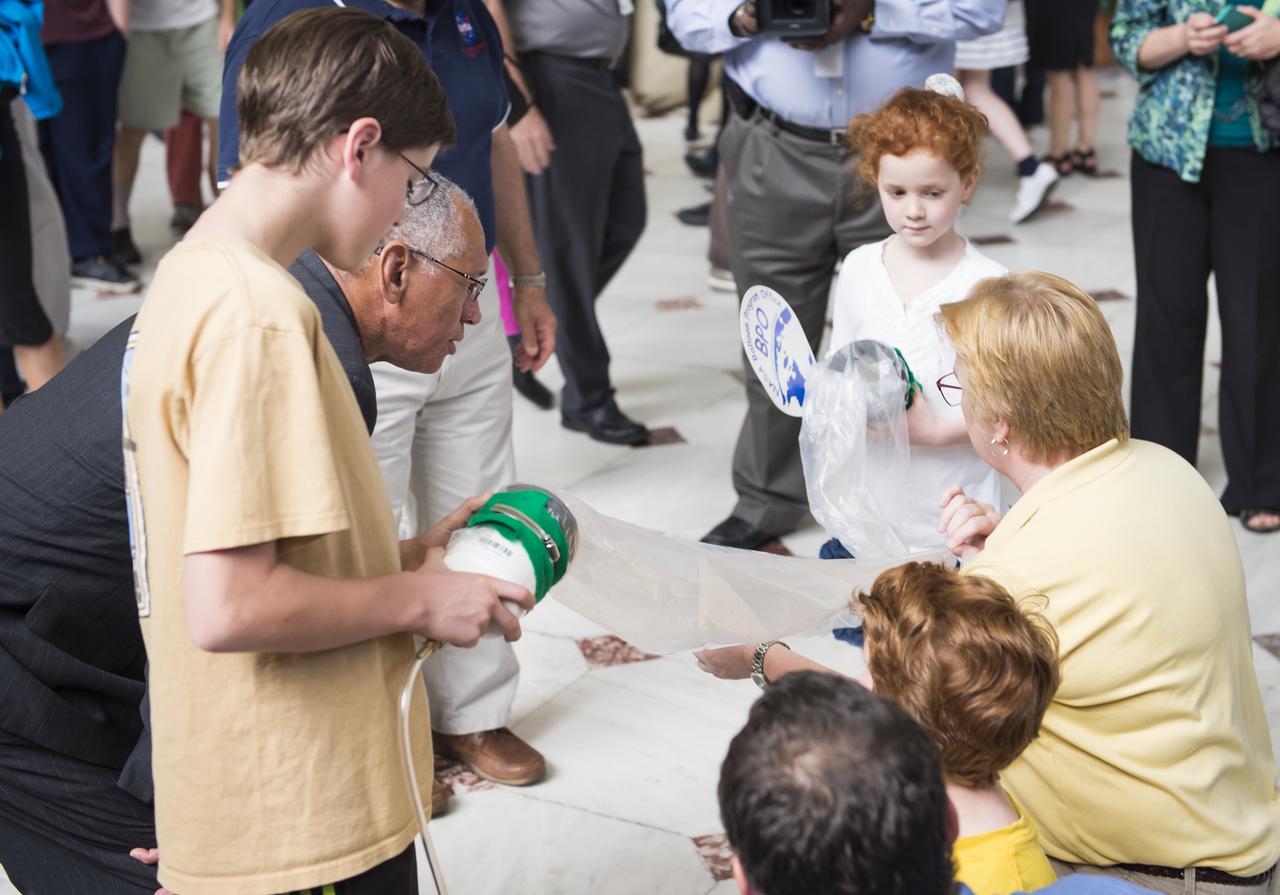
NASA's Administrator, Charles Bolden watches as some students conduct an experiment with a balloon at NASA's Earth Day event. The event took place at Union Station in Washington, DC on April 22, 2014. Photo Credit: (NASA/Aubrey Gemignani)
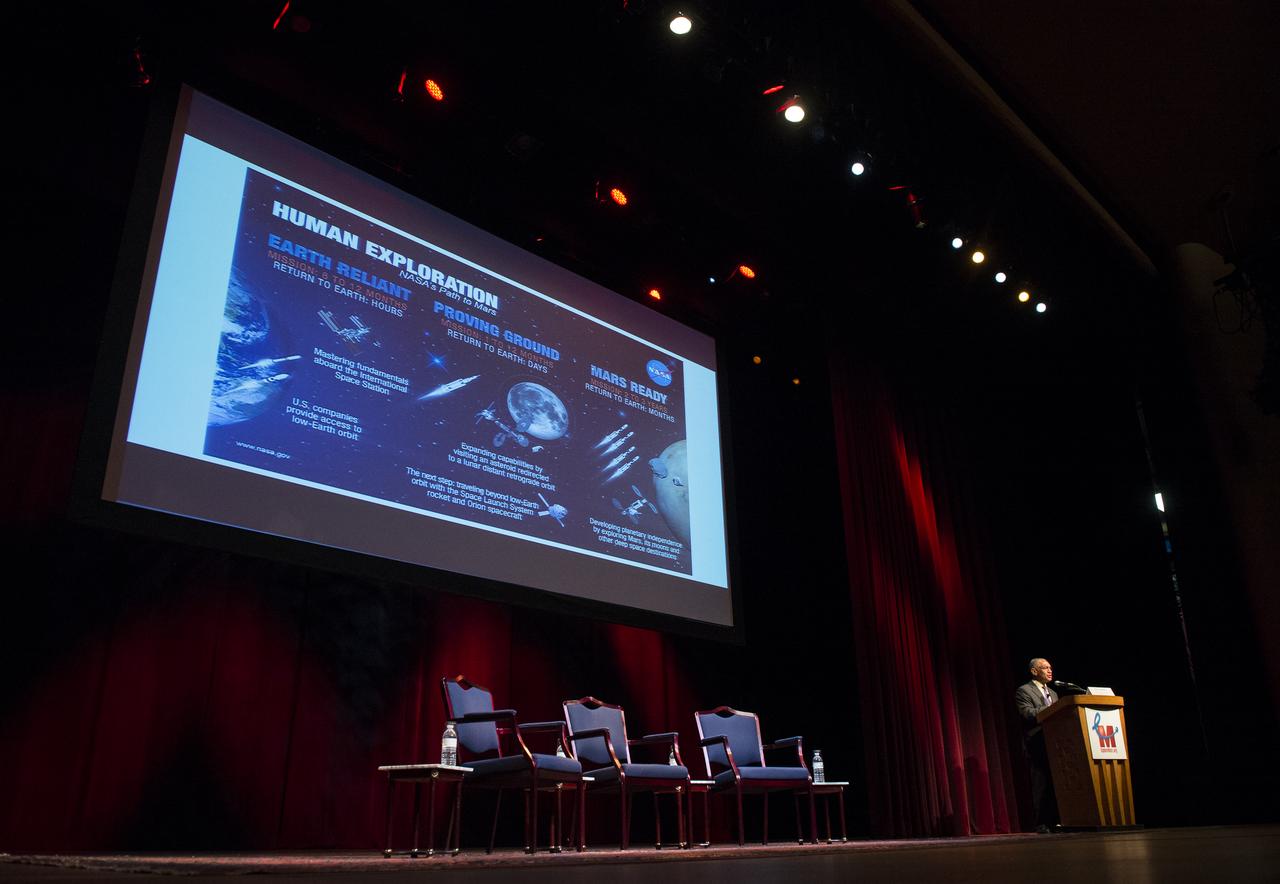
NASA Administrator Charles Bolden delivers the opening keynote address at the Humans to Mars Summit on April 22, 2014 at George Washington University in Washington, DC. Administrator Bolden spoke of NASA's path to the human exploration of Mars during his remarks. Photo Credit: (NASA/Joel Kowsky)
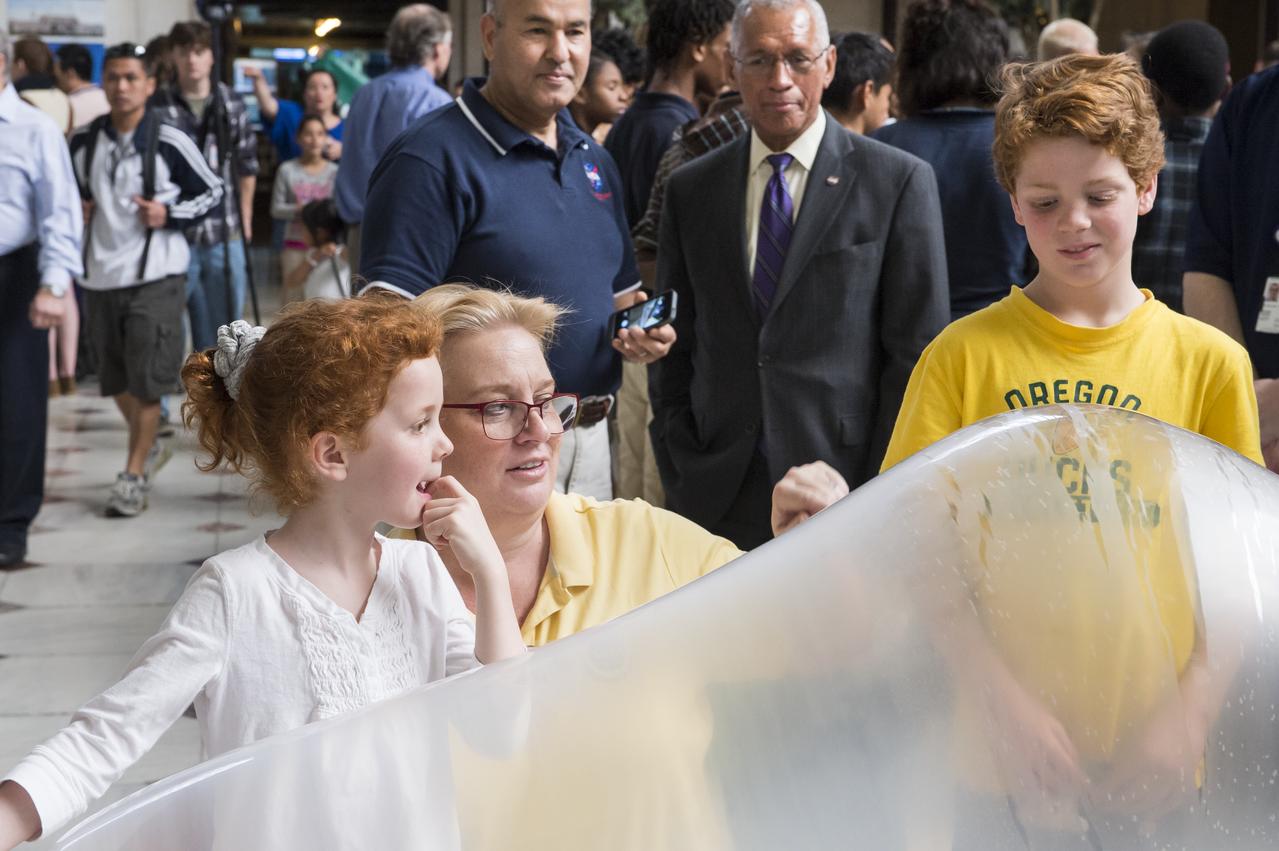
NASA's Administrator, Charles Bolden watches as some students conduct an experiment with a balloon at NASA's Earth Day event. The event took place at Union Station in Washington, DC on April 22, 2014. Photo Credit: (NASA/Aubrey Gemignani)
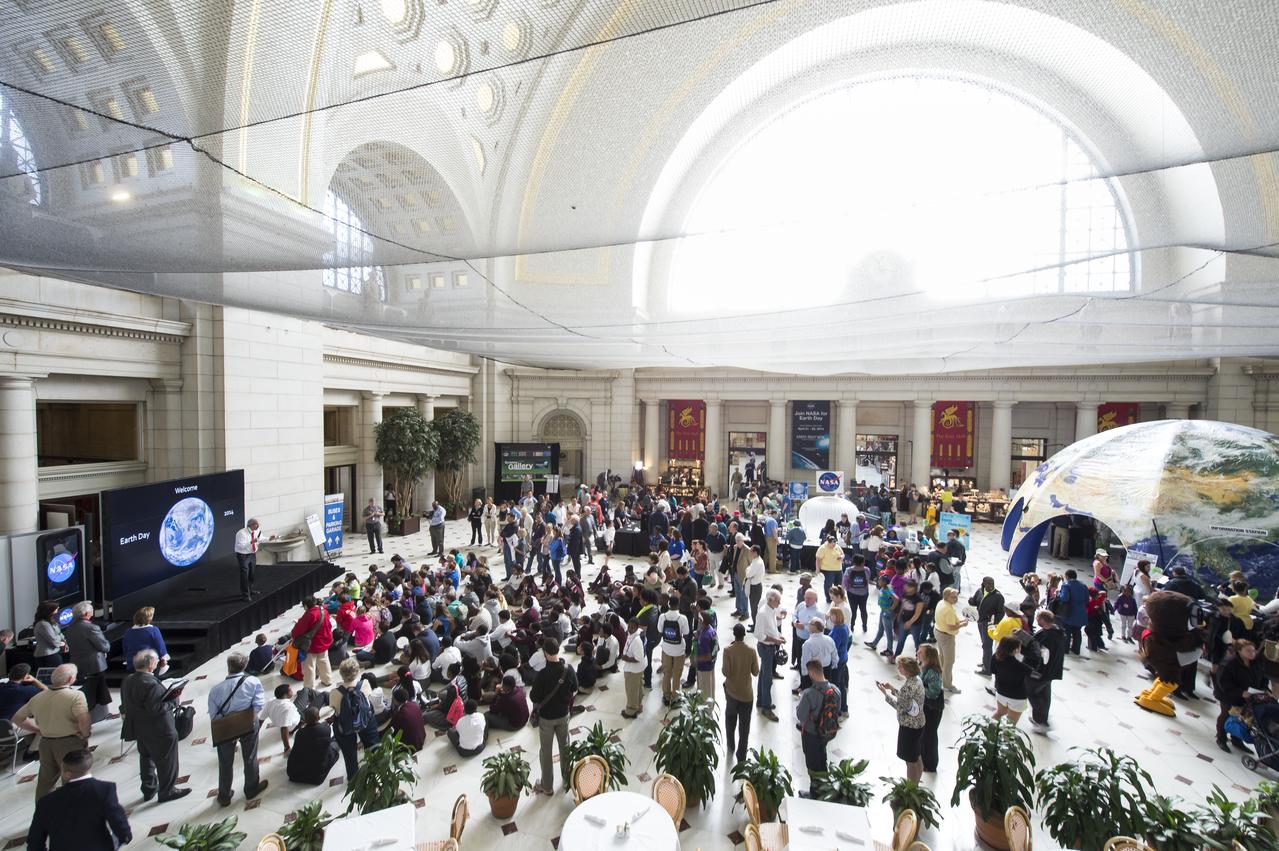
Students listen intently while NASA's Director, Earth Science Division, Mike Freilich, speaks at NASA's Earth Day event. The event took place at Union Station in Washington, DC on April 22, 2014. Photo Credit: (NASA/Aubrey Gemignani)
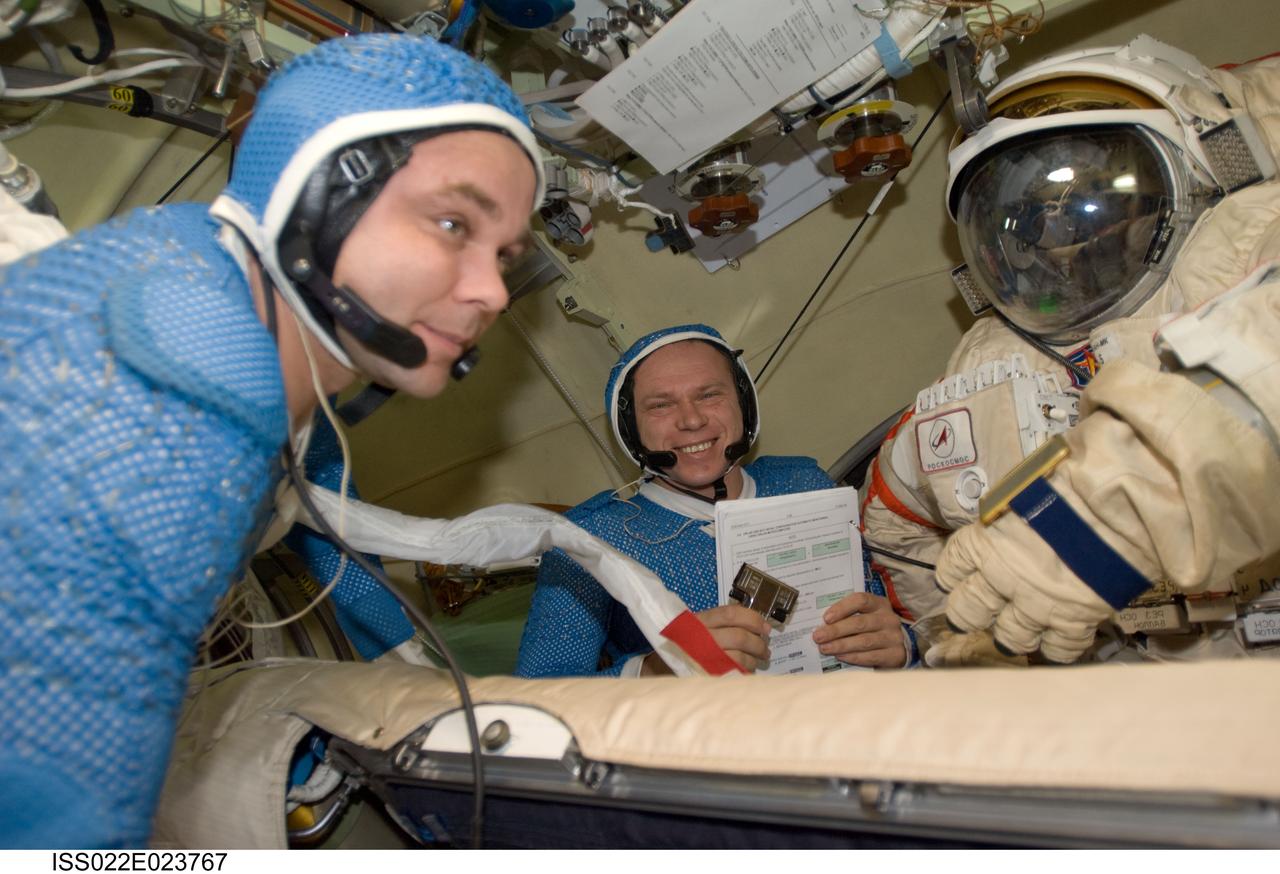
ISS022-E-023767 (12 Jan. 2010) --- Attired in blue thermal undergarments that complement the Russian Orlan spacesuit, Russian cosmonauts Maxim Suraev (foreground) and Oleg Kotov, both Expedition 22 flight engineers, prepare to don and check out their Orlan spacesuits in preparation for a spacewalk scheduled for Jan. 14 to outfit the new Poisk module for future Russian vehicle dockings.
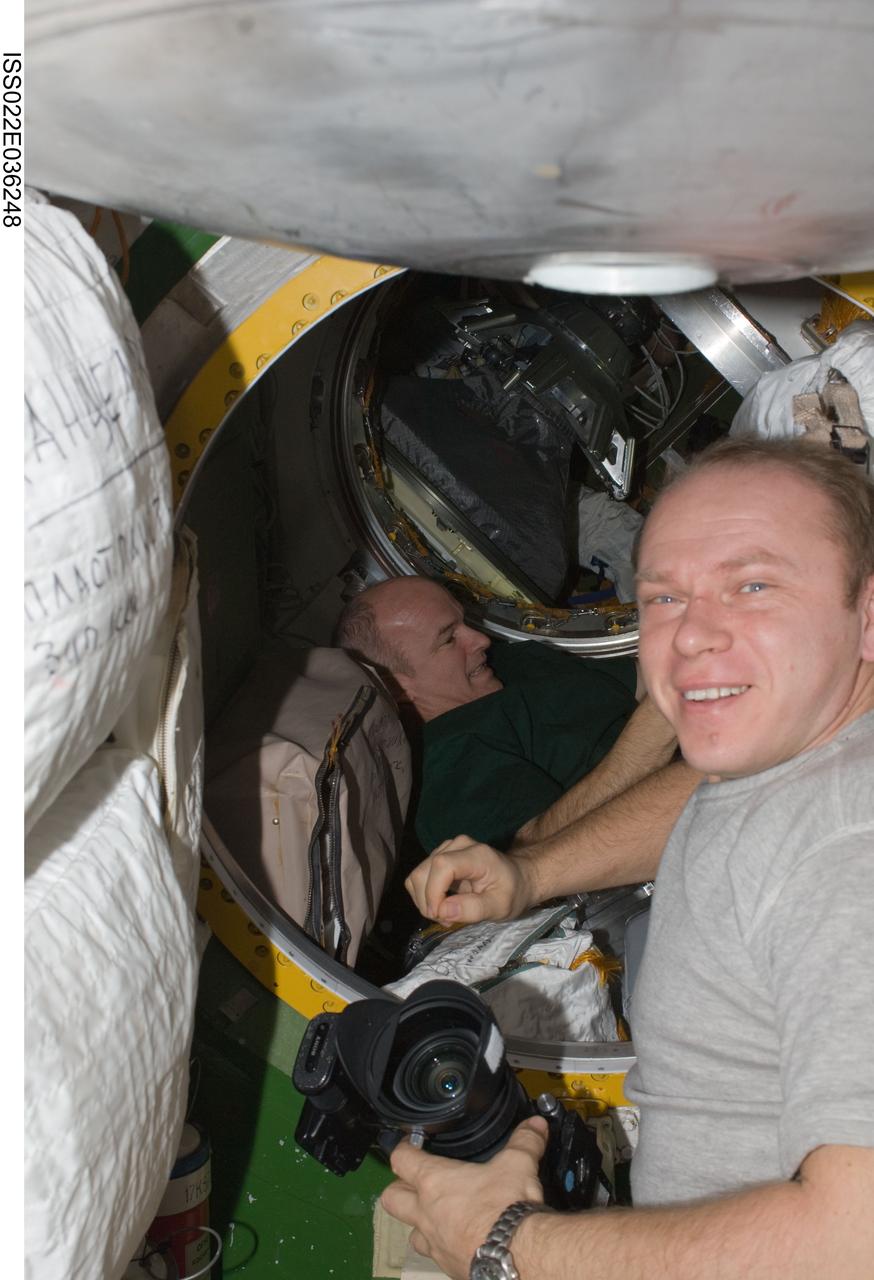
ISS022-E-036248 (21 Jan. 2010) --- Russian cosmonaut Oleg Kotov, Expedition 22 flight engineer; and NASA astronaut Jeffrey Williams (background), commander, work in the Pirs Docking Compartment of the International Space Station.

ISS022-E-023775 (12 Jan. 2010) --- Attired in a blue thermal undergarment that complements the Russian Orlan spacesuit, Russian cosmonaut Maxim Suraev, Expedition 22 flight engineer, is pictured in the Pirs Docking Compartment of the International Space Station.
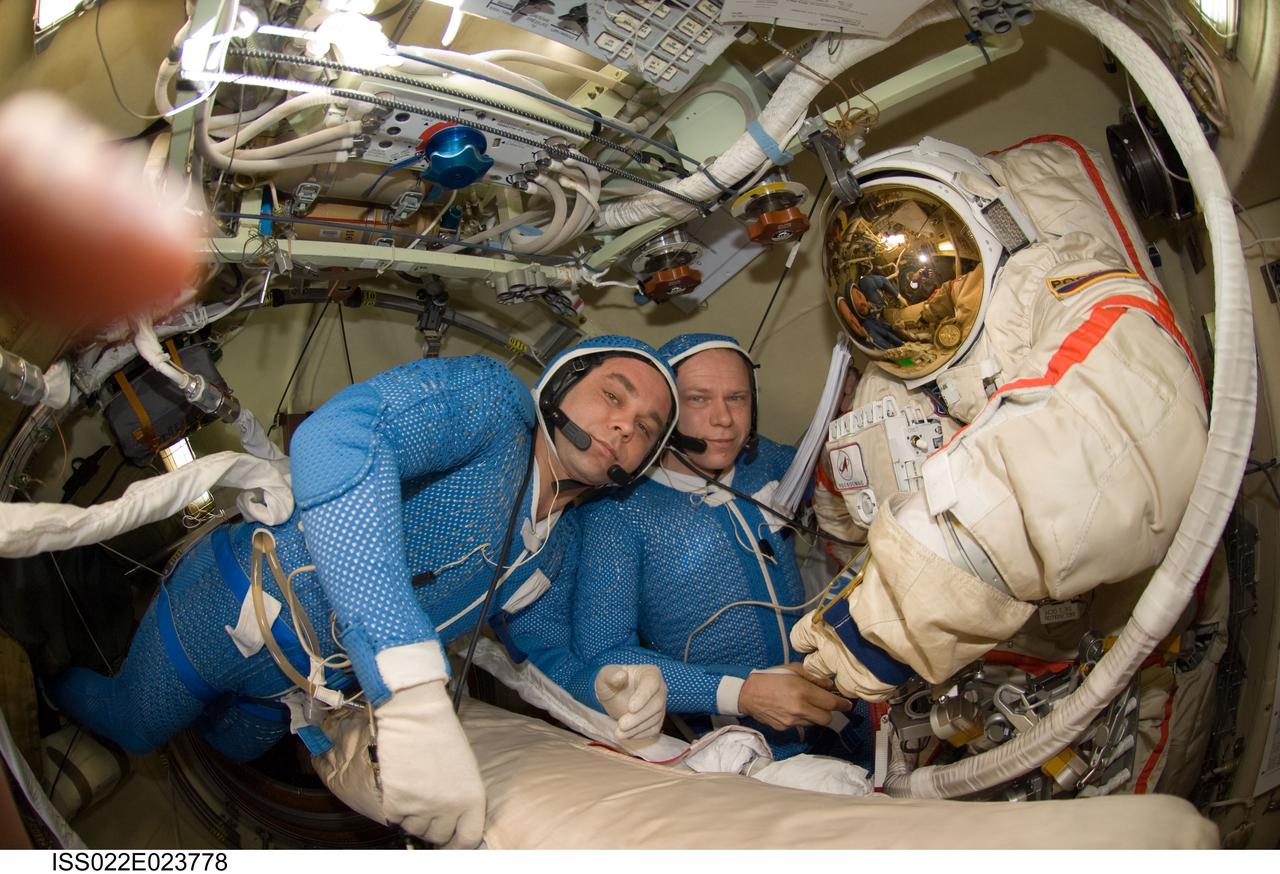
ISS022-E-023778 (12 Jan. 2010) --- Attired in blue thermal undergarments that complement the Russian Orlan spacesuit, Russian cosmonauts Maxim Suraev (left) and Oleg Kotov, both Expedition 22 flight engineers, prepare to don and check out their Orlan spacesuits in preparation for a spacewalk scheduled for Jan. 14 to outfit the new Poisk module for future Russian vehicle dockings.
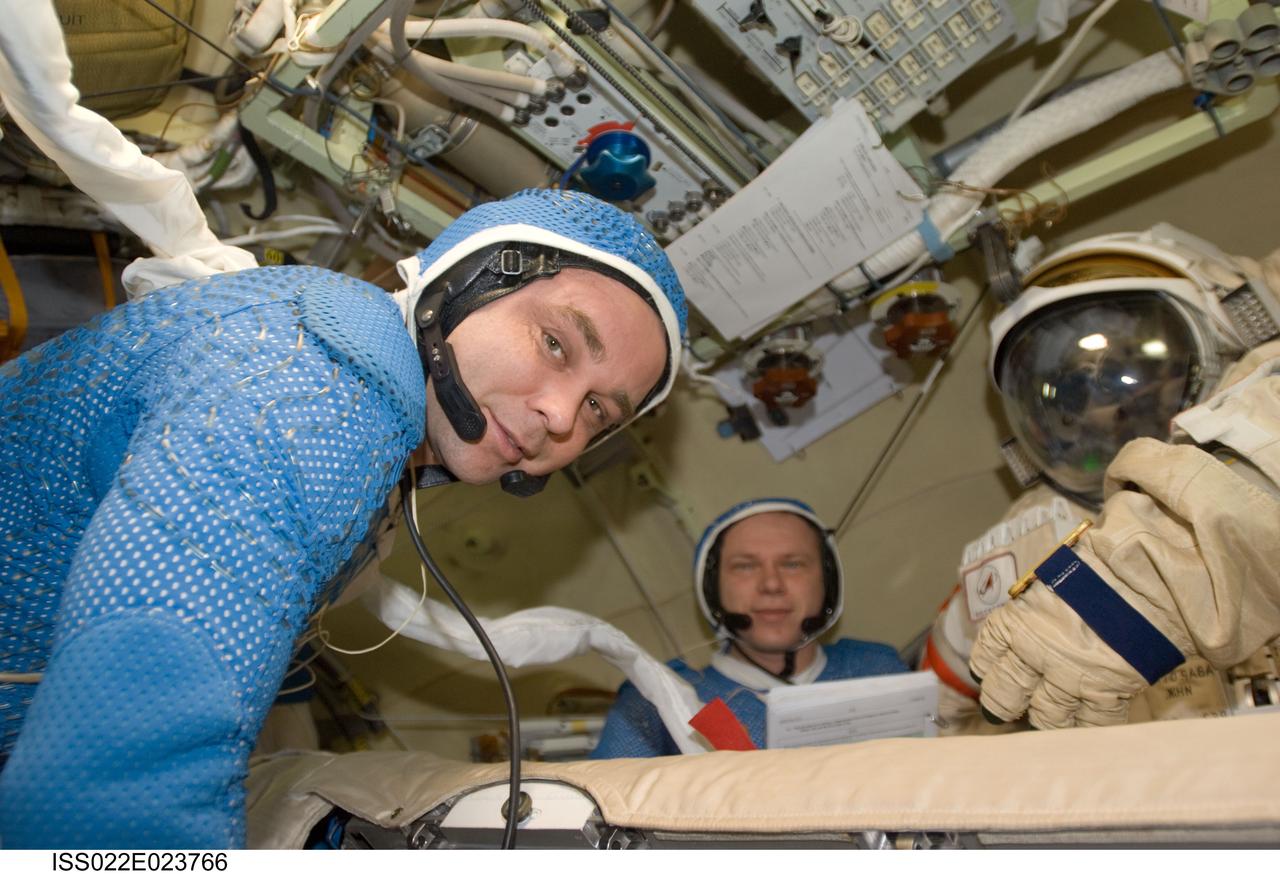
ISS022-E-023766 (12 Jan. 2010) --- Attired in blue thermal undergarments that complement the Russian Orlan spacesuit, Russian cosmonauts Maxim Suraev (foreground) and Oleg Kotov, both Expedition 22 flight engineers, prepare to don and check out their Orlan spacesuits in preparation for a spacewalk scheduled for Jan. 14 to outfit the new Poisk module for future Russian vehicle dockings.
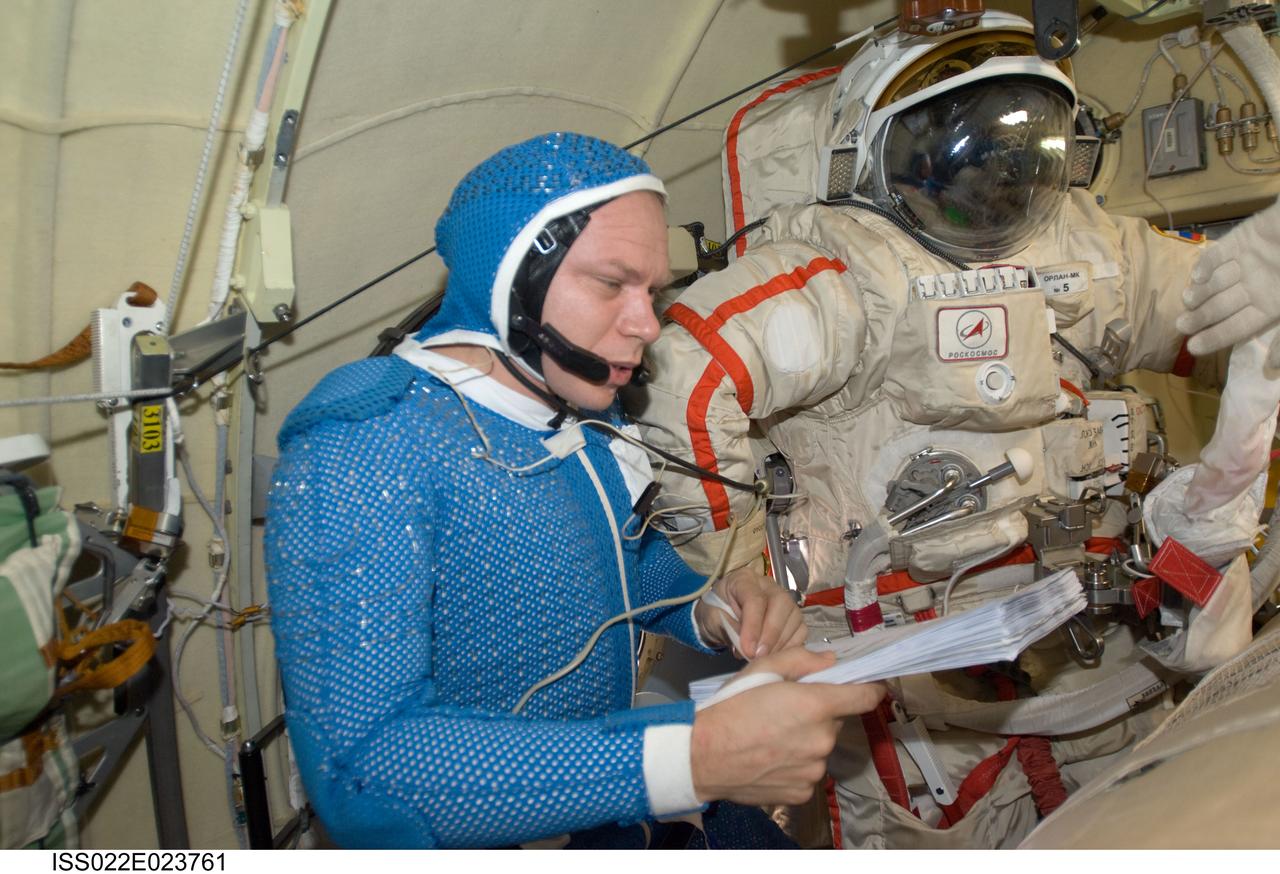
ISS022-E-023761 (12 Jan. 2010) --- Attired in a blue thermal undergarment that complements the Russian Orlan spacesuit, Russian cosmonaut Oleg Kotov, Expedition 22 flight engineer, reads a checklist in the Pirs Docking Compartment of the International Space Station.
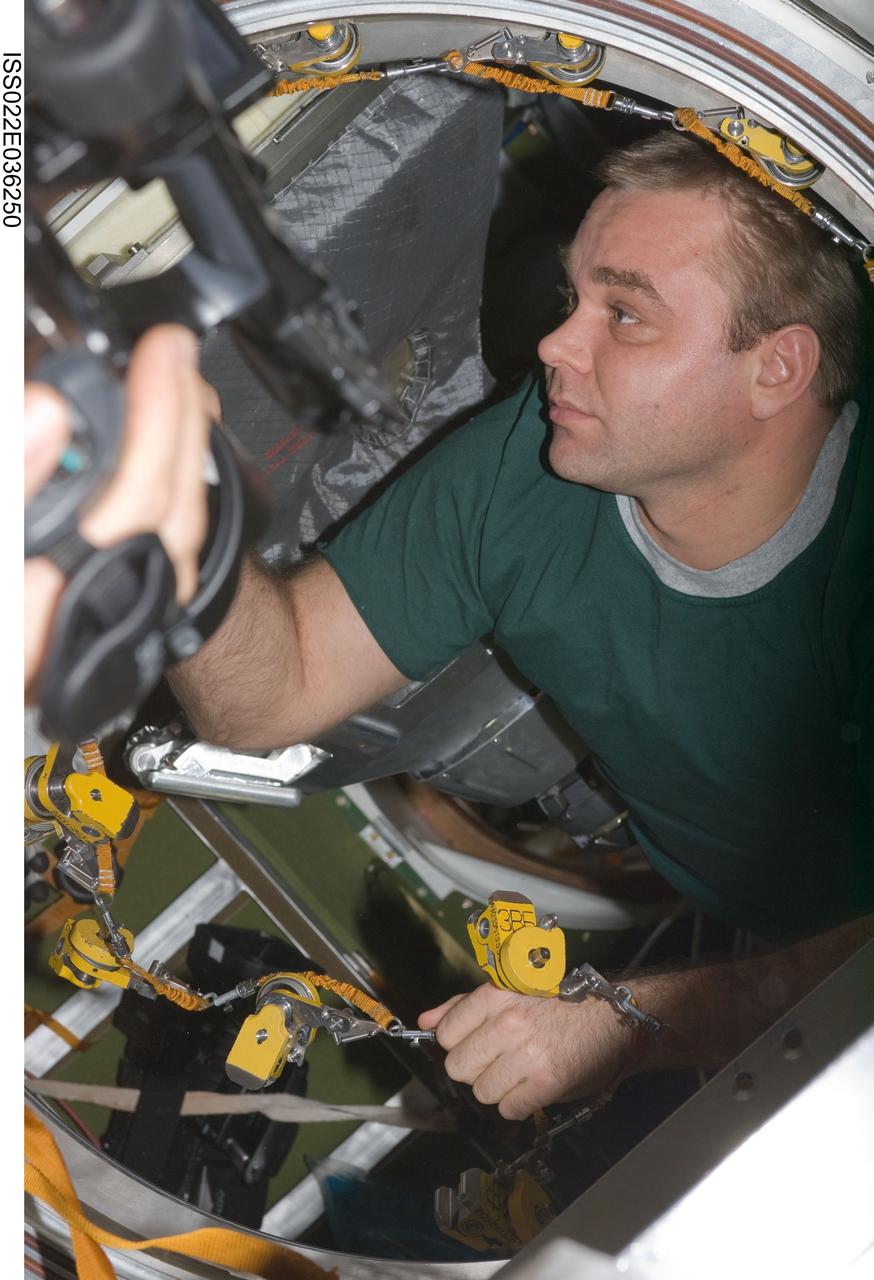
ISS022-E-036250 (21 Jan. 2010) --- Russian cosmonaut Maxim Suraev, Expedition 22 flight engineer, works in the Pirs Docking Compartment of the International Space Station.
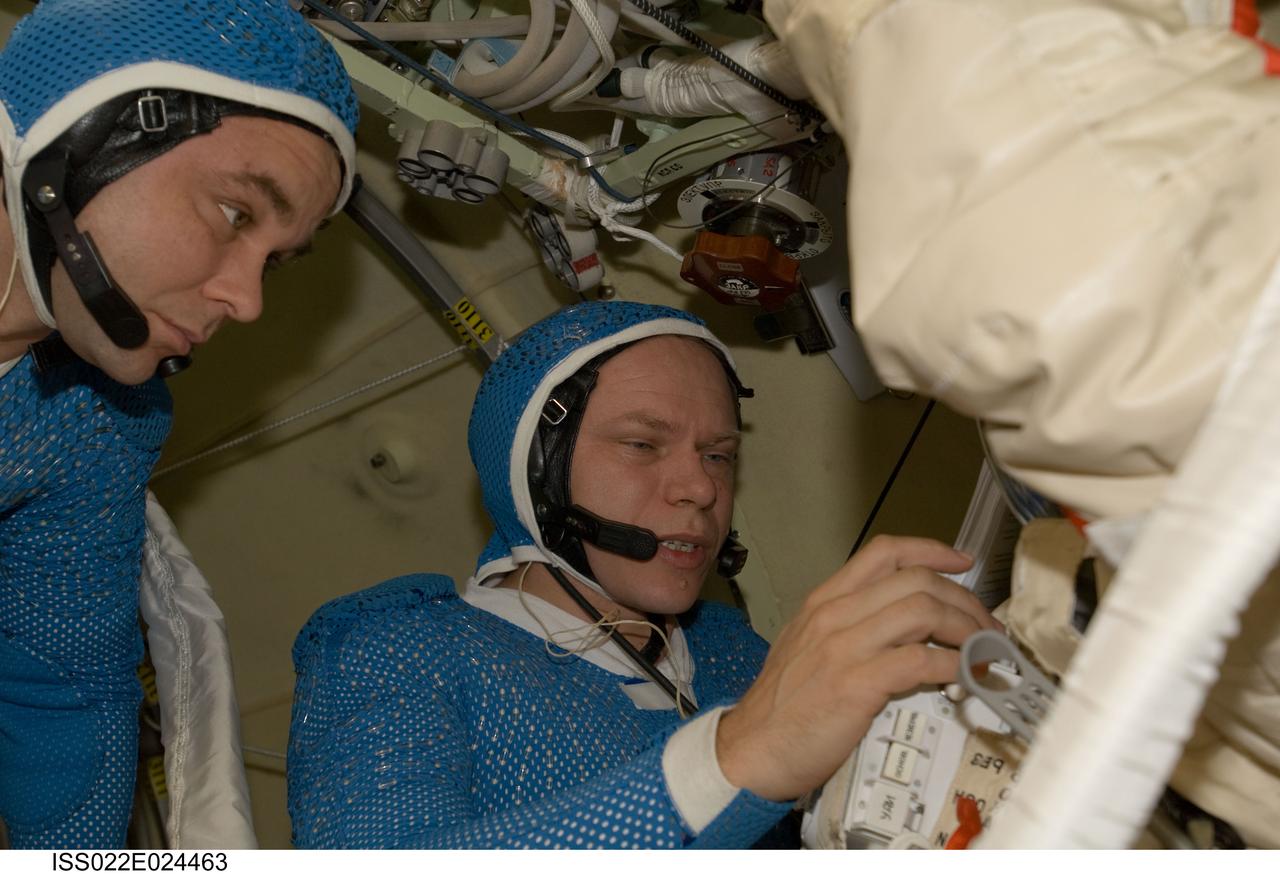
ISS022-E-024463 (12 Jan. 2010) --- Attired in blue thermal undergarments that complement the Russian Orlan spacesuit, Russian cosmonauts Maxim Suraev (left) and Oleg Kotov, both Expedition 22 flight engineers, prepare to don and check out their Orlan spacesuits in preparation for a spacewalk scheduled for Jan. 14 to outfit the new Poisk module for future Russian vehicle dockings.
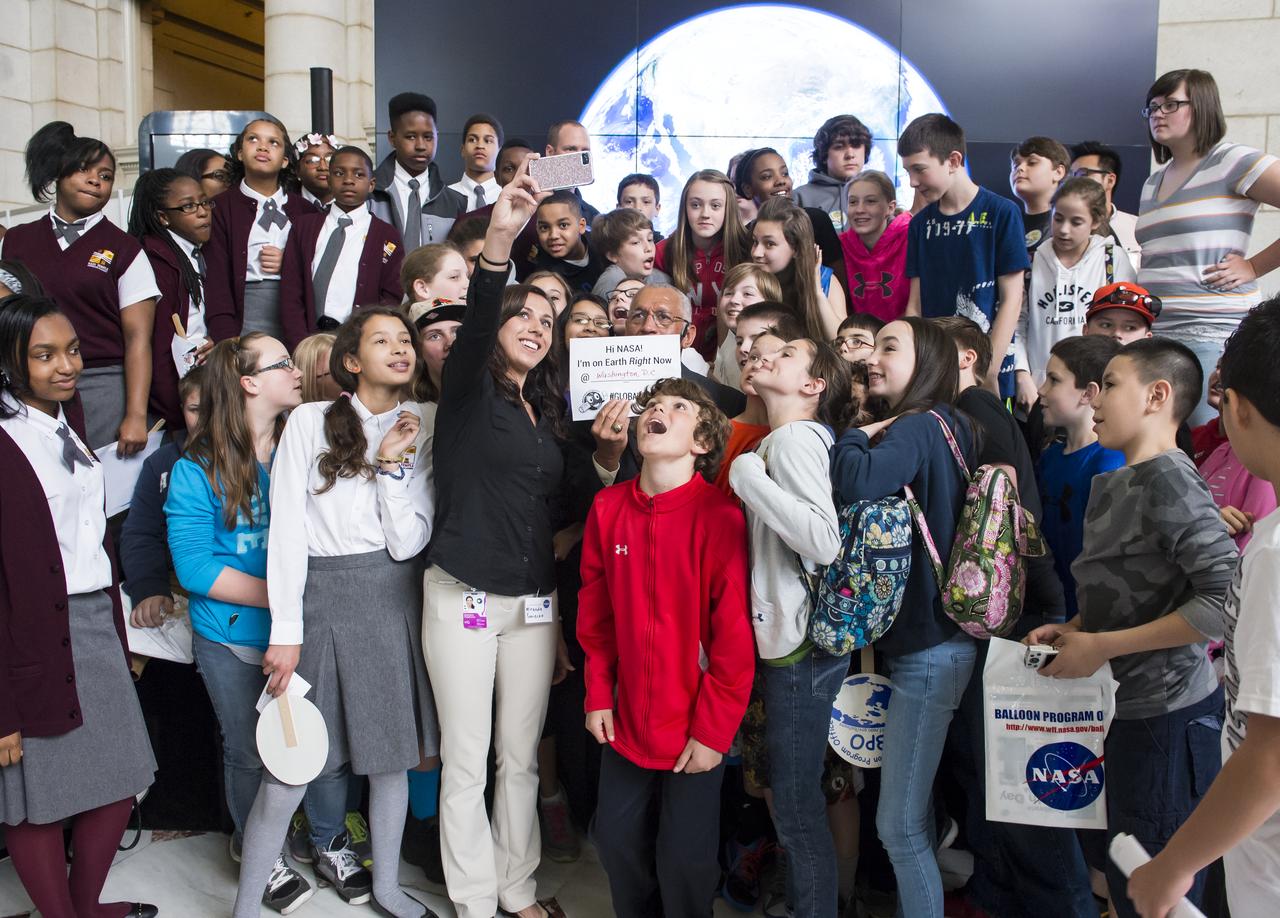
NASA Administrator Charles Bolden poses for a quick selfie with students who attended the NASA sponsored Earth Day event April 22, 2014 at Union Station in Washington, DC. NASA announced the "Global Selfie" event as part of its "Earth Right Now" campaign, celebrating the launch of five Earth-observing missions in 2014. All selfies posted to social media with the hashtag "GlobalSelfie" will be included in a mosaic image of Earth. Photo Credit: (NASA/Aubrey Gemignani)
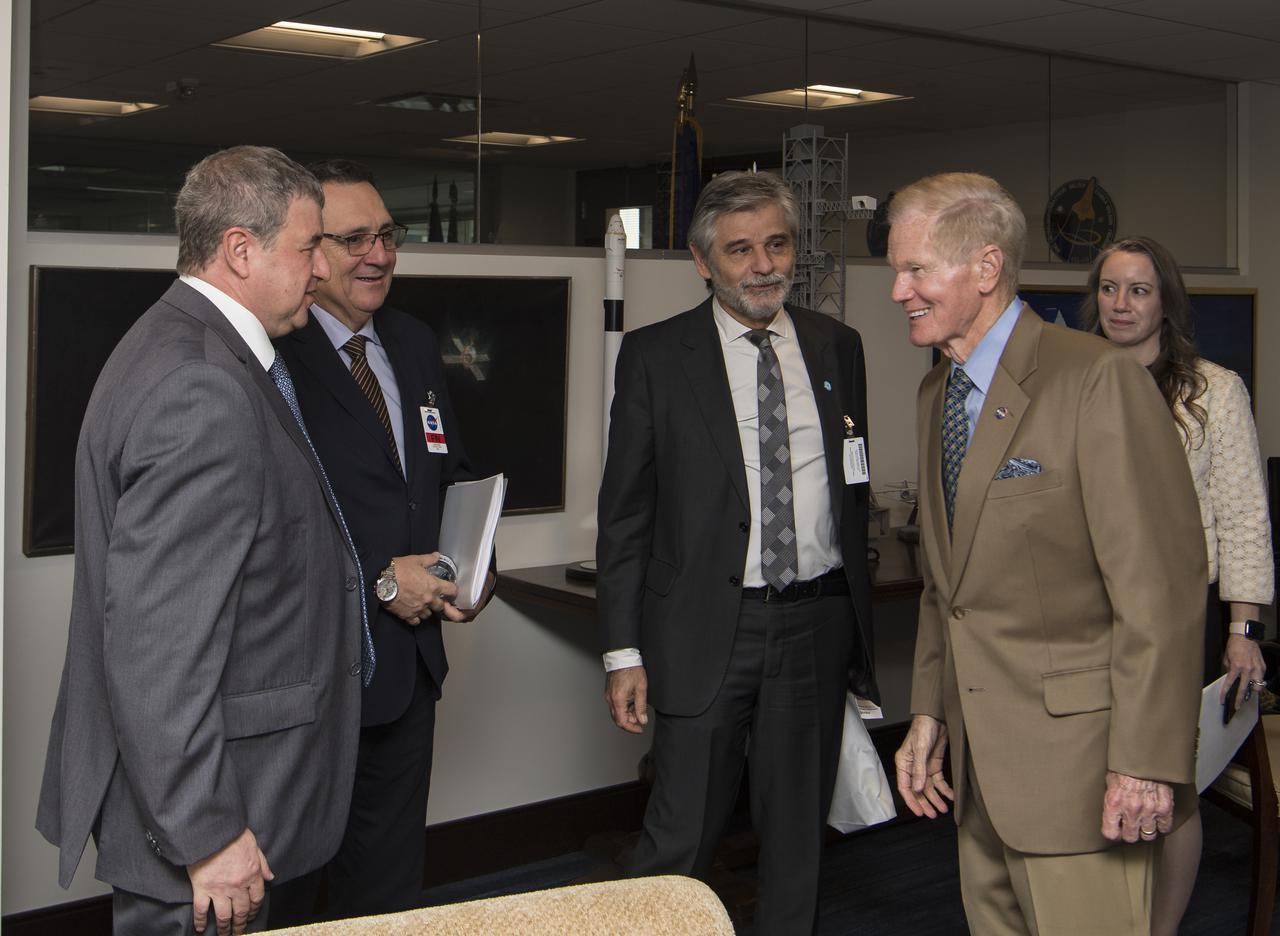
NASA Administrator Bill Nelson, right, meets with Executive and Technical Director of the Comisión Nacional de Actividades Espaciales (CONAE), Raúl Kulichevsky, left, Advisor to the Minister for Science and Technology in Argentina, Guillermo Salvatierra, second from left, and Minister of Science, Technology and Innovation in Argentina and Chairman of the Board of CONAE, Daniel Filmus, Tuesday, March 22, 2022, at NASA Headquarters in Washington DC. Photo Credit: (NASA/Aubrey Gemignani)
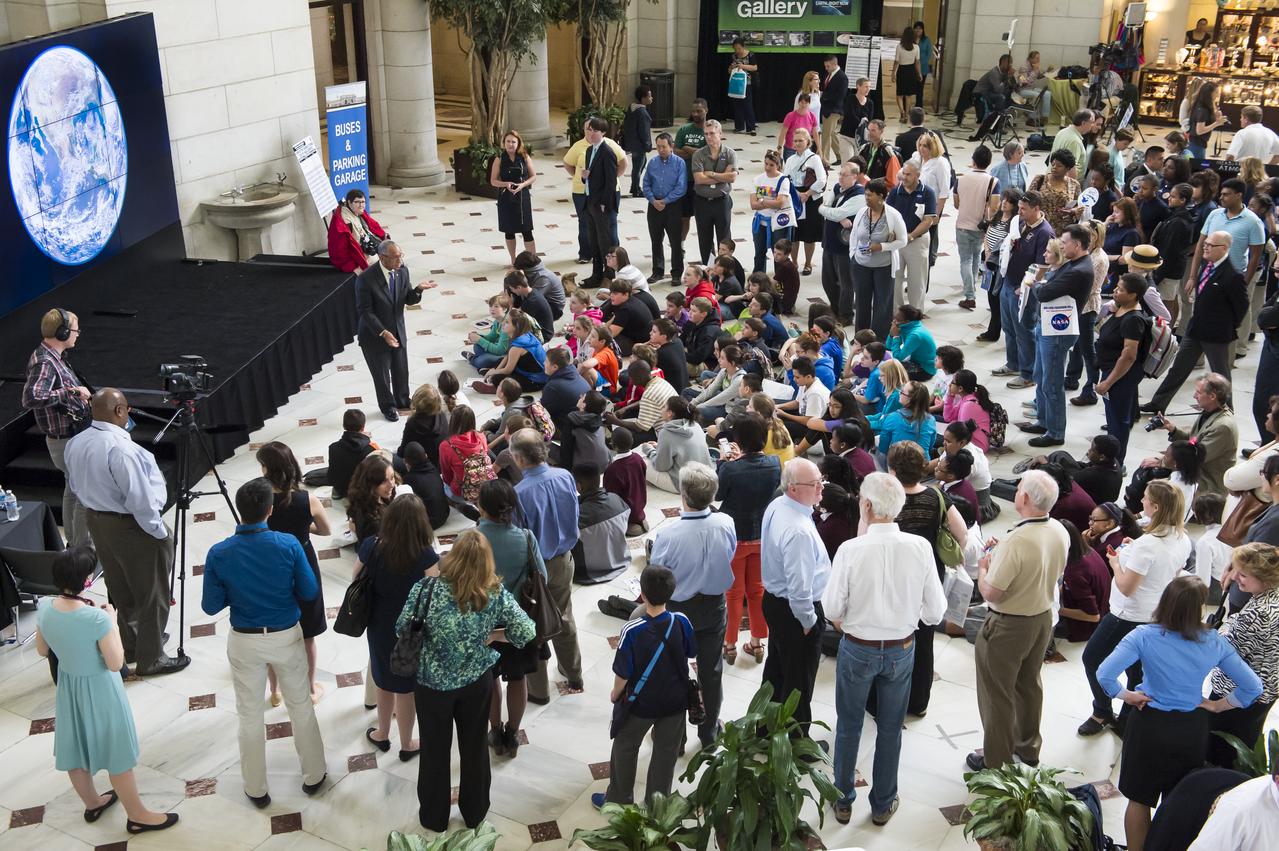
NASA Administrator Charles Bolden speaks to students who attended the NASA sponsored Earth Day event April 22, 2014 at Union Station in Washington, DC. NASA sponsored the Earth Day event as part of its "Earth Right Now" campaign, celebrating the launch of five Earth-observing missions in 2014. Photo Credit: (NASA/Aubrey Gemignani)
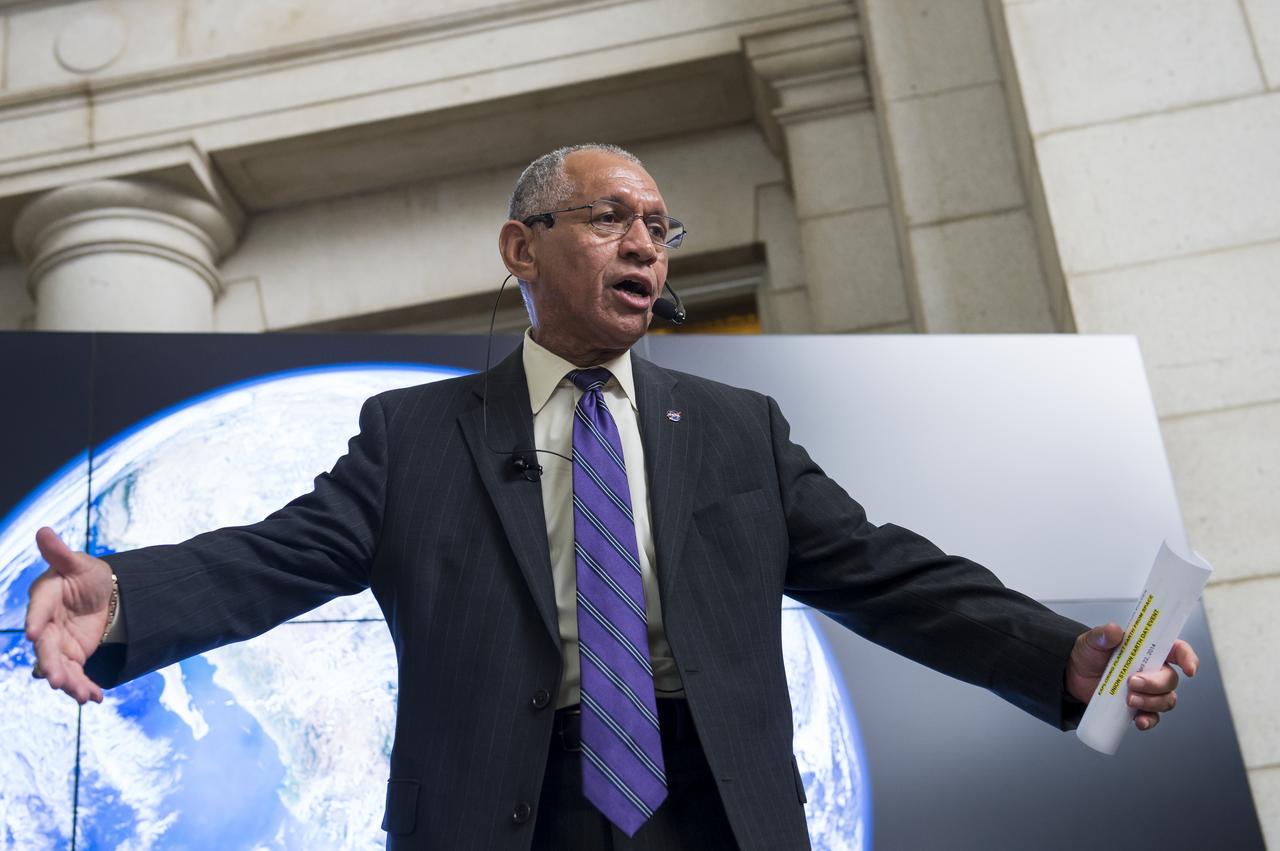
NASA Administrator Charles Bolden speaks to students who attended the NASA sponsored Earth Day event April 22, 2014 at Union Station in Washington, DC. NASA sponsored the Earth Day event as part of its "Earth Right Now" campaign, celebrating the launch of five Earth-observing missions in 2014. Photo Credit: (NASA/Aubrey Gemignani)
From left to right, NASA Deputy Administrator, Pam Melroy, Minister of Science, Technology and Innovation in Argentina and Chairman of the Board of the Comisión Nacional de Actividades Espaciales (CONAE), Daniel Filmus, Executive and Technical Director of CONAE, Raúl Kulichevsky, NASA Administrator Bill Nelson, and NASA Office of International and Interagency Relations, Director of the Science Division, Gib Kirkham, meet Tuesday, March 22, 2022, at NASA Headquarters in Washington DC. Photo Credit: (NASA/Aubrey Gemignani)
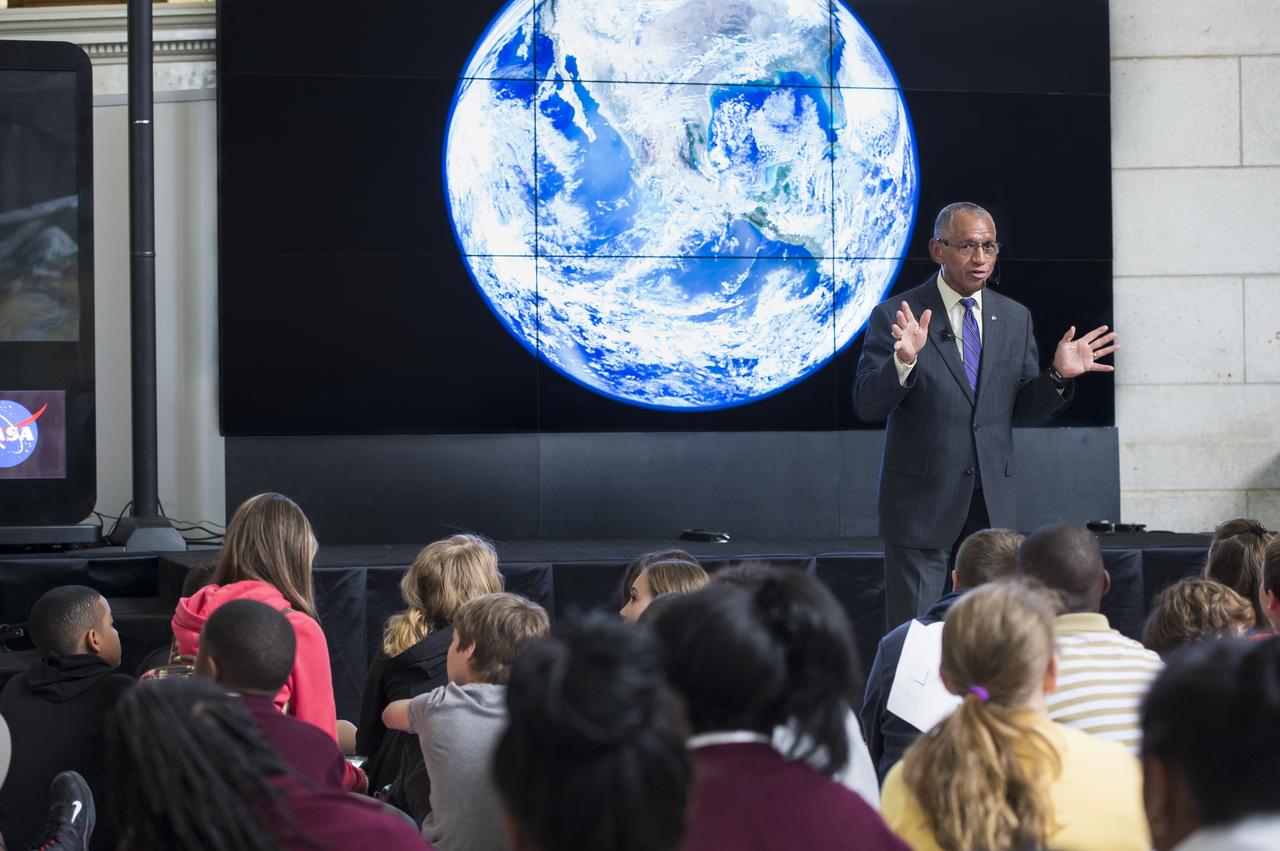
NASA Administrator Charles Bolden speaks to students who attended the NASA sponsored Earth Day event April 22, 2014 at Union Station in Washington, DC. NASA sponsored the Earth Day event as part of its "Earth Right Now" campaign, celebrating the launch of five Earth-observing missions in 2014. Photo Credit: (NASA/Aubrey Gemignani)
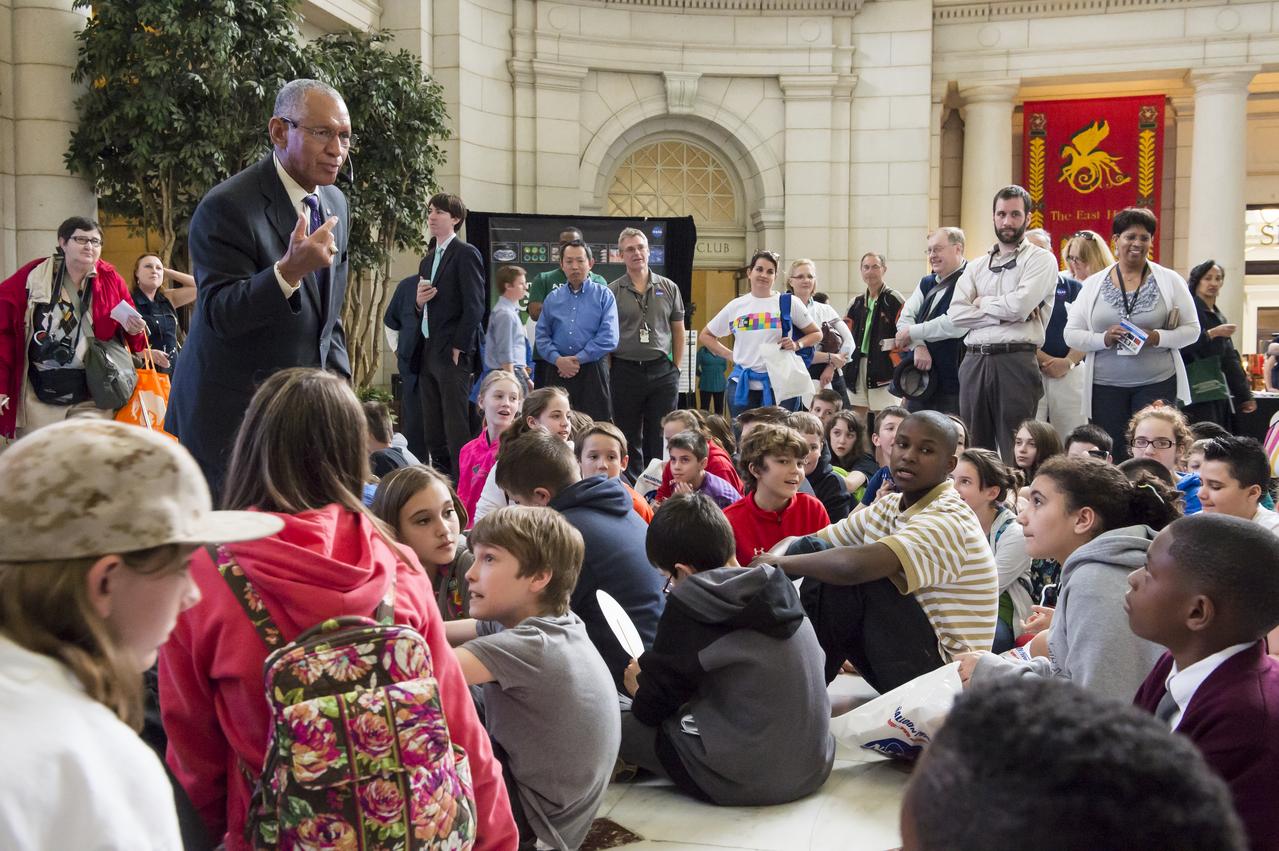
NASA Administrator Charles Bolden speaks to students who attended the NASA sponsored Earth Day event April 22, 2014 at Union Station in Washington, DC. NASA sponsored the Earth Day event as part of its "Earth Right Now" campaign, celebrating the launch of five Earth-observing missions in 2014. Photo Credit: (NASA/Aubrey Gemignani)
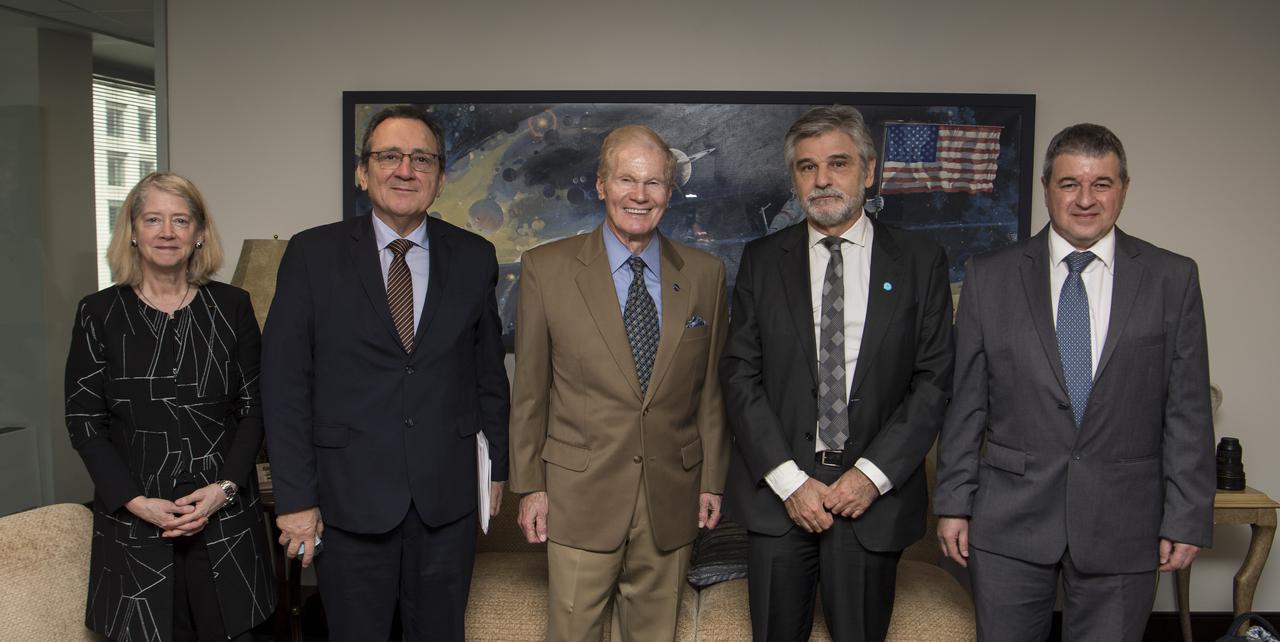
From left to right, NASA Deputy Administrator, Pam Melroy, Advisor to the Minister for Science and Technology in Argentina, Guillermo Salvatierra, NASA Administrator Bill Nelson, Minister of Science, Technology and Innovation in Argentina and Chairman of the Board of CONAE, Daniel Filmus, and Executive and Technical Director of the Comisión Nacional de Actividades Espaciales (CONAE), Raúl Kulichevsky, pose for a photo Tuesday, March 22, 2022, at NASA Headquarters in Washington DC. Photo Credit: (NASA/Aubrey Gemignani)
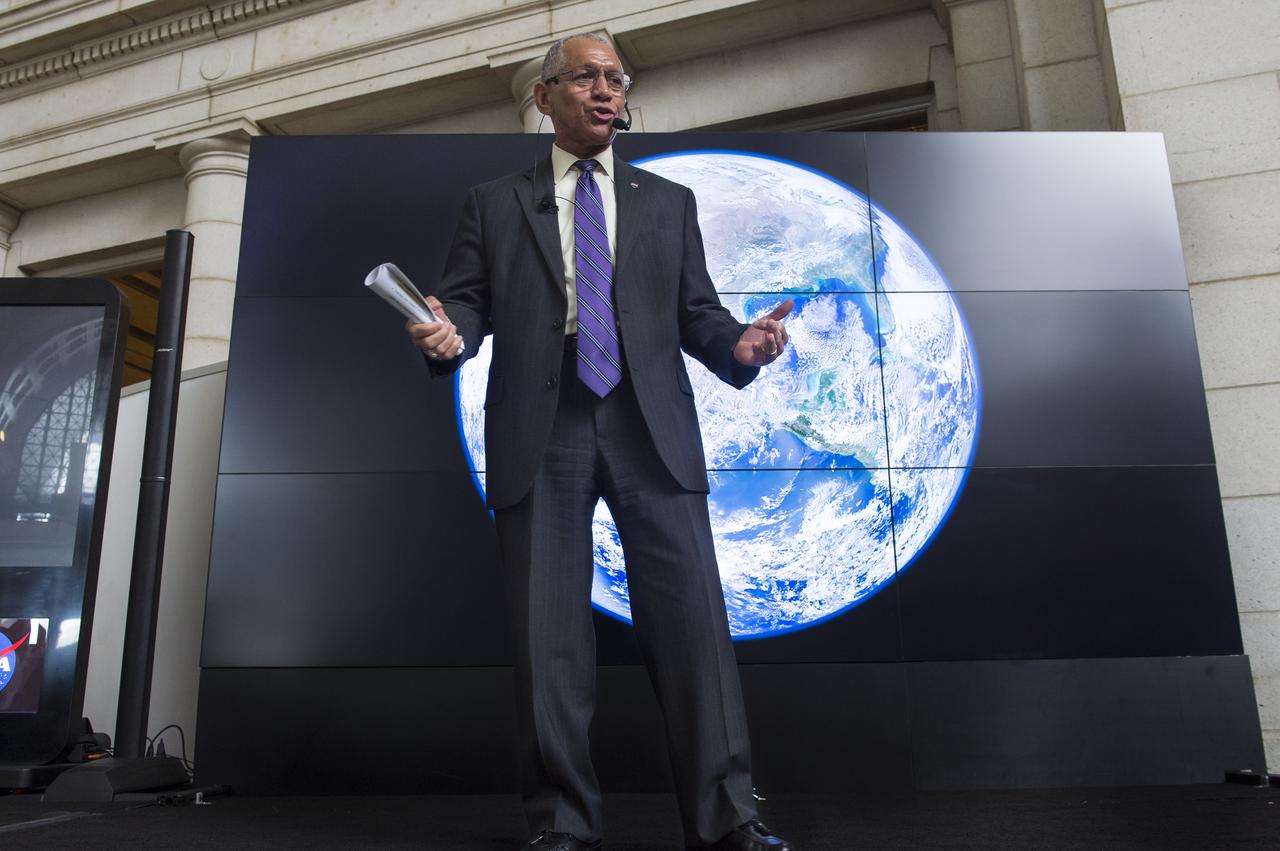
NASA Administrator Charles Bolden speaks to students who attended the NASA sponsored Earth Day event April 22, 2014 at Union Station in Washington, DC. NASA sponsored the Earth Day event as part of its "Earth Right Now" campaign, celebrating the launch of five Earth-observing missions in 2014. Photo Credit: (NASA/Aubrey Gemignani)
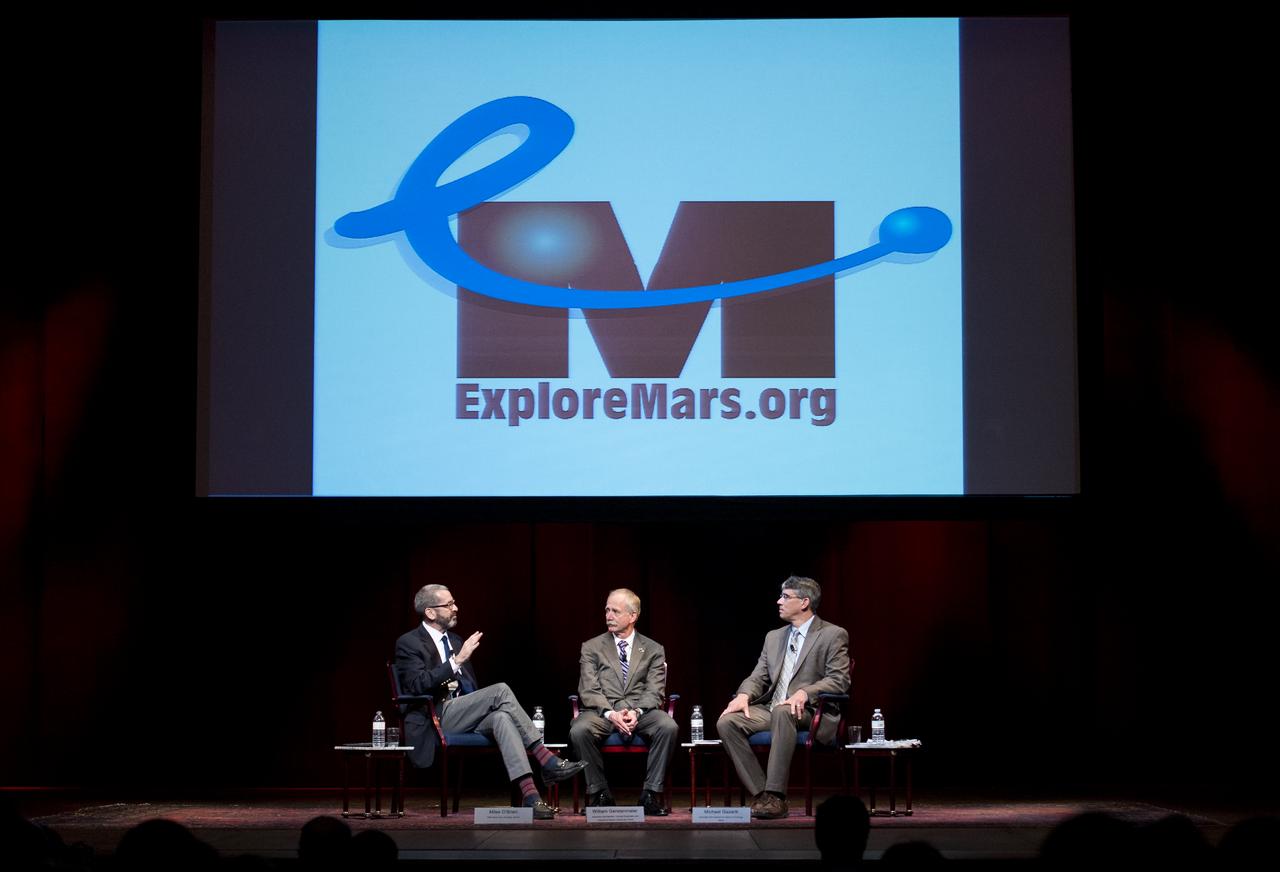
Miles O'Brien, science correspondant for PBS NewsHour, left, leads a panel discussion on Mars exploration with William Gerstenmaier, NASA Associatate Administrator for Human Explorations and Operations, center, and Michael Gazarik, NASA Associate Administrator for Space Technology, left, at the Humans to Mars Summit on April 22, 2014 at George Washington University in Washington, DC. Photo Credit: (NASA/Joel Kowsky)
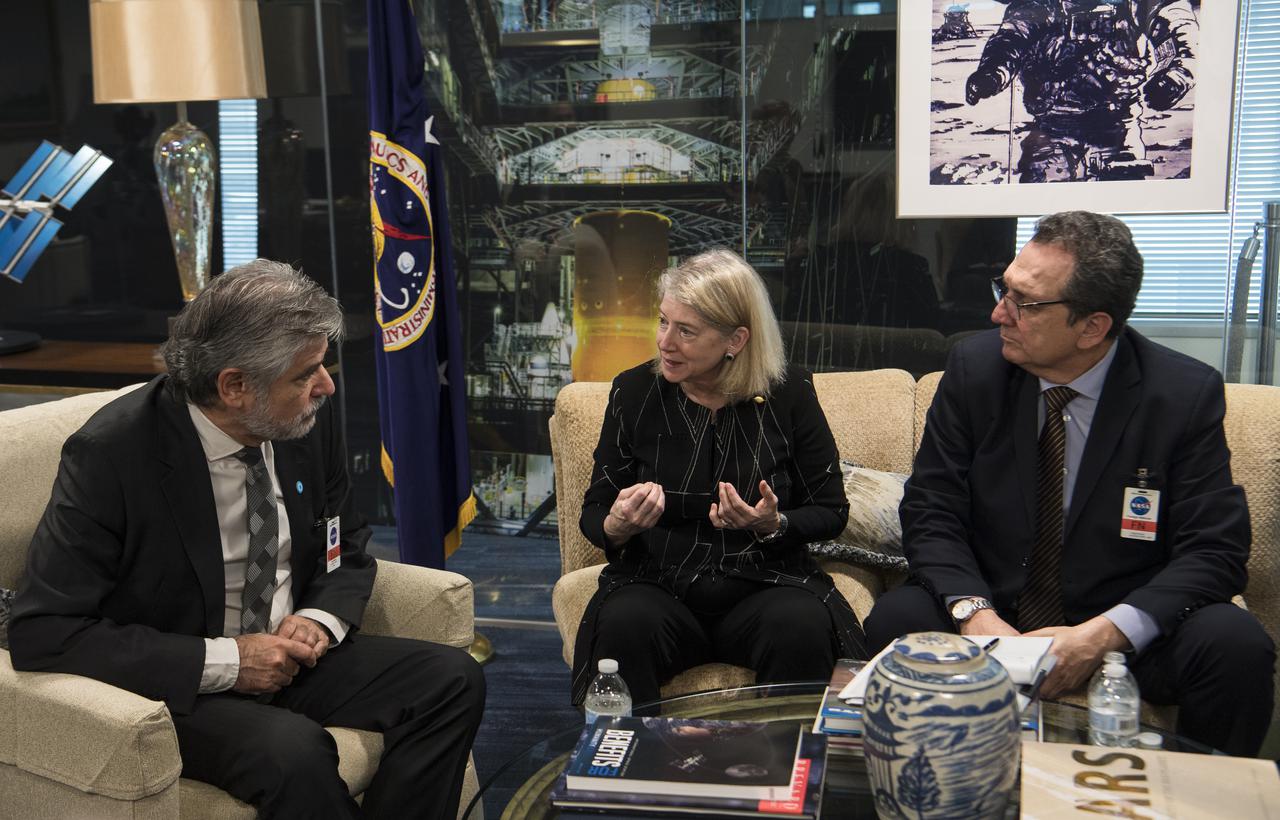
NASA Deputy Administrator Pam Melroy, center, speaks with the Minister of Science, Technology and Innovation in Argentina and Chairman of the Board of the Comisión Nacional de Actividades Espaciales (CONAE), Daniel Filmus, left, and Advisor to the Minister for Science and Technology in Argentina, Guillermo Salvatierra, during a meeting, Tuesday, March 22, 2022, at NASA Headquarters in Washington DC. Photo Credit: (NASA/Aubrey Gemignani)
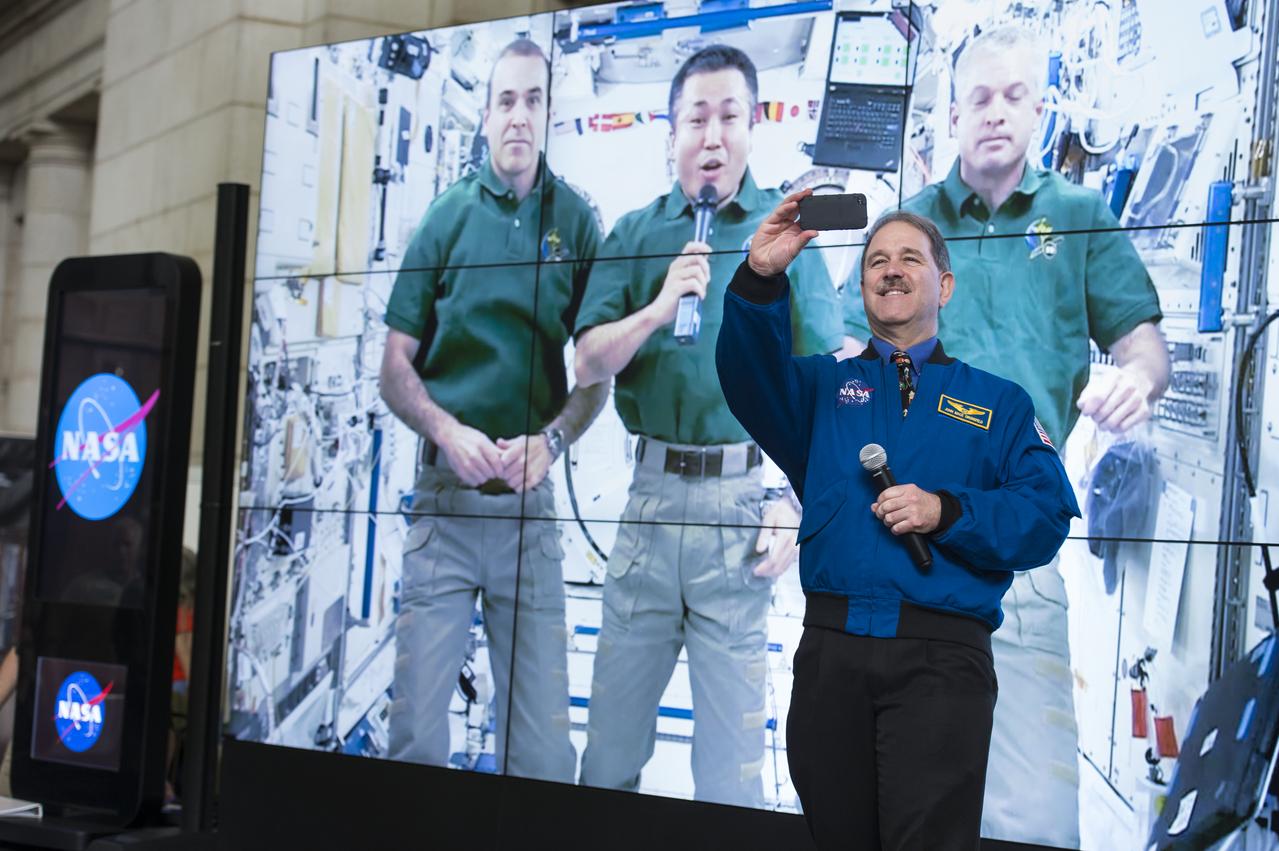
NASA Astronaut John Mace Grunsfeld takes a quick selfie with astronauts at the International Space Station at the NASA sponsored Earth Day event April 22, 2014 at Union Station in Washington, DC. NASA announced the "Global Selfie" event as part of its "Earth Right Now" campaign, celebrating the launch of five Earth-observing missions in 2014. All selfies posted to social media with the hashtag "GlobalSelfie" will be included in a mosaic image of Earth. Photo Credit: (NASA/Aubrey Gemignani)
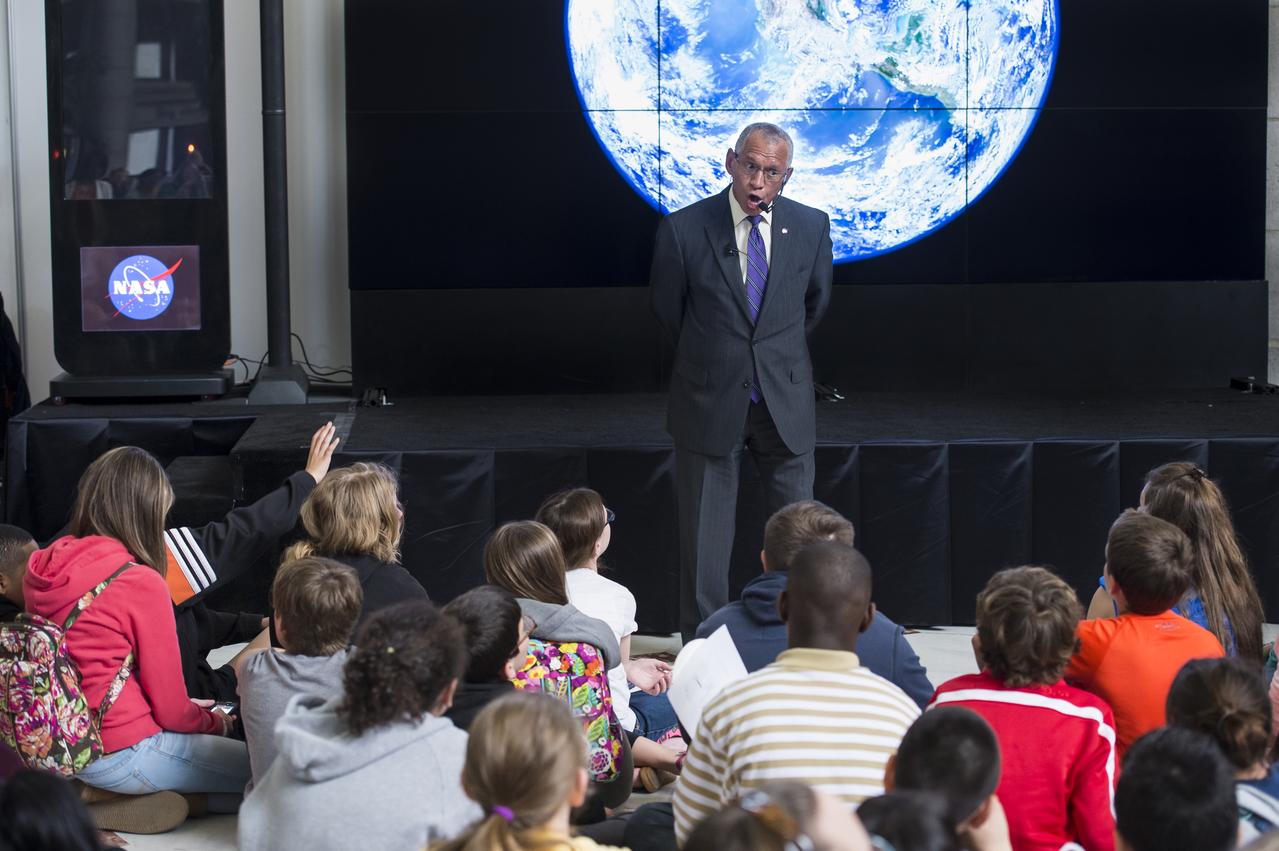
NASA Administrator Charles Bolden speaks to students who attended the NASA sponsored Earth Day event April 22, 2014 at Union Station in Washington, DC. NASA sponsored the Earth Day event as part of its "Earth Right Now" campaign, celebrating the launch of five Earth-observing missions in 2014. Photo Credit: (NASA/Aubrey Gemignani)
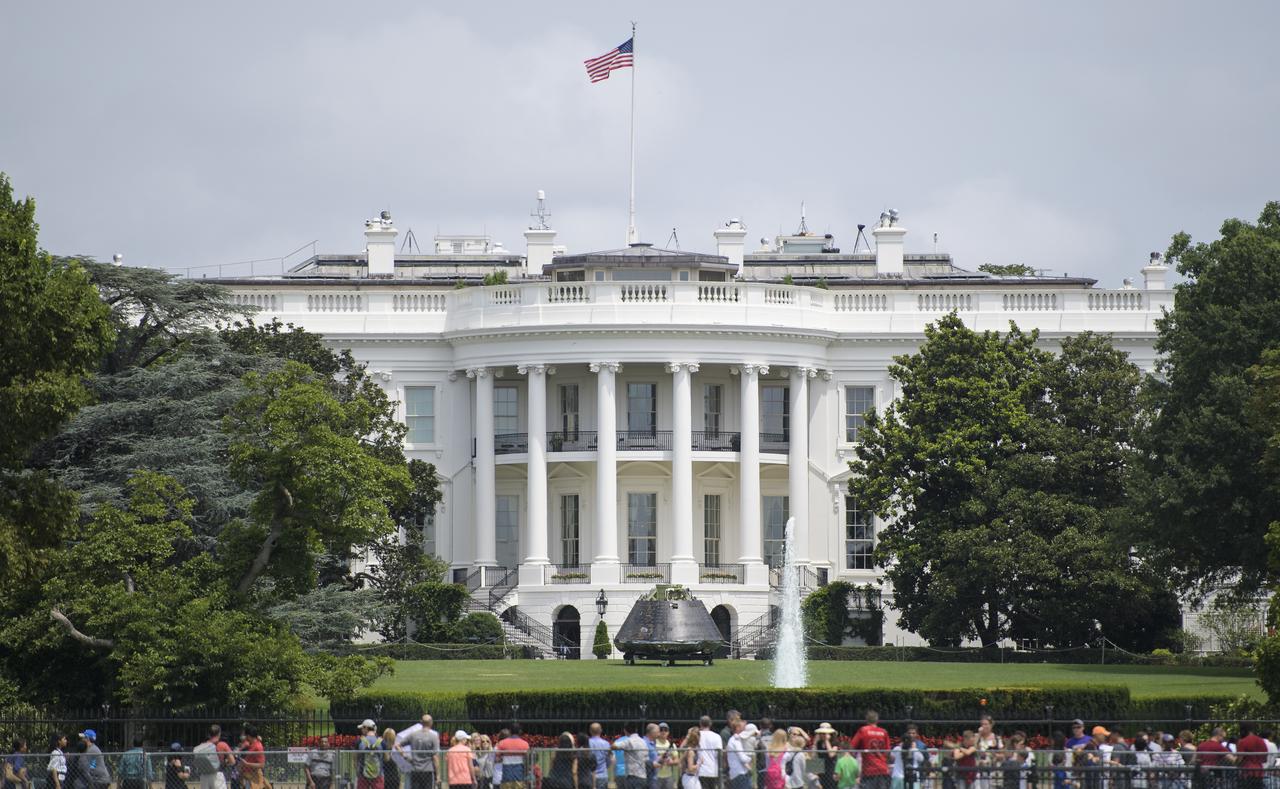
NASA's Orion spacecraft that flew Exploration Flight Test-1 on Dec. 5, 2014 is seen on the South Lawn of the White House, Sunday, July 22, 2018 in Washington, DC. Lockheed Martin, NASA’s prime contractor for Orion, began manufacturing the Orion crew module in 2011 and delivered it in July 2012 to NASA's Kennedy Space Center where final assembly, integration and testing was completed. More than 1,000 companies across the country manufactured or contributed elements to the spacecraft. Photo Credit: (NASA/Joel Kowsky)
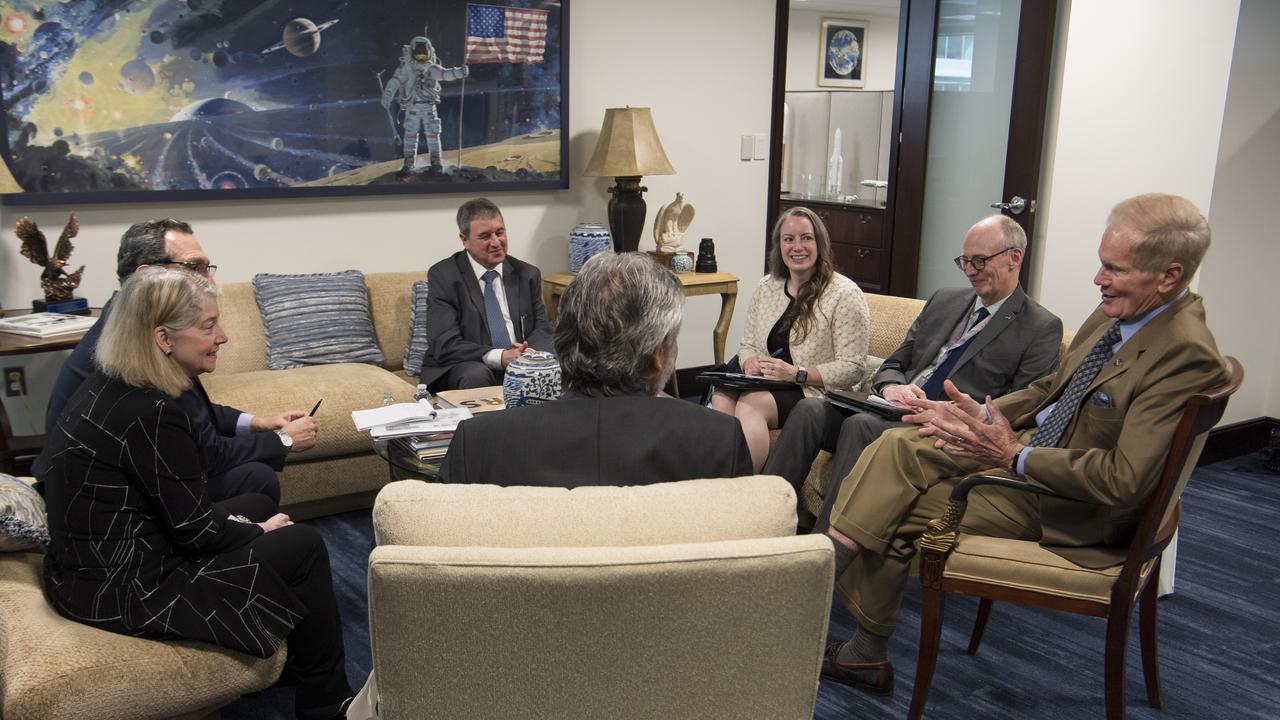
From left to right, NASA Deputy Administrator, Pam Melroy, Advisor to the Minister for Science and Technology in Argentina, Guillermo Salvatierra, Executive and Technical Director of the Comisión Nacional de Actividades Espaciales (CONAE), Raúl Kulichevsky, Minister of Science, Technology and Innovation in Argentina and Chairman of the Board of CONAE, Daniel Filmus, NASA Office of International and Interagency Relations Deputy Associate Administrator, Meredith McKay, NASA Office of International and Interagency Relations, Director of the Science Division, Gib Kirkham, and NASA Administrator Bill Nelson, meet Tuesday, March 22, 2022, at NASA Headquarters in Washington DC. Photo Credit: (NASA/Aubrey Gemignani)

ISS022-E-023610 (11 Jan. 2010) --- Russian cosmonaut Maxim Suraev, Expedition 22 flight engineer, works with a Russian Orlan spacesuit in the Pirs Docking Compartment of the International Space Station.

ISS022-E-023617 (11 Jan. 2010) --- Russian cosmonaut Oleg Kotov, Expedition 22 flight engineer, works with a Russian Orlan spacesuit in the Pirs Docking Compartment of the International Space Station.
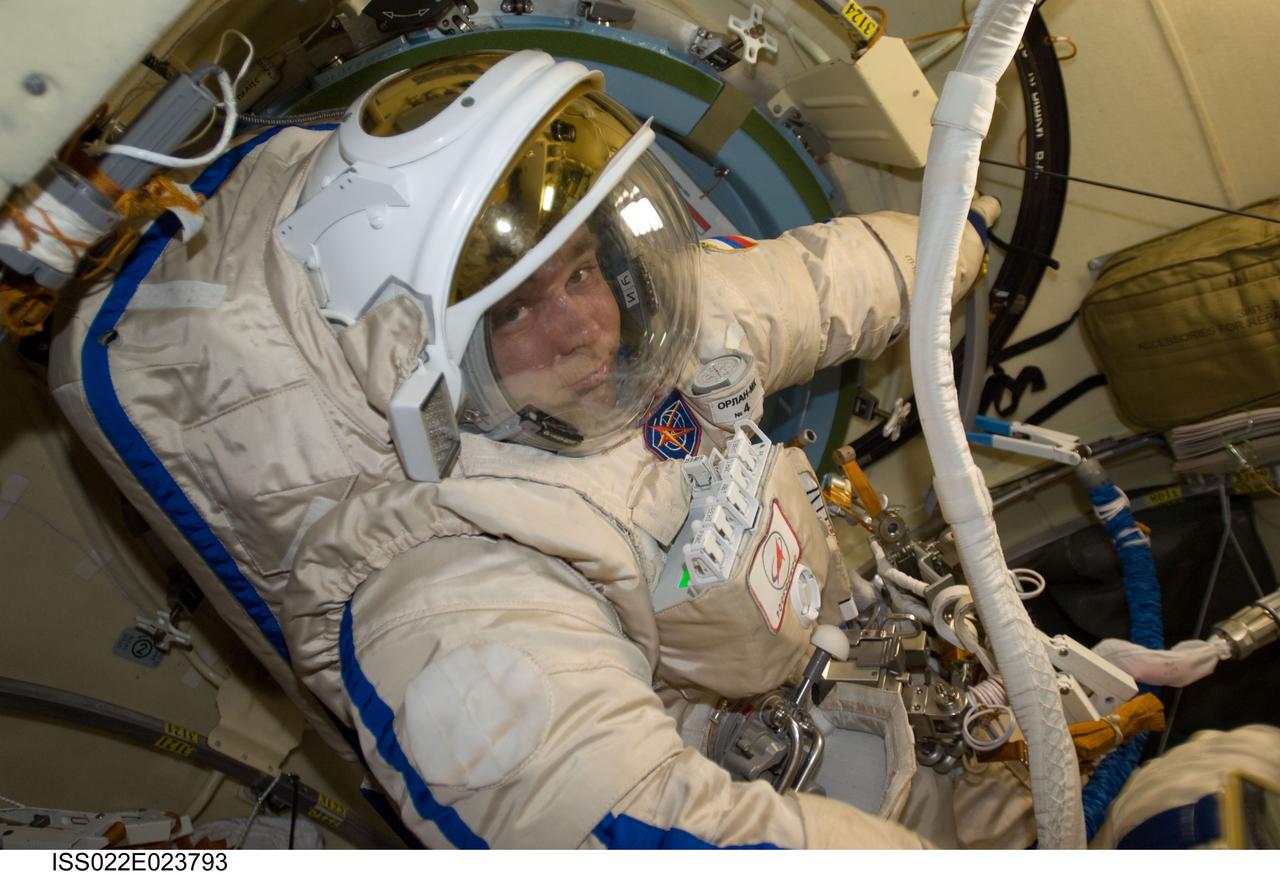
ISS022-E-023793 (12 Jan. 2010) --- Attired in a Russian Orlan spacesuit, Russian cosmonaut Maxim Suraev, Expedition 22 flight engineer, checks out his Orlan suit in preparation for a spacewalk scheduled for Jan. 14 to outfit the new Poisk module for future Russian vehicle dockings.
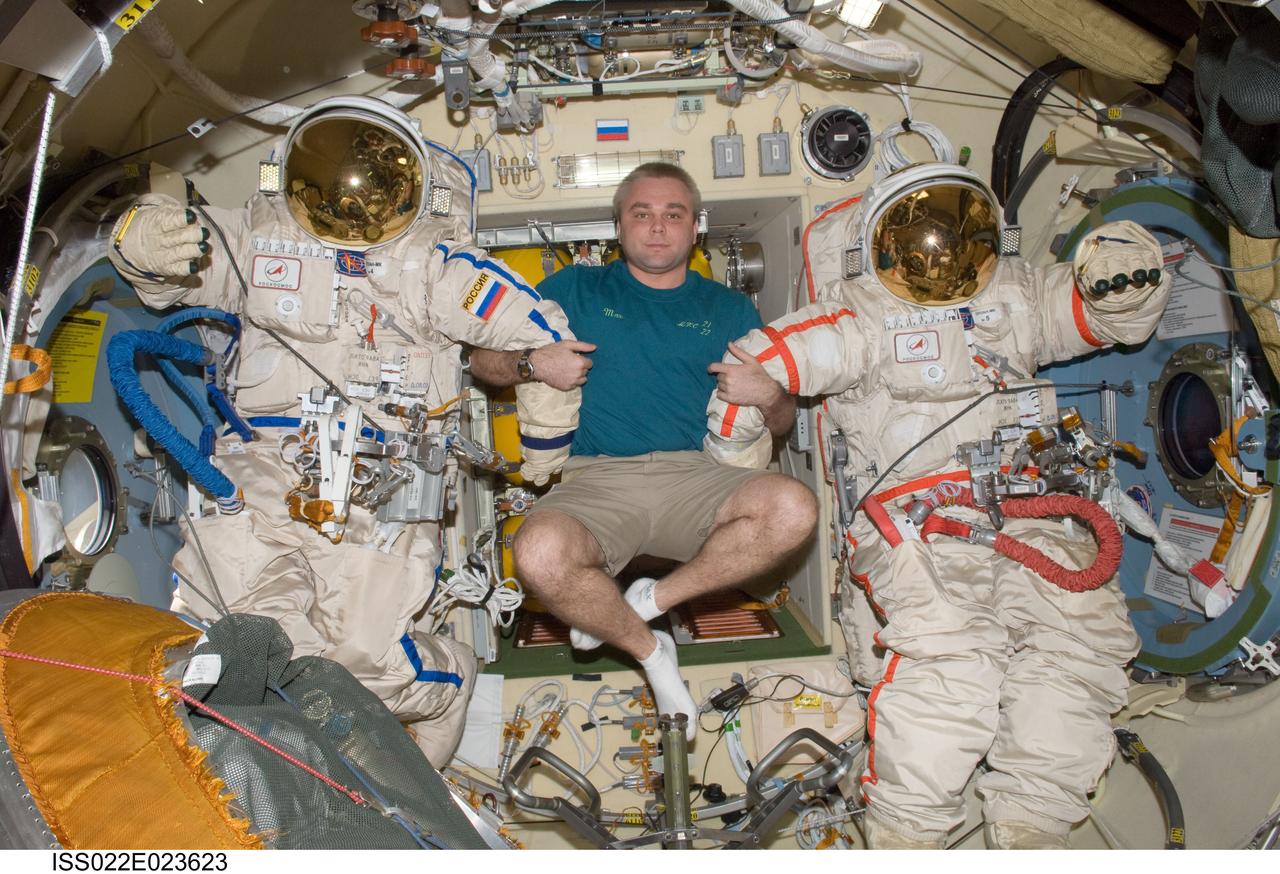
ISS022-E-023623 (11 Jan. 2010) --- Russian cosmonaut Maxim Suraev, Expedition 22 flight engineer, poses for a photo with two Russian Orlan spacesuits in the Pirs Docking Compartment of the International Space Station.
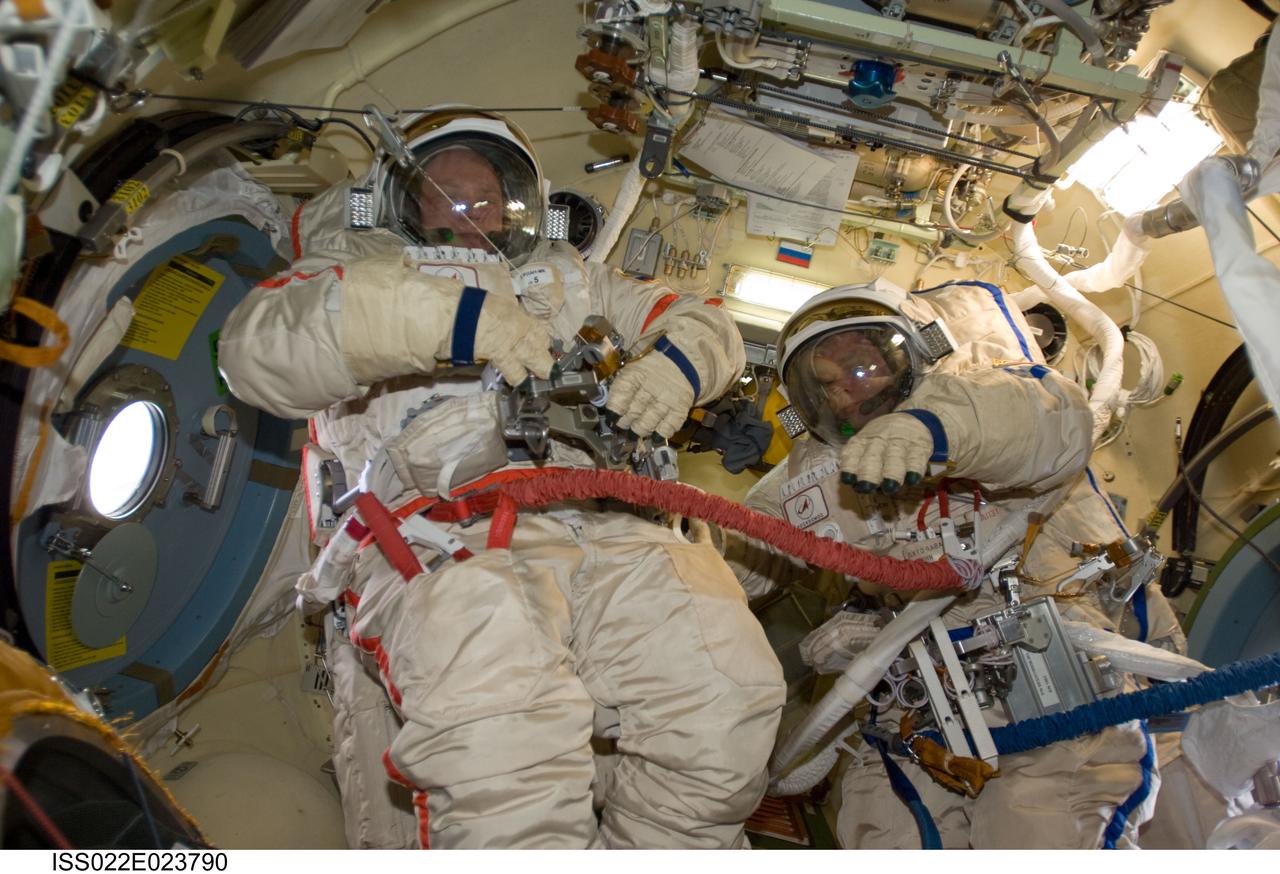
ISS022-E-023790 (12 Jan. 2010) --- Attired in their Russian Orlan spacesuits, Russian cosmonauts Oleg Kotov (left) and Maxim Suraev, both Expedition 22 flight engineers, check out their Orlan suits in preparation for a spacewalk scheduled for Jan. 14 to outfit the new Poisk module for future Russian vehicle dockings.
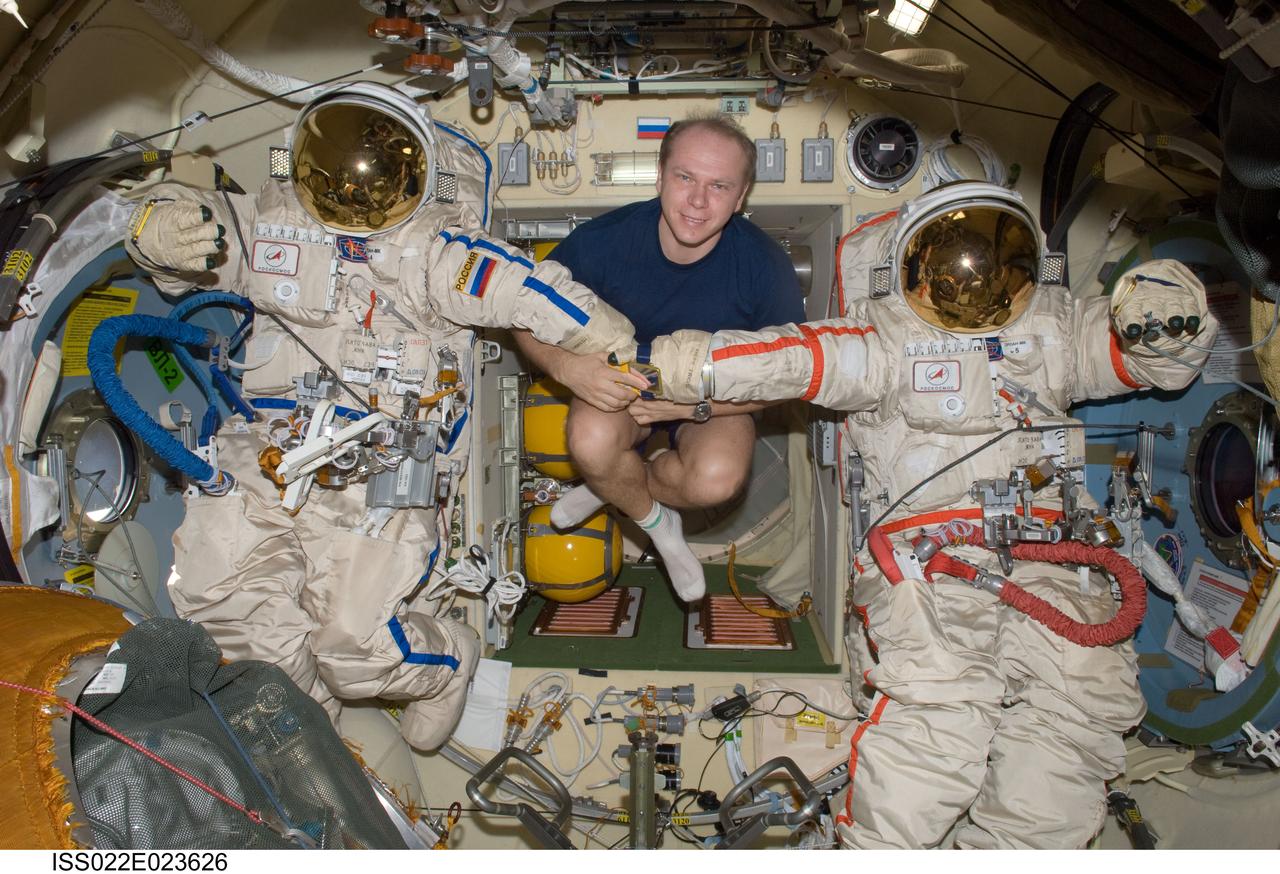
ISS022-E-023626 (11 Jan. 2010) --- Russian cosmonaut Oleg Kotov, Expedition 22 flight engineer, poses for a photo with two Russian Orlan spacesuits in the Pirs Docking Compartment of the International Space Station.
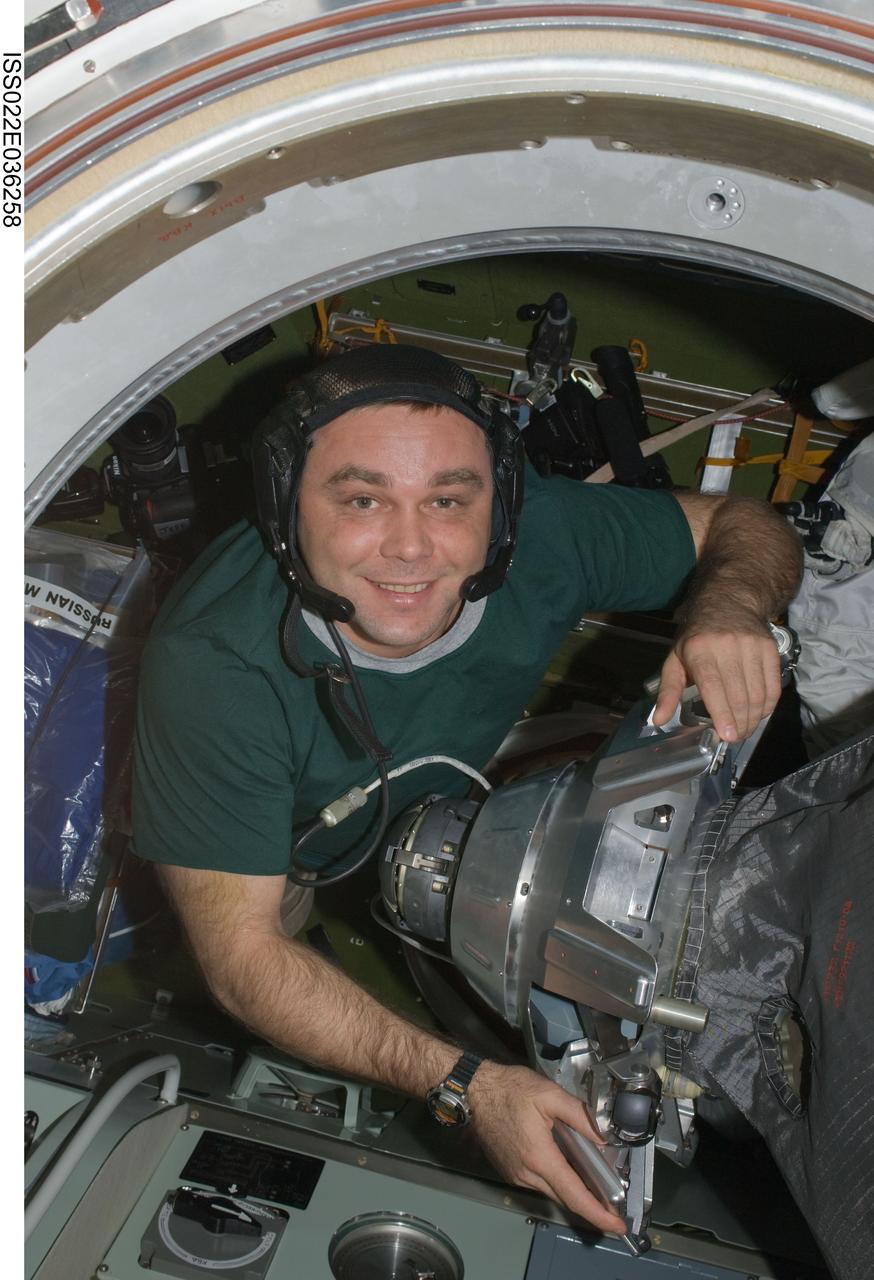
ISS022-E-036258 (21 Jan. 2010) --- Wearing communication headgear, Russian cosmonaut Maxim Suraev, Expedition 22 flight engineer, works in the Pirs Docking Compartment of the International Space Station.
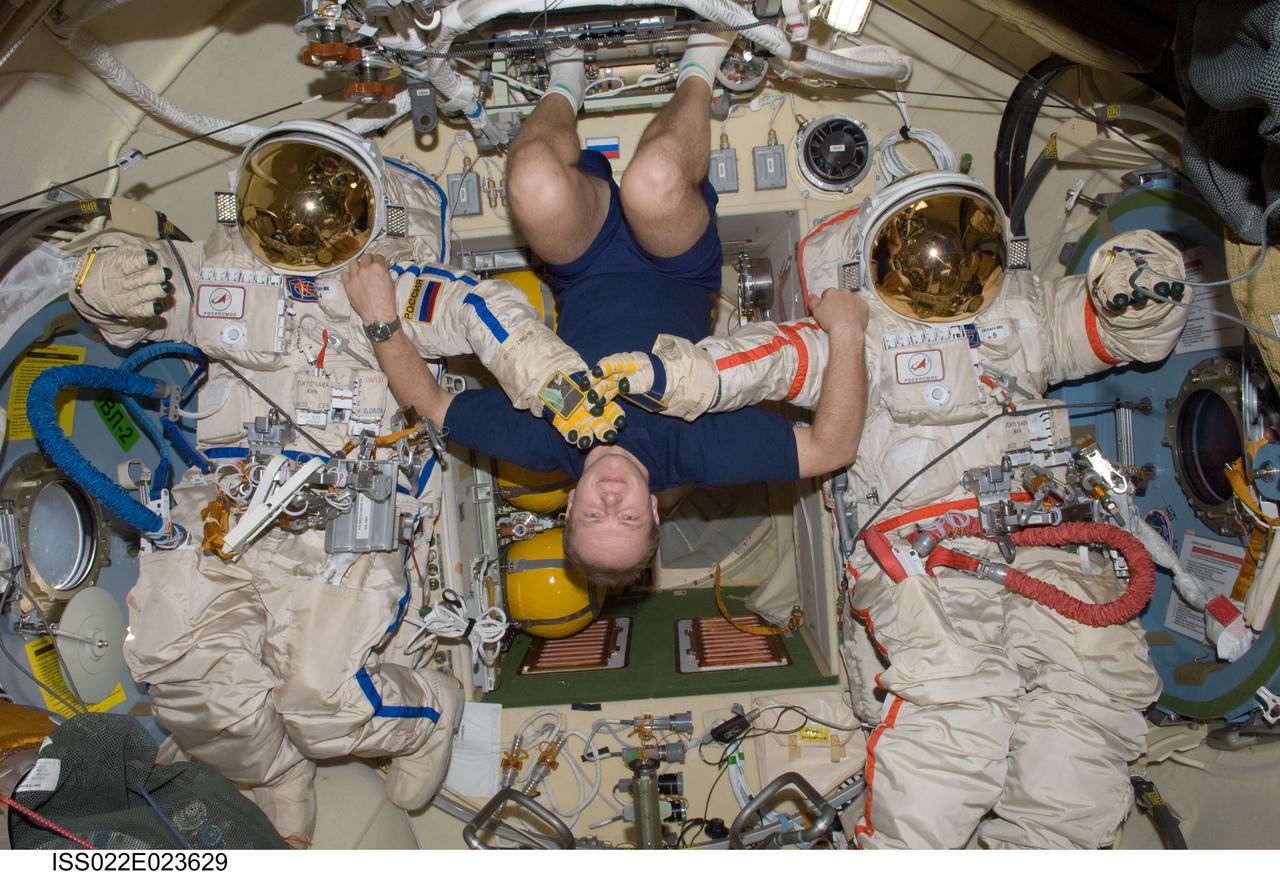
ISS022-E-023629 (11 Jan. 2010) --- Russian cosmonaut Oleg Kotov, Expedition 22 flight engineer, poses for a photo with two Russian Orlan spacesuits in the Pirs Docking Compartment of the International Space Station.
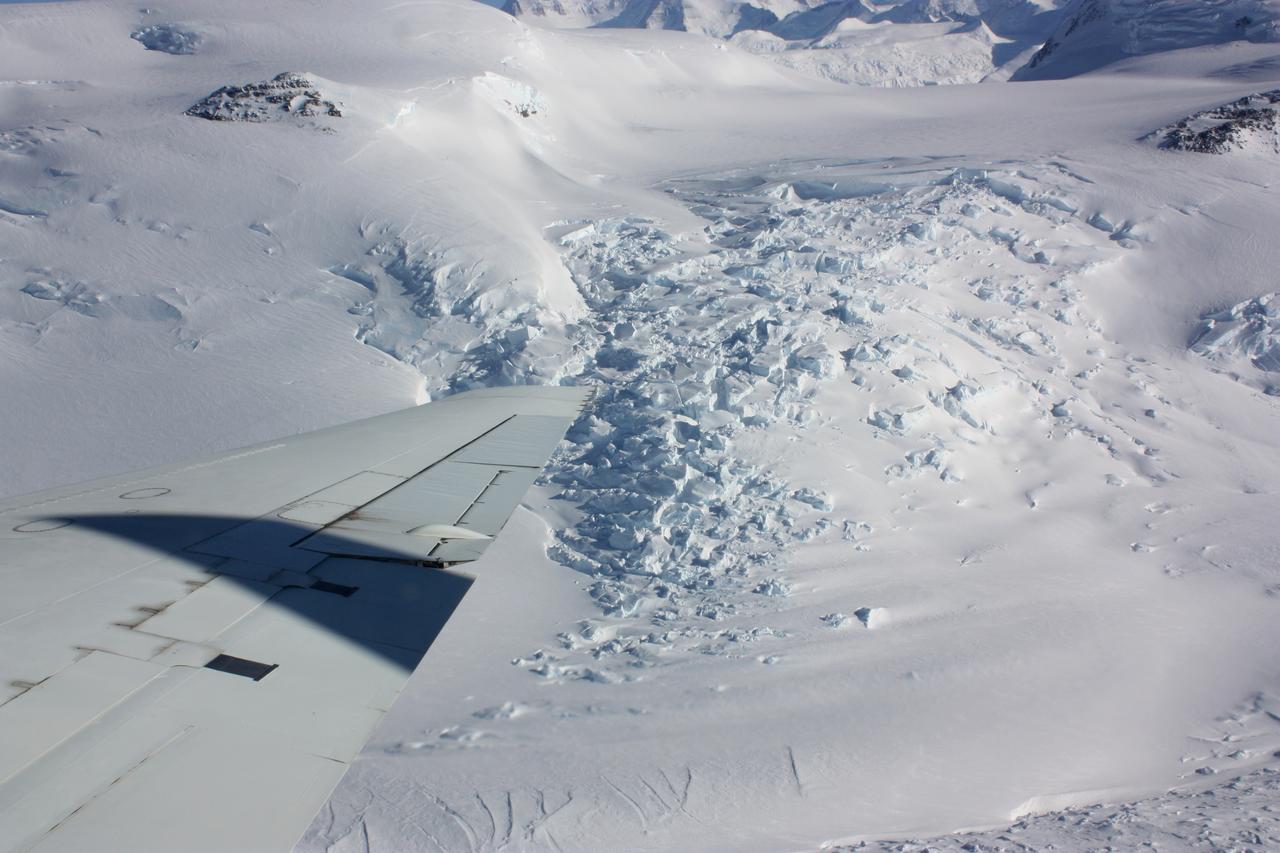
An area of broken glacier ice seen from the IceBridge DC-8 on Oct. 22, 2012. Credit: NASA / George Hale NASA's Operation IceBridge is an airborne science mission to study Earth's polar ice. For more information about IceBridge, visit: <a href="http://www.nasa.gov/icebridge" rel="nofollow">www.nasa.gov/icebridge</a> <b><a href="http://www.nasa.gov/audience/formedia/features/MP_Photo_Guidelines.html" rel="nofollow">NASA image use policy.</a></b> <b><a href="http://www.nasa.gov/centers/goddard/home/index.html" rel="nofollow">NASA Goddard Space Flight Center</a></b> enables NASA’s mission through four scientific endeavors: Earth Science, Heliophysics, Solar System Exploration, and Astrophysics. Goddard plays a leading role in NASA’s accomplishments by contributing compelling scientific knowledge to advance the Agency’s mission. <b>Follow us on <a href="http://twitter.com/NASA_GoddardPix" rel="nofollow">Twitter</a></b> <b>Like us on <a href="http://www.facebook.com/pages/Greenbelt-MD/NASA-Goddard/395013845897?ref=tsd" rel="nofollow">Facebook</a></b> <b>Find us on <a href="http://instagrid.me/nasagoddard/?vm=grid" rel="nofollow">Instagram</a></b>
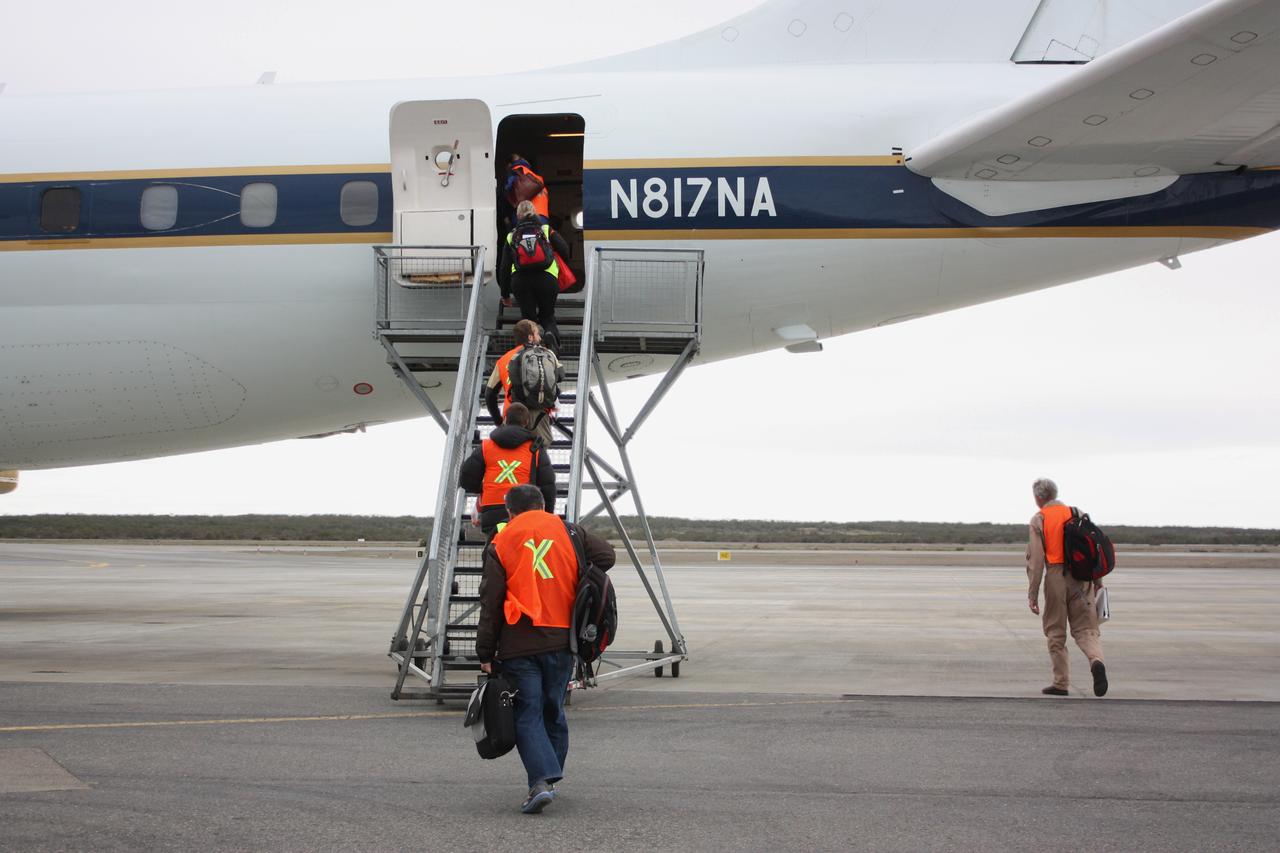
IceBridge personnel boarding NASA's DC-8 airborne laboratory on the morning of Oct. 22, 2012, before a mission to survey the Ronne Ice Shelf. Credit: NASA / George Hale NASA's Operation IceBridge is an airborne science mission to study Earth's polar ice. For more information about IceBridge, visit: <a href="http://www.nasa.gov/icebridge" rel="nofollow">www.nasa.gov/icebridge</a> <b><a href="http://www.nasa.gov/audience/formedia/features/MP_Photo_Guidelines.html" rel="nofollow">NASA image use policy.</a></b> <b><a href="http://www.nasa.gov/centers/goddard/home/index.html" rel="nofollow">NASA Goddard Space Flight Center</a></b> enables NASA’s mission through four scientific endeavors: Earth Science, Heliophysics, Solar System Exploration, and Astrophysics. Goddard plays a leading role in NASA’s accomplishments by contributing compelling scientific knowledge to advance the Agency’s mission. <b>Follow us on <a href="http://twitter.com/NASA_GoddardPix" rel="nofollow">Twitter</a></b> <b>Like us on <a href="http://www.facebook.com/pages/Greenbelt-MD/NASA-Goddard/395013845897?ref=tsd" rel="nofollow">Facebook</a></b> <b>Find us on <a href="http://instagrid.me/nasagoddard/?vm=grid" rel="nofollow">Instagram</a></b>
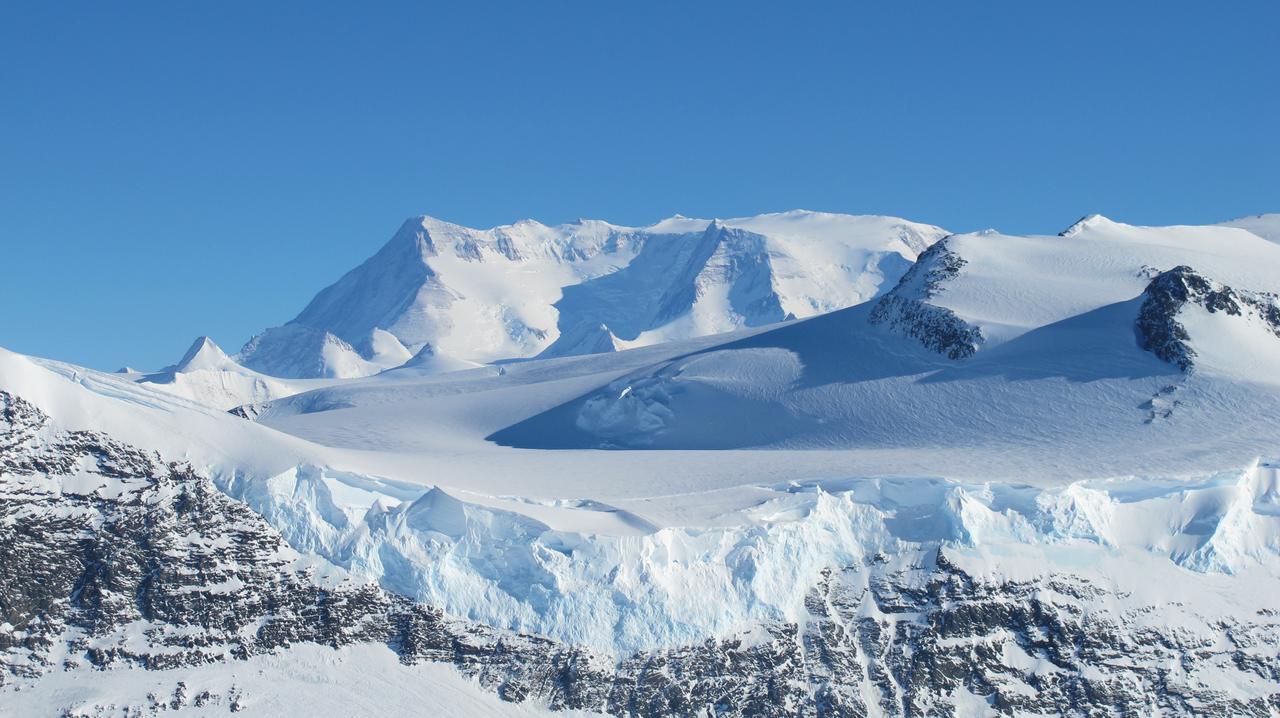
Ice on the Ellsworth Range in Antarctica as seen from the IceBridge DC-8 on Oct. 22, 2012. NASA's Operation IceBridge is an airborne science mission to study Earth's polar ice. For more information about IceBridge, visit: <a href="http://www.nasa.gov/icebridge" rel="nofollow">www.nasa.gov/icebridge</a> <b><a href="http://www.nasa.gov/audience/formedia/features/MP_Photo_Guidelines.html" rel="nofollow">NASA image use policy.</a></b> <b><a href="http://www.nasa.gov/centers/goddard/home/index.html" rel="nofollow">NASA Goddard Space Flight Center</a></b> enables NASA’s mission through four scientific endeavors: Earth Science, Heliophysics, Solar System Exploration, and Astrophysics. Goddard plays a leading role in NASA’s accomplishments by contributing compelling scientific knowledge to advance the Agency’s mission. <b>Follow us on <a href="http://twitter.com/NASA_GoddardPix" rel="nofollow">Twitter</a></b> <b>Like us on <a href="http://www.facebook.com/pages/Greenbelt-MD/NASA-Goddard/395013845897?ref=tsd" rel="nofollow">Facebook</a></b> <b>Find us on <a href="http://instagrid.me/nasagoddard/?vm=grid" rel="nofollow">Instagram</a></b>
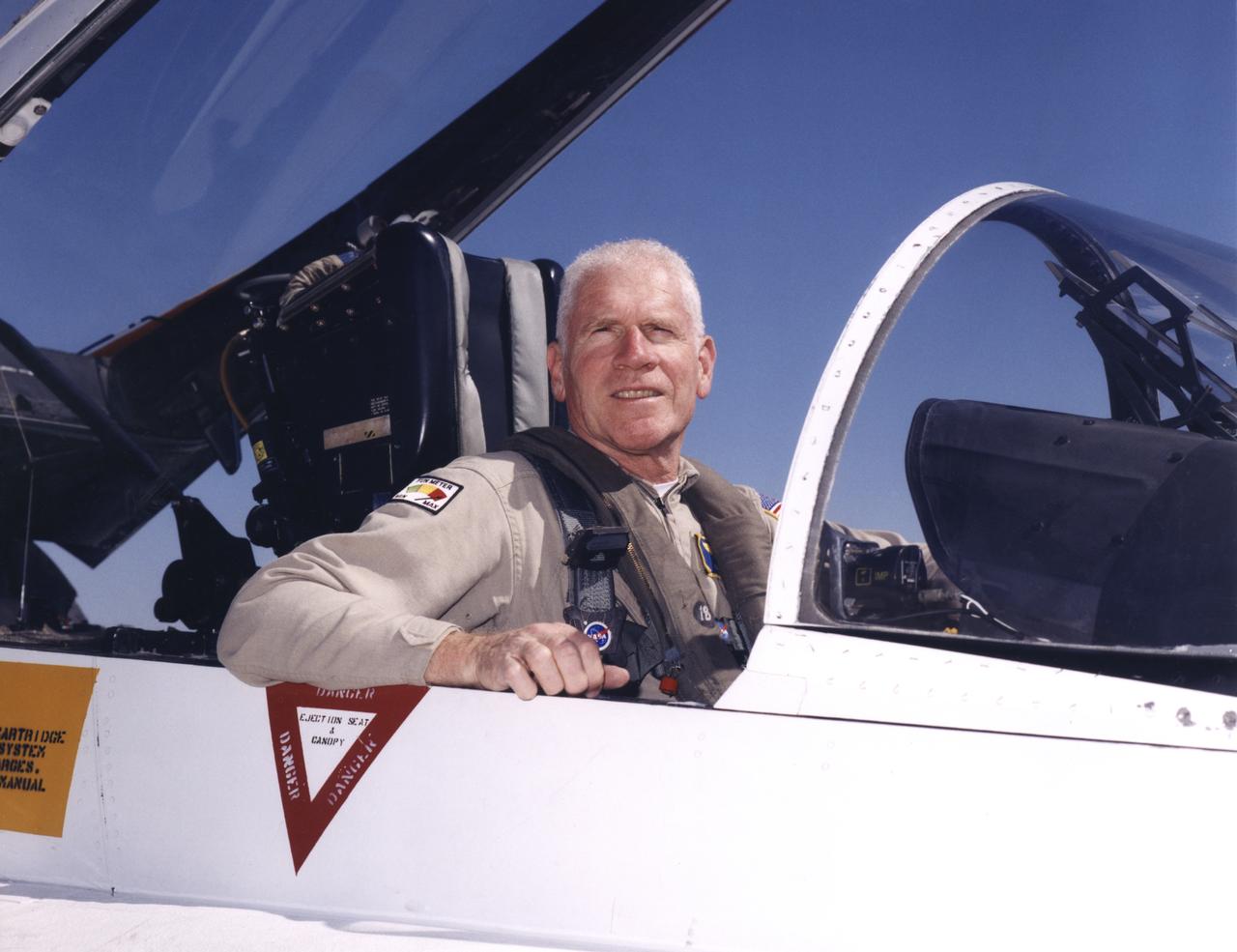
Edwin W. Lewis Jr. is a research pilot in the Airborne Science program, Flight Crew Branch, Dryden Flight Research Center, Edwards, California. He currently flies the DC-8, F/A-18, Lear Jet 24, King Air, and T-34C in support of Dryden's flight operations and is mentor pilot for the King Air and the Lear Jet. Prior to accepting this assignment Lewis was a pilot for eight years at NASA's Ames Research Center, Moffett Field, California, flying 10 different aircraft C-130B, DC-8-72, UH-1, SH-3, King Air, Lear 24, T-38A, T-39G and YO-3A in support of NASA flight missions. Lewis also flew the Kuiper Airborne Observatory (a modified civilian version of the Lockheed C-141 Starlifter). He was project pilot for Ames' 747 and T-38 programs. Lewis was born in New York City on May 19, 1936, and began flight training as a Civil Air Patrol cadet in 1951, ultimately earning his commercial pilot's certificate in 1958. He received a bachelor of arts degree in biology from Hobart College, Geneva, N.Y., and entered the U.S. Air Force through the Reserve Officer Training Corps. Following pilot training he was assigned to Moody Air Force Base, Ga., as an instructor pilot, for both the T-33 and T-37 aircraft. He served in Vietnam in 1965 and 1966, where he was a forward air controller, instructor and standardization/evaluation pilot, flying more than 1,000 hours in the O-1 "Bird Dog." Lewis separated from the regular Air Force and joined Pan American World Airways and the 129th Air Commando Group, California Air National Guard (ANG) based in Hayward, California. During his 18-year career with the California ANG he flew the U-6, U-10, C-119, HC-130 aircraft and the HH-3 helicopter. He retired as commander, 129th Air Rescue and Recovery Group, a composite combat rescue group, in the grade of colonel. During his 22 years as an airline pilot, he flew the Boeing 707, 727 and 747. He took early retirement from Pan American in 1989 to become a pilot with NASA.