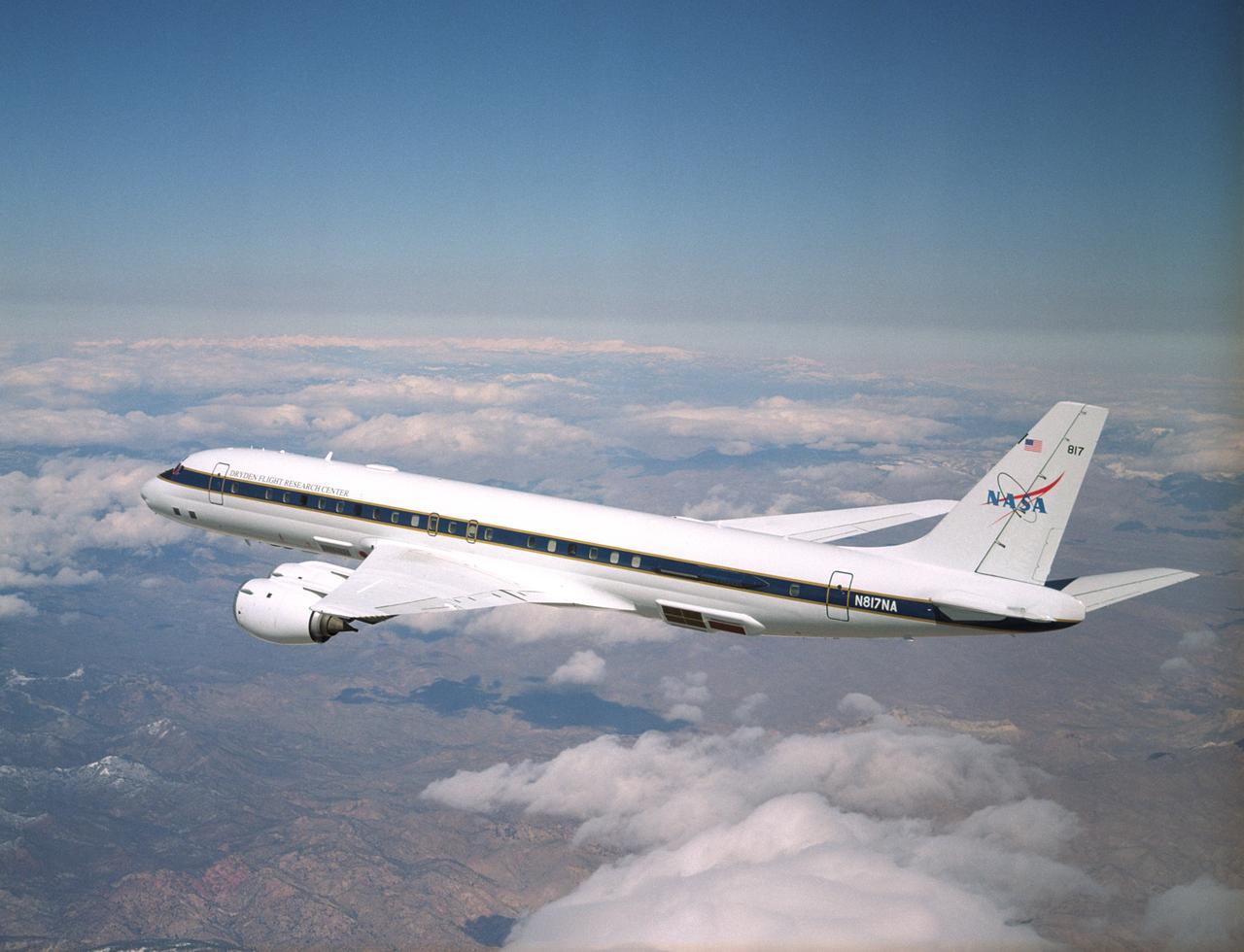
NASA's DC-8 Airborne Science research aircraft, in new colors and markings, in flight Feb. 24, 2004. Dark panels on lower fuselage are synthetic aperture radar antennas enabling sophisticated studies of Earth features.
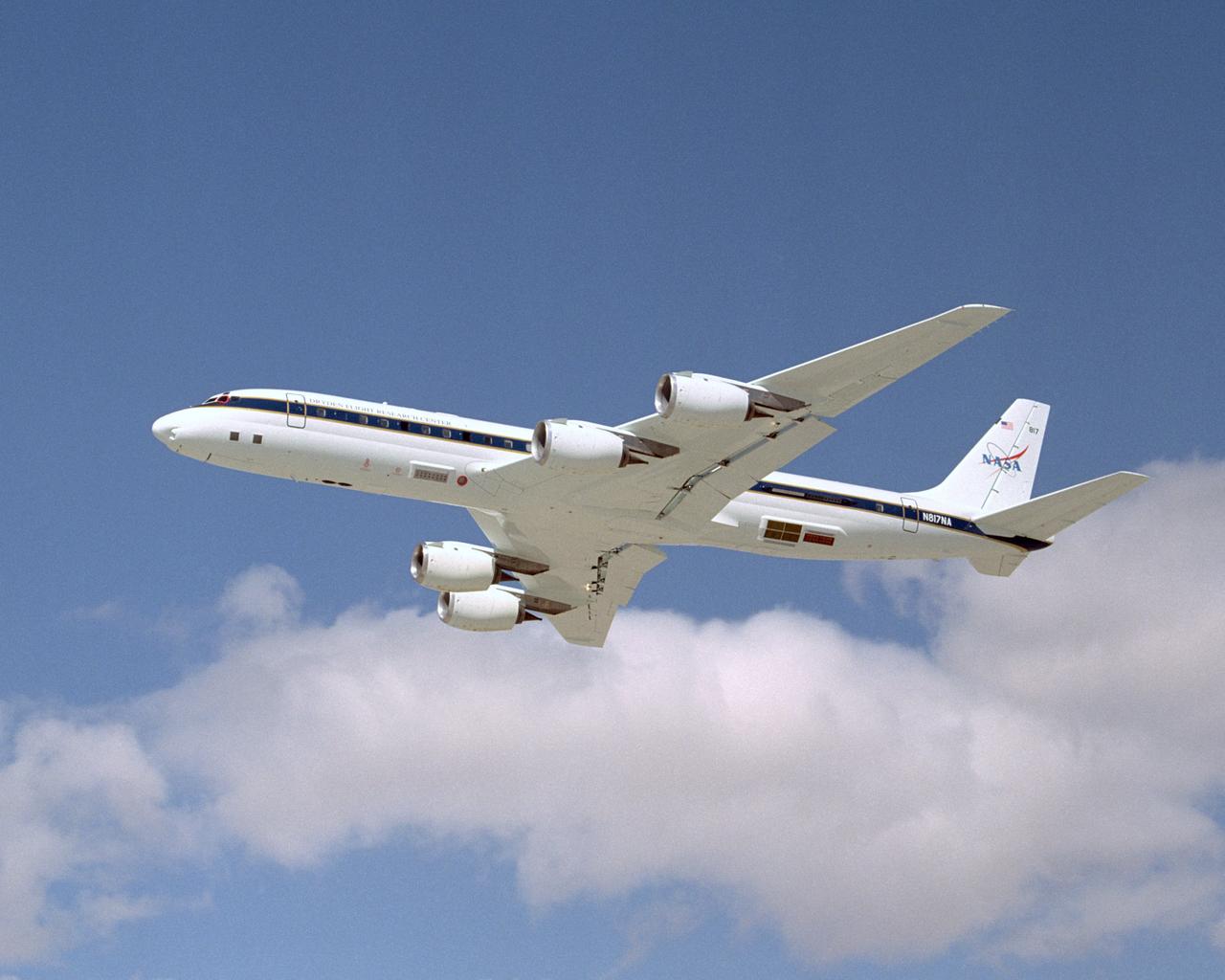
NASA's DC-8 Airborne Science research aircraft, in new colors and markings, takes off Feb. 24, 2004. Dark panels on lower fuselage are synthetic aperture radar antennas enabling sophisticated studies of Earth features.
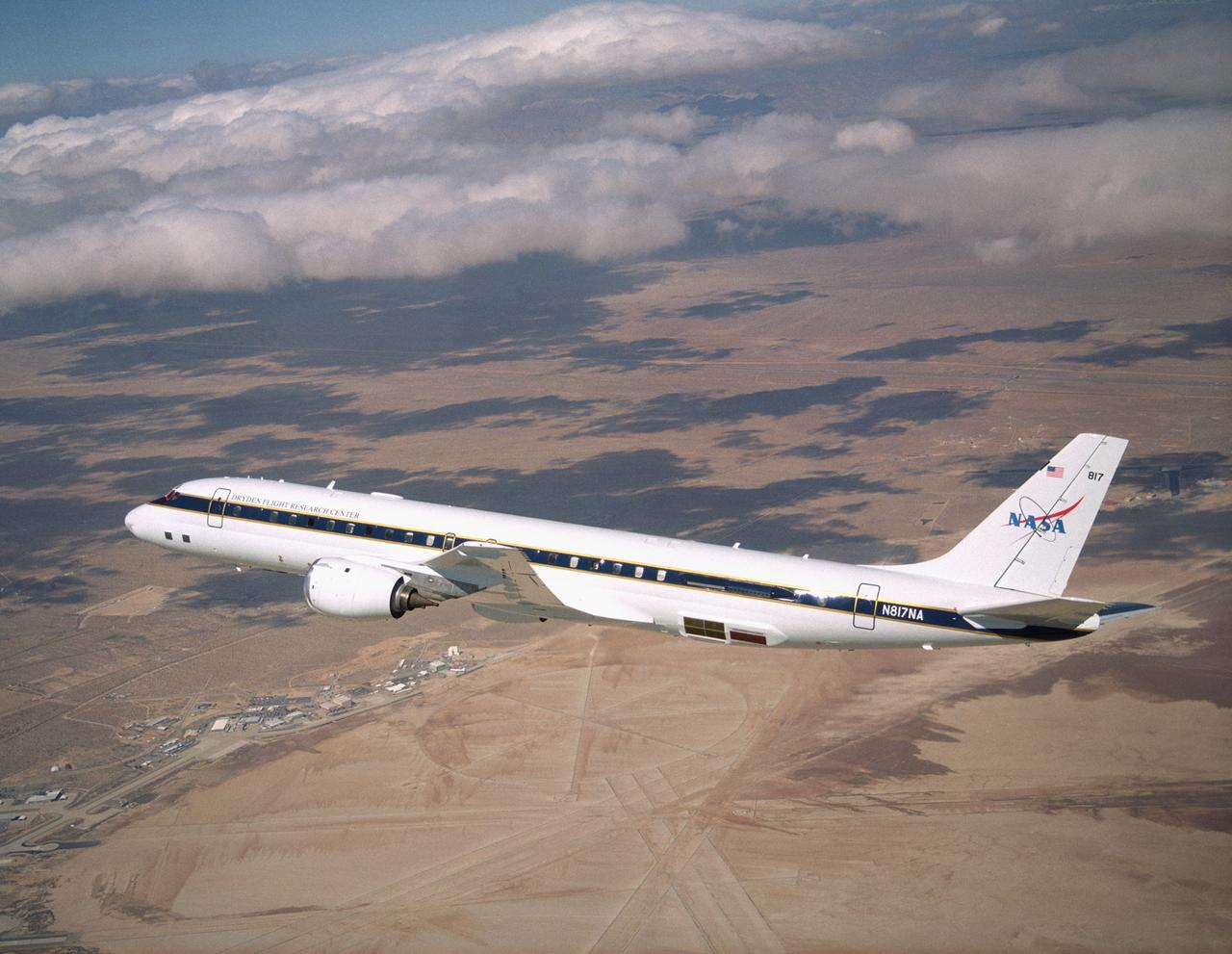
NASA's large Airborne Science research aircraft, a modified DC-8 airliner, displayed new colors in a check flight Feb. 24, 2004, over its home base, the NASA Dryden Flight Research Center at Edwards AFB, California.
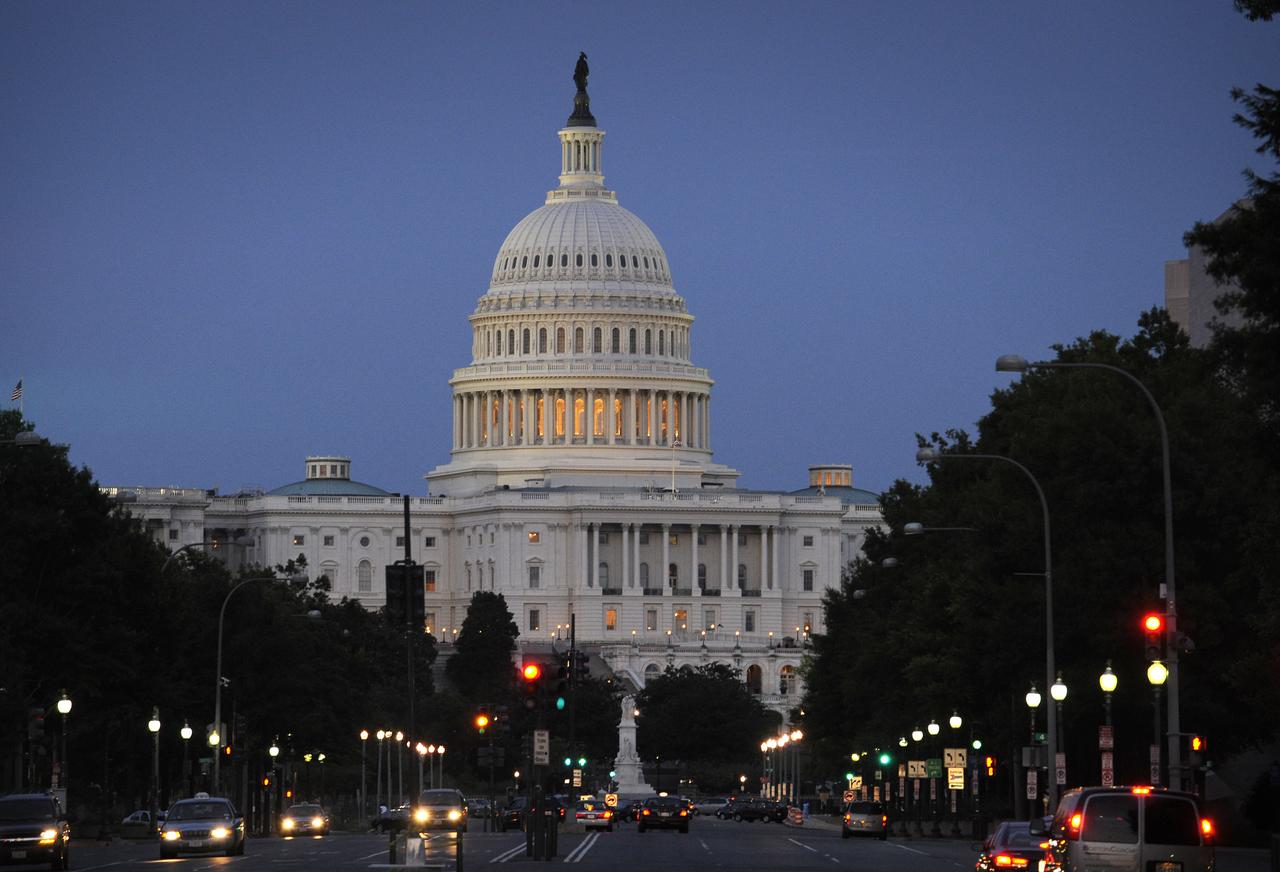
The U.S. Capitol Building is seen late in the evening from Pennsylvania Avenue on Tuesday, June 24, 2008, Washington, DC. Photo Credit: (NASA/Bill Ingalls)
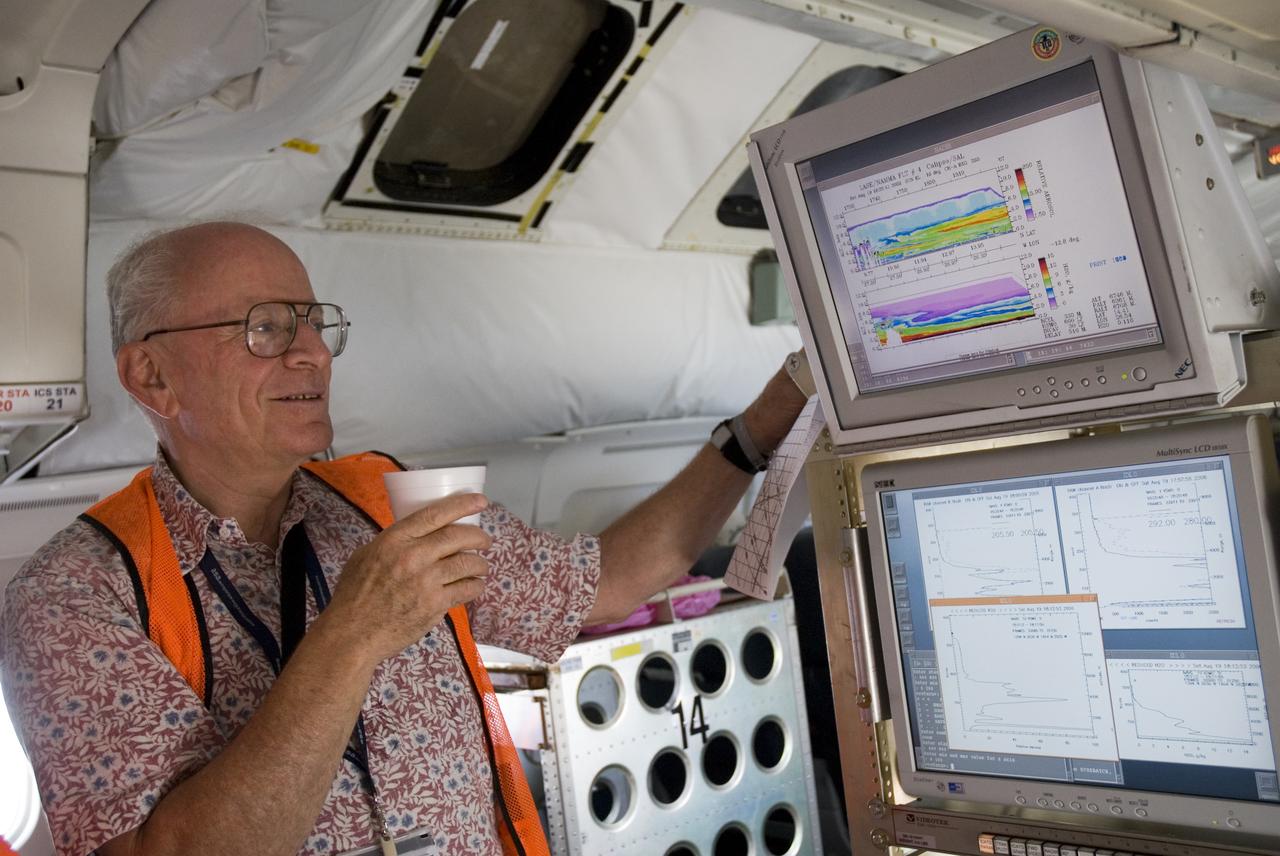
NASA African Monsoon Multidisciplinary Analyses (NAMMA) DC-8 deployment to Cape Verde, Sal island, Africa
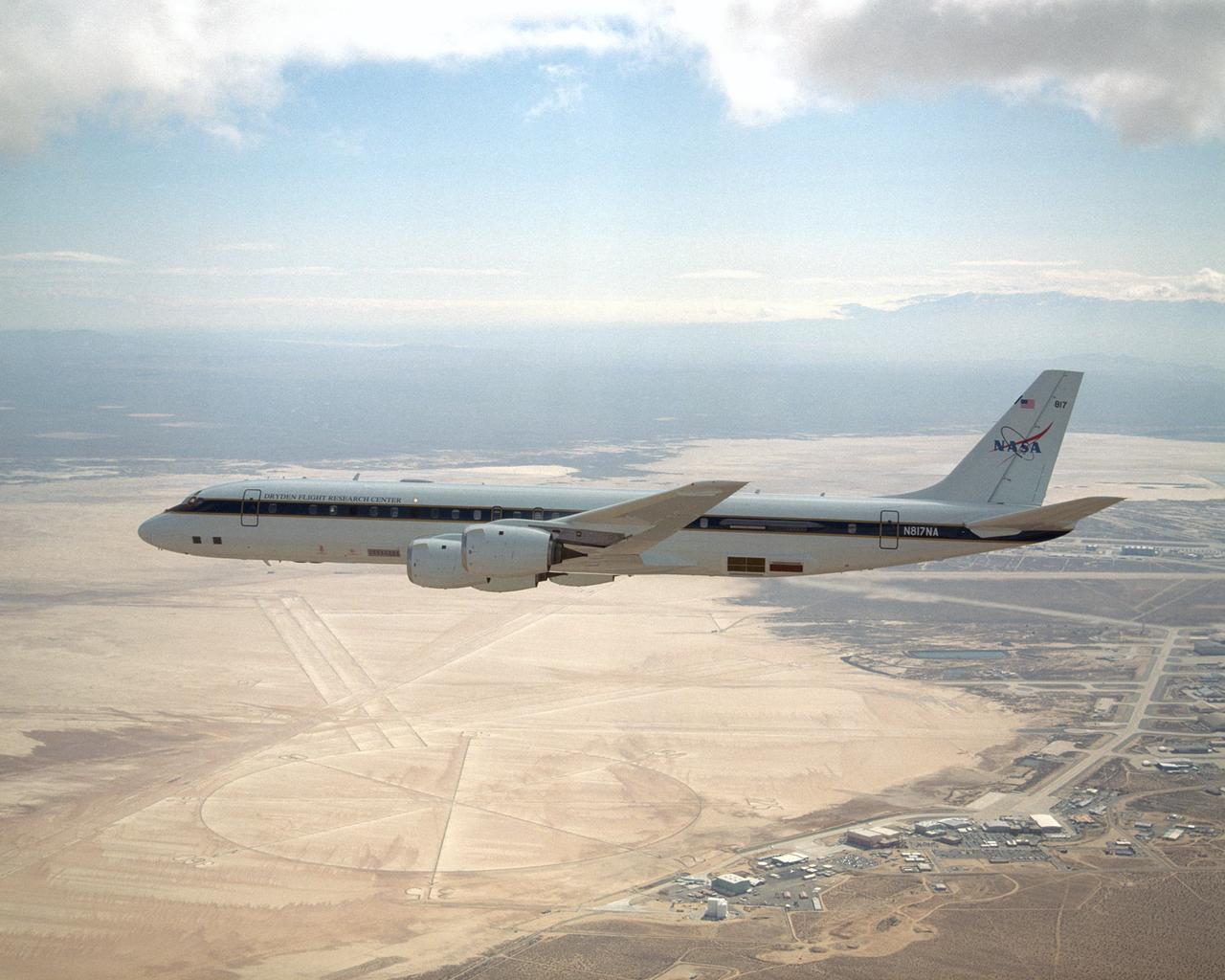
NASA's large Airborne Science research aircraft, a modified DC-8 airliner, displayed new colors in a check flight Feb. 24, 2004, over its home base, the NASA Dryden Flight Research Center at Edwards AFB, California.
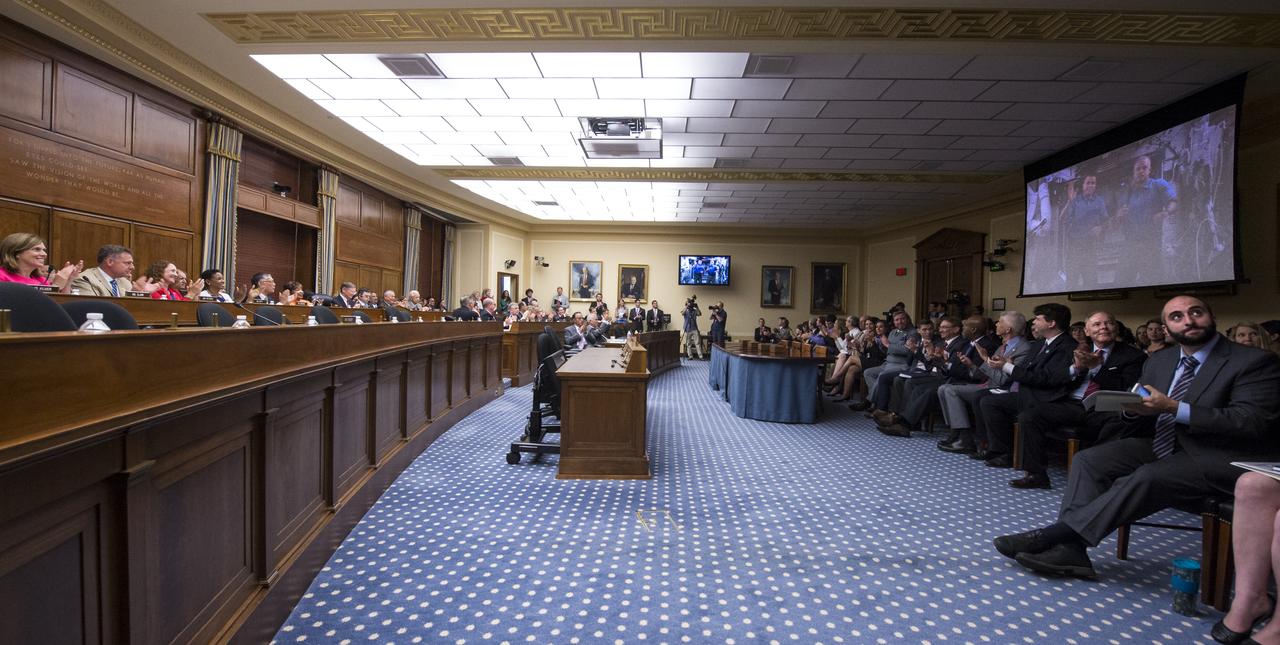
Congress and audience members applaud after a full-committee event held Thursday, July 24, 2014 at the Rayburn House Office Building in Washington, DC to allow members of the Committee on Science, Space, and Technology an opportunity to ask astronauts Steve Swanson and Reid Wiseman questions through a live downlink with the International Space Station (ISS). Expedition 40 astronauts Steve Swanson and Reid Wiseman have been living and working at the ISS for over two months and are scheduled to return to Earth toward the end of this year.
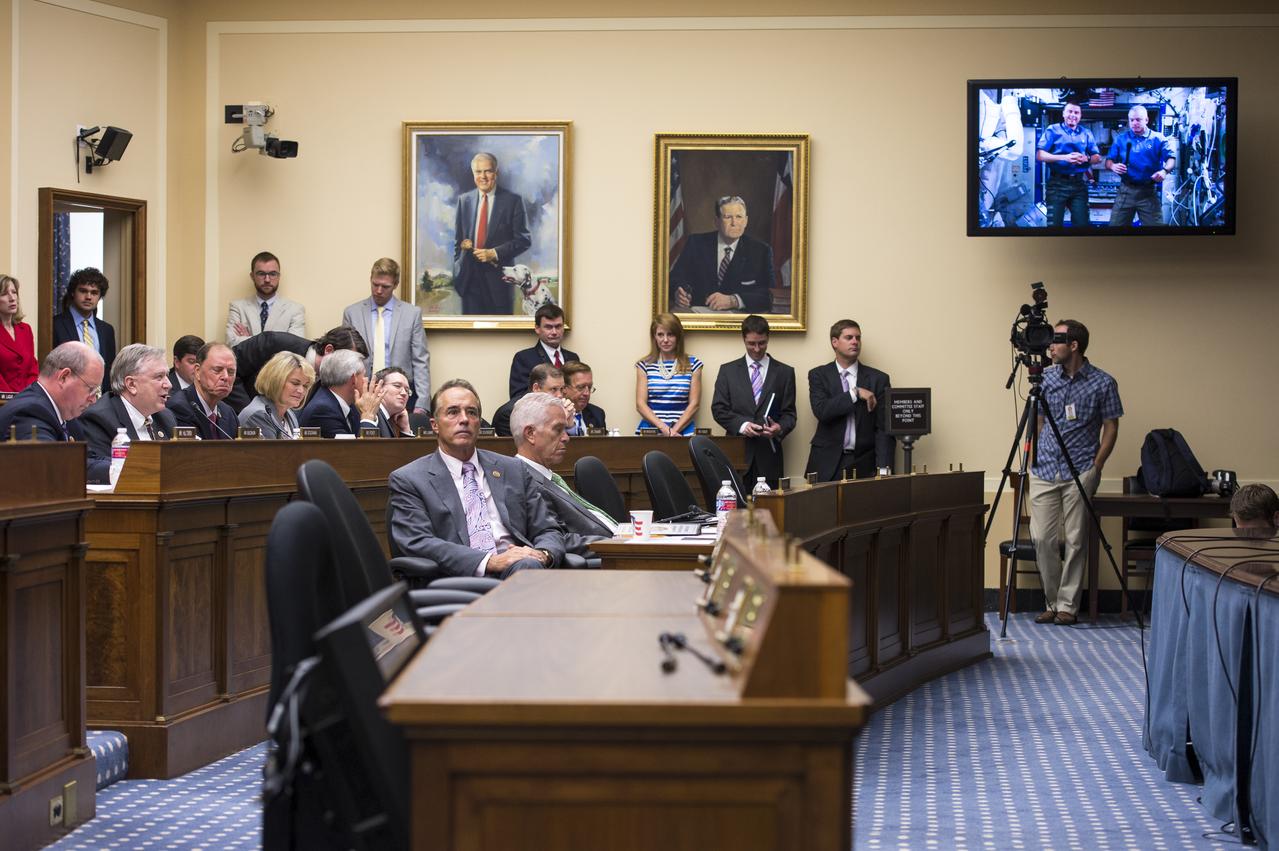
Representative Steve Stockman (R-TX) asks astronauts Steve Swanson and Reid Wisemen a question at the live downlink with the International Space Station (ISS) Thursday, July 24, 2014 at the Rayburn House Office Building in Washington, DC. The event provided members of the Committee on Science, Space, and Technology the opportunity to ask Expedition 40 astronauts Steve Swanson and Reid Wiseman questions about their time living and working at the ISS. They are scheduled to return to Earth toward the end of this year.
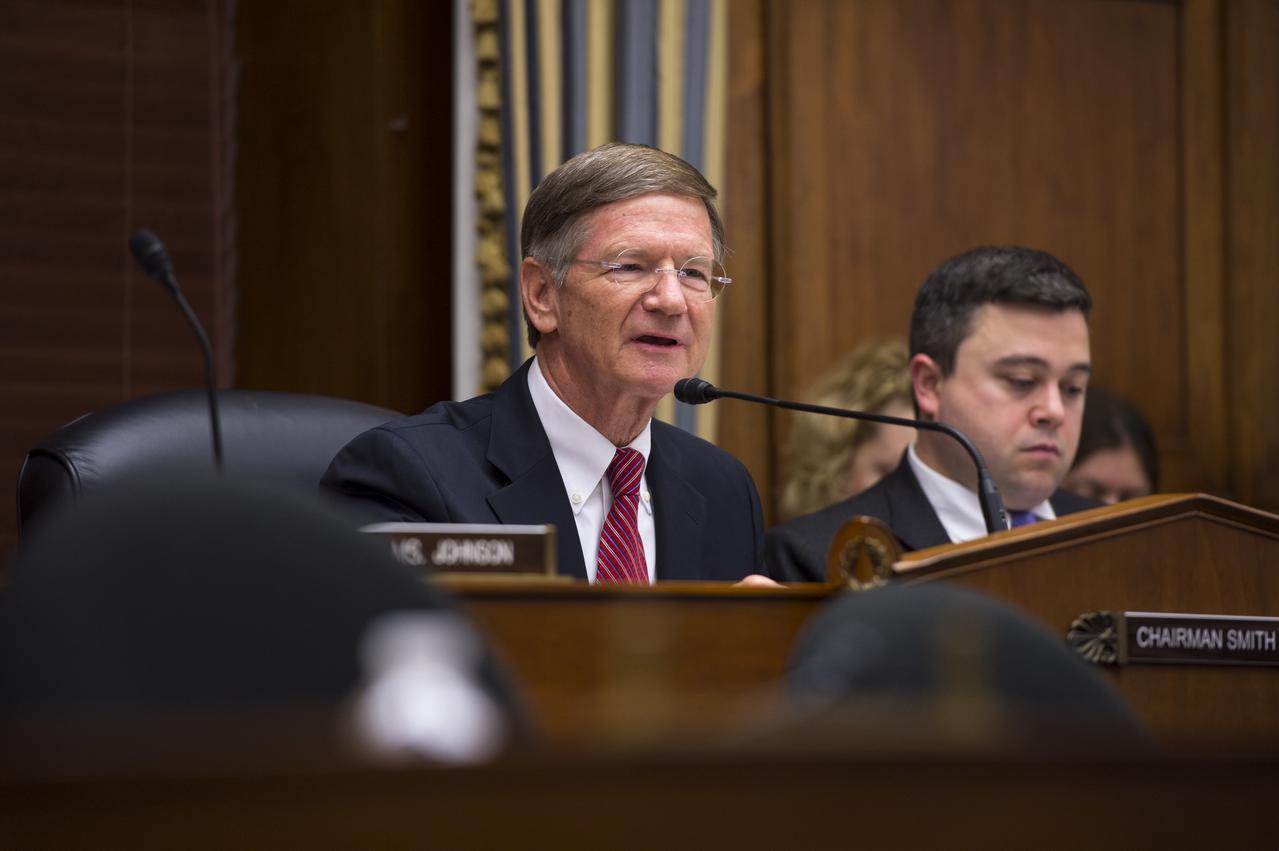
Chairman Lamar Smith (R-TX) held a full-committee event Thursday, July 24, 2014 at the Rayburn House Office Building in Washington, DC to allow members of the Committee on Science, Space, and Technology an opportunity to ask astronauts Steve Swanson and Reid Wiseman questions through a live downlink with the International Space Station (ISS). Expedition 40 astronauts Steve Swanson and Reid Wiseman have been living and working at the ISS for over two months and are scheduled to return to Earth toward the end of this year.

Congressman Derek Kilmer asks astronauts Steve Swanson and Reid Wisemen a question on behalf of a young audience member at the live downlink with the International Space Station (ISS) Thursday, July 24, 2014 at the Rayburn House Office Building in Washington, DC. The event allowed members of the Committee on Science, Space, and Technology to ask Expedition 40 astronauts Steve Swanson and Reid Wiseman questions about their time living and working at the ISS. They are scheduled to return to Earth toward the end of this year.
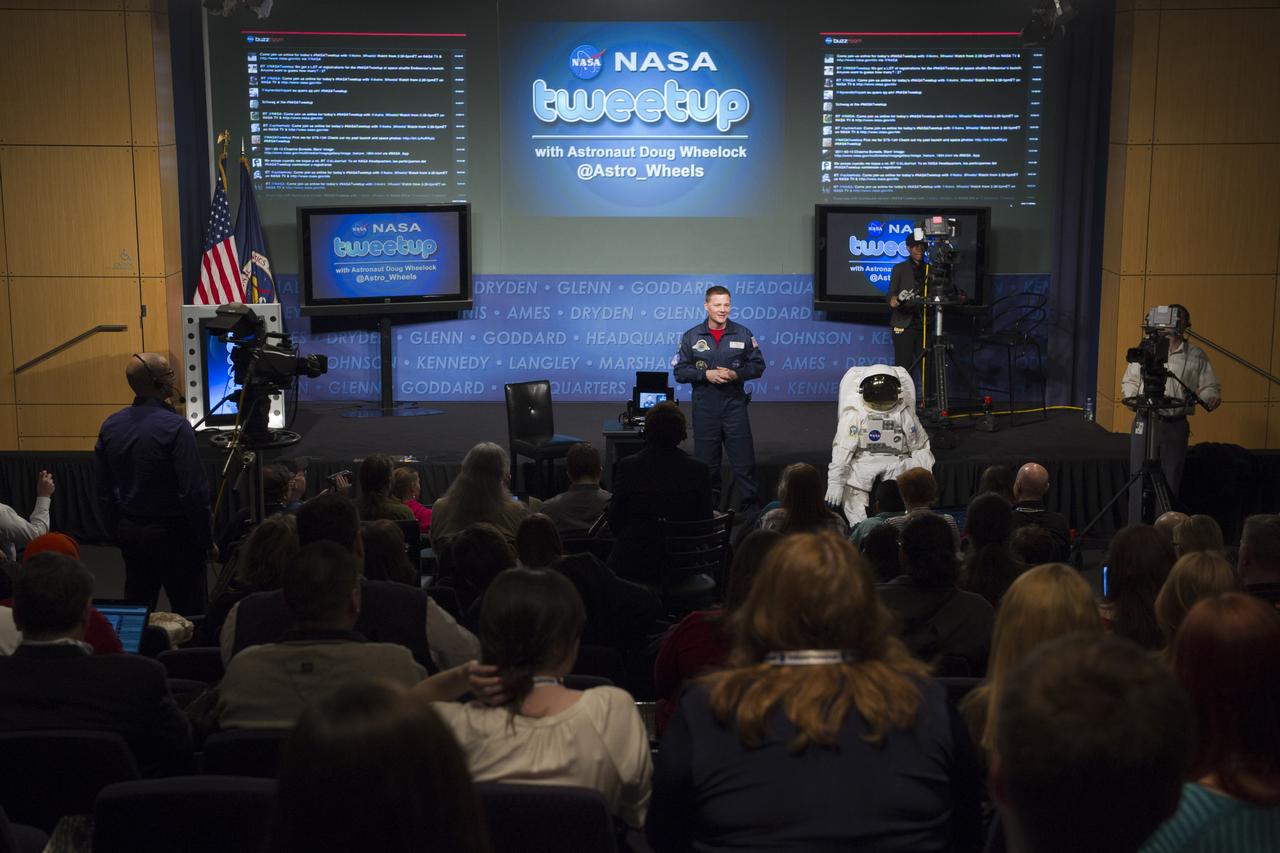
Astronaut Doug Wheelock discusses his experiences while living on the International Space Station during a tweetup at NASA Headquarters in Washington, Wednesday, March 16, 2011. Wheelock, who has accumulated a total of 178 days in space, assumed command of the International Space Station and the Expedition 25 crew. During Expedition 25, there were more than 120 microgravity experiments in human research; biology and biotechnology; physical and materials sciences; technology development; and Earth and space sciences. Wheelock also responded to an emergency shutdown of half of the station's external cooling system and supported three unplanned spacewalks to replace the faulty pump module that caused the shutdown. His efforts restored the station's critical cooling system to full function. The mission duration was 163 days. Photo Credit: (NASA/Paul E. Alers)
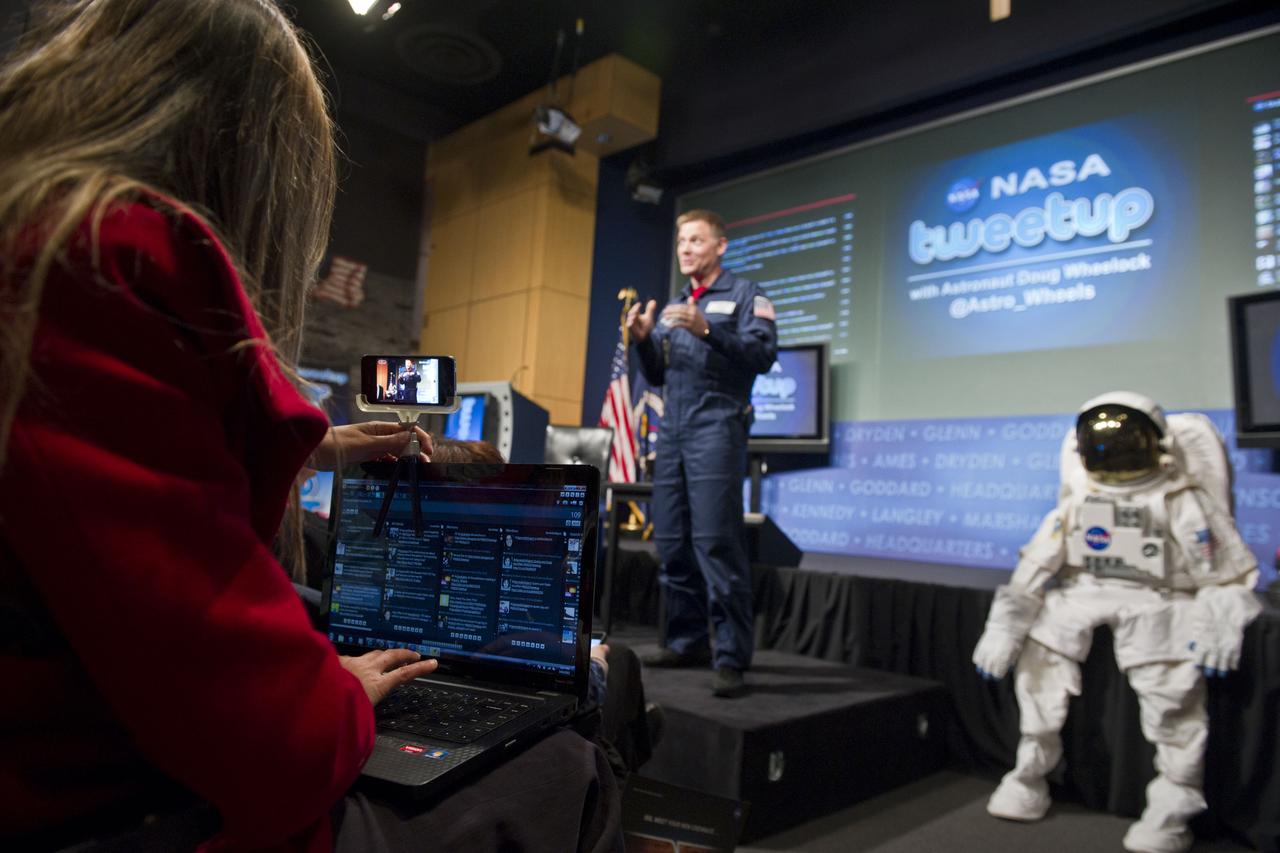
A tweetuup participant videotapes with her iPhone and tweets as astronaut Doug Wheelock discusses his experiences while living on the International Space Station during a tweetup at NASA Headquarters in Washington, Wednesday, March 16, 2011. Wheelock, who has accumulated a total of 178 days in space, assumed command of the International Space Station and the Expedition 25 crew. During Expedition 25, there were more than 120 microgravity experiments in human research; biology and biotechnology; physical and materials sciences; technology development; and Earth and space sciences. Wheelock also responded to an emergency shutdown of half of the station's external cooling system and supported three unplanned spacewalks to replace the faulty pump module that caused the shutdown. His efforts restored the station's critical cooling system to full function. The mission duration was 163 days. Photo Credit: (NASA/Paul E. Alers)
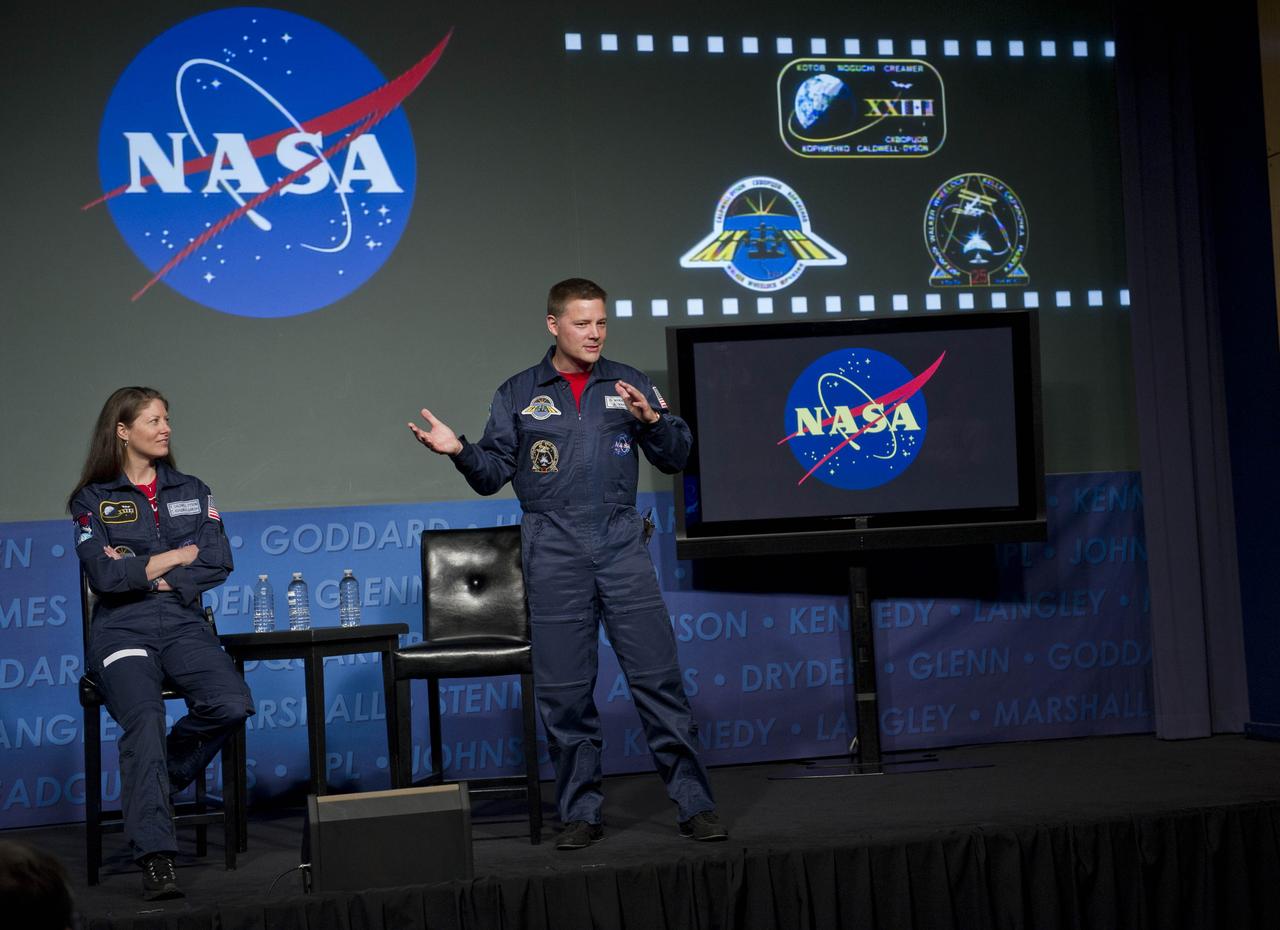
Astronauts Tracy Caldwell Dyson, flight engineer on Expeditions 23 and 24, left, and Doug Wheelock, Expedition 24 flight engineer and commander of Expedition 25, discuss their mission to the International Space Station during a visit to NASA Headquarters in Washington, Wednesday, March 16, 2011. (NASA/Paul E. Alers)
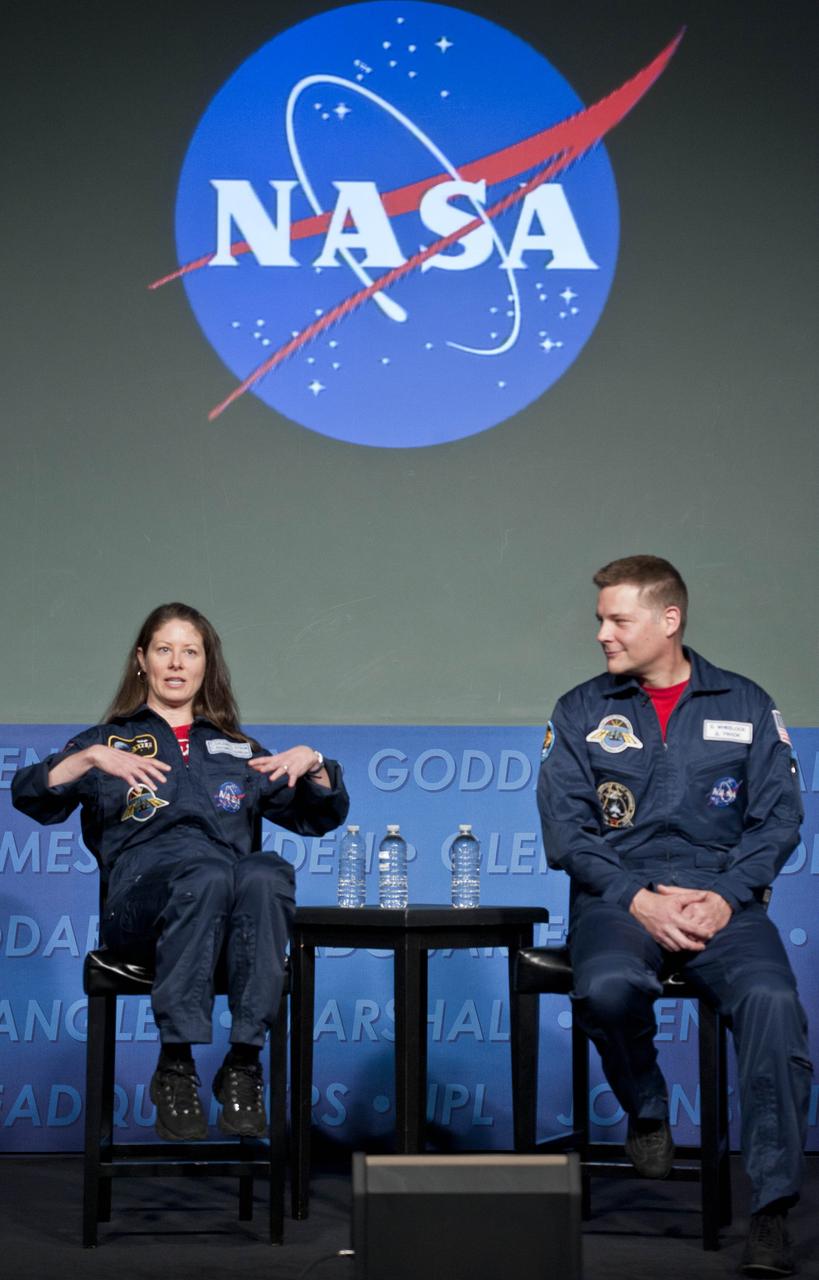
Astronauts Tracy Caldwell Dyson, flight engineer on Expeditions 23 and 24, left, and Doug Wheelock, Expedition 24 flight engineer and commander of Expedition 25, discuss their mission to the International Space Station during a visit to NASA Headquarters in Washington, Wednesday, March 16, 2011. (NASA/Paul E. Alers)
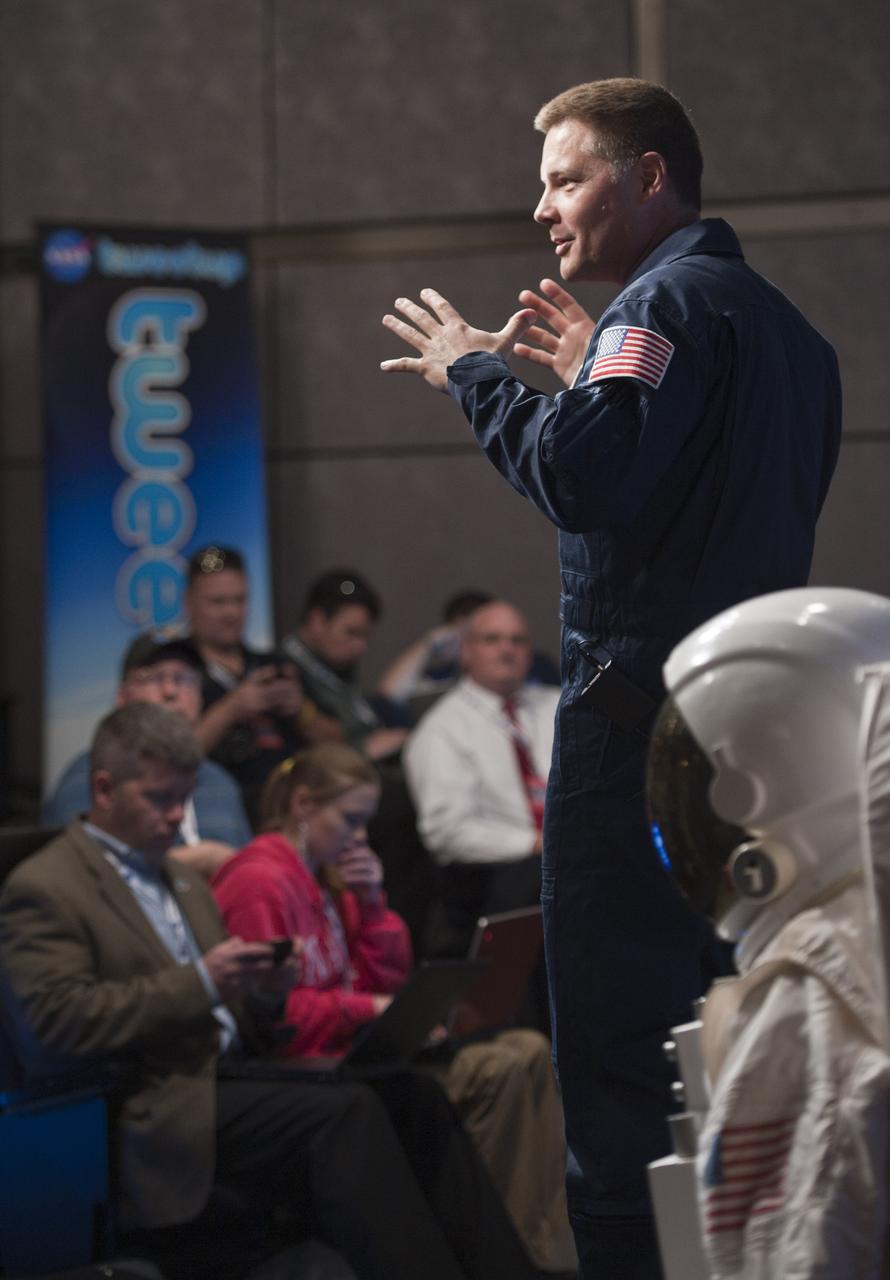
Astronaut Doug Wheelock discusses his experiences while living on the International Space Station during a tweetup at NASA Headquarters in Washington, Wednesday, March 16, 2011. Wheelock, who has accumulated a total of 178 days in space, assumed command of the International Space Station and the Expedition 25 crew. During Expedition 25, there were more than 120 microgravity experiments in human research; biology and biotechnology; physical and materials sciences; technology development; and Earth and space sciences. Wheelock also responded to an emergency shutdown of half of the station's external cooling system and supported three unplanned spacewalks to replace the faulty pump module that caused the shutdown. His efforts restored the station's critical cooling system to full function. The mission duration was 163 days. Photo Credit: (NASA/Paul E. Alers)
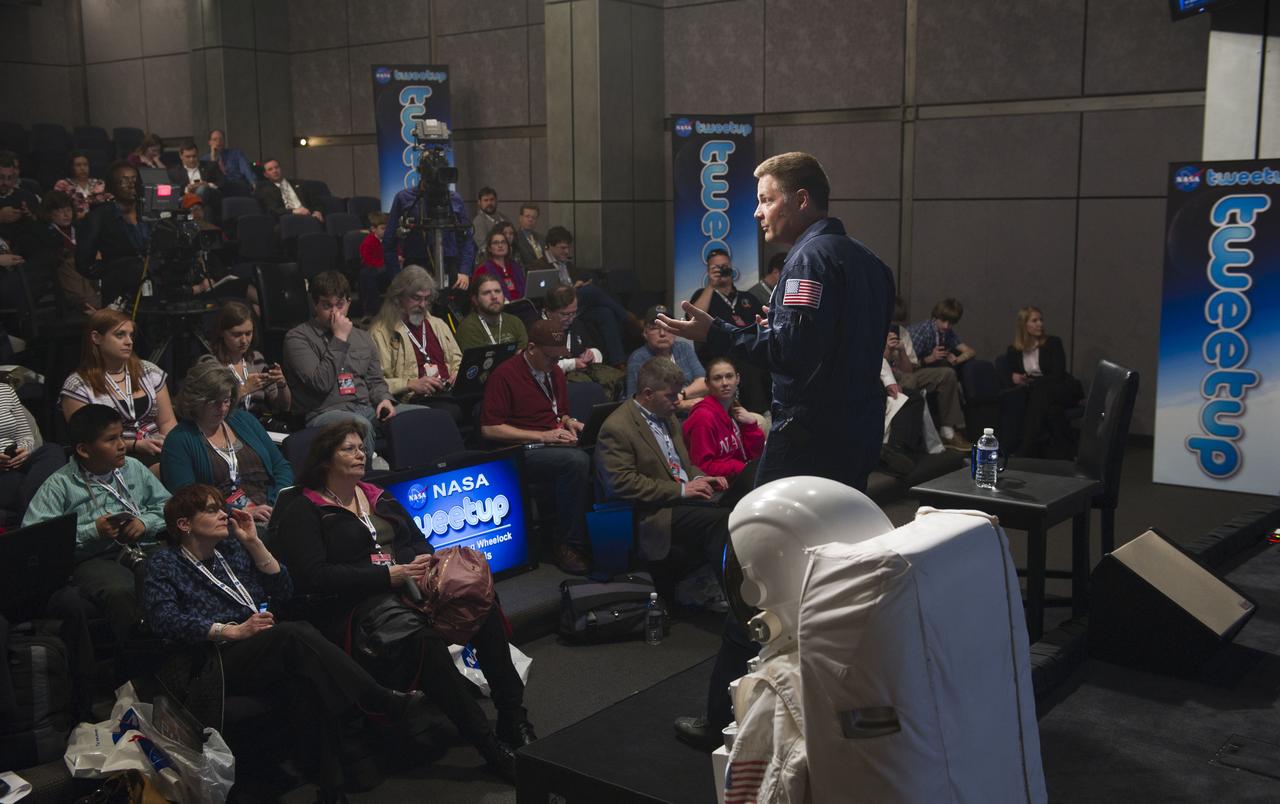
Astronaut Doug Wheelock discusses his experiences while living on the International Space Station during a tweetup at NASA Headquarters in Washington, Wednesday, March 16, 2011. Wheelock, who has accumulated a total of 178 days in space, assumed command of the International Space Station and the Expedition 25 crew. During Expedition 25, there were more than 120 microgravity experiments in human research; biology and biotechnology; physical and materials sciences; technology development; and Earth and space sciences. Wheelock also responded to an emergency shutdown of half of the station's external cooling system and supported three unplanned spacewalks to replace the faulty pump module that caused the shutdown. His efforts restored the station's critical cooling system to full function. The mission duration was 163 days. Photo Credit: (NASA/Paul E. Alers)
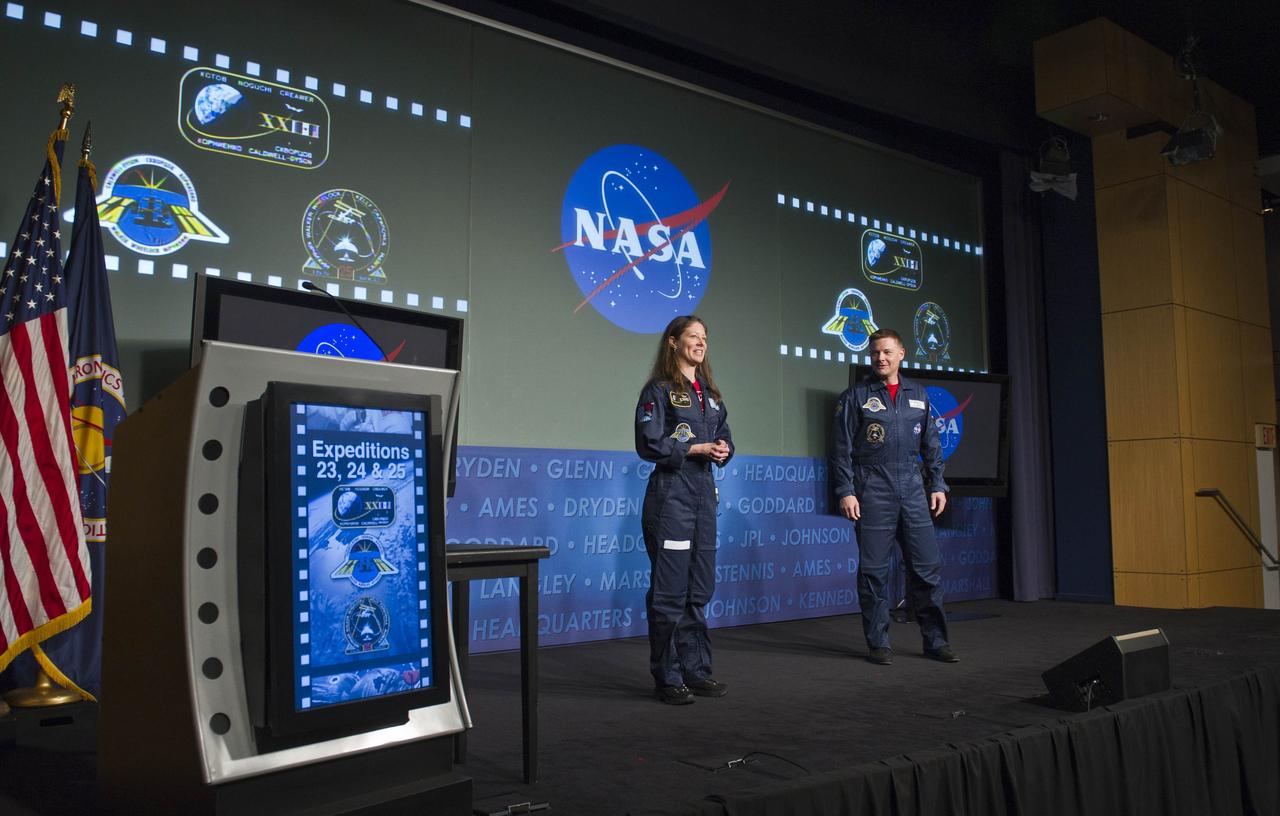
Astronauts Tracy Caldwell Dyson, flight engineer on Expeditions 23 and 24, left, and Doug Wheelock, Expedition 24 flight engineer and commander of Expedition 25, discuss their mission to the International Space Station during a visit to NASA Headquarters in Washington, Wednesday, March 16, 2011.
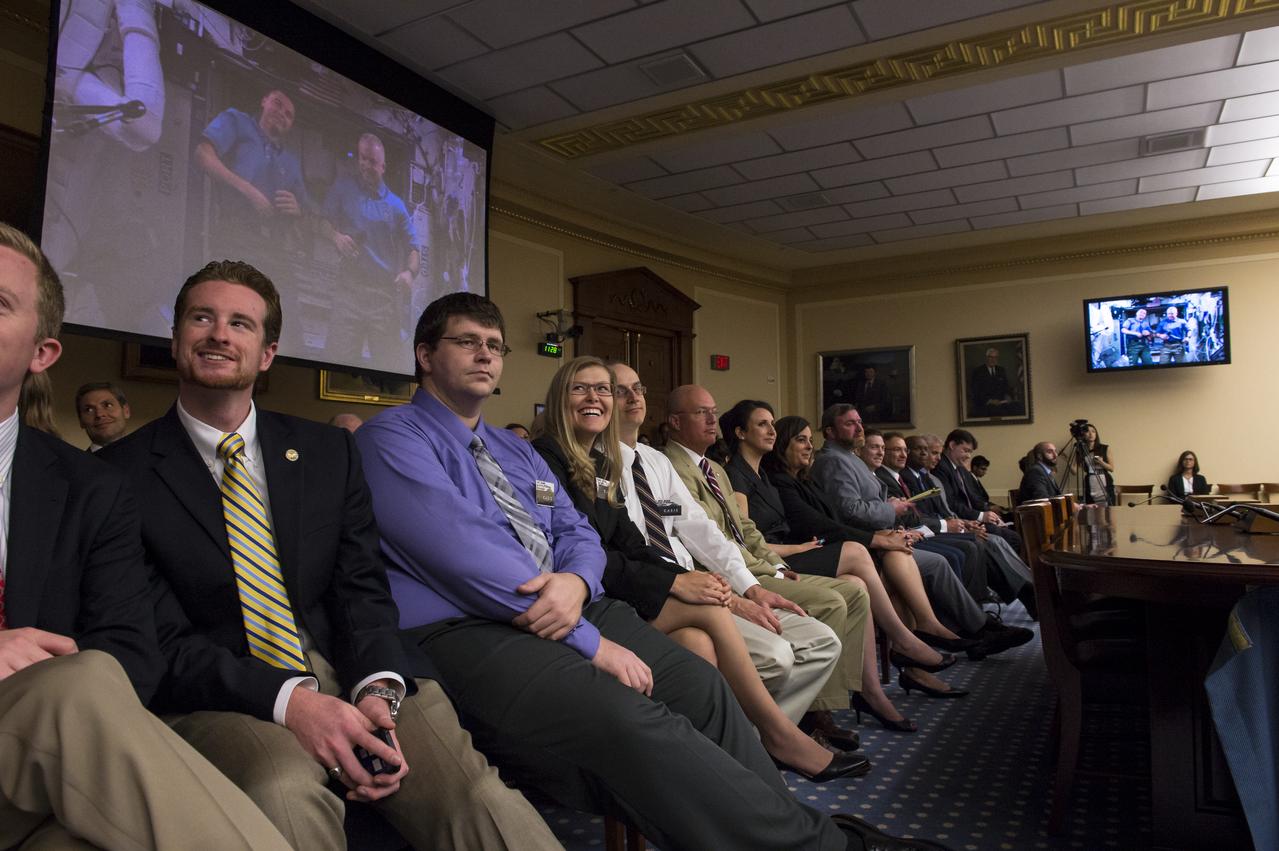
Audience members watch as astronauts Reid Wiseman and Steve Swanson answer questions posed to them by members of the Committee on Science, Space, and Technology at a full-committee event held Thursday, July 24, 2014 at the Rayburn House Office Building in Washington, DC. The event gave members the opportunity to ask the astronauts questions through a live downlink with the International Space Station (ISS). Expedition 40 astronauts Steve Swanson and Reid Wiseman have been living and working at the ISS for over two months and are scheduled to return to Earth toward the end of this year.
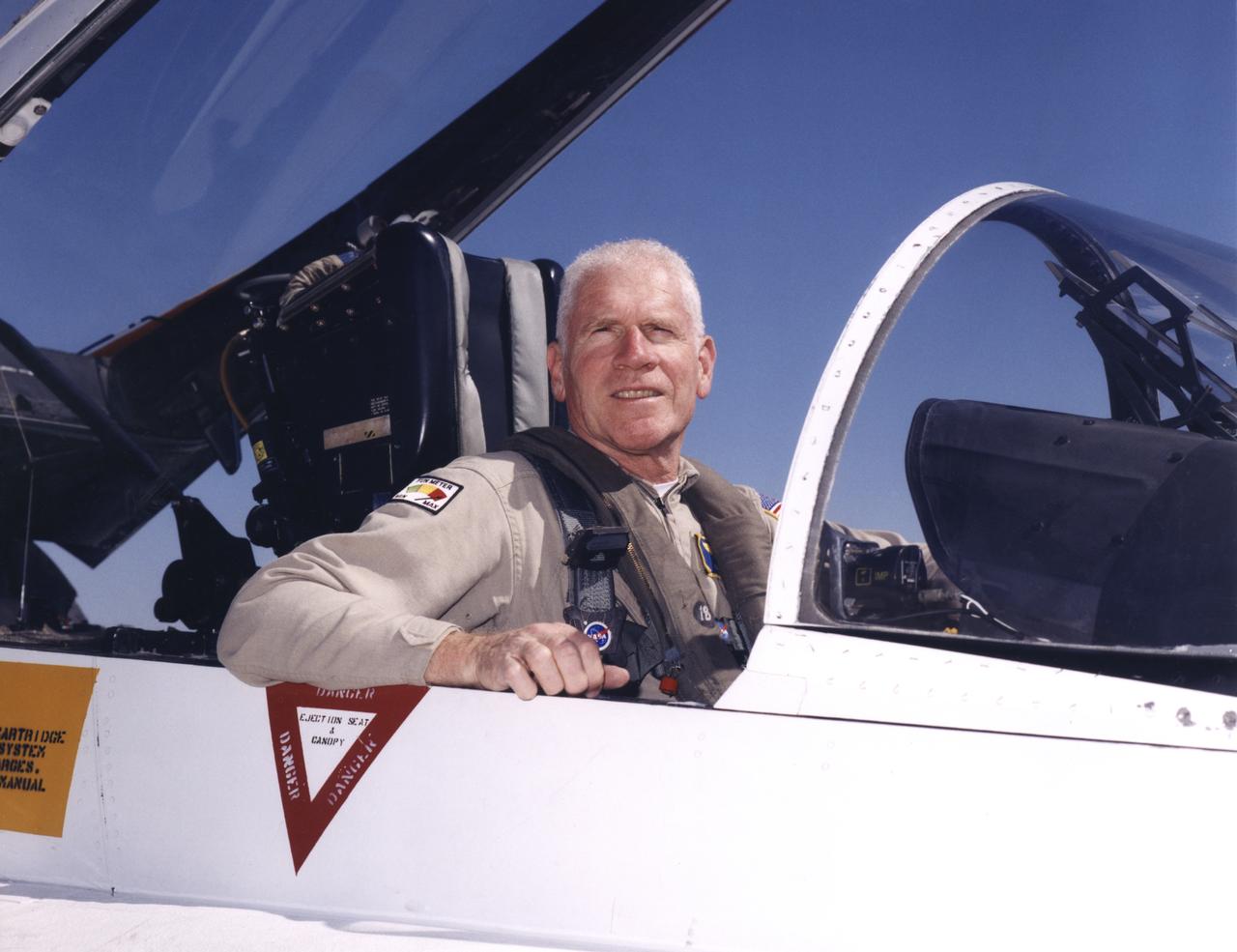
Edwin W. Lewis Jr. is a research pilot in the Airborne Science program, Flight Crew Branch, Dryden Flight Research Center, Edwards, California. He currently flies the DC-8, F/A-18, Lear Jet 24, King Air, and T-34C in support of Dryden's flight operations and is mentor pilot for the King Air and the Lear Jet. Prior to accepting this assignment Lewis was a pilot for eight years at NASA's Ames Research Center, Moffett Field, California, flying 10 different aircraft C-130B, DC-8-72, UH-1, SH-3, King Air, Lear 24, T-38A, T-39G and YO-3A in support of NASA flight missions. Lewis also flew the Kuiper Airborne Observatory (a modified civilian version of the Lockheed C-141 Starlifter). He was project pilot for Ames' 747 and T-38 programs. Lewis was born in New York City on May 19, 1936, and began flight training as a Civil Air Patrol cadet in 1951, ultimately earning his commercial pilot's certificate in 1958. He received a bachelor of arts degree in biology from Hobart College, Geneva, N.Y., and entered the U.S. Air Force through the Reserve Officer Training Corps. Following pilot training he was assigned to Moody Air Force Base, Ga., as an instructor pilot, for both the T-33 and T-37 aircraft. He served in Vietnam in 1965 and 1966, where he was a forward air controller, instructor and standardization/evaluation pilot, flying more than 1,000 hours in the O-1 "Bird Dog." Lewis separated from the regular Air Force and joined Pan American World Airways and the 129th Air Commando Group, California Air National Guard (ANG) based in Hayward, California. During his 18-year career with the California ANG he flew the U-6, U-10, C-119, HC-130 aircraft and the HH-3 helicopter. He retired as commander, 129th Air Rescue and Recovery Group, a composite combat rescue group, in the grade of colonel. During his 22 years as an airline pilot, he flew the Boeing 707, 727 and 747. He took early retirement from Pan American in 1989 to become a pilot with NASA.