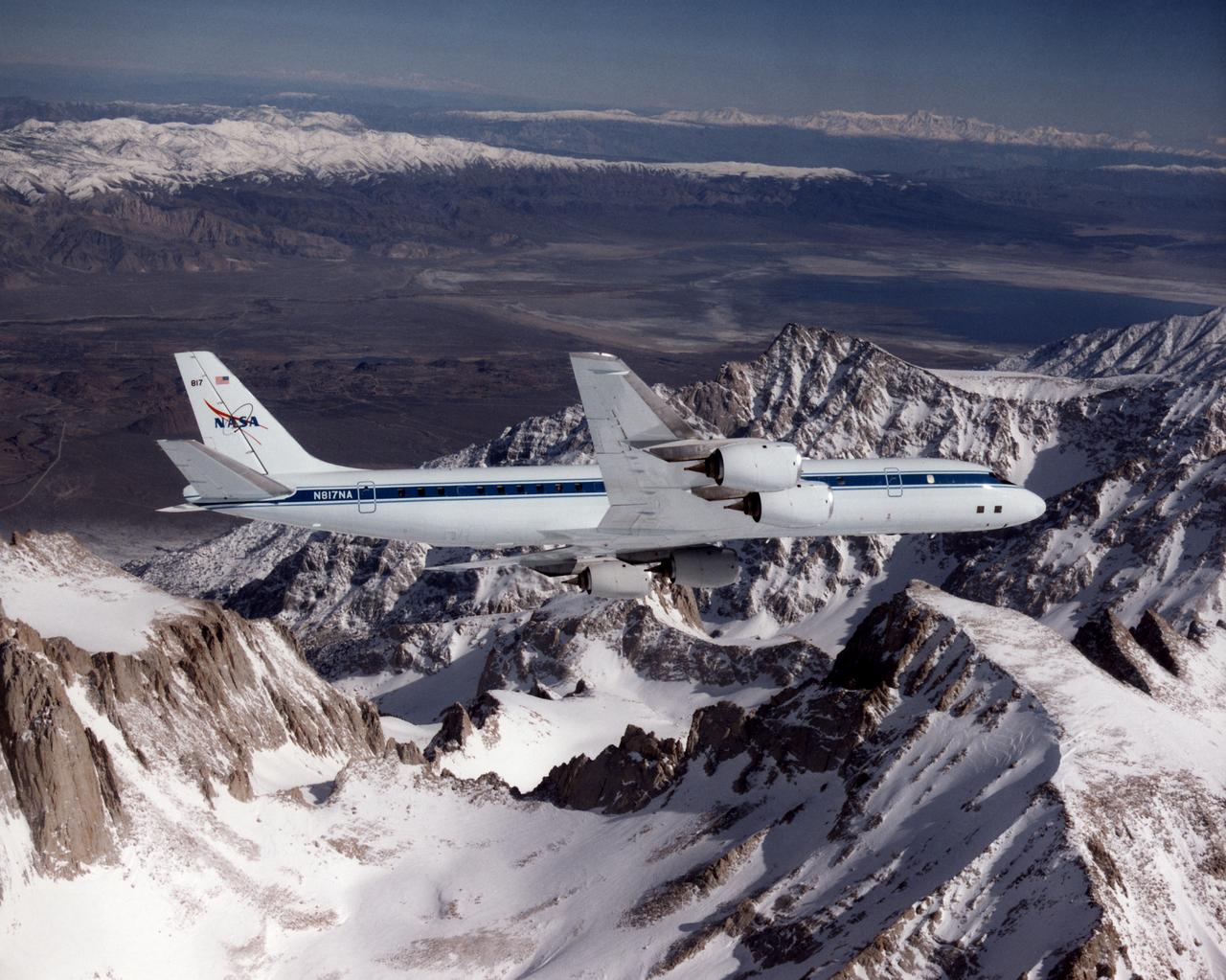
The DC-8 banking over the jagged peak of Mount Whitney on a February 25, 1998 flight. The DC-8 and a pair of ER-2 aircraft are operated by the Airborne Science program at the NASA Dryden Flight Research Center. NASA, other governmental agencies, academia, and scientific and technical organizations employ the DC-8 for a variety of experiments.

Portrait, Michael Griffin, Administrator, National Aeronautics and Space Administration (NASA). Washington, DC, April 25, 2005. Photo Credit: (NASA/Renee Bouchard)

DC-8 NAMMA (NASA African Monson Multidisciplinary Analyses) MISSION TO CAPE VERDE, AFRICA - Cloud formation during Aug 25 flight
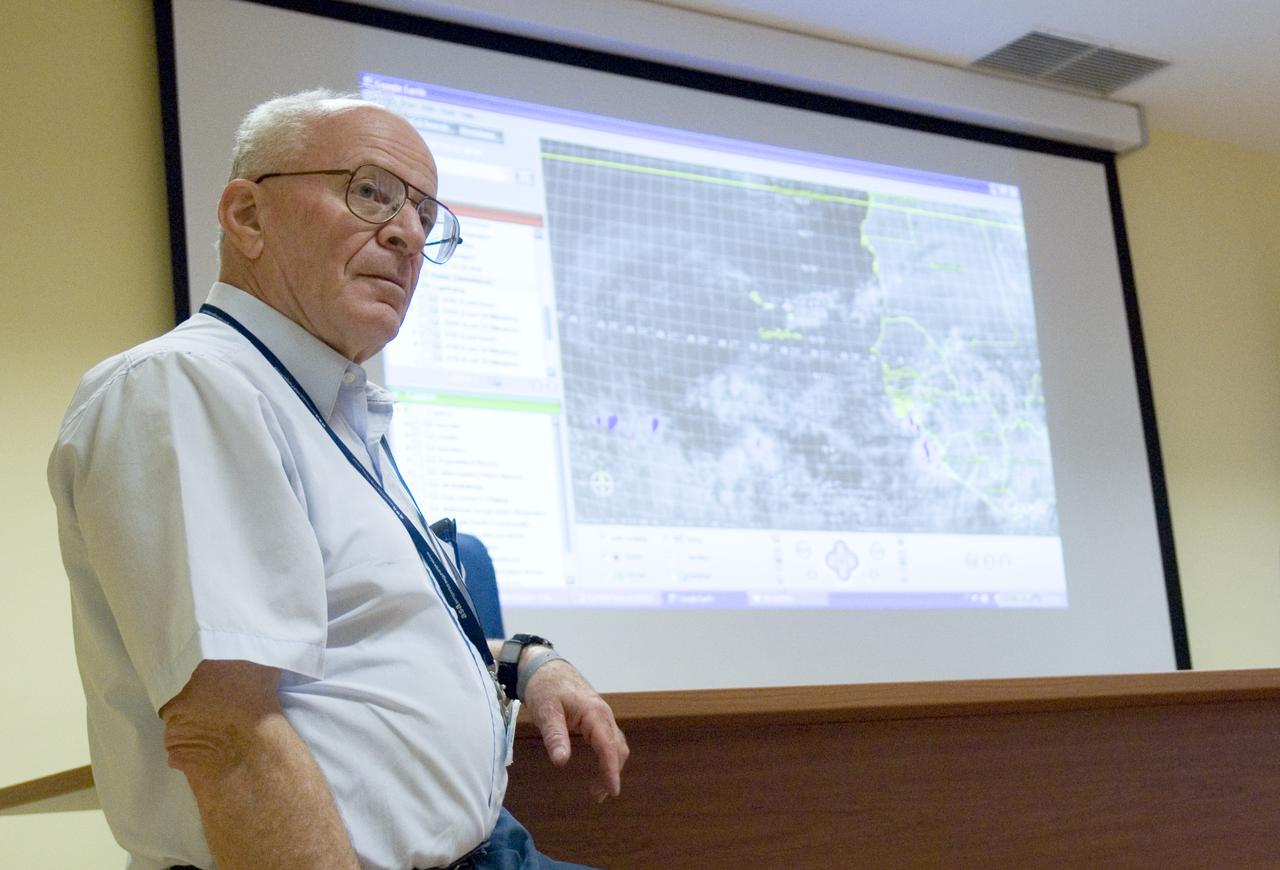
NASA African Monsoon Multidisciplinary Analyses (NAMMA) DC-8 deployment to Cape Verde, Sal island, Africa
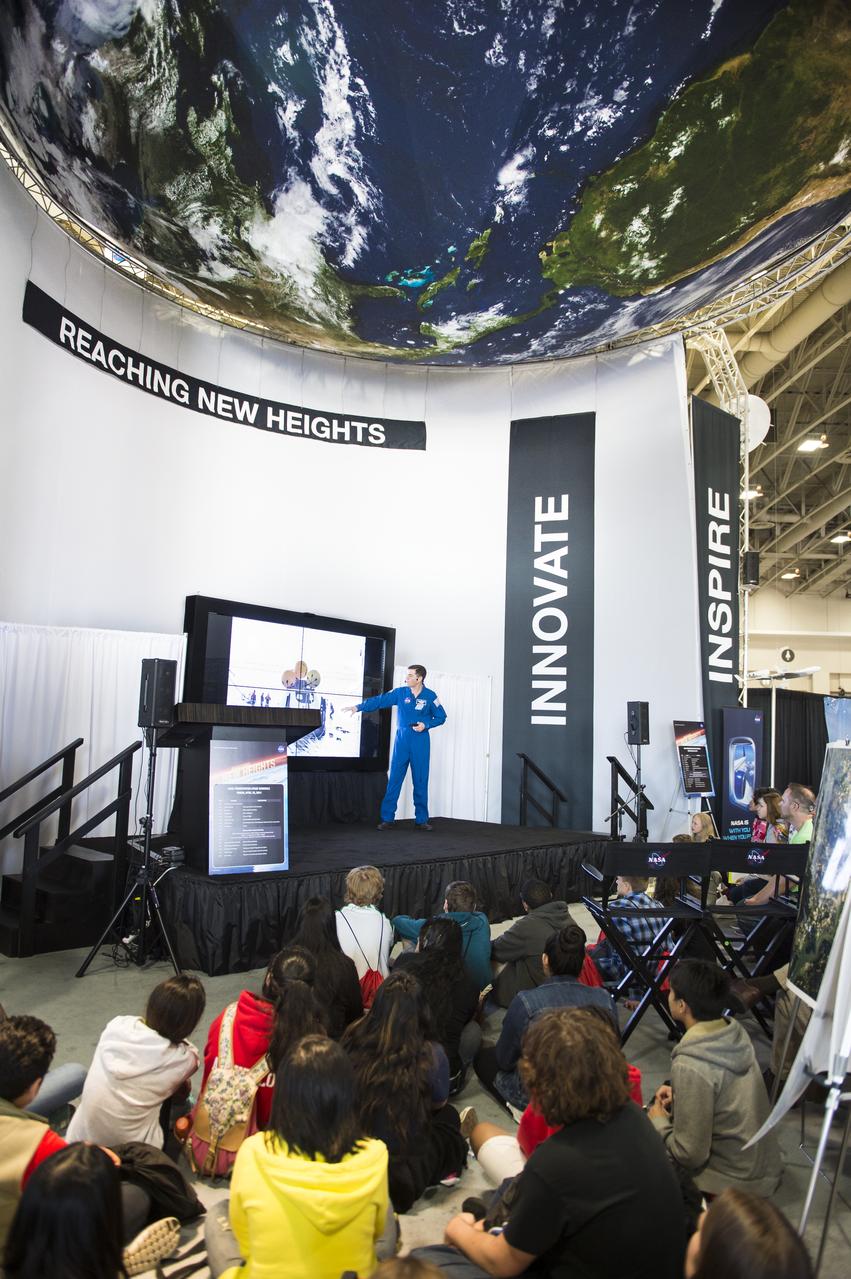
Astronaut Rex Walheim spoke at the USA Science and Engineering Festival on April 25, 2014 at the NASA Stage. The festival was open to the public on April 26 and 27, 2014 and was held at the Washington Convention Center in Washington, DC. Photo Credit: (NASA/Aubrey Gemignani)
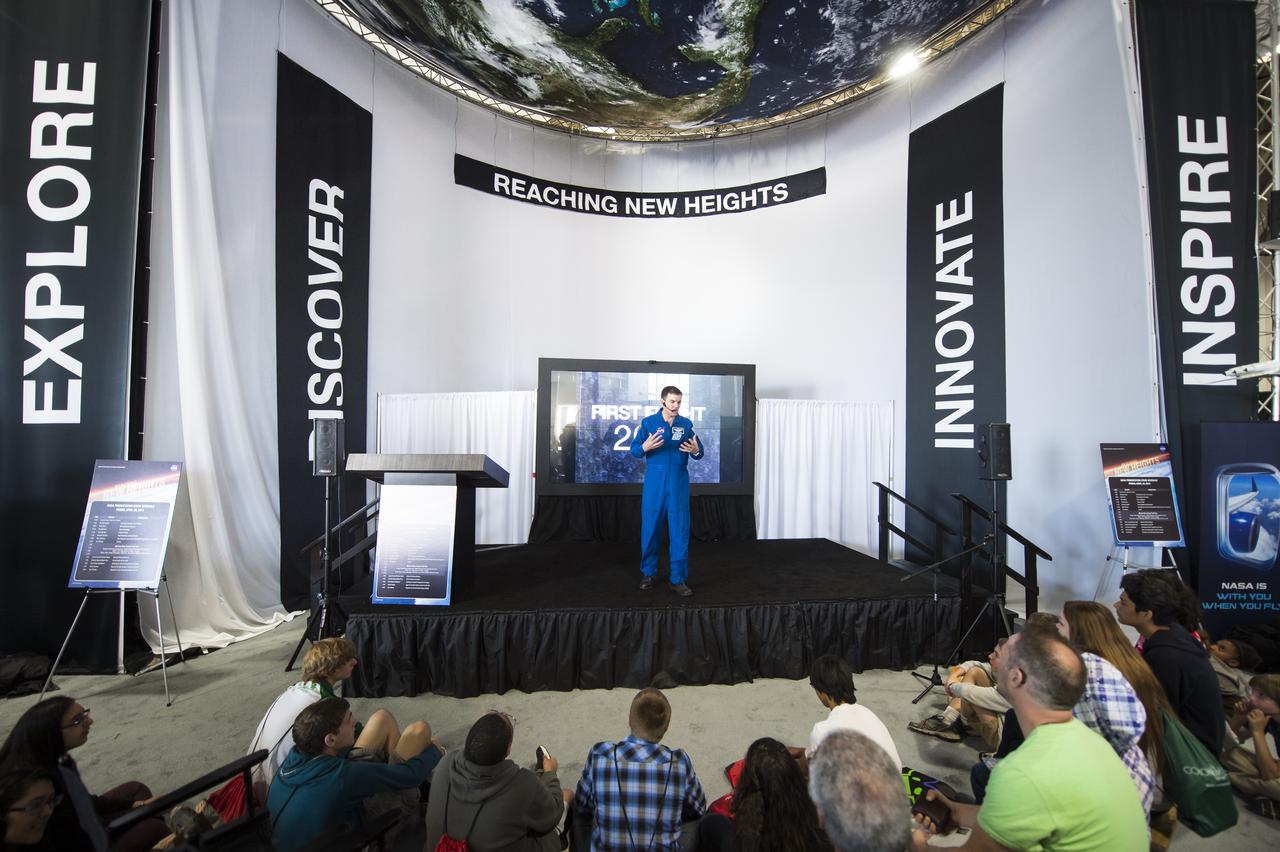
Astronaut Rex Walheim spoke at the USA Science and Engineering Festival on April 25, 2014 at the NASA Stage. The festival was open to the public on April 26 and 27, 2014 and was held at the Washington Convention Center in Washington, DC. Photo Credit: (NASA/Aubrey Gemignani)
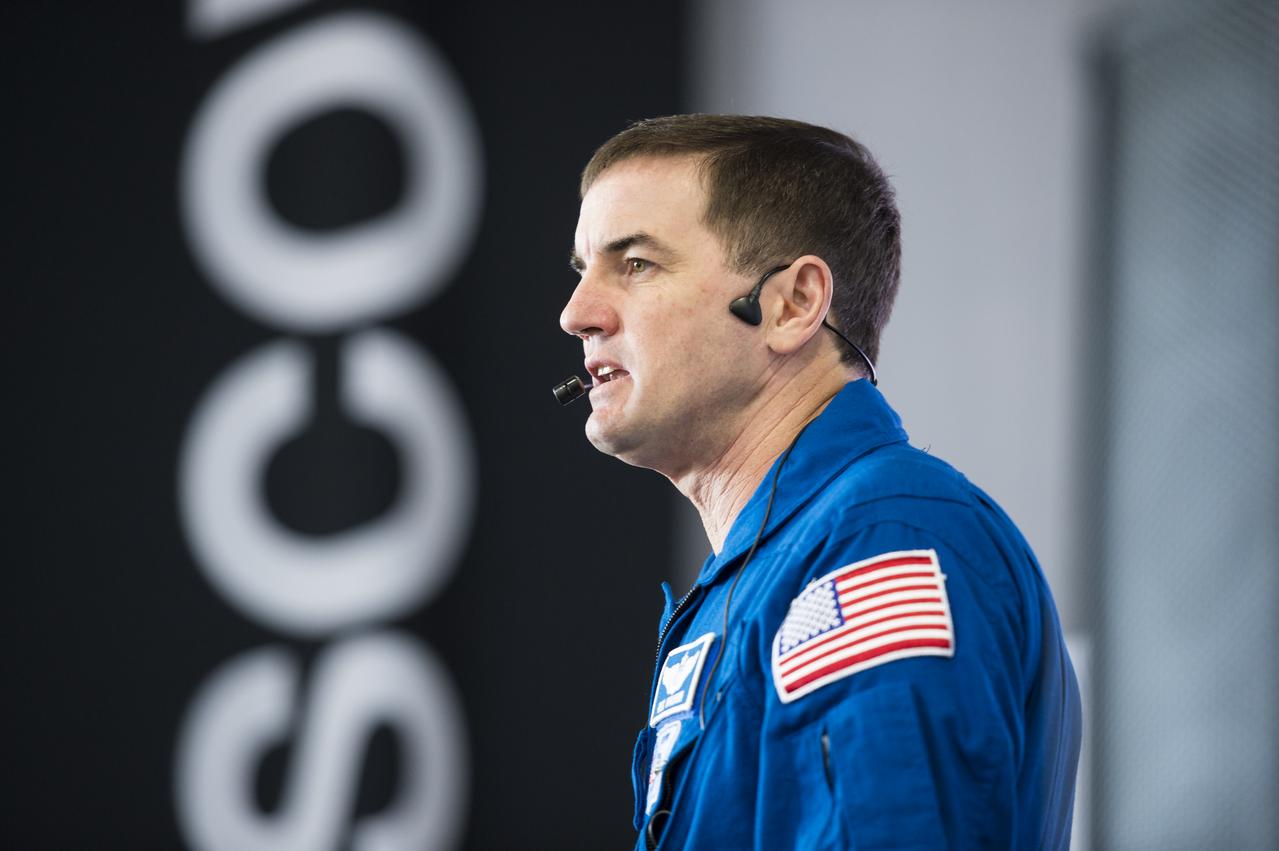
Astronaut Rex Walheim spoke at the USA Science and Engineering Festival on April 25, 2014. The festival was open to the public on April 26 and 27, 2014 and was held at the Washington Convention Center in Washington, DC. Photo Credit: (NASA/Aubrey Gemignani)
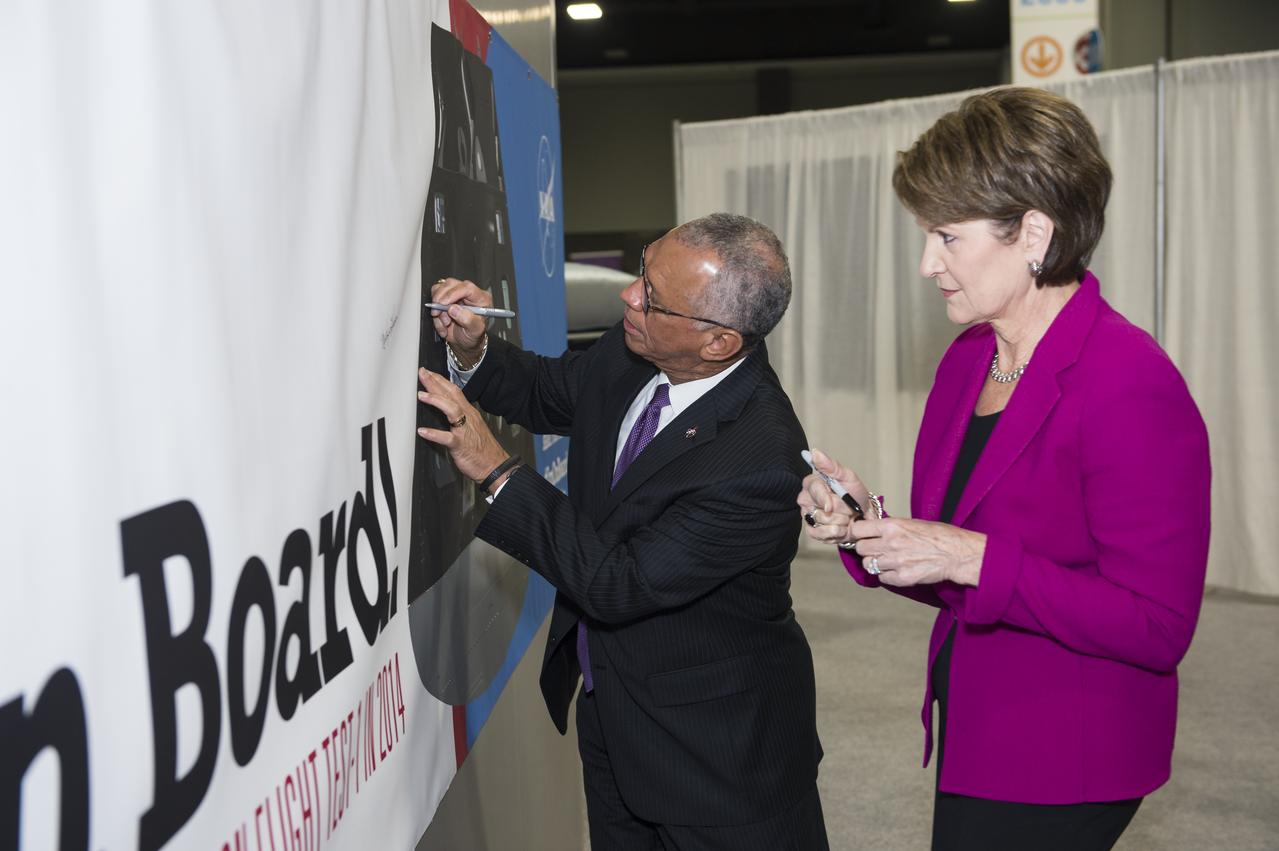
NASA Administrator Charles Bolden and Lockheed Martin CEO Marillyn Hewson sign the poster at the Orion exhibit at the USA Science and Engineering Festival on April 25, 2014. The USA Science and Engineering Festival takes place April 26-27, 2014 at the Washington Convention Center in Washington, DC. Photo Credit: (NASA/Aubrey Gemignani)
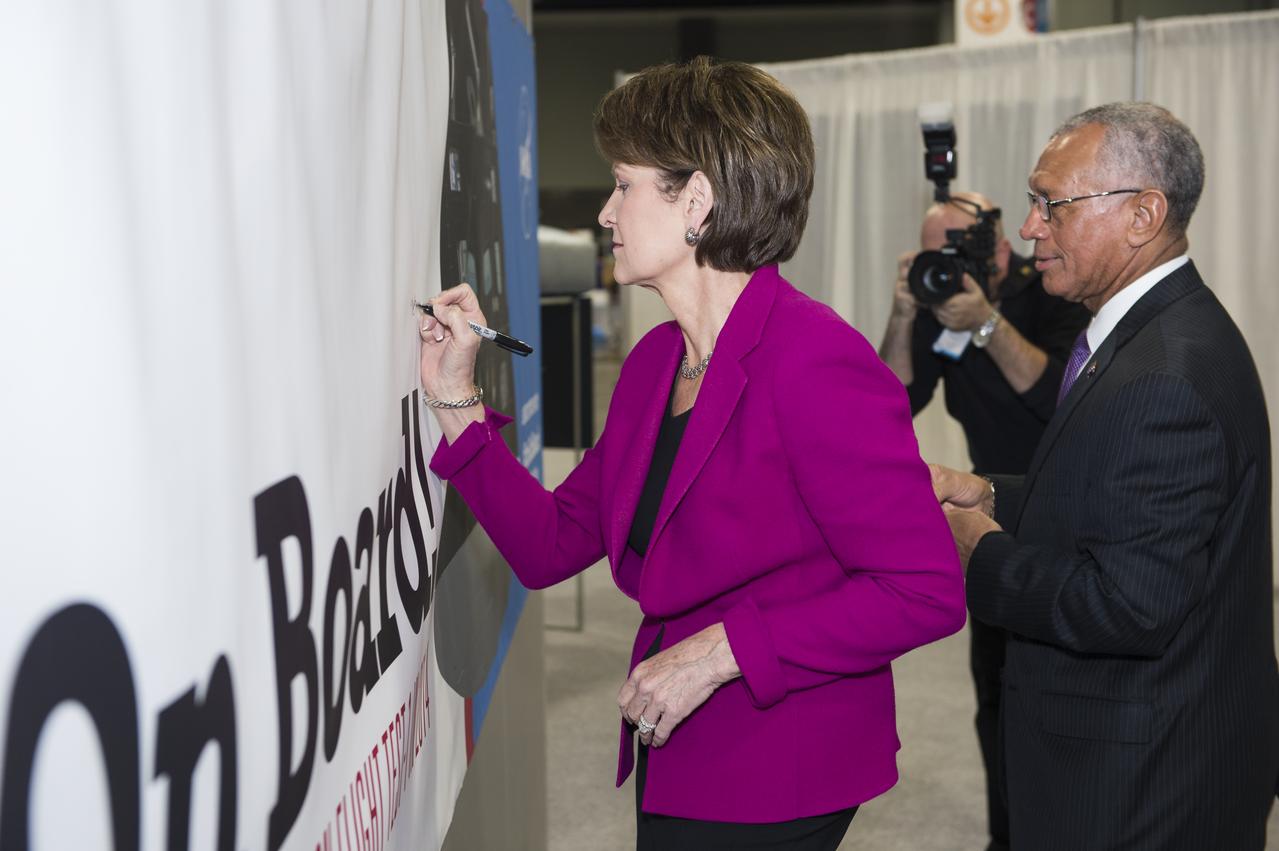
NASA Administrator Charles Bolden and Lockheed Martin CEO Marillyn Hewson sign the poster at the Orion exhibit at the USA Science and Engineering Festival on April 25, 2014. The USA Science and Engineering Festival takes place April 26-27, 2014 at the Washington Convention Center in Washington, DC. Photo Credit: (NASA/Aubrey Gemignani)

NASA DC-8 Pilots Craig Bomben and Bill Brockett explain the DC-8 cockpit to Chilean students onboard the DC-8 aircraft at Carlos Ibanez del Campo International Airport in Punta Arenas, Chile. AirSAR 2004 is a three-week expedition by an international team of scientists that is using an all-weather imaging tool, called the Airborne Synthetic Aperture Radar (AirSAR) which is located onboard NASA's DC-8 airborne laboratory. Scientists from many parts of the world including NASA's Jet Propulsion Laboratory are combining ground research done in several areas in Central and South America with NASA's AirSAR technology to improve and expand on the quality of research they are able to conduct. In South America and Antarctica, AirSAR will collect imagery and data to help determine the contribution of Southern Hemisphere glaciers to sea level rise due to climate change. In Patagonia, researchers found this contribution had more than doubled from 1995 to 2000, compared to the previous 25 years. AirSAR data will make it possible to determine whether that trend is decreasing, continuing or accelerating. AirSAR will also provide reliable information on ice shelf thickness to measure the contribution of the glaciers to sea level.
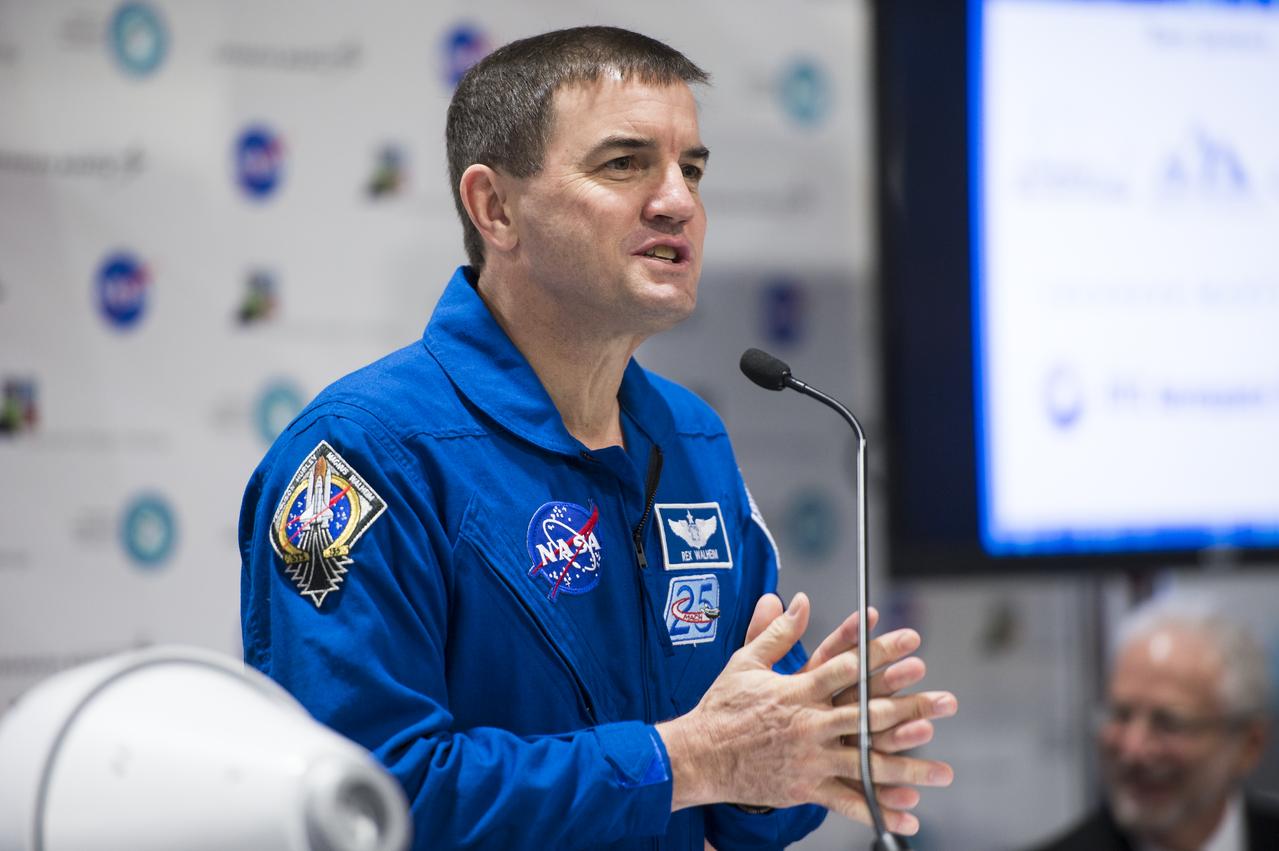
Astronaut Rex Walheim spoke at the USA Science and Engineering Festival on April 25, 2014. The event was held to announce the winner of the Exploration Design Challenge. The goal of the Exploration Design Challenge was for students to research and design ways to protect astronauts from space radiation.The winning team's design will be built and flown aboard the Orion/EFT-1. The USA Science and Engineering Festival takes place at the Washington Convention Center in Washington, DC on April 26 and 27, 2014. Photo Credit: (NASA/Aubrey Gemignani)
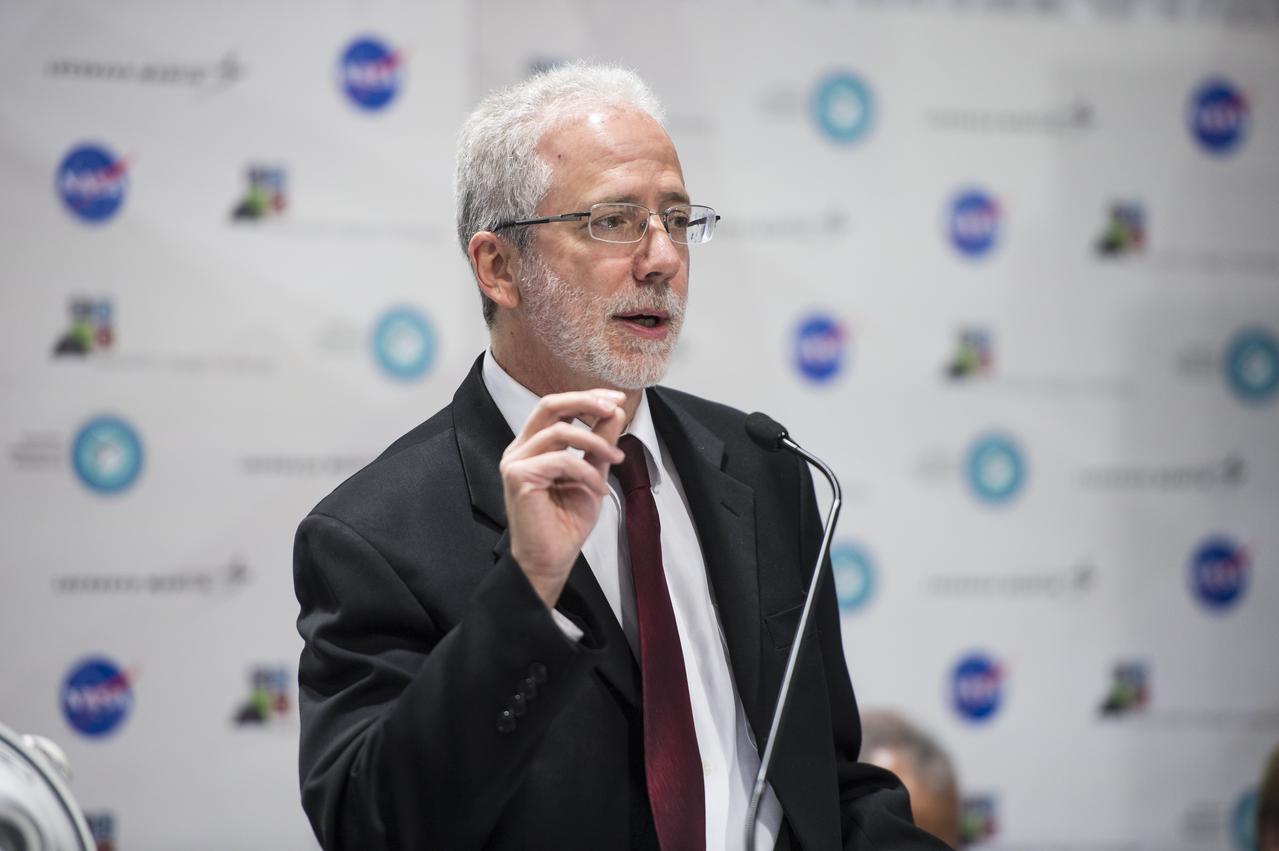
Mark Geyer, Orion Program Manager, spoke at the USA Science and Engineering Festival on April 25, 2014. The event was held to announce the winner of the Exploration Design Challenge. The goal of the Exploration Design Challenge was for students to research and design ways to protect astronauts from space radiation.The winning team's design will be built and flown aboard the Orion/EFT-1. The USA Science and Engineering Festival takes place at the Washington Convention Center in Washington, DC on April 26 and 27, 2014. Photo Credit: (NASA/Aubrey Gemignani)
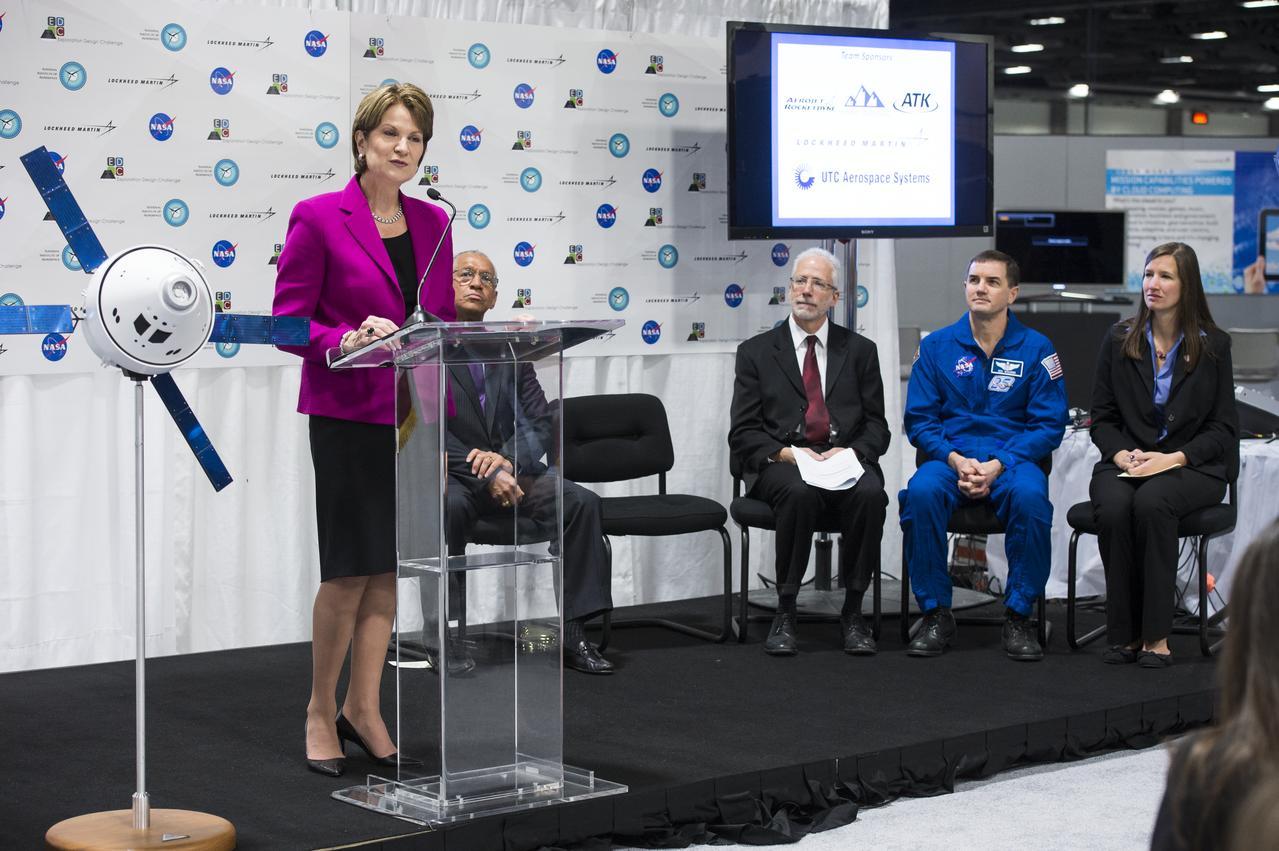
Lockheed Martin CEO Marillyn Hewson spoke at the Orion exhibit at the USA Science and Engineering Festival on April 25, 2014. The event was held to announce the winner of the Exploration Design Challenge. The goal of the Exploration Design Challenge was for students to research and design ways to protect astronauts from space radiation.The USA Science and Engineering Festival is taking place at the Washington Convention Center in Washington, DC on April 26 and 27, 2014. Photo Credit: (NASA/Aubrey Gemignani)

Dr. Fran Bagenal, senior scientist at the University of Colorado, far right, speaks during a panel discussion at the "NASA's New Horizons Pluto Mission: Continuing Voyager's Legacy of Exploration" event on Monday, August, 25, 2014, in the James E. Webb Auditorium at NASA Headquarters in Washington, DC. The panelists gave their accounts of Voyager's encounter with Neptune and discussed their current assignments on NASA's New Horizons mission to Pluto. Photo Credit: (NASA/Joel Kowsky)

Team Lore listens in the audience as NASA Administrator Charles Bolden speaks at the event to announce the winner of the Exploration Design Challenge. Team Lore was one of the semi-finalists in the challenge. The goal of the Exploration Design Challenge is for students to research and design ways to protect astronauts from space radiation. The winner of the challenge was announced on April 25, 2014 at the USA Science and Engineering Festival at the Washington Convention Center in Washington, DC. Photo Credit: (NASA/Aubrey Gemignani)
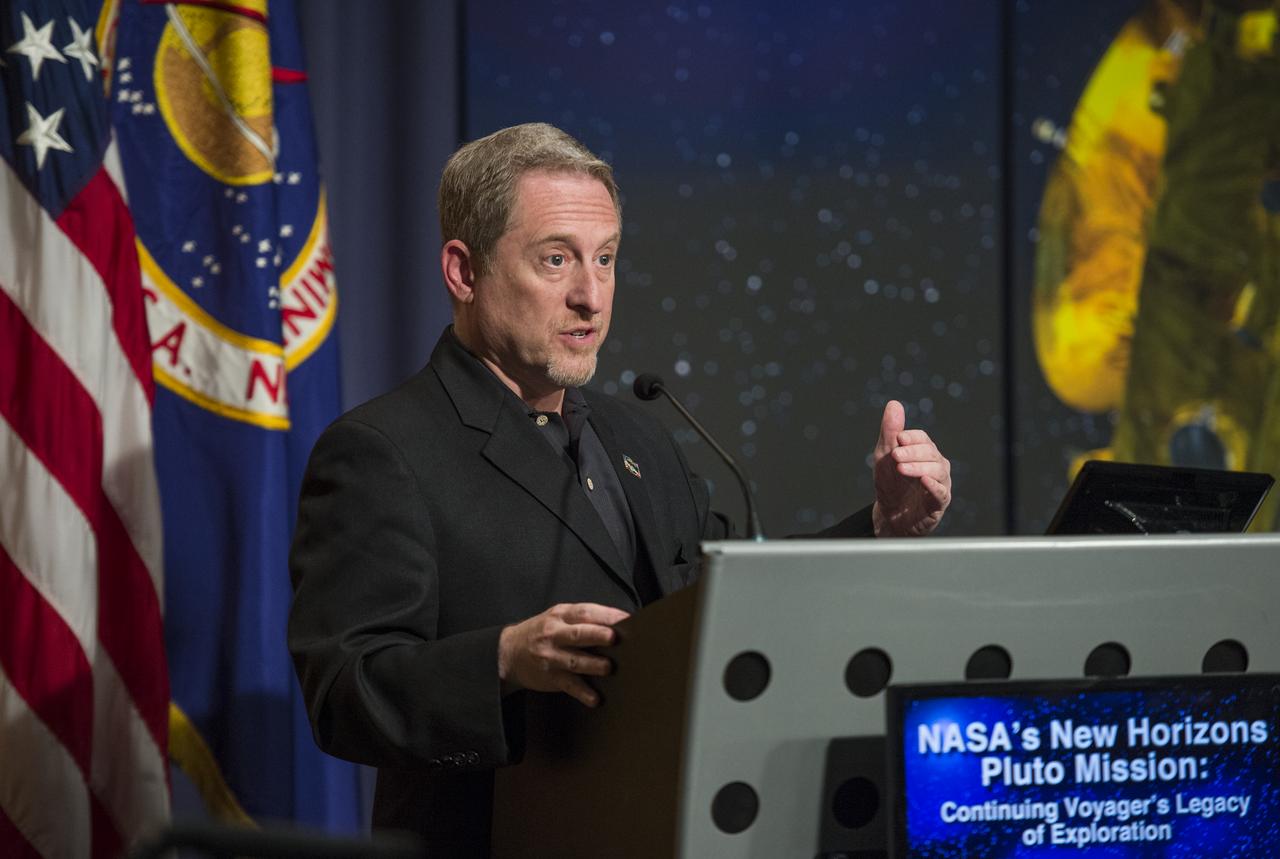
Dr. Alan Stern, Principal Investigator on NASA's New Horizons Mission, delivers closing remarks following a panel discussion at the "NASA's New Horizons Pluto Mission: Continuing Voyager's Legacy of Exploration" event on Monday, August, 25, 2014, in the James E. Webb Auditorium at NASA Headquarters in Washington, DC. The panelists gave their accounts of Voyager's encounter with Neptune and discussed their current assignments on NASA's New Horizons mission to Pluto. Photo Credit: (NASA/Joel Kowsky)

Dr. John Spencer, senior scientist at the Southwest Research Institute in Boulder, Colorado, speaks during a panel discussion at the "NASA's New Horizons Pluto Mission: Continuing Voyager's Legacy of Exploration" event on Monday, August, 25, 2014, in the James E. Webb Auditorium at NASA Headquarters in Washington, DC. The panelists gave their accounts of Voyager's encounter with Neptune and discussed their current assignments on NASA's New Horizons mission to Pluto. Photo Credit: (NASA/Joel Kowsky)
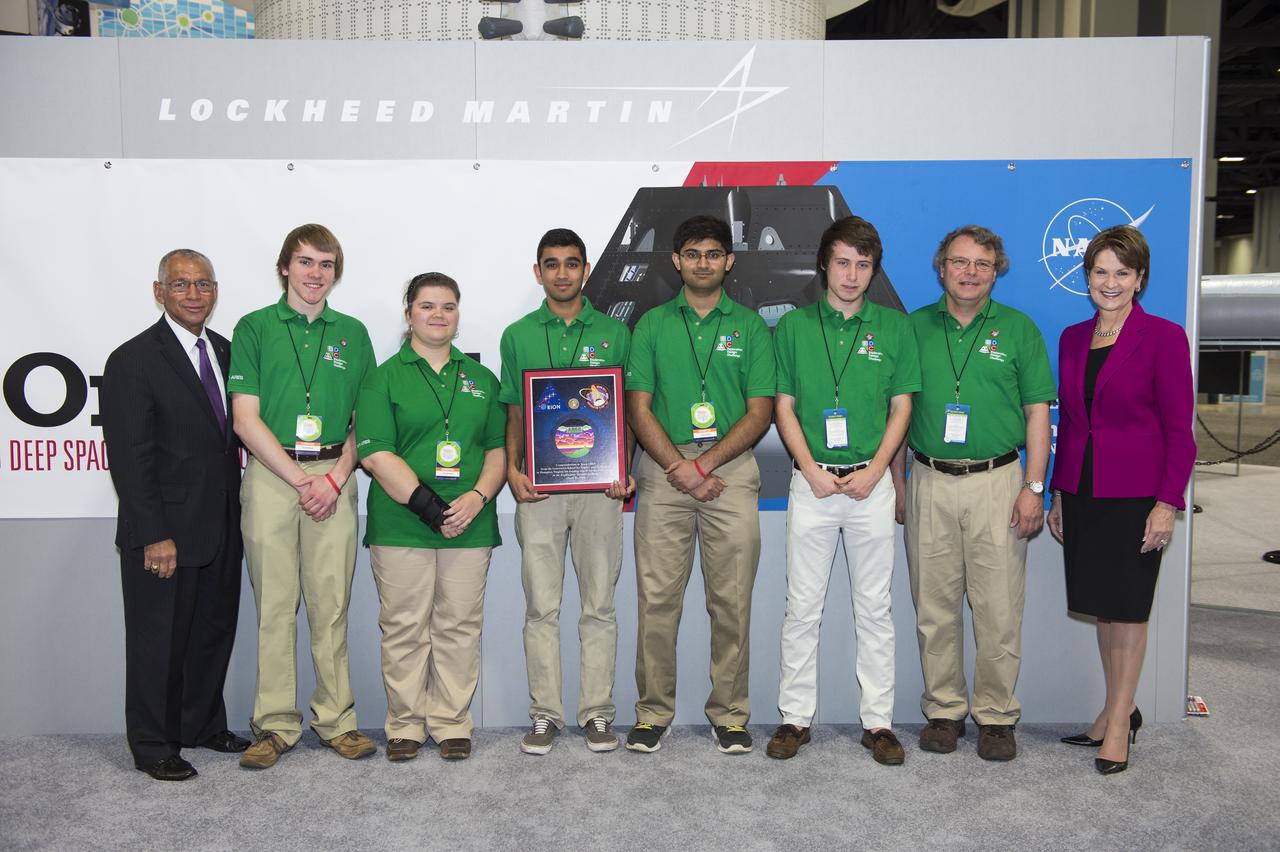
Team ARES poses with NASA Administrator Charles Bolden and Lockheed Martin CEO, Marillyn Hewson. Team ARES was the winner of the Exploration Design Challenge. The goal of the Exploration Design Challenge is for students to research and design ways to protect astronauts from space radiation. The winning team was announced on April 25, 2014 at the USA Science and Engineering Festival at the Washington Convention Center in Washington, DC. Photo Credit: (NASA/Aubrey Gemignani)

Dr. David H. Grinspoon, senior scientist at the Planetary Science Institute, speaks about working on NASA's Voyager team while serving as moderator for a panel discussion at the "NASA's New Horizons Pluto Mission: Continuing Voyager's Legacy of Exploration" event on Monday, August, 25, 2014, in the James E. Webb Auditorium at NASA Headquarters in Washington, DC. The panelists gave their accounts of Voyager's encounter with Neptune and discussed their current assignments on NASA's New Horizons mission to Pluto. Photo Credit: (NASA/Joel Kowsky)
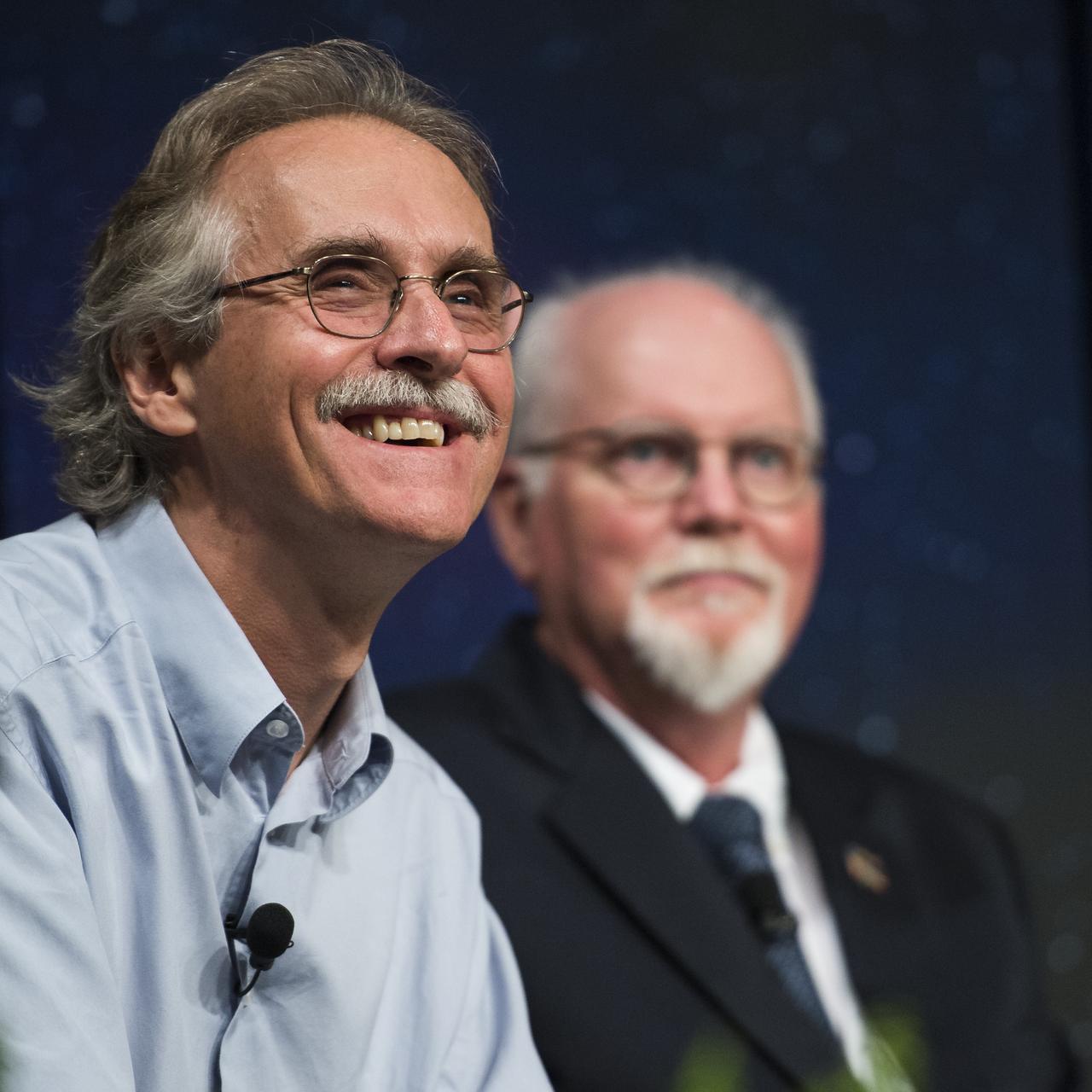
Dr. John Spencer, senior scientist at the Southwest Research Institute, answers a question from the audience during a panel discussion at the "NASA's New Horizons Pluto Mission: Continuing Voyager's Legacy of Exploration" event on Monday, August, 25, 2014, in the James E. Webb Auditorium at NASA Headquarters in Washington, DC. The panelists gave their accounts of Voyager's encounter with Neptune and discussed their current assignments on NASA's New Horizons mission to Pluto. Photo Credit: (NASA/Joel Kowsky)

Audience members view images of Neptune taken by Voyager while scientists discuss how the first images of Pluto and its moons will be captured during the "New Horizons: The First Mission to the Pluto System and the Kuiper Belt" Event at NASA Headquarters in Washington, DC Monday, August 25, 2014. The New Horizons spacecraft launched on January 19, 2006 will conduct a five month long reconnaissance flyby study of Pluto and its moons starting in the summer of 2015. Photo Credit: (NASA/Aubrey Gemignani)
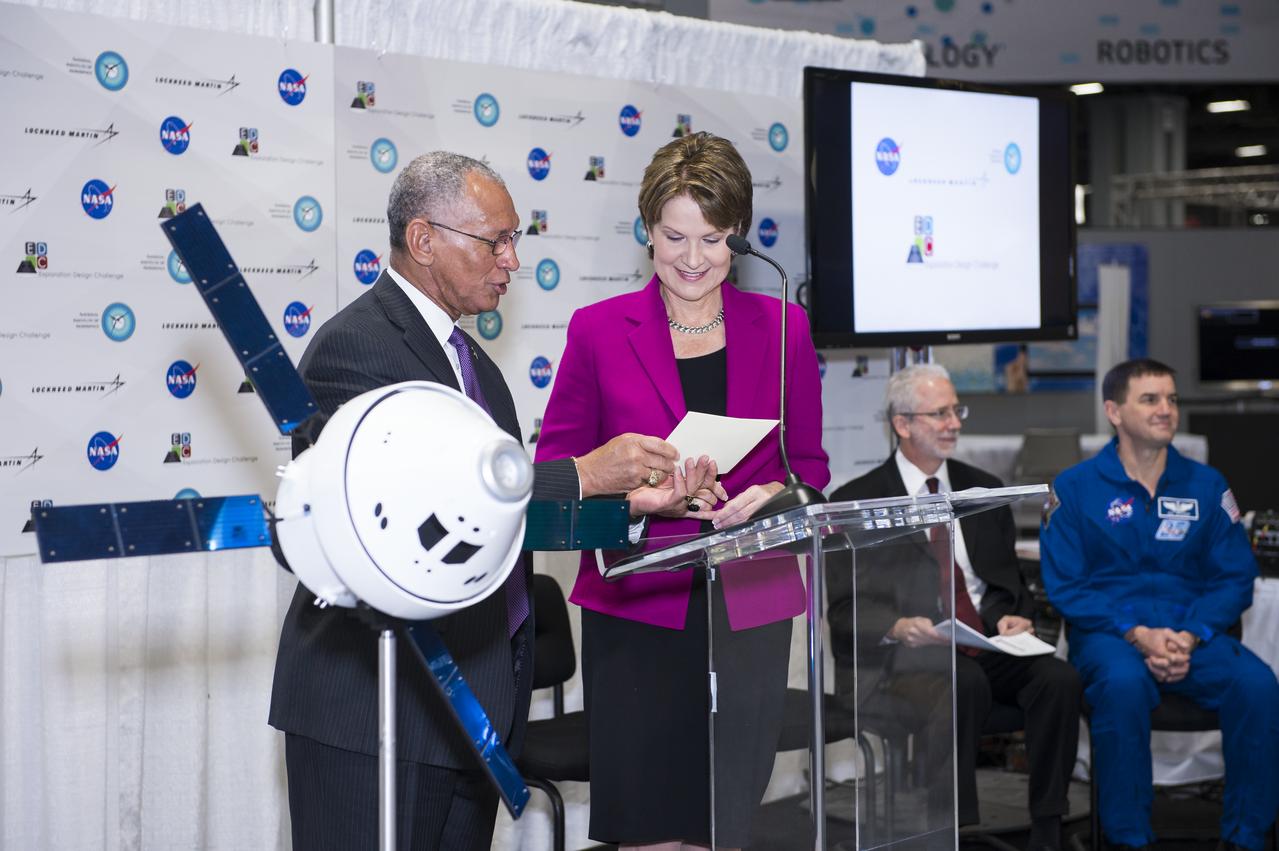
NASA Administrator, Charles Bolden and Lockheed Martin CEO, Marillyn Hewson announce the winner of the Exploration Design Challenge at the USA Science and Engineering Festival on April 25, 2014. The goal of the Exploration Design Challenge was for students to research and design ways to protect astronauts from space radiation.The USA Science and Engineering Festival is taking place at the Washington Convention Center in Washington, DC on April 26 and 27, 2014. Photo Credit: (NASA/Aubrey Gemignani)
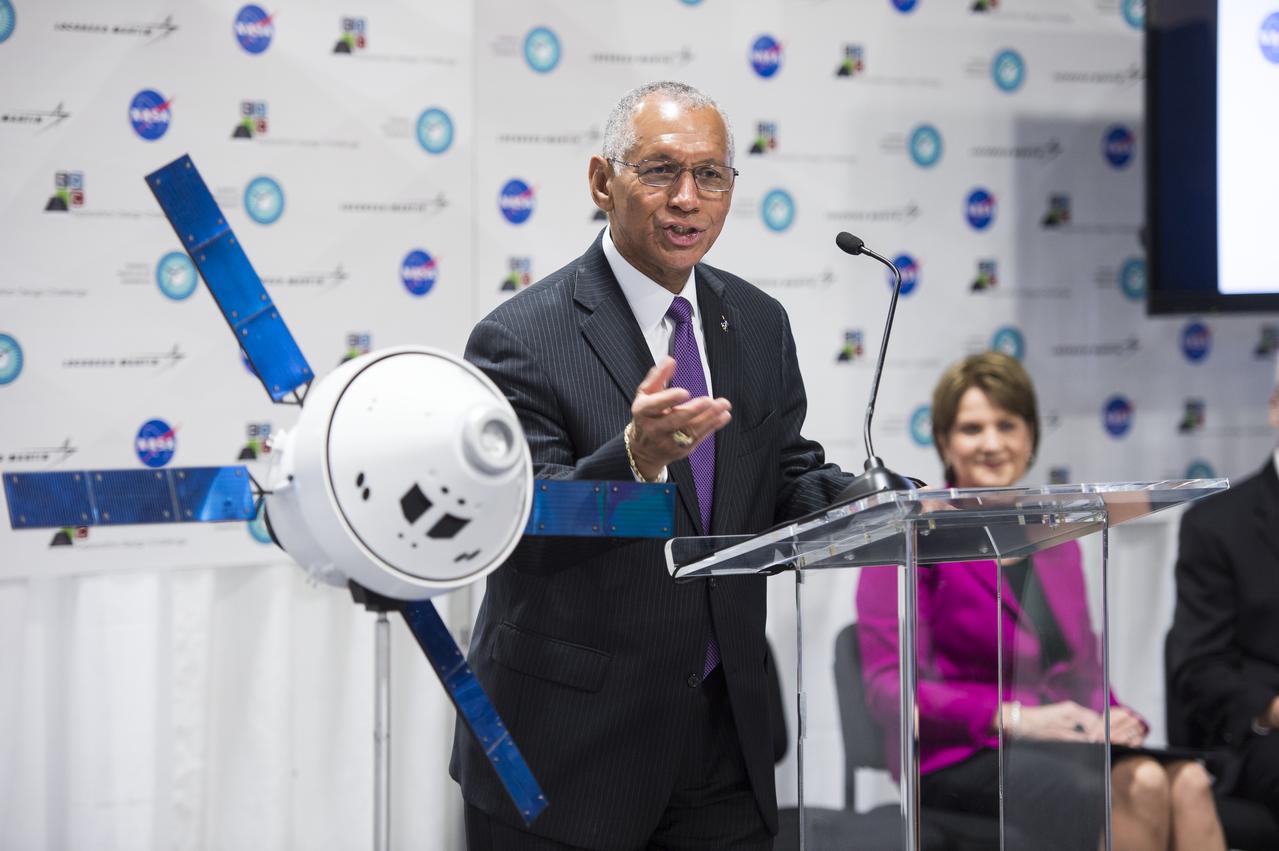
NASA Administrator Charles Bolden spoke at the Orion exhibit at the USA Science and Engineering Festival on April 25, 2014. The event was held to announce the winner of the Exploration Design Challenge. The goal of the Exploration Design Challenge was for students to research and design ways to protect astronauts from space radiation.The USA Science and Engineering Festival is taking place at the Washington Convention Center in Washington, DC on April 26 and 27, 2014. Photo Credit: (NASA/Aubrey Gemignani)

Dr. Fran Bagenal, senior scientist at the University of Colorado, speaks during a panel discussion at the "NASA's New Horizons Pluto Mission: Continuing Voyager's Legacy of Exploration" event on Monday, August, 25, 2014, in the James E. Webb Auditorium at NASA Headquarters in Washington, DC. The panelists gave their accounts of Voyager's encounter with Neptune and discussed their current assignments on NASA's New Horizons mission to Pluto. Photo Credit: (NASA/Joel Kowsky)

Dr. Bonnie Buratti, senior scientist at NASA's Jet Propultion Laboratory, speaks during a panel discussion at the "NASA's New Horizons Pluto Mission: Continuing Voyager's Legacy of Exploration" event on Monday, August, 25, 2014, in the James E. Webb Auditorium at NASA Headquarters in Washington, DC. The panelists gave their accounts of Voyager's encounter with Neptune and discussed their current assignments on NASA's New Horizons mission to Pluto. Photo Credit: (NASA/Joel Kowsky)
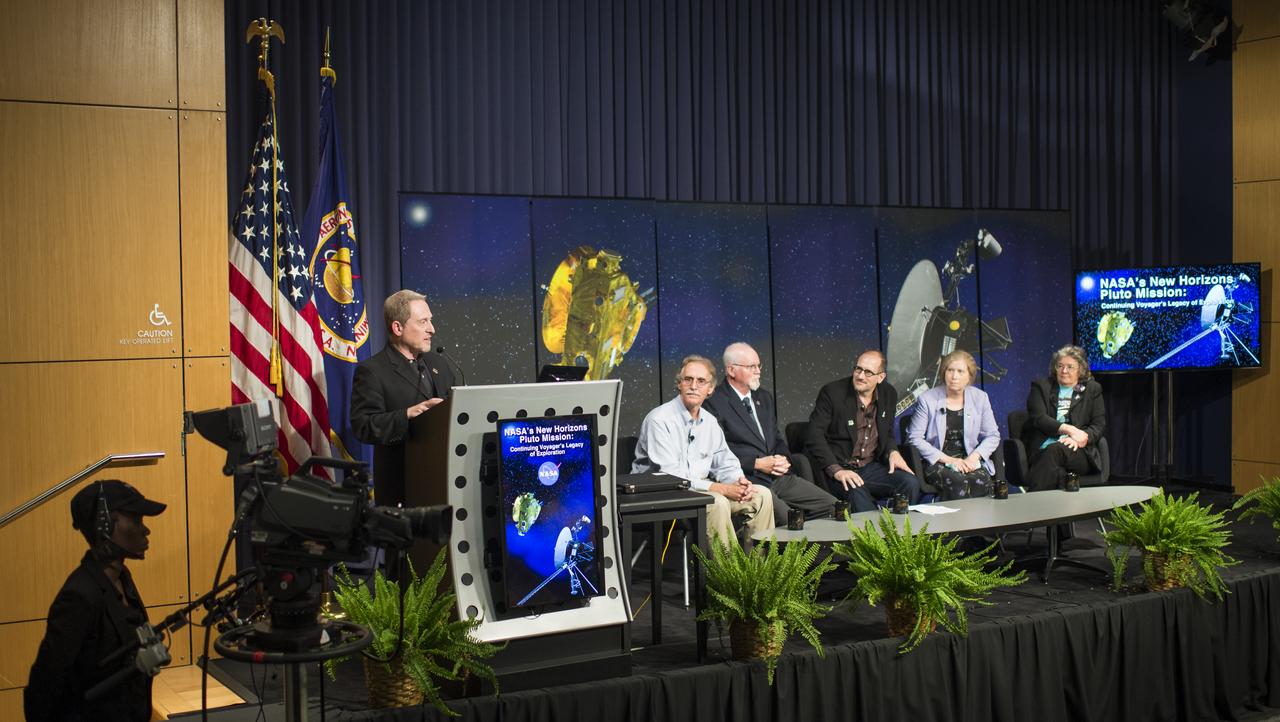
Dr. Alan Stern, Principal Investigator on NASA's New Horizons Mission, left, delivers closing remarks following a panel discussion at the "NASA's New Horizons Pluto Mission: Continuing Voyager's Legacy of Exploration" event on Monday, August, 25, 2014, in the James E. Webb Auditorium at NASA Headquarters in Washington, DC. The panelists gave their accounts of Voyager's encounter with Neptune and discussed their current assignments on NASA's New Horizons mission to Pluto. Photo Credit: (NASA/Joel Kowsky)
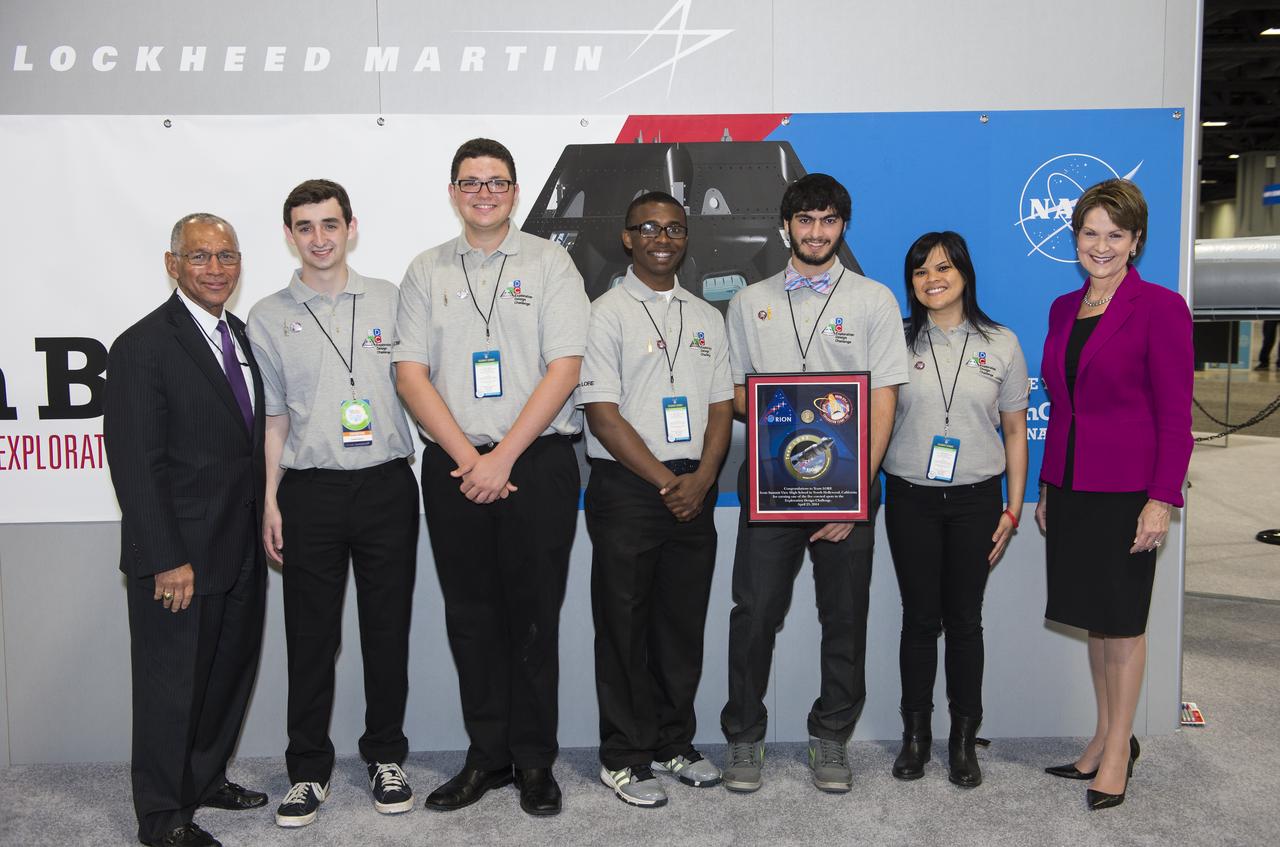
Team Lore poses with NASA Administrator Charles Bolden and Lockheed Martin CEO, Marillyn Hewson. Team Lore was one of the semi-finalists in the Exploration Design Challenge. The goal of the Exploration Design Challenge is for students to research and design ways to protect astronauts from space radiation. The winner of the challenge was announced on April 25, 2014 at the USA Science and Engineering Festival at the Washington Convention Center in Washington, DC. Photo Credit: (NASA/Aubrey Gemignani)
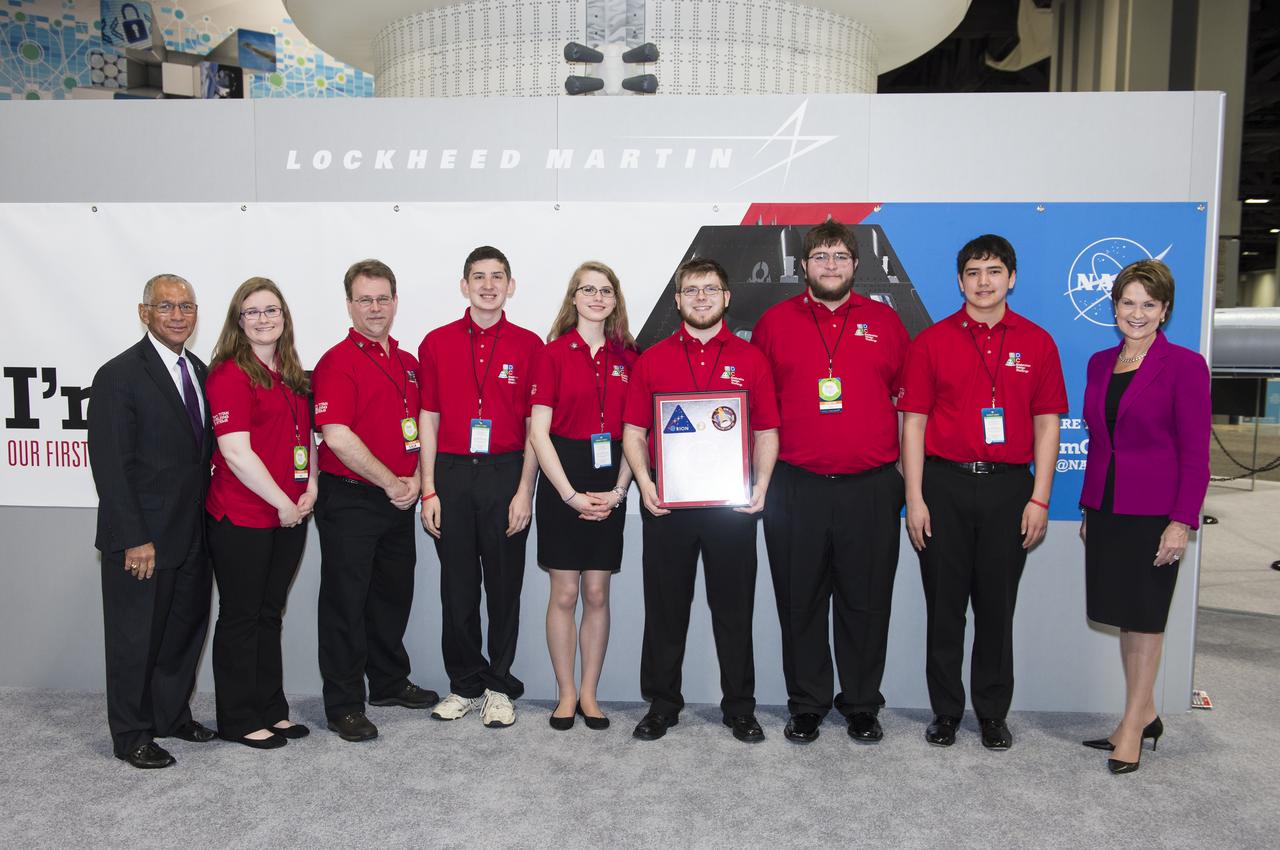
Team Titan Shielding Systems poses with NASA Administrator Charles Bolden and Lockheed Martin CEO, Marillyn Hewson. Team Titan Shielding Systems was one of the semi-finalists in the Exploration Design Challenge. The goal of the Exploration Design Challenge is for students to research and design ways to protect astronauts from space radiation. The winner of the challenge was announced on April 25, 2014 at the USA Science and Engineering Festival at the Washington Convention Center in Washington, DC. Photo Credit: (NASA/Aubrey Gemignani)
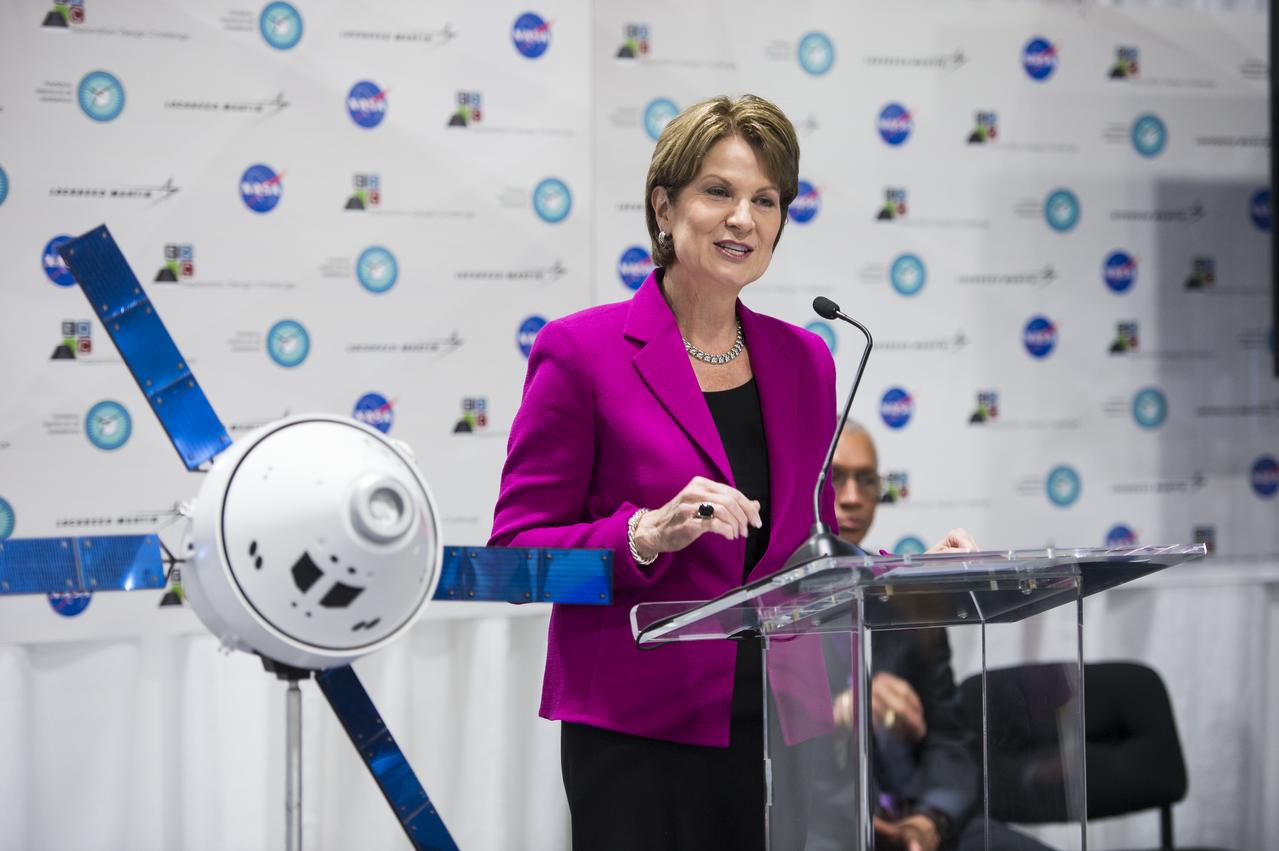
Lockheed Martin CEO Marillyn Hewson spoke at the Orion exhibit at the USA Science and Engineering Festival on April 25, 2014. The event was held to announce the winner of the Exploration Design Challenge. The goal of the Exploration Design Challenge was for students to research and design ways to protect astronauts from space radiation.The USA Science and Engineering Festival is taking place at the Washington Convention Center in Washington, DC on April 26 and 27, 2014. Photo Credit: (NASA/Aubrey Gemignani)

NASA Administrator Charles Bolden spoke at the Orion exhibit at the USA Science and Engineering Festival on April 25, 2014. The event was held to announce the winner of the Exploration Design Challenge. The goal of the Exploration Design Challenge was for students to research and design ways to protect astronauts from space radiation.The USA Science and Engineering Festival is taking place at the Washington Convention Center in Washington, DC on April 26 and 27, 2014. Photo Credit: (NASA/Aubrey Gemignani)
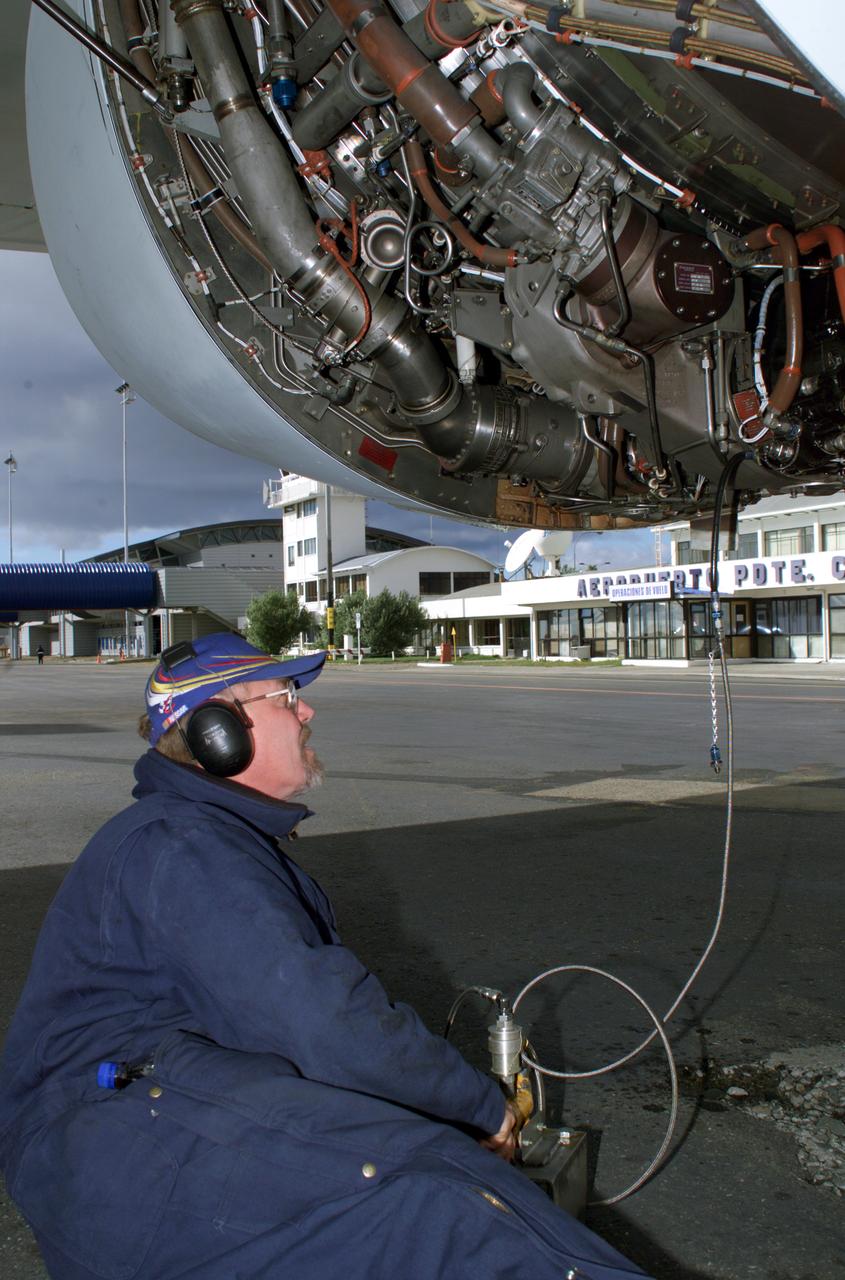
NASA DC-8 Ground Support Technician Joe Niquette performs routine maintenance on the DC-8 aircraft at Carlos Ibanez del Campo International Airport in Punta Arenas, Chile. AirSAR 2004 is a three-week expedition by an international team of scientists that is using an all-weather imaging tool, called the Airborne Synthetic Aperture Radar (AirSAR) which is located onboard NASA's DC-8 airborne laboratory. Scientists from many parts of the world including NASA's Jet Propulsion Laboratory are combining ground research done in several areas in Central and South America with NASA's AirSAR technology to improve and expand on the quality of research they are able to conduct. In South America and Antarctica, AirSAR will collect imagery and data to help determine the contribution of Southern Hemisphere glaciers to sea level rise due to climate change. In Patagonia, researchers found this contribution had more than doubled from 1995 to 2000, compared to the previous 25 years. AirSAR data will make it possible to determine whether that trend is decreasing, continuing or accelerating. AirSAR will also provide reliable information on ice shelf thickness to measure the contribution of the glaciers to sea level.
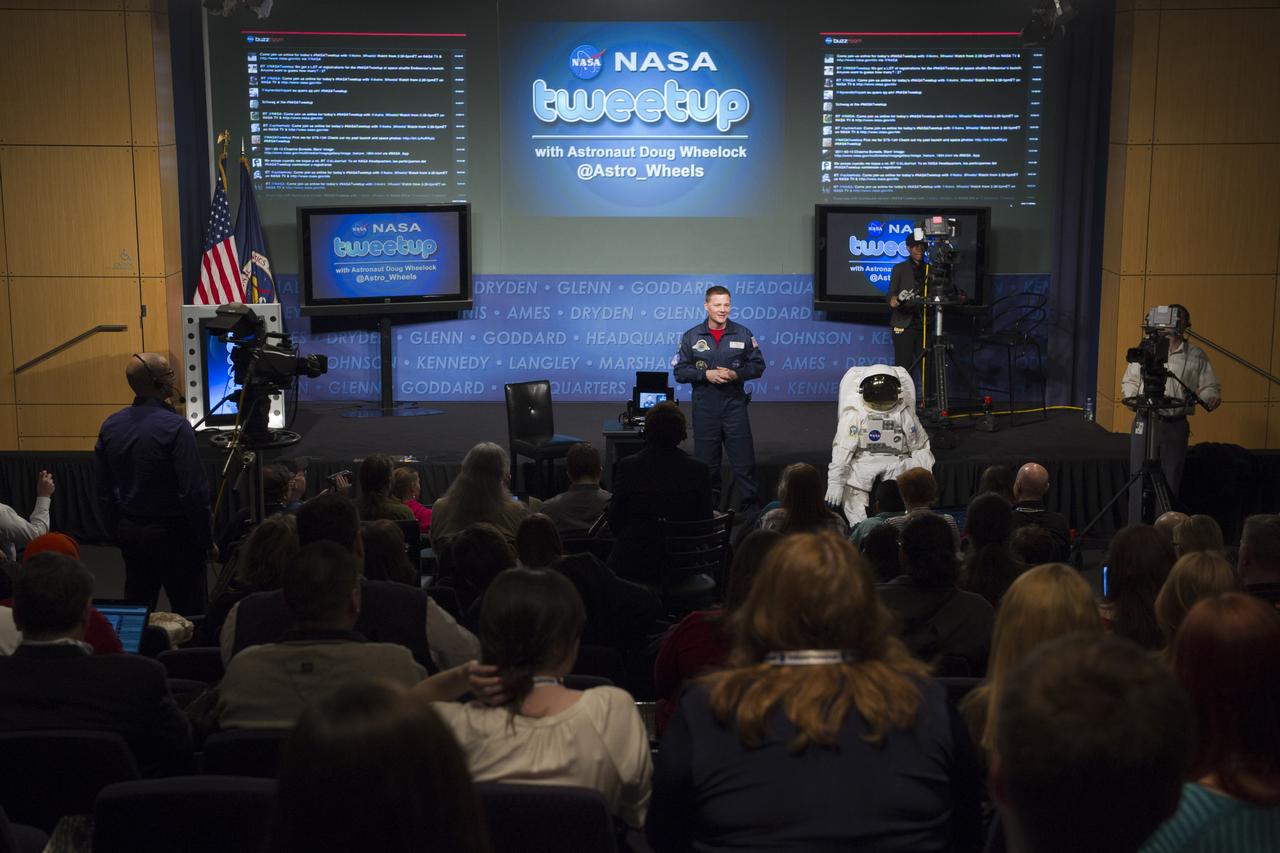
Astronaut Doug Wheelock discusses his experiences while living on the International Space Station during a tweetup at NASA Headquarters in Washington, Wednesday, March 16, 2011. Wheelock, who has accumulated a total of 178 days in space, assumed command of the International Space Station and the Expedition 25 crew. During Expedition 25, there were more than 120 microgravity experiments in human research; biology and biotechnology; physical and materials sciences; technology development; and Earth and space sciences. Wheelock also responded to an emergency shutdown of half of the station's external cooling system and supported three unplanned spacewalks to replace the faulty pump module that caused the shutdown. His efforts restored the station's critical cooling system to full function. The mission duration was 163 days. Photo Credit: (NASA/Paul E. Alers)

A tweetuup participant videotapes with her iPhone and tweets as astronaut Doug Wheelock discusses his experiences while living on the International Space Station during a tweetup at NASA Headquarters in Washington, Wednesday, March 16, 2011. Wheelock, who has accumulated a total of 178 days in space, assumed command of the International Space Station and the Expedition 25 crew. During Expedition 25, there were more than 120 microgravity experiments in human research; biology and biotechnology; physical and materials sciences; technology development; and Earth and space sciences. Wheelock also responded to an emergency shutdown of half of the station's external cooling system and supported three unplanned spacewalks to replace the faulty pump module that caused the shutdown. His efforts restored the station's critical cooling system to full function. The mission duration was 163 days. Photo Credit: (NASA/Paul E. Alers)

Astronaut Doug Wheelock discusses his experiences while living on the International Space Station during a tweetup at NASA Headquarters in Washington, Wednesday, March 16, 2011. Wheelock, who has accumulated a total of 178 days in space, assumed command of the International Space Station and the Expedition 25 crew. During Expedition 25, there were more than 120 microgravity experiments in human research; biology and biotechnology; physical and materials sciences; technology development; and Earth and space sciences. Wheelock also responded to an emergency shutdown of half of the station's external cooling system and supported three unplanned spacewalks to replace the faulty pump module that caused the shutdown. His efforts restored the station's critical cooling system to full function. The mission duration was 163 days. Photo Credit: (NASA/Paul E. Alers)

Astronaut Doug Wheelock discusses his experiences while living on the International Space Station during a tweetup at NASA Headquarters in Washington, Wednesday, March 16, 2011. Wheelock, who has accumulated a total of 178 days in space, assumed command of the International Space Station and the Expedition 25 crew. During Expedition 25, there were more than 120 microgravity experiments in human research; biology and biotechnology; physical and materials sciences; technology development; and Earth and space sciences. Wheelock also responded to an emergency shutdown of half of the station's external cooling system and supported three unplanned spacewalks to replace the faulty pump module that caused the shutdown. His efforts restored the station's critical cooling system to full function. The mission duration was 163 days. Photo Credit: (NASA/Paul E. Alers)

The Mary W. Jackson NASA Headquarters sign is installed ahead of the building naming ceremony, Thursday, Feb. 25, 2021, at NASA Headquarters in Washington, DC. Mary W. Jackson, the first African American female engineer at NASA, began her career with the agency in the segregated West Area Computing Unit of NASA’s Langley Research Center in Hampton, Virginia. The mathematician and aerospace engineer went on to lead programs influencing the hiring and promotion of women in NASA's science, technology, engineering, and mathematics careers. In 2019, she posthumously received the Congressional Gold Medal. Photo Credit: (NASA/Joel Kowsky)
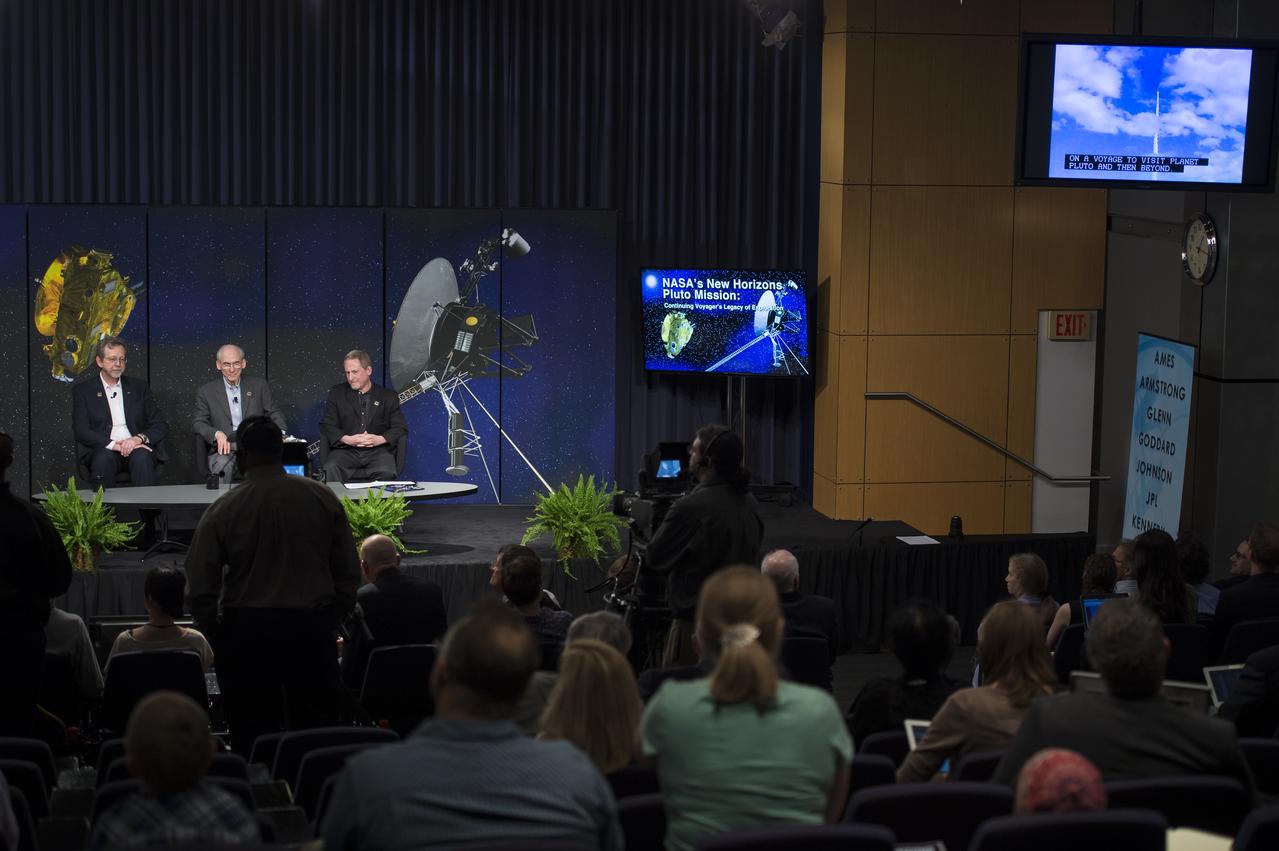
Dr. Jim Green, Dr. Ed Stone, and Dr. Alan Stern speak on a panel at the "New Horizons: The First Mission to the Pluto System and the Kuiper Belt" Event at NASA Headquarters in Washington, DC Monday, August 25, 2014. They discussed how the first images of Pluto and its moons would be captured by the New Horizons spacecraft during a five month long reconnaissance flyby study starting in the summer of 2015. New Horizons launched on January 19, 2006 and is scheduled to make its closest approach to Pluto on July 14, 2015. Photo Credit: (NASA/Aubrey Gemignani)

An audience member asks the panelists a question at the "New Horizons: The First Mission to the Pluto System and the Kuiper Belt" Event at NASA Headquarters in Washington, DC Monday, August 25, 2014. Scientists discussed how the first images of Pluto and its moons would be captured by the New Horizons spacecraft during a five month long reconnaissance flyby study starting in the summer of 2015. New Horizons launched on January 19, 2006 and is scheduled to make its closest approach to Pluto on July 14, 2015. Photo Credit: (NASA/Aubrey Gemignani)
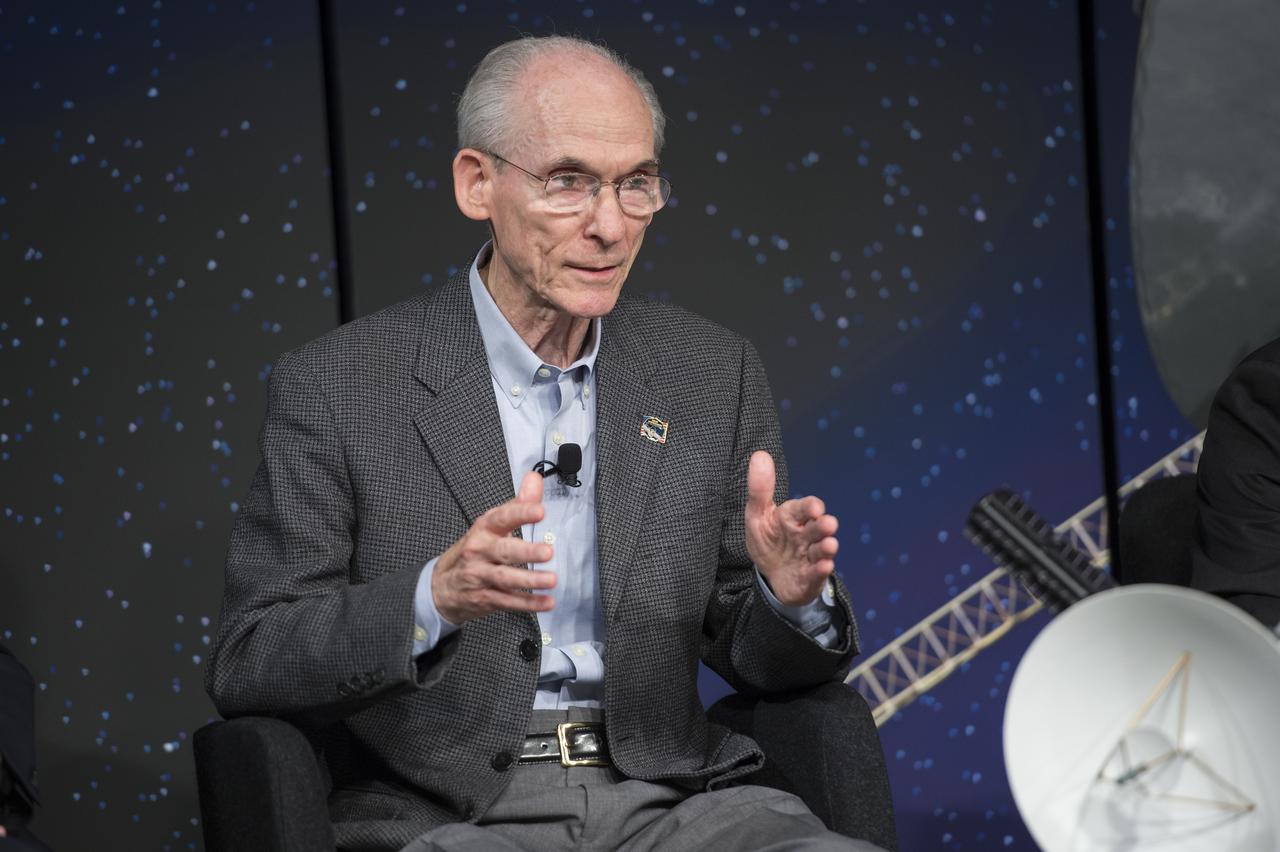
Dr. Ed Stone, Voyager project scientist, speaks on a panel at the "New Horizons: The First Mission to the Pluto System and the Kuiper Belt" Event at NASA Headquarters in Washington, DC Monday, August 25, 2014. Scientists discussed how the first images of Pluto and its moons would be captured by the New Horizons spacecraft during a five month long reconnaissance flyby study starting in the summer of 2015. New Horizons launched on January 19, 2006 and is scheduled to make its closest approach to Pluto on July 14, 2015. Photo Credit: (NASA/Aubrey Gemignani)
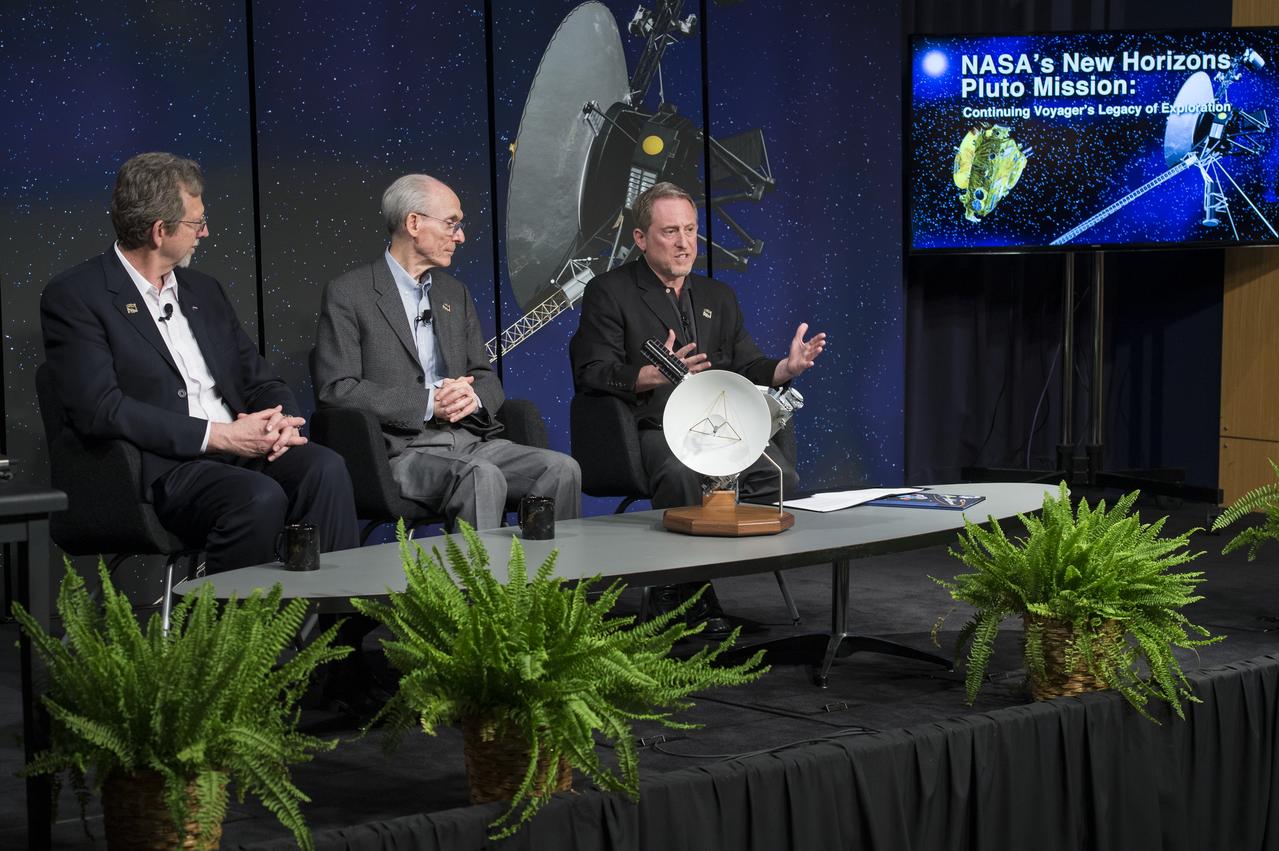
Dr. Jim Green, Dr. Ed Stone, and Dr. Alan Stern speak on a panel at the "New Horizons: The First Mission to the Pluto System and the Kuiper Belt" Event at NASA Headquarters in Washington, DC Monday, August 25, 2014. They discussed how the first images of Pluto and its moons would be captured by the New Horizons spacecraft during a five month long reconnaissance flyby study starting in the summer of 2015. New Horizons launched on January 19, 2006 and is scheduled to make its closest approach to Pluto on July 14, 2015. Photo Credit: (NASA/Aubrey Gemignani)
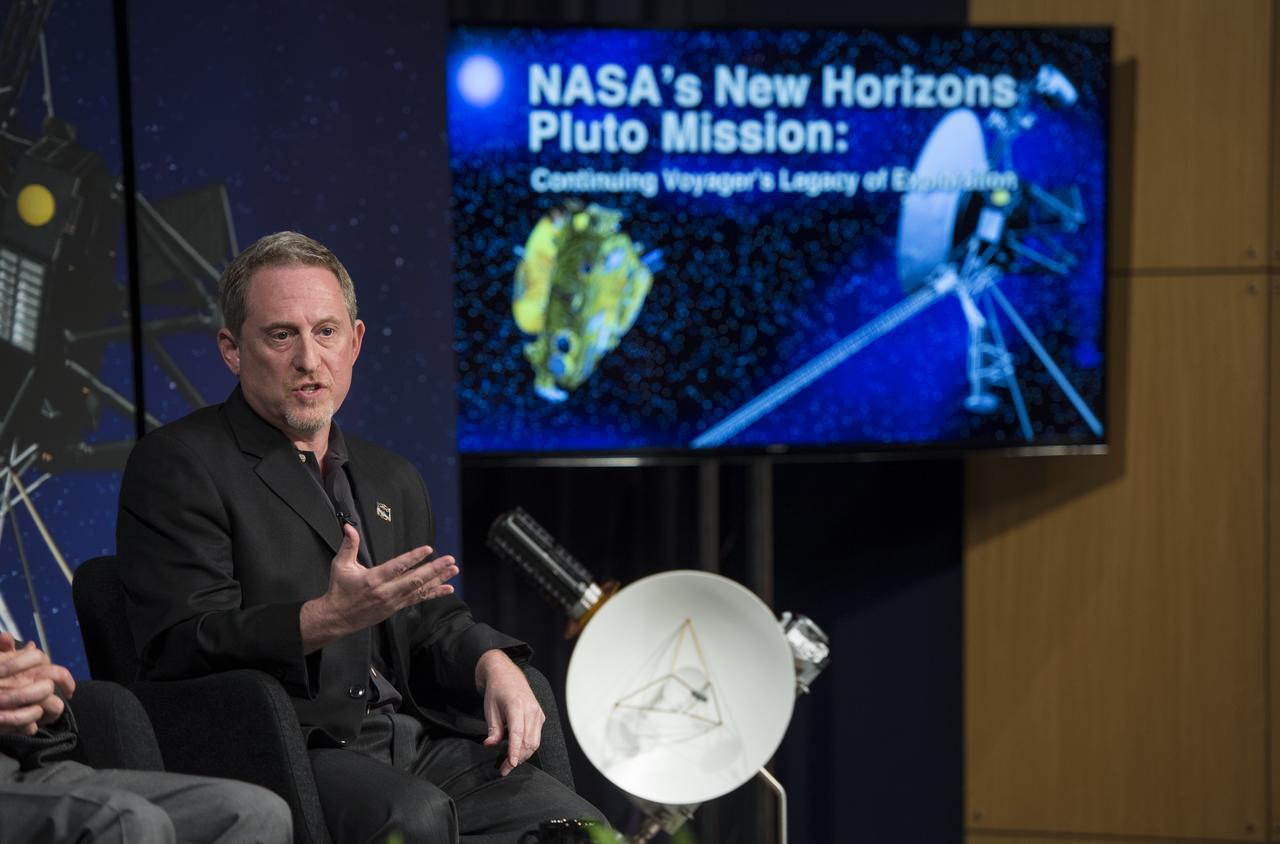
Dr. Alan Stern, New Horizons principal investigator, speaks on a panel at the "New Horizons: The First Mission to the Pluto System and the Kuiper Belt" Event at NASA Headquarters in Washington, DC Monday, August 25, 2014. Scientists discussed how the first images of Pluto and its moons would be captured by the New Horizons spacecraft during a five month long reconnaissance flyby study starting in the summer of 2015. New Horizons launched on January 19, 2006 and is scheduled to make its closest approach to Pluto on July 14, 2015. Photo Credit: (NASA/Aubrey Gemignani)
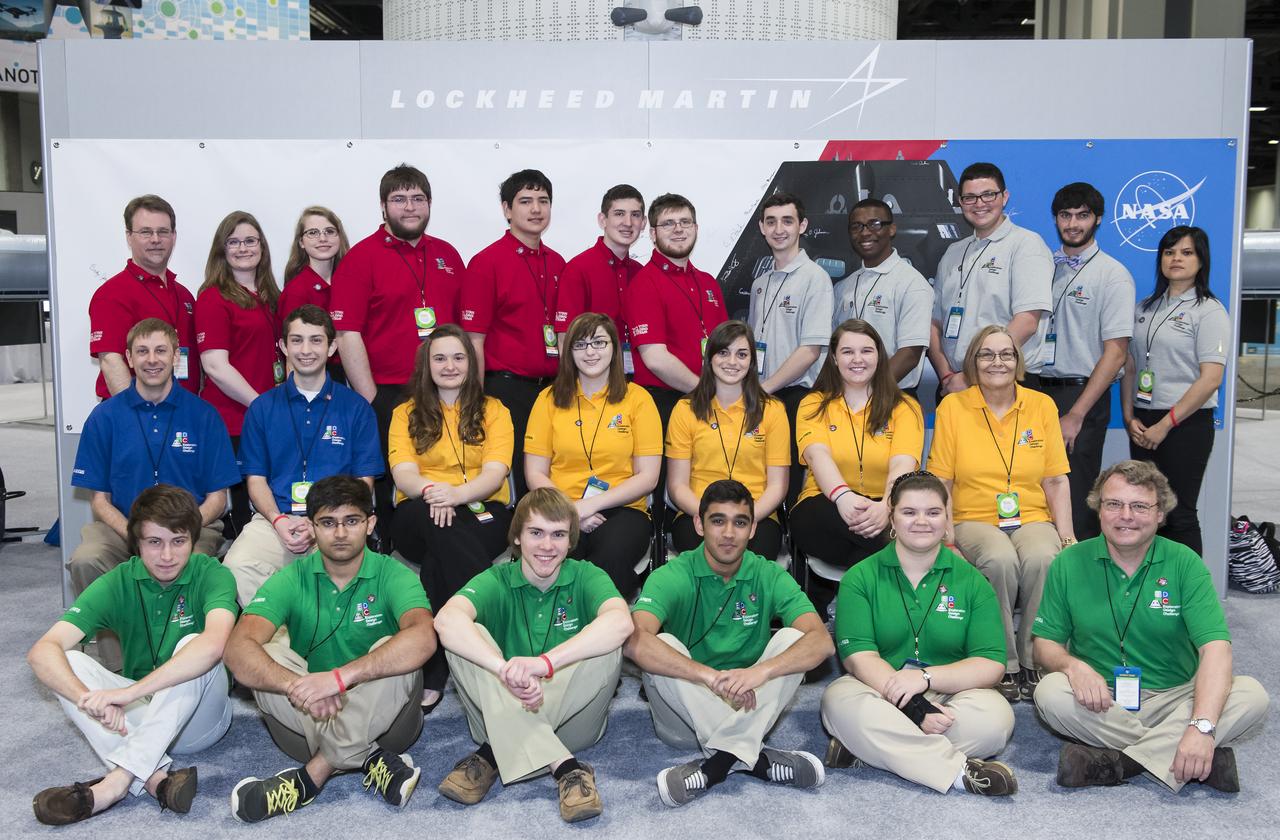
Pictured are all Semi-finalist teams in the Exploration Design Challenge. NASA Administrator, Charles Bolden and Lockheed Martin CEO, Marillyn Hewson announced the winner of the Exploration Design Challenge at the USA Science and Engineering Festival on April 25, 2014. The goal of the challenge was for students to research and design ways to protect astronauts from space radiation. The winning team's design will be built and flown aboard the Orion/EFT-1. The USA Science and Engineering Festival is taking place at the Washington Convention Center in Washington, DC on April 26 and 27, 2014. Photo Credit: (NASA/Aubrey Gemignani)

Audience members view slides from a presentation by Dr. Jim Green, Dr. Ed Stone, and Dr. Alan Stern at the "New Horizons: The First Mission to the Pluto System and the Kuiper Belt" Event at NASA Headquarters in Washington, DC Monday, August 25, 2014. They discussed how the first images of Pluto and its moons would be captured by the New Horizons spacecraft during a five month long reconnaissance flyby study starting in the summer of 2015. New Horizons launched on January 19, 2006 and is scheduled to make its closest approach to Pluto on July 14, 2015. Photo Credit: (NASA/Aubrey Gemignani)
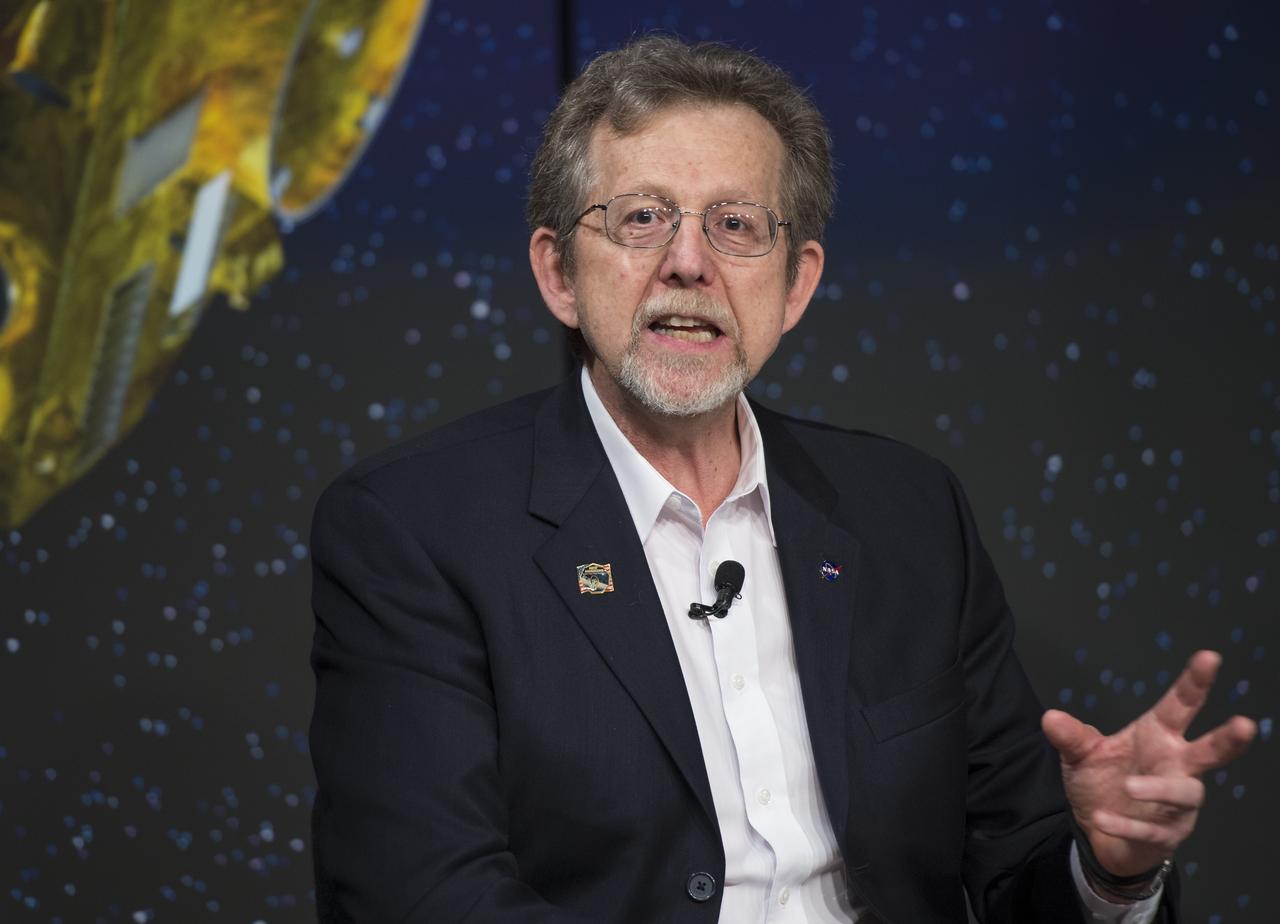
Dr. Jim Green, Director of NASA’s Planetary Division, speaks on a panel at the "New Horizons: The First Mission to the Pluto System and the Kuiper Belt" Event at NASA Headquarters in Washington, DC Monday, August 25, 2014. Scientists discussed how the first images of Pluto and its moons would be captured by the New Horizons spacecraft during a five month long reconnaissance flyby study starting in the summer of 2015. New Horizons launched on January 19, 2006 and is scheduled to make its closest approach to Pluto on July 14, 2015. Photo Credit: (NASA/Aubrey Gemignani)
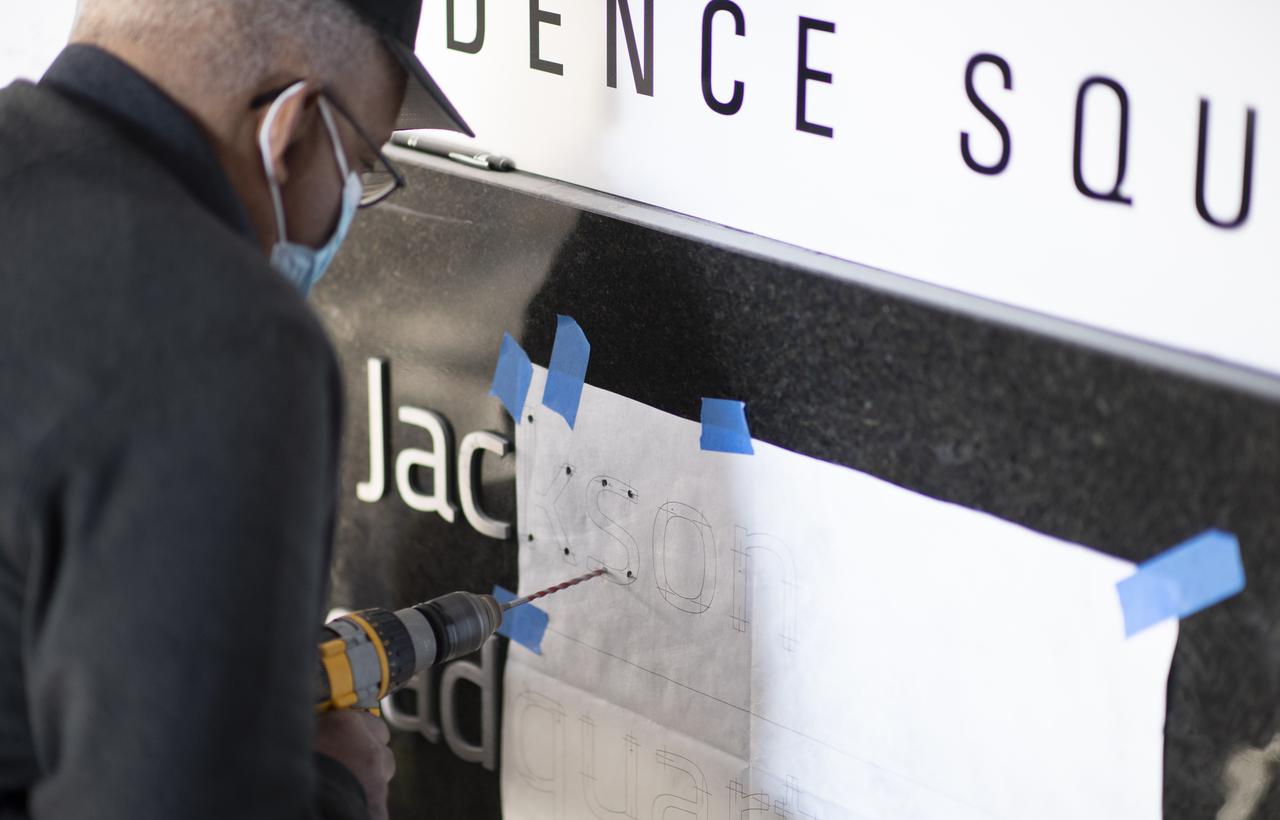
The Mary W. Jackson NASA Headquarters sign is installed ahead of the building naming ceremony, Thursday, Feb. 25, 2021, at NASA Headquarters in Washington, DC. Mary W. Jackson, the first African American female engineer at NASA, began her career with the agency in the segregated West Area Computing Unit of NASA’s Langley Research Center in Hampton, Virginia. The mathematician and aerospace engineer went on to lead programs influencing the hiring and promotion of women in NASA's science, technology, engineering, and mathematics careers. In 2019, she posthumously received the Congressional Gold Medal. Photo Credit: (NASA/Joel Kowsky)
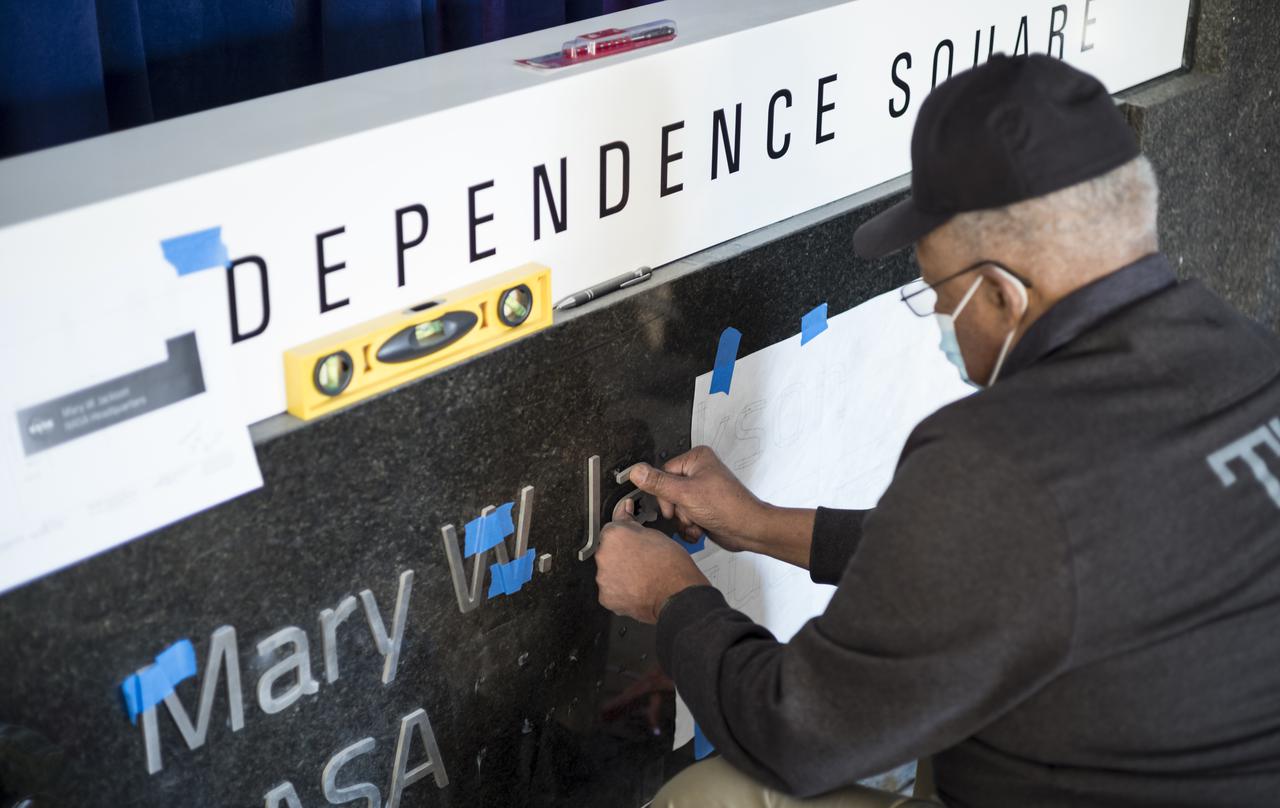
The Mary W. Jackson NASA Headquarters sign is installed ahead of the building naming ceremony, Thursday, Feb. 25, 2021, at NASA Headquarters in Washington, DC. Mary W. Jackson, the first African American female engineer at NASA, began her career with the agency in the segregated West Area Computing Unit of NASA’s Langley Research Center in Hampton, Virginia. The mathematician and aerospace engineer went on to lead programs influencing the hiring and promotion of women in NASA's science, technology, engineering, and mathematics careers. In 2019, she posthumously received the Congressional Gold Medal. Photo Credit: (NASA/Joel Kowsky)
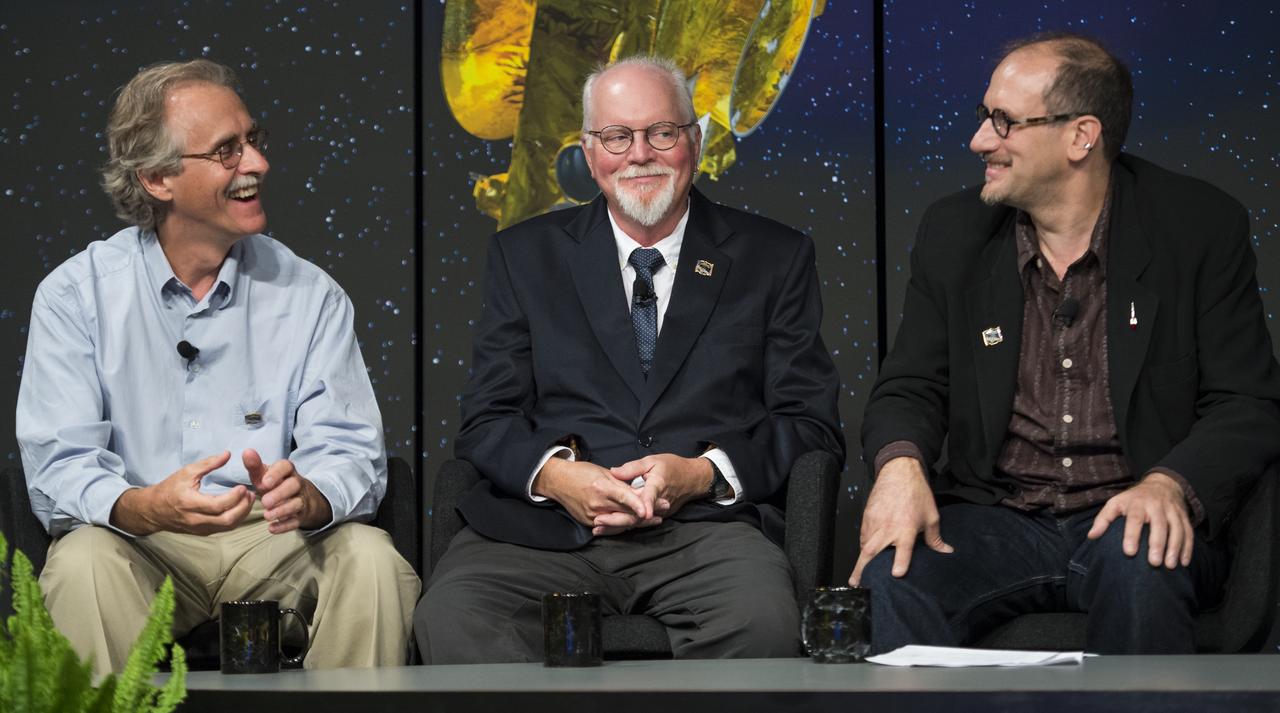
Dr. John Spencer, senior scientist at the Southwest Research Institute, left, Dr. Jeffrey Moore, senior scientist at NASA Ames Researh Center, center, and Dr. David H. Grinspoon, senior scientist at the Plentary Science Institute, left, are seen during a panel discussion at the "NASA's New Horizons Pluto Mission: Continuing Voyager's Legacy of Exploration" event on Monday, August, 25, 2014, in the James E. Webb Auditorium at NASA Headquarters in Washington, DC. The panelists gave their accounts of Voyager's encounter with Neptune and discussed their current assignments on NASA's New Horizons mission to Pluto. Photo Credit: (NASA/Joel Kowsky)
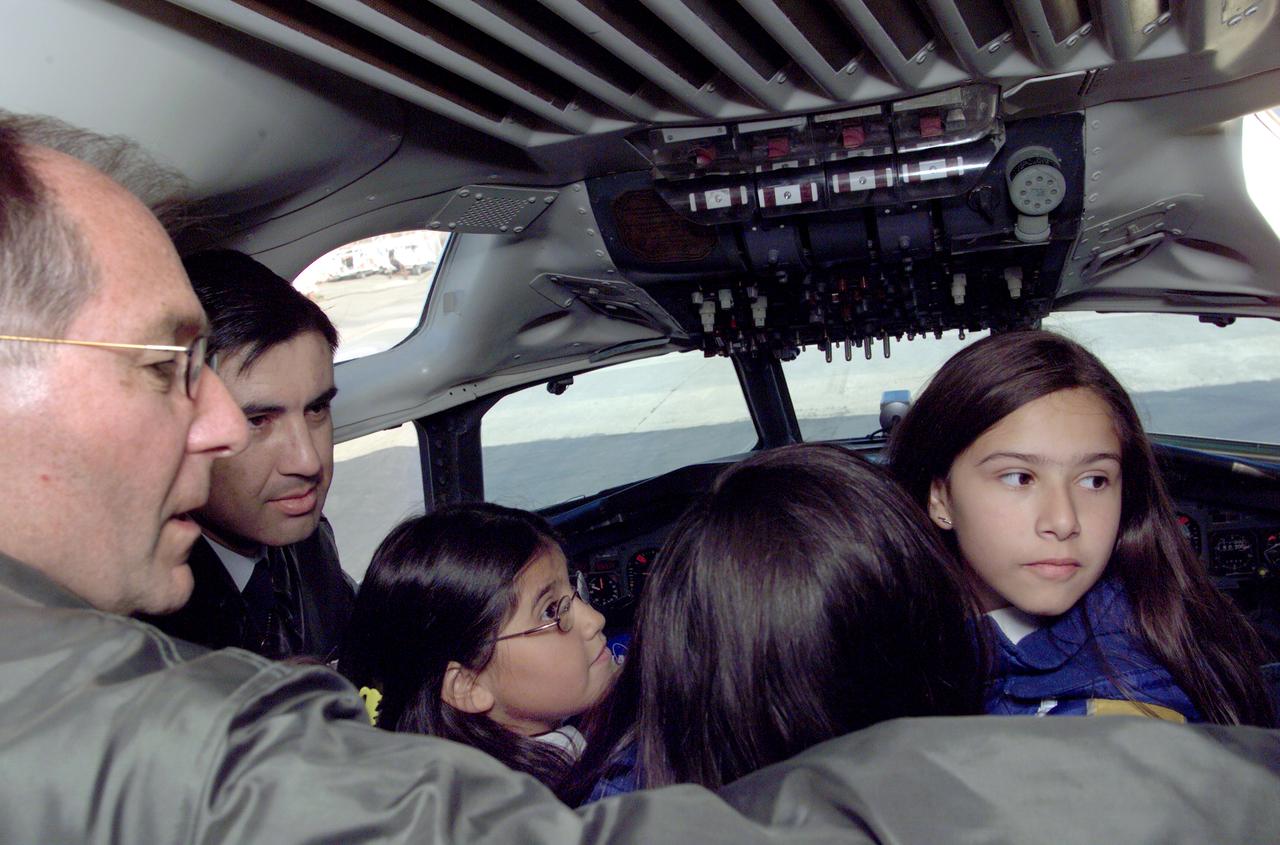
Pilot Bill Brockett (left) and Chilean Air Force Captain Saez with school children in the cockpit of NASA Dryden's DC-8 flying laboratory. Brockett explained NASA's AirSAR 2004 mission in Chile. AirSAR 2004 is a three-week expedition by an international team of scientists that uses an all-weather imaging tool, called the Airborne Synthetic Aperture Radar (AirSAR) which is located onboard NASA's DC-8 airborne laboratory. Scientists from many parts of the world including NASA's Jet Propulsion Laboratory are combining ground research done in several areas in Central and South America with NASA's AirSAR technology to improve and expand on the quality of research they are able to conduct. In South America and Antarctica, AirSAR collected imagery and data to help determine the contribution of Southern Hemisphere glaciers to sea level rise due to climate change. In Patagonia, researchers found this contribution had more than doubled from 1995 to 2000, compared to the previous 25 years. AirSAR data will make it possible to determine whether that trend is continuing or accelerating. AirSAR will also provide reliable information on ice shelf thickness to measure the contribution of the glaciers to sea level.

NASA DC-8 Ground Support Technicians Mark Corlew and Mike Lakowski perform routine maintenance on the aircraft at Carlos Ibanez del Campo International Airport in Punta Arenas, Chile. AirSAR 2004 is a three-week expedition by an international team of scientists that is using an all-weather imaging tool, called the Airborne Synthetic Aperture Radar (AirSAR) which is located onboard NASA's DC-8 airborne laboratory. Scientists from many parts of the world including NASA's Jet Propulsion Laboratory are combining ground research done in several areas in Central and South America with NASA's AirSAR technology to improve and expand on the quality of research they are able to conduct. In South America and Antarctica, AirSAR will collect imagery and data to help determine the contribution of Southern Hemisphere glaciers to sea level rise due to climate change. In Patagonia, researchers found this contribution had more than doubled from 1995 to 2000, compared to the previous 25 years. AirSAR data will make it possible to determine whether that trend is decreasing, continuing or accelerating. AirSAR will also provide reliable information on ice shelf thickness to measure the contribution of the glaciers to sea level.
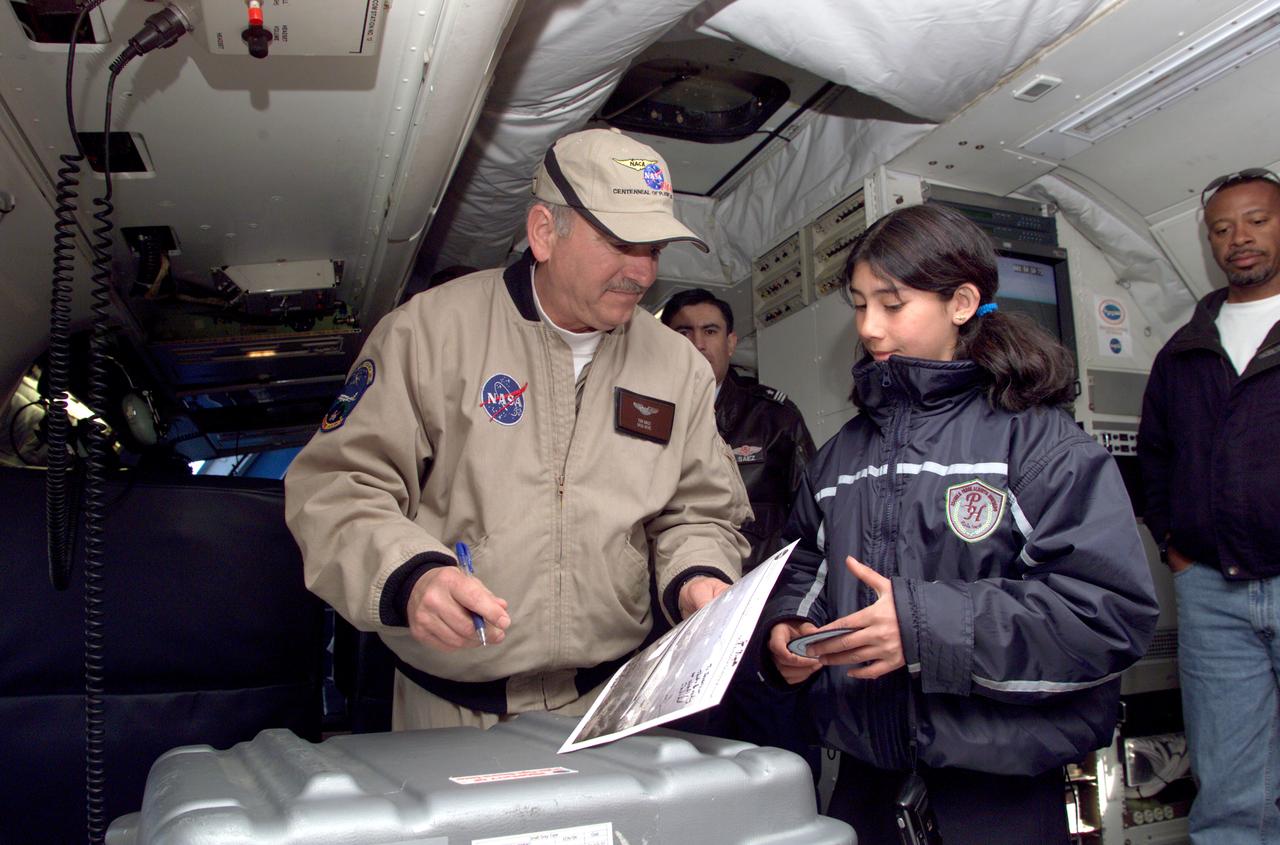
Dr. Tom Mace, NASA DFRC Director of Airborne Sciences, talks with a student from Punta Arenas, Chile, during a tour of the DC-8 aircraft while it was in the country supporting the AirSAR 2004 campaign. AirSAR 2004 is a three-week expedition by an international team of scientists that uses an all-weather imaging tool, called the Airborne Synthetic Aperture Radar (AirSAR) which is located onboard NASA's DC-8 airborne laboratory. Scientists from many parts of the world including NASA's Jet Propulsion Laboratory are combining ground research done in several areas in Central and South America with NASA's AirSAR technology to improve and expand on the quality of research they are able to conduct. In South America and Antarctica, AirSAR collected imagery and data to help determine the contribution of Southern Hemisphere glaciers to sea level rise due to climate change. In Patagonia, researchers found this contribution had more than doubled from 1995 to 2000, compared to the previous 25 years. AirSAR data will make it possible to determine whether that trend is continuing or accelerating. AirSAR will also provide reliable information on ice shelf thickness to measure the contribution of the glaciers to sea level.
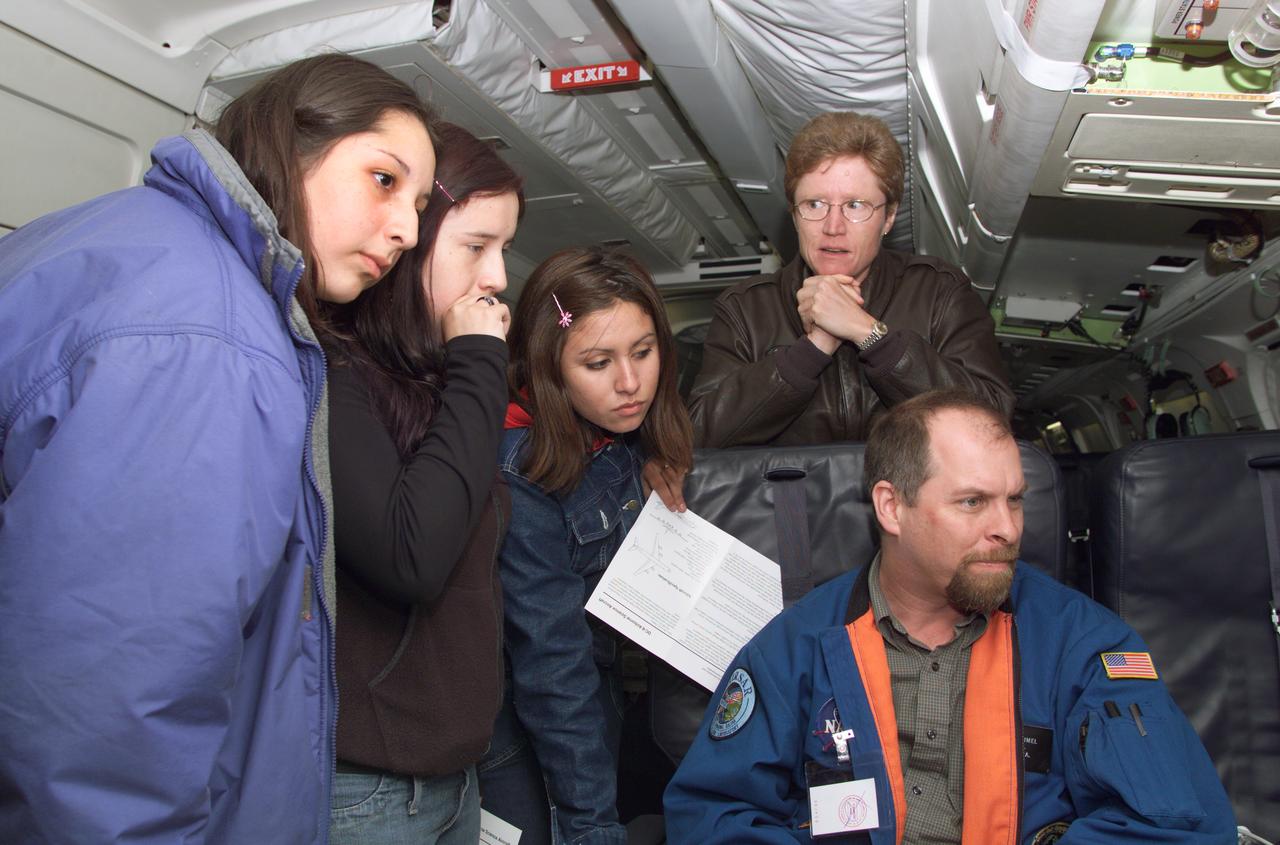
JPL scientist Dr. David Imel and U.S. Air Force Colonel Gwen Linde, the Defense Department Attache Officer assigned to the Chilean Embassy, lead Chilean students on a tour of the DC-8 aircraft at Carlos Ibanez del Campo International Airport in Punta Arenas, Chile. AirSAR 2004 is a three-week expedition by an international team of scientists that is using an all-weather imaging tool, called the Airborne Synthetic Aperture Radar (AirSAR) which is located onboard NASA's DC-8 airborne laboratory. Scientists from many parts of the world including NASA's Jet Propulsion Laboratory are combining ground research done in several areas in Central and South America with NASA's AirSAR technology to improve and expand on the quality of research they are able to conduct. In South America and Antarctica, AirSAR will collect imagery and data to help determine the contribution of Southern Hemisphere glaciers to sea level rise due to climate change. In Patagonia, researchers found this contribution had more than doubled from 1995 to 2000, compared to the previous 25 years. AirSAR data will make it possible to determine whether that trend is decreasing, continuing or accelerating. AirSAR will also provide reliable information on ice shelf thickness to measure the contribution of the glaciers to sea level.
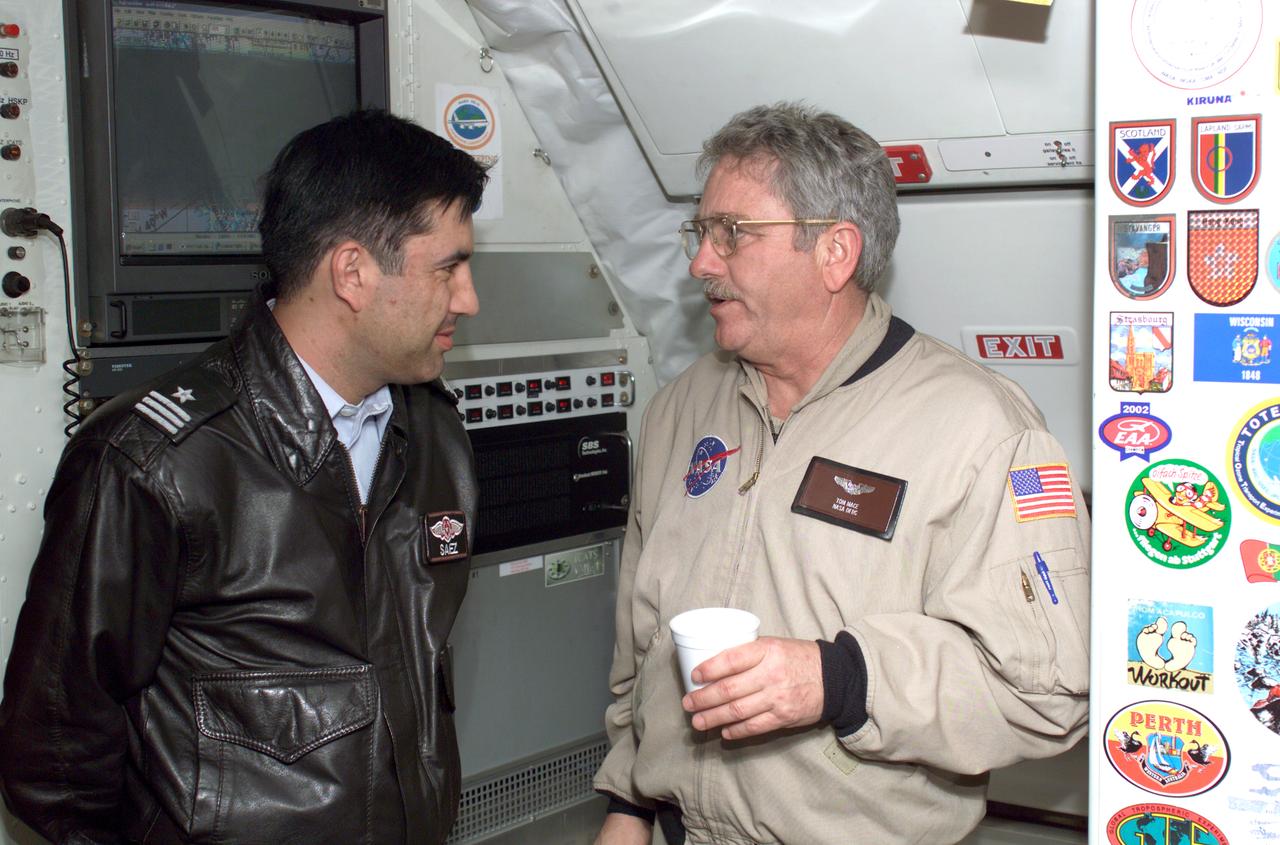
Chilean Air Force Captain Saez and Dr. Tom Mace, DFRC Director of Airborne Sciences, discuss airborne science during a DC-8 ferry flight from Santiago to Punta Arenas, Chile. AirSAR 2004 is a three-week expedition by an international team of scientists that uses an all-weather imaging tool, called the Airborne Synthetic Aperture Radar (AirSAR) which is located onboard NASA's DC-8 airborne laboratory. Scientists from many parts of the world including NASA's Jet Propulsion Laboratory are combining ground research done in several areas in Central and South America with NASA's AirSAR technology to improve and expand on the quality of research they are able to conduct. In South America and Antarctica, AirSAR collected imagery and data to help determine the contribution of Southern Hemisphere glaciers to sea level rise due to climate change. In Patagonia, researchers found this contribution had more than doubled from 1995 to 2000, compared to the previous 25 years. AirSAR data will make it possible to determine whether that trend is continuing or accelerating. AirSAR will also provide reliable information on ice shelf thickness to measure the contribution of the glaciers to sea level.
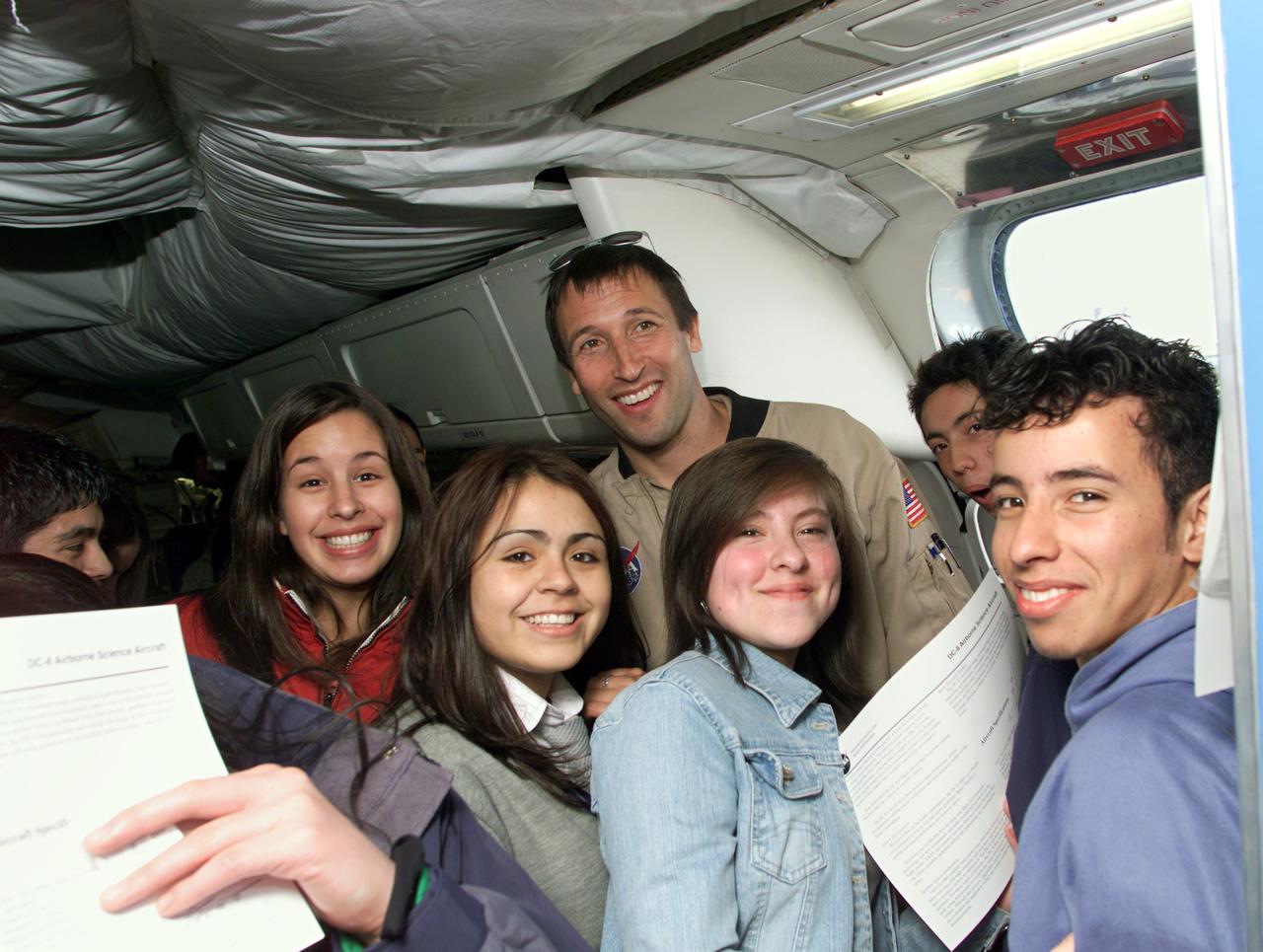
NASA DC-8 Mission Manager Walter Klein poses with a group of Chilean Students onboard the aircraft at Carlos Ibanez del Campo International Airport in Punta Arenas, Chile. AirSAR 2004 is a three-week expedition by an international team of scientists that is using an all-weather imaging tool, called the Airborne Synthetic Aperture Radar (AirSAR) which is located onboard NASA's DC-8 airborne laboratory. Scientists from many parts of the world including NASA's Jet Propulsion Laboratory are combining ground research done in several areas in Central and South America with NASA's AirSAR technology to improve and expand on the quality of research they are able to conduct. In South America and Antarctica, AirSAR will collect imagery and data to help determine the contribution of Southern Hemisphere glaciers to sea level rise due to climate change. In Patagonia, researchers found this contribution had more than doubled from 1995 to 2000, compared to the previous 25 years. AirSAR data will make it possible to determine whether that trend is decreasing, continuing or accelerating. AirSAR will also provide reliable information on ice shelf thickness to measure the contribution of the glaciers to sea level.

NASA Dryden Mission Manager Walter Klein poses with school children that visited the DC-8 during AirSAR 2004 in Punta Arenas, Chile. AirSAR 2004 is a three-week expedition by an international team of scientists that uses an all-weather imaging tool, called the Airborne Synthetic Aperture Radar (AirSAR) which is located onboard NASA's DC-8 airborne laboratory. Scientists from many parts of the world including NASA's Jet Propulsion Laboratory are combining ground research done in several areas in Central and South America with NASA's AirSAR technology to improve and expand on the quality of research they are able to conduct. In South America and Antarctica, AirSAR collected imagery and data to help determine the contribution of Southern Hemisphere glaciers to sea level rise due to climate change. In Patagonia, researchers found this contribution had more than doubled from 1995 to 2000, compared to the previous 25 years. AirSAR data will make it possible to determine whether that trend is continuing or accelerating. AirSAR will also provide reliable information on ice shelf thickness to measure the contribution of the glaciers to sea level.
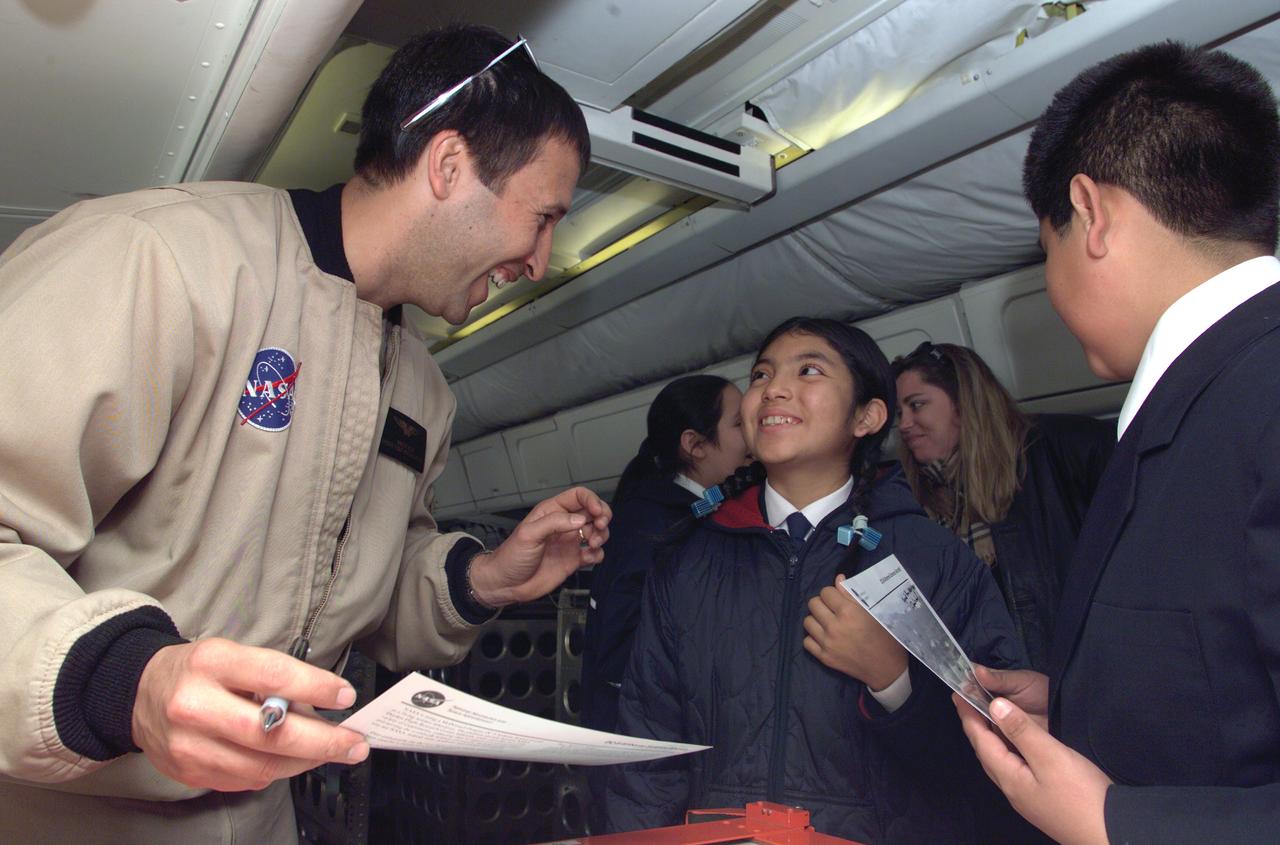
NASA Dryden Mission Manager Walter Klein talks with school children from Punta Arenas, Chile, during a tour of the DC-8 aircraft while it was in the country supporting the AirSAR 2004 campaign. AirSAR 2004 is a three-week expedition by an international team of scientists that uses an all-weather imaging tool, called the Airborne Synthetic Aperture Radar (AirSAR) which is located onboard NASA's DC-8 airborne laboratory. Scientists from many parts of the world including NASA's Jet Propulsion Laboratory are combining ground research done in several areas in Central and South America with NASA's AirSAR technology to improve and expand on the quality of research they are able to conduct. In South America and Antarctica, AirSAR collected imagery and data to help determine the contribution of Southern Hemisphere glaciers to sea level rise due to climate change. In Patagonia, researchers found this contribution had more than doubled from 1995 to 2000, compared to the previous 25 years. AirSAR data will make it possible to determine whether that trend is continuing or accelerating. AirSAR will also provide reliable information on ice shelf thickness to measure the contribution of the glaciers to sea level.
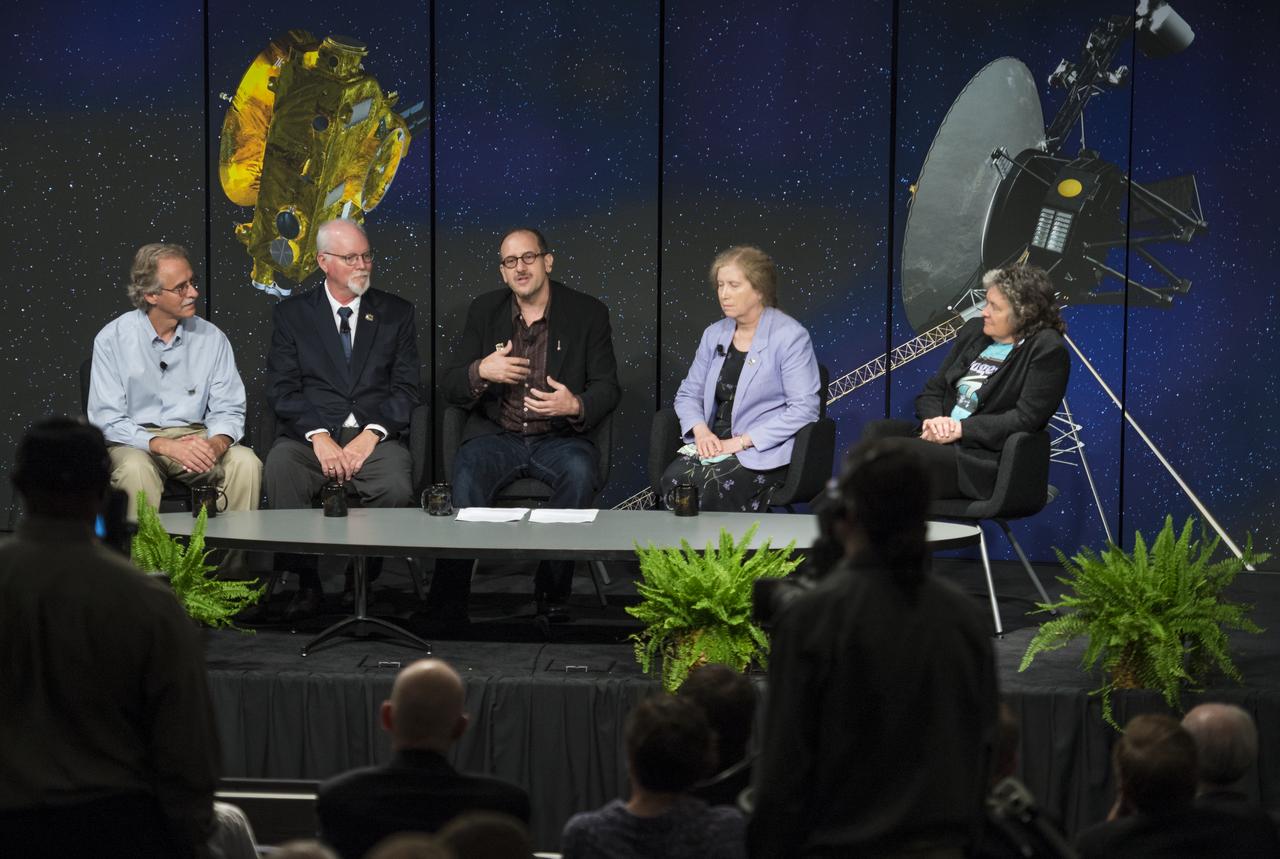
New Horizons science team members: Dr. John Spencer, senior scientist at the Southwest Research Institute, left, Dr. Jeffrey Moore, senior scientist at NASA Ames Research Center, second from left, Dr. David H. Grinspoon, senior scientist at the Planetary Science Institute, center, Dr. Bonnie Buratti, senior scientist at NASA's Jet Propulsion Laboratory, second from right, and Dr. Fran Bagenal, senior scientist at the University of Colorado, are seen during a panel discussion at the "NASA's New Horizons Pluto Mission: Continuing Voyager's Legacy of Exploration" event on Monday, August, 25, 2014, in the James E. Webb Auditorium at NASA Headquarters in Washington, DC. The panelists gave their accounts of Voyager's encounter with Neptune and discussed their current assignments on NASA's New Horizons mission to Pluto. Photo Credit: (NASA/Joel Kowsky)
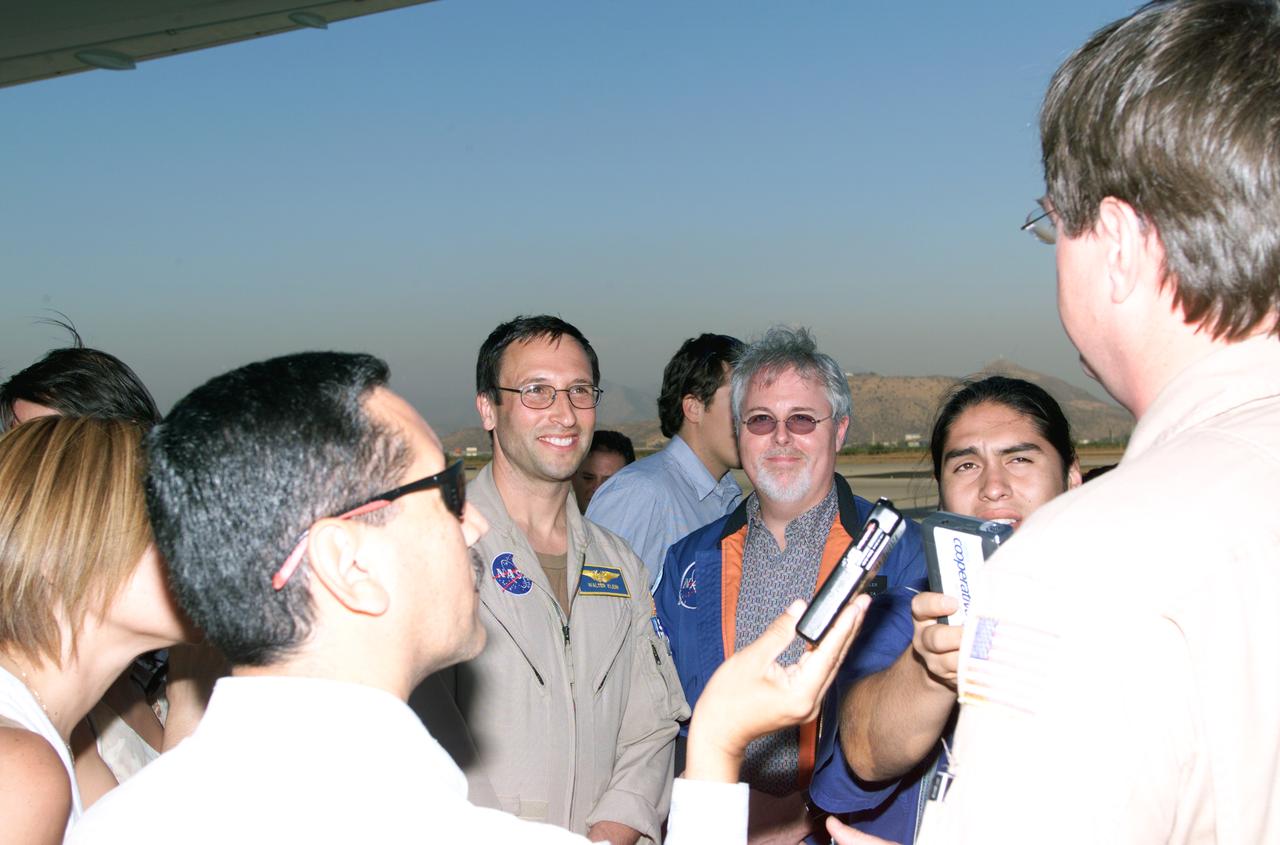
L to R; NASA Dryden Mission Manager Walter Klein (in tan flight suit), JPL AirSAR Scientist Tim Miller, and Mission Manager David Bushman briefing press in Santiago, Chile, for NASA's AirSAR 2004 mission. AirSAR 2004 is a three-week expedition by an international team of scientists that uses an all-weather imaging tool, called the Airborne Synthetic Aperture Radar (AirSAR) which is located onboard NASA's DC-8 airborne laboratory. Scientists from many parts of the world including NASA's Jet Propulsion Laboratory are combining ground research done in several areas in Central and South America with NASA's AirSAR technology to improve and expand on the quality of research they are able to conduct. In South America and Antarctica, AirSAR collected imagery and data to help determine the contribution of Southern Hemisphere glaciers to sea level rise due to climate change. In Patagonia, researchers found this contribution had more than doubled from 1995 to 2000, compared to the previous 25 years. AirSAR data will make it possible to determine whether that trend is continuing or accelerating. AirSAR will also provide reliable information on ice shelf thickness to measure the contribution of the glaciers to sea level.

The moon over the Antarctic Peninsula seen from the IceBridge DC-8 on Oct. 25, 2012. Credit: NASA / James Yungel NASA's Operation IceBridge is an airborne science mission to study Earth's polar ice. For more information about IceBridge, visit: <a href="http://www.nasa.gov/icebridge" rel="nofollow">www.nasa.gov/icebridge</a> <b><a href="http://www.nasa.gov/audience/formedia/features/MP_Photo_Guidelines.html" rel="nofollow">NASA image use policy.</a></b> <b><a href="http://www.nasa.gov/centers/goddard/home/index.html" rel="nofollow">NASA Goddard Space Flight Center</a></b> enables NASA’s mission through four scientific endeavors: Earth Science, Heliophysics, Solar System Exploration, and Astrophysics. Goddard plays a leading role in NASA’s accomplishments by contributing compelling scientific knowledge to advance the Agency’s mission. <b>Follow us on <a href="http://twitter.com/NASA_GoddardPix" rel="nofollow">Twitter</a></b> <b>Like us on <a href="http://www.facebook.com/pages/Greenbelt-MD/NASA-Goddard/395013845897?ref=tsd" rel="nofollow">Facebook</a></b> <b>Find us on <a href="http://instagrid.me/nasagoddard/?vm=grid" rel="nofollow">Instagram</a></b>

School children from Punta Arenas, Chile, talk with Dr. David Imel, an AirSAR scientist from NASA JPL, during AirSAR 2004. AirSAR 2004 is a three-week expedition by an international team of scientists that uses an all-weather imaging tool, called the Airborne Synthetic Aperture Radar (AirSAR) which is located onboard NASA's DC-8 airborne laboratory. Scientists from many parts of the world including NASA's Jet Propulsion Laboratory are combining ground research done in several areas in Central and South America with NASA's AirSAR technology to improve and expand on the quality of research they are able to conduct. In South America and Antarctica, AirSAR collected imagery and data to help determine the contribution of Southern Hemisphere glaciers to sea level rise due to climate change. In Patagonia, researchers found this contribution had more than doubled from 1995 to 2000, compared to the previous 25 years. AirSAR data will make it possible to determine whether that trend is continuing or accelerating. AirSAR will also provide reliable information on ice shelf thickness to measure the contribution of the glaciers to sea level.