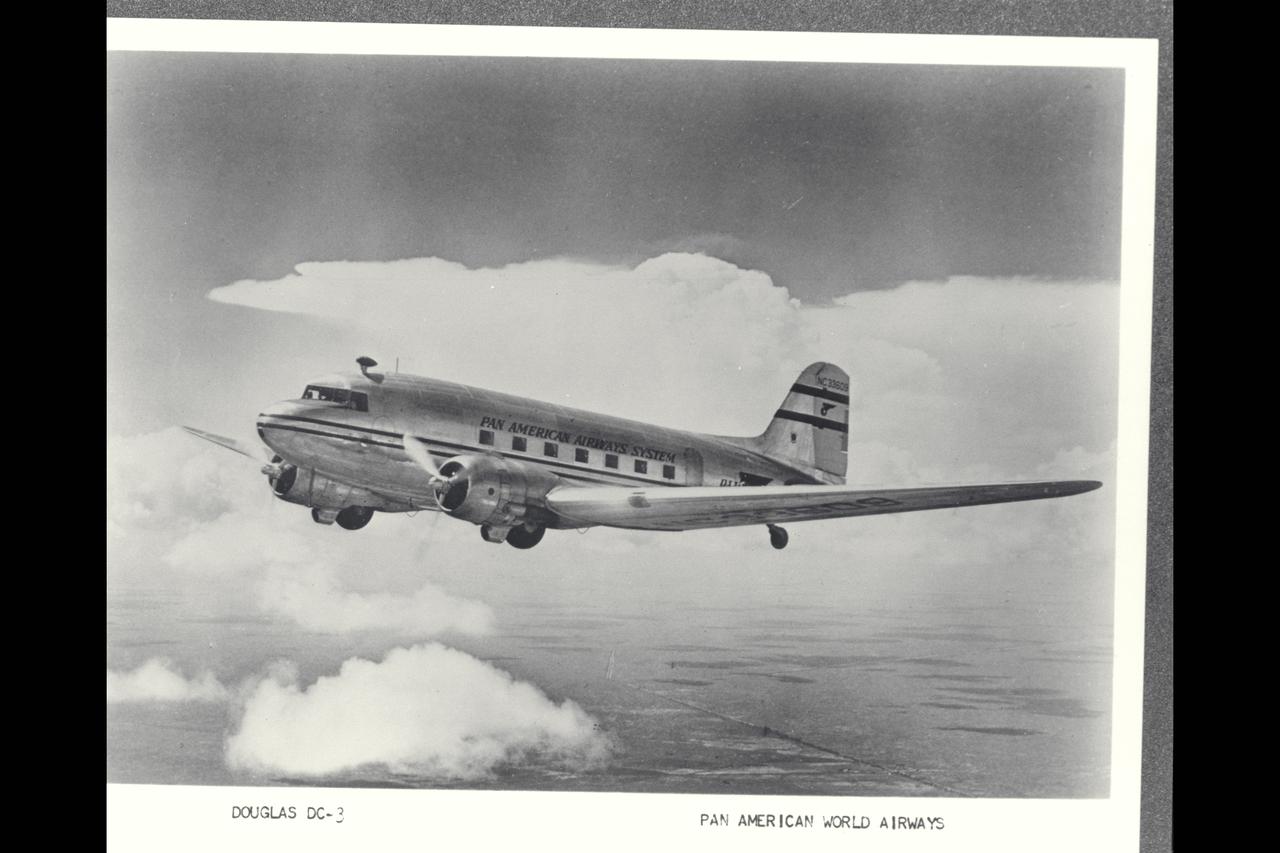
Douglas DC-3 Airplane
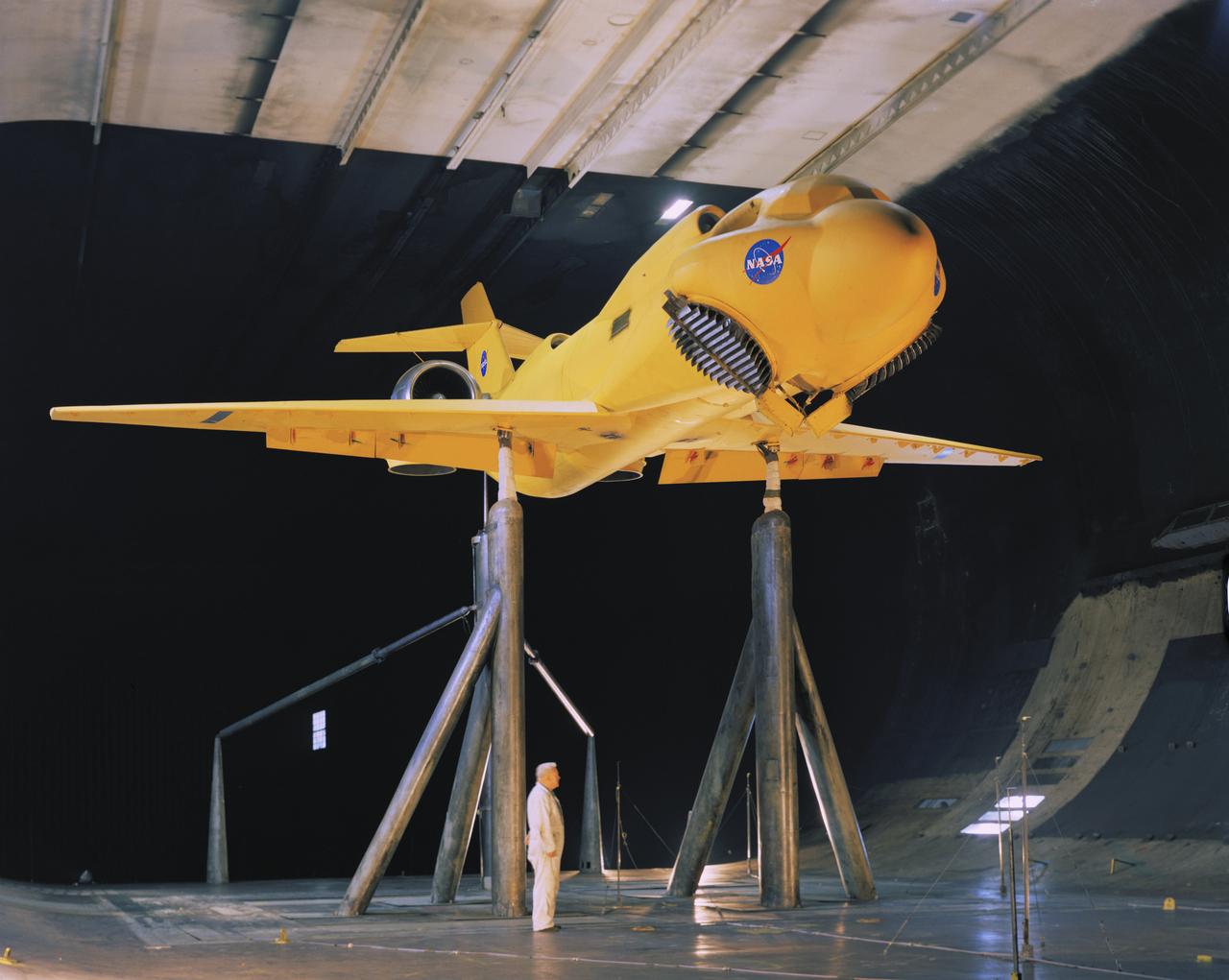
3/4 front view of McDonnell-Douglas Large-Scale lift fan, vertical and/or short take-off and landing (V/STOL), transport model. Francis Malerick in photograph. The McDonnell Douglas DC-9 (initially known as the Douglas DC-9) is a twin-engine, single-aisle jet airliner.
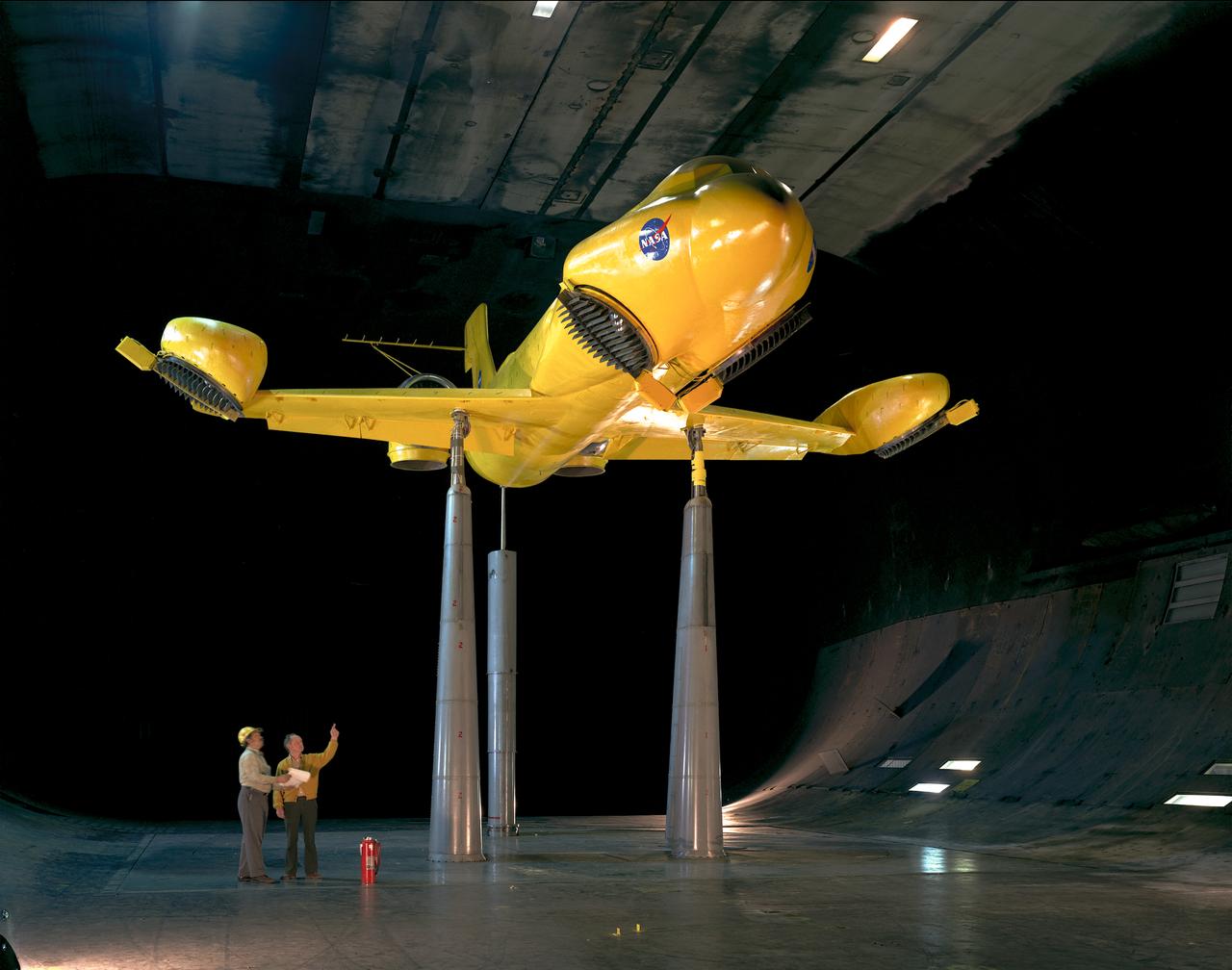
3/4 lower front view of DC-9 lift/cruz fan transport model. Pictured with Eloy Martinez (left, mechanic) Leo Hall (right, engineer).
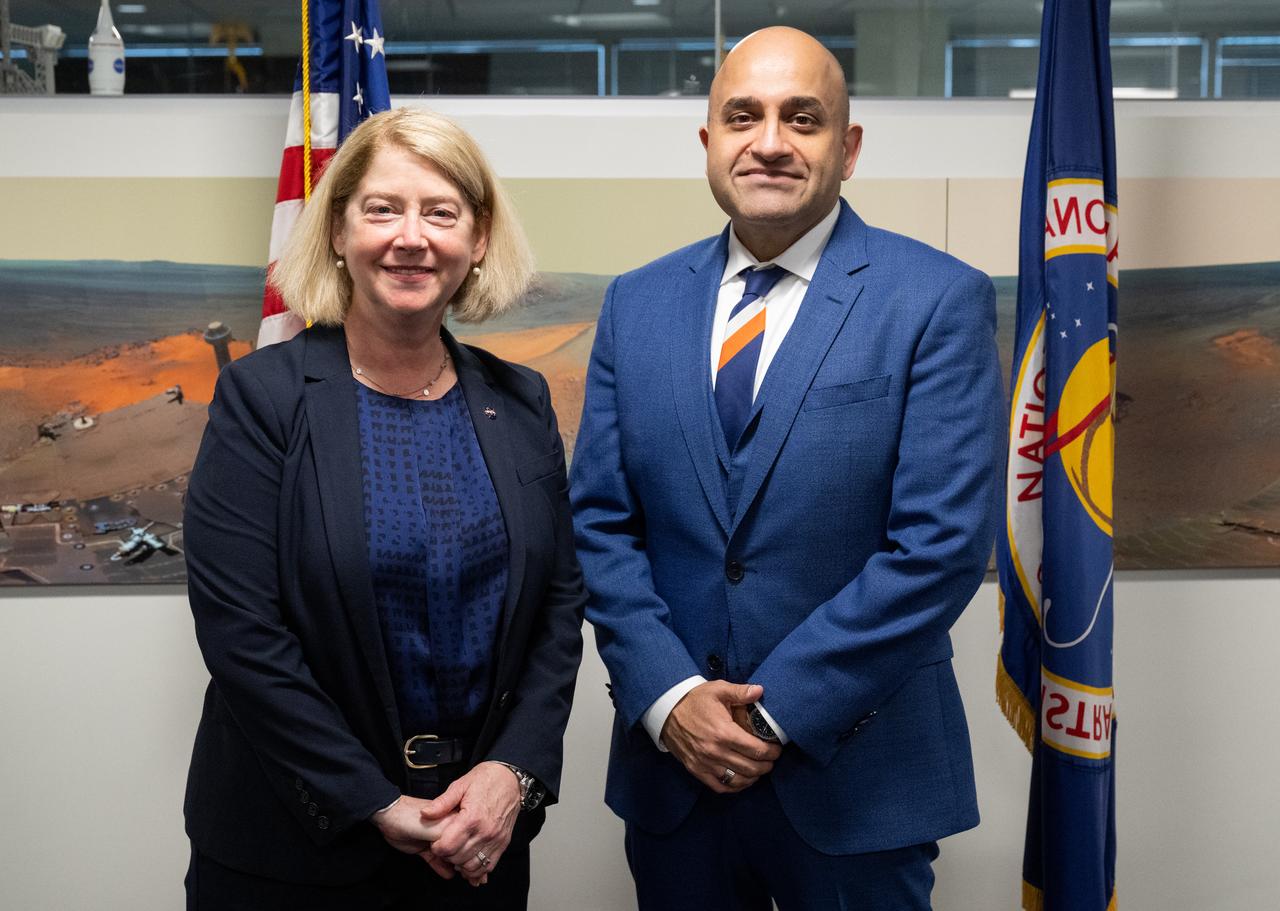
NASA Deputy Administrator Pam Melroy, left, poses for a picture with A.C. Charania after his swearing-in as NASA’s Chief Technologist, Tuesday, Jan. 3, 2023, at the Mary W. Jackson NASA Headquarters building in Washington, DC. Photo Credit: (NASA/Joel Kowsky)
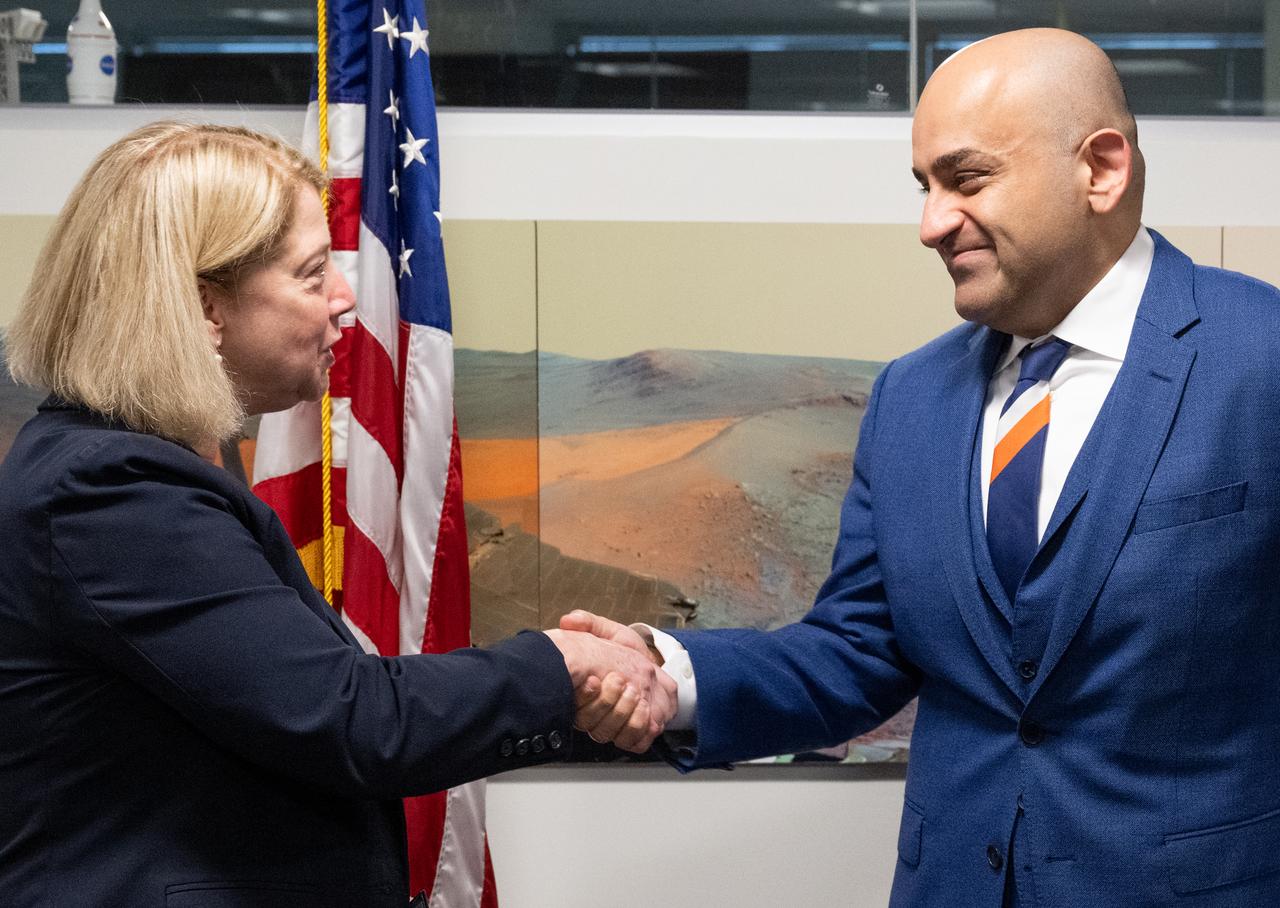
NASA Deputy Administrator Pam Melroy shakes hands with A.C. Charania after swearing him in as NASA’s Chief Technologist, Tuesday, Jan. 3, 2023, at the Mary W. Jackson NASA Headquarters building in Washington, DC. Photo Credit: (NASA/Joel Kowsky)
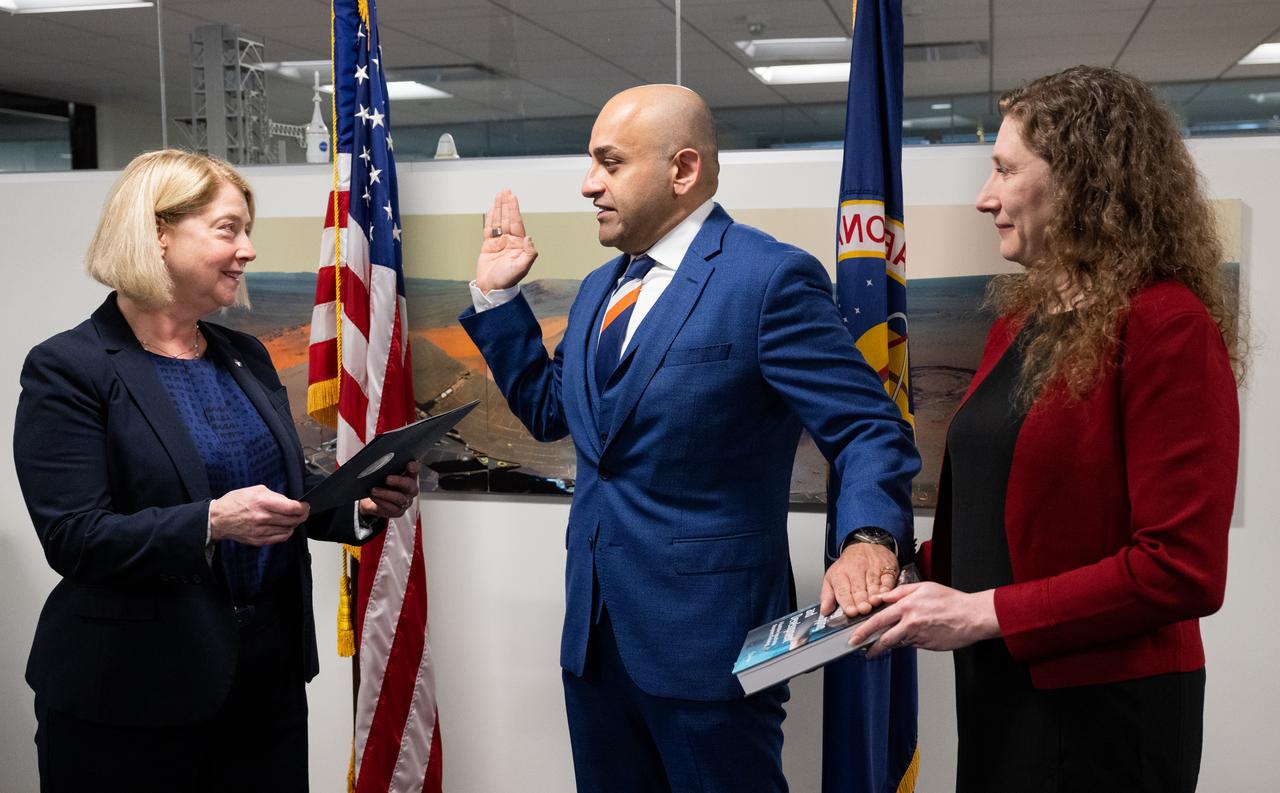
NASA Deputy Administrator Pam Melroy, left, swears in A.C. Charania as NASA’s Chief Technologist, as Ellen Gertsen, chief of the administration branch of NASA’s Science Mission Directorate looks on, Tuesday, Jan. 3, 2023, at the Mary W. Jackson NASA Headquarters building in Washington, DC. Photo Credit: (NASA/Joel Kowsky)
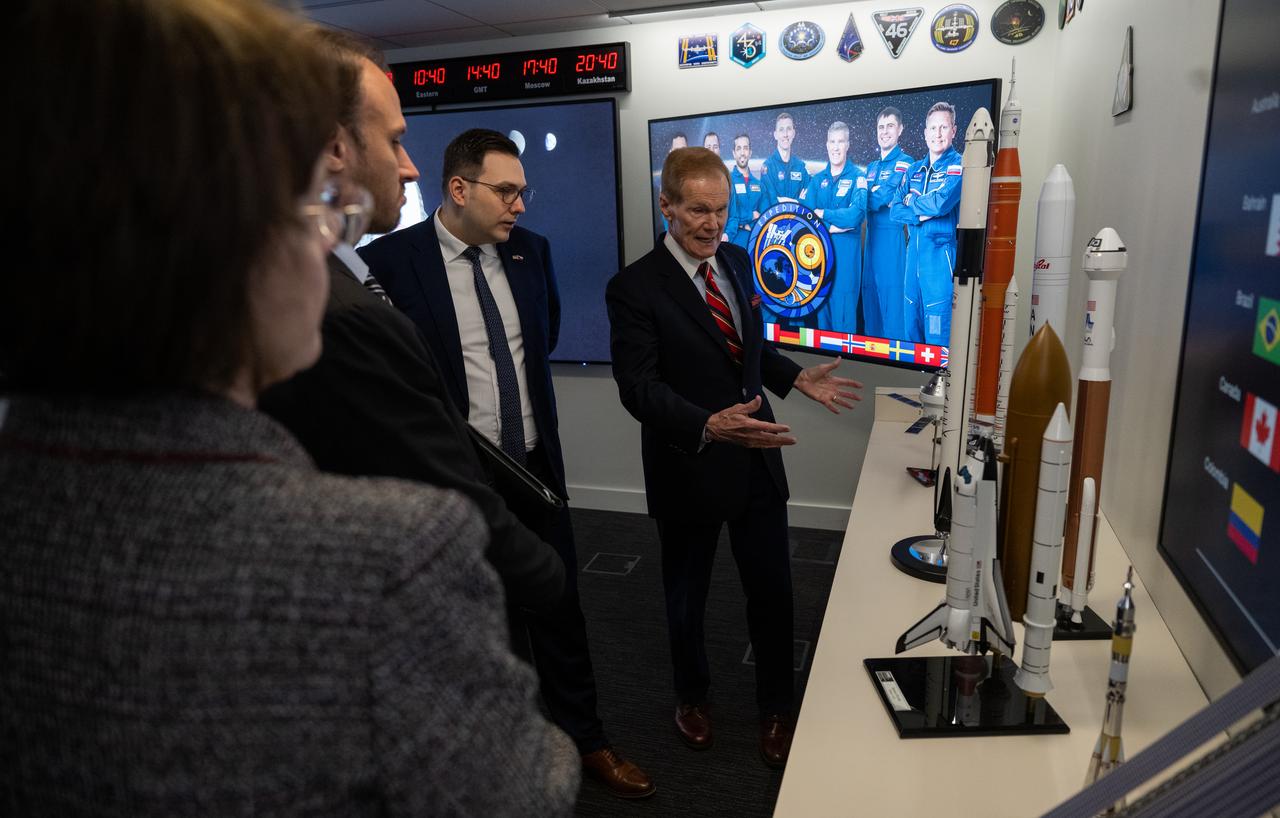
NASA Administrator Bill Nelson right, and Foreign Affairs Minister for the Czech Republic Jan Lipavský are seen in the Space Operations Center during a tour following the signing of the Artemis Accords, Wednesday, May 3, 2023, at The Mary W. Jackson NASA Headquarters building in Washington DC. The Czech Republic is the twenty fourth country to sign the Artemis Accords, which establish a practical set of principles to guide space exploration cooperation among nations participating in NASA’s Artemis program. Photo Credit: (NASA/Joel Kowsky)
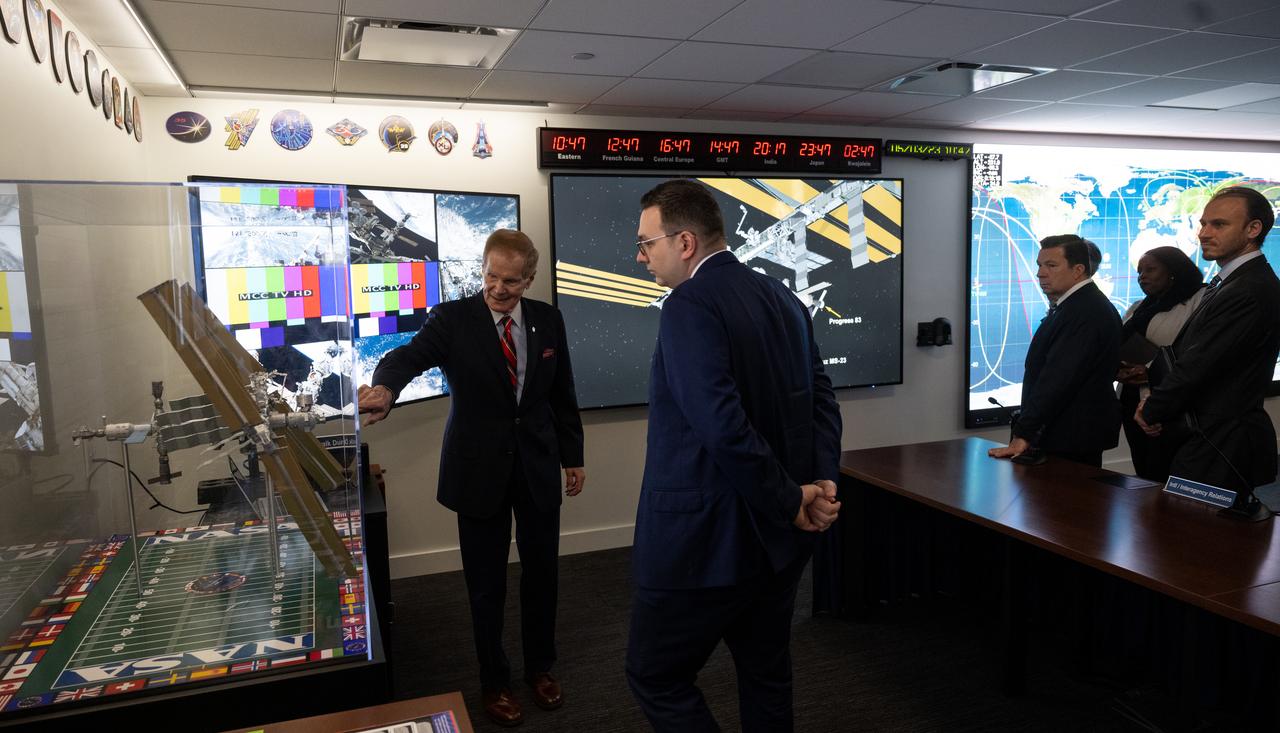
NASA Administrator Bill Nelson left, and Foreign Affairs Minister for the Czech Republic Jan Lipavský, center are seen in the Space Operations Center during a tour following the signing of the Artemis Accords, Wednesday, May 3, 2023, at The Mary W. Jackson NASA Headquarters building in Washington DC. The Czech Republic is the twenty fourth country to sign the Artemis Accords, which establish a practical set of principles to guide space exploration cooperation among nations participating in NASA’s Artemis program. Photo Credit: (NASA/Joel Kowsky)
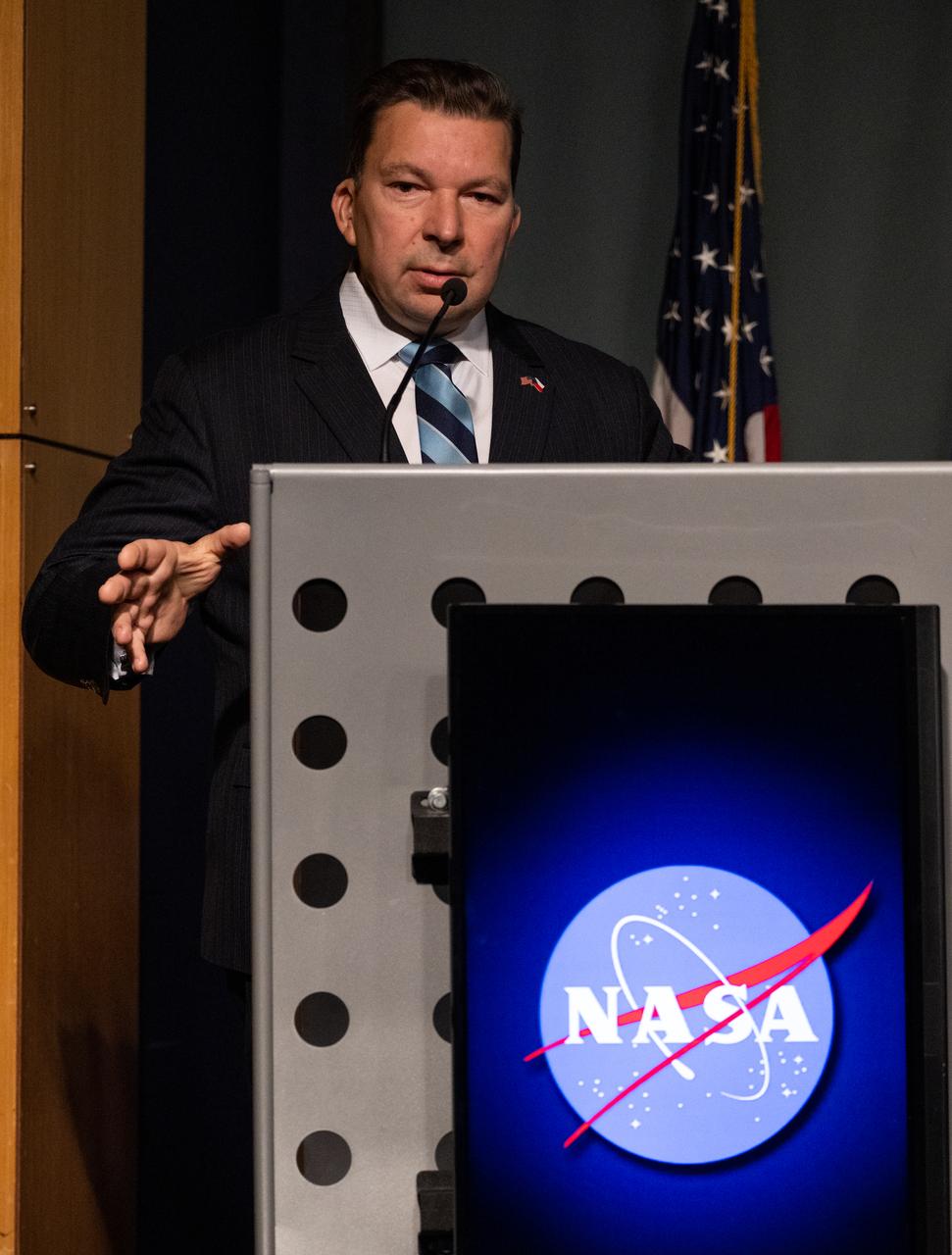
Miloslav Stašek, Ambassador of the Czech Republic to the United States, delivers remarks prior to the signing of the Artemis Accords by Foreign Affairs Minister for the Czech Republic, Jan Lipavský, Wednesday, May 3, 2023, at The Mary W. Jackson NASA Headquarters building in Washington DC. The Czech Republic is the twenty fourth country to sign the Artemis Accords, which establish a practical set of principles to guide space exploration cooperation among nations participating in NASA’s Artemis program. Photo Credit: (NASA/Joel Kowsky)
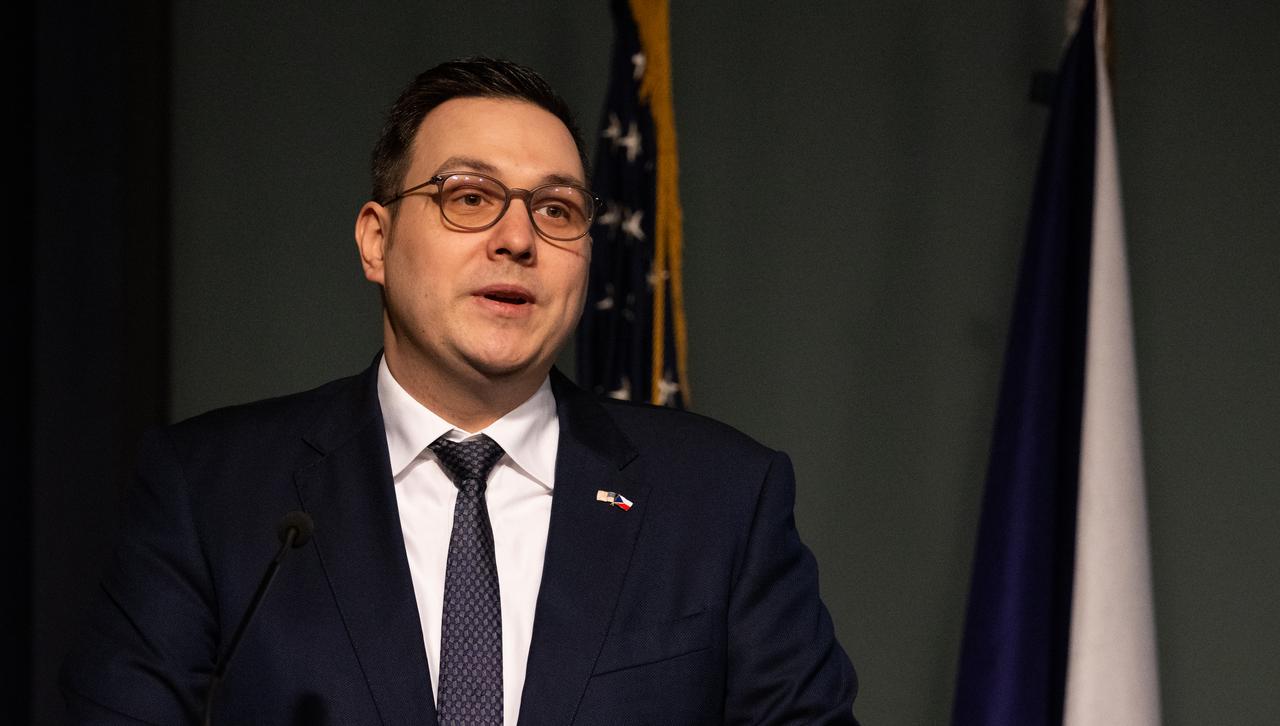
Foreign Affairs Minister for the Czech Republic, Jan Lipavský, delivers remarks prior to the signing of the Artemis Accords, Wednesday, May 3, 2023, at The Mary W. Jackson NASA Headquarters building in Washington DC. The Czech Republic is the twenty fourth country to sign the Artemis Accords, which establish a practical set of principles to guide space exploration cooperation among nations participating in NASA’s Artemis program. Photo Credit: (NASA/Joel Kowsky)
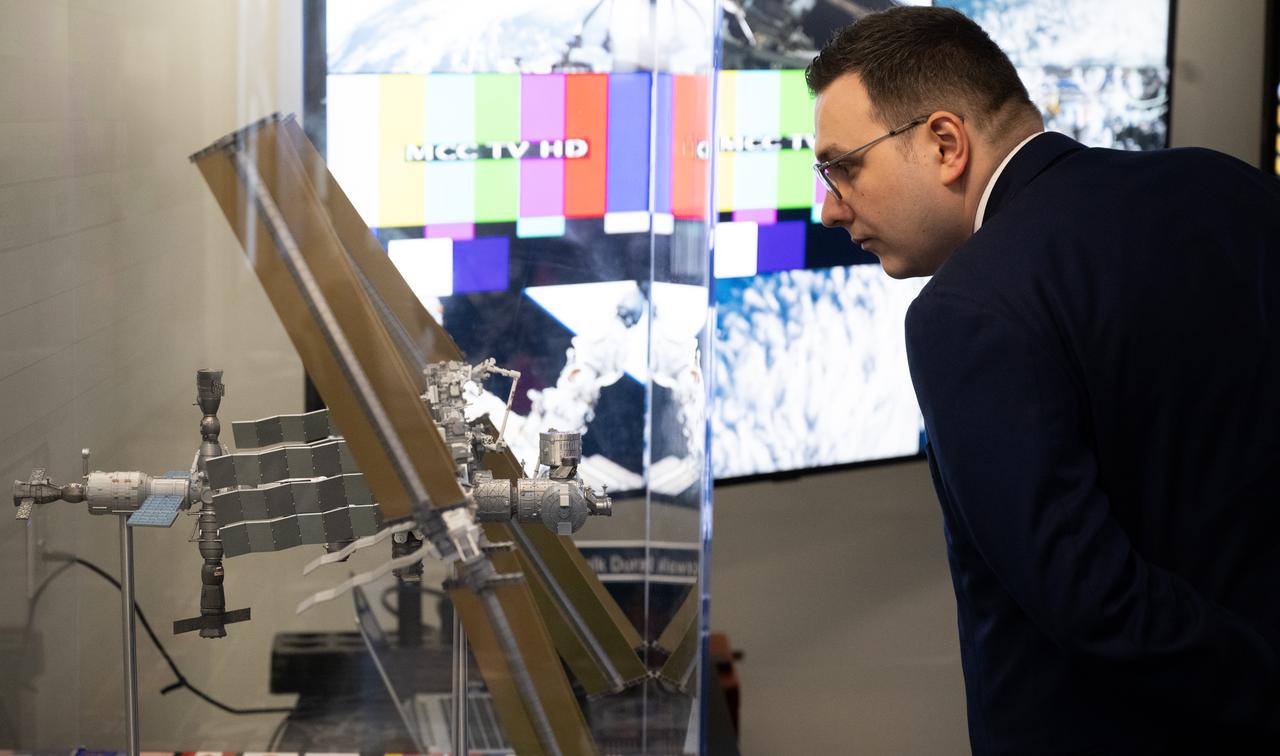
Foreign Affairs Minister for the Czech Republic Jan Lipavský, looks at a model of the International Space Station during a tour of the Space Operations Center following the signing of the Artemis Accords, Wednesday, May 3, 2023, at The Mary W. Jackson NASA Headquarters building in Washington DC. The Czech Republic is the twenty fourth country to sign the Artemis Accords, which establish a practical set of principles to guide space exploration cooperation among nations participating in NASA’s Artemis program. Photo Credit: (NASA/Joel Kowsky)
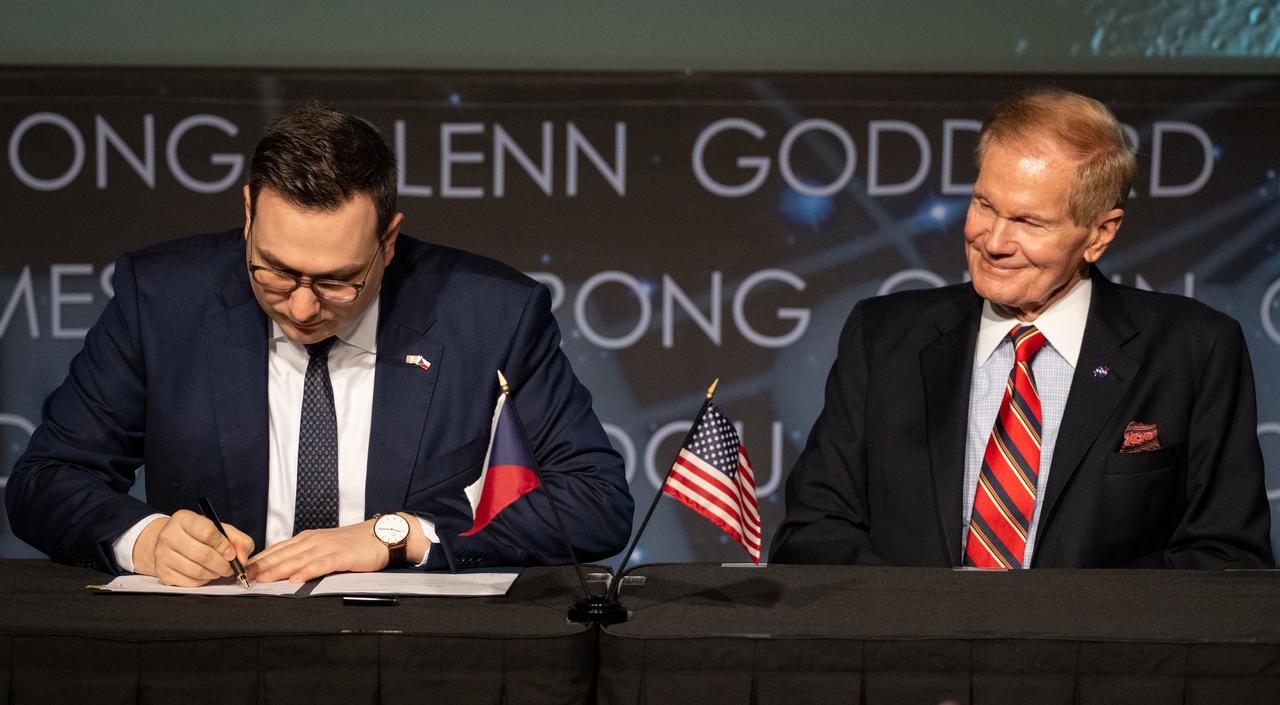
Foreign Affairs Minister for the Czech Republic, Jan Lipavský, left, signs the Artemis Accords, as NASA Administrator Bill Nelson looks on, Wednesday, May 3, 2023, at The Mary W. Jackson NASA Headquarters building in Washington DC. The Czech Republic is the twenty fourth country to sign the Artemis Accords, which establish a practical set of principles to guide space exploration cooperation among nations participating in NASA’s Artemis program. Photo Credit: (NASA/Joel Kowsky)
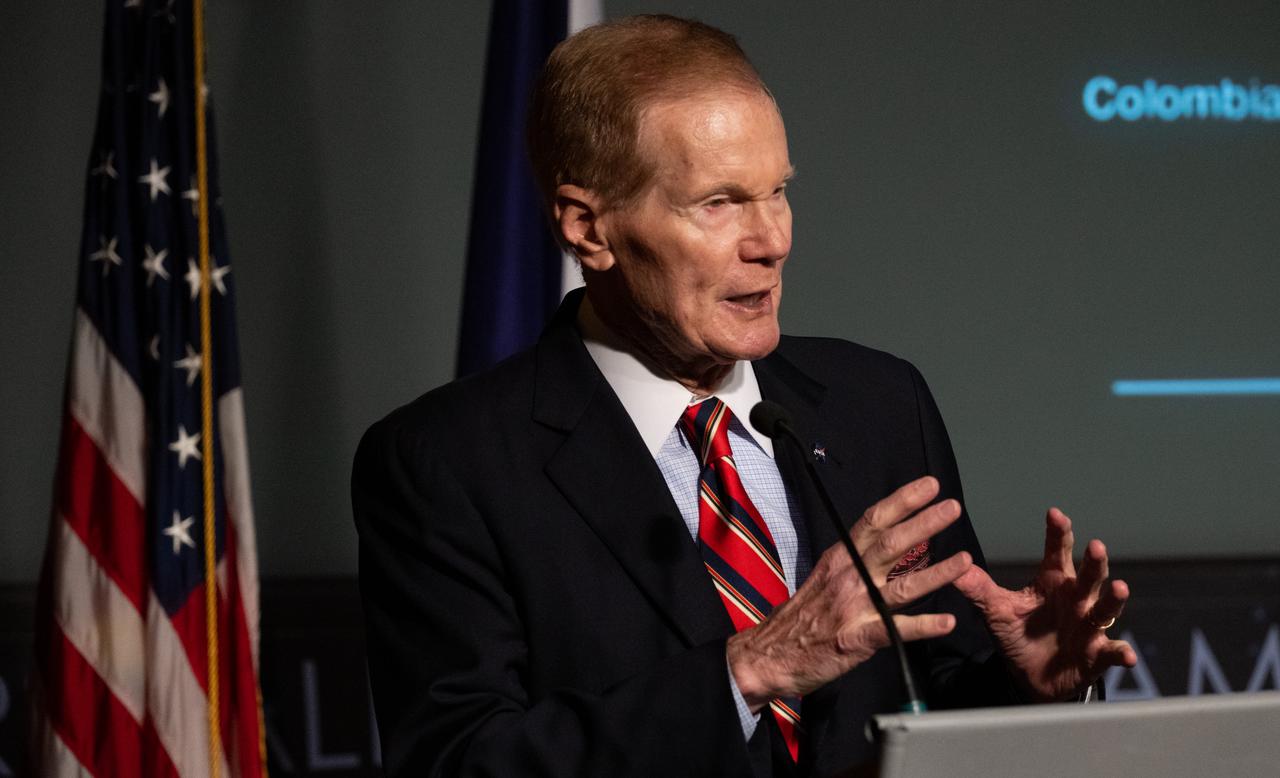
NASA Administrator Bill Nelson delivers remarks prior to the signing of the Artemis Accords by Foreign Affairs Minister for the Czech Republic, Jan Lipavský, Wednesday, May 3, 2023, at The Mary W. Jackson NASA Headquarters building in Washington DC. The Czech Republic is the twenty fourth country to sign the Artemis Accords, which establish a practical set of principles to guide space exploration cooperation among nations participating in NASA’s Artemis program. Photo Credit: (NASA/Joel Kowsky)

Foreign Affairs Minister for the Czech Republic, Jan Lipavský, speaks to members of the media following the signing of the Artemis Accords, Wednesday, May 3, 2023, at The Mary W. Jackson NASA Headquarters building in Washington DC. The Czech Republic is the twenty fourth country to sign the Artemis Accords, which establish a practical set of principles to guide space exploration cooperation among nations participating in NASA’s Artemis program. Photo Credit: (NASA/Joel Kowsky)

Foreign Affairs Minister for the Czech Republic, Jan Lipavský, speaks to members of the media following the signing of the Artemis Accords, Wednesday, May 3, 2023, at The Mary W. Jackson NASA Headquarters building in Washington DC. The Czech Republic is the twenty fourth country to sign the Artemis Accords, which establish a practical set of principles to guide space exploration cooperation among nations participating in NASA’s Artemis program. Photo Credit: (NASA/Joel Kowsky)
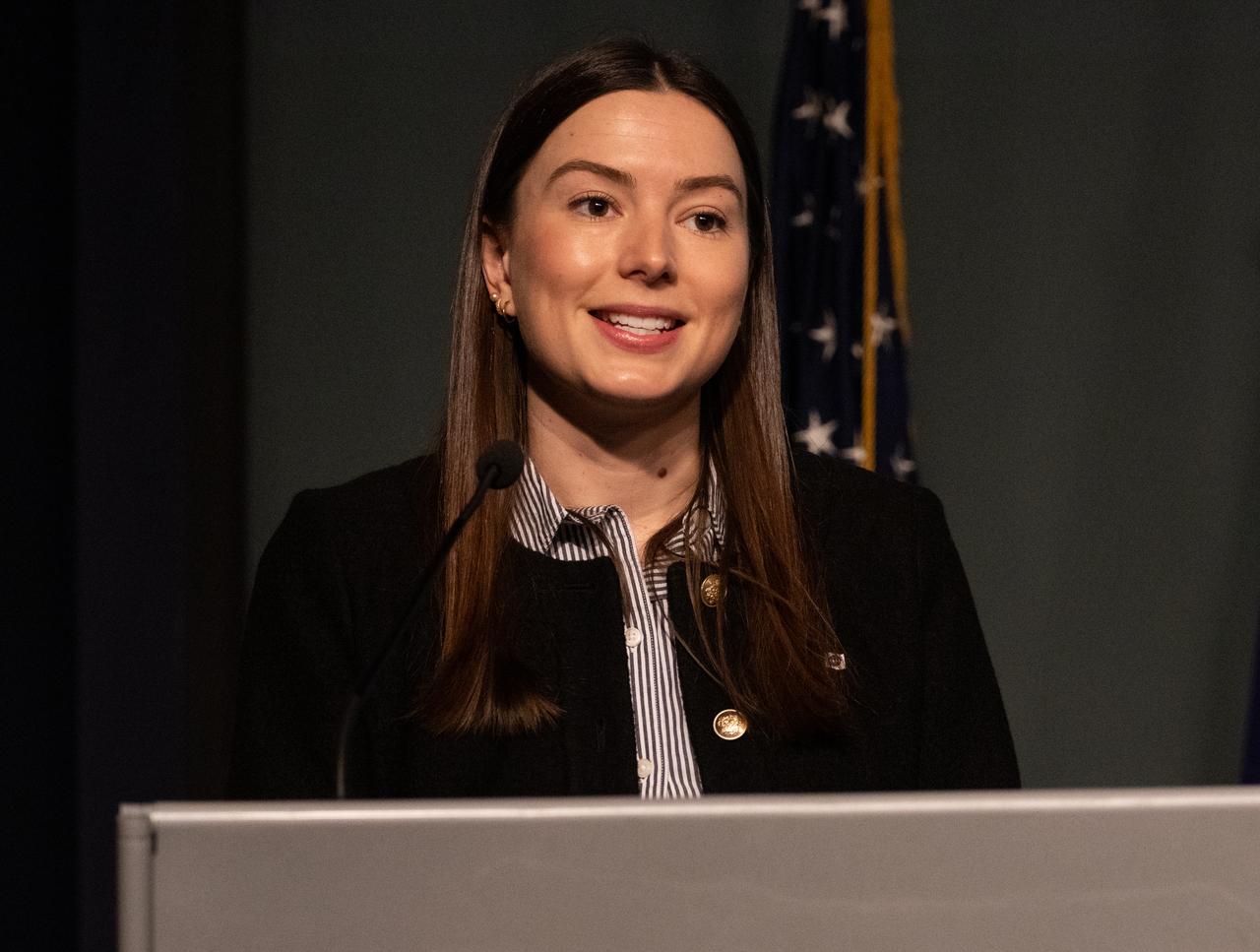
Jackie McGuinness, NASA’s Press Secretary, provides opening remarks prior to the signing of the Artemis Accords by Foreign Affairs Minister for the Czech Republic, Jan Lipavský, Wednesday, May 3, 2023, at The Mary W. Jackson NASA Headquarters building in Washington DC. The Czech Republic is the twenty fourth country to sign the Artemis Accords, which establish a practical set of principles to guide space exploration cooperation among nations participating in NASA’s Artemis program. Photo Credit: (NASA/Joel Kowsky)
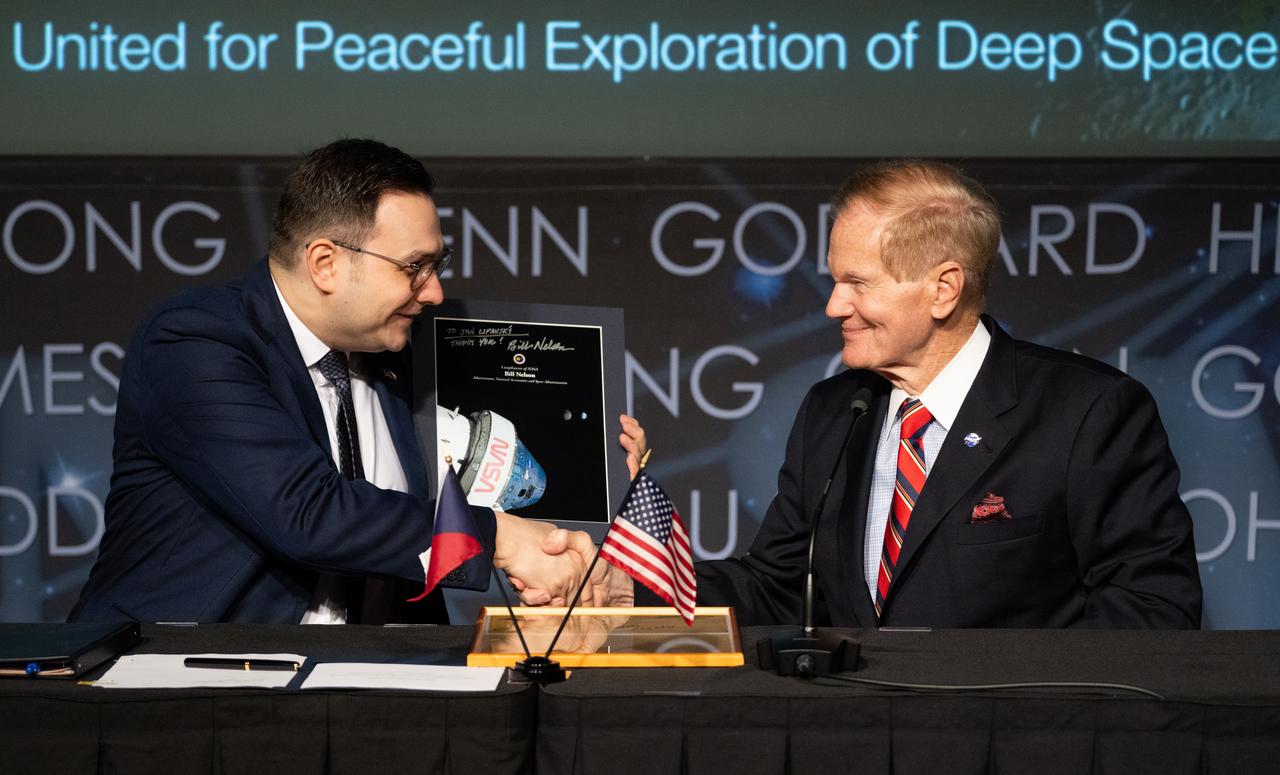
NASA Administrator Bill Nelson presents Foreign Affairs Minister for the Czech Republic Jan Lipavský with a signed photograph of the Orion spacecraft against the Moon and Earth following the signing of the Artemis Accords on, Wednesday, May 3, 2023, at The Mary W. Jackson NASA Headquarters building in Washington DC. The Czech Republic is the twenty fourth country to sign the Artemis Accords, which establish a practical set of principles to guide space exploration cooperation among nations participating in NASA’s Artemis program. Photo Credit: (NASA/Joel Kowsky)
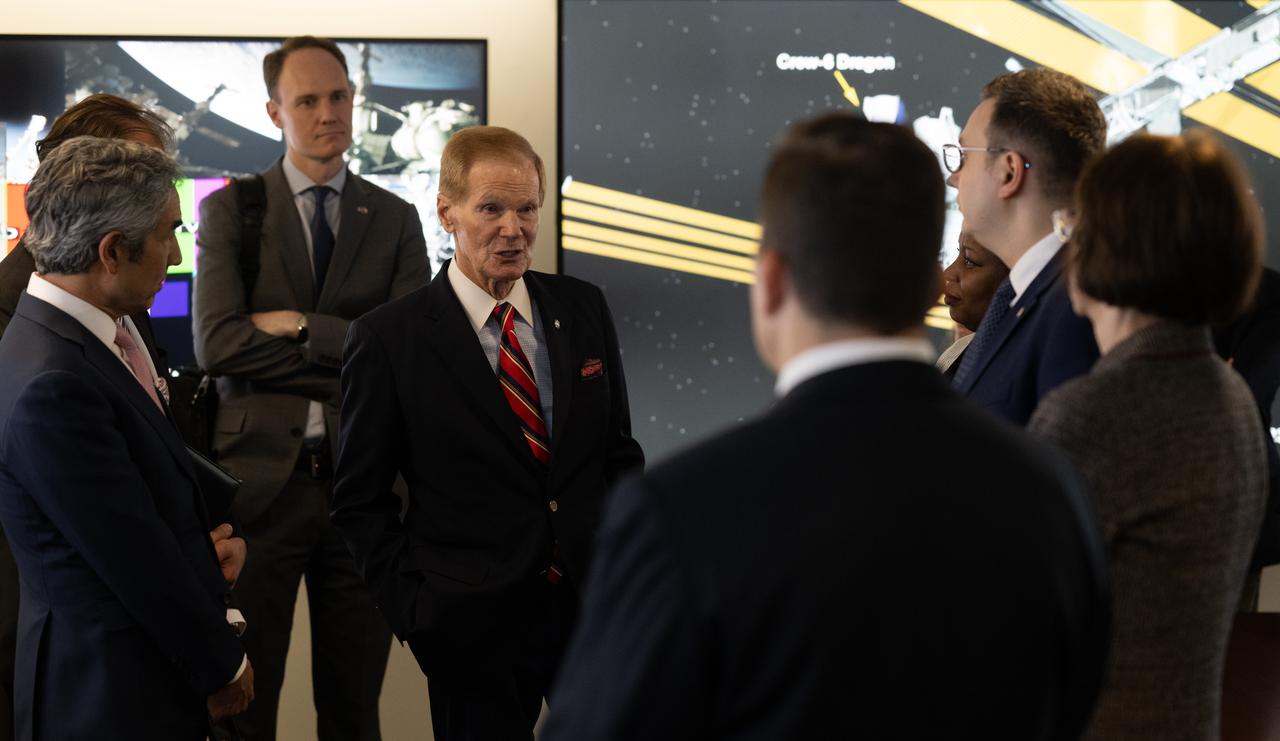
NASA Administrator Bill Nelson, center, speaks with Miloslav Stašek, Ambassador of the Czech Republic to the United States, Foreign Affairs Minister for the Czech Republic, Jan Lipavský, and Acting Assistant Secretary of State for Oceans and International Environmental and Scientific Affairs Jennifer R. Littlejohn, in the Space Operations Center following the signing of the Artemis Accords, Wednesday, May 3, 2023, at The Mary W. Jackson NASA Headquarters building in Washington DC. The Czech Republic is the twenty fourth country to sign the Artemis Accords, which establish a practical set of principles to guide space exploration cooperation among nations participating in NASA’s Artemis program. Photo Credit: (NASA/Joel Kowsky)
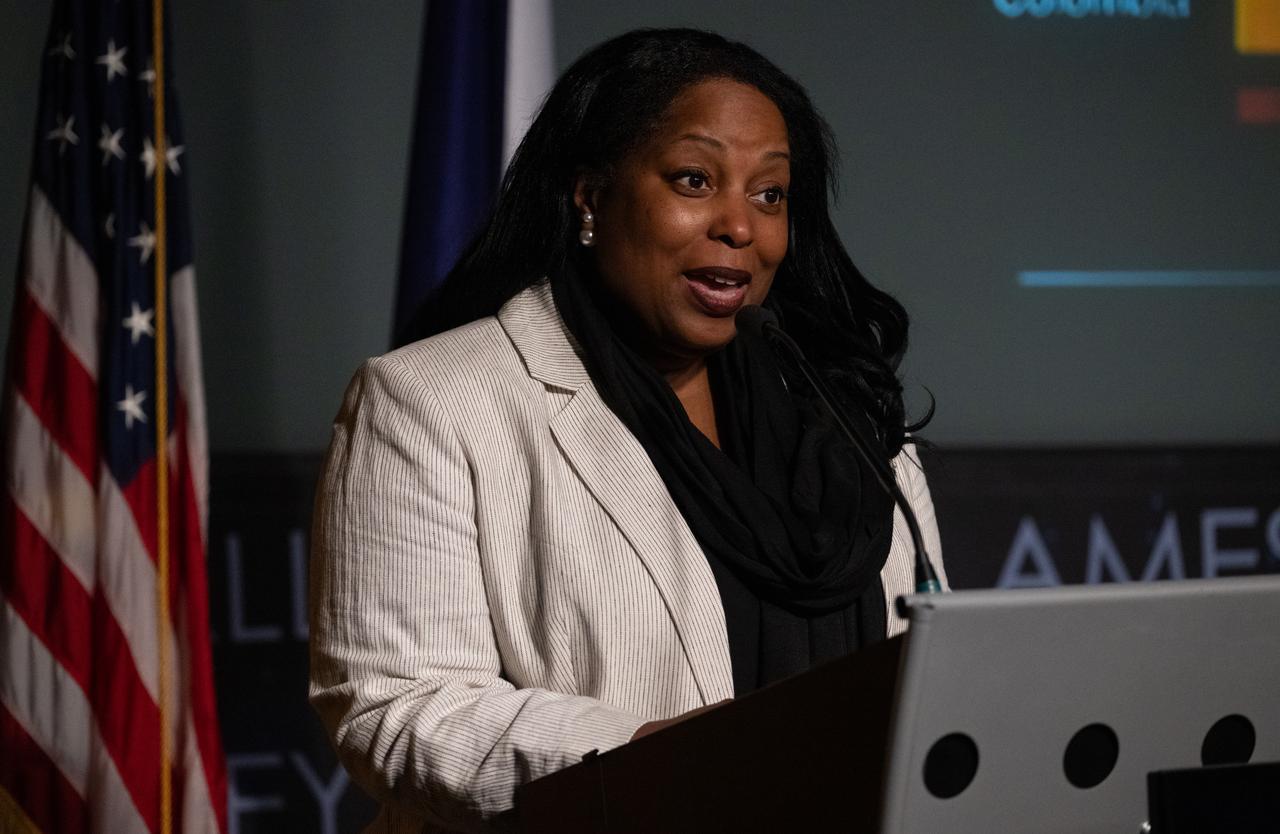
Acting Assistant Secretary of State for Oceans and International Environmental and Scientific Affairs Jennifer R. Littlejohn, delivers remarks prior to the signing of the Artemis Accords by Foreign Affairs Minister for the Czech Republic, Jan Lipavský, Wednesday, May 3, 2023, at The Mary W. Jackson NASA Headquarters building in Washington DC. The Czech Republic is the twenty fourth country to sign the Artemis Accords, which establish a practical set of principles to guide space exploration cooperation among nations participating in NASA’s Artemis program. Photo Credit: (NASA/Joel Kowsky)
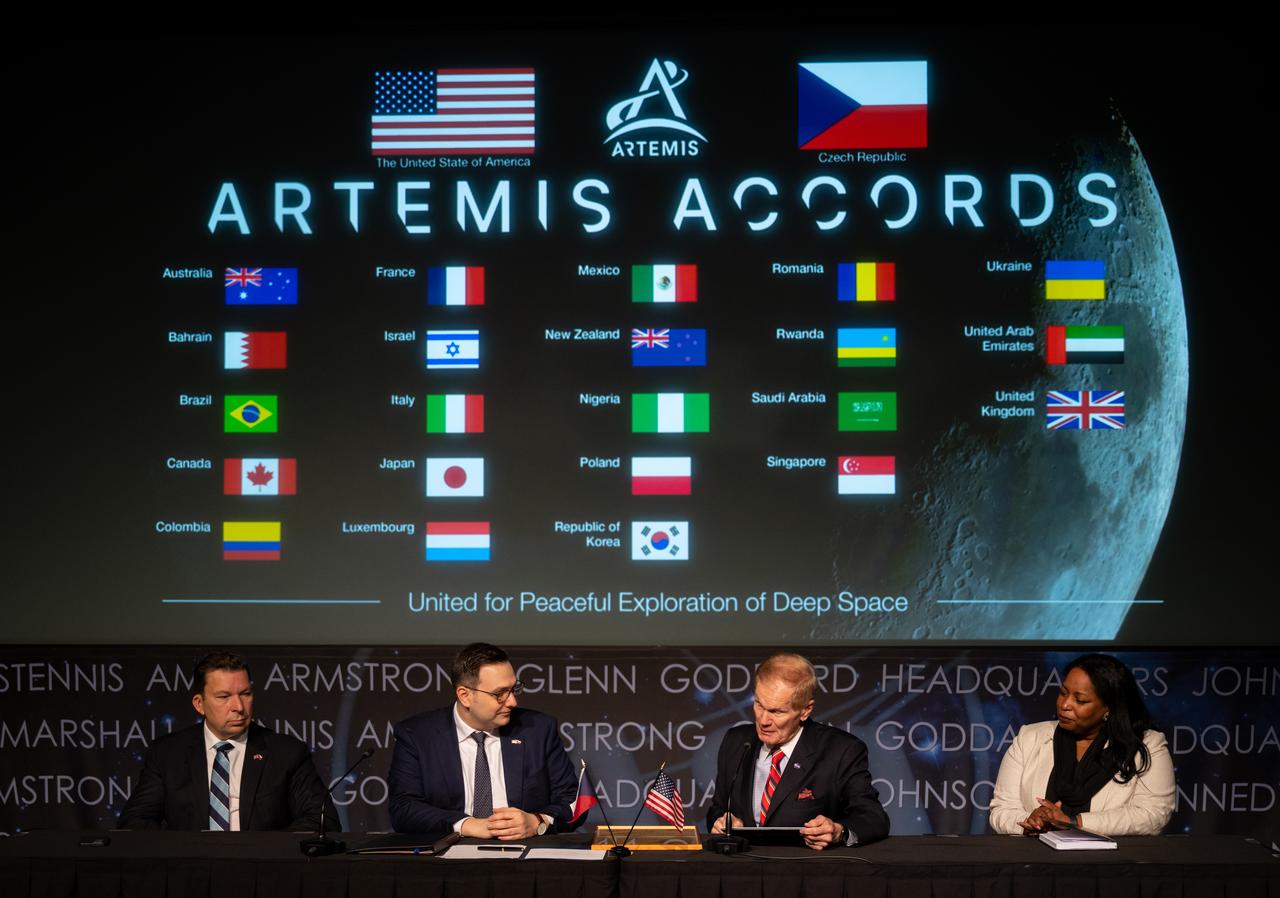
Miloslav Stašek, Ambassador of the Czech Republic to the United States, left, Foreign Affairs Minister for the Czech Republic, Jan Lipavský, second from left, NASA Administrator Bill Nelson, second from right, and Acting Assistant Secretary of State for Oceans and International Environmental and Scientific Affairs Jennifer R. Littlejohn, right, are seen following the signing of the Artemis Accords by the Czech Republic, Wednesday, May 3, 2023, at The Mary W. Jackson NASA Headquarters building in Washington DC. The Czech Republic is the twenty fourth country to sign the Artemis Accords, which establish a practical set of principles to guide space exploration cooperation among nations participating in NASA’s Artemis program. Photo Credit: (NASA/Joel Kowsky)
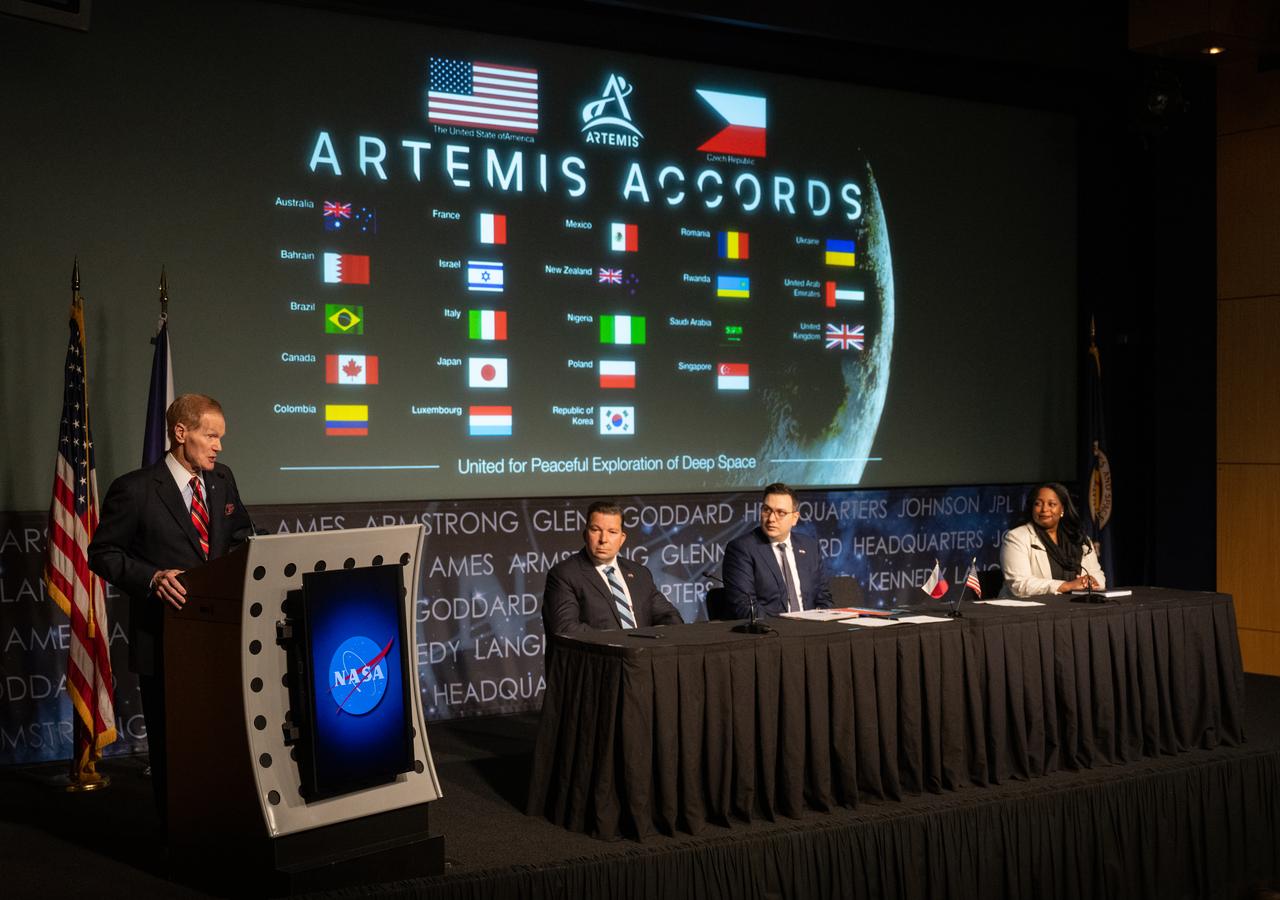
NASA Administrator Bill Nelson, delivers remarks prior to the signing of the Artemis Accords as Miloslav Stašek, Ambassador of the Czech Republic to the United States, second from left, Foreign Affairs Minister for the Czech Republic, Jan Lipavský, second from right, and Acting Assistant Secretary of State for Oceans and International Environmental and Scientific Affairs Jennifer R. Littlejohn, right, look on, Wednesday, May 3, 2023, at The Mary W. Jackson NASA Headquarters building in Washington DC. The Czech Republic is the twenty fourth country to sign the Artemis Accords, which establish a practical set of principles to guide space exploration cooperation among nations participating in NASA’s Artemis program. Photo Credit: (NASA/Joel Kowsky)
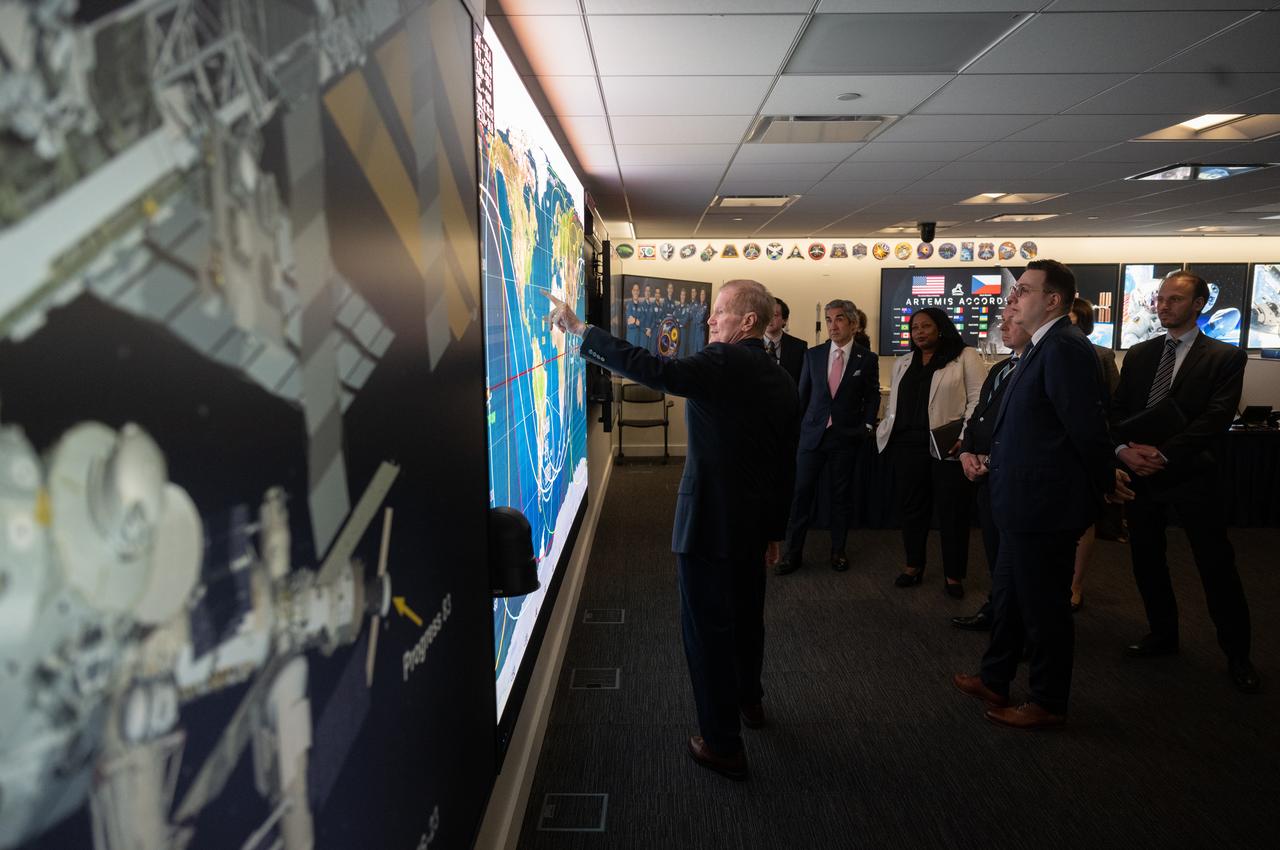
NASA Administrator Bill Nelson, left, points to a ground track map for the International Space Station in the Space Operations Center during a tour with Miloslav Stašek, Ambassador of the Czech Republic to the United States, Foreign Affairs Minister for the Czech Republic, Jan Lipavský, and Acting Assistant Secretary of State for Oceans and International Environmental and Scientific Affairs Jennifer R. Littlejohn, following the signing of the Artemis Accords, Wednesday, May 3, 2023, at The Mary W. Jackson NASA Headquarters building in Washington DC. The Czech Republic is the twenty fourth country to sign the Artemis Accords, which establish a practical set of principles to guide space exploration cooperation among nations participating in NASA’s Artemis program. Photo Credit: (NASA/Joel Kowsky)
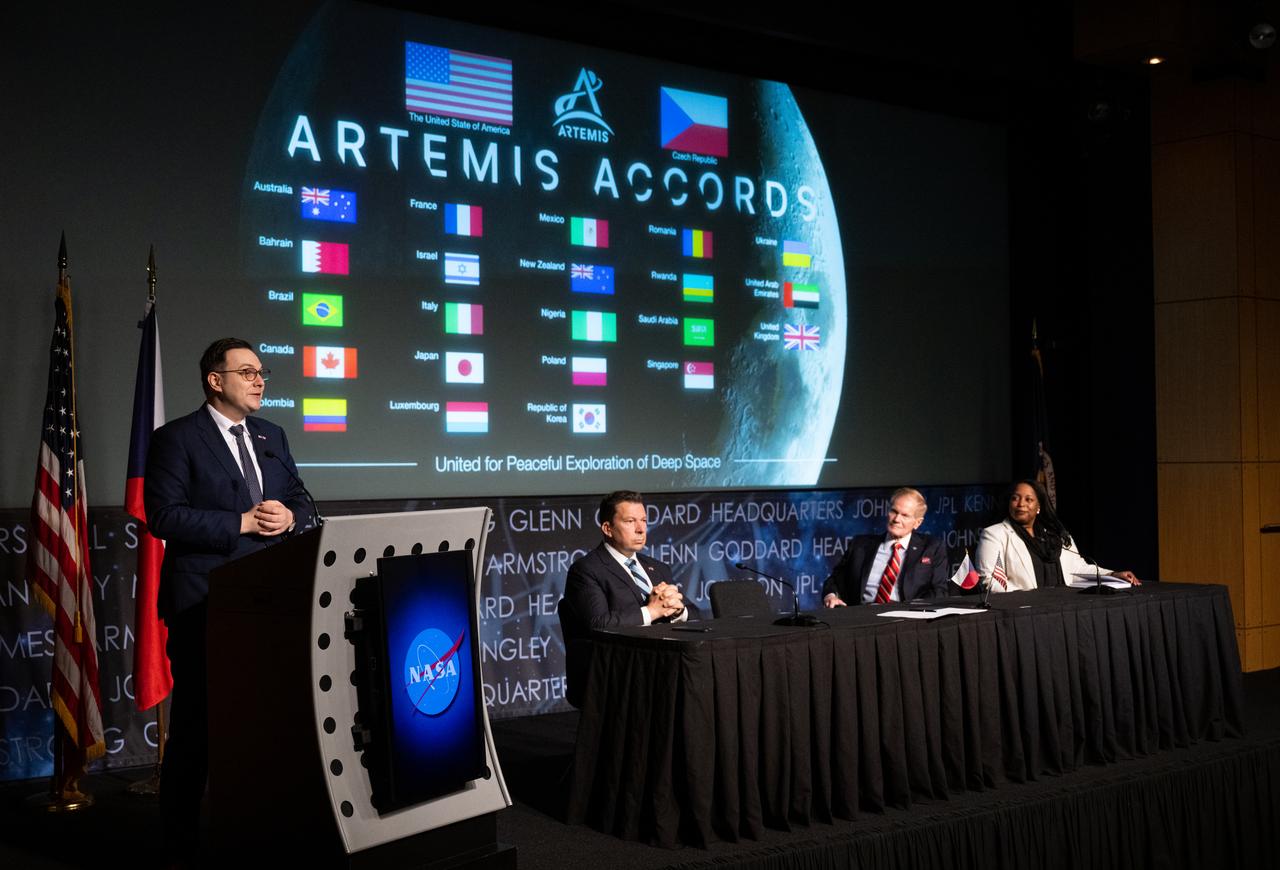
Foreign Affairs Minister for the Czech Republic, Jan Lipavský deliver remarks prior to the signing of the Artemis Accords as Miloslav Stašek, Ambassador of the Czech Republic to the United States, second from left, NASA Administrator Bill Nelson, second from right, and Acting Assistant Secretary of State for Oceans and International Environmental and Scientific Affairs Jennifer R. Littlejohn, right, look on, Wednesday, May 3, 2023, at The Mary W. Jackson NASA Headquarters building in Washington DC. The Czech Republic is the twenty fourth country to sign the Artemis Accords, which establish a practical set of principles to guide space exploration cooperation among nations participating in NASA’s Artemis program. Photo Credit: (NASA/Joel Kowsky)
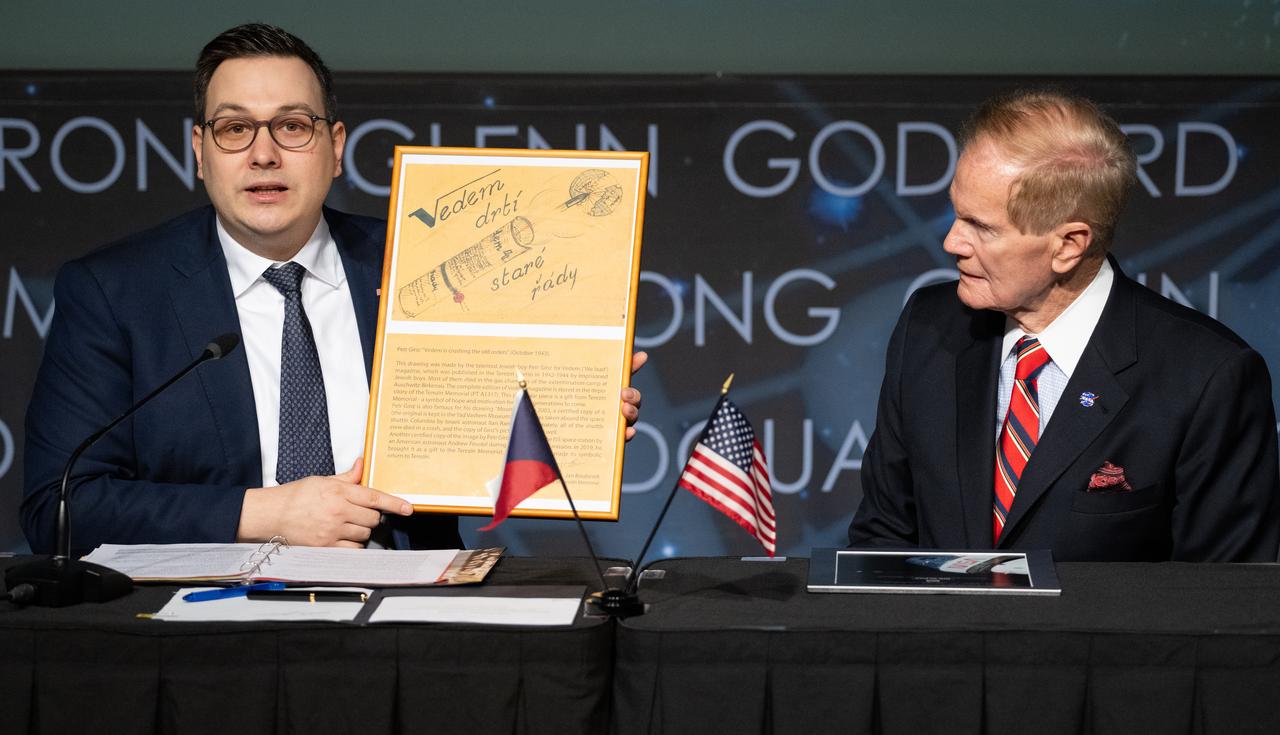
Foreign Affairs Minister for the Czech Republic Jan Lipavský, left, presents NASA Administrator Bill Nelson with a reproduction of an original drawing made by a Czechoslovak boy named Petr Ginz of partial Jewish background who was murdered at Auschwitz concentration camp in 1944, despite being of very young age, he had authored novels and made his own illustrations including this one depicting planet Earth seen from the moon, following the signing of the Artemis Accords, Wednesday, May 3, 2023, at The Mary W. Jackson NASA Headquarters building in Washington DC. The Czech Republic is the twenty fourth country to sign the Artemis Accords, which establish a practical set of principles to guide space exploration cooperation among nations participating in NASA’s Artemis program. Photo Credit: (NASA/Joel Kowsky)
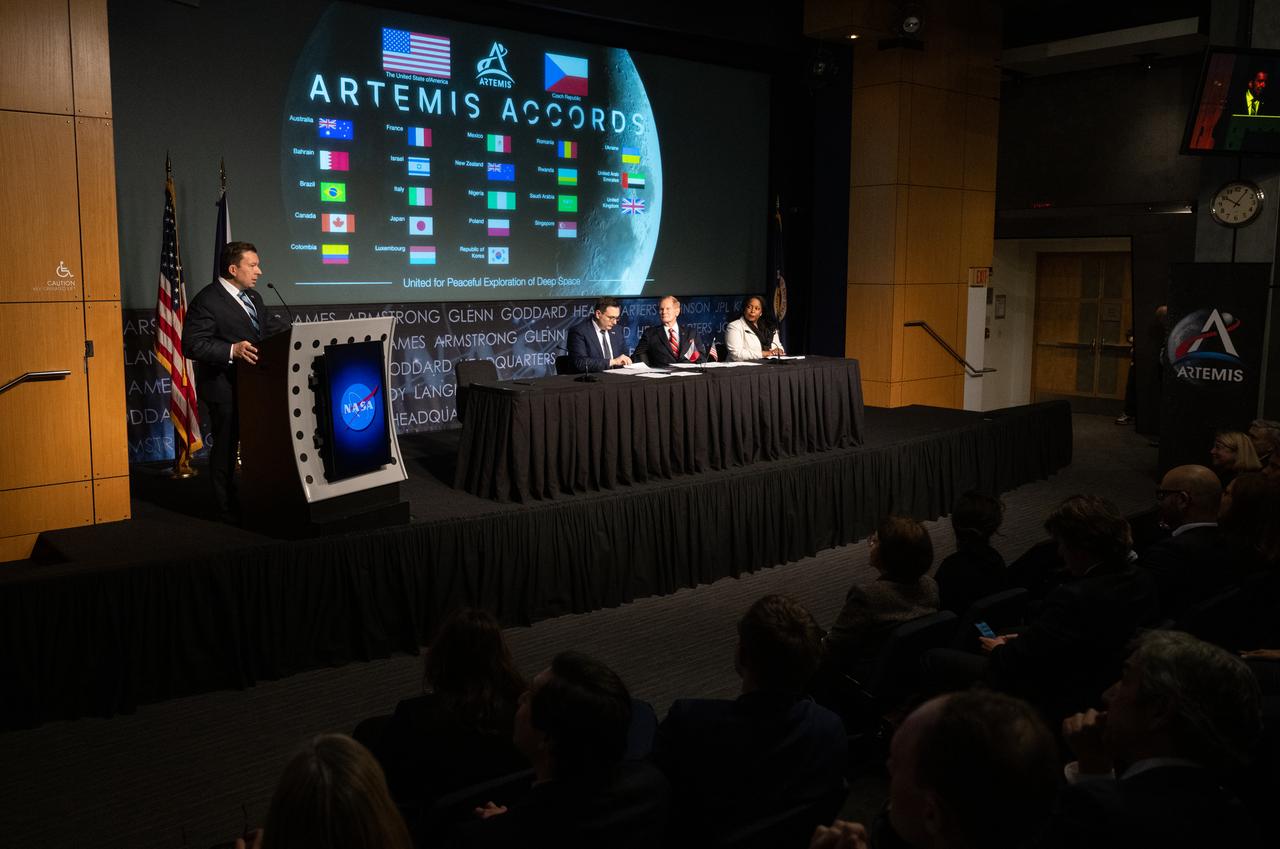
Miloslav Stašek, Ambassador of the Czech Republic to the United States, delivers remarks prior to the signing of the Artemis Accords as Foreign Affairs Minister for the Czech Republic, Jan Lipavský, third from right, NASA Administrator Bill Nelson, second from right, and Acting Assistant Secretary of State for Oceans and International Environmental and Scientific Affairs Jennifer R. Littlejohn, right, look on, Wednesday, May 3, 2023, at The Mary W. Jackson NASA Headquarters building in Washington DC. The Czech Republic is the twenty fourth country to sign the Artemis Accords, which establish a practical set of principles to guide space exploration cooperation among nations participating in NASA’s Artemis program. Photo Credit: (NASA/Joel Kowsky)
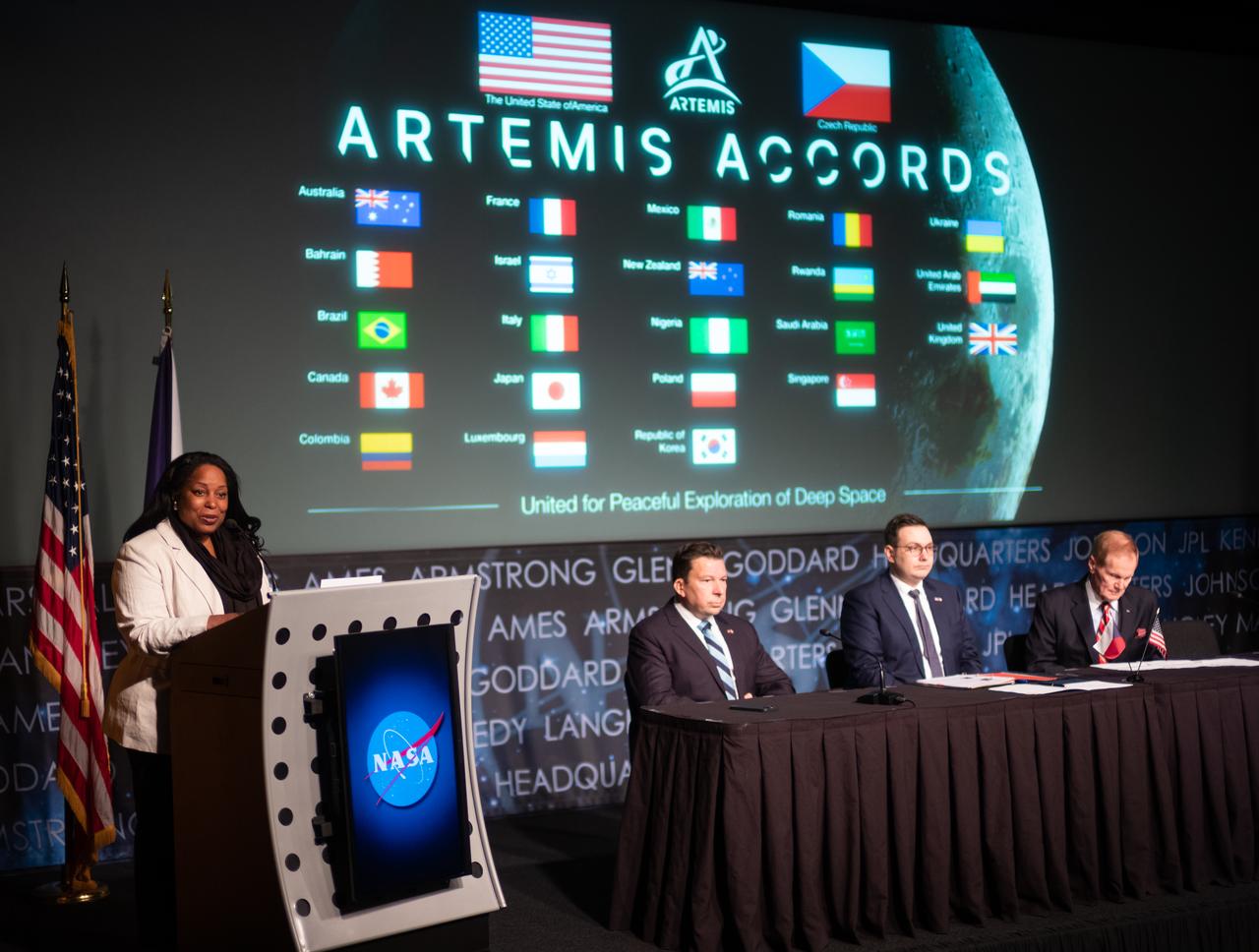
Acting Assistant Secretary of State for Oceans and International Environmental and Scientific Affairs Jennifer R. Littlejohn, delivers remarks prior to the signing of the Artemis Accords as Miloslav Stašek, Ambassador of the Czech Republic to the United States, second from left, Foreign Affairs Minister for the Czech Republic, Jan Lipavský, second from right, and NASA Administrator Bill Nelson, right, look on, Wednesday, May 3, 2023, at The Mary W. Jackson NASA Headquarters building in Washington DC. The Czech Republic is the twenty fourth country to sign the Artemis Accords, which establish a practical set of principles to guide space exploration cooperation among nations participating in NASA’s Artemis program. Photo Credit: (NASA/Joel Kowsky)
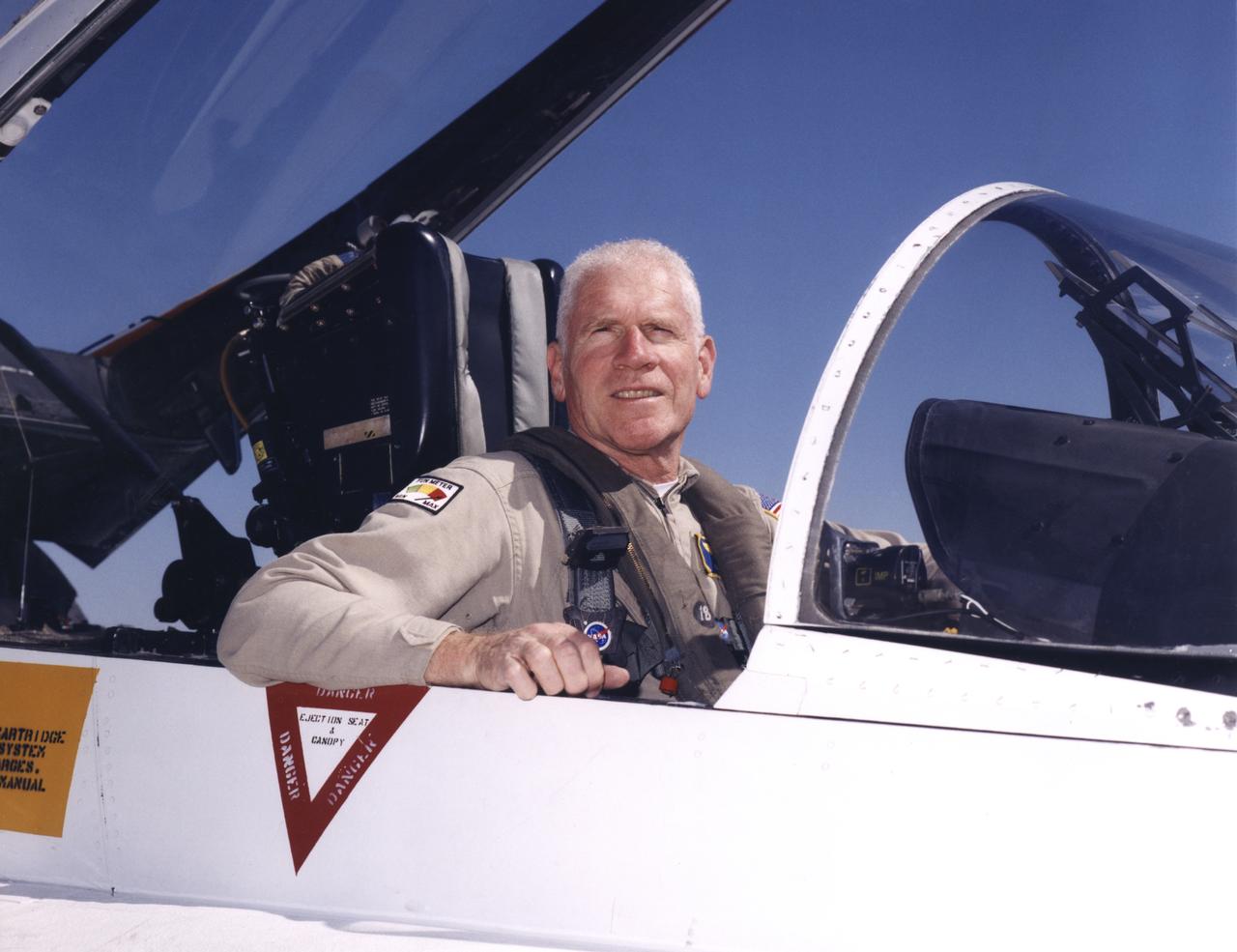
Edwin W. Lewis Jr. is a research pilot in the Airborne Science program, Flight Crew Branch, Dryden Flight Research Center, Edwards, California. He currently flies the DC-8, F/A-18, Lear Jet 24, King Air, and T-34C in support of Dryden's flight operations and is mentor pilot for the King Air and the Lear Jet. Prior to accepting this assignment Lewis was a pilot for eight years at NASA's Ames Research Center, Moffett Field, California, flying 10 different aircraft C-130B, DC-8-72, UH-1, SH-3, King Air, Lear 24, T-38A, T-39G and YO-3A in support of NASA flight missions. Lewis also flew the Kuiper Airborne Observatory (a modified civilian version of the Lockheed C-141 Starlifter). He was project pilot for Ames' 747 and T-38 programs. Lewis was born in New York City on May 19, 1936, and began flight training as a Civil Air Patrol cadet in 1951, ultimately earning his commercial pilot's certificate in 1958. He received a bachelor of arts degree in biology from Hobart College, Geneva, N.Y., and entered the U.S. Air Force through the Reserve Officer Training Corps. Following pilot training he was assigned to Moody Air Force Base, Ga., as an instructor pilot, for both the T-33 and T-37 aircraft. He served in Vietnam in 1965 and 1966, where he was a forward air controller, instructor and standardization/evaluation pilot, flying more than 1,000 hours in the O-1 "Bird Dog." Lewis separated from the regular Air Force and joined Pan American World Airways and the 129th Air Commando Group, California Air National Guard (ANG) based in Hayward, California. During his 18-year career with the California ANG he flew the U-6, U-10, C-119, HC-130 aircraft and the HH-3 helicopter. He retired as commander, 129th Air Rescue and Recovery Group, a composite combat rescue group, in the grade of colonel. During his 22 years as an airline pilot, he flew the Boeing 707, 727 and 747. He took early retirement from Pan American in 1989 to become a pilot with NASA.

CAPE CANAVERAL, Fla. – A NASA C-9 “Pathfinder” DC-9 prepares for takeoff from the Shuttle Landing Facility at NASA's Kennedy Space Center in Florida ahead of space shuttle Discovery, which is bolted to the top of a Shuttle Carrier Aircraft. The craft are set to begin their 3 1/2 hour ferry flight to the Washington Dulles International Airport in Virginia at about 7 a.m. EDT. The Pathfinder will fly about 100 miles ahead of the attached pair, making sure the flight path is free of harmful weather or hazardous conditions. Discovery is leaving Kennedy after more than 28 years of service beginning with its arrival on the space coast Nov. 9, 1983. Discovery first launched to space Aug. 30, 1984, on the STS-41D mission. Discovery is the agency's most-flown shuttle with 39 missions, more than 148 million miles and a total of one year in space. Discovery is set to move to the Smithsonian's National Air and Space Museum Steven F. Udvar-Hazy Center on April 19 where it will be placed on public display. For more information on the SCA, visit http://www.nasa.gov/centers/dryden/news/FactSheets/FS-013-DFRC.html. For more information on shuttle transition and retirement activities, visit http://www.nasa.gov/transition. Photo credit: NASA/Jim Grossmann
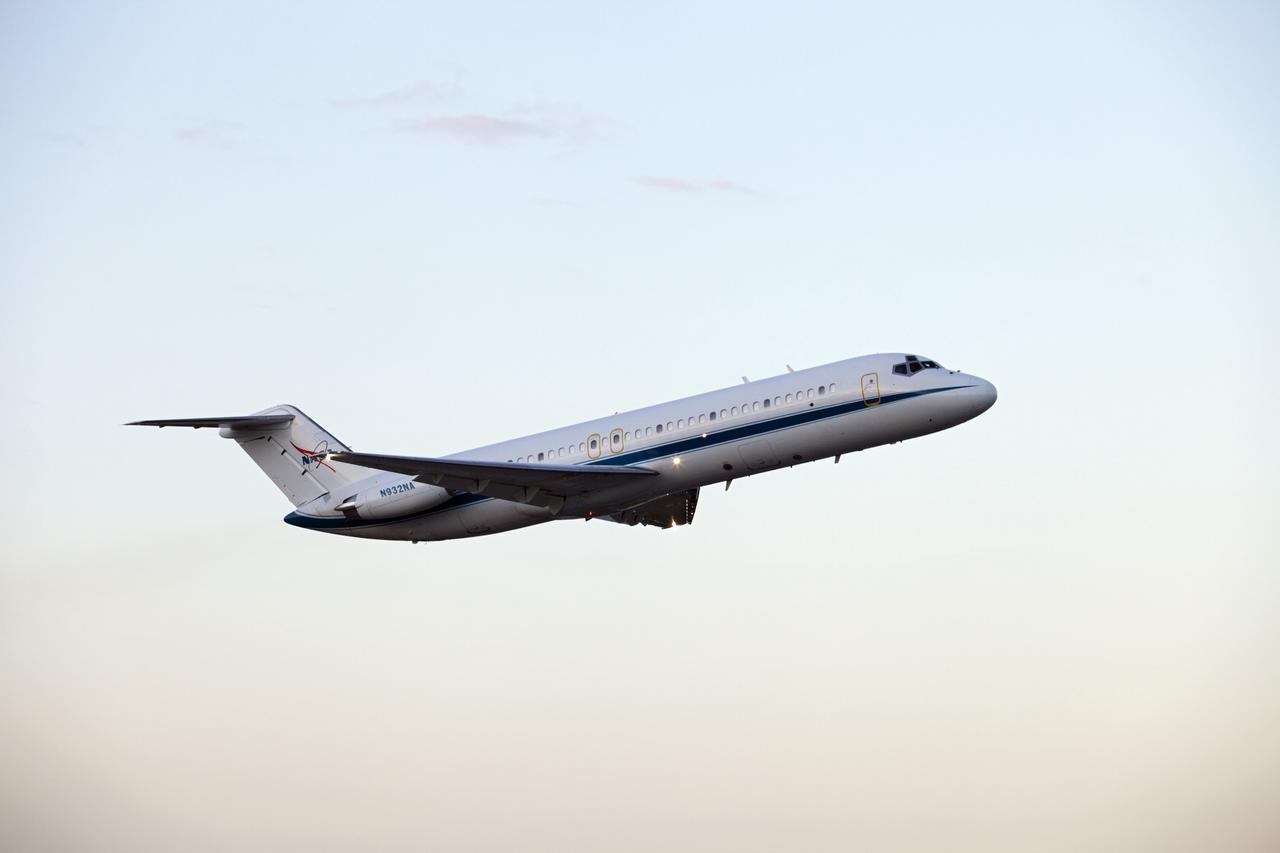
CAPE CANAVERAL, Fla. – A NASA C-9 “Pathfinder” DC-9 takes off from the Shuttle Landing Facility at NASA's Kennedy Space Center in Florida ahead of space shuttle Discovery, which is bolted to the top of a Shuttle Carrier Aircraft. The craft are set to begin their 3 1/2 hour ferry flight to the Washington Dulles International Airport in Virginia at about 7 a.m. EDT. The Pathfinder will fly about 100 miles ahead of the attached pair, making sure the flight path is free of harmful weather or hazardous conditions. Discovery is leaving Kennedy after more than 28 years of service beginning with its arrival on the space coast Nov. 9, 1983. Discovery first launched to space Aug. 30, 1984, on the STS-41D mission. Discovery is the agency's most-flown shuttle with 39 missions, more than 148 million miles and a total of one year in space. Discovery is set to move to the Smithsonian's National Air and Space Museum Steven F. Udvar-Hazy Center on April 19 where it will be placed on public display. For more information on the SCA, visit http://www.nasa.gov/centers/dryden/news/FactSheets/FS-013-DFRC.html. For more information on shuttle transition and retirement activities, visit http://www.nasa.gov/transition. Photo credit: NASA/Frankie Martin
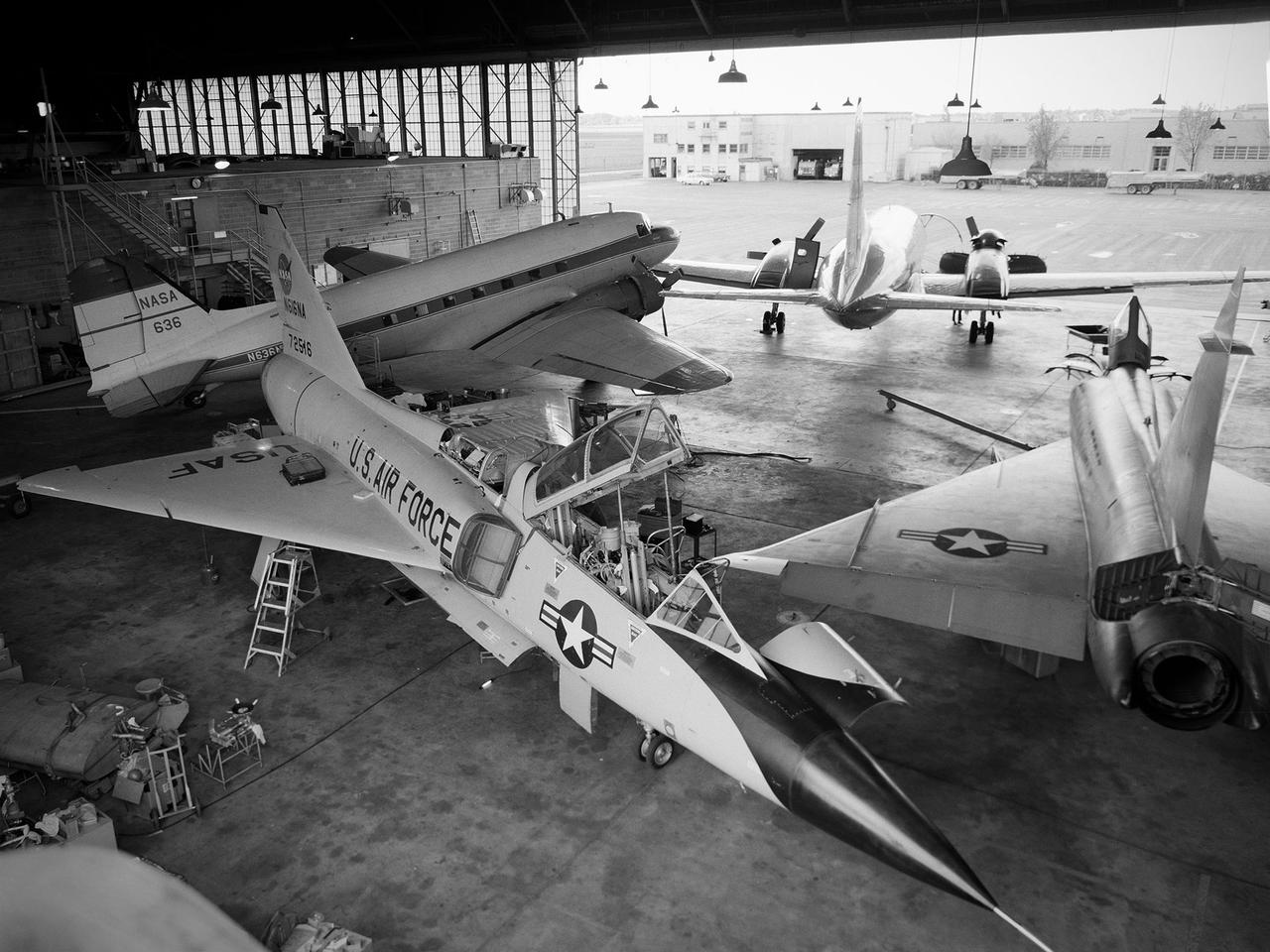
Several aircraft parked inside the Flight Research Building, or hangar, at the National Aeronautics and Space Administration (NASA) Lewis Research Center in Cleveland, Ohio. A Convair F-106B Delta Dart is in the foreground, a Convair F-102A Delta Dagger is to the right, a Douglas DC-3 is in the back to left, and a Convair T-29 is in background. Lewis’ Martin B-57B Canberra is not seen in this photograph. The F-102A had just been acquired by Lewis to serve as a chase plane for the F-106B. The Lewis team removed the weapons system and 700 pounds of wire from the F-106B when it was acquired on October 20, 1966. The staff cut holes in the wings and modified the elevons to mount the test nacelles. A 228-gallon fuel tank was installed in the missile bay, and the existing wing tanks were used for instrumentation. This photograph contains a rare view of the Block House, seen to the left of the aircraft. Lewis acquired three large developmental programs in 1962—the Centaur and Agena rockets and the M-1 engine. The center was short on office space at the time, and its flight research program was temporarily on the wane. Lewis management decided to construct a large cinderblock structure inside one half of the hangar to house the new personnel. This structure was used until 1965 when the new Developmental Engineering Building was built. The Block House was eventually torn down in 1973.
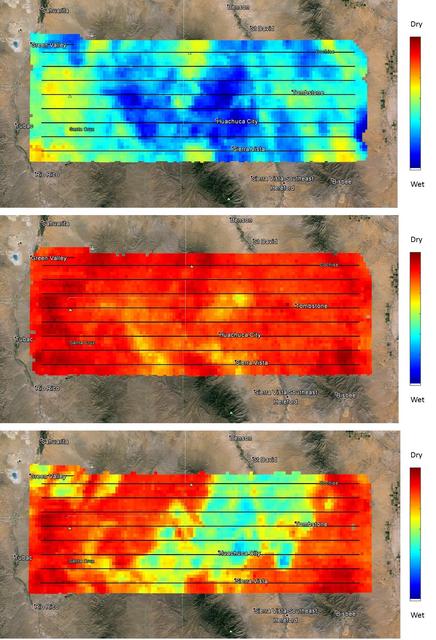
NASA's SMAP (Soil Moisture Active Passive) satellite observatory conducted a field experiment as part of its soil moisture data product validation program in southern Arizona on Aug. 2-18, 2015. The images here represent the distribution of soil moisture over the SMAPVEX15 (SMAP Validation Experiment 2015) experiment domain, as measured by the Passive Active L-band System (PALS) developed by NASA's Jet Propulsion Laboratory, Pasadena, California, which was installed onboard a DC-3 aircraft operated by Airborne Imaging, Inc. Blue and green colors denote wet conditions and dry conditions are marked by red and orange. The black lines show the nominal flight path of PALS. The measurements show that on the first day, the domain surface was wet overall, but had mostly dried down by the second measurement day. On the third day, there was a mix of soil wetness. The heterogeneous soil moisture distribution over the domain is typical for the area during the North American Monsoon season and provides excellent conditions for SMAP soil moisture product validation and algorithm enhancement. The images are based on brightness temperature measured by the PALS instrument gridded on a grid with 0.6-mile (1-kilometer) pixel size. They do not yet compensate for surface characteristics, such as vegetation and topography. That work is currently in progress. http://photojournal.jpl.nasa.gov/catalog/PIA19879
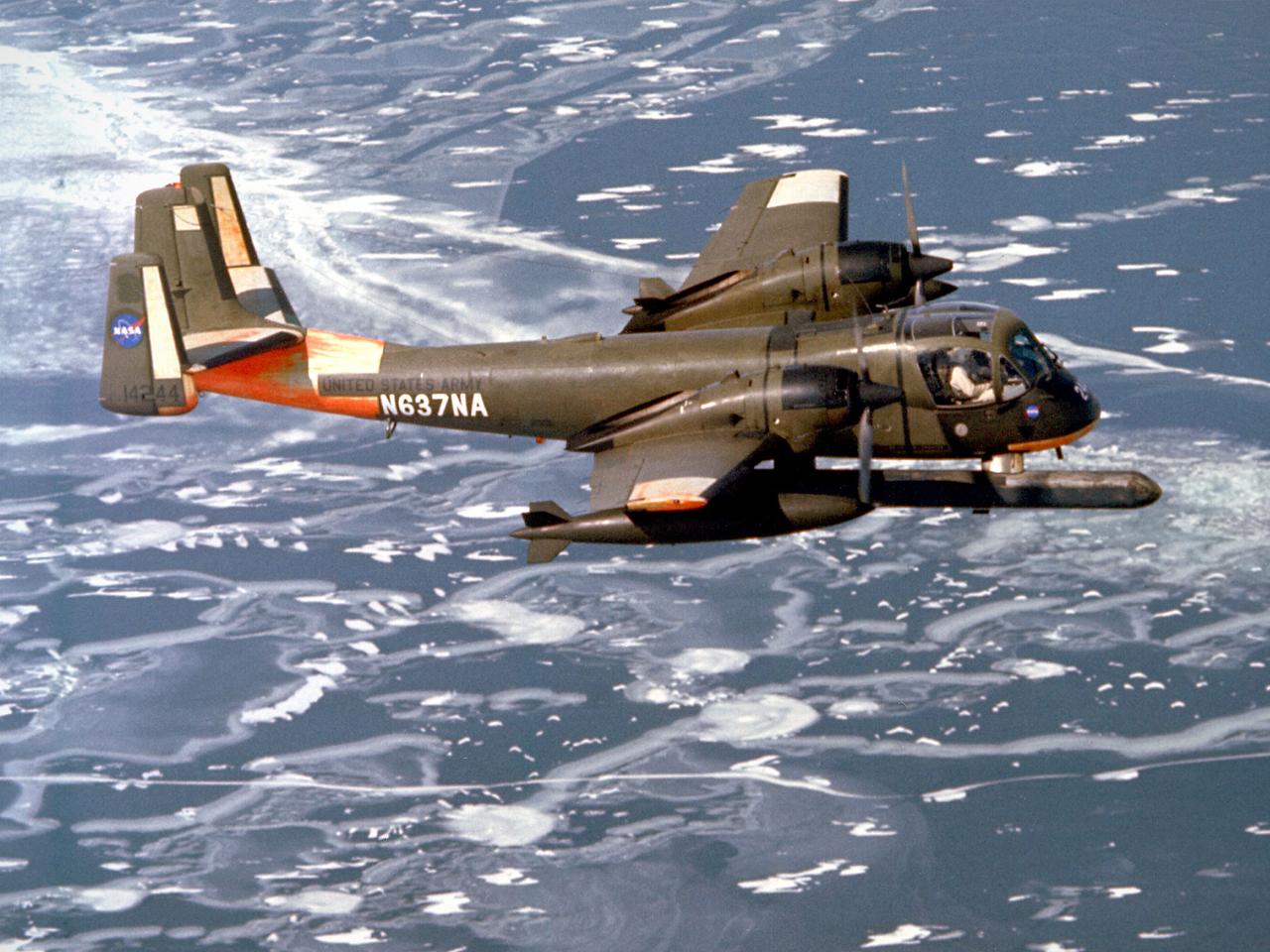
A Grumman OV-1B Mohawk maps Great Lakes’ ice flows for the National Aeronautics and Space Administration (NASA) Lewis Research Center in Cleveland, Ohio. The regular freezing of large portions of the Great Lakes during the winter frequently stalled the region’s shipping industry. Lewis developed two complementary systems to monitor the ice. The Side Looking Airborne Radar (SLAR) system used microwaves to measure the ice distribution, and electromagnetic systems employed noise modulation to determine the thickness of the ice. Once this dual system was in place, the information could be generated during a single pass of a research aircraft and quickly distributed to ship captains planning their routes. The SLAR was superior to aerial photography for this task because it was able to penetrate cloud cover. The SLAR system used pulsed microwaves to examine a band of ice or water on either side of the aircraft up to 31 miles wide. The Lewis ice mapping devices were first tested during the winter of 1972 and 1973. The system was installed on the tail of the Coast Guard’s OV-1B aircraft. An infrared thermal mapping instrument was installed on Lewis’ DC-3 to determine the ice temperature and estimate its thickness. The team created 160 ice charts that were sent to 28 ships and 2 icebreakers. Shipping was able to continue throughout the season for the first time that winter.
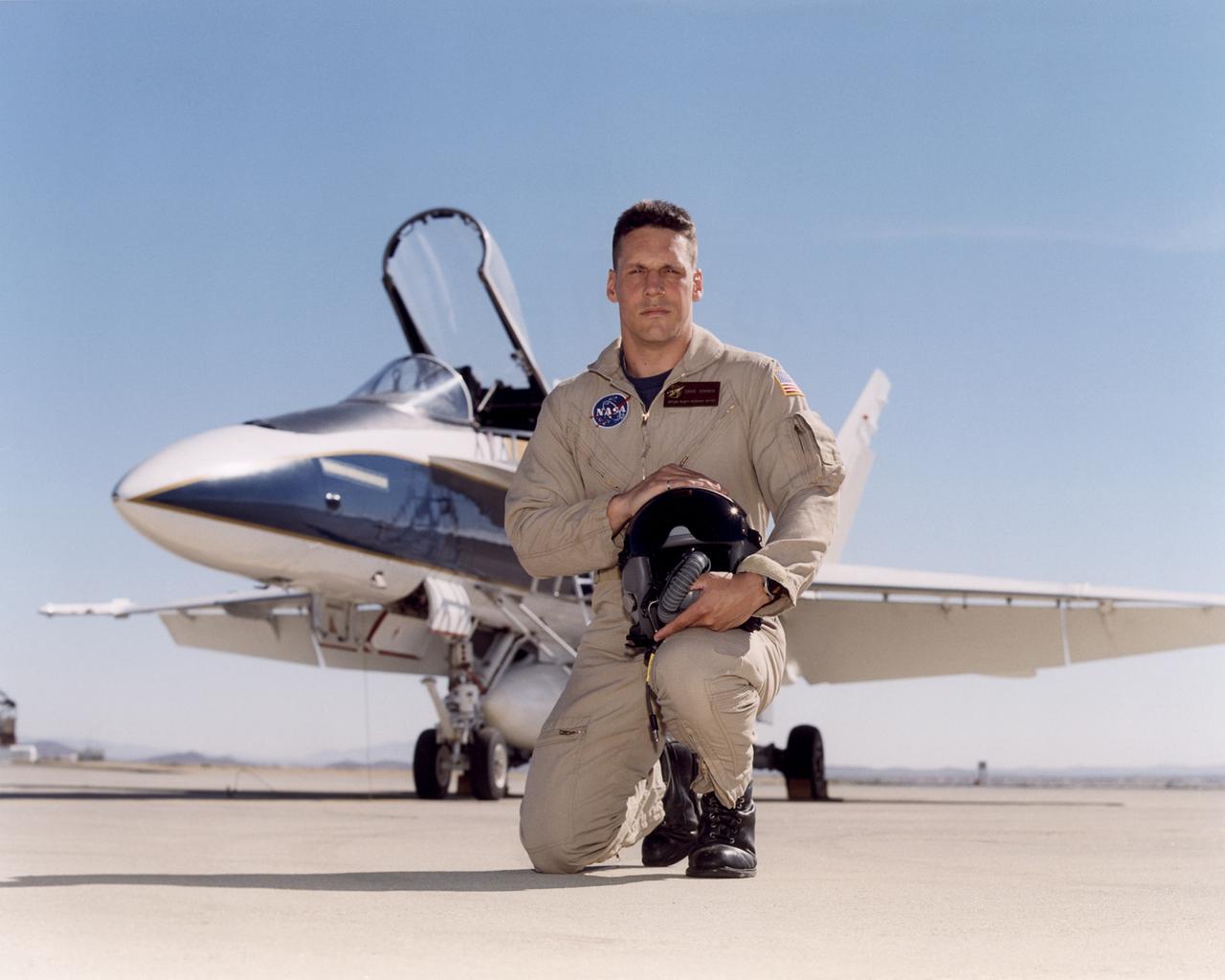
Craig R. Bomben became a pilot in the Flight Crew Branch of NASA's Dryden Flight Research Center, Edwards, Calif., in June 2001. His flying duties include a variety of research and support activities while piloting the F/A-18, DC-8, T-34C and King Air aircraft. He has more than 17 years and 3,800 hours of military and civilian flight experience in over 50 different aircraft types. Bomben came to NASA Dryden from a U.S. Navy assignment to the Personnel Exchange Program, Canada. He served as a test pilot in the Canadian Armed Forces located in Cold Lake, Alberta. He participated in numerous developmental programs to include CT-133 airborne ejection seat testing, F/A-18 weapons flutter testing and F/A-18 night vision goggles integration. Bomben performed U.S. Navy fleet service in 1995 as a strike-fighter department head. He completed two overseas deployments onboard the USS George Washington and USS Stennis. As a combat strike leader, he headed numerous multi-national missions over Iraq in support of Operation Southern Watch. Bomben graduated from the U.S. Naval Test Pilot School in 1992 and was subsequently assigned to the Naval Weapons Test Squadron at Pt. Mugu, Calif. During this tour he developed the F-14D bombsight and worked on various other F-14D and F/A-18 weapon systems developmental programs. Bomben is a 1985 graduate of Washington State University with a bachelor of science degree in electrical engineering. He graduated from naval flight training in 1987 and was recognized as a Commodore List graduate. His first assignment was to Naval Air Station Pensacola, Fla., where he was an instructor in the T-2B Buckeye. When selected to fly the F/A-18 in 1989, he joined a fleet squadron and deployed aboard the USS Forrestal. Bomben is married to the former Aissa Asuncion. They live in Lancaster, Calif., with their 3 children.
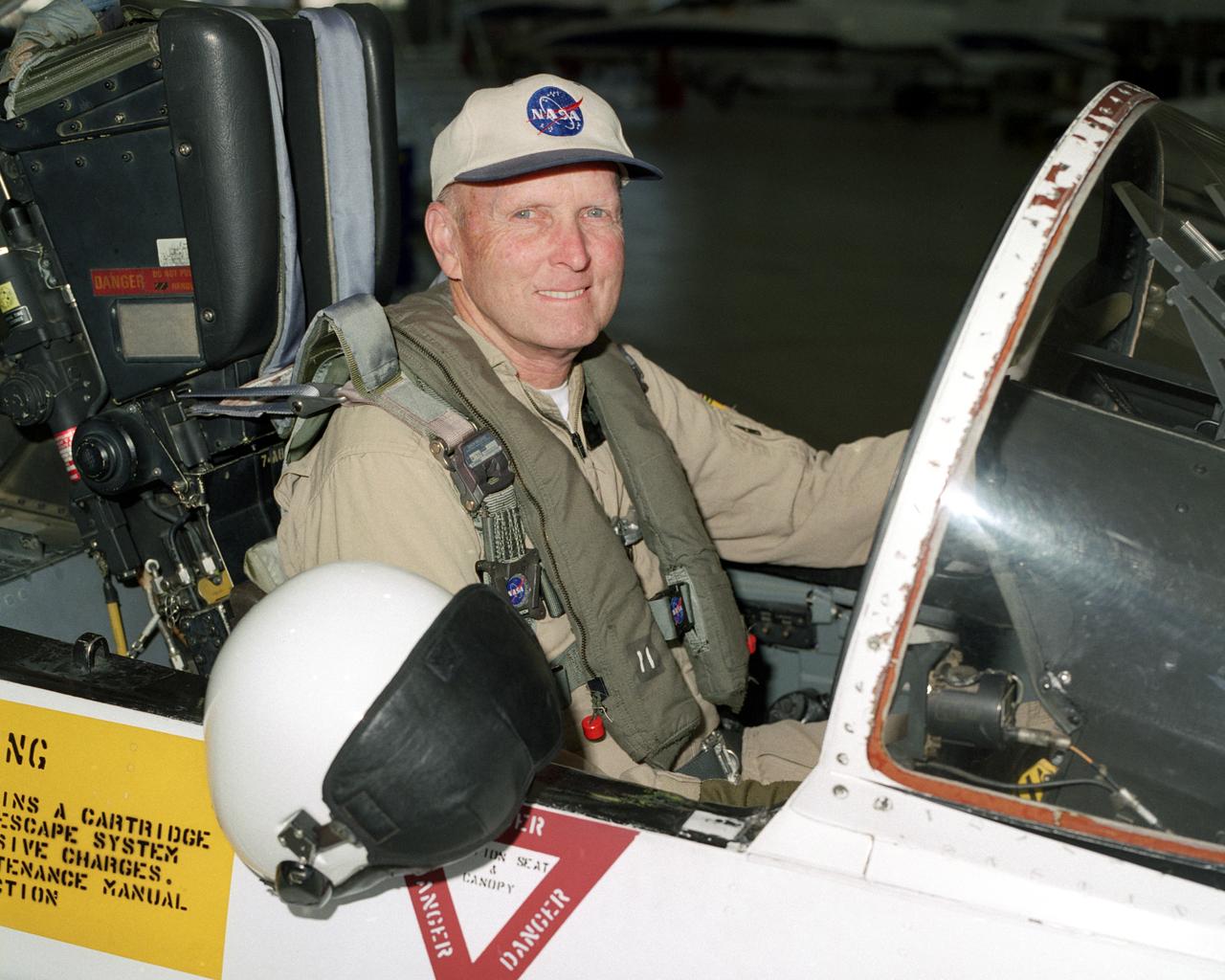
Former NASA astronaut C. Gordon Fullerton, seated in the cockpit of an F/A-18, is a research pilot at NASA's Dryden Flight Research Center, Edwards, Calif. Since transferring to Dryden in 1986, his assignments have included a variety of flight research and support activities piloting NASA's B-52 launch aircraft, the 747 Shuttle Carrier Aircraft (SCA), and other multi-engine and high performance aircraft. He flew a series of development air launches of the X-38 prototype Crew Return Vehicle and in the launches for the X-43A Hyper-X project. Fullerton also flies Dryden's DC-8 Airborne Science aircraft in support a variety of atmospheric physics, ground mapping and meteorology studies. Fullerton also was project pilot on the Propulsion Controlled Aircraft program, during which he successfully landed both a modified F-15 and an MD-11 transport with all control surfaces neutralized, using only engine thrust modulation for control. Fullerton also evaluated the flying qualities of the Russian Tu-144 supersonic transport during two flights in 1998, one of only two non-Russian pilots to fly that aircraft. With more than 15,000 hours of flying time, Fullerton has piloted 135 different types of aircraft in his career. As an astronaut, Fullerton served on the support crews for the Apollo 14, 15, 16, and 17 lunar missions. In 1977, Fullerton was on one of the two flight crews that piloted the Space Shuttle prototype Enterprise during the Approach and Landing Test Program at Dryden. Fullerton was the pilot on the STS-3 Space Shuttle orbital flight test mission in 1982, and commanded the STS-51F Spacelab 2 mission in 1985. He has logged 382 hours in space flight. In July 1988, he completed a 30-year career with the U.S. Air Force and retired as a colonel.

The space shuttle Atlantis atop NASA's 747 Shuttle Carrier Aircraft (SCA) during takeoff for a return ferry flight to the Kennedy Space Center from Edwards, California. The STS-66 mission was dedicated to the third flight of the Atmospheric Laboratory for Applications and Science-3 (ATLAS-3), part of NASA's Mission to Planet Earth program. The astronauts also deployed and retrieved a free-flying satellite designed to study the middle and lower thermospheres and perform a series of experiments covering life sciences research and microgravity processing. The landing was at 7:34 a.m. (PST) 14 November 1994, after being waved off from the Kennedy Space Center, Florida, due to adverse weather.
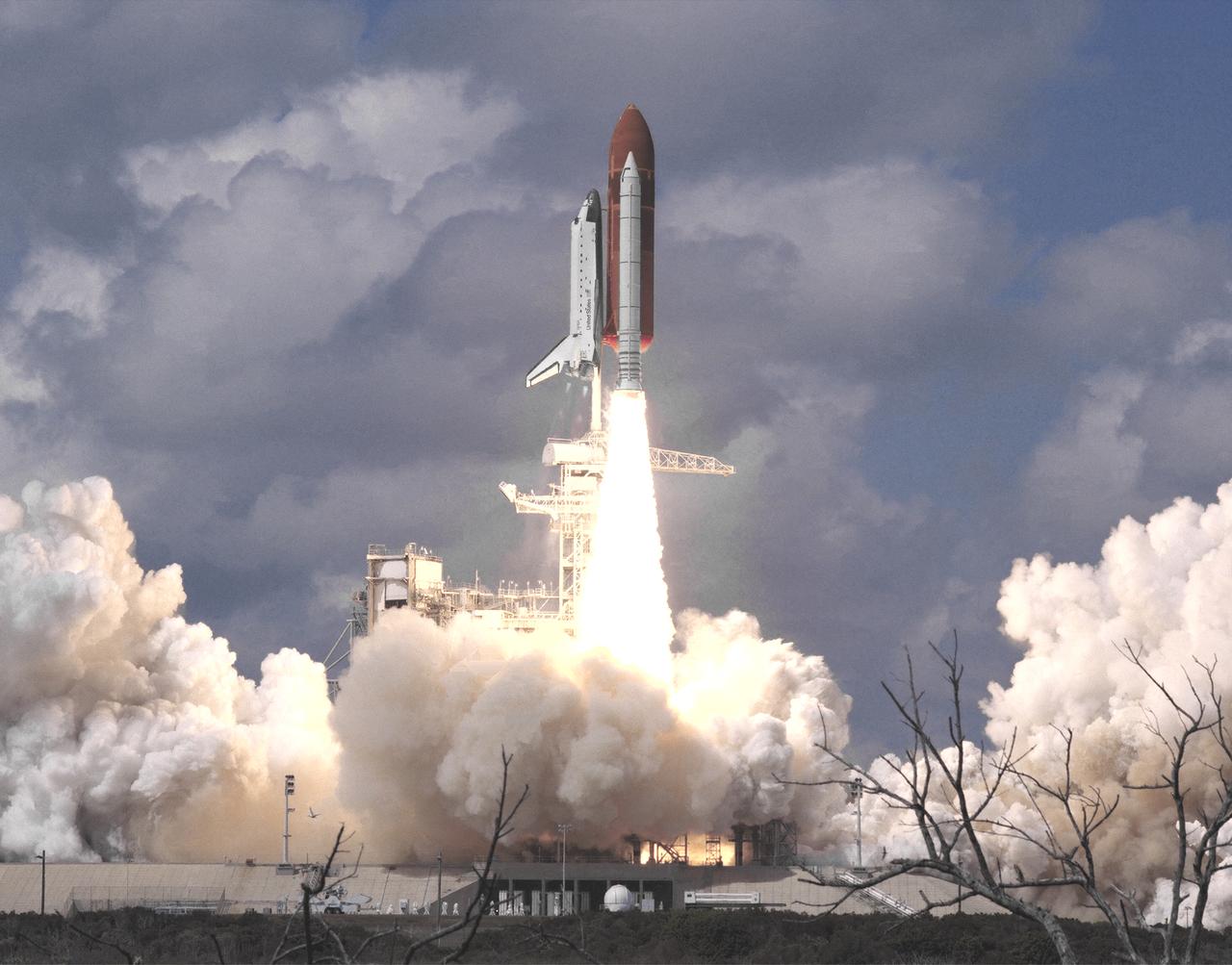
The Space Shuttle Discovery takes off from Launch Pad 39B at the Kennedy Space Center, Florida, to being Mission STS-26 on 29 September 1988,11:37:00 a.m. EDT. The 26th shuttle mission lasted four days, one hour, zero minutes, and 11 seconds. Discovery landed 3 October 1988, 9:37:11 a.m. PDT, on Runway 17 at Edwards Air Force Base, California. Its primary payload, NASA Tracking and Data Relay Satellite-3 (TDRS-3) attached to an Inertial Upper Stage (IUS), became the second TDRS deployed. After deployment, IUS propelled the satellite to a geosynchronous orbit. The crew consisted of Frederick H. Hauck, Commander; Richard O. Covey, Pilot; John M. Lounge, Mission Specialist 1; George D. Nelson, Mission Specialist 2; and David C. Hilmers, Mission Specialist 3.

The space shuttle Atlantis lands with its drag chute deployed on runway 22 at Edwards, California, to complete the STS-66 mission dedicated to the third flight of the Atmospheric Laboratory for Applications and Science-3 (ATLAS-3), part of NASA's Mission to Planet Earth program. The astronauts also deployed and retrieved a free-flying satellite designed to study the middle and lower thermospheres and perform a series of experiments covering life sciences research and microgravity processing. The landing was at 7:34 a.m. (PST) 14 November 1994, after being waved off from the Kennedy Space Center, Florida, due to adverse weather.