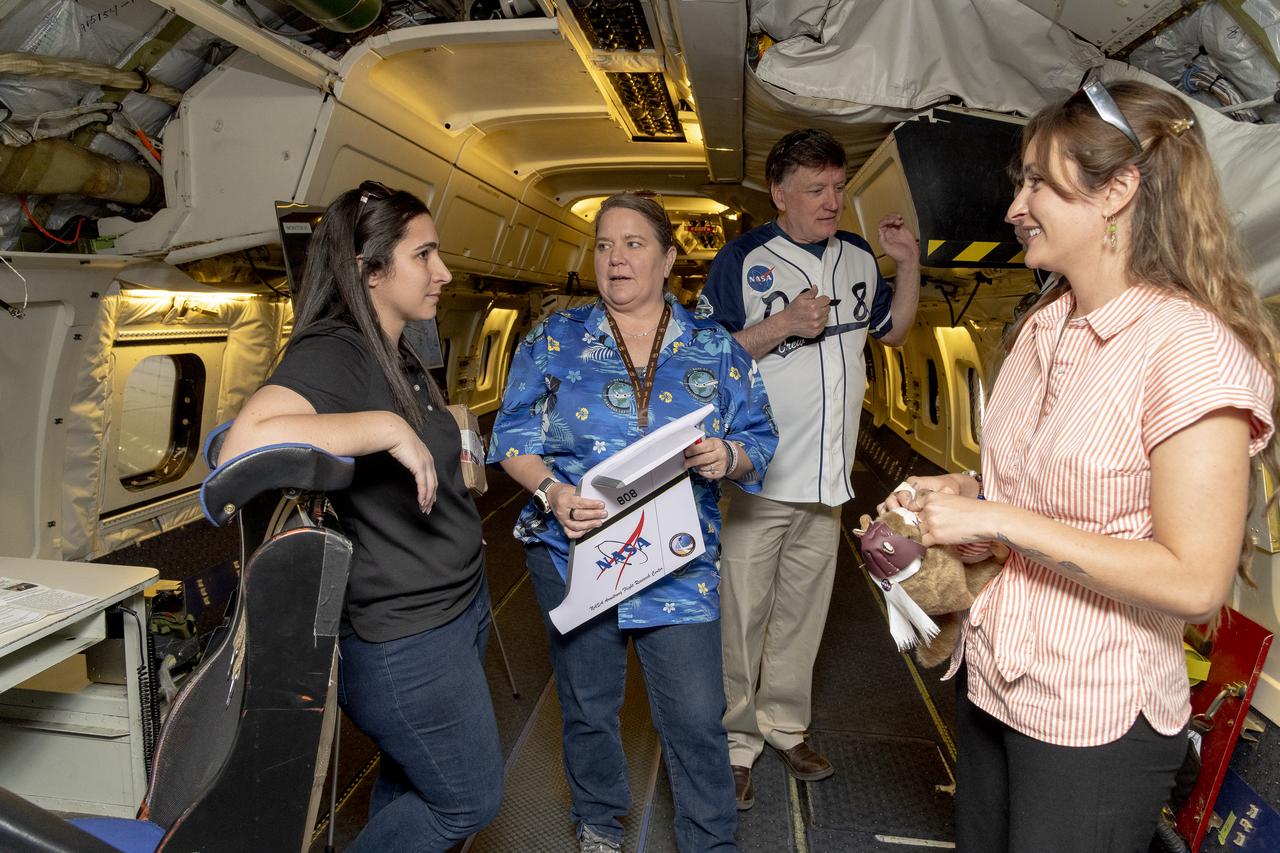
Members of the DC-8 program team tour an empty aircraft and recall past missions. Usually the DC-8 has between 15 and 30 instrument racks installed for a given science mission. The aircraft was spacious by comparison on May 2, 2024, when NASA personnel, friends, and family gathered at NASA’s Armstrong Flight Research Center Building 703 in Palmdale, California to celebrate the DC-8 staff, aircraft, and science campaigns. Conversing here are DC-8 aircraft deputy manager Kirsten Boogaard, left, with NASA Armstrong pilot Carrie Worth, Mike Zimmerman, and NASA Armstrong public affairs specialist for airborne science, Erica Heim.
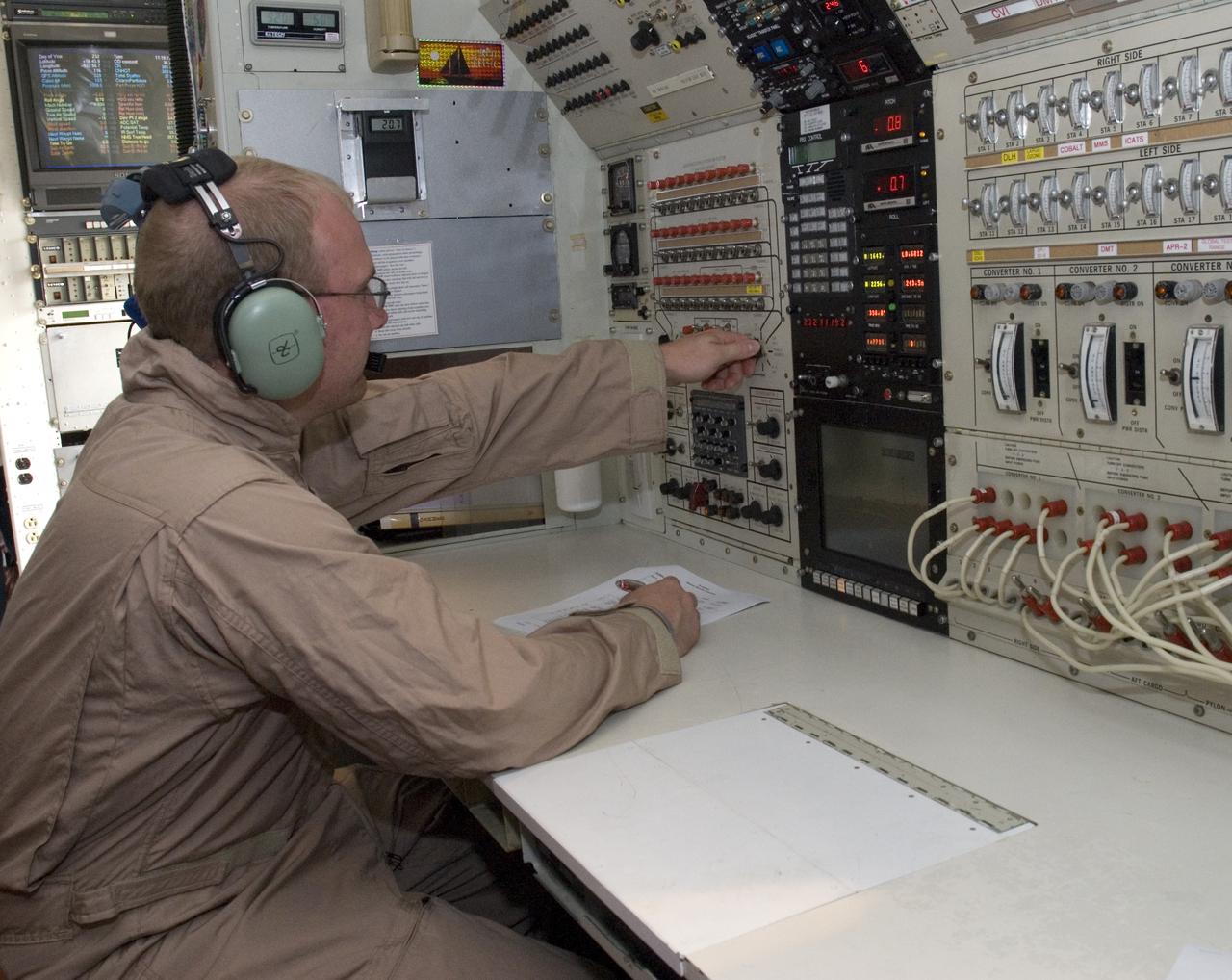
NASA African Monsoon Multidisciplinary Analyses (NAMMA) DC-8 deployment to Cape Verde, Sal island, Africa
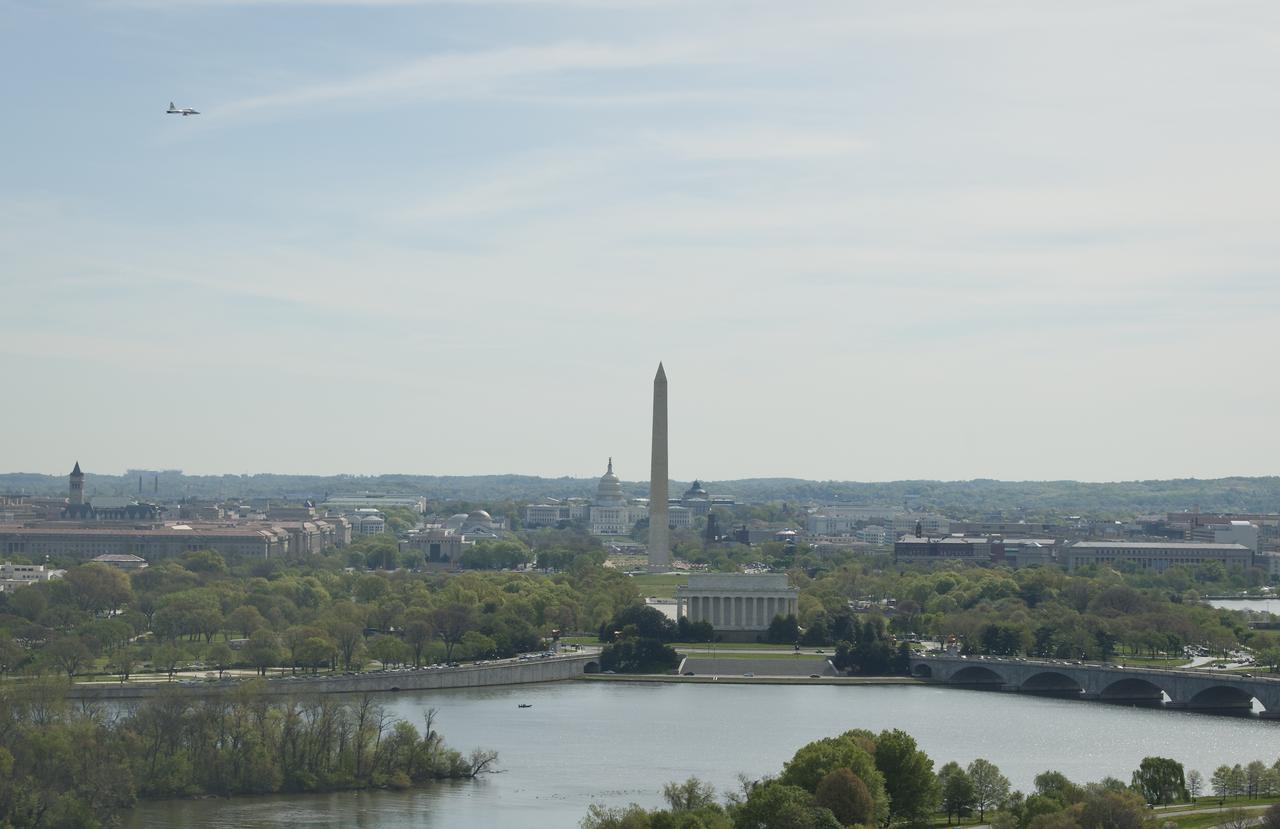
A NASA T-38 training jet is seen as it flies at 1500 feet over Washington, DC, Thursday, April 5, 2012. NASA, in cooperation with the Federal Aviation Administration, conducted training and photographic flights over the DC metropolitan area. T-38 aircraft have been used for astronaut training for more than 30 years as they allow pilots and mission specialists to think quickly in changing situations, mental experiences the astronauts say are critical to practicing for the rigors of spaceflight. Photo Credit: (NASA/Carla Cioffi)
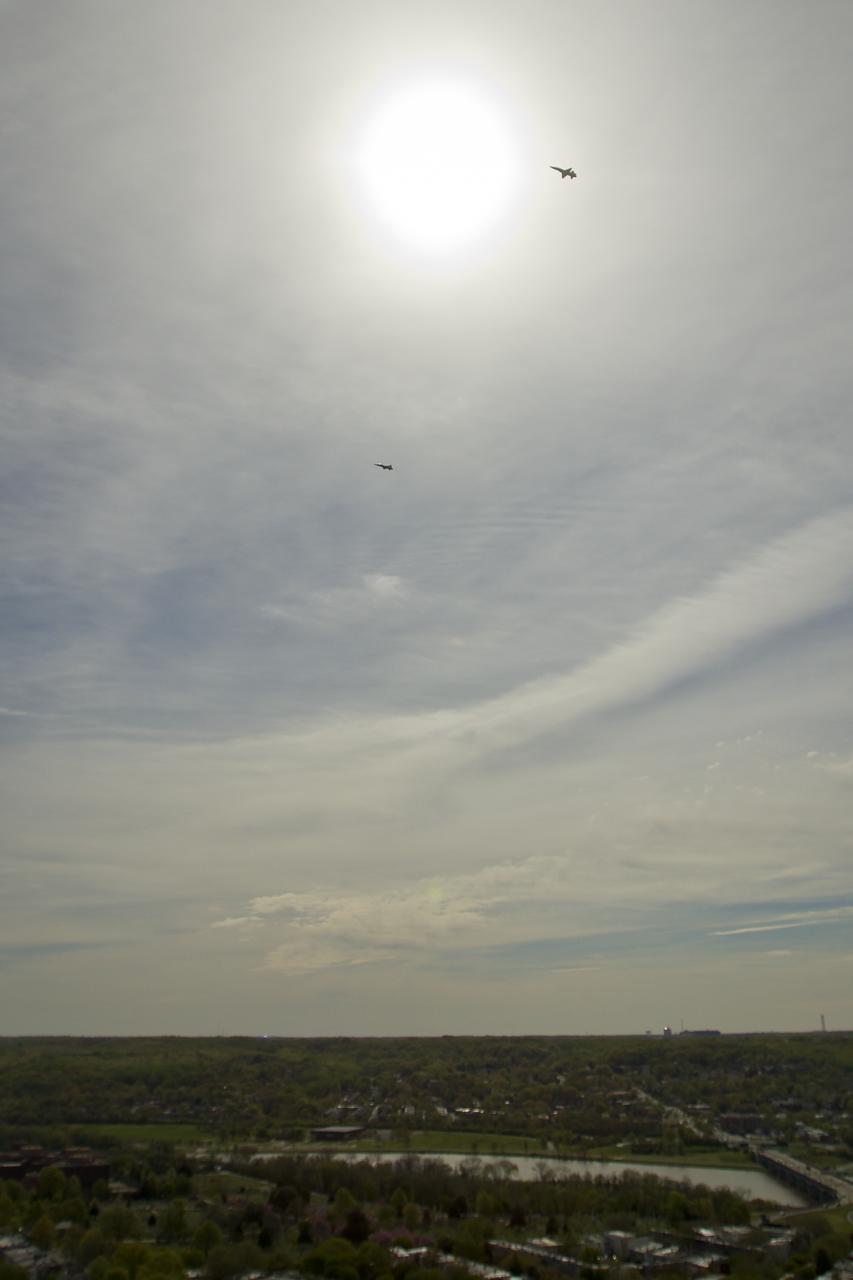
Two NASA T-38 training jets are seen as they fly over Washington, DC, Thursday, April 5, 2012. NASA, in cooperation with the Federal Aviation Administration, conducted training and photographic flights over the DC metropolitan area. T-38 aircraft have been used for astronaut training for more than 30 years as they allow pilots and mission specialists to think quickly in changing situations, mental experiences the astronauts say are critical to practicing for the rigors of spaceflight. Photo Credit: (NASA/Bill Ingalls)
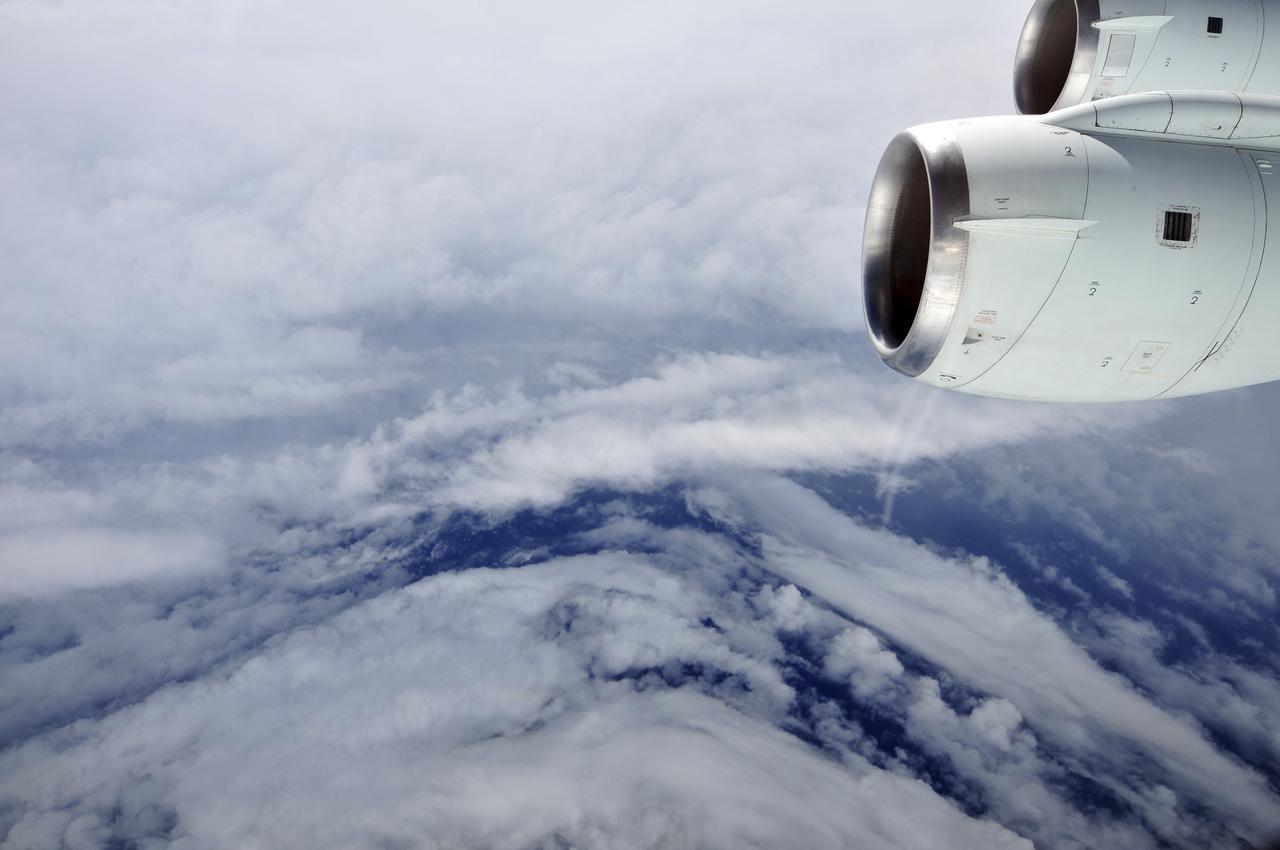
The eye of Hurricane Earl in the Atlantic Ocean is seen from NASA’s DC-8 research aircraft, Monday, Aug. 30, 2010. This flight through the eyewall caught Earl just as it was intensifying from a Category 2 to a Category 4 hurricane. The flights are part of the Genesis and Rapid Intensification Processes (GRIP) experiment, a NASA Earth science field experiment being conducted to better understand how tropical storms form and develop into major hurricanes. (NASA/Jane Peterson)
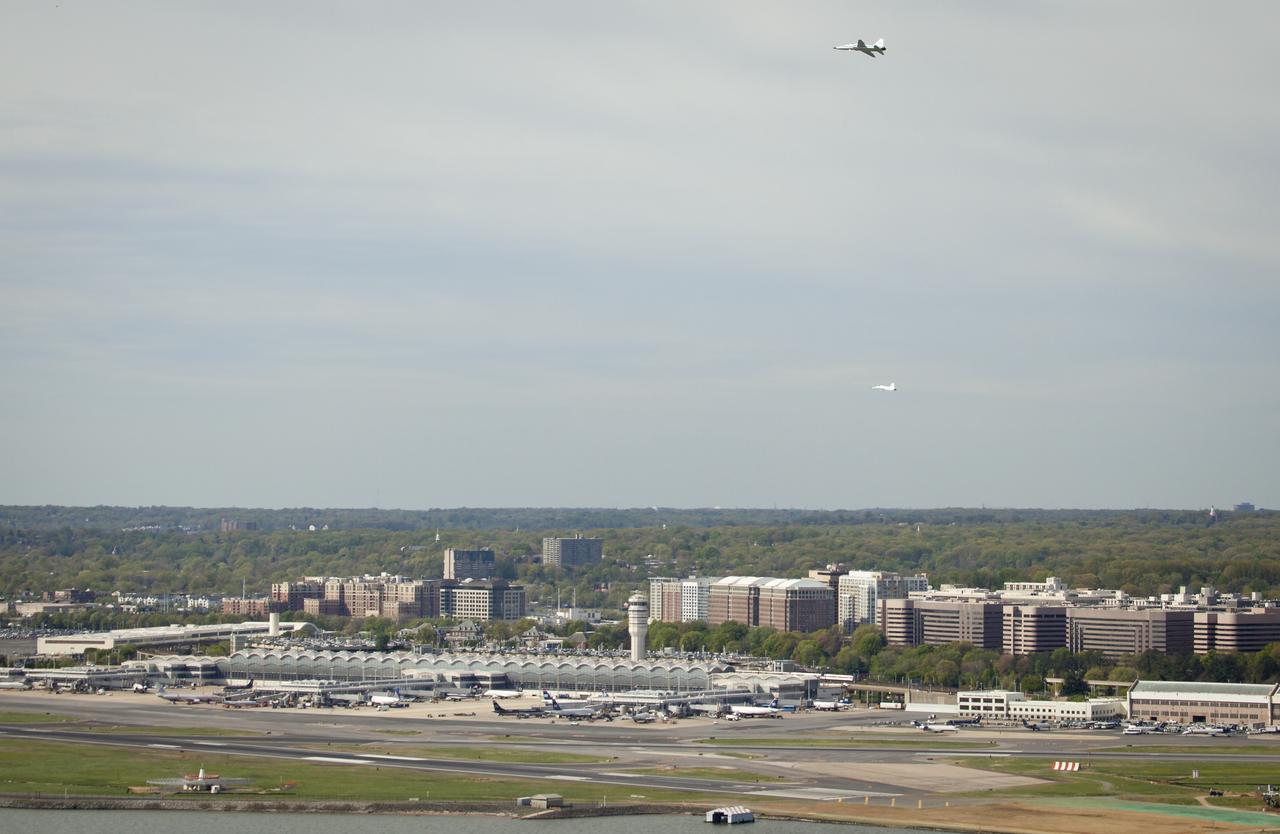
Two NASA T-38 training jets are seen as they fly over Reagan National Airport, Thursday, April 5, 2012 in Arlington, VA. NASA, in cooperation with the Federal Aviation Administration, conducted training and photographic flights over the DC metropolitan area. T-38 aircraft have been used for astronaut training for more than 30 years as they allow pilots and mission specialists to think quickly in changing situations, mental experiences the astronauts say are critical to practicing for the rigors of spaceflight. Photo Credit: (NASA/Bill Ingalls)
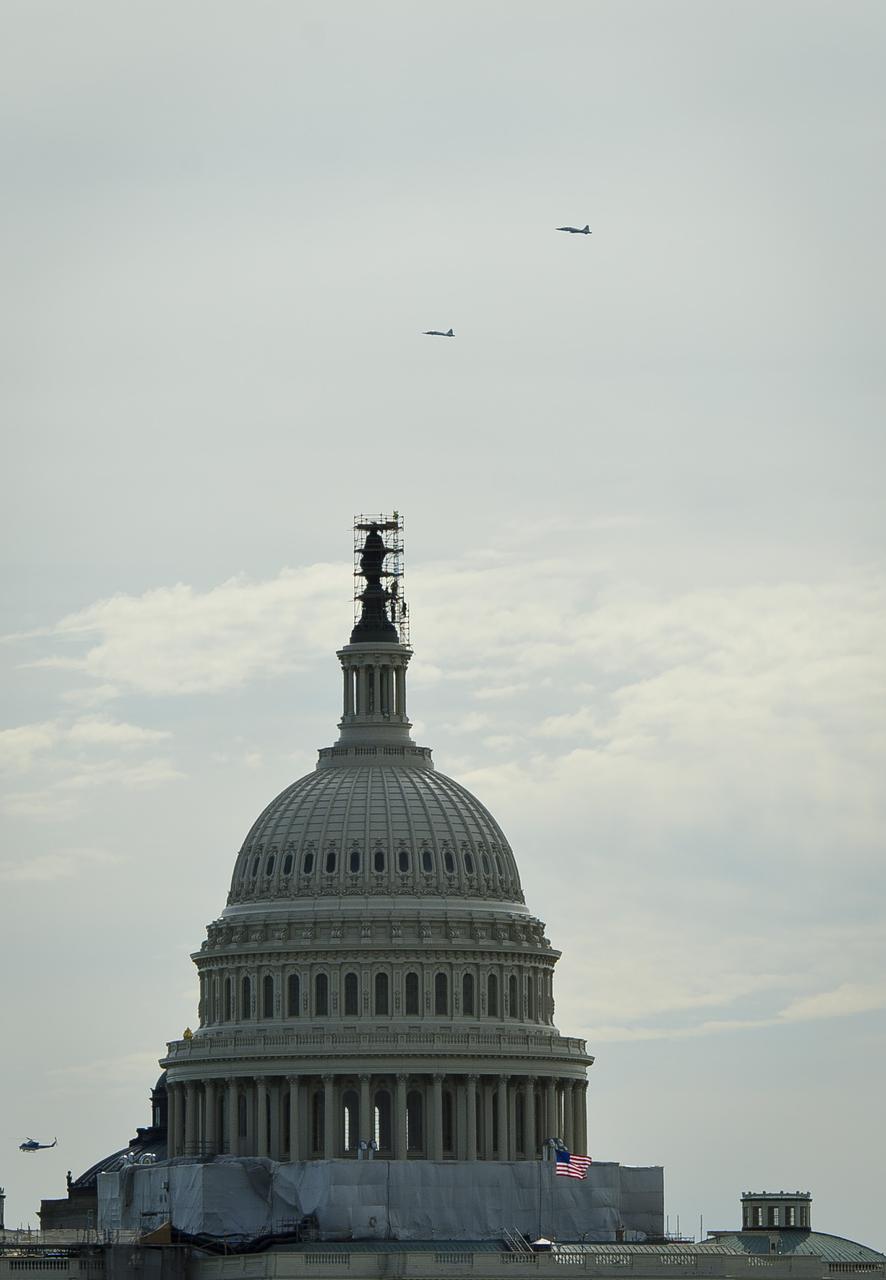
Two NASA T-38 training jets are seen as they fly over the U.S. Capitol, Thursday, April 5, 2012, in Washington. NASA, in cooperation with the Federal Aviation Administration, conducted training and photographic flights over the DC metropolitan area. T-38 aircraft have been used for astronaut training for more than 30 years as they allow pilots and mission specialists to think quickly in changing situations, mental experiences the astronauts say are critical to practicing for the rigors of spaceflight. Photo Credit: (NASA/Paul E. Alers)
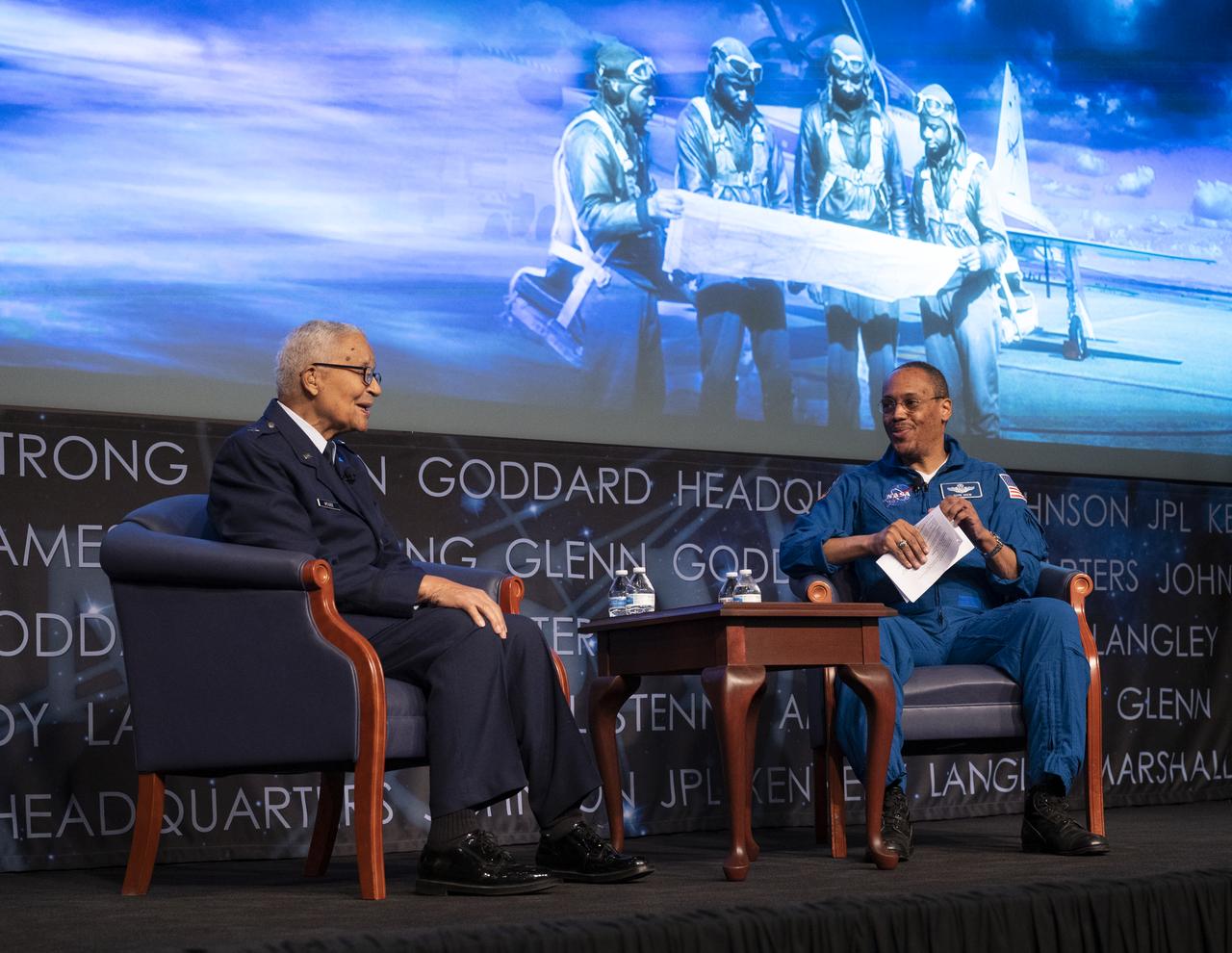
Retired U.S. Air Force Honorary Brigadier General Charles McGee, left, speaks with NASA astronaut Alvin Drew during a Black History Month program titled “Trailblazers, The Story of a Tuskegee Airman,” Wednesday, Feb. 5, 2020, at NASA Headquarters in Washington, DC. McGee, a pilot with the Tuskegee Airmen during World War II, was a career officer in the Air Force also serving during the Korean and Vietnam Wars. Over his 30 years of service he flew 409 combat missions. Of the 355 Tuskegee pilots who flew in combat, McGee is one of only nine surviving. Photo Credit: (NASA/Joel Kowsky)
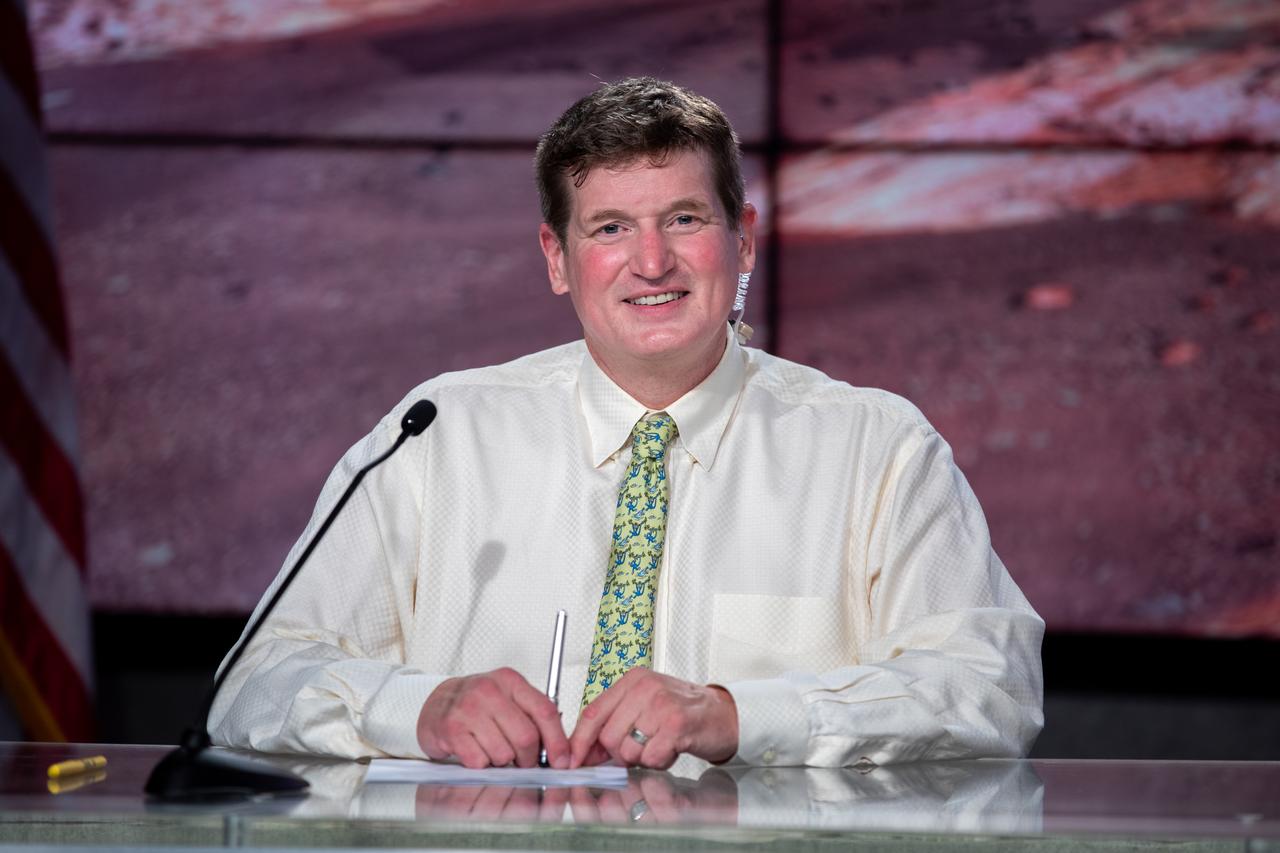
DC Agle, with NASA’s Jet Propulsion Laboratory, moderates a Mars 2020 Mission Engineering and Science Briefing at NASA’s Kennedy Space Center in Florida on July 27, 2020. The Mars Perseverance rover is scheduled to launch July 30, on a United Launch Alliance Atlas V 541 rocket from Space Launch Complex 41 at nearby Cape Canaveral Air Force Station. The rover is part of NASA’s Mars Exploration Program, a long-term effort of robotic exploration of the Red Planet. The rover will search for habitable conditions in the ancient past and signs of past microbial life on Mars. The Launch Services Program at Kennedy is responsible for launch management.
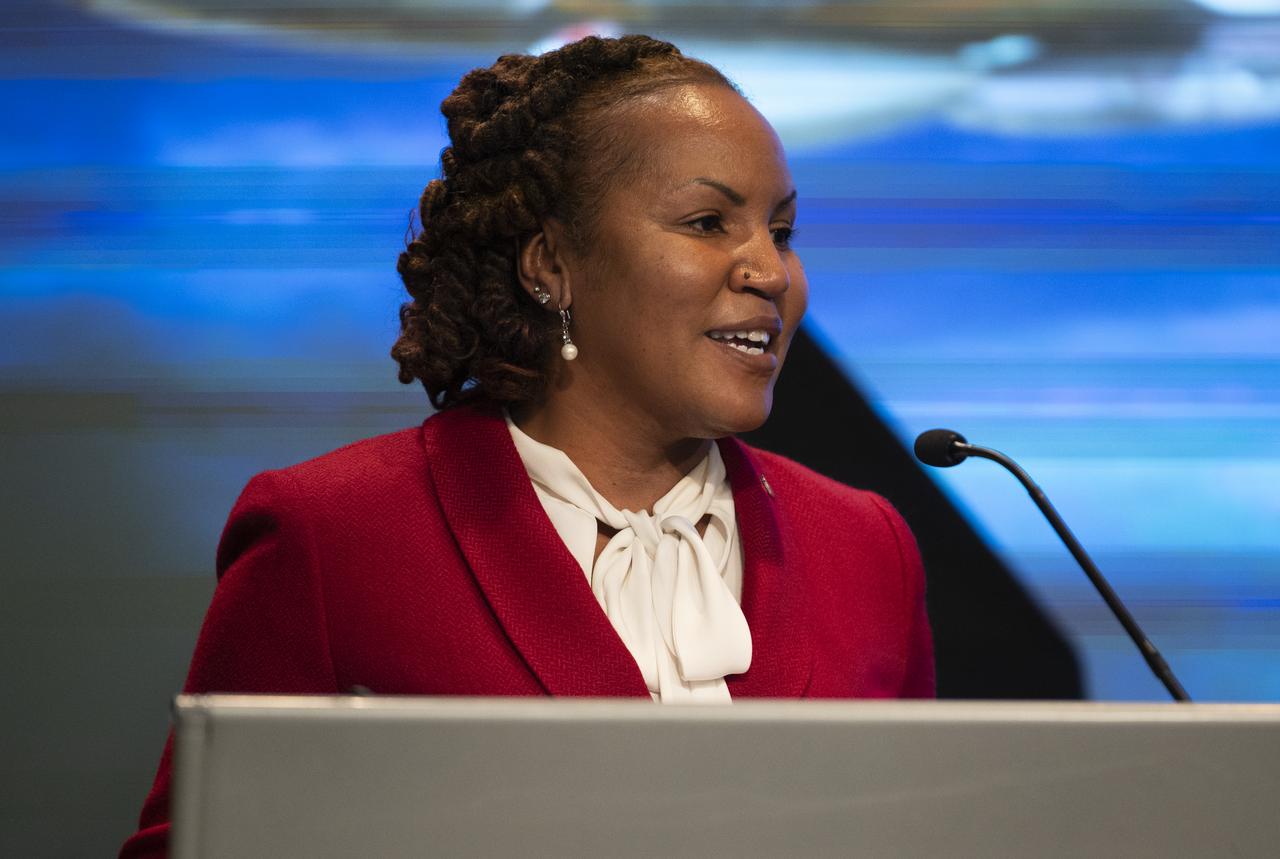
Monica Manning, Assistant Administrator for Procurement at NASA, introduces Retired U.S. Air Force Honorary Brigadier General Charles McGee and NASA astronaut Alvin Drew during a Black History Month program titled “Trailblazers, The Story of a Tuskegee Airman,” Wednesday, Feb. 5, 2020, at NASA Headquarters in Washington, DC. McGee, a pilot with the Tuskegee Airmen during World War II, was a career officer in the Air Force also serving during the Korean and Vietnam Wars. Over his 30 years of service he flew 409 combat missions. Of the 355 Tuskegee pilots who flew in combat, McGee is one of only nine surviving. Photo Credit: (NASA/Joel Kowsky)
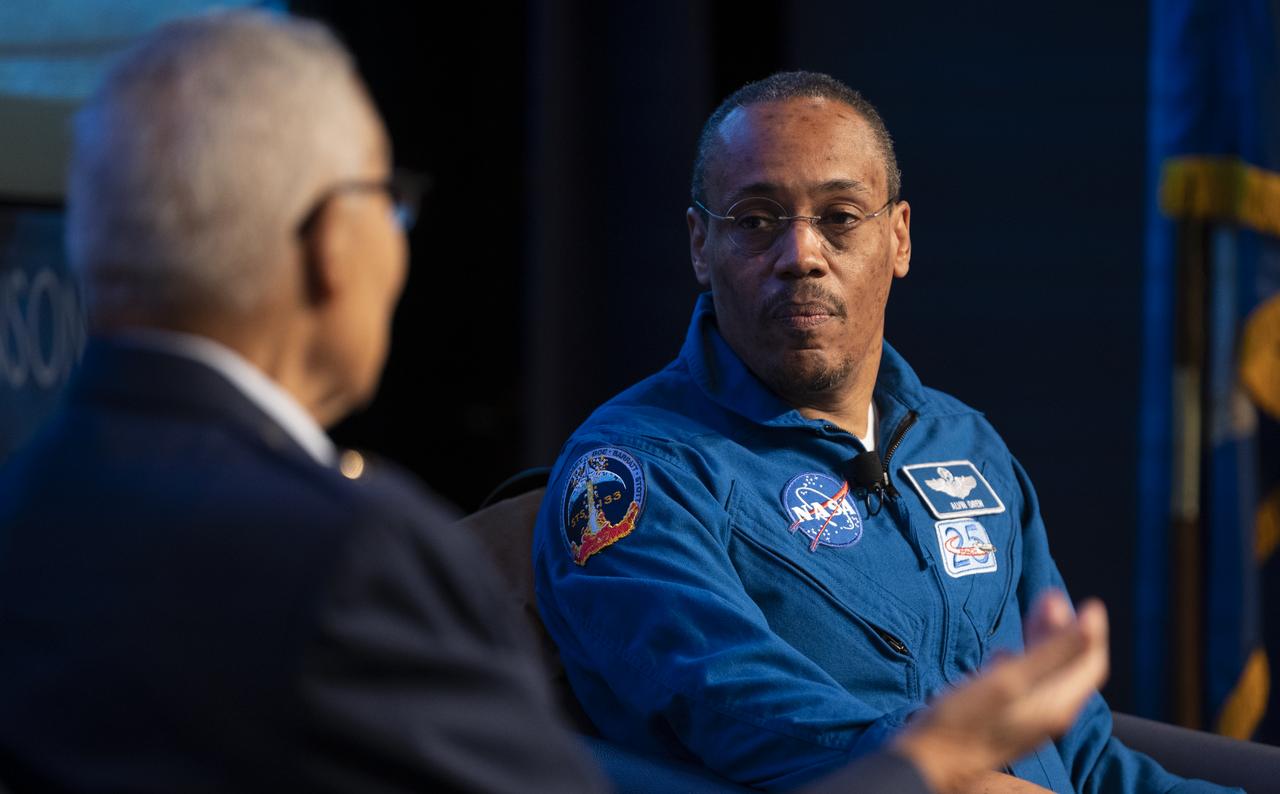
NASA astronaut Alvin Drew speaks with retired U.S. Air Force Honorary Brigadier General Charles McGee during a Black History Month program titled “Trailblazers, The Story of a Tuskegee Airman,” Wednesday, Feb. 5, 2020, at NASA Headquarters in Washington, DC. McGee, a pilot with the Tuskegee Airmen during World War II, was a career officer in the Air Force also serving during the Korean and Vietnam Wars. Over his 30 years of service he flew 409 combat missions. Of the 355 Tuskegee pilots who flew in combat, McGee is one of only nine surviving. Photo Credit: (NASA/Joel Kowsky)
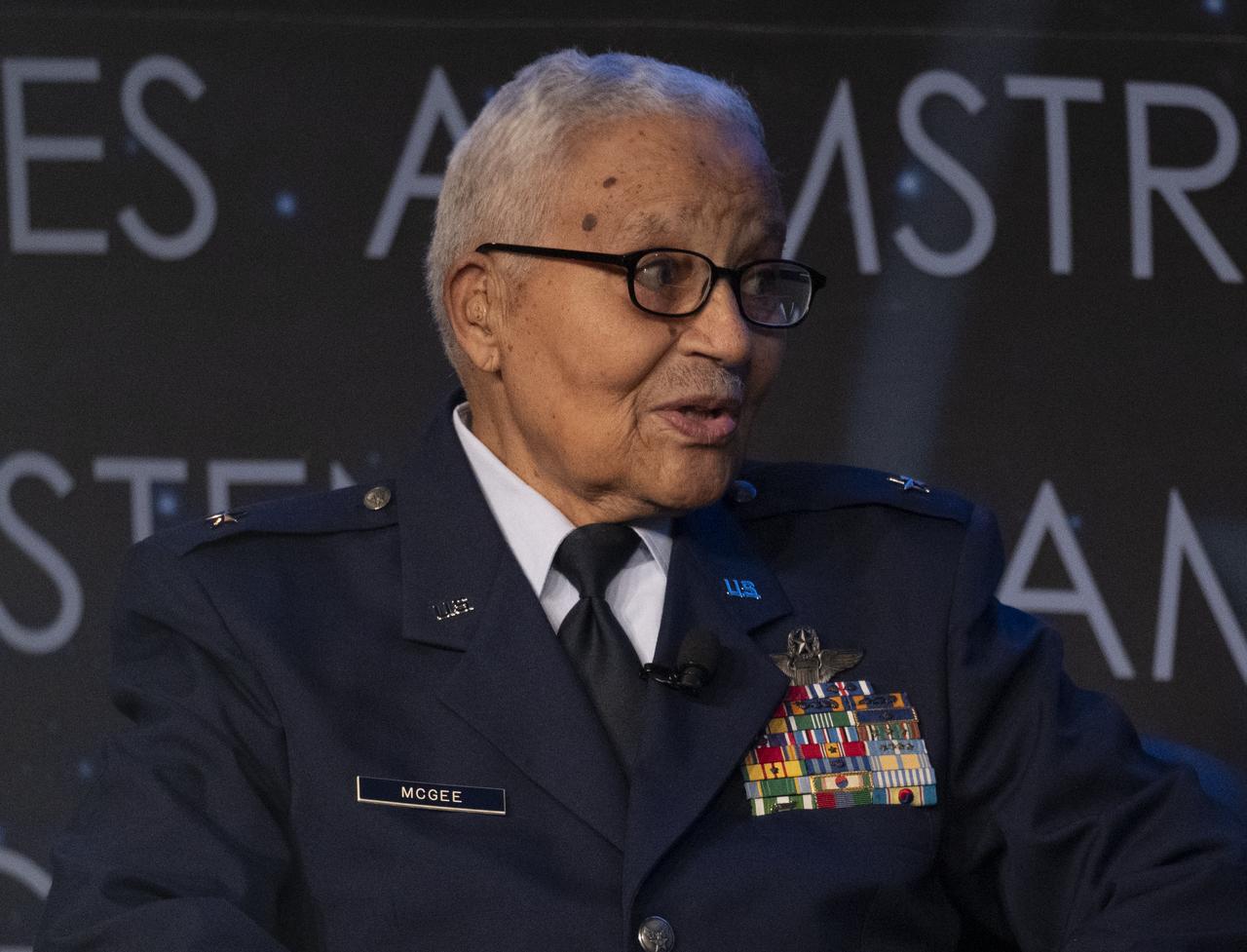
Retired U.S. Air Force Honorary Brigadier General Charles McGee is seen as he speaks with NASA astronaut Alvin Drew during a Black History Month program titled “Trailblazers, The Story of a Tuskegee Airman,” Wednesday, Feb. 5, 2020, at NASA Headquarters in Washington, DC. McGee, a pilot with the Tuskegee Airmen during World War II, was a career officer in the Air Force also serving during the Korean and Vietnam Wars. Over his 30 years of service he flew 409 combat missions. Of the 355 Tuskegee pilots who flew in combat, McGee is one of only nine surviving. Photo Credit: (NASA/Joel Kowsky)
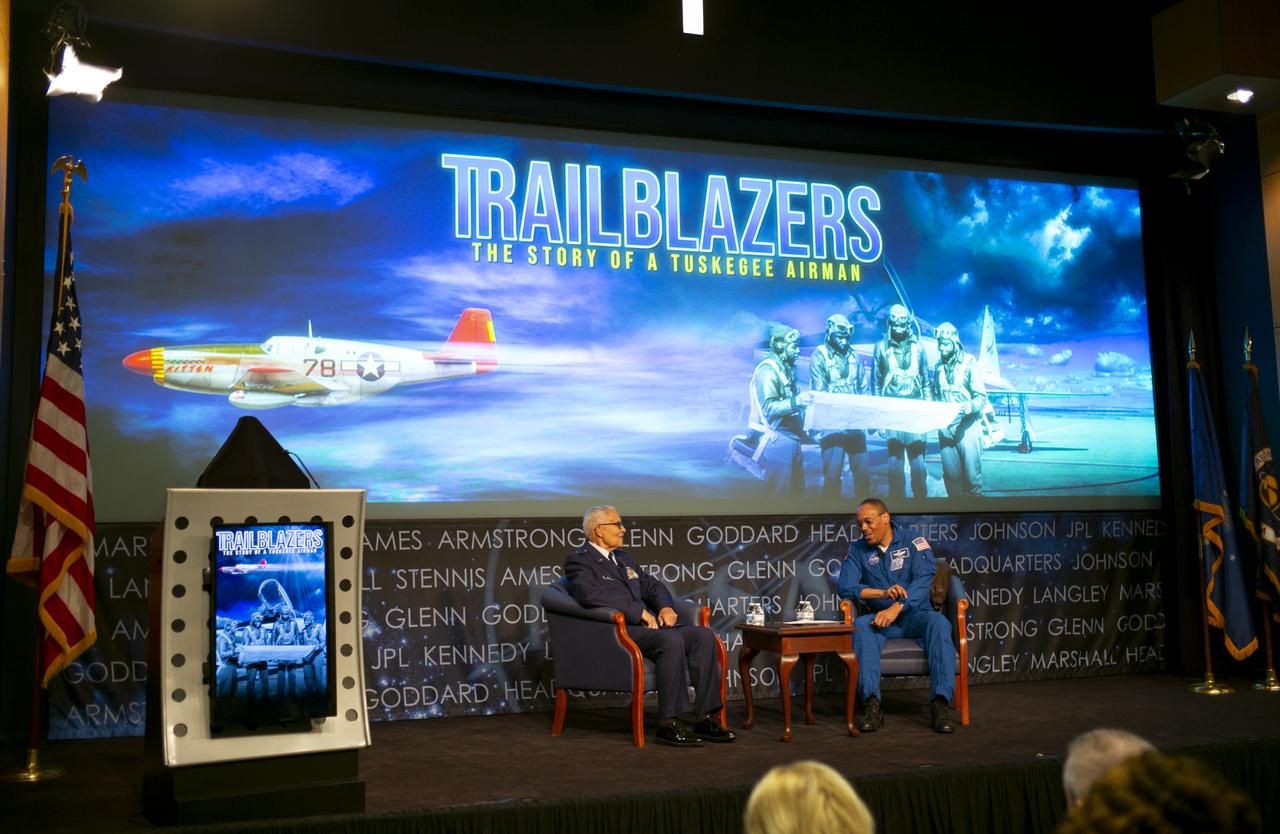
Retired U.S. Air Force Honorary Brigadier General Charles McGee, left, speaks with NASA astronaut Alvin Drew during a Black History Month program titled “Trailblazers, The Story of a Tuskegee Airman,” Wednesday, Feb. 5, 2020, at NASA Headquarters in Washington, DC. McGee, a pilot with the Tuskegee Airmen during World War II, was a career officer in the Air Force also serving during the Korean and Vietnam Wars. Over his 30 years of service he flew 409 combat missions. Of the 355 Tuskegee pilots who flew in combat, McGee is one of only nine surviving. Photo Credit: (NASA/Joel Kowsky)
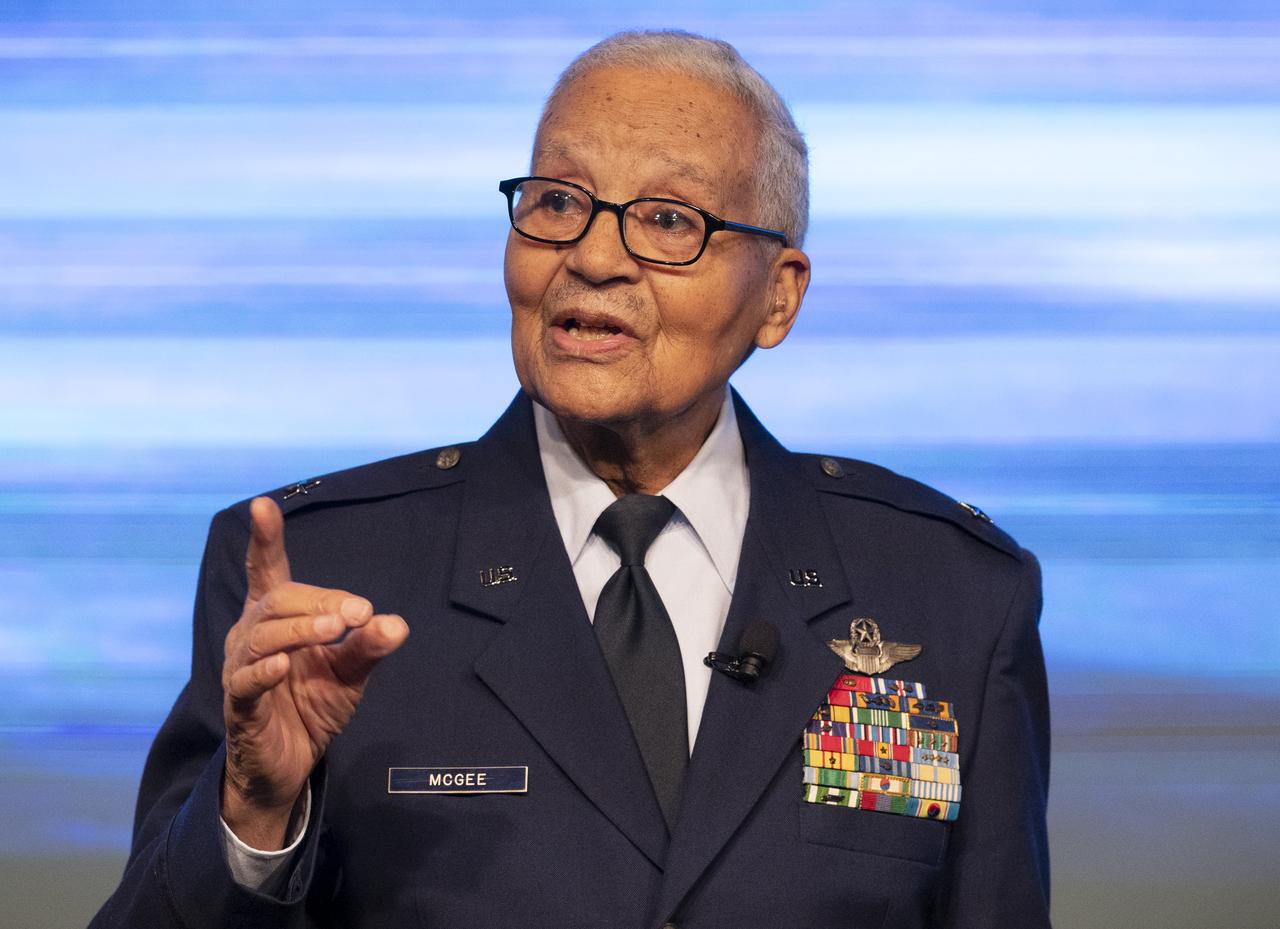
Retired U.S. Air Force Honorary Brigadier General Charles McGee is seen during a Black History Month program titled “Trailblazers, The Story of a Tuskegee Airman,” Wednesday, Feb. 5, 2020, at NASA Headquarters in Washington, DC. McGee, a pilot with the Tuskegee Airmen during World War II, was a career officer in the Air Force also serving during the Korean and Vietnam Wars. Over his 30 years of service he flew 409 combat missions. Of the 355 Tuskegee pilots who flew in combat, McGee is one of only nine surviving. Photo Credit: (NASA/Joel Kowsky)
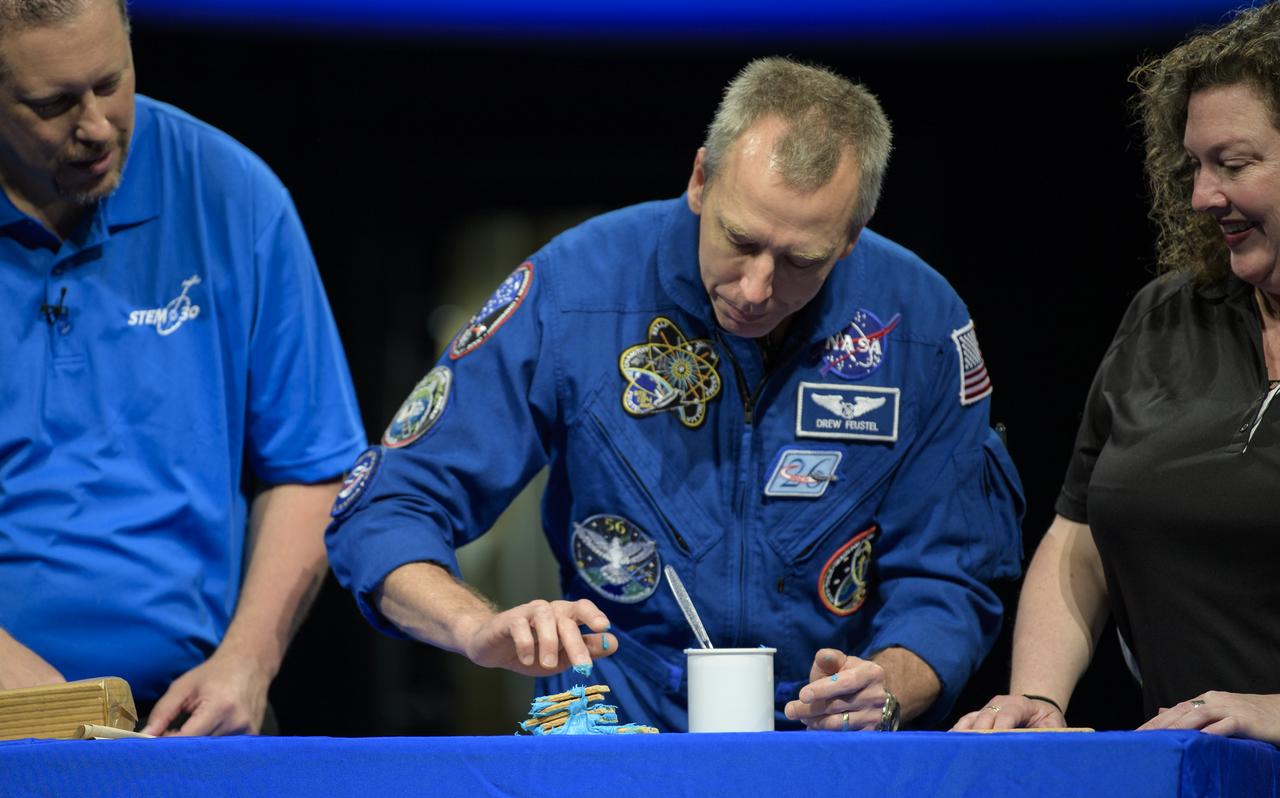
NASA astronaut Drew Feustel, center, uses frosting and graham crackers to represent the layers of Earths crust while taping a segment of STEM in 30 with Marty Kelsey, left, and Beth Wilson, right, Thursday, May 9, 2019 at the Smithsonian’s National Air and Space Museum in Washington, DC. Feustel most recently spent 197 days living and working onboard the International Space Station as part of Expedition 55 and as commander of Expedition 56. Feustel ventured outside the space station on three spacewalks, moving him up to second among U.S. spacewalkers with a cumulative time of 61 hours 48 minutes over nine spacewalks. Photo Credit: (NASA/Joel Kowsky)
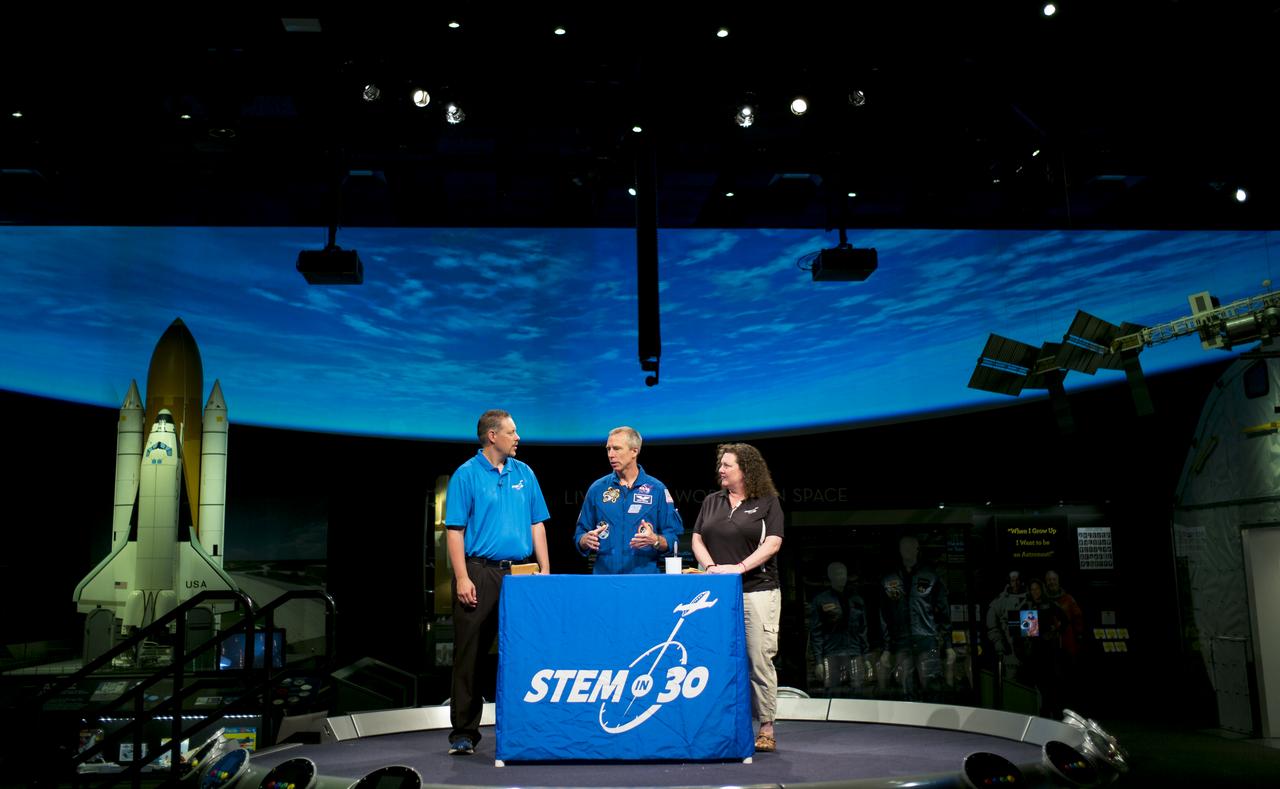
NASA astronaut Drew Feustel, center, tapes a segment of STEM in 30 with Marty Kelsey, left, and Beth Wilson, right, Thursday, May 9, 2019 at the Smithsonian’s National Air and Space Museum in Washington, DC. Feustel most recently spent 197 days living and working onboard the International Space Station as part of Expedition 55 and as commander of Expedition 56. Feustel ventured outside the space station on three spacewalks, moving him up to second among U.S. spacewalkers with a cumulative time of 61 hours 48 minutes over nine spacewalks. Photo Credit: (NASA/Joel Kowsky)
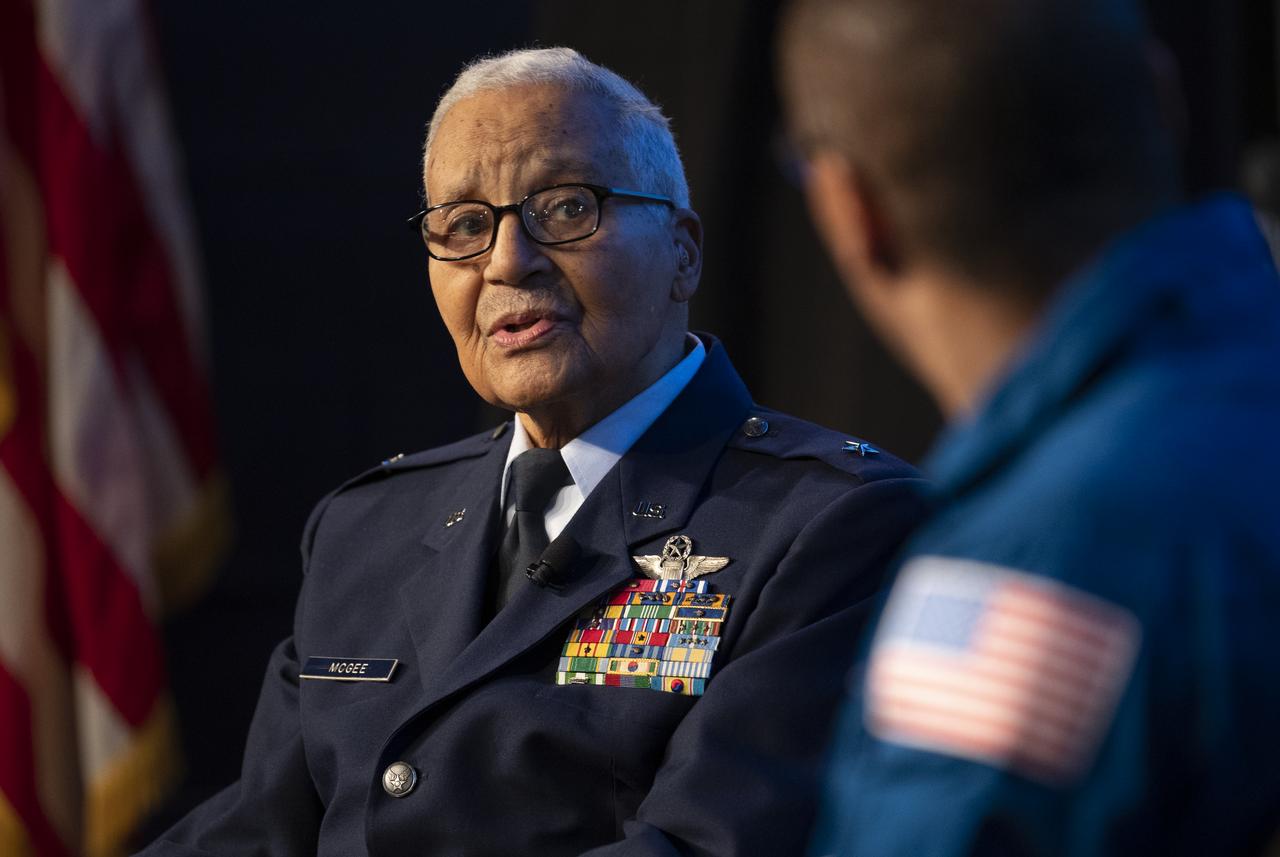
Retired U.S. Air Force Honorary Brigadier General Charles McGee speaks with NASA astronaut Alvin Drew during a Black History Month program titled “Trailblazers, The Story of a Tuskegee Airman,” Wednesday, Feb. 5, 2020, at NASA Headquarters in Washington, DC. McGee, a pilot with the Tuskegee Airmen during World War II, was a career officer in the Air Force also serving during the Korean and Vietnam Wars. Over his 30 years of service he flew 409 combat missions. Of the 355 Tuskegee pilots who flew in combat, McGee is one of only nine surviving. Photo Credit: (NASA/Joel Kowsky)
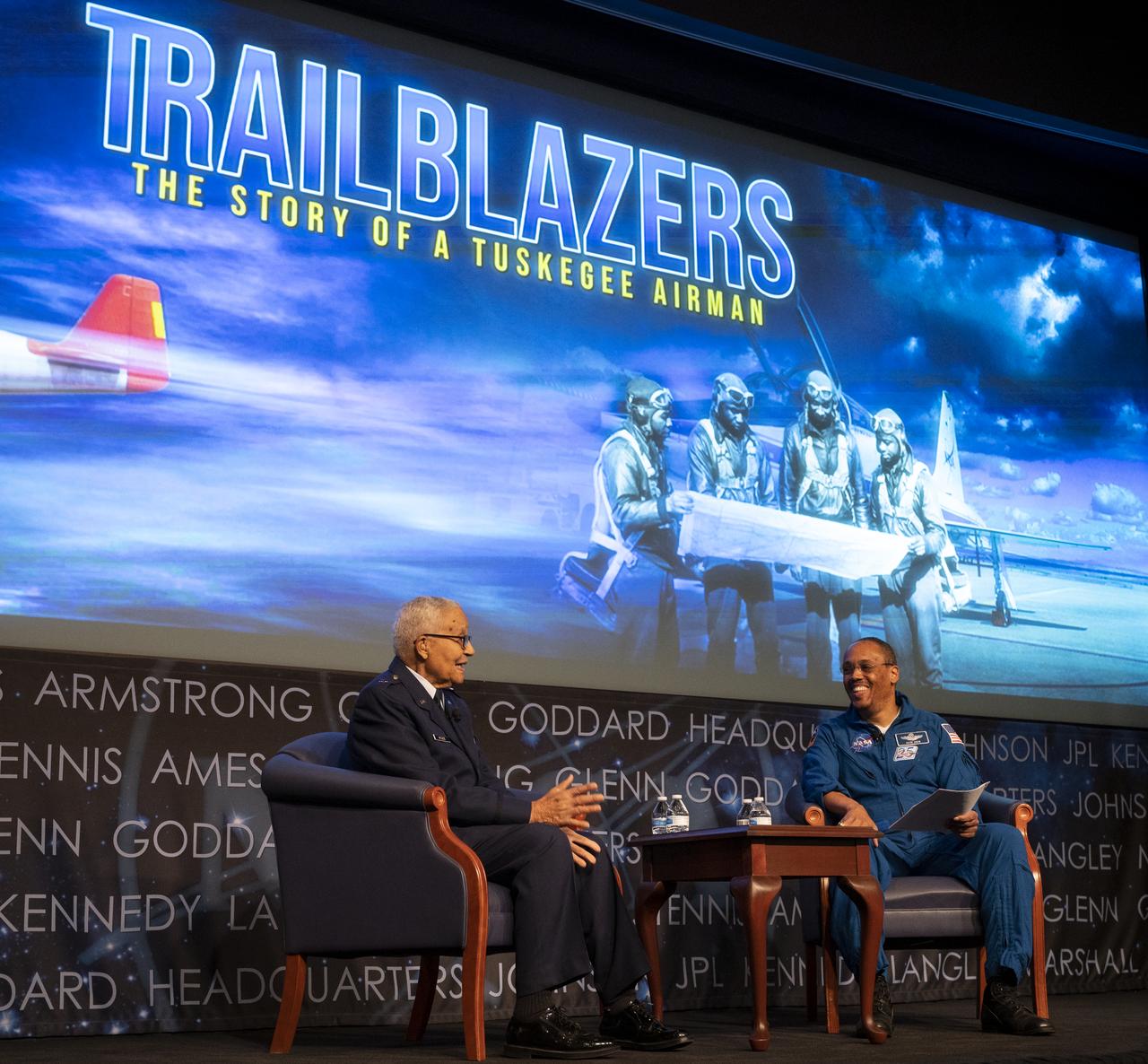
Retired U.S. Air Force Honorary Brigadier General Charles McGee, left, speaks with NASA astronaut Alvin Drew during a Black History Month program titled “Trailblazers, The Story of a Tuskegee Airman,” Wednesday, Feb. 5, 2020, at NASA Headquarters in Washington, DC. McGee, a pilot with the Tuskegee Airmen during World War II, was a career officer in the Air Force also serving during the Korean and Vietnam Wars. Over his 30 years of service he flew 409 combat missions. Of the 355 Tuskegee pilots who flew in combat, McGee is one of only nine surviving. Photo Credit: (NASA/Joel Kowsky)
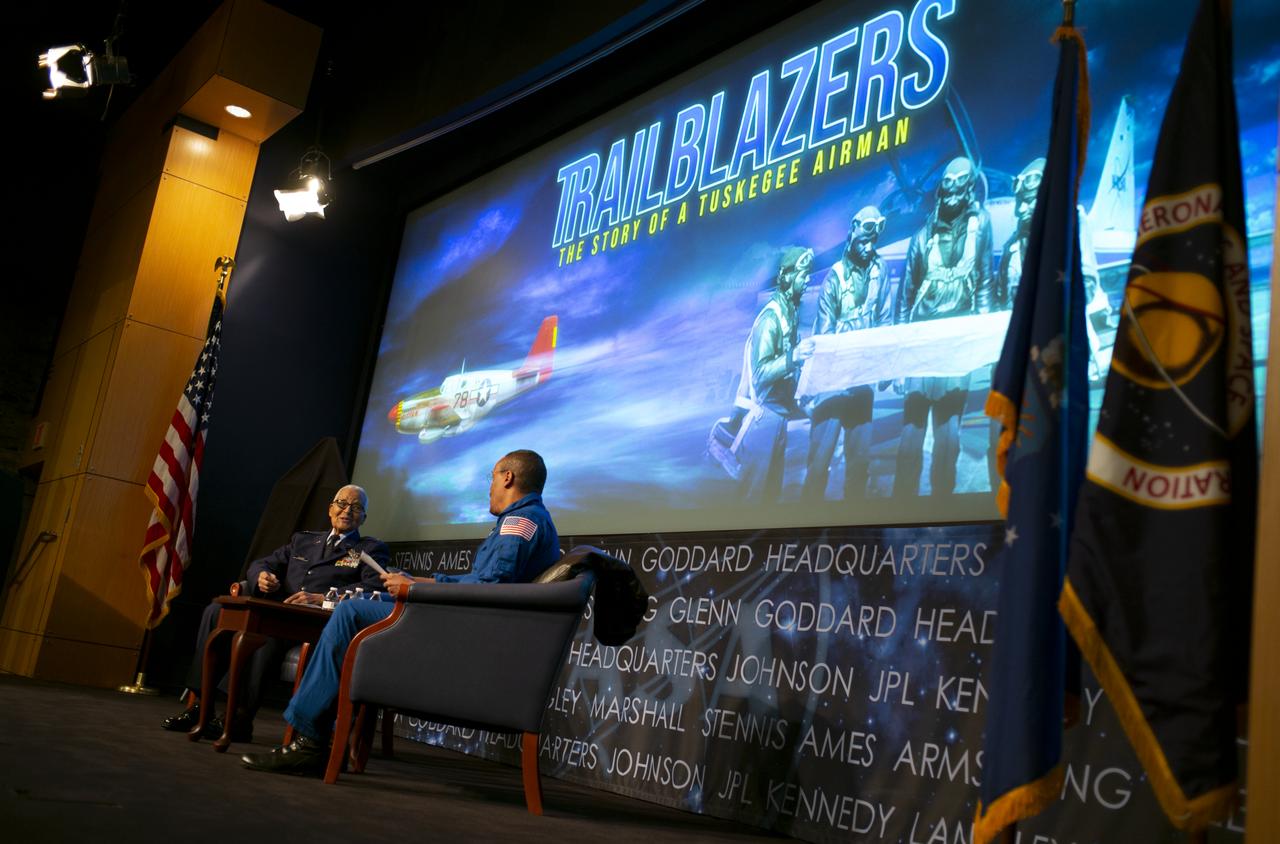
Retired U.S. Air Force Honorary Brigadier General Charles McGee, left, speaks with NASA astronaut Alvin Drew during a Black History Month program titled “Trailblazers, The Story of a Tuskegee Airman,” Wednesday, Feb. 5, 2020, at NASA Headquarters in Washington, DC. McGee, a pilot with the Tuskegee Airmen during World War II, was a career officer in the Air Force also serving during the Korean and Vietnam Wars. Over his 30 years of service he flew 409 combat missions. Of the 355 Tuskegee pilots who flew in combat, McGee is one of only nine surviving. Photo Credit: (NASA/Joel Kowsky)
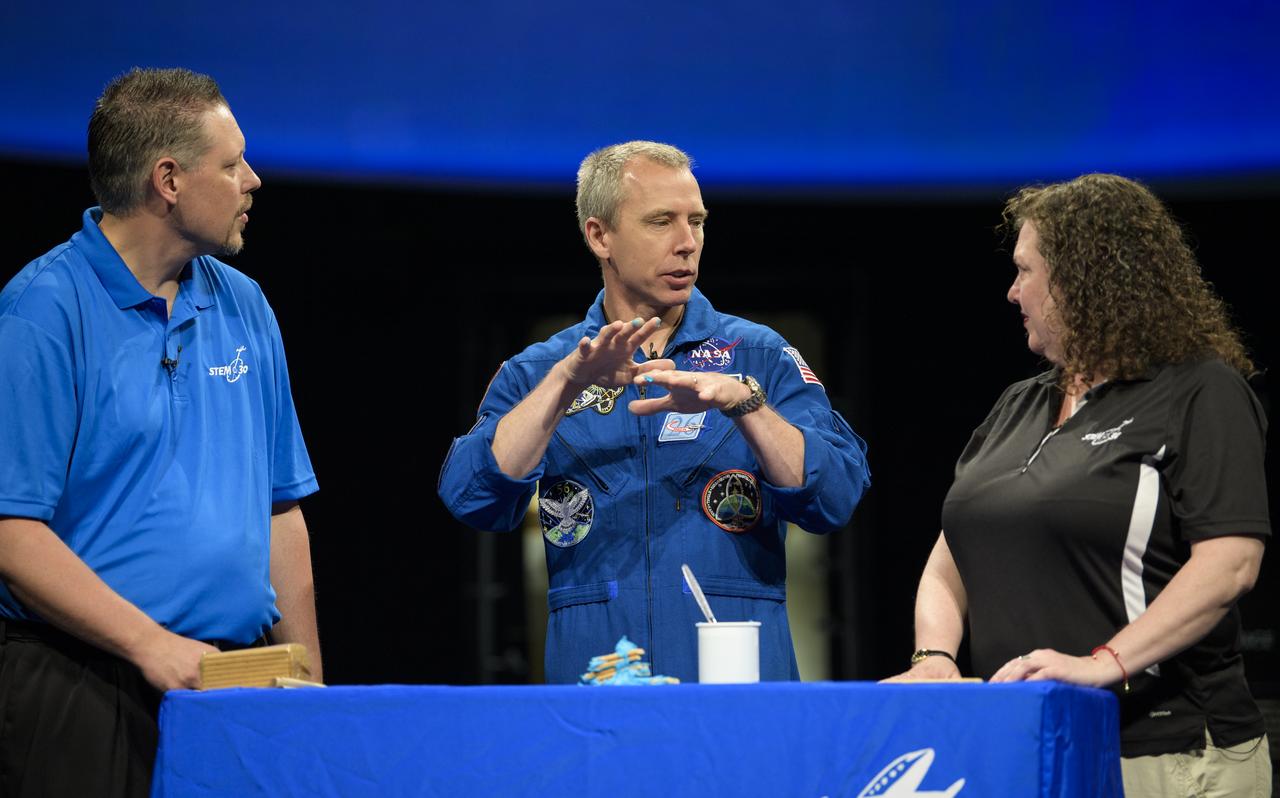
NASA astronaut Drew Feustel, center, talks about seismology while taping a segment of STEM in 30 with Marty Kelsey, left, and Beth Wilson, right, Thursday, May 9, 2019 at the Smithsonian’s National Air and Space Museum in Washington, DC. Feustel most recently spent 197 days living and working onboard the International Space Station as part of Expedition 55 and as commander of Expedition 56. Feustel ventured outside the space station on three spacewalks, moving him up to second among U.S. spacewalkers with a cumulative time of 61 hours 48 minutes over nine spacewalks. Photo Credit: (NASA/Joel Kowsky)
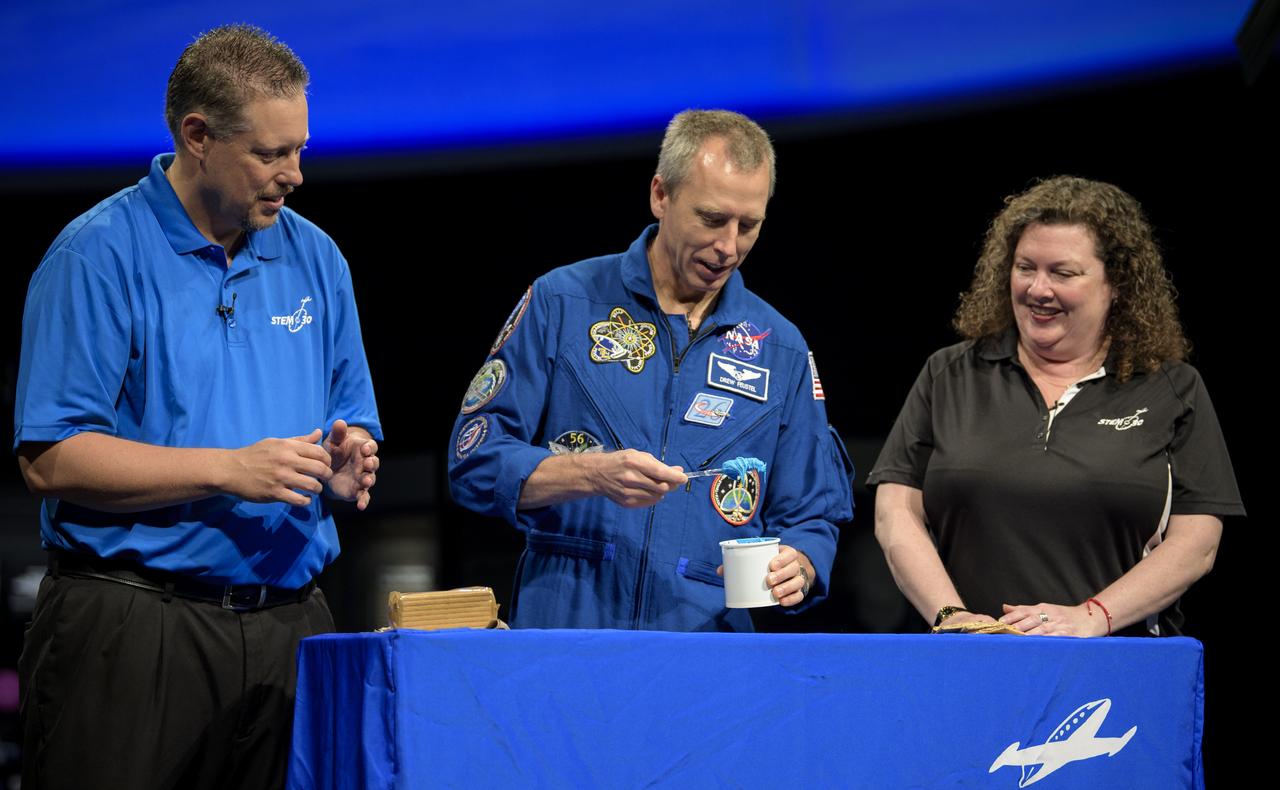
NASA astronaut Drew Feustel, center, uses frosting and graham crackers to represent the layers of Earths crust while taping a segment of STEM in 30 with Marty Kelsey, left, and Beth Wilson, right, Thursday, May 9, 2019 at the Smithsonian’s National Air and Space Museum in Washington, DC. Feustel most recently spent 197 days living and working onboard the International Space Station as part of Expedition 55 and as commander of Expedition 56. Feustel ventured outside the space station on three spacewalks, moving him up to second among U.S. spacewalkers with a cumulative time of 61 hours 48 minutes over nine spacewalks. Photo Credit: (NASA/Joel Kowsky)

Retired U.S. Air Force Honorary Brigadier General Charles McGee, left, speaks with NASA astronaut Alvin Drew during a Black History Month program titled “Trailblazers, The Story of a Tuskegee Airman,” Wednesday, Feb. 5, 2020, at NASA Headquarters in Washington, DC. McGee, a pilot with the Tuskegee Airmen during World War II, was a career officer in the Air Force also serving during the Korean and Vietnam Wars. Over his 30 years of service he flew 409 combat missions. Of the 355 Tuskegee pilots who flew in combat, McGee is one of only nine surviving. Photo Credit: (NASA/Joel Kowsky)
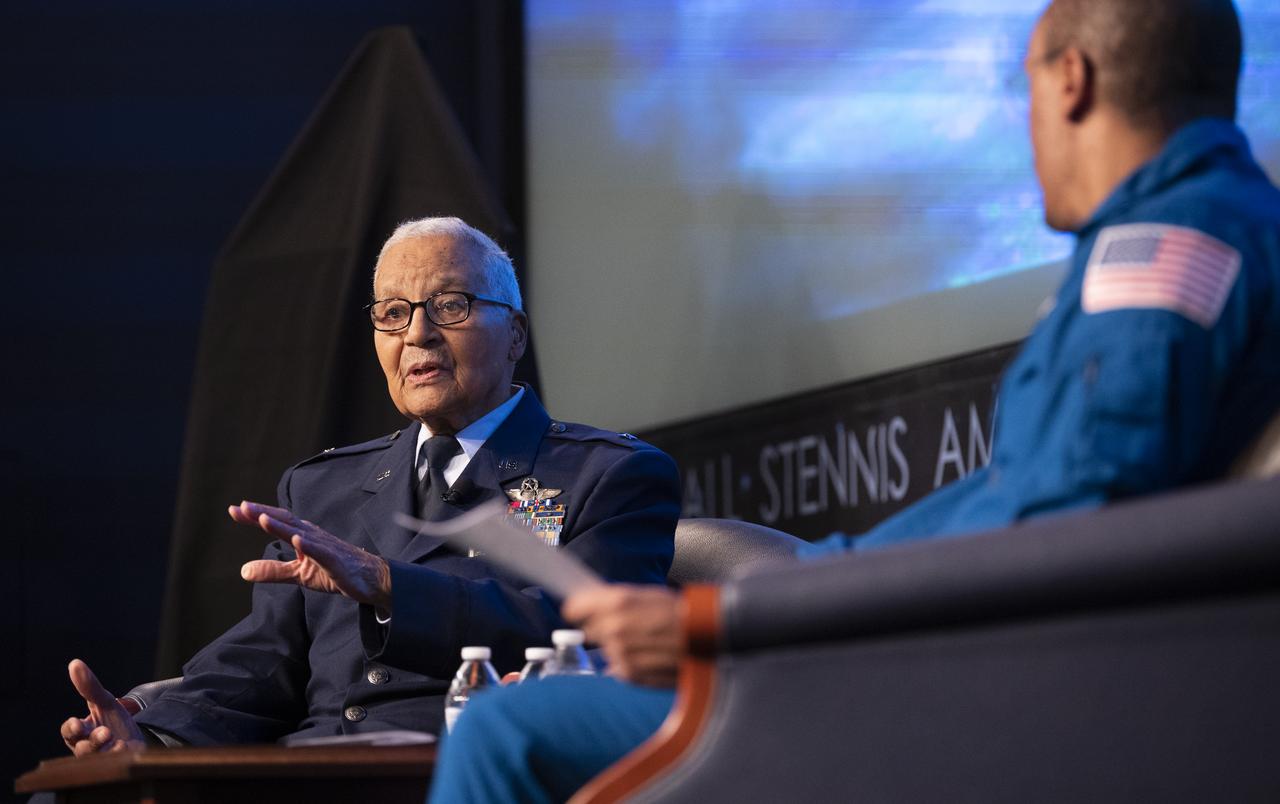
Retired U.S. Air Force Honorary Brigadier General Charles McGee speaks with NASA astronaut Alvin Drew during a Black History Month program titled “Trailblazers, The Story of a Tuskegee Airman,” Wednesday, Feb. 5, 2020, at NASA Headquarters in Washington, DC. McGee, a pilot with the Tuskegee Airmen during World War II, was a career officer in the Air Force also serving during the Korean and Vietnam Wars. Over his 30 years of service he flew 409 combat missions. Of the 355 Tuskegee pilots who flew in combat, McGee is one of only nine surviving. Photo Credit: (NASA/Joel Kowsky)

Students from the audience gesture toward the camera at the beginning of the STEM in 30 program where NASA astronaut Randy Bresnik and ESA astronaut Paolo Nespoli spoke about their time onboard the International Space Station, Thursday, May 10, 2018 at the Smithsonian National Air and Space Museum in Washington. Photo Credit: (NASA/Aubrey Gemignani)

Audience members listen during a STEM in 30 event where NASA astronaut Serena Auñon-Chancellor spoke to students while onboard the International Space Station (ISS), Wednesday, June 27, 2018 at Smithsonian's National Air and Space Museum in Washington. Serena is part of the Expedition 56/57 crew that launched to the ISS June 6, 2018. Photo Credit: (NASA/Aubrey Gemignani)
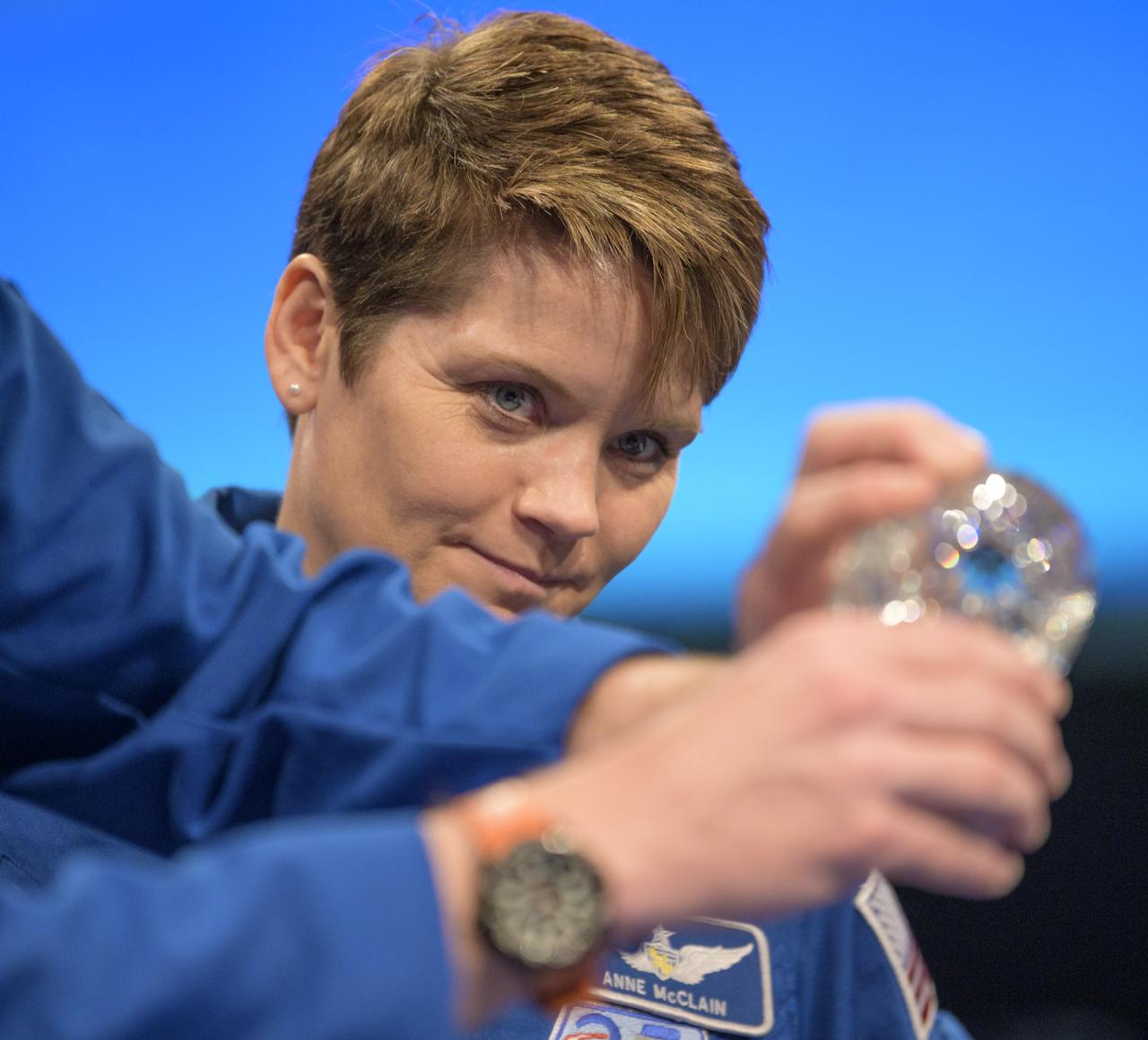
NASA astronaut Anne McClain is a guest on the program “STEM in 30,” Tuesday, Jan. 14, 2020, at the Smithsonian National Air and Space Museum in Washington. McClain most recently spent 204 days living and working onboard the International Space Station as part of Expeditions 58 and 59. Photo Credit: (NASA/Bill Ingalls)
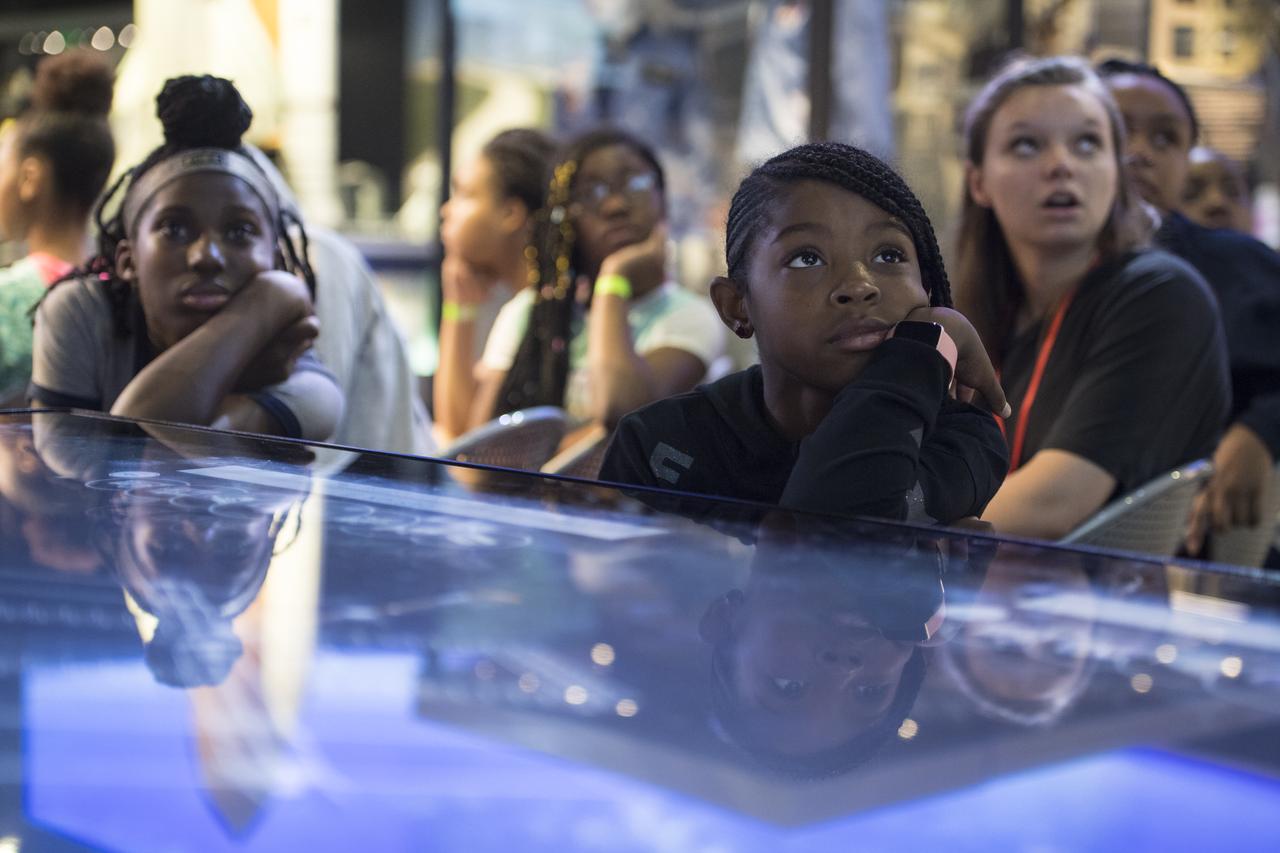
Audience members listen during a STEM in 30 event where NASA astronaut Serena Auñon-Chancellor spoke to students while onboard the International Space Station (ISS), Wednesday, June 27, 2018 at Smithsonian's National Air and Space Museum in Washington. Serena is part of the Expedition 56/57 crew that launched to the ISS June 6, 2018. Photo Credit: (NASA/Aubrey Gemignani)
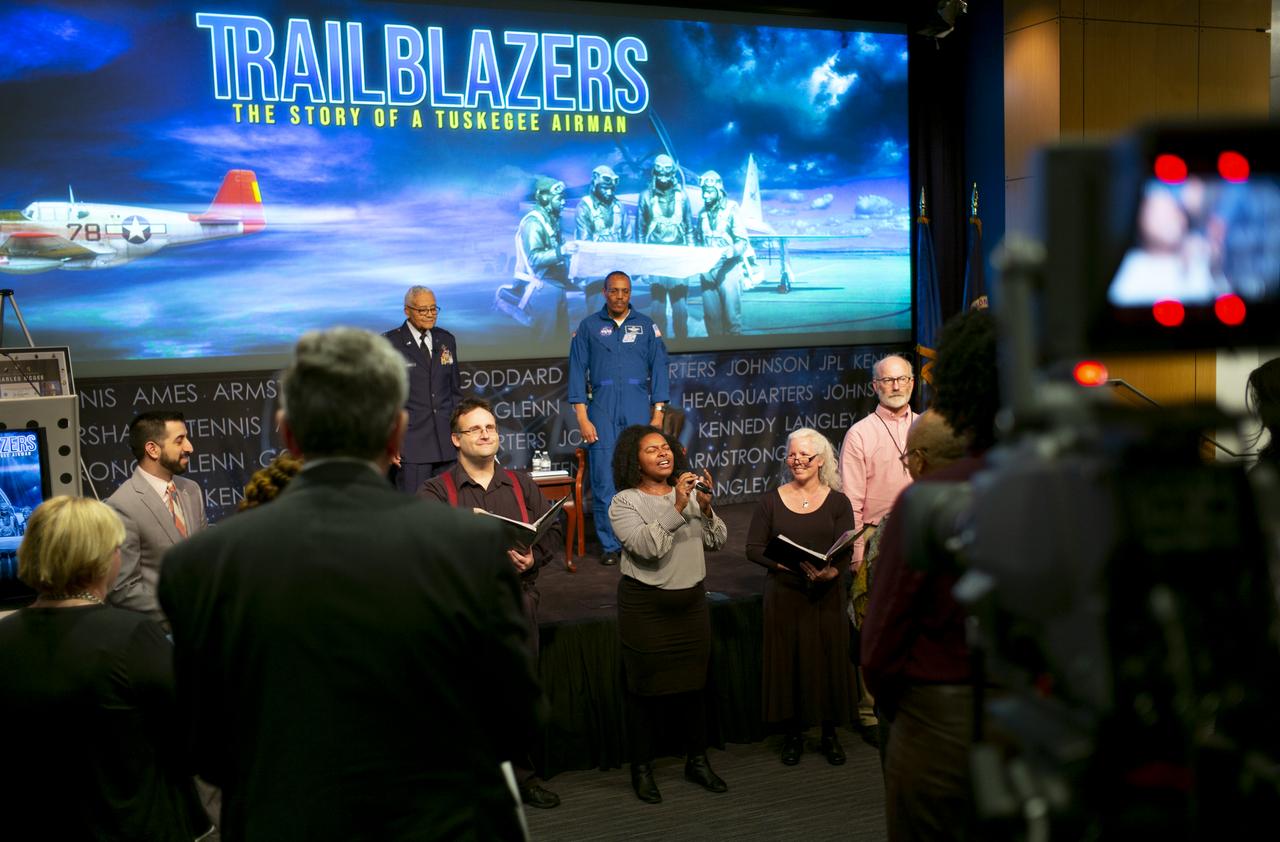
Members of the All Souls Church Unitarian Choir lead the audience in “Lift Ev’ry Voice and Sing” after a duscussion between Retired U.S. Air Force Honorary Brigadier General Charles McGee and NASA astronaut Alvin Drew during a Black History Month program titled “Trailblazers, The Story of a Tuskegee Airman,” Wednesday, Feb. 5, 2020, at NASA Headquarters in Washington, DC. McGee, a pilot with the Tuskegee Airmen during World War II, was a career officer in the Air Force also serving during the Korean and Vietnam Wars. Over his 30 years of service he flew 409 combat missions. Of the 355 Tuskegee pilots who flew in combat, McGee is one of only nine surviving. Photo Credit: (NASA/Joel Kowsky)
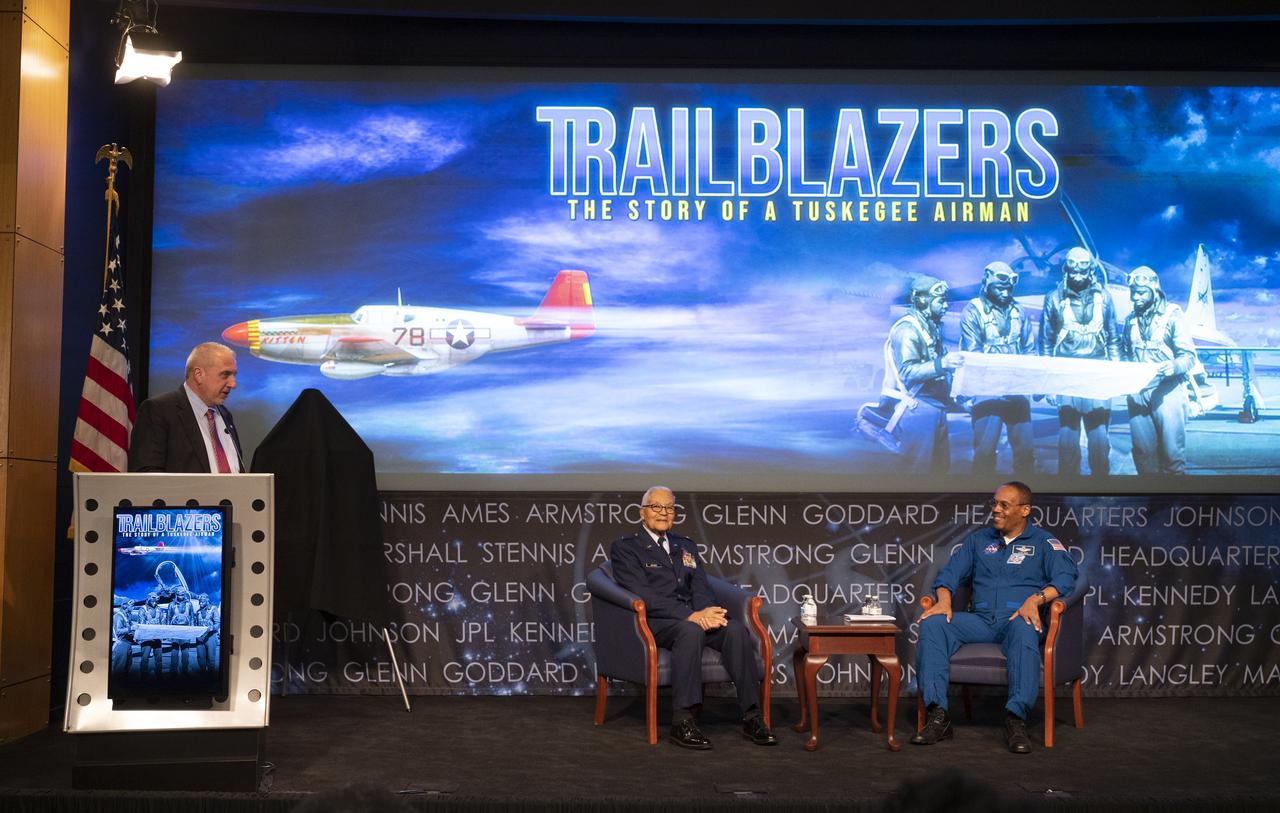
Robert Pearce, Associate Administrator for NASA’s Aeronautics Research Mission Directorate, left, moderates questions from the audience for retired U.S. Air Force Honorary Brigadier General Charles McGee speaks with NASA astronaut Alvin Drew during a Black History Month program titled “Trailblazers, The Story of a Tuskegee Airman,” Wednesday, Feb. 5, 2020, at NASA Headquarters in Washington, DC. McGee, a pilot with the Tuskegee Airmen during World War II, was a career officer in the Air Force also serving during the Korean and Vietnam Wars. Over his 30 years of service he flew 409 combat missions. Of the 355 Tuskegee pilots who flew in combat, McGee is one of only nine surviving. Photo Credit: (NASA/Joel Kowsky)
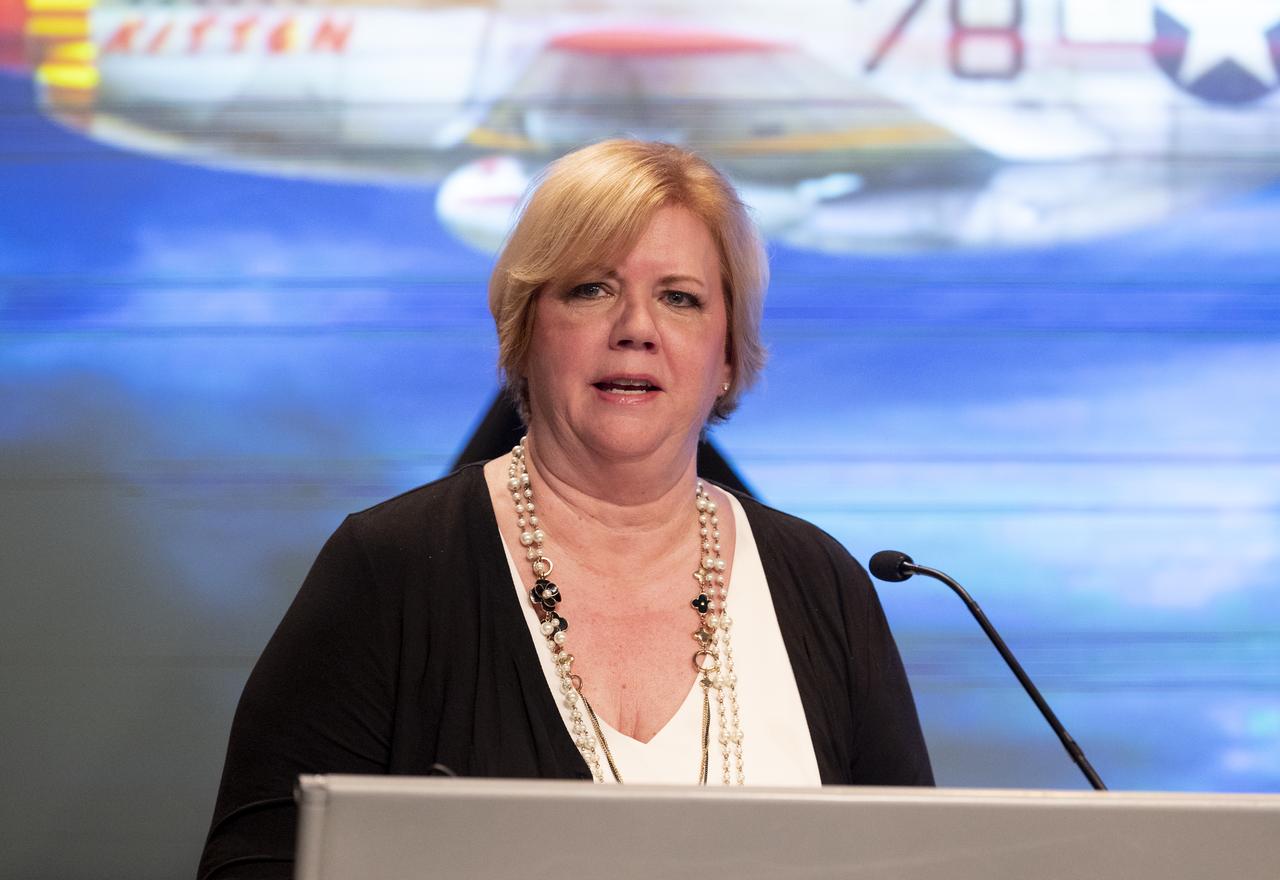
NASA Deputy Associate Administrator Melanie Saunders speaks before a discussion between retired U.S. Air Force Honorary Brigadier General Charles McGee and NASA astronaut Alvin Drew during a Black History Month program titled “Trailblazers, The Story of a Tuskegee Airman,” Wednesday, Feb. 5, 2020, at NASA Headquarters in Washington, DC. McGee, a pilot with the Tuskegee Airmen during World War II, was a career officer in the Air Force also serving during the Korean and Vietnam Wars. Over his 30 years of service he flew 409 combat missions. Of the 355 Tuskegee pilots who flew in combat, McGee is one of only nine surviving. Photo Credit: (NASA/Joel Kowsky)
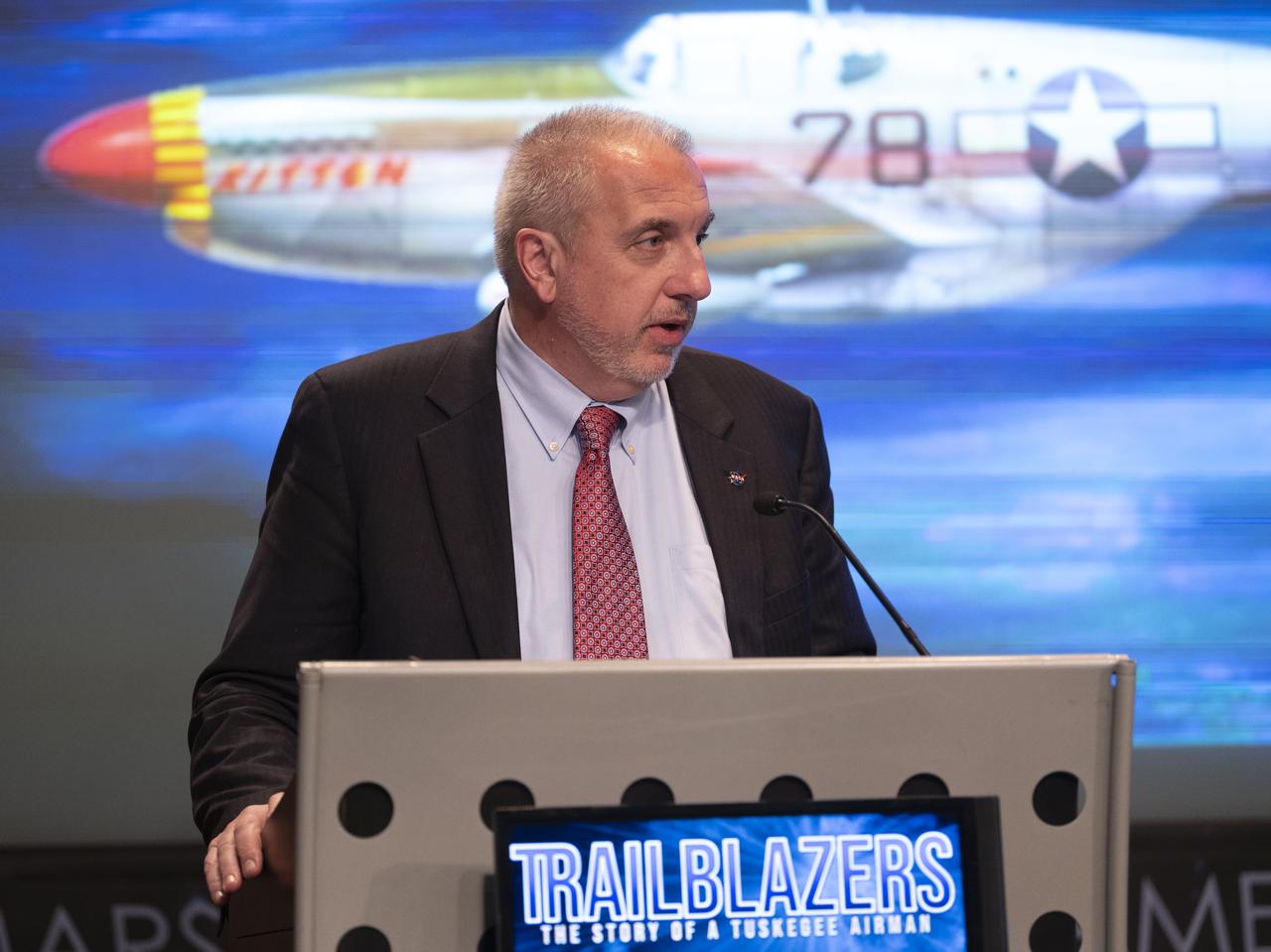
Robert Pearce, Associate Administrator for NASA’s Aeronautics Research Mission Directorate, speaks before a discussion between retired U.S. Air Force Honorary Brigadier General Charles McGee speaks with NASA astronaut Alvin Drew during a Black History Month program titled “Trailblazers, The Story of a Tuskegee Airman,” Wednesday, Feb. 5, 2020, at NASA Headquarters in Washington, DC. McGee, a pilot with the Tuskegee Airmen during World War II, was a career officer in the Air Force also serving during the Korean and Vietnam Wars. Over his 30 years of service he flew 409 combat missions. Of the 355 Tuskegee pilots who flew in combat, McGee is one of only nine surviving. Photo Credit: (NASA/Joel Kowsky)
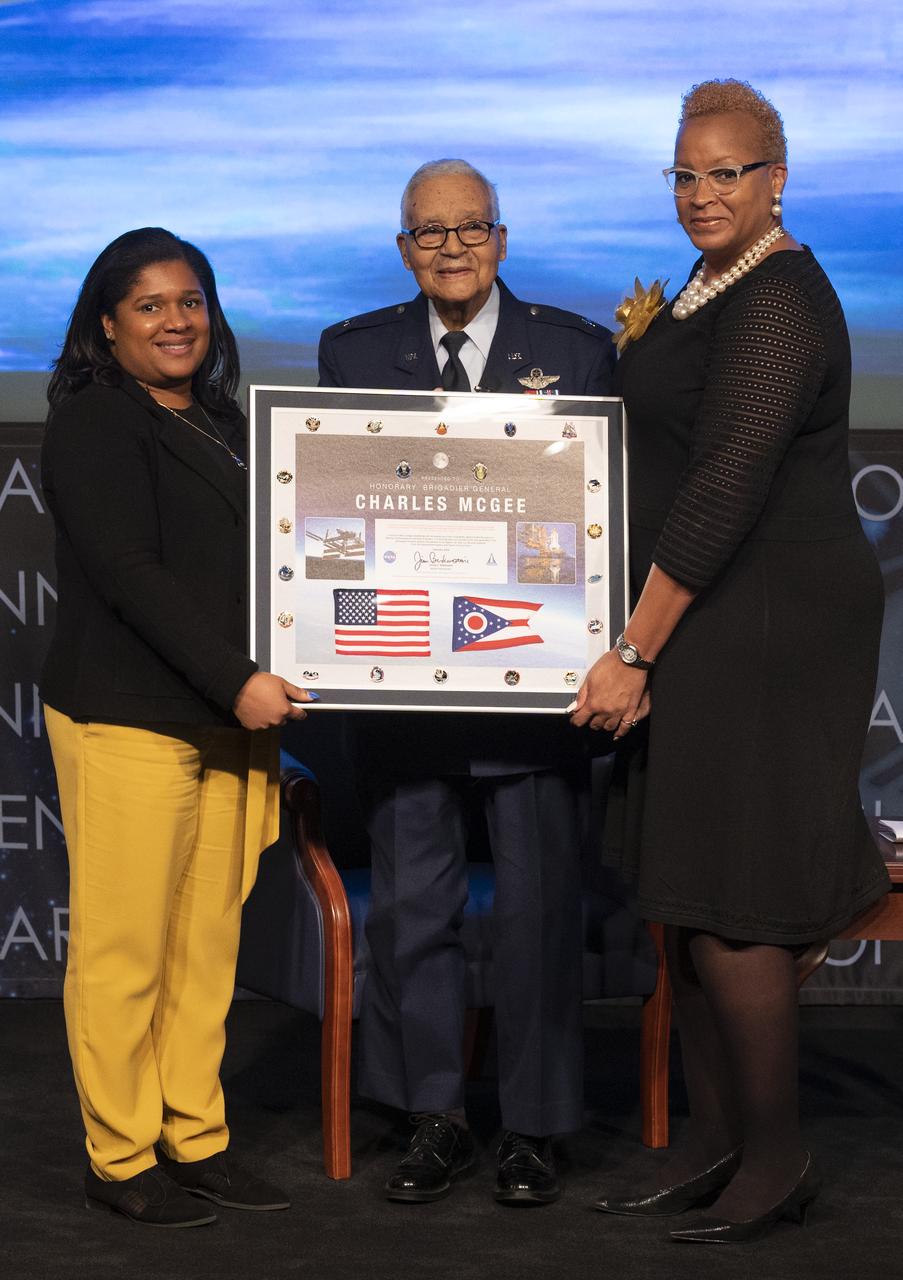
Zudayyah Taylor-Dunn, president of the NASA Headquarters Chapter of Blacks in Government (BIG), left, and LaVerne Randolph, vice president of the NASA Headquarters Chapter of BIG, present a montage containing an American Flag and Ohio State flag flown in space to Retired U.S. Air Force Honorary Brigadier General Charles McGee during a Black History Month program titled “Trailblazers, The Story of a Tuskegee Airman,” Wednesday, Feb. 5, 2020, at NASA Headquarters in Washington, DC. McGee, a pilot with the Tuskegee Airmen during World War II, was a career officer in the Air Force also serving during the Korean and Vietnam Wars. Over his 30 years of service he flew 409 combat missions. Of the 355 Tuskegee pilots who flew in combat, McGee is one of only nine surviving. Photo Credit: (NASA/Joel Kowsky)
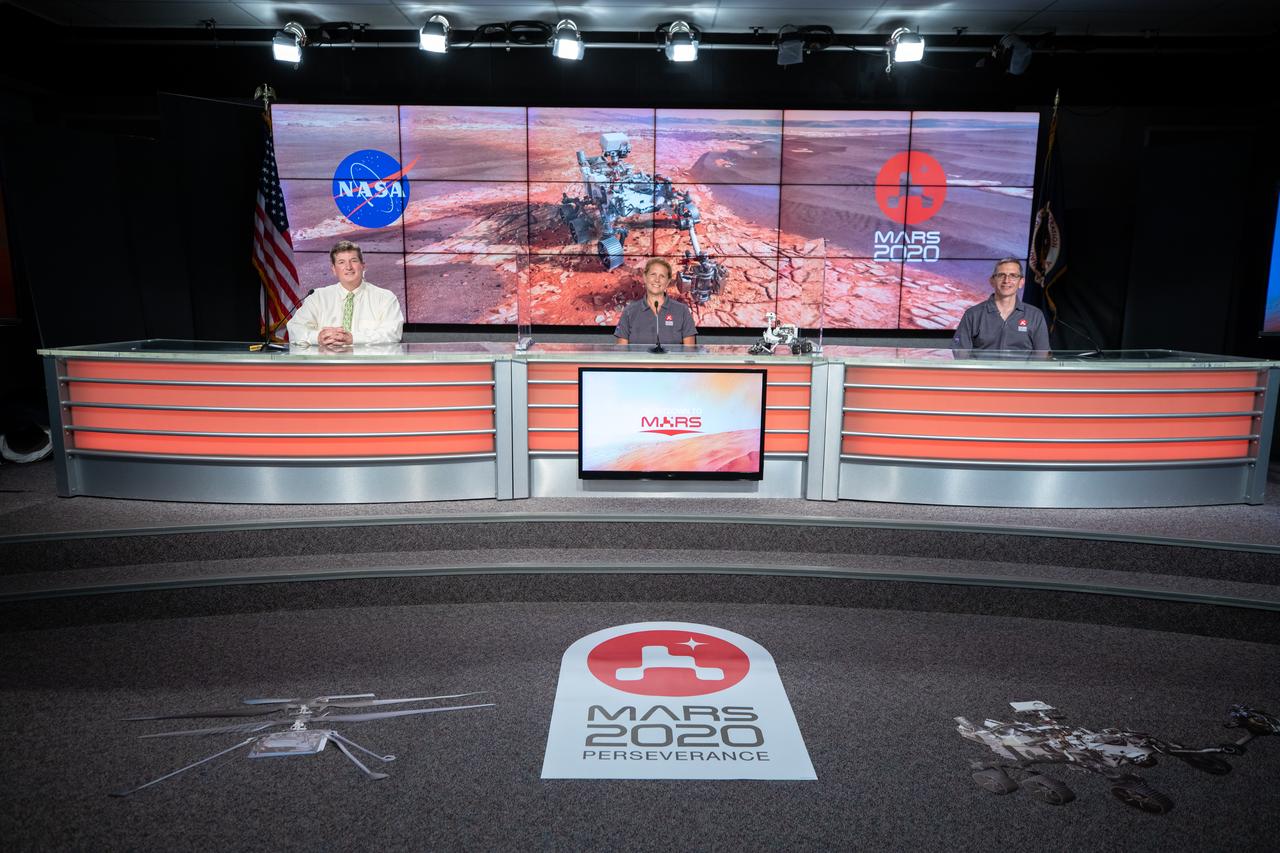
A Mars 2020 Mission Engineering and Science Briefing is held at NASA’s Kennedy Space Center in Florida on July 27, 2020. Participating in the briefing from left, are Moderator DC Agle, NASA’s Jet Propulsion Laboratory; Lori Glaze, Planetary Science Division director, NASA Headquarters; and Ken Farley, project scientist, California Institute of Technology. The Mars Perseverance rover is scheduled to launch July 30, on a United Launch Alliance Atlas V 541 rocket from Space Launch Complex 41 at nearby Cape Canaveral Air Force Station. The rover is part of NASA’s Mars Exploration Program, a long-term effort of robotic exploration of the Red Planet. The rover will search for habitable conditions in the ancient past and signs of past microbial life on Mars. The Launch Services Program at Kennedy is responsible for launch management.

NASA digital content strategist Andres Almeida sings the National Anthem before a discussion between Retired U.S. Air Force Honorary Brigadier General Charles McGee and NASA astronaut Alvin Drew during a Black History Month program titled “Trailblazers, The Story of a Tuskegee Airman,” Wednesday, Feb. 5, 2020, at NASA Headquarters in Washington, DC. McGee, a pilot with the Tuskegee Airmen during World War II, was a career officer in the Air Force also serving during the Korean and Vietnam Wars. Over his 30 years of service he flew 409 combat missions. Of the 355 Tuskegee pilots who flew in combat, McGee is one of only nine surviving. Photo Credit: (NASA/Joel Kowsky)
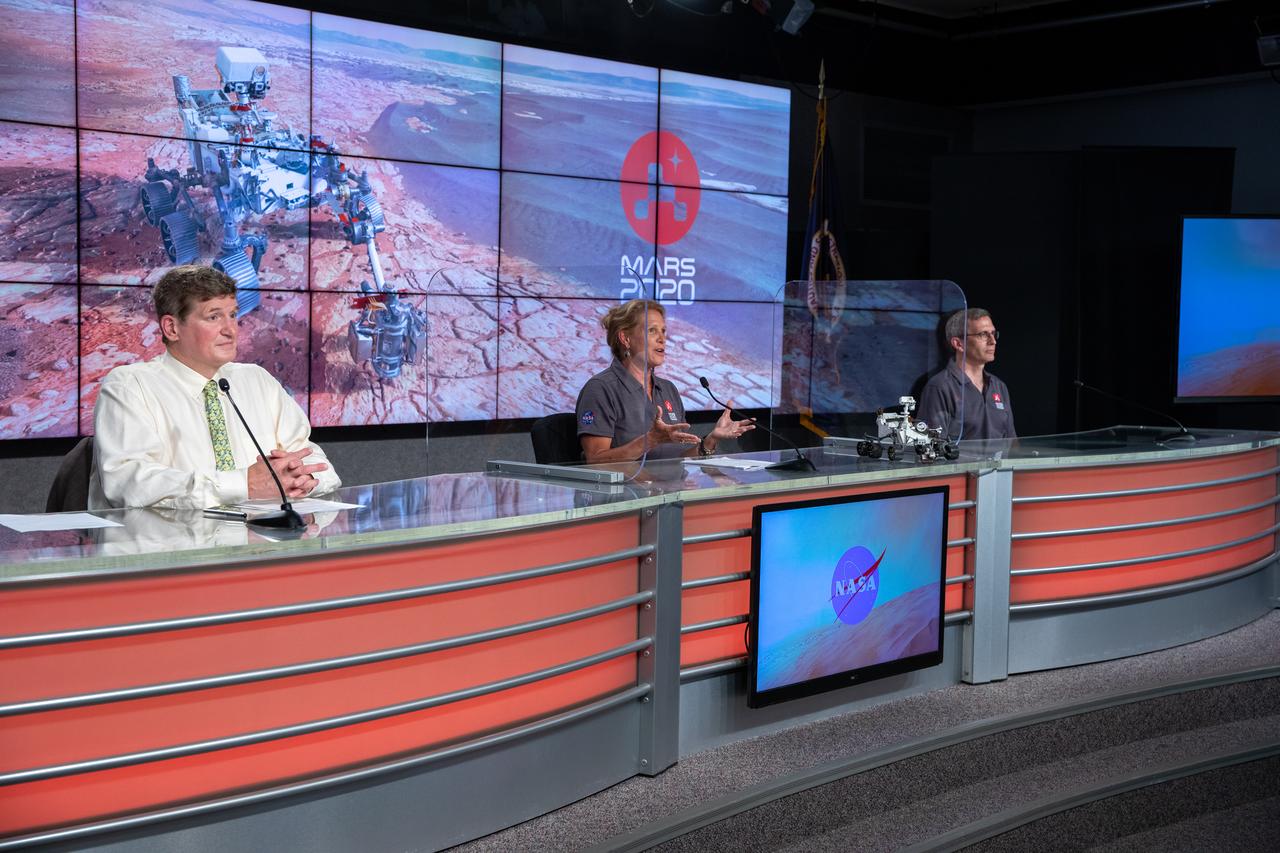
A Mars 2020 Mission Engineering and Science Briefing is held at NASA’s Kennedy Space Center in Florida on July 27, 2020. Participating in the briefing from left, are Moderator DC Agle, NASA’s Jet Propulsion Laboratory; Lori Glaze, Planetary Science Division director, NASA Headquarters; and Ken Farley, project scientist, California Institute of Technology. The Mars Perseverance rover is scheduled to launch July 30, on a United Launch Alliance Atlas V 541 rocket from Space Launch Complex 41 at nearby Cape Canaveral Air Force Station. The rover is part of NASA’s Mars Exploration Program, a long-term effort of robotic exploration of the Red Planet. The rover will search for habitable conditions in the ancient past and signs of past microbial life on Mars. The Launch Services Program at Kennedy is responsible for launch management.
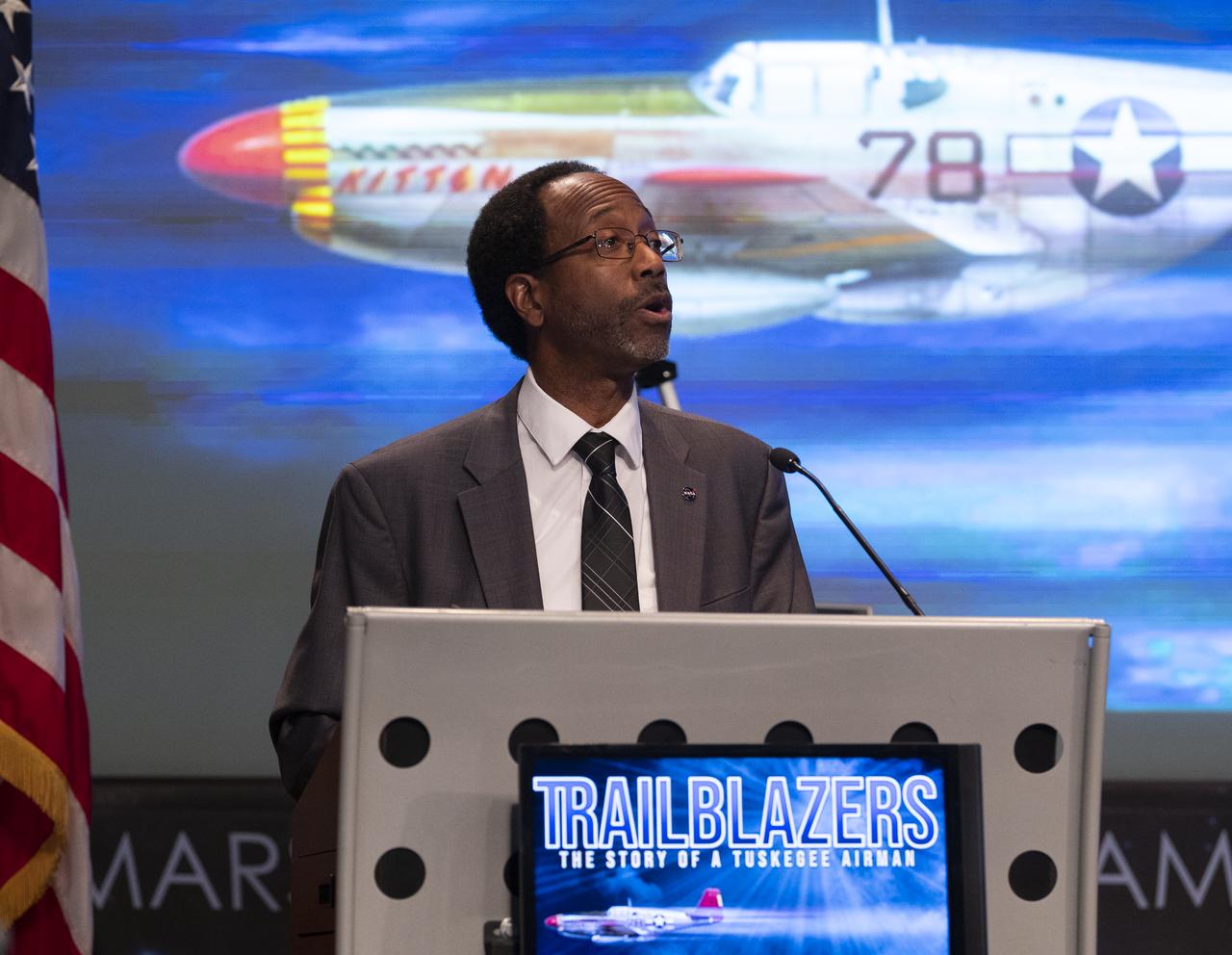
Clayton Turner, Director of NASA’s Langley Research Center, delivers closing remarks following a discussion between Retired U.S. Air Force Honorary Brigadier General Charles McGee and NASA astronaut Alvin Drew during a Black History Month program titled “Trailblazers, The Story of a Tuskegee Airman,” Wednesday, Feb. 5, 2020, at NASA Headquarters in Washington, DC. McGee, a pilot with the Tuskegee Airmen during World War II, was a career officer in the Air Force also serving during the Korean and Vietnam Wars. Over his 30 years of service he flew 409 combat missions. Of the 355 Tuskegee pilots who flew in combat, McGee is one of only nine surviving. Photo Credit: (NASA/Joel Kowsky)
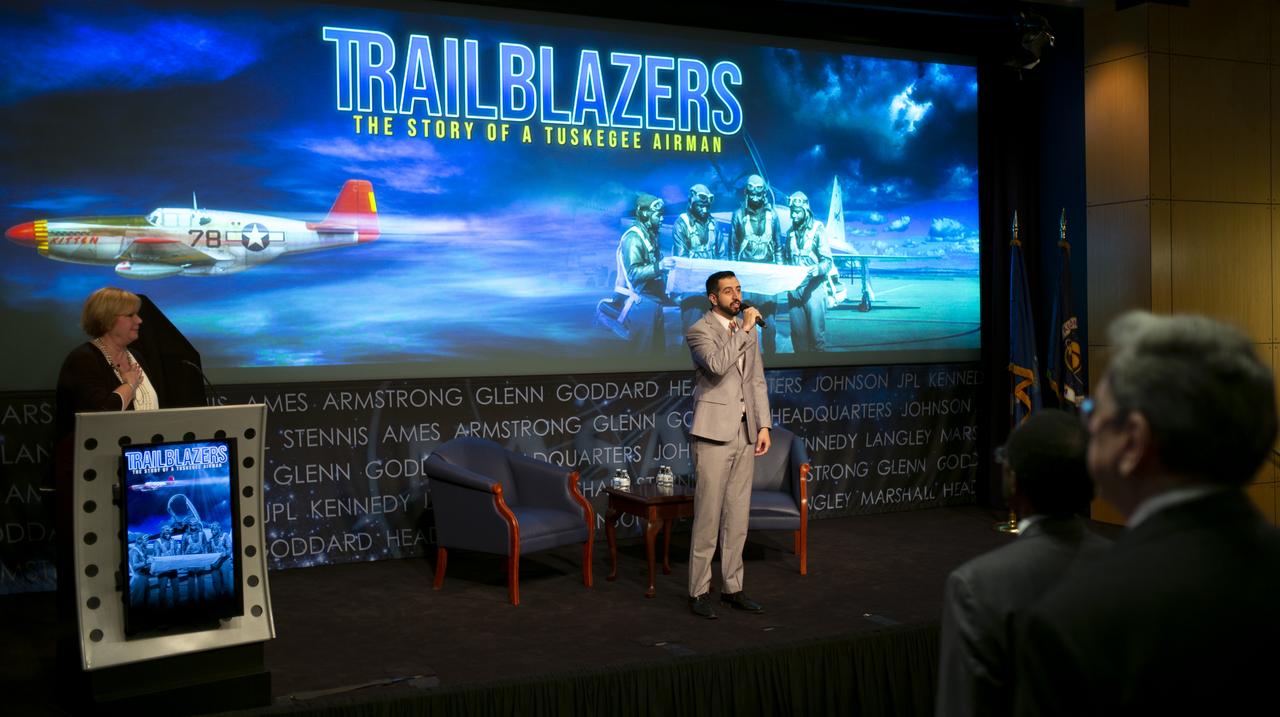
NASA digital content strategist Andres Almeida sings the National Anthem before a discussion between Retired U.S. Air Force Honorary Brigadier General Charles McGee and NASA astronaut Alvin Drew during a Black History Month program titled “Trailblazers, The Story of a Tuskegee Airman,” Wednesday, Feb. 5, 2020, at NASA Headquarters in Washington, DC. McGee, a pilot with the Tuskegee Airmen during World War II, was a career officer in the Air Force also serving during the Korean and Vietnam Wars. Over his 30 years of service he flew 409 combat missions. Of the 355 Tuskegee pilots who flew in combat, McGee is one of only nine surviving. Photo Credit: (NASA/Joel Kowsky)
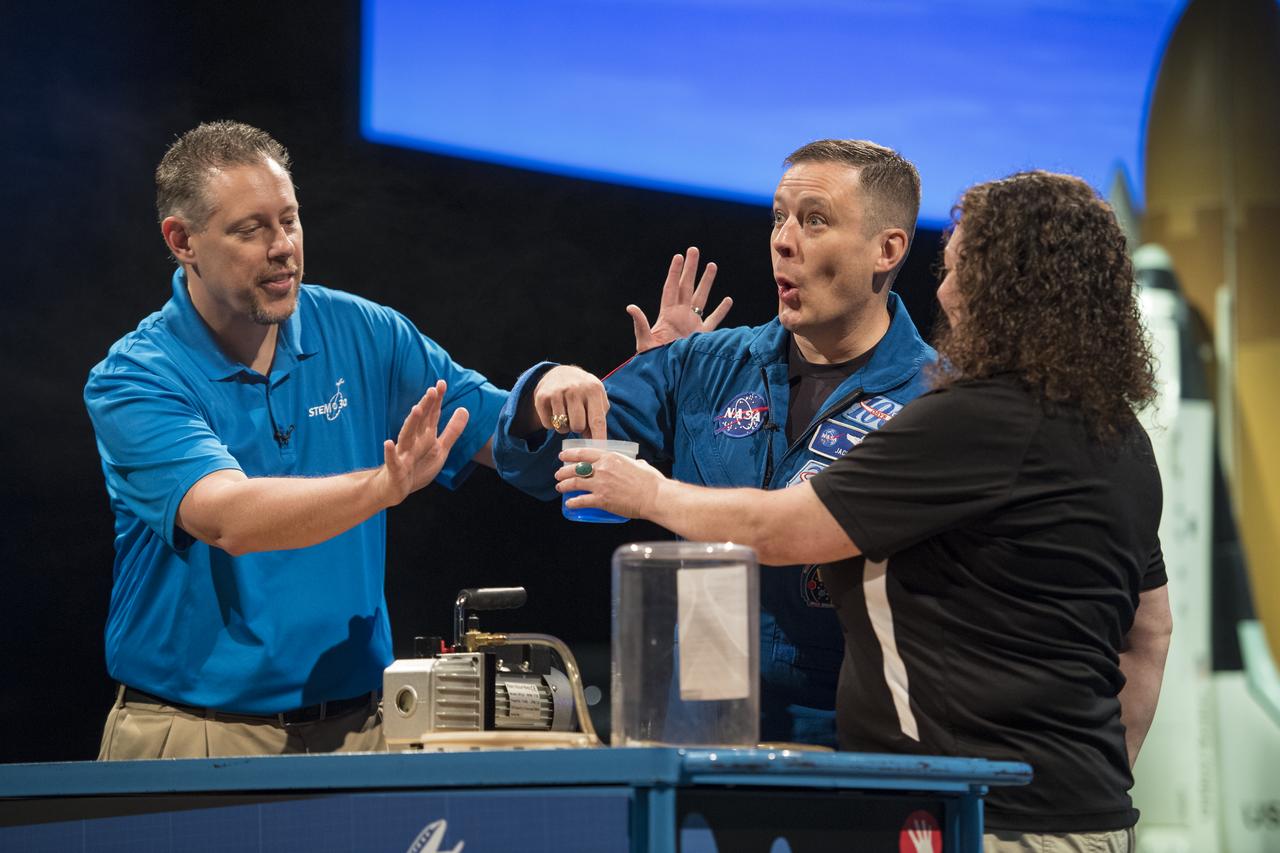
NASA astronaut Jack Fischer sticks his finger in a liquid that was just boiling by vacuum, during a Stem in 30 experiment, Friday, Nov. 3, 2017 at Smithsonian's National Air and Space Museum in Washington. During Expedition 52, Fischer completed hundreds of scientific experiments and two spacewalks, and concluded his 136-day mission onboard the International Space Station, when he landed in a remote area near the town of Zhezkazgan, Kazakhstan in September 2017. Photo Credit: (NASA/Aubrey Gemignani)
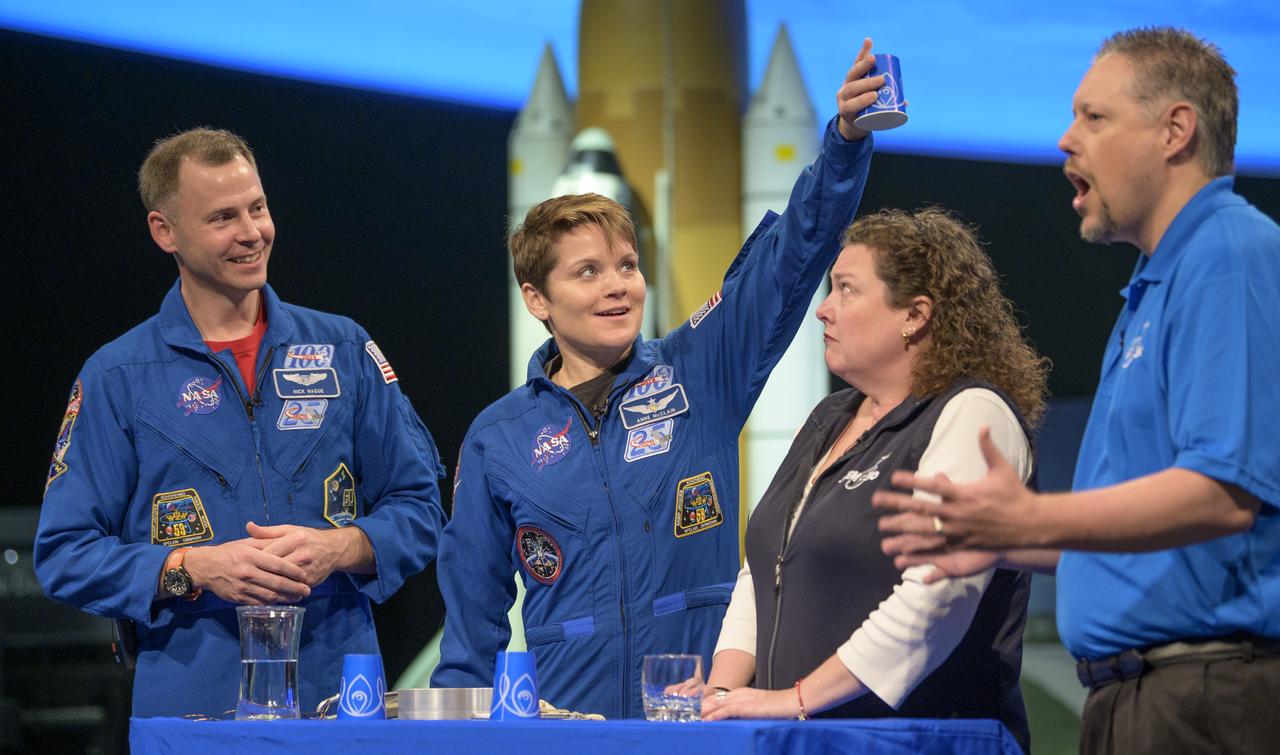
NASA astronauts Nick Hague and Anne McClain join as guests on the program “STEM in 30” with hosts Beth Wilson and Marty Kelsey, Tuesday, Jan. 14, 2020, at the Smithsonian National Air and Space Museum in Washington. Hague most recently spent 203 days living and working onboard the International Space Station as part of Expeditions 59 and 60. McClain most recently spent 204 days living and working onboard the International Space Station as part of Expeditions 58 and 59. Photo Credit: (NASA/Bill Ingalls)
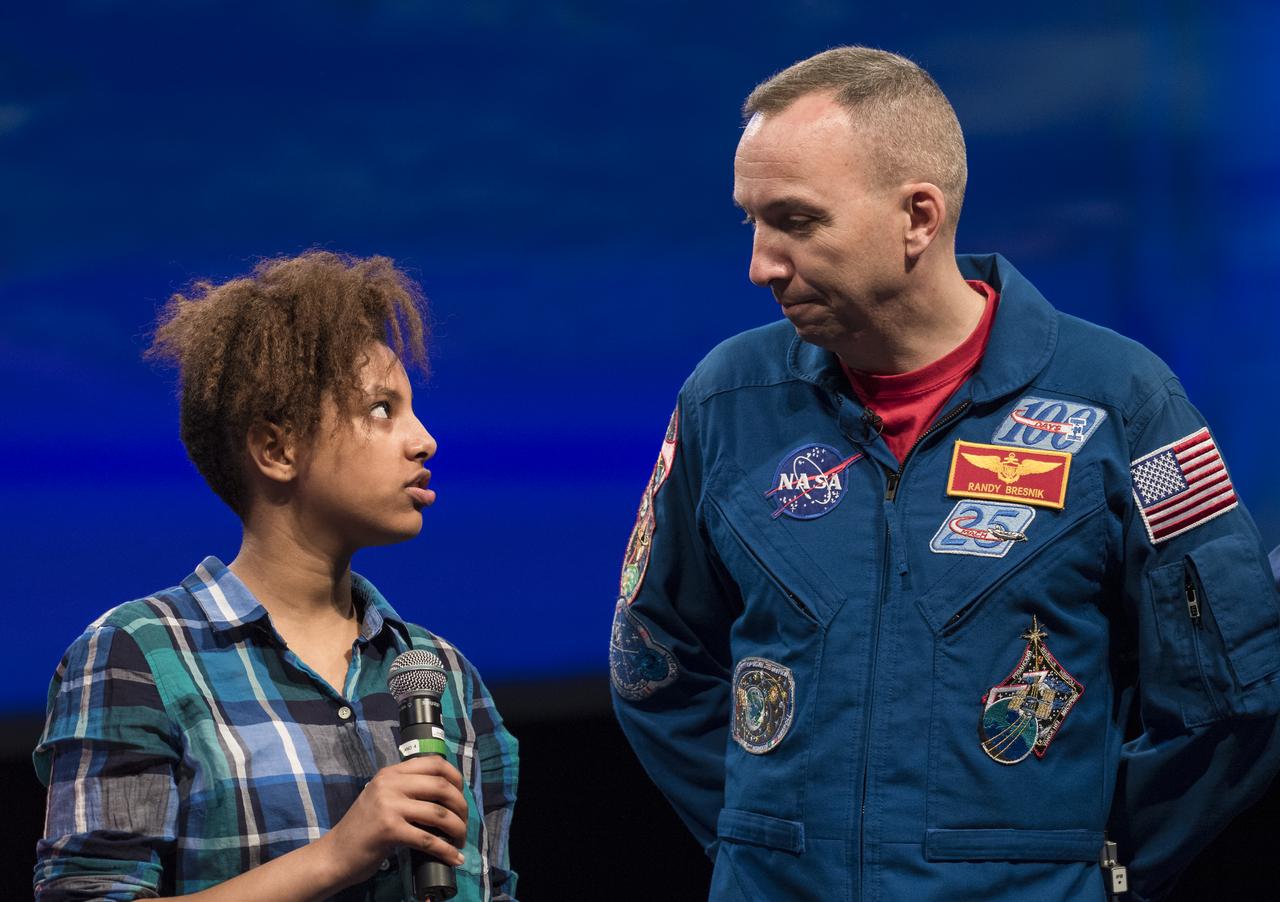
A student asks NASA astronaut Randy Bresnik a question about his time onboard the International Space Station, Thursday, May 10, 2018 at the Smithsonian National Air and Space Museum in Washington. Photo Credit: (NASA/Aubrey Gemignani)
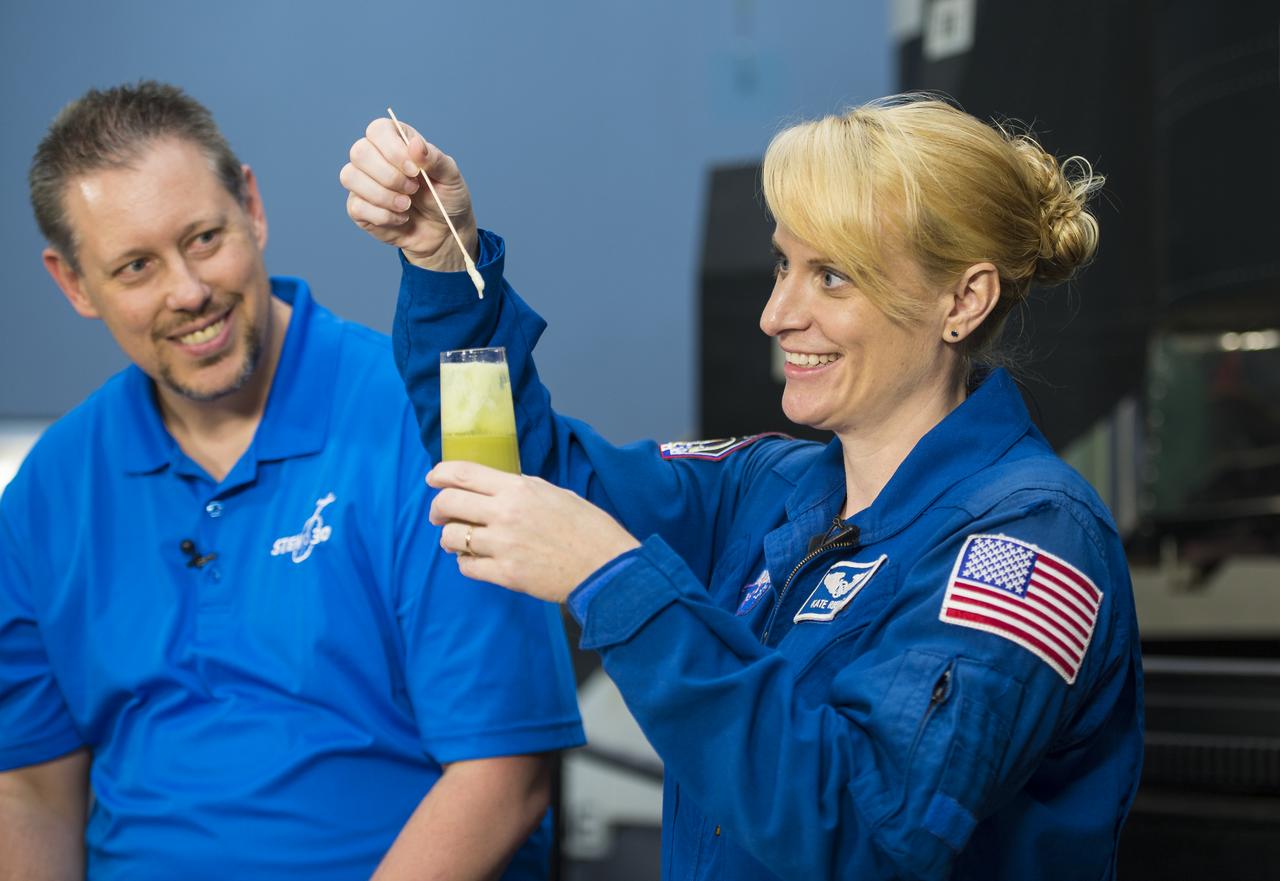
NASA Astronaut Kate Rubins conducts a DNA experiment for a STEM in 30 segment, Thursday, April 27, 2017 at Smithsonian's National Air and Space Museum in Washington. Rubins served on the International Space Station during Expeditions 48 and 49 and became the first person to sequence DNA in space. She completed her first mission when she landed in a remote area near the town of Zhezkazgan, Kazakhstan in October 2016. Photo Credit: (NASA/Aubrey Gemignani)
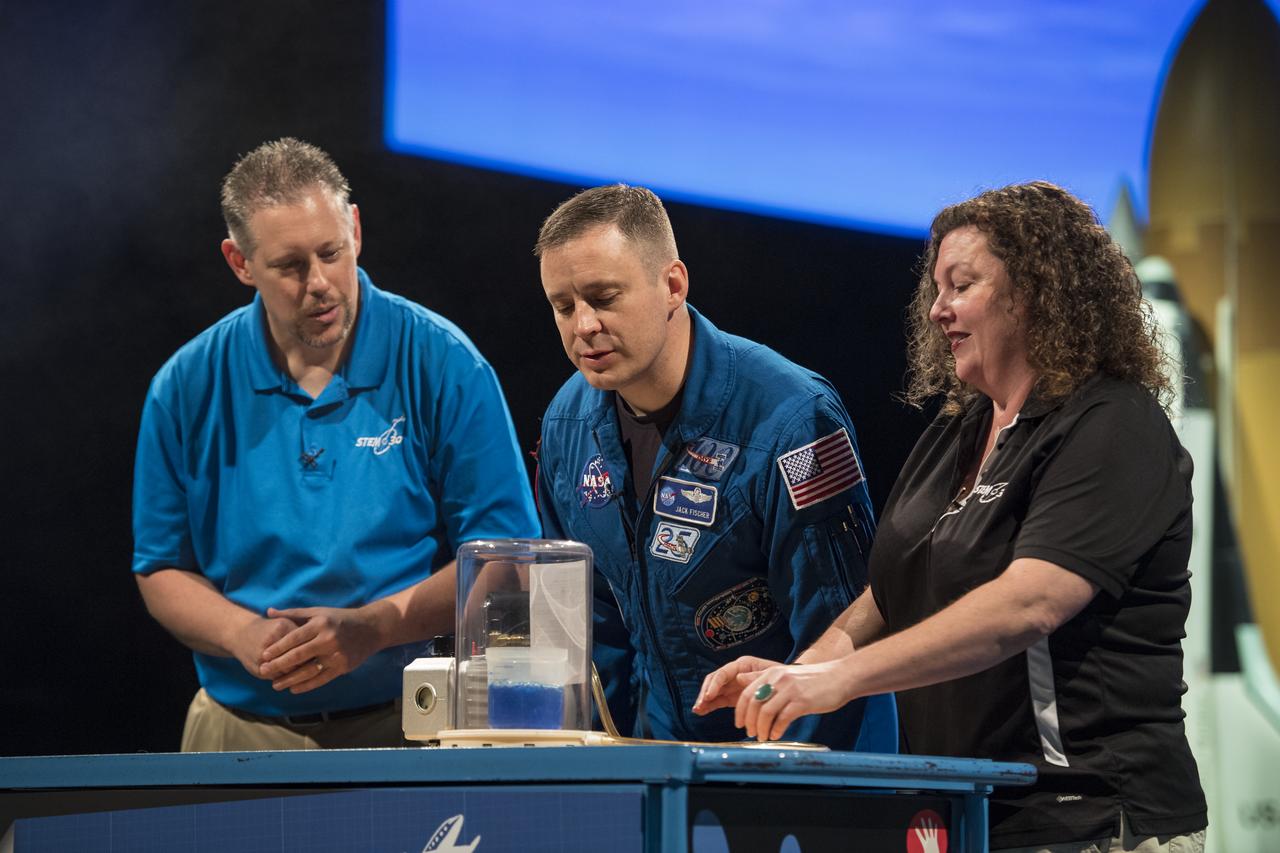
NASA astronaut Jack Fischer conducts an experiment during a Stem in 30 segment, Friday, Nov. 3, 2017 at Smithsonian's National Air and Space Museum in Washington. During Expedition 52, Fischer completed hundreds of scientific experiments and two spacewalks, and concluded his 136-day mission onboard the International Space Station, when he landed in a remote area near the town of Zhezkazgan, Kazakhstan in September 2017. Photo Credit: (NASA/Aubrey Gemignani)
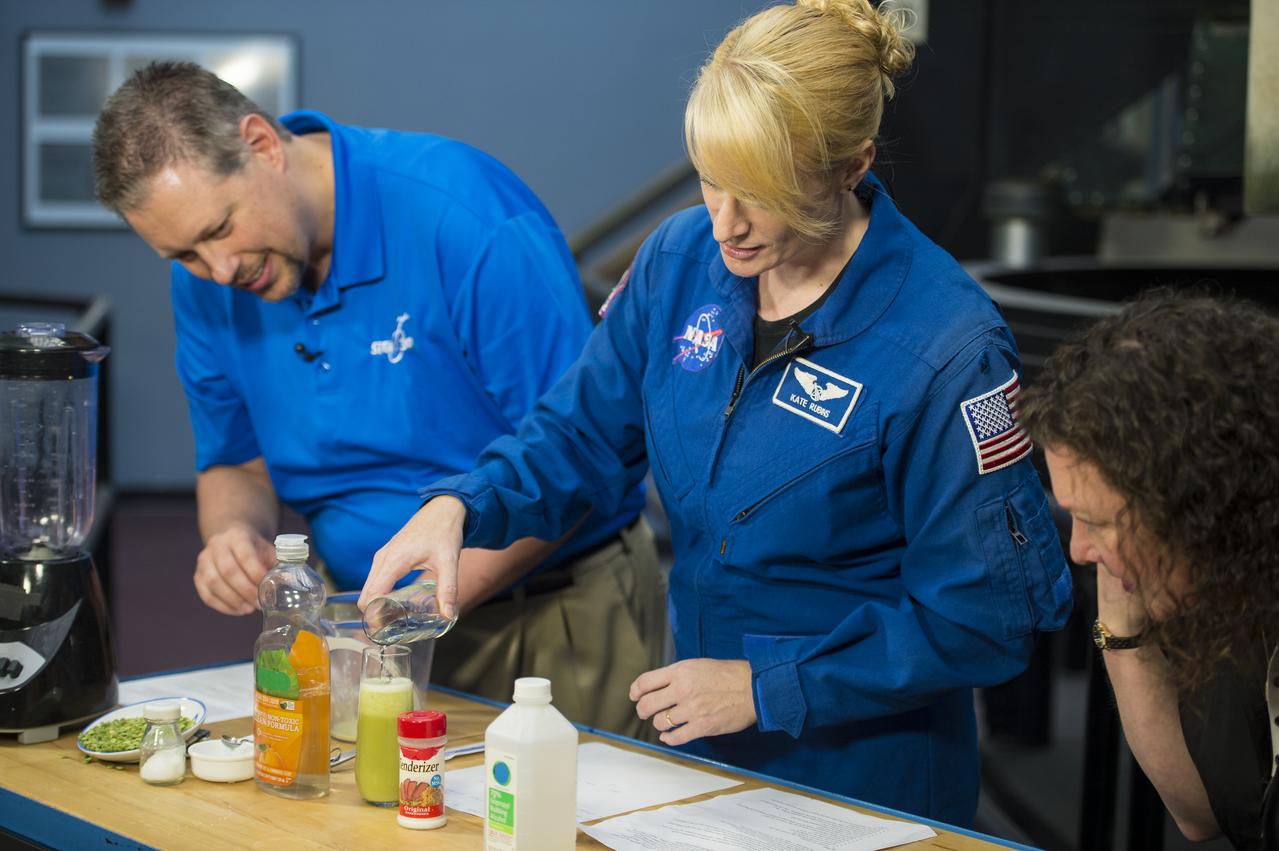
NASA Astronaut Kate Rubins conducts a DNA experiment for a STEM in 30 segment, Thursday, April 27, 2017 at Smithsonian's National Air and Space Museum in Washington. Rubins served on the International Space Station during Expeditions 48 and 49 and became the first person to sequence DNA in space. She completed her first mission when she landed in a remote area near the town of Zhezkazgan, Kazakhstan in October 2016. Photo Credit: (NASA/Aubrey Gemignani)
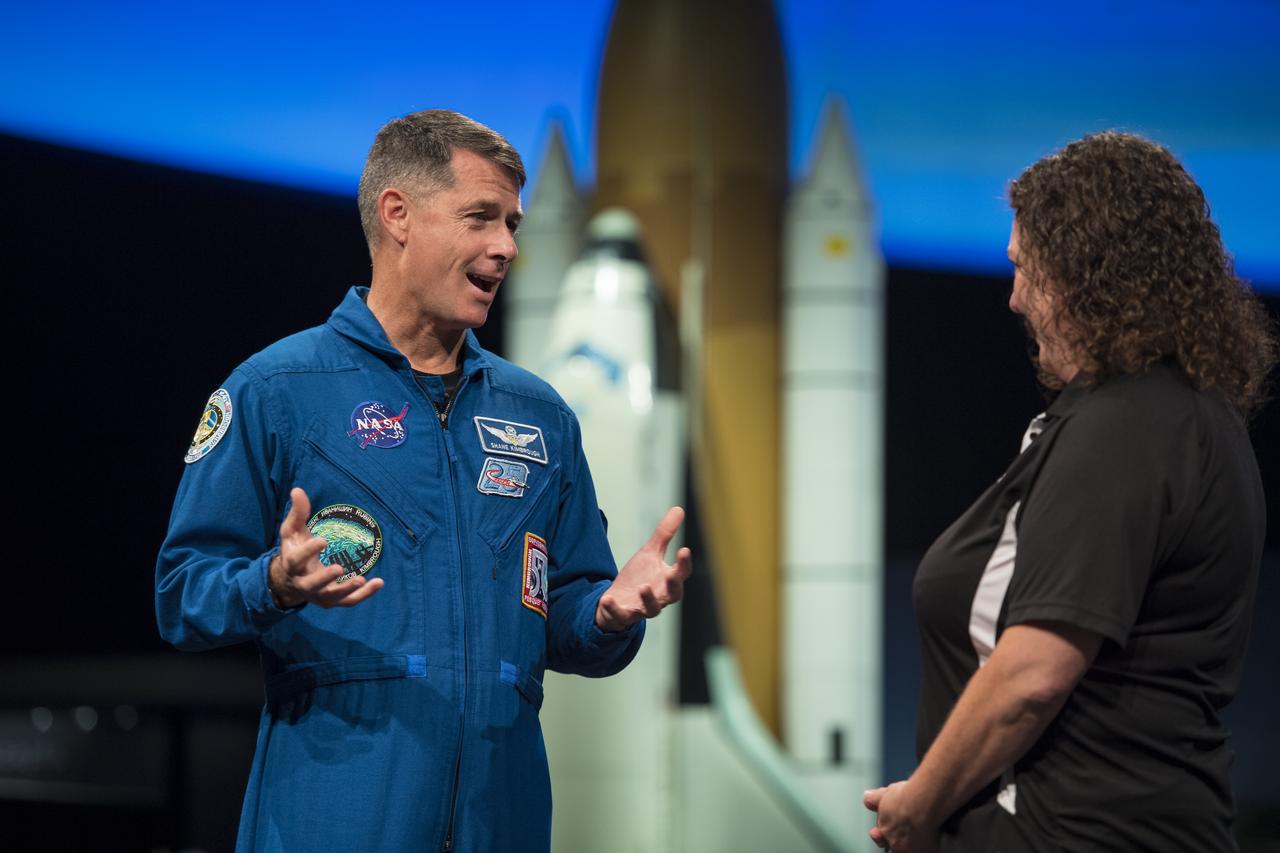
NASA astronaut Shane Kimbrough participates in a STEM in 30 piece about his time onboard the International Space Station (ISS) during Expeditions 49/50, Tuesday, September 12, 2017 at Smithsonian's National Air and Space Museum in Washington. During Expedition 50, Kimbrough completed four spacewalks for a total of 39 hours outside the ISS, and concluded his 173-day mission when he landed in a remote area near the town of Zhezkazgan, Kazakhstan in April 2017. Photo Credit: (NASA/Aubrey Gemignani)
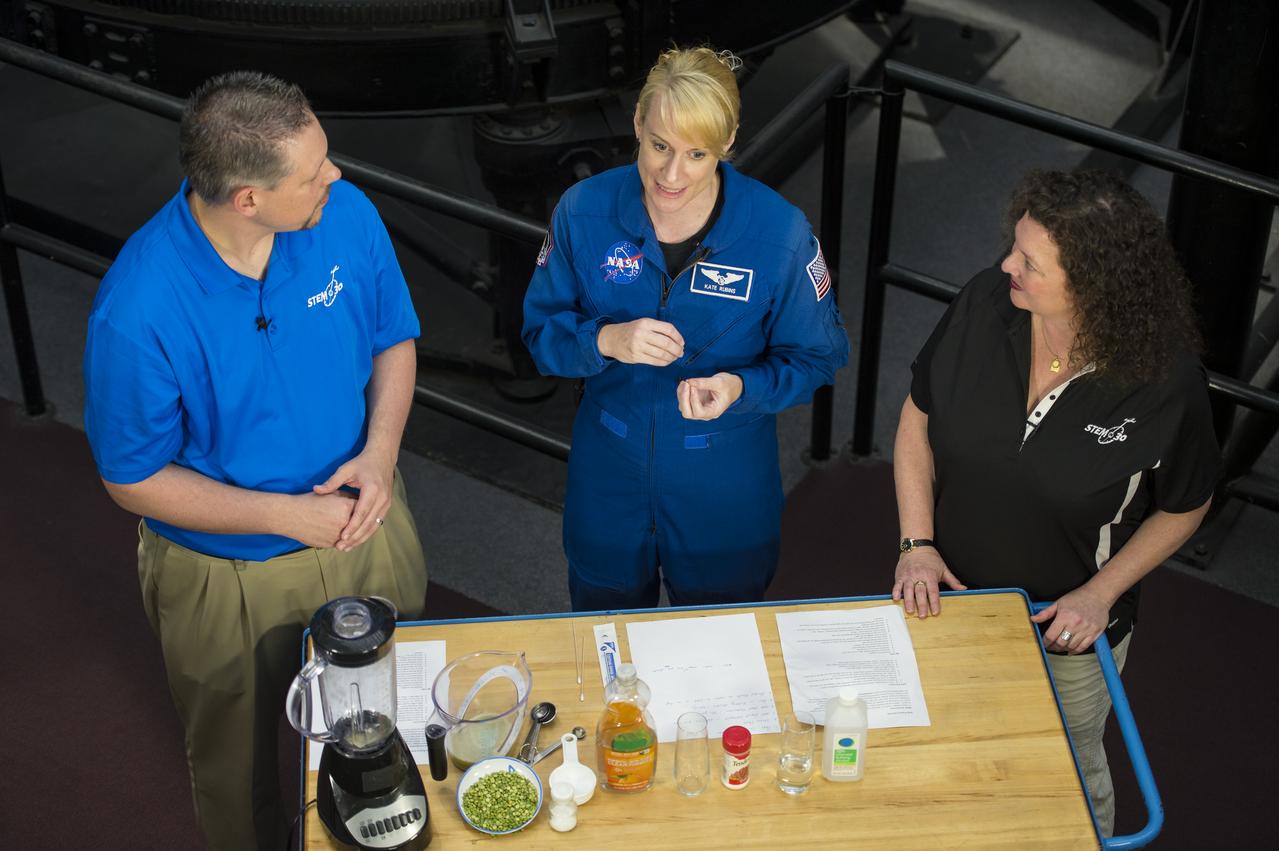
NASA Astronaut Kate Rubins conducts a DNA experiment for a STEM in 30 segment, Thursday, April 27, 2017 at Smithsonian's National Air and Space Museum in Washington. Rubins served on the International Space Station during Expeditions 48 and 49 and became the first person to sequence DNA in space. She completed her first mission when she landed in a remote area near the town of Zhezkazgan, Kazakhstan in October 2016. Photo Credit: (NASA/Aubrey Gemignani)
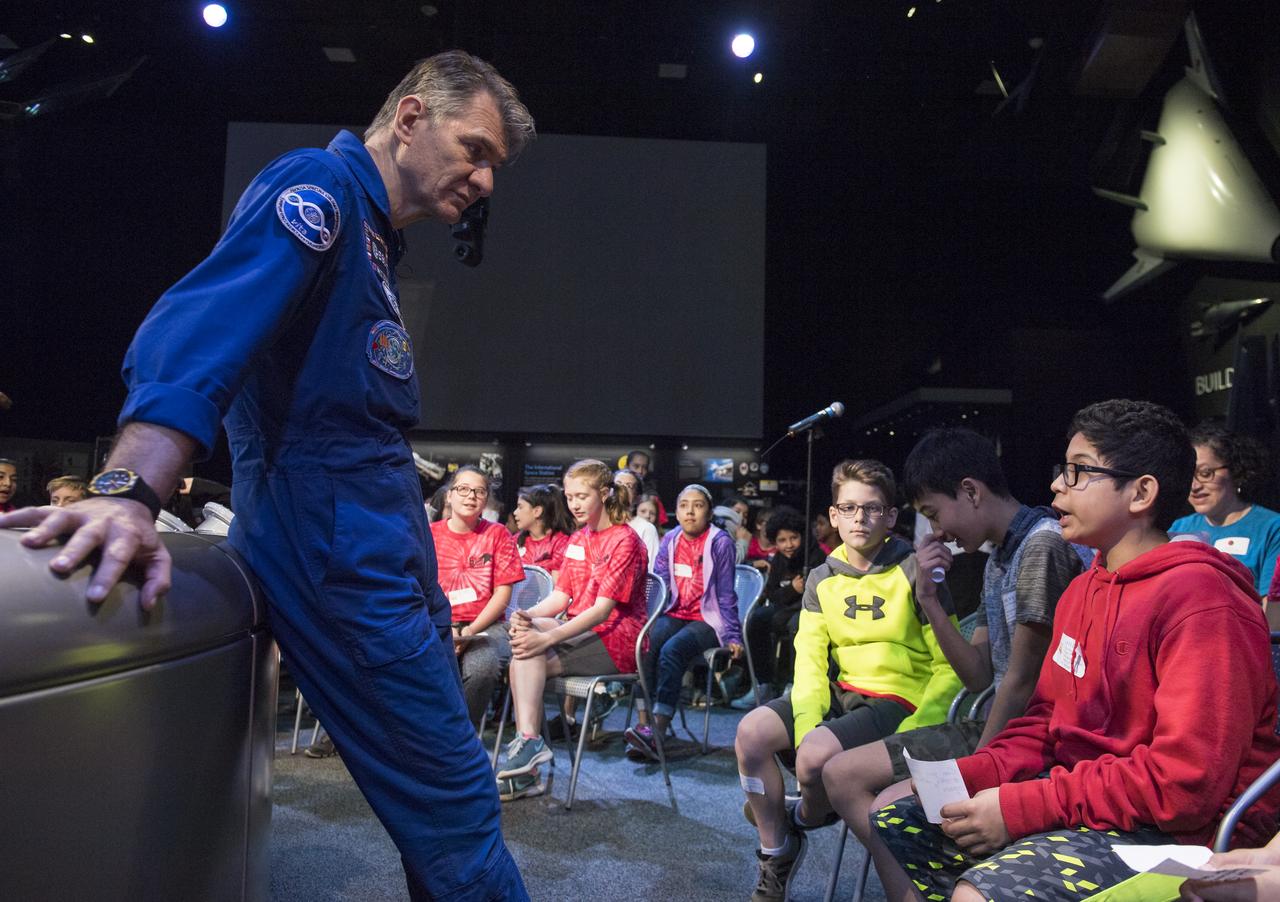
ESA astronaut Paolo Nespoli speaks to an audience member during a break about his time onboard the International Space Station, Thursday, May 10, 2018 at the Smithsonian National Air and Space Museum in Washington. Photo Credit: (NASA/Aubrey Gemignani)
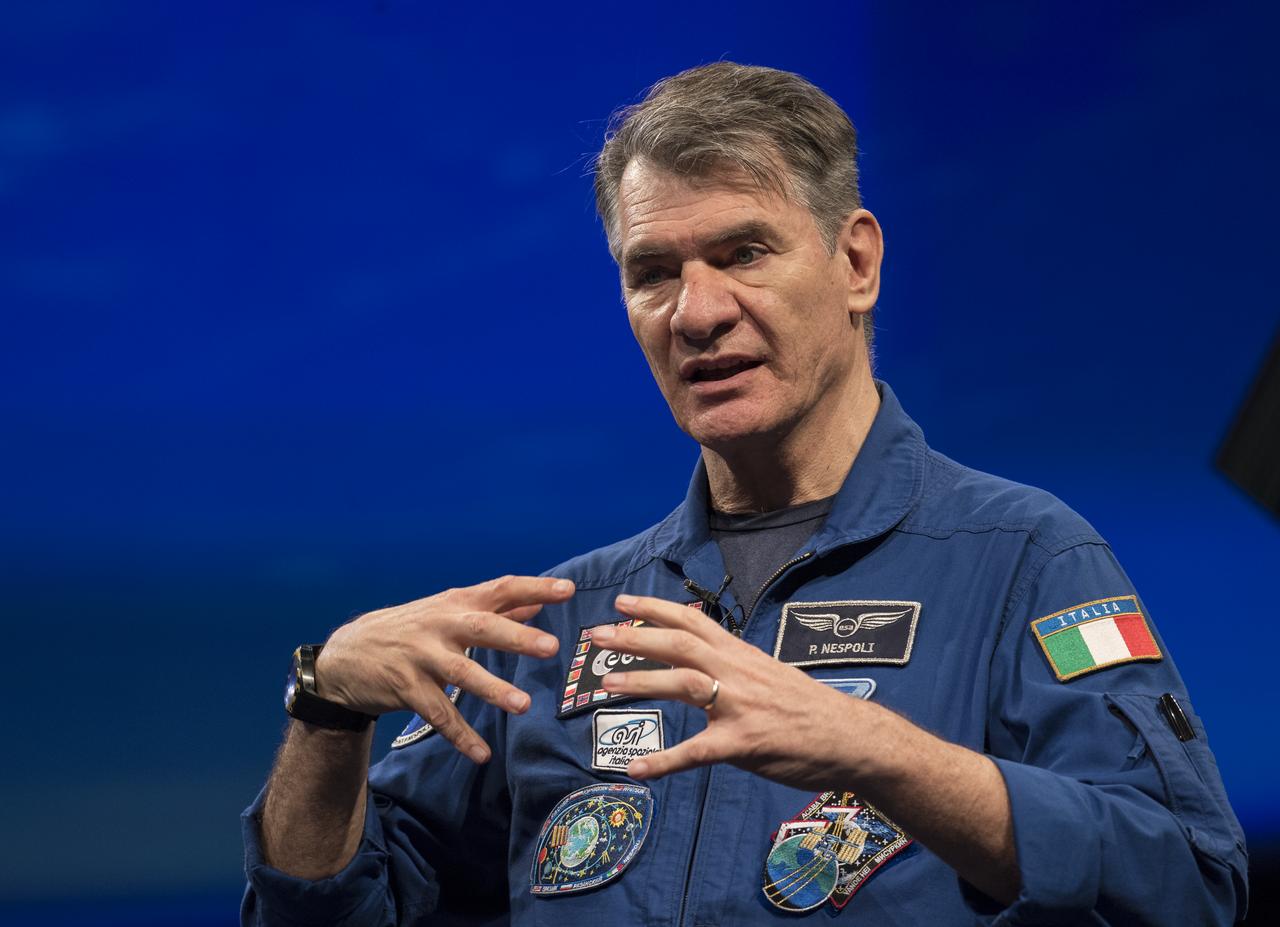
ESA astronaut Paolo Nespoli speaks about his time onboard the International Space Station during expeditions 52/53, Thursday, May 10, 2018 at the Smithsonian National Air and Space Museum in Washington. Photo Credit: (NASA/Aubrey Gemignani)
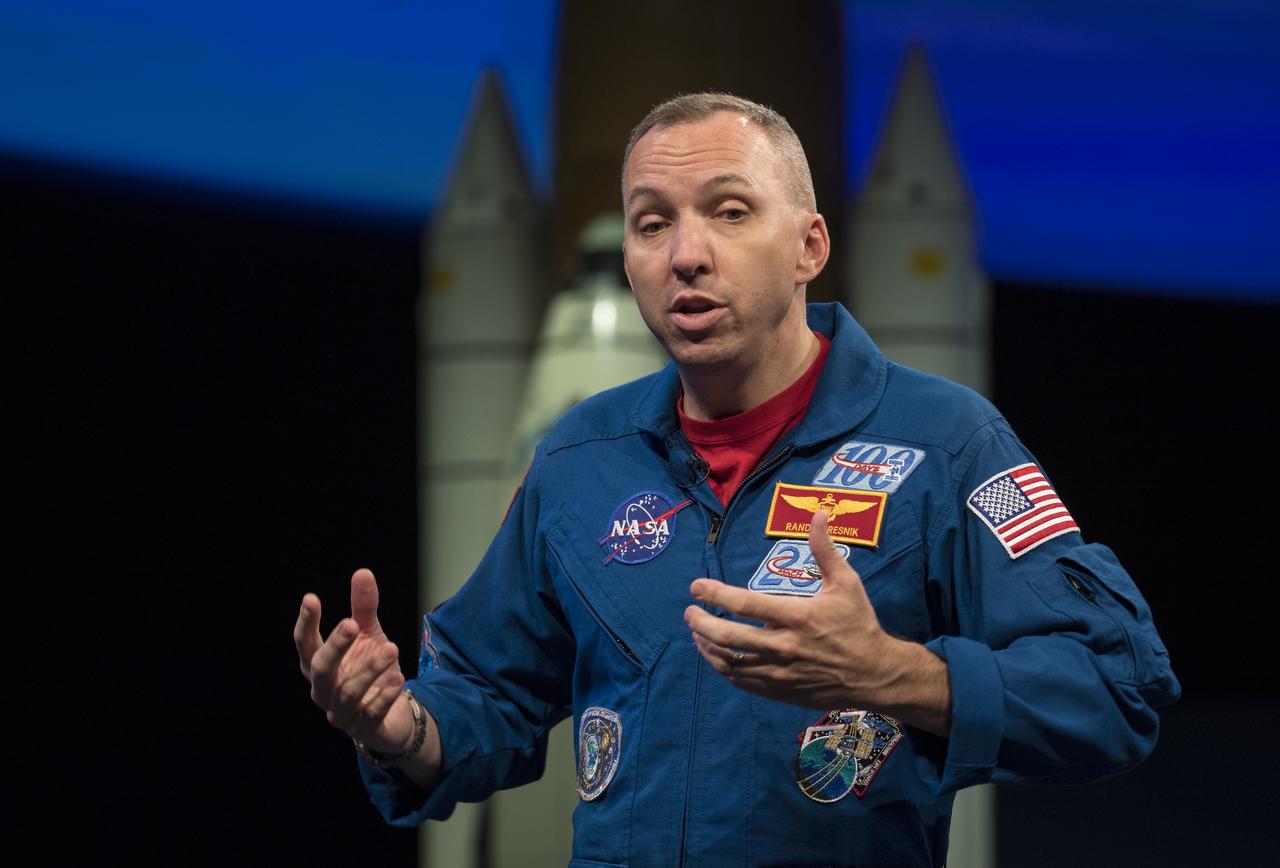
NASA astronaut Randy Bresnik speaks about his time onboard the International Space Station during expeditions 52/53, Thursday, May 10, 2018 at the Smithsonian National Air and Space Museum in Washington. Photo Credit: (NASA/Aubrey Gemignani)
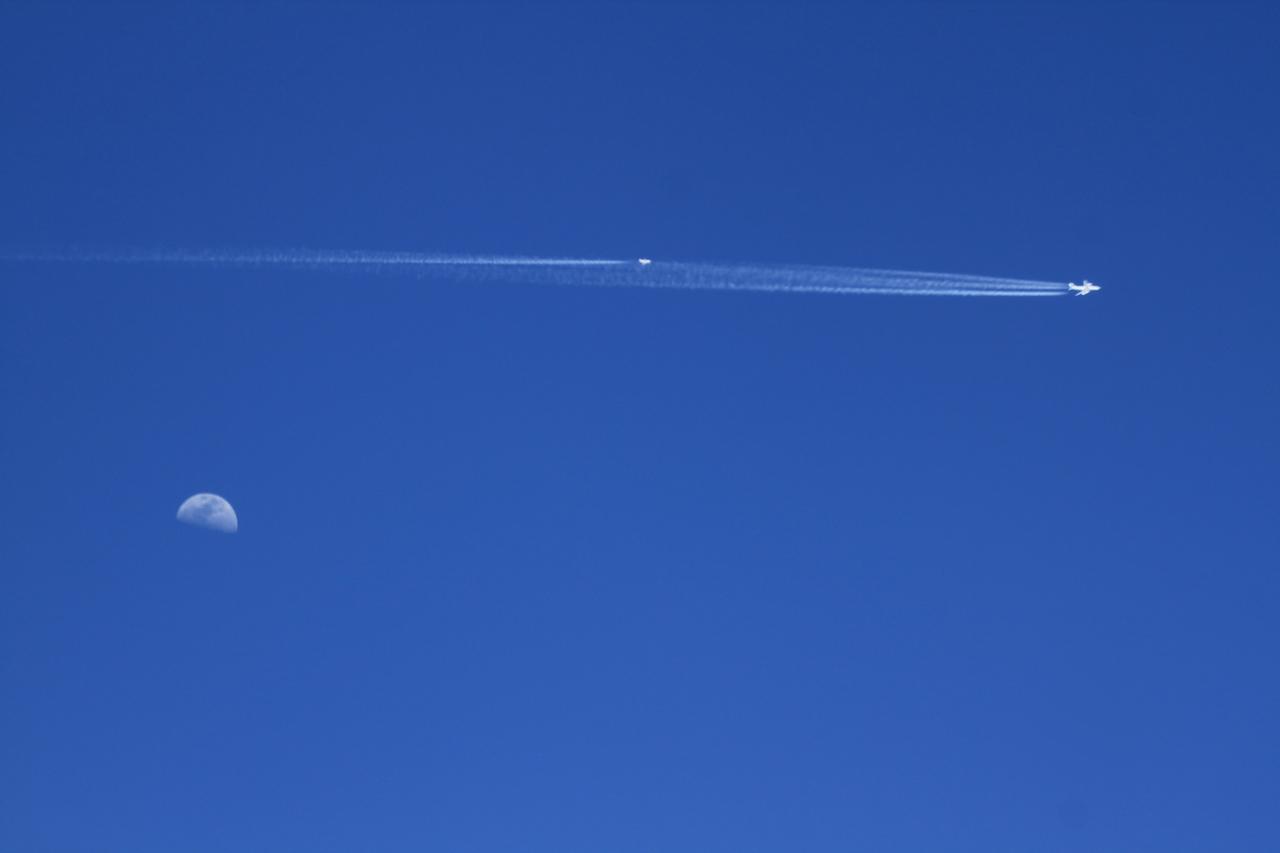
There’s more than one way to study the impact of biofuels. For NASA scientists, it means trailing an aircraft from as little as 300 feet behind while flying 34,000 feet in the air. Earlier this year, a NASA-led team conducted a series of carefully choreographed flights over California in order to sniff out how aircraft emissions differ when using petroleum fuels or biofuels. Early results from the Alternative Fuel Effects on Contrails and Cruise Emissions (ACCESS II) experiment confirm that blended biofuel is the cleaner-burning fuel. "Our findings show we definitely see a 50 percent reduction in soot emissions from the DC-8 when it burns the blended fuel as opposed to jet fuel alone," said Bruce Anderson, ACCESS principal investigator from NASA's Langley Research Center. The DC-8 is a NASA science workhorse: a flying laboratory equipped to collect—or, in this case, produce—data for basic Earth science research. During the ACESS experiment, scientists took advantage of the aircraft's segregated fuel tank. On the fly, the pilot switched the fuel type sent to each of the four engines. The engines burned either jet fuel, or a 50-50 blend of jet fuel and a renewable alternative produced from camelina plant oil. With each change of fuel, three other instrumented aircraft took turns lining up in the DC-8's wake and flying anywhere from 90 meters (300 feet) to more than 30 kilometers (20 miles) behind to catch a sniff. Richard Moore, a post-doctoral fellow at NASA Langley, took this photograph with a DSLR camera on May 7, 2014, during an ACCESS II test flight over Edwards Air Force Base in California. The photo was taken from Langley's HU-25C Guardian jet as it descended toward NASA's Armstrong Flight Research Center after a successful three-hour sampling flight behind the DC-8. The aircraft trailing the DC-8 in the photo was a Falcon 20-E5 jet owned by the German Aerospace Center. The flight on May 7 was just the first in a series of flights that lasted throughout the month. After the campaign, researchers continued to examine the data to determine whether a reduction in soot emissions translates to a reduction in contrail formation, and how that might affect climate. Read more: <a href="http://1.usa.gov/1wBfaKq" rel="nofollow">1.usa.gov/1wBfaKq</a> <b><a href="http://www.nasa.gov/audience/formedia/features/MP_Photo_Guidelines.html" rel="nofollow">NASA image use policy.</a></b> <b><a href="http://www.nasa.gov/centers/goddard/home/index.html" rel="nofollow">NASA Goddard Space Flight Center</a></b> enables NASA’s mission through four scientific endeavors: Earth Science, Heliophysics, Solar System Exploration, and Astrophysics. Goddard plays a leading role in NASA’s accomplishments by contributing compelling scientific knowledge to advance the Agency’s mission. <b>Follow us on <a href="http://twitter.com/NASAGoddardPix" rel="nofollow">Twitter</a></b> <b>Like us on <a href="http://www.facebook.com/pages/Greenbelt-MD/NASA-Goddard/395013845897?ref=tsd" rel="nofollow">Facebook</a></b> <b>Find us on <a href="http://instagram.com/nasagoddard?vm=grid" rel="nofollow">Instagram</a></b>
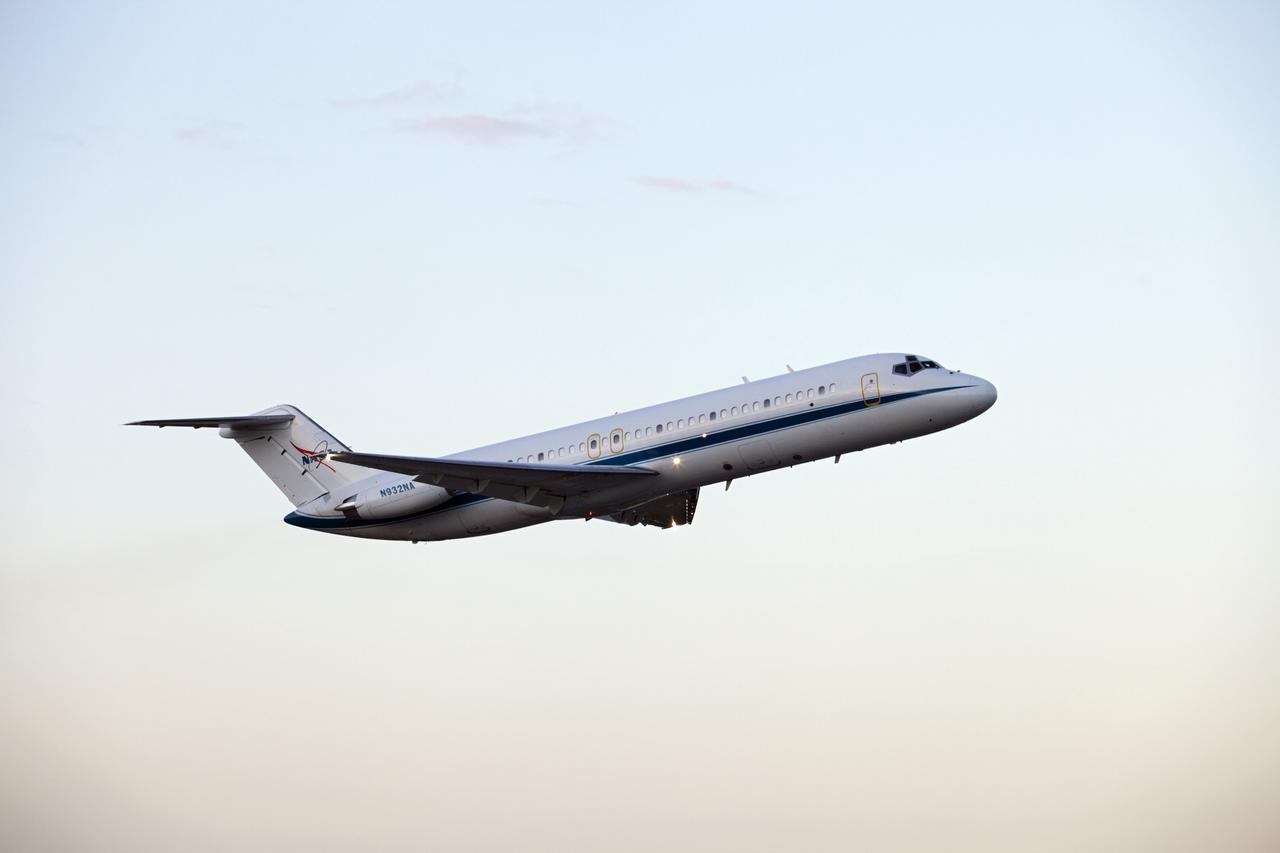
CAPE CANAVERAL, Fla. – A NASA C-9 “Pathfinder” DC-9 takes off from the Shuttle Landing Facility at NASA's Kennedy Space Center in Florida ahead of space shuttle Discovery, which is bolted to the top of a Shuttle Carrier Aircraft. The craft are set to begin their 3 1/2 hour ferry flight to the Washington Dulles International Airport in Virginia at about 7 a.m. EDT. The Pathfinder will fly about 100 miles ahead of the attached pair, making sure the flight path is free of harmful weather or hazardous conditions. Discovery is leaving Kennedy after more than 28 years of service beginning with its arrival on the space coast Nov. 9, 1983. Discovery first launched to space Aug. 30, 1984, on the STS-41D mission. Discovery is the agency's most-flown shuttle with 39 missions, more than 148 million miles and a total of one year in space. Discovery is set to move to the Smithsonian's National Air and Space Museum Steven F. Udvar-Hazy Center on April 19 where it will be placed on public display. For more information on the SCA, visit http://www.nasa.gov/centers/dryden/news/FactSheets/FS-013-DFRC.html. For more information on shuttle transition and retirement activities, visit http://www.nasa.gov/transition. Photo credit: NASA/Frankie Martin

CAPE CANAVERAL, Fla. – A NASA C-9 “Pathfinder” DC-9 prepares for takeoff from the Shuttle Landing Facility at NASA's Kennedy Space Center in Florida ahead of space shuttle Discovery, which is bolted to the top of a Shuttle Carrier Aircraft. The craft are set to begin their 3 1/2 hour ferry flight to the Washington Dulles International Airport in Virginia at about 7 a.m. EDT. The Pathfinder will fly about 100 miles ahead of the attached pair, making sure the flight path is free of harmful weather or hazardous conditions. Discovery is leaving Kennedy after more than 28 years of service beginning with its arrival on the space coast Nov. 9, 1983. Discovery first launched to space Aug. 30, 1984, on the STS-41D mission. Discovery is the agency's most-flown shuttle with 39 missions, more than 148 million miles and a total of one year in space. Discovery is set to move to the Smithsonian's National Air and Space Museum Steven F. Udvar-Hazy Center on April 19 where it will be placed on public display. For more information on the SCA, visit http://www.nasa.gov/centers/dryden/news/FactSheets/FS-013-DFRC.html. For more information on shuttle transition and retirement activities, visit http://www.nasa.gov/transition. Photo credit: NASA/Jim Grossmann
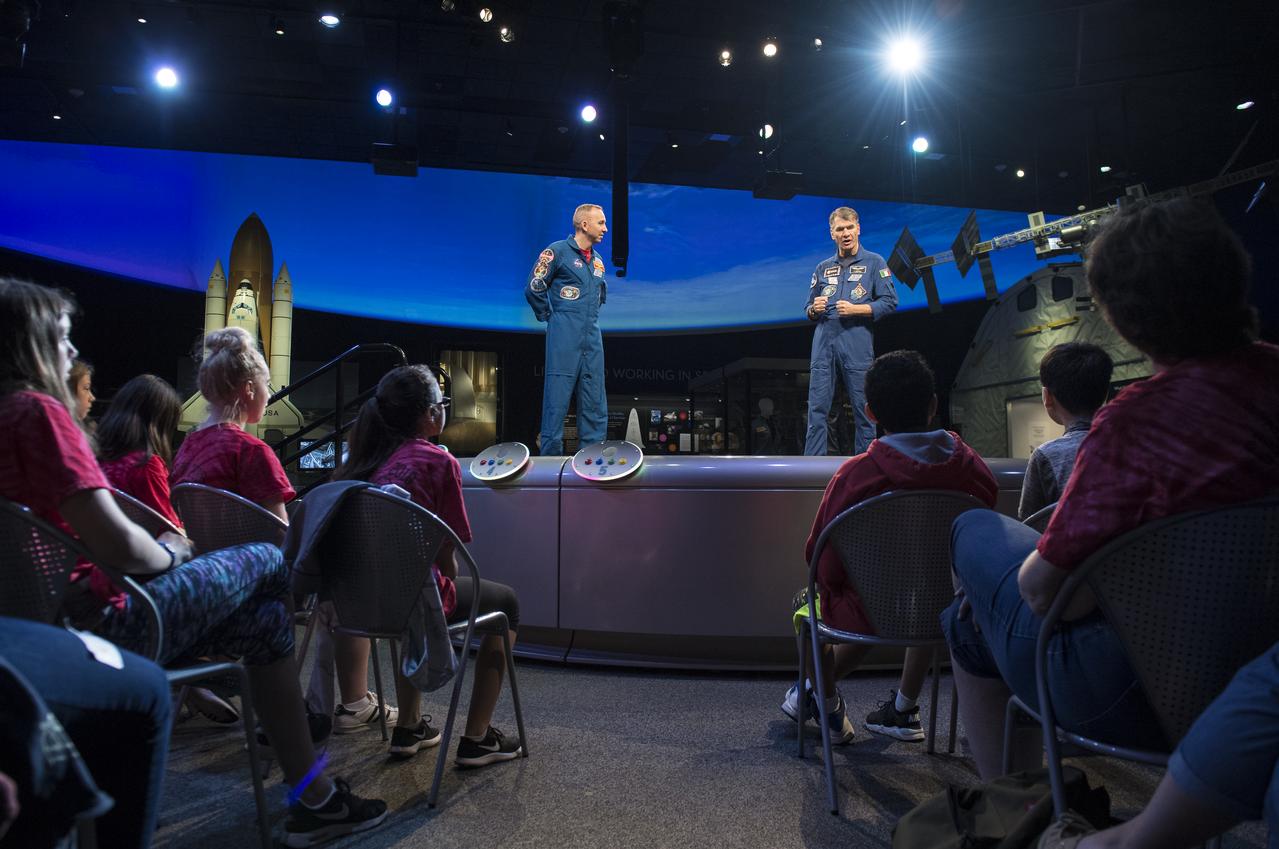
NASA astronaut Randy Bresnik, left, and ESA astronaut Paolo Nespoli, right, speak about their time onboard the International Space Station during expeditions 52/53, Thursday, May 10, 2018 at the Smithsonian National Air and Space Museum in Washington. Photo Credit: (NASA/Aubrey Gemignani)
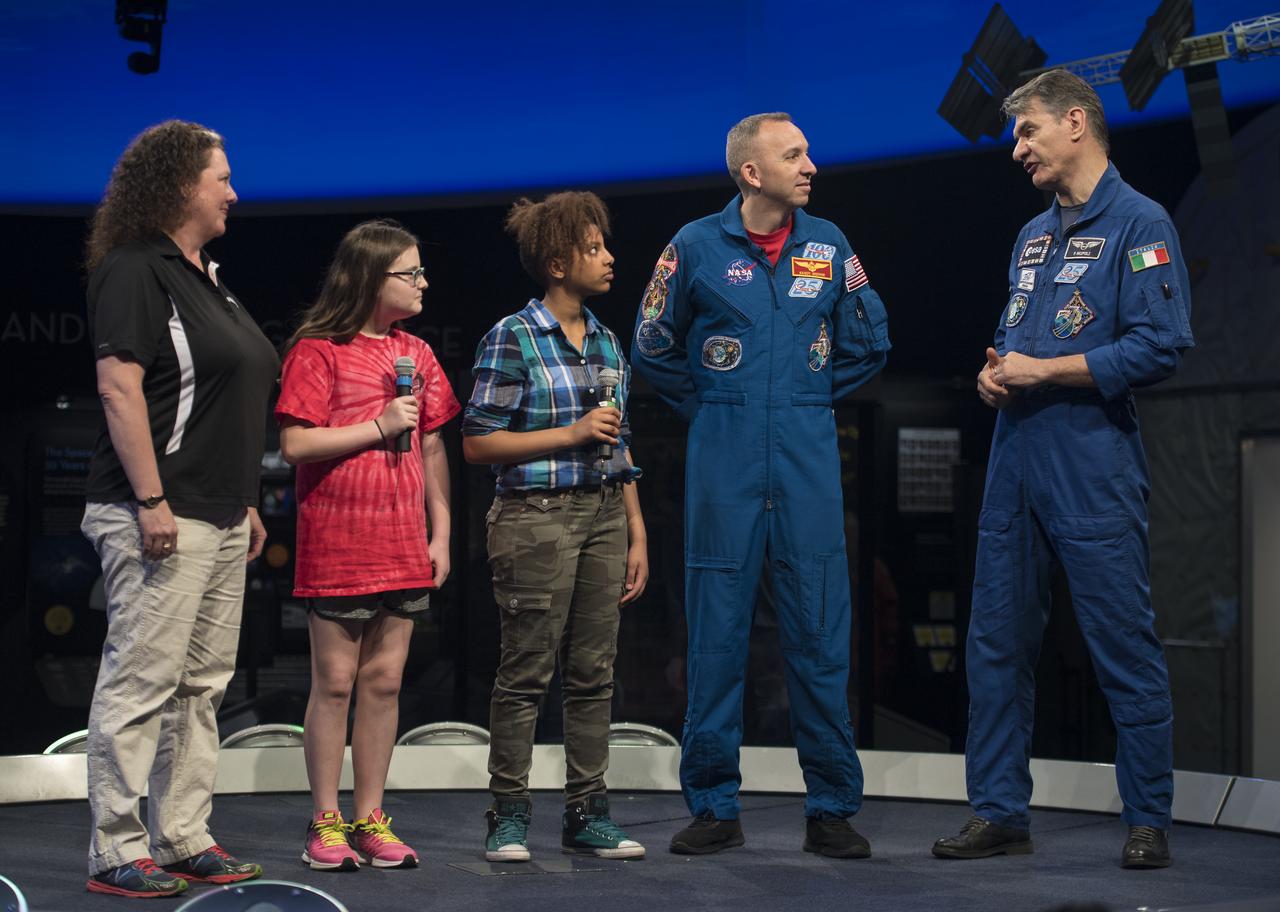
NASA astronaut Randy Bresnik, second from right, and ESA astronaut Paolo Nespoli, right, speak about their time onboard the International Space Station during expeditions 52/53, Thursday, May 10, 2018 at the Smithsonian National Air and Space Museum in Washington. Photo Credit: (NASA/Aubrey Gemignani)
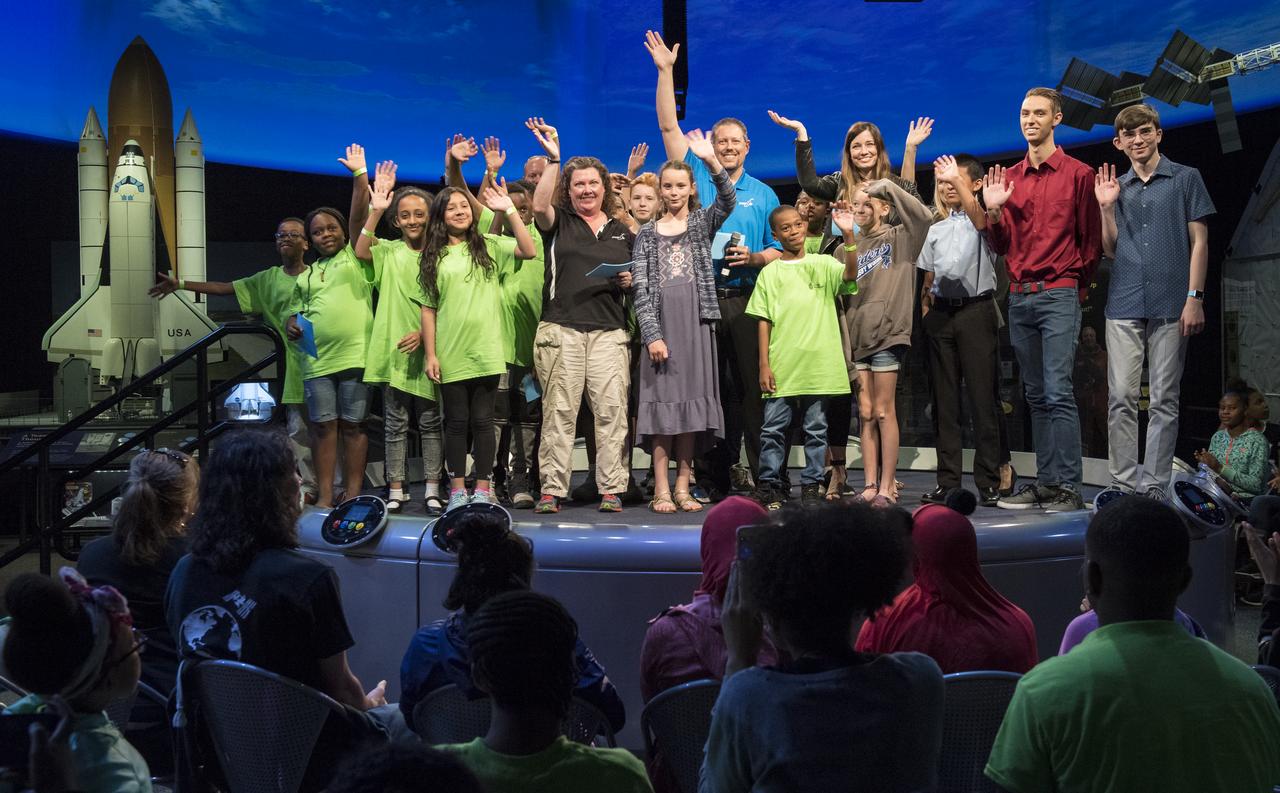
Students and Future Engineers "Two for the Crew" winners wave goodbye at the conclusion of a STEM in 30 event, Wednesday, June 27, 2018 at Smithsonian's National Air and Space Museum in Washington. During the event, NASA astronaut Serena Auñon-Chancellor spoke to students while onboard the International Space Station (ISS), during a live downlink. Photo Credit: (NASA/Aubrey Gemignani)
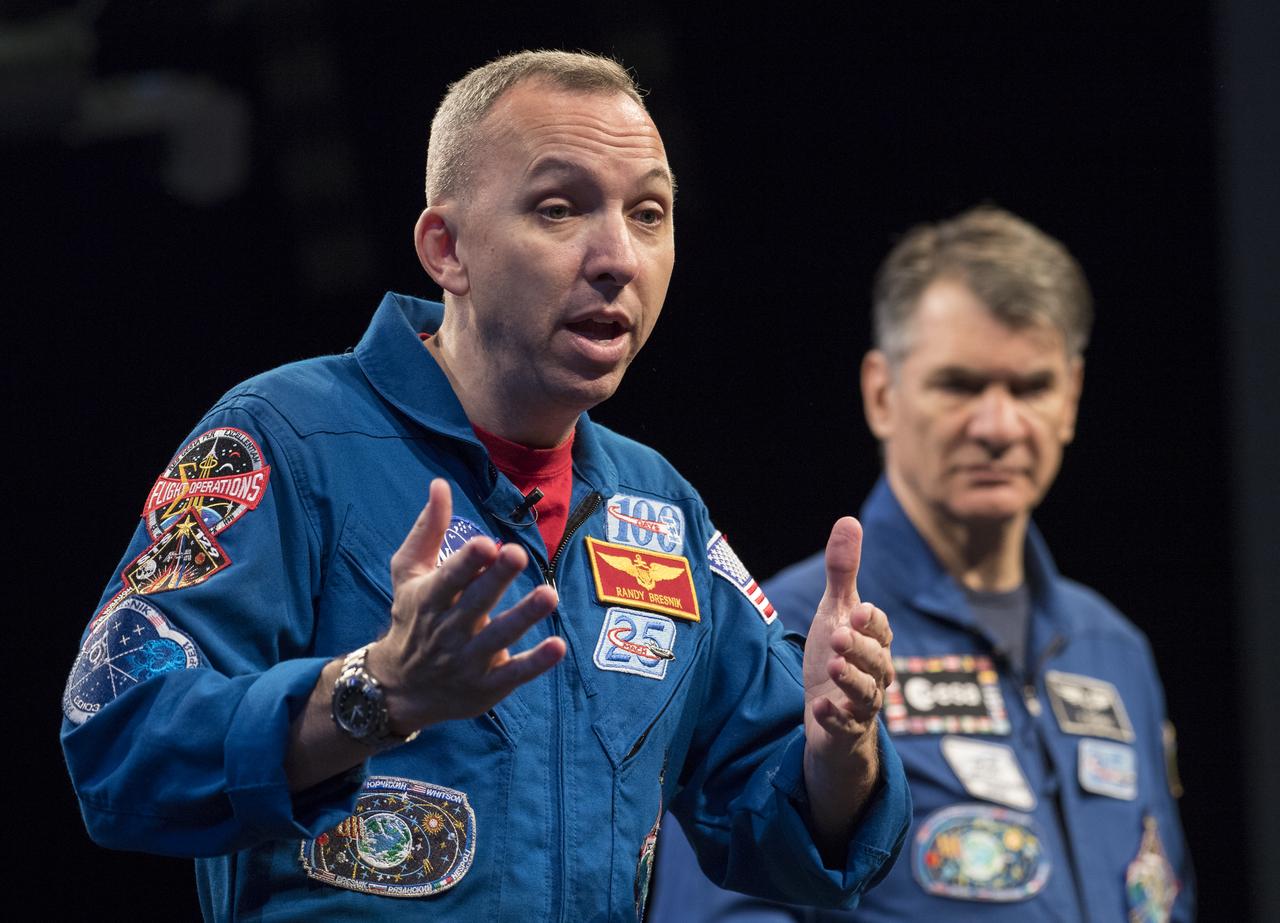
NASA astronaut Randy Bresnik, left, and ESA astronaut Paolo Nespoli, right, speak about their time onboard the International Space Station during expeditions 52/53, Thursday, May 10, 2018 at the Smithsonian National Air and Space Museum in Washington. Photo Credit: (NASA/Aubrey Gemignani)
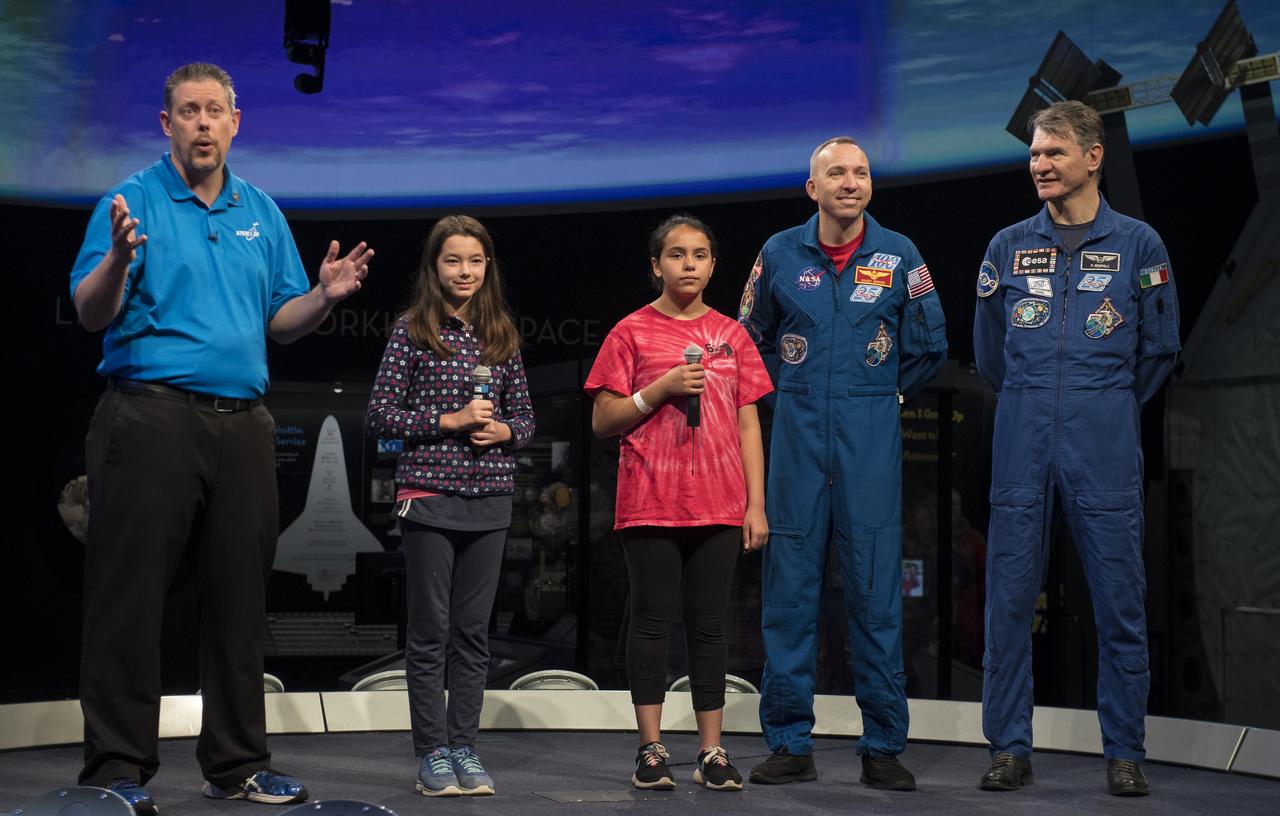
NASA astronaut Randy Bresnik, second from right, and ESA astronaut Paolo Nespoli, right, are introduced by STEM in 30's Marty Kelsey before speaking about their time onboard the International Space Station during expeditions 52/53, Thursday, May 10, 2018 at the Smithsonian National Air and Space Museum in Washington. Photo Credit: (NASA/Aubrey Gemignani)
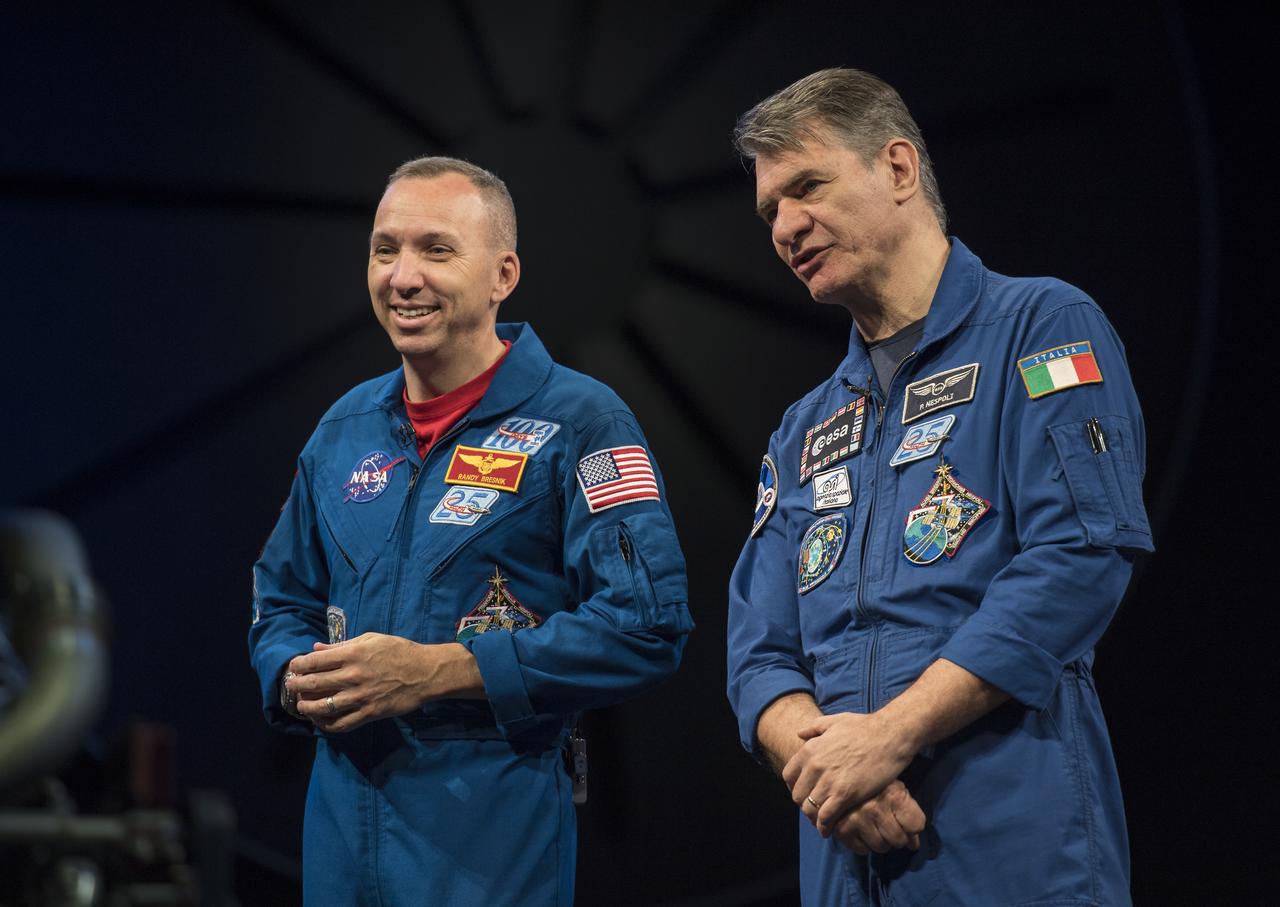
NASA astronaut Randy Bresnik, left, and ESA astronaut Paolo Nespoli, right, speak about their time onboard the International Space Station during expeditions 52/53, Thursday, May 10, 2018 at the Smithsonian National Air and Space Museum in Washington. Photo Credit: (NASA/Aubrey Gemignani)

NASA astronaut Randy Bresnik, left, and ESA astronaut Paolo Nespoli, right, present Marty Kelsey, second from right, and Beth Wilson, of STEM in 30 with their sticker that flew in space onboard the International Space Station during expeditions 52/53, Thursday, May 10, 2018 at the Smithsonian National Air and Space Museum in Washington. Photo Credit: (NASA/Aubrey Gemignani)
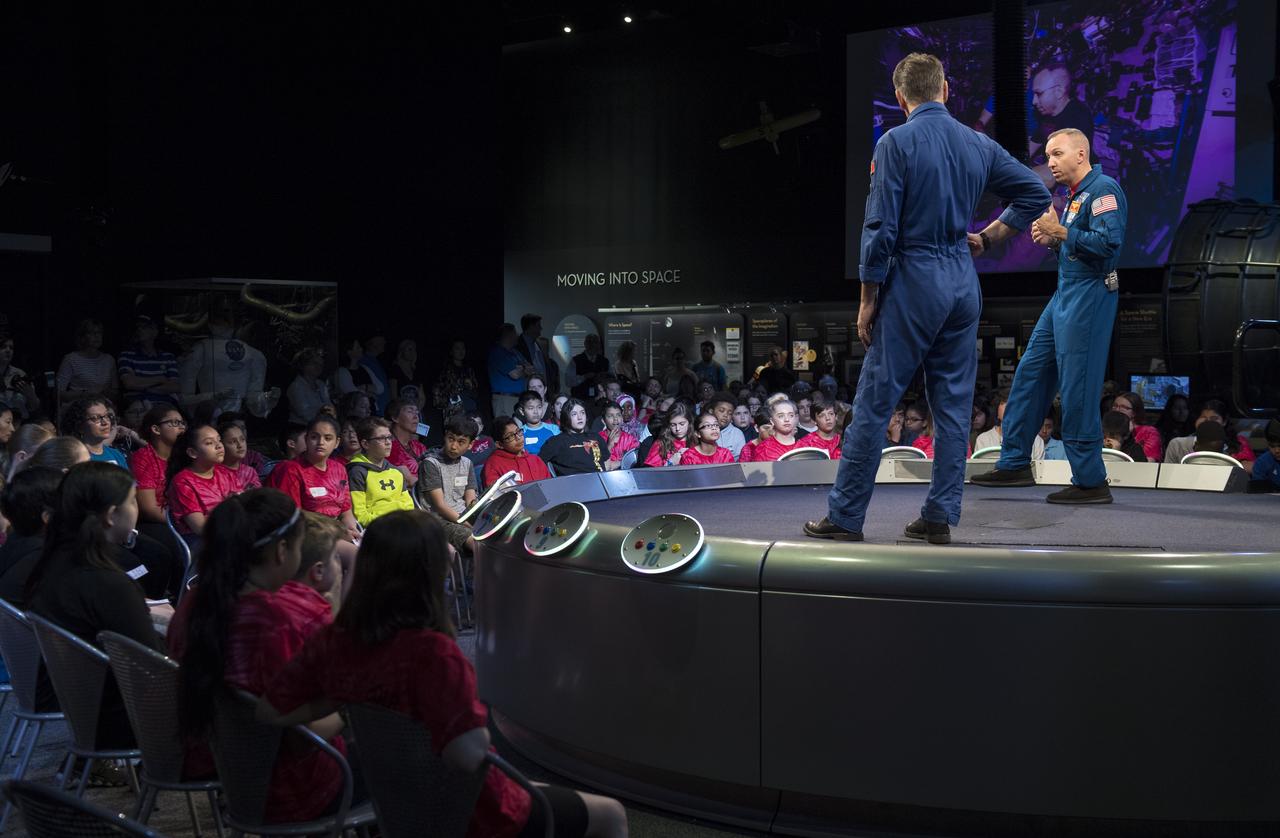
NASA astronaut Randy Bresnik, right, and ESA astronaut Paolo Nespoli, left, speak about their time onboard the International Space Station during expeditions 52/53, Thursday, May 10, 2018 at the Smithsonian National Air and Space Museum in Washington. Photo Credit: (NASA/Aubrey Gemignani)

NASA astronaut Randy Bresnik, left, and ESA astronaut Paolo Nespoli, right, speak about their time onboard the International Space Station during expeditions 52/53, Thursday, May 10, 2018 at the Smithsonian National Air and Space Museum in Washington. Photo Credit: (NASA/Aubrey Gemignani)
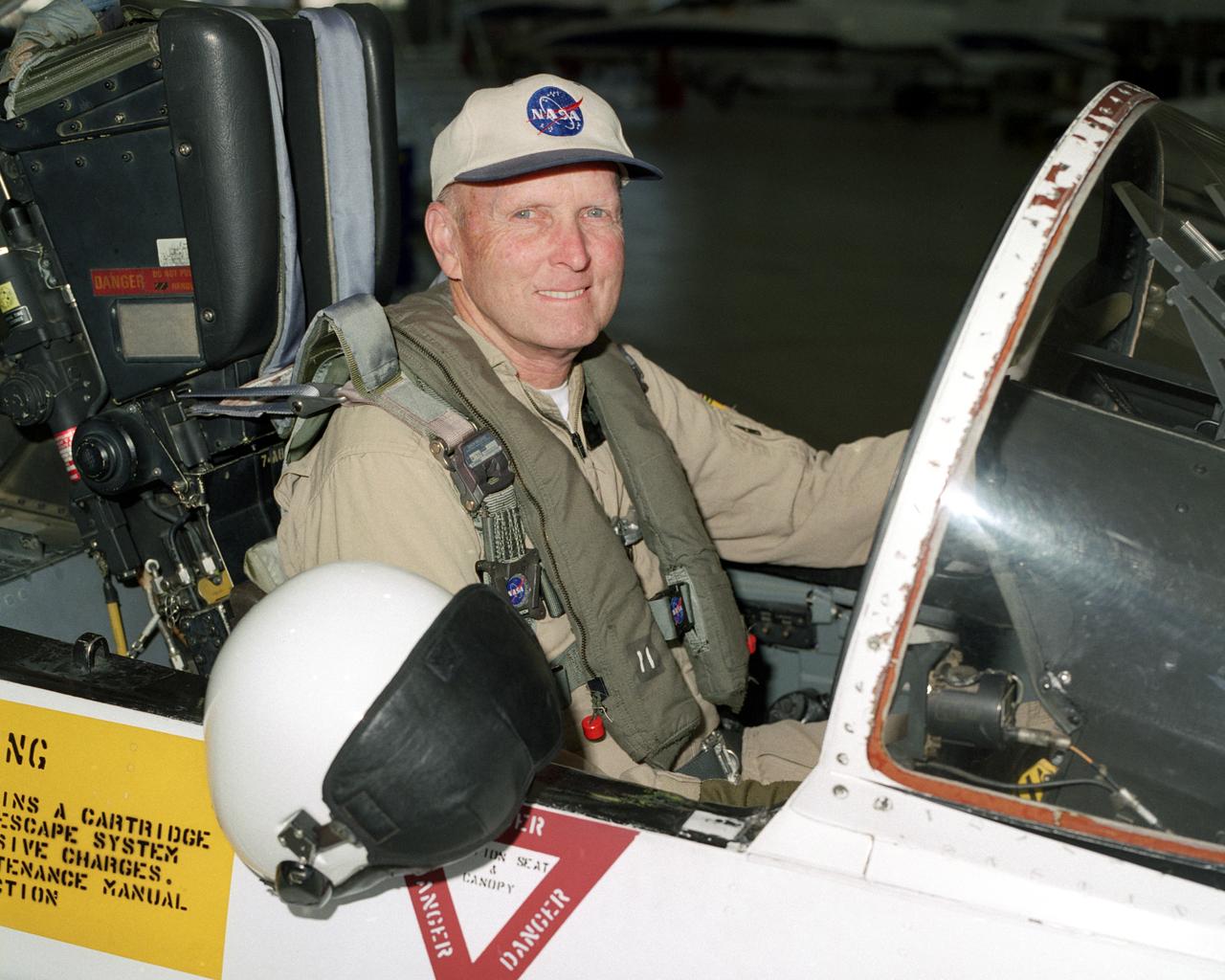
Former NASA astronaut C. Gordon Fullerton, seated in the cockpit of an F/A-18, is a research pilot at NASA's Dryden Flight Research Center, Edwards, Calif. Since transferring to Dryden in 1986, his assignments have included a variety of flight research and support activities piloting NASA's B-52 launch aircraft, the 747 Shuttle Carrier Aircraft (SCA), and other multi-engine and high performance aircraft. He flew a series of development air launches of the X-38 prototype Crew Return Vehicle and in the launches for the X-43A Hyper-X project. Fullerton also flies Dryden's DC-8 Airborne Science aircraft in support a variety of atmospheric physics, ground mapping and meteorology studies. Fullerton also was project pilot on the Propulsion Controlled Aircraft program, during which he successfully landed both a modified F-15 and an MD-11 transport with all control surfaces neutralized, using only engine thrust modulation for control. Fullerton also evaluated the flying qualities of the Russian Tu-144 supersonic transport during two flights in 1998, one of only two non-Russian pilots to fly that aircraft. With more than 15,000 hours of flying time, Fullerton has piloted 135 different types of aircraft in his career. As an astronaut, Fullerton served on the support crews for the Apollo 14, 15, 16, and 17 lunar missions. In 1977, Fullerton was on one of the two flight crews that piloted the Space Shuttle prototype Enterprise during the Approach and Landing Test Program at Dryden. Fullerton was the pilot on the STS-3 Space Shuttle orbital flight test mission in 1982, and commanded the STS-51F Spacelab 2 mission in 1985. He has logged 382 hours in space flight. In July 1988, he completed a 30-year career with the U.S. Air Force and retired as a colonel.