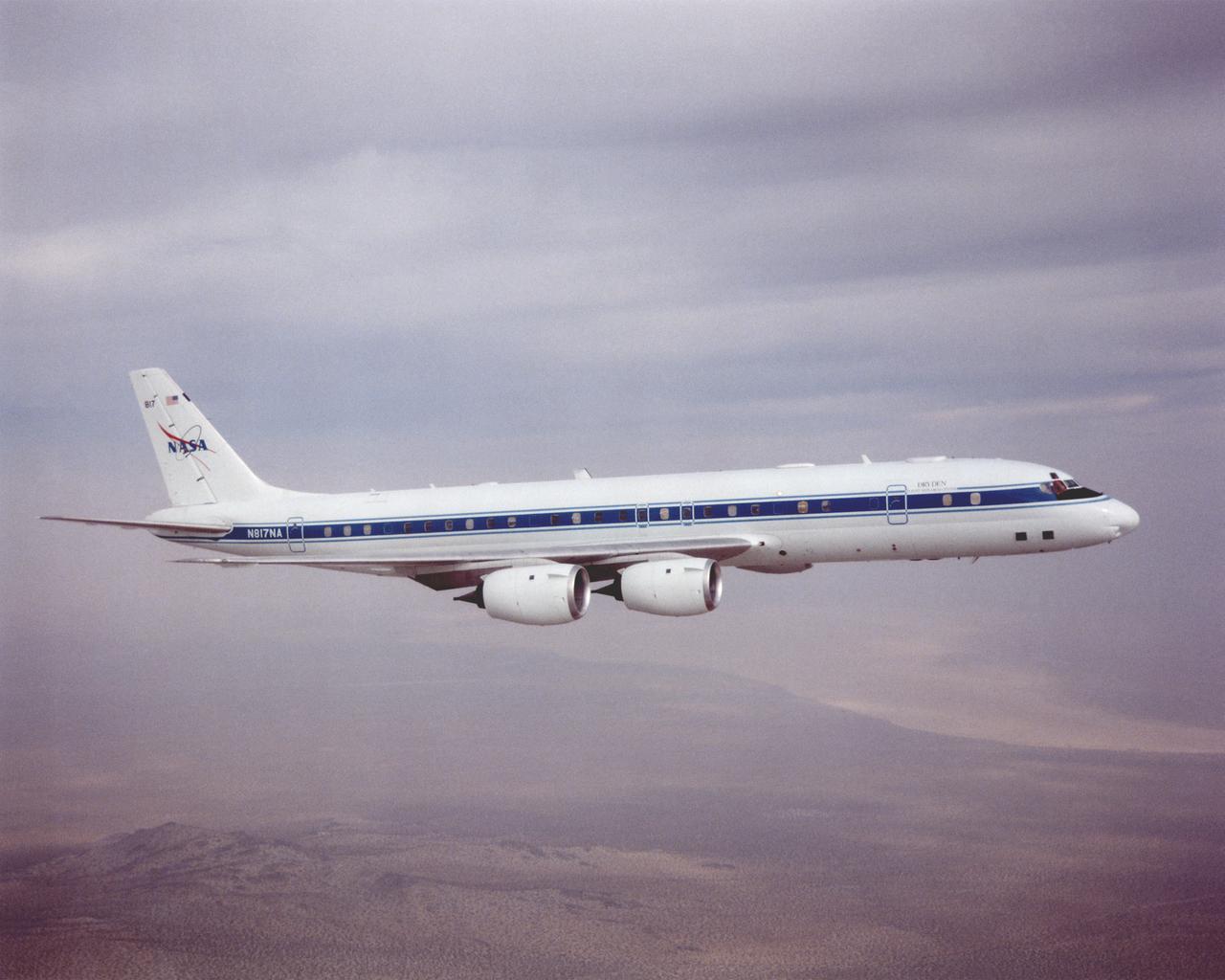
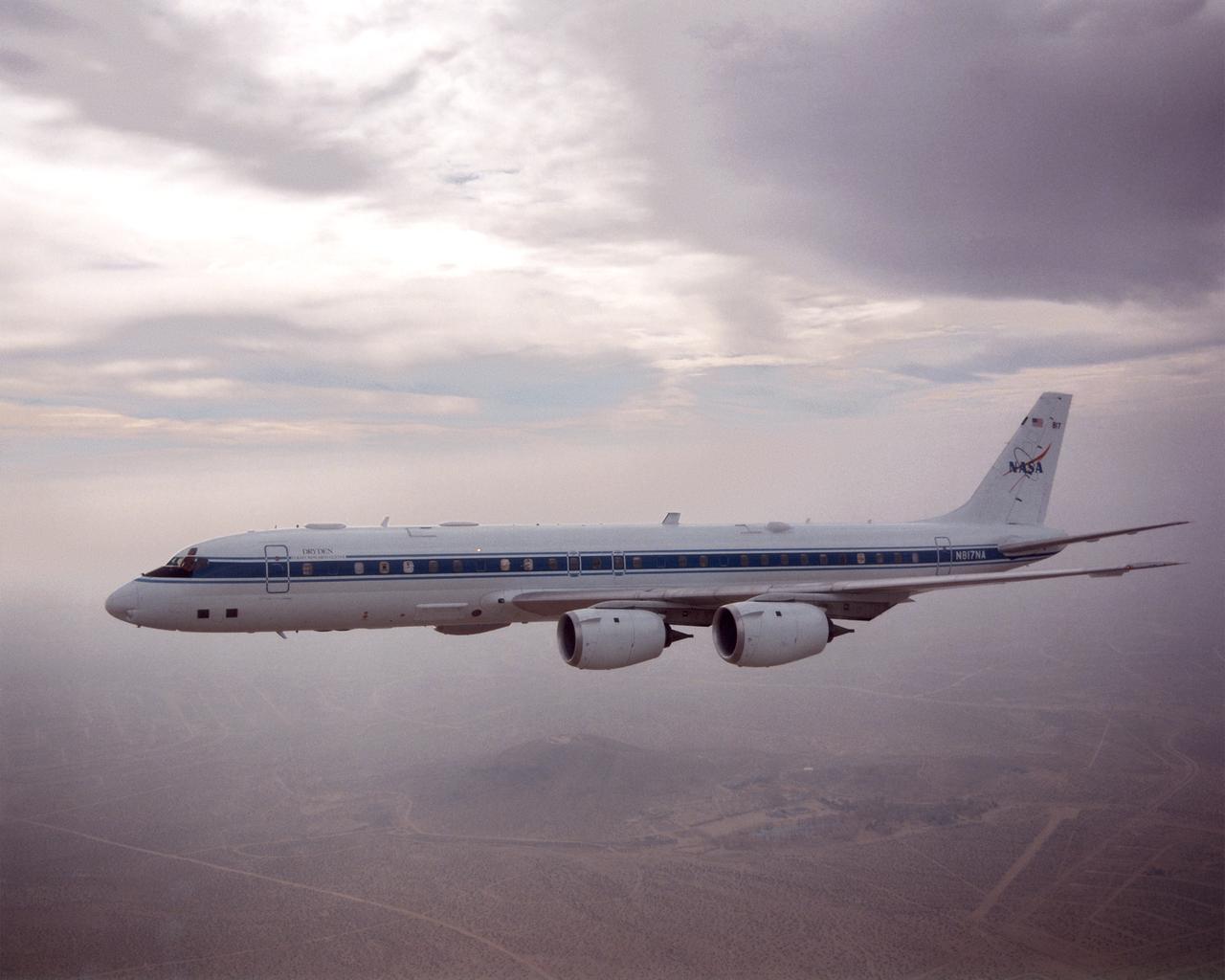
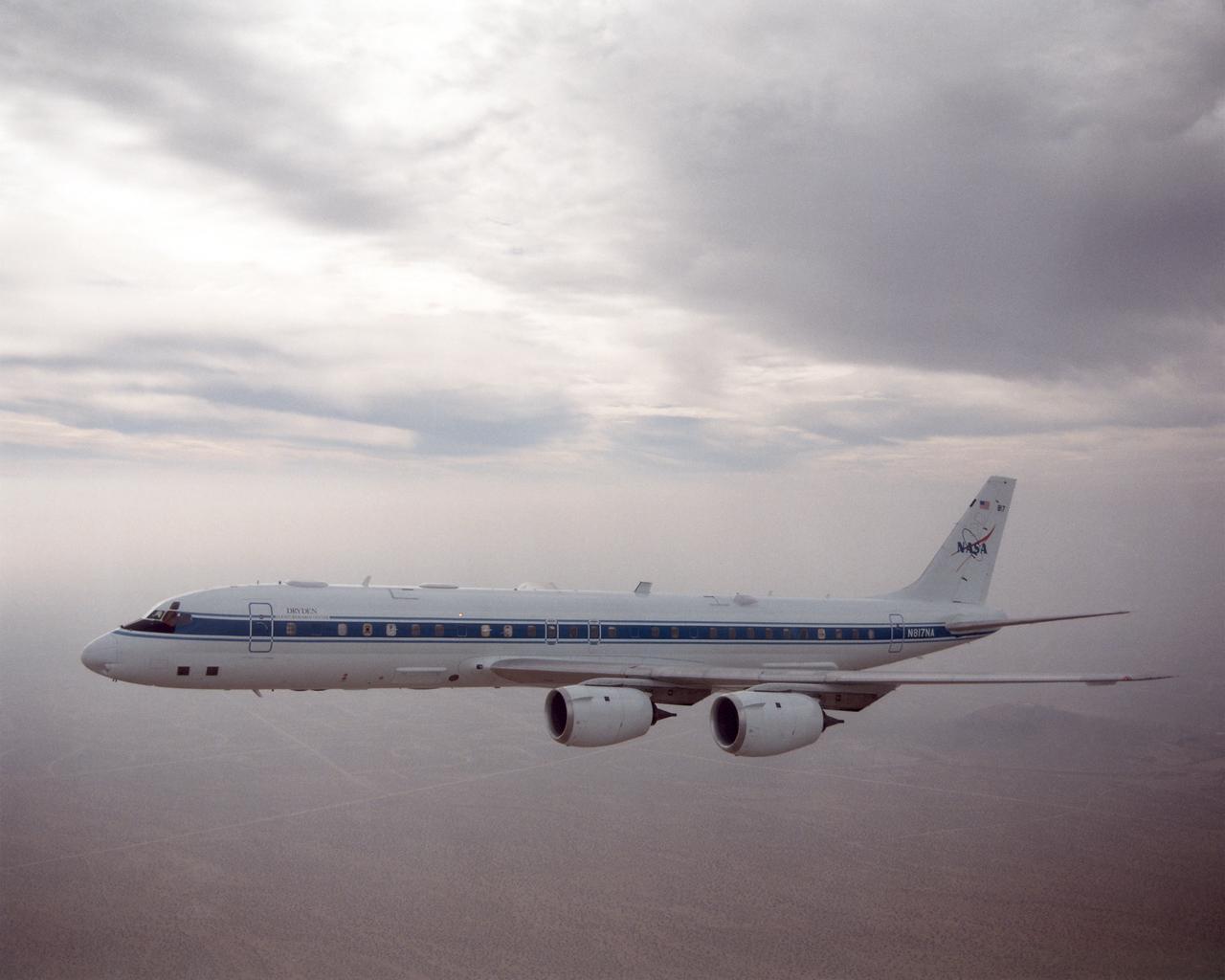
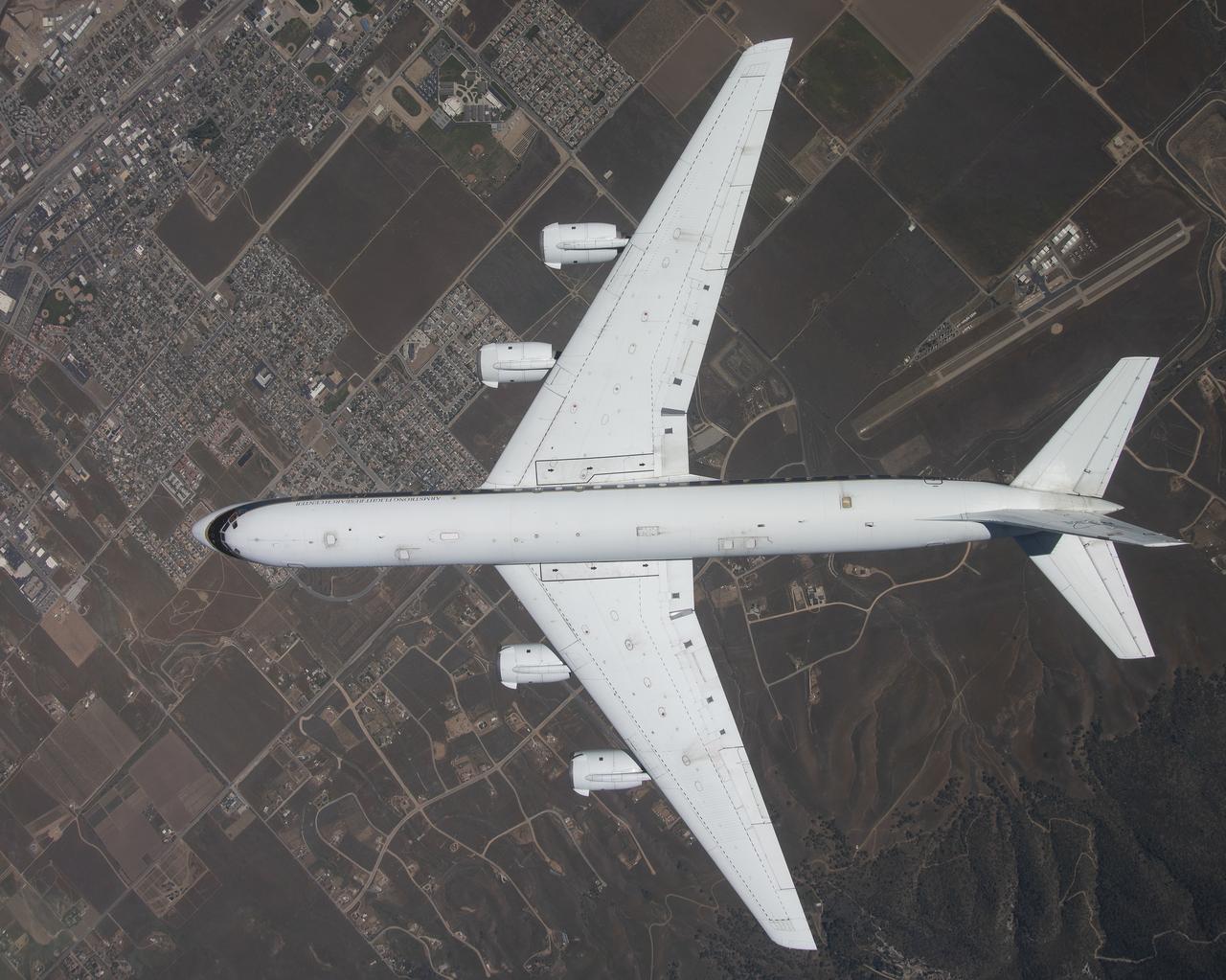
DC-8 Airborne Laboratory in flight
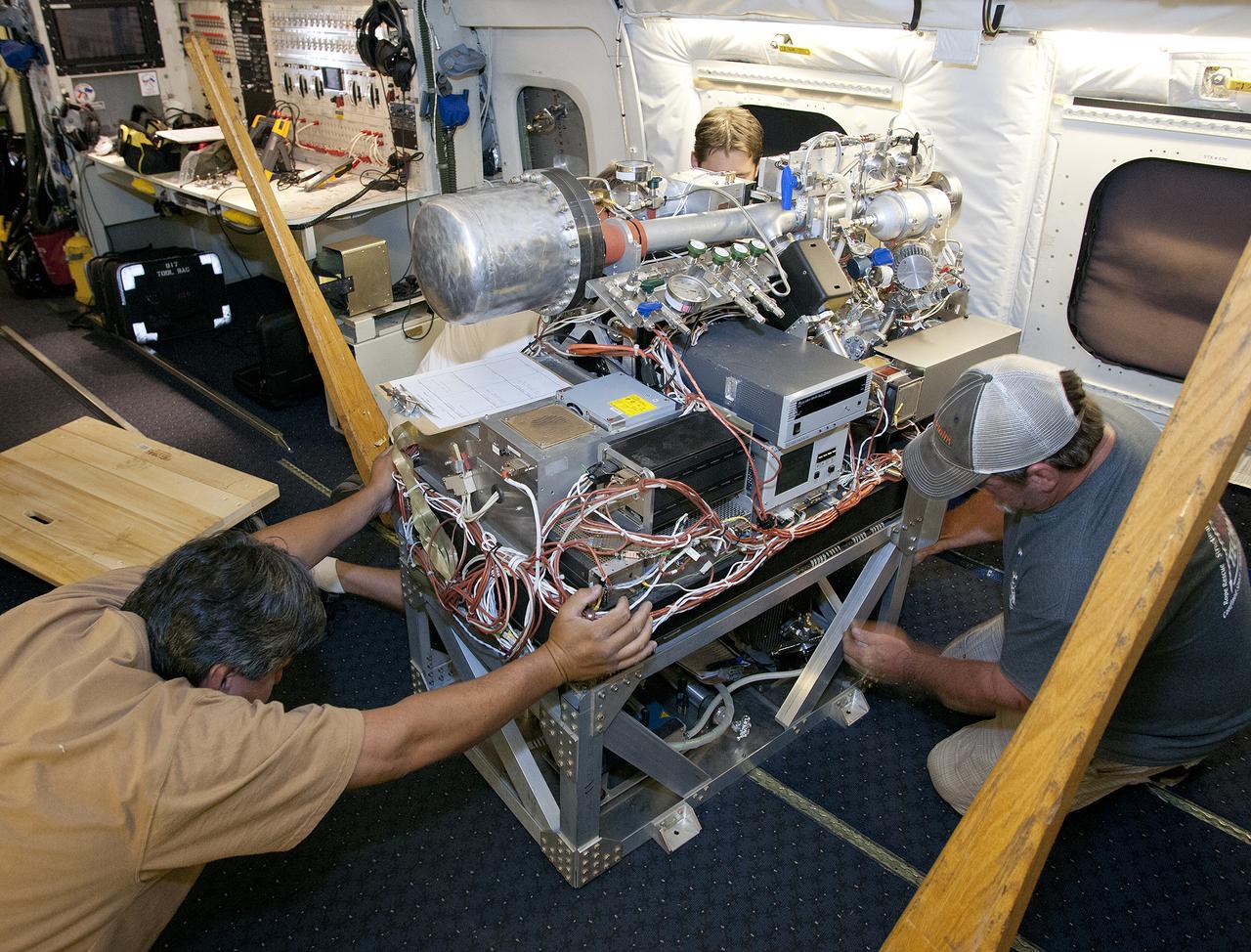
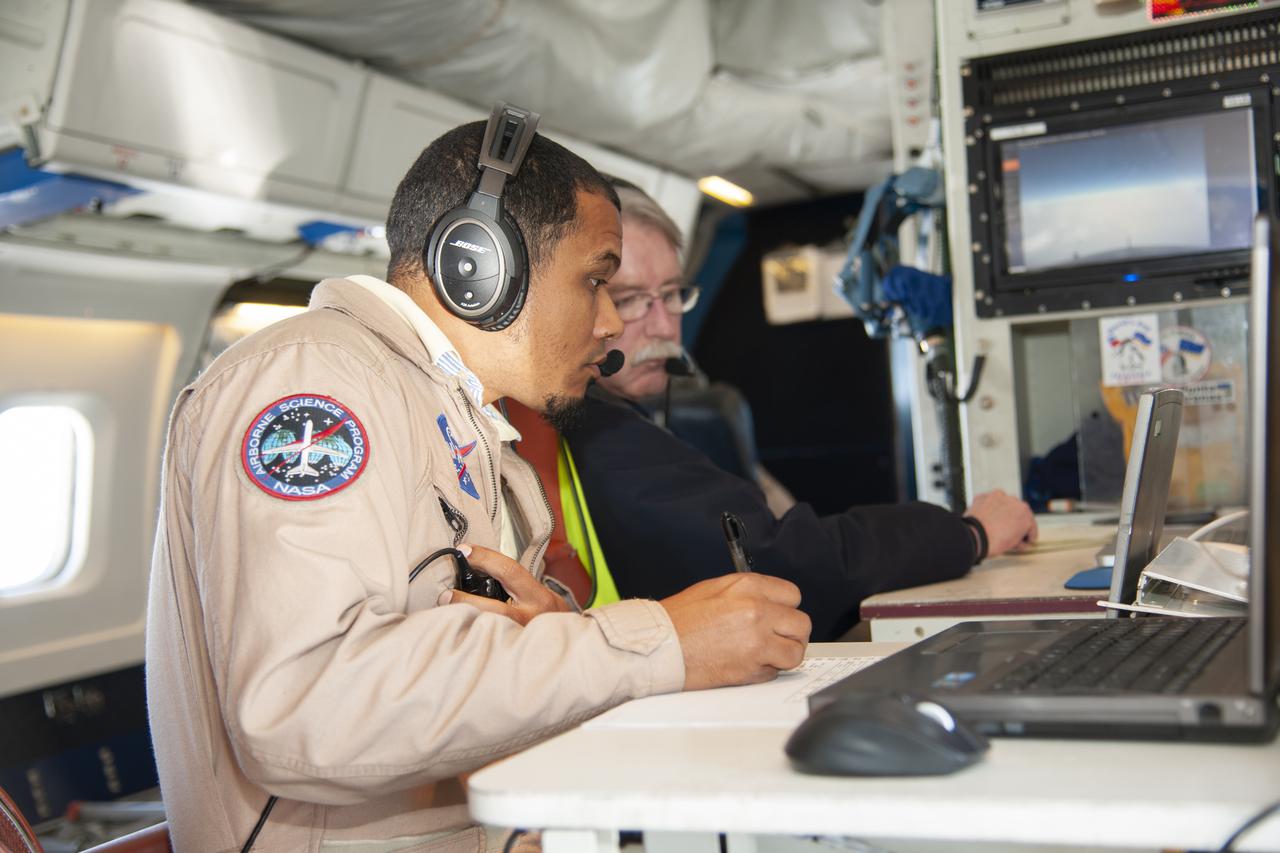
Matt Berry, left, and Chris Jennison examine incoming data on NASA’s DC-8 airborne science aircraft. The 62-year-old ex-airliner is one of seven DC-8s still flying.
Incoming Data Aboard DC-8
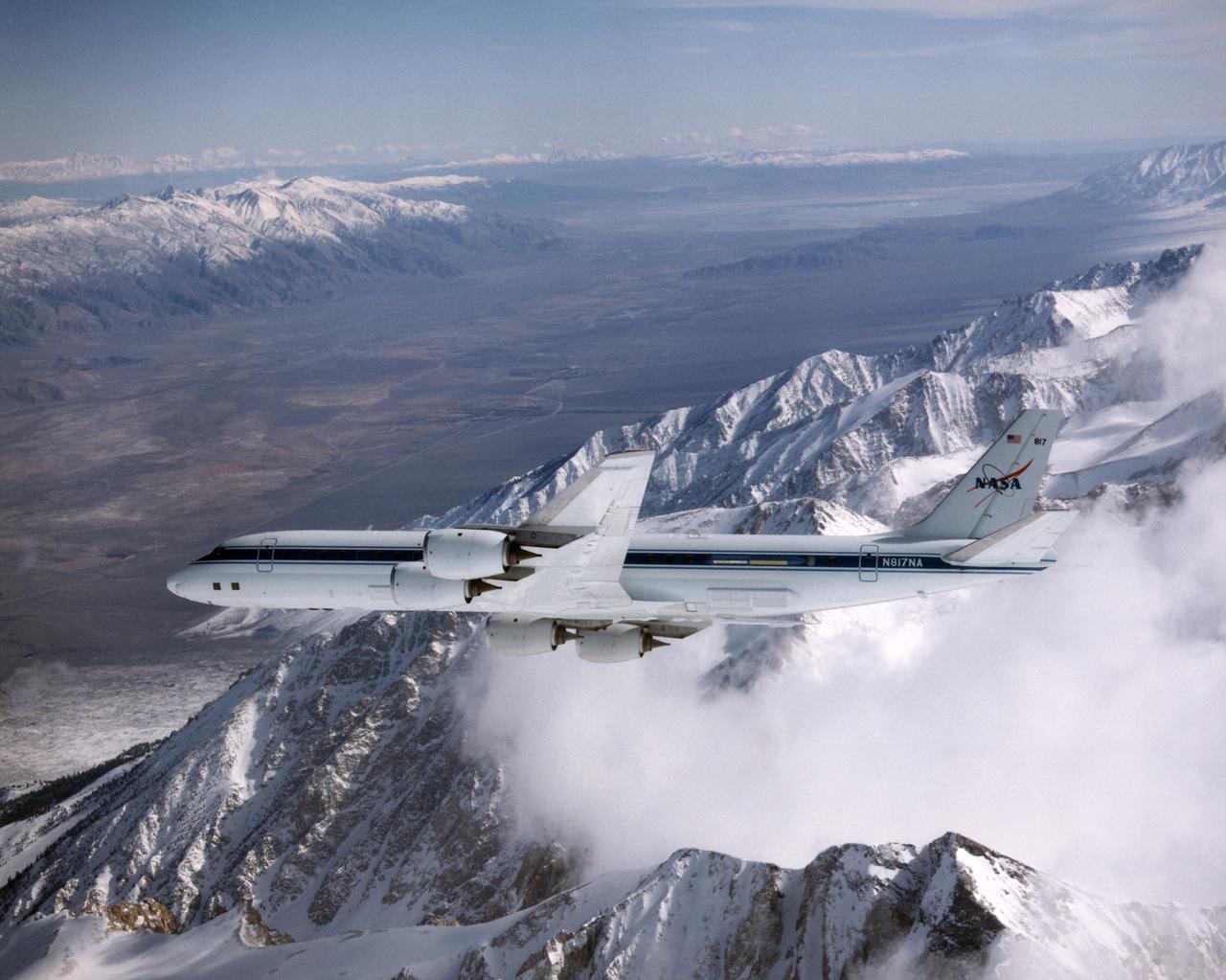
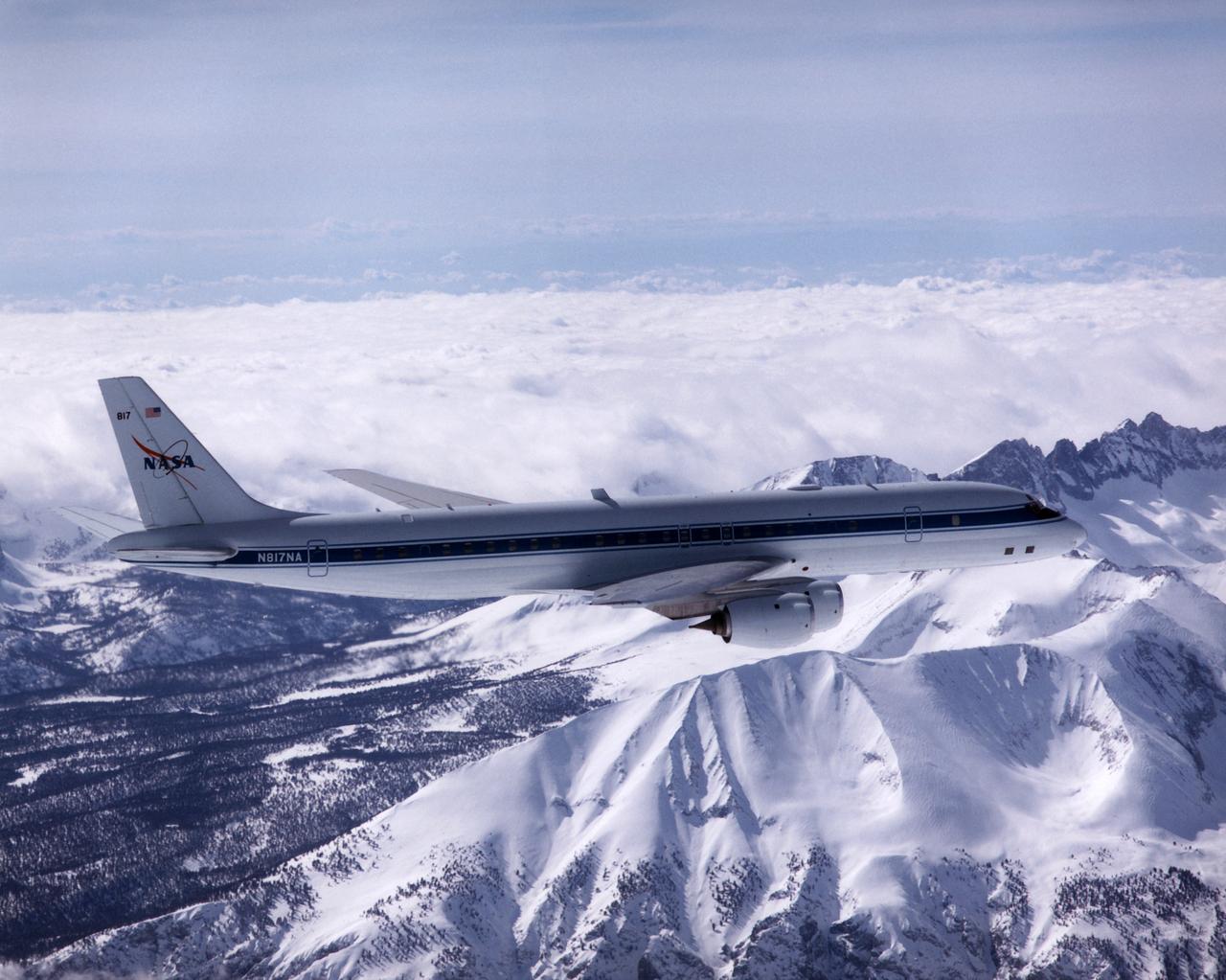
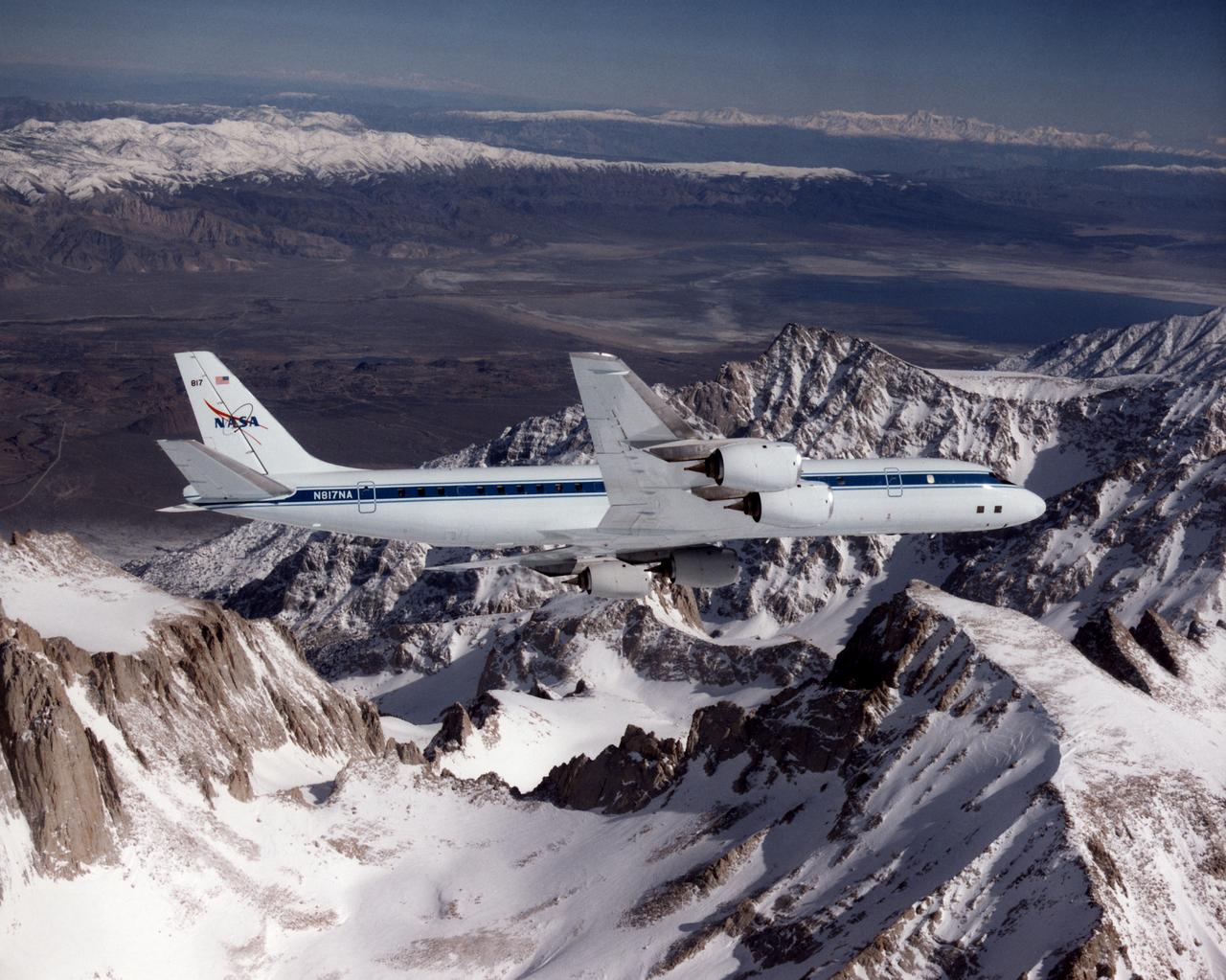
The DC-8 banking over the jagged peak of Mount Whitney on a February 25, 1998 flight. The DC-8 and a pair of ER-2 aircraft are operated by the Airborne Science program at the NASA Dryden Flight Research Center. NASA, other governmental agencies, academia, and scientific and technical organizations employ the DC-8 for a variety of experiments.
DC-8 Airborne Laboratory in flight over Mt. Whitney
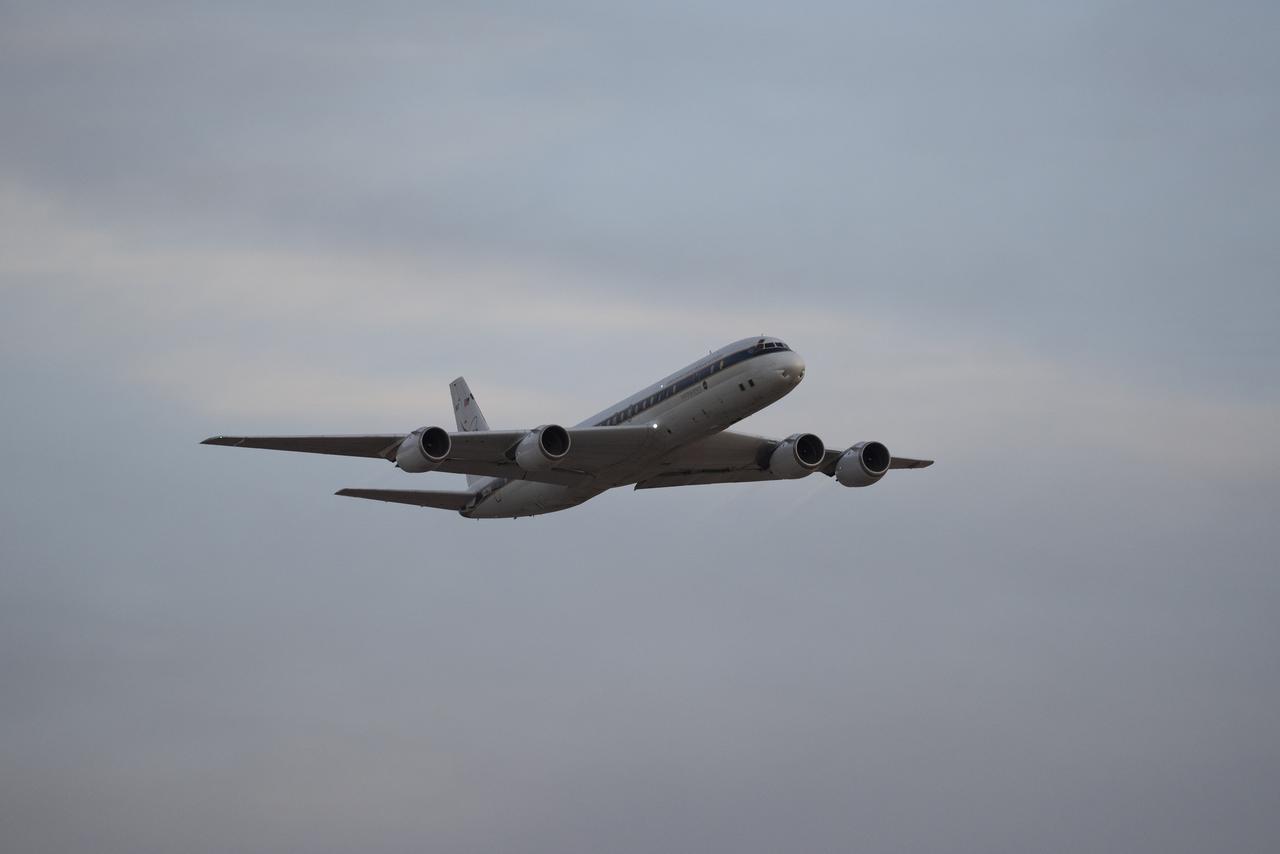
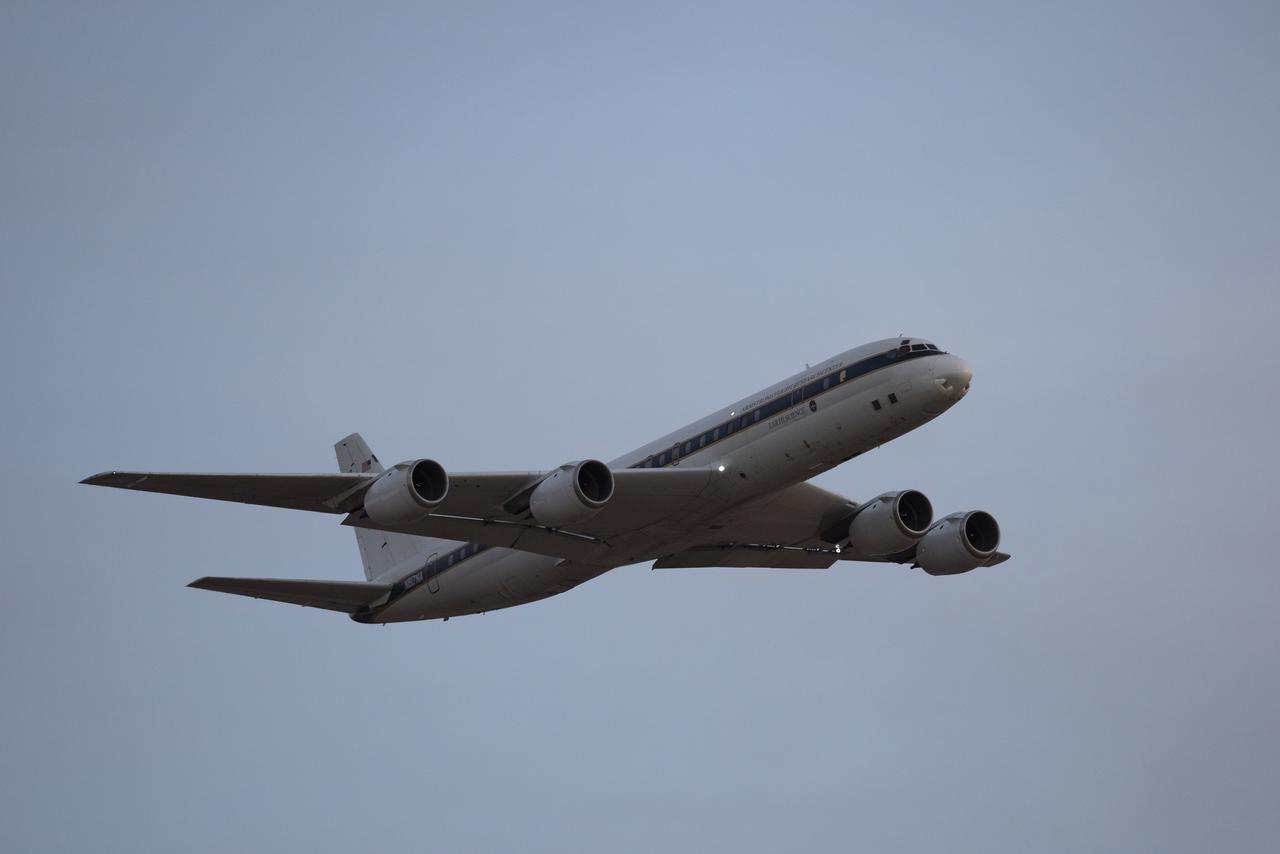
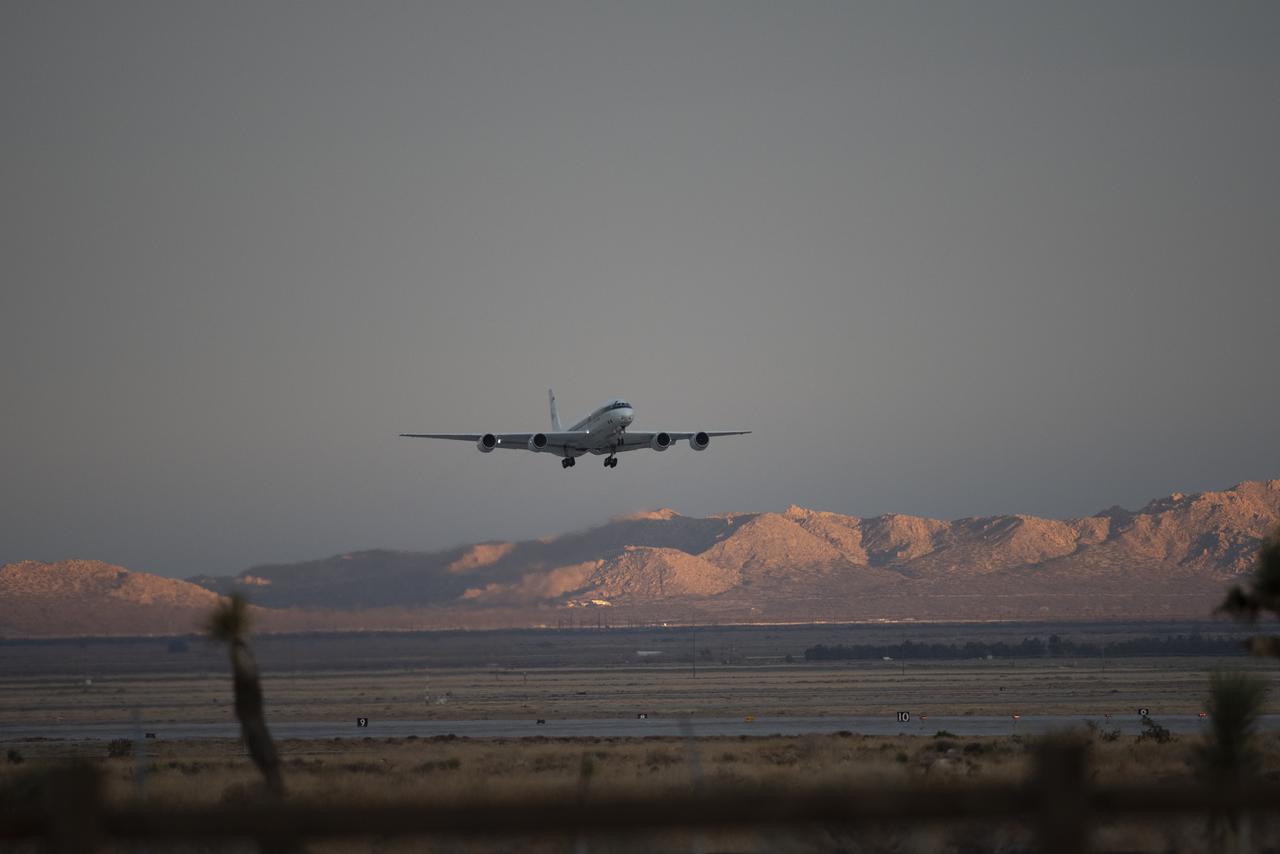
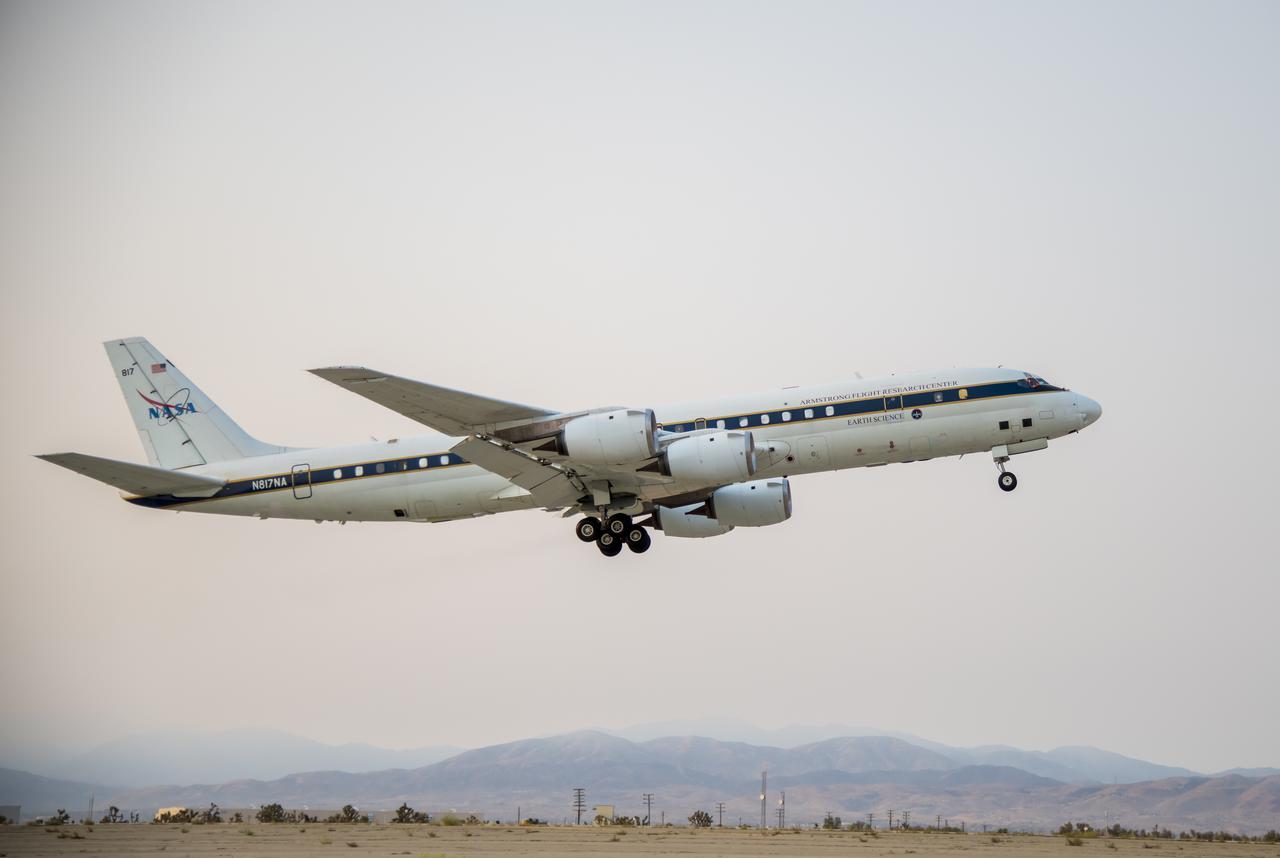
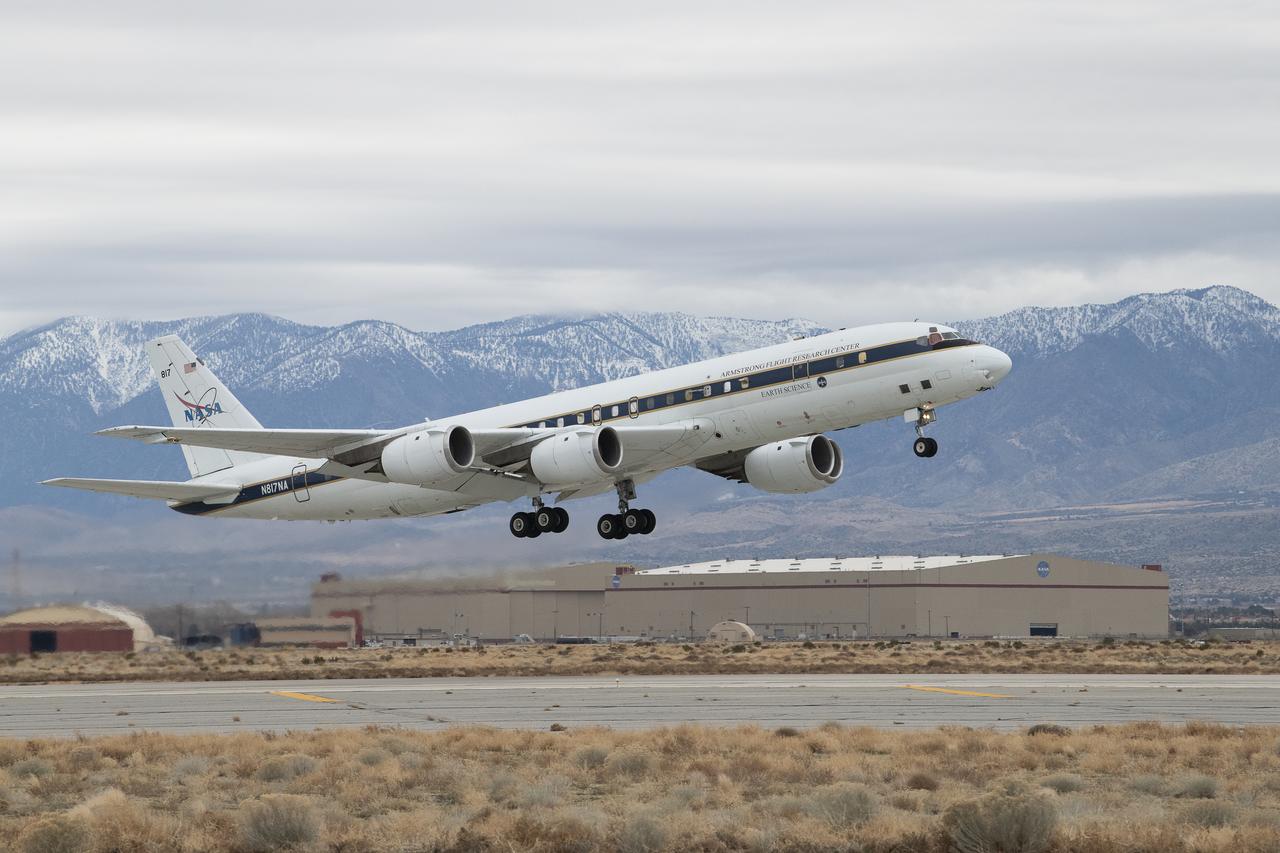
DC-8 lifts off from Air Force Plant 42 in Palmdale, Calif.
DC-8 Lift Off
DC-8 lifts off from Air Force Plant 42 in Palmdale, Calif.
DC-8 Lift Off
DC-8 lifts off from Air Force Plant 42 in Palmdale, Calif.
DC-8 Lift Off
DC-8 lifts off from Air Force Plant 42 in Palmdale, Calif.
DC-8 Lift Off
DC-8 lifts off from Air Force Plant 42 in Palmdale, Calif.
DC-8 Lift Off
DC-8 lifts off from Air Force Plant 42 in Palmdale, Calif.
DC-8 Lift Off
DC-8 lifts off from Air Force Plant 42 in Palmdale, Calif.
DC-8 Lift Off
DC-8 lifts off from Air Force Plant 42 in Palmdale, Calif.
DC-8 Lift Off
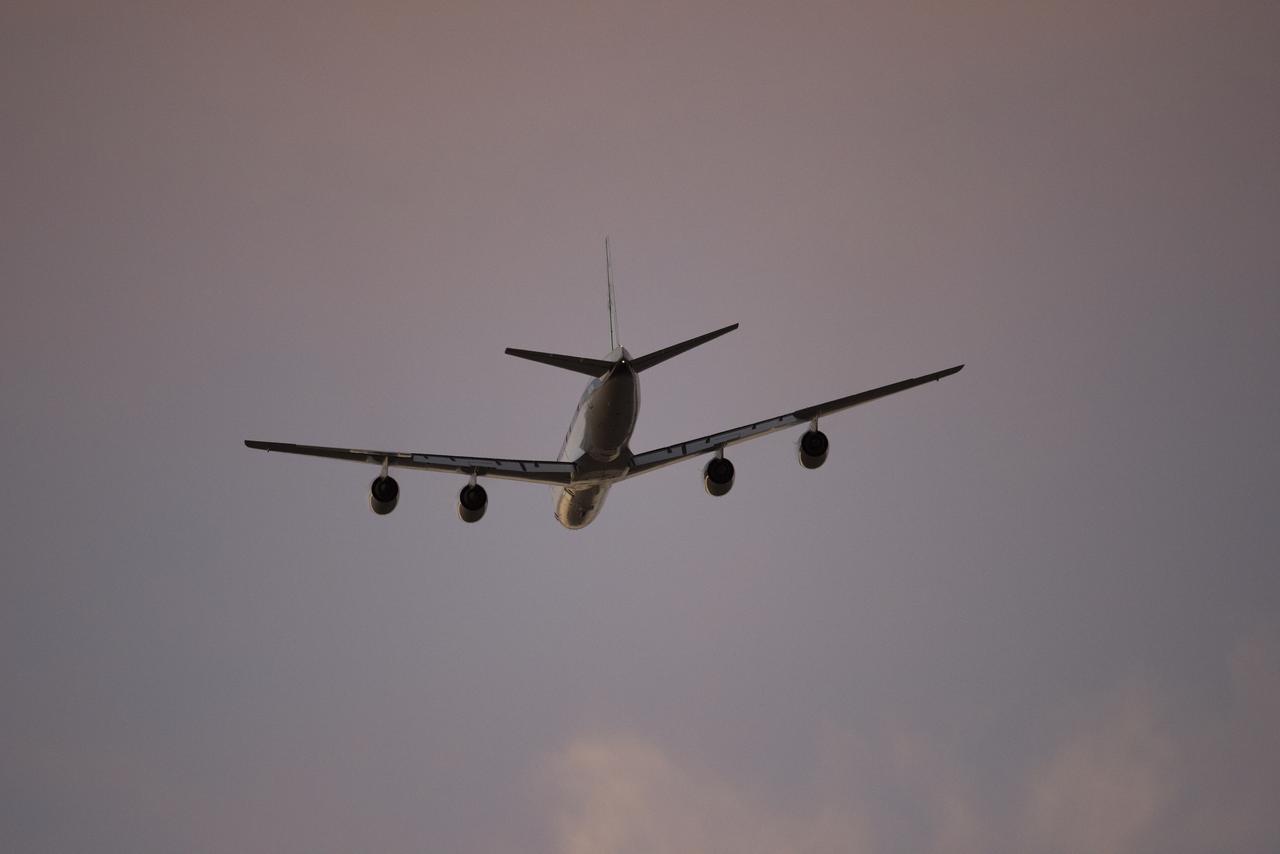
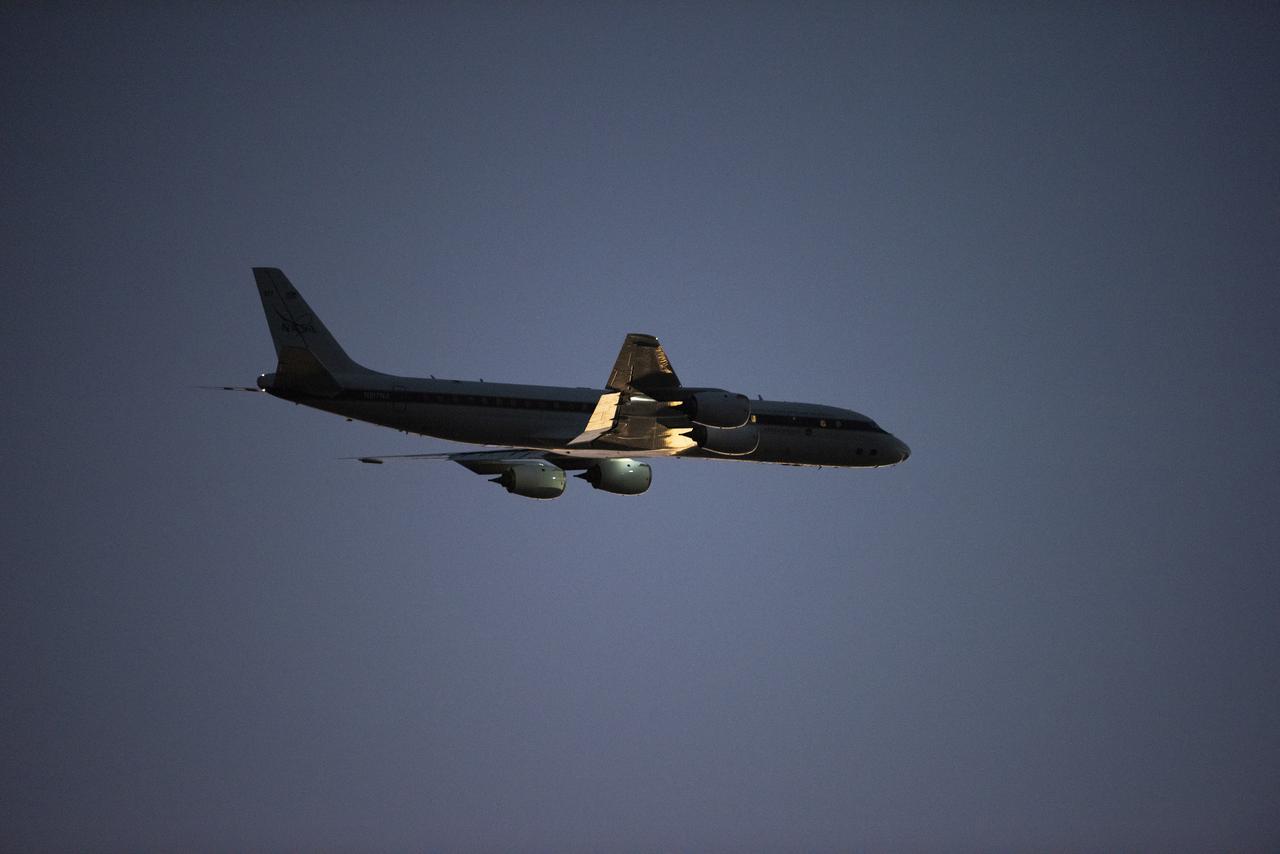
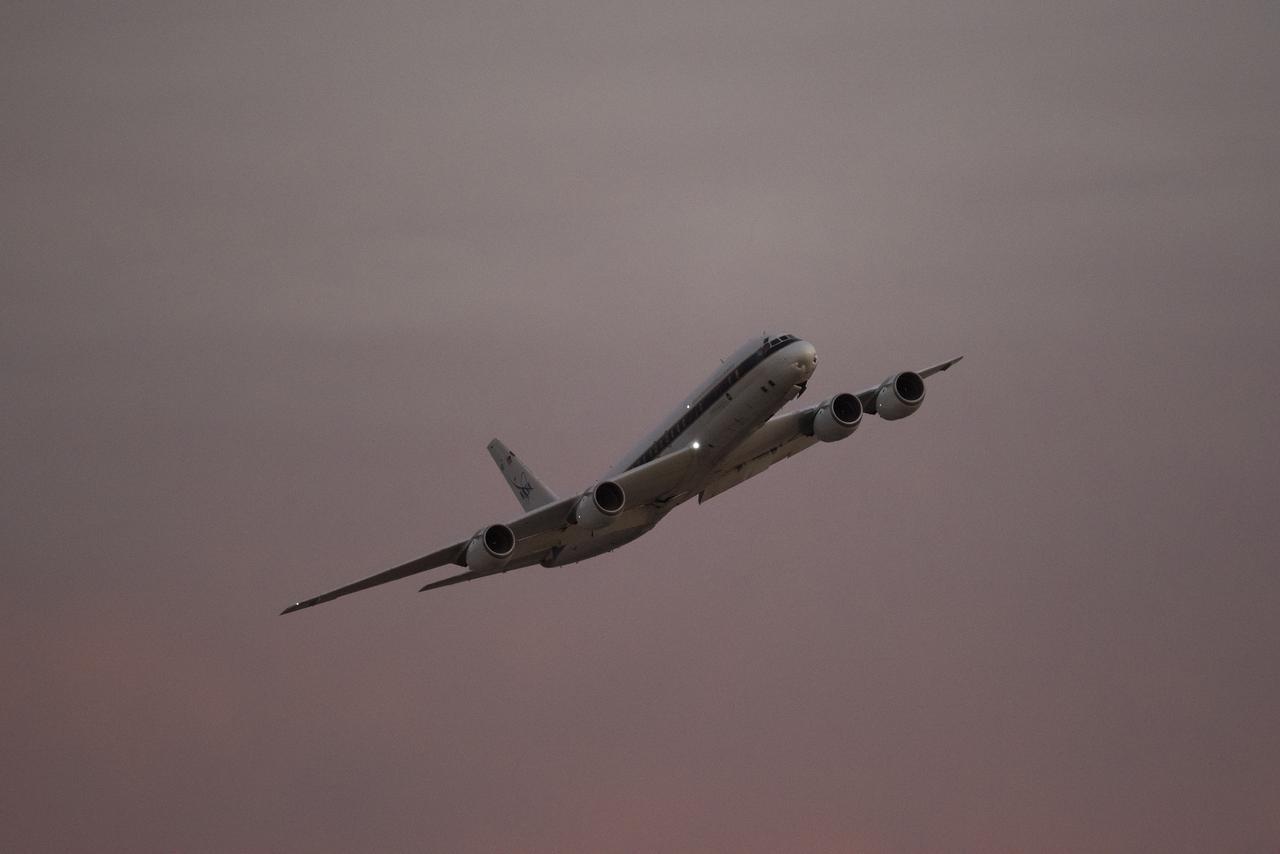
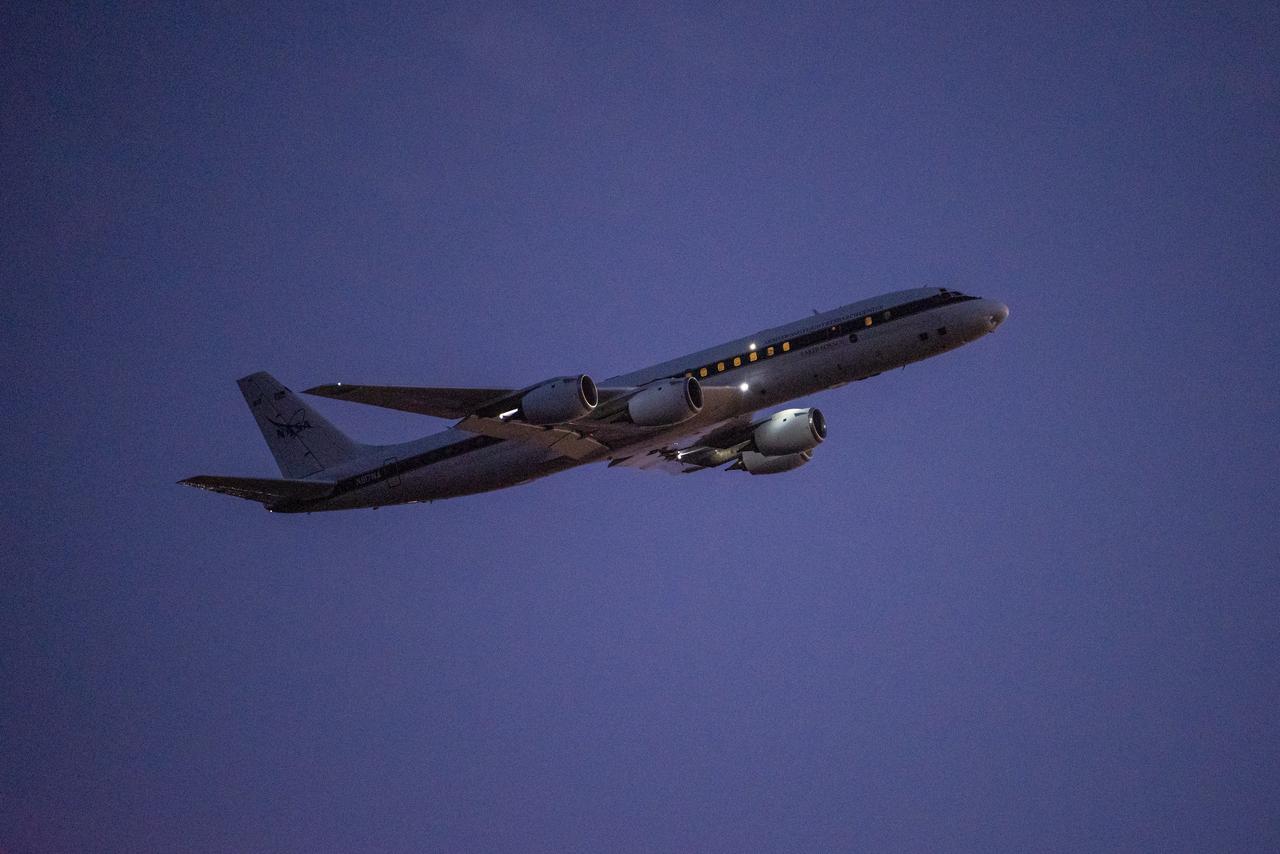
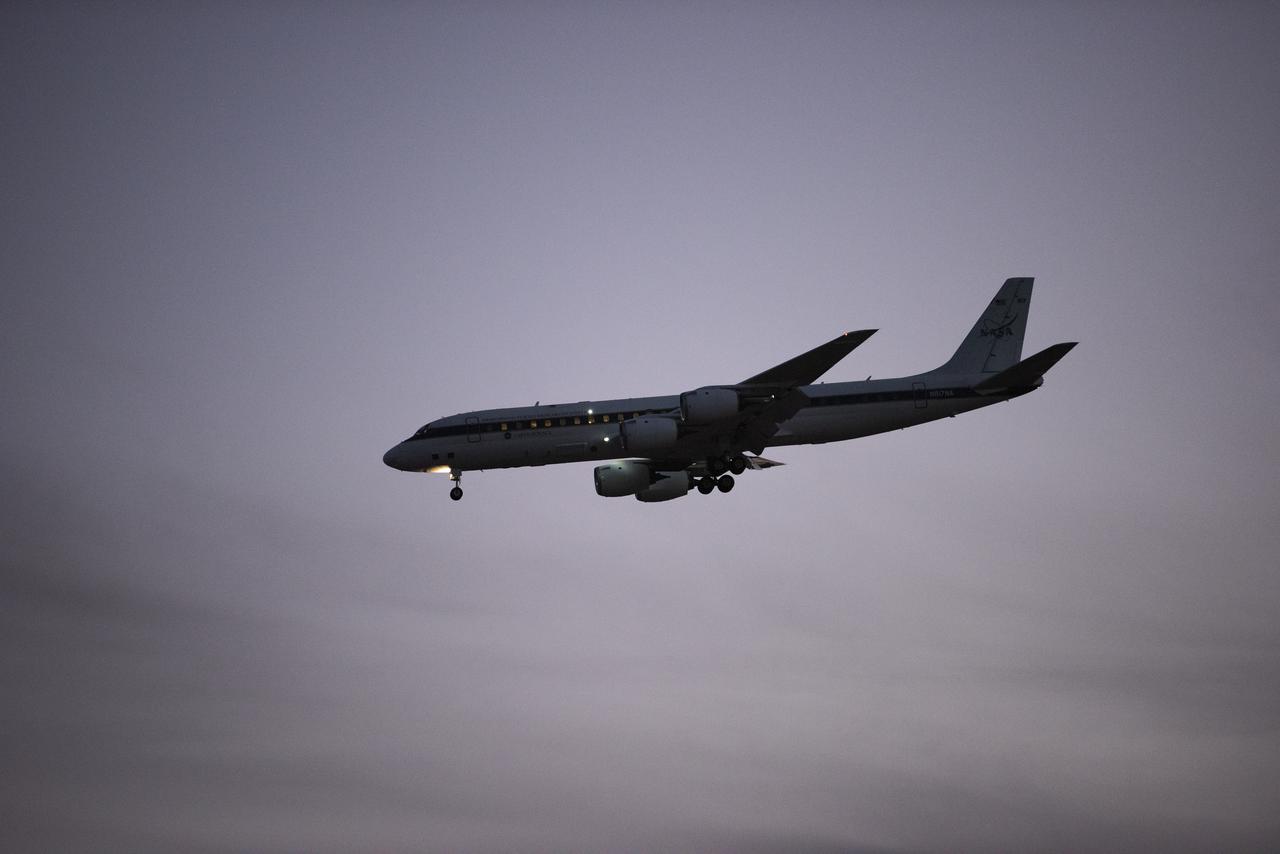
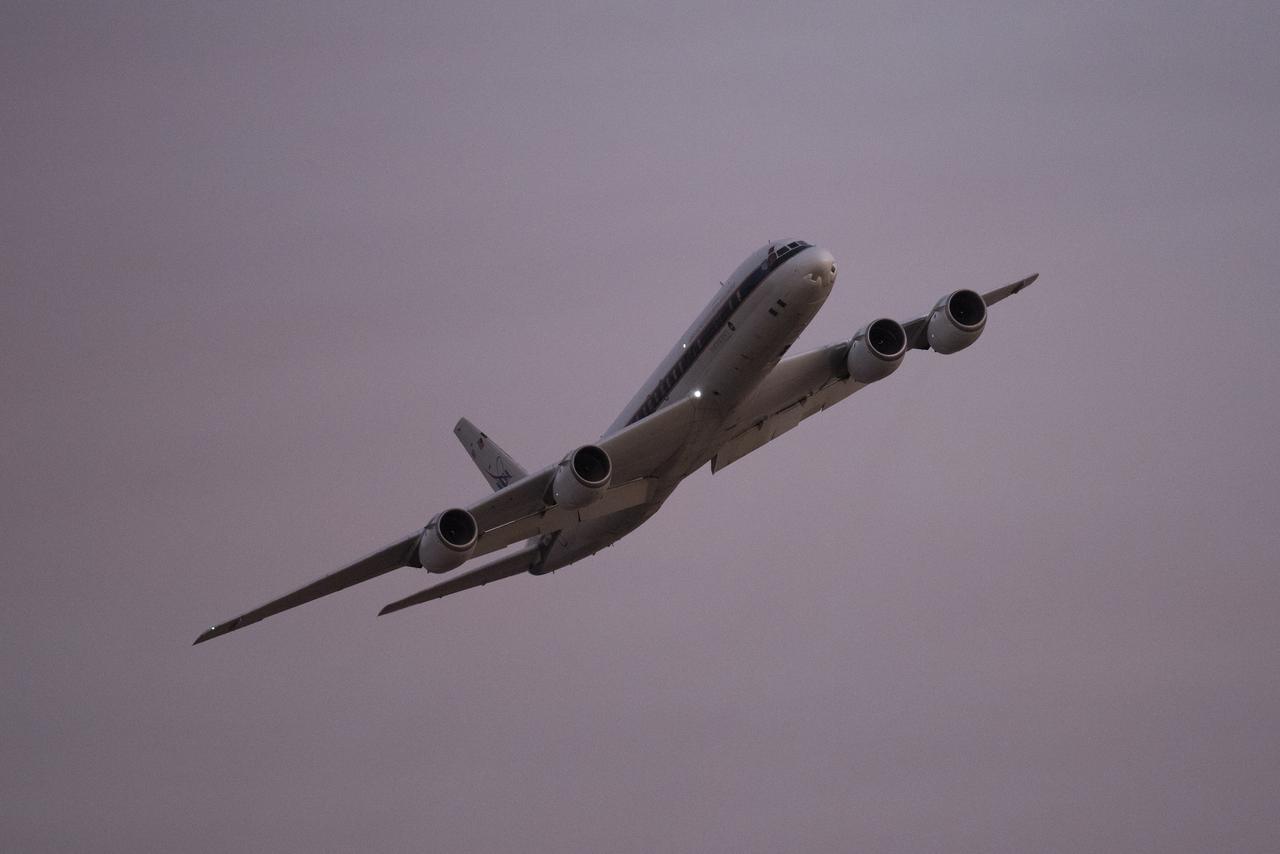
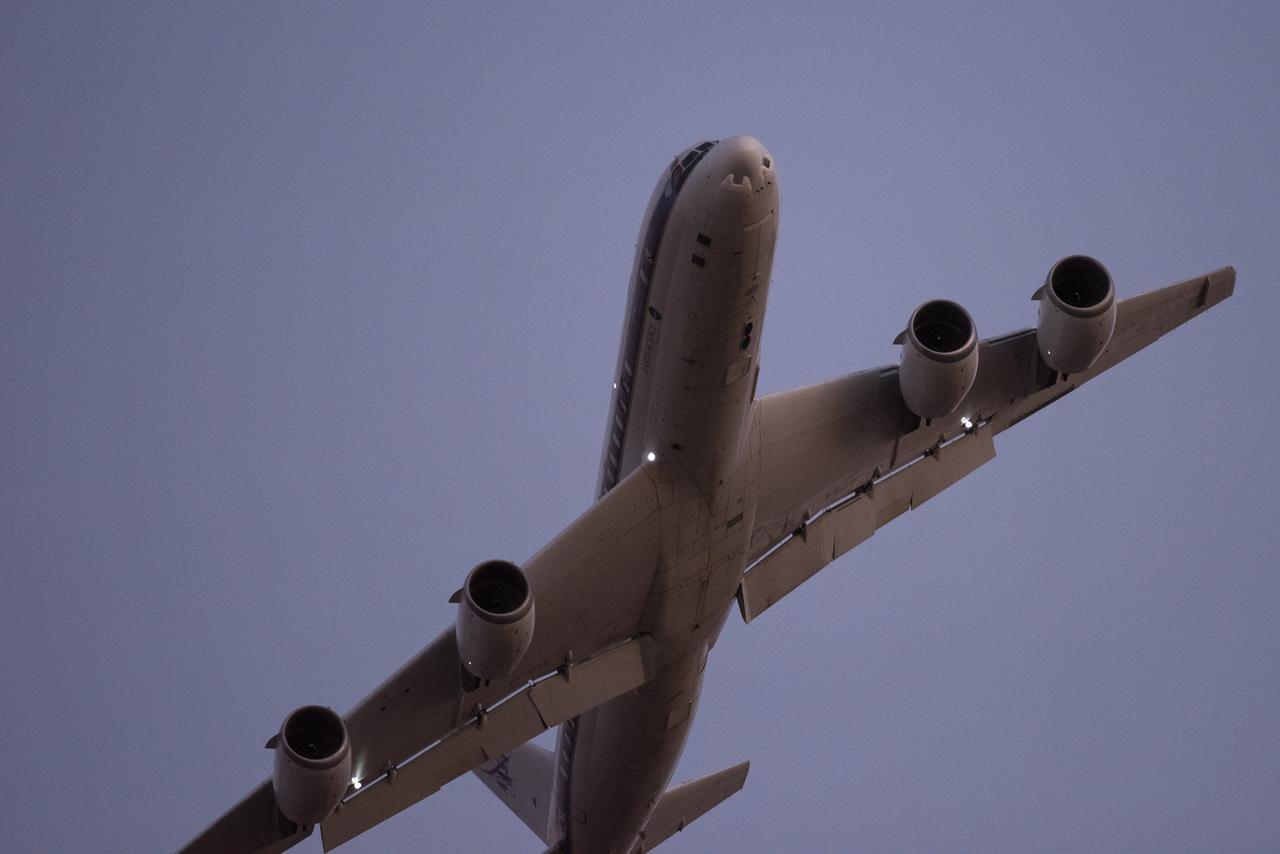
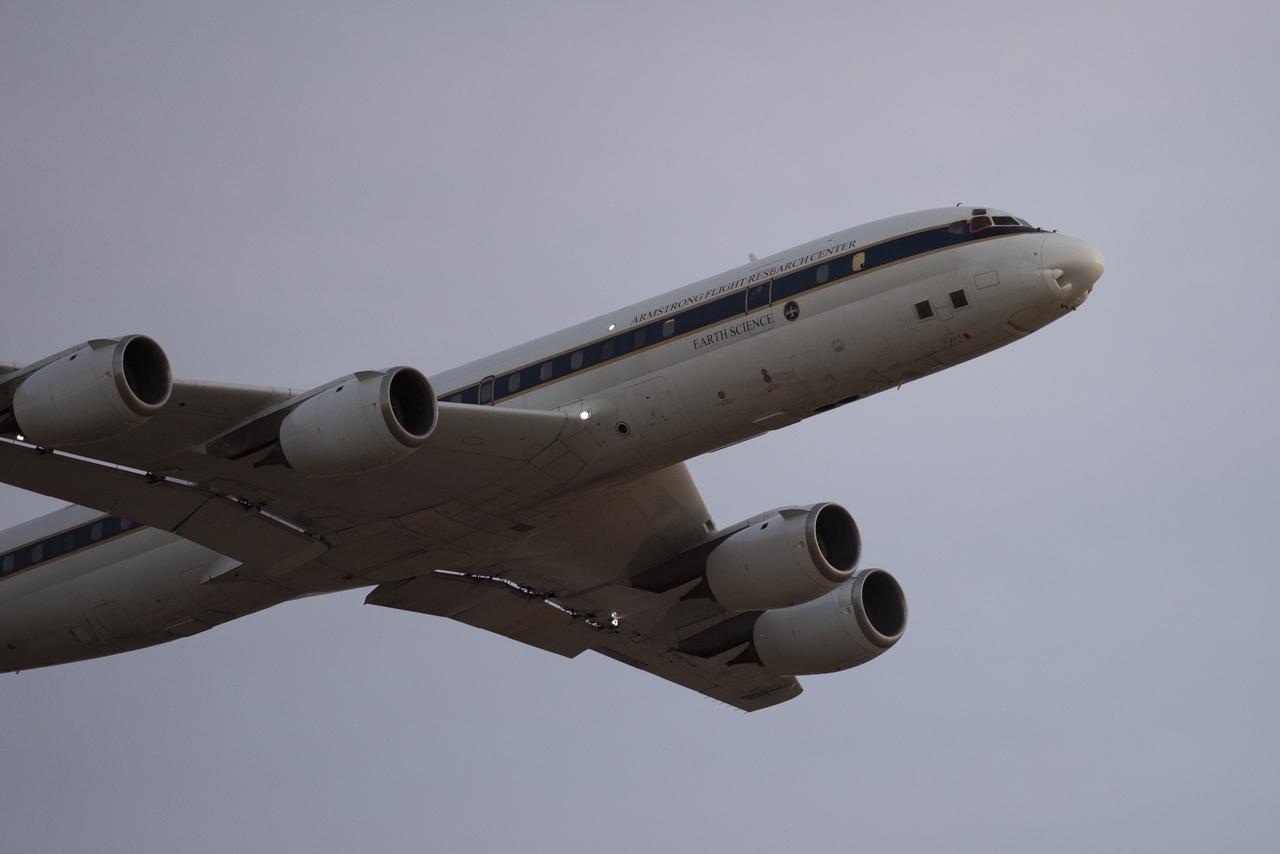
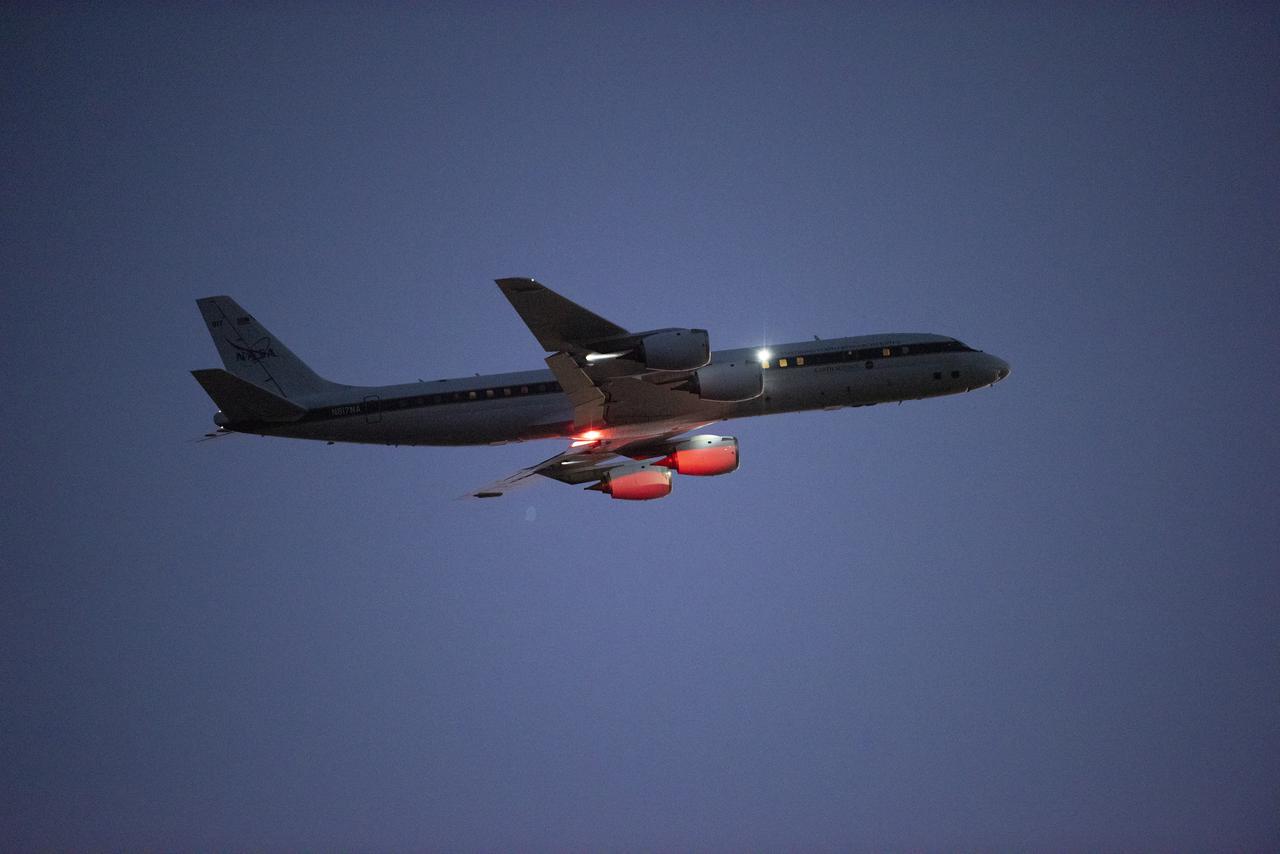
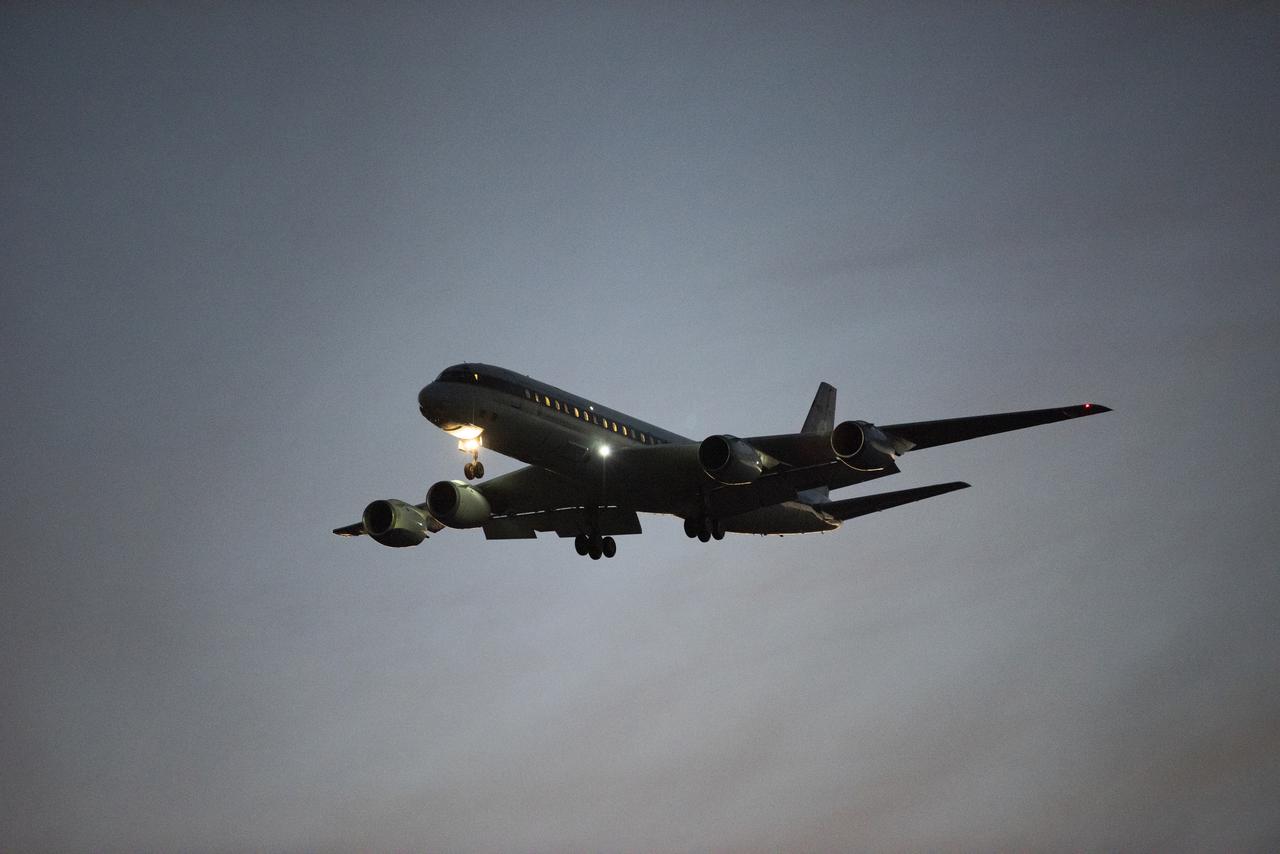
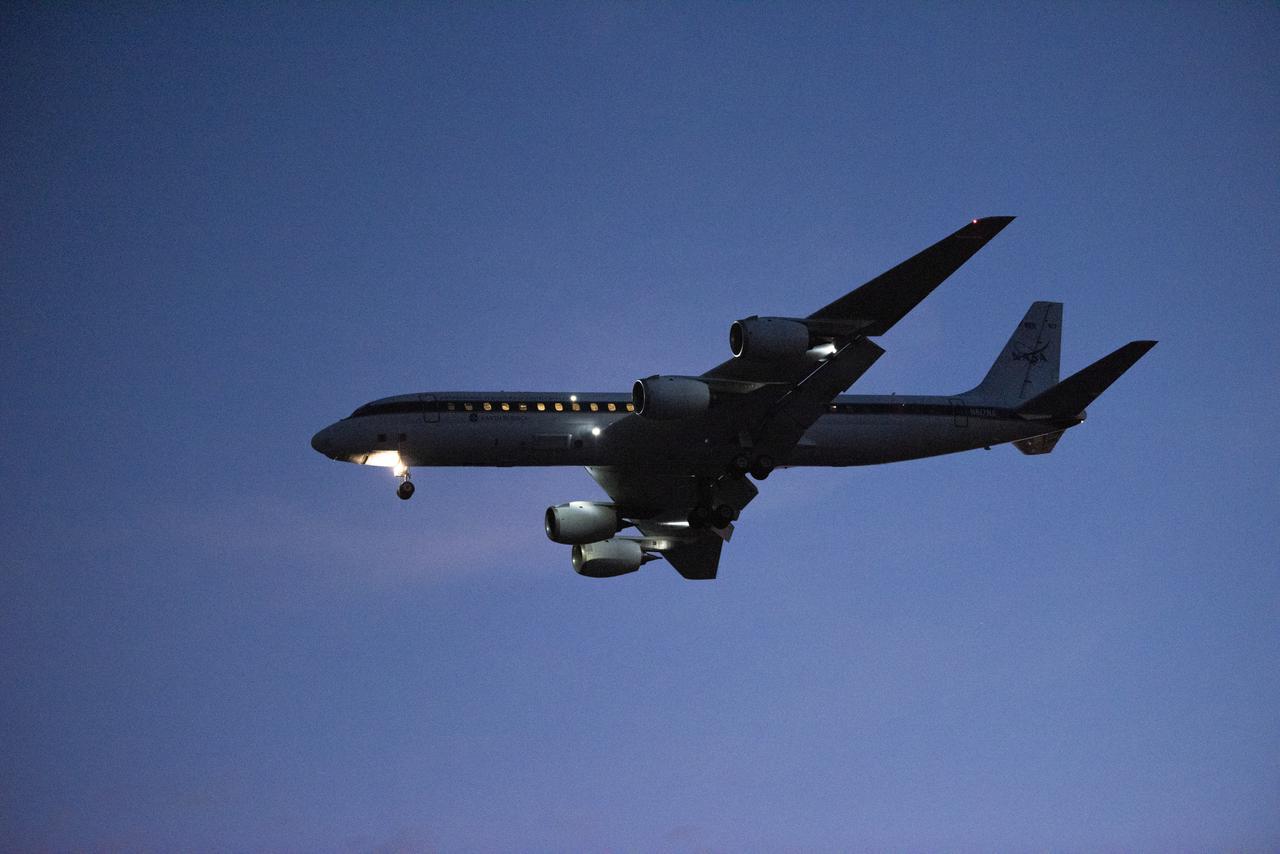
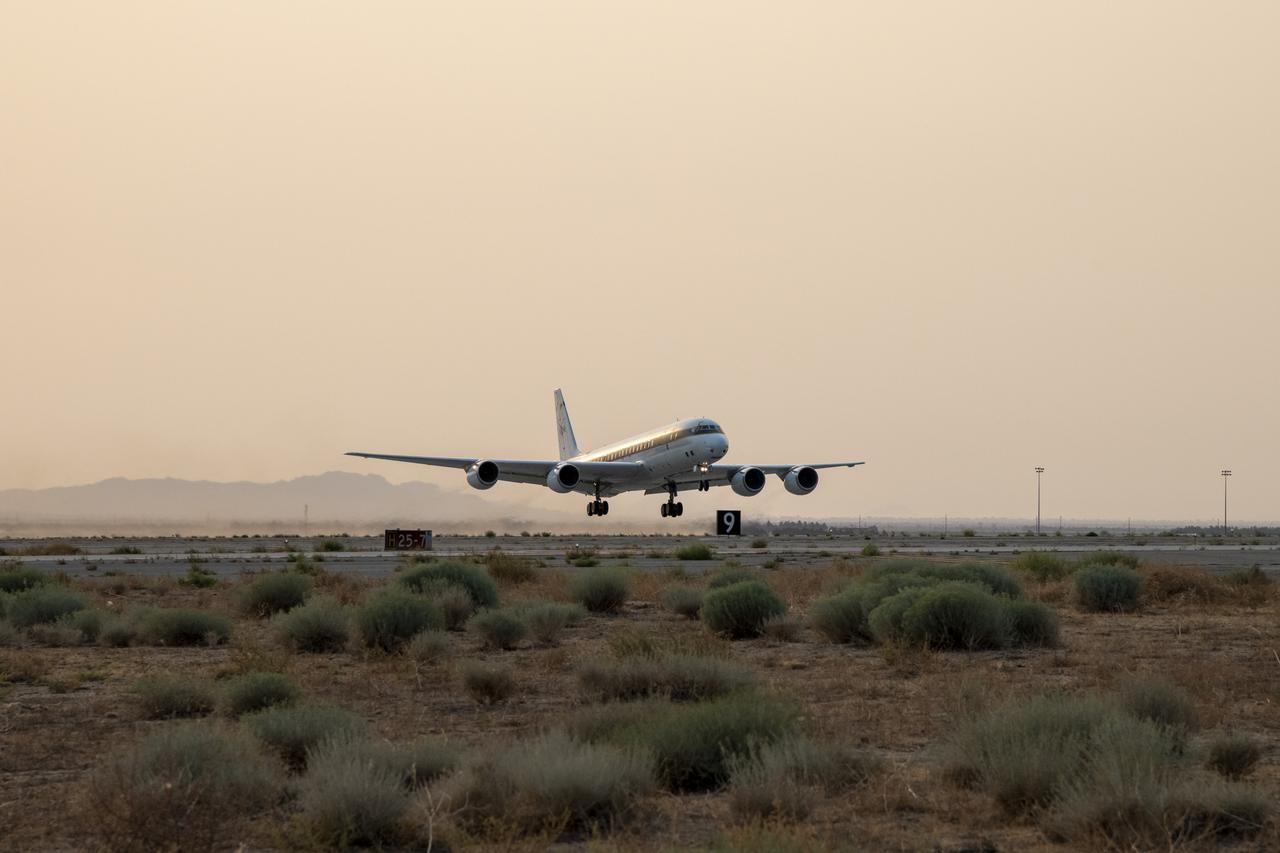
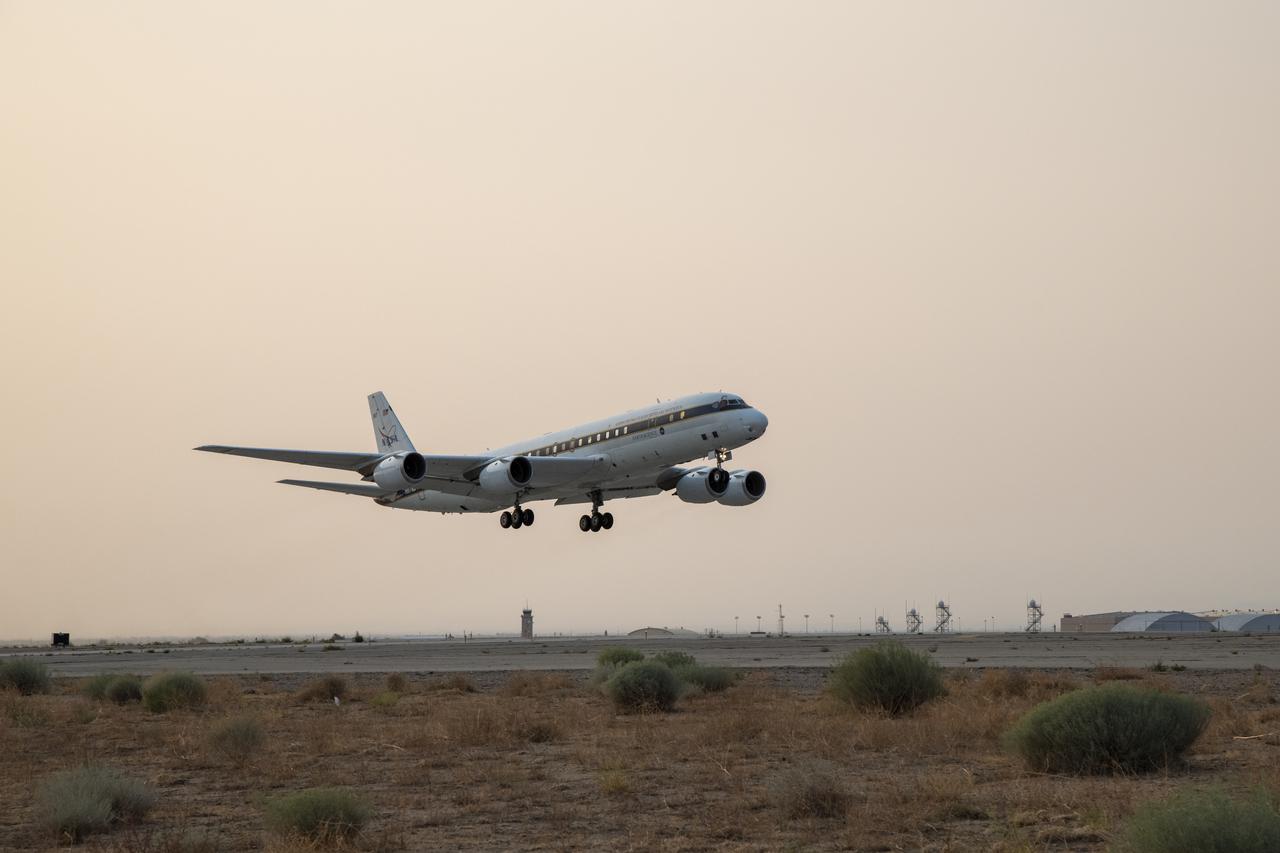
DC-8 lifts off from Air Force Plant 42 in Palmdale, Calif., at sunset.
DC-8 Sunset Lift Off
DC-8 lifts off from Air Force Plant 42 in Palmdale, Calif., at sunset.
DC-8 Sunset Lift Off
DC-8 lifts off from Air Force Plant 42 in Palmdale, Calif., at sunset.
DC-8 Sunset Lift Off
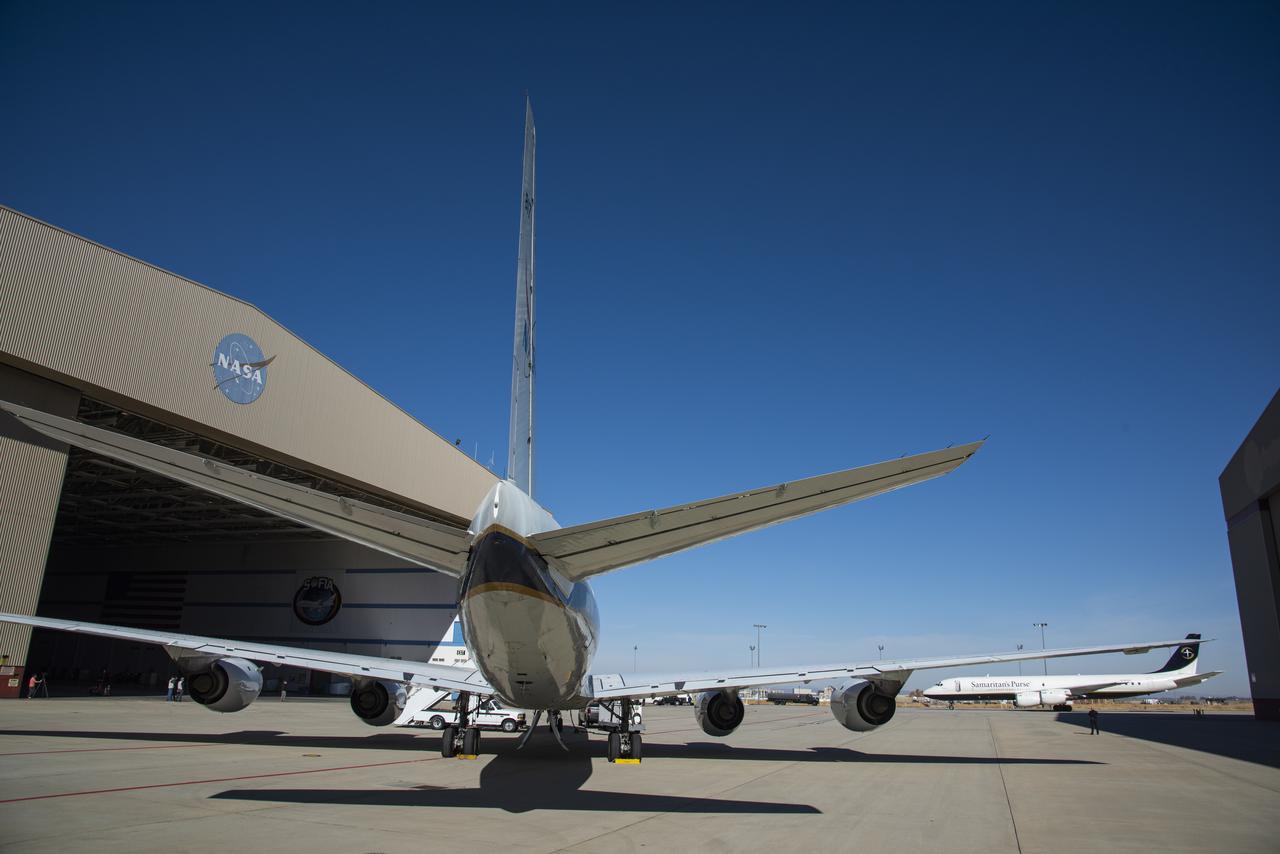
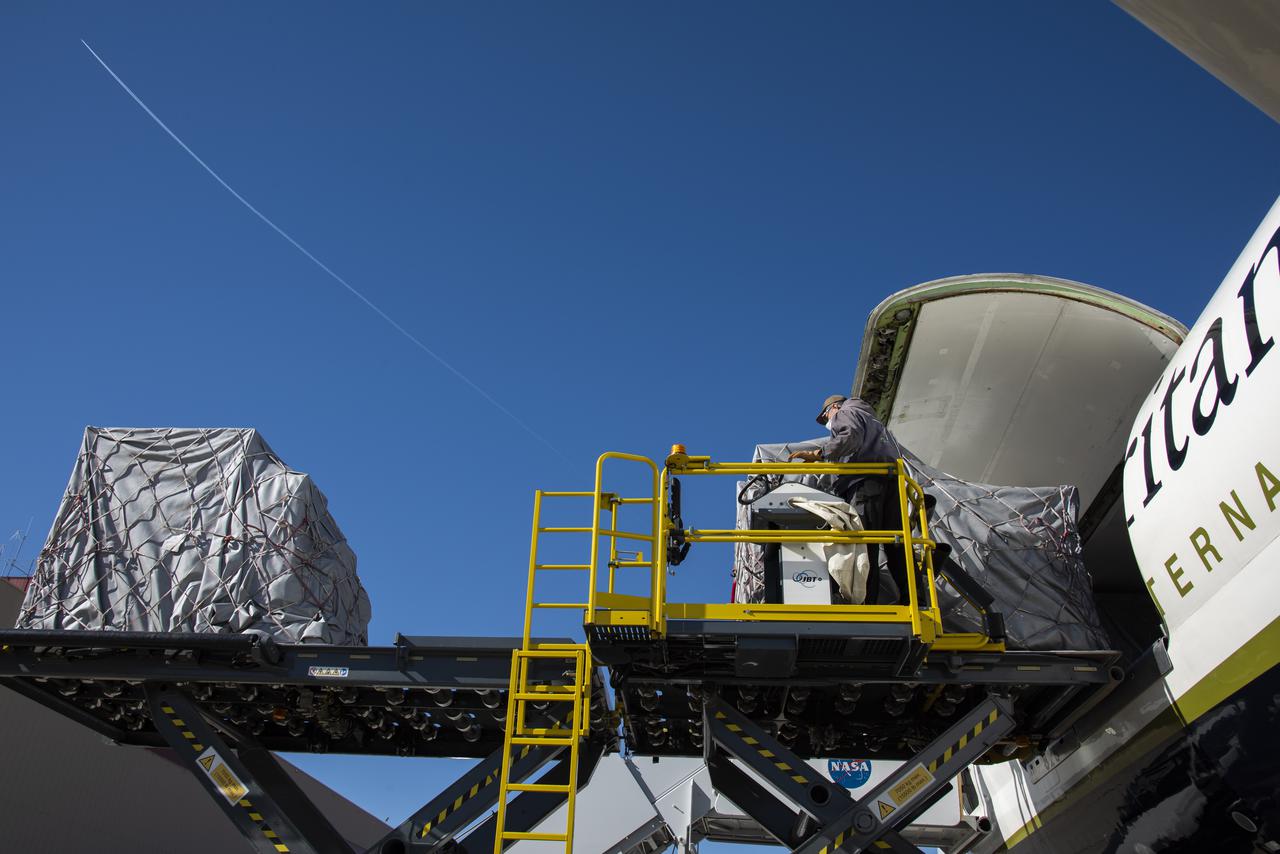
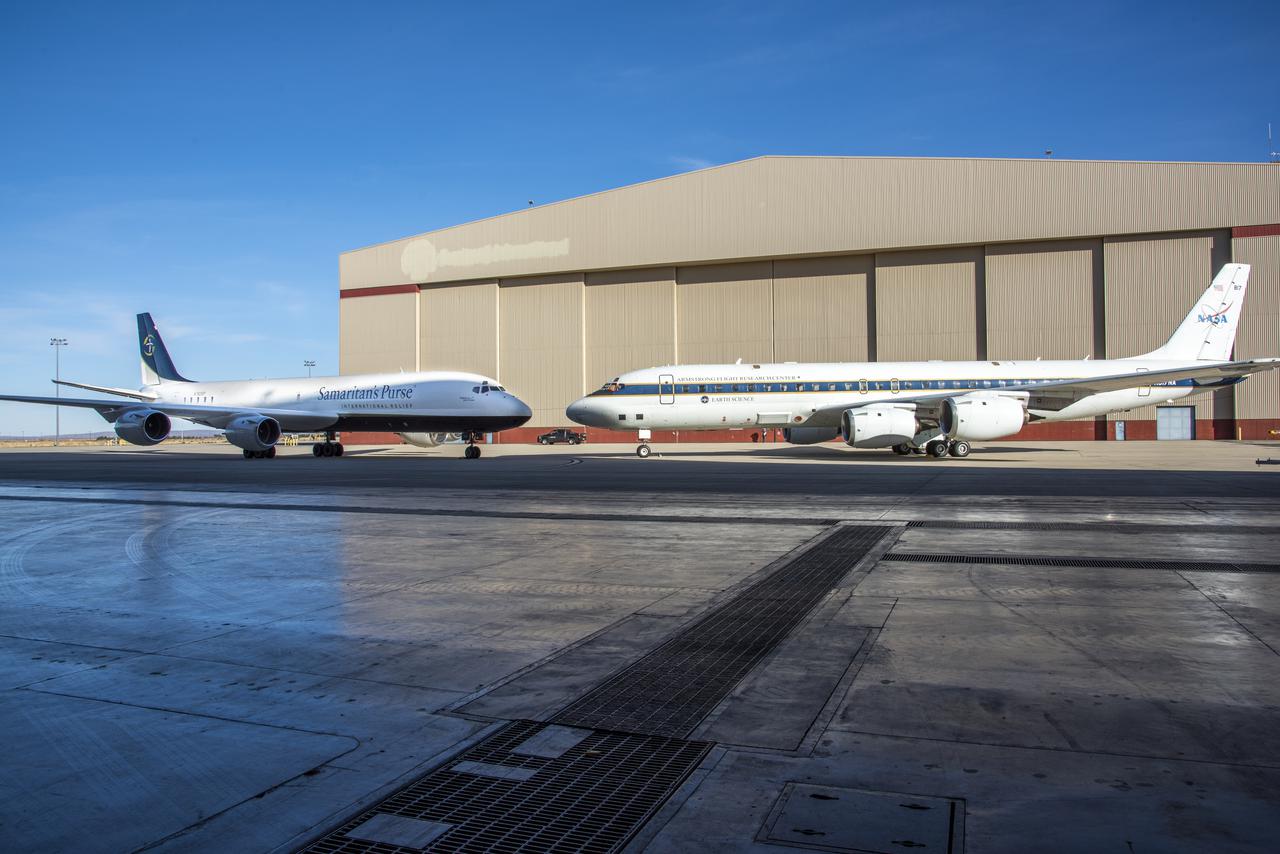
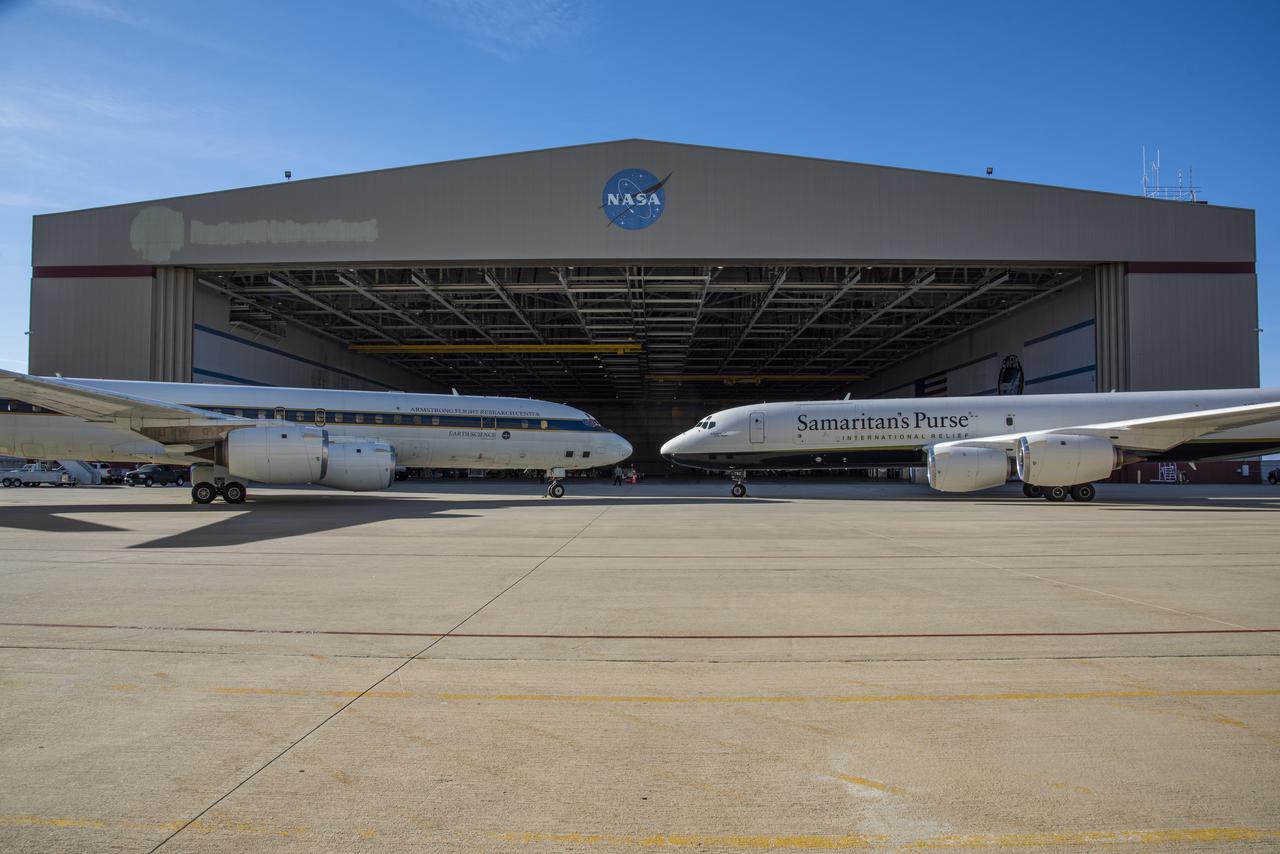
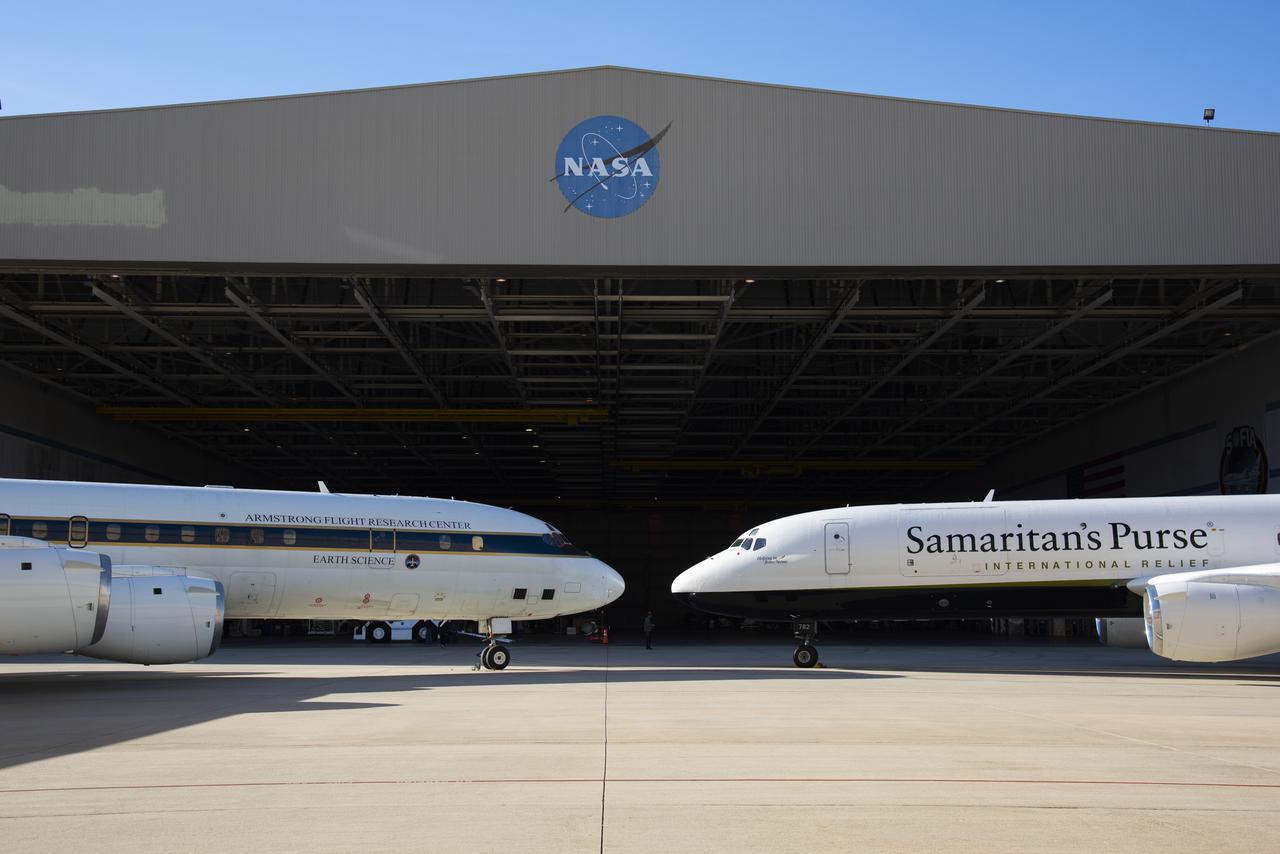
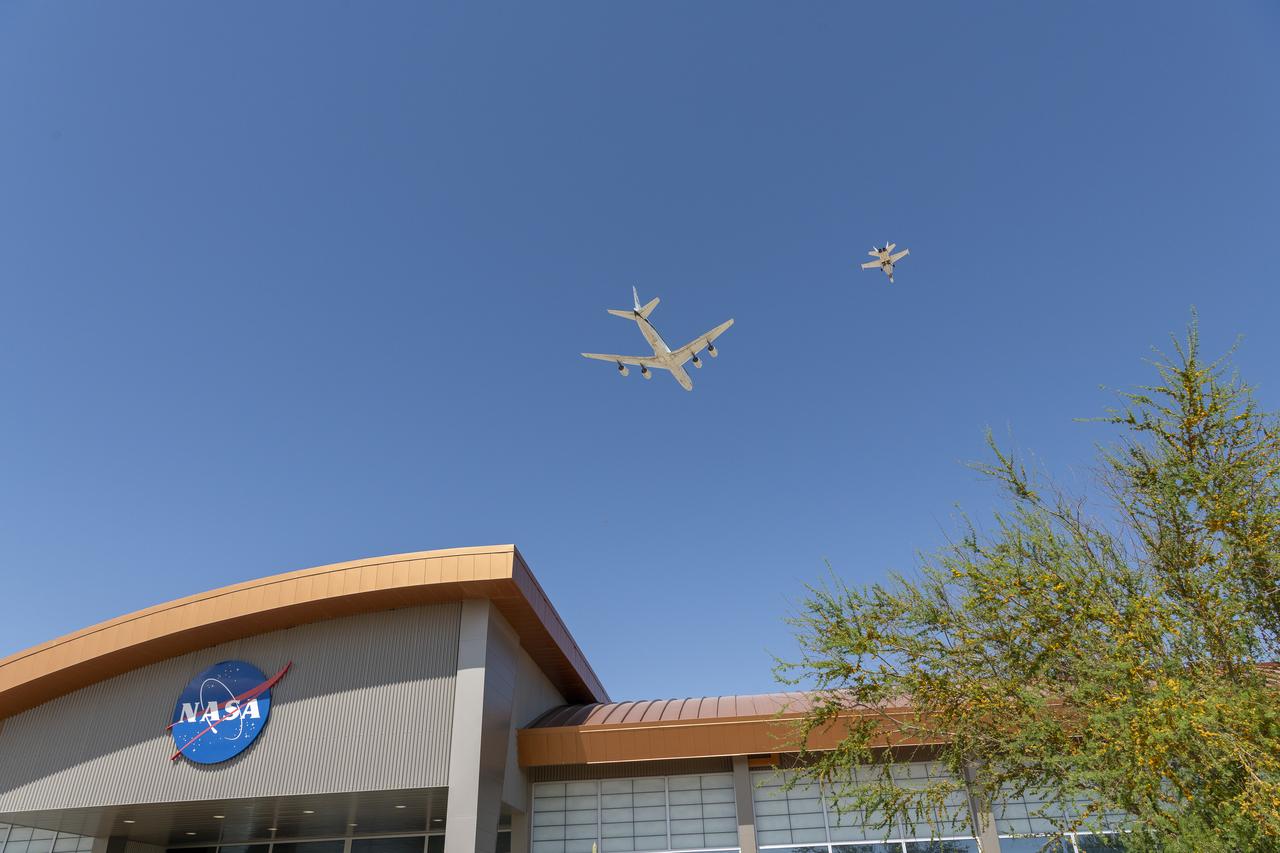
NASA and Samaritan's Purse DC-8 aircrafts met on the ramp in front of NASA's Armstrong Flight Research Center Building 703.
NASA and Samaritan's Purse DC-8
DC-8 lifts off from Air Force Plant 42 in Palmdale, Calif., at sunset.
DC-8 Sunset Lift Off
DC-8 lifts off from Air Force Plant 42 in Palmdale, Calif., at sunset.
DC-8 Sunset Lift Off
DC-8 lifts off from Air Force Plant 42 in Palmdale, Calif., at sunset.
DC-8 Sunset Lift Off
DC-8 lifts off from Air Force Plant 42 in Palmdale, Calif., at sunset.
DC-8 Sunset Lift Off
DC-8 lifts off from Air Force Plant 42 in Palmdale, Calif., at sunset.
DC-8 Sunset Lift Off
DC-8 lifts off from Air Force Plant 42 in Palmdale, Calif., at sunset.
DC-8 Sunset Lift Off
DC-8 lifts off from Air Force Plant 42 in Palmdale, Calif., at sunset.
DC-8 Sunset Lift Off
DC-8 lifts off from Air Force Plant 42 in Palmdale, Calif., at sunset.
DC-8 Sunset Lift Off
NASA and Samaritan's Purse DC-8 aircrafts met on the ramp in front of NASA's Armstrong Flight Research Center Building 703.
NASA and Samaritan's Purse DC-8
DC-8 lifts off from Air Force Plant 42 in Palmdale, Calif., at sunset.
DC-8 Sunset Lift Off
NASA and Samaritan's Purse DC-8 aircrafts met on the ramp in front of NASA's Armstrong Flight Research Center Building 703.
NASA and Samaritan's Purse DC-8
DC-8 lifts off from Air Force Plant 42 in Palmdale, Calif., at sunset.
DC-8 Sunset Lift Off
DC-8 lifts off from Air Force Plant 42 in Palmdale, Calif., at sunset.
DC-8 Sunset Lift Off
DC-8 lifts off from Air Force Plant 42 in Palmdale, Calif., at sunset.
DC-8 Sunset Lift Off
 NASA and Samaritan’s Purse DC-8 aircrafts met on the ramp in front of NASA’s Armstrong Flight Research Center Building 703.
NASA and Samaritan’s Purse DC-8
NASA and Samaritan's Purse DC-8 aircrafts met on the ramp in front of NASA's Armstrong Flight Research Center Building 703.
NASA and Samaritan's Purse DC-8
DC-8 lifts off from Air Force Plant 42 in Palmdale, Calif., at sunset.
DC-8 Sunset Lift Off
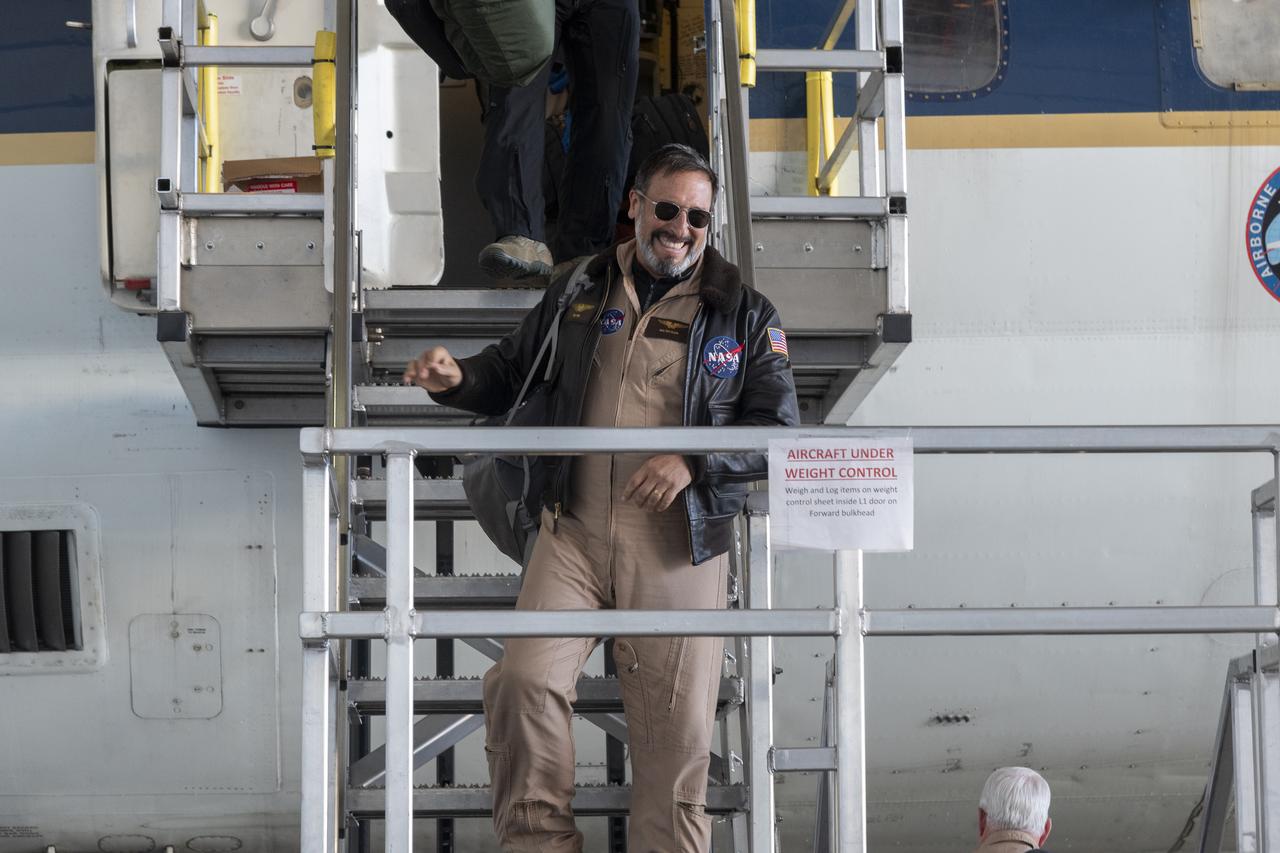
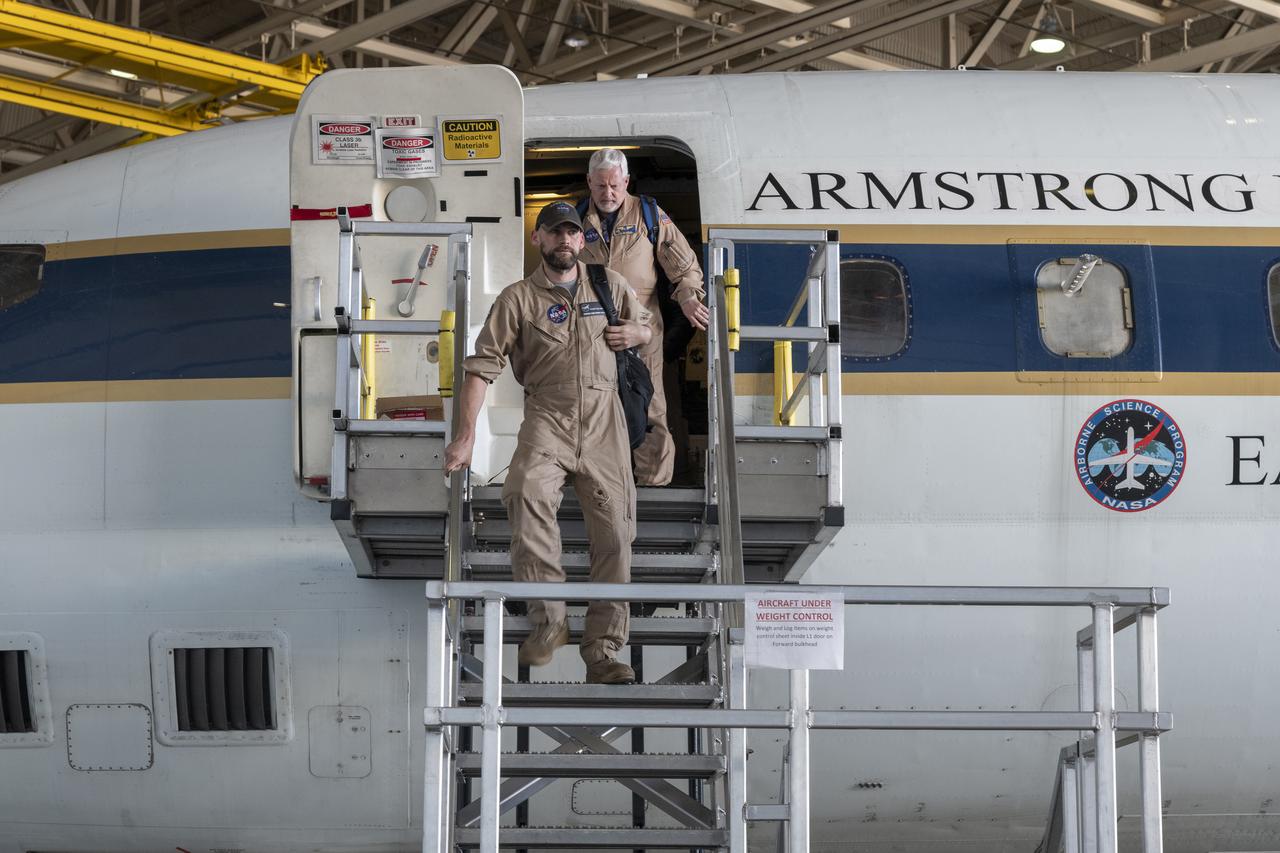
Walter Klein, DC-8 navigator, exits the aircraft cabin and is welcomed with applause from a supportive team after the DC-8 aircraft and crew return to NASA’s Armstrong Flight Research Center Building 703 in Palmdale, California, on April 1, 2024, following the aircraft’s final mission in support of the Airborne and Satellite Investigation of Asian Air Quality (ASIA-AQ).
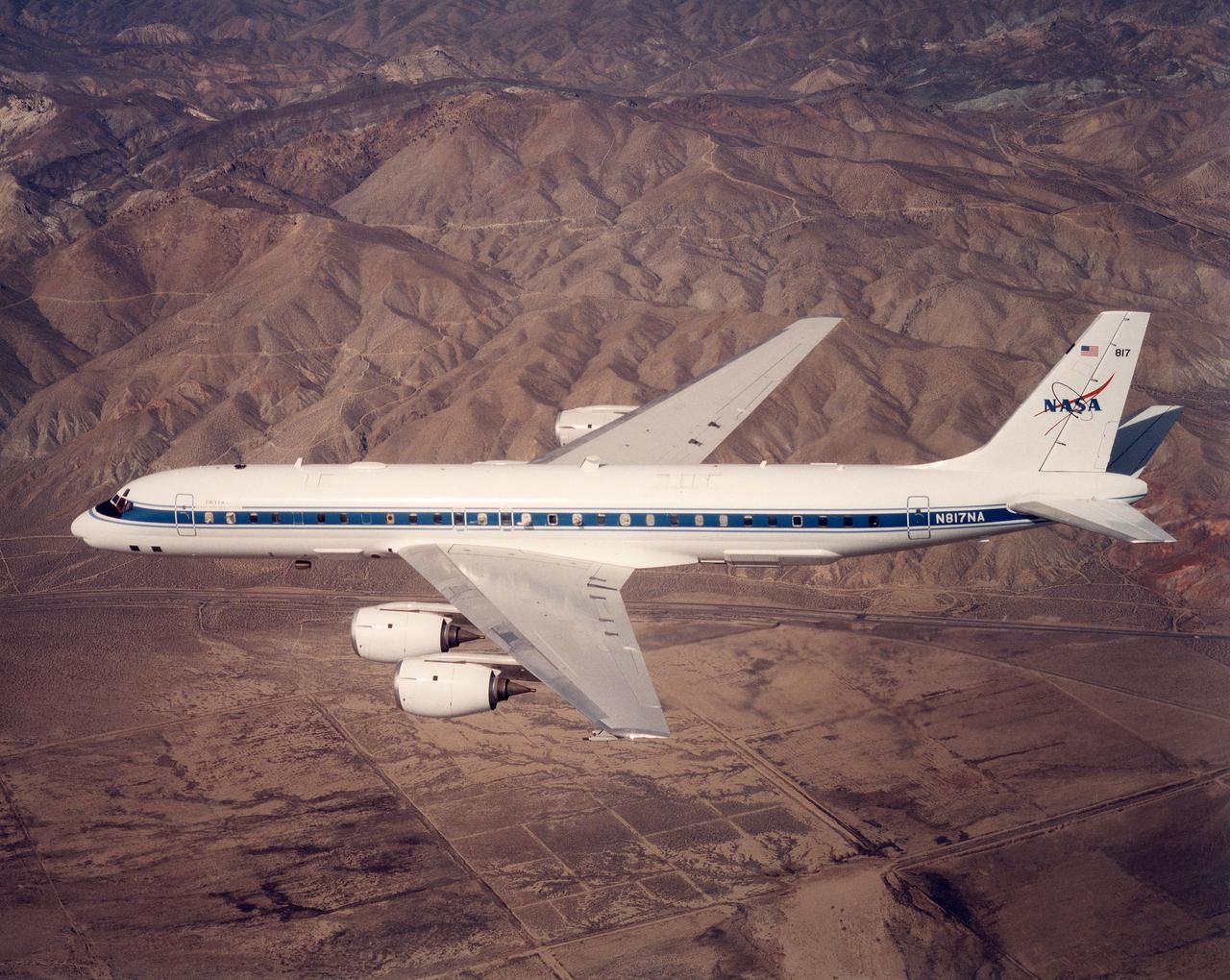
NASA’s DC-8 Returns from Final Mission
DC-8 returning from AFWEX deployment showing AeroSAPIENT Ku-band antennas
DC-8 returning from AFWEX deployment showing AeroSAPIENT Ku-band transmit antenna (aft 62 degree port)
DC-8 Airborne Laboratory in banked flight over snow-capped Sierra Nevada mountain range
DC-8 returning from AFWEX deployment showing AeroSAPIENT Ku-band receive antenna (fwd zenith port)
NASA's DC-8 taking off to St. Croix in support of the Convective Processes Experiment - Aerosols and Winds campaign (CPEX-AW) on Aug 17, 2021.
DC-8 CPEX-AW Deployment
NASA's DC-8 taking off to St. Croix in support of the Convective Processes Experiment - Aerosols and Winds campaign (CPEX-AW) on Aug 17, 2021.
DC-8 CPEX-AW Deployment
NASA’s DC-8 taking off to St. Croix in support of the Convective Processes Experiment – Aerosols and Winds campaign (CPEX-AW) on Aug 17, 2021.
DC-8 CPEX-AW Deployment
NASA's Armstrong Flight Research Center flies the DC-8 airborne science laboratory in support of the Convective Processes Experiment - Aerosols and Winds campaign, CPEX-AW,  on Aug 6, 2021.
DC-8 CPEX-AW Science Flight
Kelly Jellison, avionics lead, and Tim Sandon, flight engineer, exit the DC-8 aircraft cabin and are welcomed with applause from a supportive team after the DC-8 aircraft and crew return to NASA’s Armstrong Flight Research Center Building 703 in Palmdale, California, on April 1, 2024, following the aircraft’s final mission in support of the Airborne and Satellite Investigation of Asian Air Quality (ASIA-AQ).
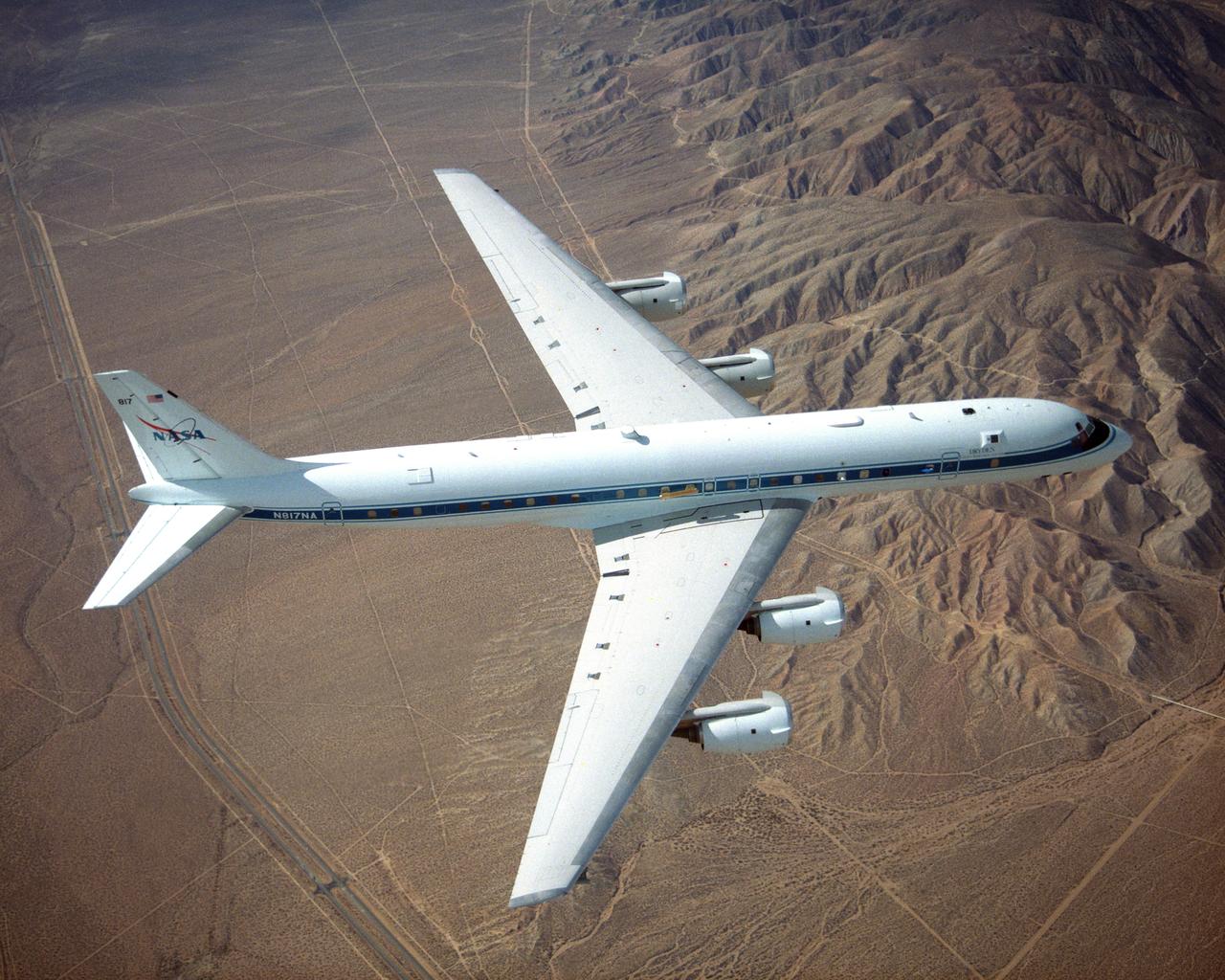
NASA’s DC-8 Returns from Final Mission
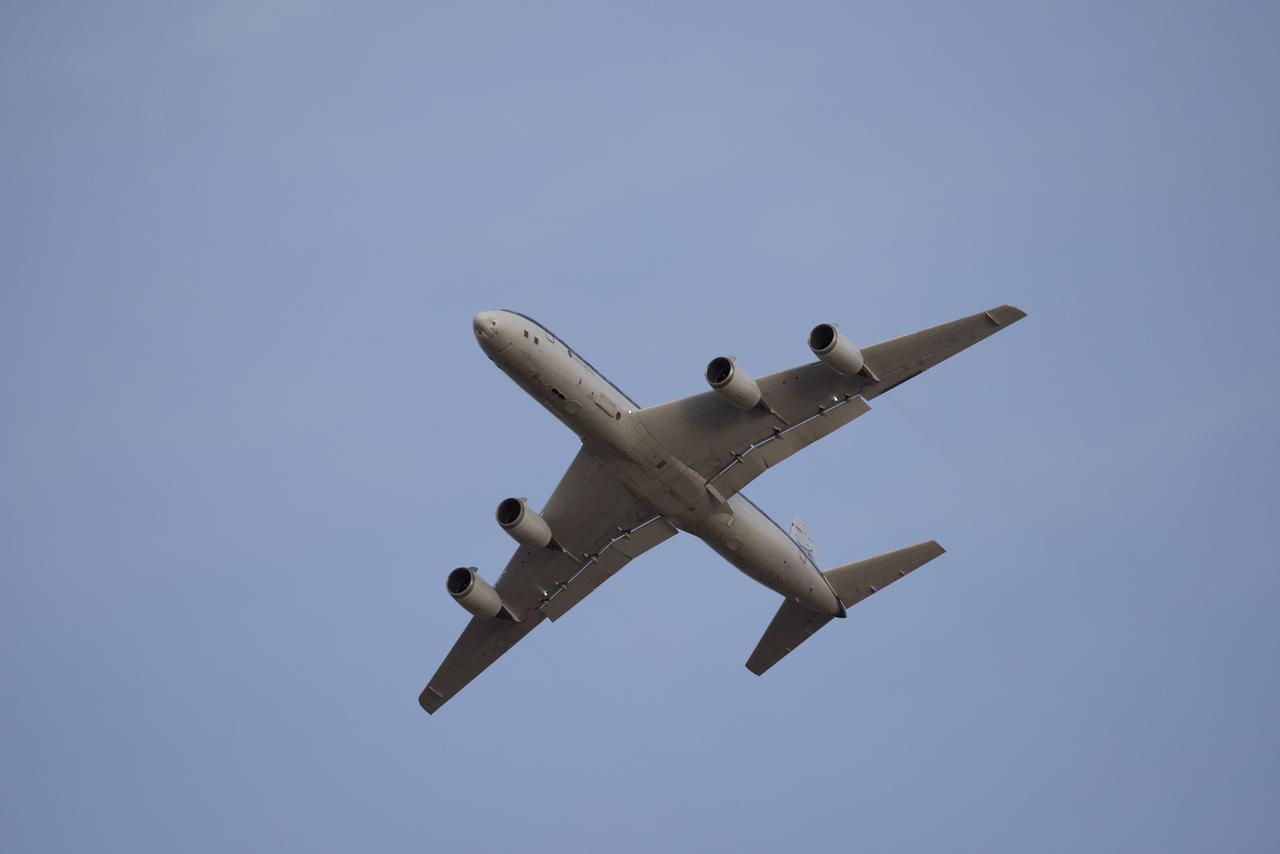
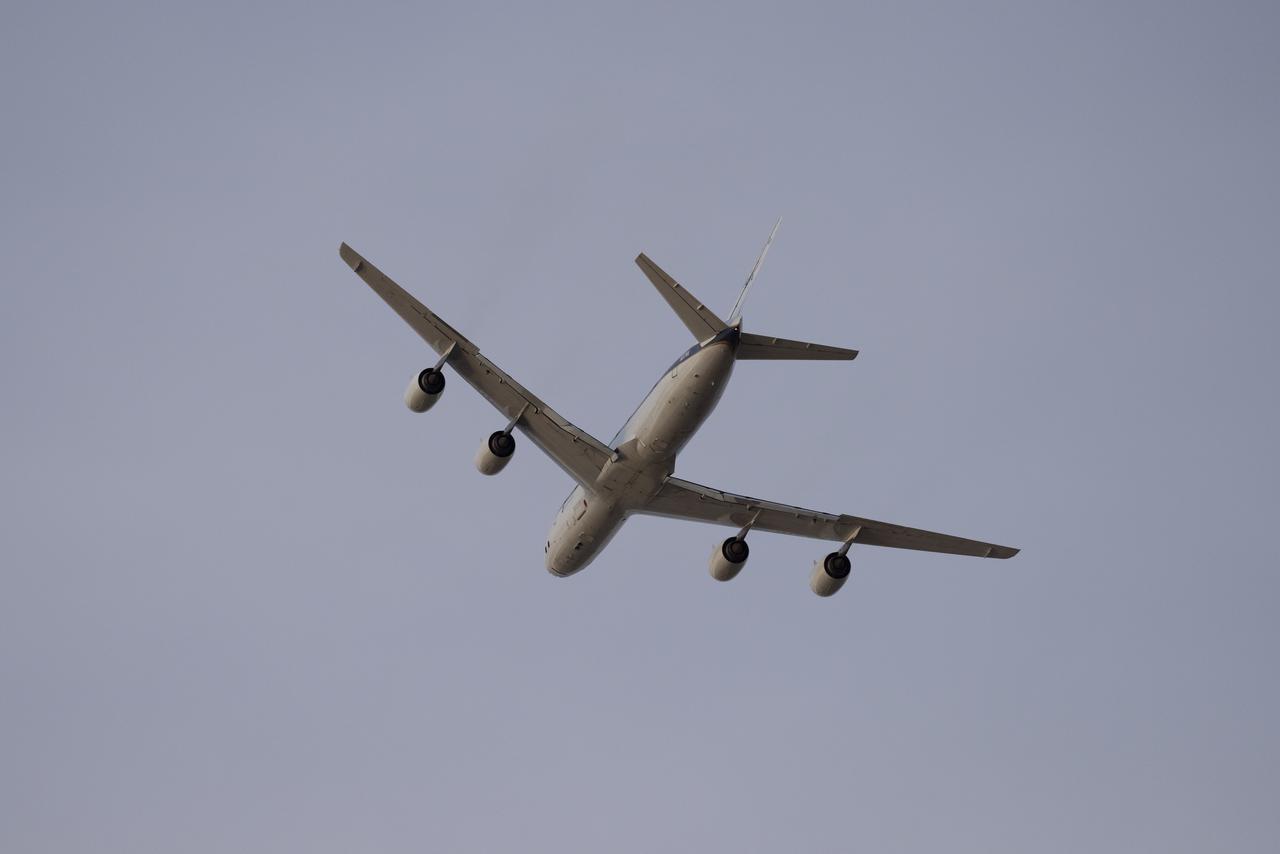
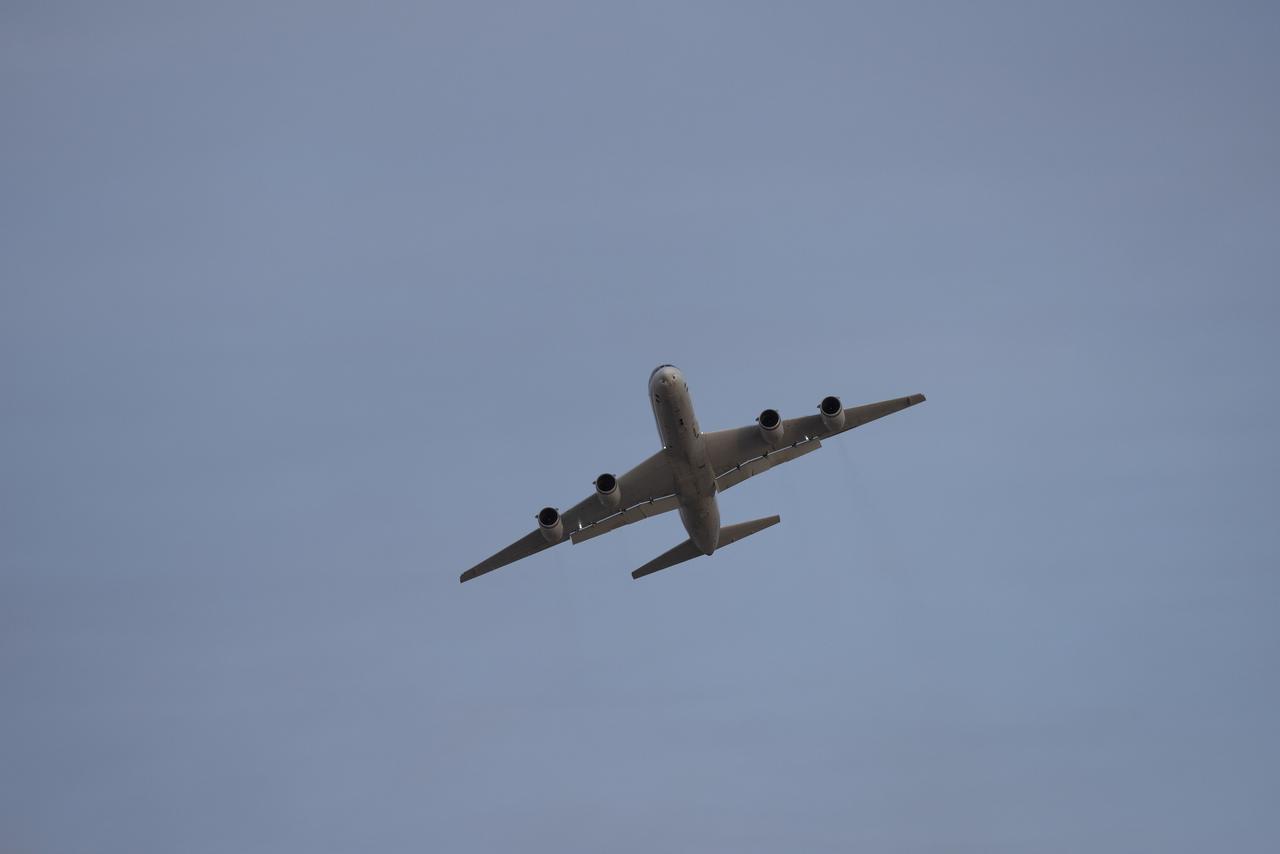
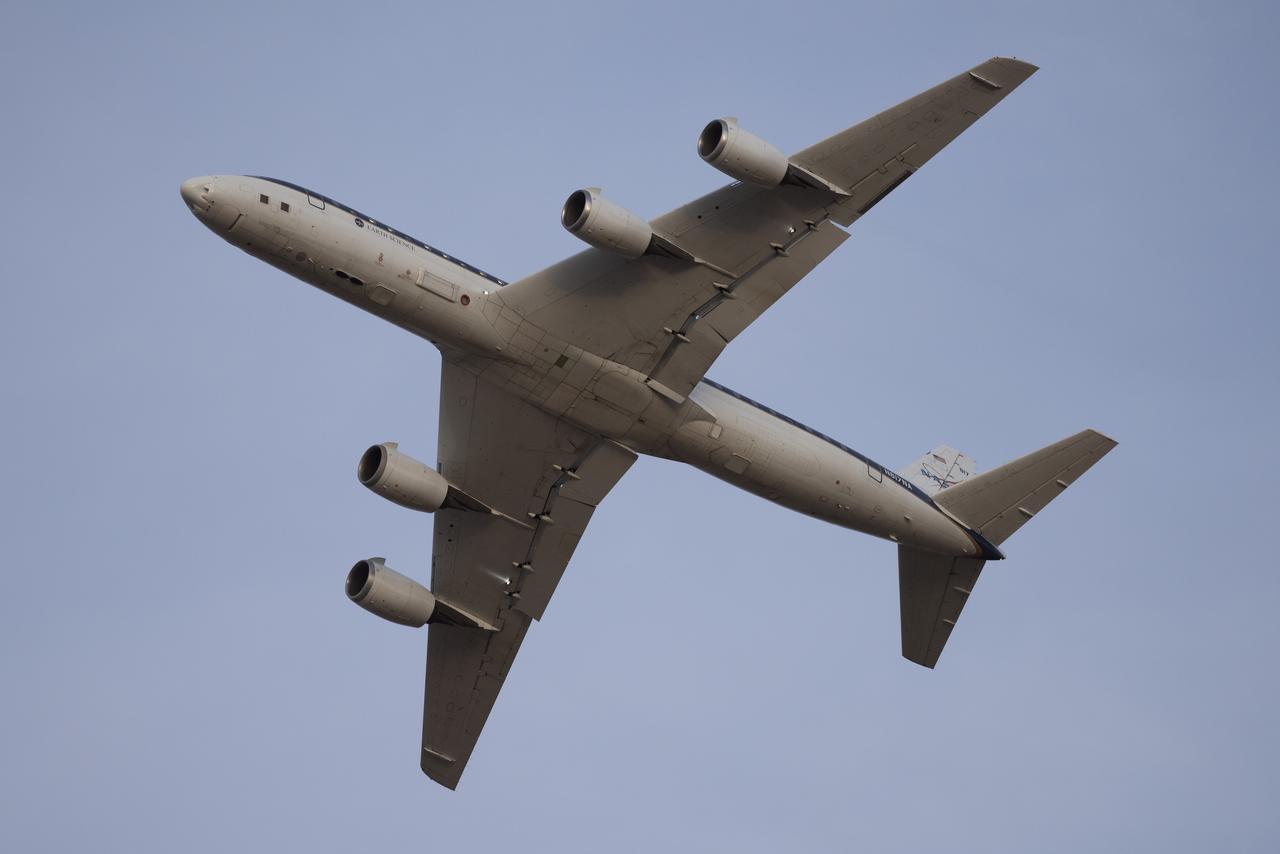
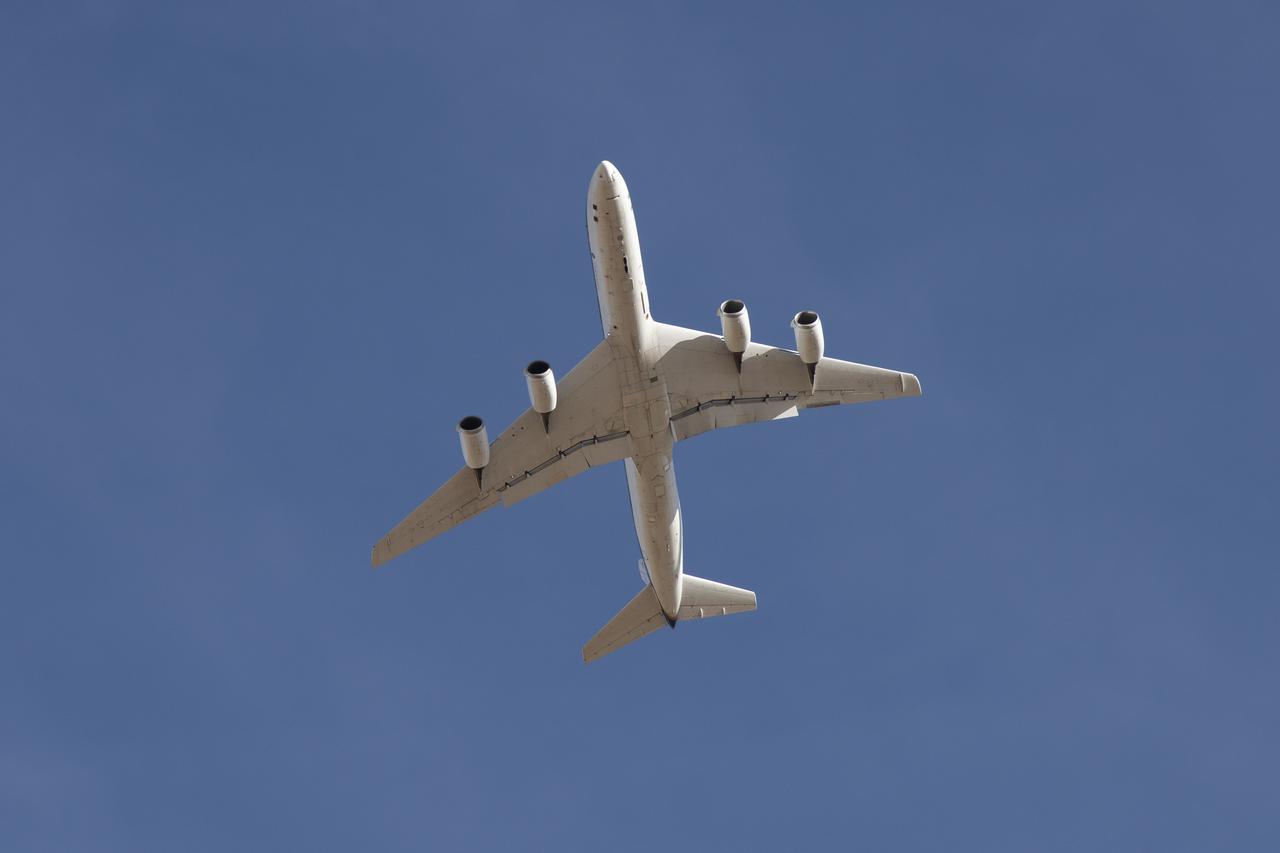
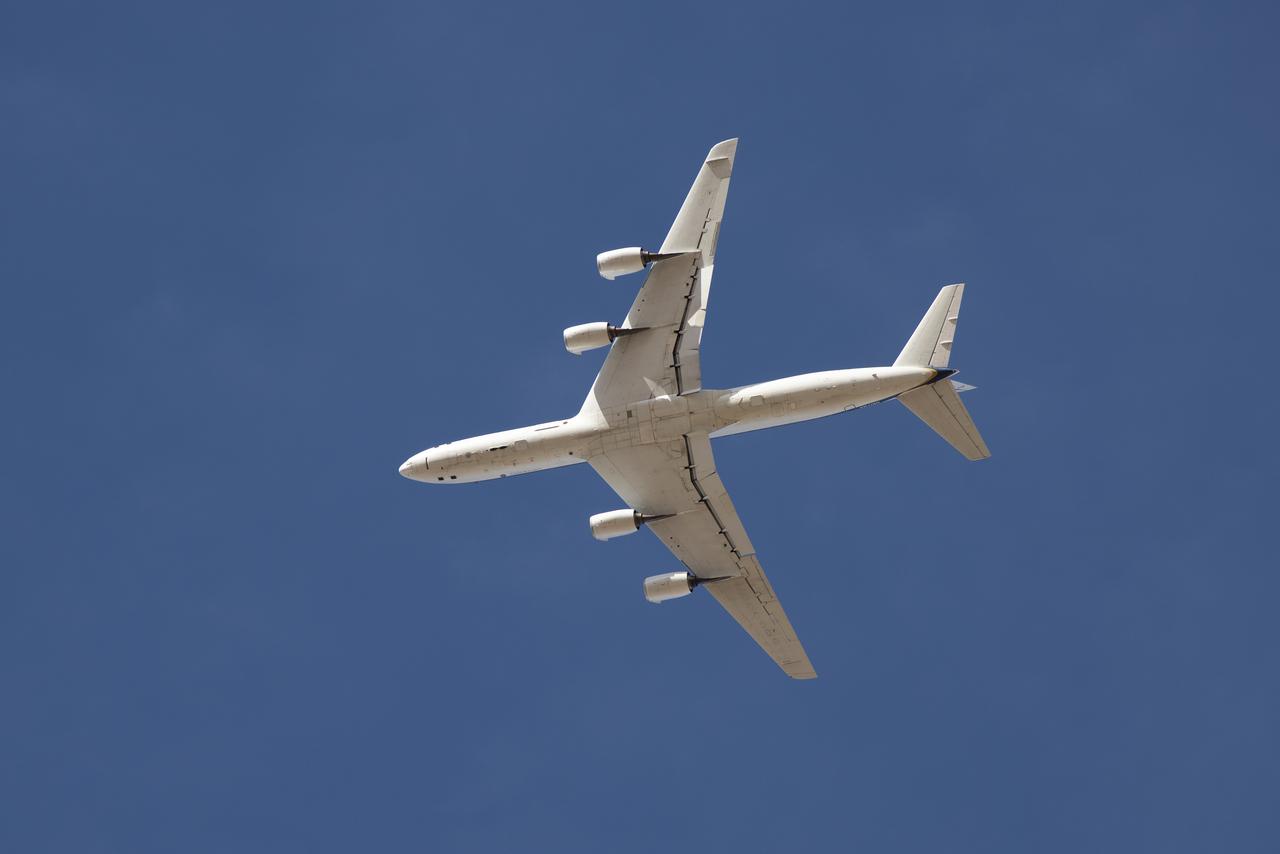
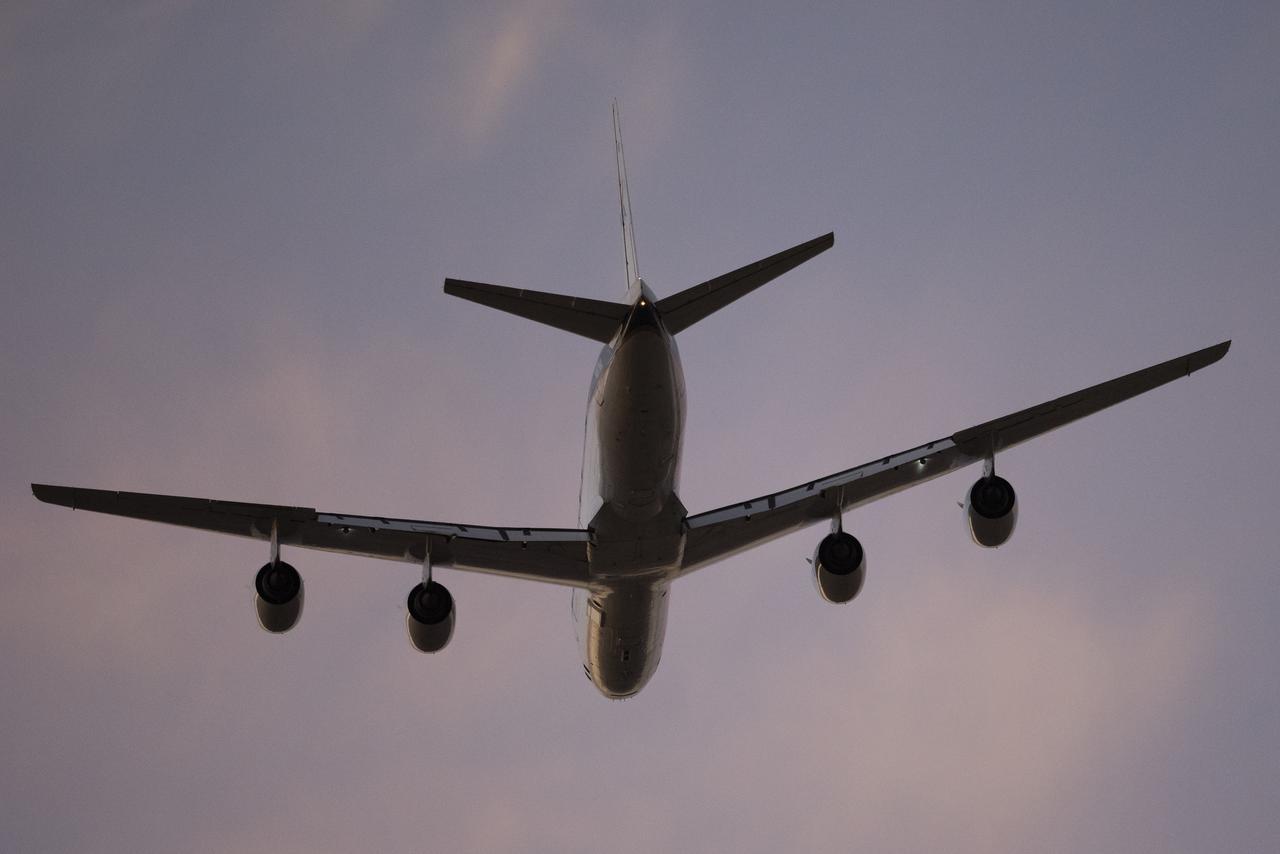
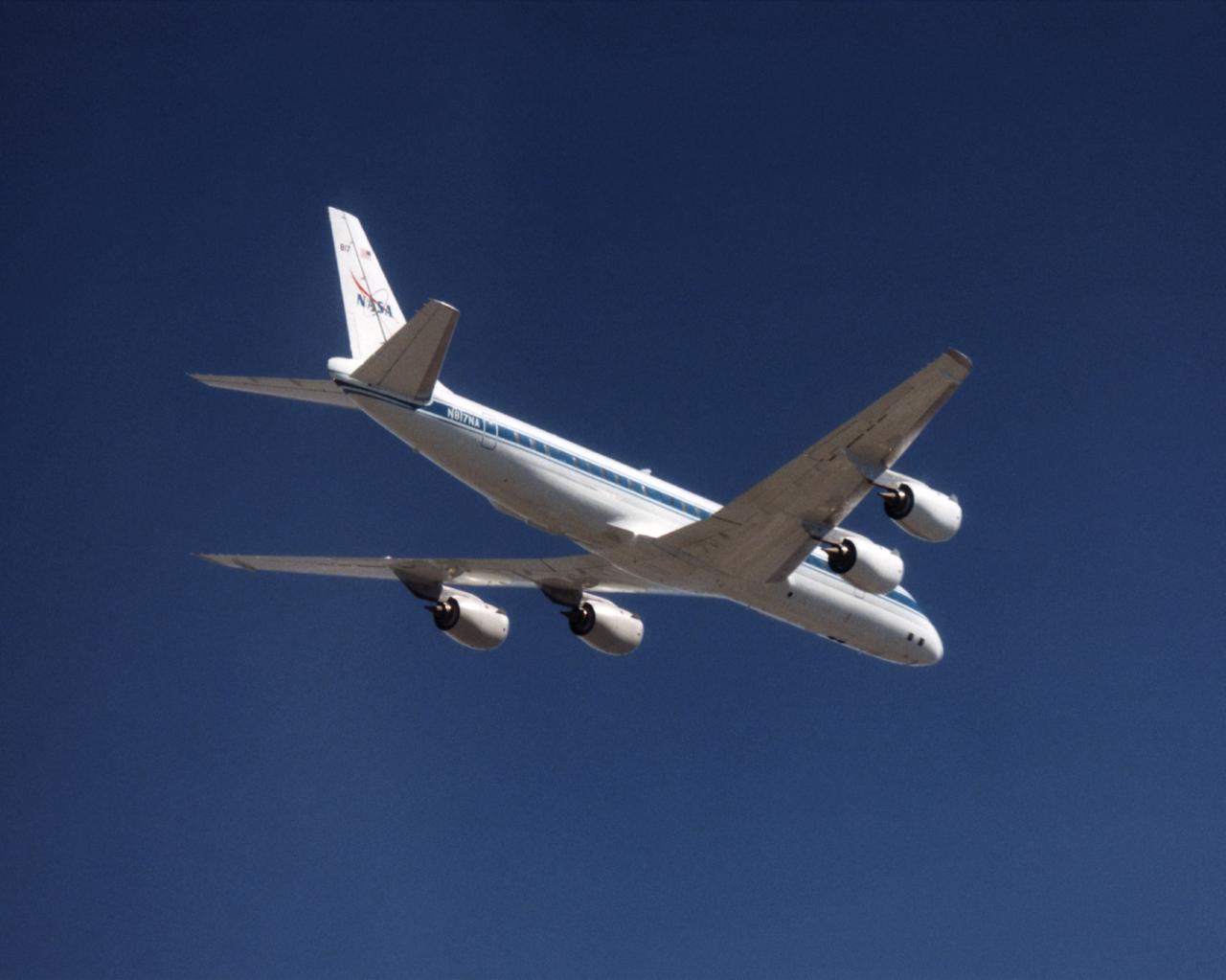
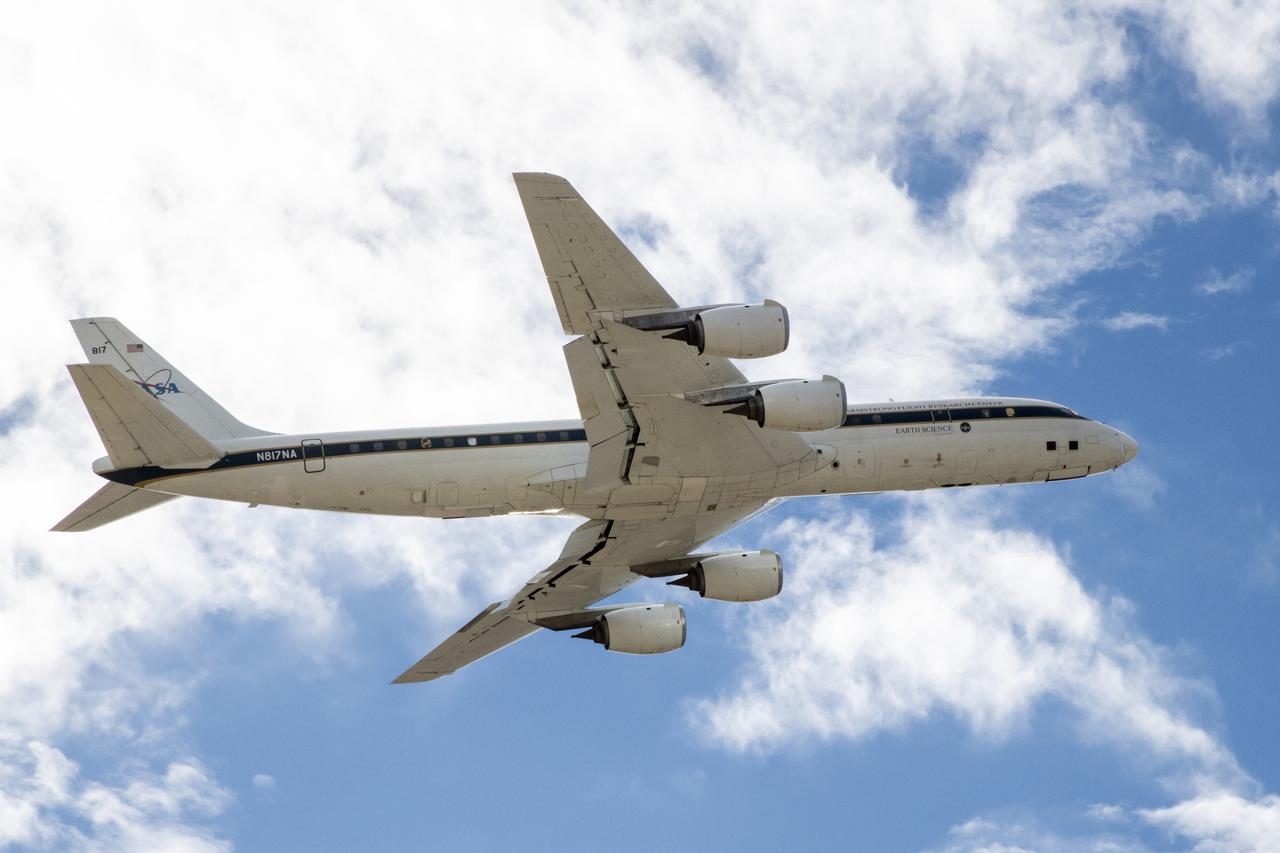
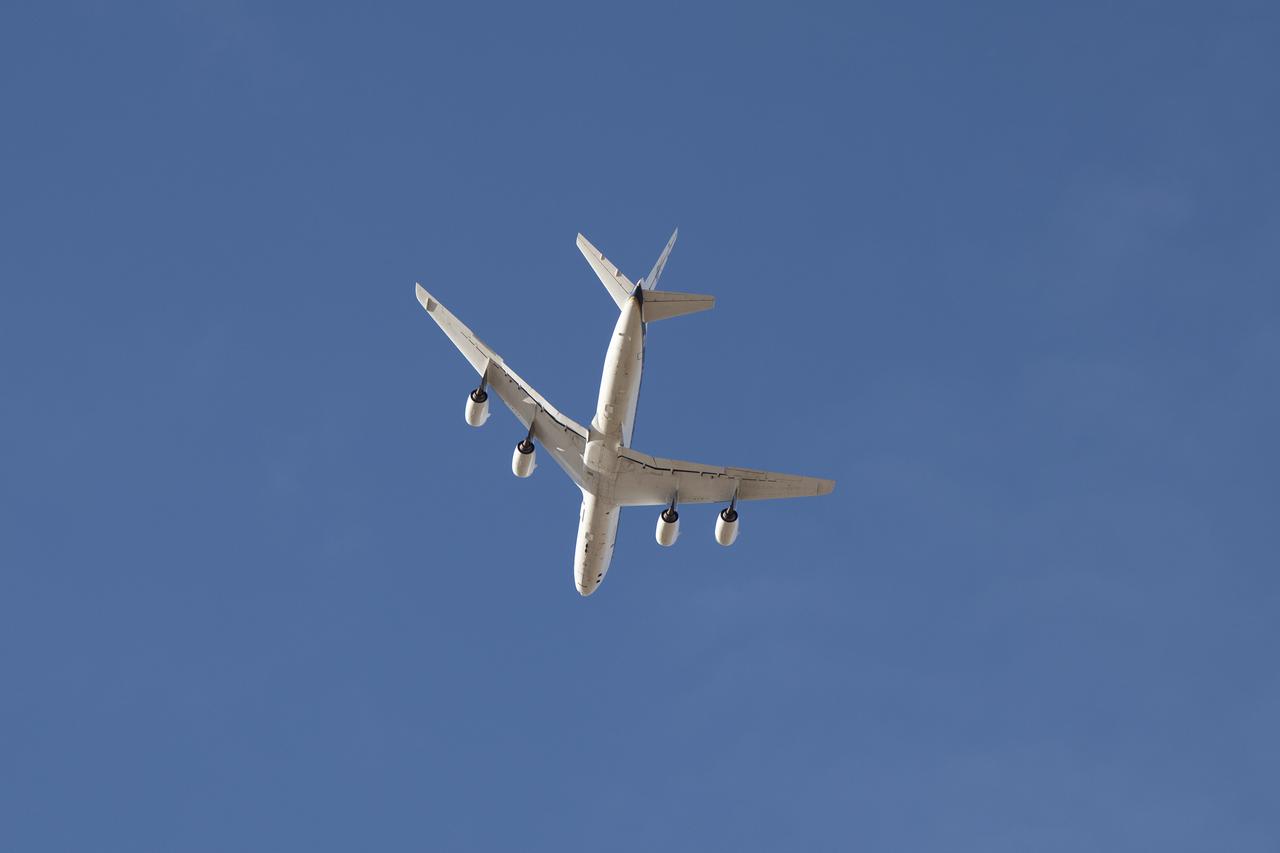
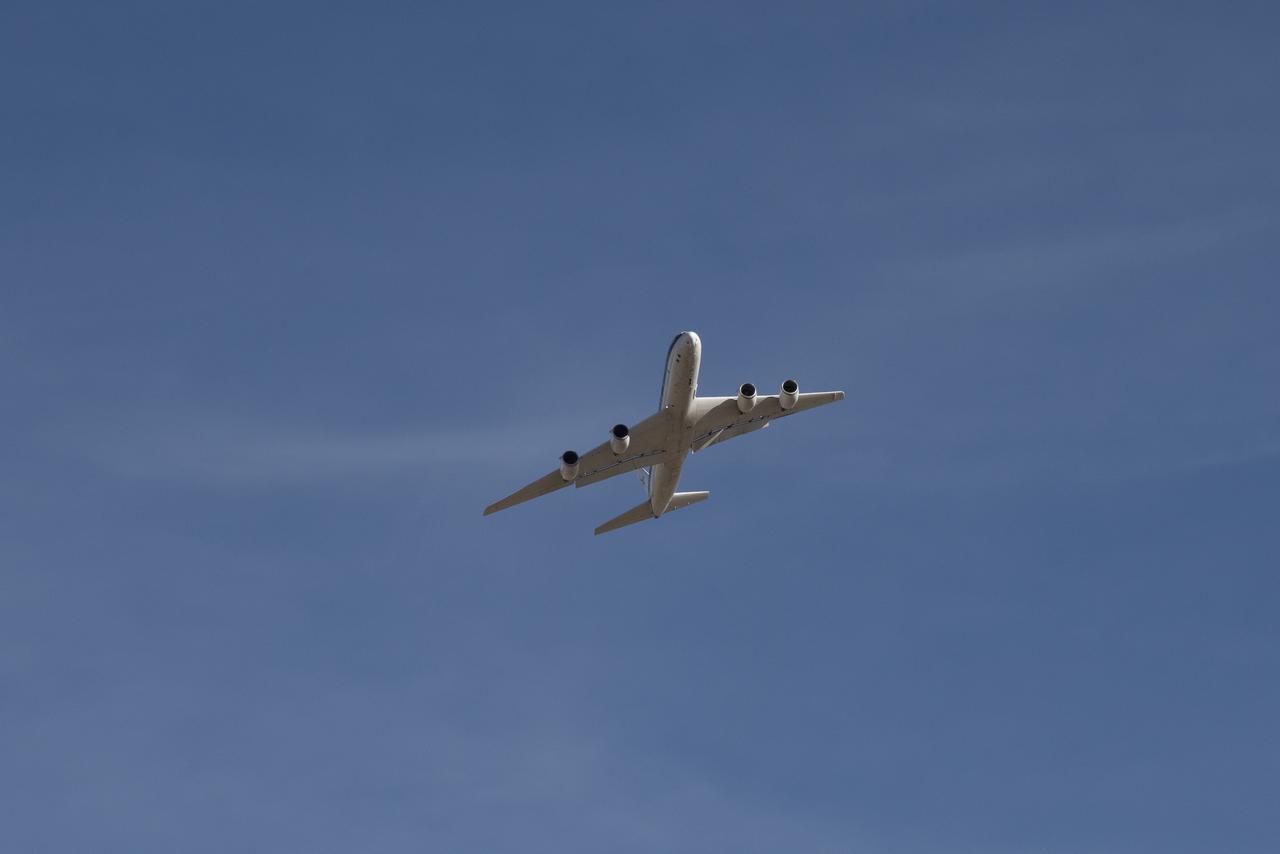
The NASA DC-8 in a right bank over the rugged Sierra Nevada Mountains. The former airliner is a "dash-72" model and has a range of 5,500 miles. The craft can stay airborne for 12 hours and has an operational speed range between 300 and 500 knots. The research flights are made at between 500 and 41,000 feet. The aircraft can carry up to 30,000 lbs of research/science payload equipment installed in 15 mission-definable spaces. In this photo, the aircraft is shown in flight from below, with the DC-8 silhouetted against a blue sky.
DC-8 Airborne Laboratory in flight
NASA's Armstrong Flight Research Center flies the DC-8 airborne science laboratory in support of the Convective Processes Experiment - Aerosols and Winds campaign, CPEX-AW, on Aug 6, 2021. From left to right: Nils Larson, David Fedors and Mark Crane
DC-8 CPEX-AW Science Flight
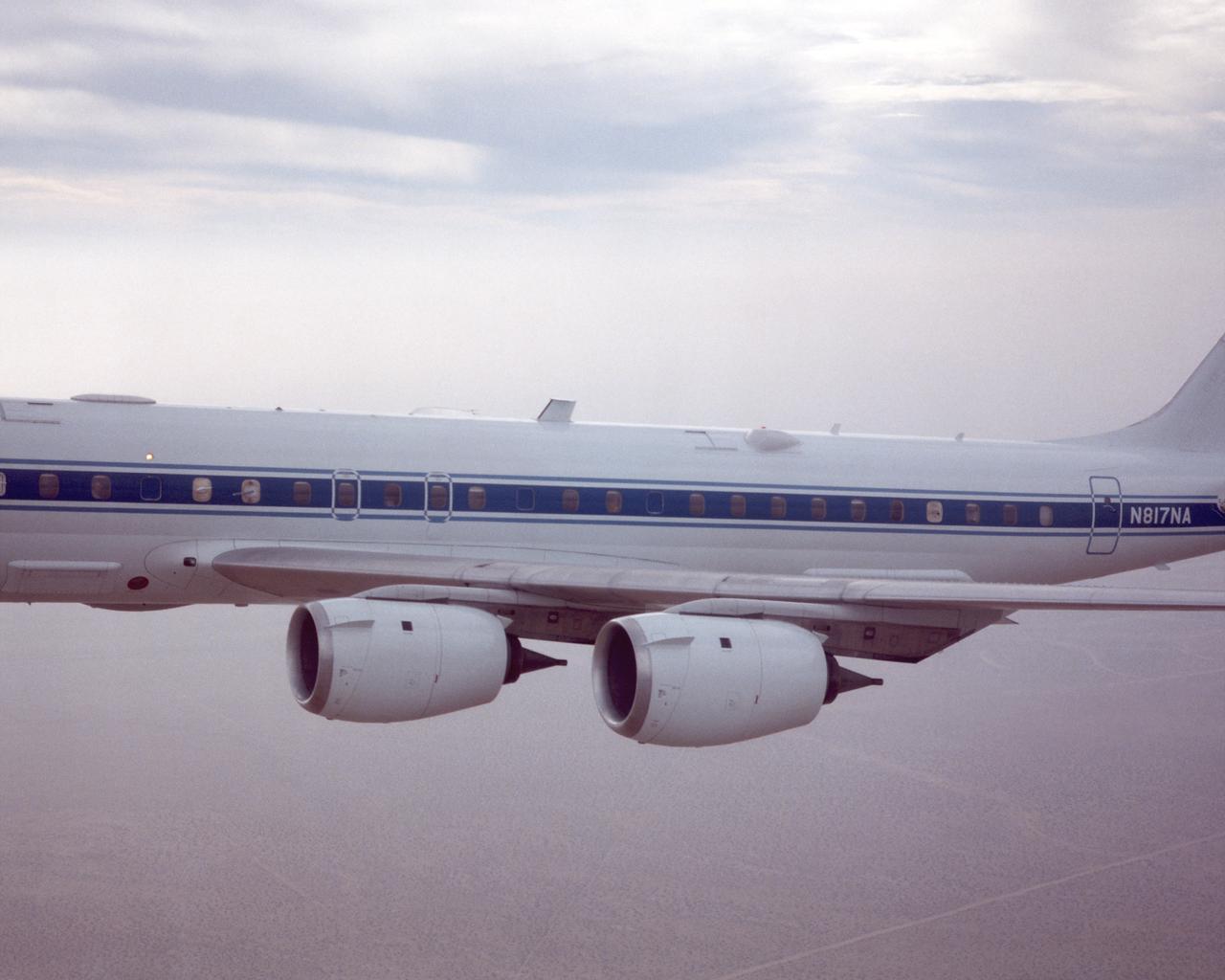
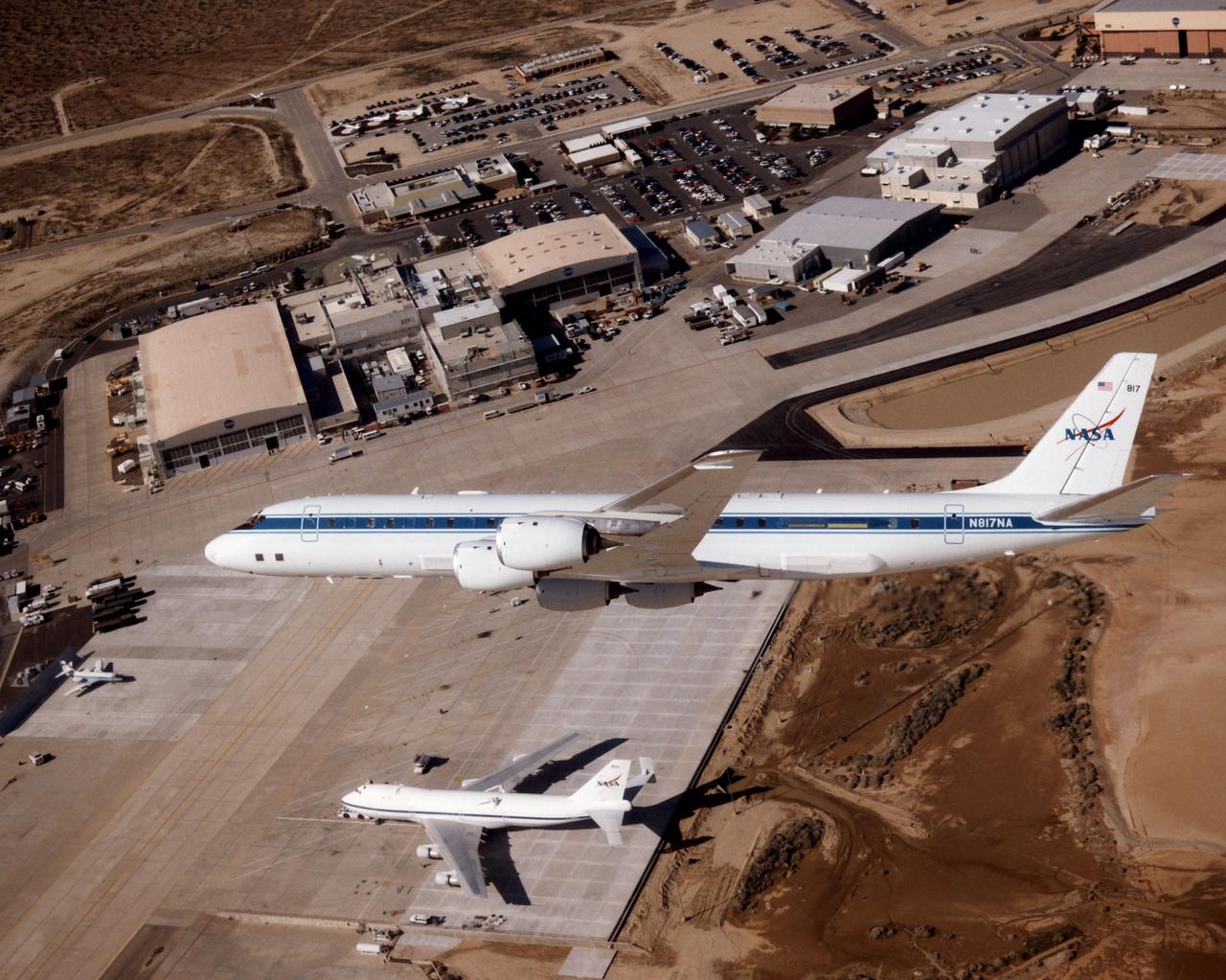
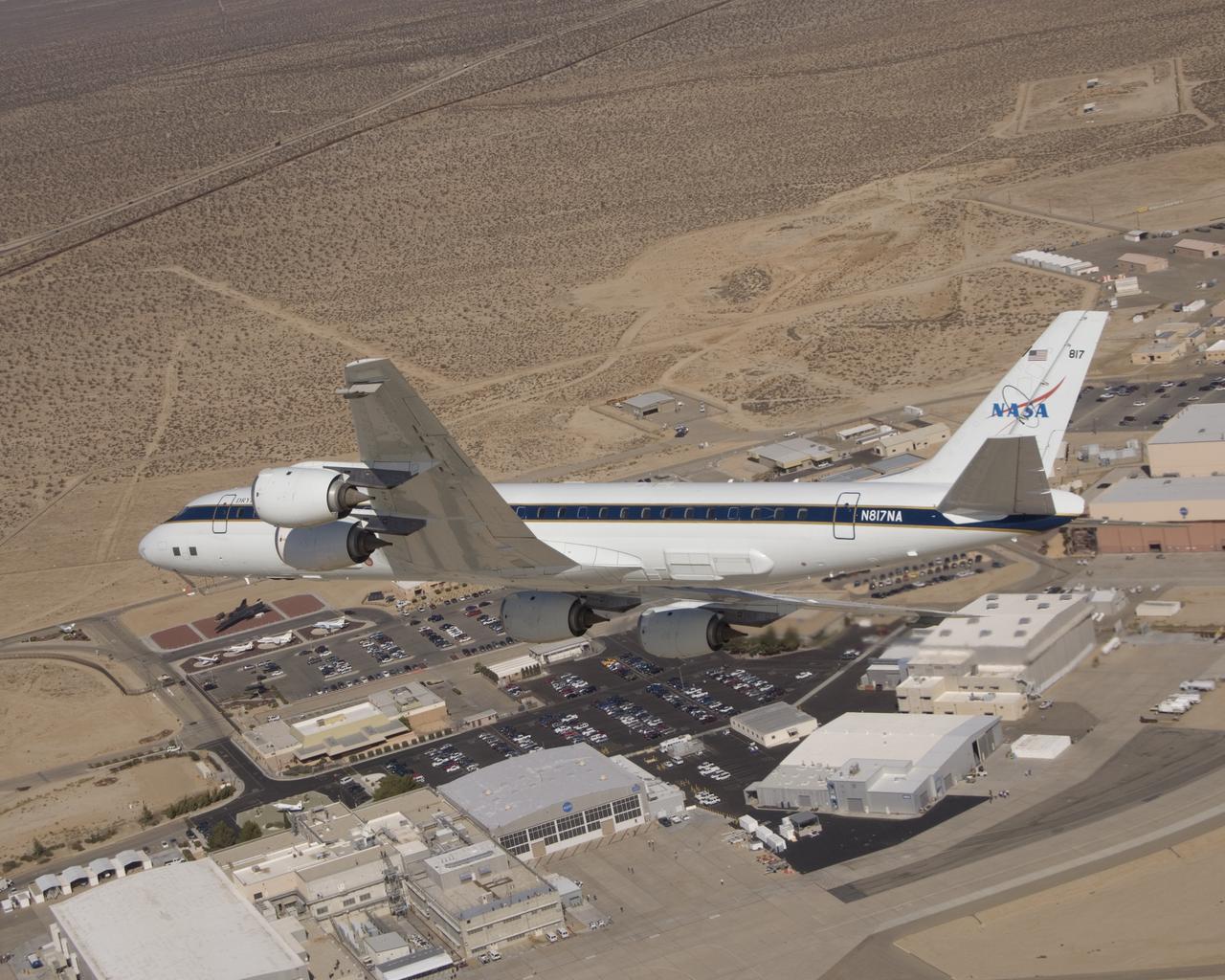
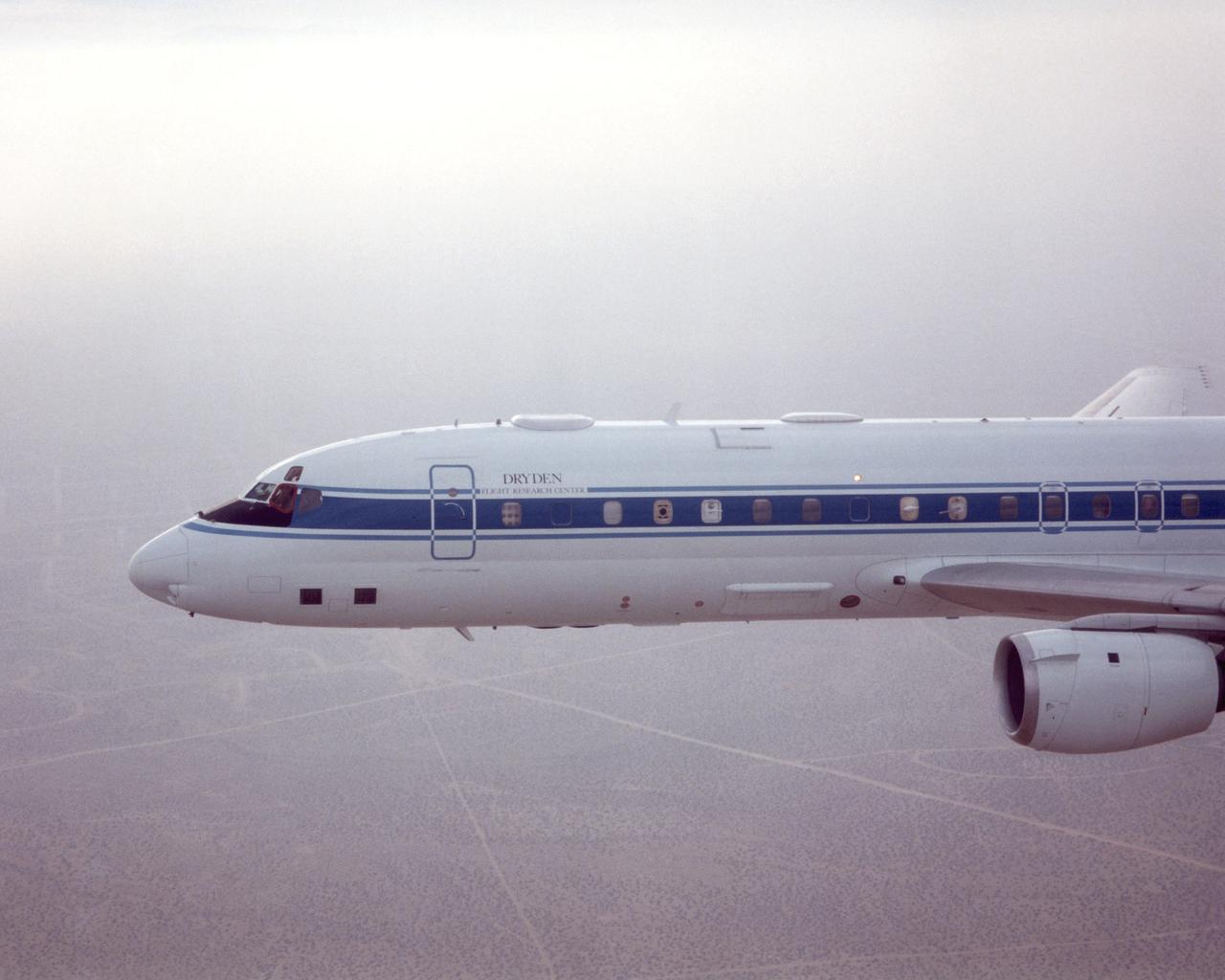
The DC-8 aircraft is seen making a banking turn high above the NASA Dryden ramp. This view of the DC-8's left side reveals some of the modifications necessary for particular on-board experiments. To the right of the DC-8 is the edge of Rogers Dry Lake. Above the aircraft's forward fuselage is the Dryden Flight Research Center headquarters building, while other NASA facilities extend down the flightline to the right. Below the DC-8 is the Shuttle Carrier Aircraft (SCA), on which are visible attachment points for the Shuttle Orbiter.
DC-8 Airborne Laboratory in flight over NASA Dryden center with SCA 747 on ramp
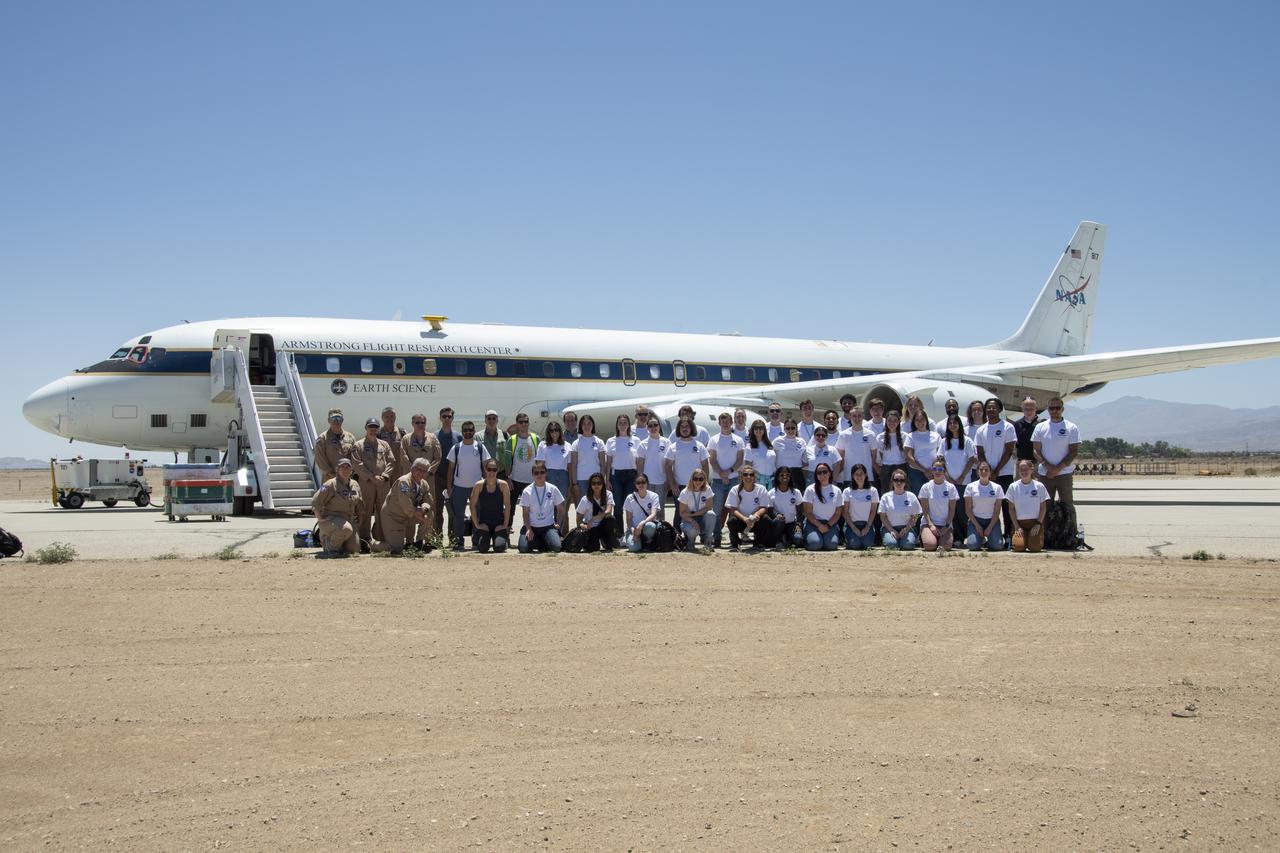
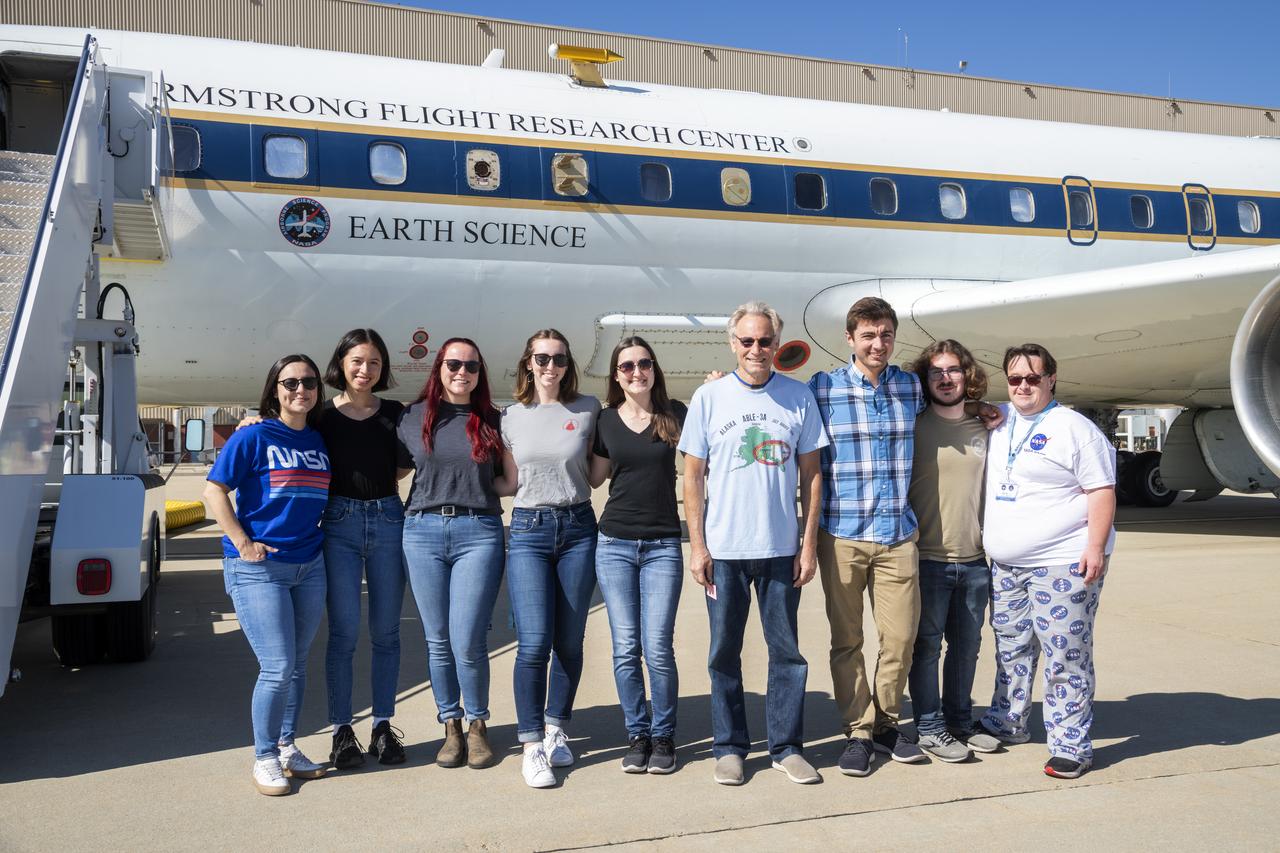
A group of university students and mentors flew aboard NASA Armstrong Flight Research Center’s DC-8 aircraft to study air quality as part of NASA’s Student Airborne Research Program (SARP). Based at NASA’s Armstrong Building 703 in Palmdale, California, the DC-8 flew over the Central Valley to measure pollution and monitor air quality on Tuesday, June 21, 2022.
NASA Flies Students on DC-8 to Study Air Quality
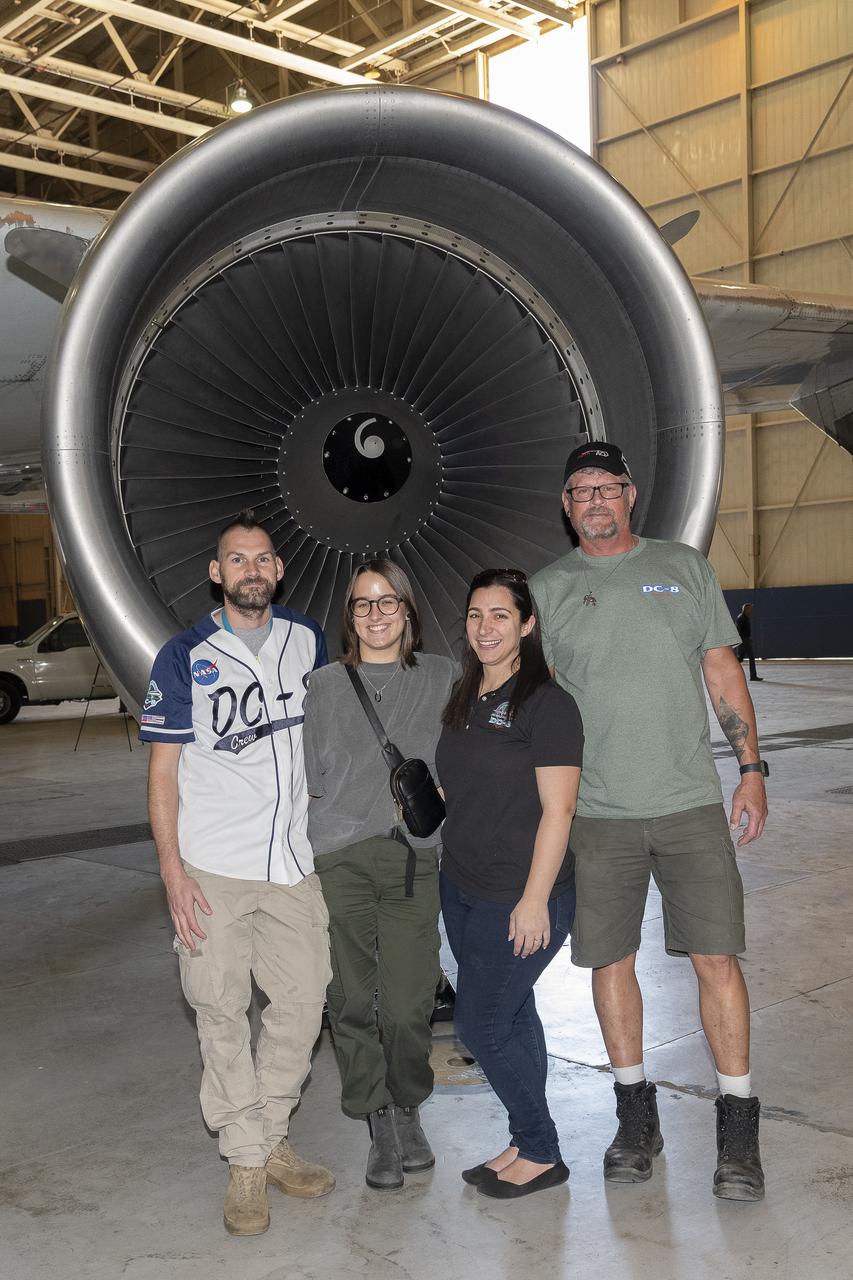
Members of past science missions pose together in front of the DC-8 aircraft’s left engine turbine at NASA’s Armstrong Flight Research Center Building 703 in Palmdale, California. From left are avionics lead Kelly Jellison, chemical scientist Katherine Ball, DC-8 Deputy Program Manager Kirsten Boogaard, and DC-8 safety engineer Garry Moors. On May 2, 2024, NASA personnel, friends, and family celebrated the DC-8 staff, aircraft, and science campaigns.
NASA Armstrong Event Celebrates NASA DC-8 Aircraft
The DC-8 flies low for the last time over NASA’s Armstrong Flight Research Center in Edwards, California, before it retires to Idaho State University in Pocatello, Idaho. The DC-8 will provide real-world experience to train future aircraft technicians at the college’s Aircraft Maintenance Technology Program.
NASA Bids Farewell to DC-8
The DC-8 flies low for the last time over NASA’s Armstrong Flight Research Center in Edwards, California, before it retires to Idaho State University in Pocatello, Idaho. The DC-8 will provide real-world experience to train future aircraft technicians at the college’s Aircraft Maintenance Technology Program.
NASA Bids Farewell to DC-8
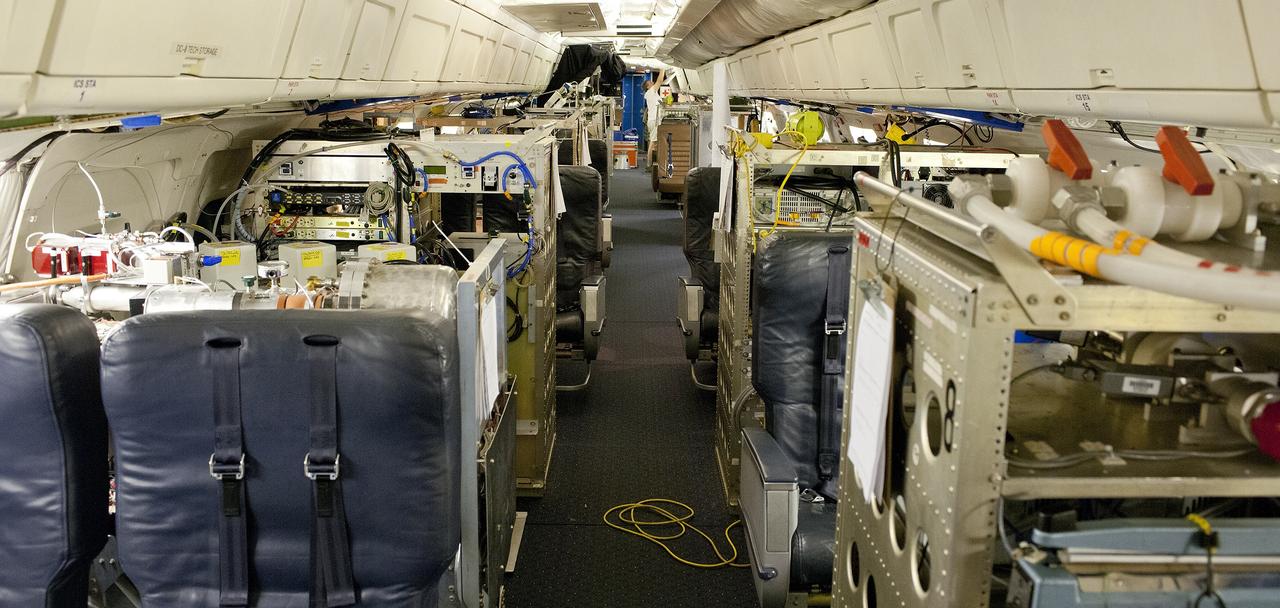
NASA's DC-8 flying laboratory is fully loaded with seats and instrument racks in preparation for NASA's 2013 SEAC4RS climate science mission.
ED13-0225-033
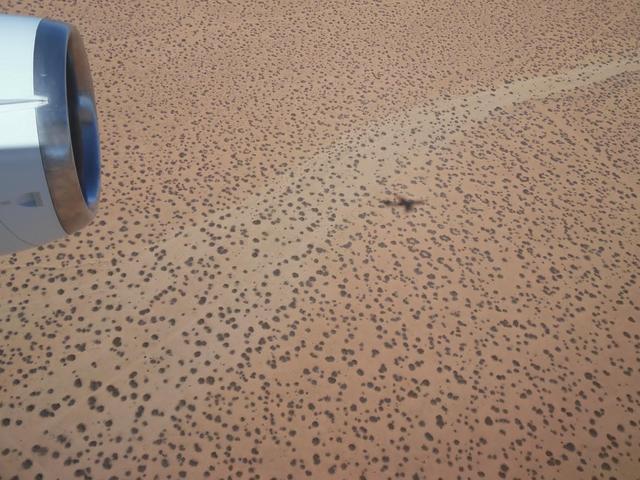
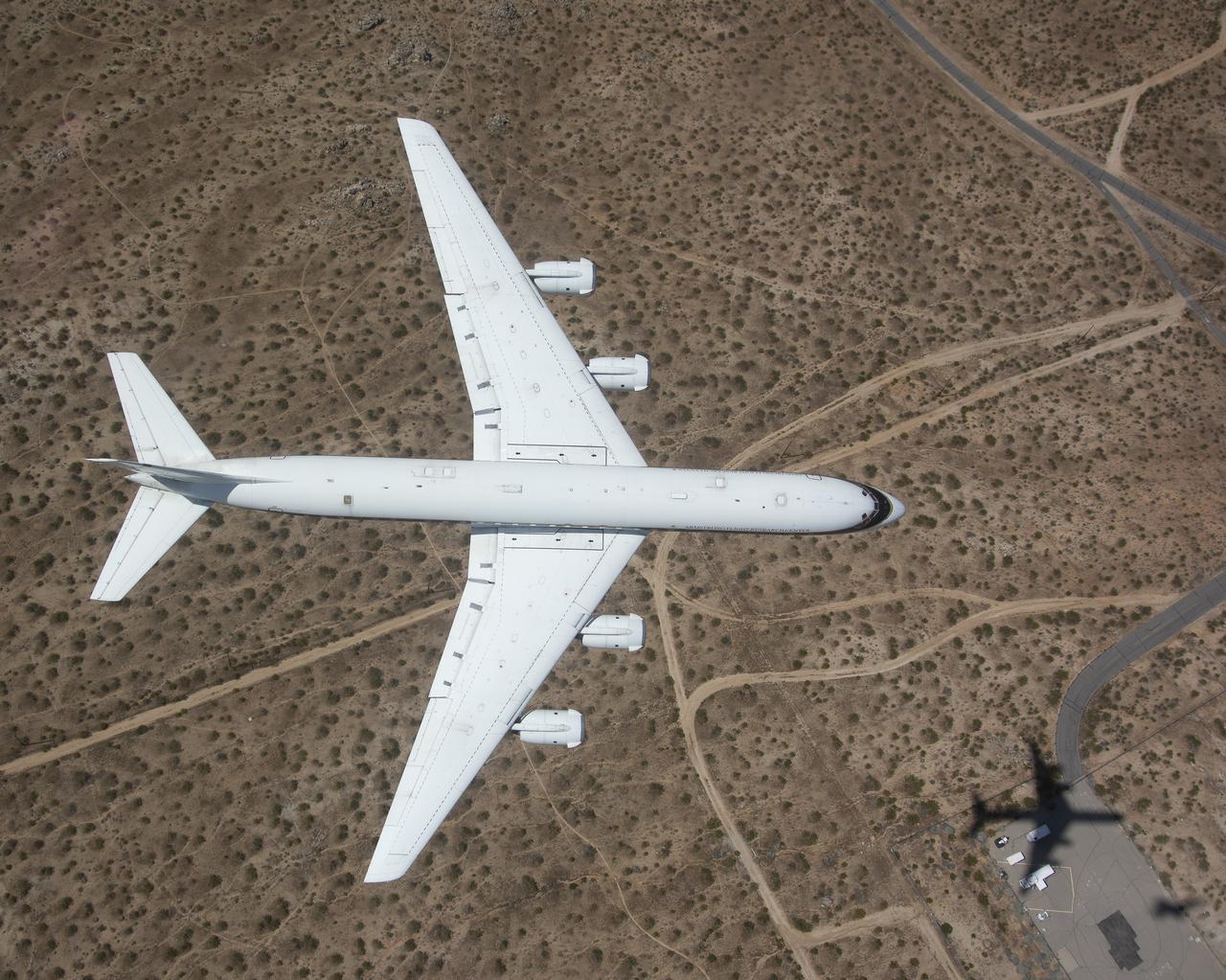
The DC-8 research aircraft casting its shadow on the ground in California's Mojave Desert during an IceBridge instrument check flight. Prior to field campaigns, IceBridge instrument and aircraft teams run the aircraft through a series of tests to ensure that everything is operating at peak condition.   Credit: NASA / Jim Yungel   NASA's Operation IceBridge is an airborne science mission to study Earth's polar ice. For more information about IceBridge, visit: <a href="http://www.nasa.gov/icebridge" rel="nofollow">www.nasa.gov/icebridge</a>  <b><a href="http://www.nasa.gov/audience/formedia/features/MP_Photo_Guidelines.html" rel="nofollow">NASA image use policy.</a></b>  <b><a href="http://www.nasa.gov/centers/goddard/home/index.html" rel="nofollow">NASA Goddard Space Flight Center</a></b> enables NASA’s mission through four scientific endeavors: Earth Science, Heliophysics, Solar System Exploration, and Astrophysics. Goddard plays a leading role in NASA’s accomplishments by contributing compelling scientific knowledge to advance the Agency’s mission. <b>Follow us on <a href="http://twitter.com/NASAGoddardPix" rel="nofollow">Twitter</a></b> <b>Like us on <a href="http://www.facebook.com/pages/Greenbelt-MD/NASA-Goddard/395013845897?ref=tsd" rel="nofollow">Facebook</a></b> <b>Find us on <a href="http://instagram.com/nasagoddard?vm=grid" rel="nofollow">Instagram</a></b>
NASA's DC-8 Desert Shadow
NASA’s Armstrong Flight Research Center DC-8 taking off from Building 703 in Palmdale, CA for the Student Airborne Research Program flights on December 7, 2021.
NASA DC-8 SARP 2020-21
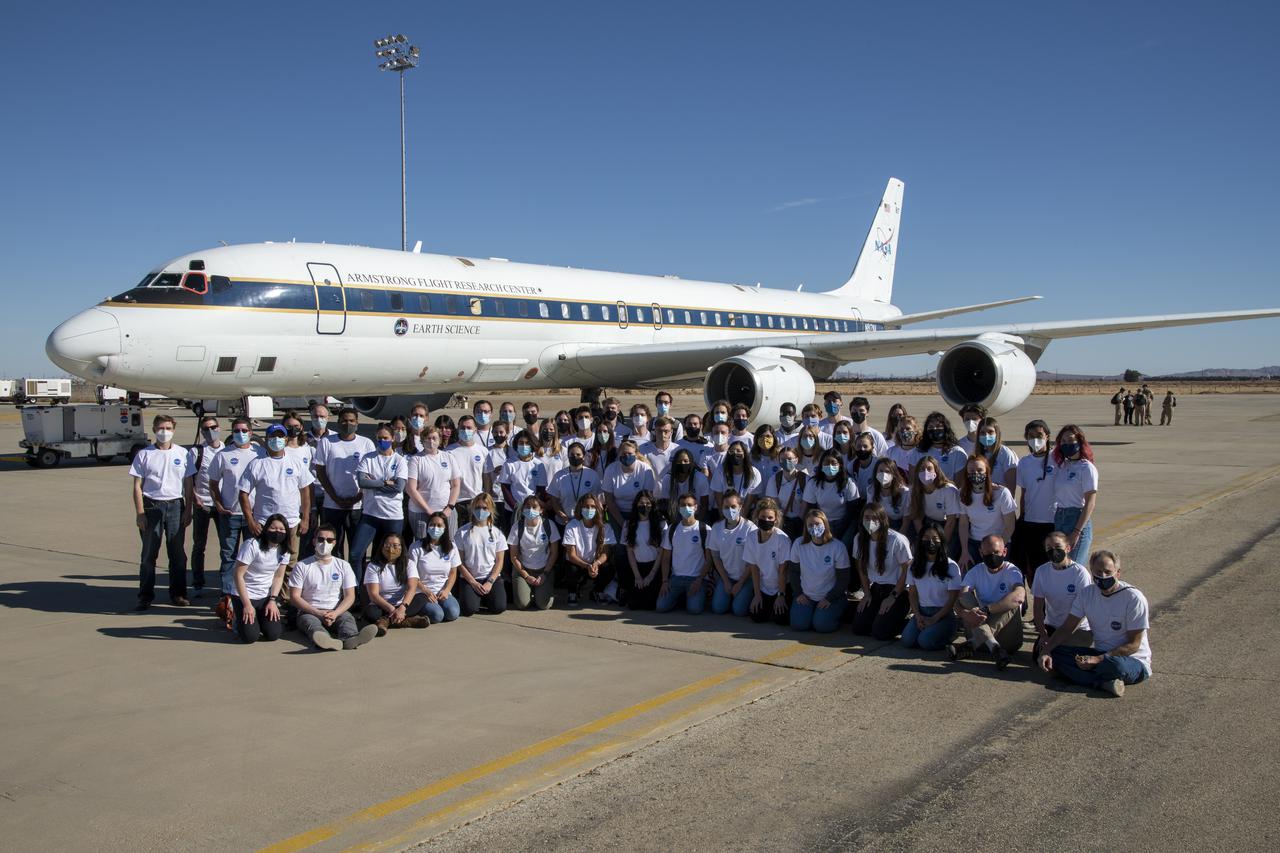
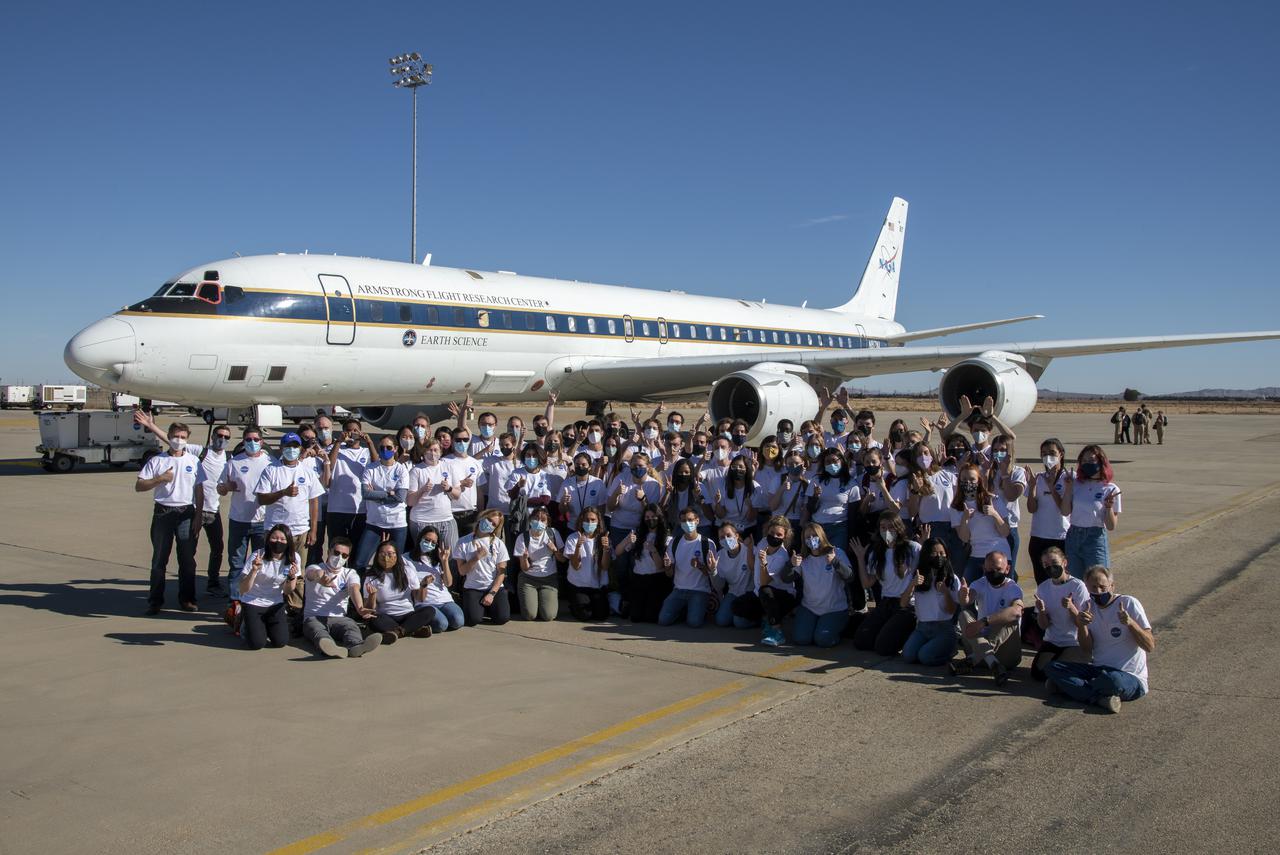
NASA Student Airborne Research Program students, mentors and faculty pose in front of NASA’s DC-8 on December 7, 2021 at Armstrong Flight Research Center Building 703.
NASA DC-8 SARP 2020-21
NASA Student Airborne Research Program students, mentors and faculty pose in front of NASA's DC-8 on December 7, 2021 at Armstrong Flight Research Center Building 703.
NASA DC-8 SARP 2020-21
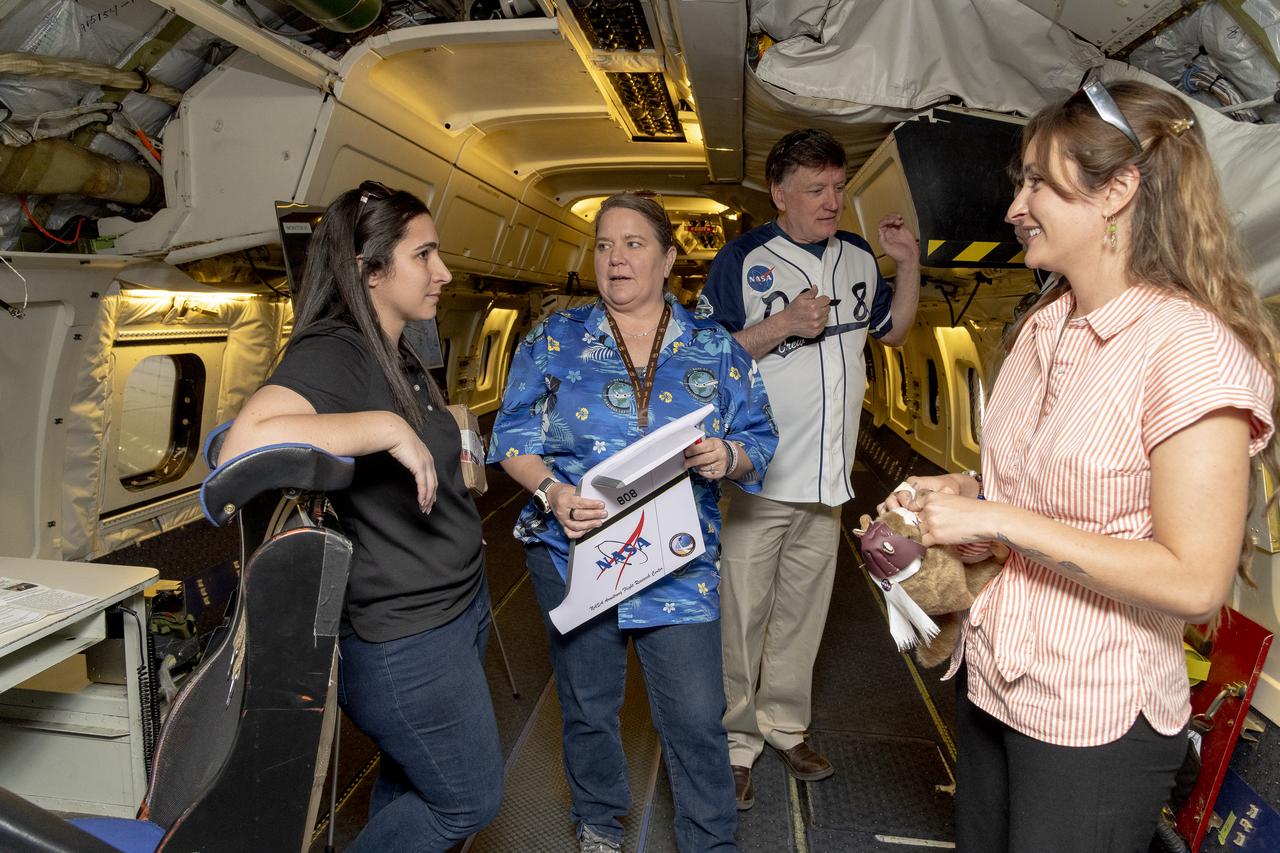
Members of the DC-8 program team tour an empty aircraft and recall past missions. Usually the DC-8 has between 15 and 30 instrument racks installed for a given science mission. The aircraft was spacious by comparison on May 2, 2024, when NASA personnel, friends, and family gathered at NASA’s Armstrong Flight Research Center Building 703 in Palmdale, California to celebrate the DC-8 staff, aircraft, and science campaigns. Conversing here are DC-8 aircraft deputy manager Kirsten Boogaard, left, with NASA Armstrong pilot Carrie Worth, Mike Zimmerman, and NASA Armstrong public affairs specialist for airborne science, Erica Heim.
NASA Armstrong Event Celebrates NASA DC-8 Aircraft
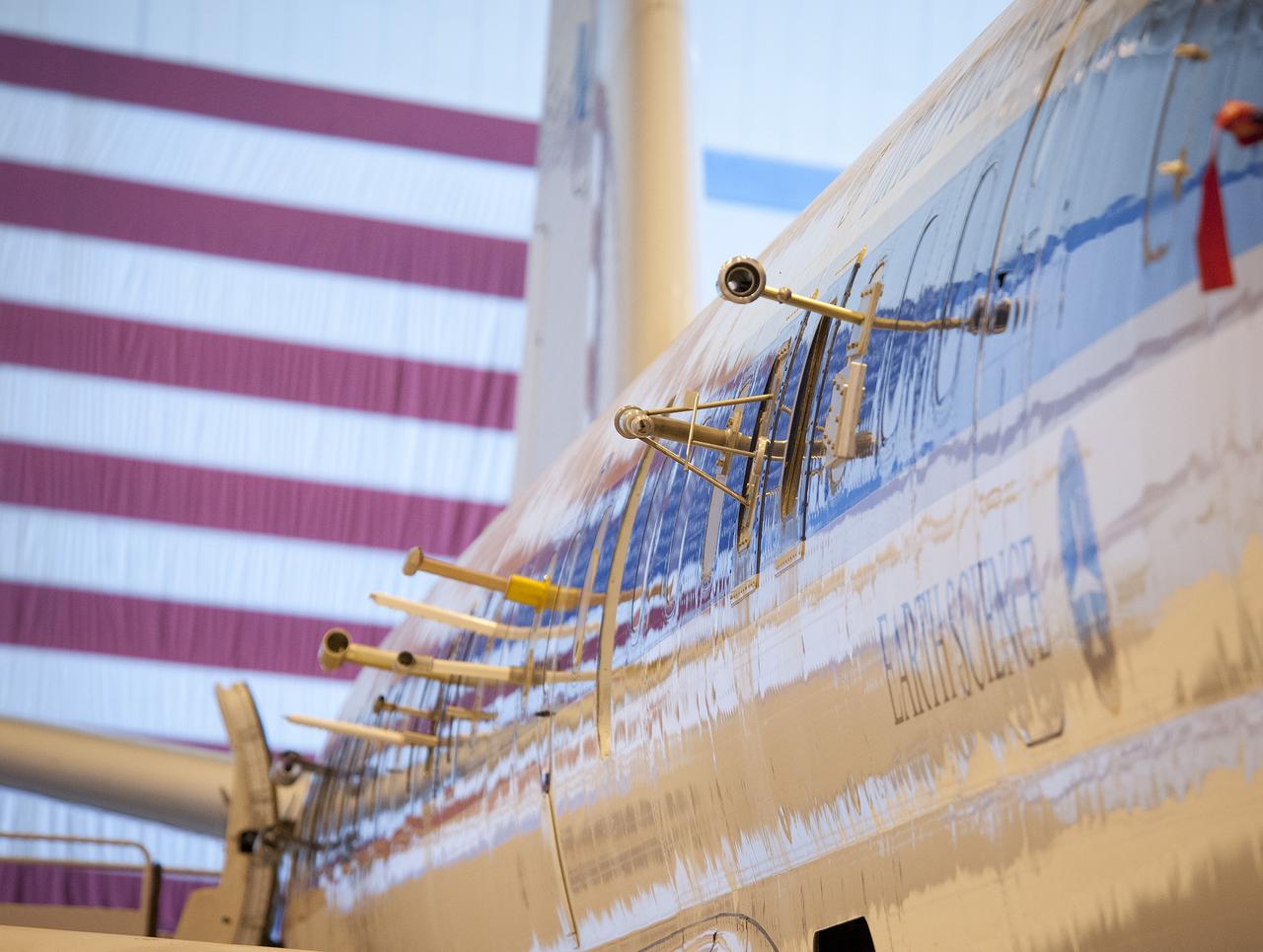
A number of atmospheric probes are installed along the fuselage of NASA's DC-8 in preparation for the SEAC4RS study to learn more about how air pollution and natural emissions affect climate change.
ED13-0225-050
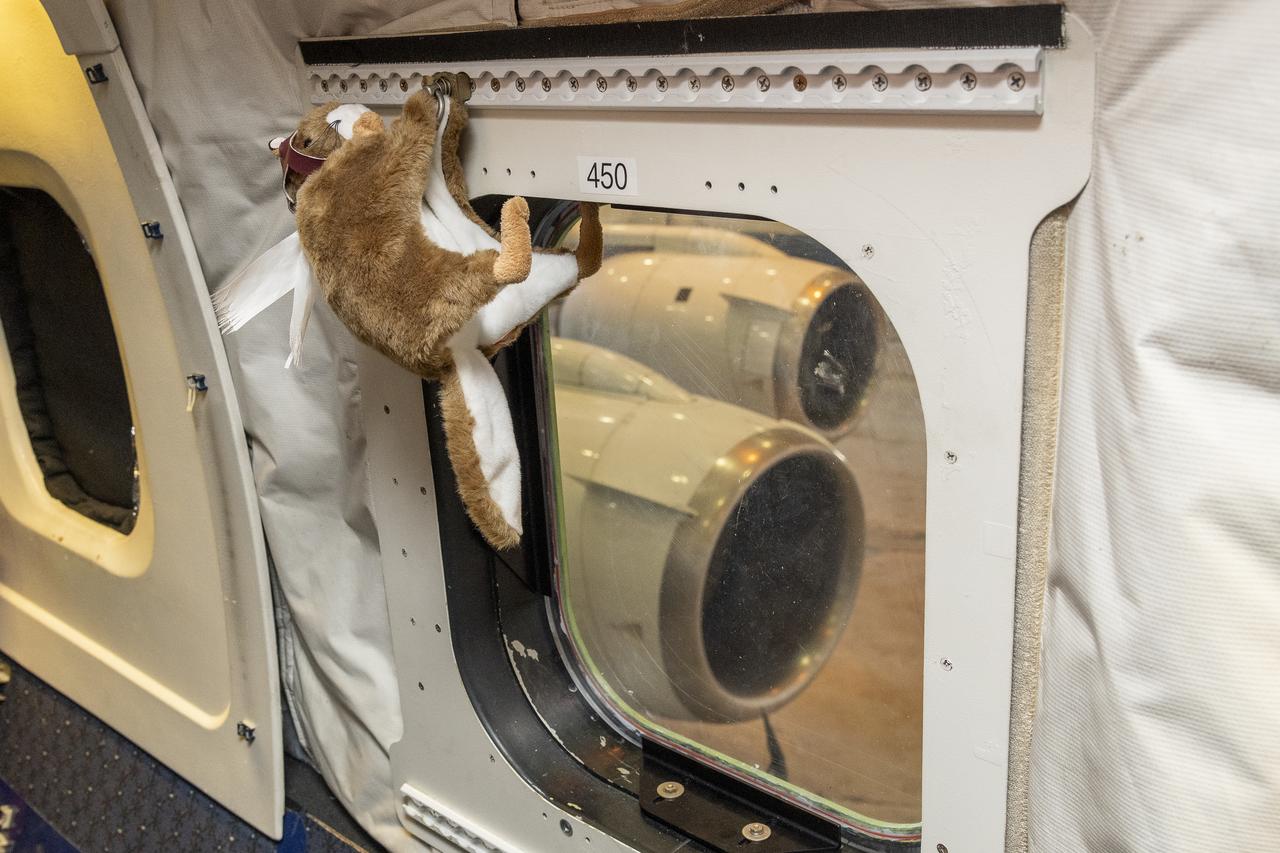
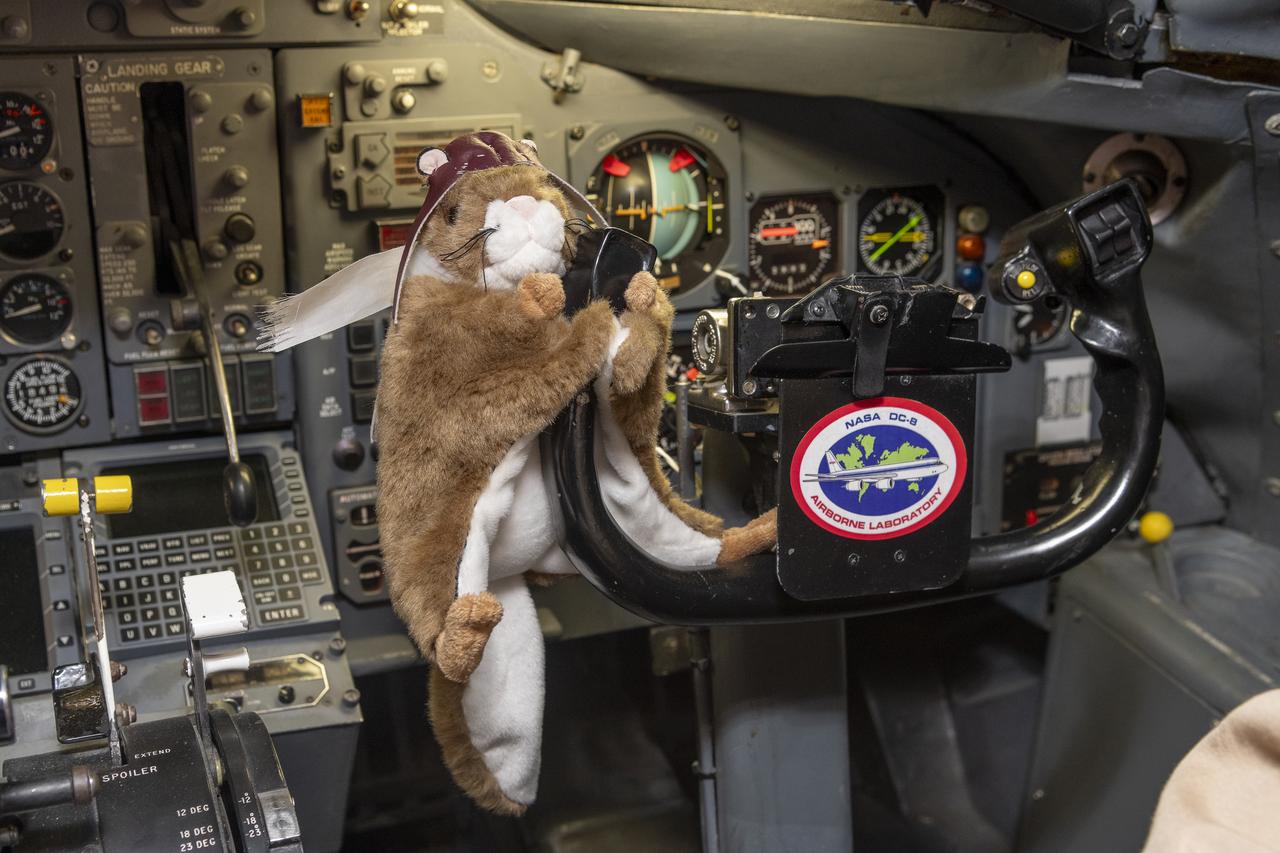
Orville, NASA’s high-flying squirrel, hangs onto the DC-8 aircraft at NASA’s Armstrong Flight Research Center Building 703 in Palmdale, California. On May 2, 2024, NASA personnel, friends, and family celebrated the DC-8 staff, aircraft, and science campaigns.
NASA Armstrong Event Celebrates NASA DC-8 Aircraft
Rocky Radcliff, Kevin Hall, and Herman “Chico” Rijfkogel stand in front of NASA’s DC-8 aircraft at the agency’s Armstrong Flight Research Center Building 703 in Palmdale, California. On May 2, 2024, NASA personnel, friends, and family celebrated the DC-8 staff, aircraft, and science campaigns.
NASA Armstrong Event Celebrates NASA DC-8 Aircraft
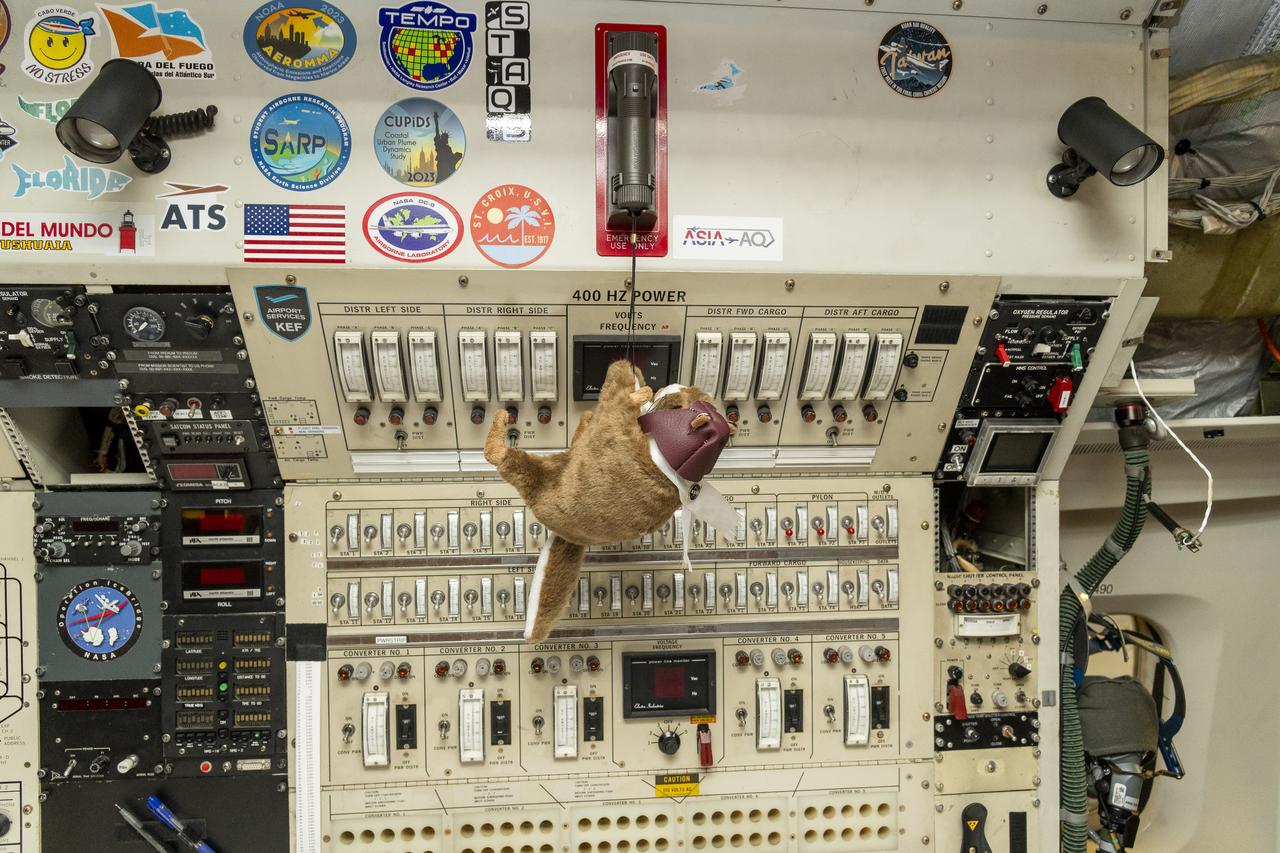
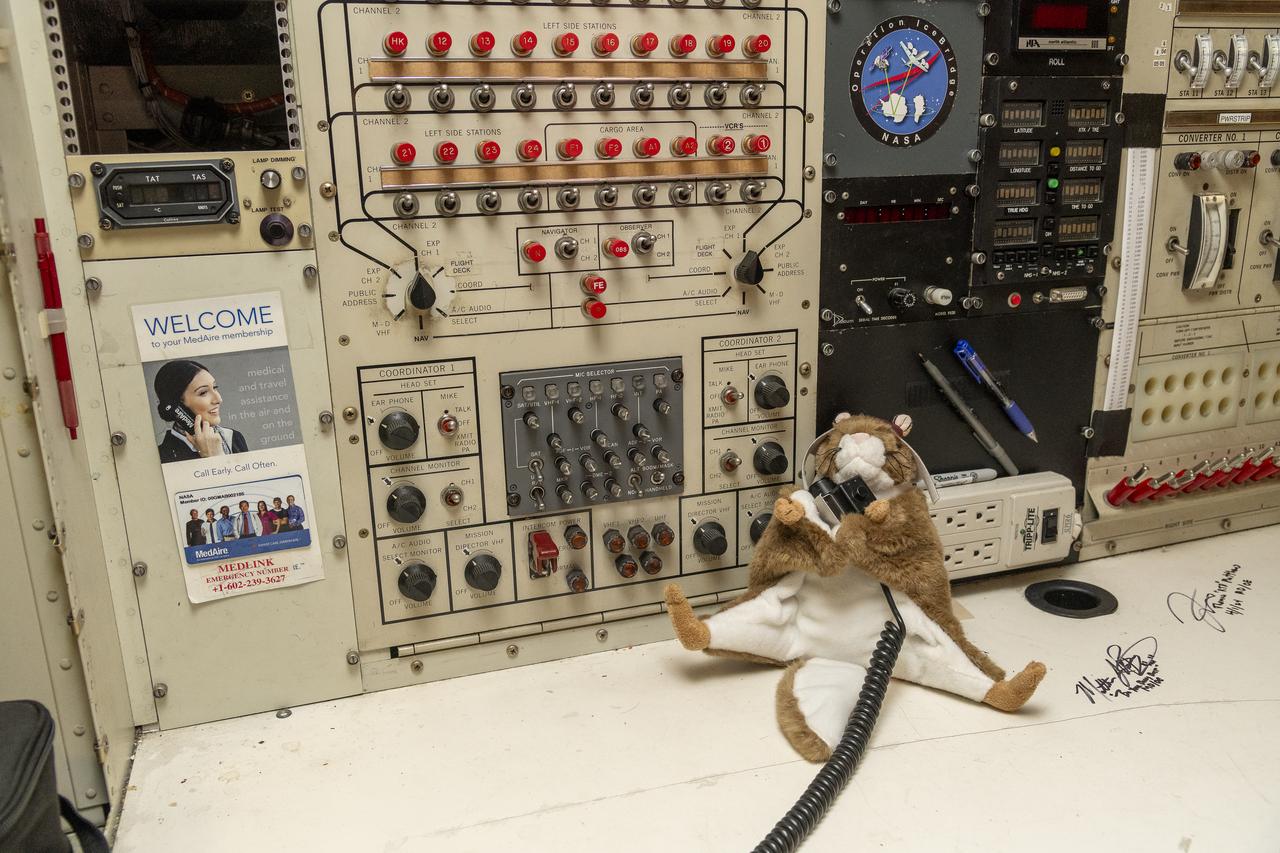
Orville, NASA’s high-flying squirrel, uses the microphone at the mission director station onboard the DC-8 aircraft at NASA’s Armstrong Flight Research Center Building 703 in Palmdale, California. On May 2, 2024, NASA personnel, friends, and family celebrated the DC-8 staff, aircraft, and science campaigns.
NASA Armstrong Event Celebrates NASA DC-8 Aircraft
People tour the inside of the DC-8 aircraft at NASA’s Armstrong Flight Research Center Building 703 in Palmdale, California. On May 2, 2024, NASA personnel, friends, and family celebrated the DC-8 staff, aircraft, and science campaigns.
NASA Armstrong Event Celebrates NASA DC-8 Aircraft
Orville, NASA’s high-flying squirrel, finds mischief onboard the DC-8 aircraft at NASA’s Armstrong Flight Research Center Building 703 in Palmdale, California. On May 2, 2024, NASA personnel, friends, and family celebrated the DC-8 staff, aircraft, and science campaigns.
NASA Armstrong Event Celebrates NASA DC-8 Aircraft
Orville, NASA’s high-flying squirrel, tries his paw at piloting the DC-8 aircraft at NASA’s Armstrong Flight Research Center Building 703 in Palmdale, California. On May 2, 2024, NASA personnel, friends, and family celebrated the DC-8 staff, aircraft, and science campaigns.
NASA Armstrong Event Celebrates NASA DC-8 Aircraft
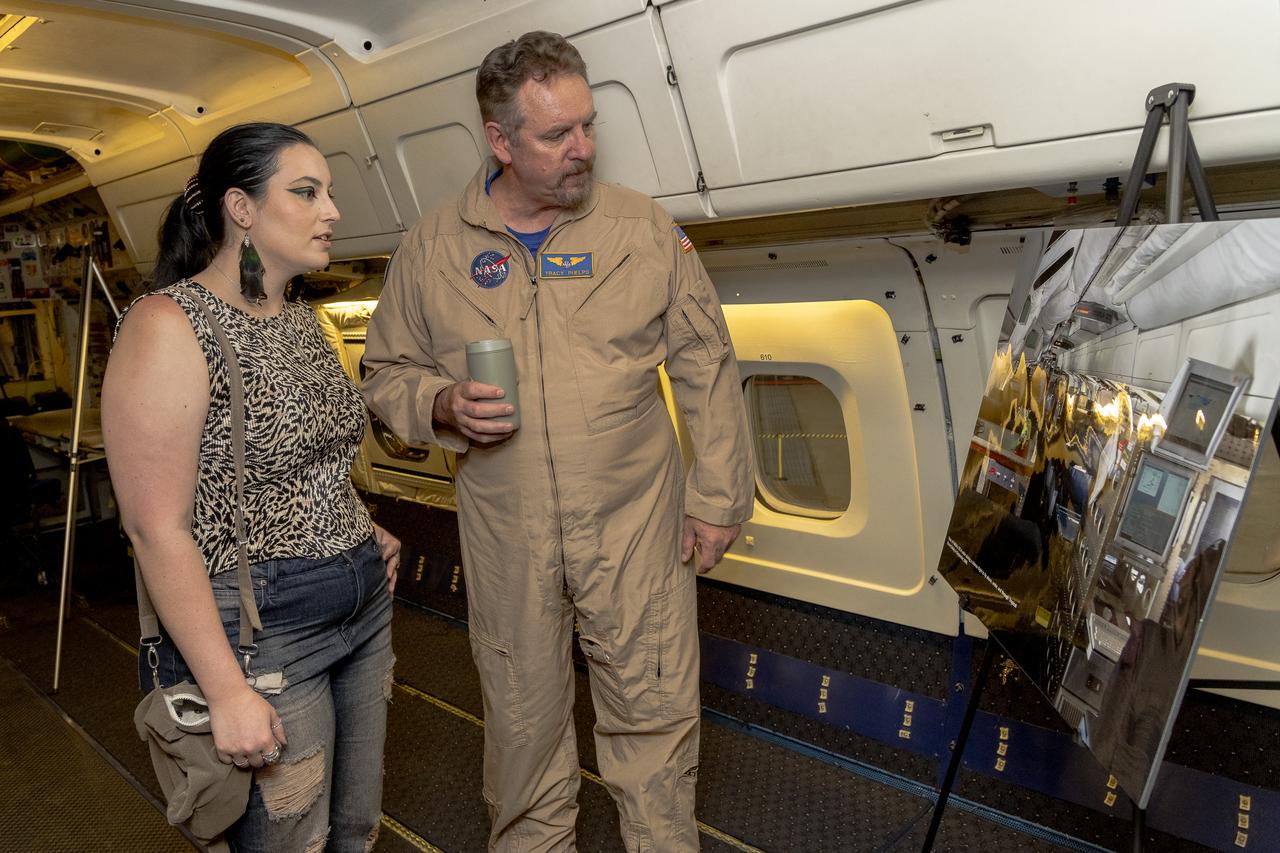
NASA pilot Tracy Phelps and his daughter Rachael Phelps look at a poster onboard the DC-8 at NASA’s Armstrong Flight Research Center Building 703 in Palmdale, California. On May 2, 2024, NASA personnel, friends, and family celebrated the DC-8 staff, aircraft, and science campaigns.
NASA Armstrong Event Celebrates NASA DC-8 Aircraft
NASA Student Airborne Research Program participants pose in front of the DC-8 before their flight on Jun 23, 2022. The students are joined by mentors and professors to study air quality over the Central Valley in California.
NASA SARP Students Fly on DC-8
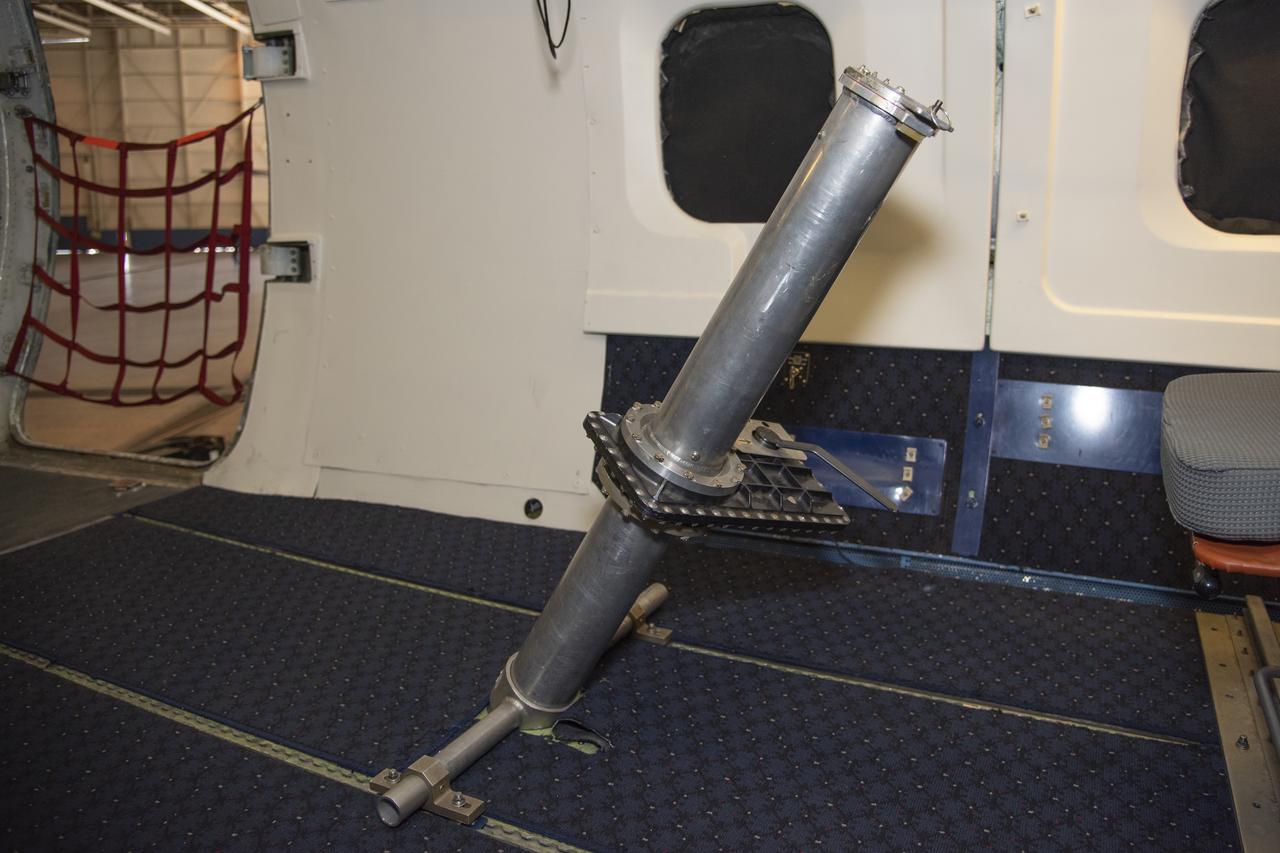
To verify the lidar data they're collecting on the DC-8 airborne science laboratory, Aeolus mission scientists will use dropsondes, which are devices they'll drop from this tube in the aircraft to collect wind and water vapor data.
Dropsonde Chute on NASA DC-8 Flying Laboratory
NASA's DC-8 in flight for the NASA Student Airborne Research Project (SARP) to measure aerosols with the Langley Aerosol Research Group Experiment (LARGE) instrument with the Cavity Attenuated Phase Shift (CAPS) PMex Monitor (Particle Optical Extinction).
NASA DC-8 SARP 2020-21
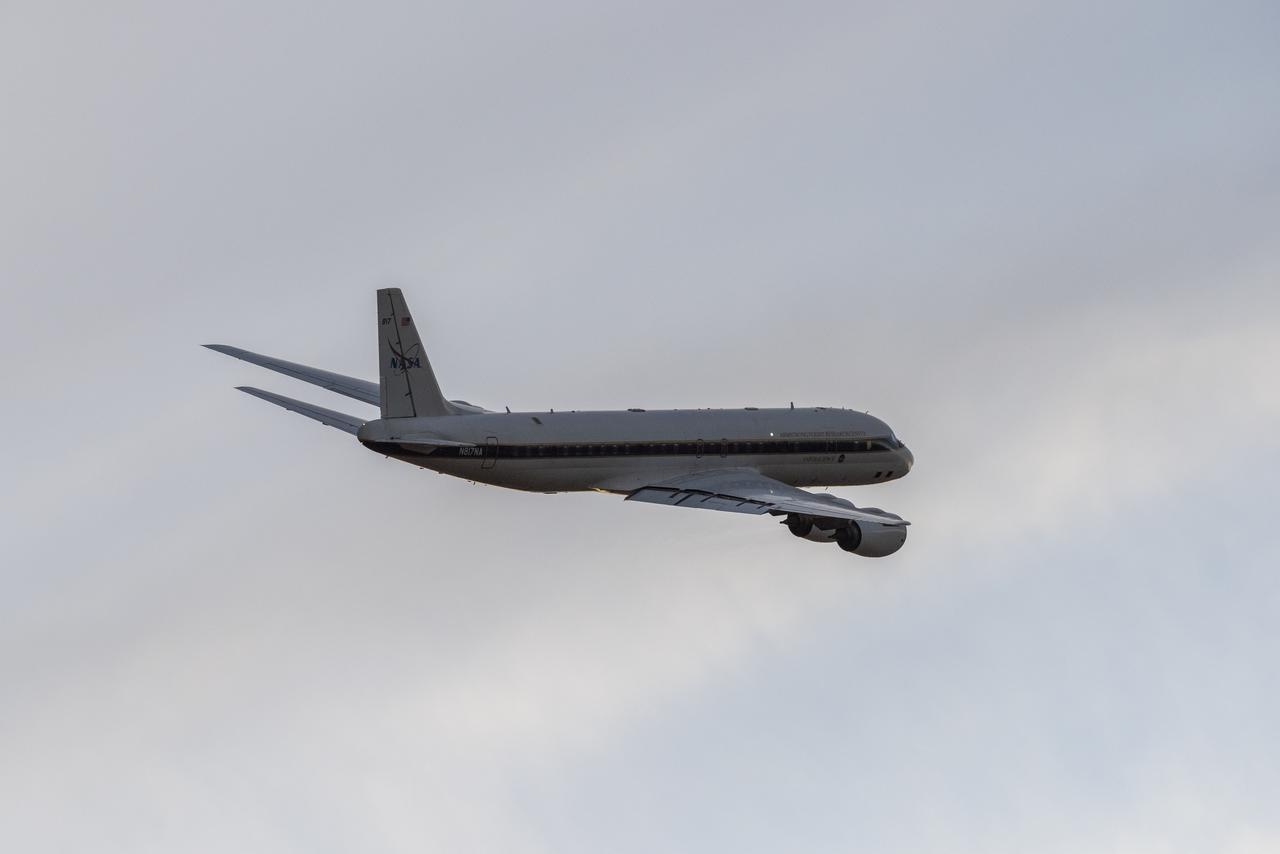
The DC-8 is shown overhead during its final flight from NASA’s Armstrong Flight Research Center Building 703 in Palmdale, California, before it retires to Idaho State University in Pocatello, Idaho. The DC-8 will provide real-world experience to train future aircraft technicians at the college’s Aircraft Maintenance Technology Program.
NASA’s DC-8 Conducts Final Flight
The DC-8 flies for the last time from NASA’s Armstrong Flight Research Center Building 703 in Palmdale, California, to Idaho State University in Pocatello, Idaho. The DC-8 will provide real-world experience to train future aircraft technicians at the college’s Aircraft Maintenance Technology Program.
NASA’s DC-8 Conducts Final Flight
The DC-8 flies for the last time from NASA’s Armstrong Flight Research Center Building 703 in Palmdale, California, before it retires to Idaho State University in Pocatello, Idaho. The DC-8 will provide real-world experience to train future aircraft technicians at the college’s Aircraft Maintenance Technology Program.
NASA’s DC-8 Conducts Final Flight
The DC-8 flies for the last time from NASA’s Armstrong Flight Research Center Building 703 in Palmdale, California, before it retires to Idaho State University in Pocatello, Idaho. The DC-8 will provide real-world experience to train future aircraft technicians at the college’s Aircraft Maintenance Technology Program.
NASA’s DC-8 Flies for Last Time
From left, Wayne Ringelberg, chief pilot at NASA’s Armstrong Flight Research Center in Edwards, California, is welcomed by Michael Thomson, director of NASA Armstrong’s Science Mission Directorate, and Kirsten Boogaard, NASA’s DC-8 project manager, after the DC-8 aircraft and crew return to NASA Armstrong’s Building 703 in Palmdale, California, on April 1, 2024, following the aircraft’s final mission in support of the Airborne and Satellite Investigation of Asian Air Quality (ASIA-AQ).
NASA’s DC-8 Returns from Final Mission
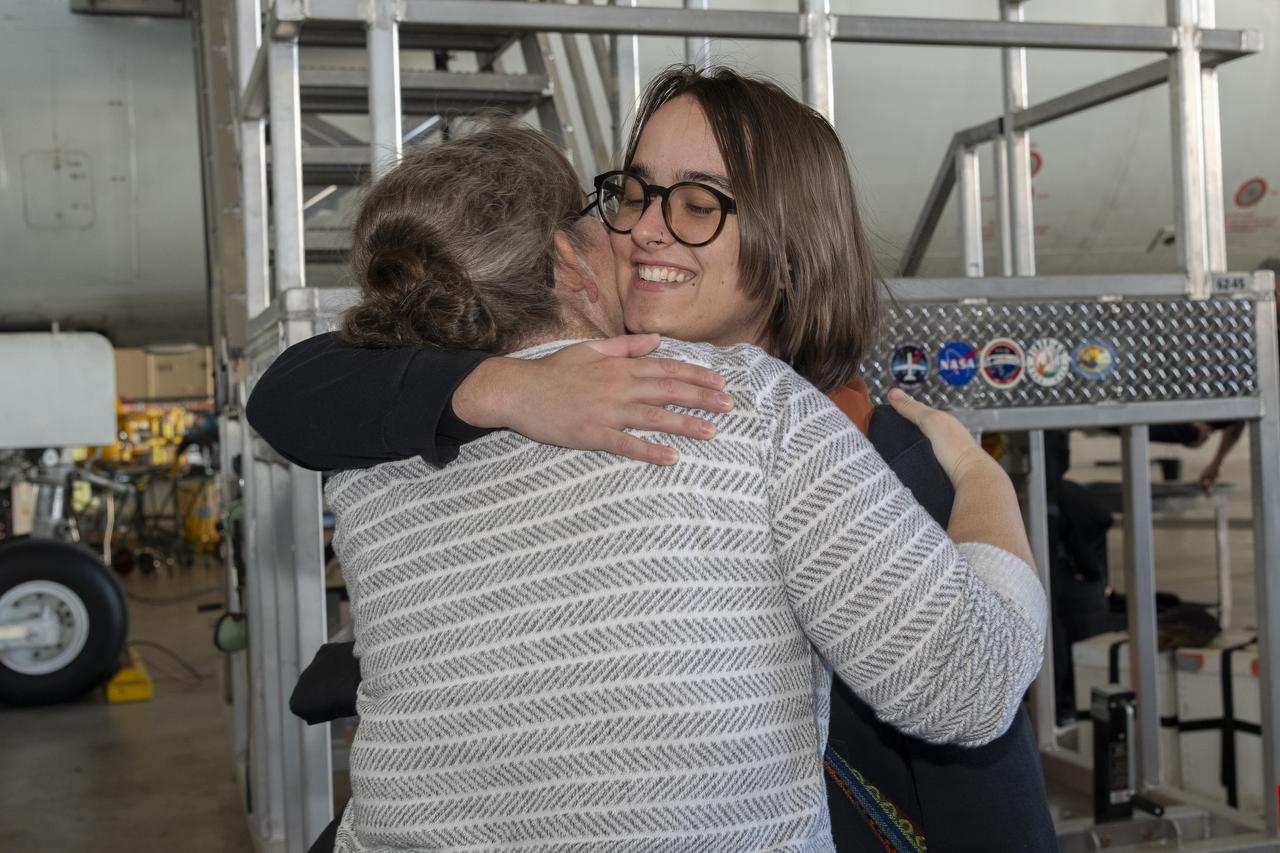
NASA DC-8 crew members Nickelle “Nicki” Reid, operations engineer, left, and Isac Mata, engineer technician, exchange in a heartfelt hug after the DC-8 aircraft and crew return to NASA Armstrong’s Building 703 in Palmdale, California, on April 1, 2024, following the aircraft’s final mission in support of the Airborne and Satellite Investigation of Asian Air Quality (ASIA-AQ). Smiling in the background is Michael Thomson, director of NASA Armstrong’s Science Mission Directorate.
NASA’s DC-8 Returns from Final Mission
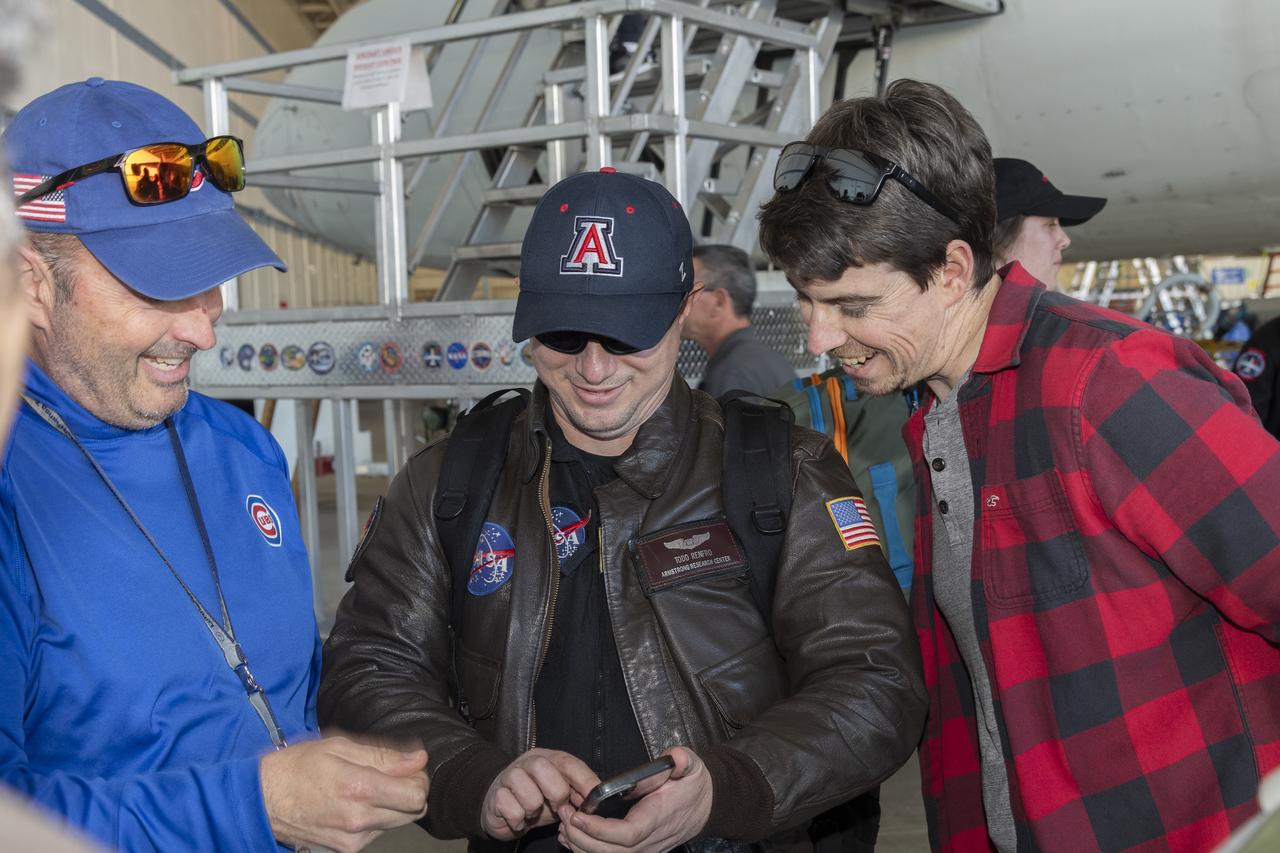
From left, Andy Barry, DC-8 pilot; Todd Renfro, flight navigator; and Adam Devalon, flight engineer, share smiles after the DC-8 aircraft and crew return to NASA’s Armstrong Flight Research Center Building 703 in Palmdale, California, on April 1, 2024, following the aircraft’s final mission in support of the Airborne and Satellite Investigation of Asian Air Quality (ASIA-AQ).
NASA’s DC-8 Returns from Final Mission
NASA’s DC-8 operations engineer, Nickelle “Nicki” Reid, left, embraces Katherine Ball, chemical engineering Ph.D. candidate at California Institute of Technology, after the DC-8 aircraft and crew return to NASA Armstrong’s Building 703 in Palmdale, California, on April 1, 2024, following the aircraft’s final mission in support of the Airborne and Satellite Investigation of Asian Air Quality (ASIA-AQ).
NASA’s DC-8 Returns from Final Mission
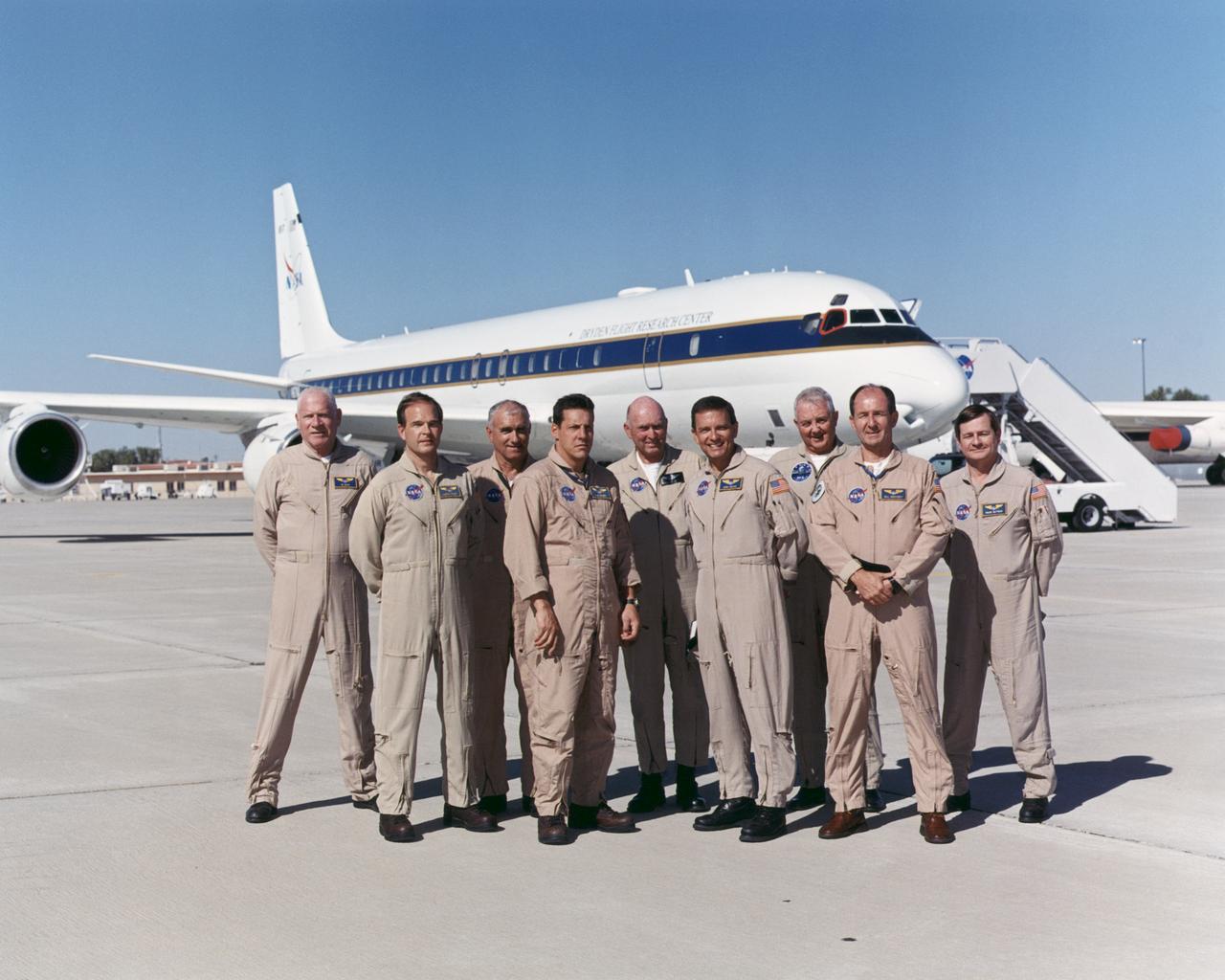
2004 NASA Dryden DC-8 flight crew. Left to Right: Edwin W. Lewis, Jr., Martin J. Trout, Richard G. Ewers, Craig R. Bomben, C. Gordon Fullerton (Chief Pilot), Mark Pestana, Douglas H. Baker, William Frederick Brockett, and Frank Batteas.
2004 NASA Dryden DC-8 flight crew
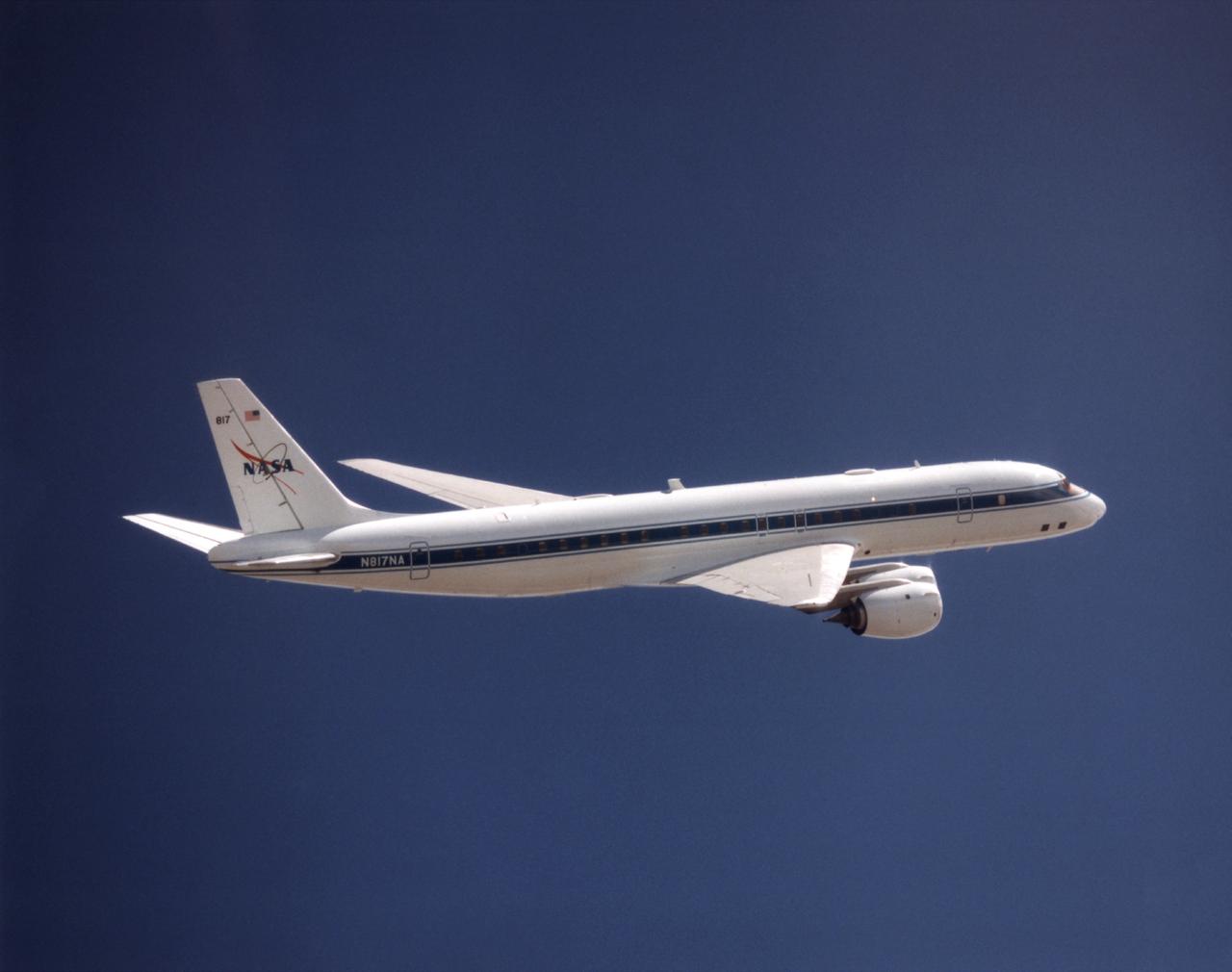
NASA's DC-8 Airborne Science platform shown against a background of a dark blue sky on February 20, 1998. The aircraft is shown from the right rear, slightly above its plane, with the right wing in the foreground and the left wing and horizontal tail in the background. The former airliner is a "dash-72" model and has a range of 5,400 miles. The craft can stay airborne for 12 hours and has an operational speed range between 300 and 500 knots. The research flights are made at between 500 and 41,000 feet. The aircraft can carry up to 30,000 lbs of research/science payload equipment installed in 15 mission-definable spaces.
DC-8 Airborne Laboratory in flight
NASA's DC-8 airborne science laboratory soars over the Dryden Flight Research Center upon its return to the center on Nov. 8, 2007.
NASA's DC-8 airborne science laboratory soars over the Dryden Flight Research Center upon its return to the center on Nov. 8, 2007
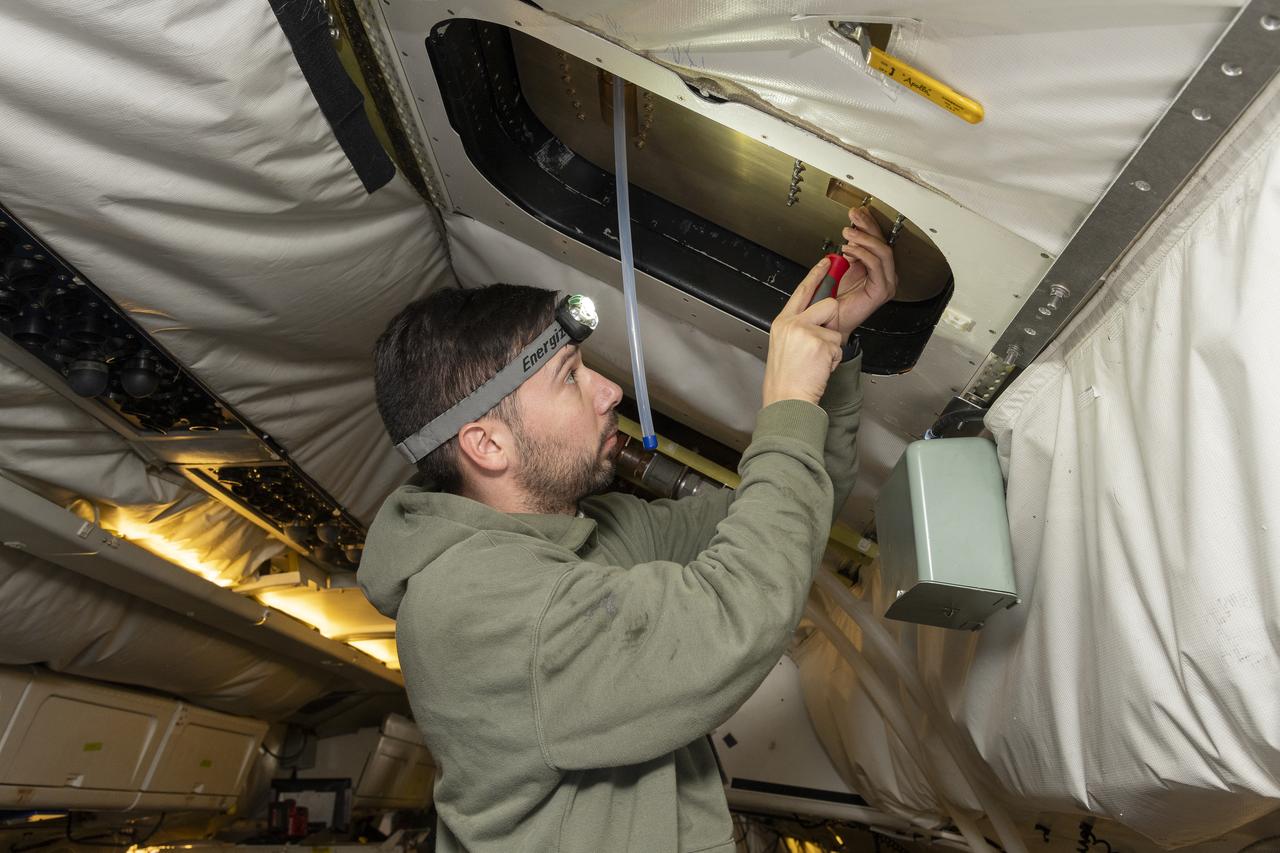
Isac Mata, engineering technician at NASA’s Armstrong Flight Research Center, attends to the interior of the DC-8 aircraft at Building 703 in Palmdale, CA. The DC-8 aircraft is prepared for its last mission, ASIA-AQ (Airborne and Satellite Investigation of Asian Air Quality), that will collect detailed air quality data over several locations in Asia to improve the understanding of local air quality in collaboration with local scientists, air quality agencies, and government partners
NASA’s DC-8 Aircraft is Prepared for an International Air Quality Research Mission
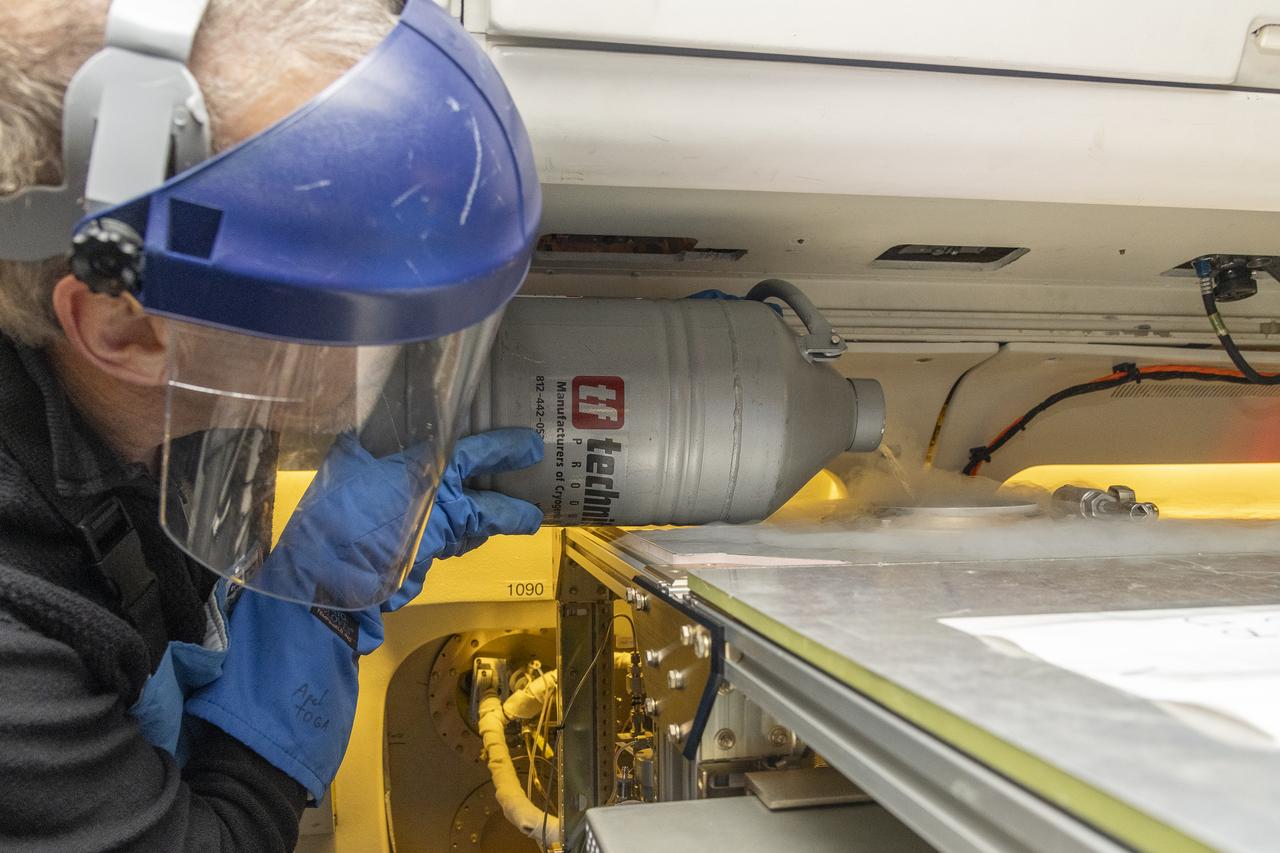
Alan Hills fills liquid nitrogen in the Trace Organic Gas Analyzer (TOGA) instrument onboard the DC-8 aircraft at Building 703 in Palmdale, CA. This instrument measures volatile organic compounds (VOCs) in the atmosphere.
The DC-8 aircraft is prepared for its last mission, ASIA-AQ (Airborne and Satellite Investigation of Asian Air Quality), that will collect detailed air quality data over several locations in Asia to improve the understanding of local air quality in collaboration with local scientists, air quality agencies, and government partners
NASA’s DC-8 Aircraft is Prepared for an International Air Quality Research Mission
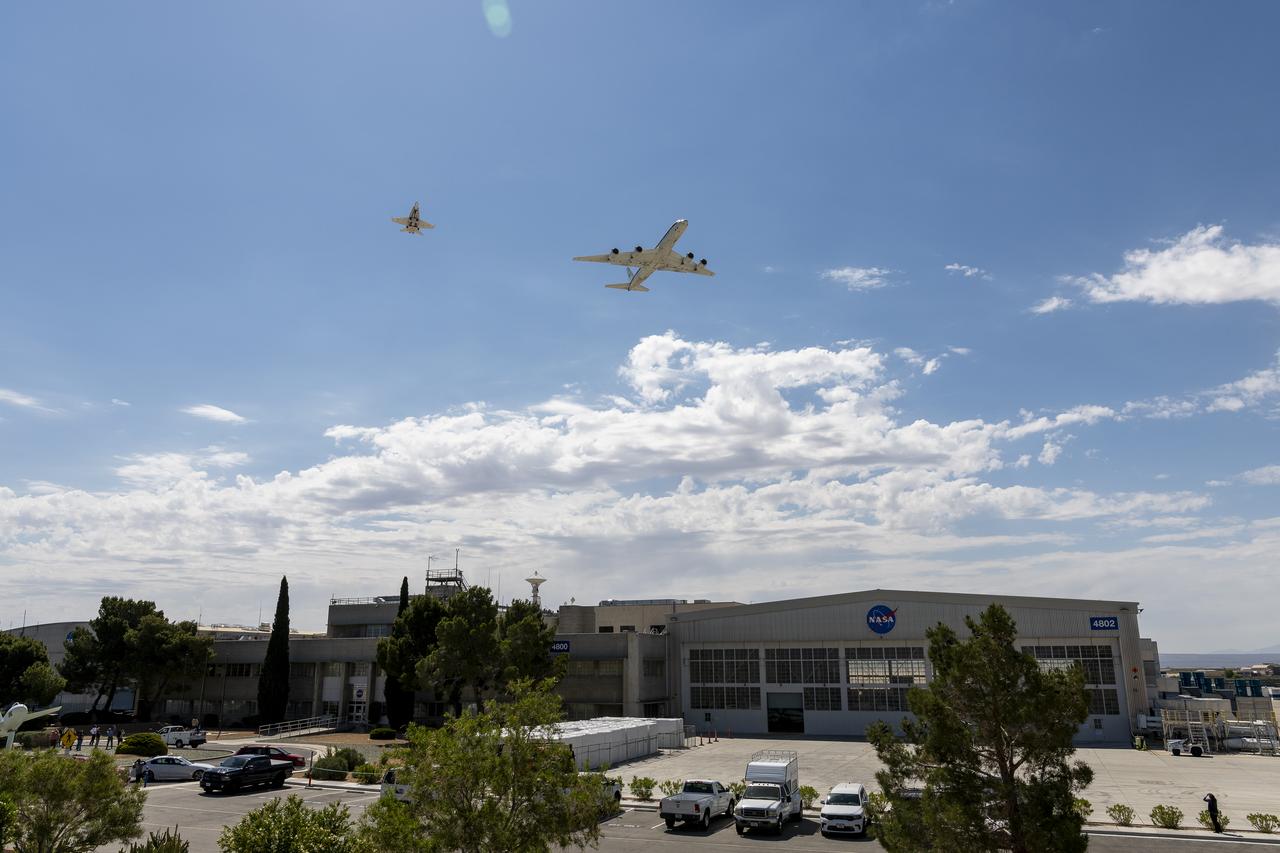
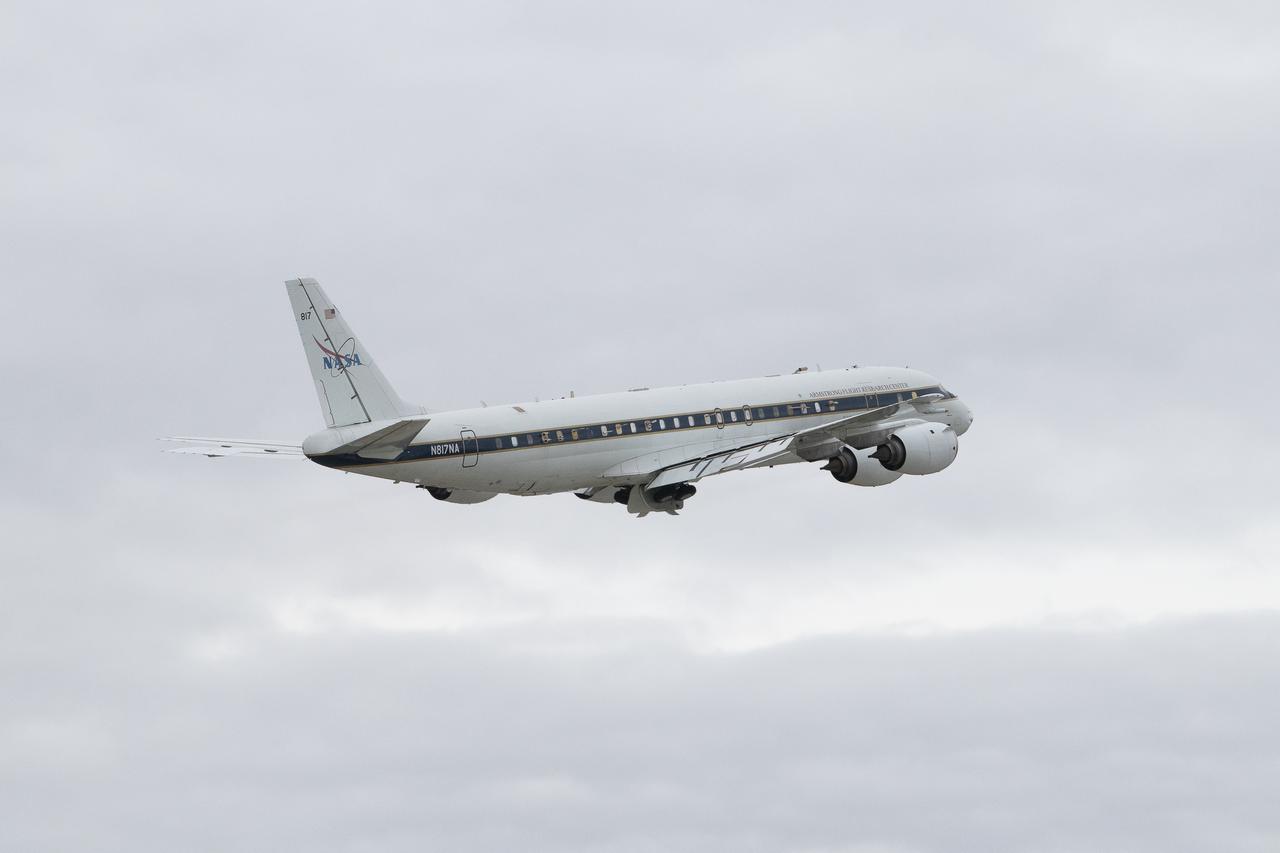
DC-8 aircraft conducts test flights at Building 703 in Palmdale, CA.
The DC-8 aircraft is prepared for its last mission, ASIA-AQ (Airborne and Satellite Investigation of Asian Air Quality), that will collect detailed air quality data over several locations in Asia to improve the understanding of local air quality in collaboration with local scientists, air quality agencies, and government partners
NASA’s DC-8 Aircraft is Prepared for an International Air Quality Research Mission
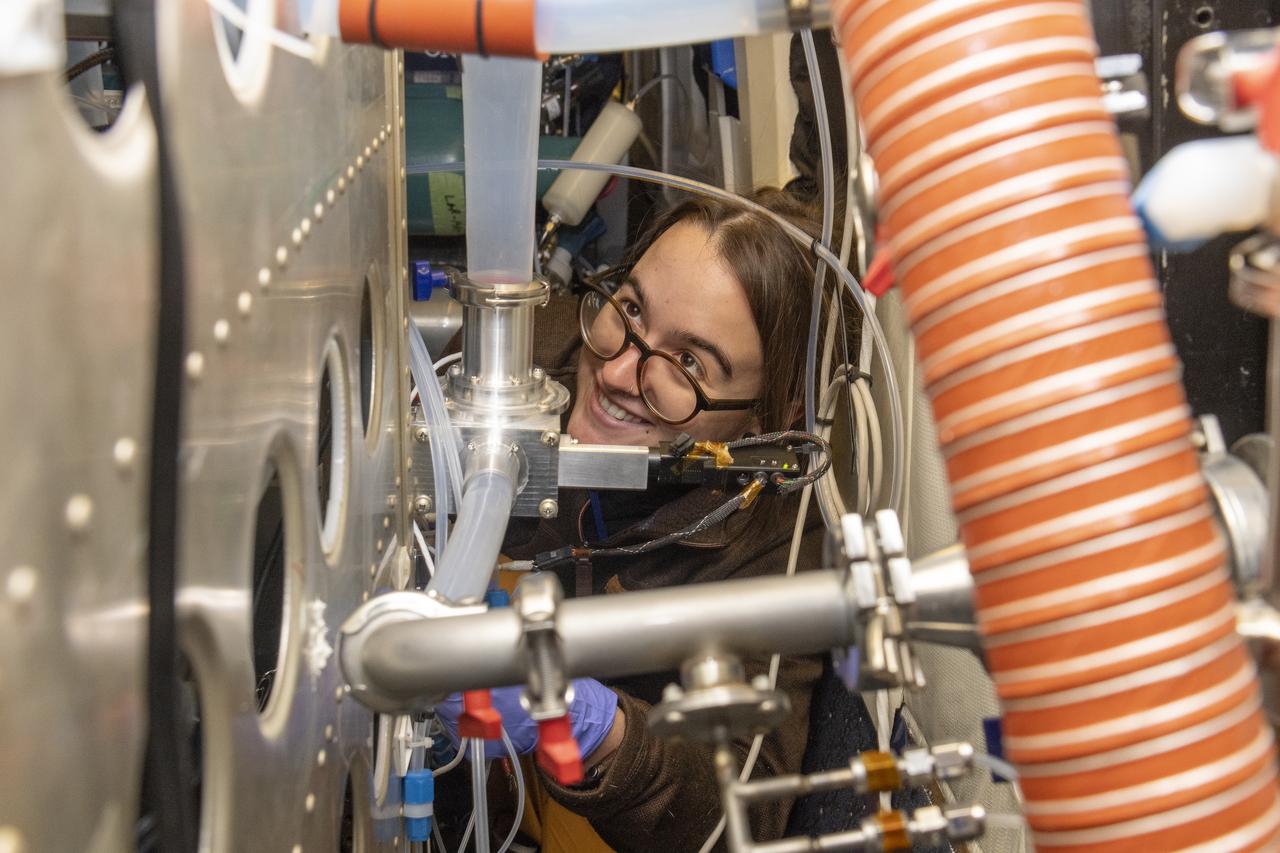
Kat Ball, Chemical Engineering Ph.D candidate at Caltech, attends to the Chemical Ionization Mass Spectrometer (CIMS) rack onboard the DC-8 aircraft at Building 703 in Palmdale, CA.
The DC-8 aircraft is prepared for its last mission, ASIA-AQ (Airborne and Satellite Investigation of Asian Air Quality), that will collect detailed air quality data over several locations in Asia to improve the understanding of local air quality in collaboration with local scientists, air quality agencies, and government partners
NASA’s DC-8 Aircraft is Prepared for an International Air Quality Research Mission
DC-8 aircraft conducts test flights at Building 703 in Palmdale, CA. The DC-8 aircraft is prepared for its last mission, ASIA-AQ (Airborne and Satellite Investigation of Asian Air Quality), that will collect detailed air quality data over several locations in Asia to improve the understanding of local air quality in collaboration with local scientists, air quality agencies, and government partners
NASA’s DC-8 Aircraft is Prepared for an International Air Quality Research Mission
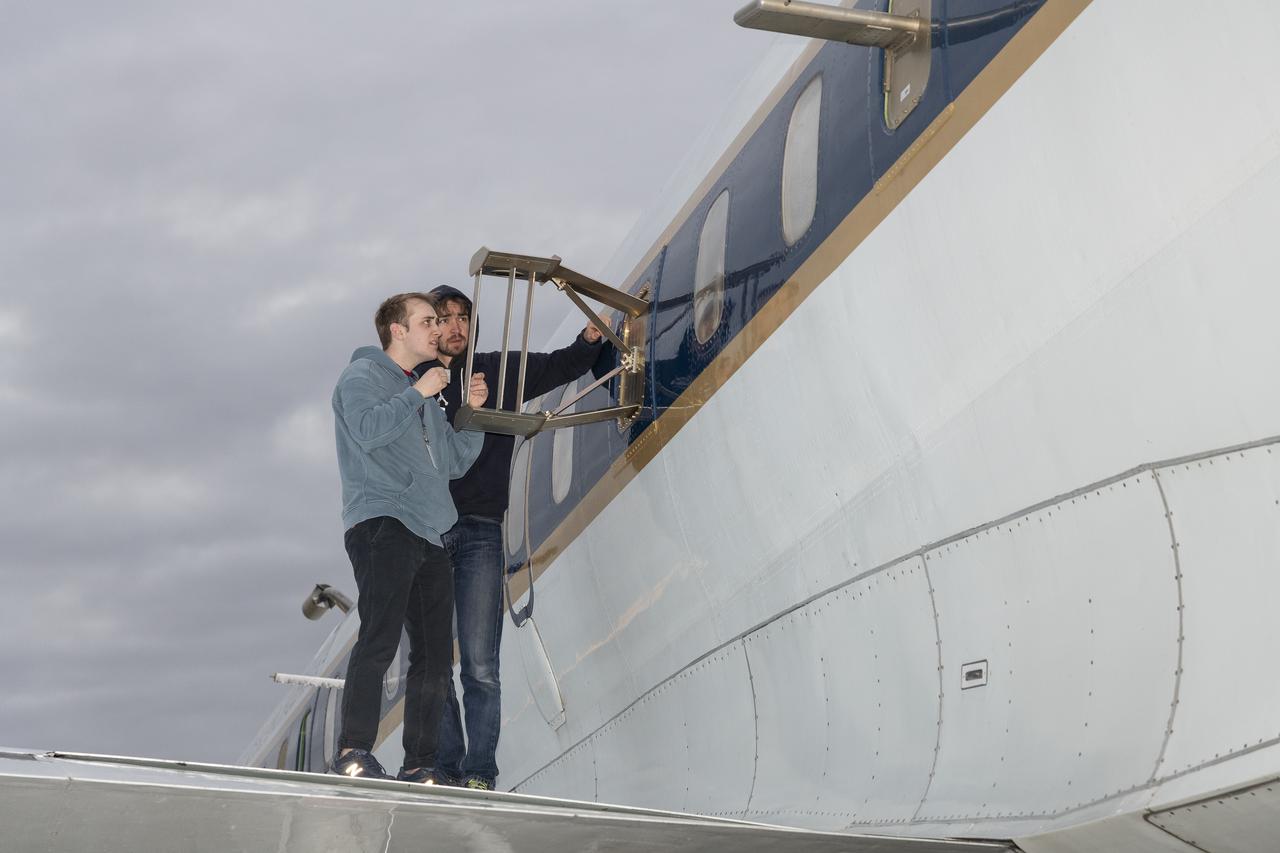
Scientists Ryan Boyd (left) and Vladislav Sevostianov (right) attend to the Optical Payload for Lasercomm Science (OPALS) instrument on the exterior the DC-8 aircraft at Building 703 in Palmdale, CA.
The DC-8 aircraft is prepared for its last mission, ASIA-AQ (Airborne and Satellite Investigation of Asian Air Quality), that will collect detailed air quality data over several locations in Asia to improve the understanding of local air quality in collaboration with local scientists, air quality agencies, and government partners
NASA’s DC-8 Aircraft is Prepared for an International Air Quality Research Mission
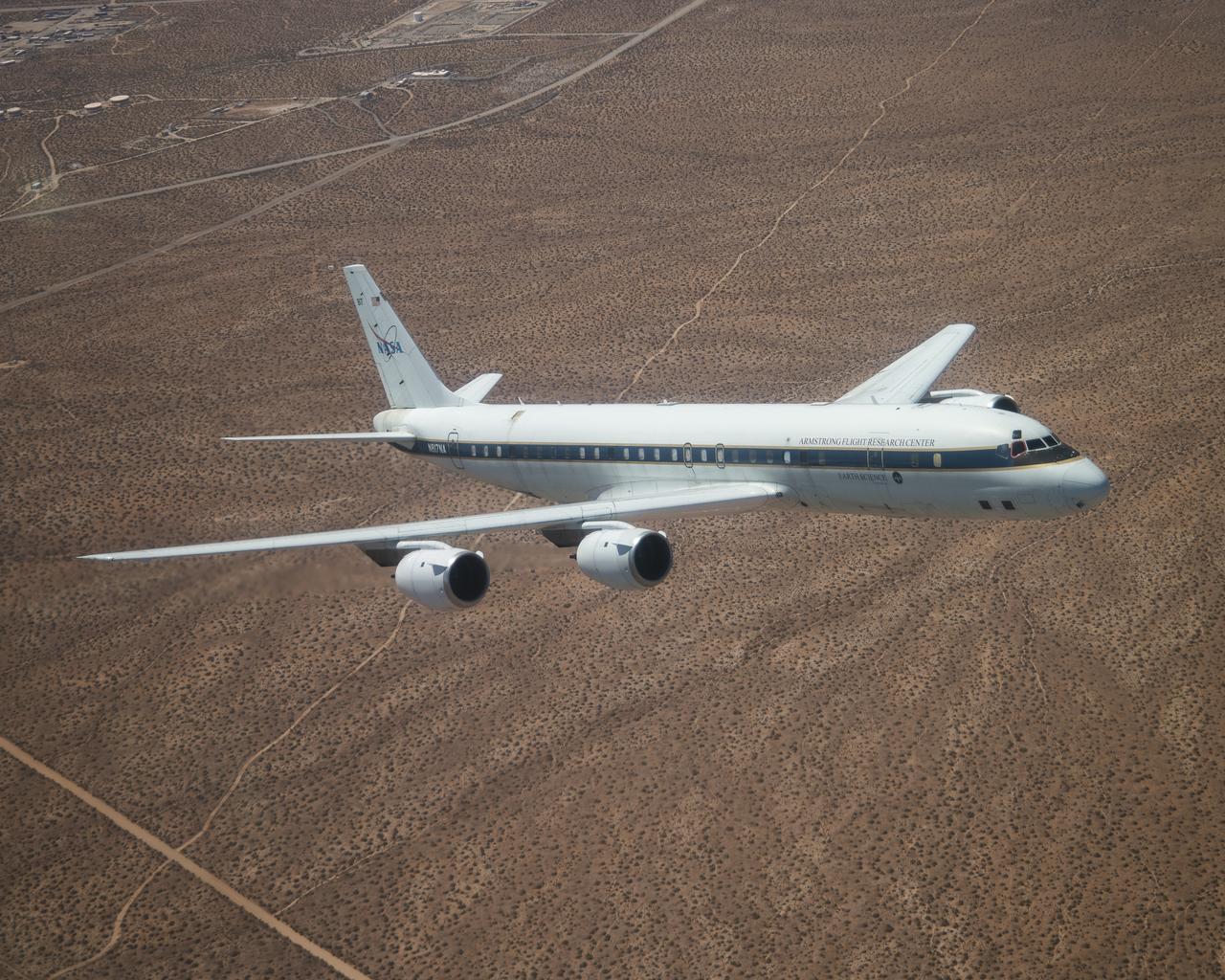
NASA's DC-8 Airborne Laboratory during a flight over the snow-covered Sierra Nevada Mountains. Over the past several years the DC-8 has conducted research missions in such diverse places as the Pacific in spring and Sweden in winter.
DC-8 Airborne Laboratory in flight over snow-capped Sierra Nevada mountain range
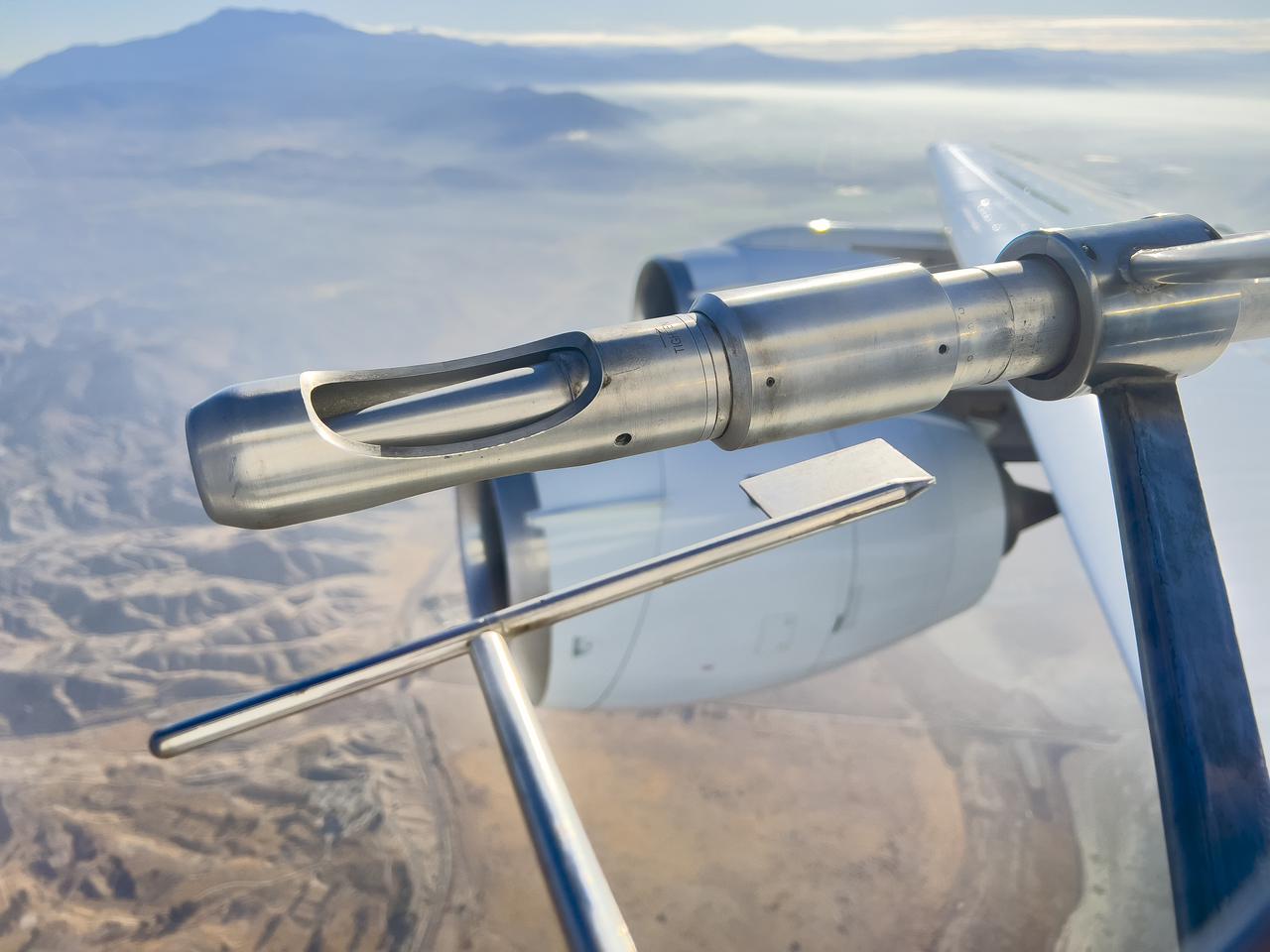
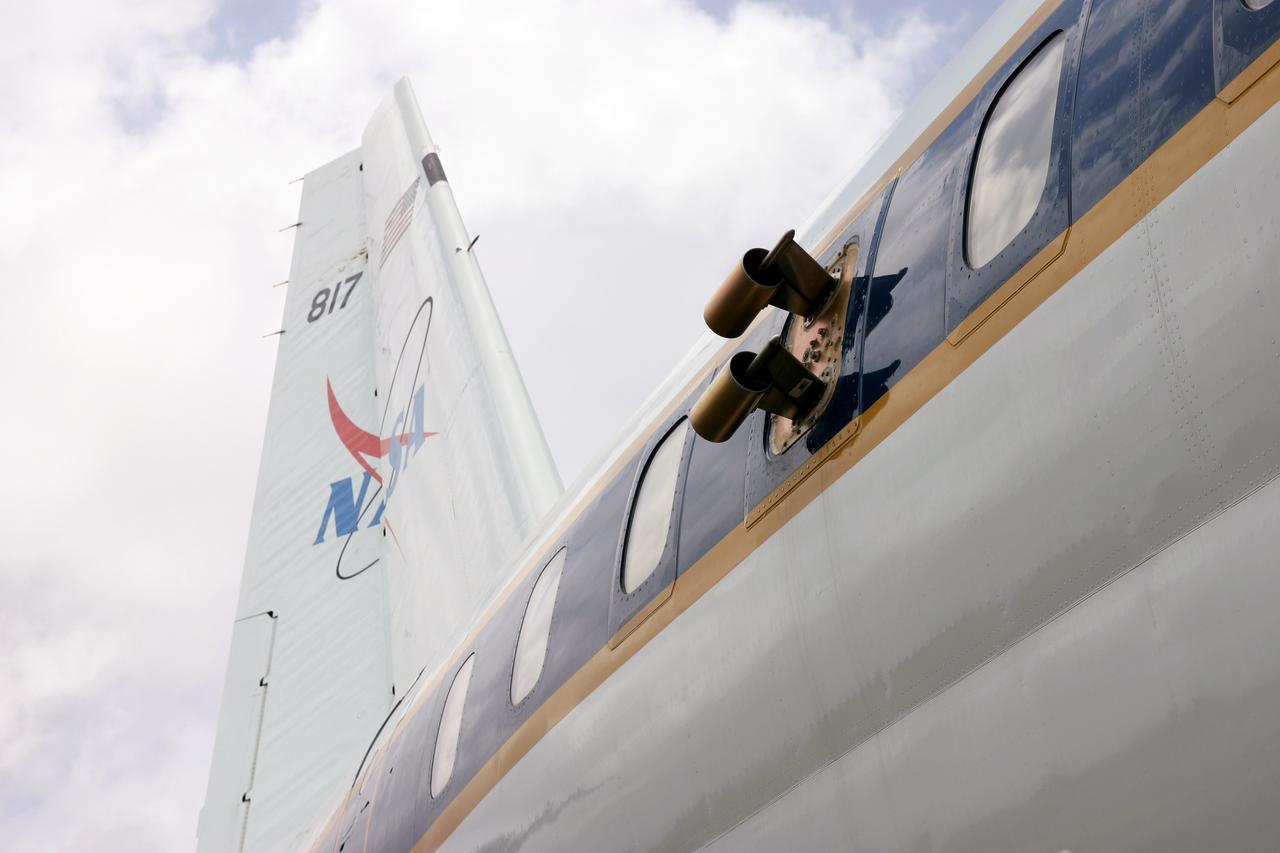
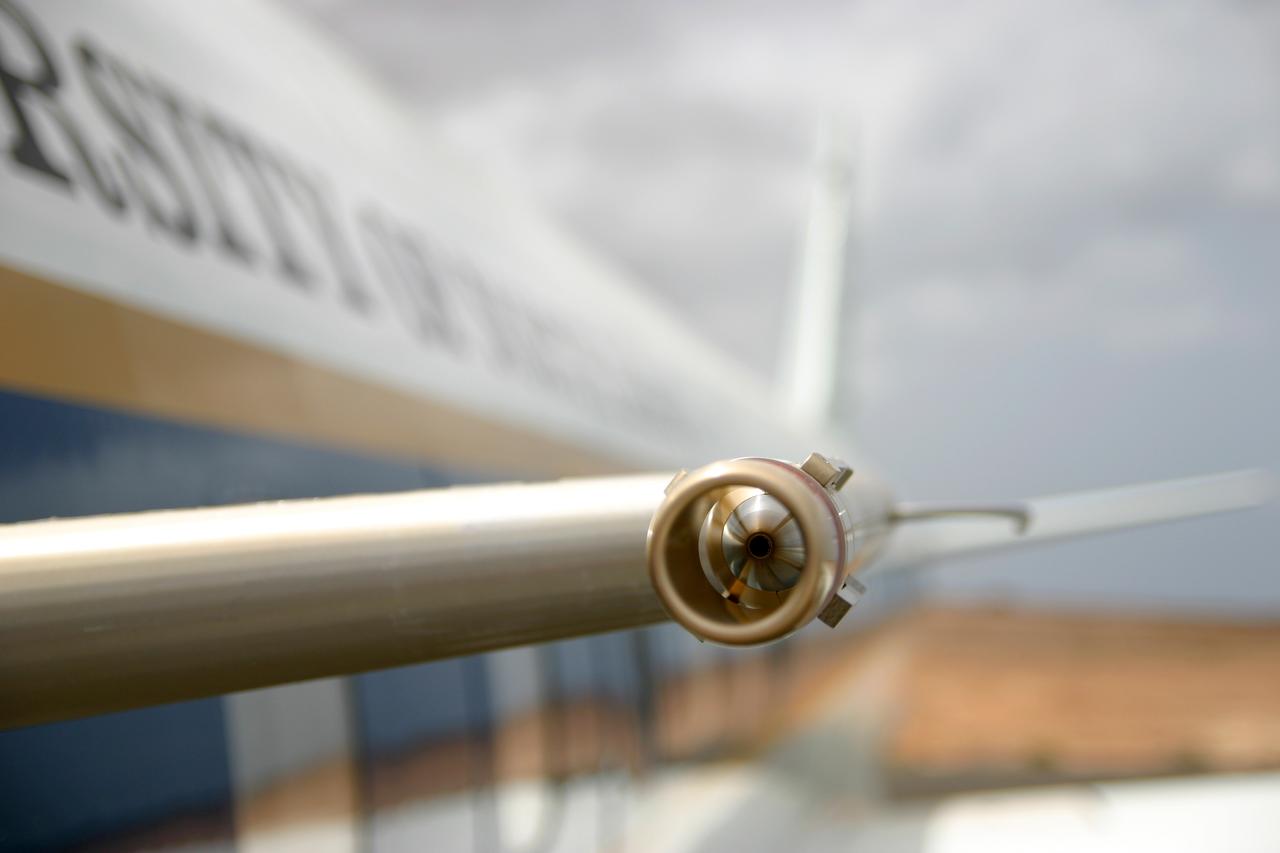
NASA Monsoon Multidisciplinary analysis (NAMMA) deployment, Sal Island, Cape Verde Africia DC-8 NAMMA MISSION TO CAPE VERDE, AFRICA close-up of one of the external probes used on baord NASA's DC-8 during the deployment.
ARC-2006-ACD06-0135-032
NASA Monsoon Multidisciplinary analysis (NAMMA) deployment, Sal Island, Cape Verde Africia DC-8 NAMMA MISSION TO CAPE VERDE, AFRICA close-up of one of the external probes used on baord NASA's DC-8 during the deployment.
ARC-2006-ACD06-0135-034
NASA Monsoon Multidisciplinary analysis (NAMMA) deployment, Sal Island, Cape Verde Africia DC-8 NAMMA MISSION TO CAPE VERDE, AFRICA close-up of one of the external probes used on baord NASA's DC-8 during the deployment.
ARC-2006-ACD06-0135-031
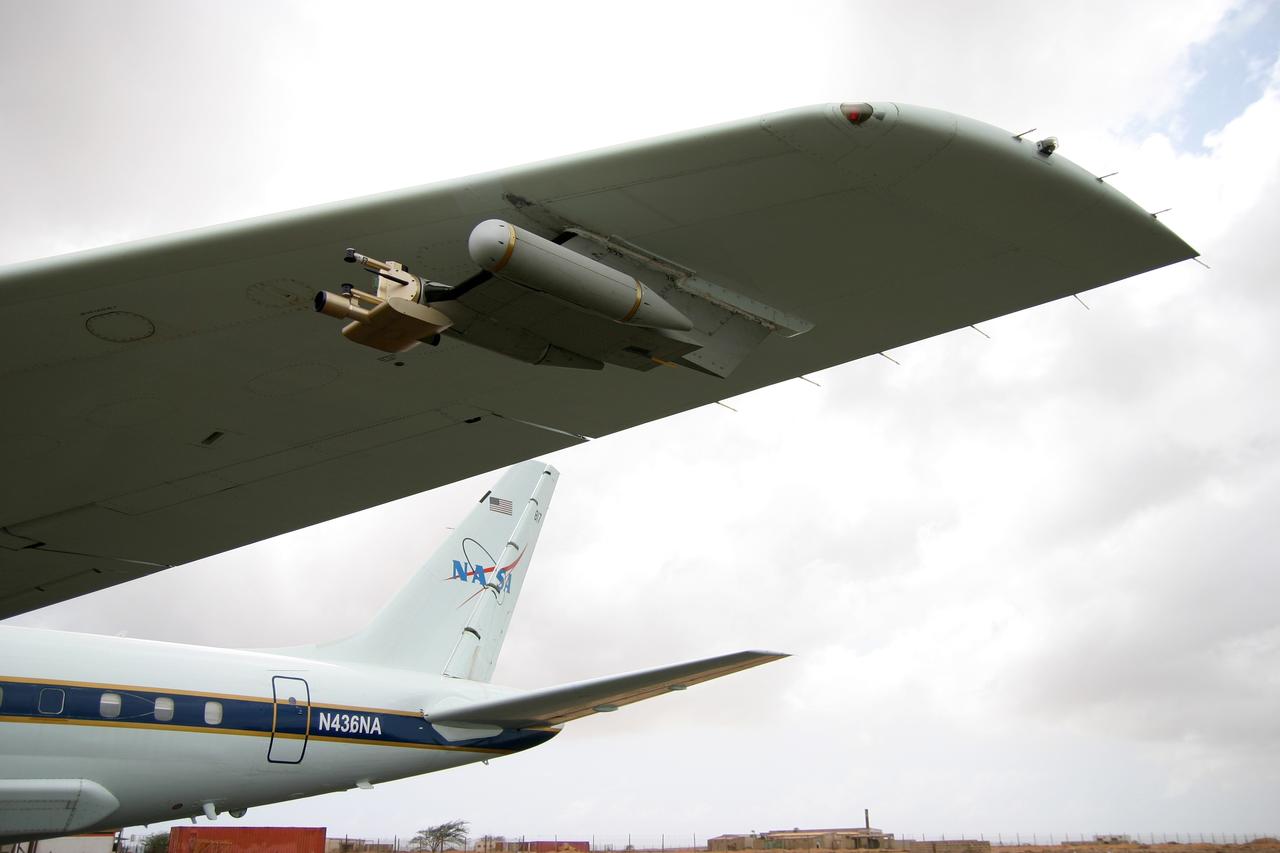
NASA Monsoon Multidisciplinary analysis (NAMMA) deployment, Sal Island, Cape Verde Africia DC-8 NAMMA MISSION TO CAPE VERDE, AFRICA close-up of one of the external wingtip probes used on baord NASA's DC-8 during the deployment.
ARC-2006-ACD06-0135-033
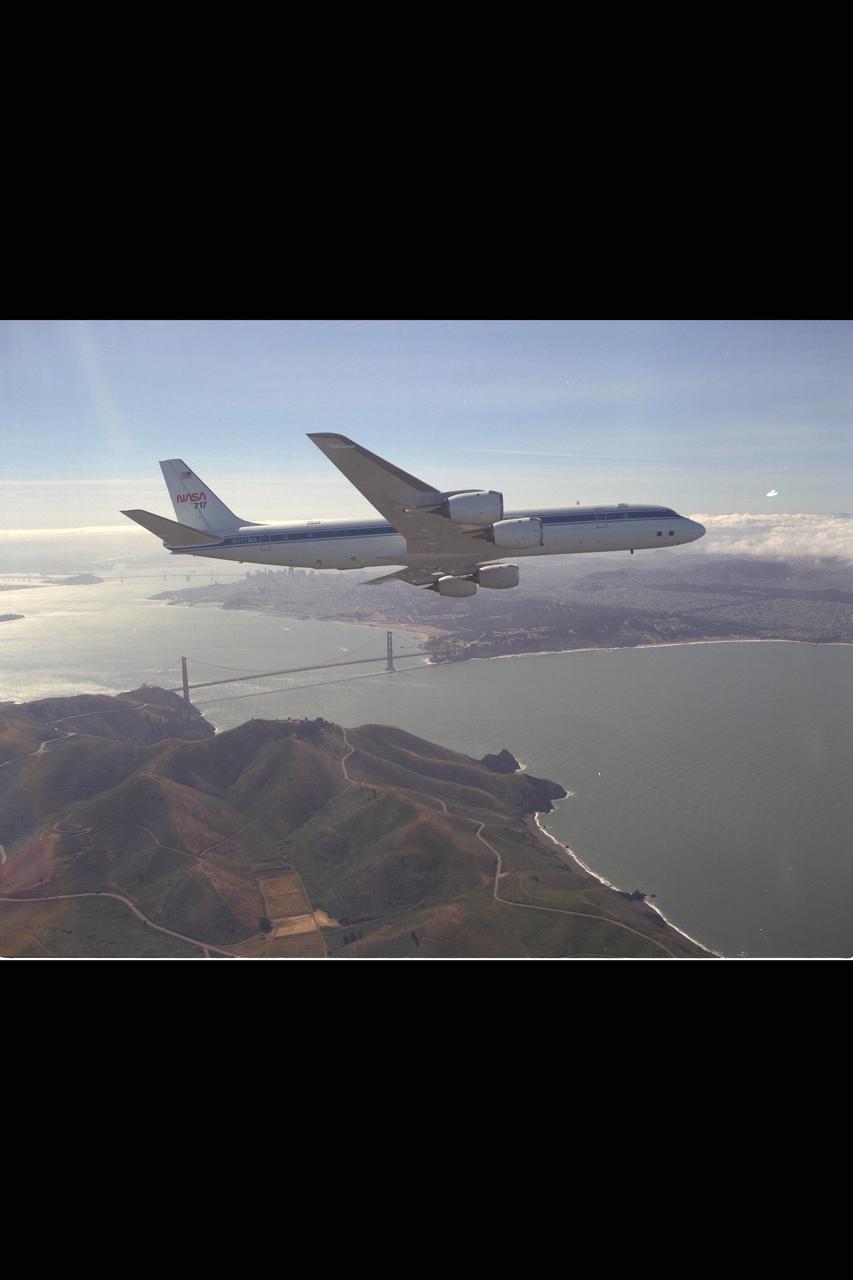
Ames DC-8 NASA 717 in flight over San Francisco, Ca
ARC-1991-AC91-0309-19
Ames DC-8 NASA 717 in flight over San Francisco, Ca
ARC-1991-AC91-0309-9
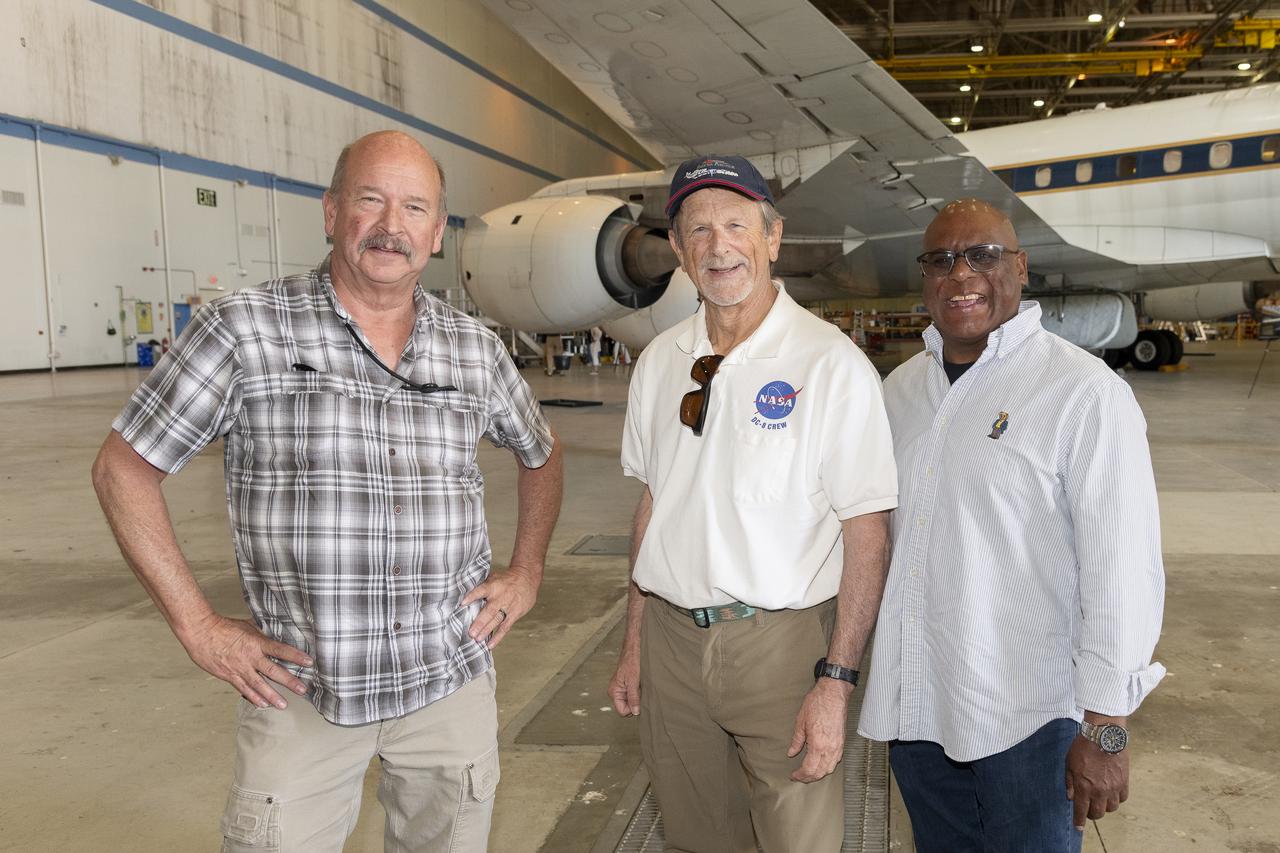
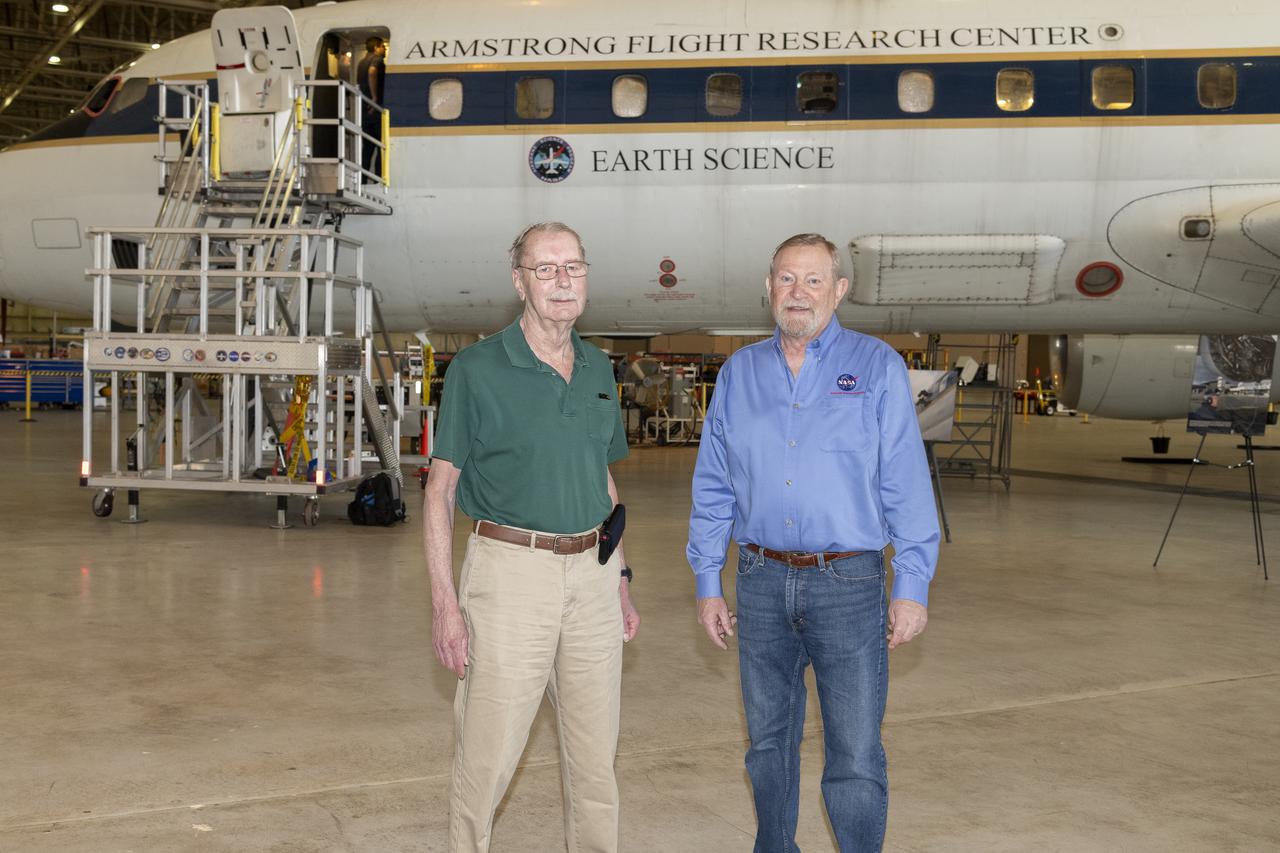
Retired NASA mission manager Chris Jennison and Randy Albertson, right, who retired in 2019 as NASA’s Airborne Science Program deputy director, stand in front of the DC-8 aircraft at NASA’s Armstrong Flight Research Center Building 703 in Palmdale, California. On May 2, 2024, NASA personnel, friends, and family celebrated the DC-8 staff, aircraft, and science campaigns.
NASA Armstrong Event Celebrates NASA DC-8 Aircraft
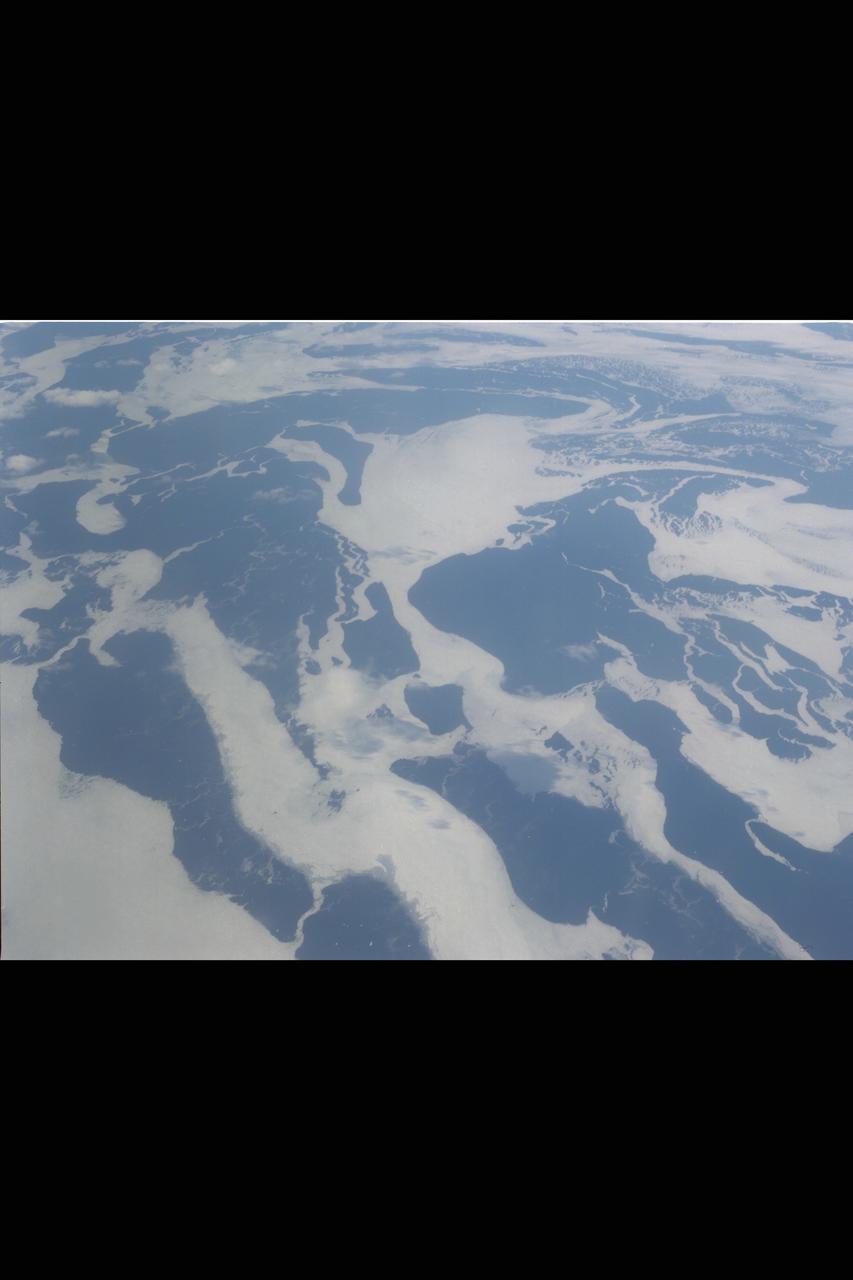
DC-8 (NASA-717) Antarctic Ozone Experiment: (Summer in Antarctic -  aerial view from DC-8)
ARC-1969-AC87-0671-271
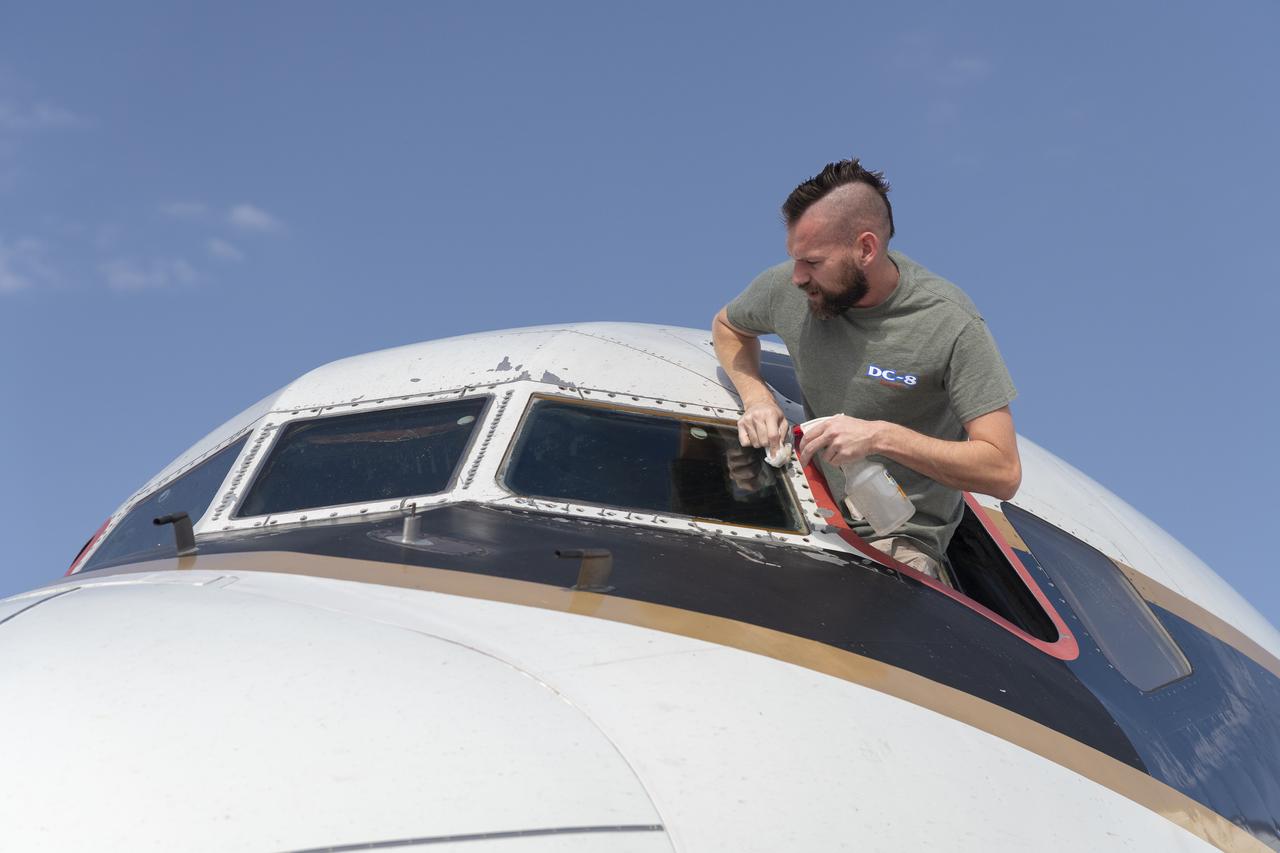
Avionics lead Kelly Jellison wipes the windshield of the DC-8 aircraft prior to its final flight before it is retired from NASA’s Armstrong Flight Research Center Building 703 in Palmdale, California, to Idaho State University in Pocatello, Idaho. The DC-8 will provide real-world experience to train future aircraft technicians at the college’s Aircraft Maintenance Technology Program.
NASA’s DC-8 Aircraft Prepares for Final Flight
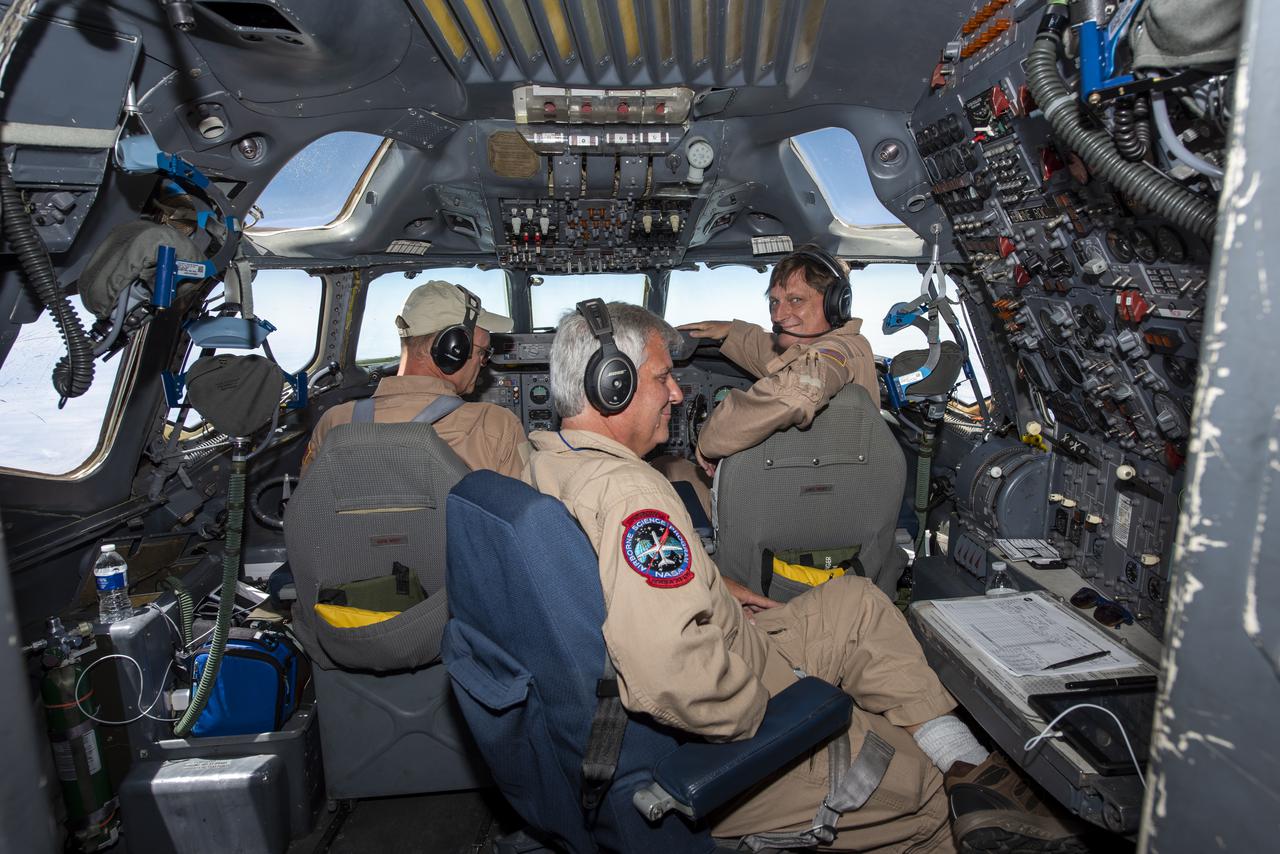
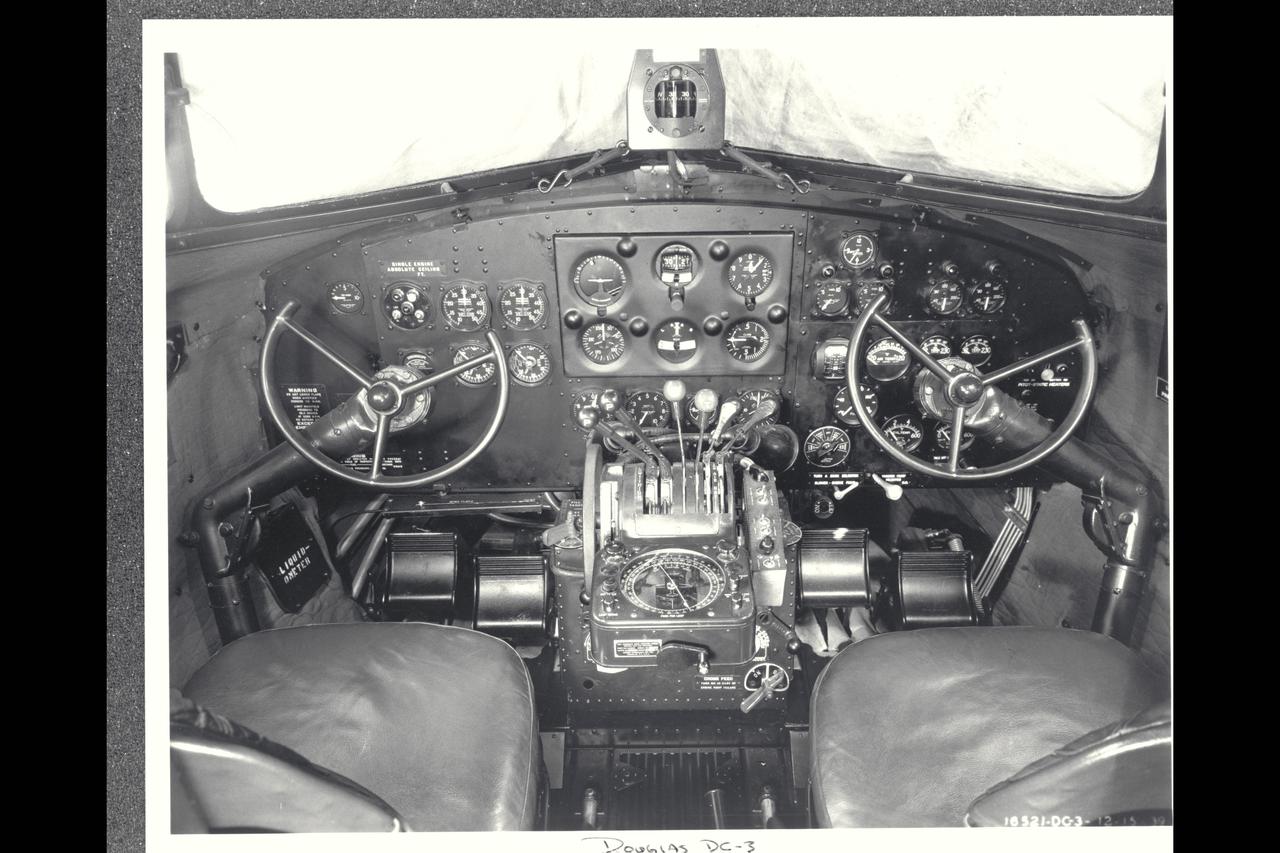
Douglas DC-8 Cockpit
ARC-1993-A83-0499-7
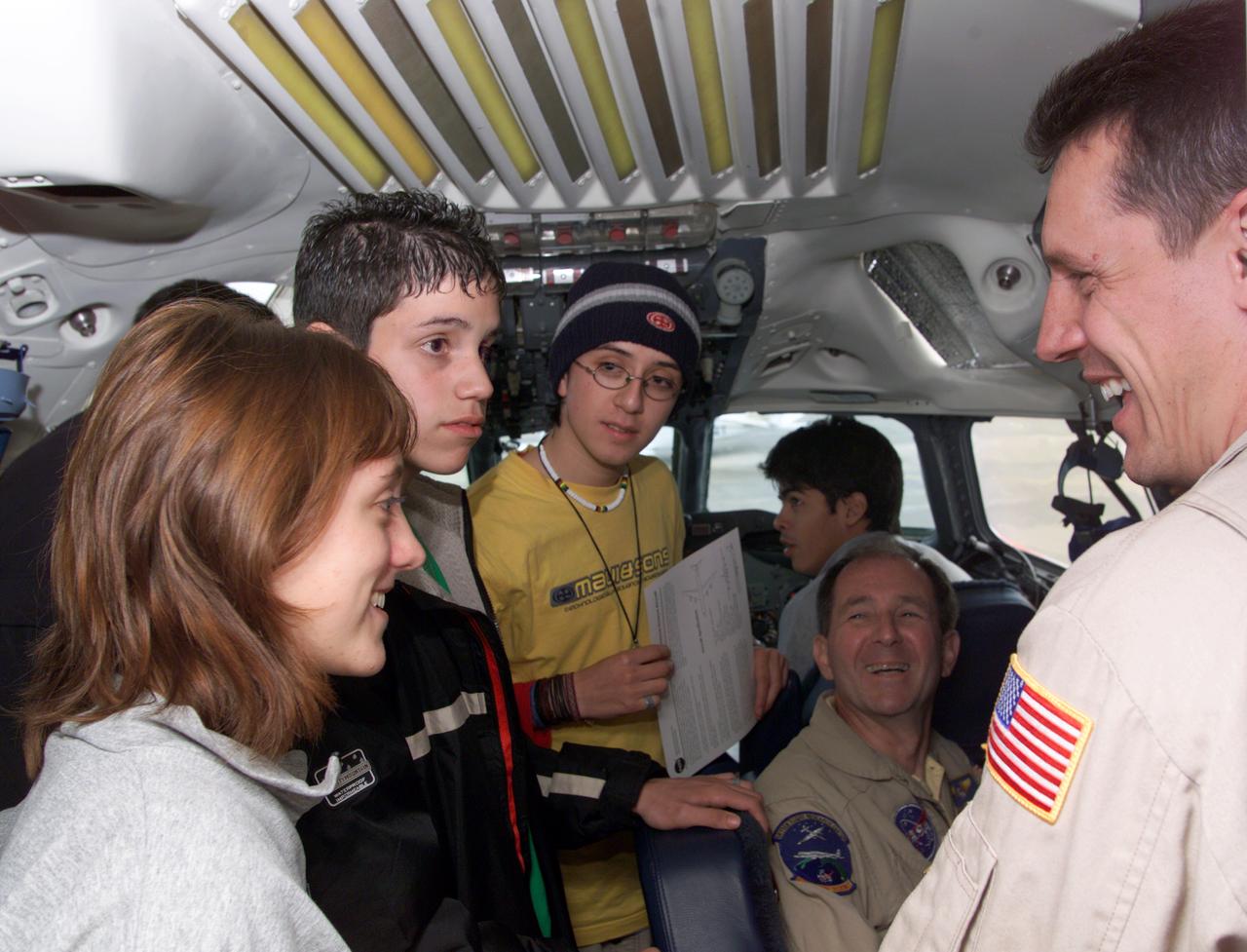
NASA DC-8 Pilots Craig Bomben and Bill Brockett explain the DC-8 cockpit to Chilean students onboard the DC-8 aircraft at Carlos Ibanez del Campo International Airport in Punta Arenas, Chile. AirSAR 2004 is a three-week expedition by an international team of scientists that is using an all-weather imaging tool, called the Airborne Synthetic Aperture Radar (AirSAR) which is located onboard NASA's DC-8 airborne laboratory.  Scientists from many parts of the world including NASA's Jet Propulsion Laboratory are combining ground research done in several areas in Central and South America with NASA's AirSAR technology to improve and expand on the quality of research they are able to conduct.  In South America and Antarctica, AirSAR will collect imagery and data to help determine the contribution of Southern Hemisphere glaciers to sea level rise due to climate change. In Patagonia, researchers found this contribution had more than doubled from 1995 to 2000, compared to the previous 25 years. AirSAR data will make it possible to determine whether that trend is decreasing, continuing or accelerating. AirSAR will also provide reliable information on ice shelf thickness to measure the contribution of the glaciers to sea level.
NASA DC-8 Pilots Craig Bomben and Bill Brockett explain the DC-8 cockpit to Chilean students onboard the DC-8 aircraft in Punta Arenas, Chile
Scientists and technicians ready an instrument rack for mounting in NASA's DC-8 flying laboratory in preparation for a complex mission to study how air pollution and natural emissions affect climate change
ED13-0225-023
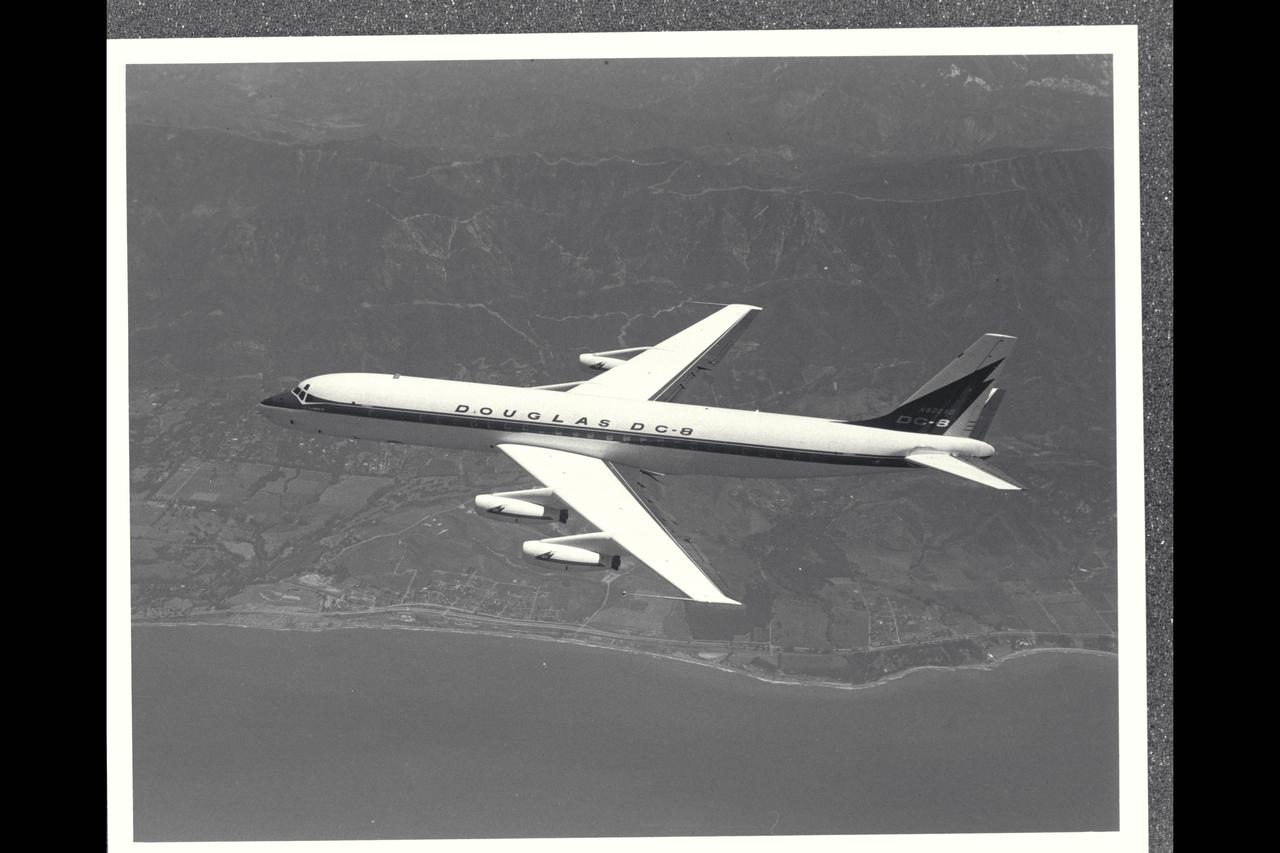
Douglas DC-8 Ariplane in Flight
ARC-1993-A83-0499-4