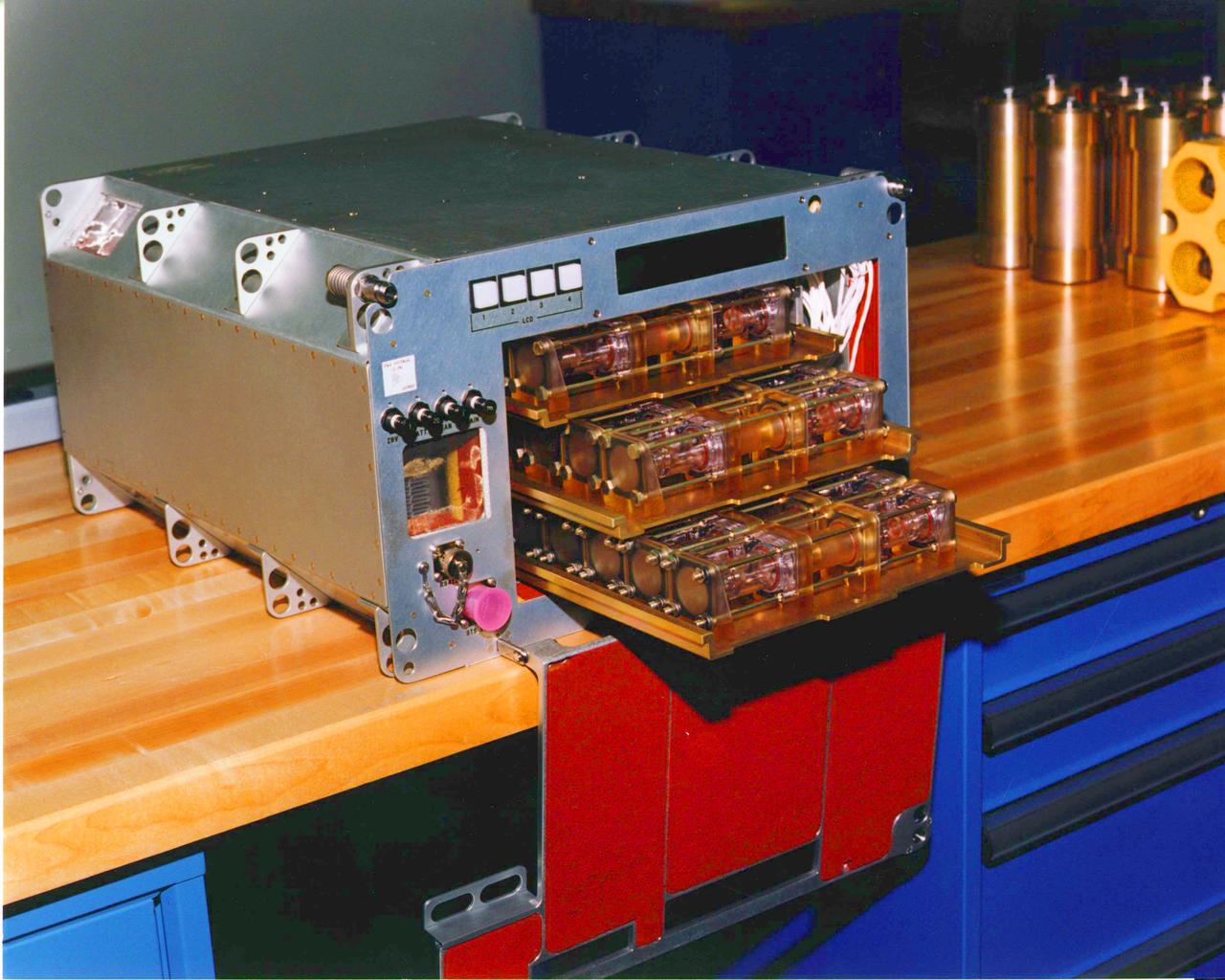
(DCAM) Diffusion Controlled Crystallization Apparatus for Microgravity Trays mounted in (STES) Single Locker Thermal Enclosure System.
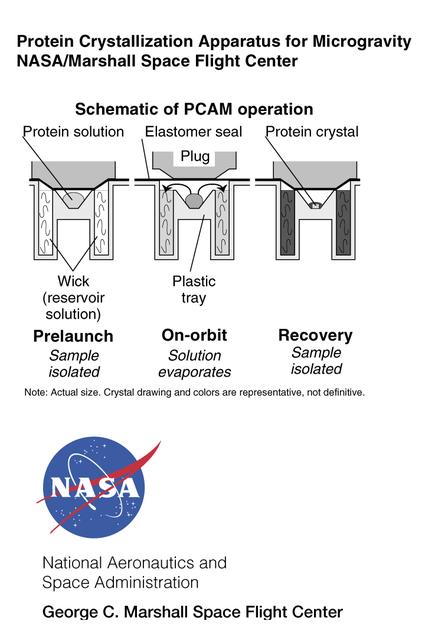
The Protein Crystallization for Microgravity (DCAM) was developed at NASA's Marshall Space Flight Center. A droplet of solution with protein molecules dissolved in it is isolated in the center of a small well. In orbit, an elastomer seal is lifted so the solution can evaporate and be absorbed by a wick material. This raises the concentration of the solution, thus prompting protein molecules in the solution to form crystals. The principal investigator is Dr. Dan Carter of New Century Pharmaceuticals in Huntsville, AL.
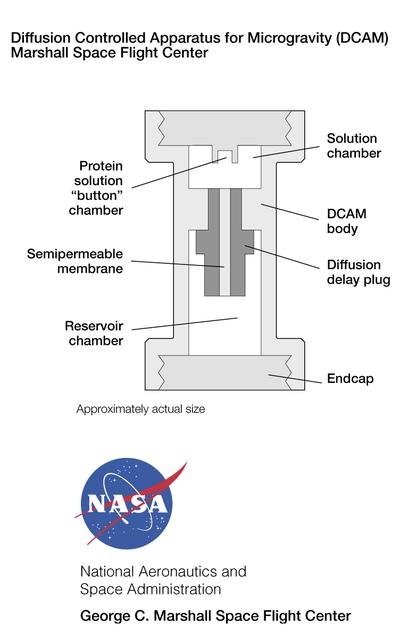
The Diffusion-Controlled Apparatus for Microgravity (DCAM) was developed at NASA's Marshall Space Flight Center. A semi-permeable plug or fuse at the center controls the rate at which a precipitant diffuses from the reservoir chamber into the solution chamber , thus prompting protein molecules in the solution to form crystals. The principal investigator is Dr. Dan Carter of New Century Pharmaceuticals in Huntsville, AL.
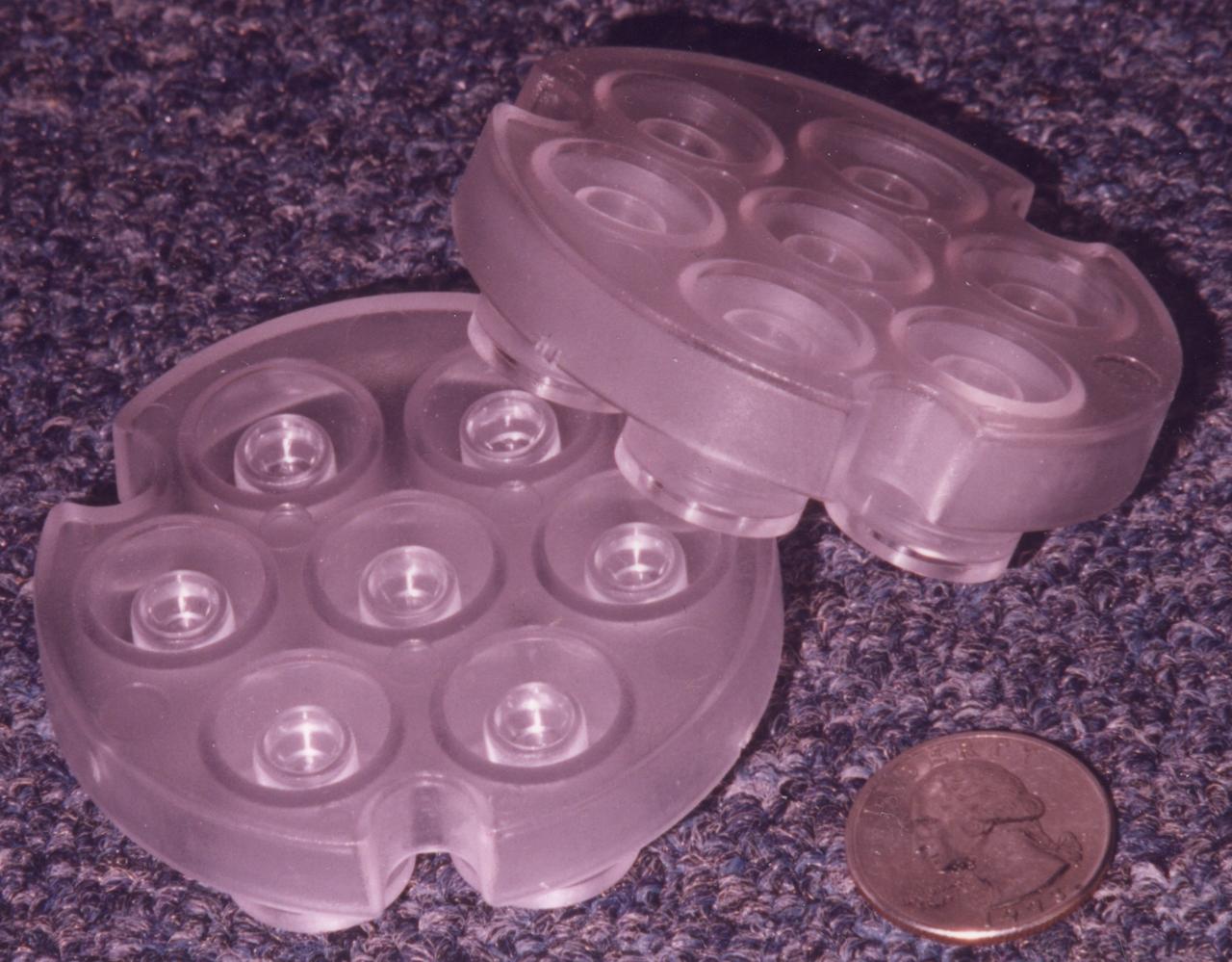
The Protein Crystallization for Microgravity (DCAM) was developed at NASA's Marshall Space Flight Center. A droplet of solution with protein molecules dissolved in it is isolated in the center of a small well. In orbit, an elastomer seal is lifted so the solution can evaporate and be absorbed by a wick material. This raises the concentration of the solution, thus prompting protein molecules in the solution to form crystals. The principal investigator is Dr. Dan Carter of New Century Pharmaceuticals in Huntsville, AL.
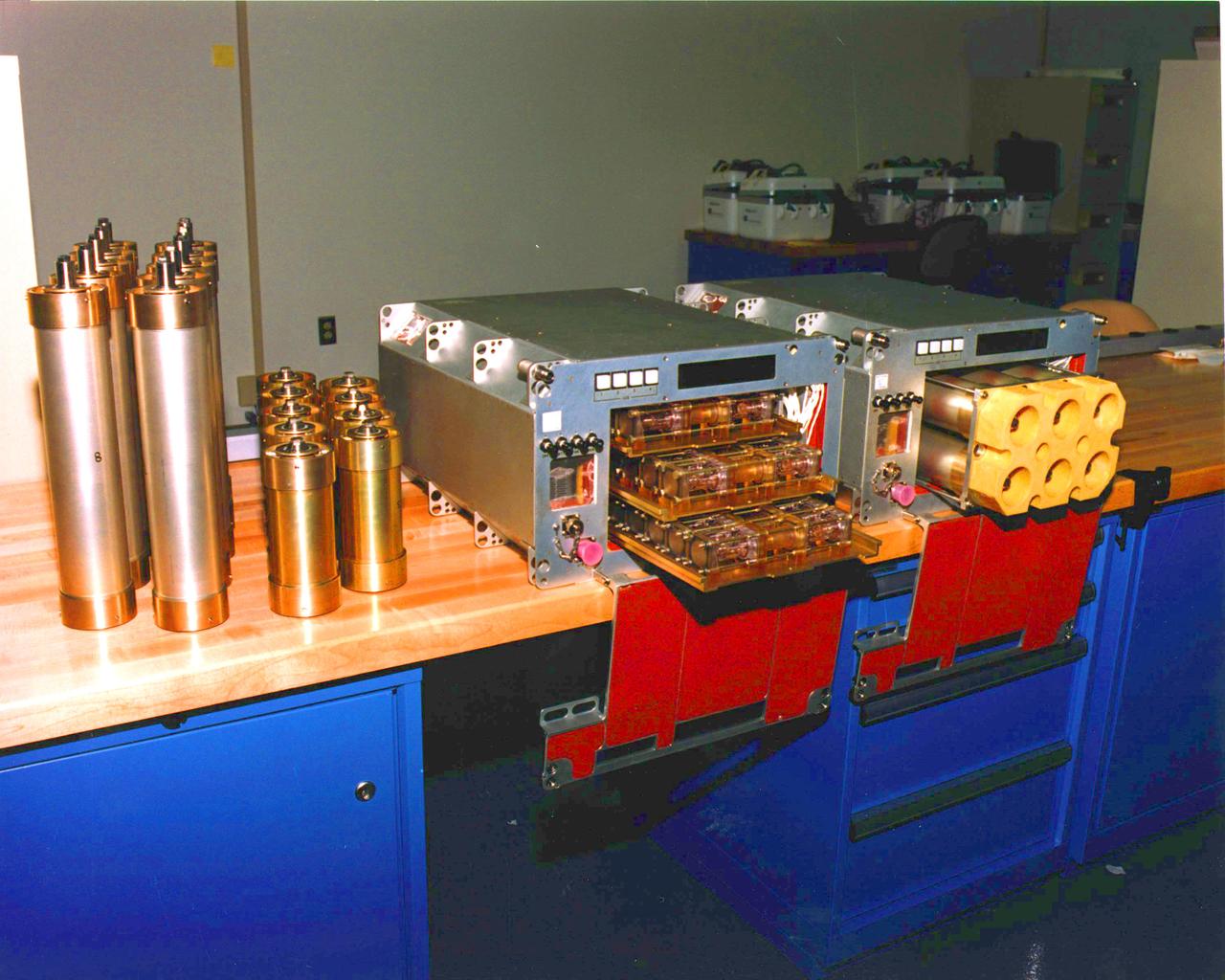
Two versions of (PCAM) Protein Crystallization Apparatus for Microgravity, (DCAM) Diffusion Controled Crystallization Apparatus is in the (STES) Single Locker Thermal Enclosure System. Principal Investigator was Dan Carter.
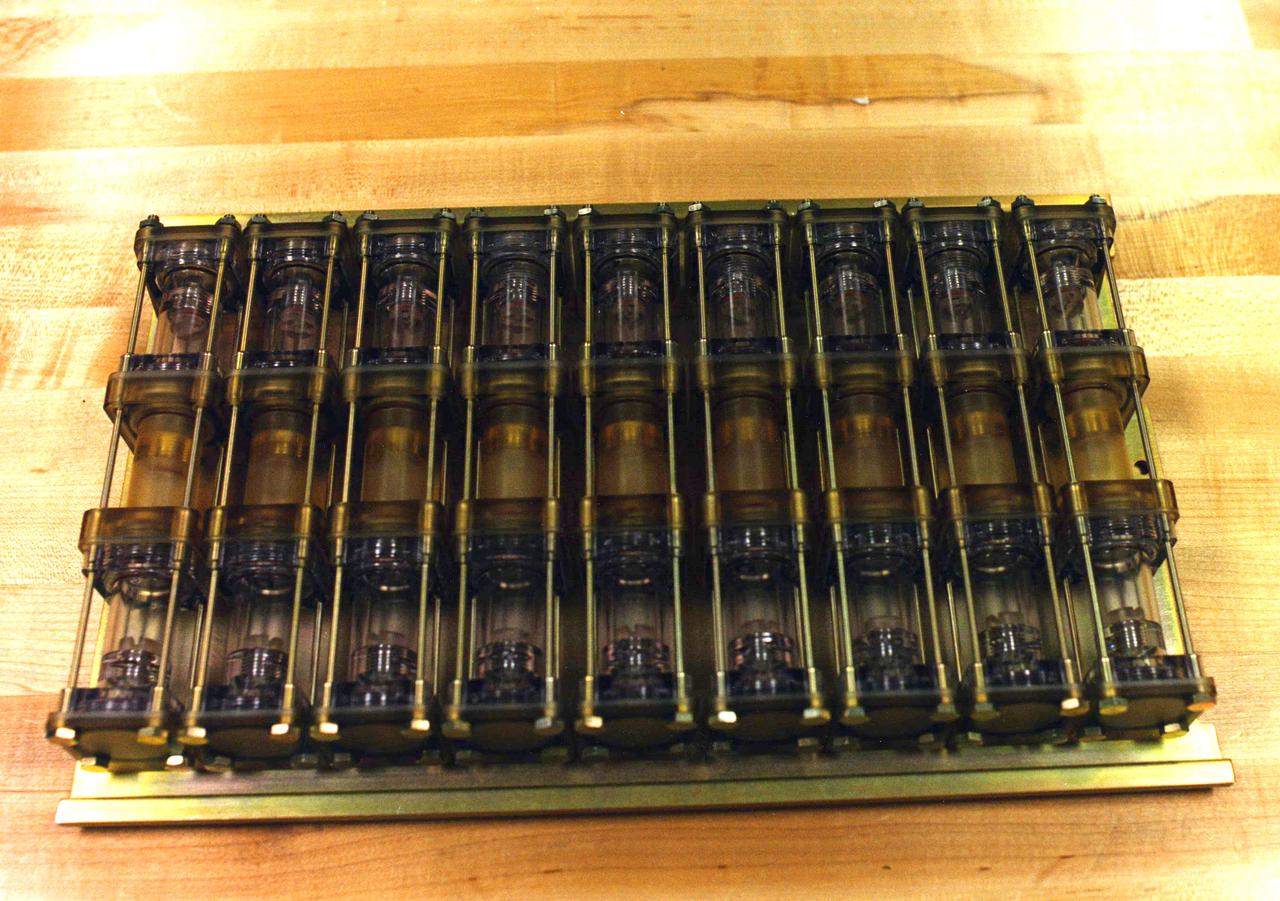
DCAM, developed by MSFC, grows crystals by the dialysis and liquid-liquid diffusion methods. In both methods, protein crystal growth is induced by changing conditions in the protein. In dialysis, a semipermeable membrane retains the protein solution in one compartment, while allowing molecules of precipitant to pass freely through the membrane from an adjacent compartment. As the precipitant concentration increases within the protein compartment, crystallization begins. In liquid-liquid diffusion, a protein solution and a precipitant solution are layered in a container and allowed to diffuse into each other. This leads to conditions which may induce crystallization of the protein. Liquid-liquid diffusion is difficult on Earth because density and temperature differences cause the solutions to mix rapidly.