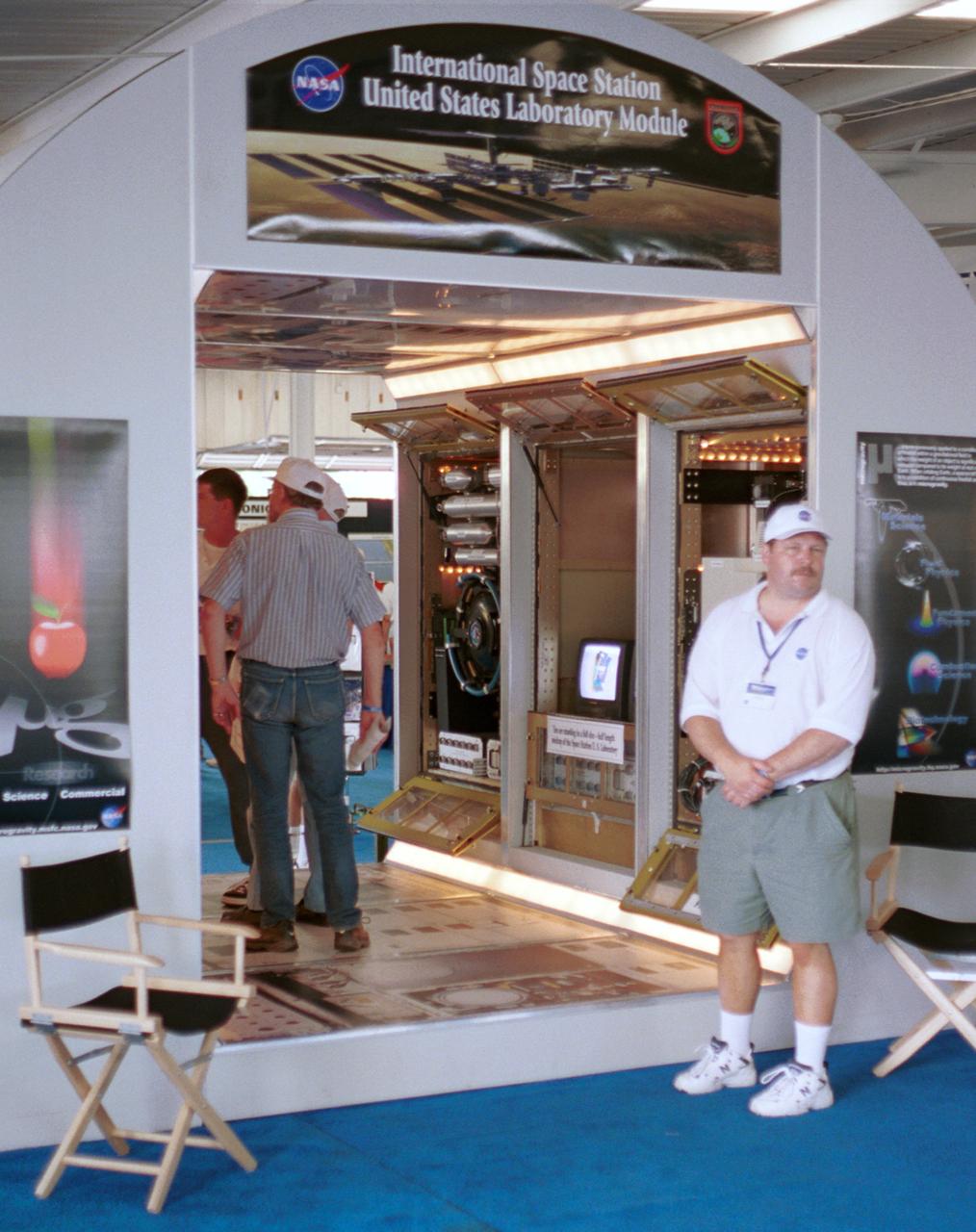
Thomas Turk, an engineer with NASA's Glenn Research Center, waits for more visitors at a mockup of part of Destiny, the U.S. laboratory module that will be attached to the International Space Station (ISS) in Year 2001. Visible behind Turk are engineering models of the three racks that will make up the Fluids and Combustion Facility (FCF) in the module. The mockup is full scale, although Destiny will be twice as long to accomodate six experiment racks along each side. The exhibit was part of the NASA outreach activity at AirVenture 2000 sponsored by the Expeprimental Aircraft Association in Oshkosh, WI.
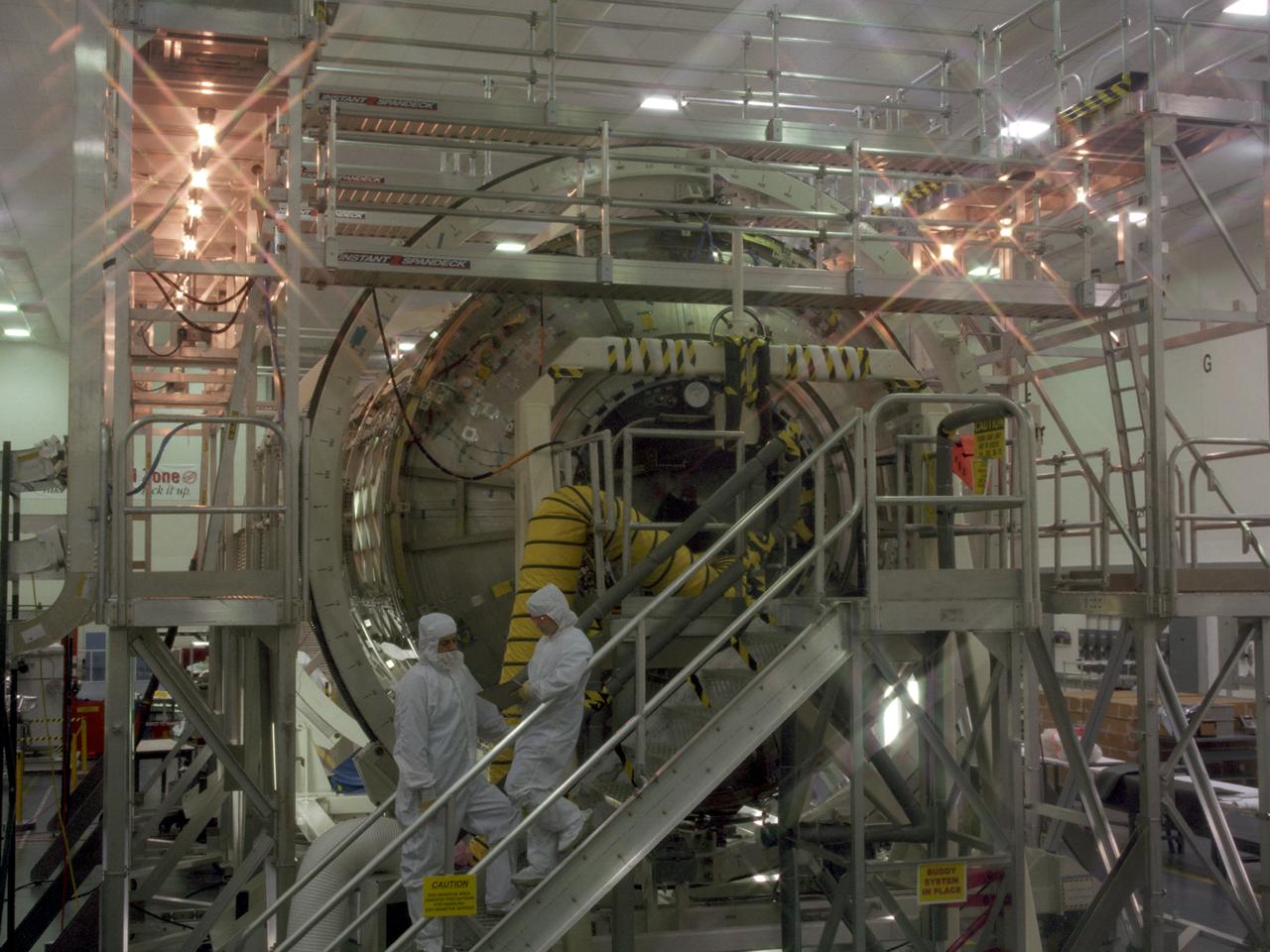
This photograph shows the U.S. Laboratory Module (also called Destiny) for the International Space Station (ISS), under construction in the Space Station manufacturing facility at the Marshall Space Flight Center. The U.S. Laboratory module is the centerpiece of the ISS, where science experiments will be performed in the near-zero gravity of space. The Destiny Module was launched aboard the Space Shuttle orbiter Atlantis (STS-67 mission) on February 7, 2001. The aluminum module is 8.5 meters (28 feet) long and 4.3 meters (14 feet) in diameter. The laboratory consists of three cylindrical sections and two end cones with hatches that will be mated to other station components. A 50.9-centimeter- (20-inch-) diameter window is located on one side of the center module segment. This pressurized module is designed to accommodate pressurized payloads. It has a capacity of 24 rack locations, and payload racks will occupy 13 locations especially designed to support experiments. The ISS is a multidisciplinary laboratory, technology test bed, and observatory that will provide unprecedented undertakings in scientific, technological, and international experimentation.
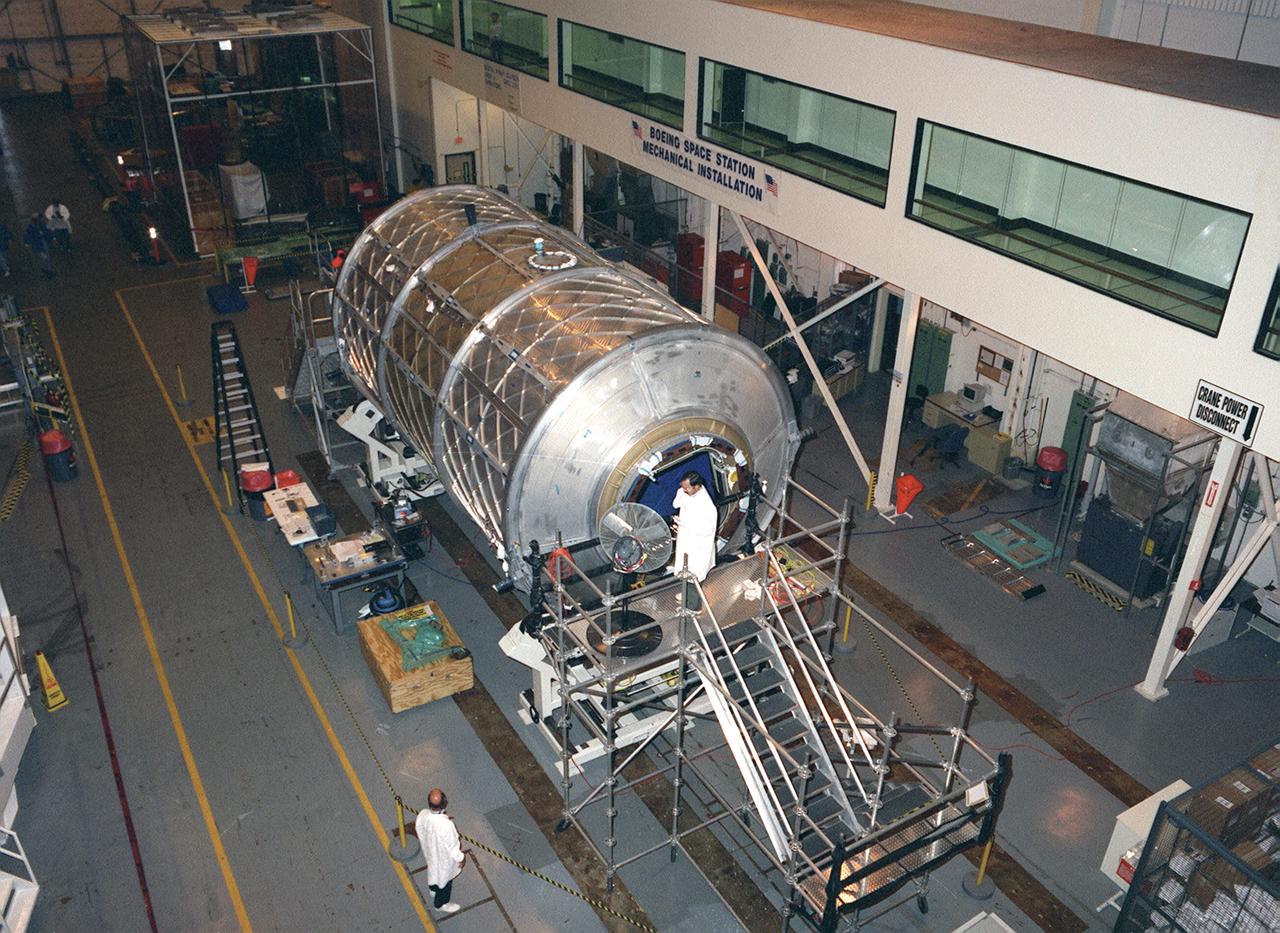
In this photograph, the U.S. Laboratory Module (also called Destiny) for the International Space Station (ISS) is shown under construction in the West High Bay of the Space Station manufacturing facility (building 4708) at the Marshall Space Flight Center. The U.S. Laboratory module is the centerpiece of the ISS, where science experiments will be performed in the near-zero gravity of space. The Destiny Module was launched aboard the Space Shuttle orbiter Atlantis (STS-98 mission) on February 7, 2001. The aluminum module is 8.5 meters (28 feet) long and 4.3 meters (14 feet) in diameter. The laboratory consists of three cylindrical sections and two endcones with hatches that will be mated to other station components. A 50.9-centimeter- (20-inch-) diameter window is located on one side of the center module segment. This pressurized module is designed to accommodate pressurized payloads. It has a capacity of 24 rack locations, and payload racks will occupy 13 locations especially designed to support experiments. The ISS is a multidisciplinary laboratory, technology test bed, and observatory that will provide unprecedented undertakings in scientific, technological, and international experimentation.
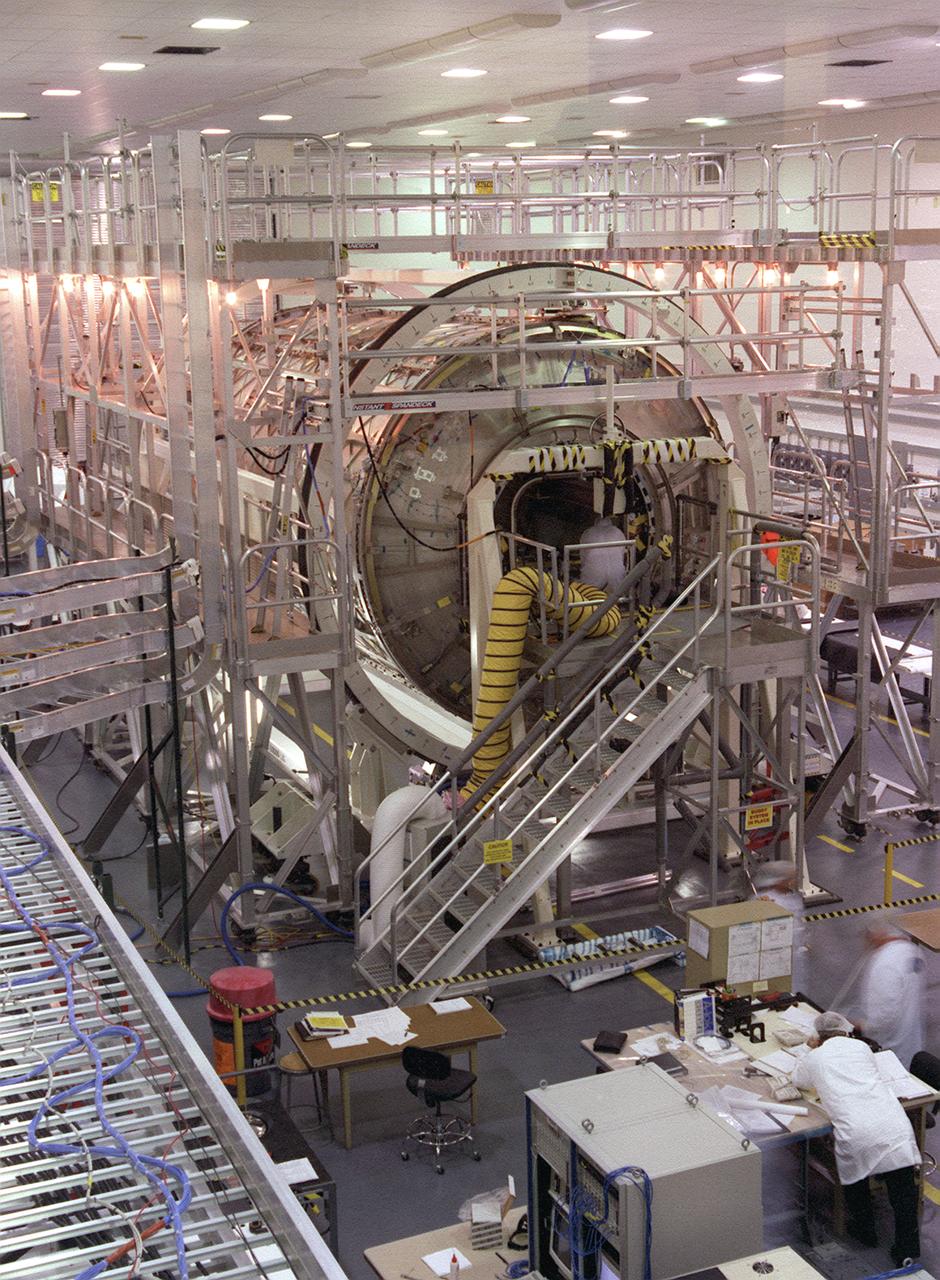
In this photograph, the U.S. Laboratory Module (also called Destiny) for the International Space Station (ISS) is shown under construction in the West High Bay of the Space Station manufacturing facility (building 4708) at the Marshall Space Flight Center. The U.S. Laboratory module is the centerpiece of the ISS, where science experiments will be performed in the near-zero gravity of space. The Destiny Module was launched aboard the Space Shuttle orbiter Atlantis (STS-98 mission) on February 7, 2001. The aluminum module is 8.5 meters (28 feet) long and 4.3 meters (14 feet) in diameter. The laboratory consists of three cylindrical sections and two endcones with hatches that will be mated to other station components. A 50.9-centimeter- (20-inch-) diameter window is located on one side of the center module segment. This pressurized module is designed to accommodate pressurized payloads. It has a capacity of 24 rack locations, and payload racks will occupy 13 locations especially designed to support experiments. The ISS is a multidisciplinary laboratory, technology test bed, and observatory that will provide unprecedented undertakings in scientific, technological, and international experimentation.
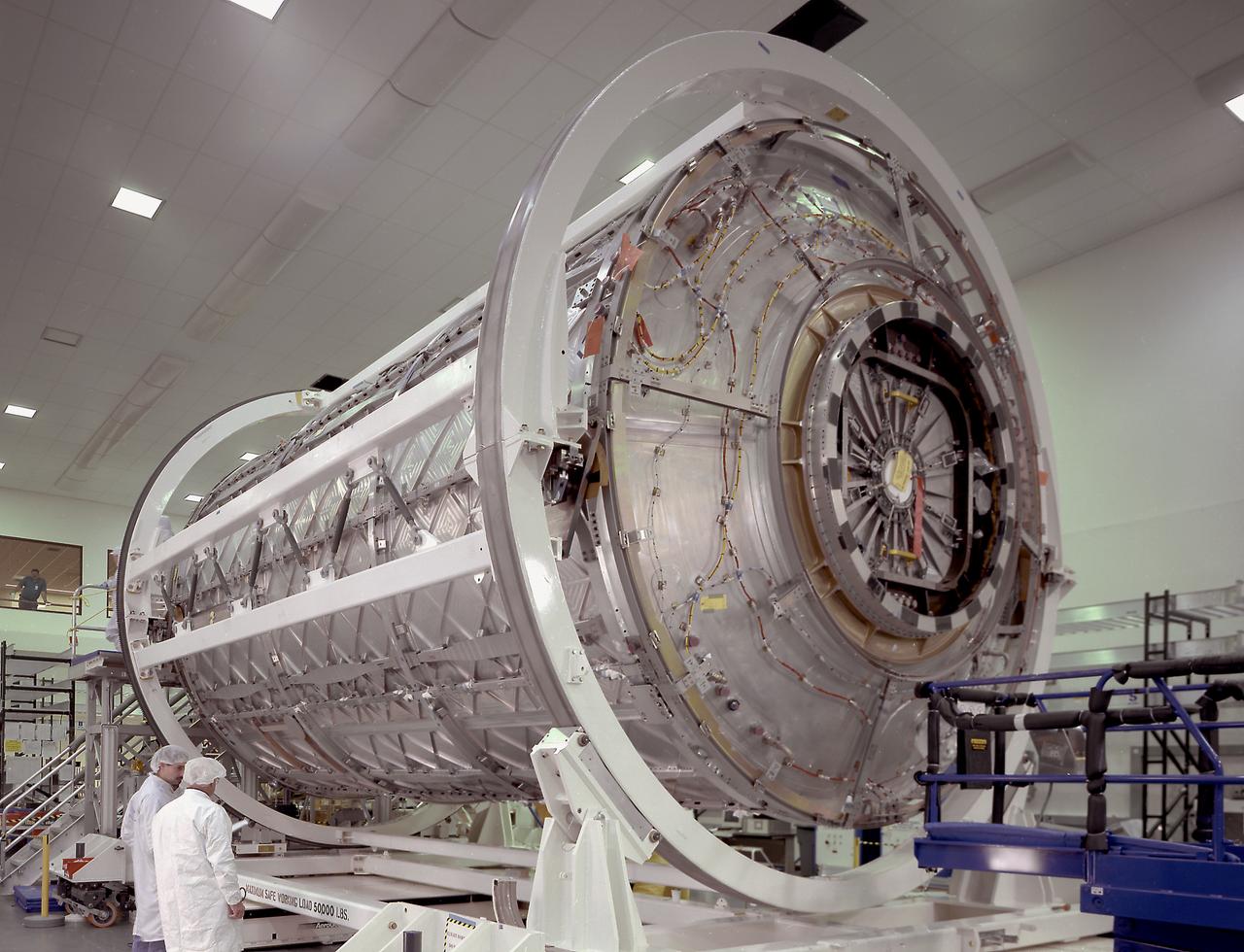
This photograph shows the U.S. Laboratory Module (also called Destiny) for the International Space Station (ISS), in the Space Station manufacturing facility at the Marshall Space Flight Center, being readied for shipment to the Kennedy Space Center. The U.S. Laboratory module is the centerpiece of the ISS, where science experiments will be performed in the near-zero gravity of space. The Destiny Module was launched aboard the Space Shuttle orbiter Atlantis (STS-67 mission) on February 7, 2001. The aluminum module is 8.5 meters (28 feet) long and 4.3 meters (14 feet) in diameter. The laboratory consists of three cylindrical sections and two endcones with hatches that will be mated to other station components. A 50.9-centimeter- (20-inch-) diameter window is located on one side of the center module segment. This pressurized module is designed to accommodate pressurized payloads. It has a capacity of 24 rack locations, and payload racks will occupy 13 locations especially designed to support experiments. The ISS is a multidisciplinary laboratory, technology test bed, and observatory that will provide unprecedented undertakings in scientific, technological, and international experimentation.
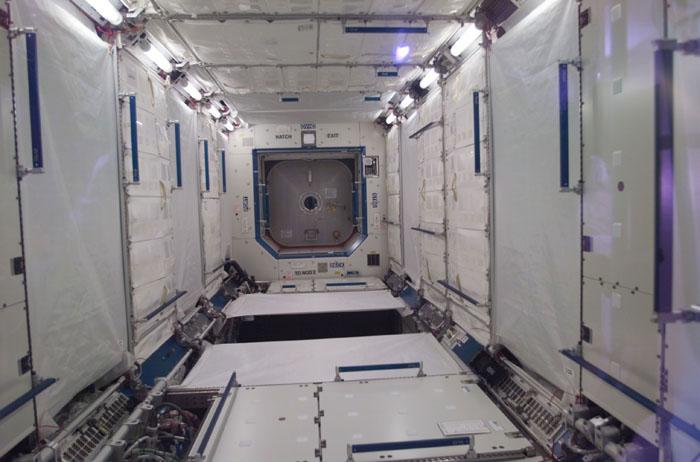
STS98-E-5113 (11 February 2001) --- This wide shot, photographed with a digital still camera, shows the interior of the newly attached Destiny laboratory. The crews of Atlantis and the International Space Station opened the laboratory on Feb. 11 and spent the first full day of what are planned to be years of work ahead inside the orbiting science and command center. Station commander William M. (Bill) Shepherd opened the Destiny hatch, and he and shuttle commander Kenneth D. Cockrell ventured inside at 8:38 a.m. (CST), Feb. 11. As depicted in subsequent digital images in this series, members of both crews went to work quickly inside the new module, activating air systems, fire extinguishers, alarm systems, computers and internal communications. The crew also continued equipment transfers from the shuttle to the station.
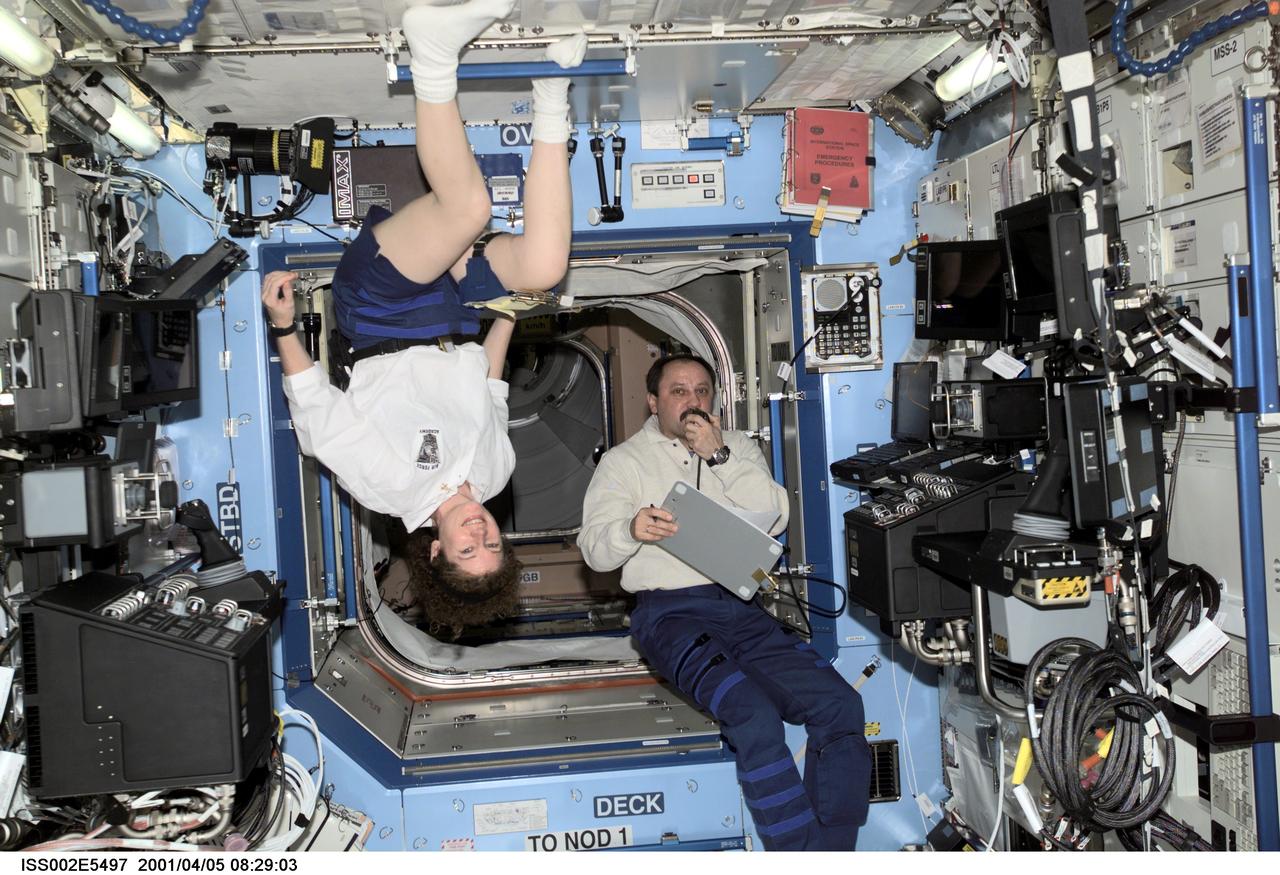
ISS002-E-5497 (05 April 2001) --- Astronaut Susan J. Helms (left), Expedition Two flight engineer, pauses from her work to pose for a photograph while Expedition Two mission commander, cosmonaut Yury V. Usachev, speaks into a microphone aboard the U.S. Laboratory / Destiny module of the International Space Station (ISS). This image was recorded with a digital still camera.
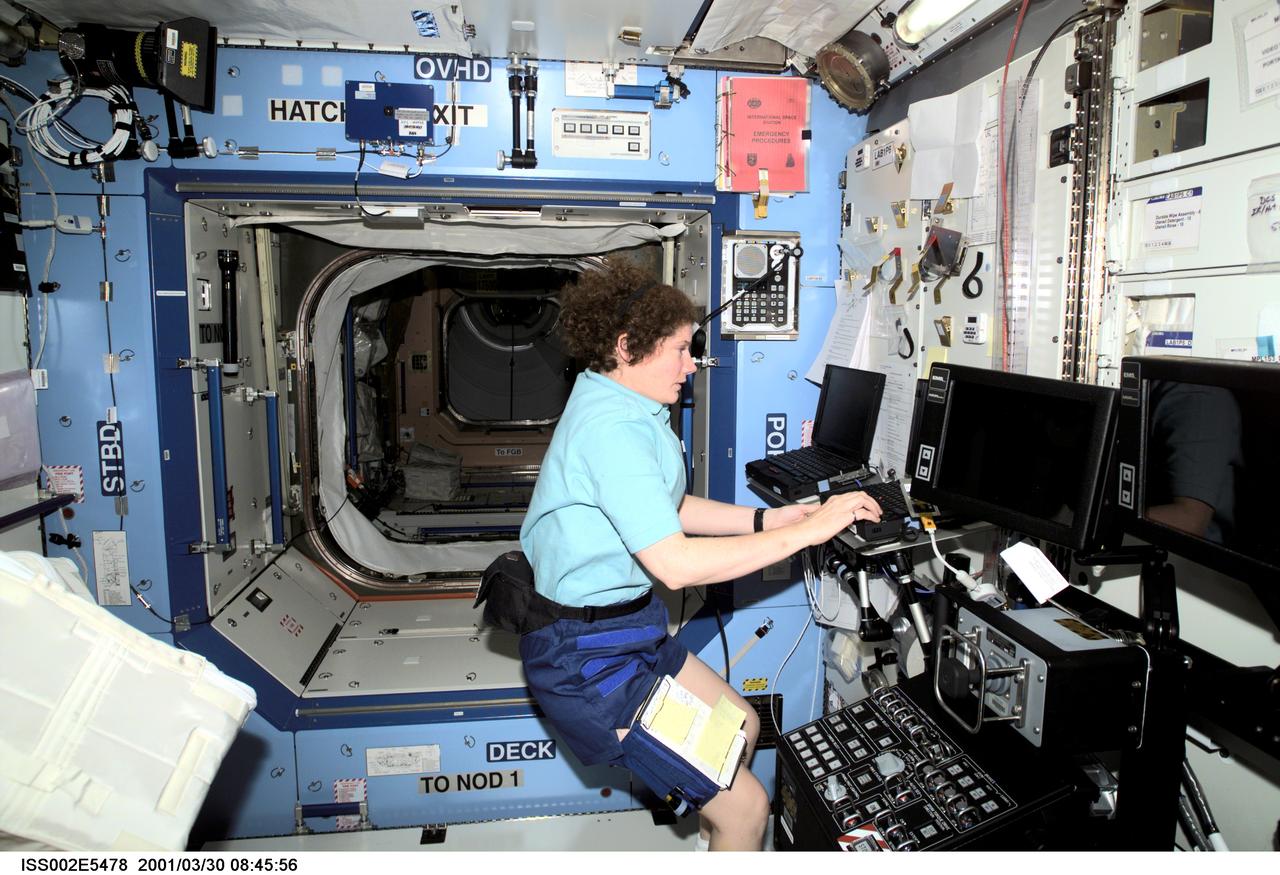
ISS002-E-5478 (30 March 2001) --- Astronaut Susan J. Helms, Expedition Two flight engineer, works at a laptop computer in the U.S. Laboratory / Destiny module of the International Space Station (ISS). The Space Station Remote Manipulator System (SSRMS) control panel is visible to Helms' right. This image was recorded with a digital still camera.
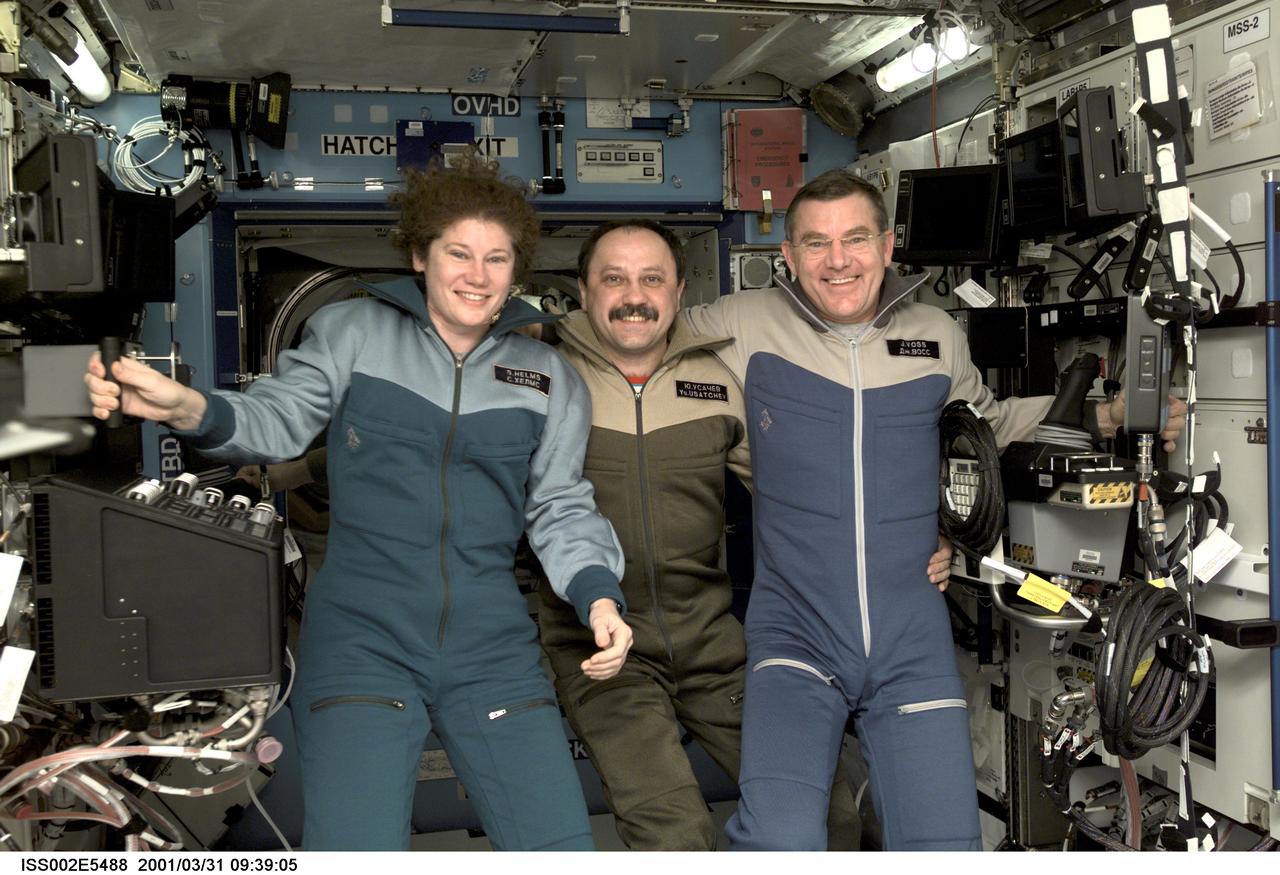
ISS002-E-5488 (31 March 2001) --- The Expedition Two crewmembers -- astronaut Susan J. Helms (left), cosmonaut Yury V. Usachev and astronaut James S. Voss -- pose for a photograph in the U.S. Laboratory / Destiny module of the International Space Station (ISS). This image was recorded with a digital still camera.
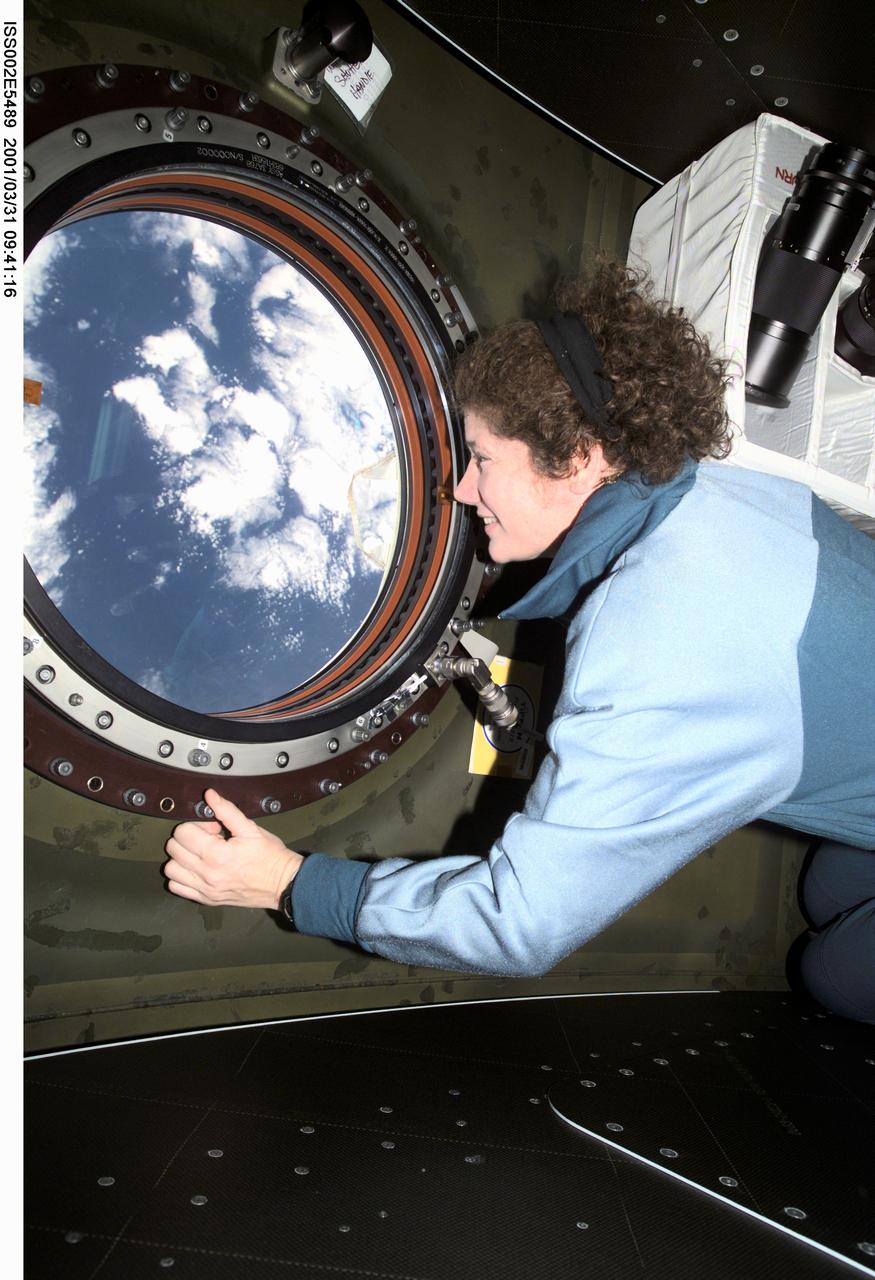
ISS002-E-5489 (31 March 2001) --- Astronaut Susan J. Helms, Expedition Two flight engineer, views the topography of a point on Earth from the nadir window in the U.S. Laboratory / Destiny module of the International Space Station (ISS). The image was recorded with a digital still camera.
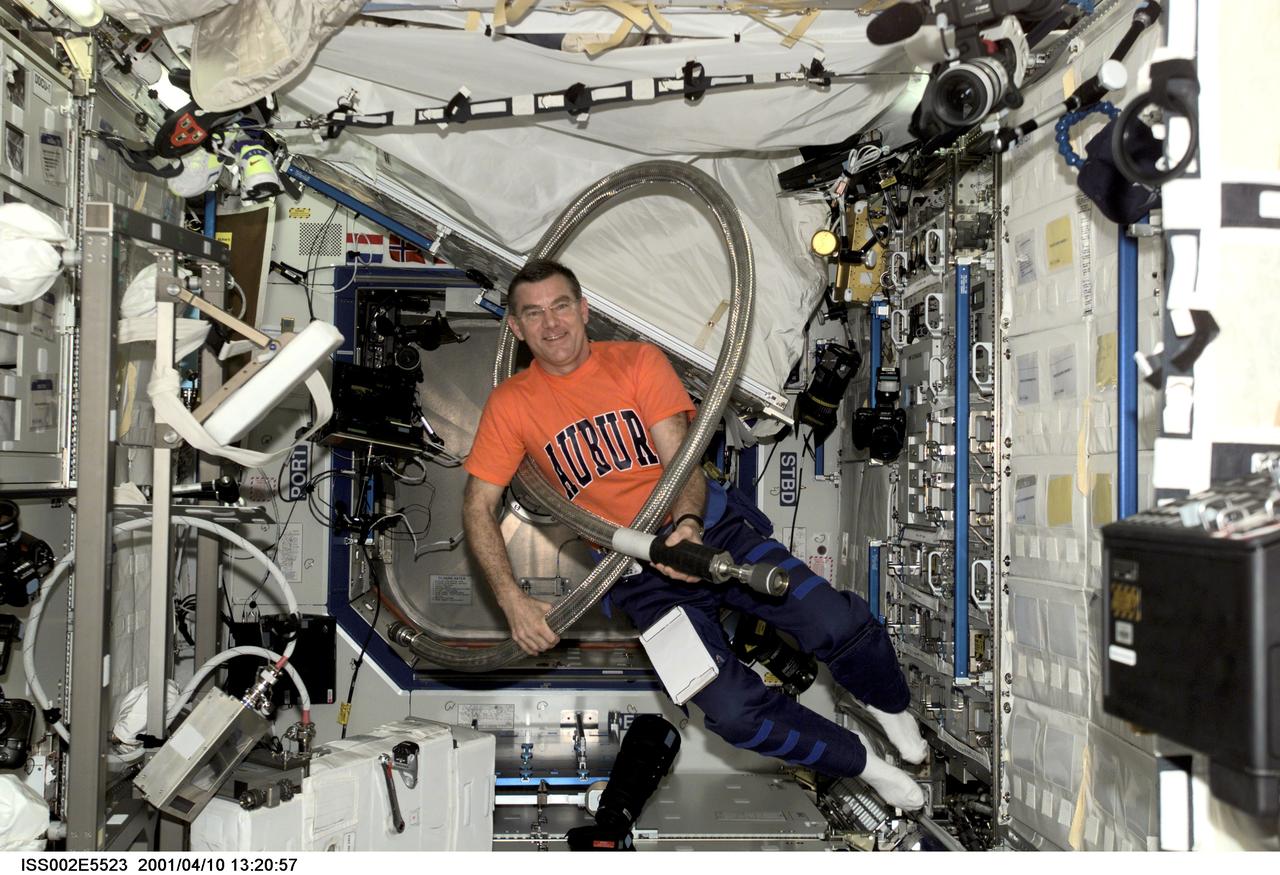
ISS002-E-5523 (10 April 2001) --- Astronaut James S. Voss, Expedition Two flight engineer, jokingly wraps a large hose around his body prior to installing it in the U.S. Laboratory / Destiny module of the International Space Station (ISS). This image was recorded with a digital still camera.
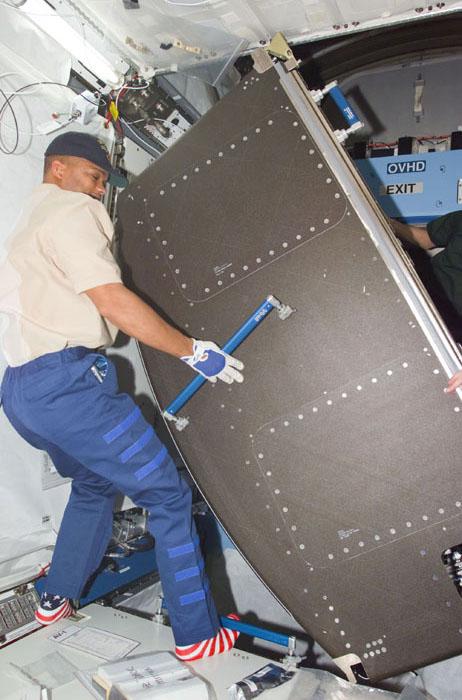
STS98-E-5157 (11 February 2001) --- Astronaut Robert L. Curbeam, STS-98 mission specialist, installs some of the fixtures in the newly attached Destiny laboratory onboard the International Space Station (ISS). After the Destiny hatch was opened early in the day, members of both crews went to work quickly inside the new module, activating air systems, fire extinguishers, alarm systems, computers and internal communications. The crews also took some photos and continued equipment transfers from the shuttle to the station. The scene was taken with a digital still camera.
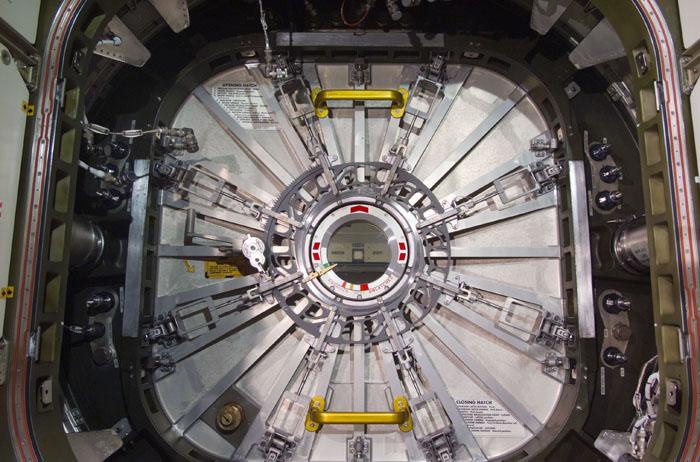
STS98-E-5114 (11 February 2001) --- This medium close-up shot, photographed with a digital still camera, shows Unity's closed hatch to the newly delivered Destiny laboratory. The crews of Atlantis and the International Space Station opened the laboratory, shortly after this photo was made on Feb. 11, and the astronauts and cosmonauts spent the first full day of what are planned to be years of work ahead inside the orbiting science and command center. Station commander William M. (Bill) Shepherd opened the Destiny hatch, and he and shuttle commander Kenneth D. Cockrell ventured inside at 8:38 a.m. (CST), Feb. 11. As depicted in subsequent digital images in this series, members of both crews went to work quickly inside the new module, activating air systems, fire extinguishers, alarm systems, computers and internal communications. The crew also continued equipment transfers from the shuttle to the station.
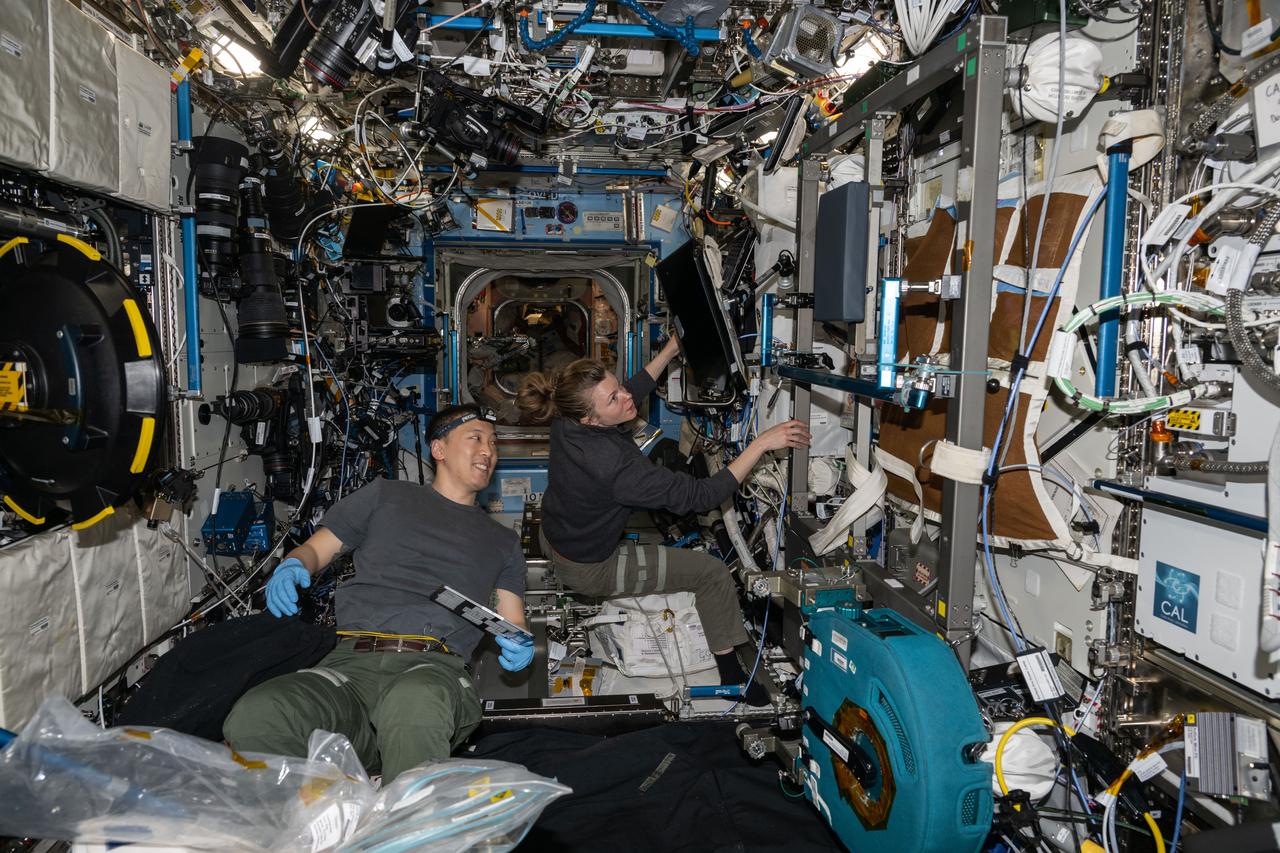
iss073e0546282 (Aug. 26, 2025) --- Expedition 73 Flight Engineers Jonny Kim and Zena Cardman, both NASA astronauts, work together inside the International Space Station's Destiny laboratory module on science maintenance activities.
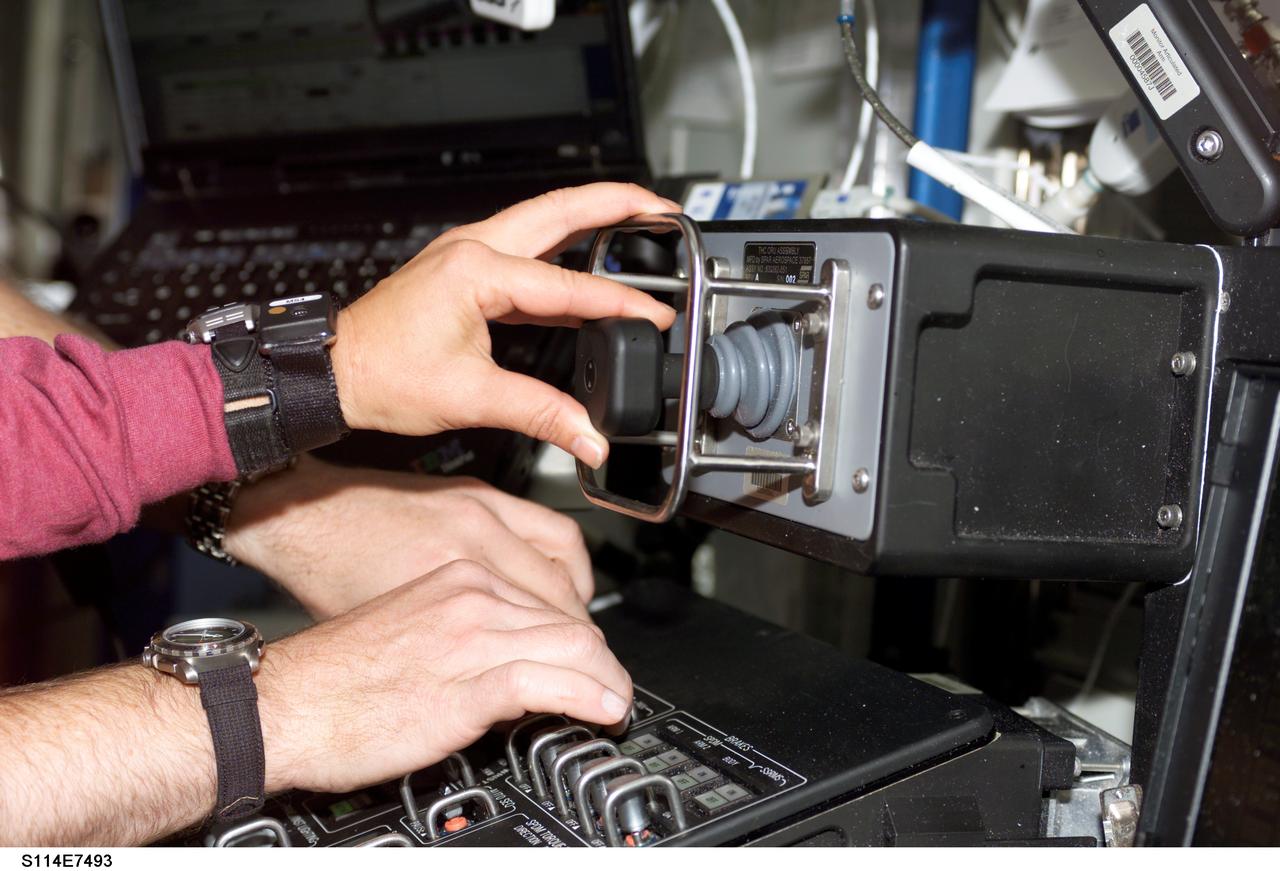
S114-E-7493 (5 August 2005) --- This image features a close-up view the hands of astronauts Wendy B. Lawrence, STS-114 mission specialist, and James M. Kelly, pilot, at the Mobile Service System (MSS) and Canadarm2 controls in the Destiny laboratory of the International Space Station while Space Shuttle Discovery was docked to the Station. The two were re-stowing the Italian-built Raffaello Multi-Purpose Logistics Module (MPLM) in the cargo bay.
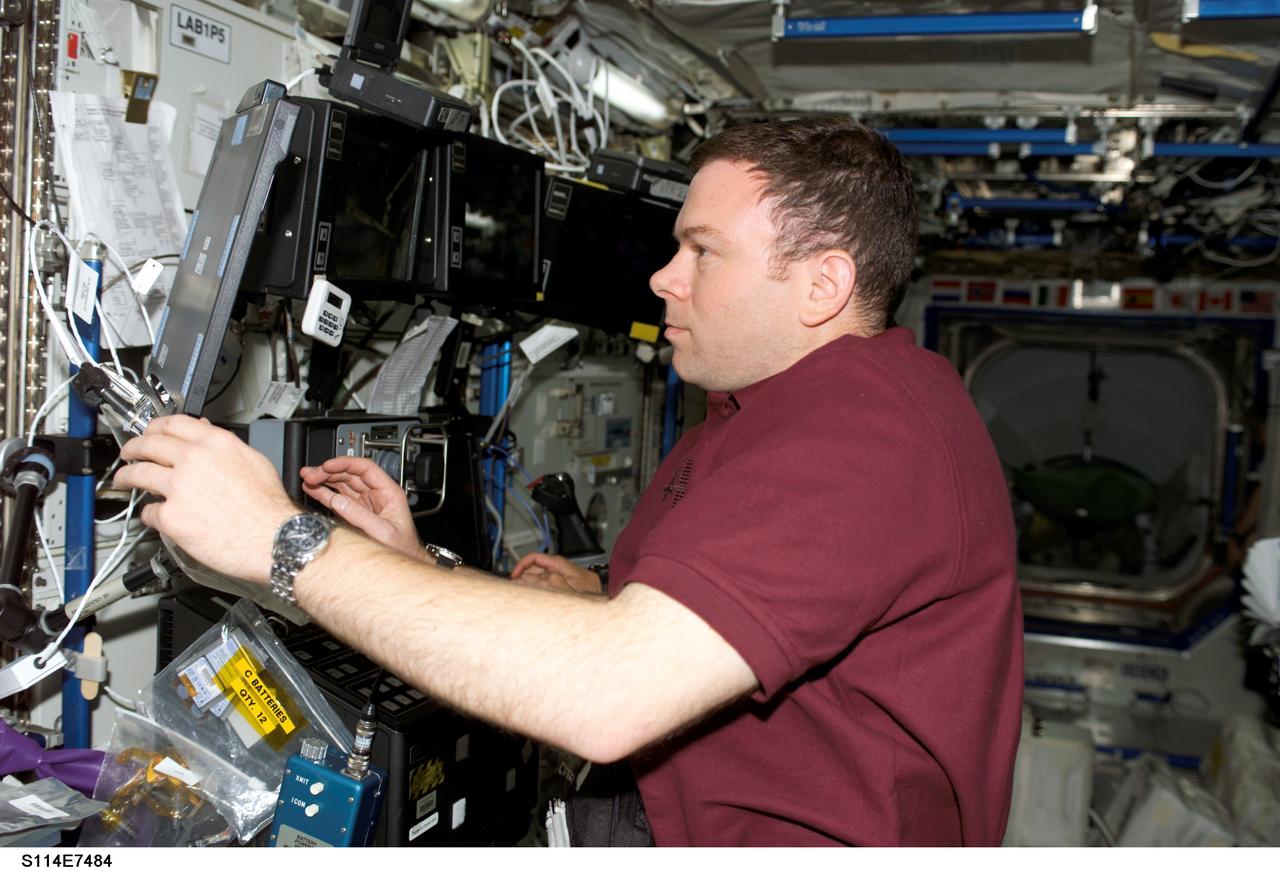
S114-E-7484 (5 August 2005) --- Astronaut James M. Kelly, STS-114 pilot, works in the Destiny laboratory of the International Space Station while Space Shuttle Discovery was docked to the Station. Astronauts Kelly and Wendy B. Lawrence (out of frame), mission specialist, joined forces to re-stow the Italian-built Raffaello Multi-Purpose Logistics Module (MPLM) in the cargo bay.
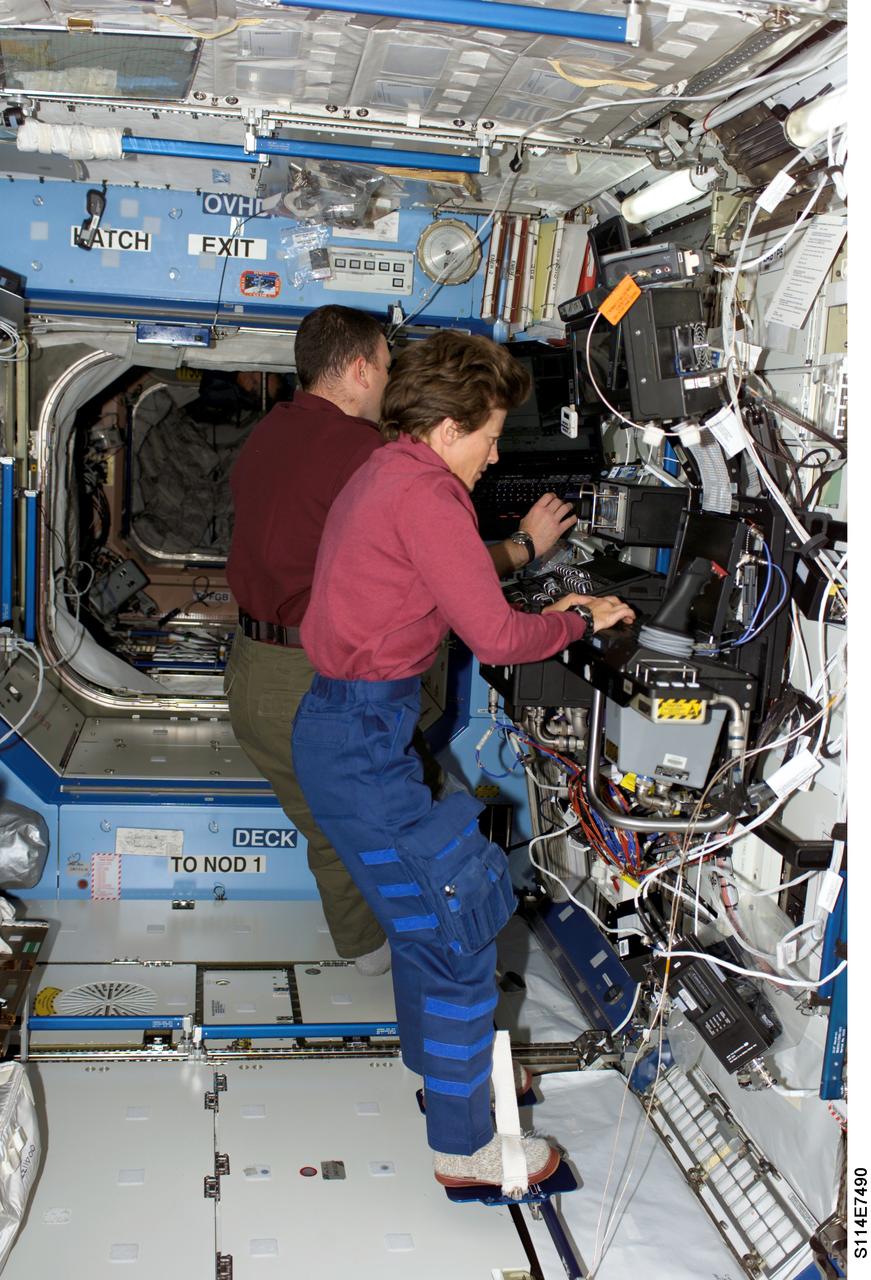
S114-E-7490 (5 August 2005) --- Astronauts Wendy B. Lawrence (foreground), STS-114 mission specialist, and James M. Kelly, pilot, work with the Mobile Service System (MSS) and Canadarm2 controls in the Destiny laboratory of the International Space Station while Space Shuttle Discovery was docked to the Station. The two were re-stowing the Italian-built Raffaello Multi-Purpose Logistics Module (MPLM) in the cargo bay.
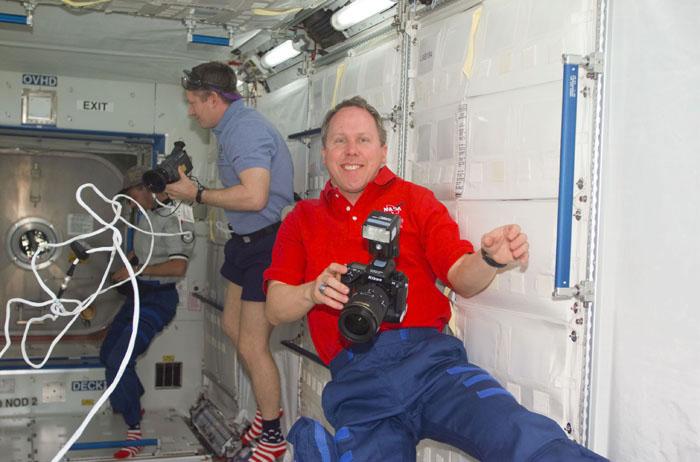
STS98-E-5137 (11 February 2001) --- Astronauts Thomas D. Jones (foreground), STS-98 mission specialist, and William M. Shepherd, Expedition One mission commander, participate in an impromptu photo shoot onboard the newly opened Destiny laboratory on the International Space Station (ISS). After Shepherd opened the Destiny hatch, he and astronaut Kenneth D. Cockrell (out of frame) ventured inside at 8:38 a.m. (CST), February 11, 2001. As depicted in subsequent digital images in this series, members of both crews went to work quickly inside the new module, activating air systems, fire extinguishers, alarm systems, computers and internal communications. The crew also took some photos and continued equipment transfers from the shuttle to the station.
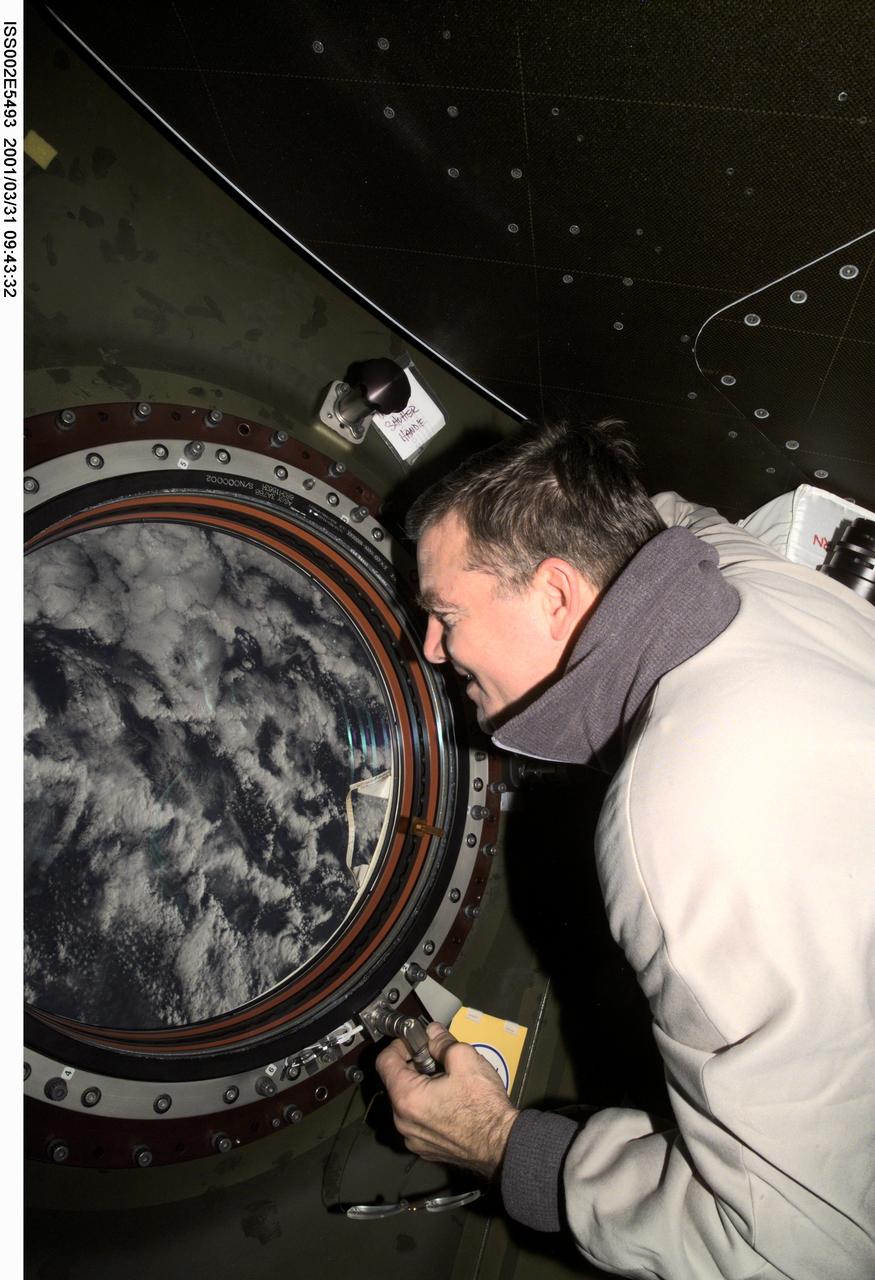
ISS002-E-5493 (31 March 2001) --- Astronaut James S. Voss, Expedition Two flight engineer, studies the Earth from the very advantageous perspective of the nadir window in the U.S. Laboratory / Destiny module of the International Space Station (ISS). The image was recorded with a digital still camera.
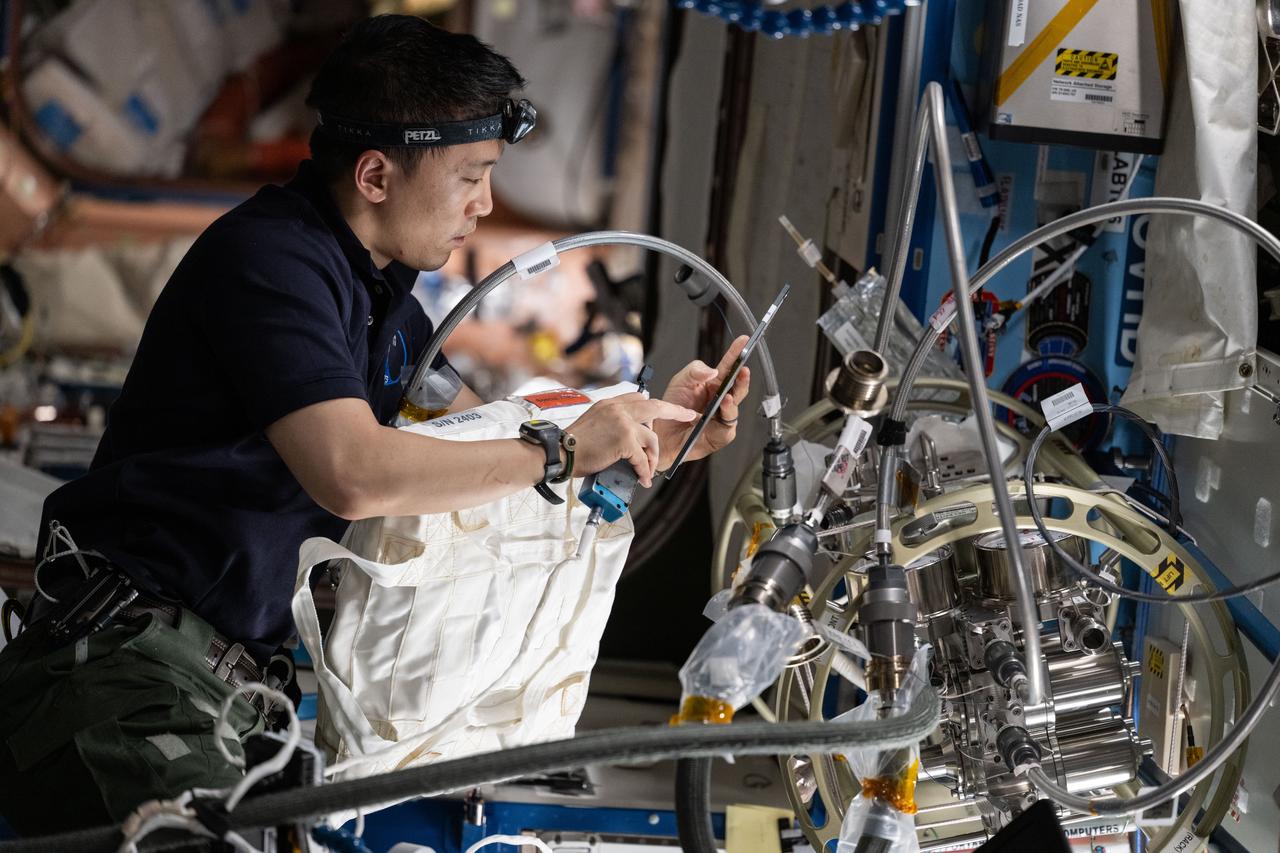
iss073e0416805 (July 25, 2025) --- NASA astronaut and Expedition 73 Flight Engineer Jonny Kim performs maintenance on the Destiny laboratory module's fluid servicer system used to maintain and repair rack water lines and systems throughout the International Space Station.
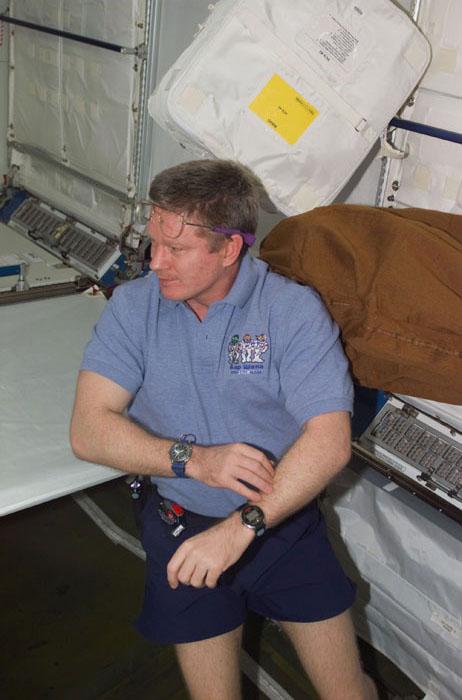
STS98-E-5160 (11 February 2001) --- Astronaut William M. (Bill) Shepherd, Expedition One commander, surveys the interior of the newly attached Destiny laboratory onboard the International Space Station (ISS). After the Destiny hatch was opened early in the day, members of both crews went to work quickly inside the new module, activating air systems, fire extinguishers, alarm systems, computers and internal communications. The crews also took some photos and continued equipment transfers from the shuttle to the station. The scene was taken with a digital still camera.
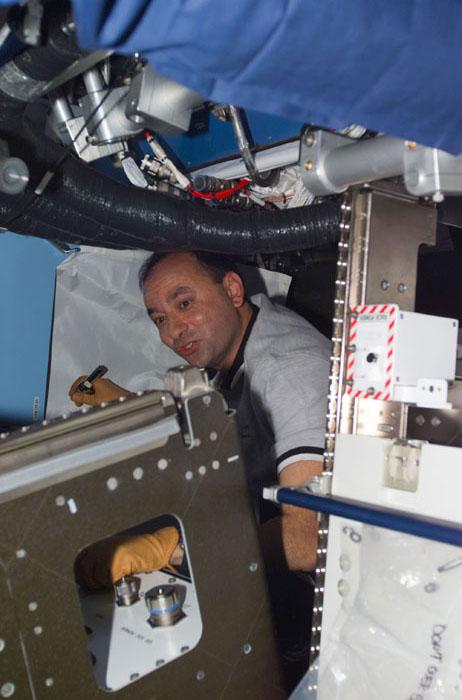
STS98-E-5159 (11 February 2001) --- Astronaut Mark L. Polansky, STS-98 pilot, works inside the newly attached Destiny laboratory onboard the International Space Station (ISS). After the Destiny hatch was opened early in the day, members of both the shuttle and station crews went to work quickly inside the new module, activating air systems, fire extinguishers, alarm systems, computers and internal communications. The crews also took some photos and continued equipment transfers from the shuttle to the station. The scene was taken with a digital still camera.
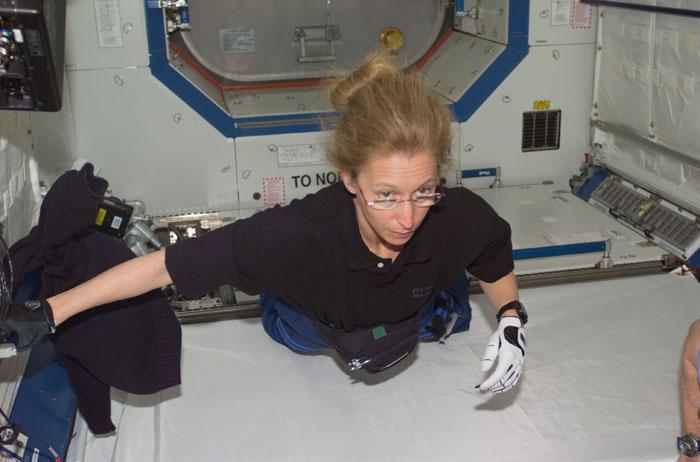
STS98-E-5161 (11 February 2001) --- Astronaut Marsha S. Ivins, STS-98 mission specialist, floats into the newly attached Destiny laboratory onboard the International Space Station (ISS). After the Destiny hatch was opened early in the day, members of both crews went to work quickly inside the new module, activating air systems, fire extinguishers, alarm systems, computers and internal communications. The crews also took some photos and continued equipment transfers from the shuttle to the station. The scene was taken with a digital still camera.
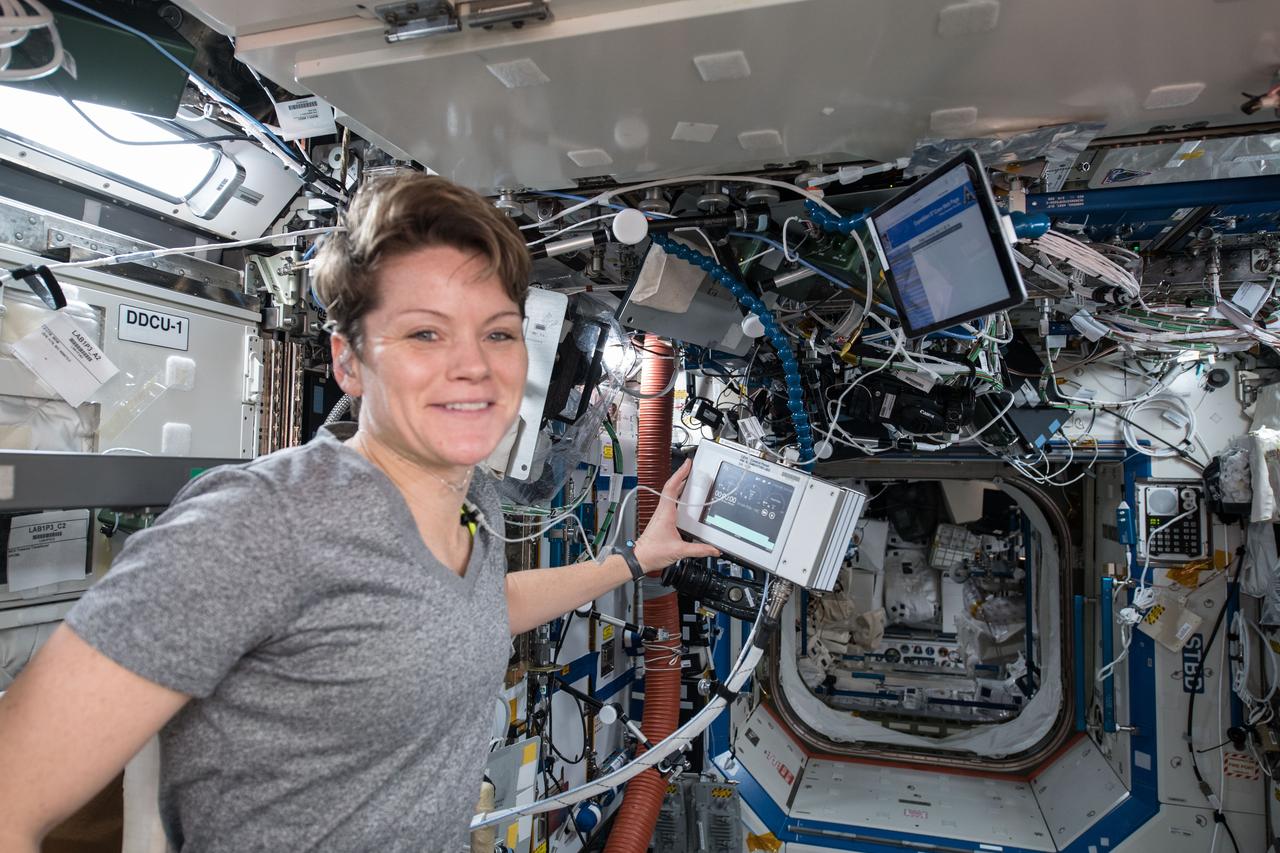
iss057e132459 (Dec. 7, 2018) --- NASA astronaut Anne McClain is pictured exercising aboard the International Space Station inside the U.S. Destiny laboratory module.
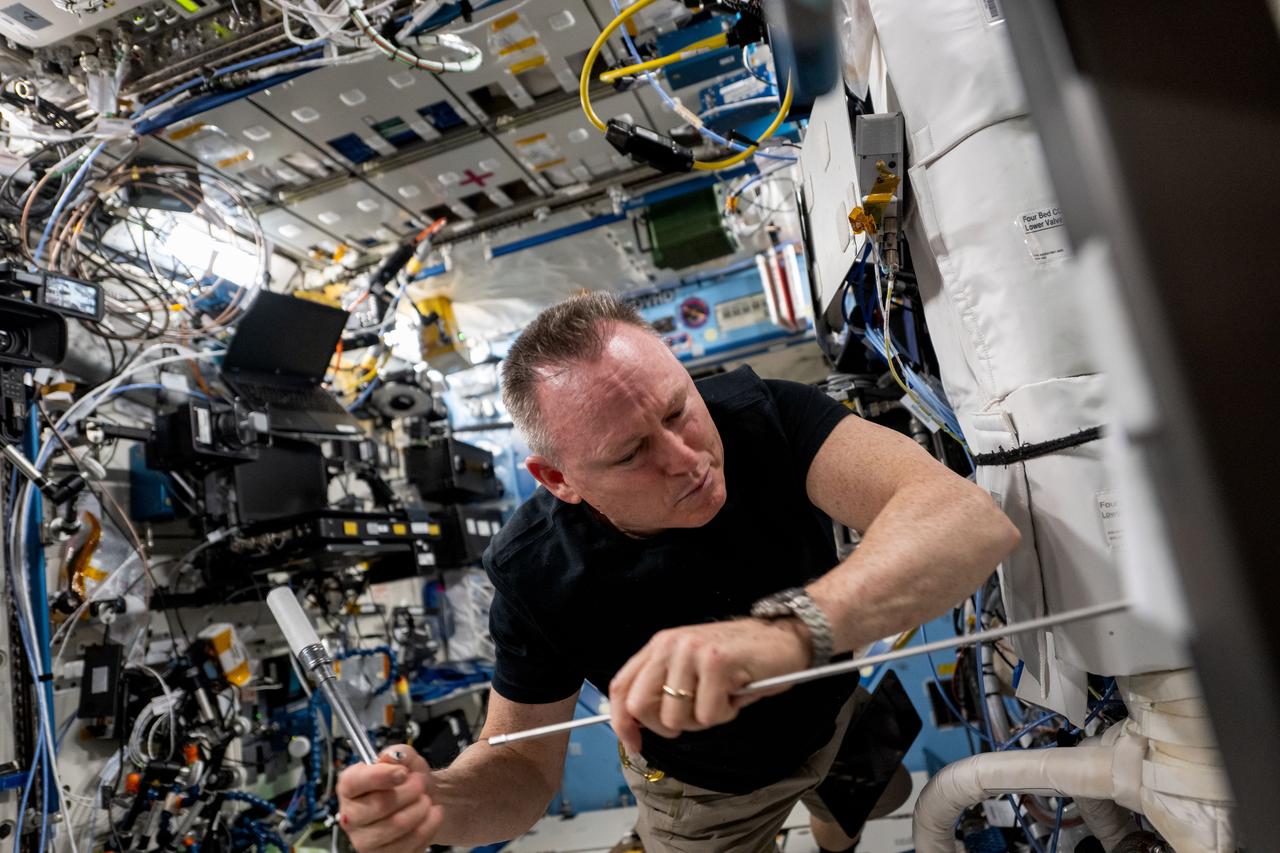
iss072e145964 (Nov. 6, 2024) --- NASA astronaut and Expedition 72 Flight Engineer Butch Wilmore installs the Powered Ascent Utility Locker-2 (PAUL-2) in an EXPRESS rack aboard the International Space Station's Destiny laboratory module. PAUL-2 was launched aboard the SpaceX Dragon cargo spacecraft and can provide power and temeperature control for experiments packed inside Dragon during its trip to the orbital outpost.
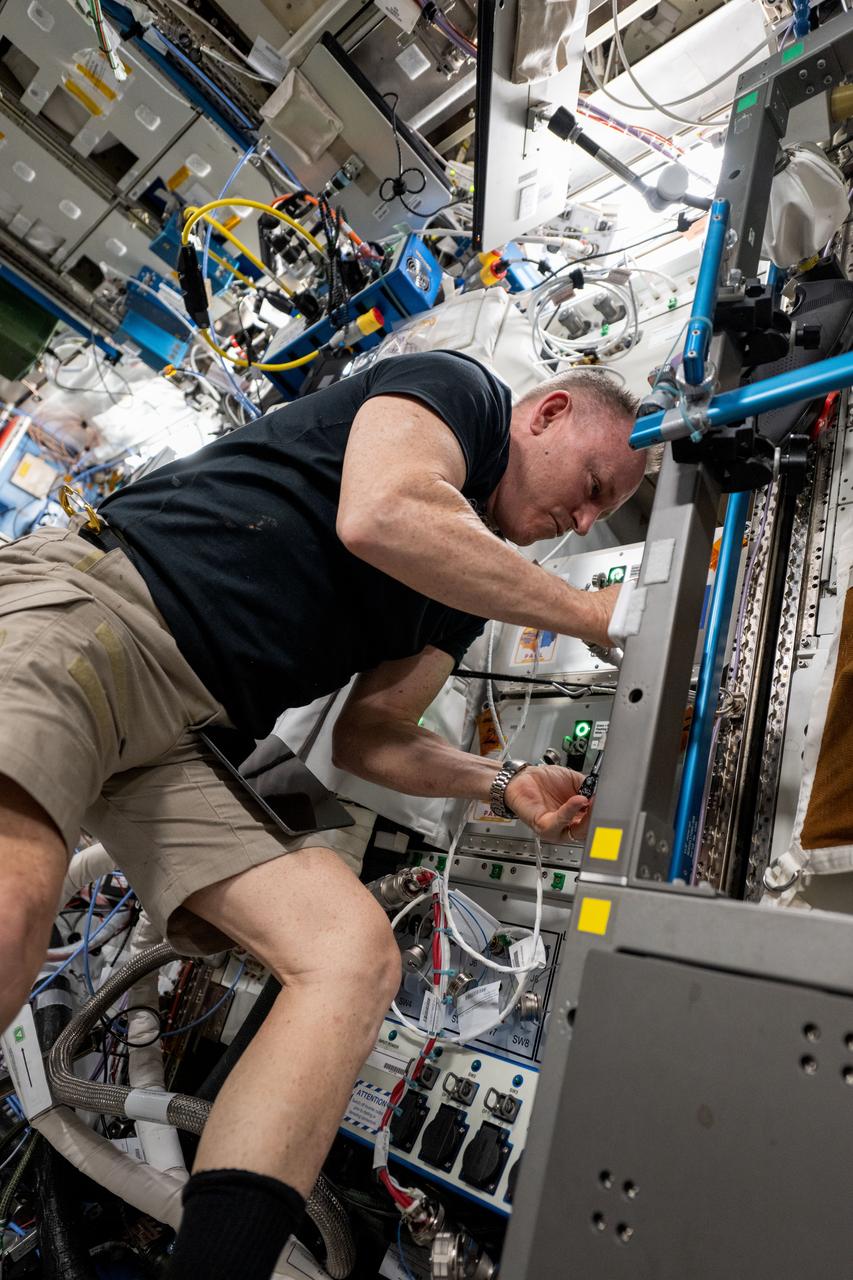
iss072e145969 (Nov. 6, 2024) --- NASA astronaut and Expedition 72 Flight Engineer Butch Wilmore installs the Powered Ascent Utility Locker-2 (PAUL-2) in an EXPRESS rack aboard the International Space Station's Destiny laboratory module. PAUL-2 was launched aboard the SpaceX Dragon cargo spacecraft and can provide power and temeperature control for experiments packed inside Dragon during its trip to the orbital outpost.
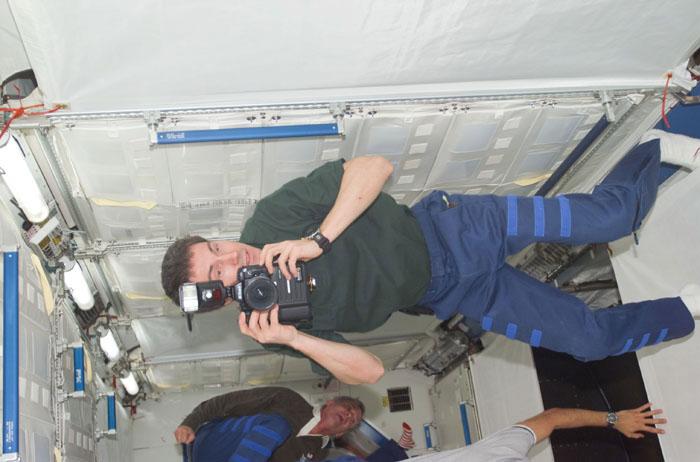
STS98-E-5138 (11 February 2001) --- Cosmonaut Sergei K. Krikalev, Expedition One flight engineer, takes still photographs onboard the newly opened Destiny laboratory on the International Space Station (ISS). After astronaut William M. (Bill) Shepherd, Expedition One commander, opened the Destiny hatch, he and astronaut Kenneth D. Cockrell (out of frame) ventured inside at 8:38 a.m. (CST), February 11, 2001. As depicted in subsequent digital images in this series, members of both crews went to work quickly inside the new module, activating air systems, fire extinguishers, alarm systems, computers and internal communications. The crew also took some photos and continued equipment transfers from the shuttle to the station.
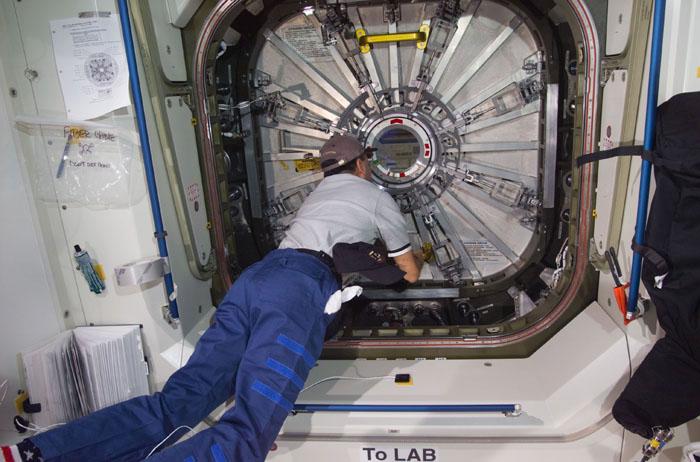
STS98-E-5115 (11 February 2001) --- This medium shot, photographed with a digital still camera, shows STS-98 pilot Mark L. Polansky looking through the observation port on Unity's closed hatch to the newly attached Destiny laboratory. The crews of Atlantis and the International Space Station opened the laboratory shortly after this photo was made on Feb. 11; and the astronauts and cosmonauts spent the first full day of what are planned to be years of work ahead inside the orbiting science and command center. Station commander William M. (Bill) Shepherd opened the Destiny hatch, and he and shuttle commander Kenneth D. Cockrell ventured inside at 8:38 a.m. (CST), Feb. 11. As depicted in subsequent digital images in this series, members of both crews went to work quickly inside the new module, activating air systems, fire extinguishers, alarm systems, computers and internal communications. The crew also continued equipment transfers from the shuttle to the station.
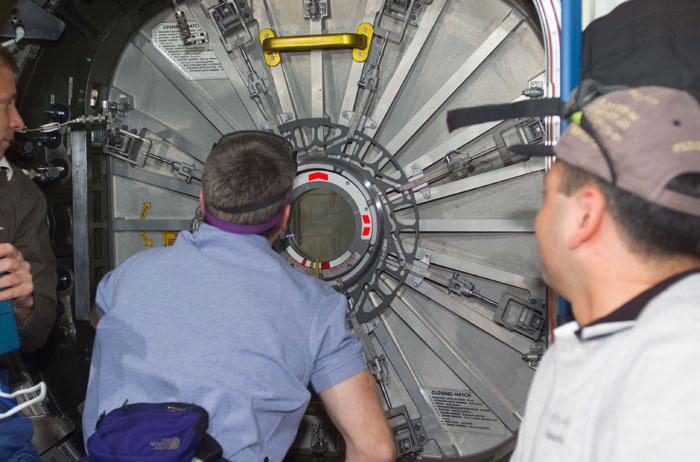
STS98-E-5120 (11 February 2001) --- This digital still camera shot shows Expedition One commander William M. (Bill) Shepherd looking through the portal on Unity's closed hatch to the newly attached Destiny laboratory. (Note: Astronauts Kenneth D. Cockrell and Mark L. Polansky appear at the left and right edges, respectively, but could possibly be cropped out in some views). The crews of Atlantis and the International Space Station opened the laboratory shortly after this photo was made on February 11; and the astronauts and cosmonauts spent the first full day of what are planned to be years of work ahead inside the orbiting science and command center. Shepherd opened the Destiny hatch, and he and shuttle commander Cockrell ventured inside at 8:38 a.m. (CST), Feb. 11. As depicted in subsequent digital images in this series, members of both crews went to work quickly inside the new module, activating air systems, fire extinguishers, alarm systems, computers and internal communications. The crew also continued equipment transfers from the shuttle to the station.
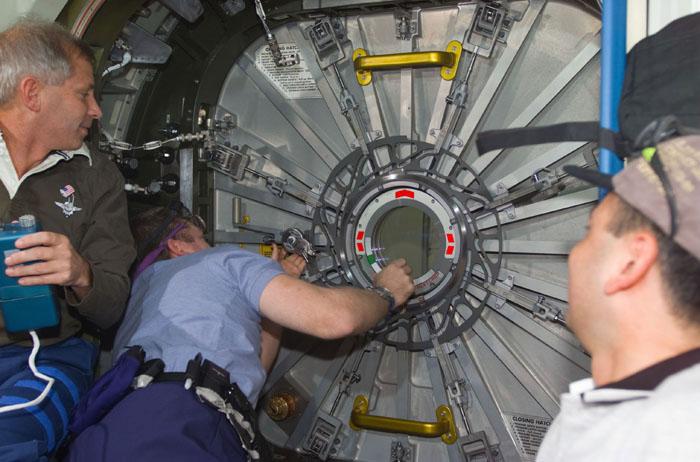
STS98-E-5121 (11 February 2001) --- This digital still camera shot shows Expedition One commander William M. (Bill) Shepherd looking through the observation port on Unity's closed hatch to the newly attached Destiny laboratory. Astronauts Kenneth D. Cockrell and Mark L. Polansky appear at the left and right edges, respectively. The crews of Atlantis and the International Space Station opened the laboratory shortly after this photo was made on Feb. 11, and the astronauts and cosmonauts spent the first full day of what are planned to be years of work ahead inside the orbiting science and command center. Shepherd opened the Destiny hatch, and he and shuttle commander Cockrell ventured inside at 8:38 a.m. (CST), Feb. 11. As depicted in subsequent digital images in this series, members of both crews went to work quickly inside the new module, activating air systems, fire extinguishers, alarm systems, computers and internal communications. The crew also continued equipment transfers from the shuttle to the station.
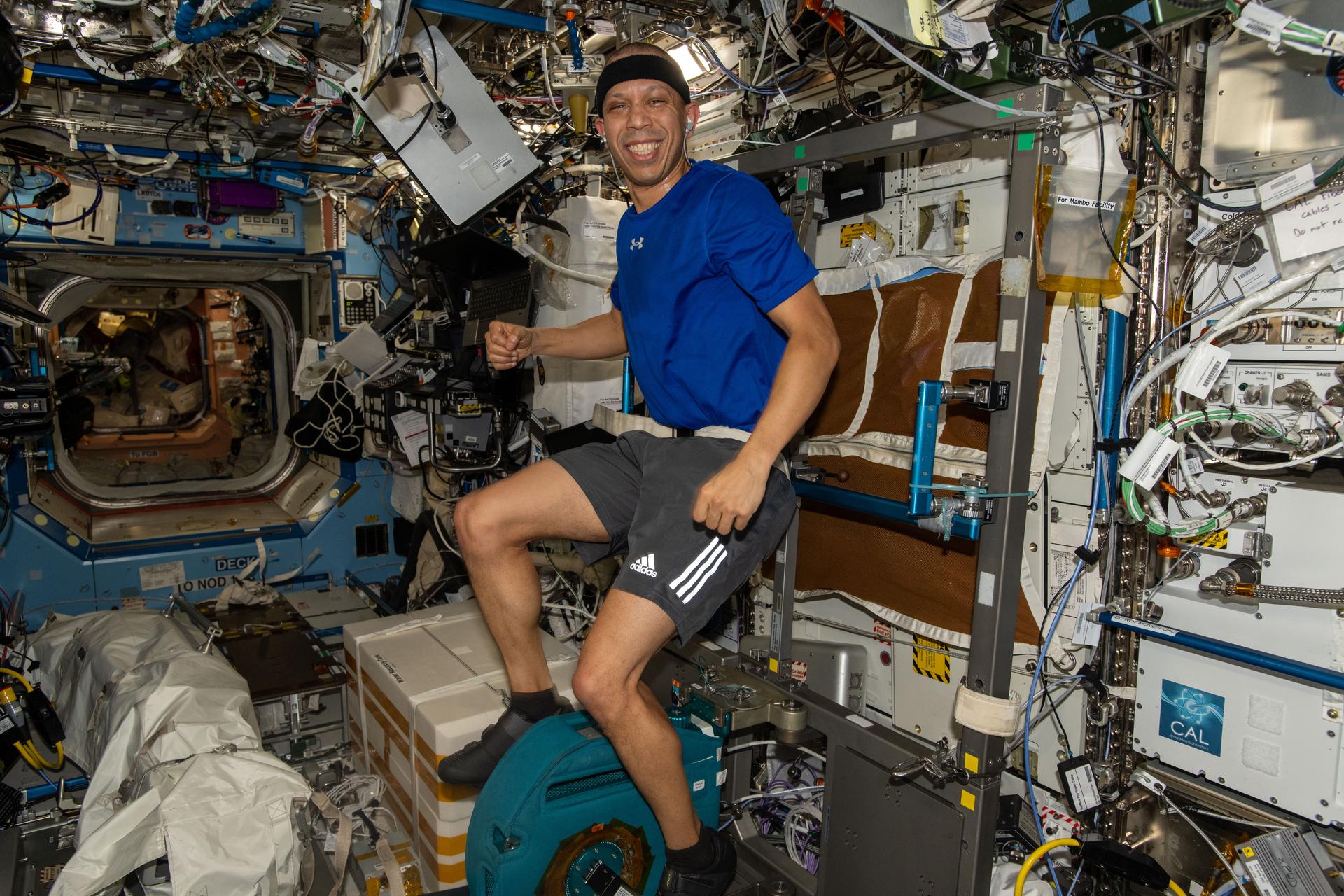
iss074e0364911 (March 6, 2026) --- NASA astronaut and Expedition 74 flight engineer Chris Williams pedals on the exercise cycle inside the International Space Station’s Destiny laboratory module. Astronauts work out daily on the exercise cycle to maintain muscle, bone, and cardiovascular health in microgravity. Credit: NASA/Jack Hathaway

iss058e013244 (Feb. 13, 2019) --- The forward end of the International Space Station is pictured showing portions of five modules. From right to left is a portion of the U.S. Destiny laboratory module linking forward to the Harmony module. Attached to the port side of Harmony (left foreground) is the Kibo laboratory module from the Japan Aerospace Exploration Agency (JAXA) with its logistics module berthed on top. On Harmony's starboard side (center background) is the Columbus laboratory module from ESA (European Space Agency).
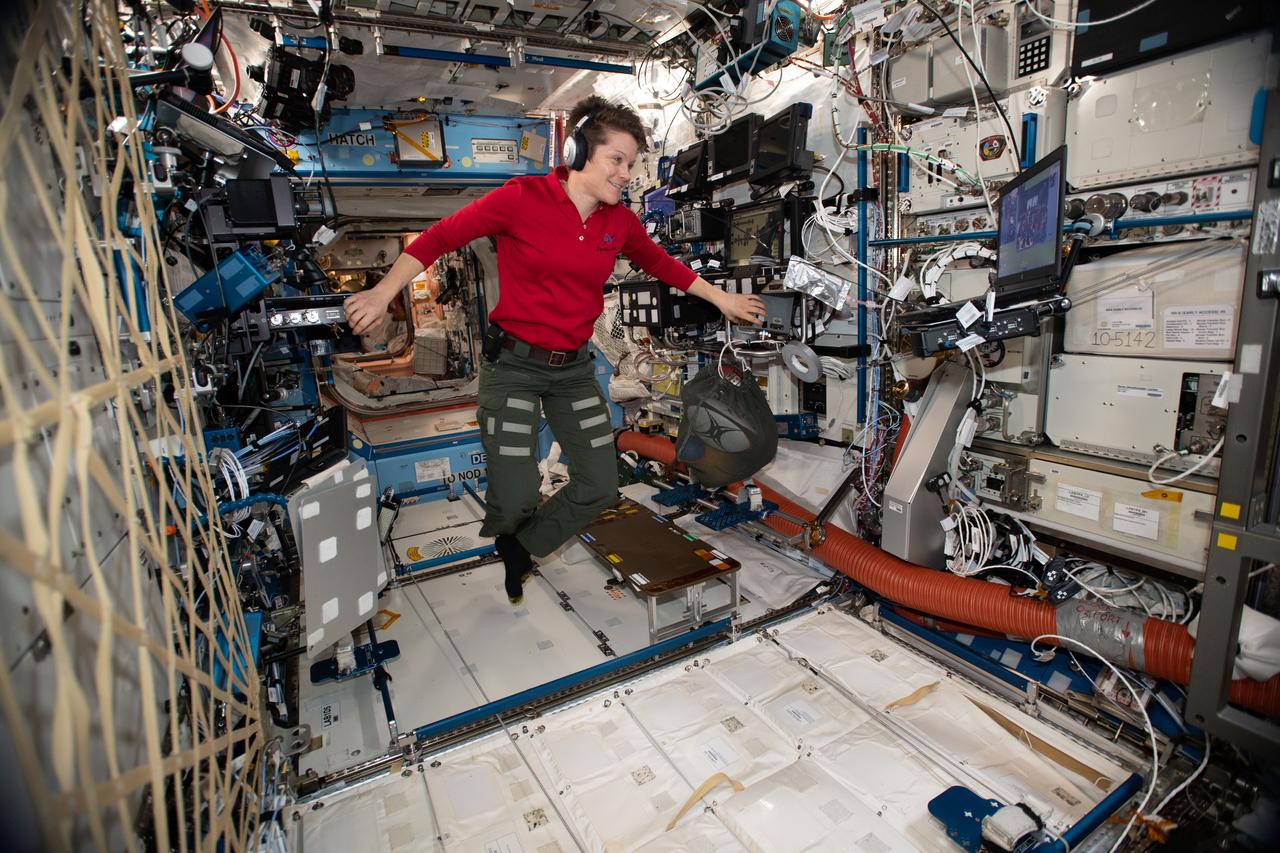
iss058e005069 (Jan. 18, 2019) --- Expedition 58 Flight Engineer Anne McClain of NASA looks at a laptop computer screen inside the U.S. Destiny laboratory module during ground conference operations.
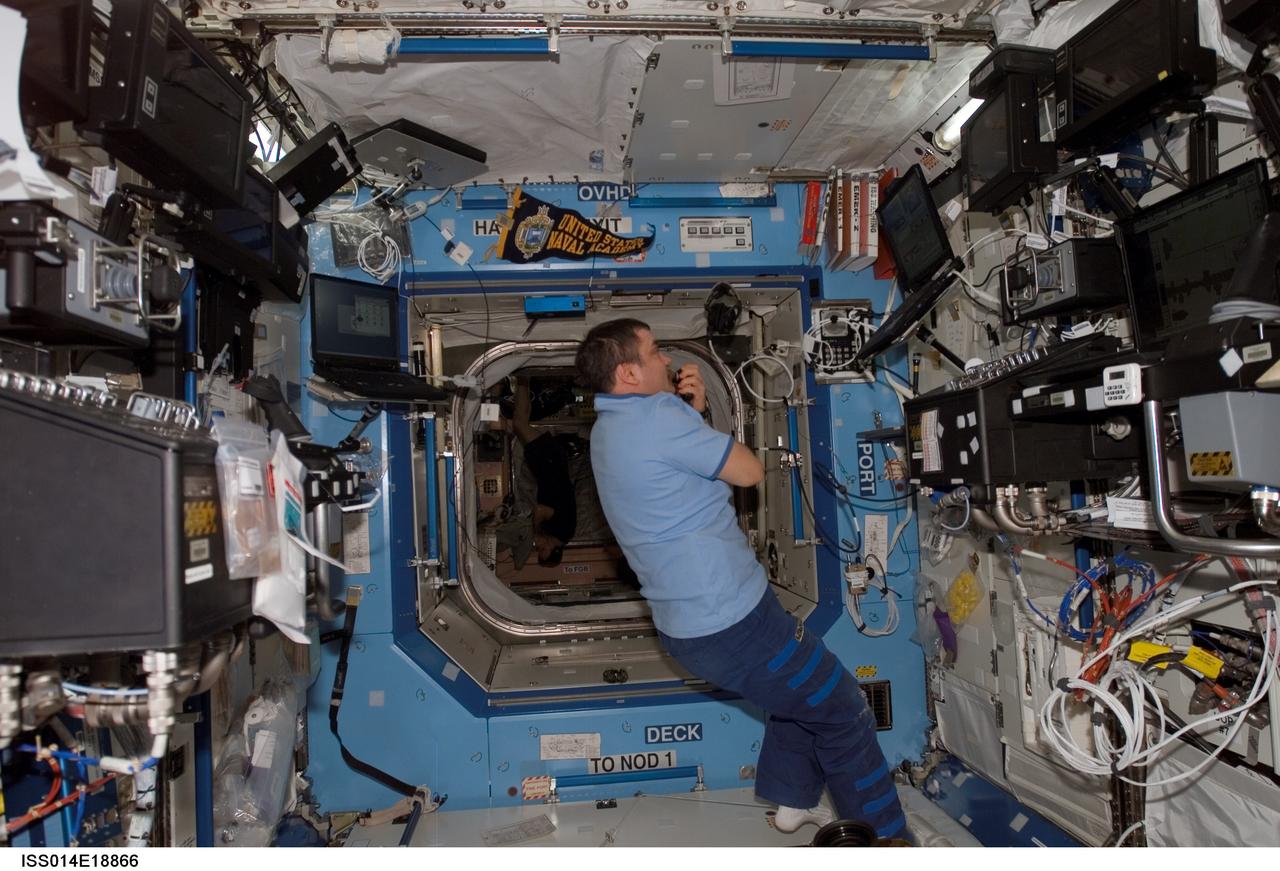
ISS014-E-18866 (3 April 2007) --- Cosmonaut Mikhail Tyurin, Expedition 14 flight engineer representing Russia's Federal Space Agency, uses a communication system in the Destiny laboratory of the International Space Station.
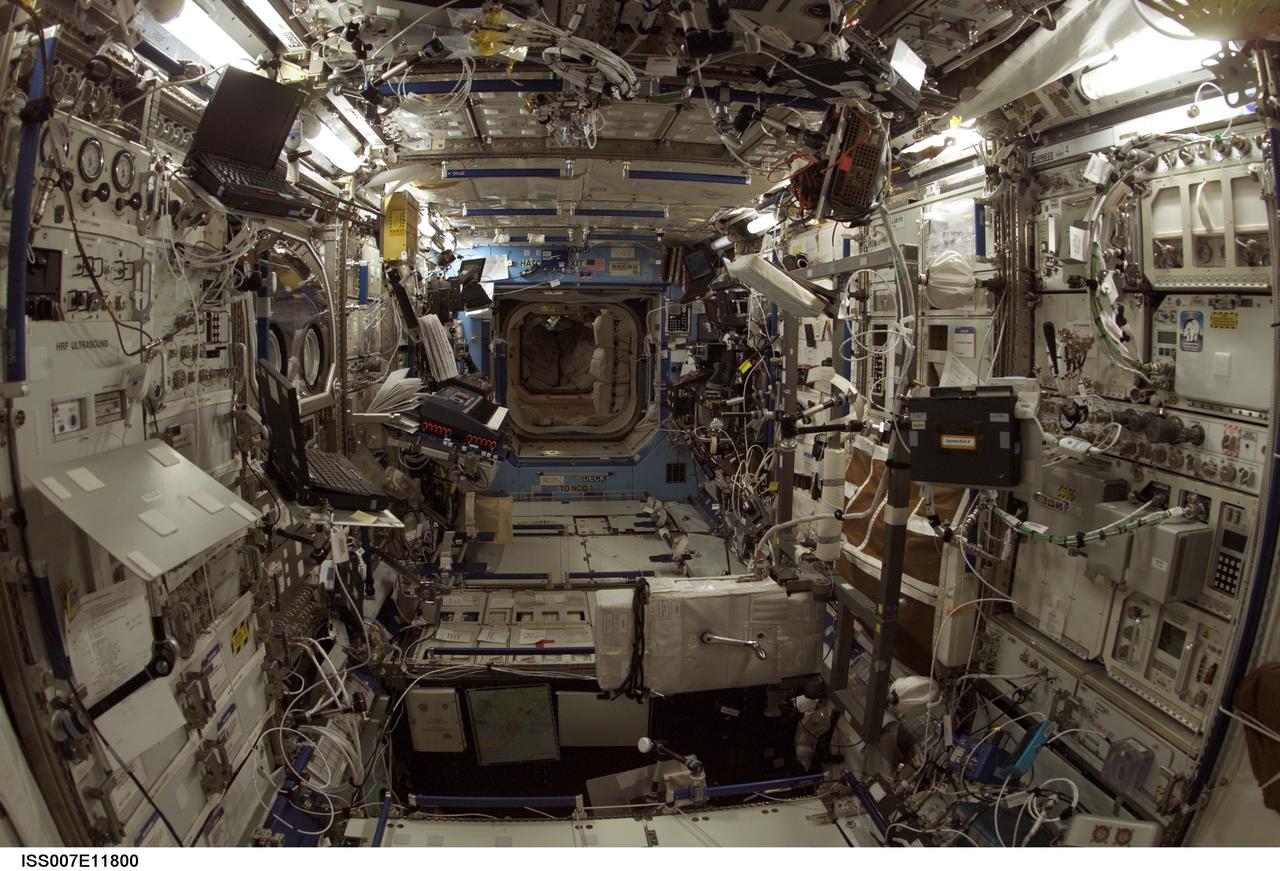
ISS007-E-11800 (3 August 2003) --- Interior view of the Destiny laboratory on the International Space Station (ISS) during the Expedition 7 mission.
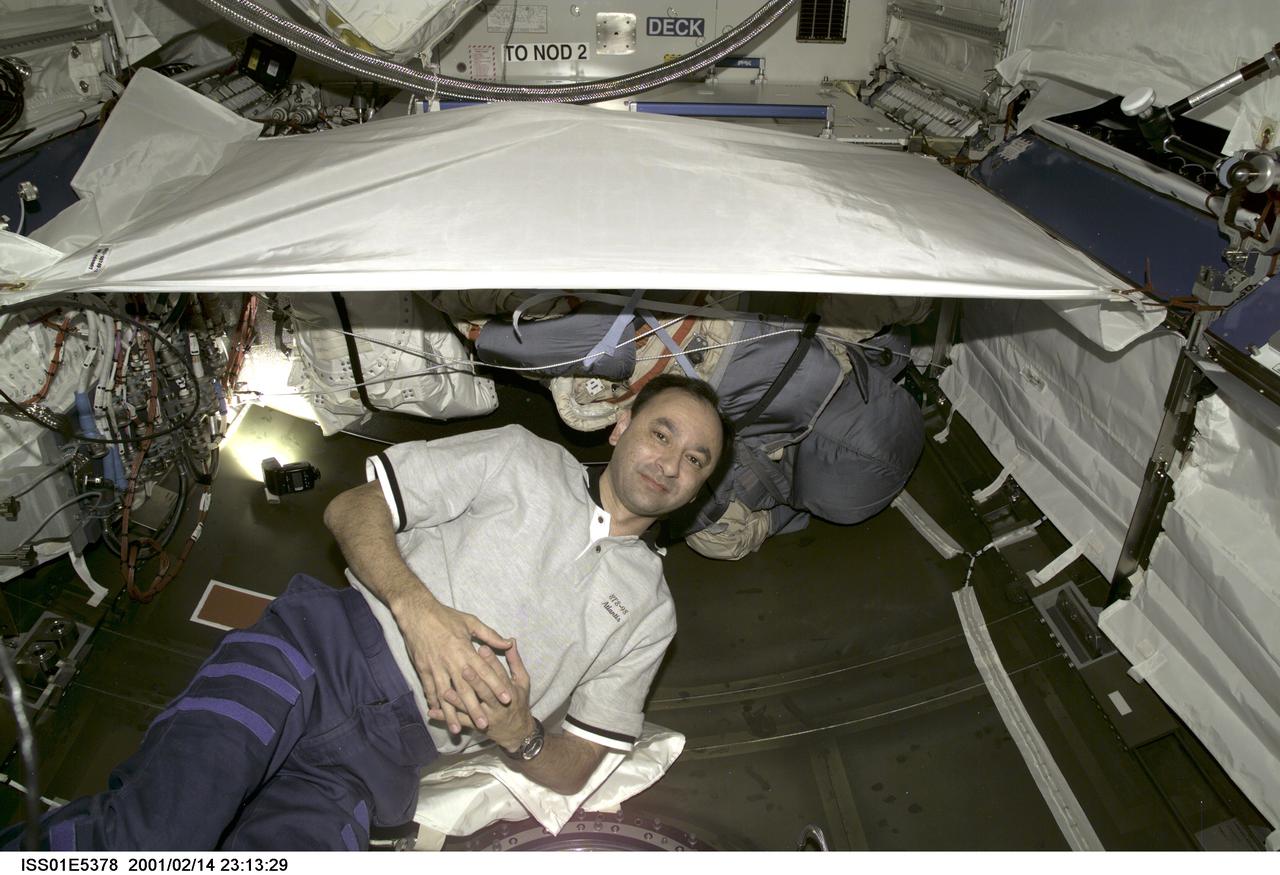
ISS01-E-5378 (14 February 2001) --- Astronaut Mark L. Polansky is pictured in the new Destiny laboratory. The STS-98 and Expedition One crews have been busy in the lab since its hatch was opened earlier in the week. This photo was taken with a digital still camera.
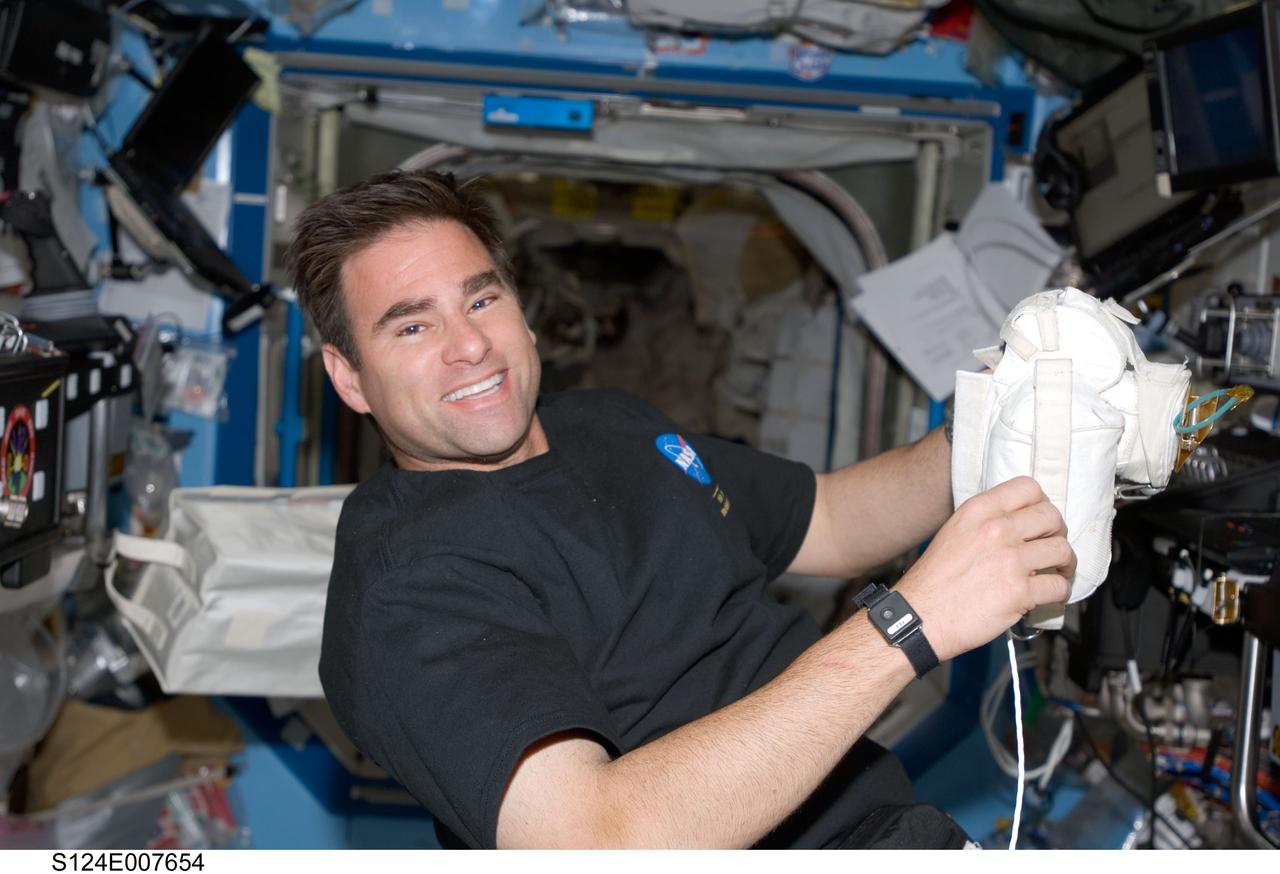
S124-E-007654 (7 June 2008) --- Astronaut Greg Chamitoff, Expedition 17 flight engineer, takes a moment for a photo as he works in the Destiny laboratory of the International Space Station while Space Shuttle Discovery is docked with the station.
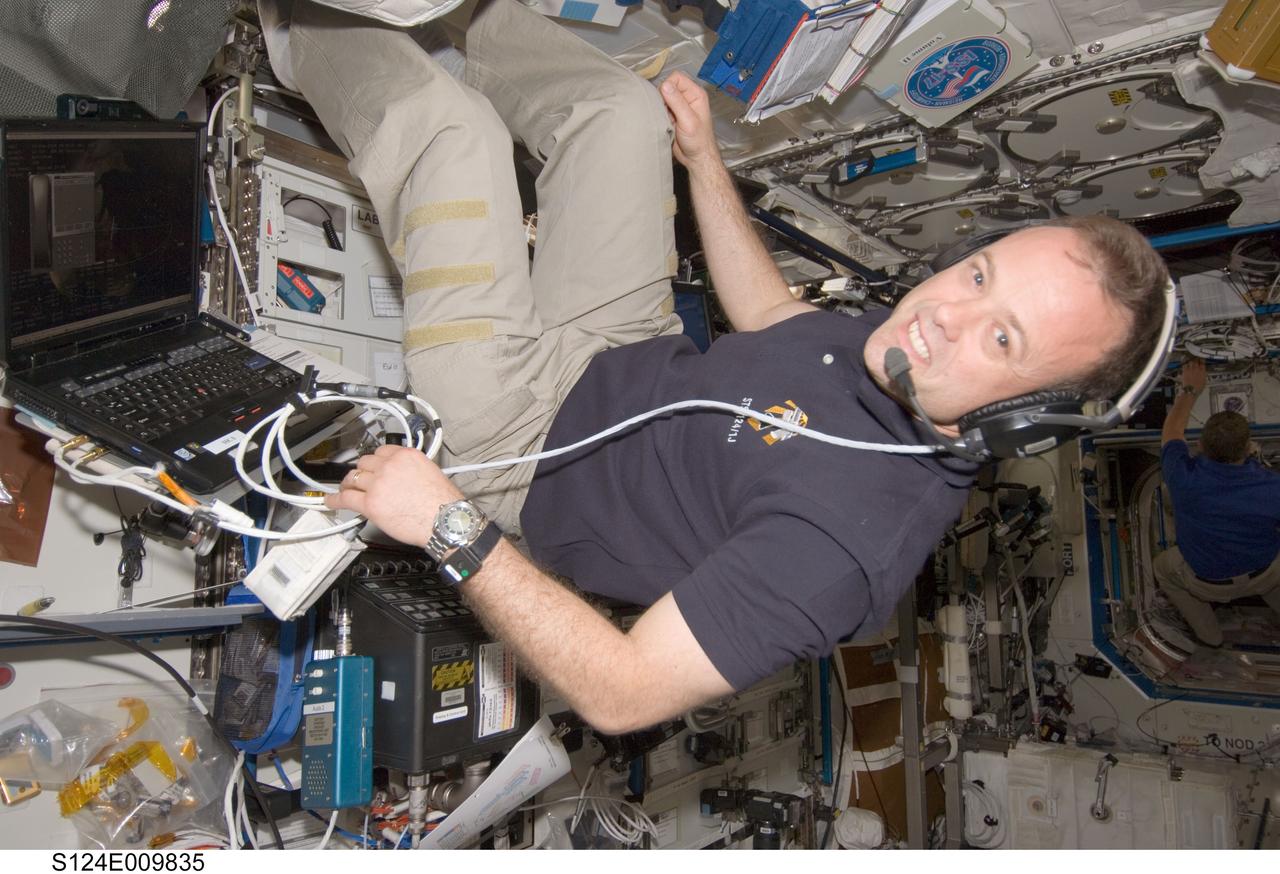
S124-E-009835 (10 June 2008) --- Astronaut Ron Garan, STS-124 mission specialist, takes a moment for a photo as he uses a communication system in the Destiny laboratory of the International Space Station while Space Shuttle Discovery is docked with the station.
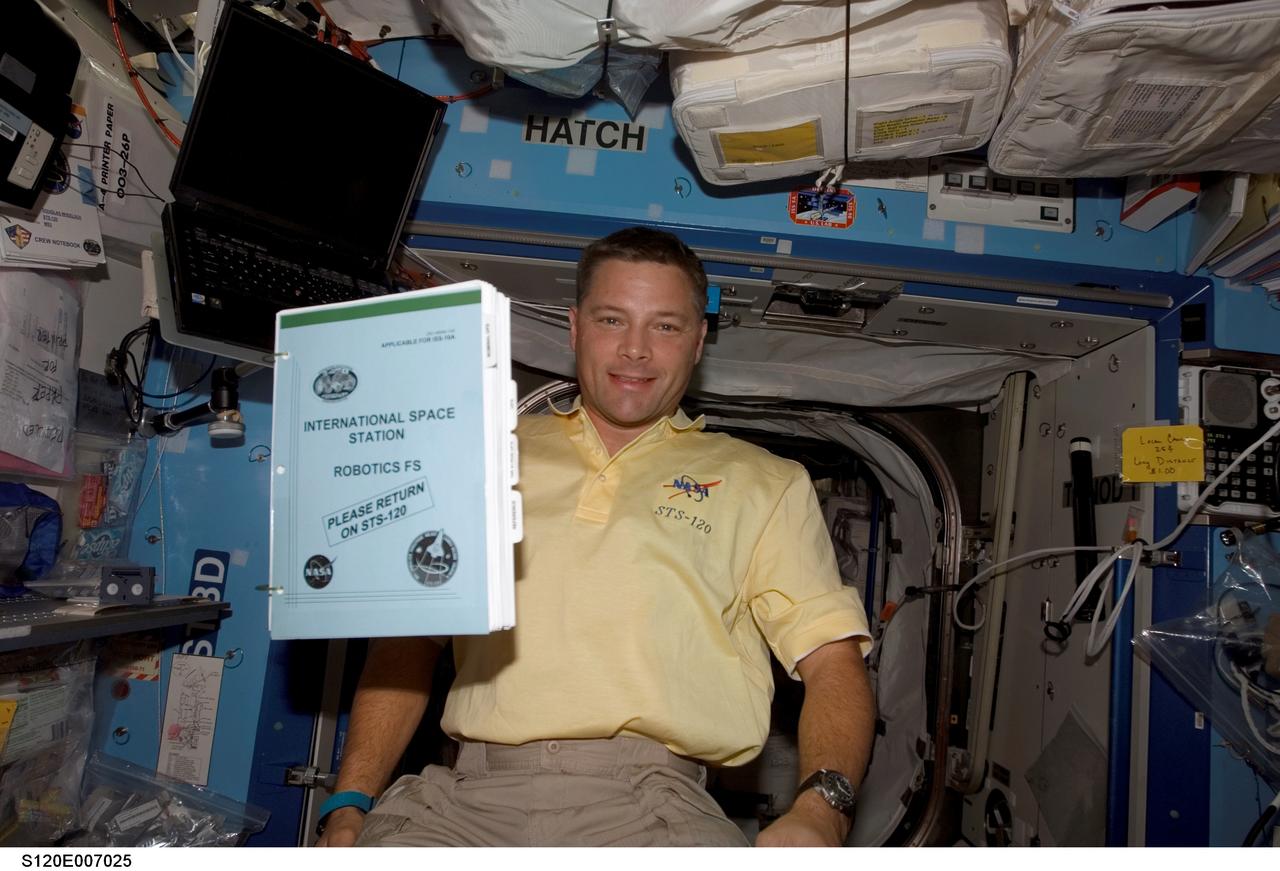
S120-E-007025 (28 Oct. 2007) --- Astronaut Doug Wheelock, STS-120 mission specialist, poses for a photo as a procedures handbook floats freely nearby in the Destiny laboratory of the International Space Station.
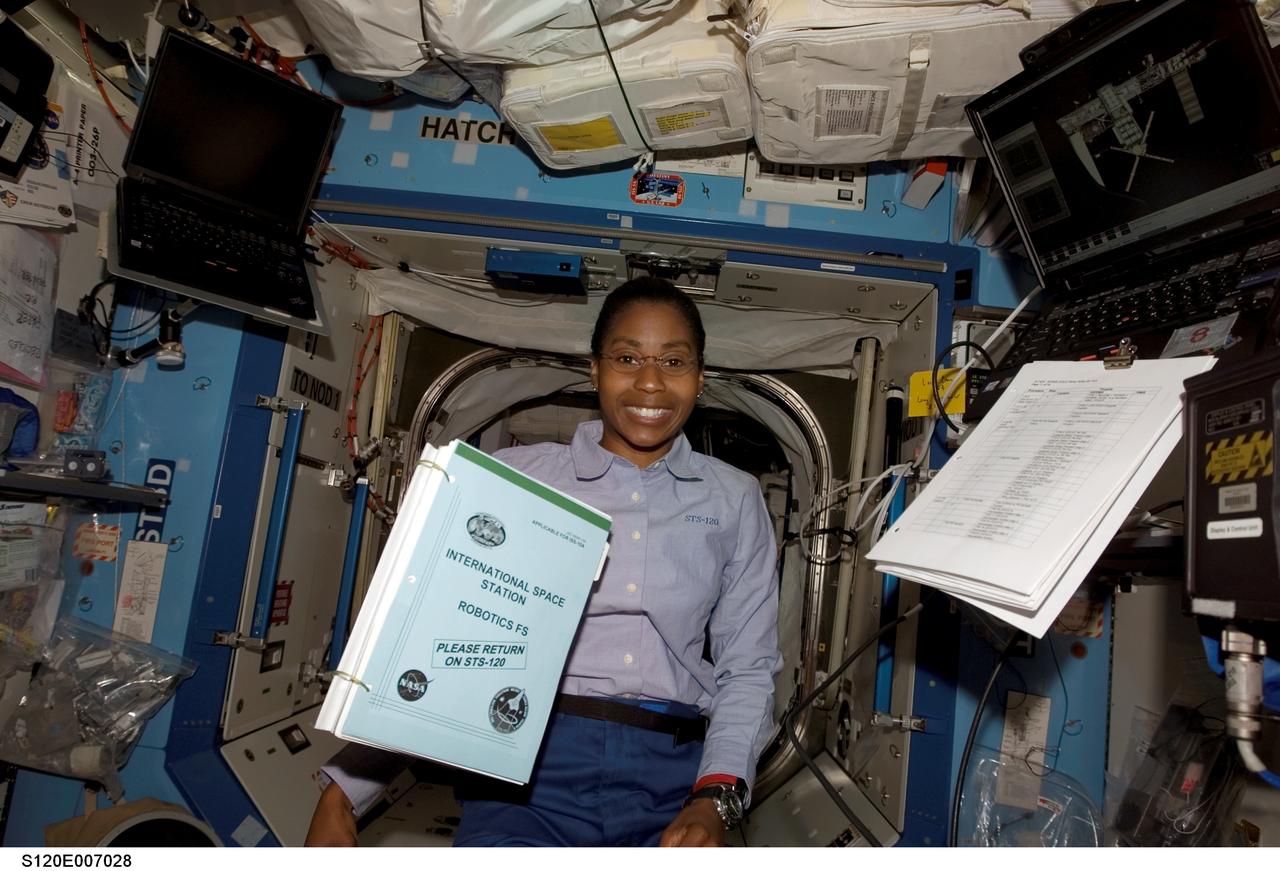
S120-E-007028 (28 Oct. 2007) --- Astronaut Stephanie Wilson, STS-120 mission specialist, poses for a photo as a procedures handbook floats freely nearby in the Destiny laboratory of the International Space Station.
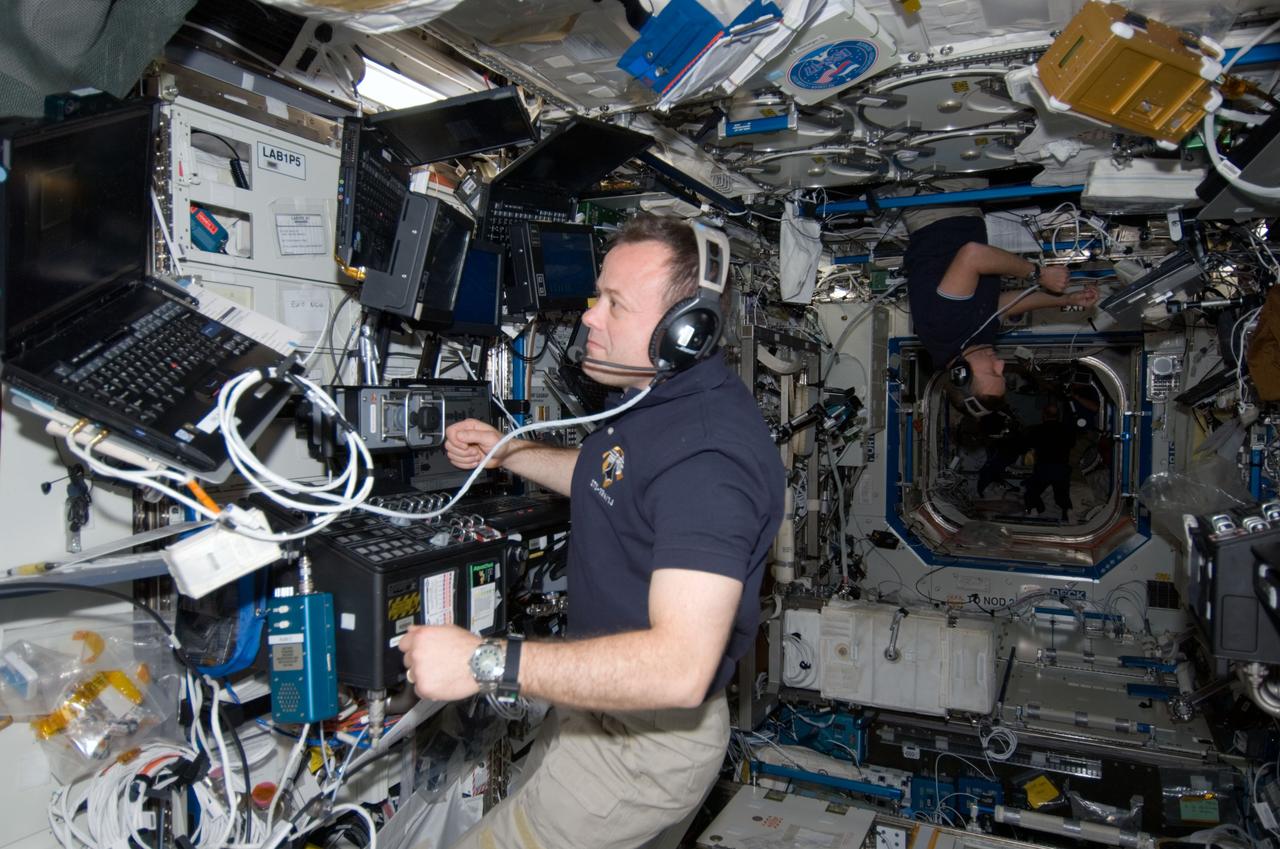
S124-E-009836 (10 June 2008) --- Astronaut Ron Garan, STS-124 mission specialist, uses a communication system in the Destiny laboratory of the International Space Station while Space Shuttle Discovery is docked with the station.

iss074e0608854 (May 27, 2026) --- NASA astronaut and Expedition 74 flight engineer Chris Williams shows off the Destiny laboratory module’s Microgravity Science Glovebox aboard the International Space Station. WIlliams was supporting semiconductor crystal research to help advance the commercial space economy and promoting Earth-based industries. Credit: NASA/Chris Williams
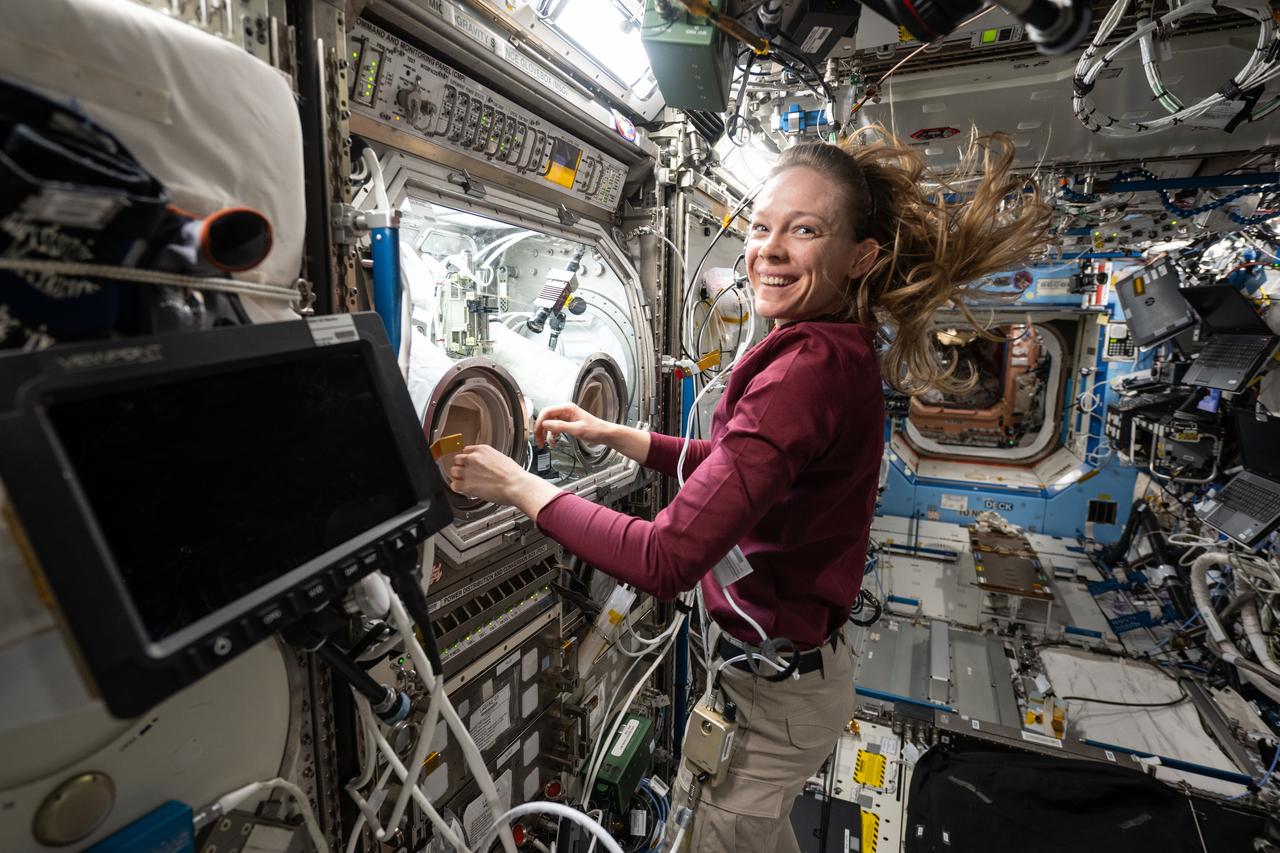
iss073e0248499 (June 25, 2025) --- NASA astronaut and Expedition 73 Flight Engineer Nichole Ayers conducts research operations inside the Destiny laboratory module's Microgravity Science Glovebox aboard the International Space Station. Ayers swapped syringes containing protein samples and installed test cells inside the glovebox for the Ring-Sheared Drop Interfacial Bioprocessing of Pharmaceuticals investigation that explores using surface tension to contain liquids and study proteins without contacting solid walls. Results may benefit pharmaceutical manufacturing and 3D printing techniques on and off the Earth.
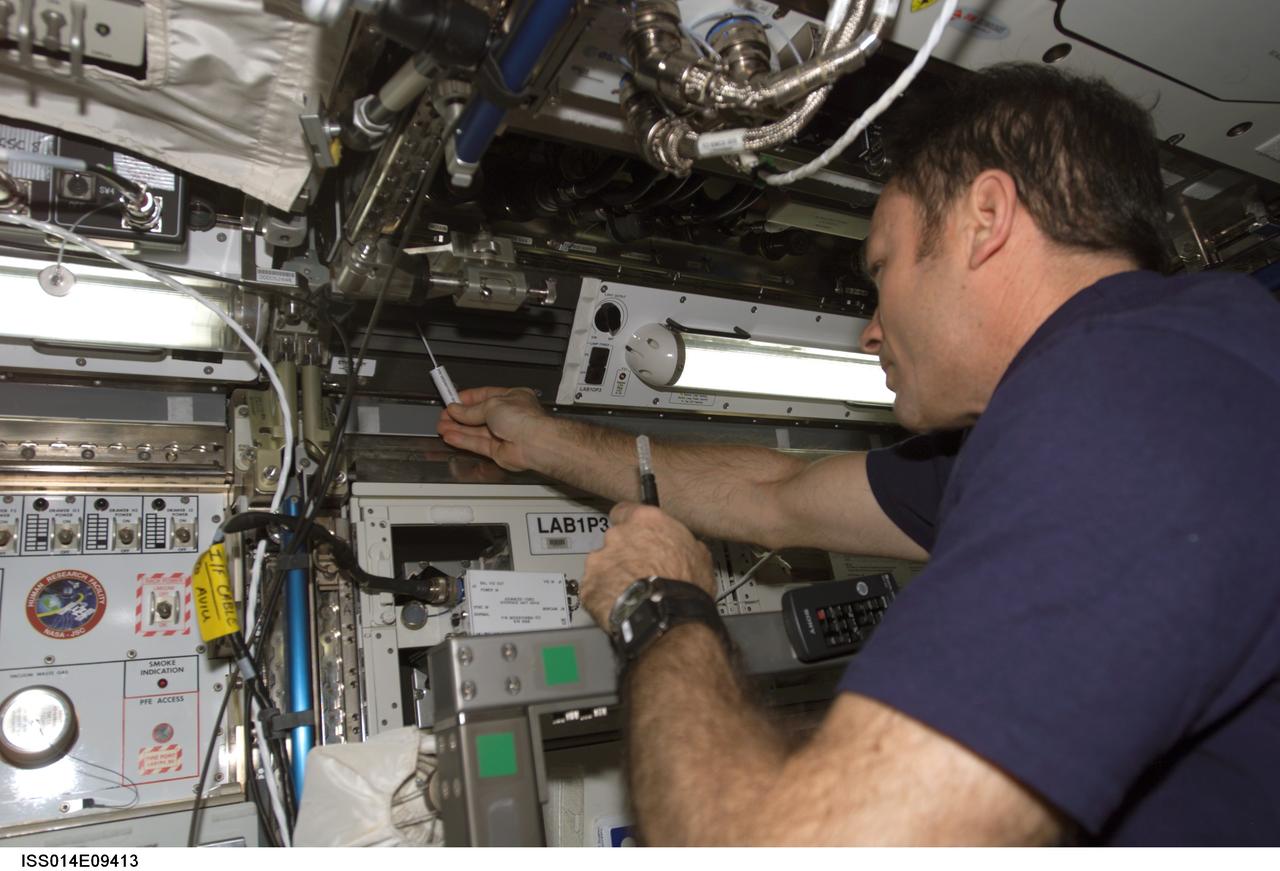
ISS014-E-09413 (8 Dec. 2006) --- Astronaut Michael E. Lopez-Alegria, Expedition 14 commander and NASA space station science officer, conducts a Surface, Water and Air Biocharacterization (SWAB) air sampling in the Destiny laboratory of the International Space Station.
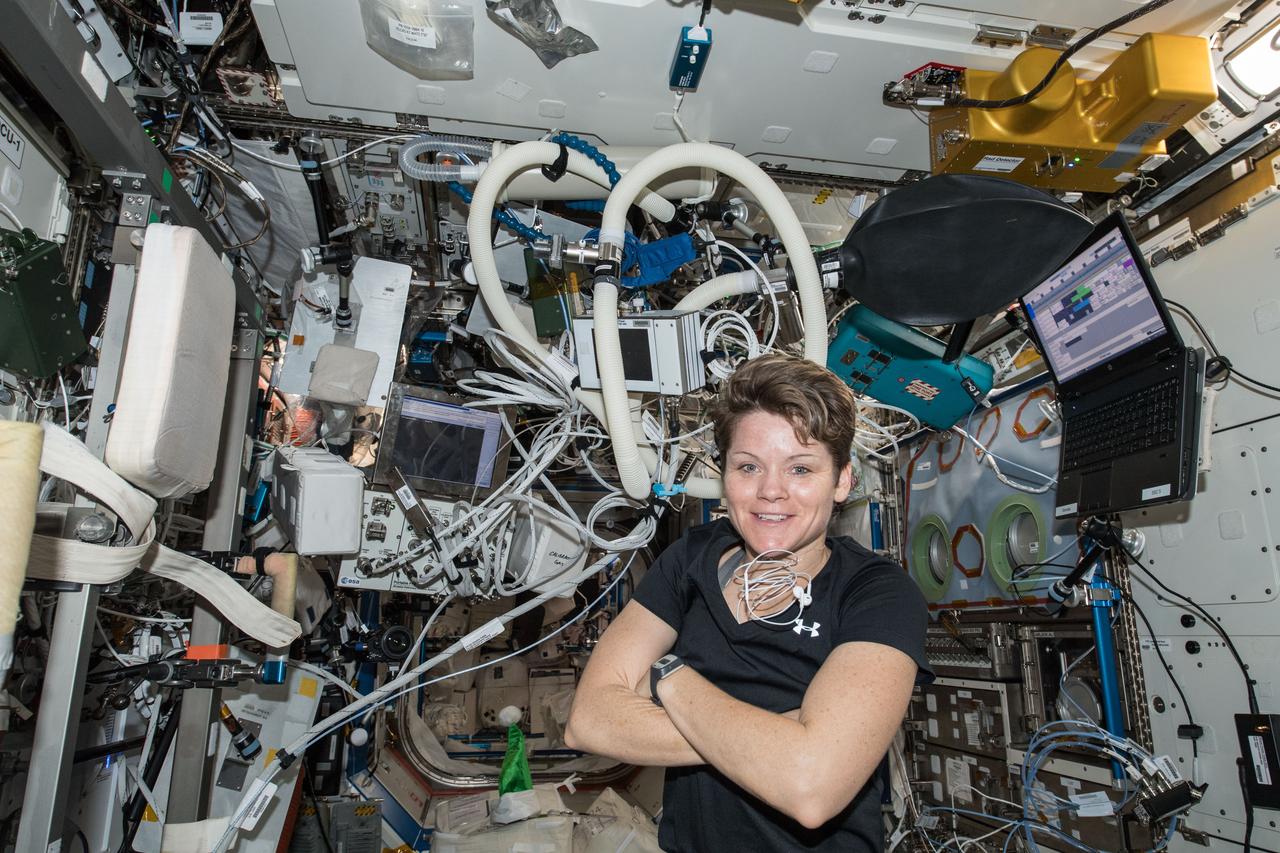
iss057e134112 (Dec. 14, 2018) --- NASA astronaut Anne McClain is inside the Destiny laboratory module surrounded by exercise gear, including laptop computers and sensors that measure physical exertion and aerobic capacity, during a workout session aboard the International Space Station.
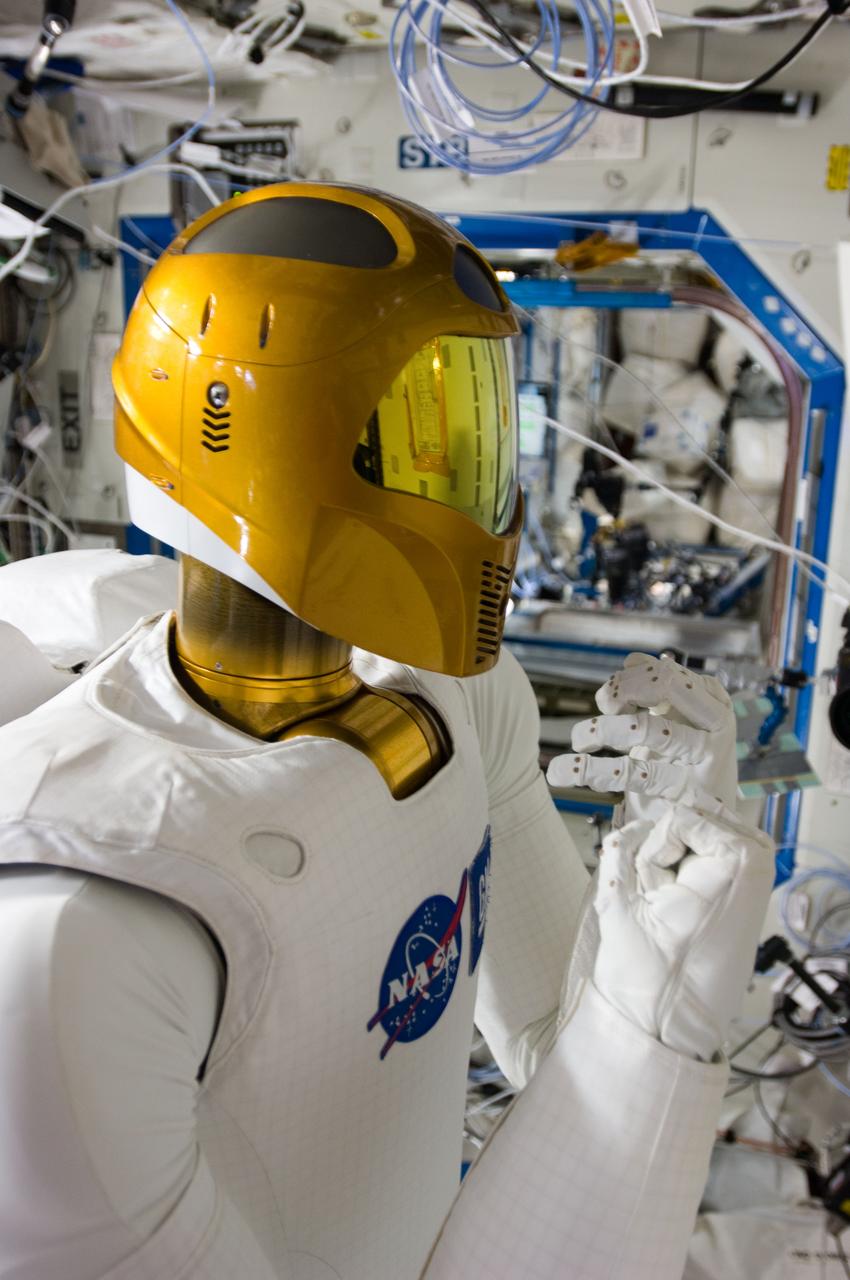
View of Robonaut 2 during a round of testing,in the U.S. Laboratory. Photo was taken during Expedition 34.
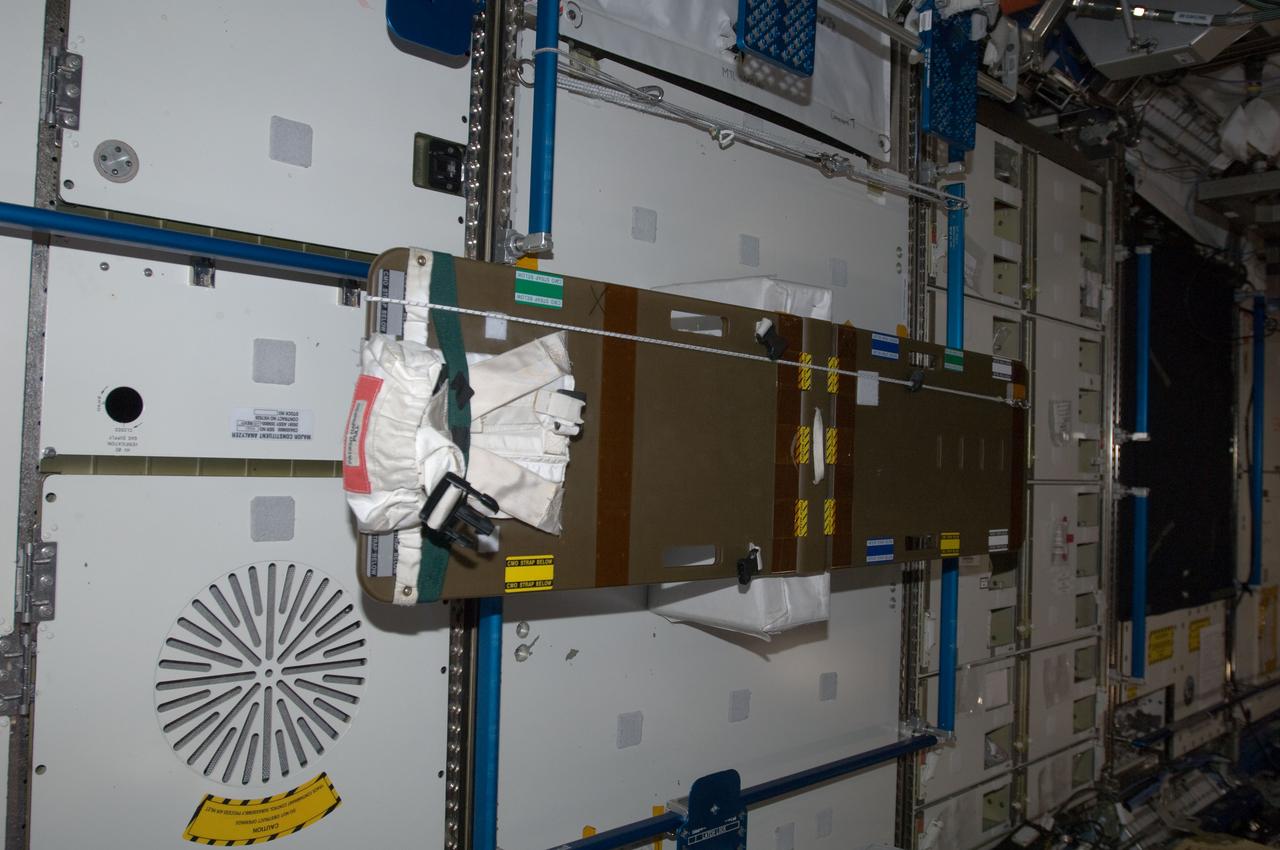
View of Crew Medical Restraint System (CMRS),in the U.S. Laboratory. Photo was taken during Expedition 34.
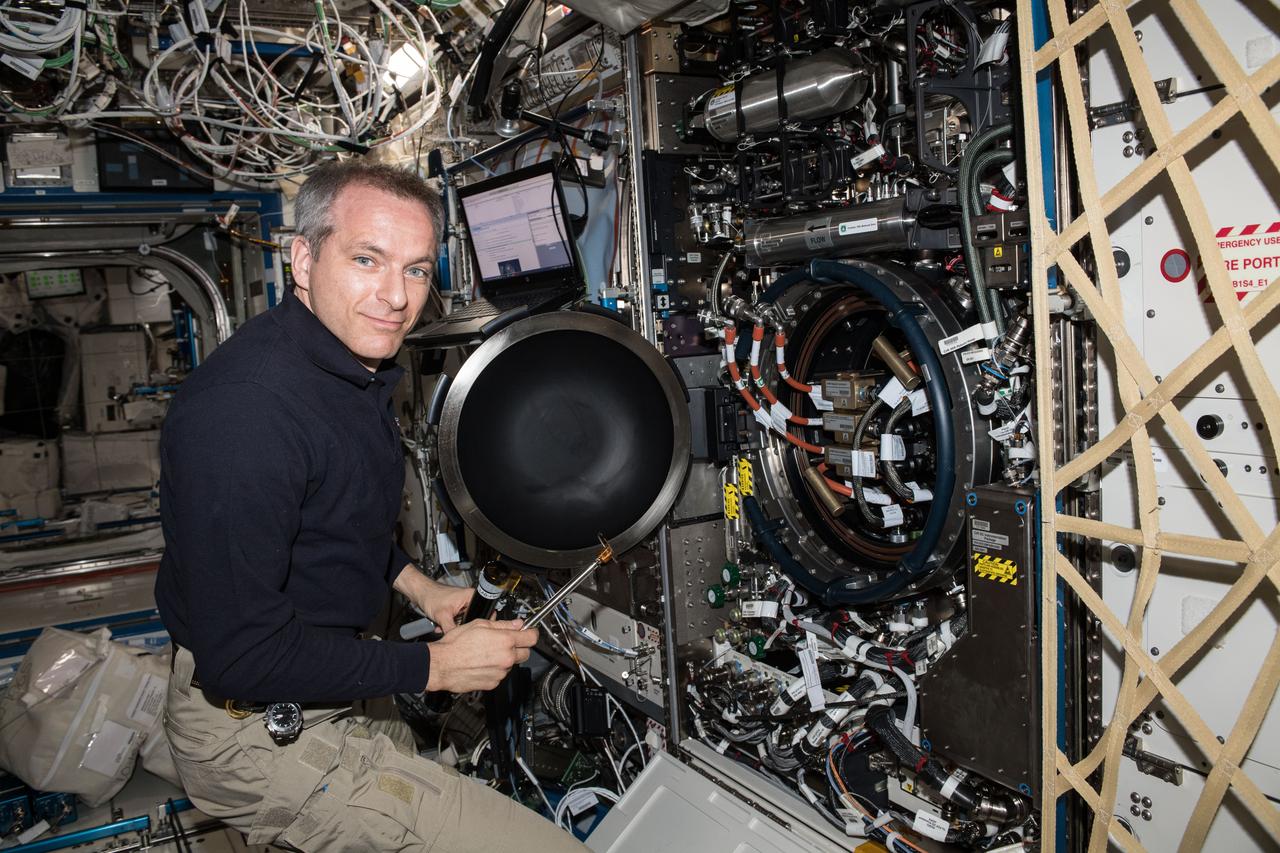
iss058e026380 (Feb. 26, 2019) --- Astronaut David Saint-Jacques of the Canadian Space Agency is inside the U.S. Destiny laboratory module working on the Combustion Integrated Rack. Saint-Jacques replaced fuel flow controllers inside the device for the Advanced Combustion via Microgravity Experiments which are a set of five independent studies of gaseous flames.
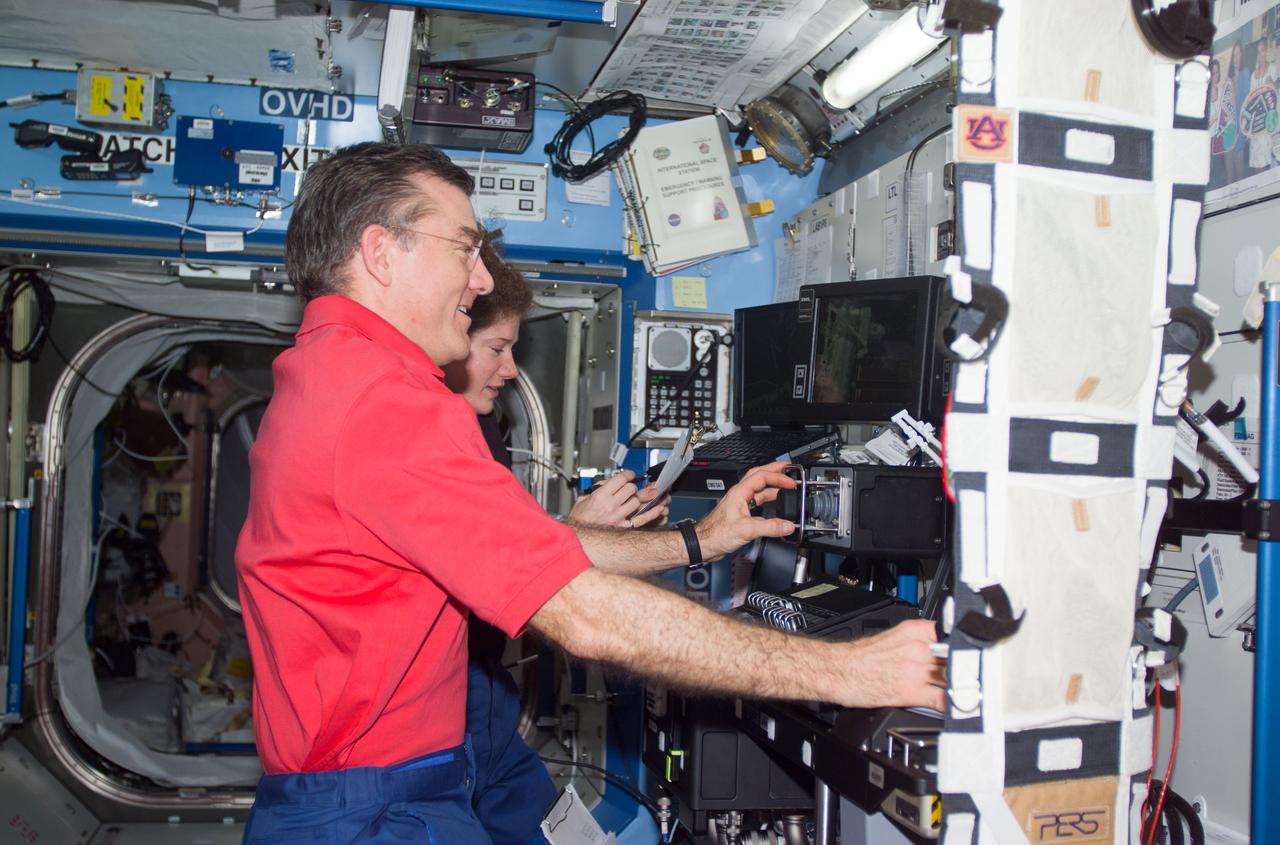
STS104-E-5225 (21 July 2001) --- A crew member used a digital still camera to take a picture of members of the Expedition Two crew at work in the Destiny laboratory. Within the final three weeks of their habitation aboard the International Space Station (ISS), astronauts James S. Voss and Susan J. Helms, flight engineers, both performed important maneuvers with the Canadarm2, Space Station Remote Manipulator System (SSRMS), during the STS-104 mission. Cosmonaut Yury V. Usachev, Expedition Two commander, is out of frame.
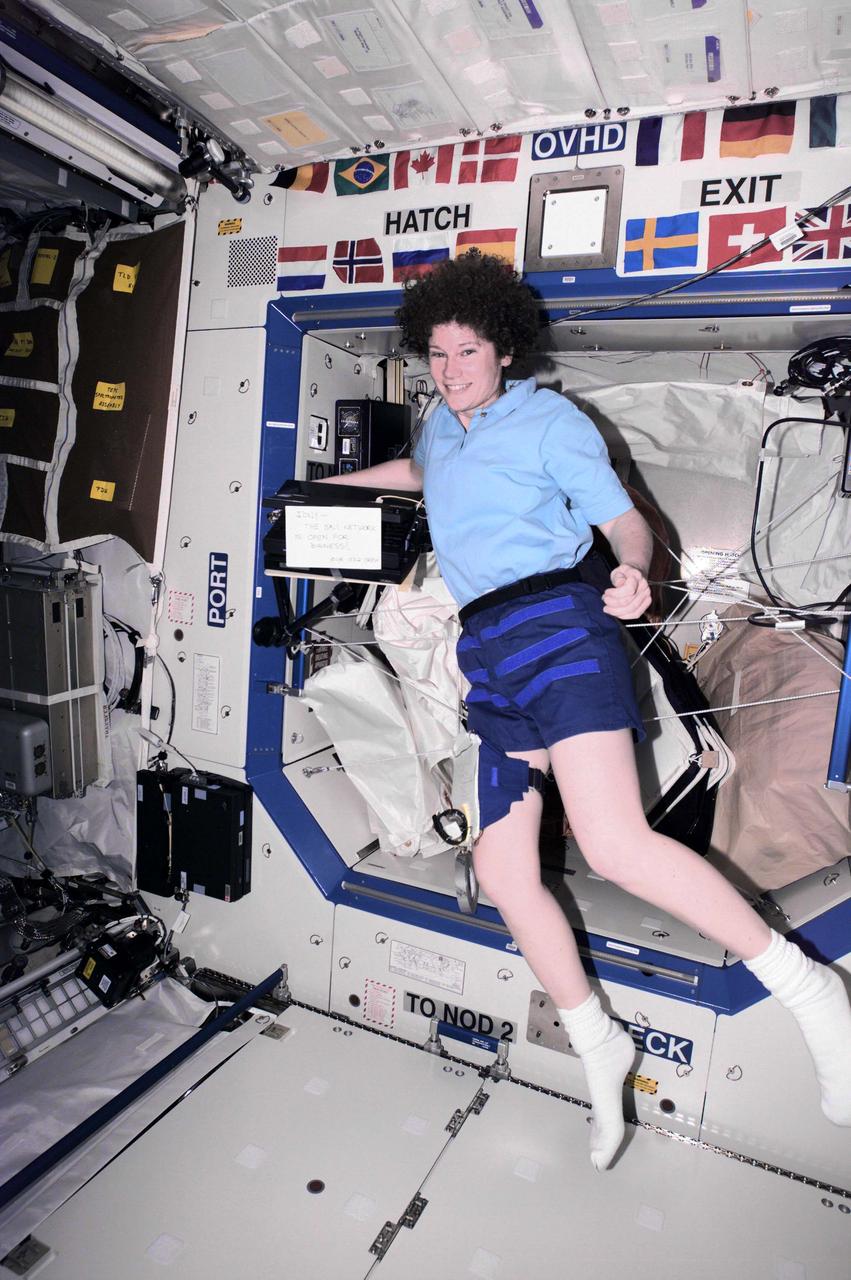
ISS002-E-5052 (March 2001) --- Astronaut Susan J. Helms, Expedition Two flight engineer, totes computer hardware on the Destiny laboratory. Helms, along with cosmonaut Yury V. Usachev of Rosaviakosmos and astronaut James S. Voss, recently took over residency on the International Space Station (ISS) from a three-member crew who had been on board since early November 2000. The image was recorded with a digital still camera.
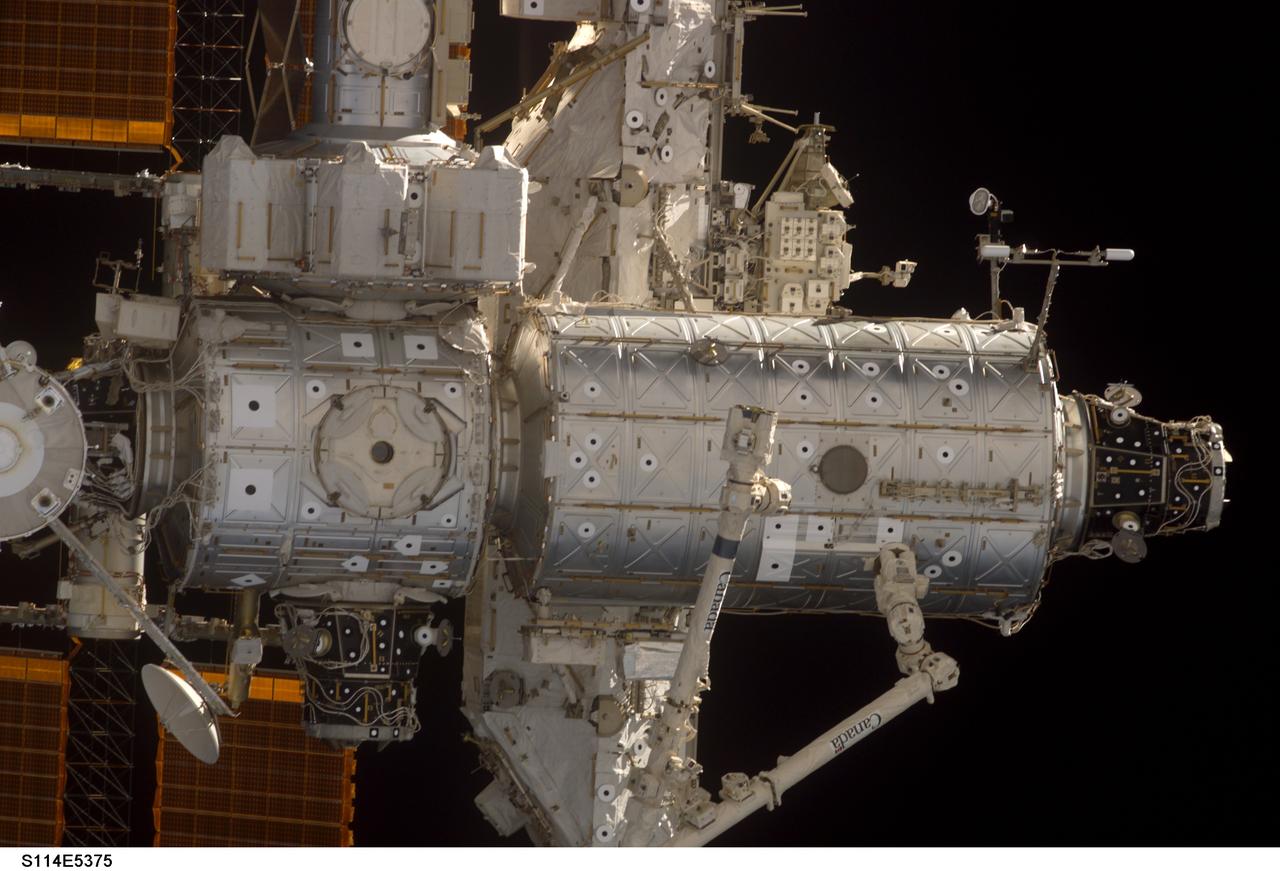
STS114-E-5375 (28 July 2005) --- International Space Station (ISS) very close to docking with Discovery on the morning of July 28.
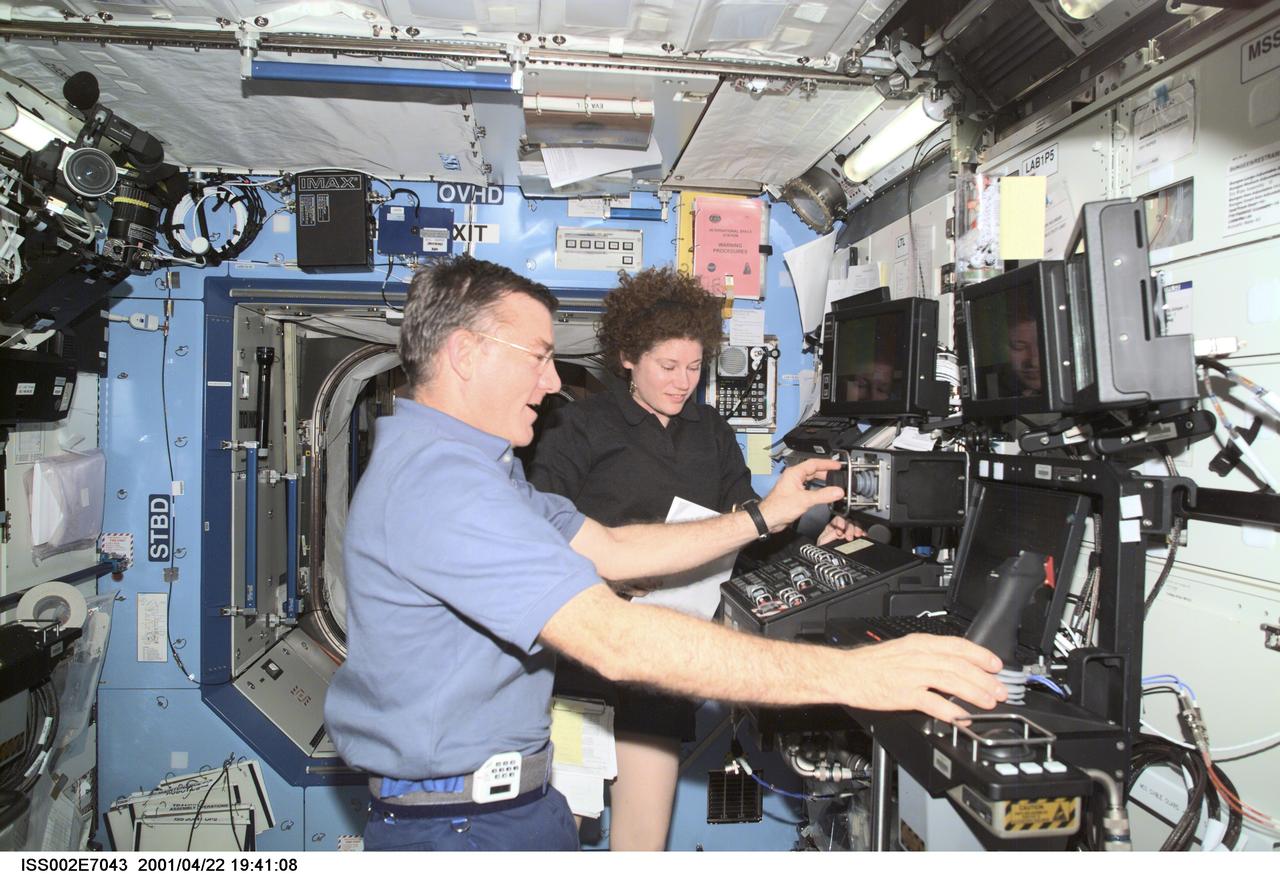
ISS002-E-7043 (22 April 2001) --- Expedition Two flight engineers James S. Voss and Susan J. Helms work at the Canadarm2 / Space Station Remote Manipulator System (SSRMS) control station in the Destiny Laboratory. The image was recorded with a digital still camera.
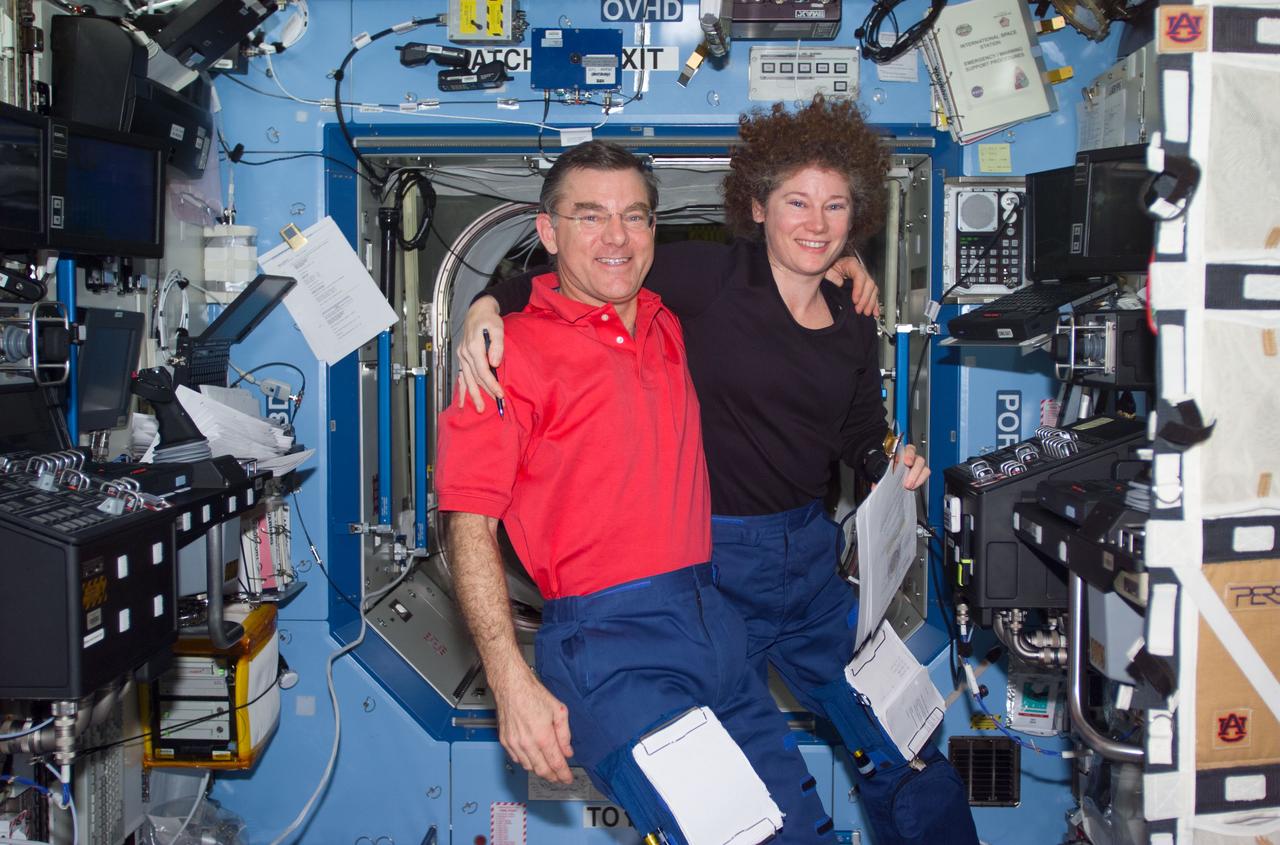
STS104-E-5223 (21 July 2001) --- A crew member used a digital still camera to take a picture of members of the Expedition Two crew in the Destiny laboratory. Within the final three weeks of their habitation aboard the International Space Station (ISS), astronauts James S. Voss and Susan J. Helms, flight engineers, both performed important maneuvers with the Canadarm2, Space Station Remote Manipulator System (SSRMS), during the STS-104 mission. Cosmonaut Yury V. Usachev, Expedition Two commander, is out of frame.
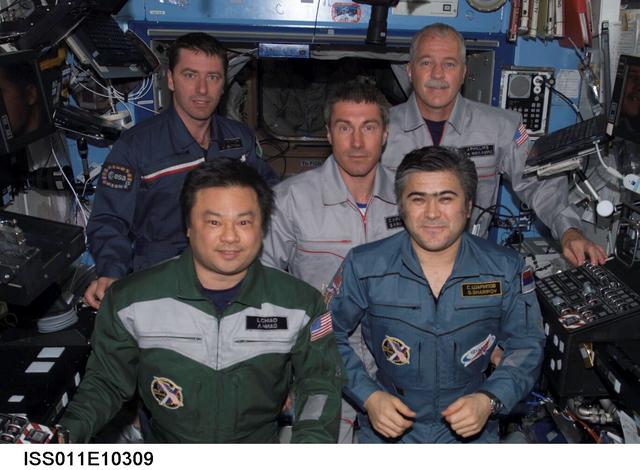
ISS011-E-10309 (21 April 2005) --- The crewmembers onboard the International Space Station gather for an in-flight group photo in the Destiny laboratory. From the left (front row) are astronaut Leroy Chiao, Expedition 10 commander and NASA Space Station science officer; and cosmonaut Salizhan S. Sharipov, Expedition 10 flight engineer representing Russia's Federal Space Agency. From the left (back row) are European Space Agency (ESA) astronaut Roberto Vittori of Italy; cosmonaut Sergei K. Krikalev, Expedition 11 commander representing Russia's Federal Space Agency; and astronaut John L. Phillips, Expedition 11 NASA Space Station science officer and flight engineer.
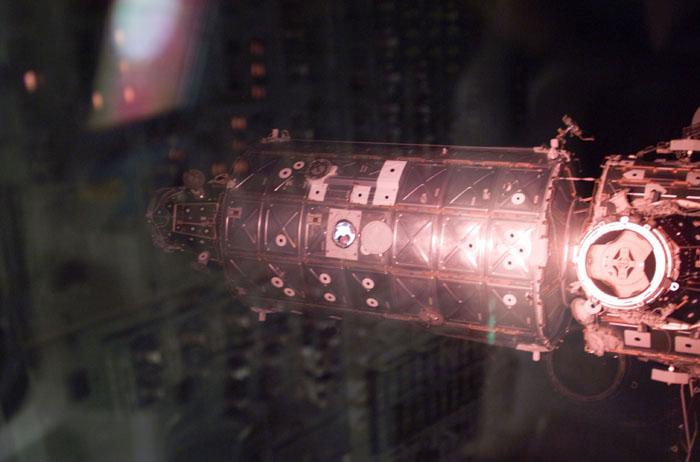
STS98-E-5304 (16 February 2001) --- The faces of some members of the Expedition One crew can be seen in the window of the newly attached Destiny laboratory as the International Space Station (ISS) and the Space Shuttle Atlantis (from which the digital still was taken) begin their relative separation.
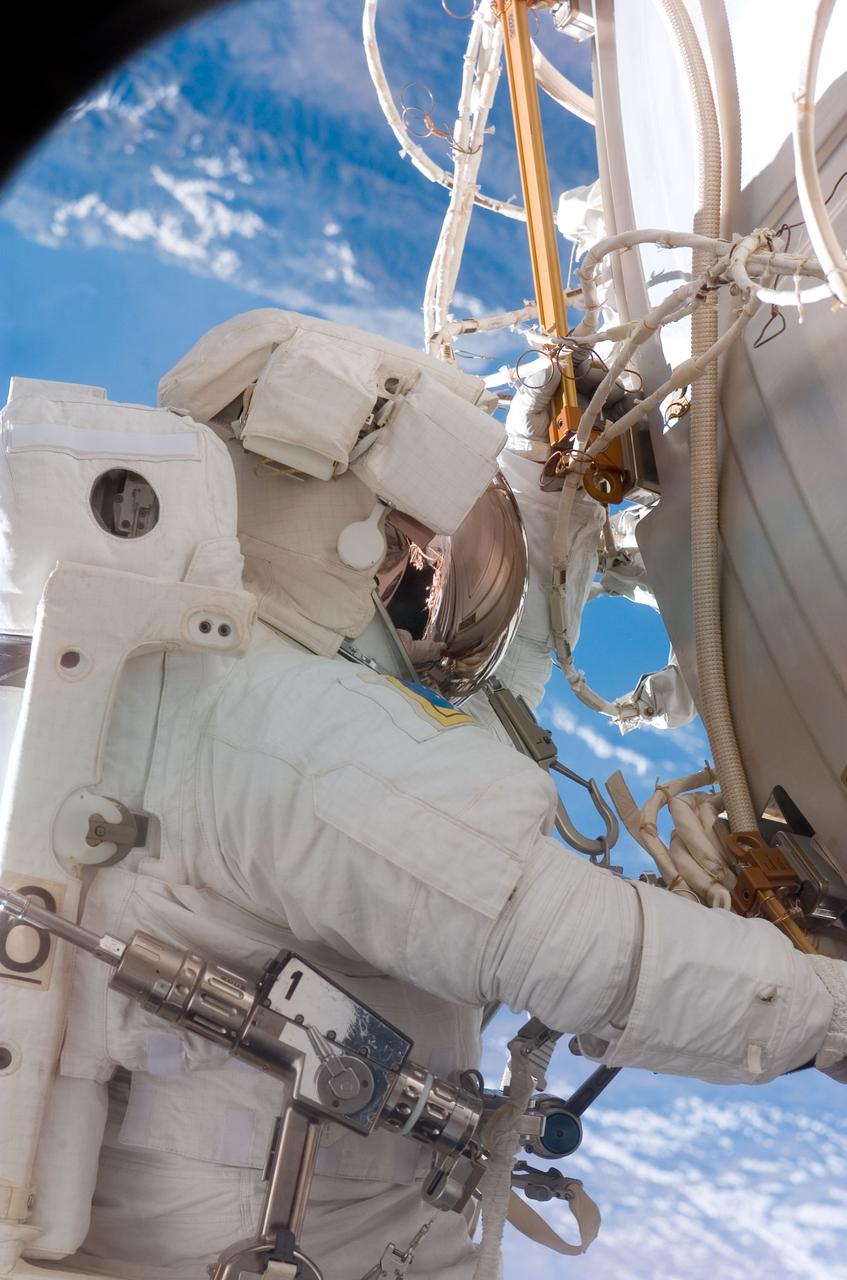
S120-E-007581 (30 Oct. 2007) --- Astronaut Doug Wheelock, STS-120 mission specialist, participates in the third scheduled session of extravehicular activity (EVA) as construction continues on the International Space Station. During the 7-hour, 8-minute spacewalk Wheelock and astronaut Scott Parazynski (out of frame), mission specialist, installed the P6 truss segment with its set of solar arrays to its permanent home, installed a spare main bus switching unit on a stowage platform, and performed a few get-ahead tasks.
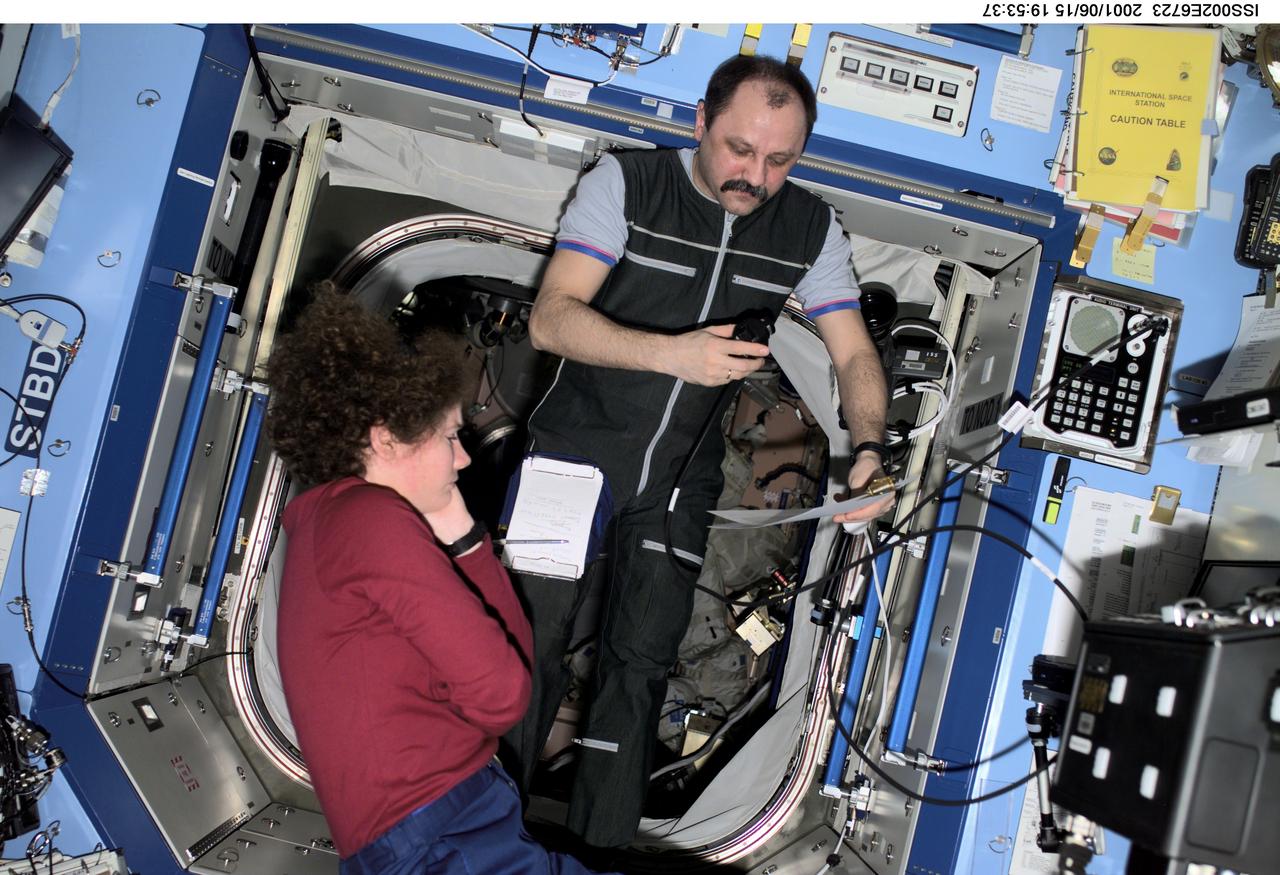
ISS002-E-6723 (15 June 2001) --- Astronaut Susan J. Helms, Expedition Two flight engineer, and cosmonaut Yury V. Usachev, mission commander, discuss a checklist in the Destiny/U.S. Laboratory. Usachev is with Rosaviakosmos. The photo was taken with a digital still camera.
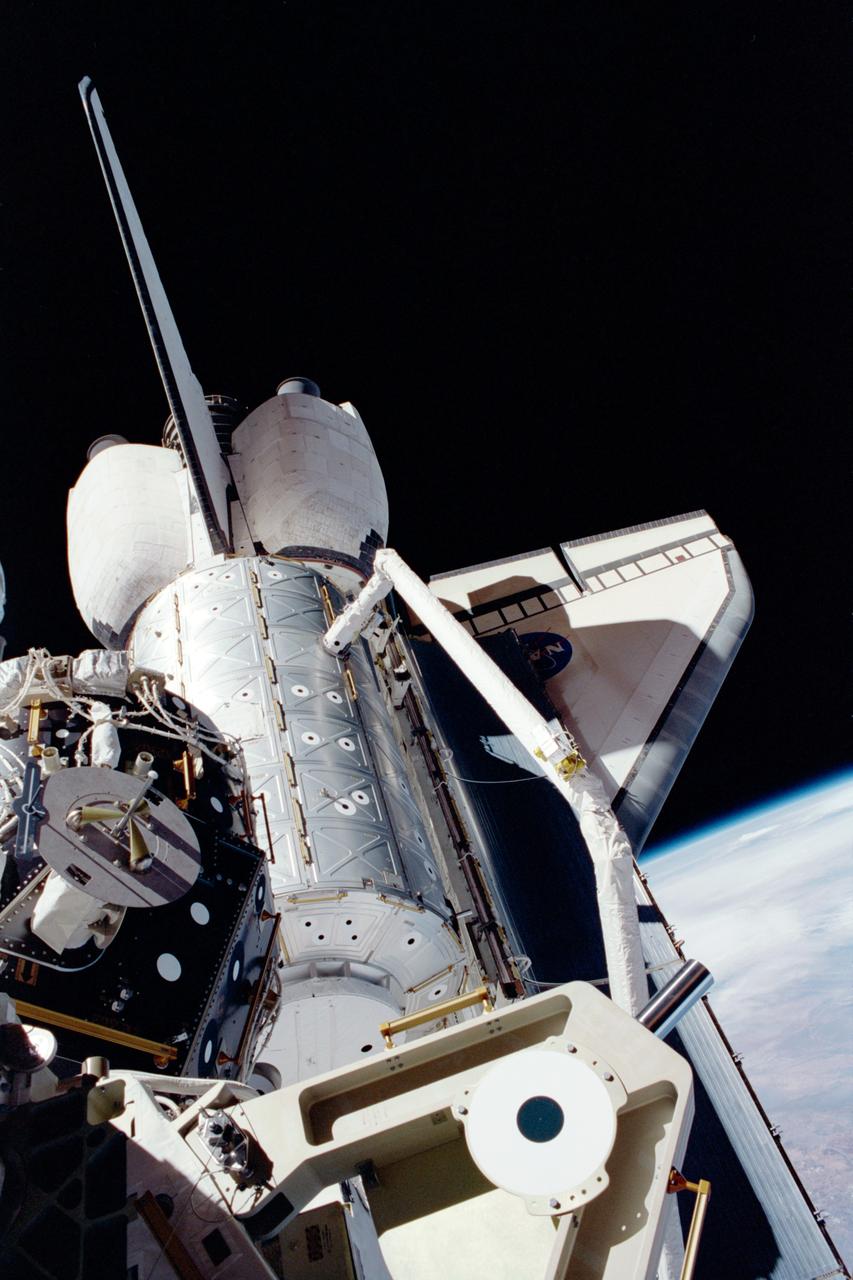
STS098-331-005 (7-20 February 2001) --- In the grasp of the shuttle’s remote manipulator system (RMS) robot arm, the Destiny laboratory is moved from its stowage position in the cargo bay of the Space Shuttle Atlantis. The photo was taken by astronaut Thomas D. Jones, who was participating in one of three STS-98/5a spacewalks at the time. Astronaut Robert L. Curbeam (out of frame) also made the three spacewalks.
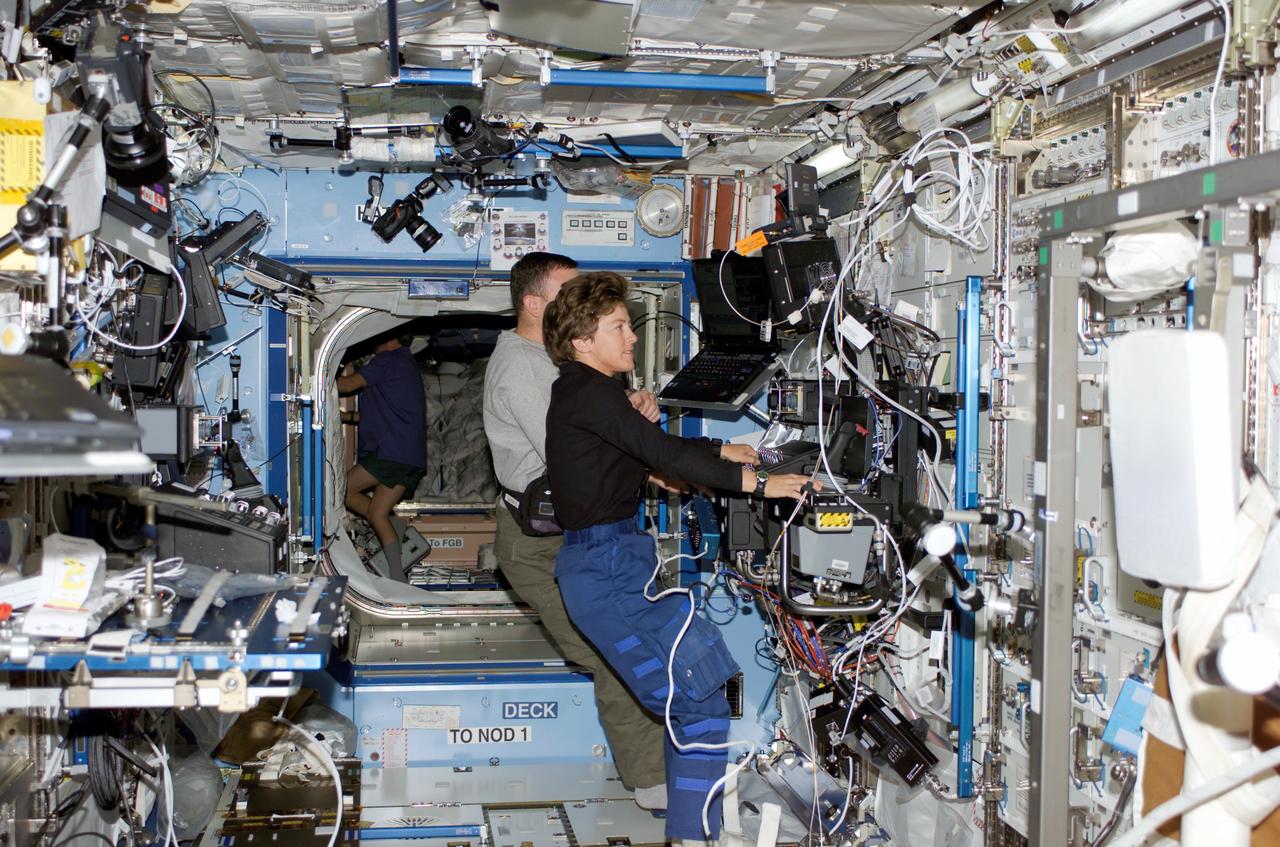
S114-E-6124 (31 July 2005) --- Astronauts Wendy B. Lawrence (foreground), STS-114 mission specialist, and James M. Kelly, pilot, work the controls of the Space Station Remote Manipulator System (SSRMS) or Canadarm2 in the Destiny laboratory of the international space station.
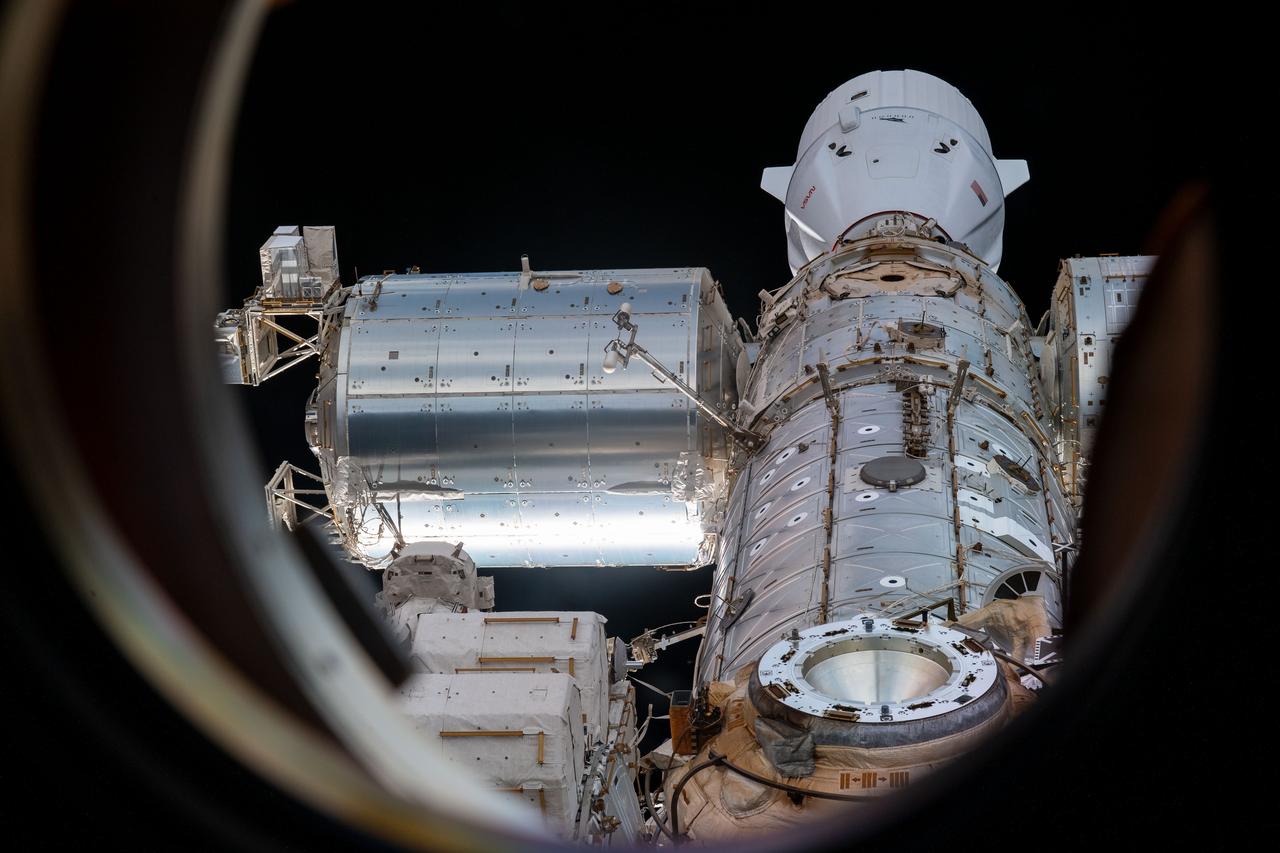
iss067e214074 (Aug. 2, 2022) --- This view of the International Space Station from a window on the orbiting lab's Russian segment shows portions of the Rassvet module's docking port, the U.S. Destiny laboratory module, the Harmony module, Columbus laboratory module, and the Kibo laboratory module. Docked to Harmony at top, is the SpaceX Dragon resupply ship.
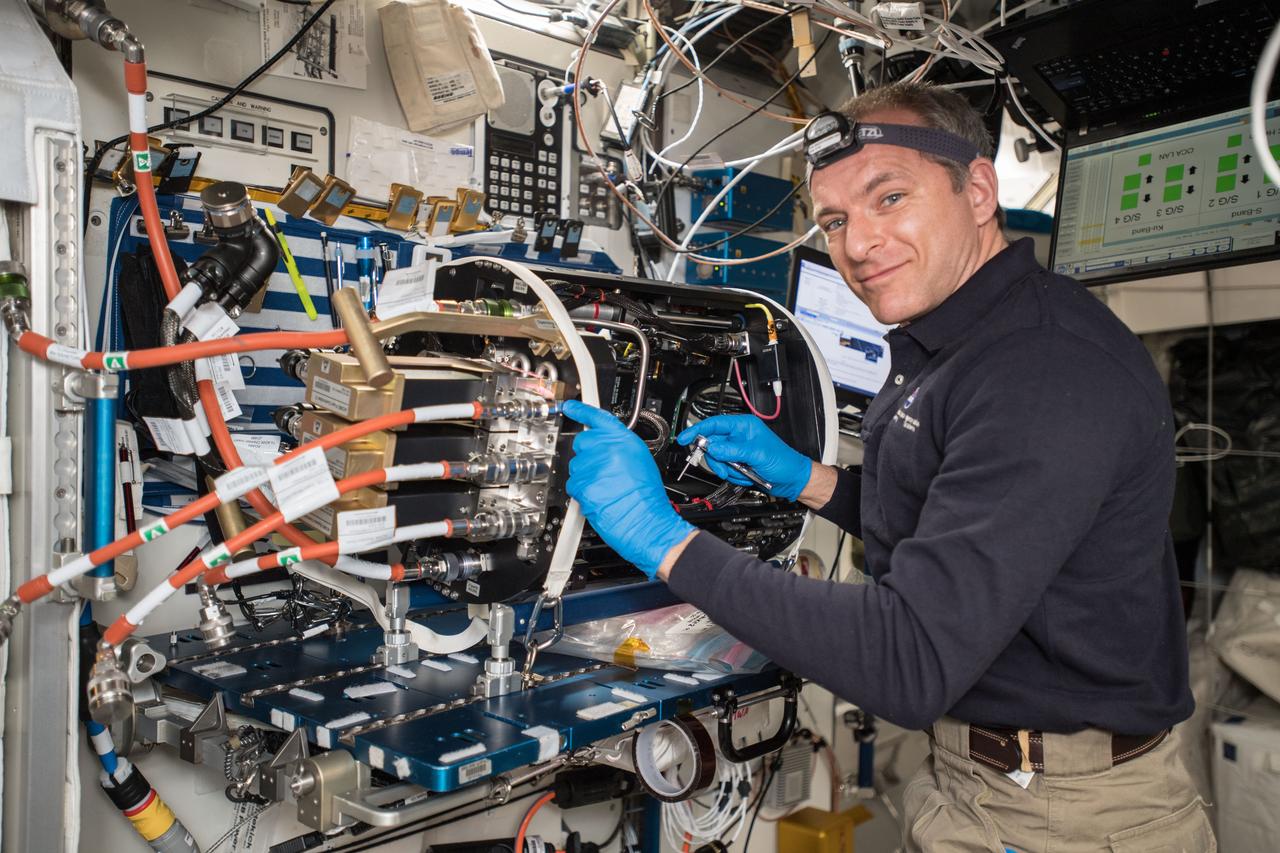
iss058e008801 (Jan. 31, 2019) --- Astronaut David Saint-Jacques of the Canadian Space Agency replaces a control unit and a radiometer inside the Combustion Integrated Rack's (CIR) ACME (Advanced Combustion via Microgravity Experiments) Chamber Insert. The replacement work in the chamber was done on the Unity module's work surface area. The CIR is a fuel and flame research rack housed inside the Destiny laboratory module.
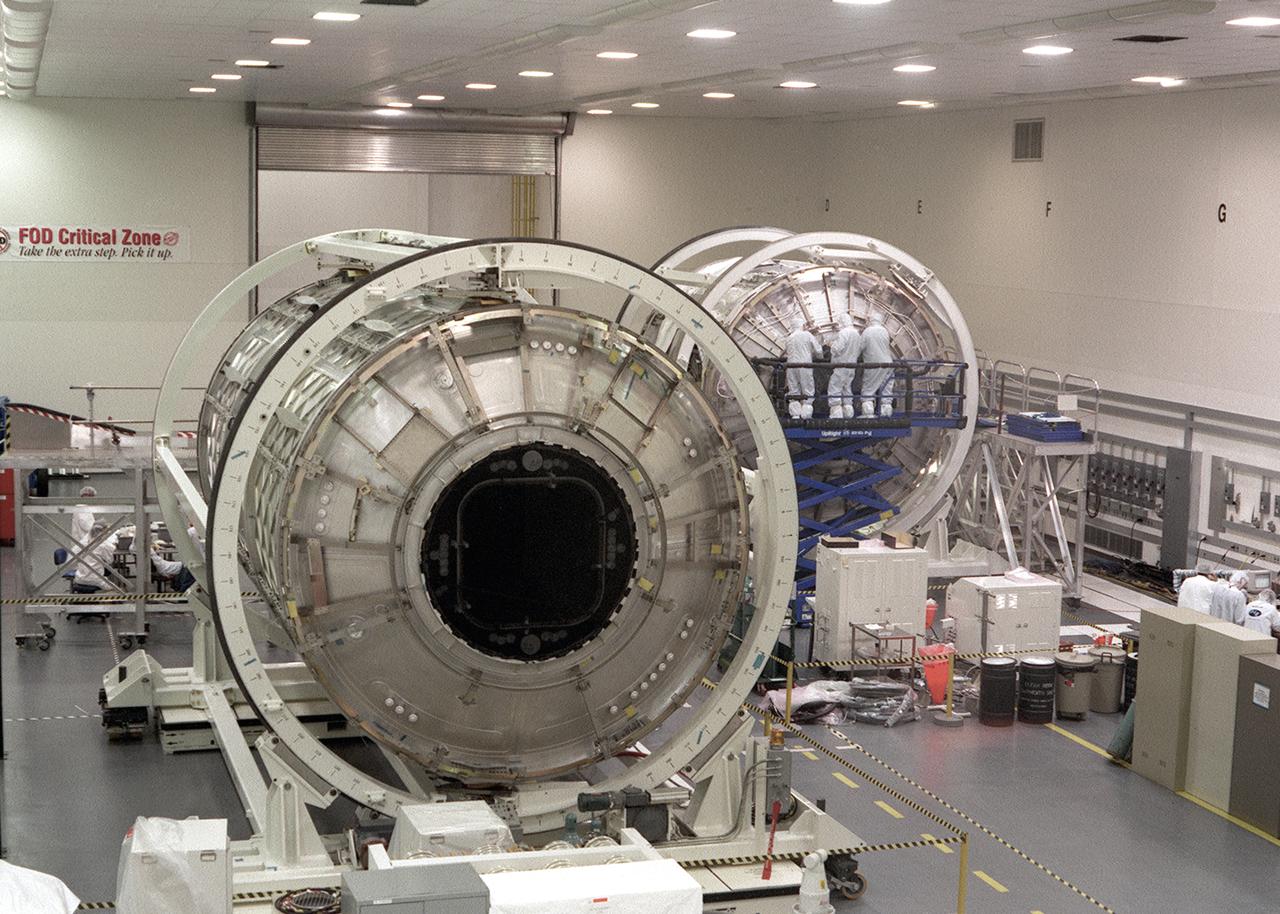
This Boeing photograph shows the Node 1, Unity module, Flight Article (at right) and the U.S. Laboratory module, Destiny, Flight Article for the International Space Station (ISS) being manufactured in the High Bay Clean Room of the Space Station Manufacturing Facility at the Marshall Space Flight Center. The Node 1, or Unity, serves as a cornecting passageway to Space Station modules. The U.S. built Unity module was launched aboard the orbiter Endeavour (STS-88 mission) on December 4, 1998 and connected to the Zarya, the Russian-built Functional Energy Block (FGB). The U.S. Laboratory (Destiny) module is the centerpiece of the ISS, where science experiments will be performed in the near-zero gravity of space. The U.S. Laboratory/Destiny was launched aboard the orbiter Atlantis (STS-98 mission) on February 7, 2001. The ISS is a multidisciplinary laboratory, technology test bed, and observatory that will provide unprecedented undertakings in scientific, technological, and international experimentation.
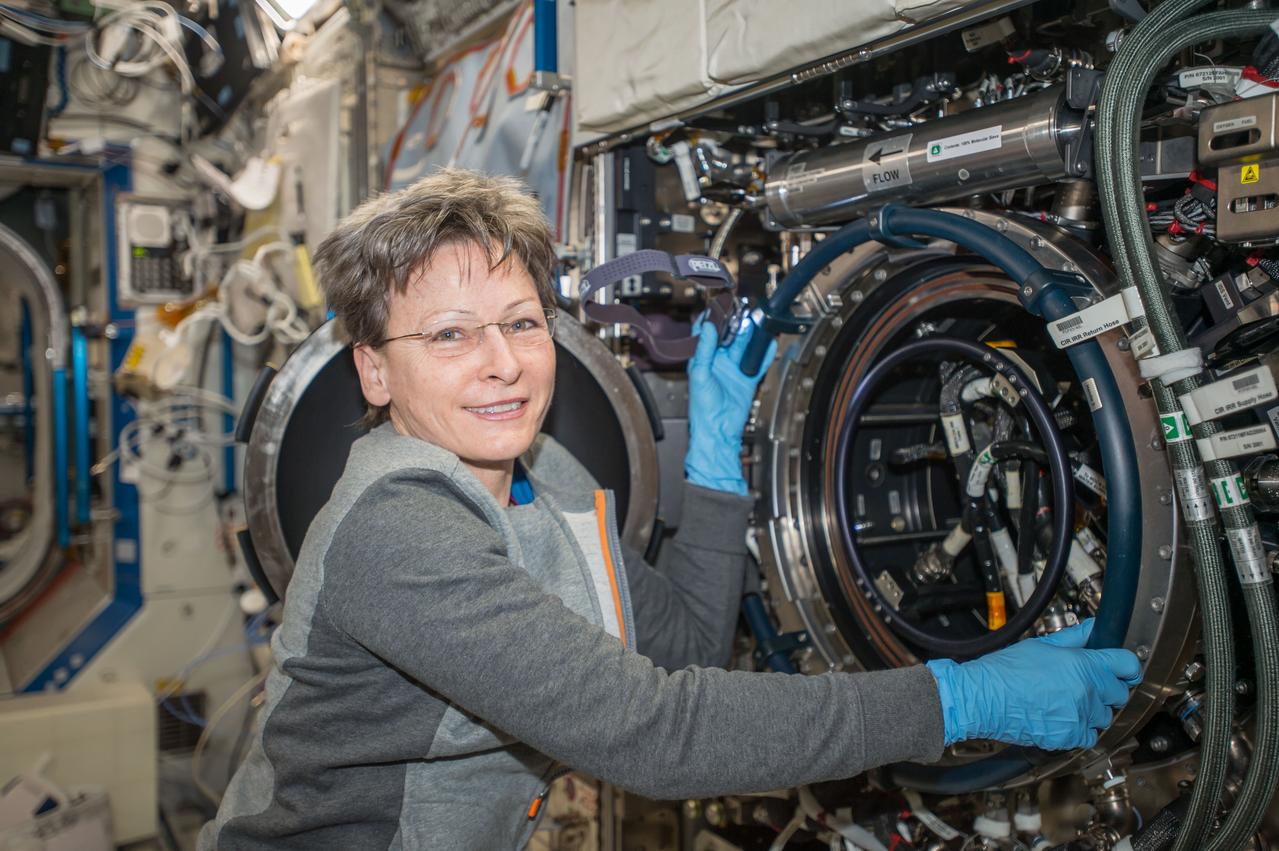
iss052e027048 (Aug. 4, 2017) --- Astronaut Peggy Whitson works on the Combustion Integrated Rack in the U.S. Destiny laboratory module.
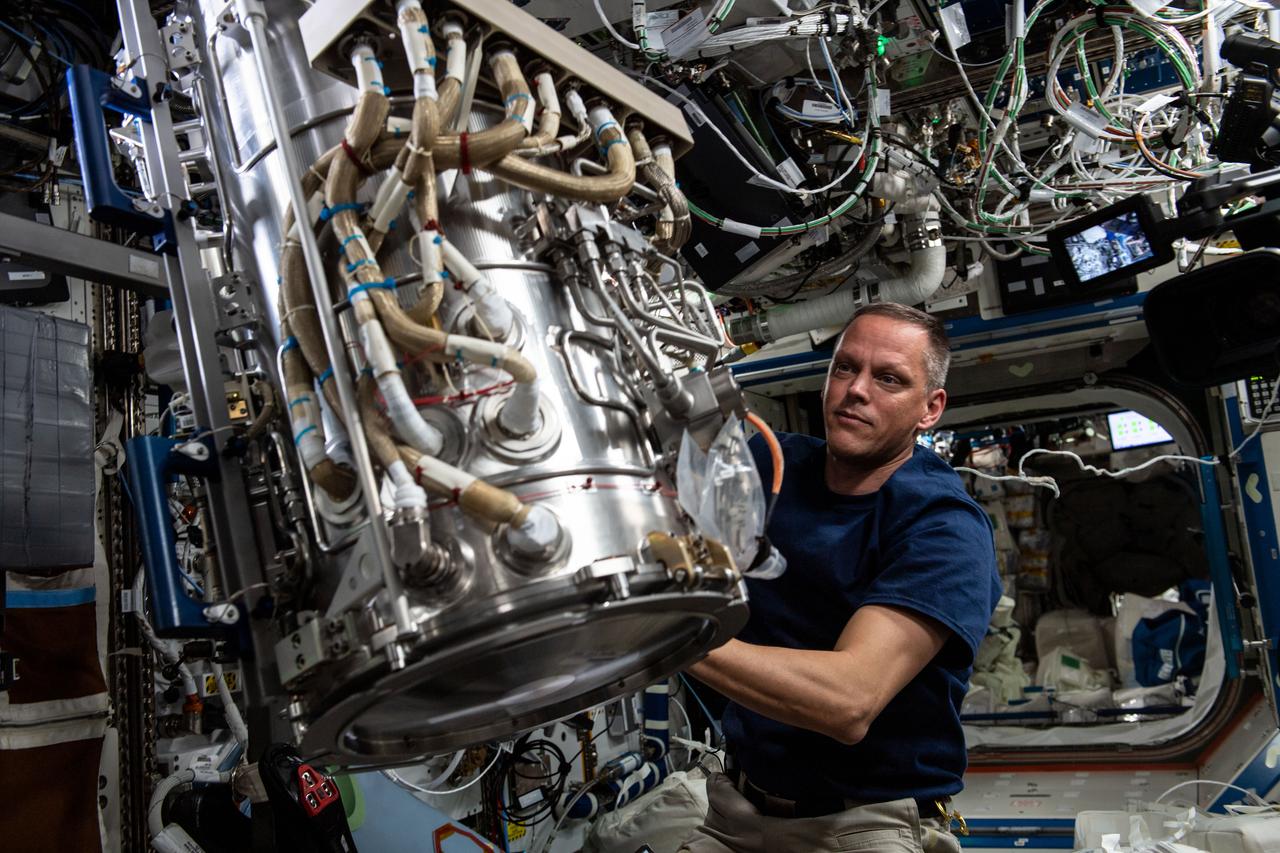
iss067e189903 (July 20, 2022) --- NASA astronaut and Expedition 67 Flight Engineer Bob Hines works to remove and replace the Material Science Laboratory's vacuum sensor inside the International Space Station's U.S. Destiny laboratory module.
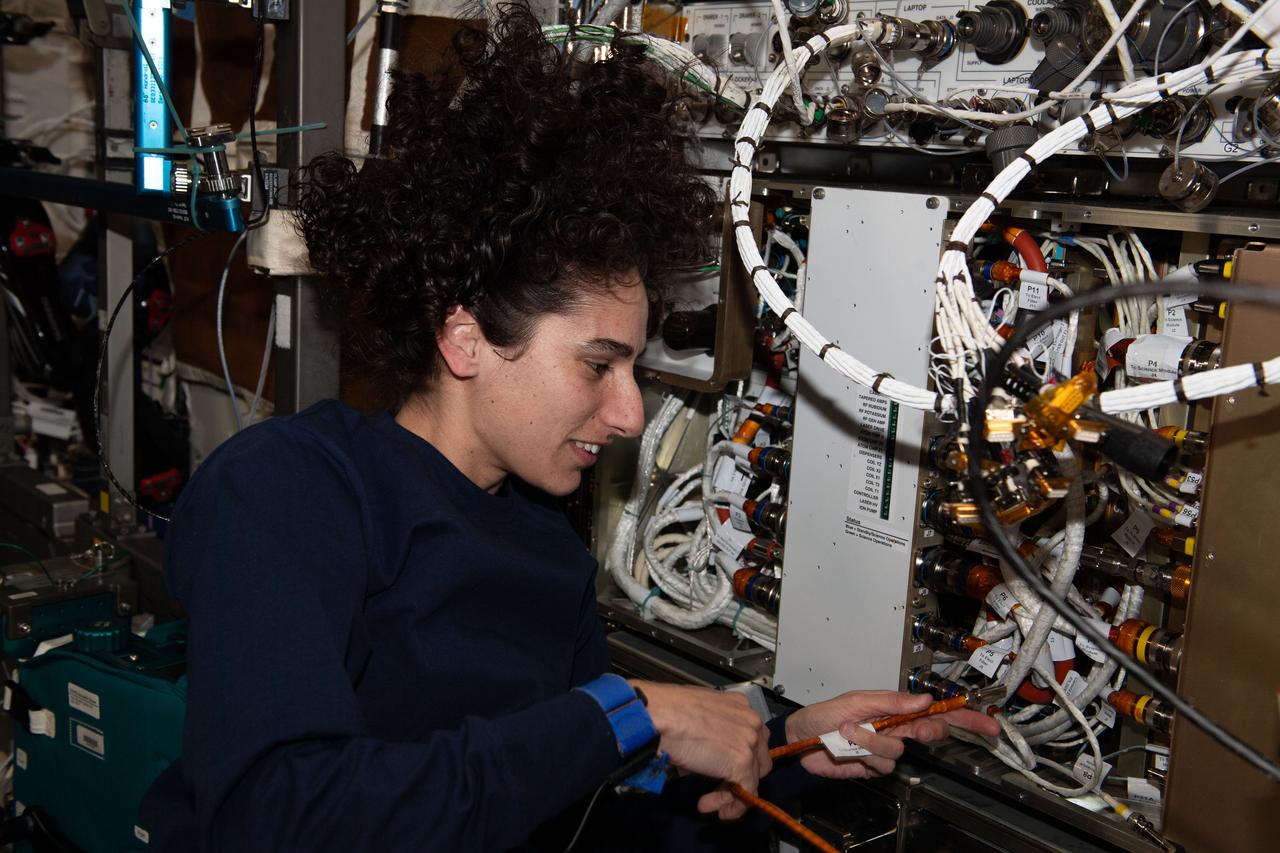
iss070e030810 (Nov. 27, 2023) --- NASA astronaut and Expedition 70 Flight Engineer Jasmin Moghbeli works on the Materials Science Laboratory, a physics research facility, located in the International Space Station's Destiny laboratory module.
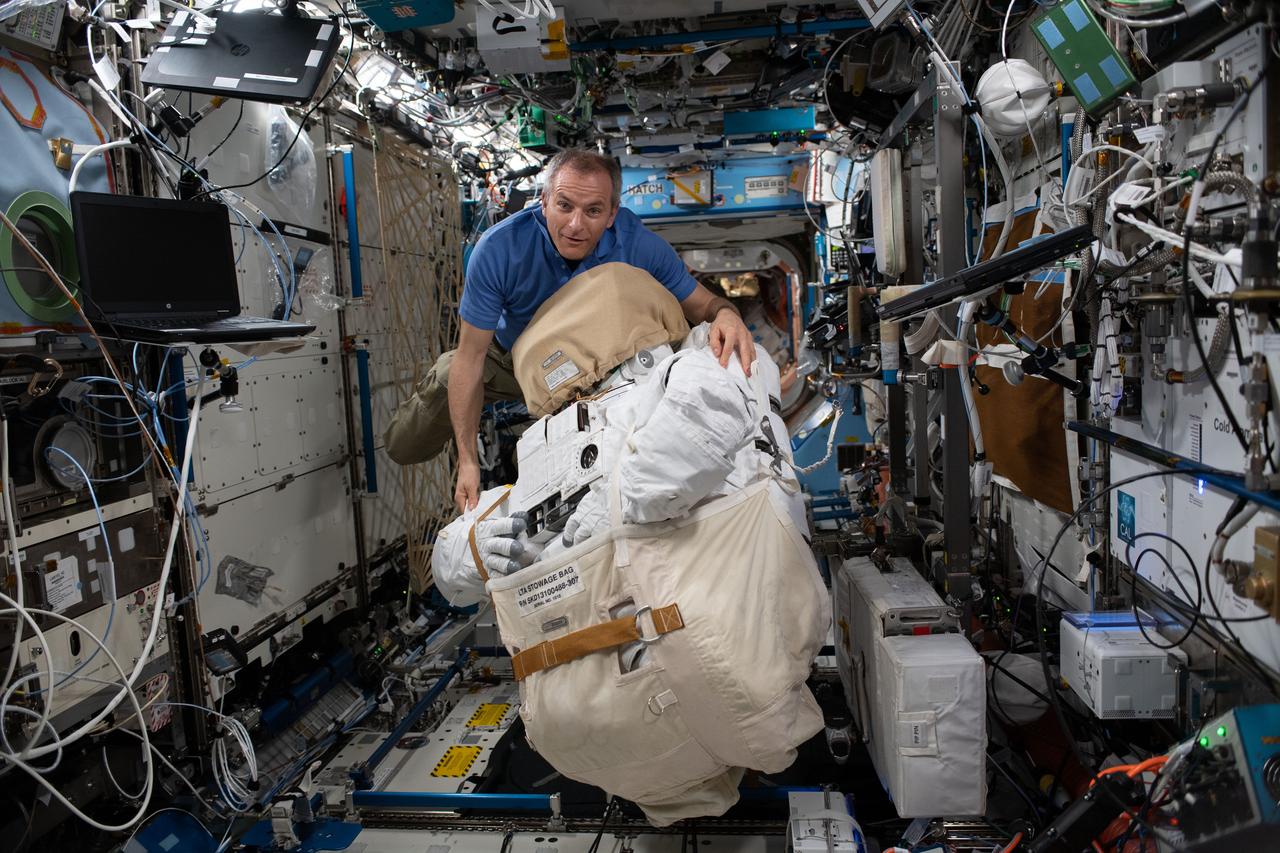
iss059e001272 (March 19, 2019) --- Canadian Space Agency astronaut David Saint-Jacques moves a U.S spacesuit inside the Destiny laboratory module.
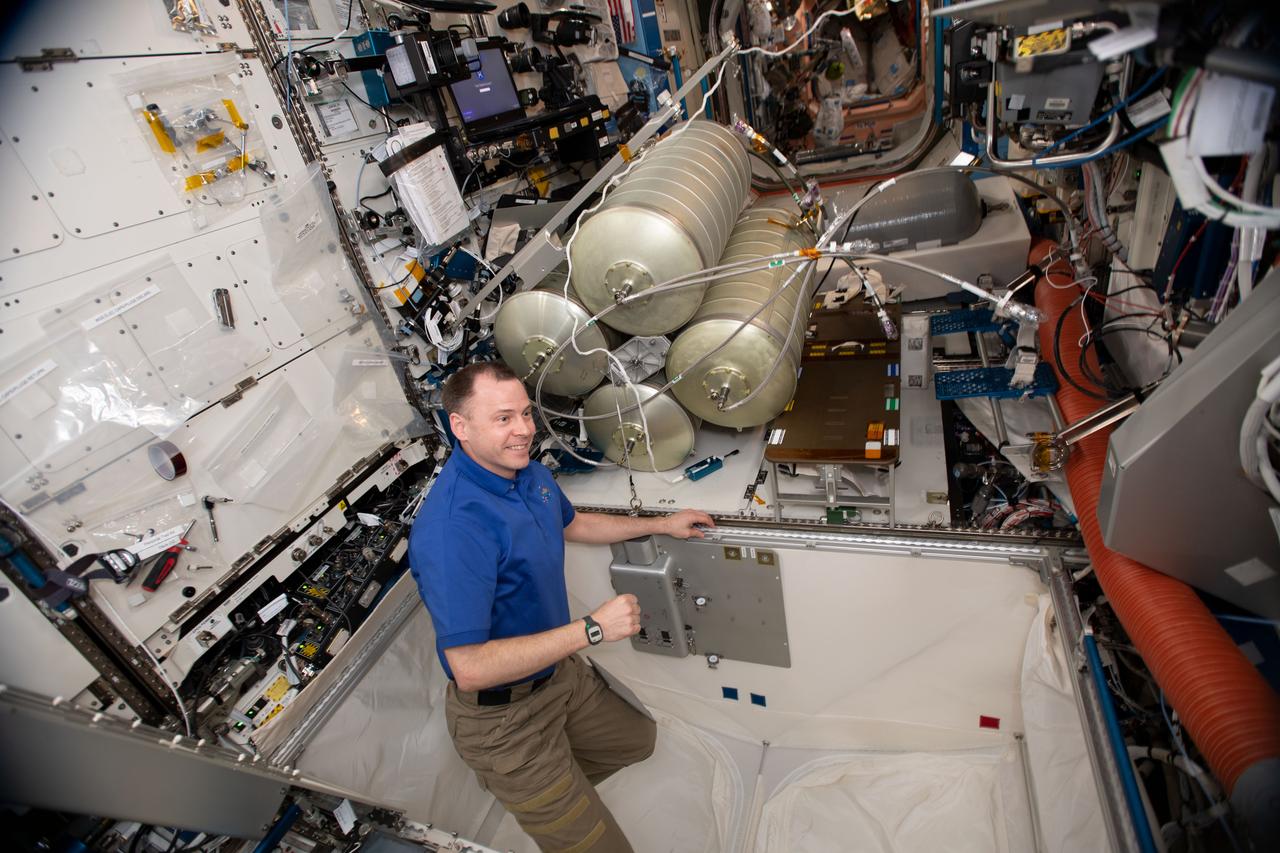
iss059e079472 (May 29, 2019) --- NASA astronaut Nick Hague assembles and installs the Water Storage System inside the U.S. Destiny laboratory module.
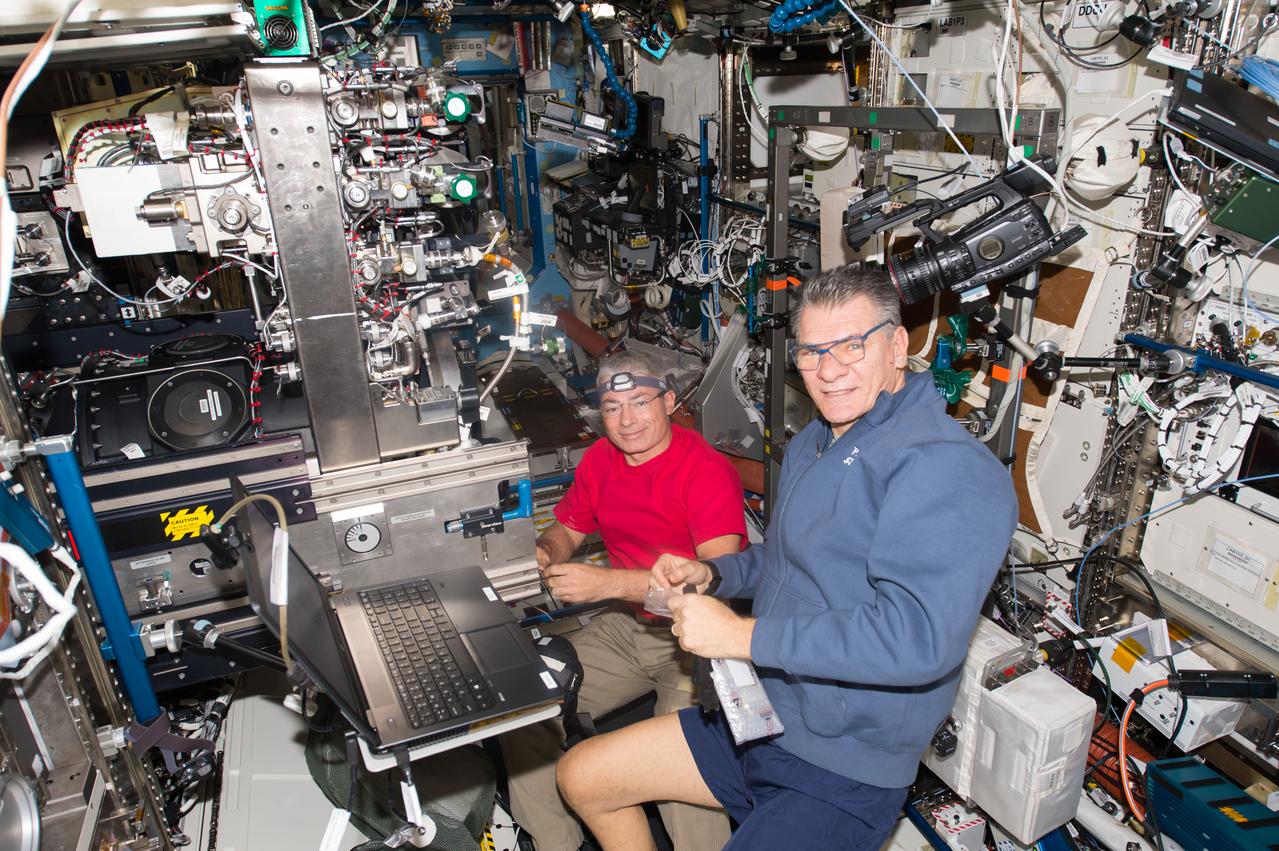
iss053e047442 (Sept. 25, 2017) --- Astronauts Mark Vande Hei (left) and Paolo Nespoli work on science gear inside the Destiny laboratory module.
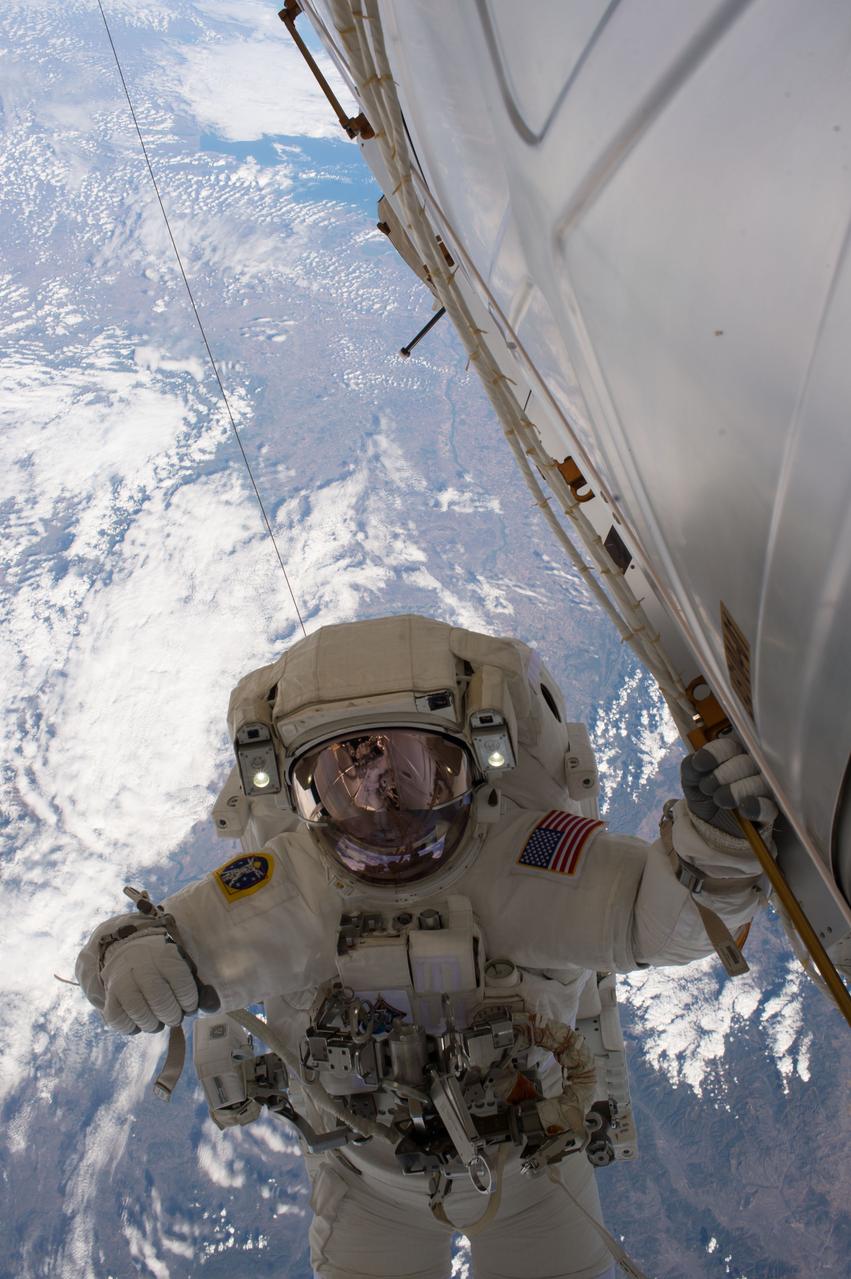
iss053e095699 (Oct. 10, 2017) --- Astronaut Mark Vande Hei is pictured tethered to the outside of the U.S. Destiny laboratory module during a spacewalk on Oct. 10, 2017.
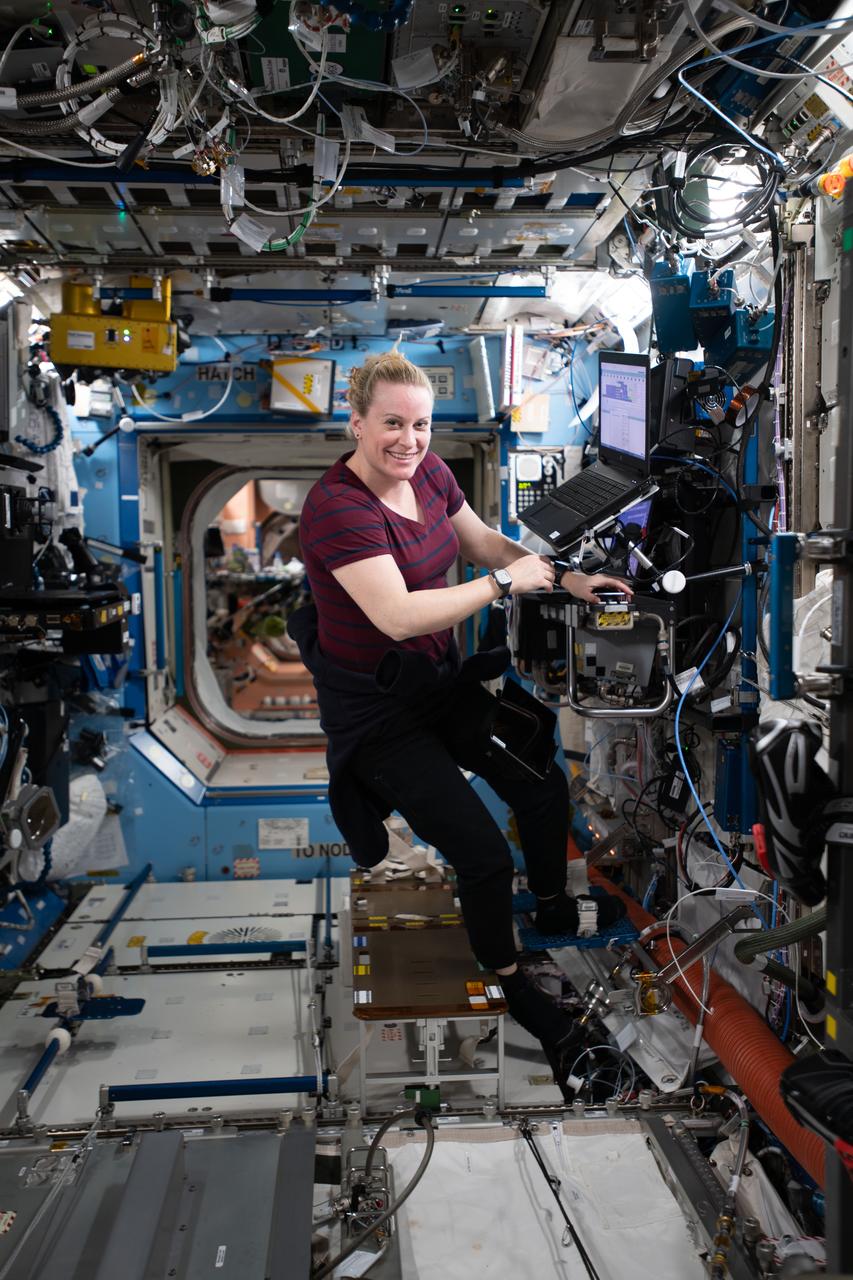
iss064e009920 (Dec. 6, 2020) --- NASA astronaut and Expedition 64 Flight Engineer Kate Rubins is pictured in the U.S. Destiny laboratory module conducting maintenance work.
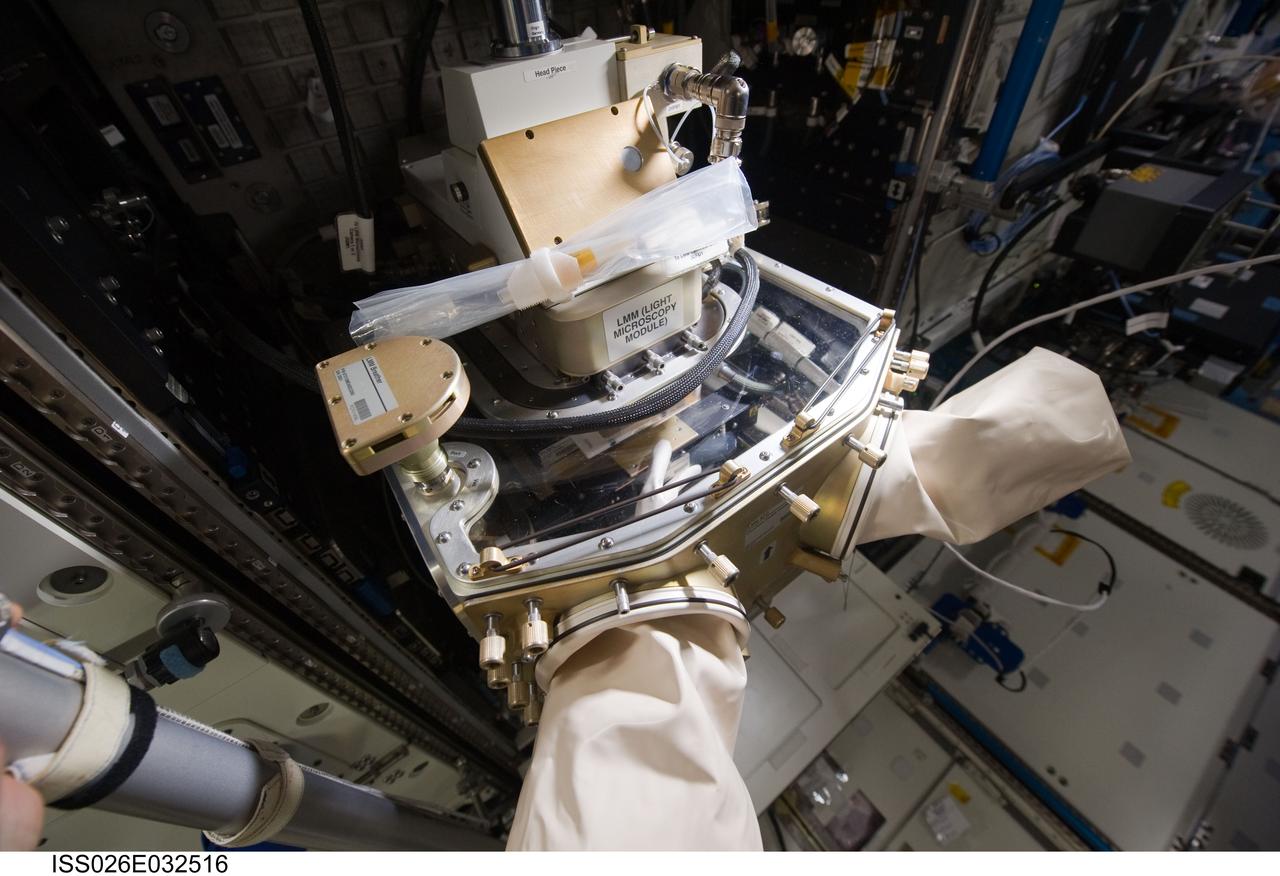
ISS026-E-032516 (8 March 2011) --- The Light Microscopy Module (LMM) in the Destiny laboratory of the International Space Station photographed by an Expedition 26 crew member.
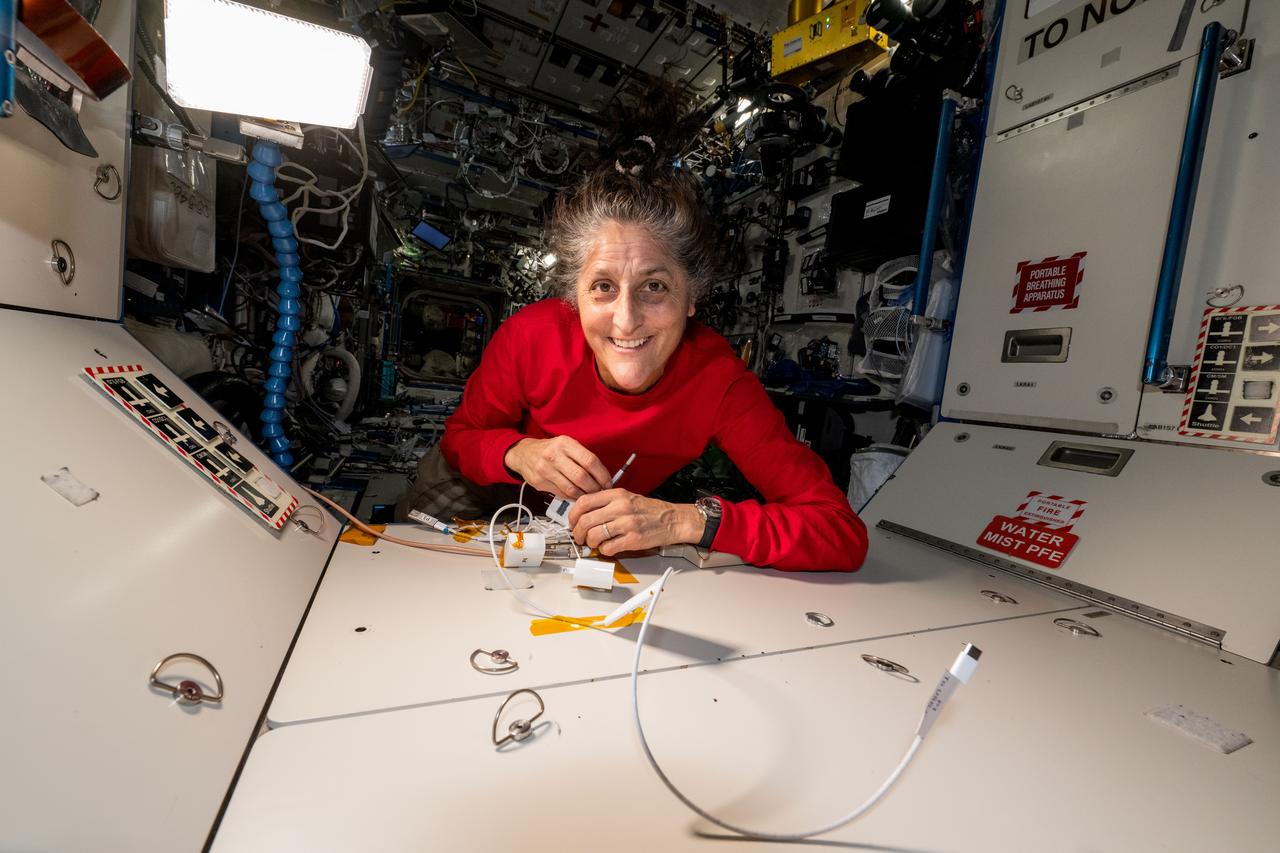
iss071e608493 (Sept. 4, 2024) --- NASA astronaut Suni Williams configures portable electronics gear aboard the International Space Station's Destiny laboratory module.
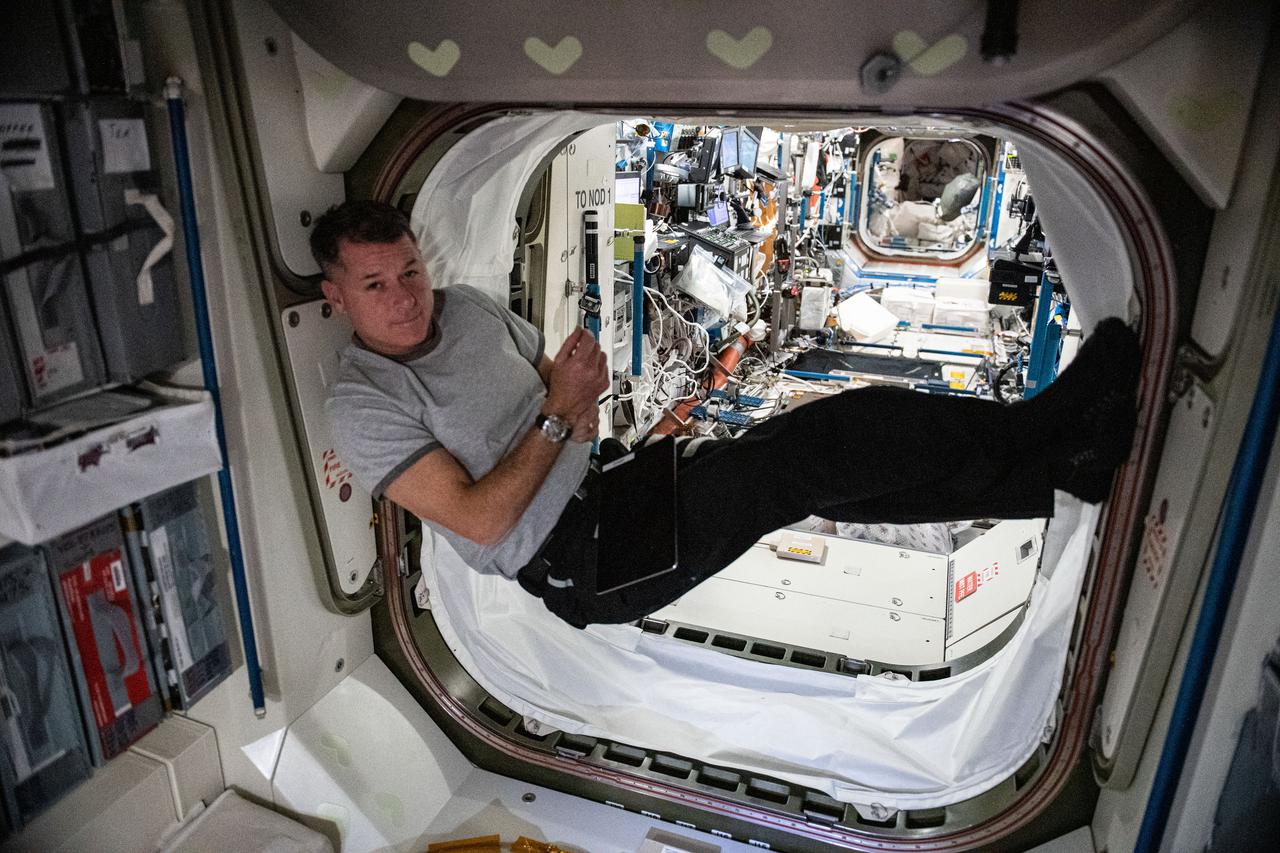
iss065e148861 (June 28, 2021) --- NASA astronaut and Expedition 65 Flight Engineer Shane Kimbrough rests inside the vestibule in between the Unity module and the U.S. Destiny laboratory module.
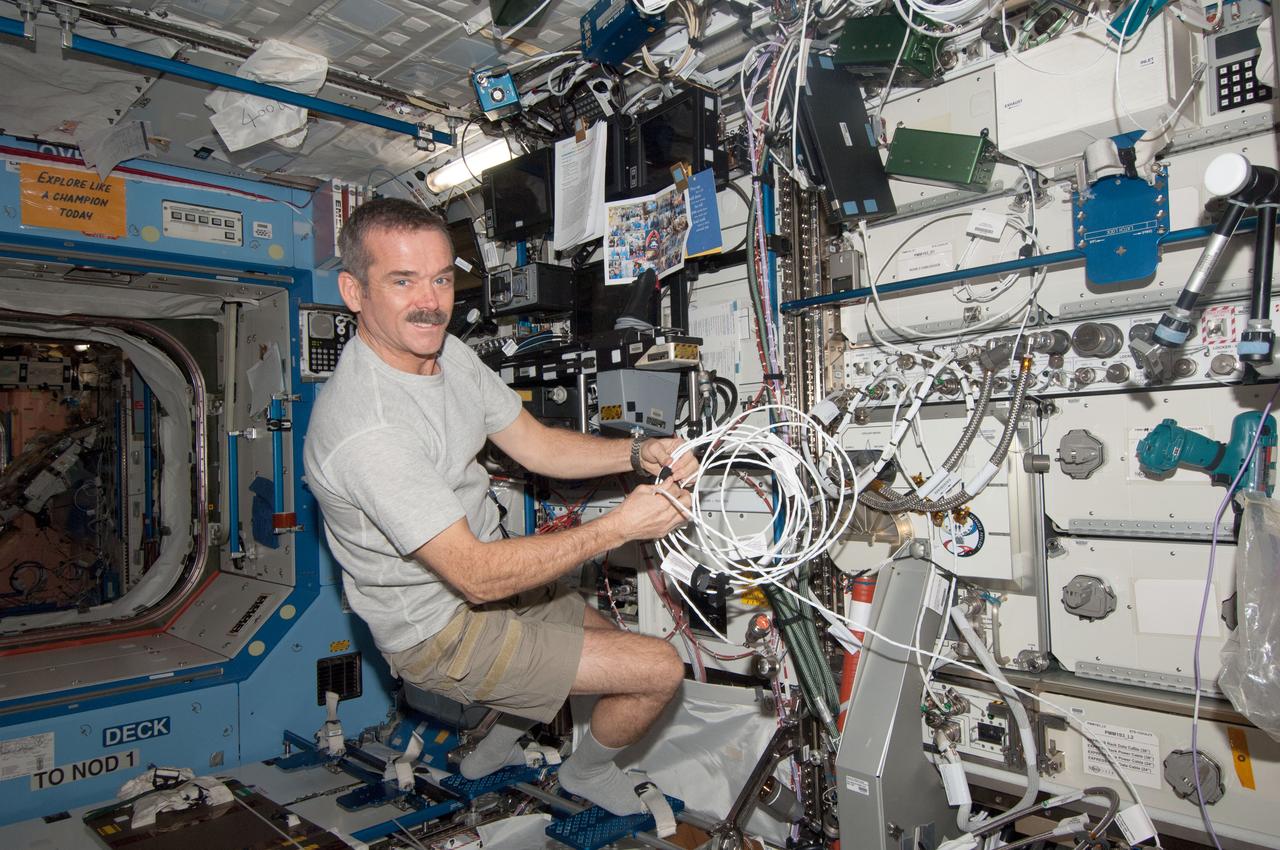
View of Canadian Space Agency (CSA) Chris Hadfield, Expedition 34 Flight Engineer (FE), wiring the condensate transfer pump, in the U.S. Laboratory. Image was released via astronaut Twitter. Original camera number is 268C1459. Photo was taken during Expedition 34.
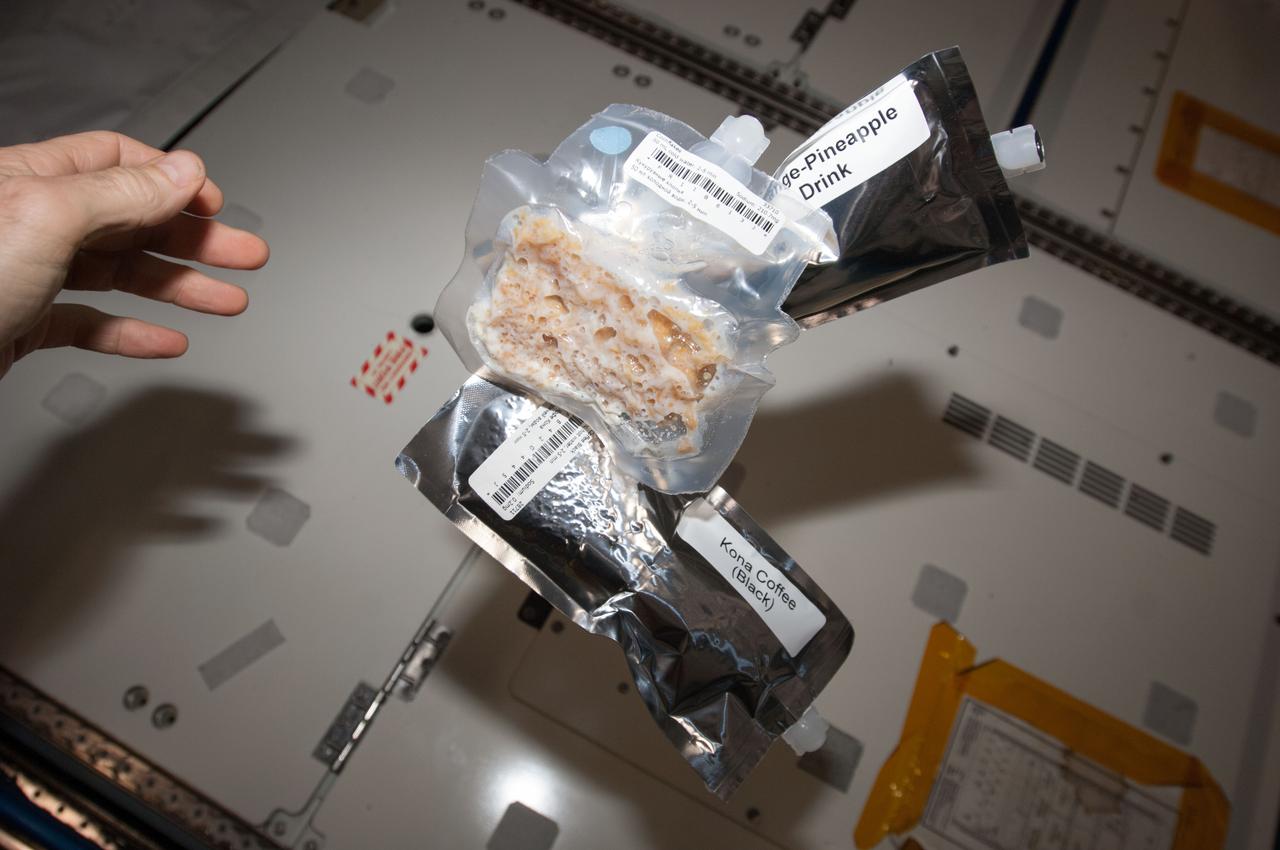
View of drink packets floating,in the U.S. Laboratory. Orange-pineapple drink,cold water,and Kona-coffee (black) are visible. Photo was taken during Expedition 34.
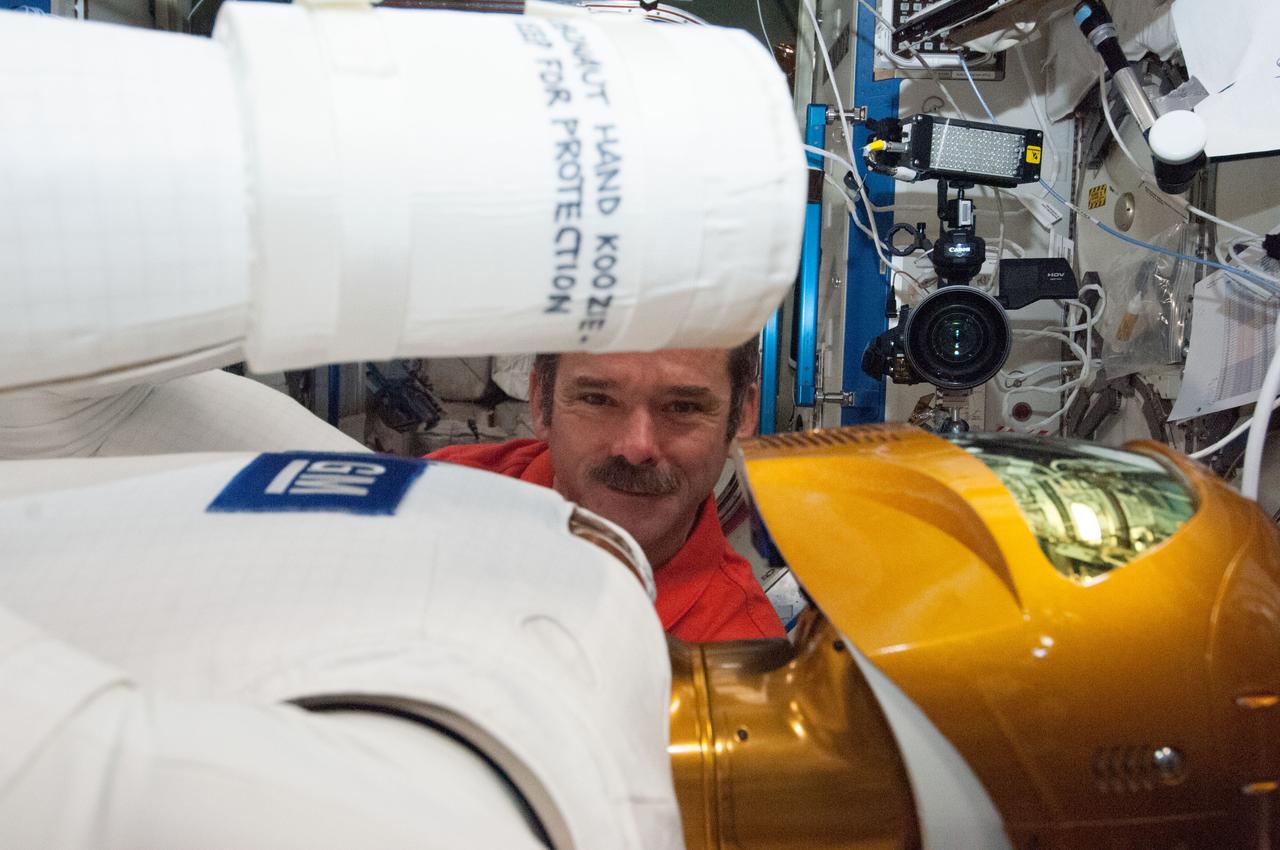
ISS034-E-037346 (31 Jan. 2013) --- Canadian Space Agency astronaut Chris Hadfield, Expedition 34 flight engineer, works with Robonaut 2, the first humanoid robot in space, in the International Space Station’s Destiny laboratory. R2 was powered up so ground controllers could run it through a series of tests and configuration checks.
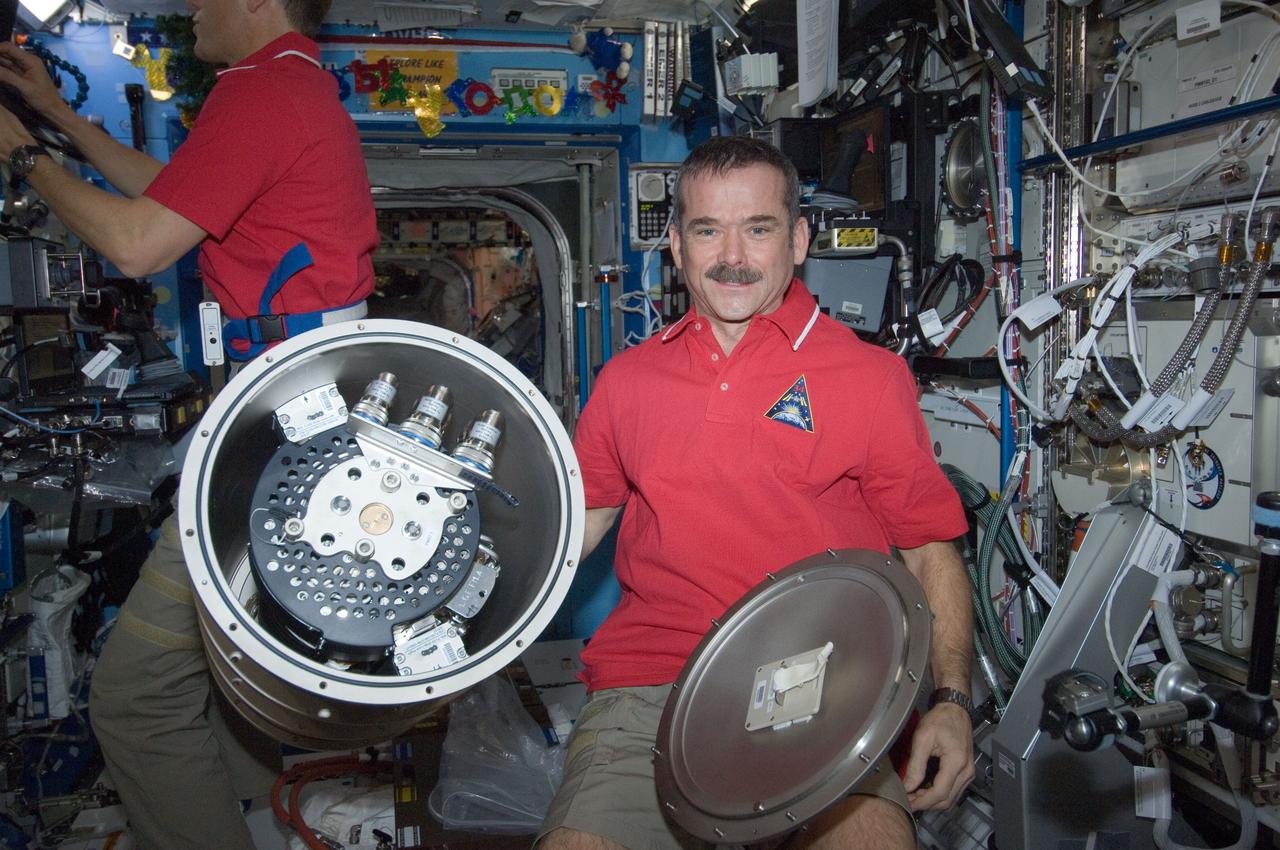
View of Canada Space Agency (CSA) Chris Hadfield, Expedition 34 Flight Engineer (FE), poses with a Materials Science Laboratory (MSL) Furnace Launch Support Structure (FLSS) in the U.S. Laboratory. Tom Marshburn (background), Expedition 34 FE uses laptop computer. Photo was taken during Expedition 34.
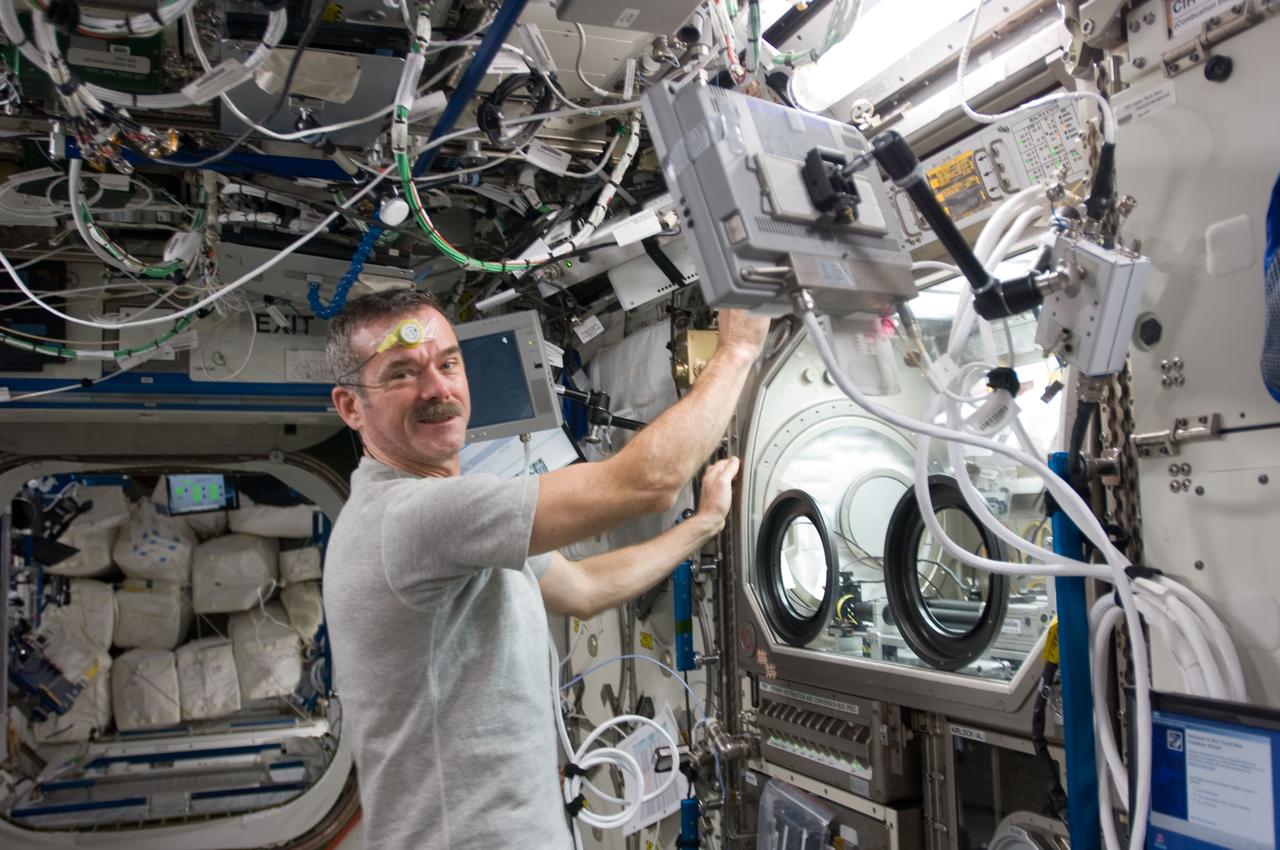
View of Canadian Space Agency (CSA) Chris Hadfield,Expedition 34 Flight Engineer (FE), during the Investigating the Structure of Paramagnetic Aggregates from Colloidal Emulsions 3 (InSPACE-3) experiment. InSPACE-3 collects and records data on fluids containing ellipsoid-shaped particles that change the physical properties of the fluids in response to magnetic fields. Photo was taken during Expedition 34.
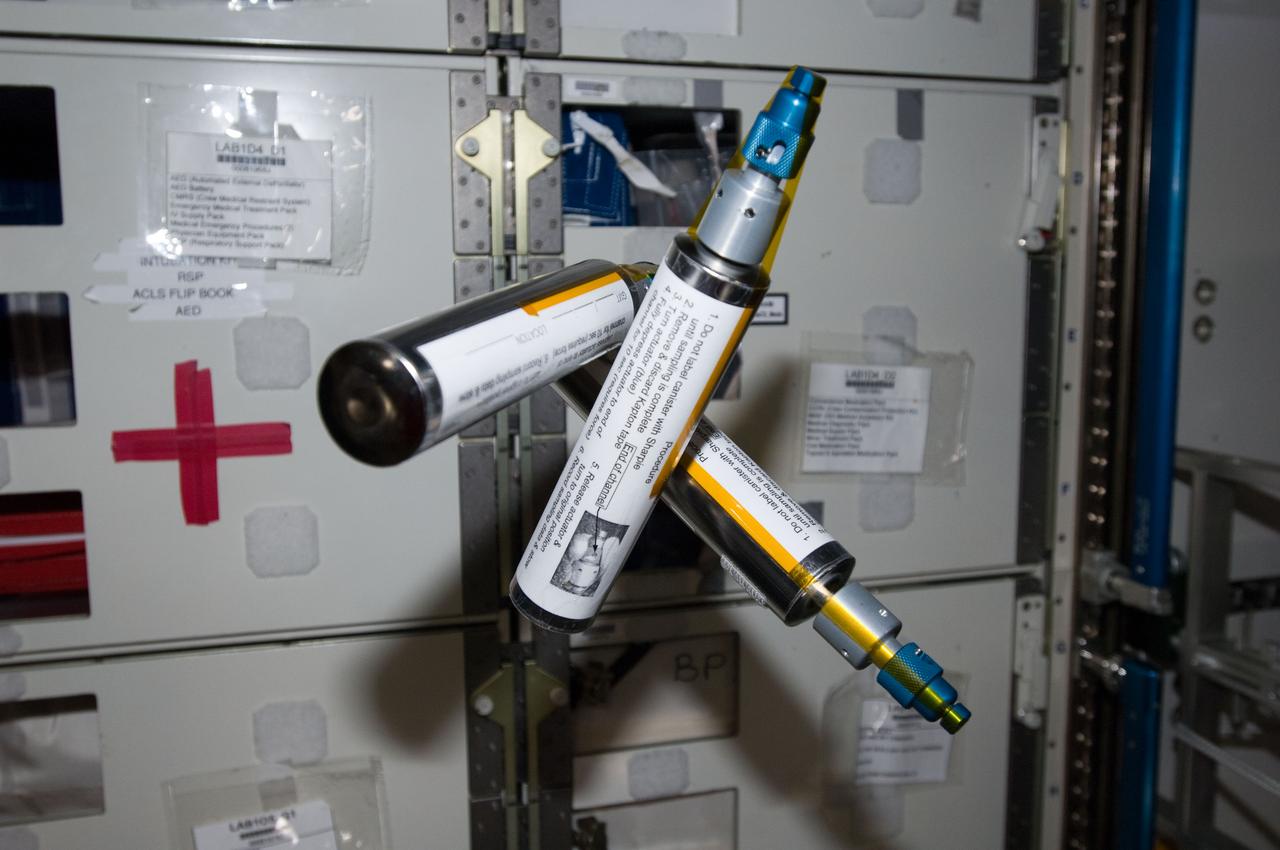
View of Grab Sample Containers (GSC) assembly, Part Number (P/N): SEG46121657-301, Serial Number (S/N): 2106, Barcode: EHS00184J, in the U.S. Laboratory. Photo was taken during Expedition 34.
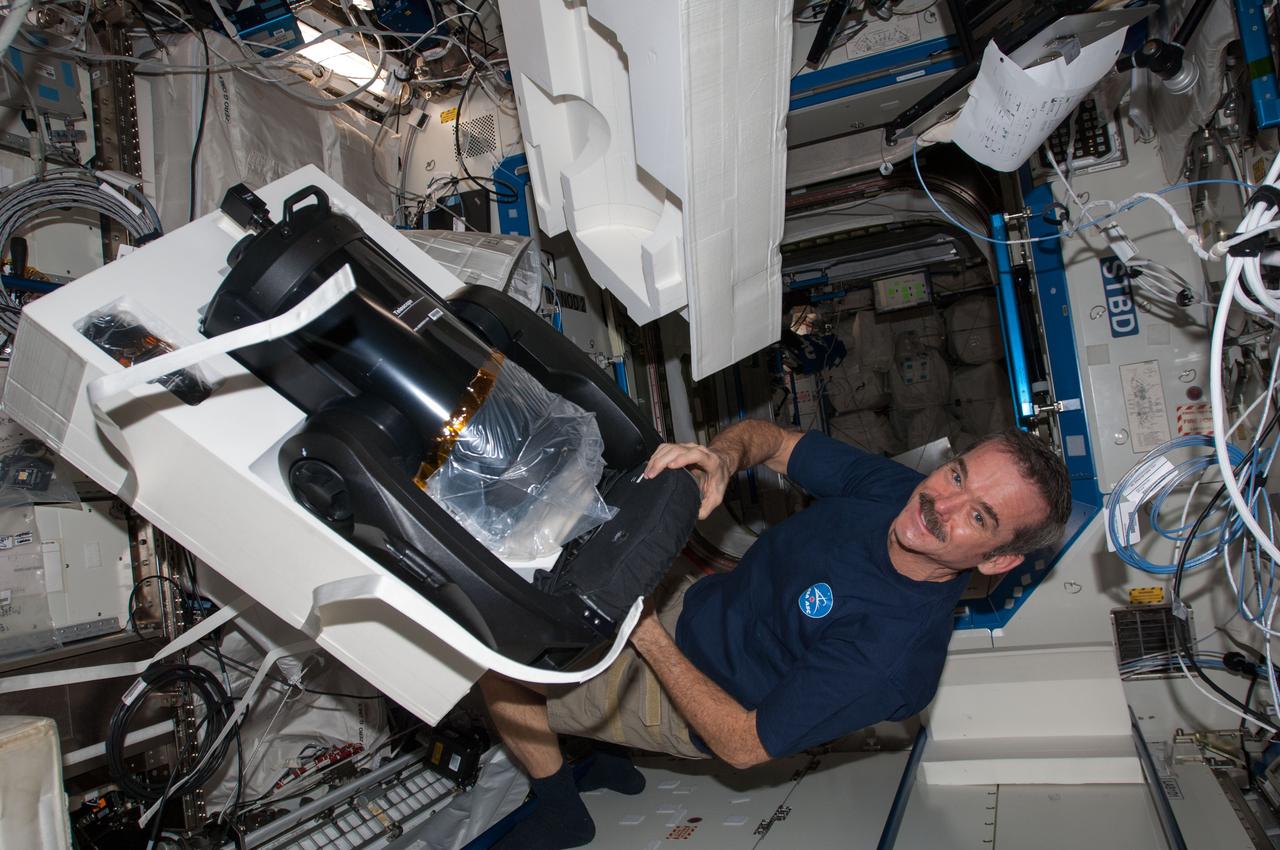
View of Canadian Space Agency (CSA) Chris Hadfield,Expedition 34 Flight Engineer (FE),unpacking ISS SERVIR Environmental Research and Visualization System (ISERV) in the U.S. Laboratory. ISERV is a fully automated image data acquisition system in the Window Observational Research Facility (WORF) rack. Kevin Ford,Expedition 34 Commander is visible on the right of frame. Photo was taken during Expedition 34.
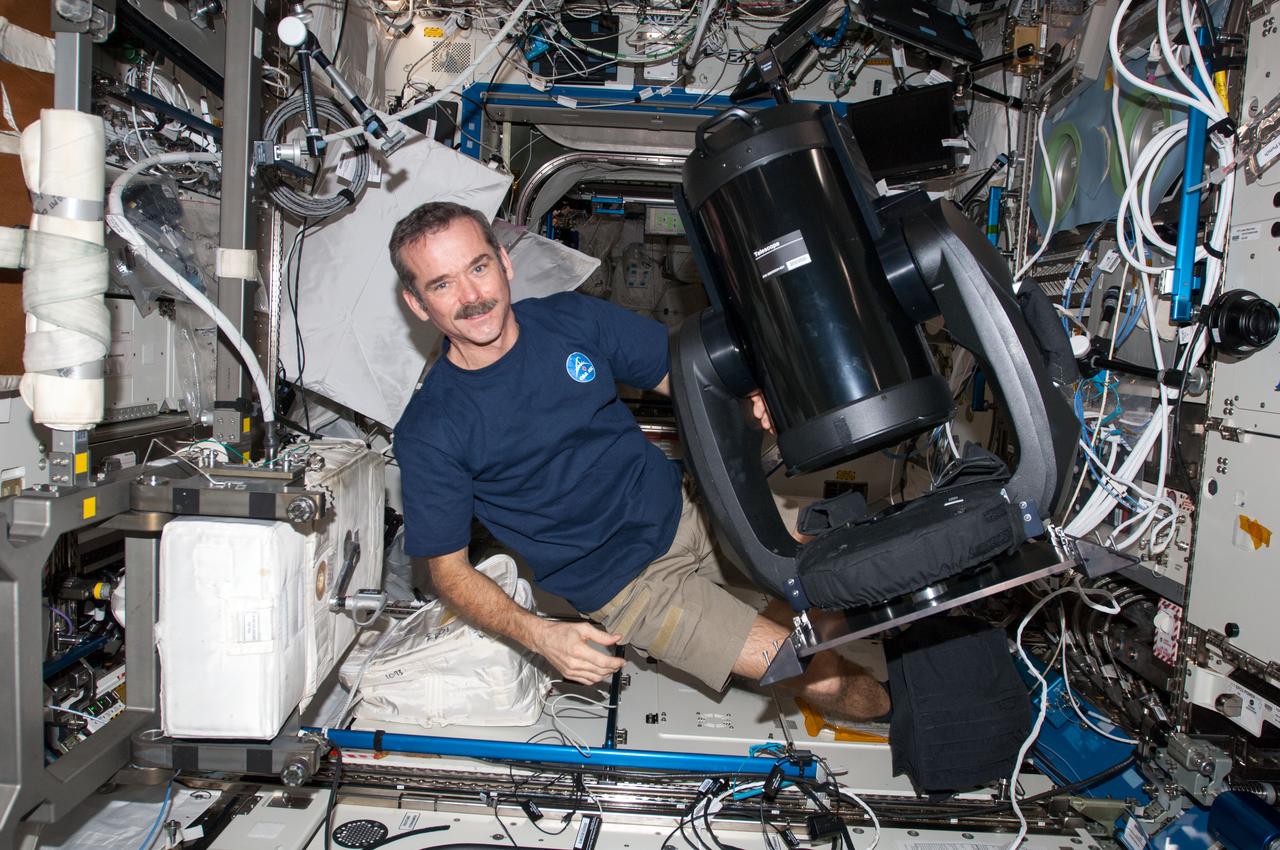
View of Canadian Space Agency (CSA) Chris Hadfield,Expedition 34 Flight Engineer (FE), preparing to setup the ISS SERVIR Environmental Research and Visualization System (ISERV) in the U.S. Laboratory. ISERV is a fully automated image data acquisition system in the Window Observational Research Facility (WORF) rack. Kevin Ford,Expedition 34 Commander is visible on the right of frame. Photo was taken during Expedition 34.
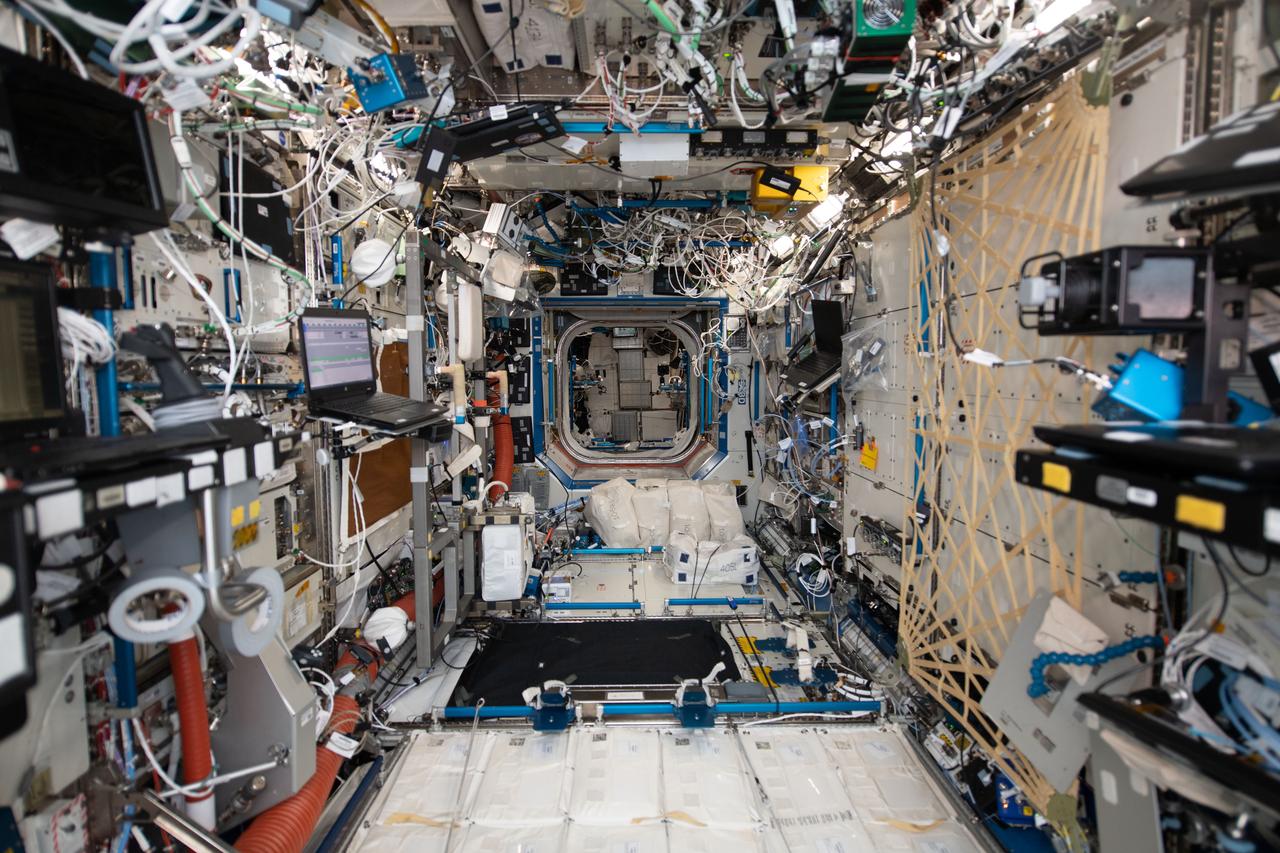
iss058e004610 (1/20/2019) --- A View of the Destiny US Laboratory aboard the International Space Station (ISS). The U.S. Laboratory Module, called Destiny, is the primary research laboratory for U.S. payloads, supporting a wide range of experiments and studies contributing to health, safety, and quality of life for people all over the world. Science conducted on the ISS offers researchers an unparalleled opportunity to test physical processes in the absence of gravity. The results of these experiments will allow scientists to better understand our world and ourselves and prepare us for future missions. Destiny provides internal interfaces to accommodate 24 equipment racks for accommodation and control of ISS systems and scientific research.
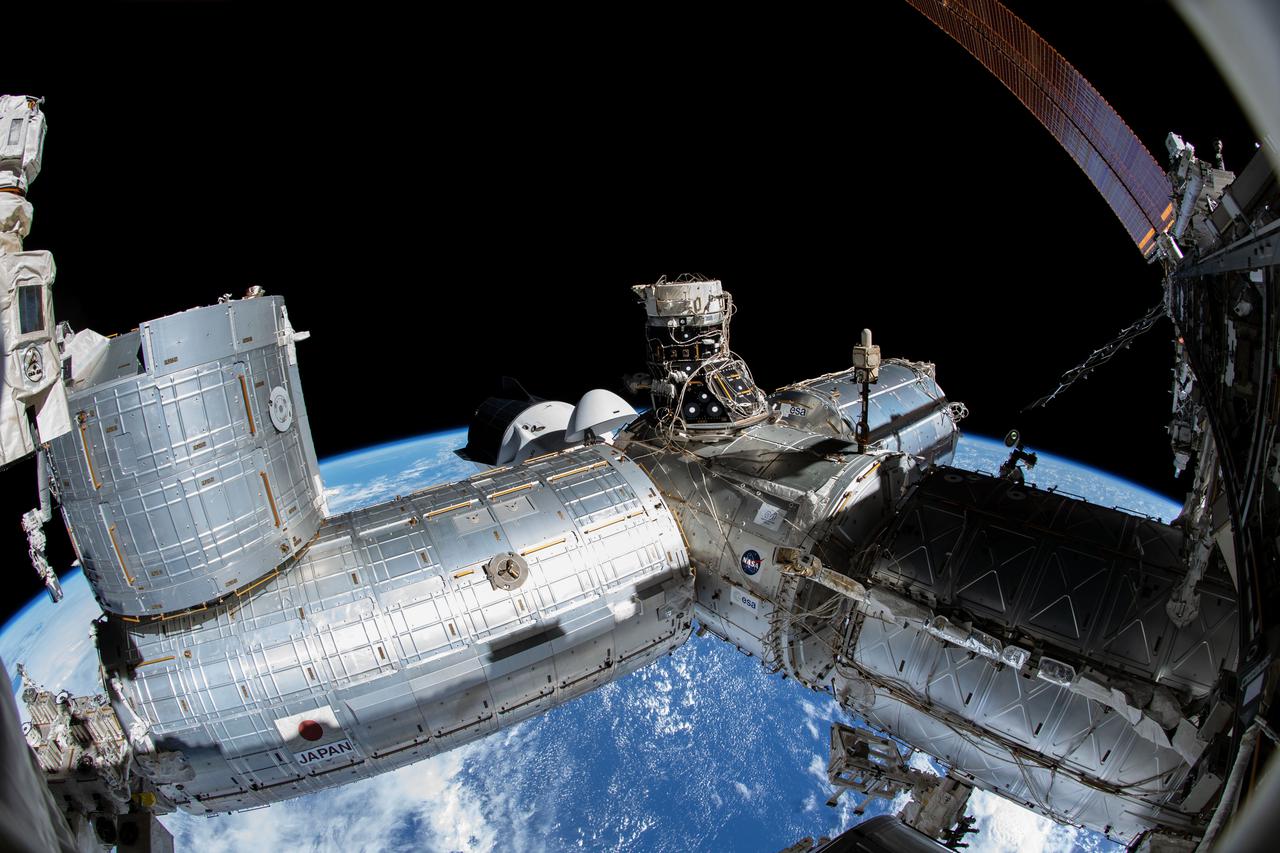
iss066e085978 (Dec. 2, 2021) --- A portion of the International Space Station's U.S. segment is pictured from NASA spacewalker Thomas Marshburn's camera. From left, are the Kibo laboratory module; the Harmony module, to which the SpaceX Crew Dragon Endurance is docked, and the space-facing international docking adapter; the Columbus laboratory module; and the U.S. Destiny laboratory module.
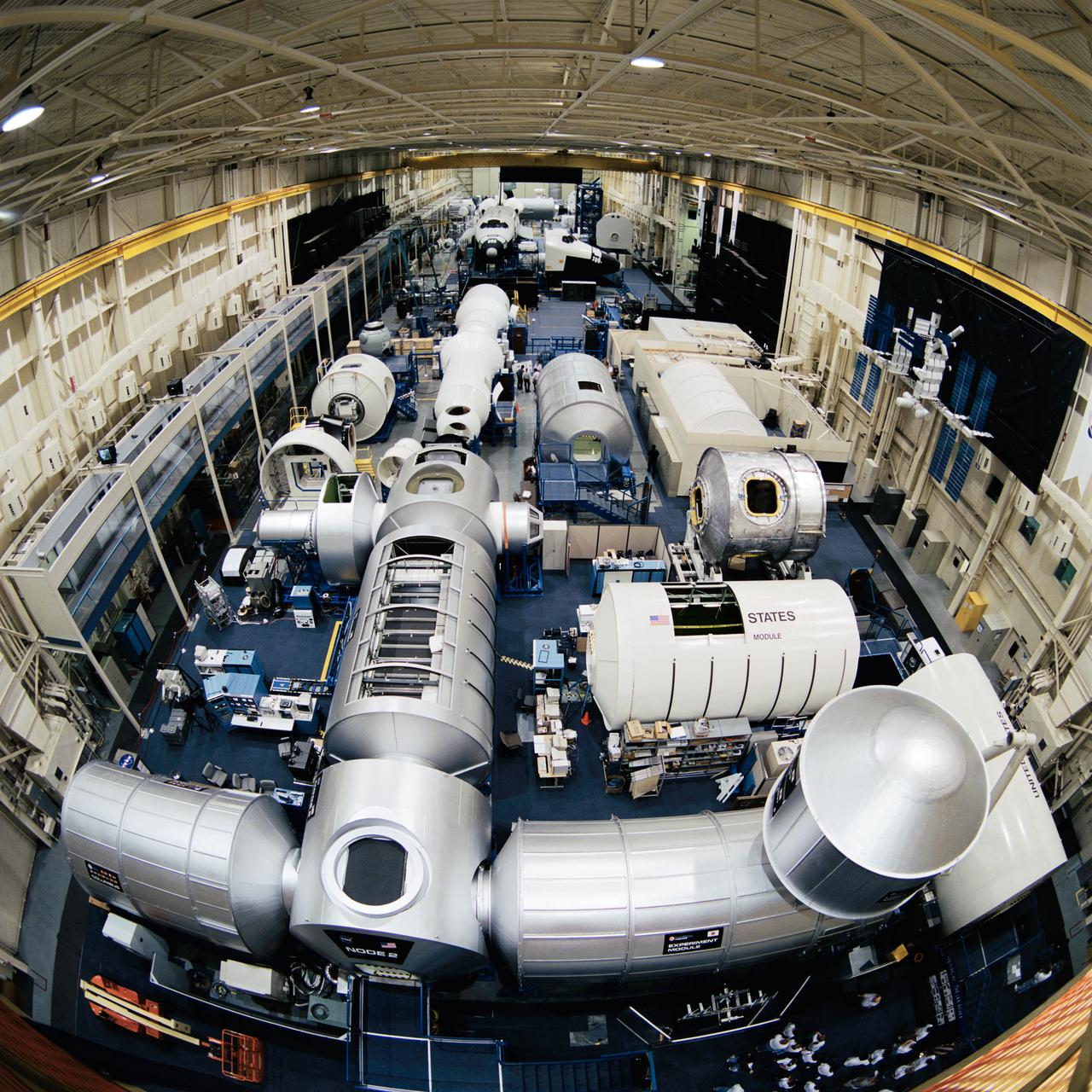
Photographic documentation showing the bldg. 9 ISS module mock-ups and trainers. Views include: various overall views of the configuration of the ISS module trainers on the floor of bldg. 9 (08445-46, 08449-51, 08458-61, 08464-65, 08469, 08471, 08476); various portions of the mock-ups (08447-48, 08470); views of the Node 2, Experiment Module and Logistics Module (08452); Node 2 (08453, 08466); Destiny and Node 2 (08454); Destiny, Unity and Airlock (08455); Zarya, Service Module and shuttle mock-ups (08456); Logistics Module and Experiment Module (08457, 08468); various views of Columbia, Node 2 and Destiny (08462-63); Columbus, Node 2, Experiment Module and Logistics Module (08467); U.S. Laboratory module (08472); Logistics Module (08473); module layout (08474); Logistics Module and Experiment Module (08475).
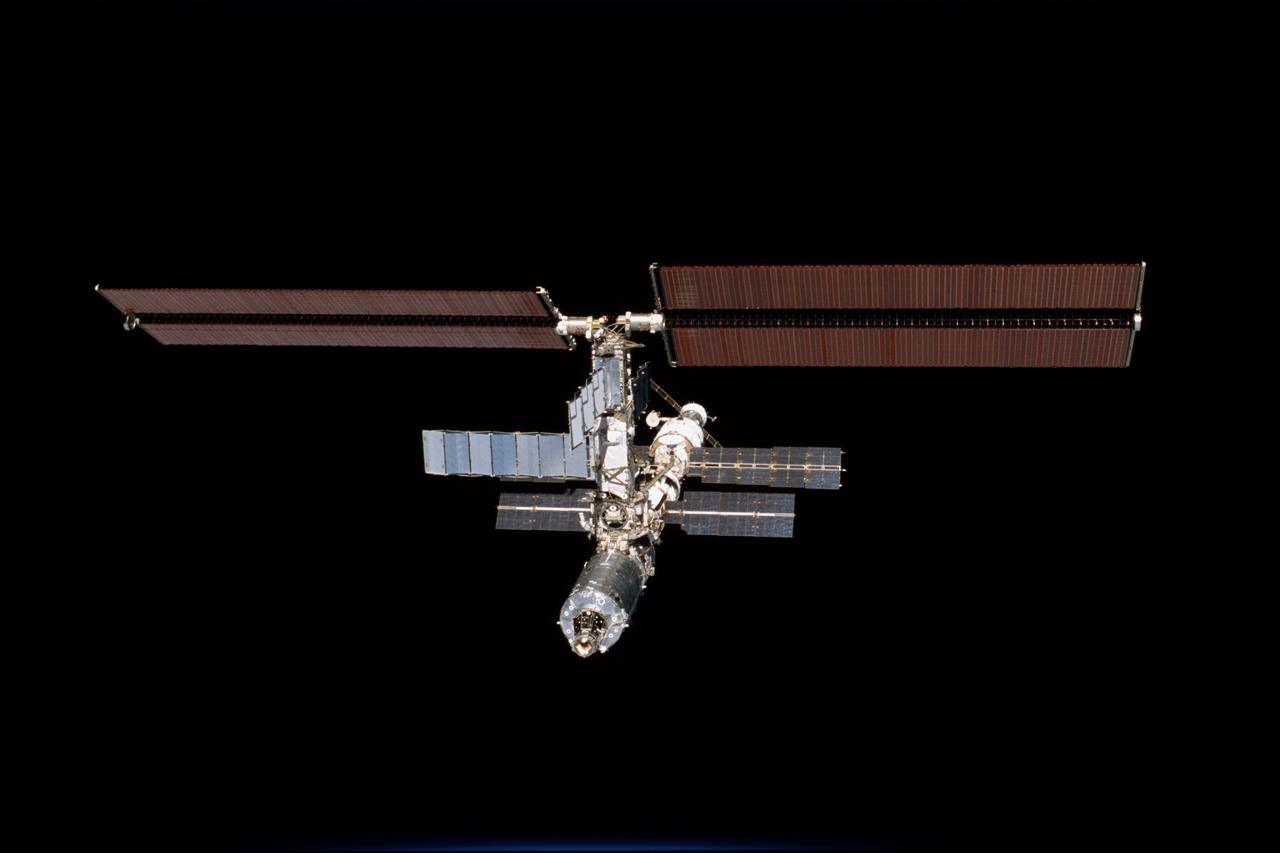
The International Space Station (ISS), with its newly attached U.S. Laboratory, Destiny, was photographed by a crew member aboard the Space Shuttle Orbiter Atlantis during a fly-around inspection after Atlantis separated from the Space Station. The Laboratory is shown in the foreground of this photograph. The American-made Destiny module is the cornerstone for space-based research aboard the orbiting platform and the centerpiece of the International Space Station (ISS), where unprecedented science experiments will be performed in the near-zero gravity of space. Destiny will also serve as the command and control center for the ISS. The aluminum module is 8.5-meters (28-feet) long and 4.3-meters (14-feet) in diameter. The laboratory consists of three cylindrical sections and two endcones with hatches that will be mated to other station components. A 50.9-centimeter (20-inch-) diameter window is located on one side of the center module segment. This pressurized module is designed to accommodate pressurized payloads. It has a capacity of 24 rack locations. Payload racks will occupy 15 locations especially designed to support experiments. The Destiny module was built by the Boeing Company under the direction of the Marshall Space Flight Center.
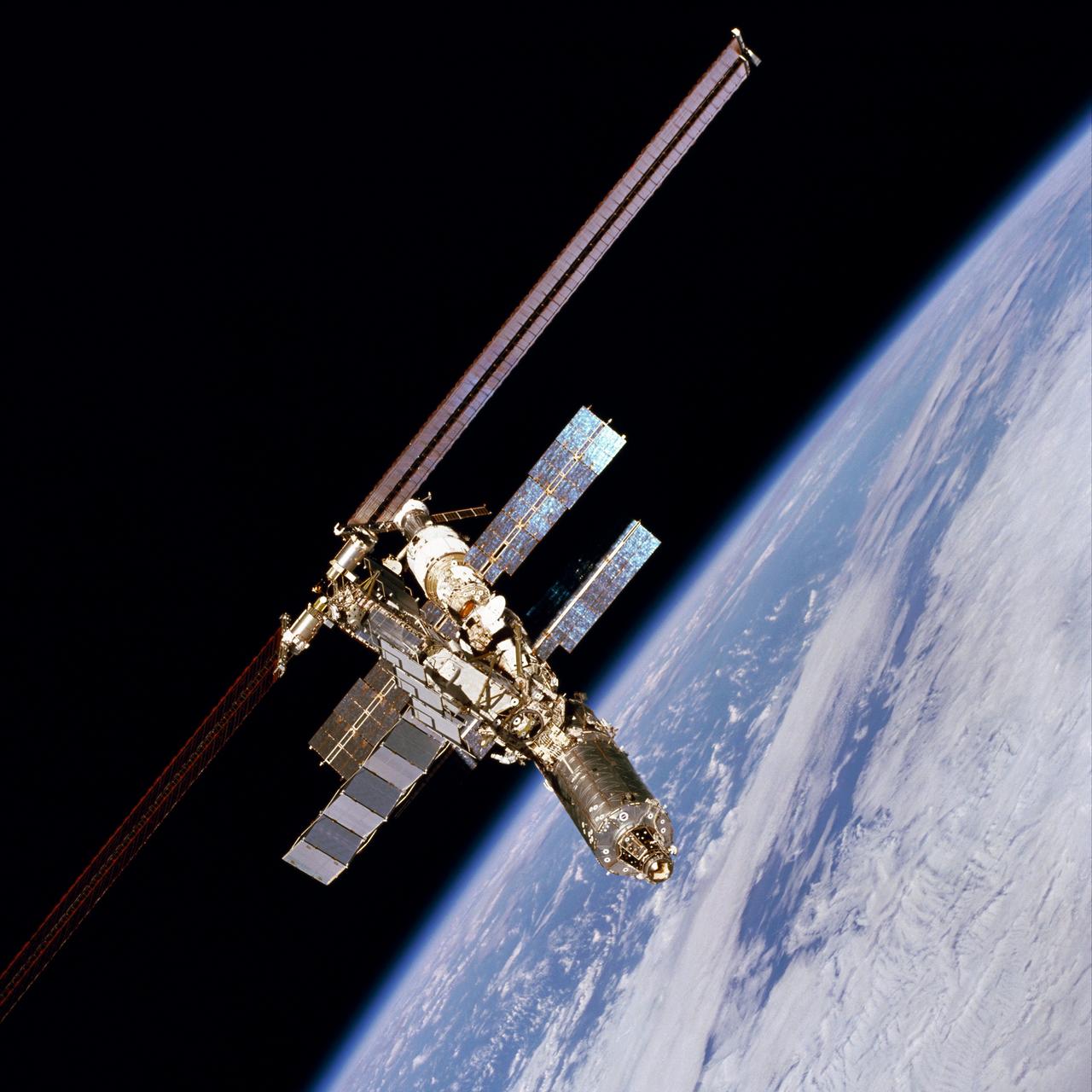
With its new U.S. Laboratory, Destiny, contrasted over a blue and white Earth, the International Space Station (ISS) was photographed by one of the STS-98 crew members aboard the Space Shuttle Atlantis following separation of the Shuttle and Station. The Laboratory is shown at the lower right of the Station. The American-made Destiny module is the cornerstone for space-based research aboard the orbiting platform and the centerpiece of the ISS, where unprecedented science experiments will be performed in the near-zero gravity of space. Destiny will also serve as the command and control center for the ISS. The aluminum module is 8.5- meters (28-feet) long and 4.3-meters (14-feet) in diameter. The laboratory consists of three cylindrical sections and two endcones with hatches that will be mated to other station components. A 50.9-centimeter (20-inch-) diameter window is located on one side of the center module segment. This pressurized module is designed to accommodate pressurized payloads. It has a capacity of 24 rack locations. Payload racks will occupy 15 locations especially designed to support experiments. The Destiny module was built by the Boeing Company under the direction of the Marshall Space Flight Center.
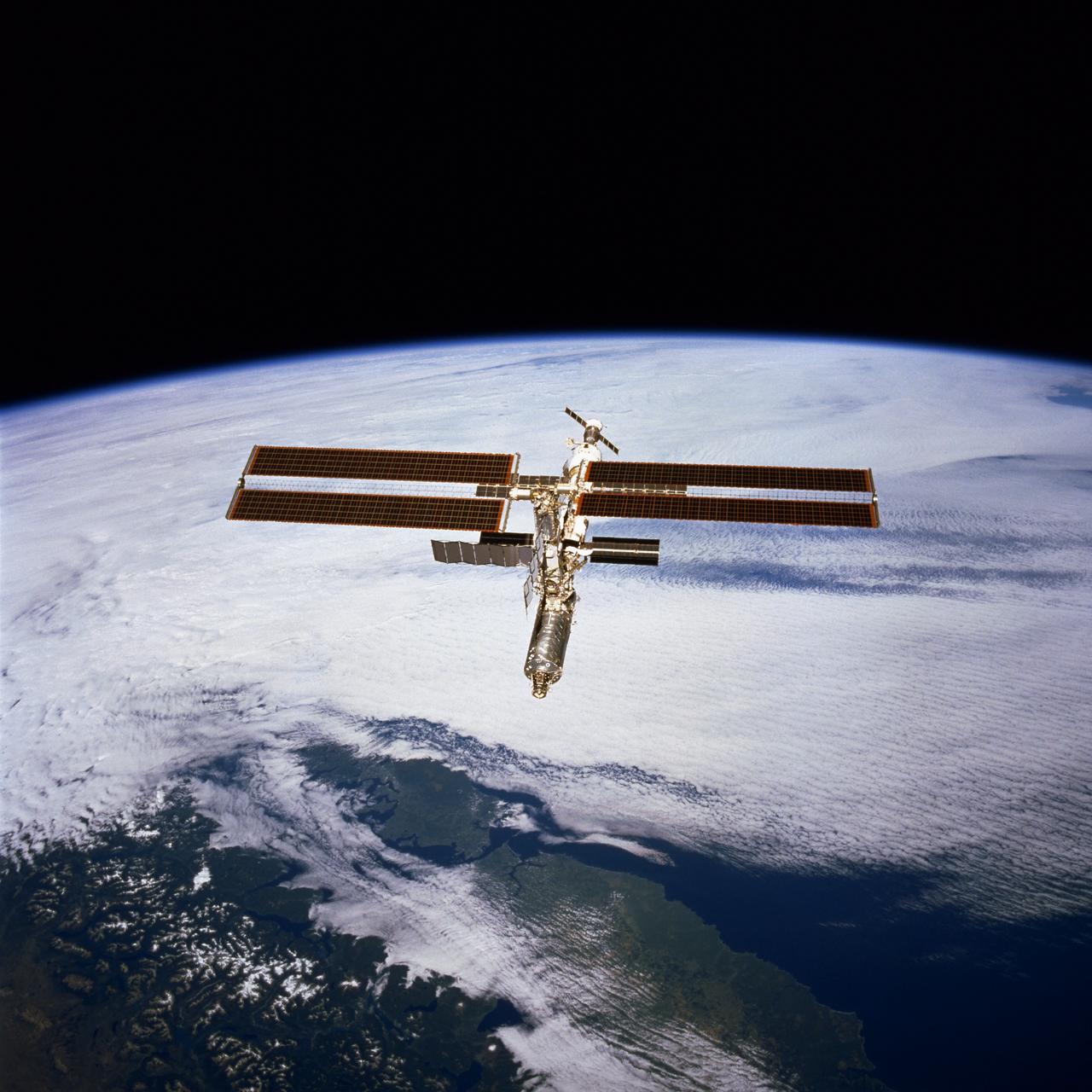
The International Space Station (ISS), with the newly installed U.S. Laboratory, Destiny, is backdropped over clouds, water and land in South America. South Central Chile shows up at the bottom of the photograph. Just below the Destiny, the Chacao Charnel separates the large island of Chile from the mainland and connects the Gulf of Coronado on the Pacific side with the Gulf of Ancud, southwest of the city of Puerto Montt. The American-made Destiny module is the cornerstone for space-based research aboard the orbiting platform and the centerpiece of the ISS, where unprecedented science experiments will be performed in the near-zero gravity of space. Destiny will also serve as the command and control center for the ISS. The aluminum module is 8.5-meters (28-feet) long and 4.3-meters (14-feet) in diameter. The laboratory consists of three cylindrical sections and two endcones with hatches that will be mated to other station components. A 50.9-centimeter (20-inch-) diameter window is located on one side of the center module segment. This pressurized module is designed to accommodate pressurized payloads. It has a capacity of 24 rack locations. Payload racks will occupy 15 locations especially designed to support experiments. The Destiny module was built by the Boeing Company under the direction of the Marshall Space Flight Center.
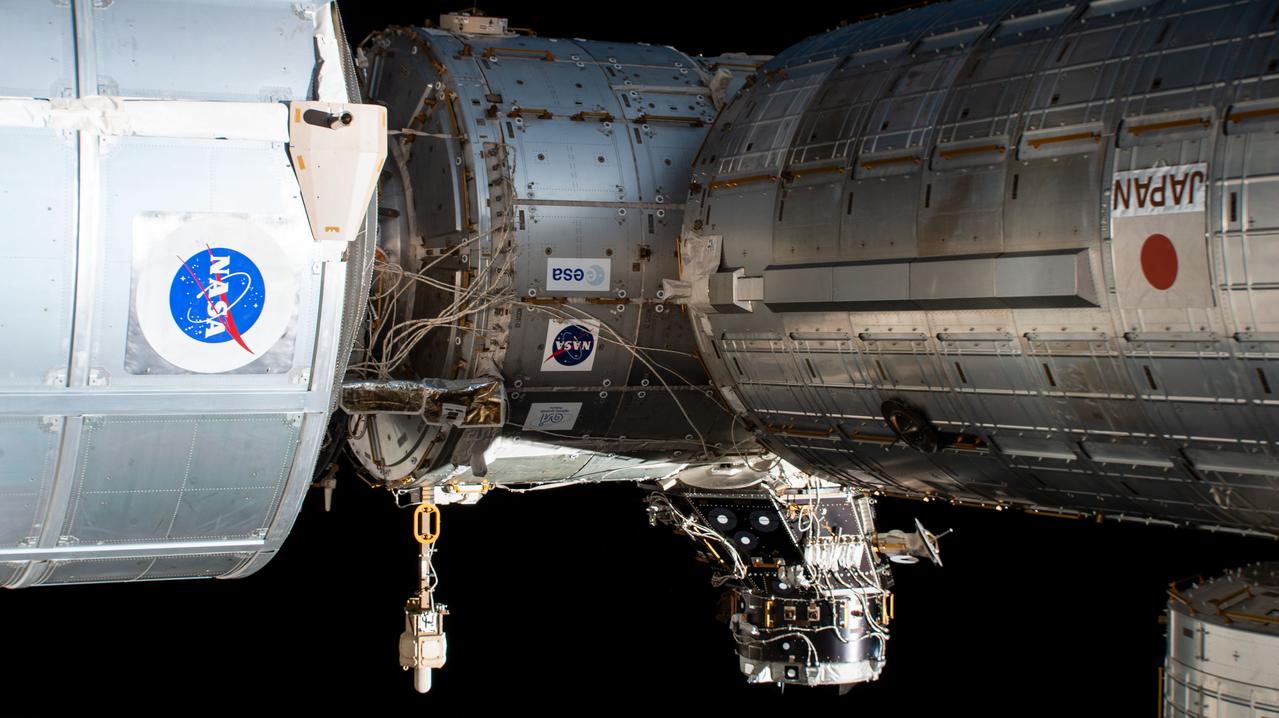
iss060e007002 (July 12, 2019) --- The forward-end of the International Space Station is pictured highlighting portions of three modules and a pressurized mating adapter. An external high definition camera captured (from left) the Permanent Multipurpose Module (PMM), the Harmony Module and the Japanese Kibo laboratory module. Protruding from the Harmony module is the pressurized mating adapter that will host the International Docking Adapter-3. The PMM is actually in front of the U.S. Destiny laboratory module to which Harmony is attached to.
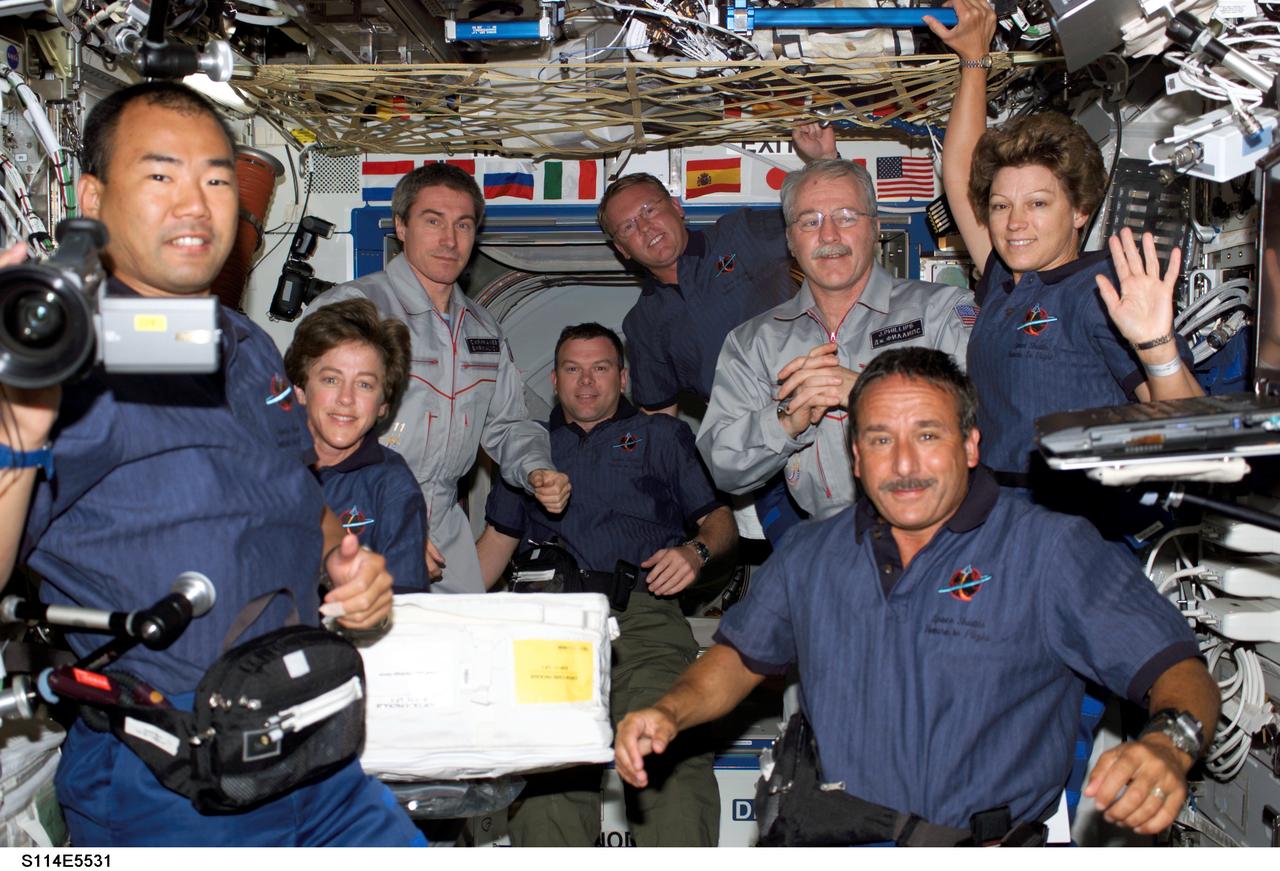
S114-E-5531 (28 July 2005) --- Not since 2002 have nine space travelers shared space simultaneously on the International Space Station. At least not until the morning of July 28, when astronaut Eileen M. Collins led her Discovery crew onboard the orbital outpost. Collins gives a wave from upper right. Clockwise from her position are astronaut Charles J. Camarda, Japanese Aerospace Agency astronaut Soichi Noguchi and Wendy Lawrence, all STS-114 mission specialists; cosmonaut Sergei Krikalev, Expedition 11 commander; astronaut James M. Kelly, Discovery pilot; astronaut Andrew S.W. Thomas, STS-114 mission specialist; and astronaut John L. Phillips, NASA Space Station Science Officer and flight engineer for Expedition 11. Astronaut Stephen K. Robinson, STS-114 mission specialist, took the photo with a digital still camera.
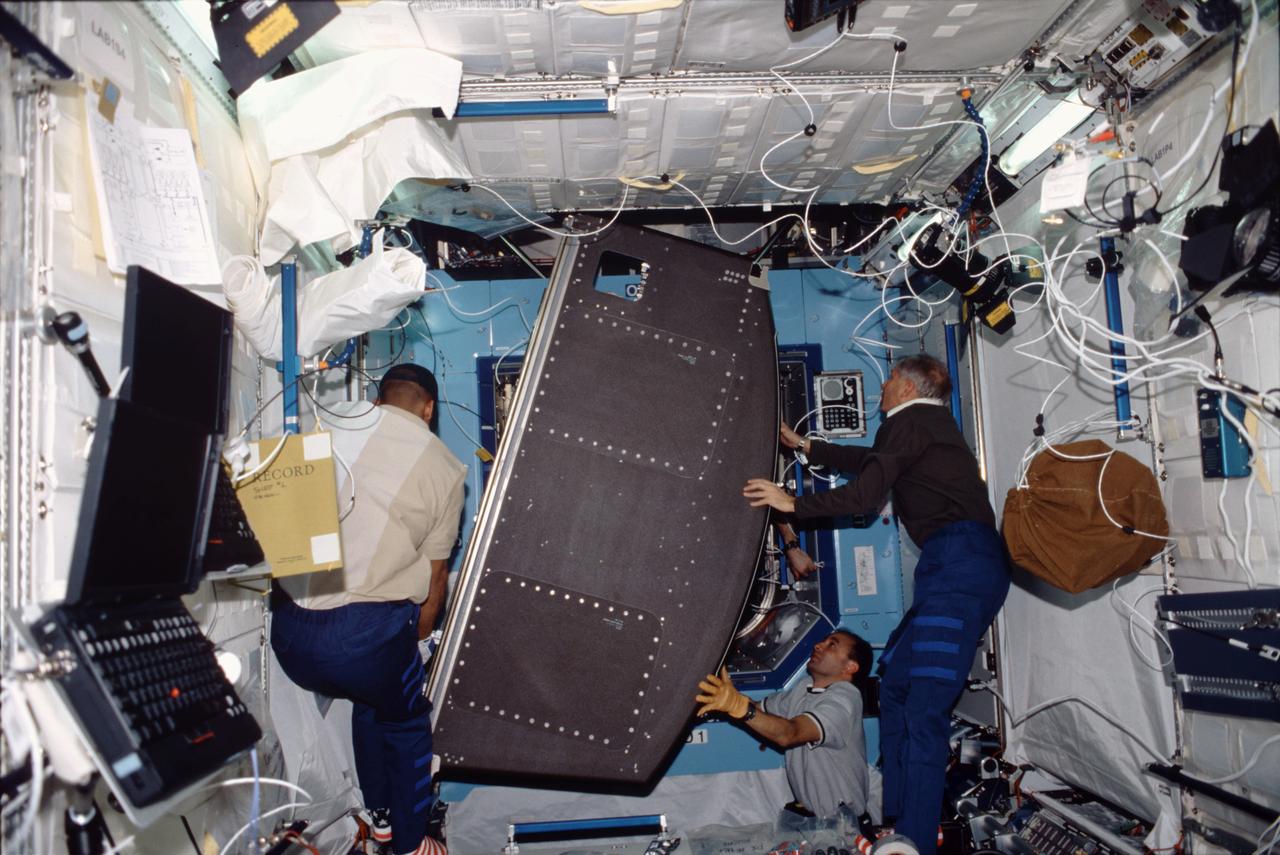
STS098-322-0001 (7-20 February 2001) --- Three STS-98 astronauts move a rack into position aboard the newly attached Destiny laboratory. From the left to right are astronauts Robert L. Curbeam, mission specialist; Mark L. Polansky, pilot; and Kenneth D. Cockrell, mission commander.

STS105-304-025 (10-22 August 2001) --- Astronaut James S. Voss, outgoing Space Station flight engineer, performs a task at a work station in the Destiny laboratory as a "guest" arrives from the Space Shuttle Discovery. Astronaut Scott J. Horowitz, STS-105 mission commander, floats through the hatchway leading to the Unity node. A 35mm camera, equipped with a "fish-eye" lens, was used to record the image. Voss, who had spent the last five months aboard the orbital outpost with his two Expedition Two crew mates, later joined Horowitz and his crew when they returned to Earth on August 22.
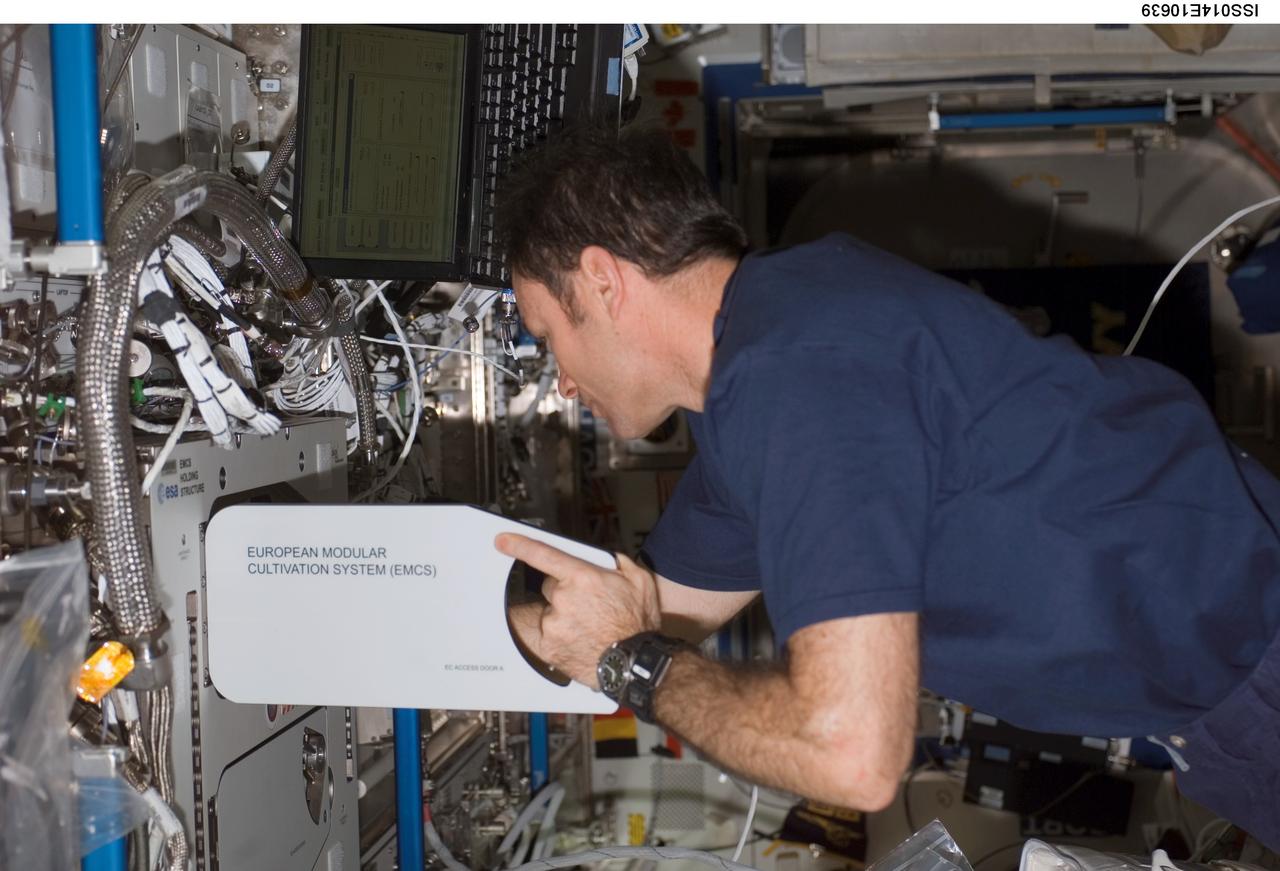
ISS014-E-10639 (29 Dec. 2006) --- Astronaut Michael E. Lopez-Alegria, Expedition 14 commander and NASA space station science officer, performs the European Modular Cultivation System (EMSC) -- Experiment Container (EC) replacement in the Destiny laboratory of the International Space Station.
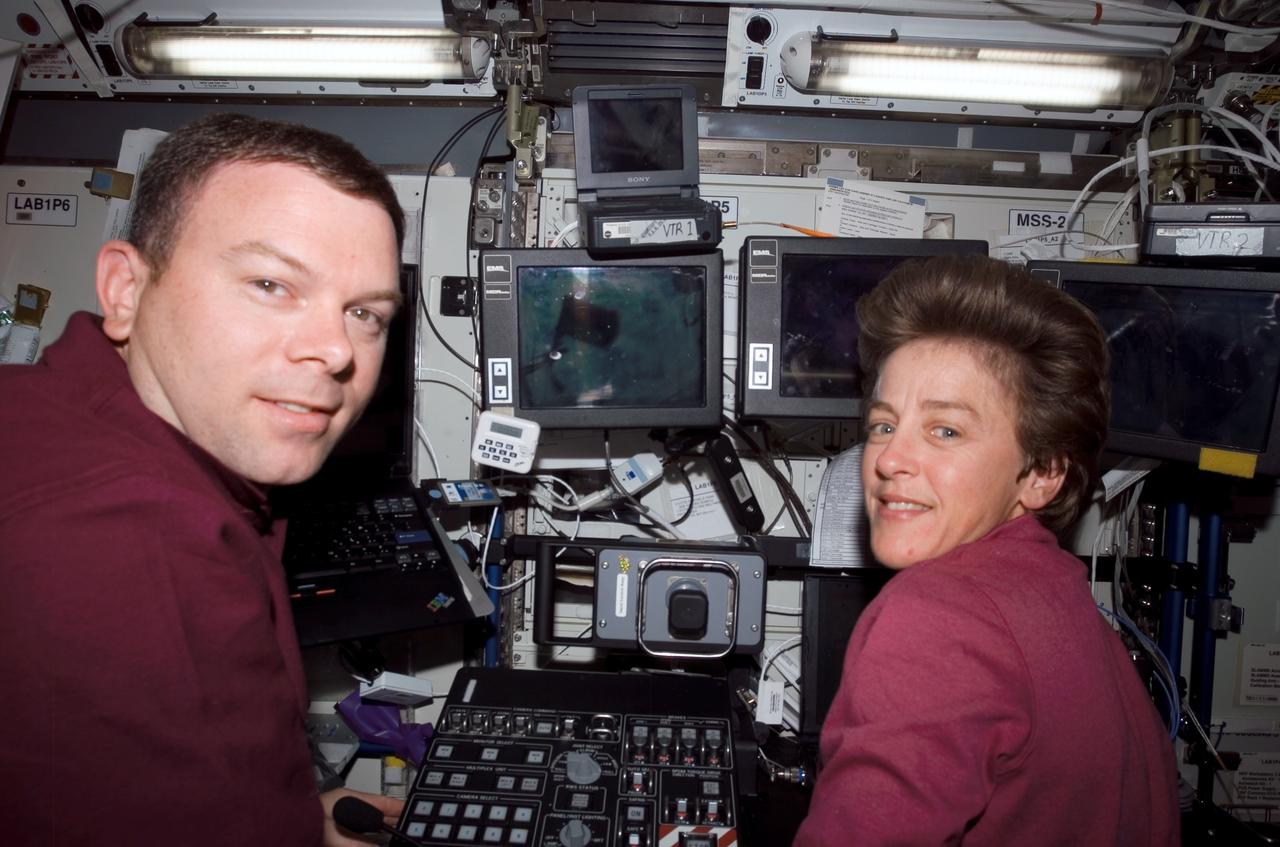
ISS011-E-11515 (5 August 2005) --- On the early Friday morning agenda for Astronauts James M. Kelly, pilot, and Wendy B. Lawrence, mission specialist, was important robotics duty at the controls of the Canadarm2 in the U.S. Lab, Destiny, on the International Space Station. Several digital photos in this sequence reveal the focal point of their work on the other end of the arm as the Italian-built Multi-Purpose Logistics Module Raffaello. The MPLM was being moved from its temporary parking place on the Station's Unity node to the payload bay of Discovery. The astronauts had arrived nine days ago with tons of fresh supplies for the Station, and with much effort, replaced that space on Raffaello with unneeded materials from the orbital outpost.

ISS011-E-11360 (31 July 2005) --- Astronaut Wendy B. Lawrence, STS-114 mission specialist, looks over a procedures checklist in the Destiny laboratory of the International Space Station. Cosmonaut Sergei K. Krikalev, Expedition 11 commander representing Russia's Federal Space Agency, assisted Lawrence, who was in charge of the transfer operations.
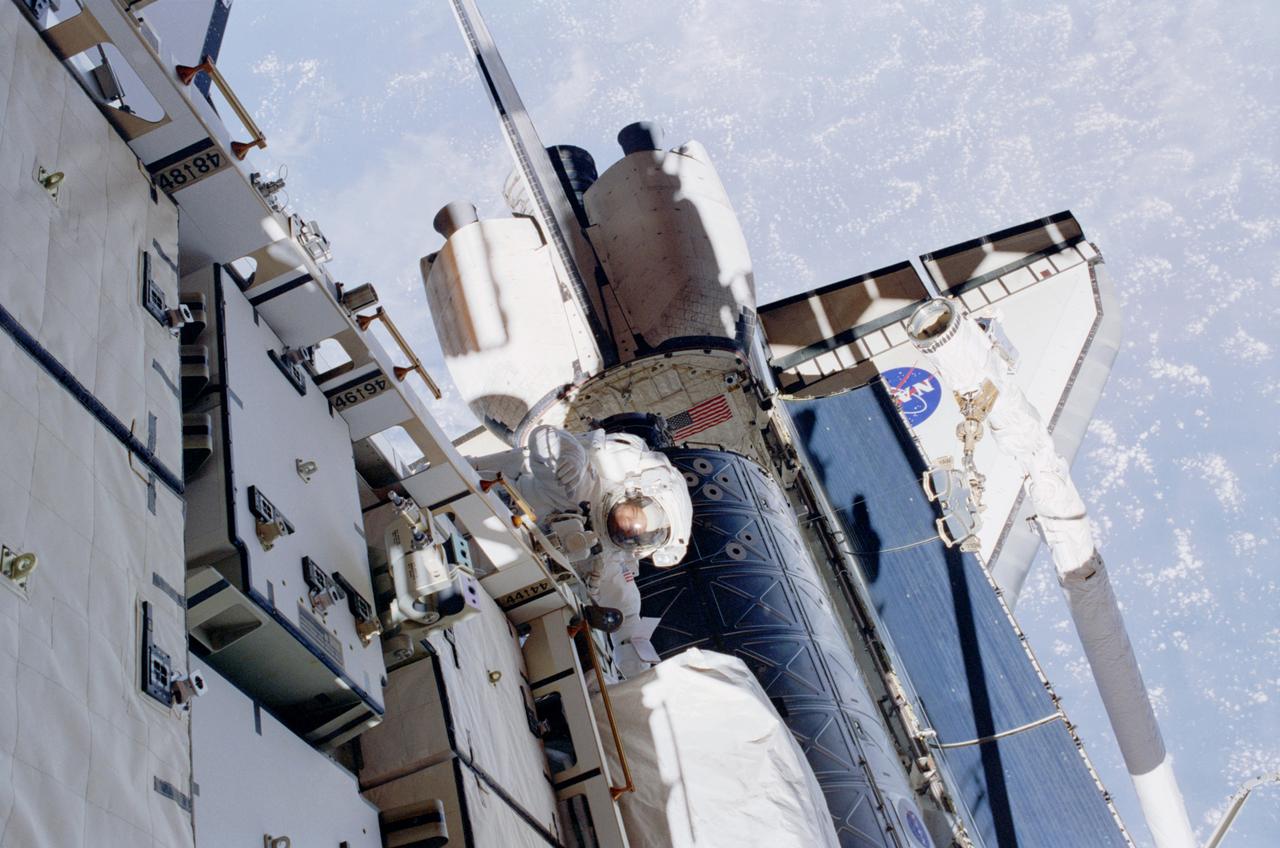
STS098-336-008 (7-20 February 2001) --- Astronaut Robert L. Curbeam, mission specialist, is photographed by fellow space walker Thomas D. Jones, during one of the three STS-98 sessions of extravehicular activity (EVA).
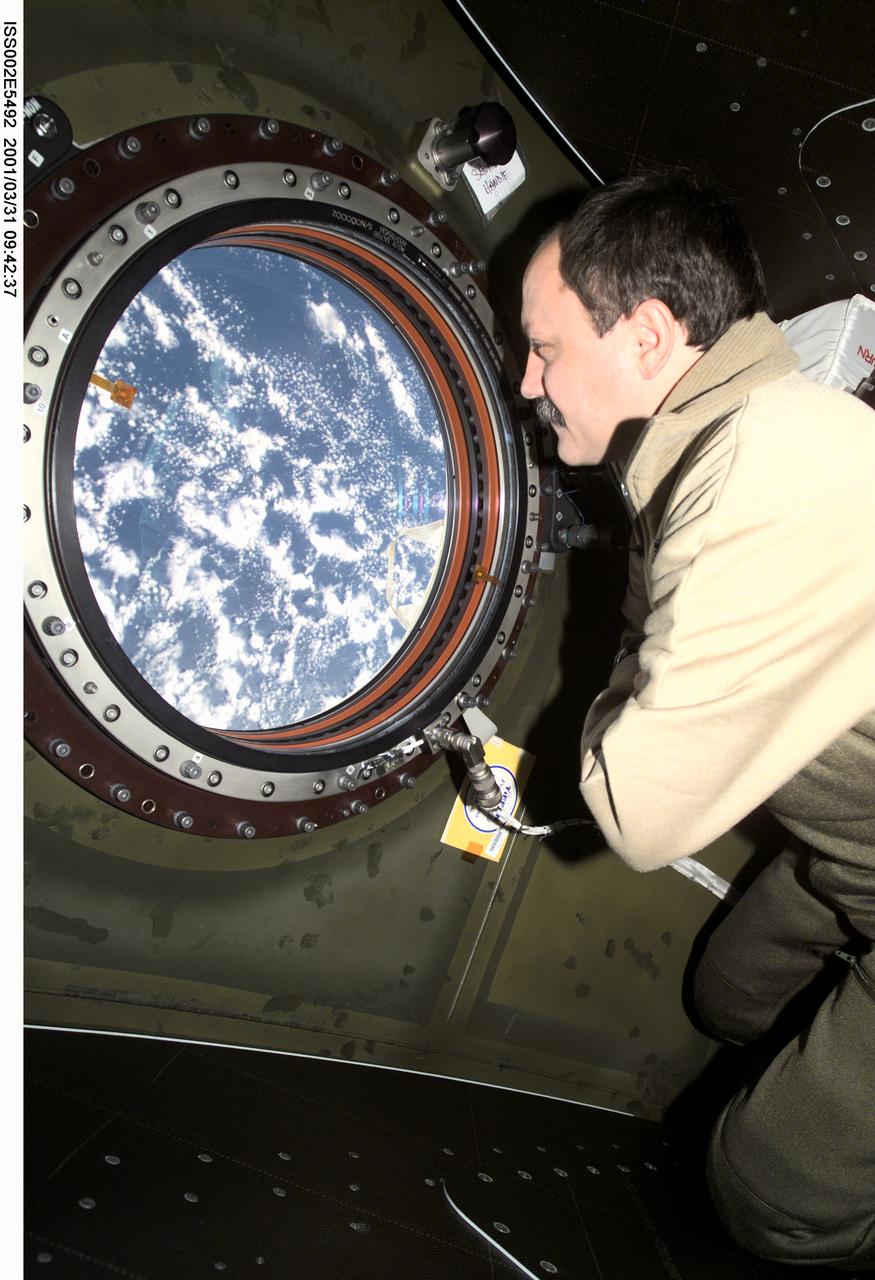
ISS02-E-5492 (31 March 2001) --- Cosmonaut Yury V. Usachev, Expedition Two mission commander, looks through the window on the Destiny laboratory onboard the International Space Station (ISS). Representing Rosaviakosmos, Usachev is joined by two astronauts on the orbiting outpost for several months' research and work. The photo was taken with a digital still camera.
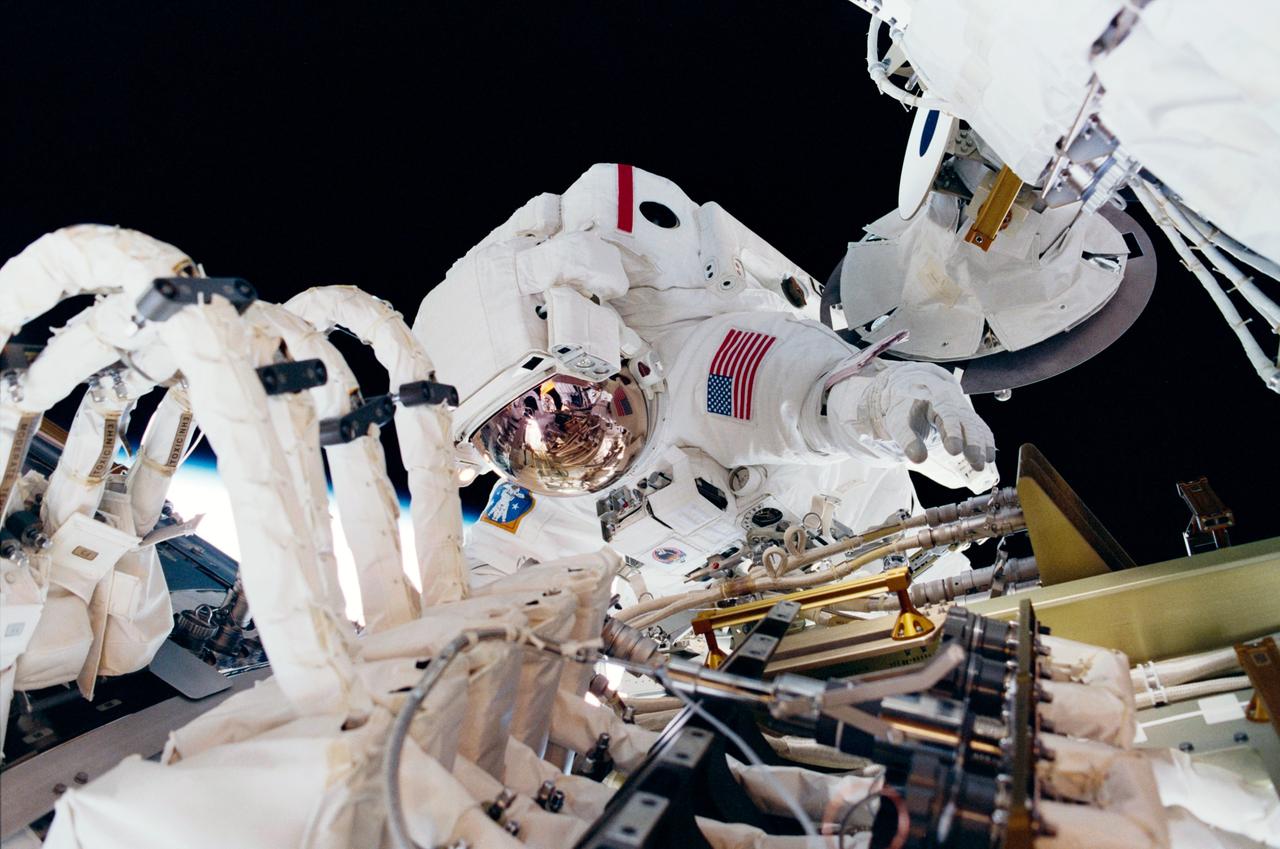
STS098-330-007 (7-20 February 2001) --- Astronaut Thomas D. Jones, mission specialist, works near the International Space Station (ISS) during one of the three STS-98 sessions of extravehicular activity (EVA).
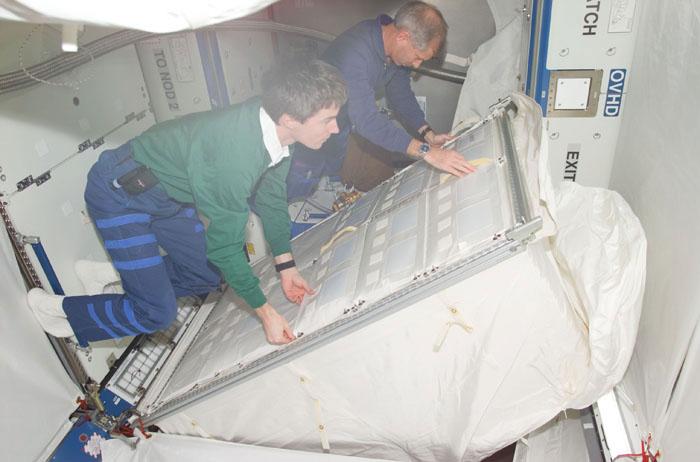
STS98-E-5250 (15 February 2001) --- Astronaut Kenneth D. Cockrell (left), STS-98 mission commander, teams with cosmonaut Sergei K. Krikalev, Expedition One flight engineer in setting up hardware aboard the newly opened Destiny laboratory onboard the International Space Station (ISS). This photo was recorded with a digital still camera.
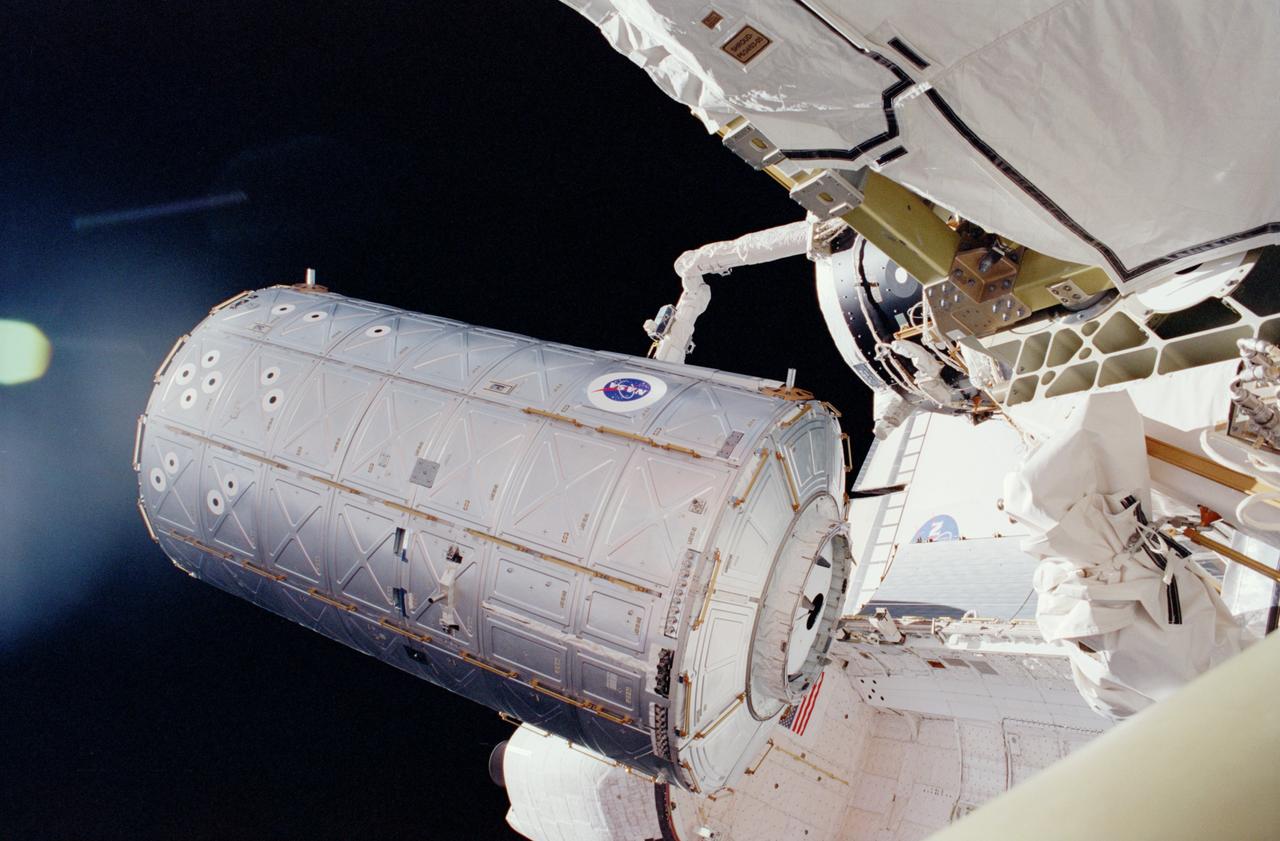
STS098-331-0017 (7-20 February 2001) --- In the grasp of the shuttle's remote manipulator system (RMS) robot arm, the Destiny laboratory is moved from its stowage position in the cargo bay of the Space Shuttle Atlantis. The photo was taken by astronaut Thomas D. Jones, who was participating in one of three STS-98/5a space walks at the time. Astronaut Robert L. Curbeam (out of frame) also made the three space walks.
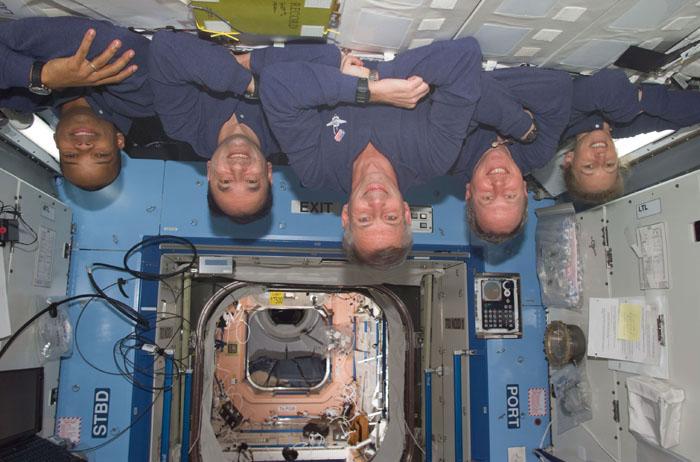
STS98-E-5284 (15 February 2001) --- These five astronauts take a break from Destiny laboratory installation work as they near an end to their several days' visit aboard the International Space Station (ISS). From the left are astronauts Robert L. Curbeam, Mark L. Polansky, Kenneth D. Cockrell, Thomas D. Jones and Marsha S. Ivins. Their posed position might be termed "upside down" on Earth, but in their weightless environment the arrangement makes for no one-gravity complications like blood rushing to the head, etc. The scene was recorded with a digital still camera.