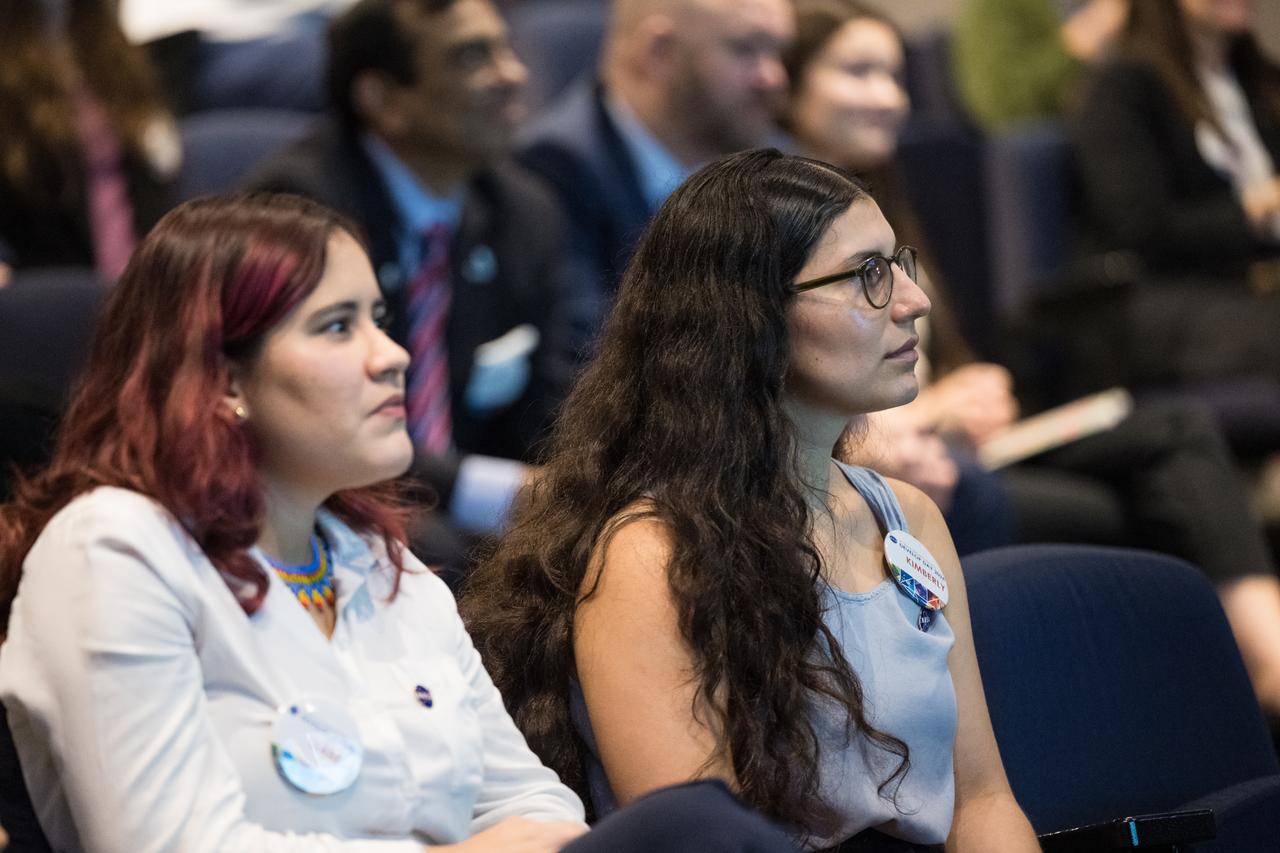
Audience members are seen during DEVELOP Day, Tuesday, August 6, 2024, at the Mary W. Jackson NASA Headquarters building in Washington. Every summer early career researchers from NASA’s DEVELOP National Program come to NASA Headquarters and present their research projects. DEVELOP is a training and development program where early career researchers work on Earth science projects, mentored by science advisors from NASA and partner agencies, and provide research results to local communities. Photo Credit: (NASA/Aubrey Gemignani)

Audience members are seen during DEVELOP Day, Tuesday, August 6, 2024, at the Mary W. Jackson NASA Headquarters building in Washington. Every summer early career researchers from NASA’s DEVELOP National Program come to NASA Headquarters and present their research projects. DEVELOP is a training and development program where early career researchers work on Earth science projects, mentored by science advisors from NASA and partner agencies, and provide research results to local communities. Photo Credit: (NASA/Aubrey Gemignani)
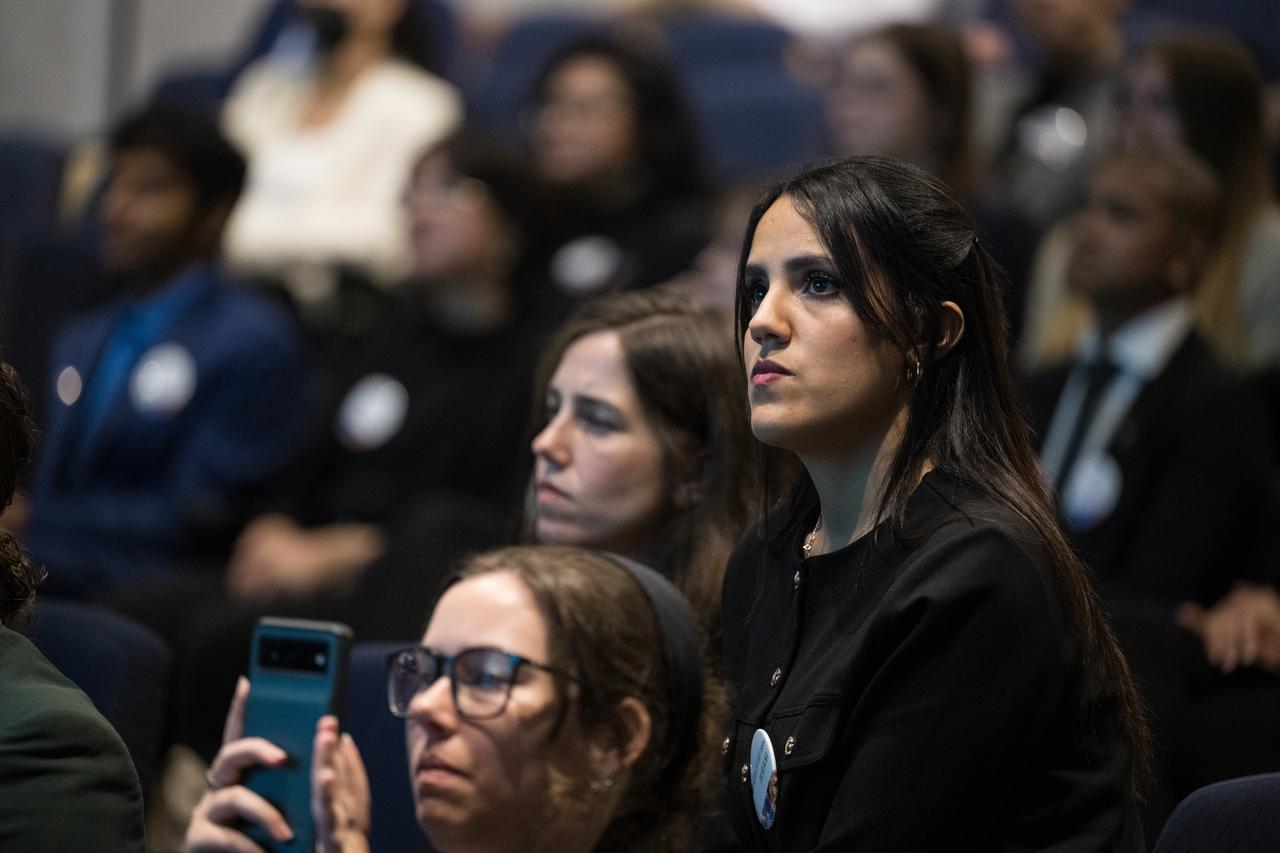
Audience members are seen during DEVELOP Day, Tuesday, August 6, 2024, at the Mary W. Jackson NASA Headquarters building in Washington. Every summer early career researchers from NASA’s DEVELOP National Program come to NASA Headquarters and present their research projects. DEVELOP is a training and development program where early career researchers work on Earth science projects, mentored by science advisors from NASA and partner agencies, and provide research results to local communities. Photo Credit: (NASA/Aubrey Gemignani)
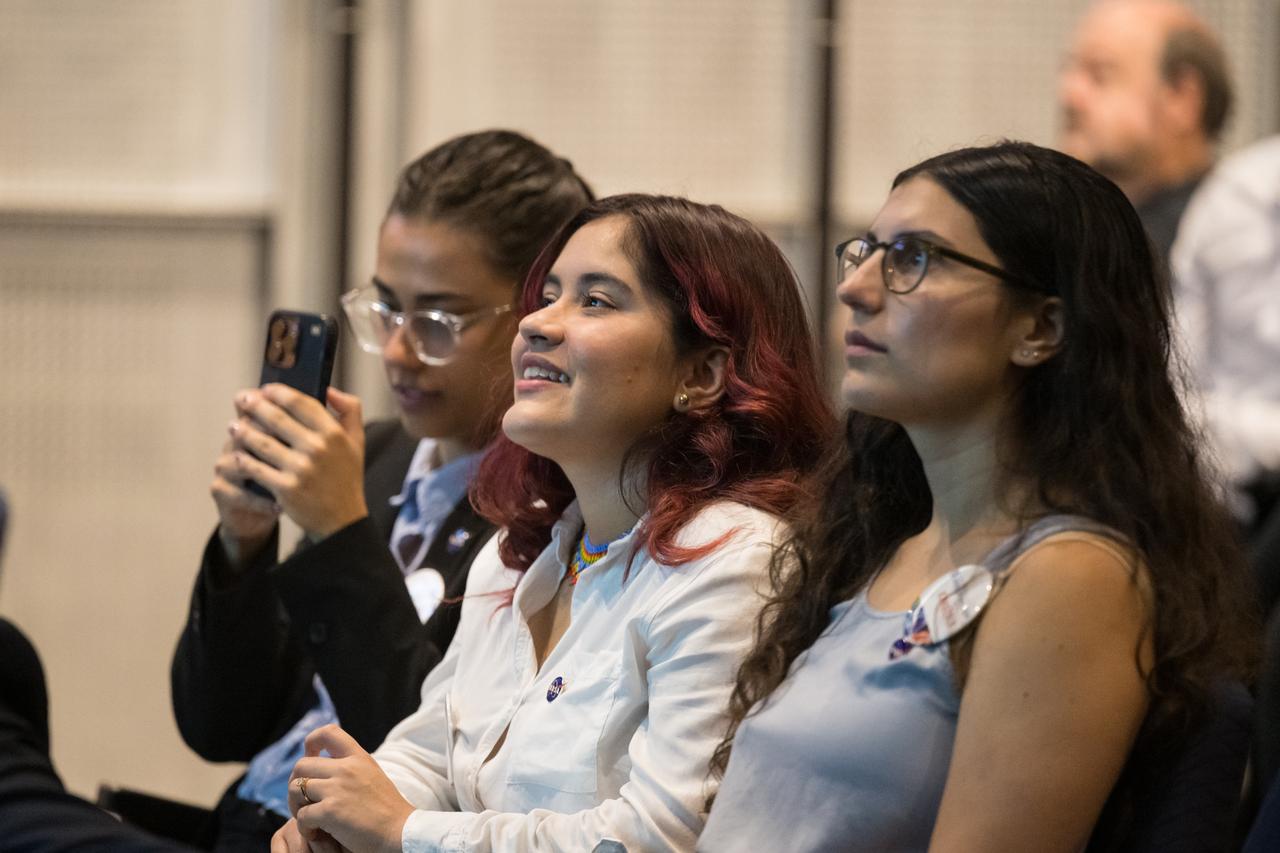
Audience members react during DEVELOP Day, Tuesday, August 6, 2024, at the Mary W. Jackson NASA Headquarters building in Washington. Every summer early career researchers from NASA’s DEVELOP National Program come to NASA Headquarters and present their research projects. DEVELOP is a training and development program where early career researchers work on Earth science projects, mentored by science advisors from NASA and partner agencies, and provide research results to local communities. Photo Credit: (NASA/Aubrey Gemignani)
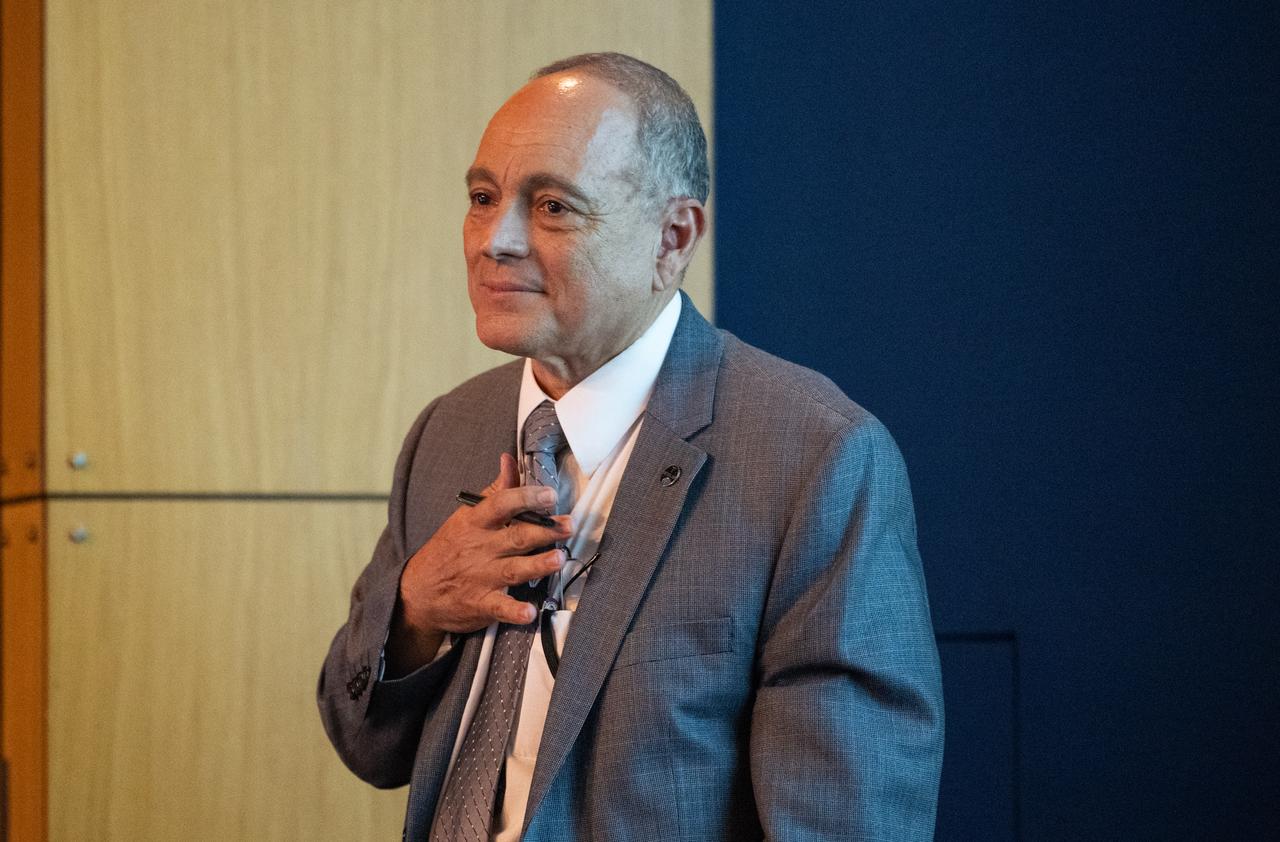
Mike Ruiz, former program manager for DEVELOP, delivers closing remarks during the 2023 DEVELOP Day, Wednesday, Aug. 9, 2023, at the Mary W. Jackson NASA Headquarters building in Washington. Every summer students and young professionals from NASA’s Applied Sciences’ DEVELOP National Program come to NASA Headquarters to present their research. This year marks the 25th year of DEVELOP, a training and development program where students work on Earth science research projects, mentored by science advisors from NASA and partner agencies, and extend research results to local communities. Photo Credit: (NASA/Joel Kowsky)
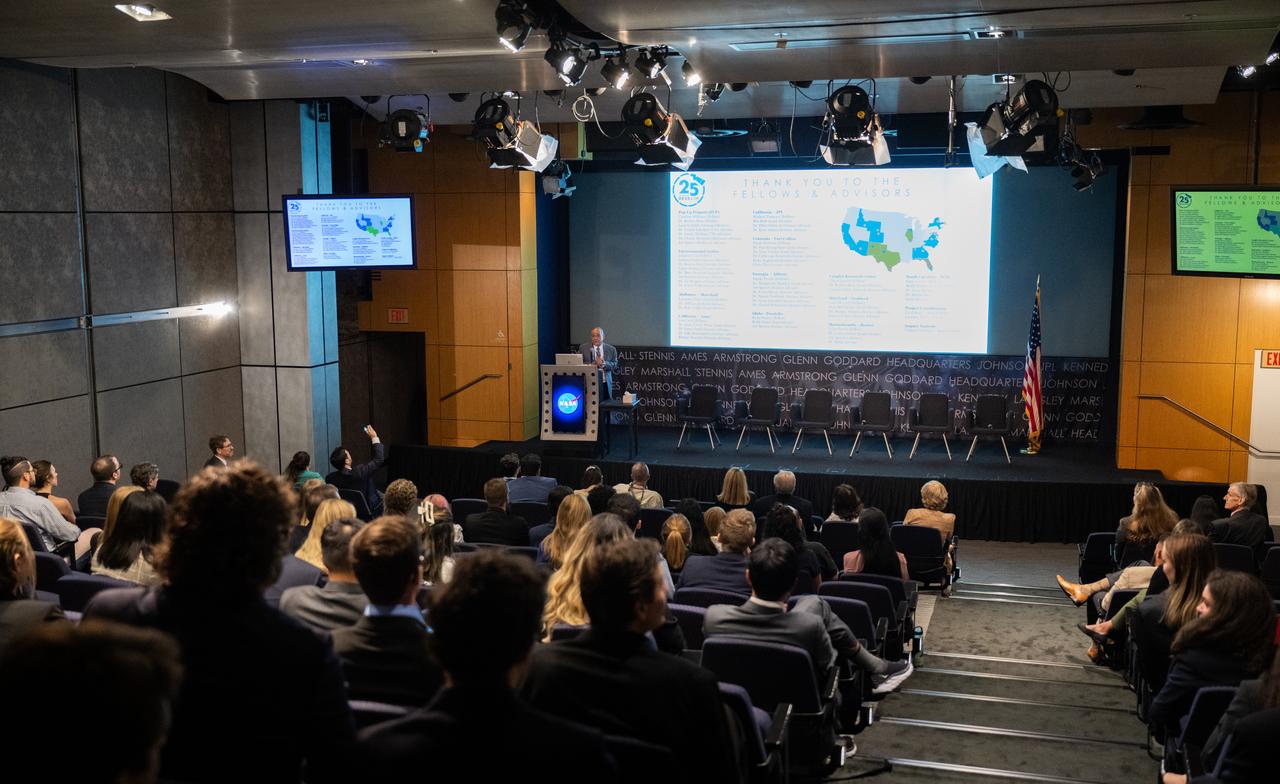
Mike Ruiz, former program manager for DEVELOP, delivers closing remarks during the 2023 DEVELOP Day, Wednesday, Aug. 9, 2023, at the Mary W. Jackson NASA Headquarters building in Washington. Every summer students and young professionals from NASA’s Applied Sciences’ DEVELOP National Program come to NASA Headquarters to present their research. This year marks the 25th year of DEVELOP, a training and development program where students work on Earth science research projects, mentored by science advisors from NASA and partner agencies, and extend research results to local communities. Photo Credit: (NASA/Joel Kowsky)
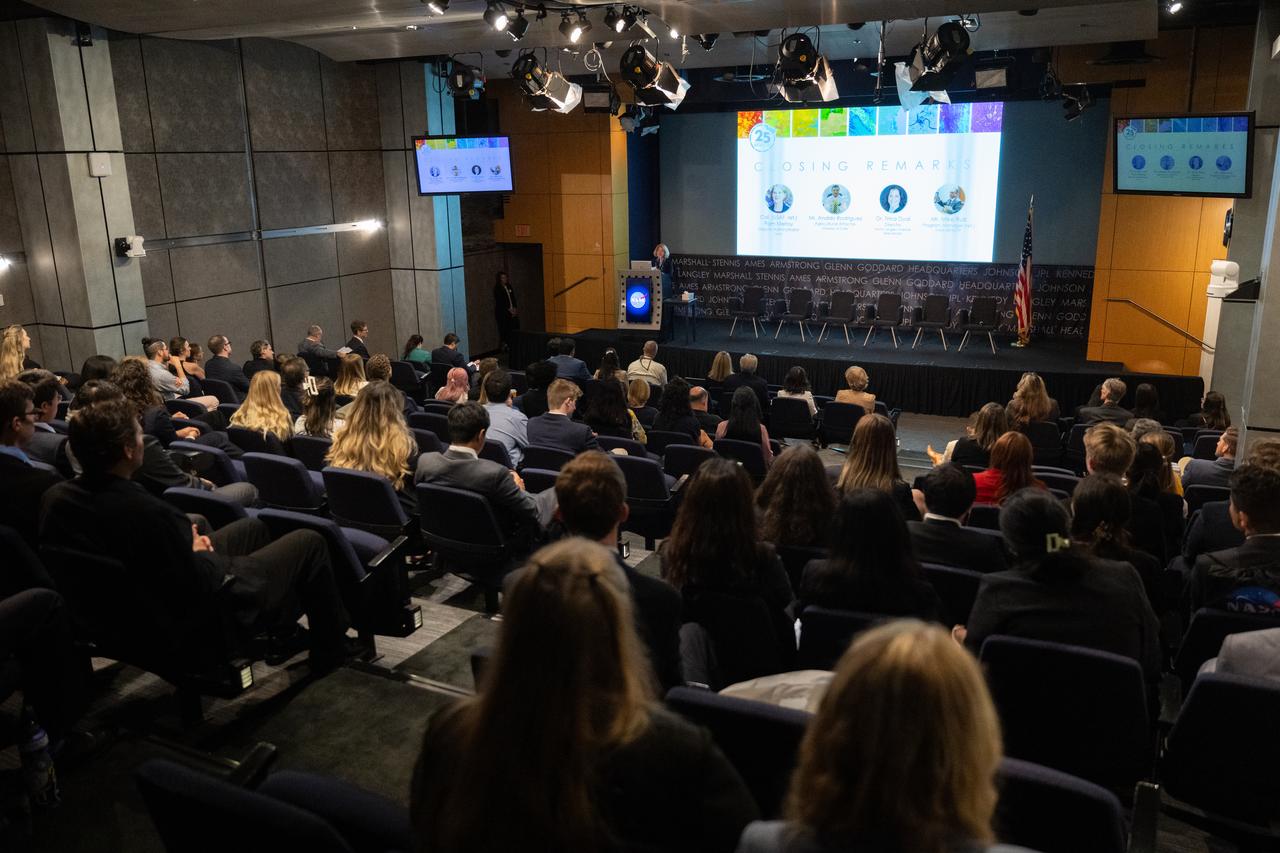
NASA Deputy Administrator Pam Melroy delivers closing remarks during the 2023 DEVELOP Day, Wednesday, Aug. 9, 2023, at the Mary W. Jackson NASA Headquarters building in Washington. Every summer students and young professionals from NASA’s Applied Sciences’ DEVELOP National Program come to NASA Headquarters to present their research. This year marks the 25th year of DEVELOP, a training and development program where students work on Earth science research projects, mentored by science advisors from NASA and partner agencies, and extend research results to local communities. Photo Credit: (NASA/Joel Kowsky)
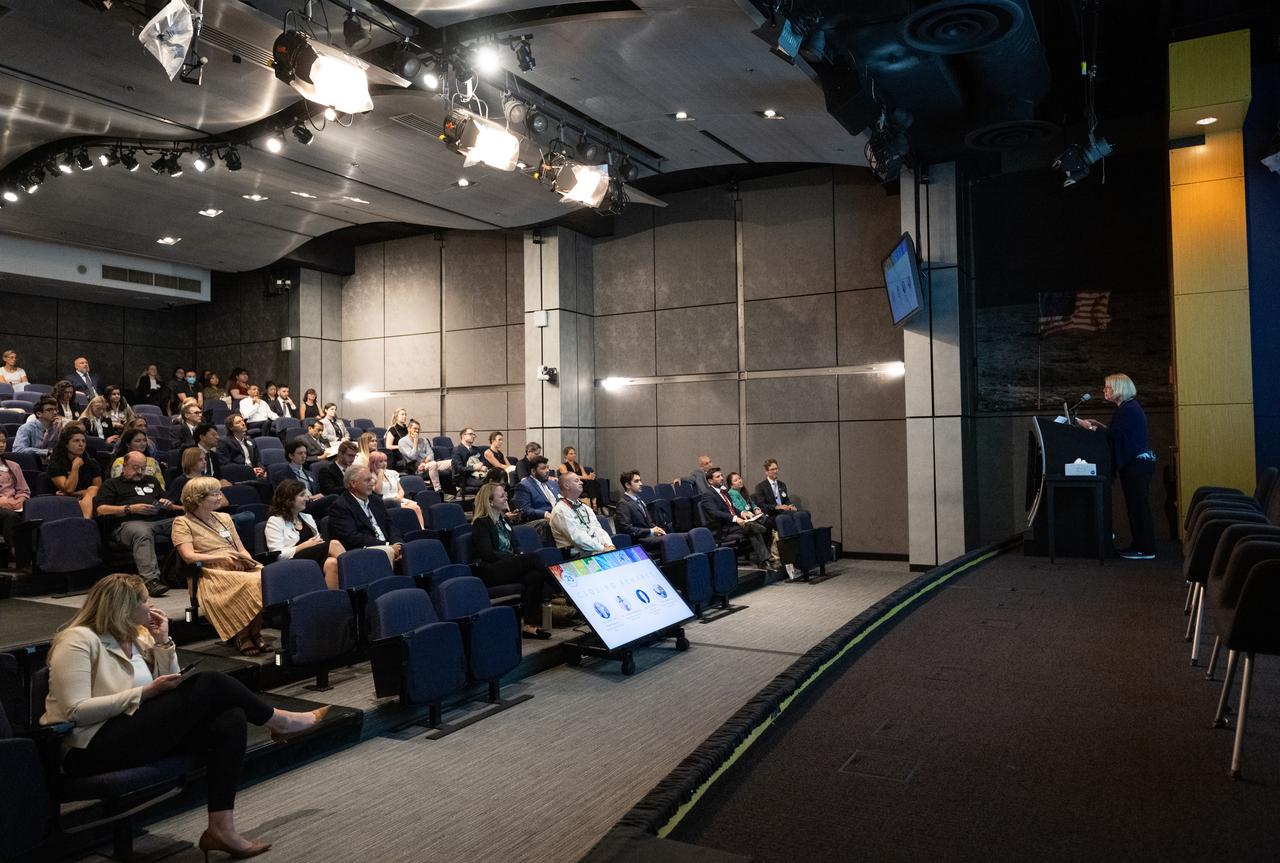
NASA Deputy Administrator Pam Melroy delivers closing remarks during the 2023 DEVELOP Day, Wednesday, Aug. 9, 2023, at the Mary W. Jackson NASA Headquarters building in Washington. Every summer students and young professionals from NASA’s Applied Sciences’ DEVELOP National Program come to NASA Headquarters to present their research. This year marks the 25th year of DEVELOP, a training and development program where students work on Earth science research projects, mentored by science advisors from NASA and partner agencies, and extend research results to local communities. Photo Credit: (NASA/Joel Kowsky)
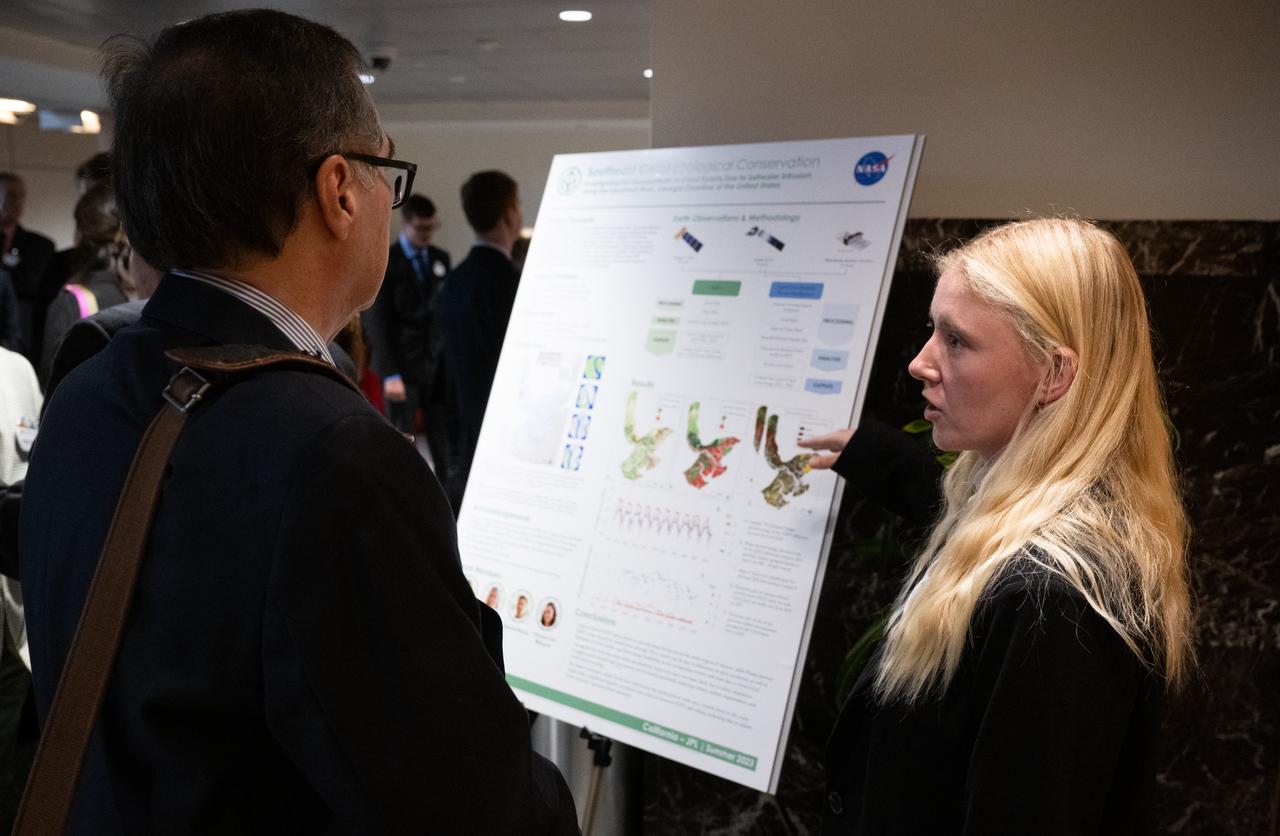
Students and young professionals discuss their projects during the 2023 DEVELOP Day, Wednesday, Aug. 9, 2023, at the Mary W. Jackson NASA Headquarters building in Washington. Every summer students and young professionals from NASA’s Applied Sciences’ DEVELOP National Program come to NASA Headquarters to present their research. This year marks the 25th year of DEVELOP, a training and development program where students work on Earth science research projects, mentored by science advisors from NASA and partner agencies, and extend research results to local communities. Photo Credit: (NASA/Joel Kowsky)
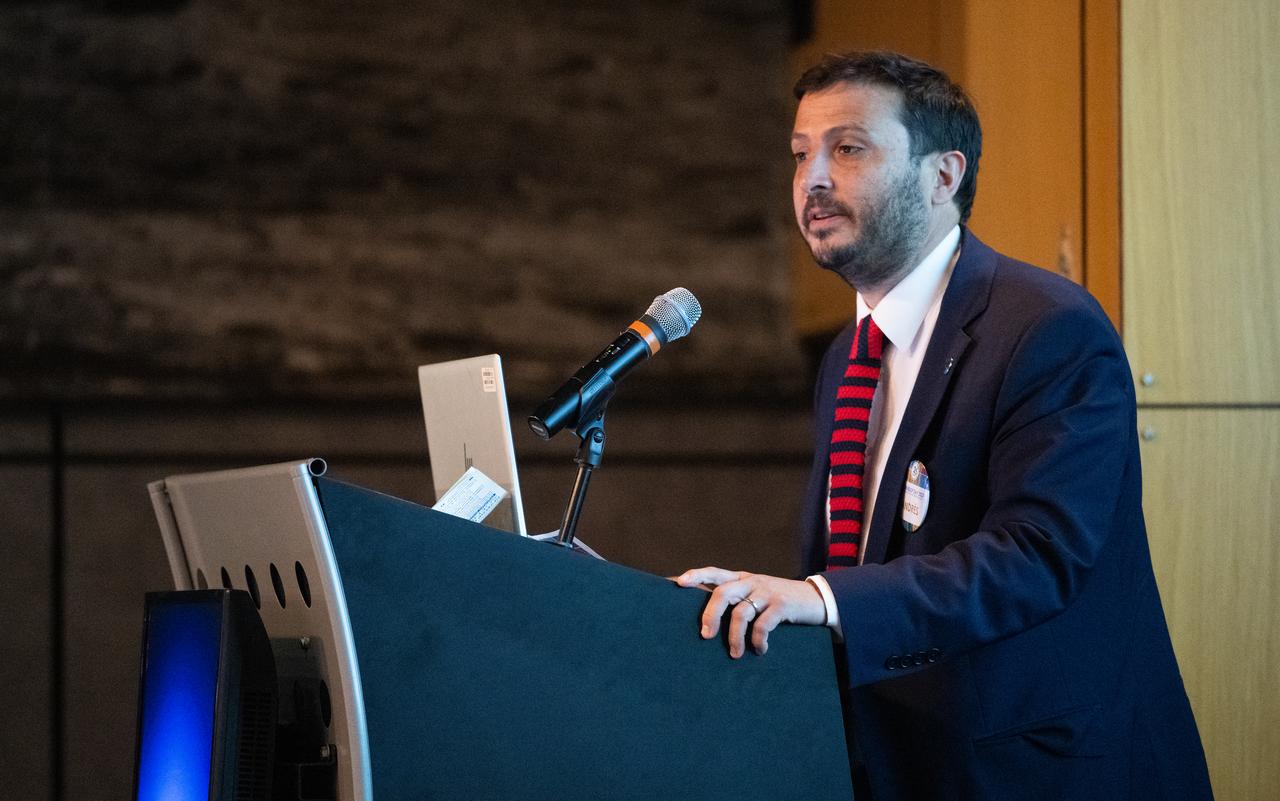
Andrés Rodriguez, Agricultural Attaché at the Embassy of Chile, delivers closing remarks during the 2023 DEVELOP Day, Wednesday, Aug. 9, 2023, at the Mary W. Jackson NASA Headquarters building in Washington. Every summer students and young professionals from NASA’s Applied Sciences’ DEVELOP National Program come to NASA Headquarters to present their research. This year marks the 25th year of DEVELOP, a training and development program where students work on Earth science research projects, mentored by science advisors from NASA and partner agencies, and extend research results to local communities. Photo Credit: (NASA/Joel Kowsky)
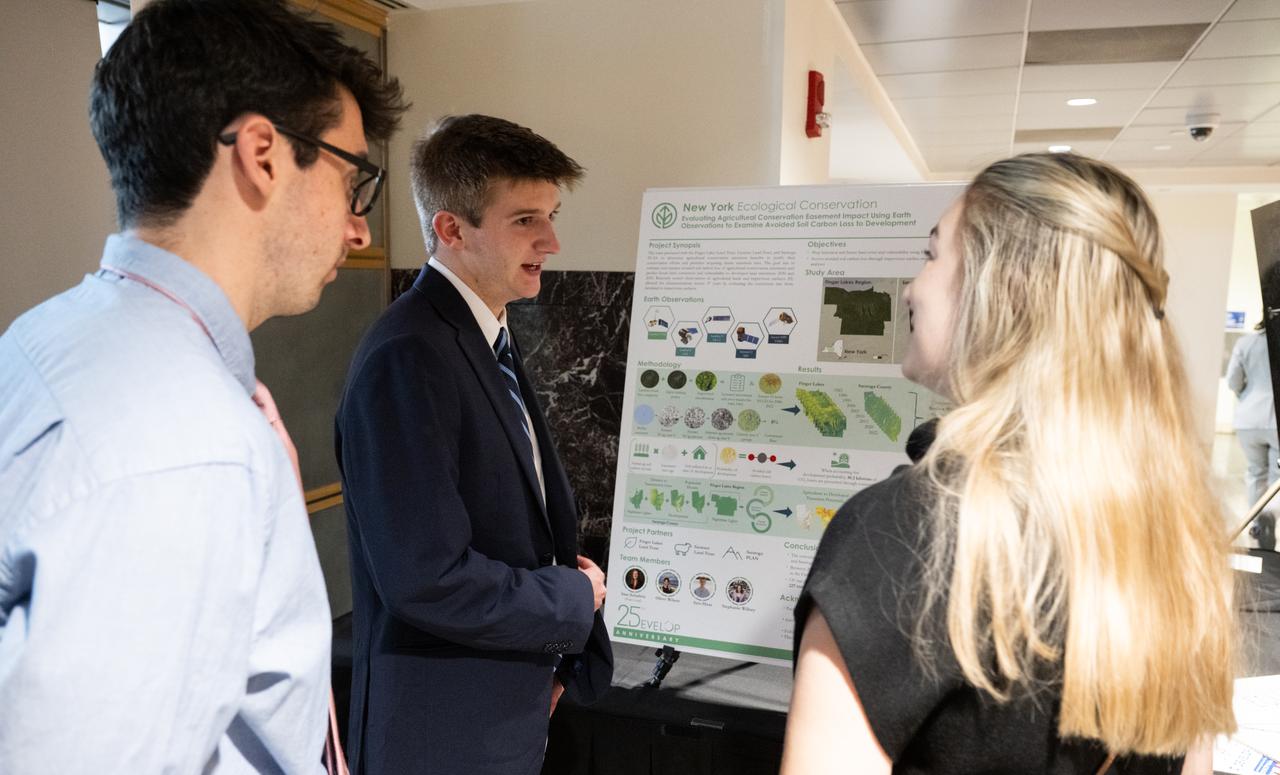
Students and young professionals discuss their projects during the 2023 DEVELOP Day, Wednesday, Aug. 9, 2023, at the Mary W. Jackson NASA Headquarters building in Washington. Every summer students and young professionals from NASA’s Applied Sciences’ DEVELOP National Program come to NASA Headquarters to present their research. This year marks the 25th year of DEVELOP, a training and development program where students work on Earth science research projects, mentored by science advisors from NASA and partner agencies, and extend research results to local communities. Photo Credit: (NASA/Joel Kowsky)
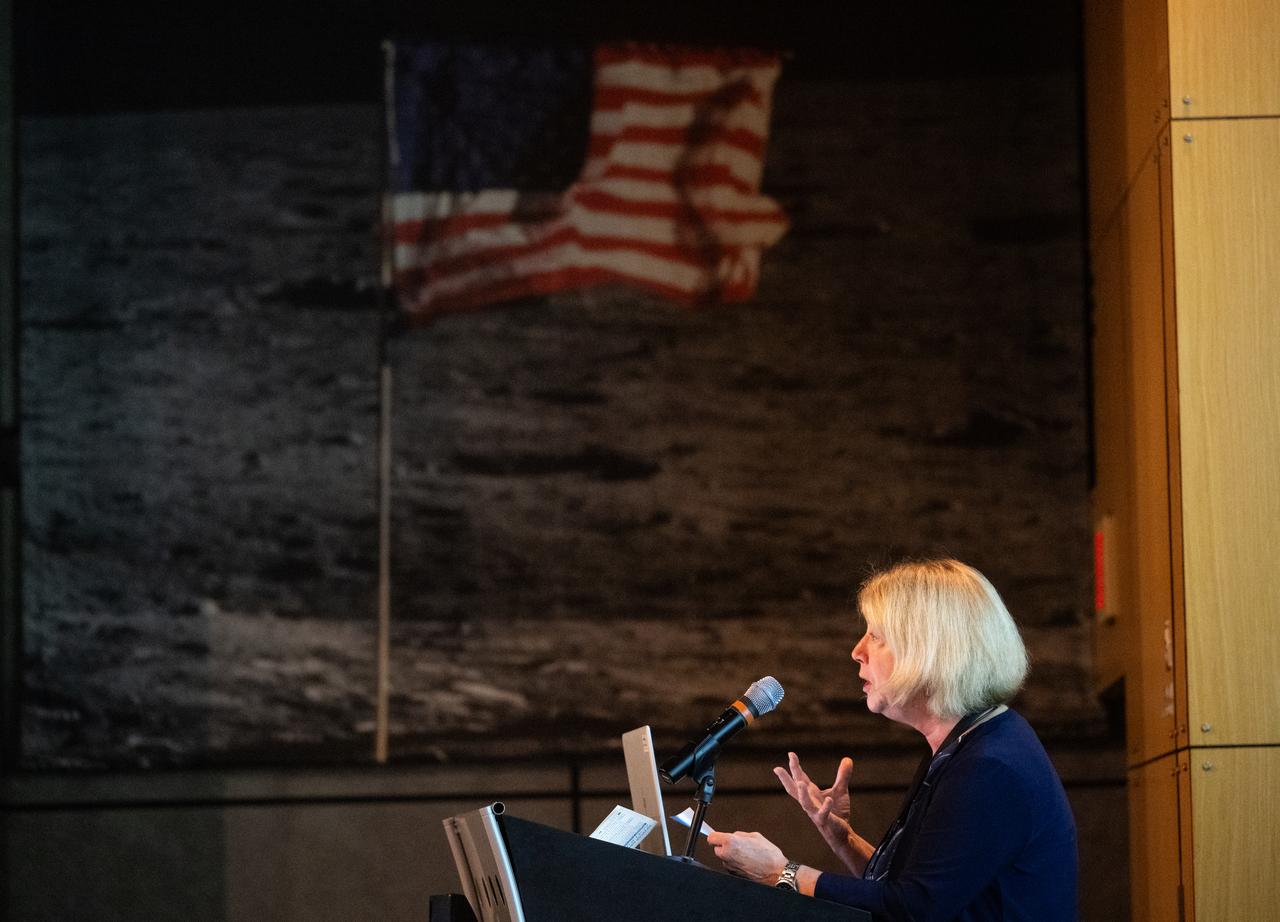
NASA Deputy Administrator Pam Melroy delivers closing remarks during the 2023 DEVELOP Day, Wednesday, Aug. 9, 2023, at the Mary W. Jackson NASA Headquarters building in Washington. Every summer students and young professionals from NASA’s Applied Sciences’ DEVELOP National Program come to NASA Headquarters to present their research. This year marks the 25th year of DEVELOP, a training and development program where students work on Earth science research projects, mentored by science advisors from NASA and partner agencies, and extend research results to local communities. Photo Credit: (NASA/Joel Kowsky)
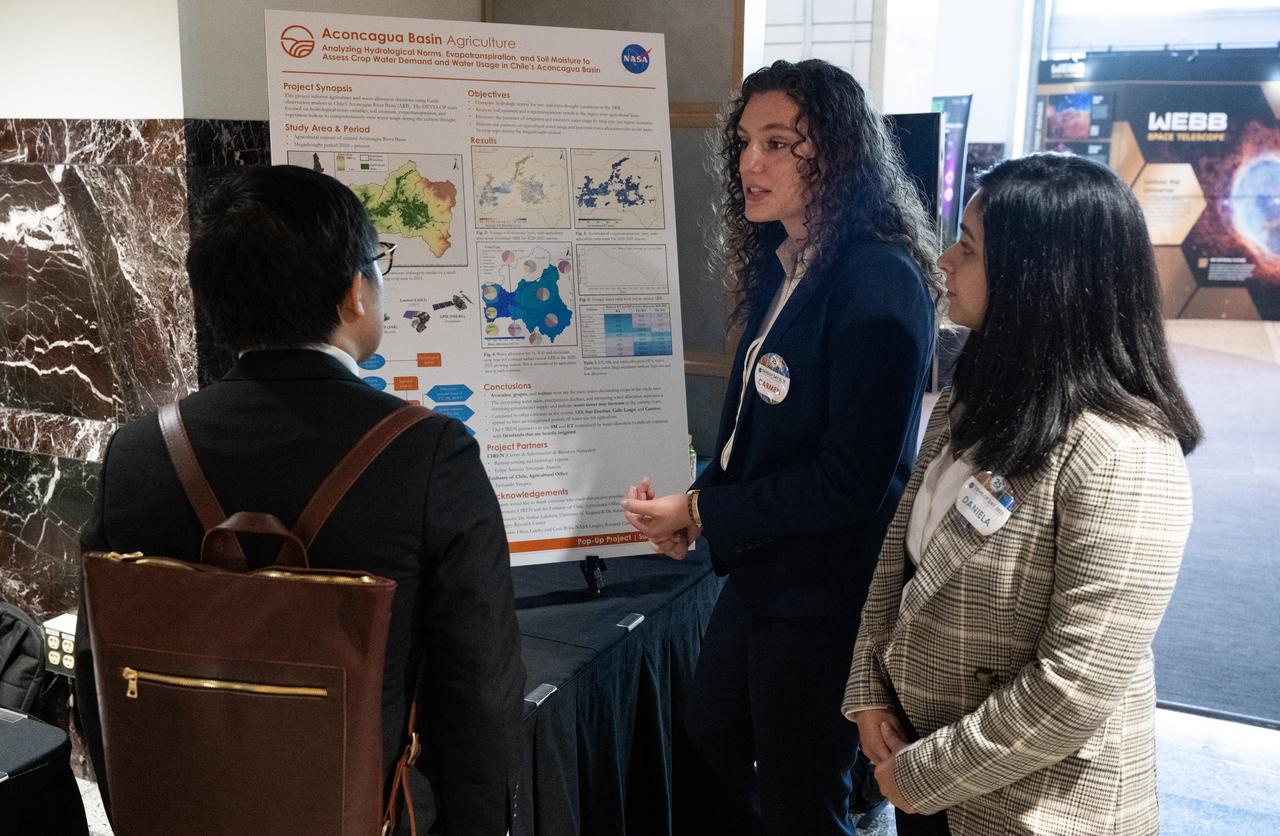
Students and young professionals discuss their projects during the 2023 DEVELOP Day, Wednesday, Aug. 9, 2023, at the Mary W. Jackson NASA Headquarters building in Washington. Every summer students and young professionals from NASA’s Applied Sciences’ DEVELOP National Program come to NASA Headquarters to present their research. This year marks the 25th year of DEVELOP, a training and development program where students work on Earth science research projects, mentored by science advisors from NASA and partner agencies, and extend research results to local communities. Photo Credit: (NASA/Joel Kowsky)
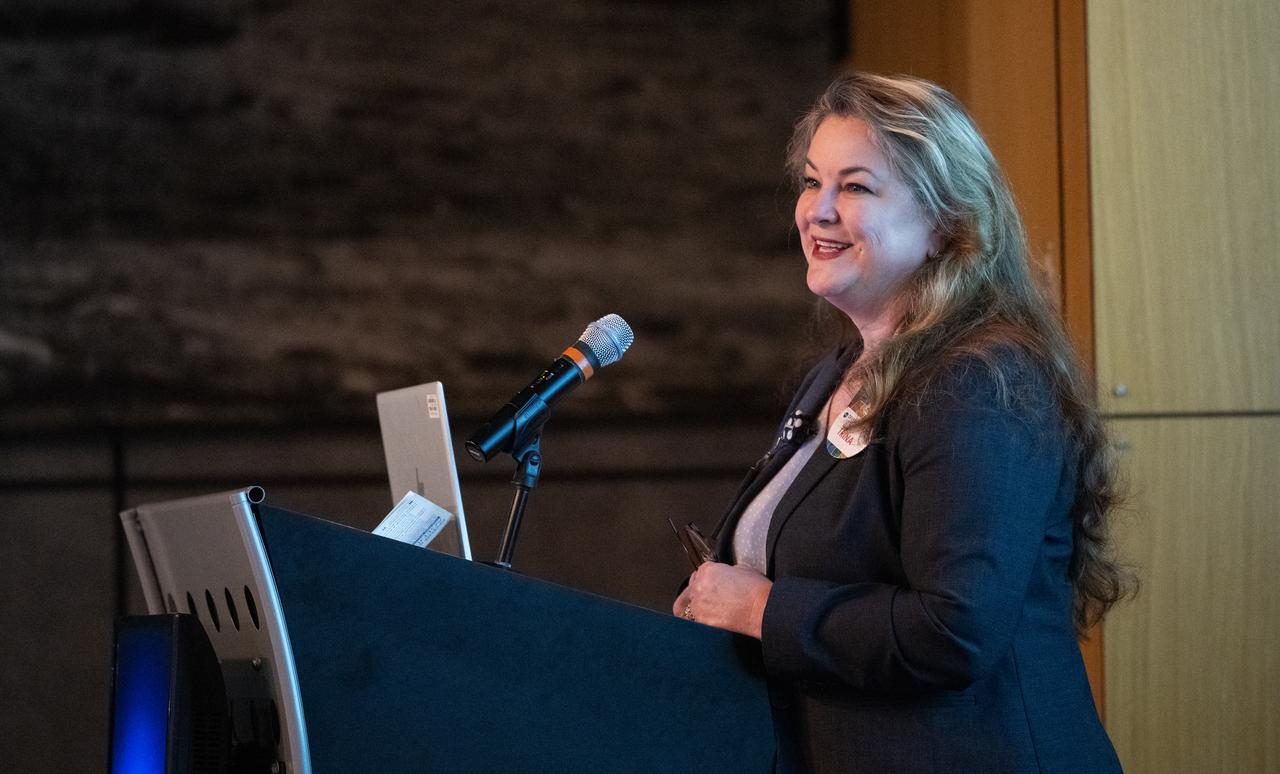
Trina Dyal, Director of the Science Directorate at NASA’s Langley Research Center, delivers closing remarks during the 2023 DEVELOP Day, Wednesday, Aug. 9, 2023, at the Mary W. Jackson NASA Headquarters building in Washington. Every summer students and young professionals from NASA’s Applied Sciences’ DEVELOP National Program come to NASA Headquarters to present their research. This year marks the 25th year of DEVELOP, a training and development program where students work on Earth science research projects, mentored by science advisors from NASA and partner agencies, and extend research results to local communities. Photo Credit: (NASA/Joel Kowsky)
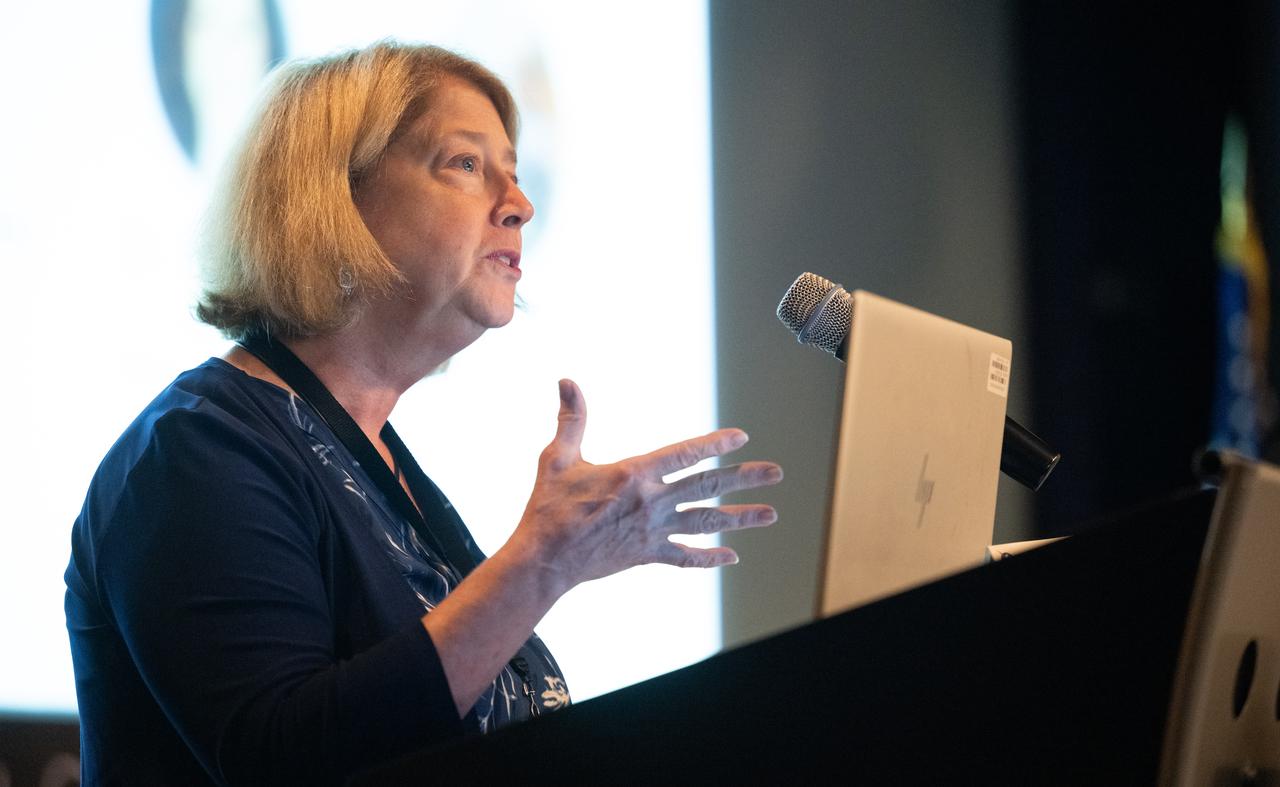
NASA Deputy Administrator Pam Melroy delivers closing remarks during the 2023 DEVELOP Day, Wednesday, Aug. 9, 2023, at the Mary W. Jackson NASA Headquarters building in Washington. Every summer students and young professionals from NASA’s Applied Sciences’ DEVELOP National Program come to NASA Headquarters to present their research. This year marks the 25th year of DEVELOP, a training and development program where students work on Earth science research projects, mentored by science advisors from NASA and partner agencies, and extend research results to local communities. Photo Credit: (NASA/Joel Kowsky)
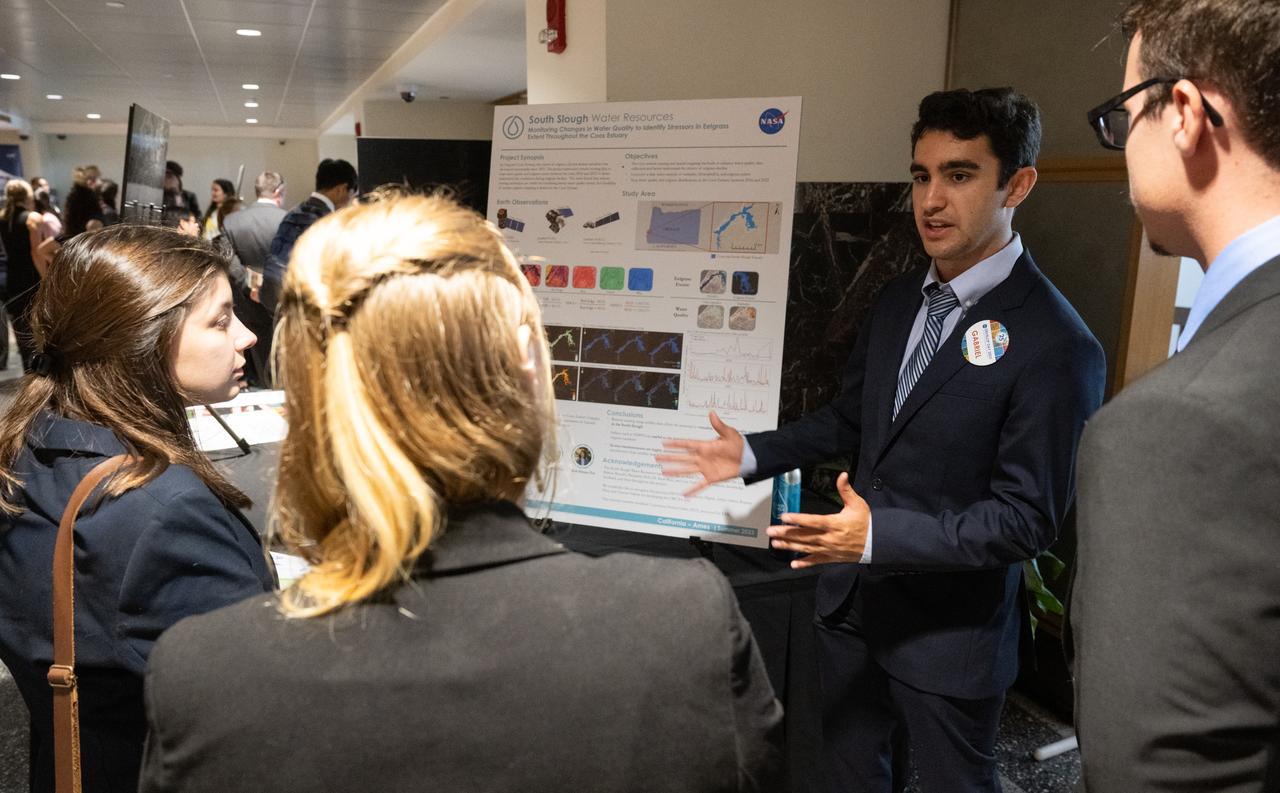
Students and young professionals discuss their projects during the 2023 DEVELOP Day, Wednesday, Aug. 9, 2023, at the Mary W. Jackson NASA Headquarters building in Washington. Every summer students and young professionals from NASA’s Applied Sciences’ DEVELOP National Program come to NASA Headquarters to present their research. This year marks the 25th year of DEVELOP, a training and development program where students work on Earth science research projects, mentored by science advisors from NASA and partner agencies, and extend research results to local communities. Photo Credit: (NASA/Joel Kowsky)
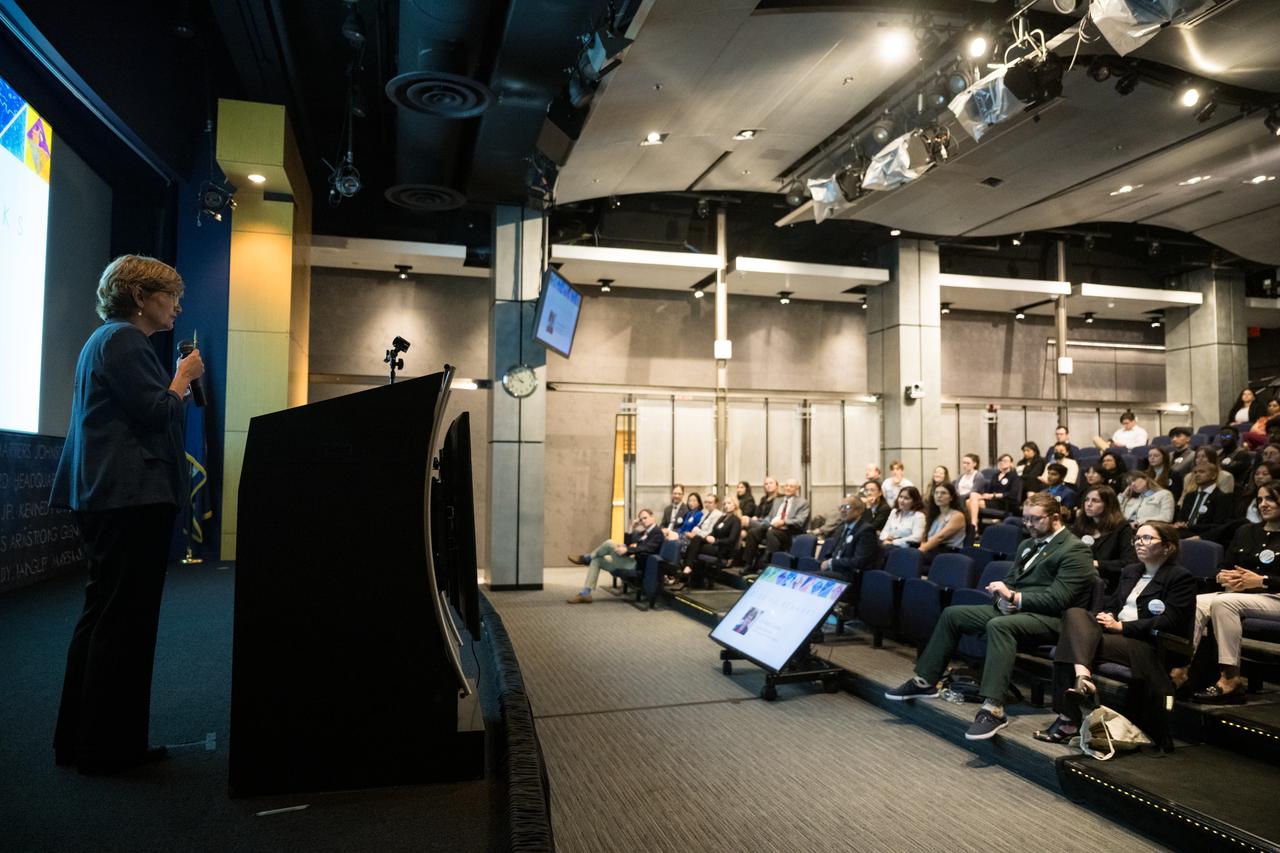
NASA Capacity Building Program Manager Dr. Nancy Searby, provides closing remarks at DEVELOP Day, Tuesday, August 6, 2024, at the Mary W. Jackson NASA Headquarters building in Washington. Every summer early career researchers from NASA’s DEVELOP National Program come to NASA Headquarters and present their research projects. DEVELOP is a training and development program where early career researchers work on Earth science projects, mentored by science advisors from NASA and partner agencies, and provide research results to local communities. Photo Credit: (NASA/Aubrey Gemignani)
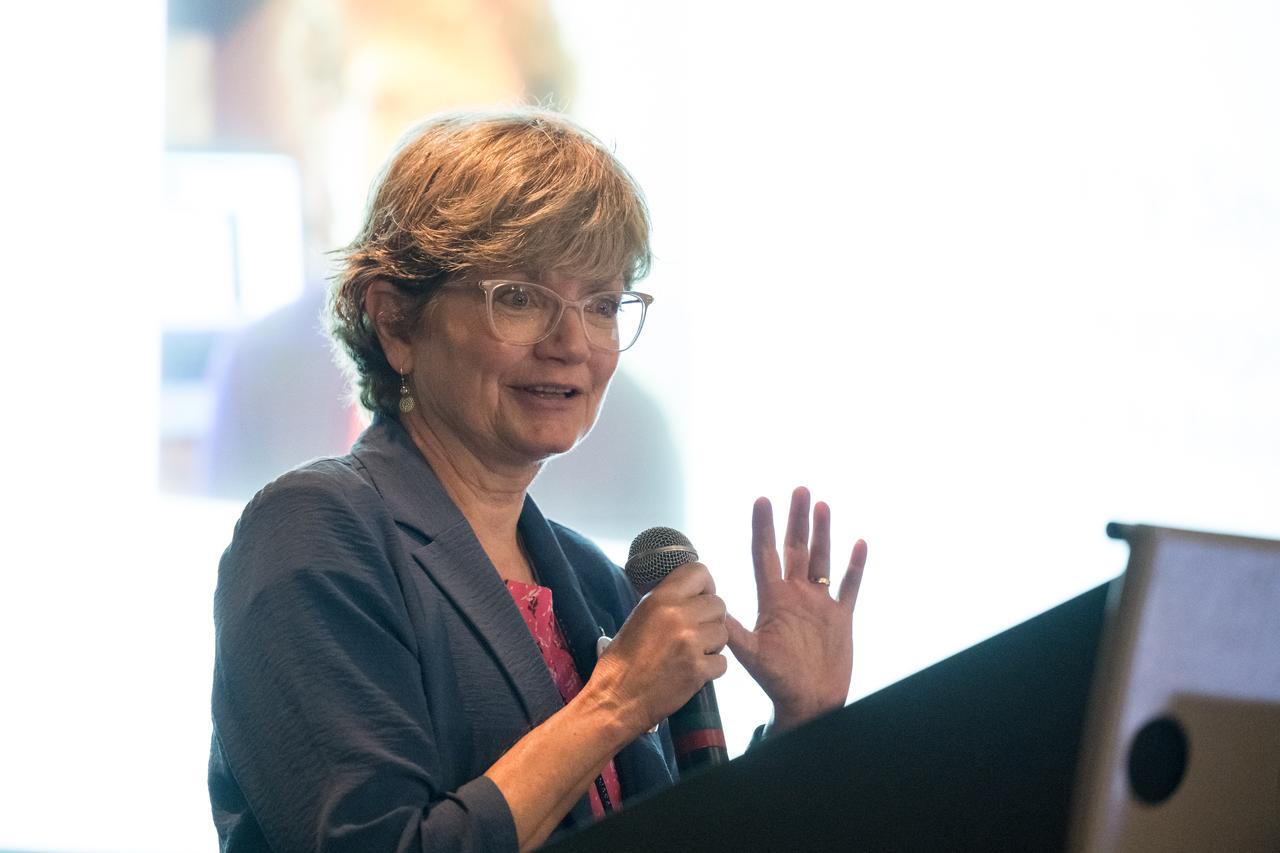
NASA Capacity Building Program Manager Dr. Nancy Searby, provides closing remarks at DEVELOP Day, Tuesday, August 6, 2024, at the Mary W. Jackson NASA Headquarters building in Washington. Every summer early career researchers from NASA’s DEVELOP National Program come to NASA Headquarters and present their research projects. DEVELOP is a training and development program where early career researchers work on Earth science projects, mentored by science advisors from NASA and partner agencies, and provide research results to local communities. Photo Credit: (NASA/Aubrey Gemignani)
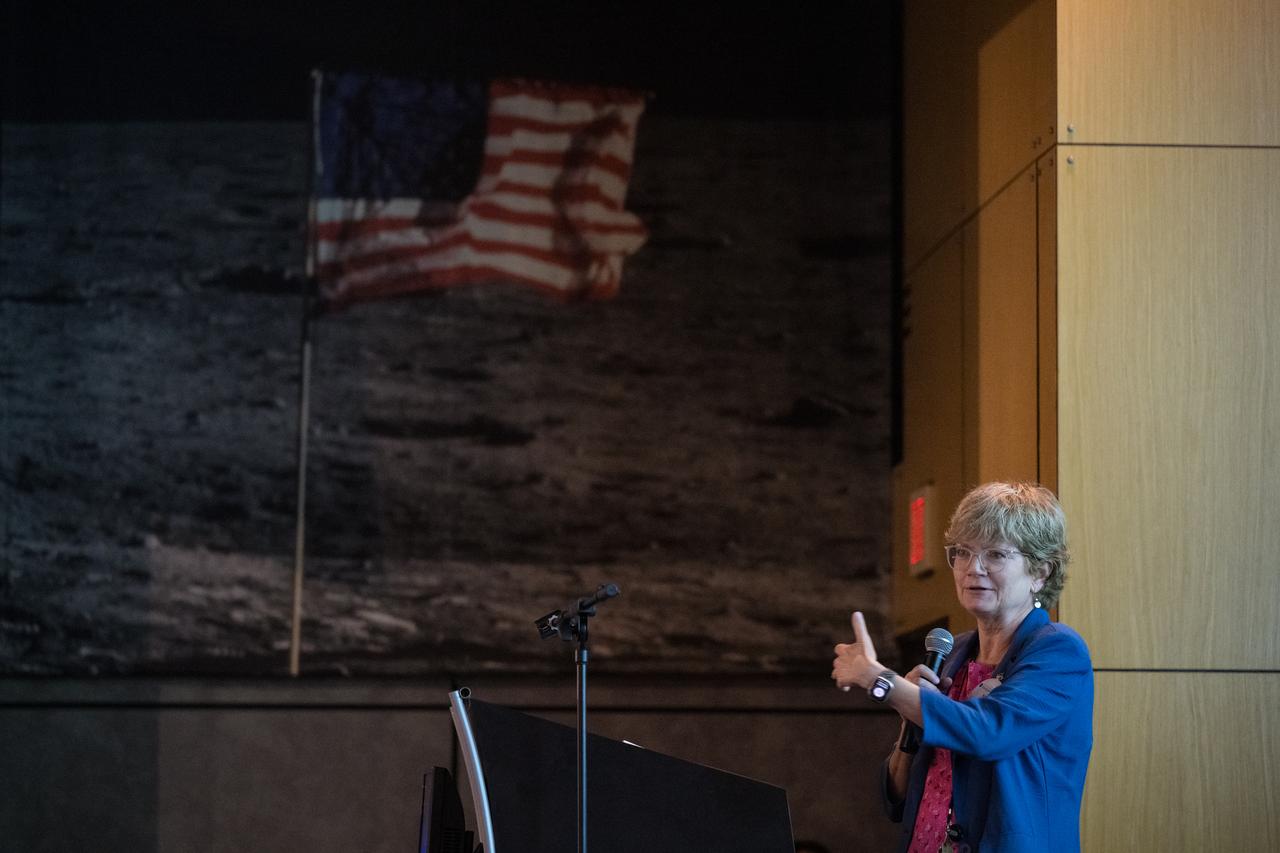
NASA Capacity Building Program Manager Dr. Nancy Searby, provides closing remarks at DEVELOP Day, Tuesday, August 6, 2024, at the Mary W. Jackson NASA Headquarters building in Washington. Every summer early career researchers from NASA’s DEVELOP National Program come to NASA Headquarters and present their research projects. DEVELOP is a training and development program where early career researchers work on Earth science projects, mentored by science advisors from NASA and partner agencies, and provide research results to local communities. Photo Credit: (NASA/Aubrey Gemignani)
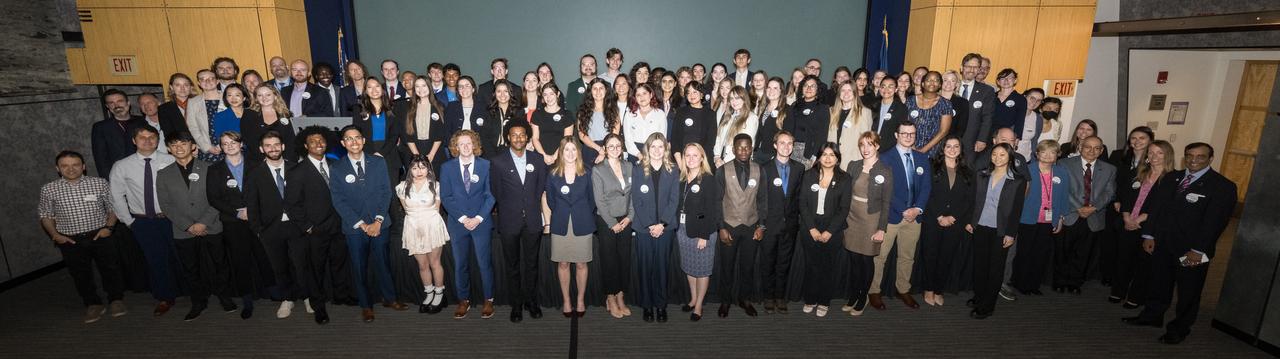
Participants and leaders in the DEVELOP program pose for a group photo, Tuesday, August 6, 2024, at the Mary W. Jackson NASA Headquarters building in Washington. Every summer early career researchers from NASA’s DEVELOP National Program come to NASA Headquarters and present their research projects. DEVELOP is a training and development program where early career researchers work on Earth science projects, mentored by science advisors from NASA and partner agencies, and provide research results to local communities. Photo Credit: (NASA/Aubrey Gemignani)
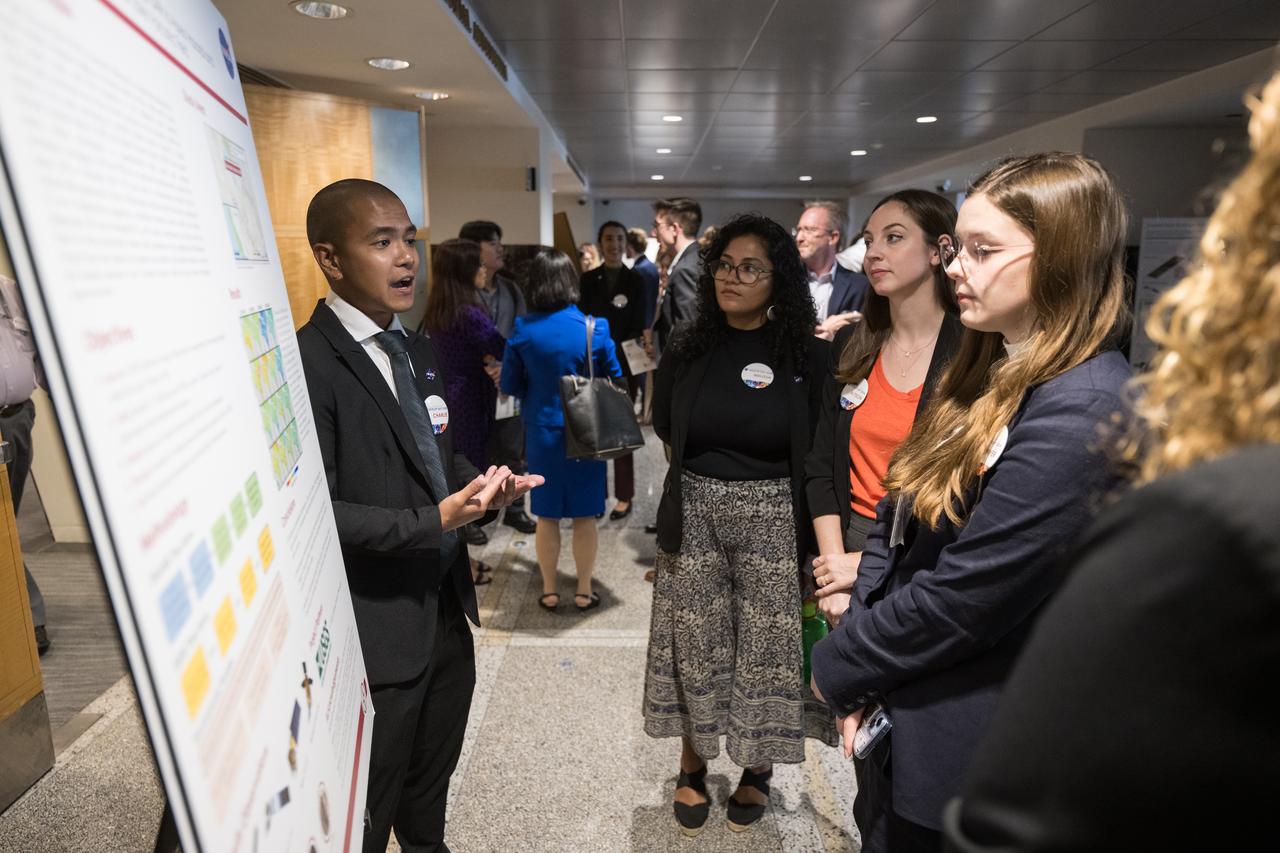
A DEVELOP researcher speaks about his project, Tuesday, August 6, 2024, at the Mary W. Jackson NASA Headquarters building in Washington. Every summer early career researchers from NASA’s DEVELOP National Program come to NASA Headquarters and present their research projects. DEVELOP is a training and development program where early career researchers work on Earth science projects, mentored by science advisors from NASA and partner agencies, and provide research results to local communities. Photo Credit: (NASA/Aubrey Gemignani)
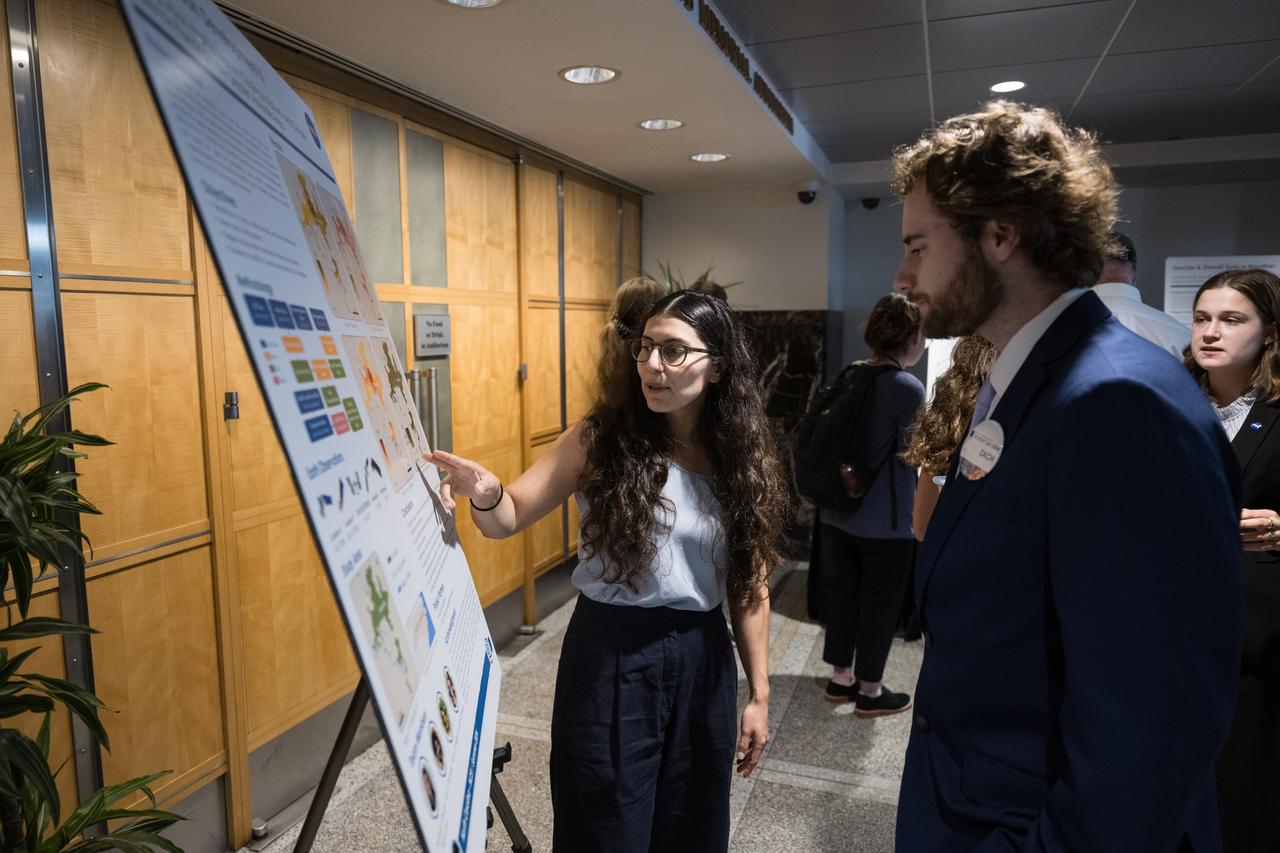
A DEVELOP researcher speaks about her project, Tuesday, August 6, 2024, at the Mary W. Jackson NASA Headquarters building in Washington. Every summer early career researchers from NASA’s DEVELOP National Program come to NASA Headquarters and present their research projects. DEVELOP is a training and development program where early career researchers work on Earth science projects, mentored by science advisors from NASA and partner agencies, and provide research results to local communities. Photo Credit: (NASA/Aubrey Gemignani)
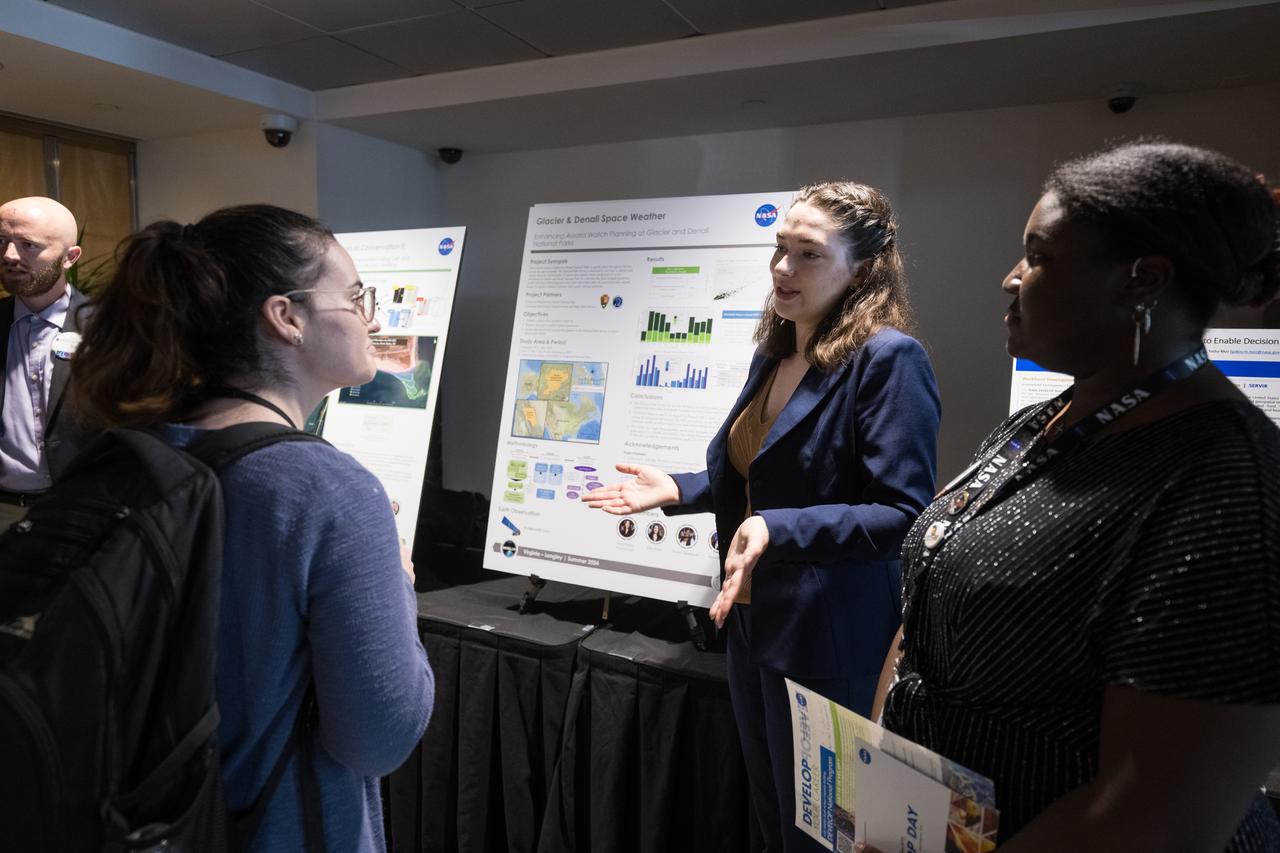
A DEVELOP researcher speaks about her project, Tuesday, August 6, 2024, at the Mary W. Jackson NASA Headquarters building in Washington. Every summer early career researchers from NASA’s DEVELOP National Program come to NASA Headquarters and present their research projects. DEVELOP is a training and development program where early career researchers work on Earth science projects, mentored by science advisors from NASA and partner agencies, and provide research results to local communities. Photo Credit: (NASA/Aubrey Gemignani)
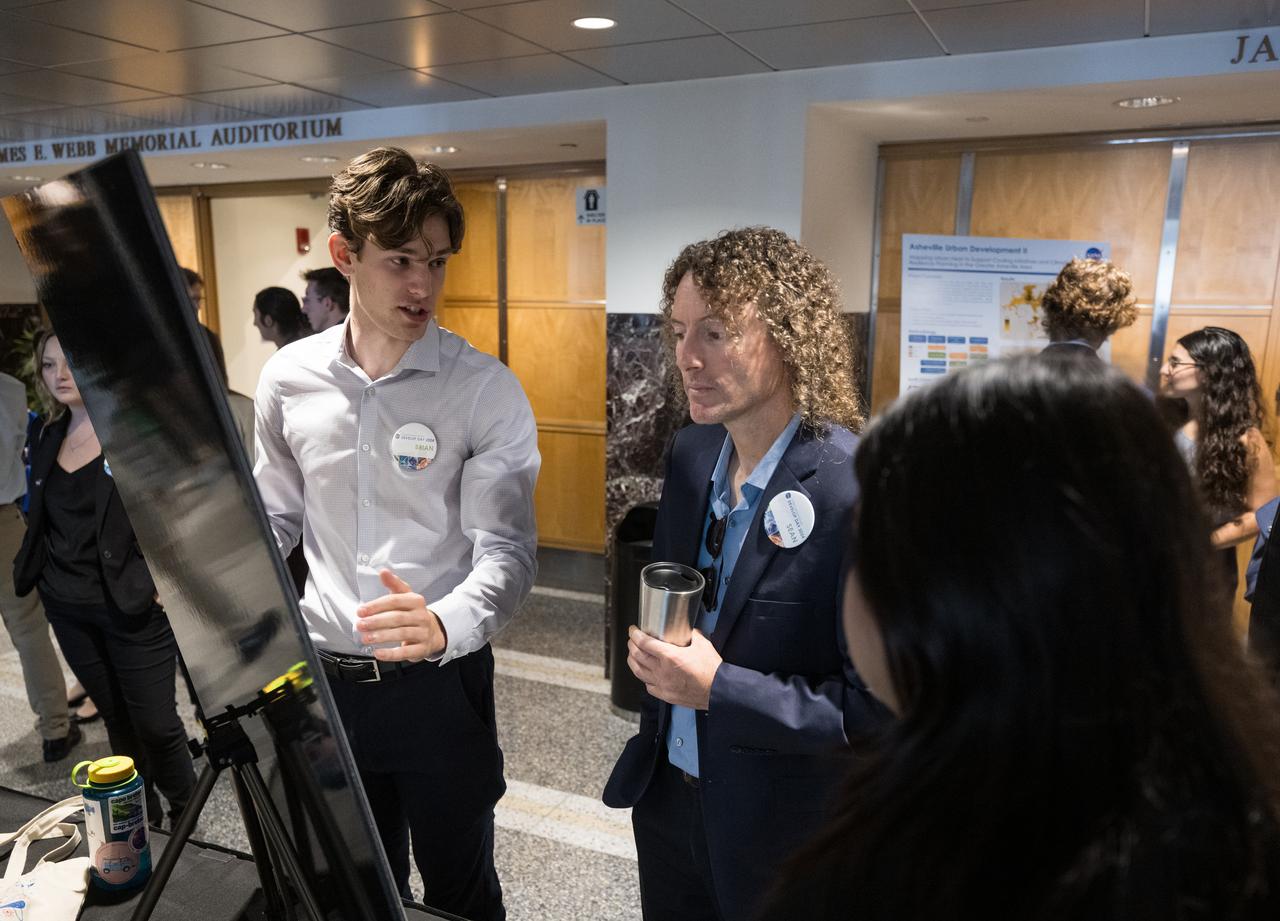
A DEVELOP researcher speaks about his project, Tuesday, August 6, 2024, at the Mary W. Jackson NASA Headquarters building in Washington. Every summer early career researchers from NASA’s DEVELOP National Program come to NASA Headquarters and present their research projects. DEVELOP is a training and development program where early career researchers work on Earth science projects, mentored by science advisors from NASA and partner agencies, and provide research results to local communities. Photo Credit: (NASA/Aubrey Gemignani)
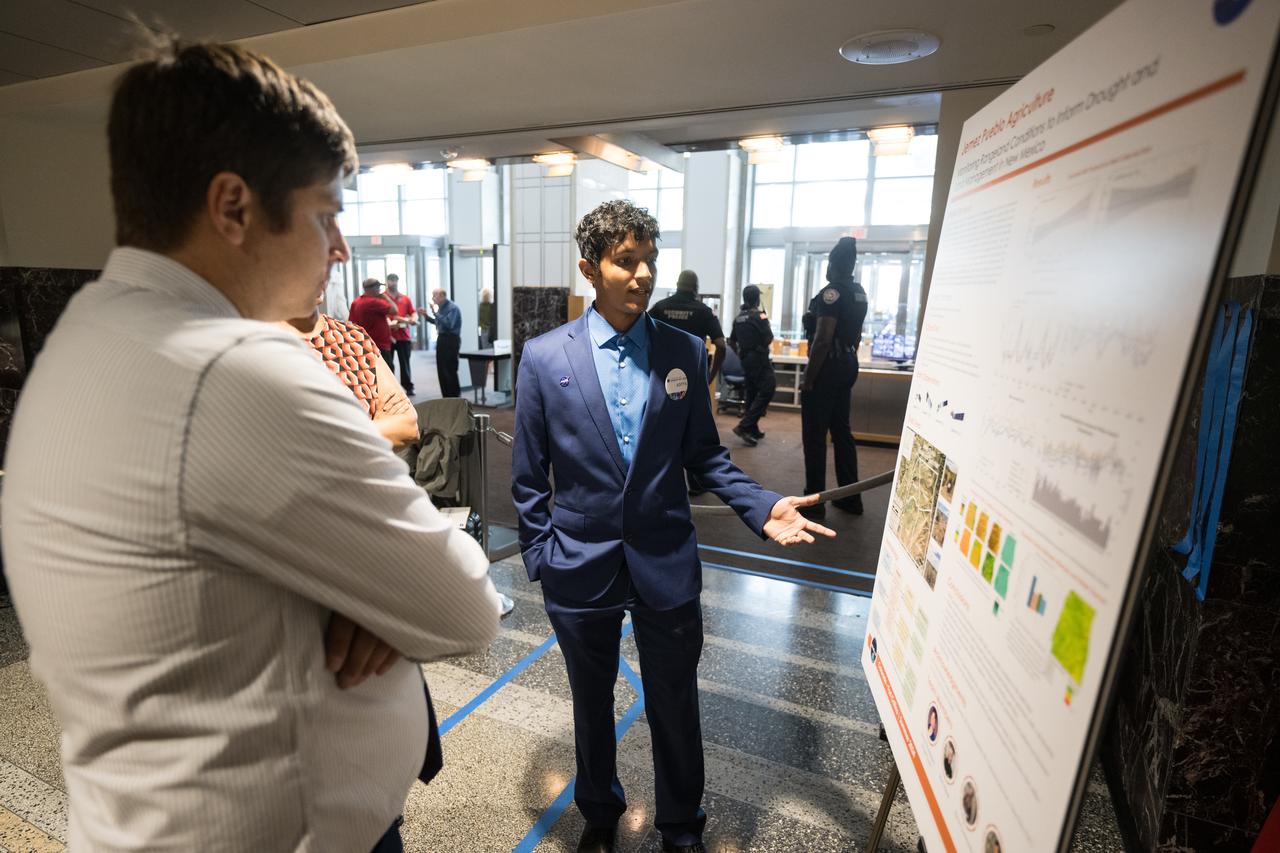
A DEVELOP researcher speaks about his project, Tuesday, August 6, 2024, at the Mary W. Jackson NASA Headquarters building in Washington. Every summer early career researchers from NASA’s DEVELOP National Program come to NASA Headquarters and present their research projects. DEVELOP is a training and development program where early career researchers work on Earth science projects, mentored by science advisors from NASA and partner agencies, and provide research results to local communities. Photo Credit: (NASA/Aubrey Gemignani)
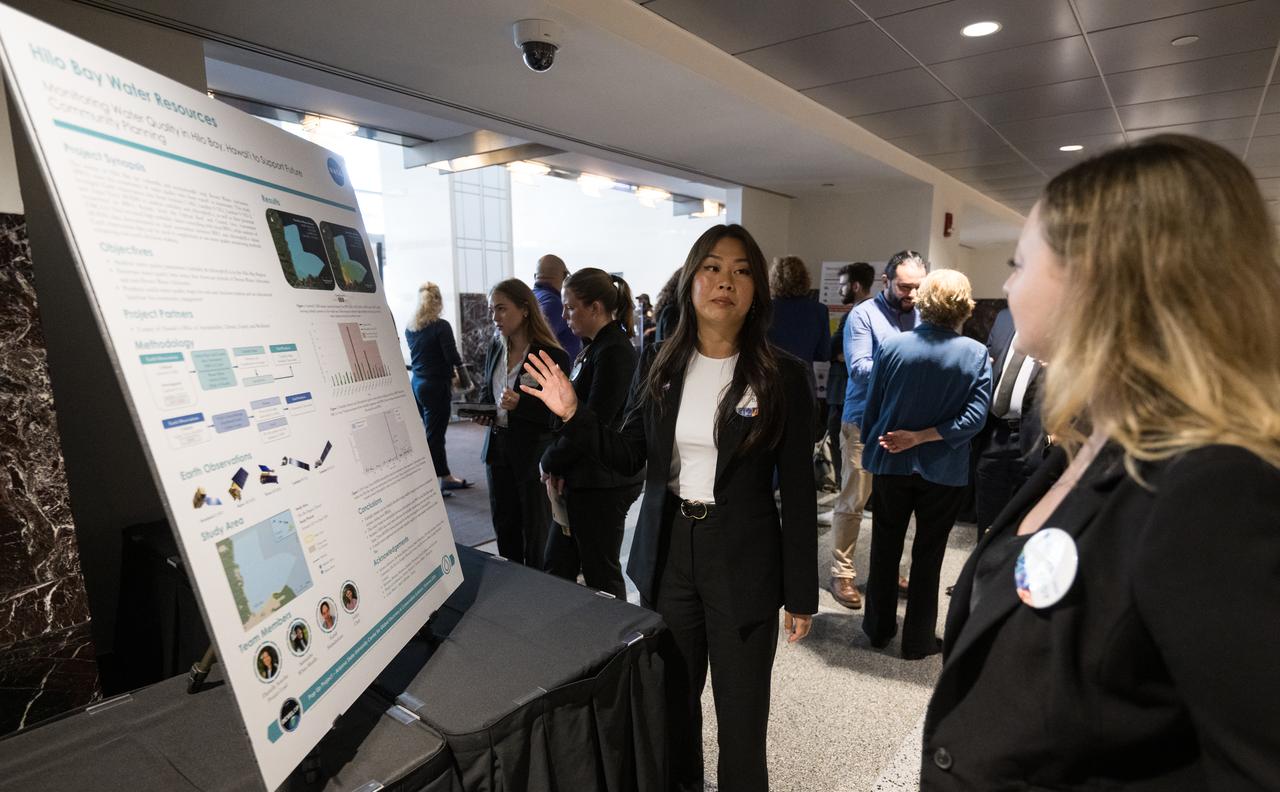
A DEVELOP researcher speaks about her project, Tuesday, August 6, 2024, at the Mary W. Jackson NASA Headquarters building in Washington. Every summer early career researchers from NASA’s DEVELOP National Program come to NASA Headquarters and present their research projects. DEVELOP is a training and development program where early career researchers work on Earth science projects, mentored by science advisors from NASA and partner agencies, and provide research results to local communities. Photo Credit: (NASA/Aubrey Gemignani)
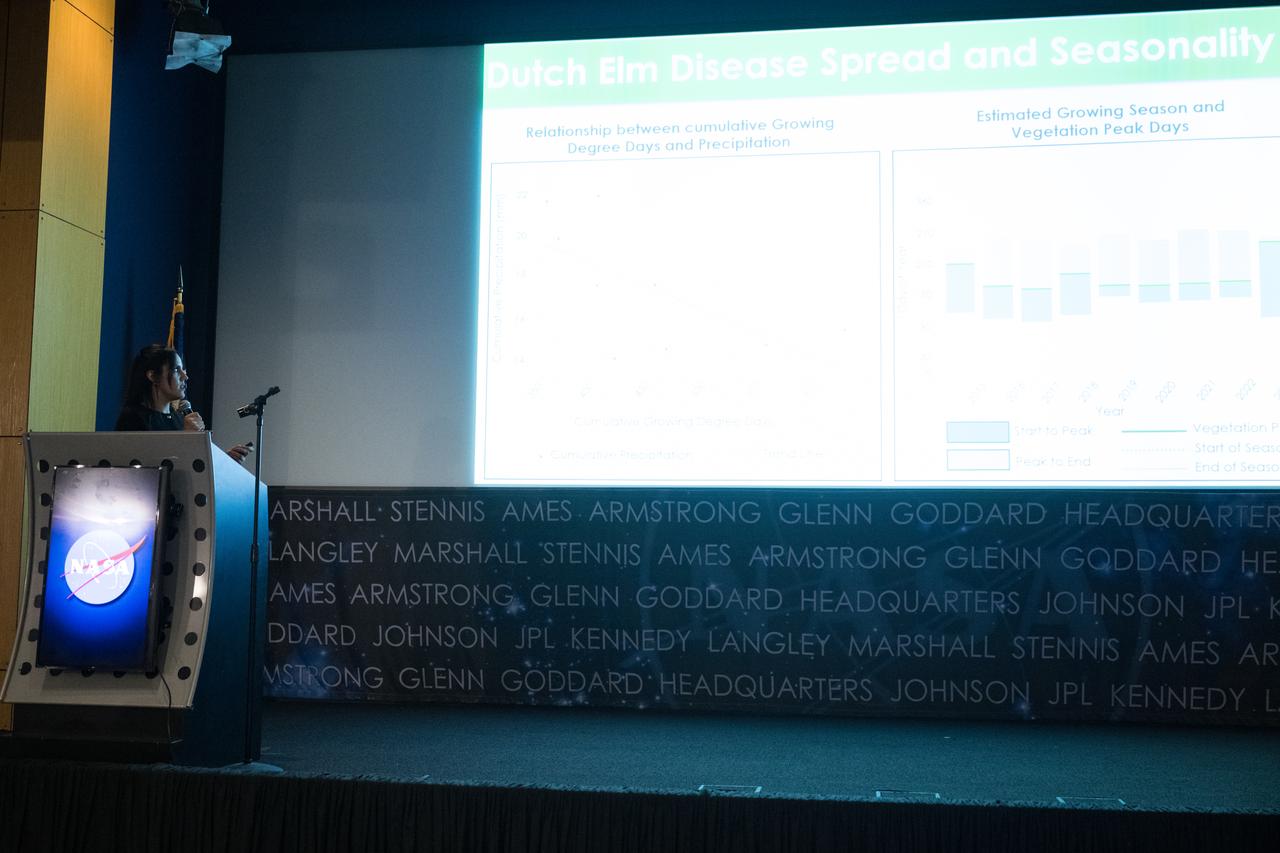
Ikram Morso speaks about her project, Central Park Ecological Conservation, Tuesday, August 6, 2024, at the Mary W. Jackson NASA Headquarters building in Washington. Every summer early career researchers from NASA’s DEVELOP National Program come to NASA Headquarters and present their research projects. DEVELOP is a training and development program where early career researchers work on Earth science projects, mentored by science advisors from NASA and partner agencies, and provide research results to local communities. Photo Credit: (NASA/Aubrey Gemignani)
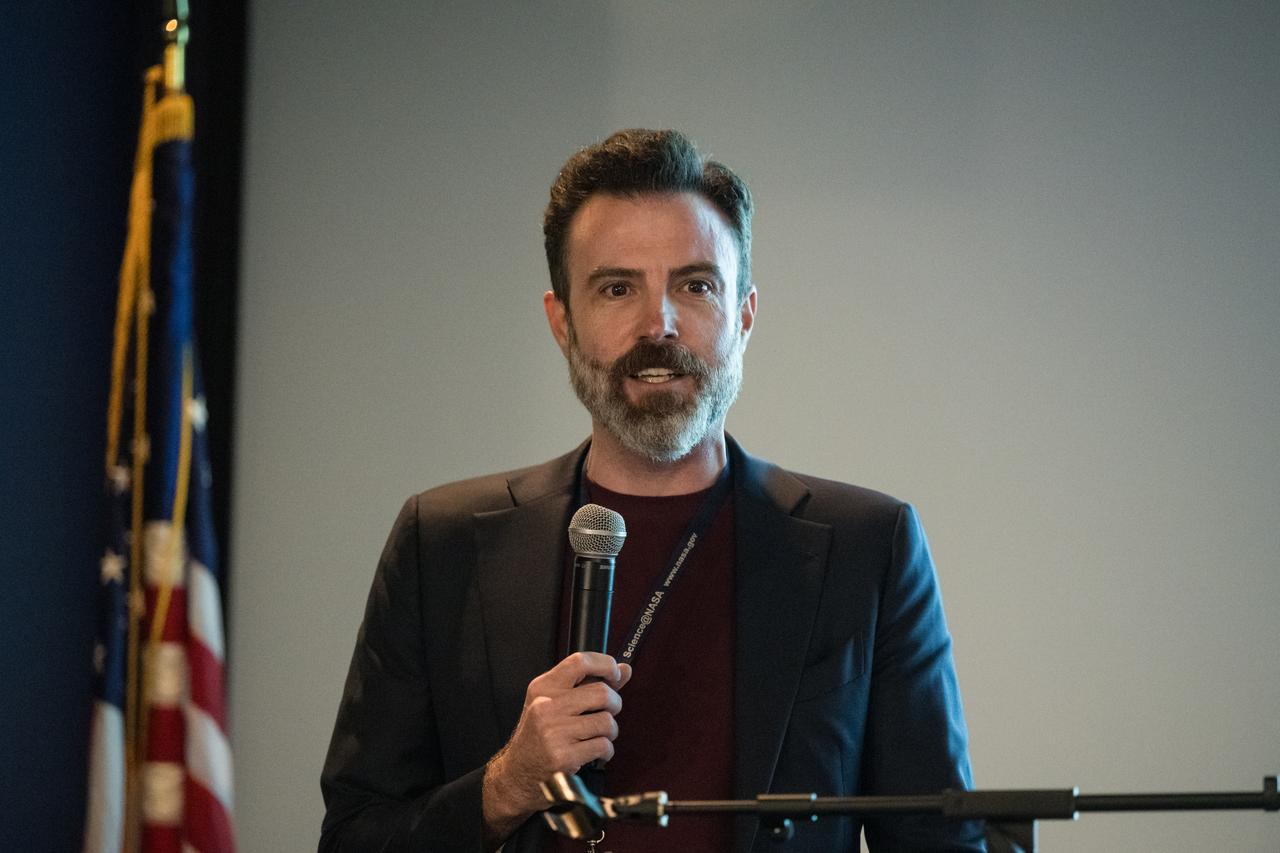
Director of the Space Weather Program, Jamie Favors, speaks about the Space Weather Pilot Project, Tuesday, August 6, 2024, at the Mary W. Jackson NASA Headquarters building in Washington. Every summer early career researchers from NASA’s DEVELOP National Program come to NASA Headquarters and present their research projects. DEVELOP is a training and development program where early career researchers work on Earth science projects, mentored by science advisors from NASA and partner agencies, and provide research results to local communities. Photo Credit: (NASA/Aubrey Gemignani)
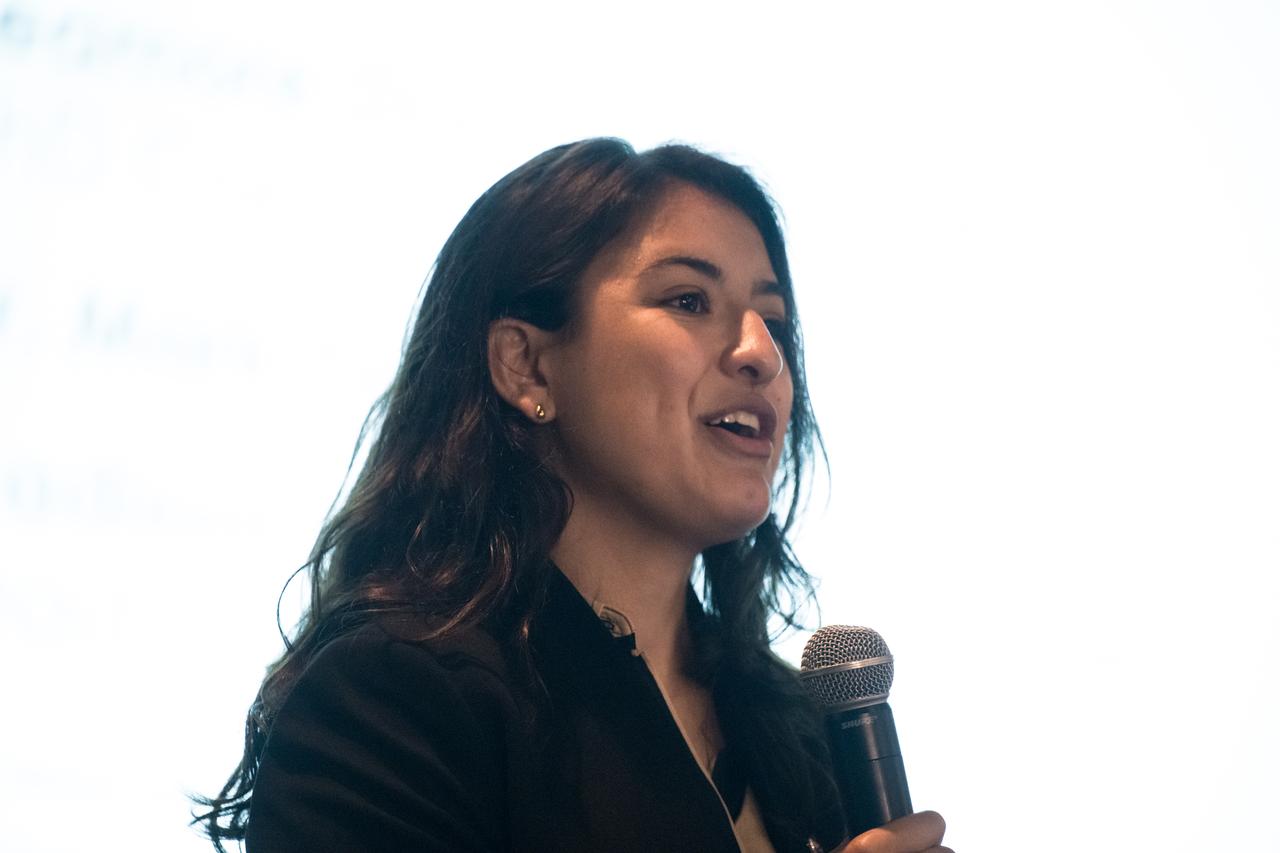
Jackie Encinas speaks about her project, Alaska Ecological Conservation II, Tuesday, August 6, 2024, at the Mary W. Jackson NASA Headquarters building in Washington. Every summer early career researchers from NASA’s DEVELOP National Program come to NASA Headquarters and present their research projects. DEVELOP is a training and development program where early career researchers work on Earth science projects, mentored by science advisors from NASA and partner agencies, and provide research results to local communities. Photo Credit: (NASA/Aubrey Gemignani)
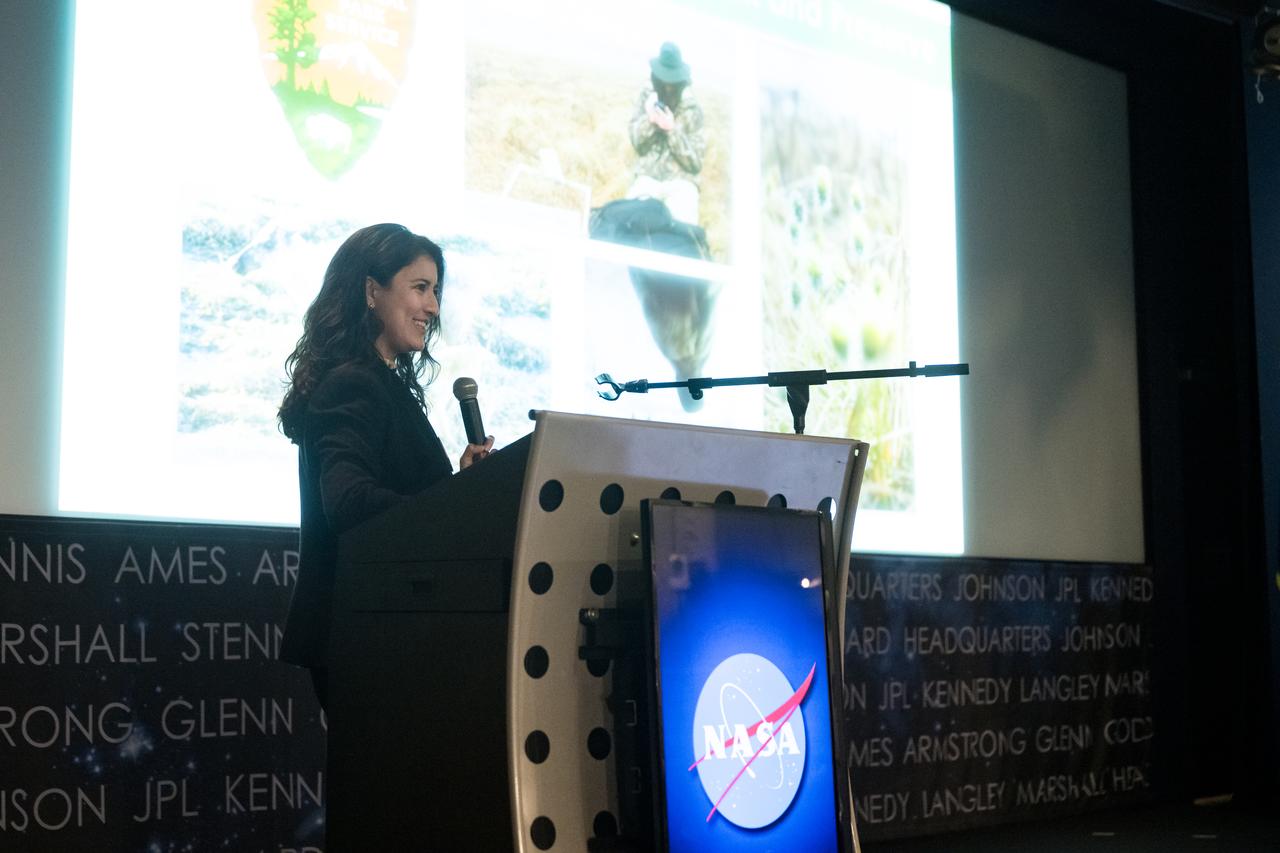
Jackie Encinas speaks about her project, Alaska Ecological Conservation II, Tuesday, August 6, 2024, at the Mary W. Jackson NASA Headquarters building in Washington. Every summer early career researchers from NASA’s DEVELOP National Program come to NASA Headquarters and present their research projects. DEVELOP is a training and development program where early career researchers work on Earth science projects, mentored by science advisors from NASA and partner agencies, and provide research results to local communities. Photo Credit: (NASA/Aubrey Gemignani)
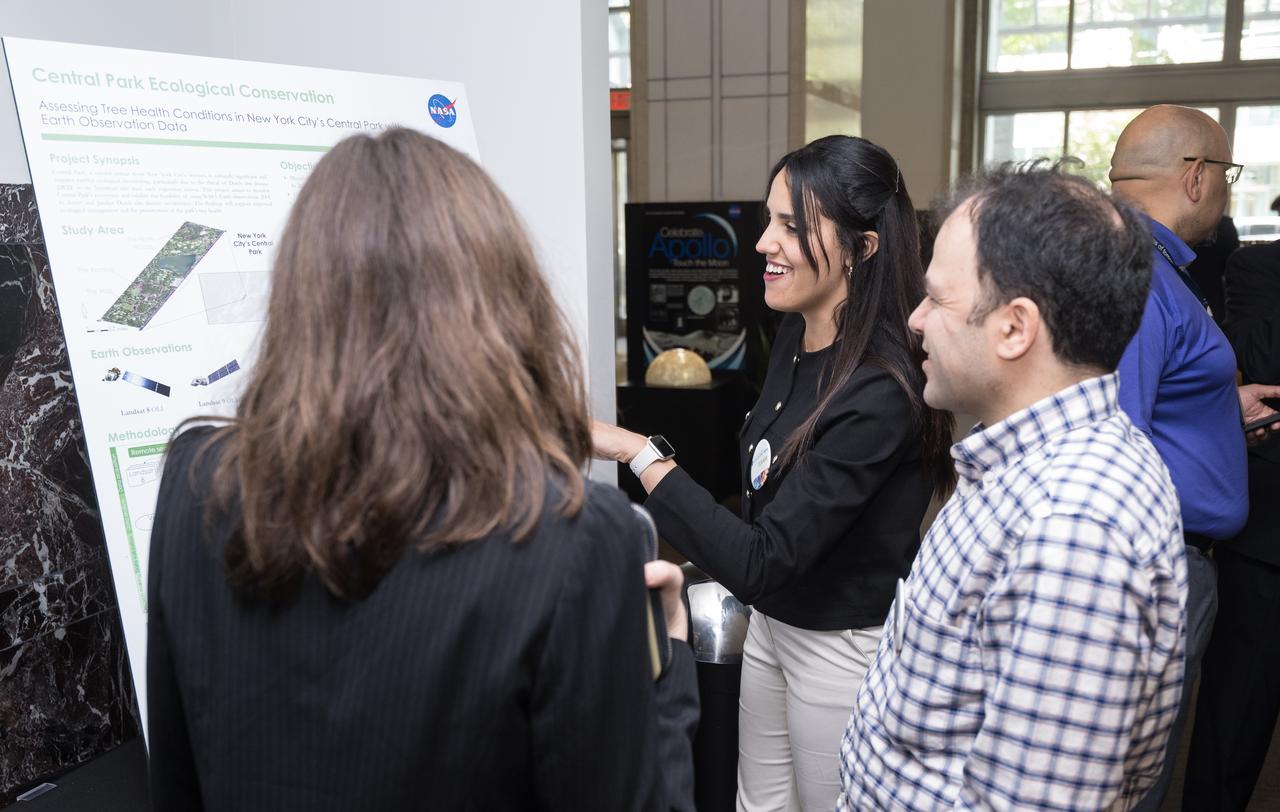
Ikram Morso speaks about her project, Central Park Ecological Conservation, Tuesday, August 6, 2024, at the Mary W. Jackson NASA Headquarters building in Washington. Every summer early career researchers from NASA’s DEVELOP National Program come to NASA Headquarters and present their research projects. DEVELOP is a training and development program where early career researchers work on Earth science projects, mentored by science advisors from NASA and partner agencies, and provide research results to local communities. Photo Credit: (NASA/Aubrey Gemignani)
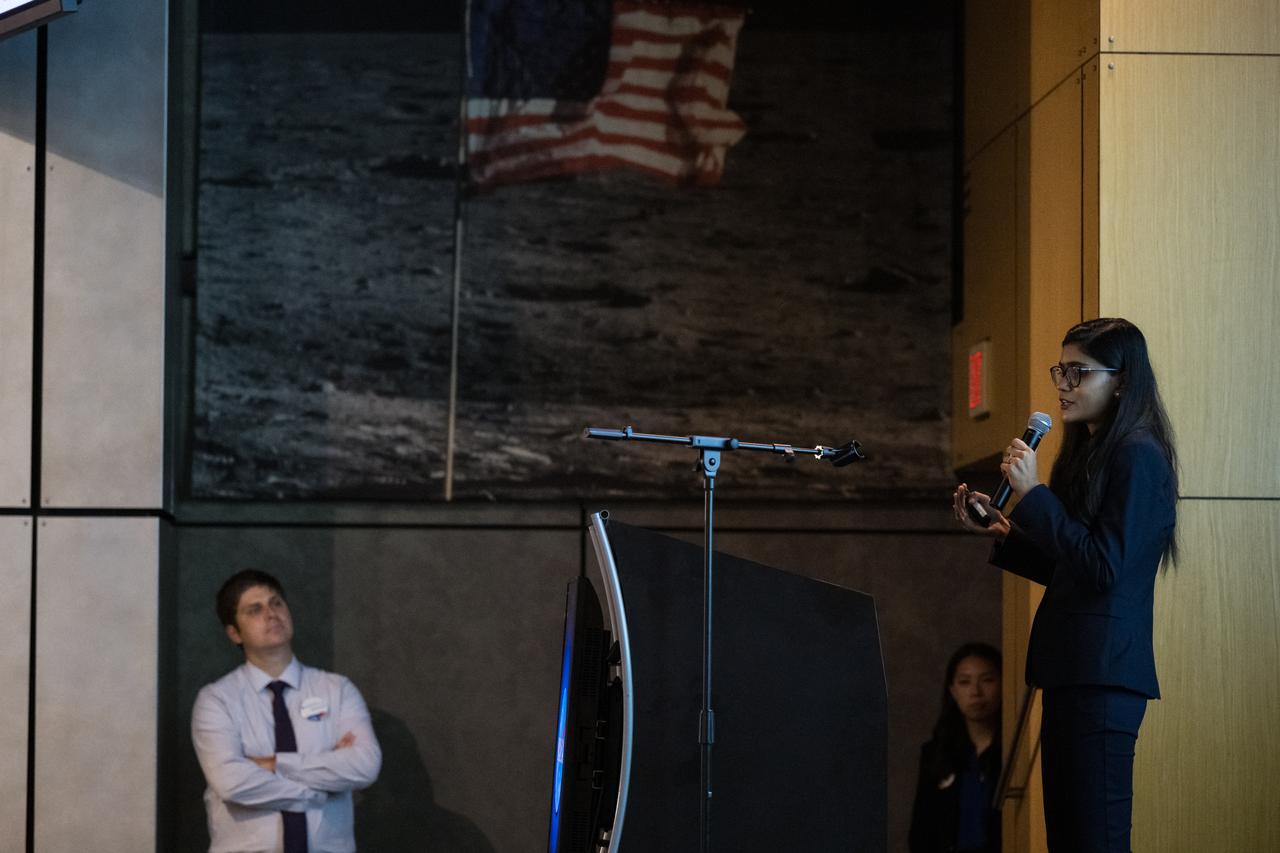
Nikita Bhole speaks about her DEVELOP Project, Cordoba Wildland Fires, Tuesday, August 6, 2024, at the Mary W. Jackson NASA Headquarters building in Washington. Every summer early career researchers from NASA’s DEVELOP National Program come to NASA Headquarters and present their research projects. DEVELOP is a training and development program where early career researchers work on Earth science projects, mentored by science advisors from NASA and partner agencies, and provide research results to local communities. Photo Credit: (NASA/Aubrey Gemignani)
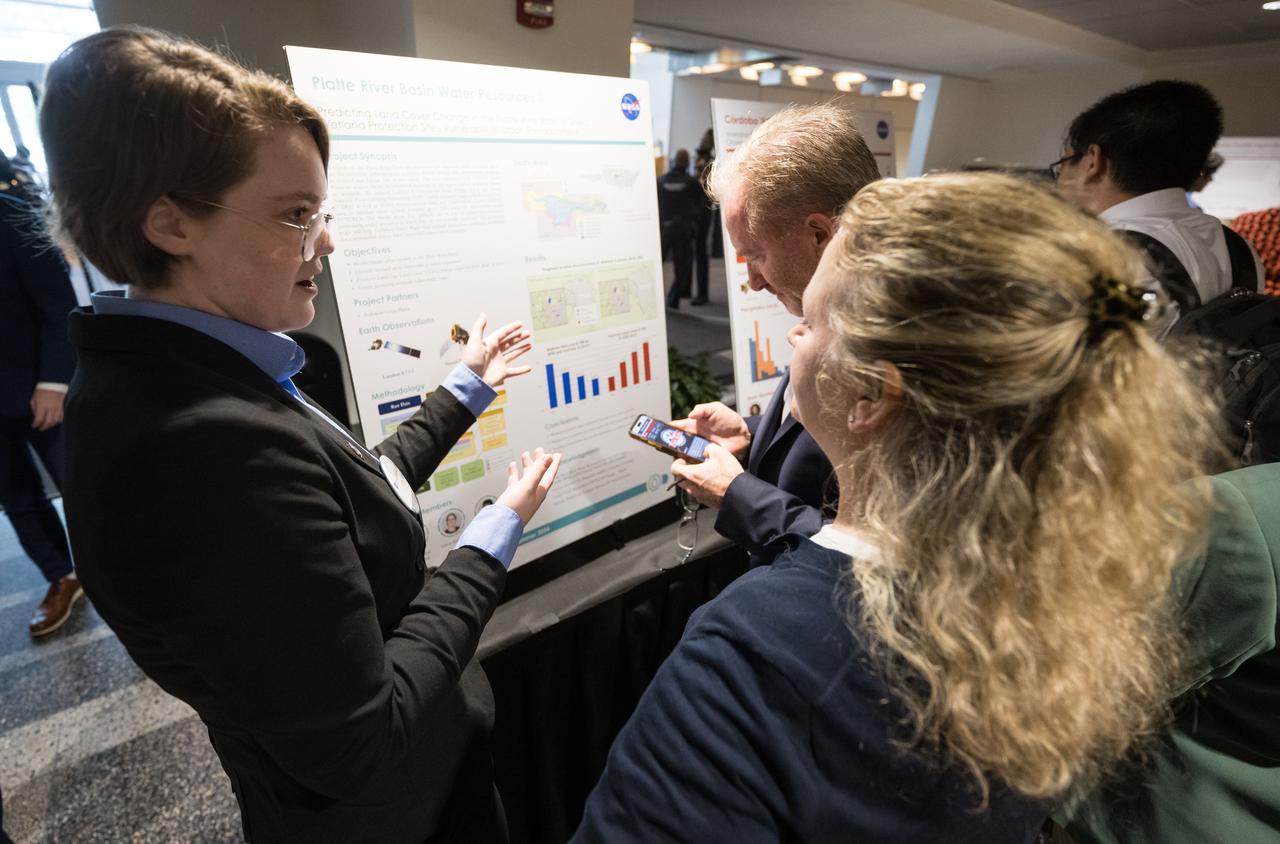
Olivia Kirkland speaks about her project, Platte River Basin Water Resources II, Tuesday, August 6, 2024, at the Mary W. Jackson NASA Headquarters building in Washington. Every summer early career researchers from NASA’s DEVELOP National Program come to NASA Headquarters and present their research projects. DEVELOP is a training and development program where early career researchers work on Earth science projects, mentored by science advisors from NASA and partner agencies, and provide research results to local communities. Photo Credit: (NASA/Aubrey Gemignani)
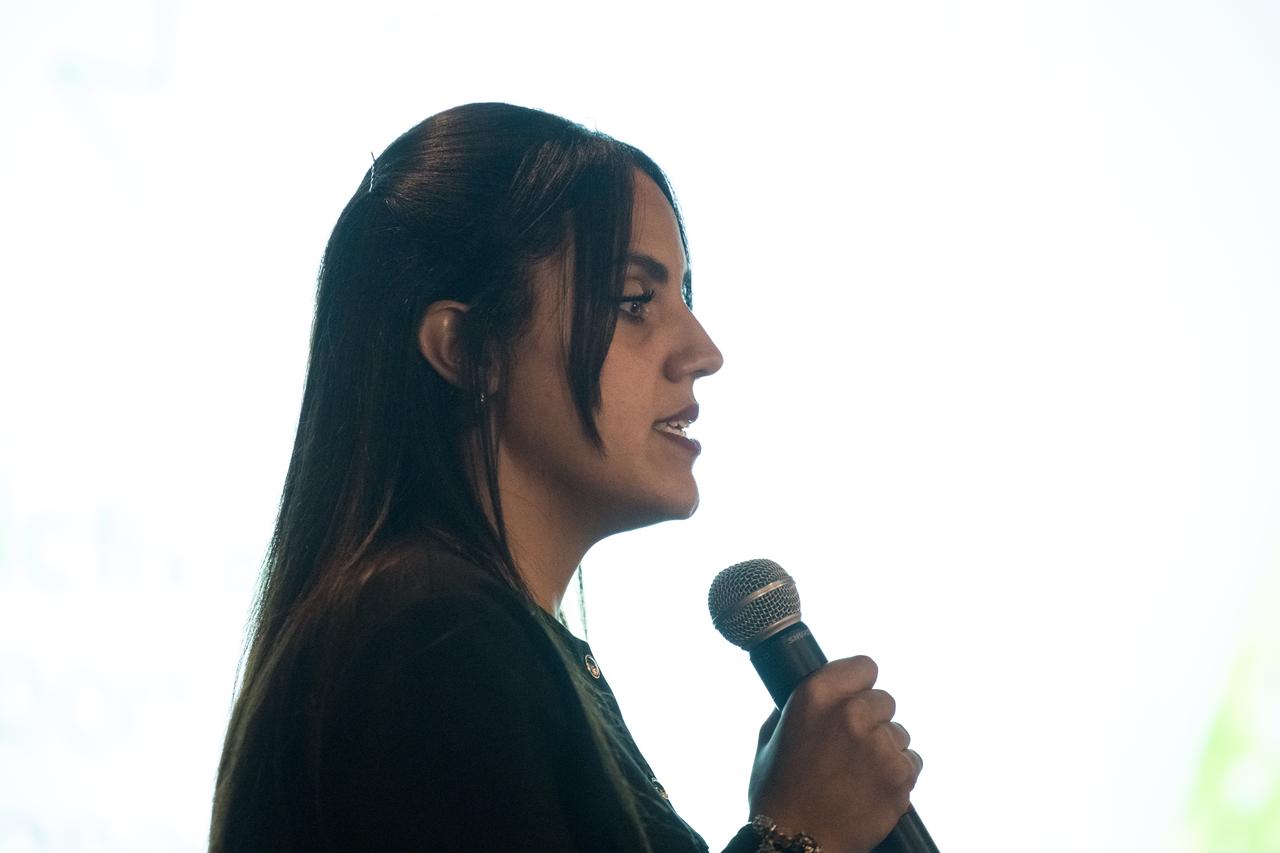
Ikram Morso speaks about her project, Central Park Ecological Conservation, Tuesday, August 6, 2024, at the Mary W. Jackson NASA Headquarters building in Washington. Every summer early career researchers from NASA’s DEVELOP National Program come to NASA Headquarters and present their research projects. DEVELOP is a training and development program where early career researchers work on Earth science projects, mentored by science advisors from NASA and partner agencies, and provide research results to local communities. Photo Credit: (NASA/Aubrey Gemignani)
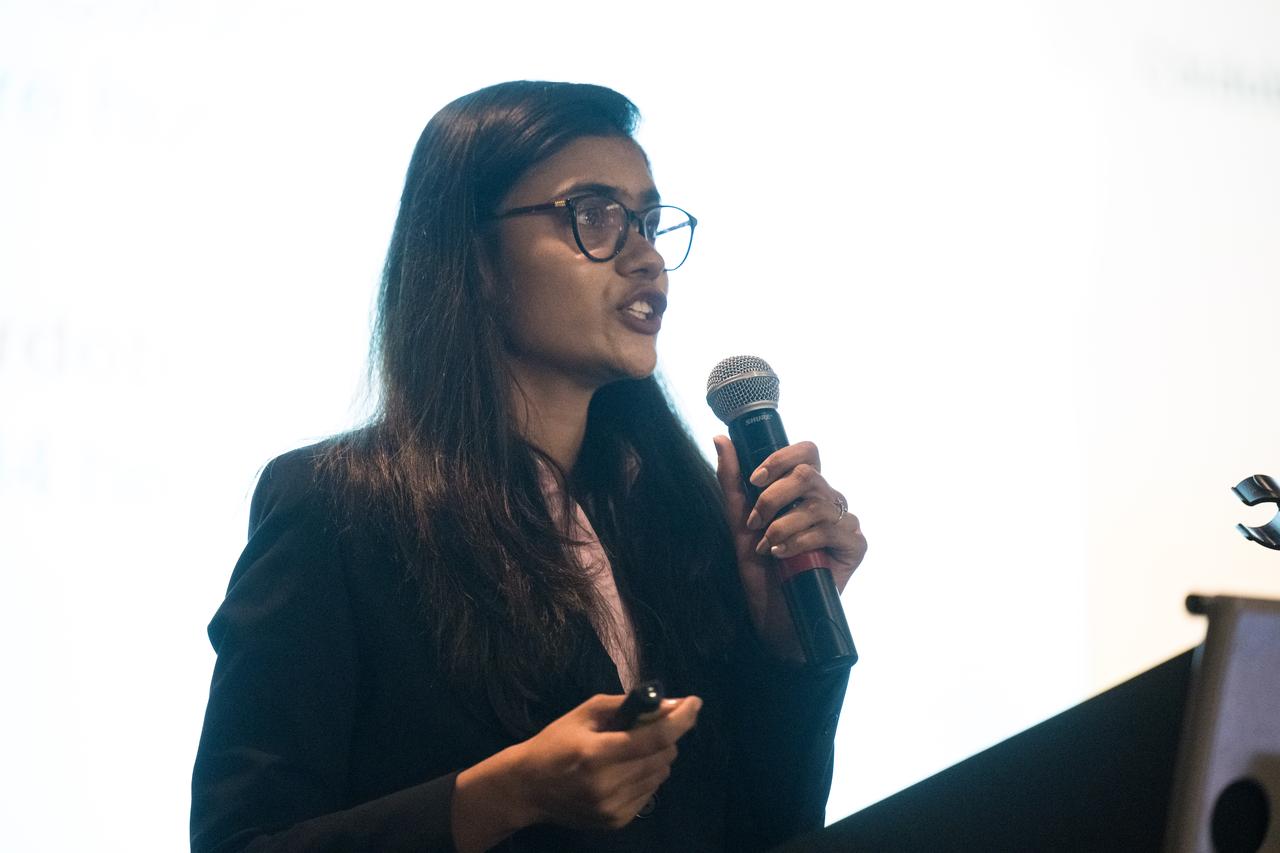
Nikita Bhole speaks about her DEVELOP Project, Cordoba Wildland Fires, Tuesday, August 6, 2024, at the Mary W. Jackson NASA Headquarters building in Washington. Every summer early career researchers from NASA’s DEVELOP National Program come to NASA Headquarters and present their research projects. DEVELOP is a training and development program where early career researchers work on Earth science projects, mentored by science advisors from NASA and partner agencies, and provide research results to local communities. Photo Credit: (NASA/Aubrey Gemignani)
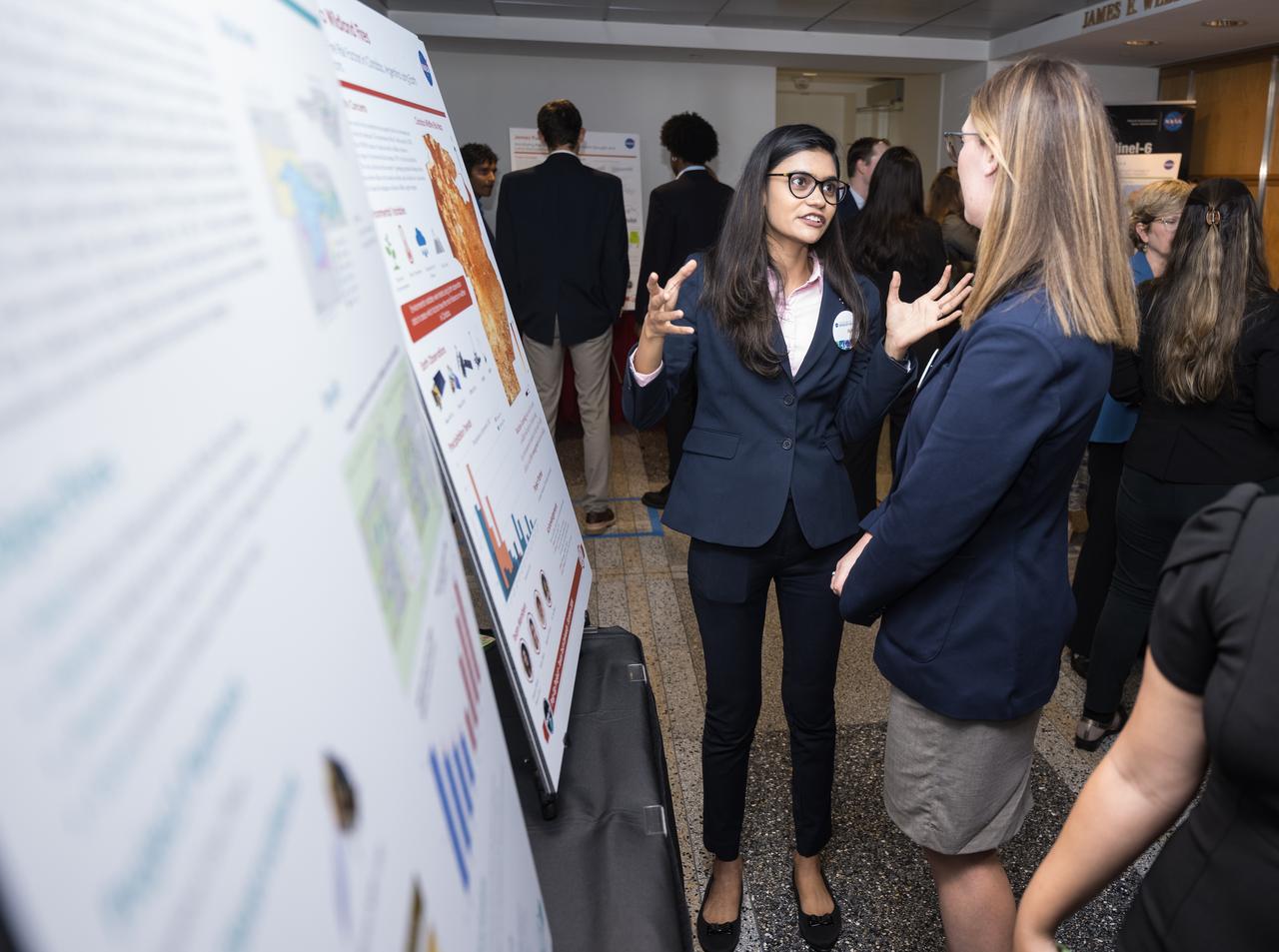
Nikita Bhole speaks about her DEVELOP Project, Cordoba Wildland Fires, Tuesday, August 6, 2024, at the Mary W. Jackson NASA Headquarters building in Washington. Every summer early career researchers from NASA’s DEVELOP National Program come to NASA Headquarters and present their research projects. DEVELOP is a training and development program where early career researchers work on Earth science projects, mentored by science advisors from NASA and partner agencies, and provide research results to local communities. Photo Credit: (NASA/Aubrey Gemignani)
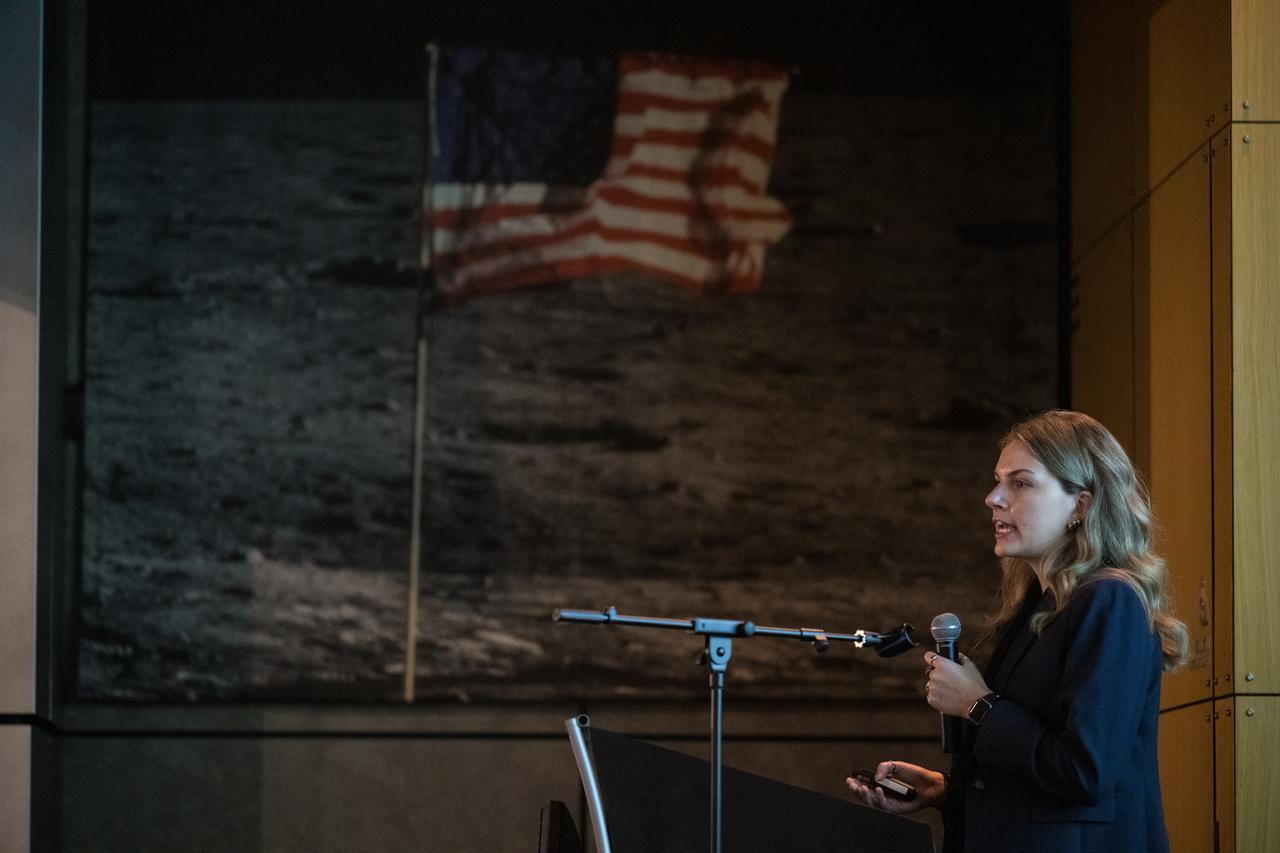
Ella Haugen speaks about the DEVELOP Pop-up Projects, Tuesday, August 6, 2024, at the Mary W. Jackson NASA Headquarters building in Washington. Every summer early career researchers from NASA’s DEVELOP National Program come to NASA Headquarters and present their research projects. DEVELOP is a training and development program where early career researchers work on Earth science projects, mentored by science advisors from NASA and partner agencies, and provide research results to local communities. Photo Credit: (NASA/Aubrey Gemignani)

Ella Haugen speaks about the DEVELOP Pop-up Projects, Tuesday, August 6, 2024, at the Mary W. Jackson NASA Headquarters building in Washington. Every summer early career researchers from NASA’s DEVELOP National Program come to NASA Headquarters and present their research projects. DEVELOP is a training and development program where early career researchers work on Earth science projects, mentored by science advisors from NASA and partner agencies, and provide research results to local communities. Photo Credit: (NASA/Aubrey Gemignani)
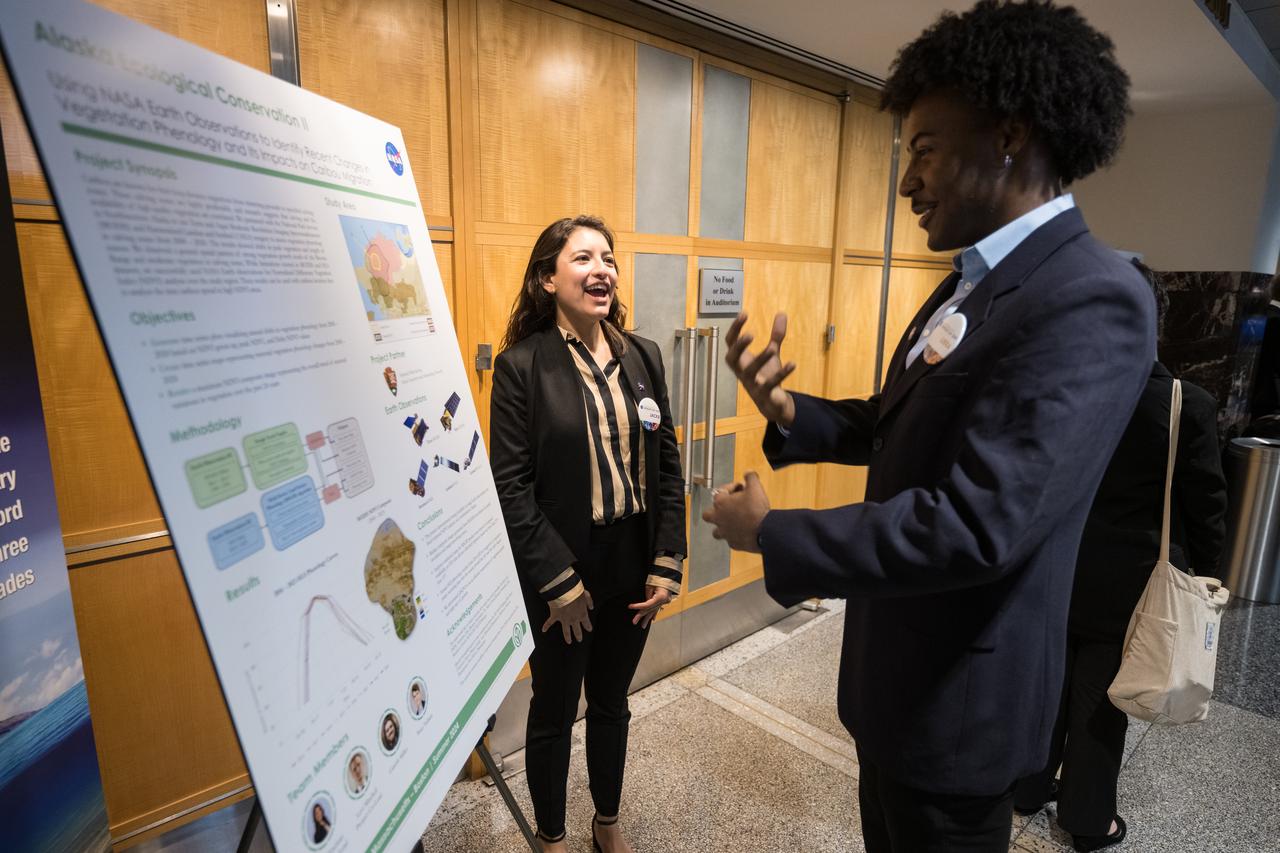
Jackie Encinas speaks about her project, Alaska Ecological Conservation II, Tuesday, August 6, 2024, at the Mary W. Jackson NASA Headquarters building in Washington. Every summer early career researchers from NASA’s DEVELOP National Program come to NASA Headquarters and present their research projects. DEVELOP is a training and development program where early career researchers work on Earth science projects, mentored by science advisors from NASA and partner agencies, and provide research results to local communities. Photo Credit: (NASA/Aubrey Gemignani)
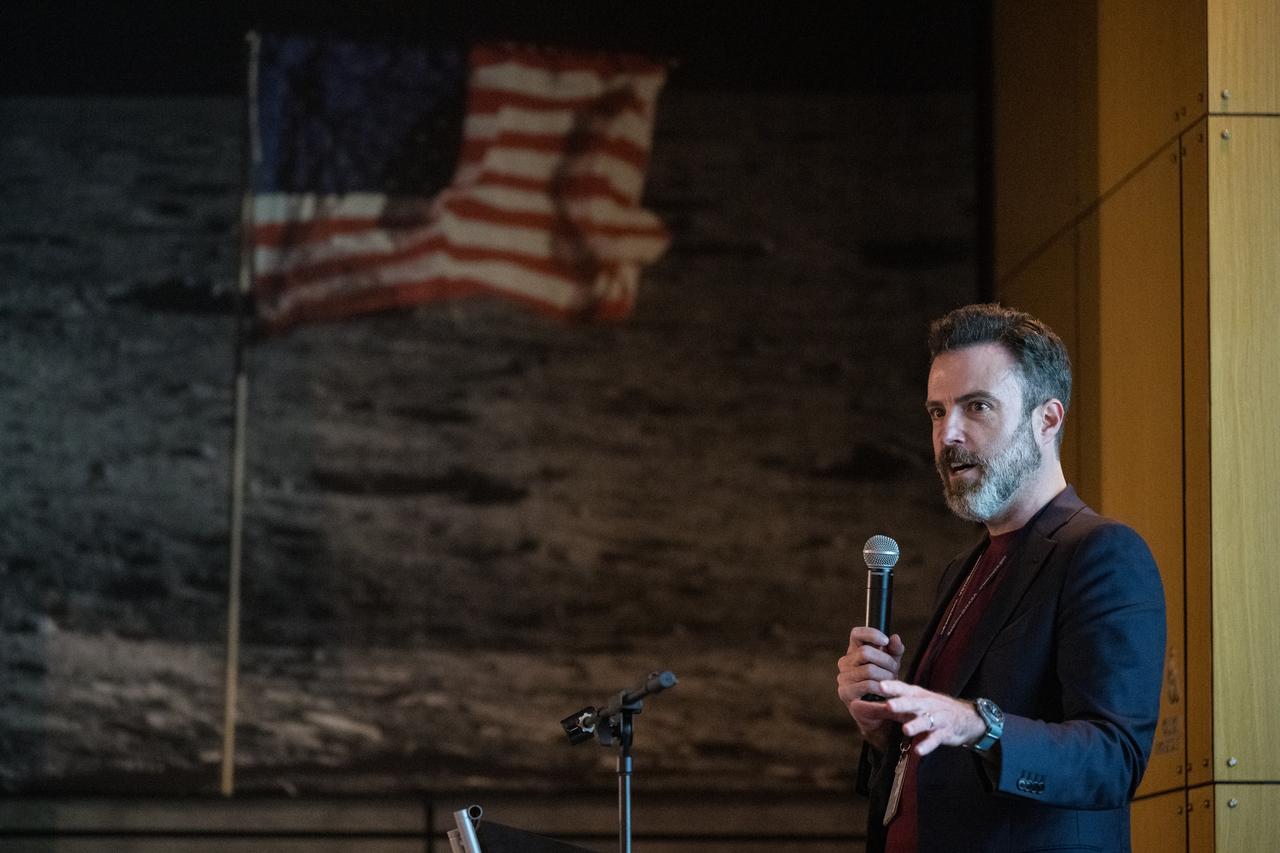
Director of the Space Weather Program, Jamie Favors, speaks about the Space Weather Pilot Project, Tuesday, August 6, 2024, at the Mary W. Jackson NASA Headquarters building in Washington. Every summer early career researchers from NASA’s DEVELOP National Program come to NASA Headquarters and present their research projects. DEVELOP is a training and development program where early career researchers work on Earth science projects, mentored by science advisors from NASA and partner agencies, and provide research results to local communities. Photo Credit: (NASA/Aubrey Gemignani)
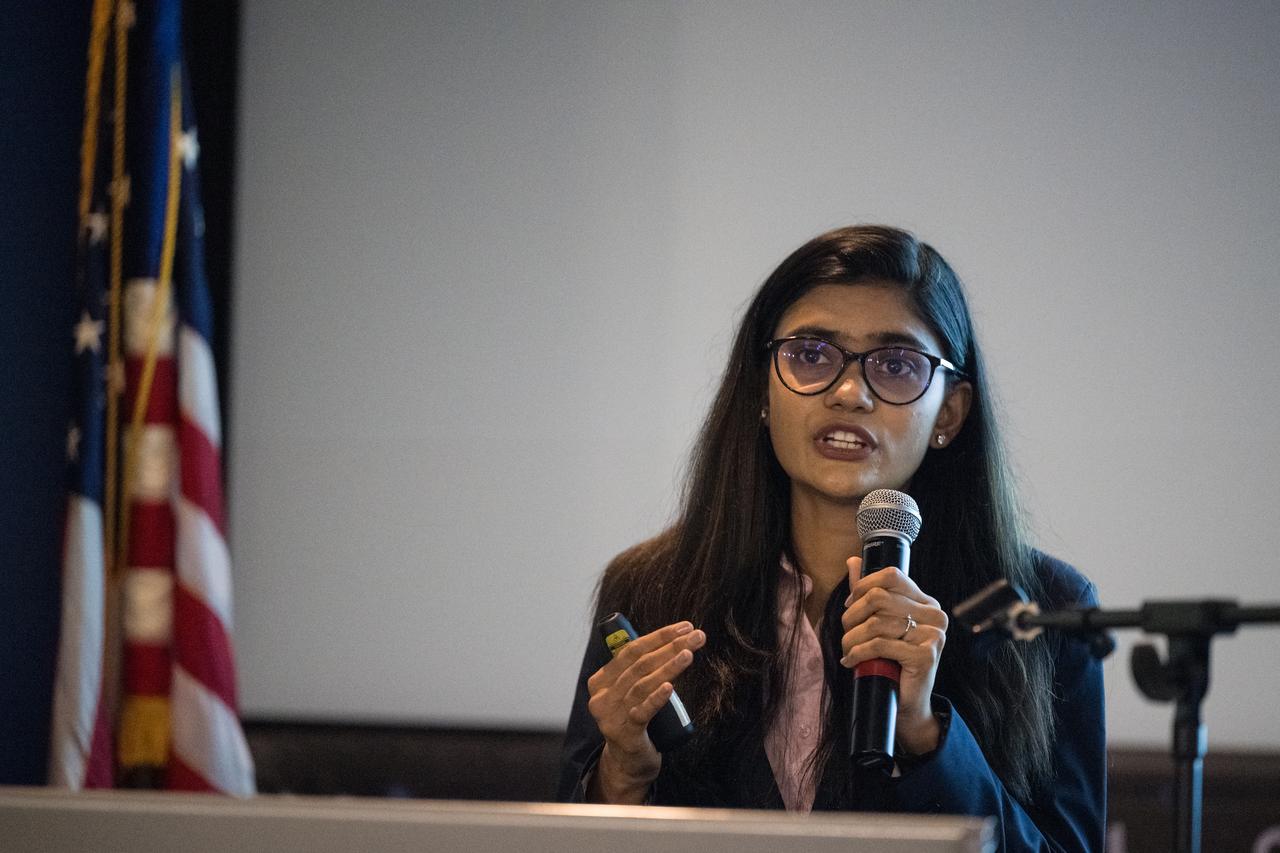
Nikita Bhole speaks about her DEVELOP Project, Cordoba Wildland Fires, Tuesday, August 6, 2024, at the Mary W. Jackson NASA Headquarters building in Washington. Every summer early career researchers from NASA’s DEVELOP National Program come to NASA Headquarters and present their research projects. DEVELOP is a training and development program where early career researchers work on Earth science projects, mentored by science advisors from NASA and partner agencies, and provide research results to local communities. Photo Credit: (NASA/Aubrey Gemignani)
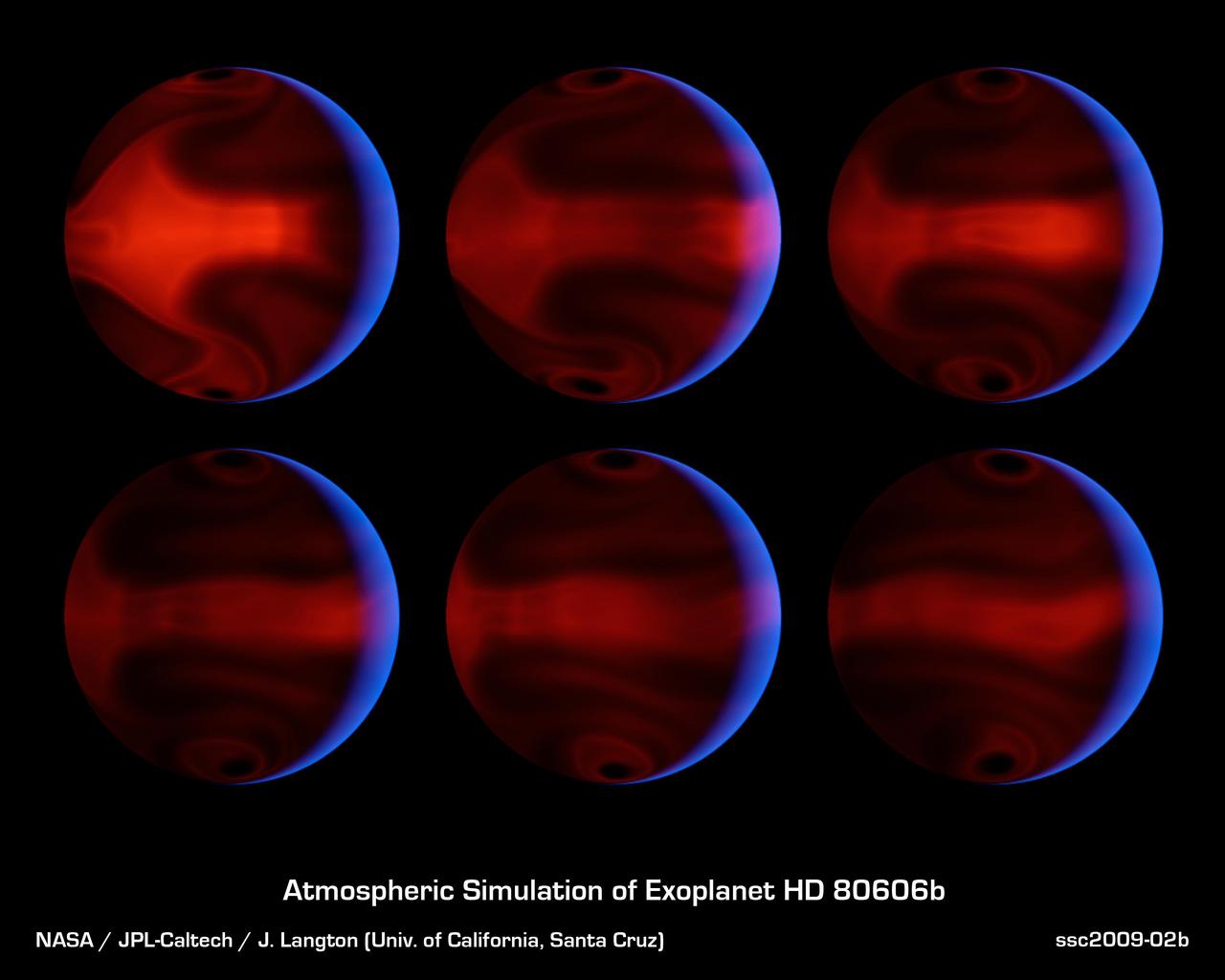
These computer-generated images from NASA Spitzer Space Telescope chart the development of severe weather patterns on the highly eccentric exoplanet HD 80606b during the days after its closest approach to its parent star.
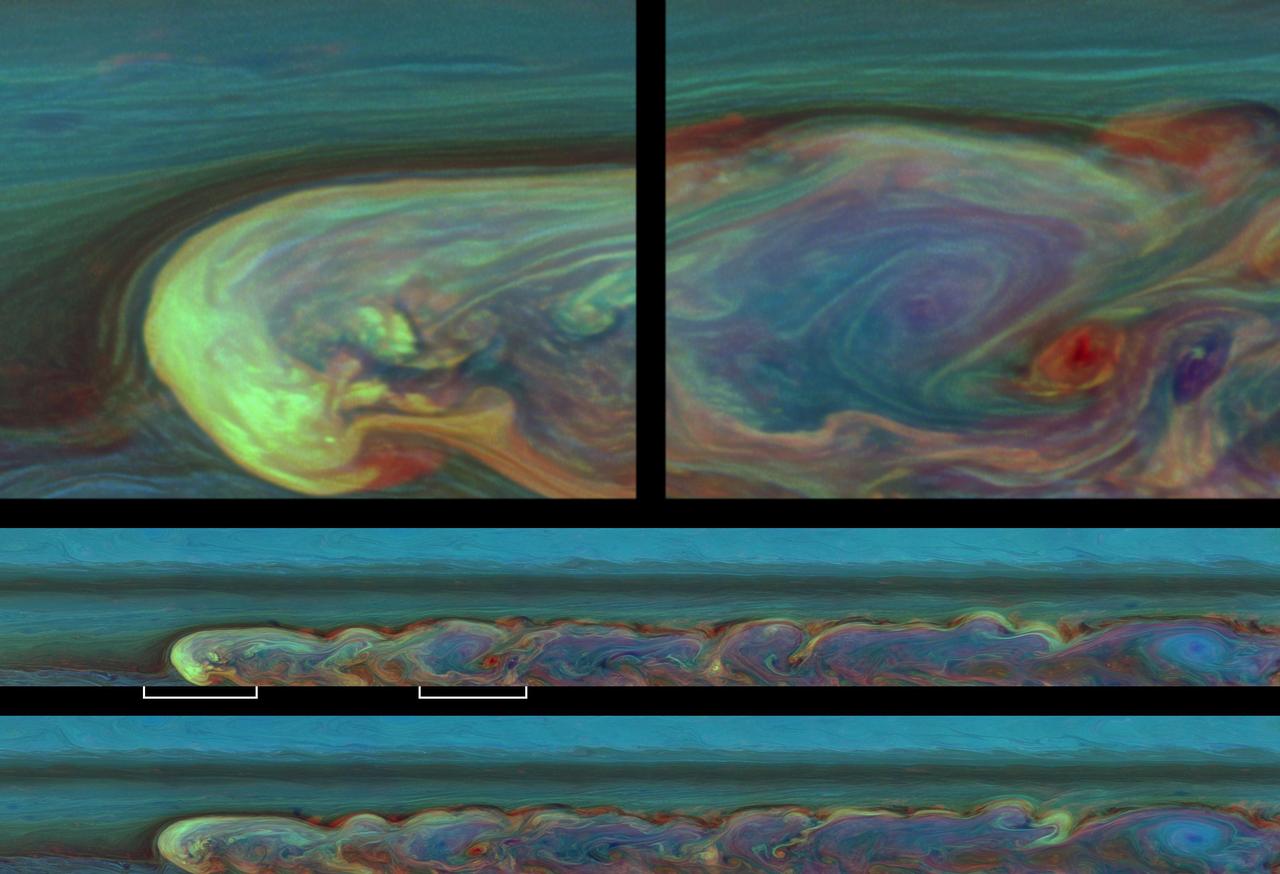
These false-color images from NASA Cassini spacecraft chronicle a day in the life of a huge storm that developed from a small spot that appeared 12 weeks earlier in Saturn northern mid-latitudes.
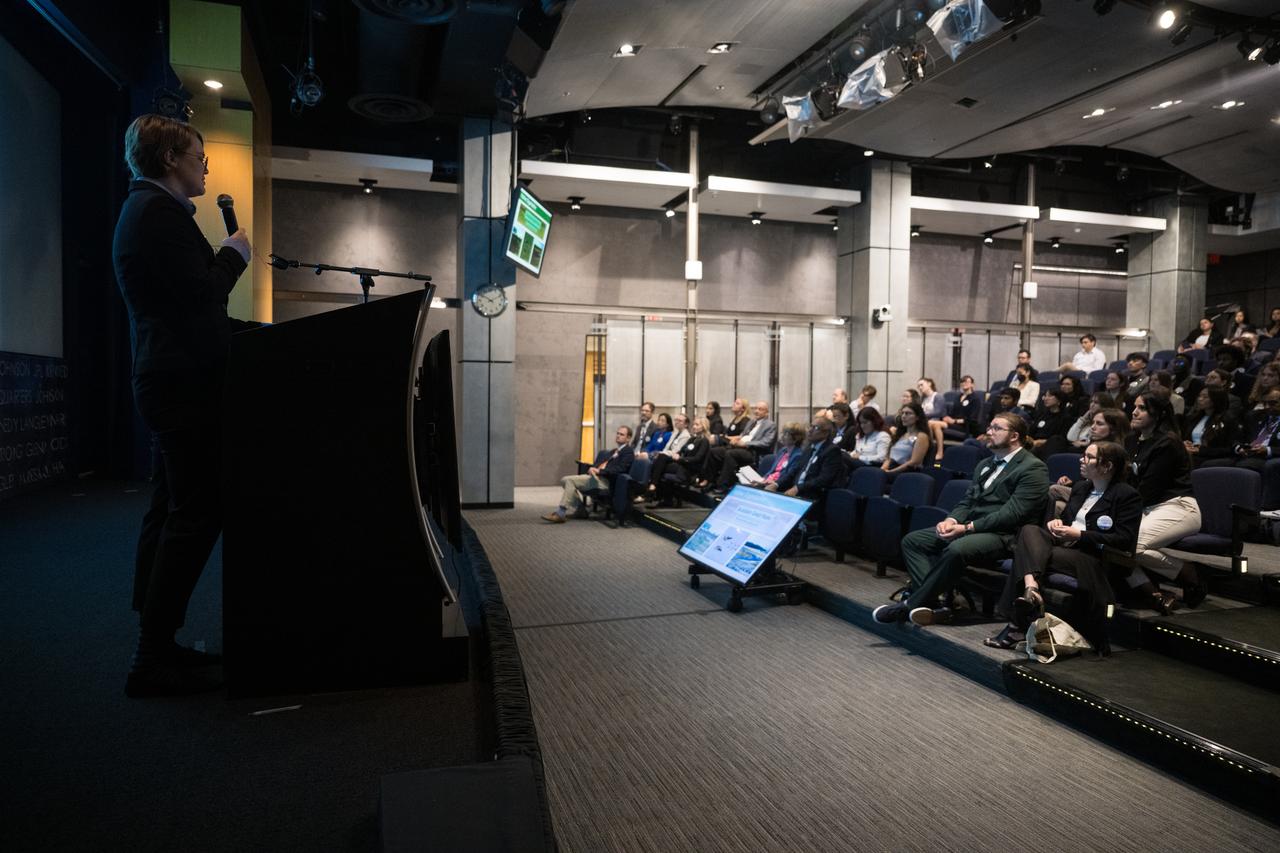
Olivia Kirkland speaks about her project, Platte River Basin Water Resources II, Tuesday, August 6, 2024, at the Mary W. Jackson NASA Headquarters building in Washington. Every summer early career researchers from NASA’s DEVELOP National Program come to NASA Headquarters and present their research projects. DEVELOP is a training and development program where early career researchers work on Earth science projects, mentored by science advisors from NASA and partner agencies, and provide research results to local communities. Photo Credit: (NASA/Aubrey Gemignani)
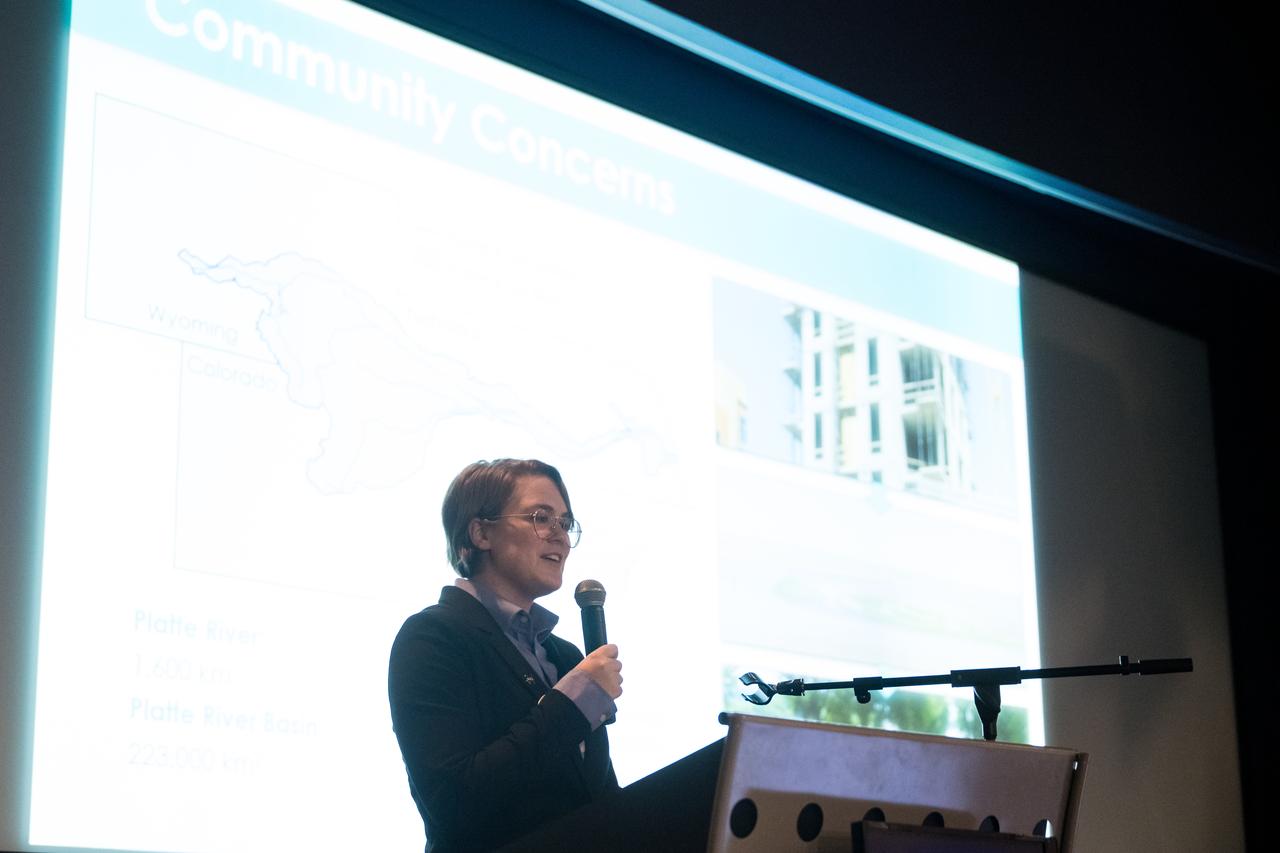
Olivia Kirkland speaks about her project, Platte River Basin Water Resources II, Tuesday, August 6, 2024, at the Mary W. Jackson NASA Headquarters building in Washington. Every summer early career researchers from NASA’s DEVELOP National Program come to NASA Headquarters and present their research projects. DEVELOP is a training and development program where early career researchers work on Earth science projects, mentored by science advisors from NASA and partner agencies, and provide research results to local communities. Photo Credit: (NASA/Aubrey Gemignani)
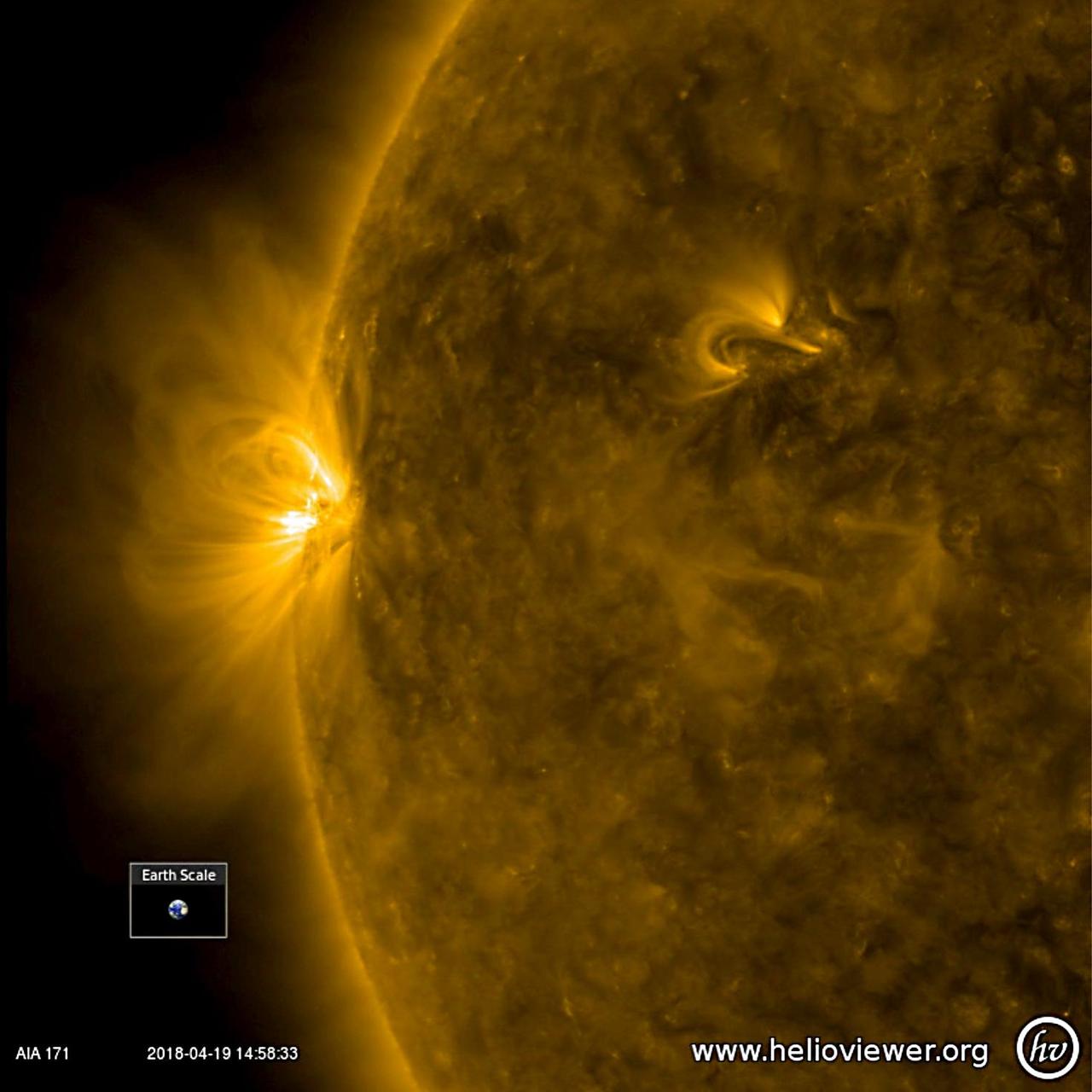
The sun featured just one, rather small active region over the past few days, but it developed rapidly and sported a lot of magnetic activity in just one day (Apr. 11-12, 2018). The activity was observed in a wavelength of extreme ultraviolet light. The loops and twisting arches above it are evidence of magnetic forces tangling with each other. The video clip was produced using Helioviewer software. Movies are available at https://photojournal.jpl.nasa.gov/catalog/PIA06676
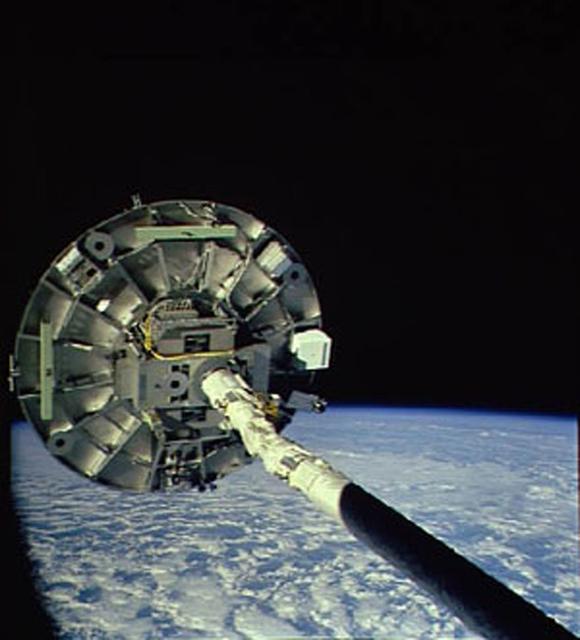
The Wake Shield Facility (WSF) is a free-flying research and development facility that is designed to use the pure vacuum of space to conduct scientific research in the development of new materials. The thin film materials technology developed by the WSF could some day lead to applications such as faster electronics components for computers.
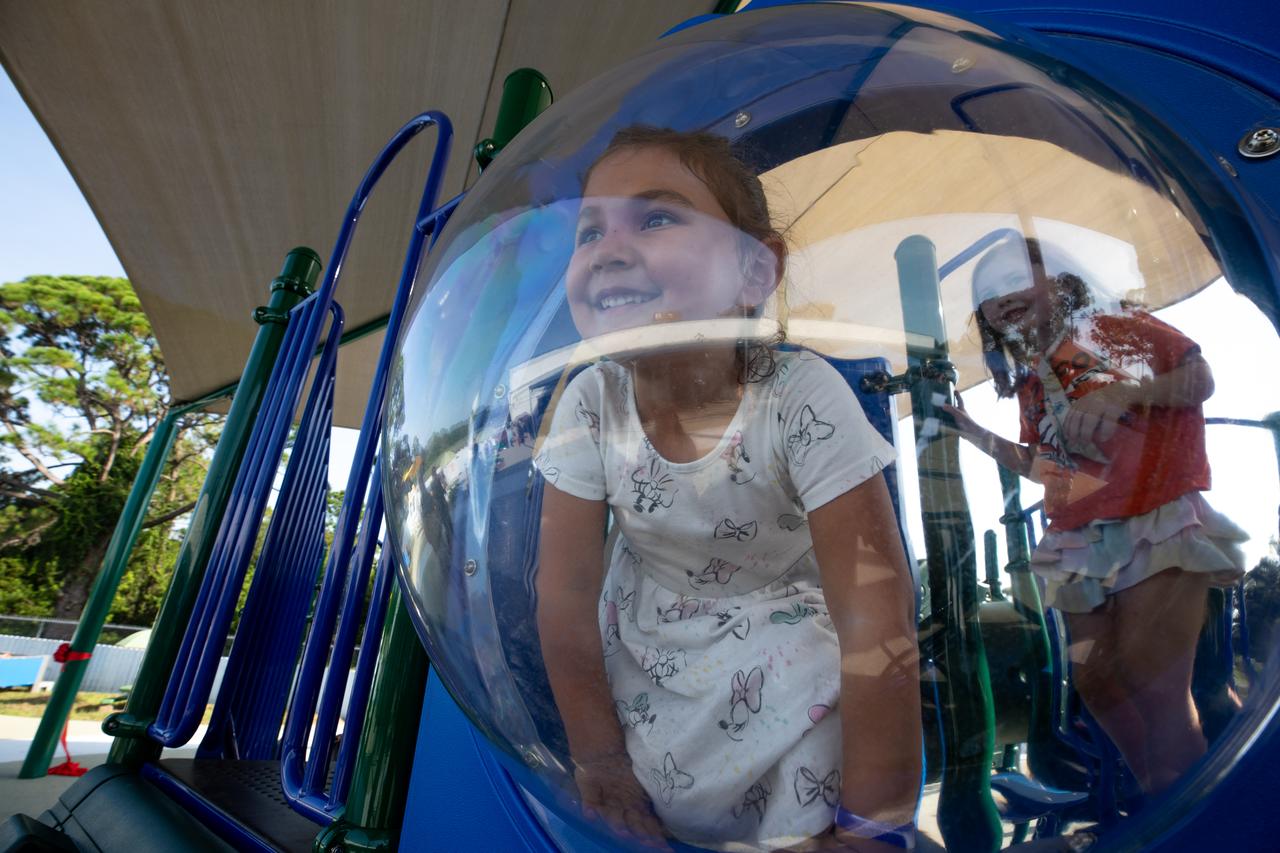
Children enjoy a brand new playground at Kennedy Space Center’s Child Development Center on Aug. 10, 2023. The playground officially opened following a ribbon cutting ceremony earlier in the day.
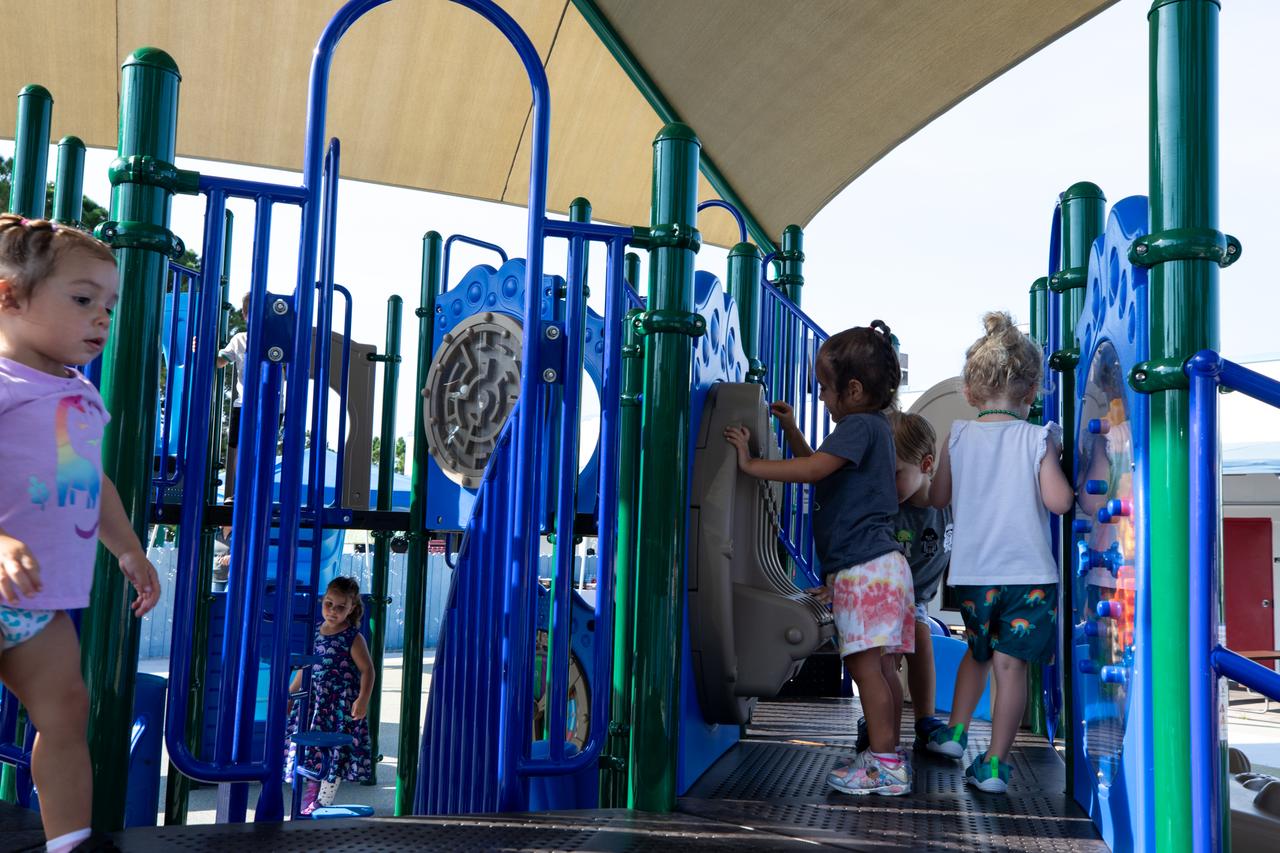
Children enjoy a brand new playground at Kennedy Space Center’s Child Development Center on Aug. 10, 2023. The playground officially opened following a ribbon cutting ceremony earlier in the day.

KENNEDY SPACE CENTER, FLA. - The second International Microgravity Laboratory-2 (IML-2) is off to an ontime start as the Space Shuttle Columbia lifts off from Launch Pad 39A at 12:43:00 p.m. EDT. On board are a crew of seven and more than 80 investigations developed by more than 200 scientists from 13 countries. The IML-2 complement includes materials science, bioprocessing, space and radiation biology, and human physiology experiments that will be carried out over the course of the 14-day flight. The commander of Space Shuttle Mission STS-65 is Robert D. Cabana. James D. Halsell Jr. is the pilot; the payload commander is Richard J. Hieb; the three mission specialists are Carl E. Walz, Leroy Chiao and Donald A. Thomas. Dr. Chiaki Mukai, representing NASDA, the National Space Development Agency of Japan, is the payload specialist. Mukai becomes the first Japanese woman to fly into space.
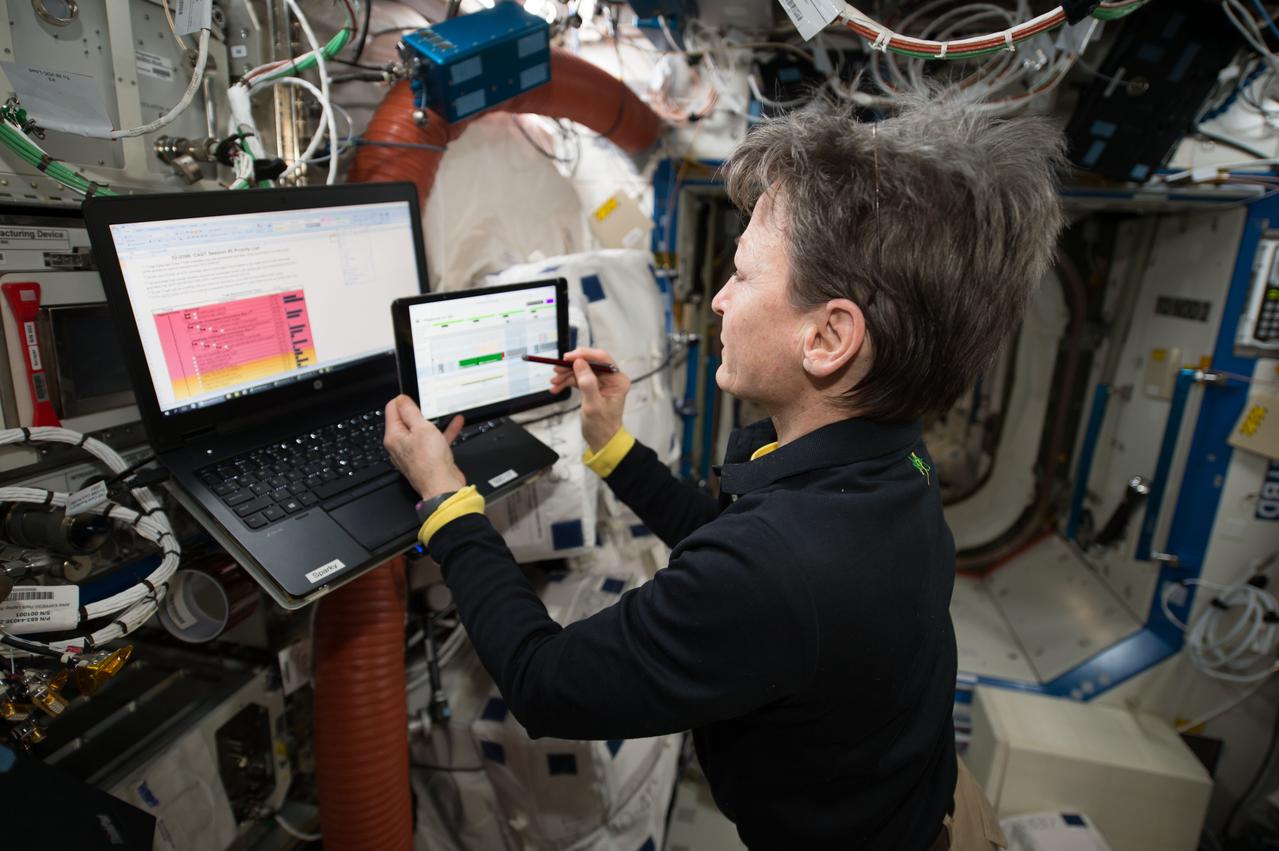
iss052e016214 (7/18/2017) --- NASA astronaut Peggy Whitson completing the final of five Crew Autonomous Scheduleing test (CAS) sessions using an iPad to schedule future work day. The CAST investigation analyzes whether crews can develop plans in a reasonable period of time with appropriate input, whether proximity of planners to the planned operations increases efficiency, and if crew members are more satisfied when given a role in plan development.
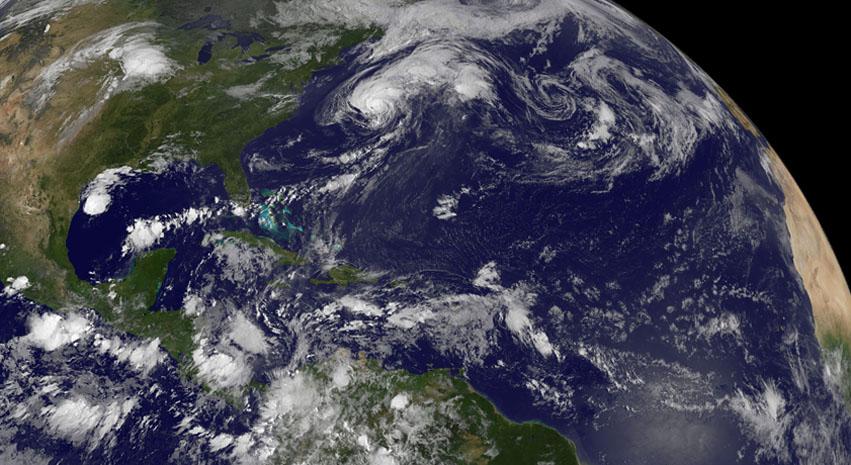
Although there's only one formed tropical cyclone in the Atlantic: Hurricane Cristobal, there are three other developing areas of low pressure and all were captured in this panoramic image from NOAA's GOES-East satellite today at 8 a.m. EDT. Cristobal is a hurricane located east of the U.S. East coast and is forecast to move up toward eastern Canada tonight (and stay off-shore). The image was made at NASA's GOES Project at NASA's Goddard Space Flight Center in Greenbelt, Maryland. Low #1. A weak area of low pressure near the coast of South Texas is producing disorganized showers and thunderstorms. Significant development of this system is unlikely before it moves inland over South Texas and northern Mexico today. It has a ten percent chance of development into a tropical depression in the next 2 days. Low #2. A tropical wave located over the eastern Caribbean Sea continues to produce disorganized cloudiness and showers. Upper-level winds are expected to remain unfavorable for development during the next couple of days while the system moves across the eastern and central Caribbean Sea. However, environmental conditions could become conducive for some development when the system moves over the northwestern Caribbean Sea on Sunday and into the southwestern Gulf of Mexico early next week. It has a near zero chance to develop in the next 2 days. Low #3. A tropical wave is forecast to move off the west coast of Africa on Friday. Environmental conditions could be conducive for some gradual development of this system while it moves westward at 10 to 15 mph across the eastern Atlantic early next week. This has a near zero chance of development in the next two days. <b><a href="http://www.nasa.gov/audience/formedia/features/MP_Photo_Guidelines.html" rel="nofollow">NASA image use policy.</a></b> <b><a href="http://www.nasa.gov/centers/goddard/home/index.html" rel="nofollow">NASA Goddard Space Flight Center</a></b> enables NASA’s mission through four scientific endeavors: Earth Science, Heliophysics, Solar System Exploration, and Astrophysics. Goddard plays a leading role in NASA’s accomplishments by contributing compelling scientific knowledge to advance the Agency’s mission. <b>Follow us on <a href="http://twitter.com/NASAGoddardPix" rel="nofollow">Twitter</a></b> <b>Like us on <a href="http://www.facebook.com/pages/Greenbelt-MD/NASA-Goddard/395013845897?ref=tsd" rel="nofollow">Facebook</a></b> <b>Find us on <a href="http://instagram.com/nasagoddard?vm=grid" rel="nofollow">Instagram</a></b>
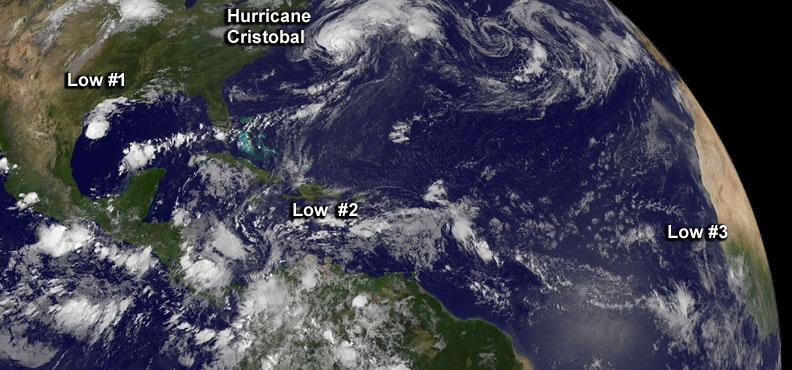
Although there's only one formed tropical cyclone in the Atlantic: Hurricane Cristobal, there are three other developing areas of low pressure and all were captured in this panoramic image from NOAA's GOES-East satellite today at 8 a.m. EDT. Cristobal is a hurricane located east of the U.S. East coast and is forecast to move up toward eastern Canada tonight (and stay off-shore). The image was made at NASA's GOES Project at NASA's Goddard Space Flight Center in Greenbelt, Maryland. Low #1. A weak area of low pressure near the coast of South Texas is producing disorganized showers and thunderstorms. Significant development of this system is unlikely before it moves inland over South Texas and northern Mexico today. It has a ten percent chance of development into a tropical depression in the next 2 days. Low #2. A tropical wave located over the eastern Caribbean Sea continues to produce disorganized cloudiness and showers. Upper-level winds are expected to remain unfavorable for development during the next couple of days while the system moves across the eastern and central Caribbean Sea. However, environmental conditions could become conducive for some development when the system moves over the northwestern Caribbean Sea on Sunday and into the southwestern Gulf of Mexico early next week. It has a near zero chance to develop in the next 2 days. Low #3. A tropical wave is forecast to move off the west coast of Africa on Friday. Environmental conditions could be conducive for some gradual development of this system while it moves westward at 10 to 15 mph across the eastern Atlantic early next week. This has a near zero chance of development in the next two days. <b><a href="http://www.nasa.gov/audience/formedia/features/MP_Photo_Guidelines.html" rel="nofollow">NASA image use policy.</a></b> <b><a href="http://www.nasa.gov/centers/goddard/home/index.html" rel="nofollow">NASA Goddard Space Flight Center</a></b> enables NASA’s mission through four scientific endeavors: Earth Science, Heliophysics, Solar System Exploration, and Astrophysics. Goddard plays a leading role in NASA’s accomplishments by contributing compelling scientific knowledge to advance the Agency’s mission. <b>Follow us on <a href="http://twitter.com/NASAGoddardPix" rel="nofollow">Twitter</a></b> <b>Like us on <a href="http://www.facebook.com/pages/Greenbelt-MD/NASA-Goddard/395013845897?ref=tsd" rel="nofollow">Facebook</a></b> <b>Find us on <a href="http://instagram.com/nasagoddard?vm=grid" rel="nofollow">Instagram</a></b>

NASA Chief Technologist Douglas Terrier, right, being briefed on student-developed precision atmospheric laser technology mounted on a remotely-operated rover at Harding University in Searcy, Arkansas, while attending “NASA Day in Arkansas” hosted at the university on Jan. 27, 2020.
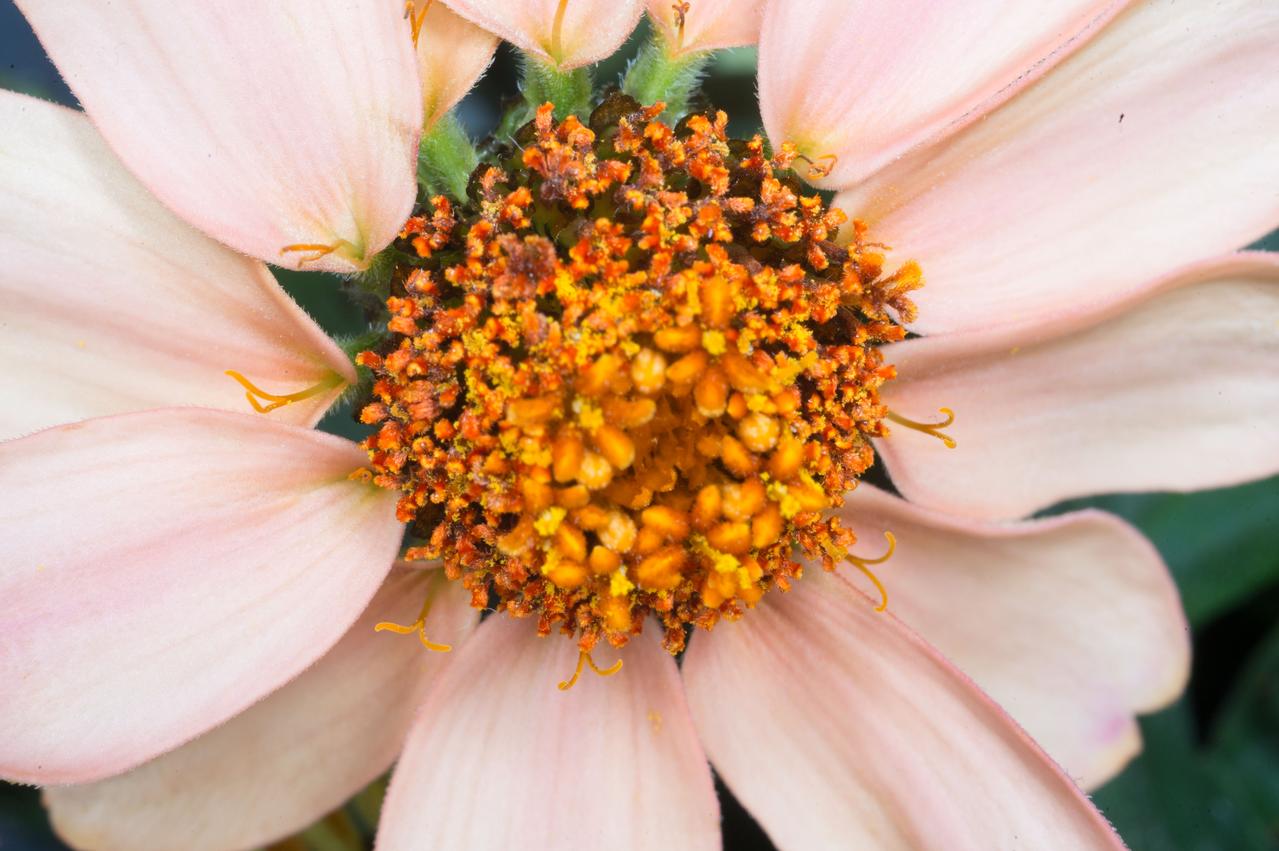
Photographic documentation of VEG-01 flowers taken by the Expedition 46 crew. The Veg-01 investigation is used to assess on-orbit function and performance of the Veggie facility, focusing on the growth and development of seedlings in the spaceflight environment and the composition of microbial flora on the plants and the facility. For this run, Zinnias will be grown for 60 days and are expected to produce flowers.

Photographic documentation of VEG-01 flowers taken by the Expedition 46 crew. The Veg-01 investigation is used to assess on-orbit function and performance of the Veggie facility, focusing on the growth and development of seedlings in the spaceflight environment and the composition of microbial flora on the plants and the facility. For this run, Zinnias will be grown for 60 days and are expected to produce flowers.
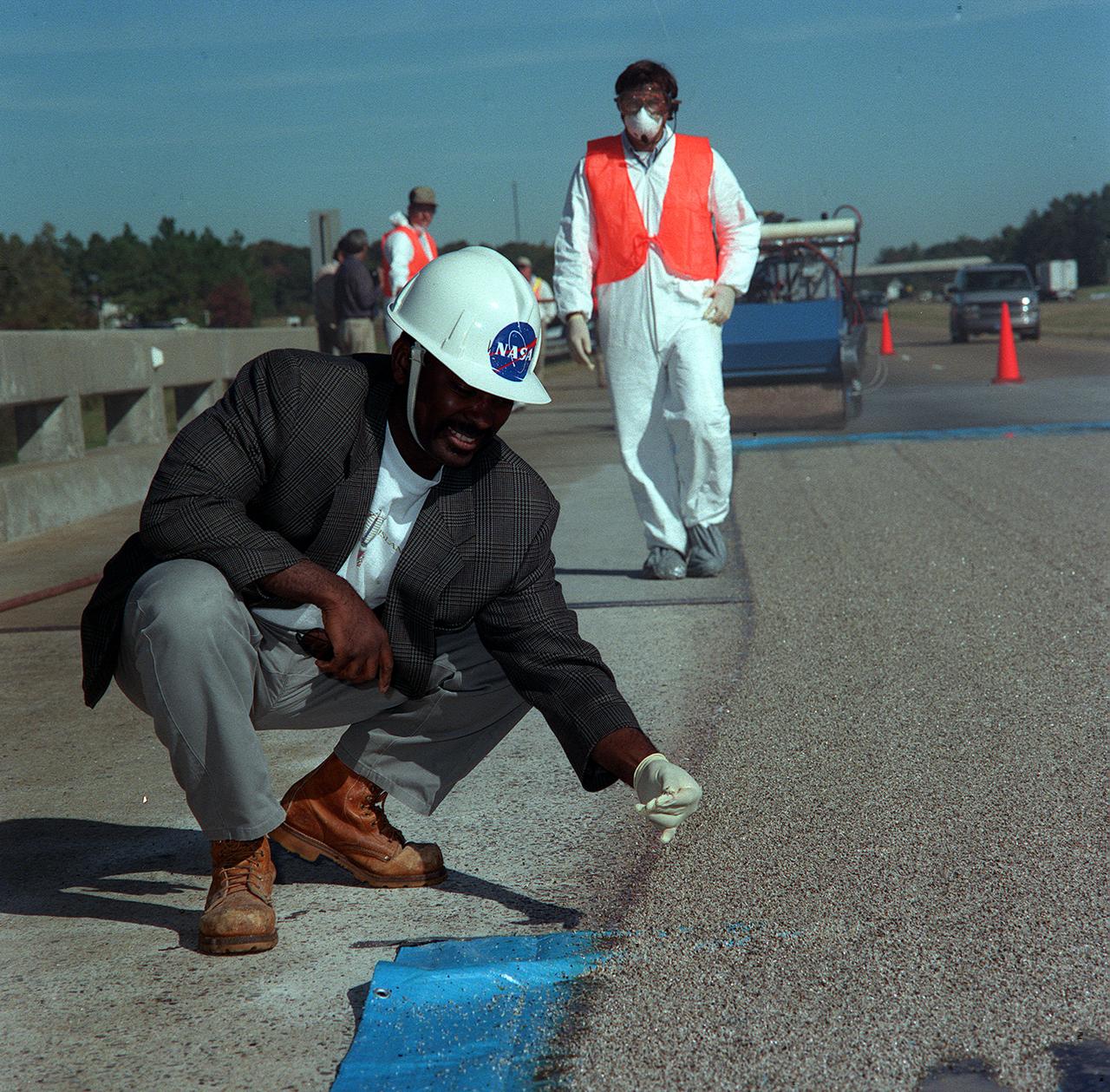
A NASA official inspects the results of Convergent Spray Technology used to resurface a bridge on Interstate 65 near Lacon, Alabama. Originally developed by USBI to apply a heat resistant coating to the Space Shuttle's Solid Rocket Boosters, the environment-friendly technology reduces the required worktime from days to hours.
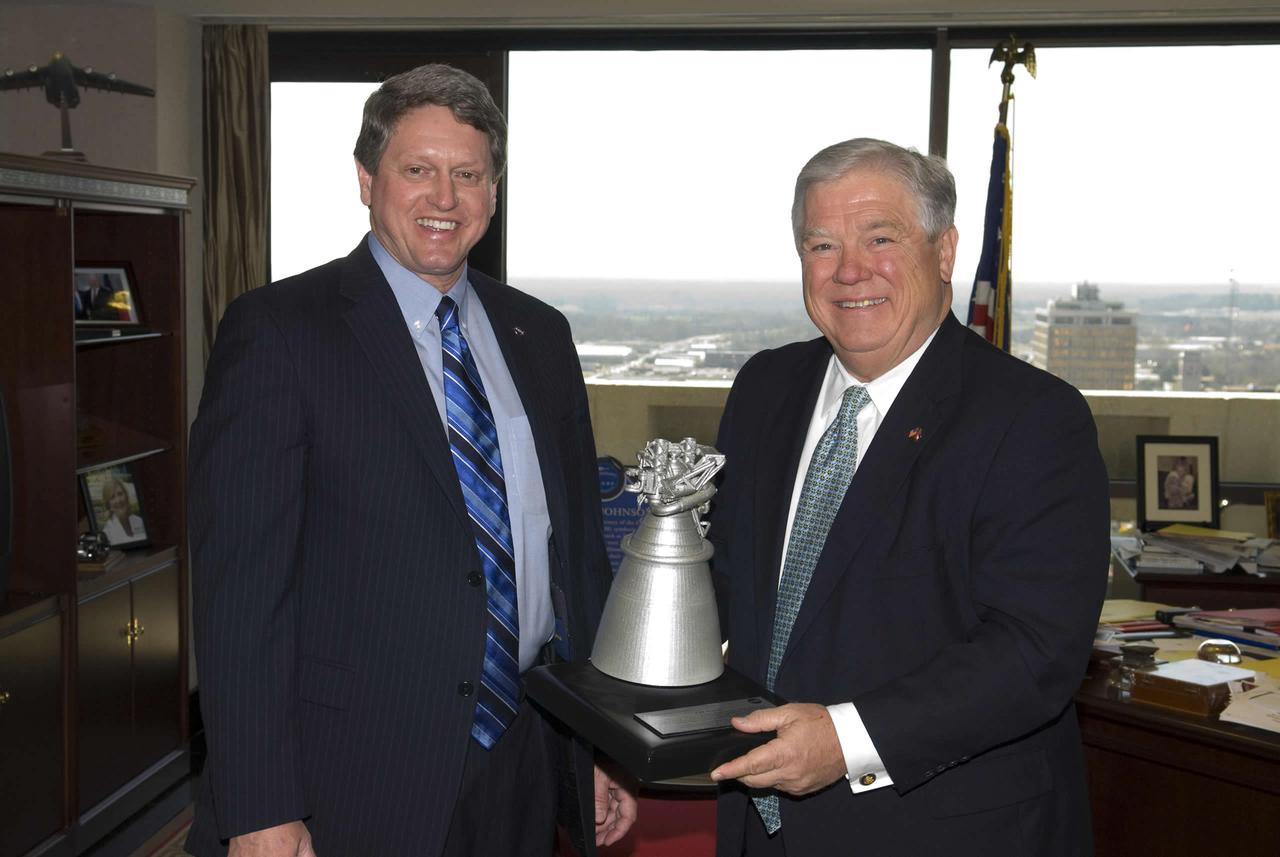
Stennis Space Center Director Gene Goldman visits with Mississippi Gov. Haley Barbour during NASA Day at the Capitol activities on Feb. 19. During the visit, Goldman presented the governor with a model of the J-2X rocket engine currently in development. Stennis engineers did early component testing for the new engine.

Photographic documentation of VEG-01 taken by the Expedition 46 crew. The Veg-01 investigation is used to assess on-orbit function and performance of the Veggie facility, focusing on the growth and development of seedlings in the spaceflight environment and the composition of microbial flora on the plants and the facility. For this run, Zinnias were grown for 60 days and produced these flowers.

Photographic documentation of VEG-01 taken by the Expedition 46 crew. The Veg-01 investigation is used to assess on-orbit function and performance of the Veggie facility, focusing on the growth and development of seedlings in the spaceflight environment and the composition of microbial flora on the plants and the facility. For this run, Zinnias were grown for 60 days and produced these flowers.

Photographic documentation of VEG-01 flowers taken by the Expedition 46 crew. The Veg-01 investigation is used to assess on-orbit function and performance of the Veggie facility, focusing on the growth and development of seedlings in the spaceflight environment and the composition of microbial flora on the plants and the facility. For this run, Zinnias will be grown for 60 days and are expected to produce flowers.
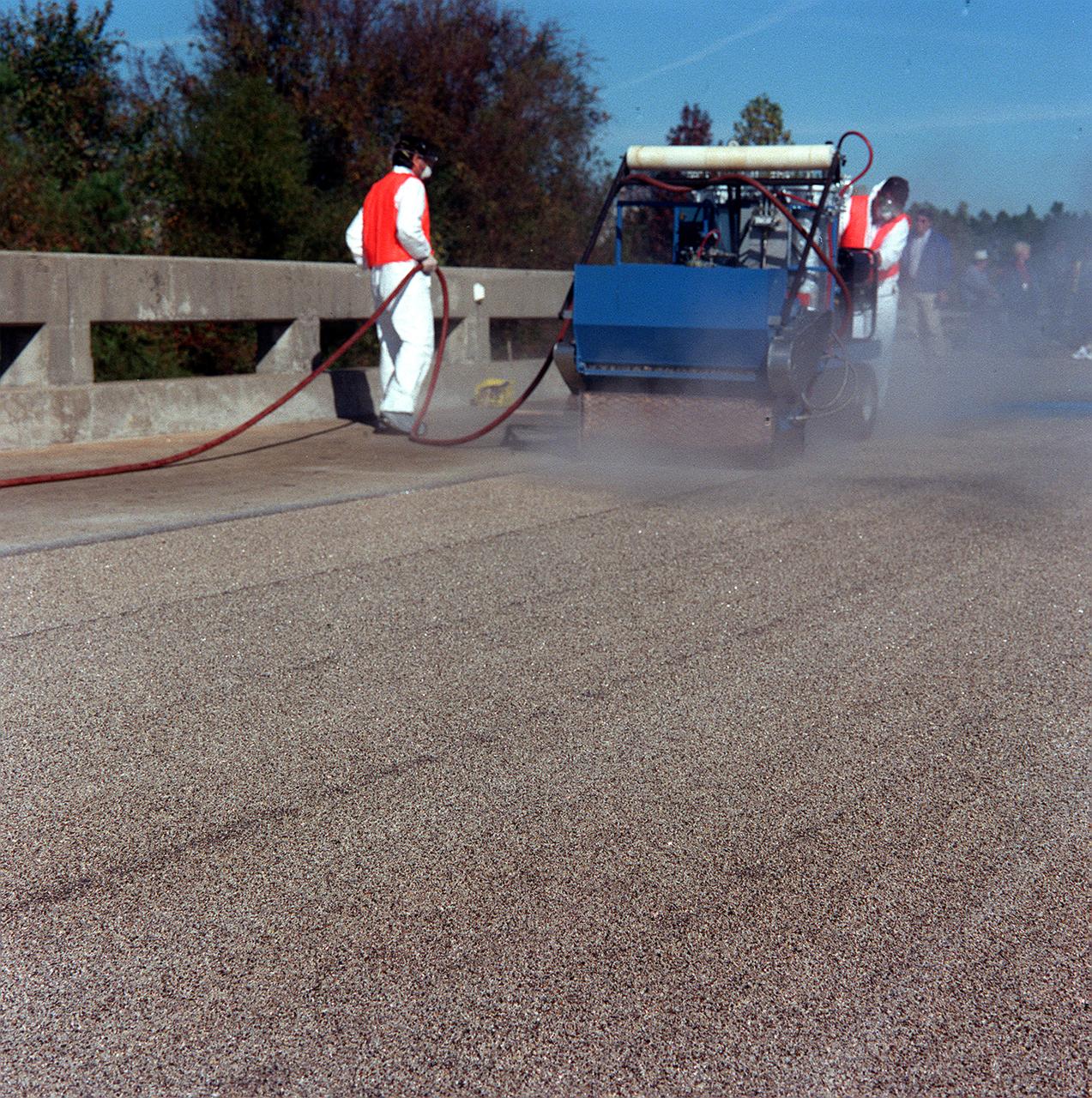
Alabama Department of Transportation workers utilize Convergent Spray Technology used to resurface a bridge on Interstate 65 near Lacon, Alabama. Originally developed by USBI to apply a heat resistant coating to the Space Shuttle's Solid Rocket Boosters, the environment-friendly technology reduces the required worktime from days to hours.
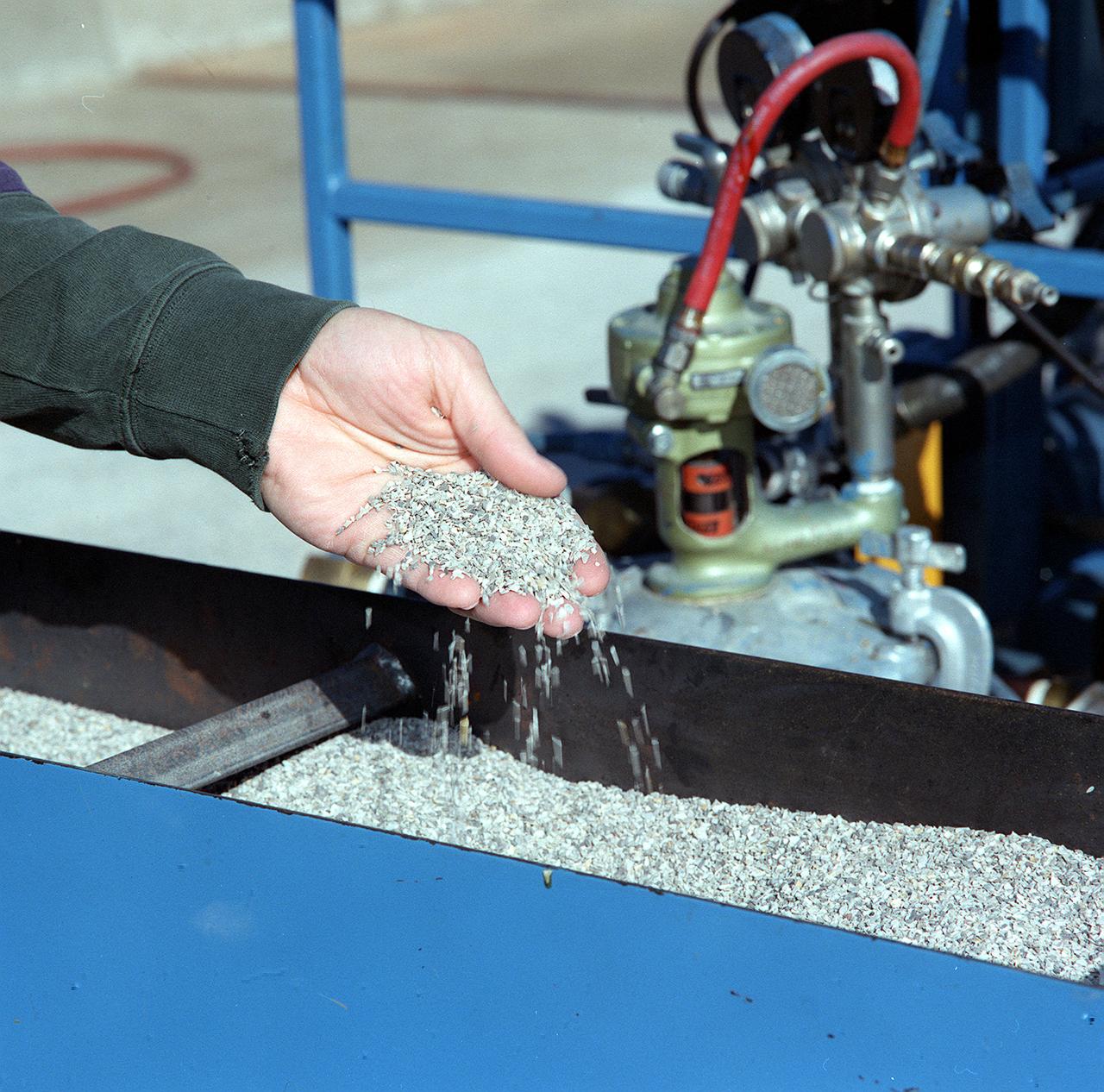
A workman inspects the results of Convergent Spray Technology used to resurface a bridge on Interstate 65 near Lacon, Alabama. Originally developed by USBI to apply a heat resistant coating to the Space Shuttle's Solid Rocket Boosters, the environment-friendly technology reduces the required worktime from days to hours.
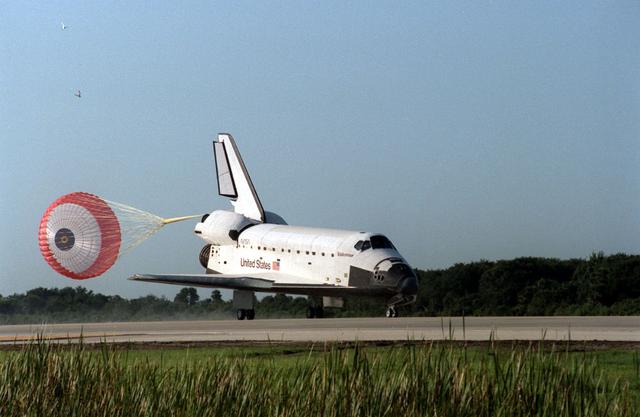
After completion of a seven-day flight mission, the Space Shuttle Orbiter Endeavour (STS-47) landed at Kennedy Space Center's (KSC) Shuttle Landing Facility. Spacelab-J, a joint research venture between NASA and NASDA (National Space Development Agency of Japan) completed a successful mission.
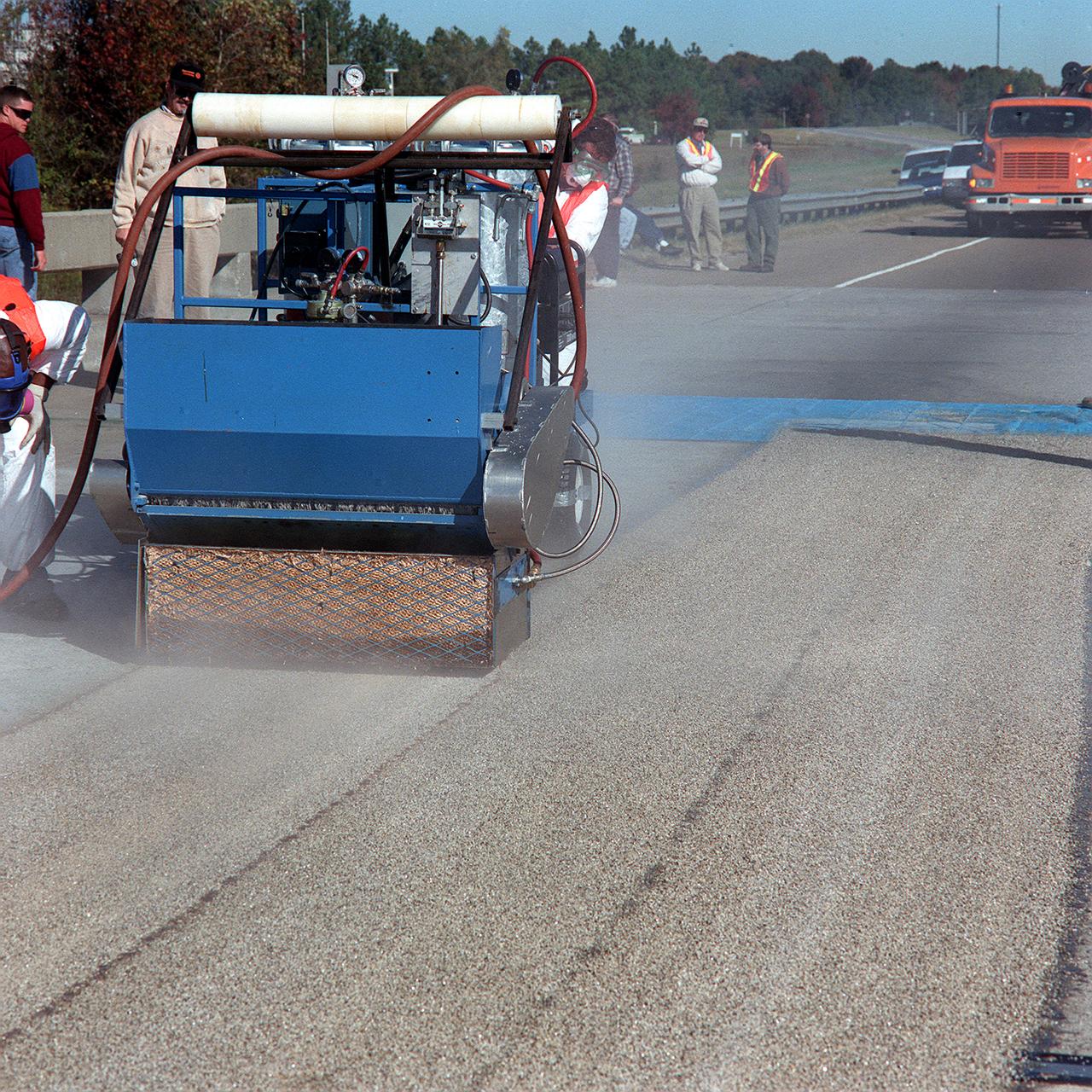
Alabama Department of Transportation workers utilize Convergent Spray Technology to resurface a bridge on Interstate 65 near Lacon, Alabama. Originally developed by USBI to apply a heat resistant coating to the Space Shuttle's Solid Rocket Boosters, the environment-friendly technology reduces the required worktime from days to hours.

Photographic documentation of VEG-01 flowers taken by the Expedition 46 crew. The Veg-01 investigation is used to assess on-orbit function and performance of the Veggie facility, focusing on the growth and development of seedlings in the spaceflight environment and the composition of microbial flora on the plants and the facility. For this run, Zinnias will be grown for 60 days and are expected to produce flowers.
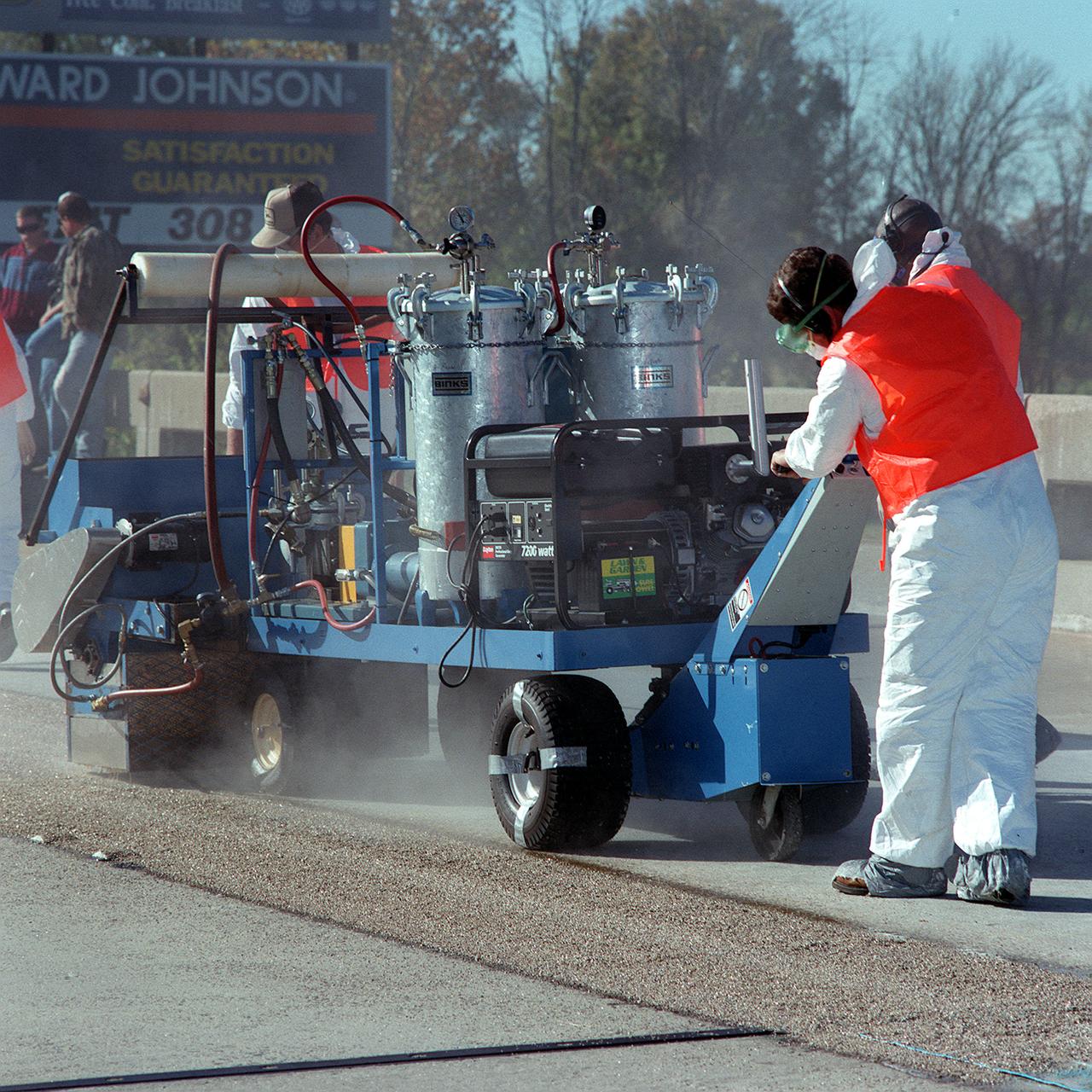
Alabama Department of Transportation workers utilize Convergent Spray Technology to resurface a bridge on Interstate 65 near Lacon, Alabama. Originally developed by USBI to apply a heat resistant coating to the Space Shuttle's Solid Rocket Boosters, the environment-friendly technology reduces the required worktime from days to hours.
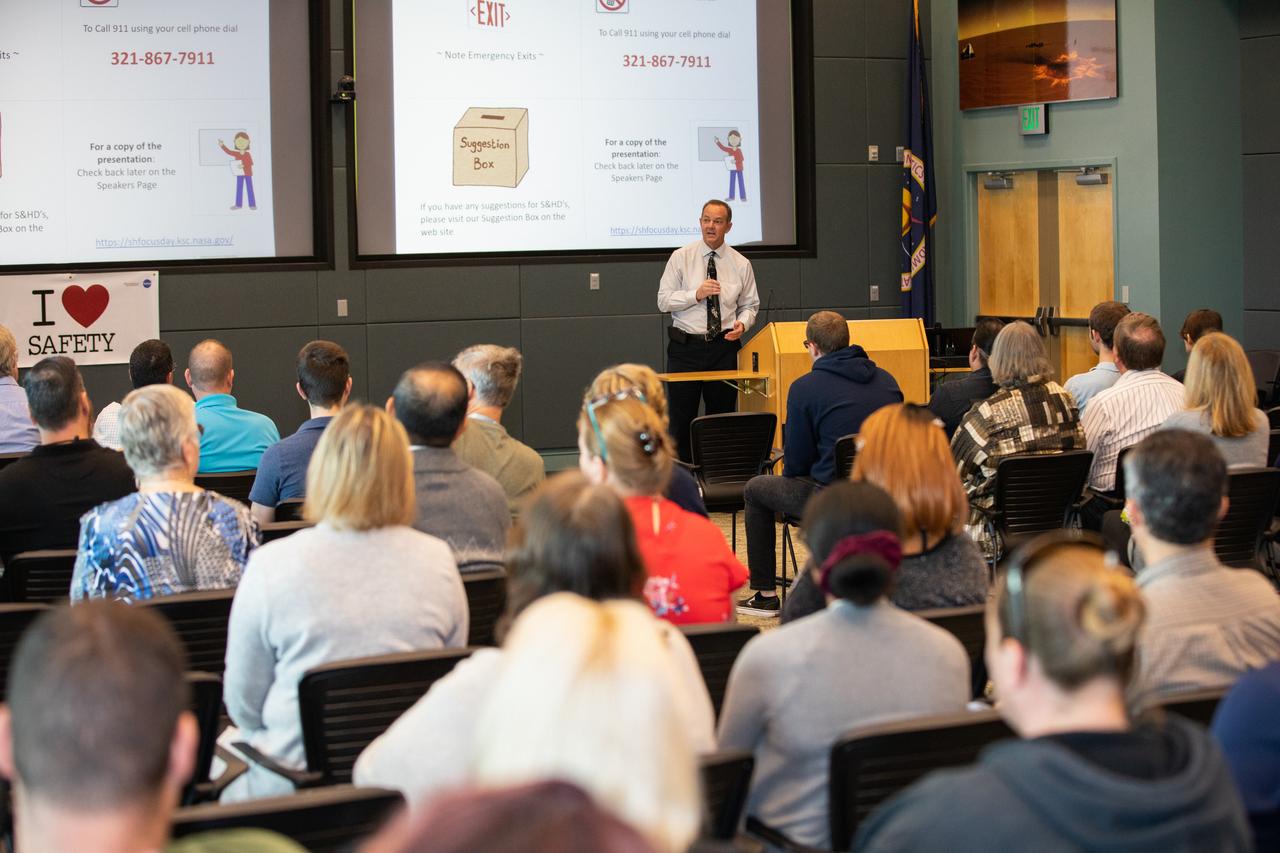
Tom Engler, director of Center Planning and Development at NASA’s Kennedy Space Center in Florida, addresses Kennedy employees inside the Operations Support Building II on March 3, 2020, during the center’s annual Safety and Health Days. Taking place March 2 through March 6, Safety and Health Days provides Kennedy employees with a variety of presentations to attend – all of which focus on how to maintain a safe and healthy workforce.
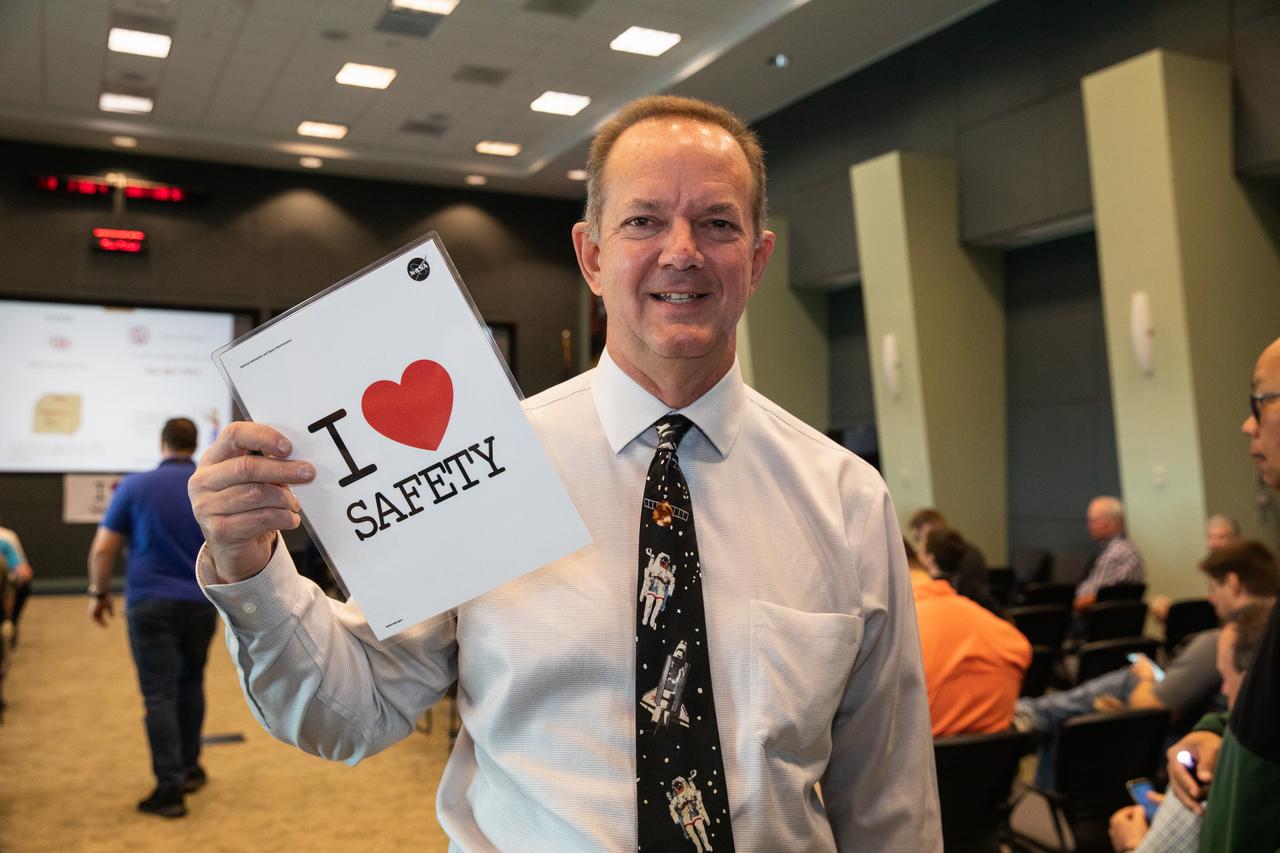
Tom Engler, director of Center Planning and Development at NASA’s Kennedy Space Center in Florida, poses with the Safety and Mission Assurance “I Love Safety” poster during the center’s annual Safety and Health Days on March 3, 2020. Taking place March 2 through March 6, Safety and Health Days provides Kennedy employees with a variety of presentations to attend – all of which focus on how to maintain a safe and healthy workforce.
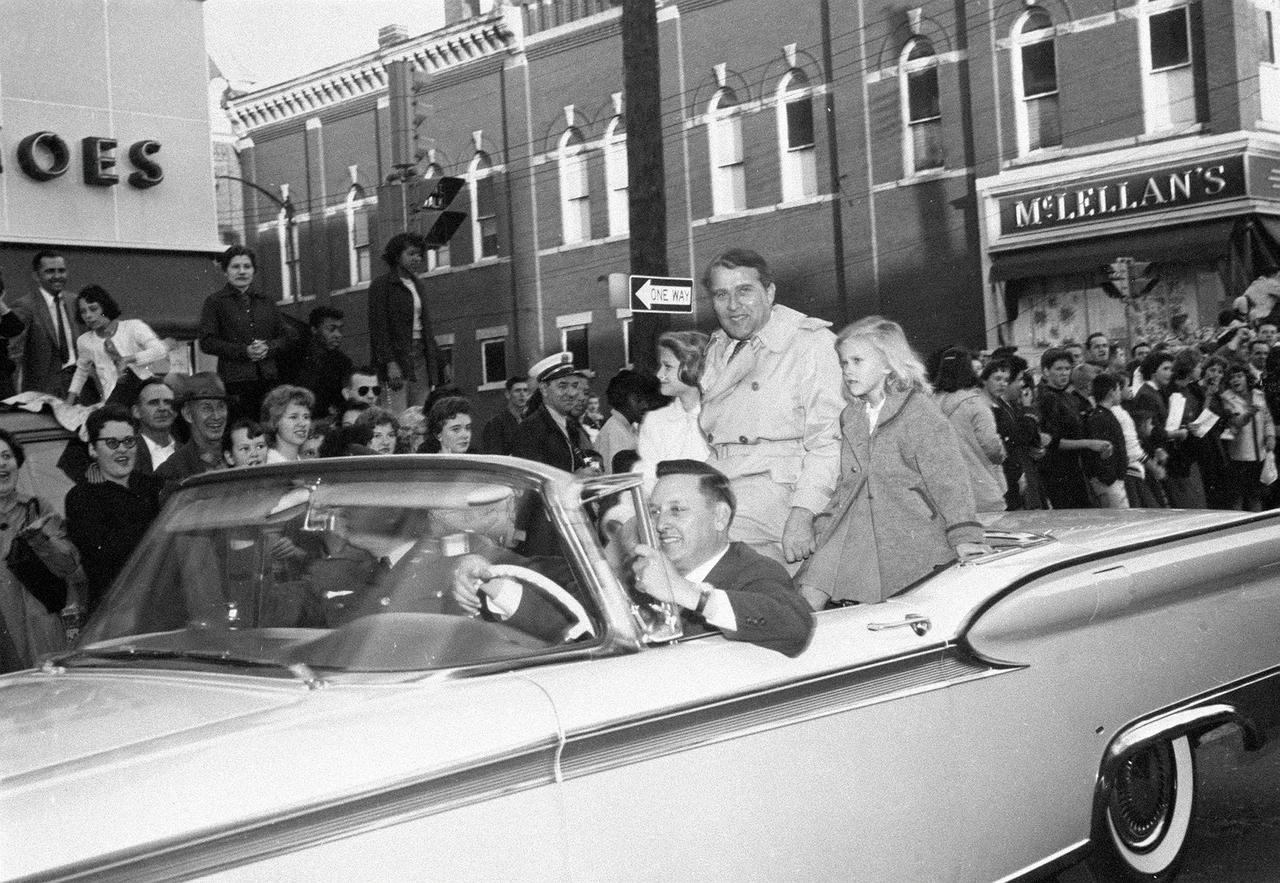
Dr. Wernher von Braun, Director of the U.S. Army Ballistic Missile Agency's (ABMA) Development Operations Division, rides with his two daughters, Margrit and Iris, in a parade in downtown Huntsville, Alabama, March 4, 1959. Although the official occasion had been plarned a "Moon Day" weeks before, it was the successful launch of the sun probe Pioneer IV two days previously that increased the celebratory atmosphere.
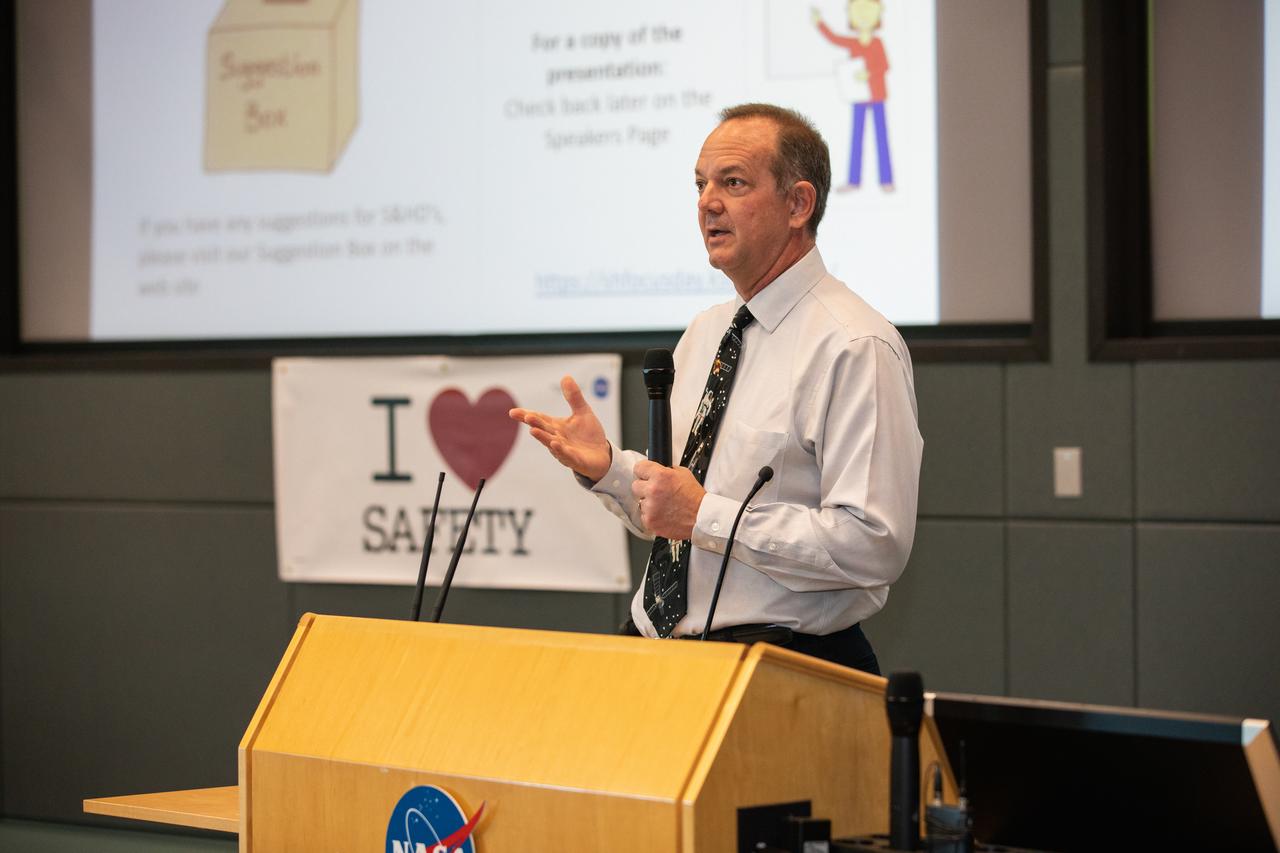
Tom Engler, director of Center Planning and Development at NASA’s Kennedy Space Center in Florida, addresses Kennedy employees inside the Operations Support Building II on March 3, 2020, during the center’s annual Safety and Health Days. Taking place March 2 through March 6, Safety and Health Days provides Kennedy employees with a variety of presentations to attend – all of which focus on how to maintain a safe and healthy workforce.
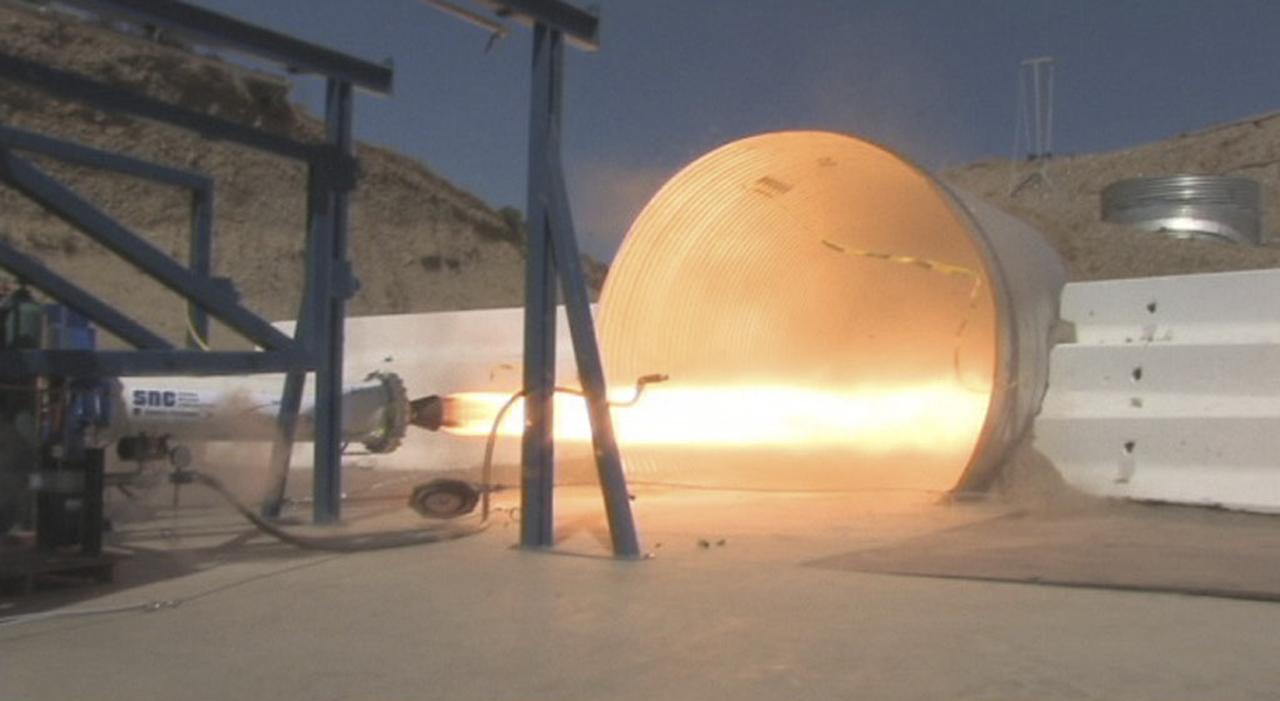
POWAY, Calif. – During NASA's Commercial Crew Development Round 1 CCDev1 activities, the rocket motor under development by Sierra Nevada Corp. for its Dream Chaser spacecraft successfully fires at the company's rocket test facility located near San Diego. NASA team members reviewed the motor's system and then watched it fire three times in one day, including one firing under vacuum ignition conditions. The tests, which simulated a complete nominal mission profile, demonstrated the multiple restart capability of Sierra Nevada's hybrid rocket. Two of the company's designed and developed hybrid rocket motors will be used as the main propulsion system on the Dream Chaser after launching aboard an Atlas V rocket. Dream Chaser is one of five systems NASA invested in during CCDev1 in order to aid in the innovation and development of American-led commercial capabilities for crew transportation and rescue services to and from the International Space Station and other low Earth orbit destinations. In 2011, NASA's Commercial Crew Program CCP entered into another funded Space Act Agreement with Sierra Nevada for the second round of commercial crew development CCDev2) so the company could further develop its Dream Chaser spacecraft for NASA transportation services. For information about CCP, visit www.nasa.gov/commercialcrew. Photo credit: Sierra Nevada Corp.
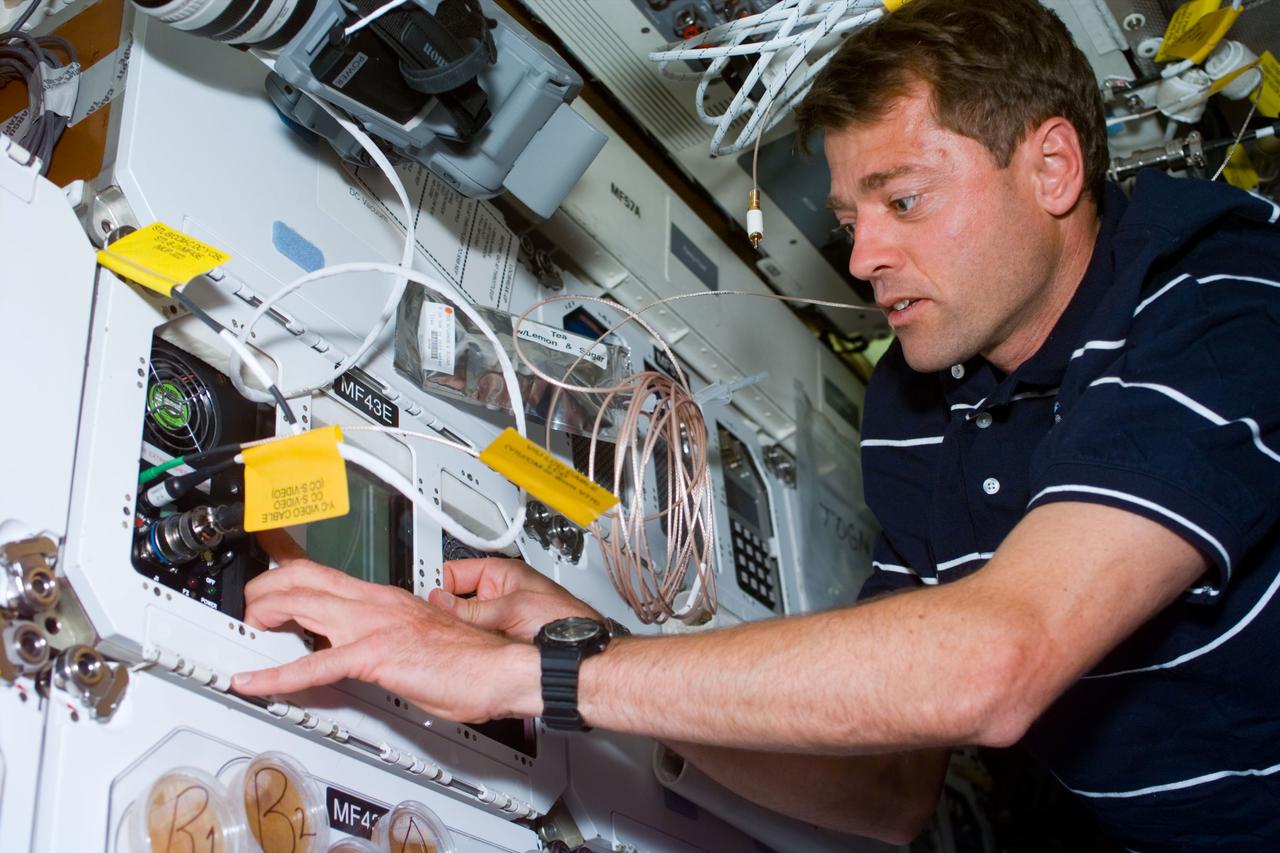
S93-E-5003 (23 July 1999) --- Astronaut Jeffrey S. Ashby, pilot, works at the Space Tissue Loss-B experiment on Space Shuttle Columbia's middeck. The experiment is set up to observe cells in culture with a video microscope imaging system to record near-real-time interactions of detecting and inducing cellular responses (macromorphological changes). Just above and to the right of STL-B is the part of the Commercial Generic Bioprocessing Apparatus (CGBA) for the National Institute of Health (NIH-B experiment). It is an experiment designed to investigate the effects of space flight on neural development in Drosophila melanogaster (fruit fly) larvae. This information may help scientists understand how gravity affects nerve growth and development and how neural connections to muscle fibers work. The photo was recorded with an electronic still camera (ESC) on Flight Day 1. Ashby and his four crew mates are scheduled to spend five days aboard Columbia in Earth orbit.
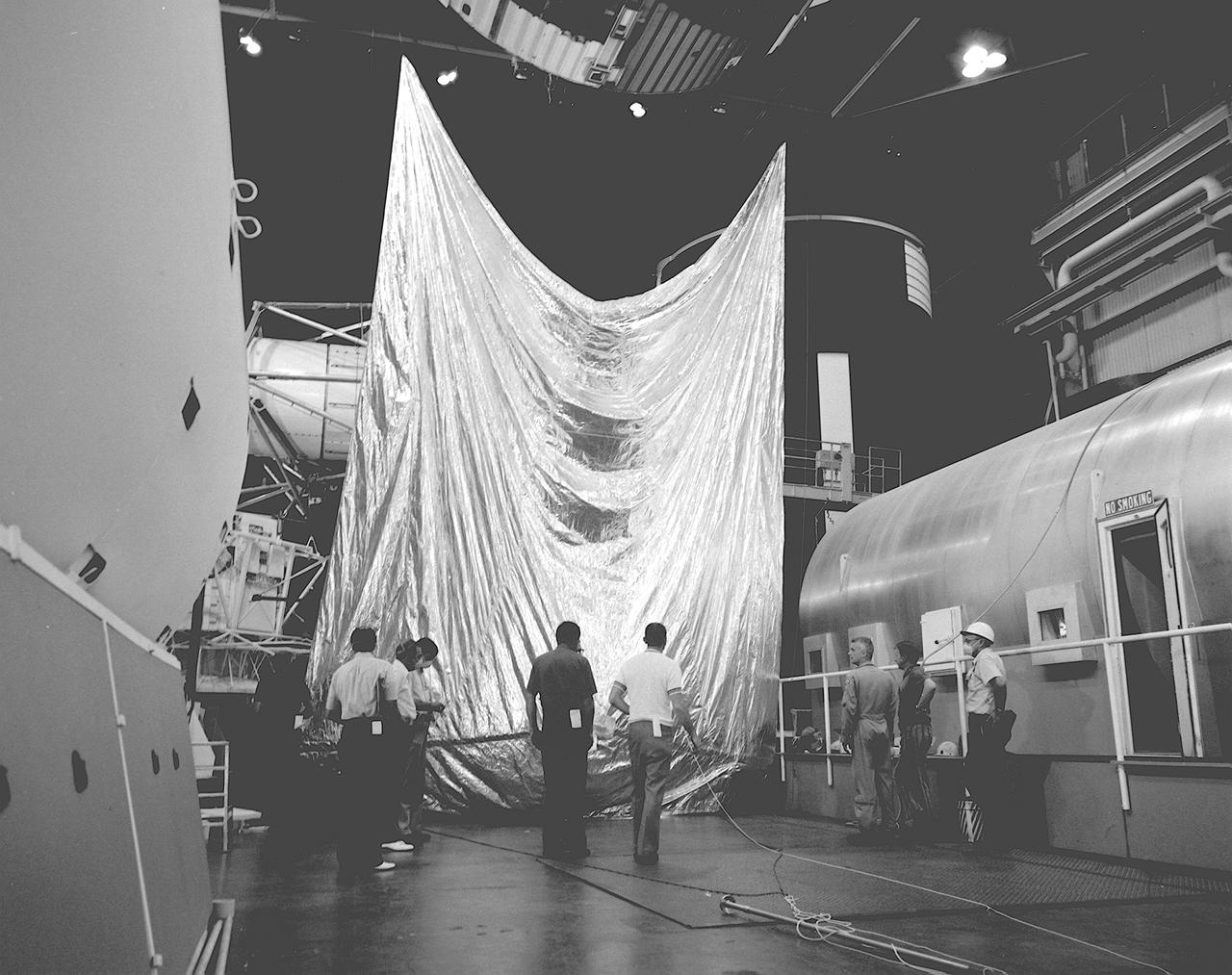
Engineers from the Marshall Space Flight Center (MSFC) and its contractors were testing the twin-pole sunshade at the Skylab mockup in the MSFC Building 4619. The Skylab Orbital Workshop (OWS) lost its thermal protection shield during launch on May 14, 1963. Without the heat shield, the temperature inside the OWS became dangerously high, rendering the workshop uninhabitable and threatened deterioration of the interior insulation and adhesive. Engineers from the MSFC, its contractors, and NASA persornel at other centers worked day and night for several days to develop the way to save the Skylab OWS. Eventually, they developed, tested, rehearsed, and approved three repair options. These options included a parasol sunshade and a twin-pole sunshade to restore the temperature inside the workshop, and a set of metal cutting tools to free the jammed solar panel.

iss014e14541 (2/22/2007) --- A view of the BTN-ME experiment, also called BTN-Neutron experiment, attached to the Zvezda Service module as seen by the Expedition 14 crew during Russian EVA 17A. The BTN-ME experiment builds a physical model for generation of charged and neutral particles during solar flares. It also develops a physical model of neutron albedo of the earth atmosphere with regard to helio- and geophysical environment, measurement point longitude and altitude effects, time of the day and lighting conditions, atmosphere conditions. Also it develops a physical model of neutron background in the vicinity of the ISS in different flight conditions, as well as recording space gamma bursts.
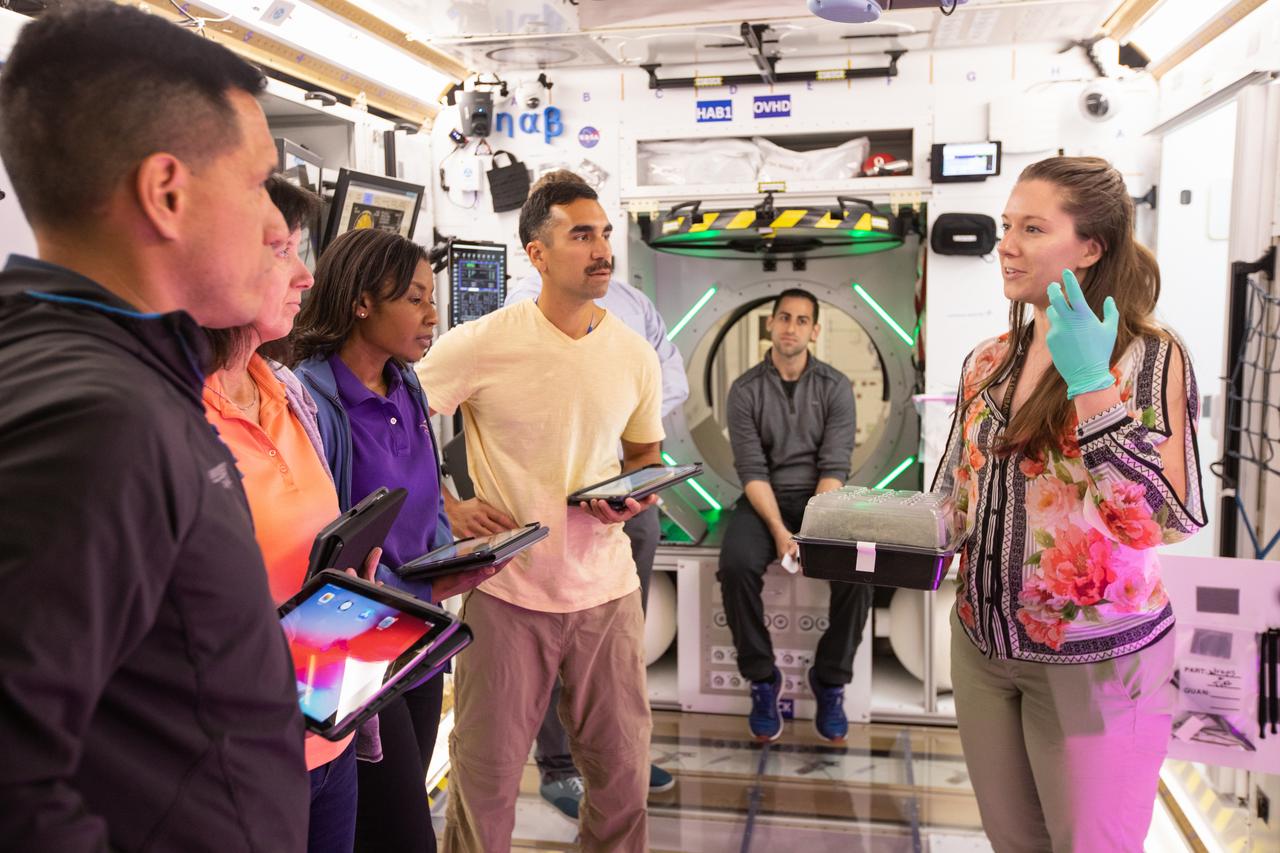
NASA began evaluating five habitat prototypes developed through NASA’s Next Space Exploration for Technologies Partnerships, or NextSTEP, to help engineers refine requirements for the design of an American-made deep space habitat for the Gateway. Lockheed Martin turned over its prototype to NASA, and testing began with crew on March 25, 2019, at Kennedy Space Center in Florida. Pictured inside the habitat prototype on March 26, 2019, from far left are astronauts Frank Rubio, Shannon Walker, Stephanie Wilson and Raja Chari. Astronauts are participating in the evaluations to provide their perspectives as those who may one day live aboard the lunar outpost, which would be located about 250,000 miles from Earth. Ground prototypes developed by Bigelow Aerospace, Boeing, Northrop Grumman, and Sierra Nevada Corporation will be tested in the future at various facilities across the country. A sixth company, NanoRacks, plans to develop a prototype as well.
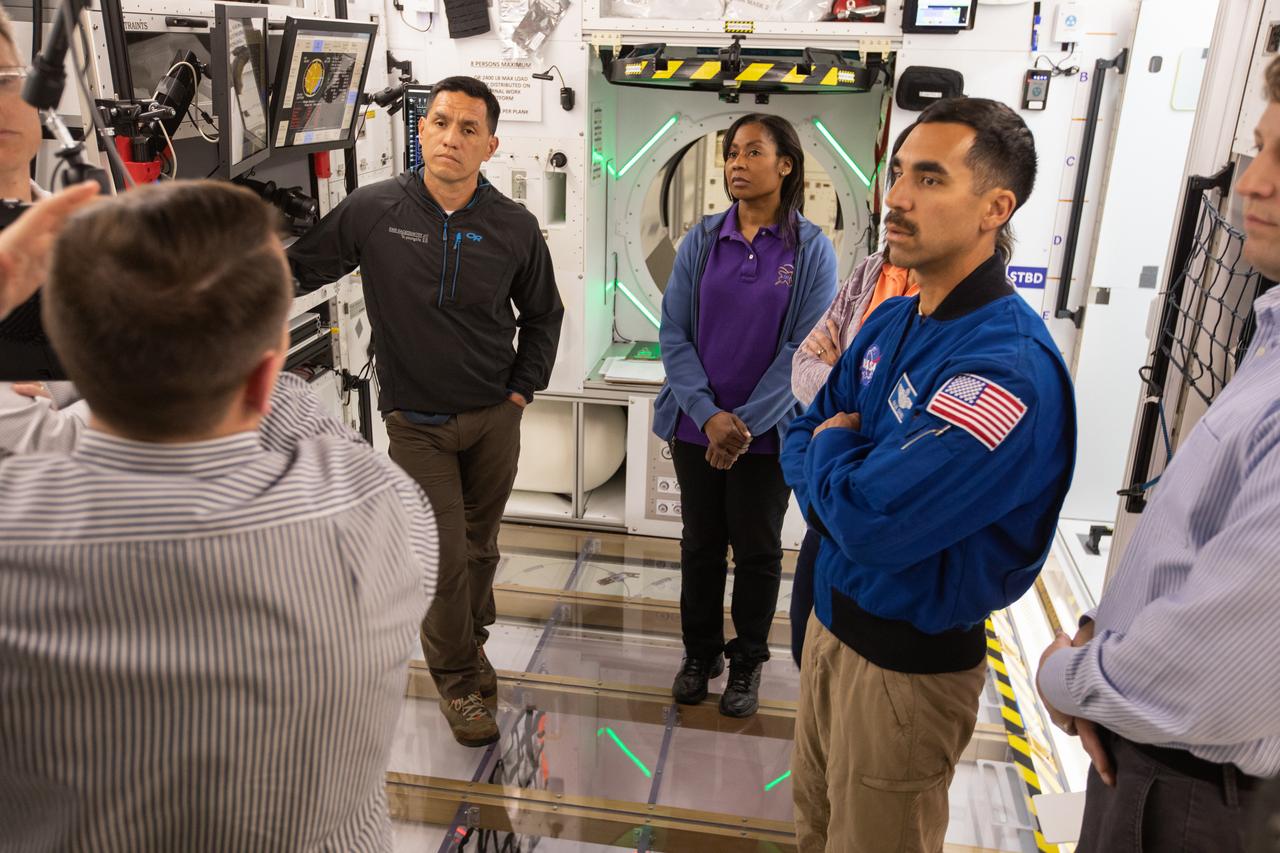
NASA began evaluating five habitat prototypes developed through NASA’s Next Space Exploration for Technologies Partnerships, or NextSTEP, to help engineers refine requirements for the design of an American-made deep space habitat for the Gateway. Lockheed Martin turned over its prototype to NASA, and testing began with crew on March 25, 2019, at Kennedy Space Center in Florida. Pictured inside the habitat prototype on March 26, 2019, from left are astronauts Frank Rubio, Stephanie Wilson and Raja Chari. Partially in view next to Chari is astronaut Shannon Walker. Astronauts are participating in the evaluations to provide their perspectives as those who may one day live aboard the lunar outpost, which would be located about 250,000 miles from Earth. Ground prototypes developed by Bigelow Aerospace, Boeing, Northrop Grumman, and Sierra Nevada Corporation will be tested in the future at various facilities across the country. A sixth company, NanoRacks, plans to develop a prototype as well.
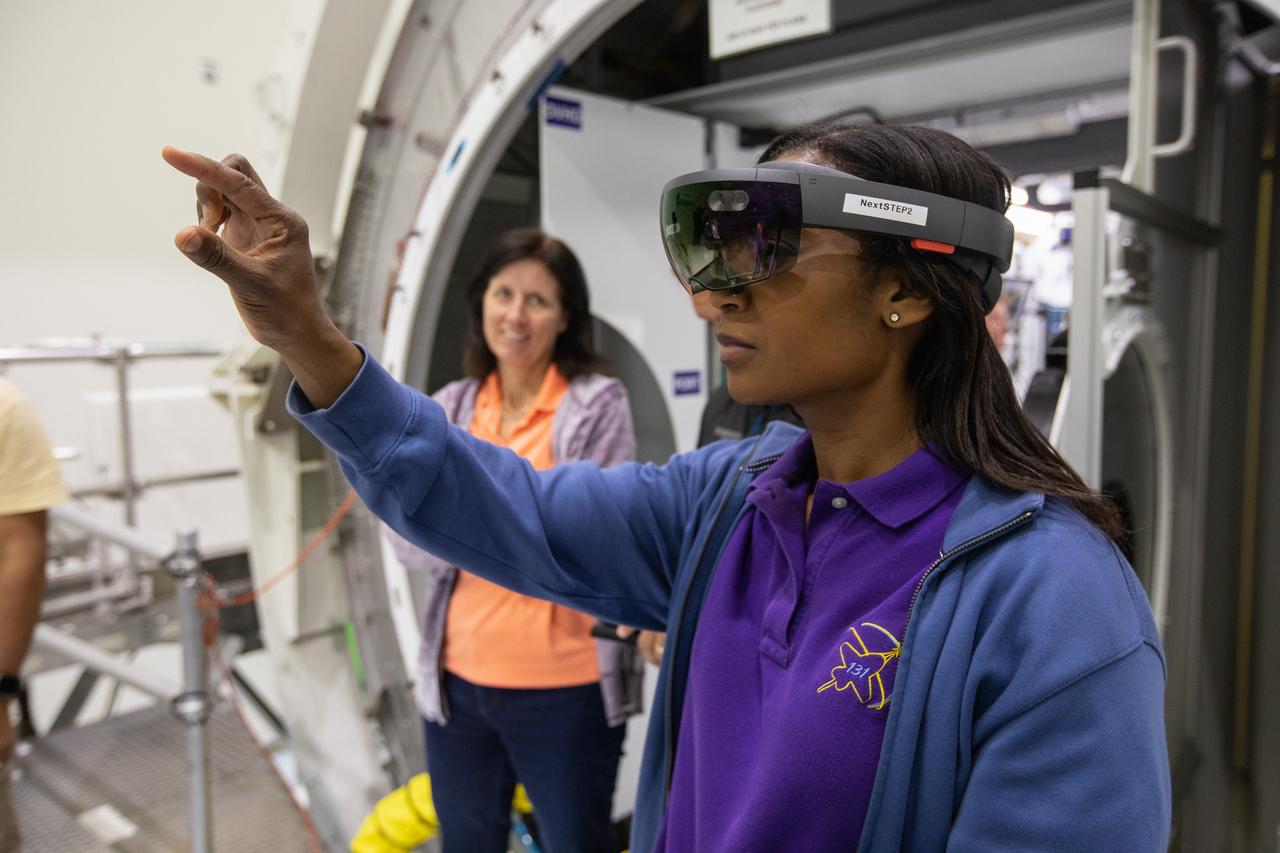
NASA began evaluating five habitat prototypes developed through NASA’s Next Space Exploration for Technologies Partnerships, or NextSTEP, to help engineers refine requirements for the design of an American-made deep space habitat for the Gateway. Lockheed Martin turned over its prototype to NASA, and testing began with crew on March 25, 2019, at Kennedy Space Center in Florida. Pictured inside the Space Station Processing Facility on March 26, 2019, from left are astronauts Shannon Walker and Stephanie Wilson. Astronauts are participating in the evaluations to provide their perspectives as those who may one day live aboard the lunar outpost, which would be located about 250,000 miles from Earth. Ground prototypes developed by Bigelow Aerospace, Boeing, Northrop Grumman, and Sierra Nevada Corporation will be tested in the future at various facilities across the country. A sixth company, NanoRacks, plans to develop a prototype as well.
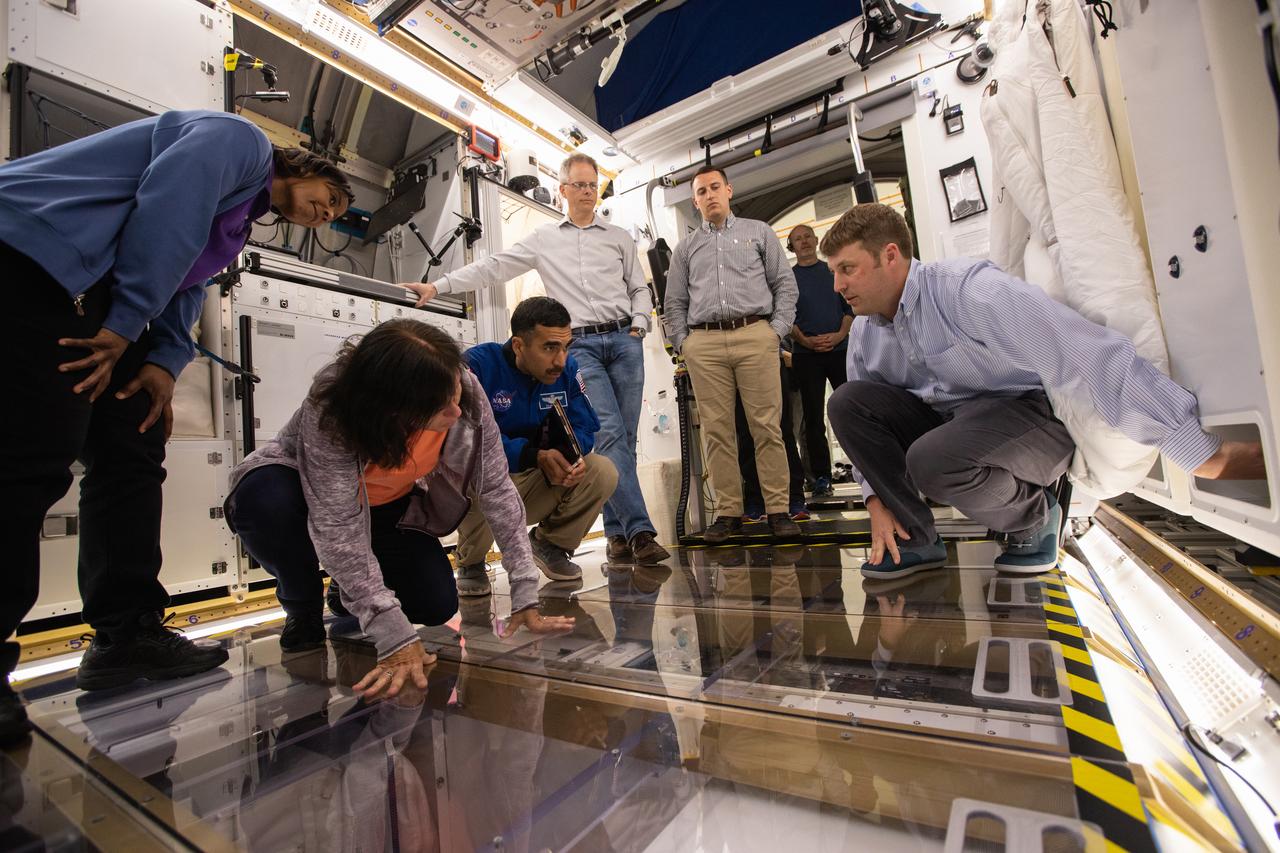
NASA began evaluating five habitat prototypes developed through NASA’s Next Space Exploration for Technologies Partnerships, or NextSTEP, to help engineers refine requirements for the design of an American-made deep space habitat for the Gateway. Lockheed Martin turned over its prototype to NASA, and testing began with crew on March 25, 2019, at Kennedy Space Center in Florida. Pictured inside the habitat prototype on March 26, 2019, from left are astronauts Stephanie Wilson, Shannon Walker and Raja Chari. Astronauts are participating in the evaluations to provide their perspectives as those who may one day live aboard the lunar outpost, which would be located about 250,000 miles from Earth. Ground prototypes developed by Bigelow Aerospace, Boeing, Northrop Grumman, and Sierra Nevada Corporation will be tested in the future at various facilities across the country. A sixth company, NanoRacks, plans to develop a prototype as well.
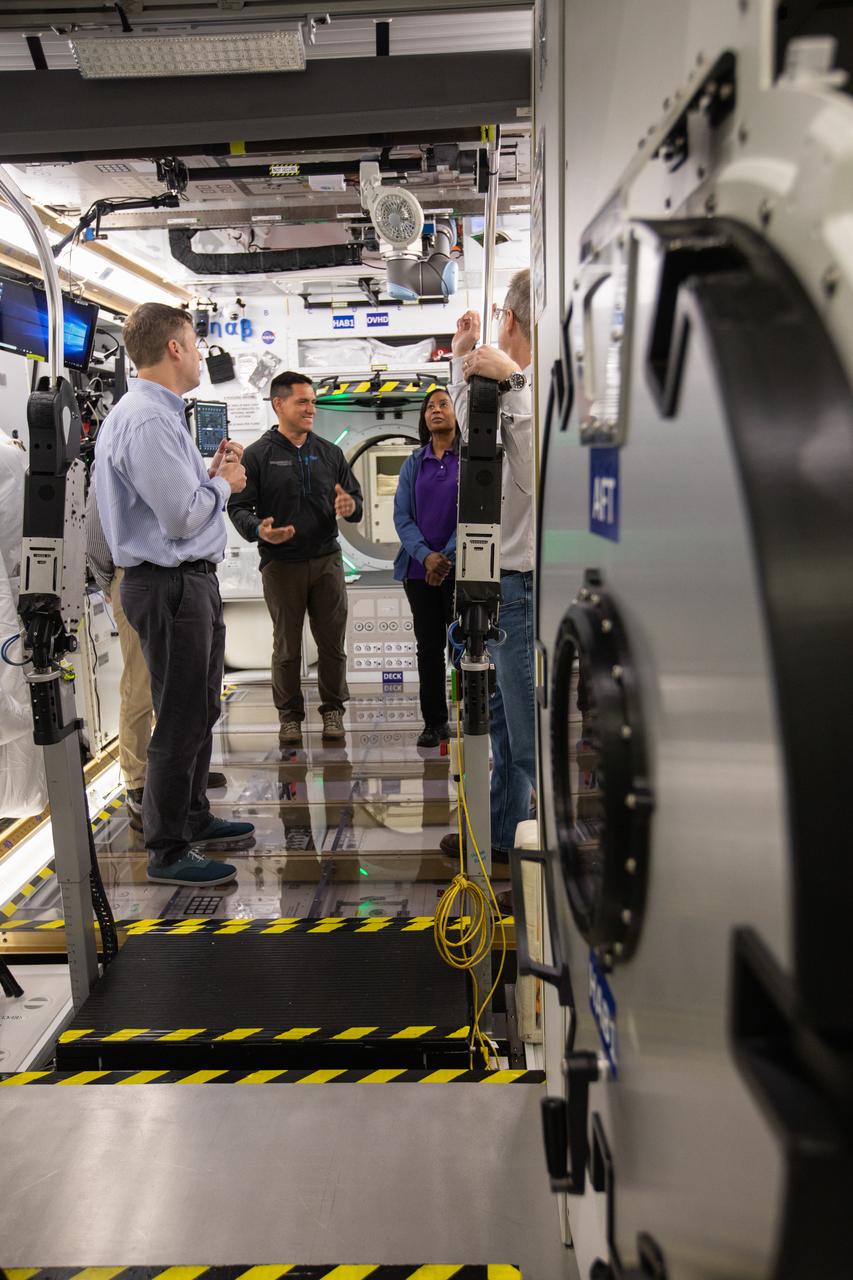
NASA began evaluating five habitat prototypes developed through NASA’s Next Space Exploration for Technologies Partnerships, or NextSTEP, to help engineers refine requirements for the design of an American-made deep space habitat for the Gateway. Lockheed Martin turned over its prototype to NASA, and testing began with crew on March 25, 2019, at Kennedy Space Center in Florida. Pictured inside the habitat prototype on March 26, 2019, second from left is astronaut Frank Rubio. Next to him is astronaut Stephanie Wilson. Astronauts are participating in the evaluations to provide their perspectives as those who may one day live aboard the lunar outpost, which would be located about 250,000 miles from Earth. Ground prototypes developed by Bigelow Aerospace, Boeing, Northrop Grumman, and Sierra Nevada Corporation will be tested in the future at various facilities across the country. A sixth company, NanoRacks, plans to develop a prototype as well.

NASA astronaut Raja Chari climbs through a hatch of Lockheed Martin’s deep space habitat ground prototype at NASA’s Kennedy Space Center in Florida on March 25, 2019. Chari is one of the astronauts helping engineers refine requirements for the design of an American-made deep space habitat for the Gateway. Astronauts provide important design perspective as they may one day live and work aboard the lunar outpost, which would be located about 250,000 miles from Earth. To date, five habitat prototypes have been developed through NASA’s Next Space Exploration for Technologies Partnerships, or NextSTEP. Lockheed Martin was the first to turn their habitat over to NASA for testing. Ground prototypes developed by Bigelow Aerospace, Boeing, Northrop Grumman and Sierra Nevada Corporation will be tested in the future at various facilities across the country. A sixth company, NanoRacks, plans to develop a prototype as well.
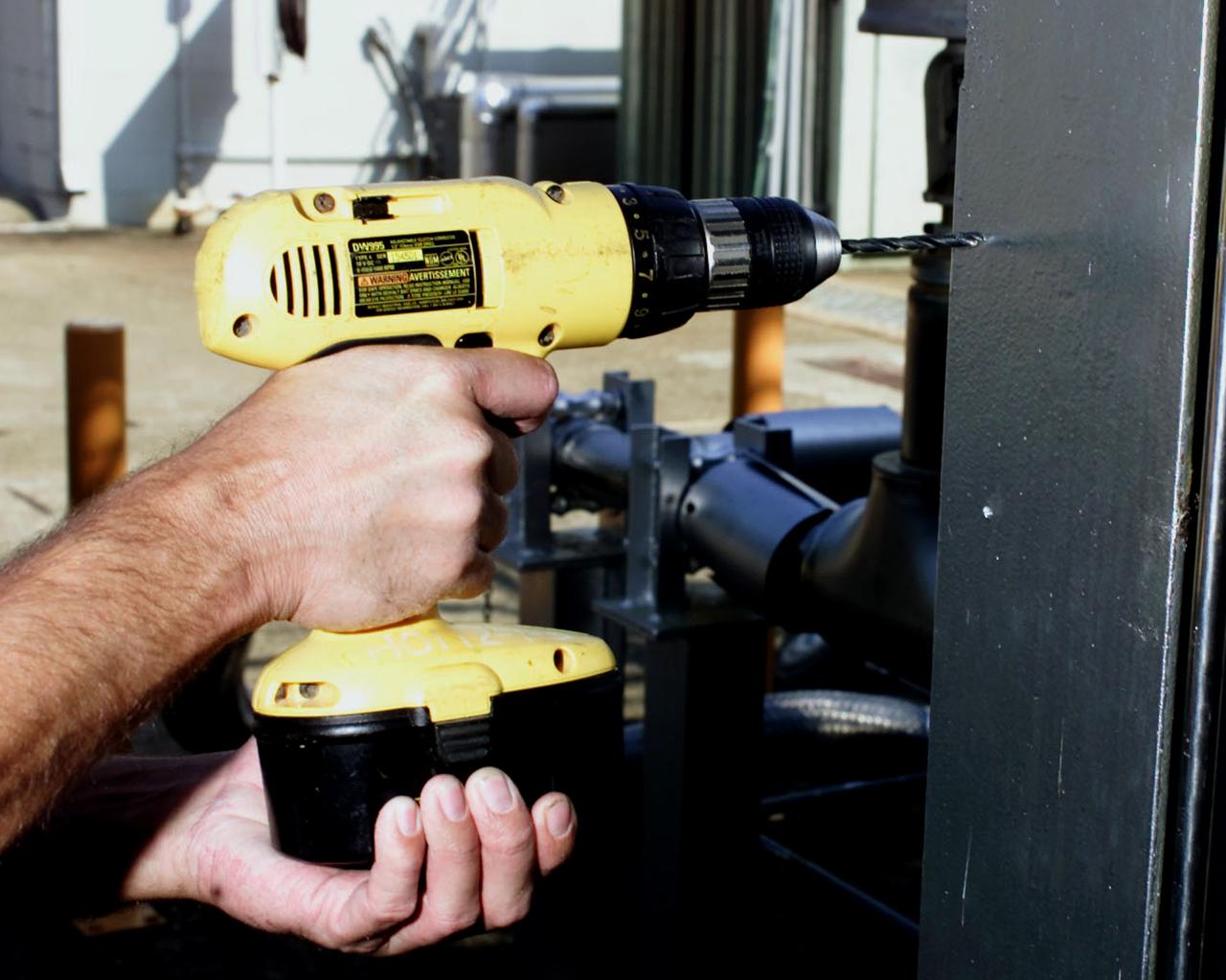
Apollo-era technology spurred the development of cordless products that we take for granted everyday. In the 1960s, NASA asked Black Decker to develop a special drill that would be powerful enough to cut through hard layers of the lunar surface and be lightweight, compact, and operate under its own power source, allowing Apollo astronauts to collect lunar samples further away from the Lunar Experiment Module. In response, Black Decker developed a computer program that analyzed and optimized drill motor operations. From their analysis, engineers were able to design a motor that was powerful yet required minimal battery power to operate. Since those first days of cordless products, Black Decker has continued to refine this technology and they now sell their rechargeable products worldwide (i.e. the Dustbuster, cordless tools for home and industrial use, and medical tools.)
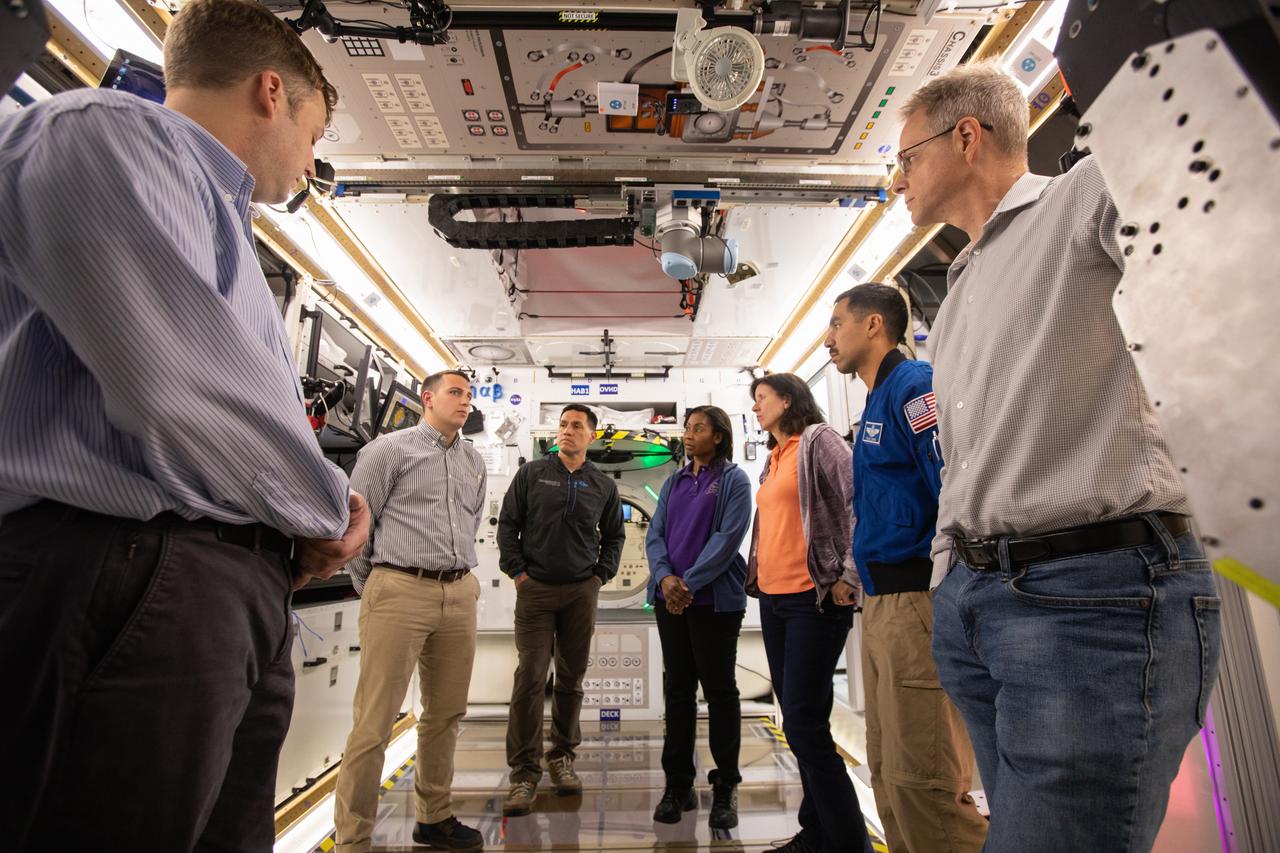
NASA began evaluating five habitat prototypes developed through NASA’s Next Space Exploration for Technologies Partnerships, or NextSTEP, to help engineers refine requirements for the design of an American-made deep space habitat for the Gateway. Lockheed Martin turned over its prototype to NASA, and testing began with crew on March 25, 2019, at Kennedy Space Center in Florida. Pictured inside the habitat prototype on March 26, 2019, beginning third from left are astronauts Frank Rubio, Stephanie Wilson, Shannon Walker and Raja Chari. Astronauts are participating in the evaluations to provide their perspectives as those who may one day live aboard the lunar outpost, which would be located about 250,000 miles from Earth. Ground prototypes developed by Bigelow Aerospace, Boeing, Northrop Grumman, and Sierra Nevada Corporation will be tested in the future at various facilities across the country. A sixth company, NanoRacks, plans to develop a prototype as well.
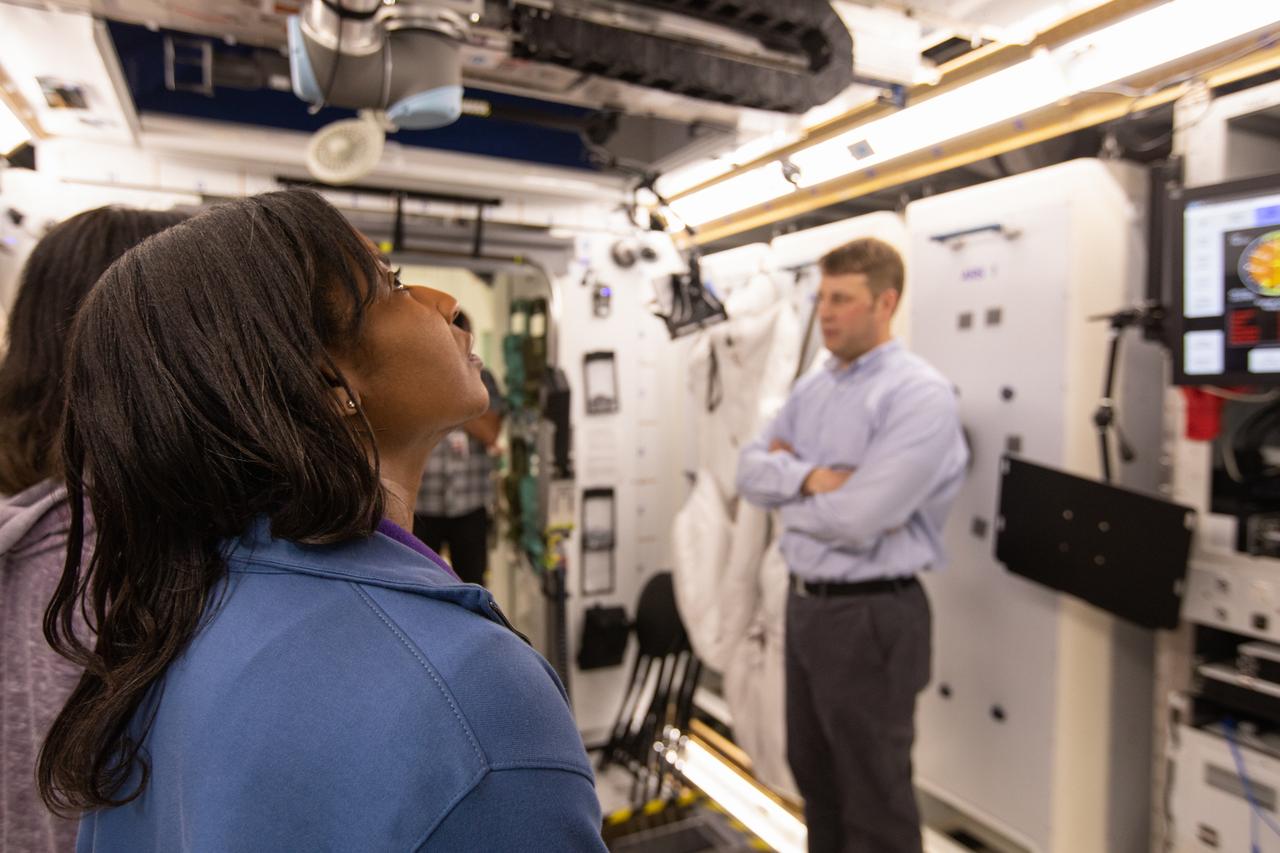
NASA began evaluating five habitat prototypes developed through NASA’s Next Space Exploration for Technologies Partnerships, or NextSTEP, to help engineers refine requirements for the design of an American-made deep space habitat for the Gateway. Lockheed Martin turned over its prototype to NASA, and testing began with crew on March 25, 2019, at Kennedy Space Center in Florida. Pictured inside the habitat prototype on March 26, 2019, at left is astronaut Stephanie Wilson. To her left, partially hidden is astronaut Shannon Walker. Astronauts are participating in the evaluations to provide their perspectives as those who may one day live aboard the lunar outpost, which would be located about 250,000 miles from Earth. Ground prototypes developed by Bigelow Aerospace, Boeing, Northrop Grumman, and Sierra Nevada Corporation will be tested in the future at various facilities across the country. A sixth company, NanoRacks, plans to develop a prototype as well.
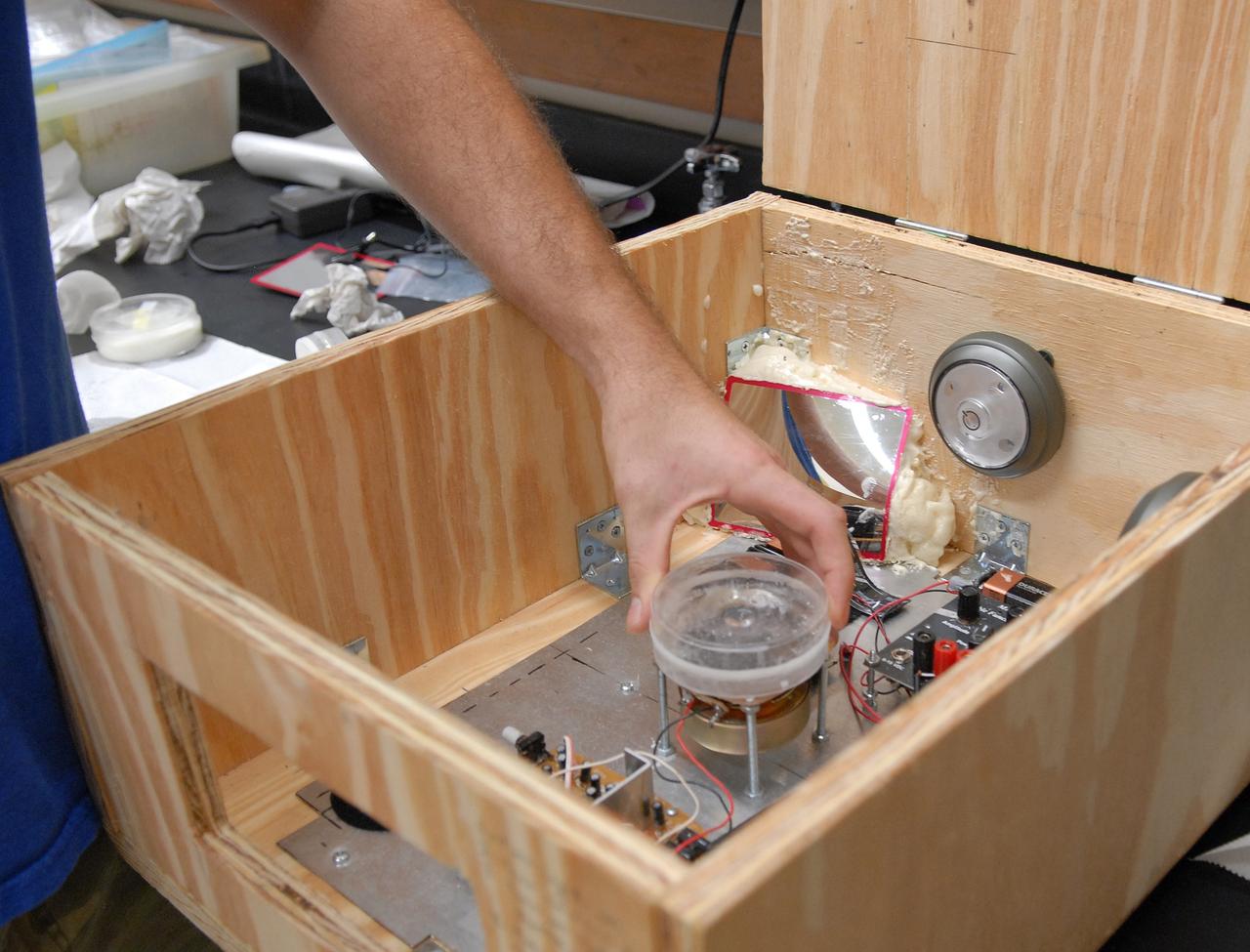
CAPE CANAVERAL, Fla. – Experiments are placed inside the FASTRACK Space Experiment Platform viewed in the Life Science Building at NASA's Kennedy Space Center. The space experiment rack is under development for flight aboard NASA's first commercially-provided research flights on Zero Gravity Corporation's reduced gravity aircraft. It is being developed jointly by Kennedy and Space Florida to facilitate NASA and commercial use of reusable U.S. suborbital flight vehicles currently under development. FASTRACK will enable investigators to test experiments, apparatus and analytical techniques in hardware compatible with the International Space Station, and to perform science that can be carried out during the reduced gravity available for brief periods during aircraft parabolas. Flight testing of the FASTRACK will be performed on four consecutive days between September 9-12 from Ellington Field near NASA's Johnson Space Center, Houston. Photo credit: NASA/Troy Cryder
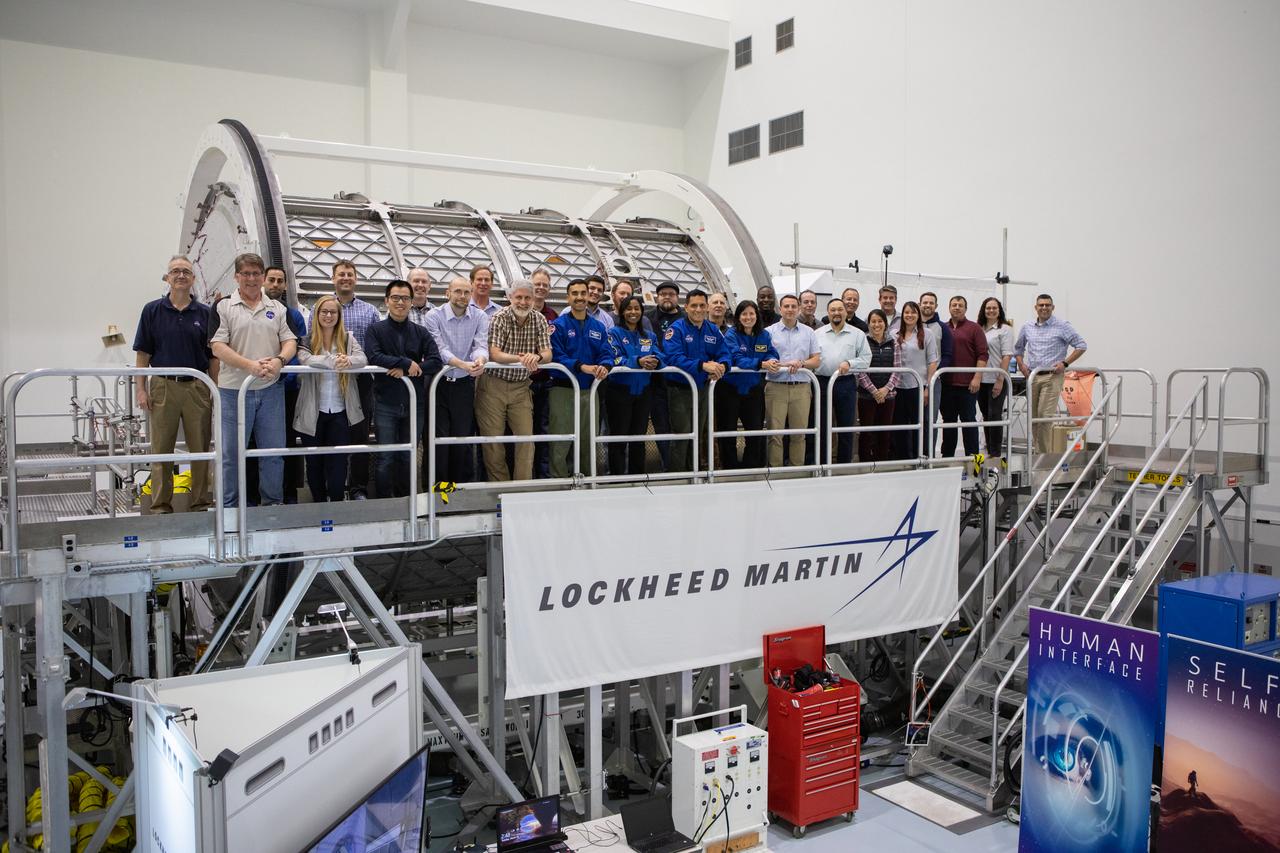
NASA began evaluating five habitat prototypes developed through NASA’s Next Space Exploration for Technologies Partnerships, or NextSTEP, to help engineers refine requirements for the design of an American-made deep space habitat for the Gateway. Lockheed Martin turned over its prototype to NASA, and testing began with crew on March 25, 2019, at Kennedy Space Center in Florida. Astronauts are participating in the evaluations to provide their perspectives as those who may one day live aboard the lunar outpost, which would be located about 250,000 miles from Earth. Ground prototypes developed by Bigelow Aerospace, Boeing, Northrop Grumman, and Sierra Nevada Corporation will be tested in the future at various facilities across the country. A sixth company, NanoRacks, plans to develop a prototype as well.
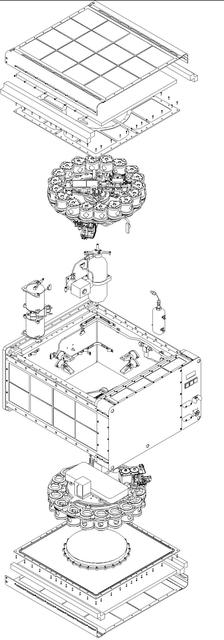
The Avian Development Facility (ADF) supports 36 eggs in two carousels, one of which rotates to provide a 1-g control for comparing to eggs grown in microgravity. The ADF was designed to incubate up to 36 Japanese quail eggs, 18 in microgravity and 18 in artificial gravity. The two sets of eggs were exposed to otherwise identical conditions, the first time this is been accomplished in space. Eggs are preserved at intervals to provide snapshots of their development for later analysis. Quails incubate in just 15 days, so they are an ideal species to be studied within the duration of space shuttle missions. Further, several investigators can use the same specimens to address different questions. The ADF originated in NASA's Shuttle Student Involvement program in the 1980s and was developed under the NASA Small Business Irnovation Research program. In late 2001, the ADF made its first flight and carried eggs used in two investigations.
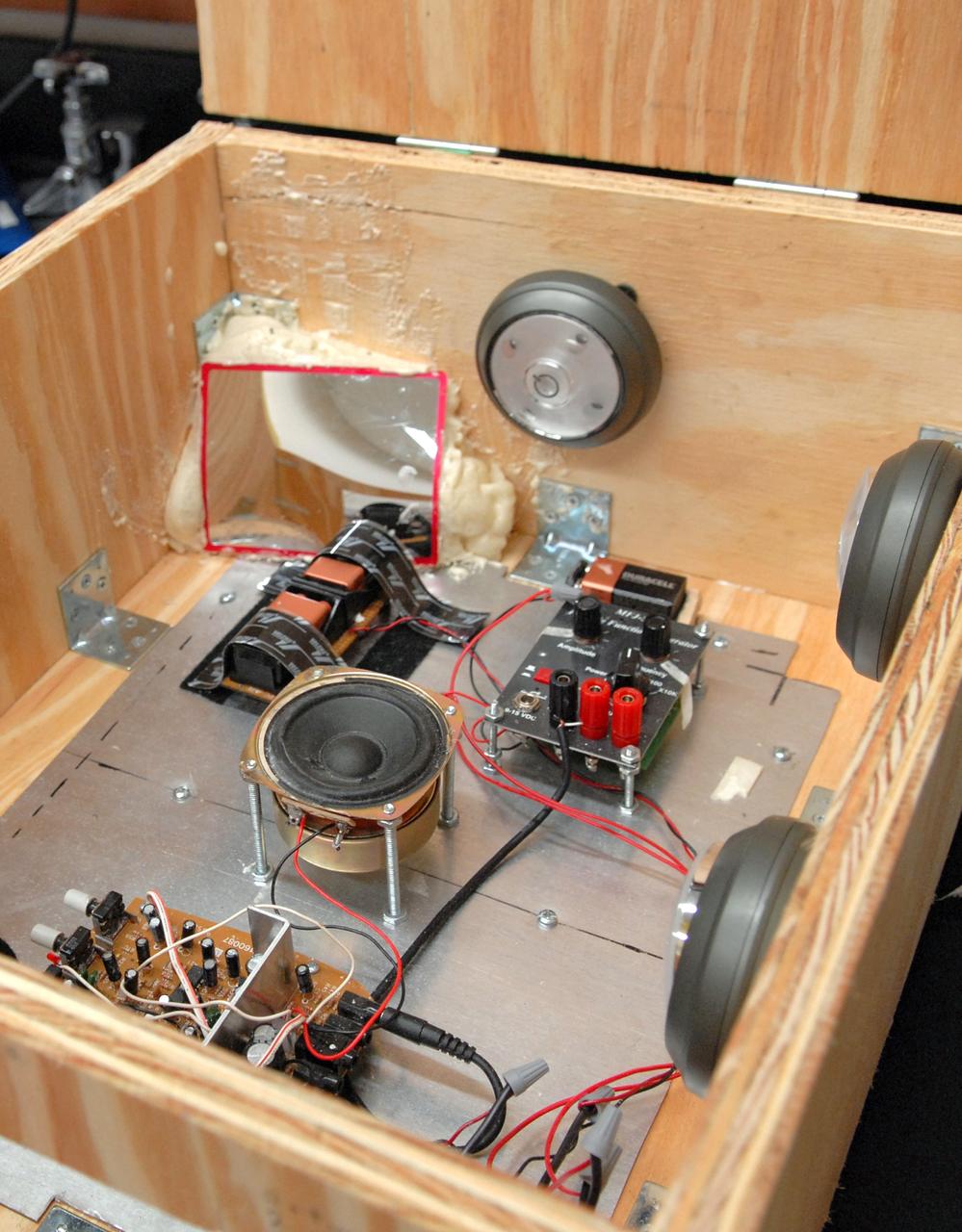
CAPE CANAVERAL, Fla. – Experiments are placed inside the FASTRACK Space Experiment Platform viewed in the Life Science Building at NASA's Kennedy Space Center. The space experiment rack is under development for flight aboard NASA's first commercially-provided research flights on Zero Gravity Corporation's reduced gravity aircraft. It is being developed jointly by Kennedy and Space Florida to facilitate NASA and commercial use of reusable U.S. suborbital flight vehicles currently under development. FASTRACK will enable investigators to test experiments, apparatus and analytical techniques in hardware compatible with the International Space Station, and to perform science that can be carried out during the reduced gravity available for brief periods during aircraft parabolas. Flight testing of the FASTRACK will be performed on four consecutive days between September 9-12 from Ellington Field near NASA's Johnson Space Center, Houston. Photo credit: NASA/Troy Cryder
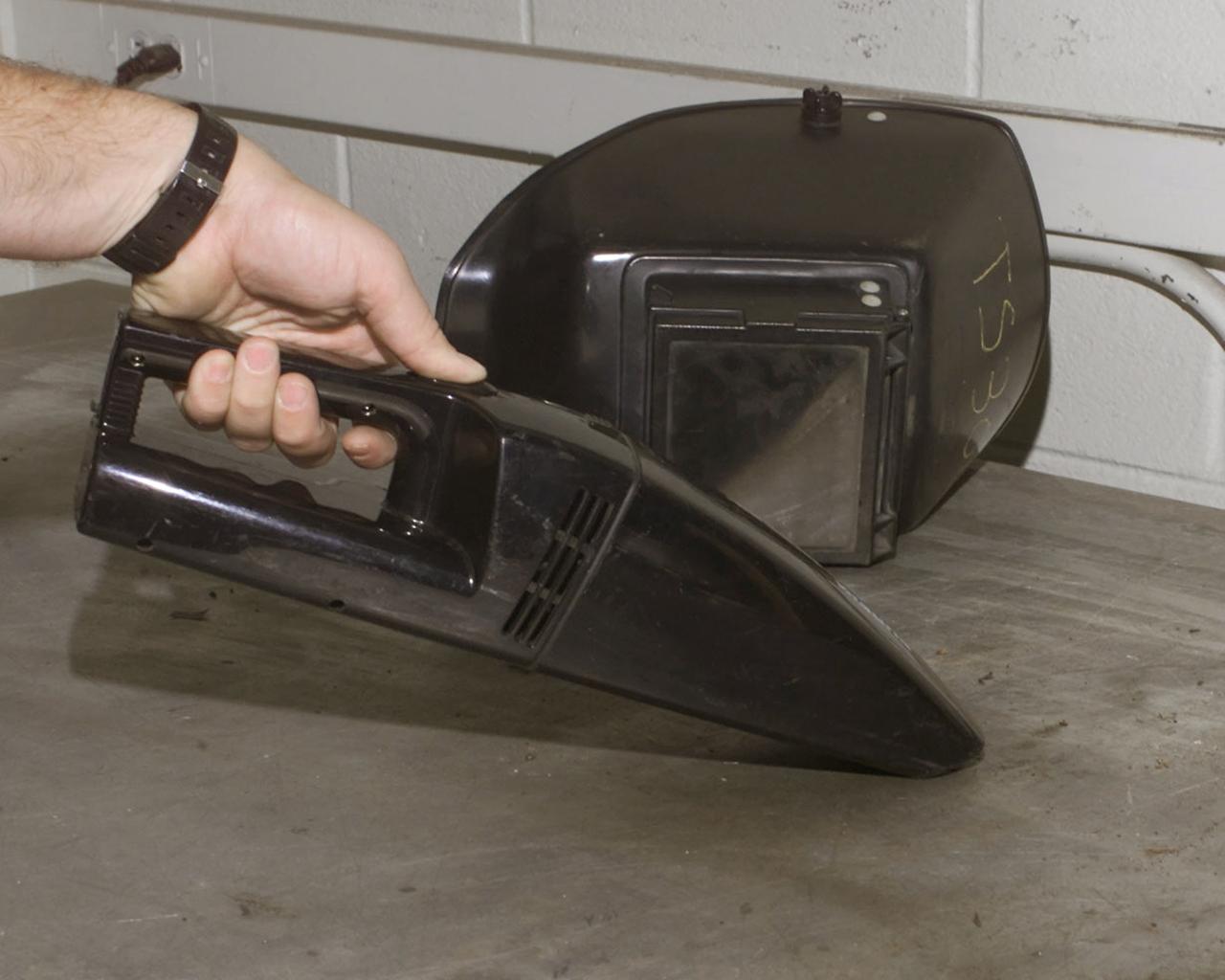
Apollo-era technology spurred the development of cordless products that we take for granted everyday. In the 1960s, NASA asked Black Decker to develop a special drill that would be powerful enough to cut through hard layers of the lunar surface and be lightweight, compact, and operate under its own power source, allowing Apollo astronauts to collect lunar samples further away from the Lunar Experiment Module. In response, Black Decker developed a computer program that analyzed and optimized drill motor operations. From their analysis, engineers were able to design a motor that was powerful yet required minimal battery power to operate. Since those first days of cordless products, Black Decker has continued to refine this technology and they now sell their rechargeable products worldwide (i.e. the Dustbuster, cordless tools for home and industrial use, and medical tools.)
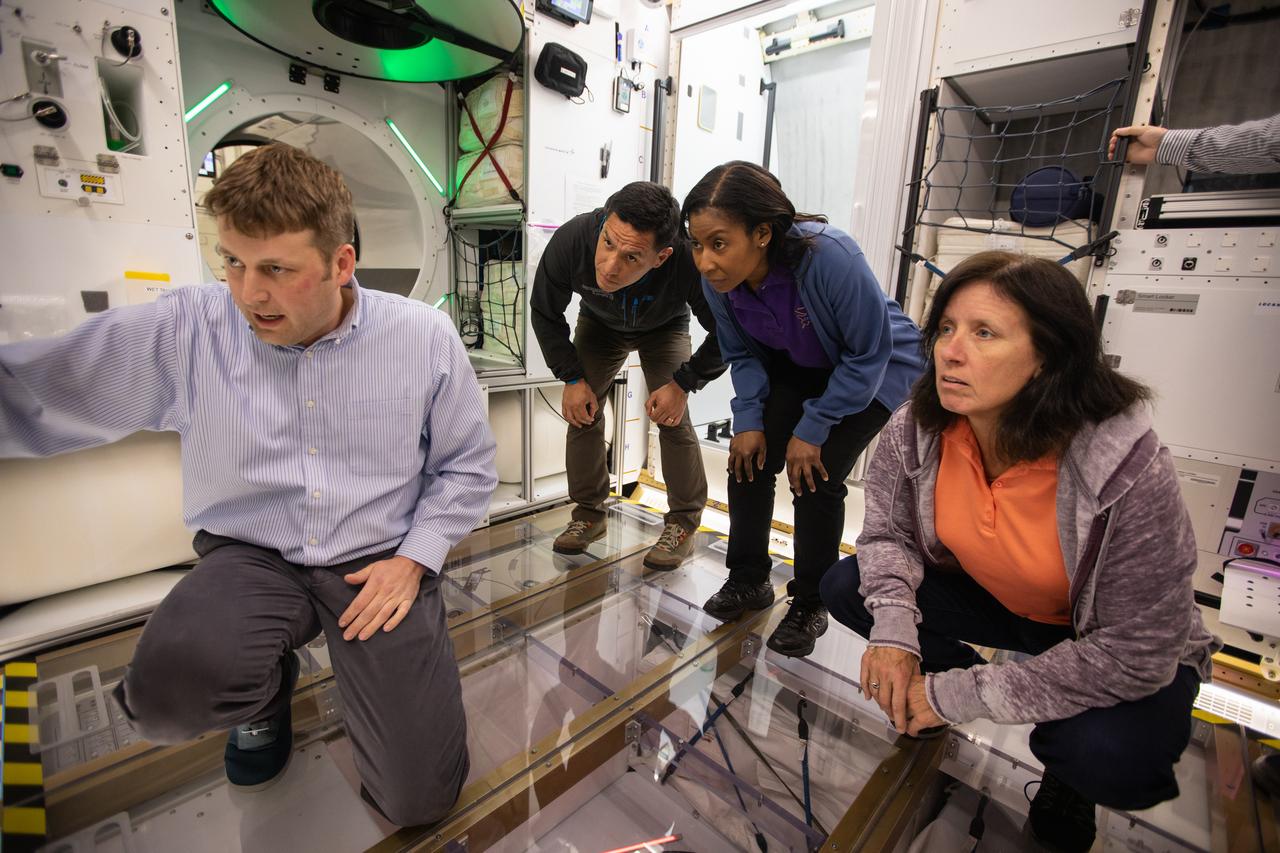
NASA began evaluating five habitat prototypes developed through NASA’s Next Space Exploration for Technologies Partnerships, or NextSTEP, to help engineers refine requirements for the design of an American-made deep space habitat for the Gateway. Lockheed Martin turned over its prototype to NASA, and testing began with crew on March 25, 2019, at Kennedy Space Center in Florida. Pictured inside the habitat prototype on March 26, 2019, in back from left are astronauts Frank Rubio, Stephanie Wilson and Shannon Walker. Astronauts are participating in the evaluations to provide their perspectives as those who may one day live aboard the lunar outpost, which would be located about 250,000 miles from Earth. Ground prototypes developed by Bigelow Aerospace, Boeing, Northrop Grumman, and Sierra Nevada Corporation will be tested in the future at various facilities across the country. A sixth company, NanoRacks, plans to develop a prototype as well.
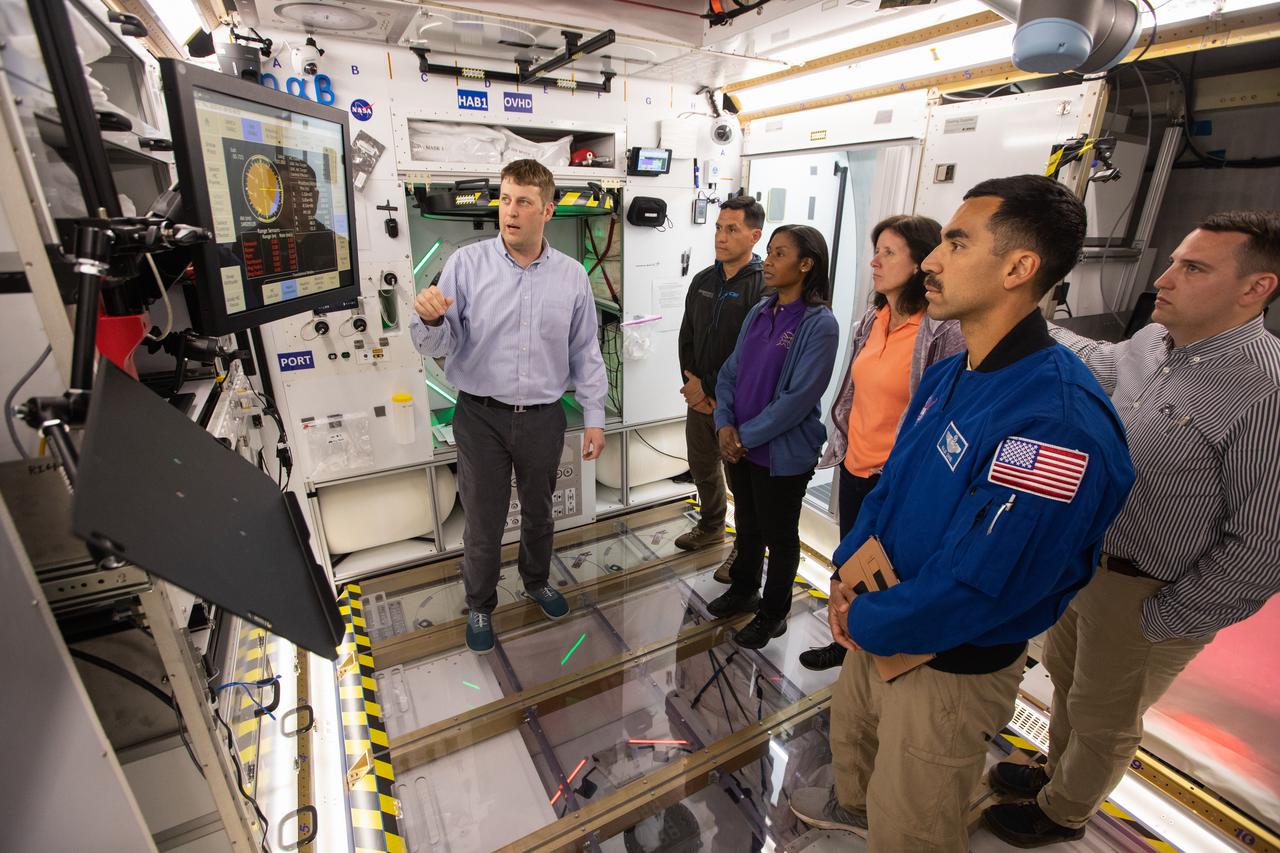
NASA began evaluating five habitat prototypes developed through NASA’s Next Space Exploration for Technologies Partnerships, or NextSTEP, to help engineers refine requirements for the design of an American-made deep space habitat for the Gateway. Lockheed Martin turned over its prototype to NASA, and testing began with crew on March 25, 2019, at Kennedy Space Center in Florida. Pictured inside the habitat prototype on March 26, 2019, beginning second from left are astronauts Frank Rubio, Raja Shari, Stephanie Wilson and Shannon Walker. Astronauts are participating in the evaluations to provide their perspectives as those who may one day live aboard the lunar outpost, which would be located about 250,000 miles from Earth. Ground prototypes developed by Bigelow Aerospace, Boeing, Northrop Grumman, and Sierra Nevada Corporation will be tested in the future at various facilities across the country. A sixth company, NanoRacks, plans to develop a prototype as well.
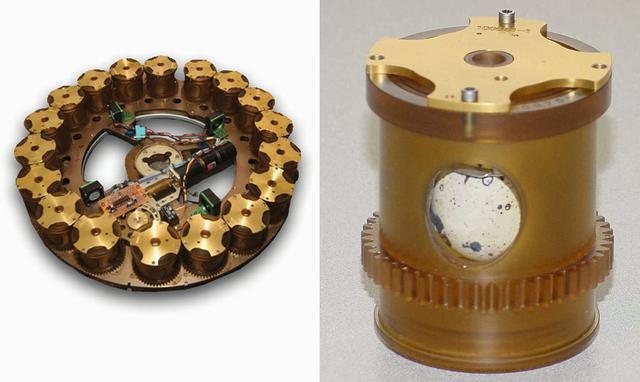
The Avian Development Facility (ADF) supports 36 eggs in two carousels, one of which rotates to provide a 1-g control for comparing to eggs grown in microgravity. The ADF was designed to incubate up to 36 Japanese quail eggs, 18 in microgravity and 18 in artificial gravity. The two sets of eggs were exposed to otherwise identical conditions, the first time this is been accomplished in space. Eggs are preserved at intervals to provide snapshots of their development for later analysis. Quails incubate in just 15 days, so they are an ideal species to be studied within the duration of space shuttle missions. Further, several investigators can use the same specimens to address different questions. The ADF originated in NASA's Shuttle Student Involvement program in the 1980s and was developed under the NASA Small Business Irnovation Research program. In late 2001, the ADF made its first flight and carried eggs used in two investigations.
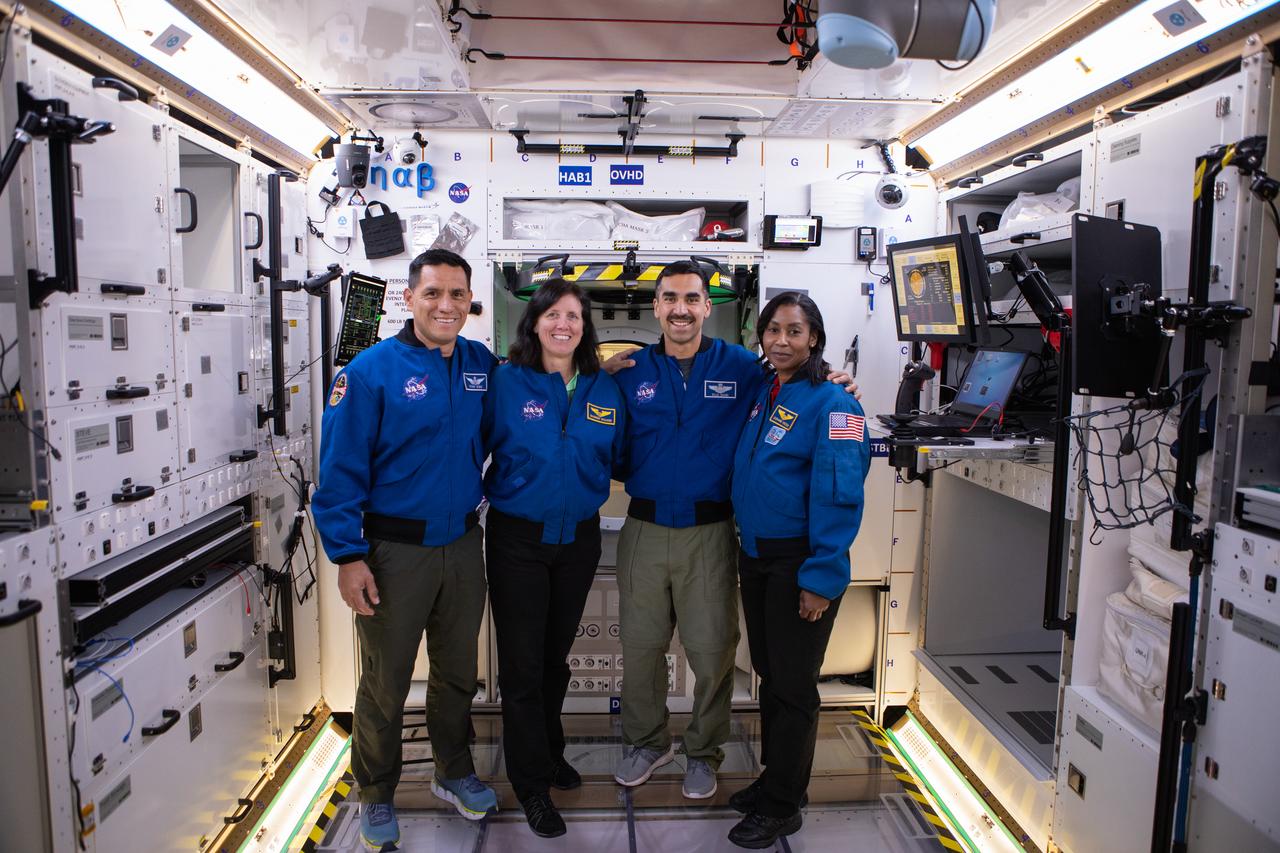
NASA began evaluating five habitat prototypes developed through NASA’s Next Space Exploration for Technologies Partnerships, or NextSTEP, to help engineers refine requirements for the design of an American-made deep space habitat for the Gateway. Lockheed Martin turned over its prototype to NASA, and testing began with crew on March 25, 2019, at Kennedy Space Center in Florida. Pictured, from left are astronauts Frank Rubio, Shannon Walker, Raja Chari and Stephanie Wilson. Astronauts are participating in the evaluations to provide their perspectives as those who may one day live aboard the lunar outpost, which would be located about 250,000 miles from Earth. Ground prototypes developed by Bigelow Aerospace, Boeing, Northrop Grumman, and Sierra Nevada Corporation will be tested in the future at various facilities across the country. A sixth company, NanoRacks, plans to develop a prototype as well.
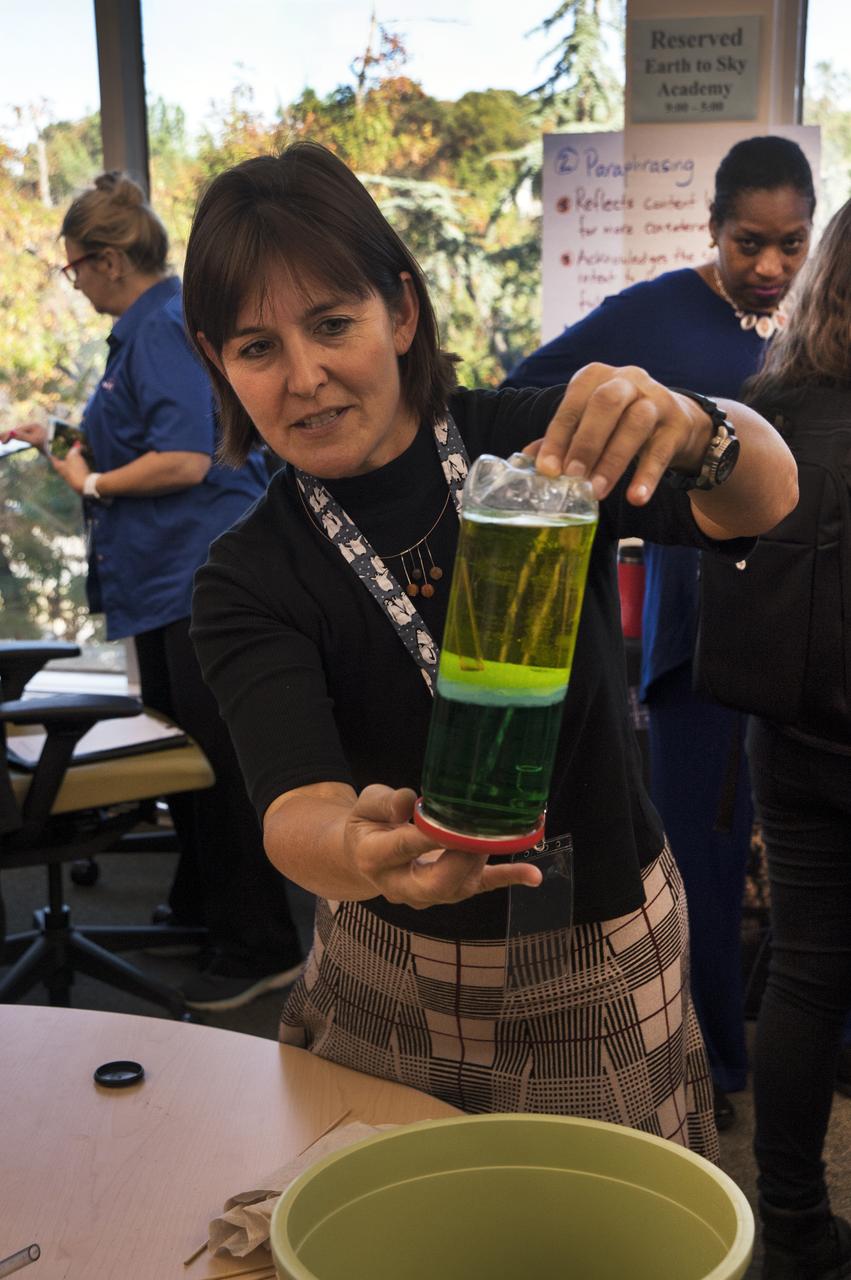
Earth to Sky Academy October 23, 2019 Locations: Building 28 Dr. Piers J. Sellers Data Visualization Theater, first floor atrium and east lawn, Building 21 GIC2 (Library) MOSI Request # 2020-896-0 10/23/2019 is the field trip day of our five-day workshop for the Earth to Sky Academy. Images will be used to show what the experience is like for reporting and marketing purposes. Earth to Sky Academy NASA Goddard Space Flight Center – Greenbelt, MD October 21–25, 2019 A tuition-free course for interpreters, informal educators, and science communicators interested in creating and nurturing regional communities of practice focused on improving climate science communication. About the Earth to Sky Academy Since 2004, the Earth to Sky interagency partnership (ETS) has been sharing NASA science with informal educators through a variety of professional development events, including a series of regional courses in climate science and communication. A hallmark of the ETS training model is purposeful, ongoing engagement with participants to encourage sharing and collaborative learning. In an effort to strengthen and grow the ETS community of practice, ETS leadership is developing a network of ETS regional communities, each led by small teams of trained ETS regional leaders. The Earth to Sky Academy (ETSA) five-day course marks the launch of this long-term effort.
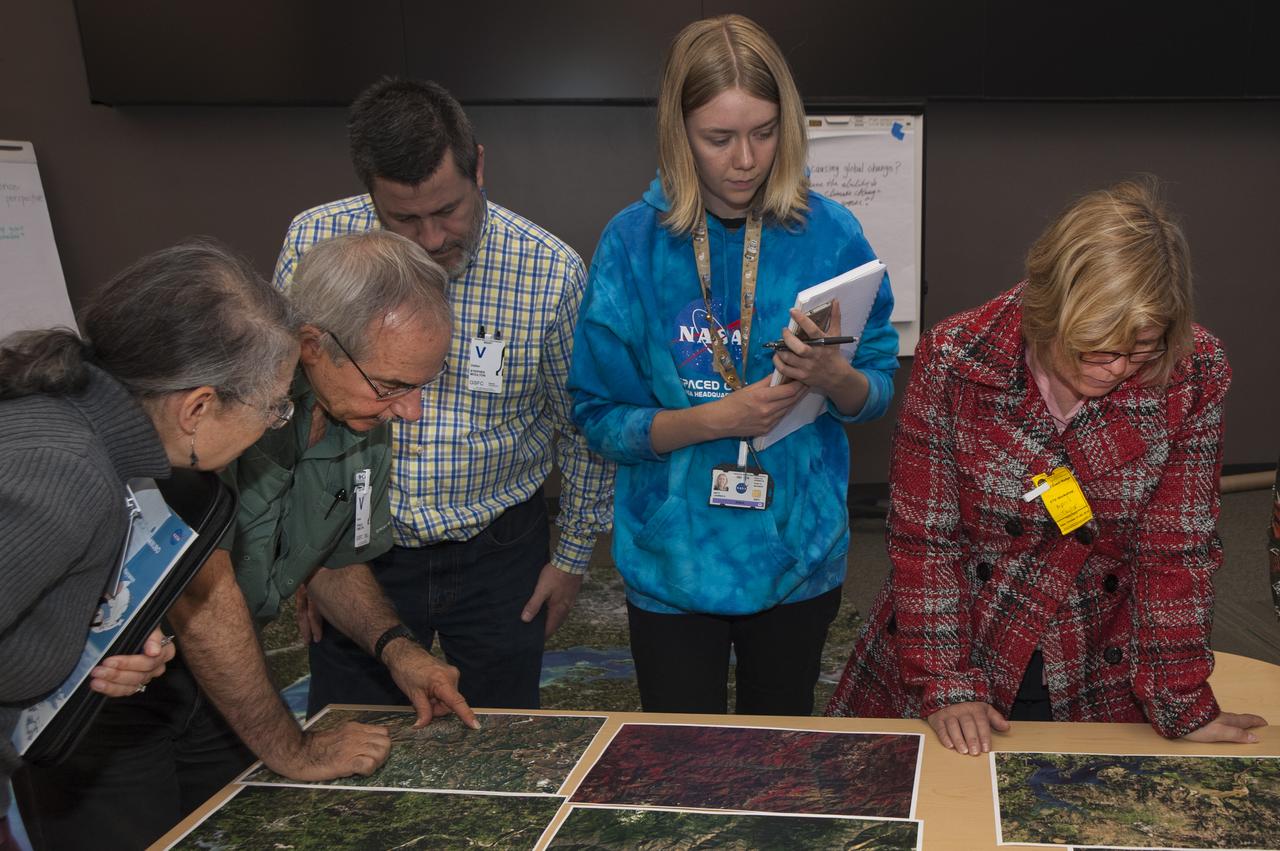
Earth to Sky Academy October 23, 2019 Locations: Building 28 Dr. Piers J. Sellers Data Visualization Theater, first floor atrium and east lawn, Building 21 GIC2 (Library) MOSI Request # 2020-896-0 10/23/2019 is the field trip day of our five-day workshop for the Earth to Sky Academy. Images will be used to show what the experience is like for reporting and marketing purposes. Earth to Sky Academy NASA Goddard Space Flight Center – Greenbelt, MD October 21–25, 2019 A tuition-free course for interpreters, informal educators, and science communicators interested in creating and nurturing regional communities of practice focused on improving climate science communication. About the Earth to Sky Academy Since 2004, the Earth to Sky interagency partnership (ETS) has been sharing NASA science with informal educators through a variety of professional development events, including a series of regional courses in climate science and communication. A hallmark of the ETS training model is purposeful, ongoing engagement with participants to encourage sharing and collaborative learning. In an effort to strengthen and grow the ETS community of practice, ETS leadership is developing a network of ETS regional communities, each led by small teams of trained ETS regional leaders. The Earth to Sky Academy (ETSA) five-day course marks the launch of this long-term effort.
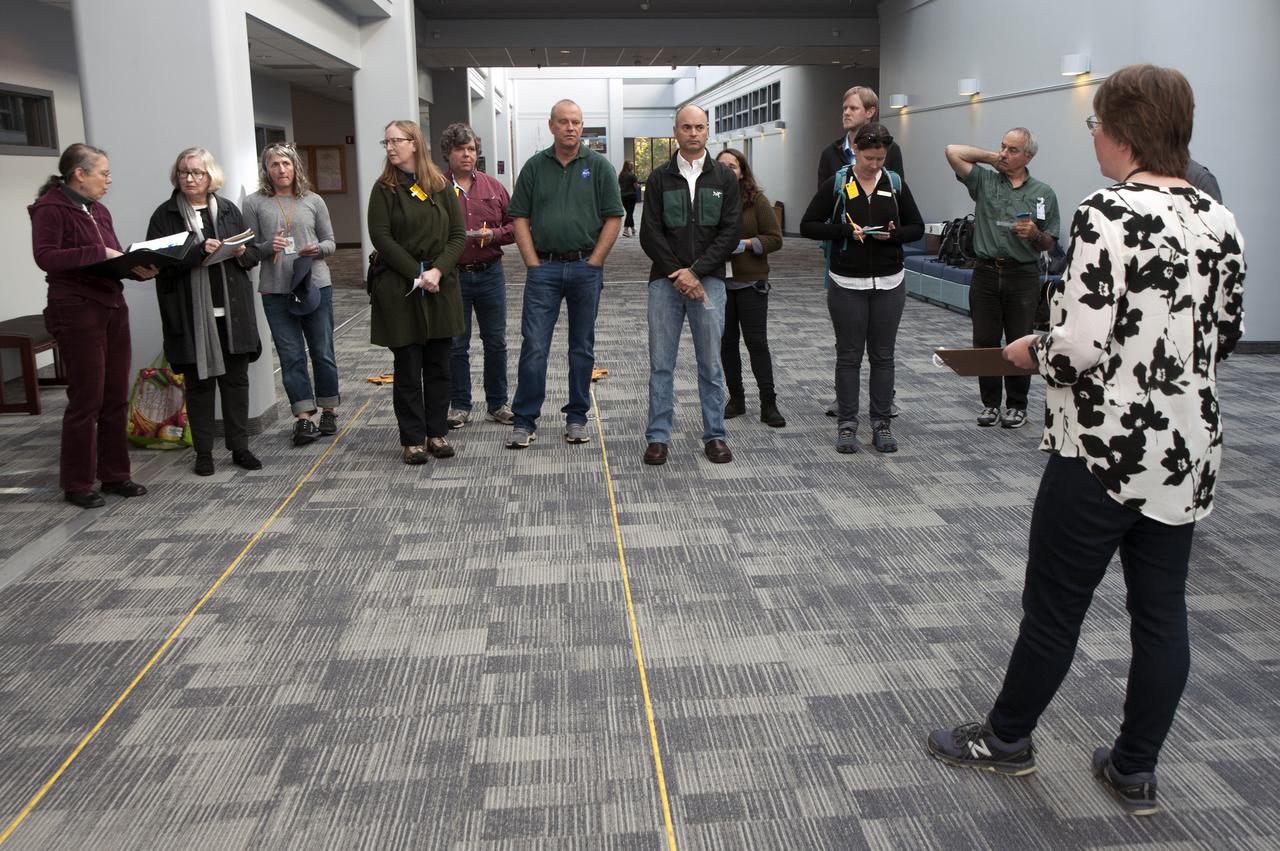
Earth to Sky Academy October 23, 2019 Locations: Building 28 Dr. Piers J. Sellers Data Visualization Theater, first floor atrium and east lawn, Building 21 GIC2 (Library) MOSI Request # 2020-896-0 10/23/2019 is the field trip day of our five-day workshop for the Earth to Sky Academy. Images will be used to show what the experience is like for reporting and marketing purposes. Earth to Sky Academy NASA Goddard Space Flight Center – Greenbelt, MD October 21–25, 2019 A tuition-free course for interpreters, informal educators, and science communicators interested in creating and nurturing regional communities of practice focused on improving climate science communication. About the Earth to Sky Academy Since 2004, the Earth to Sky interagency partnership (ETS) has been sharing NASA science with informal educators through a variety of professional development events, including a series of regional courses in climate science and communication. A hallmark of the ETS training model is purposeful, ongoing engagement with participants to encourage sharing and collaborative learning. In an effort to strengthen and grow the ETS community of practice, ETS leadership is developing a network of ETS regional communities, each led by small teams of trained ETS regional leaders. The Earth to Sky Academy (ETSA) five-day course marks the launch of this long-term effort.
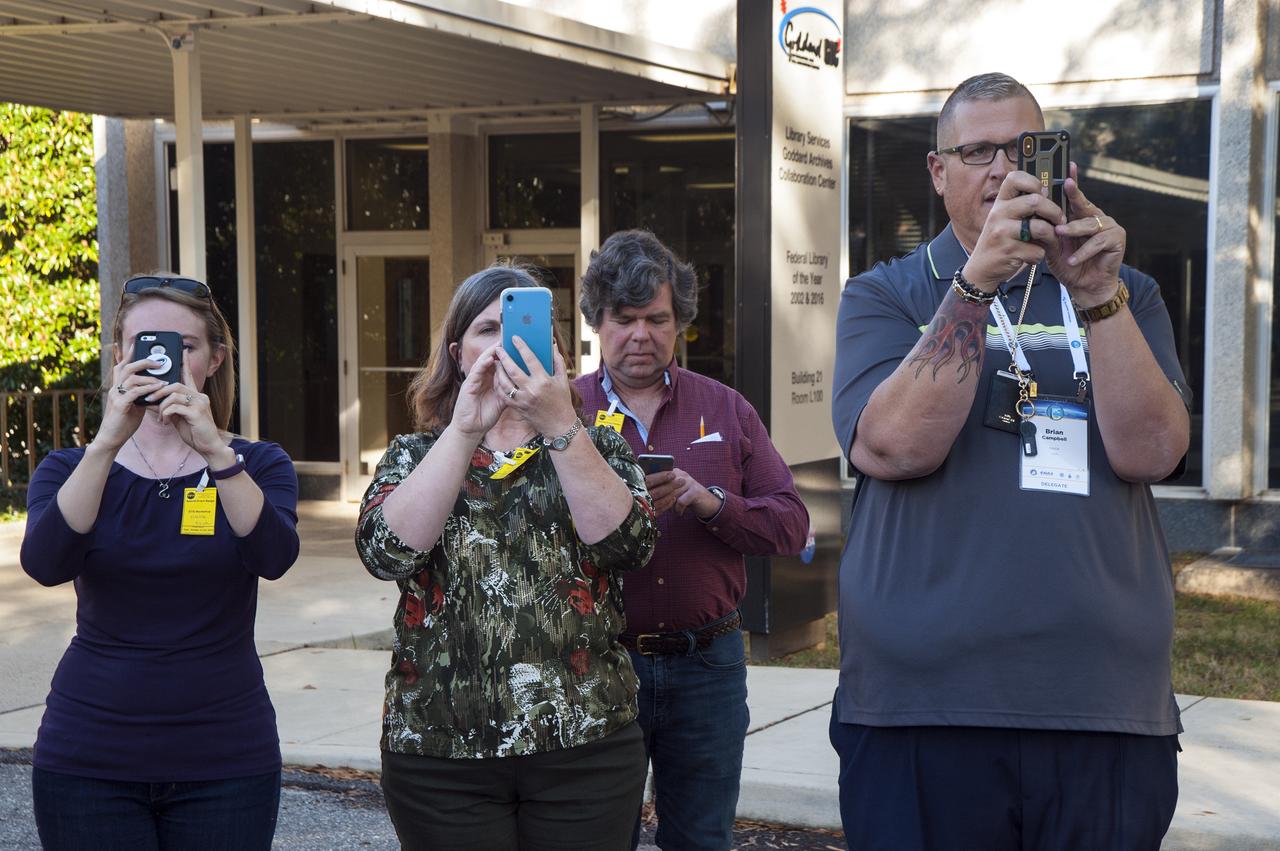
Earth to Sky Academy October 23, 2019 Locations: Building 28 Dr. Piers J. Sellers Data Visualization Theater, first floor atrium and east lawn, Building 21 GIC2 (Library) MOSI Request # 2020-896-0 10/23/2019 is the field trip day of our five-day workshop for the Earth to Sky Academy. Images will be used to show what the experience is like for reporting and marketing purposes. Earth to Sky Academy NASA Goddard Space Flight Center – Greenbelt, MD October 21–25, 2019 A tuition-free course for interpreters, informal educators, and science communicators interested in creating and nurturing regional communities of practice focused on improving climate science communication. About the Earth to Sky Academy Since 2004, the Earth to Sky interagency partnership (ETS) has been sharing NASA science with informal educators through a variety of professional development events, including a series of regional courses in climate science and communication. A hallmark of the ETS training model is purposeful, ongoing engagement with participants to encourage sharing and collaborative learning. In an effort to strengthen and grow the ETS community of practice, ETS leadership is developing a network of ETS regional communities, each led by small teams of trained ETS regional leaders. The Earth to Sky Academy (ETSA) five-day course marks the launch of this long-term effort.
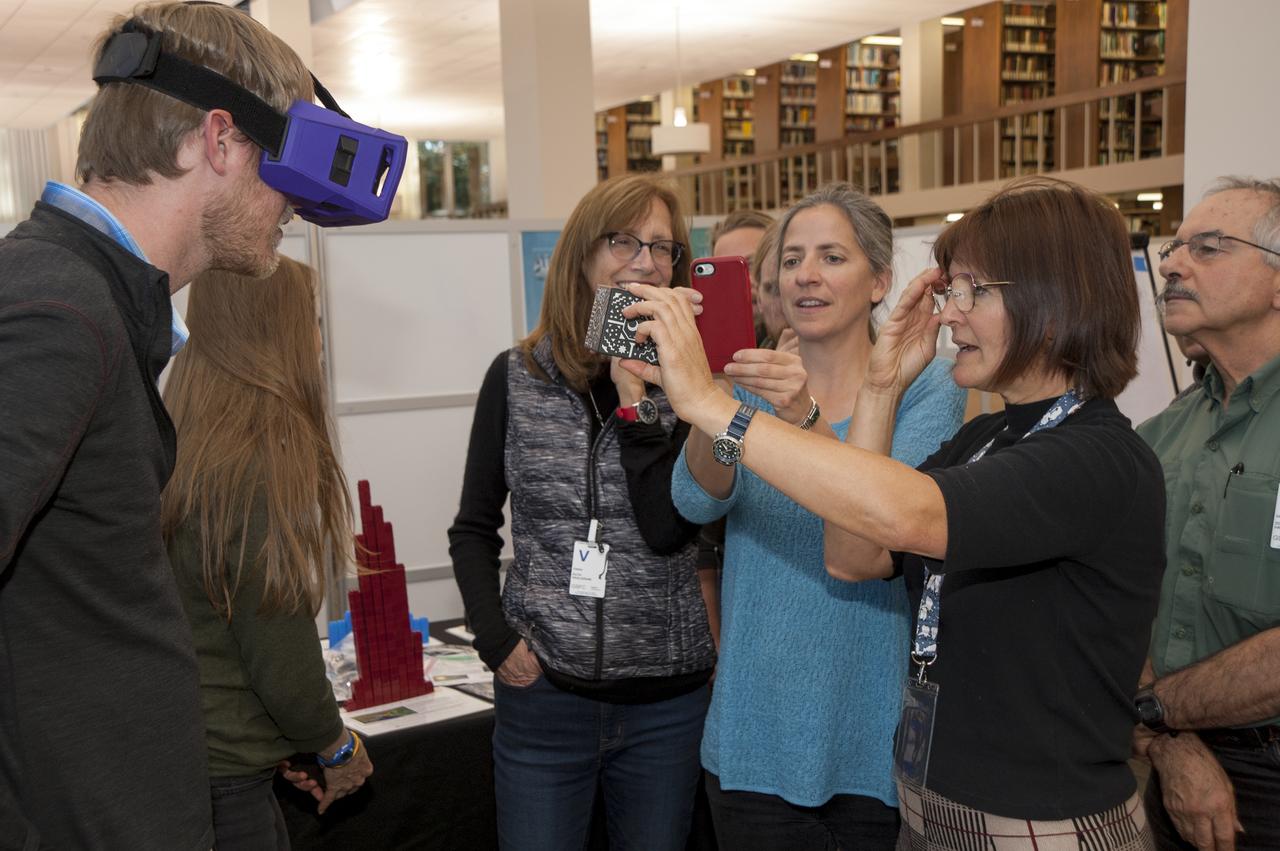
Earth to Sky Academy October 23, 2019 Locations: Building 28 Dr. Piers J. Sellers Data Visualization Theater, first floor atrium and east lawn, Building 21 GIC2 (Library) MOSI Request # 2020-896-0 10/23/2019 is the field trip day of our five-day workshop for the Earth to Sky Academy. Images will be used to show what the experience is like for reporting and marketing purposes. Earth to Sky Academy NASA Goddard Space Flight Center – Greenbelt, MD October 21–25, 2019 A tuition-free course for interpreters, informal educators, and science communicators interested in creating and nurturing regional communities of practice focused on improving climate science communication. About the Earth to Sky Academy Since 2004, the Earth to Sky interagency partnership (ETS) has been sharing NASA science with informal educators through a variety of professional development events, including a series of regional courses in climate science and communication. A hallmark of the ETS training model is purposeful, ongoing engagement with participants to encourage sharing and collaborative learning. In an effort to strengthen and grow the ETS community of practice, ETS leadership is developing a network of ETS regional communities, each led by small teams of trained ETS regional leaders. The Earth to Sky Academy (ETSA) five-day course marks the launch of this long-term effort.
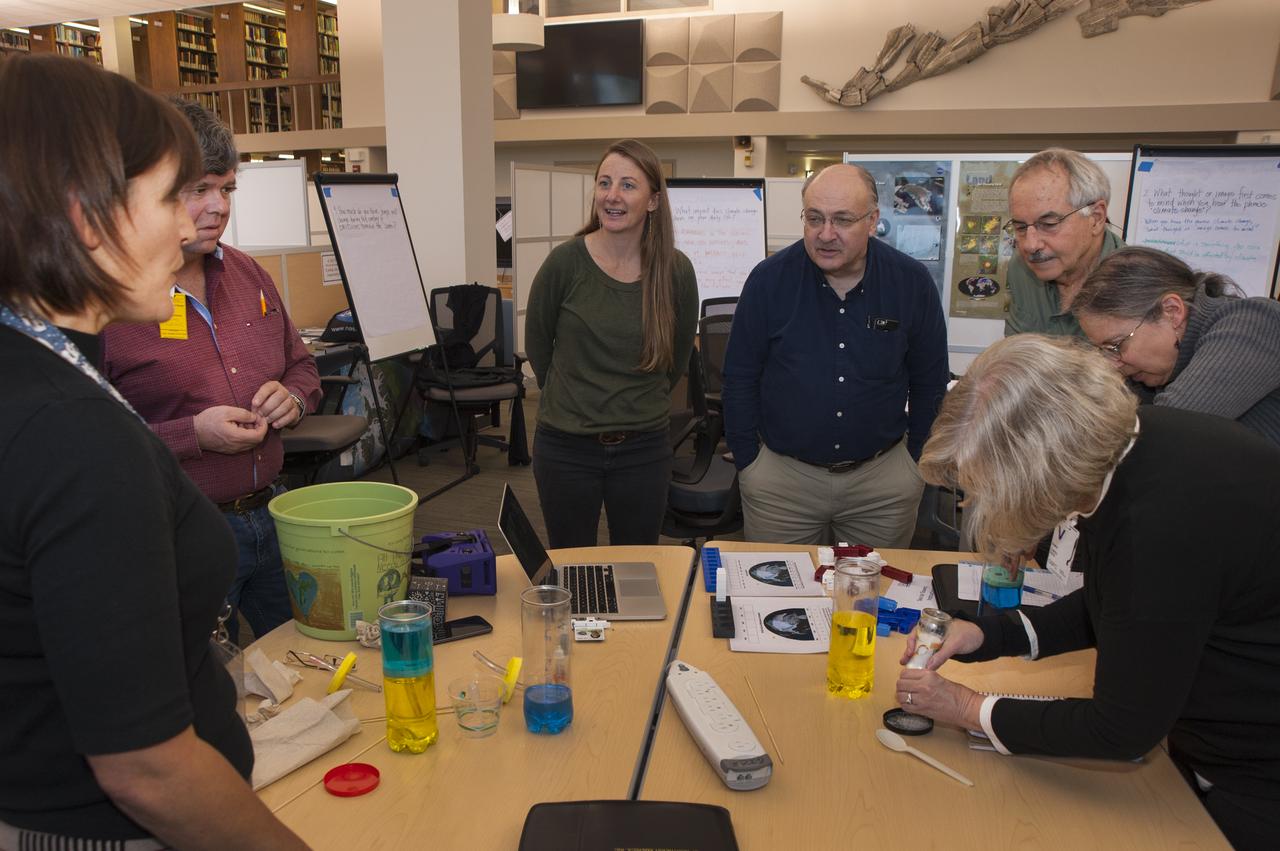
Earth to Sky Academy October 23, 2019 Locations: Building 28 Dr. Piers J. Sellers Data Visualization Theater, first floor atrium and east lawn, Building 21 GIC2 (Library) MOSI Request # 2020-896-0 10/23/2019 is the field trip day of our five-day workshop for the Earth to Sky Academy. Images will be used to show what the experience is like for reporting and marketing purposes. Earth to Sky Academy NASA Goddard Space Flight Center – Greenbelt, MD October 21–25, 2019 A tuition-free course for interpreters, informal educators, and science communicators interested in creating and nurturing regional communities of practice focused on improving climate science communication. About the Earth to Sky Academy Since 2004, the Earth to Sky interagency partnership (ETS) has been sharing NASA science with informal educators through a variety of professional development events, including a series of regional courses in climate science and communication. A hallmark of the ETS training model is purposeful, ongoing engagement with participants to encourage sharing and collaborative learning. In an effort to strengthen and grow the ETS community of practice, ETS leadership is developing a network of ETS regional communities, each led by small teams of trained ETS regional leaders. The Earth to Sky Academy (ETSA) five-day course marks the launch of this long-term effort.
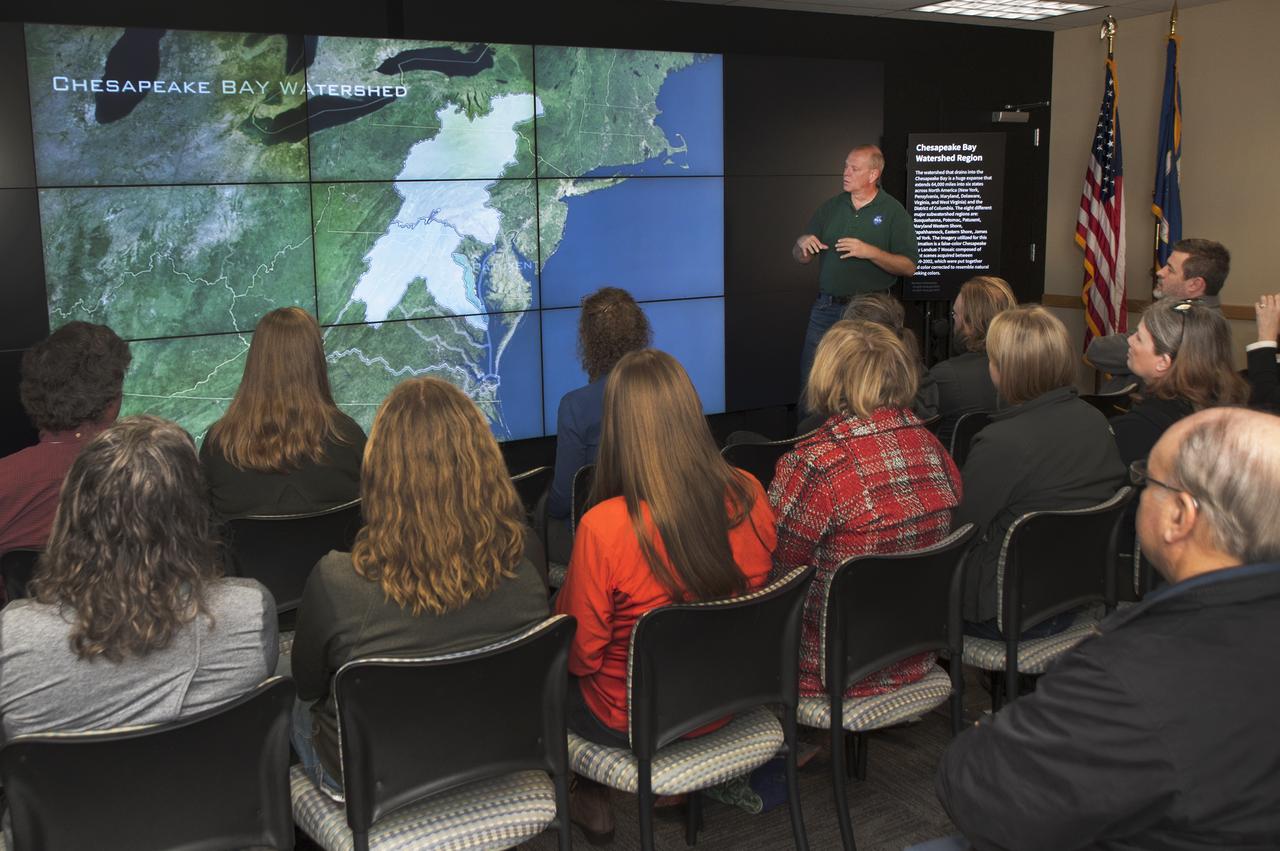
Earth to Sky Academy October 23, 2019 Locations: Building 28 Dr. Piers J. Sellers Data Visualization Theater, first floor atrium and east lawn, Building 21 GIC2 (Library) MOSI Request # 2020-896-0 10/23/2019 is the field trip day of our five-day workshop for the Earth to Sky Academy. Images will be used to show what the experience is like for reporting and marketing purposes. Earth to Sky Academy NASA Goddard Space Flight Center – Greenbelt, MD October 21–25, 2019 A tuition-free course for interpreters, informal educators, and science communicators interested in creating and nurturing regional communities of practice focused on improving climate science communication. About the Earth to Sky Academy Since 2004, the Earth to Sky interagency partnership (ETS) has been sharing NASA science with informal educators through a variety of professional development events, including a series of regional courses in climate science and communication. A hallmark of the ETS training model is purposeful, ongoing engagement with participants to encourage sharing and collaborative learning. In an effort to strengthen and grow the ETS community of practice, ETS leadership is developing a network of ETS regional communities, each led by small teams of trained ETS regional leaders. The Earth to Sky Academy (ETSA) five-day course marks the launch of this long-term effort.