A Diamond in the Rough
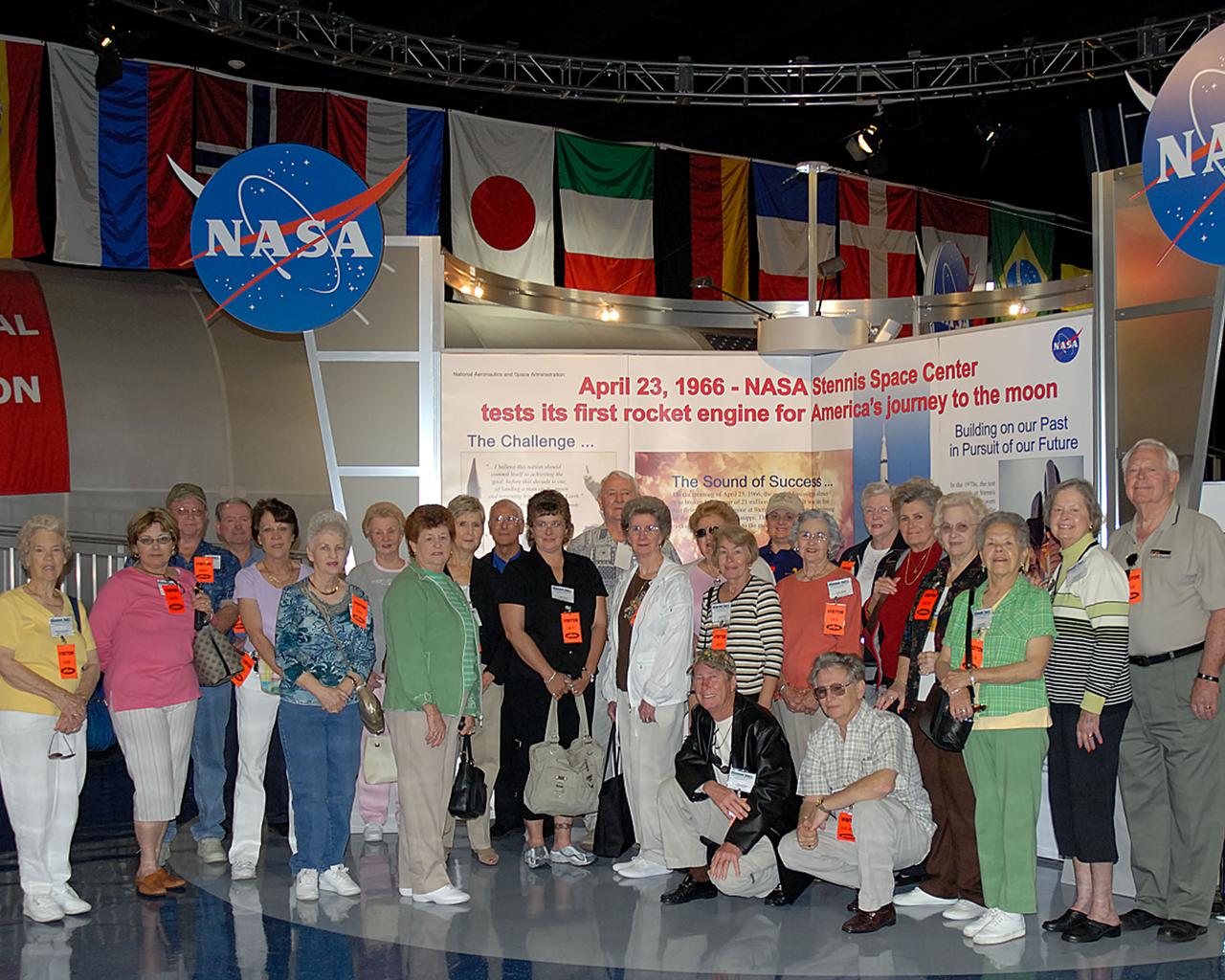
On April 24, a group traveling with Diamond Tours visited StenniSphere, the visitor center at NASA John C. Stennis Space Center in South Mississippi. The trip marked Diamond Tours' return to StenniSphere since Hurricane Katrina struck the Gulf Coast on Aug. 29, 2005. About 25 business professionals from Georgia enjoyed the day's tour of America's largest rocket engine test complex, along with the many displays and exhibits at the museum. Before Hurricane Katrina, the nationwide company brought more than 1,000 visitors to StenniSphere each month. That contributed to more than 100,000 visitors from around the world touring the space center each year. In past years StenniSphere's visitor relations specialists booked Diamond Tours two or three times a week, averaging 40 to 50 people per visit. SSC was established in the 1960s to test the huge engines for the Saturn V moon rockets. Now 40 years later, the center tests every main engine for the space shuttle. SSC will soon begin testing the rocket engines that will power spacecraft carrying Americans back to the moon and on to Mars. For more information or to book a tour, visit http://www.nasa.gov/centers/stennis/home/index.html and click on the StenniSphere logo; or call 800-237-1821 or 228-688-2370.
Diamond Jenness: A Tough Grind
Diamond Jenness: Before the Grind
Diamond Jenness: After the Grind
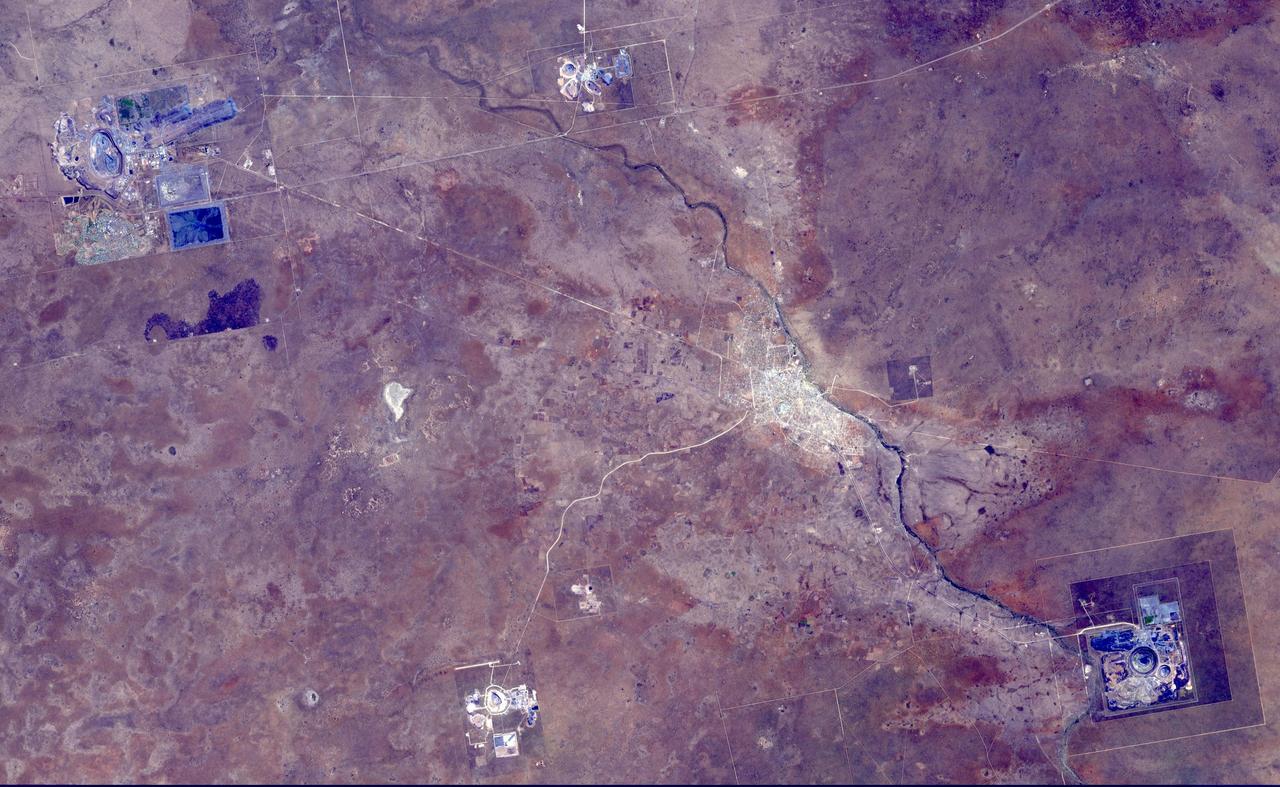
This image from NASA Terra spacecraft shows the Orapa diamond mine, the world largest diamond mine by area. The mine is located in Botswana. It is the oldest of four mines operated by the same company, having begun operations in 1971. Orapa is an open pit style of mine, located on two kimberlite pipes. Currently, the Orapa mine annually produces approximately 11 million carats (2200 kg) of diamonds. The Letlhakane diamond mine is also an open pit construction. In 2003, the Letlhakane mine produced 1.06 million carats of diamonds. The Damtshaa diamond mine is the newest of four mines, located on top of four distinct kimberlite pipes of varying ore grade. The mine is forecast to produce about 5 million carats of diamond over the projected 31 year life of the mine. The image was acquired October 5, 2014, covers an area of 28 by 45 km, and is located at 21.3 degrees south, 25.4 degrees east. http://photojournal.jpl.nasa.gov/catalog/PIA20104
Kertész Shines Bright Like a Diamond

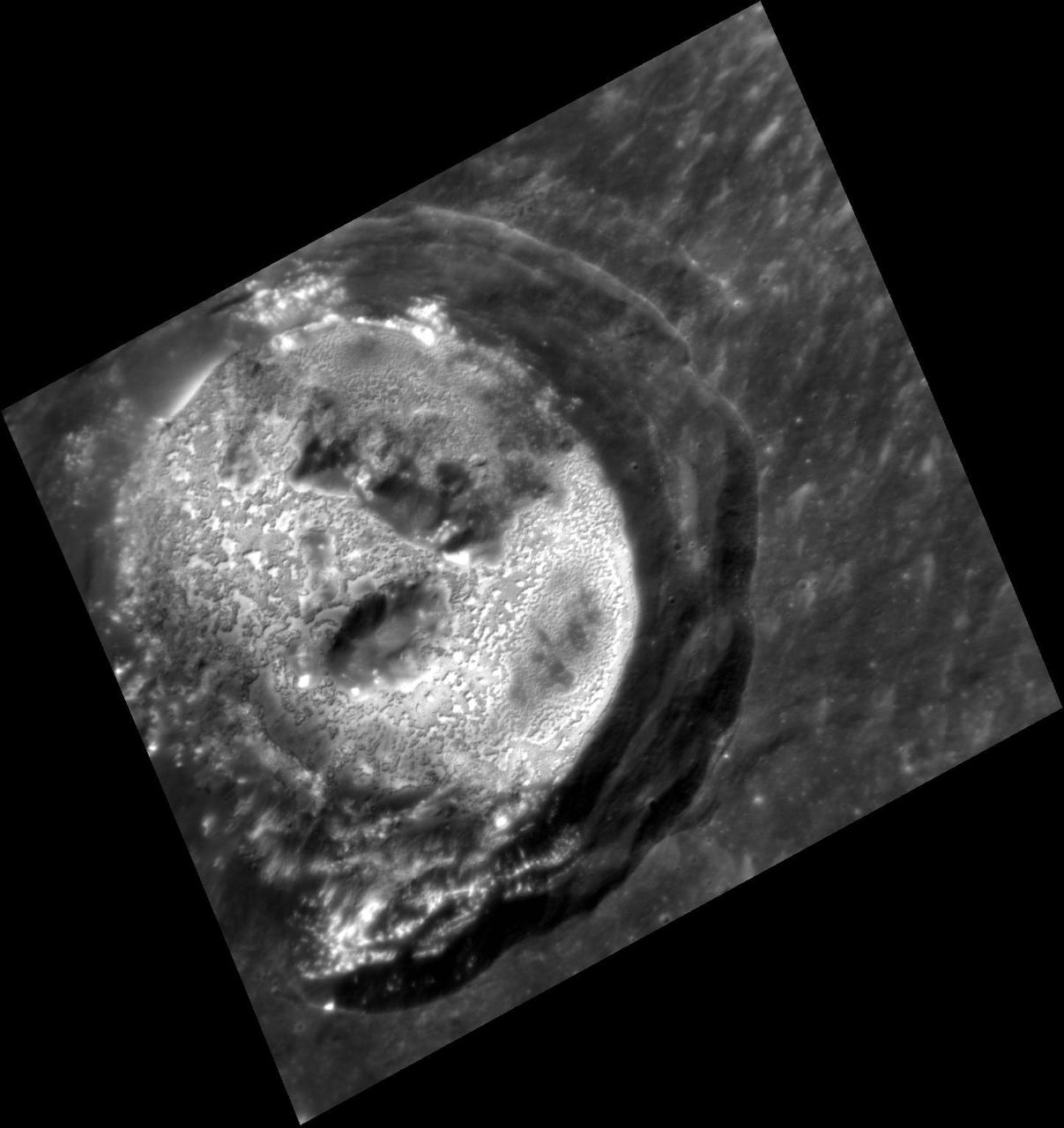
The Mir mine in Siberia is an open pit diamond mine, more than 525 m deep and 1200 m in diameter, making it one of the largest in the world. The diamond-bearing kimberlite pipe was discovered in 1955. With both pit mining and later underground mining, the Mir has produced over 200 million carats of diamonds, the largest weighing 342 carats. The image was acquired July 16, 2019, covers an area of 17 by 17.7 km, and is located at 62.5 degrees north, 114 degrees east. https://photojournal.jpl.nasa.gov/catalog/PIA25856
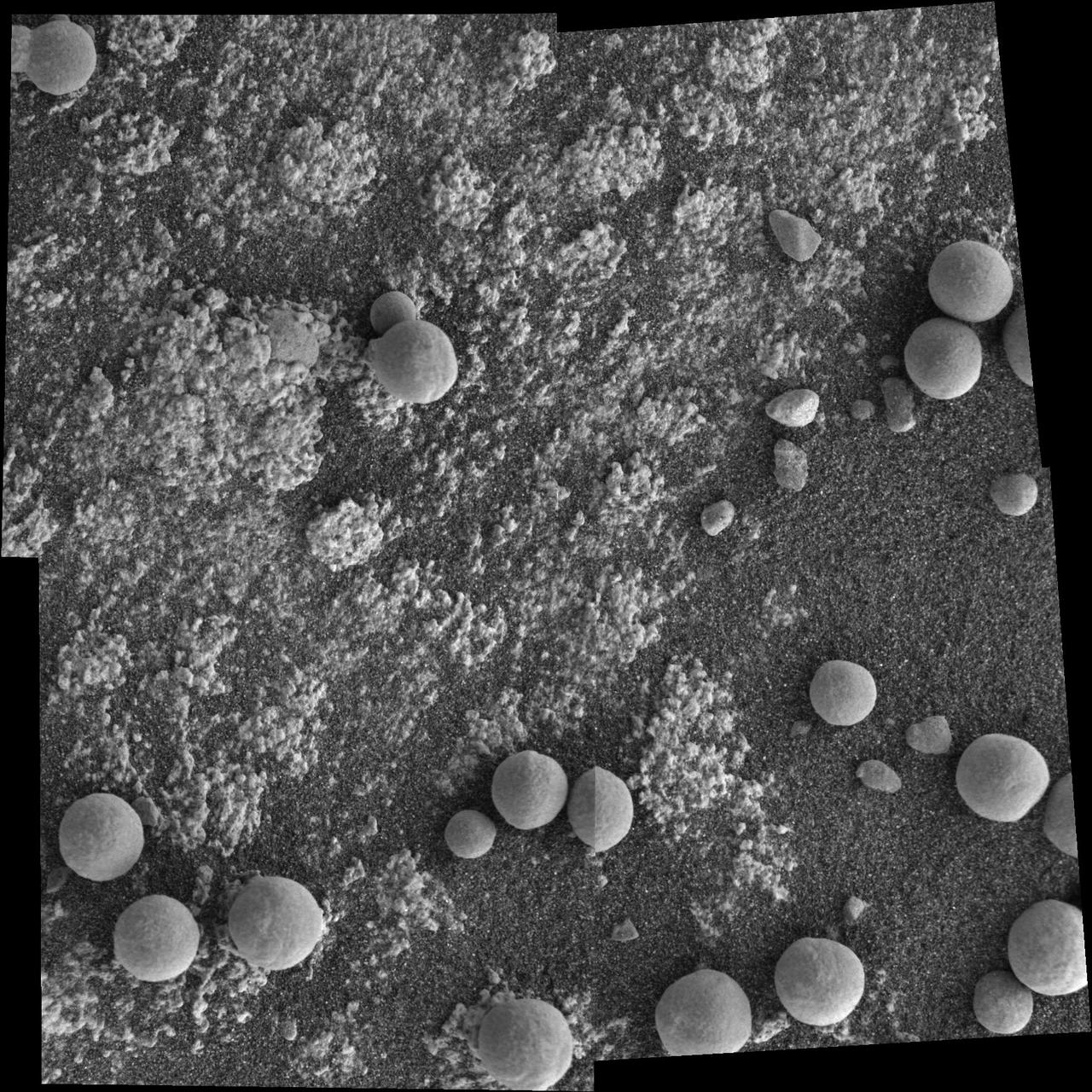
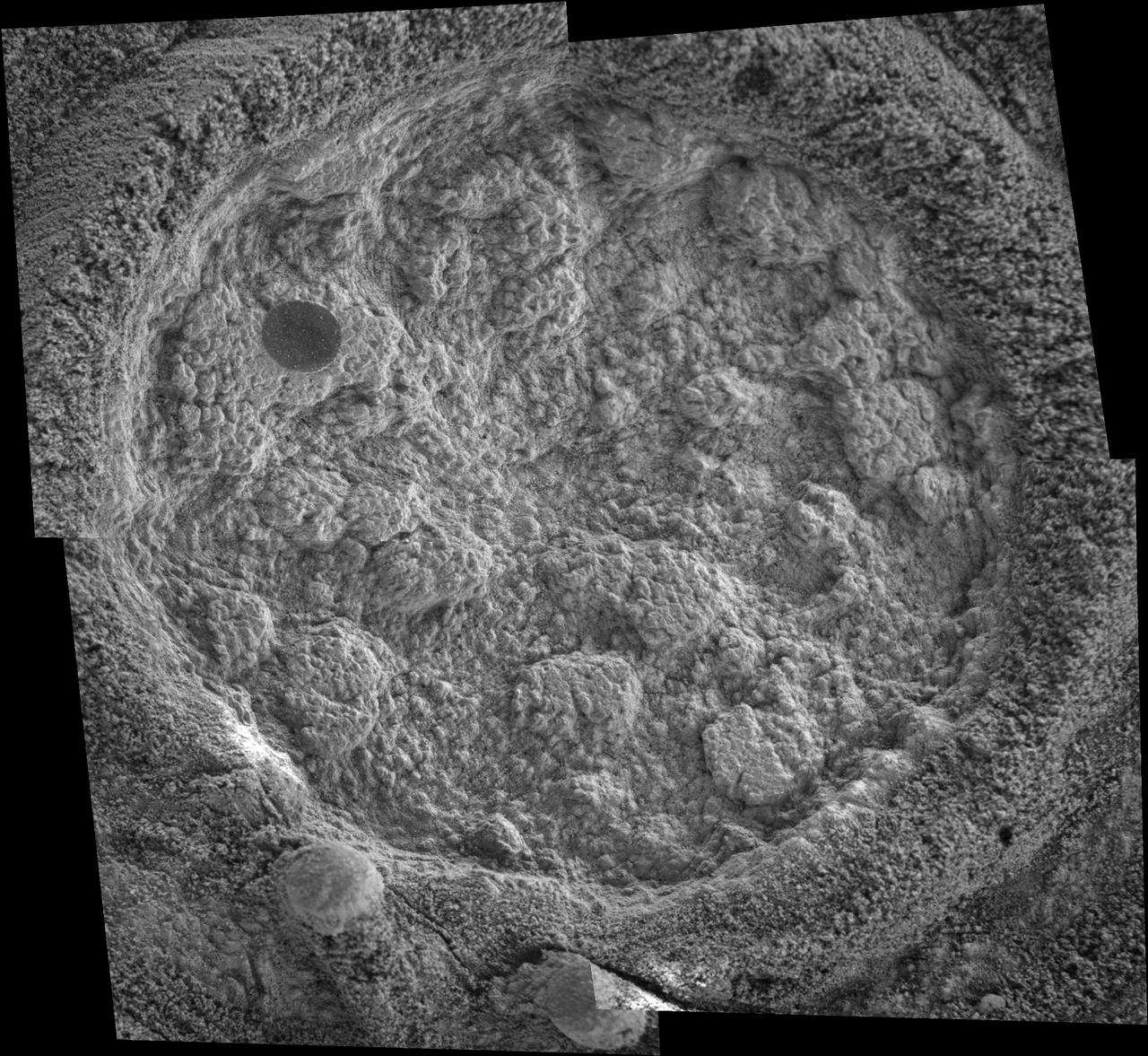
This microscopic imager mosaic of the rock called "Diamond Jenness" was snapped on sol 177 before NASA's Mars Exploration Rover Opportunity ground into the surface with its rock abrasion tool, or "Rat." Opportunity has bored nearly a dozen holes into the inner walls of "Endurance Crater." On sols 177 and 178 (July 23 and July 24, 2004), the rover worked double-duty on Diamond Jenness. Surface debris and the bumpy shape of the rock resulted in a shallow and irregular hole, only about 2 millimeters (0.08 inch) deep. The final depth was not enough to remove all the bumps and leave a neat hole with a smooth floor. This extremely shallow depression was then examined by the rover's alpha particle X-ray spectrometer. On Sol 178, Opportunity's "robotic rodent" dined on Diamond Jenness once again, grinding almost an additional 5 millimeters (about 0.2 inch). The rover then applied its Moessbauer spectrometer to the deepened hole. This double dose of Diamond Jenness enabled the science team to examine the rock at varying layers. Results from those grindings are currently being analyzed. The image mosaic is about 6 centimeters (2.4 inches) across. http://photojournal.jpl.nasa.gov/catalog/PIA06748
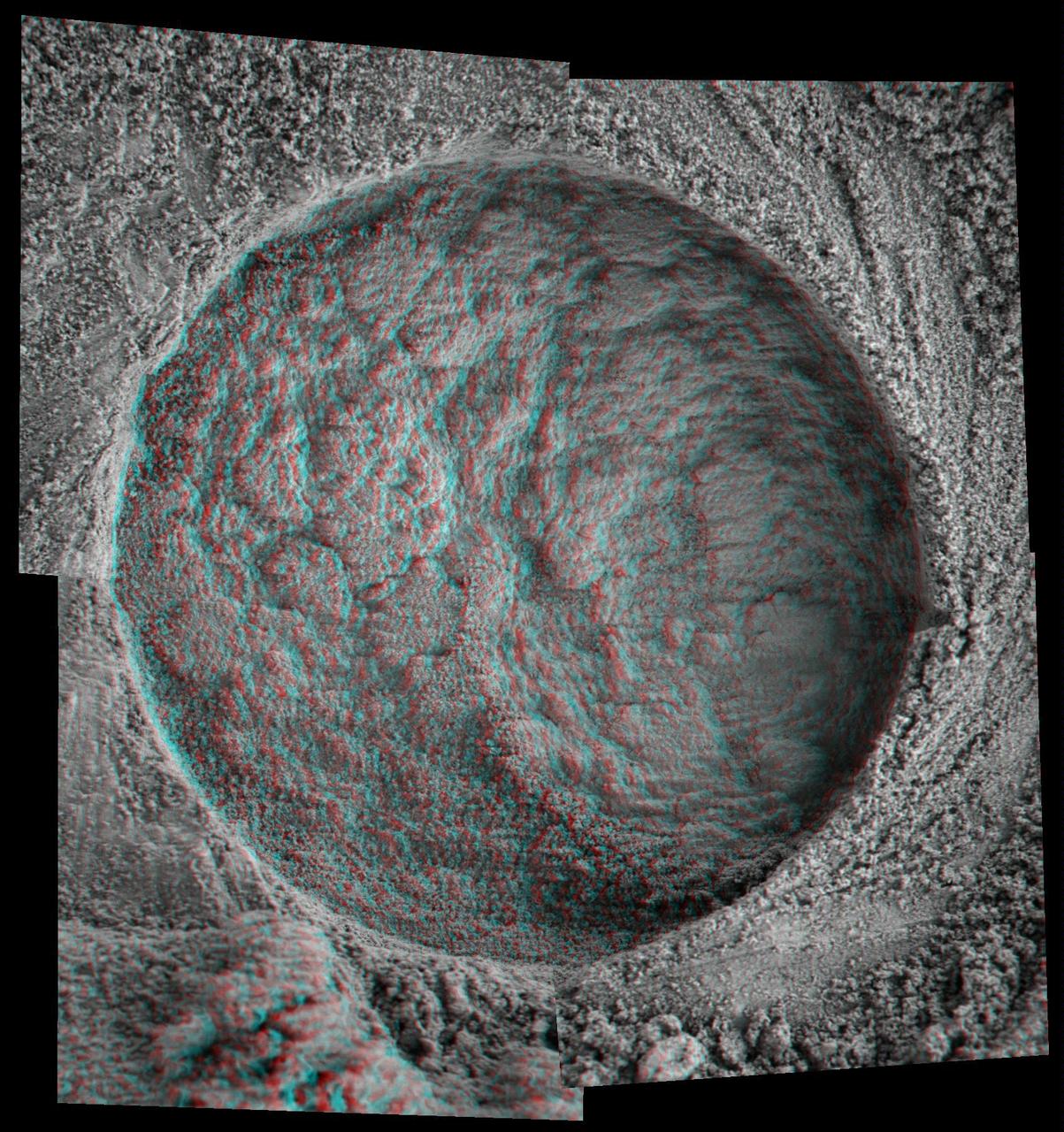
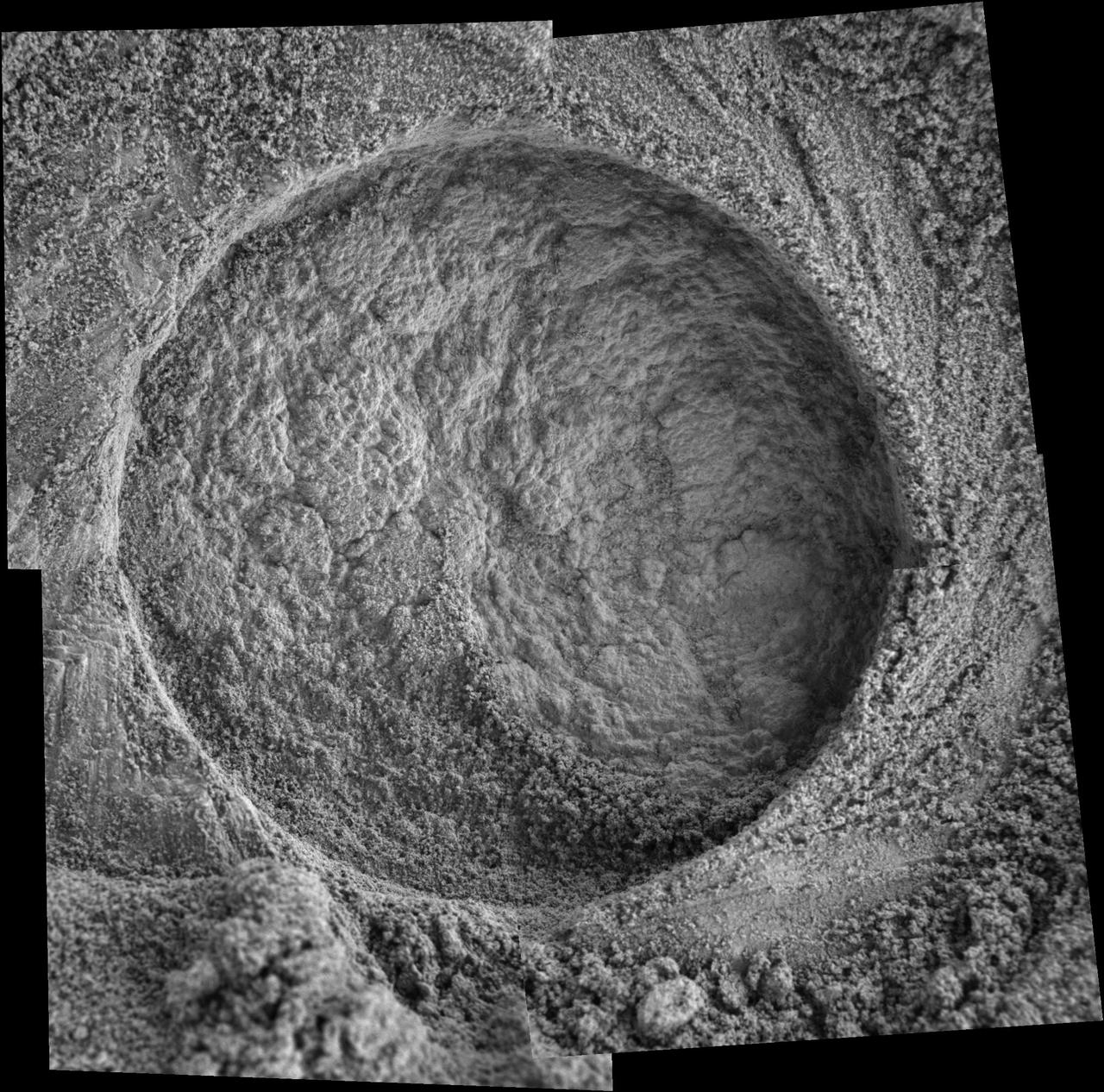
This 3-D, microscopic imager mosaic of a target area on a rock called Diamond Jenness was taken after NASA Mars Exploration Rover Opportunity ground into the surface with its rock abrasion tool for a second time. 3D glasses are necessary.
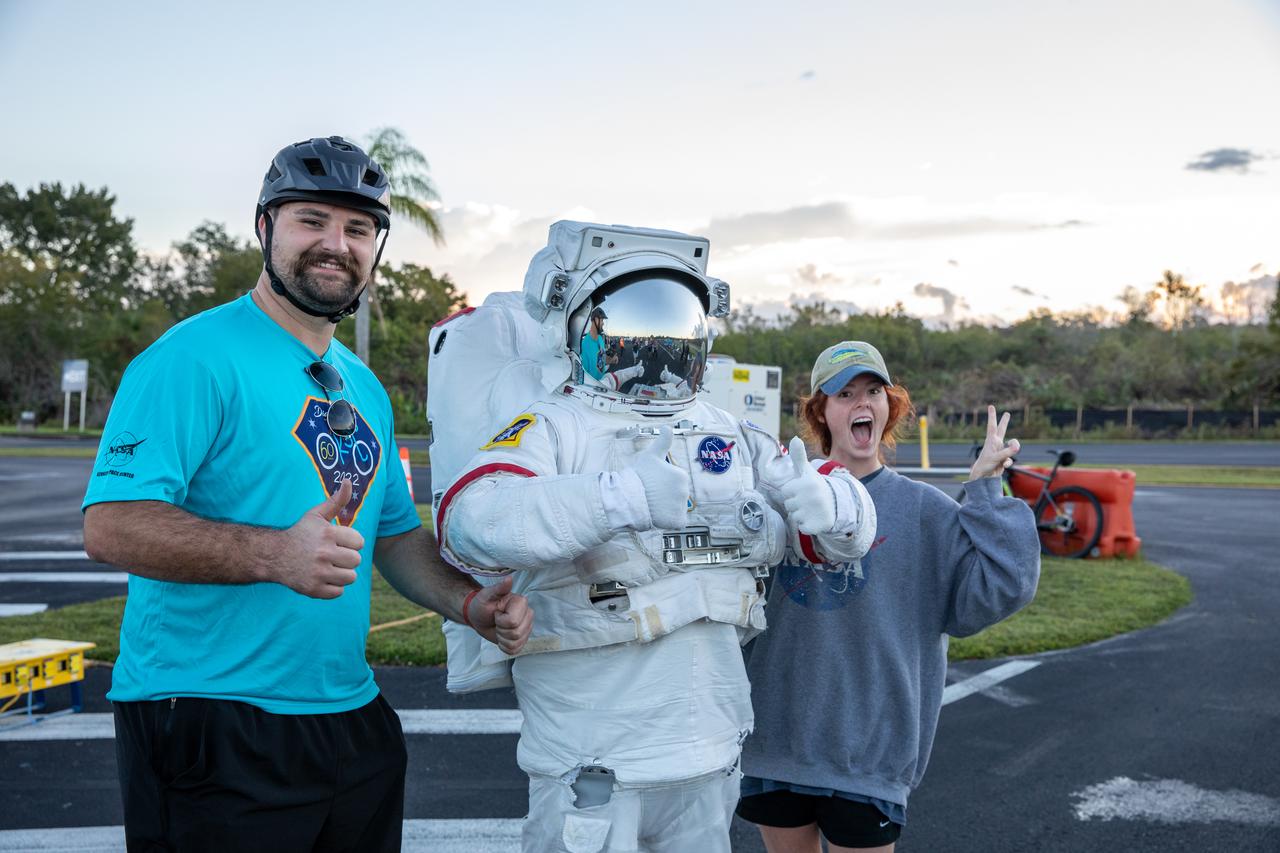
Participants in the Diamond Tour de KSC pause for a photo with the Spaceperson at NASA’s Kennedy Space Center Visitor Complex before beginning their bicycle routes at Kennedy Space Center in Florida on Oct. 22, 2022. This unique event, held for the first time since 2019, was part of the Safety organization’s Fall Into Safety and Health event, and named “diamond” to honor the center’s 60th anniversary. Cyclists covered three different routes and rode by historic landmarks, completing a total of about 37 miles.

Kennedy Space Center employees and their guests participate in the Diamond Tour de KSC at NASA’s Kennedy Space Center in Florida on Oct. 22, 2022. This unique event, held for the first time since 2019, was part of the Safety organization’s Fall Into Safety and Health event, and named “diamond” to honor the center’s 60th anniversary. Cyclists covered three different routes and rode by historic landmarks, completing a total of about 37 miles.
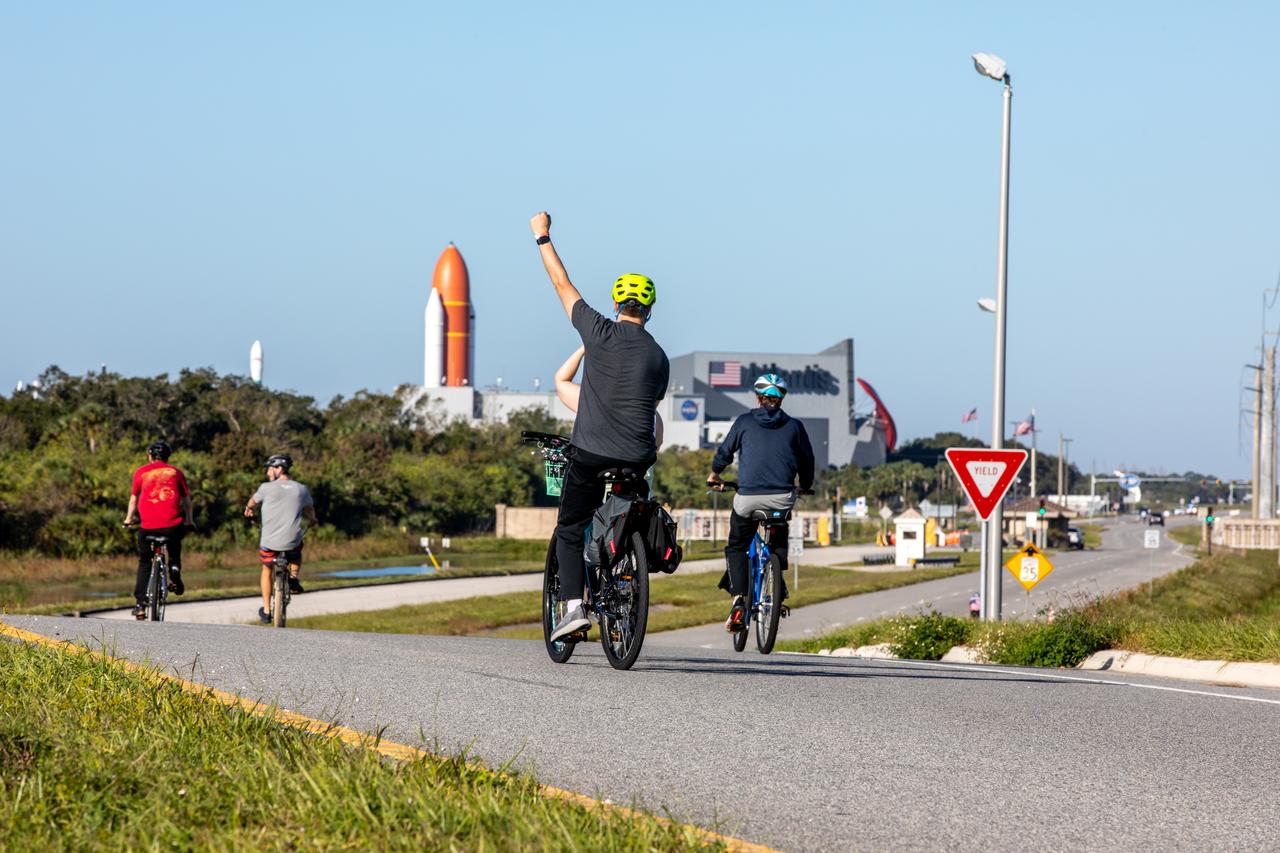
Kennedy Space Center employees and their guests return to the Kennedy Space Center Visitor Complex after completing the Diamond Tour de KSC at the NASA spaceport in Florida on Oct. 22, 2022. This unique event, held for the first time since 2019, was part of the Safety organization’s Fall Into Safety and Health event, and named “diamond” to honor the center’s 60th anniversary. Cyclists covered three different routes and rode by historic landmarks, completing a total of about 37 miles.

Participants in the Diamond Tour de KSC pause for a selfie at NASA’s Kennedy Space Center Visitor Complex before beginning their bicycle routes at Kennedy Space Center in Florida on Oct. 22, 2022. This unique event, held for the first time since 2019, was part of the Safety organization’s Fall Into Safety and Health event, and named “diamond” to honor the center’s 60th anniversary. Cyclists covered three different routes and rode by historic landmarks, completing a total of about 37 miles.

Two cyclists participate in the Diamond Tour de KSC at NASA’s Kennedy Space Center in Florida on Oct. 22, 2022. In the background is the iconic Vehicle Assembly Building. This unique event, held for the first time since 2019, was part of the Safety organization’s Fall Into Safety and Health event, and named “diamond” to honor the center’s 60th anniversary. Cyclists covered three different routes and rode by historic landmarks, completing a total of about 37 miles.
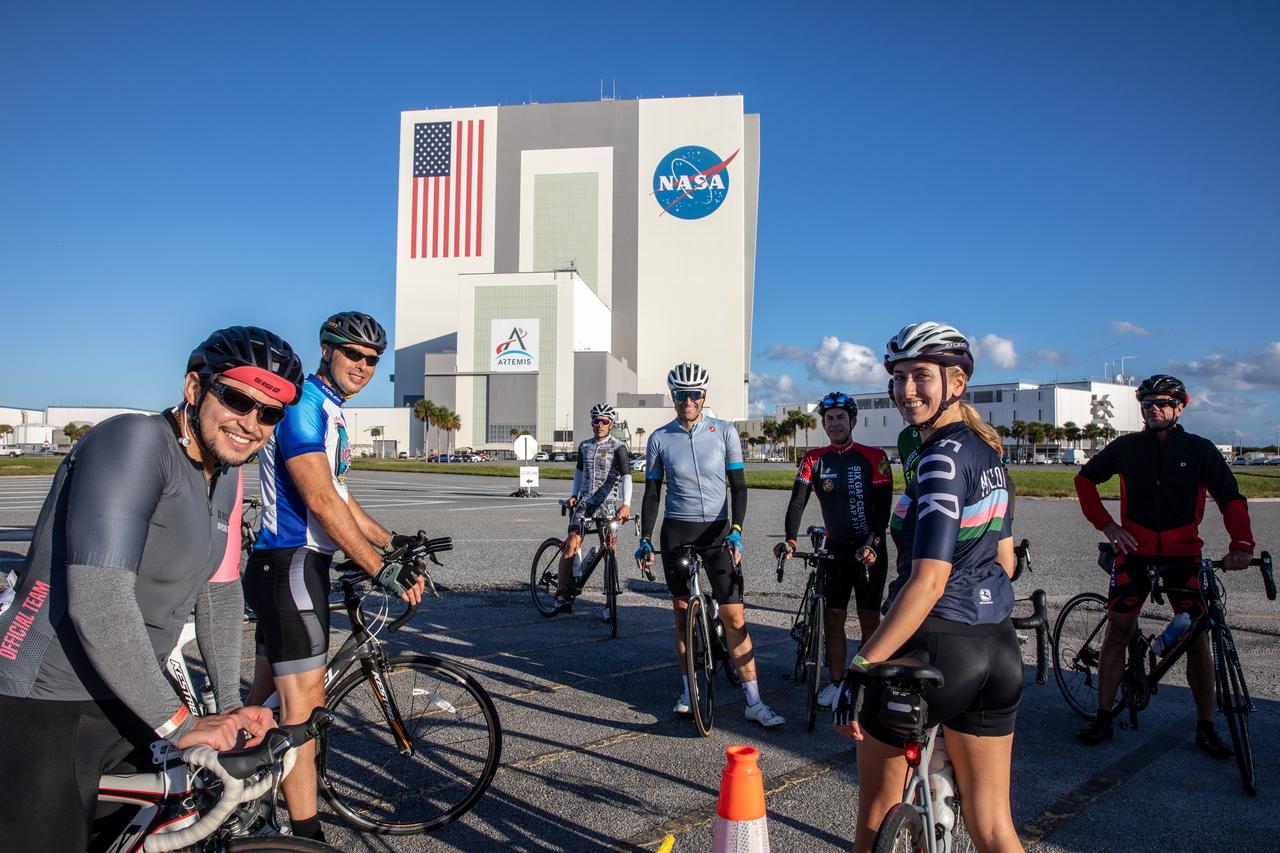
Kennedy Space Center employees and their guests participate in the Diamond Tour de KSC at NASA’s Kennedy Space Center in Florida on Oct. 22, 2022. This unique event, held for the first time since 2019, was part of the Safety organization’s Fall Into Safety and Health event, and named “diamond” to honor the center’s 60th anniversary. Cyclists covered three different routes and rode by historic landmarks, completing a total of about 37 miles.
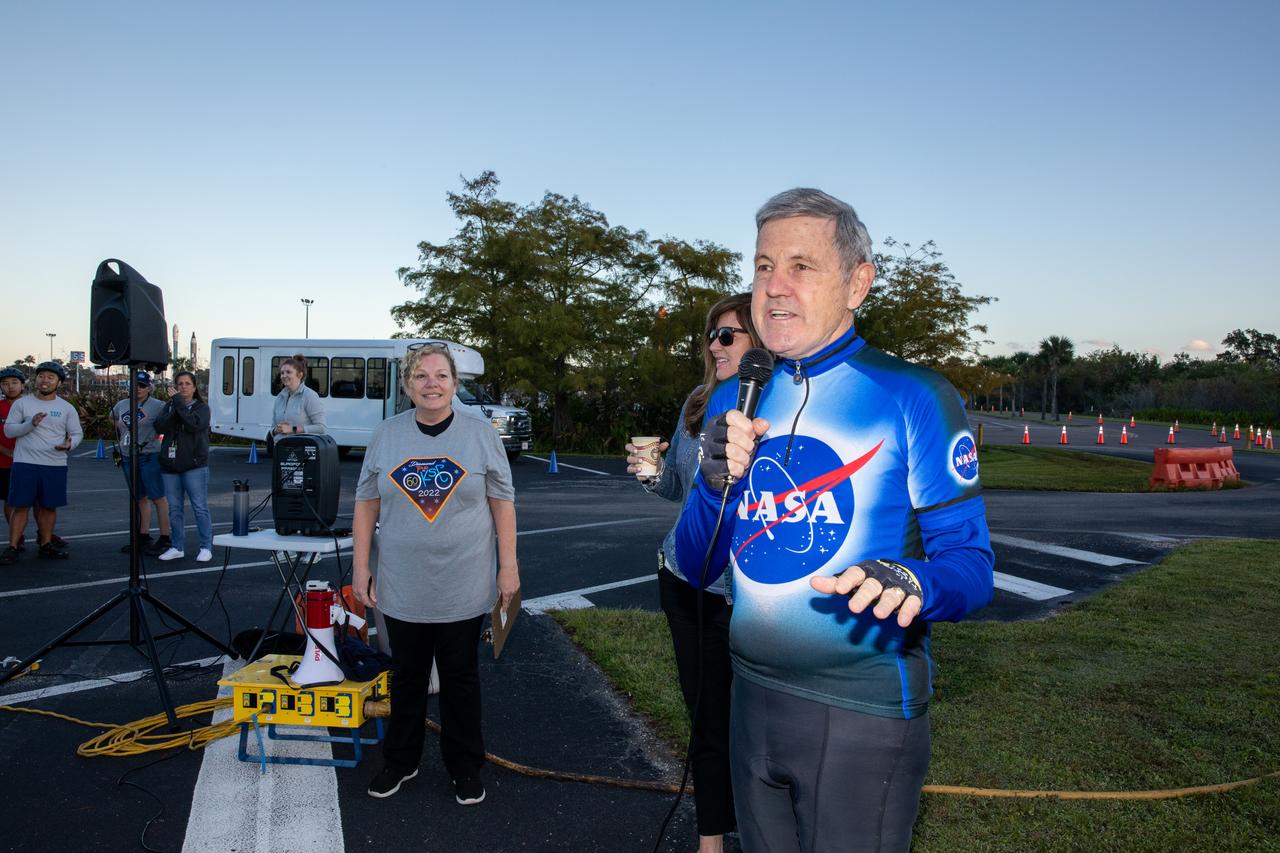
NASA Associate Administrator and retired astronaut Bob Cabana speaks to participants in the Diamond Tour de KSC at Kennedy Space Center Visitor Complex before beginning their bicycle routes at Kennedy Space Center in Florida on Oct. 22, 2022. This unique event, held for the first time since 2019, was part of the Safety organization’s Fall Into Safety and Health event, and named “diamond” to honor the center’s 60th anniversary. Cyclists covered three different routes and rode by historic landmarks, completing a total of about 37 miles.

Resembling an opulent diamond tapestry, this image from NASA Hubble Space Telescope shows a glittering star cluster that contains a collection of some of the brightest stars seen in our Milky Way galaxy called Trumpler 14.
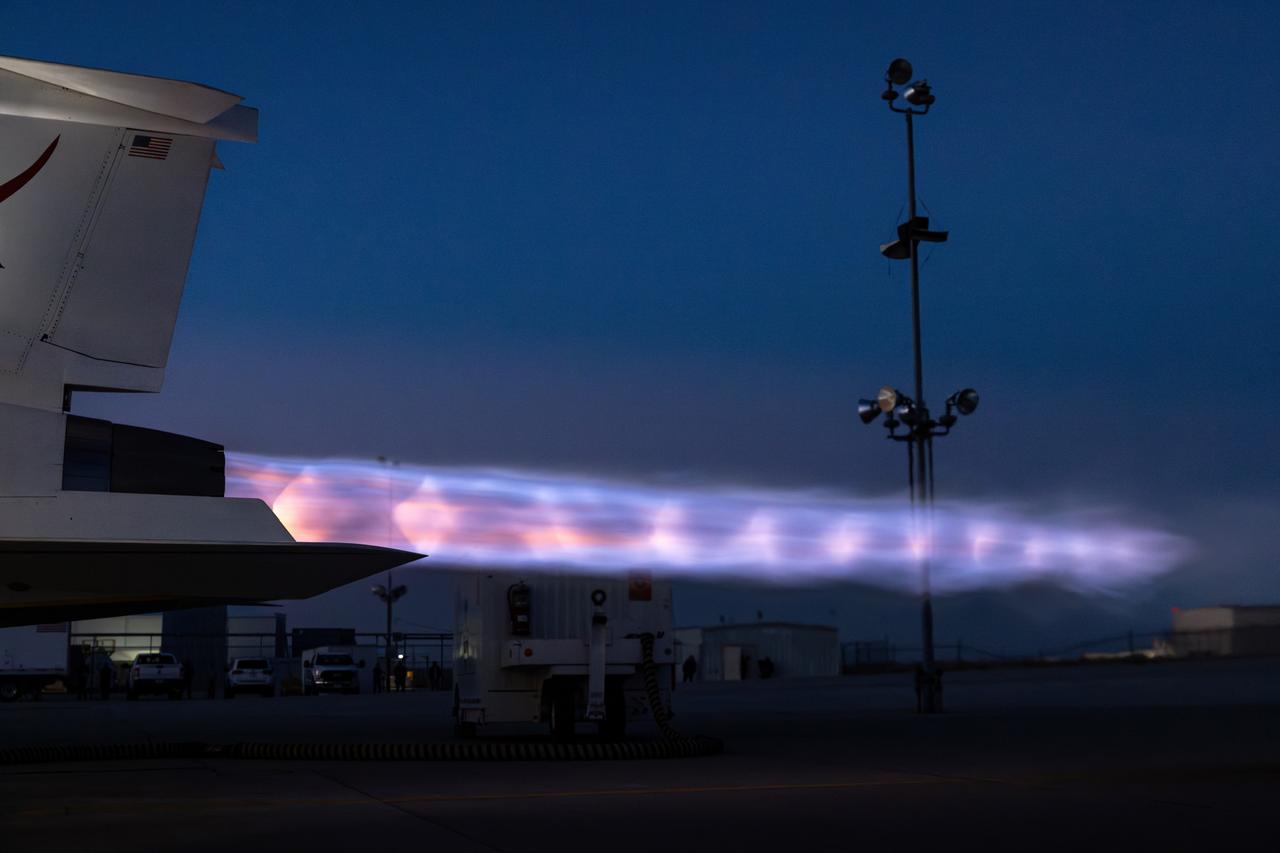
NASA’s X-59 lights up the night sky with its unique Mach diamonds, also known as shock diamonds, during maximum afterburner testing at Lockheed Martin Skunk Works in Palmdale, California. The test demonstrates the engine’s ability to generate the thrust required for supersonic flight, advancing NASA’s Quesst mission.
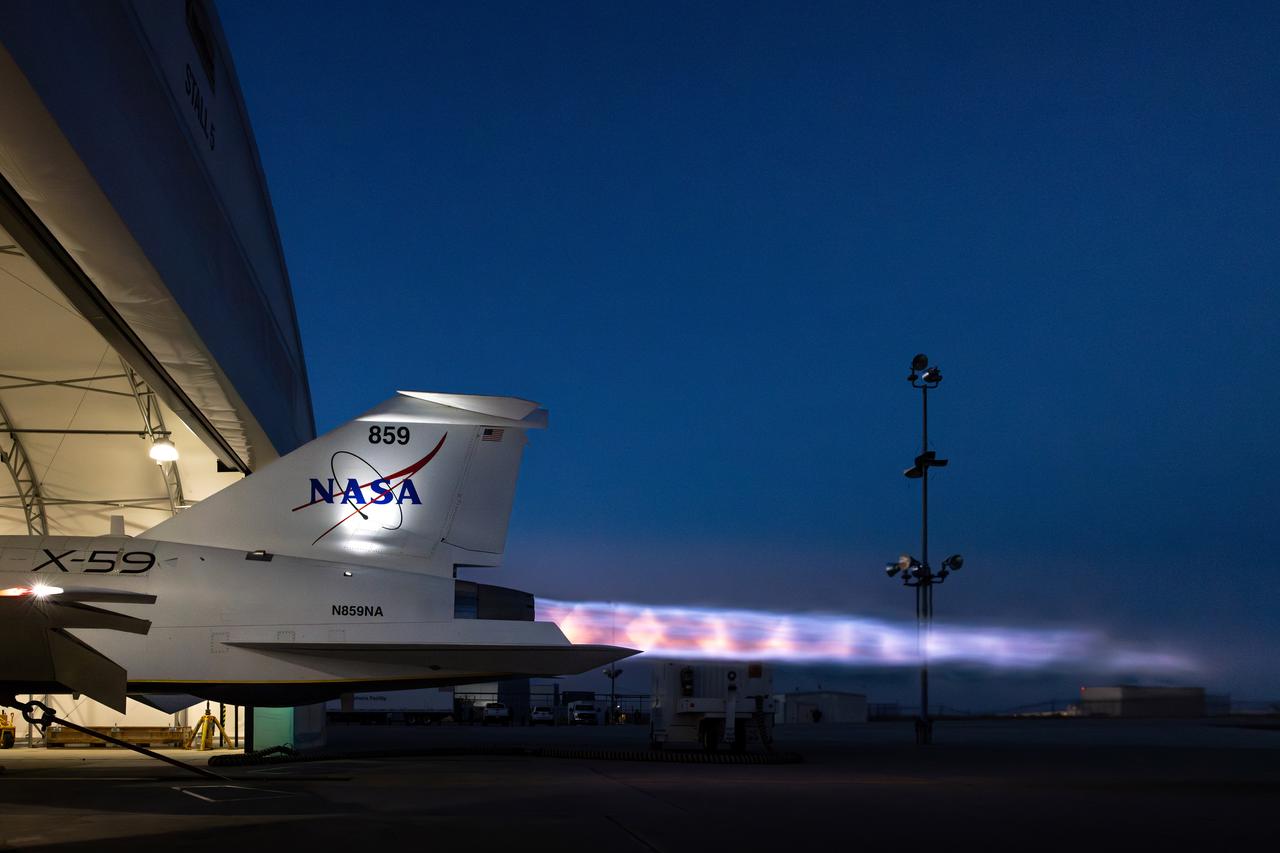
NASA’s X-59 lights up the night sky with its unique Mach diamonds, also known as shock diamonds, during maximum afterburner testing at Lockheed Martin Skunk Works in Palmdale, California. The test demonstrates the engine’s ability to generate the thrust required for supersonic flight, advancing NASA’s Quesst mission.
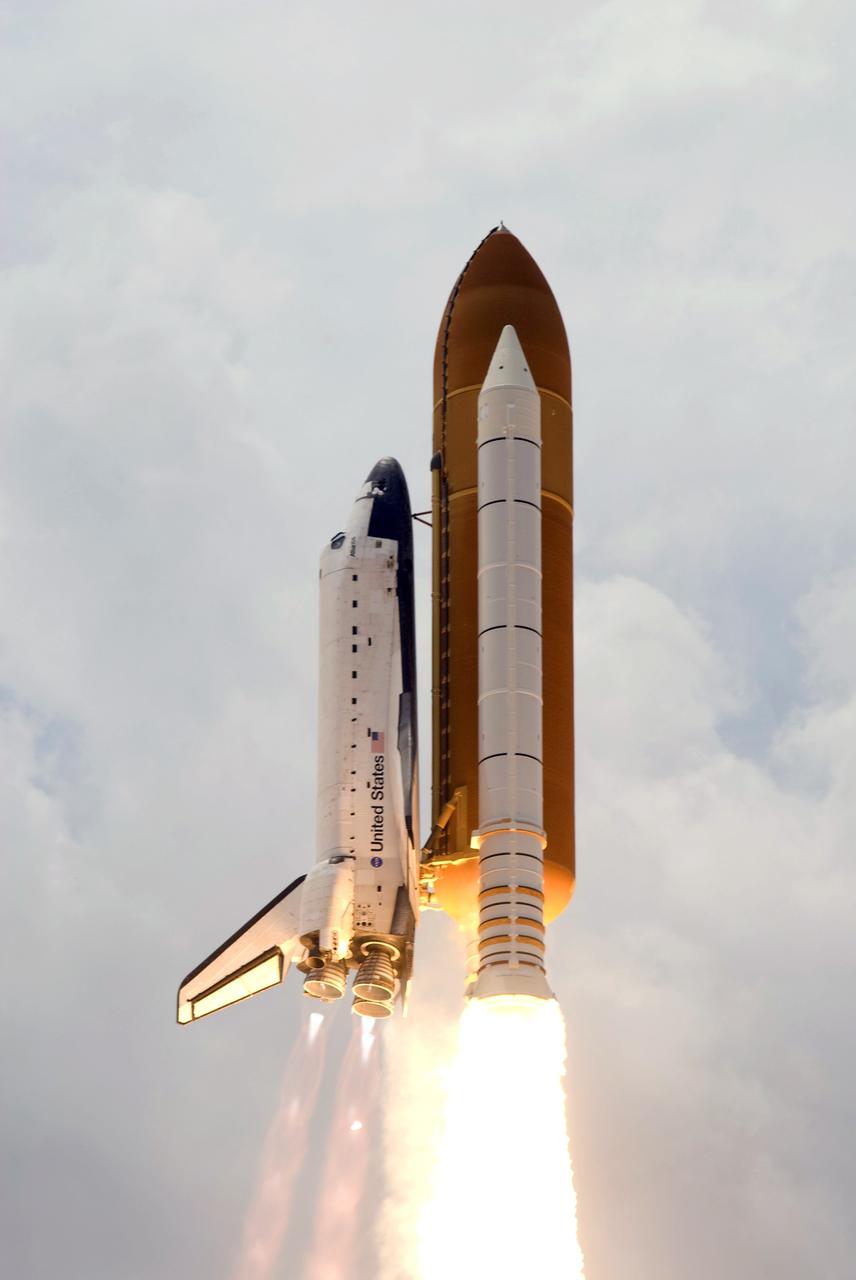
CAPE CANAVERAL, Fla. – Space shuttle Atlantis roars into the cloudy sky above Launch Pad 39A at NASA's Kennedy Space Center in Florida on the STS-125 mission. Blue cones of light, mach diamonds, can be seen beneath the engine nozzles. The mach diamonds are a formation of shock waves in the exhaust plume of an aerospace propulsion system. Atlantis will rendezvous with NASA's Hubble Space Telescope on the STS-125 mission. Liftoff was on time at 2:01 p.m. EDT. Atlantis' 11-day flight will include five spacewalks to refurbish and upgrade the telescope with state-of-the-art science instruments that will expand Hubble's capabilities and extend its operational lifespan through at least 2014. The payload includes a Wide Field Camera 3, fine guidance sensor and the Cosmic Origins Spectrograph. Photo credit: NASA/Michael Gayle-Rusty Backer
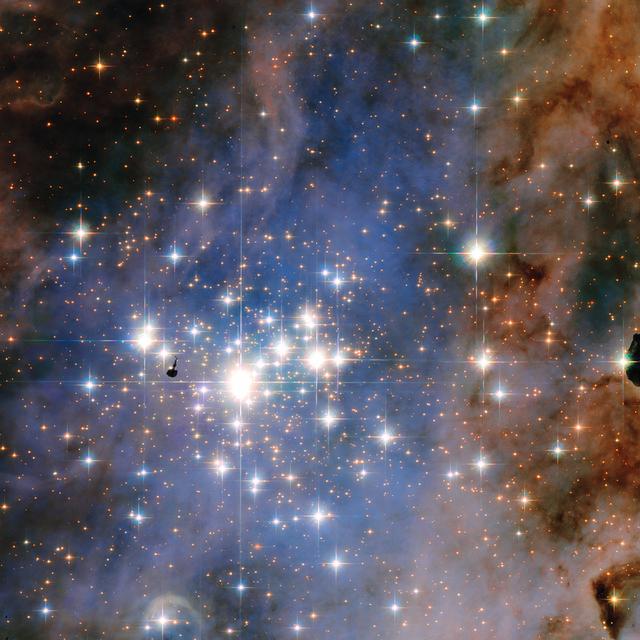
Resembling an opulent diamond tapestry, this image from NASA’s Hubble Space Telescope shows a glittering star cluster that contains a collection of some of the brightest stars seen in our Milky Way galaxy. Called Trumpler 14, it is located 8,000 light-years away in the Carina Nebula, a huge star-formation region. Because the cluster is only 500,000 years old, it has one of the highest concentrations of massive, luminous stars in the entire Milky Way. The small, dark knot left of center is a nodule of gas laced with dust, and seen in silhouette. Credit: NASA/ESA/J. Maíz Apellániz (Institute of Astrophysics of Andalusia, Spain) <b><a href="http://www.nasa.gov/audience/formedia/features/MP_Photo_Guidelines.html" rel="nofollow">NASA image use policy.</a></b> <b><a href="http://www.nasa.gov/centers/goddard/home/index.html" rel="nofollow">NASA Goddard Space Flight Center</a></b> enables NASA’s mission through four scientific endeavors: Earth Science, Heliophysics, Solar System Exploration, and Astrophysics. Goddard plays a leading role in NASA’s accomplishments by contributing compelling scientific knowledge to advance the Agency’s mission. <b>Follow us on <a href="http://twitter.com/NASAGoddardPix" rel="nofollow">Twitter</a></b> <b>Like us on <a href="http://www.facebook.com/pages/Greenbelt-MD/NASA-Goddard/395013845897?ref=tsd" rel="nofollow">Facebook</a></b> <b>Find us on <a href="http://instagram.com/nasagoddard?vm=grid" rel="nofollow">Instagram</a></b>
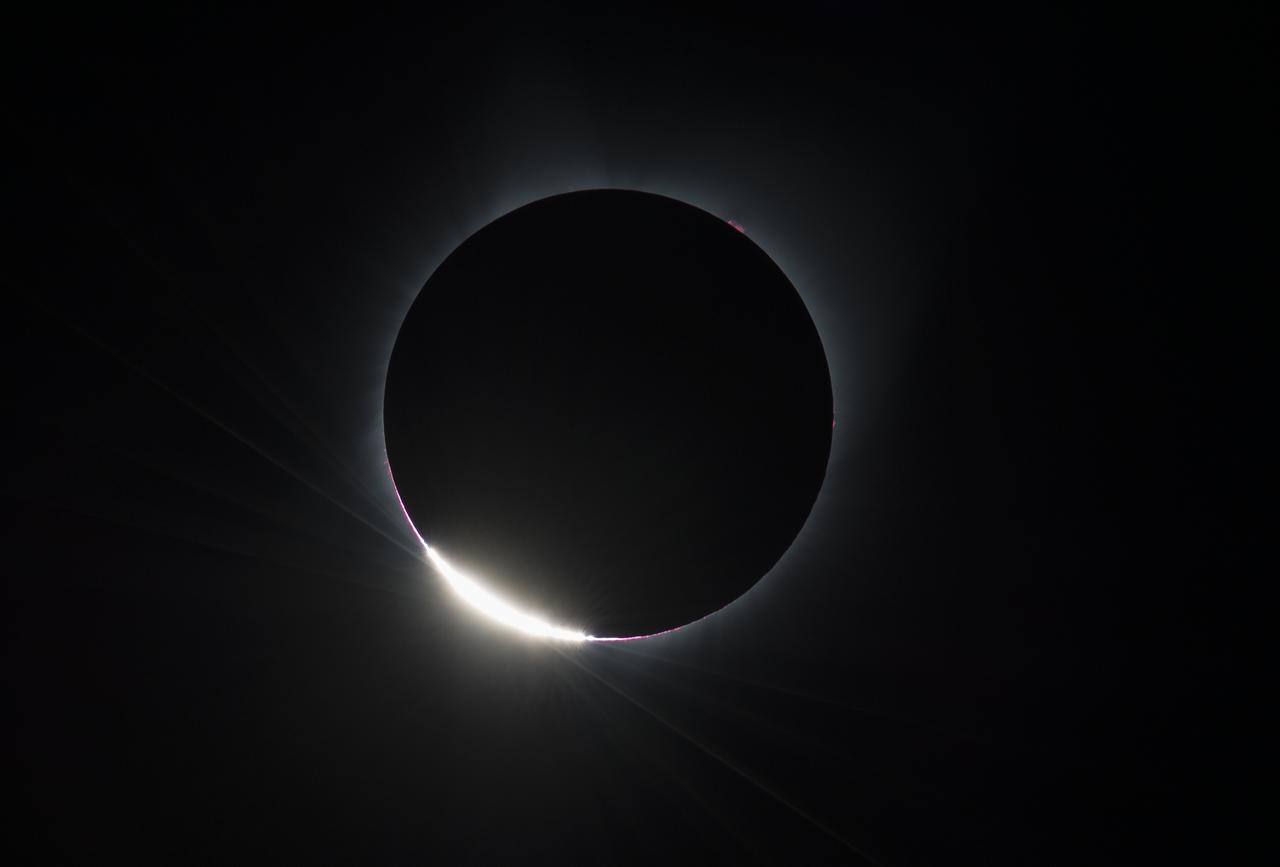
The Diamond Ring effect is seen as the moon makes its final move over the sun during the total solar eclipse on Monday, August 21, 2017 above Madras, Oregon. A total solar eclipse swept across a narrow portion of the contiguous United States from Lincoln Beach, Oregon to Charleston, South Carolina. A partial solar eclipse was visible across the entire North American continent along with parts of South America, Africa, and Europe. Photo Credit: (NASA/Aubrey Gemignani)
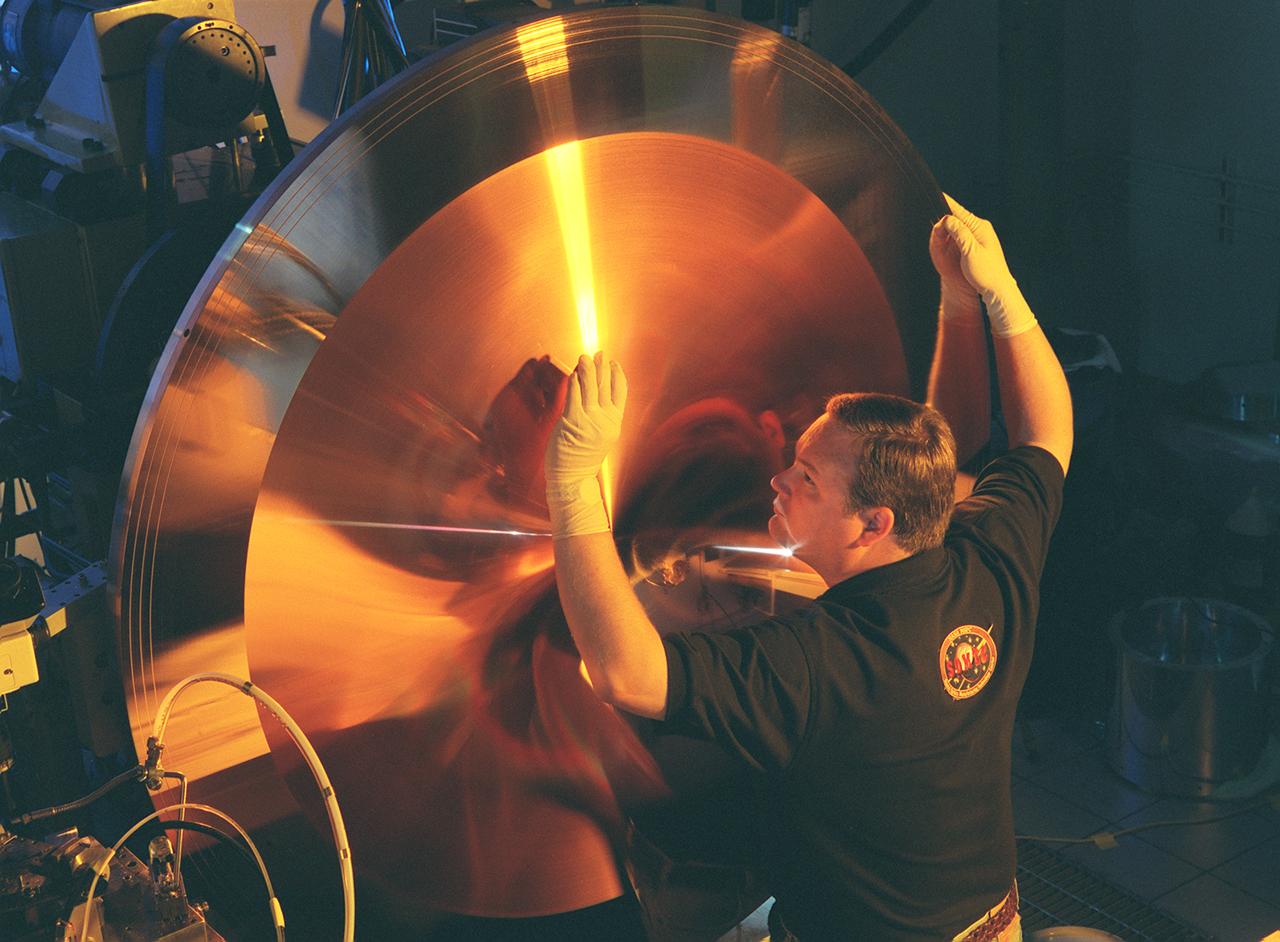
This photograph shows Wes Brown, Marshall Space Flight Center's (MSFC's) lead diamond tuner, an expert in the science of using diamond-tipped tools to cut metal, inspecting the mold's physical characteristics to ensure the uniformity of its more than 6,000 grooves. This king-size copper disk, manufactured at the Space Optics Manufacturing and Technology Center (SOMTC) at MSFC, is a special mold for making high resolution monitor screens. This master mold will be used to make several other molds, each capable of forming hundreds of screens that have a type of lens called a fresnel lens. Weighing much less than conventional optics, fresnel lenses have multiple concentric grooves, each formed to a precise angle, that together create the curvature needed to focus and project images. The MSFC leads NASA's space optics manufacturing technology development as a technology leader for diamond turning. The machine used to manufacture this mold is among many one-of-a-kind pieces of equipment of MSFC's SOMTC.

This image from NASA Terra spacecraft shows the Diavik Mine in northern Canada.The largest diamond found in North America came from the Diavik Mine. The Foxfire diamond weighs an impressive 187 carats, and was discovered in August 2015; it has been displayed in several museums throughout North America. The Diavik mine is located on an island in Lac de Gras, within the Lac de Gras kimberlite field, among other diamond mines. The image was acquired September 23, 2016, covers an area of 13.8 by 19.4 km, and is located at 64.5 degrees north, 110.2 degrees west. https://photojournal.jpl.nasa.gov/catalog/PIA21536
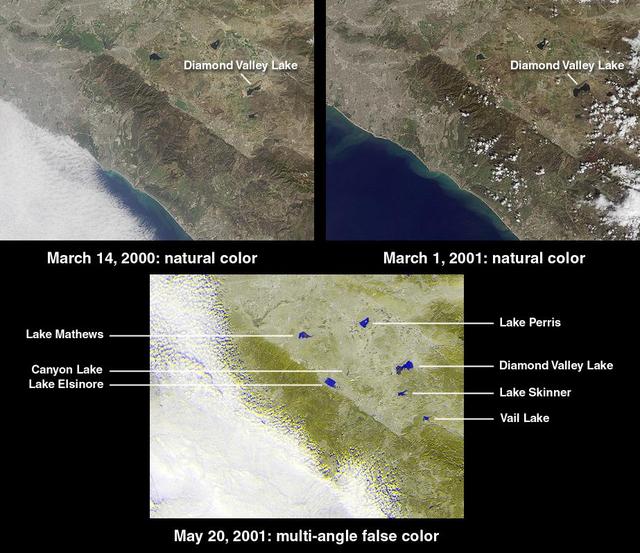
This image from NASA Terra satellite of Diamond Valley Lake Reservoir, near the city of Hemet in Riverside County, billed as the largest earthworks construction project in U.S.history.
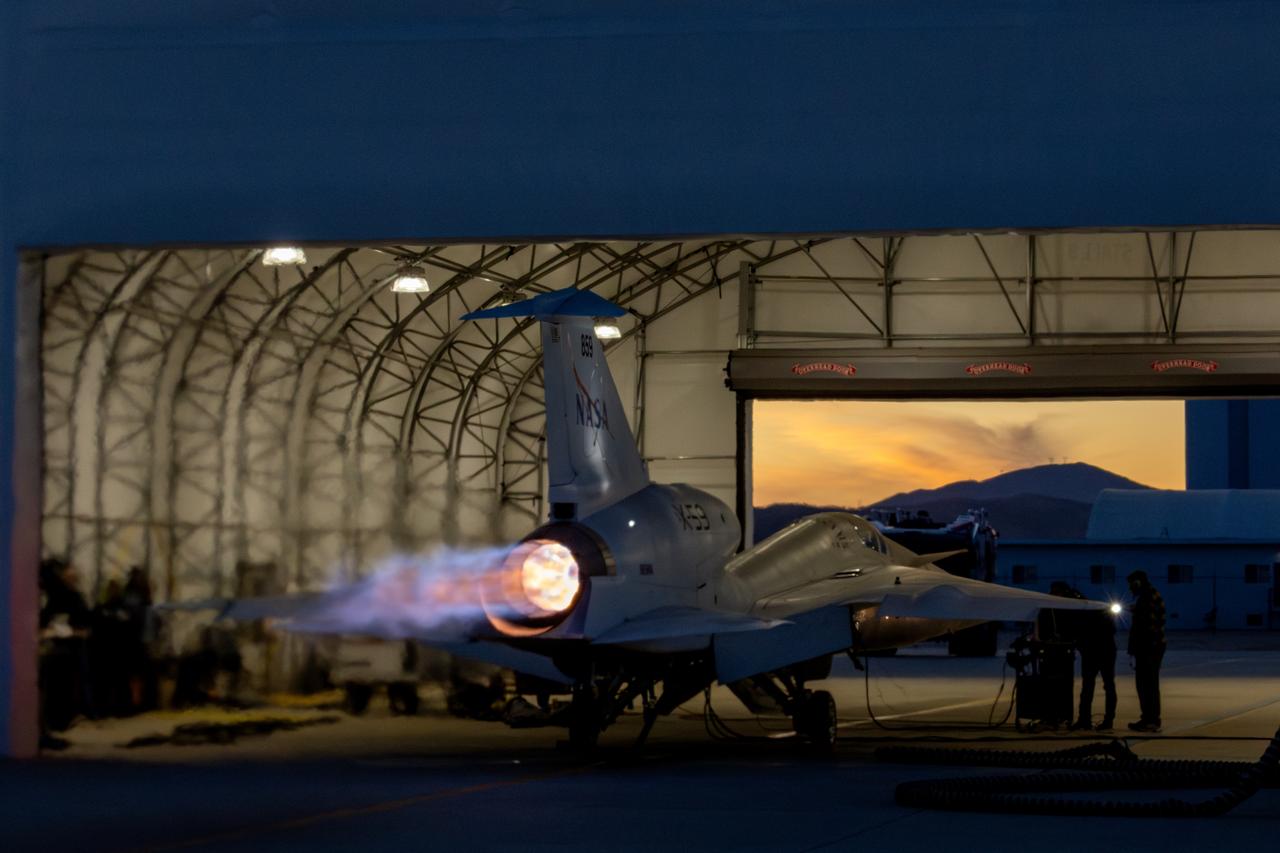
NASA’s X-59 lights up the night sky with its unique Mach diamonds, also known as shock diamonds, during maximum afterburner testing at Lockheed Martin Skunk Works in Palmdale, California. The test demonstrates the engine’s ability to generate the thrust required for supersonic flight, advancing NASA’s Quesst mission.
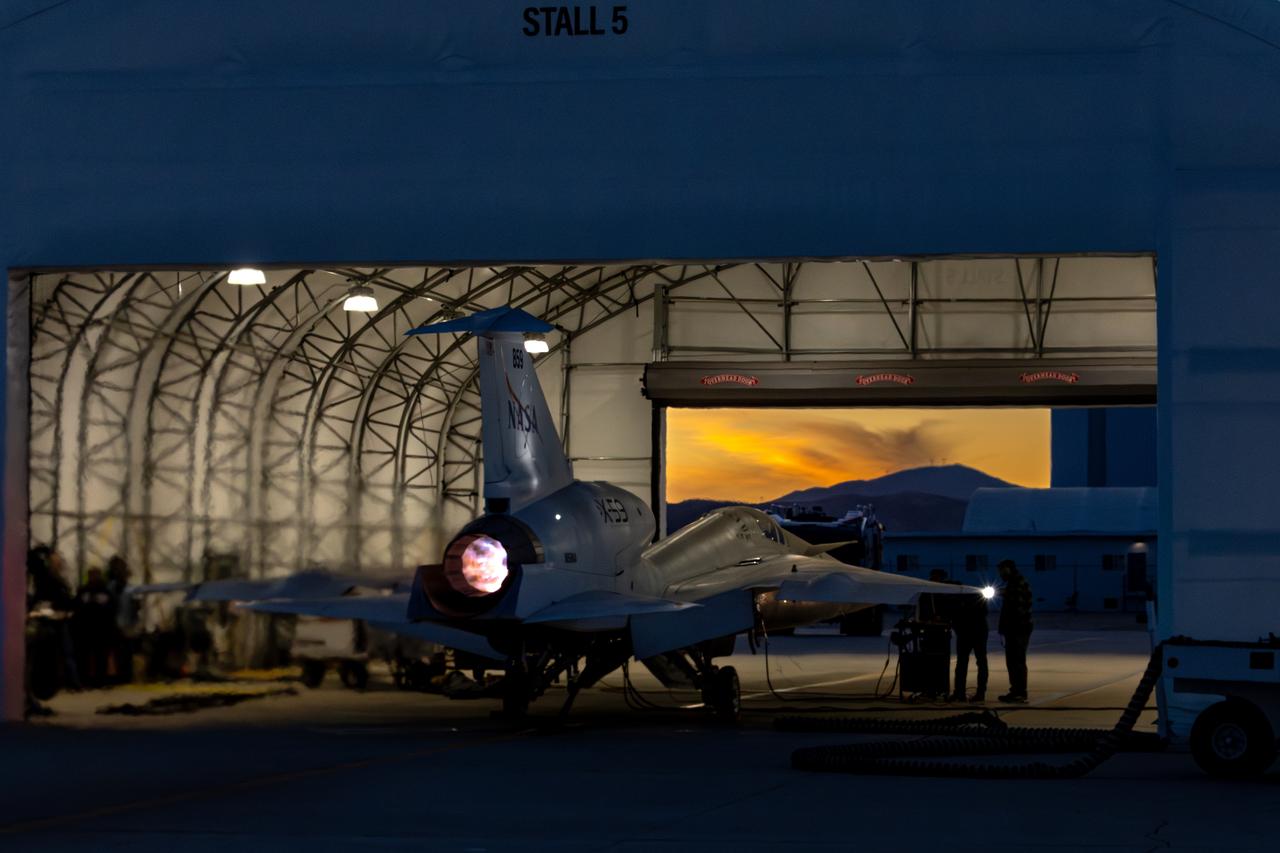
NASA’s X-59 lights up the night sky with its unique Mach diamonds, also known as shock diamonds, during maximum afterburner testing at Lockheed Martin Skunk Works in Palmdale, California. The test demonstrates the engine’s ability to generate the thrust required for supersonic flight, advancing NASA’s Quesst mission.
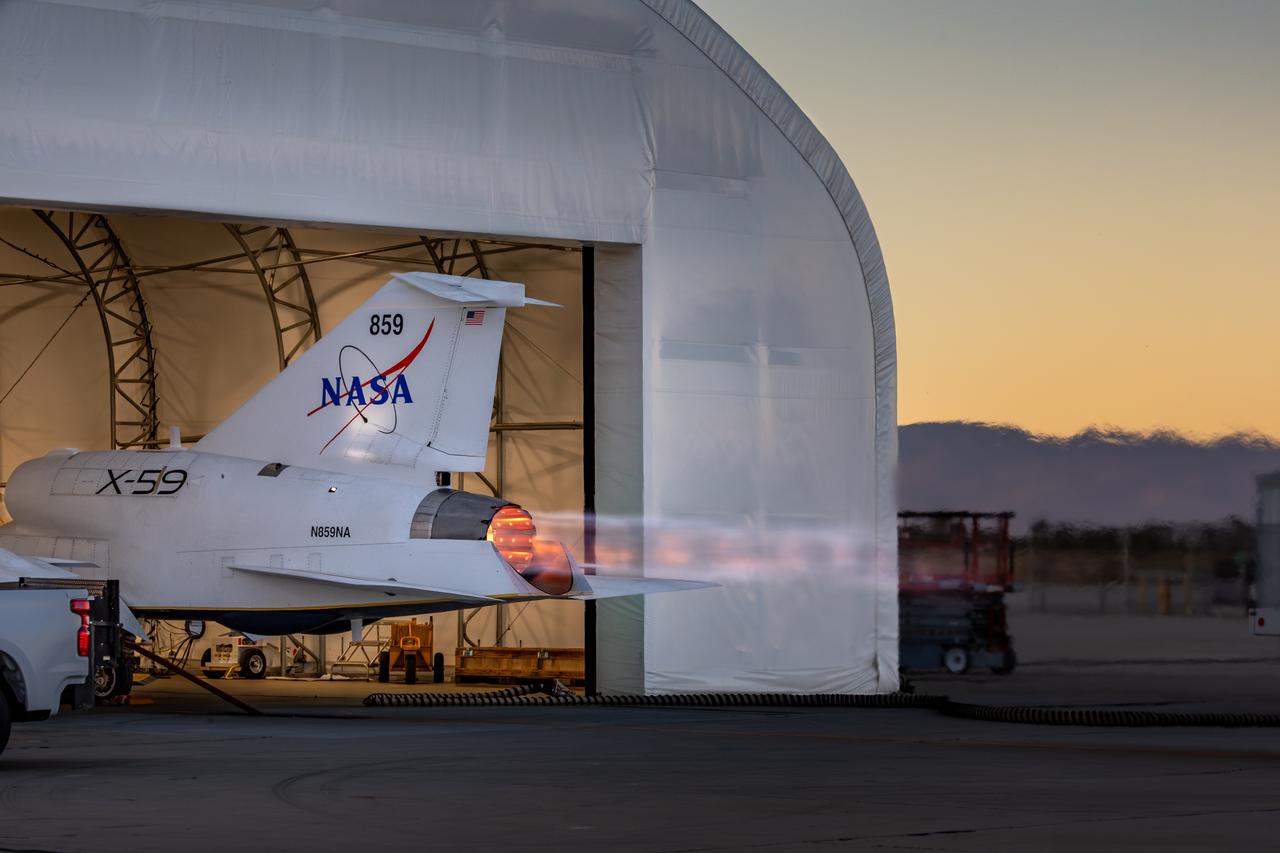
NASA’s X-59 lights up the night sky with its unique Mach diamonds, also known as shock diamonds, during maximum afterburner testing at Lockheed Martin Skunk Works in Palmdale, California. The test demonstrates the engine’s ability to generate the thrust required for supersonic flight, advancing NASA’s Quesst mission.

NASA’s X-59 lights up the night sky with its unique Mach diamonds, also known as shock diamonds, during maximum afterburner testing at Lockheed Martin Skunk Works in Palmdale, California. The test demonstrates the engine’s ability to generate the thrust required for supersonic flight, advancing NASA’s Quesst mission.
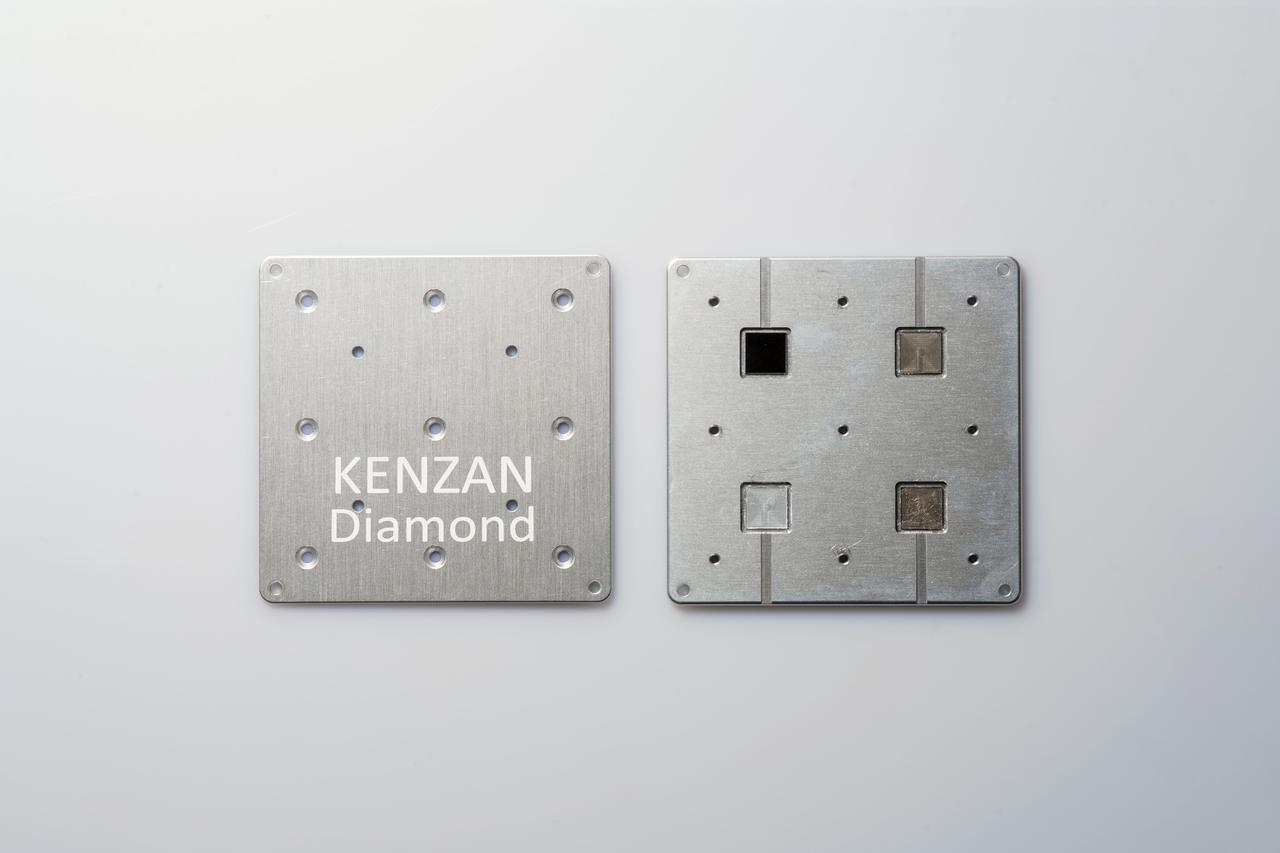
jsc2021e066969 (8/18/2021) --- A preflight image of three kinds of substrates (Diamond, Sapphire, Silicon) on the aluminum carrier. The purpose of the Artificial Diamond Substrate Exposure Experiment in Space investigation is to see how a KENZAN Diamond™ substrate could be affected by severe environments such as outer space. The results can help researchers identify the elements necessary for diamond substrate applications expected in aerospace and next generation semiconductors, as well as improve their quality and reliability. Image Credit: Adamant Namiki Precision Jewel Co., Ltd..
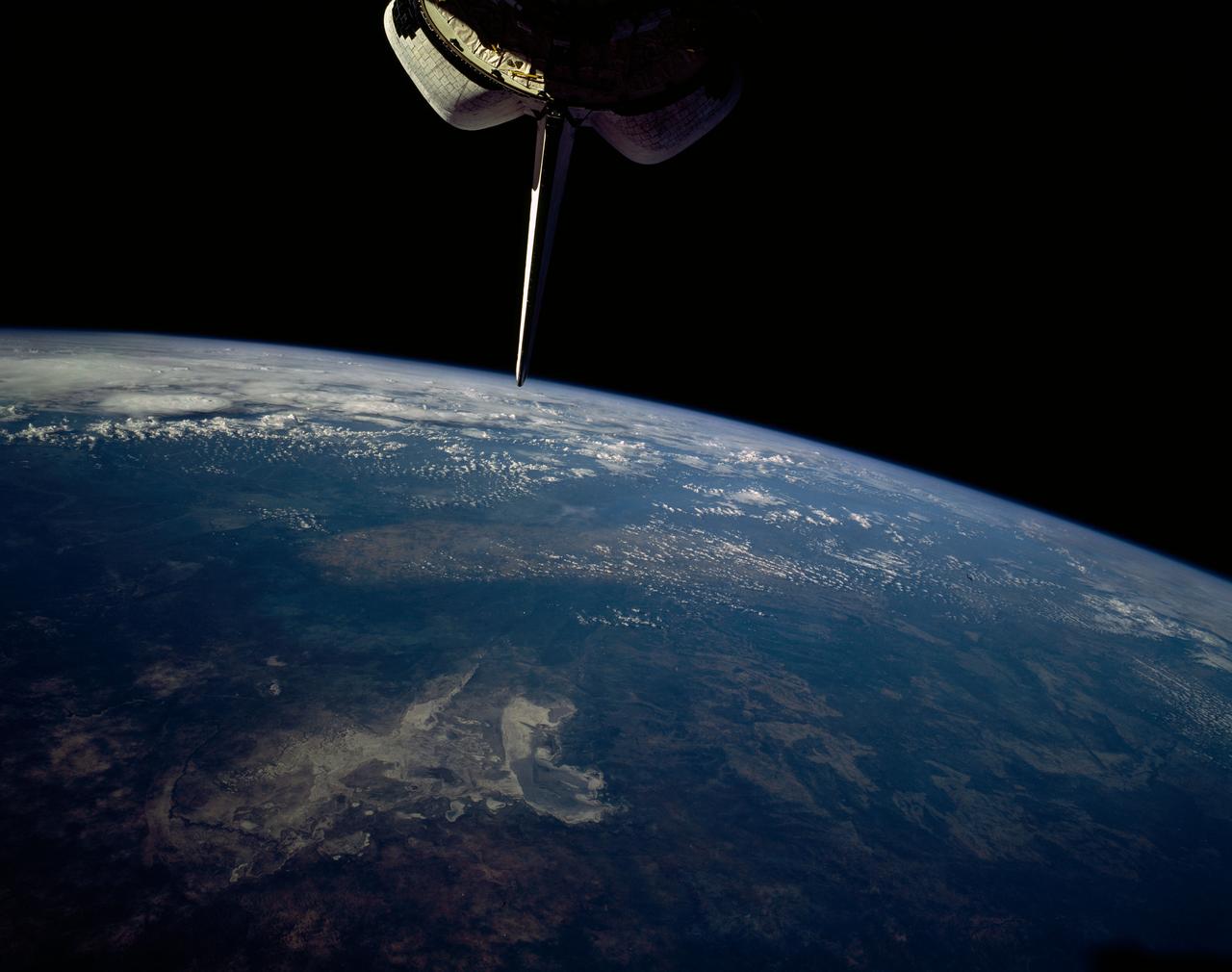
STS054-151-015 (13-19 Jan 1993) --- The Makgadikgadi Salt Pan is one of the largest features in Botswana visible from space. Any water that spills out of the Okavango Swamplands flows down to the Makgadikgadi where it evaporates. An ancient beach line can be seen as a smooth line around the west (left) side of the Pan. Orapa diamond mine can be detected due south of the pan as a small rectangle. The large geological feature known as the Great Dike of Zimbabwe can be seen far right. This large panorama shows clouds in southern Angola, Zambia and Zimbabwe in the distance.
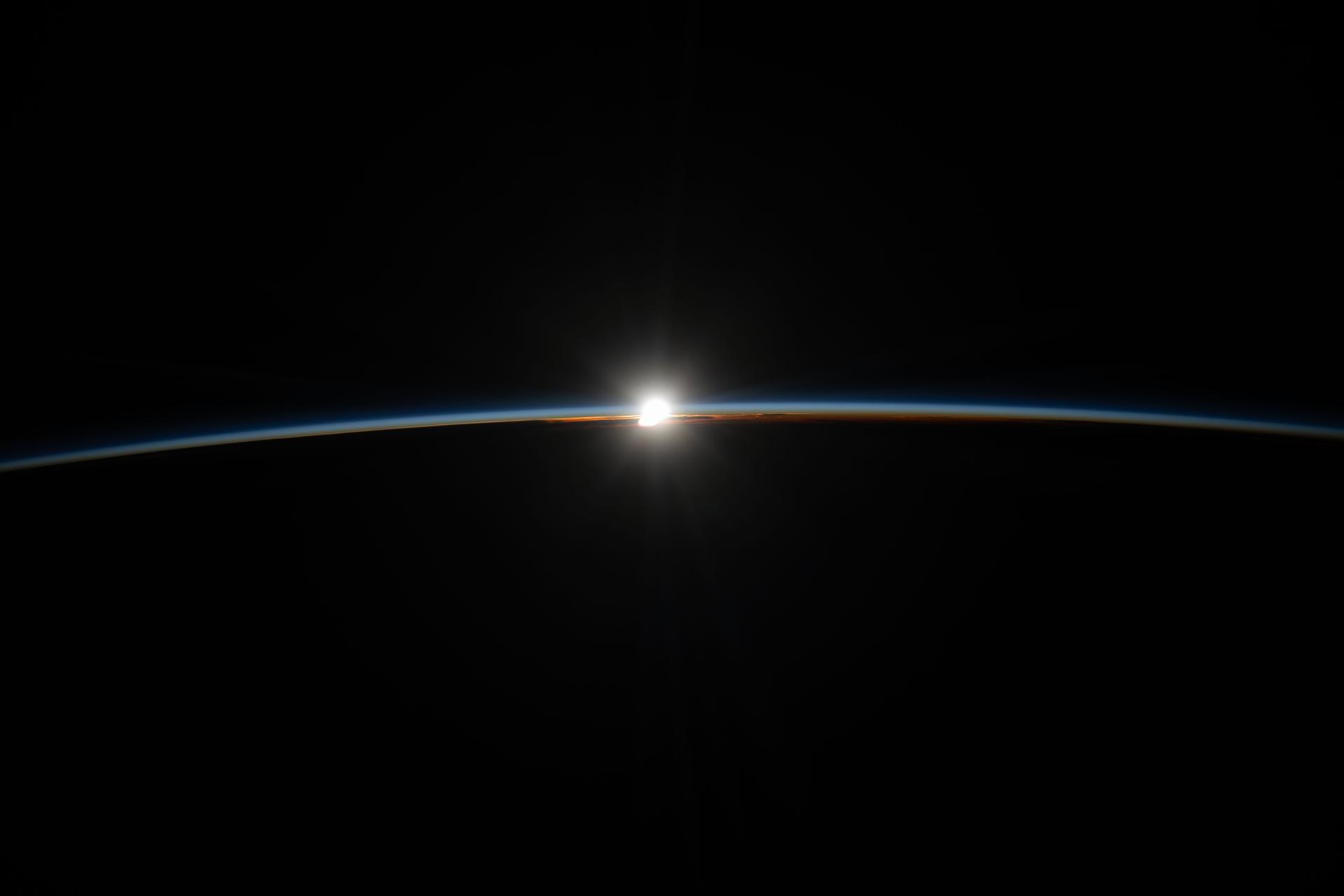
iss074e0795348 (July 4, 2026) --- A diamond‑like orbital sunset, also known as a sun glint, flares briefly, illuminating Earth’s thin atmosphere with fading orange and blue hues that outline the horizon. The International Space Station was orbiting 265 miles above the far eastern China–Russia border at approximately 12:48 a.m. local time when this photograph was taken. Credit: NASA/Chris Williams
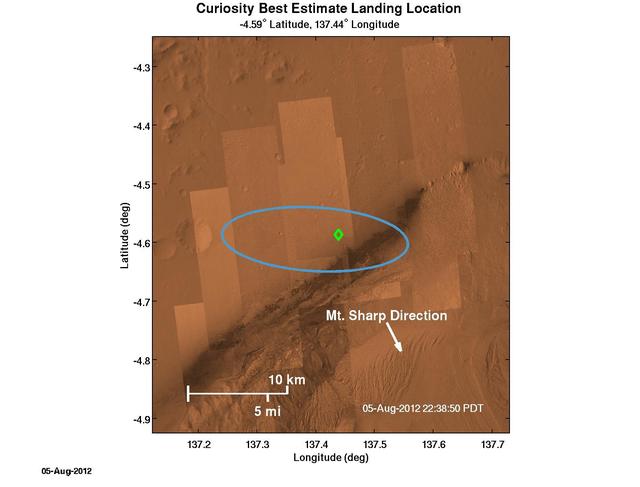
The green diamond shows approximately where NASA Curiosity rover landed on Mars, a region about 2 kilometers northeast of its target in the center of the estimated landing region blue ellipse.

The 2014 Winter Olympic ski runs may be rated double black diamond, but theyre not quite as steep as they appear in this image acquired by NASA Terra spacecraft, of the skiing and snowboarding sites for the Sochi Winter Olympic Games.
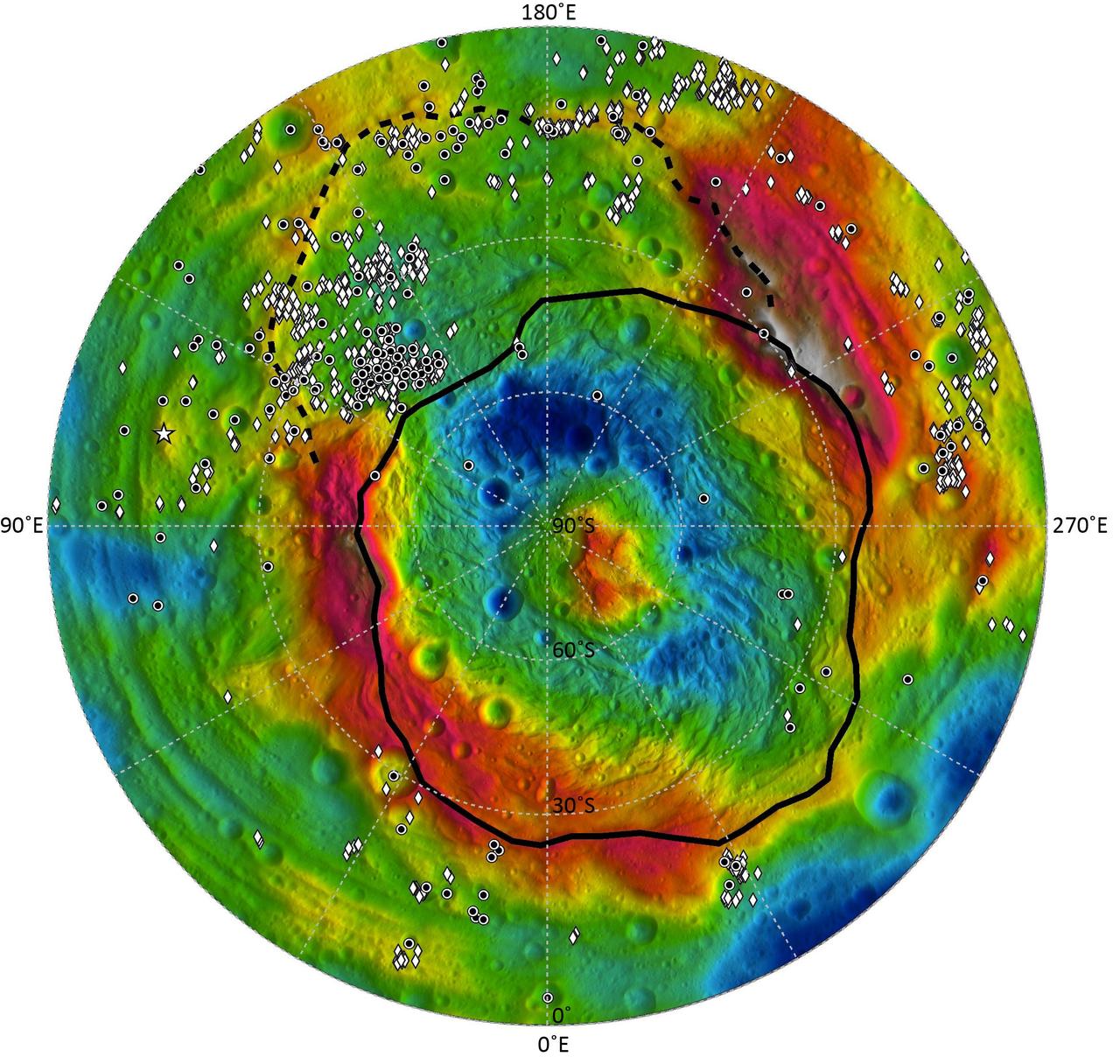
This map shows the distribution of dark materials throughout the southern hemisphere of the giant asteroid Vesta. The circles, diamonds, and stars show where the dark material appears in craters, spots and topographic highs.
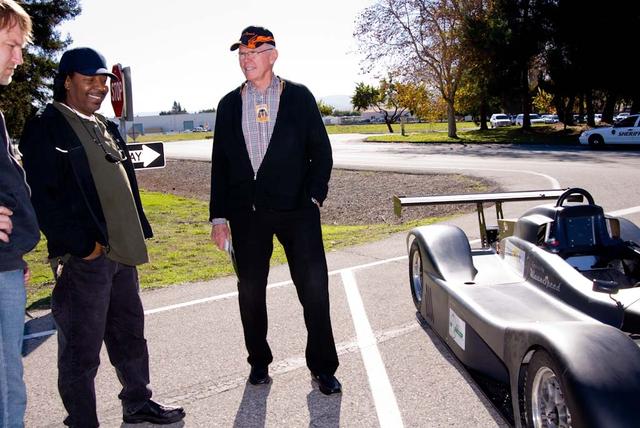
Airship Ventures Zeppelin Dedication during the Moffett Field Diamond Jubilee. New NRP Partner KleenSpeed Chairman Timothy Collins (l) with THRUXAR electric race car at the Nov. 21 Diamond Jubilee exhibits. KleenSpeed is an advanced R&D firm focusing on scalable electric propulsion systems for transportation
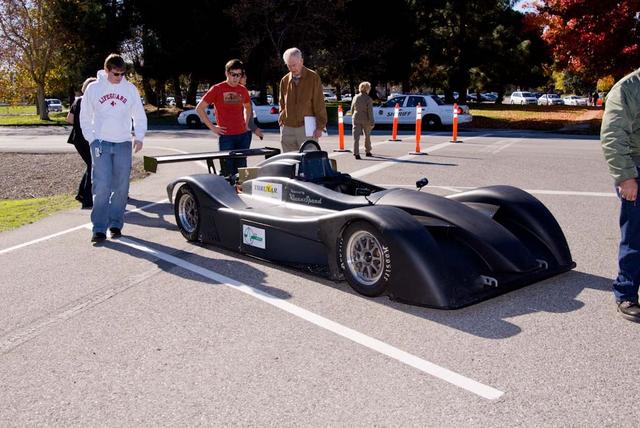
Airship Ventures Zeppelin Dedication during the Moffett Field Diamond Jubilee. The Thruxar electric race car at the Nov. 21 Diamond Jubilee exhibits. KleenSpeed is an advanced R&D firm focusing on scalable electric propulsion systems for transportation

The diamond-ring effect occurred at the beginning and end of totality during a total solar eclipse. As the last bits of sunlight pass through the valleys on the moon's limb, and the faint corona around the sun is just becoming visible, it looks like a ring with glittering diamonds on it. Credit: (NASA/Carla Thomas)
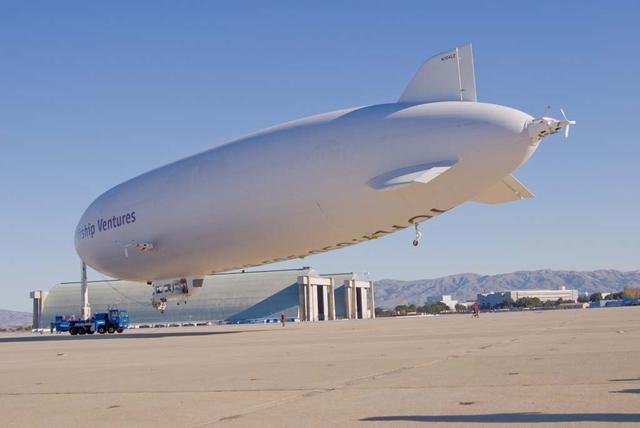
Airship Ventures Zeppelin Dedication during the Moffett Field Diamond Jubilee
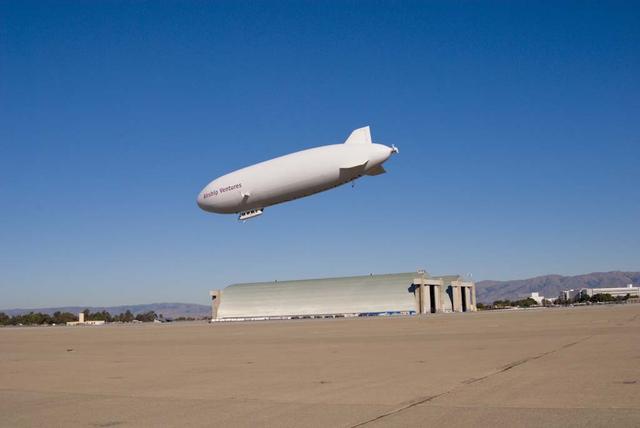
Airship Ventures Zeppelin Dedication during the Moffett Field Diamond Jubilee
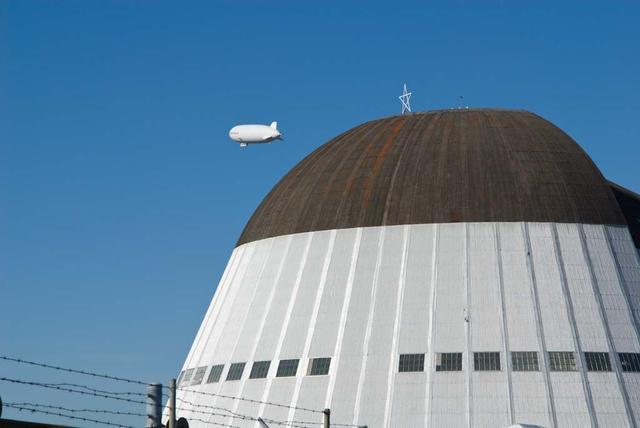
Airship Ventures Zeppelin Dedication during the Moffett Field Diamond Jubilee
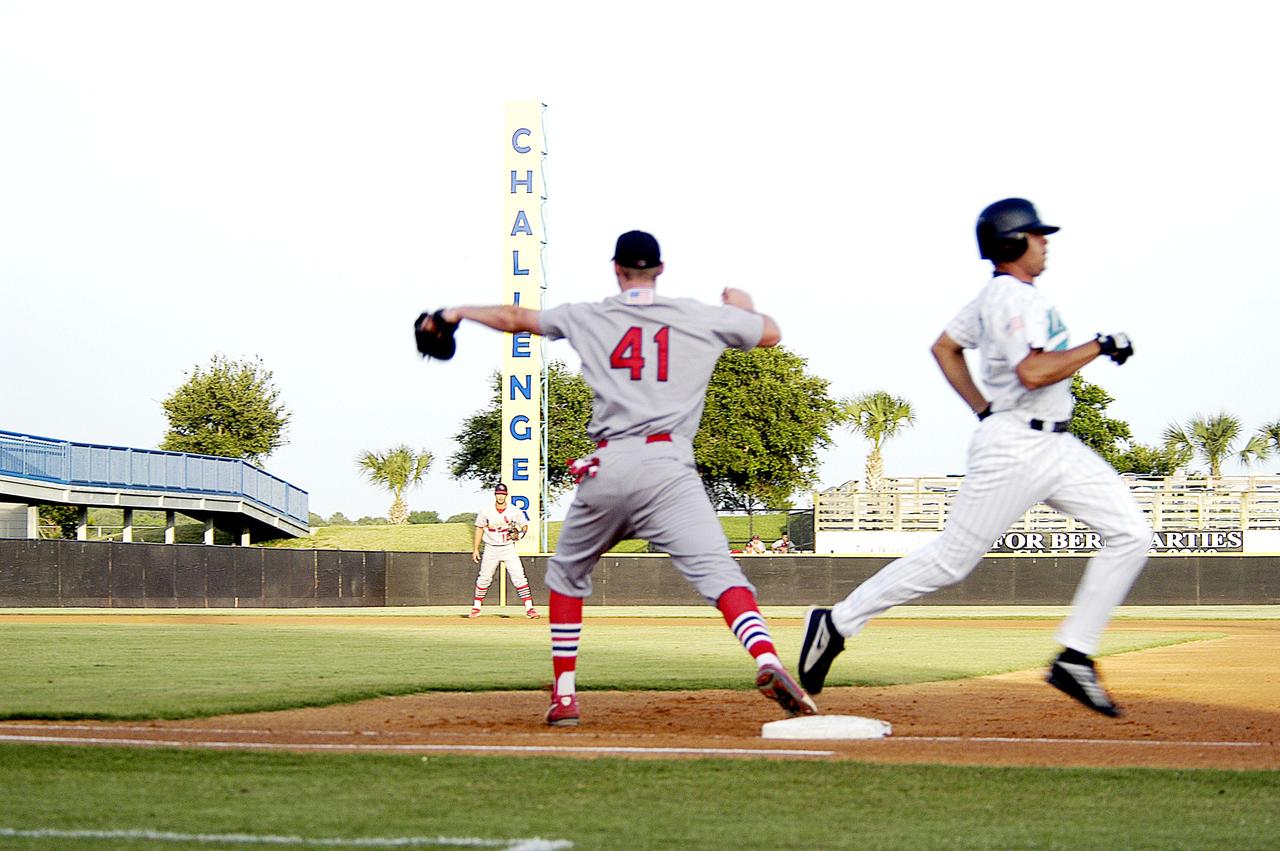
KENNEDY SPACE CENTER, FLA. - There is action on the baseball diamond during a game at Manatees Stadium, home of the Brevard Manatees, a minor league baseball team in Central Florida. The team hosted KSC employees for the game, which included a moment of silence to honor the STS-107 crew and two recovery workers who died in a helicopter crash.
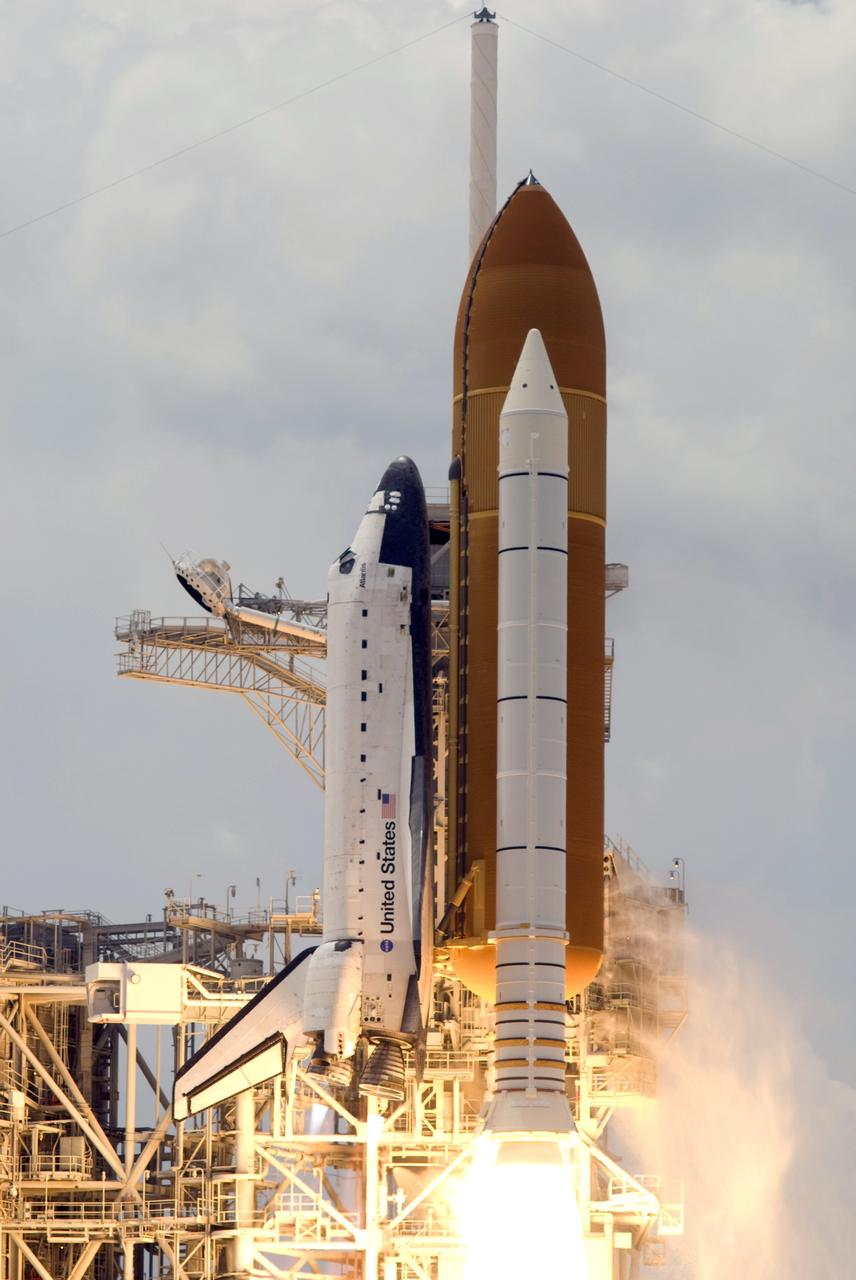
CAPE CANAVERAL, Fla. – On Launch Pad 39A at NASA's Kennedy Space Center in Florida, space shuttle Atlantis rises past the fixed service structure as it races toward space on the STS-125 mission. Atlantis will rendezvous with NASA's Hubble Space Telescope on the STS-125 mission. Liftoff was on time at 2:01 p.m. EDT. Atlantis' 11-day flight will include five spacewalks to refurbish and upgrade the telescope with state-of-the-art science instruments that will expand Hubble's capabilities and extend its operational lifespan through at least 2014. The payload includes a Wide Field Camera 3, fine guidance sensor and the Cosmic Origins Spectrograph. Photo credit: NASA/Michael Gayle-Rusty Backer
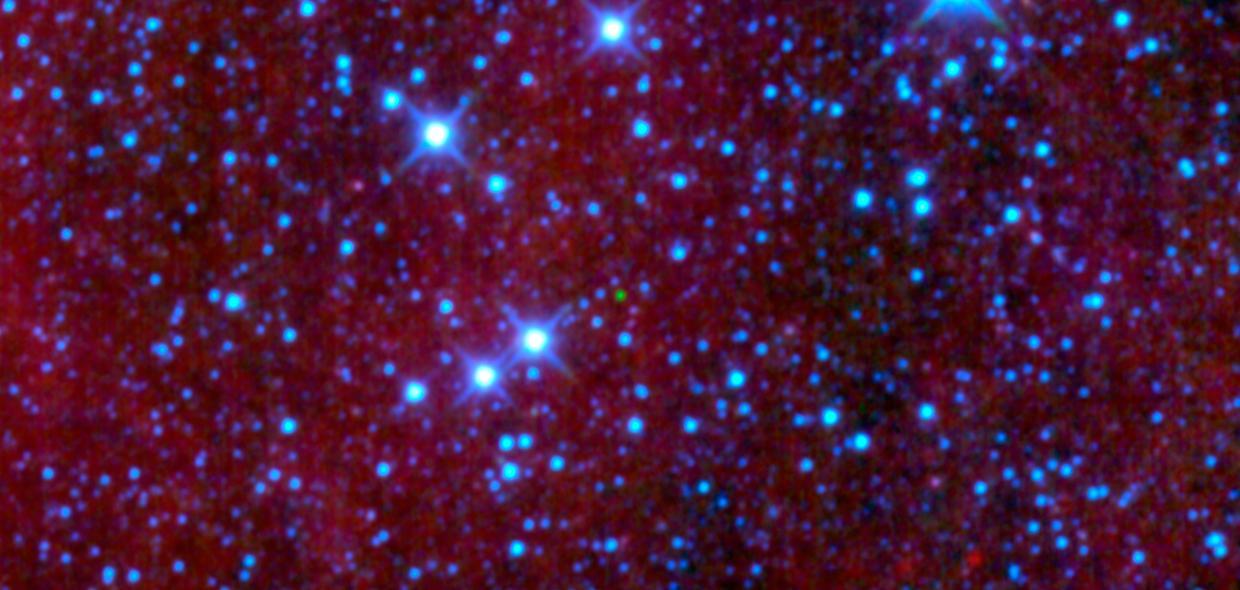
The green dot in the middle of this image might look like an emerald amidst glittering diamonds, but is a dim star belonging to a class called brown dwarfs; it is the first ultra-cool brown dwarf discovered by NASA Wide-field Infrared Survey Explorer.

This image from NASA Kepler mission shows the telescope full field of view an expansive star-rich patch of sky in the constellations Cygnus and Lyra stretching across 100 square degrees, or the equivalent of two side-by-side dips of the Big Dipper. A cluster of stars, called NGC 6791, and a star with a known planet, called TrES-2, are outlined. The cluster is eight billion years old, and located 13,000 light-years from Earth. It is called an open cluster because its stars are loosely bound and have started to spread out. TrES-2 is a hot Jupiter-like planet known to cross in front of, or transit, its star every 2.5 days. Kepler will hunt for transiting planets that are as small as Earth. Kepler was designed to hunt for planets like Earth. Of the approximately 4.5 million stars in the region pictured here, more than 100,000 were selected as candidates for Kepler's search. The mission will spend the next three-and-a-half years staring at these target stars, looking for periodic dips in brightness. Such dips occur when planets cross in front of their stars from our point of view in the galaxy, partially blocking the starlight. The area in the lower right of the image is brighter because it is closer to the plane of our galaxy and is jam-packed with stars. The area in upper left is farther from the galactic plane and contains fewer stars. The image has been color-coded so that brighter stars appear white, and fainter stars, red. It is a 60-second exposure, taken on April 8, 2009, one day after the spacecraft's dust cover was jettisoned. To achieve the level of precision needed to spot planets as small as Earth, Kepler's images are intentionally blurred slightly. This minimizes the number of saturated stars. Saturation, or "blooming," occurs when the brightest stars overload the individual pixels in the detectors, causing the signal to spill out into nearby pixels. These spills can be seen in the image as fine white lines extending above and below some of the brightest stars. Blooming is an expected side effect of Kepler's ultra-sensitive camera. Some of the lightly saturated stars are candidates for planet searches, while those that are heavily saturated are not. The grid lines across the picture show how the focal plane is laid out on Kepler's camera —the largest ever launched in space at 95 megapixels. There are 42 charge-coupled devices (CCDs), paired into square-shaped modules, whose outline can be seen in the image. A thin black line in each module shows adjacent pairs of CCDs. The thicker black lines that cross through the image are from structures holding the modules together, and were purposely oriented to block out the very brightest stars in Kepler's field of view. The four black corners of the image show where the fine-guidance sensors reside on the focal plane. These sensors are used to hold the telescope's gaze steady by measuring its position on the sky 10 times every second, and by feeding this information to the spacecraft's attitude control system. Ghost images also appear in the image, which are reflections off the lenses above the CCDs. These expected artifacts were mapped out during ground testing for Kepler, and will not affect science observations because they will be removed as the data are processed. http://photojournal.jpl.nasa.gov/catalog/PIA11984
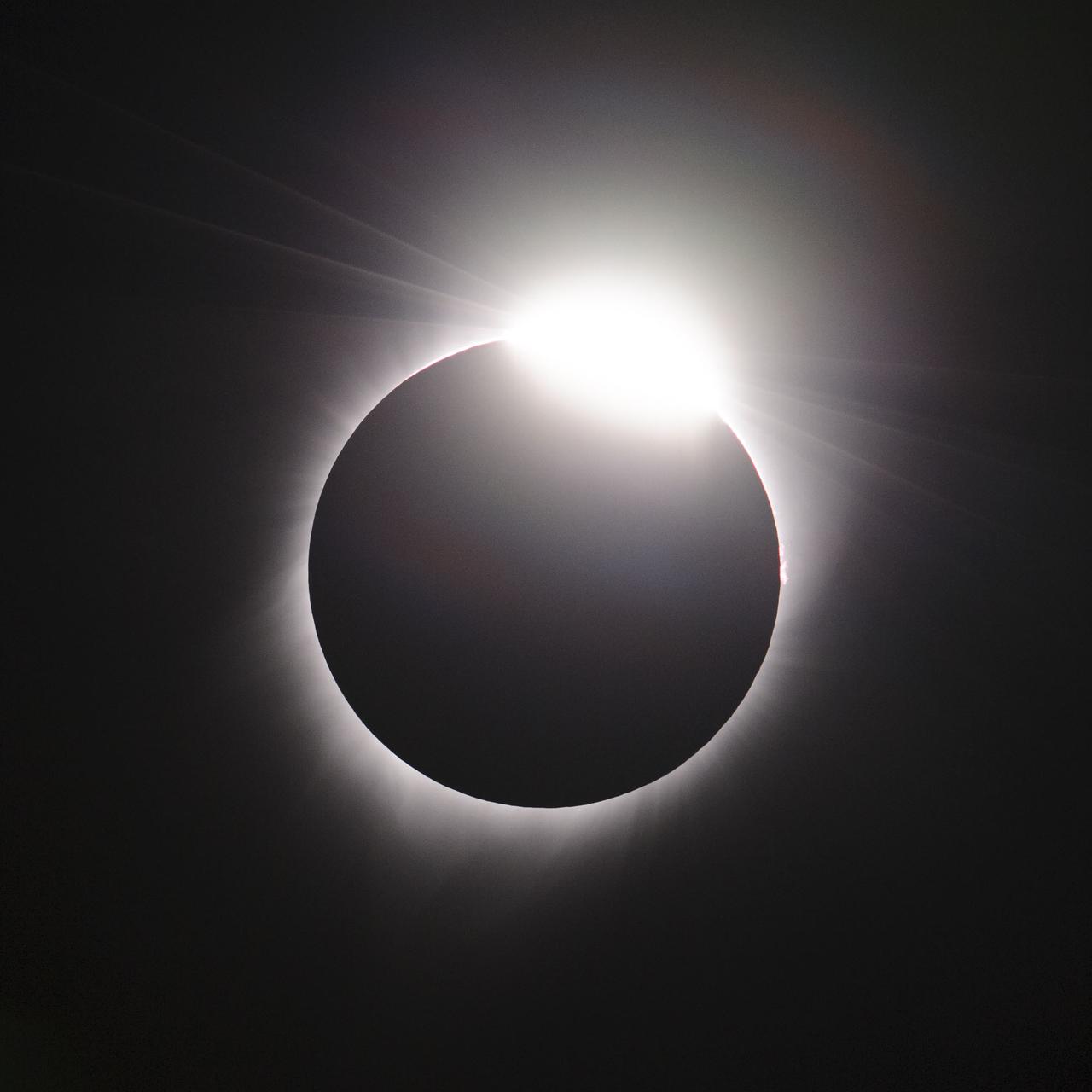
2017 Solar Eclipse first images from Oregon State Fair Grounds, Salem, Oregon. This image taken at 10:19:24 on August 21, 2017 as Oregon begins to see first light 'diamond' following totality.
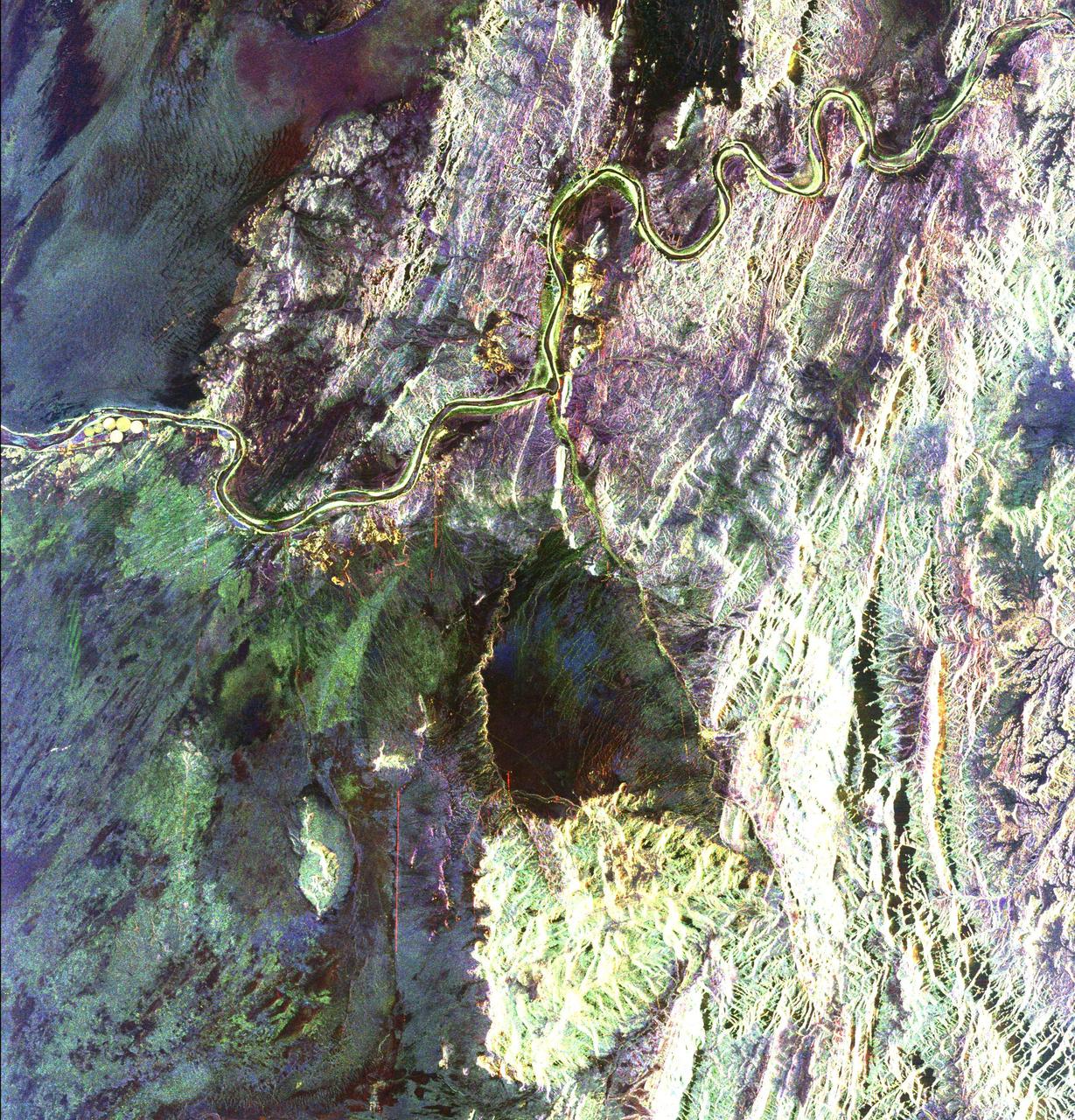
This radar image covers a portion of the Richtersveld National Park and Orange River top of image in the Northern Cape Province of the Republic of South Africa.
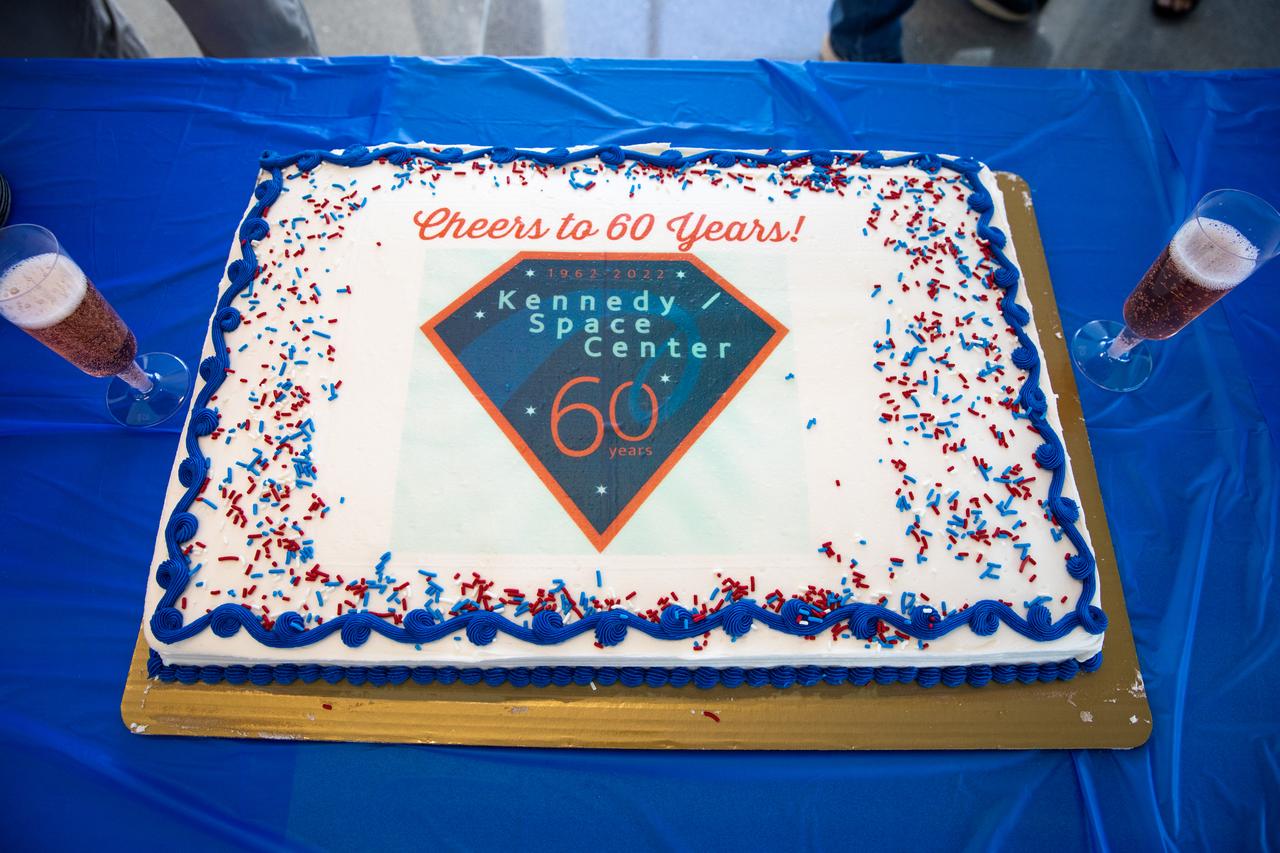
The NASA Kennedy Space Center senior leaders and employees celebrated the center’s 60th anniversary with a “Cheers to 60 Years” cake and non-alcoholic toast in the Central Campus Headquarters on June 28, 2022. In July 1962, the Launch Operations Center in Florida was established. By December 1963, it was renamed the John F. Kennedy Space Center.
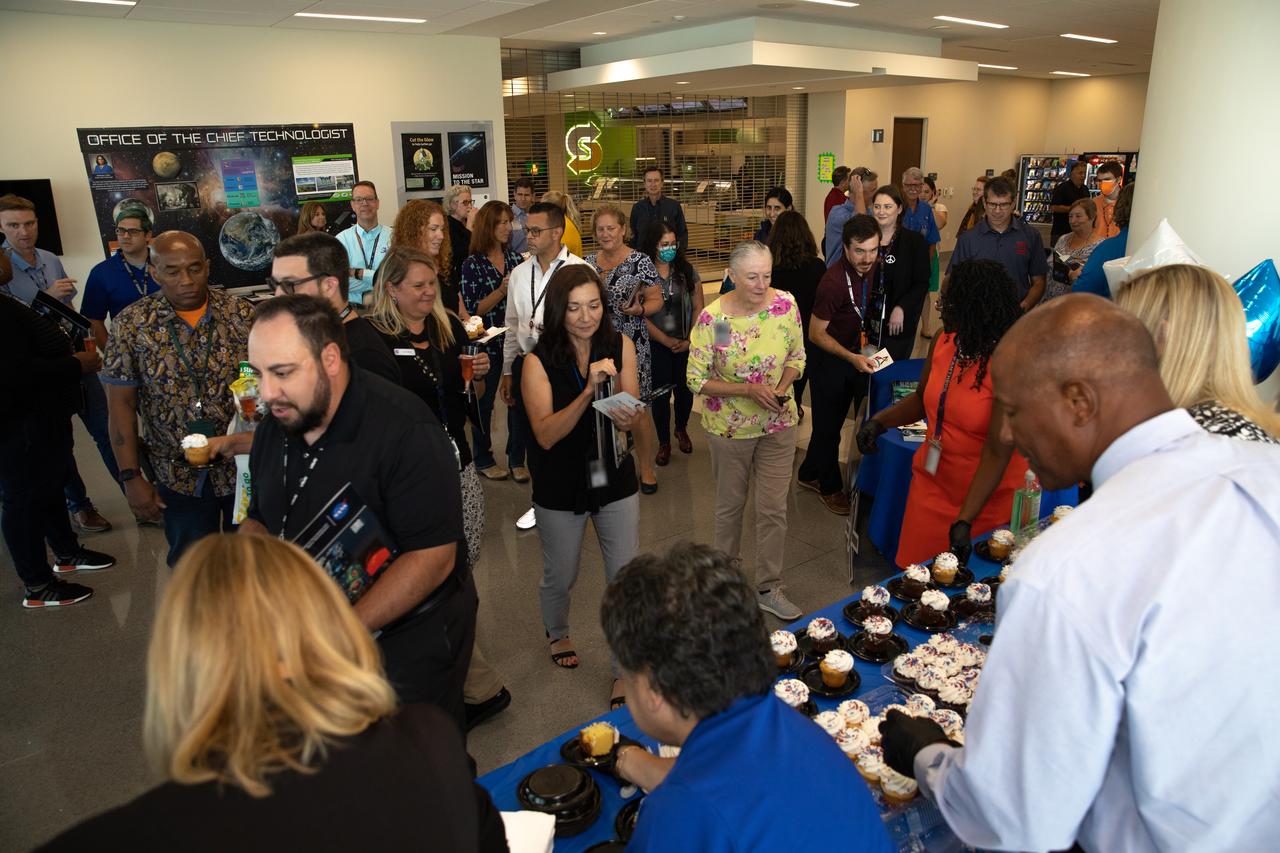
The NASA Kennedy Space Center senior leaders and employees celebrated the center’s 60th anniversary with a “Cheers to 60 Years” cake and non-alcoholic toast in the Central Campus Headquarters on June 28, 2022. From left, serving cake at the table, are Center Director Janet Petro; Janet Sellars, director of Human Resources; Kelvin Manning, deputy center director; and Nancy Bray, partially hidden, director of Spaceport Integration and Services. In July 1962, the Launch Operations Center in Florida was established. By December 1963, it was renamed the John F. Kennedy Space Center.

NASA Kennedy Space Center senior leaders helped celebrate the center’s 60th anniversary with a “Cheers to 60 Years” cake and non-alcoholic toast in the Central Campus Headquarters on June 28, 2022. Center Director Janet Petro hands a slice of cake to an employee. Also, from left are Nancy Bray, director of Spaceport Integration and Services; Kelvin Manning, deputy center director; and Hortense Blackwell, director of Communication and Public Engagement. In July 1962, the Launch Operations Center in Florida was established. By December 1963, it was renamed the John F. Kennedy Space Center.
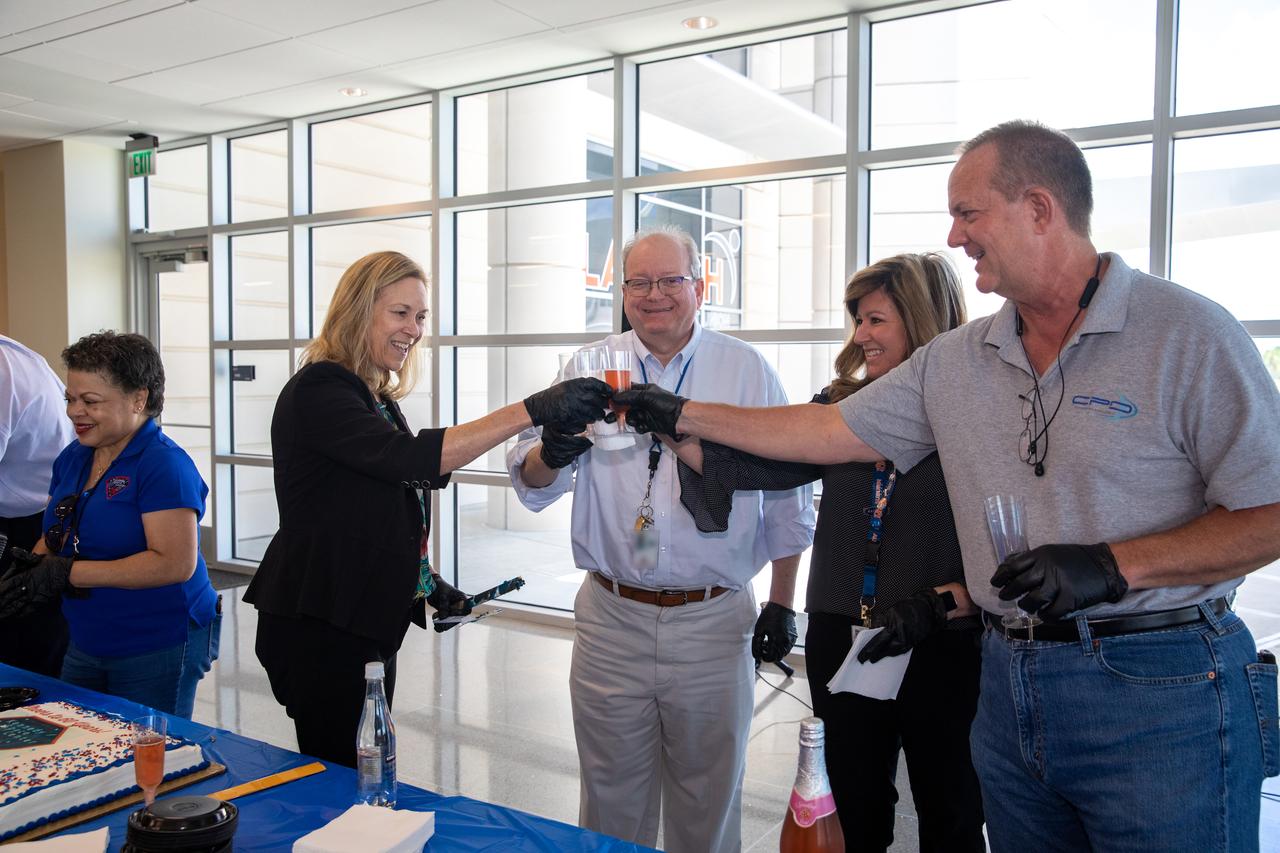
The NASA Kennedy Space Center senior leaders and employees celebrated the center’s 60th anniversary with a “Cheers to 60 Years” cake and non-alcoholic toast in the Central Campus Headquarters on June 28, 2022. From left are Janet Sellars, director of Human Resources; Janet Petro, center director; Burt Summerfield, associate center director, management; Jennifer Kunz, associate center director, technical; and Tom Engler, director of Center Planning and Development. In July 1962, the Launch Operations Center in Florida was established. By December 1963, it was renamed the John F. Kennedy Space Center.
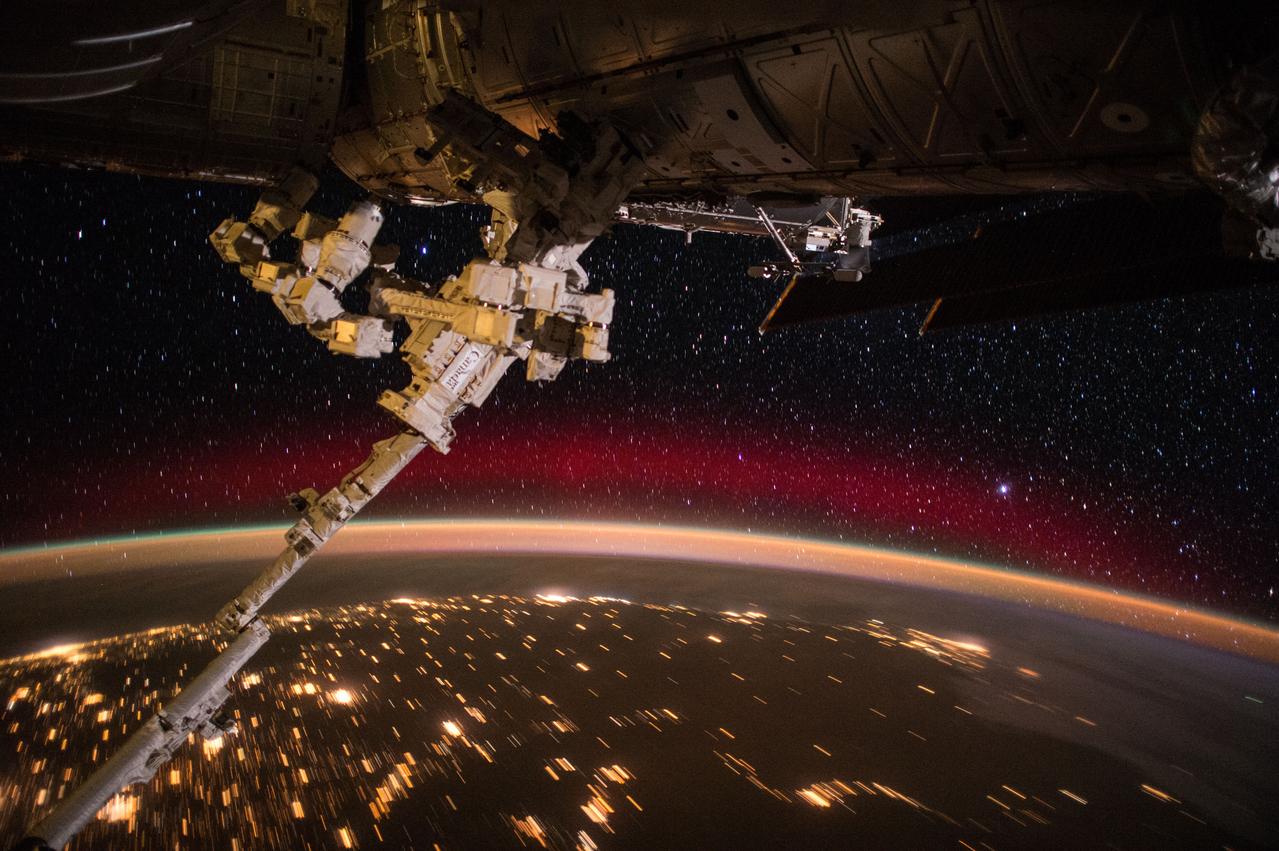
ISS044E002699 (06/23/2015) --- This spectacular view of the Earth with colorful aurora, sparkling city lights, and a rising sun over a background of diamond twinkling stars was taken by members of Expedition 44 on the International Space Station on June 23, 2015.
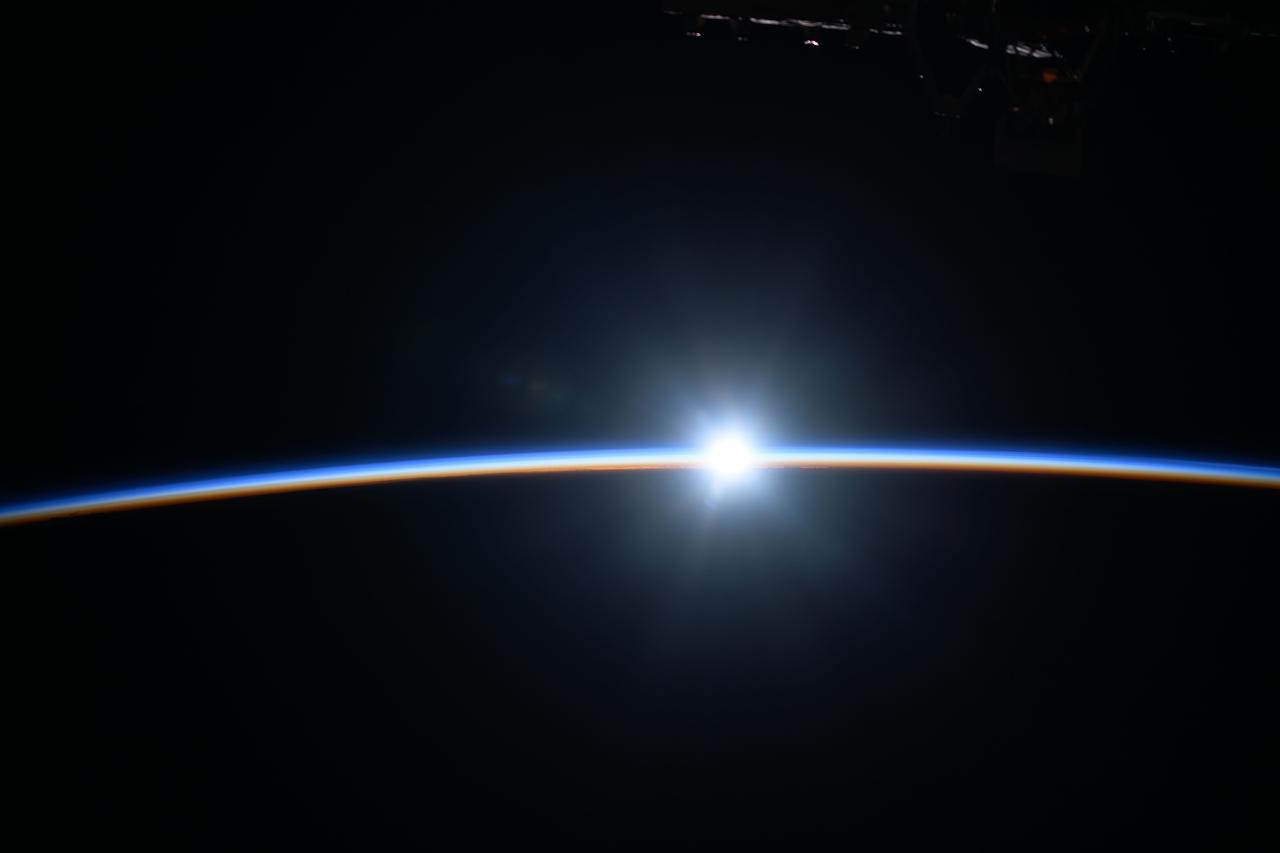
iss071e091223 (May 19, 2024) --- The last rays of an orbital sunset shine like a diamond while fading below Earth's atmosphere as the International Space Station soared 263 miles above the Pacific Ocean off the east coast of New Zealand.
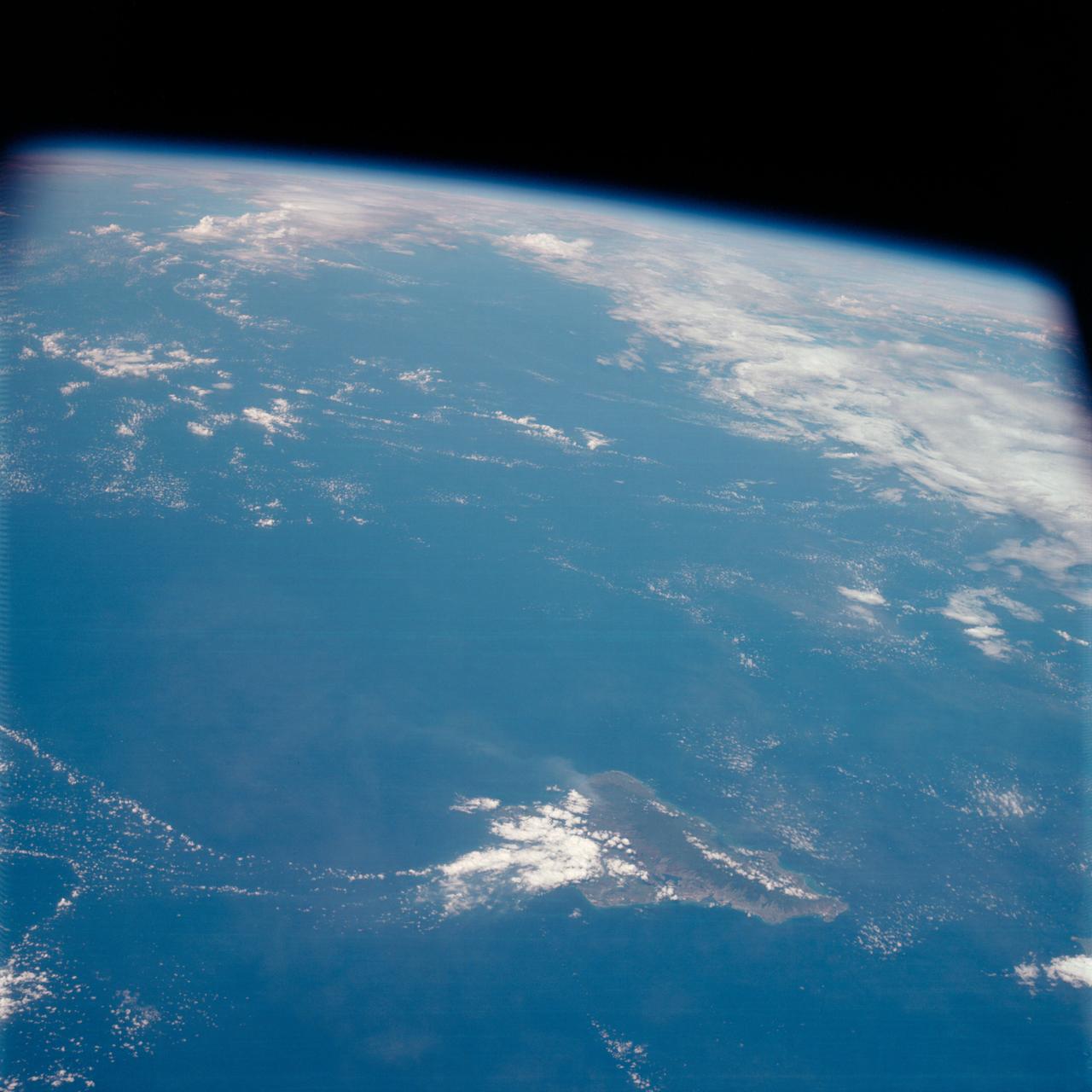
AS7-07-1741 (14 Oct. 1968) --- Island of Oahu, State of Hawaii, as seen from the Apollo 7 spacecraft during its 51st revolution of Earth. Photographed from an altitude of 122 nautical miles, at ground elapsed time of 81 hours. Diamond Head and Pearl Harbor are clearly visible.
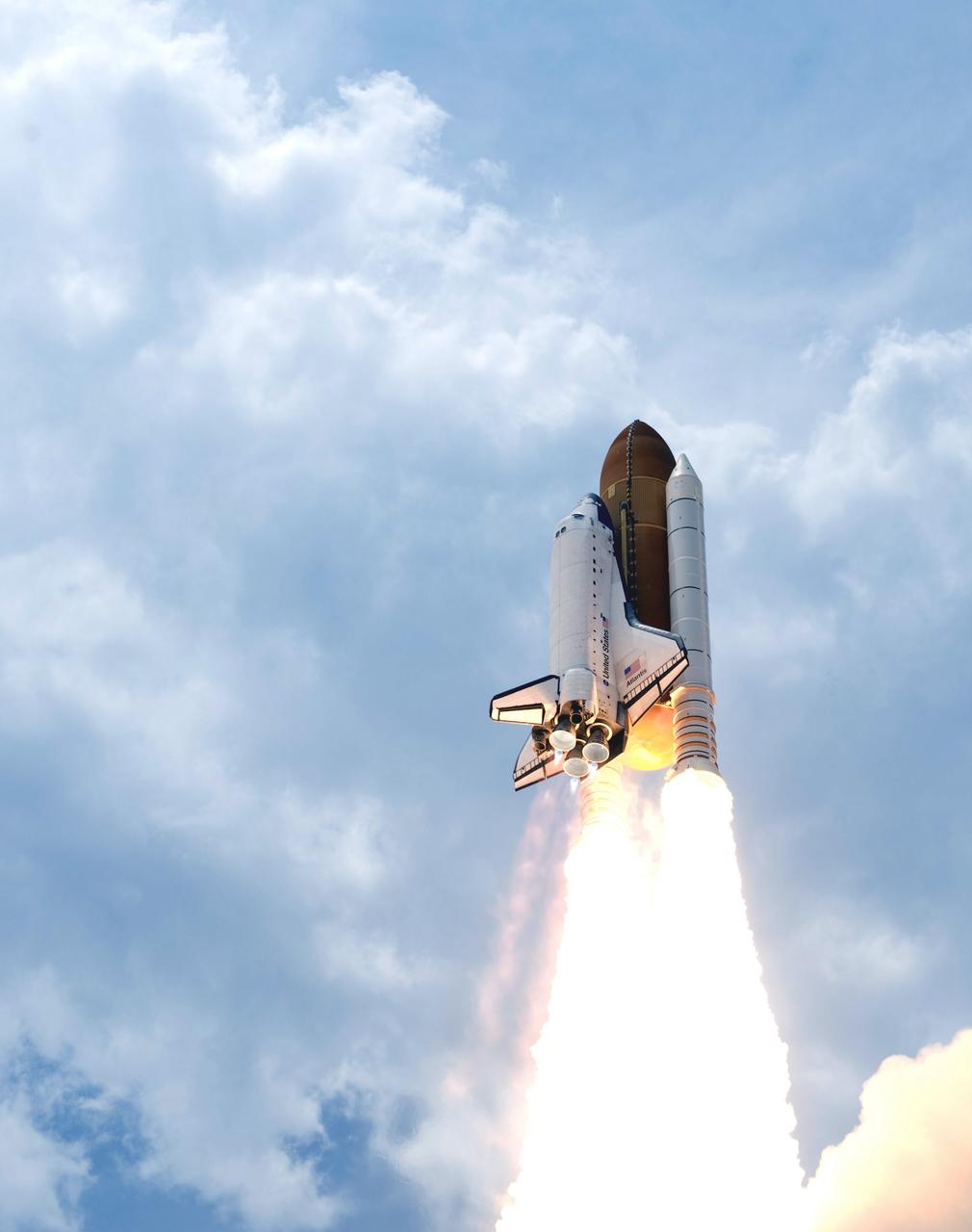
CAPE CANAVERAL, Fla. – Space shuttle Atlantis roars into the cloudy sky above Launch Pad 39A at NASA's Kennedy Space Center in Florida on the STS-125 mission. Blue cones of light, mach diamonds, can be seen beneath the engine nozzles. The mach diamonds are a formation of shock waves in the exhaust plume of an aerospace propulsion system. Atlantis will rendezvous with NASA's Hubble Space Telescope. Liftoff was on time at 2:01 p.m. EDT. Atlantis' 11-day flight will include five spacewalks to refurbish and upgrade the telescope with state-of-the-art science instruments that will expand Hubble's capabilities and extend its operational lifespan through at least 2014. The payload includes a Wide Field Camera 3, fine guidance sensor and the Cosmic Origins Spectrograph. Photo credit: NASA/Tony Gray-Tom Farrar
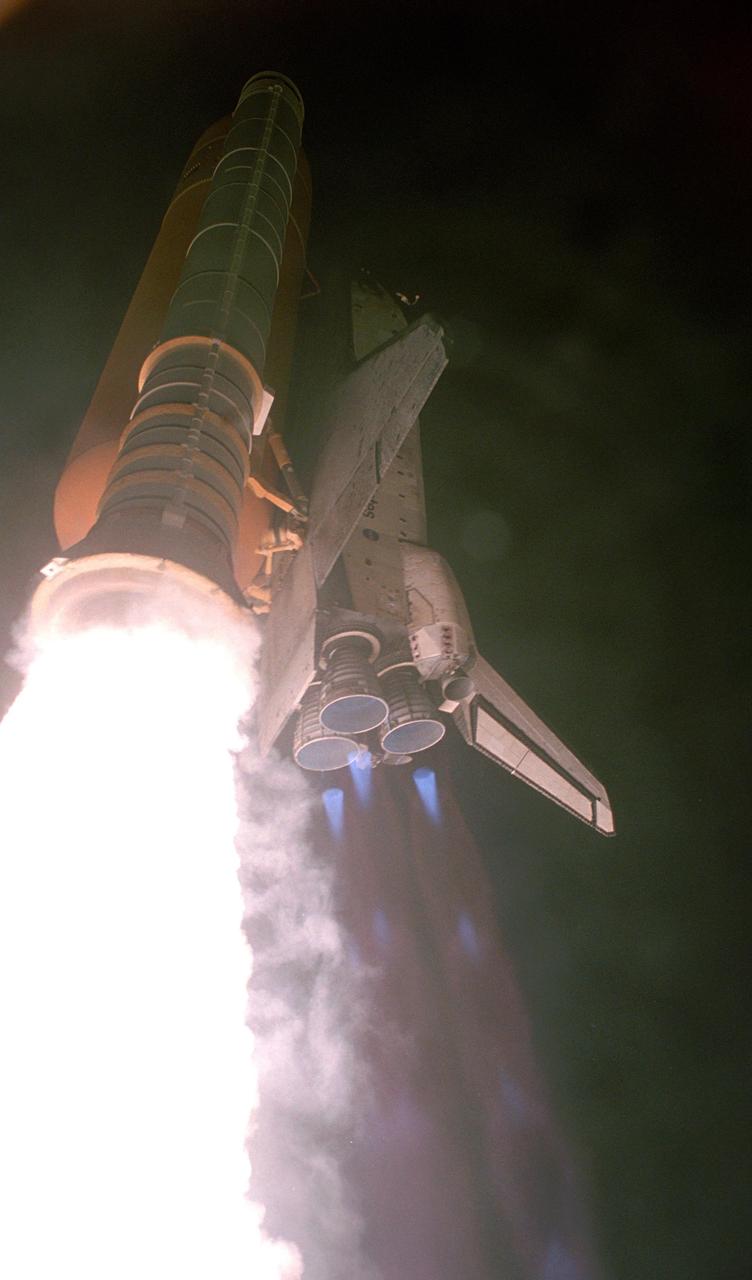
KENNEDY SPACE CENTER, FLA. -- Mach diamonds appear beneath Space Shuttle Discovery's main engines as the vehicle roars into the night sky after liftoff on mission STS-116. Mach diamonds are a formation of shock waves in the exhaust plume of an aerospace propulsion system. Liftoff occurred on time at 8:47 p.m. EST. This was the second launch attempt for mission STS-116. The first launch attempt on Dec. 7 was postponed due a low cloud ceiling over Kennedy Space Center. This is Discovery's 33rd mission and the first night launch since 2002. The 20th shuttle mission to the International Space Station, STS-116 carries another truss segment, P5. It will serve as a spacer, mated to the P4 truss that was attached in September. After installing the P5, the crew will reconfigure and redistribute the power generated by two pairs of U.S. solar arrays. Landing is expected Dec. 21 at KSC. Photo credit: NASA/Tony Gray & Don Kight
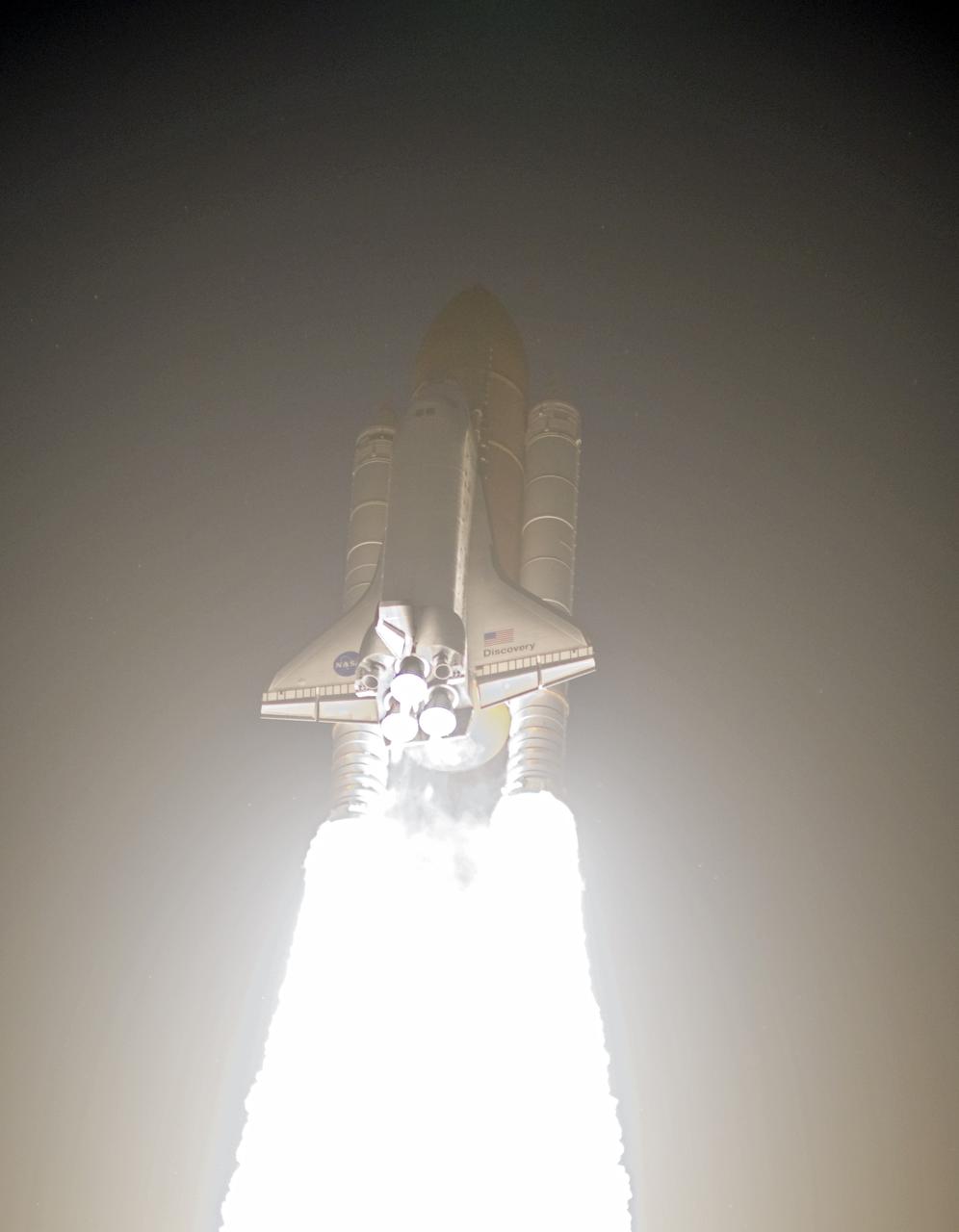
CAPE CANAVERAL, Fla. – As space shuttle Discovery roars toward space after launch from Launch Pad 39A at NASA's Kennedy Space Center in Florida, mach diamonds can be seen beneath the engine nozzles. Blue cones of light, the mach diamonds are a formation of shock waves in the exhaust plume of an aerospace propulsion system. Launch was on time at 7:43 p.m. EDT. The STS-119 mission is the 28th to the International Space Station and the 125th space shuttle flight. Discovery will deliver the final pair of power-generating solar array wings and the S6 truss segment. Installation of S6 will signal the station's readiness to house a six-member crew for conducting increased science. Photo credit: NASA/Rusty Backer, George Roberts
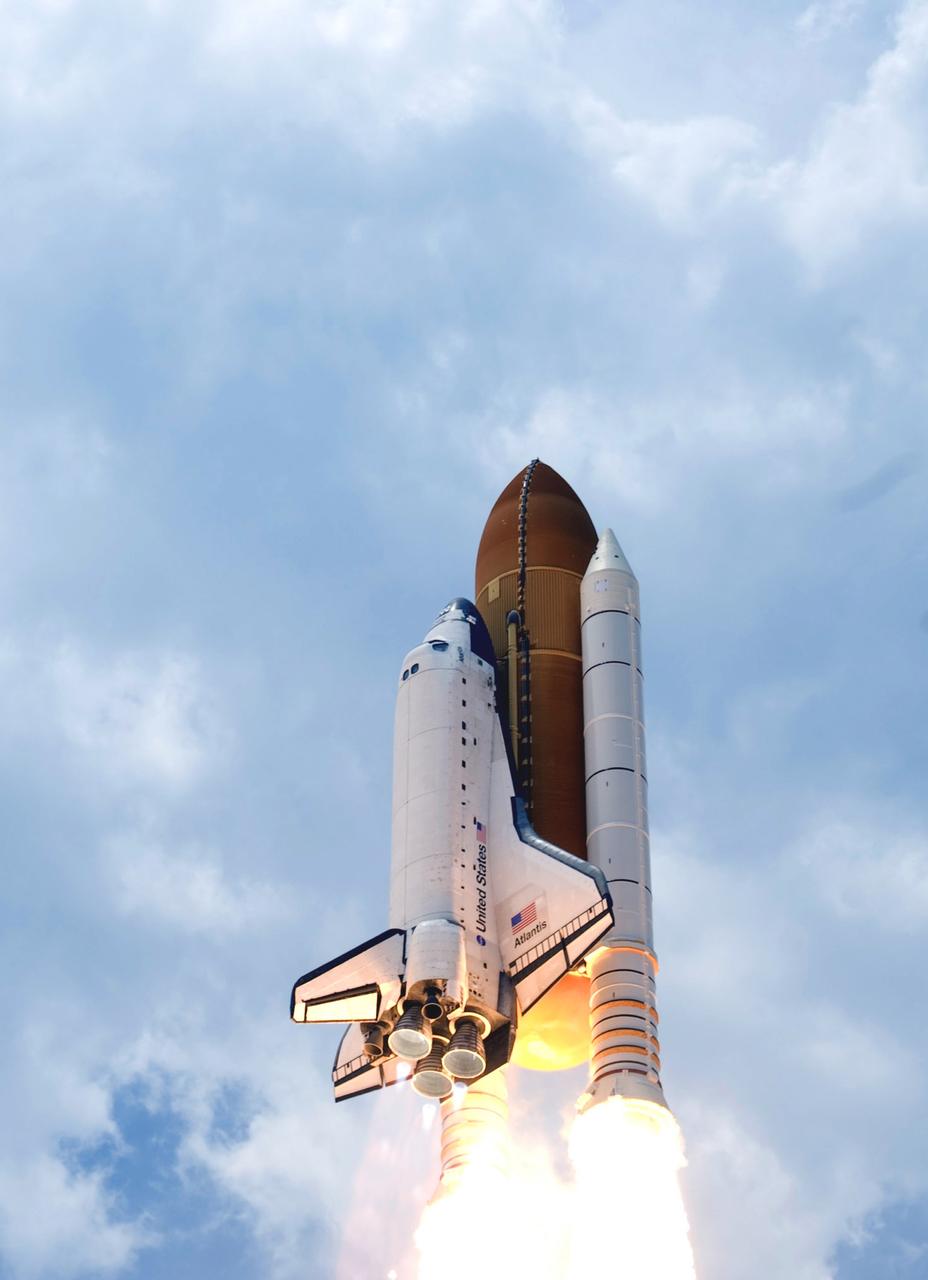
CAPE CANAVERAL, Fla. – Space shuttle Atlantis roars into the cloudy sky above Launch Pad 39A at NASA's Kennedy Space Center in Florida on the STS-125 mission. Blue cones of light, mach diamonds, can be seen beneath the engine nozzles. The mach diamonds are a formation of shock waves in the exhaust plume of an aerospace propulsion system. Atlantis will rendezvous with NASA's Hubble Space Telescope. Liftoff was on time at 2:01 p.m. EDT. Atlantis' 11-day flight will include five spacewalks to refurbish and upgrade the telescope with state-of-the-art science instruments that will expand Hubble's capabilities and extend its operational lifespan through at least 2014. The payload includes a Wide Field Camera 3, fine guidance sensor and the Cosmic Origins Spectrograph. Photo credit: NASA/Tony Gray-Tom Farrar
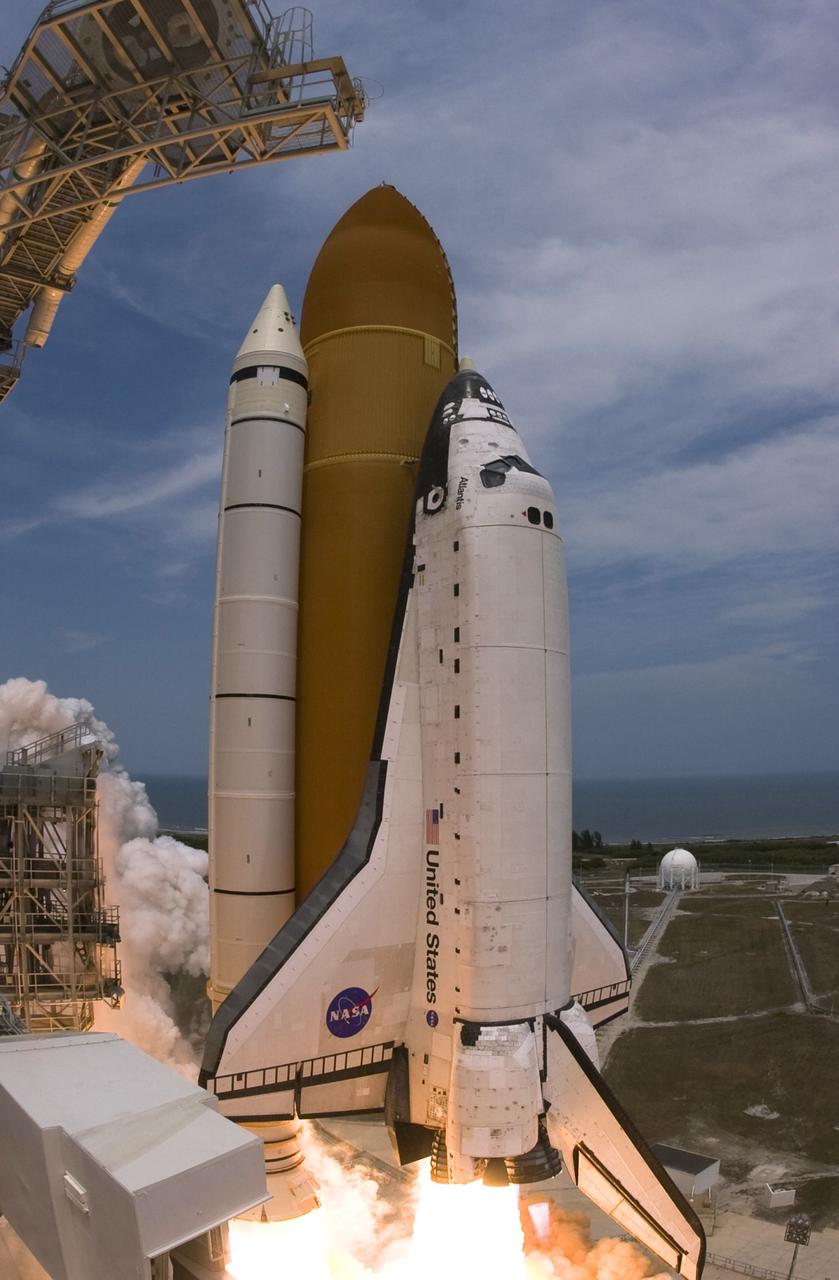
CAPE CANAVERAL, Fla. – A fish-eye view shows space shuttle Atlantis lifting off from Launch Pad 39A at NASA's Kennedy Space Center in Florida. At left in the foreground is the White Room, which provides access into the shuttle. On the horizon is the Atlantic Ocean. A blue mach diamond appears below the engine nozzle at right. The mach diamonds are a formation of shock waves in the exhaust plume of an aerospace propulsion system. Atlantis will rendezvous with NASA's Hubble Space Telescope on the STS-125 mission. Liftoff was on time at 2:01 p.m. EDT. Atlantis' 11-day flight will include five spacewalks to refurbish and upgrade the telescope with state-of-the-art science instruments that will expand Hubble's capabilities and extend its operational lifespan through at least 2014. The payload includes a Wide Field Camera 3, fine guidance sensor and the Cosmic Origins Spectrograph. Photo credit: NASA/Sandra Joseph-Kevin O'Connell
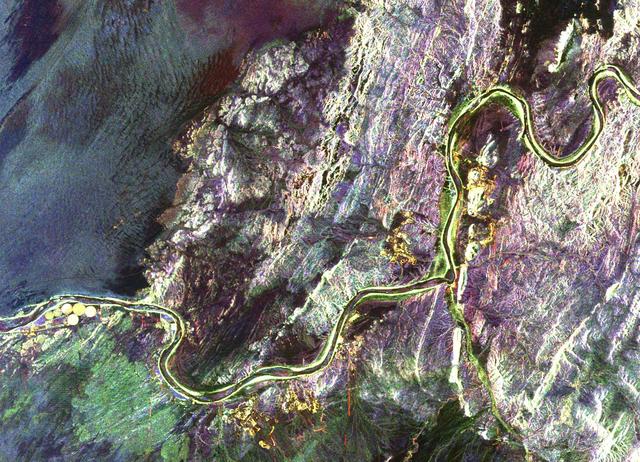
This radar image shows a close up view of a portion of the Richtersveld National Park and Orange River top of image in the Northern Cape Province of the Republic of South Africa.
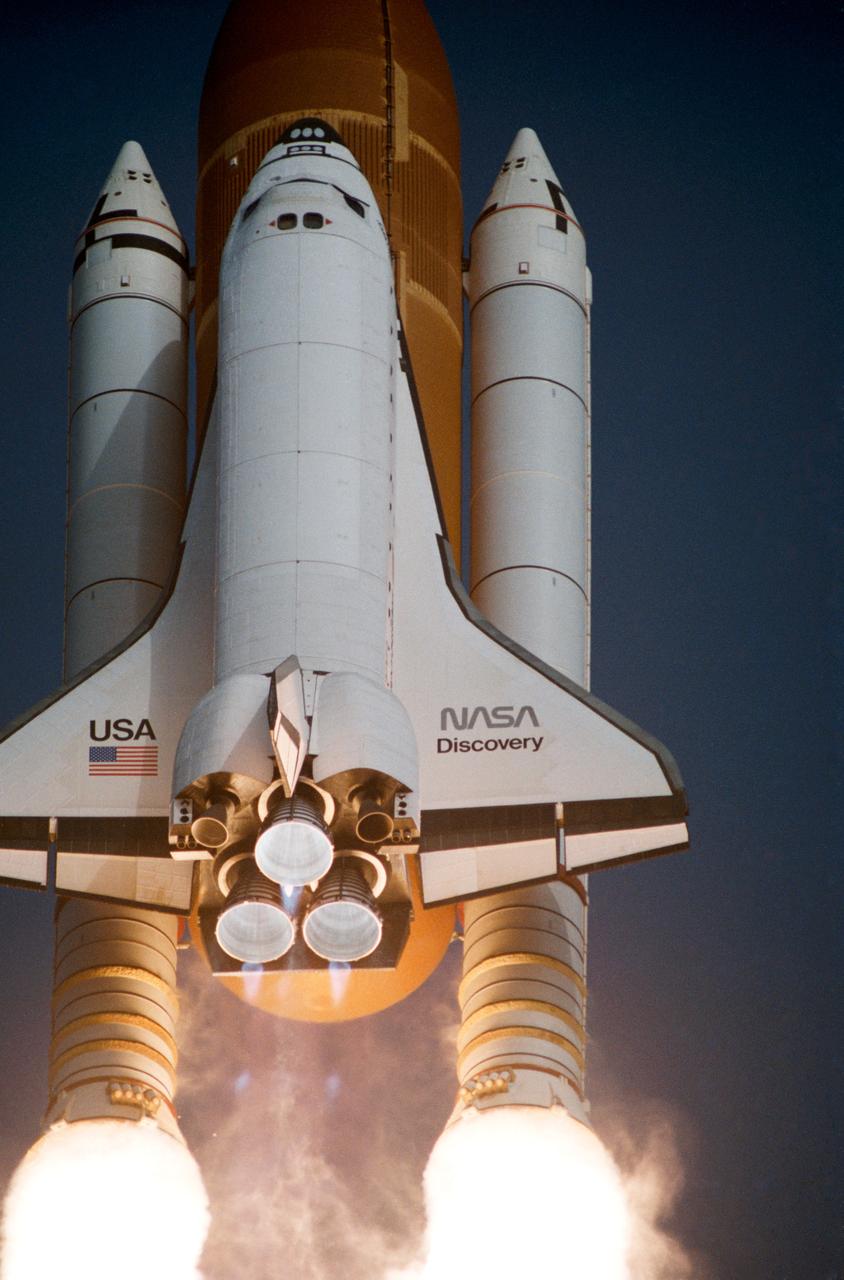
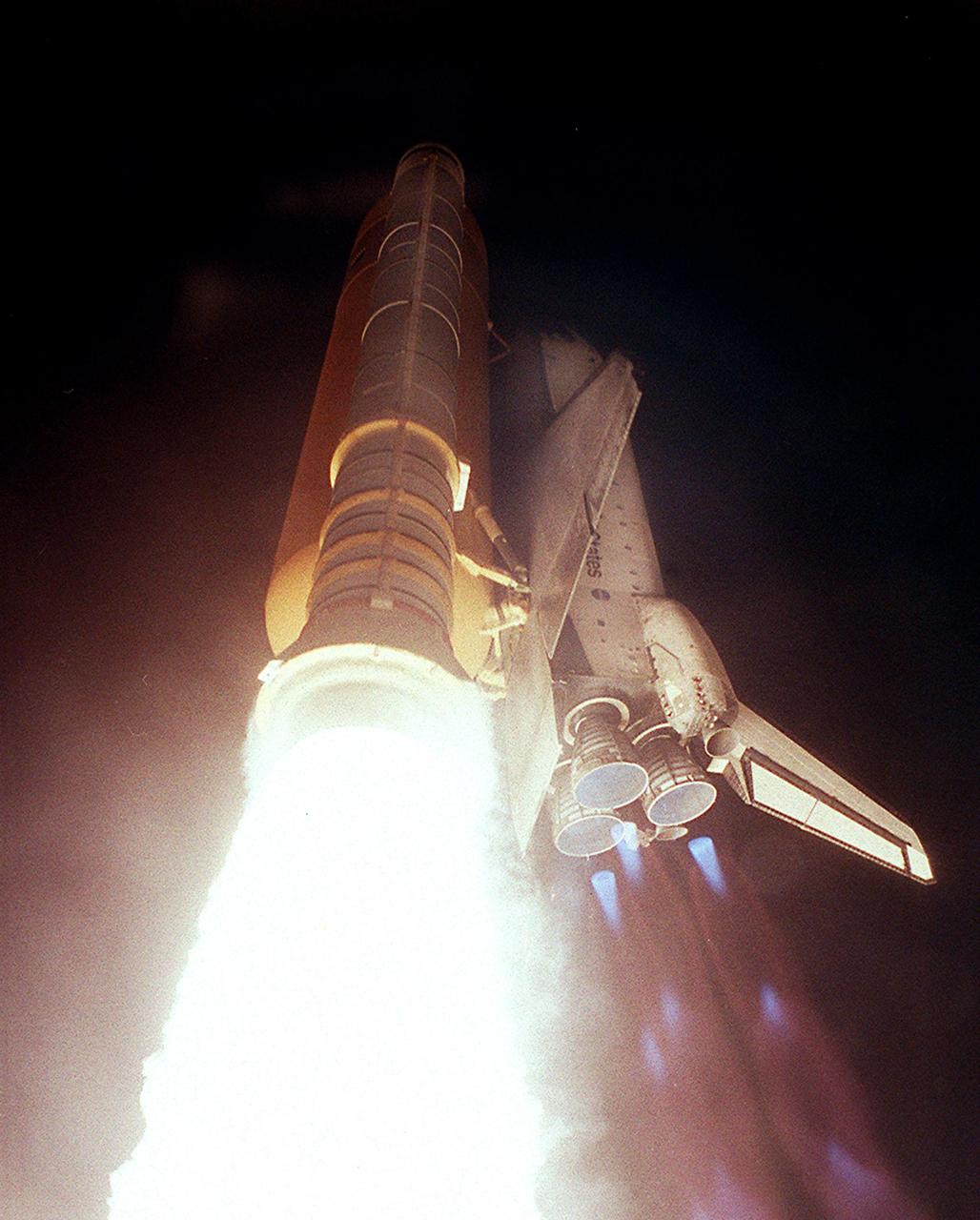
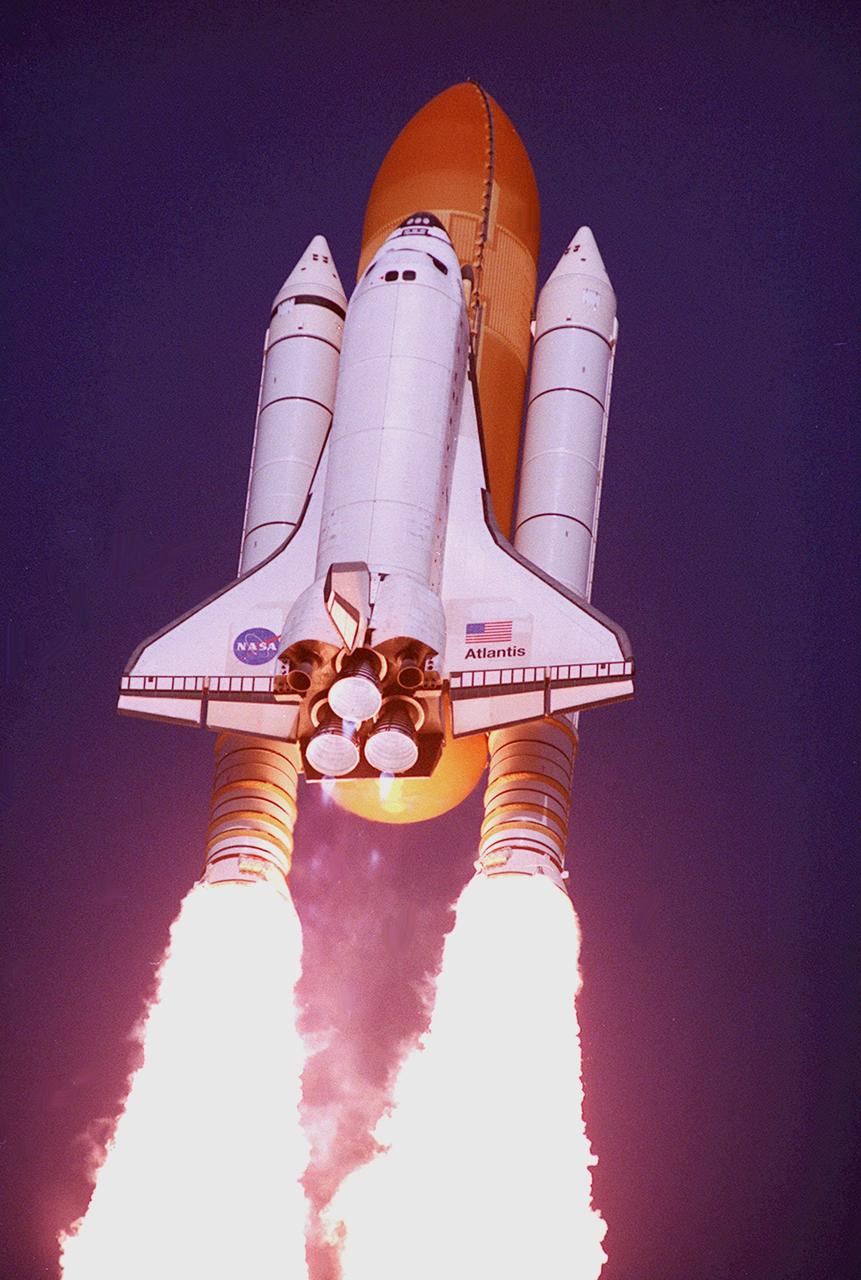
51G-S-100 (17 June 1985) --- A low-angle 35mm tracking view of the Space Shuttle Discovery, its external tank and two solid rocket boosters speeding from the KSC launch facility to begin NASA STS 51-G. The camera has captured the diamond shock effect associated with the launch phase or orbiter vehicles. Inside the Discovery are seven crewmembers and a variety of payloads representing international interests. Liftoff for 51-G occurred at 7:33:043 a.m. (EDT), June 17, 1985.
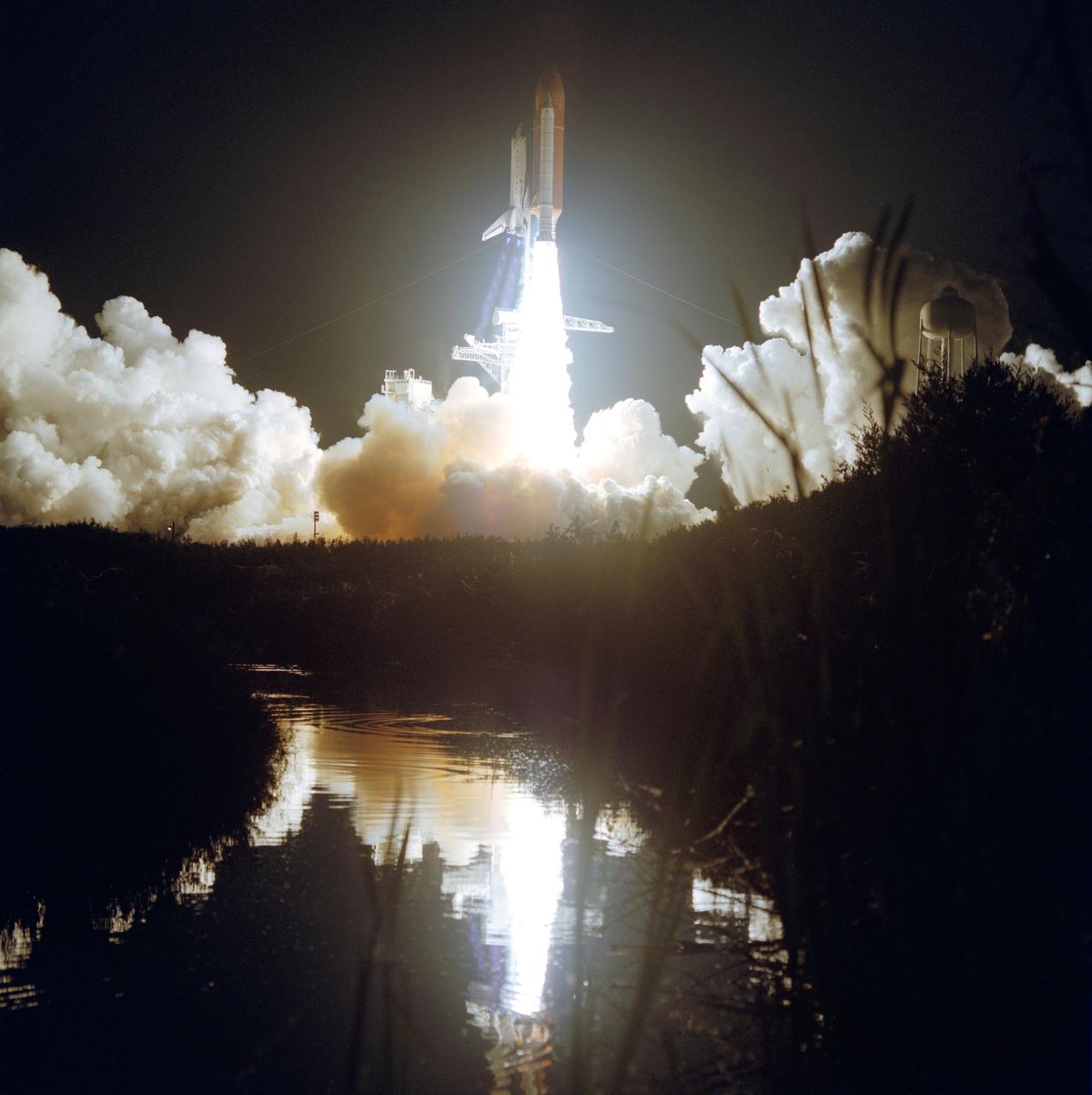
STS044-S-095 (24 Nov 1991) --- A wide shot of Atlantis' liftoff for STS-44 was recorded by a remote camera. At 6:44 EST, Nov. 24, 1991, the spacecraft headed toward Earth orbit with a crew of six aboard. The event is reflected in the KSC marsh waters. Darkness accentuates the diamond shock effect from the three main engines.
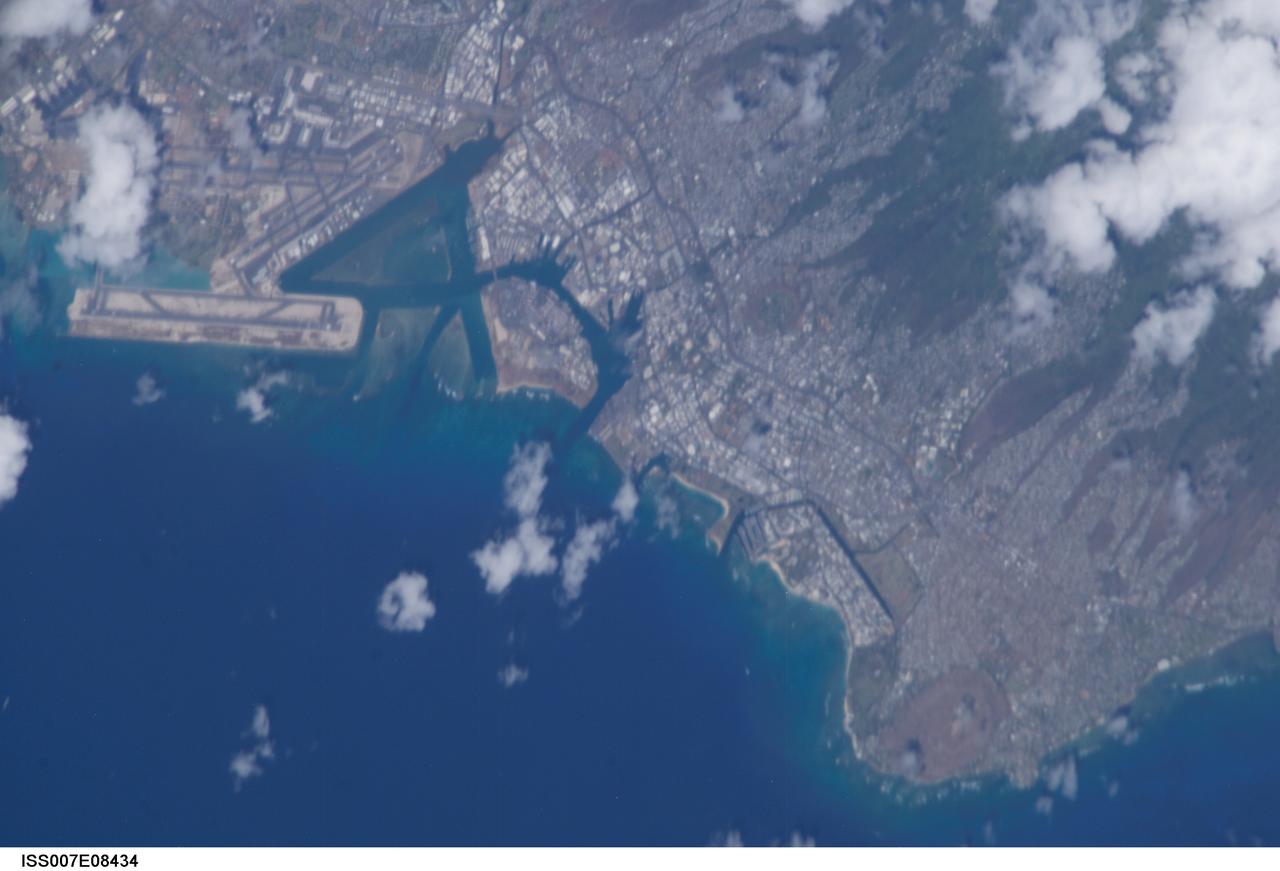
ISS007-E-08434 (27 June 2003) --- This photo featuring a close-up view of Honolulu on the Hawaiian island of Oahu was taken from the International Space Station (ISS) by astronaut Edward T. Lu, Expedition 7 NASA ISS science officer and flight engineer. Diamond Head Crater and Waikiki Beach are visible at lower right.
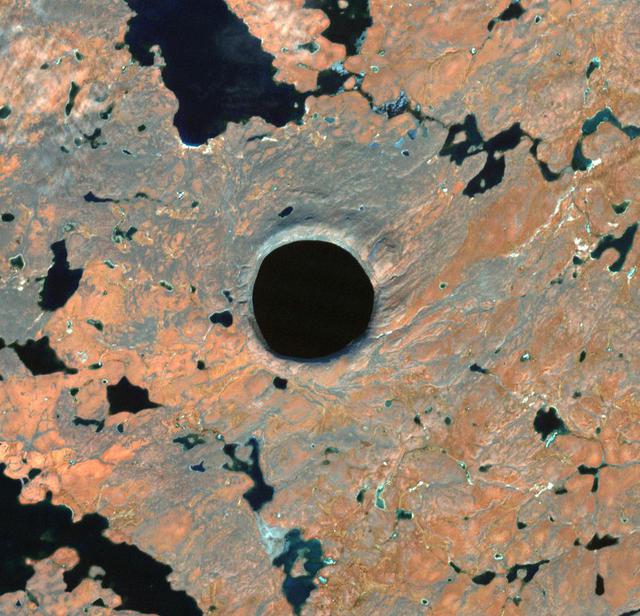
In Nunavik Province, far northern Canada, the Pingualuit Crater is known as the "Crystal Eye" to the Inuit. Once thought to be a possible diamond-bearing kimberlite pipe, the 3.5 km diameter circular structure is now known to be a meteor crater, formed about 1.4 million years ago. The image was acquired October 1, 2021, covers an area of 14.9 by 15.2 km, and is located at 61.3 degrees north, 73.7 degrees west. https://photojournal.jpl.nasa.gov/catalog/PIA25276
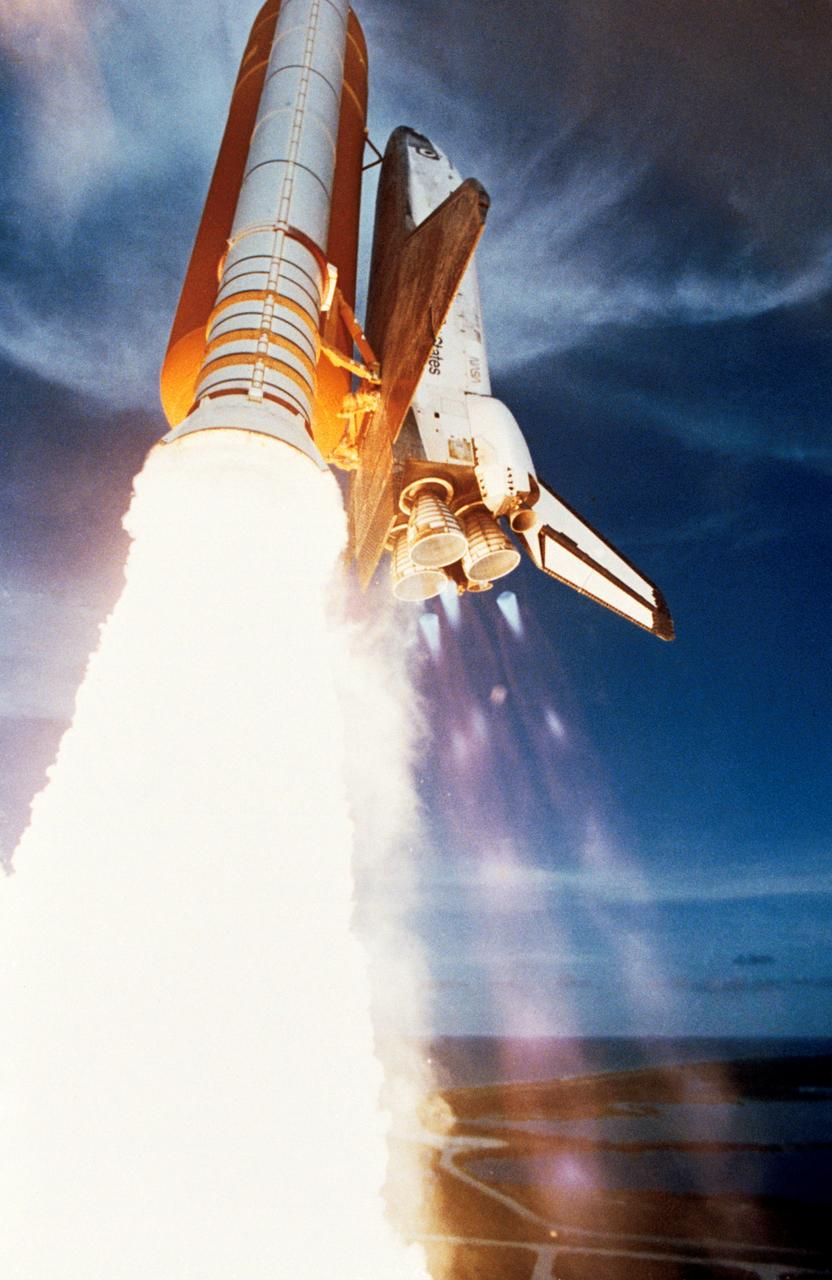
51F-S-157 (29 July 1985) --- Just moments following ignition, the Space Shuttle Challenger, mated to its two solid rocket boosters and an external fuel tank, soars toward a week-long mission in Earth orbit. Note the diamond shock effect in the vicinity of the three main engines. Launch occurred at 5:00 p.m. (EDT), July 29, 1985.
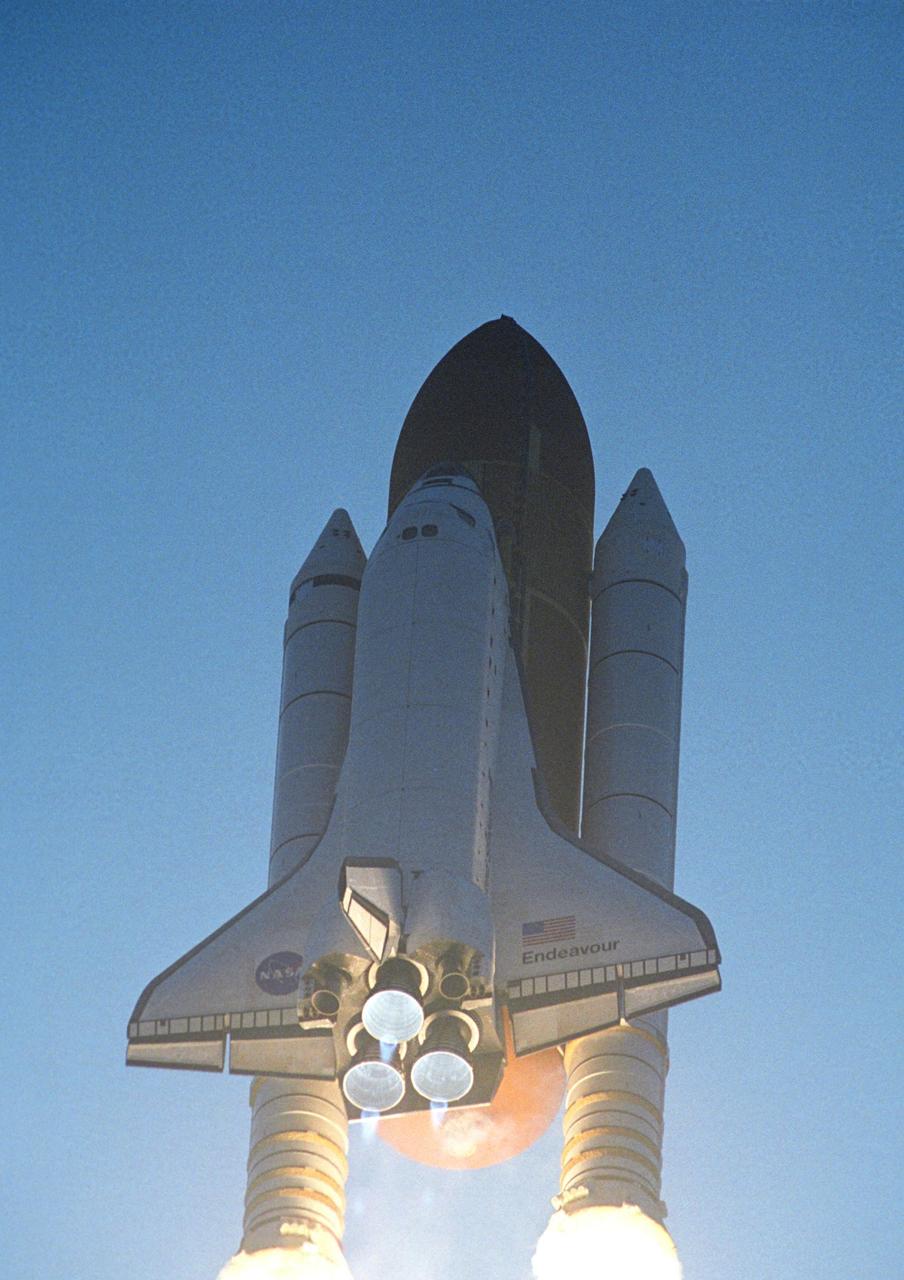
KENNEDY SPACE CENTER, FLA. -- Blue mach diamonds appear beneath the main engines on Space Shuttle Endeavour as it hurtles into the sky on mission STS-118. The 22nd shuttle flight to the International Space Station, the mission will continue space station construction by delivering a third starboard truss segment, S5, and other payloads such as the SPACEHAB module and the external stowage platform 3. Liftoff of Endeavour was on time at 6:36 p.m. EDT. Photo credit: NASA/Jerry Cannon, Mike Kerley
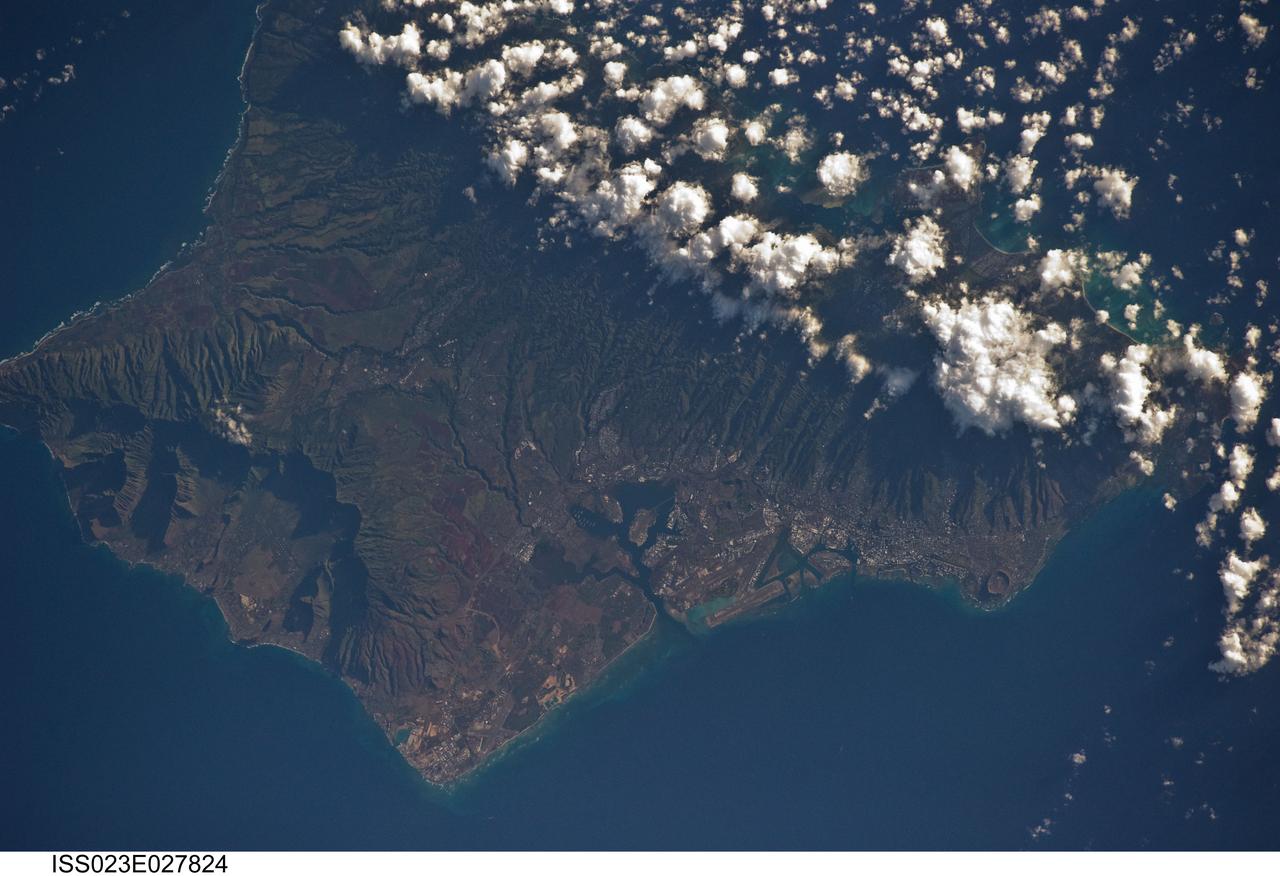
ISS023-E-027824 (23 April 2010) --- A member of the Expedition 23 crew onboard the Earth-orbiting International Space Station took this picture of Hawaii’s third largest island with an electronic still camera on April 23, 2010. Oahu is the commercial center of Hawaii, and tourism is the largest contributor to the economy. Among the many popular beaches is the renowned Waikiki Beach, backed by the famous Diamond Head, an extinct volcano. The largest community, Honolulu, is the state capital. Hickam Air Force Base is located on the island.
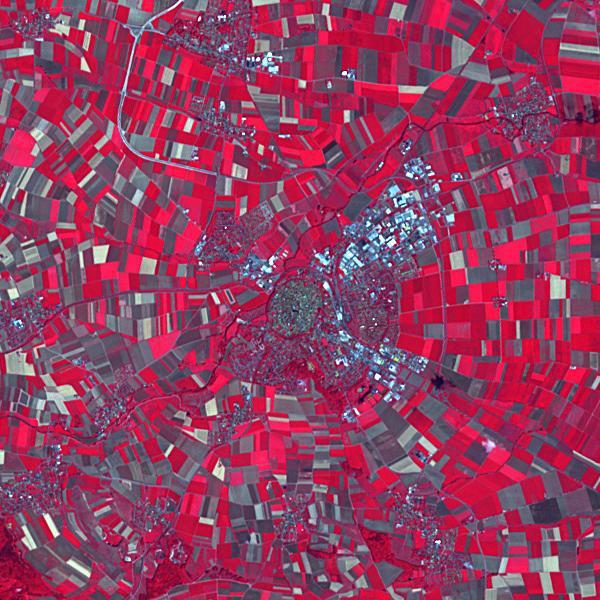
The town of Nordlingen in southern Germany preserves its circular 14th century walls. The circular shape is a result of the town having been built in an impact crater, the 10 million year old Ries crater. Stone buildings in the town contain millions of tiny diamonds, created by the impact of the meteorite. The image was acquired July 18, 2014, covers an area of 9 x 9 km, and is located at 48.8 degrees north, 10.5 degrees east. https://photojournal.jpl.nasa.gov/catalog/PIA23851

iss074e0044675 (Dec. 25, 2025) --- Fishing boats illuminate the Arabian Sea along India’s west coast with green lights designed to attract squid, shrimp, sardines, and mackerel in this nighttime photograph from the International Space Station, orbiting 259 miles above Earth. At lower right, the city lights of Hyderabad—renowned for its historic diamond and pearl trade—stretch westward toward the Mumbai Metropolitan Region, home to over 26 million people and the heart of Bollywood.
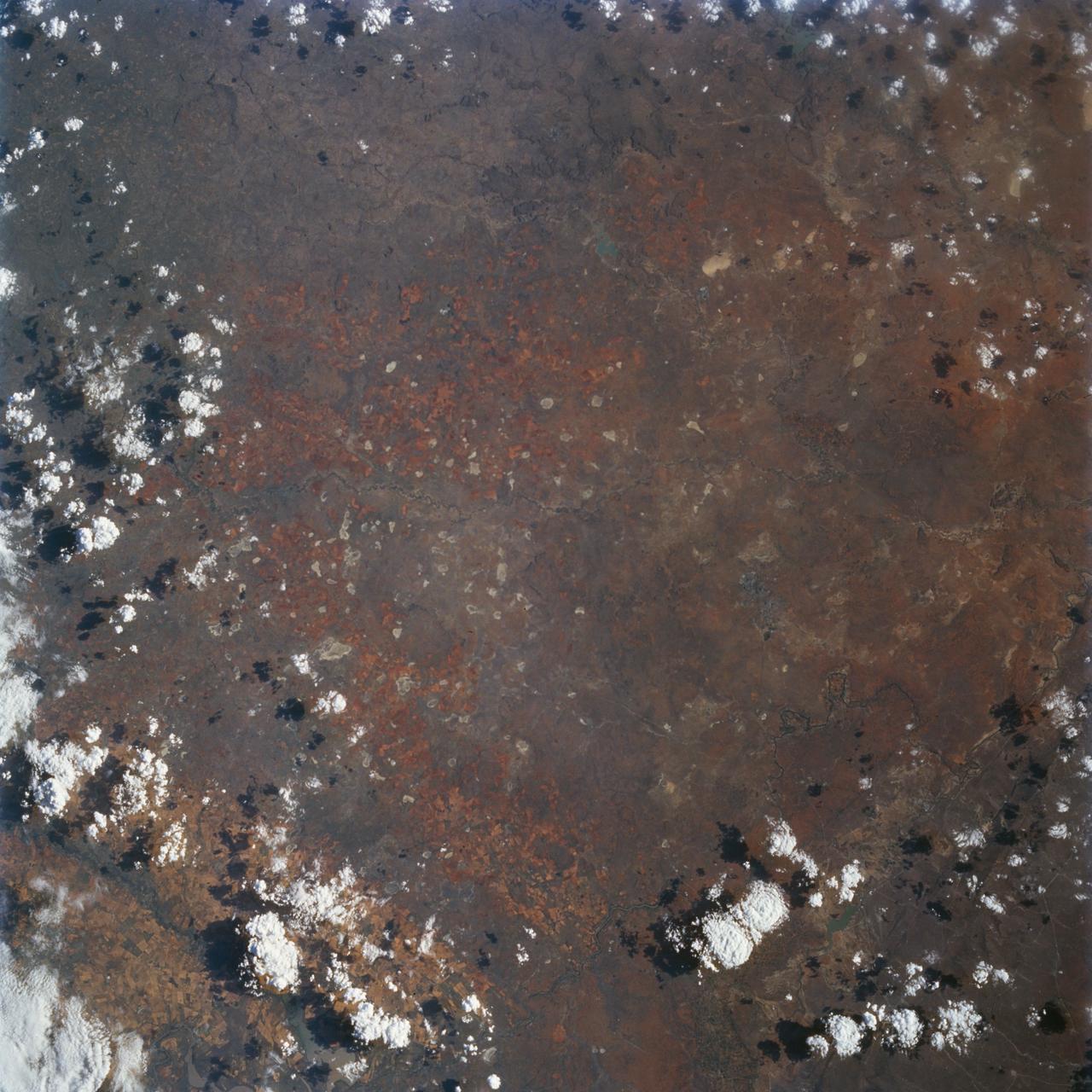
STS072-727-059 (11-20 Jan. 1996) --- Plains of the Orange Free State, South Africa are featured in this 70mm frame exposed from the Space Shuttle Endeavour. If the photograph is oriented with the largest clouds at the top edge, so that the cloud shadows fall to the upper right of each cloud, then north is to the top. The Vaal River flows along the top and through the upper left of the photograph; the reservoir of the Bloemhofdam on the Sand River can be seen between clouds at the upper right of the photograph. Kimberley can be seen as a gray smudge southeast of a contorted set of bends in the Vaal river (upper left center). With high magnification four dark dots, large open-pit mine shafts, can be seen within the gray smudge of the city. Kimberley, the capital of Northern Cape Province, was founded in 1878 after the discovery of diamonds in 1969 - 71, and reached by railway in 1885. Diamond mining and gem cutting remain prominent in the economy. The reddish soil and scattered salt pans (playa lakes) across the plateau suggest the semi-arid climate, suitable for cattle ranching. Reservoirs on most streams now provide water for the towns as well as irrigation for agriculture.
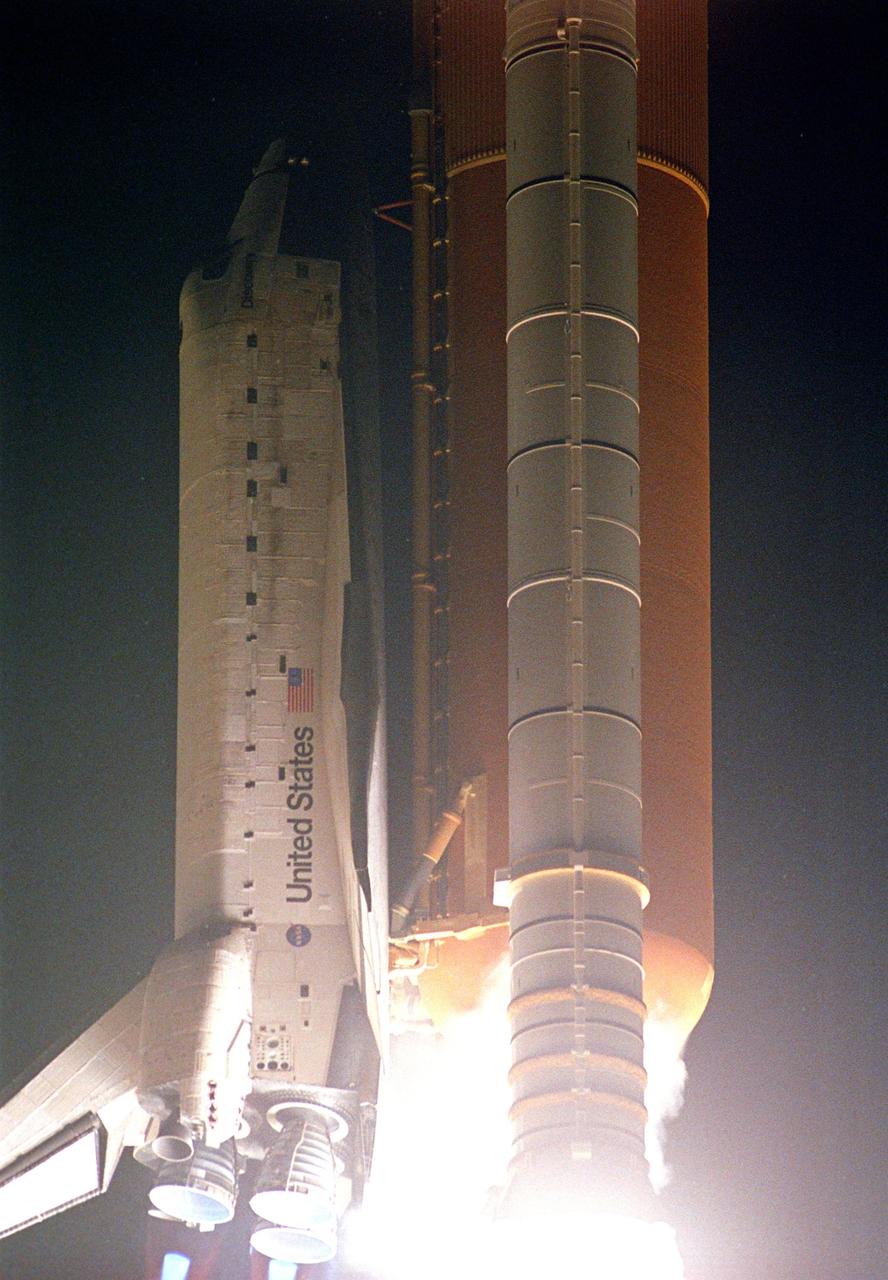
KENNEDY SPACE CENTER, FLA. -- Mach diamonds, below left, appear beneath Space Shuttle Discovery's main engines as the vehicle roars into the night sky after liftoff on mission STS-116. Mach diamonds are a formation of shock waves in the exhaust plume of an aerospace propulsion system. Liftoff occurred on time at 8:47 p.m. EST. This was the second launch attempt for mission STS-116. The first launch attempt on Dec. 7 was postponed due a low cloud ceiling over Kennedy Space Center. This is Discovery's 33rd mission and the first night launch since 2002. The 20th shuttle mission to the International Space Station, STS-116 carries another truss segment, P5. It will serve as a spacer, mated to the P4 truss that was attached in September. After installing the P5, the crew will reconfigure and redistribute the power generated by two pairs of U.S. solar arrays. Landing is expected Dec. 21 at KSC. Photo credit: NASA/Jerry Cannon & Mike Kerley
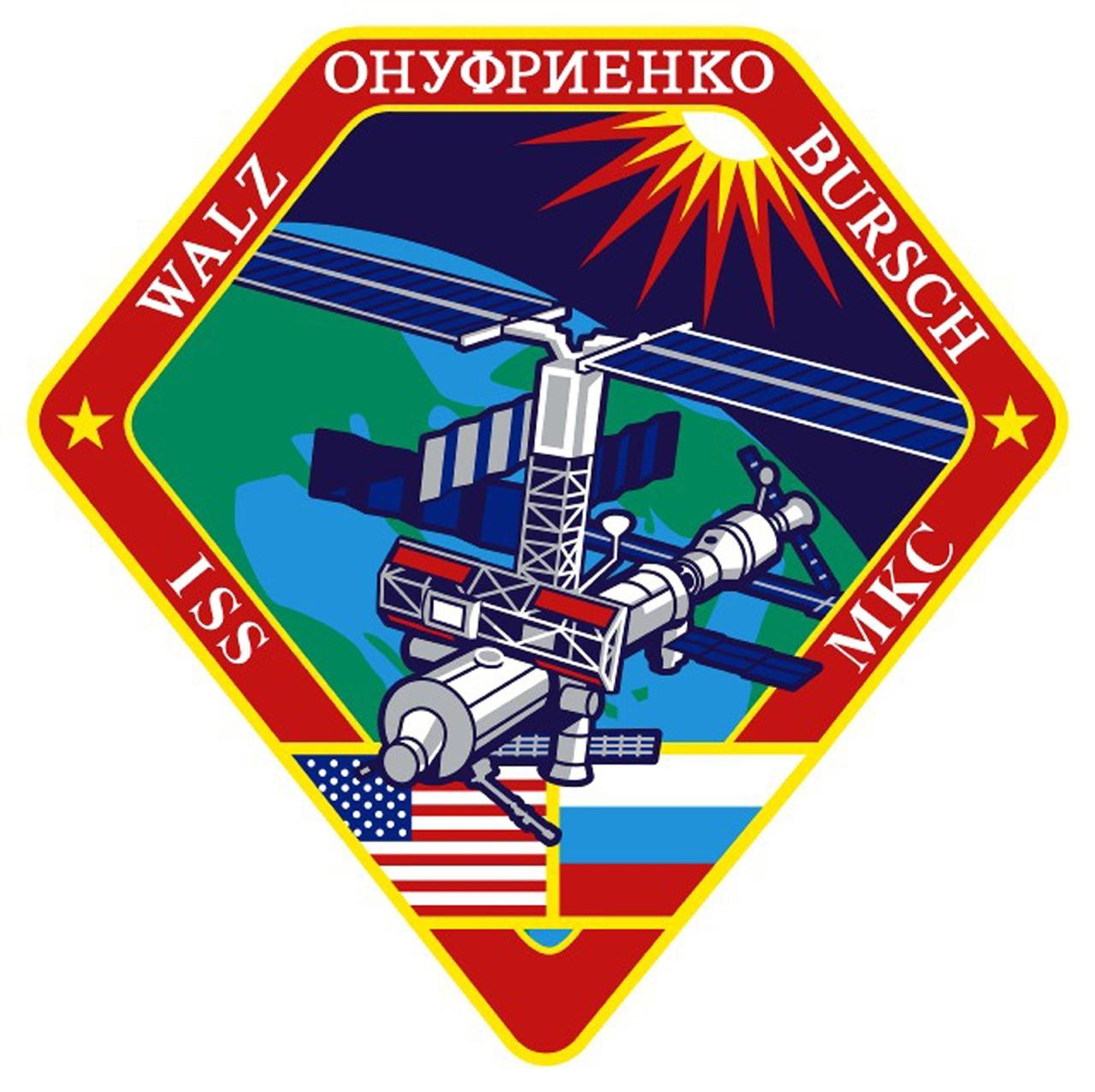
JOHNSON SPACE CENTER, HOUSTON, TEXAS -- EXPEDITION FOUR INSIGNIA -- The International Space Station (ISS) Expedition Four crew patch has an overall diamond shape, showing the "diamond in the rough" configuration of the Station during expedition four. The red hexagonal shape with stylized American and Russian flags represents the cross-sectional view of the S0 truss segment, which the crew will attach to the U.S. Lab Destiny. The persistent Sun shining on the Earth and Station represents the constant challenges that the crew and ground support team will face every day while operating the International Space Station, while shedding new light through daily research. The green portion of the Earth represents the fourth color in the visible spectrum and the black void of space represents humankind's constant quest to explore the unknown. The NASA insignia design for Shuttle flights ts is reserved for use by the astronauts and for other official use as the NASA Administrator may authorize. Public availability has been approved only in the forms of illustrations by the various news media. When and if there is any change in this policy, which we do not anticipate, it will be publicly announced
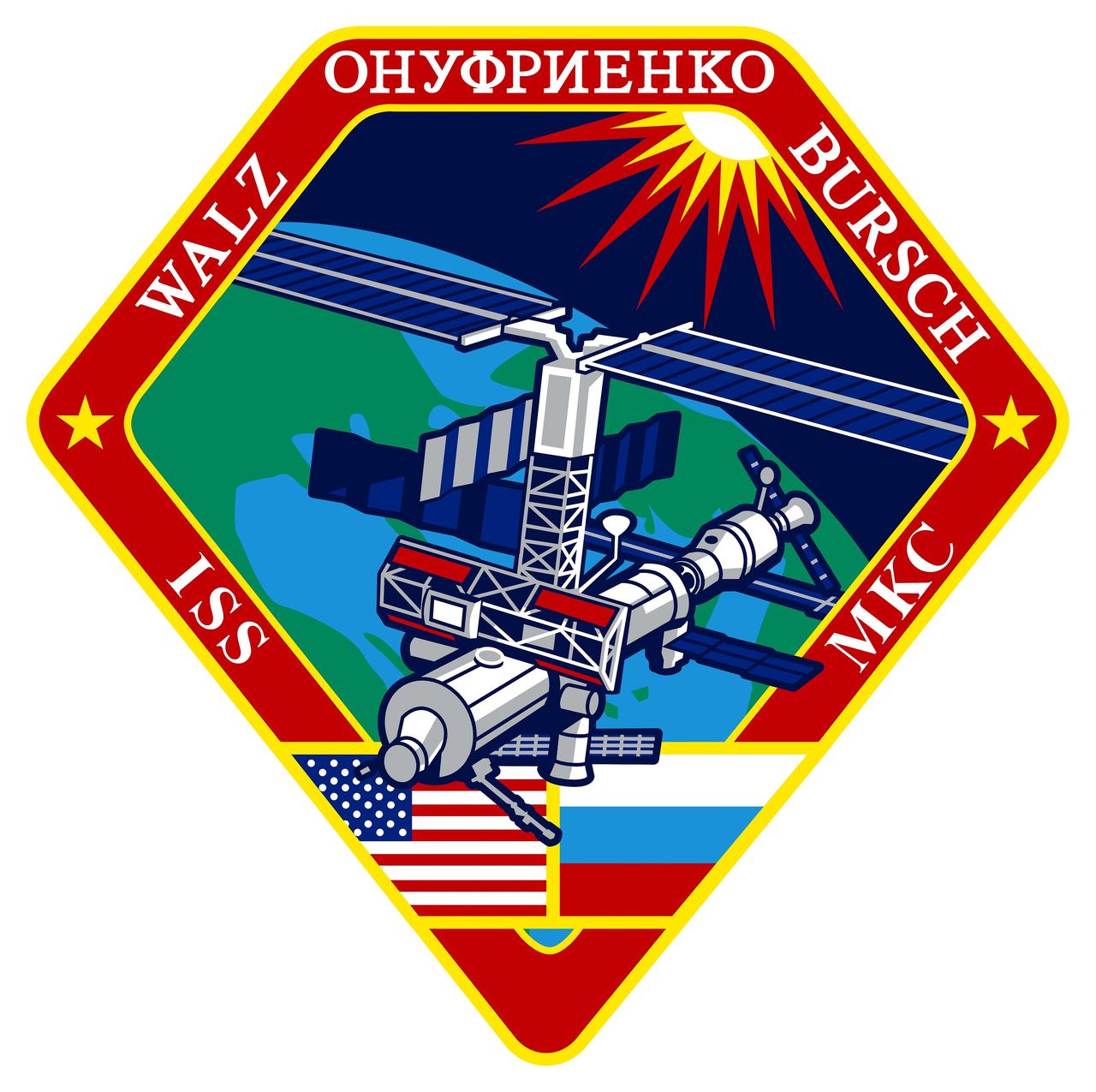
ISS004-S-001 (August 2001) --- The International Space Station (ISS) Expedition 4 crew patch has an overall diamond shape, showing the “diamond in the rough” configuration of the Station during expedition 4. The red hexagonal shape with stylized American and Russian flags represents the cross-sectional view of the S0 truss segment, which the crew will attach to the U.S. Lab Destiny. The persistent Sun shining on the Earth and Station represents the constant challenges that the crew and ground support team will face every day while operating the International Space Station, while shedding new light through daily research. The green portion of the Earth represents the fourth color in the visible spectrum and the black void of space represents humankind’s constant quest to explore the unknown. The NASA insignia design for Shuttle flights is reserved for use by the astronauts and for other official use as the NASA Administrator may authorize. Public availability has been approved only in the forms of illustrations by the various news media. When and if there is any change in this policy, which is not anticipated, the change will be publicly announced.
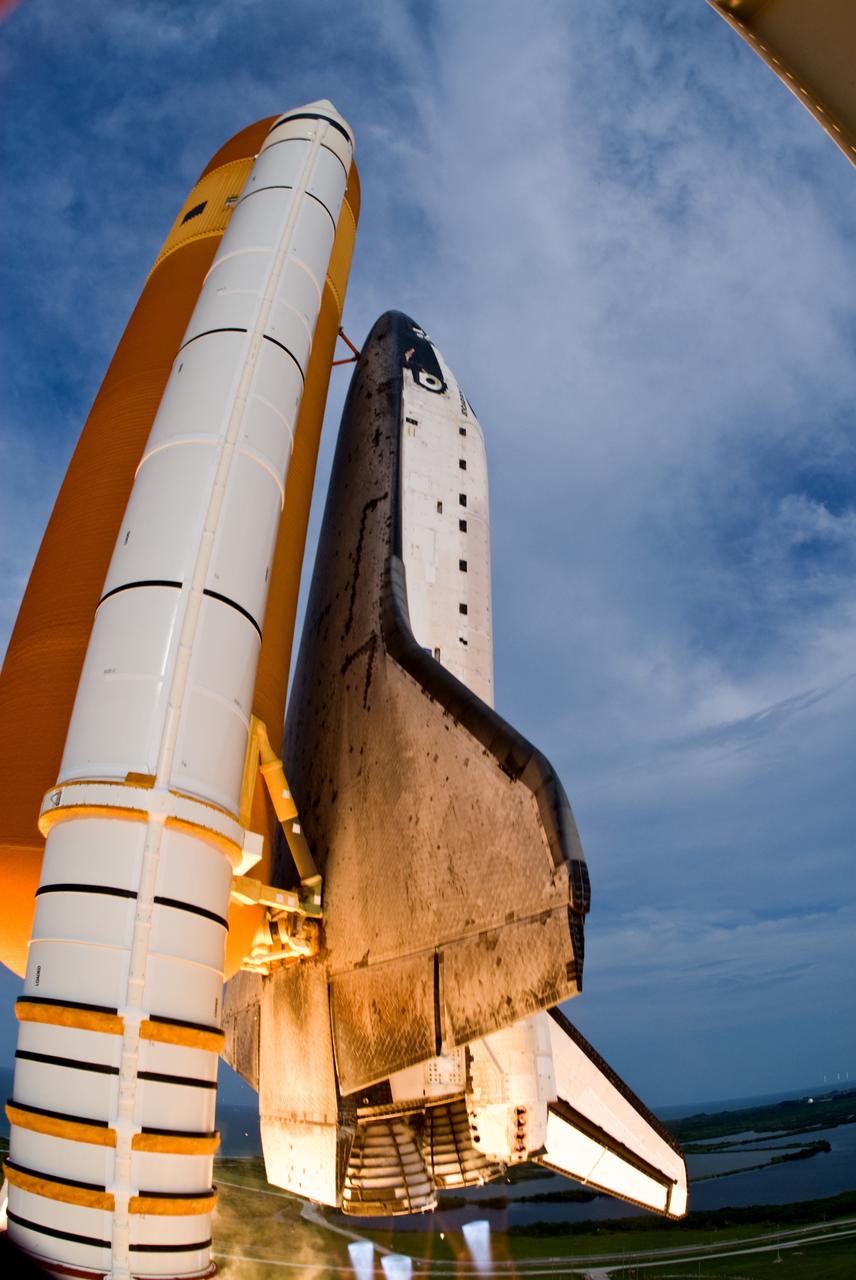
CAPE CANAVERAL, Fla. – A fish-eye view of space shuttle Endeavour as it lifts off NASA Kennedy Space Center's Launch Pad 39A into the cloud-washed sky on the STS-127 mission. At the bottom, underneath the main engine nozzles are the blue mach diamonds. The mach diamonds are a formation of shock waves in the exhaust plume of an aerospace propulsion system. Liftoff was on-time at 6:03 p.m. EDT. This was the sixth launch attempt for the STS-127 mission. The launch was scrubbed on June 13 and June 17 when a hydrogen gas leak occurred during tanking due to a misaligned Ground Umbilical Carrier Plate. The mission was postponed July 11, 12 and 13 due to weather conditions near the Shuttle Landing Facility at Kennedy that violated rules for launching, and lightning issues. Endeavour will deliver the Japanese Experiment Module's Exposed Facility and the Experiment Logistics Module-Exposed Section in the final of three flights dedicated to the assembly of the Japan Aerospace Exploration Agency's Kibo laboratory complex on the International Space Station. Photo credit: NASA/Tony Gray, Tom Farrar

KENNEDY SPACE CENTER, FLA. -- The blue cones of light, known as shock or mach diamonds, beneath Space Shuttle Discovery's main engines confirm its rapid rise into the night sky after liftoff on mission STS-116. Mach diamonds are a formation of shock waves in the exhaust plume of an aerospace propulsion system. Liftoff occurred on time at 8:47 p.m. EST. This was the second launch attempt for mission STS-116. The first launch attempt on Dec. 7 was postponed due a low cloud ceiling over Kennedy Space Center. This is Discovery's 33rd mission and the first night launch since 2003. The 20th shuttle mission to the International Space Station, STS-116 carries another truss segment, P5. It will serve as a spacer, mated to the P4 truss that was attached in September. After installing the P5, the crew will reconfigure and redistribute the power generated by two pairs of U.S. solar arrays. Landing is expected Dec. 21 at KSC. Photo credit: NASA/Tony Gray & Don Kight
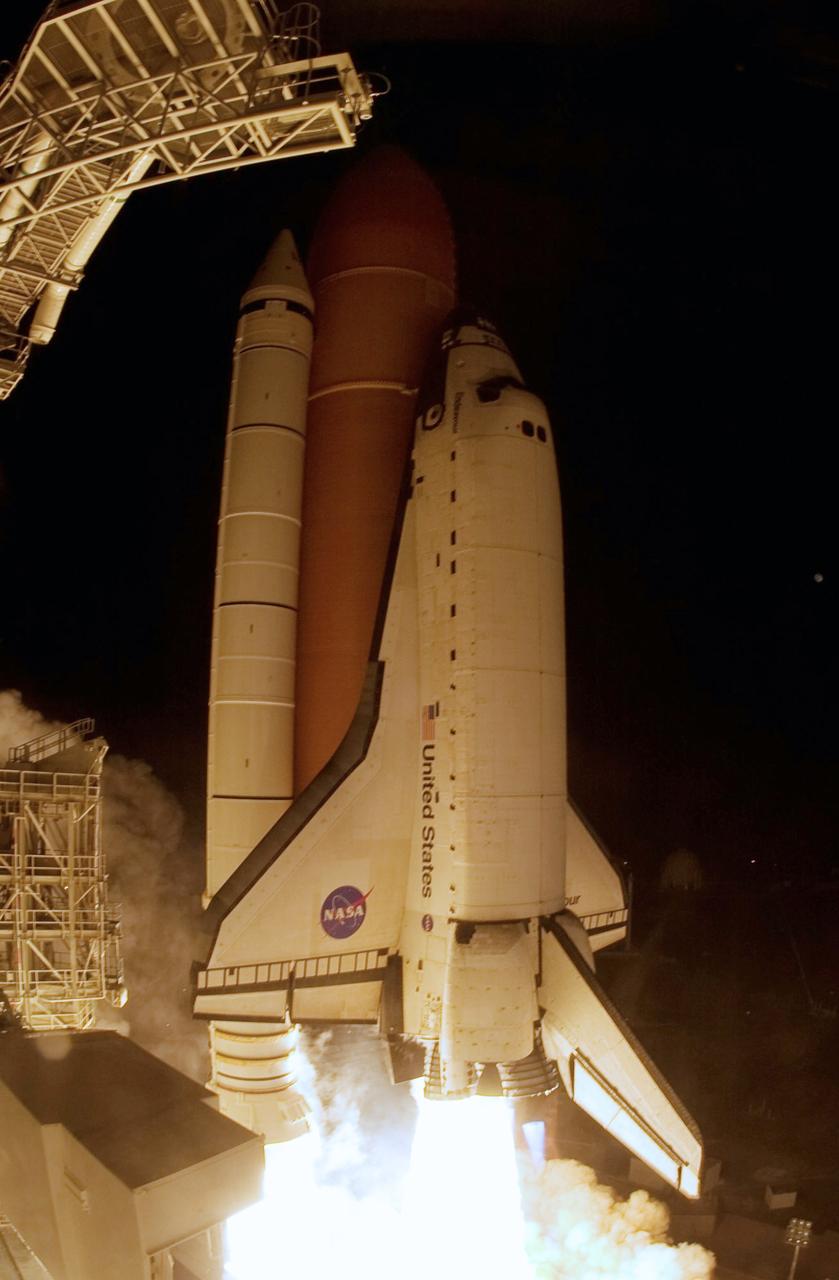
CAPE CANAVERAL, Fla. – On Launch Pad 39A at NASA's Kennedy Space Center, space shuttle Endeavour roars into the night sky on the STS-126 mission. Blue cones of light, the shock or mach diamonds that are a formation of shock waves in the exhaust plume of an aerospace propulsion system can be seen beneath the nozzles of the main engines. Liftoff was on time at 7:55 p.m. EST. STS-126 is the 124th space shuttle flight and the 27th flight to the International Space Station. The mission will feature four spacewalks and work that will prepare the space station to house six crew members for long-duration missions. Photo credit: NASA/Sandra Joseph-Kevin O'Connell
KENNEDY SPACE CENTER, FLA. - Blue mach diamonds appear behind the main engine nozzles on Space Shuttle Endeavour as it roars off the launch pad on mission STS-113. Liftoff from Launch Pad 39A occurred ontime at 7:49:47 p.m. EST. The launch is the 19th for Endeavour, and the 112th flight in the Shuttle program. Mission STS-113 is the 16th assembly flight to the International Space Station, carrying another structure for the Station, the P1 integrated truss. Also onboard are the Expedition 6 crew, who will replace Expedition 5. Endeavour is scheduled to land at KSC after an 11-day journey.
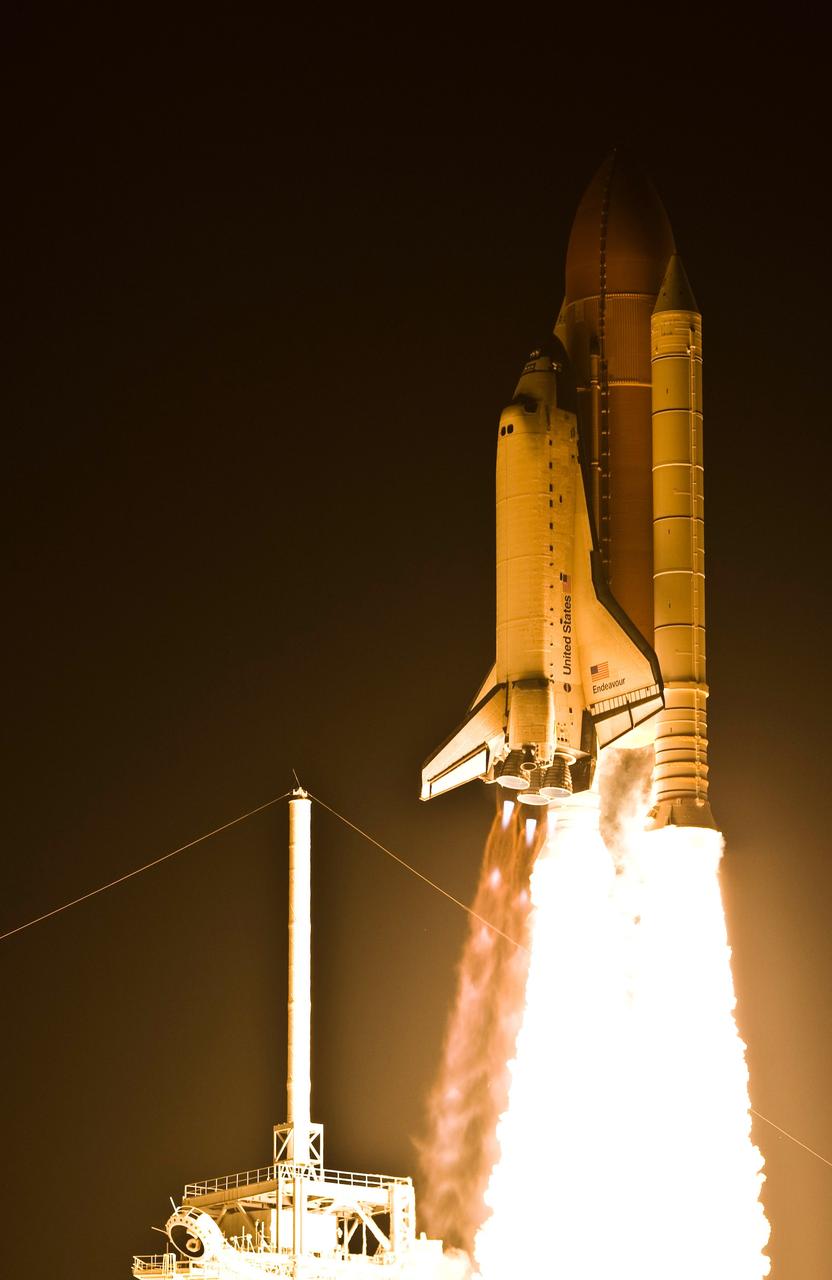
KENNEDY SPACE CENTER, FLA. -- Towers of flame propel space shuttle Endeavour into the dark sky past the lightning mast on Launch Pad 39A at NASA's Kennedy Space Center on the launch of the STS-123 mission. Beneath the main engines are blue cones of light, the shock or mach diamonds that are a formation of shock waves in the exhaust plume of an aerospace propulsion system. Liftoff was on time at 2:28 a.m. EDT. Endeavour's crew will make a record-breaking 16-day mission to the International Space Station and deliver the first section of the Japan Aerospace Exploration Agency's Kibo laboratory and the Canadian Space Agency's two-armed robotic system, Dextre. Photo courtesy of Scott Andrews
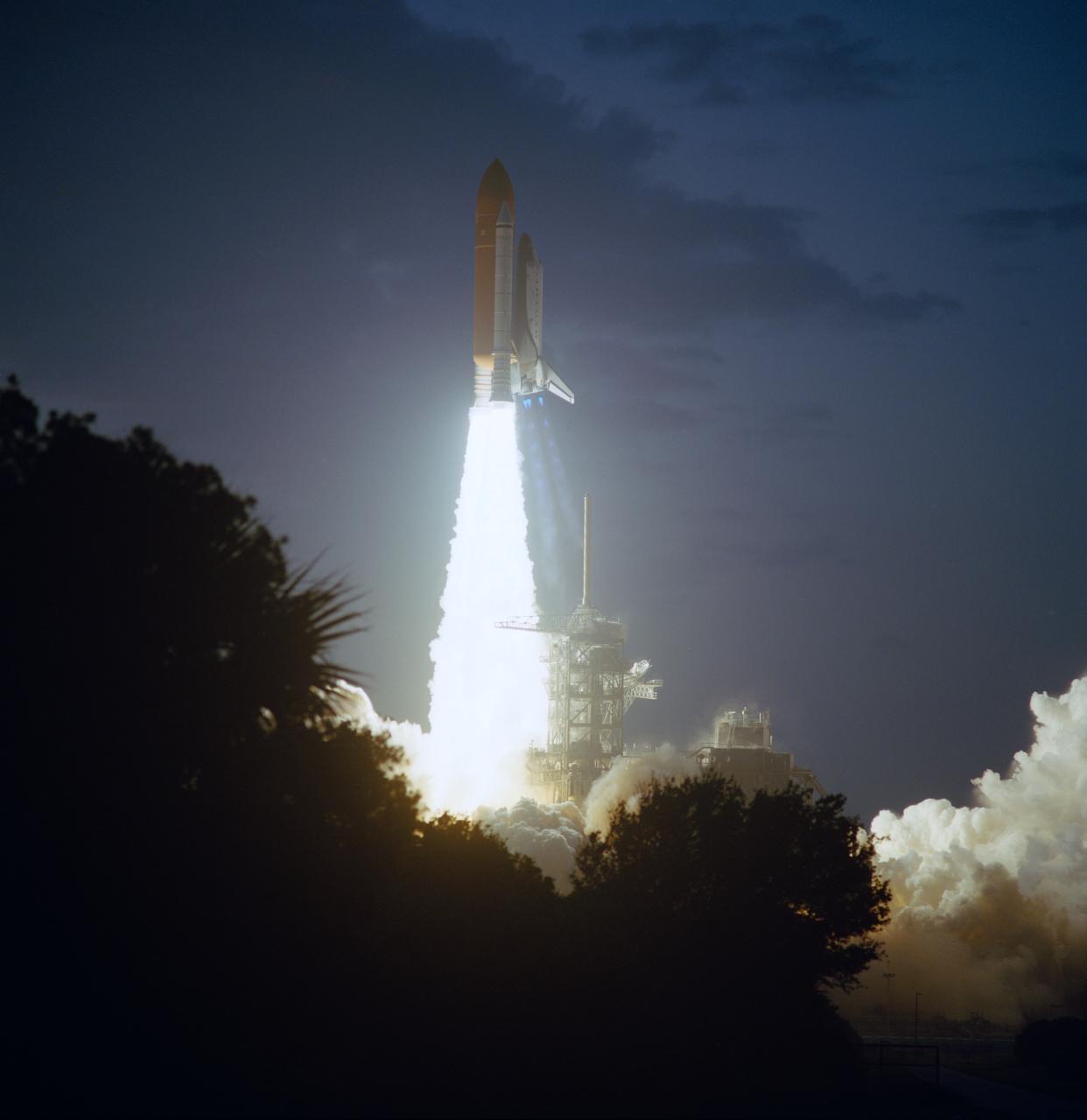
STS059-S-036 (9 April 1994) --- The liftoff of the Space Shuttle Endeavour is backdropped against a dawn sky at the Kennedy Space Center (KSC) as six NASA astronauts head for a week and a half in Earth orbit. The morning sky allows for a contrasting backdrop for the diamond shock effect of the thrust from Endeavour's main engines. Liftoff occurred at 7:05 a.m. (EDT), April 9, 1994. Onboard for the Space Radar Laboratory (SRL-1) mission were astronauts Sidney M. Gutierrez, Kevin P. Chilton, Jerome (Jay) Apt, Linda M. Godwin, Michael R. U. (Rich) Clifford and Thomas D. Jones.
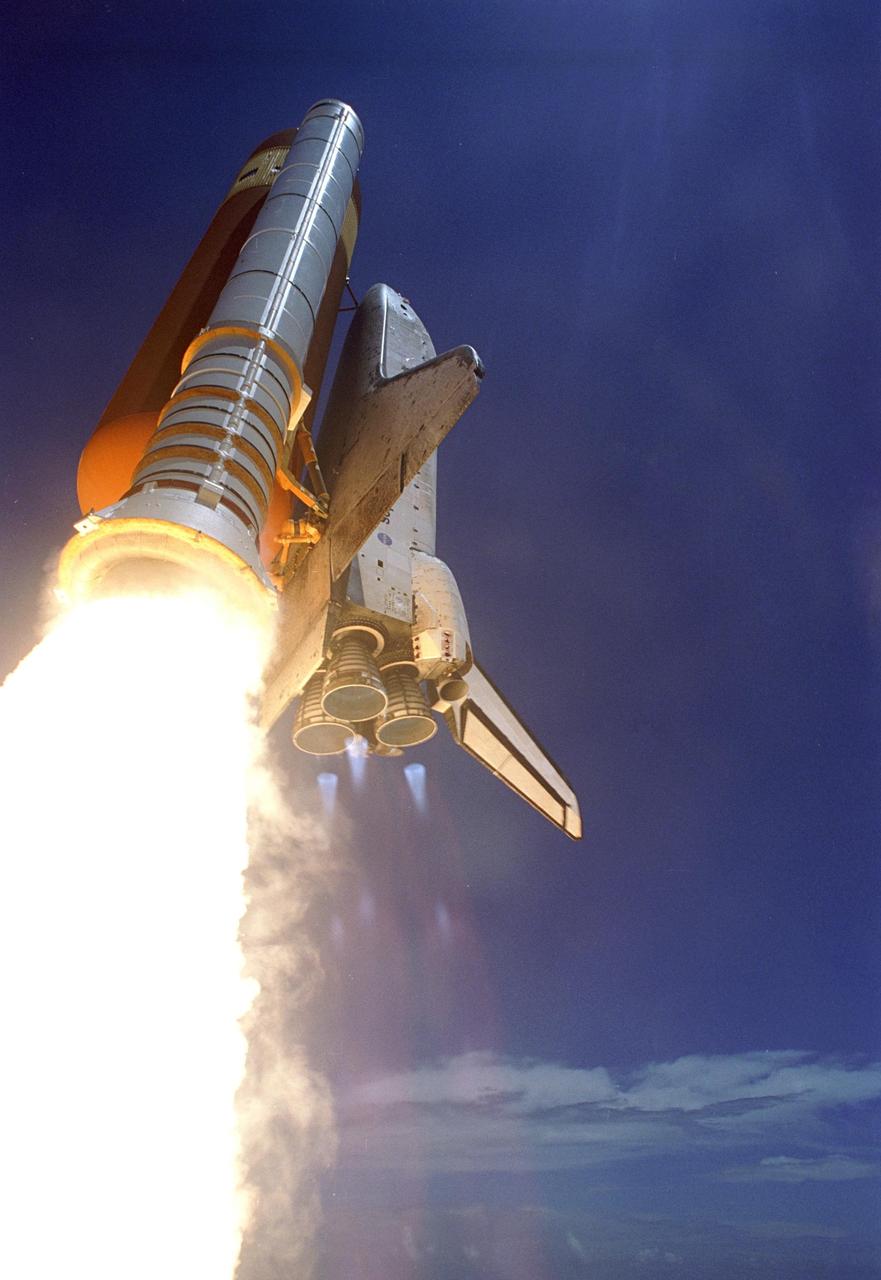
KENNEDY SPACE CENTER, FLA. - Making history with the first-ever launch on Independence Day, Space Shuttle Discovery rockets into the blue sky on mission STS-121, trailing fiery exhaust and blue mach diamonds from the main engine nozzles. Liftoff was on-time at 2:38 p.m. EDT. During the 12-day mission, the STS-121 crew of seven will test new equipment and procedures to improve shuttle safety, as well as deliver supplies and make repairs to the International Space Station. Landing is scheduled for July 16 or 17 at Kennedy's Shuttle Landing Facility. Photo credit: NASA/Regina Mitchell-Ryall & Don Kight
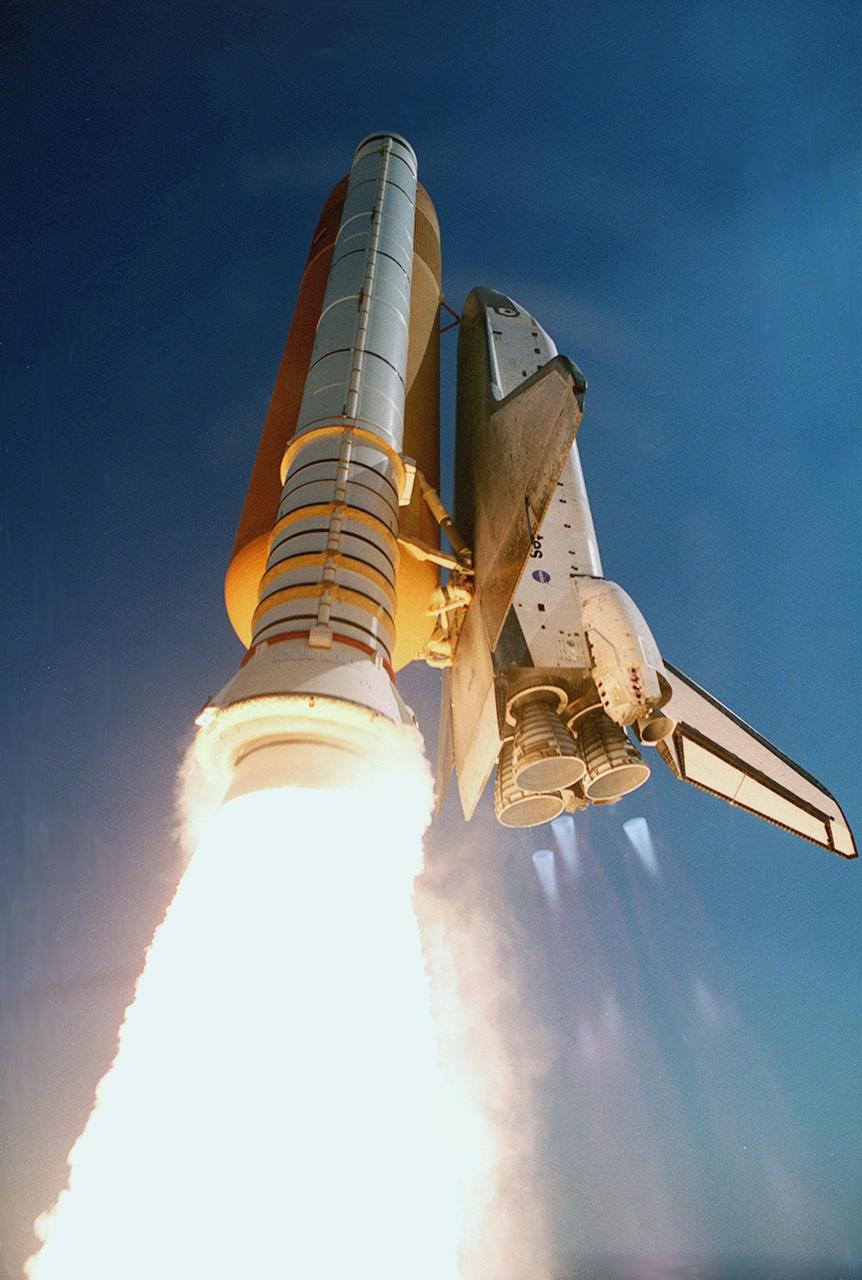
The brilliant exhaust from the solid rocket boosters (center) and blue mach diamonds from the main engine nozzles mark the perfect launch of Space Shuttle Endeavour from Launch Pad 39A. Launch of Endeavour into a clear blue Florida sky occurred at 12:43:40 p.m. EST. Known as the Shuttle Radar Topography Mission (SRTM), STS-99 will chart a new course to produce unrivaled 3-D images of the Earth's surface. The result of the SRTM could be close to 1 trillion measurements of the Earth's topography. The mission is expected to last 11days, with Endeavour landing at KSC Tuesday, Feb. 22, at 4:36 p.m. EST. This is the 97th Shuttle flight and 14th for Shuttle Endeavour

The brilliant exhaust from the solid rocket boosters (center) and blue mach diamonds from the main engine nozzles mark the perfect launch of Space Shuttle Endeavour from Launch Pad 39A. Launch of Endeavour into a clear blue Florida sky occurred at 12:43:40 p.m. EST. Known as the Shuttle Radar Topography Mission (SRTM), STS-99 will chart a new course to produce unrivaled 3-D images of the Earth's surface. The result of the SRTM could be close to 1 trillion measurements of the Earth's topography. The mission is expected to last 11days, with Endeavour landing at KSC Tuesday, Feb. 22, at 4:36 p.m. EST. This is the 97th Shuttle flight and 14th for Shuttle Endeavour
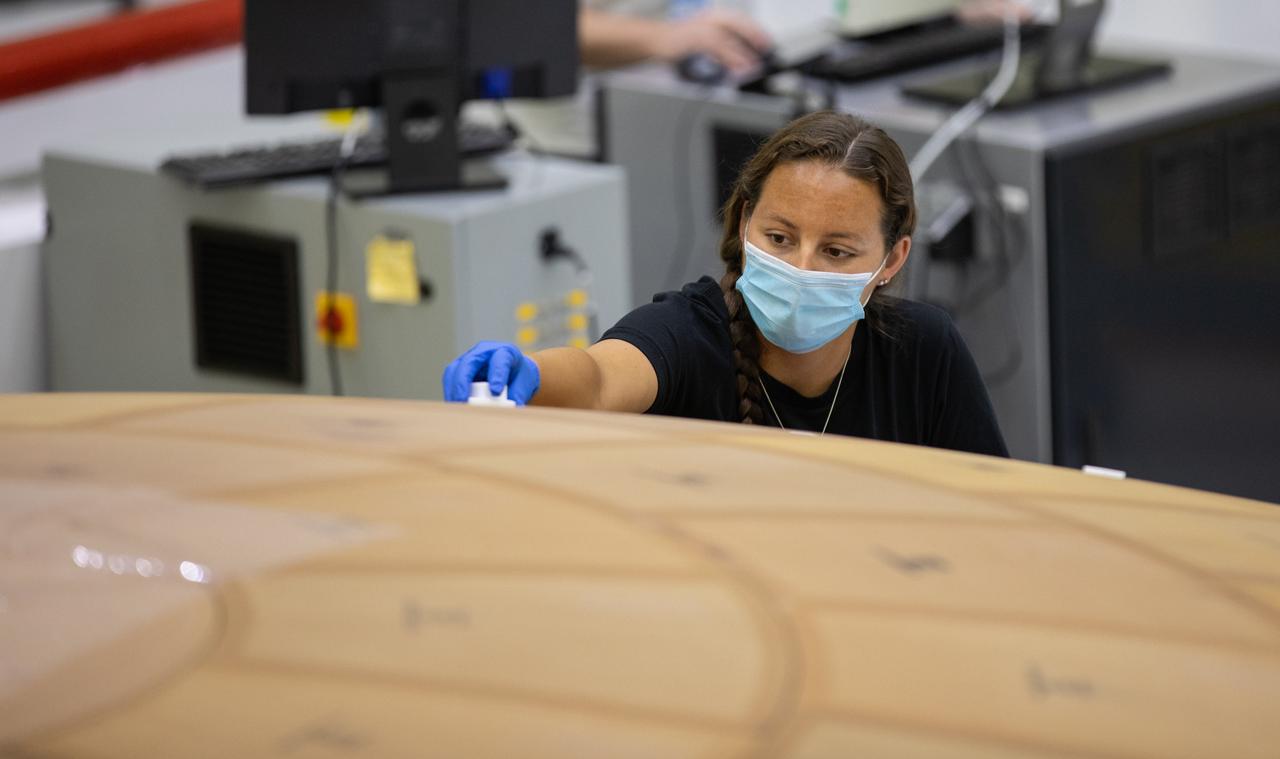
Inside the Neil Armstrong Operations and Checkout Building high bay at NASA's Kennedy Space Center in Florida, technician Diamond ScharSenstine with ASRC Federal, inspects AVCOAT block bonding on the Artemis II heat shield on July 2, 2020. The heat shield is one of the most critical elements of Orion and will protect the capsule and astronauts during reentry through Earth’s atmosphere. Artemis II is the first crewed mission in a series of missions to the Moon and on to Mars. Artemis II will confirm all of the Orion spacecraft’s systems operate as designed in the actual environment of deep space with astronauts aboard. As part of the Artemis Program, NASA will send the first woman and next man to the Moon by 2024.
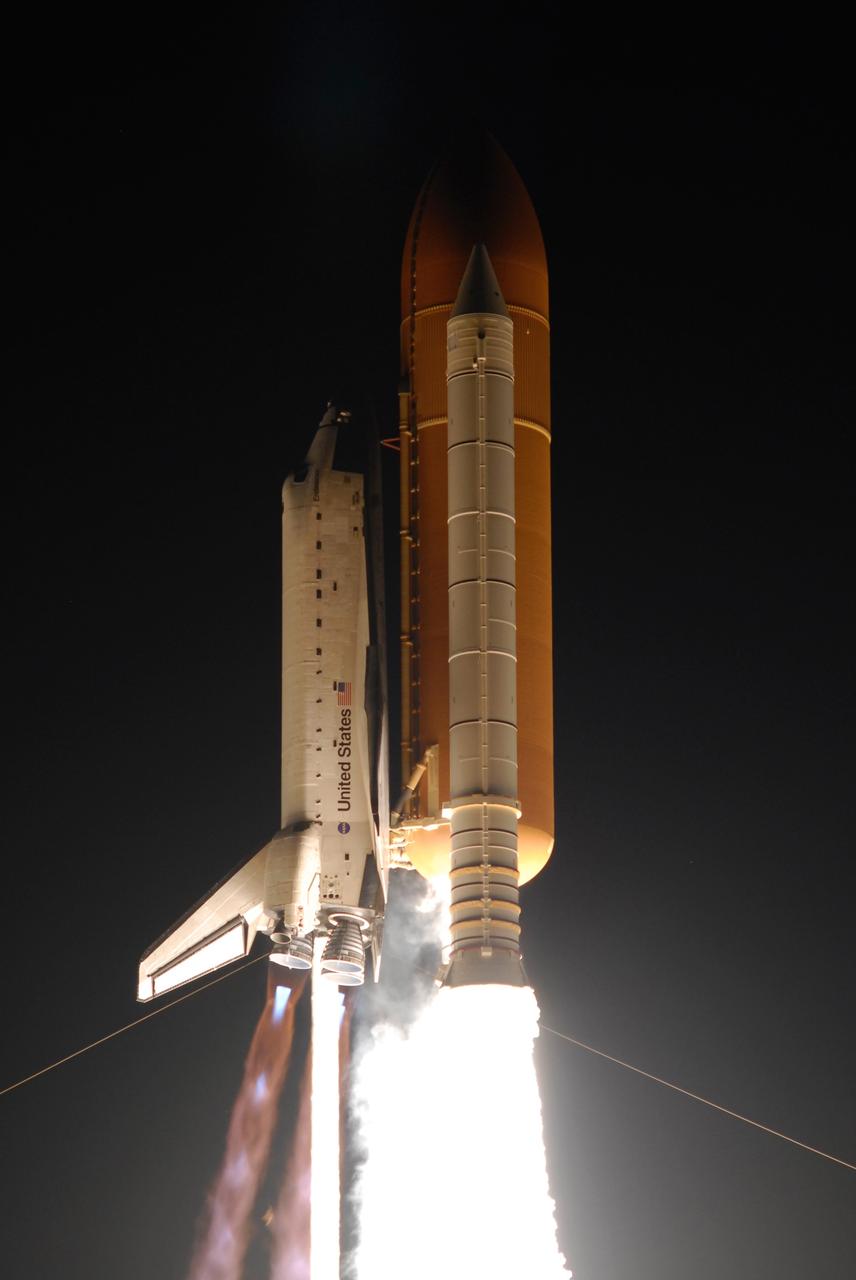
KENNEDY SPACE CENTER, FLA. --Racing into the night sky atop columns of fire, space shuttle Endeavour on mission STS-123 shows blue cones of light beneath its engines. The shock or mach diamonds are a formation of shock waves in the exhaust plume of an aerospace propulsion system. Liftoff was on time at 2:28 a.m. EDT. The crew will make a record-breaking 16-day mission to the International Space Station and deliver the first section of the Japan Aerospace Exploration Agency's Kibo laboratory and the Canadian Space Agency's two-armed robotic system, Dextre. Photo credit: NASA/Jerry Cannon, Rusty Backer
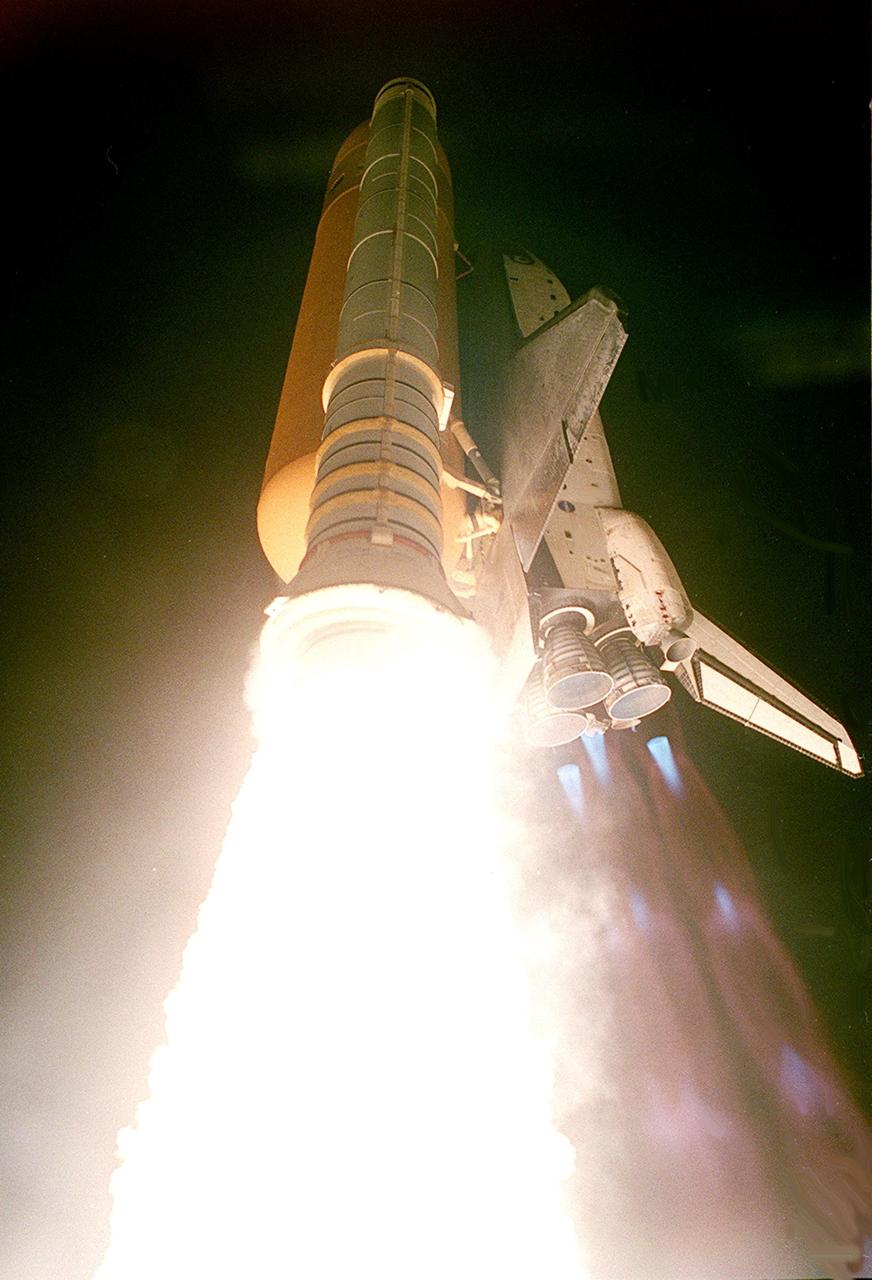
KENNEDY SPACE CENTER, Fla. -- Blue mach diamonds signal the speed and force at which Space Shuttle Endeavour roars into space after a perfect launch. Liftoff occurred on time at 10:06:01 p.m. EST. The Shuttle and its five-member crew will deliver U.S. solar arrays to the International Space Station and be the first Shuttle crew to visit the Station’s first resident crew. The 11-day mission includes three spacewalks. This marks the 101st mission in Space Shuttle history and the 25th night launch. Endeavour is expected to land at KSC Dec. 11 at 6:19 p.m. EST
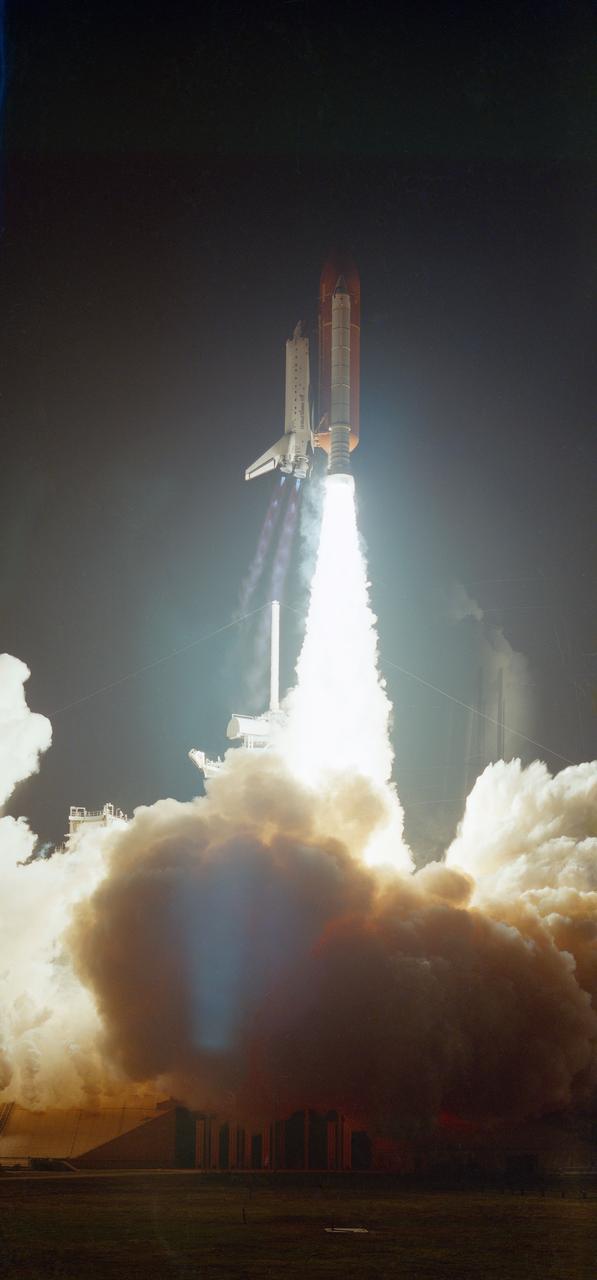
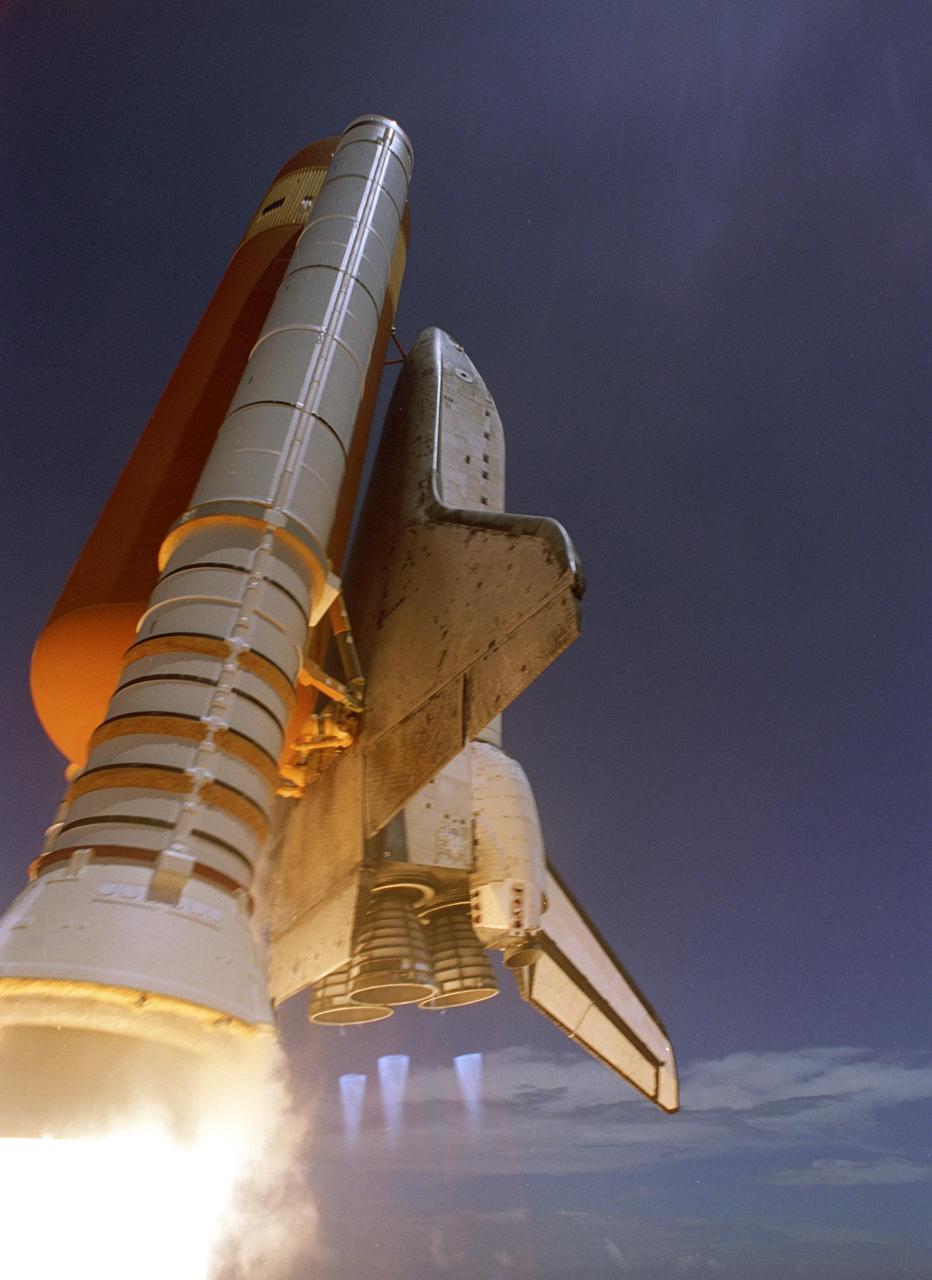
STS033-S-002 (22 Nov 1989) --- The Space Shuttle Discovery heads for Earth orbit on the first post-Challenger nocturnal launch. Liftoff occurred at 7:23:29:989 p.m. (EST), November 22, 1989. This picture shows a side view of Discovery, one of its two solid rocket boosters (SRB) and the external tank. It represents a good example of the "diamond shock" effect, in the plume from the main engine, associated with Shuttle launches. Onboard for the DOD-devoted mission were Astronauts Frederick D. Gregory, John E. Blaha, F. Story Musgrave, Kathryn C. Thornton and Manley L. Carter.
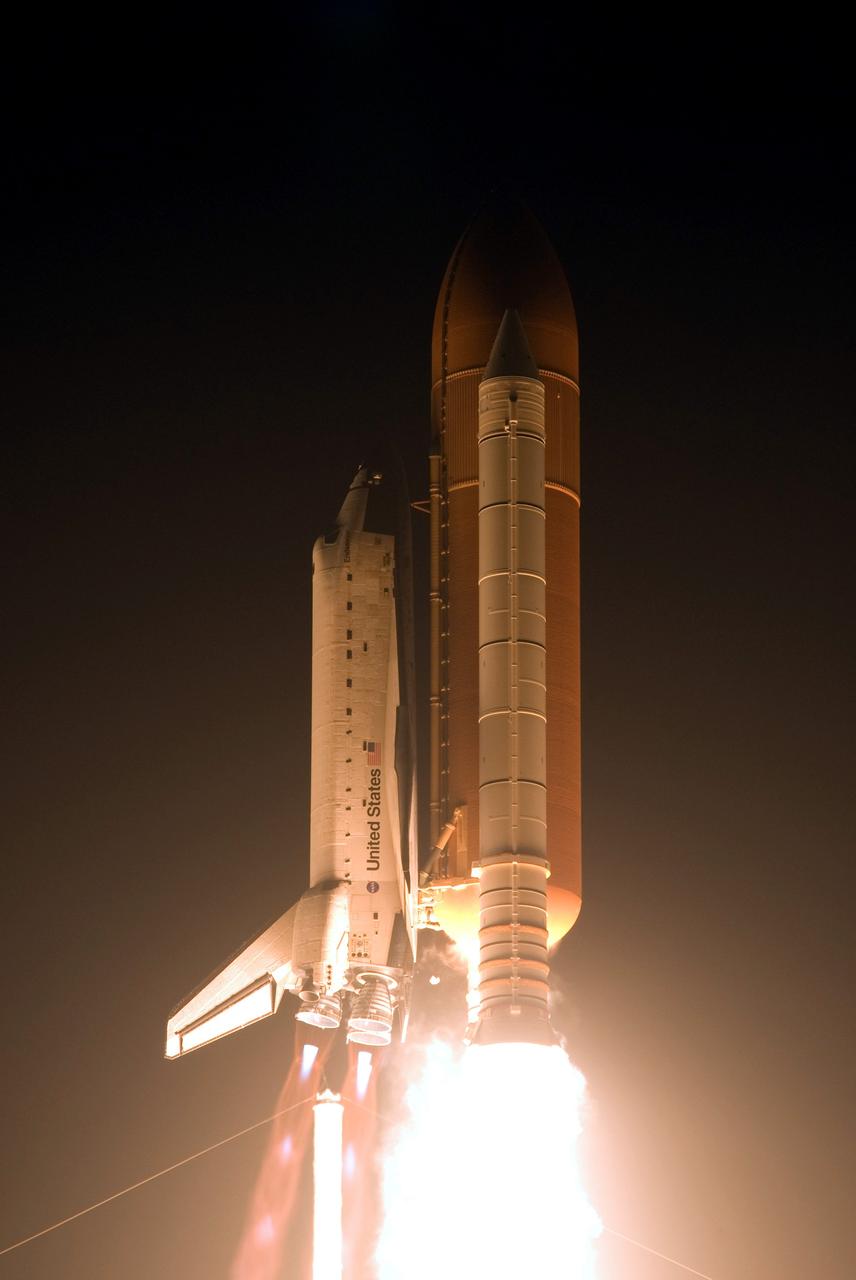
CAPE CANAVERAL, Fla. – On Launch Pad 39A at NASA's Kennedy Space Center, space shuttle Endeavour roars into the night sky on the STS-126 mission. Blue cones of light, the shock or mach diamonds that are a formation of shock waves in the exhaust plume of an aerospace propulsion system can be seen beneath the nozzles of the main engines. Liftoff was on time at 7:55 p.m. EST. STS-126 is the 124th space shuttle flight and the 27th flight to the International Space Station. The mission will feature four spacewalks and work that will prepare the space station to house six crew members for long-duration missions. Photo credit: NASA/Rusty Backer-George Roberts
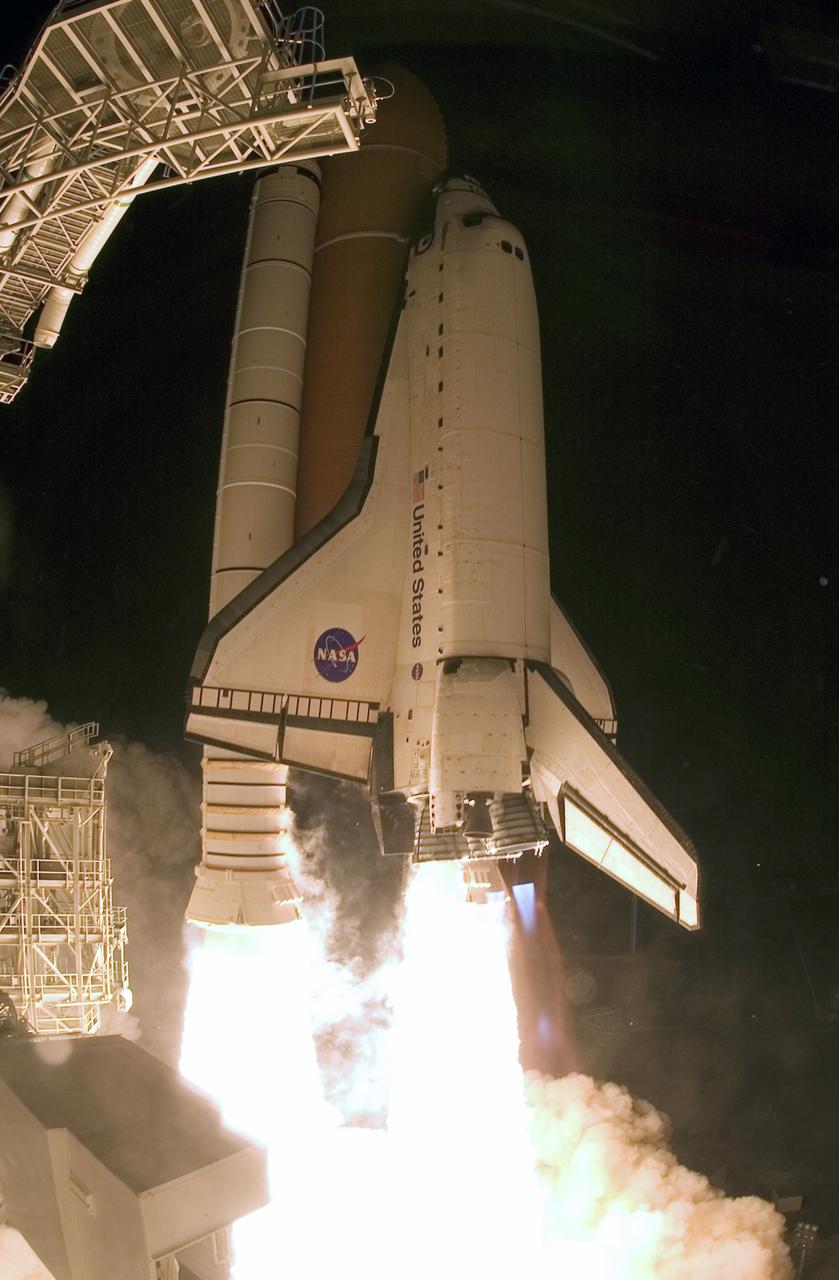
CAPE CANAVERAL, Fla. – On Launch Pad 39A at NASA's Kennedy Space Center, space shuttle Endeavour roars into the night sky on the STS-126 mission. Blue cones of light, the shock or mach diamonds that are a formation of shock waves in the exhaust plume of an aerospace propulsion system can be seen beneath the nozzles of the main engines. Liftoff was on time at 7:55 p.m. EST. STS-126 is the 124th space shuttle flight and the 27th flight to the International Space Station. The mission will feature four spacewalks and work that will prepare the space station to house six crew members for long-duration missions. Photo credit: NASA/Sandra Joseph-Kevin O'Connell
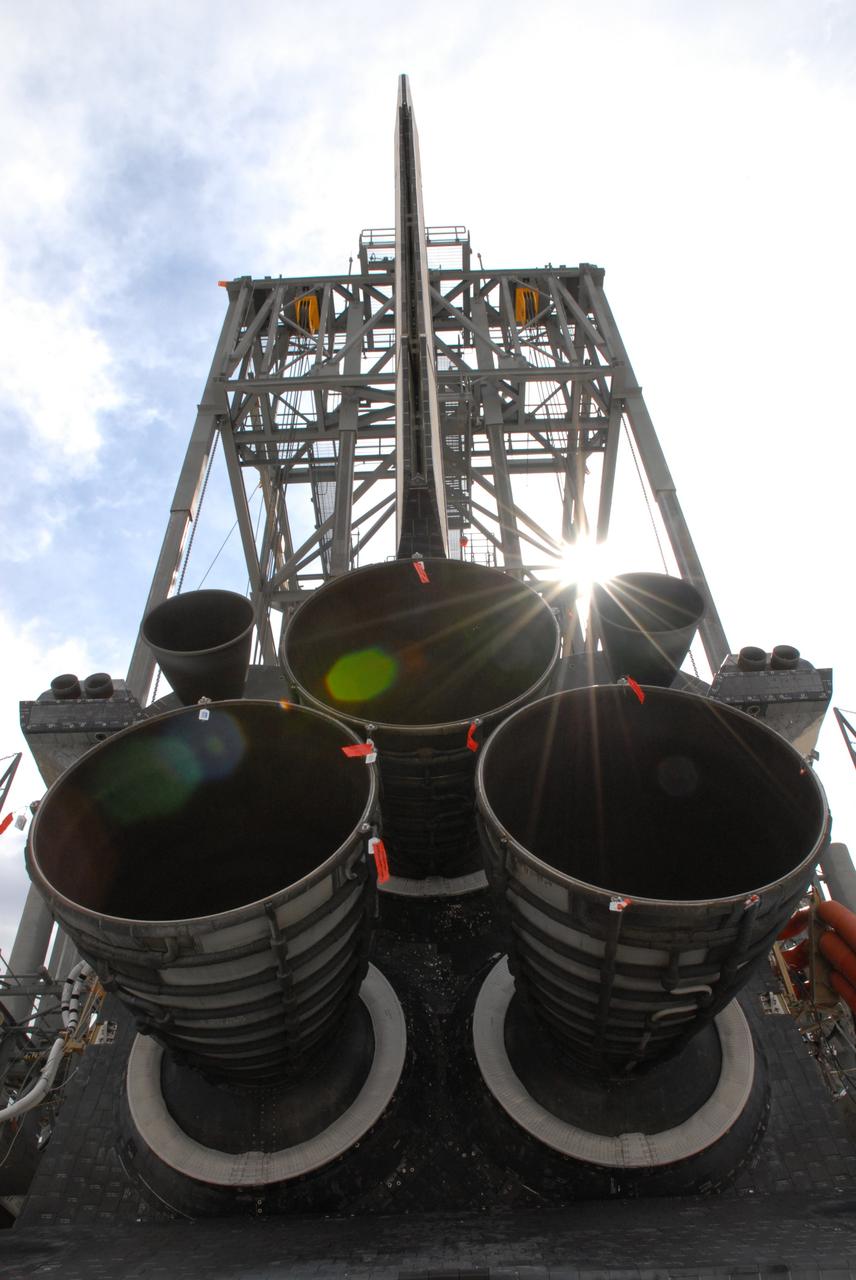
CAPE CANAVERAL, Fla. – The sun casts diamond-bright light over space shuttle Atlantis under the mate/demate device at Edwards Air Force Base in California. Atlantis is being fitted with a sling to lift it for attachment to the Shuttle Carrier Aircraft, or SCA, a modified Boeing 747. Atlantis landed at Edwards on May 24, which concluded mission STS-125, after two landing opportunities at Kennedy were waved off due to weather concerns. Atlantis is being returned to Florida on a ferry flight on the SCA. Atlantis' next assignment is the STS-129 mission, targeted to launch in November 2009. Photo credit: NASA/Ben Smegelsky
KENNEDY SPACE CENTER, Fla. -- Space Shuttle Atlantis streaks into the sky on mission STS-106 after a perfect on-time launch at 8:45:47 a.m. EDT. Blue mach diamonds are barely visible behind the main engine nozzles. On the 11-day mission to the International Space Station, the seven-member crew will perform support tasks on orbit, transfer supplies and prepare the living quarters in the newly arrived Zvezda Service Module. The first long-duration crew, dubbed “Expedition One,” is due to arrive at the Station in late fall. Landing of Atlantis is targeted for 4:45 a.m. EDT on Sept. 19
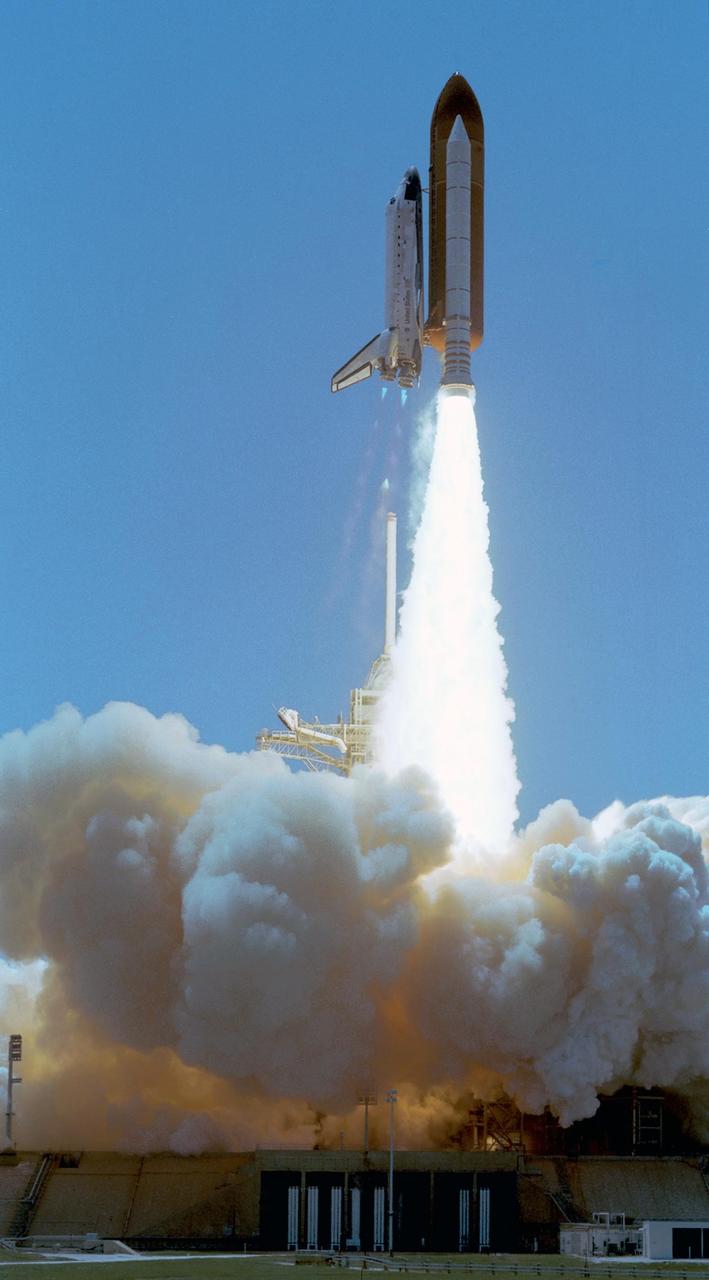
KENNEDY SPACE CENTER, FLA. - Making history with the first-ever launch on Independence Day, Space Shuttle Discovery rockets into the blue sky on mission STS-121, trailing fiery exhaust and blue mach diamonds from the main engine nozzles. Liftoff from Launch Pad 39B (seen below) was on-time at 2:38 p.m. EDT. During the 12-day mission, the STS-121 crew of seven will test new equipment and procedures to improve shuttle safety, as well as deliver supplies and make repairs to the International Space Station. Landing is scheduled for July 17 at Kennedy's Shuttle Landing Facility. Photo credit: NASA/Tony Gray & Tim Powers
KENNEDY SPACE CENTER, FLA. - Making history with the first-ever launch on Independence Day, Space Shuttle Discovery rockets into the blue sky on mission STS-121, trailing fiery exhaust and blue mach diamonds from the main engine nozzles. Liftoff was on-time at 2:38 p.m. EDT. During the 12-day mission, the STS-121 crew of seven will test new equipment and procedures to improve shuttle safety, as well as deliver supplies and make repairs to the International Space Station. Landing is scheduled for July 16 or 17 at Kennedy's Shuttle Landing Facility. Photo credit: NASA/Regina Mitchell-Ryall & Don Kight
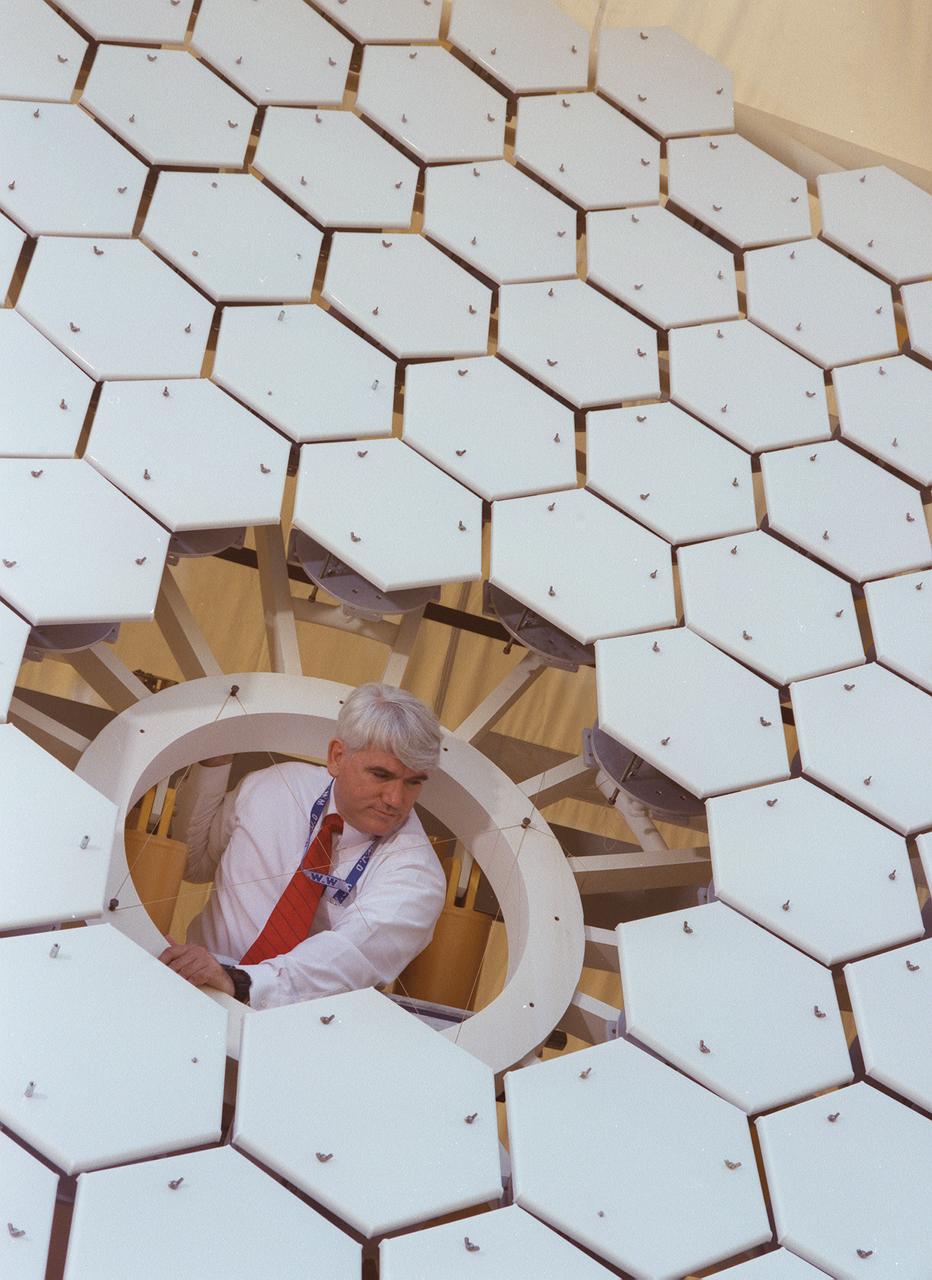
A team of engineers at Marshall Space Flight Center (MSFC) has designed, fabricated, and tested the first solar thermal engine, a non-chemical rocket that produces lower thrust but has better thrust efficiency than the chemical combustion engines. This segmented array of mirrors is the solar concentrator test stand at MSFC for firing the thermal propulsion engines. The 144 mirrors are combined to form an 18-foot diameter array concentrator. The mirror segments are aluminum hexagons that have the reflective surface cut into it by a diamond turning machine, which is developed by MSFC Space Optics Manufacturing Technology Center.
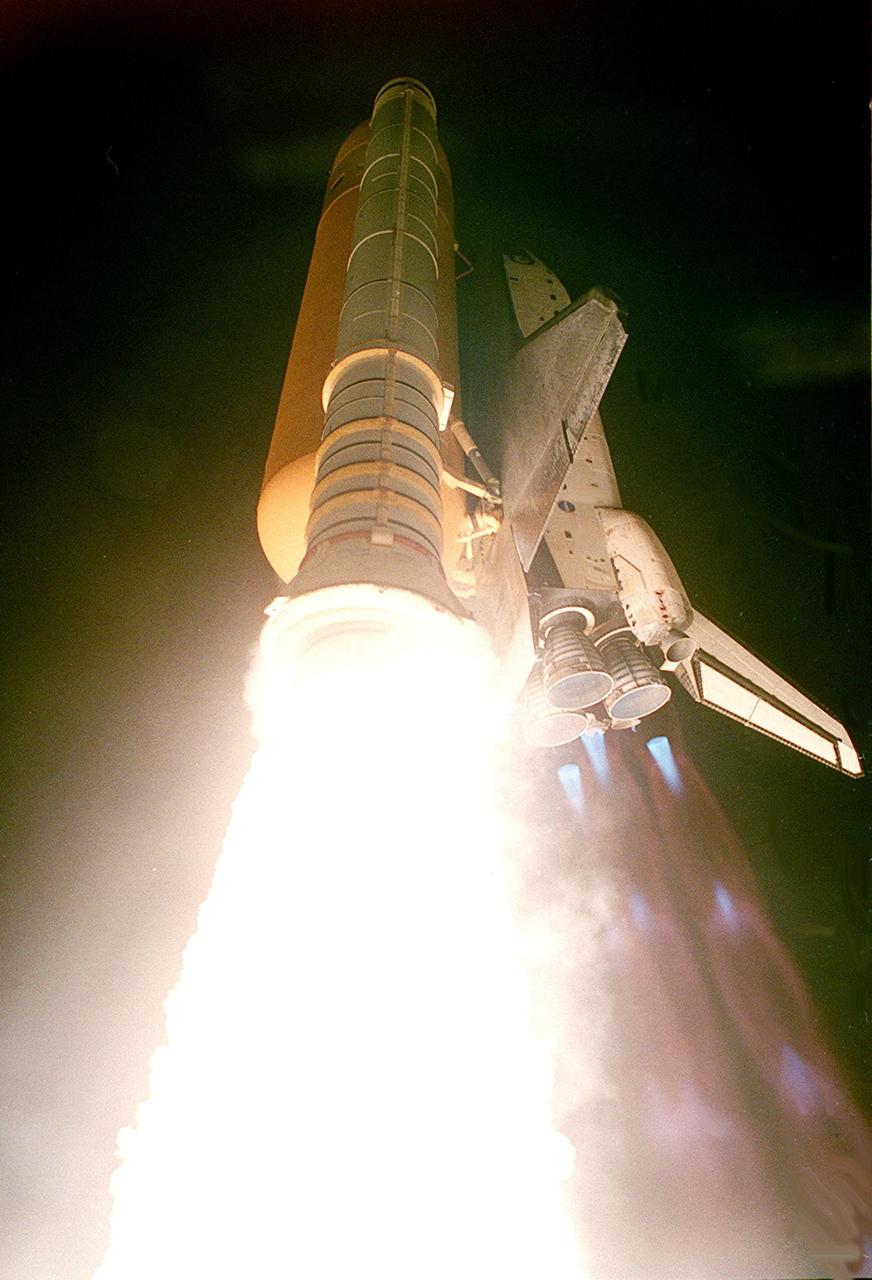
KENNEDY SPACE CENTER, Fla. -- Blue mach diamonds signal the speed and force at which Space Shuttle Endeavour roars into space after a perfect launch. Liftoff occurred on time at 10:06:01 p.m. EST. The Shuttle and its five-member crew will deliver U.S. solar arrays to the International Space Station and be the first Shuttle crew to visit the Station’s first resident crew. The 11-day mission includes three spacewalks. This marks the 101st mission in Space Shuttle history and the 25th night launch. Endeavour is expected to land at KSC Dec. 11 at 6:19 p.m. EST
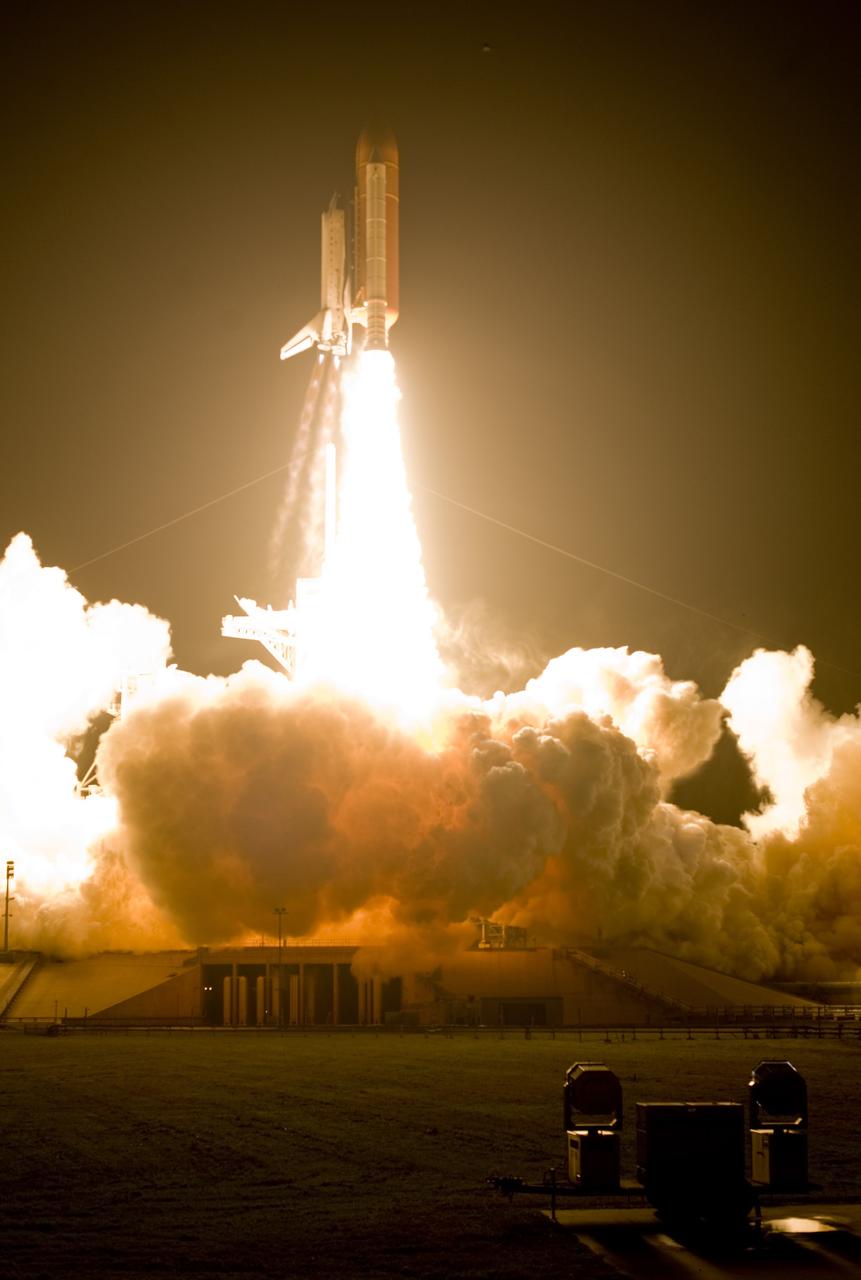
CAPE CANAVERAL, Fla. – On Launch Pad 39A at NASA's Kennedy Space Center, space shuttle Endeavour erupts from the smoke and steam as it roars into the night sky on the STS-126 mission. Blue cones of light, the shock or mach diamonds that are a formation of shock waves in the exhaust plume of an aerospace propulsion system, can be seen beneath the nozzles of the main engines. Liftoff was on time at 7:55 p.m. EST. STS-126 is the 124th space shuttle flight and the 27th flight to the International Space Station. The mission will feature four spacewalks and work that will prepare the space station to house six crew members for long-duration missions. Photo courtesy of Scott Andrews
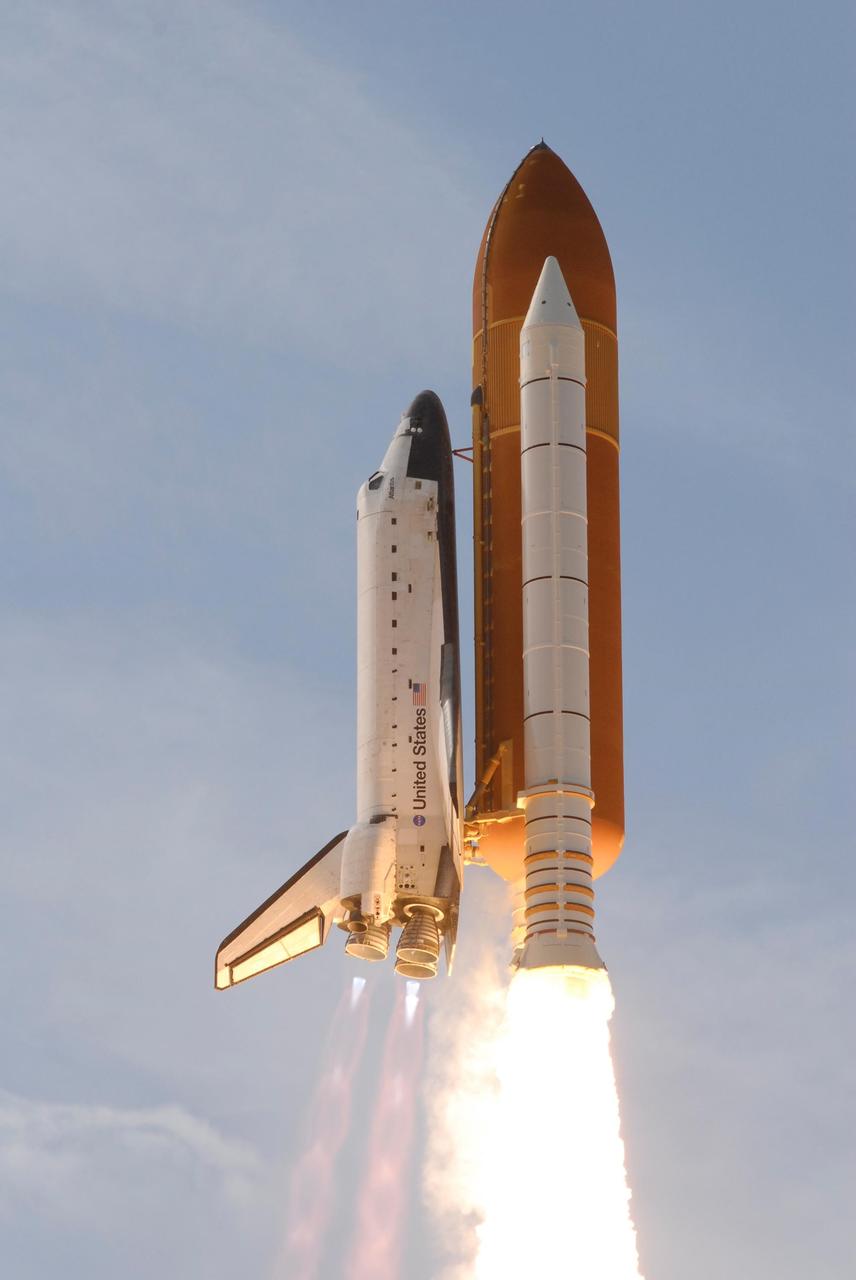
KENNEDY SPACE CENTER, FLA. -- The blue Florida sky helps silhouette space shuttle Atlantis as it hurtles into space on mission STS-122 to the International Space Station. Liftoff was on time at 2:45 p.m. EST. Below the nozzles of the main engines are the blue cones of light, known as shock or mach diamonds. They are a formation of shock waves in the exhaust plume of an aerospace propulsion system. The launch is the third attempt for Atlantis since December 2007 to carry the European Space Agency's Columbus laboratory to the International Space Station. During the 11-day mission, the crew's prime objective is to attach the laboratory to the Harmony module, adding to the station's size and capabilities. Photo credit: NASA/Jerry Cannon, Rusty Backer
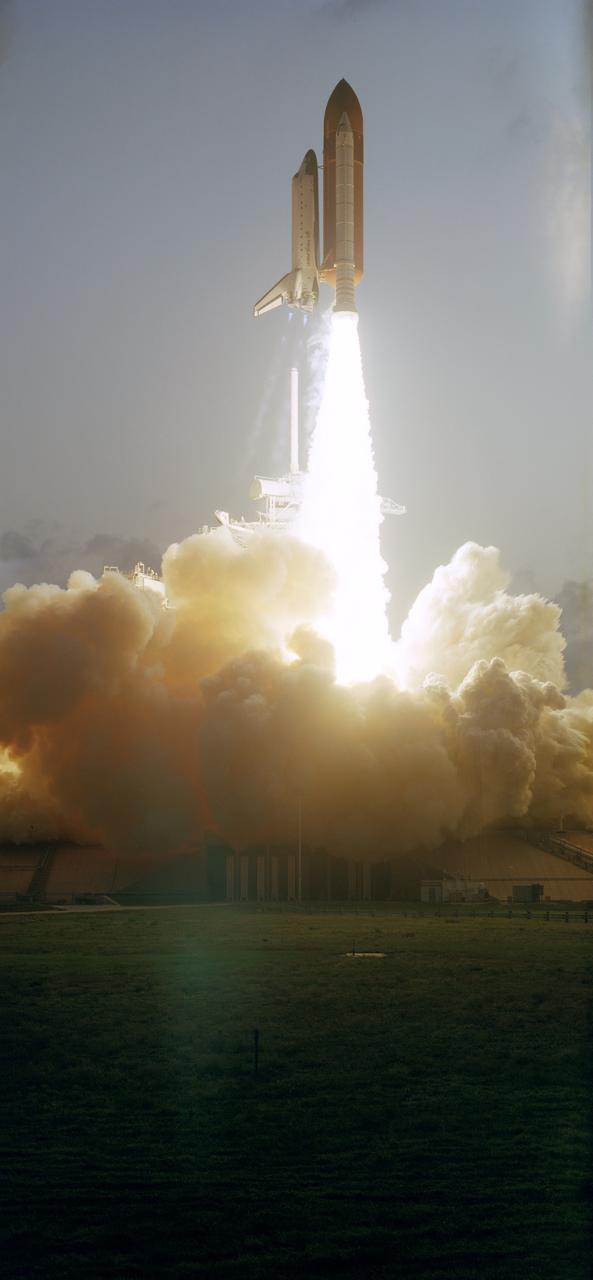
STS049-S-251 (7 May 1992) --- The Space Shuttle Endeavour soars toward Earth orbit where a crew of seven NASA astronauts will spend at least a week. Endeavour, the newest orbiter in NASA's Space Shuttle fleet, lifted off from Pad 39B at 7:40 p.m. (EDT), May 7, 1992. A diamond shock effect can be seen beneath the three main engines. Onboard are astronauts Daniel C. Brandenstein, mission commander; Kevin P. Chilton, pilot; and Richard J. Hieb, Bruce E. Melnick, Pierre J. Thuot, Kathryn C. Thornton and Thomas D. Akers, all mission specialists.
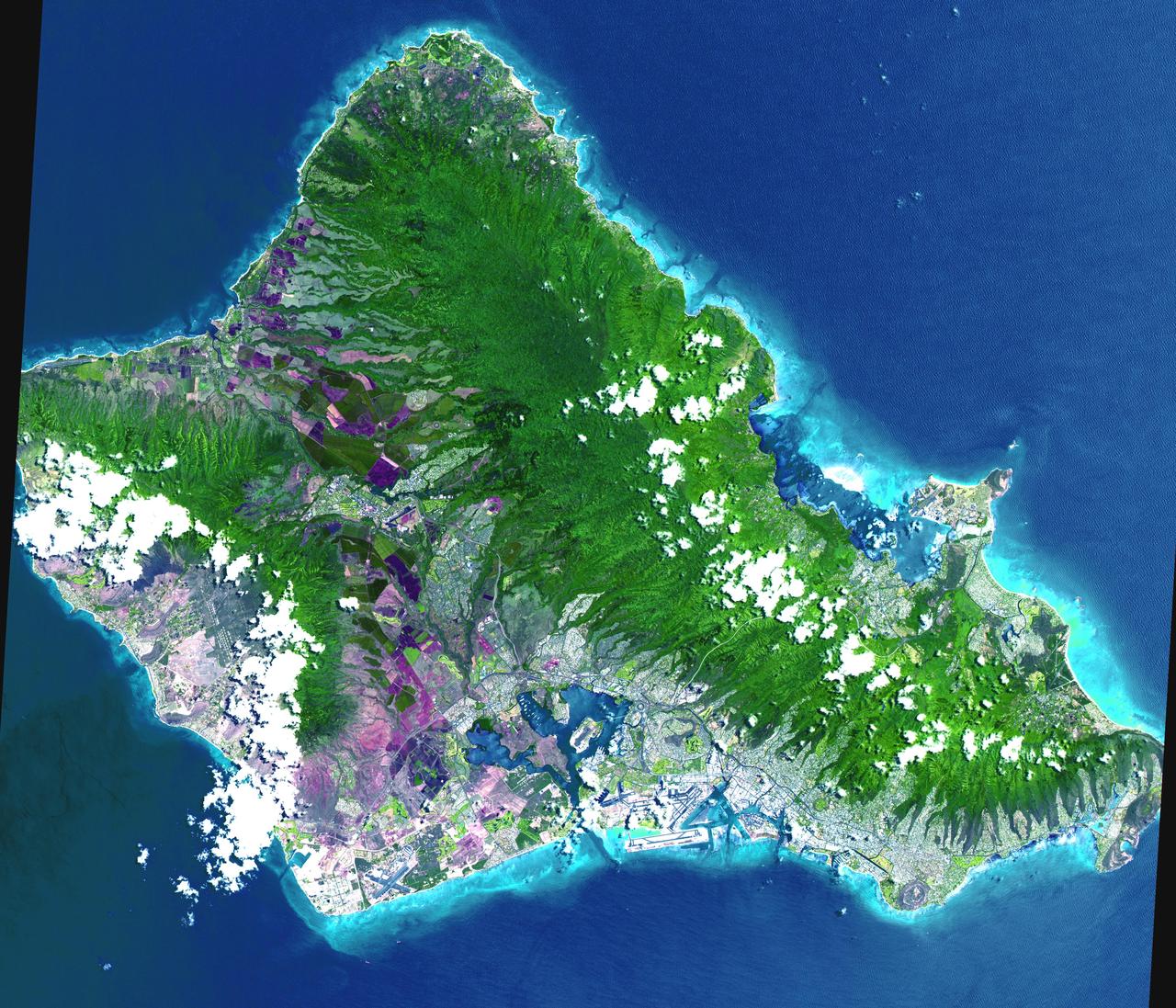
This 60 by 55 km ASTER scene shows almost the entire island of Oahu, Hawaii on June 3, 2000. The data were processed to produce a simulated natural color presentation. Oahu is the commercial center of Hawaii and is important to United States defense in the Pacific. Pearl Harbor naval base is situated here. Tourism also is important to the economy. Among the many popular beaches is the renowned Waikiki Beach, backed by the famous Diamond Head, an extinct volcano. The largest community, Honolulu, is the state capital. The image is located at 21.5 degrees north latitude and 158 degrees west longitude. http://photojournal.jpl.nasa.gov/catalog/PIA02672
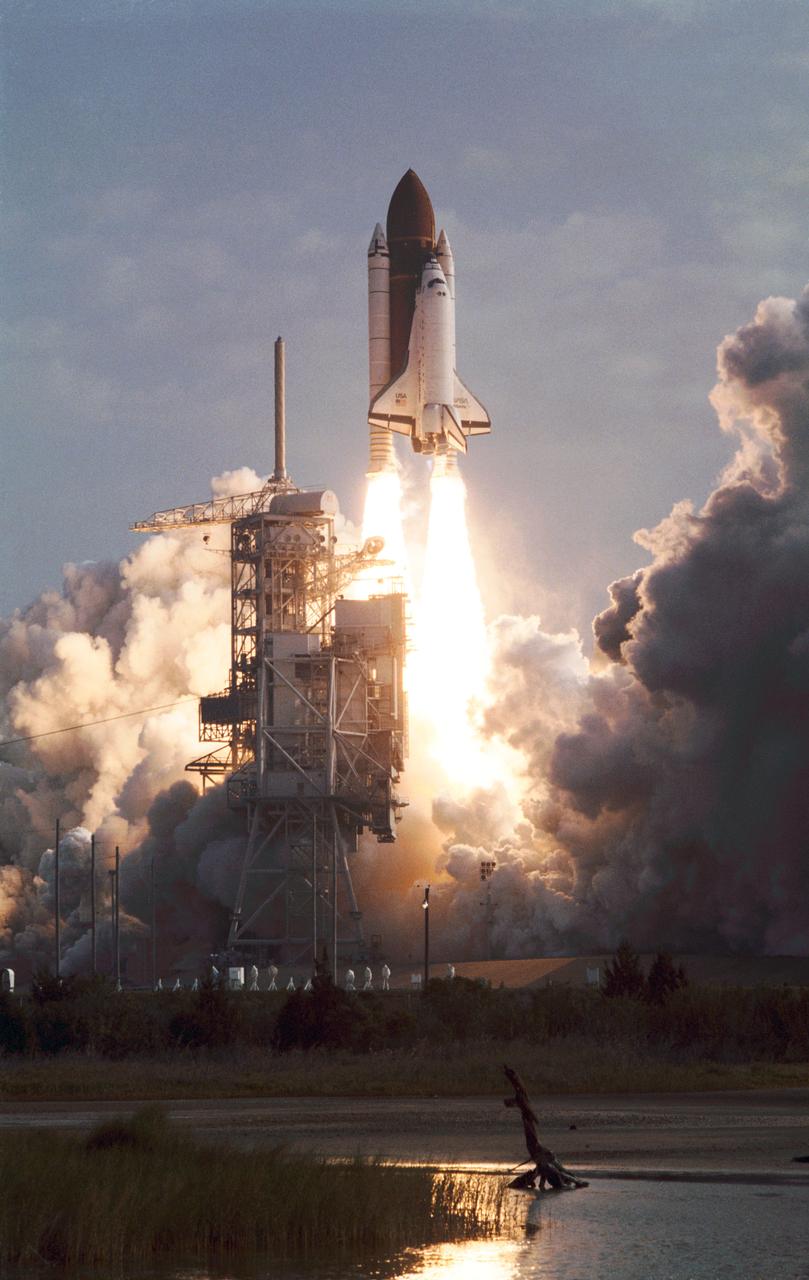
STS-45 Atlantis, Orbiter Vehicle (OV) 104, lifts off from a Kennedy Space Center (KSC) Launch Complex (LC) Pad at 8:13:40:048 am (Eastern Standard Time (EST)). Exhaust billows out the solid rocket boosters (SRBs) as OV-104 atop its external tank (ET) soars above the mobile launcher platform and is nearly clear of the fixed service structure (FSS) tower. The diamond shock effect produced by the space shuttle main engines (SSMEs) is visible. The glow of the SRB/SSME firings is reflected in a nearby waterway. An exhaust cloud covers the launch pad area.