
Dr. Walther Pelzer, Member of the German Aerospace Center (DLR) Executive Board, Head of the German Space Agency at DLR speaks in a bilateral meeting with NASA during the 36th Space Symposium, Monday, Aug. 23, 2021, in Colorado Springs, Colorado. Photo Credit: (NASA/Bill Ingalls)
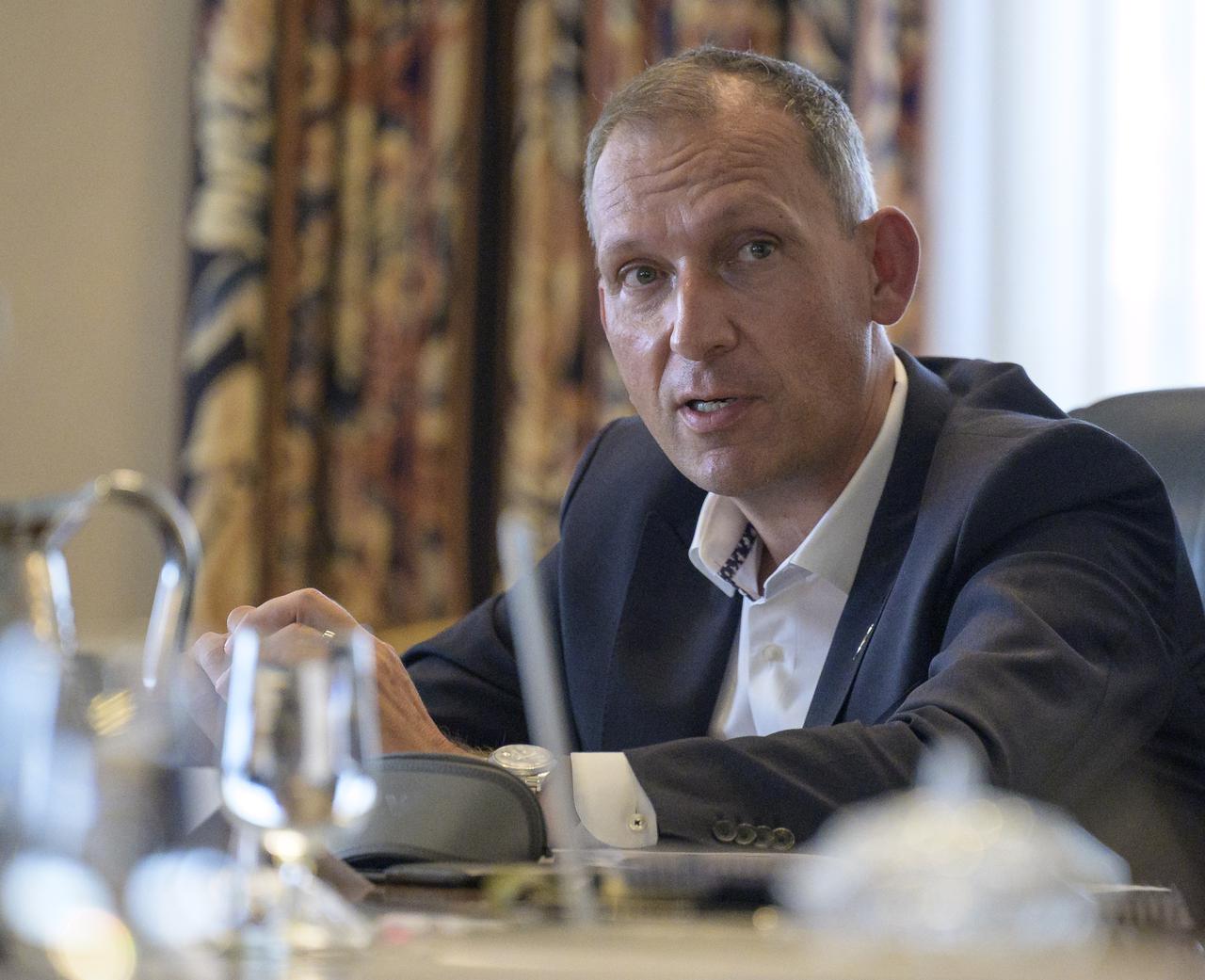
NASA Associate Administrator for Science Thomas Zurbuchenlistens during a bilateral meeting with Dr. Walther Pelzer, Member of the German Aerospace Center (DLR) Executive Board, Head of the German Space Agency at DLR, Monday, Aug. 23, 2021, during the 36th Space Symposium in Colorado Springs, Colorado. Photo Credit: (NASA/Bill Ingalls)

NASA Administrator Bill Nelson meets with Dr. Walther Pelzer, Member of the German Aerospace Center (DLR) Executive Board, Head of the German Space Agency at DLR in a bilateral meeting during the 36th Space Symposium, Monday, Aug. 23, 2021, in Colorado Springs, Colorado. Photo Credit: (NASA/Bill Ingalls)
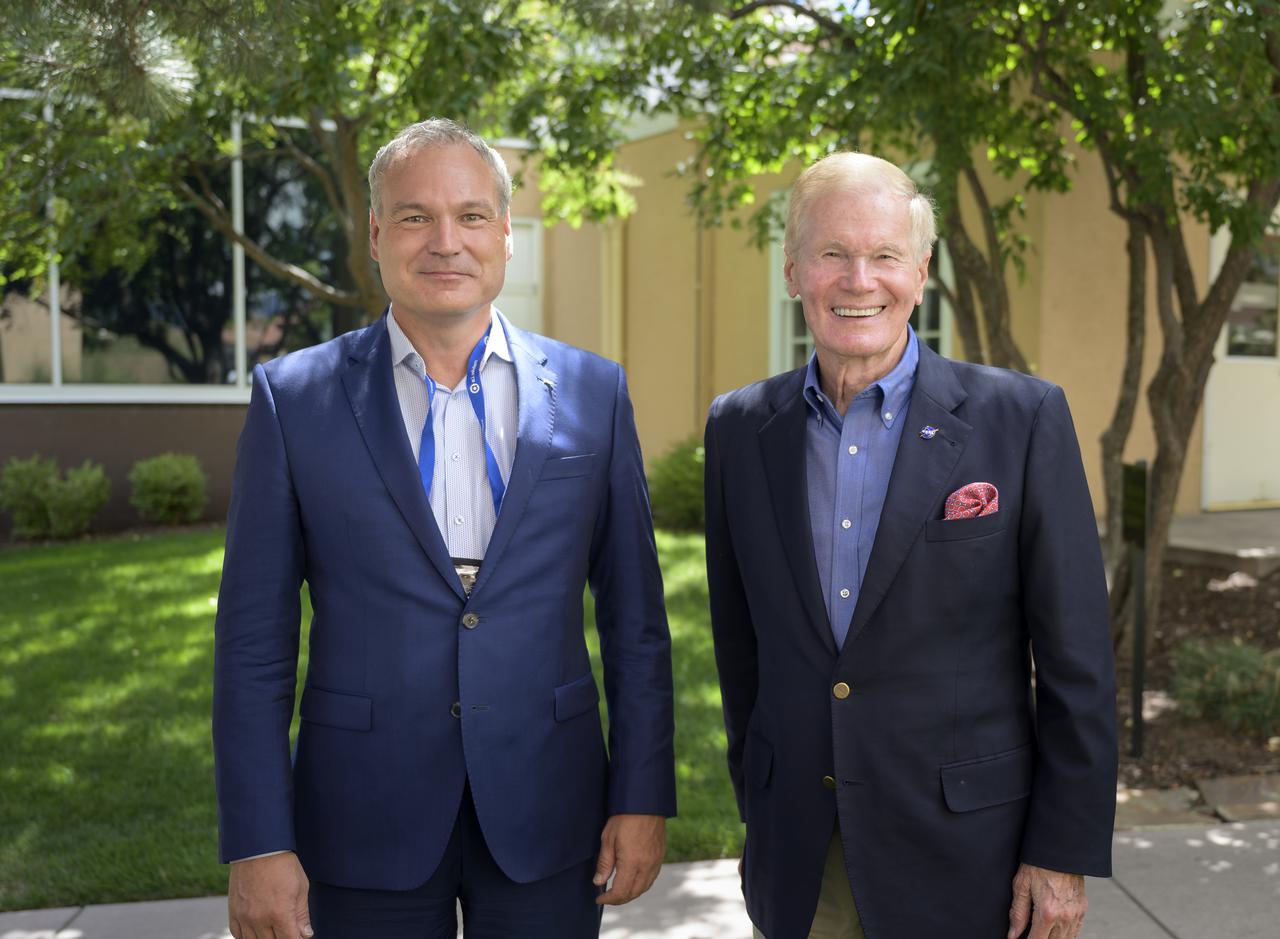
NASA Administrator Bill Nelson, right, meets with Dr. Walther Pelzer, Member of the German Aerospace Center (DLR) Executive Board, Head of the German Space Agency at DLR in a bilateral meeting during the 36th Space Symposium, Monday, Aug. 23, 2021, in Colorado Springs, Colorado. Photo Credit: (NASA/Bill Ingalls)

German Aerospace Center (DLR) executive board chair, Dr. Pascale Ehrenfreund, left, and Walther Pelzer, DLR executive board member, speak with NASA Administrator Jim Bridenstine about the robust relationship between their agencies in human and robotic exploration, and prospects for cooperation as NASA pursues the landing of humans on the Moon by 2024, at the Space Symposium, Wednesday, April 10, 2019 in Colorado Springs, Colorado. Photo Credit: (NASA/Aubrey Gemignani)

NASA Associate Administrator for Human Exploration and Operations Kathy Lueders meets with Dr. Walther Pelzer, Member of the German Aerospace Center (DLR) Executive Board, Head of the German Space Agency at DLR in a bilateral meeting during the 36th Space Symposium, Monday, Aug. 23, 2021, in Colorado Springs, Colorado. Photo Credit: (NASA/Bill Ingalls)

NASA Administrator Jim Bridenstine listens as German Aerospace Center (DLR) executive board chair, Dr. Pascale Ehrenfreund, speaks about the robust relationship between their agencies in human and robotic exploration, and prospects for cooperation as NASA pursues the landing of humans on the Moon by 2024, at the Space Symposium, Wednesday, April 10, 2019 in Colorado Springs, Colorado. Photo Credit: (NASA/Aubrey Gemignani)

NASA Administrator Jim Bridenstine, right, speaks with officials from the German Aerospace Center (DLR) executive board about the robust relationship between their agencies in human and robotic exploration, and prospects for cooperation as NASA pursues the landing of humans on the Moon by 2024, at the Space Symposium, Wednesday, April 10, 2019 in Colorado Springs, Colorado. Photo Credit: (NASA/Aubrey Gemignani)

German Aerospace Center (DLR) executive board chair, Dr. Pascale Ehrenfreund, center, speaks with NASA Administrator Jim Bridenstine about the robust relationship between their agencies in human and robotic exploration, and prospects for cooperation as NASA pursues the landing of humans on the Moon by 2024, at the Space Symposium, Wednesday, April 10, 2019 in Colorado Springs, Colorado. Photo Credit: (NASA/Aubrey Gemignani)
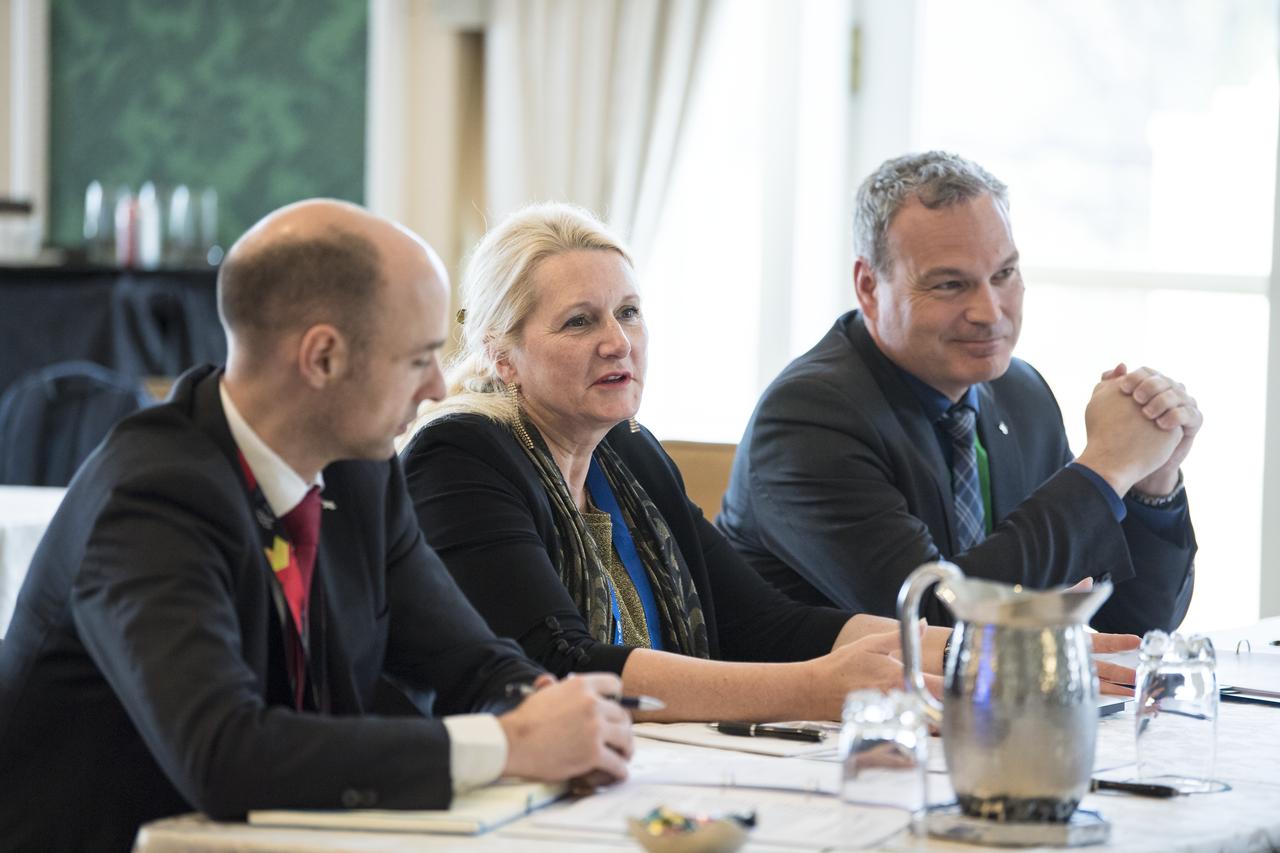
German Aerospace Center (DLR) executive board chair, Dr. Pascale Ehrenfreund, center, speaks with NASA Administrator Jim Bridenstine about the robust relationship between their agencies in human and robotic exploration, and prospects for cooperation as NASA pursues the landing of humans on the Moon by 2024, at the Space Symposium, Wednesday, April 10, 2019 in Colorado Springs, Colorado. Photo Credit: (NASA/Aubrey Gemignani)

German Aerospace Center (DLR) executive board chair, Dr. Pascale Ehrenfreund, speaks with NASA Administrator Jim Bridenstine about the robust relationship between their agencies in human and robotic exploration, and prospects for cooperation as NASA pursues the landing of humans on the Moon by 2024, at the Space Symposium, Wednesday, April 10, 2019 in Colorado Springs, Colorado. Photo Credit: (NASA/Aubrey Gemignani)

Walther Pelzer, German Aerospace Center (DLR) executive board member, speaks with NASA Administrator Jim Bridenstine about the robust relationship between their agencies in human and robotic exploration, and prospects for cooperation as NASA pursues the landing of humans on the Moon by 2024, at the Space Symposium, Wednesday, April 10, 2019 in Colorado Springs, Colorado. Photo Credit: (NASA/Aubrey Gemignani)

NASA Administrator Jim Bridenstine speaks with German Aerospace Center (DLR) executive board chair, Dr. Pascale Ehrenfreund, about the robust relationship between their agencies in human and robotic exploration, and prospects for cooperation as NASA pursues the landing of humans on the Moon by 2024, at the Space Symposium, Wednesday, April 10, 2019 in Colorado Springs, Colorado. Photo Credit: (NASA/Aubrey Gemignani)
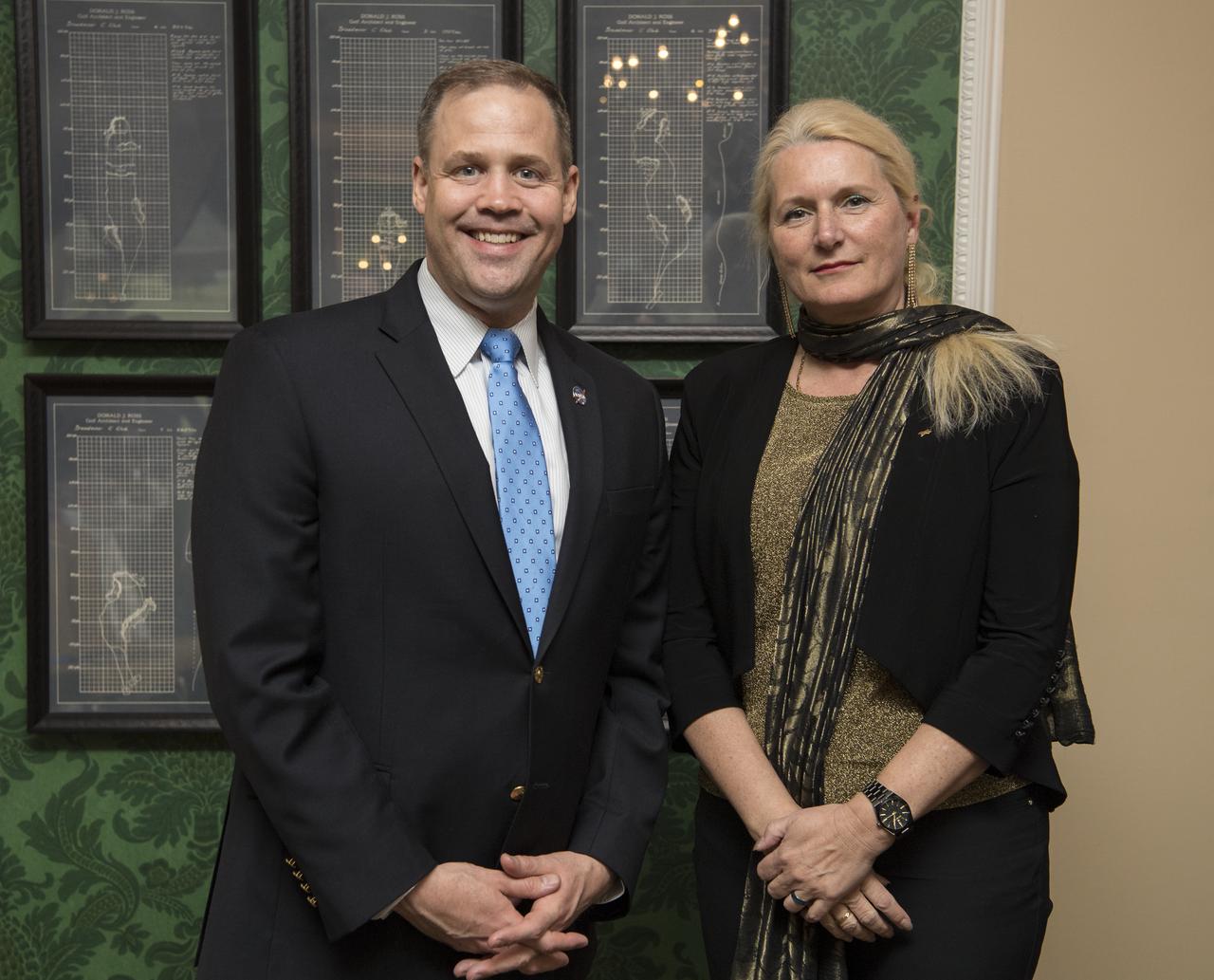
NASA Administrator Jim Bridenstine, left, poses for a photo with German Aerospace Center (DLR) executive board chair, Dr. Pascale Ehrenfreund after meeting to discuss the robust relationship between their agencies in human and robotic exploration, and prospects for cooperation as NASA pursues the landing of humans on the Moon by 2024, at the Space Symposium, Wednesday, April 10, 2019 in Colorado Springs, Colorado. Photo Credit: (NASA/Aubrey Gemignani)
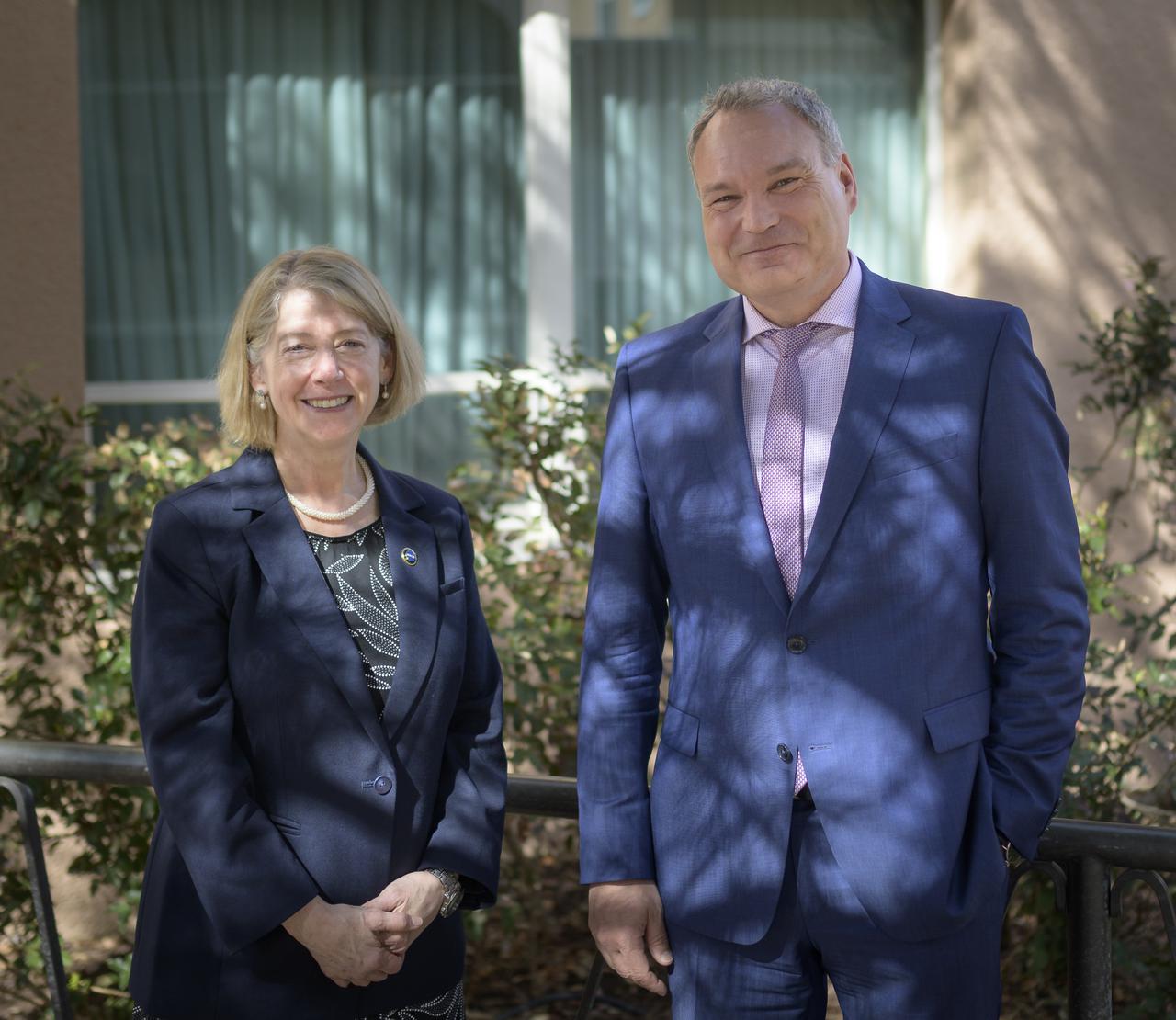
NASA Deputy Administrator Pam Melroy, left, and Executive Board Member and Head of the German Space Agency at the German Aerospace Center (DLR) Dr. Walther Pelzer, pose for a photograph prior to starting at meeting during the 37th Space Symposium, Monday, April 4, 2022, in Colorado Springs, Colorado. Photo Credit: (NASA/Bill Ingalls)
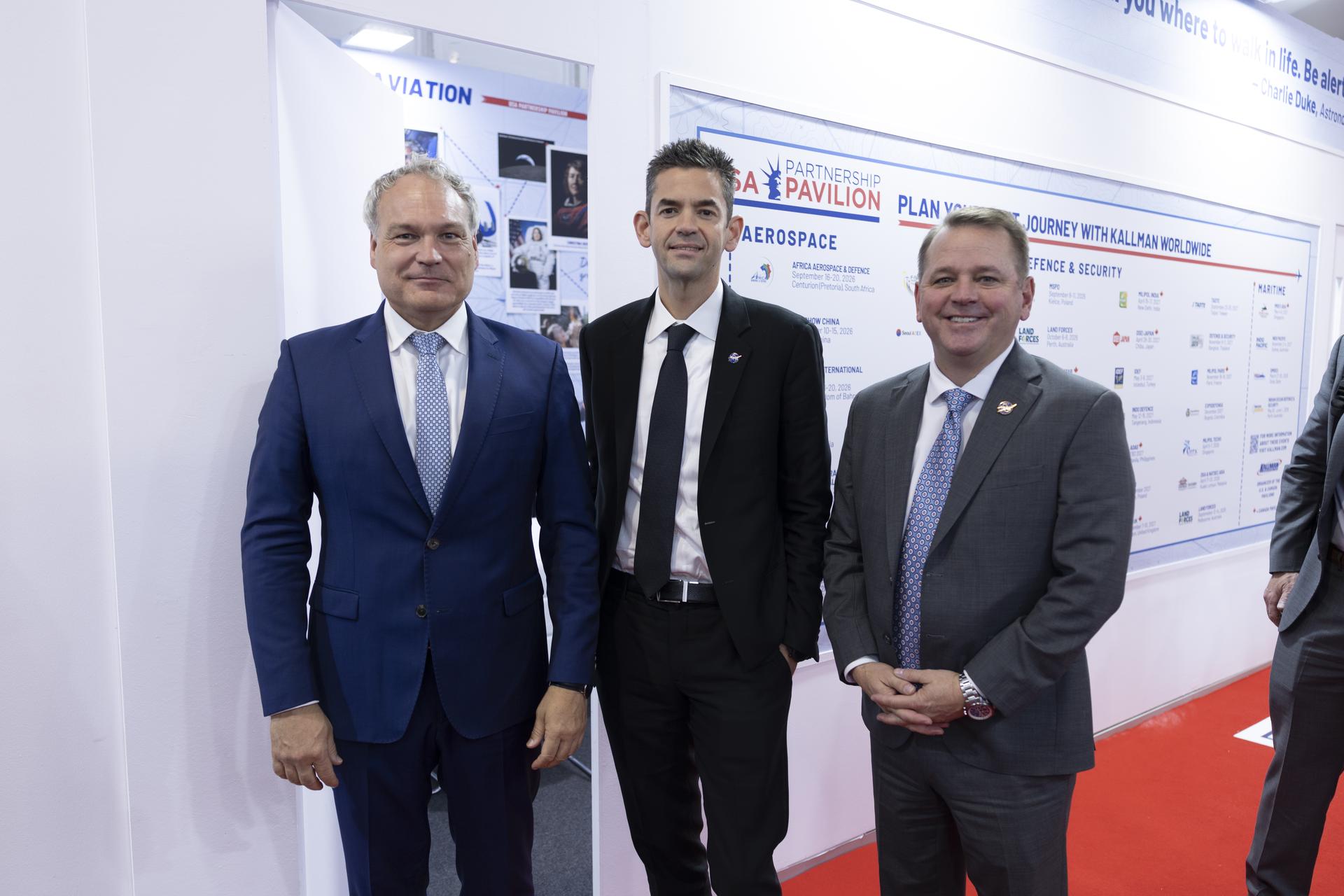
Jared Isaacman at Farnborough International Airshow in the United Kingdom with DLR Walther Pelzer and Deputy Administrator Matt Anderson
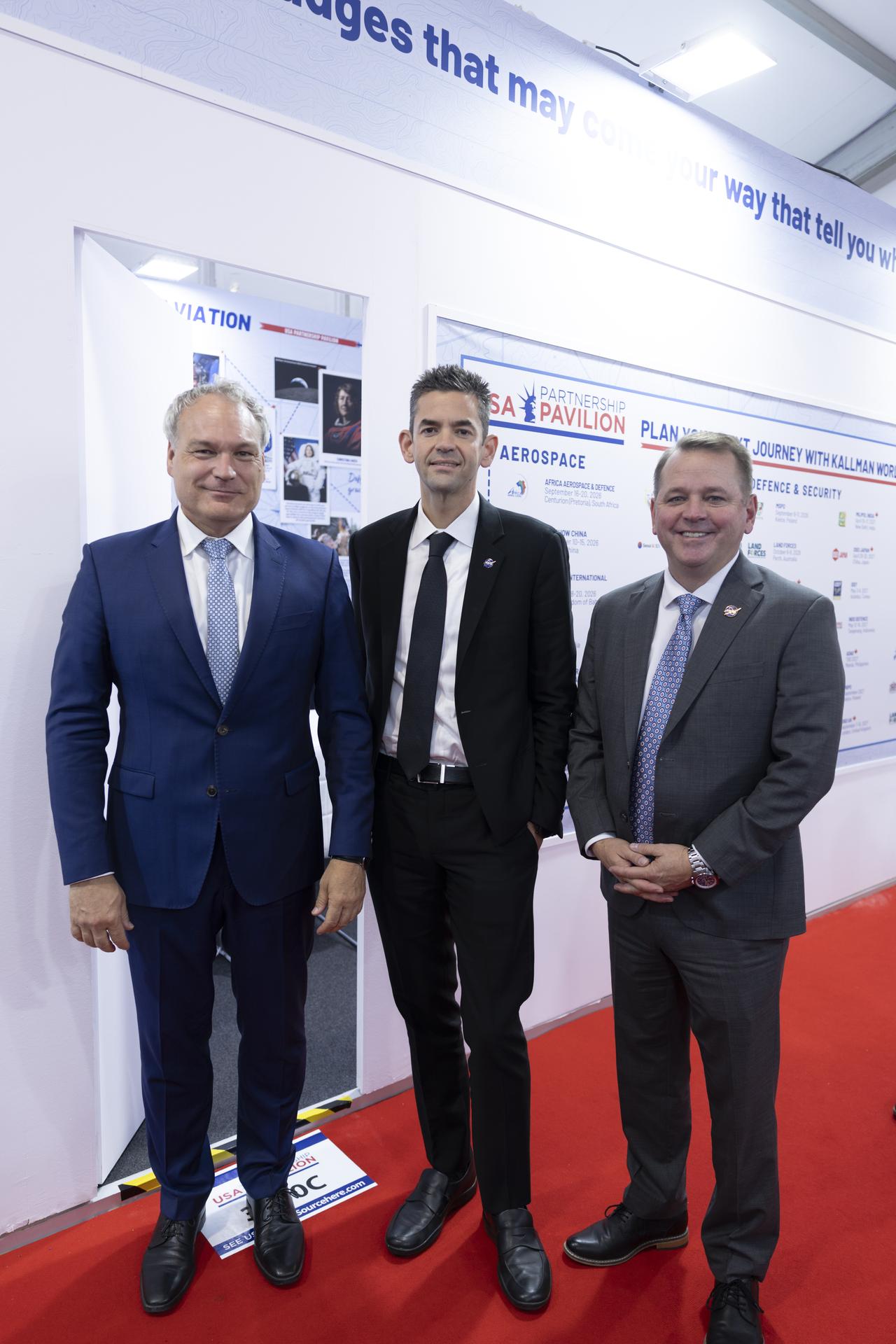
Jared Isaacman at Farnborough International Airshow in the United Kingdom with DLR Walther Pelzer and Deputy Administrator Matt Anderson

NASA Administrator Jim Bridenstine, right, speaks with German Aerospace Center (DLR) executive board chair, Dr. Pascale Ehrenfreund, about the robust relationship between their agencies in human and robotic exploration, and prospects for cooperation as NASA pursues the landing of humans on the Moon by 2024, at the Space Symposium, Wednesday, April 10, 2019 in Colorado Springs, Colorado. Photo Credit: (NASA/Aubrey Gemignani)

NASA Administrator Jim Bridenstine, right, and Deputy Administrator Jim Morhard listen as German Aerospace Center (DLR) executive board chair, Dr. Pascale Ehrenfreund, speaks about the robust relationship between their agencies in human and robotic exploration, and prospects for cooperation as NASA pursues the landing of humans on the Moon by 2024, at the Space Symposium, Wednesday, April 10, 2019 in Colorado Springs, Colorado. Photo Credit: (NASA/Aubrey Gemignani)

Logos of NASA and the German Aerospace Center (DLR) are displayed prominently on the tail of the Stratospheric Observatory for Infrared Astronomy (SOFIA) 747SP.

With landing gear extended, the NASA/DLR Stratospheric Observatory for Infared Astronomy (SOFIA) 747SP cruises over central Texas on its first checkout flight.
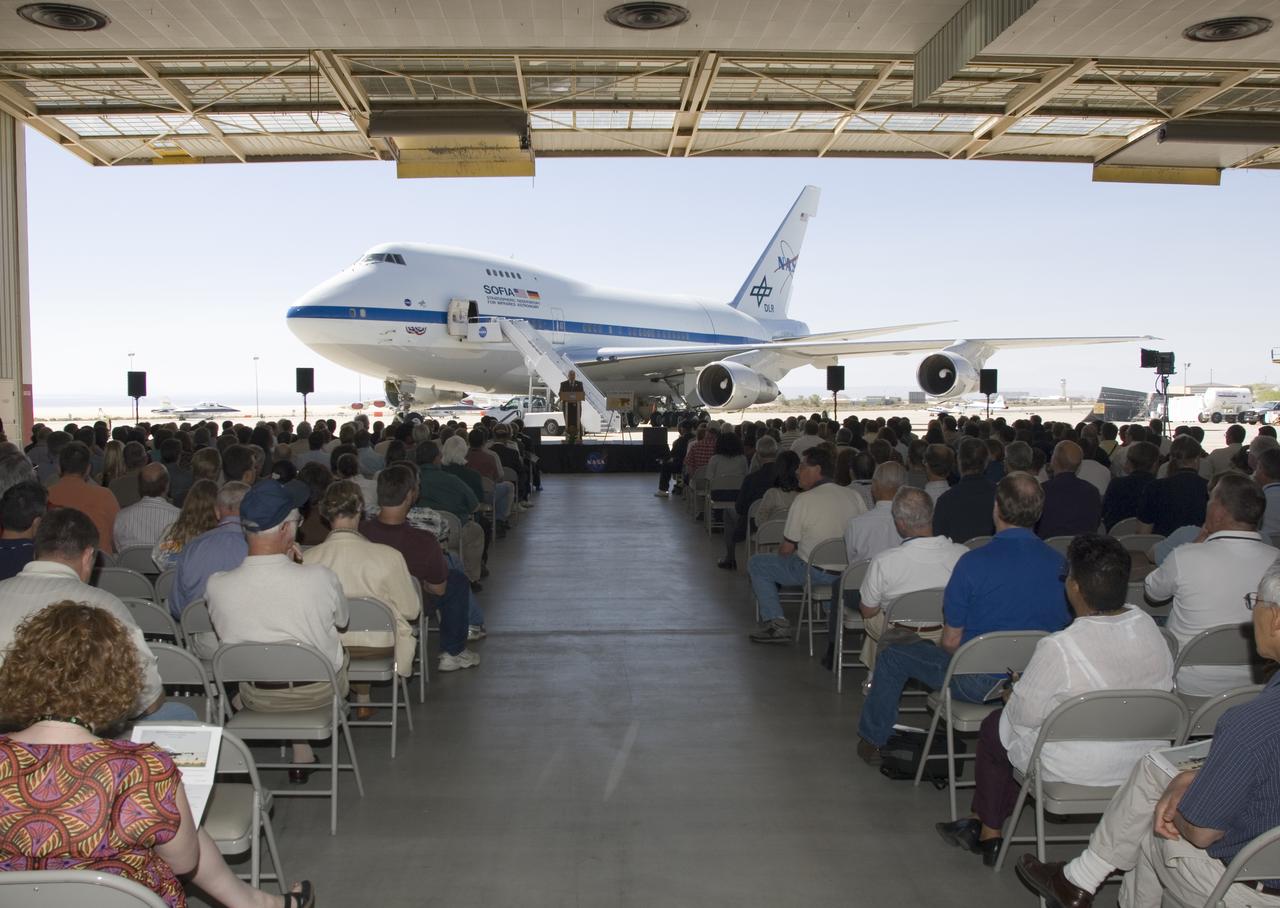
More than 250 VIPs, news media and guests joined NASA, DLR, USRA and other SOFIA staff for the debut of the airborne observatory at NASA DFRC on June 27, 2007.

Dr. Walther Pelzer, Executive Board Member and Head of the German Space Agency at the German Aerospace Center (DLR) speaks in a Heads of Agency panel during the 37th Space Symposium, Wednesday, April 6, 2022, in Colorado Springs, Colorado. Photo Credit: (NASA/Bill Ingalls)
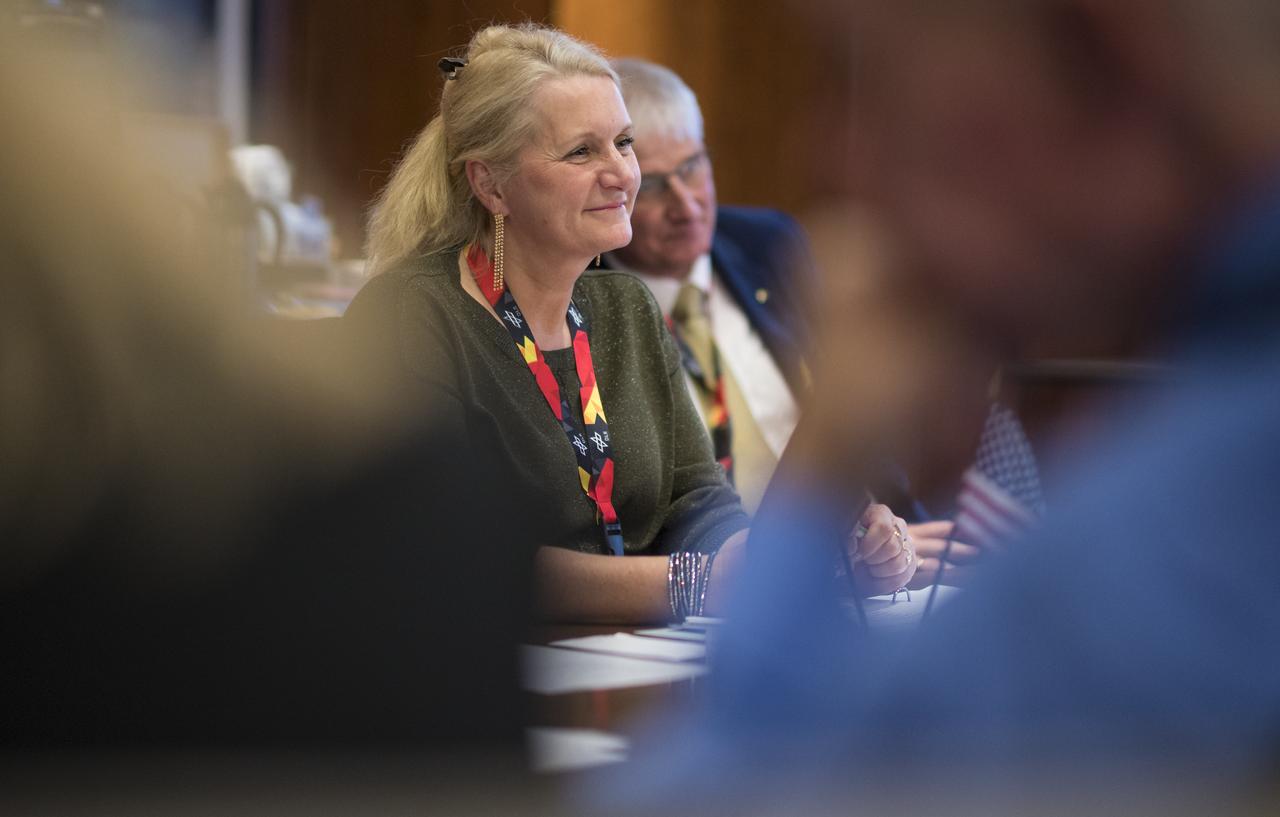
Pascale Ehrenfreund, Chair of the Executive Board of the German Aerospace Center (DLR) is seen during a meeting with NASA Administrator Jim Bridenstine, Deputy Administrator Jim Morhard and other senior NASA leaders at the 70th International Astronautical Congress, Wednesday, Oct. 23, 2019 in Washington. Photo Credit: (NASA/Joel Kowsky)

Dr. Walther Pelzer, Head of the German Space Agency, German Aerospace Center (DLR) gives remarks in a Heads of Agency panel discussion, during the 36th Space Symposium, Wednesday, Aug. 25, 2021, in Colorado Springs, Colorado. Photo Credit: (NASA/Bill Ingalls)

Thomas Zurbuchen, Associate Administrator of NASA's Science Mission Directorate, left, speaks with Hansjörg Dittus, Executive Board Member for Space Research and Technology at the German Aerospace Center (DLR) during a meeting at the 70th International Astronautical Congress, Wednesday, Oct. 23, 2019 in Washington. Photo Credit: (NASA/Joel Kowsky)
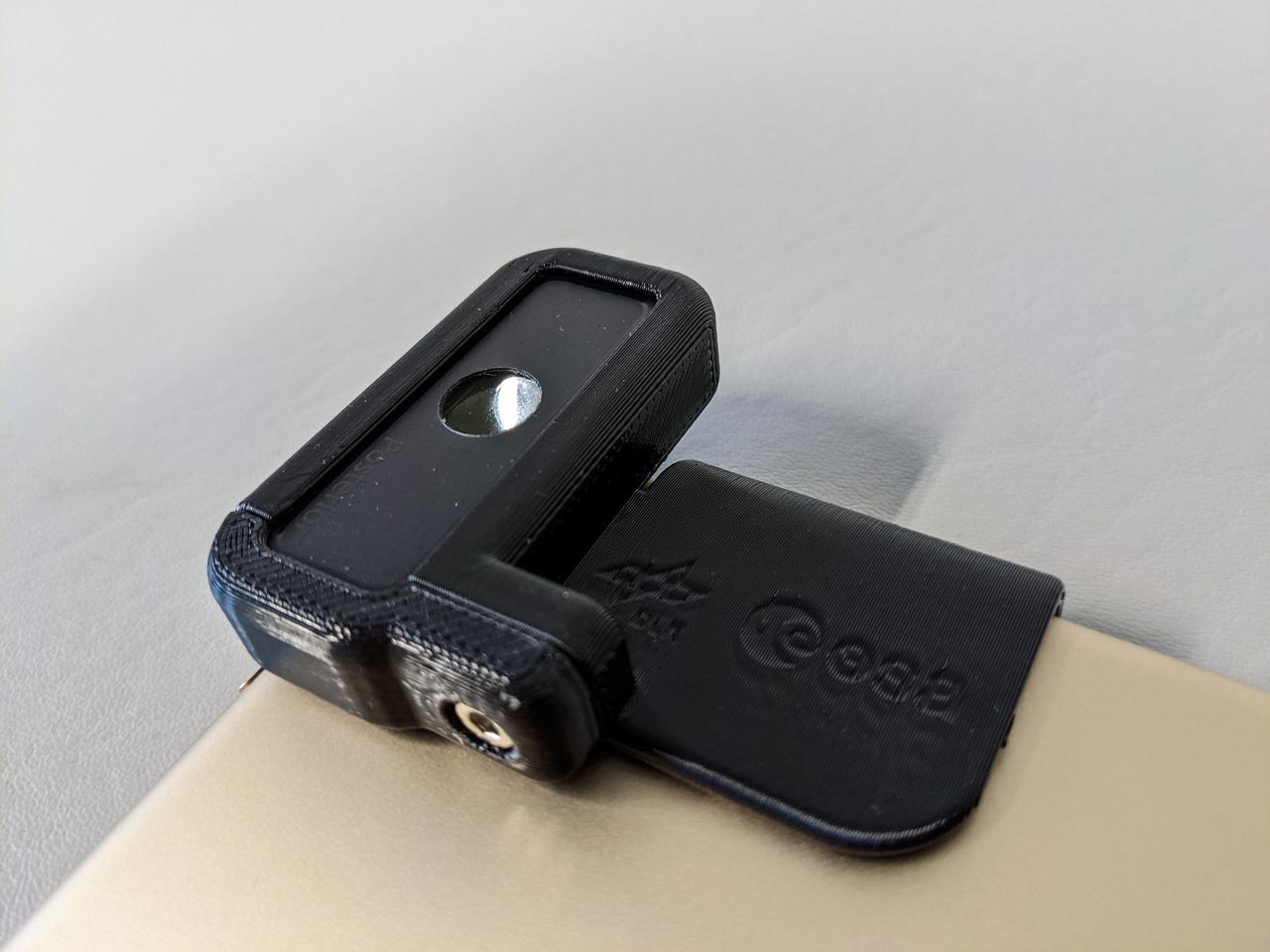
jsc2021e031163 (2/17/2021) --- A preflight view of the experiment hardware for DLR-EAC Retinal Diagnostics Study. The DLR-EAC Retinal Diagnostics Study (Retinal Diagnostics) utilizes a commercially available ophthalmology lens, approved for routine clinical use with mobile devices, to capture images of the human retina in space. Image courtesy of DLR and EAC.
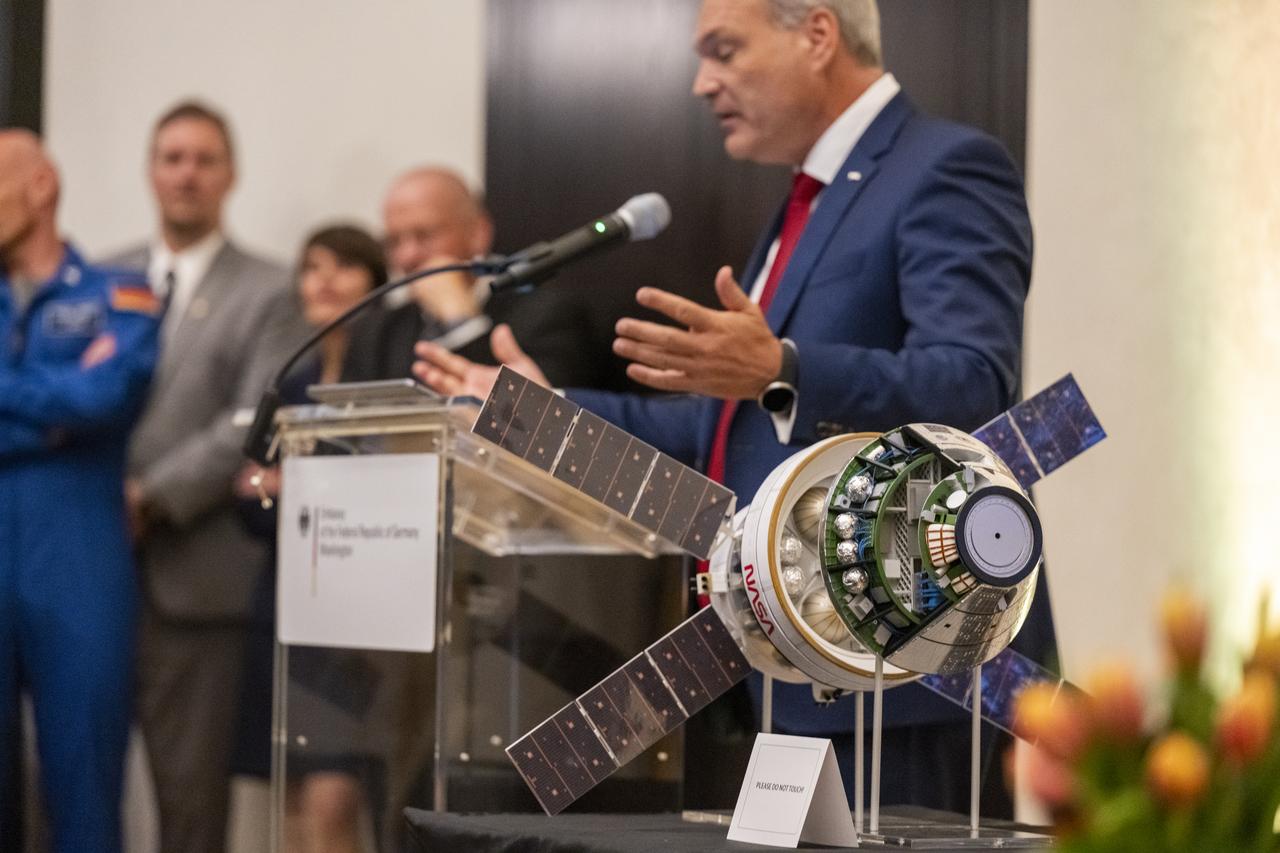
A model of the Orion Spacecraft is seen in the foreground as Director General of the German Space Agency at the German Aerospace Center (DLR) Walther Pelzer delivers remarks during an Artemis Accords signing ceremony, Thursday, September 14, 2023, at the German Ambassador’s Residence in Washington. Germany is the 29th country to sign the Artemis Accords, which establish a practical set of principles to guide space exploration cooperation among nations participating in NASA’s Artemis program. Photo Credit: (NASA/Keegan Barber)
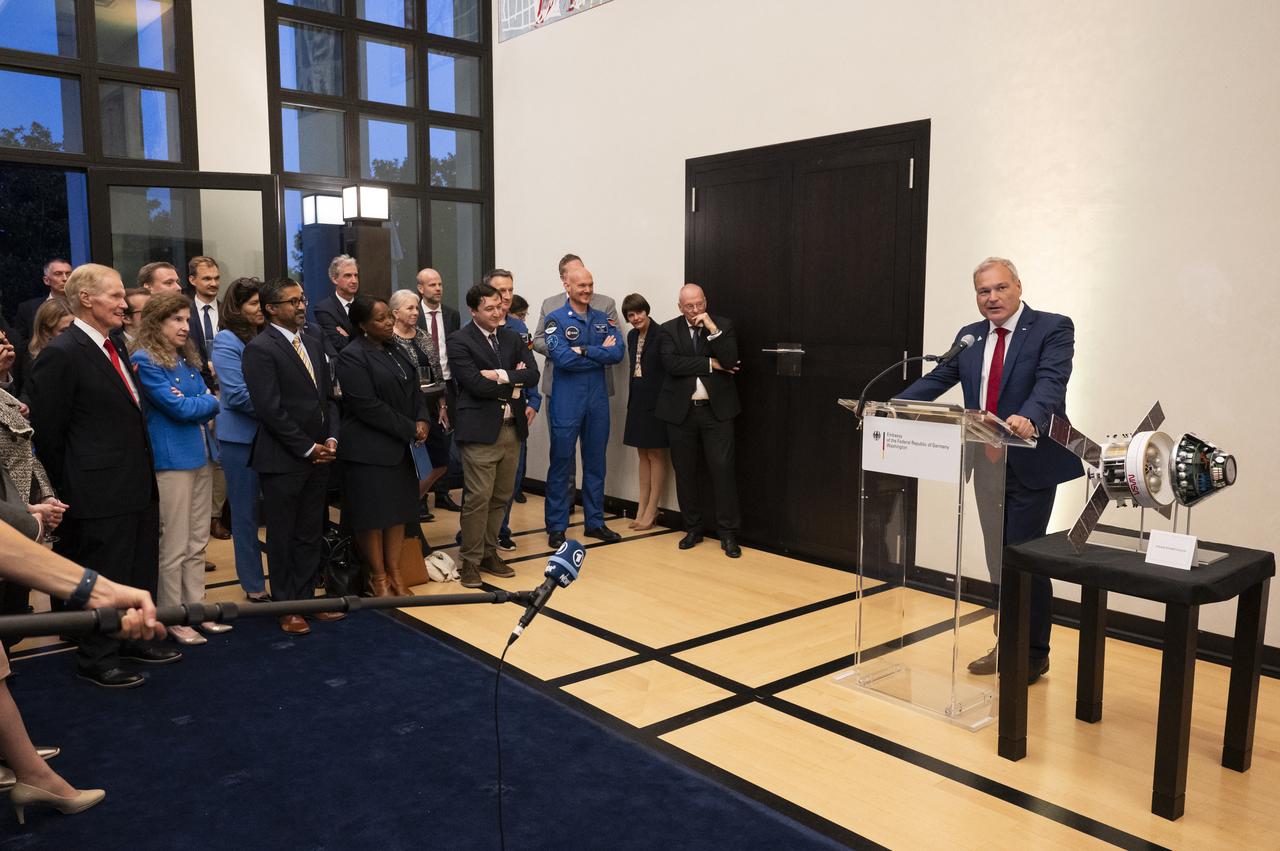
Director General of the German Space Agency at the German Aerospace Center (DLR) Walther Pelzer delivers remarks during an Artemis Accords signing ceremony, Thursday, September 14, 2023, at the German Ambassador’s Residence in Washington. Germany is the 29th country to sign the Artemis Accords, which establish a practical set of principles to guide space exploration cooperation among nations participating in NASA’s Artemis program. Photo Credit: (NASA/Keegan Barber)
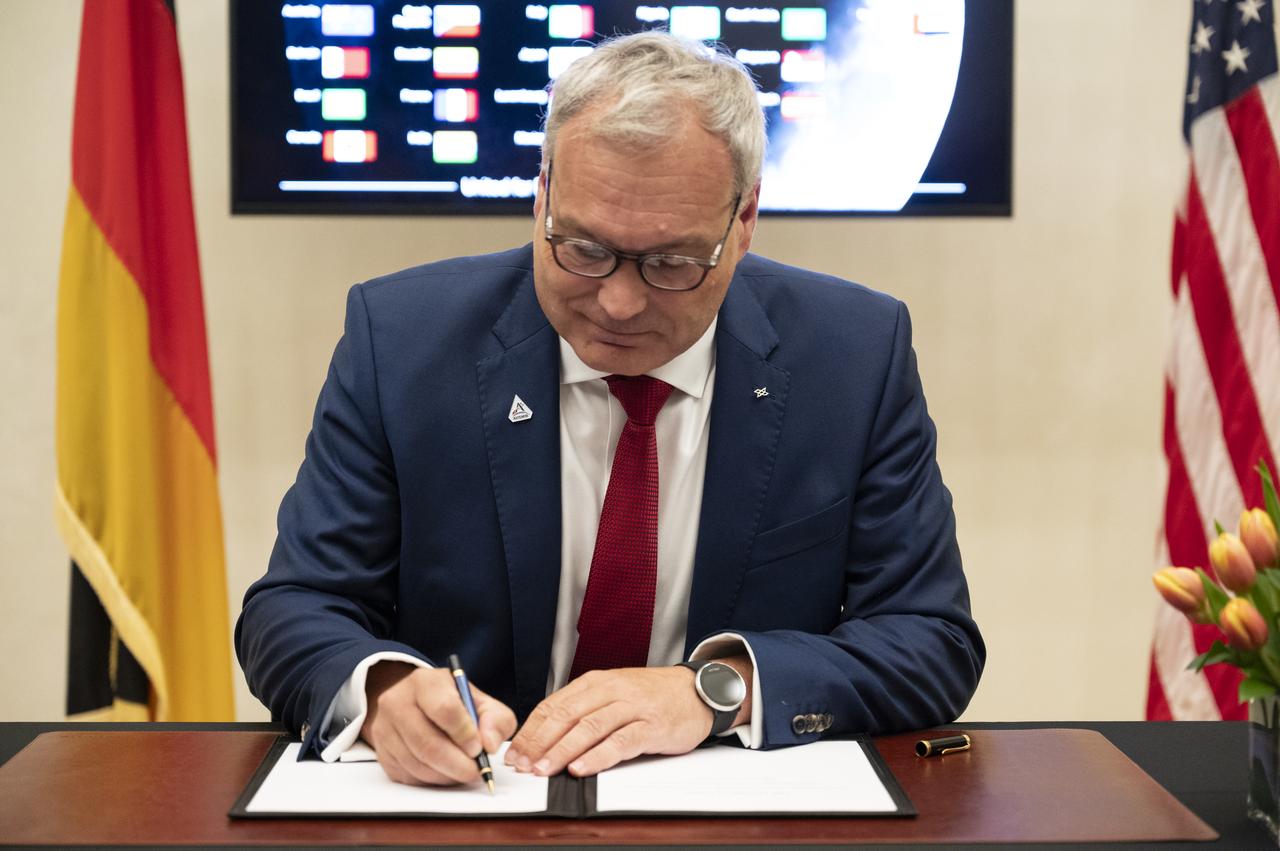
Director General of the German Space Agency at the German Aerospace Center (DLR) Walther Pelzer signs the Artemis Accords, Thursday, September 14, 2023, at the German Ambassador’s Residence in Washington. Germany is the 29th country to sign the Artemis Accords, which establish a practical set of principles to guide space exploration cooperation among nations participating in NASA’s Artemis program. Photo Credit: (NASA/Keegan Barber)
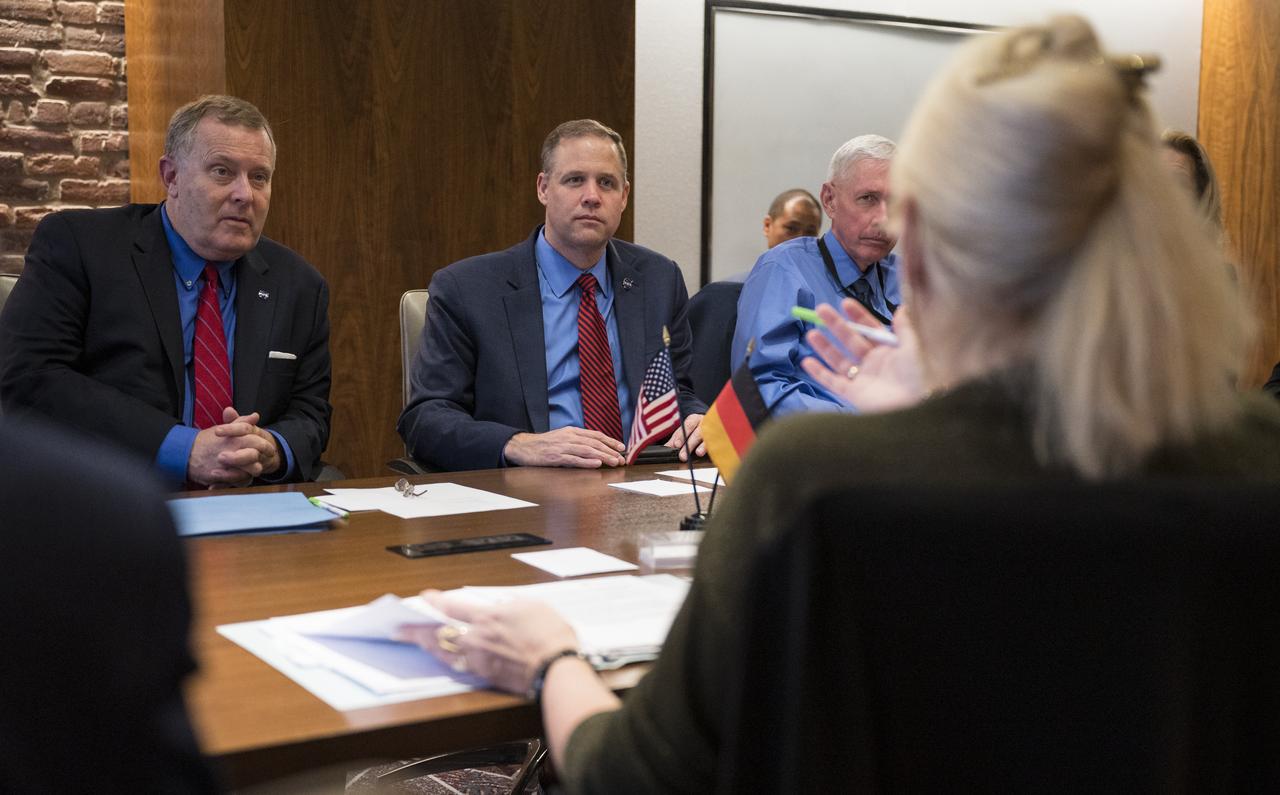
NASA Administrator Jim Bridenstine, right, and Deputy Administrator Jim Morhard, are seen during a meeting with Pascale Ehrenfreund, Chair of the Executive Board of the German Aerospace Center (DLR) and other members of the executive board at the 70th International Astronautical Congress, Wednesday, Oct. 23, 2019 in Washington. Photo Credit: (NASA/Joel Kowsky)
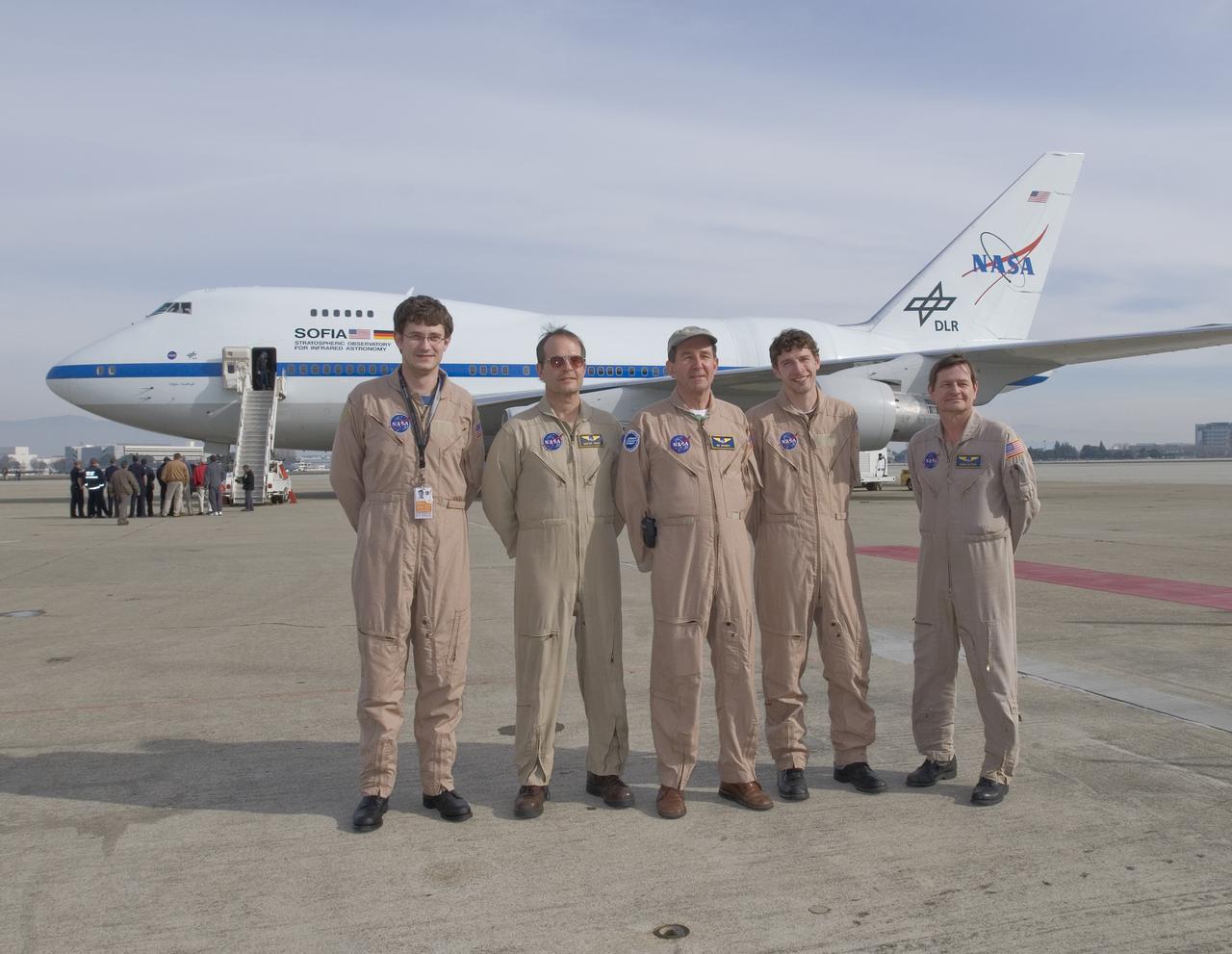
The flight crew of NASA's SOFIA airborne observatory and DLR telescope engineers who operated the system during its visit to NASA Ames Research Center on Jan. 14, 2008 included (from left), DLR telescope engineer Ulli Lampater, flight engineer Marty Trout, pilot Bill Brockett, telescope engineer Andres Reinacher and pilot Frank Batteas.

NASA Administrator Jim Bridenstine, center left, Deputy Administrator Jim Morhard, Ken Bowersox, acting Associate Administrator for NASA's Human Exploration and Operations Mission Directorate, Thomas Zurbuchen, Associate Administrator of NASA's Science Mission Directorate, meet with Pascale Ehrenfreund, Chair of the Executive Board of the German Aerospace Center (DLR) and other members of the executive board at the 70th International Astronautical Congress, Wednesday, Oct. 23, 2019 in Washington. Photo Credit: (NASA/Joel Kowsky)
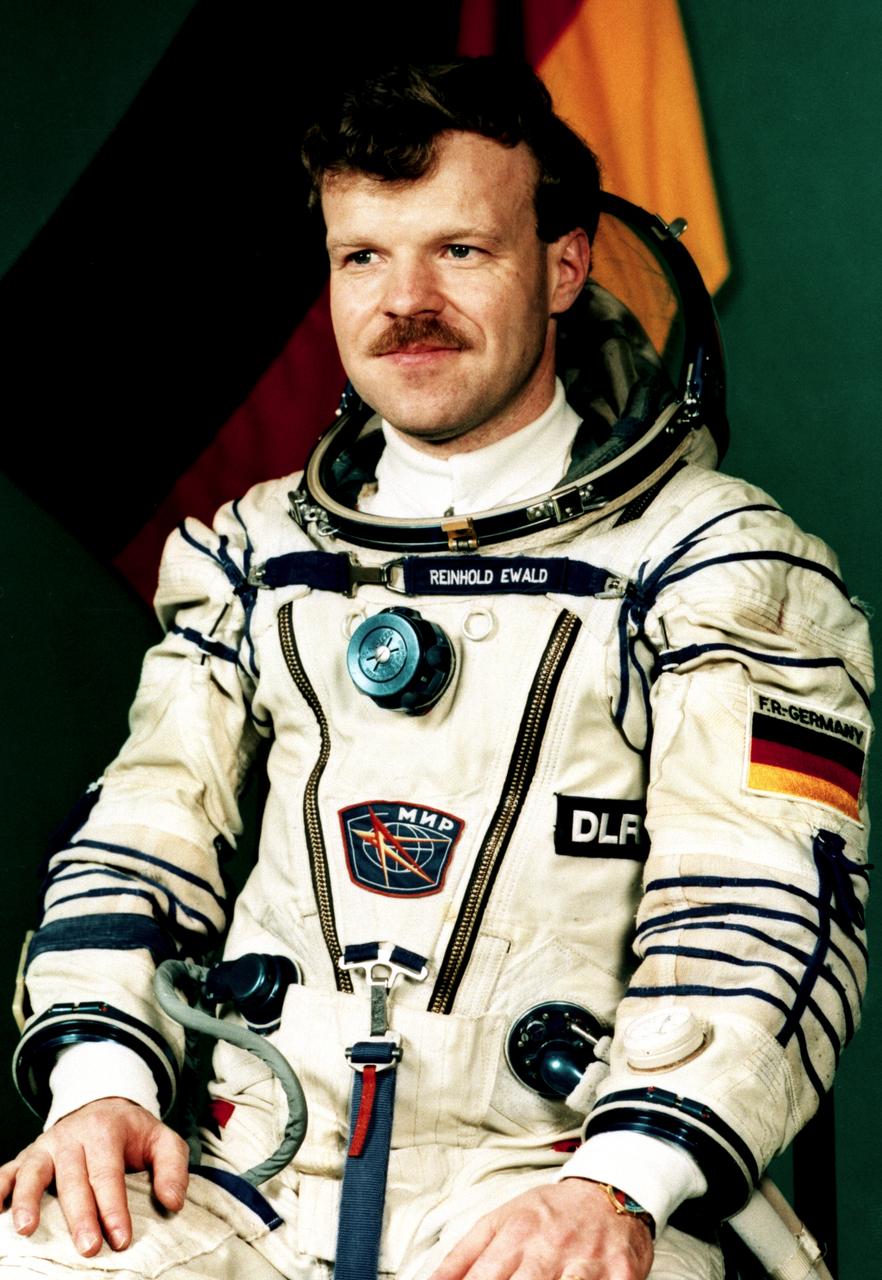
S97-01442 (August 1996) --- Dr. Reinhold Ewald, German Space Agency (DLR), cosmonaut researcher

Erik Lindbergh, grandson of famed aviator Charles Lindbergh, yanks the bunting to reveal the Clipper Lindbergh name on NASA's SOFIA Boeing 747SP on June 27, 2007. More than 250 VIPs, news media and guests joined NASA, DLR, USRA and other SOFIA staff for the debut of the airborne observatory at NASA Dryden.
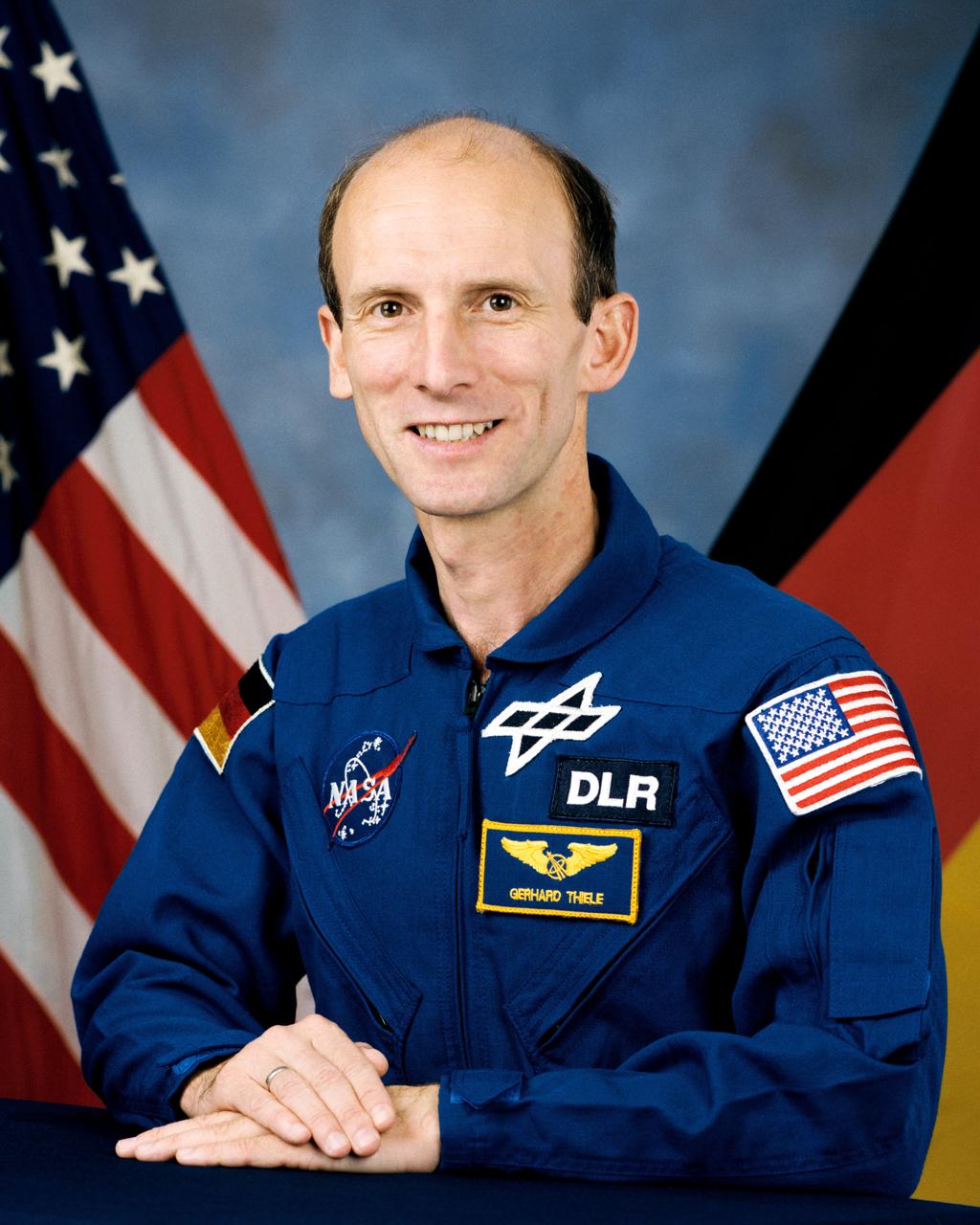
S97-01066 (20 Aug. 1996) --- Astronaut Gerhard P. J. Thiele, mission specialist representing German Aerospace Research Establishment (DLR).
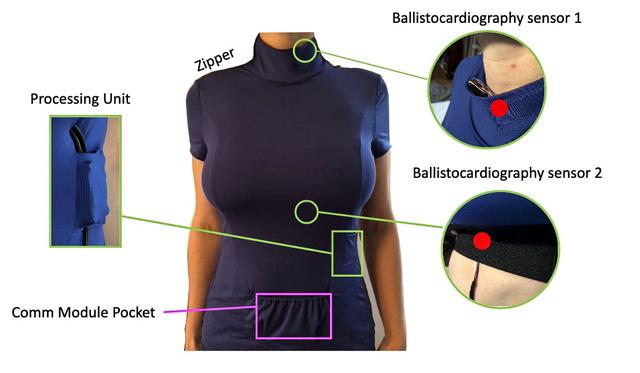
jsc2022e023740 (4/19/2022) --- The components of the Smart-Shirt garment includes integrated sensors, wiring, and a communication module to transmit scientific data via a wireless link for the Ballistocardiography for Extraterrestrial Applications and long-Term missions (BEAT) experiment, part of the Wireless Compose-2 investigation. The technology demonstration builds on work by the German Space Agency (DLR) to develop wireless network infrastructure to support scientific experiments on the space station. Image courtesy of DLR.

Tilman Spohn, HP3 Principle Investigator, German Aerospace Center (DLR) talks about Mars InSight during a social media briefing, Sunday, Nov. 25, 2018 at NASA's Jet Propulsion Laboratory in Pasadena, California. InSight, short for Interior Exploration using Seismic Investigations, Geodesy and Heat Transport, is a Mars lander designed to study the "inner space" of Mars: its crust, mantle, and core. InSight is scheduled to touch down on the Red Planet at approximately noon PST (3 p.m. EST) on Nov. 26. Photo Credit: (NASA/Bill Ingalls)
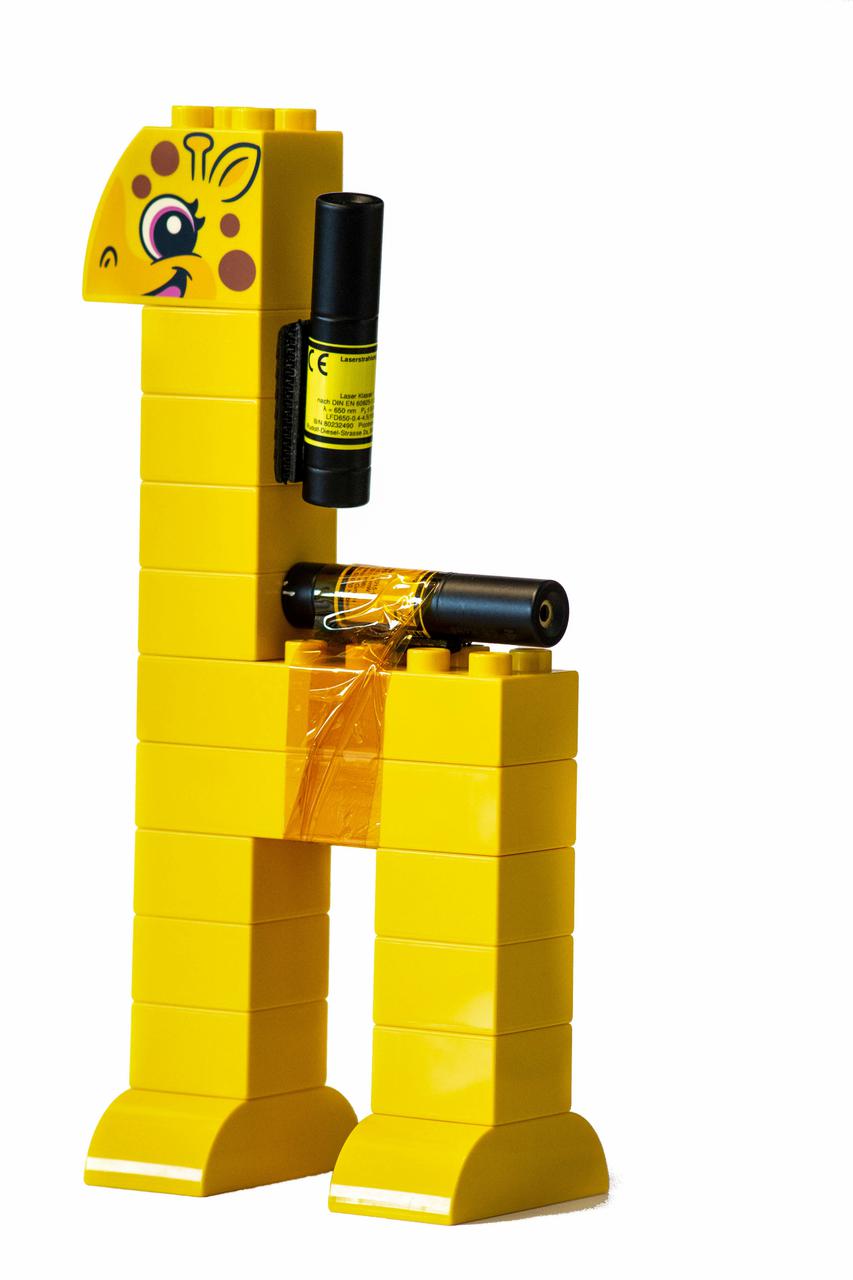
jsc2021e037884 (4/19/2021) --- A preflight photo of the Lego Duplo giraffe with two laser-pointers as the second object to be observed rotating around its intermediate axis for the Dzhanibekov Demonstrations investigation. Image courtesy of DLR.
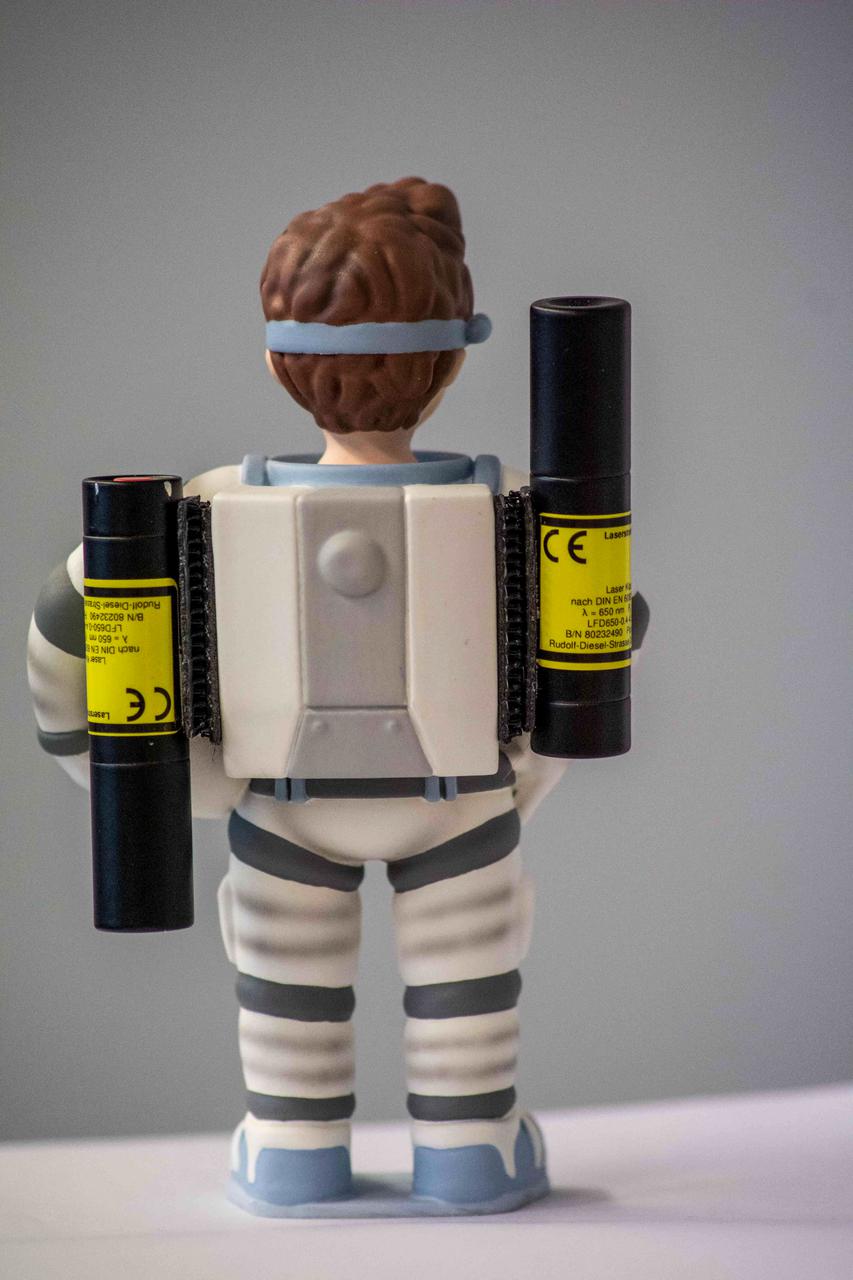
jsc2021e037886 (3/5/2021) --- A preflight photo of the Little Major Tom figure with two laser-pointers as the third object to be observed rotating around its intermediate axis for the Dzhanibekov Demonstrations investigation. Image courtesy of DLR.
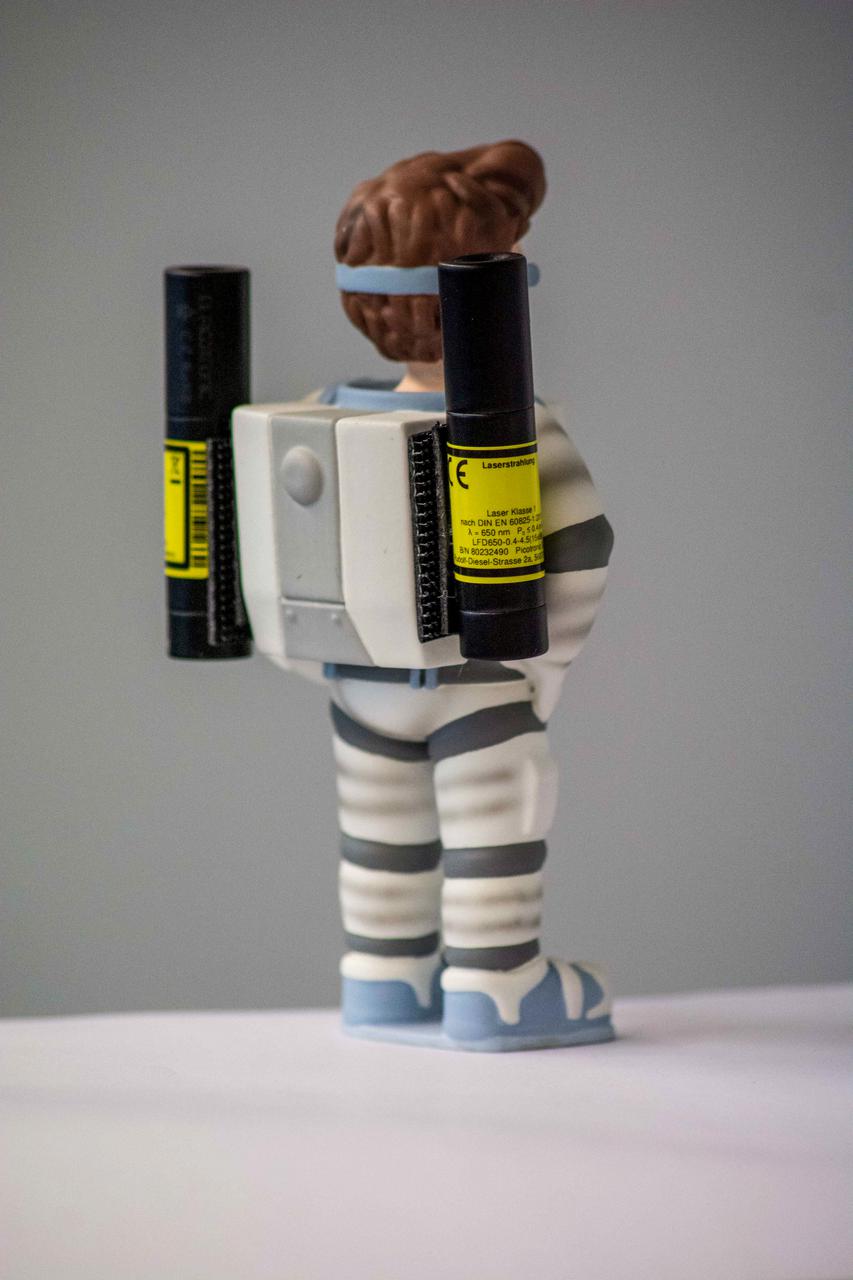
jsc2021e037887 (3/5/2021) --- A preflight photo of the Little Major Tom figure with two laser-pointers as the third object to be observed rotating around its intermediate axis for the Dzhanibekov Demonstrations investigation. Image courtesy of DLR.
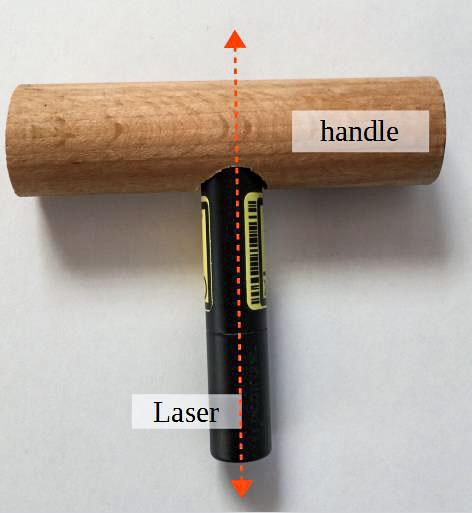
jsc2021e037886 (8/242021) --- A preflight photo of the First object to be observed rotating around its intermediate axis, made from a laser-pointer and a wooden handle for the Dzhanibekov Demonstrations investigation. Image courtesy of DLR.
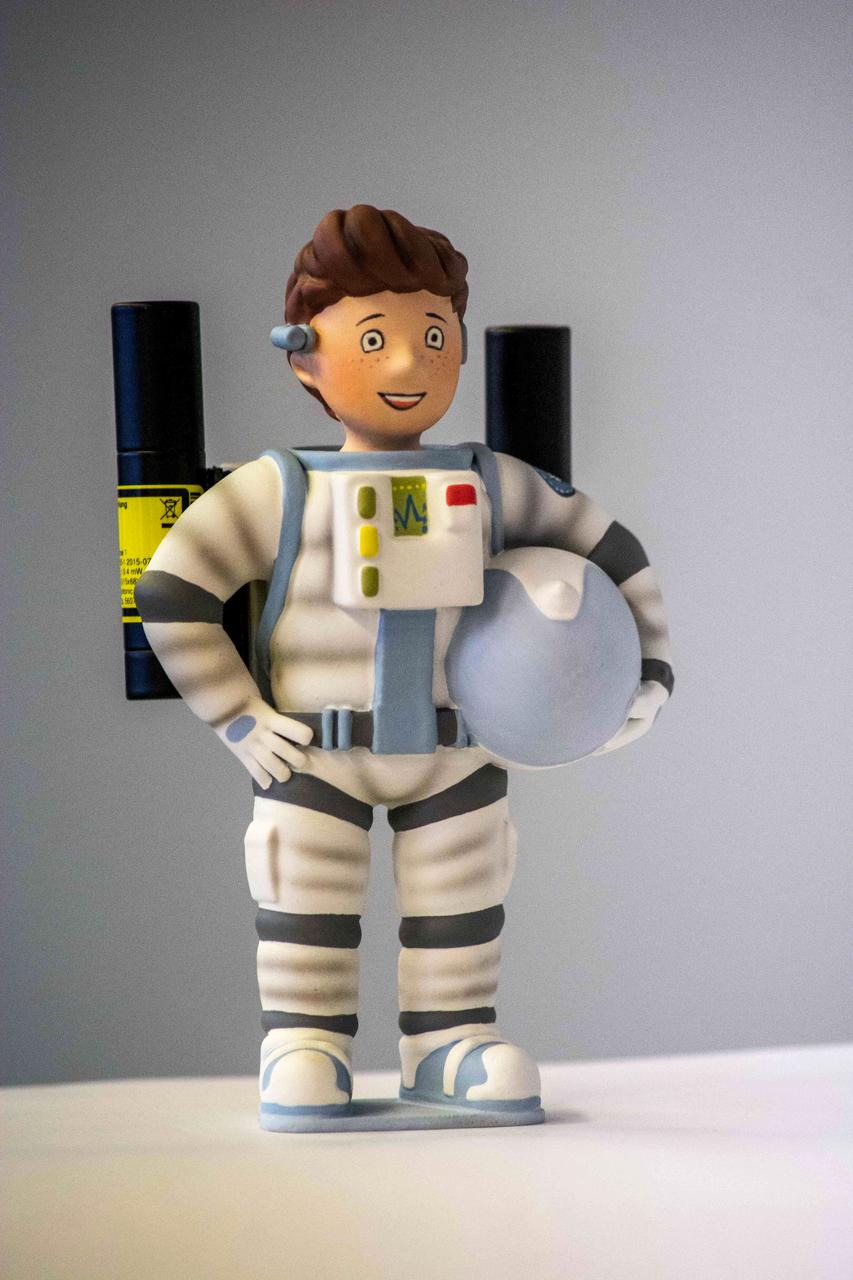
jsc2021e037888 (3/5/2021) --- A preflight photo of the Little Major Tom figure with two laser-pointers as the third object to be observed rotating around its intermediate axis for the Dzhanibekov Demonstrations investigation. Image courtesy of DLR.
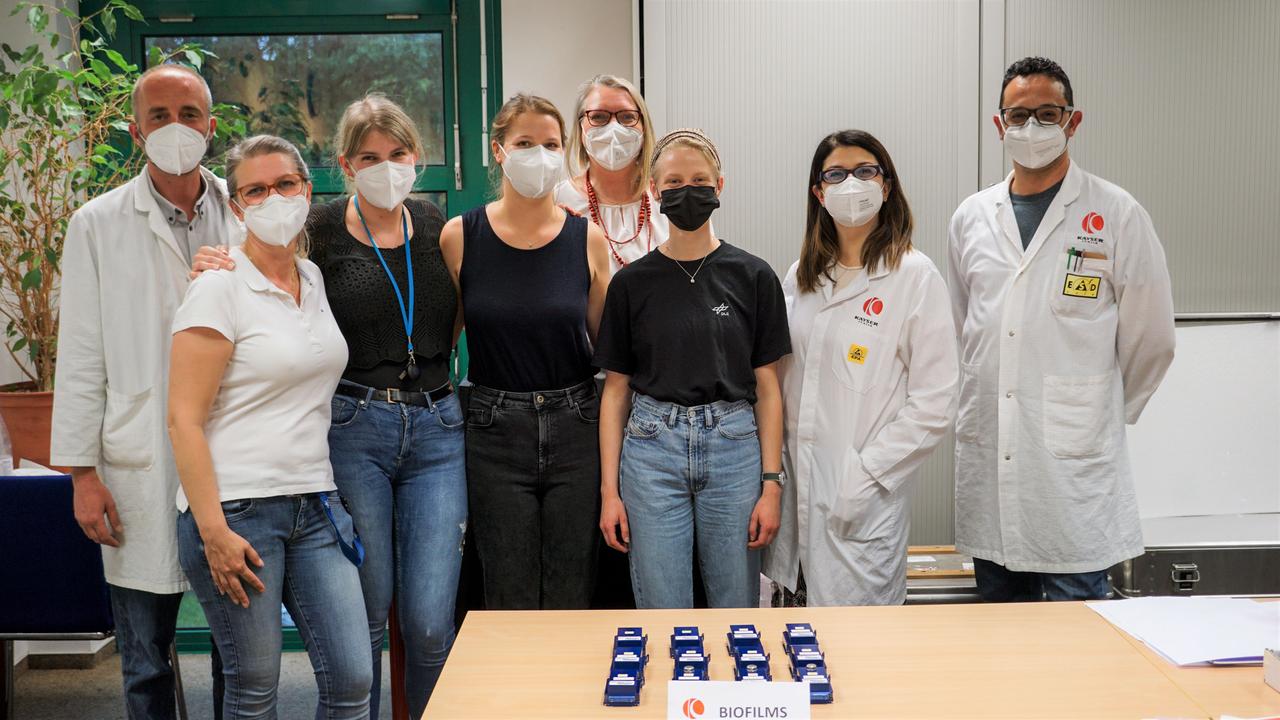
jsc2023e010180 (5/20/2022) --- This is a group picture of the DLR, ESA, and Kayser Italia teams after successful integration of the ESA-Biofilms experiment for its second launch in 2022. The assembled hardware is in the front on the table. The blue experiment containers were later integrated by ESA astronaut Samantha Cristoforetti into the two KUBIK incubators inside the Columbus laboratory aboard the International Space Station. The ESA-Biofilms investigation studies bacterial biofilm formation and antimicrobial properties of different metal surfaces under spaceflight conditions in altered gravity. Image courtesy of DLR, CC BY-NC-ND 3.0.
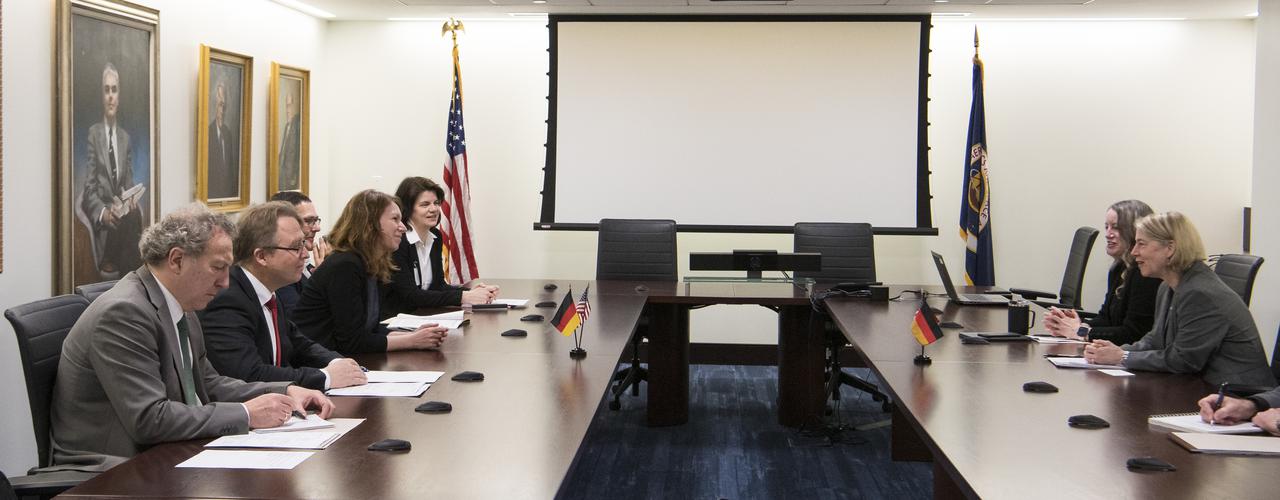
From left to right, Head of Science and Technology Section, German Embassy, Dr. René Haak; Head of the German Aerospace Center’s (DLR) Washington Office, Mr. Marc Jochemich; the Federal Government Coordinator of German Aerospace Policy, Dr. Anna Christmann; Deputy Director General, Federal Ministry for Economic Affairs and Climate Action (BMWK), Holger Schlienkamp; Head of Division, BMWK, Claudia Andree; NASA Office of International and Interagency Relations Deputy Associate Administrator, Meredith McKay; and NASA Deputy Administrator Pam Melroy speak during a meeting, Thursday, March 31, 2022, at NASA Headquarters in Washington DC. Photo Credit: (NASA/Aubrey Gemignani)
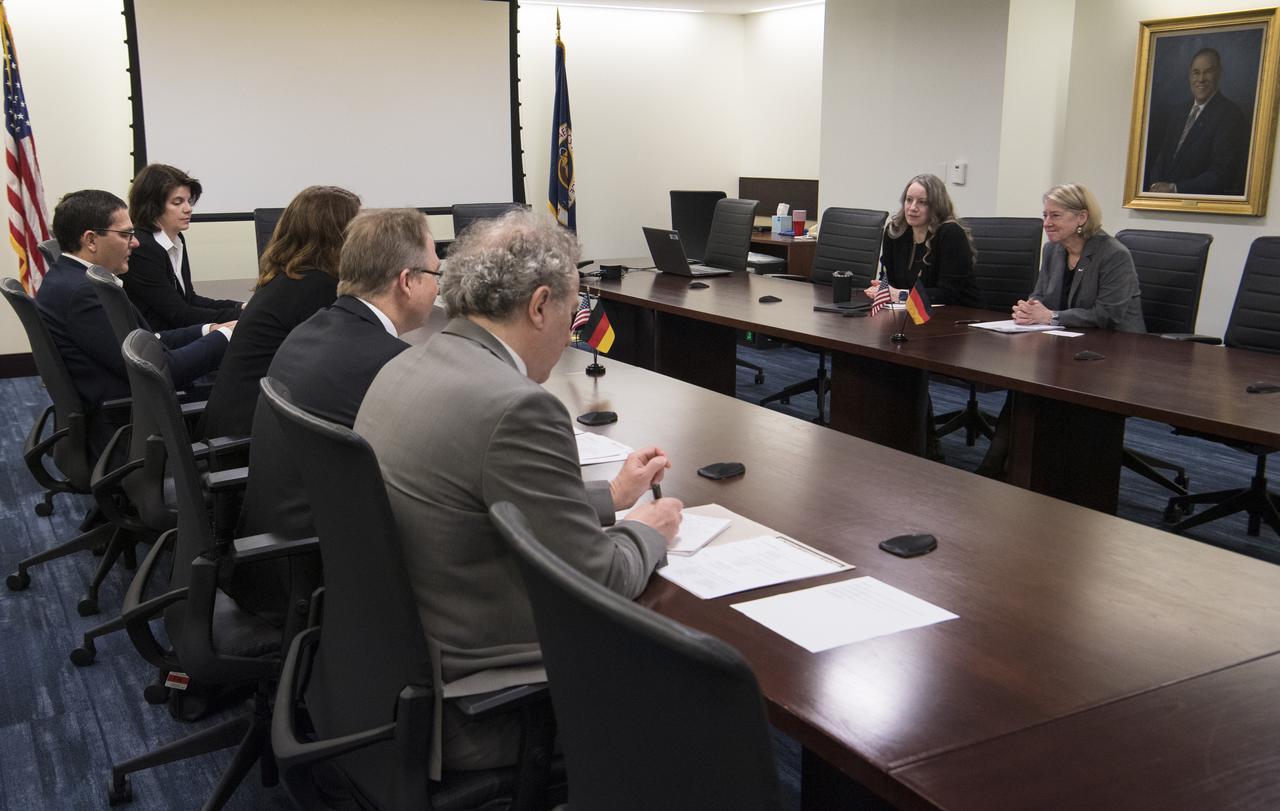
From left to right, Head of Science and Technology Section, German Embassy, Dr. René Haak; Head of the German Aerospace Center’s (DLR) Washington Office, Mr. Marc Jochemich; the Federal Government Coordinator of German Aerospace Policy, Dr. Anna Christmann; Deputy Director General, Federal Ministry for Economic Affairs and Climate Action (BMWK), Holger Schlienkamp; Head of Division, BMWK, Claudia Andree; NASA Office of International and Interagency Relations Deputy Associate Administrator, Meredith McKay; and NASA Deputy Administrator Pam Melroy speak during a meeting, Thursday, March 31, 2022, at NASA Headquarters in Washington DC. Photo Credit: (NASA/Aubrey Gemignani)

From left to right, Head of Science and Technology Section, German Embassy, Dr. René Haak; Head of the German Aerospace Center’s (DLR) Washington Office, Mr. Marc Jochemich; the Federal Government Coordinator of German Aerospace Policy, Dr. Anna Christmann; Deputy Director General, Federal Ministry for Economic Affairs and Climate Action (BMWK), Holger Schlienkamp; Head of Division, BMWK, Claudia Andree, speak with NASA Office of International and Interagency Relations Deputy Associate Administrator, Meredith McKay, front right, and NASA Deputy Administrator Pam Melroy, during a meeting, Thursday, March 31, 2022, at NASA Headquarters in Washington DC. Photo Credit: (NASA/Aubrey Gemignani)

jsc2023e053547 (3/32023) --- Granular Sound: open sample cell, completely filled with glass beads. On the left, the bead packing is in direct contact with a voicecoil-driven wall for sound wave excitation, while all other sample cell walls are padded with foam for acoustic decoupling of the glass bead packing. Image courtesy of DLR-MP.
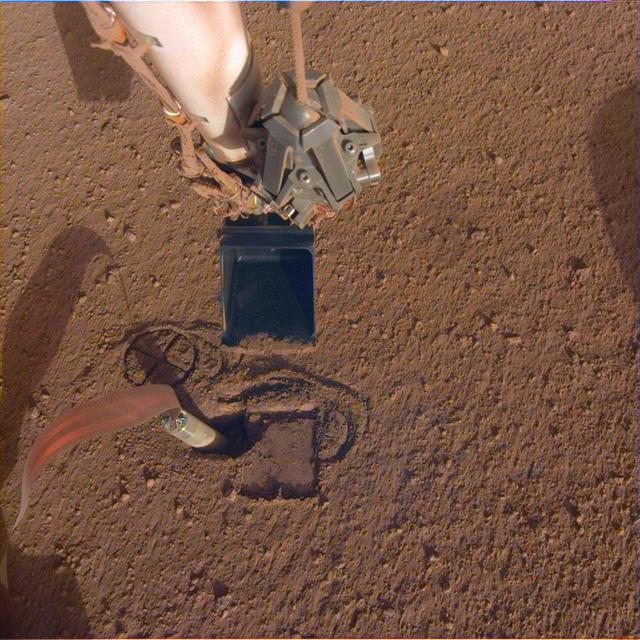
NASA InSight's robotic arm will use its scoop to pin the spacecraft's heat probe, or "mole," against the wall of its hole. The mole is part of an instrument formally called the Heat Flow and Physical Properties Package, or HP3, provided by the German Aerospace Center (DLR). Animation available at https://photojournal.jpl.nasa.gov/catalog/PIA23373
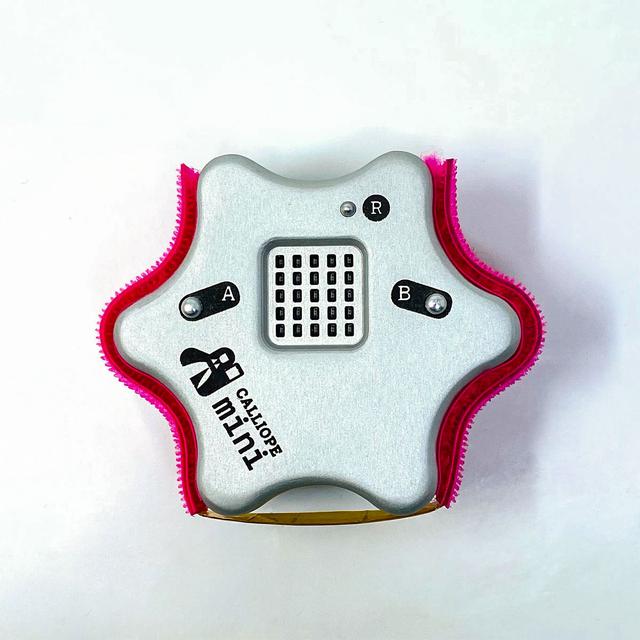
jsc2021e064349 (8/31/2021) --- A prefligt image of the Flight Model of the CalliopEO Hardware. CalliopEO (Calliope Mini in Space) is a project of Ruhr-Universität Bochum, Calliope gGmbH, and the German Space Agency at DLR to promote software programming skills among German school children. Image courtesy of Calliope gGmbH
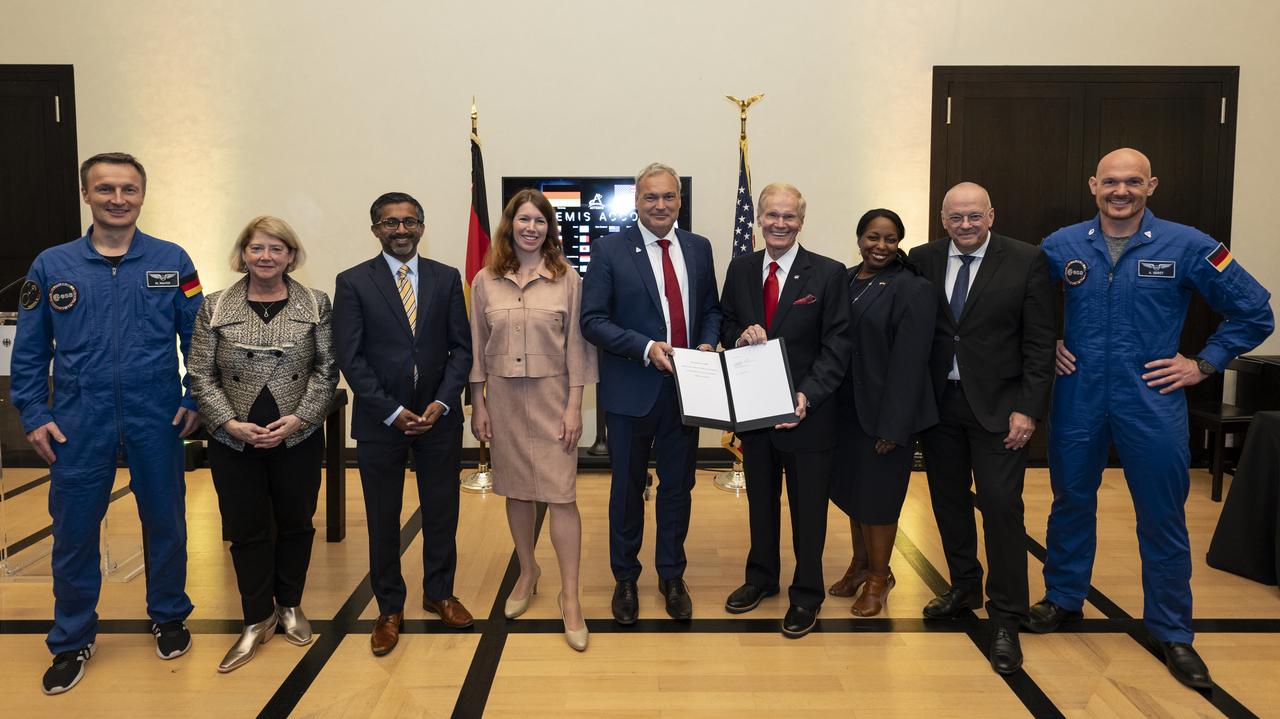
From left to right, ESA (European Space Agency) astronaut Matthias Maurer, NASA Deputy Administrator Pam Melroy, National Space Council (NSpC) Executive Secretary Chirag Parikh, Federal Government Coordinator of German Aerospace Policy Anna Christmann, NASA Administrator Bill Nelson, Director General of the German Space Agency at the German Aerospace Center (DLR) Walther Pelzer, Acting Assistant Secretary of State for Oceans and International Environmental and Scientific Affairs Jennifer R. Littlejohn, German Ambassador to the United States Andreas Michaelis, and ESA astronaut Alexander Gerst pose for a group photo during an Artemis Accords signing ceremony, Thursday, September 14, 2023, at the German Ambassador’s Residence in Washington. Germany is the 29th country to sign the Artemis Accords, which establish a practical set of principles to guide space exploration cooperation among nations participating in NASA’s Artemis program. Photo Credit: (NASA/Keegan Barber)
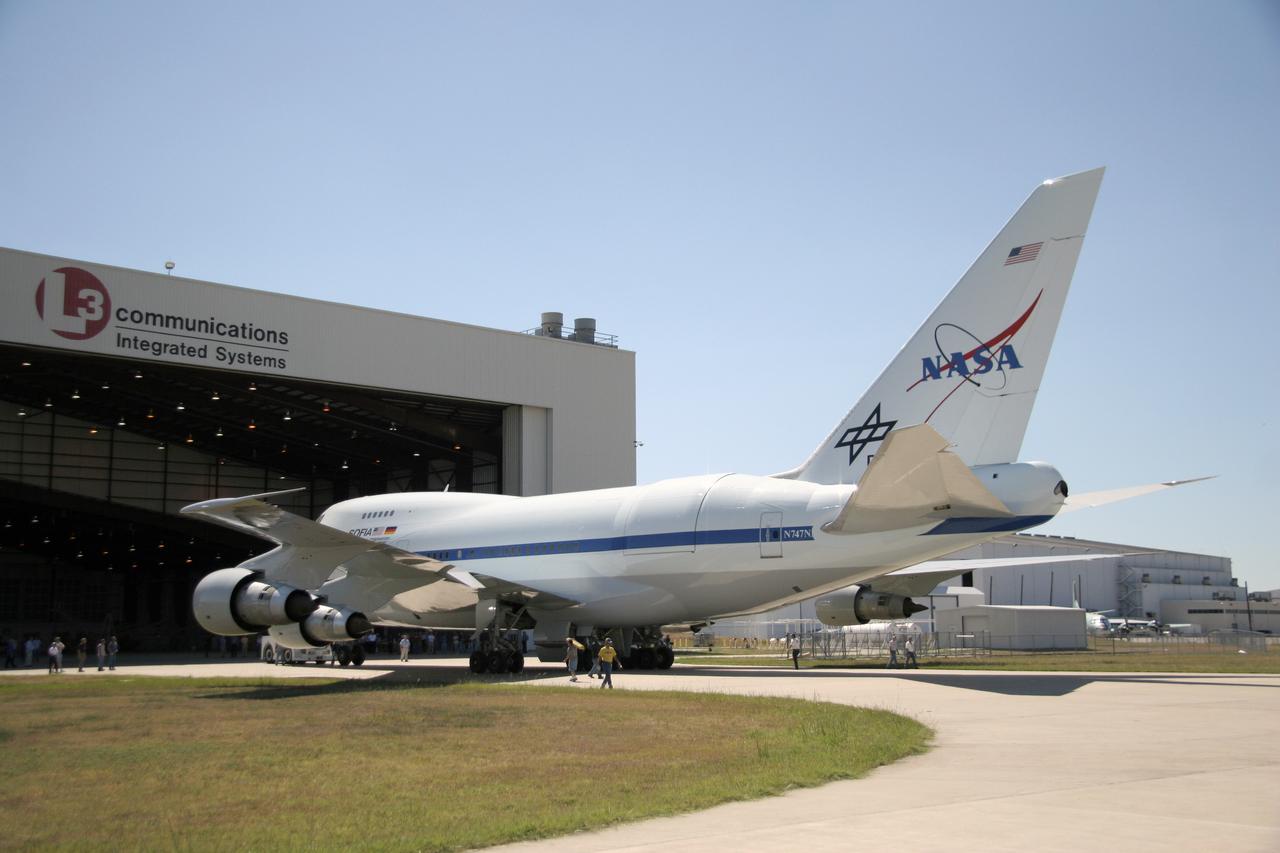
NASA's freshly painted Stratospheric Observatory for Infrared Astronomy (SOFIA) 747SP aircraft sits outside a hangar at L-3 Communications Integrated Systems' facility in Waco, Texas. The observatory, which features a German-built 100-inch (2.5 meter) diameter infrared telescope weighing 20 tons, is approaching the flight test phase as part of a joint program by NASA and DLR Deutsches Zentrum fuer Luft- und Raumfahrt (German Aerospace Center). SOFIA's science and mission operations are being planned jointly by Universities Space Research Association (USRA) and the Deutsches SOFIA Institut (DSI). Once operational, SOFIA will be the world's primary infrared observatory during a mission lasting up to 20 years, as well as an outstanding laboratory for developing and testing instrumentation and detector technology.
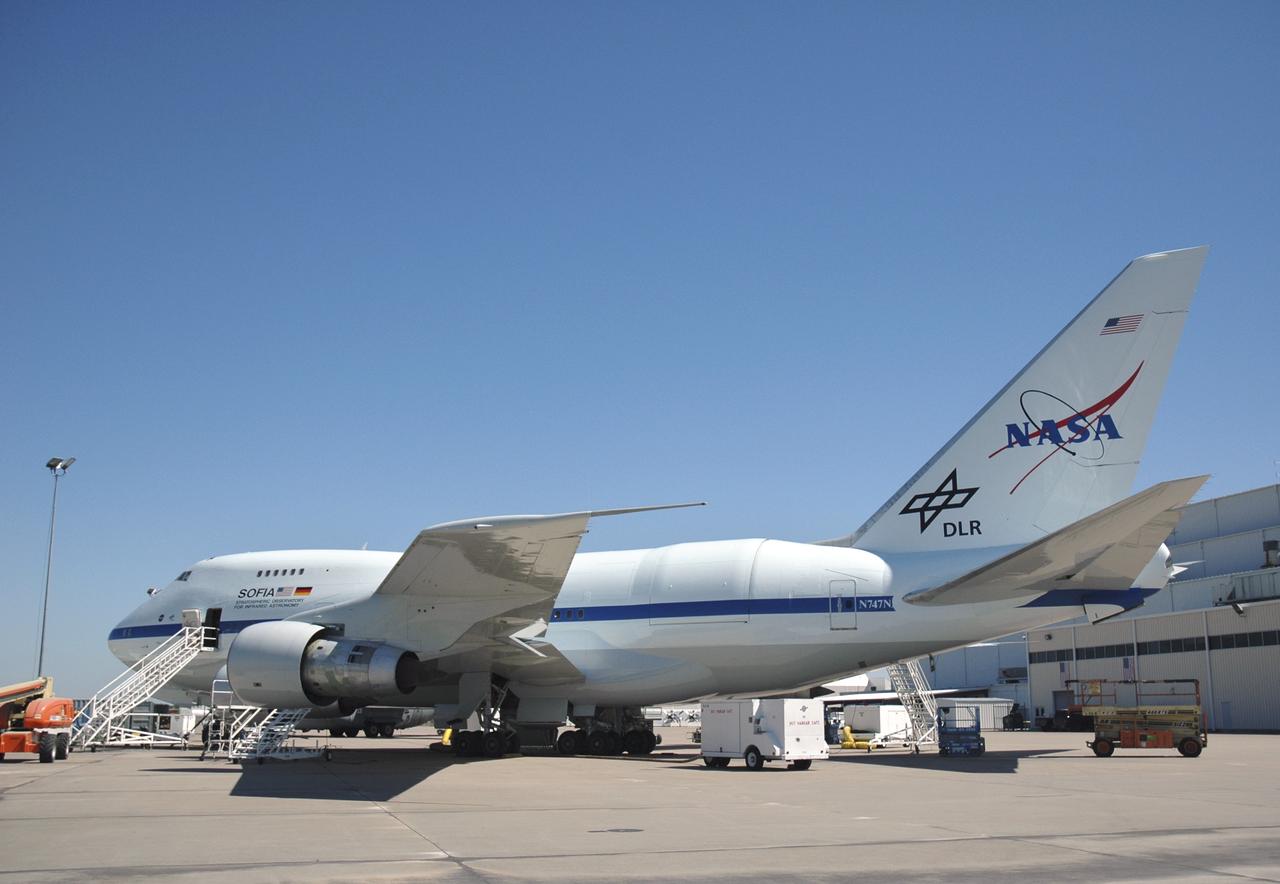
NASA's freshly painted Stratospheric Observatory for Infrared Astronomy (SOFIA) 747SP is shown at L-3 Communications Integrated Systems' facility in Waco, Texas, where major modifications and installation was performed. The observatory, which features a German-built 100-inch (2.5 meter) diameter infrared telescope weighing 20 tons, is approaching the flight test phase as part of a joint program by NASA and DLR Deutsches Zentrum fuer Luft- und Raumfahrt (German Aerospace Center). SOFIA's science and mission operations are being planned jointly by Universities Space Research Association (USRA) and the Deutsches SOFIA Institut (DSI). Once operational, SOFIA will be the world's primary infrared observatory during a mission lasting up to 20 years, as well as an outstanding laboratory for developing and testing instrumentation and detector technology.
![SCI2016_0001: SOFIA/GREAT [O I] spectrum at 4.7 THz (63 μm) superimposed on a picture of Mars. Absorption line depth is approximately 10% of the continuum. The abundance of atomic oxygen computed from the data is less than expected from the Forget et al. 1999 global circulation & photochemical model. Credit: SOFIA/GREAT spectrum: NASA/DLR/USRA/DSI/MPIfR/GREAT Consortium/MPIfS/Rezac et al. 2015; Mars image: NASA](https://images-assets.nasa.gov/image/ACD17-0168-003/ACD17-0168-003~medium.jpg)
SCI2016_0001: SOFIA/GREAT [O I] spectrum at 4.7 THz (63 μm) superimposed on a picture of Mars. Absorption line depth is approximately 10% of the continuum. The abundance of atomic oxygen computed from the data is less than expected from the Forget et al. 1999 global circulation & photochemical model. Credit: SOFIA/GREAT spectrum: NASA/DLR/USRA/DSI/MPIfR/GREAT Consortium/MPIfS/Rezac et al. 2015; Mars image: NASA
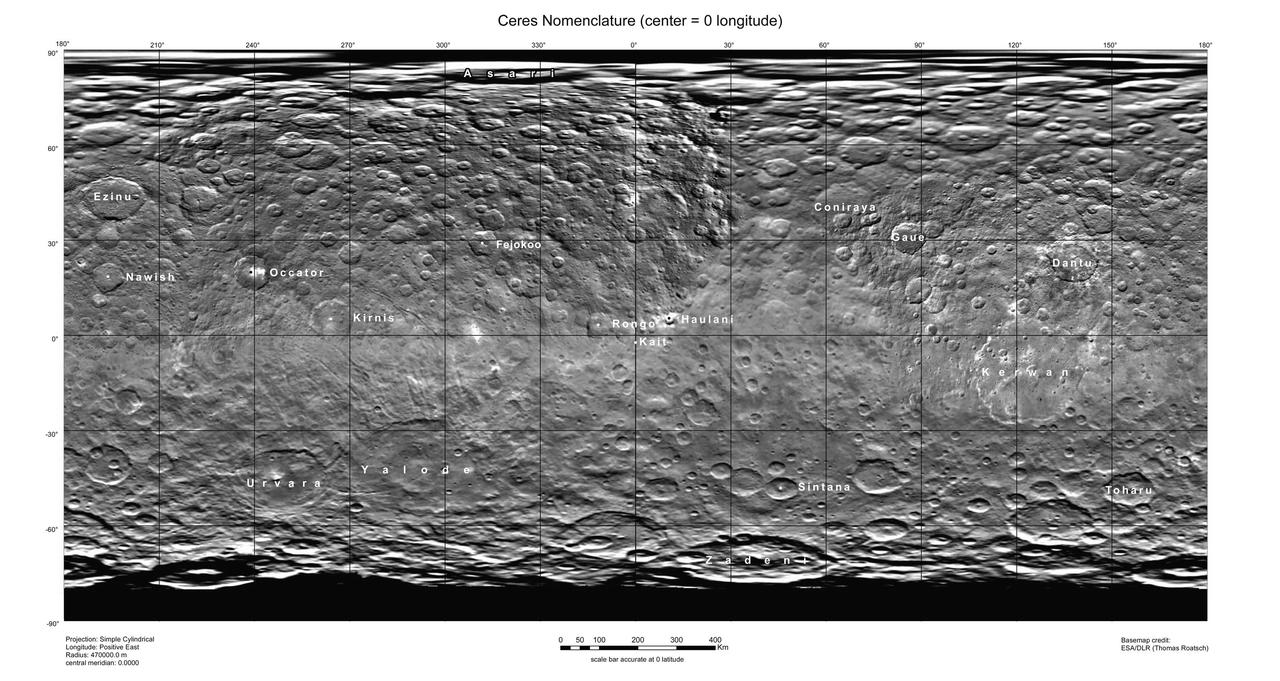
This map of Ceres, constructed from data collected by NASA's Dawn spacecraft, shows the dwarf planet's surface with features that have been named as of August 14, 2015. This is a simple cylindrical projection centered on 0 degrees east longitude, created by science team members at the German Aerospace Center (DLR). The most recently named feature is the small crater Kait, after the Hattic goddess of grain. It is a mere 0.2 miles (0.4 kilometers) across. A full list of crater names on Ceres is available at http://planetarynames.wr.usgs.gov/SearchResults%3Ftarget=CERES. http://photojournal.jpl.nasa.gov/catalog/PIA19625
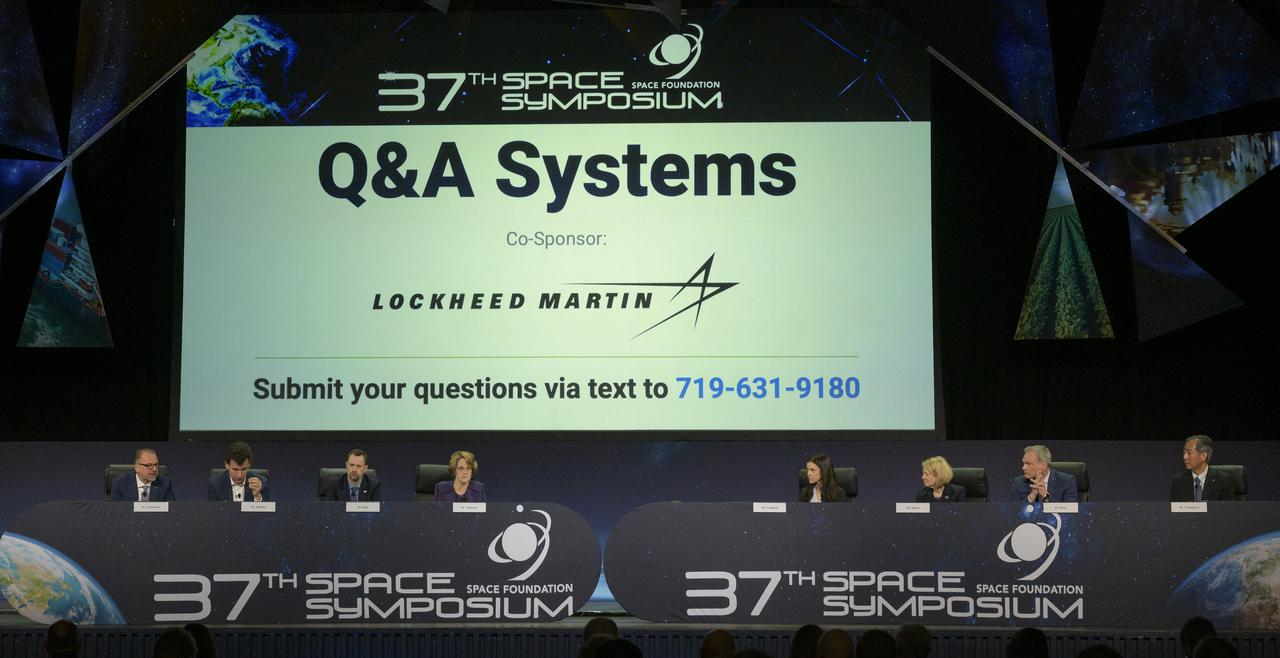
Heads of Agency participate in a panel discussion, from left, Dr. Josef Aschbacher, Director General, European Space Agency (ESA); Dr. Philippe Baptiste, President, French Space Agency (CNES); Dr. Paul Bate, Chief Executive Officer UK Space Agency (UKSA); moderator Dr. Kathryn C. Thornton, Chairwoman, Space Foundation; Lisa Campbell, President, Canadian Space Agency (CSA); NASA Deputy Administrator Pam Melroy; Dr. Walther Pelzer, Executive Board Member and Head of the German Space Agency at the German Aerospace Center (DLR); and Dr. Hiroshi Yamakawa, President, Japan Aerospace Exploration Agency (JAXA), right, during the 37th Space Symposium, Wednesday, April 6, 2022, in Colorado Springs, Colorado. Photo Credit: (NASA/Bill Ingalls)
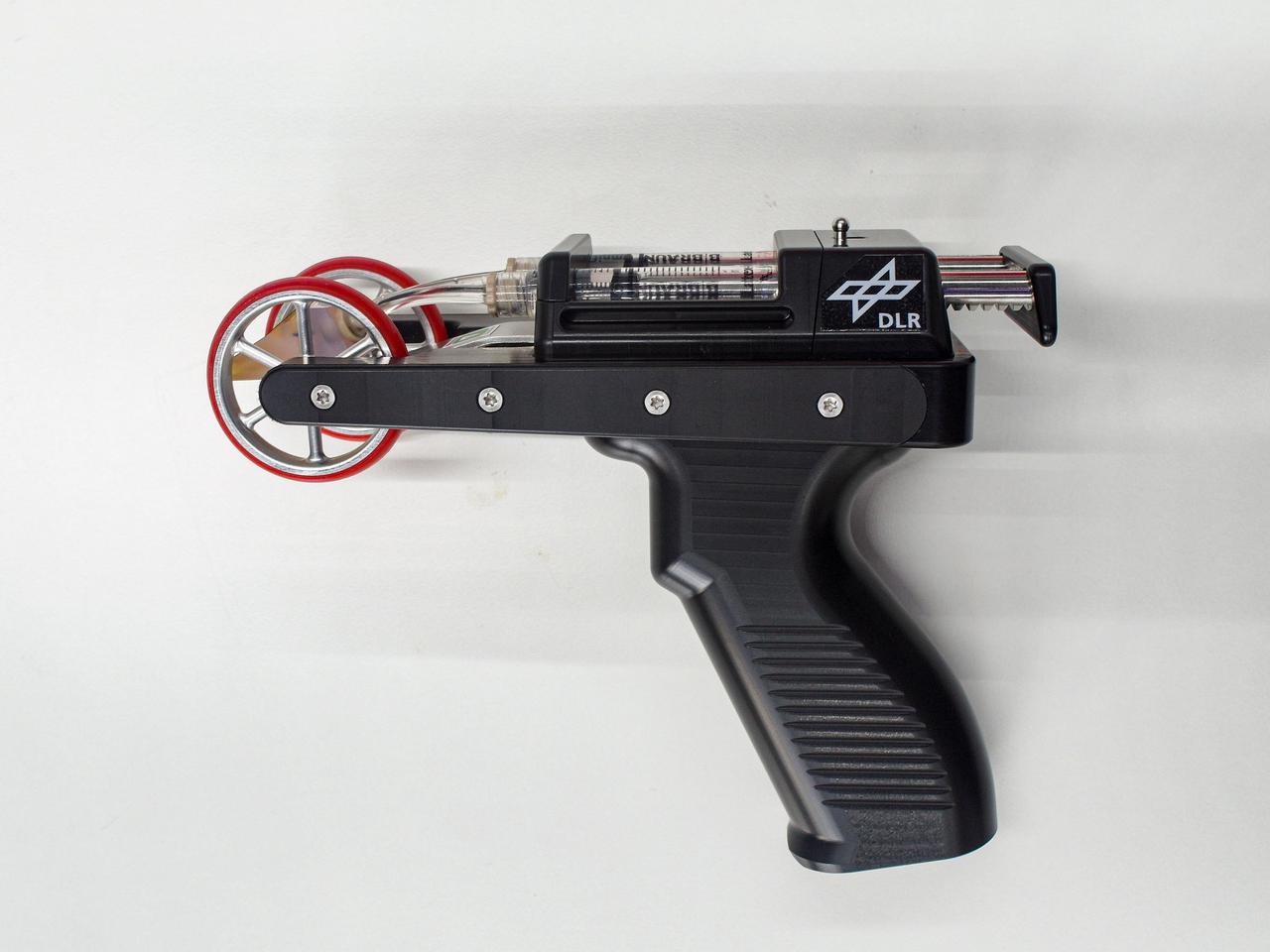
jsc2021e063287 (1/3/2021) --- Bioprinting, a subcategory of 3D printing, uses viable cells and biological molecules to print tissue structures. Bioprint FirstAid Handheld Bioprinter (Bioprint FirstAid), an investigation from European Space Agency (ESA), demonstrates a portable, handheld bioprinter that uses a patient’s own skin cells to create a tissue-forming patch to cover a wound and accelerate the healing process. Image courtesy of OHB/DLR/ESA.
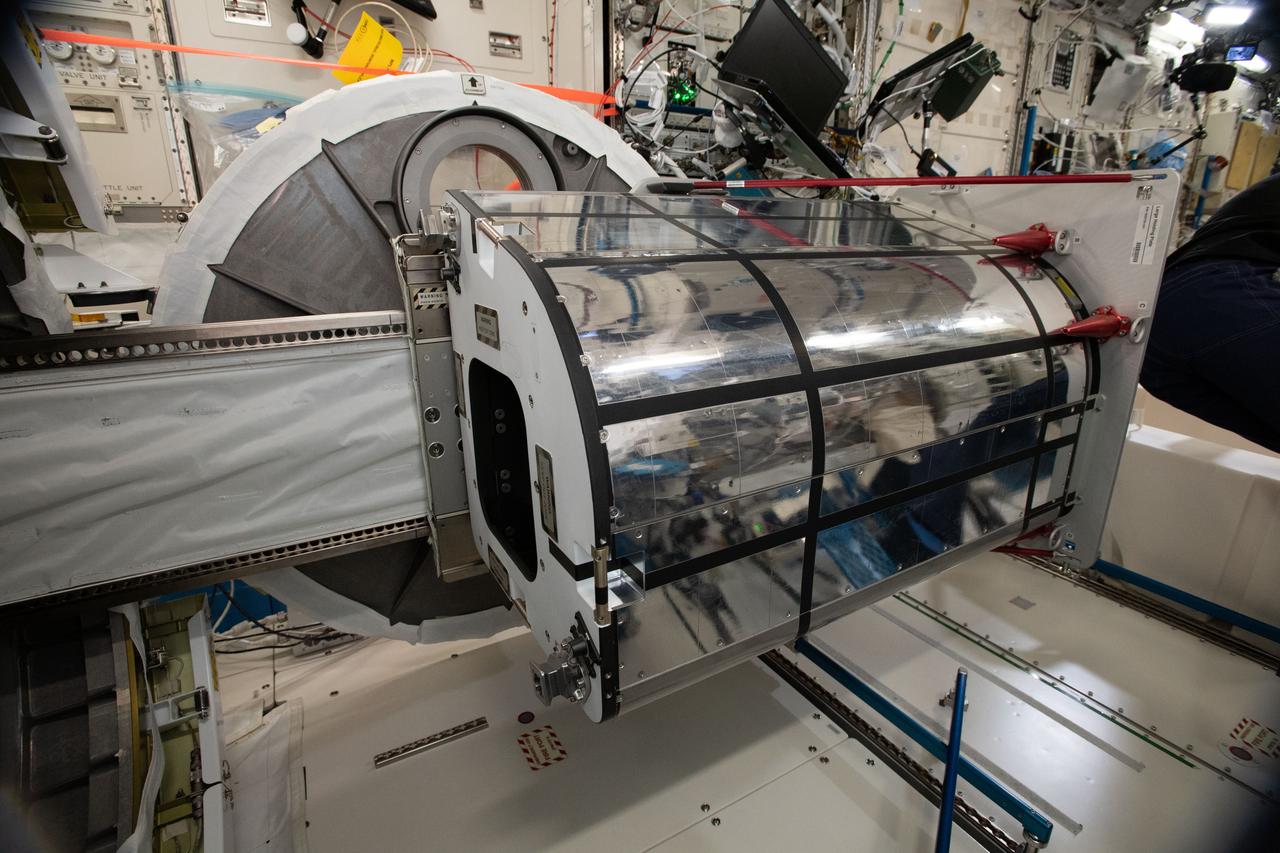
iss056e148130 (8/20/2018) --- Photographic documentation taken in the Japanese Experiment Module (JEM) during preparation for the installation of the German Space Agency (DLR) Earth Sensing Imaging Spectrometer (DESIS) investigation. DESIS verifies and enhances the use of space-based hyperspectral imaging capabilities for Earth remote sensing and provides an instrument which produces high value hyperspectral imagery.
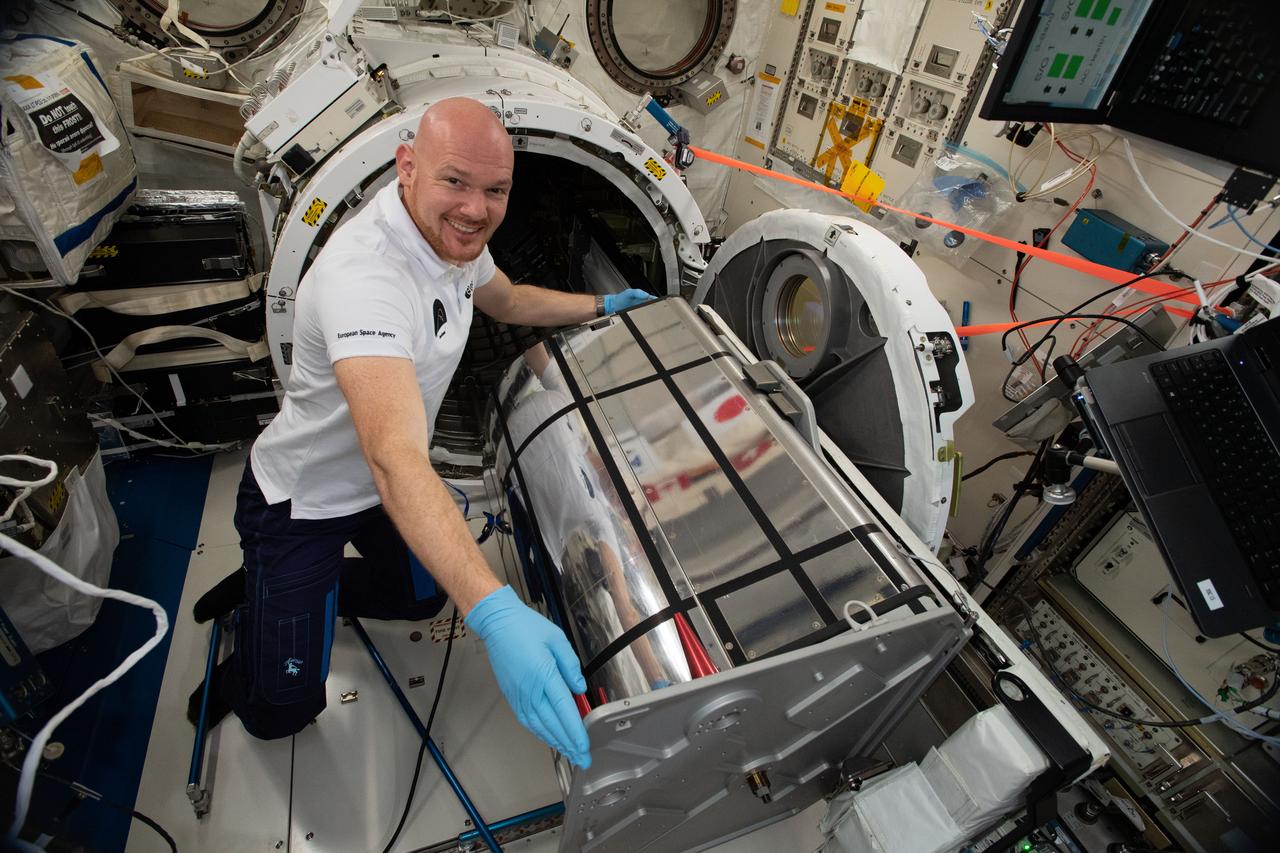
iss056e148119 (8/20/2018) --- Astronaut Alexander Gerst of ESA (European Space Agency) prepares the German Space Agency (DLR) Earth Sensing Imaging Spectrometer (DESIS) investigation for installation. DESIS verifies and enhances the use of space-based hyperspectral imaging capabilities for Earth remote sensing and provides an instrument which produces high value hyperspectral imagery
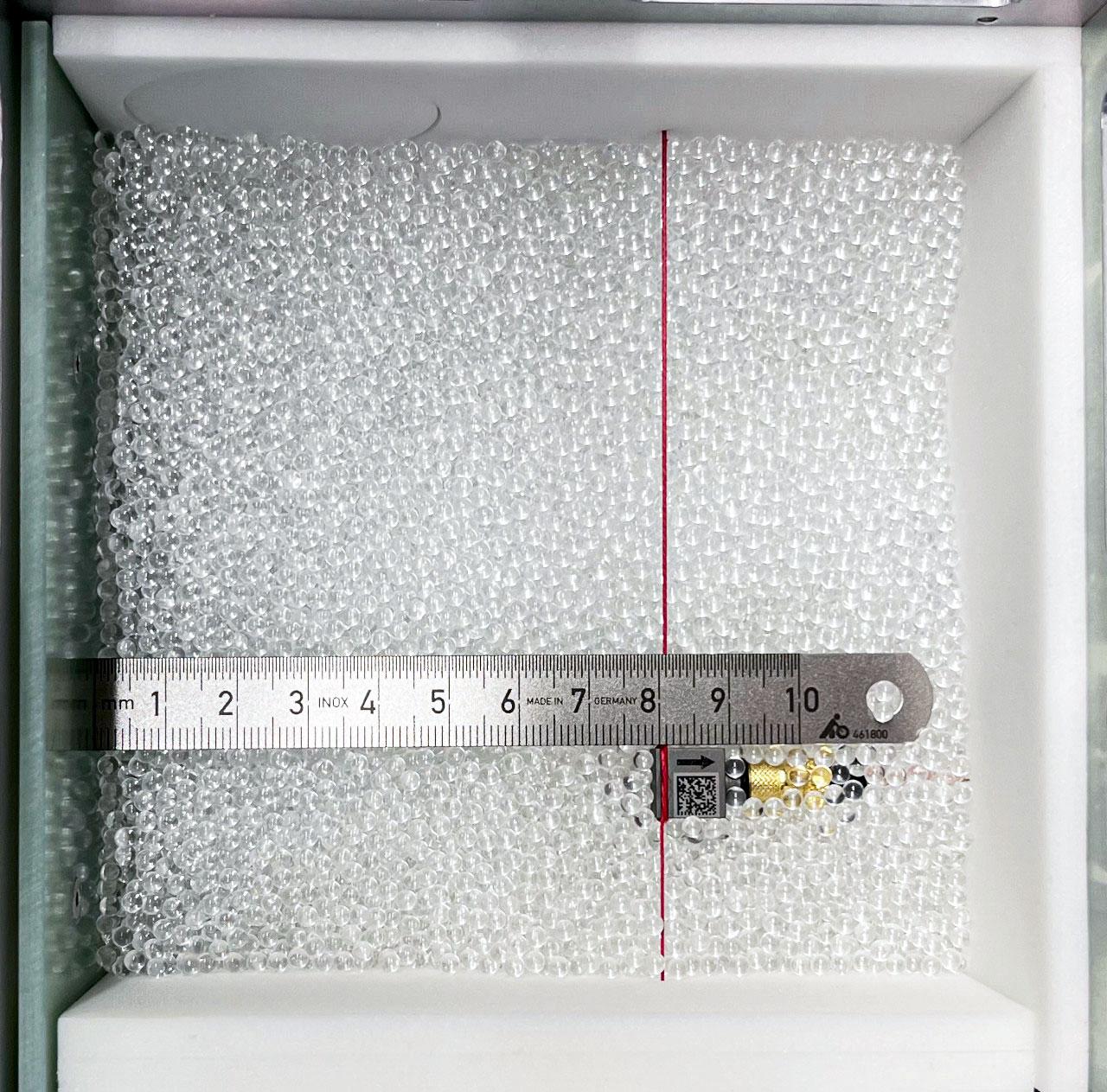
jsc2023e053546 (3/3/2023) --- Granular Sound: open sample cell, partially filled with glass beads, with one accelerometer exposed whose position from the voicecoil-driven wall on the left is indicated by a metal ruler. Also visible: the sample cell walls are padded with foam for acoustic decoupling of the glass bead packing. Image courtesy of DLR-MP.
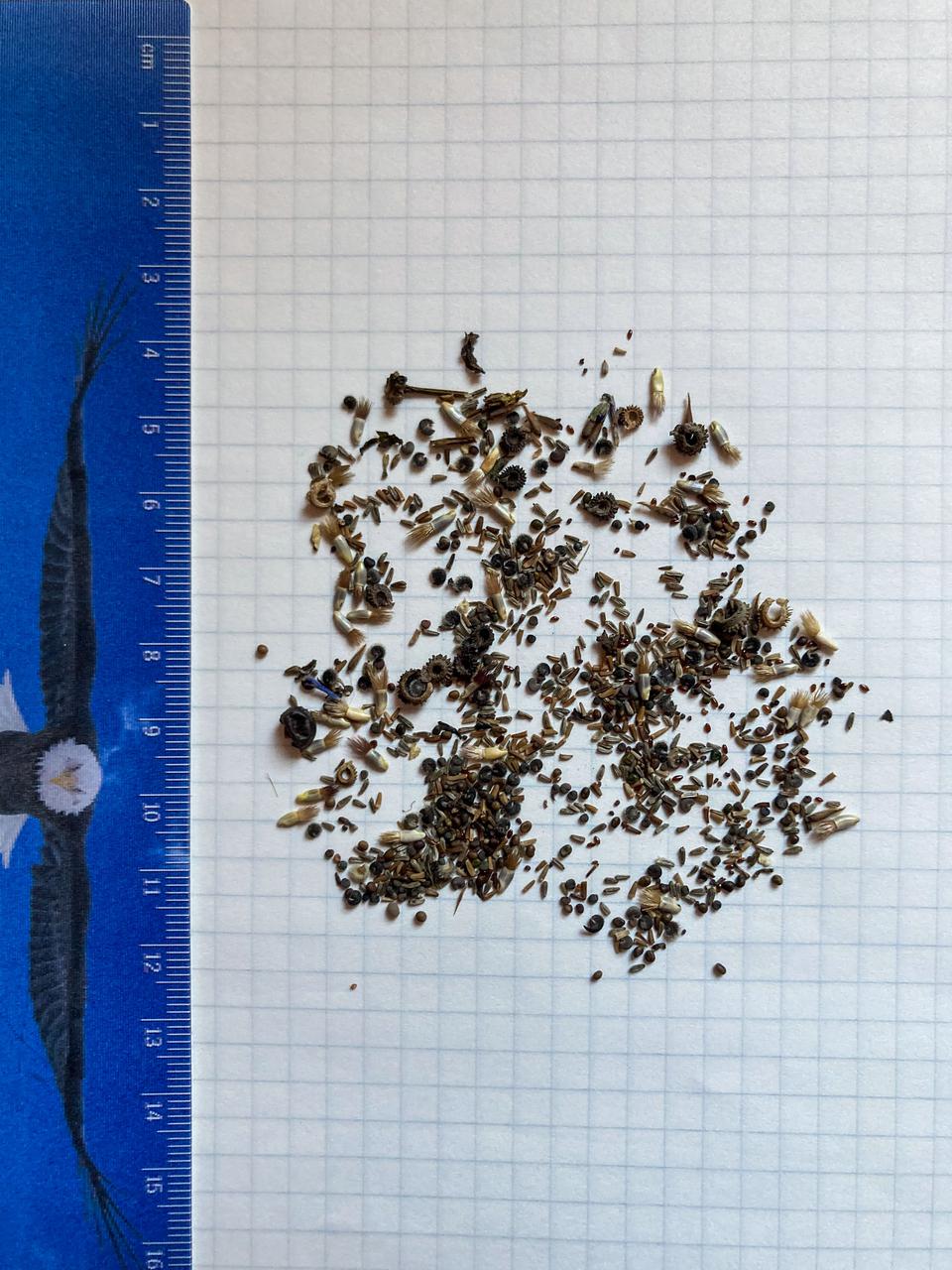
jsc2021e037882 (4/26/2021) --- A preflight photo of the contents of the seed packages of the Seeds and Martian Yeast investigation. Seeds are flown to the International Space Station (ISS) and back to Earth. The main objective of the investigation is to engage a significant number of students in primary and secondary schools in growing samples of space flown and non-space flown seeds. This activity aims to raise awareness about the continuous decline of species, and promote the importance of biodiversity and nature. Image Courtesy DLR.
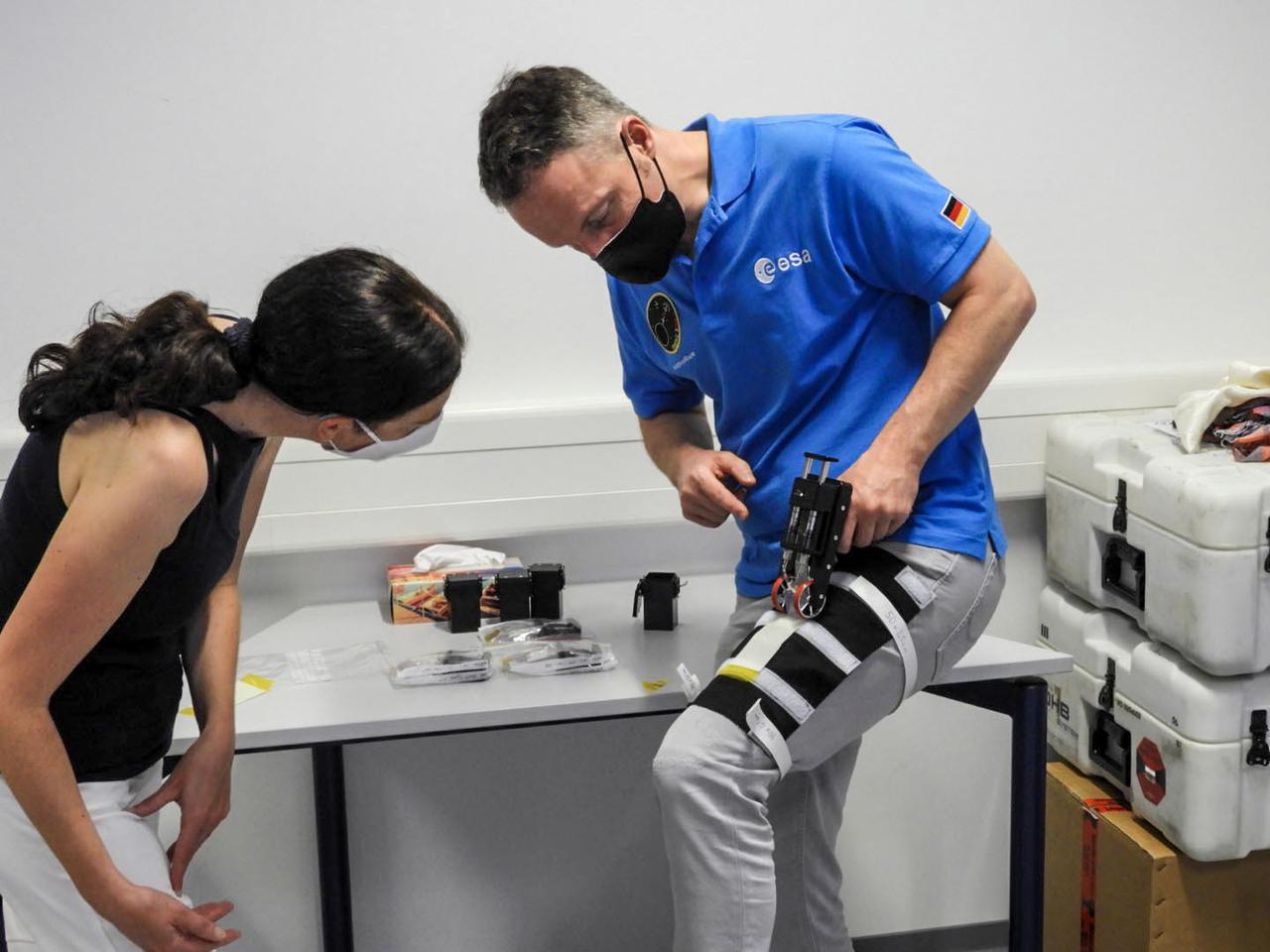
jsc2021e063288 (12/10/2021) --- European Space Agency (ESA) astronaut Matthias Maurer demonstrates the Bioprint FirstAid prototype during a training session. Bioprint FirstAid Handheld Bioprinter (Bioprint FirstAid) demonstrates a portable, handheld bioprinter that uses a patient’s own skin cells to create a tissue-forming patch to cover a wound and accelerate the healing process. Image courtesy of OHB/DLR/ESA.
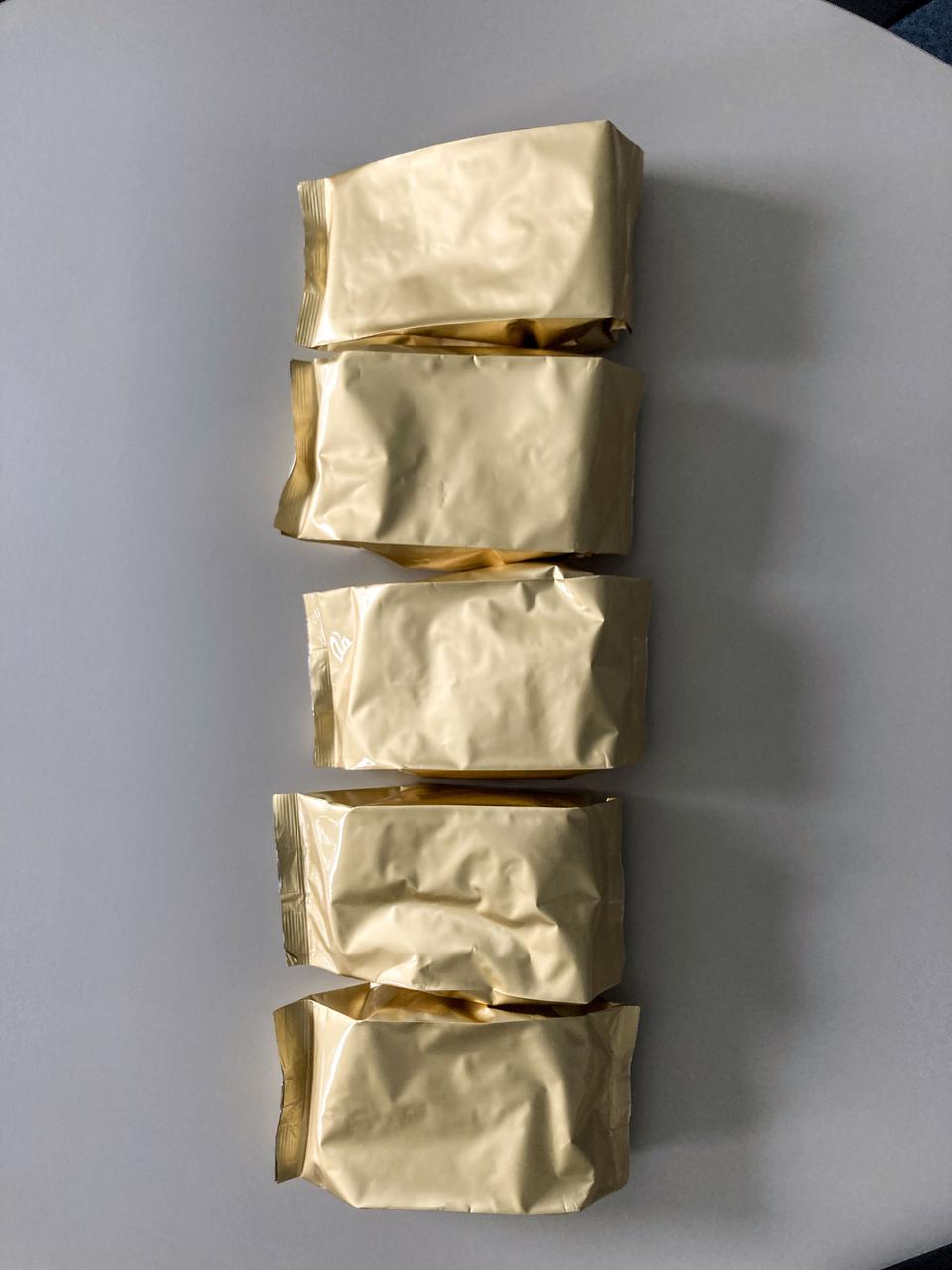
jsc2021e037880 (3/11/2021) --- A preflight photo of the five seed packages of the Seeds and Martian Yeast investigation. Seeds are flown to the International Space Station (ISS) and back to Earth. The main objective of the investigation is to engage a significant number of students in primary and secondary schools in growing samples of space flown and non-space flown seeds. This activity aims to raise awareness about the continuous decline of species, and promote the importance of biodiversity and nature. Image Courtesy DLR.
![iss056e142697 (8/15/2018) --- A view of Cosmonaut in red-striped Orlan suit, as he works to install Payload “ICARUS” on URM-D work station on PI.II of SM [PO] during ISS Extravehicular Activity 45 (EVA 45). ICARUS is a collaborative project between Roscosmos and the German aerospace center (DLR) to study the migratory patterns of small animals tagged on earth with GPS hardware.](https://images-assets.nasa.gov/image/iss056e142697/iss056e142697~medium.jpg)
iss056e142697 (8/15/2018) --- A view of Cosmonaut in red-striped Orlan suit, as he works to install Payload “ICARUS” on URM-D work station on PI.II of SM [PO] during ISS Extravehicular Activity 45 (EVA 45). ICARUS is a collaborative project between Roscosmos and the German aerospace center (DLR) to study the migratory patterns of small animals tagged on earth with GPS hardware.
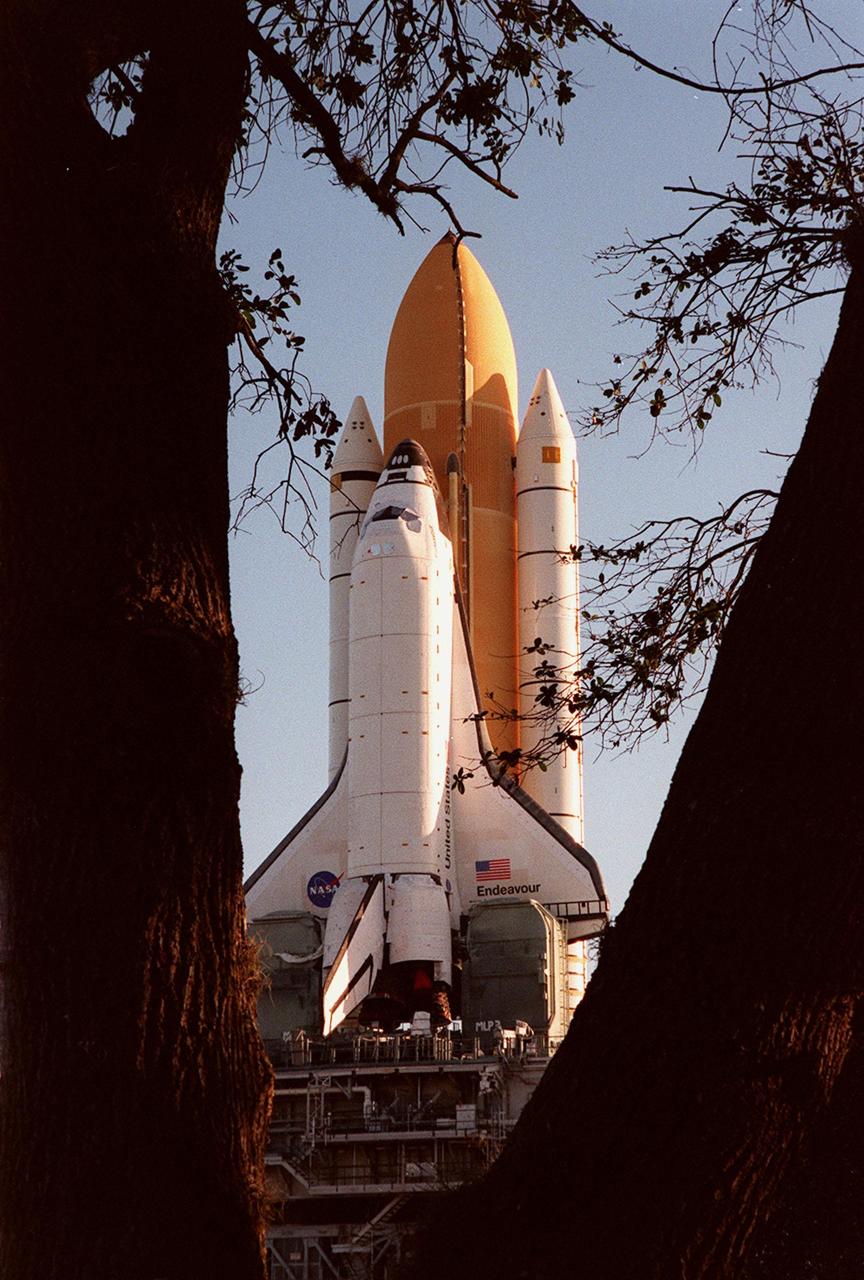
KENNEDY SPACE CENTER, Fla. -- Space Shuttle Endeavour is viewed between two tree trunks in this photo during the Shuttle's rollout to Launch Pad 39A for launch of mission STS-99. Named the Shuttle Radar Topography Mission (SRTM), it involves an international project spearheaded by the National Imagery and Mapping Agency and NASA, with participation of the German Aerospace Center DLR. The SRTM consists of a specially modified radar system that will gather data for the most accurate and complete topographic map of the Earth's surface that has ever been assembled
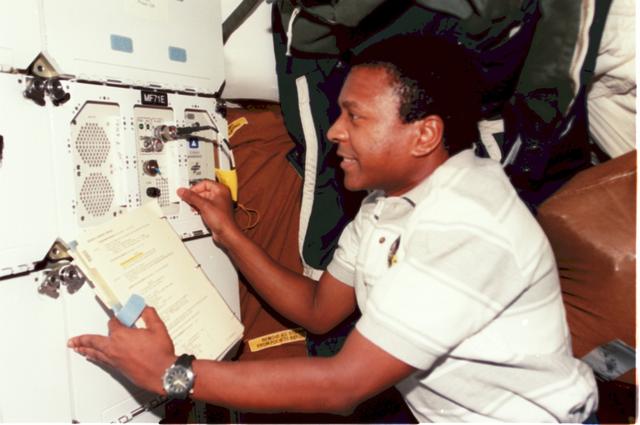
STS089-357-003 (22-31 Jan. 1998) --- Astronaut Michael P. Anderson, STS-89 mission specialist, works on Endeavour's middeck with the Closed Equilibrated Biological Aquatic System (CEBAS), an experiment developed by the German Space Agency (DLR). The CEBAS mini-module, a middeck habitat for aquatic organisms, enables scientists to conduct various gravity-related experiments in the areas of zoology, botany and developmental biology, as well as in interdisciplinary areas such as scientific research on artificial ecosystems. Photo credit: NASA
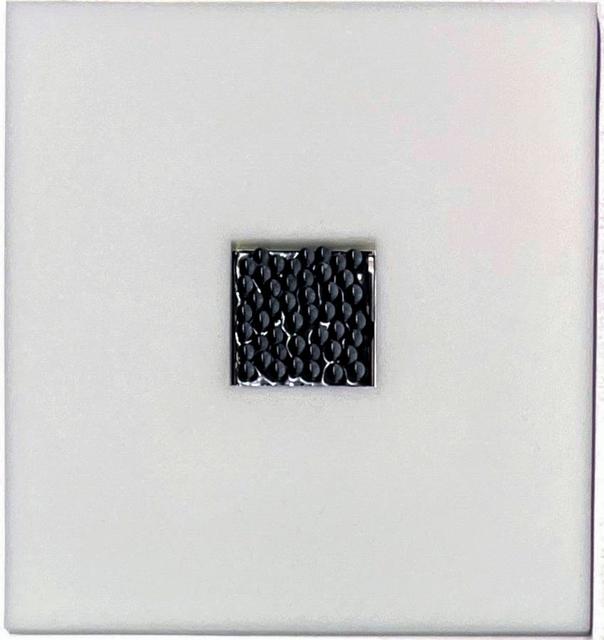
jsc2023e053548 (3/3/2023) --- Granular Sound: inside surface of a sample cell wall, covered with foam for acoustic decoupling, with a shear-piezo mounted at its center. The shear-piezo is covered with glued-on glass beads to facilitate transmission of tangential forces. Two such shear-piezos are installed opposite of eachother – one for emission, one for reception of shear waves. Image courtesy of DLR-MP.
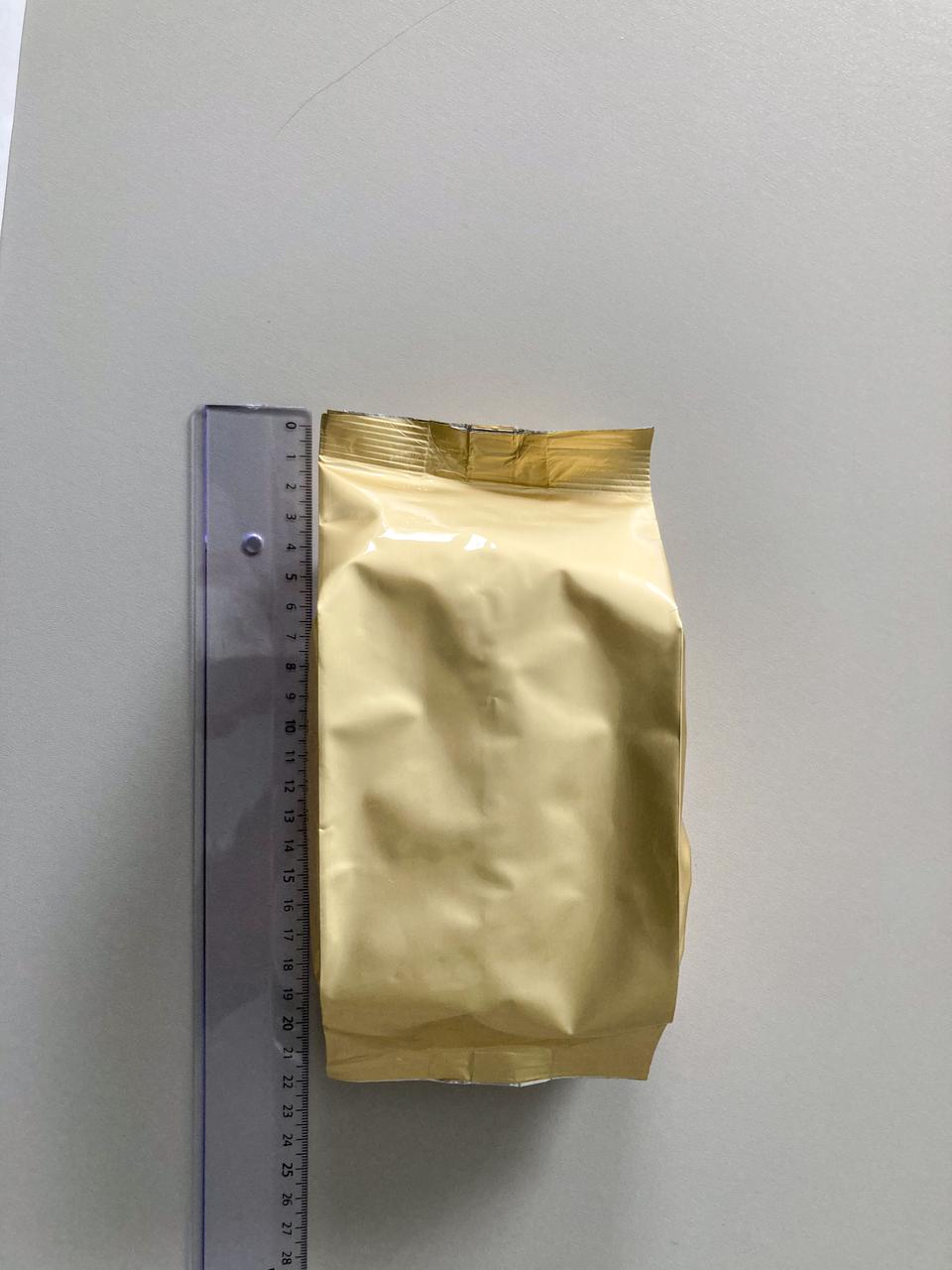
jsc2021e037881 (3/11/2021) --- A preflight photo of one seed package of the Seeds and Martian Yeast investigation. Seeds are flown to the International Space Station (ISS) and back to Earth. The main objective of the investigation is to engage a significant number of students in primary and secondary schools in growing samples of space flown and non-space flown seeds. This activity aims to raise awareness about the continuous decline of species, and promote the importance of biodiversity and nature. Image Courtesy DLR.
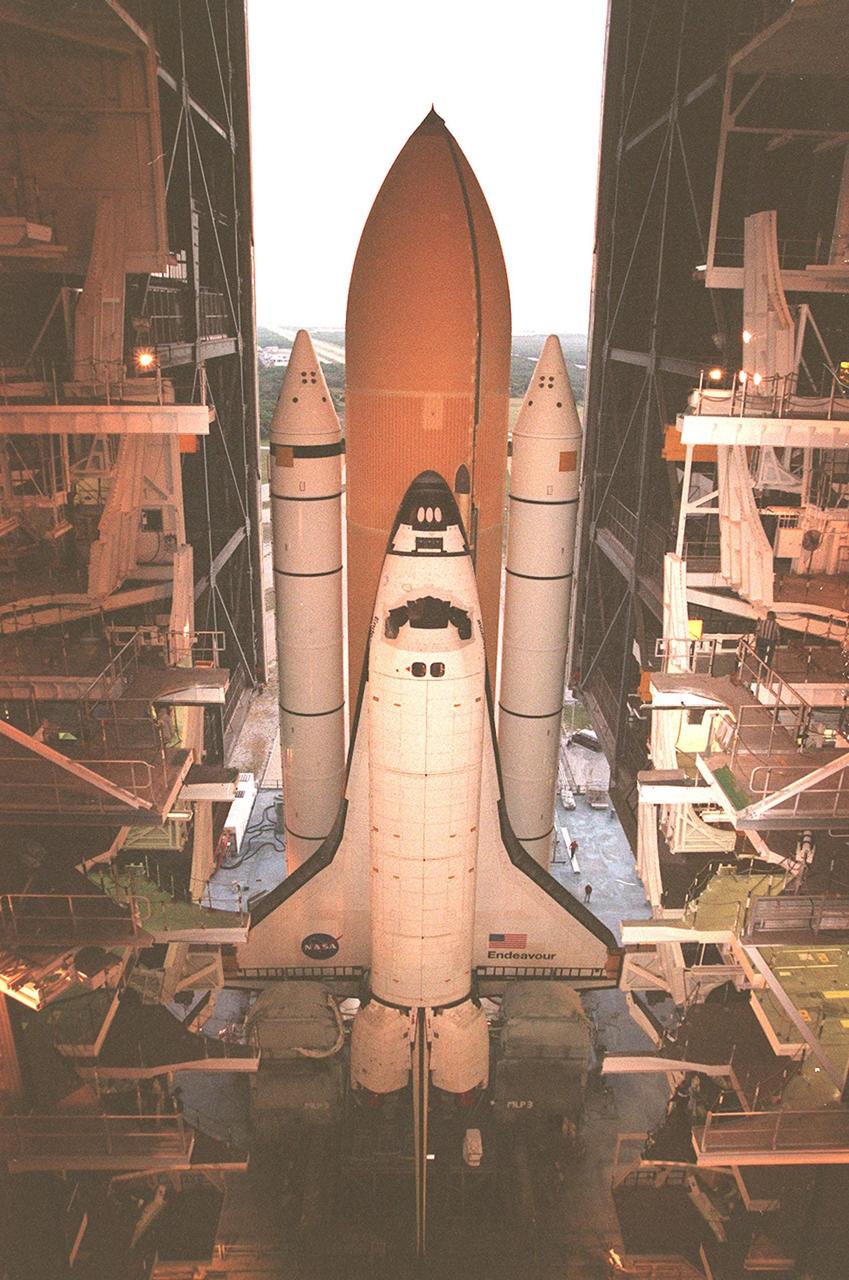
KENNEDY SPACE CENTER, Fla. -- The doors of the Vehicle Assembly Building (VAB) are open for the transfer of Space Shuttle Endeavour, on its mobile launcher platform, to Launch Pad 39A for mission STS-99. Named the Shuttle Radar Topography Mission (SRTM), it involves an international project spearheaded by the National Imagery and Mapping Agency and NASA, with participation of the German Aerospace Center DLR. The SRTM consists of a specially modified radar system that will gather data for the most accurate and complete topographic map of the Earth's surface that has ever been assembled
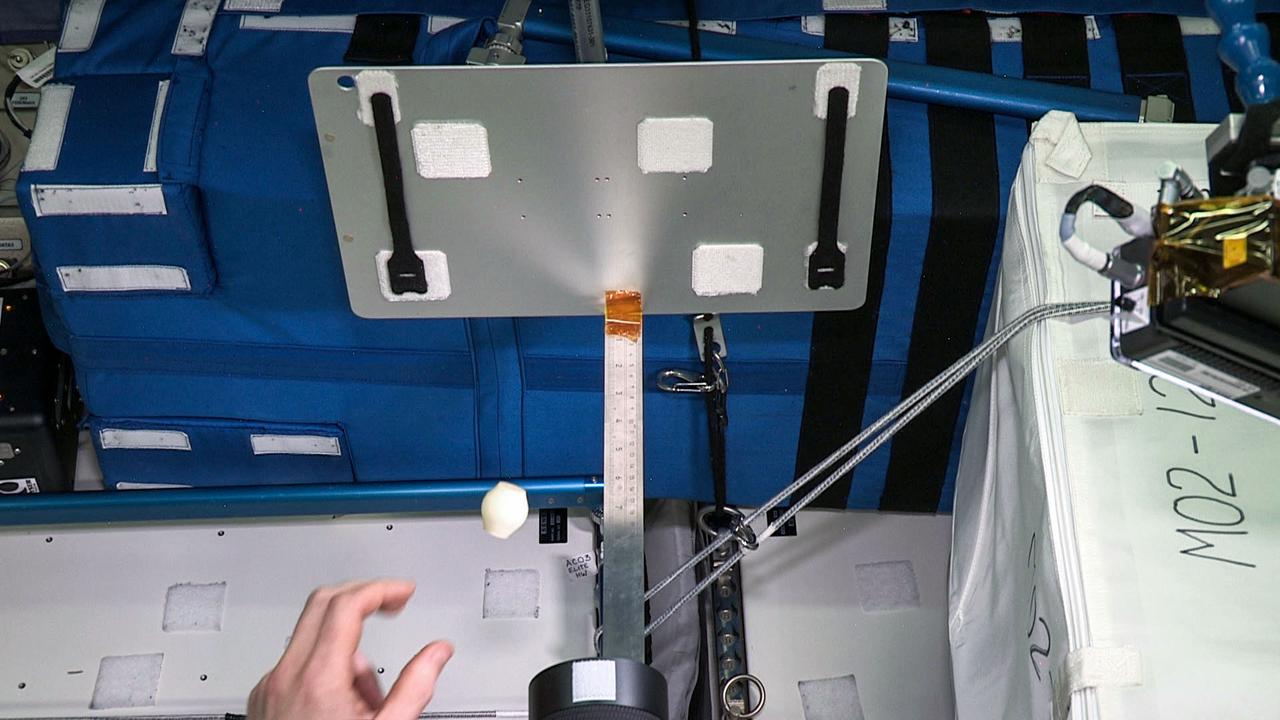
jsc2021e042553 (8/31/2021) --- Collision experiments conducted during Granular Damping Part I by ESA astronaut Alexander Gerst during increment 56 in 2018. The Granular Damping (ESA-EPO-Granular Damping) investigation studies the dynamics of granular matter (e.g. sand, corn, snow, rocks, dust or similar). Granular matter sediments on Earth, but can form a gas-like state of matter in space. Image courtesy of DLR/ESA
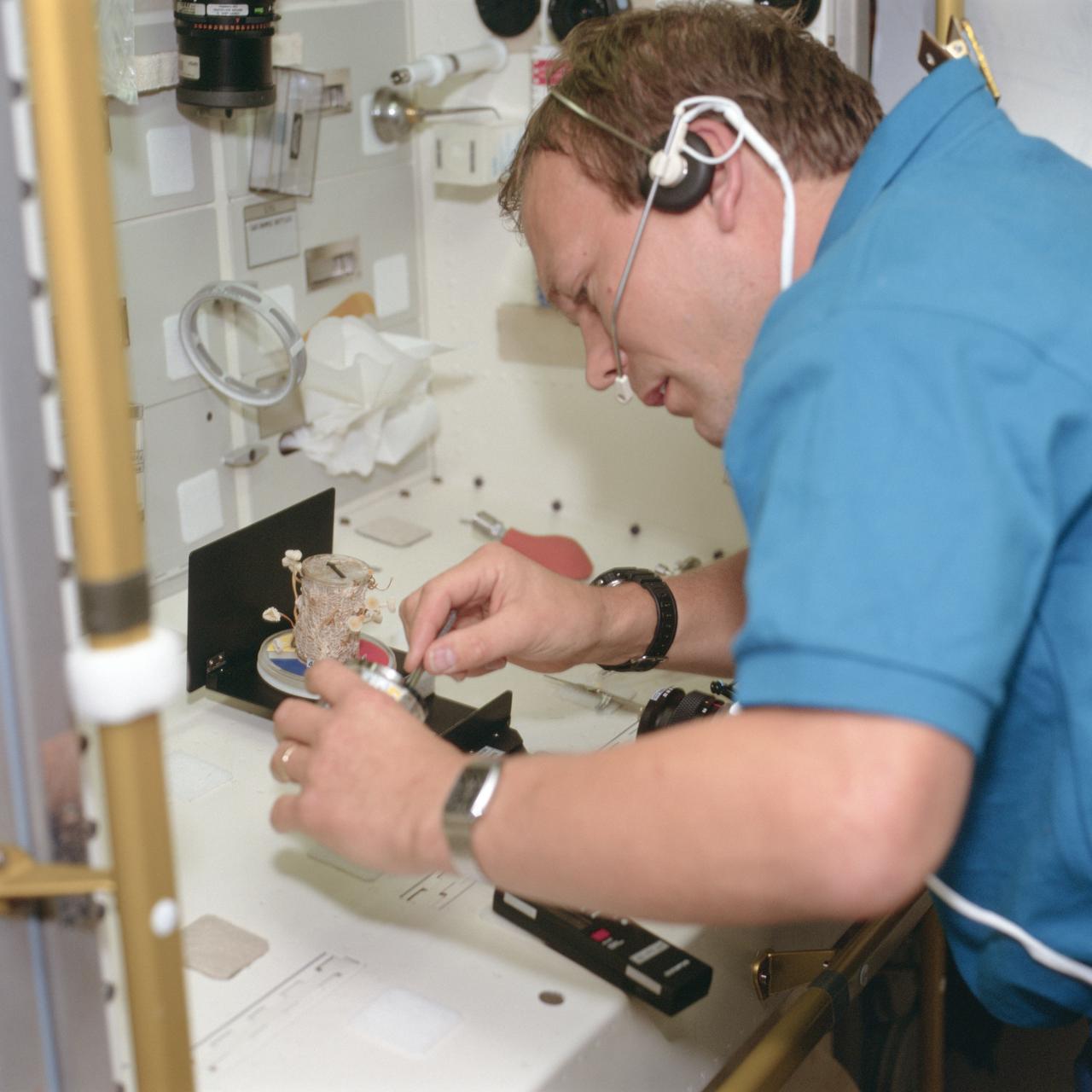
STS055-106-037 (26 April-6 May 1993) --- Hans Schlegel works with a fungi experiment in the Spacelab D-2 Science Module onboard the Earth-orbiting Space Shuttle Columbia. Schlegel was one of two payload specialists representing the German Aerospace Research Establishment (DLR) on the 10-day Spacelab D-2 mission.

Tilman Spohn, HP3 investigation lead, Institute of Planetary Research (DLR), discusses NASA's InSight mission during a prelaunch media briefing, Thursday, May 3, 2018, at Vandenberg Air Force Base in California. InSight, short for Interior Exploration using Seismic Investigations, Geodesy and Heat Transport, is a Mars lander designed to study the "inner space" of Mars: its crust, mantle, and core. Photo Credit: (NASA/Bill Ingalls)
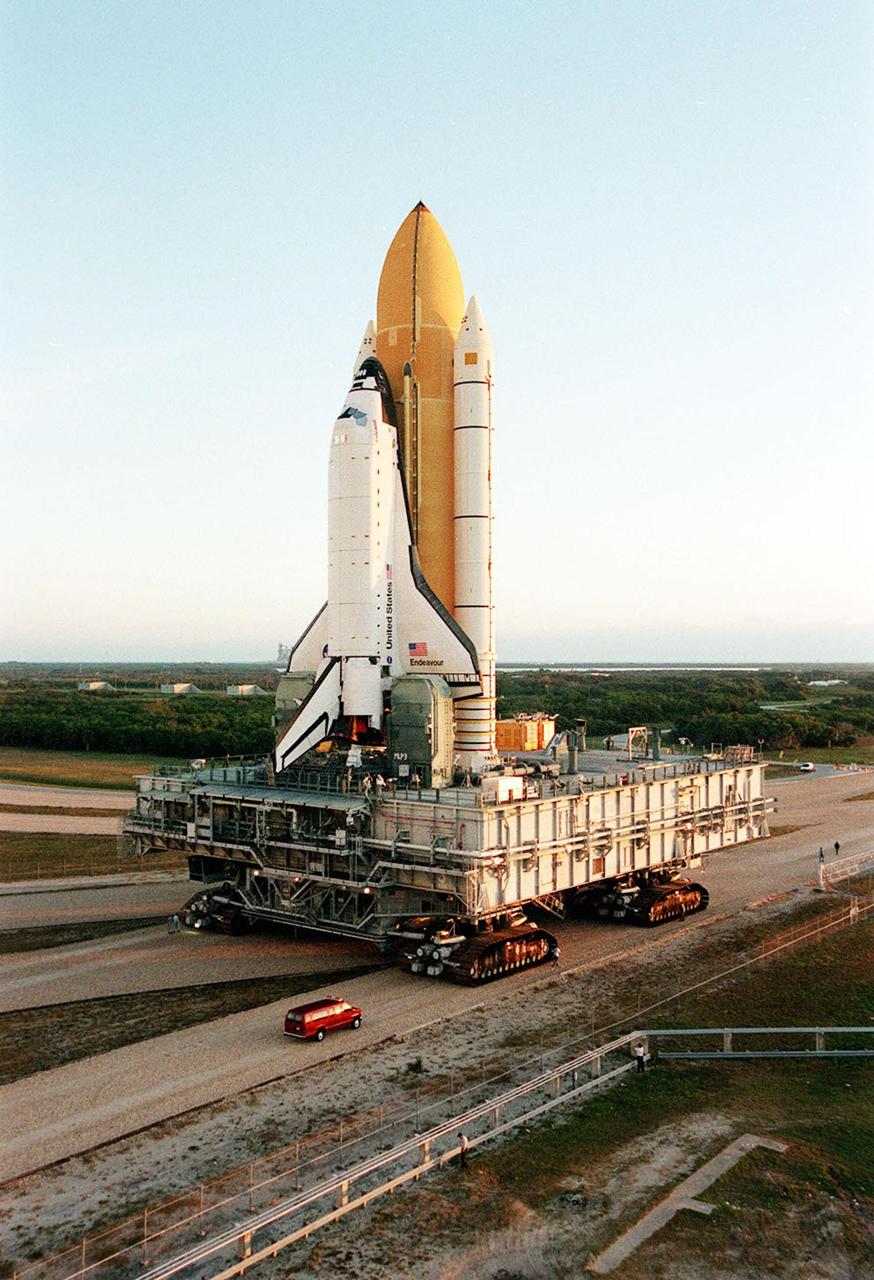
KENNEDY SPACE CENTER, Fla. -- Space Shuttle Endeavour, on its mobile launcher platform, is transferred to Launch Pad 39A for mission STS-99. Named the Shuttle Radar Topography Mission (SRTM), it involves an international project spearheaded by the National Imagery and Mapping Agency and NASA, with participation of the German Aerospace Center DLR. The SRTM consists of a specially modified radar system that will gather data for the most accurate and complete topographic map of the Earth's surface that has ever been assembled
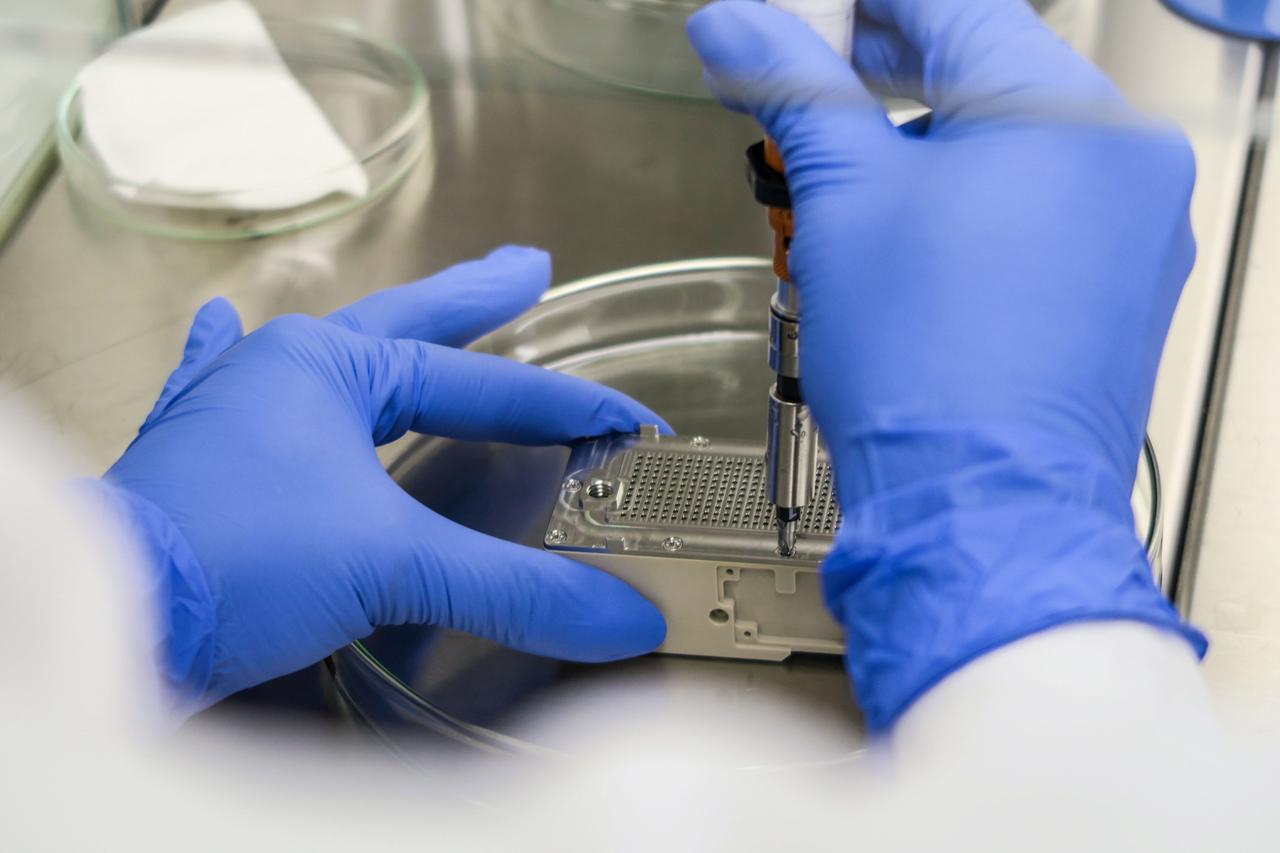
jsc2023e010176 (8/21/2021) --- This image shows the final step of assembling the ESA-Biofilms experiment unit. Inside the experiment unit, growth of the bacterial model organisms is supported under controlled conditions on different antimicrobial surfaces. The ESA-Biofilms investigation studies bacterial biofilm formation and antimicrobial properties of different metal surfaces under spaceflight conditions in altered gravity. Image courtesy of DLR, CC BY-NC-ND 3.0.
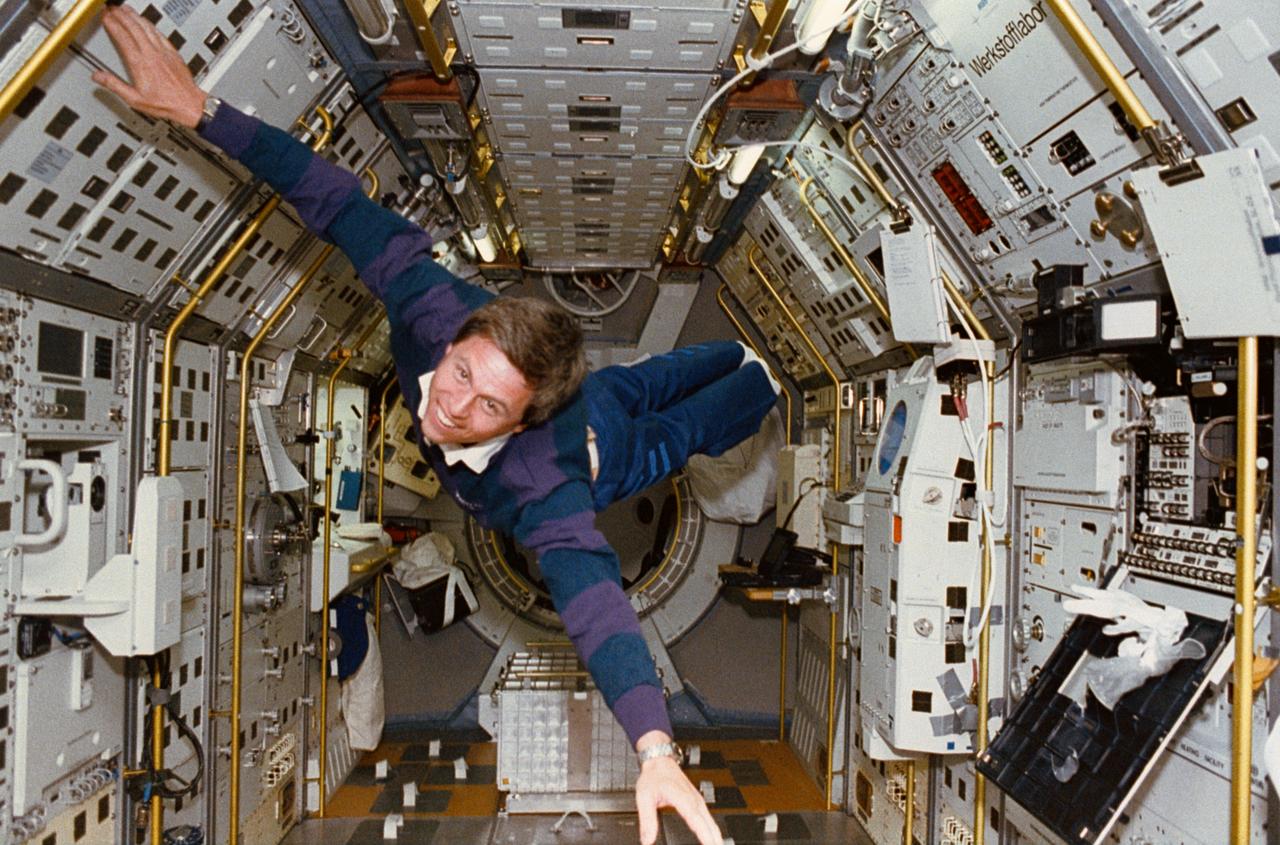
STS055-219-024 (26 April-6 May 1993) --- Ulrich Walter, STS-55 payload specialist representing the German Aerospace Research Establishment (DLR), demonstrates the microgravity aboard the Spacelab D-2 science module in Columbia's cargo bay. The module served as his space laboratory and that of his six crewmates for l0 days.
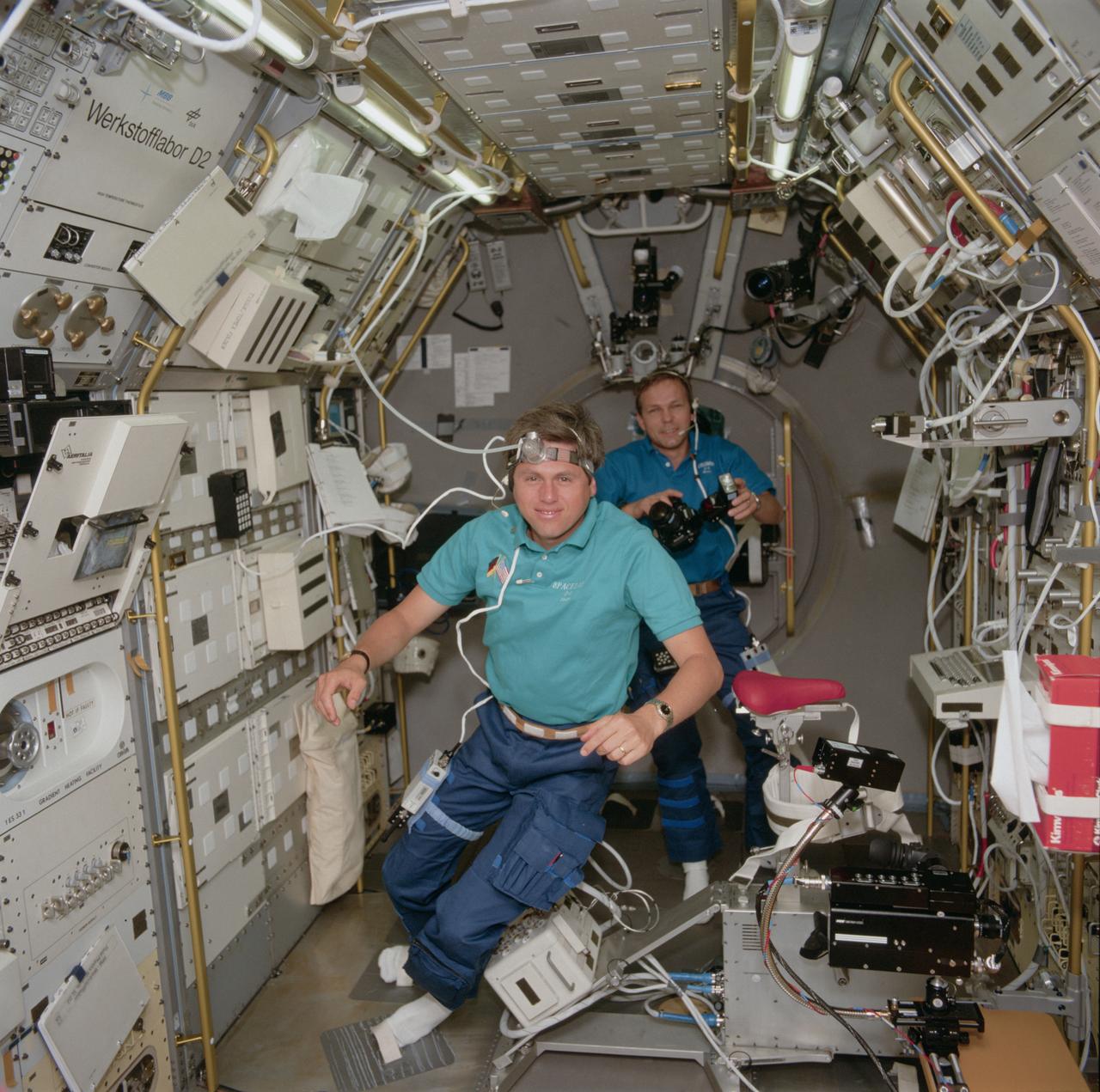
STS055-106-056 (26 April-6 May 1993) --- Ulrich Walter, one of two payload specialists representing the German Aerospace Research Establishment (DLR) onboard Columbia, plants his socked feet into temporary foot restraints. Walter's headwear telltales his participation in a Tissue experiment. Fellow payload specialist Hans Schlegel prepares to take a photo in the background.
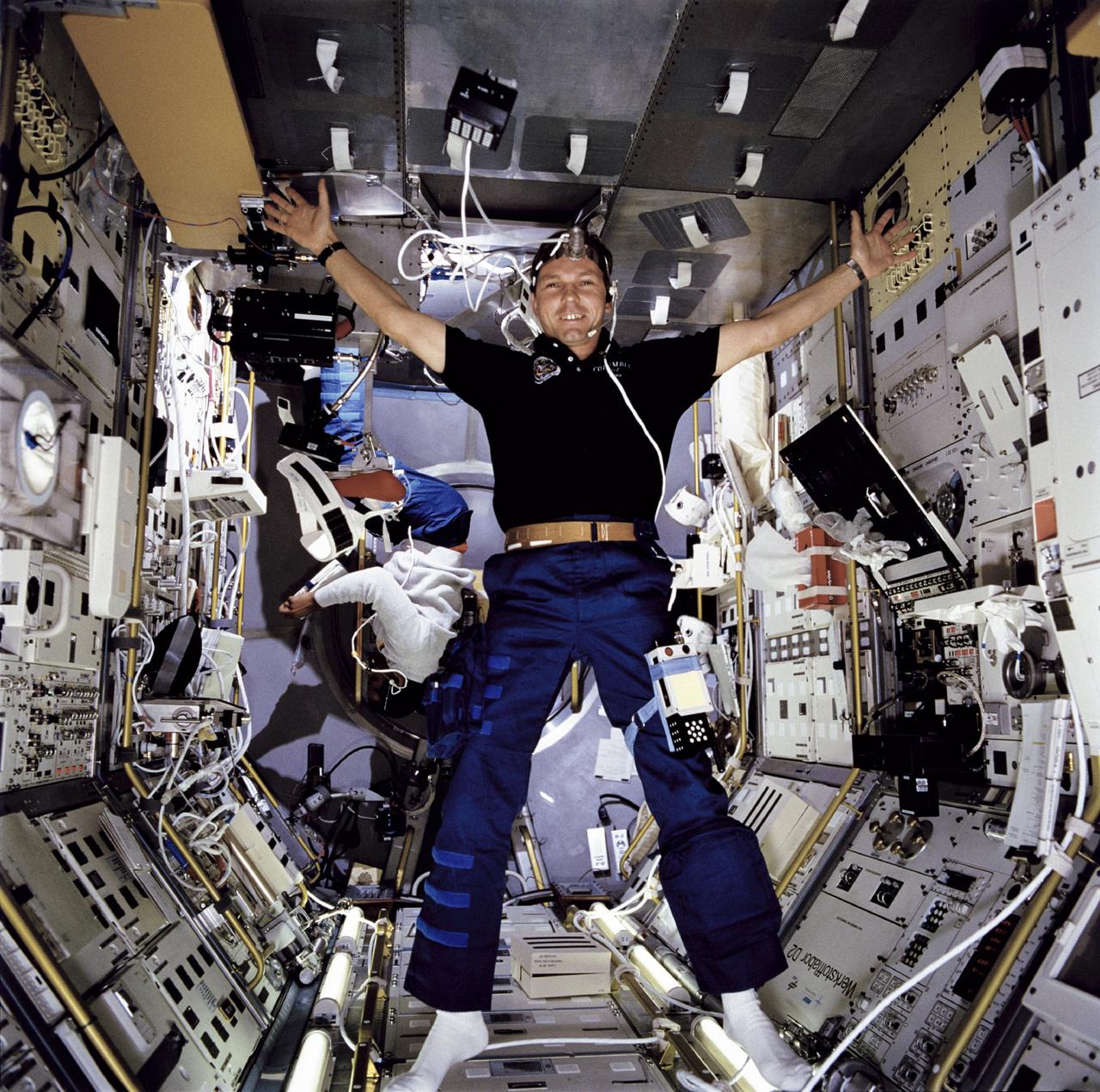
STS055-106-090 (26 April- 6 May 1993) --- Hans Schlegel, one of two STS-55 payload specialists representing the German Aerospace Research Establishment (DLR) onboard the Space Shuttle Columbia, finds plenty of room to "spread out" while participating in a Tissue experiment. Astronaut Bernard A. Harris, Jr., mission specialist, monitors an experiment in the background.
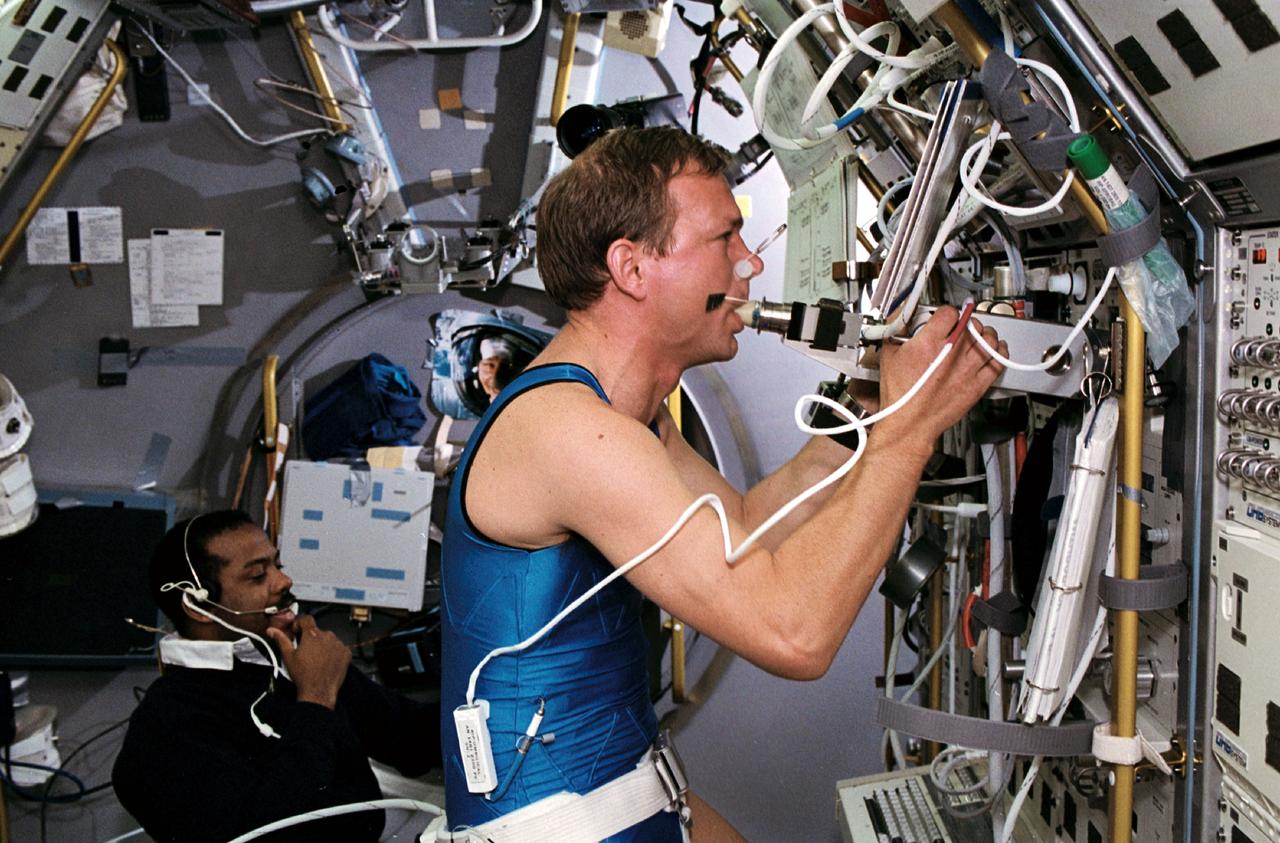
STS055-45-017 (26 April-6 May 1993) --- Hans Schlegel (foreground) participates in the ongoing investigation of human physiology under microgravity conditions as he works out on the ergometer at the Anthrorack. Monitoring the "run" is astronaut Bernard A. Harris, Jr., STS-55 mission specialist. Schlegel is one of two payload specialists representing the German Aerospace Research Establishment (DLR) on the Spacelab D-2 mission.
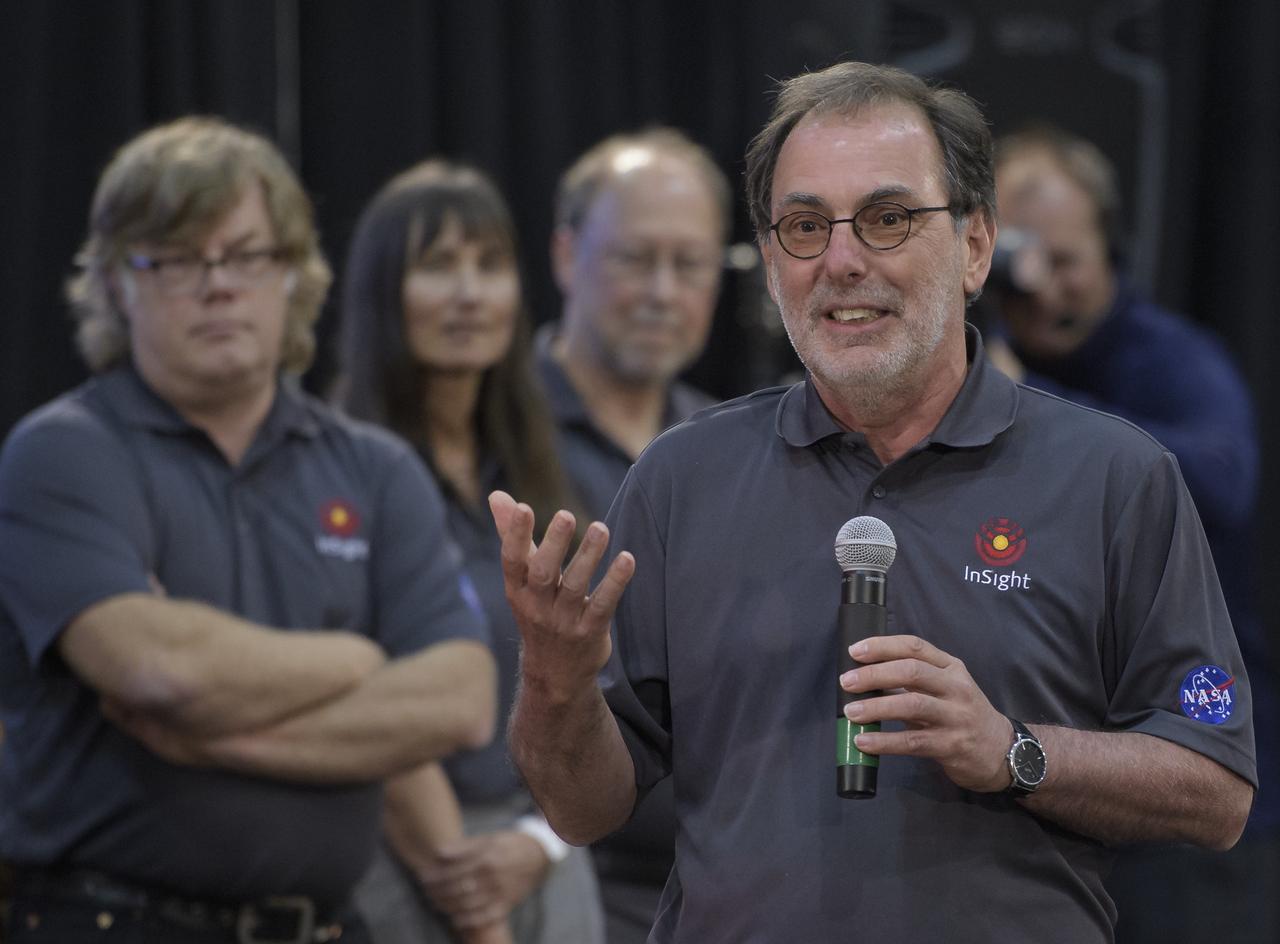
Tilman Spohn, HP3 investigation lead, Institute of Planetary Research (DLR), discusses NASA's InSight mission during a prelaunch media briefing, Thursday, May 3, 2018, at Vandenberg Air Force Base in California. InSight, short for Interior Exploration using Seismic Investigations, Geodesy and Heat Transport, is a Mars lander designed to study the "inner space" of Mars: its crust, mantle, and core. Photo Credit: (NASA/Bill Ingalls)
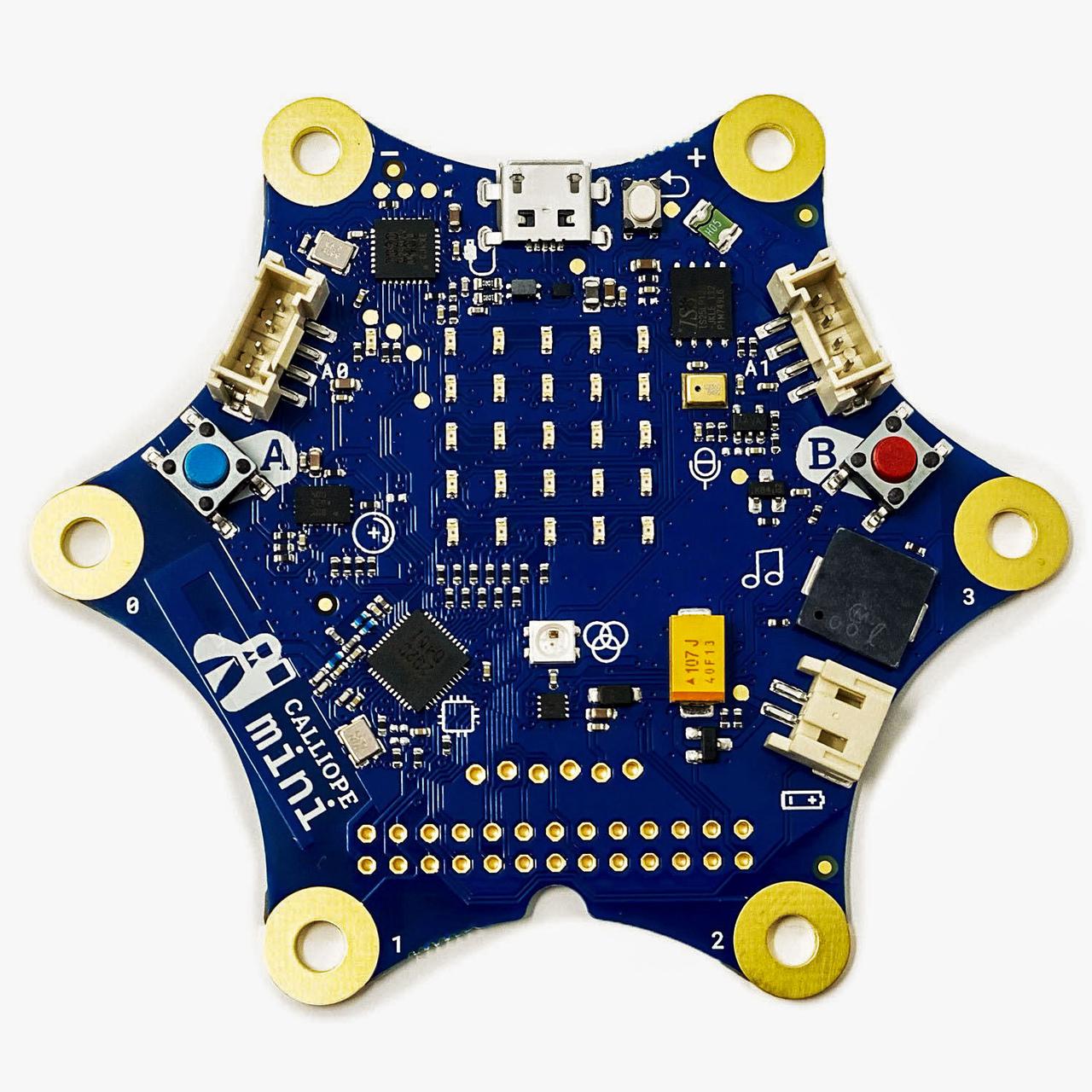
jsc2021e064348 (12/10/2021) --- The Standard Calliope mini Computer which is in a Modified Version the Heart and Brain of the CalliopEO Hardware. CalliopEO (Calliope Mini in Space) is a project of Ruhr-Universität Bochum, Calliope gGmbH, and the German Space Agency at DLR to promote software programming skills among German school children. Image courtesy of Calliope gGmbH
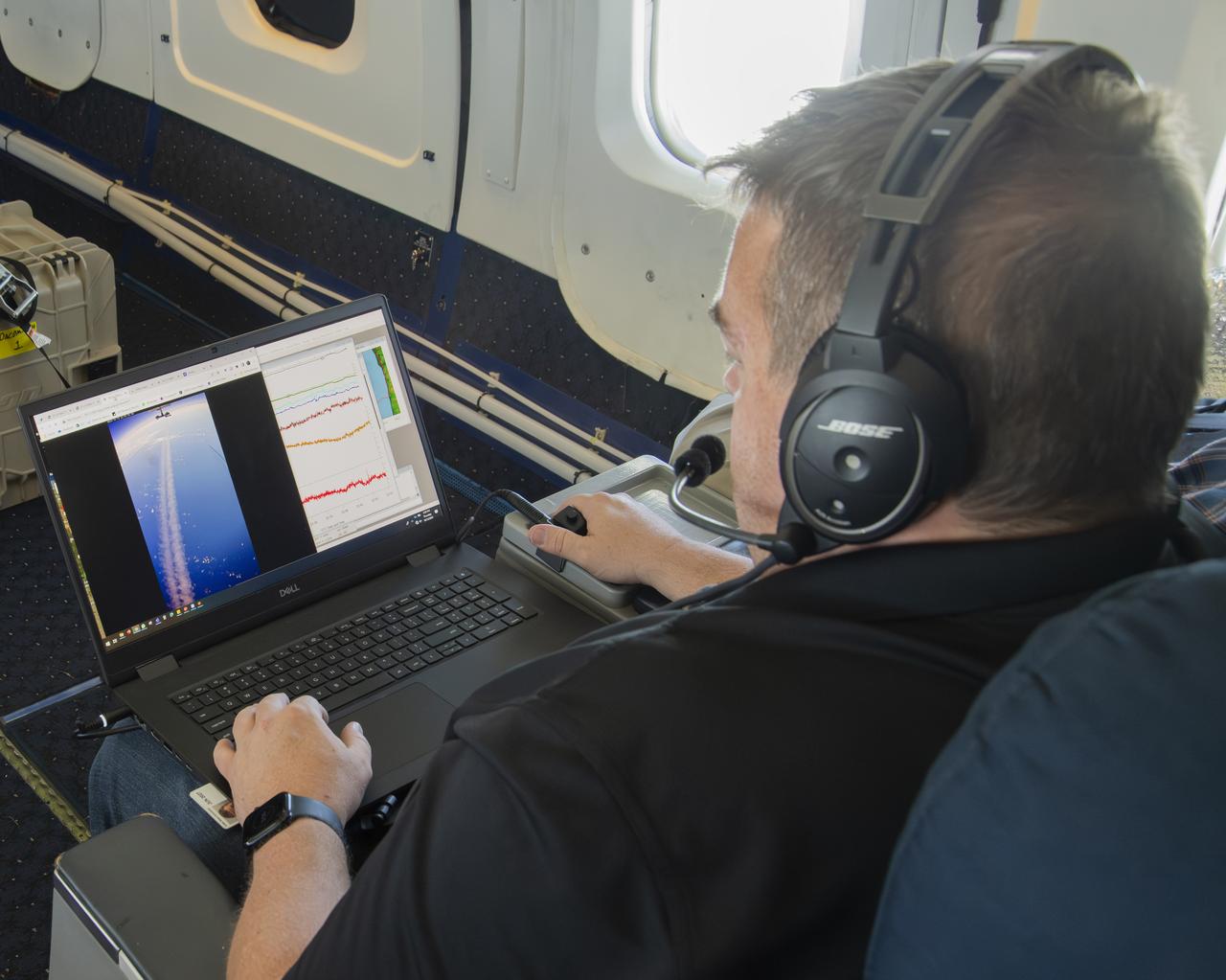
NASA’s DC-8 aircraft from Armstrong Flight Research Center in Edwards, California flies to Everett, Washington to conduct science research about reducing engine particle emissions. Partners include Boeing, United, General Electric Aerospace, German Aerospace Center (DLR), the FAA, and World Energy. Boeing’s new passenger aircraft uses revolutionary Sustainable Aviation Fuel, SAF, and NASA’s DC-8 flies behind the Boeing plane to measure its impact throughout flight. The results of this study will be released publicly to facilitate the improvement of aviation technology worldwide.
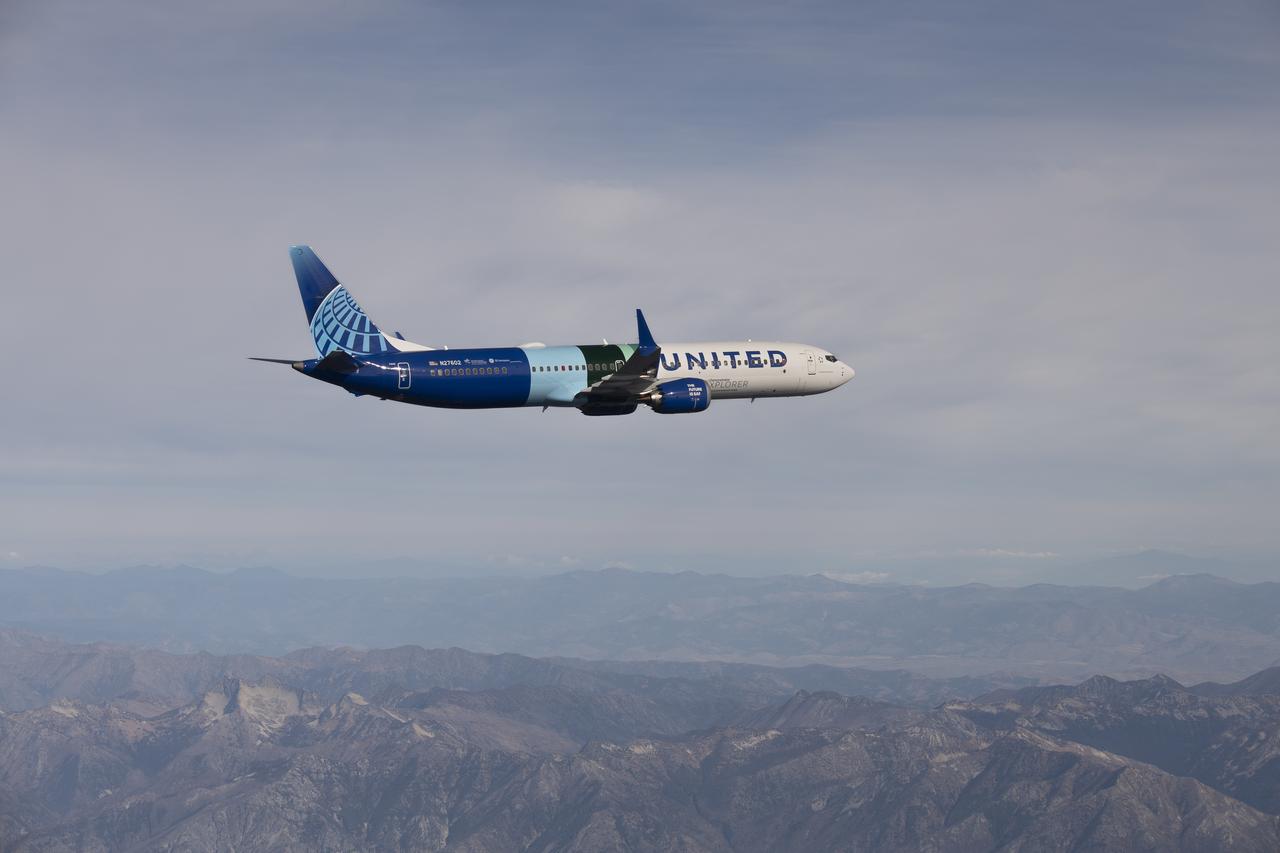
NASA’s DC-8 aircraft from Armstrong Flight Research Center in Edwards, California flies to Everett, Washington to conduct science research about reducing engine particle emissions. Partners include Boeing, United, General Electric Aerospace, German Aerospace Center (DLR), the FAA, and World Energy. Boeing’s new passenger aircraft uses revolutionary Sustainable Aviation Fuel, SAF, and NASA’s DC-8 flies behind the Boeing plane to measure its impact throughout flight. The results of this study will be released publicly to facilitate the improvement of aviation technology worldwide.
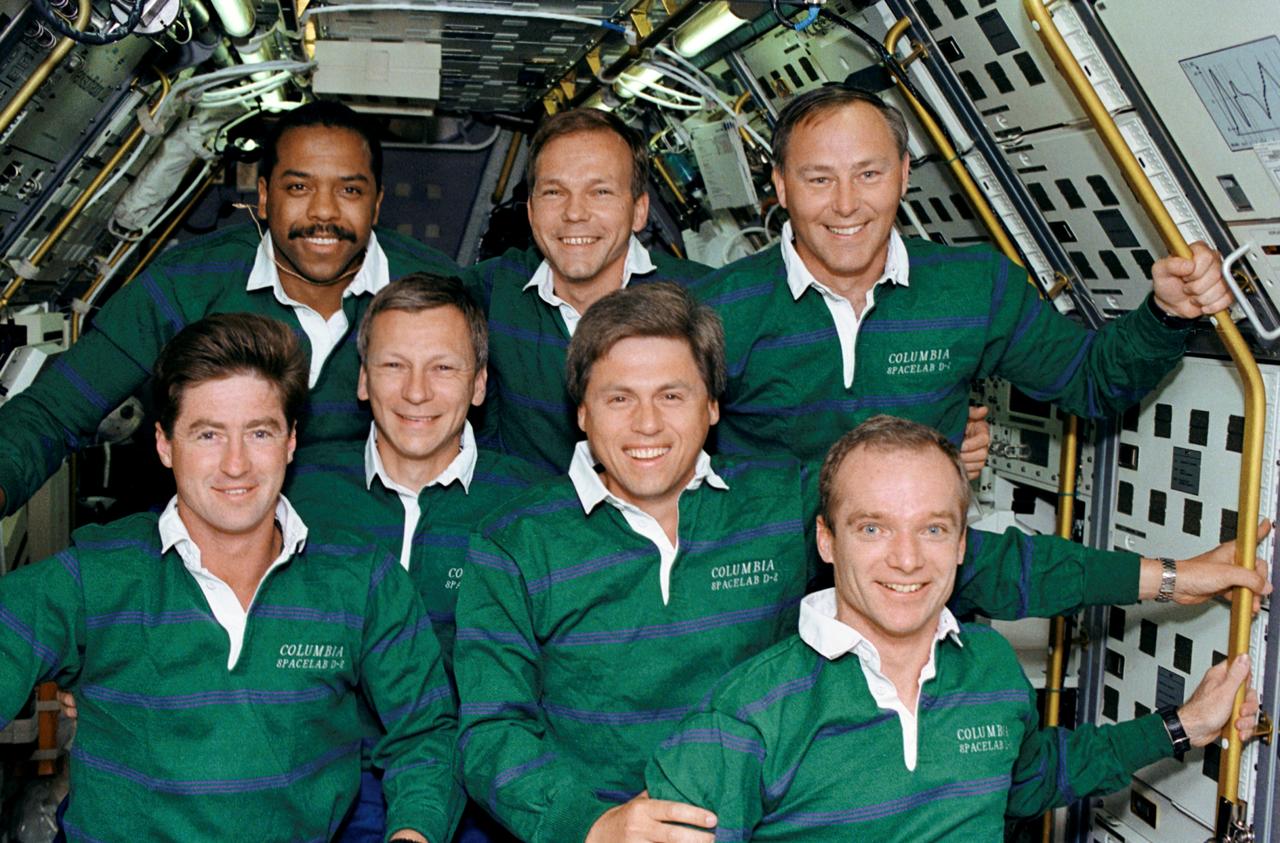
STS055-203-009 (26 April-6 May 1993) --- The seven crew members who spent 10 days aboard the space shuttle Columbia pose for the traditional in-flight portrait in the Spacelab D-2 Science Module. Front, left to right, are Terence T. (Tom) Henricks, Steven R. Nagel, Ulrich Walter and Charles J. Precourt. In the rear are (left to right) Bernard A. Harris Jr., Hans Schlegel and Jerry L. Ross. Nagel served as mission commander; Henricks was the pilot and Ross, the payload commander. Harris and Precourt were mission specialists and Schlegel and Walter were payload specialists representing the German Aerospace Research Establishment (DLR). Photo credit: NASA
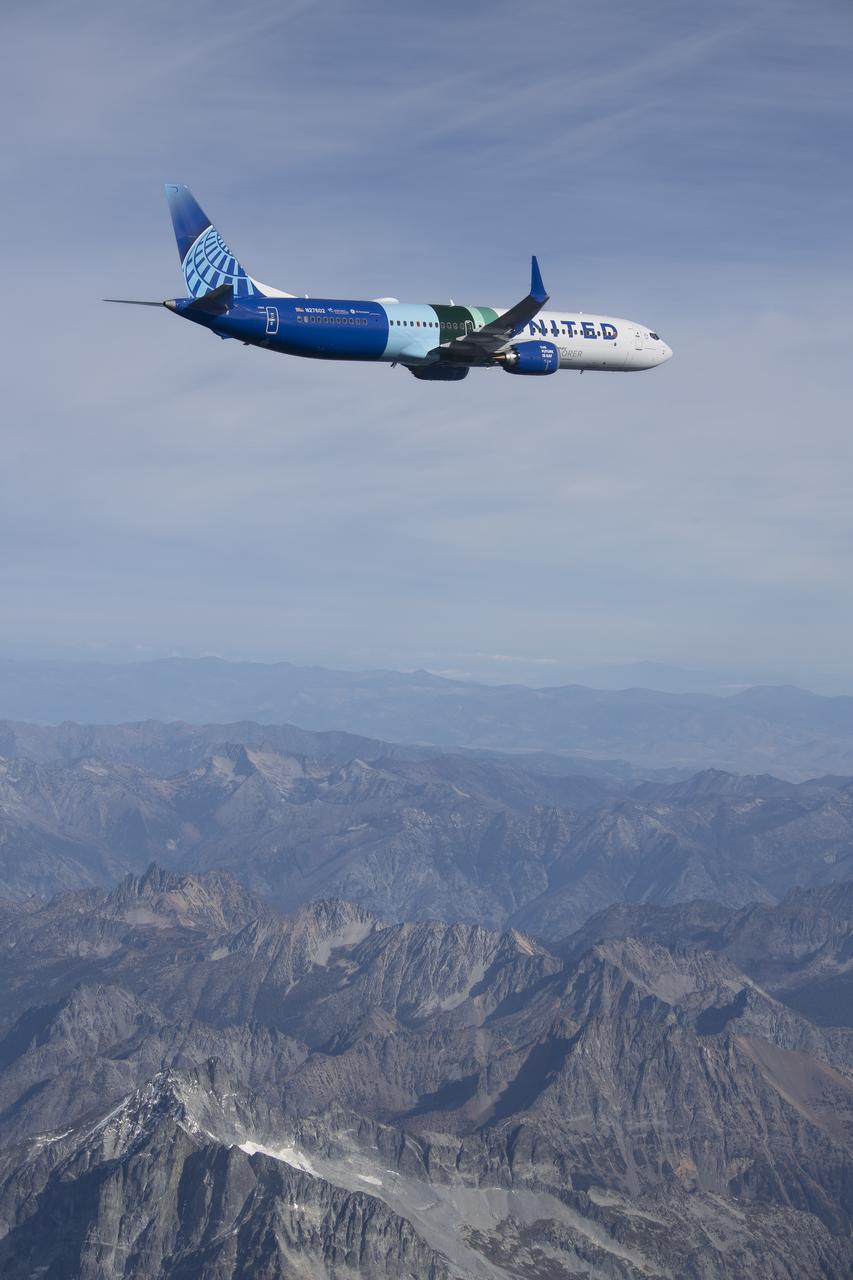
NASA’s DC-8 aircraft from Armstrong Flight Research Center in Edwards, California flies to Everett, Washington to conduct science research about reducing engine particle emissions. Partners include Boeing, United, General Electric Aerospace, German Aerospace Center (DLR), the FAA, and World Energy. Boeing’s new passenger aircraft uses revolutionary Sustainable Aviation Fuel, SAF, and NASA’s DC-8 flies behind the Boeing plane to measure its impact throughout flight. The results of this study will be released publicly to facilitate the improvement of aviation technology worldwide.
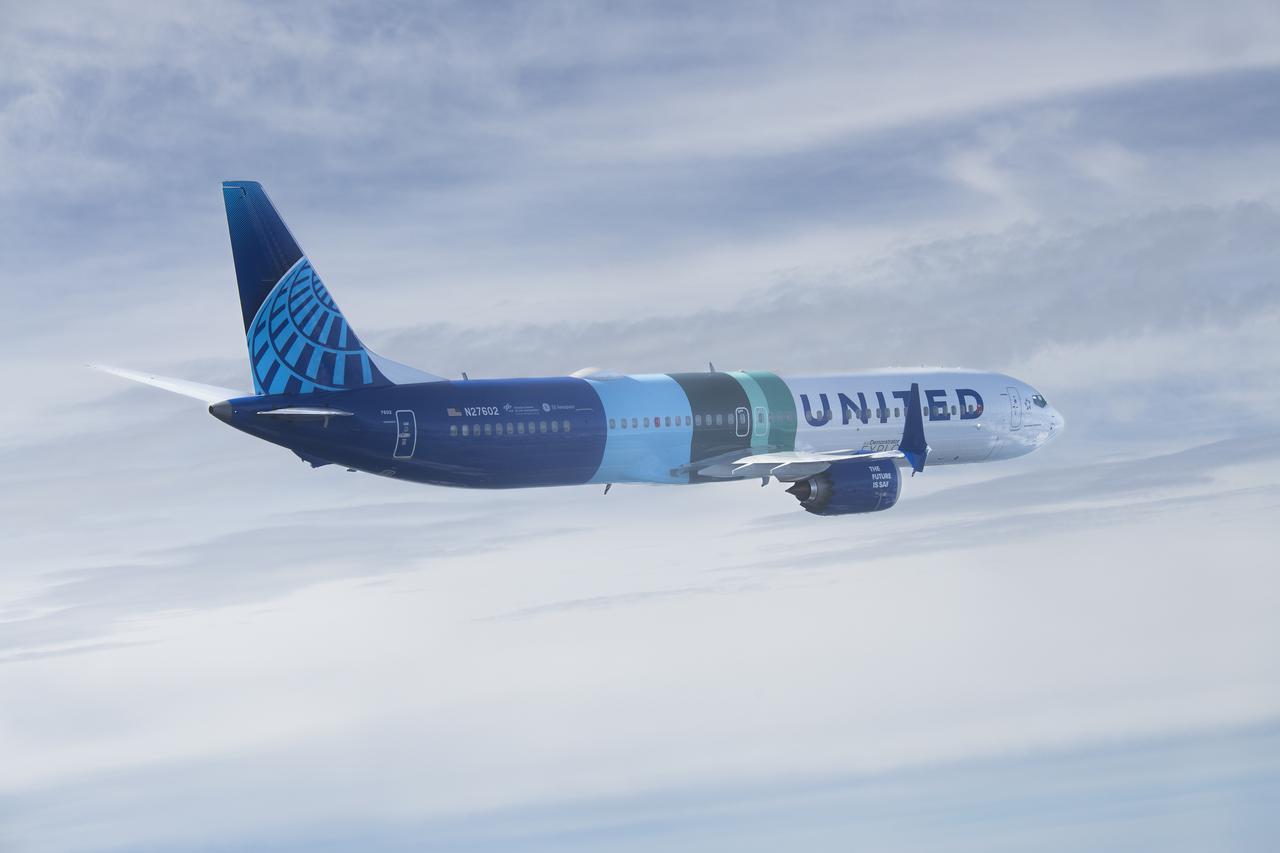
NASA’s DC-8 aircraft from Armstrong Flight Research Center in Edwards, California flies to Everett, Washington to conduct science research about reducing engine particle emissions. Partners include Boeing, United, General Electric Aerospace, German Aerospace Center (DLR), the FAA, and World Energy. Boeing’s new passenger aircraft uses revolutionary Sustainable Aviation Fuel, SAF, and NASA’s DC-8 flies behind the Boeing plane to measure its impact throughout flight. The results of this study will be released publicly to facilitate the improvement of aviation technology worldwide.
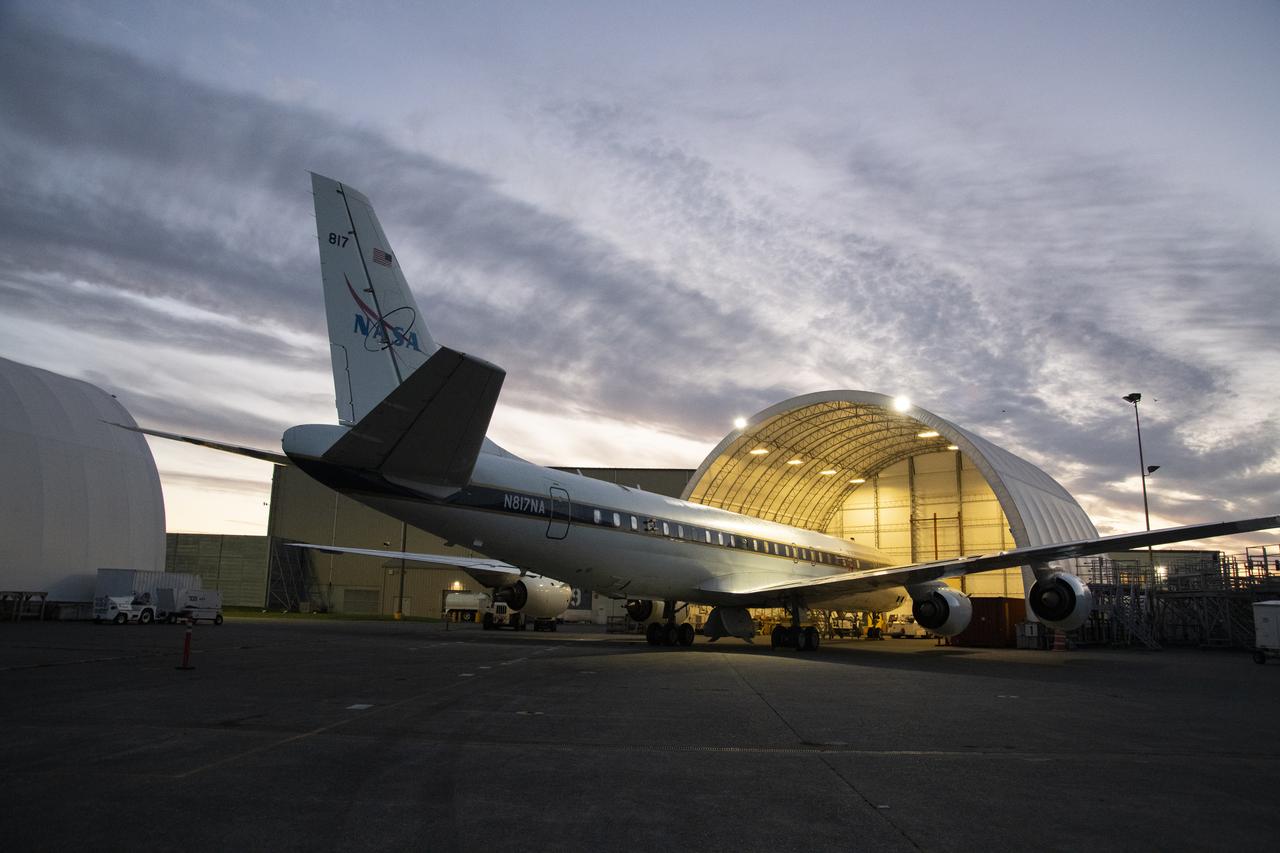
NASA’s DC-8 aircraft from Armstrong Flight Research Center in Edwards, California flies to Everett, Washington to conduct science research about reducing engine particle emissions. Partners include Boeing, United, General Electric Aerospace, German Aerospace Center (DLR), the FAA, and World Energy. Boeing’s new passenger aircraft uses revolutionary Sustainable Aviation Fuel, SAF, and NASA’s DC-8 flies behind the Boeing plane to measure its impact throughout flight. The results of this study will be released publicly to facilitate the improvement of aviation technology worldwide.
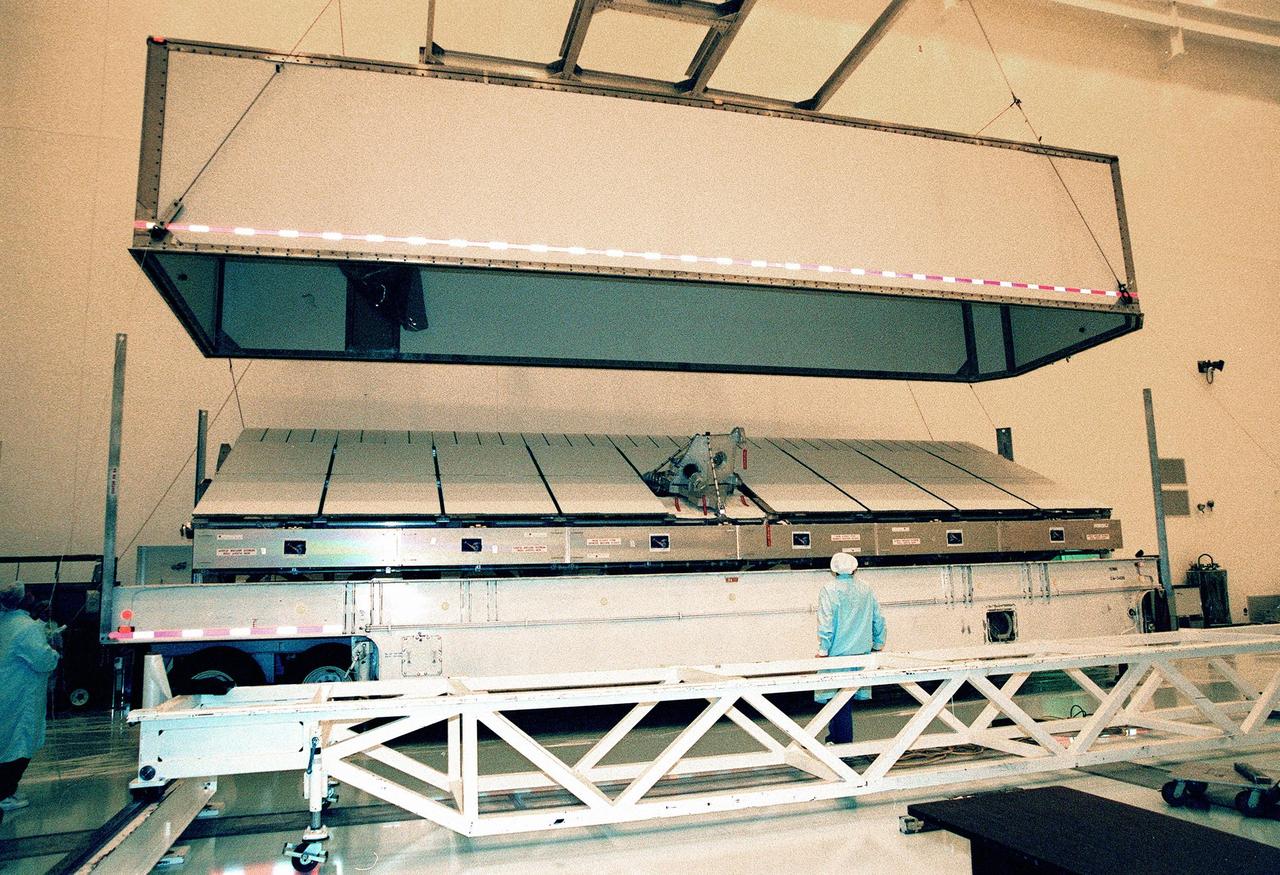
Inside the Multi-Payload Processing Facility, the lid covering the Shuttle Radar Topography Mission (SRTM) is lifted. The primary payload on mission STS-99, the SRTM consists of a specially modified radar system that will fly onboard the Space Shuttle during the 11-day mission scheduled for September 1999. This radar system will gather data that will result in the most accurate and complete topographic map of the Earth's surface that has ever been assembled. SRTM is an international project spearheaded by the National Imagery and Mapping Agency and NASA, with participation of the German Aerospace Center DLR. Its objective is to obtain the most complete high-resolution digital topographic database of the Earth
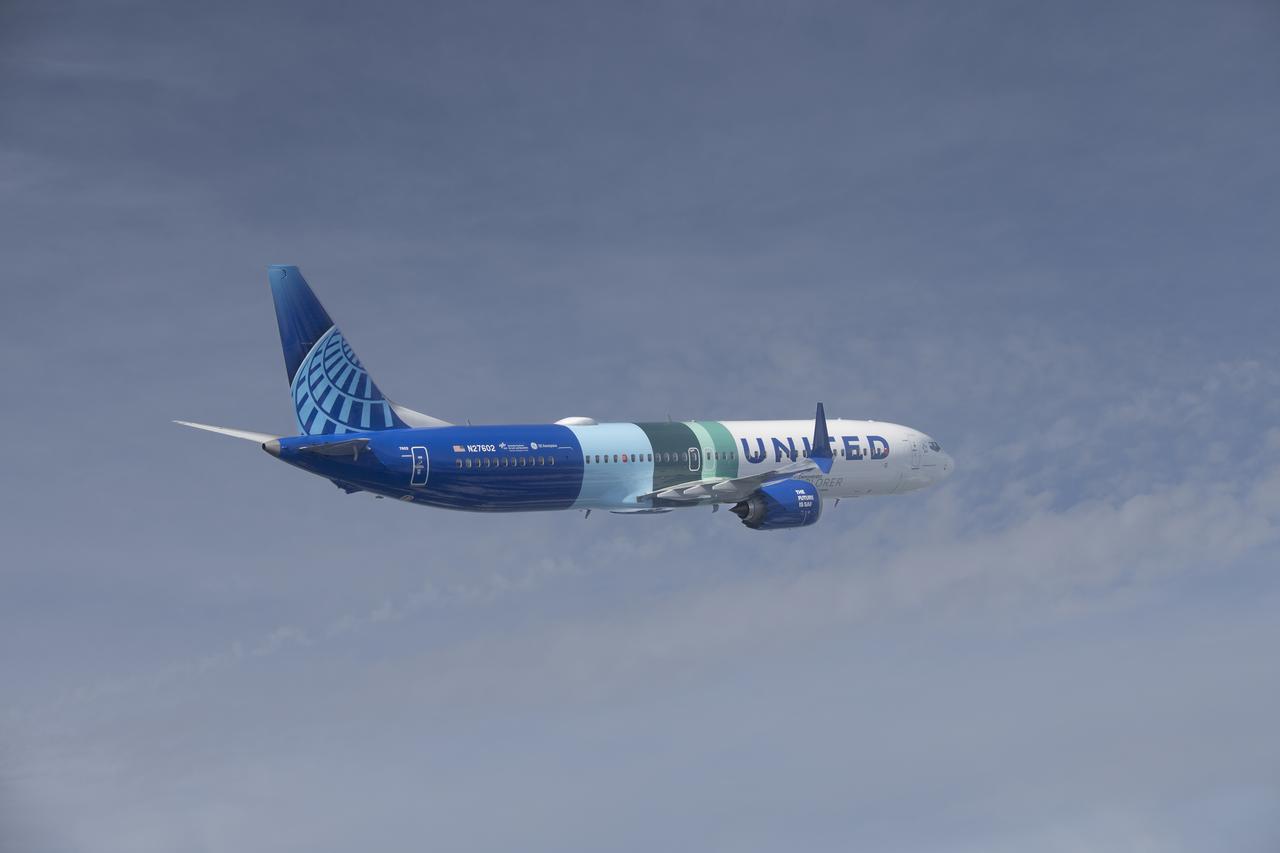
NASA’s DC-8 aircraft from Armstrong Flight Research Center in Edwards, California flies to Everett, Washington to conduct science research about reducing engine particle emissions. Partners include Boeing, United, General Electric Aerospace, German Aerospace Center (DLR), the FAA, and World Energy. Boeing’s new passenger aircraft uses revolutionary Sustainable Aviation Fuel, SAF, and NASA’s DC-8 flies behind the Boeing plane to measure its impact throughout flight. The results of this study will be released publicly to facilitate the improvement of aviation technology worldwide.
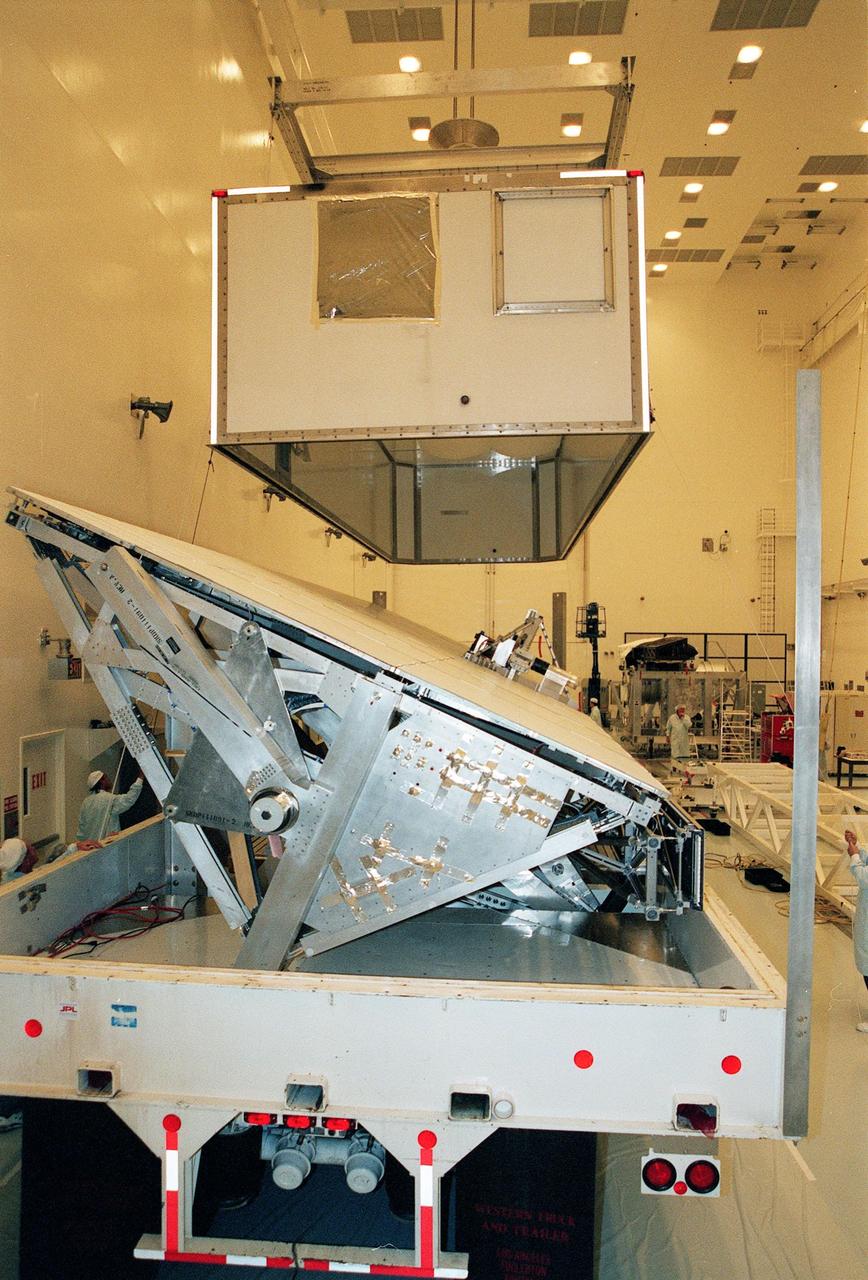
Inside the Multi-Payload Processing Facility, the lid covering the Shuttle Radar Topography Mission (SRTM) is lifted from the crate. The primary payload on mission STS-99, the SRTM consists of a specially modified radar system that will fly onboard the Space Shuttle during the 11-day mission scheduled for September 1999. This radar system will gather data that will result in the most accurate and complete topographic map of the Earth's surface that has ever been assembled. SRTM is an international project spearheaded by the National Imagery and Mapping Agency and NASA, with participation of the German Aerospace Center DLR. Its objective is to obtain the most complete high-resolution digital topographic database of the Earth
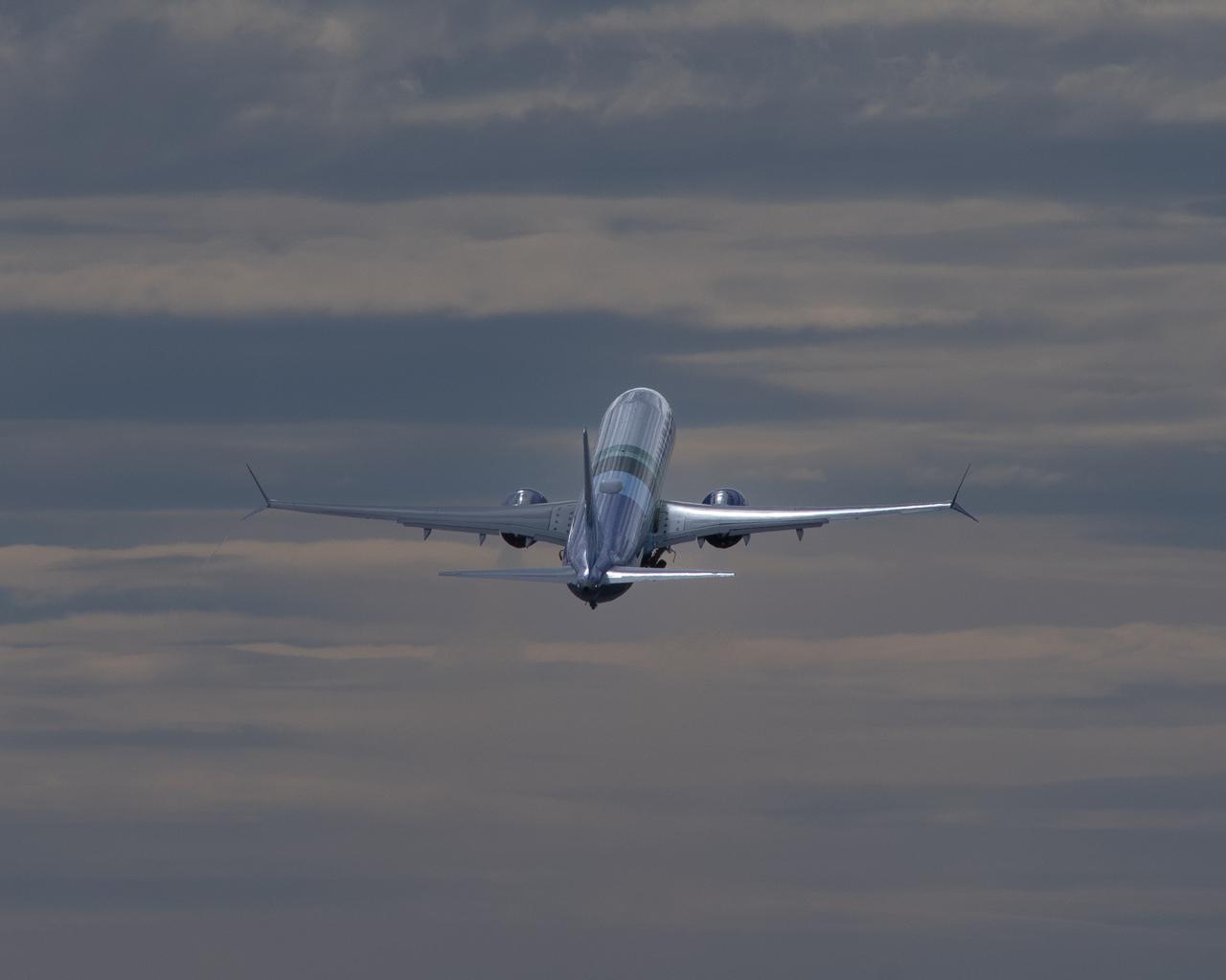
NASA’s DC-8 aircraft from Armstrong Flight Research Center in Edwards, California flies to Everett, Washington to conduct science research about reducing engine particle emissions. Partners include Boeing, United, General Electric Aerospace, German Aerospace Center (DLR), the FAA, and World Energy. Boeing’s new passenger aircraft uses revolutionary Sustainable Aviation Fuel, SAF, and NASA’s DC-8 flies behind the Boeing plane to measure its impact throughout flight. The results of this study will be released publicly to facilitate the improvement of aviation technology worldwide.
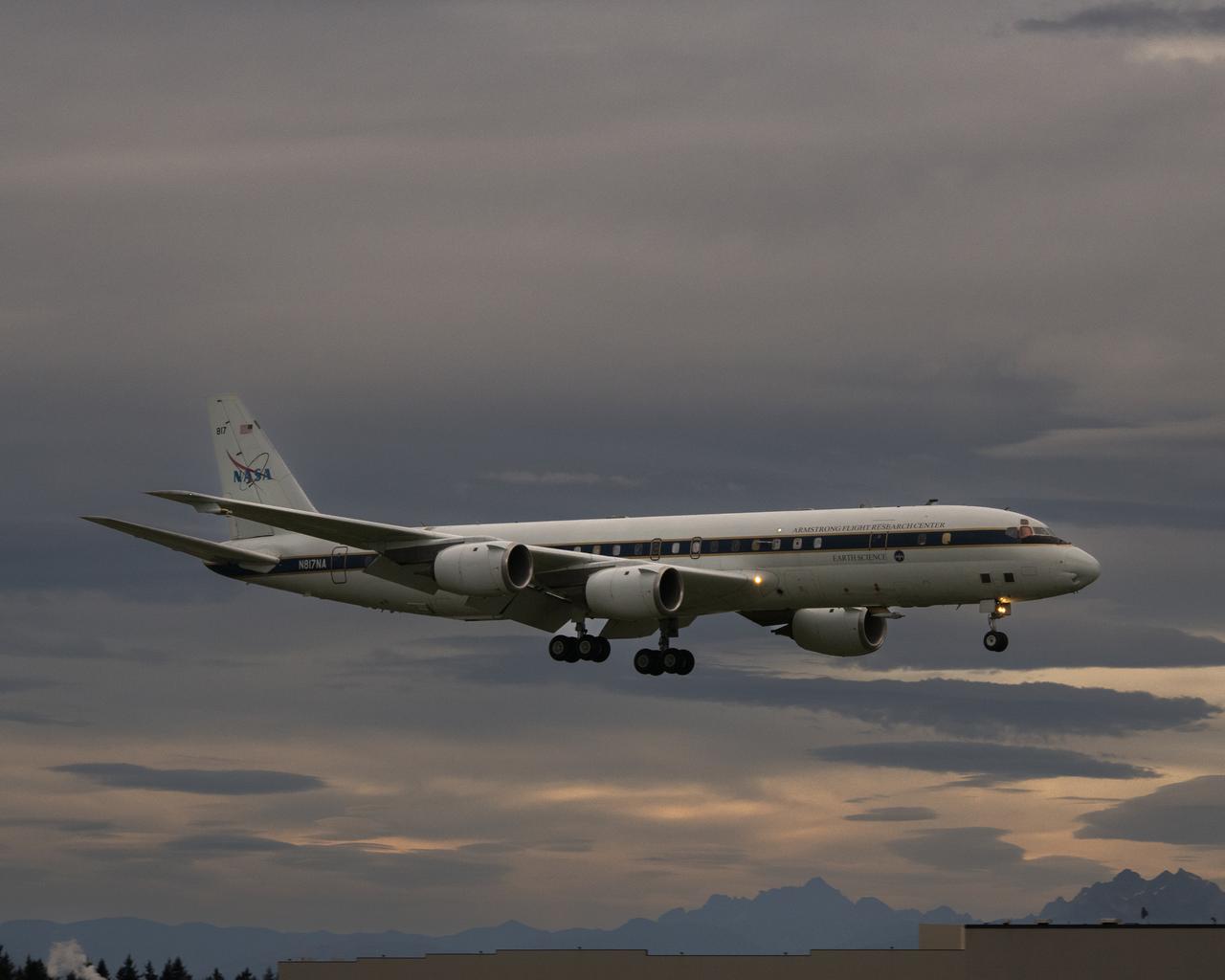
NASA’s DC-8 aircraft from Armstrong Flight Research Center in Edwards, California flies to Everett, Washington to conduct science research about reducing engine particle emissions. Partners include Boeing, United, General Electric Aerospace, German Aerospace Center (DLR), the FAA, and World Energy. Boeing’s new passenger aircraft uses revolutionary Sustainable Aviation Fuel, SAF, and NASA’s DC-8 flies behind the Boeing plane to measure its impact throughout flight. The results of this study will be released publicly to facilitate the improvement of aviation technology worldwide.
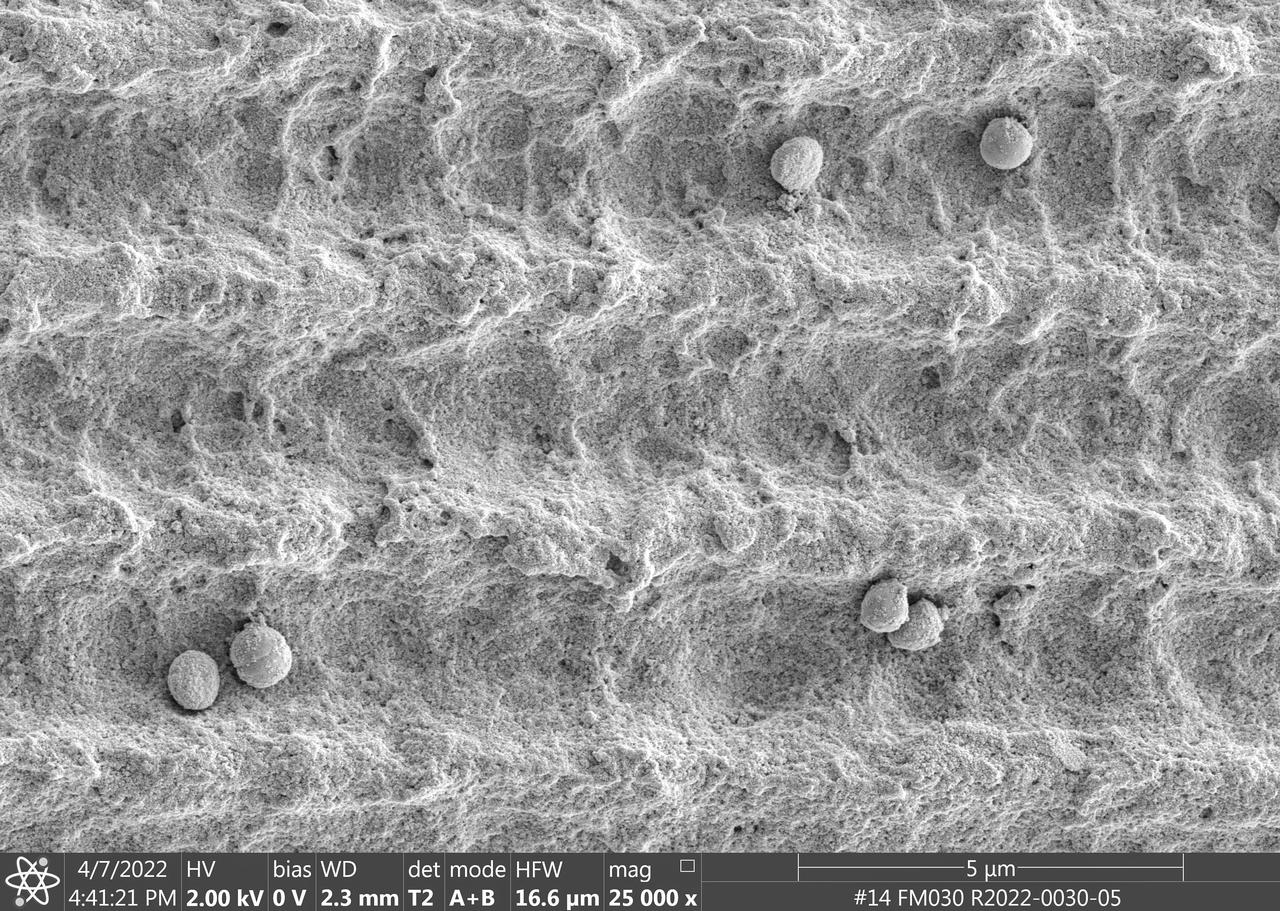
jsc2023e010177 (4/7/2022) --- This image is a scanning electron microscopic image of one of the ESA-Biofilms sample plates from the first launch to the ISS. The sample plate in this image is made of copper, which naturally has antimicrobial properties. This surface has a 3 µm laser structure engraved to the surface which improves antimicrobial efficacy. On the surface, only few cells of the bacterial species Staphylococcus capitis are attached. The cells appear small and are not actively dividing. The ESA-Biofilms investigation studies bacterial biofilm formation and antimicrobial properties of different metal surfaces under spaceflight conditions in altered gravity. Image courtesy of DLR, CC BY-NC-ND 3.0.
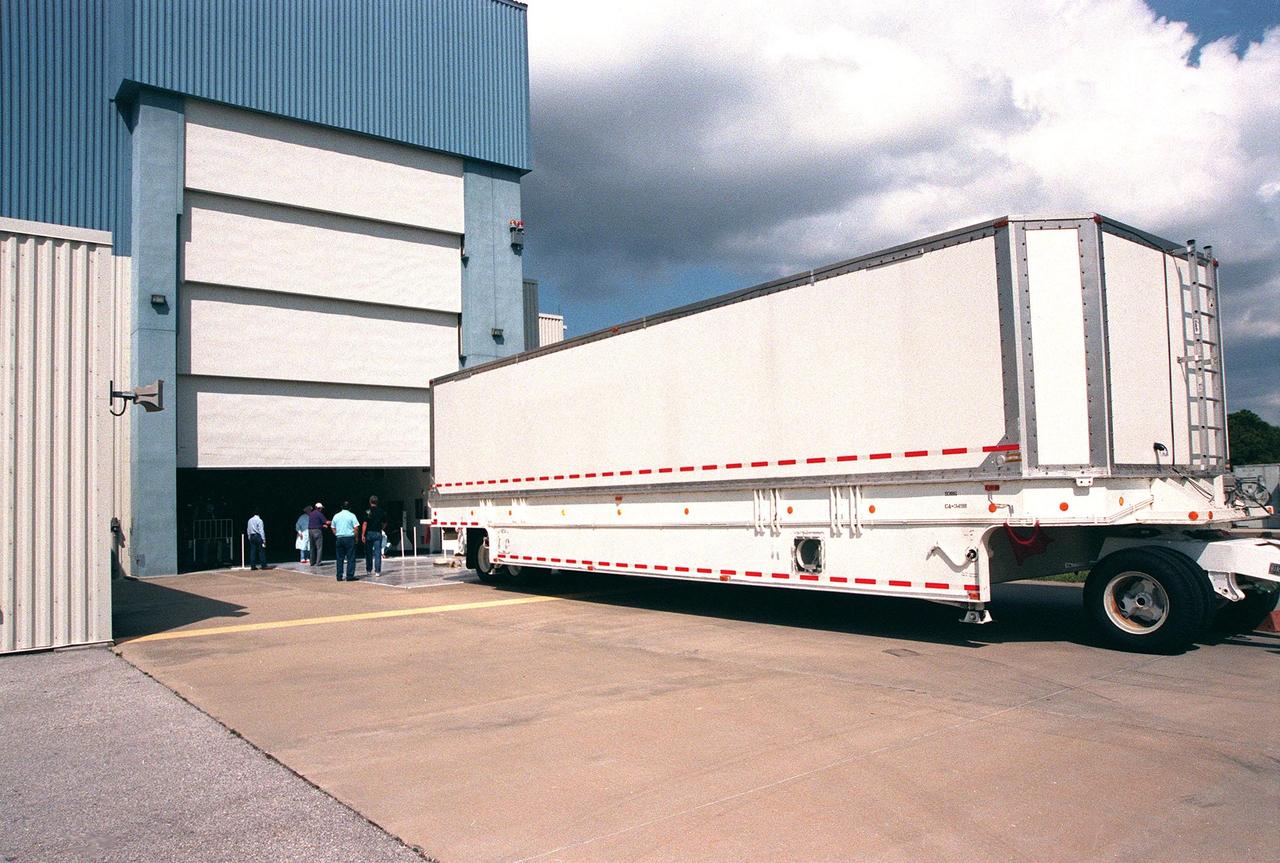
The vehicle carrying the Shuttle Radar Topography Mission (SRTM) arrives at the Multi-Payload Processing Facility. The primary payload on mission STS-99, the SRTM consists of a specially modified radar system that will fly onboard the Space Shuttle during the 11-day mission scheduled for September 1999. This radar system will gather data that will result in the most accurate and complete topographic map of the Earth's surface that has ever been assembled. SRTM is an international project spearheaded by the National Imagery and Mapping Agency and NASA, with participation of the German Aerospace Center DLR. Its objective is to obtain the most complete high-resolution digital topographic database of the Earth
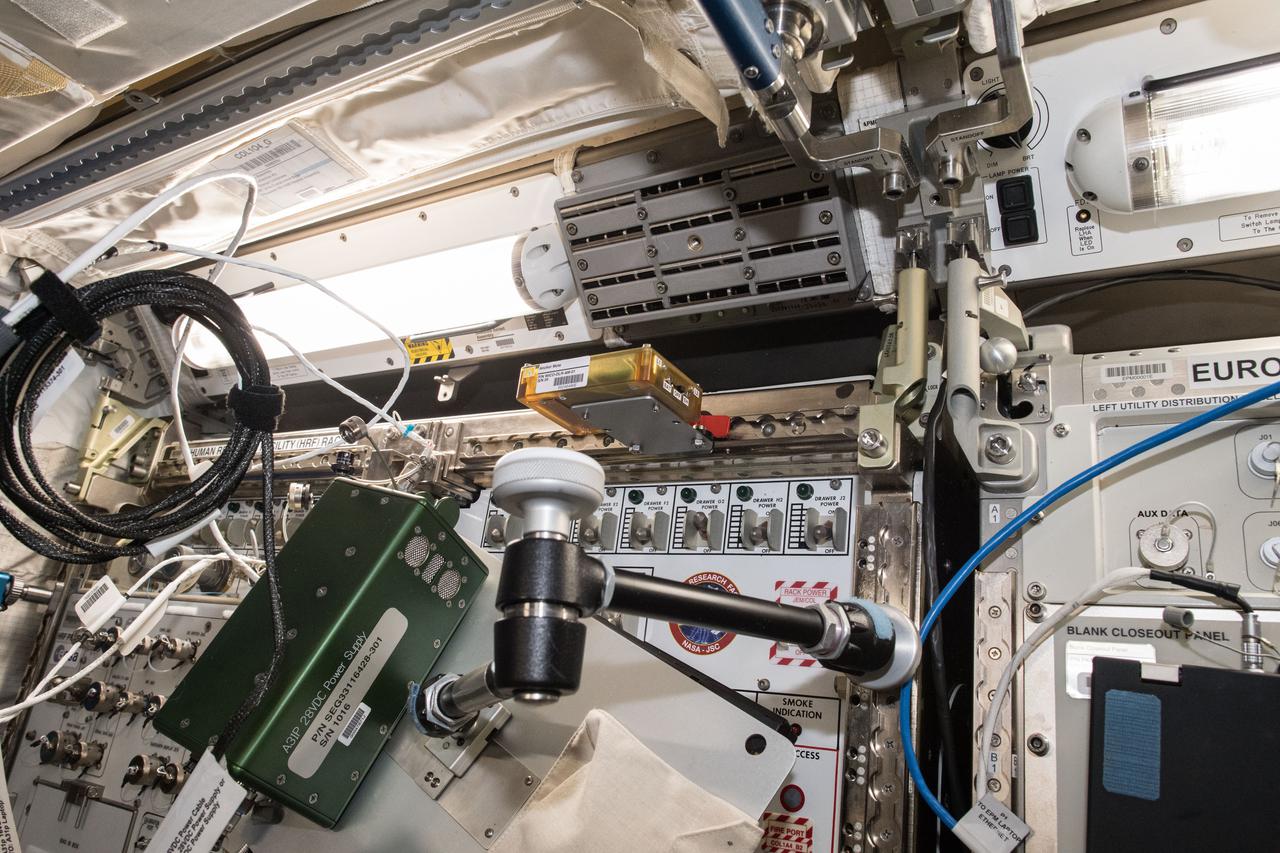
iss056e005285 (June 6, 2018) --- The small, yellow box in the middle of the picture is a module for the Wireless Compose-2 investigation from ESA (European Space Agency). Wireless Compose-2 is a technology demonstration that aims to provide a flexible and adaptable wireless network infrastructure to conduct and execute low-power, low-weight, and wireless experiments on the International Space Station. Building on technology used for the German Space Agency's (DLR) first Wireless Compose technology demonstrator in 2018, it shows the capabilities of Wireless Networks for scientific, localization, and medical experiments in the Columbus module.
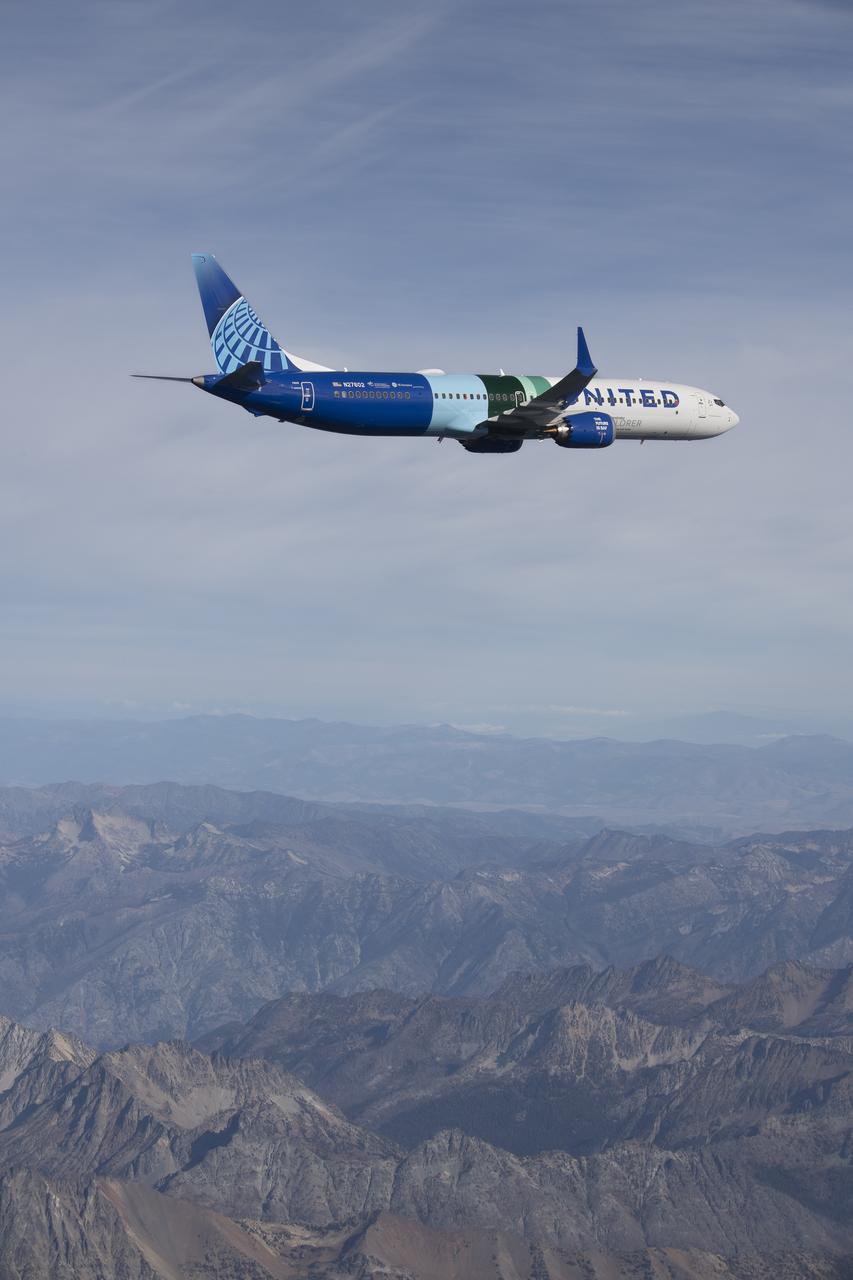
NASA’s DC-8 aircraft from Armstrong Flight Research Center in Edwards, California flies to Everett, Washington to conduct science research about reducing engine particle emissions. Partners include Boeing, United, General Electric Aerospace, German Aerospace Center (DLR), the FAA, and World Energy. Boeing’s new passenger aircraft uses revolutionary Sustainable Aviation Fuel, SAF, and NASA’s DC-8 flies behind the Boeing plane to measure its impact throughout flight. The results of this study will be released publicly to facilitate the improvement of aviation technology worldwide.
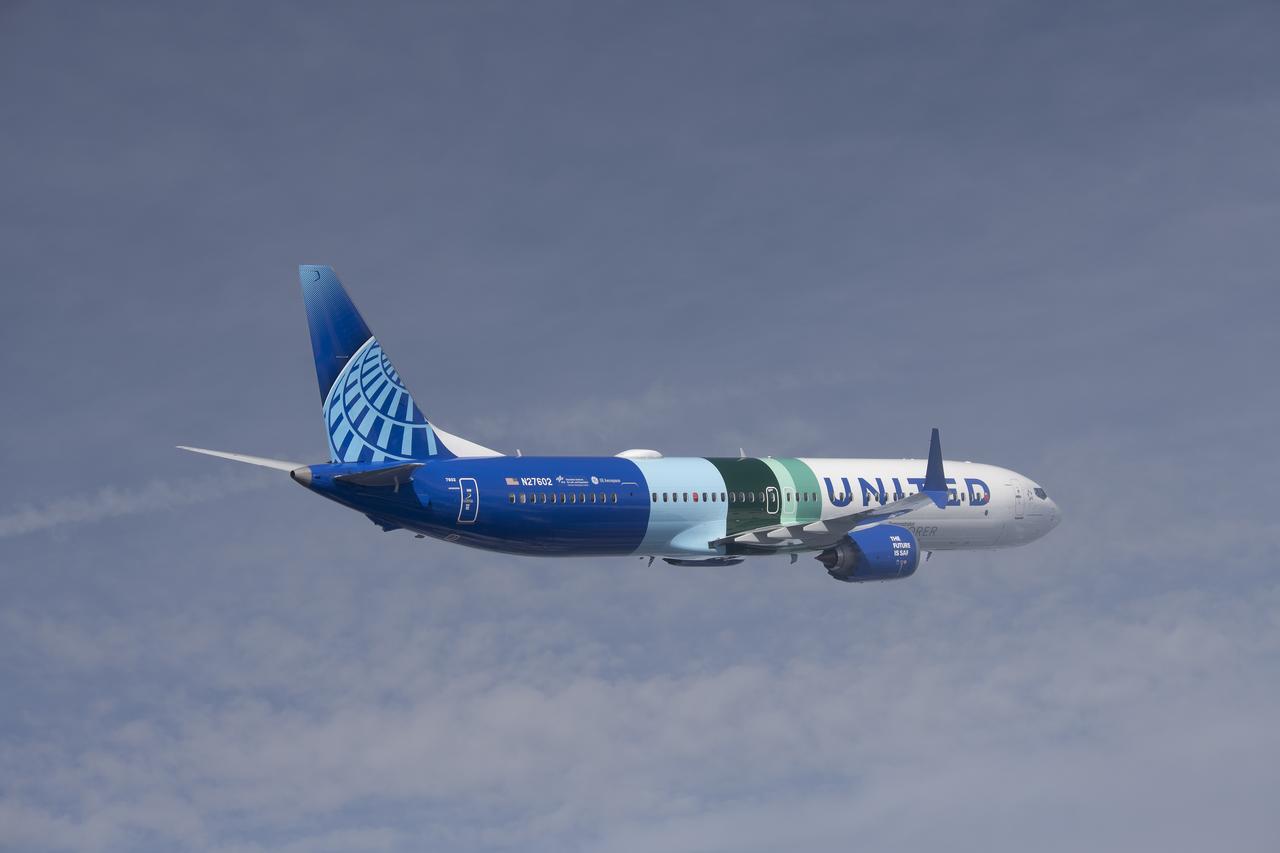
NASA’s DC-8 aircraft from Armstrong Flight Research Center in Edwards, California flies to Everett, Washington to conduct science research about reducing engine particle emissions. Partners include Boeing, United, General Electric Aerospace, German Aerospace Center (DLR), the FAA, and World Energy. Boeing’s new passenger aircraft uses revolutionary Sustainable Aviation Fuel, SAF, and NASA’s DC-8 flies behind the Boeing plane to measure its impact throughout flight. The results of this study will be released publicly to facilitate the improvement of aviation technology worldwide.
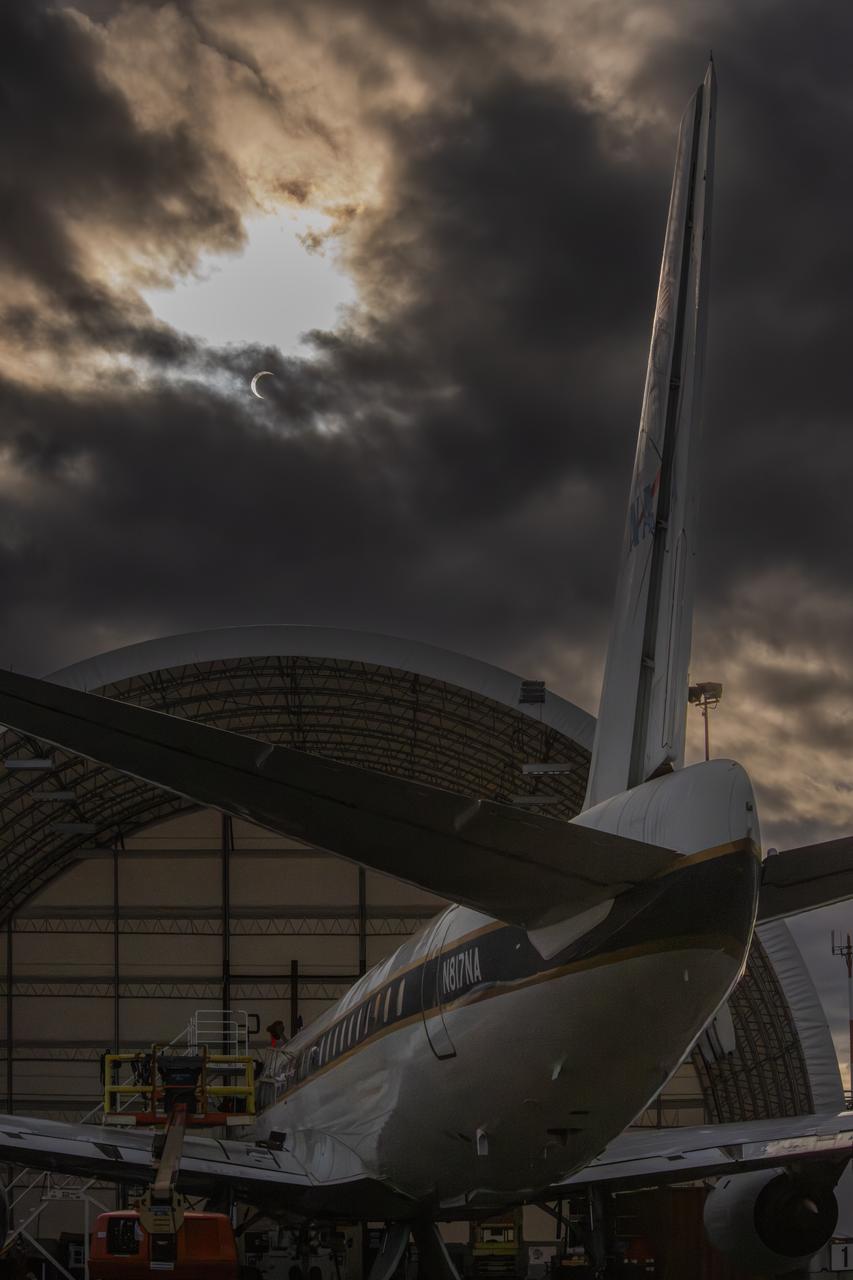
NASA’s DC-8 aircraft from Armstrong Flight Research Center in Edwards, California flies to Everett, Washington to conduct science research about reducing engine particle emissions. Partners include Boeing, United, General Electric Aerospace, German Aerospace Center (DLR), the FAA, and World Energy. Boeing’s new passenger aircraft uses revolutionary Sustainable Aviation Fuel, SAF, and NASA’s DC-8 flies behind the Boeing plane to measure its impact throughout flight. The results of this study will be released publicly to facilitate the improvement of aviation technology worldwide.
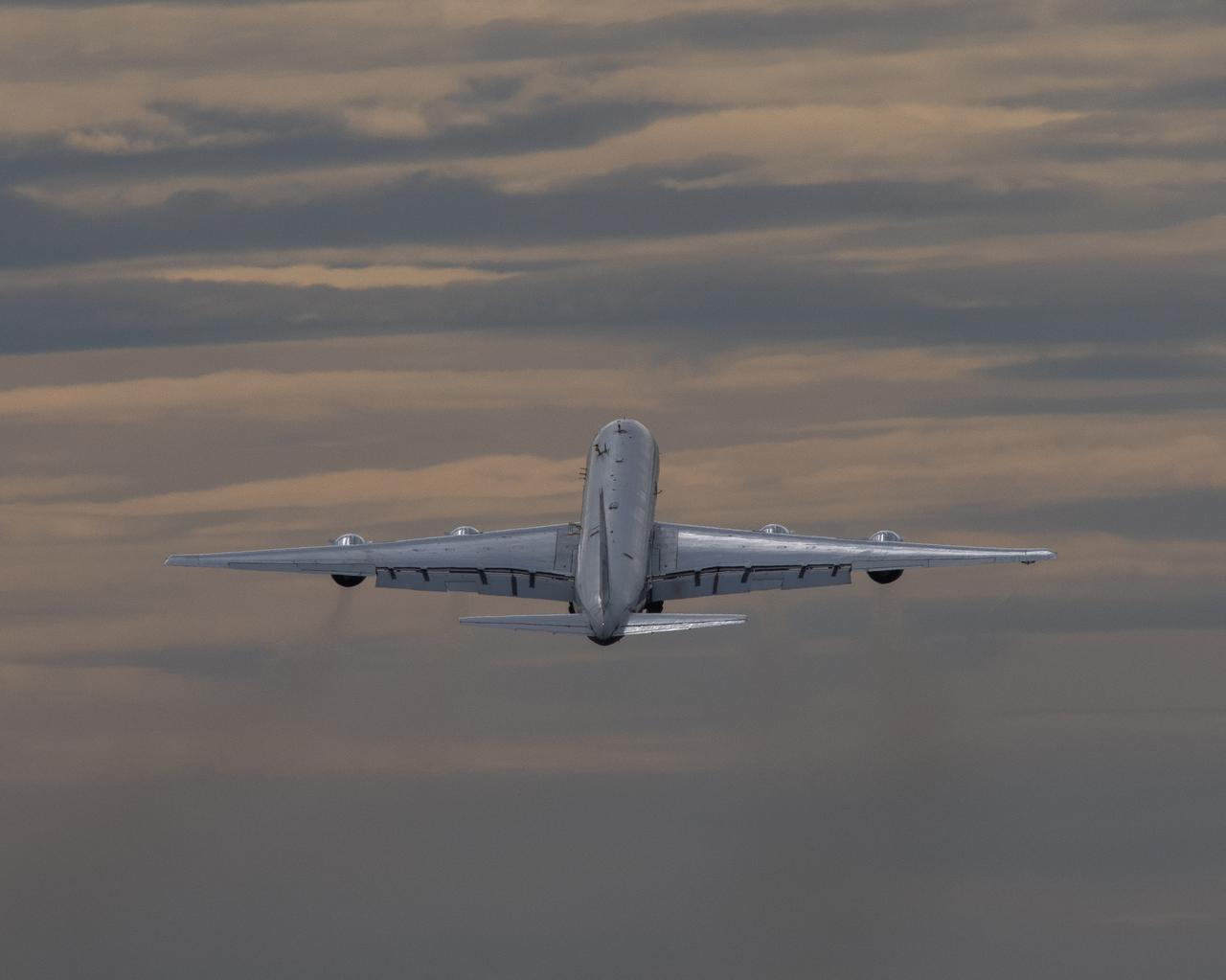
NASA’s DC-8 aircraft from Armstrong Flight Research Center in Edwards, California flies to Everett, Washington to conduct science research about reducing engine particle emissions. Partners include Boeing, United, General Electric Aerospace, German Aerospace Center (DLR), the FAA, and World Energy. Boeing’s new passenger aircraft uses revolutionary Sustainable Aviation Fuel, SAF, and NASA’s DC-8 flies behind the Boeing plane to measure its impact throughout flight. The results of this study will be released publicly to facilitate the improvement of aviation technology worldwide.
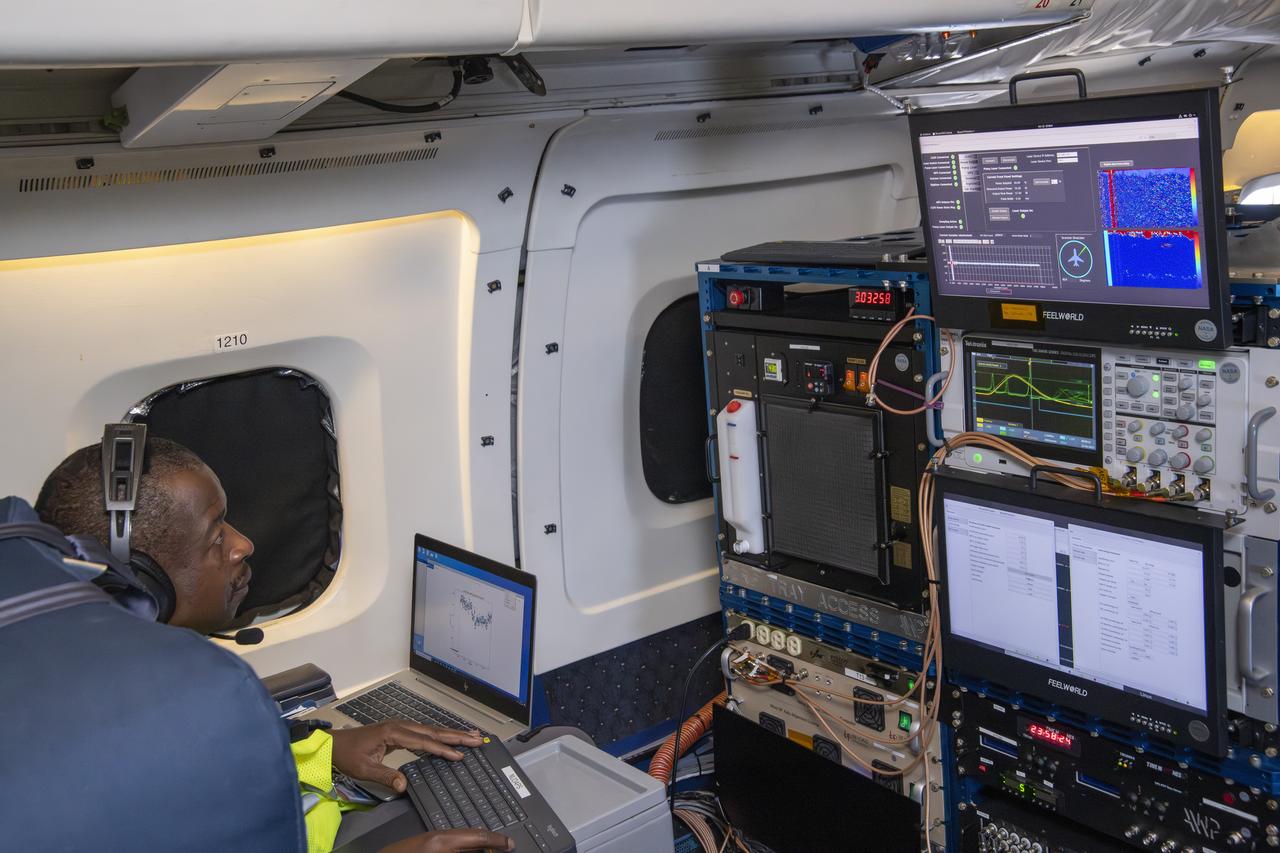
NASA’s DC-8 aircraft from Armstrong Flight Research Center in Edwards, California flies to Everett, Washington to conduct science research about reducing engine particle emissions. Partners include Boeing, United, General Electric Aerospace, German Aerospace Center (DLR), the FAA, and World Energy. Boeing’s new passenger aircraft uses revolutionary Sustainable Aviation Fuel, SAF, and NASA’s DC-8 flies behind the Boeing plane to measure its impact throughout flight. The results of this study will be released publicly to facilitate the improvement of aviation technology worldwide.

In the Multi-Payload Processing Facility, Beverly St. Ange, with the Jet Propulsion Laboratory, wires a biopod, a component of the STS-99 Shuttle Radar Topography Mission (SRTM). The SRTM consists of a specially modified radar system that will fly onboard the Space Shuttle during an 11-day mission in September 1999. This radar system will gather data that will result in the most accurate and complete topographic map of the Earth's surface that has ever been assembled. SRTM is an international project spearheaded by the National Imagery and Mapping Agency and NASA, with participation of the German Aerospace Center DLR. Its objective is to obtain the most complete high-resolution digital topographic database of the Earth