
Expedition 63 Orbit 2 Flight Director Zebulon Scoville during SpaceX DM-2 launch in FCR-1. Photo Credit: (NASA/Bill Stafford)
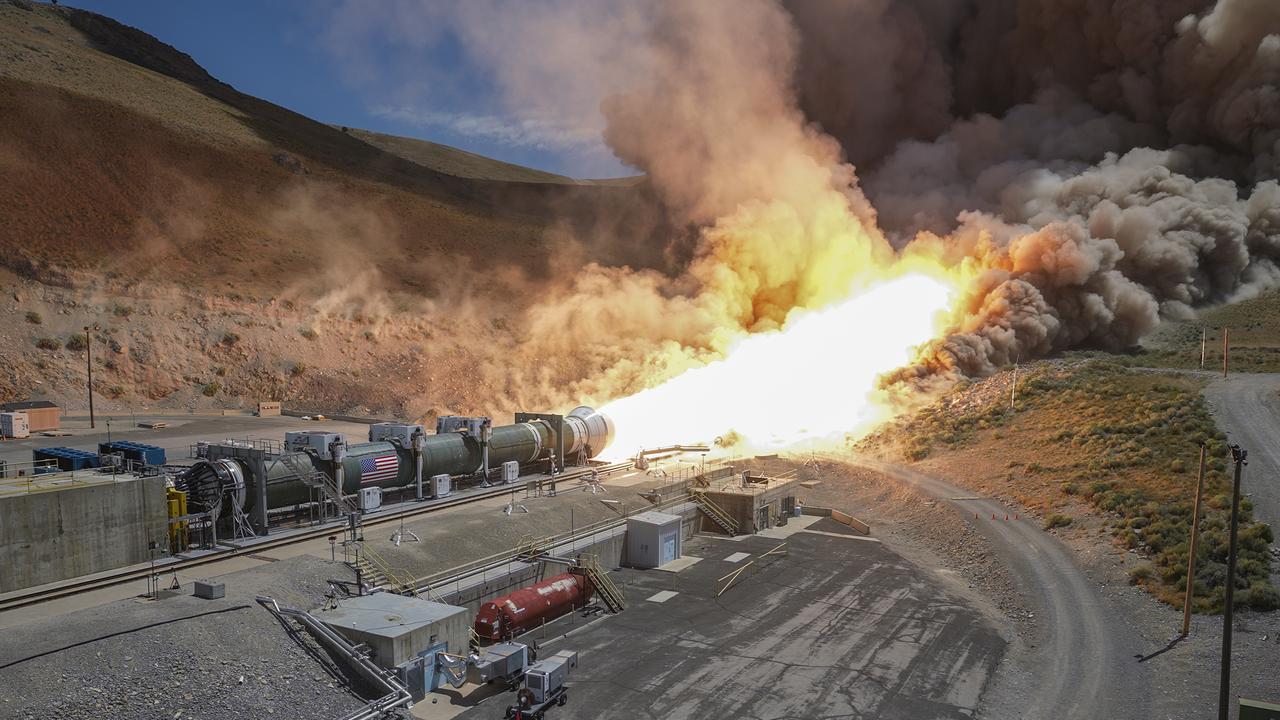
Teams from NASA and Northrop Grumman fire a ground-based version of a booster for the agency’s SLS (Space Launch System) rocket June 26. Secured horizontally in a test stand at Northrop Grumman’s test facility in Promontory, Utah, the single five-segment booster motor fired for more than two minutes and produced 3.9 million pounds of thrust. The booster for this test, known as Demonstration Motor-1 (DM-1), is the result of the Booster Obsolescence Life Extension (BOLE) project. This test was the first full-scale ground test of a new five-segment solid rocket motor. Teams from NASA and Northrop Grumman fire a ground-based version of a booster for the agency’s SLS (Space Launch System) rocket June 26. Secured horizontally in a test stand at Northrop Grumman’s test facility in Promontory, Utah, the single five-segment booster motor fired for more than two minutes and produced 3.9 million pounds of thrust. The booster for this test, known as Demonstration Motor-1 (DM-1), is the result of the Booster Obsolescence Life Extension (BOLE) project. This test was the first full-scale ground test of a new five-segment solid rocket motor. During the test, there was an abnormal event approximately 15 seconds before the end of the motor firing. Despite this event, NASA achieved several of the test’s primary objectives and received valuable data on technical risks identified ahead of the test. Testing this evolved booster for the SLS will help evaluate improvements and new materials in the boosters. The BOLE effort was launched to transition to a more efficient, lower cost commercial solution for the boosters for the SLS rocket. Through the Artemis campaign, NASA will send astronauts to explore the Moon for scientific discovery, economic benefits, and to build the foundation for the first crewed missions to Mars – for the benefit of all. For more information, contact NASA Marshall’s Office of Communications at 256-544-0034.
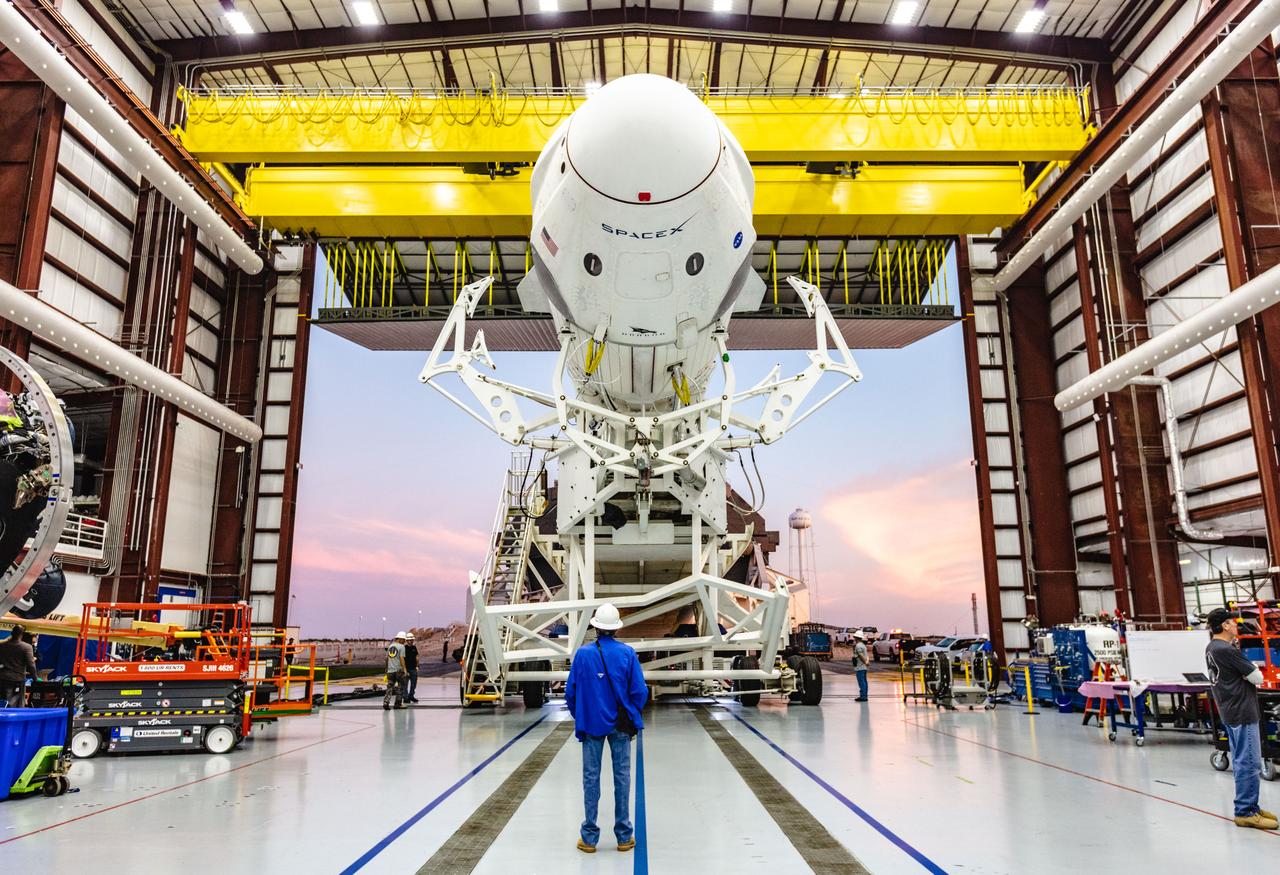
A SpaceX Falcon 9 rocket with the company’s Crew Dragon attached, rolls out of the company’s hangar at NASA Kennedy Space Center’s Launch Complex 39A on Jan. 3, 2019. The rocket will undergo checkouts prior to the liftoff of Demo-1, the inaugural flight of one of the spacecraft designed to take NASA astronauts to and from the International Space Station. NASA has worked with SpaceX and Boeing in developing Commercial Crew Program spacecraft to facilitate new human spaceflight systems launching from U.S. soil with the goal of safe, reliable and cost-effective access to low-Earth orbit destinations such as the space station.
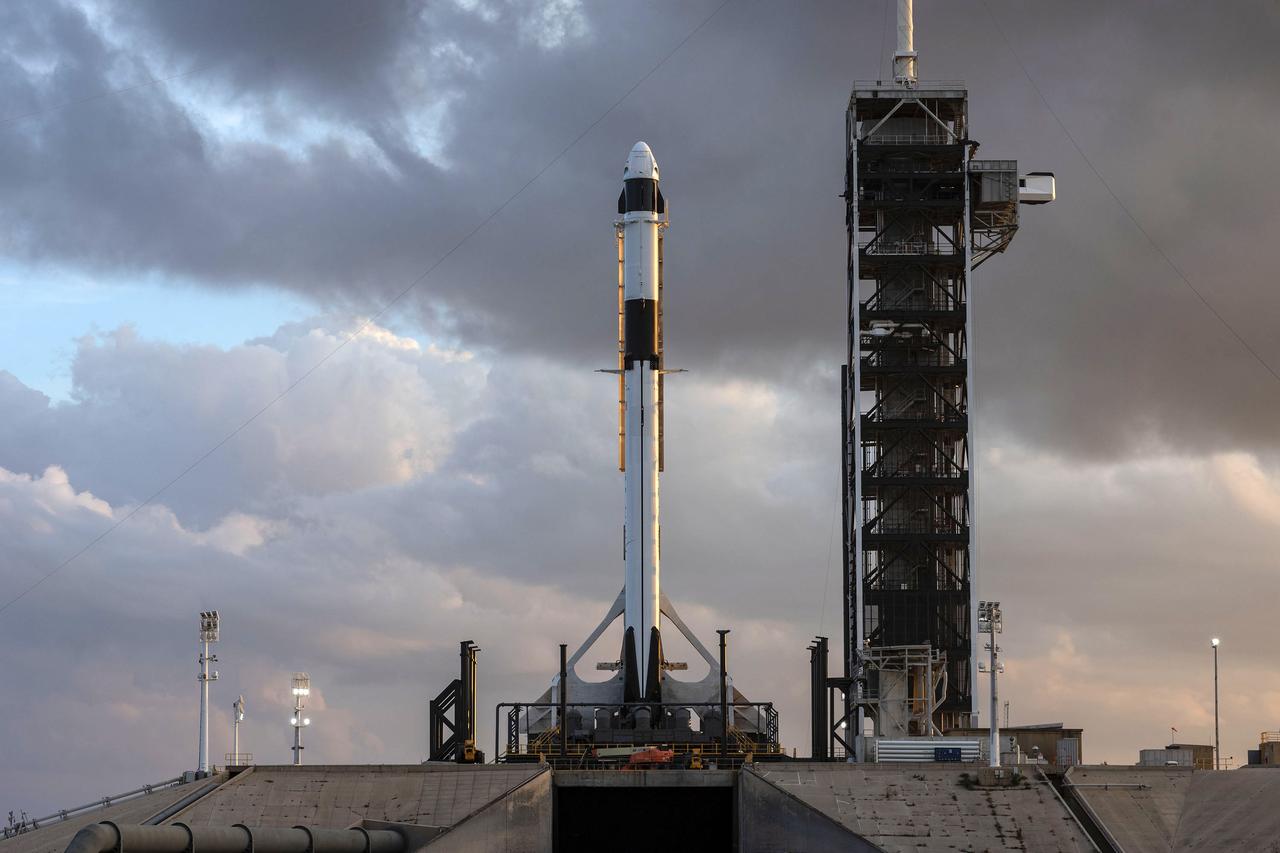
A SpaceX Falcon 9 rocket with the company’s Crew Dragon attached, stands at NASA Kennedy Space Center’s Launch Complex 39A on Jan. 3, 2019. The rocket will undergo checkouts prior to the liftoff of Demo-1, the inaugural flight of one of the spacecraft designed to take NASA astronauts to and from the International Space Station. NASA has worked with SpaceX and Boeing in developing Commercial Crew Program spacecraft to facilitate new human spaceflight systems launching from U.S. soil with the goal of safe, reliable and cost-effective access to low-Earth orbit destinations such as the space station.
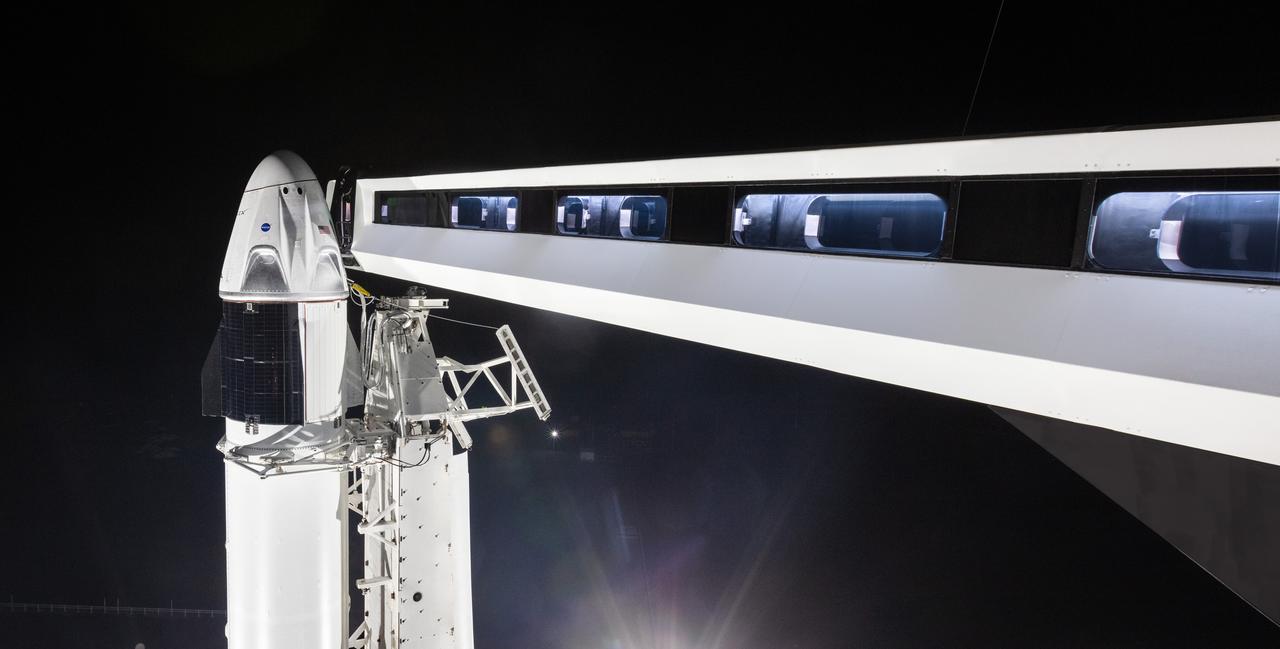
At NASA Kennedy Space Center’s Launch Complex 39A, the crew access arm has been extended to the SpaceX Crew Dragon spacecraft on Jan. 3, 2019. Mounted atop the company’s Falcon 9 rocket, both will undergo checkouts prior to its liftoff for Demo-1, the inaugural flight of one of the spacecraft designed to take NASA astronauts to and from the International Space Station. NASA has worked with SpaceX and Boeing in developing Commercial Crew Program spacecraft to facilitate new human spaceflight systems launching from U.S. soil with the goal of safe, reliable and cost-effective access to low-Earth orbit destinations such as the space station.
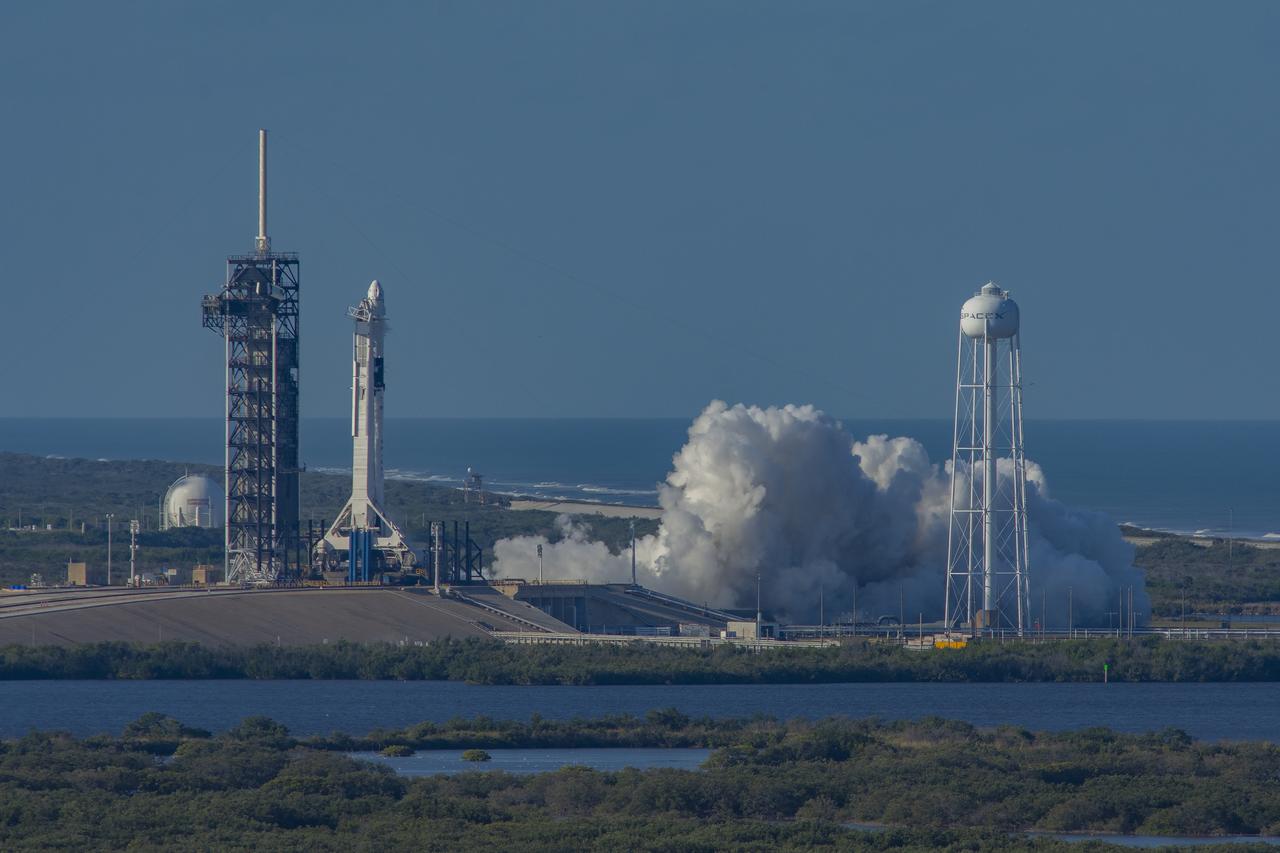
At NASA Kennedy Space Center’s Launch Complex 39A, the nine engines of a SpaceX Falcon 9 rocket roar to life in a brief static firing on Jan. 24, 2019. The test was part of checkouts prior to its liftoff for Demo-1, the inaugural flight of one of the spacecraft designed to take NASA astronauts to and from the International Space Station. NASA has worked with SpaceX and Boeing in developing Commercial Crew Program spacecraft to facilitate new human spaceflight systems launching from U.S. soil with the goal of safe, reliable and cost-effective access to low-Earth orbit destinations such as the space station.
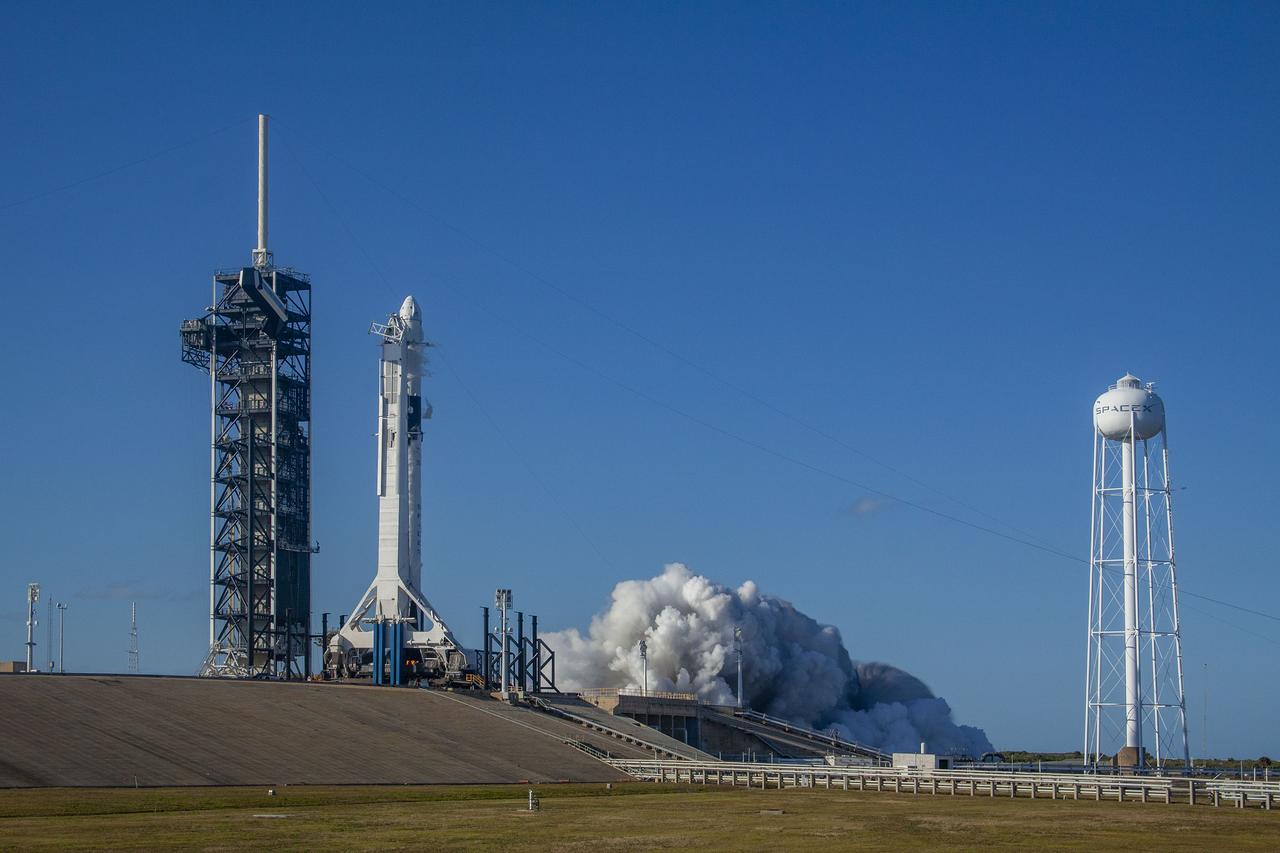
At NASA Kennedy Space Center’s Launch Complex 39A, the nine engines of a SpaceX Falcon 9 rocket roar to life in a brief static firing on Jan. 24, 2019. The test was part of checkouts prior to its liftoff for Demo-1, the inaugural flight of one of the spacecraft designed to take NASA astronauts to and from the International Space Station. NASA has worked with SpaceX and Boeing in developing Commercial Crew Program spacecraft to facilitate new human spaceflight systems launching from U.S. soil with the goal of safe, reliable and cost-effective access to low-Earth orbit destinations such as the space station.

A SpaceX Falcon 9 rocket with the company’s Crew Dragon attached, rolls out of the company’s hangar at NASA Kennedy Space Center’s Launch Complex 39A on Jan. 3, 2019. The rocket will undergo checkouts prior to the liftoff of Demo-1, the inaugural flight of one of the spacecraft designed to take NASA astronauts to and from the International Space Station. NASA has worked with SpaceX and Boeing in developing Commercial Crew Program spacecraft to facilitate new human spaceflight systems launching from U.S. soil with the goal of safe, reliable and cost-effective access to low-Earth orbit destinations such as the space station.
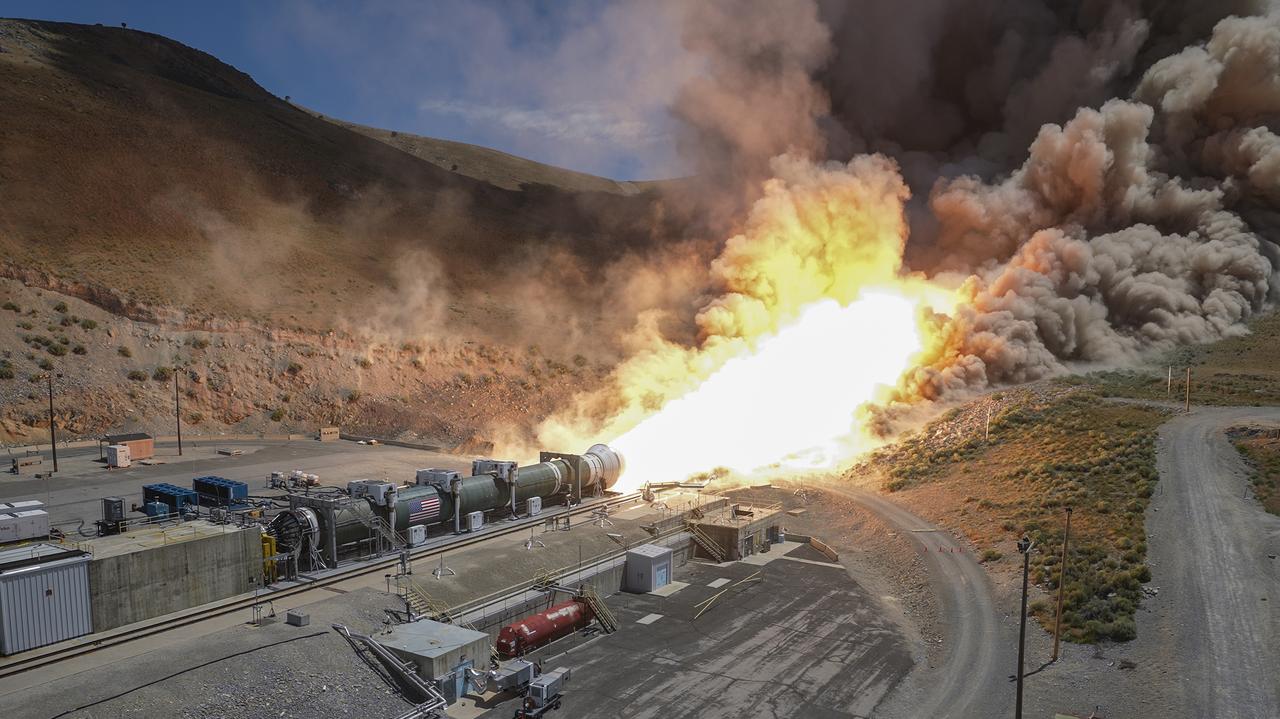
Teams from NASA and Northrop Grumman fire a ground-based version of a booster for the agency’s SLS (Space Launch System) rocket June 26. Secured horizontally in a test stand at Northrop Grumman’s test facility in Promontory, Utah, the single five-segment booster motor fired for more than two minutes and produced 3.9 million pounds of thrust. The booster for this test, known as Demonstration Motor-1 (DM-1), is the result of the Booster Obsolescence Life Extension (BOLE) project. This test was the first full-scale ground test of a new five-segment solid rocket motor. During the test, there was an abnormal event approximately 15 seconds before the end of the motor firing. Despite this event, NASA achieved several of the test’s primary objectives and received valuable data on technical risks identified ahead of the test. Testing this evolved booster for the SLS will help evaluate improvements and new materials in the boosters. The BOLE effort was launched to transition to a more efficient, lower cost commercial solution for the boosters for the SLS rocket. Through the Artemis campaign, NASA will send astronauts to explore the Moon for scientific discovery, economic benefits, and to build the foundation for the first crewed missions to Mars – for the benefit of all. For more information, contact NASA Marshall’s Office of Communications at 256-544-0034.
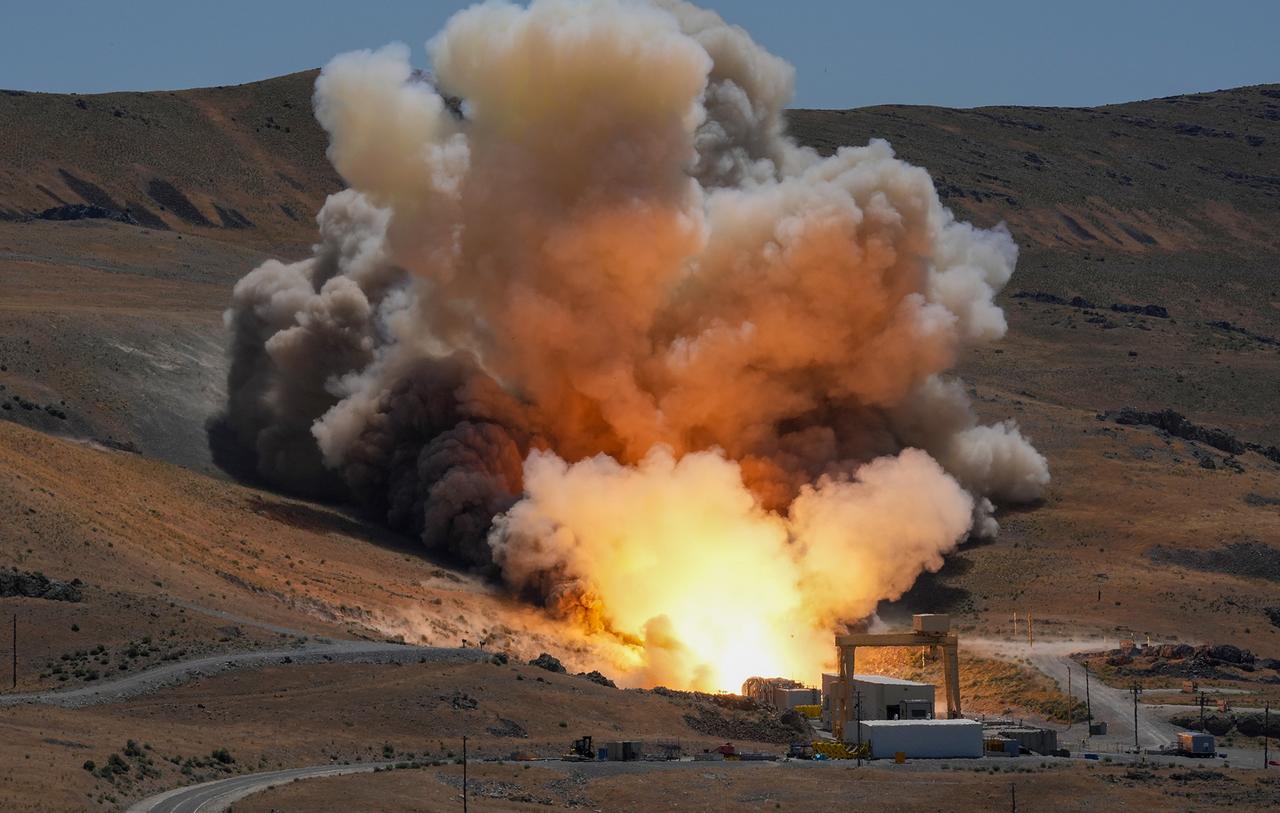
Teams from NASA and Northrop Grumman fire a ground-based version of a booster for the agency’s SLS (Space Launch System) rocket June 26. Secured horizontally in a test stand at Northrop Grumman’s test facility in Promontory, Utah, the single five-segment booster motor fired for more than two minutes and produced 3.9 million pounds of thrust. The booster for this test, known as Demonstration Motor-1 (DM-1), is the result of the Booster Obsolescence Life Extension (BOLE) project. This test was the first full-scale ground test of a new five-segment solid rocket motor. During the test, there was an abnormal event approximately 15 seconds before the end of the motor firing. Despite this event, NASA achieved several of the test’s primary objectives and received valuable data on technical risks identified ahead of the test. Testing this evolved booster for the SLS will help evaluate improvements and new materials in the boosters. The BOLE effort was launched to transition to a more efficient, lower cost commercial solution for the boosters for the SLS rocket. Through the Artemis campaign, NASA will send astronauts to explore the Moon for scientific discovery, economic benefits, and to build the foundation for the first crewed missions to Mars – for the benefit of all. For more information, contact NASA Marshall’s Office of Communications at 256-544-0034.
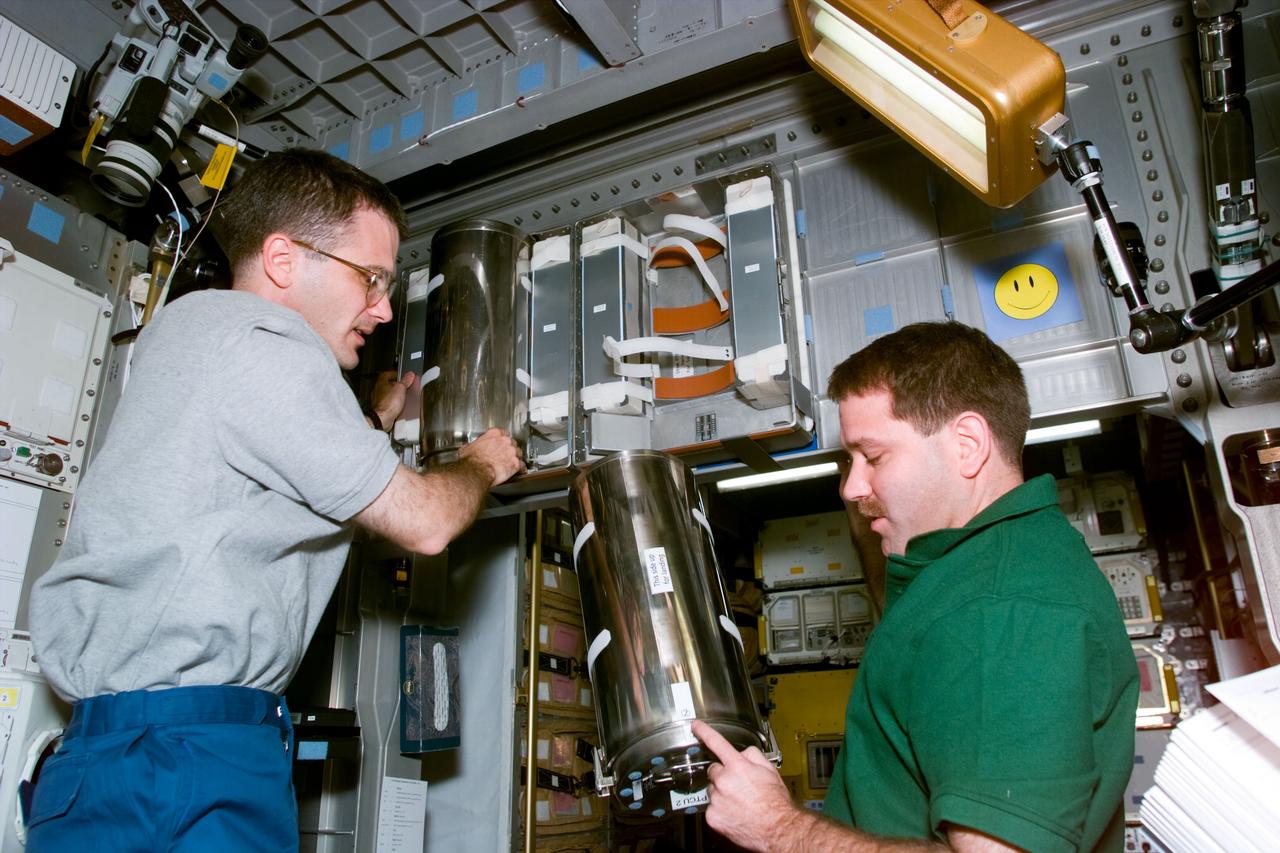
STS081-E-05094 (12 Jan. 1997) --- Astronauts Peter J. K. (Jeff) Wisoff (left) and John M. Grunsfeld, mission specialists, deploy two Passive Thermal Conditioning Units (PTCU) onboard the SPACEHAB Double Module (DM) late on Day 1 of the mission. The two units had been transported by the pair through the tunnel connecting SPACEHAB and the mid-deck of crew cabin of the Space Shuttle Atlantis. They are joined by four other NASA astronauts for the almost ten-day mission. The crew is scheduled to dock with Russia's Mir Space Station and pick up John E. Blaha, NASA astronaut who has been serving as a cosmonaut guest researcher since September 1996. Jerry M. Linenger (out of frame) will replace Blaha onboard Mir.
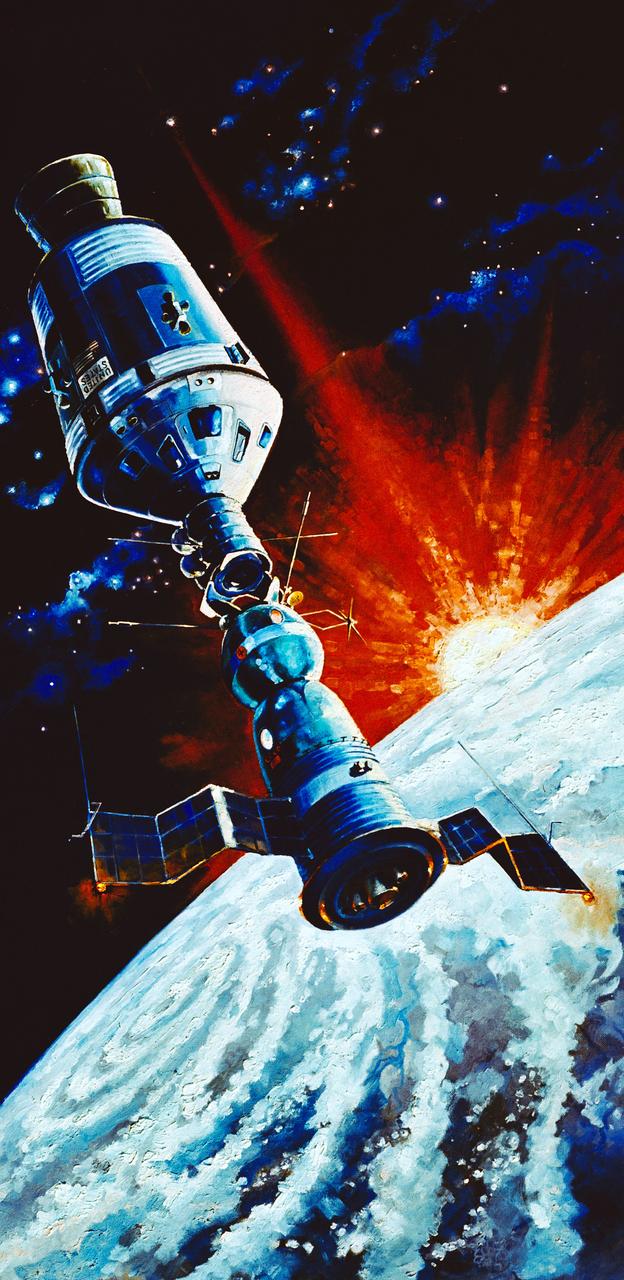
S75-25077 (May 1975) --- A photographic copy of a painting made by cosmonaut Aleksey A. Leonov, commander of the Soviet ASTP first (prime) crew. This symbolic artwork, representing a Soviet Soyuz spacecraft docking in Earth orbit with an American Apollo spacecraft, was finished in May 1974. The sketch for the painting was made in 1973 following the signing of the space agreement between the United Stated and the Soviet Union. Leonov said that his painting symbolizes the new type of international cooperation of working together in space. The original painting, which measures 80 centimeters by 160 centimeters (1 cm. = 0.39 in.), is on display in a museum in the city of Baku on the Caspian Sea. In making the sketch for the painting Leonov used a model of an earlier Soyuz spacecraft and a picture of an Apollo spacecraft. Later, he obtained a model of an Apollo which helped him check the configuration of the American spacecraft. The tanks on the Docking Module are no longer exposed on the current DM configuration, he noted. Also, this would not be an exact view of the sun as seen from Earth orbit. Leonov took artist license in stressing the symbolism in his artwork. The Soyuz is represented smaller in the painting than it actually is, Leonov added.