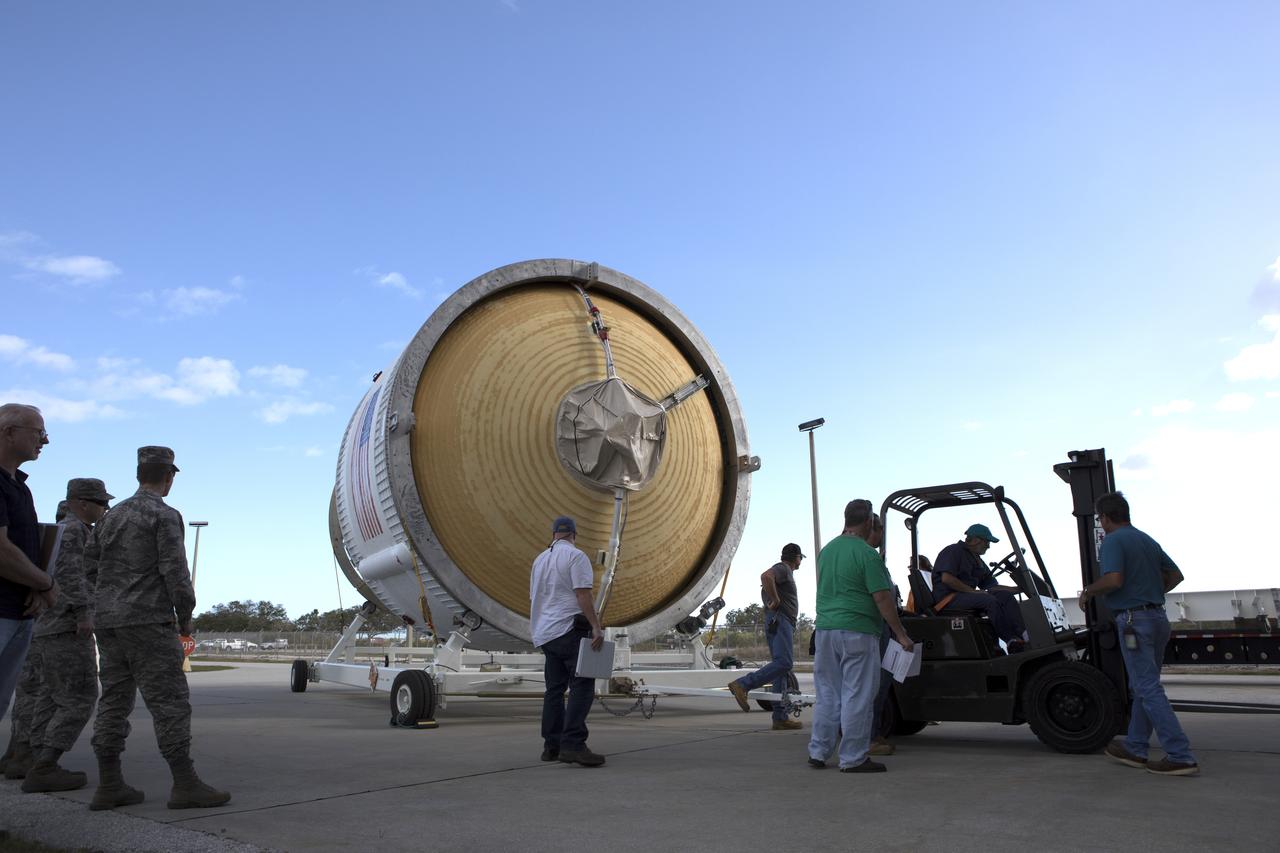
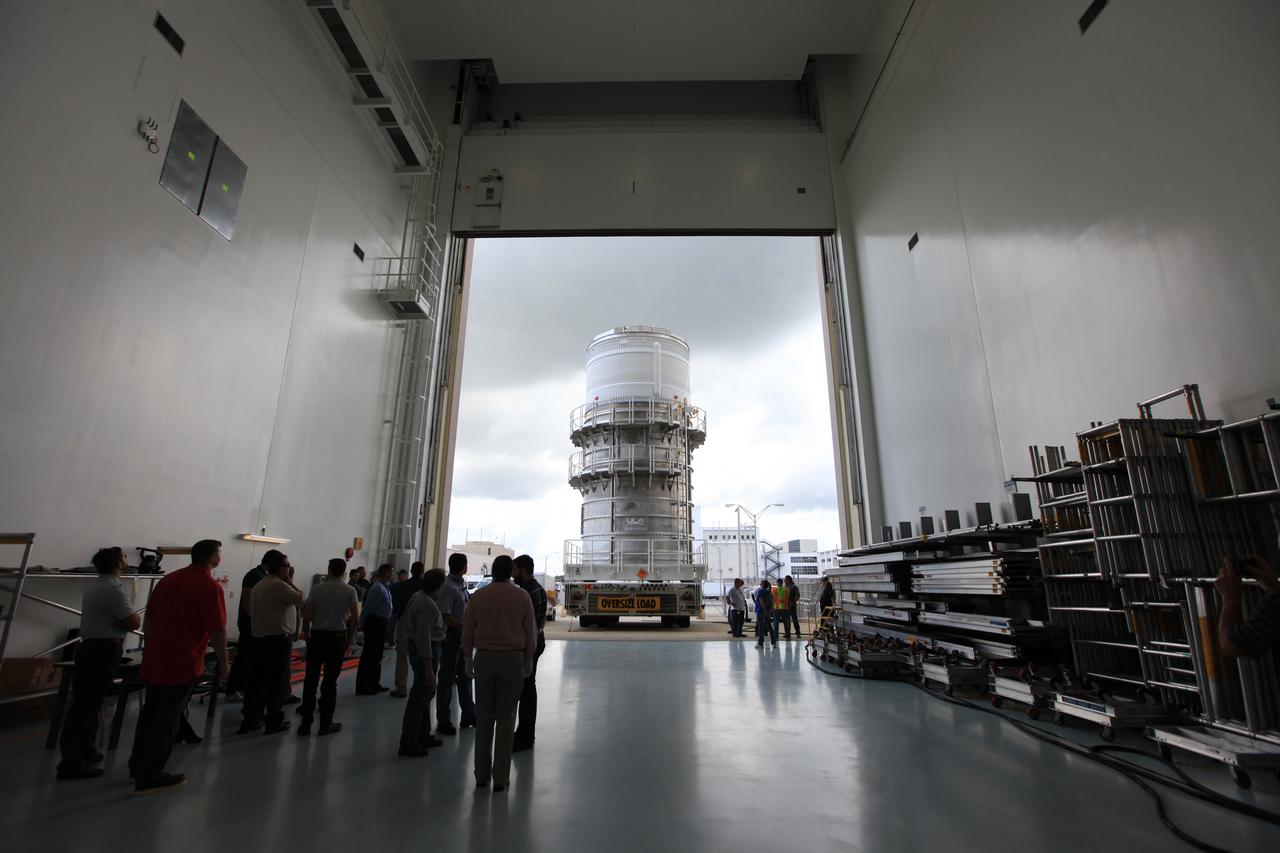
The Interim Cryogenic Propulsion Stage (ICPS) for NASA's Space Launch System rocket arrives at the Delta Operations Center at Cape Canaveral Air Force Station in Florida. The ICPS was moved from the United Launch Alliance (ULA) Horizontal Integration Facility near Space Launch Complex 37 at the Cape. The ICPS is the first integrated piece of flight hardware to arrive for the SLS. It is the in-space stage that is located toward the top of the rocket, between the Launch Vehicle Stage Adapter and the Orion Spacecraft Adapter. It will provide some of the in-space propulsion during Orion's first flight test atop the SLS on Exploration Mission-1.
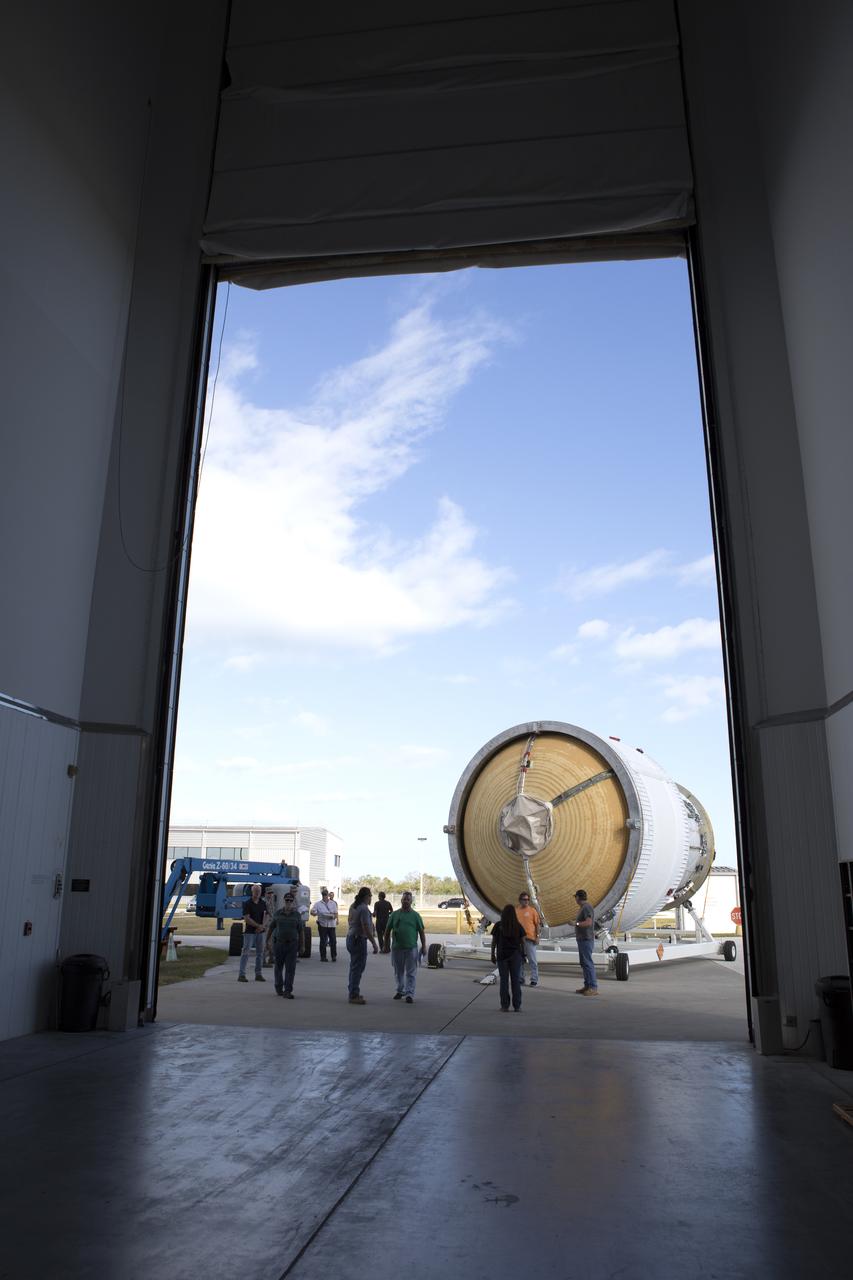
The Interim Cryogenic Propulsion Stage (ICPS) for NASA's Space Launch System rocket arrives at the Delta Operations Center at Cape Canaveral Air Force Station in Florida. The ICPS was moved from the United Launch Alliance (ULA) Horizontal Integration Facility near Space Launch Complex 37 at the Cape. The ICPS is the first integrated piece of flight hardware to arrive for the SLS. It is the in-space stage that is located toward the top of the rocket, between the Launch Vehicle Stage Adapter and the Orion Spacecraft Adapter. It will provide some of the in-space propulsion during Orion's first flight test atop the SLS on Exploration Mission-1.
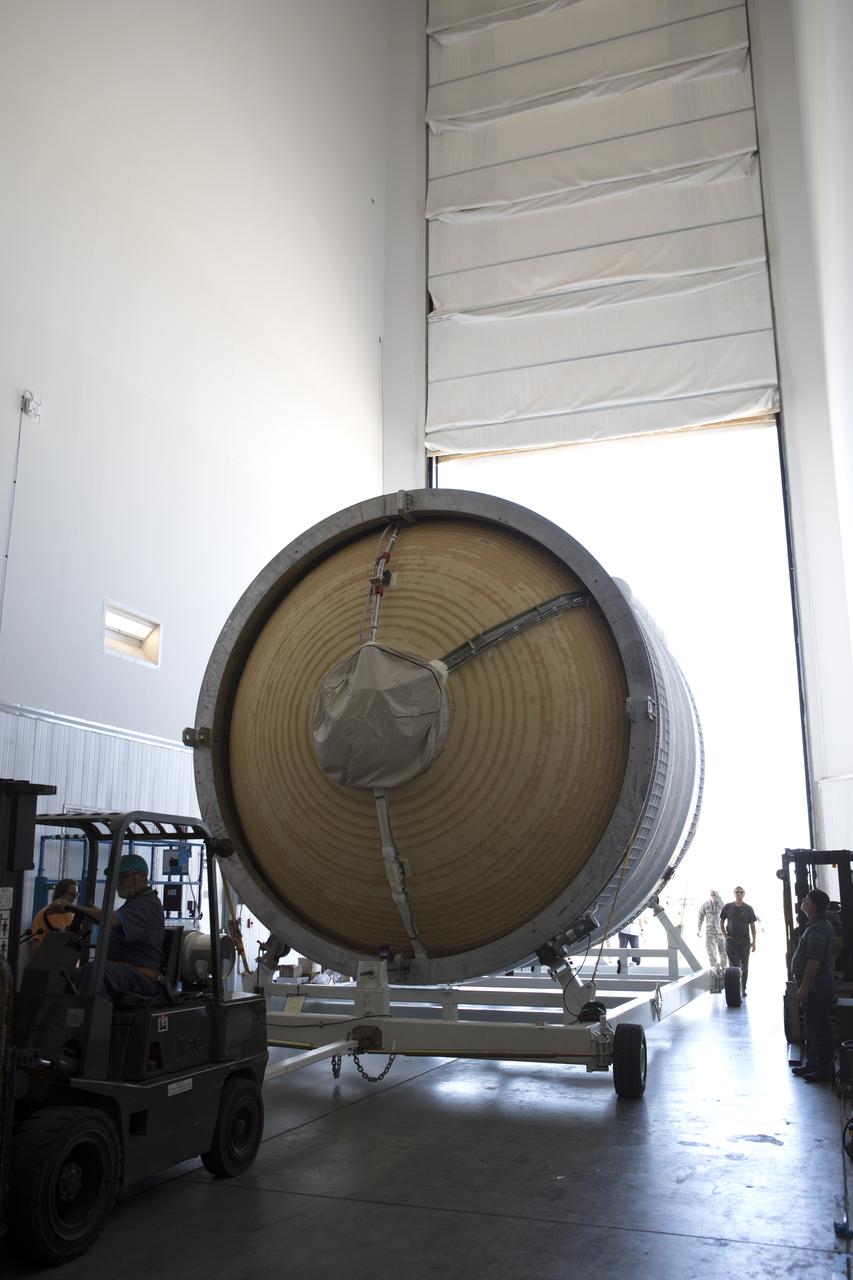
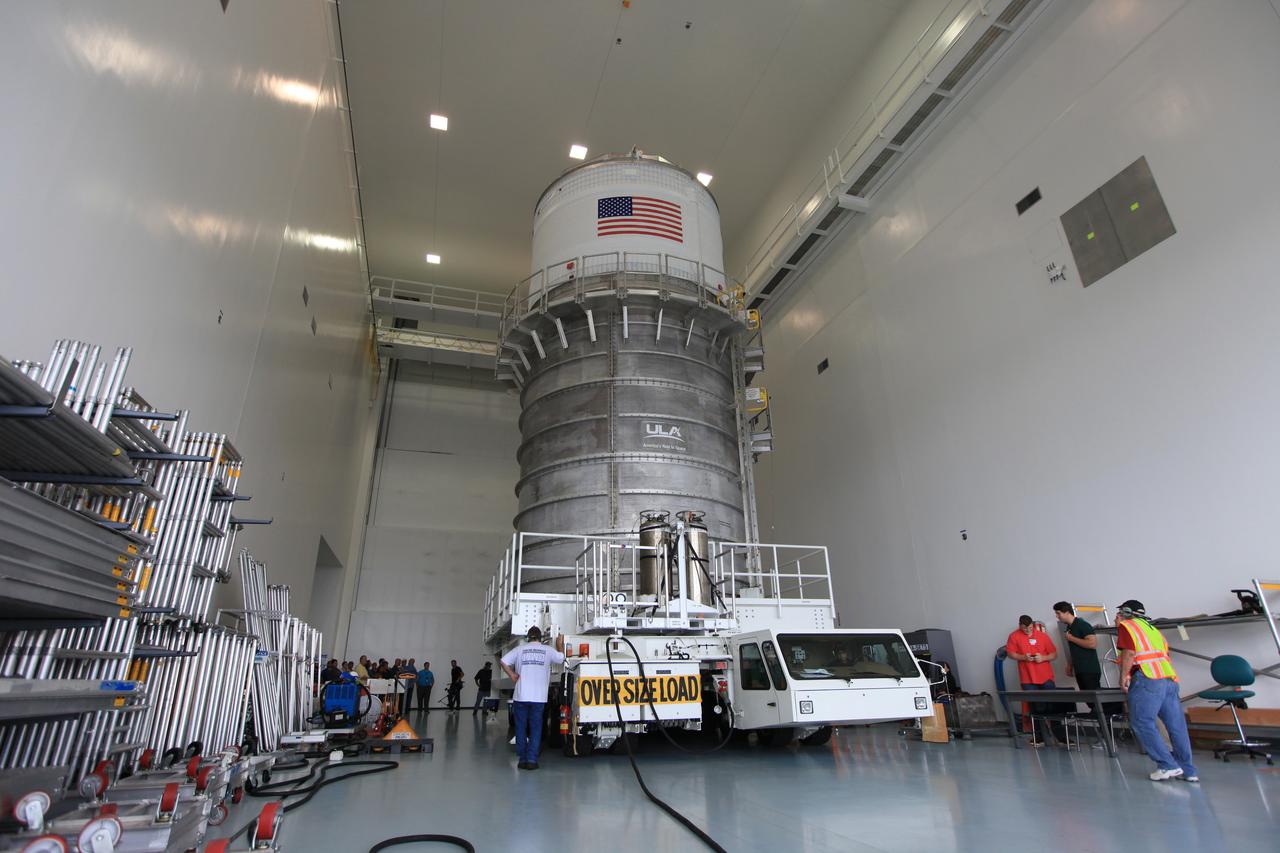
The Interim Cryogenic Propulsion Stage (ICPS) for NASA's Space Launch System rocket is moved inside the Delta Operations Center at Cape Canaveral Air Force Station in Florida. The ICPS was moved from the United Launch Alliance (ULA) Horizontal Integration Facility near Space Launch Complex 37 at the Cape. The ICPS is the first integrated piece of flight hardware to arrive for the SLS. It is the in-space stage that is located toward the top of the rocket, between the Launch Vehicle Stage Adapter and the Orion Spacecraft Adapter. It will provide some of the in-space propulsion during Orion's first flight test atop the SLS on Exploration Mission-1.
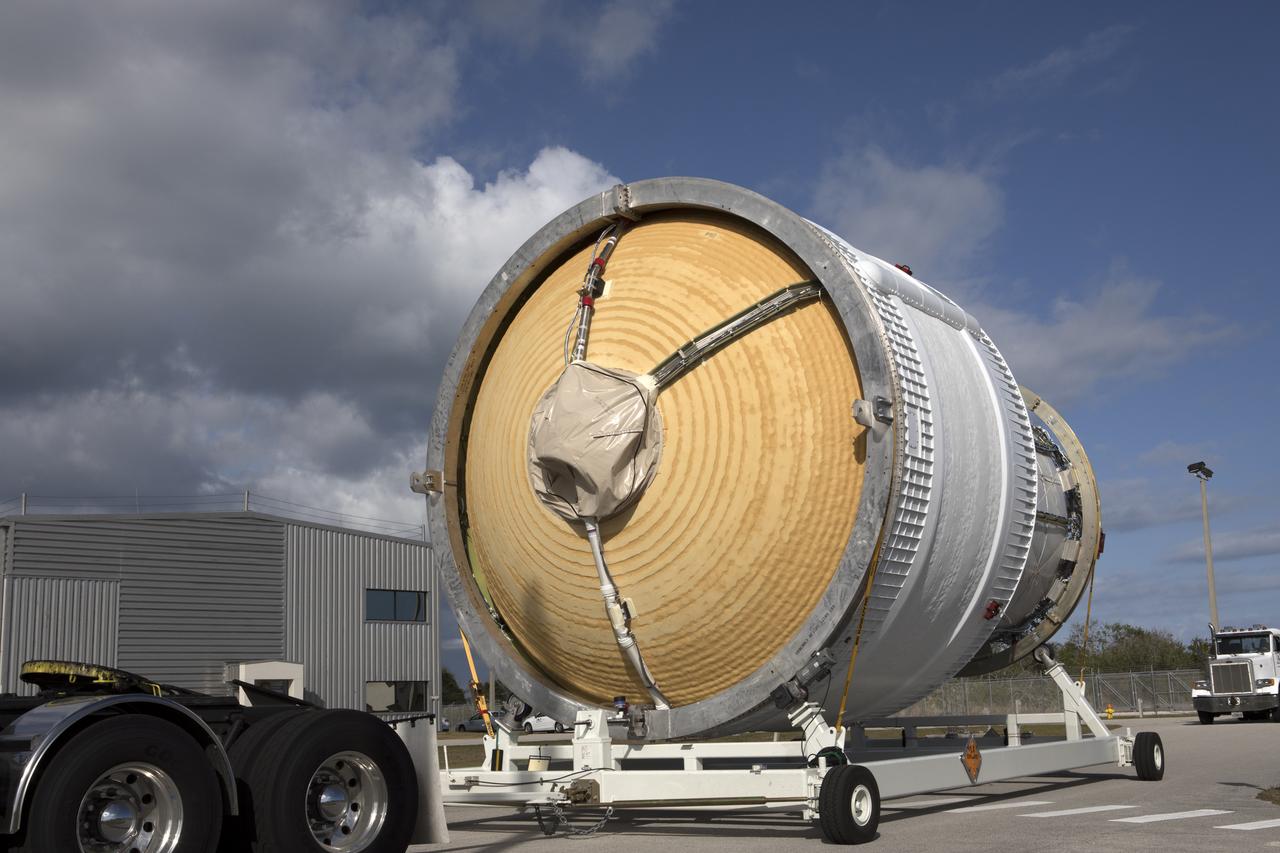
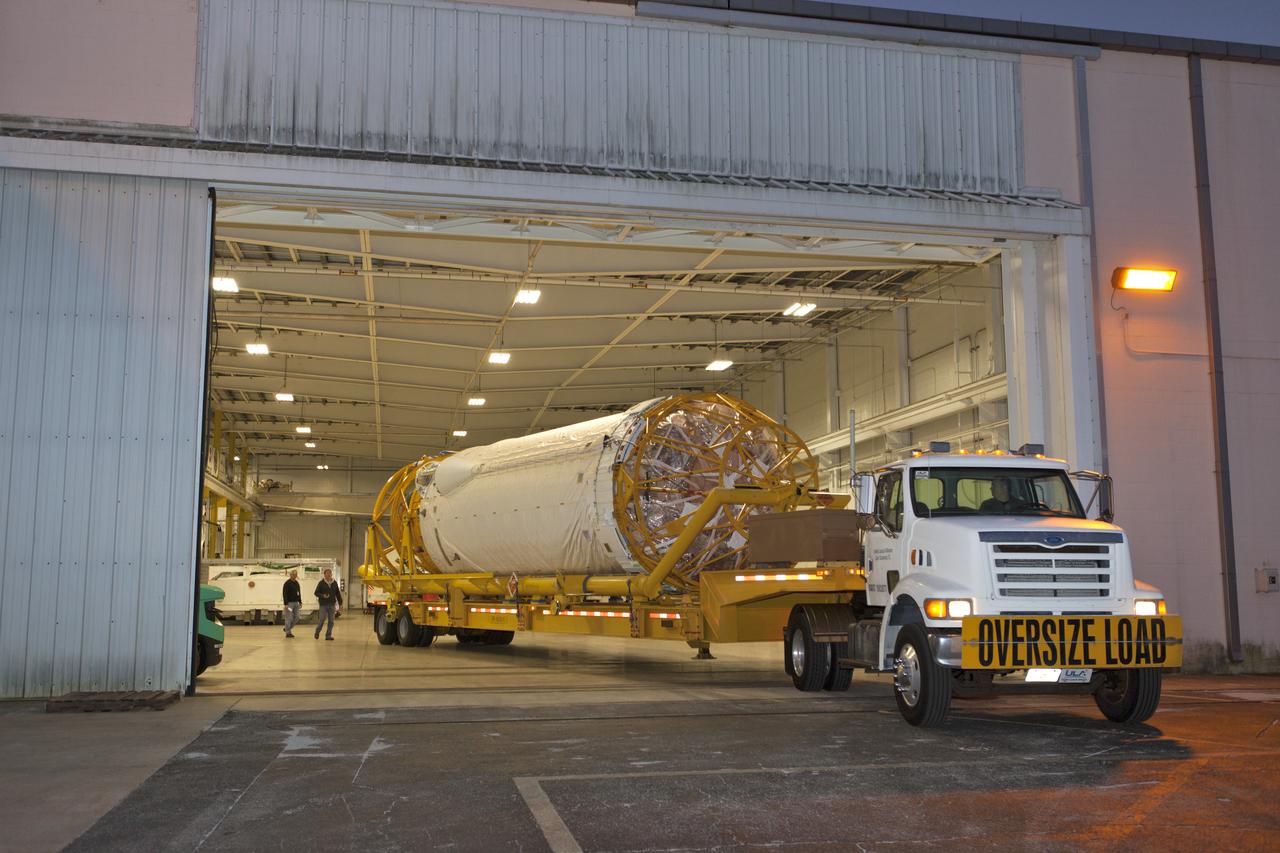
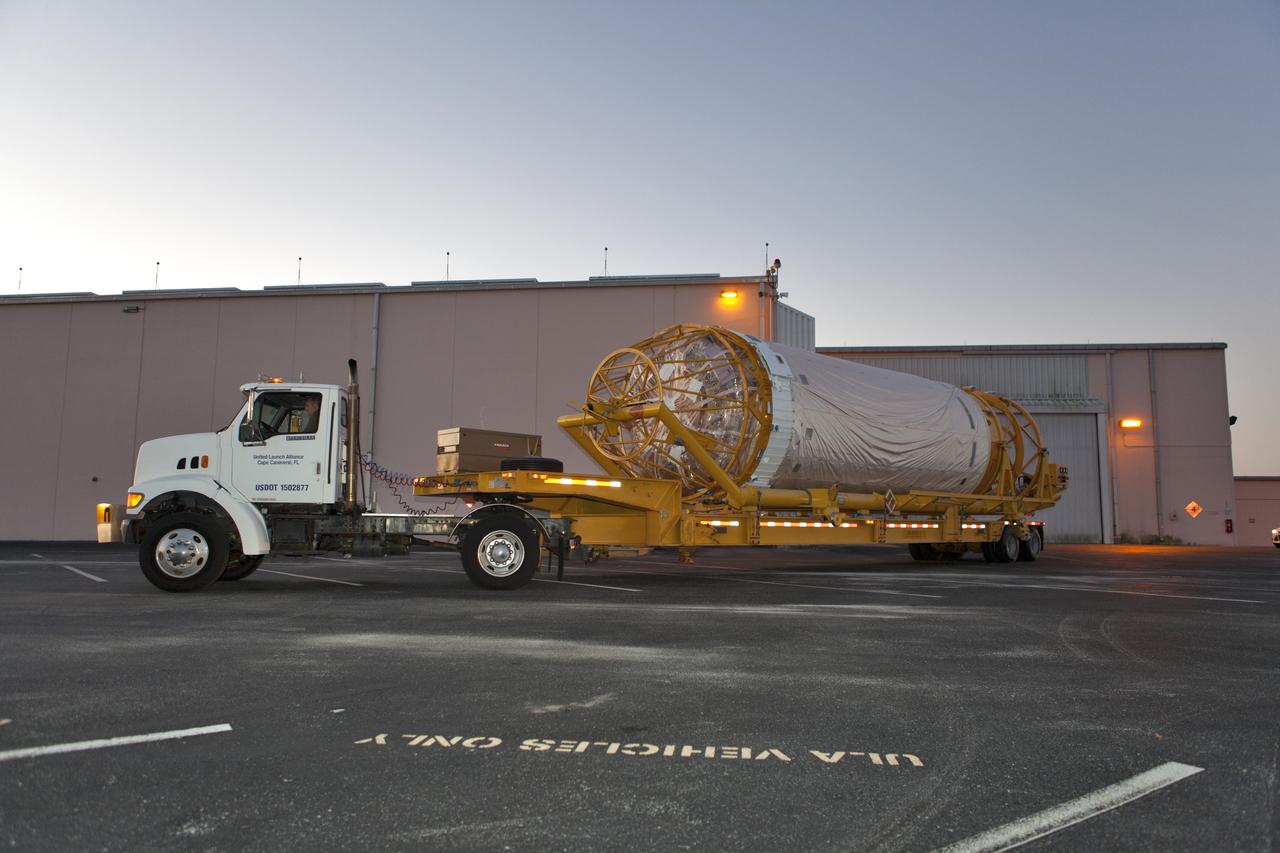
The Interim Cryogenic Propulsion Stage (ICPS) for NASA's Space Launch System (SLS) rocket has been moved on its transport stand by truck out of the United Launch Alliance (ULA) Horizontal Integration Facility near Space Launch Complex 37 at Cape Canaveral Air Force Station in Florida, and is on its way to the Delta Operations Center. The ICPS is the first integrated piece of flight hardware to arrive for the SLS. It is the in-space stage that is located toward the top of the rocket, between the Launch Vehicle Stage Adapter and the Orion Spacecraft Adapter. It will provide some of the in-space propulsion during Orion's first flight test atop the SLS on Exploration Mission 1.
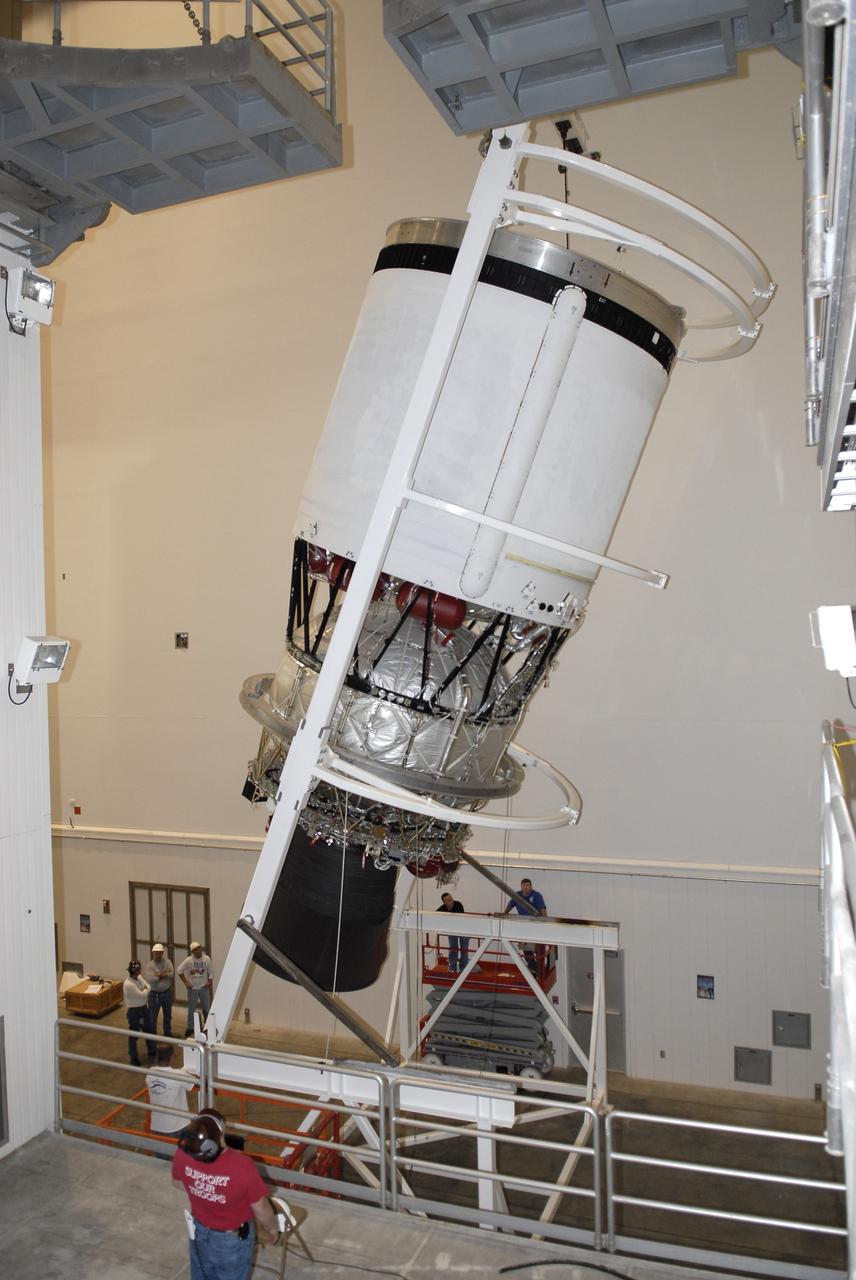
CAPE CANAVERAL, Fla. – In the hangar of the Delta Operations Center at Cape Canaveral Air Force Station in Florida, workers rotate the second stage of a Delta IV rocket into a horizontal position with the aid of a turnover stand following the completion of nozzle extension deployment system testing in the hangar's test cell. The United Launch Alliance Delta IV rocket is slated to launch GOES-P, the latest Geostationary Operational Environmental Satellite developed by NASA for the National Oceanic and Atmospheric Administration, or NOAA. Next, the second stage will be transported to the Horizontal Integration Facility where it will be inspected and prepared for mating with the Delta IV rocket's first stage. GOES-P, a meteorological satellite, is designed to watch for storm development and observed current weather conditions on Earth. Launch of GOES-P is scheduled for no earlier than Feb. 25, 2010, from Launch Complex 37. For information on GOES-P, visit http://goespoes.gsfc.nasa.gov/goes/spacecraft/n_p_spacecraft.html. Photo credit: NASA/Glenn Benson
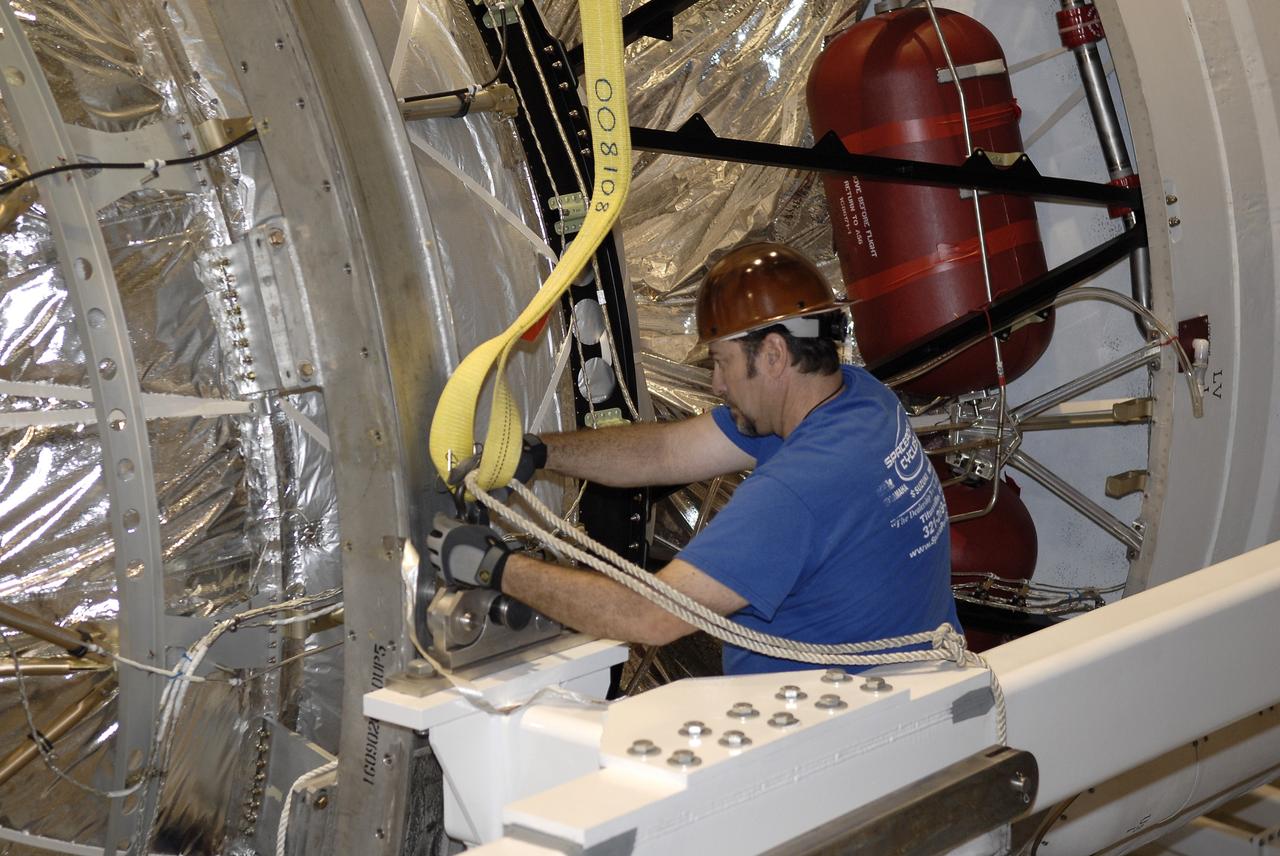
CAPE CANAVERAL, Fla. – In the hangar of the Delta Operations Center at Cape Canaveral Air Force Station in Florida, a worker secures the second stage of a Delta IV rocket to a device that will lift it from a turnover stand following the completion of nozzle extension deployment system testing in the hangar's test cell. The United Launch Alliance Delta IV rocket is slated to launch GOES-P, the latest Geostationary Operational Environmental Satellite developed by NASA for the National Oceanic and Atmospheric Administration, or NOAA. Next, the second stage will be transported to the Horizontal Integration Facility where it will be inspected and prepared for mating with the Delta IV rocket's first stage. GOES-P, a meteorological satellite, is designed to watch for storm development and observed current weather conditions on Earth. Launch of GOES-P is scheduled for no earlier than Feb. 25, 2010, from Launch Complex 37. For information on GOES-P, visit http://goespoes.gsfc.nasa.gov/goes/spacecraft/n_p_spacecraft.html. Photo credit: NASA/Glenn Benson
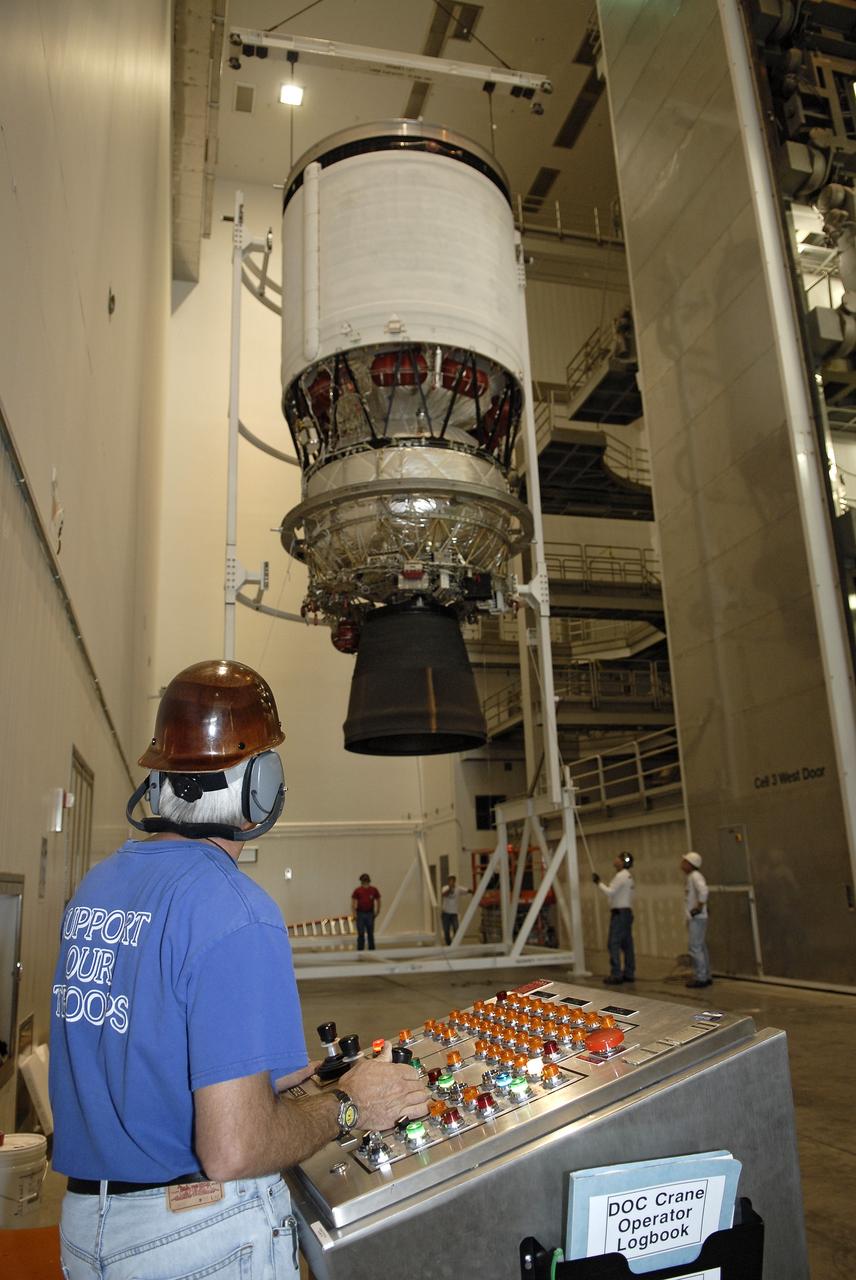
CAPE CANAVERAL, Fla. – Workers move the second stage of a Delta IV rocket from a test cell in the hangar of the Delta Operations Center at Cape Canaveral Air Force Station in Florida into a turnover stand following the completion of nozzle extension deployment system testing. The United Launch Alliance Delta IV rocket is slated to launch GOES-P, the latest Geostationary Operational Environmental Satellite developed by NASA for the National Oceanic and Atmospheric Administration, or NOAA. Next, the second stage will be transported to the Horizontal Integration Facility where it will be inspected and prepared for mating with the Delta IV rocket's first stage. GOES-P, a meteorological satellite, is designed to watch for storm development and observed current weather conditions on Earth. Launch of GOES-P is scheduled for no earlier than Feb. 25, 2010, from Launch Complex 37. For information on GOES-P, visit http://goespoes.gsfc.nasa.gov/goes/spacecraft/n_p_spacecraft.html. Photo credit: NASA/Glenn Benson
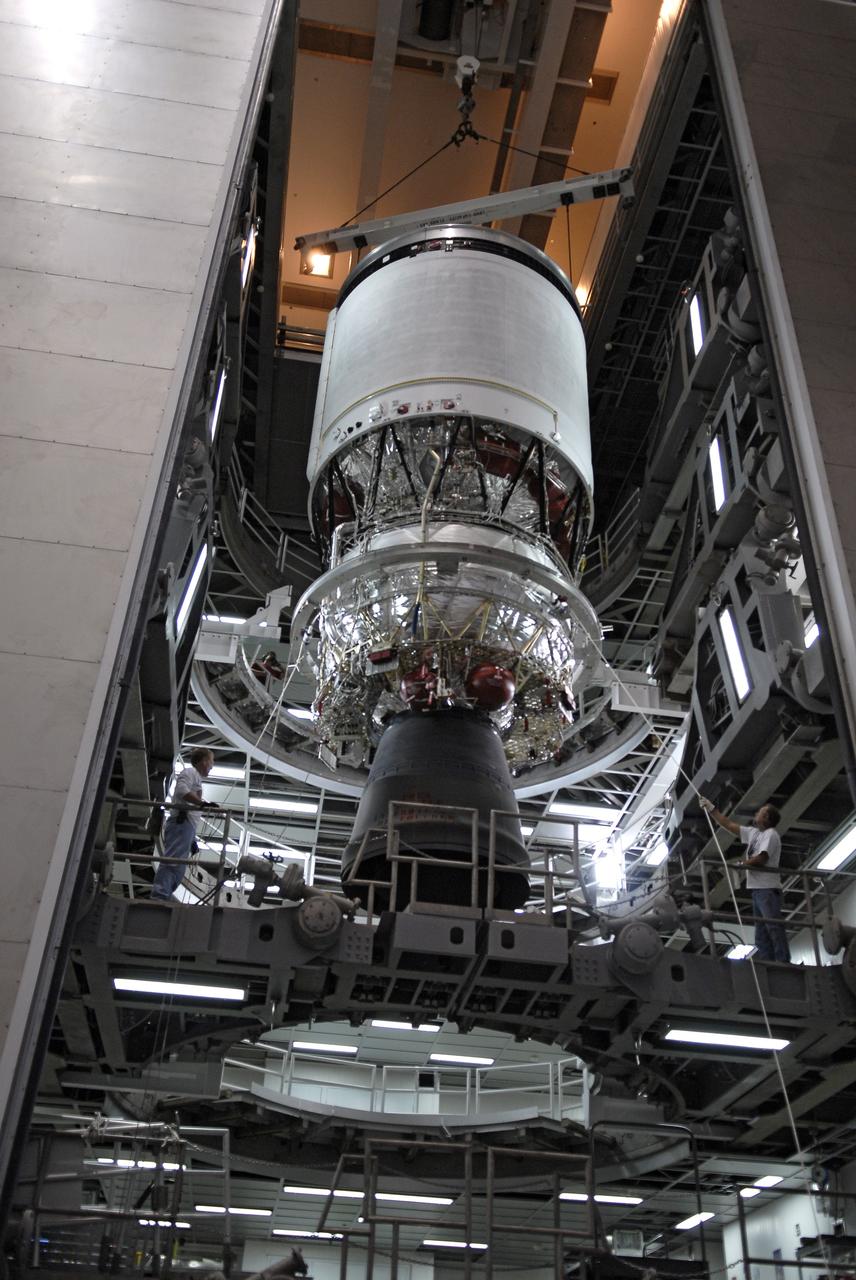
CAPE CANAVERAL, Fla. – Workers prepare to lower the second stage of a Delta IV rocket from a test cell in the hangar of the Delta Operations Center at Cape Canaveral Air Force Station in Florida into a turnover stand following the completion of nozzle extension deployment system testing. The United Launch Alliance Delta IV rocket is slated to launch GOES-P, the latest Geostationary Operational Environmental Satellite developed by NASA for the National Oceanic and Atmospheric Administration, or NOAA. Next, the second stage will be transported to the Horizontal Integration Facility where it will be inspected and prepared for mating with the Delta IV rocket's first stage. GOES-P, a meteorological satellite, is designed to watch for storm development and observed current weather conditions on Earth. Launch of GOES-P is scheduled for no earlier than Feb. 25, 2010, from Launch Complex 37. For information on GOES-P, visit http://goespoes.gsfc.nasa.gov/goes/spacecraft/n_p_spacecraft.html. Photo credit: NASA/Glenn Benson
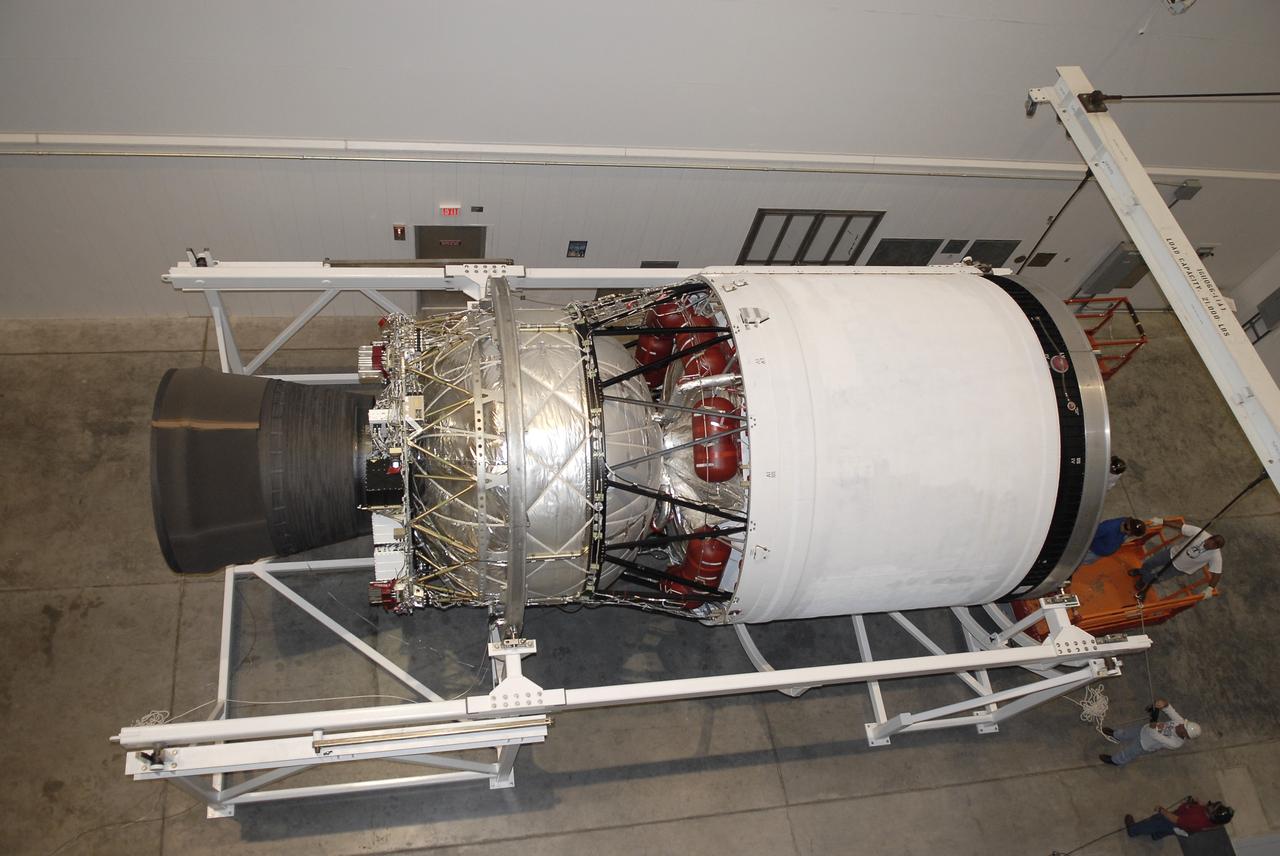
CAPE CANAVERAL, Fla. – In the hangar of the Delta Operations Center at Cape Canaveral Air Force Station in Florida, the second stage of a Delta IV rocket has been rotated to a horizontal position with the aid of a turnover stand following the completion of nozzle extension deployment system testing in the hangar's test cell. The United Launch Alliance Delta IV rocket is slated to launch GOES-P, the latest Geostationary Operational Environmental Satellite developed by NASA for the National Oceanic and Atmospheric Administration, or NOAA. Next, the second stage will be transported to the Horizontal Integration Facility where it will be inspected and prepared for mating with the Delta IV rocket's first stage. GOES-P, a meteorological satellite, is designed to watch for storm development and observed current weather conditions on Earth. Launch of GOES-P is scheduled for no earlier than Feb. 25, 2010, from Launch Complex 37. For information on GOES-P, visit http://goespoes.gsfc.nasa.gov/goes/spacecraft/n_p_spacecraft.html. Photo credit: NASA/Glenn Benson
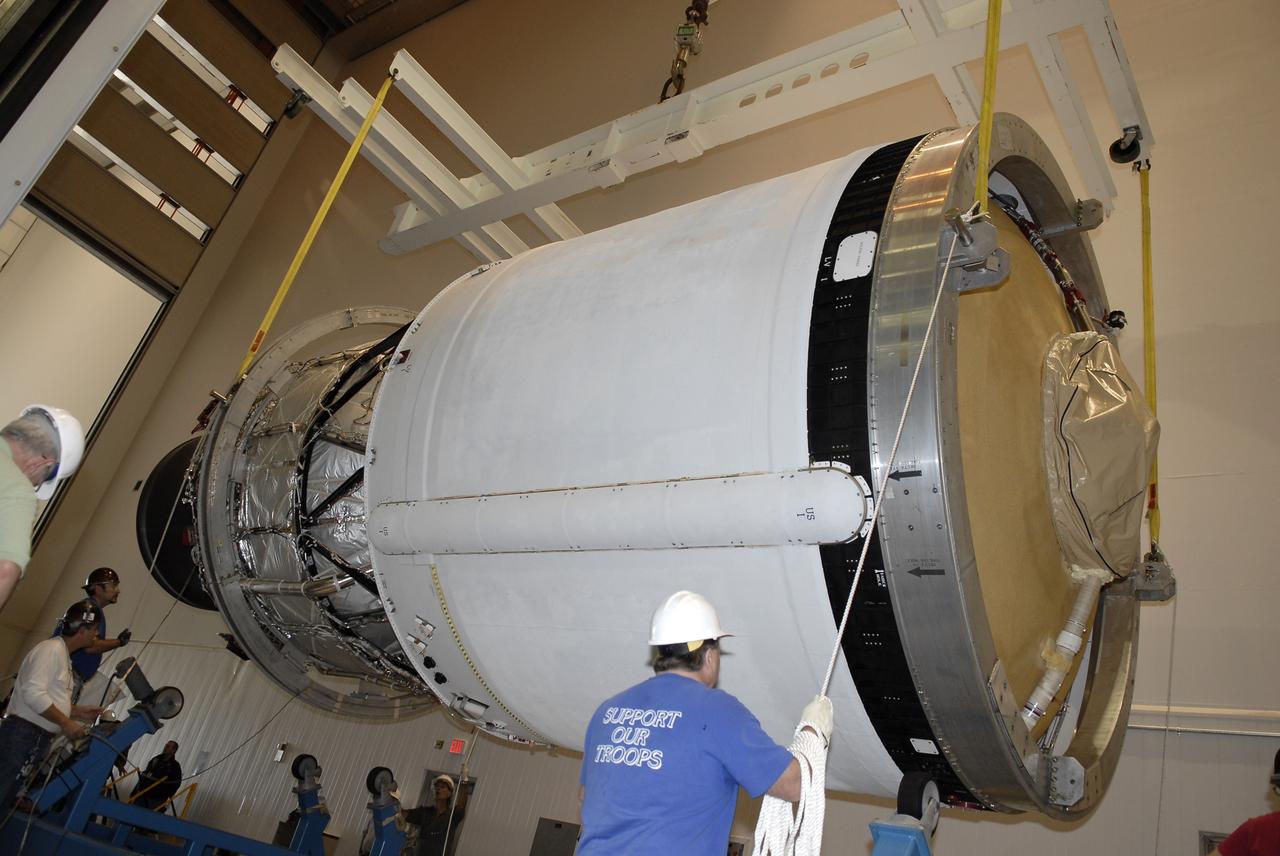
CAPE CANAVERAL, Fla. – In the hangar of the Delta Operations Center at Cape Canaveral Air Force Station in Florida, workers lower the second stage of a Delta IV rocket onto a transporter following the completion of nozzle extension deployment system testing in the hangar's test cell. The United Launch Alliance Delta IV rocket is slated to launch GOES-P, the latest Geostationary Operational Environmental Satellite developed by NASA for the National Oceanic and Atmospheric Administration, or NOAA. Next, the second stage will be transported to the Horizontal Integration Facility where it will be inspected and prepared for mating with the Delta IV rocket's first stage. GOES-P, a meteorological satellite, is designed to watch for storm development and observed current weather conditions on Earth. Launch of GOES-P is scheduled for no earlier than Feb. 25, 2010, from Launch Complex 37. For information on GOES-P, visit http://goespoes.gsfc.nasa.gov/goes/spacecraft/n_p_spacecraft.html. Photo credit: NASA/Glenn Benson
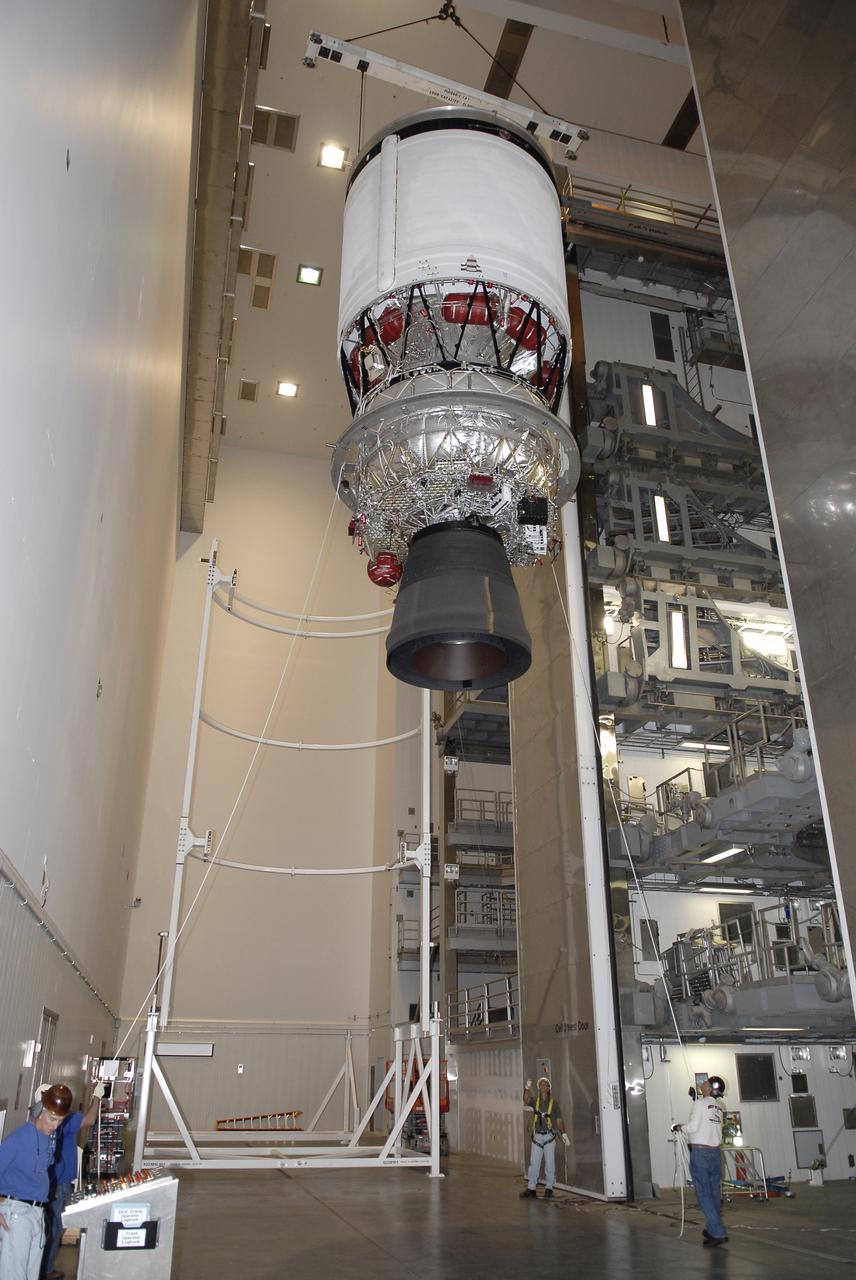
CAPE CANAVERAL, Fla. – Workers lower the second stage of a Delta IV rocket from a test cell in the hangar of the Delta Operations Center at Cape Canaveral Air Force Station in Florida toward a turnover stand following the completion of nozzle extension deployment system testing. The United Launch Alliance Delta IV rocket is slated to launch GOES-P, the latest Geostationary Operational Environmental Satellite developed by NASA for the National Oceanic and Atmospheric Administration, or NOAA. Next, the second stage will be transported to the Horizontal Integration Facility where it will be inspected and prepared for mating with the Delta IV rocket's first stage. GOES-P, a meteorological satellite, is designed to watch for storm development and observed current weather conditions on Earth. Launch of GOES-P is scheduled for no earlier than Feb. 25, 2010, from Launch Complex 37. For information on GOES-P, visit http:__goespoes.gsfc.nasa.gov_goes_spacecraft_n_p_spacecraft.html. Photo credit: NASA_Glenn Benson
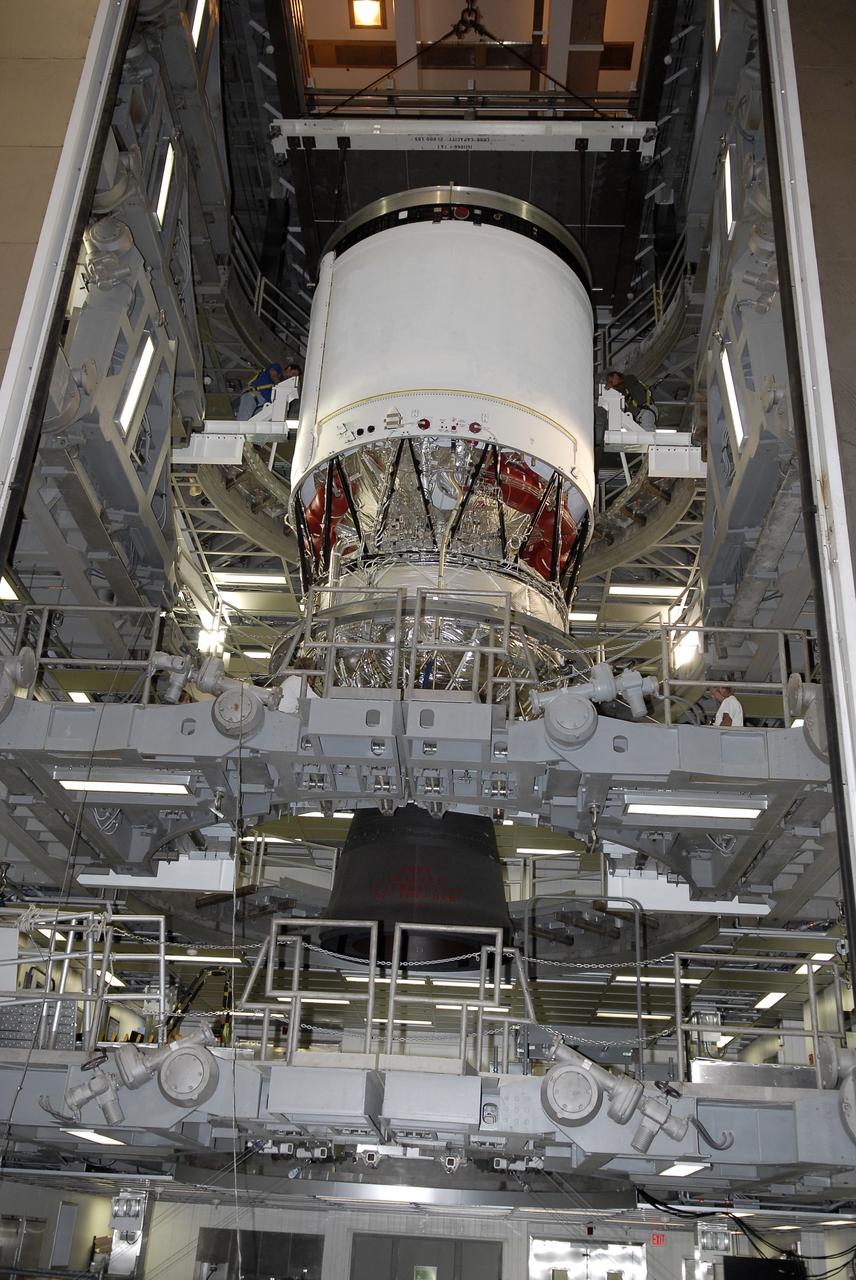
CAPE CANAVERAL, Fla. – Nozzle extension deployment system testing on the second stage of a Delta IV rocket has been completed in a test cell in the hangar of the Delta Operations Center at Cape Canaveral Air Force Station in Florida. The United Launch Alliance Delta IV rocket is slated to launch GOES-P, the latest Geostationary Operational Environmental Satellite developed by NASA for the National Oceanic and Atmospheric Administration, or NOAA. Next, the second stage will be transported to the Horizontal Integration Facility where it will be inspected and prepared for mating with the Delta IV rocket's first stage. GOES-P, a meteorological satellite, is designed to watch for storm development and observed current weather conditions on Earth. Launch of GOES-P is scheduled for no earlier than Feb. 25, 2010, from Launch Complex 37. For information on GOES-P, visit http://goespoes.gsfc.nasa.gov/goes/spacecraft/n_p_spacecraft.html. Photo credit: NASA/Glenn Benson
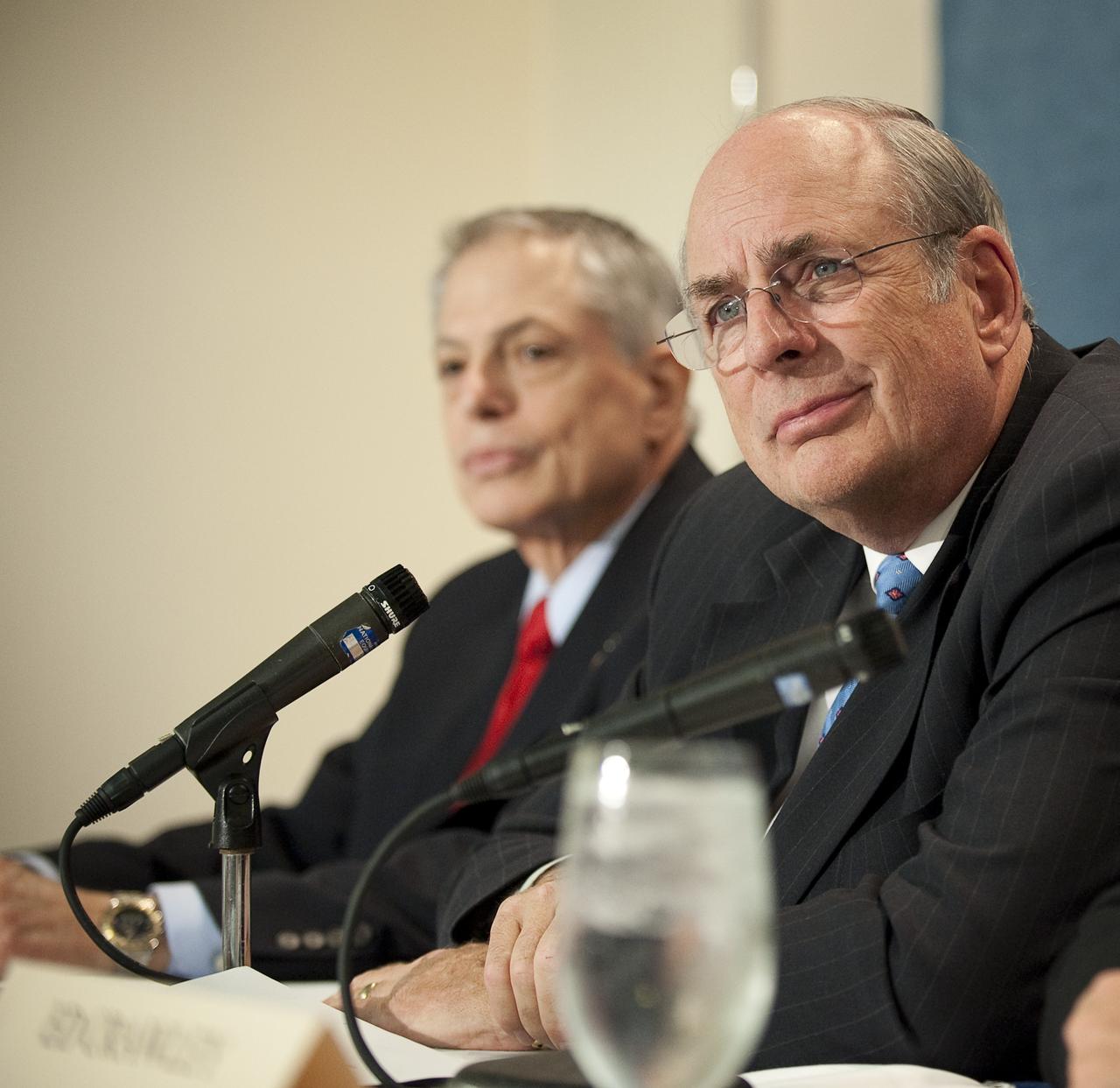
NASA Public Affairs Officer Doc Mirelson, left, and Chairman of the U.S. Human Space Flight Plans Committee Norman Augustine, right, listen to reporters questions during a press conference where the committee released it's report on Thursday, Oct., 22, 2009 at the National Press Club in Washington. The Obama Administration tasked the committee to do an independent review of planned U.S. human space flight activities with the goal of ensuring that the nation is on a vigorous and sustainable path to achieving its boldest aspirations in space. Photo Credit: (NASA/Bill Ingalls)
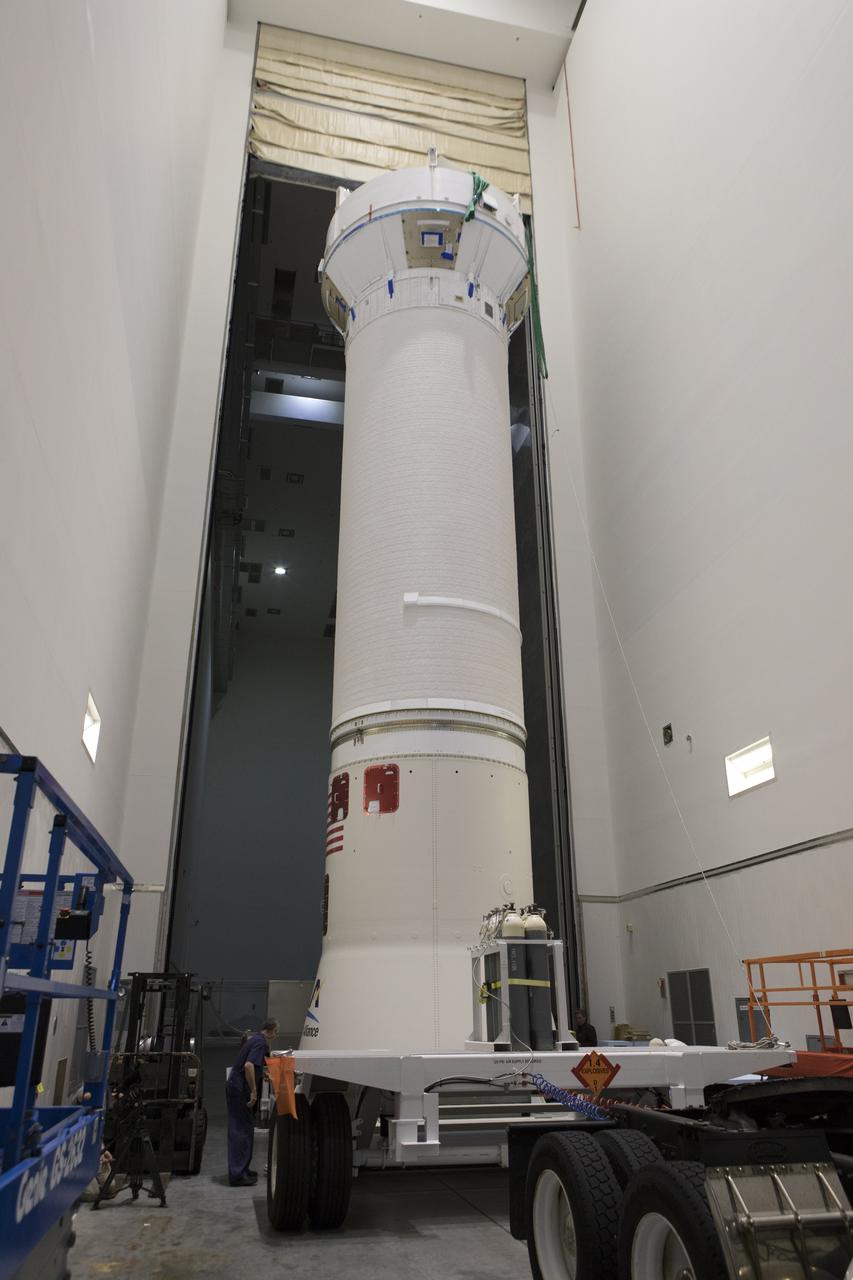
A United Launch Alliance Atlas V Centaur upper stage is prepared to leave the Delta Operations Center aboard a transport trailer for delivery to the Vertical Integration Facility at Space Launch Complex 41 at Cape Canaveral Air Force Station in Florida. The rocket is scheduled to help launch the Tracking and Data Relay Satellite, TDRS-M. It will be the latest spacecraft destined for the agency's constellation of communications satellites that allows nearly continuous contact with orbiting spacecraft ranging from the International Space Station and Hubble Space Telescope to the array of scientific observatories. Liftoff atop the ULA Atlas V rocket is scheduled to take place from Cape Canaveral's Space Launch Complex 41 in early August.
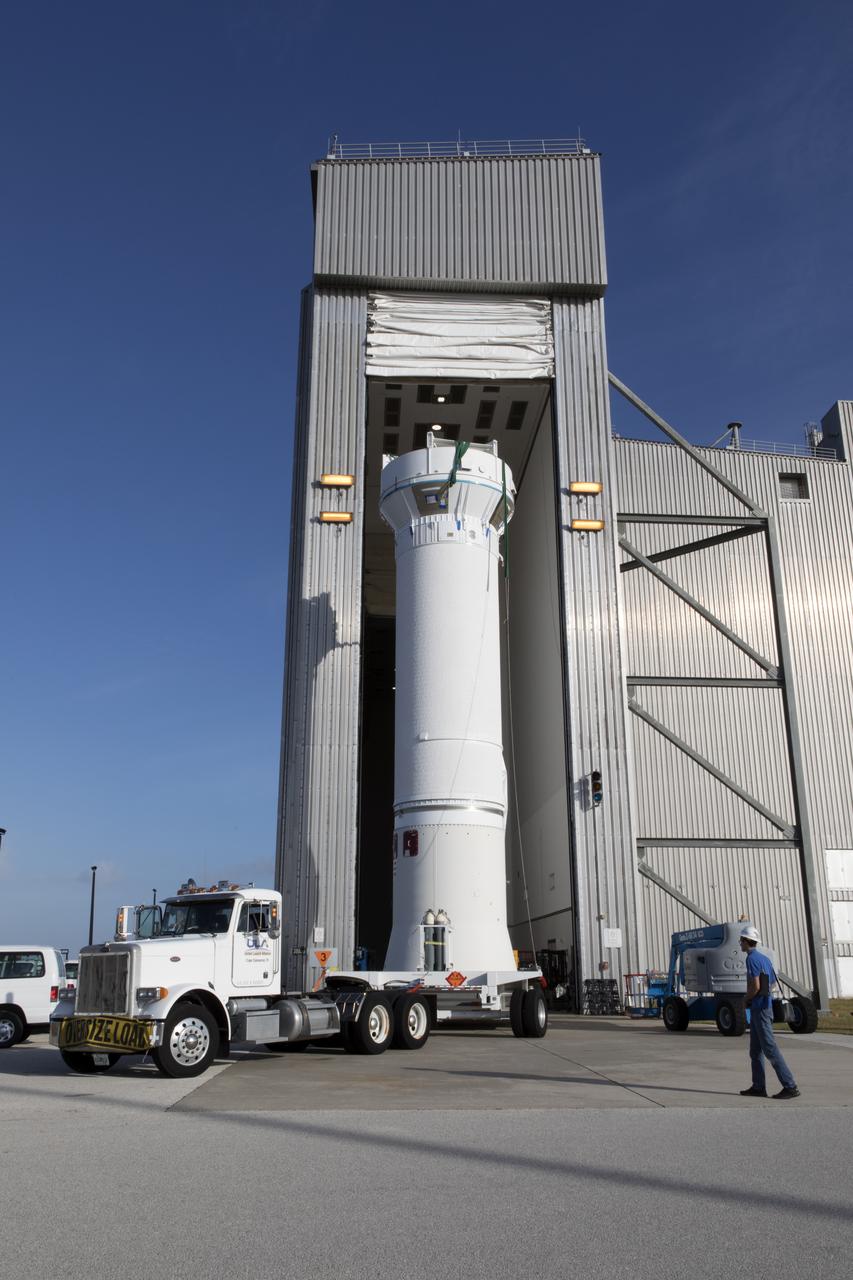
A United Launch Alliance Atlas V Centaur upper stage leaves the Delta Operations Center aboard a transport trailer for delivery to the Vertical Integration Facility at Space Launch Complex 41 at Cape Canaveral Air Force Station in Florida. The rocket is scheduled to help launch the Tracking and Data Relay Satellite, TDRS-M. It will be the latest spacecraft destined for the agency's constellation of communications satellites that allows nearly continuous contact with orbiting spacecraft ranging from the International Space Station and Hubble Space Telescope to the array of scientific observatories. Liftoff atop the ULA Atlas V rocket is scheduled to take place from Cape Canaveral's Space Launch Complex 41 in early August.
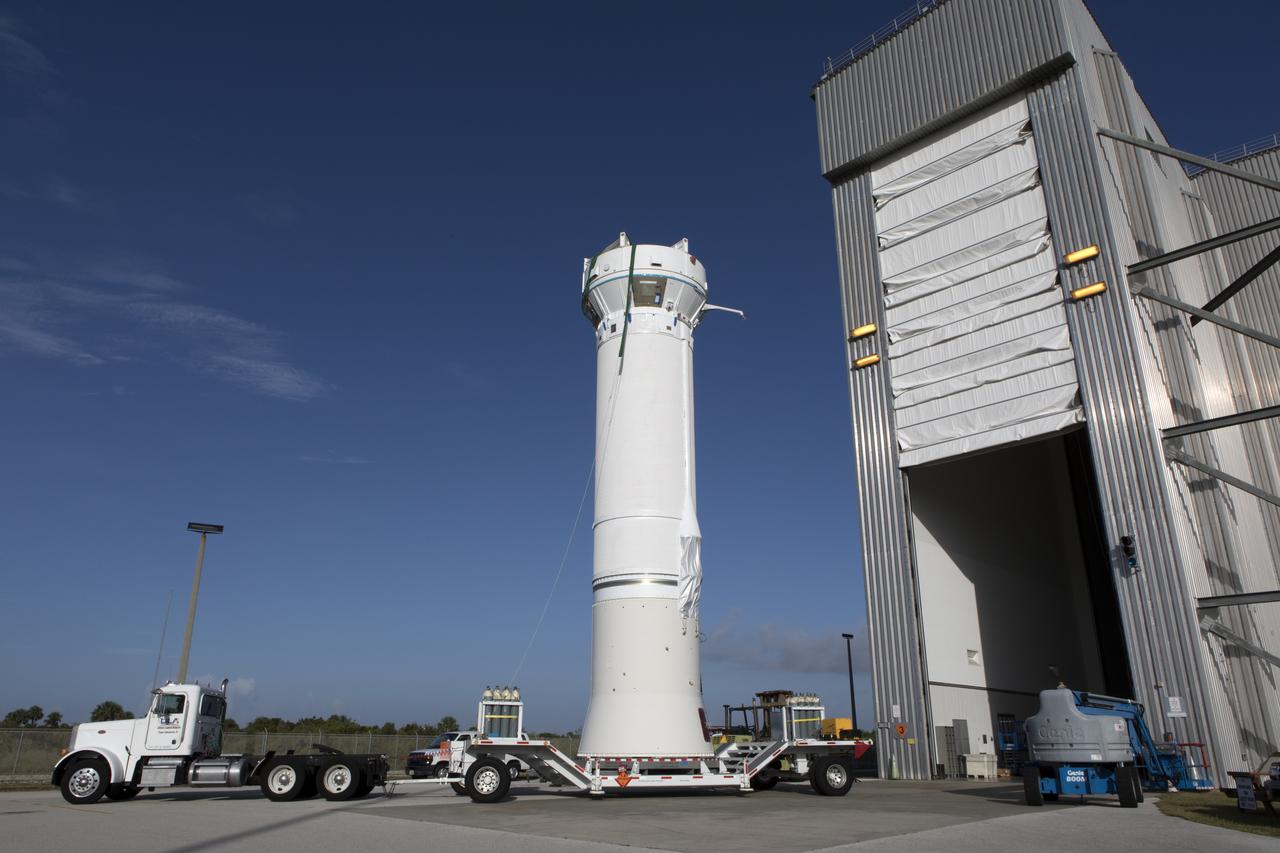
A United Launch Alliance Atlas V Centaur upper stage leaves the Delta Operations Center aboard a transport trailer for delivery to the Vertical Integration Facility at Space Launch Complex 41 at Cape Canaveral Air Force Station in Florida. The rocket is scheduled to help launch the Tracking and Data Relay Satellite, TDRS-M. It will be the latest spacecraft destined for the agency's constellation of communications satellites that allows nearly continuous contact with orbiting spacecraft ranging from the International Space Station and Hubble Space Telescope to the array of scientific observatories. Liftoff atop the ULA Atlas V rocket is scheduled to take place from Cape Canaveral's Space Launch Complex 41 in early August.
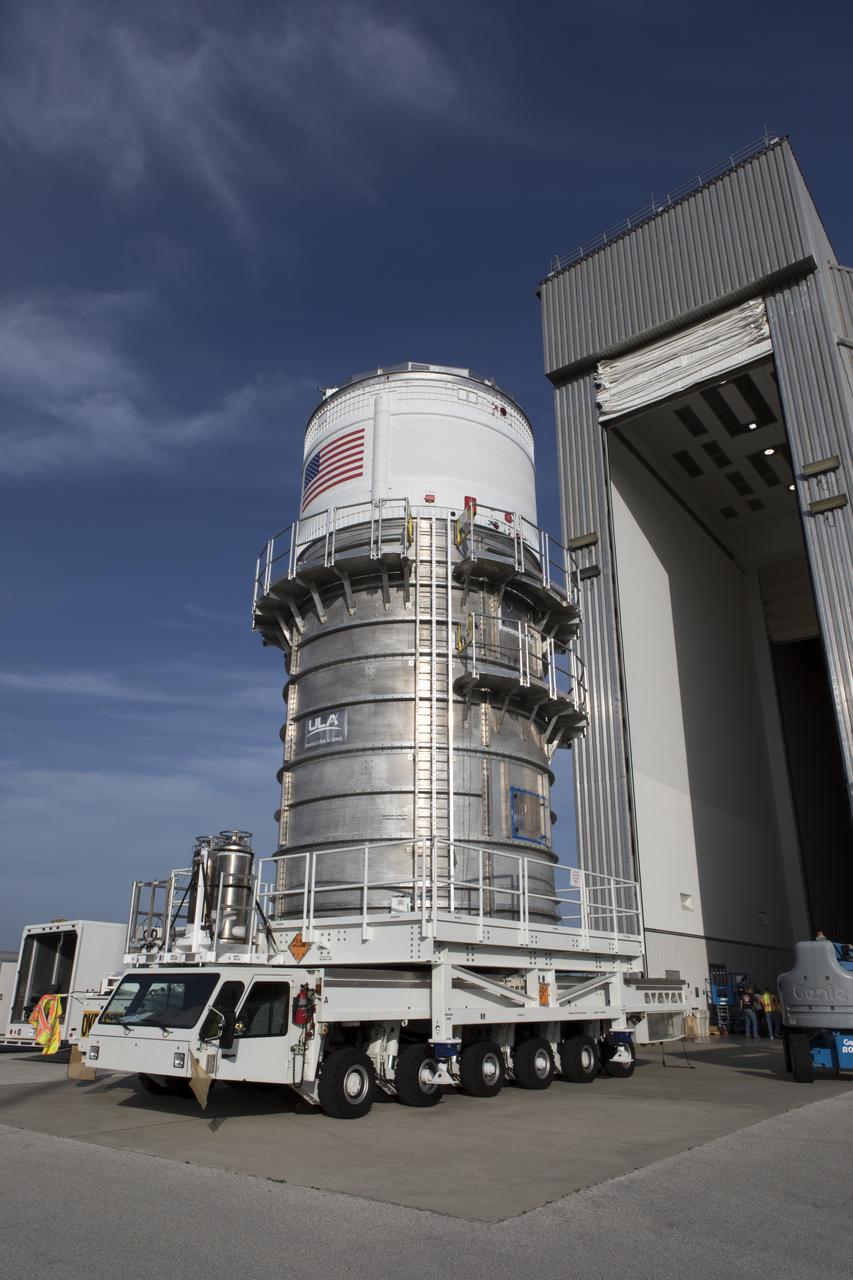
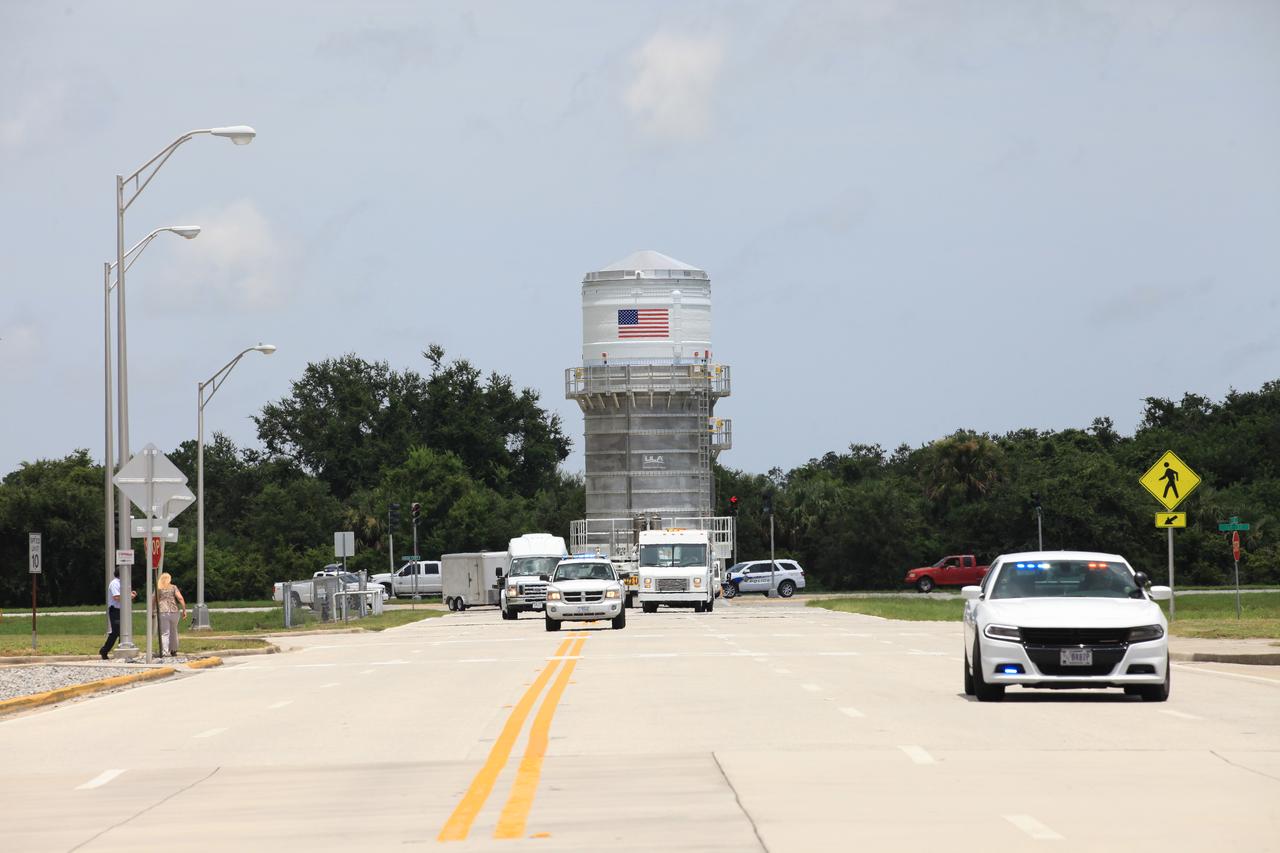
The Interim Cryogenic Propulsion Stage (ICPS) for NASA's Space Launch System (SLS) rocket, packed inside a canister, exits the United Launch Alliance (ULA) Delta Operations Center near Space Launch Complex 37 at Cape Canaveral Air Force Station for its move to the Space Station Processing Facility at NASA's Kennedy Space Center in Florida. The ICPS is the first integrated piece of flight hardware to arrive for the SLS. It is the in-space stage that is located toward the top of the rocket, between the Launch Vehicle Stage Adapter and the Orion Spacecraft Adapter. It will provide some of the in-space propulsion during Orion's first flight test atop the SLS on Exploration Mission-1.
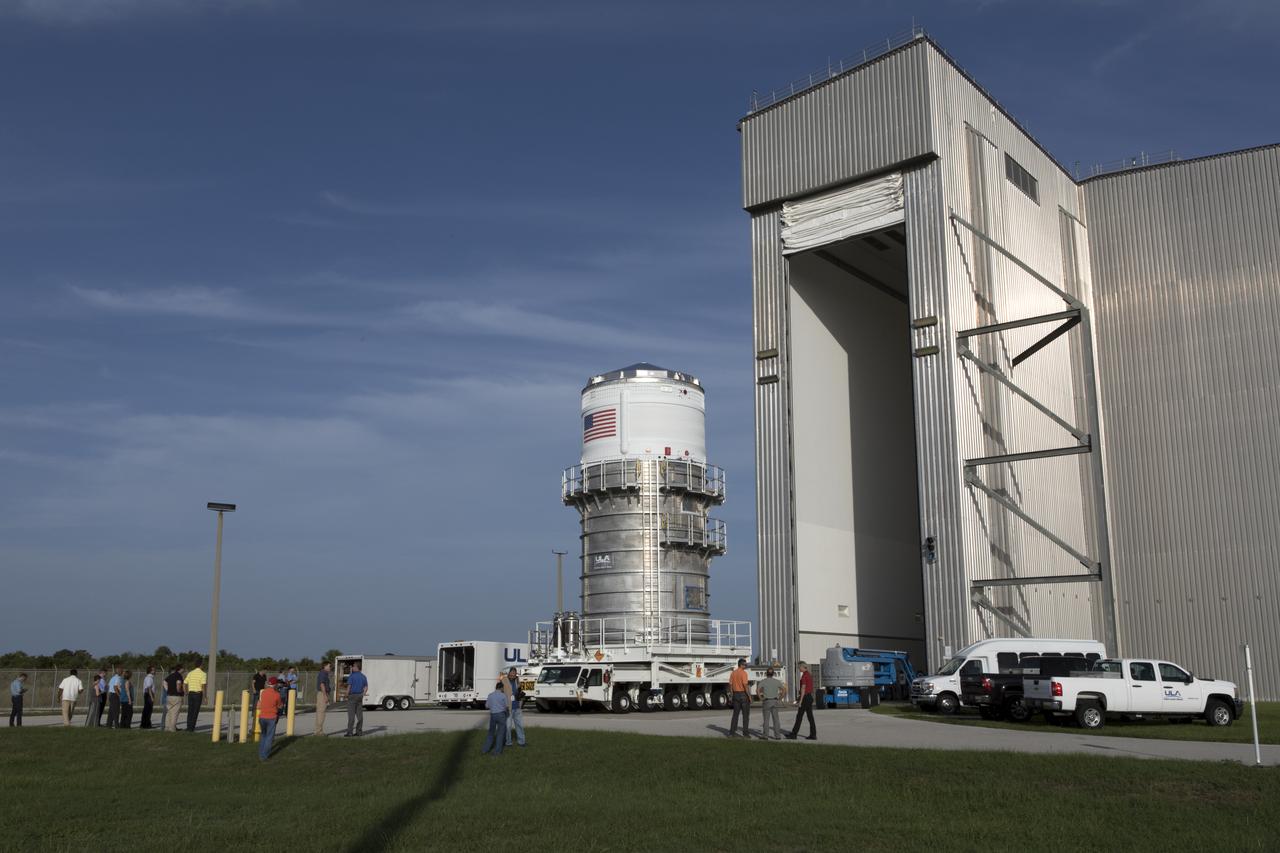
The Interim Cryogenic Propulsion Stage (ICPS) for NASA's Space Launch System (SLS) rocket, packed inside a canister, exits the United Launch Alliance (ULA) Delta Operations Center near Space Launch Complex 37 at Cape Canaveral Air Force Station for its move to the Space Station Processing Facility at NASA's Kennedy Space Center in Florida. The ICPS is the first integrated piece of flight hardware to arrive for the SLS. It is the in-space stage that is located toward the top of the rocket, between the Launch Vehicle Stage Adapter and the Orion Spacecraft Adapter. It will provide some of the in-space propulsion during Orion's first flight test atop the SLS on Exploration Mission-1.
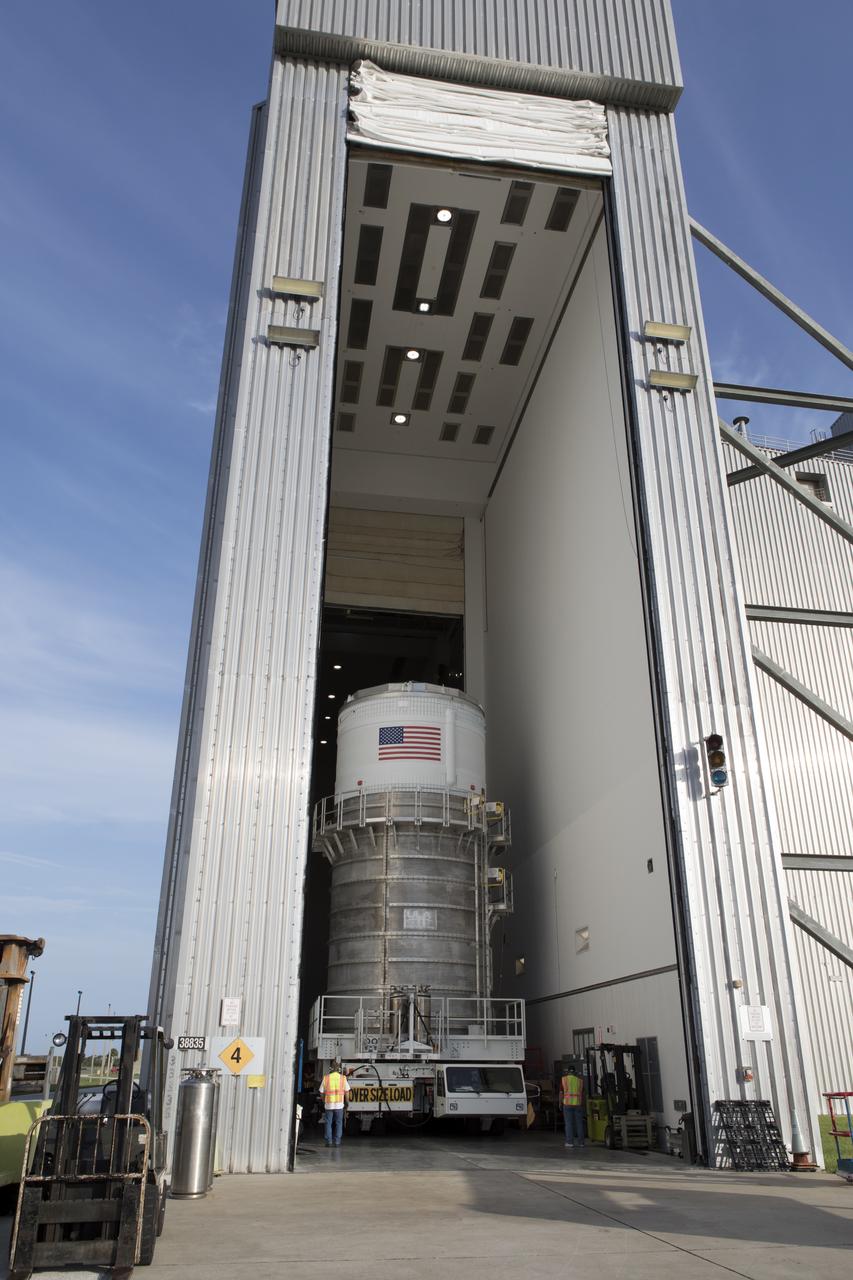
The Interim Cryogenic Propulsion Stage (ICPS) for NASA's Space Launch System (SLS) rocket is packed inside a canister and ready to exit the United Launch Alliance (ULA) Delta Operations Center near Space Launch Complex 37 at Cape Canaveral Air Force Station for its move to the Space Station Processing Facility at NASA's Kennedy Space Center in Florida. The ICPS is the first integrated piece of flight hardware to arrive for the SLS. It is the in-space stage that is located toward the top of the rocket, between the Launch Vehicle Stage Adapter and the Orion Spacecraft Adapter. It will provide some of the in-space propulsion during Orion's first flight test atop the SLS on Exploration Mission-1.
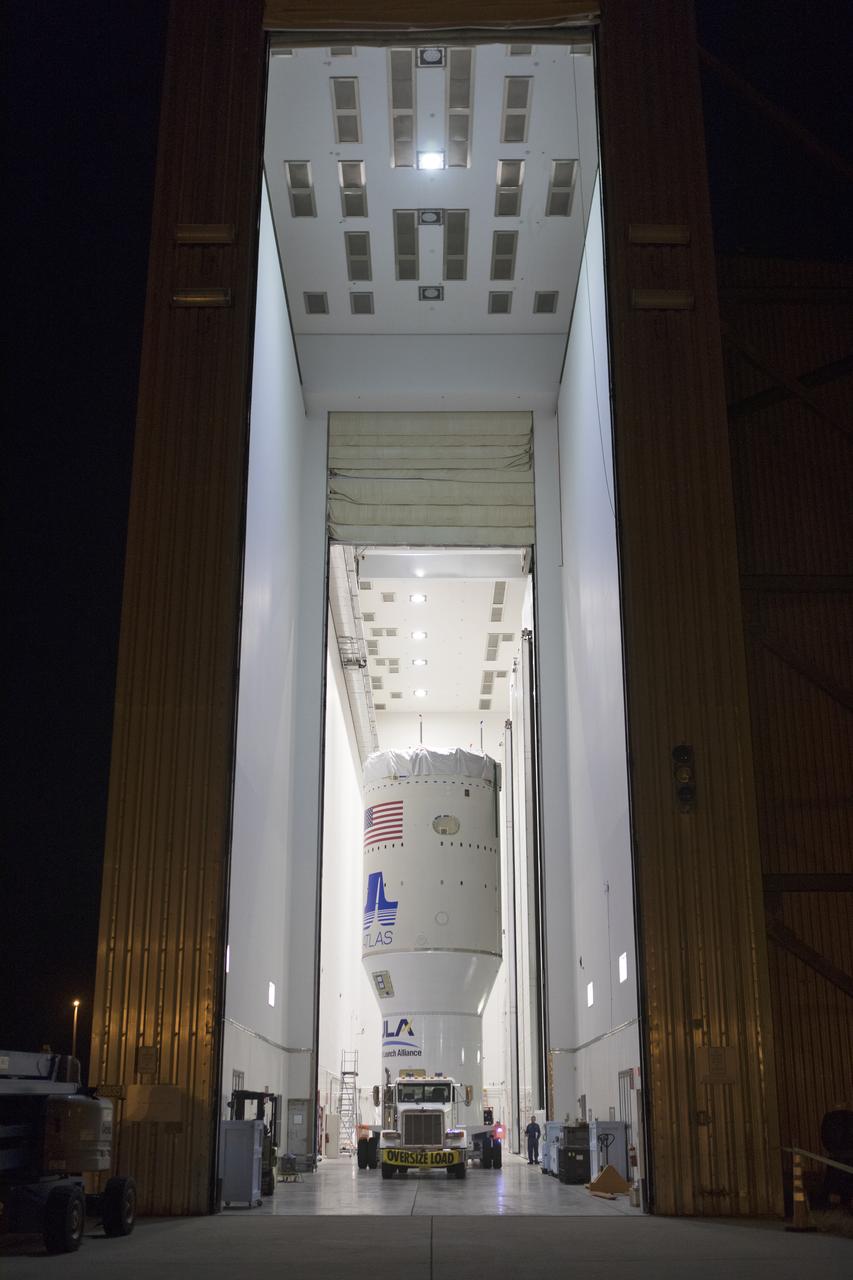
The Centaur upper stage that will help launch NOAA's Geostationary Operational Environmental Satellite-S, or GOES-S, departs the Delta Operations Center for the Vertical Integration Facility at Space Launch Complex 41 at Cape Canaveral Air Force Station in Florida. The Centaur then will be mated to a United Launch Alliance Atlas V booster. GOES-S is the second in a series of four advanced geostationary weather satellites that will significantly improve the detection and observation of environmental phenomena that directly affect public safety, protection of property and the nation's economic health and prosperity. GOES-S is slated to launch March 1, 2018.
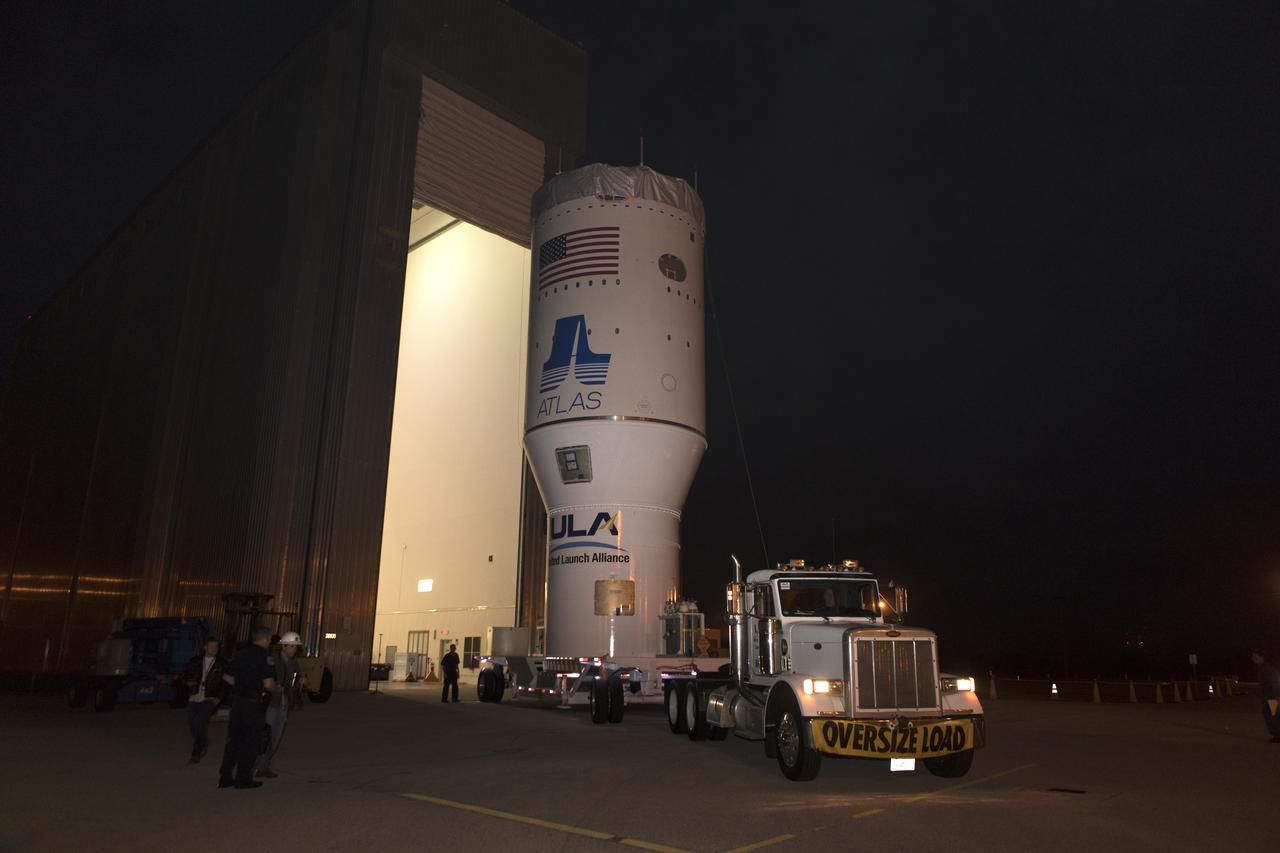
The Centaur upper stage that will help launch NOAA's Geostationary Operational Environmental Satellite-S, or GOES-S, departs the Delta Operations Center for the Vertical Integration Facility at Space Launch Complex 41 at Cape Canaveral Air Force Station in Florida. The Centaur then will be mated to a United Launch Alliance Atlas V booster. GOES-S is the second in a series of four advanced geostationary weather satellites that will significantly improve the detection and observation of environmental phenomena that directly affect public safety, protection of property and the nation's economic health and prosperity. GOES-S is slated to launch March 1, 2018.
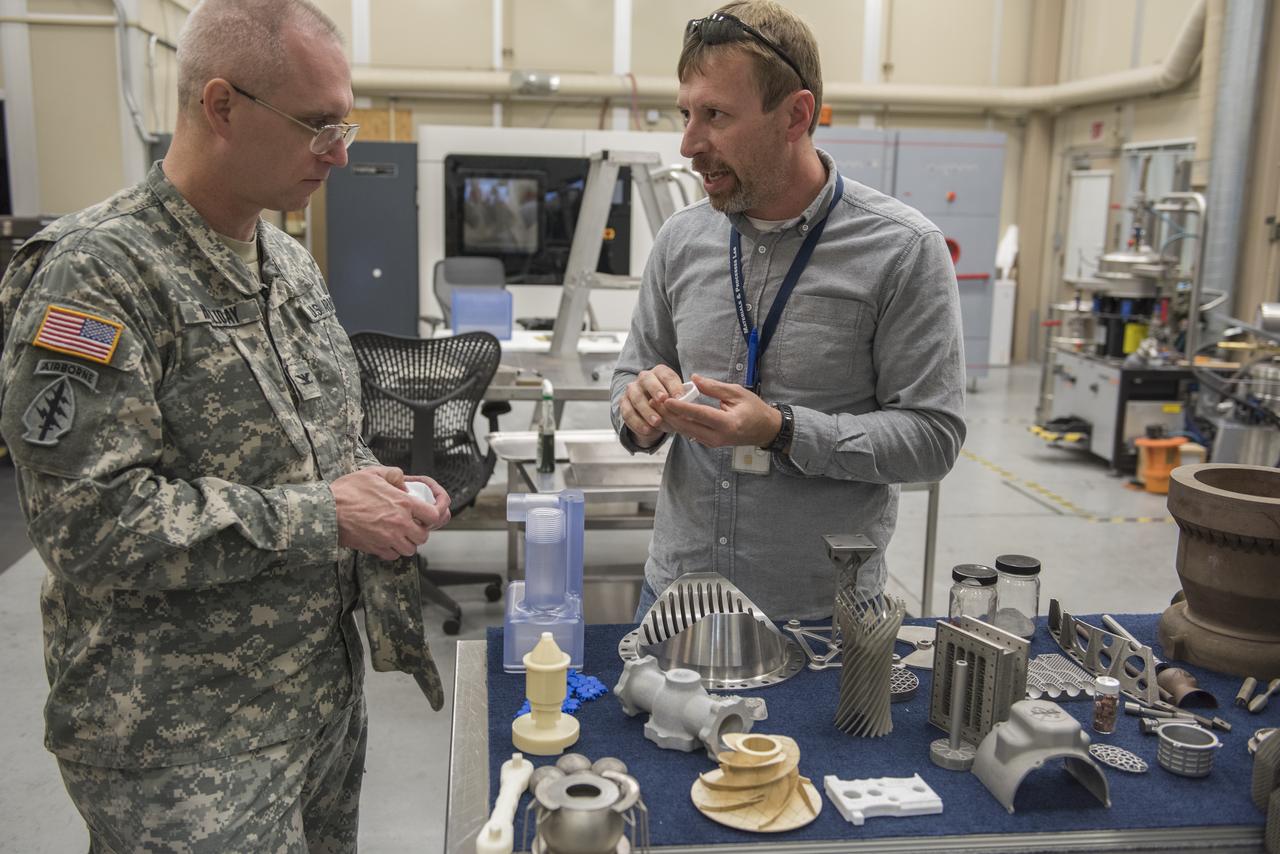
REDSTONE ARSENAL GARRISON COMMANDER COL. THOMAS "DOC" HOLLIDAY, LEFT, DISCUSSES THE PROCESSES AND HARDWARE USED IN NASA IN-SPACE MANUFACTURING TECHNIQUES WITH KEN COOPER, A STRUCTURAL MATERIALS ENGINEER AT NASA'S MARSHALL SPACE FLIGHT CENTER. COOPER, PART OF THE MARSHALL ENGINEERING DIRECTORATE'S ADVANCED MANUFACTURING AND DIGITAL SOLUTIONS TEAM, WAS AMONG NUMEROUS SUBJECT-MATTER EXPERTS WHO SHARED KEY MARSHALL CAPABILITIES DURING HOLLIDAY'S MARCH 3 MARSHALL TOUR. HOLLIDAY, A DECORATED OFFICER WHOSE MILITARY CAREER BEGAN IN 1992, GAINED FIRSTHAND INSIGHT INTO MARSHALL'S ADVANCED MANUFACTURING AND 3-D PRINTING TECHNIQUES; ROUND-THE-CLOCK INTERNATIONAL SPACE STATION SCIENCE AND COMMUNICATIONS SUPPORT BY THE PAYLOAD OPERATIONS INTEGRATION CENTER TEAM; AND THE LATEST UPGRADES TO MARSHALL TEST STANDS IN SUPPORT OF NEXT-GENERATION LAUNCH VEHICLE AND FLIGHT HARDWARE DEVELOPMENT. MARSHALL, A REDSTONE ARSENAL TENANT, ROUTINELY SHARES CUTTING-EDGE RESEARCH AND MANUFACTURING ADVANCES WITH ITS MILITARY AND FEDERAL AGENCY COUNTERPARTS, WORKING IN PARTNERSHIP TO ADVANCE NASA'S MISSION AND MAINTAIN THE NATION'S TECHNOLOGICAL LEADERSHIP.
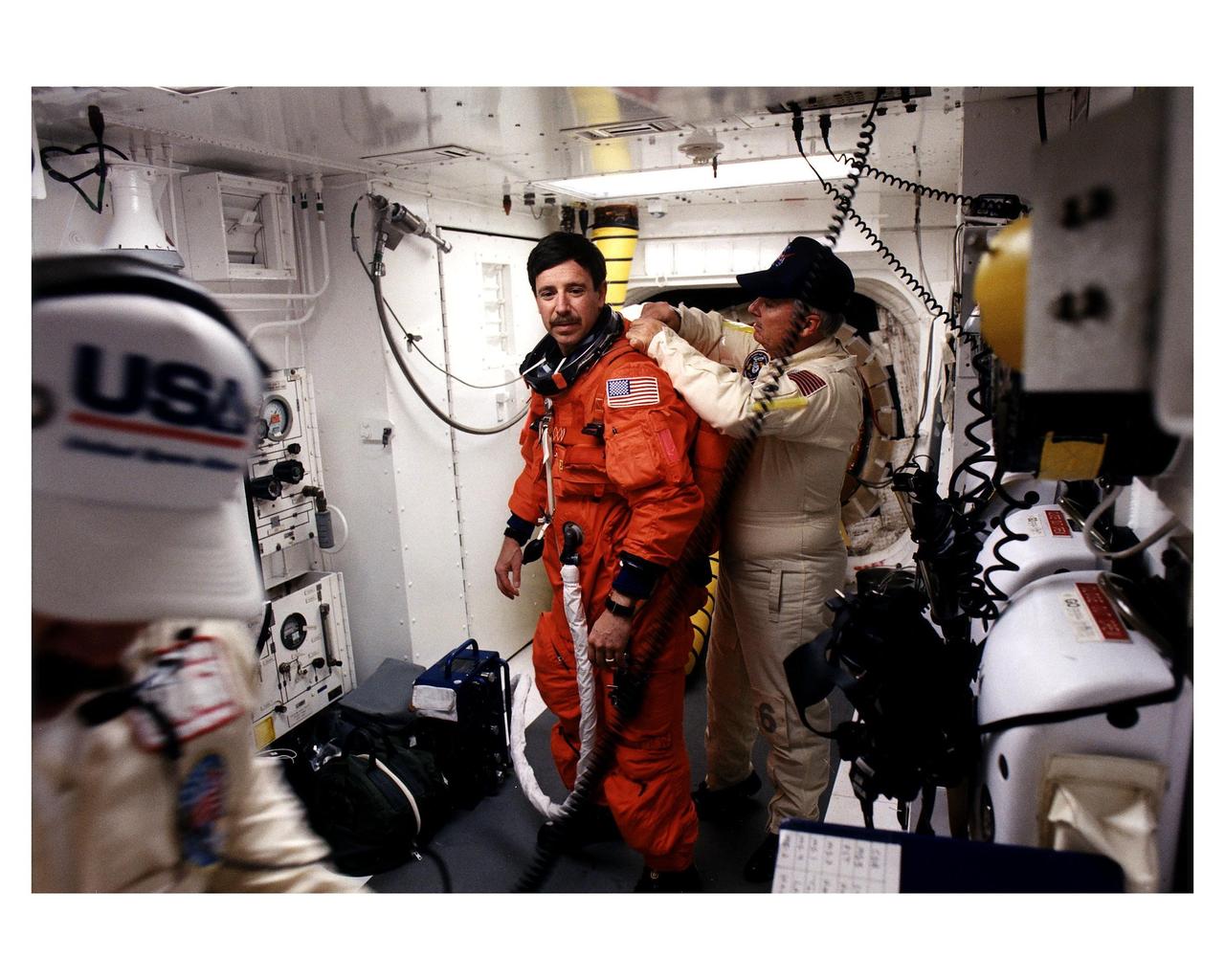
STS-82 Pilot Scott J. "Doc" Horowitz prepares to enter the Space Shuttle Discovery at Launch Pad 39A, with the assistance of white room closeout crew member James Davis
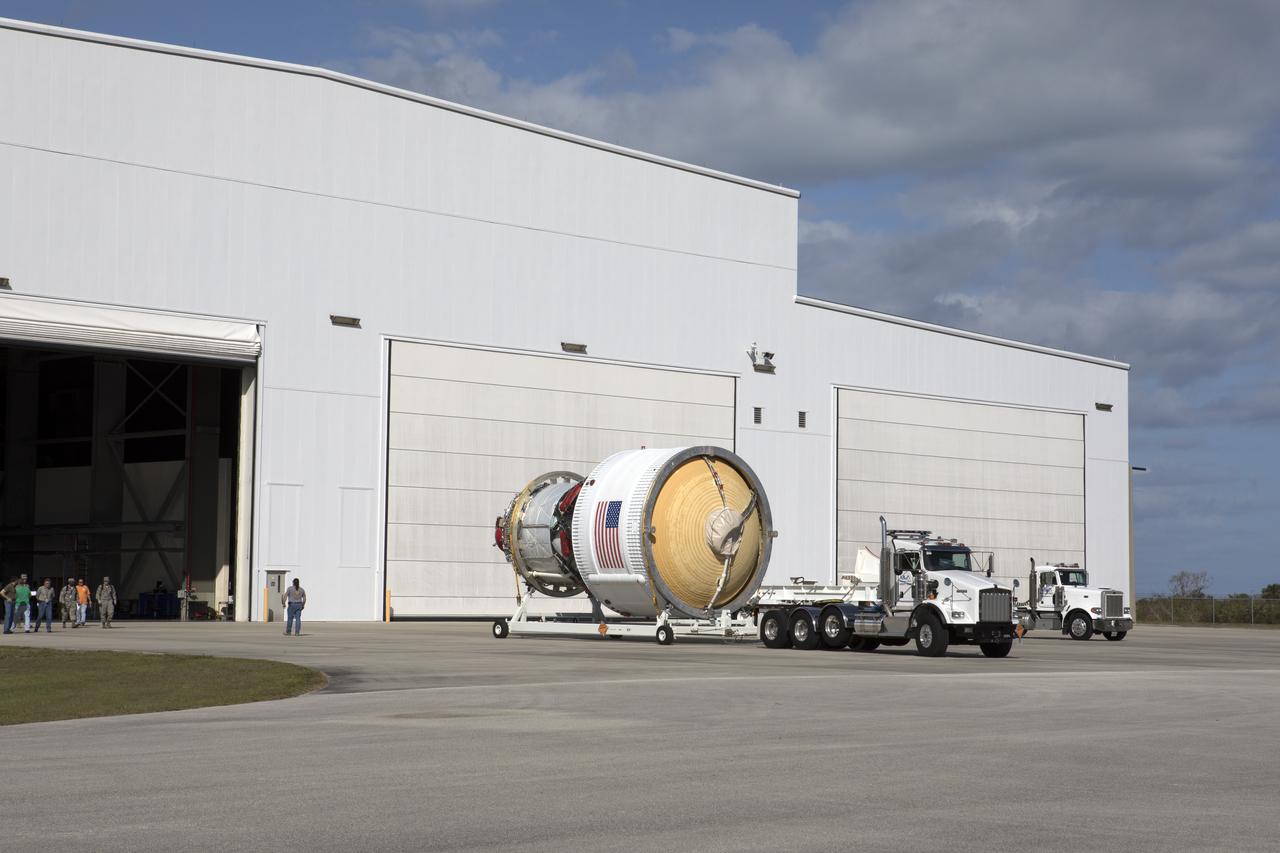
The Interim Cryogenic Propulsion Stage (ICPS) for NASA's Space Launch System (SLS) rocket has been moved on its transport stand by truck out of the United Launch Alliance (ULA) Horizontal Integration Facility near Space Launch Complex 37 at Cape Canaveral Air Force Station in Florida. The ICPS will be transported to the Delta Operations Center. The ICPS is the first integrated piece of flight hardware to arrive for the SLS. It is the in-space stage that is located toward the top of the rocket, between the Launch Vehicle Stage Adapter and the Orion Spacecraft Adapter. It will provide some of the in-space propulsion during Orion's first flight test atop the SLS on Exploration Mission-1.
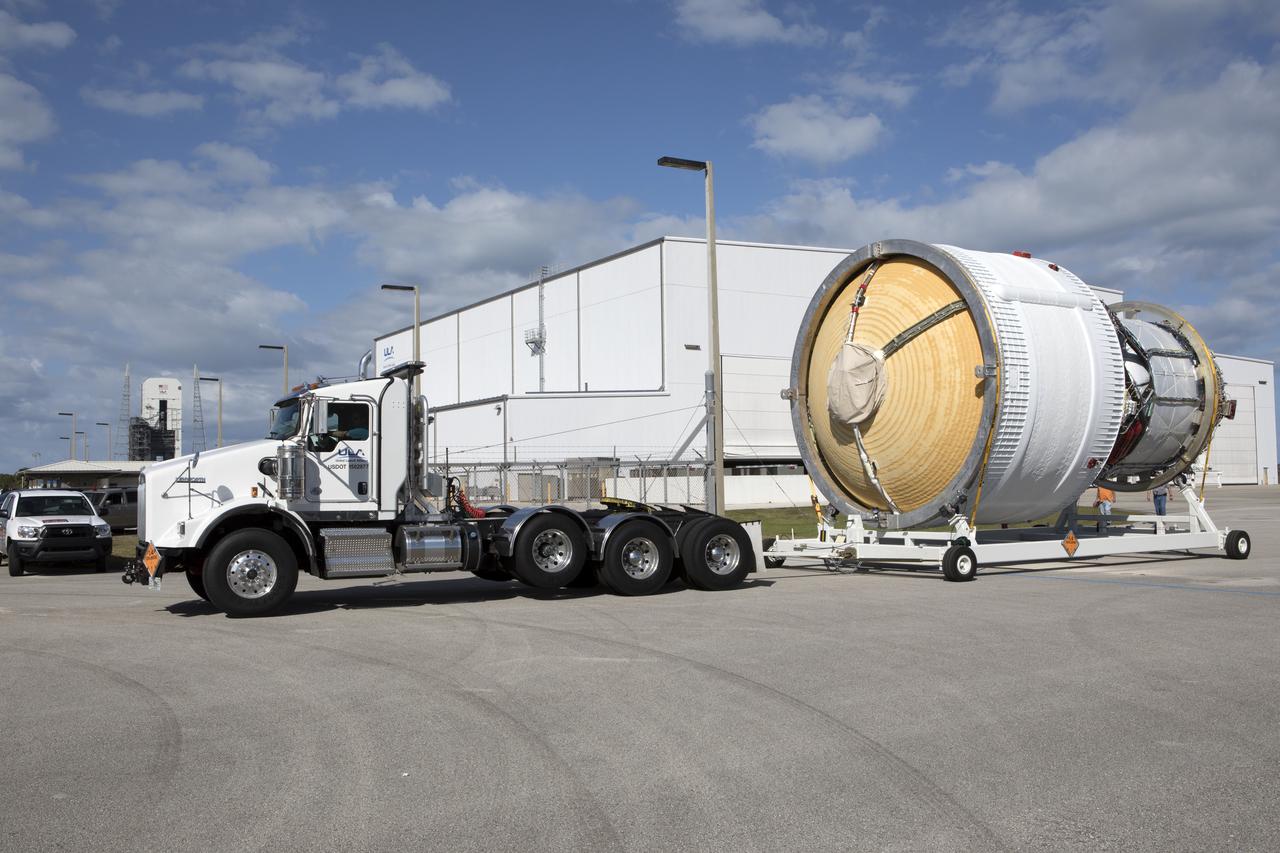
The Interim Cryogenic Propulsion Stage (ICPS) for NASA's Space Launch System (SLS) rocket has been moved on its transport stand by truck out of the United Launch Alliance (ULA) Horizontal Integration Facility near Space Launch Complex 37 at Cape Canaveral Air Force Station in Florida, on its way to the Delta Operations Center. The ICPS is the first integrated piece of flight hardware to arrive for the SLS. It is the in-space stage that is located toward the top of the rocket, between the Launch Vehicle Stage Adapter and the Orion Spacecraft Adapter. It will provide some of the in-space propulsion during Orion's first flight test atop the SLS on Exploration Mission-1.
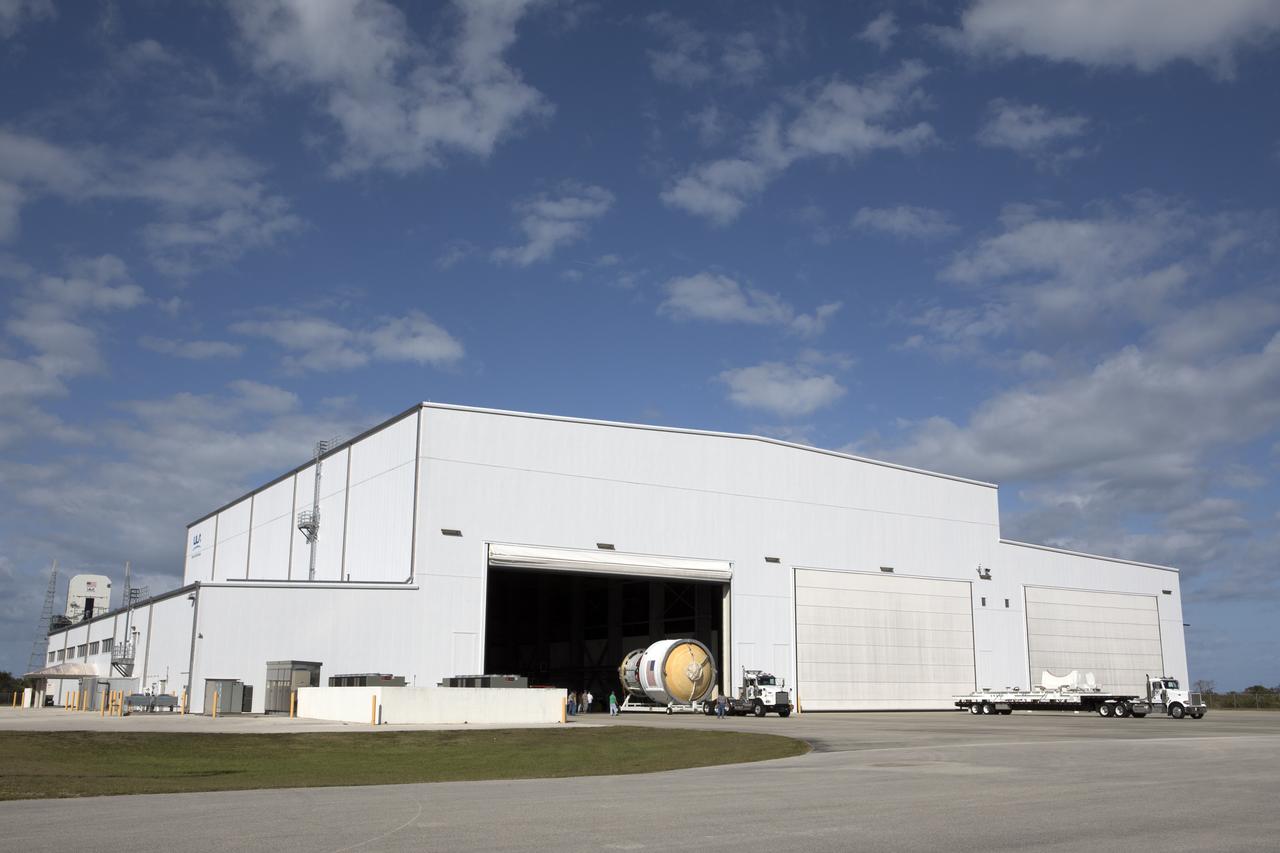
The Interim Cryogenic Propulsion Stage (ICPS) for NASA's Space Launch System (SLS) rocket is moved on its transport stand by truck out of the United Launch Alliance (ULA) Horizontal Integration Facility near Space Launch Complex 37 at Cape Canaveral Air Force Station in Florida. The ICPS will be transported to the Delta Operations Center. The ICPS is the first integrated piece of flight hardware to arrive for the SLS. It is the in-space stage that is located toward the top of the rocket, between the Launch Vehicle Stage Adapter and the Orion Spacecraft Adapter. It will provide some of the in-space propulsion during Orion's first flight test atop the SLS on Exploration Mission-1.
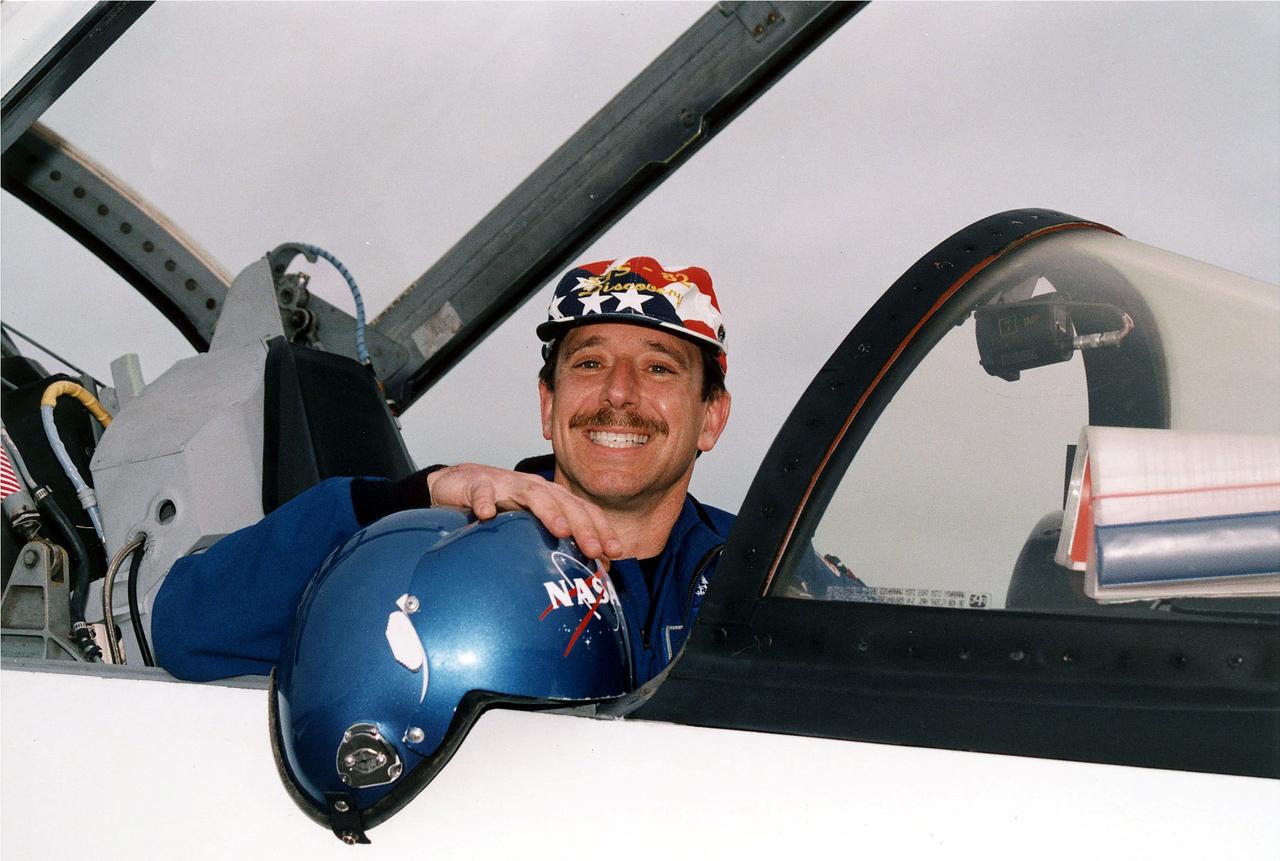
KENNEDY SPACE CENTER, FLA. - STS-82 Pilot Scott J. "Doc" Horowitz flashes a wide grin for photographers after landing his T-38 jet at KSC's Shuttle Landing Facility. Horowitz and the other six members of the STS-82 crew came from their home base at Johnson Space Center in Houston, Texas, to spend the last few days before launch at KSC. STS-82 is scheduled for liftoff on Feb. 11 during a 65-minute launch window that opens at 3:56 a.m. EST. The 10-day flight aboard the Space Shuttle Discovery will be the second Hubble Space Telescope (HST) servicing mission.
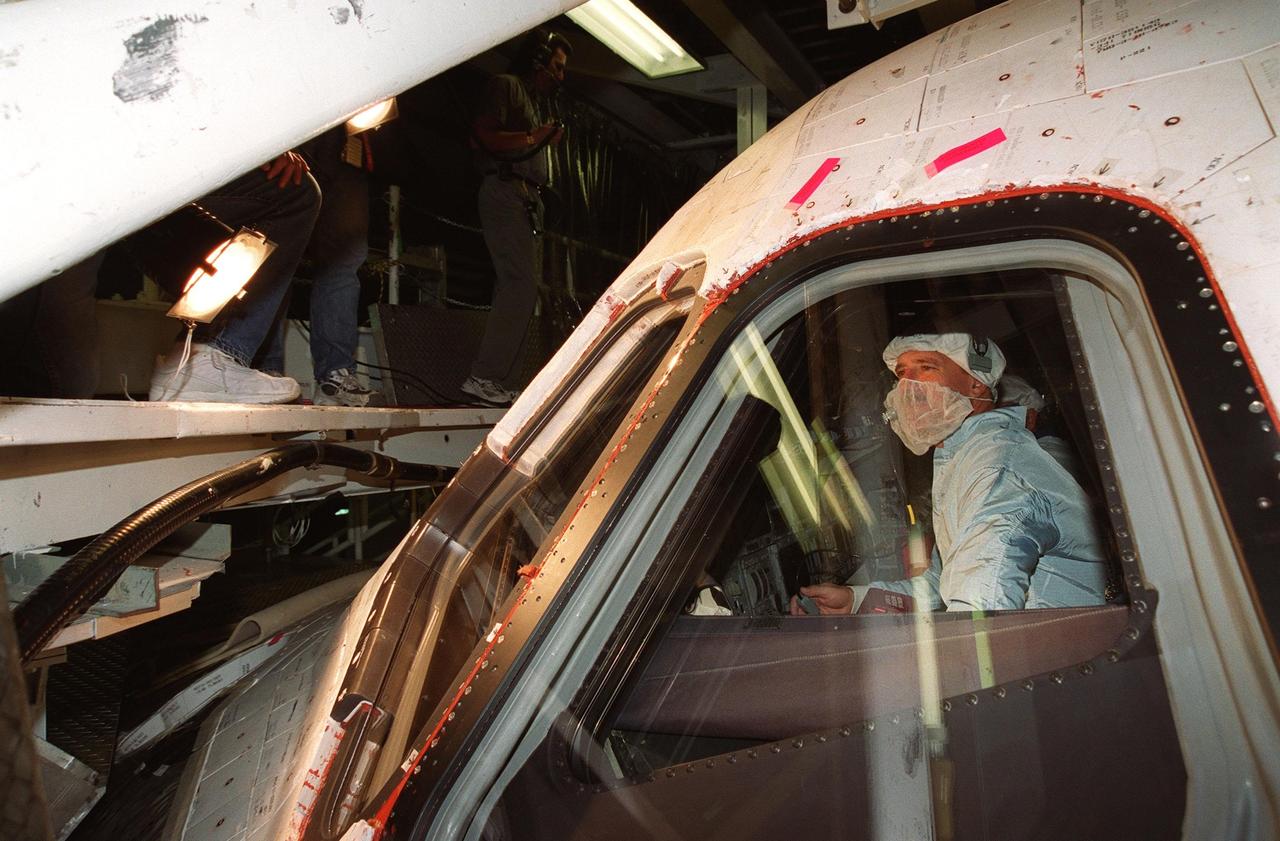
KENNEDY SPACE CENTER, FLA. -- During Crew Equipment Interface Test activities, STS-105 Commander Scott “Doc” Horowitz checks out the orbiter Discovery in Orbiter Processing Facility bay 2. STS-105 is the 11th mission to the International Space Station. The payload includes the Multi-Purpose Logistics Module Leonardo, which was built by the Italian Space Agency. Leonardo will be outfitted with 12 racks of experiments and equipment. Discovery is scheduled to launch July 12 from Launch Pad 39A
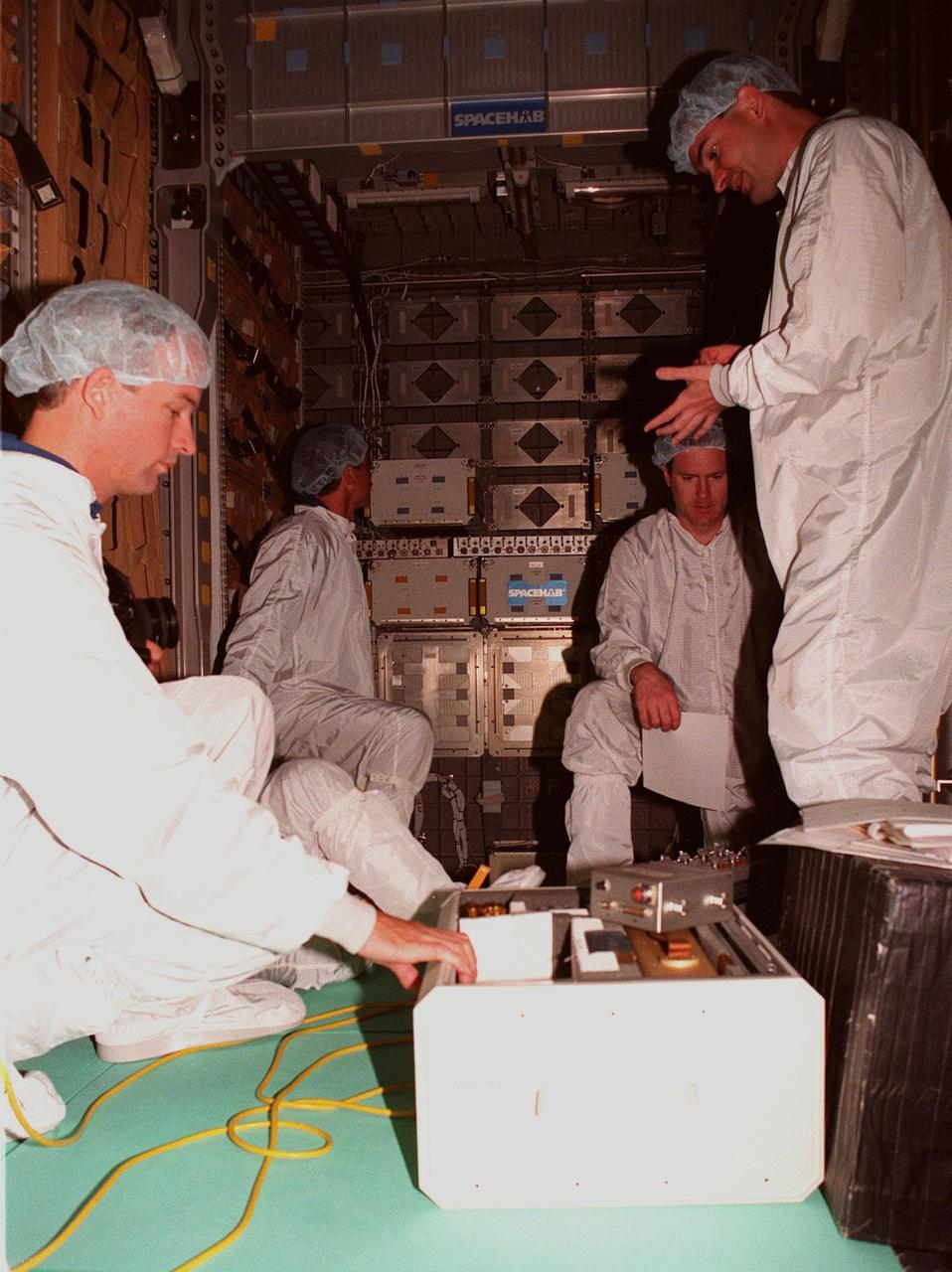
KENNEDY SPACE CENTER, FLA. -- Inside the SPACEHAB module, members of the STS-101 crew look at equipment during familiarization activities. From left are Mission Specialist Jeffrey N. Williams , Pilot Scott J. "Doc" Horowitz (Ph.D.), and Commander James Donald Halsell Jr., with Chris Jaskoika, of Boeing SPACEHAB. Mission STS-101 is the third flight in construction of the International Space Station. The 11-day mission is targeted for launch on December 2, 1999, at Launch Pad 39A
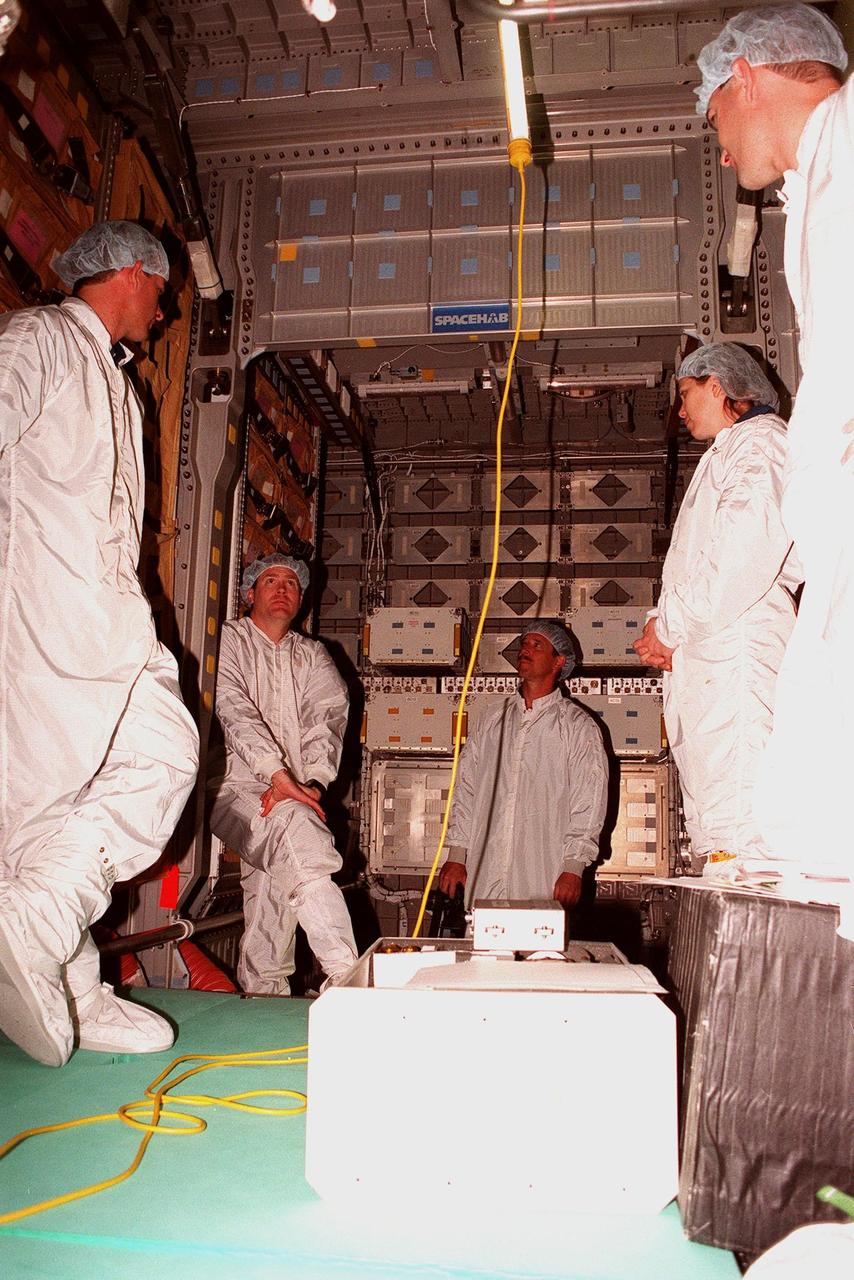
KENNEDY SPACE CENTER, FLA. -- Inside the SPACEHAB module, Chris Jaskoika (left), with Boeing SPACEHAB, works with members of the STS-101 crew during familiarization activities. Next to him are (left to right) Commander James Donald Halsell Jr., Pilot Scott "Doc" Horowitz (Ph.D.), and Mission Specialists Mary Ellen Weber (Ph.D.) and Jeffrey N. Williams. Mission STS-101 is the third flight in construction of the International Space Station. The 11-day mission is targeted for launch on December 2, 1999, at Launch Pad 39A
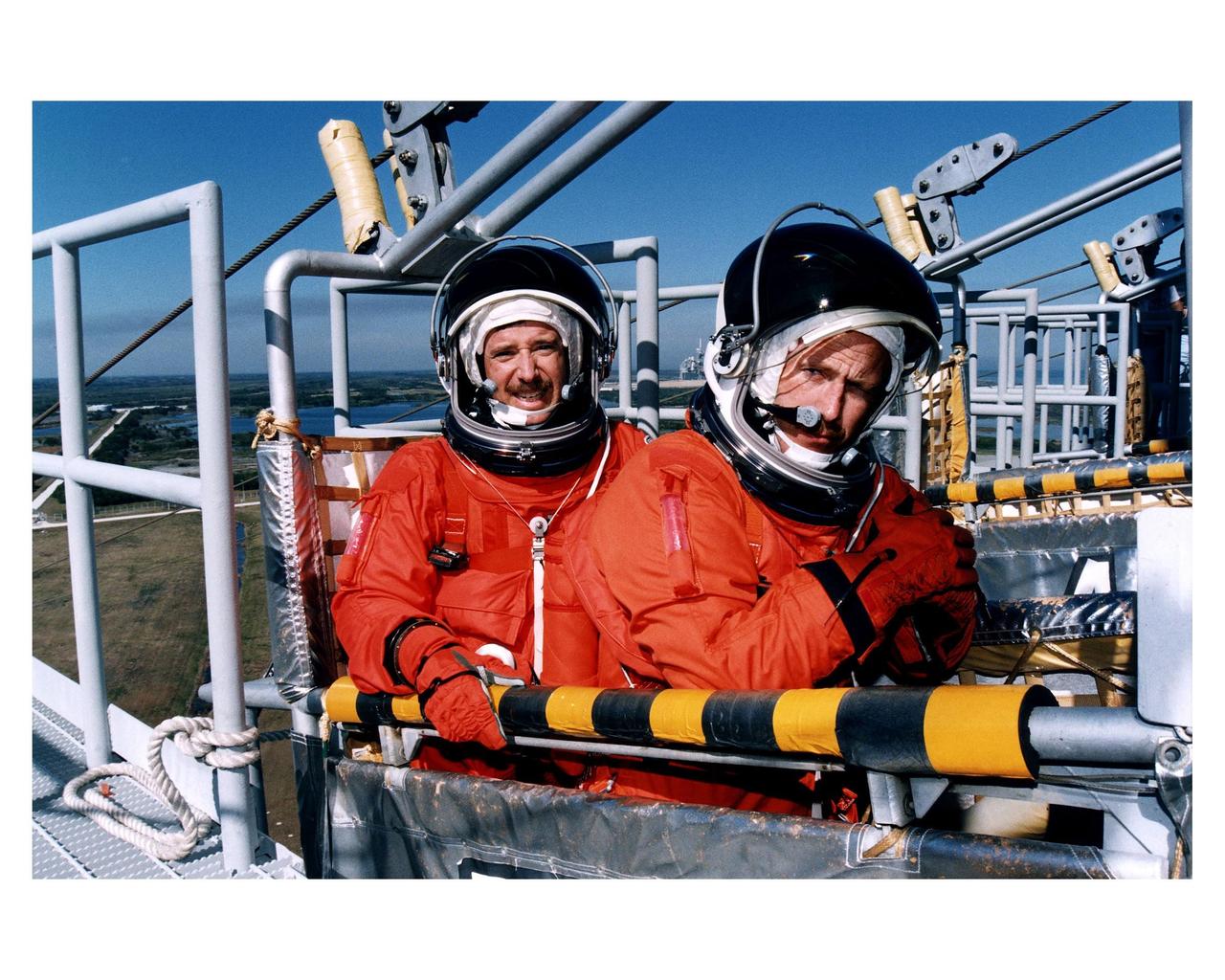
KENNEDY SPACE CENTER, Fla. --STS-82 Mission Commander Kenneth D. Bowersox, at right, and Pilot Scott J. "Doc" Horowitz practice emergency egress procedures in a slidewire basket at Launch Pad 39A as part of Terminal Countdown Demonstration Test (TCDT) activities. STS-82 will be the second Hubble Space Telescope servicing mission. Liftoff is targeted for Feb. 11
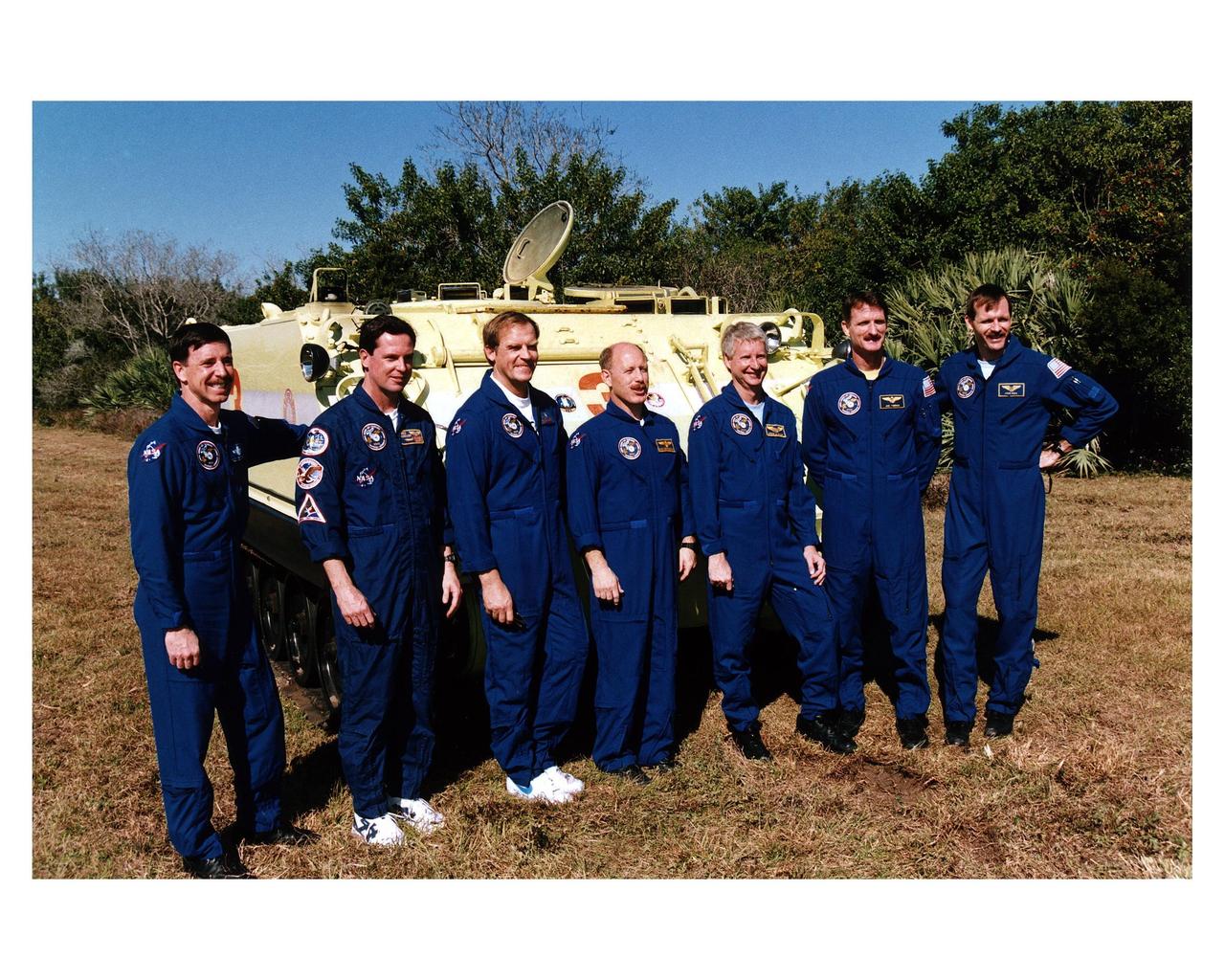
KENNEDY SPACE CENTER, FLA. -- STS-82 Terminal Countdown Demonstration Test (TCDT). Crew members are Mission Commander Kenneth D. Bowersox, Pilot Scott J. "Doc" Horowitz, Payload Commander Mark C. Lee, and Mission Specialists Steven L. Smith, Gregory J. Harbaugh, Joseph R. "Joe" Tanner and Steven A. Hawley.
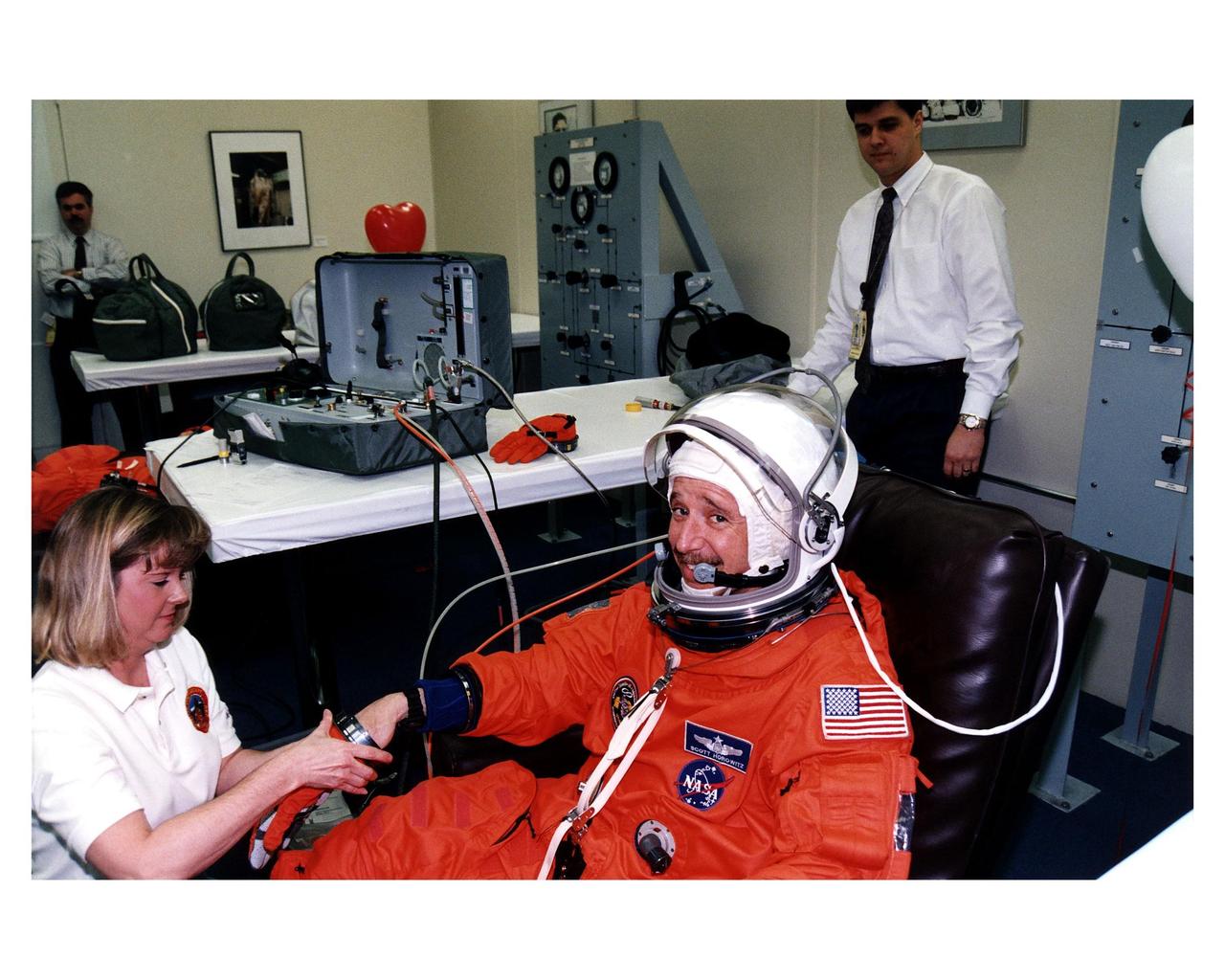
STS-82 Pilot Scott J. "Doc" Horowitz puts on a glove of his launch and entry suit with assistance from a suit technician in the Operations and Checkout Building. This is Horowitz’s second space flight. He and the six other crew members will depart shortly for Launch Pad 39A, where the Space Shuttle Discovery awaits liftoff on a 10-day mission to service the orbiting Hubble Space Telescope (HST). This will be the second HST servicing mission. Four back-to-back spacewalks are planned
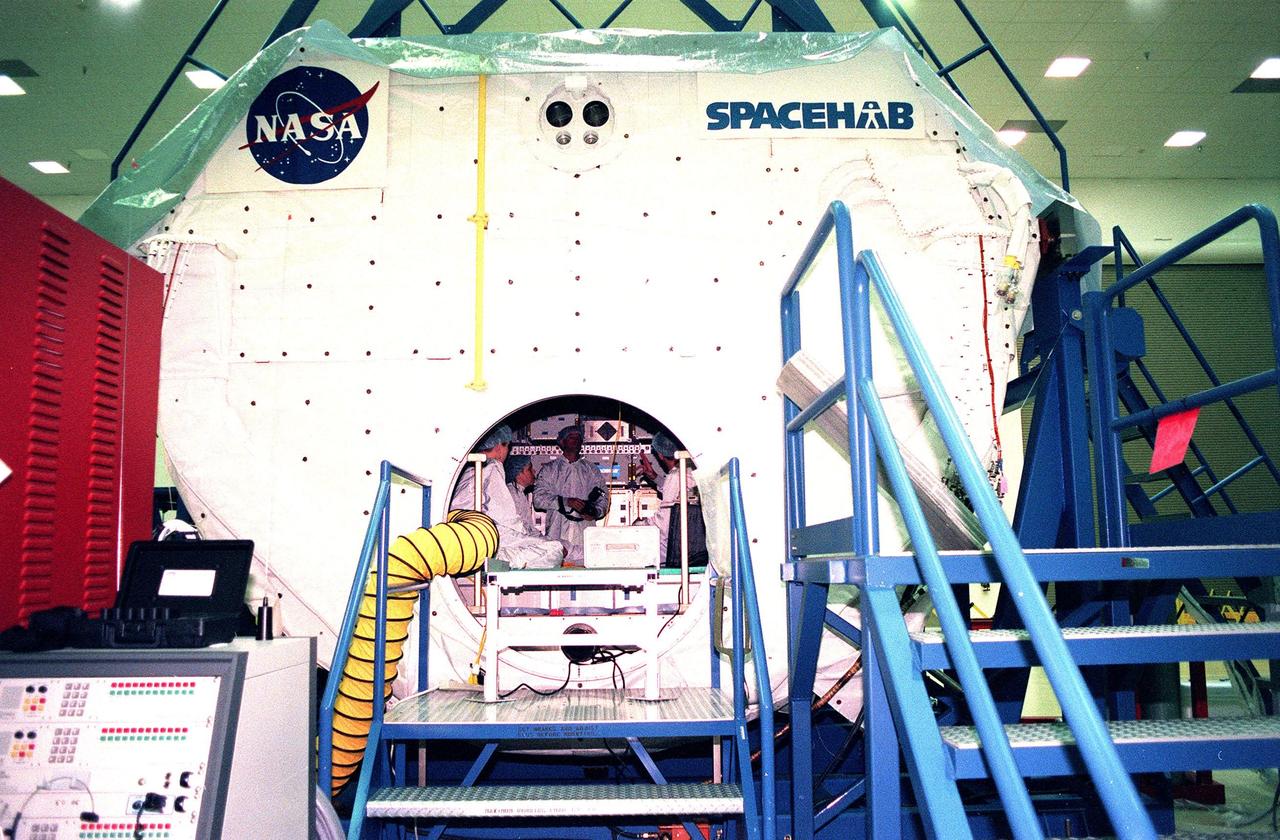
KENNEDY SPACE CENTER, FLA. -- Just inside the open hatch of the SPACEHAB module are (left to right) STS-101 crew members Mission Specialists Jeffrey N. Williams and Mary Ellen Weber (Ph.D.), Commander James Donald Halsell Jr., and Pilot Scott "Doc" Horowitz (Ph.D.). The crew is taking part in familiarization activities at the SPACEHAB facility. Mission STS-101 is the third flight in construction of the International Space Station. The 11-day mission is targeted for launch on December 2, 1999, at Launch Pad 39A
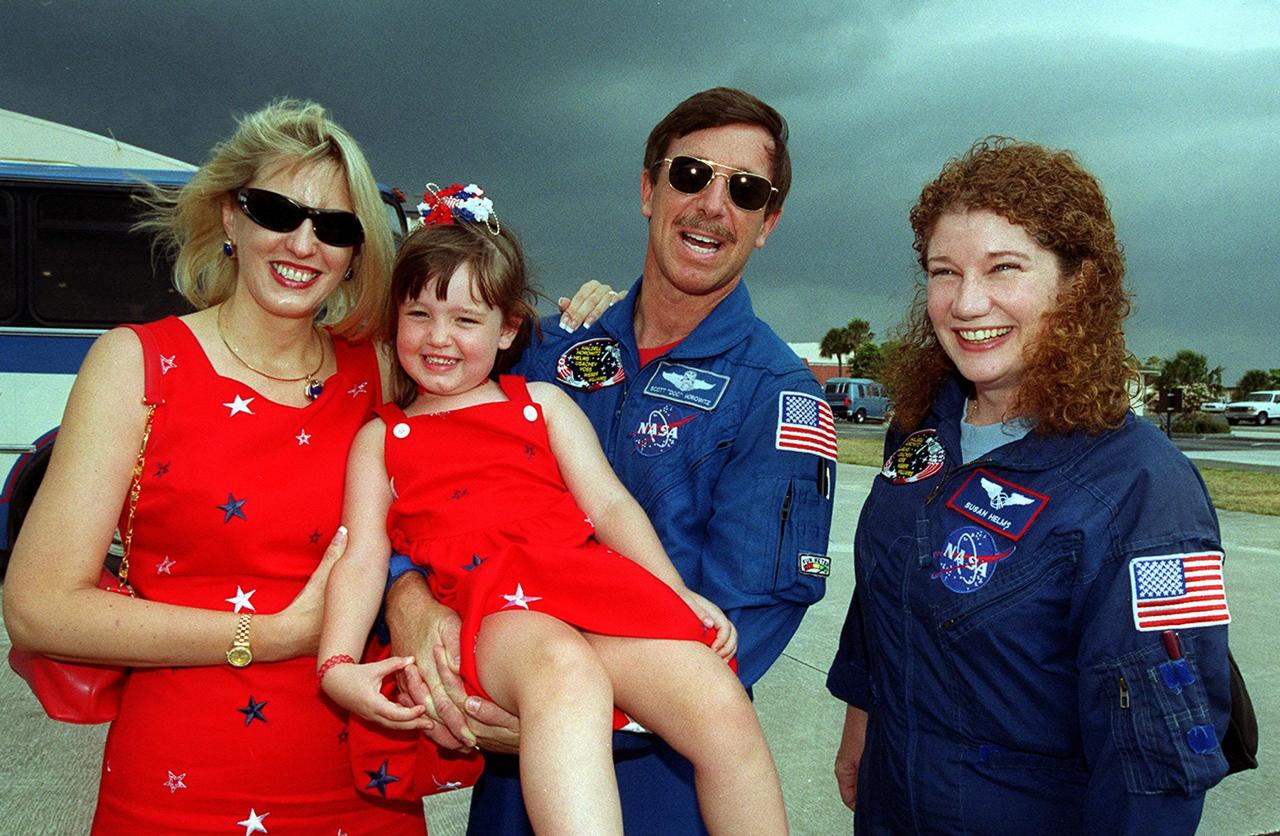
Members of the STS-101 crew gather with families and friends at Patrick Air Force Base before departure for Houston. Pilot Scott “Doc” Horowitz is joined by his wife, Lisa, and daughter; Mission Specialist Susan J. Helms is at right. After landing at 2:20 a.m. EDT May 29, the crew and their families enjoyed the Memorial Day holiday in Florida. The crew returned from the third flight to the International Space Station where they made repairs, transferred cargo and completed a space walk to install and connect several pieces of equipment on the outside of the Space Station
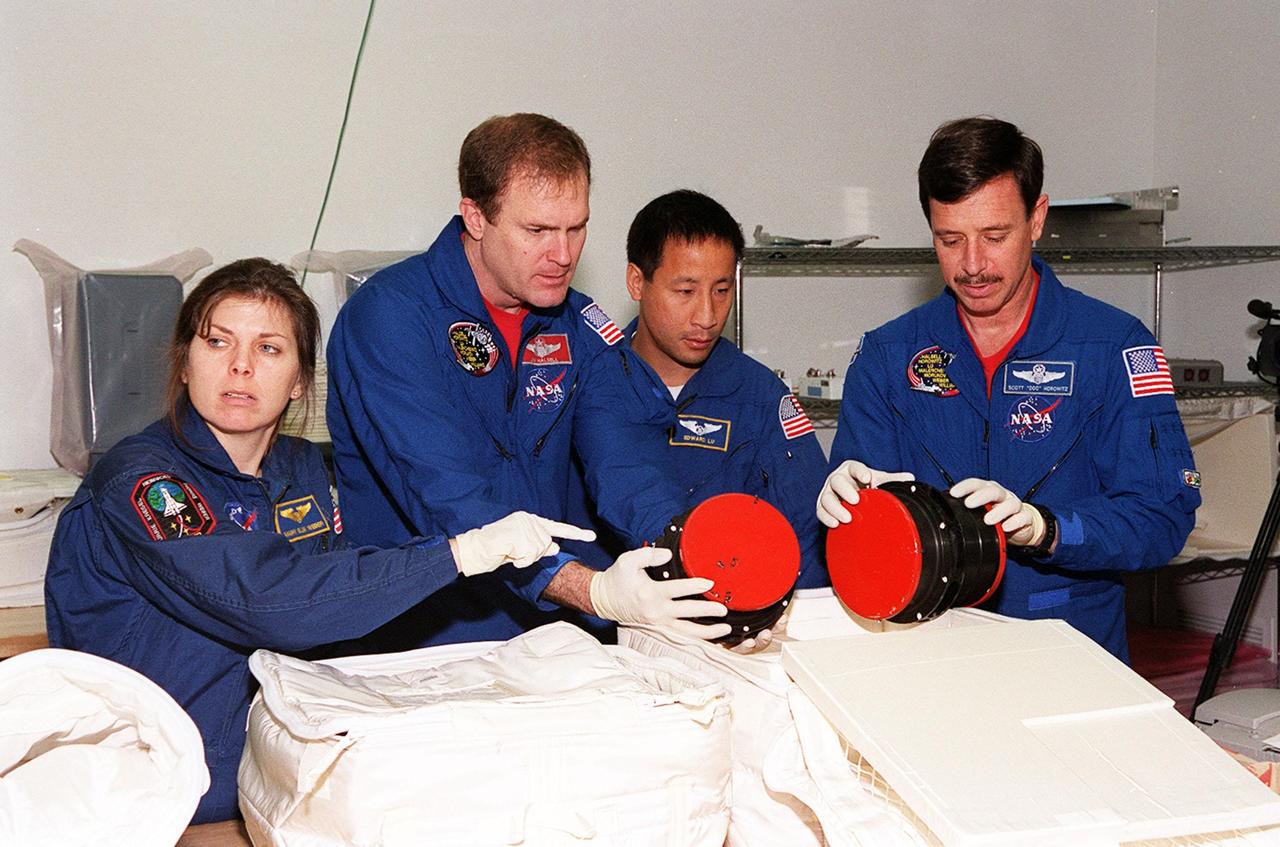
KENNEDY SPACE CENTER, FLA. -- At SPACEHAB, in Cape Canaveral, the STS-101 crew inspect equipment and payload for their mission. From left to right are Mission Specialist Mary Ellen Weber (Ph.D.) , Commander James D. Halsell Jr., Mission Specialist Edward Tsang Lu and Pilot Scott J. "Doc" Horowitz (Ph.D.). They are taking part in a Crew Equipment Interface Test, which gives them an opportunity to look over equipment and payloads that will fly on the mission. Space Shuttle Atlantis will be carrying the SPACEHAB Double Module, which carries internal logistics and resupply cargo for station outfitting. Launch of Atlantis on mission STS-101 is scheduled no earlier than April 13, 2000
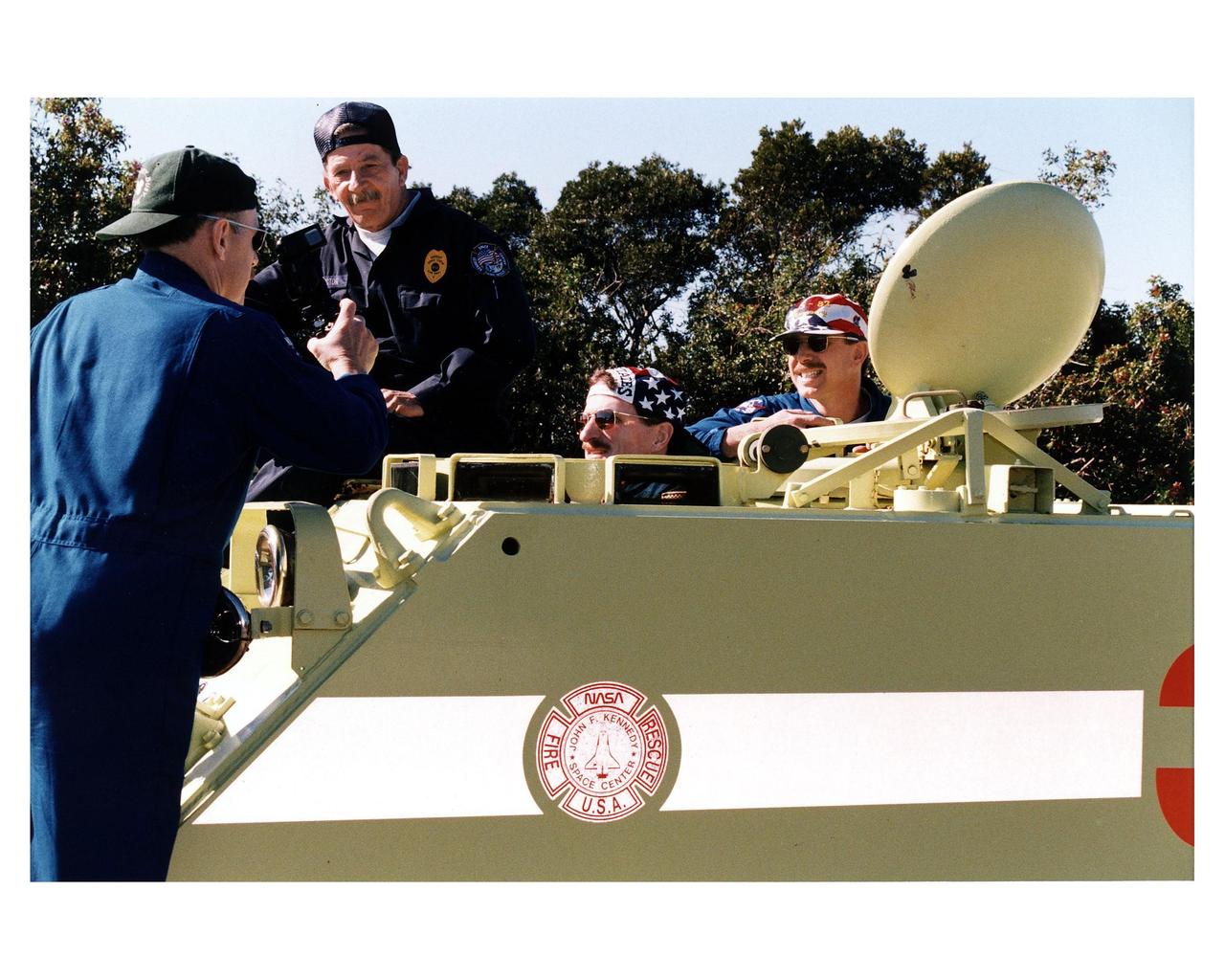
STS-82 Mission Commander, far left, takes a photograph of his fellow crew members Pilot Scott J. "Doc" Horowitz, at far right, and Mission Specialist Joseph R. "Joe" Tanner while they are training in the M-113 armored personnel carrier. George Hoggard, a training officer with KSC Fire Services, looks on. The STS-82 crew is at KSC to participate in the Terminal Countdown Demonstration Test (TCDT), a dress rehearsal for launch. The 10-day flight, which will be the second Hubble Space Telescope servicing mission, is targeted for a Feb. 11 liftoff
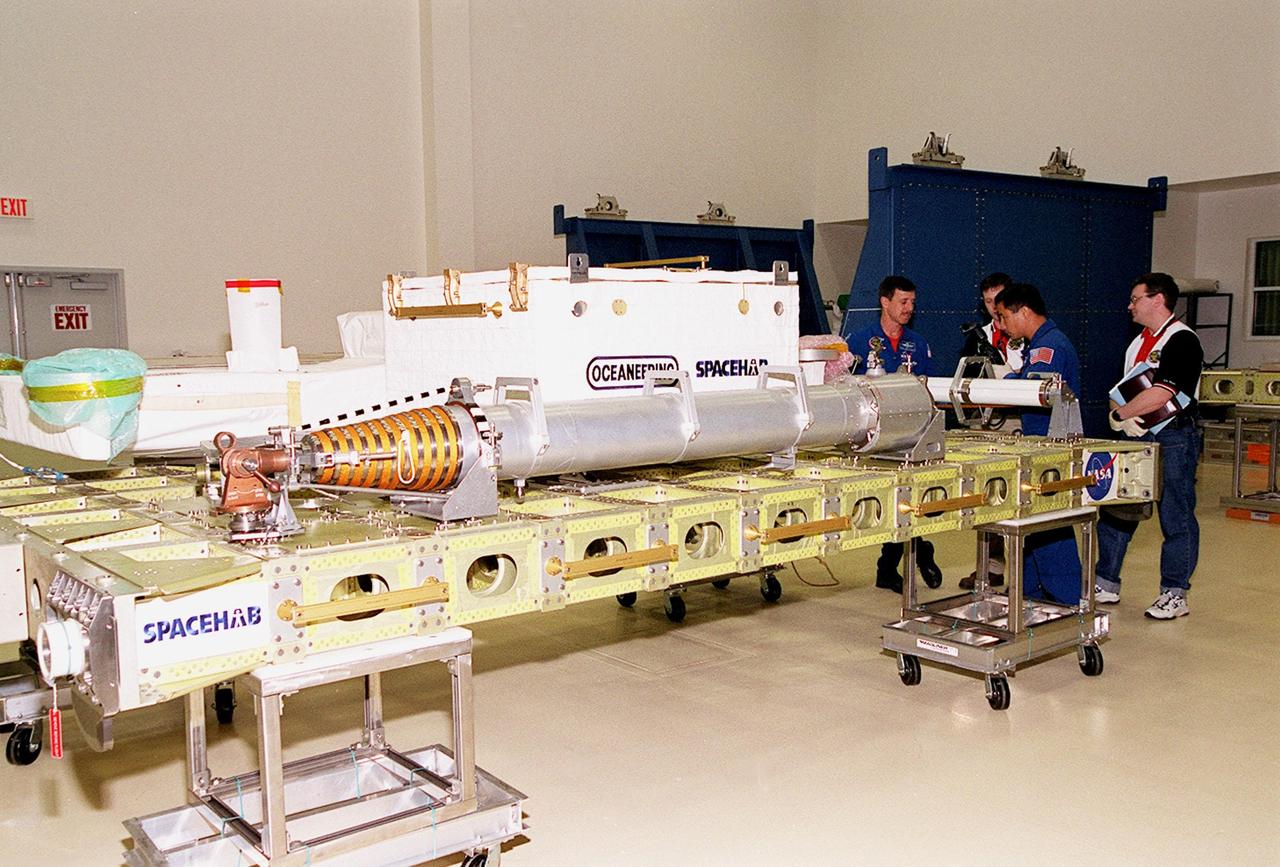
KENNEDY SPACE CENTER, FLA. -- At SPACEHAB, in Cape Canaveral, looking over equipment for their mission are (far left) STS-101 Pilot Scott J. "Doc" Horowitz (Ph.D). and (second from right) Mission Specialist Edward Tsang Lu. Horowitz, Lu and other members of the crew are taking part in a Crew Equipment Interface Test, which gives them an opportunity to look over equipment and payloads that will fly on the mission. Space Shuttle Atlantis will be carrying the SPACEHAB Double Module, which carries internal logistics and resupply cargo for station outfitting. Launch of Atlantis on mission STS-101 is scheduled no earlier than April 13, 2000
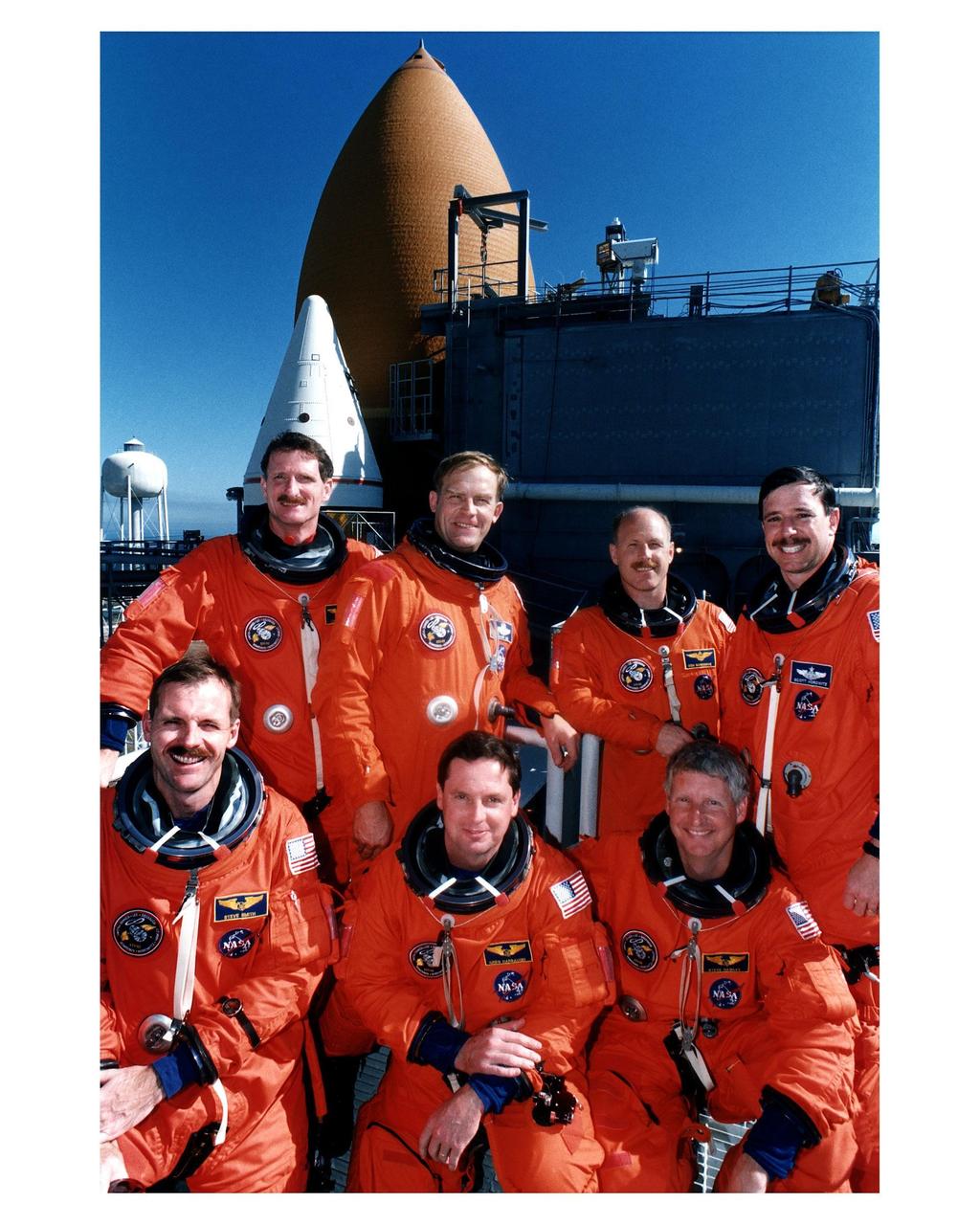
KENNEDY SPACE CENTER, FLA. -- STS-82 crew members are all smiles as they pose for a group photo at Launch Pad 39A in front of the Space Shuttle Discovery. They are participating in the Terminal Countdown Demonstration Test (TCDT), a dress rehearsal for launch. In the front row, from left, are Mission Specialists Steven L. Smith, Gregory J. Harbaugh and Steven A. Hawley. Standing in the back row, from left, are Joseph R. "Joe" Tanner, Payload Commander Mark C. Lee, Mission Commander Kenneth D. Bowersox and Pilot Scott J. "Doc" Horowitz. STS-82 will be the second Hubble Space Telescope servicing mission. Liftoff is targeted for Feb. 11

Members of the STS-101 crew gather with families and friends at Patrick Air Force Base before departure for Houston. Pilot Scott “Doc” Horowitz is joined by his wife, Lisa, and daughter; Mission Specialist Susan J. Helms is at right. After landing at 2:20 a.m. EDT May 29, the crew and their families enjoyed the Memorial Day holiday in Florida. The crew returned from the third flight to the International Space Station where they made repairs, transferred cargo and completed a space walk to install and connect several pieces of equipment on the outside of the Space Station
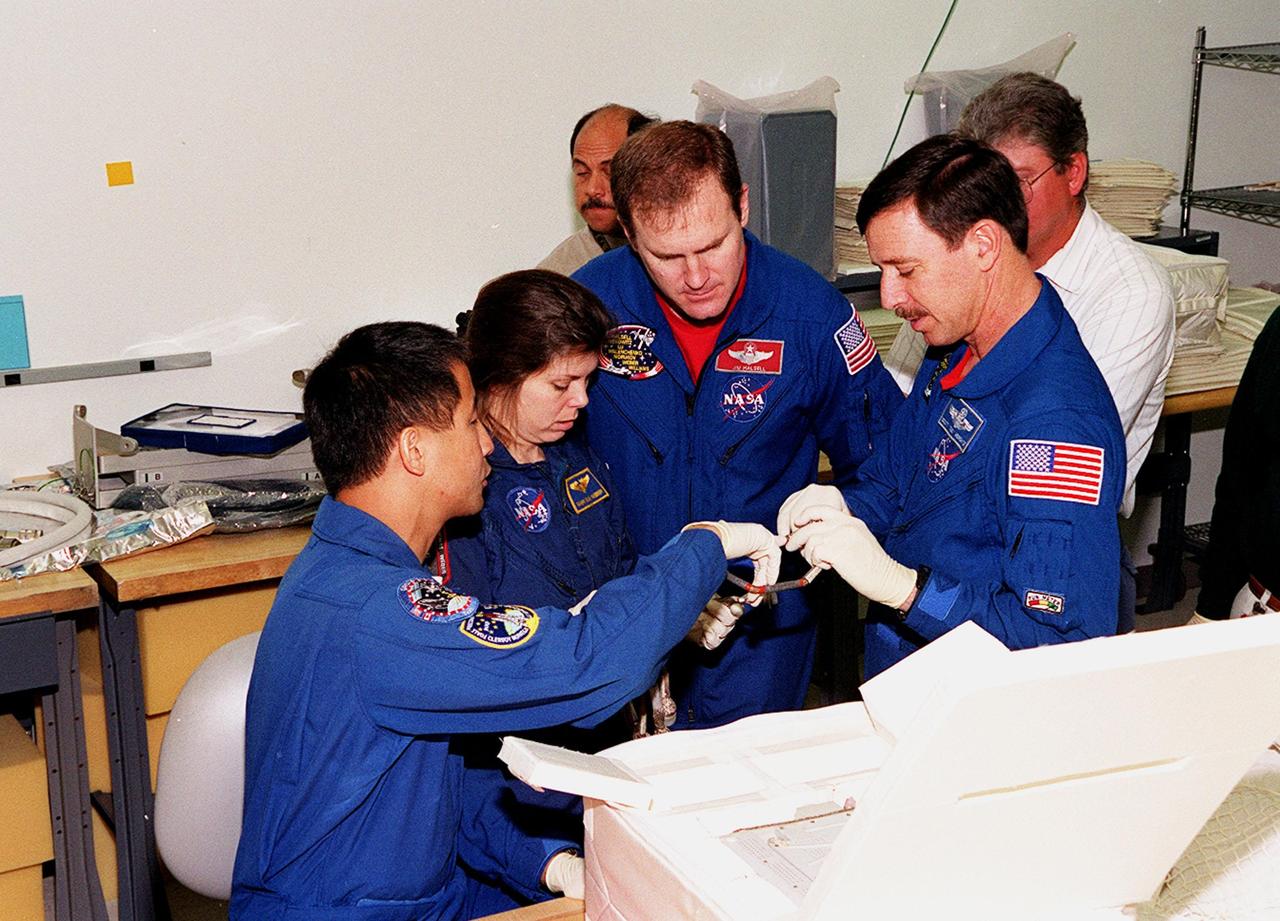
KENNEDY SPACE CENTER, FLA. -- At SPACEHAB, in Cape Canaveral, the STS-101 crew inspect equipment and payload for their mission. From left to right are Mission Specialist Edward Tsang Lu, Mary Ellen Weber (Ph.D.), Commander James D. Halsell Jr. and Pilot Scott J. "Doc" Horowitz (Ph.D). are taking part in a Crew Equipment Interface Test, which gives them an opportunity to look over equipment and payloads that will fly on the mission. Space Shuttle Atlantis will be carrying the SPACEHAB Double Module, which carries internal logistics and resupply cargo for station outfitting. Launch of Atlantis on mission STS-101 is scheduled no earlier than April 13, 2000
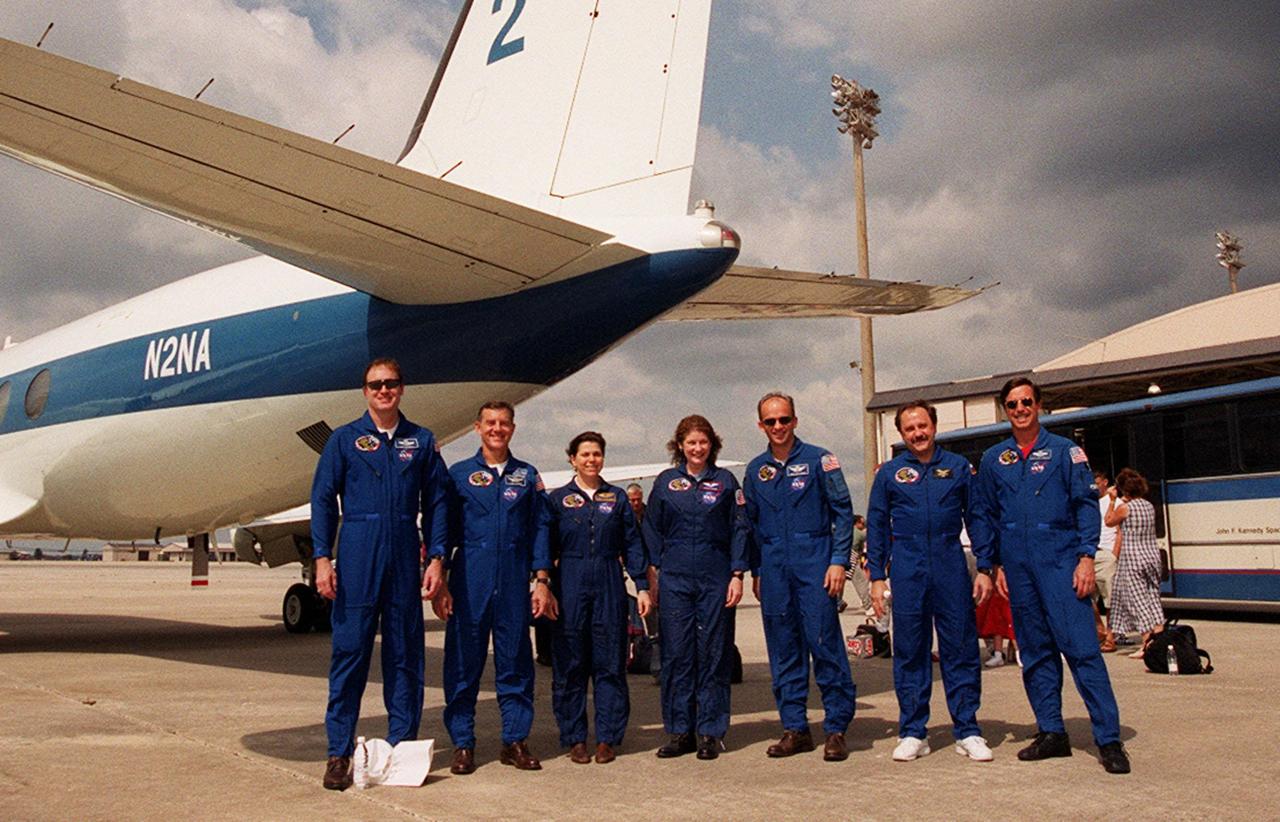
The STS-101 crew pose one more time before departing for Houston from Patrick Air Force Base. From left are Commander James D. Halsell Jr., Mission Specialists James S. Voss, Mary Ellen Weber, Susan J. Helms, Jeffrey N. Williams, Yury Usachev of Russia, and Pilot Scott “Doc” Horowitz. After landing at 2:20 a.m. EDT May 29, the crew and their families enjoyed the Memorial Day holiday in Florida. The crew returned from the third flight to the International Space Station where they made repairs, transferred cargo and completed a space walk to install and connect several pieces of equipment on the outside of the Space Station
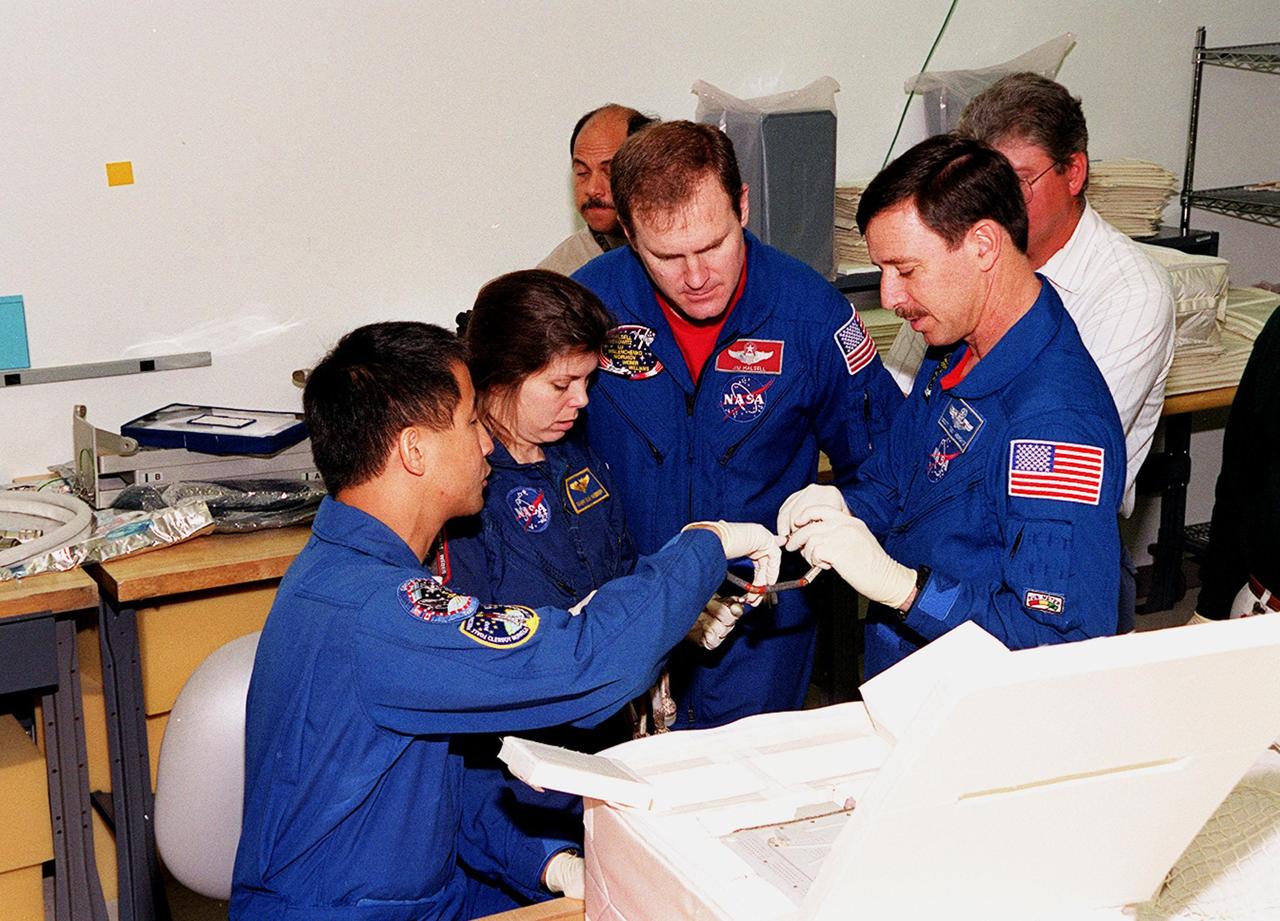
KENNEDY SPACE CENTER, FLA. -- At SPACEHAB, in Cape Canaveral, the STS-101 crew inspect equipment and payload for their mission. From left to right are Mission Specialist Edward Tsang Lu, Mary Ellen Weber (Ph.D.), Commander James D. Halsell Jr. and Pilot Scott J. "Doc" Horowitz (Ph.D). are taking part in a Crew Equipment Interface Test, which gives them an opportunity to look over equipment and payloads that will fly on the mission. Space Shuttle Atlantis will be carrying the SPACEHAB Double Module, which carries internal logistics and resupply cargo for station outfitting. Launch of Atlantis on mission STS-101 is scheduled no earlier than April 13, 2000
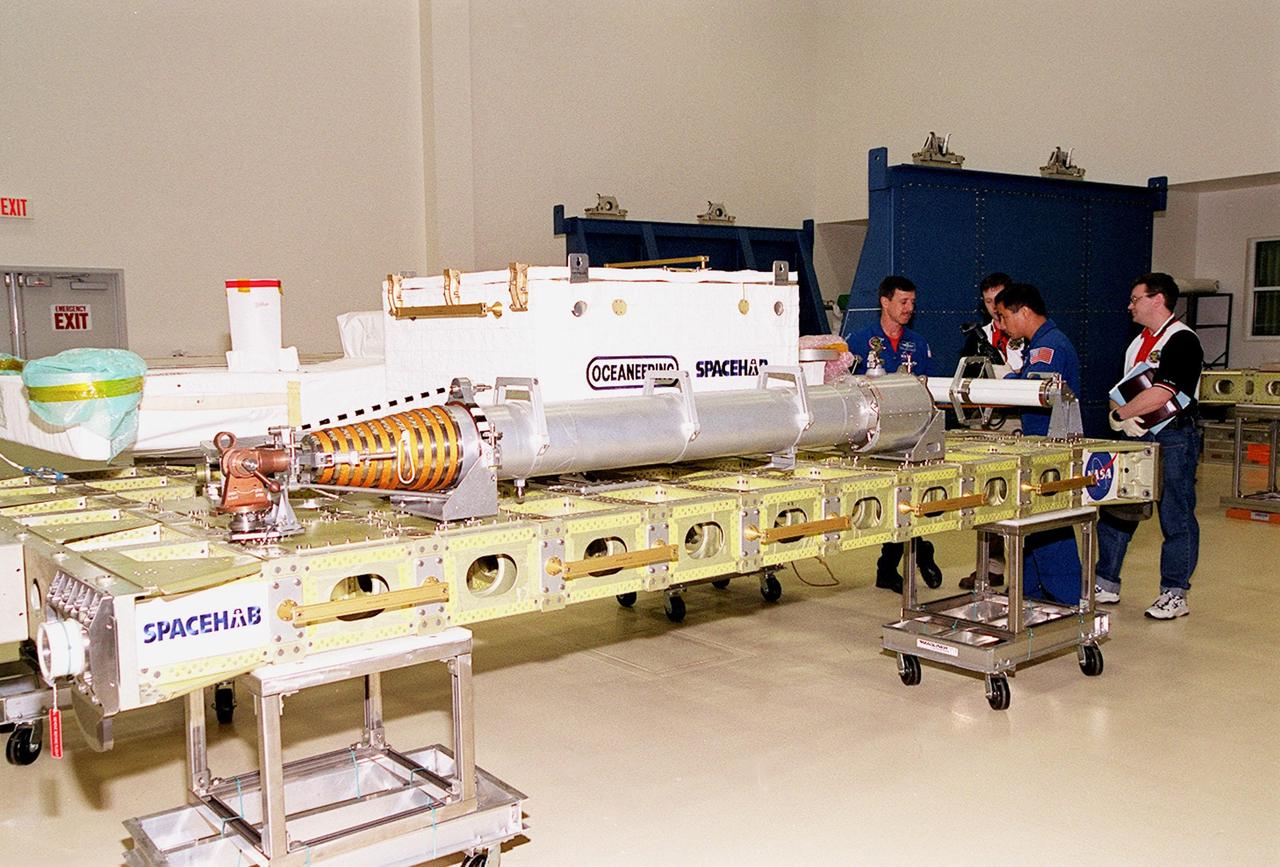
KENNEDY SPACE CENTER, FLA. -- At SPACEHAB, in Cape Canaveral, looking over equipment for their mission are (far left) STS-101 Pilot Scott J. "Doc" Horowitz (Ph.D). and (second from right) Mission Specialist Edward Tsang Lu. Horowitz, Lu and other members of the crew are taking part in a Crew Equipment Interface Test, which gives them an opportunity to look over equipment and payloads that will fly on the mission. Space Shuttle Atlantis will be carrying the SPACEHAB Double Module, which carries internal logistics and resupply cargo for station outfitting. Launch of Atlantis on mission STS-101 is scheduled no earlier than April 13, 2000
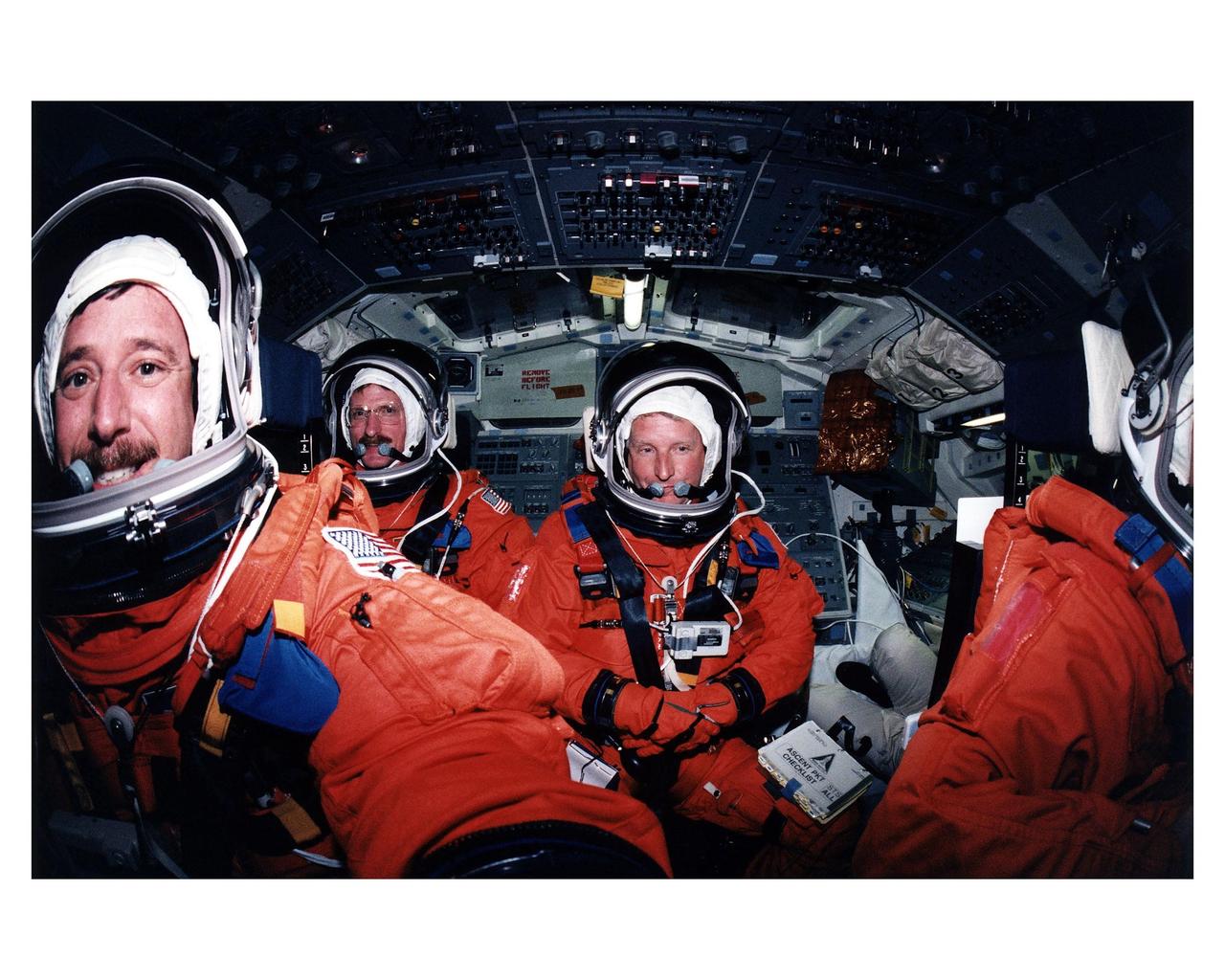
STS-82 crew members participate in a practice launch countdown inside the crew cabin of the Space Shuttle Discovery during Terminal Countdown Demonstration Test (TCDT) activities. Pilot Scott J. "Doc" Horowitz is in foreground at left. Seated across from him, with only an arm and part of his helmet showing, is Mission Commander Kenneth D. Bowersox. At rear, from left, are Mission Specialists Joseph R. "Joe" Tanner and Steven A. Hawley. STS-82 will be the second Hubble Space Telescope servicing mission. Liftoff is targeted for Feb. 11
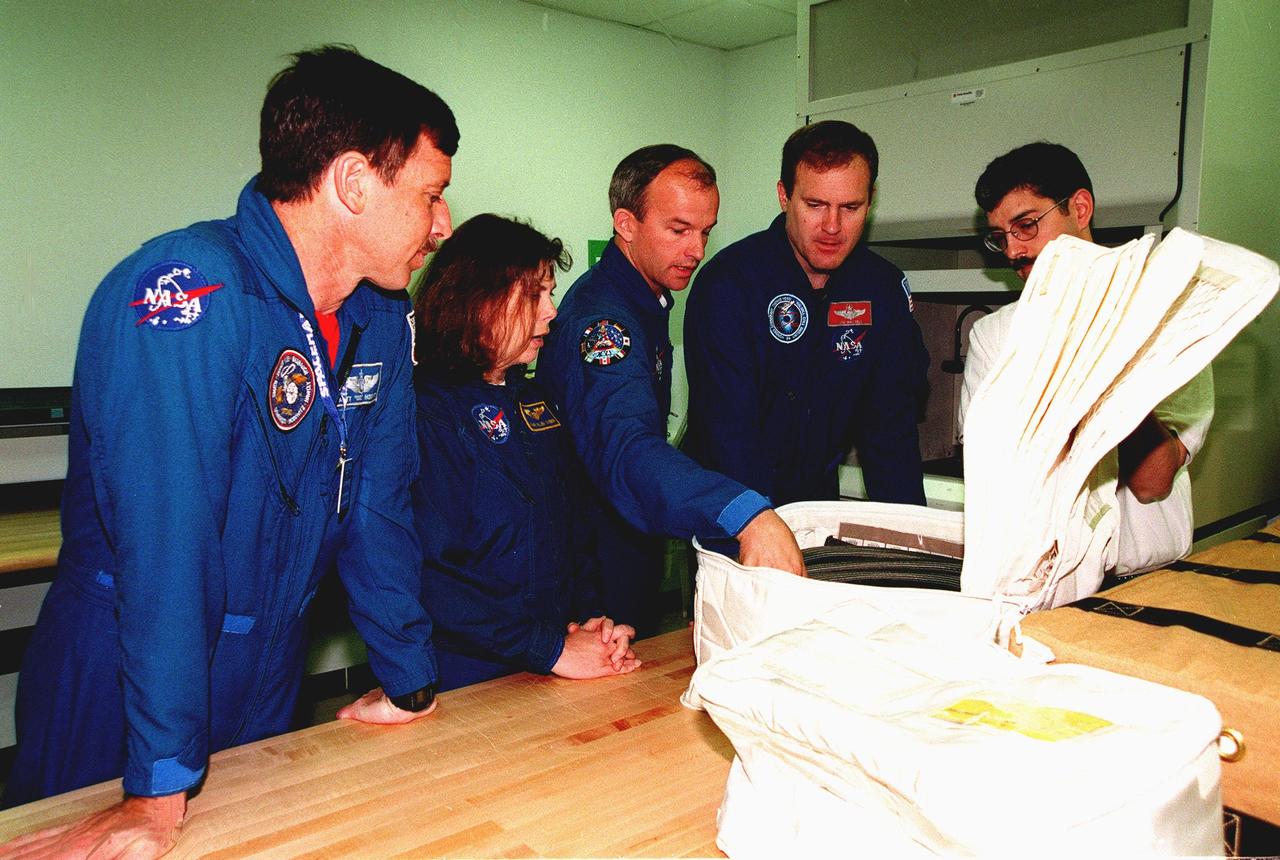
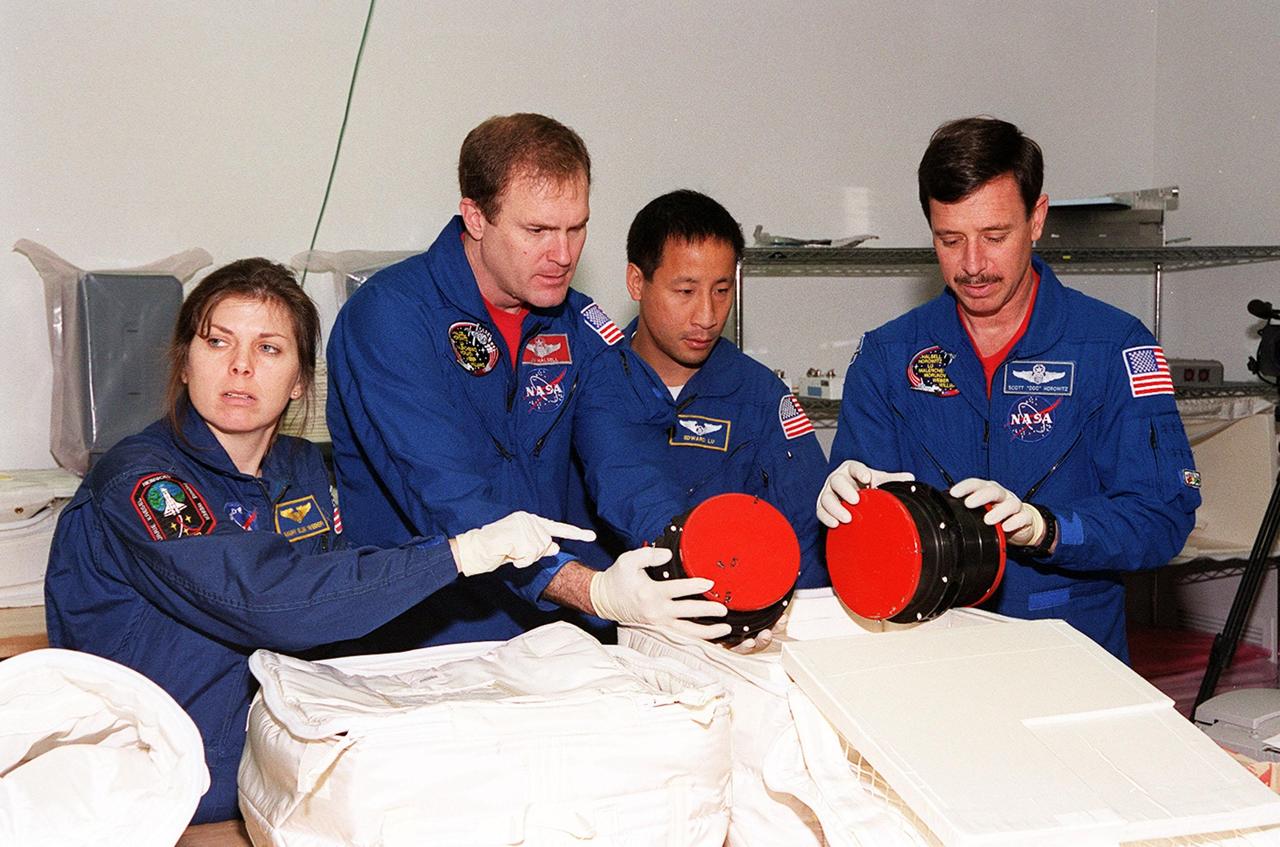
KENNEDY SPACE CENTER, FLA. -- At SPACEHAB, in Cape Canaveral, members of the STS-101 crew inspect equipment and payload for their mission. From left to right (in uniform) are Mission Specialist Edward Tsang Lu, Commander James D. Halsell Jr., Pilot Scott J. "Doc" Horowitz (Ph.D) and Mission Specialist Mary Ellen Weber (Ph.D.). They are taking part in a Crew Equipment Interface Test, which gives them an opportunity to look over equipment and payloads that will fly on the mission. Space Shuttle Atlantis will be carrying the SPACEHAB Double Module, which carries internal logistics and resupply cargo for station outfitting. Launch of Atlantis on mission STS-101 is scheduled no earlier than April 13, 2000
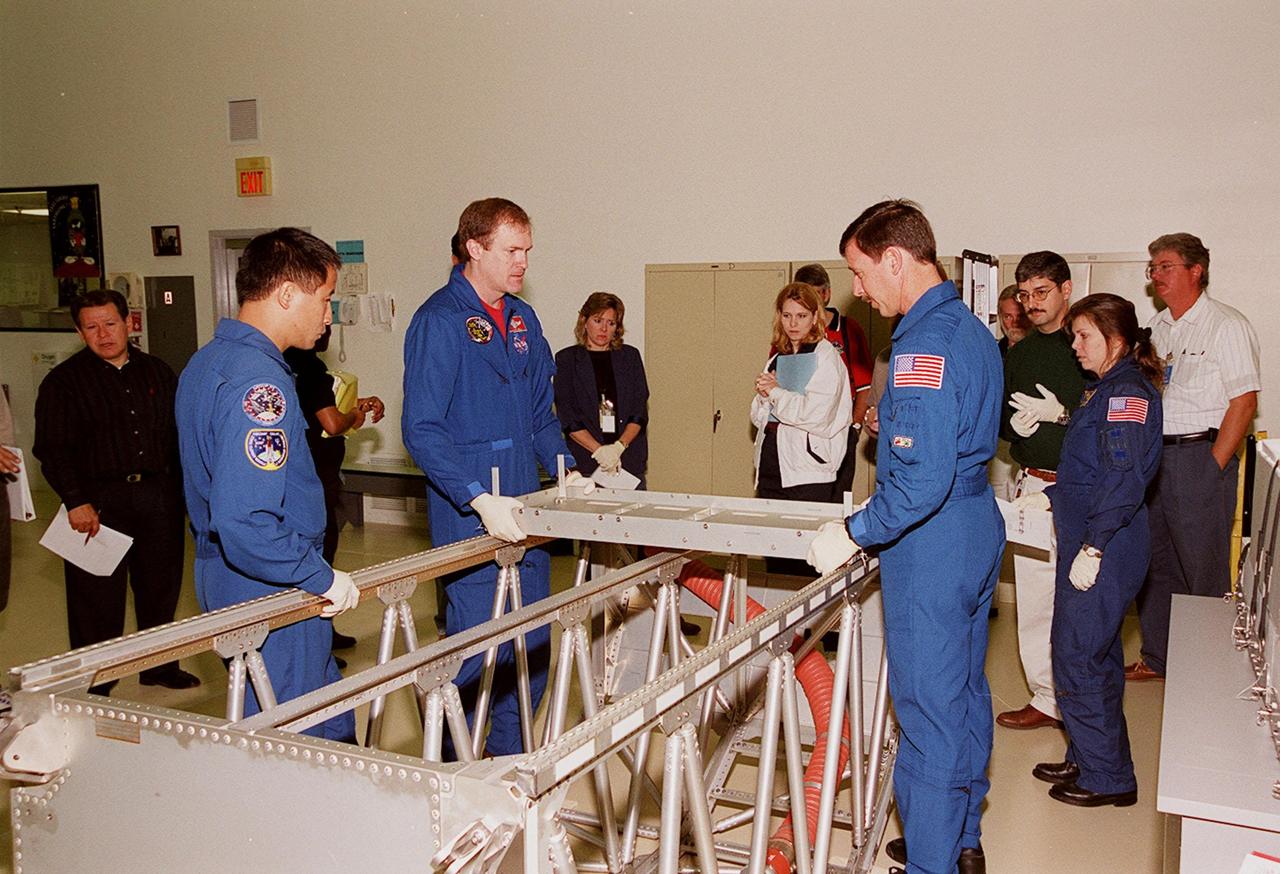
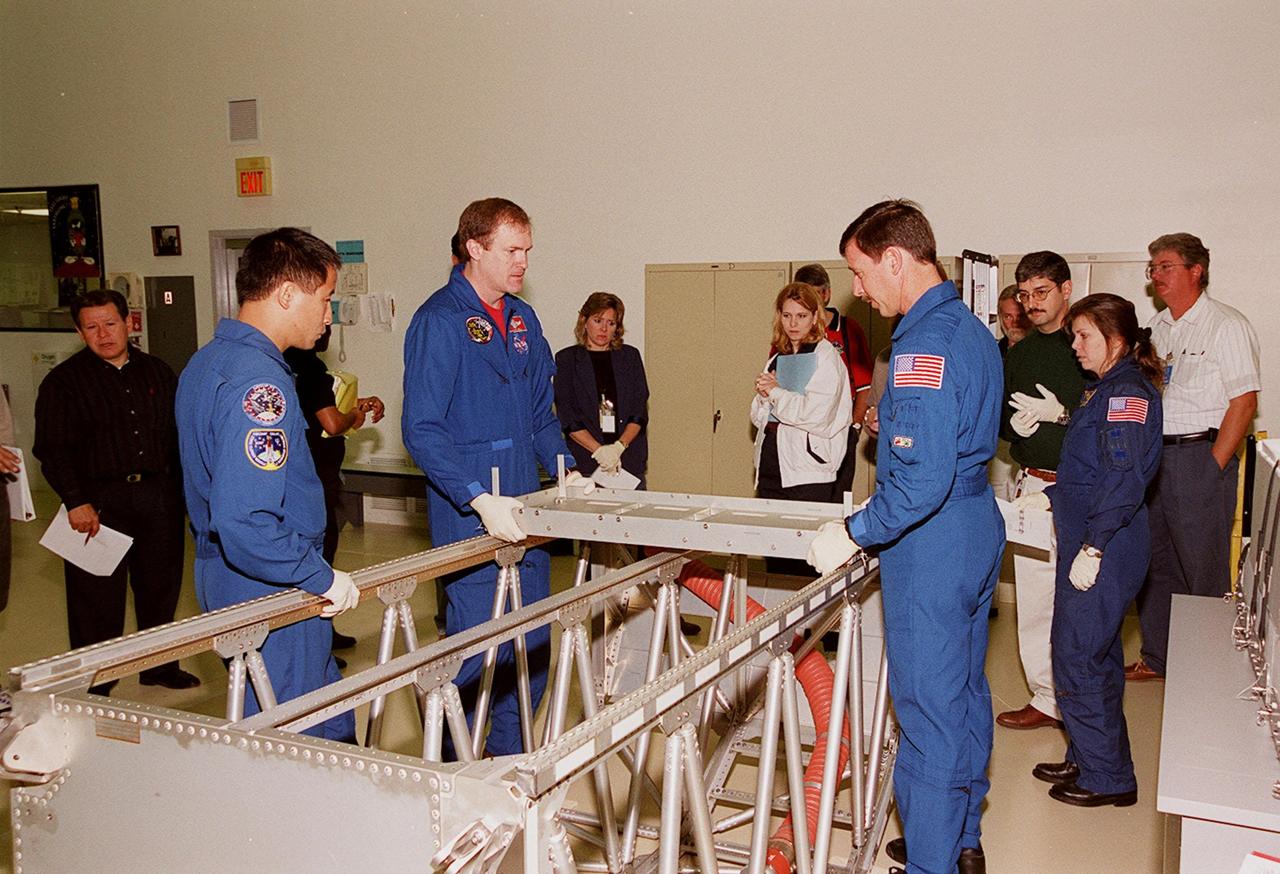
KENNEDY SPACE CENTER, FLA. -- At the SPACEHAB Facility, members of the STS-101 crew look over equipment during familiarization activities. From left are Pilot Scott J. "Doc" Horowitz (Ph.D.), Mission Specialists Mary Ellen Weber (Ph.D.) and Jeffrey N. Williams, and Commander James Donald Halsell Jr., plus Sean Hicks, with Boeing in Huntsville, Ala. Other crew members are Mission Specialists Edward Tsang Lu (Ph.D.), and Yuri Ivanovich Malenchenko and Boris Morukov, who represent the Russian Space Agency. Mission STS-101 is the third flight in construction of the International Space Station. The 11-day mission is targeted for launch on December 2, 1999, at Launch Pad 39A
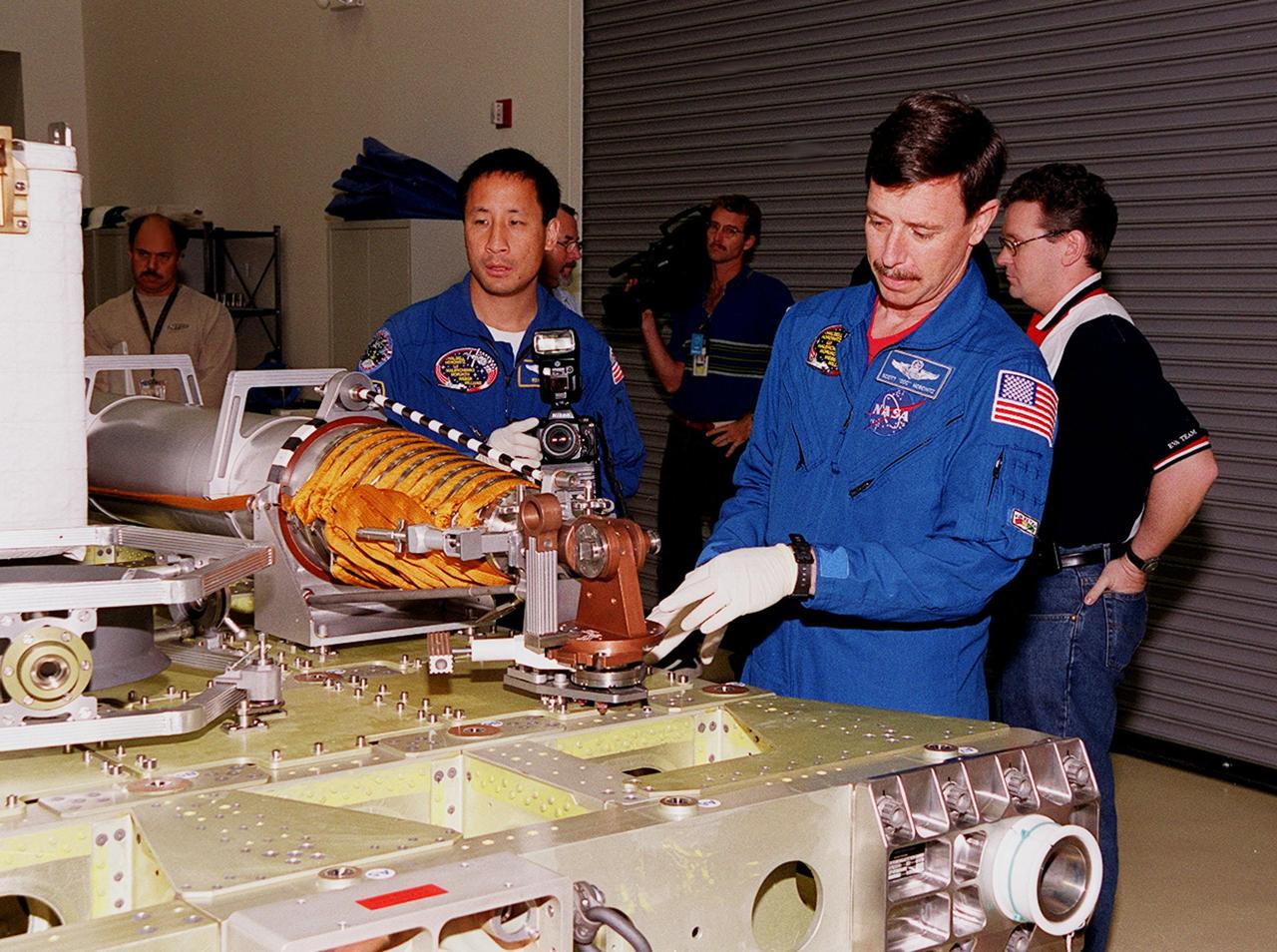
KENNEDY SPACE CENTER, FLA. -- At SPACEHAB, in Cape Canaveral, looking over the Russian crane, Strela, are STS-101 Mission Specialist Edward Tsang Lu (left) and Pilot Scott J. "Doc" Horowitz (Ph.D). Lu, Horowitz and other members of the crew are taking part in a Crew Equipment Interface Test, which gives them an opportunity to look over equipment and payloads that will fly on the mission. Space Shuttle Atlantis will be carrying the SPACEHAB Double Module, which carries internal logistics and resupply cargo for station outfitting. Launch of Atlantis on mission STS-101 is scheduled no earlier than April 13, 2000
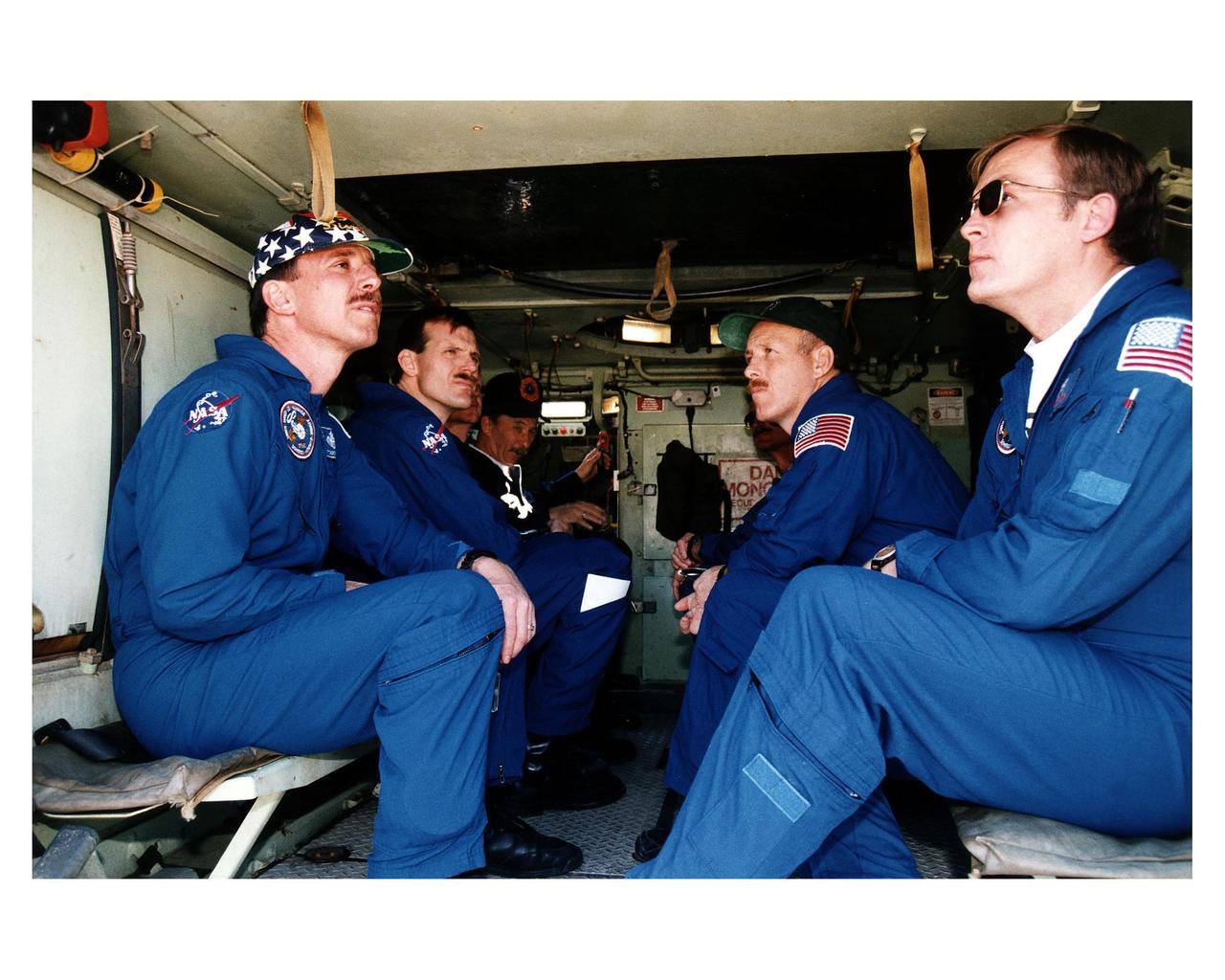
STS-82 crew members ride in and learn how to operate an M-113 armored personnel carrier during Terminal Countdown Demonstration Test (TCDT) activities prior to launch. The four crew members dressed in their blue flight suits and visible here are, from left, Pilot Scott J. "Doc" Horowitz, Mission Specialist Joseph R. "Joe" Tanner, Mission Commander Kenneth D. Bowersox and Payload Commander Mark C. Lee. George Hoggard, a training officer with KSC Fire Services, is visible in the background at left. The 10-day STS-82 flight, which will be the second Hubble Space Telescope servicing mission, is targeted for a Feb. 11 liftoff
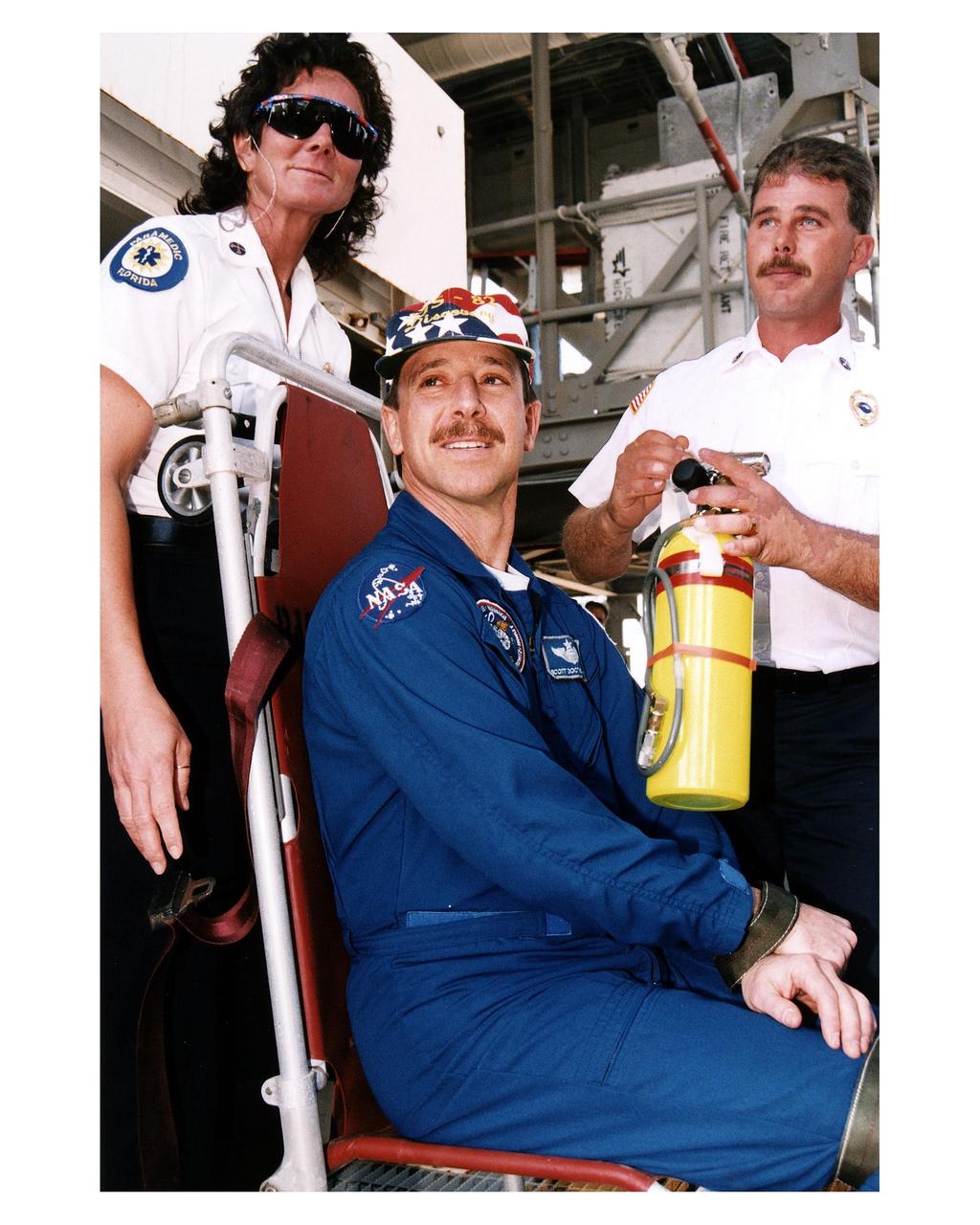
KENNEDY SPACE CENTER, Fla. -- STS-82 Pilot Scott J. "Doc" Horowitz, seated, poses as an immobilized person while pad rescue leaders Kathy Weaver and Steve Kelly of KSC Fire Rescue Services demonstrate the use of flight crew rescue equipment. The demonstration is part of crew training during Terminal Countdown Demonstration Test (TCDT) activities at Launch Pad 39A. The seven-member STS-82 crew will conduct the second Hubble Space Telescope servicing mission. Liftoff of the 10-day flight is scheduled Feb. 11
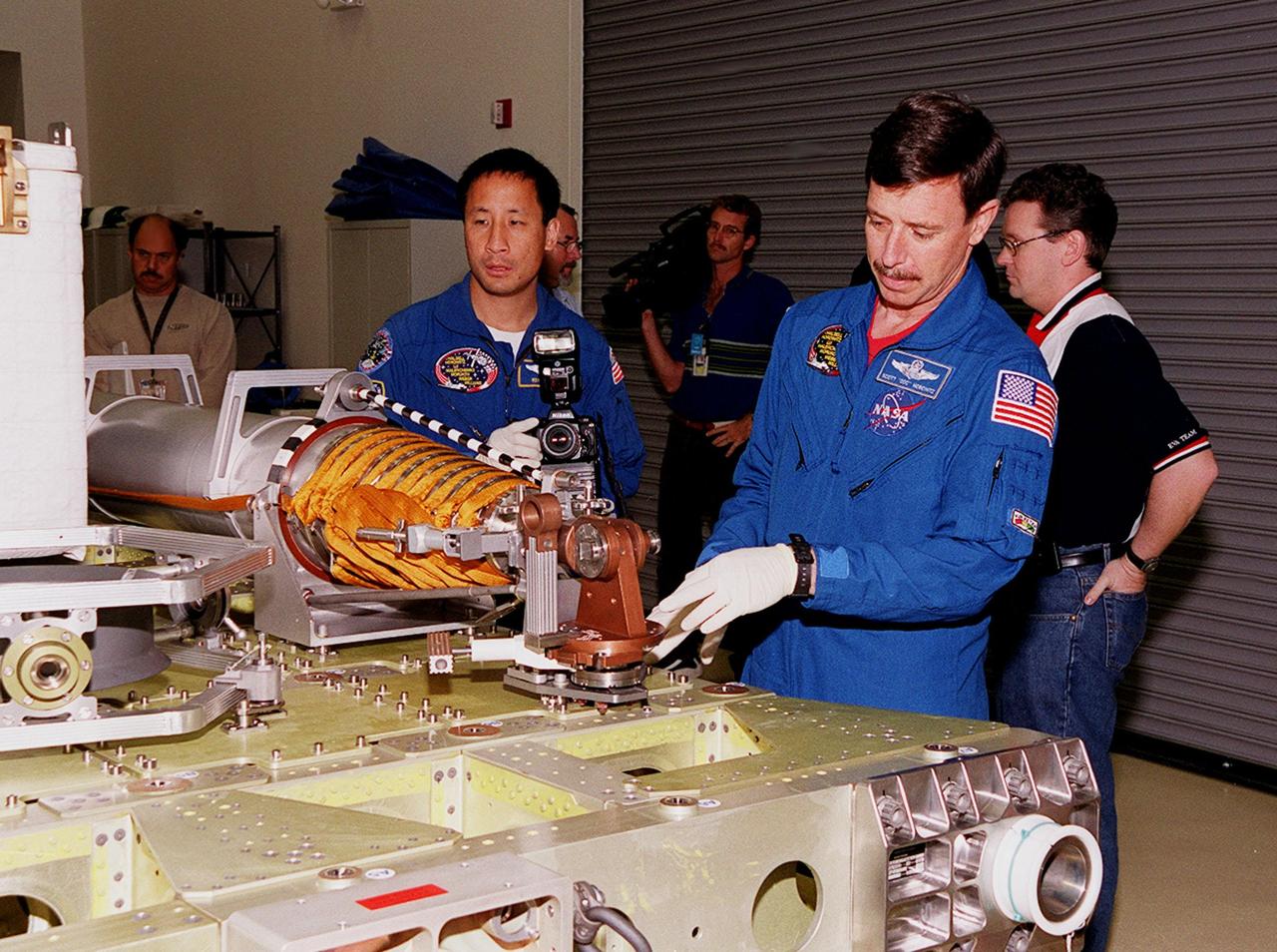
KENNEDY SPACE CENTER, FLA. -- At SPACEHAB, in Cape Canaveral, looking over the Russian crane, Strela, are STS-101 Mission Specialist Edward Tsang Lu (left) and Pilot Scott J. "Doc" Horowitz (Ph.D). Lu, Horowitz and other members of the crew are taking part in a Crew Equipment Interface Test, which gives them an opportunity to look over equipment and payloads that will fly on the mission. Space Shuttle Atlantis will be carrying the SPACEHAB Double Module, which carries internal logistics and resupply cargo for station outfitting. Launch of Atlantis on mission STS-101 is scheduled no earlier than April 13, 2000
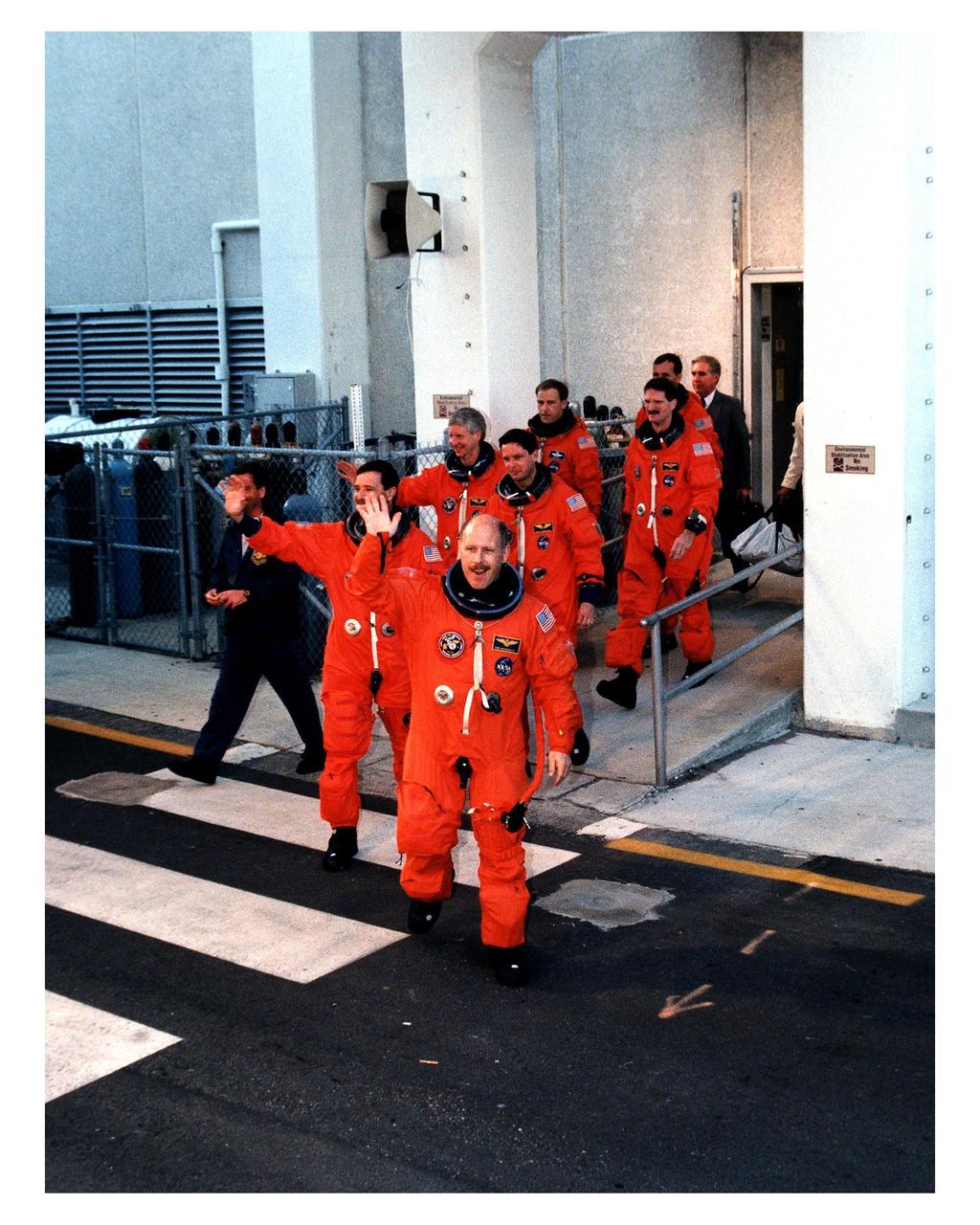
The seven-member STS-82 crew walks out of the KSC Operations and Checkout Building en route to Launch Pad 39A as part of the Terminal Countdown Demonstration Test (TCDT), a dress rehearsal for launch. Leading the way is Mission Commander Kenneth D. Bowersox. Pilot Scott J. "Doc" Horowitz is close behind him at left. Clockwise from left are Mission Specialist Steven A. Hawley, Payload Commander Mark C. Lee, and Mission Specialists Steven L. Smith, Joseph R. "Joe" Tanner and Gregory J. Harbaugh. STS-82 will be the second Hubble Space Telescope servicing mission. Liftoff is targeted for Feb. 11
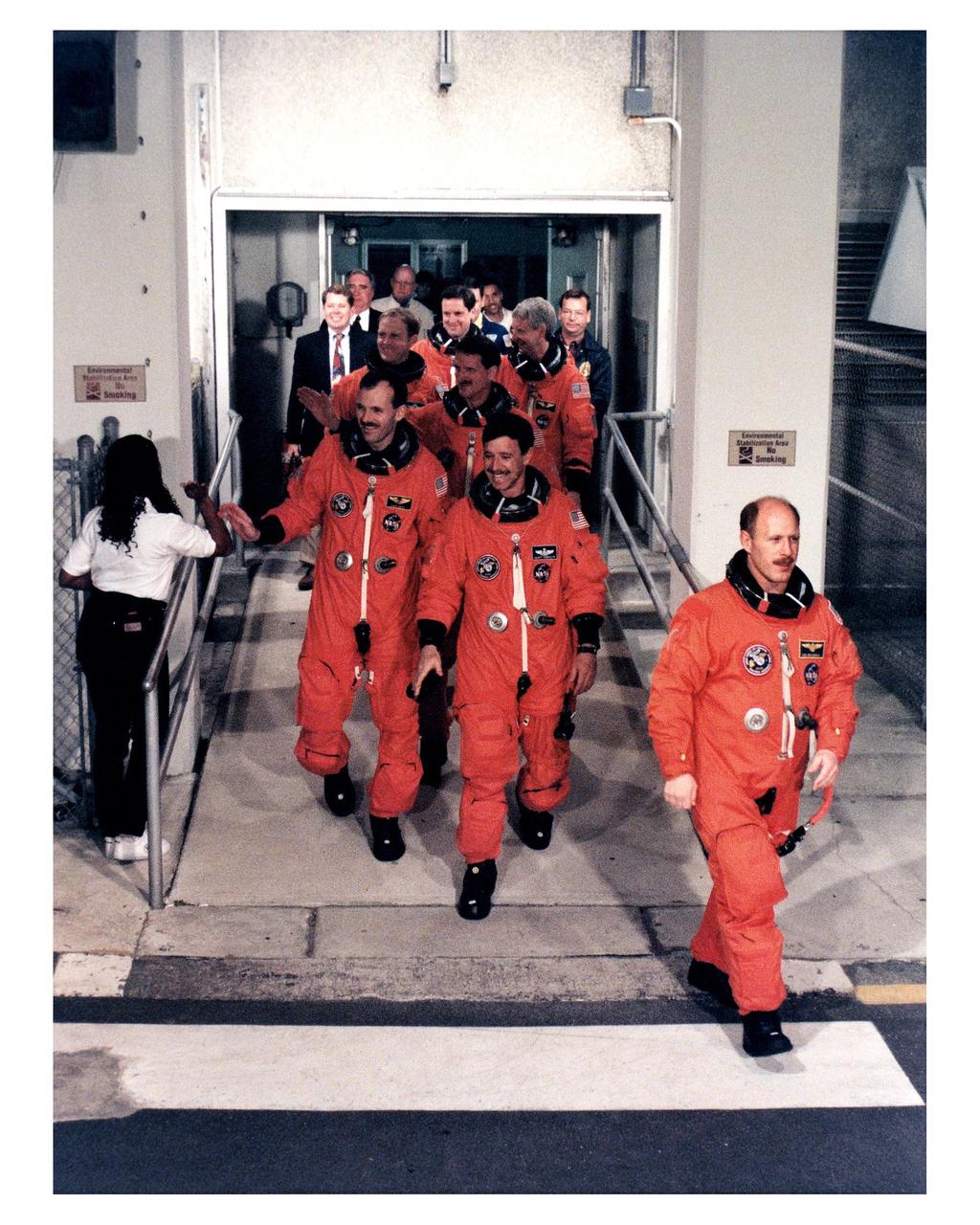
Looking relaxed and ready to fly, the STS-82 crew departs from the Operations and Checkout Building en route to Launch Pad 39A, where the Space Shuttle Discovery awaits liftoff on a 10-day mission to service the Hubble Space Telescope (HST). Leading the way is Mission Commander Kenneth D. Bowersox. Following him, clockwise from left front, are Mission Specialist Steven L. Smith, Payload Commander Mark C. Lee, Mission Specialists Gregory J. Harbaugh, Steven A. Hawley and Joseph R. "Joe" Tanner and Pilot Scott J. "Doc" Horowitz
The STS-101 crew pose one more time before departing for Houston from Patrick Air Force Base. From left are Commander James D. Halsell Jr., Mission Specialists James S. Voss, Mary Ellen Weber, Susan J. Helms, Jeffrey N. Williams, Yury Usachev of Russia, and Pilot Scott “Doc” Horowitz. After landing at 2:20 a.m. EDT May 29, the crew and their families enjoyed the Memorial Day holiday in Florida. The crew returned from the third flight to the International Space Station where they made repairs, transferred cargo and completed a space walk to install and connect several pieces of equipment on the outside of the Space Station
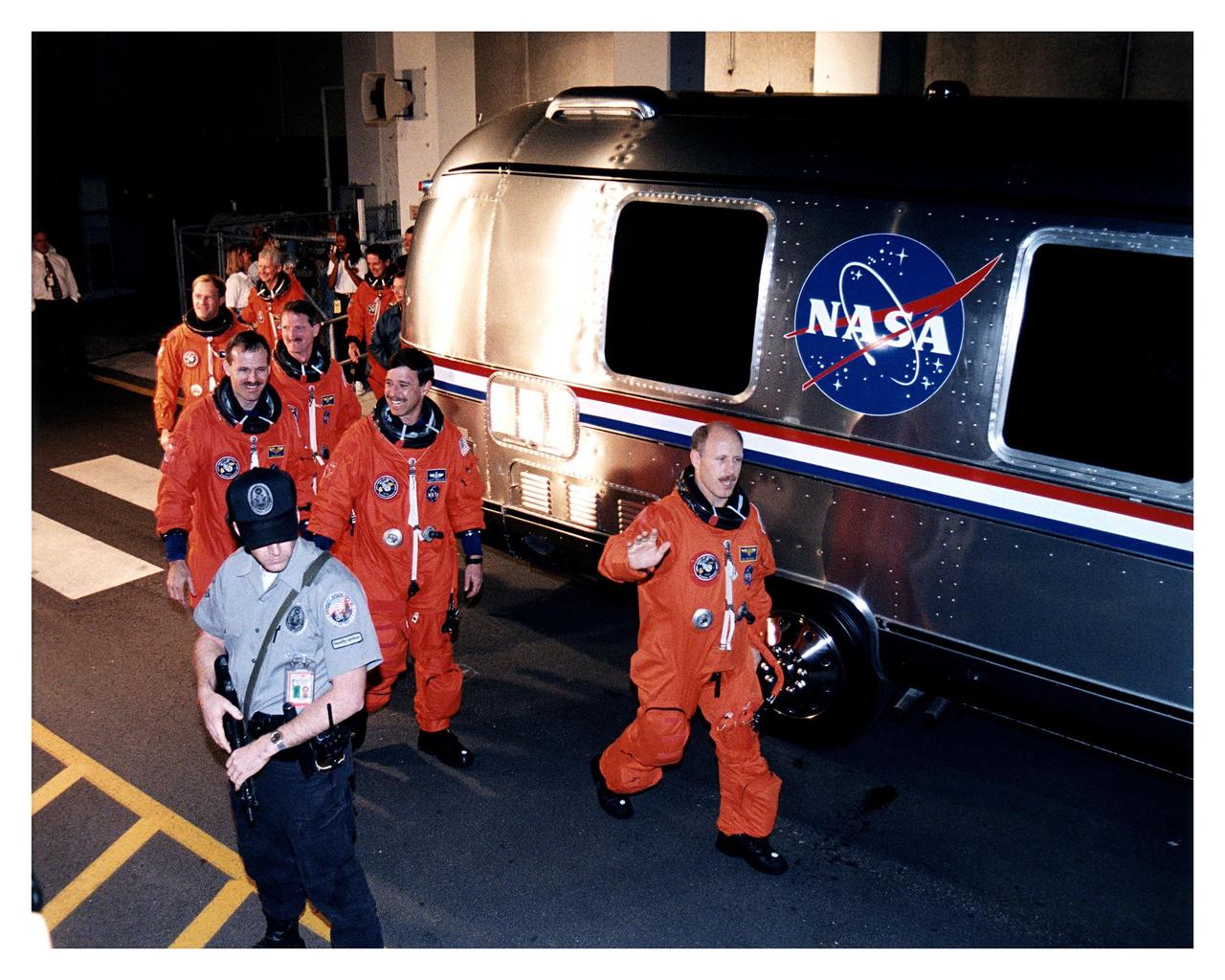
STS-82 Mission Commander Kenneth D. Bowersox leads the way to the astronaut van as the crew departs from the Operations and Checkout Building en route to Launch Pad 39A, where the Space Shuttle Discovery awaits liftoff on a 10-day mission to service the Hubble Space Telescope (HST). Directly behind him is Pilot Scott J. "Doc" Horowitz. The other five crew members, clockwise from left, are Mission Specialist Steven L. Smith, Payload Commander Mark C. Lee, and Mission Specialists Steven A. Hawley, Gregory J. Harbaugh and Joseph R. "Joe" Tanner
KENNEDY SPACE CENTER, FLA. -- At SPACEHAB, in Cape Canaveral, members of the STS-101 crew inspect equipment and payload for their mission. From left to right (in uniform) are Mission Specialist Edward Tsang Lu, Commander James D. Halsell Jr., Pilot Scott J. "Doc" Horowitz (Ph.D) and Mission Specialist Mary Ellen Weber (Ph.D.). They are taking part in a Crew Equipment Interface Test, which gives them an opportunity to look over equipment and payloads that will fly on the mission. Space Shuttle Atlantis will be carrying the SPACEHAB Double Module, which carries internal logistics and resupply cargo for station outfitting. Launch of Atlantis on mission STS-101 is scheduled no earlier than April 13, 2000
KENNEDY SPACE CENTER, FLA. -- At SPACEHAB, in Cape Canaveral, the STS-101 crew inspect equipment and payload for their mission. From left to right are Mission Specialist Mary Ellen Weber (Ph.D.) , Commander James D. Halsell Jr., Mission Specialist Edward Tsang Lu and Pilot Scott J. "Doc" Horowitz (Ph.D.). They are taking part in a Crew Equipment Interface Test, which gives them an opportunity to look over equipment and payloads that will fly on the mission. Space Shuttle Atlantis will be carrying the SPACEHAB Double Module, which carries internal logistics and resupply cargo for station outfitting. Launch of Atlantis on mission STS-101 is scheduled no earlier than April 13, 2000
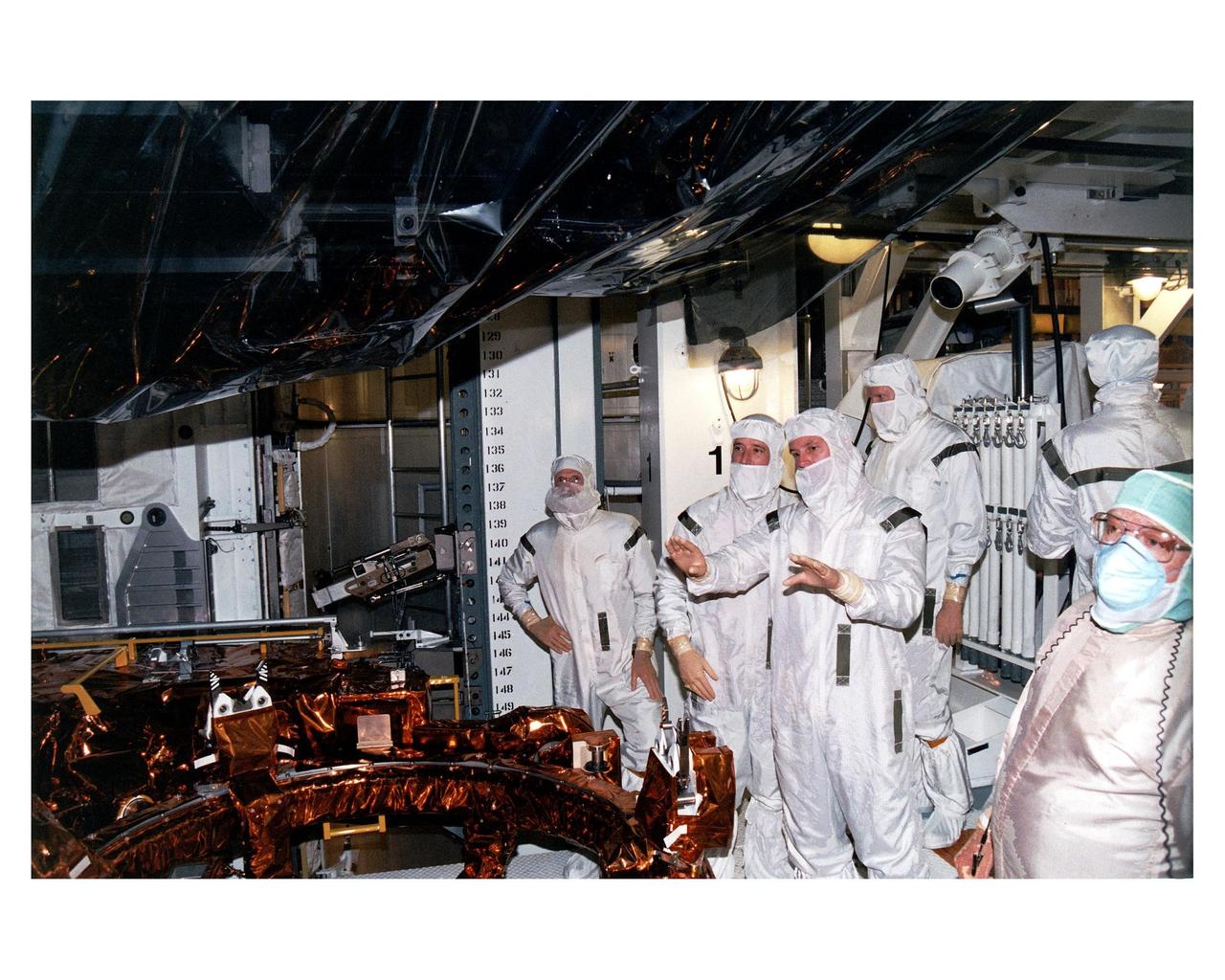
STS-82 crew members make a final inspection of the payload for the second Hubble Space Telescope (HST) servicing mission at Launch Pad 39A where the Space Shuttle Discovery is undergoing final preparations for launch. From left, are Mission Specialist Joseph R. "Joe" Tanner, Pilot Scott J. "Doc" Horowitz and Mission Specialist Gregory J. Harbaugh. Standing directly behind them is Mission Specialist Steven A. Hawley. STS-82 is scheduled for liftoff on Feb. 11 during a 65-minute launch window which opens at 3:56 a.m. EST
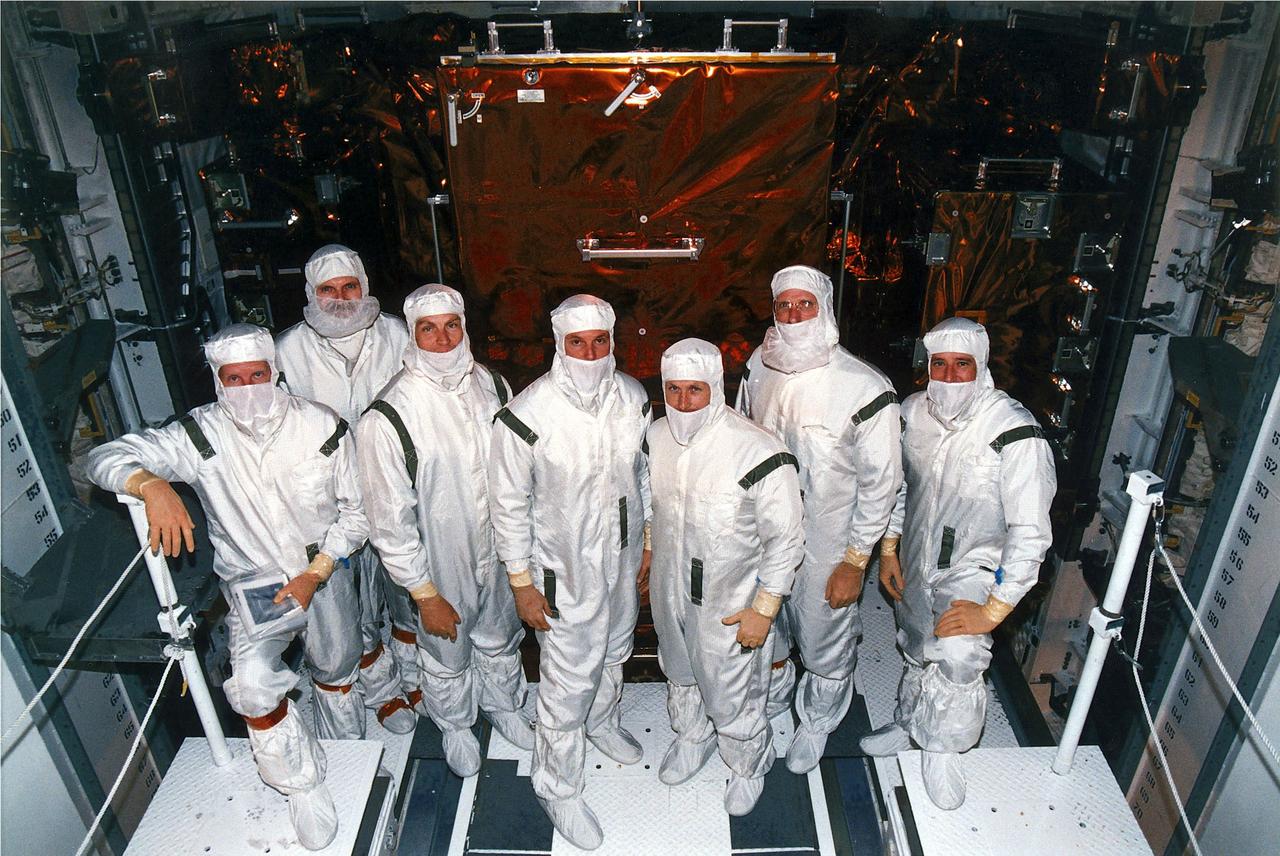
KENNEDY SPACE CENTER, FLA. - STS-82 crew members pose in their clean room suits at Launch Pad 39A where the Space Shuttle Discovery is undergoing final preparations for liftoff on the second Hubble Space Telescope (HST) servicing mission. They are making a final inspection of the payload before payload bay closure. From left are Mission Specialists Steven A. Hawley and Steven L. Smith, Payload Commander Mark C. Lee, Mission Specialist GregoryJ. Harbaugh, Mission Commander Kenneth D. Bowersox, Mission Specialist Joseph R. "Joe" Tanner and Pilot Scott J. "Doc" Horowitz. STS-82 is scheduled for liftoff on Feb. 11 during a 65-minute launch window that opens at 3:56 a.m. EST.
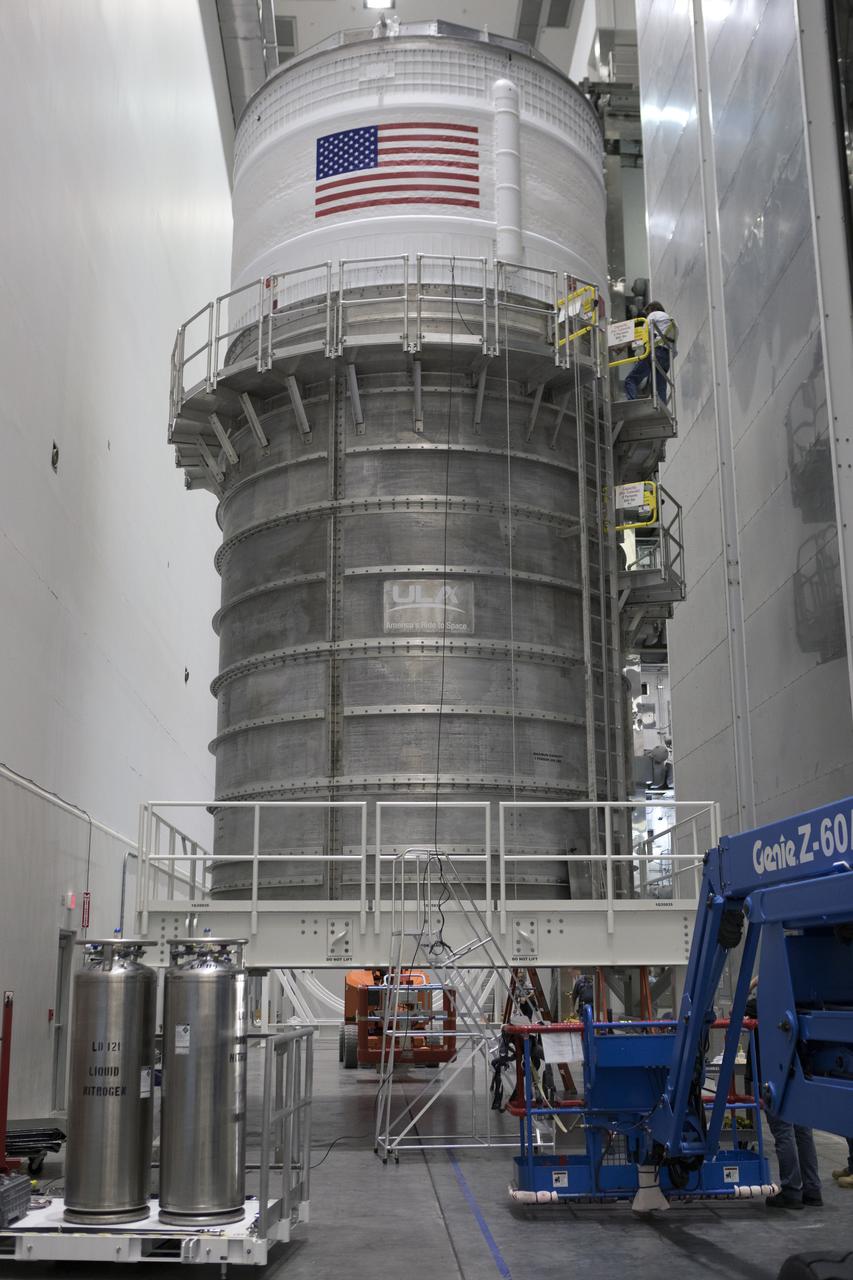
The Interim Cryogenic Propulsion Stage (ICPS) for NASA's Space Launch System (SLS) rocket is packed inside a canister and ready to be moved from the United Launch Alliance (ULA) Delta Operations Center near Space Launch Complex 37 at Cape Canaveral Air Force Station to the Space Station Processing Facility at NASA's Kennedy Space Center in Florida. The ICPS is the first integrated piece of flight hardware to arrive for the SLS. It is the in-space stage that is located toward the top of the rocket, between the Launch Vehicle Stage Adapter and the Orion Spacecraft Adapter. It will provide some of the in-space propulsion during Orion's first flight test atop the SLS on Exploration Mission-1.
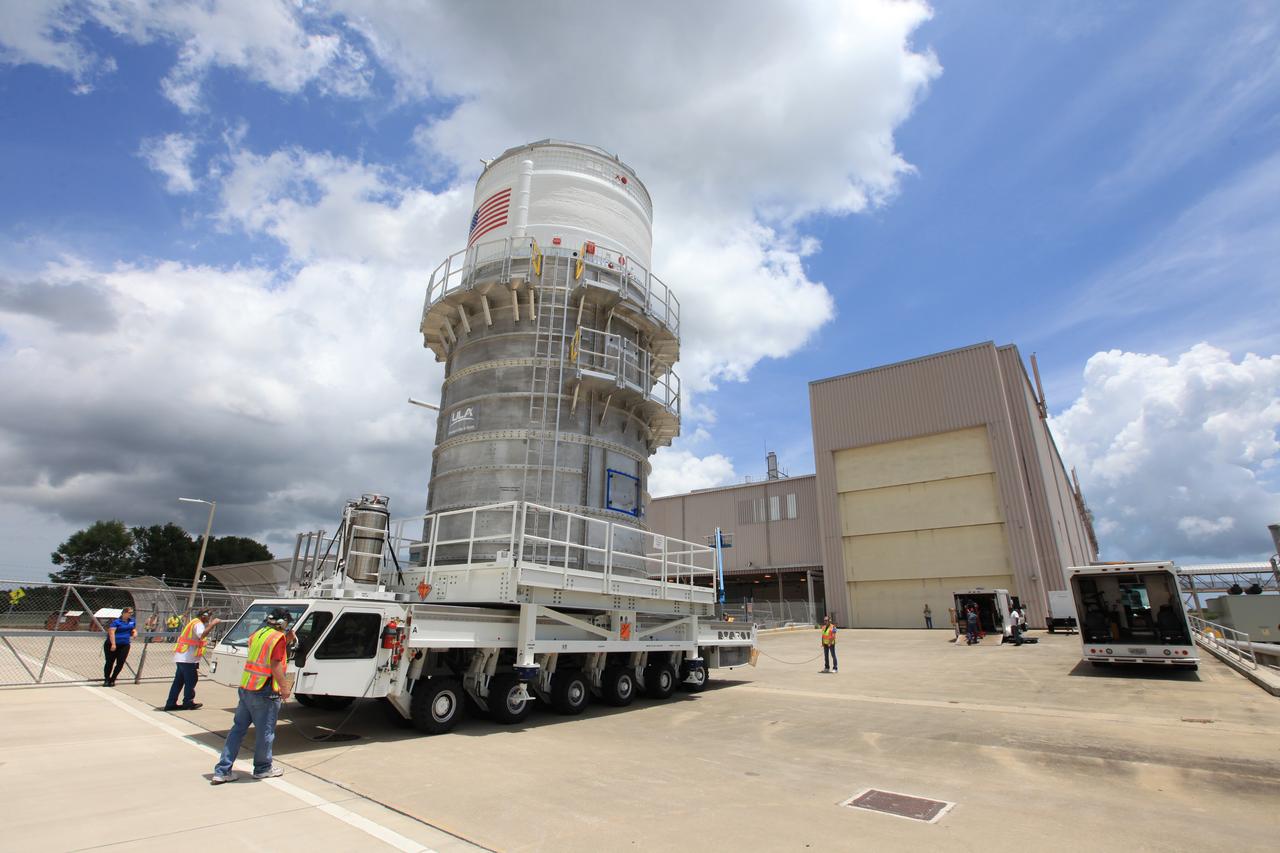
Packed inside its canister, the Interim Cryogenic Propulsion Stage (ICPS) for NASA's Space Launch System (SLS) rocket arrives at the low bay entrance of the Space Station Processing Facility at NASA's Kennedy Space Center in Florida. The ICPS is the first integrated piece of flight hardware to arrive for the SLS. It is the in-space stage that is located toward the top of the rocket, between the Launch Vehicle Stage Adapter and the Orion Spacecraft Adapter. It will provide some of the in-space propulsion during Orion's first flight test atop the SLS on Exploration Mission-1.
The Centaur upper stage that will help launch NOAA's Geostationary Operational Environmental Satellite-S, or GOES-S, is being transported from the Atlas Spaceflight Operations Center at Cape Canaveral Air Force Station to the Delta Operations Center for further processing. GOES-S is the second in a series of four advanced geostationary weather satellites. The GOES-R series - consisting of the GOES-R, GOES-S, GOES-T and GOES-U spacecraft - will significantly improve the detection and observation of environmental phenomena that directly affect public safety, protection of property and the nation's economic health and prosperity. GOES-S is slated to launch March 1, 2018 aboard a United Launch Alliance Atlas V rocket.
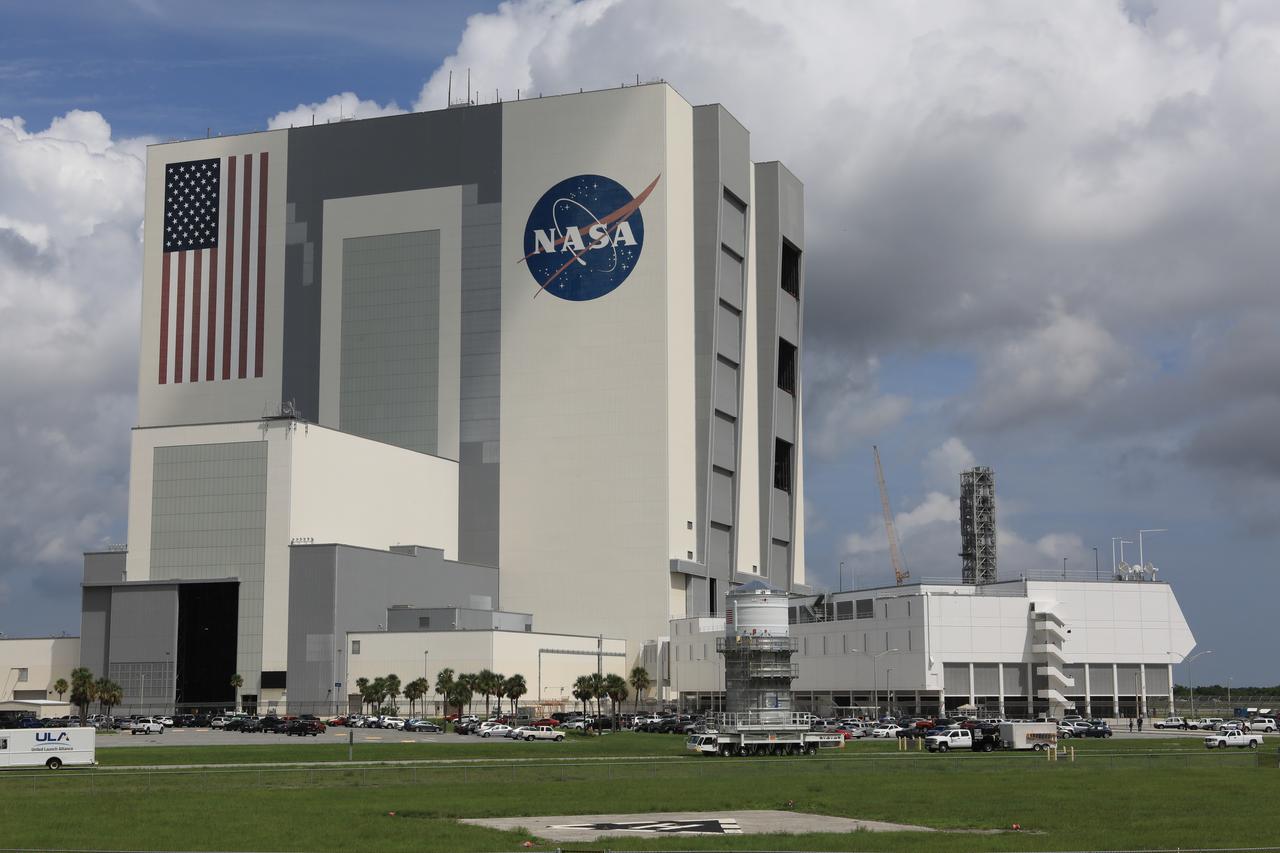
Packed inside its canister, the Interim Cryogenic Propulsion Stage (ICPS) for NASA's Space Launch System (SLS) rocket passes by the Vehicle Assembly Building on its way to the Space Station Processing Facility at NASA's Kennedy Space Center in Florida. The ICPS is the first integrated piece of flight hardware to arrive for the SLS. It is the in-space stage that is located toward the top of the rocket, between the Launch Vehicle Stage Adapter and the Orion Spacecraft Adapter. It will provide some of the in-space propulsion during Orion's first flight test atop the SLS on Exploration Mission-1.
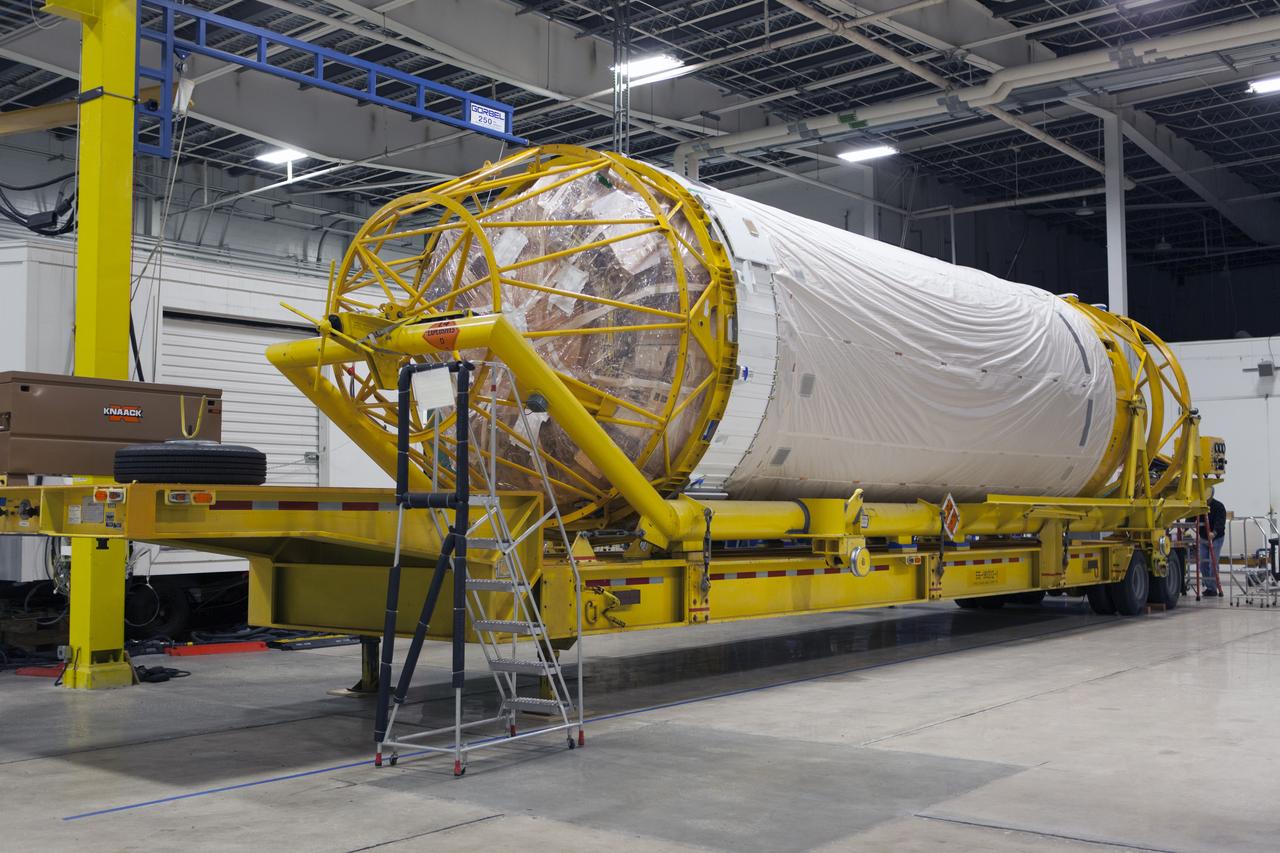
Inside the Atlas Spaceflight Operations Center near Space Launch Complex 41 at Cape Canaveral Air Force Station, the Centaur upper stage for NOAA's Geostationary Operational Environmental Satellite-S, or GOES-S, is being prepared for transport to the Delta Operations Center for further processing. GOES-S is the second in a series of four advanced geostationary weather satellites. The GOES-R series - consisting of the GOES-R, GOES-S, GOES-T and GOES-U spacecraft - will significantly improve the detection and observation of environmental phenomena that directly affect public safety, protection of property and the nation's economic health and prosperity. GOES-S is slated to launch March 1, 2018 aboard a United Launch Alliance Atlas V rocket.
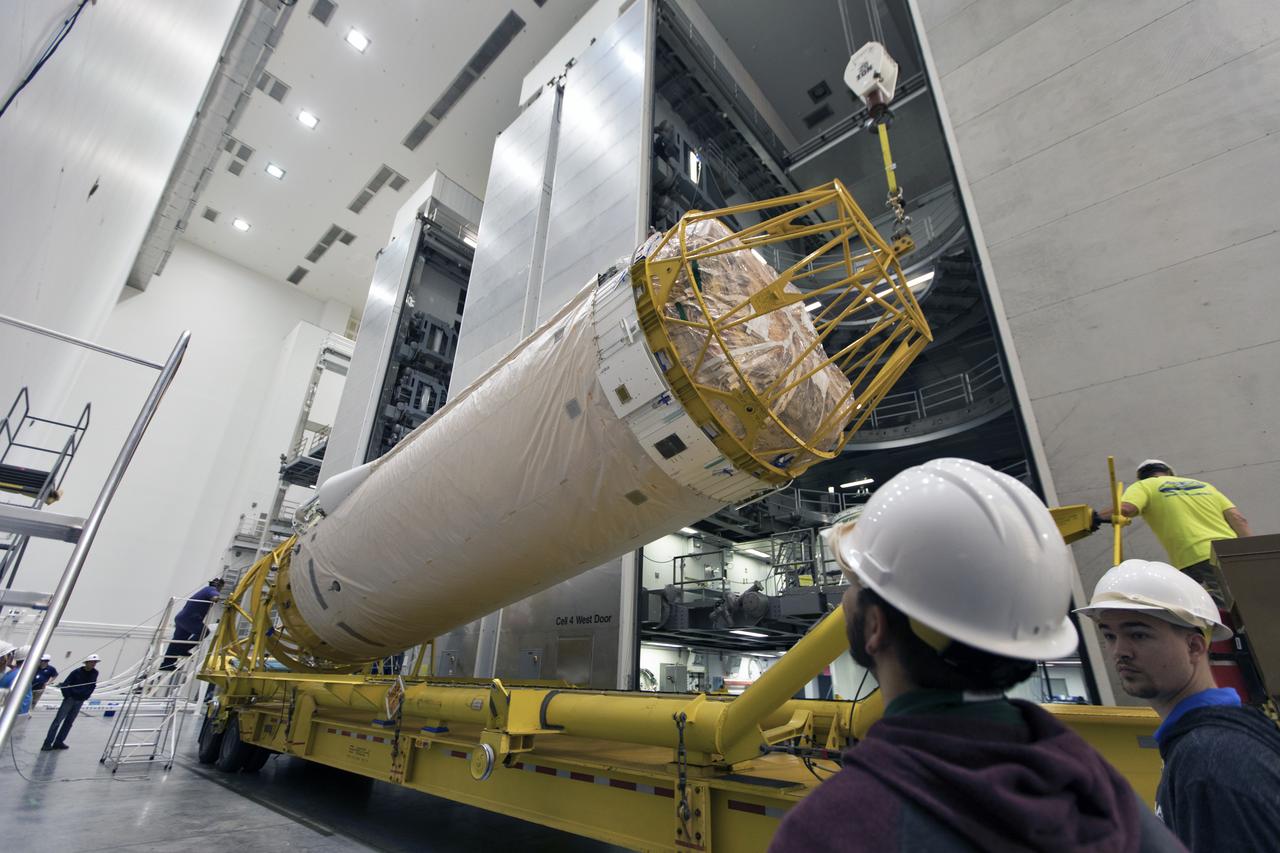
Under the watchful eyes of technicians and engineers, the Centaur upper stage that will help launch NOAA's Geostationary Operational Environmental Satellite-S, or GOES-S, is lifted from its transporter inside the Delta Operations Center at Cape Canaveral Air Force Station for further processing. GOES-S is the second in a series of four advanced geostationary weather satellites. The GOES-R series - consisting of the GOES-R, GOES-S, GOES-T and GOES-U spacecraft - will significantly improve the detection and observation of environmental phenomena that directly affect public safety, protection of property and the nation's economic health and prosperity. GOES-S is slated to launch March 1, 2018 aboard a United Launch Alliance Atlas V rocket.
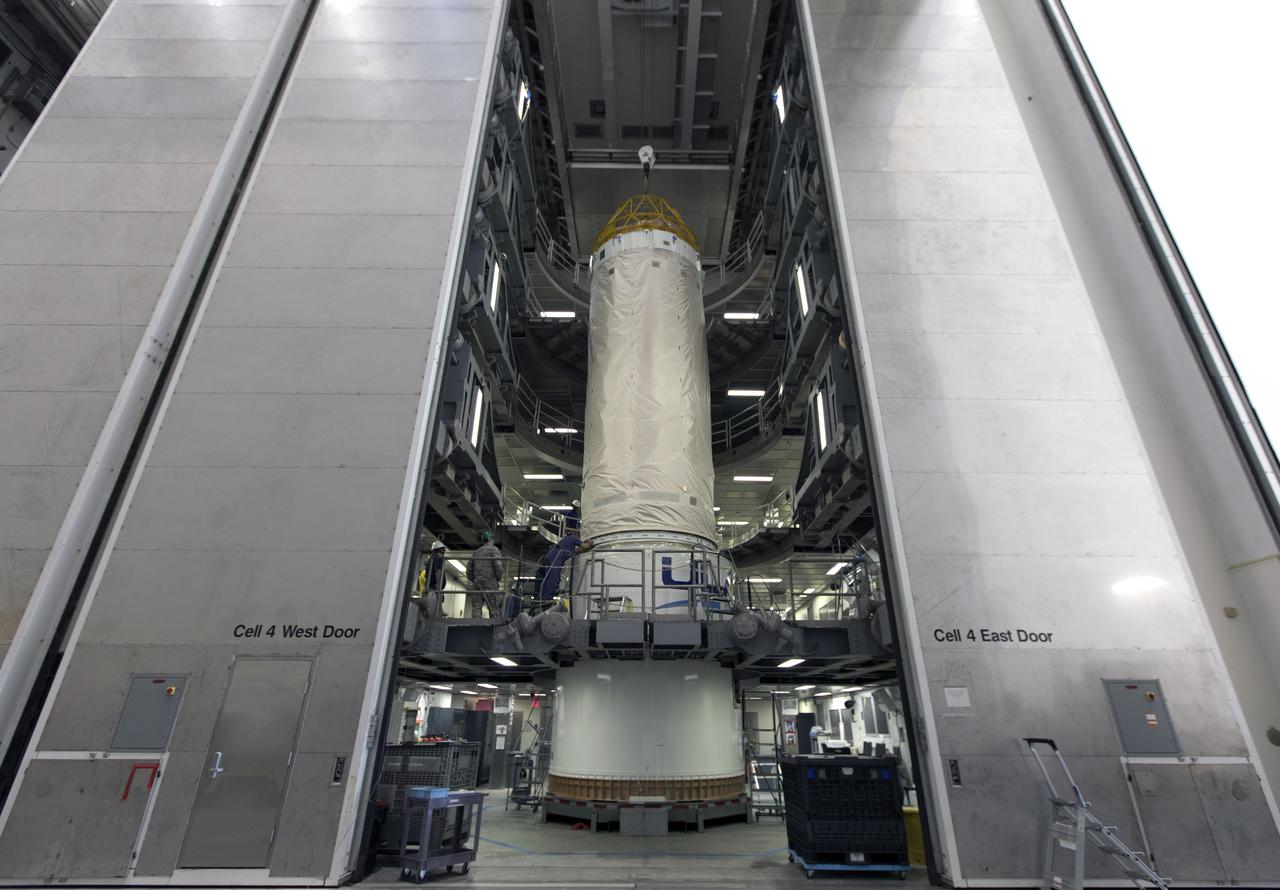
The Centaur upper stage that will help launch NOAA's Geostationary Operational Environmental Satellite-S, or GOES-S, has been positioned in at test cell inside the Delta Operations Center at Cape Canaveral Air Force Station for further processing. GOES-S is the second in a series of four advanced geostationary weather satellites. The GOES-R series - consisting of the GOES-R, GOES-S, GOES-T and GOES-U spacecraft - will significantly improve the detection and observation of environmental phenomena that directly affect public safety, protection of property and the nation's economic health and prosperity. GOES-S is slated to launch March 1, 2018 aboard a United Launch Alliance Atlas V rocket.
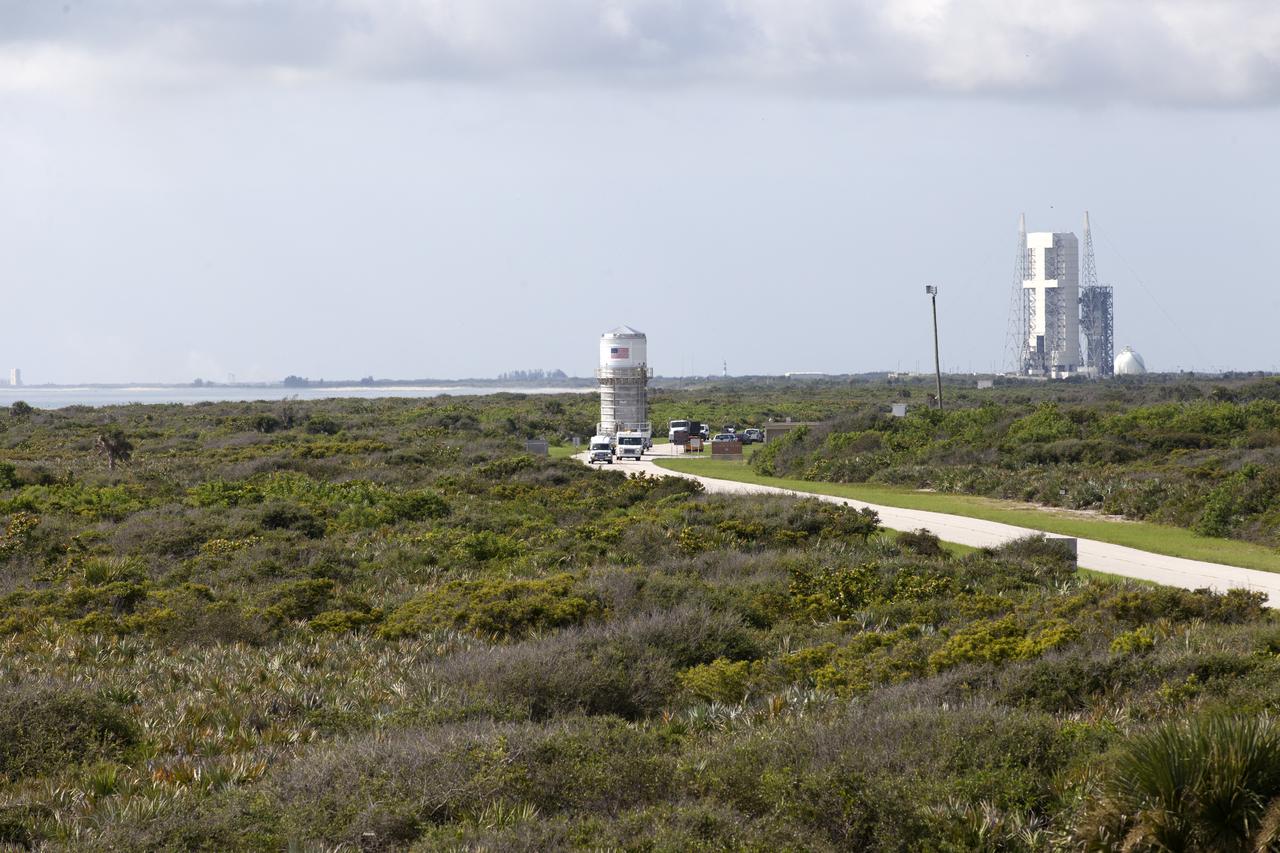
The Interim Cryogenic Propulsion Stage (ICPS) for NASA's Space Launch System (SLS) rocket, packed inside a canister, is transported from the United Launch Alliance (ULA) Delta Operations Center near Space Launch Complex 37 at Cape Canaveral Air Force Station along the route to the Space Station Processing Facility at NASA's Kennedy Space Center in Florida. The ICPS is the first integrated piece of flight hardware to arrive for the SLS. It is the in-space stage that is located toward the top of the rocket, between the Launch Vehicle Stage Adapter and the Orion Spacecraft Adapter. It will provide some of the in-space propulsion during Orion's first flight test atop the SLS on Exploration Mission-1.
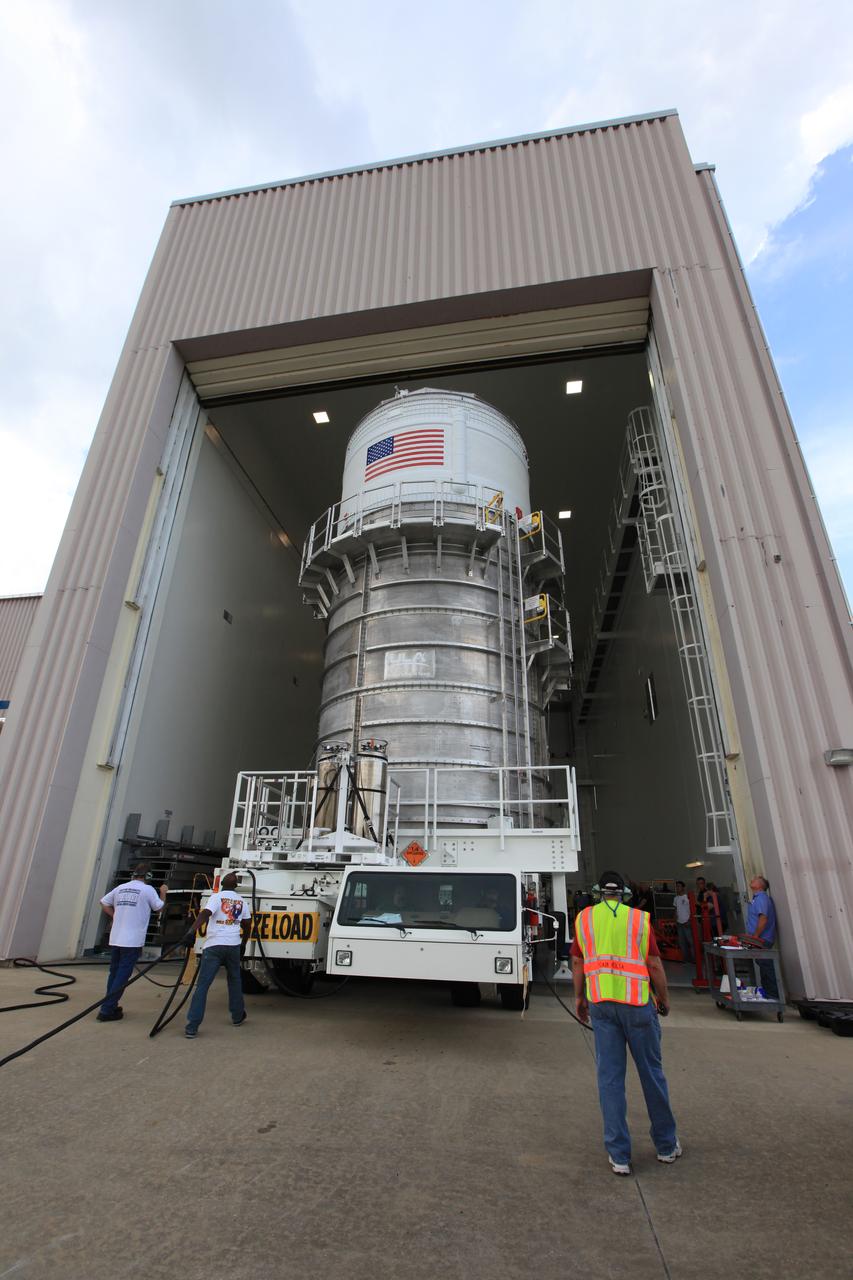
Packed inside its canister, the Interim Cryogenic Propulsion Stage (ICPS) for NASA's Space Launch System (SLS) rocket is moved into the low bay entrance of the Space Station Processing Facility at NASA's Kennedy Space Center in Florida. The ICPS is the first integrated piece of flight hardware to arrive for the SLS. It is the in-space stage that is located toward the top of the rocket, between the Launch Vehicle Stage Adapter and the Orion Spacecraft Adapter. It will provide some of the in-space propulsion during Orion's first flight test atop the SLS on Exploration Mission-1.

The Centaur upper stage that will help launch NOAA's Geostationary Operational Environmental Satellite-S, or GOES-S, arrives at the Delta Operations Center at Cape Canaveral Air Force Station for further processing. GOES-S is the second in a series of four advanced geostationary weather satellites. The GOES-R series - consisting of the GOES-R, GOES-S, GOES-T and GOES-U spacecraft - will significantly improve the detection and observation of environmental phenomena that directly affect public safety, protection of property and the nation's economic health and prosperity. GOES-S is slated to launch March 1, 2018 aboard a United Launch Alliance Atlas V rocket.
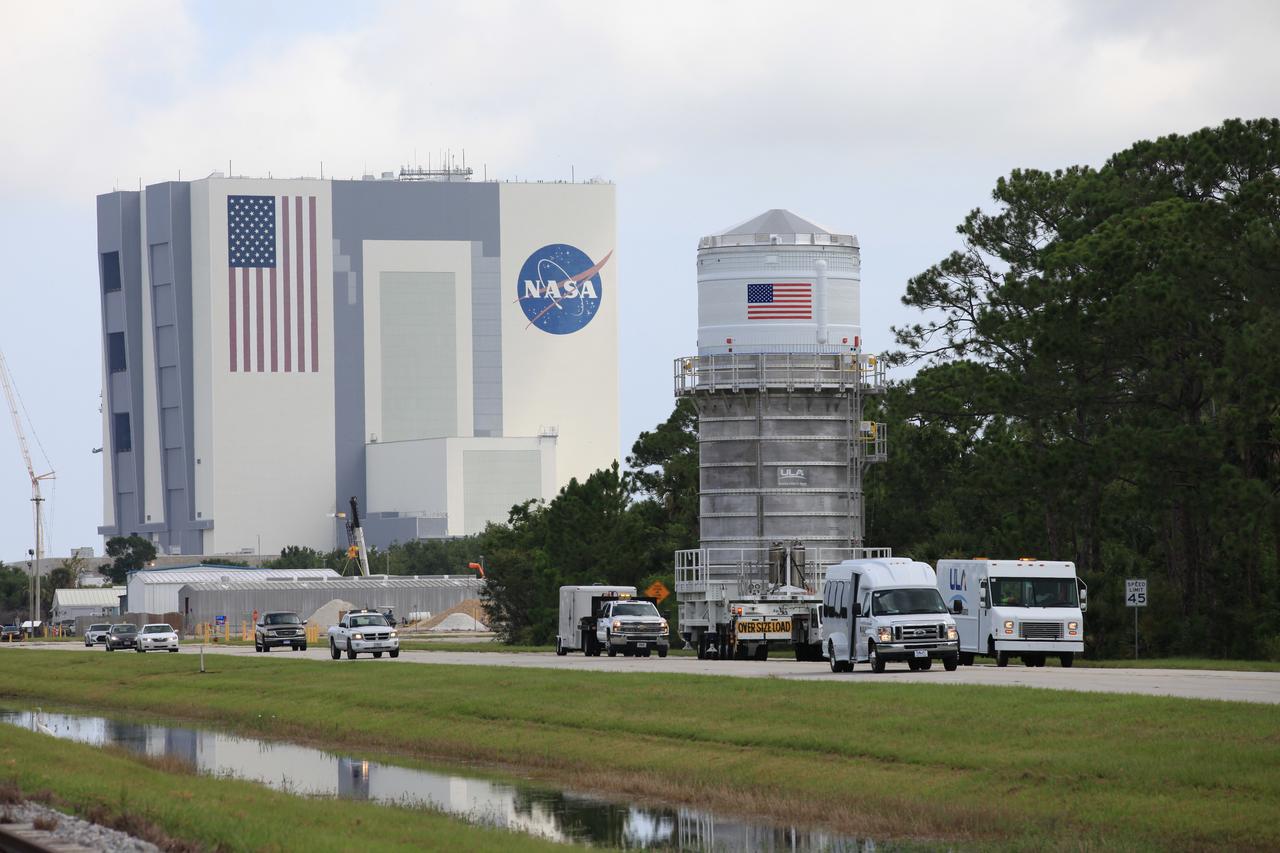
Packed inside its canister, the Interim Cryogenic Propulsion Stage (ICPS) for NASA's Space Launch System (SLS) rocket passes by the Vehicle Assembly Building on its way to the Space Station Processing Facility at NASA's Kennedy Space Center in Florida. The ICPS is the first integrated piece of flight hardware to arrive for the SLS. It is the in-space stage that is located toward the top of the rocket, between the Launch Vehicle Stage Adapter and the Orion Spacecraft Adapter. It will provide some of the in-space propulsion during Orion's first flight test atop the SLS on Exploration Mission-1.
Packed inside its canister, the Interim Cryogenic Propulsion Stage (ICPS) for NASA's Space Launch System (SLS) rocket has been moved inside the low bay entrance of the Space Station Processing Facility at NASA's Kennedy Space Center in Florida. The ICPS is the first integrated piece of flight hardware to arrive for the SLS. It is the in-space stage that is located toward the top of the rocket, between the Launch Vehicle Stage Adapter and the Orion Spacecraft Adapter. It will provide some of the in-space propulsion during Orion's first flight test atop the SLS on Exploration Mission-1.
The Centaur upper stage that will help launch NOAA's Geostationary Operational Environmental Satellite-S, or GOES-S, is being transported from the Atlas Spaceflight Operations Center at Cape Canaveral Air Force Station to the Delta Operations Center for further processing. GOES-S is the second in a series of four advanced geostationary weather satellites. The GOES-R series - consisting of the GOES-R, GOES-S, GOES-T and GOES-U spacecraft - will significantly improve the detection and observation of environmental phenomena that directly affect public safety, protection of property and the nation's economic health and prosperity. GOES-S is slated to launch March 1, 2018 aboard a United Launch Alliance Atlas V rocket.
Packed inside its canister, the Interim Cryogenic Propulsion Stage (ICPS) for NASA's Space Launch System (SLS) rocket arrives at the low bay entrance of the Space Station Processing Facility at NASA's Kennedy Space Center in Florida. The ICPS is the first integrated piece of flight hardware to arrive for the SLS. It is the in-space stage that is located toward the top of the rocket, between the Launch Vehicle Stage Adapter and the Orion Spacecraft Adapter. It will provide some of the in-space propulsion during Orion's first flight test atop the SLS on Exploration Mission-1.
Packed inside its canister, the Interim Cryogenic Propulsion Stage (ICPS) for NASA's Space Launch System (SLS) rocket is being transported to the Space Station Processing Facility at NASA's Kennedy Space Center in Florida. The ICPS is the first integrated piece of flight hardware to arrive for the SLS. It is the in-space stage that is located toward the top of the rocket, between the Launch Vehicle Stage Adapter and the Orion Spacecraft Adapter. It will provide some of the in-space propulsion during Orion's first flight test atop the SLS on Exploration Mission-1.
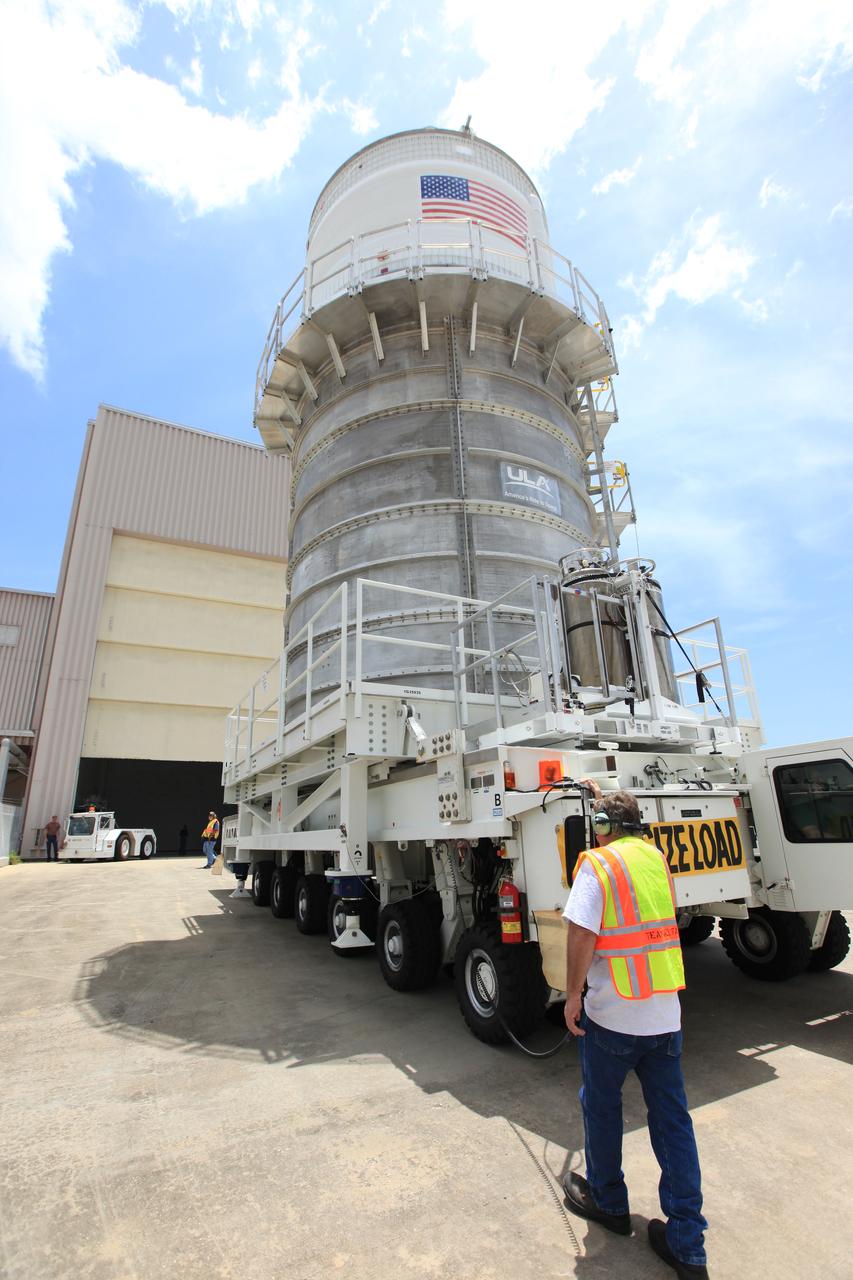
Packed inside its canister, the Interim Cryogenic Propulsion Stage (ICPS) for NASA's Space Launch System (SLS) rocket arrives at the low bay entrance of the Space Station Processing Facility at NASA's Kennedy Space Center in Florida. The ICPS is the first integrated piece of flight hardware to arrive for the SLS. It is the in-space stage that is located toward the top of the rocket, between the Launch Vehicle Stage Adapter and the Orion Spacecraft Adapter. It will provide some of the in-space propulsion during Orion's first flight test atop the SLS on Exploration Mission-1.
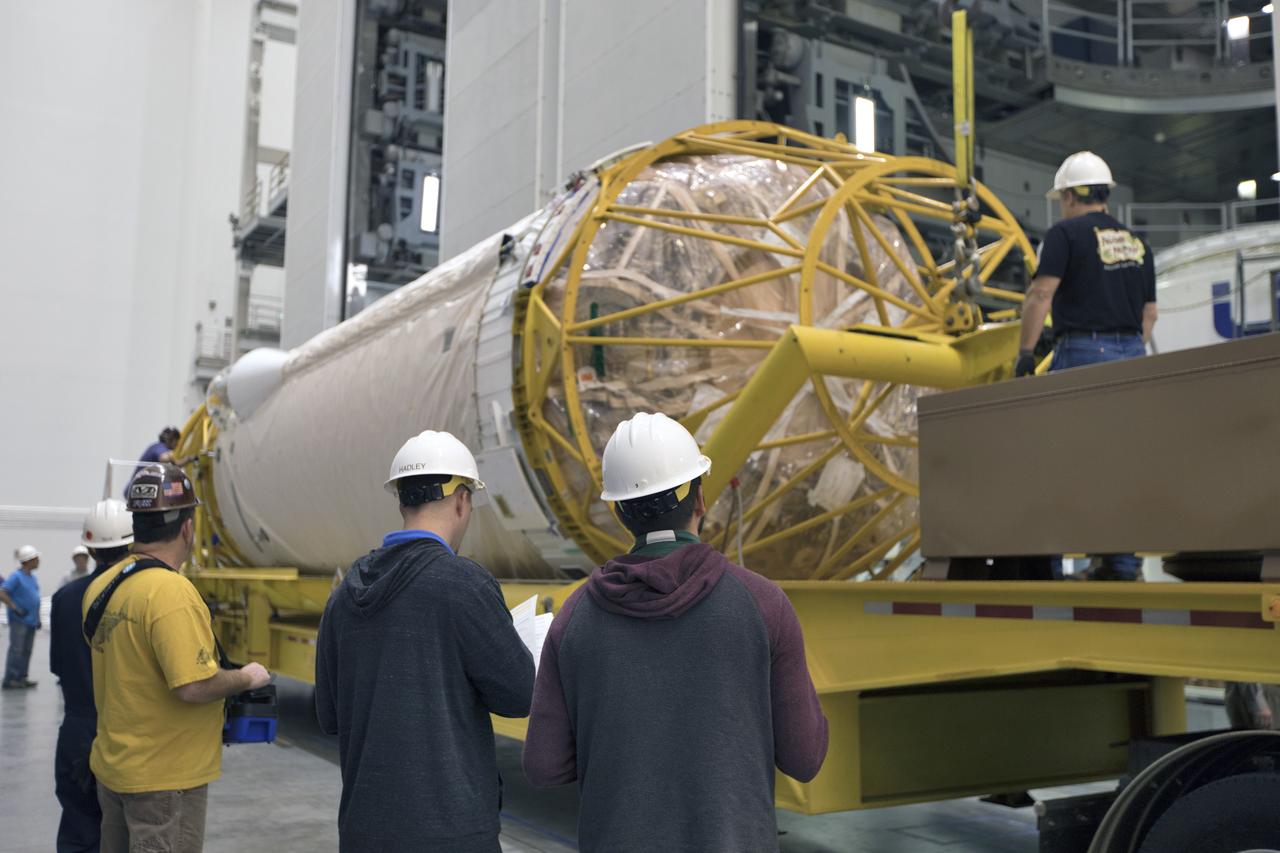
Under the watchful eyes of technicians and engineers, the Centaur upper stage that will help launch NOAA's Geostationary Operational Environmental Satellite-S, or GOES-S, arrives inside the Delta Operations Center at Cape Canaveral Air Force Station for further processing. GOES-S is the second in a series of four advanced geostationary weather satellites. The GOES-R series - consisting of the GOES-R, GOES-S, GOES-T and GOES-U spacecraft - will significantly improve the detection and observation of environmental phenomena that directly affect public safety, protection of property and the nation's economic health and prosperity. GOES-S is slated to launch March 1, 2018 aboard a United Launch Alliance Atlas V rocket.
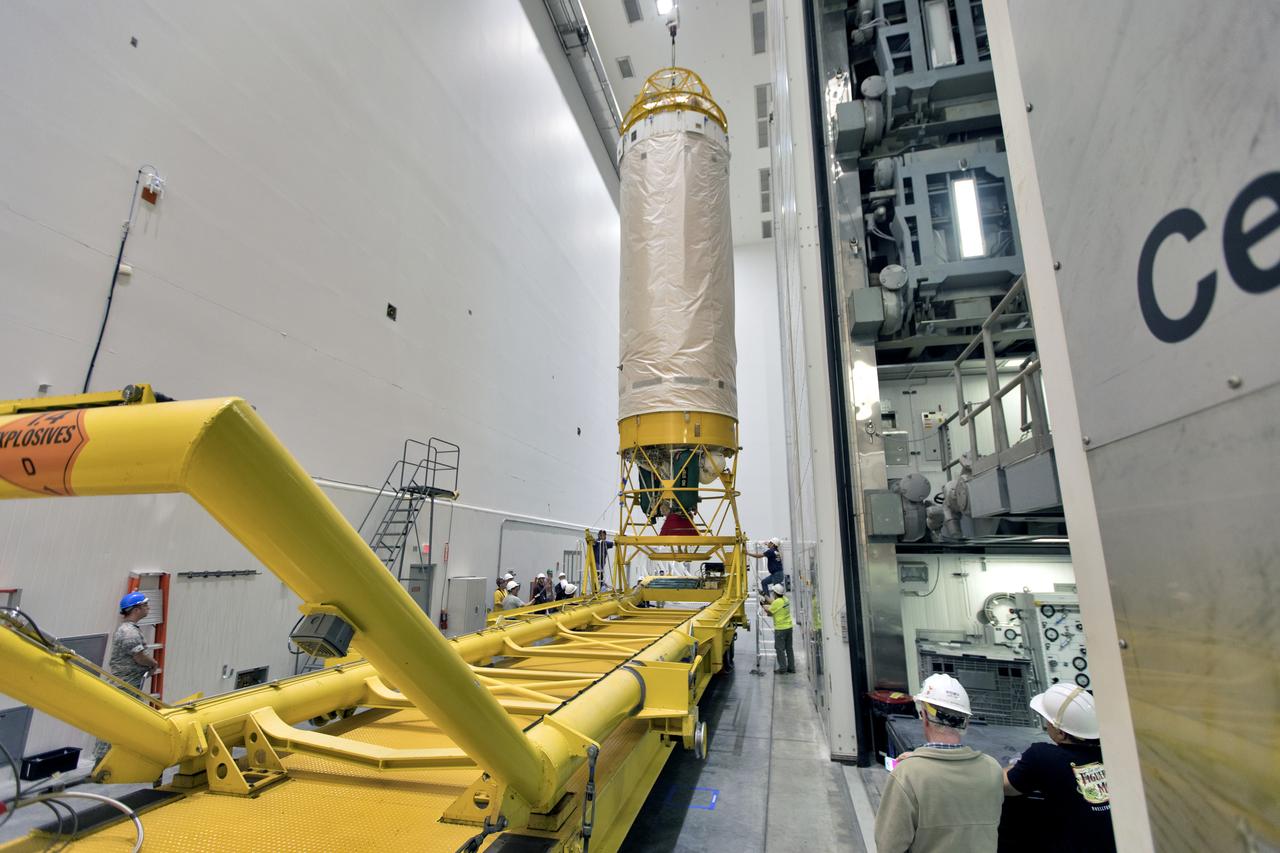
The Centaur upper stage that will help launch NOAA's Geostationary Operational Environmental Satellite-S, or GOES-S, has been lifted from its transporter inside the Delta Operations Center at Cape Canaveral Air Force Station for further processing. GOES-S is the second in a series of four advanced geostationary weather satellites. The GOES-R series - consisting of the GOES-R, GOES-S, GOES-T and GOES-U spacecraft - will significantly improve the detection and observation of environmental phenomena that directly affect public safety, protection of property and the nation's economic health and prosperity. GOES-S is slated to launch March 1, 2018 aboard a United Launch Alliance Atlas V rocket.
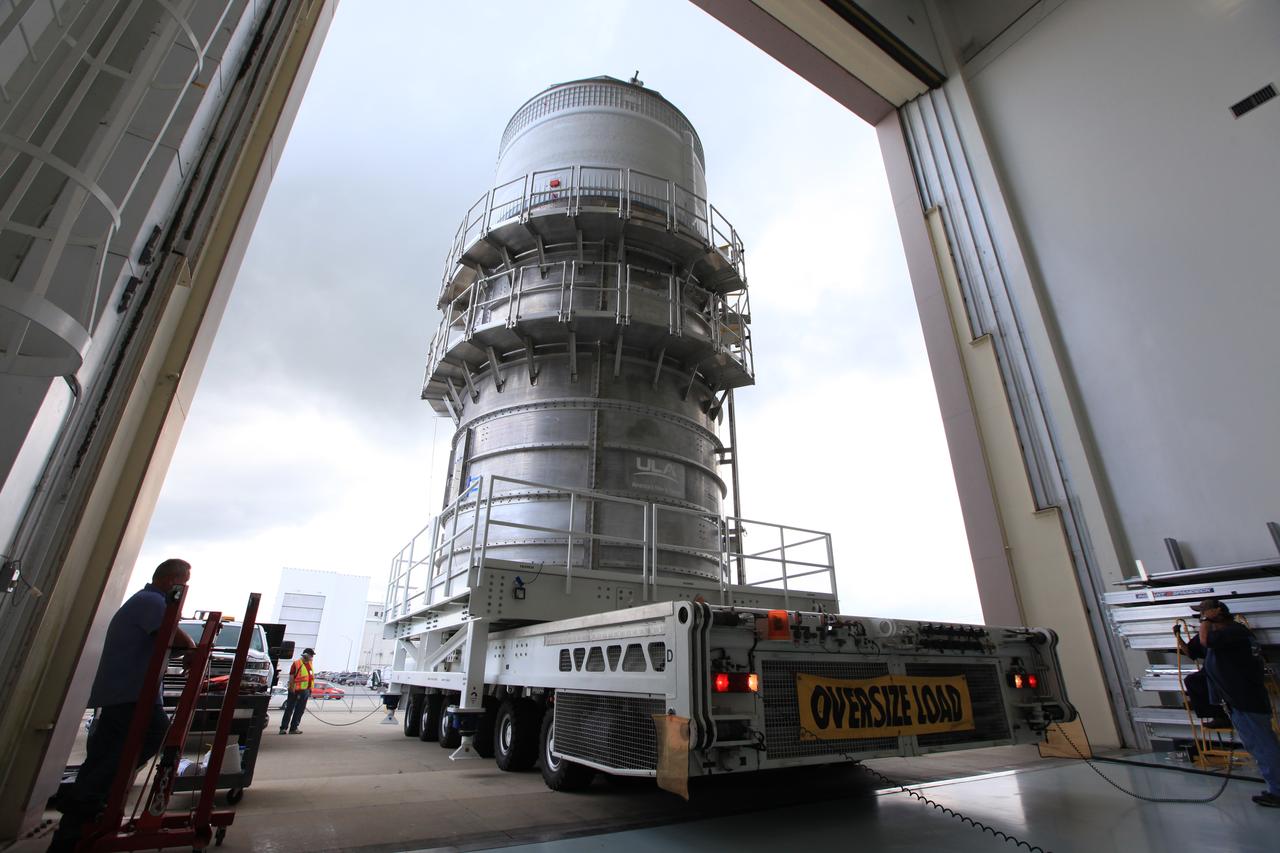
Packed inside its canister, the Interim Cryogenic Propulsion Stage (ICPS) for NASA's Space Launch System (SLS) rocket is moved into the low bay entrance of the Space Station Processing Facility at NASA's Kennedy Space Center in Florida. The ICPS is the first integrated piece of flight hardware to arrive for the SLS. It is the in-space stage that is located toward the top of the rocket, between the Launch Vehicle Stage Adapter and the Orion Spacecraft Adapter. It will provide some of the in-space propulsion during Orion's first flight test atop the SLS on Exploration Mission-1.
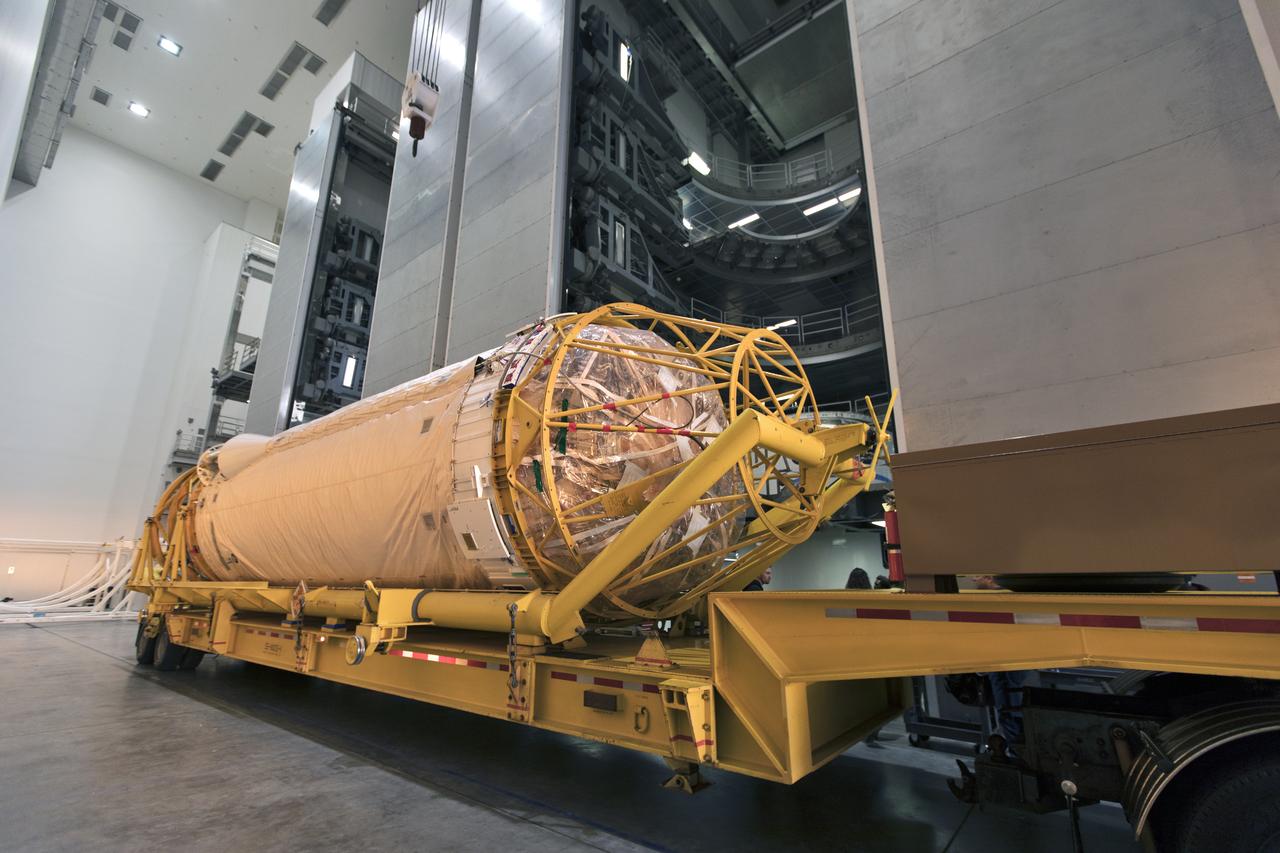
The Centaur upper stage that will help launch NOAA's Geostationary Operational Environmental Satellite-S, or GOES-S, has been positioned in at test cell inside the Delta Operations Center at Cape Canaveral Air Force Station for further processing. GOES-S is the second in a series of four advanced geostationary weather satellites. The GOES-R series - consisting of the GOES-R, GOES-S, GOES-T and GOES-U spacecraft - will significantly improve the detection and observation of environmental phenomena that directly affect public safety, protection of property and the nation's economic health and prosperity. GOES-S is slated to launch March 1, 2018 aboard a United Launch Alliance Atlas V rocket.
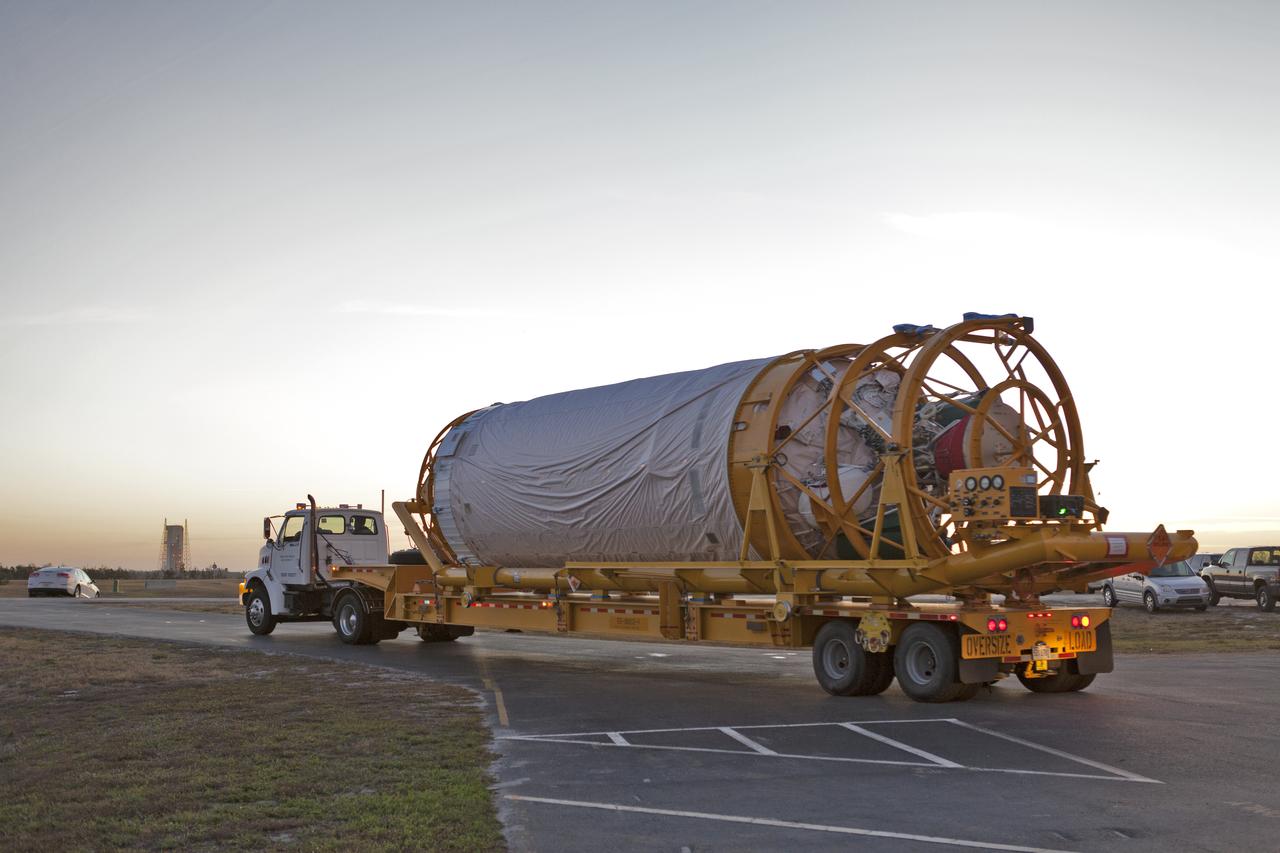
The Centaur upper stage that will help launch NOAA's Geostationary Operational Environmental Satellite-S, or GOES-S, is being transported to the Delta Operations Center at Cape Canaveral Air Force Station for further processing. GOES-S is the second in a series of four advanced geostationary weather satellites. The GOES-R series - consisting of the GOES-R, GOES-S, GOES-T and GOES-U spacecraft - will significantly improve the detection and observation of environmental phenomena that directly affect public safety, protection of property and the nation's economic health and prosperity. GOES-S is slated to launch March 1, 2018 aboard a United Launch Alliance Atlas V rocket.
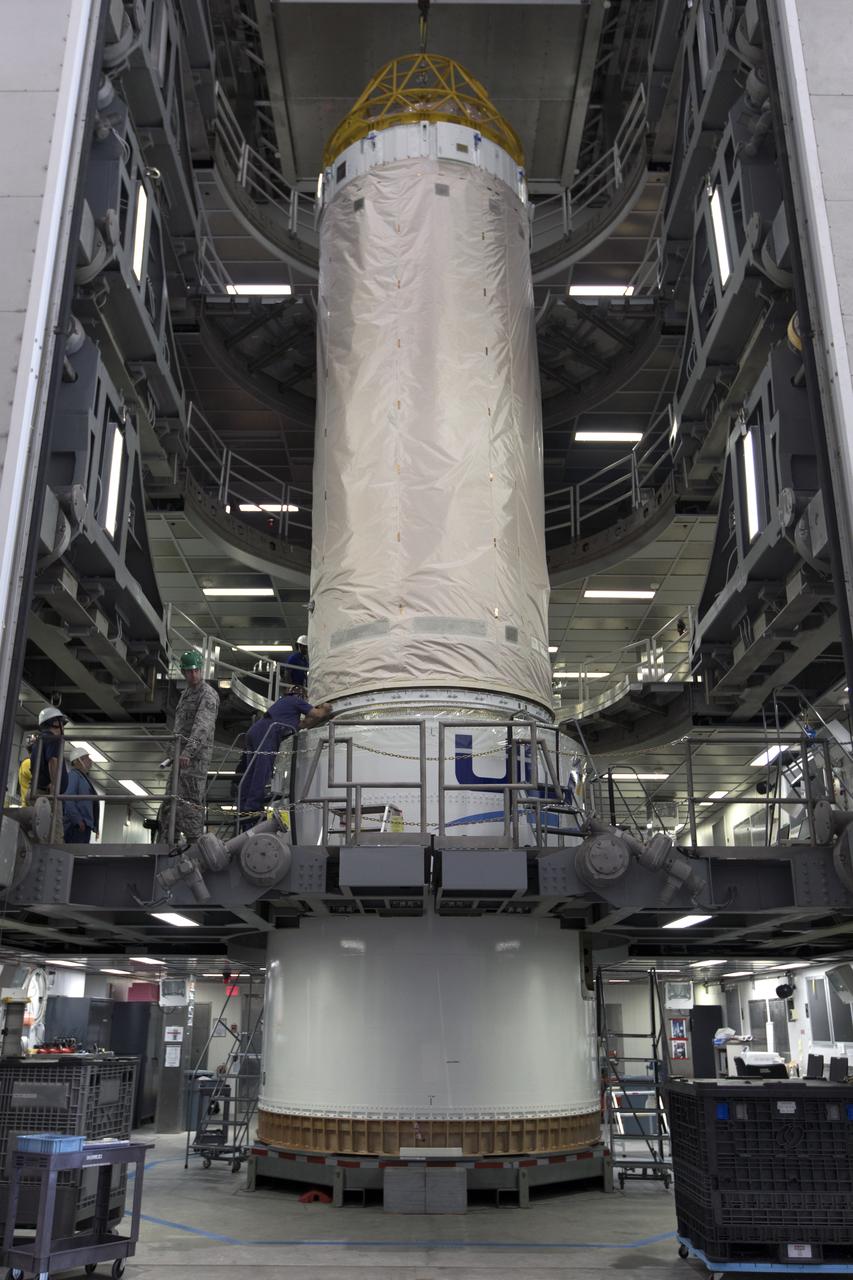
The Centaur upper stage that will help launch NOAA's Geostationary Operational Environmental Satellite-S, or GOES-S, arrives inside the Delta Operations Center at Cape Canaveral Air Force Station for further processing. GOES-S is the second in a series of four advanced geostationary weather satellites. The GOES-R series - consisting of the GOES-R, GOES-S, GOES-T and GOES-U spacecraft - will significantly improve the detection and observation of environmental phenomena that directly affect public safety, protection of property and the nation's economic health and prosperity. GOES-S is slated to launch March 1, 2018 aboard a United Launch Alliance Atlas V rocket.
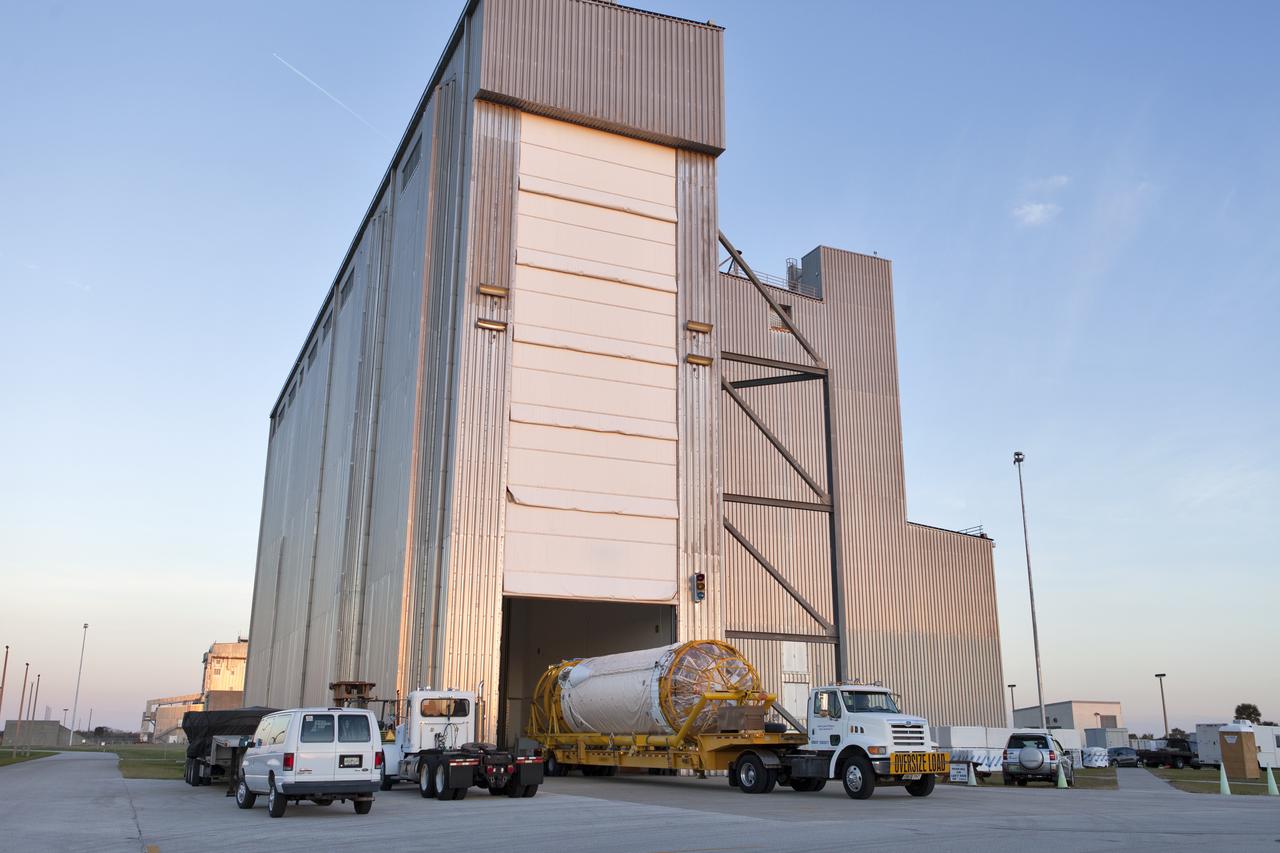
The Centaur upper stage that will help launch NOAA's Geostationary Operational Environmental Satellite-S, or GOES-S, arrives at the Delta Operations Center at Cape Canaveral Air Force Station for further processing. GOES-S is the second in a series of four advanced geostationary weather satellites. The GOES-R series - consisting of the GOES-R, GOES-S, GOES-T and GOES-U spacecraft - will significantly improve the detection and observation of environmental phenomena that directly affect public safety, protection of property and the nation's economic health and prosperity. GOES-S is slated to launch March 1, 2018 aboard a United Launch Alliance Atlas V rocket.
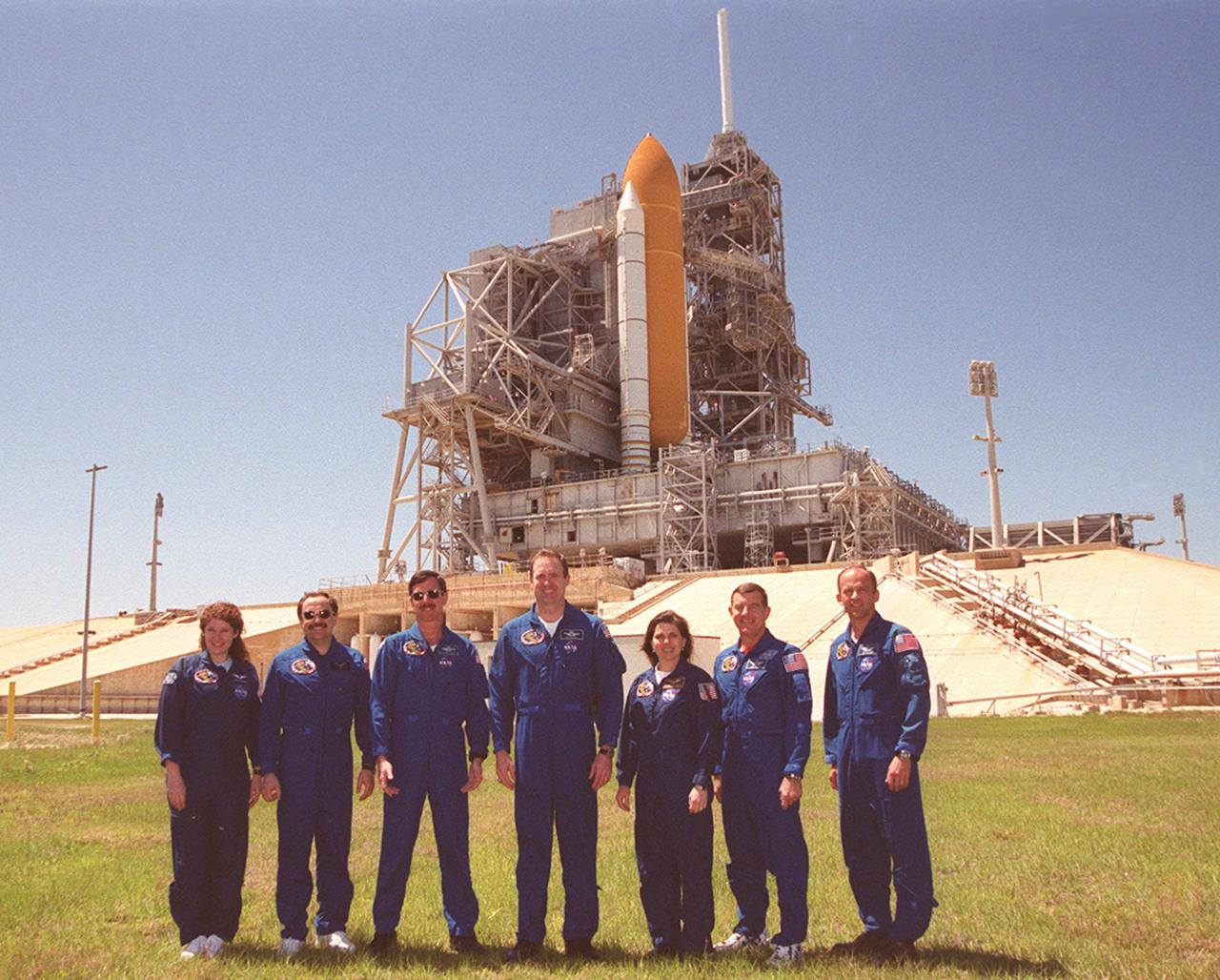
KENNEDY SPACE CENTER, Fla. -- During a break in their Terminal Countdown Demonstration Test (TCDT), the STS-101 crew poses in front of Space Shuttle Atlantis at Launch Pad 39A. Standing, left to right, are Mission Specialists Susan J. Helms and Yury Usachev of Russia; Pilot Scott J. "Doc" Horowitz; Commander James D. Halsell Jr.; and Mission Specialists Mary Ellen Weber, James Voss and Jeffrey N. Williams. The TCDT includes emergency egress training and a simulated launch countdown. During their mission to the International Space Station, the STS-101 crew will be delivering logistics and supplies, plus preparing the Station for the arrival of the Zvezda Service Module, expected to be launched by Russia in July 2000. Also, the crew will conduct one space walk to perform maintenance on the Space Station. This will be the third assembly flight for the Space Station. STS-101 is scheduled to launch April 24 at 4:15 p.m. from Launch Pad 39A

KENNEDY SPACE CENTER, Fla. -- After Terminal Countdown Demonstration Test (TCDT) activities at Launch Pad 39A, the STS-101 crew talk to the media. At the microphone is Commander James D. Halsell Jr. Next to him, standing left to right, are Pilot Scott J. "Doc" Horowitz and Mission Specialists Mary Ellen Weber, Jeffrey N. Williams, James Voss, Susan J. Helms and Yury Usachev of Russia. The TCDT includes emergency egress training and a simulated launch countdown. During their mission to the International Space Station, the STS-101 crew will be delivering logistics and supplies, plus preparing the Station for the arrival of the Zvezda Service Module, expected to be launched by Russia in July 2000. Also, the crew will conduct one space walk to perform maintenance on the Space Station. This will be the third assembly flight for the Space Station. STS-101 is scheduled to launch April 24 at 4:15 p.m. from Launch Pad 39A
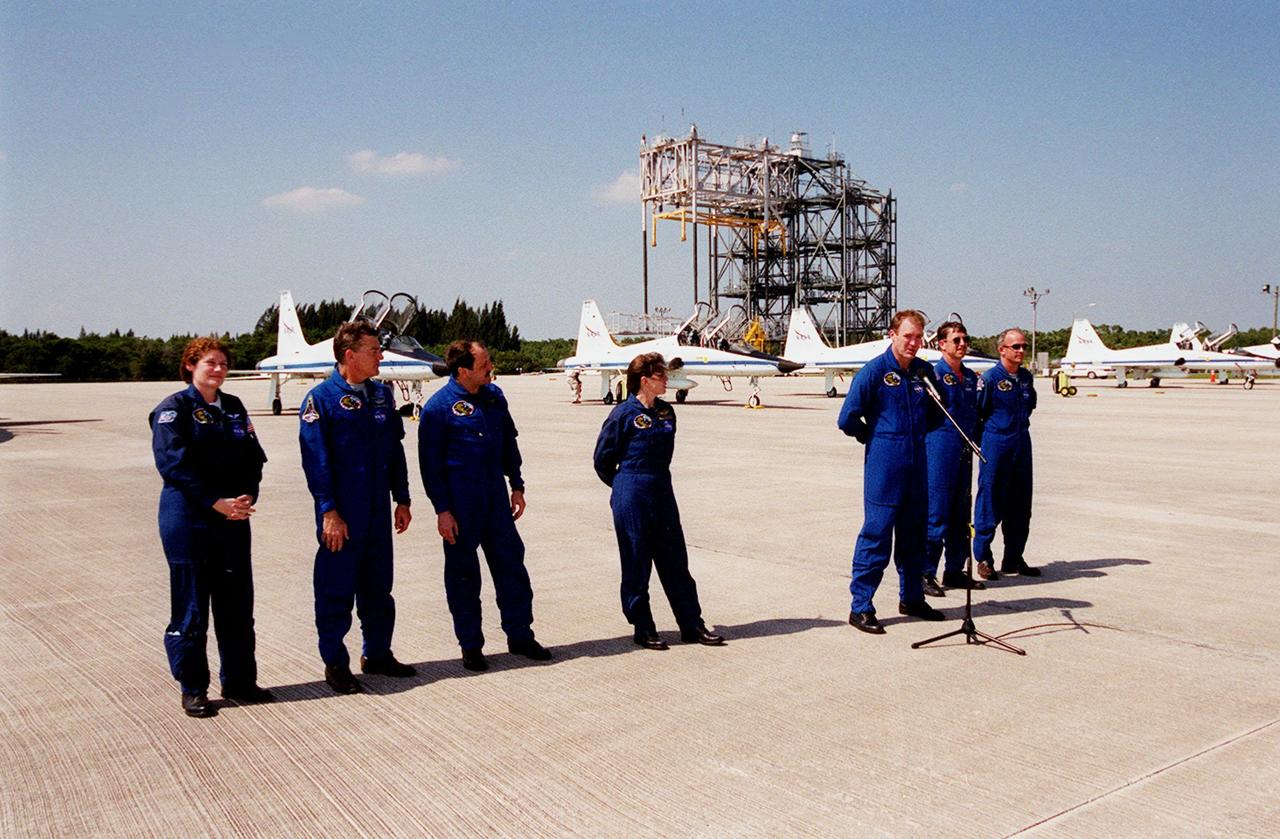
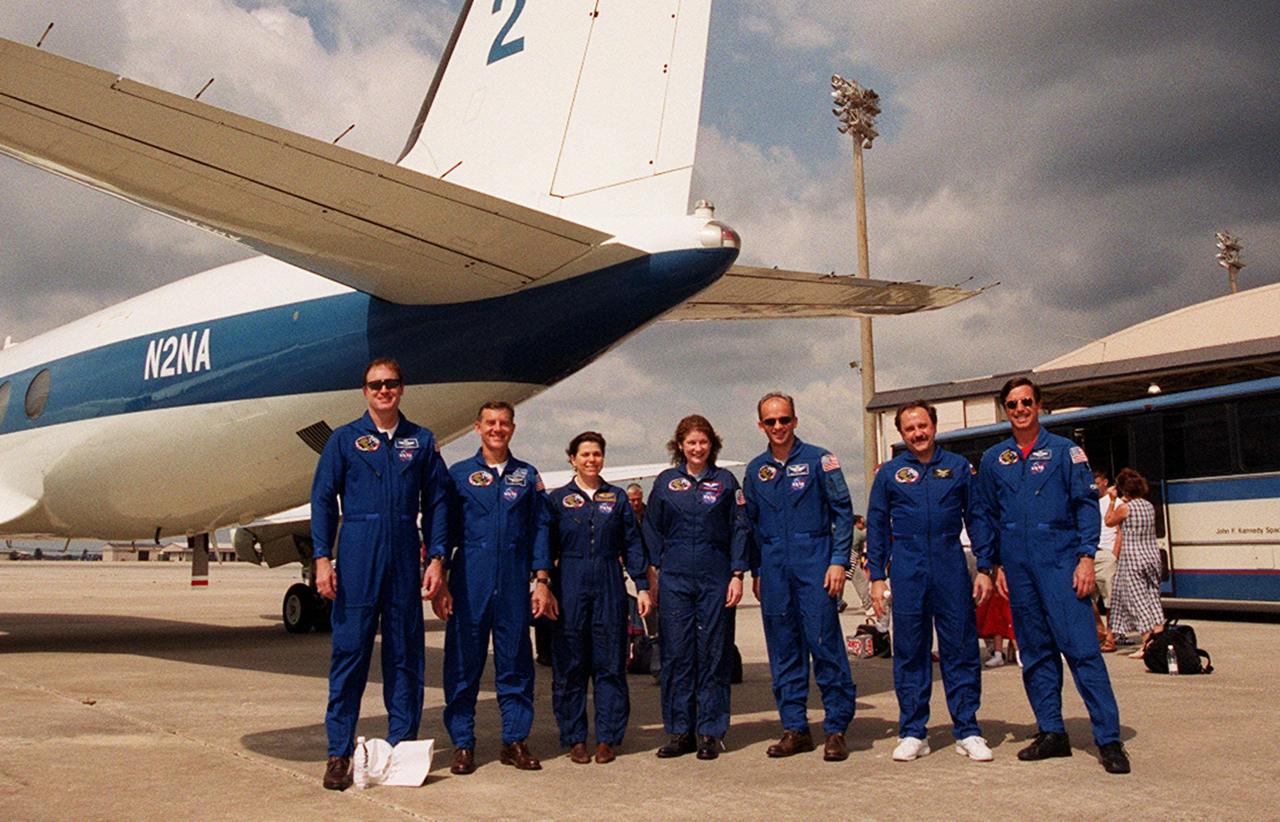
After arriving at the Shuttle Landing Facility for launch preparations, the STS-101 crew pauses to greet the media. Standing (left to right) are Mission Specialists Susan Helms, James Voss, Yury Usachev of Russia and Mary Ellen Weber; Commander James Halsell; Pilot Scott "Doc" Horowitz; and Mission Specialist Jeffrey Williams. The mission will take the crew to the International Space Station, delivering logistics and supplies, plus preparing the Station for the arrival of the Zvezda Service Module, expected to be launched by Russia in July 2000. Also, the crew will conduct one space walk to perform maintenance on the Space Station. This will be the third assembly flight for the Space Station. Launch is targeted for April 24 at about 4:15 p.m. EDT from Launch Pad 39A

KENNEDY SPACE CENTER, Fla. -- After Terminal Countdown Demonstration Test (TCDT) activities at Launch Pad 39A, the STS-101 crew talk to the media. At the microphone is Commander James D. Halsell Jr. Next to him, standing left to right, are Pilot Scott J. "Doc" Horowitz and Mission Specialists Mary Ellen Weber, Jeffrey N. Williams, James Voss, Susan J. Helms and Yury Usachev of Russia. The TCDT includes emergency egress training and a simulated launch countdown. During their mission to the International Space Station, the STS-101 crew will be delivering logistics and supplies, plus preparing the Station for the arrival of the Zvezda Service Module, expected to be launched by Russia in July 2000. Also, the crew will conduct one space walk to perform maintenance on the Space Station. This will be the third assembly flight for the Space Station. STS-101 is scheduled to launch April 24 at 4:15 p.m. from Launch Pad 39A
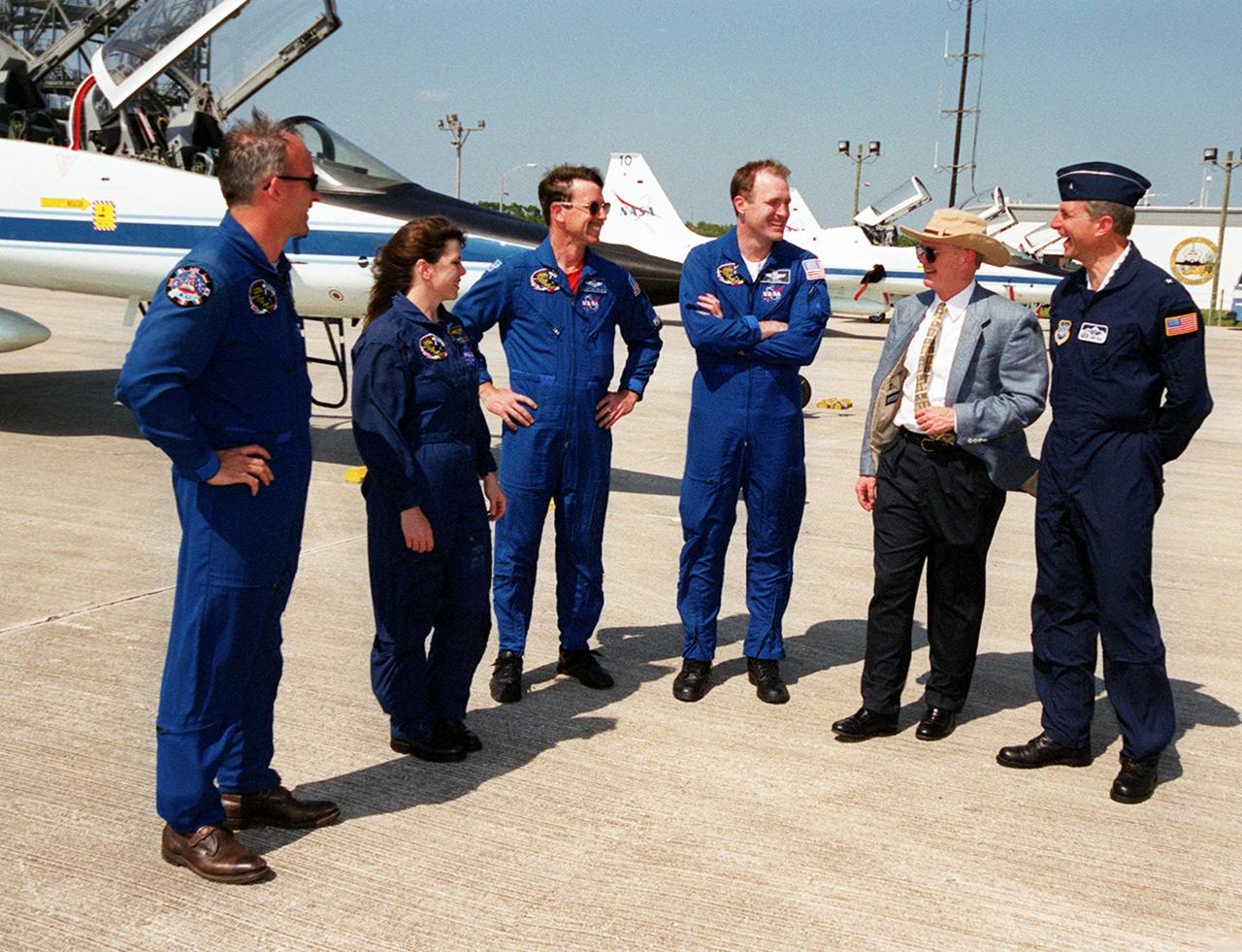
The STS-101 crew is greeted by Center Director Roy Bridges and USAF Brig. Gen. Ron Sega, after the crew's arrival at the Shuttle Landing Facility to get ready for launch. Standing (left to right) on the tarmac are Mission Specialists Jeffrey Williams and Mary Ellen Weber, Pilot Scott "Doc" Horowitz, Commander James Halsell, Bridges and Gen. Sega. Other crew members not shown are Mission Specialists James Voss, Susan Helms and Yury Usachev of Russia. The mission will take the crew to the International Space Station, delivering logistics and supplies, plus preparing the Station for the arrival of the Zvezda Service Module, expected to be launched by Russia in July 2000. Also, the crew will conduct one space walk to perform maintenance on the Space Station. This will be the third assembly flight for the Space Station. Launch is targeted for April 24 at about 4:15 p.m. EDT from Launch Pad 39A
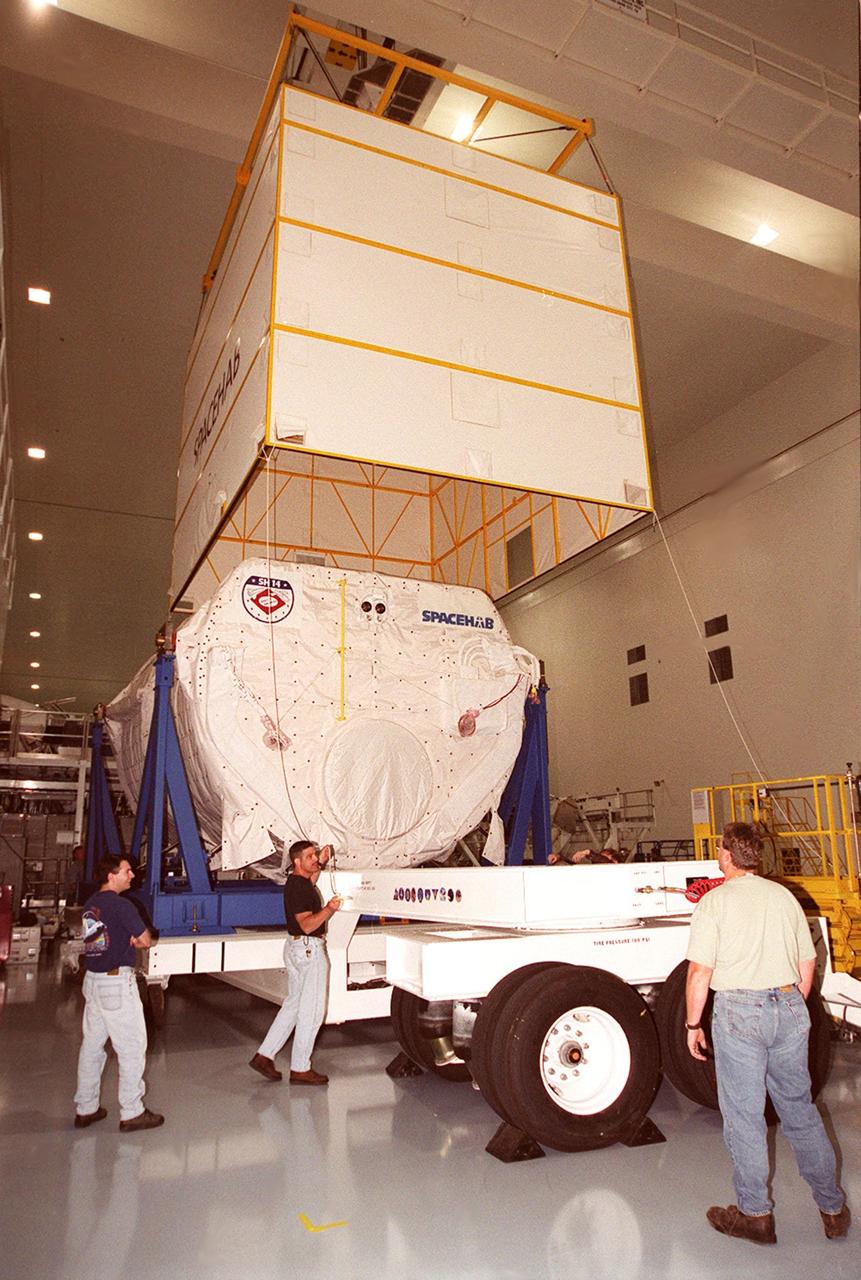
KENNEDY SPACE CENTER, FLA. -- The SPACEHAB Double Module is uncovered in the Space Station Processing Facility for transfer to a payload canister that will take it to Launch Pad 39A. There it will be installed in the Shuttle Atlantis' payload bay for mission STS-101. The module carries internal logistics and resupply cargo for restoring full redundancy to the International Space Station power system in preparation for the arrival of the next pressurized module, the Russian-built Zvezda. The STS-101 crew of seven comprises Commander James D. Halsell Jr., Pilot Scott J. "Doc" Horowitz (Ph.D.) and Mission Specialists Mary Ellen Weber (Ph.D.), James S. Voss, Jeffrey N. Williams, Susan J. Helms and Yuri Vladimirovich Usachev, cosmonaut. Launch of Atlantis on mission STS-101 is scheduled no earlier than April 17, 2000
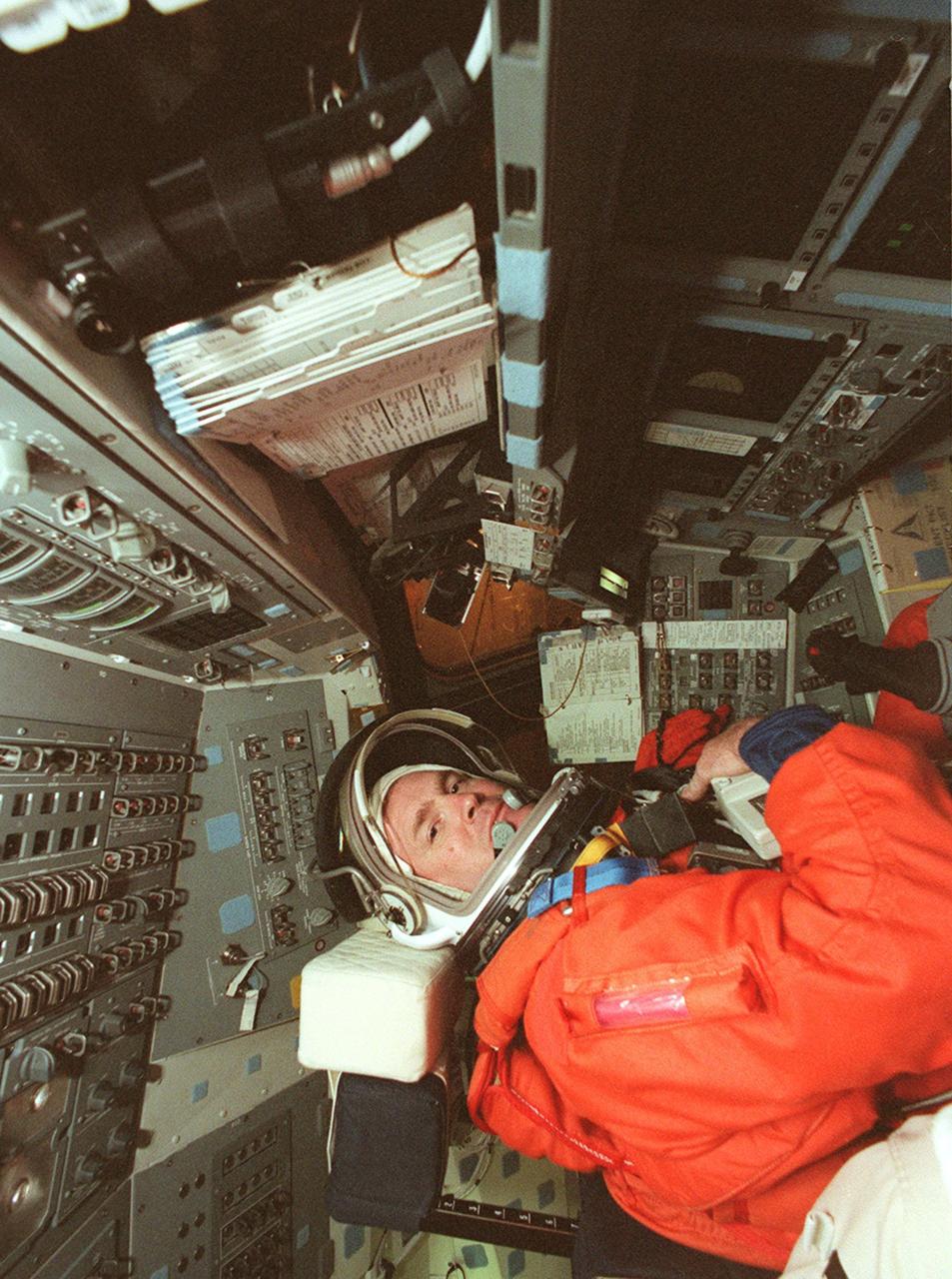
KENNEDY SPACE CENTER, FLA. -- STS-101 Commander James D. Halsell Jr. takes his seat inside Space Shuttle Atlantis for a simulated launch countdown. The countdown is part of Terminal Countdown Demonstration Test (TCDT) activities that also include emergency egress training and familiarization with the payload. Other crew members taking part are Pilot Scott J. "Doc" Horowitz and Mission Specialists Mary Ellen Weber, James Voss, Jeffrey N. Williams, Susan Helms, and Yury Usachev of Russia. During their mission to the International Space Station, the STS-101 crew will be delivering logistics and supplies, plus preparing the Station for the arrival of the Zvezda Service Module, expected to be launched by Russia in July 2000. Also, the crew will conduct one space walk to perform maintenance on the Space Station. This will be the third assembly flight for the Space Station. STS-101 is scheduled to launch April 24 at 4:15 p.m. from Launch Pad 39A
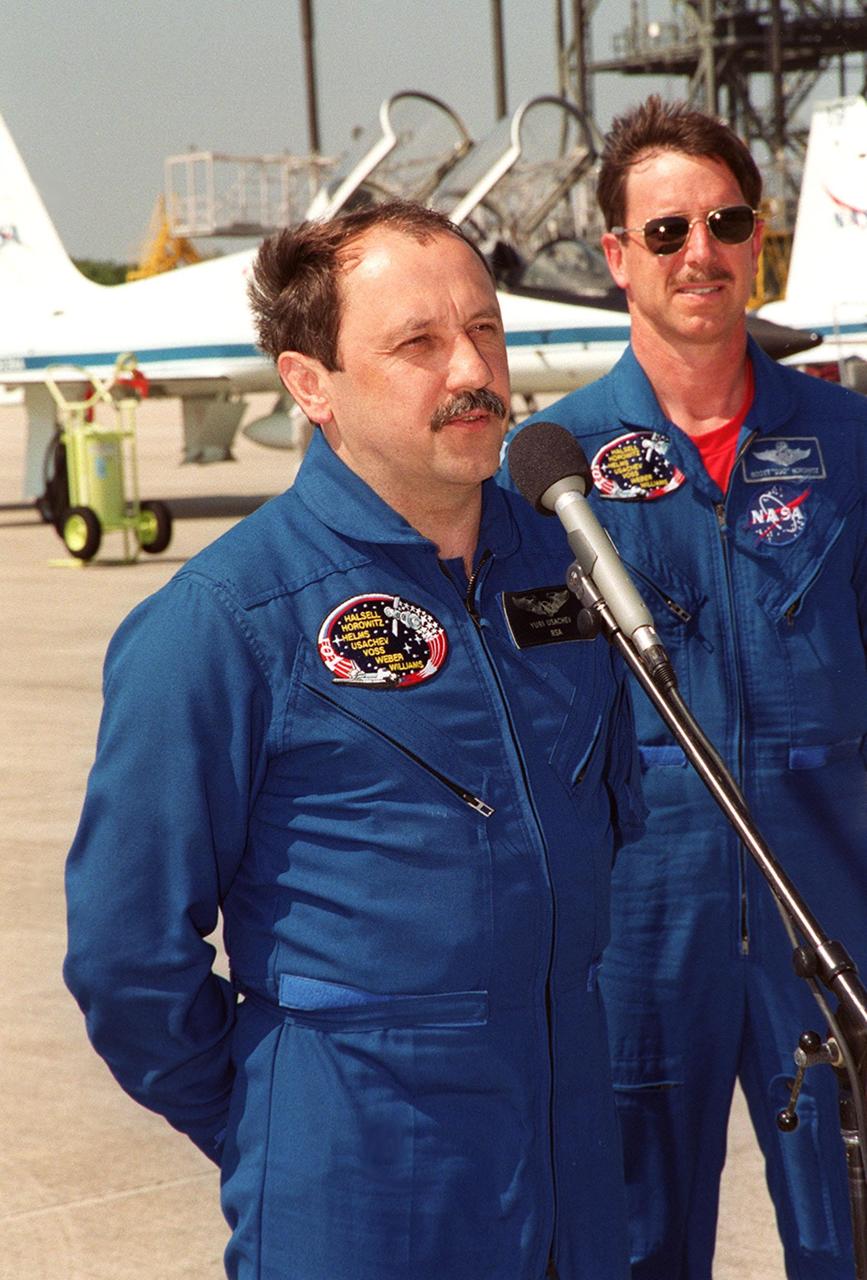
After arriving at the Shuttle Landing Facility for launch preparations, the STS-101 crew pauses to greet the media. At the microphone is Mission Specialist Yury Usachev of Russia. Behind him is Pilot Scott "Doc" Horowitz. Other crew members not shown are Commander James Halsell and Mission Specialists Mary Ellen Weber, James Voss, Jeffrey Williams and Susan Helms. The mission will take the crew to the International Space Station, delivering logistics and supplies, plus preparing the Station for the arrival of the Zvezda Service Module, expected to be launched by Russia in July 2000. Also, the crew will conduct one space walk to perform maintenance on the Space Station. This will be the third assembly flight for the Space Station. Launch is targeted for April 24 at about 4:15 p.m. EDT from Launch Pad 39A
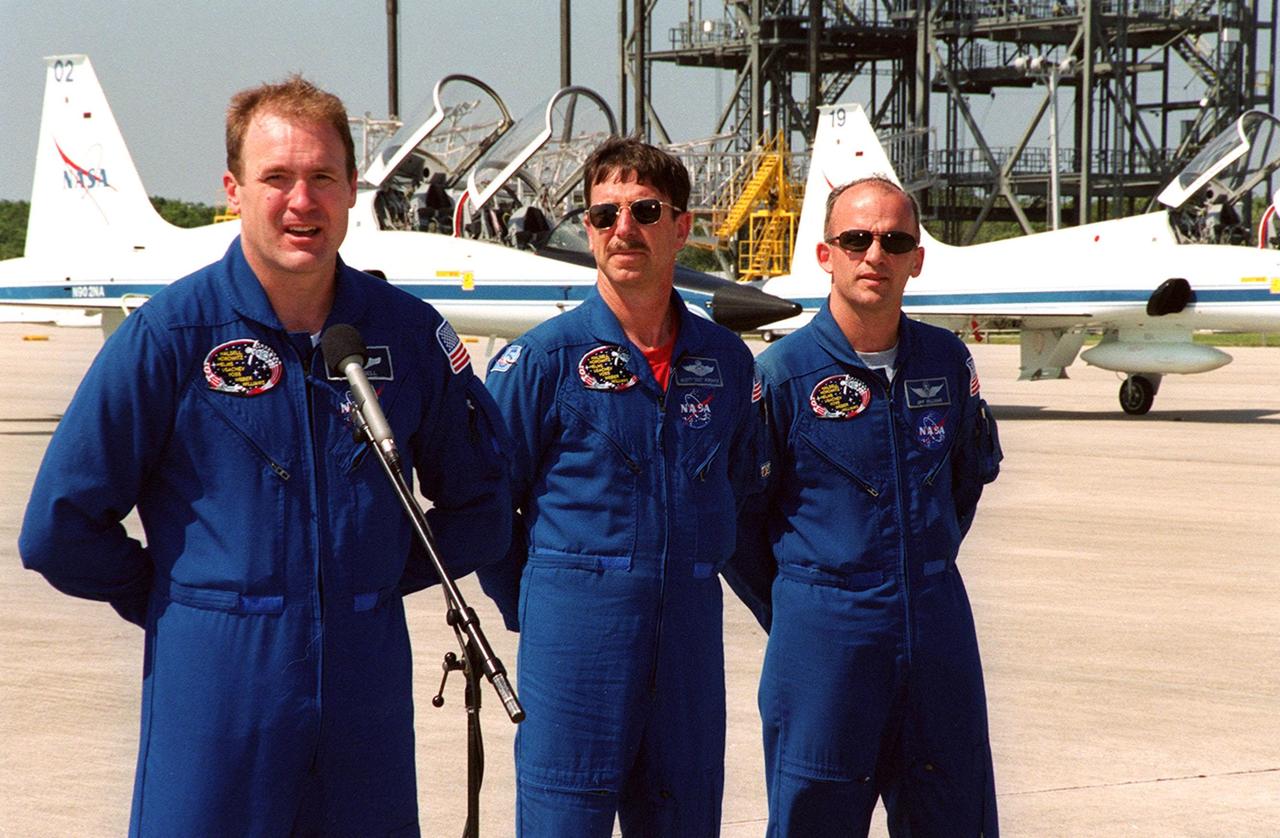
After arriving at the Shuttle Landing Facility for their launch preparations, the STS-101 crew pauses to greet the media. At the microphone is Commander James Halsell. Next to him (left to right) are Pilot Scott "Doc" Horowitz and Mission Specialist Jeffrey Williams. Other crew members not shown are Mission Specialists Mary Ellen Weber, James Voss, Susan Helms and Yury Usachev of Russia. The mission will take the crew to the International Space Station, delivering logistics and supplies, plus preparing the Station for the arrival of the Zvezda Service Module, expected to be launched by Russia in July 2000. Also, the crew will conduct one space walk to perform maintenance on the Space Station. This will be the third assembly flight for the Space Station. Launch is targeted for April 24 at about 4:15 p.m. EDT from Launch Pad 39A
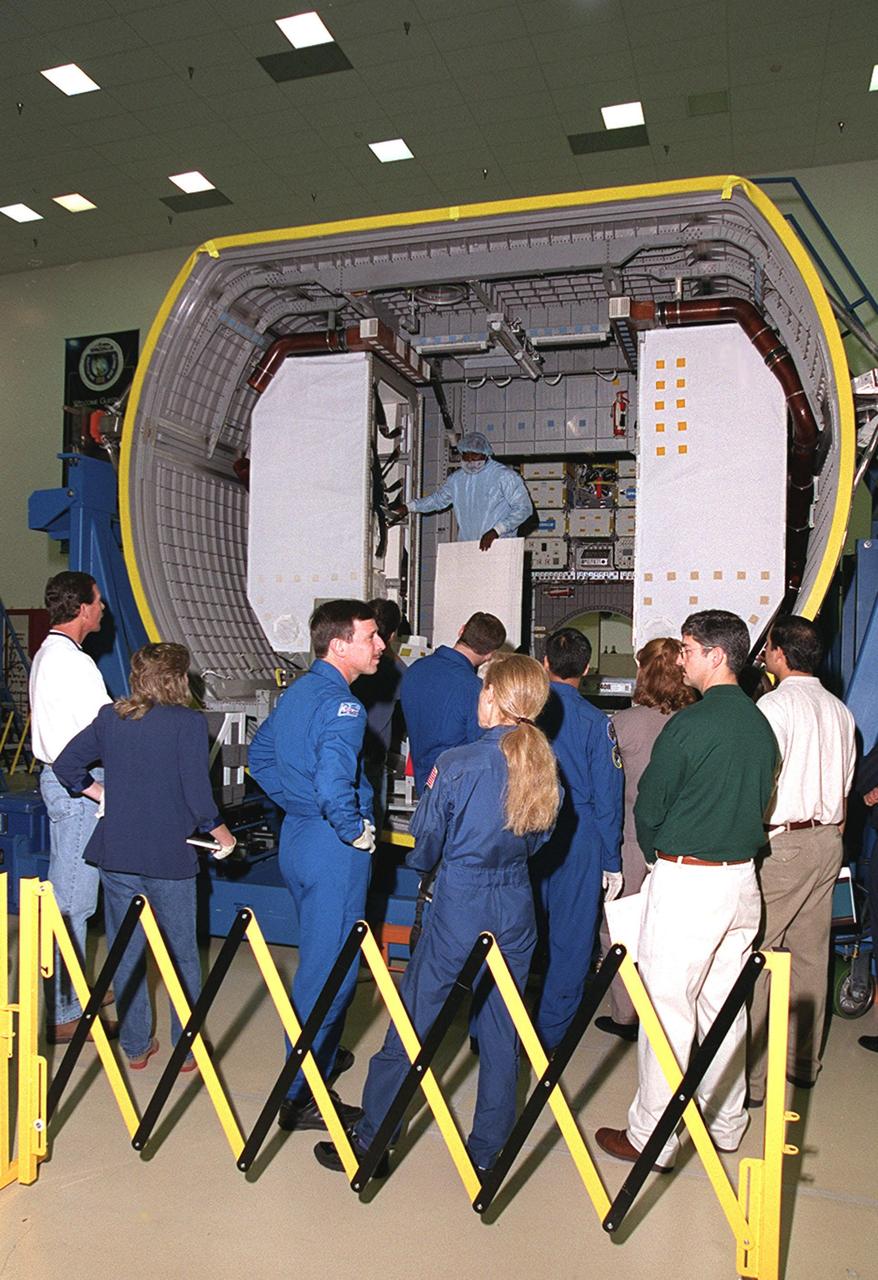
At SPACEHAB, in Cape Canaveral, the STS-101 crew look over the SPACEHAB Double Module, part of the payload for their mission. Gathered in the center of the onlookers are (in uniform) are (rear) Pilot Scott J. "Doc" Horowitz (Ph.D) and Mission Specialist Mary Ellen Weber (Ph.D.); in front of them, Commander James D. Halsell Jr. and Mission Specialist Edward Tsang Lu. They are taking part in a Crew Equipment Interface Test, which gives them an opportunity to look over equipment and payloads that will fly on the mission. Space Shuttle Atlantis will be carrying the SPACEHAB Double Module, which carries internal logistics and resupply cargo for station outfitting. Launch of Atlantis on mission STS-101 is scheduled no earlier than April 13, 2000
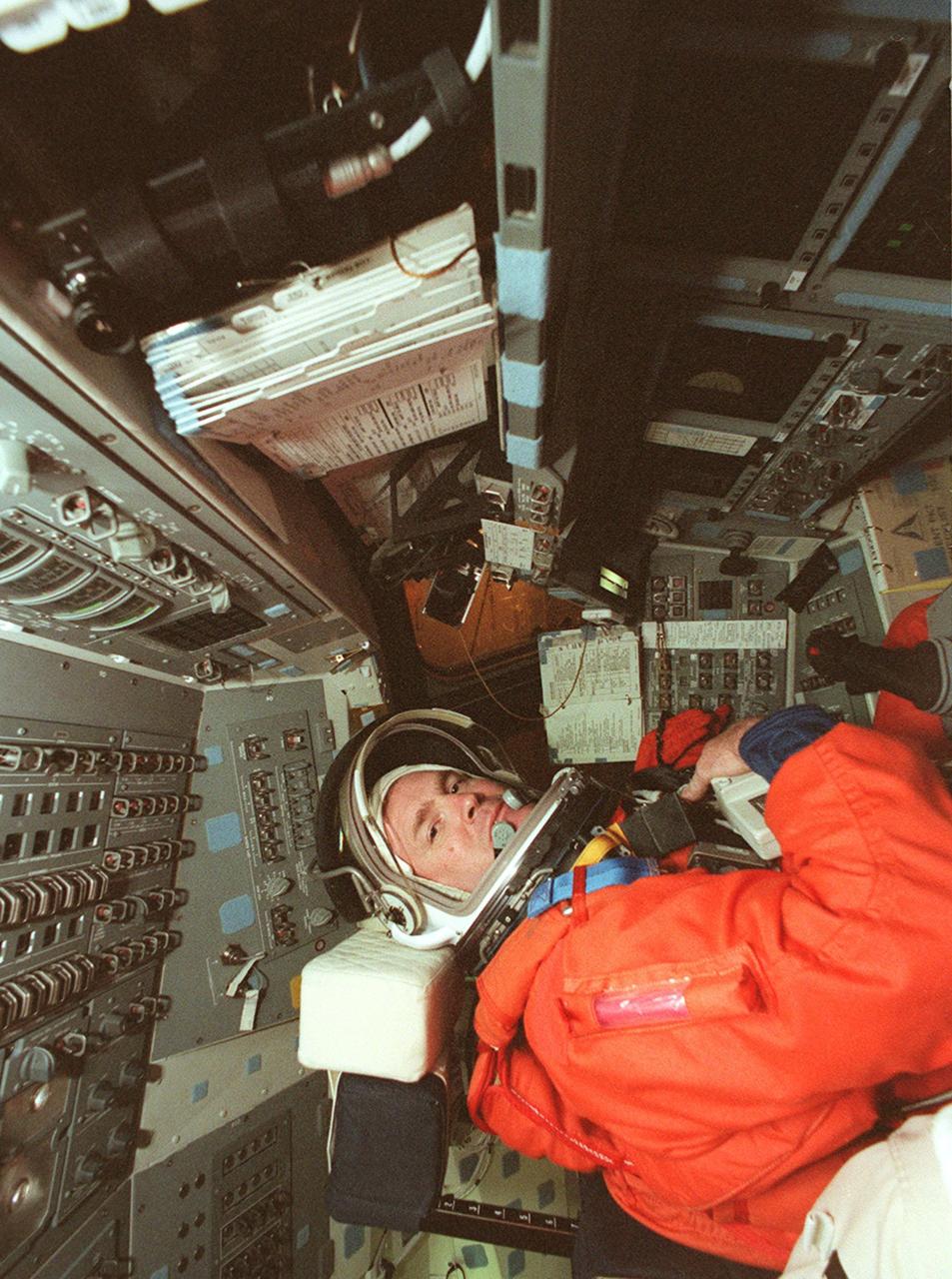
KENNEDY SPACE CENTER, FLA. -- STS-101 Commander James D. Halsell Jr. takes his seat inside Space Shuttle Atlantis for a simulated launch countdown. The countdown is part of Terminal Countdown Demonstration Test (TCDT) activities that also include emergency egress training and familiarization with the payload. Other crew members taking part are Pilot Scott J. "Doc" Horowitz and Mission Specialists Mary Ellen Weber, James Voss, Jeffrey N. Williams, Susan Helms, and Yury Usachev of Russia. During their mission to the International Space Station, the STS-101 crew will be delivering logistics and supplies, plus preparing the Station for the arrival of the Zvezda Service Module, expected to be launched by Russia in July 2000. Also, the crew will conduct one space walk to perform maintenance on the Space Station. This will be the third assembly flight for the Space Station. STS-101 is scheduled to launch April 24 at 4:15 p.m. from Launch Pad 39A
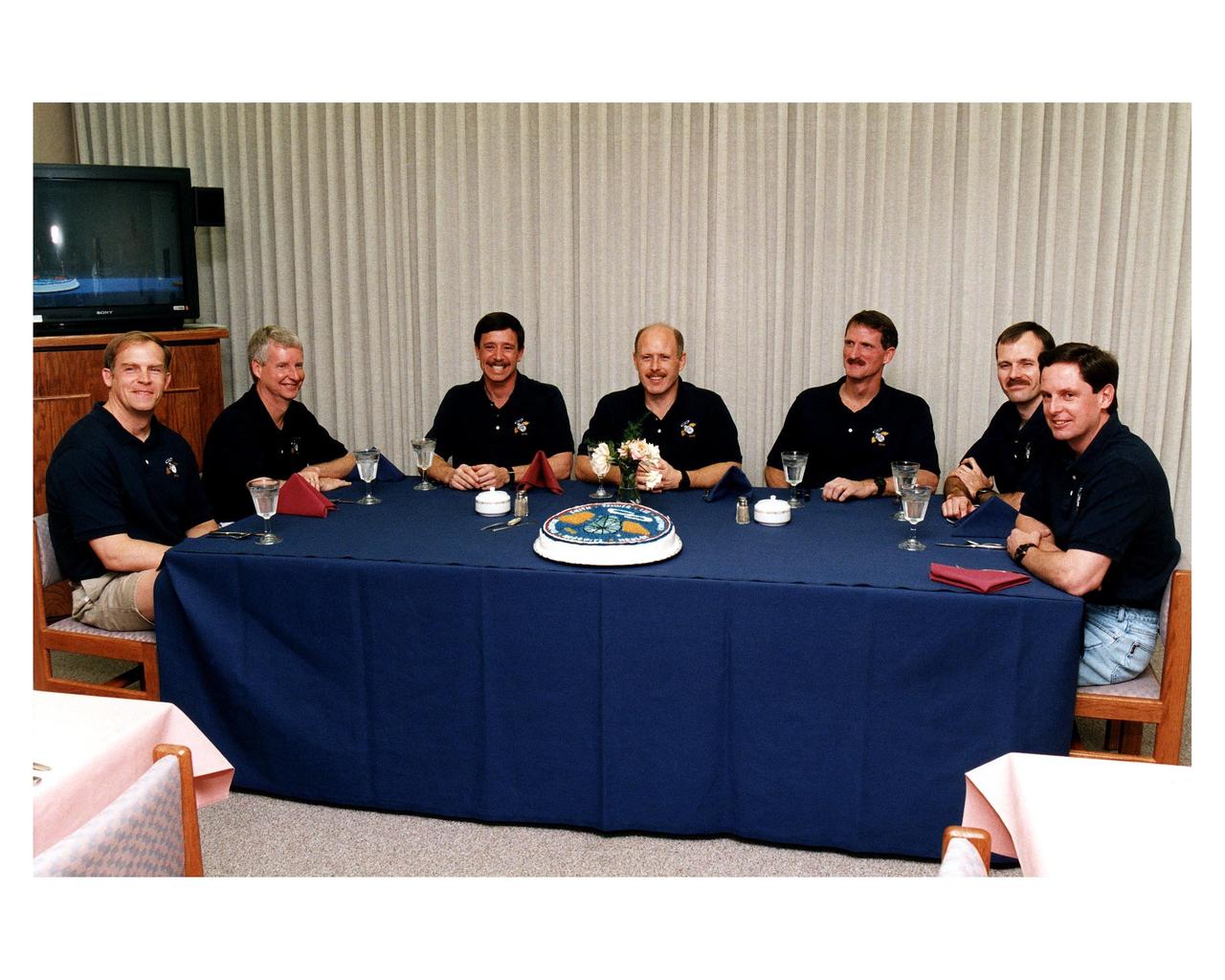
As part of the final STS-82 prelaunch activities, the seven crew members gather for lunch and a photo opportunity in the Operations and Checkout Building. From left, are Payload Commander Mark C. Lee, Mission Specialist Steven A. Hawley, Pilot Scott J. "Doc" Horowitz, Mission Commander Kenneth D. Bowersox, and Mission Specialists Joseph R. "Joe" Tanner, Steven L. Smith and Gregory J. Harbaugh. After a weather briefing, the astronauts will don their launch and entry suits and depart for Launch Pad 39A, where the Space Shuttle Discovery awaits liftoff during a 65-minute launch window which opens at about 3:55 a.m. EST, Feb. 11. The exact opening of the launch window will be announced a few hours before launch based on the final computation of the location of the Hubble Space Telescope (HST). STS-82 will be the second mission to service the HST which was deployed in 1990
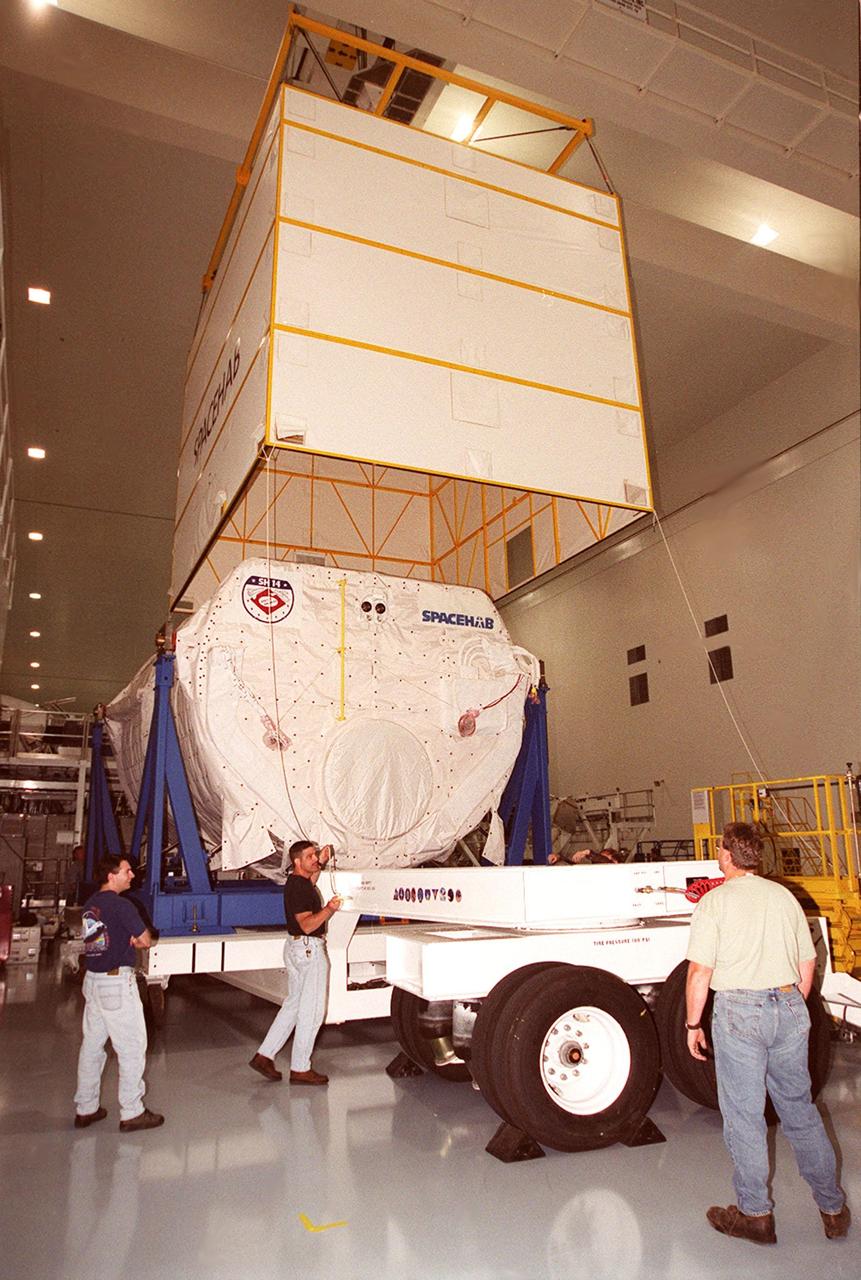
KENNEDY SPACE CENTER, FLA. -- The SPACEHAB Double Module is uncovered in the Space Station Processing Facility for transfer to a payload canister that will take it to Launch Pad 39A. There it will be installed in the Shuttle Atlantis' payload bay for mission STS-101. The module carries internal logistics and resupply cargo for restoring full redundancy to the International Space Station power system in preparation for the arrival of the next pressurized module, the Russian-built Zvezda. The STS-101 crew of seven comprises Commander James D. Halsell Jr., Pilot Scott J. "Doc" Horowitz (Ph.D.) and Mission Specialists Mary Ellen Weber (Ph.D.), James S. Voss, Jeffrey N. Williams, Susan J. Helms and Yuri Vladimirovich Usachev, cosmonaut. Launch of Atlantis on mission STS-101 is scheduled no earlier than April 17, 2000
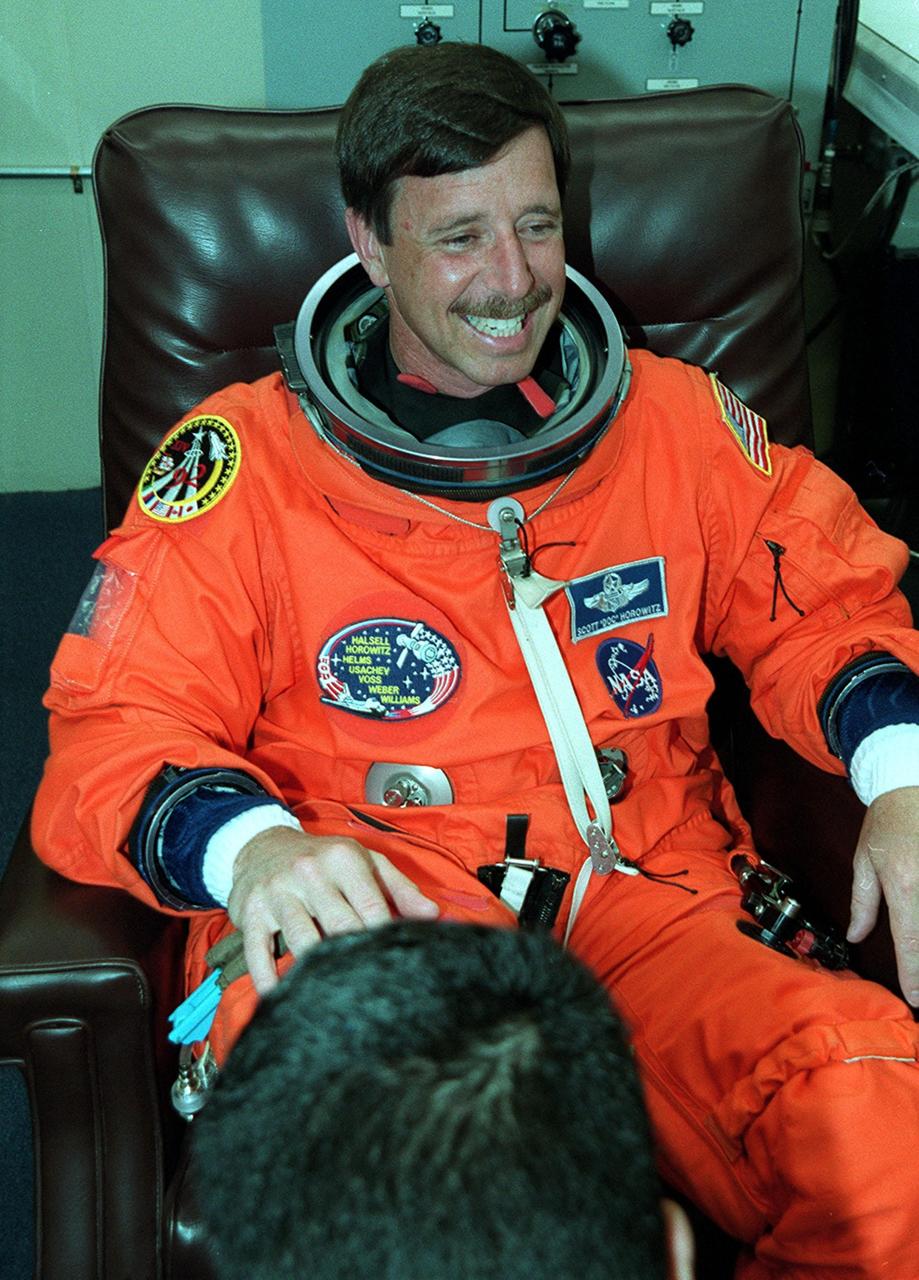
In the Operations and Checkout Building, STS-101 Pilot Scott "Doc" Horowitz grins during suitup activities before heading to Launch Pad 39A for the fourth attempt at launch of Space Shuttle Atlantis. The mission will take the crew to the International Space Station to deliver logistics and supplies and to prepare the Station for the arrival of the Zvezda Service Module, expected to be launched by Russia in July 2000. Also, the crew will conduct one space walk and will reboost the space station from 230 statute miles to 250 statute miles. This will be the third assembly flight to the Space Station. Liftoff of Space Shuttle Atlantis for the 10-day mission is scheduled for about 6:11 a.m. EDT from Launch Pad 39A. Landing is targeted for May 29 at 2:19 a.m. EDT.<font size="3"
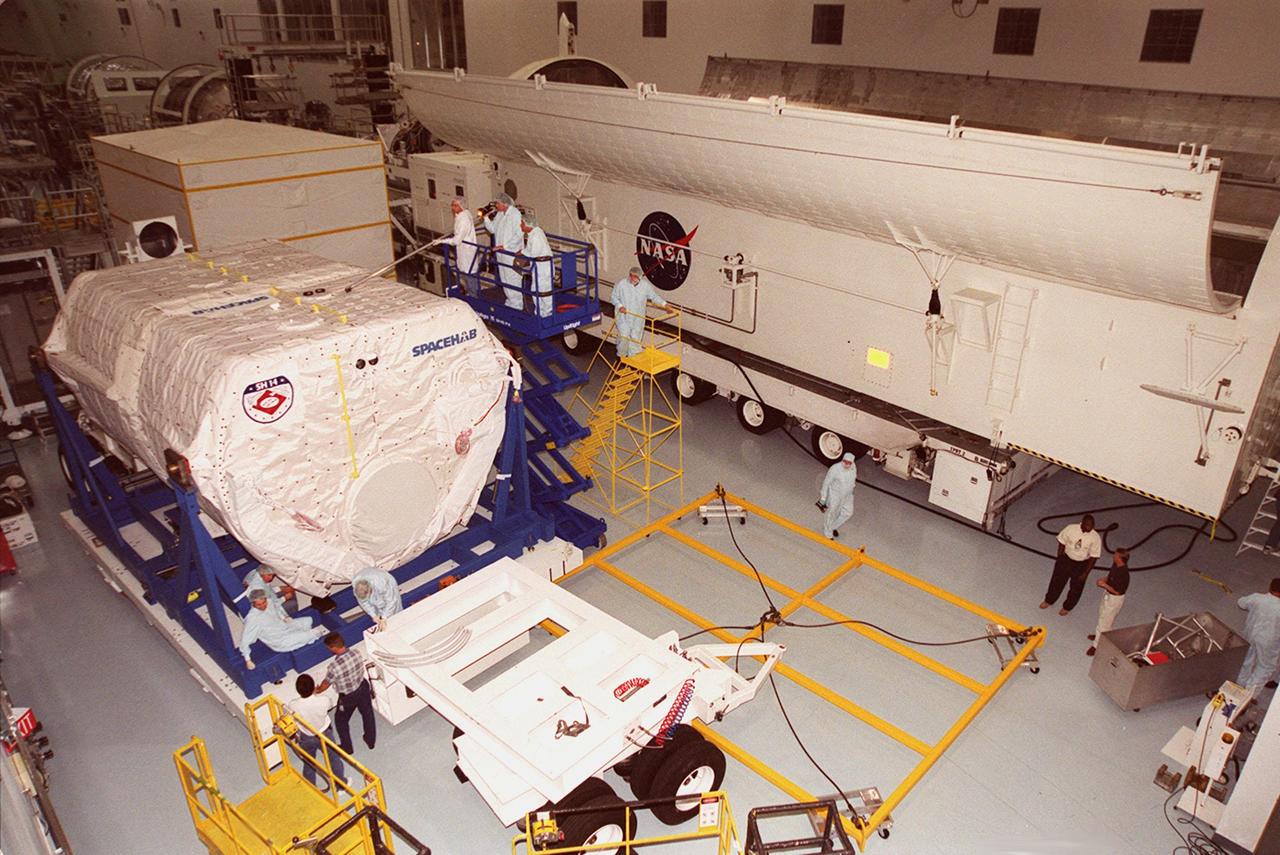
KENNEDY SPACE CENTER, FLA. -- After being uncrated in the Space Station Processing Facility, the SPACEHAB Double Module (left) waits for transfer to the payload canister (right) that will take it to Launch Pad 39A. There it will be installed in the Shuttle Atlantis' payload bay for mission STS-101. The module carries internal logistics and resupply cargo for restoring full redundancy to the International Space Station power system in preparation for the arrival of the next pressurized module, the Russian-built Zvezda. The STS-101 crew of seven comprises Commander James D. Halsell Jr., Pilot Scott J. "Doc" Horowitz (Ph.D.) and Mission Specialists Mary Ellen Weber (Ph.D.), James S. Voss, Jeffrey N. Williams, Susan J. Helms and Yuri Vladimirovich Usachev, cosmonaut. Launch of Atlantis on mission STS-101 is scheduled no earlier than April 17, 2000
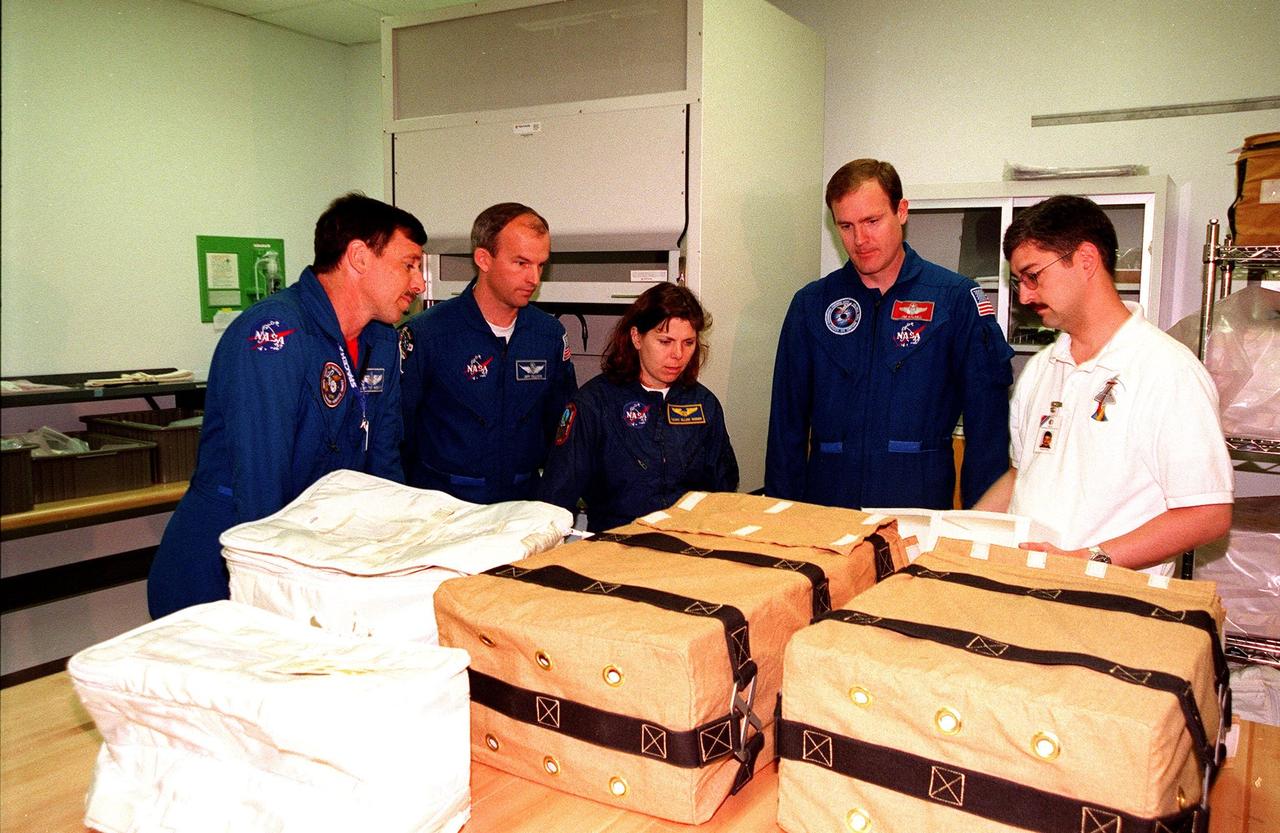
KENNEDY SPACE CENTER, FLA. -- STS-101 crew members take part in a bench review at the SPACEHAB Facility as part of familiarization activities for their upcoming mission. From left are Pilot Scott J. "Doc" Horowitz (Ph.D.), Mission Specialists Jeffrey N. Williams and Mary Ellen Weber (Ph.D.), and Commander James Donald Halsell Jr., plus Sean Hicks, with Boeing in Huntsville, Ala. Other crew members are Mission Specialists Edward Tsang Lu (Ph.D.), and Yuri Ivanovich Malenchenko and Boris Morukov, who represent the Russian Space Agency. Mission STS-101 is the third flight in construction of the International Space Station. The 11-day mission is targeted for launch on December 2, 1999, at Launch Pad 39A

KENNEDY SPACE CENTER, Fla. -- During a break in their Terminal Countdown Demonstration Test (TCDT), the STS-101 crew poses in front of Space Shuttle Atlantis at Launch Pad 39A. Standing, left to right, are Mission Specialists Susan J. Helms and Yury Usachev of Russia; Pilot Scott J. "Doc" Horowitz; Commander James D. Halsell Jr.; and Mission Specialists Mary Ellen Weber, James Voss and Jeffrey N. Williams. The TCDT includes emergency egress training and a simulated launch countdown. During their mission to the International Space Station, the STS-101 crew will be delivering logistics and supplies, plus preparing the Station for the arrival of the Zvezda Service Module, expected to be launched by Russia in July 2000. Also, the crew will conduct one space walk to perform maintenance on the Space Station. This will be the third assembly flight for the Space Station. STS-101 is scheduled to launch April 24 at 4:15 p.m. from Launch Pad 39A
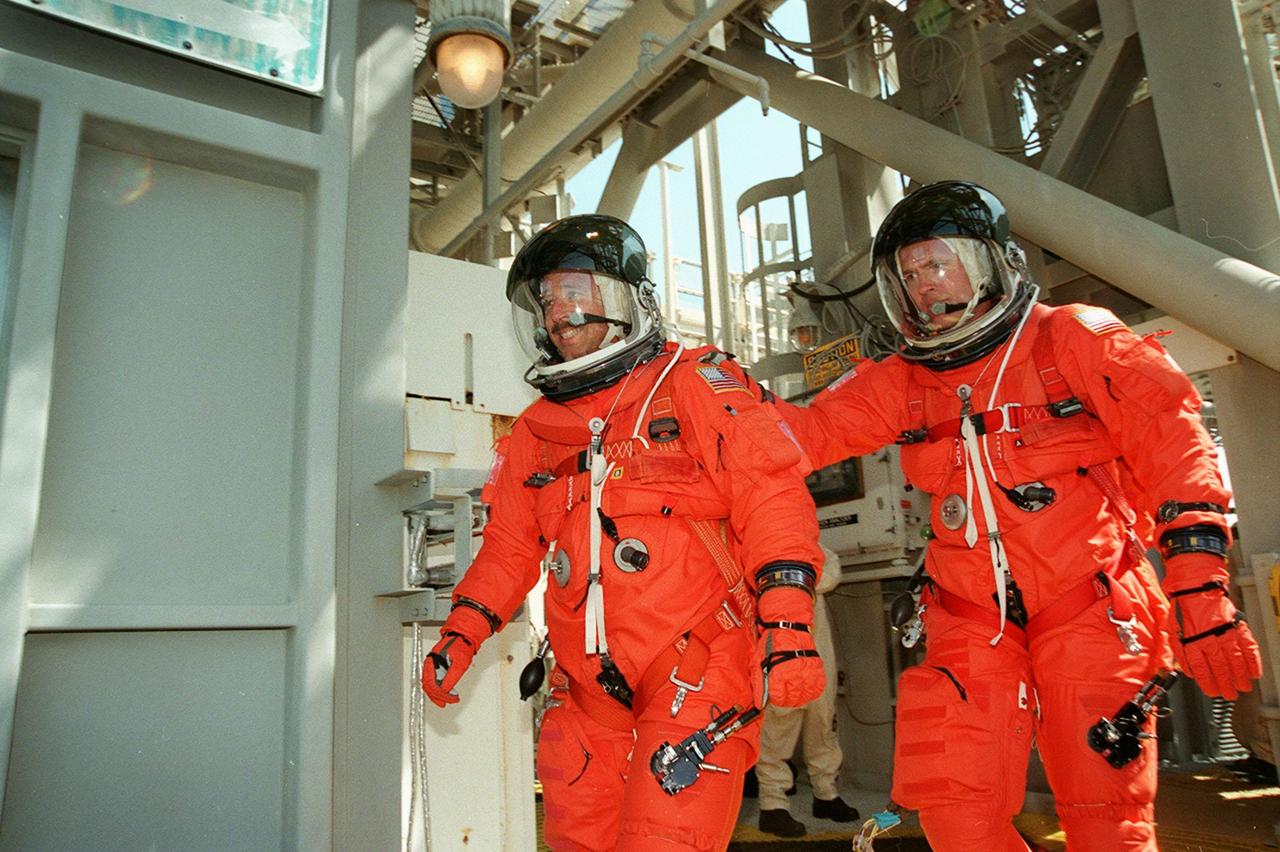
KENNEDY SPACE CENTER, FLA. -- As part of Terminal Countdown Demonstration (TCDT) activities, the STS-101 crew practices emergency egress from the orbiter at the 195-foot level of the Fixed Service Structure. Shown heading for the slidewire baskets are Pilot Scott J. "Doc" Horowitz (left) and Commander James D. Halsell Jr. The TCDT also includes a simulated launch countdown and familiarization with the payload. During their mission to the International Space Station, the STS-101 crew will be delivering logistics and supplies, plus preparing the Station for the arrival of the Zvezda Service Module, expected to be launched by Russia in July 2000. Also, the crew will conduct one space walk to perform maintenance on the Space Station. This will be the third assembly flight to the Space Station. STS-101 is scheduled to launch April 24 at 4:15 p.m. from Launch Pad 39A