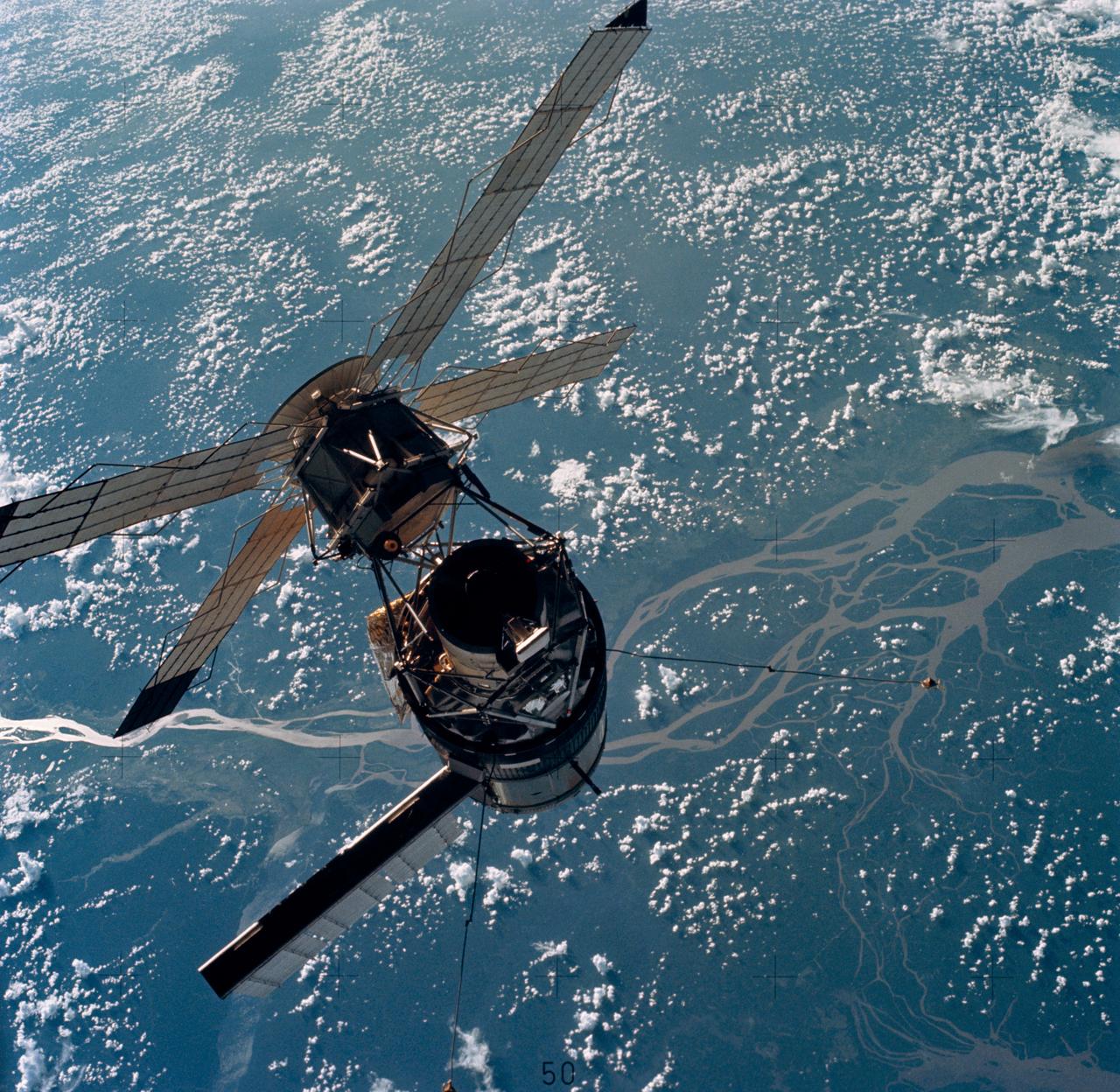
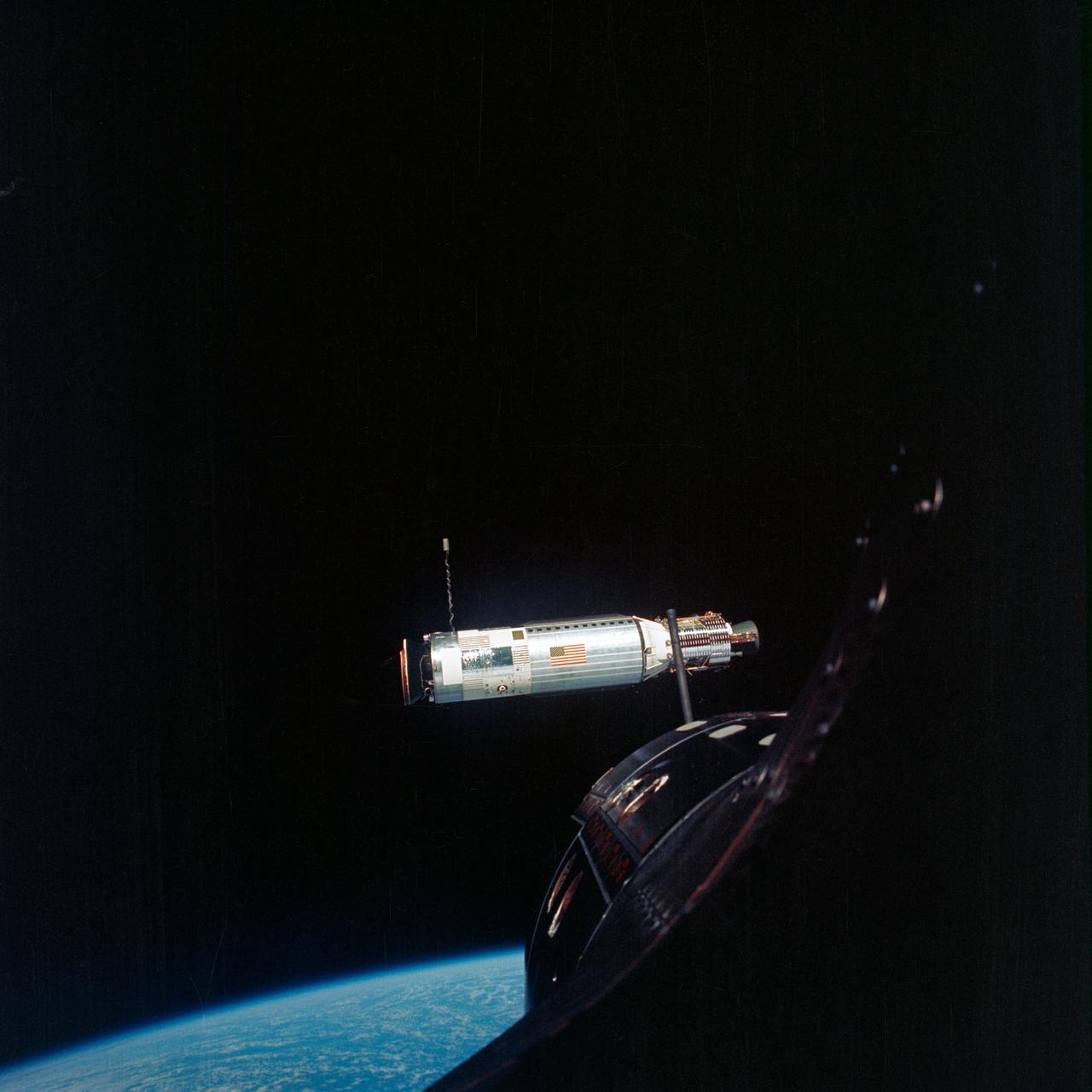
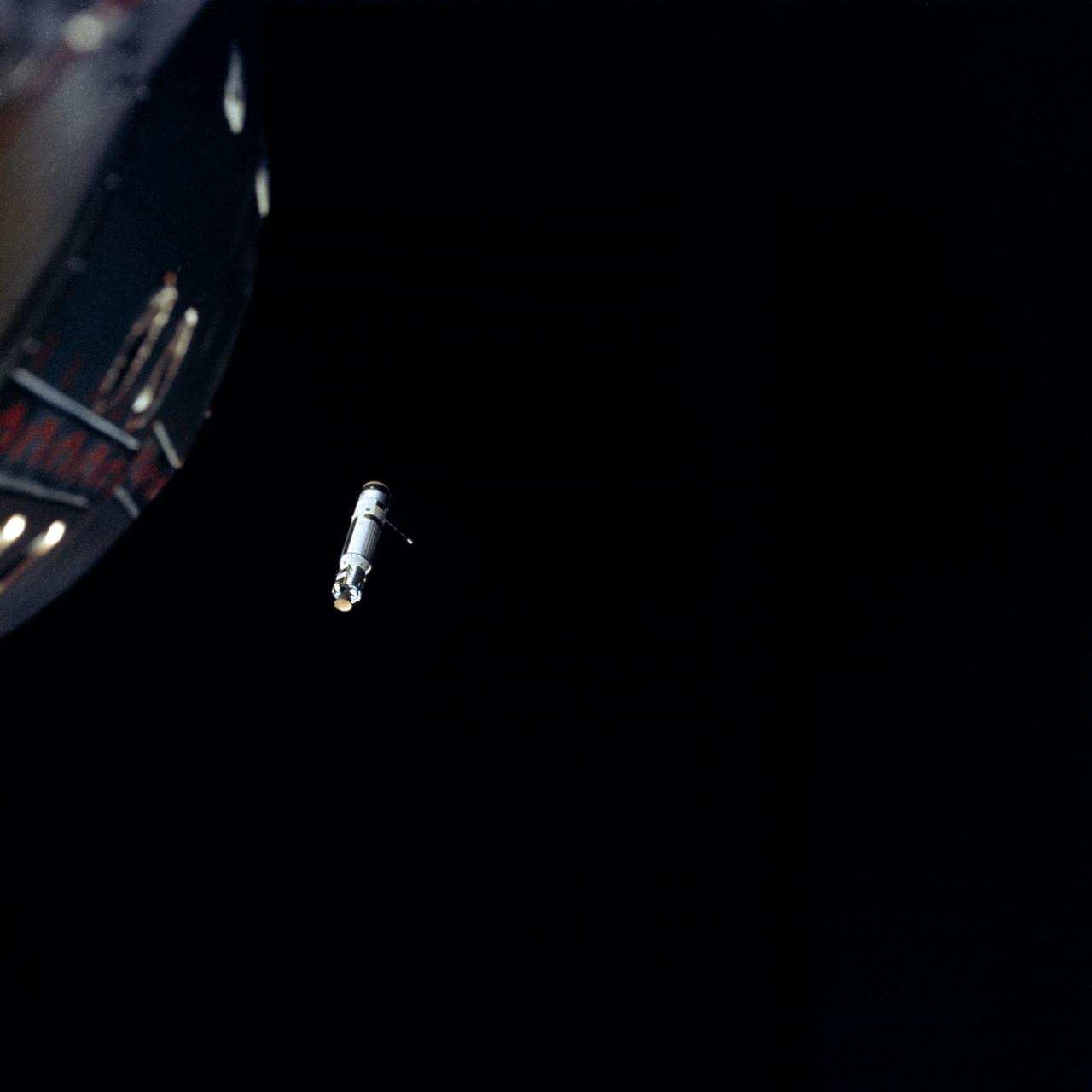
SL3-114-1683 (28 July 1973) --- A close-up view of the Skylab space station photographed against an Earth background from the Skylab 3 Command and Service Modules (CSM) during station-keeping maneuvers prior to docking. Aboard the Command Module (CM) were astronauts Alan L. Bean, Owen K. Garriott and Jack R. Lousma, who remained with the Skylab Space Station in Earth orbit for 59 days. This picture was taken with a hand-held 70mm Hasselblad camera using a 100mm lens and SO-368 medium speed Ektachrome film. Note the one solar array system wing on the Orbital Workshop (OWS) which was successfully deployed during extravehicular activity (EVA) on the first manned Skylab flight. The parasol solar shield which was deployed by the Skylab 2 crew can be seen through the support struts of the Apollo Telescope Mount (ATM). Photo credit: NASA
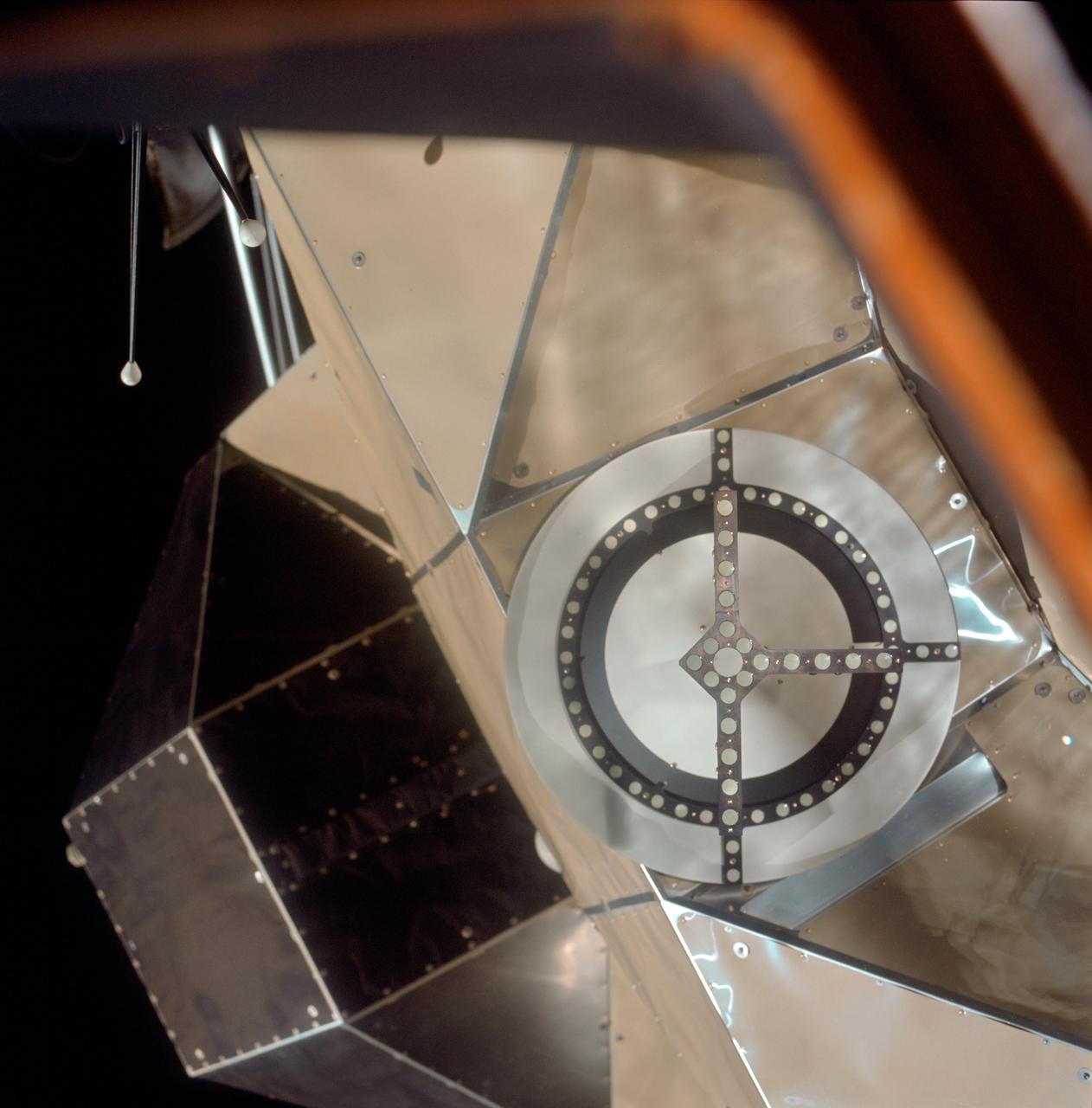
AS11-36-5365 (21 July 1969) --- A close-up view of the docking target on the Apollo 11 Lunar Module (LM) photographed from the Command Module during the LM/CSM docking in lunar orbit. Astronauts Neil A. Armstrong, commander, and Edwin E. Aldrin Jr., lunar module pilot, in the LM, were returning from the lunar surface. Astronaut Michael Collins, command module pilot, remained with the Command and Service Modules (CSM) in lunar orbit while Armstrong and Aldrin explored the moon.
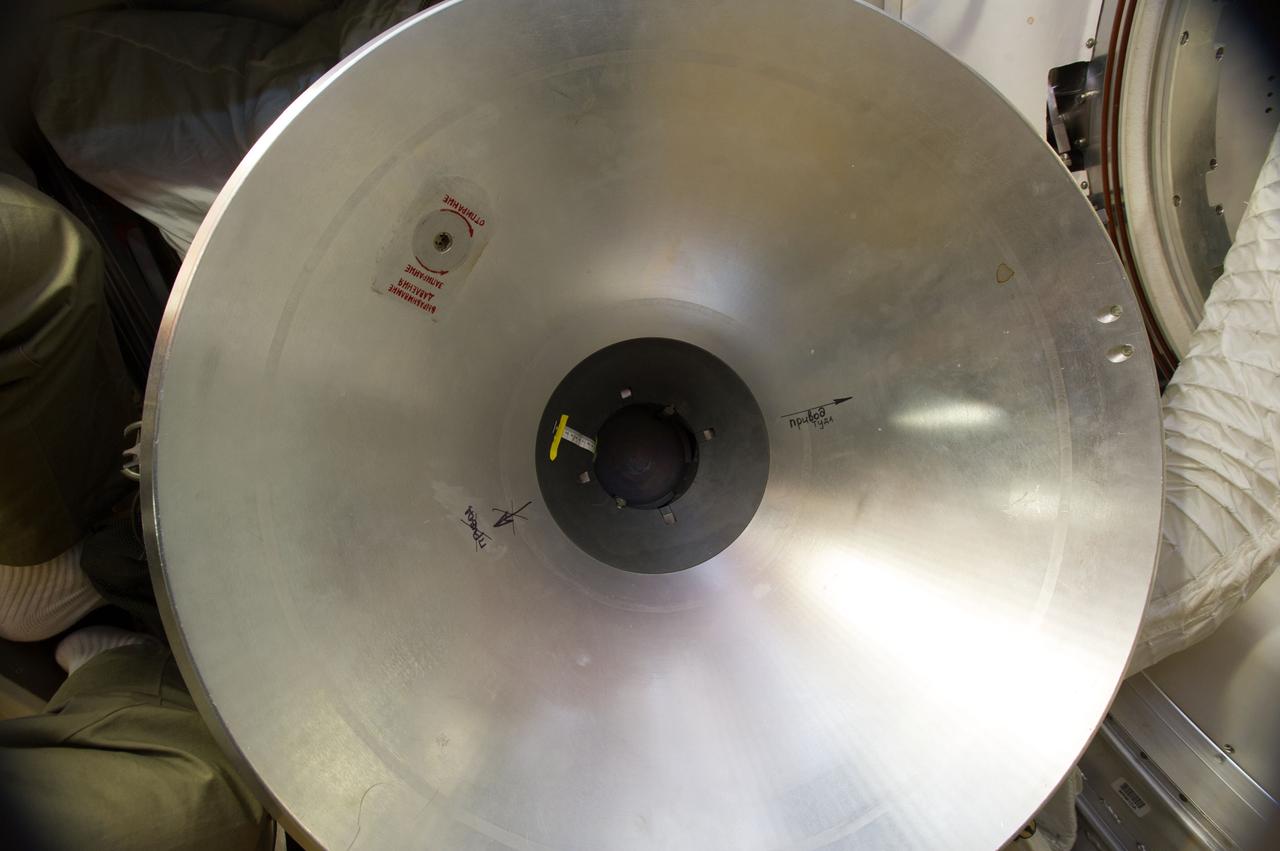
Close-up view of Progress #421 (ÐÐ) docking cone showing scuff marks / scratches during closure leak checks by the Expedition 40 crew.
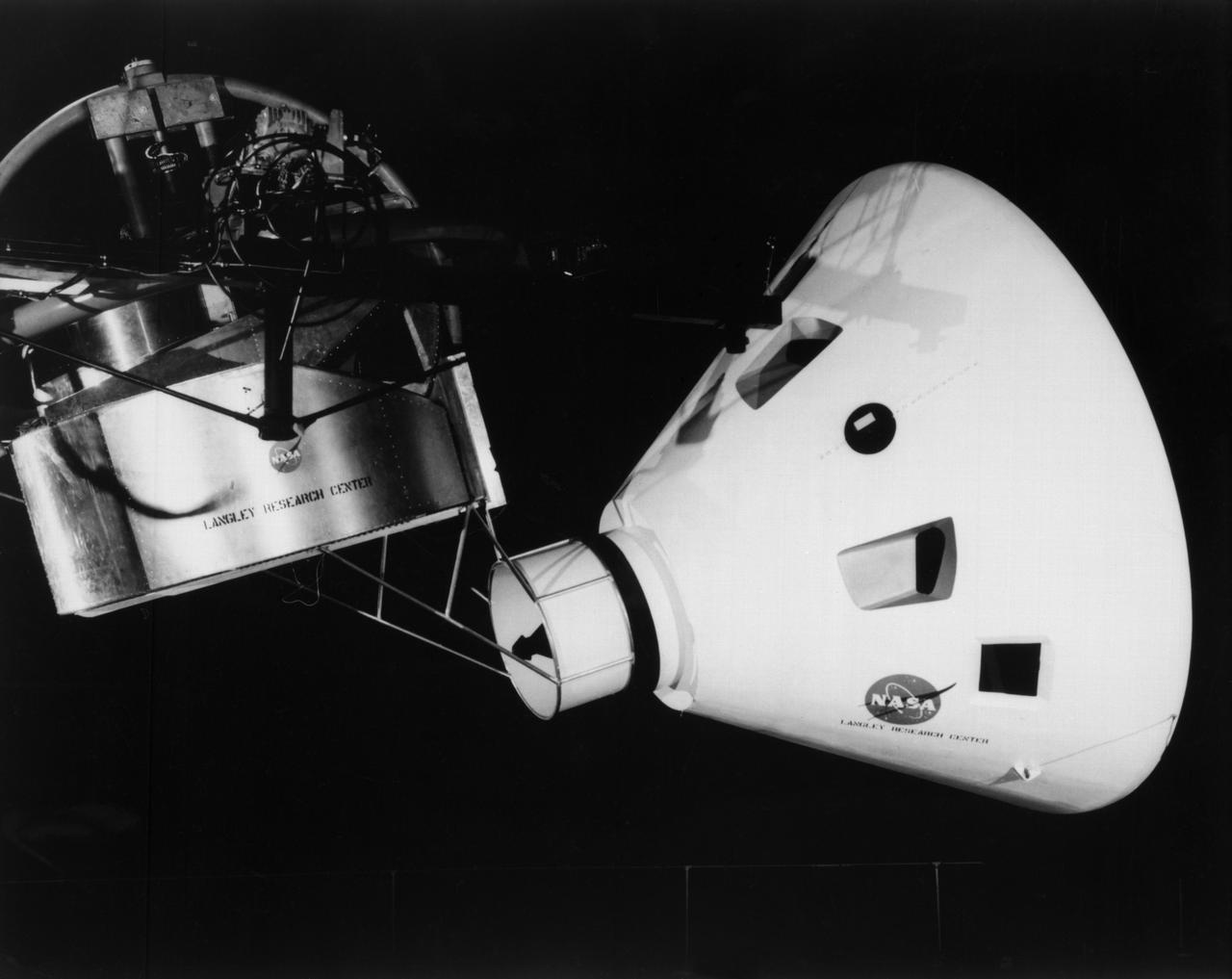
Originally the Rendezvous was used by the astronauts preparing for Gemini missions. The Rendezvous Docking Simulator was then modified and used to develop docking techniques for the Apollo program. "The LEM pilot's compartment, with overhead window and the docking ring (idealized since the pilot cannot see it during the maneuvers), is shown docked with the full-scale Apollo Command Module." A.W. Vogeley described the simulator as follows: "The Rendezvous Docking Simulator and also the Lunar Landing Research Facility are both rather large moving-base simulators. It should be noted, however, that neither was built primarily because of its motion characteristics. The main reason they were built was to provide a realistic visual scene. A secondary reason was that they would provide correct angular motion cues (important in control of vehicle short-period motions) even though the linear acceleration cues would be incorrect." -- Published in A.W. Vogeley, "Piloted Space-Flight Simulation at Langley Research Center," Paper presented at the American Society of Mechanical Engineers, 1966 Winter Meeting, New York, NY, November 27 - December 1, 1966;
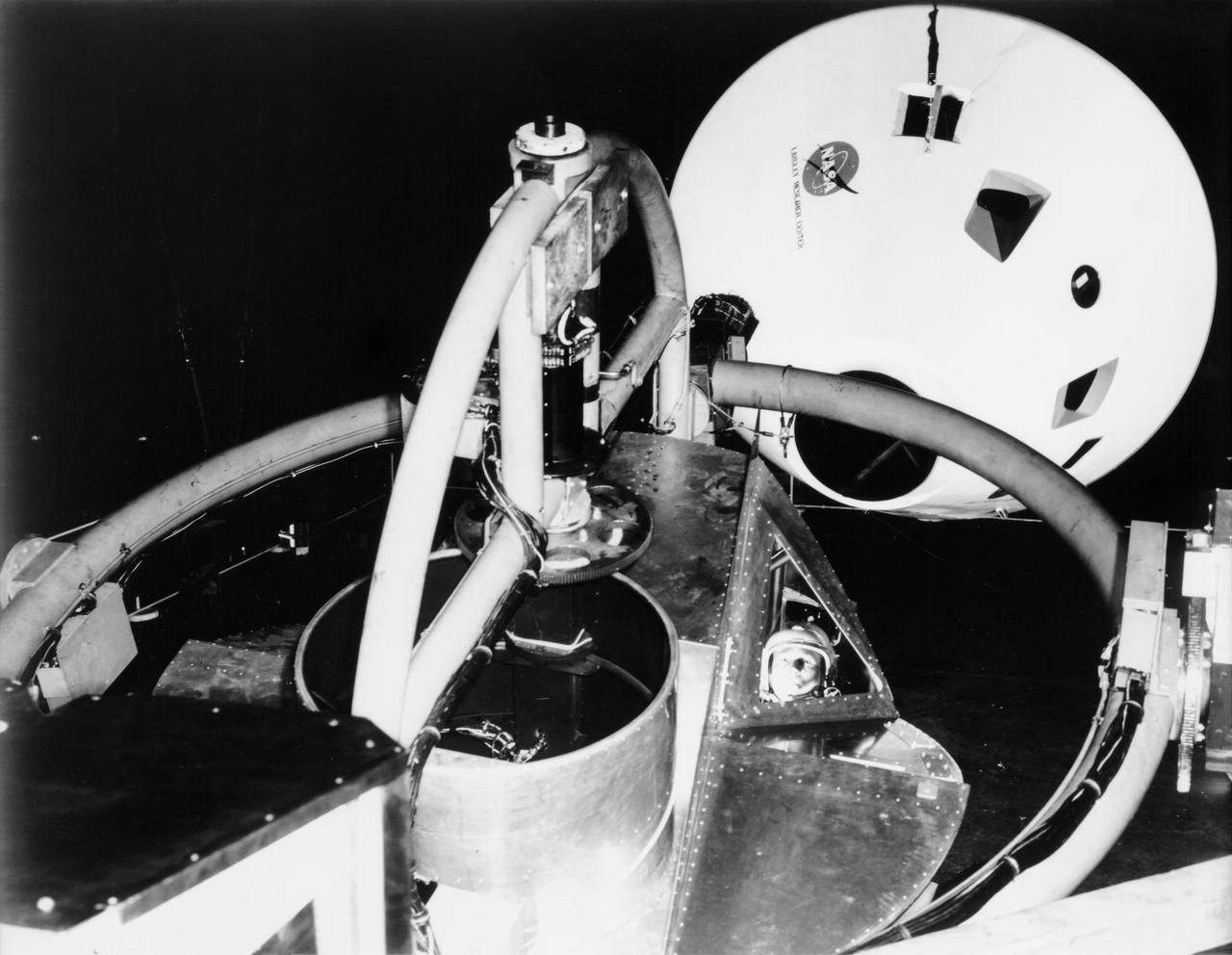
Originally the Rendezvous was used by the astronauts preparing for Gemini missions. The Rendezvous Docking Simulator was then modified and used to develop docking techniques for the Apollo program. "The LEM pilot's compartment, with overhead window and the docking ring (idealized since the pilot cannot see it during the maneuvers), is shown docked with the full-scale Apollo Command Module." A.W. Vogeley described the simulator as follows: "The Rendezvous Docking Simulator and also the Lunar Landing Research Facility are both rather large moving-base simulators. It should be noted, however, that neither was built primarily because of its motion characteristics. The main reason they were built was to provide a realistic visual scene. A secondary reason was that they would provide correct angular motion cues (important in control of vehicle short-period motions) even though the linear acceleration cues would be incorrect." -- Published in A.W. Vogeley, "Piloted Space-Flight Simulation at Langley Research Center," Paper presented at the American Society of Mechanical Engineers, 1966 Winter Meeting, New York, NY, November 27 - December 1, 1966;
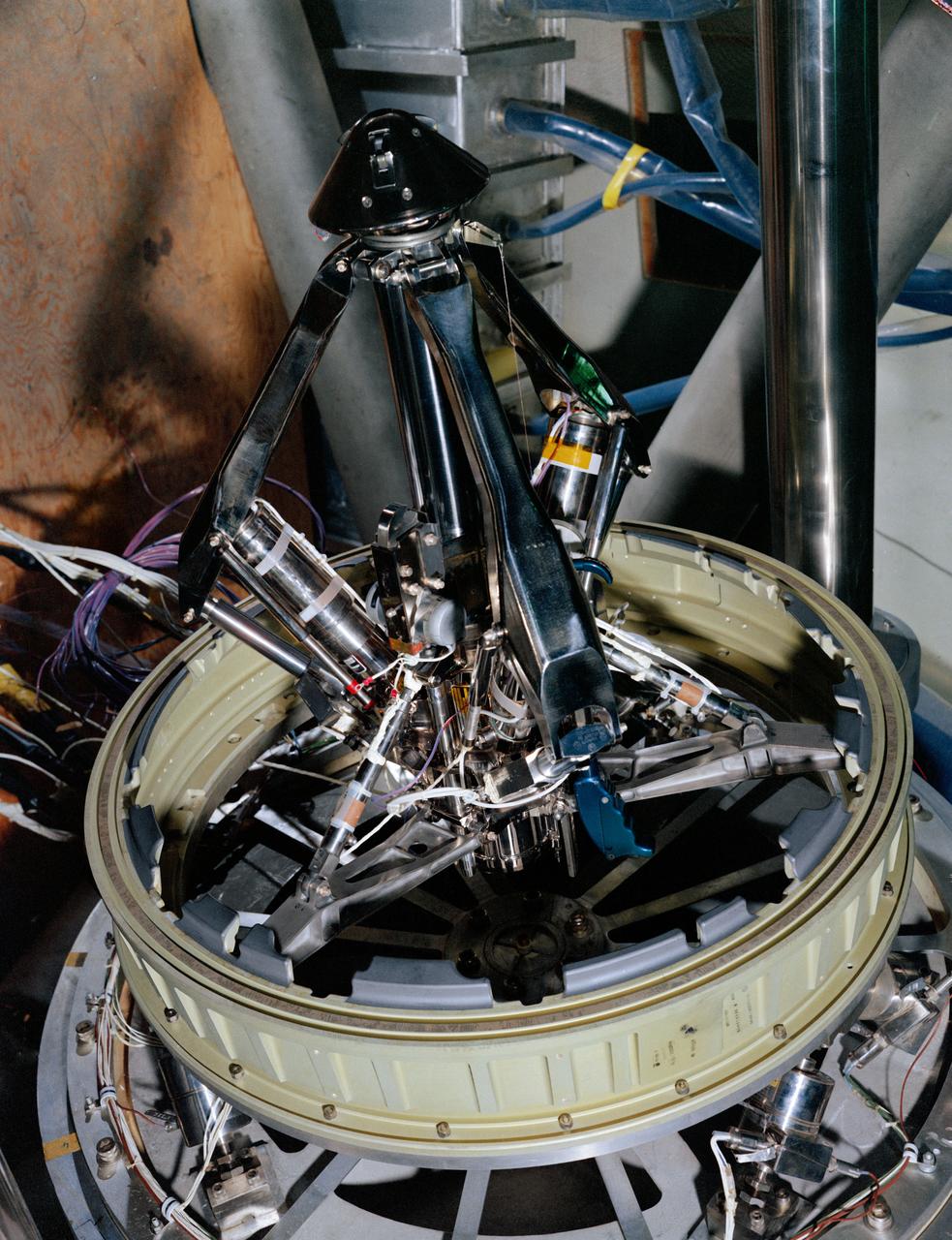
S68-50870 (1968) --- An engineering set up illustrating the probe portion of the docking system of the Apollo spacecraft. During docking maneuvers the docking probe on the Command Module (CM) engages the cone shaped drogue of the Lunar Module (LM). The primary docking structure is the tunnel through which the astronauts transfer from one module to the other. This tunnel is partly in the nose of the CM and partly in the top of the LM. Following CSM/LM docking the drogue and probe are removed to open the passageway between the modules.
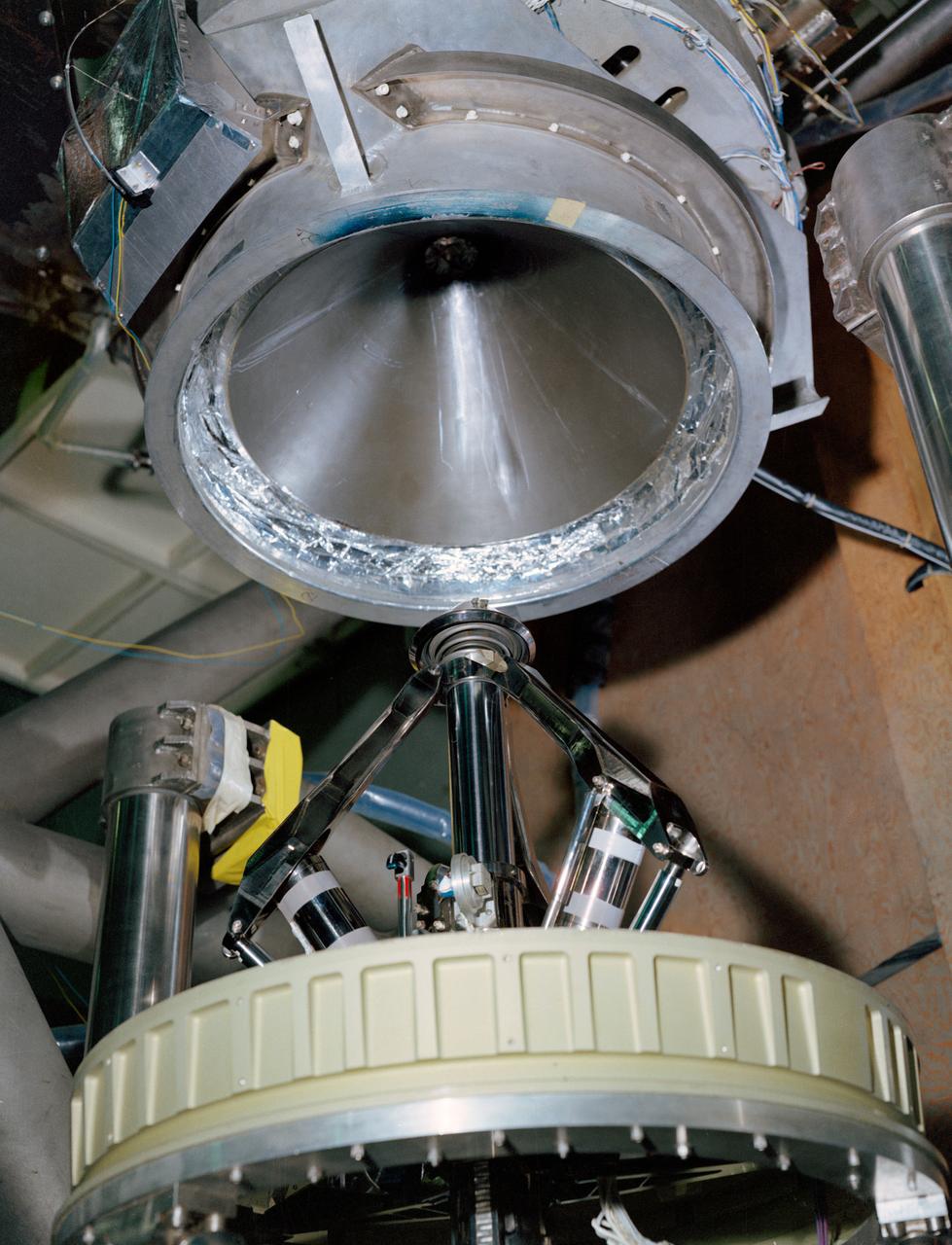
S68-50869 (1968) --- An engineering set up illustrating the docking system of the Apollo spacecraft. During docking maneuvers the docking probe on the Command Module engages the cone-shaped drogue of the Lunar Module. The primary docking structure is the tunnel through which the astronauts transfer from one module to the other. This tunnel is partly in the nose of the Command Module and partly in the top of the Lunar Module. Following CSM/LM docking the drogue and probe are removed to open the passageway between the modules.
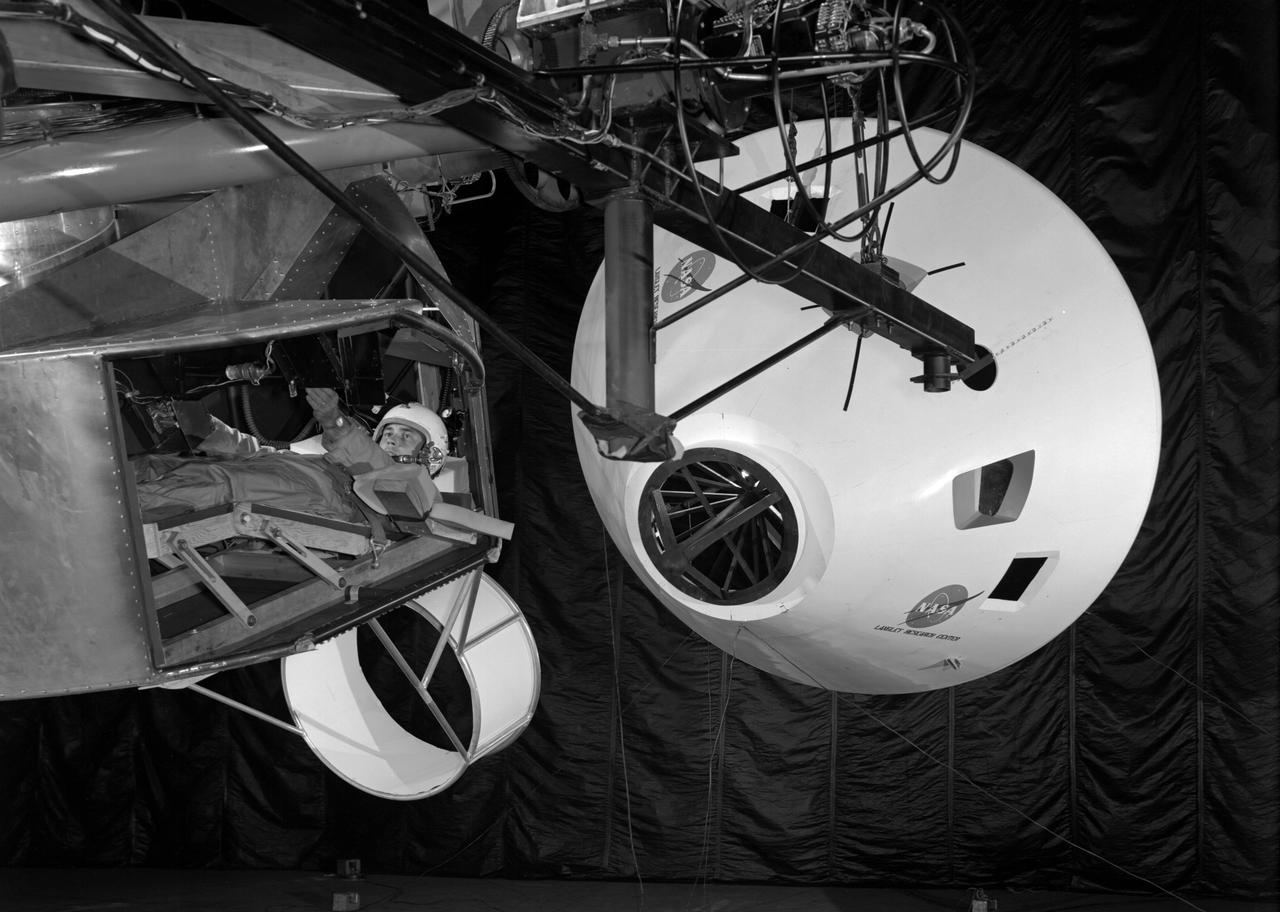
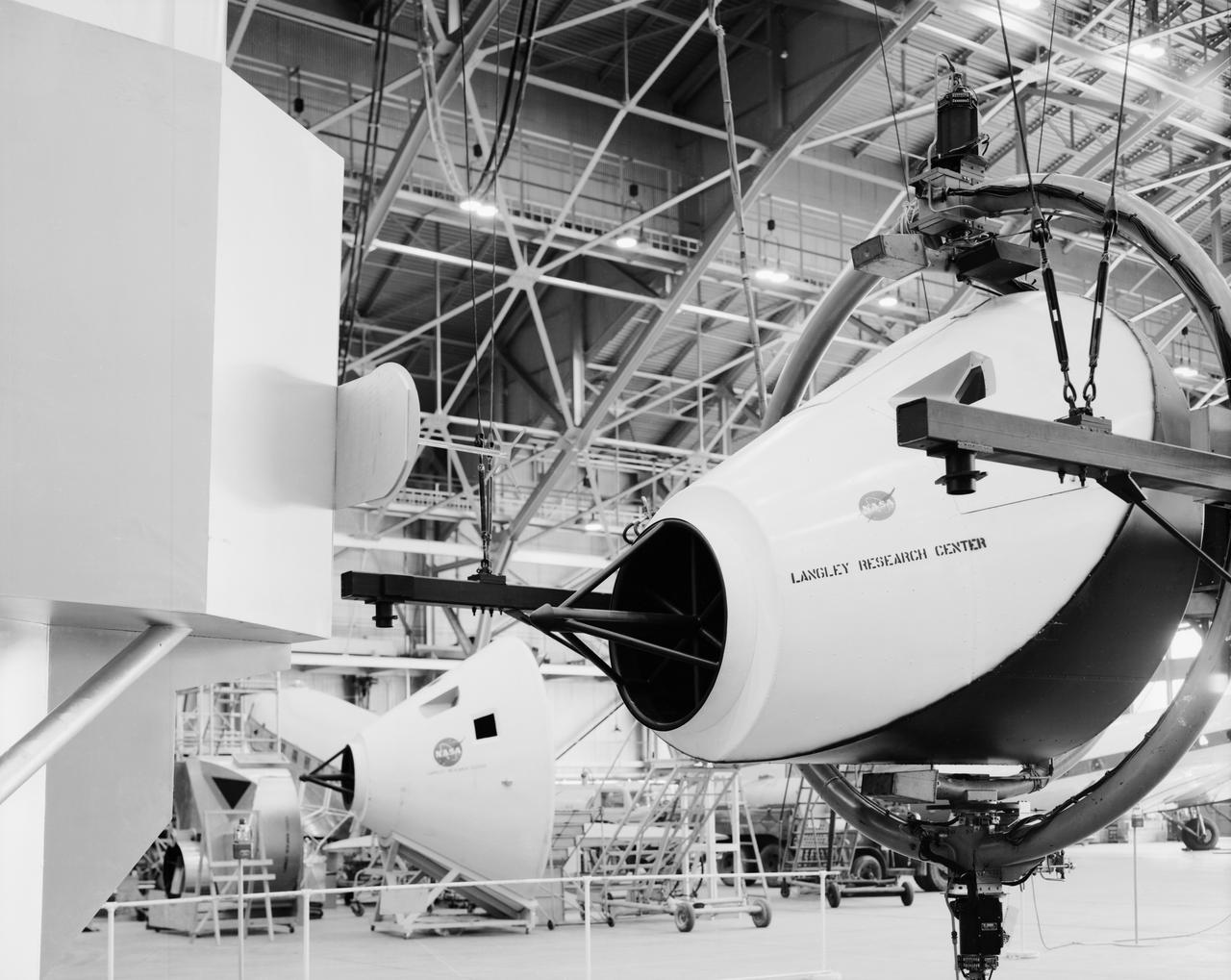
Originally the Rendezvous was used by the astronauts preparing for Gemini missions. The Rendezvous Docking Simulator was then modified and used to develop docking techniques for the Apollo program. The pilot is shown maneuvering the LEM into position for docking with a full-scale Apollo Command Module. From A.W. Vogeley, Piloted Space-Flight Simulation at Langley Research Center, Paper presented at the American Society of Mechanical Engineers, 1966 Winter Meeting, New York, NY, November 27 - December 1, 1966. The Rendezvous Docking Simulator and also the Lunar Landing Research Facility are both rather large moving-base simulators. It should be noted, however, that neither was built primarily because of its motion characteristics. The main reason they were built was to provide a realistic visual scene. A secondary reason was that they would provide correct angular motion cues (important in control of vehicle short-period motions) even though the linear acceleration cues would be incorrect. Apollo Rendezvous Docking Simulator: Langley s Rendezvous Docking Simulator was developed by NASA scientists to study the complex task of docking the Lunar Excursion Module with the Command Module in Lunar orbit.
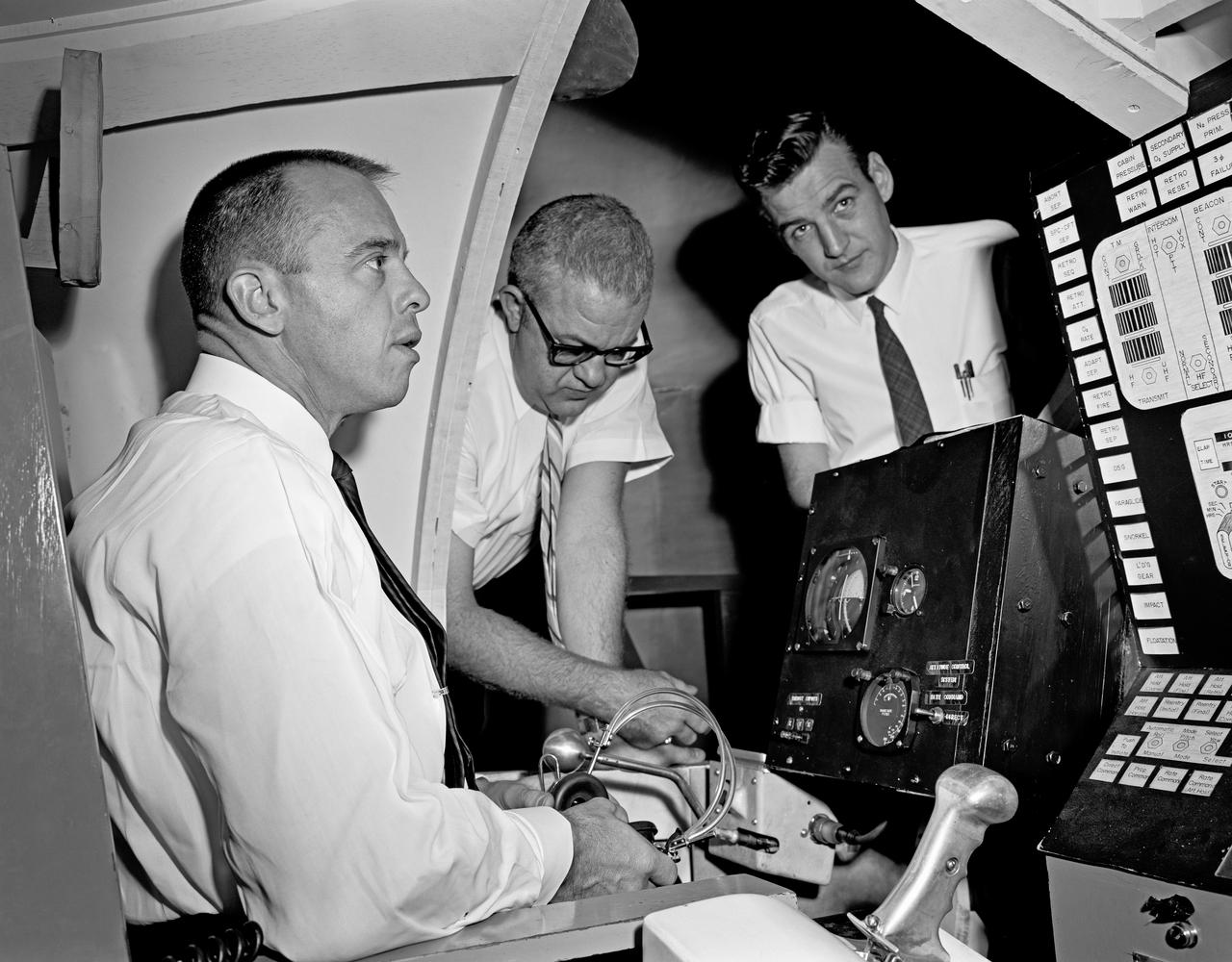
Alan Shepard and engineer looking at equipment, alone in Visual Docking Simulator, with engineers in Visual Docking Simulator.
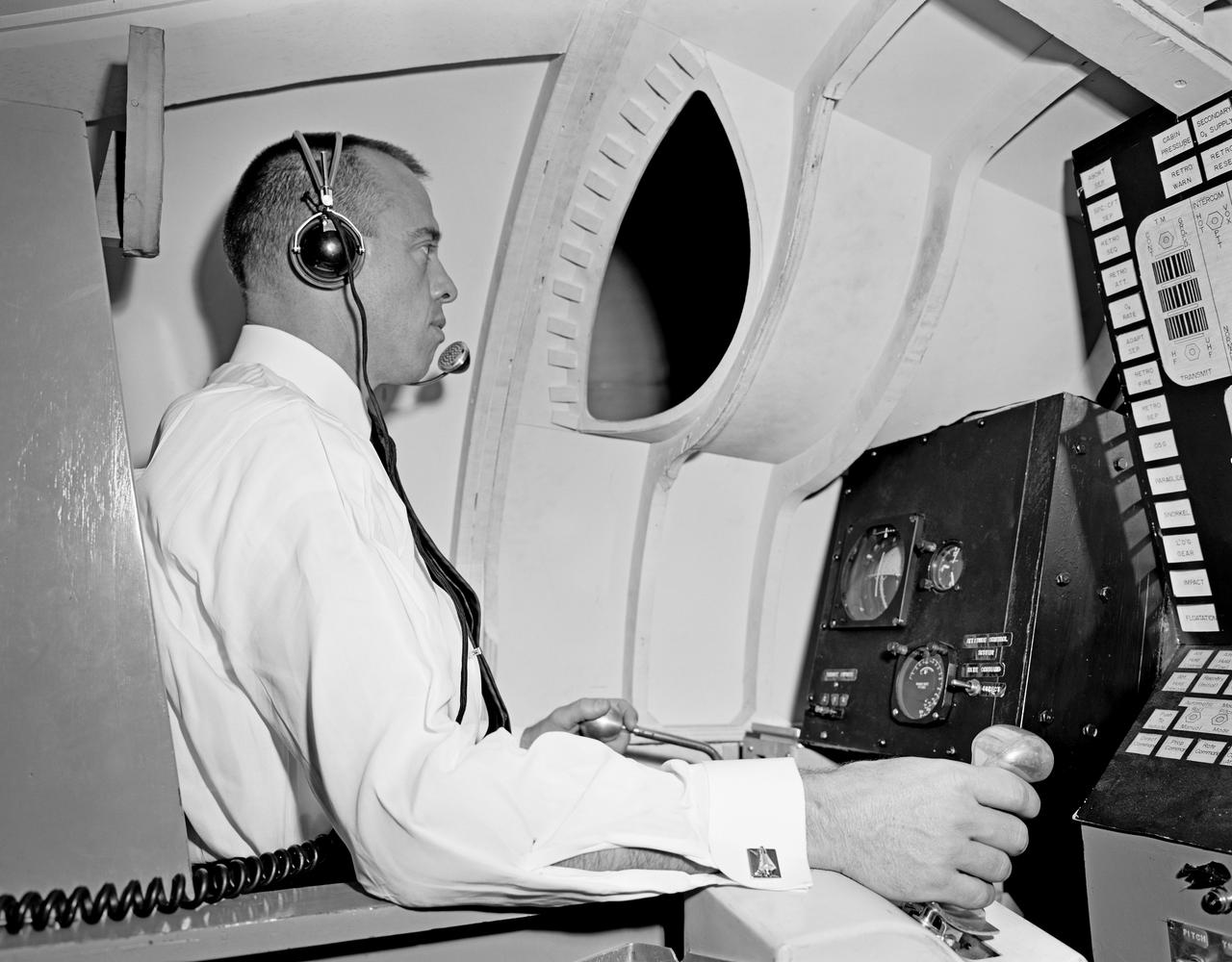
Alan Shepard and engineer looking at equipment, alone in Visual Docking Simulator, with engineers in Visual Docking Simulator.
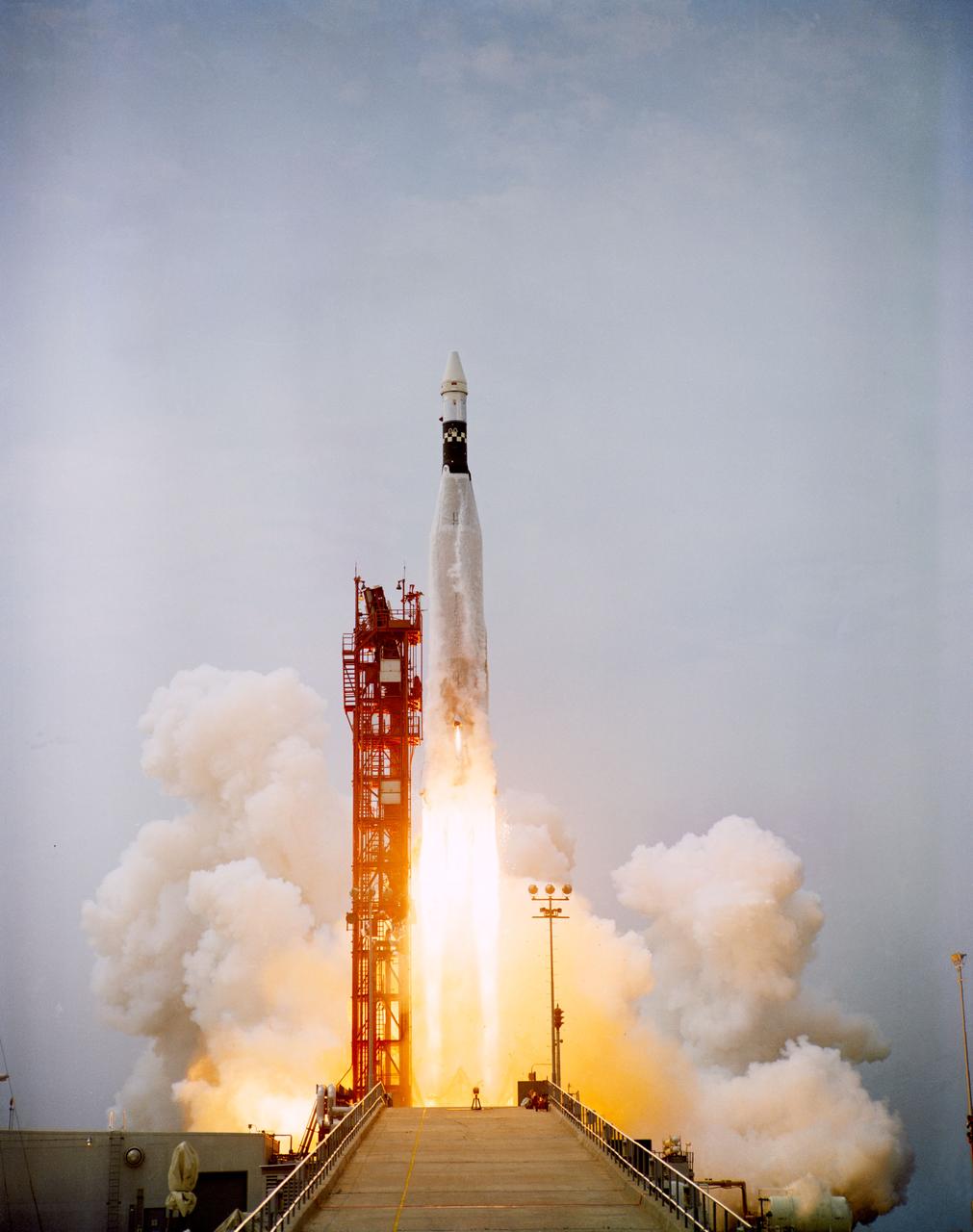
S66-32139 (1 June 1966) --- An Augmented Target Docking Adapter (ATDA) atop an Atlas launch vehicle is launched from Kennedy Space Center's Pad 14 at 10 a.m., June 1, 1966. The ATDA is a rendezvous and docking vehicle for the Gemini-9A space mission. Photo credit: NASA
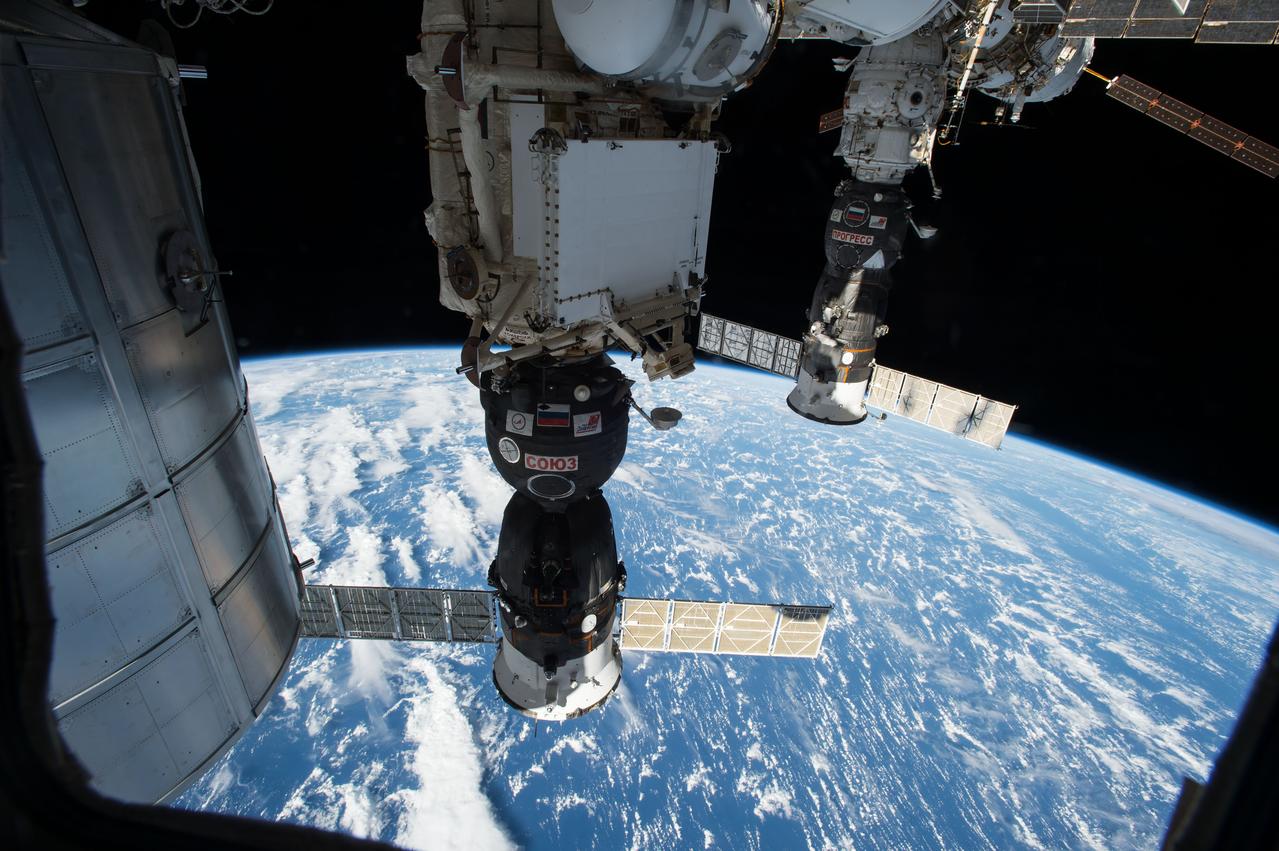
View of the Soyuz TMA-15M spacecraft docked to Rassvet Mini-Research Module 1 (MRM1) and the Progress 57P spacecraft docked to Pirs Docking Compartment (DC1). Portions of the Leonardo Permanent Multipurpose Module (PMM), aft ISS, and an Earth limb are in view. Image was released by astronaut on Twitter.
Originally the Rendezvous was used by the astronauts preparing for Gemini missions. The Rendezvous Docking Simulator was then modified and used to develop docking techniques for the Apollo program. This picture shows a later configuration of the Apollo docking with the LEM target. A.W. Vogeley described the simulator as follows: The Rendezvous Docking Simulator and also the Lunar Landing Research Facility are both rather large moving-base simulators. It should be noted, however, that neither was built primarily because of its motion characteristics. The main reason they were built was to provide a realistic visual scene. A secondary reason was that they would provide correct angular motion cues (important in control of vehicle short-period motions) even though the linear acceleration cues would be incorrect. -- Published in A.W. Vogeley, Piloted Space-Flight Simulation at Langley Research Center, Paper presented at the American Society of Mechanical Engineers, 1966 Winter Meeting, New York, NY, November 27 - December 1, 1966.
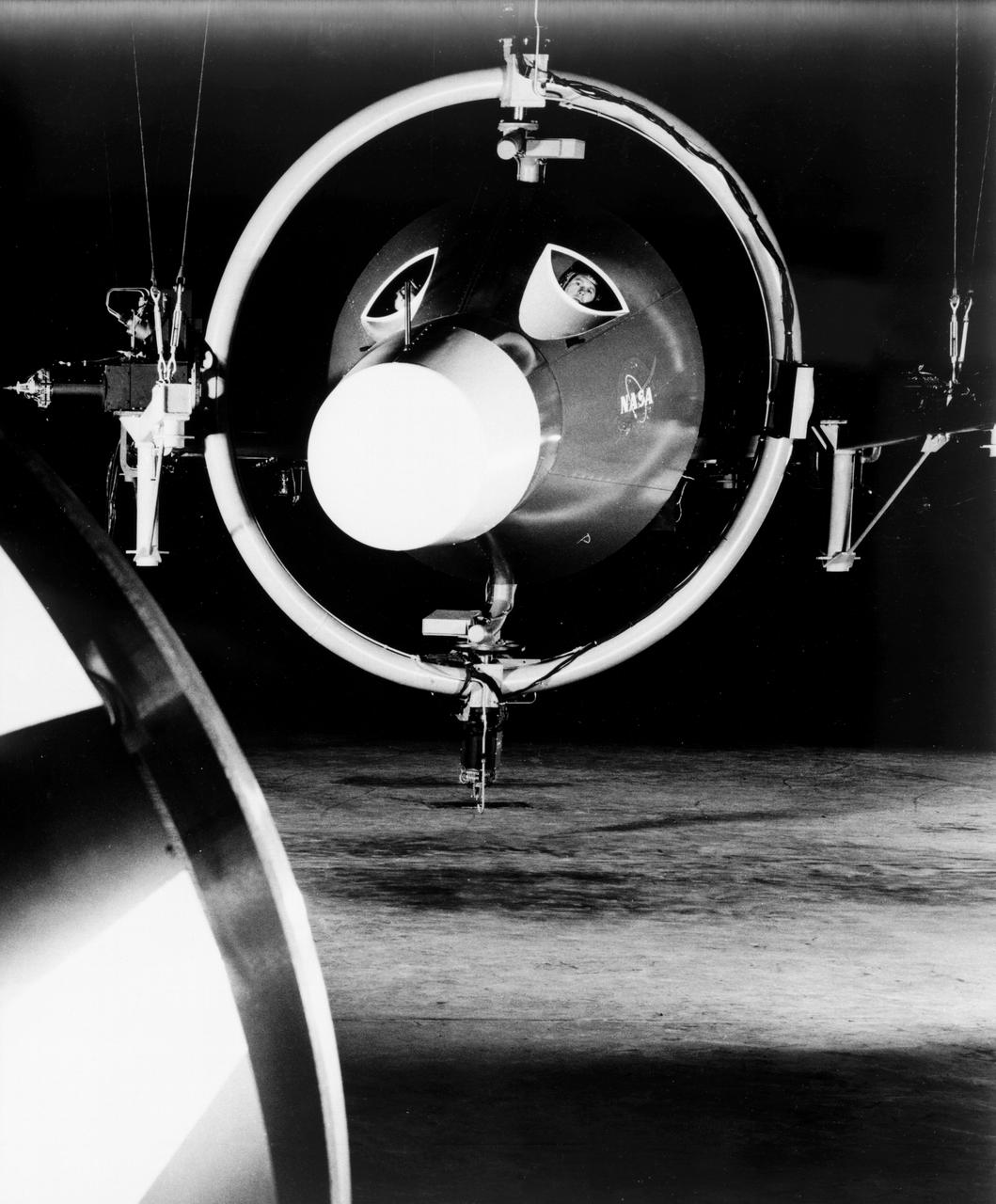
Unidentified Pilot eyeballs his way to a docking by peering through the portal in his capsule. Photo published in Spaceflight Revolution, NASA Langley Research Center From Sputnik to Apollo. By James R. Hansen. NASA SP-4308, 1995, p. 372.
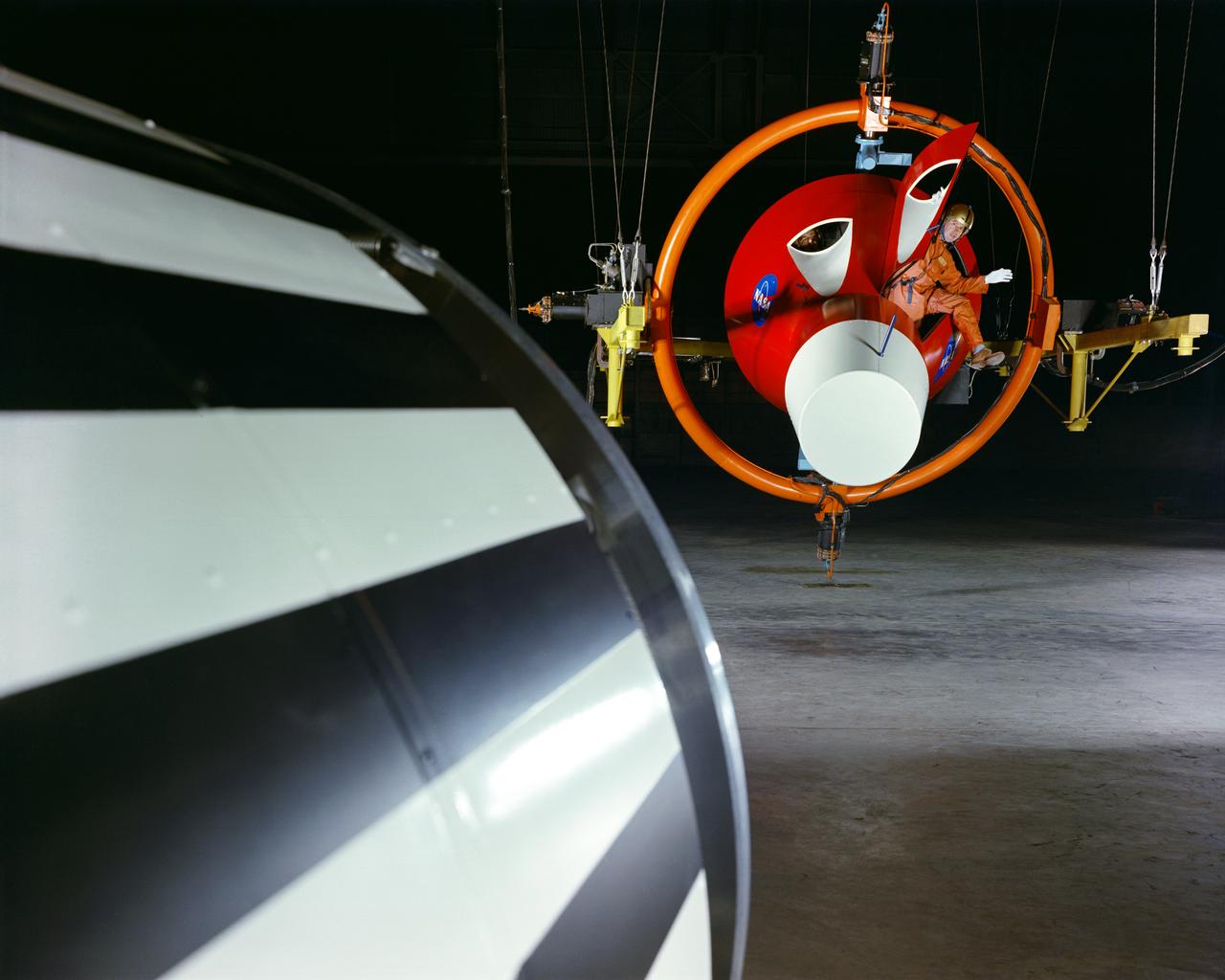
Practicing with a full-scale model of the Gemini Capsule in Langley's Rendezvous Docking Simulator. -- Caption and photograph published in Winds of Change, 75th Anniversary NASA publication, (page 89), by James Schultz.
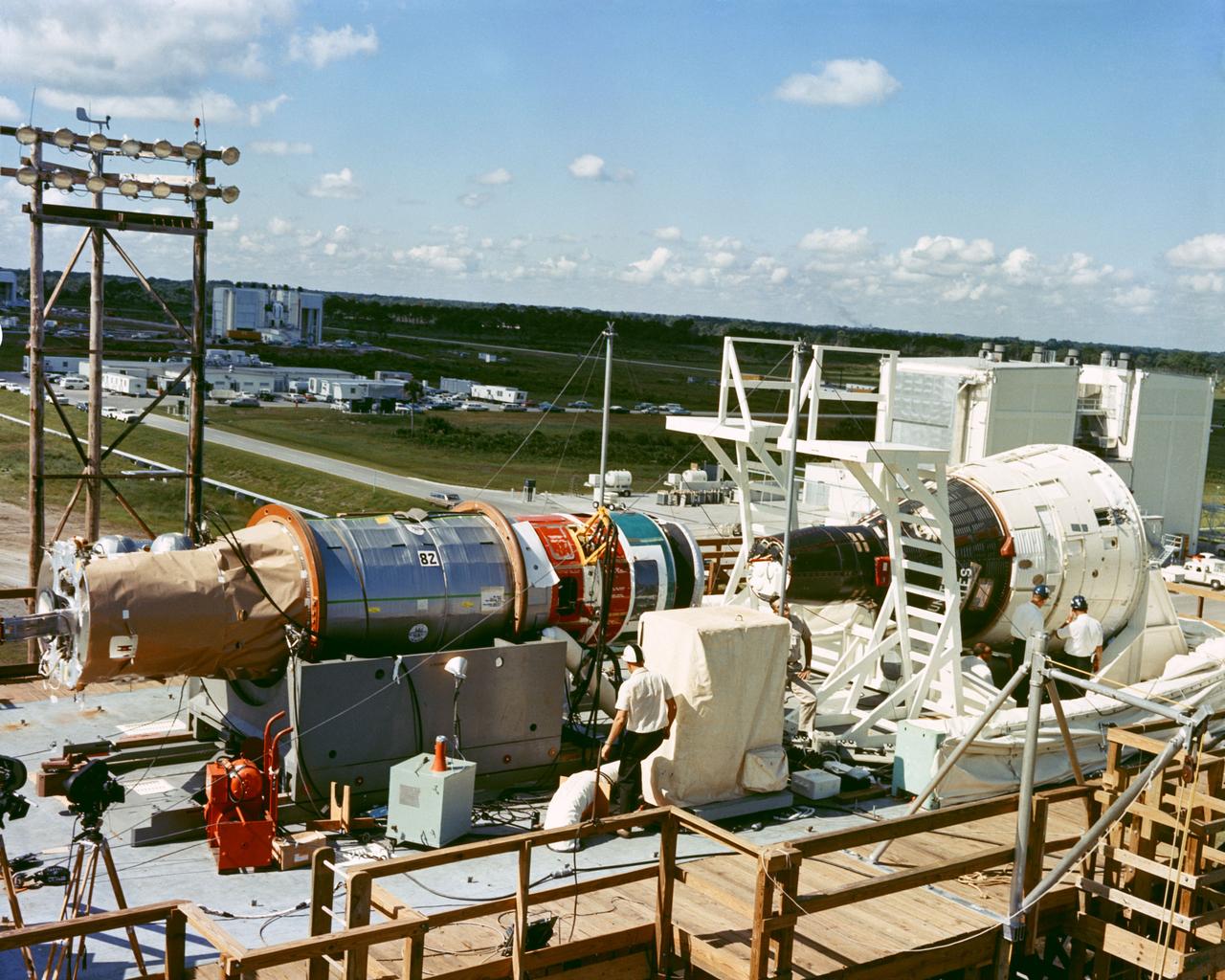
S65-52015 (1965) --- The Gemini-6 spacecraft (right) and the Agena Target Vehicle (left) on the Boresite Range Tower for the Plan-X docking exercise. Photo credit: NASA or National Aeronautics and Space Administration
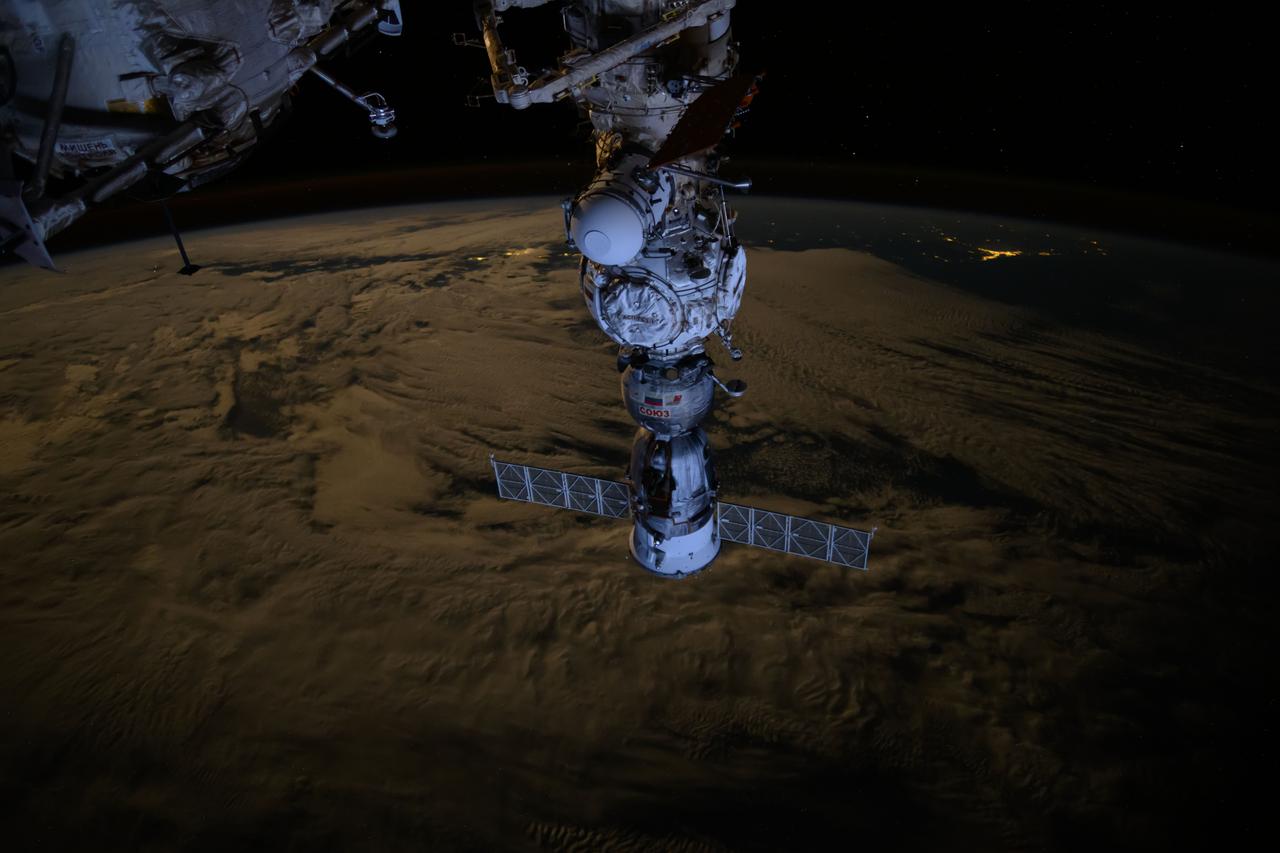
iss071e365226 (July 19, 2024) --- The Soyuz MS-25 crew ship is picture docked to the Prichal docking module as the International Space Station orbited 271 miles above the Tasman Sea off the coast of New Zealand.
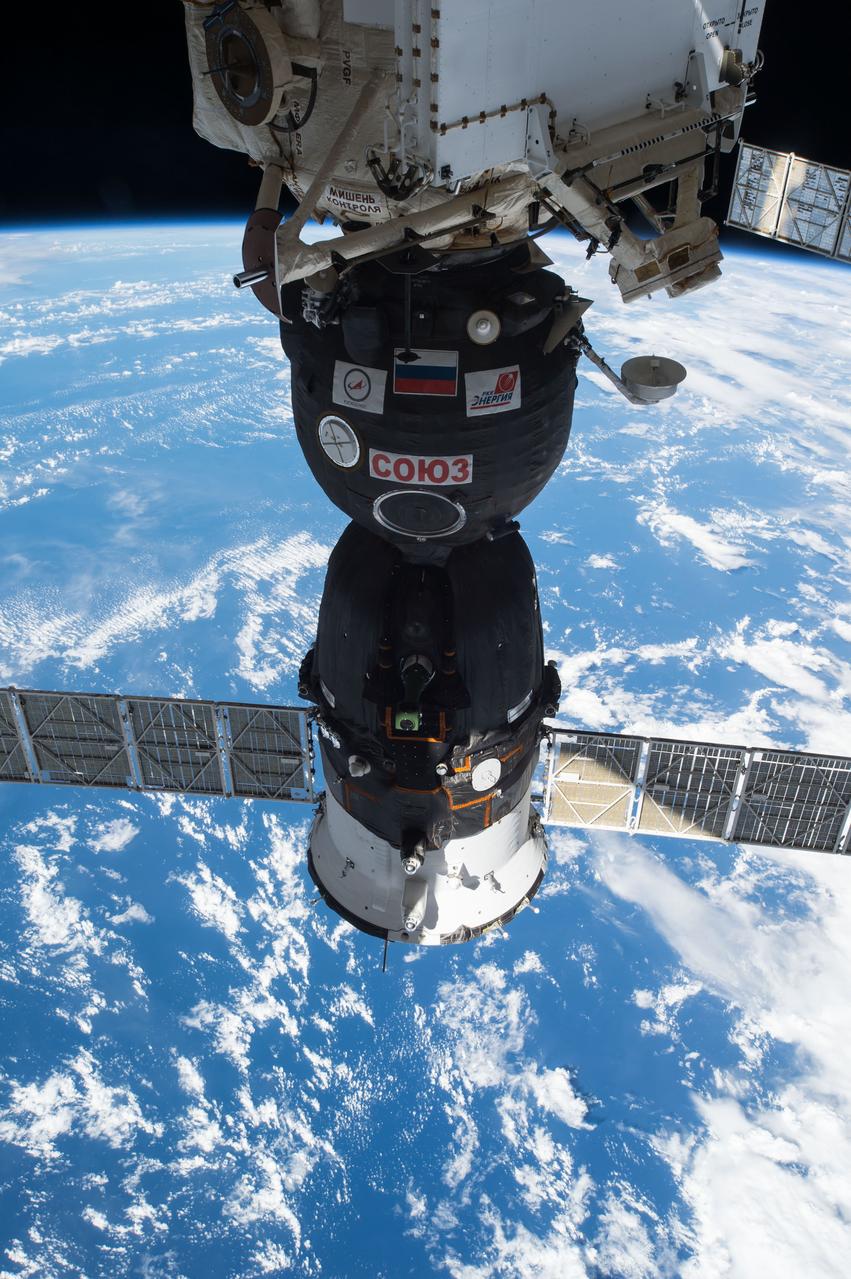
View of the Soyuz TMA-15M spacecraft docked to Rassvet Mini-Research Module 1 (MRM1) An Earth limb is in view.
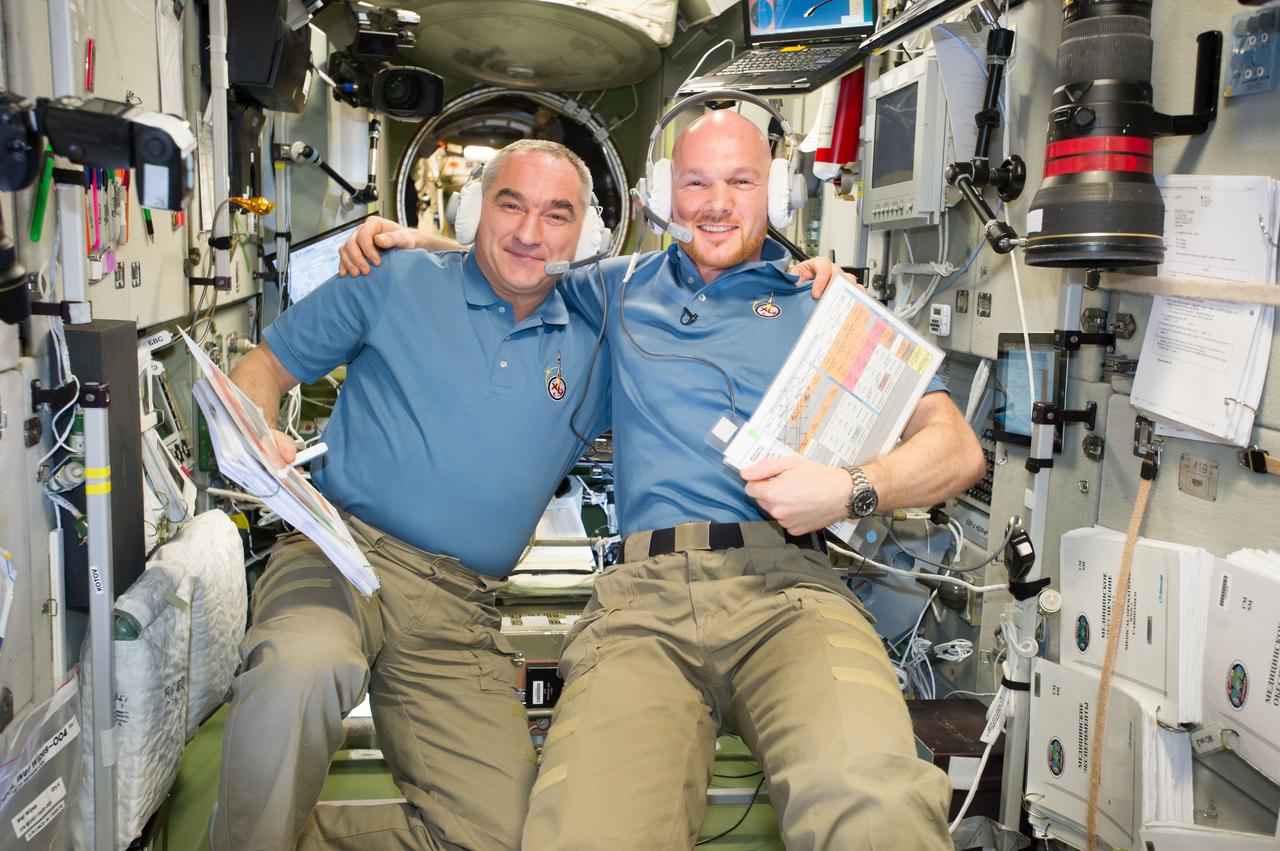
ISS040-E-091673 (12 Aug. 2014) --- In the Zvezda Service Module, European Space Agency astronaut Alexander Gerst (right) and Russian cosmonaut Alexander Skvortsov, both Expedition 40 flight engineers, take a brief moment for a photo during the approach and docking operations of ESA's "Georges Lemaitre" Automated Transfer Vehicle-5 (ATV-5) to the International Space Station.
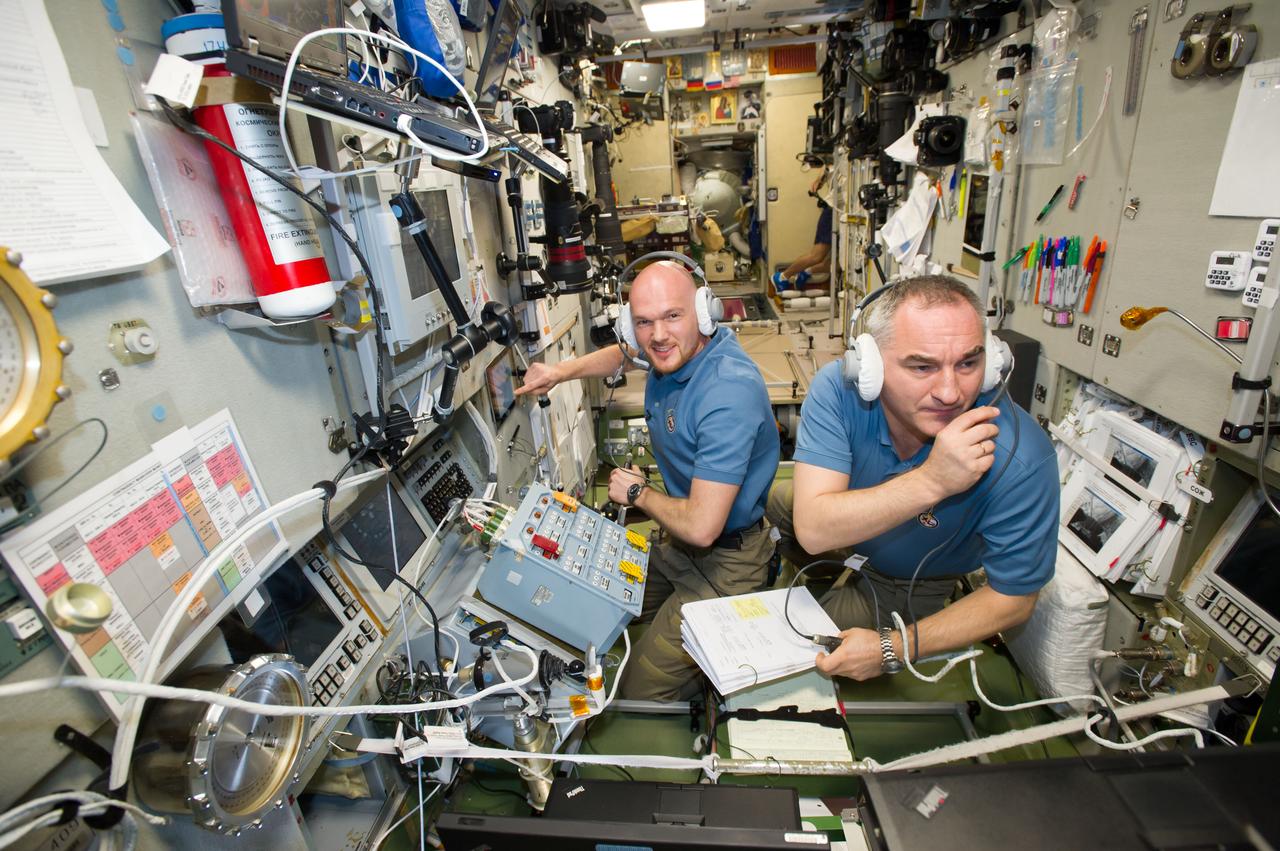
ISS040-E-091688 (12 Aug. 2014) --- In the Zvezda Service Module, European Space Agency astronaut Alexander Gerst (left) and Russian cosmonaut Alexander Skvortsov, both Expedition 40 flight engineers, monitor the approach and docking of ESA?s "Georges Lemaitre" Automated Transfer Vehicle-5 (ATV-5) to the International Space Station.

S73-02395 (August 1973) --- An artist?s concept illustrating an Apollo-type spacecraft (on left) about to dock with a Soviet Soyuz-type spacecraft. A recent agreement between the United States and the Union of Soviet Socialist Republics provides for the docking in space of the Soyuz and Apollo-type spacecraft in Earth orbit in 1975. The joint venture is called the Apollo-Soyuz Test Project.
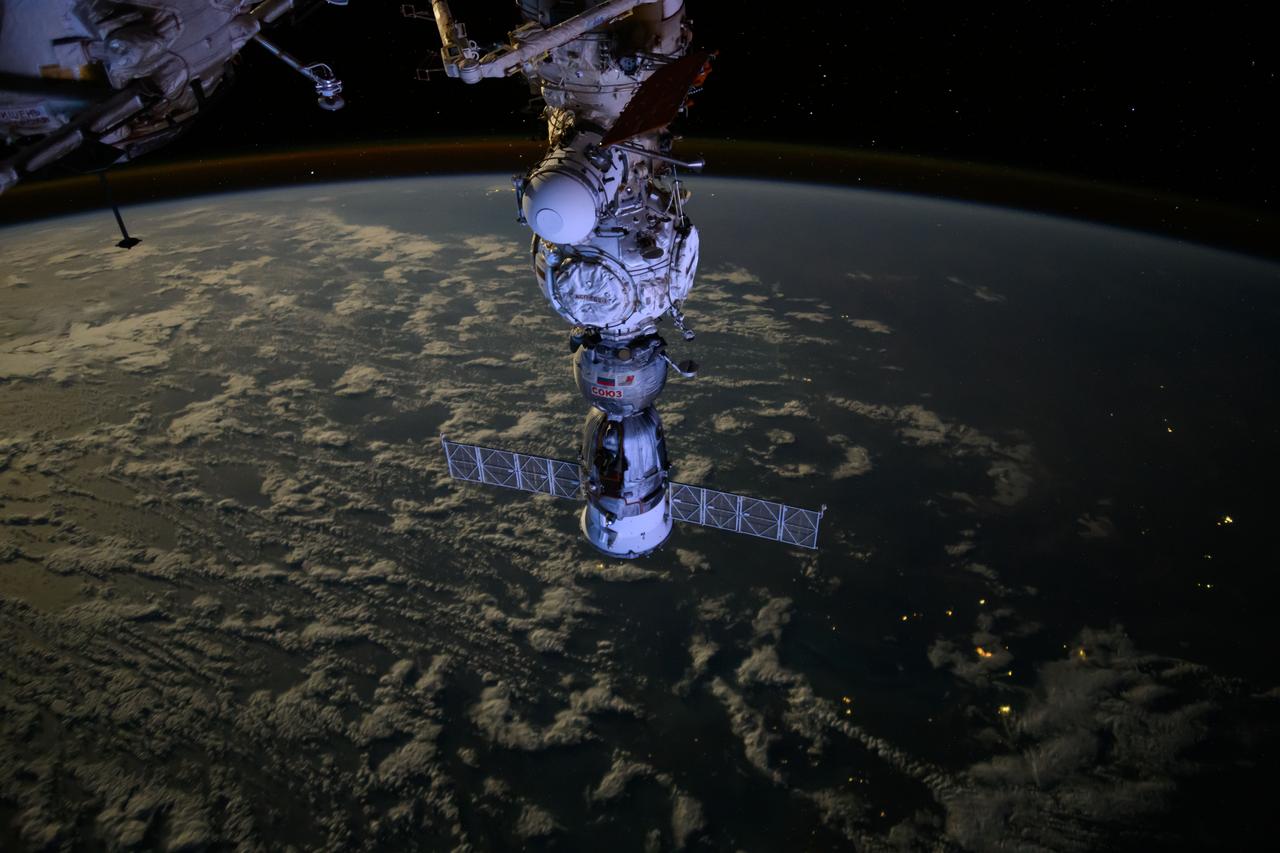
iss071e365604 (July 19, 2024) --- The Soyuz MS-25 crew ship is picture docked to the Prichal docking module as the International Space Station orbited 271 miles above the Bass Strait in between Australia's mainland province of Victoria and its island province of Tasmania.
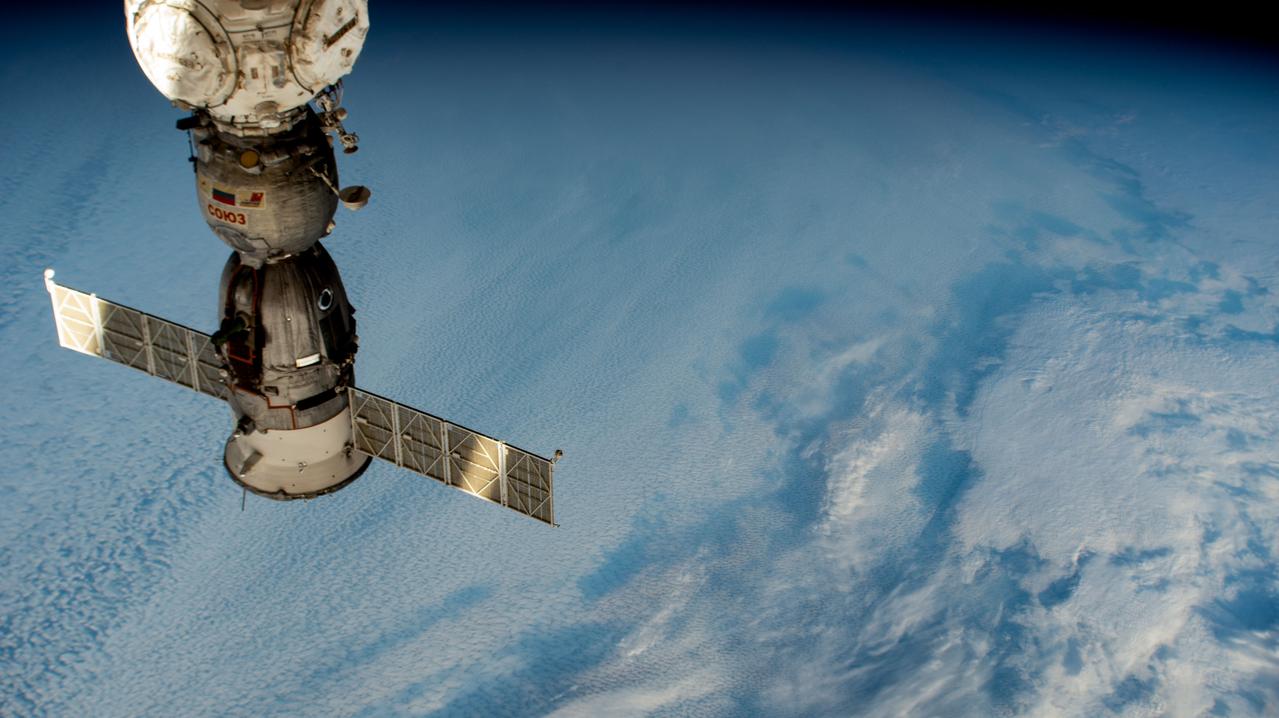
iss071e364343 (July 18, 2024) --- The Soyuz MS-25 crew ship is pictured docked to the International Space Station's Prichal docking module, where it has remained since March 25, 2024, as it soared 274 miles above a cloudy Indian Ocean.
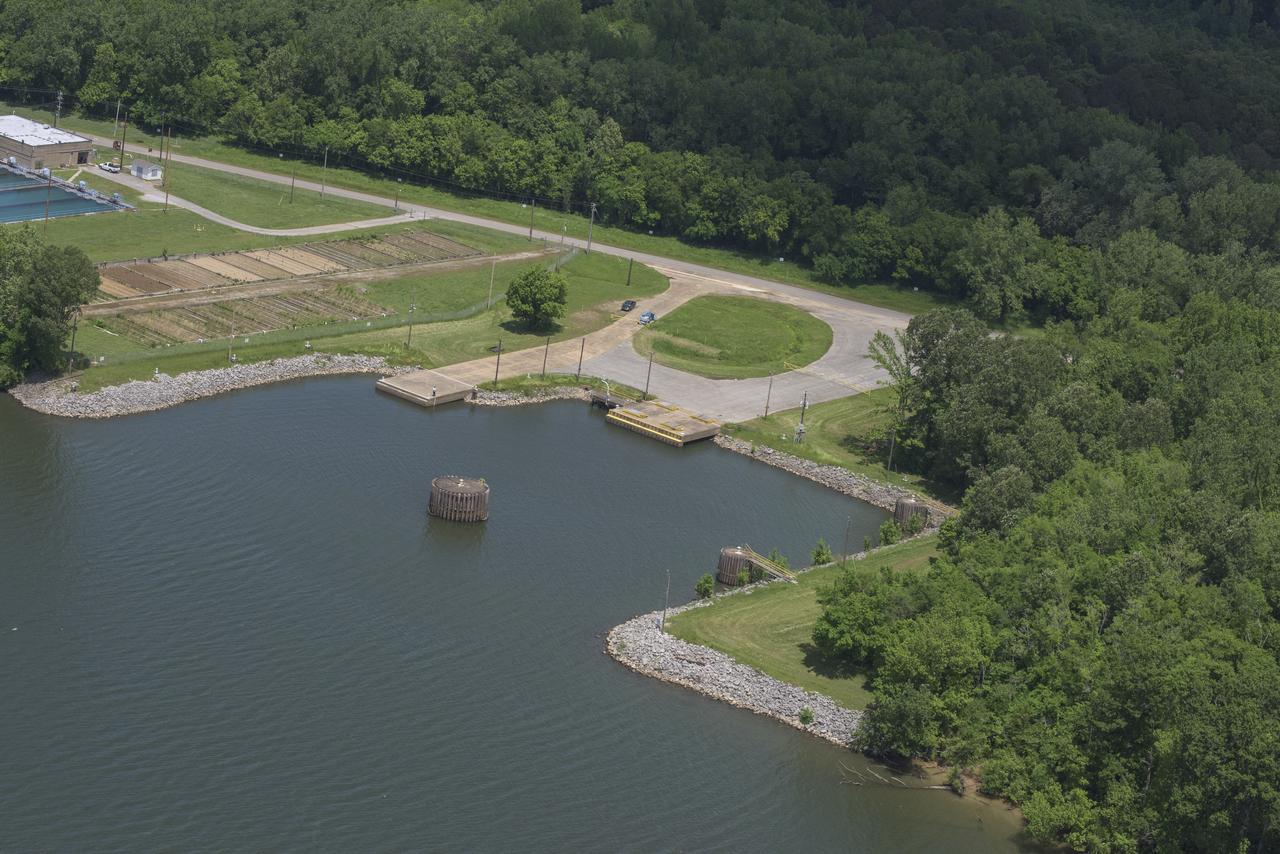
AERIAL PHOTOGRAPHS OF MSFC-BARGE DOCK
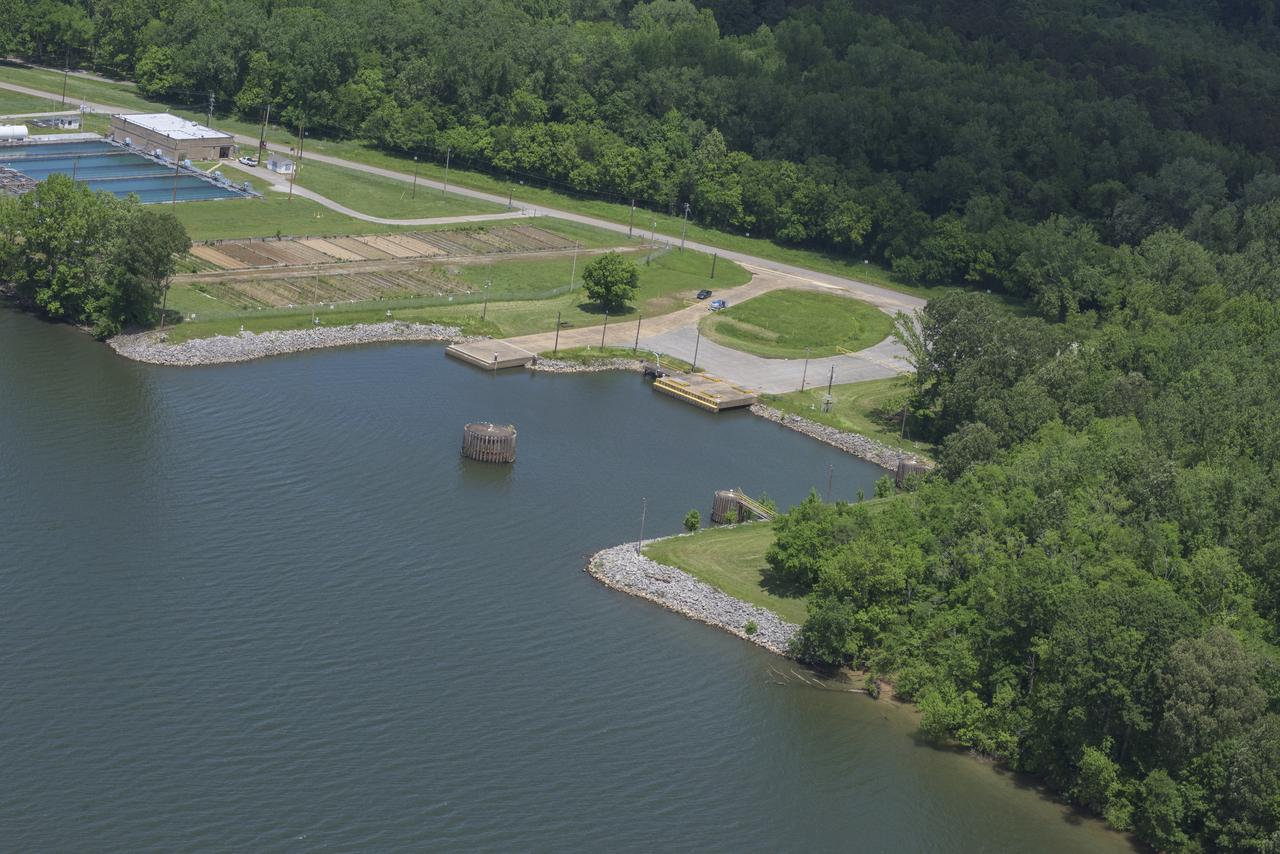
AERIAL PHOTOGRAPHS OF MSFC-BARGE DOCK
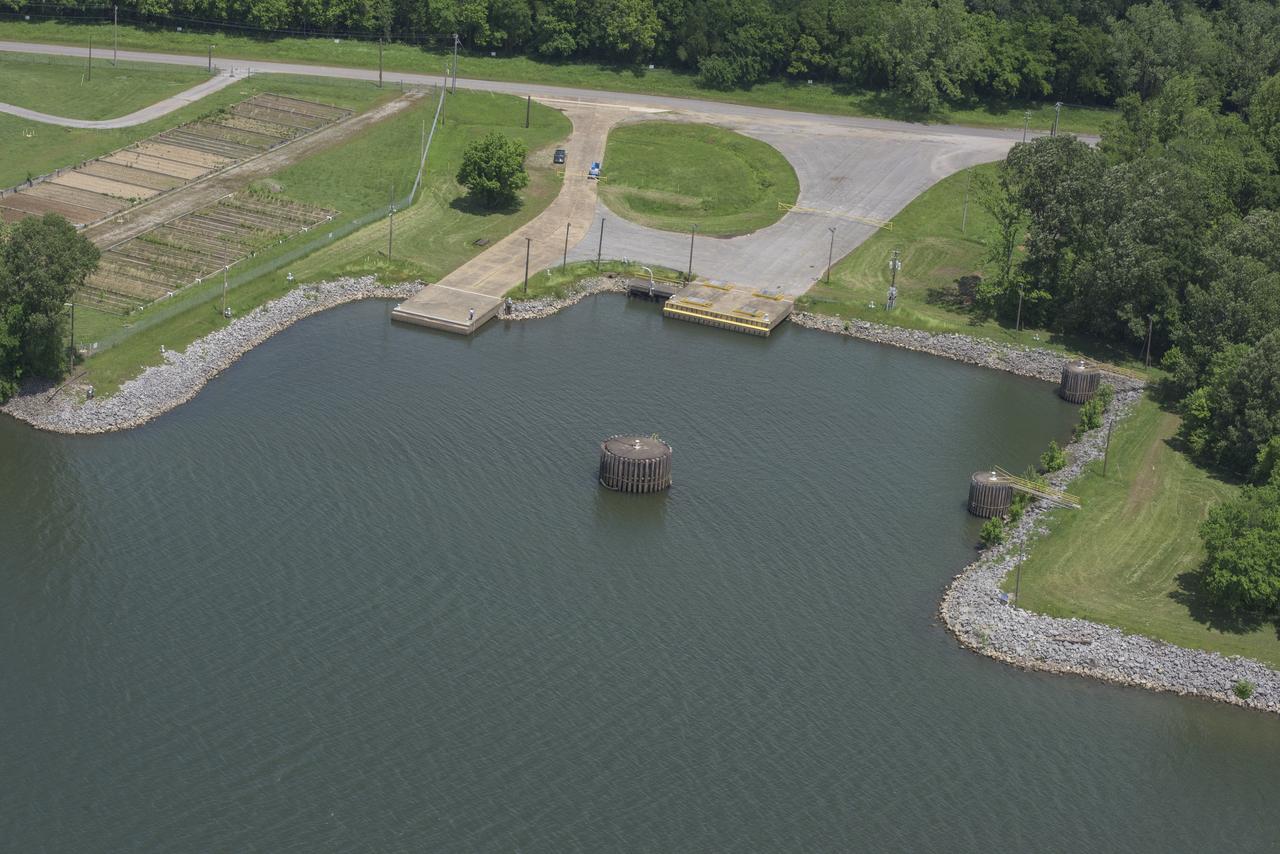
AERIAL PHOTOGRAPHS OF MSFC-BARGE DOCK
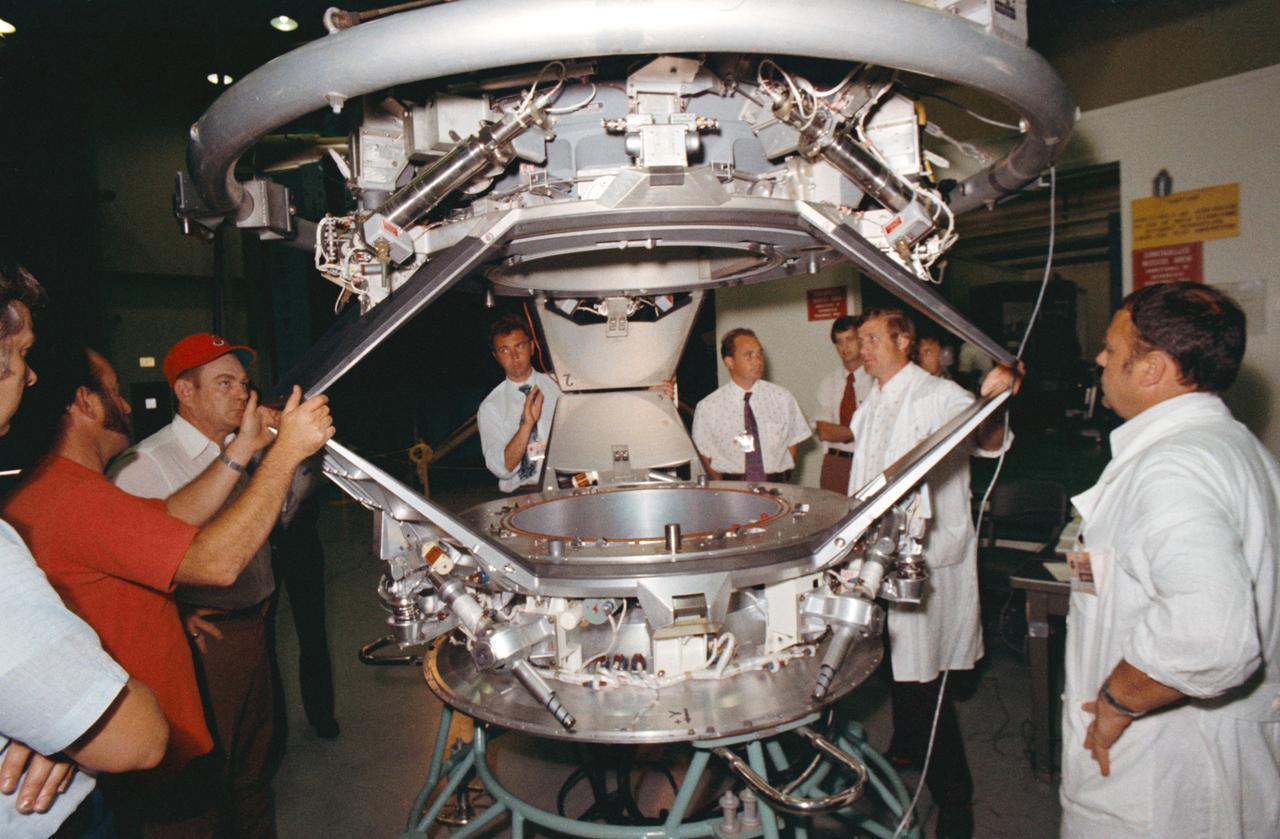
S74-25394 (10 July 1974) --- A group of American and Soviet engineers of the Apollo-Soyuz Test Project working group three examines an ASTP docking set-up following a docking mechanism fitness test conducted in Building 13 at the Johnson Space Center. Working Group No. 3 is concerned with ASTP docking problems and techniques. The joint U.S.-USSR ASTP docking mission in Earth orbit is scheduled for the summer of 1975. The Apollo docking mechanism is atop the Soyuz docking mechanism.
![Astronaut Frank Borman at the controls of the Visual Docking Simulator. From A.W. Vogeley, "Piloted Space-Flight Simulation at Langley Research Center," Paper presented at the American Society of Mechanical Engineers 1966 Winter Meeting, New York, NY, November 27-December 1, 1966. "This facility was [later known as the Visual-Optical Simulator.] It presents to the pilot an out-the-window view of his target in correct 6 degrees of freedom motion. The scene is obtained by a television camera pick-up viewing a small-scale gimbaled model of the target." "For docking studies, the docking target picture was projected onto the surface of a 20-foot-diameter sphere and the pilot could, effectively, maneuver into contract. this facility was used in a comparison study with the Rendezvous Docking Simulator - one of the few comparison experiments in which conditions were carefully controlled and a reasonable sample of pilots used. All pilots preferred the more realistic RDS visual scene. The pilots generally liked the RDS angular motion cues although some objected to the false gravity cues that these motions introduced. Training time was shorter on the RDS, but final performance on both simulators was essentially equal. " "For station-keeping studies, since close approach is not required, the target was presented to the pilot through a virtual-image system which projects his view to infinity, providing a more realistic effect. In addition to the target, the system also projects a star and horizon background. "](https://images-assets.nasa.gov/image/LRC-1963-B701_P-09368/LRC-1963-B701_P-09368~medium.jpg)
Astronaut Frank Borman at the controls of the Visual Docking Simulator. From A.W. Vogeley, "Piloted Space-Flight Simulation at Langley Research Center," Paper presented at the American Society of Mechanical Engineers 1966 Winter Meeting, New York, NY, November 27-December 1, 1966. "This facility was [later known as the Visual-Optical Simulator.] It presents to the pilot an out-the-window view of his target in correct 6 degrees of freedom motion. The scene is obtained by a television camera pick-up viewing a small-scale gimbaled model of the target." "For docking studies, the docking target picture was projected onto the surface of a 20-foot-diameter sphere and the pilot could, effectively, maneuver into contract. this facility was used in a comparison study with the Rendezvous Docking Simulator - one of the few comparison experiments in which conditions were carefully controlled and a reasonable sample of pilots used. All pilots preferred the more realistic RDS visual scene. The pilots generally liked the RDS angular motion cues although some objected to the false gravity cues that these motions introduced. Training time was shorter on the RDS, but final performance on both simulators was essentially equal. " "For station-keeping studies, since close approach is not required, the target was presented to the pilot through a virtual-image system which projects his view to infinity, providing a more realistic effect. In addition to the target, the system also projects a star and horizon background. "
![Astronaut James Lovell at the controls of the Visual Docking Simulator. From A.W. Vogeley, "Piloted Space-Flight Simulation at Langley Research Center," Paper presented at the American Society of Mechanical Engineers 1966 Winter Meeting, New York, NY, November 27-December 1, 1966. "This facility was [later known as the Visual-Optical Simulator.] It presents to the pilot an out-the-window view of his target in correct 6 degrees of freedom motion. The scene is obtained by a television camera pick-up viewing a small-scale gimbaled model of the target." "For docking studies, the docking target picture was projected onto the surface of a 20-foot-diameter sphere and the pilot could, effectively, maneuver into contract. this facility was used in a comparison study with the Rendezvous Docking Simulator - one of the few comparison experiments in which conditions were carefully controlled and a reasonable sample of pilots used. All pilots preferred the more realistic RDS visual scene. The pilots generally liked the RDS angular motion cues although some objected to the false gravity cues that these motions introduced. Training time was shorter on the RDS, but final performance on both simulators was essentially equal. " "For station-keeping studies, since close approach is not required, the target was presented to the pilot through a virtual-image system which projects his view to infinity, providing a more realistic effect. In addition to the target, the system also projects a star and horizon background. "](https://images-assets.nasa.gov/image/LRC-1963-B701_P-09094/LRC-1963-B701_P-09094~medium.jpg)
Astronaut James Lovell at the controls of the Visual Docking Simulator. From A.W. Vogeley, "Piloted Space-Flight Simulation at Langley Research Center," Paper presented at the American Society of Mechanical Engineers 1966 Winter Meeting, New York, NY, November 27-December 1, 1966. "This facility was [later known as the Visual-Optical Simulator.] It presents to the pilot an out-the-window view of his target in correct 6 degrees of freedom motion. The scene is obtained by a television camera pick-up viewing a small-scale gimbaled model of the target." "For docking studies, the docking target picture was projected onto the surface of a 20-foot-diameter sphere and the pilot could, effectively, maneuver into contract. this facility was used in a comparison study with the Rendezvous Docking Simulator - one of the few comparison experiments in which conditions were carefully controlled and a reasonable sample of pilots used. All pilots preferred the more realistic RDS visual scene. The pilots generally liked the RDS angular motion cues although some objected to the false gravity cues that these motions introduced. Training time was shorter on the RDS, but final performance on both simulators was essentially equal. " "For station-keeping studies, since close approach is not required, the target was presented to the pilot through a virtual-image system which projects his view to infinity, providing a more realistic effect. In addition to the target, the system also projects a star and horizon background. "
![Astronaut James Lovell at the controls of the Visual Docking Simulator. From A.W. Vogeley, "Piloted Space-Flight Simulation at Langley Research Center," Paper presented at the American Society of Mechanical Engineers 1966 Winter Meeting, New York, NY, November 27-December 1, 1966. "This facility was [later known as the Visual-Optical Simulator.] It presents to the pilot an out-the-window view of his target in correct 6 degrees of freedom motion. The scene is obtained by a television camera pick-up viewing a small-scale gimbaled model of the target." "For docking studies, the docking target picture was projected onto the surface of a 20-foot-diameter sphere and the pilot could, effectively, maneuver into contract. this facility was used in a comparison study with the Rendezvous Docking Simulator - one of the few comparison experiments in which conditions were carefully controlled and a reasonable sample of pilots used. All pilots preferred the more realistic RDS visual scene. The pilots generally liked the RDS angular motion cues although some objected to the false gravity cues that these motions introduced. Training time was shorter on the RDS, but final performance on both simulators was essentially equal. " "For station-keeping studies, since close approach is not required, the target was presented to the pilot through a virtual-image system which projects his view to infinity, providing a more realistic effect. In addition to the target, the system also projects a star and horizon background. "](https://images-assets.nasa.gov/image/LRC-1963-B701_P-09093/LRC-1963-B701_P-09093~medium.jpg)
Astronaut James Lovell at the controls of the Visual Docking Simulator. From A.W. Vogeley, "Piloted Space-Flight Simulation at Langley Research Center," Paper presented at the American Society of Mechanical Engineers 1966 Winter Meeting, New York, NY, November 27-December 1, 1966. "This facility was [later known as the Visual-Optical Simulator.] It presents to the pilot an out-the-window view of his target in correct 6 degrees of freedom motion. The scene is obtained by a television camera pick-up viewing a small-scale gimbaled model of the target." "For docking studies, the docking target picture was projected onto the surface of a 20-foot-diameter sphere and the pilot could, effectively, maneuver into contract. this facility was used in a comparison study with the Rendezvous Docking Simulator - one of the few comparison experiments in which conditions were carefully controlled and a reasonable sample of pilots used. All pilots preferred the more realistic RDS visual scene. The pilots generally liked the RDS angular motion cues although some objected to the false gravity cues that these motions introduced. Training time was shorter on the RDS, but final performance on both simulators was essentially equal. " "For station-keeping studies, since close approach is not required, the target was presented to the pilot through a virtual-image system which projects his view to infinity, providing a more realistic effect. In addition to the target, the system also projects a star and horizon background. "
![Multiple exposure of Gemini rendezvous docking simulator. Francis B. Smith wrote in his paper "Simulators for Manned Space Research," "The rendezvous and docking operation of the Gemini spacecraft with the Agena and of the Apollo Command Module with the Lunar Excursion Module have been the subject of simulator studies for several years. [This figure] illustrates the Gemini-Agena rendezvous docking simulator at Langley. The Gemini spacecraft was supported in a gimbal system by an overhead crane and gantry arrangement which provided 6 degrees of freedom - roll, pitch, yaw, and translation in any direction - all controllable by the astronaut in the spacecraft. Here again the controls fed into a computer which in turn provided an input to the servos driving the spacecraft so that it responded to control motions in a manner which accurately simulated the Gemini spacecraft." A.W. Vogeley further described the simulator in his paper "Discussion of Existing and Planned Simulators For Space Research," "Docking operations are considered to start when the pilot first can discern vehicle target size and aspect and terminate, of course, when soft contact is made. ... This facility enables simulation of the docking operation from a distance of 200 feet to actual contact with the target. A full-scale mock-up of the target vehicle is suspended near one end of the track. ... On [the Agena target] we have mounted the actual Agena docking mechanism and also various types of visual aids. We have been able to devise visual aids which have made it possible to accomplish nighttime docking with as much success as daytime docking." -- Published in Barton C. Hacker and James M. Grimwood, On the Shoulders of Titans: A History of Project Gemini, NASA SP-4203; Francis B. Smith, "Simulators for Manned Space Research," Paper presented at the 1966 IEEE International convention, March 21-25, 1966; A.W. Vogeley, "Discussion of Existing and Planned Simulators For Space Research," Paper presented at the Conference on the Role of Simulation in Space Technology, August 17-21, 1964.](https://images-assets.nasa.gov/image/LRC-1963-B701_P-08973/LRC-1963-B701_P-08973~medium.jpg)
Multiple exposure of Gemini rendezvous docking simulator. Francis B. Smith wrote in his paper "Simulators for Manned Space Research," "The rendezvous and docking operation of the Gemini spacecraft with the Agena and of the Apollo Command Module with the Lunar Excursion Module have been the subject of simulator studies for several years. [This figure] illustrates the Gemini-Agena rendezvous docking simulator at Langley. The Gemini spacecraft was supported in a gimbal system by an overhead crane and gantry arrangement which provided 6 degrees of freedom - roll, pitch, yaw, and translation in any direction - all controllable by the astronaut in the spacecraft. Here again the controls fed into a computer which in turn provided an input to the servos driving the spacecraft so that it responded to control motions in a manner which accurately simulated the Gemini spacecraft." A.W. Vogeley further described the simulator in his paper "Discussion of Existing and Planned Simulators For Space Research," "Docking operations are considered to start when the pilot first can discern vehicle target size and aspect and terminate, of course, when soft contact is made. ... This facility enables simulation of the docking operation from a distance of 200 feet to actual contact with the target. A full-scale mock-up of the target vehicle is suspended near one end of the track. ... On [the Agena target] we have mounted the actual Agena docking mechanism and also various types of visual aids. We have been able to devise visual aids which have made it possible to accomplish nighttime docking with as much success as daytime docking." -- Published in Barton C. Hacker and James M. Grimwood, On the Shoulders of Titans: A History of Project Gemini, NASA SP-4203; Francis B. Smith, "Simulators for Manned Space Research," Paper presented at the 1966 IEEE International convention, March 21-25, 1966; A.W. Vogeley, "Discussion of Existing and Planned Simulators For Space Research," Paper presented at the Conference on the Role of Simulation in Space Technology, August 17-21, 1964.
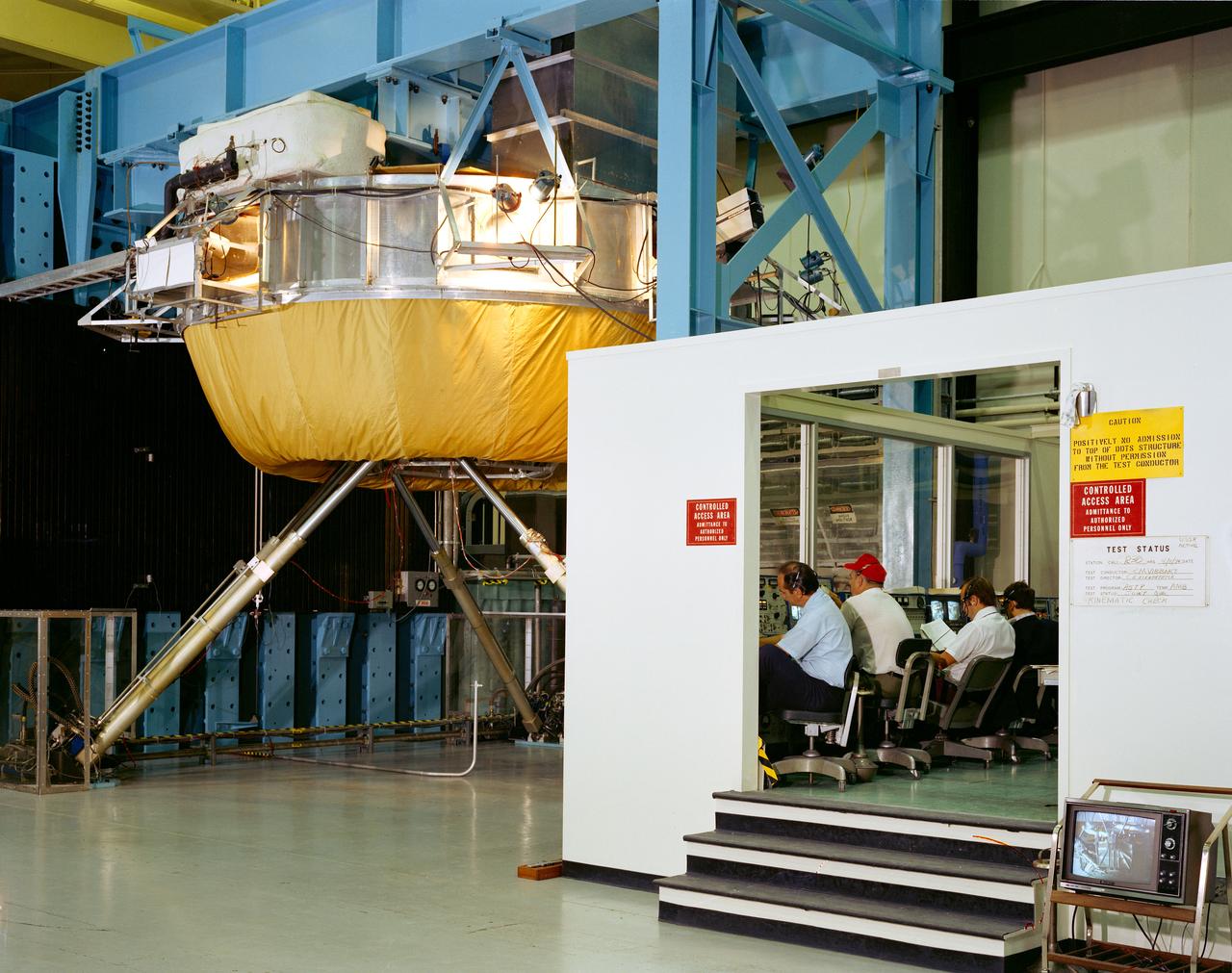
S74-27049 (4 Aug. 1974) --- Overall view of test set-up in Building 23 at the Johnson Space Center during testing of the docking mechanisms for the joint U.S.-USSR Apollo-Soyuz Test Project. The cinematic check was being made when this picture was taken. The test control room is on the right. The Soviet-developed docking system is atop the USA-NASA developed docking system. Both American and Soviet engineers can be seen taking part in the docking testing. The ASTP docking mission in Earth orbit is scheduled for July 1975.
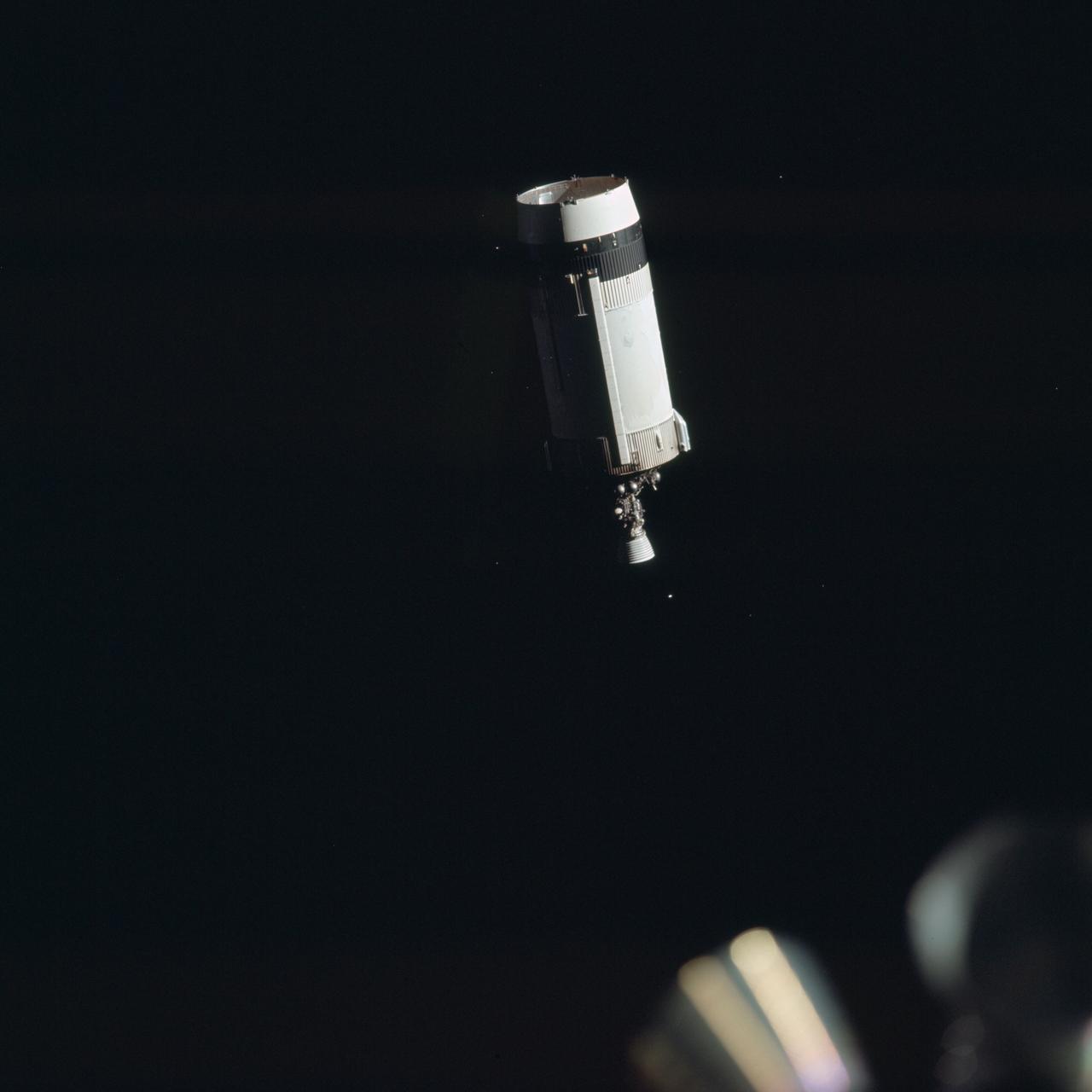
AS17-148-22714 (7-19 Dec. 1972) --- View of the expended Saturn IVB stage before Apollo 17 transposition/docking maneuvers.
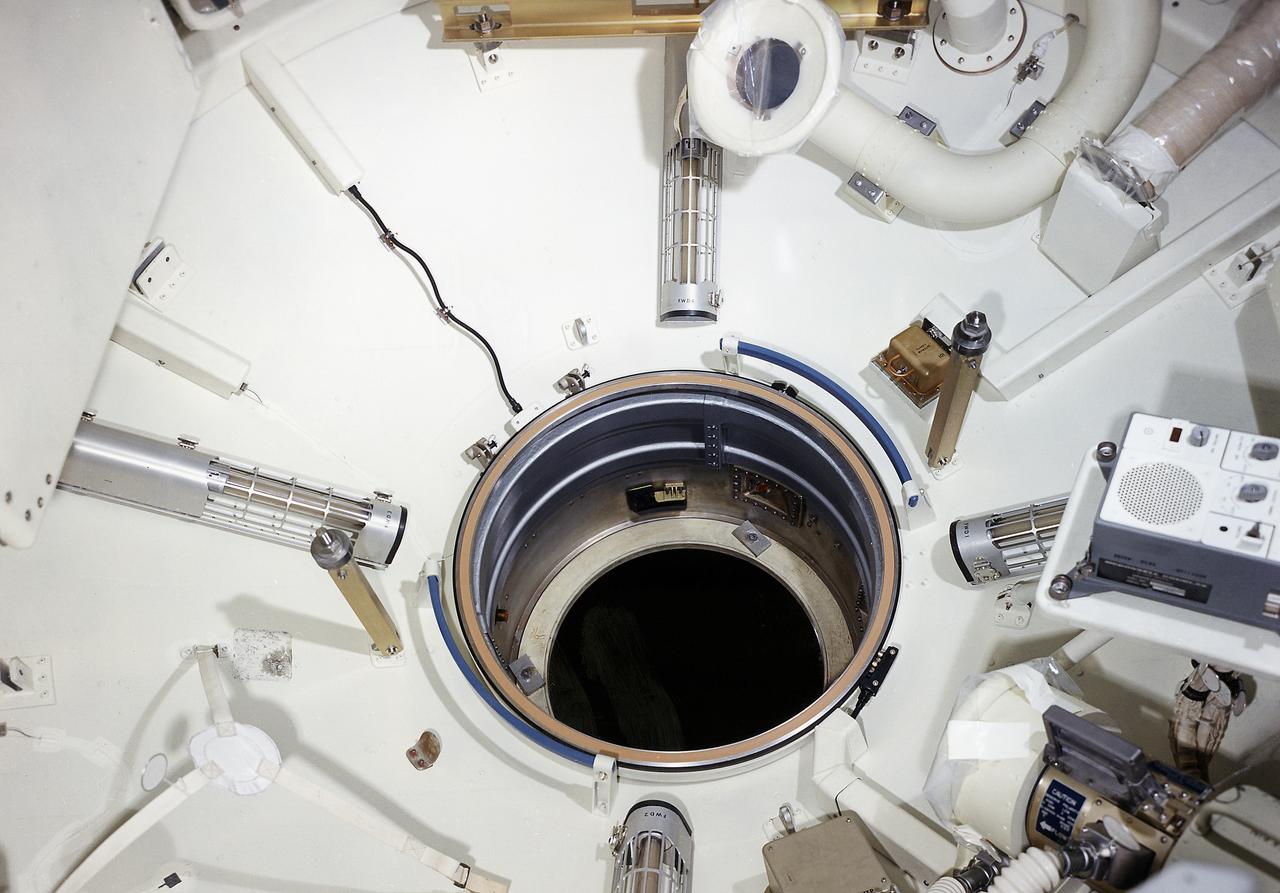
This August 1971 interior photograph of Skylab's Multiple Docking Adapter (MDA) flight article, undergoing outfitting at the Martin-Marietta Corporation's Space Center facility in Denver, Colorado, shows the forward cone area and docking tunnel (center) that attached to the Apollo Command Module. Designed and manufactured by the Marshall Space Flight Center, the MDA housed the control units for the Apollo Telescope Mount, Earth Resources Experiment Package, and Zero-Gravity Materials Processing Facility and provided a docking port for the Apollo Command Module.
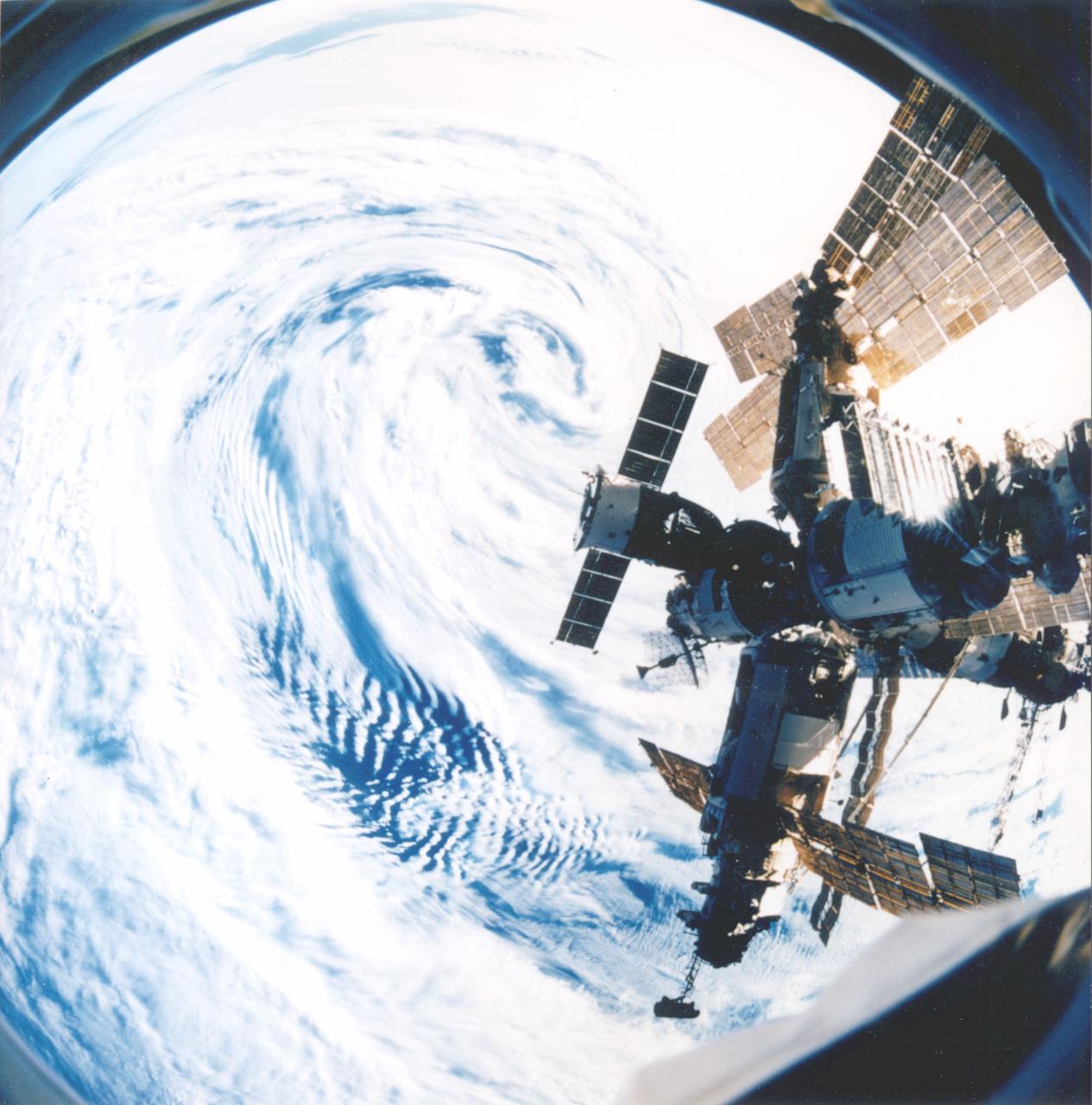
STS-79, Spacelab DM, Mir-docking-4, Shuttle and Mir Docking
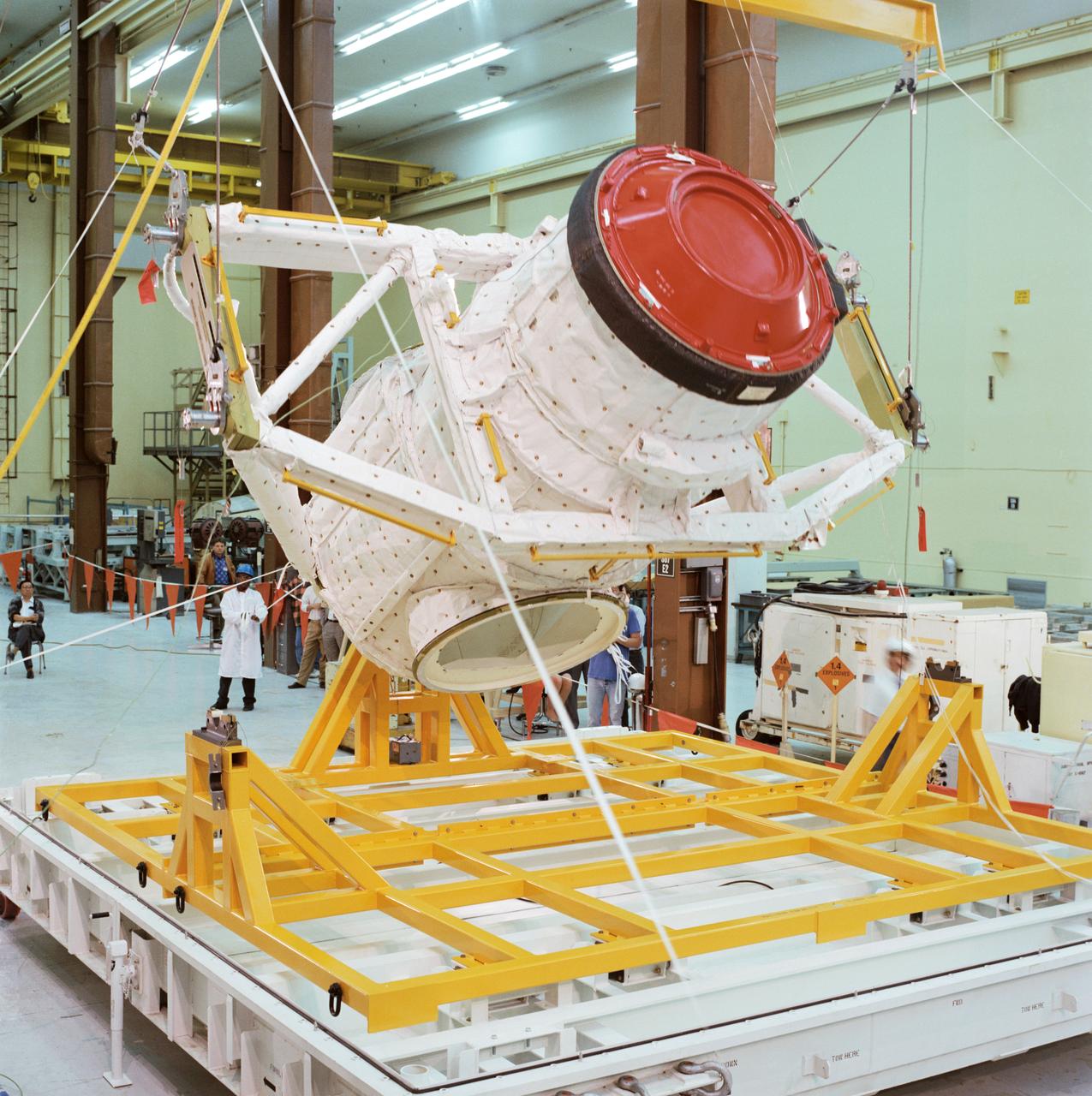
S95-00057 (15 Nov 1994) --- In Rockwell's Building 290 at Downey, California, the external airlock assembly/Mir docking system is rotated into position for crating up for shipment to the Kennedy Space Center (KSC) in Florida. Jointly developed by Rockwell and RSC Energia, the external airlock assembly and Mir docking system will be mounted in the cargo bay of the Space Shuttle Atlantis to enable the shuttle to link up to Russia's Mir space station. The docking system contains hooks and latches compatible with the system currently housed on the Mir's Krystall module, to which Atlantis will attach for the first time next spring. STS-71 will carry two Russian cosmonauts, who will replace a three-man crew aboard Mir including Norman E. Thagard, a NASA astronaut. The combined 10-person crew will conduct almost five days of joint life sciences investigations both aboard Mir and in the Space Shuttle Atlantis's Spacelab module.
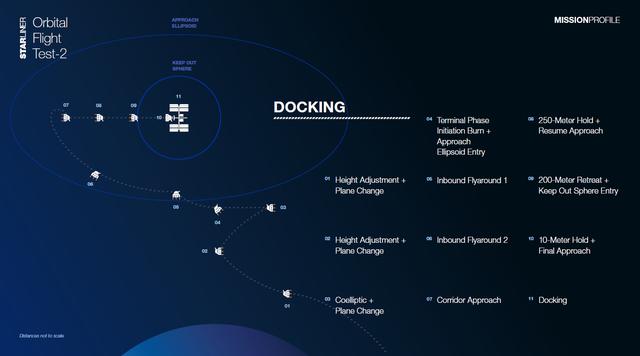
This graphic details docking operations for NASA’s Boeing Orbital Flight Test-2 (OFT-2). OFT-2 is the second uncrewed flight test of the company’s CST-100 Starliner spacecraft for the agency’s Commercial Crew Program.
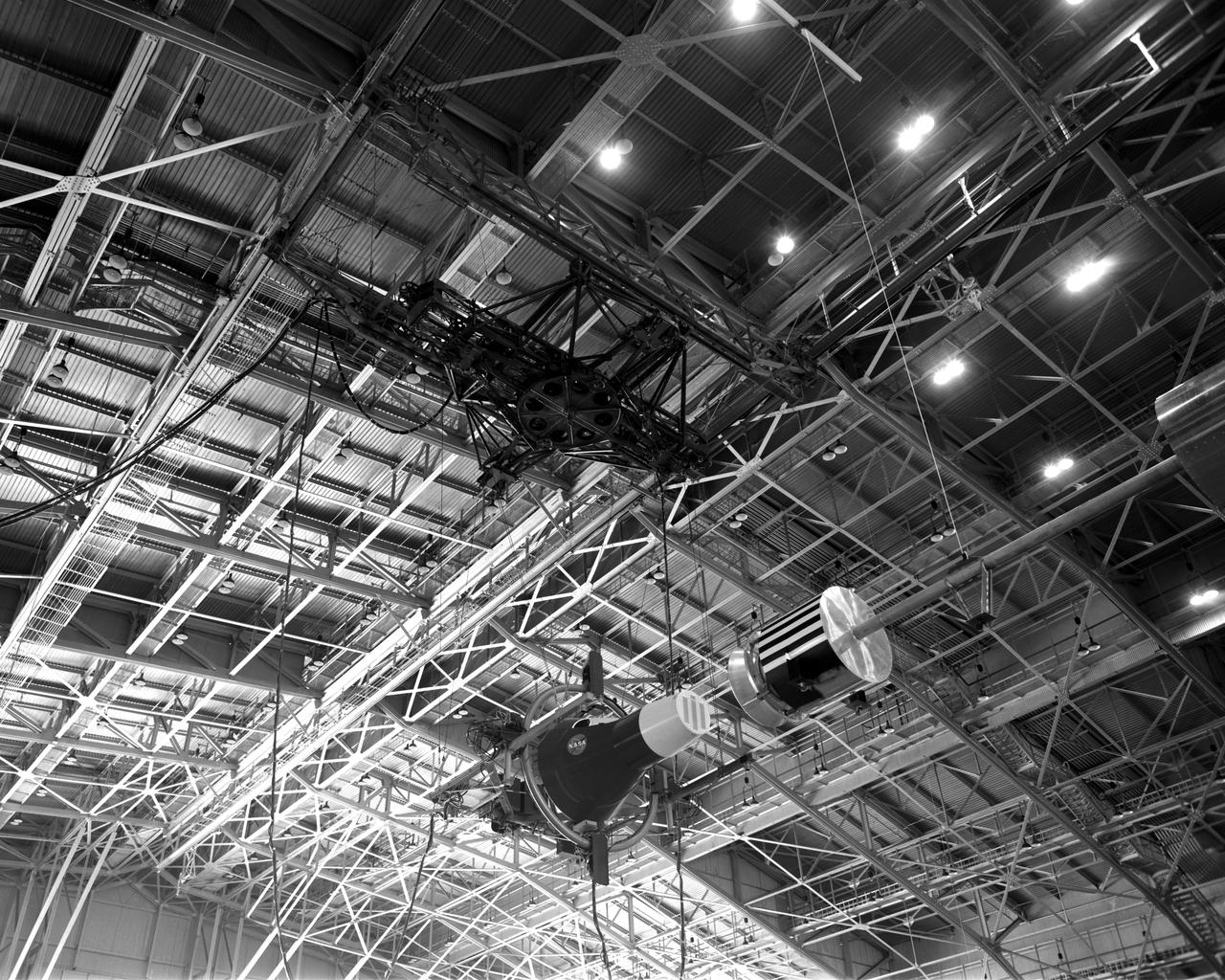
Rendezvous Docking Simulator Suspended From the Roof of the West Area Hangar Image 1963-L-05016 on page 372 of Spaceflight Revolution NASA Langley Research Center From Sputnik to Apollo
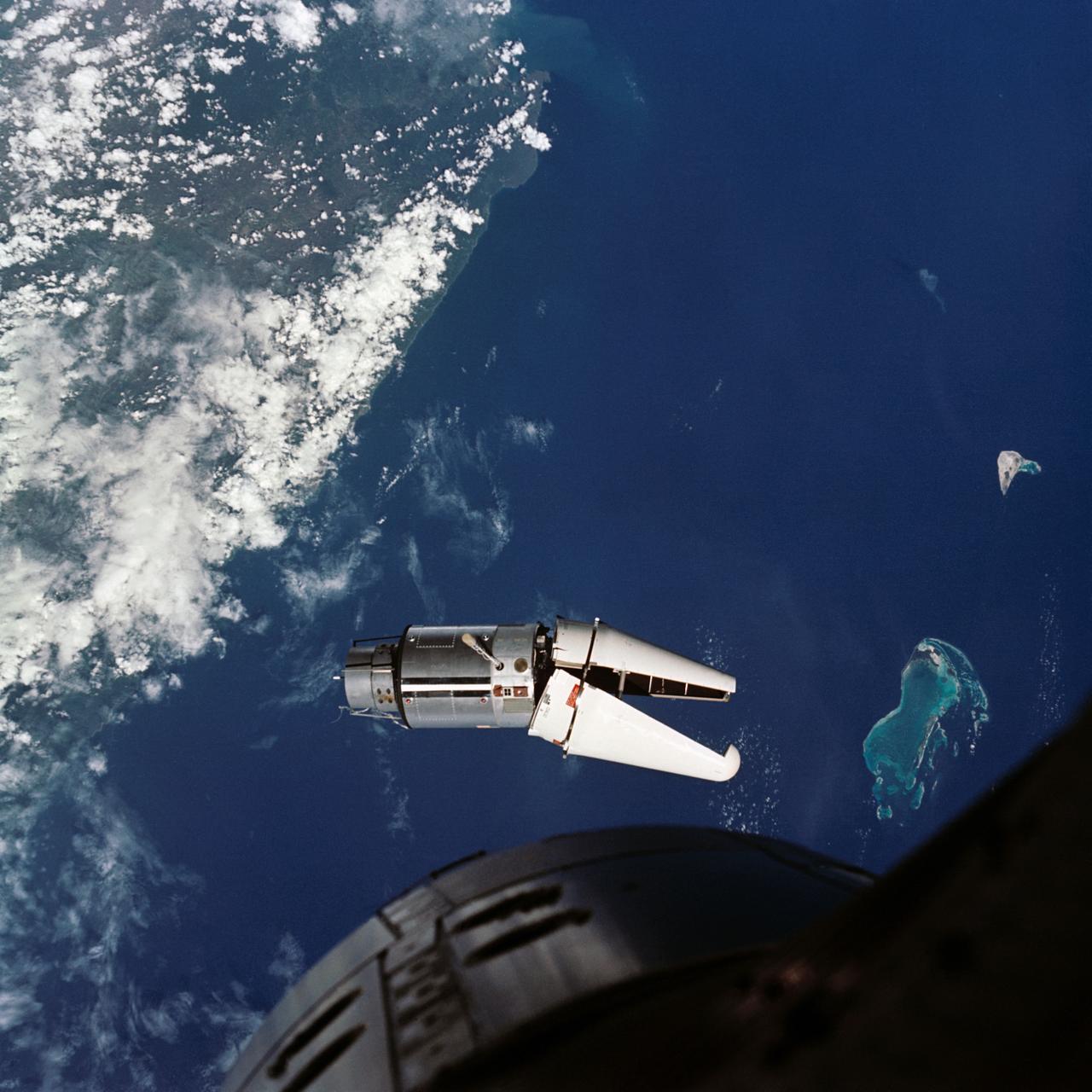
S66-37923 (3 June 1966) --- The Augmented Target Docking Adapter (ATDA) as seen from the Gemini-9 spacecraft during one of their three rendezvous in space. The ATDA and Gemini-9 spacecraft are 66.5 feet apart. Failure of the docking adapter protective cover to fully separate on the ATDA prevented the docking of the two spacecraft. The ATDA was described by the Gemini-9 crew as an "angry alligator." Photo credit: NASA
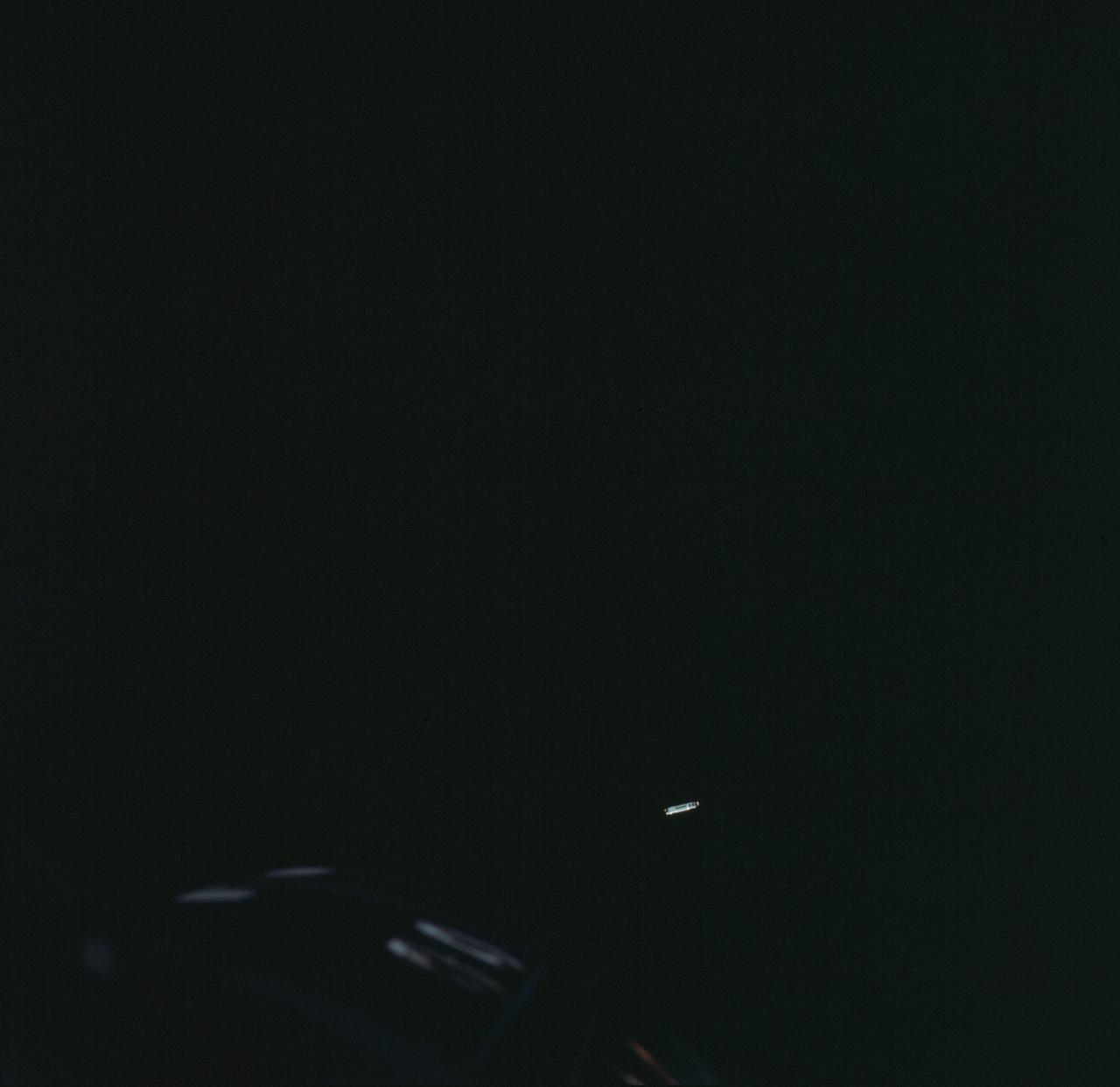
S66-25774 (16 March 1966) --- The Agena Target Docking vehicle seen from the Gemini-8 spacecraft during rendezvous in space. The Agena is approximately 1,000 feet away from the nose of the spacecraft (lower left). Photo credit: NASA
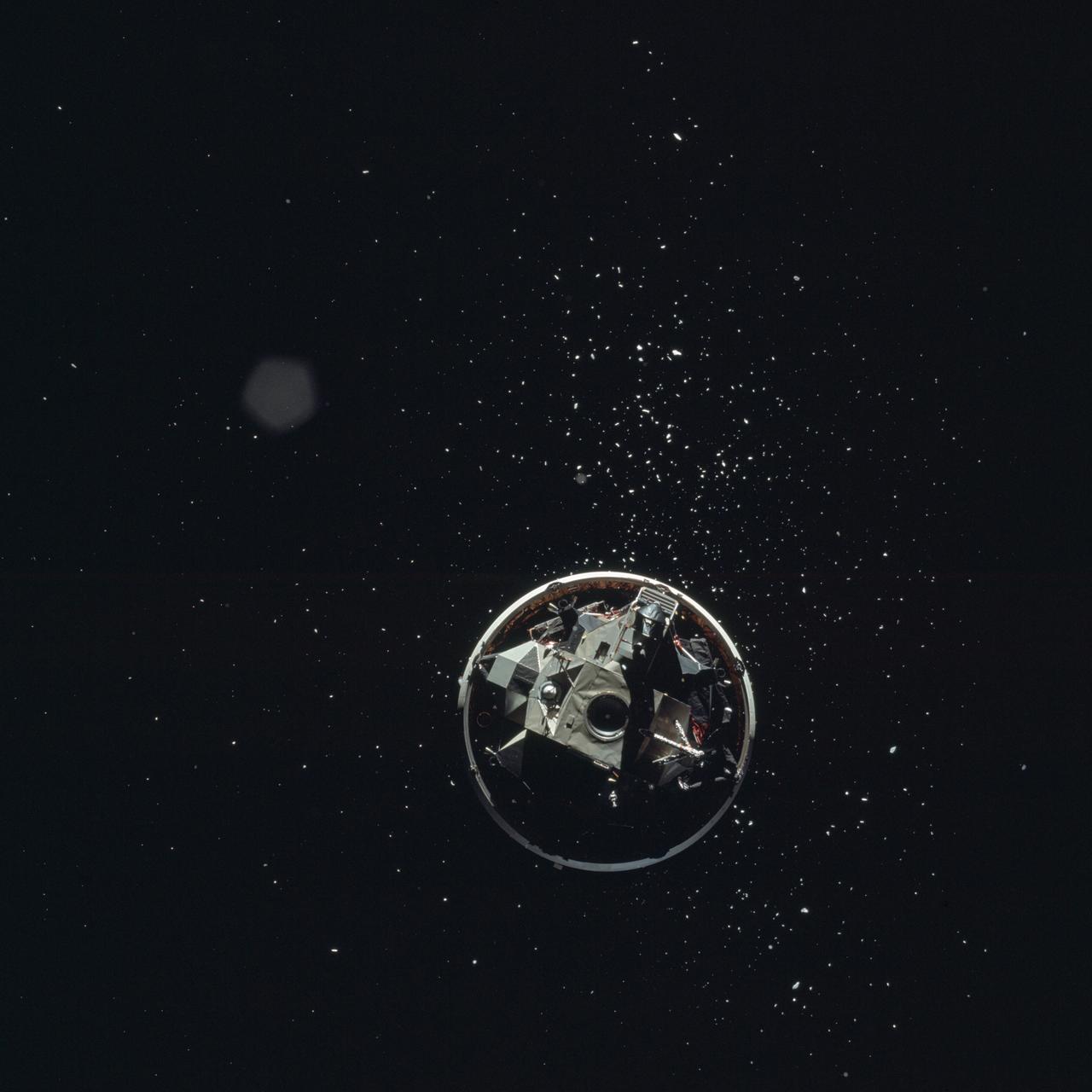
AS17-148-22688 (7-19 Dec. 1972) --- View of the Lunar Module from the Apollo 17 spacecraft after transposition/docking maneuvers. The white dots surrounding the Lunar Module are debris from the Saturn S-IVB stage separation.

Astronat Dale A. Gardner achieves a hard dock with the previously spinning Westar VI satellite. Gardner uses a "stinger" device to stabilize the communications satellite.
S66-46124 (18 July 1966) --- Agena Target Docking Vehicle 5005 is photographed from the Gemini-10 spacecraft during rendezvous in space. The two spacecraft are about 41 feet apart. After docking with the Agena, astronauts John W. Young, command pilot, and Michael Collins, pilot, fired the 16,000-pound thrust engine of Agena-10's primary propulsion system to boost the combined vehicles into an orbit with an apogee of 413 nautical miles to set a new altitude record for manned spaceflight. Photo credit: NASA
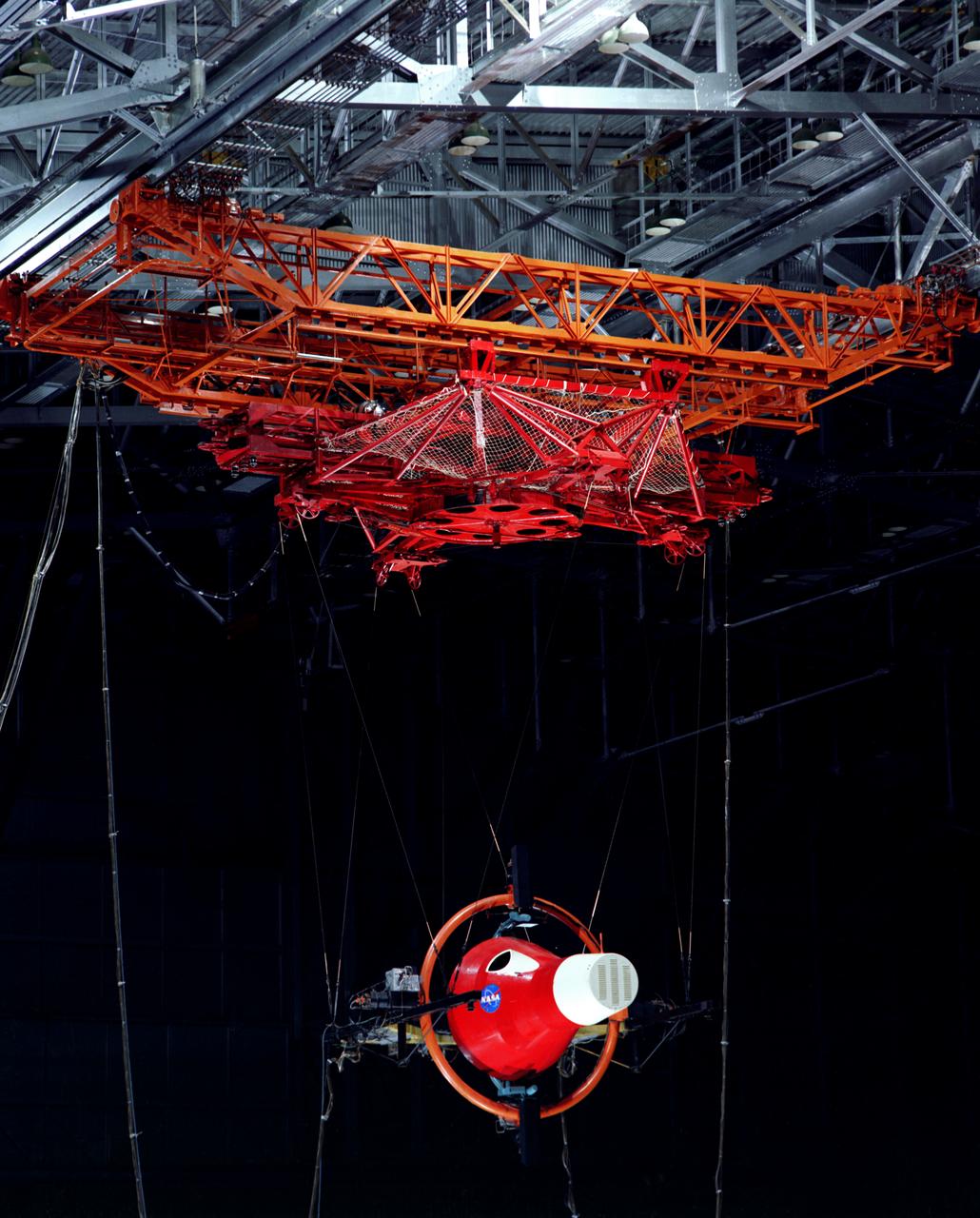
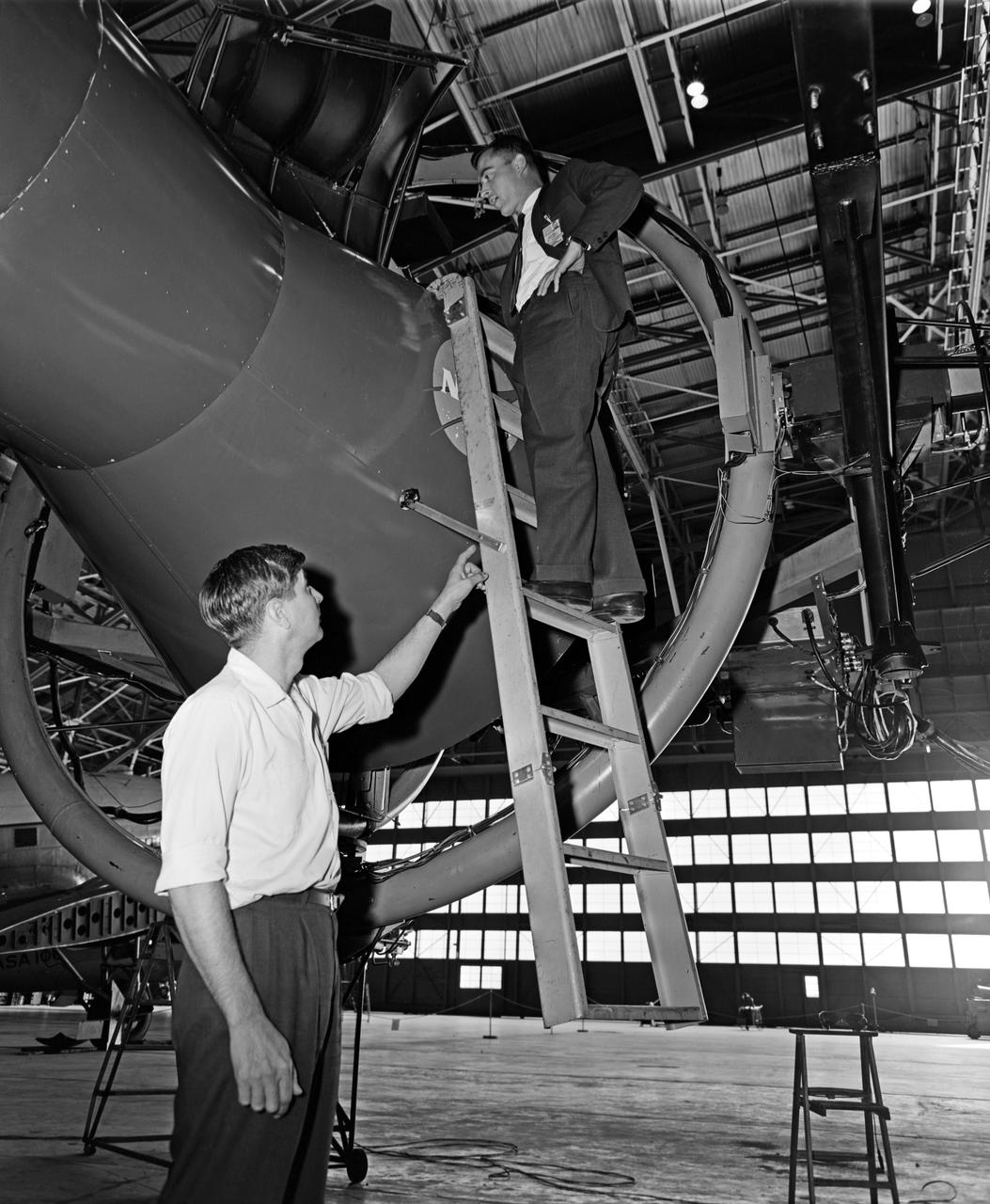
Gemini Rendezvous Docking Simulator suspended from the roof of the Langley Research Center s aircraft hangar. Francis B. Smith wrote: The rendezvous and docking operation of the Gemini spacecraft with the Agena and of the Apollo Command Module with the Lunar Excursion Module have been the subject of simulator studies for several years. This figure illustrates the Gemini-Agena rendezvous docking simulator at Langley. The Gemini spacecraft was supported in a gimbal system by an overhead crane and gantry arrangement which provided 6 degrees of freedom - roll, pitch, yaw, and translation in any direction - all controllable by the astronaut in the spacecraft. Here again the controls fed into a computer which in turn provided an input to the servos driving the spacecraft so that it responded to control motions in a manner which accurately simulated the Gemini spacecraft. -- Published in Barton C. Hacker and James M. Grimwood, On the Shoulders of Titans: A History of Project Gemini, NASA SP-4203 Francis B. Smith, Simulators for Manned Space Research, Paper presented at the 1966 IEEE International convention, March 21-25, 1966.
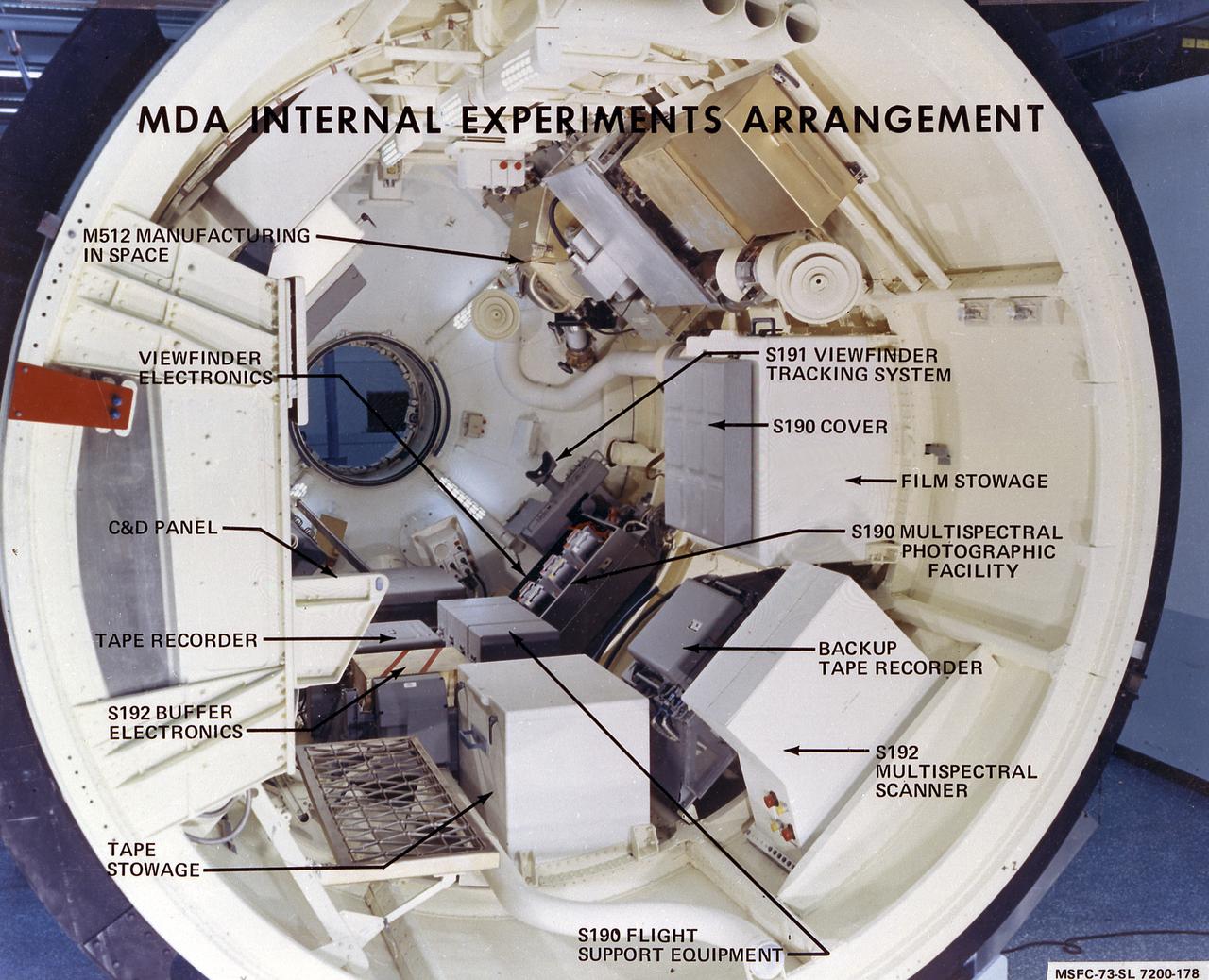
This photograph shows the internal configuration of Skylab's Multiple Docking Adapter (MDA), including callouts for its various internal experiments and facilities. Designed and manufactured by the Marshall Space Flight Center, the MDA housed a number of experiment control and stowage units and provided a docking port for the Apollo Command Module.
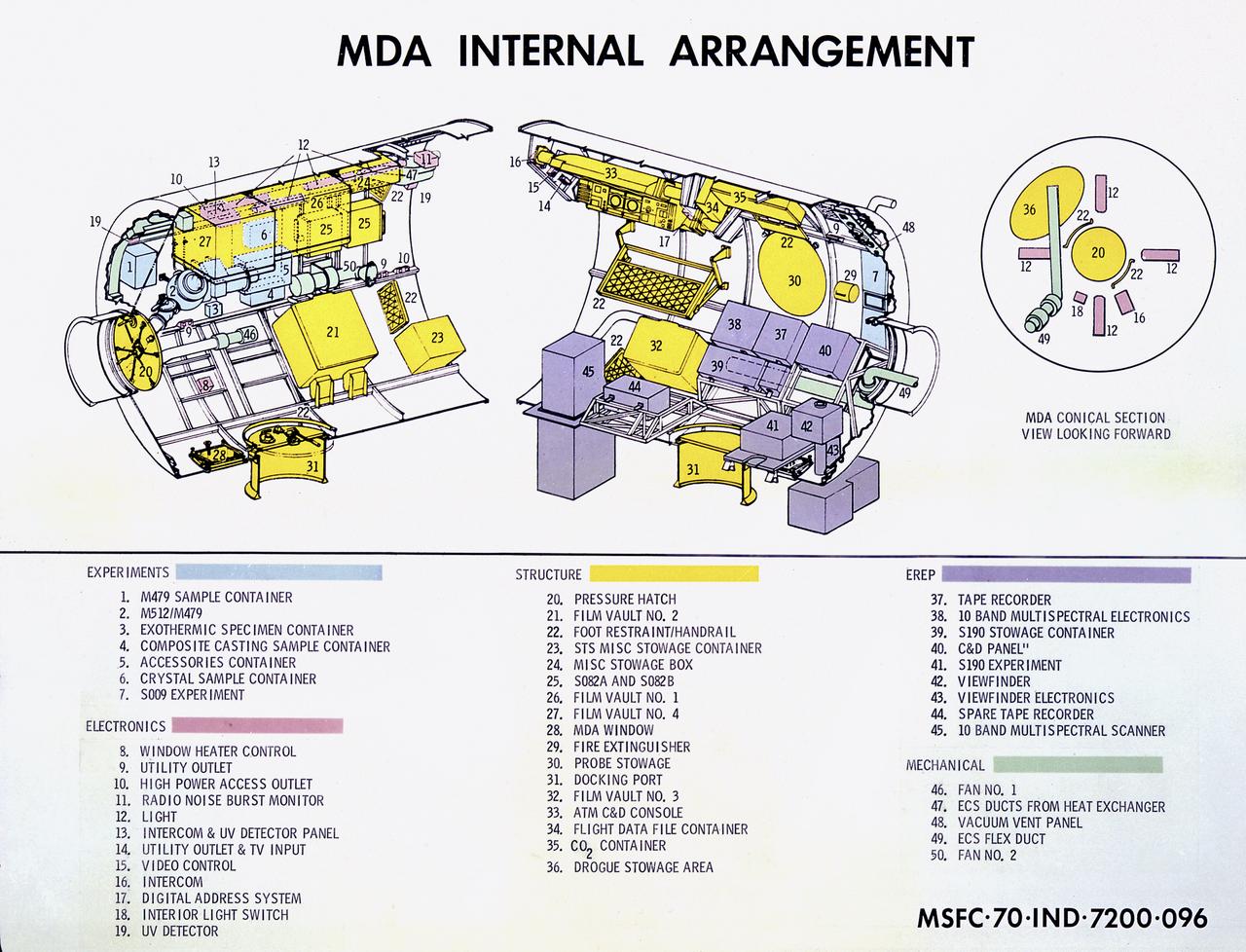
This cutaway drawing details the internal design of the Skylab Multiple Docking Adapter (MDA). The MDA, built under the direction of the Marshall Space Flight Center, housed various Skylab control and experiment units, and provided a docking port for the Apollo Command Module (CM).
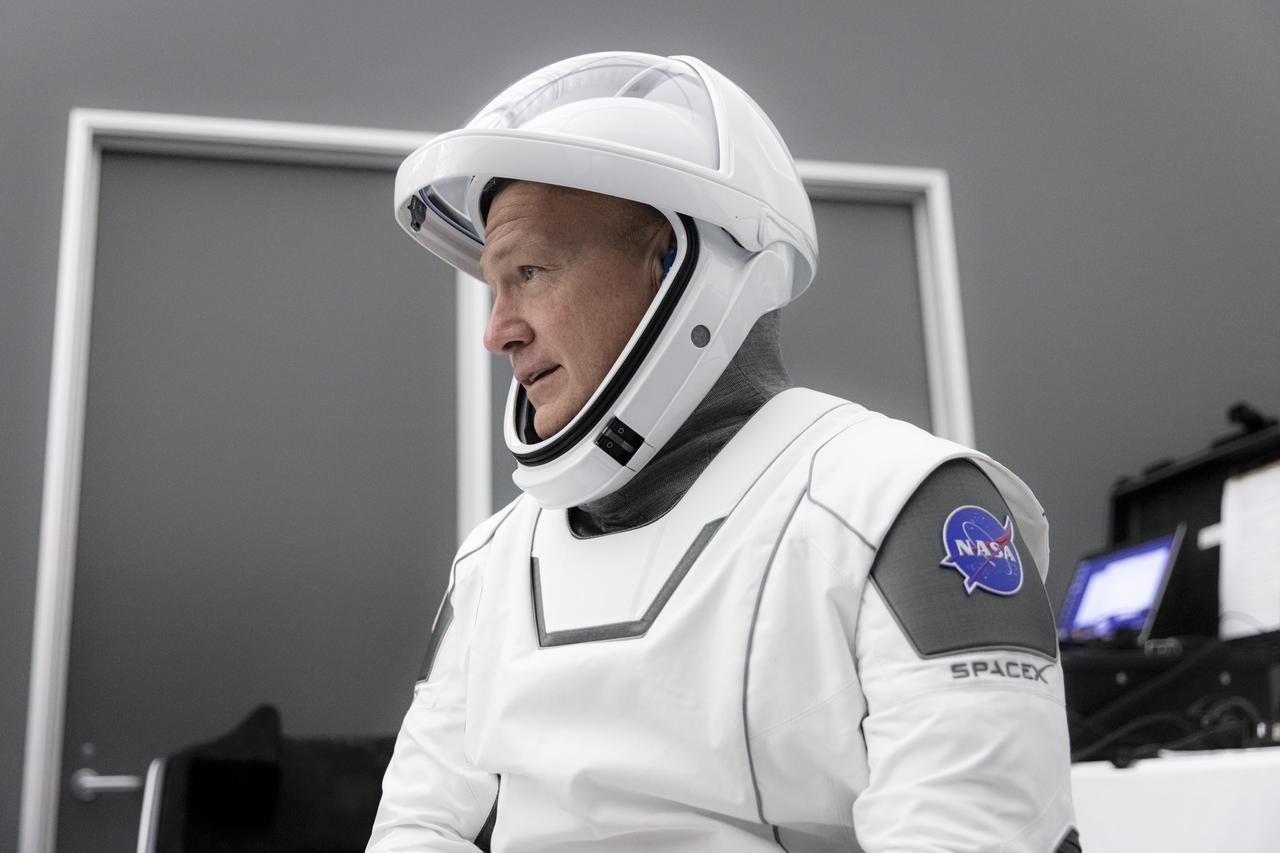
On Thursday, March 19 and Friday, March 20, SpaceX teams in Firing Room 4 at NASA's Kennedy Space Center in Florida and the company's Mission Control in Hawthorne, California, along with NASA flight controllers in Mission Control Houston, executed a full simulation of launch and docking of the Crew Dragon spacecraft, with NASA astronauts Bob Behnken and Doug Hurley participating in SpaceX's flight simulator.
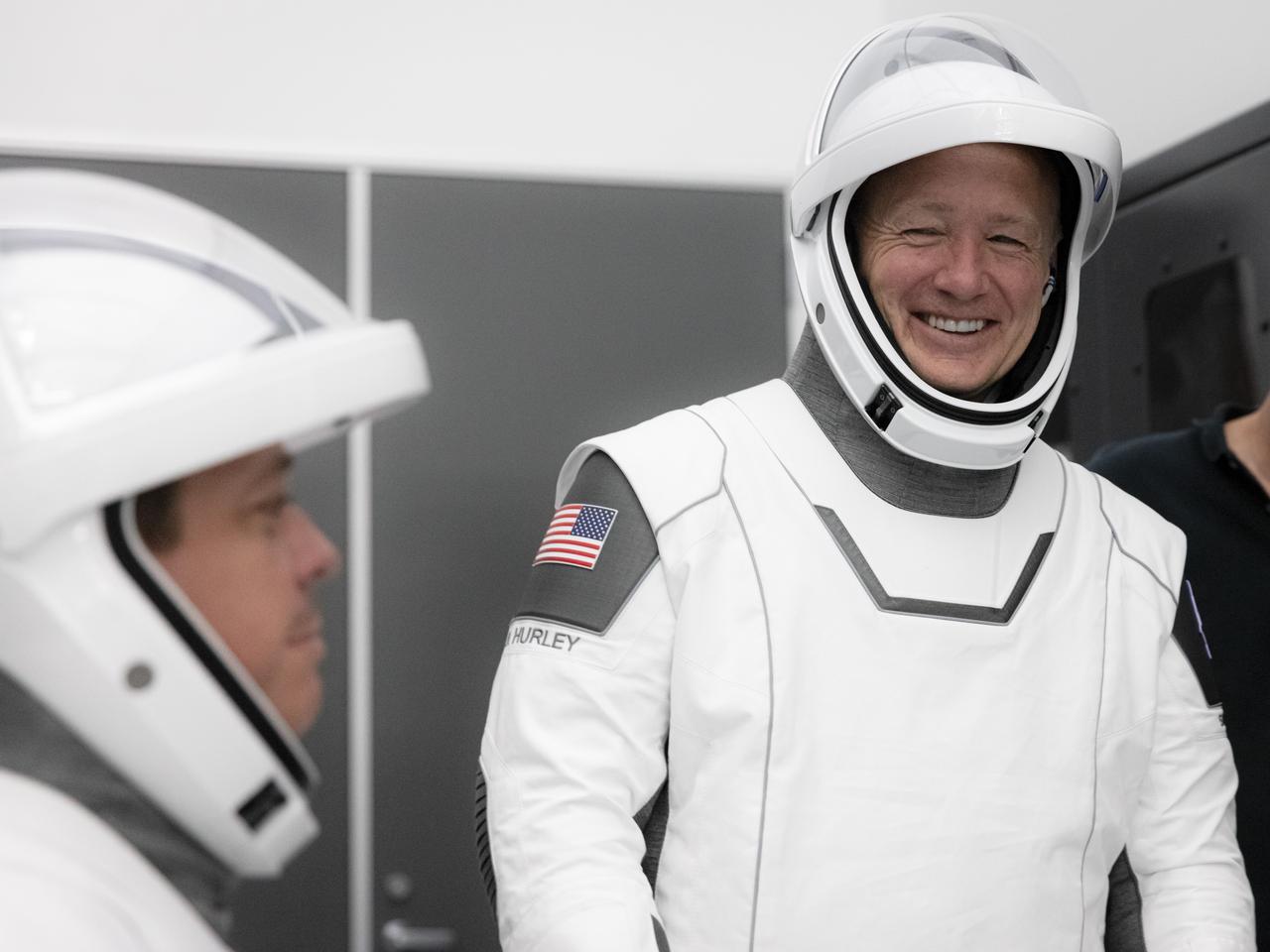
On Thursday, March 19 and Friday, March 20, SpaceX teams in Firing Room 4 at NASA's Kennedy Space Center in Florida and the company's Mission Control in Hawthorne, California, along with NASA flight controllers in Mission Control Houston, executed a full simulation of launch and docking of the Crew Dragon spacecraft, with NASA astronauts Bob Behnken and Doug Hurley participating in SpaceX's flight simulator.
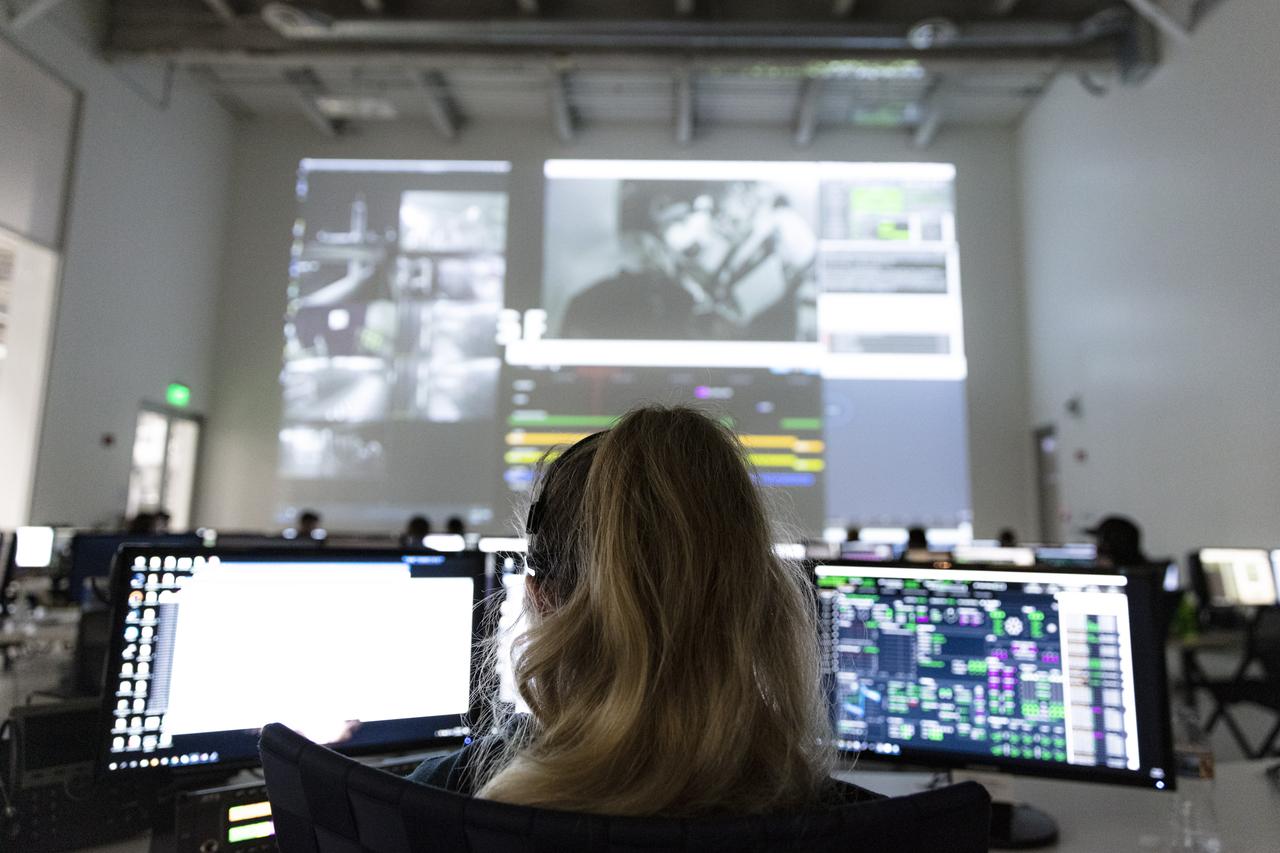
On Thursday, March 19 and Friday, March 20, SpaceX teams in Firing Room 4 at NASA's Kennedy Space Center in Florida and the company's Mission Control in Hawthorne, California, along with NASA flight controllers in Mission Control Houston, executed a full simulation of launch and docking of the Crew Dragon spacecraft, with NASA astronauts Bob Behnken and Doug Hurley participating in SpaceX's flight simulator.
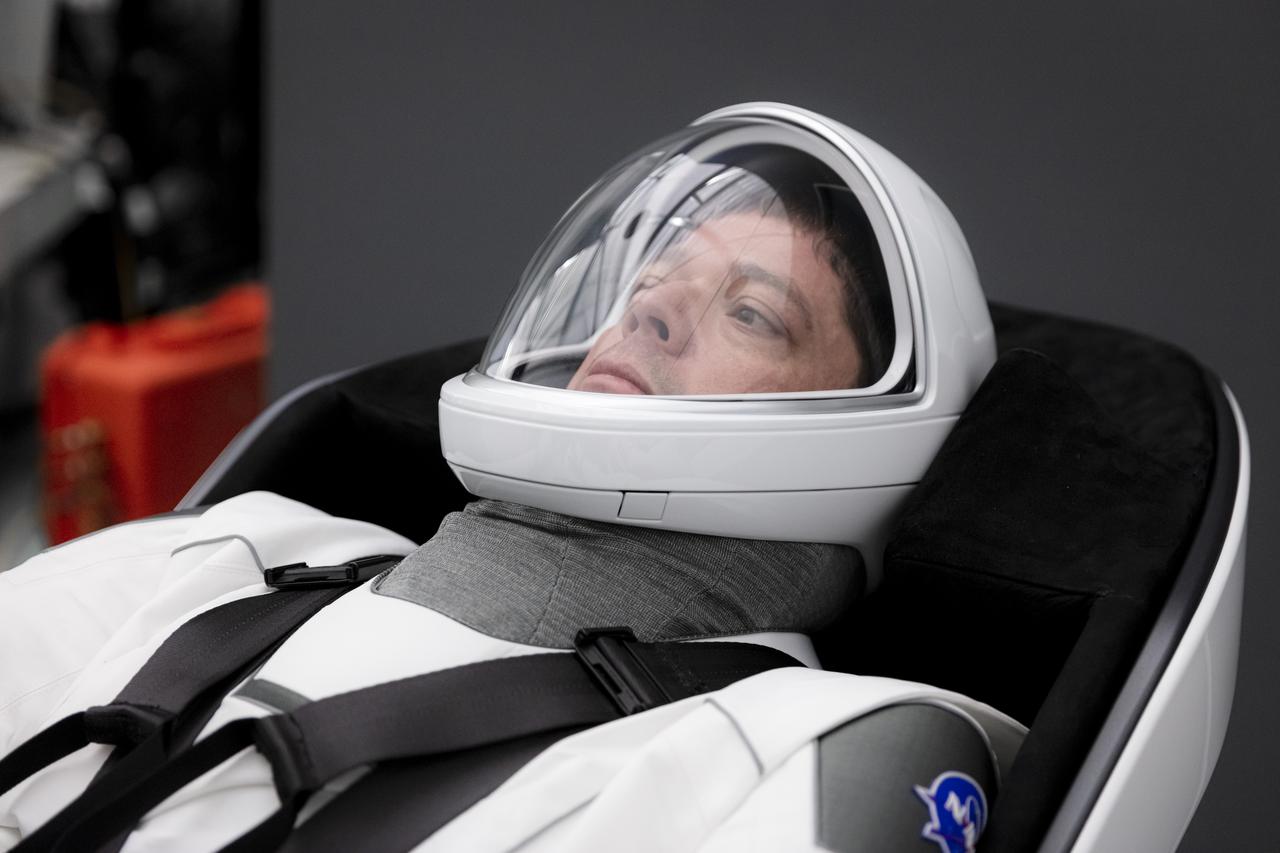
On Thursday, March 19 and Friday, March 20, SpaceX teams in Firing Room 4 at NASA's Kennedy Space Center in Florida and the company's Mission Control in Hawthorne, California, along with NASA flight controllers in Mission Control Houston, executed a full simulation of launch and docking of the Crew Dragon spacecraft, with NASA astronauts Bob Behnken and Doug Hurley participating in SpaceX's flight simulator.
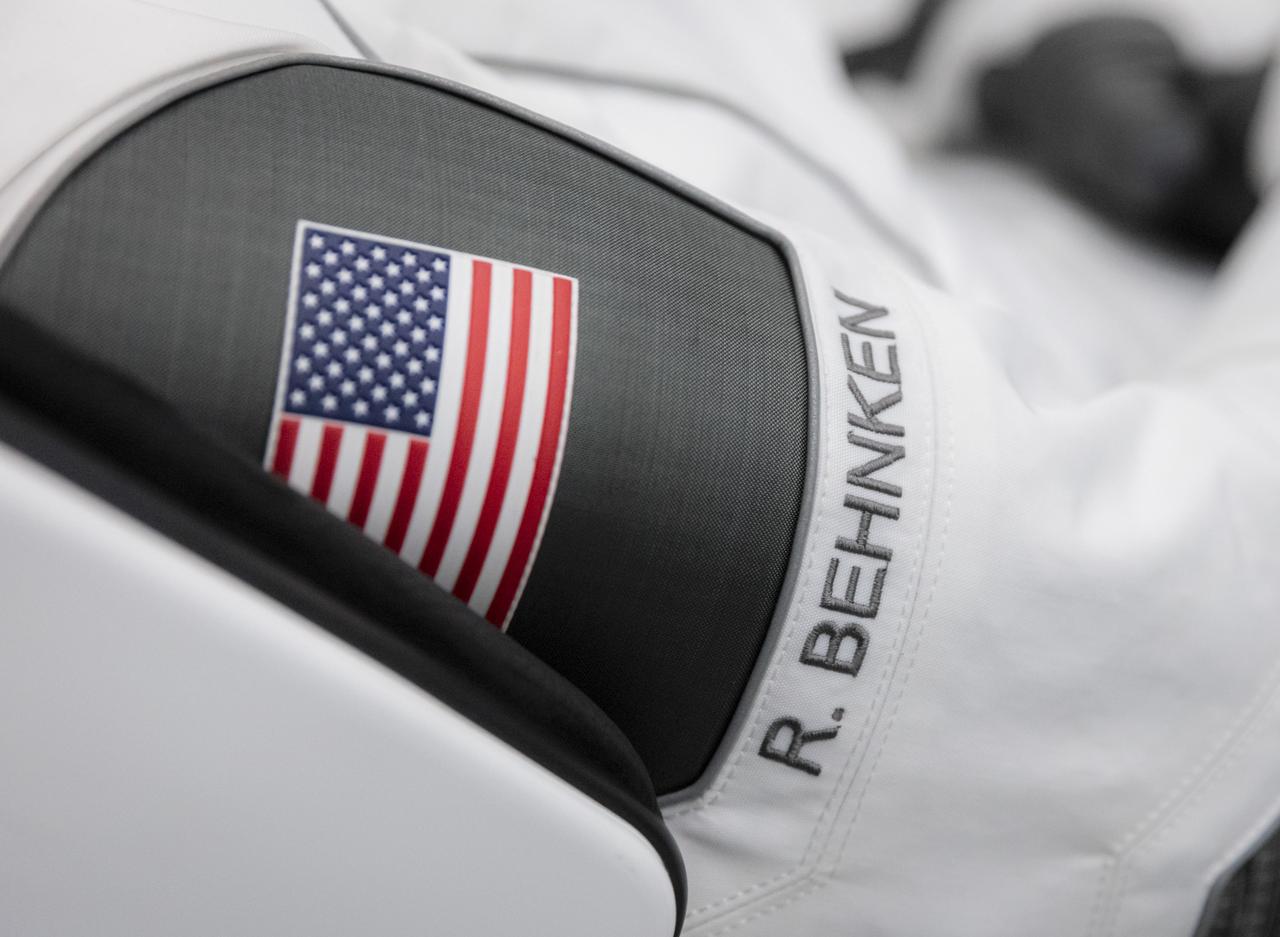
On Thursday, March 19 and Friday, March 20, SpaceX teams in Firing Room 4 at NASA's Kennedy Space Center in Florida and the company's Mission Control in Hawthorne, California, along with NASA flight controllers in Mission Control Houston, executed a full simulation of launch and docking of the Crew Dragon spacecraft, with NASA astronauts Bob Behnken and Doug Hurley participating in SpaceX's flight simulator.
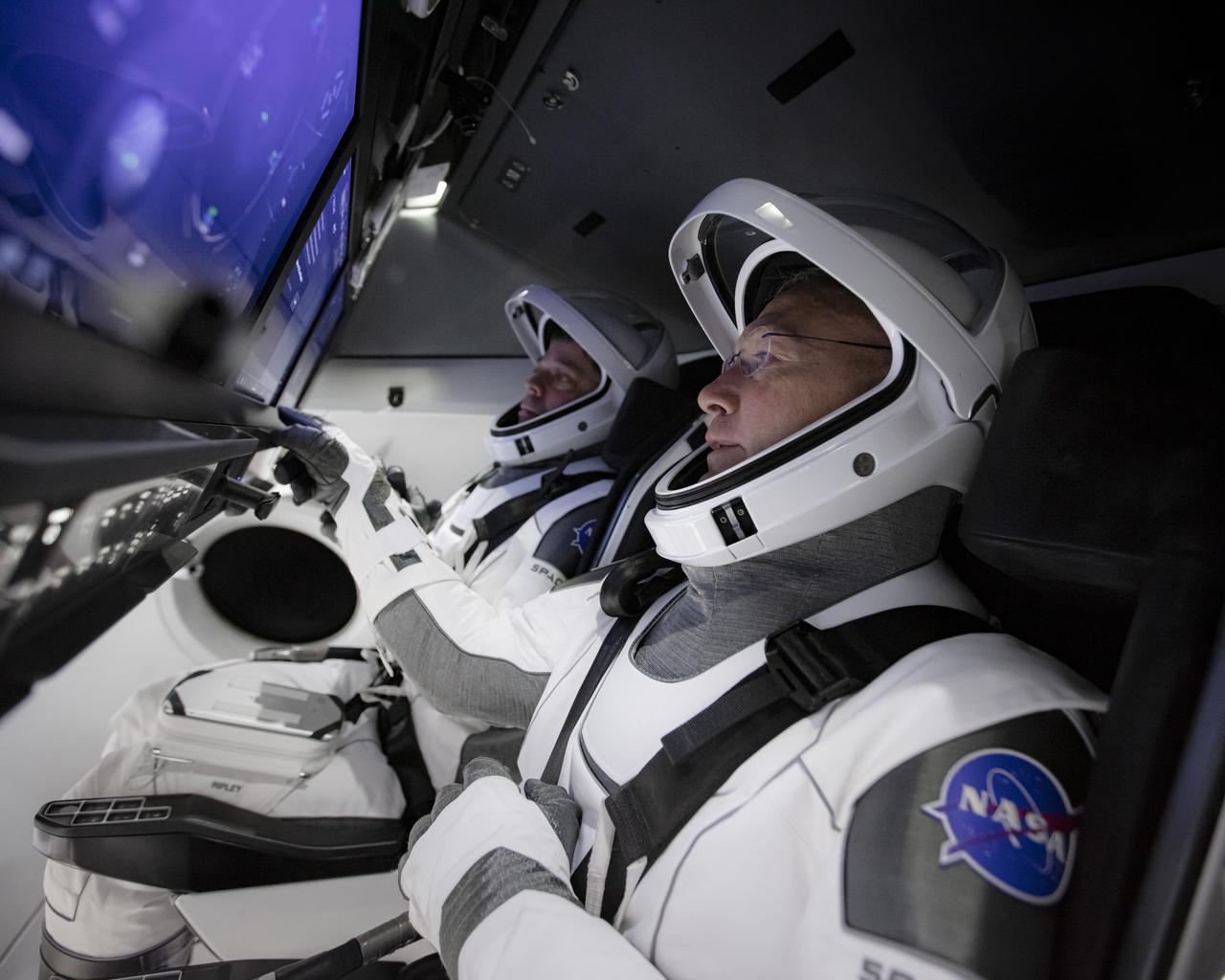
On Thursday, March 19 and Friday, March 20, SpaceX teams in Firing Room 4 at NASA's Kennedy Space Center in Florida and the company's Mission Control in Hawthorne, California, along with NASA flight controllers in Mission Control Houston, executed a full simulation of launch and docking of the Crew Dragon spacecraft, with NASA astronauts Bob Behnken and Doug Hurley participating in SpaceX's flight simulator.
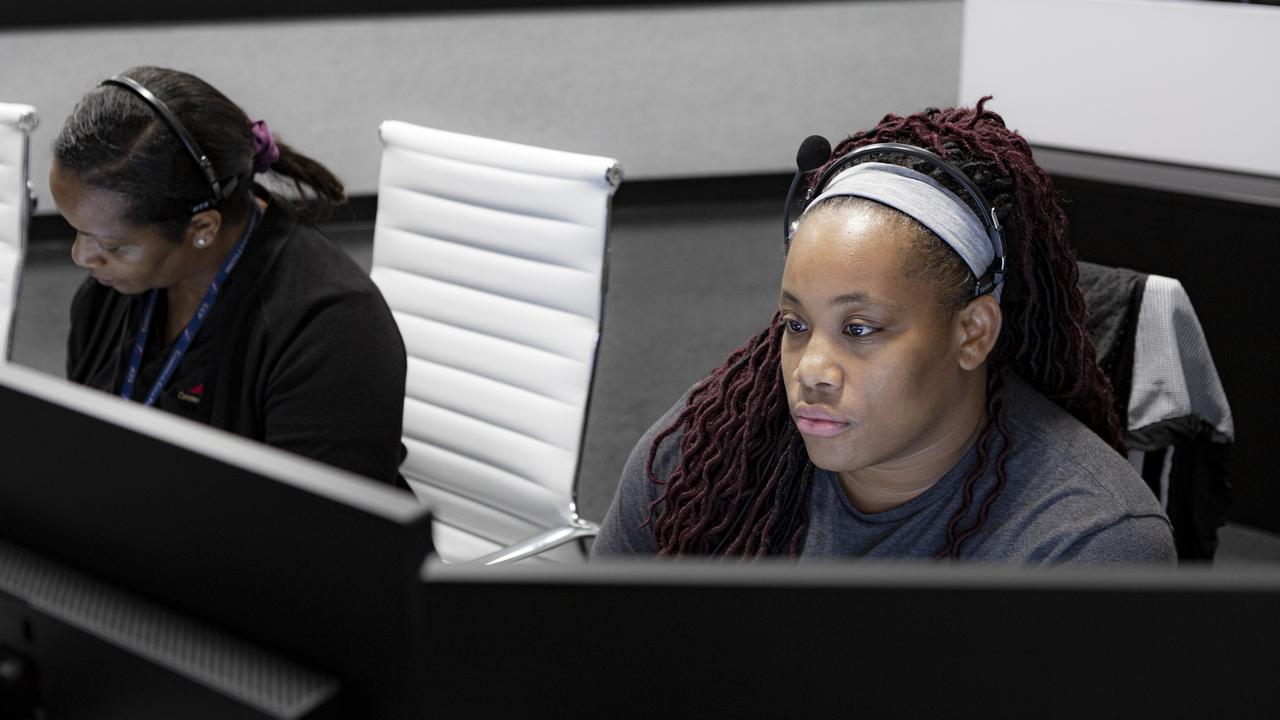
On Thursday, March 19 and Friday, March 20, SpaceX teams in Firing Room 4 at NASA's Kennedy Space Center in Florida and the company's Mission Control in Hawthorne, California, along with NASA flight controllers in Mission Control Houston, executed a full simulation of launch and docking of the Crew Dragon spacecraft, with NASA astronauts Bob Behnken and Doug Hurley participating in SpaceX's flight simulator.
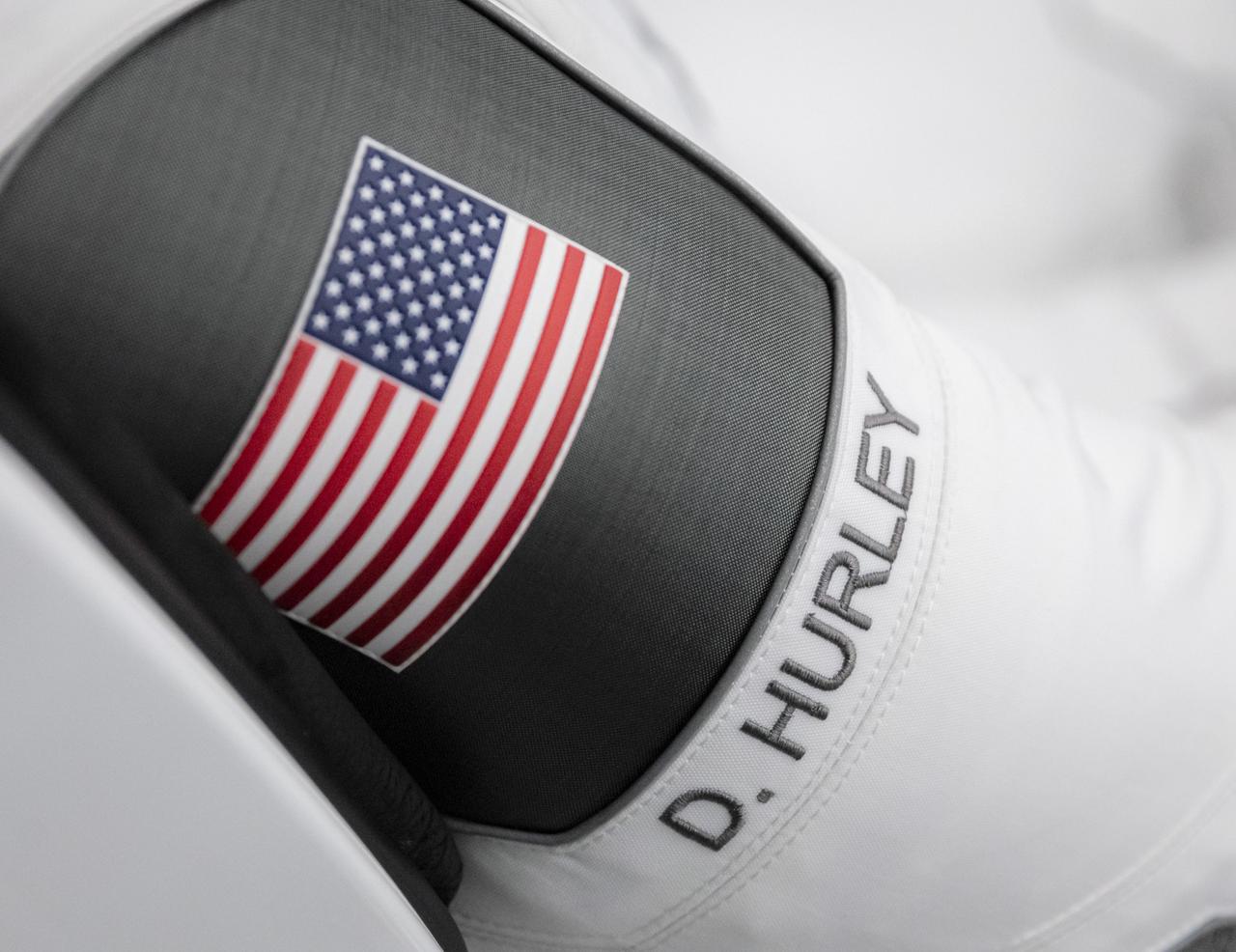
On Thursday, March 19 and Friday, March 20, SpaceX teams in Firing Room 4 at NASA's Kennedy Space Center in Florida and the company's Mission Control in Hawthorne, California, along with NASA flight controllers in Mission Control Houston, executed a full simulation of launch and docking of the Crew Dragon spacecraft, with NASA astronauts Bob Behnken and Doug Hurley participating in SpaceX's flight simulator.
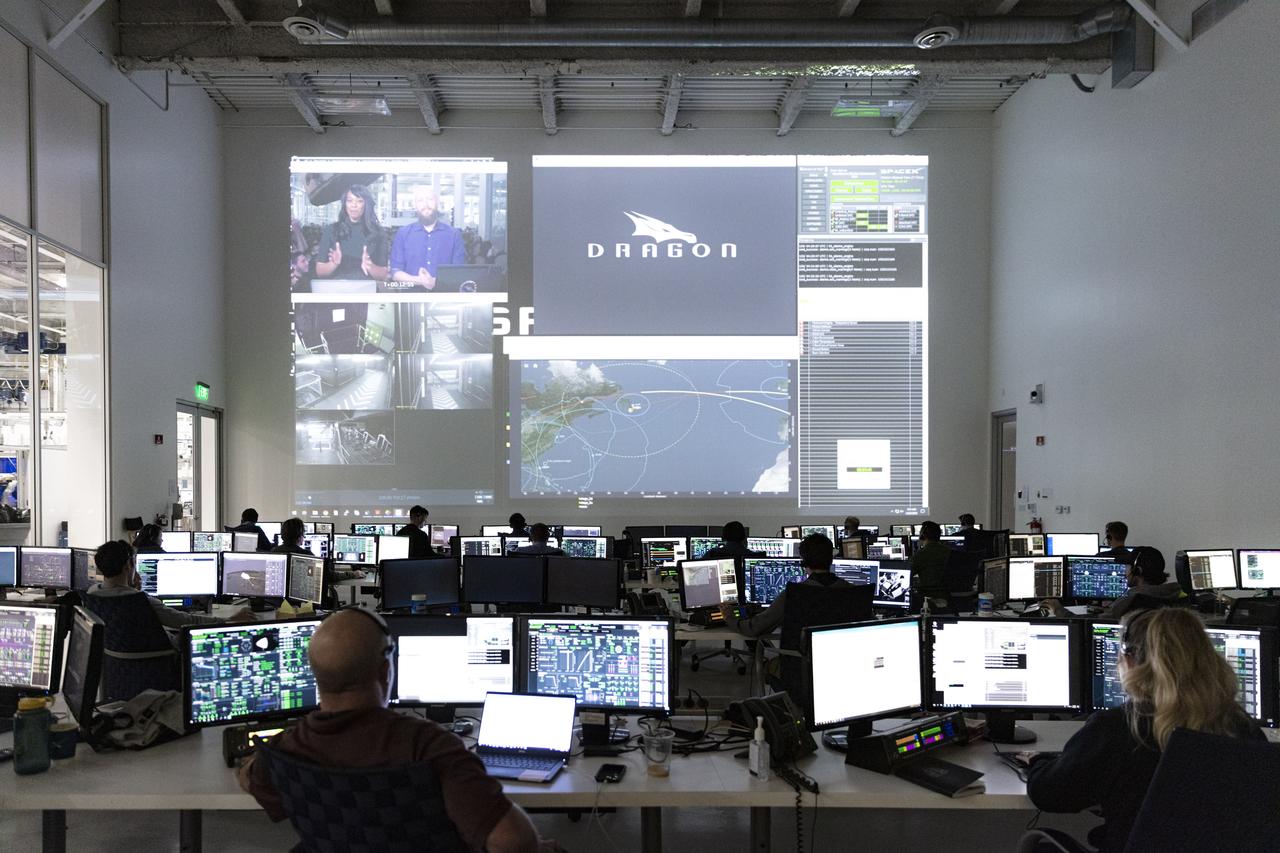
On Thursday, March 19 and Friday, March 20, SpaceX teams in Firing Room 4 at NASA's Kennedy Space Center in Florida and the company's Mission Control in Hawthorne, California, along with NASA flight controllers in Mission Control Houston, executed a full simulation of launch and docking of the Crew Dragon spacecraft, with NASA astronauts Bob Behnken and Doug Hurley participating in SpaceX's flight simulator.
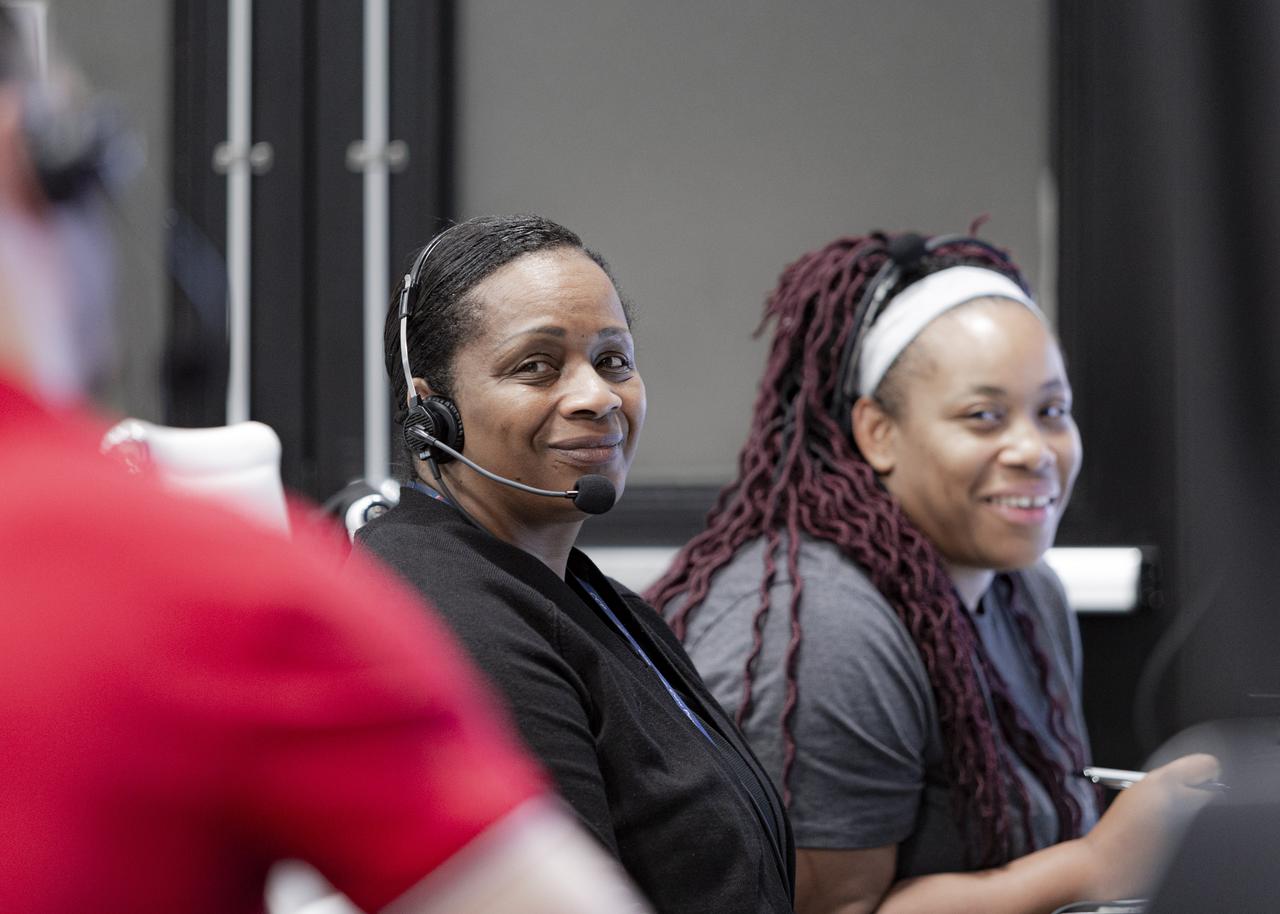
On Thursday, March 19 and Friday, March 20, SpaceX teams in Firing Room 4 at NASA's Kennedy Space Center in Florida and the company's Mission Control in Hawthorne, California, along with NASA flight controllers in Mission Control Houston, executed a full simulation of launch and docking of the Crew Dragon spacecraft, with NASA astronauts Bob Behnken and Doug Hurley participating in SpaceX's flight simulator.
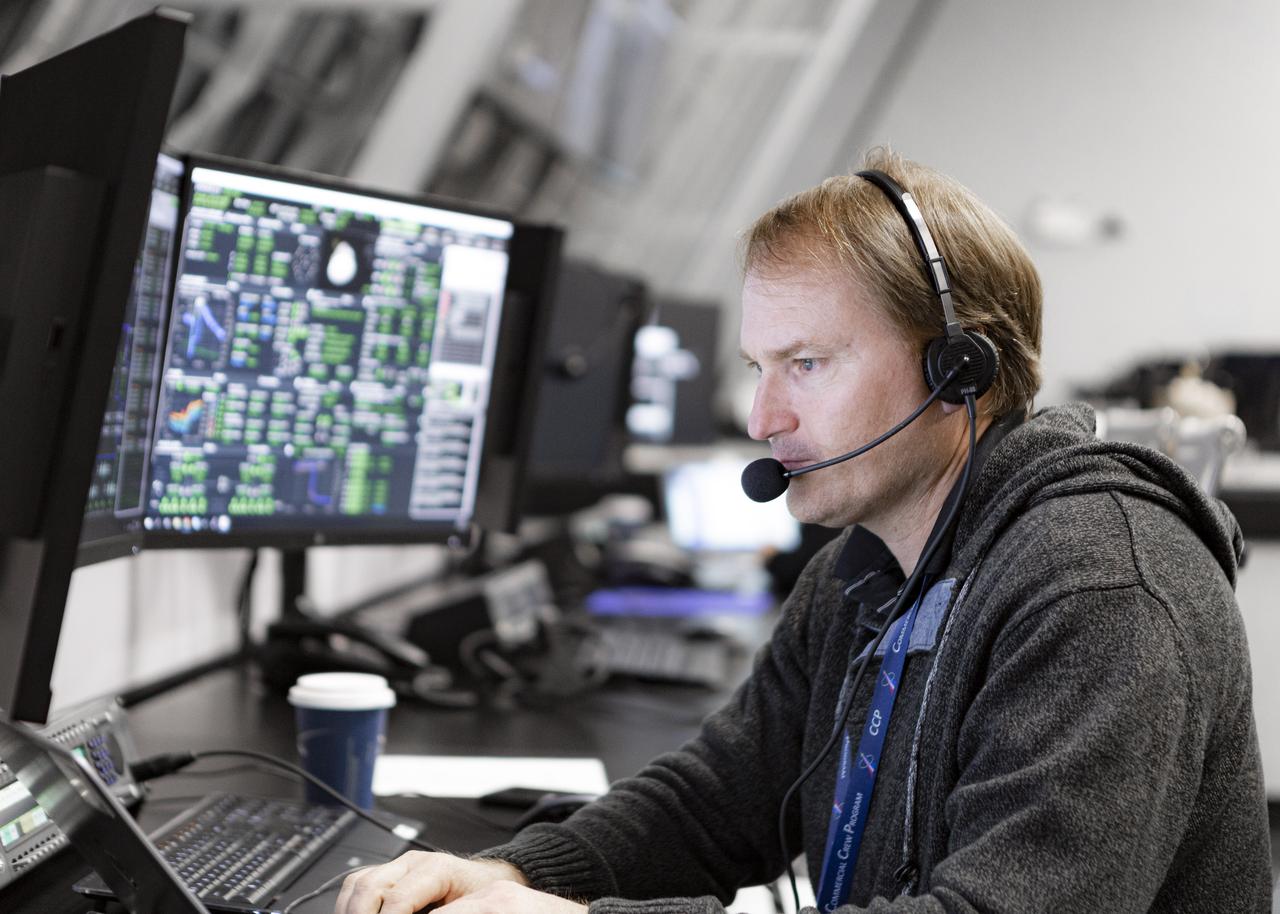
On Thursday, March 19 and Friday, March 20, SpaceX teams in Firing Room 4 at NASA's Kennedy Space Center in Florida and the company's Mission Control in Hawthorne, California, along with NASA flight controllers in Mission Control Houston, executed a full simulation of launch and docking of the Crew Dragon spacecraft, with NASA astronauts Bob Behnken and Doug Hurley participating in SpaceX's flight simulator.
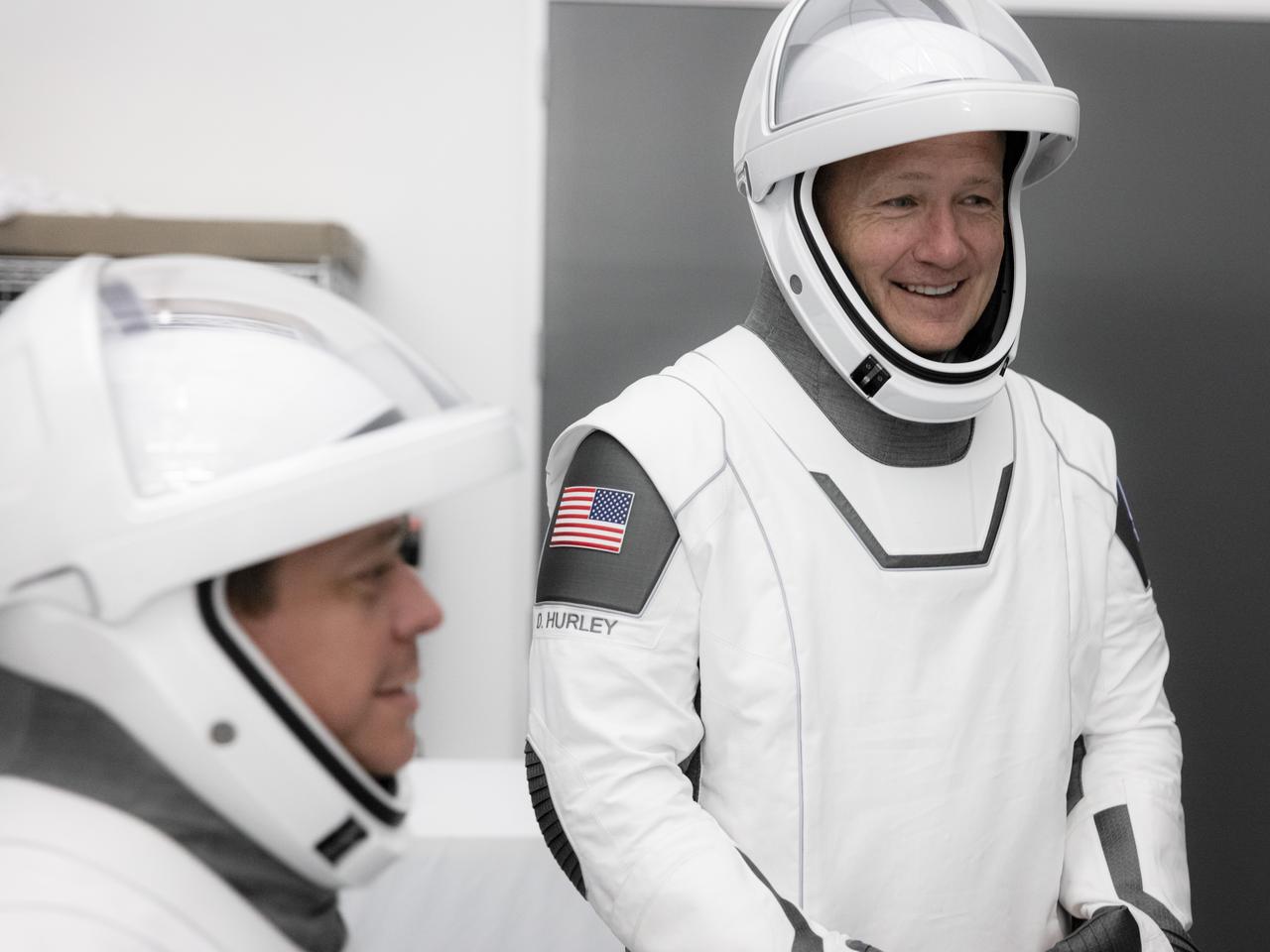
On Thursday, March 19 and Friday, March 20, SpaceX teams in Firing Room 4 at NASA's Kennedy Space Center in Florida and the company's Mission Control in Hawthorne, California, along with NASA flight controllers in Mission Control Houston, executed a full simulation of launch and docking of the Crew Dragon spacecraft, with NASA astronauts Bob Behnken and Doug Hurley participating in SpaceX's flight simulator.
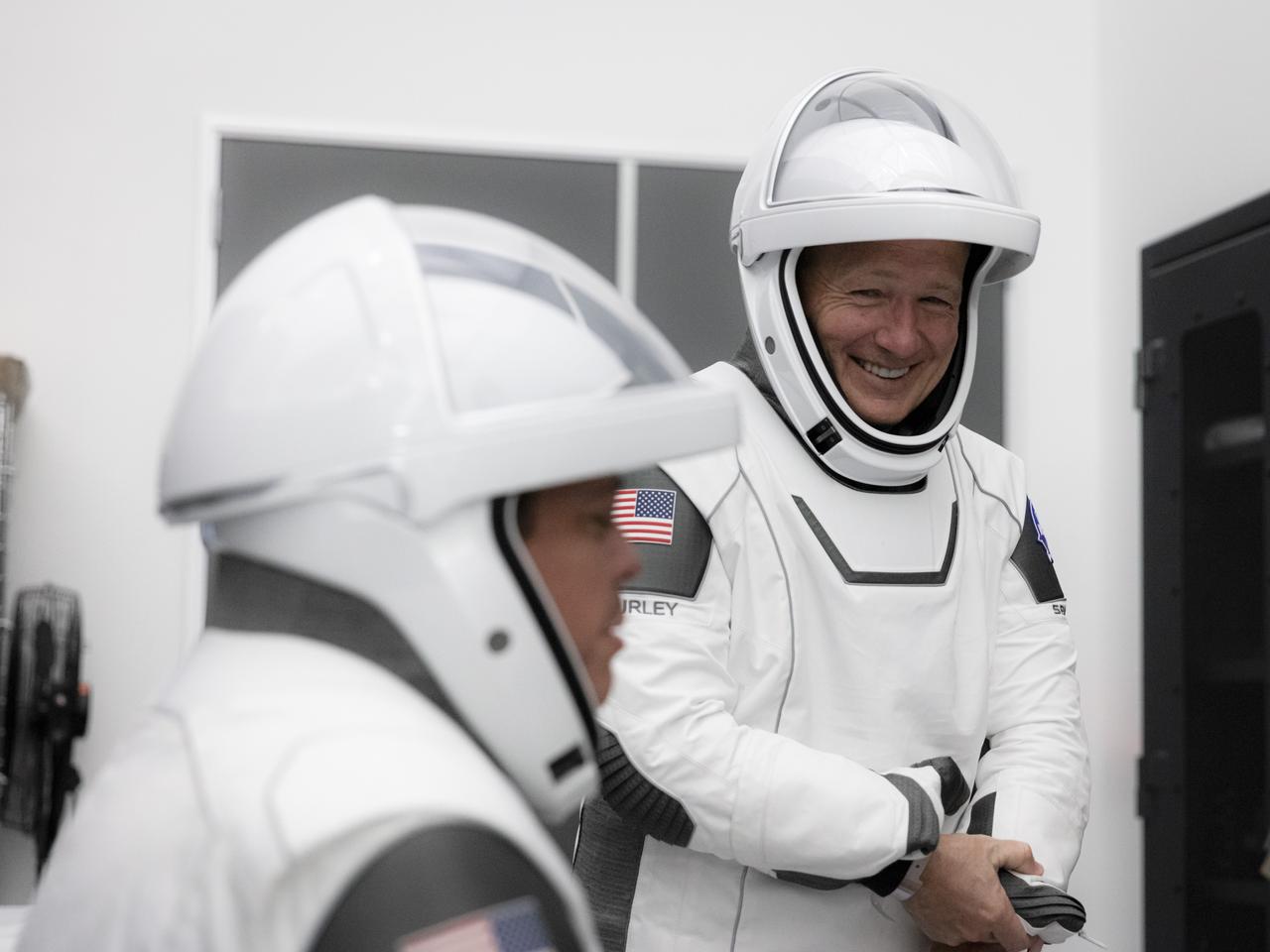
On Thursday, March 19 and Friday, March 20, SpaceX teams in Firing Room 4 at NASA's Kennedy Space Center in Florida and the company's Mission Control in Hawthorne, California, along with NASA flight controllers in Mission Control Houston, executed a full simulation of launch and docking of the Crew Dragon spacecraft, with NASA astronauts Bob Behnken and Doug Hurley participating in SpaceX's flight simulator.
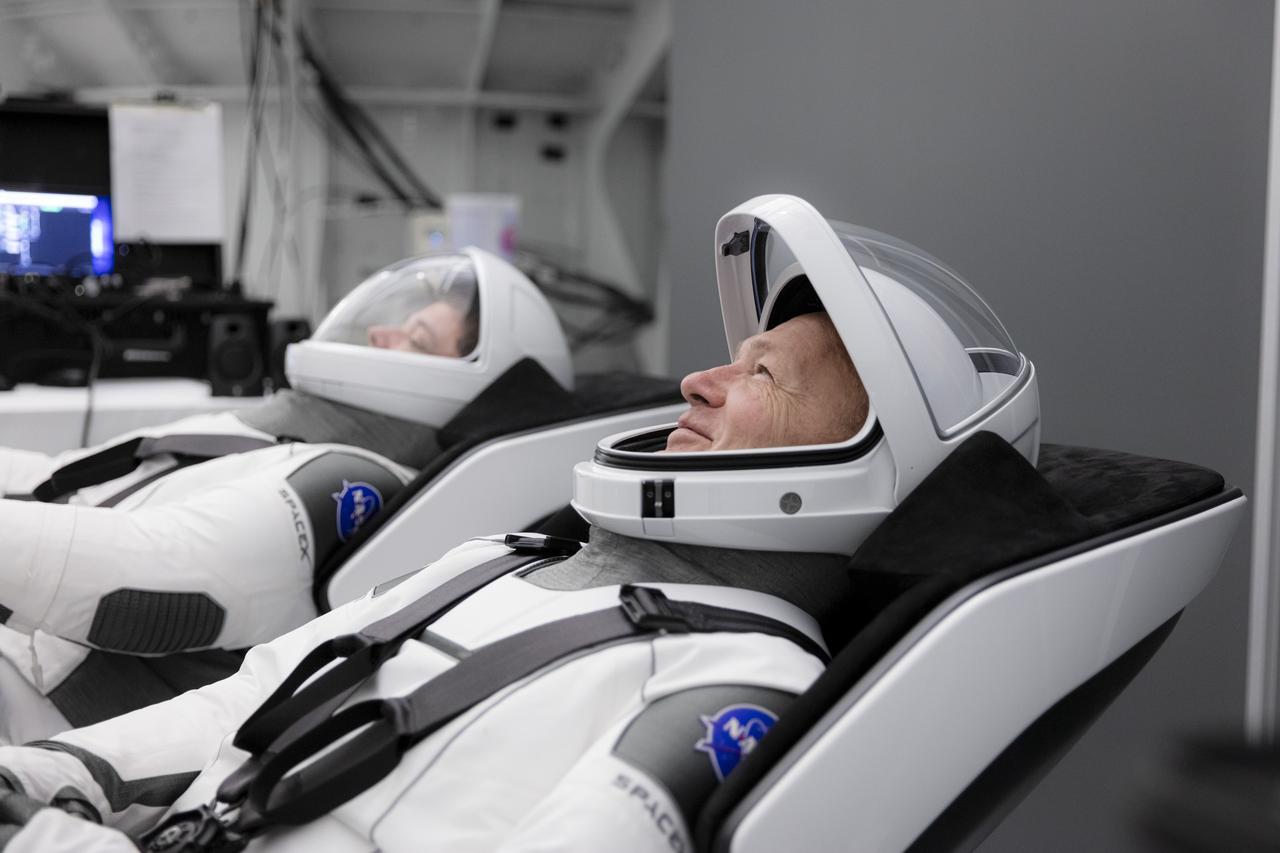
On Thursday, March 19 and Friday, March 20, SpaceX teams in Firing Room 4 at NASA's Kennedy Space Center in Florida and the company's Mission Control in Hawthorne, California, along with NASA flight controllers in Mission Control Houston, executed a full simulation of launch and docking of the Crew Dragon spacecraft, with NASA astronauts Bob Behnken and Doug Hurley participating in SpaceX's flight simulator.
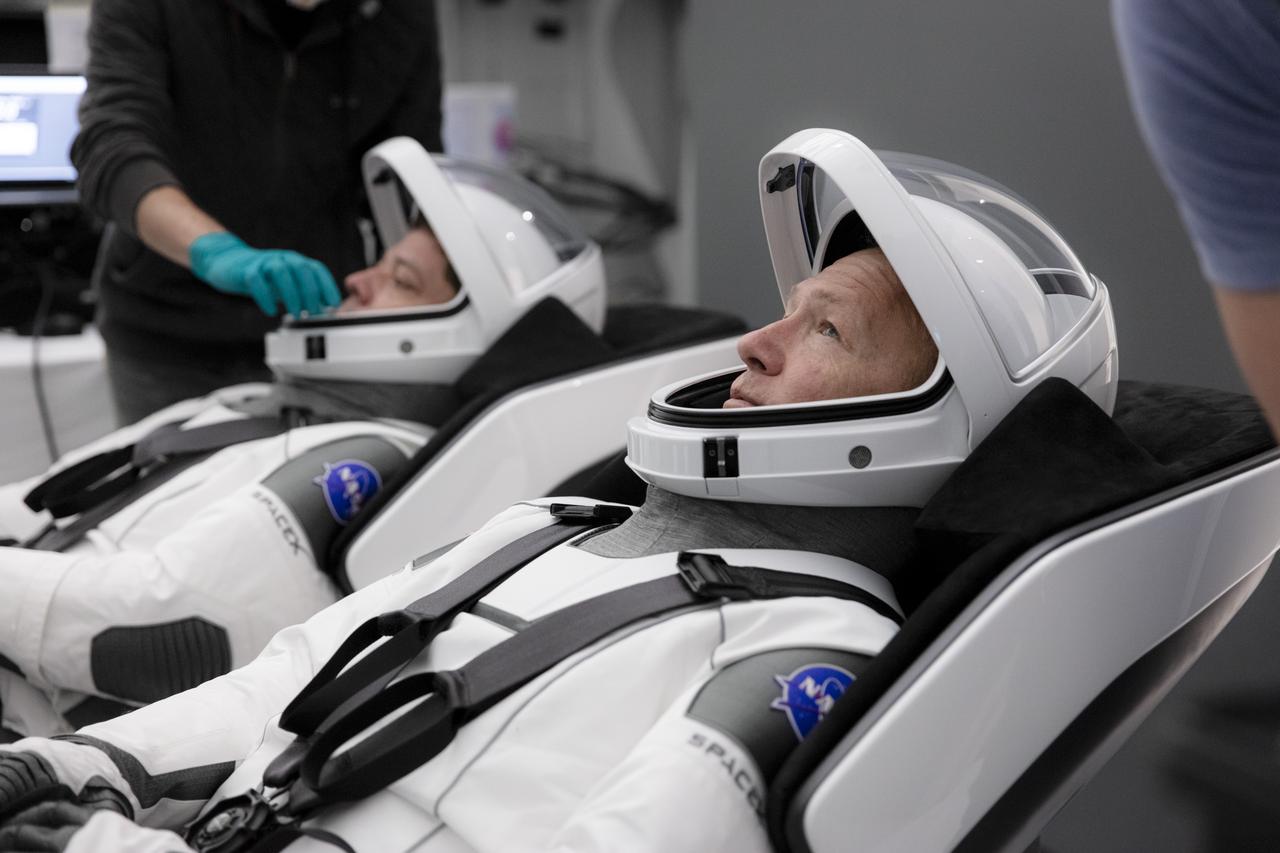
On Thursday, March 19 and Friday, March 20, SpaceX teams in Firing Room 4 at NASA's Kennedy Space Center in Florida and the company's Mission Control in Hawthorne, California, along with NASA flight controllers in Mission Control Houston, executed a full simulation of launch and docking of the Crew Dragon spacecraft, with NASA astronauts Bob Behnken and Doug Hurley participating in SpaceX's flight simulator.
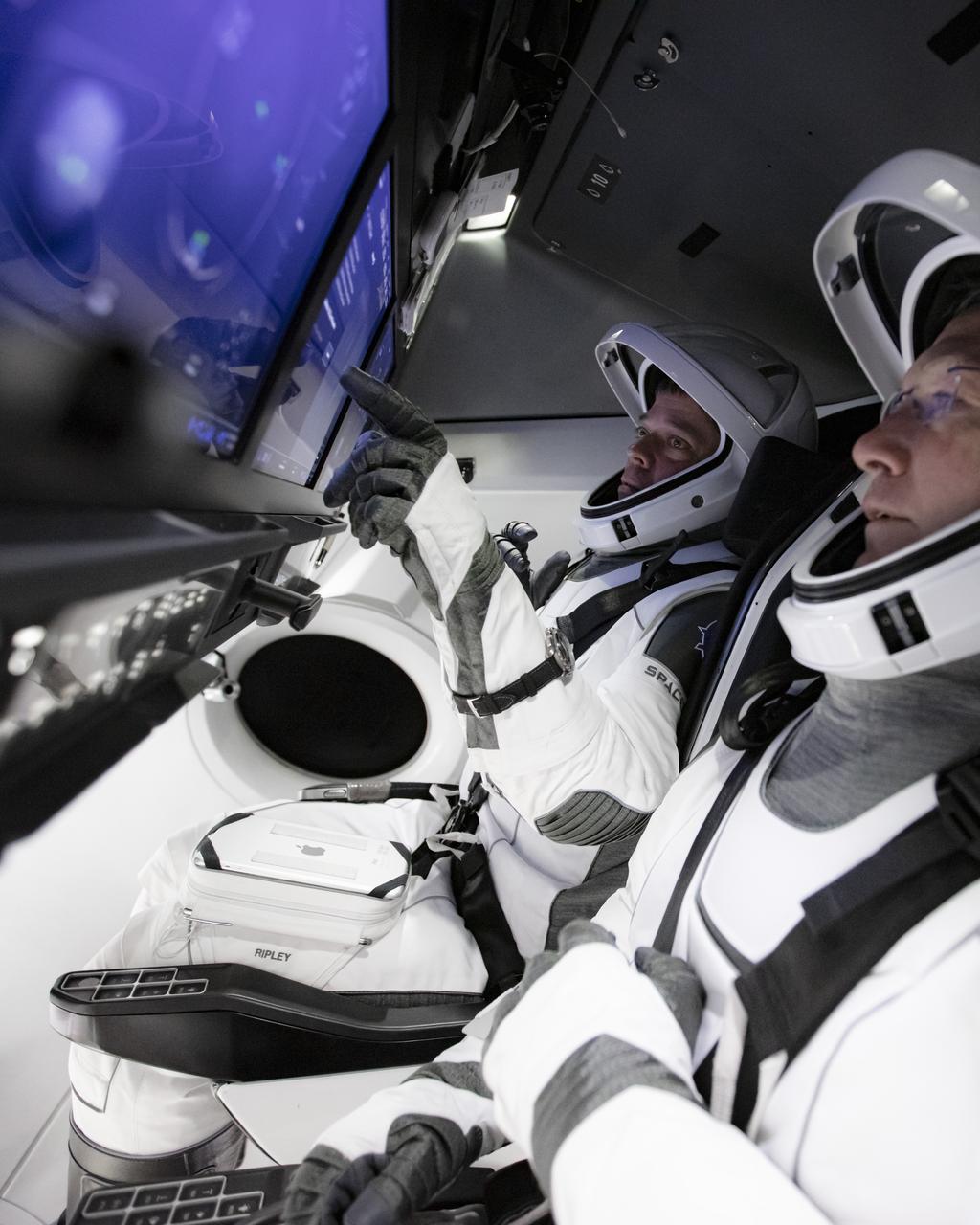
On Thursday, March 19 and Friday, March 20, SpaceX teams in Firing Room 4 at NASA's Kennedy Space Center in Florida and the company's Mission Control in Hawthorne, California, along with NASA flight controllers in Mission Control Houston, executed a full simulation of launch and docking of the Crew Dragon spacecraft, with NASA astronauts Bob Behnken and Doug Hurley participating in SpaceX's flight simulator.
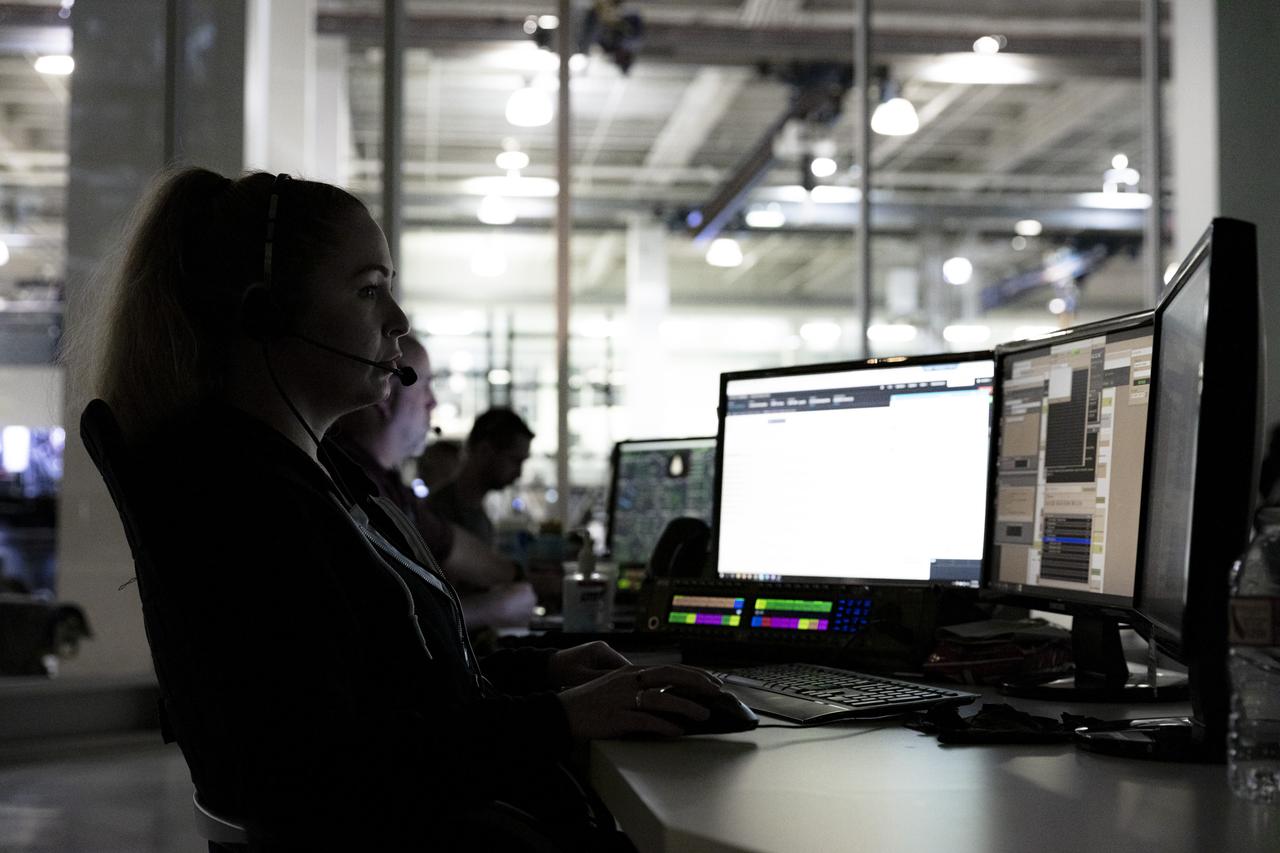
On Thursday, March 19 and Friday, March 20, SpaceX teams in Firing Room 4 at NASA's Kennedy Space Center in Florida and the company's Mission Control in Hawthorne, California, along with NASA flight controllers in Mission Control Houston, executed a full simulation of launch and docking of the Crew Dragon spacecraft, with NASA astronauts Bob Behnken and Doug Hurley participating in SpaceX's flight simulator.
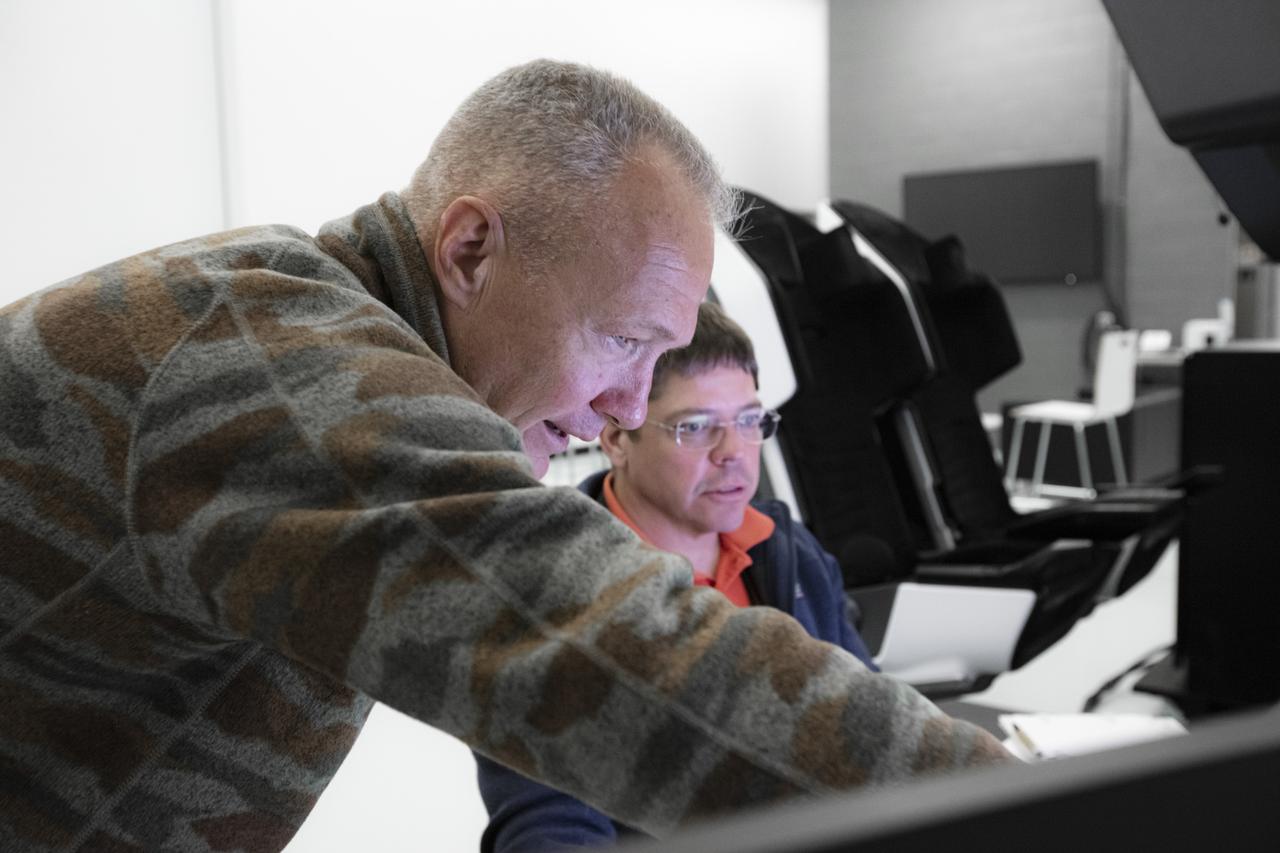
On Thursday, March 19 and Friday, March 20, SpaceX teams in Firing Room 4 at NASA's Kennedy Space Center in Florida and the company's Mission Control in Hawthorne, California, along with NASA flight controllers in Mission Control Houston, executed a full simulation of launch and docking of the Crew Dragon spacecraft, with NASA astronauts Bob Behnken and Doug Hurley participating in SpaceX's flight simulator.
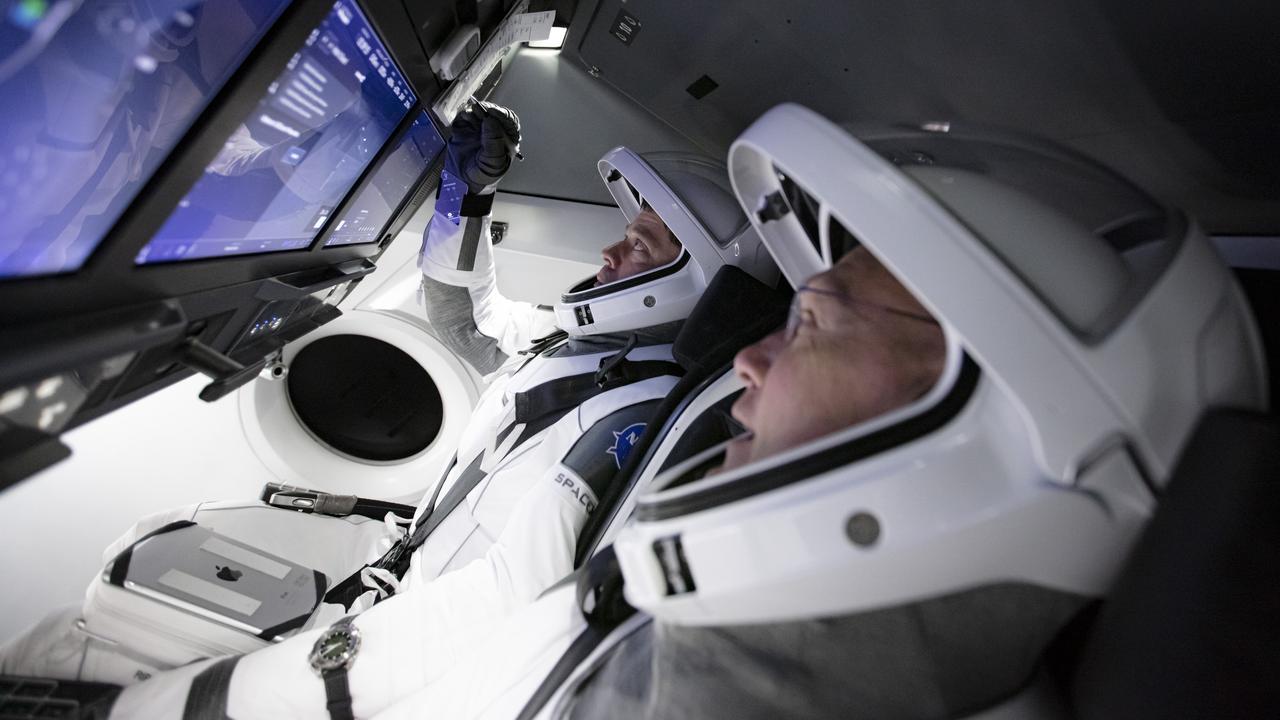
On Thursday, March 19 and Friday, March 20, SpaceX teams in Firing Room 4 at NASA's Kennedy Space Center in Florida and the company's Mission Control in Hawthorne, California, along with NASA flight controllers in Mission Control Houston, executed a full simulation of launch and docking of the Crew Dragon spacecraft, with NASA astronauts Bob Behnken and Doug Hurley participating in SpaceX's flight simulator.
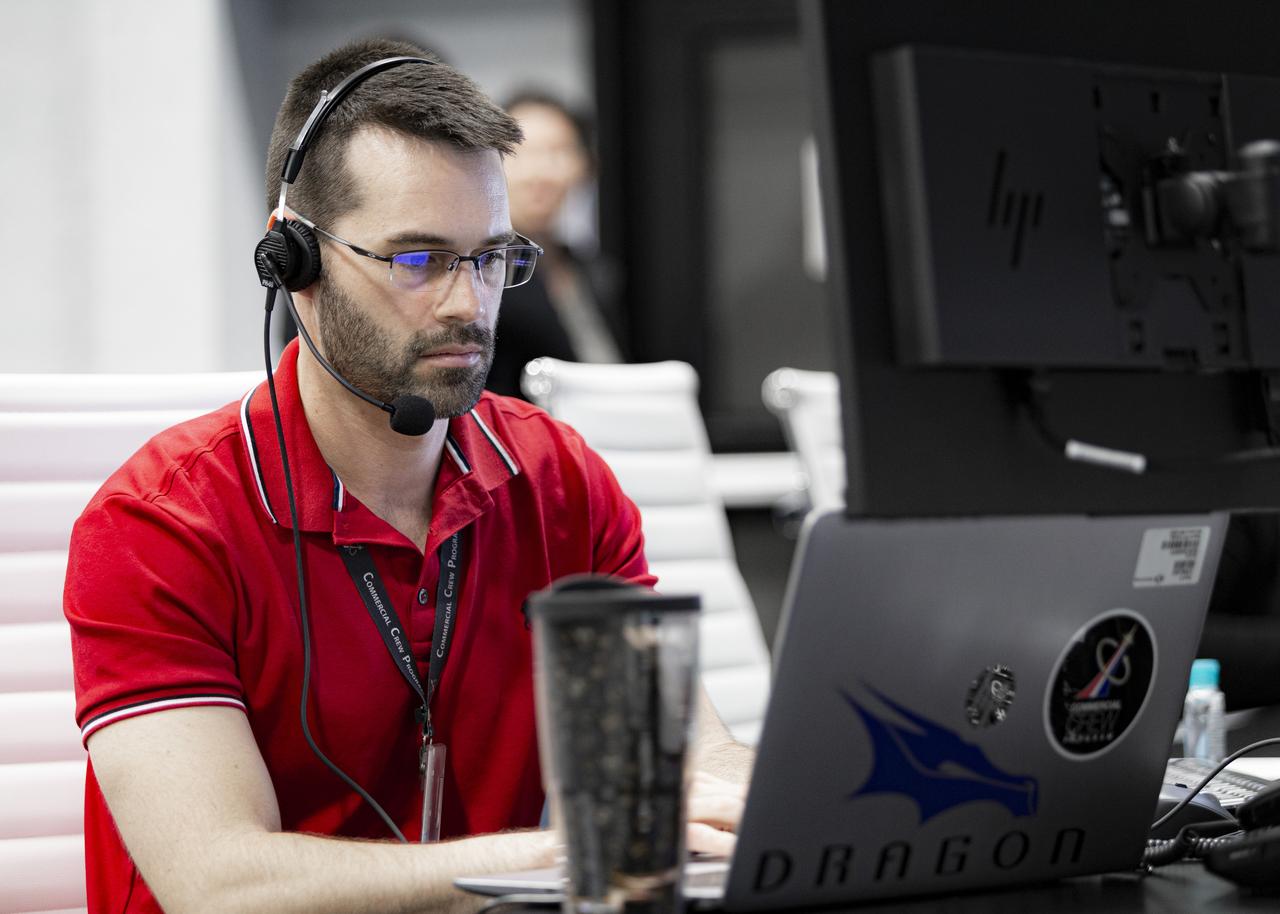
On Thursday, March 19 and Friday, March 20, SpaceX teams in Firing Room 4 at NASA's Kennedy Space Center in Florida and the company's Mission Control in Hawthorne, California, along with NASA flight controllers in Mission Control Houston, executed a full simulation of launch and docking of the Crew Dragon spacecraft, with NASA astronauts Bob Behnken and Doug Hurley participating in SpaceX's flight simulator.
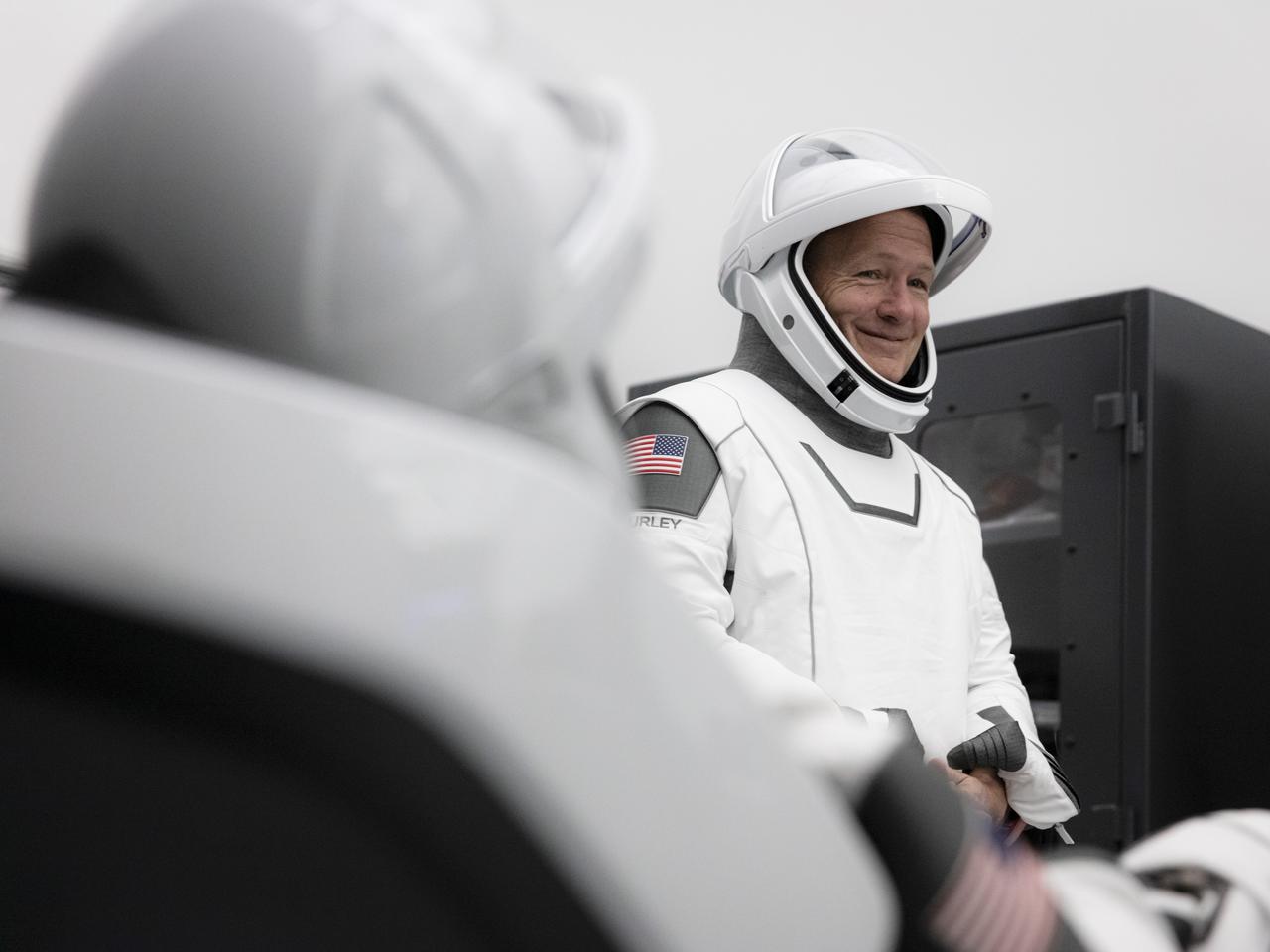
On Thursday, March 19 and Friday, March 20, SpaceX teams in Firing Room 4 at NASA's Kennedy Space Center in Florida and the company's Mission Control in Hawthorne, California, along with NASA flight controllers in Mission Control Houston, executed a full simulation of launch and docking of the Crew Dragon spacecraft, with NASA astronauts Bob Behnken and Doug Hurley participating in SpaceX's flight simulator.
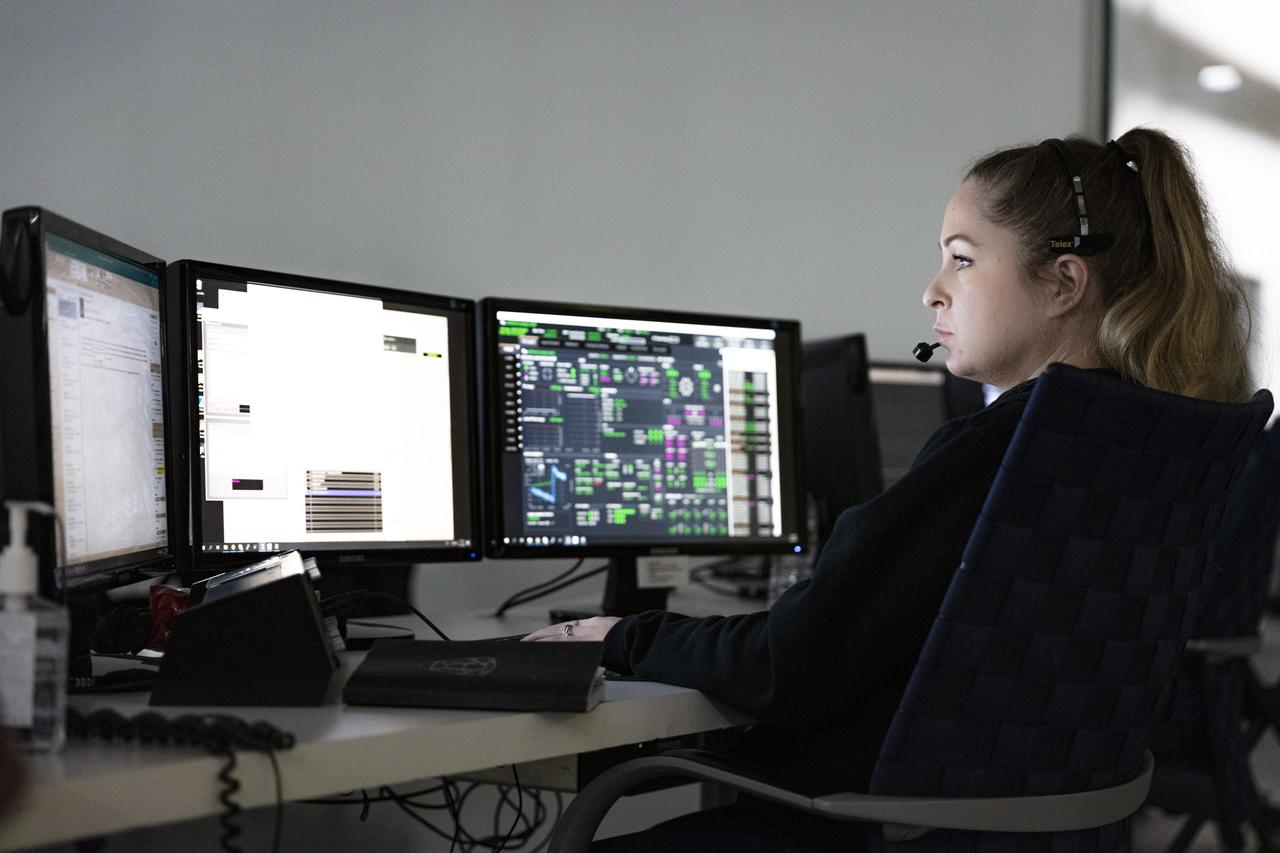
On Thursday, March 19 and Friday, March 20, SpaceX teams in Firing Room 4 at NASA's Kennedy Space Center in Florida and the company's Mission Control in Hawthorne, California, along with NASA flight controllers in Mission Control Houston, executed a full simulation of launch and docking of the Crew Dragon spacecraft, with NASA astronauts Bob Behnken and Doug Hurley participating in SpaceX's flight simulator.
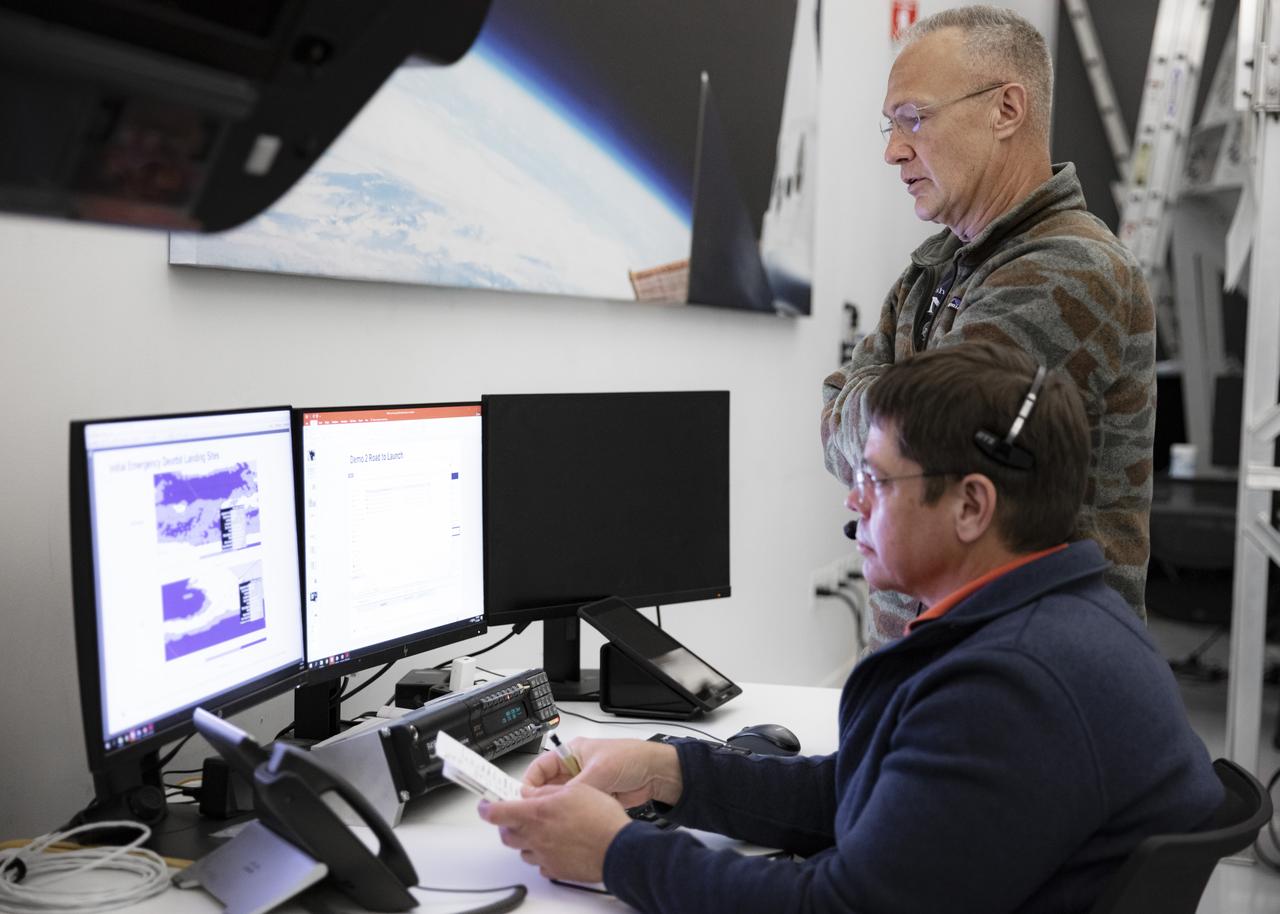
On Thursday, March 19 and Friday, March 20, SpaceX teams in Firing Room 4 at NASA's Kennedy Space Center in Florida and the company's Mission Control in Hawthorne, California, along with NASA flight controllers in Mission Control Houston, executed a full simulation of launch and docking of the Crew Dragon spacecraft, with NASA astronauts Bob Behnken and Doug Hurley participating in SpaceX's flight simulator.
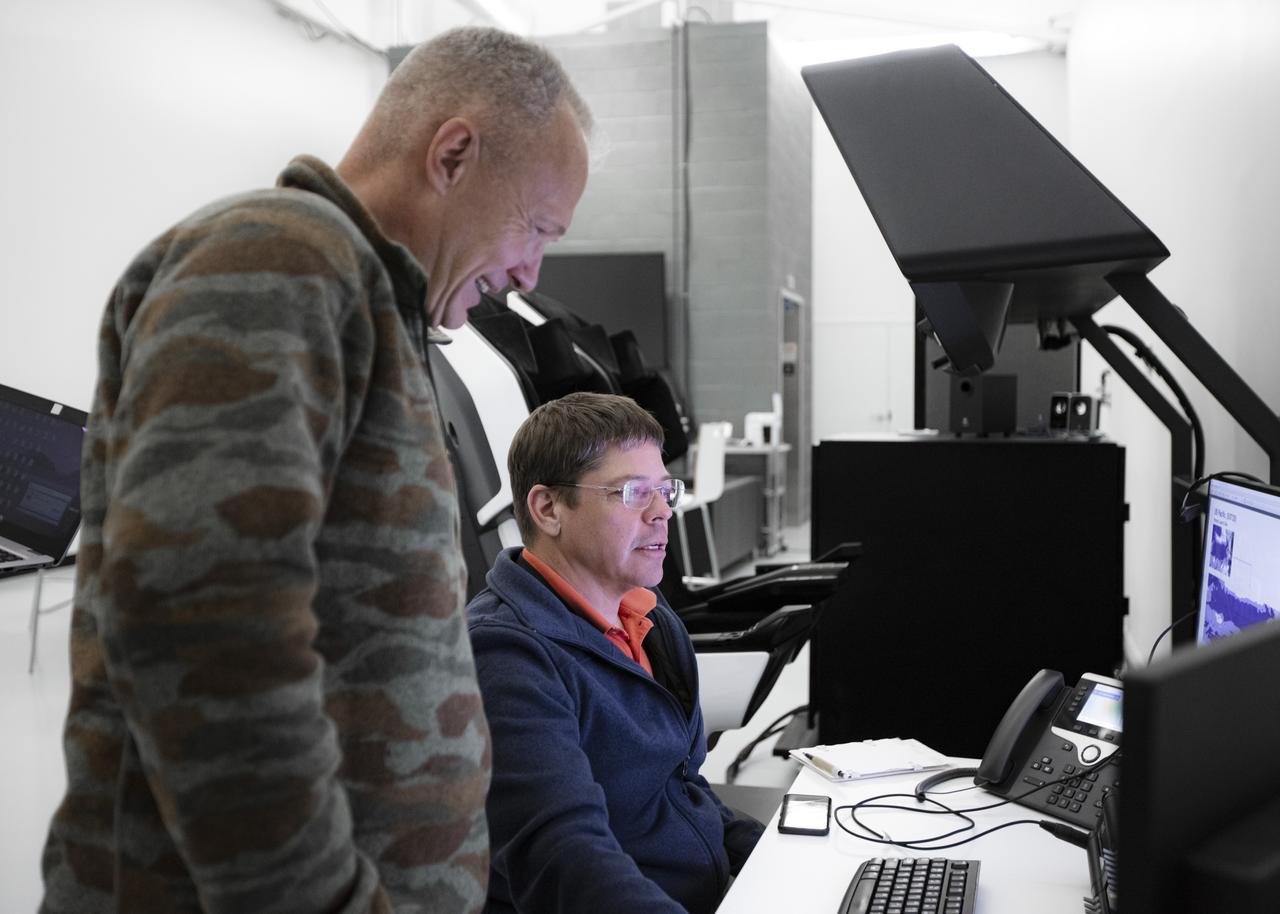
On Thursday, March 19 and Friday, March 20, SpaceX teams in Firing Room 4 at NASA's Kennedy Space Center in Florida and the company's Mission Control in Hawthorne, California, along with NASA flight controllers in Mission Control Houston, executed a full simulation of launch and docking of the Crew Dragon spacecraft, with NASA astronauts Bob Behnken and Doug Hurley participating in SpaceX's flight simulator.
S66-25778 (16 March 1966) --? The Agena Target Docking Vehicle seen from the National Aeronautics and Space Administration?s Gemini-8 spacecraft during rendezvous in space. The Agena is approximately 260 feet away from the nose of the spacecraft (lower left). Crewmen for the Gemini-8 mission are astronauts Neil A. Armstrong, command pilot, and David R. Scott, pilot. Photo credit: NASA
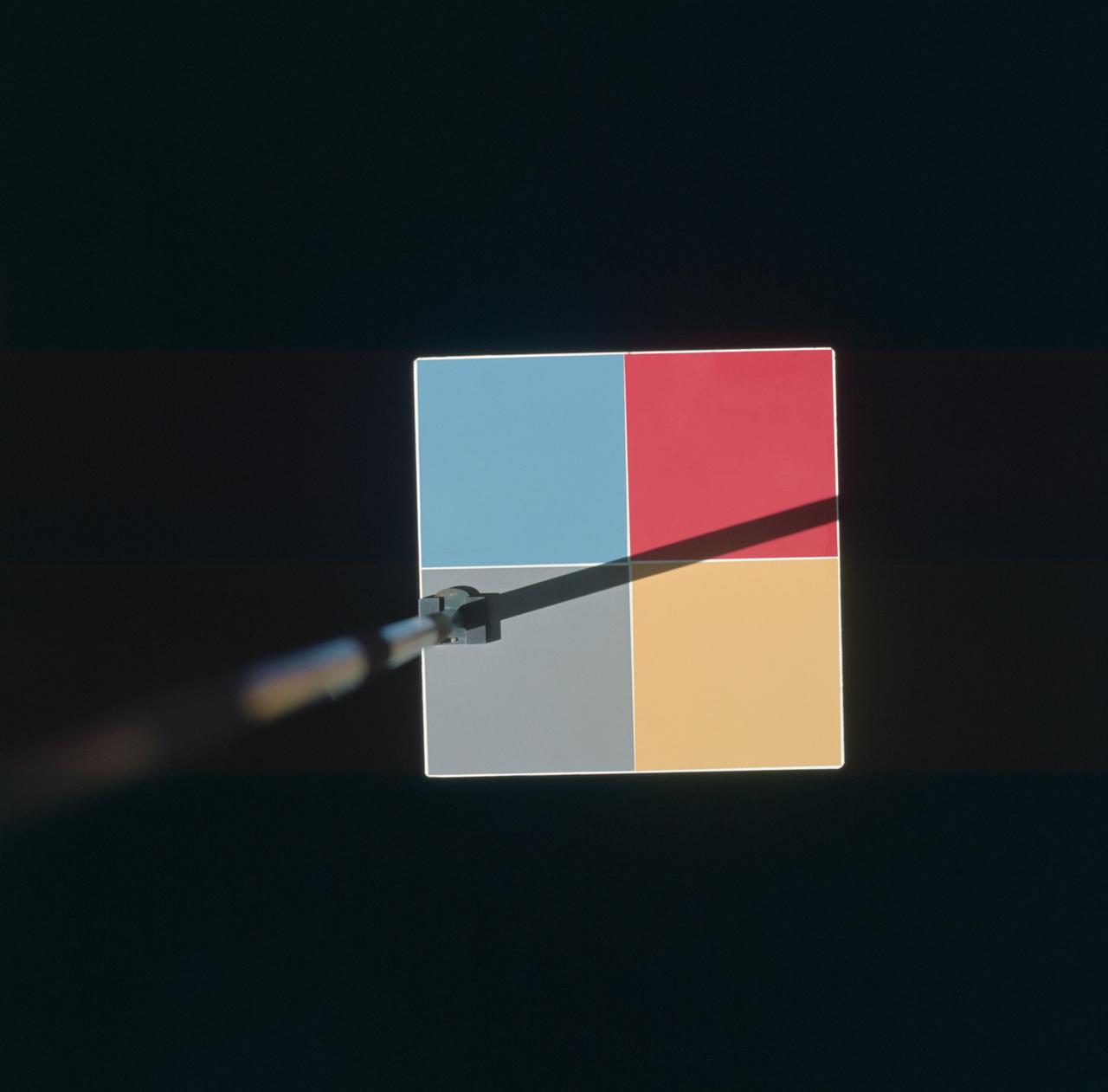
S66-46025 (18 July 1966) --- Astronaut Michael Collins, Gemini-10 pilot, photographed this MSC-8 color patch outside the spacecraft during the Gemini-10/Agena docking mission. The experiment was for the purpose of showing what effect the environment of space will have upon the color photography taken in cislunar space and on the lunar surface during an Apollo mission. Photo credit: NASA
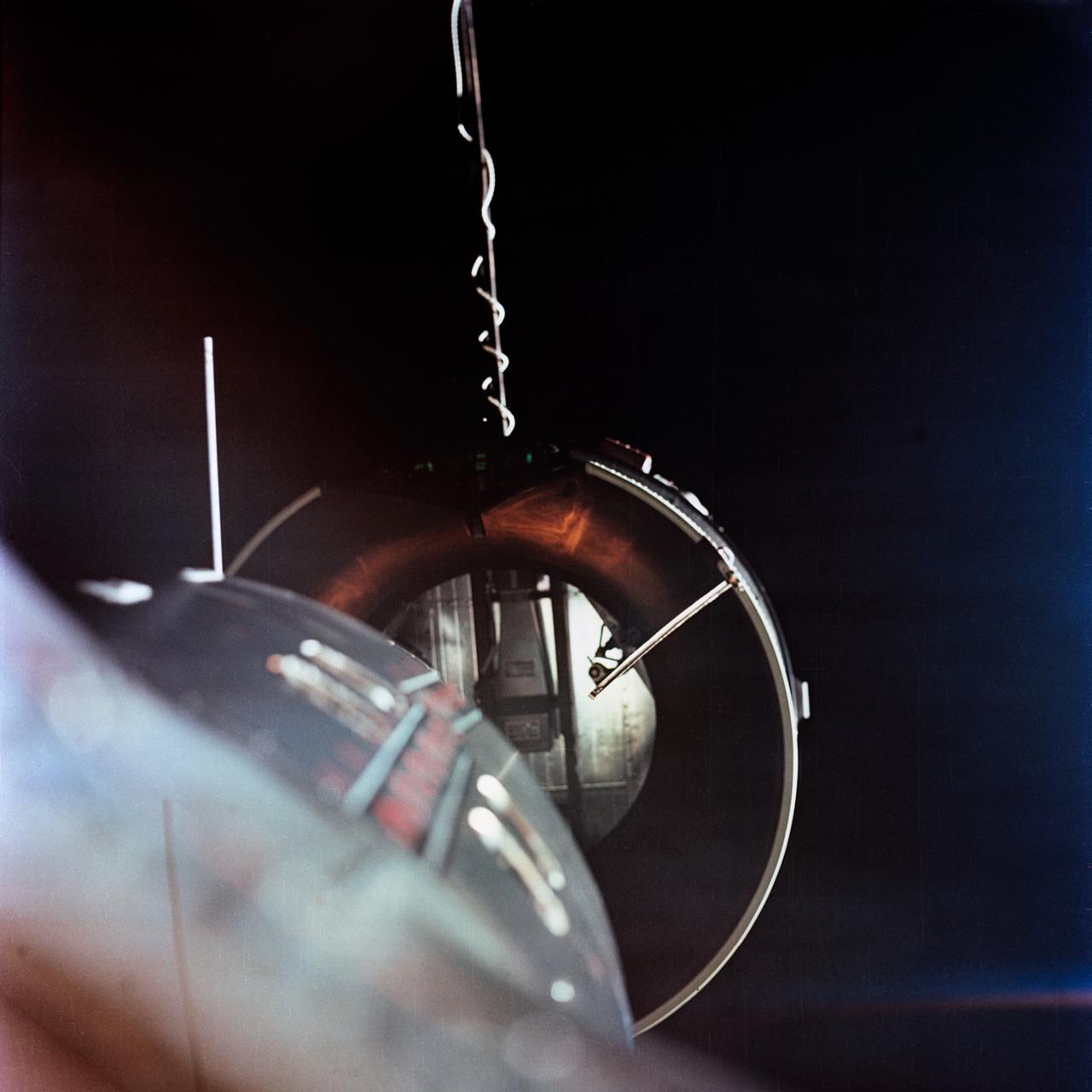
S66-25784 (16 March 1966) --? The Agena Target Docking Vehicle seen from the National Aeronautics and Space Administration?s Gemini adapter of the Agena is approximately two feet from the nose of the spacecraft (lower left). Crewmen for the Gemini-8 mission were astronauts Neil A. Armstrong, command pilot, and David R. Scott, pilot. Photo credit: NASA
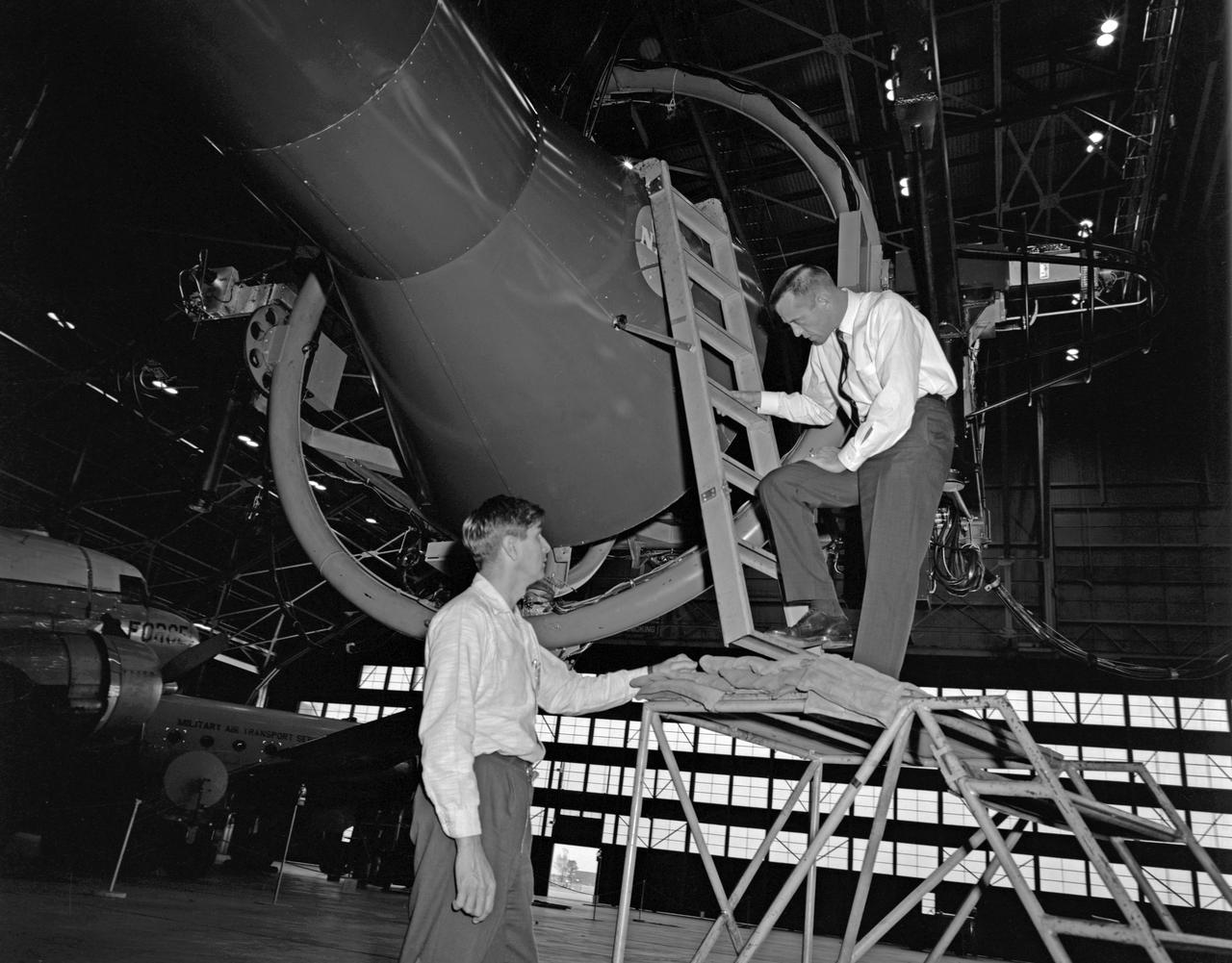
Astronaut John Young (above) was one of 14 astronauts, 8 NASA test pilots, and 2 McDonnell test pilots who took part in simulator studies. Young piloted the simulator on November 12, 1963 Arthur Vogeley wrote: "Many of the astronauts have flown this simulator in support of the Gemini studies and they, without exception, appreciated the realism of the visual scene. The simulator has also been used in the development of pilot techniques to handle certain jet malfunctions in order that aborts could be avoided. In these situations large attitude changes are sometimes necessary and the false motion cues that were generated due to earth gravity were somewhat objectionable; however, the pilots were readily able to overlook these false motion cues in favor of the visual realism." Roy F. Brissenden wrote: "The basic Gemini control studies developed the necessary techniques and demonstrated the ability of human pilots to perform final space docking with the specified Gemini-Agena systems using only visual references. ... Results... showed that trained astronauts can effect the docking with direct acceleration control and even with jet malfunctions as long as good visual conditions exist.... Probably more important than data results was the early confidence that the astronauts themselves gained in their ability to perform the maneuver in the ultimate flight mission." -- Published in Barton C. Hacker and James M. Grimwood, On the Shoulders of Titans: A History of Project Gemini, NASA SP-4203; A.W. Vogeley, "Discussion of Existing and Planned Simulators For Space Research," Paper presented at the Conference on the Role of Simulation in Space Technology, August 17-21, 1964; Roy F. Brissenden, "Initial Operations with Langley's Rendezvous Docking Facility," Langley Working Paper, LWP-21, 1964.
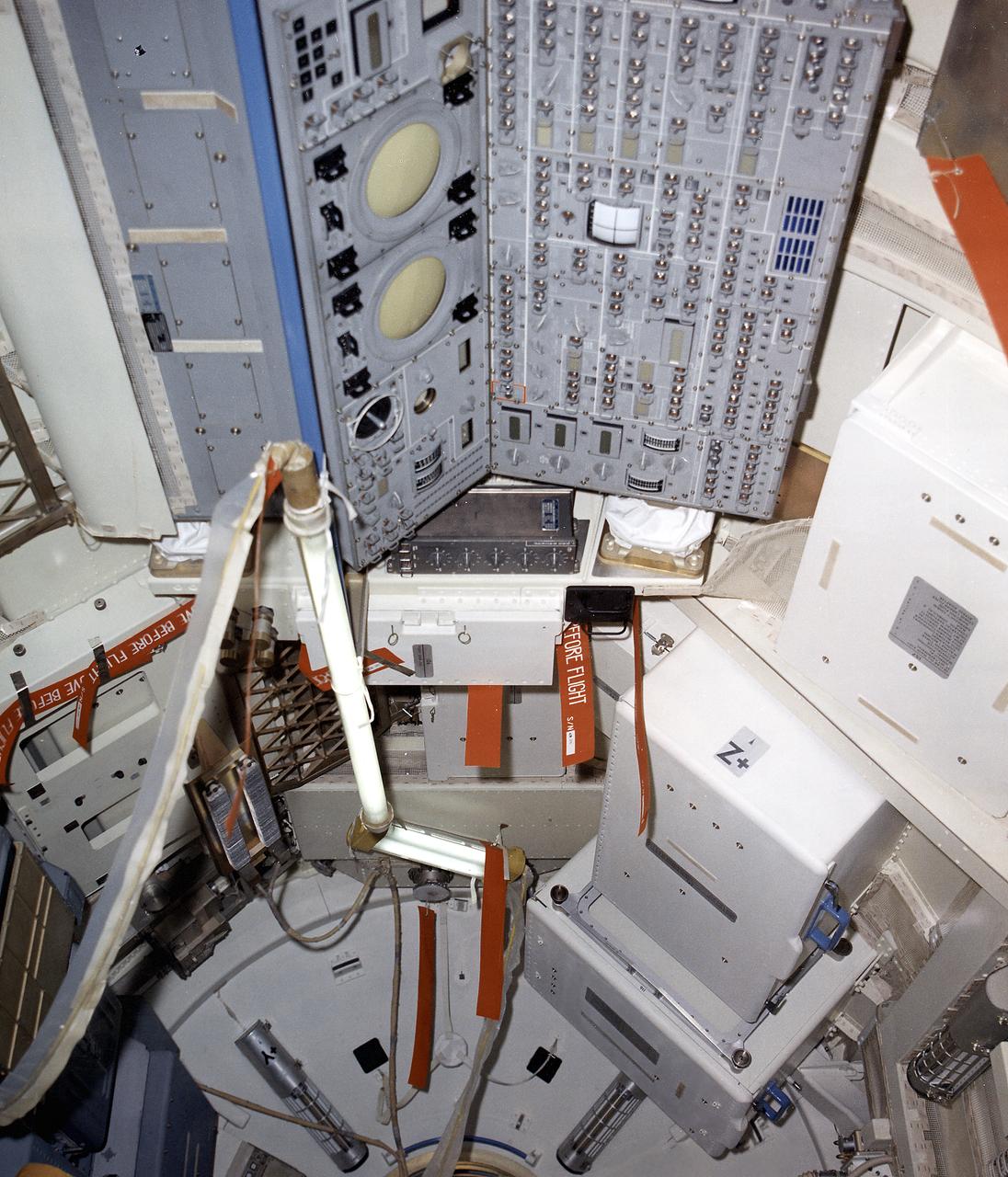
This December 1971 photograph shows the internal configuration of Skylab's Multiple Docking Adapter (MDA) as it appeared during the Crew Compartment and Function Review at the Martin-Marietta Corporation's Space Center facility in Denver, Colorado. At left is the control and display console for the Apollo Telescope Mount. Designed and manufactured by the Marshall Space Flight Center, the MDA housed a number of experiment control and stowage units and provided a docking port for the Apollo Command Module.
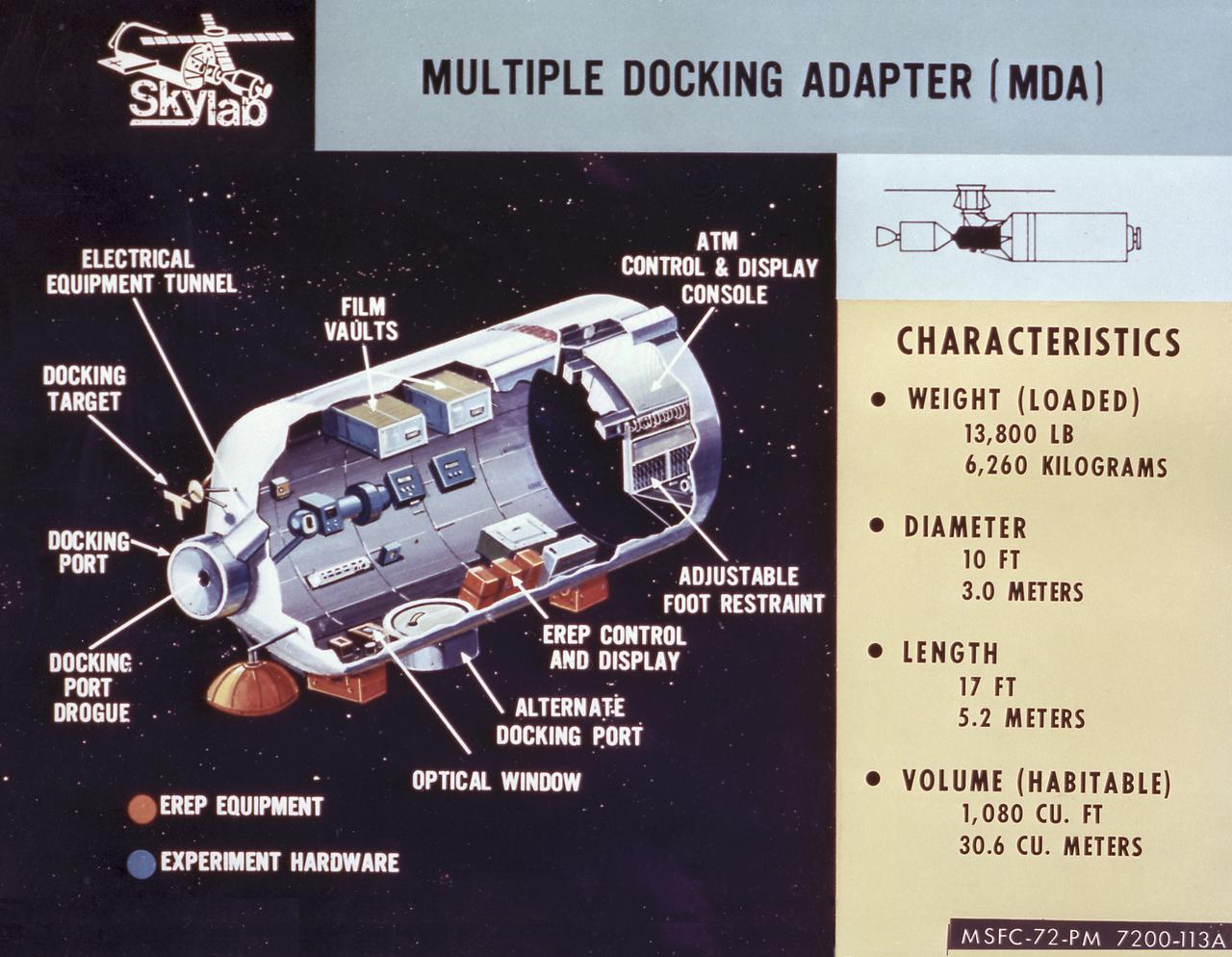
This cutaway drawing details the major characteristics of the Skylab Multiple Docking Adapter (MDA). The MDA, built under the direction of the Marshall Space Flight Center, housed the control units for the Apollo Telescope Mount (ATM), Earth Resources Experiment Package (EREP), and Zero-Gravity Materials Processing Facility, and provided a docking port for the Apollo Command Module (CM).
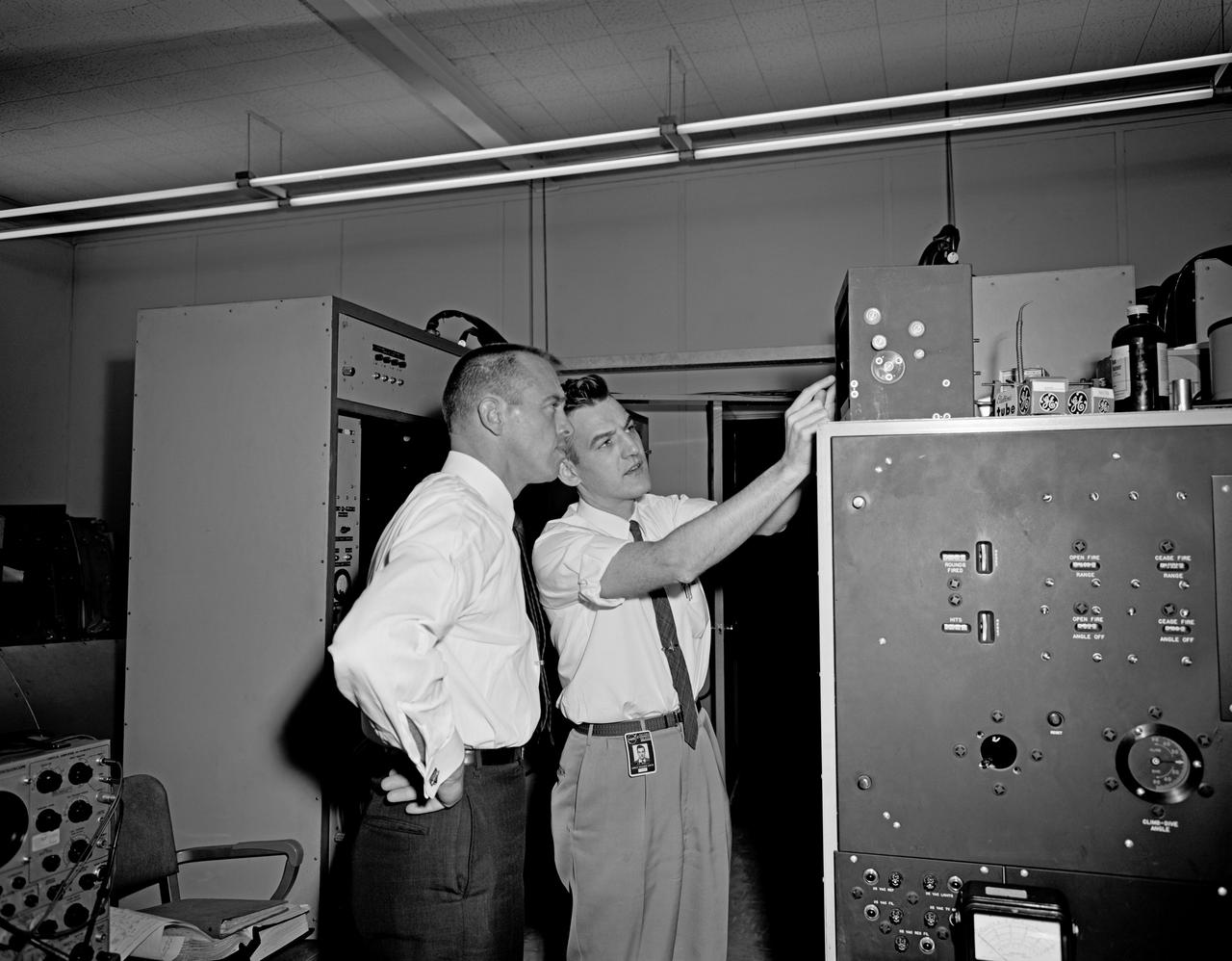
Astronaut Alan Shepard (right) was one of 14 astronauts, 8 NASA test pilots, and 2 McDonnell test pilots who took part in simulator studies. Shepard flew the simulator on November 14, 1963. A.W. Vogeley wrote: "Many of the astronauts have flown this simulator in support of the Gemini studies and they, without exception, appreciated the realism of the visual scene. The simulator has also been used in the development of pilot techniques to handle certain jet malfunctions in order that aborts could be avoided. In these situations large attitude changes are sometimes necessary and the false motion cues that were generated due to earth gravity were somewhat objectionable; however, the pilots were readily able to overlook these false motion cues in favor of the visual realism." Roy F. Brissenden noted that: "The basic Gemini control studies developed the necessary techniques and demonstrated the ability of human pilots to perform final space docking with the specified Gemini-Agena systems using only visual references. ... Results... showed that trained astronauts can effect the docking with direct acceleration control and even with jet malfunctions as long as good visual conditions exist.... Probably more important than data results was the early confidence that the astronauts themselves gained in their ability to perform the maneuver in the ultimate flight mission." Shepard commented: "I had the feeling tonight - a couple of times - that I was actually doing the space mission instead of the simulation. As I said before, I think it is a very good simulation." Shepard also commented on piloting techniques. Most astronauts arrived at this same preferred technique: Shepard: "I believe I have developed the preferred technique for these conditions and the technique appeared to me to be best was to come in slightly above the target so that I was able to use the longitudinal marks on the body of the target as a reference, particularly for a lateral translation and, of course, I used the foreshortening effect for a vertical translation, and this appeared to give me the best results. By that I mean the least number of control motions and the lowest fuel usage and the best end techniques, or the best end conditions, I should say." Engineer: "When you started to run you didn't start thrusting immediately I don't believe. It looked like you started working on your attitudes, then started closing in." Shepard: "That is correct. I did that because I felt that I wanted to get the X-axis translation in the most effective vector and for minimum fuel usage that wouldn't introduce any other lateral or vertical offsets that did not already exist." -- Published in Barton C. Hacker and James M. Grimwood, On the Shoulders of Titans: A History of Project Gemini, NASA SP-4203; A.W. Vogeley, "Discussion of Existing and Planned Simulators For Space Research," Paper presented at the Conference on the Role of Simulation in Space Technology, August 17-21, 1964; Roy F. Brissenden, "Initial Operations with Langley's Rendezvous Docking Facility," Langley Working Paper, LWP-21, 1964.
Astronaut Alan Shepard (right) was one of 14 astronauts, 8 NASA test pilots, and 2 McDonnell test pilots who took part in simulator studies. Shepard flew the simulator on November 14, 1963. A.W. Vogeley wrote: "Many of the astronauts have flown this simulator in support of the Gemini studies and they, without exception, appreciated the realism of the visual scene. The simulator has also been used in the development of pilot techniques to handle certain jet malfunctions in order that aborts could be avoided. In these situations large attitude changes are sometimes necessary and the false motion cues that were generated due to earth gravity were somewhat objectionable; however, the pilots were readily able to overlook these false motion cues in favor of the visual realism." Roy F. Brissenden noted that: "The basic Gemini control studies developed the necessary techniques and demonstrated the ability of human pilots to perform final space docking with the specified Gemini-Agena systems using only visual references. ... Results... showed that trained astronauts can effect the docking with direct acceleration control and even with jet malfunctions as long as good visual conditions exist.... Probably more important than data results was the early confidence that the astronauts themselves gained in their ability to perform the maneuver in the ultimate flight mission." Shepard commented: "I had the feeling tonight - a couple of times - that I was actually doing the space mission instead of the simulation. As I said before, I think it is a very good simulation." Shepard also commented on piloting techniques. Most astronauts arrived at this same preferred technique: Shepard: "I believe I have developed the preferred technique for these conditions and the technique appeared to me to be best was to come in slightly above the target so that I was able to use the longitudinal marks on the body of the target as a reference, particularly for a lateral translation and, of course, I used the foreshortening effect for a vertical translation, and this appeared to give me the best results. By that I mean the least number of control motions and the lowest fuel usage and the best end techniques, or the best end conditions, I should say." Engineer: "When you started to run you didn't start thrusting immediately I don't believe. It looked like you started working on your attitudes, then started closing in." Shepard: "That is correct. I did that because I felt that I wanted to get the X-axis translation in the most effective vector and for minimum fuel usage that wouldn't introduce any other lateral or vertical offsets that did not already exist." -- Published in Barton C. Hacker and James M. Grimwood, On the Shoulders of Titans: A History of Project Gemini, NASA SP-4203; A.W. Vogeley, "Discussion of Existing and Planned Simulators For Space Research," Paper presented at the Conference on the Role of Simulation in Space Technology, August 17-21, 1964; Roy F. Brissenden, "Initial Operations with Langley's Rendezvous Docking Facility," Langley Working Paper, LWP-21, 1964.
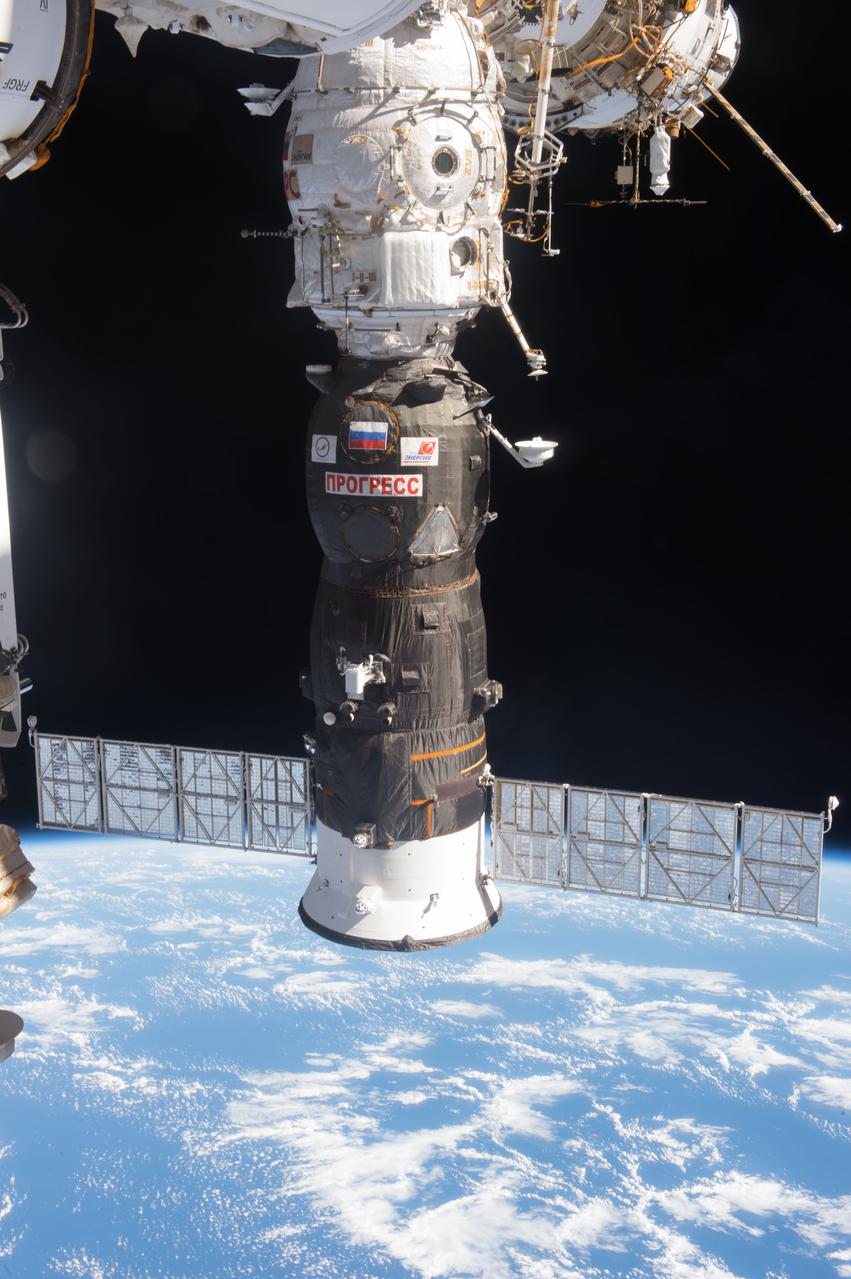
View of the Progress 64P spacecraft docked to Pirs Docking Compartment (DC1), taken against a backdrop of Earth and space.
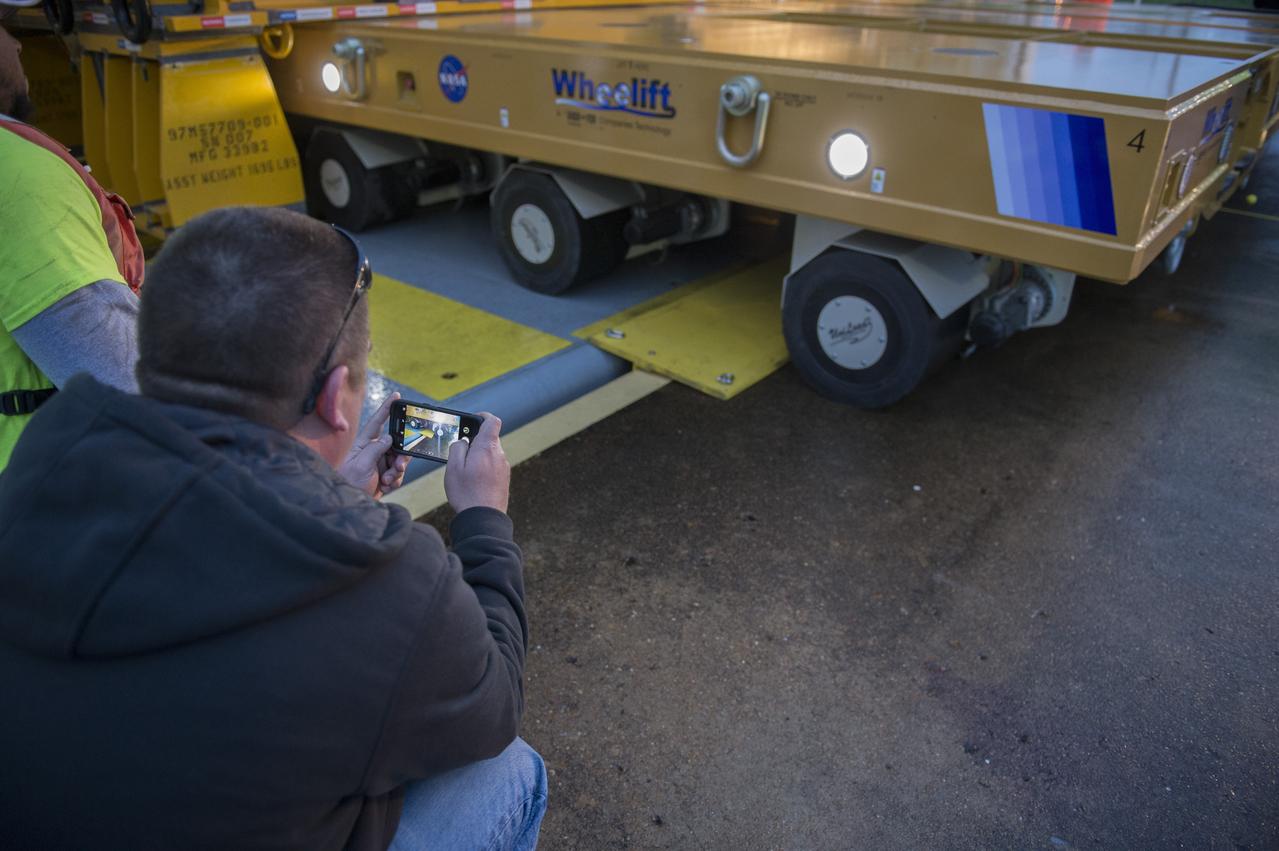
The SLS Stages Intertank Structural Test Assembly (STA) is rolling off the NASA Pegasus Barge at the MSFC Dock enroute to the MSFC 4619 Load Test Annex test facility for qualification testing
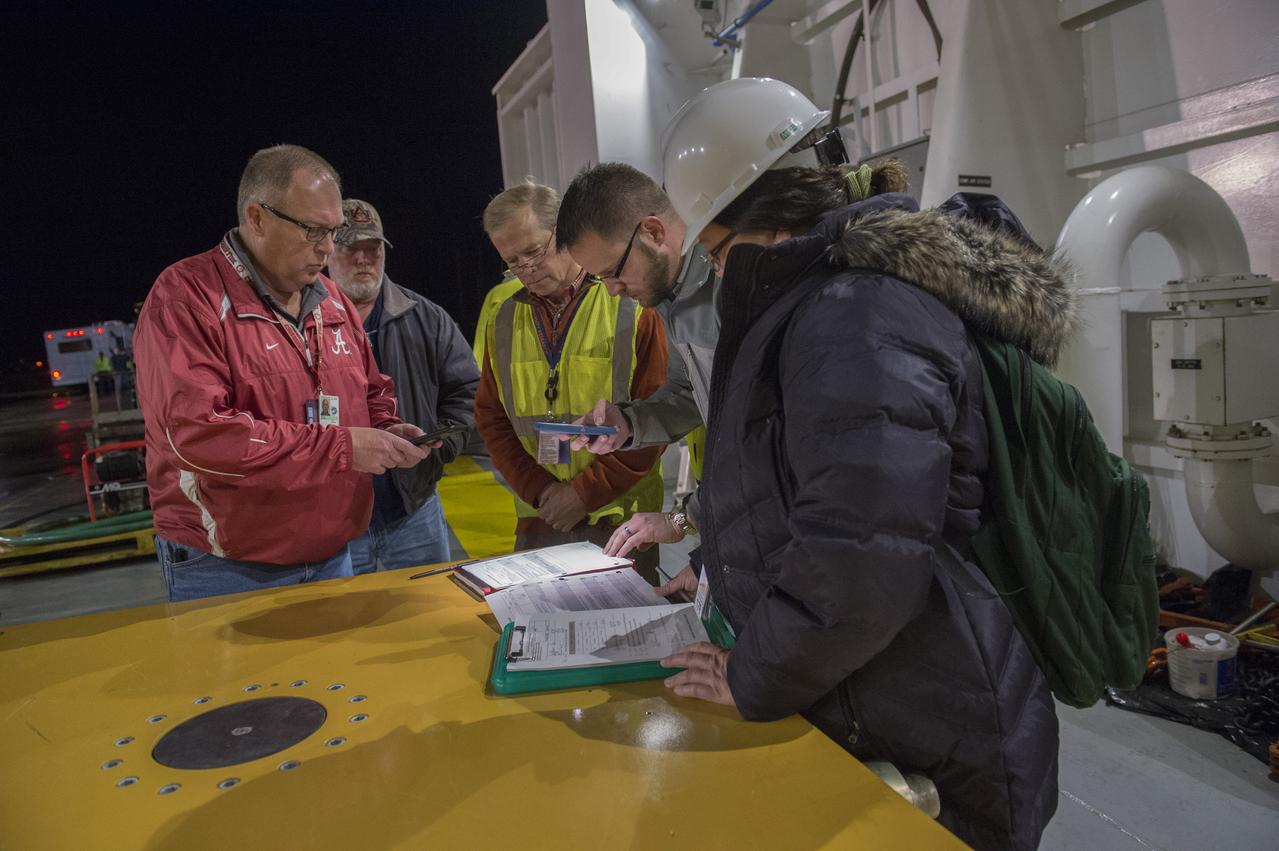
The SLS Stages Intertank Structural Test Assembly (STA) is rolling off the NASA Pegasus Barge at the MSFC Dock enroute to the MSFC 4619 Load Test Annex test facility for qualification testing
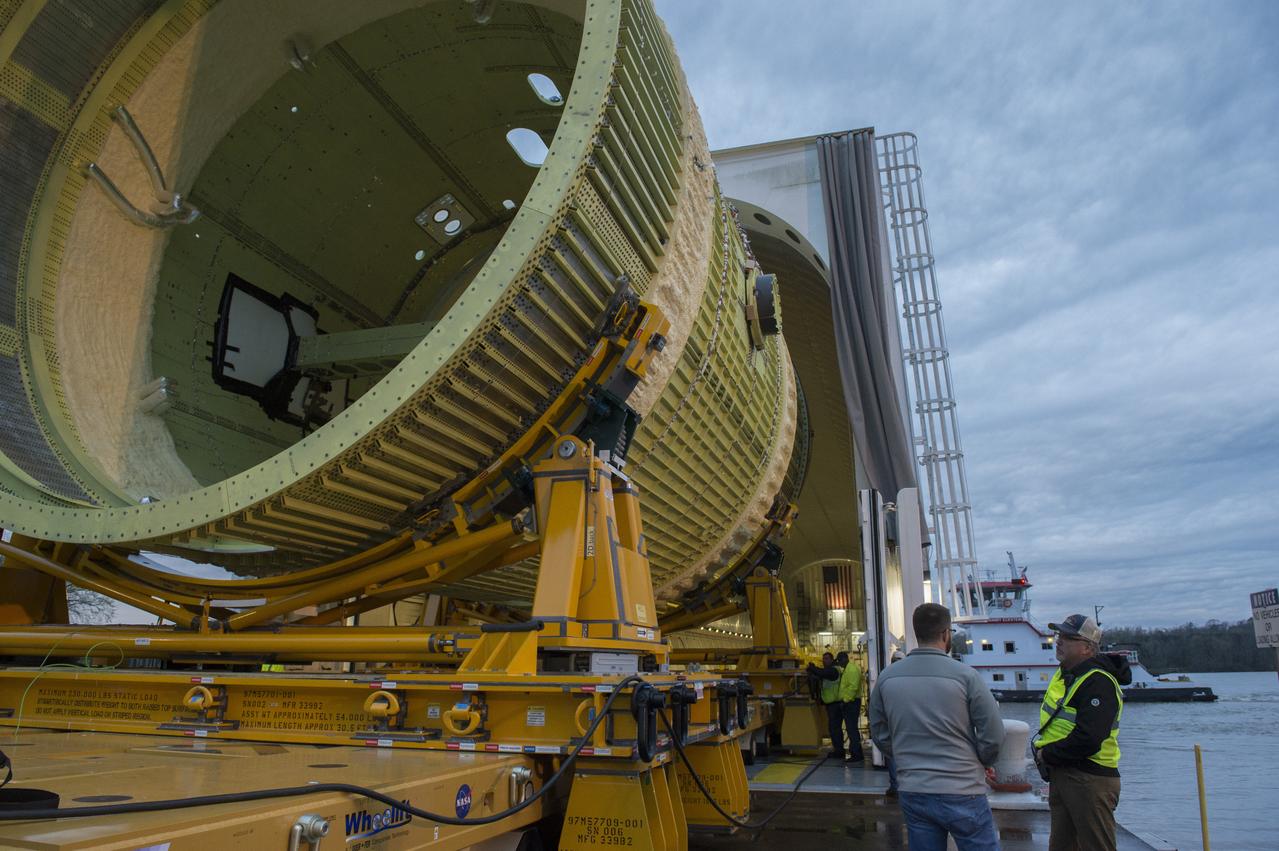
The SLS Stages Intertank Structural Test Assembly (STA) is rolling off the NASA Pegasus Barge at the MSFC Dock enroute to the MSFC 4619 Load Test Annex test facility for qualification testing
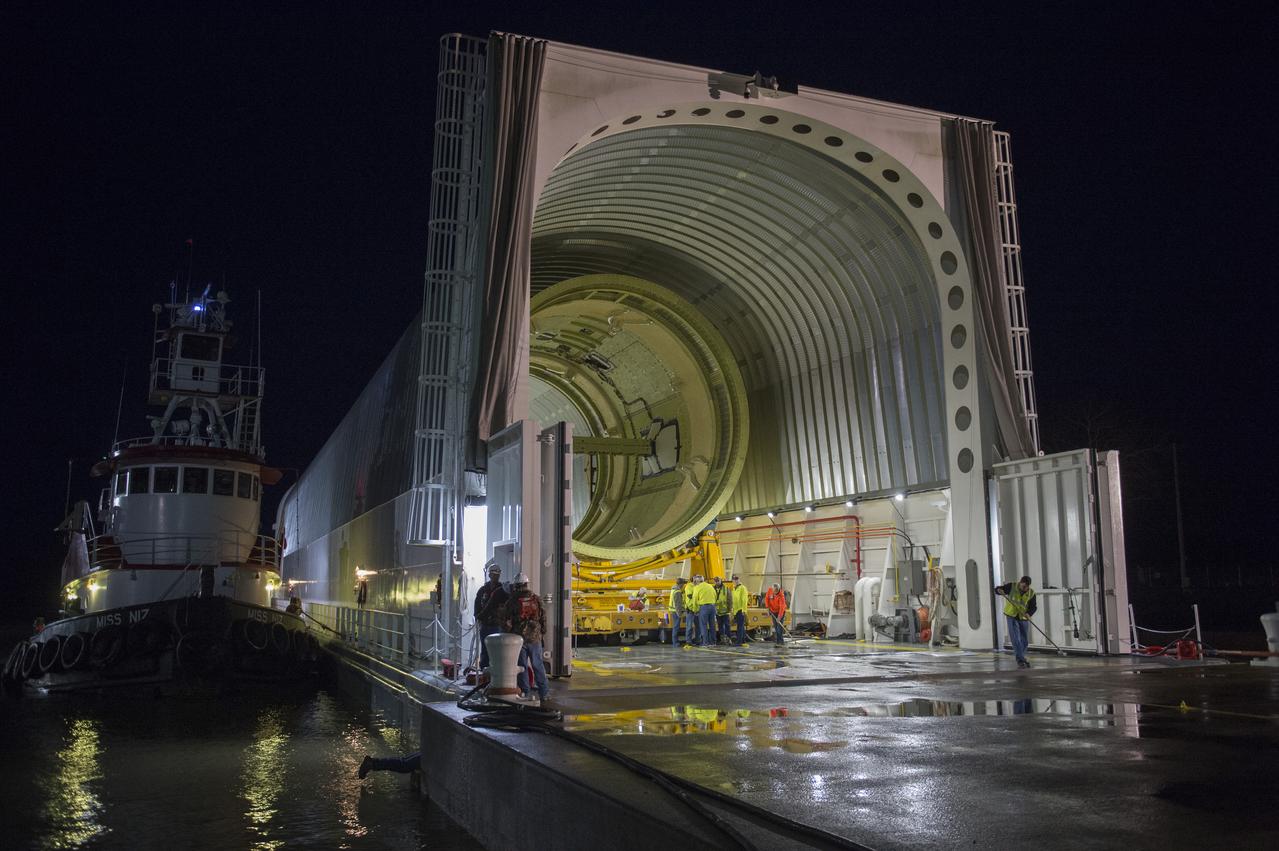
The SLS Stages Intertank Structural Test Assembly (STA) is rolling off the NASA Pegasus Barge at the MSFC Dock enroute to the MSFC 4619 Load Test Annex test facility for qualification testing
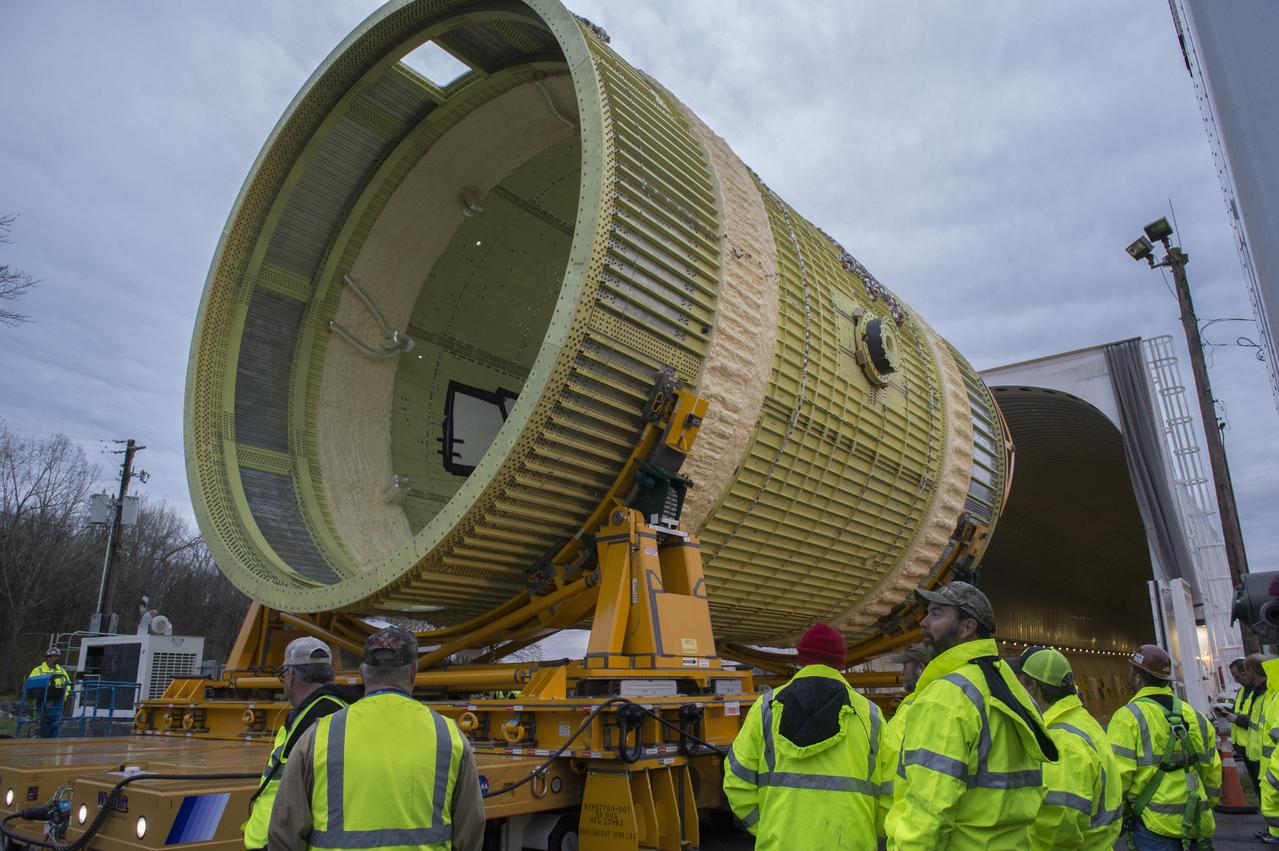
The SLS Stages Intertank Structural Test Assembly (STA) is rolling off the NASA Pegasus Barge at the MSFC Dock enroute to the MSFC 4619 Load Test Annex test facility for qualification testing
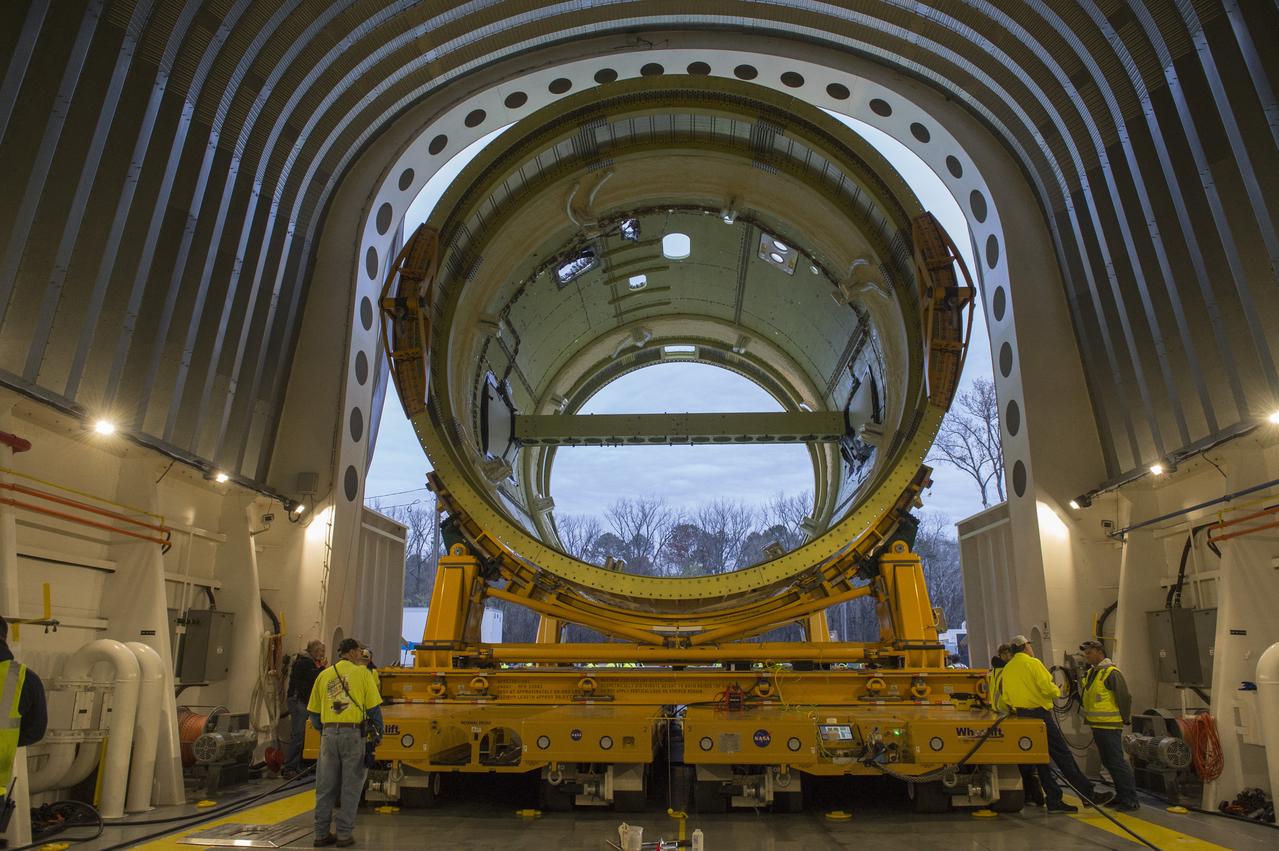
The SLS Stages Intertank Structural Test Assembly (STA) is rolling off the NASA Pegasus Barge at the MSFC Dock enroute to the MSFC 4619 Load Test Annex test facility for qualification testing
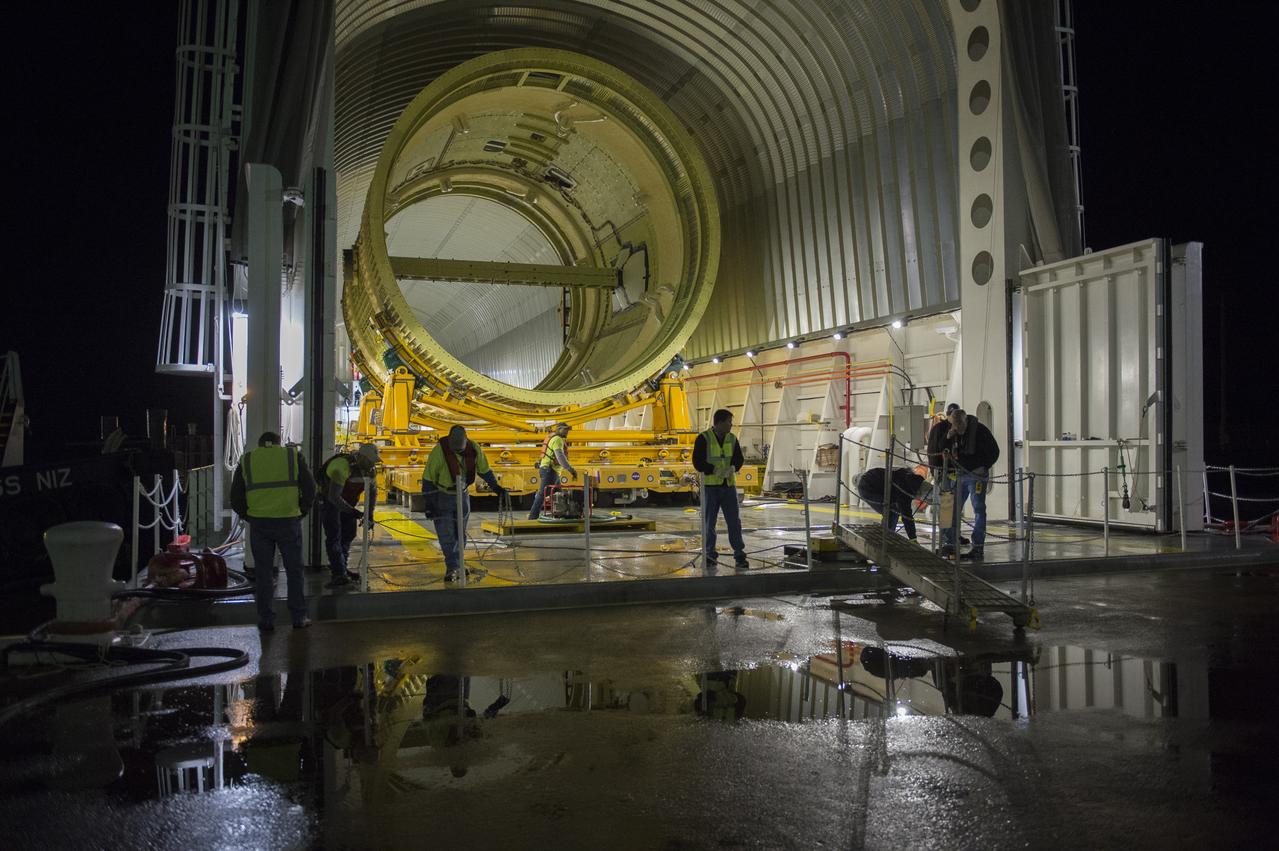
The SLS Stages Intertank Structural Test Assembly (STA) is rolling off the NASA Pegasus Barge at the MSFC Dock enroute to the MSFC 4619 Load Test Annex test facility for qualification testing
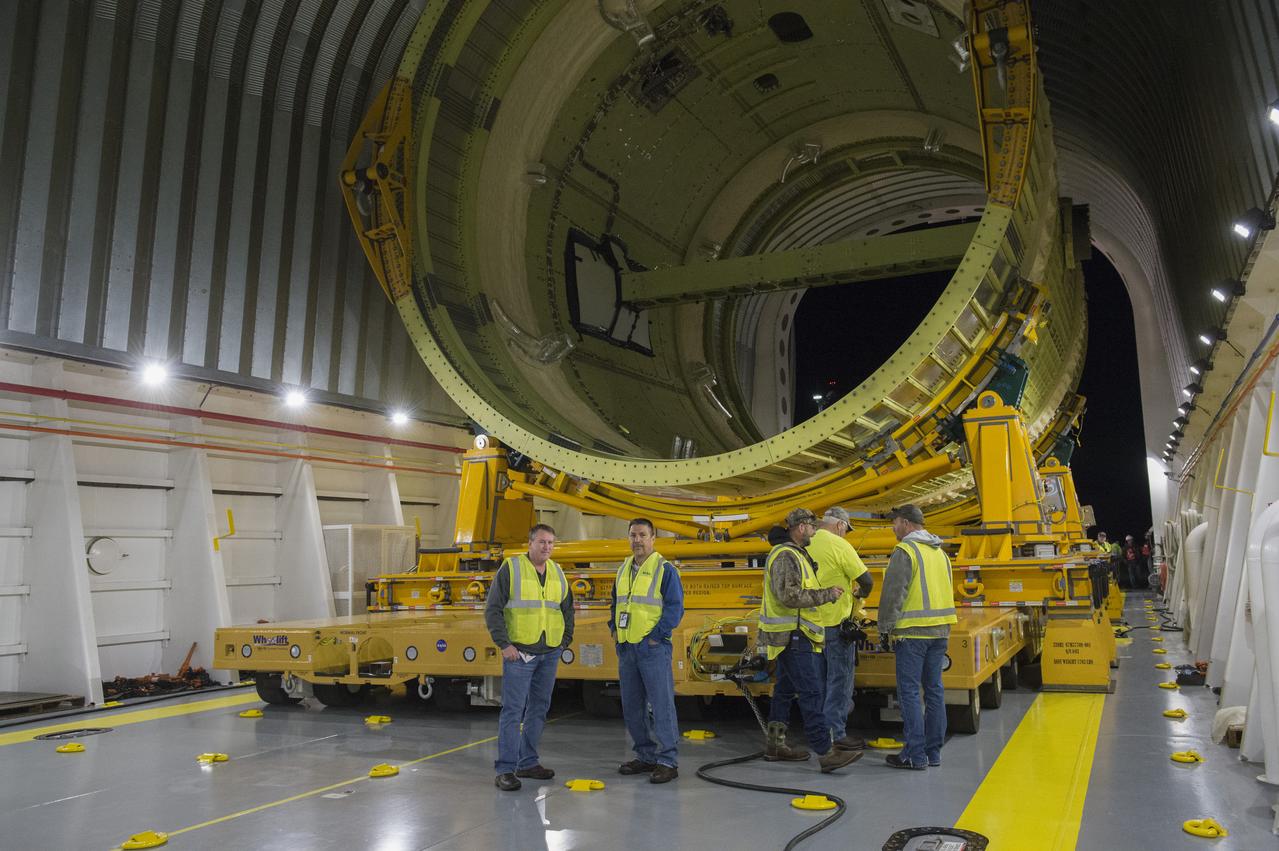
The SLS Stages Intertank Structural Test Assembly (STA) is rolling off the NASA Pegasus Barge at the MSFC Dock enroute to the MSFC 4619 Load Test Annex test facility for qualification testing
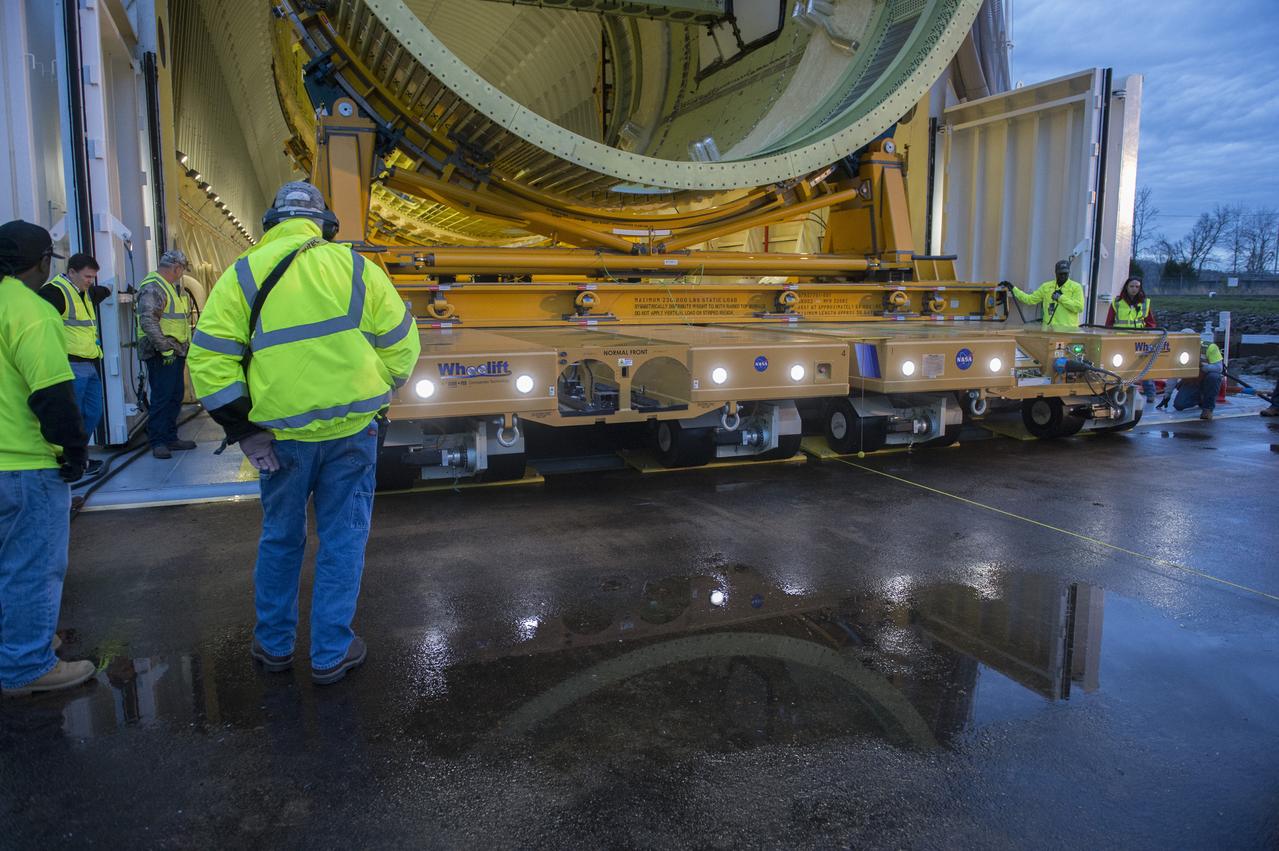
The SLS Stages Intertank Structural Test Assembly (STA) is rolling off the NASA Pegasus Barge at the MSFC Dock enroute to the MSFC 4619 Load Test Annex test facility for qualification testing
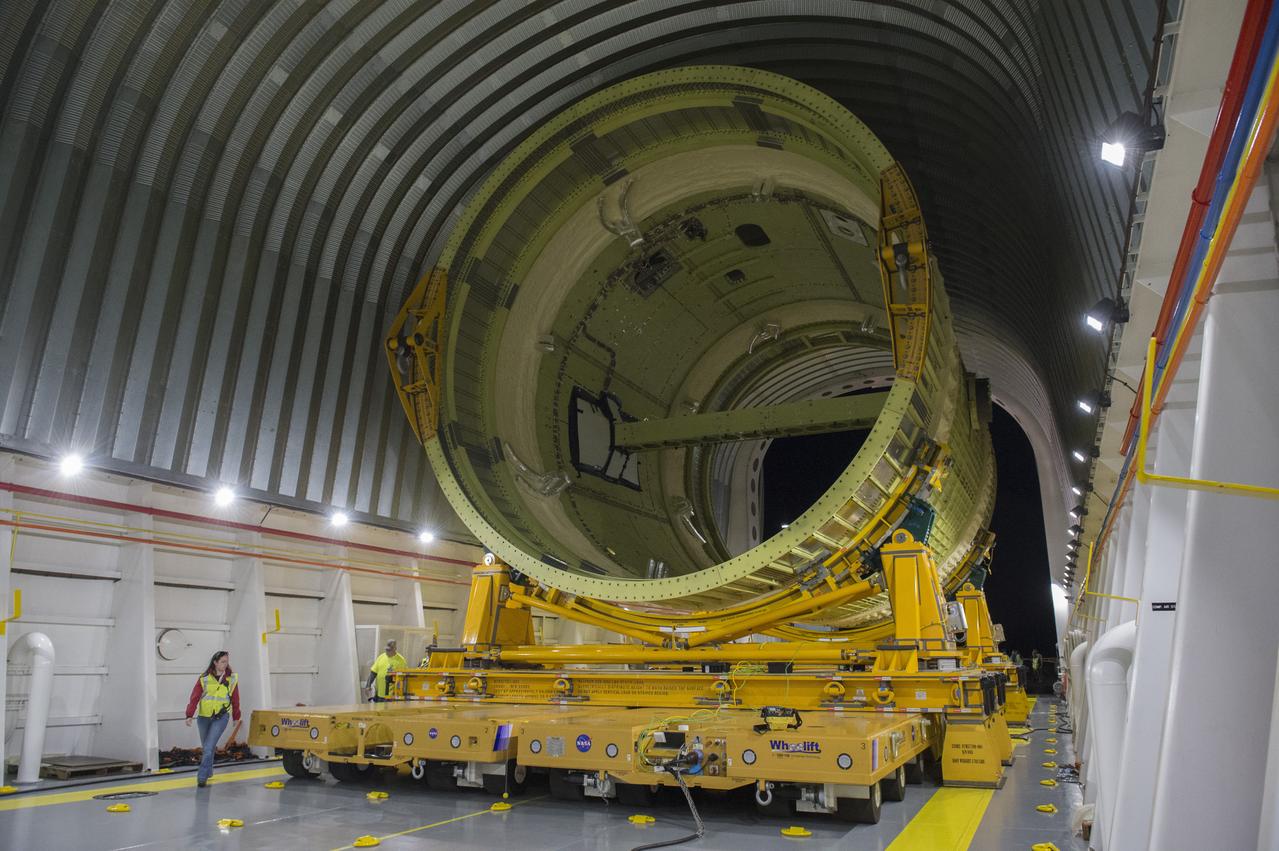
The SLS Stages Intertank Structural Test Assembly (STA) is rolling off the NASA Pegasus Barge at the MSFC Dock enroute to the MSFC 4619 Load Test Annex test facility for qualification testing
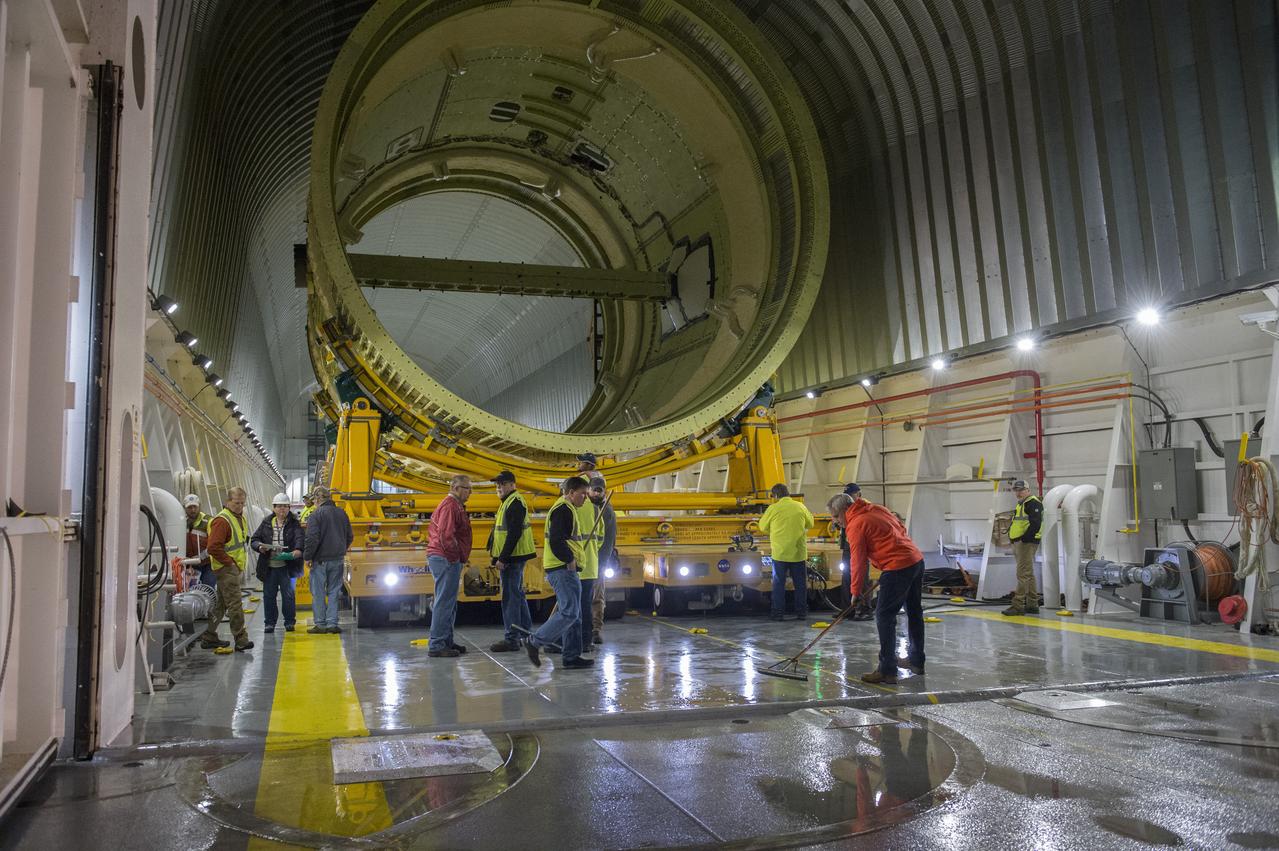
The SLS Stages Intertank Structural Test Assembly (STA) is rolling off the NASA Pegasus Barge at the MSFC Dock enroute to the MSFC 4619 Load Test Annex test facility for qualification testing
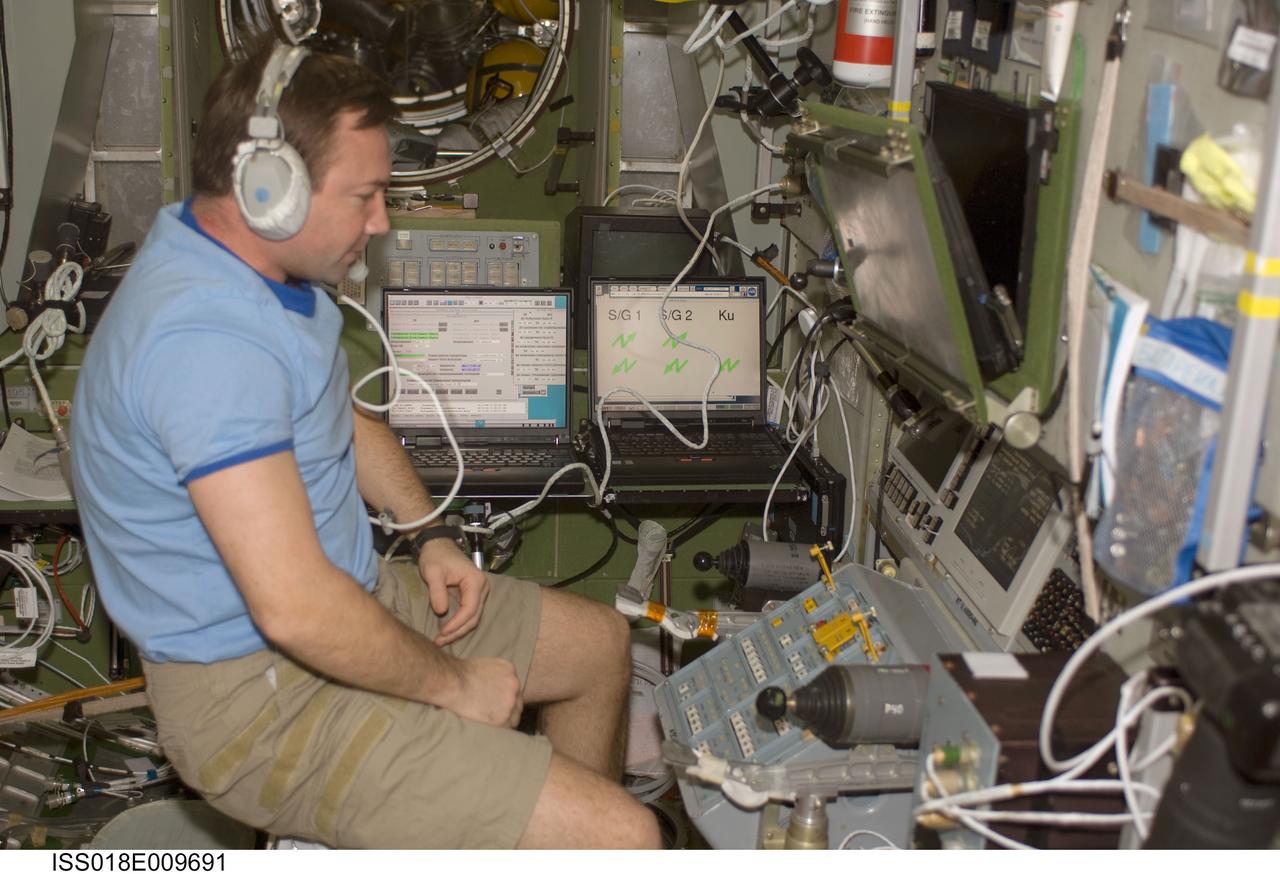
ISS018-E-009691 (30 Nov. 2008) --- Cosmonaut Yury Lonchakov, Expedition 18 flight engineer, monitors the approach of the Progress 31 supply vehicle at the manual TORU docking system controls in the Zvezda Service Module of the International Space Station. Progress 31 docked to the Pirs Docking Compartment at 6:28 a.m. (CST) on Nov. 30, after a four day flight from Baikonur Cosmodrome in Kazakhstan. Lonchakov used the TORU system to bring the Progress to its docking port.
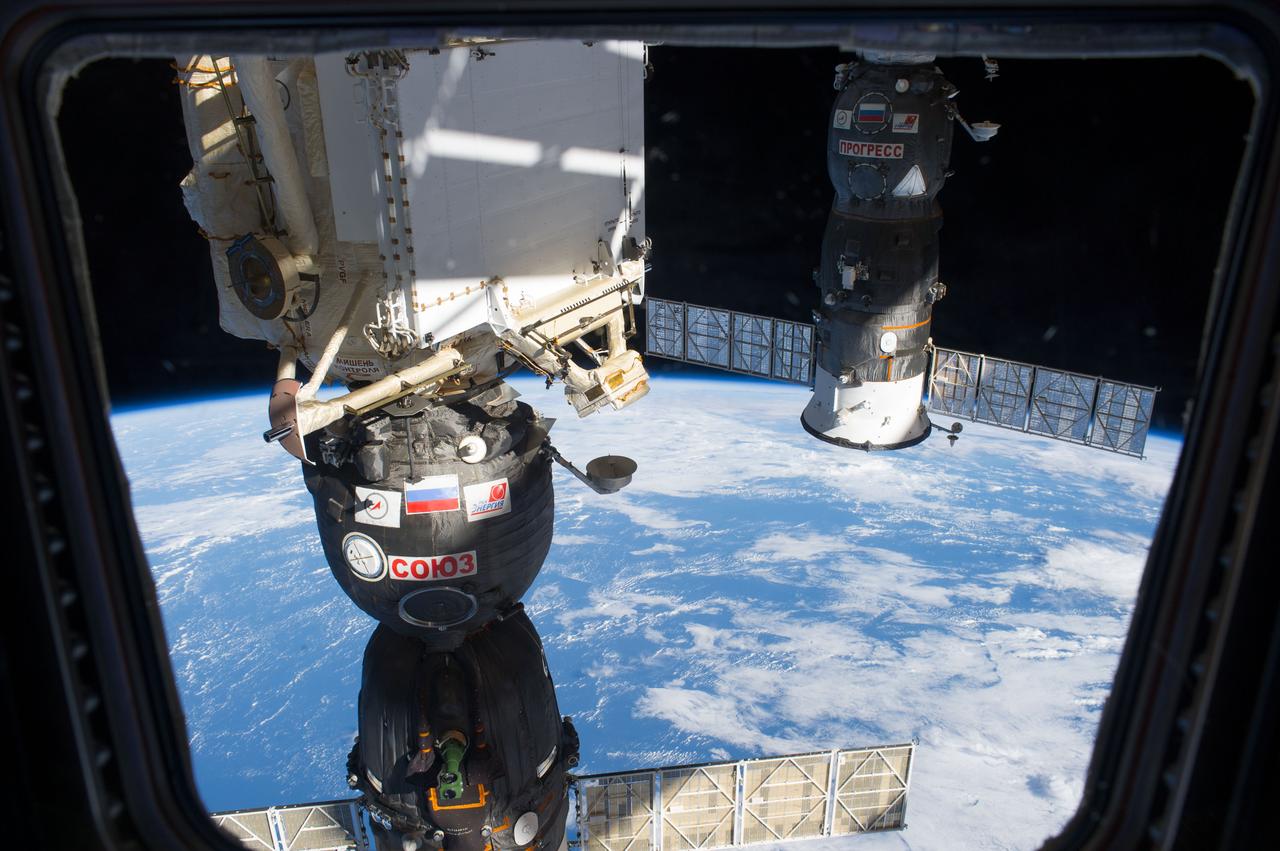
ISS040-E-005999 (29 May 2014) --- Two Russian spacecraft docked to the International Space Station are featured in this image photographed by an Expedition 40 crew member in the International Space Station’s Cupola. The Soyuz 39 (TMA-13M) spacecraft, docked to the Rassvet Mini-Research Module 1 (MRM1), is visible in the foreground. The Progress 55 resupply vehicle, docked to the Pirs Docking Compartment, is visible in the background. A blue and white part of Earth and the blackness of space provide the backdrop for the scene.
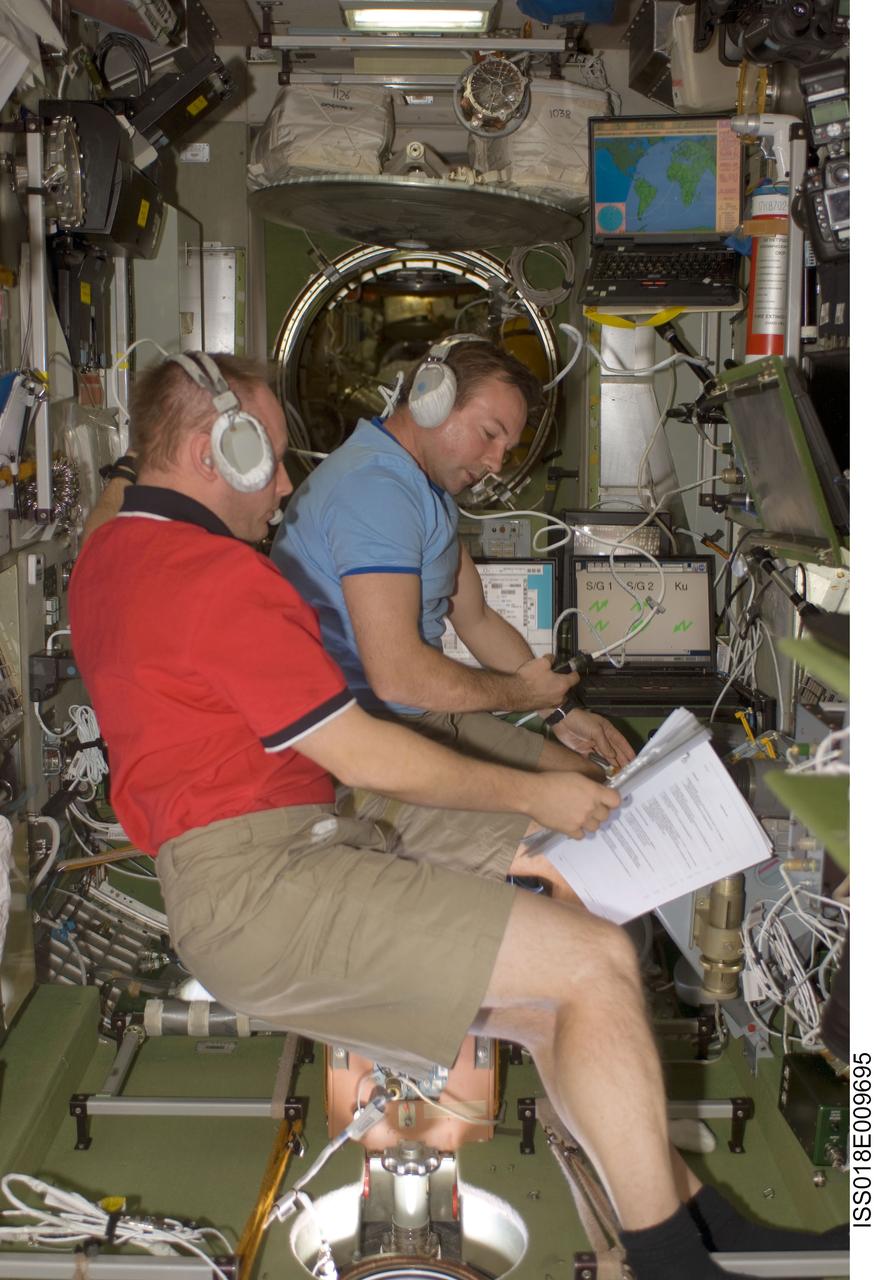
ISS018-E-009695 (30 Nov. 2008) --- Astronaut Michael Fincke (foreground), Expedition 18 commander; and cosmonaut Yury Lonchakov, flight engineer, monitor the approach of the Progress 31 supply vehicle at the manual TORU docking system controls in the Zvezda Service Module of the International Space Station. Progress 31 docked to the Pirs Docking Compartment at 6:28 a.m. (CST) on Nov. 30, after a four day flight from Baikonur Cosmodrome in Kazakhstan. Lonchakov used the TORU system to bring the Progress to its docking port.
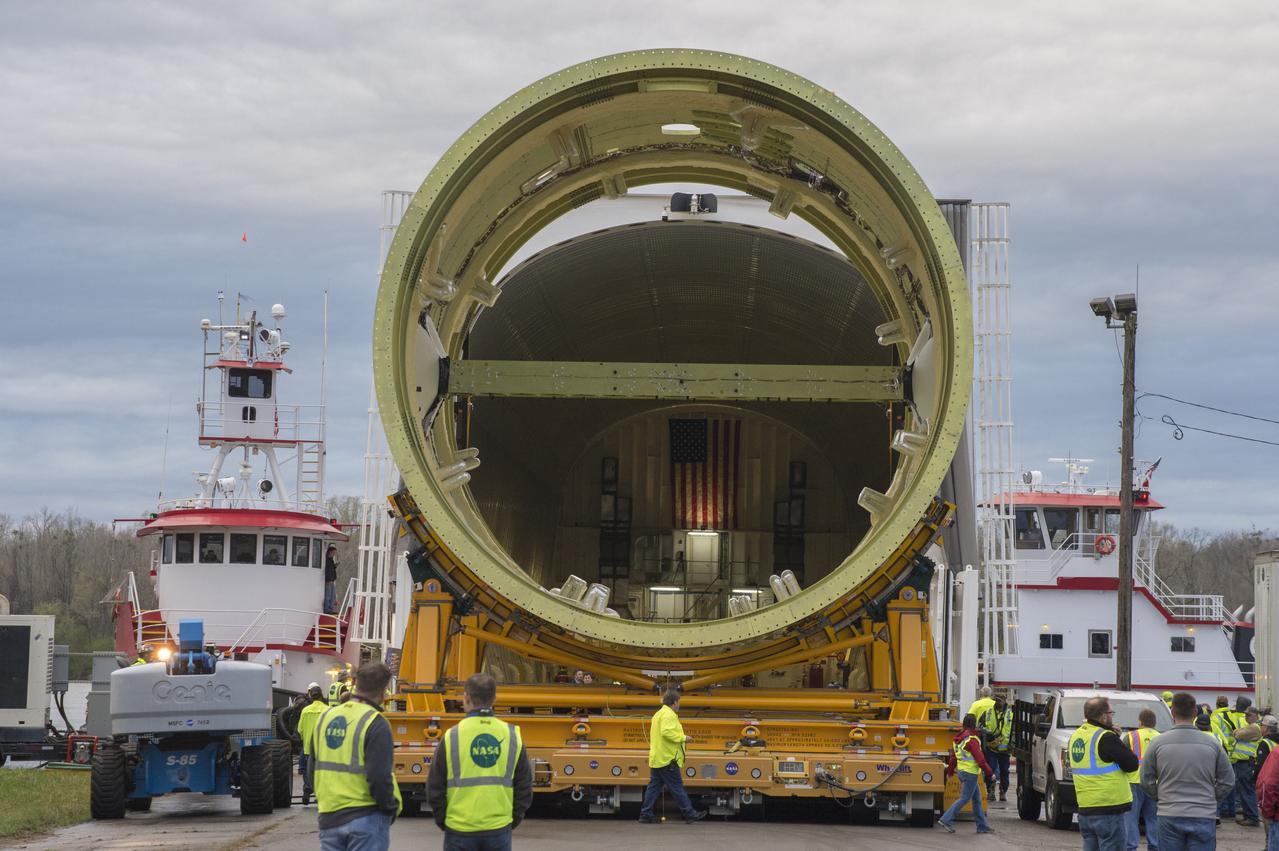
The SLS Stages Intertank Structural Test Assembly (STA) is rolling off the NASA Pegasus Barge at the MSFC Dock enroute to the MSFC 4619 Load Test Annex test facility for qualification testing. STA hardware completely free of barge and flanked by tug boats.
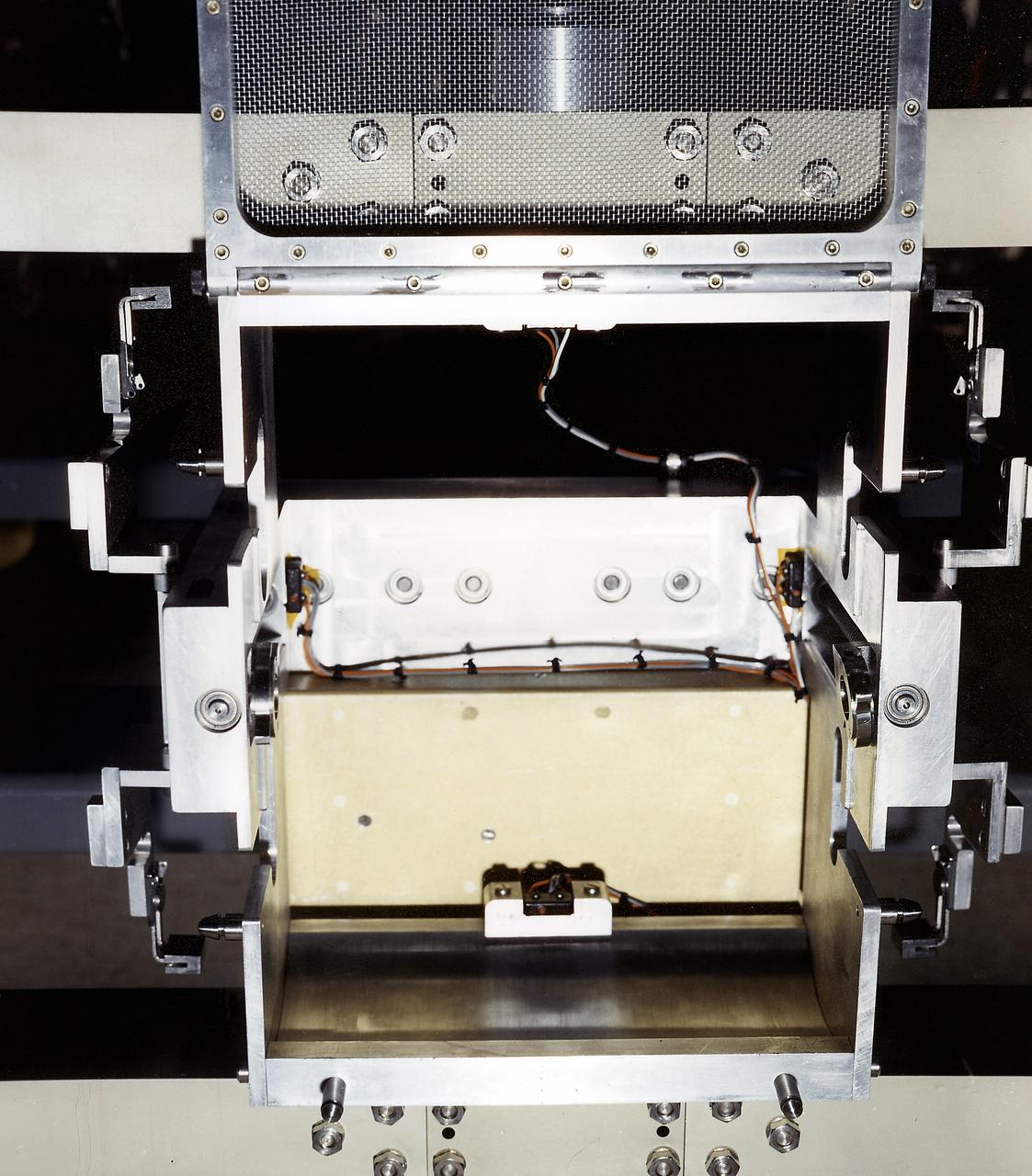
This photograph shows Skylab's Nuclear Emulsion experiment, a Skylab science facility that was mounted inside the Multiple Docking Adapter used to record the relative abundance of primary, high-energy heavy nuclei outside the Earth's atmosphere. The Marshall Space Flight Center had program management responsibility for the development of Skylab hardware and experiments.
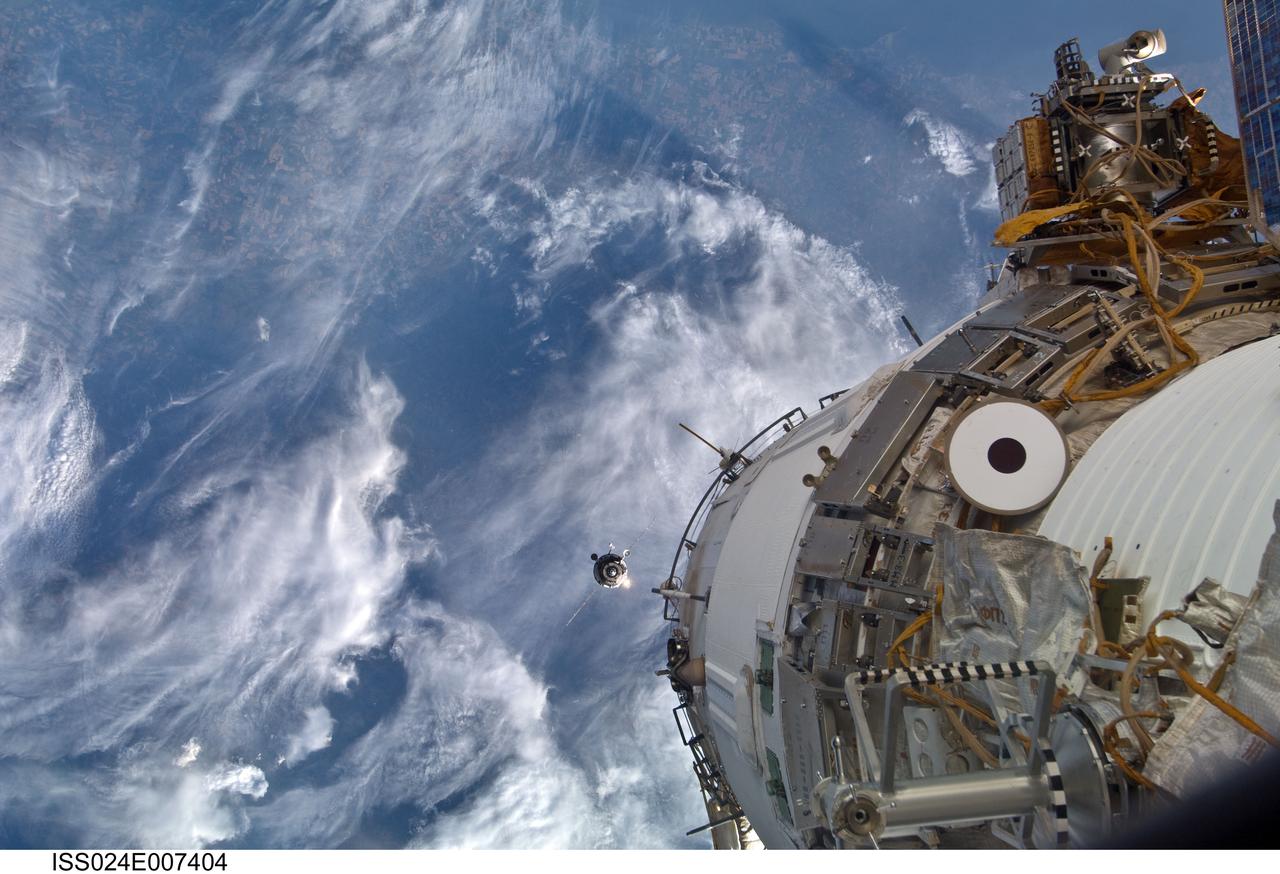
ISS024-E-007404 (4 July 2010) --- An unpiloted ISS Progress resupply vehicle approaches the International Space Station, bringing almost two tons of food, fuel, oxygen, propellant and supplies for the Expedition 24 crew members aboard the station. After an aborted docking on July 2, Progress 38 successfully docked to the aft end of the Zvezda Service Module at 12:17 p.m. (EDT) on July 4, 2010. The docking was executed flawlessly by Progress’ Kurs automated rendezvous system.
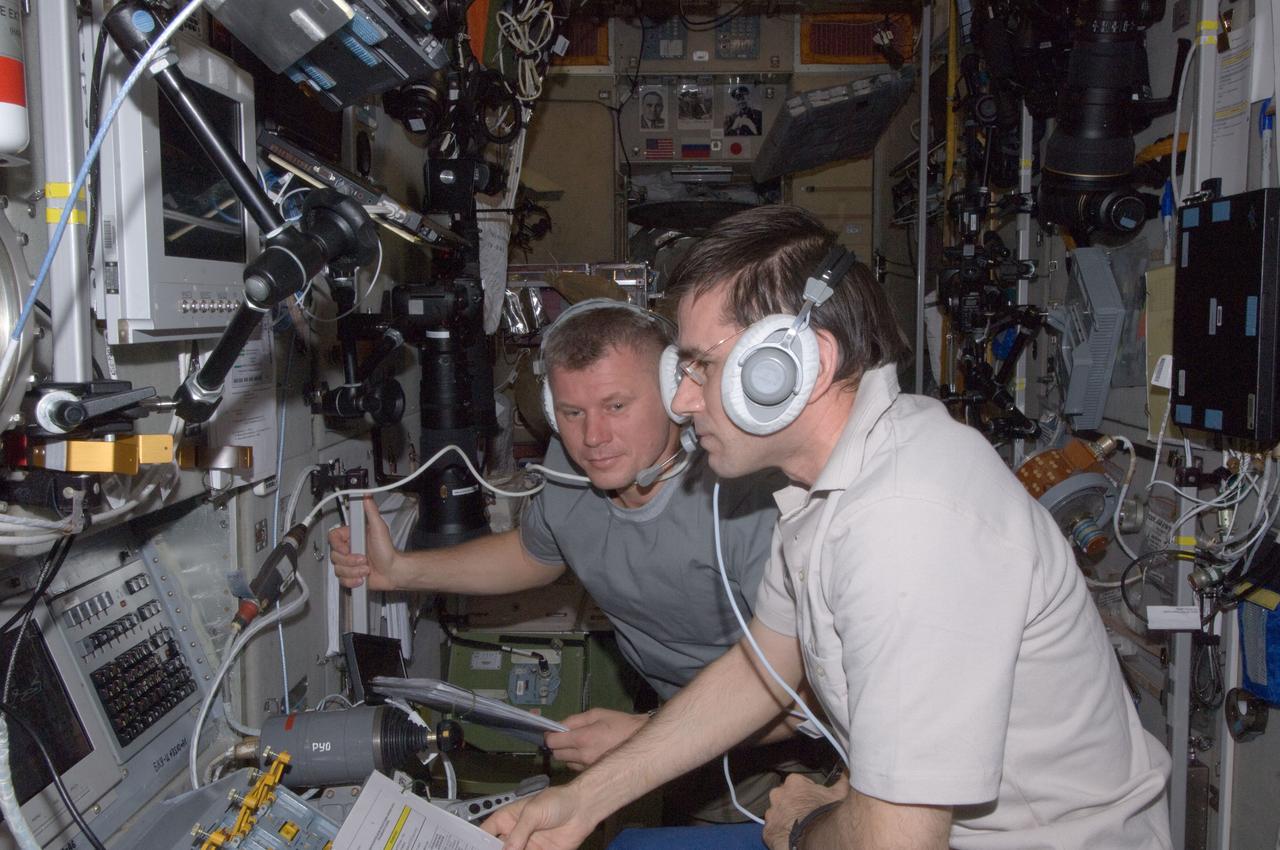
ISS033-E-017605 (31 Oct. 2012) --- Russian cosmonauts Yuri Malenchenko (foreground) and Oleg Novitskiy, both Expedition 33 flight engineers, monitor data at the manual TORU docking system controls in the Zvezda Service Module of the International Space Station during approach and docking operations of the unpiloted ISS Progress 49 resupply vehicle. Progress 49 docked automatically to Zvezda’s aft port at 9:33 a.m. (EDT) on Oct. 31, 2012.
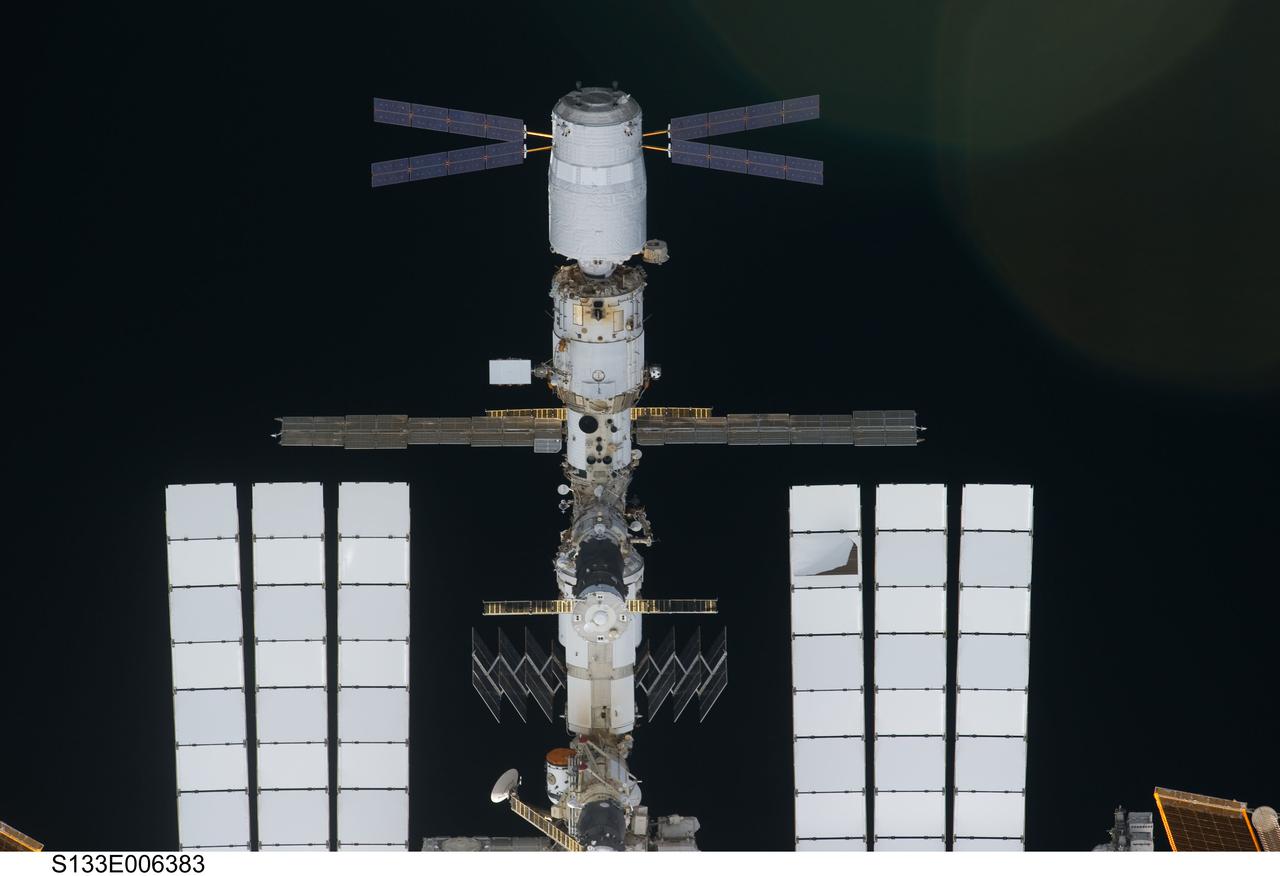
S133-E-006383 (26 Feb. 2011) --- A portion of the International Space Station is featured in this image photographed by an STS-133 crew member aboard space shuttle Discovery during STS-133 rendezvous and docking operations. Docking occurred at 2:14 p.m. (EST) on Feb. 26, 2011. The recently docked European Space Agency's "Johannes Kepler" Automated Transfer Vehicle-2 (ATV-2) is at top center. Photo credit: NASA or National Aeronautics and Space Administration

ISS040-E-006000 (29 May 2014) --- One of the six Expedition 40 crew members positioned himself in the Cupola of the Earth-orbiting International Space Station to capture this image of two Russian spacecraft docked to the orbital outpost. The recently-docked Soyuz 39 (TMA-13M) spacecraft, which brought up the Expedition 40/41 crew, can be seen in the foreground docked to MRM1 (Rassvet); while cargo carrier Progress 55 is attached to Pirs in the background.
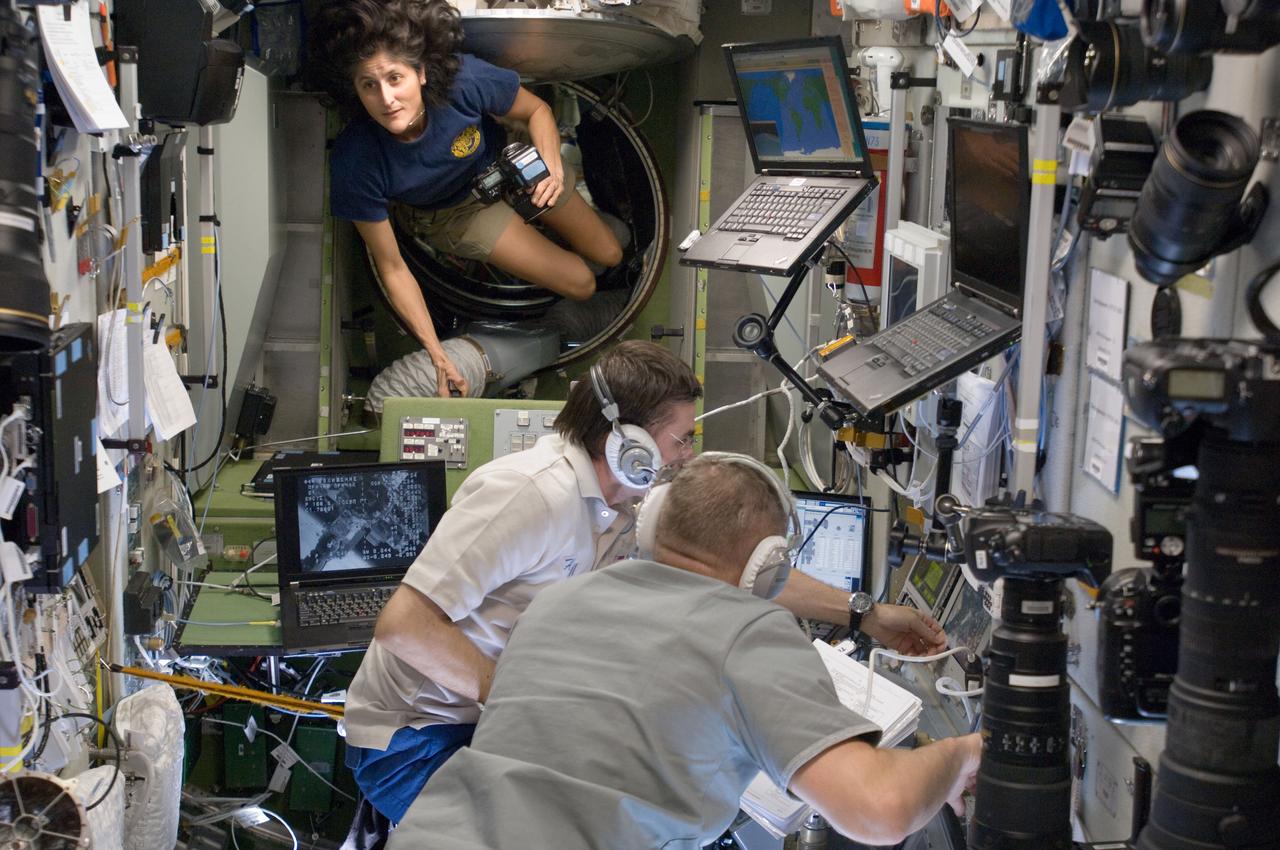
ISS033-E-016948 (31 Oct. 2012) --- Russian cosmonauts Yuri Malenchenko and Oleg Novitskiy, both Expedition 33 flight engineers, monitor data at the manual TORU docking system controls in the Zvezda Service Module of the International Space Station during approach and docking operations of the unpiloted ISS Progress 49 resupply vehicle. Progress 49 docked automatically to Zvezda’s aft port at 9:33 a.m. (EDT) on Oct. 31, 2012. NASA astronaut Sunita Williams, commander, is visible at top left.