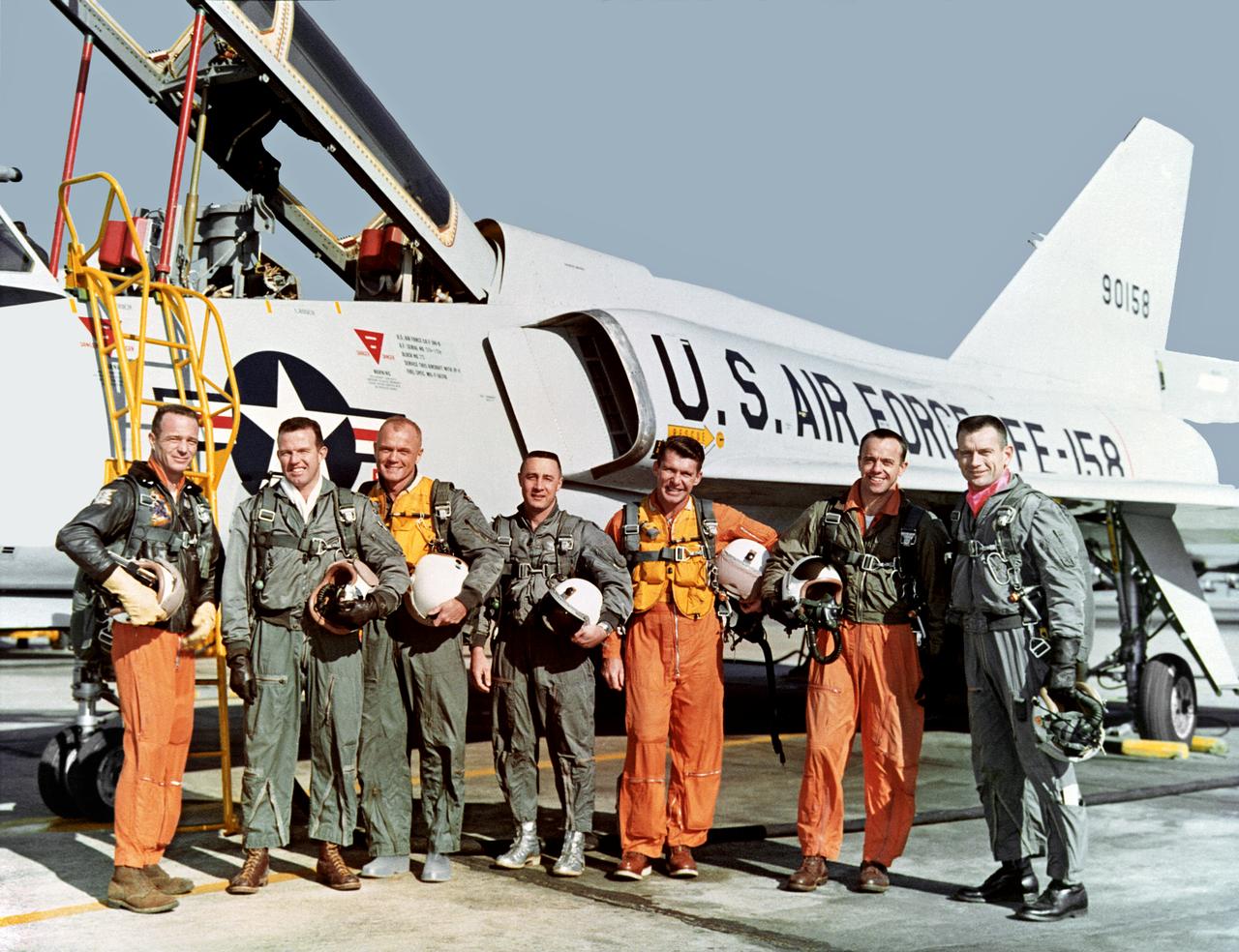
The original seven Mercury astronauts during training at NASA Langley Research Center Project Mercury. The original seven astronauts trained at NASA Langley Research Center. Chosen from among hundreds of applicants, the seven men were all test pilots. Standing in front of the U.S. Air Force Convair F-106B aircraft, the astronauts are, from left, Lt. M. Scott Carpenter, Capt. Gordon Cooper, Col. John H. Glenn Jr., Capt. Virgil "Gus" Grissom, Lt. Comdr. Walter Schirra, Lt. Comdr. Alan B. Shepard Jr. and Capt. Donald K. "Deke" Slayton. While familiarizing the astronauts with the Mercury set-up, Langley employees helped them to specialize in the technical areas crucial to the overall success of Project Mercury. Langley people also guided and monitored the astronauts activities through the many spaceflight simulators and other training devices built at the Center expressly for the manned space program. In less than three years, Project Mercury proved that men could be sent into space and returned safely to Earth, setting the stage for the longer duration Gemini flights and the Apollo lunar landings. This photograph was originally taken on 01/20/1961 and is published in Spaceflight Revolution NASA Langley Research Center from Sputnik to Apollo, NASA SP-4308, by James R. Hansen, 1995, page 40.

The original seven astronauts for the Mercury Project pose in front of an Air Force Jet. From left to right: Scott Carpenter, L. Gordon Cooper, John H. Glenn, Virgil I. Gus Grissom, Walter M. Wally Schirra, Alan B. Shepard, and Donald K. Deke Slayton.
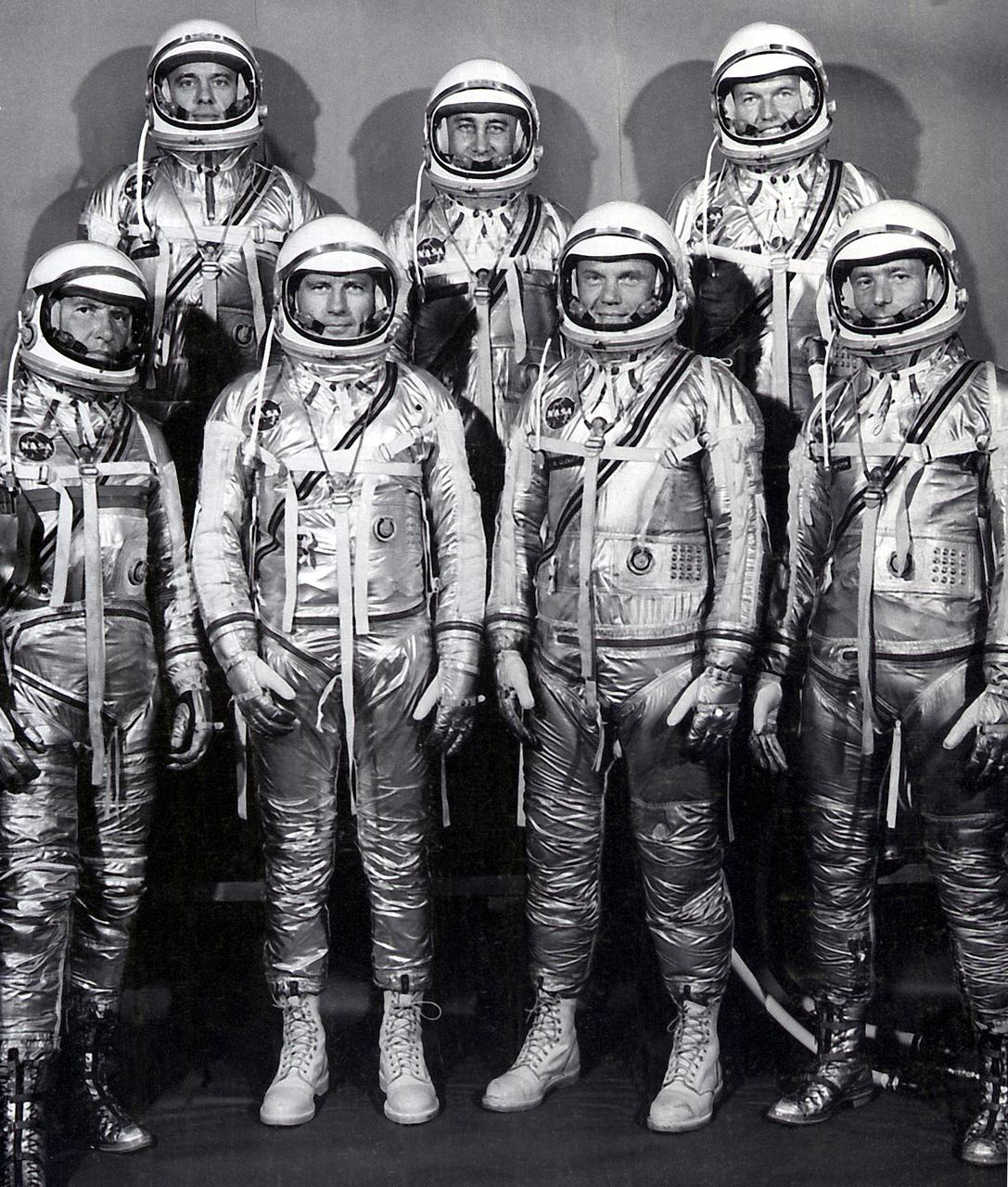
The group portrait of the original seven astronauts for the Mercury Project. NASA selected its first seven astronauts on April 27, 1959. Left to right at front: Walter M. Wally Schirra, Donald K. Deke Slayton, John H. Glenn, Jr., and Scott Carpenter. Left to right at rear: Alan B. Shepard, Virgil I. Gus Grissom, and L. Gordon Cooper, Jr.
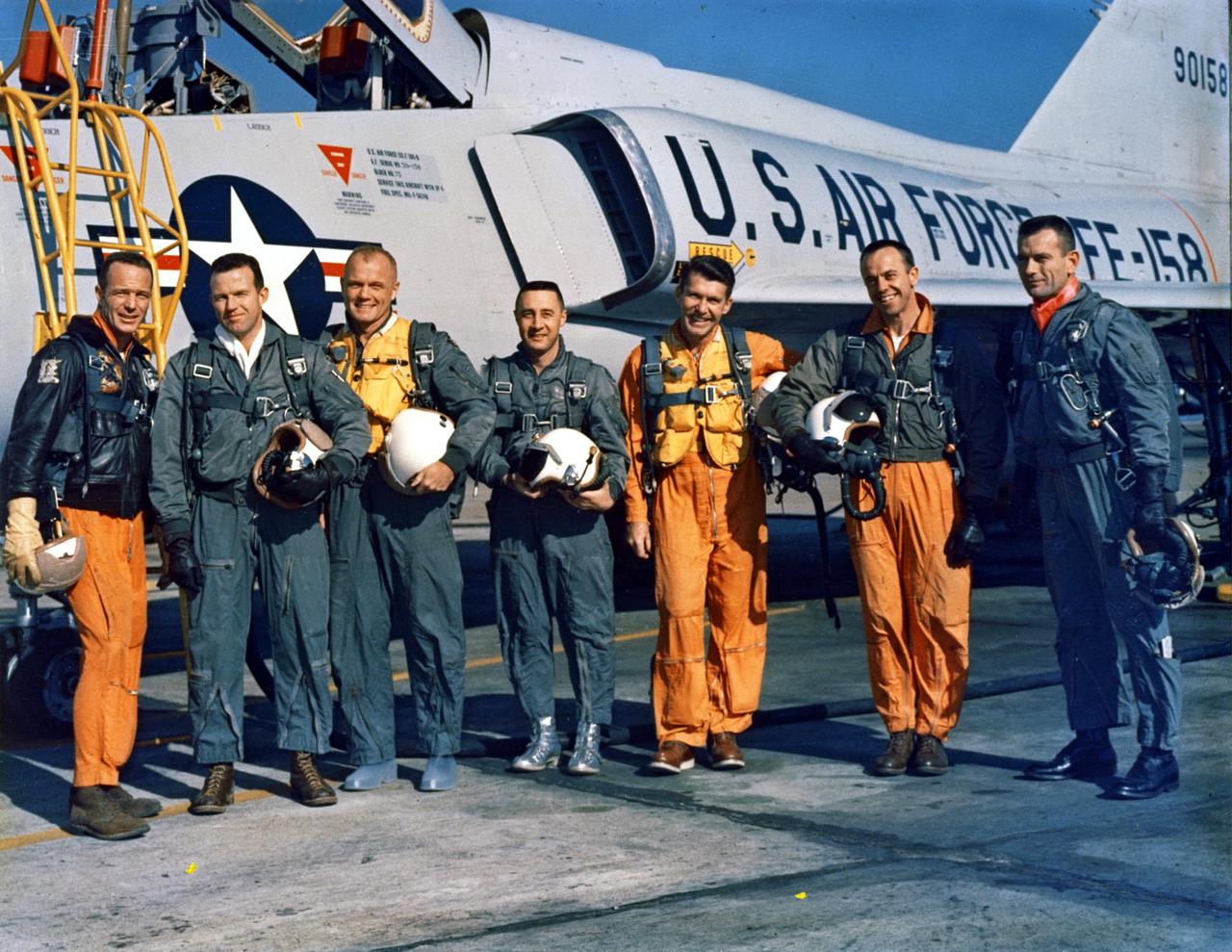
CAPE CANAVERAL, FLA. -- The Original Seven Mercury Astronauts pose beside an Air Force F-102 jet. Standing, left to right, are M. Scott Carpenter, L. Gordon Cooper, John H. Glenn Jr., Virgil I. 'Gus' Grissom, Walter M. Schirra Jr., Alan B. Shepherd Jr., and Donald K. 'Deke' Slayton.
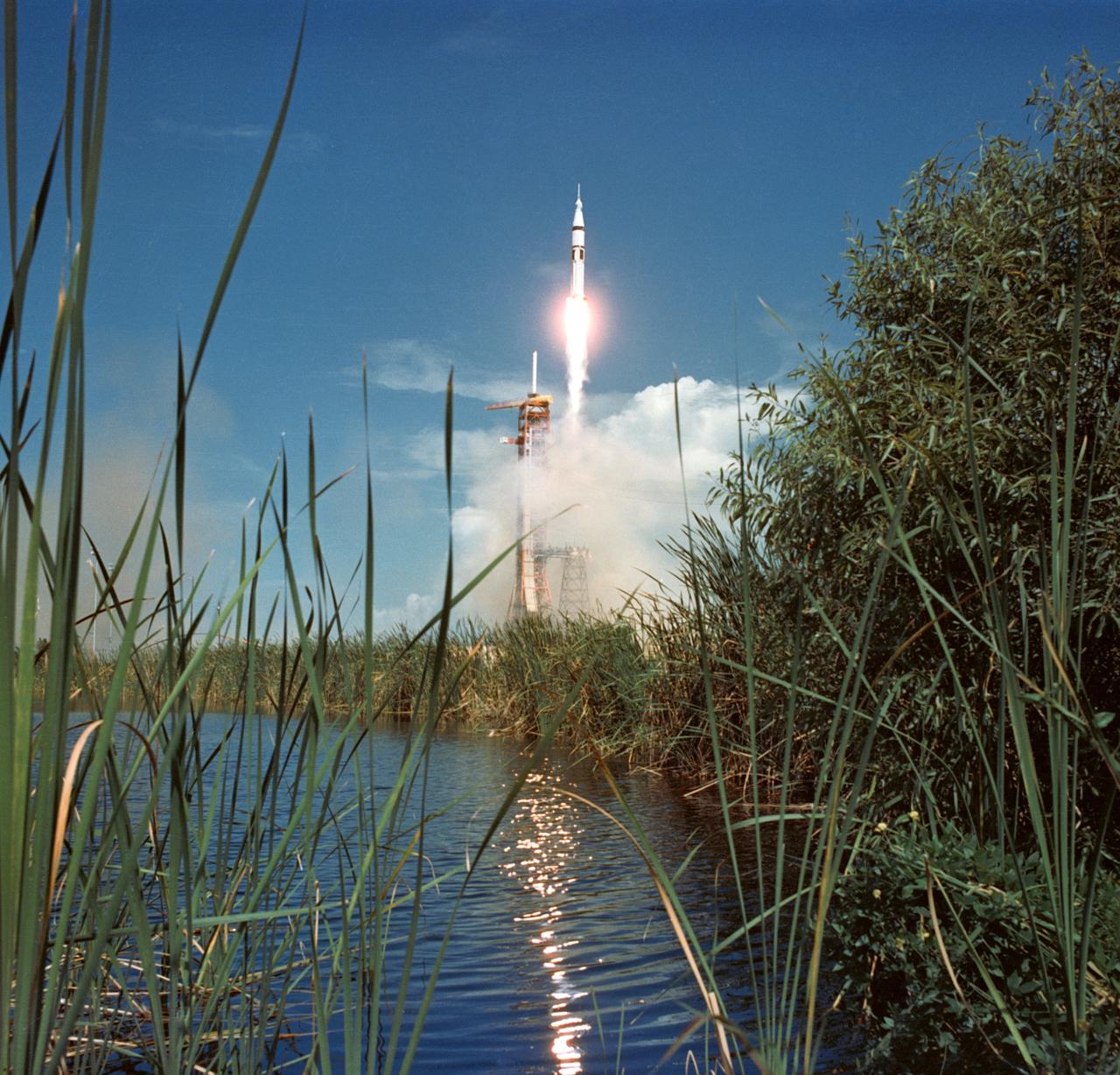
S75-28547 (15 July 1975) --- The Apollo-Soyuz Test Project's (ASTP) NASA Apollo/Saturn 1B space vehicle is launched from Pad B, Launch Complex 39, Kennedy Space Center (KSC), Florida, at 3:50 p.m. (EDT), July 15, 1975, to begin Apollo's catch-up journey toward the already Earth-orbiting Soviet Soyuz spacecraft. Aboard the Apollo spacecraft were astronauts Thomas P. Stafford, Vance D. Brand and Donald K. (Deke) Slayton.
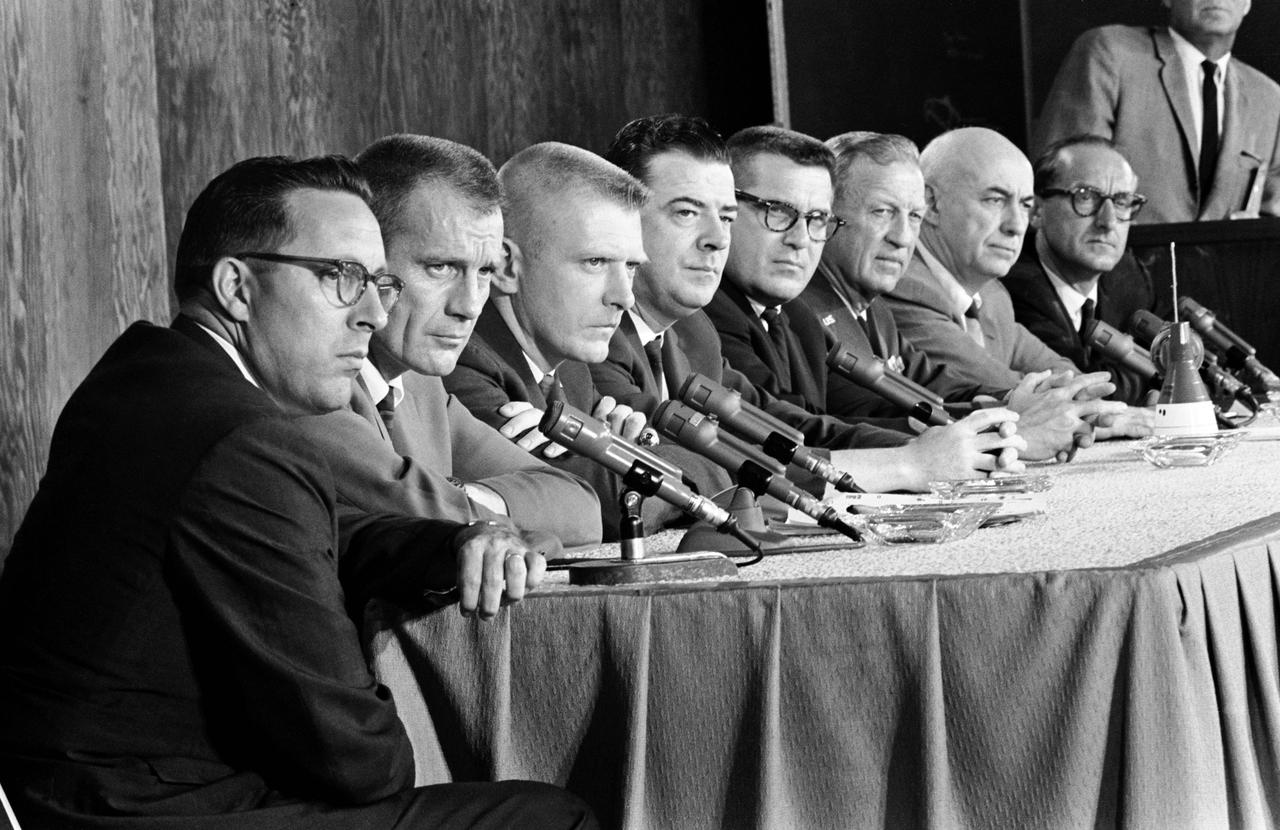
S66-32629 (1966) --- Left to right are Dr. Charles A. Berry, MSC Medical Director; Dr. Donald K. (Deke) Slayton, Director of Flight Crew Operations; Eugene F. Kranz, Flight Director; Charles W. Mathews, Gemini Program Manager, Manned Spacecraft Center; William C. Schneider, Gemini Mission Manager, NASA Headquarters; General Leighton Davis; Dr. Robert R. Gilruth, MSC Director; and Dr. George E. Mueller, Associate Administrator for Manned Space Flight, NASA Headquarters.
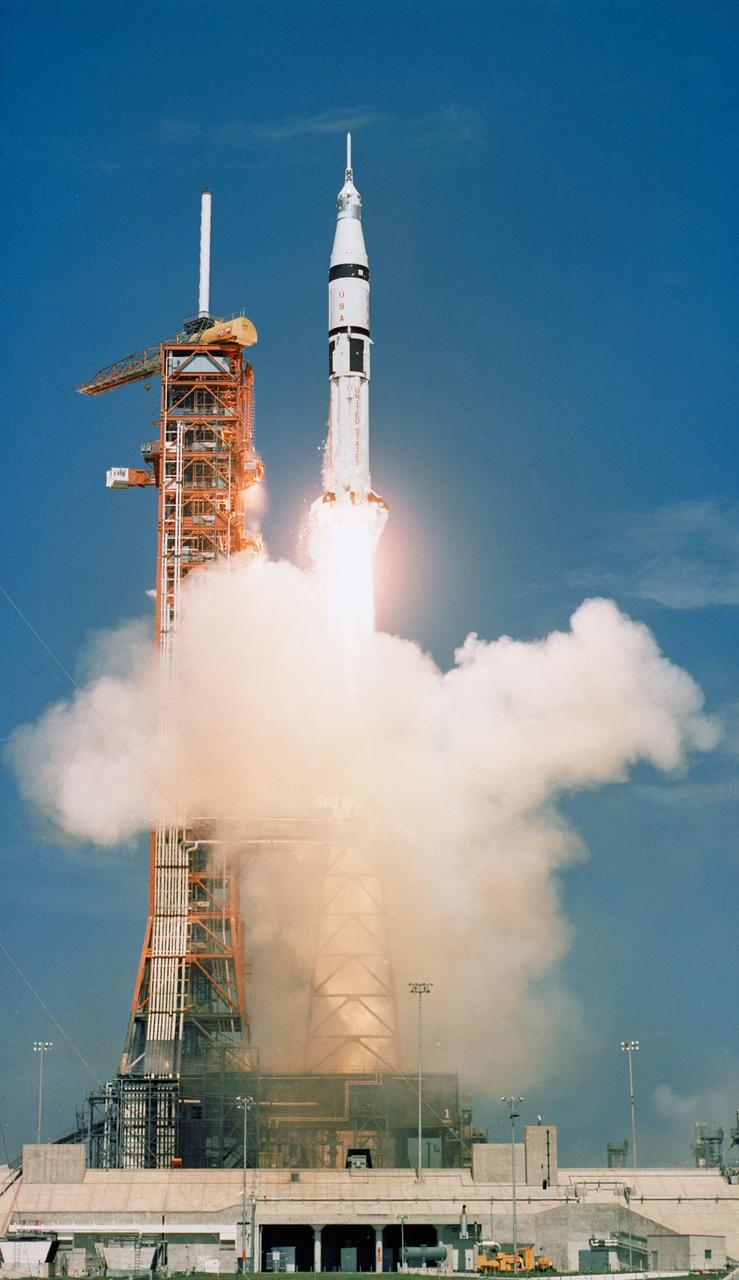
S75-28550 (15 July 1975) --- The Apollo-Soyuz Test Project's (ASTP) NASA Apollo/Saturn 1B space vehicle is launched from Pad B, Launch Complex 39, Kennedy Space Center (KSC), Florida, at 3:50 p.m. (EDT), July 15, 1975, to begin Apollo's catch-up journey toward the already Earth-orbiting Soviet Soyuz spacecraft. Aboard the Apollo spacecraft were astronauts Thomas P. Stafford, Vance D. Brand and Donald K. (Deke) Slayton.
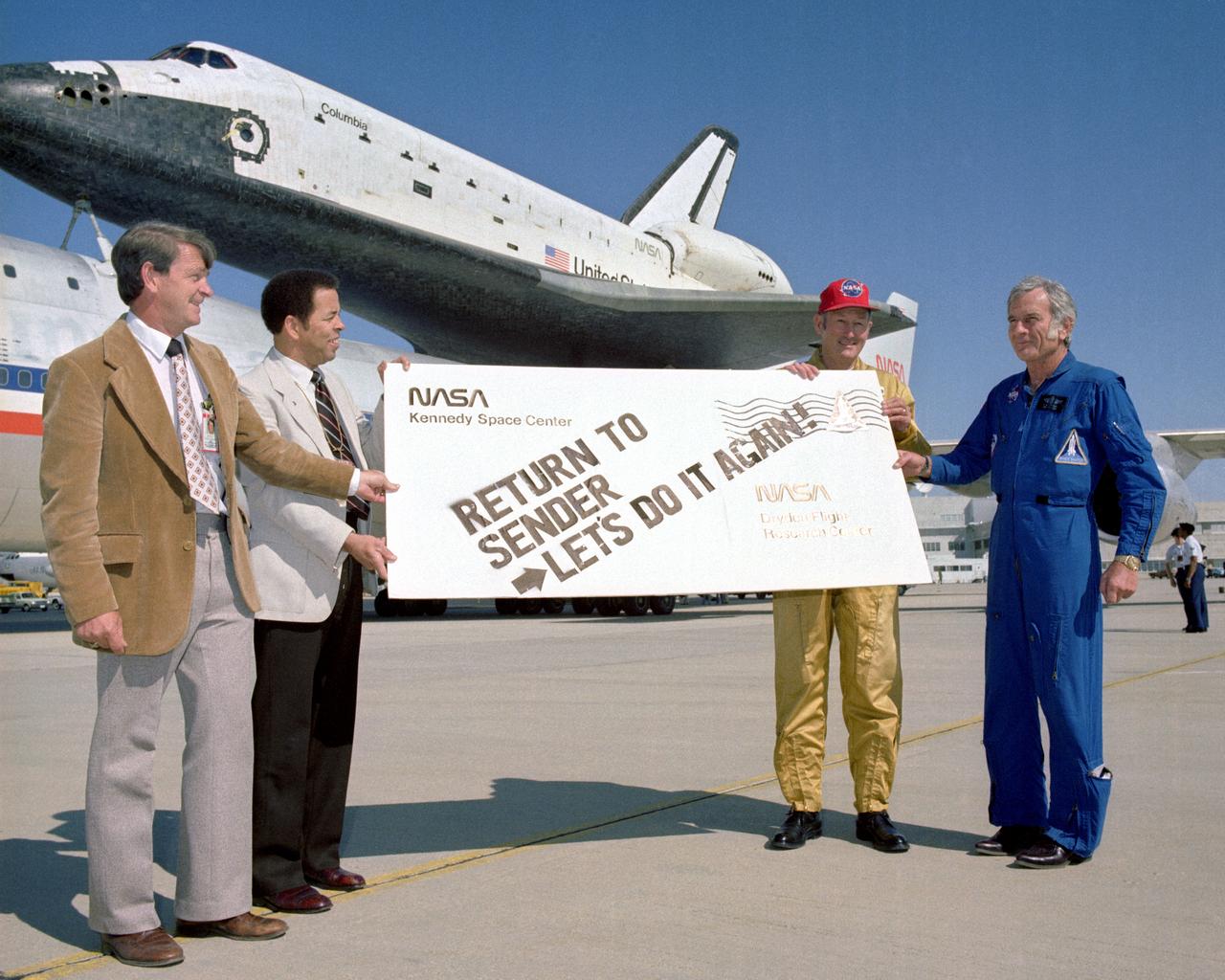
After completing it's first orbital mission with a landing at Edwards Air Force Base on April 14, 1981, Space Shuttle Columbia received a humorous sendoff before it's ferry flight atop a modified 747 back to the Kennedy Space Center in Florida. Holding the sign are, left to right: Melvin Burke, DFRC Orbital Flight Test (OFT) Program Manager; Isaac 'Ike' Gillam, DFRC Center Director; Fitzhugh 'Fitz' L. Fulton Jr., NASA DFRC 747 SCA Pilot; and Donald K. 'Deke' Slayton, JSC OFT Project Manager.
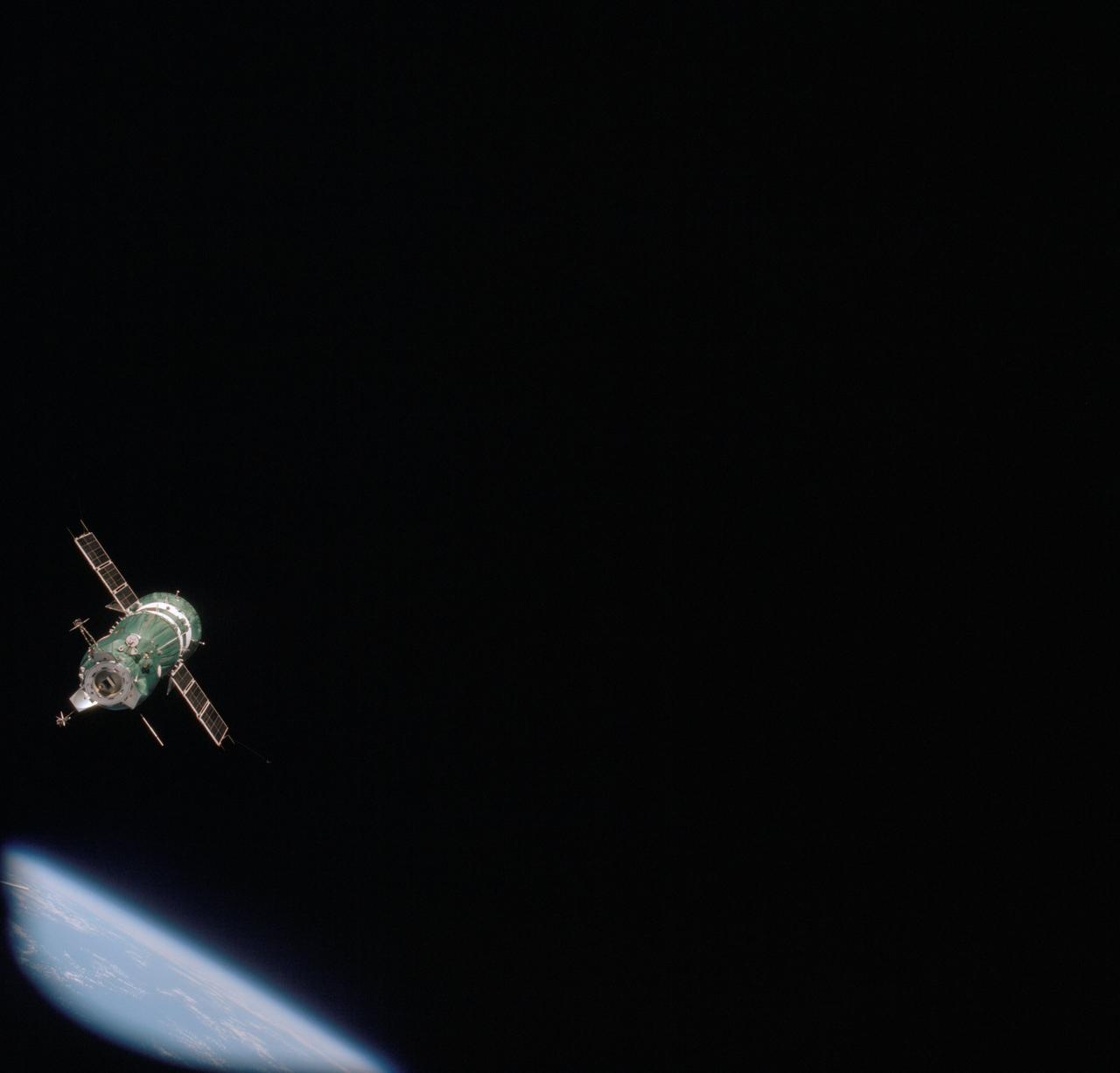
AST-09-572 (17-18 July 1975) --- The Soviet Soyuz 19 spacecraft is photographed from the American Apollo spacecraft during the joint U.S.-USSR Apollo-Soyuz Test Project (ASTP) docking mission in Earth orbit. Earth is visible in the lower left corner. This picture was taken with a 70mm camera. The Apollo crew consisted of astronauts Thomas P. Stafford, commander; Donald K. "Deke" Slayton, docking module pilot; and Vance D. Brand, command module pilot. The Soyuz 19 crew consisted of cosmonauts Aleksei A. Leonov, command pilot; and Valeri N. Kubasov, flight engineer.
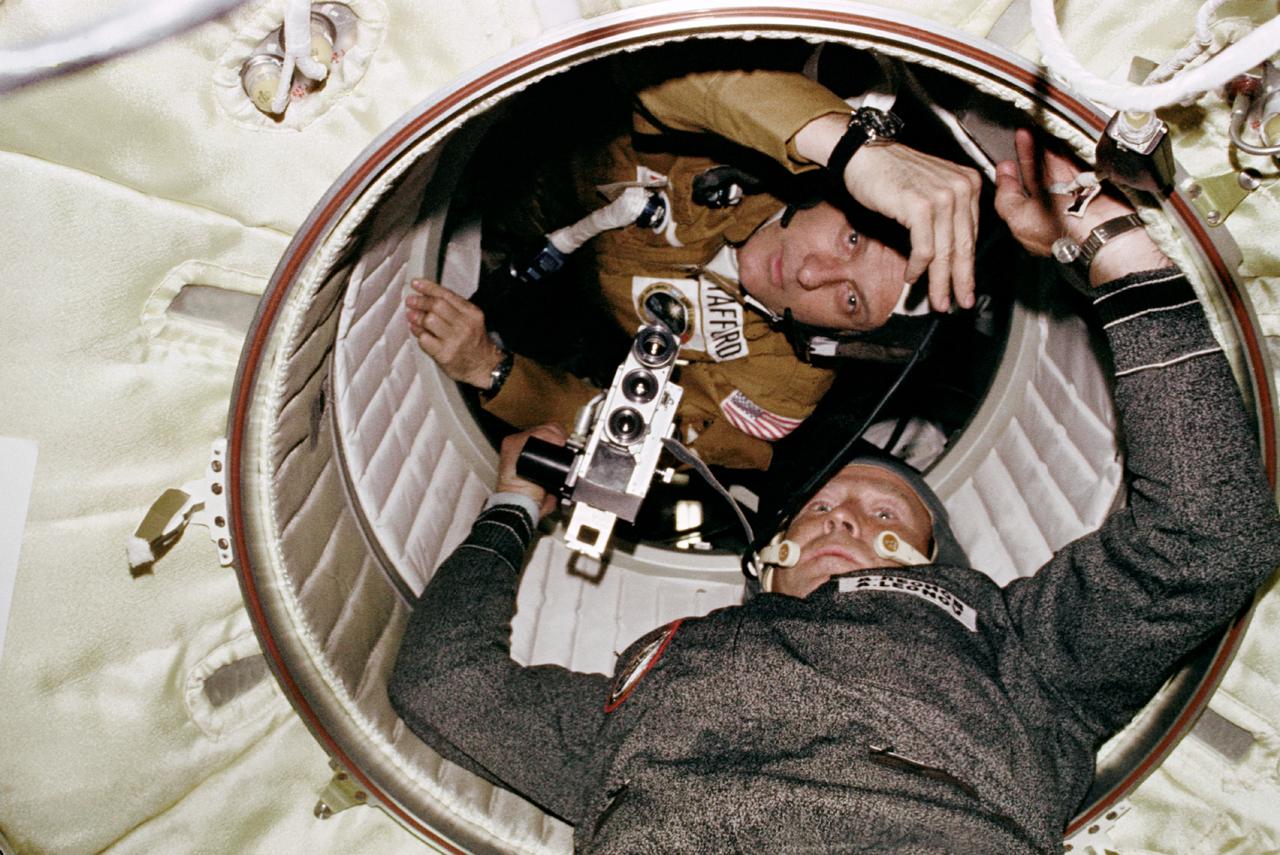
AST-03-191 (17-19 July 1975) --- Astronaut Thomas P. Stafford and cosmonaut Aleksei A. Leonov are seen at the hatchway leading from the Apollo Docking Module (DM) to the Soyuz Orbital Module (OM) during the joint U.S.-USSR Apollo Soyuz Test Project (ASTP) docking mission in Earth orbit. Cosmonaut Leonov is in the OM and astronaut Stafford is in the DM. Leonov holds a camera. The Apollo crew consisted of astronauts Stafford, commander; Donald K. "Deke" Slayton, docking module pilot; Vance D. Brand, command module pilot. The Soyuz 19 crew consisted of cosmonauts Leonov, command pilot; and Valeri N. Kubasov, flight engineer.
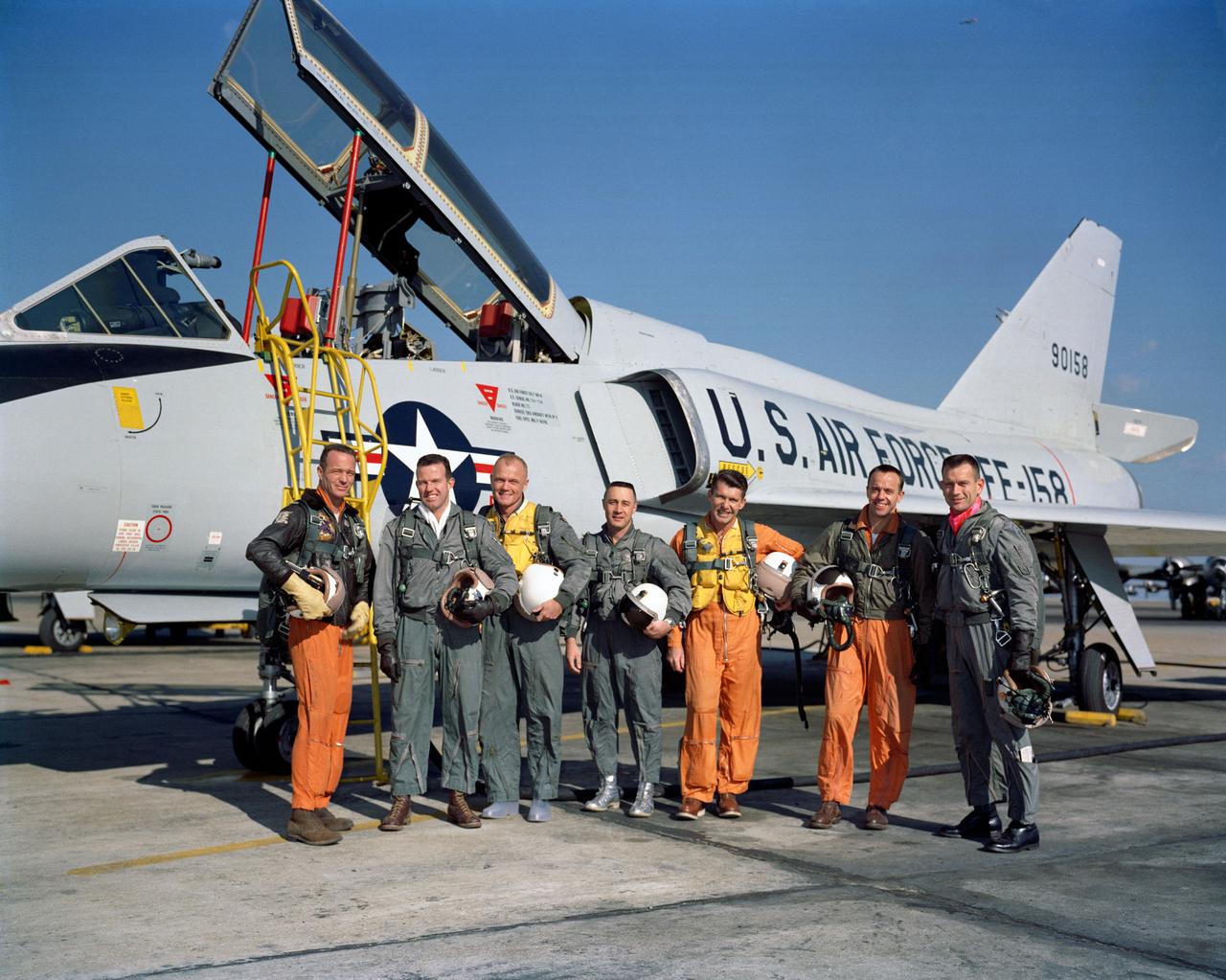
S61-01250 (20 Jan. 1961) --- Photo of the Mercury astronauts standing beside a Convair 106-B aircraft. They are, left to right, M. Scott Carpenter, L. Gordon Cooper Jr., John H. Glenn Jr., Virgil I. Grissom, Walter M. Schirra Jr., Alan B. Shepard Jr. and Donald K. Slayton. EDITOR'S NOTE: Astronaut Gus Grissom died in the Apollo 1 -- Apollo/Saturn (AS-204) -- fire at Cape Kennedy, Florida on Jan. 27, 1967. Astronaut Deke Slayton died from complications of a brain tumor, in League City, Texas on June 13, 1993. Astronaut Shepard died after a lengthy illness in Monterey, California, on July 21, 1998. As of Jan. 1, 1977 none of the seven astronauts remained with the NASA Space Program. However, in October 1998, United States Senator Glenn (Democrat-Ohio) flew as payload specialist on the STS-95 mission. Photo credit: NASA
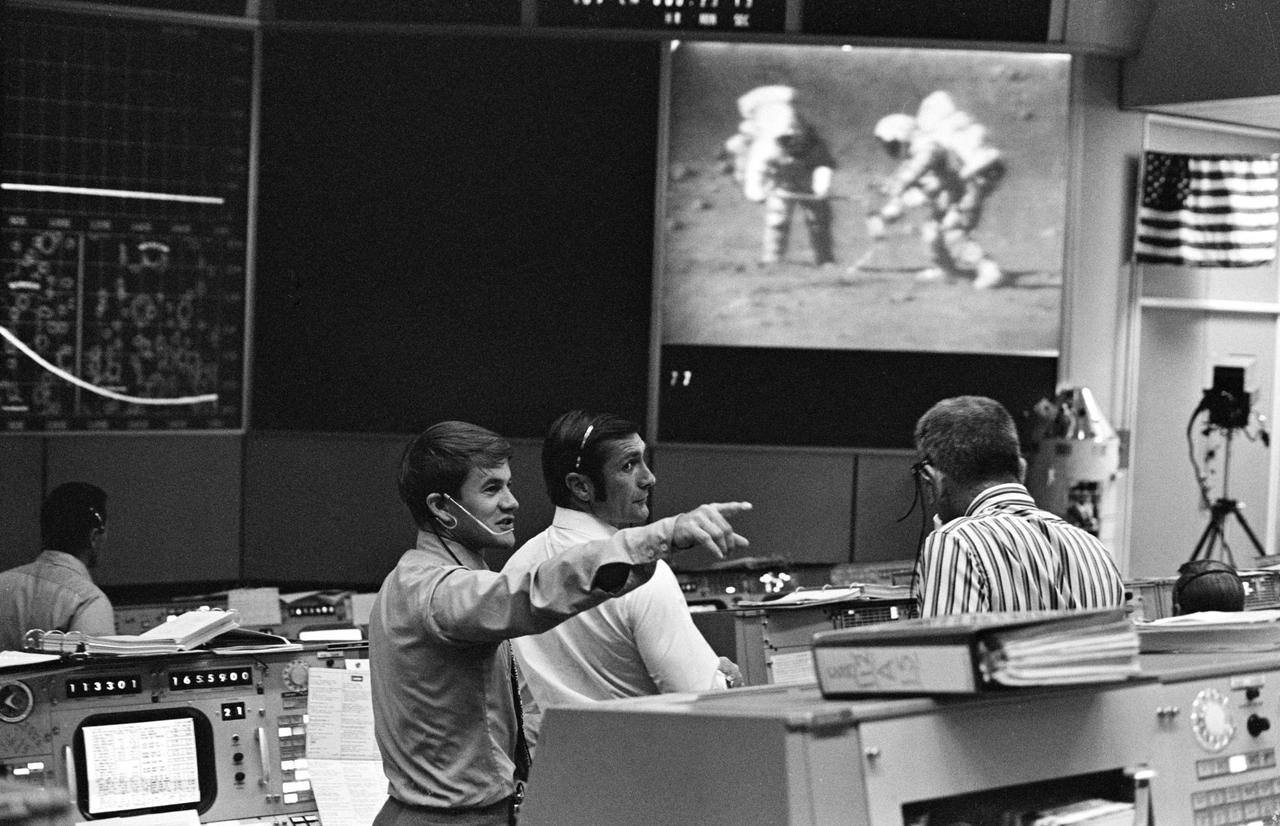
S71-41836 (2 Aug. 1971) --- Scientist-astronaut Joseph P. Allen, left, directs the attention of astronaut Richard F. Gordon Jr., to an occurrence out of view at right in the Mission Control Center's (MCC) Mission Operations Control Room (MOCR), while Dr. Donald K. (Deke) Slayton, on right with back to camera, views activity of Apollo 15 on a large screen at the front of the MOCR. Astronauts David R. Scott and James B. Irwin are seen on the screen performing tasks of the mission's third extravehicular activity (EVA), on Aug. 2, 1971. Dr. Slayton is director of Flight Crew Operations, NASA-MSC; Gordon is Apollo 15 backup commander; and Dr. Allen is an Apollo 15 spacecraft communicator.
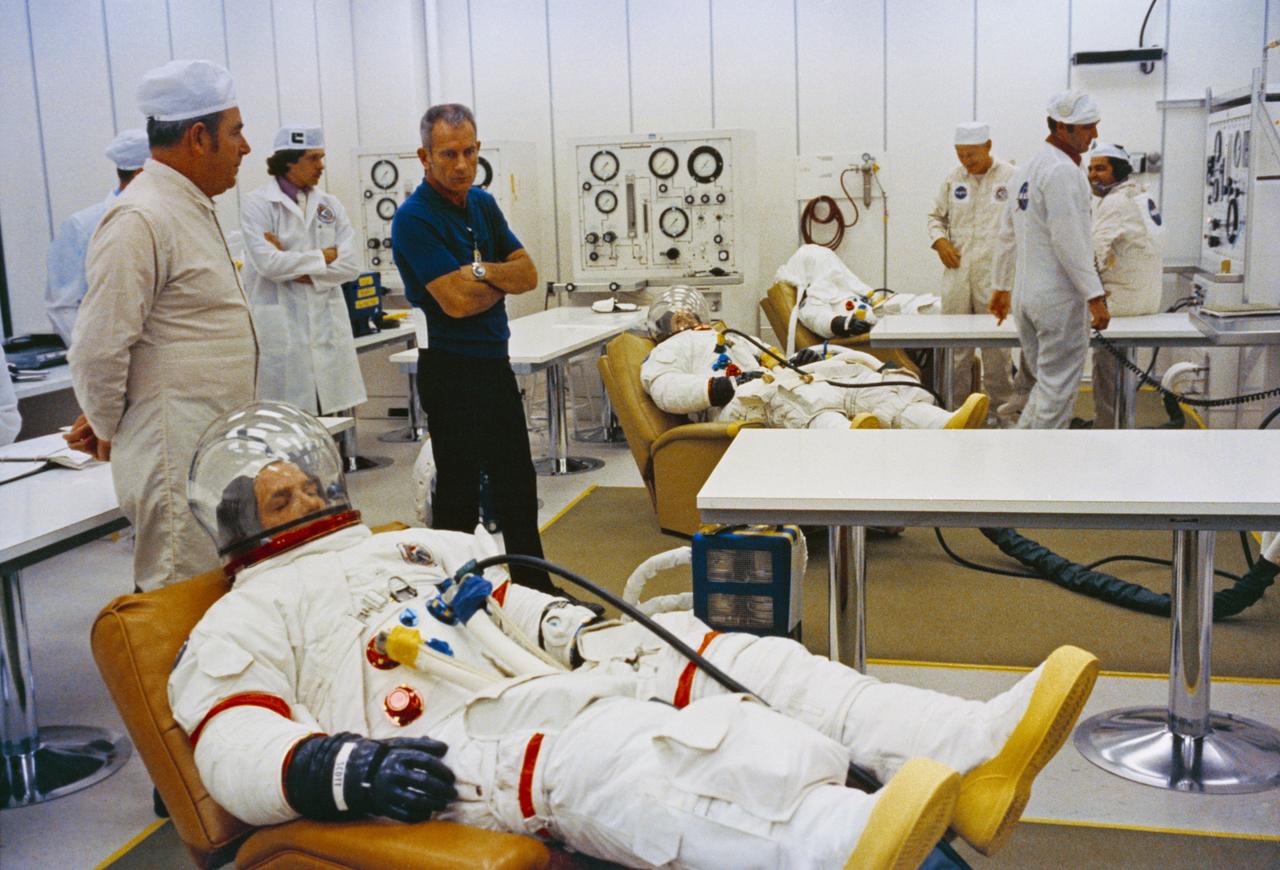
S71-41408 (26 July 1971) --- The three Apollo 15 astronauts go through suiting up operations in the Kennedy Space Center's (KSC) Manned Spacecraft Operations Building (MSOB) during the Apollo 15 prelaunch countdown. They are David R. Scott (foreground), commander; Alfred M. Worden (center), command module pilot; and James B. Irwin (background), lunar module pilot. Minutes later the crew rode a special transport van over to Pad A, Launch Complex 39, where their spacecraft awaited them. With the crew was Dr. Donald (Deke) K. Slayton (wearing dark blue sport shirt), director of Flight Crew Operations, Manned Spacecraft Center (MSC). The Apollo 15 space vehicle was launched at 9:34:00:79 a.m. (EDT), July 26, 1971, on a lunar landing mission.
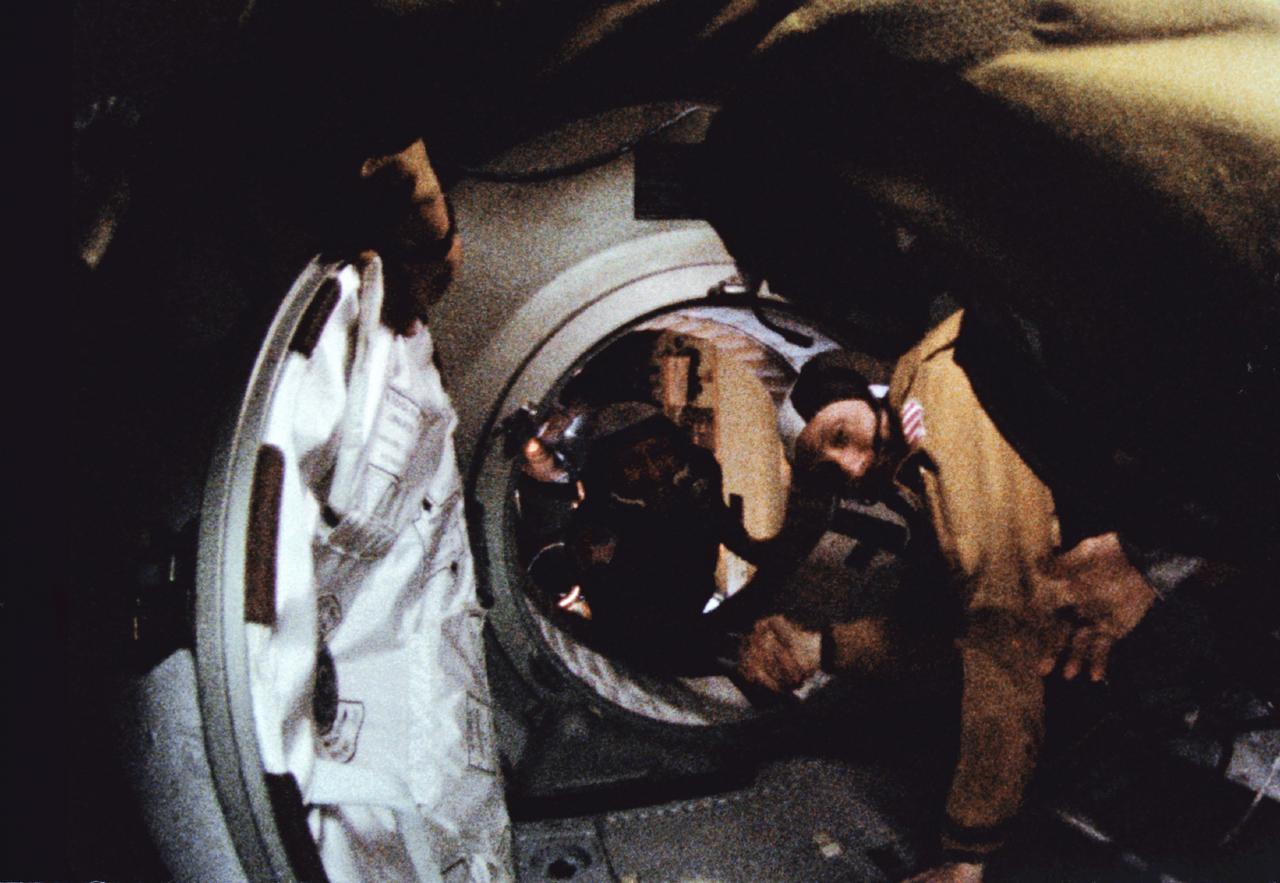
S75-29432 (17 July 1975) --- Astronaut Thomas P. Stafford (in foreground) and cosmonaut Aleksei A. Leonov make their historic handshake in space on July 17, 1975 during the joint U.S.-USSR Apollo Soyuz Test Project (ASTP) docking mission in Earth orbit. This picture was reproduced from a frame of 16mm motion picture film. The American and Soviet spacecraft were joined together in space for approximately 47 hours on July 17th, 18th, 19th, 1975. The Apollo crew consisted of astronauts Thomas P. Stafford, commander; Donald K. "Deke" Slayton, docking module pilot; Vance D. Brand, command module pilot. The Soyuz 19 crew consisted of cosmonauts Aleksei A. Leonov, command pilot; and Valeri N. Kubasov, flight engineer.
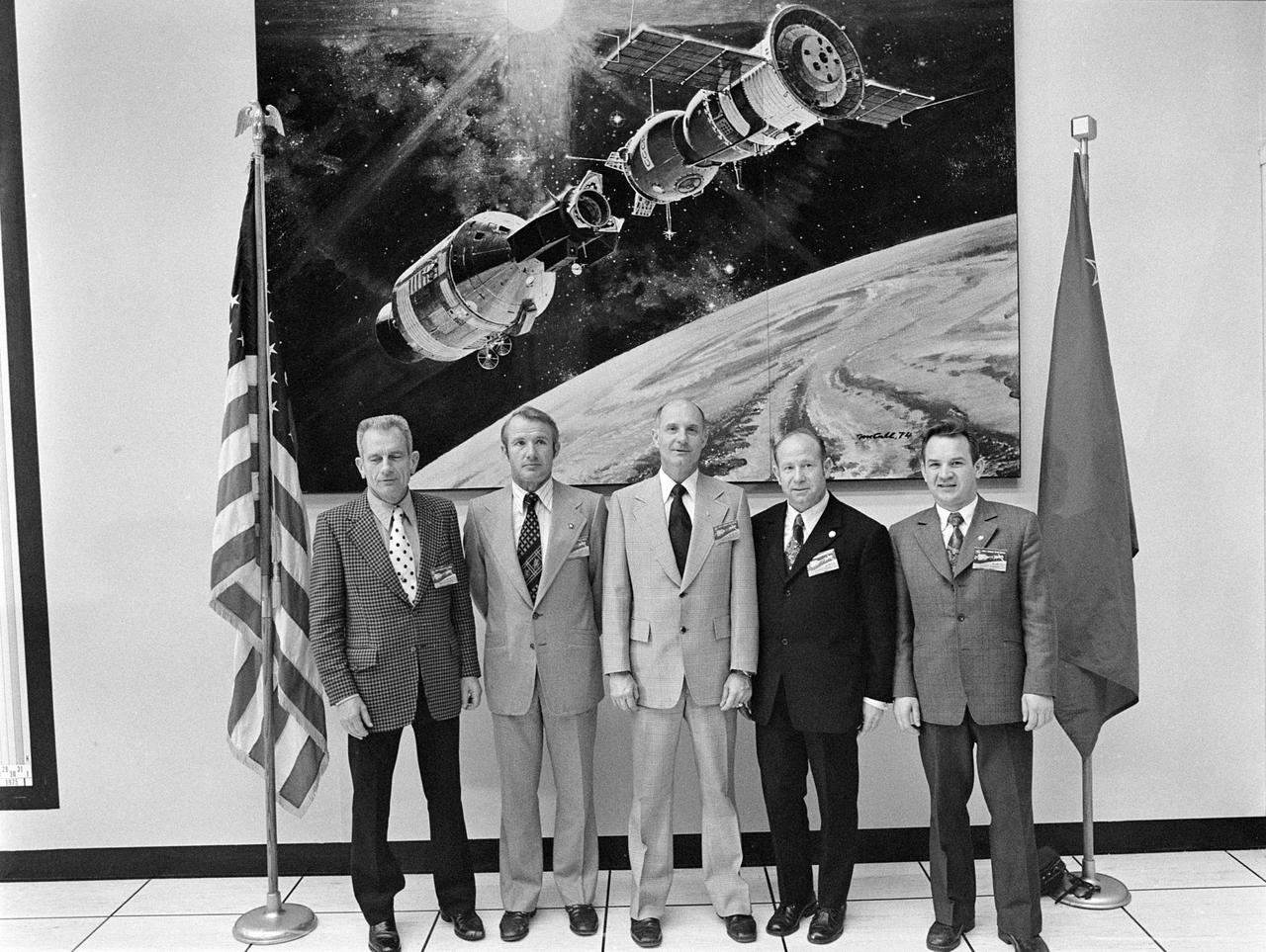
S75-24030 (8-10 Feb. 1975) --- The five prime crew members of the Apollo-Soyuz Test Project (ASTP) mission pose for a group photograph while at NASA's Kennedy Space Center (KSC) for a three-day inspection tour. They are, left to right, astronaut Donald K. (Deke) Slayton, docking module pilot of the American crew; astronaut Vance D. Brand, command module pilot of the American crew; astronaut Thomas P. Stafford, commander of the American crew; cosmonaut Aleksey A. Leonov, commander of the Soviet crew; and cosmonaut Valeriy N. Kubasov, engineer of the Soviet crew. They were at KSC to look over launch facilities and flight hardware. They are standing in front of artist Robert McCall?s painting of an ASTP docking in Earth orbit.
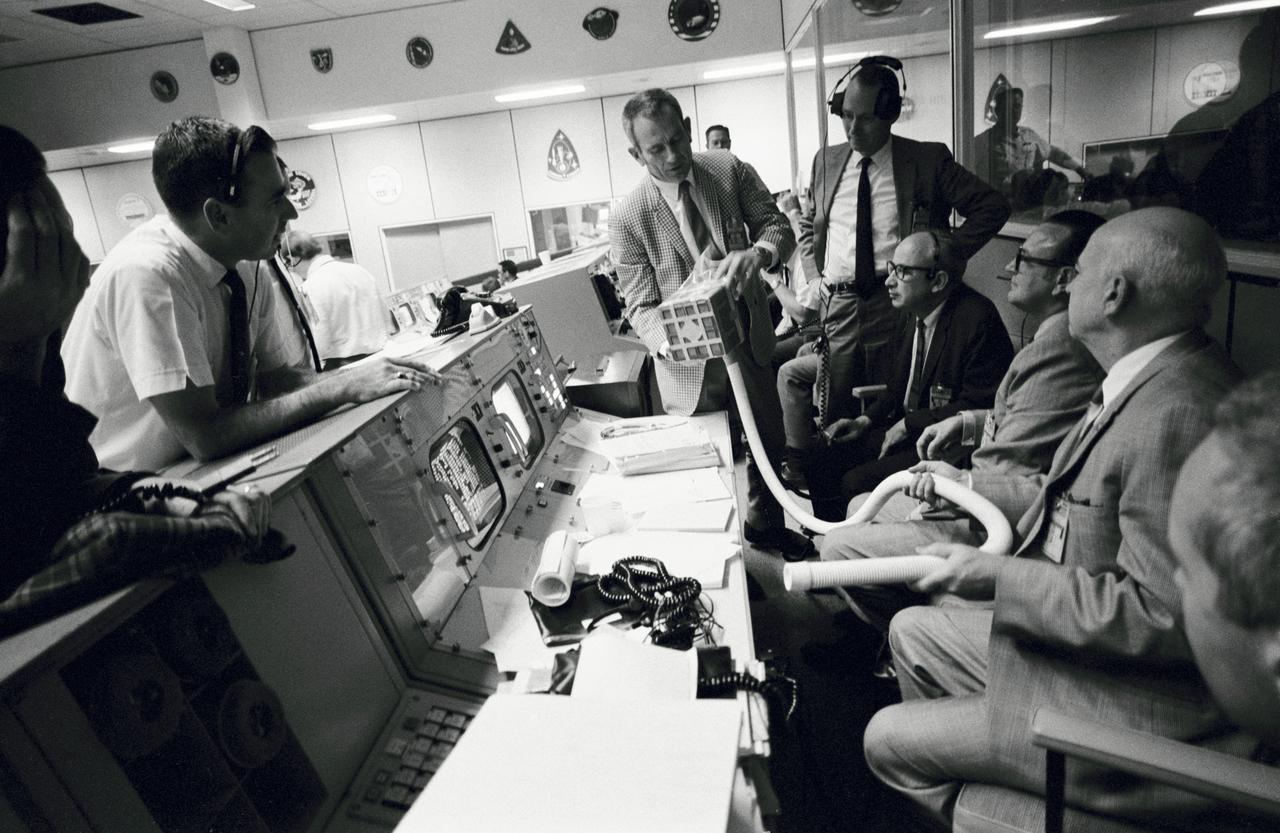
S70-35013 (15 April 1970) --- Prototype of the "mail box" constructed at the Manned Spacecraft Center (MSC) to remove carbon dioxide from the Apollo 13 Command Module (CM) is displayed in the Mission Control Center (MCC). The "mail box" was constructed when it became apparent CO2 was prevalent in the CM and the spacecraft's lithium hydroxide system was not removing it sufficiently. A space suit exhaust hose is connected to a lithium hydroxide canister to purge the cabin air. There are 16 such canisters in the CM and each will last approximately 12 hours. Looking at the "mail box" are (from the left): Milton L. Windler, shift 1 flight director; Dr. Donald K. (Deke) Slayton, director of flight crew operations, MSC; Howard W. Tindall, deputy director, flight operations, MSC; Sigurd A. Sjoberg, director, flight operations, MSC; Dr. Christopher C. Kraft, deputy director, MSC; and Dr. Robert R. Gilruth, director, MSC.
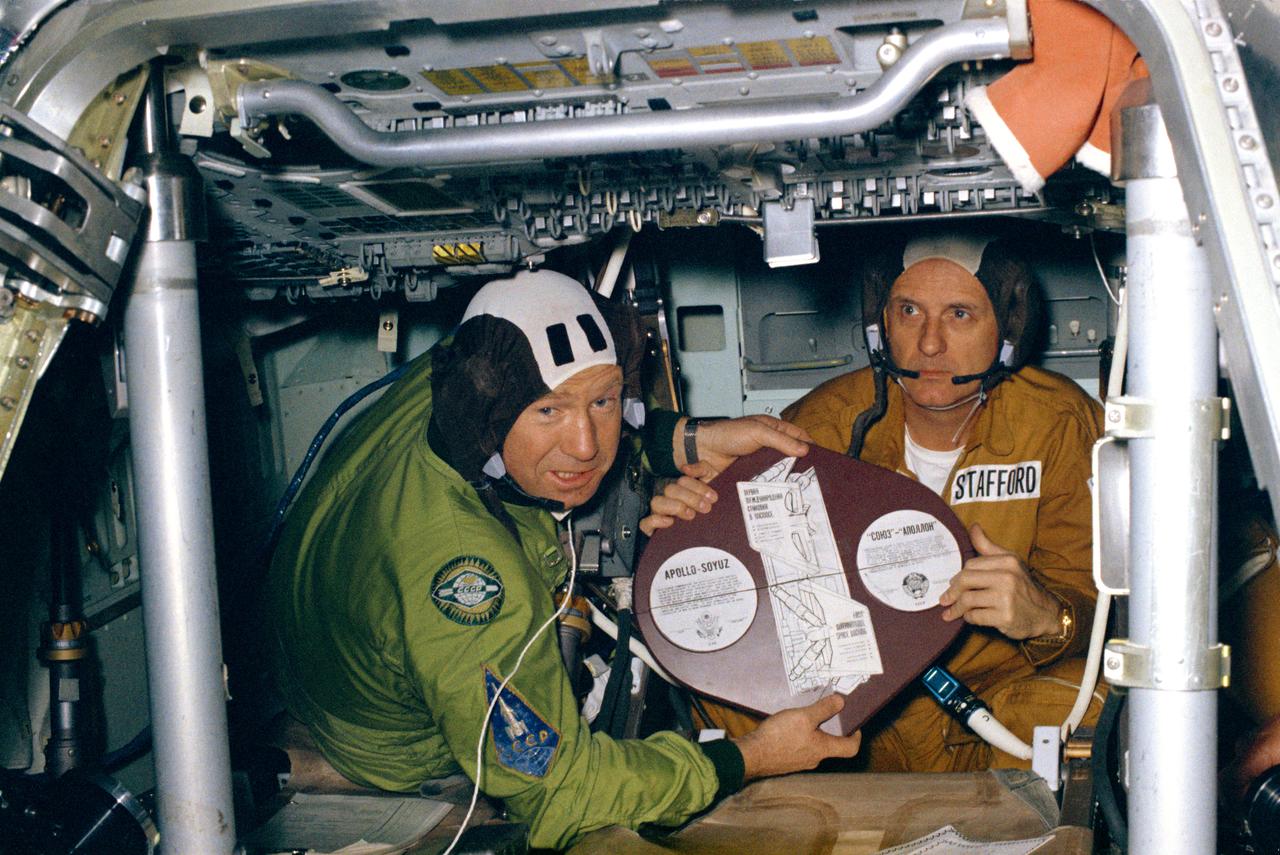
S75-25823 (February 1975) --- Cosmonaut Aleksei A. Leonov (left) and astronaut Thomas P. Stafford display the Apollo Soyuz Test Project (ASTP) commemorative plaque. The two commanders, of their respective crews, are in the Apollo Command Module (CM) trainer at Building 35 at NASA's Johnson Space Center (JSC). Two plaques divided into four quarters each will be flown on the ASTP mission. The American ASTP Apollo crew will carry the four United States quarter pieces aboard Apollo; and the Soviet ASTP Soyuz 19 crew will carry the four USSR quarter sections aboard Soyuz. The eight quarter pieces will be joined together to form two complete commemorative plaques after the two spacecraft rendezvous and dock in Earth orbit. One complete plaque then will be returned to Earth by the astronauts; and the other complete plaque will be brought back by the cosmonauts. The plaque is written in both English and Russian. The Apollo crew will consist of astronauts Thomas P. Stafford, commander; Donald K. "Deke" Slayton, docking module pilot; Vance D. Brand, command module pilot. The Soyuz 19 crew will consist of cosmonauts Aleksei A. Leonov, command pilot; and Valeri N. Kubasov, flight engineer.
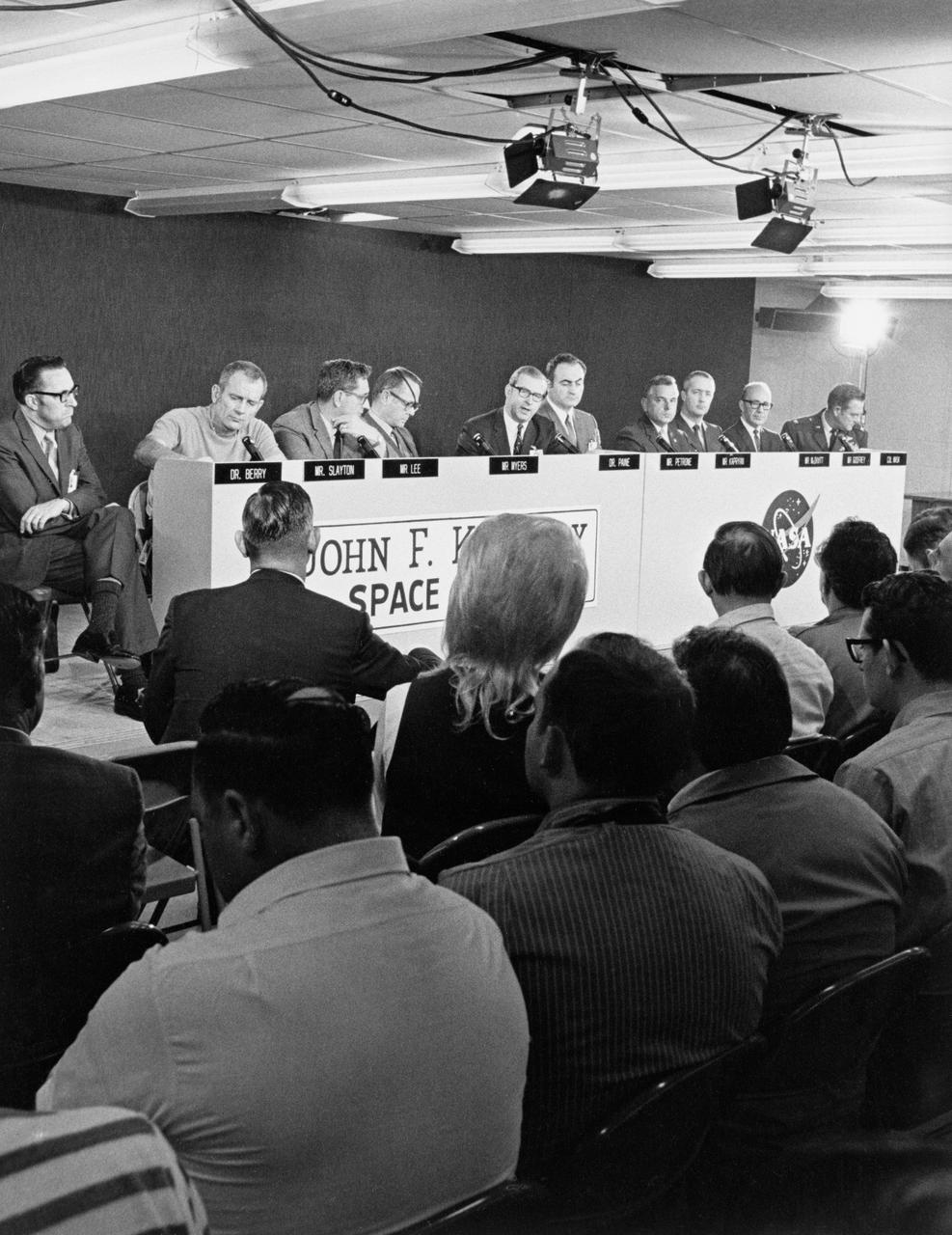
S70-36782 (10 April 1970) --- Several NASA and military officials (background at dais) meet the press on April 10, 1970, during a scheduled a T-1 prelaunch briefing for the Apollo 13 mission in the Apollo News Center at the Kennedy Space Center. The briefing participants, from the left, are Dr. Charles A. Berry, Director, Medical Research and Operations Directorate, Manned Spacecraft Center (MSC); Dr. Donald K. (Deke) Slayton, director of flight crew operations, MSC; Chester M. Lee of the Apollo Program Directorate, Office Manned Space Flight (OMSF),NASA Hq. and Apollo 13 Mission Director; Dale Myers, Associate Administrator, OMSF,NASA Hq.; Dr. Thomas O. Paine, NASA Administrator; Dr. Rocco A. Petrone, Apollo Program Director, OMSF,NASA Hq.; Walter J. Kapryan, NASA's Director of Launch Operations; James A. McDivitt, Manager of the Apollo Spacecraft Program Office; Roy E. Godfrey, Manager, Saturn Program Office; and Col. Kenneth J. Mask, USAF, DOD Manned Space Flight Support Office. Photo credit: NASA
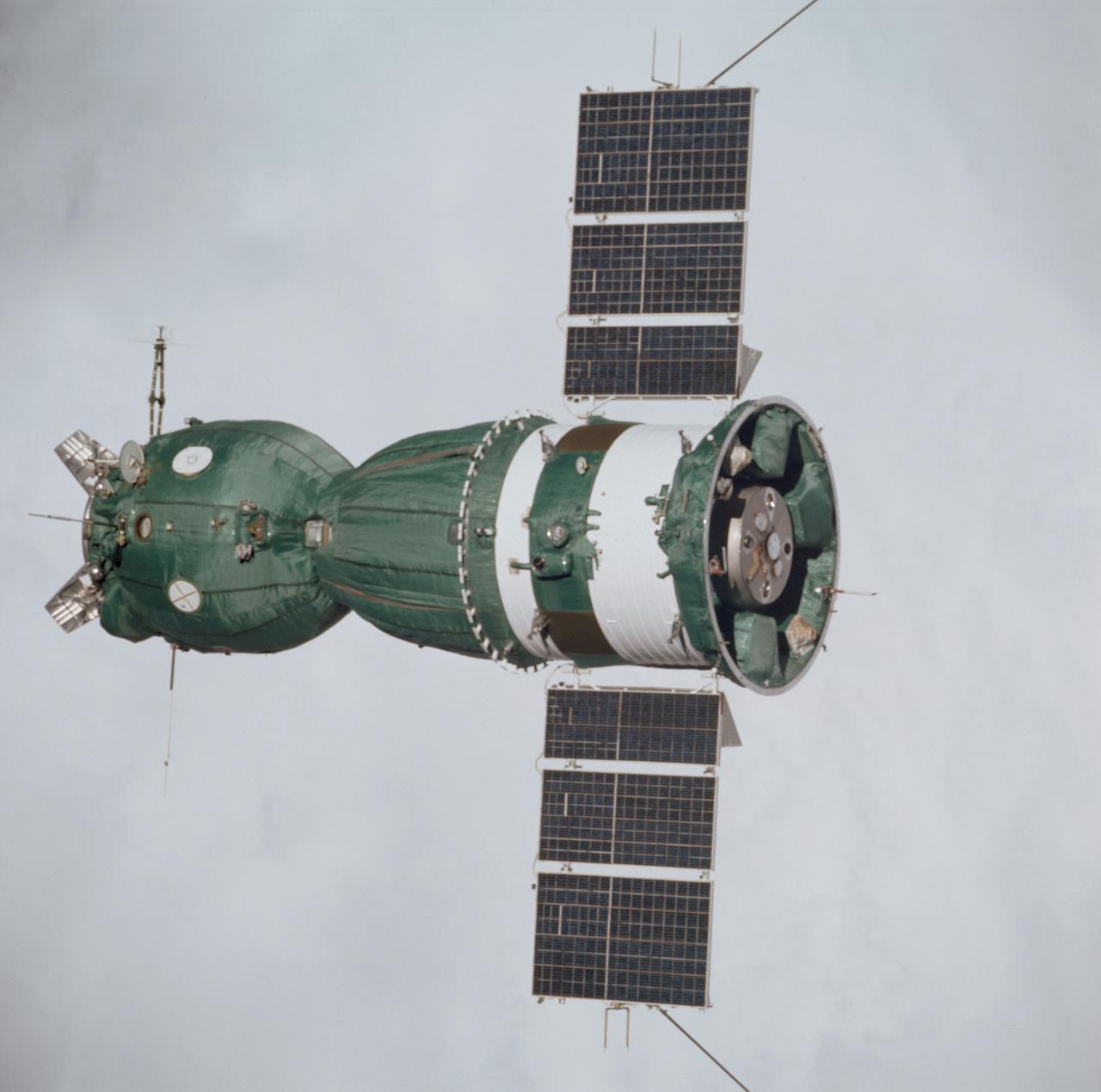
AST-01-056 (18 July 1975) --- An excellent view of the Soviet Soyuz spacecraft in Earth orbit, photographed from the American Apollo spacecraft during the joint U.S.-USSR Apollo-Soyuz Test Project (ASTP) docking mission in Earth orbit. The Soyuz is contrasted against a white-cloud background in this overhead view. The three major components of the Soyuz are the spherical-shaped Orbital Module, the bell-shaped Descent Vehicle and the cylindrical-shaped instrument Assembly Module from which two solar panels protrude. The docking system on the Orbital Module was specially designed to interface with the docking system on the Apollo's Docking Module. The ASTP astronauts and cosmonauts visited each other's spacecraft while the Soyuz and Apollo were docked in Earth orbit for two days. The Apollo crew consisted of astronauts Stafford, commander; Donald K. "Deke" Slayton, docking module pilot; and Vance D. Brand, command module pilot. The Soyuz 19 crew consisted of cosmonauts Leonov, command pilot; and Valeri N. Kubasov, flight engineer.
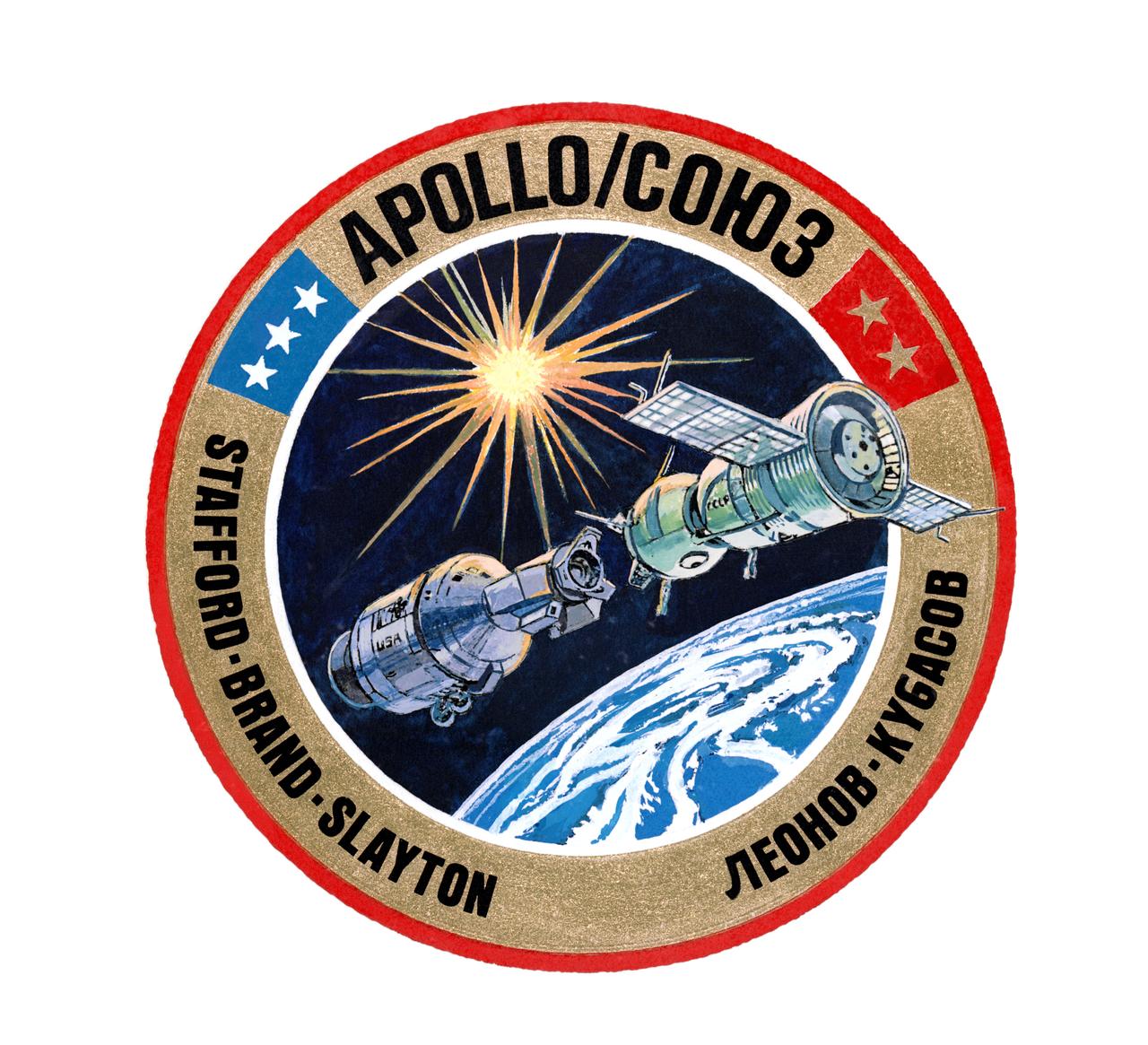
S75-20361 (27 Feb. 1975) --- This is the American crew insignia of the joint United States-USSR Apollo-Soyuz Test Project (ASTP) scheduled to take place in July 1975. Of circular design, the insignia has a colorful border area, outlined in red, with the names of the five crew members and the words Apollo in English and Soyuz in Russian around an artist?s concept of the Apollo and Soyuz spacecraft about to dock in Earth orbit. The bright sun and the blue and white Earth are in the background. The white stars on the blue background represent American astronauts Thomas P. Stafford, commander; Vance D. Brand, command module pilot; and Donald (Deke) K. Slayton, docking module pilot. The dark gold stars on the red background represent Soviet cosmonauts Aleksey A. Leonov, commander, and Valeriy N. Kubasov, engineer. Soyuz and Apollo will be launched separately from the USSR and United States, and will dock and remain together for as long as two days. The three Apollo astronauts will enter Soyuz and the two Soviet cosmonauts will visit the Apollo spacecraft via a docking module. The Russian word ?soyuz? means ?union? in English.
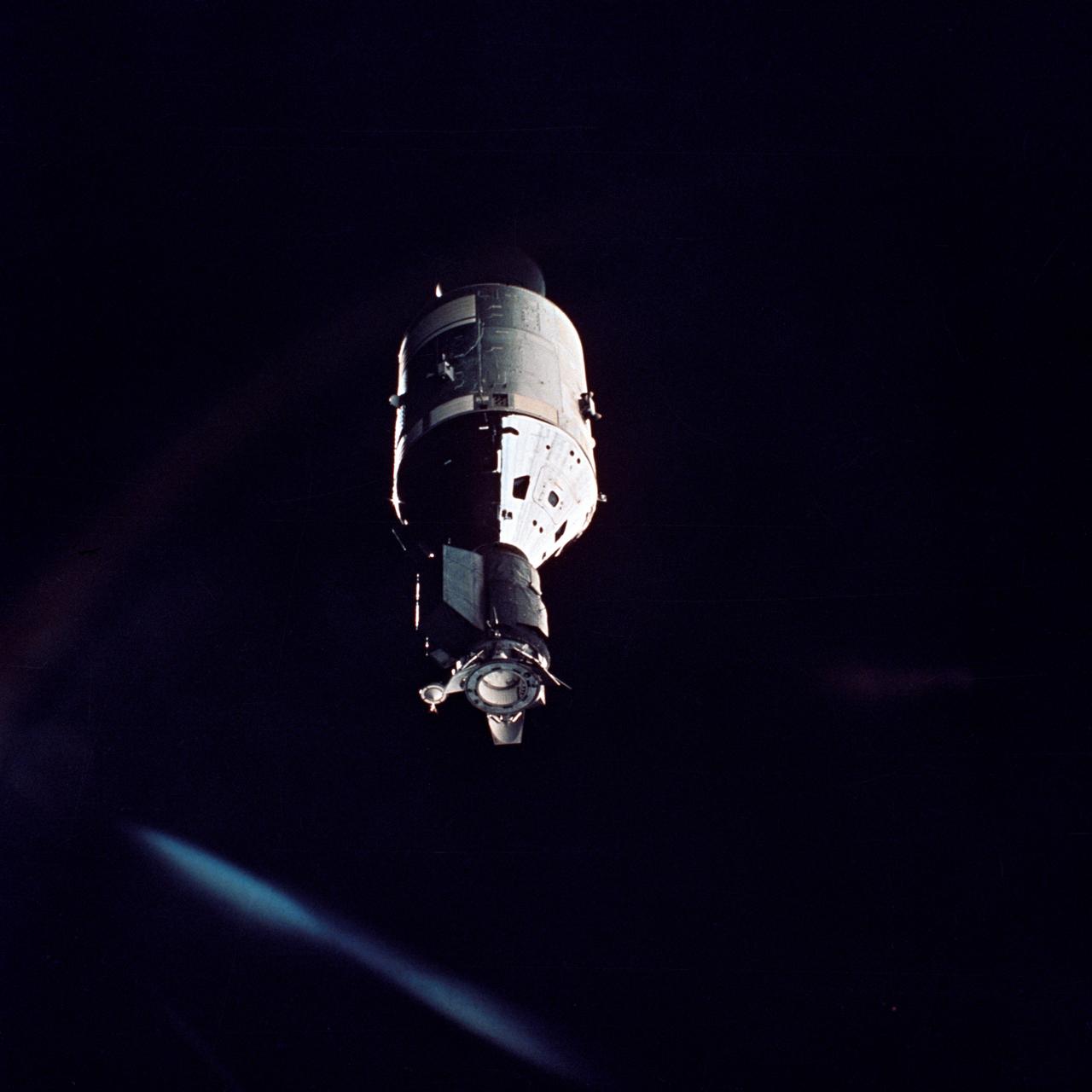
AST-32-2686 (17-19 July 1975) --- The American Apollo spacecraft as seen in Earth orbit from the Soviet Soyuz 19 spacecraft during the joint U.S.-USSR Apollo Soyuz Test Project (ASTP) mission. The Command and Service Module (CSM) and Docking Module (DM) are contrasted against a black-sky background. Light reflected in the camera streaks the image. Note the docking mechanism and docking target on the DM. On the left the bell-shaped engine nozzle of the service propulsion system protrudes from the rear of the Service Module (SM). The American and Soviet spacecraft were joined together in space for approximately 47 hours on July 17, 18, 19, 1975. This picture was furnished by the USSR in an exchange of photography taken during the ASTP flight. The Apollo crew consisted of astronauts Thomas P. Stafford, commander; Donald K. "Deke" Slayton, docking module pilot; and Vance D. Brand, command module pilot. The Soyuz 19 crew consisted of cosmonauts Aleksei A. Leonov, command pilot; and Valeri N. Kubasov, flight engineer.