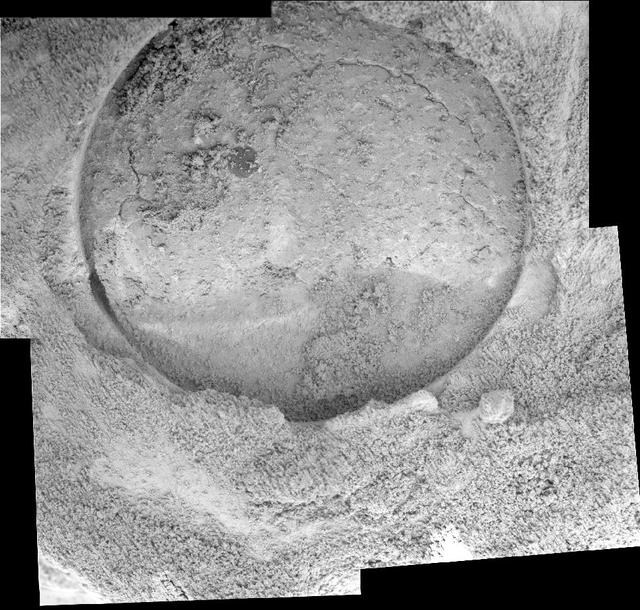
Door to Pilbara
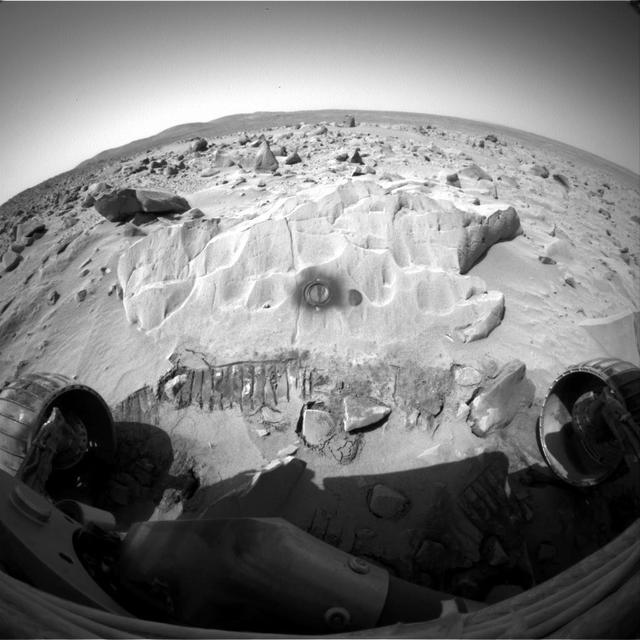
Door to Mazatzal Past
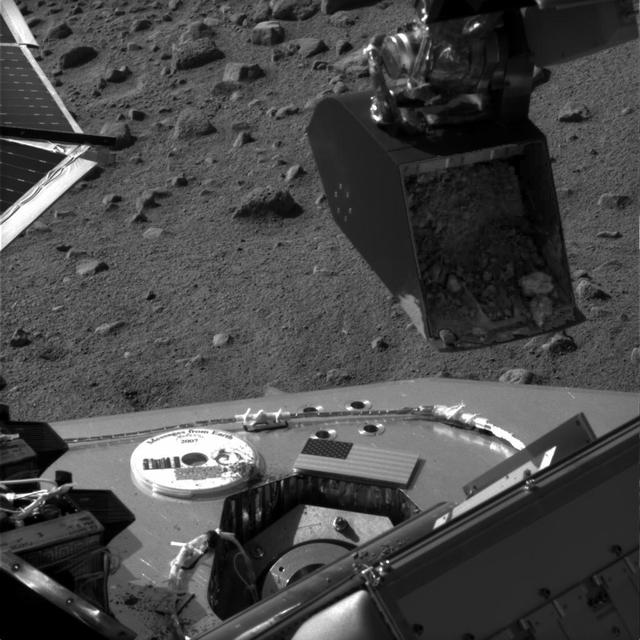
Soil Sample Poised at TEGA Door
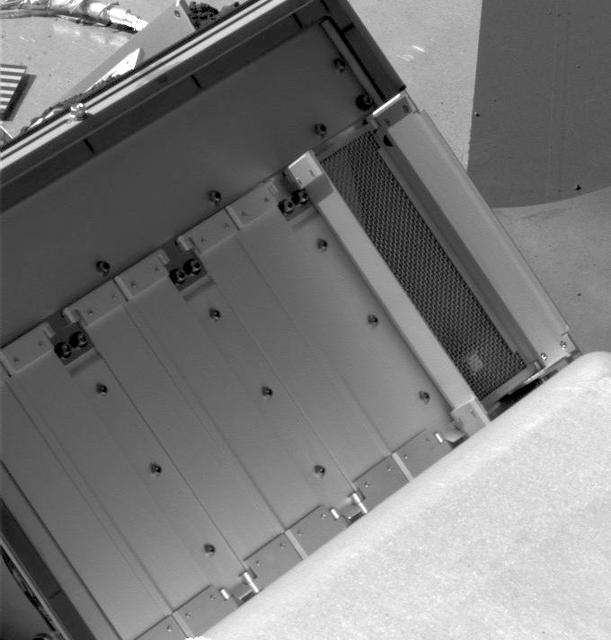
Doors Fully Open on Phoenix Next Oven
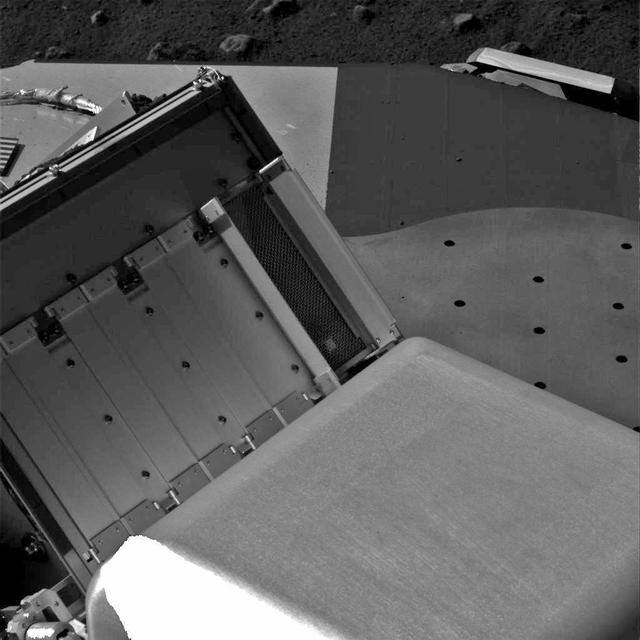
Doors Fully Open on Phoenix Next Oven
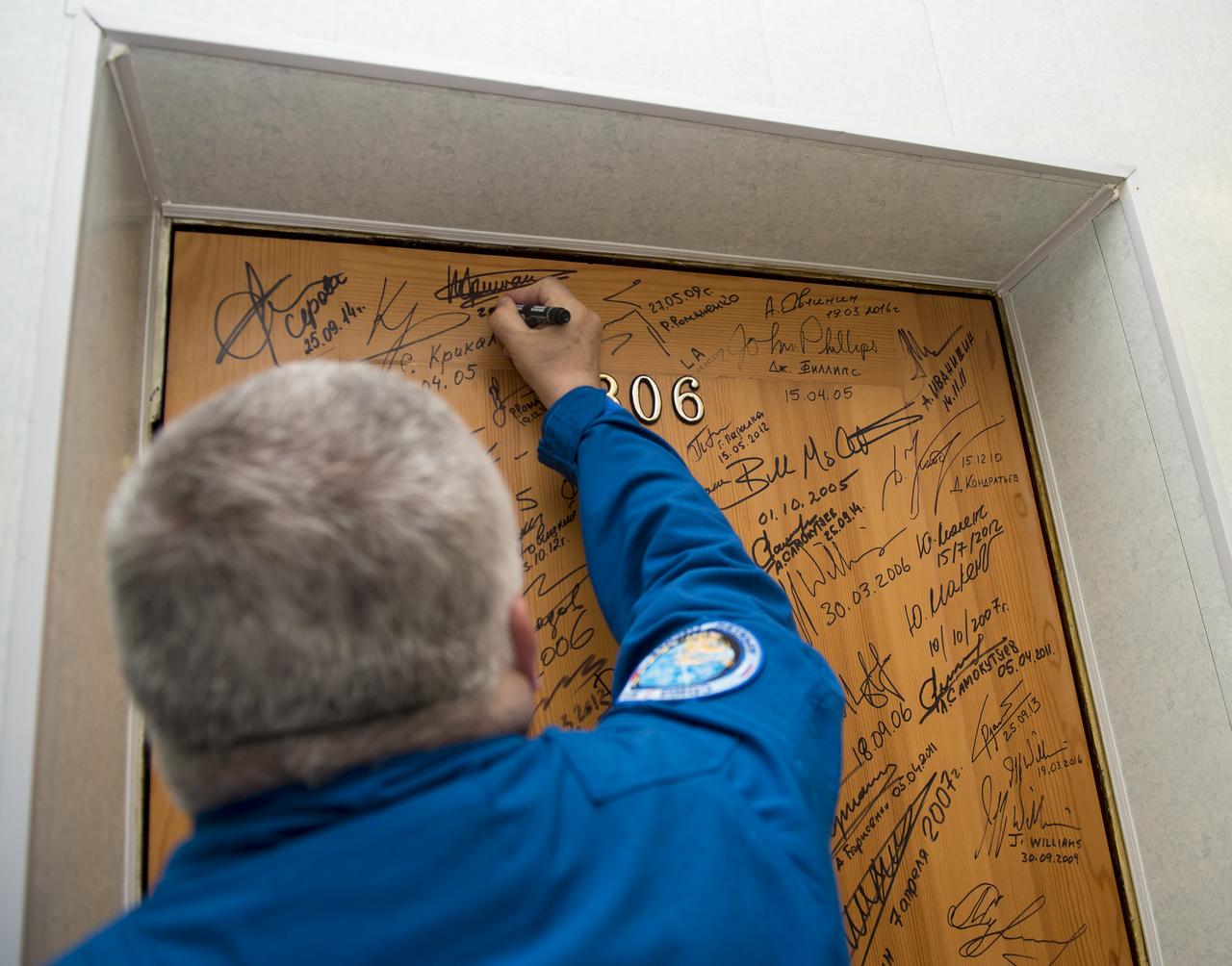
Expedition 51 Soyuz Commander Fyodor Yurchikhin of Roscosmos performs the traditional door signing at the Cosmonaut Hotel prior to departing the hotel for launch in a Soyuz rocket with fellow crew mate Flight Engineer Jack Fischer of NASA, Thursday, April 20, 2017 in Baikonur, Kazakhstan. Launch of the Soyuz rocket is scheduled for 1:13pm April 20 Baikonur time, and will carry Yurchikhin and Fischer into orbit to begin their four and a half month mission on the International Space Station. Photo Credit: (NASA/Aubrey Gemignani)
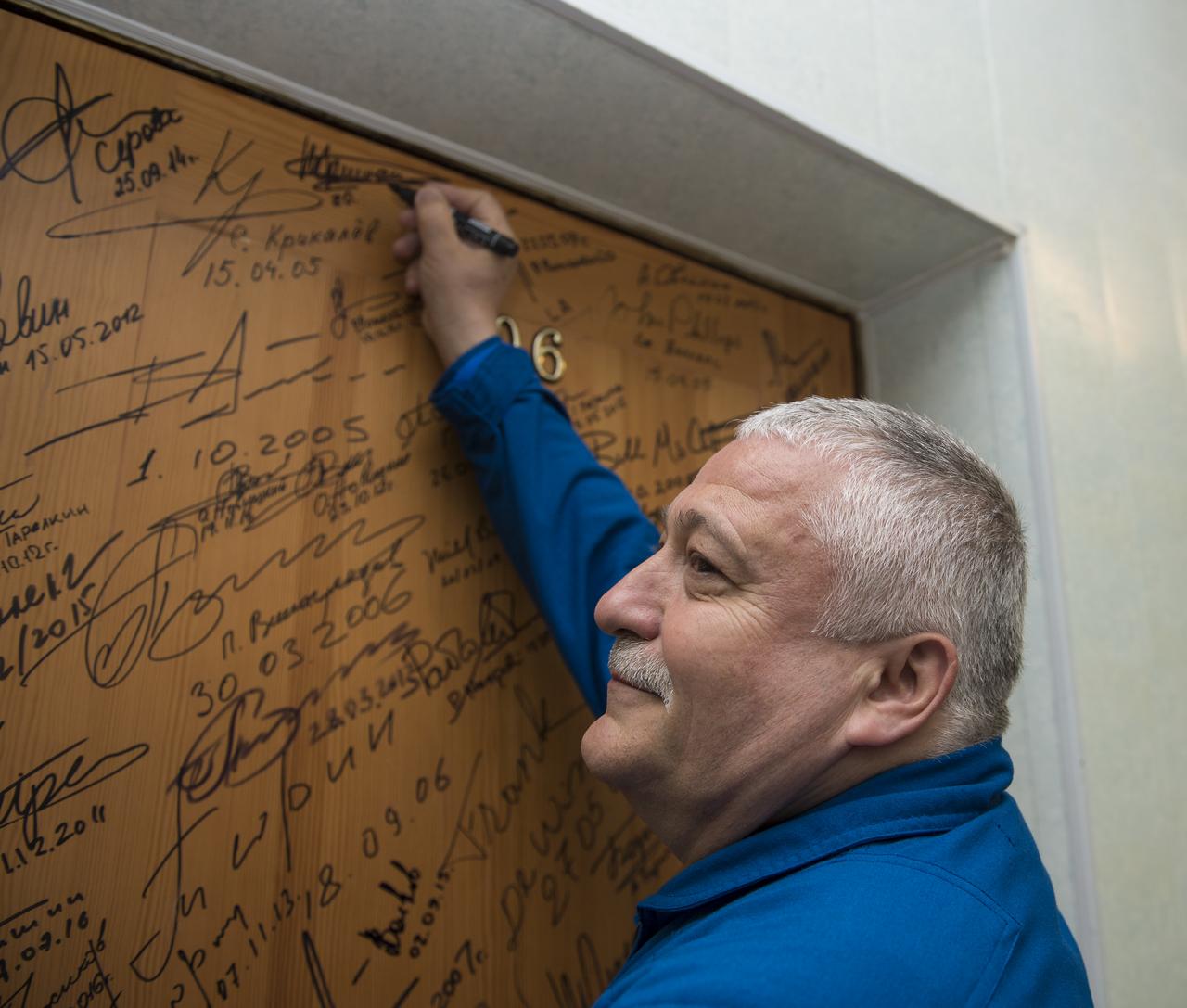
Expedition 51 Soyuz Commander Fyodor Yurchikhin of Roscosmos performs the traditional door signing at the Cosmonaut Hotel prior to departing the hotel for launch in a Soyuz rocket with fellow crew mate Flight Engineer Jack Fischer of NASA, Thursday, April 20, 2017 in Baikonur, Kazakhstan. Launch of the Soyuz rocket is scheduled for 1:13pm April 20 Baikonur time, and will carry Yurchikhin and Fischer into orbit to begin their four and a half month mission on the International Space Station. Photo Credit: (NASA/Aubrey Gemignani)
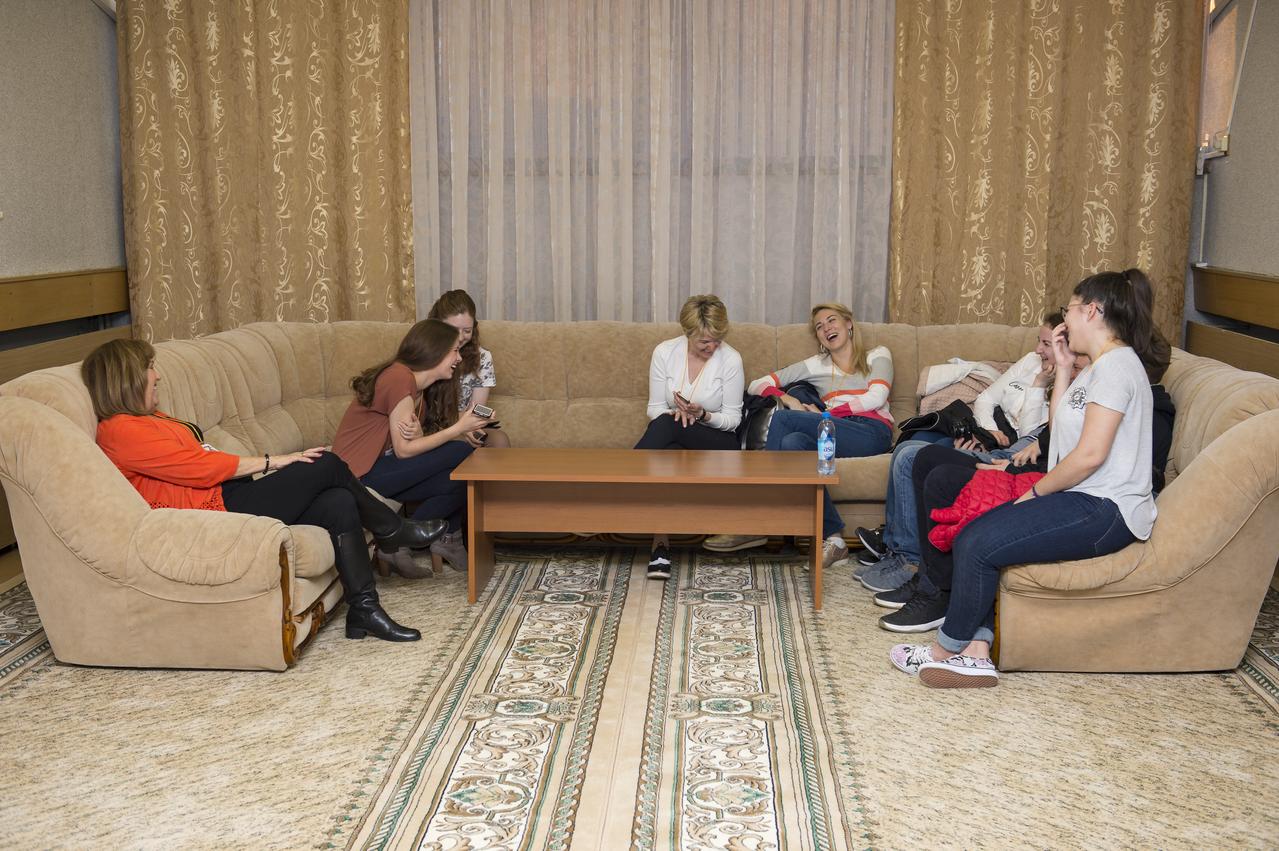
The families of Expedition 51 Flight Engineer Jack Fischer of NASA and Soyuz Commander Fyodor Yurchikhin of Roscosmos laugh together before watching the traditional door signing ceremony at the Cosmonaut Hotel prior to the Expedition 51 launch, Thursday, April 20, 2017 in Baikonur, Kazakhstan. Launch of the Soyuz rocket is scheduled for 1:13pm April 20 Baikonur time, and will carry Yurchikhin and Fischer into orbit to begin their four and a half month mission on the International Space Station. Photo Credit: (NASA/Aubrey Gemignani)
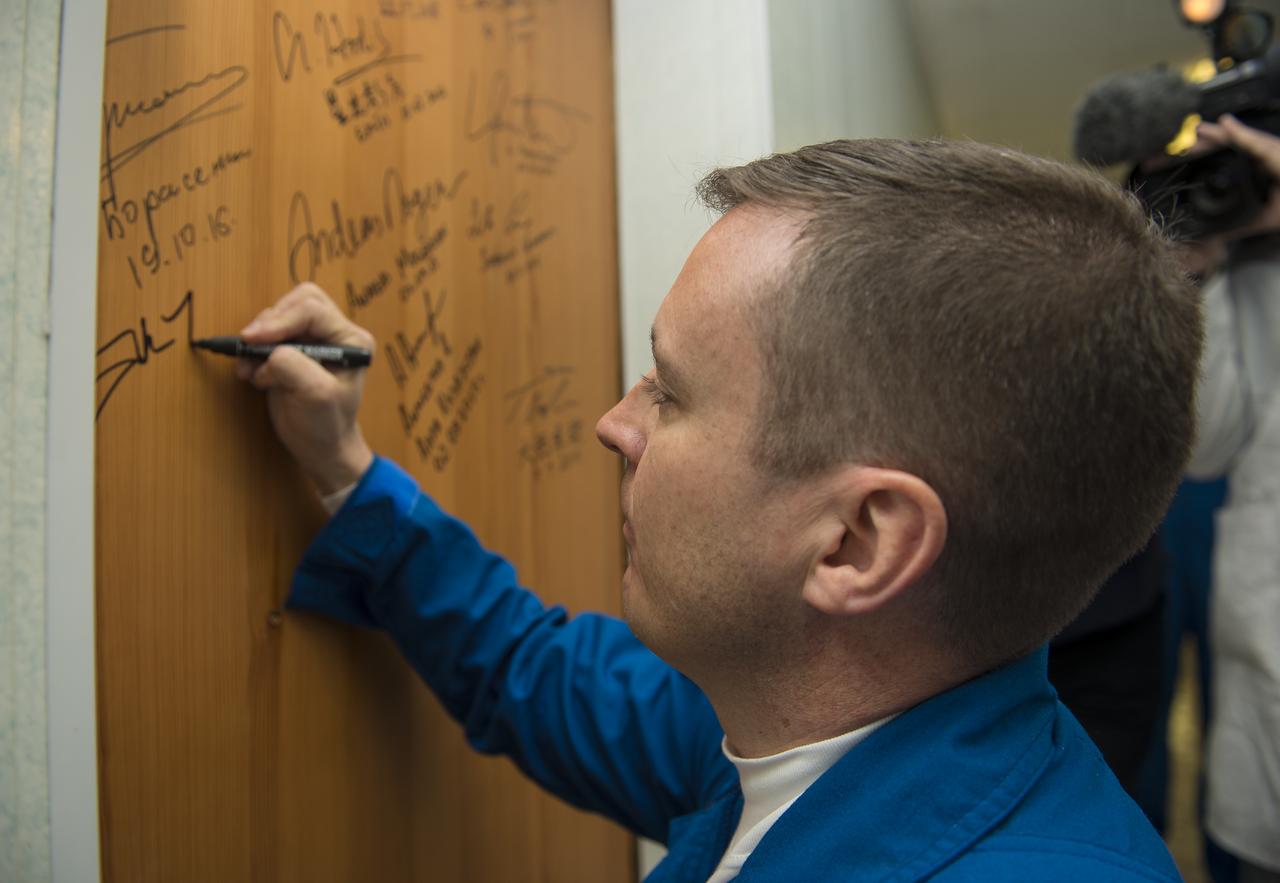
Expedition 51 Flight Engineer Jack Fischer of NASA performs the traditional door signing at the Cosmonaut Hotel prior to departing the hotel for launch in a Soyuz rocket with fellow crew mate, Soyuz Commander Fyodor Yurchikhin of Roscosmos, Thursday, April 20, 2017 in Baikonur, Kazakhstan. Launch of the Soyuz rocket is scheduled for 1:13pm April 20 Baikonur time, and will carry Yurchikhin and Fischer into orbit to begin their four and a half month mission on the International Space Station. Photo Credit: (NASA/Aubrey Gemignani)
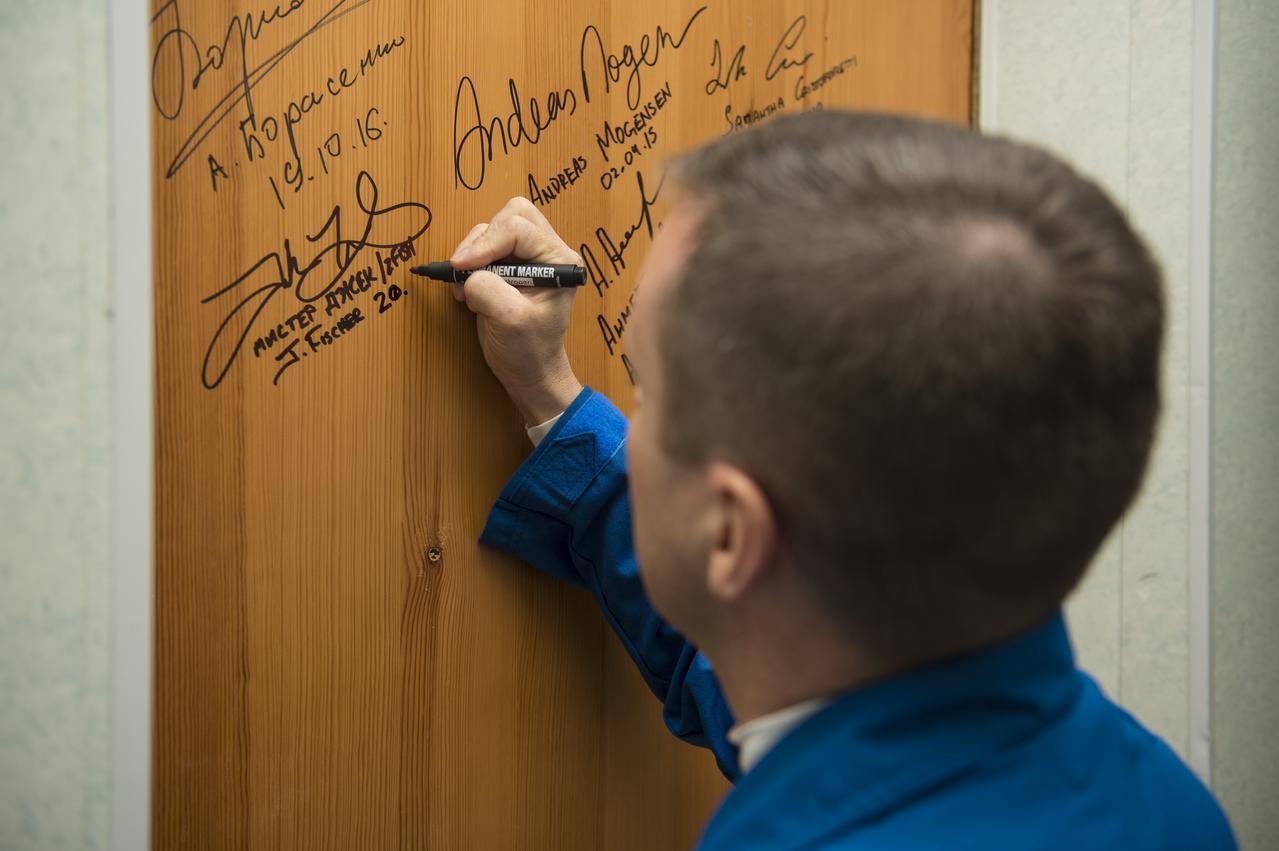
Expedition 51 Flight Engineer Jack Fischer of NASA performs the traditional door signing at the Cosmonaut Hotel prior to departing the hotel for launch in a Soyuz rocket with fellow crew mate, Soyuz Commander Fyodor Yurchikhin of Roscosmos, Thursday, April 20, 2017 in Baikonur, Kazakhstan. Launch of the Soyuz rocket is scheduled for 1:13pm April 20 Baikonur time, and will carry Yurchikhin and Fischer into orbit to begin their four and a half month mission on the International Space Station. Photo Credit: (NASA/Aubrey Gemignani)
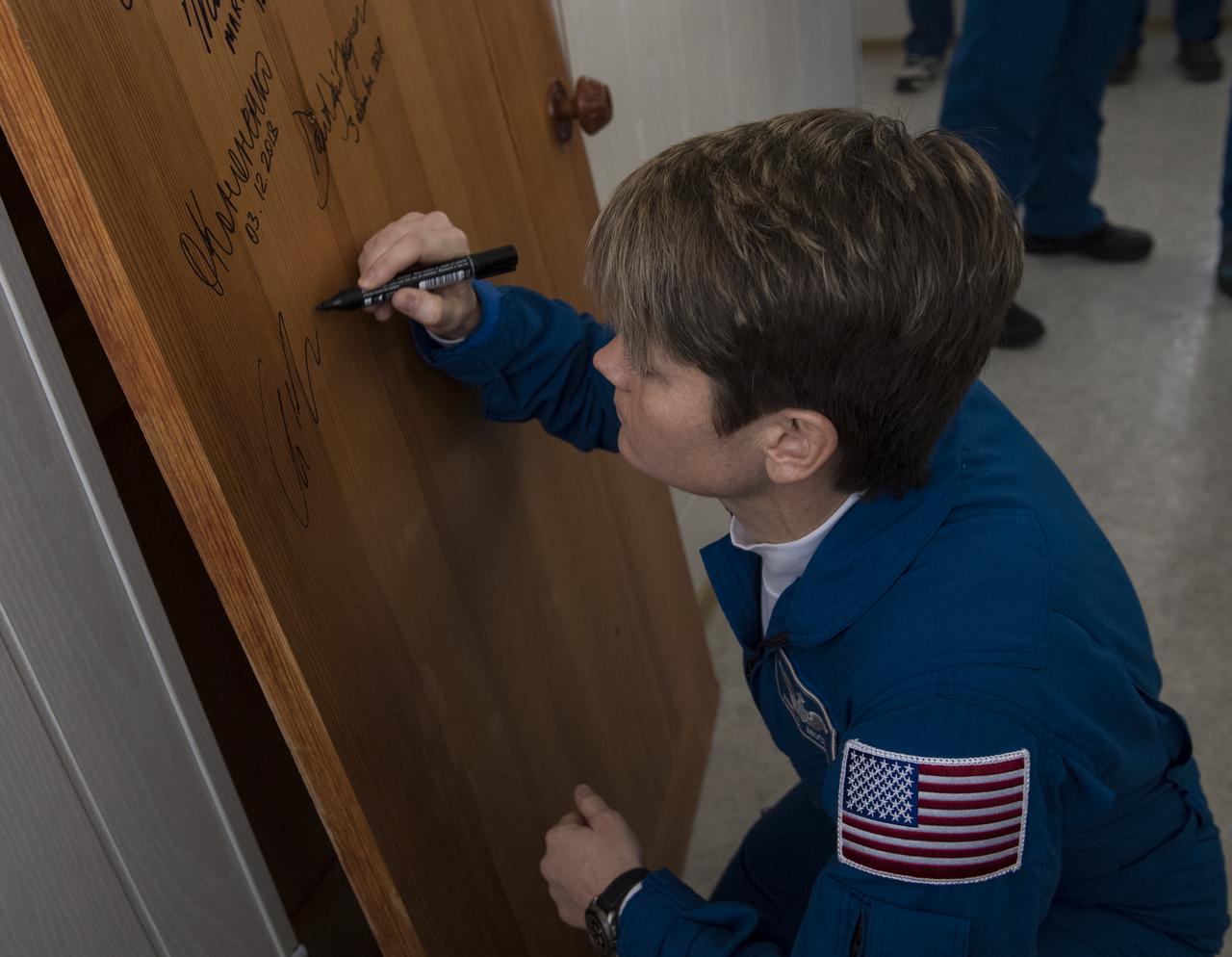
Expedition 58 Flight Engineer Anne McClain of NASA performs the traditional door signing at the Cosmonaut Hotel prior to departing the hotel for launch in a Soyuz rocket with fellow crewmates, Soyuz Commander Oleg Kononenko of Roscosmos, and Flight Engineer David Saint-Jacques of the Canadian Space Agency (CSA), Monday, Dec. 3, 2018, in Baikonur, Kazakhstan. Launch of the Soyuz rocket is scheduled for the same day and will carry McClain, Kononenko, and Saint-Jacques into orbit to begin their six and a half month mission on the International Space Station. Photo Credit: (NASA/Aubrey Gemignani)
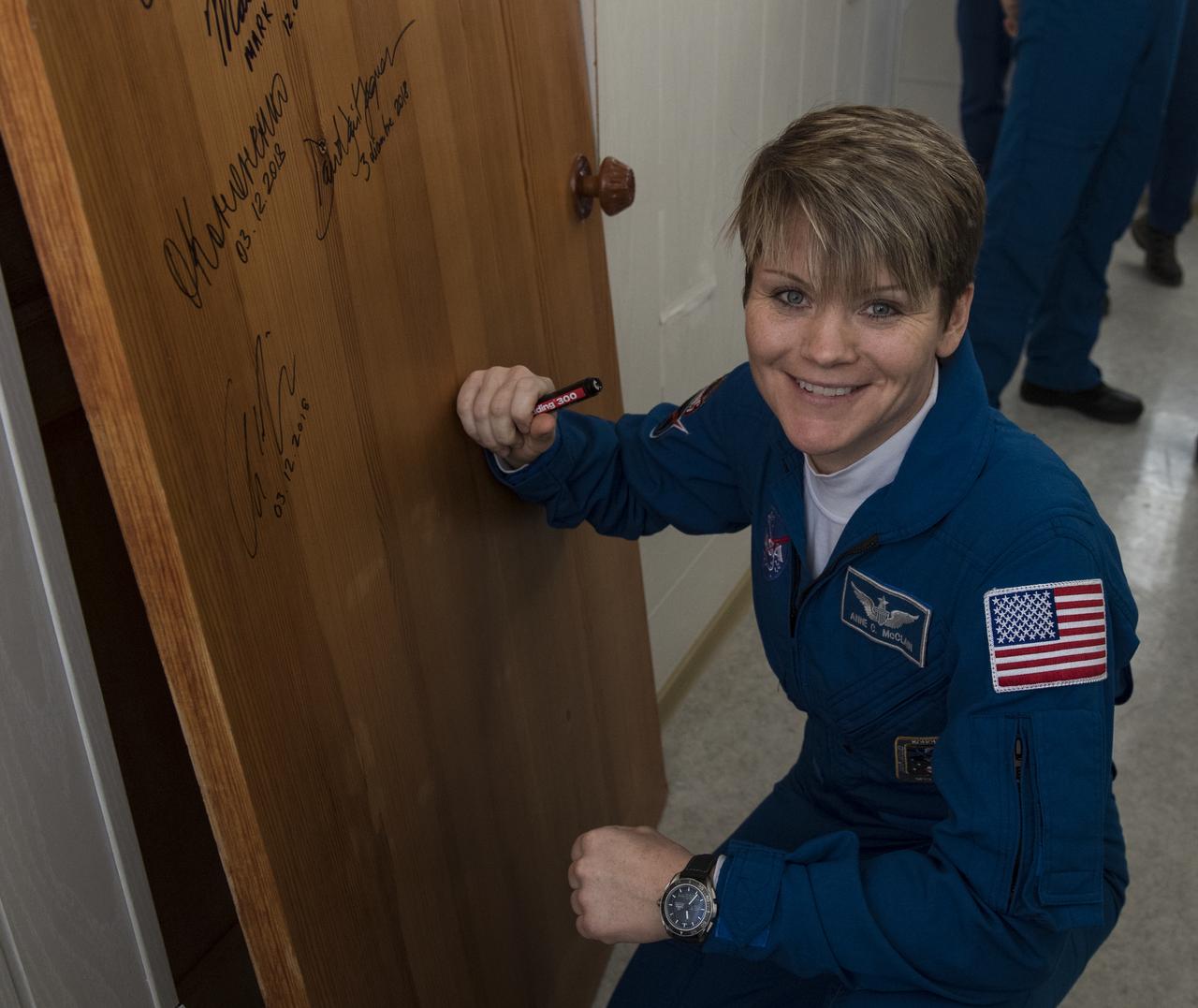
Expedition 58 Flight Engineer Anne McClain of NASA performs the traditional door signing at the Cosmonaut Hotel prior to departing the hotel for launch in a Soyuz rocket with fellow crewmates, Soyuz Commander Oleg Kononenko of Roscosmos, and Flight Engineer David Saint-Jacques of the Canadian Space Agency (CSA), Monday, Dec. 3, 2018, in Baikonur, Kazakhstan. Launch of the Soyuz rocket is scheduled for the same day and will carry McClain, Kononenko, and Saint-Jacques into orbit to begin their six and a half month mission on the International Space Station. Photo Credit: (NASA/Aubrey Gemignani)
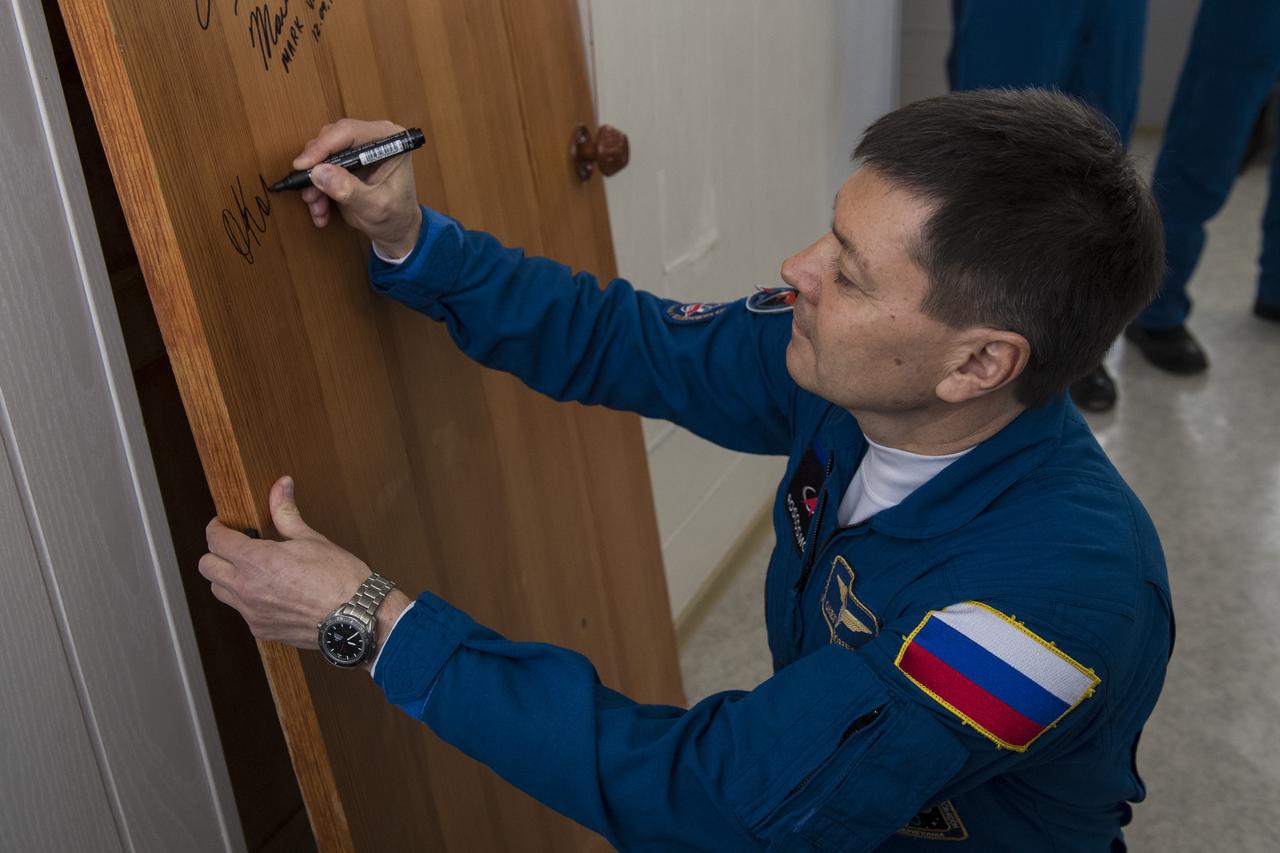
Expedition 58 Soyuz Commander Oleg Kononenko of Roscosmos performs the traditional door signing at the Cosmonaut Hotel prior to departing the hotel for launch in a Soyuz rocket with fellow crewmates, Flight Engineer Anne McClain of NASA and Flight Engineer David Saint-Jacques of the Canadian Space Agency (CSA), Monday, Dec. 3, 2018, in Baikonur, Kazakhstan. Launch of the Soyuz rocket is scheduled for the same day and will carry Kononenko, McClain, and Saint-Jacques into orbit to begin their six and a half month mission on the International Space Station. Photo Credit: (NASA/Aubrey Gemignani)
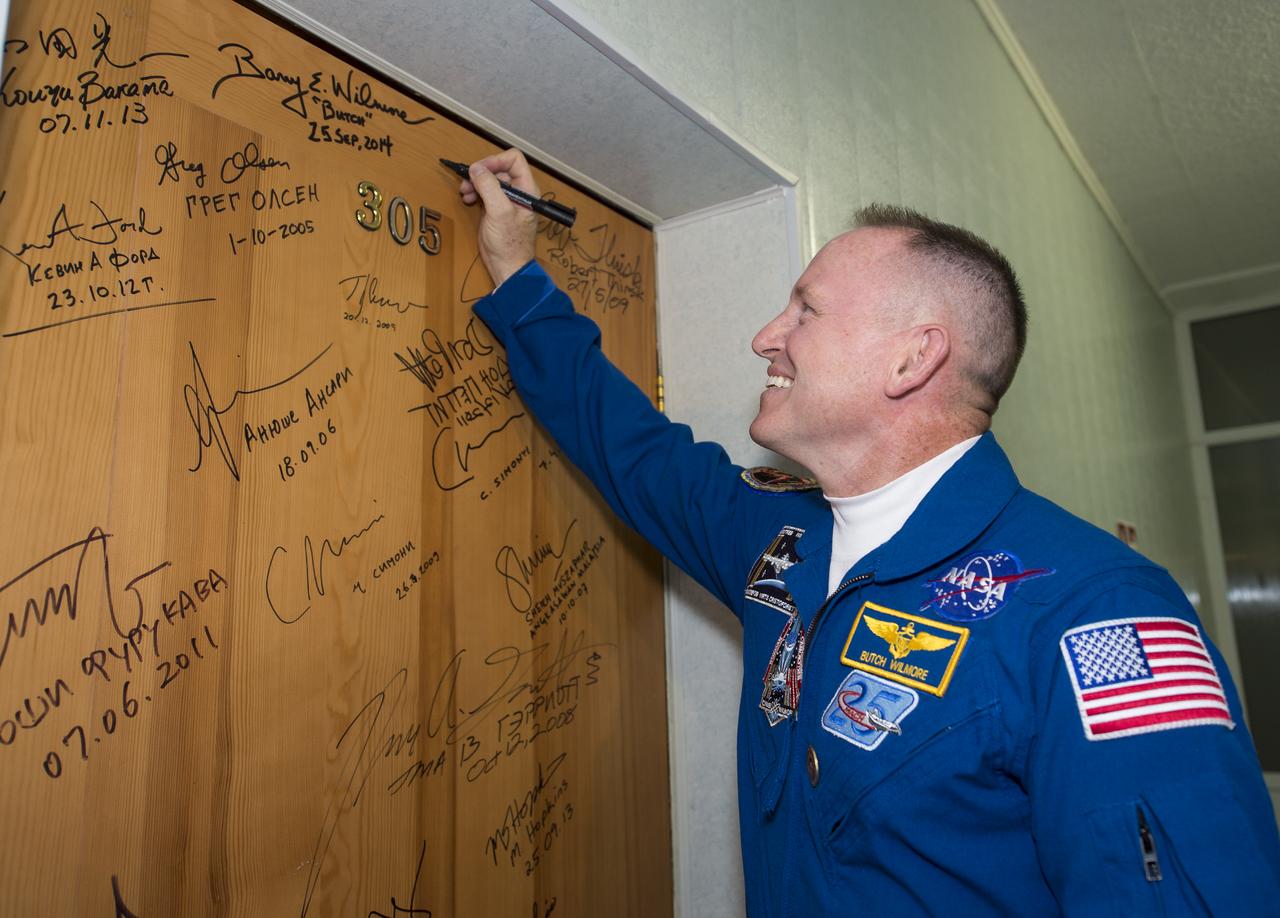
Expedition 41 Flight Engineer Barry Wilmore of NASA performs the traditional door signing at the Cosmonaut Hotel prior to departing the hotel for launch in a Soyuz rocket with fellow crew mates, Soyuz Commander Alexander Samokutyaev and Flight Engineer Elena Serova of the Russian Federal Space Agency (Roscosmos), Thursday, Sept. 25, 2014 in Baikonur, Kazakhstan. Launch of the Soyuz rocket is scheduled for the early hours of Sept. 26 Kazakhstan time and will carry Wilmore, Samokutyaev, and Serova into orbit to begin their five and a half month mission on the International Space Station. Photo Credit: (NASA/Aubrey Gemignani)
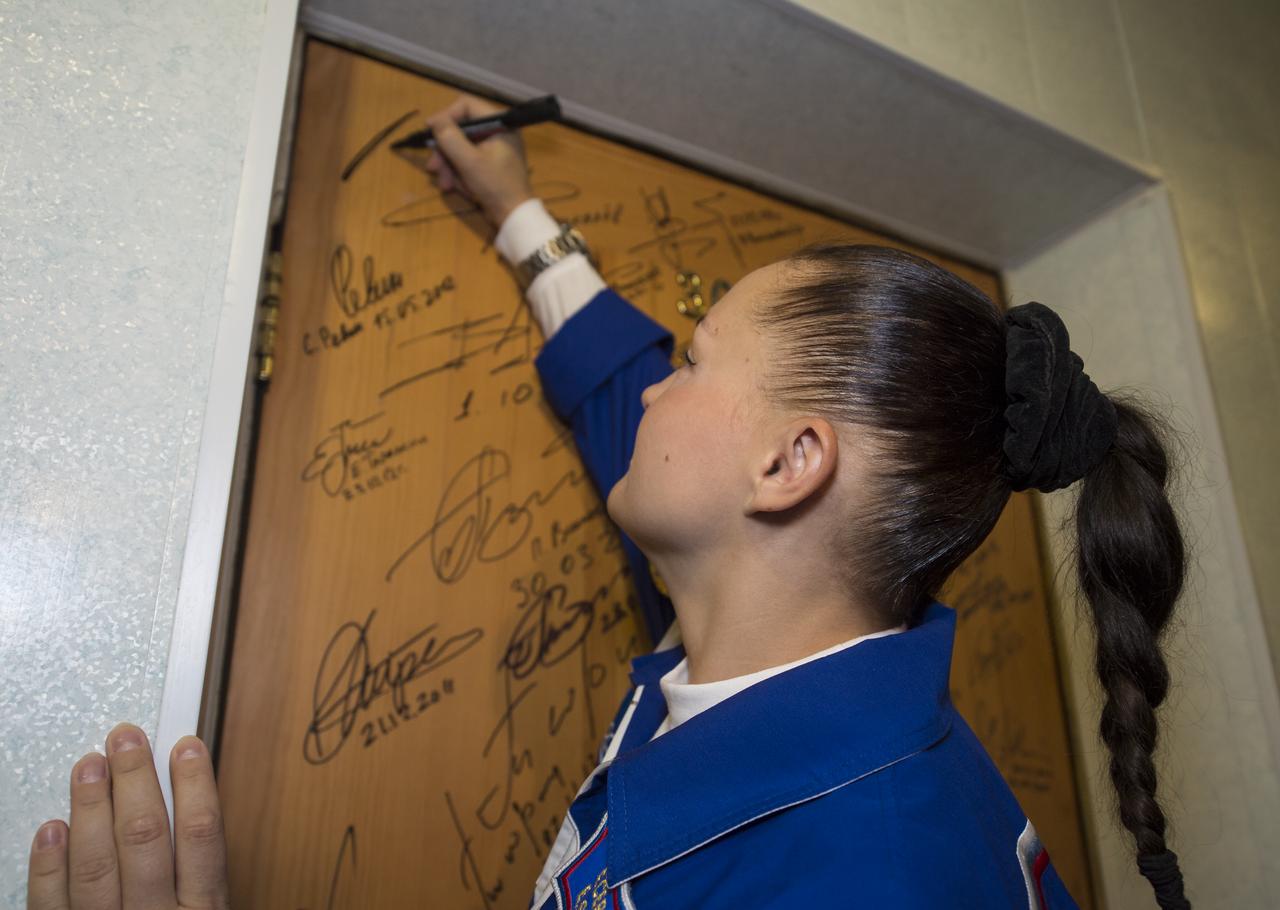
Expedition 41 Flight Engineer Elena Serova of the Russian Federal Space Agency (Roscosmos), performs the traditional door signing at the Cosmonaut Hotel prior to departing the hotel for launch in a Soyuz rocket with fellow crew mates, Soyuz Commander Alexander Samokutyaev of Roscosmos and Flight Engineer Barry Wilmore of NASA, Thursday, Sept. 25, 2014 in Baikonur, Kazakhstan. Launch of the Soyuz rocket is scheduled for the early hours of Sept. 26 Kazakhstan time and will carry Serova, Wilmore, and Samokutyaev into orbit to begin their five and a half month mission on the International Space Station. Serova will become the fourth Russian woman to fly in space and the first Russian woman to live and work on the station. Photo Credit (NASA/Aubrey Gemignani)
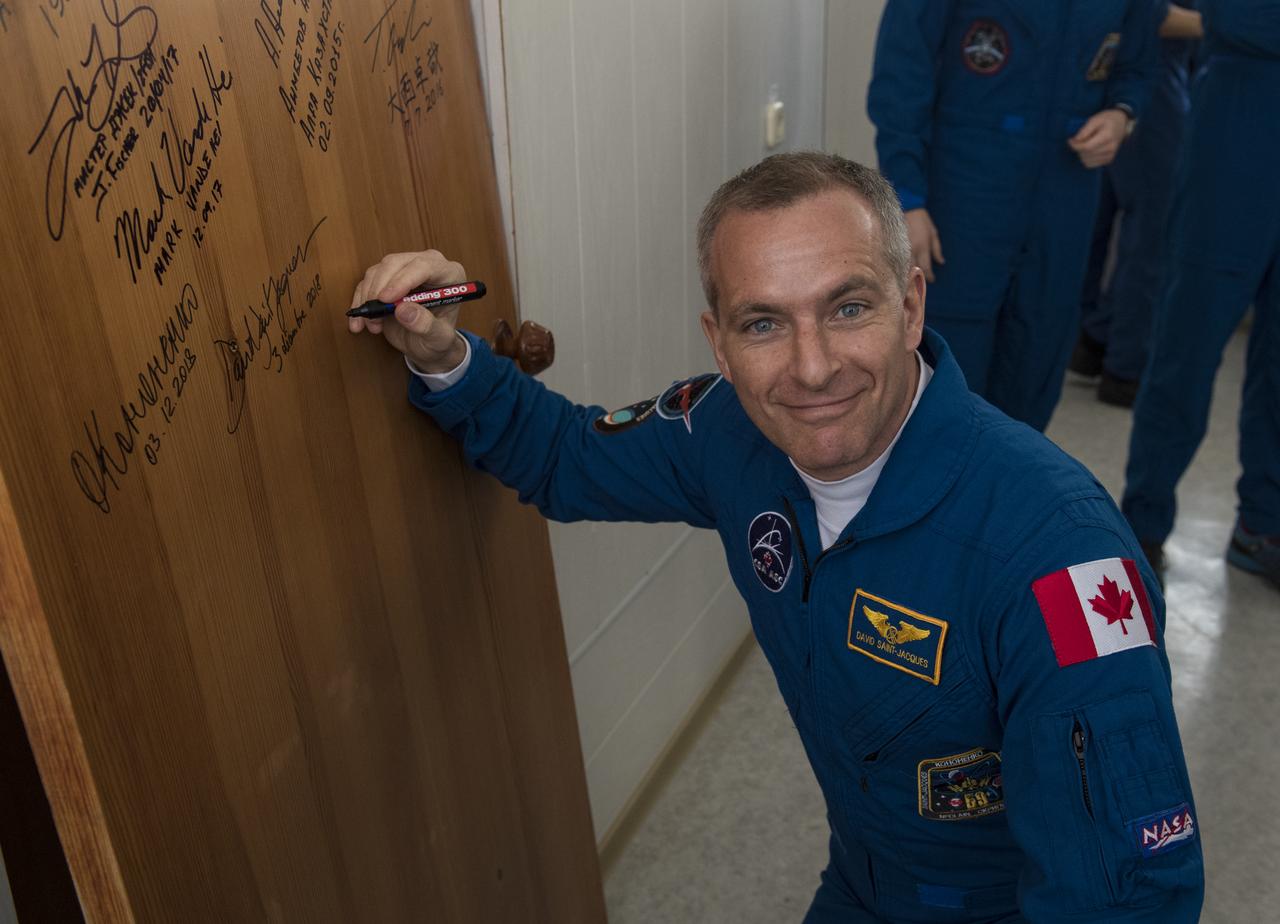
Expedition 58 Flight Engineer David Saint-Jacques of the Canadian Space Agency (CSA) poses for a photo after performing the traditional door signing at the Cosmonaut Hotel prior to departing the hotel for launch in a Soyuz rocket with fellow crewmates, Soyuz Commander Oleg Kononenko of Roscosmos, and Flight Engineer Anne McClain of NASA, Monday, Dec. 3, 2018, in Baikonur, Kazakhstan. Launch of the Soyuz rocket is scheduled for the same day and will carry Saint-Jacques, McClain, and Kononenko into orbit to begin their six and a half month mission on the International Space Station. Photo Credit: (NASA/Aubrey Gemignani)
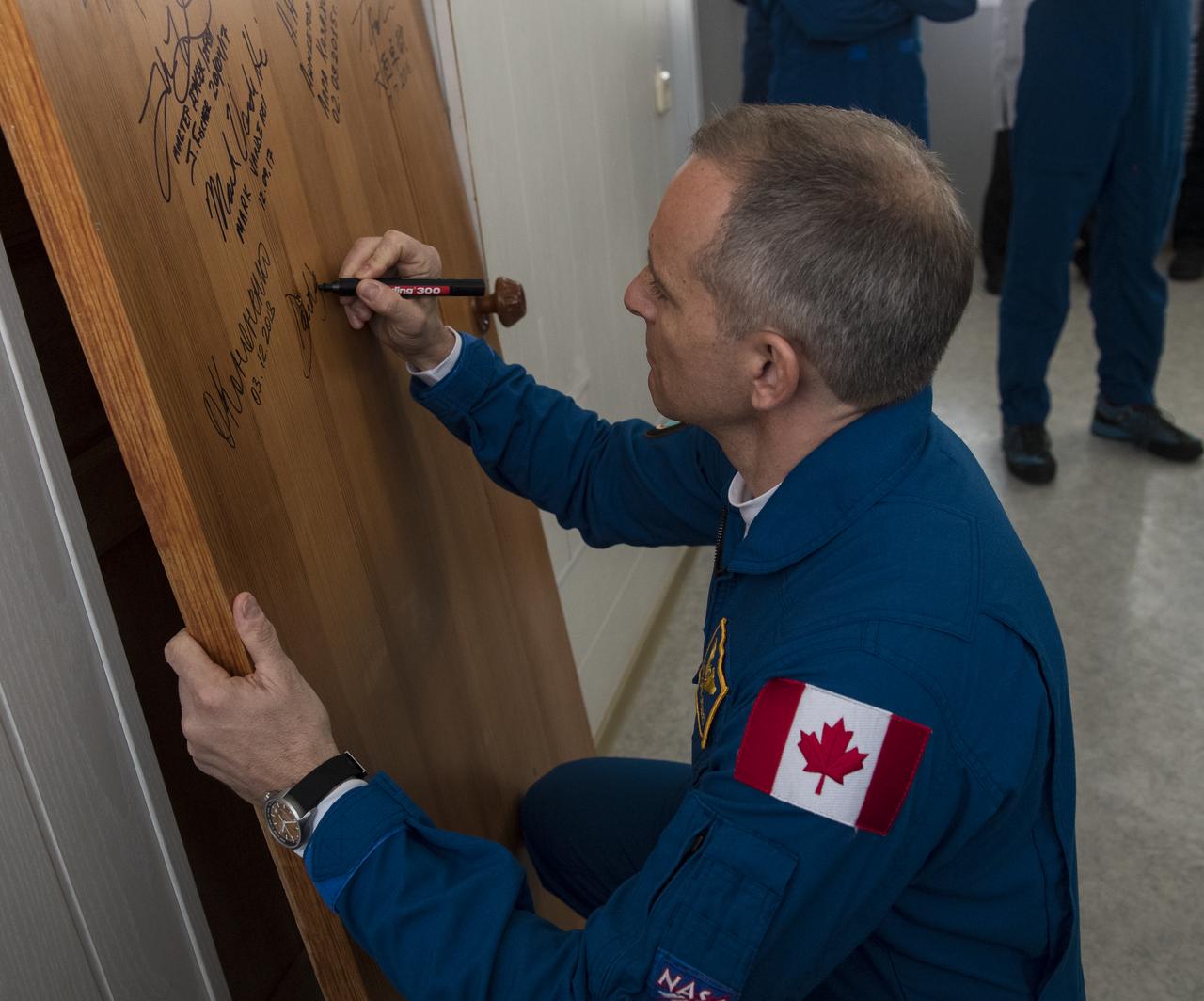
Expedition 58 Flight Engineer David Saint-Jacques of the Canadian Space Agency (CSA) performs the traditional door signing at the Cosmonaut Hotel prior to departing the hotel for launch in a Soyuz rocket with fellow crewmates, Soyuz Commander Oleg Kononenko of Roscosmos, and Flight Engineer Anne McClain of NASA, Monday, Dec. 3, 2018, in Baikonur, Kazakhstan. Launch of the Soyuz rocket is scheduled for the same day and will carry Saint-Jacques, McClain, and Kononenko into orbit to begin their six and a half month mission on the International Space Station. Photo Credit: (NASA/Aubrey Gemignani)
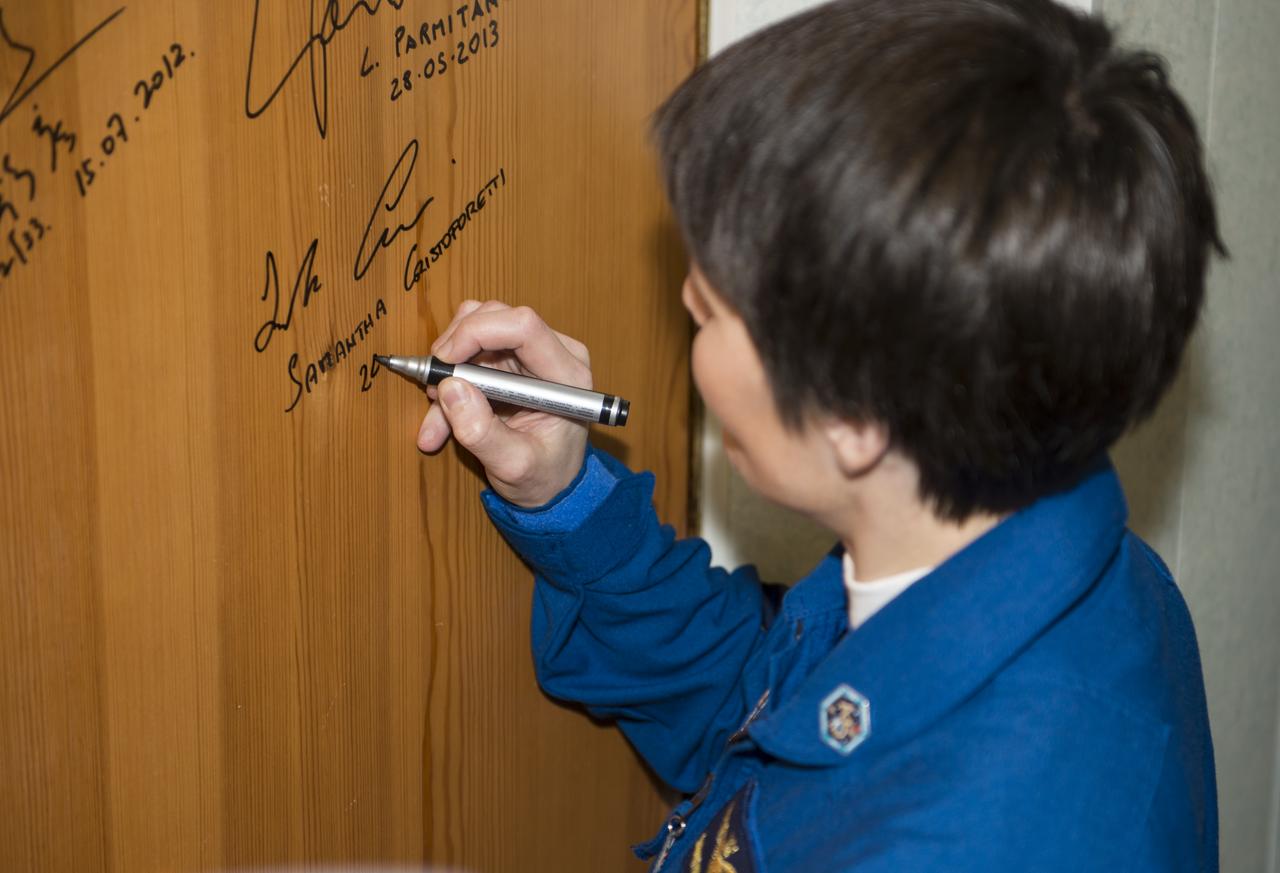
Expedition 42 Flight Engineer Samantha Cristoforetti of the European Space Agency (ESA), performs the traditional door signing at the Cosmonaut Hotel prior to departing the hotel for launch in a Soyuz rocket with fellow crewmates, Soyuz Commander Anton Shkaplerov of the Russian Federal Space Agency (Roscosmos) and Flight Engineer Terry Virts of NASA, Sunday, Nov. 23, 2014 in Baikonur, Kazakhstan. Launch of the Soyuz rocket is scheduled for the early hours of Nov. 24 Kazakhstan time and will carry Cristoforetti, Virts, and Shkaplerov into orbit to begin their five and a half month mission on the International Space Station. Photo Credit (NASA/Aubrey Gemignani)
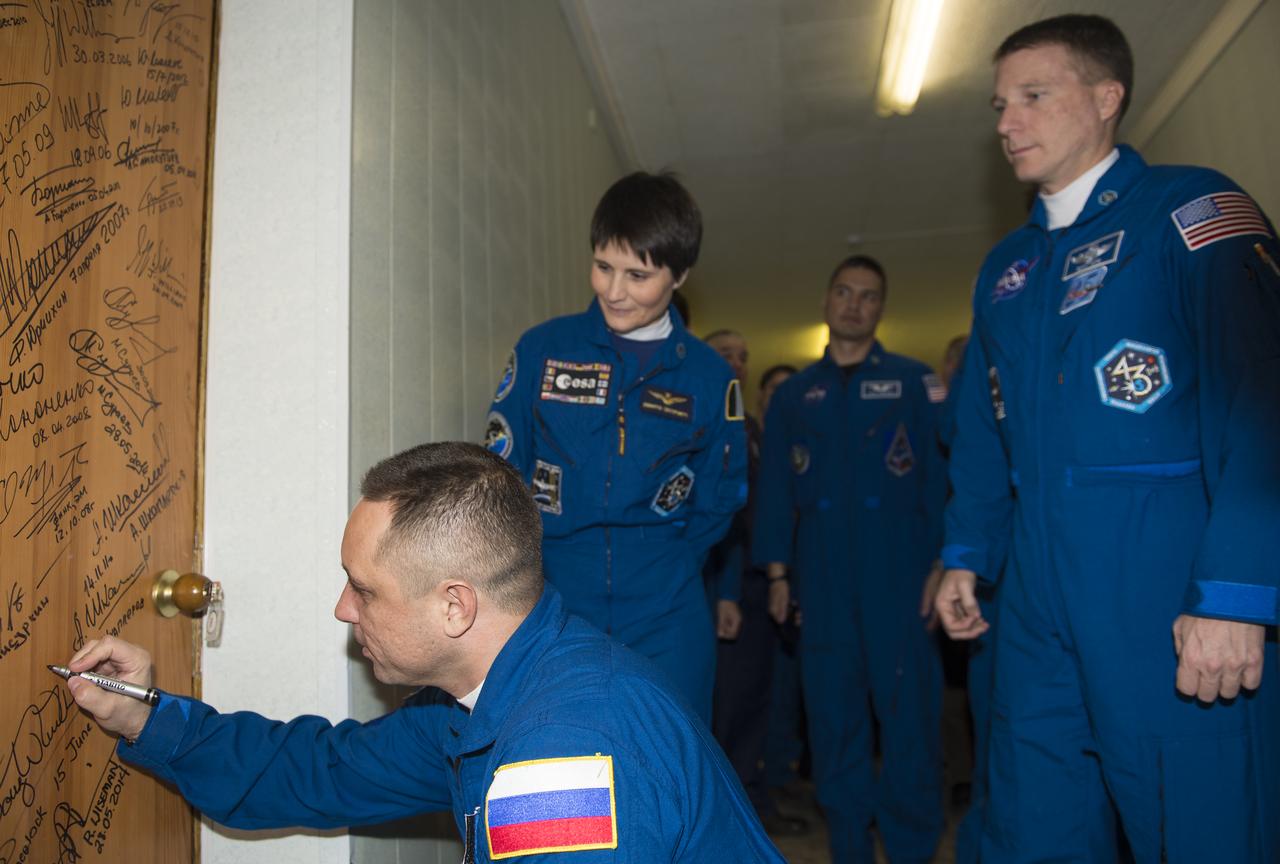
Expedition 42 Soyuz Commander Anton Shkaplerov of the Russian Federal Space Agency (Roscosmos) performs the traditional door signing at the Cosmonaut Hotel prior to departing the hotel for launch in a Soyuz rocket with fellow crewmates, Flight Engineers Samantha Cristoforetti of the European Space Agency (ESA) and Terry Virts of NASA, Sunday, Nov. 23, 2014 in Baikonur, Kazakhstan. Launch of the Soyuz rocket is scheduled for the early hours of Nov. 24 Kazakhstan time and will carry Shkaplerov, Cristoforetti, and Virts into orbit to begin their five and a half month mission on the International Space Station. Photo Credit (NASA/Aubrey Gemignani)
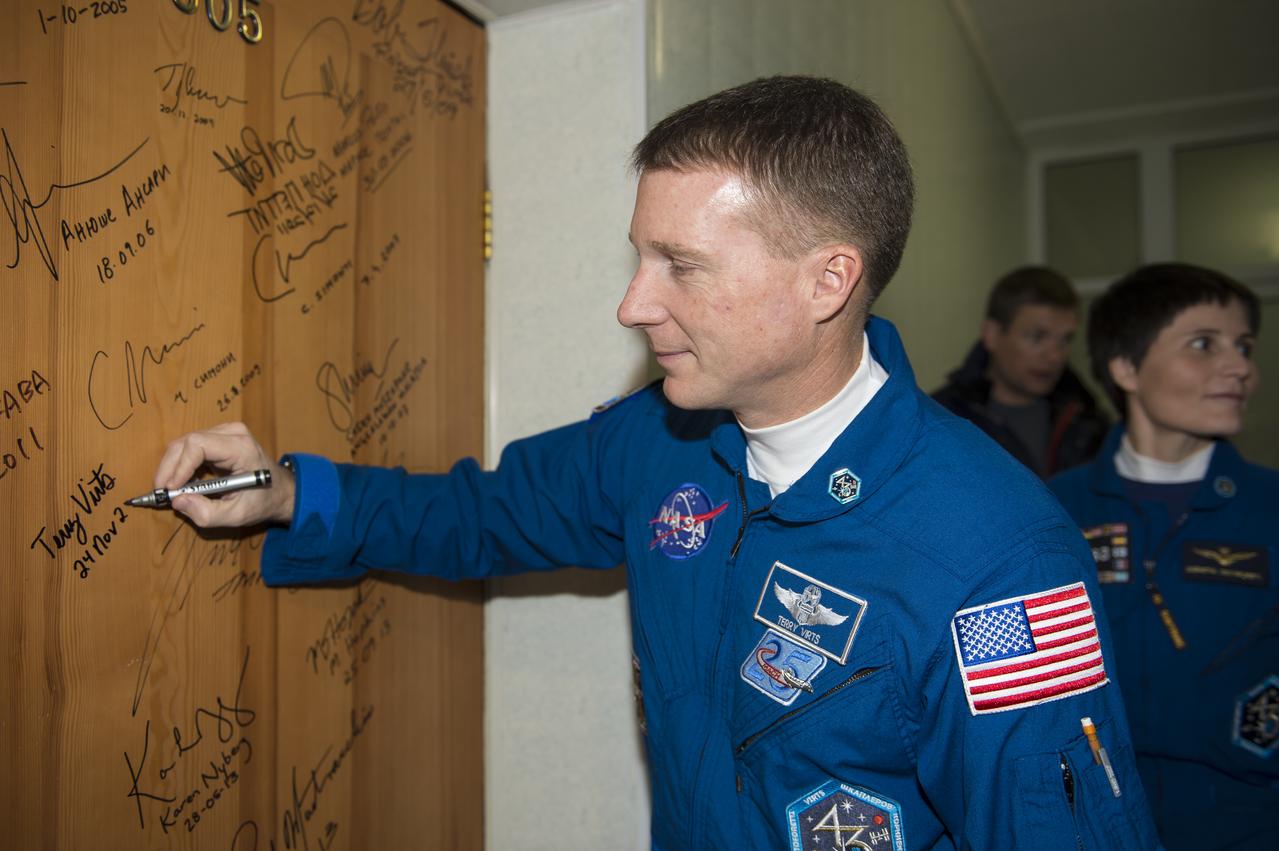
Expedition 42 Flight Engineer Terry Virts of NASA performs the traditional door signing at the Cosmonaut Hotel prior to departing the hotel for launch in a Soyuz rocket with fellow crewmates, Soyuz Commander Anton Shkaplerov of the Russian Federal Space Agency (Roscosmos) and Flight Engineer Samantha Cristoforetti of the European Space Agency (ESA), Sunday, Nov. 23, 2014 in Baikonur, Kazakhstan. Launch of the Soyuz rocket is scheduled for the early hours of Nov. 24 Kazakhstan time and will carry Virts, Shkaplerov, and Cristoforetti into orbit to begin their five and a half month mission on the International Space Station. Photo Credit: (NASA/Aubrey Gemignani)

These sets of images were taken between March 13 and 15, 2021 (the 22nd and 24th Martian days, or sols, of NASA's Mars 2020 Perseverance mission) show doors opening and closing on parts of the Sample Caching System aboard the rover. Perseverance's Sample Caching System consists of three robotic components that will work in concert to collect samples of rock and regolith (broken rock and dust), seal them in tubes, and deposit those tubes on the surface of Mars for retrieval by a future mission. Perseverance is the first rover to bring a sample caching system to Mars. The first set of images, taken by Perseverance's Navigation Cameras, shows a door opening on the upper part of the bit carousel, a flying-saucer-like component that stores drill bits for the system's coring tool. It transfers bits with empty sample tubes onto the rover's robotic arm and also collects bits containing filled sample tubes from the coring tool. The second set of images shows a door opening on the lower part of the bit carousel, as seen under the rover's belly. They were taken by the WATSON camera, a part of the SHERLOC (Scanning Habitable Environments with Raman and Luminescence for Organics and Chemicals) instrument. The Ingenuity Mars Helicopter technology demonstration activity is supported by NASA's Science Mission Directorate, the NASA Aeronautics Research Mission Directorate, and the NASA Space Technology Mission Directorate. NASA's Jet Propulsion Laboratory built and manages operations of Perseverance and Ingenuity for the agency. Caltech in Pasadena, California, manages JPL for NASA. A key objective for Perseverance's mission on Mars is astrobiology, including the search for signs of ancient microbial life. The rover will characterize the planet's geology and past climate, pave the way for human exploration of the Red Planet, and be the first mission to collect and cache Martian rock and regolith (broken rock and dust). Subsequent NASA missions, in cooperation with ESA (European Space Agency), would send spacecraft to Mars to collect these sealed samples from the surface and return them to Earth for in-depth analysis. The Mars 2020 Perseverance mission is part of NASA's Moon to Mars exploration approach, which includes Artemis missions to the Moon that will help prepare for human exploration of the Red Planet. Animations available at https://photojournal.jpl.nasa.gov/catalog/PIA24497
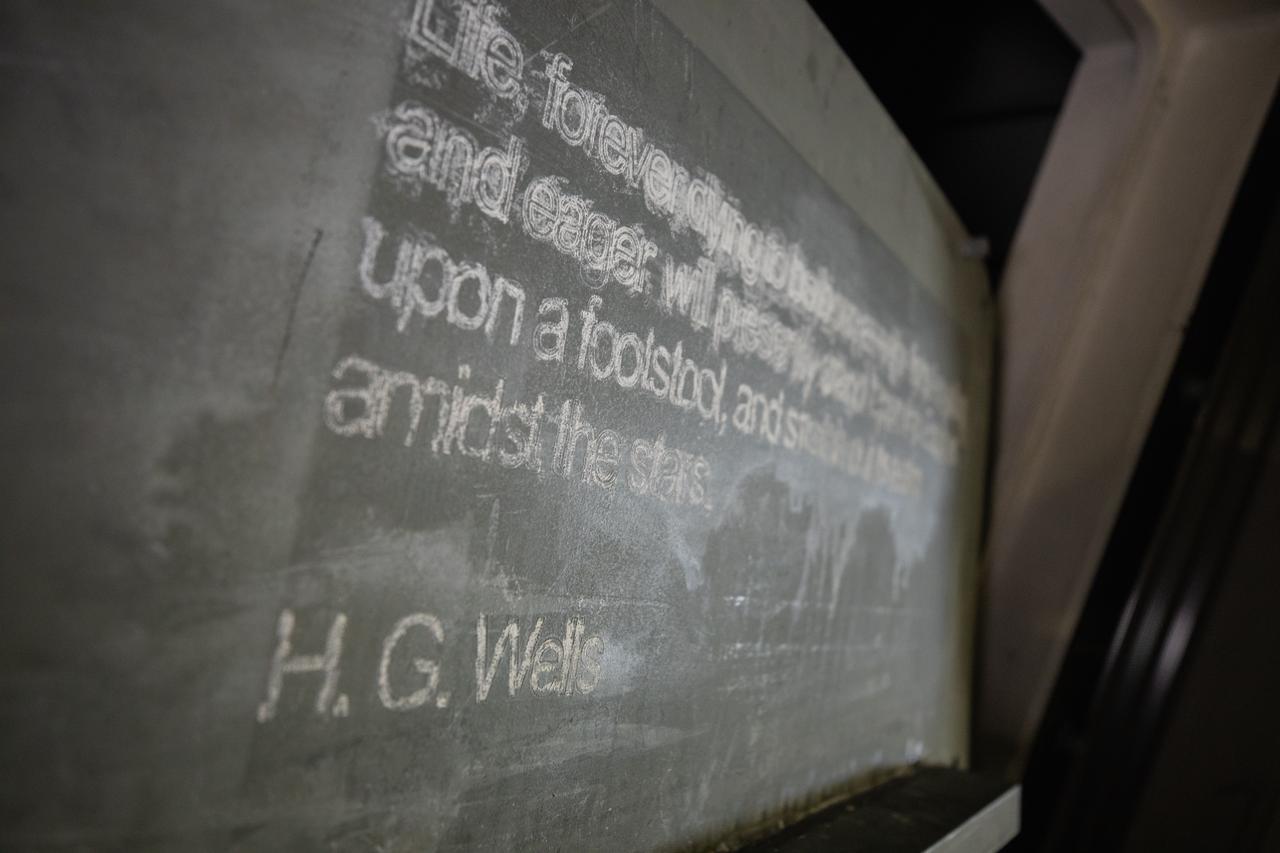
Each of the eight haunch access doors located in the mobile launcher platform contains an inspirational quote related to space travel. The quotes are from John F. Kennedy, H.G. Wells and Werner Von Braun, among others. The heavy metal doors will be bolted in place to protect electrical and support systems during liftoff of the Space Launch System rocket and Orion spacecraft.
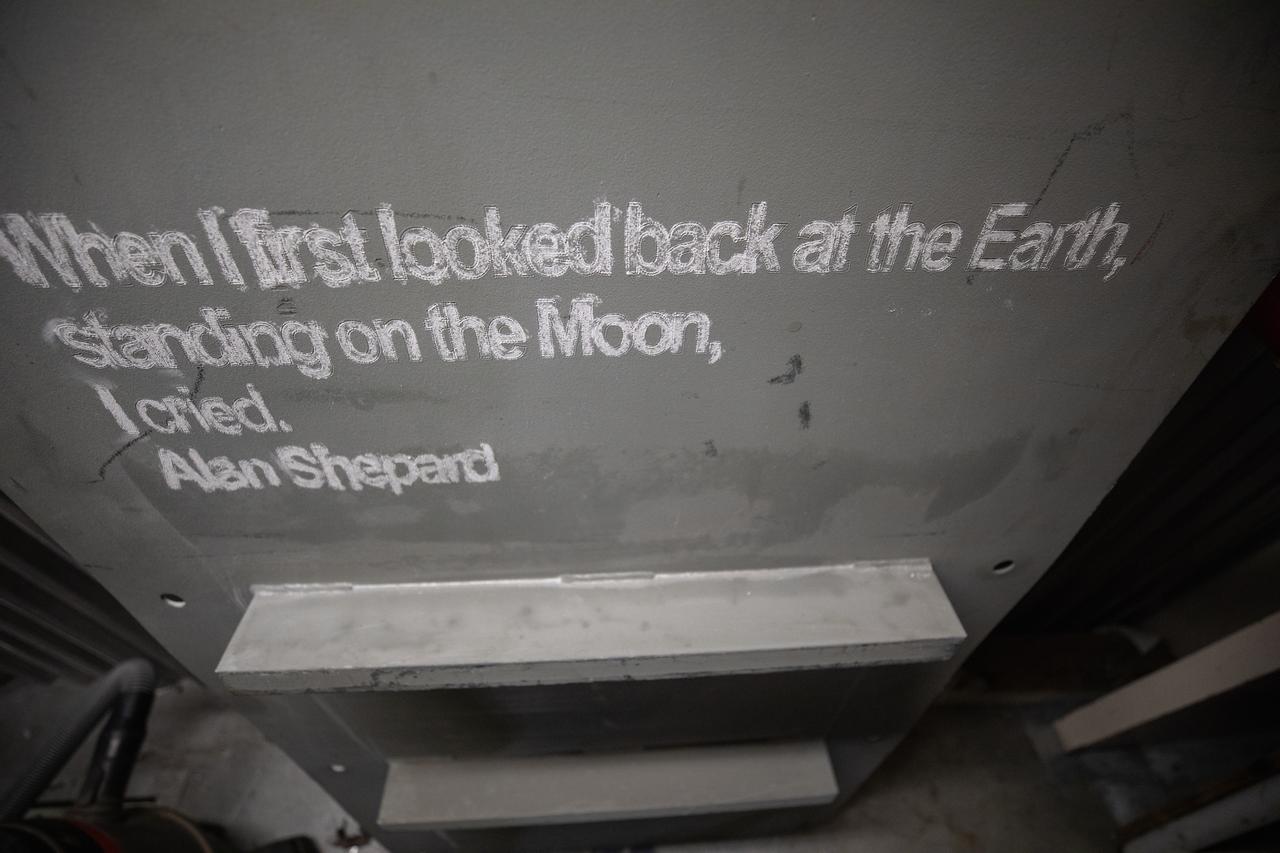
Each of the eight haunch access doors located in the mobile launcher platform contains an inspirational quote related to space travel. The quotes are from John F. Kennedy, H.G. Wells and Werner Von Braun, among others. The heavy metal doors will be bolted in place to protect electrical and support systems during liftoff of the Space Launch System rocket and Orion spacecraft.
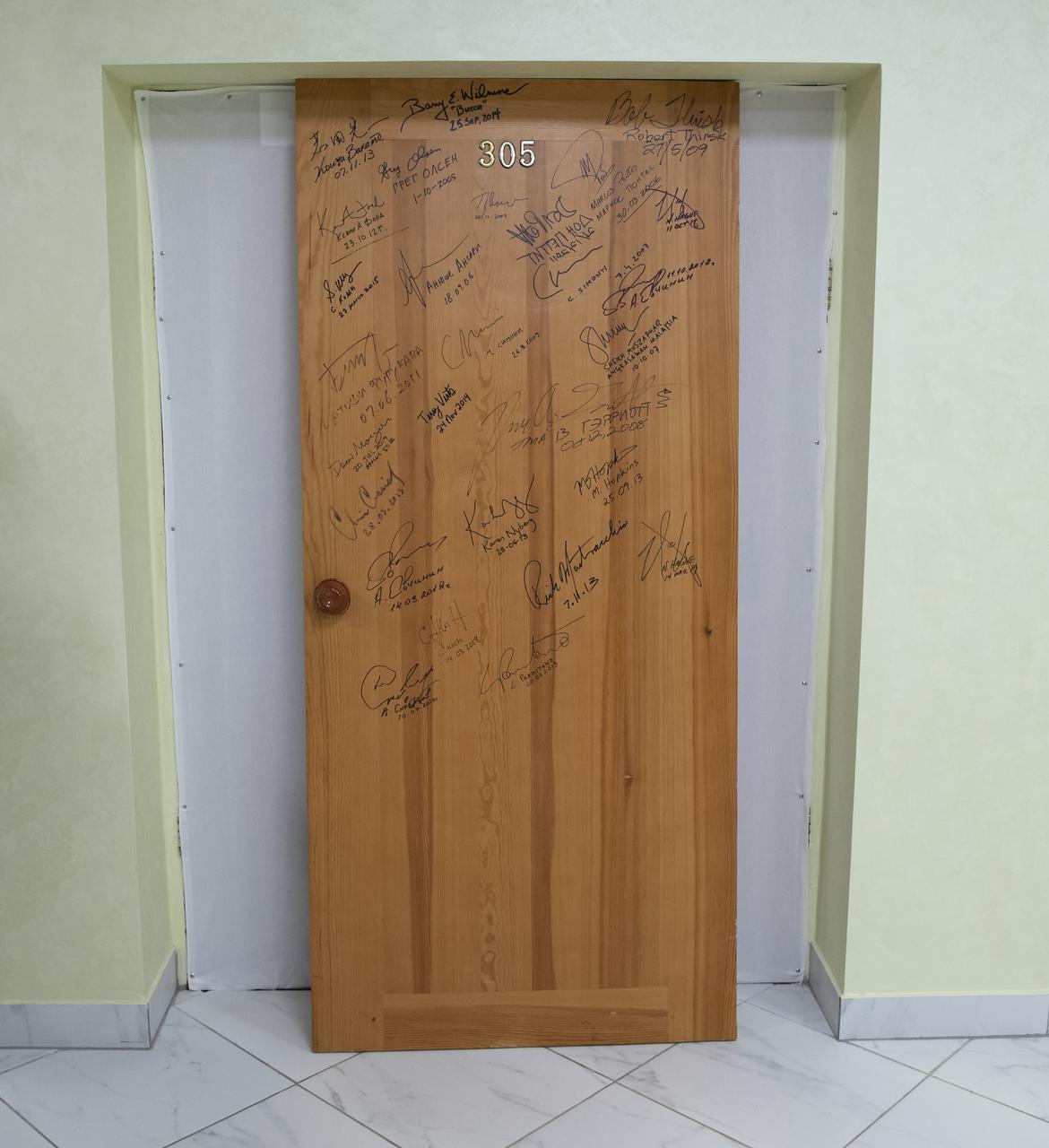
A door in the Cosmonaut Hotel is propped up and ready for the ceremonial door singing by the Expedition 61 crew prior to departing for launch on a Soyuz rocket Wednesday, Sept. 25, 2019 in Baikonur, Kazakhstan. Expedition 61 crewmembers Jessica Meir of NASA and Oleg Skripochka of Roscosmos, and spaceflight participant Hazzaa Ali Almansoori of the United Arab Emirates will launch later in the day on the Soyuz MS-15 spacecraft from the Baikonur Cosmodrome to the International Space Station. Photo Credit: (NASA/Bill Ingalls)
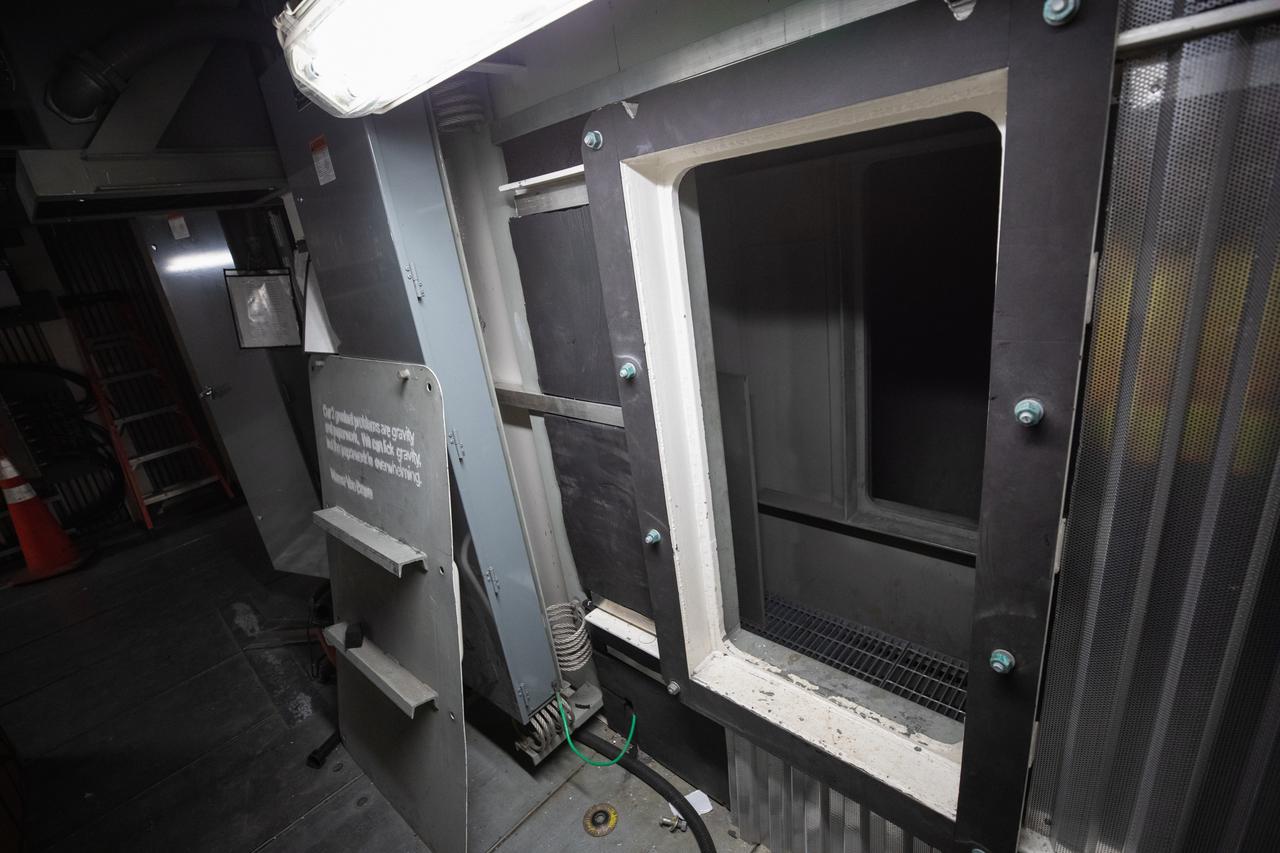
Each of the eight haunch access doors located in the mobile launcher platform contains an inspirational quote related to space travel. The quotes are from John F. Kennedy, H.G. Wells and Werner Von Braun, among others. The heavy metal doors will be bolted in place to protect electrical and support systems during liftoff of the Space Launch System rocket and Orion spacecraft.
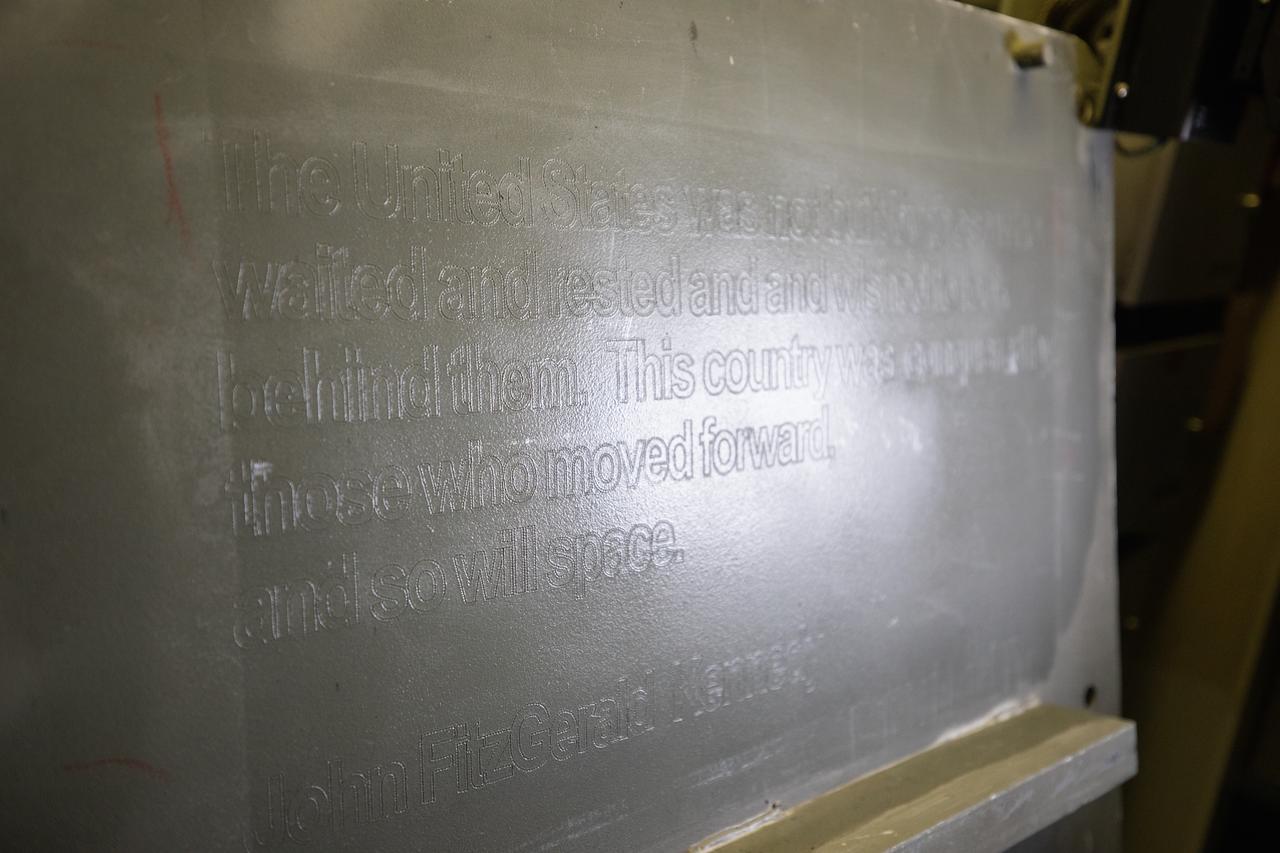
Each of the eight haunch access doors located in the mobile launcher platform contains an inspirational quote related to space travel. The quotes are from John F. Kennedy, H.G. Wells and Werner Von Braun, among others. The heavy metal doors will be bolted in place to protect electrical and support systems during liftoff of the Space Launch System rocket and Orion spacecraft.
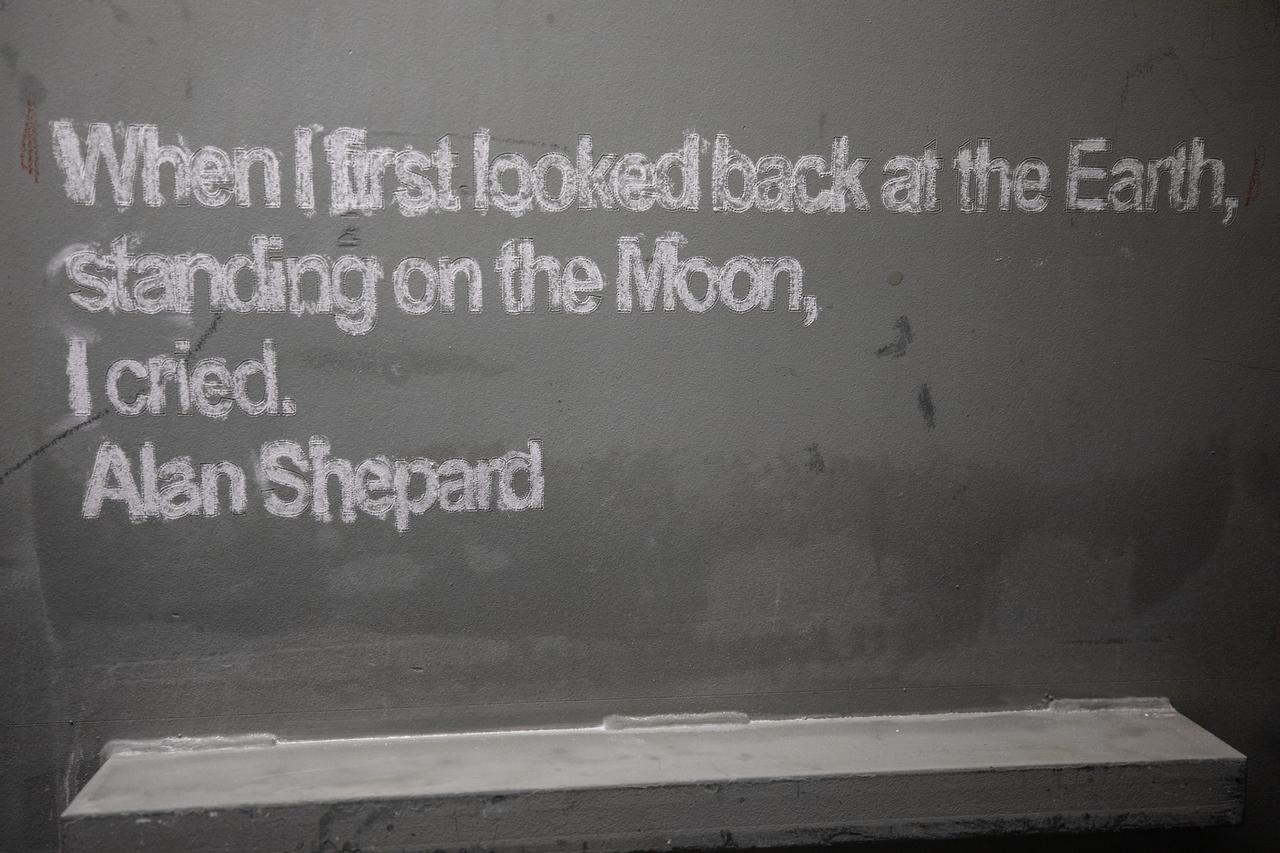
Each of the eight haunch access doors located in the mobile launcher platform contains an inspirational quote related to space travel. The quotes are from John F. Kennedy, H.G. Wells and Werner Von Braun, among others. The heavy metal doors will be bolted in place to protect electrical and support systems during liftoff of the Space Launch System rocket and Orion spacecraft.
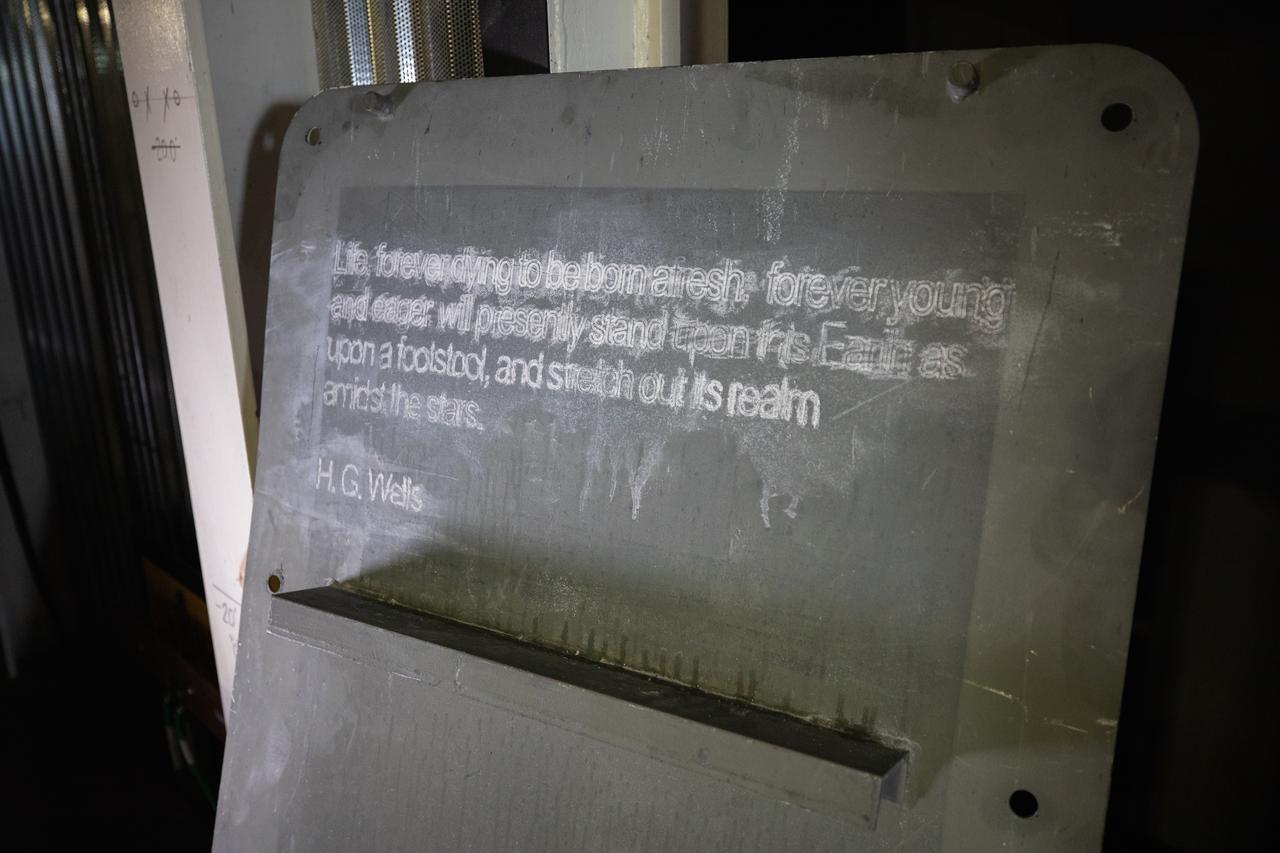
Each of the eight haunch access doors located in the mobile launcher platform contains an inspirational quote related to space travel. The quotes are from John F. Kennedy, H.G. Wells and Werner Von Braun, among others. The heavy metal doors will be bolted in place to protect electrical and support systems during liftoff of the Space Launch System rocket and Orion spacecraft.
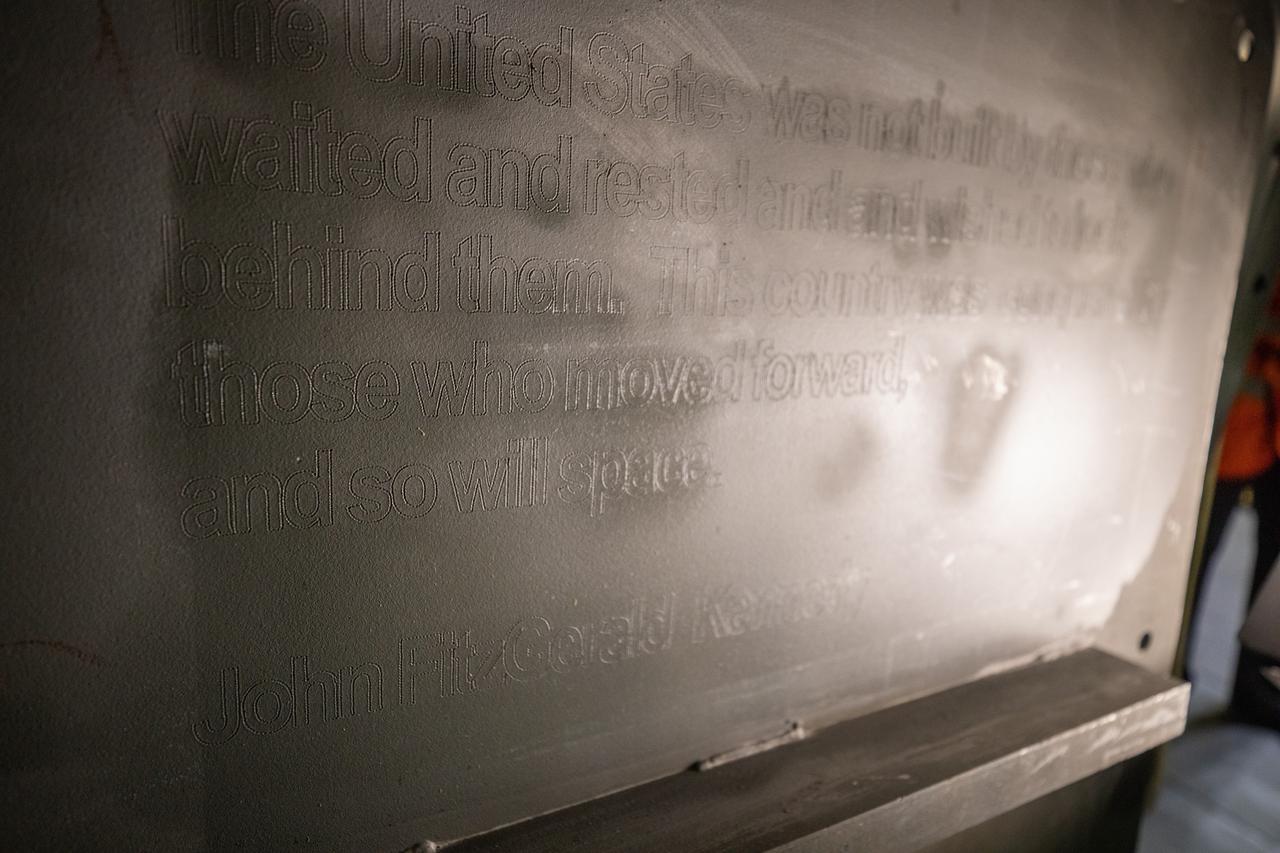
Each of the eight haunch access doors located in the mobile launcher platform contains an inspirational quote related to space travel. The quotes are from John F. Kennedy, H.G. Wells and Werner Von Braun, among others. The heavy metal doors will be bolted in place to protect electrical and support systems during liftoff of the Space Launch System rocket and Orion spacecraft.
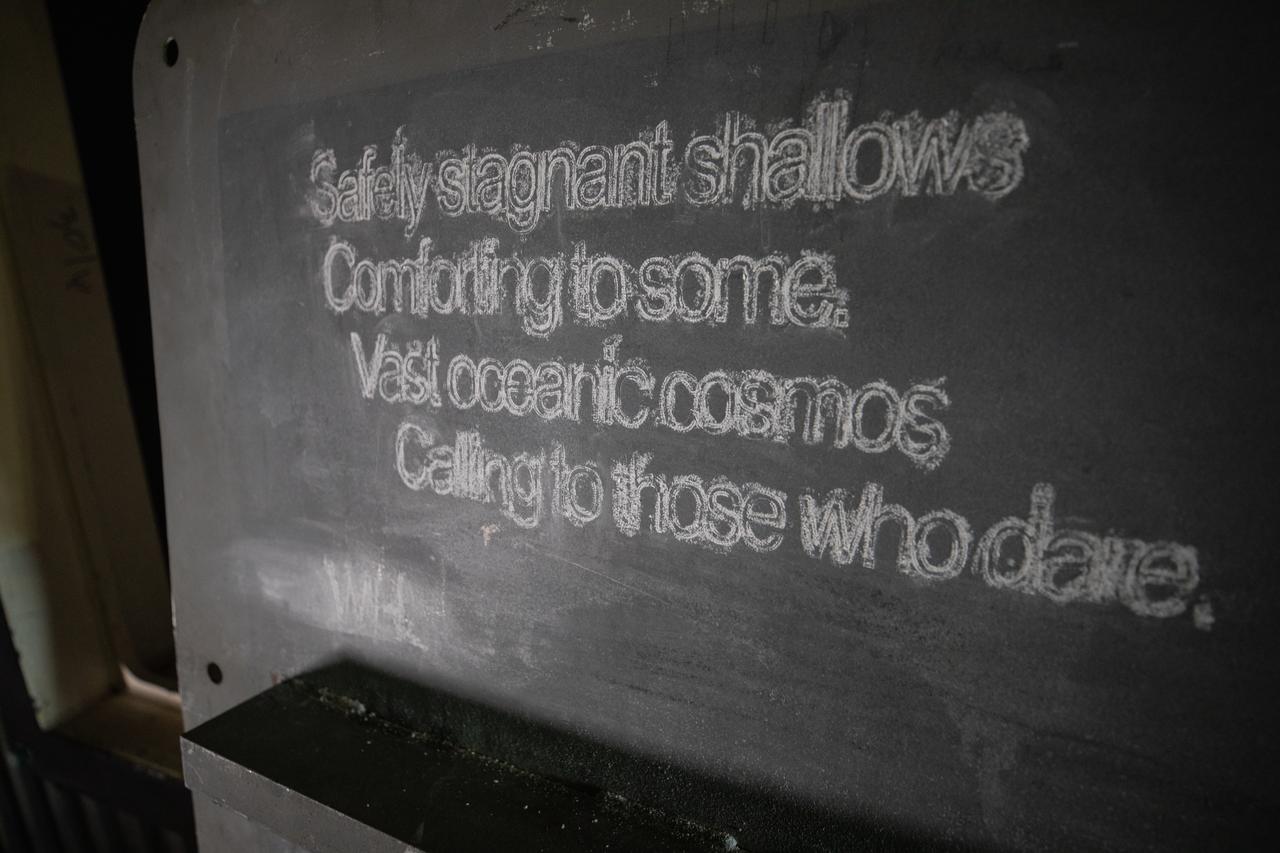
Each of the eight haunch access doors located in the mobile launcher platform contains an inspirational quote related to space travel. The quotes are from John F. Kennedy, H.G. Wells and Werner Von Braun, among others. The heavy metal doors will be bolted in place to protect electrical and support systems during liftoff of the Space Launch System rocket and Orion spacecraft.

Each of the eight haunch access doors located in the mobile launcher platform contains an inspirational quote related to space travel. The quotes are from John F. Kennedy, H.G. Wells and Werner Von Braun, among others. The heavy metal doors will be bolted in place to protect electrical and support systems during liftoff of the Space Launch System rocket and Orion spacecraft.
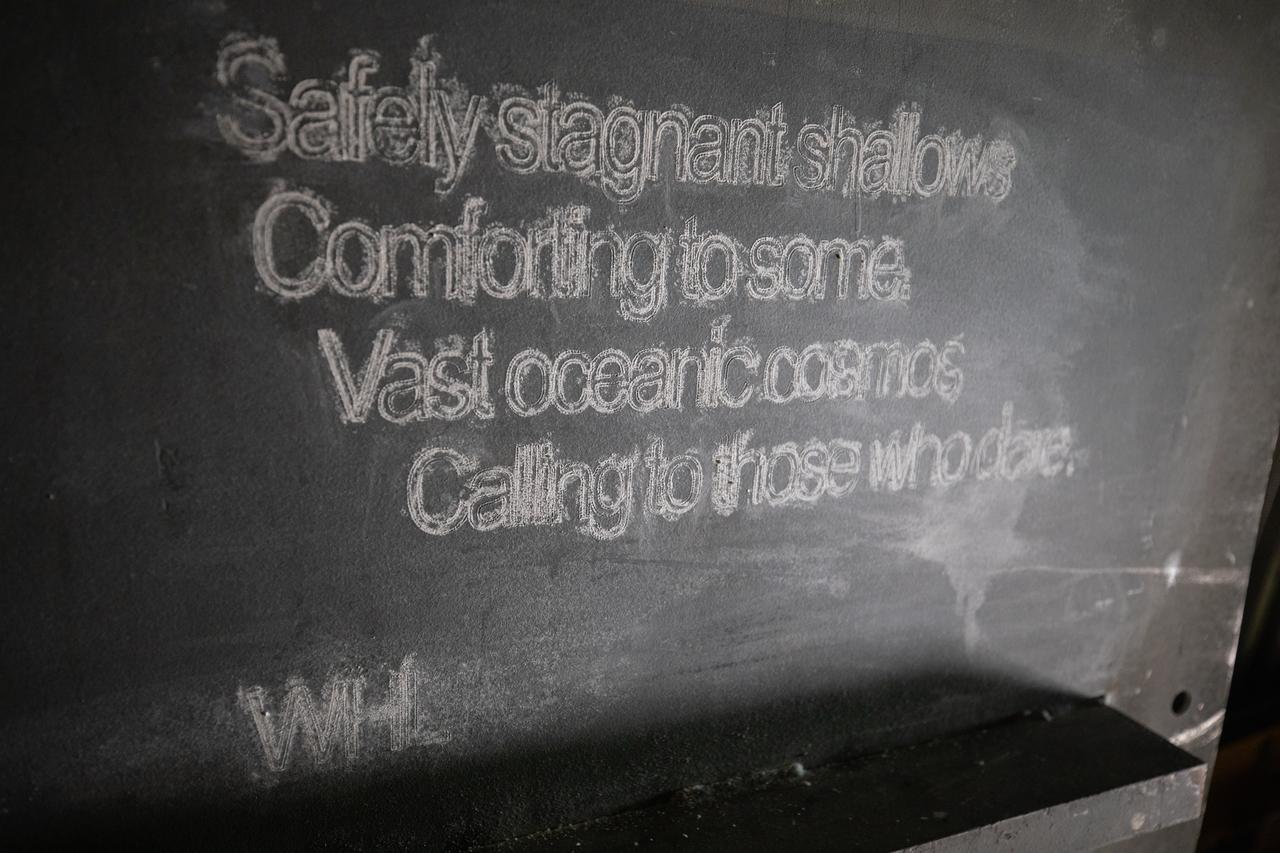
Each of the eight haunch access doors located in the mobile launcher platform contains an inspirational quote related to space travel. The quotes are from John F. Kennedy, H.G. Wells and Werner Von Braun, among others. The heavy metal doors will be bolted in place to protect electrical and support systems during liftoff of the Space Launch System rocket and Orion spacecraft.
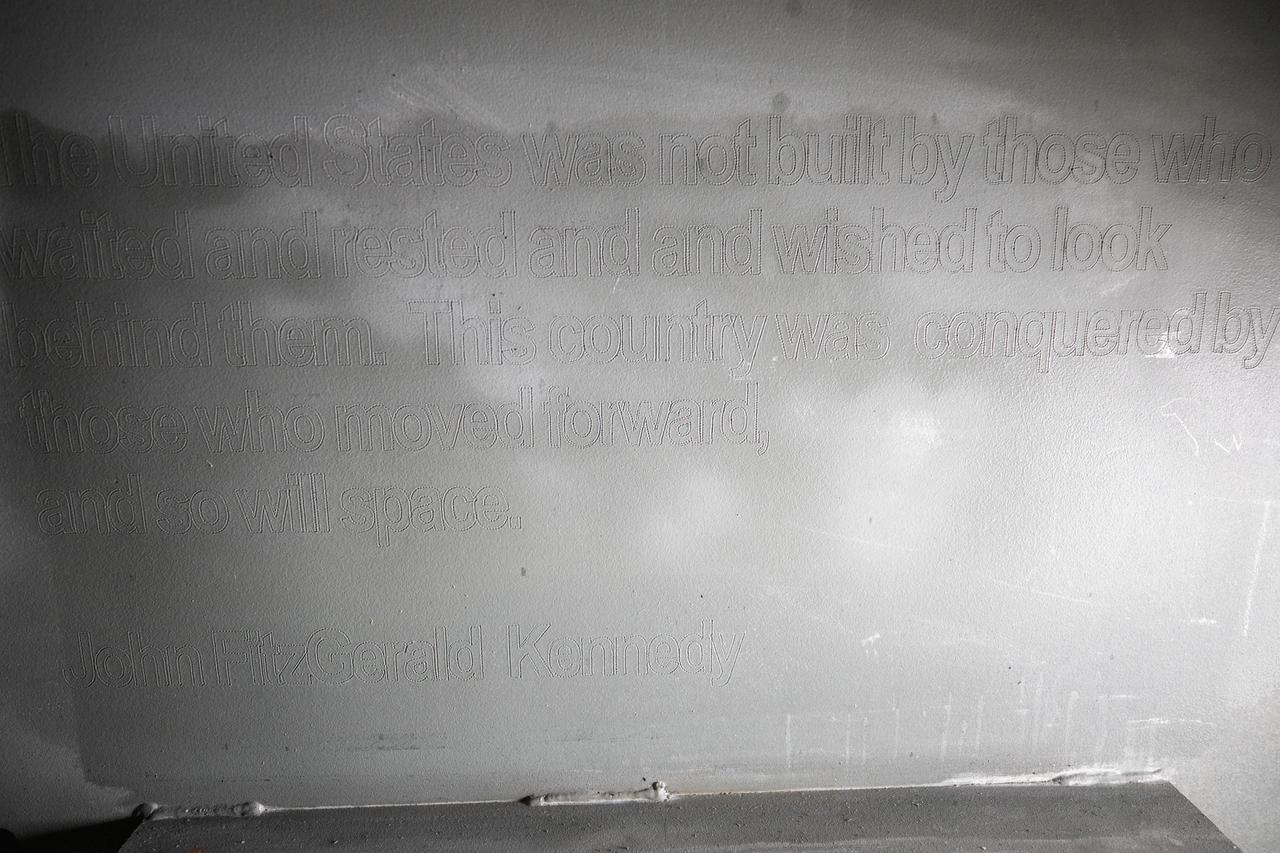
Each of the eight haunch access doors located in the mobile launcher platform contains an inspirational quote related to space travel. The quotes are from John F. Kennedy, H.G. Wells and Werner Von Braun, among others. The heavy metal doors will be bolted in place to protect electrical and support systems during liftoff of the Space Launch System rocket and Orion spacecraft.
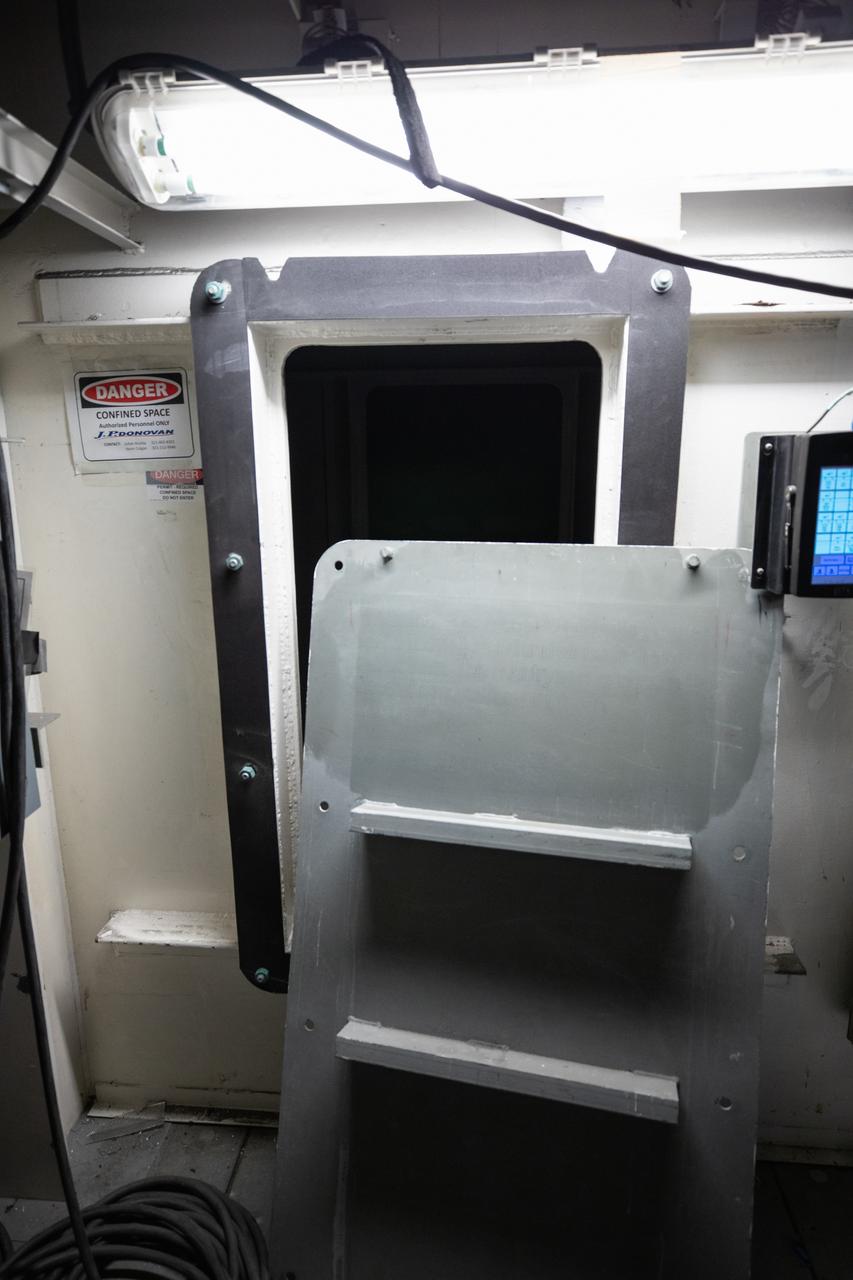
Each of the eight haunch access doors located in the mobile launcher platform contains an inspirational quote related to space travel. The quotes are from John F. Kennedy, H.G. Wells and Werner Von Braun, among others. The heavy metal doors will be bolted in place to protect electrical and support systems during liftoff of the Space Launch System rocket and Orion spacecraft.
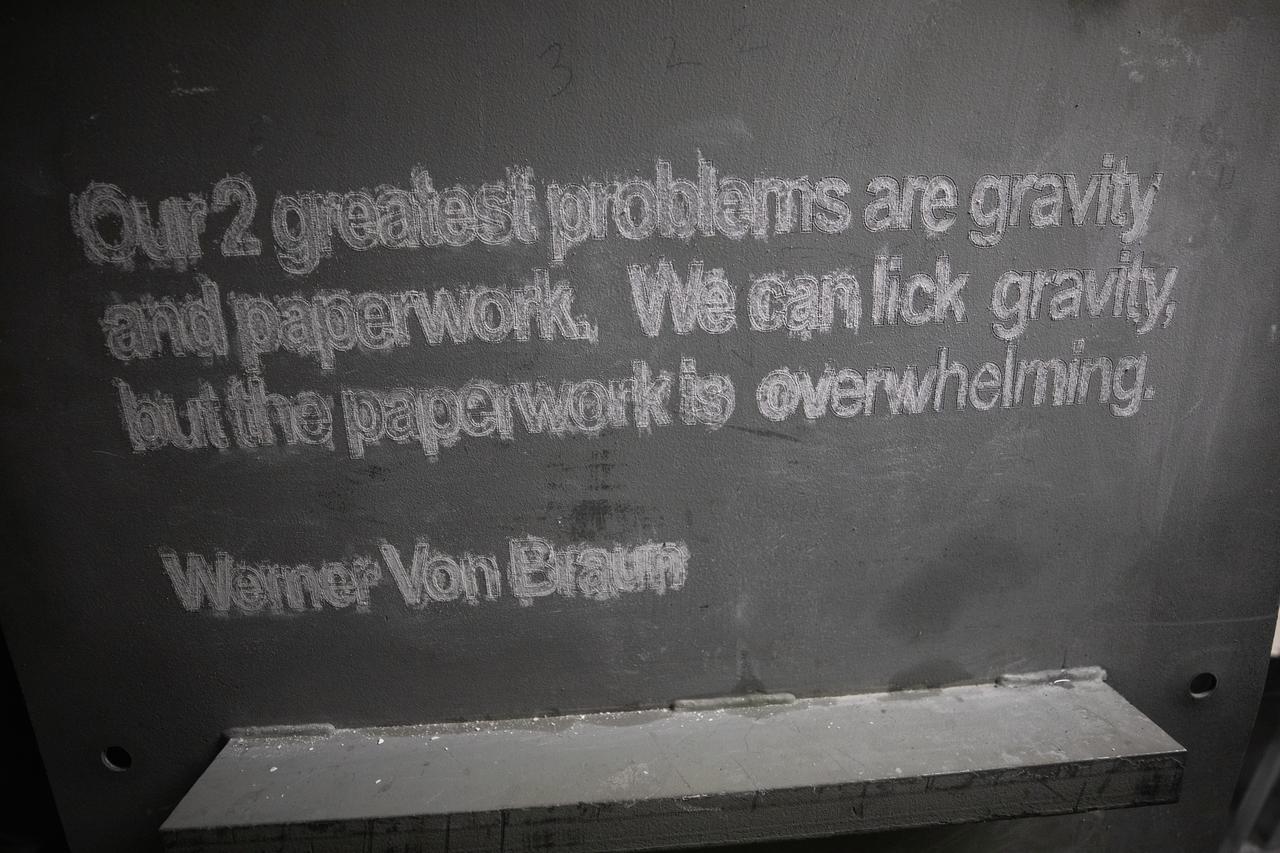
Each of the eight haunch access doors located in the mobile launcher platform contains an inspirational quote related to space travel. The quotes are from John F. Kennedy, H.G. Wells and Werner Von Braun, among others. The heavy metal doors will be bolted in place to protect electrical and support systems during liftoff of the Space Launch System rocket and Orion spacecraft.
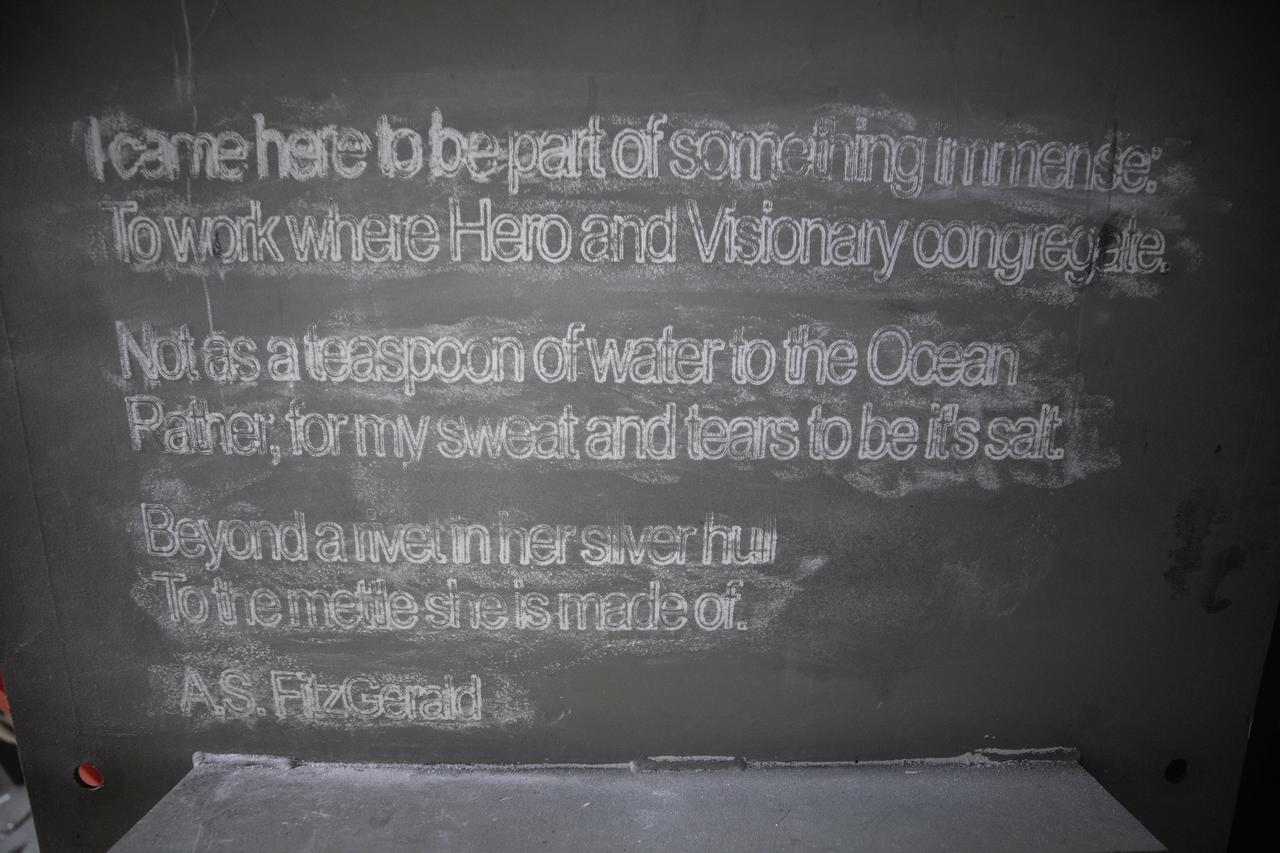
Each of the eight haunch access doors located in the mobile launcher platform contains an inspirational quote related to space travel. The quotes are from John F. Kennedy, H.G. Wells and Werner Von Braun, among others. The heavy metal doors will be bolted in place to protect electrical and support systems during liftoff of the Space Launch System rocket and Orion spacecraft.
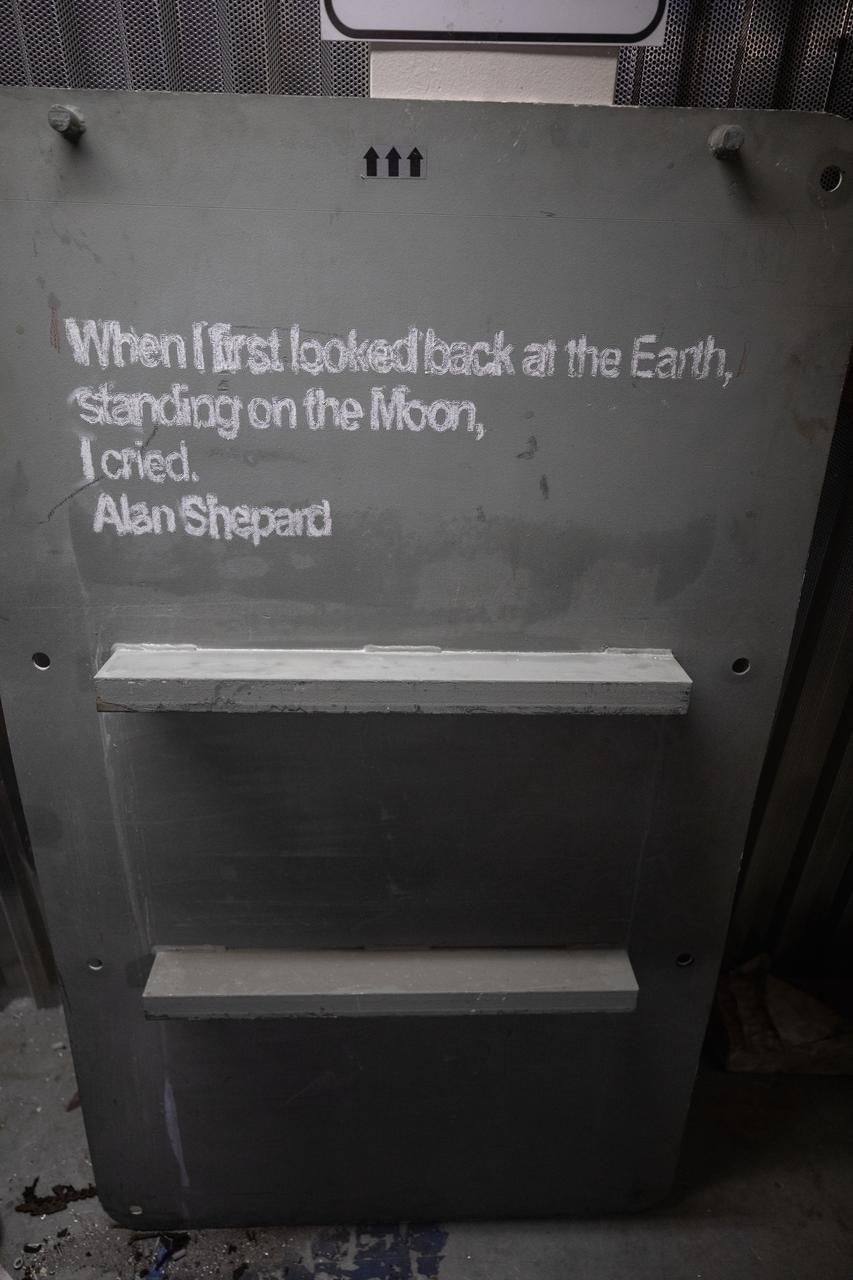
Each of the eight haunch access doors located in the mobile launcher platform contains an inspirational quote related to space travel. The quotes are from John F. Kennedy, H.G. Wells and Werner Von Braun, among others. The heavy metal doors will be bolted in place to protect electrical and support systems during liftoff of the Space Launch System rocket and Orion spacecraft.
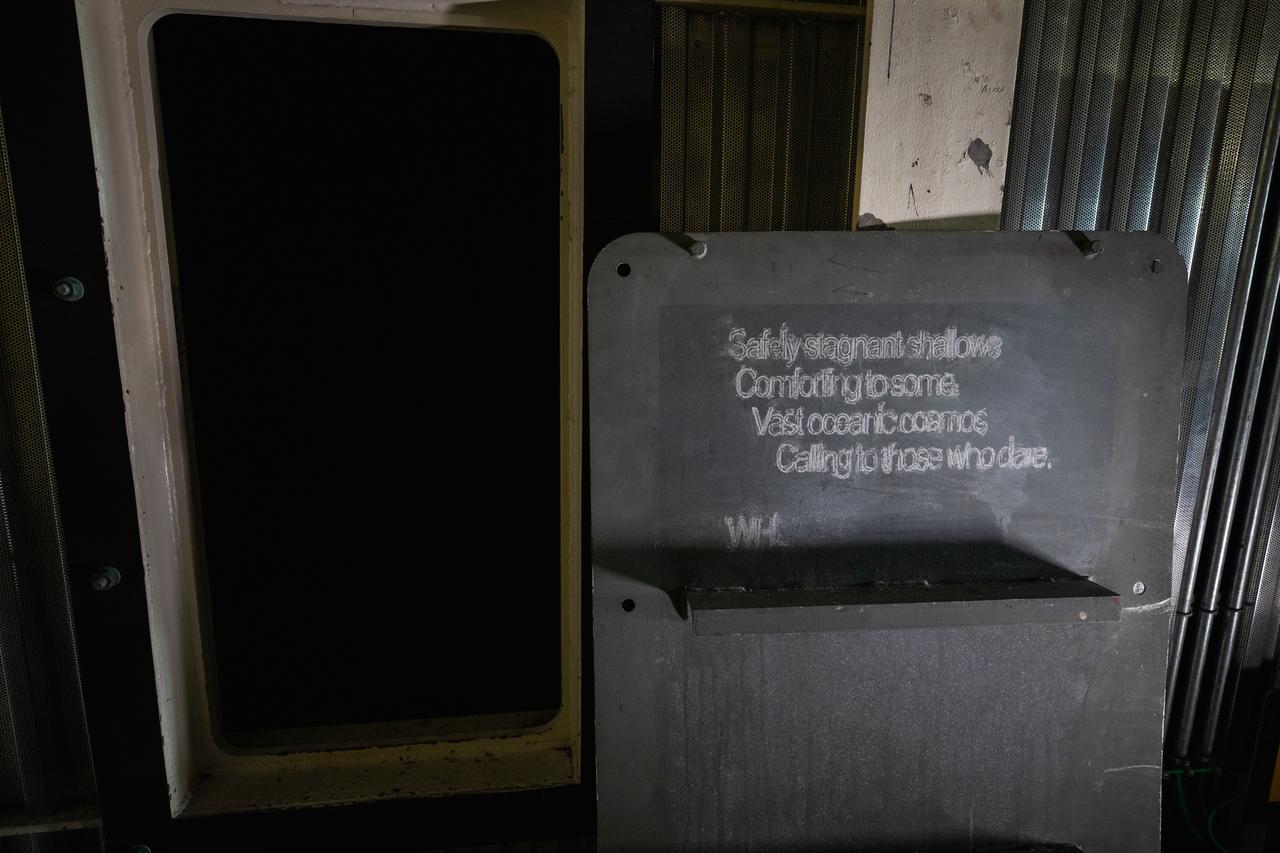
Each of the eight haunch access doors located in the mobile launcher platform contains an inspirational quote related to space travel. The quotes are from John F. Kennedy, H.G. Wells and Werner Von Braun, among others. The heavy metal doors will be bolted in place to protect electrical and support systems during liftoff of the Space Launch System rocket and Orion spacecraft.
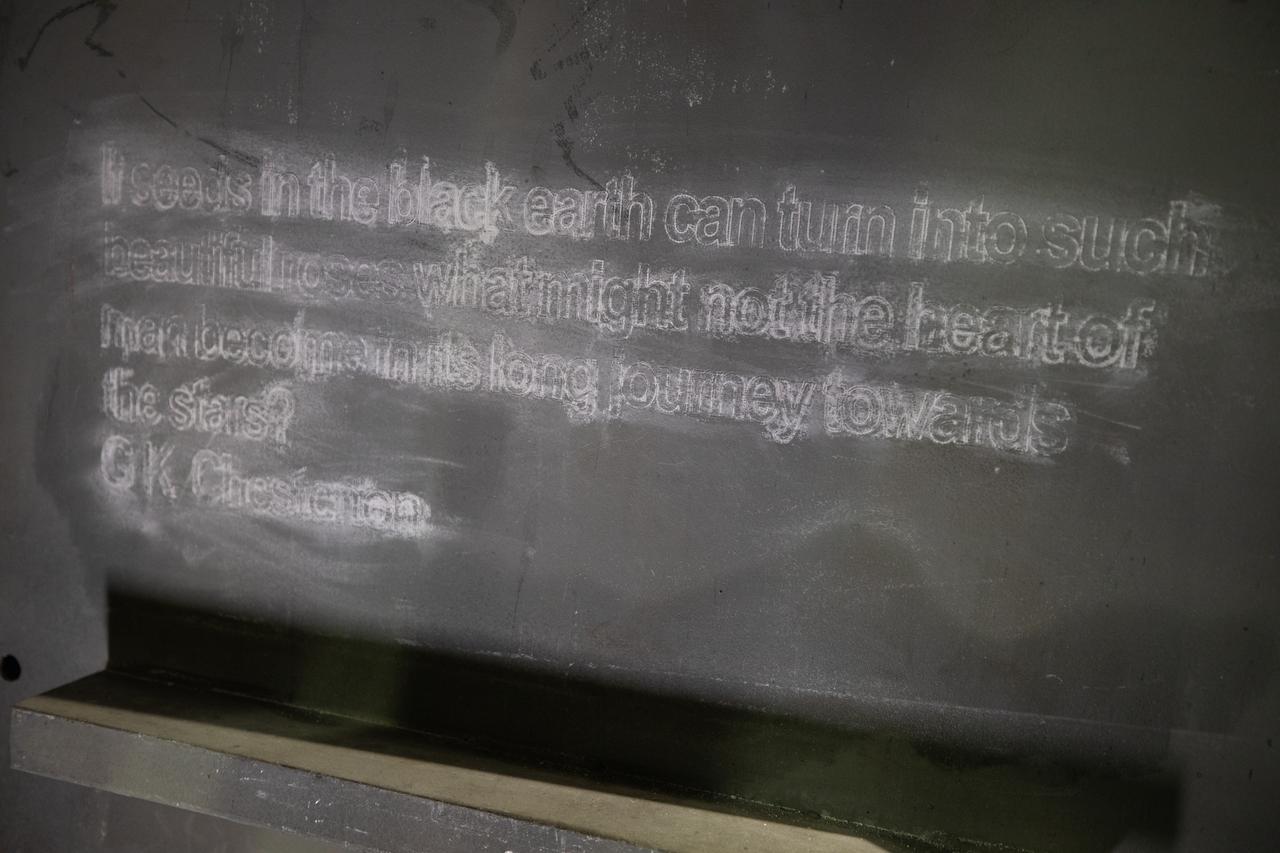
Each of the eight haunch access doors located in the mobile launcher platform contains an inspirational quote related to space travel. The quotes are from John F. Kennedy, H.G. Wells and Werner Von Braun, among others. The heavy metal doors will be bolted in place to protect electrical and support systems during liftoff of the Space Launch System rocket and Orion spacecraft.
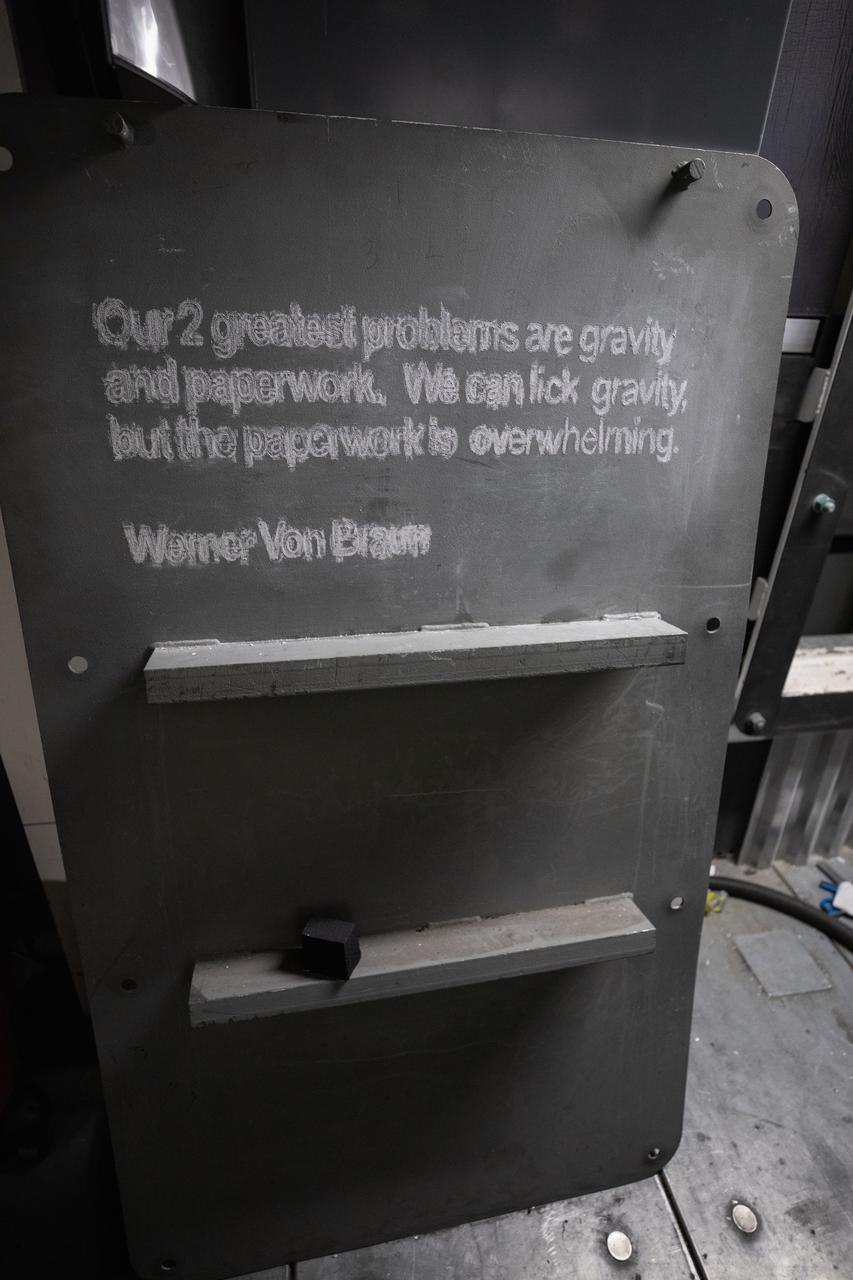
Each of the eight haunch access doors located in the mobile launcher platform contains an inspirational quote related to space travel. The quotes are from John F. Kennedy, H.G. Wells and Werner Von Braun, among others. The heavy metal doors will be bolted in place to protect electrical and support systems during liftoff of the Space Launch System rocket and Orion spacecraft.
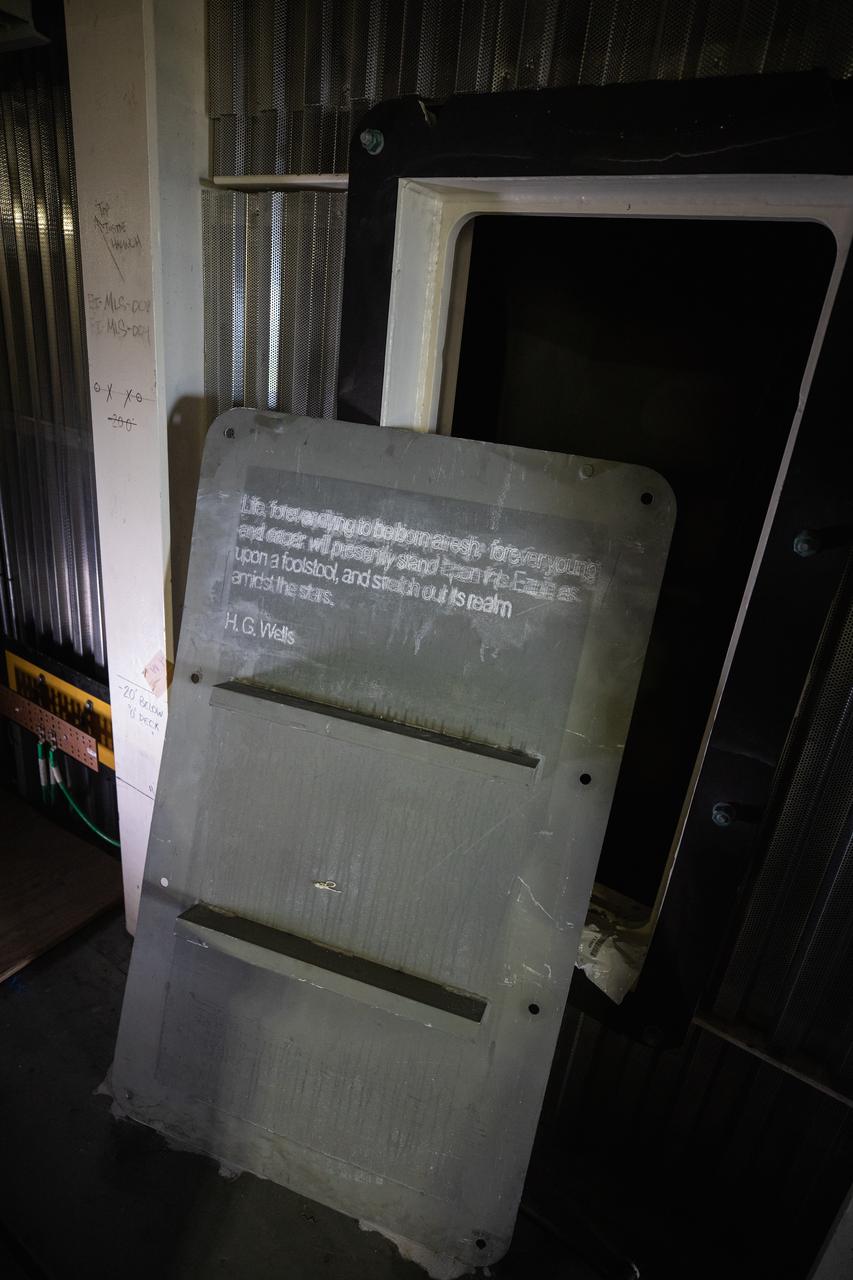
Each of the eight haunch access doors located in the mobile launcher platform contains an inspirational quote related to space travel. The quotes are from John F. Kennedy, H.G. Wells and Werner Von Braun, among others. The heavy metal doors will be bolted in place to protect electrical and support systems during liftoff of the Space Launch System rocket and Orion spacecraft.
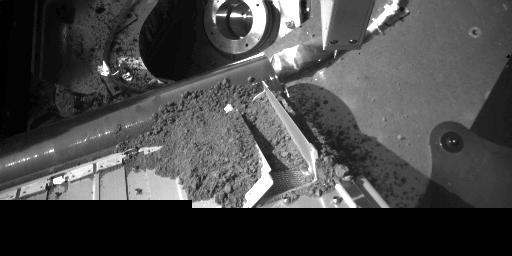
Robotic Arm Camera Image of the South Side of the Thermal and Evolved-Gas Analyzer Door TA4 receiving sample
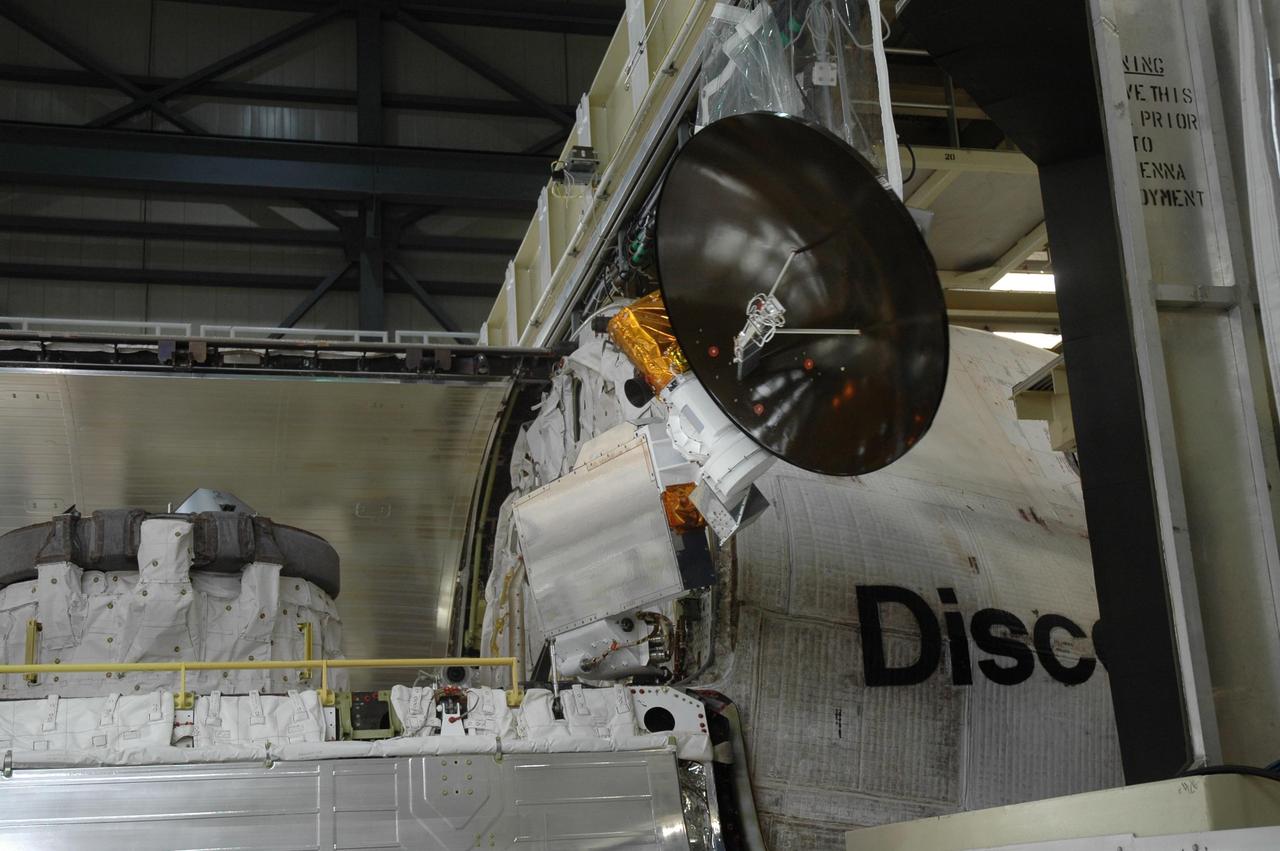
KENNEDY SPACE CENTER, FLA. -- In the Orbiter Processing Facility, the Ku-band communications antenna is stowed in the payload bay of Discovery before the bay's doors are closed. The stowage is in preparation for the rollover of the orbiter to the Vehicle Assembly Building. The primary payload, the U.S. Node 2, which is named Harmony, will be installed in the payload bay at the pad prior to Discovery's liftoff on mission STS-120. The mission will be the 23rd flight for the assembly of the International Space Station. Space Shuttle Discovery is targeted for launch on Oct. 23. Photo credit: NASA/Jim Grossmann
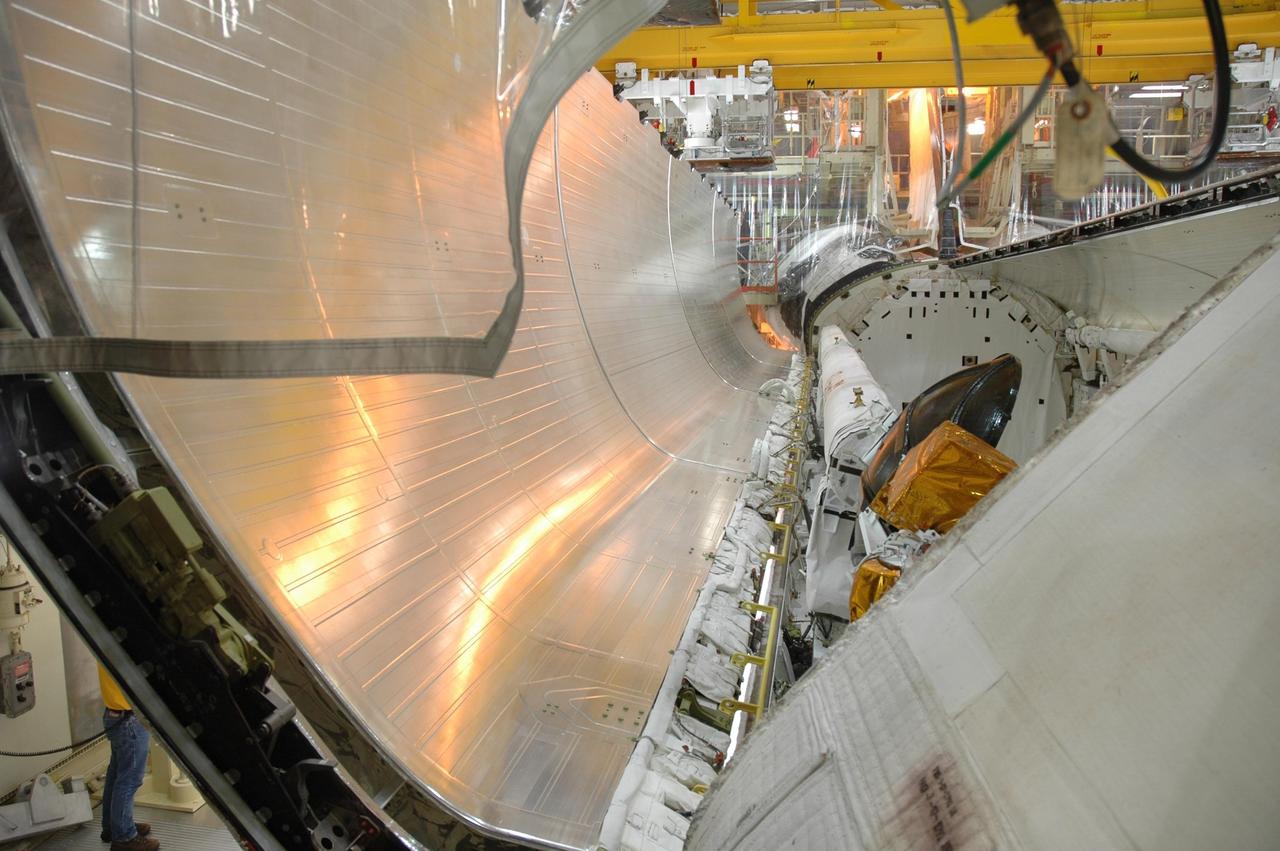
KENNEDY SPACE CENTER, FLA. -- In the Orbiter Processing Facility, the payload bay doors of Discovery are being closed in preparation for the rollover of the orbiter to the Vehicle Assembly Building. The primary payload, the U.S. Node 2, which is named Harmony, will be installed in the payload bay at the pad prior to Discovery's liftoff on mission STS-120. The mission will be the 23rd flight for the assembly of the International Space Station. Space Shuttle Discovery is targeted for launch on Oct. 23. Photo credit: NASA/Jim Grossmann
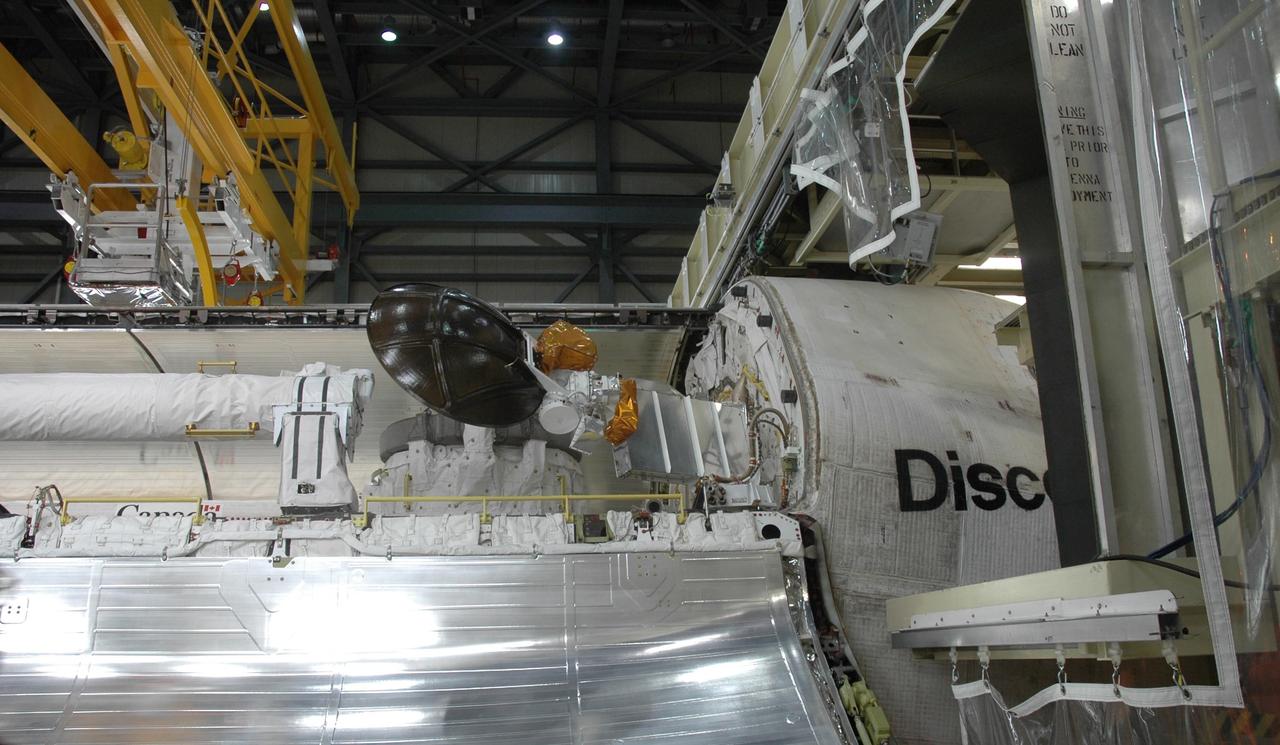
KENNEDY SPACE CENTER, FLA. -- In the Orbiter Processing Facility, the Ku-band communications antenna is stowed in the payload bay of Discovery before the bay's doors are closed. The stowage is in preparation for the rollover of the orbiter to the Vehicle Assembly Building. The primary payload, the U.S. Node 2, which is named Harmony, will be installed in the payload bay at the pad prior to Discovery's liftoff on mission STS-120. The mission will be the 23rd flight for the assembly of the International Space Station. Space Shuttle Discovery is targeted for launch on Oct. 23. Photo credit: NASA/Jim Grossmann
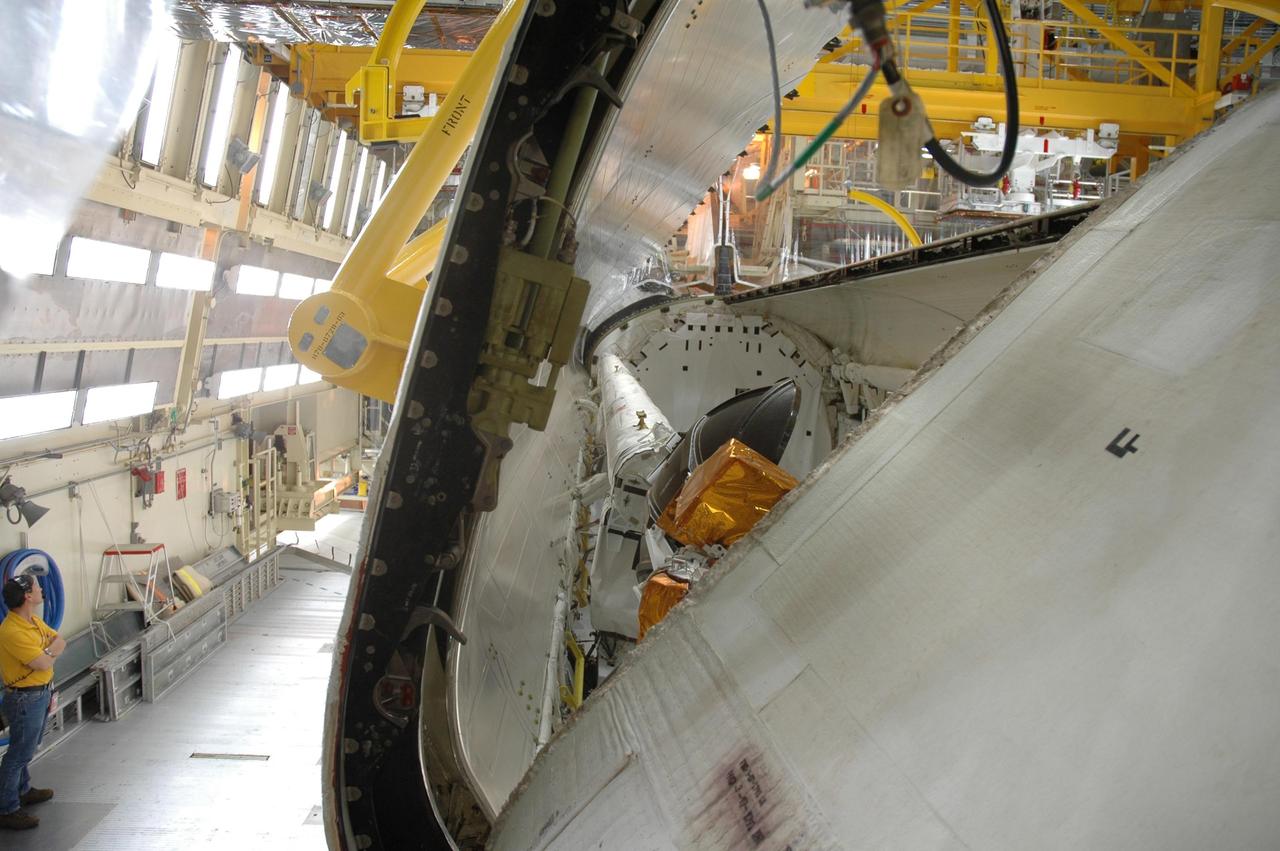
KENNEDY SPACE CENTER, FLA. -- In the Orbiter Processing Facility, the right payload bay door of Discovery is being closed in preparation for the rollover of the orbiter to the Vehicle Assembly Building. The primary payload, the U.S. Node 2, which is named Harmony, will be installed in the payload bay at the pad prior to Discovery's liftoff on mission STS-120. The mission will be the 23rd flight for the assembly of the International Space Station. Space Shuttle Discovery is targeted for launch on Oct. 23. Photo credit: NASA/Jim Grossmann
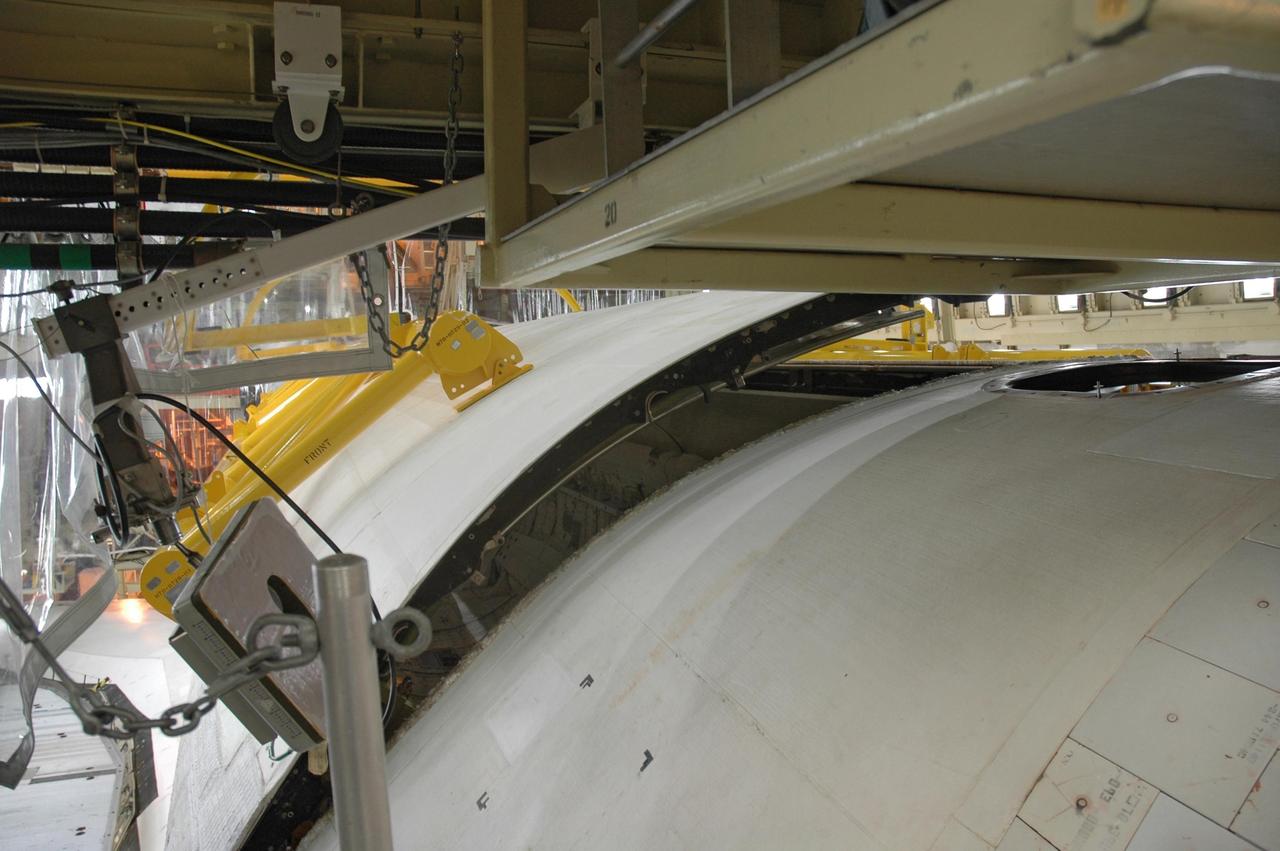
KENNEDY SPACE CENTER, FLA. -- In the Orbiter Processing Facility, the right payload bay door of Discovery is nearly closed in preparation for the rollover of the orbiter to the Vehicle Assembly Building. The primary payload, the U.S. Node 2, which is named Harmony, will be installed in the payload bay at the pad prior to Discovery's liftoff on mission STS-120. The mission will be the 23rd flight for the assembly of the International Space Station. Space Shuttle Discovery is targeted for launch on Oct. 23. Photo credit: NASA/Jim Grossmann
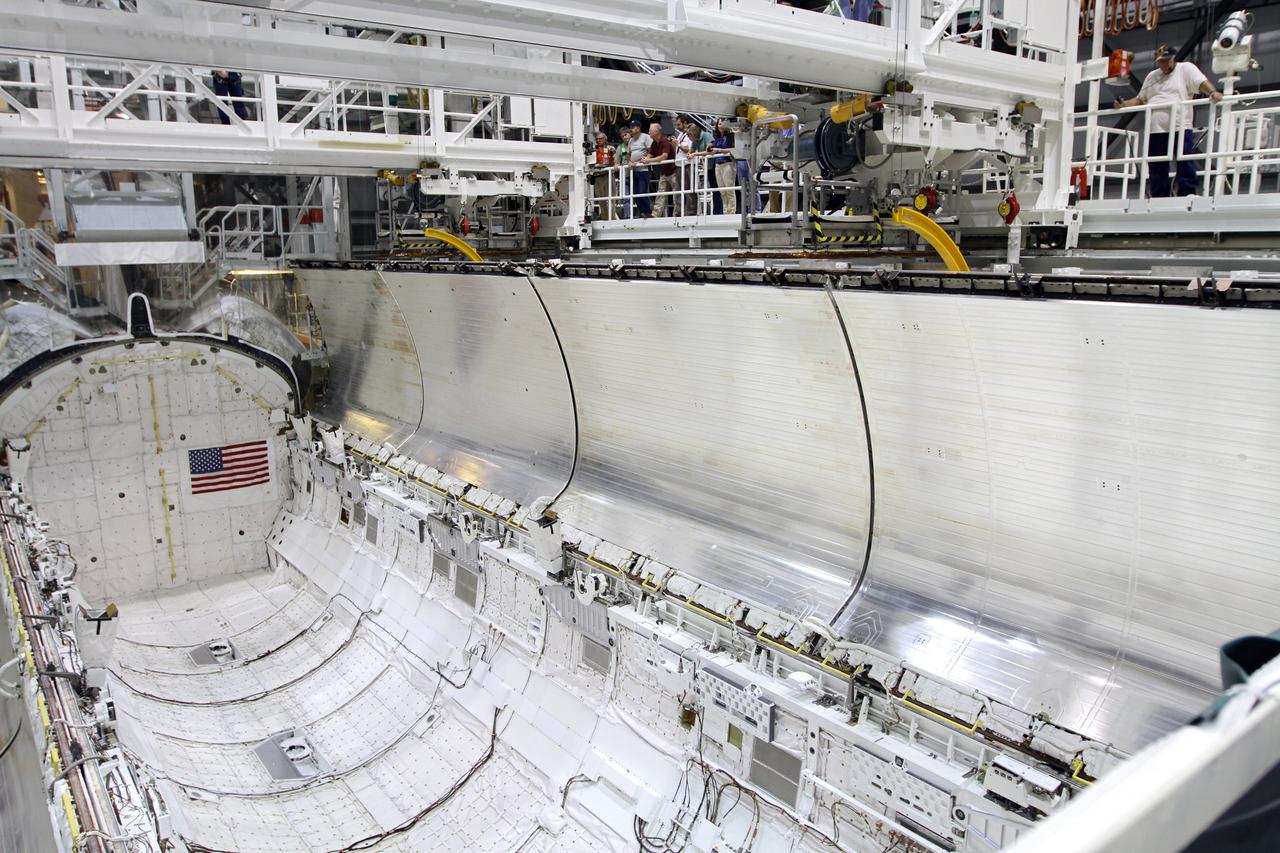
T&R ENDEAVOUR - FINAL PAYLOAD BAY (PLB) DOOR CLOSURE
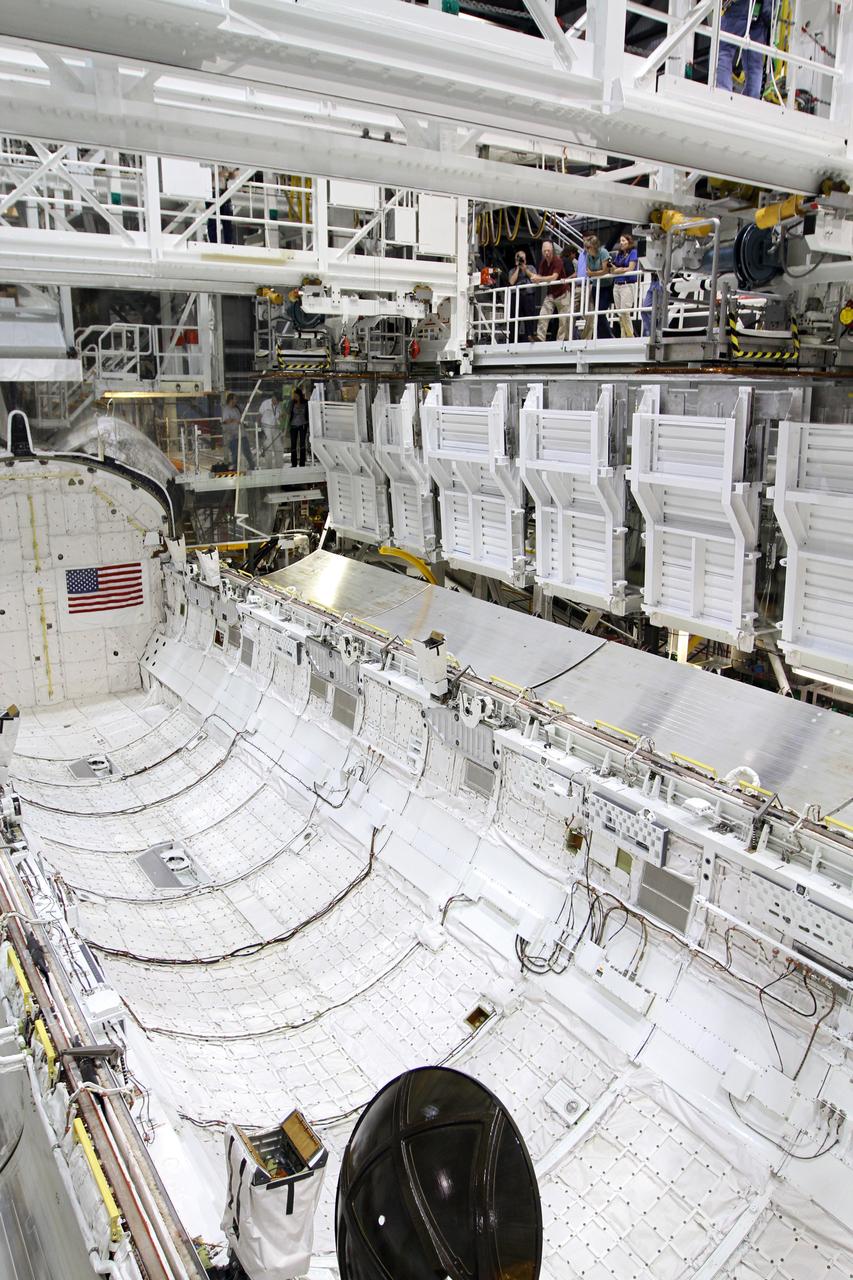
T&R ENDEAVOUR - FINAL PAYLOAD BAY (PLB) DOOR CLOSURE
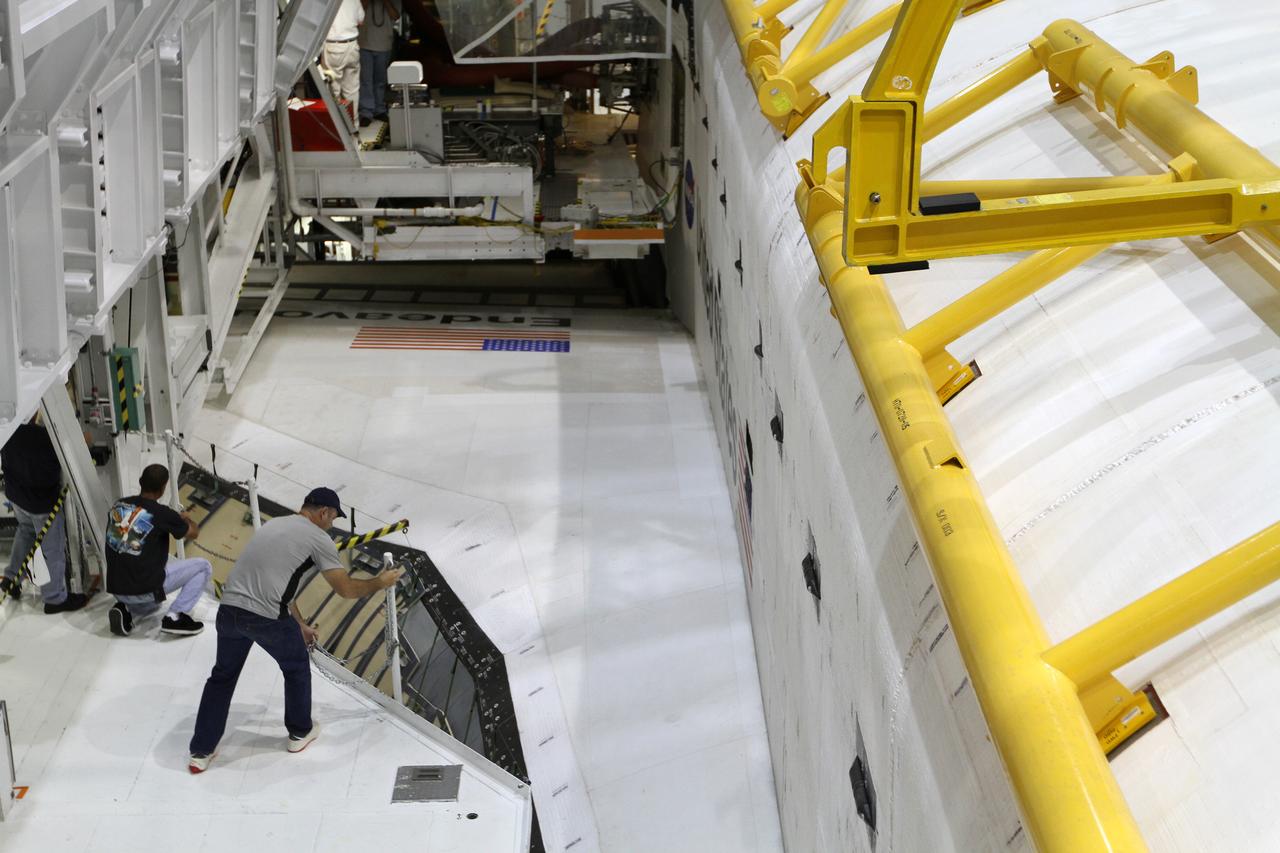
T&R ENDEAVOUR - FINAL PAYLOAD BAY (PLB) DOOR CLOSURE
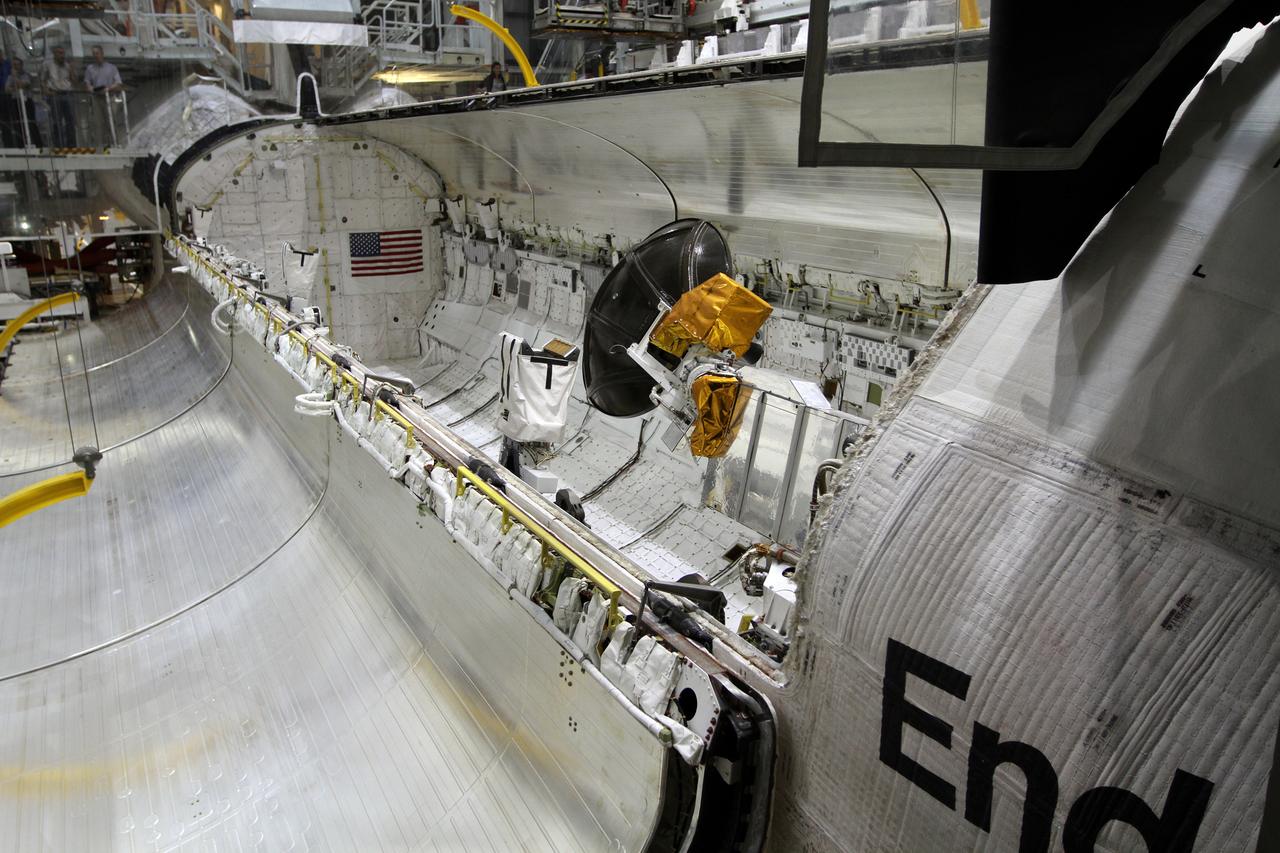
T&R ENDEAVOUR - FINAL PAYLOAD BAY (PLB) DOOR CLOSURE
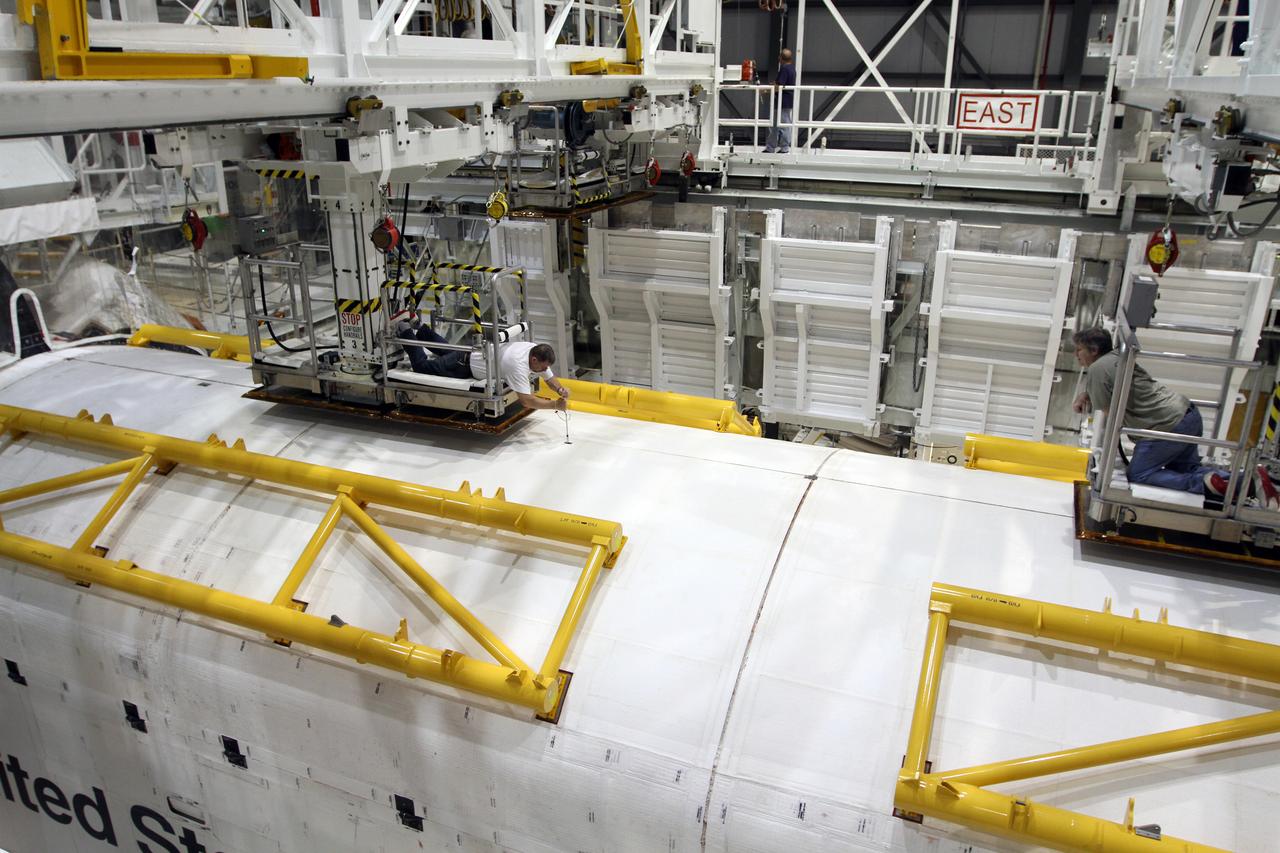
T&R ENDEAVOUR - FINAL PAYLOAD BAY (PLB) DOOR CLOSURE
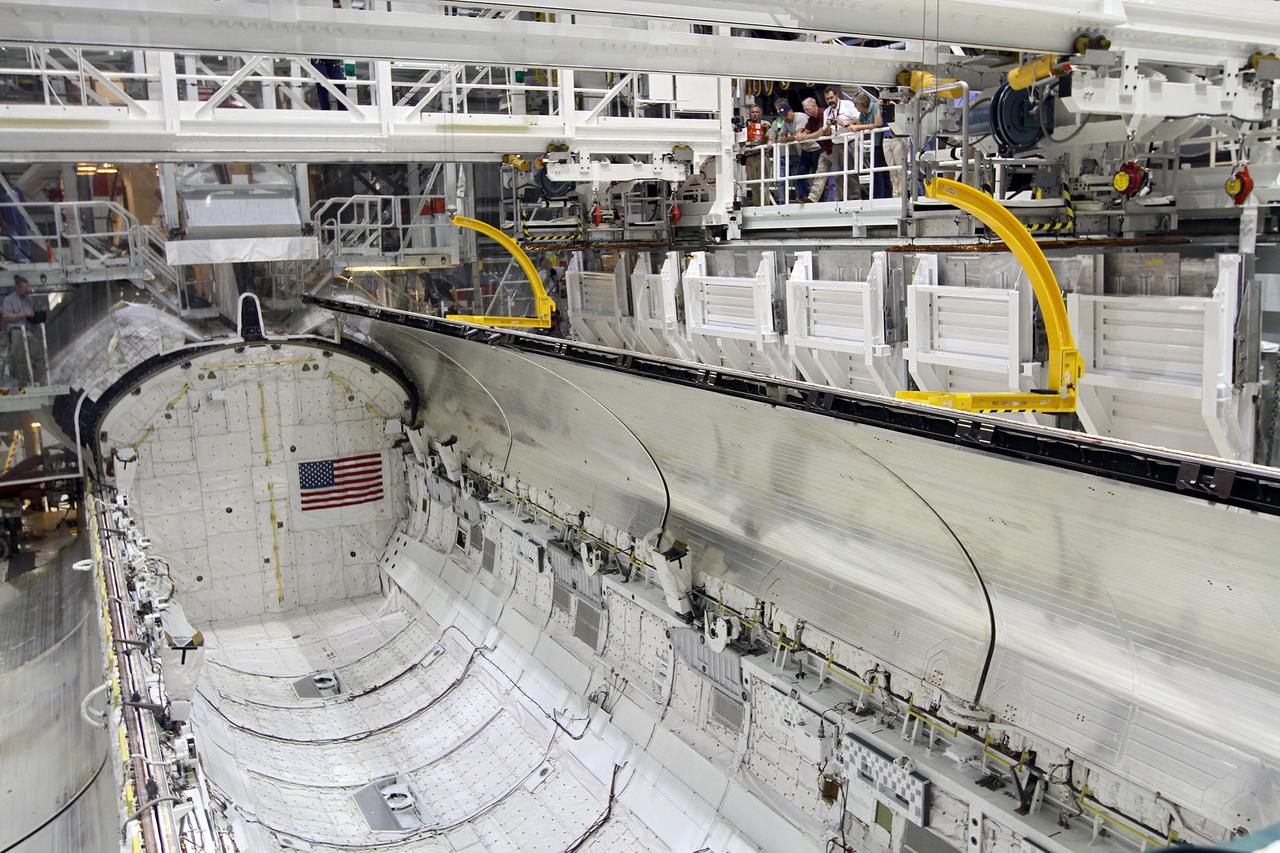
T&R ENDEAVOUR - FINAL PAYLOAD BAY (PLB) DOOR CLOSURE
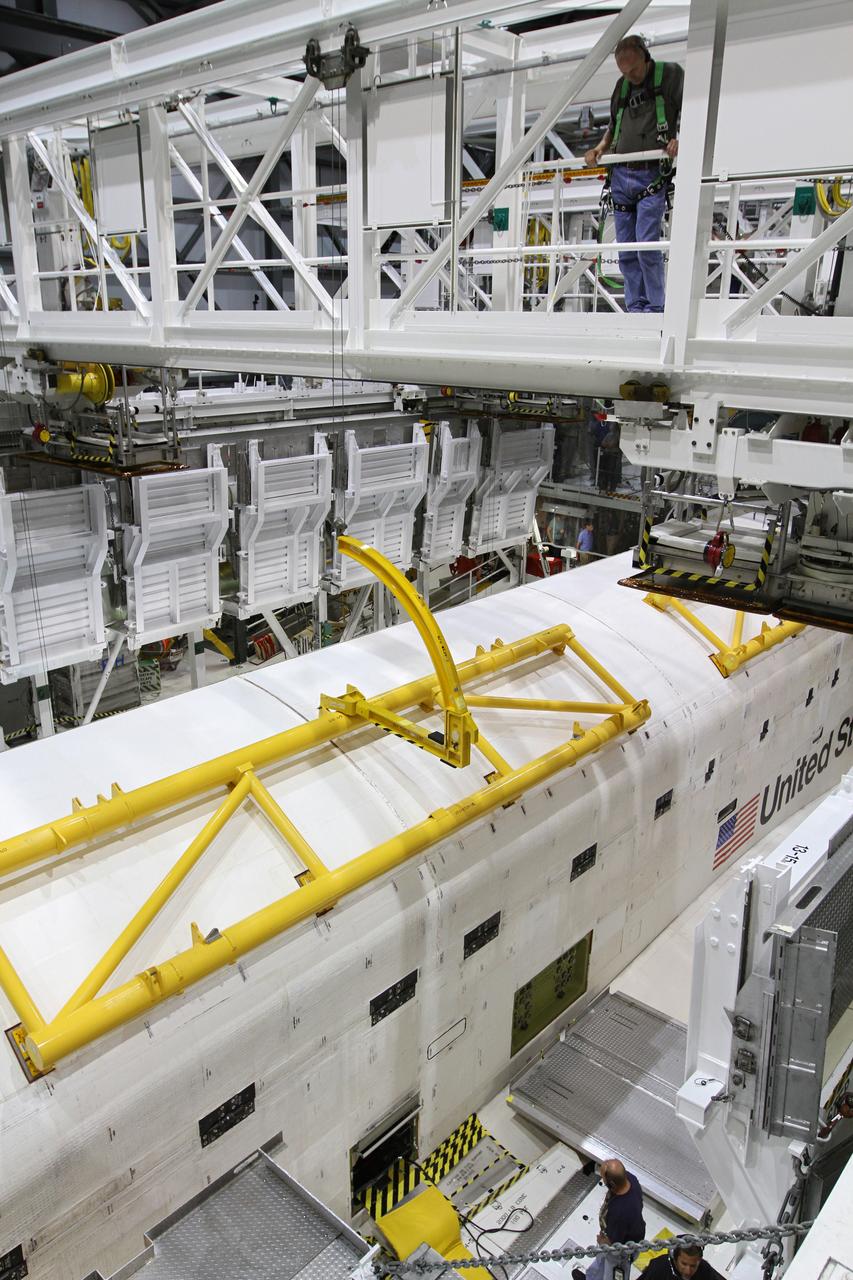
T&R ENDEAVOUR - FINAL PAYLOAD BAY (PLB) DOOR CLOSURE
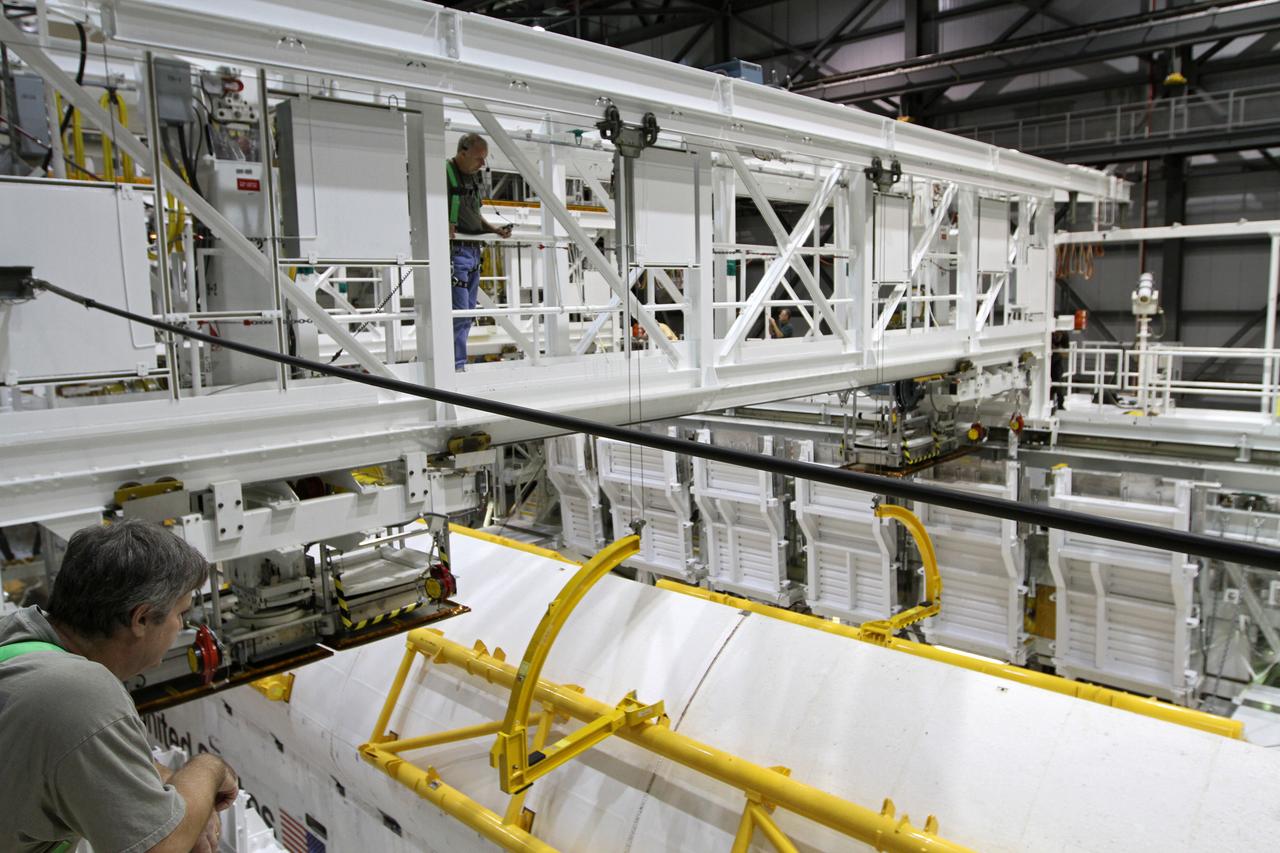
T&R ENDEAVOUR - FINAL PAYLOAD BAY (PLB) DOOR CLOSURE
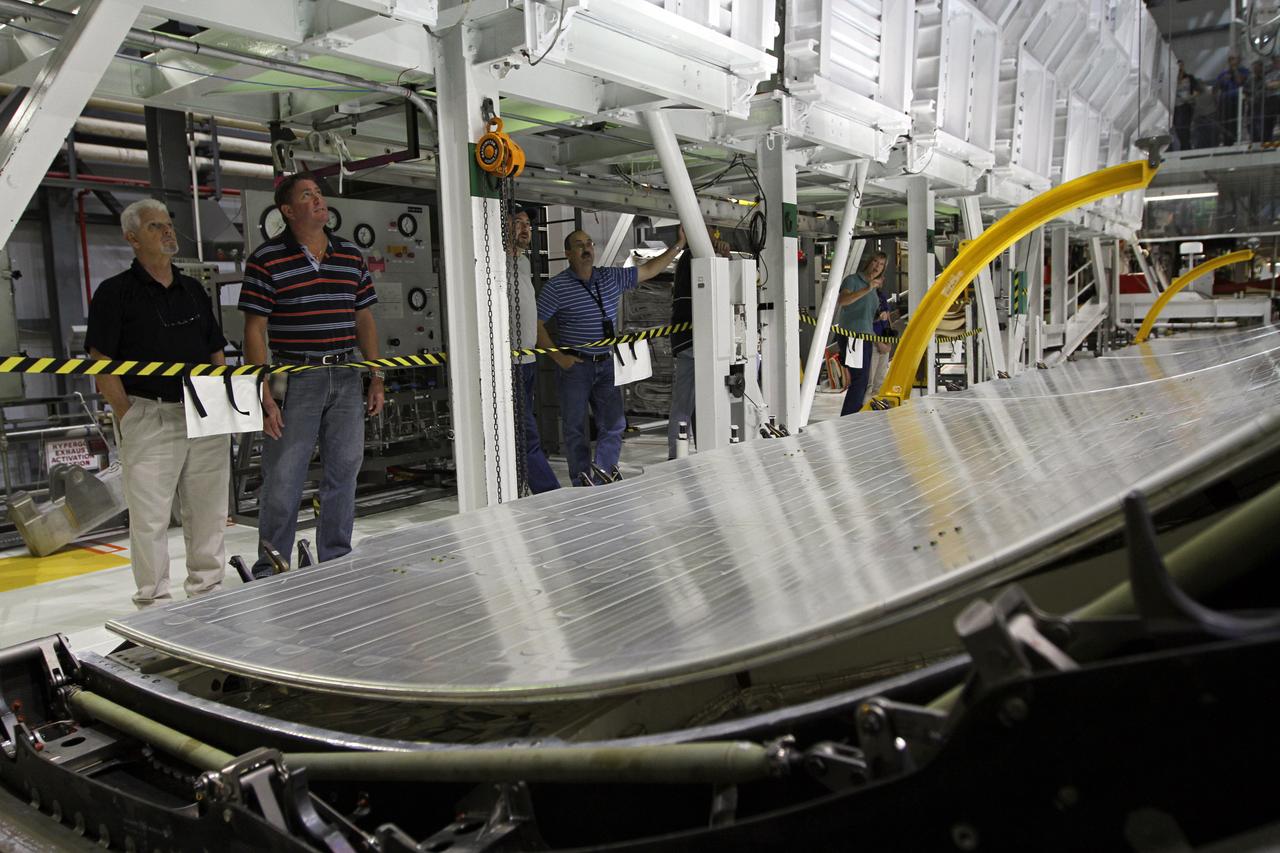
T&R ENDEAVOUR - FINAL PAYLOAD BAY (PLB) DOOR CLOSURE
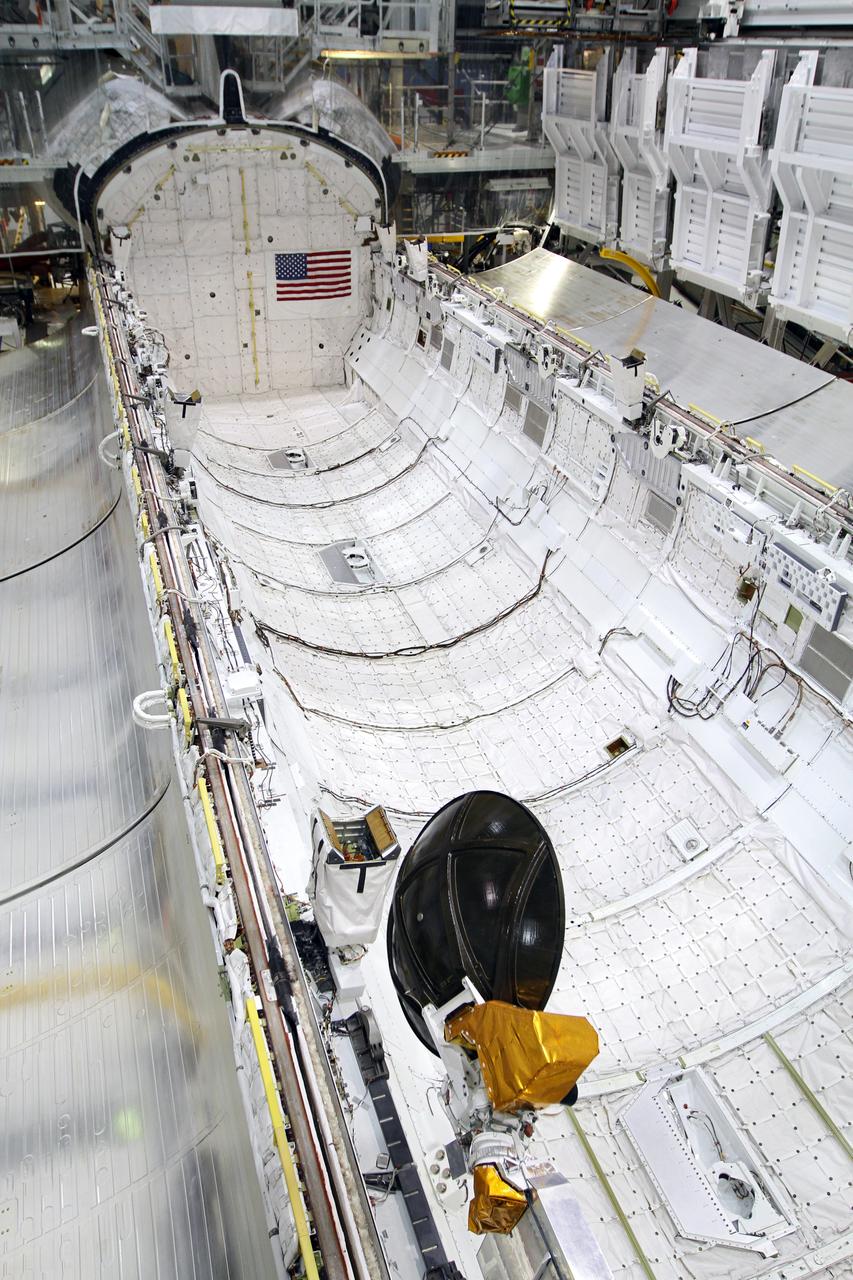
T&R ENDEAVOUR - FINAL PAYLOAD BAY (PLB) DOOR CLOSURE
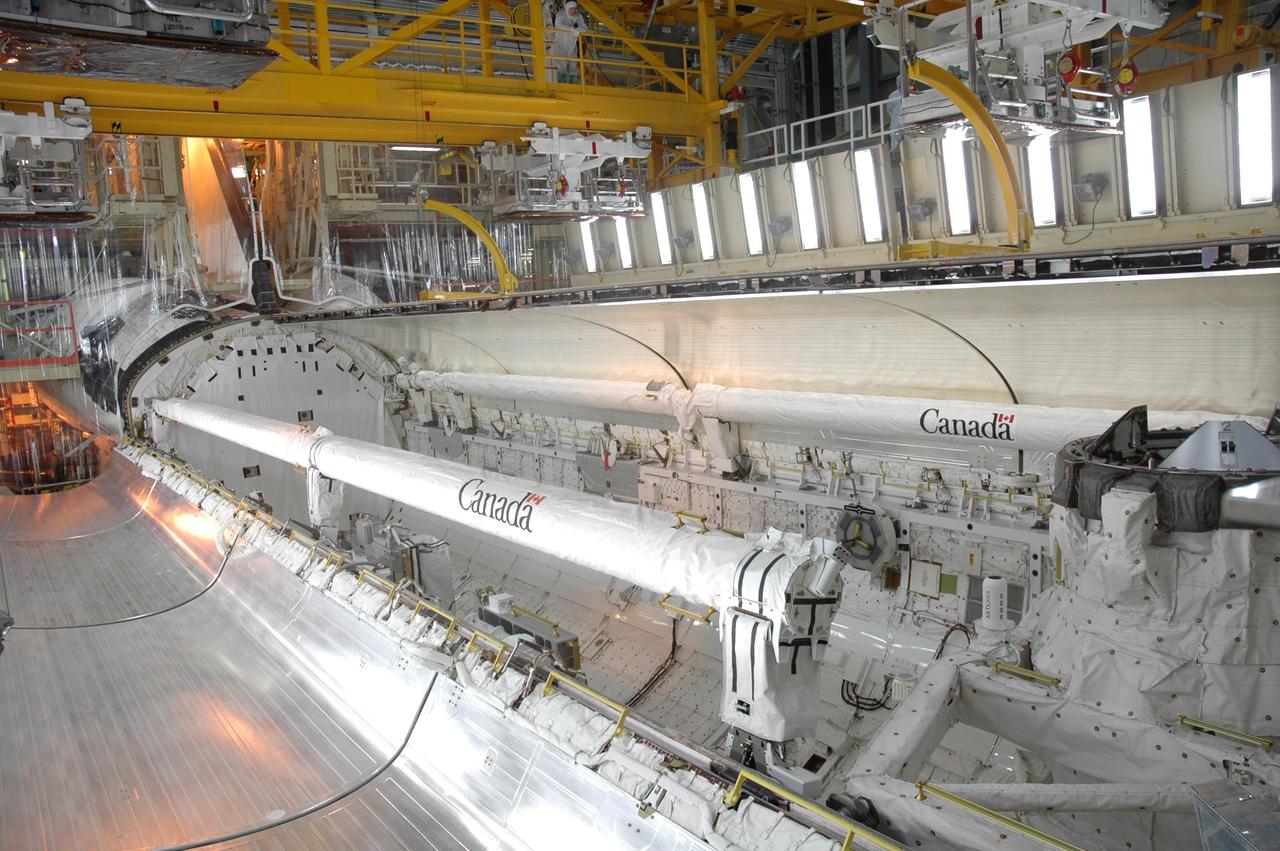
KENNEDY SPACE CENTER, FLA. -- In the Orbiter Processing Facility, the left payload bay door of Discovery is being closed in preparation for the rollover of the orbiter to the Vehicle Assembly Building. Seen along the edges of the bay are the Canadian-built shuttle robotic arm and orbiter boom sensor system. The primary payload, the U.S. Node 2, which is named Harmony, will be installed in the payload bay at the pad prior to Discovery's liftoff on mission STS-120. The mission will be the 23rd flight for the assembly of the International Space Station. Space Shuttle Discovery is targeted for launch on Oct. 23. Photo credit: NASA/Jim Grossmann
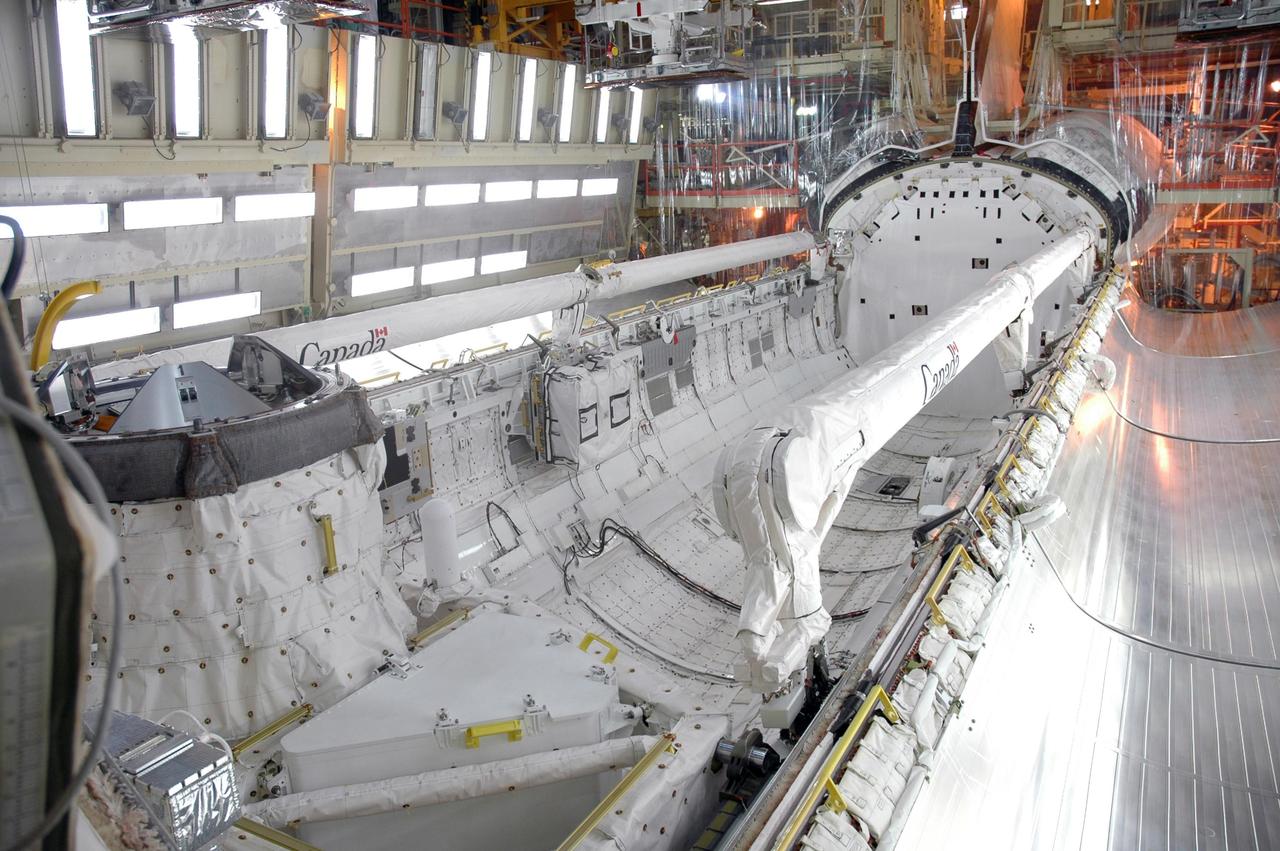
KENNEDY SPACE CENTER, FLA. -- In the Orbiter Processing Facility, preparations are under way to close the payload bay doors of Discovery for the rollover of the orbiter to the Vehicle Assembly Building. Seen along the edges of the bay are the Canadian-built shuttle robotic arm and orbiter boom sensor system. The primary payload, the U.S. Node 2, which is named Harmony, will be installed in the payload bay at the pad prior to Discovery's liftoff on mission STS-120. The mission will be the 23rd flight for the assembly of the International Space Station. Space Shuttle Discovery is targeted for launch on Oct. 23. Photo credit: NASA/Jim Grossmann
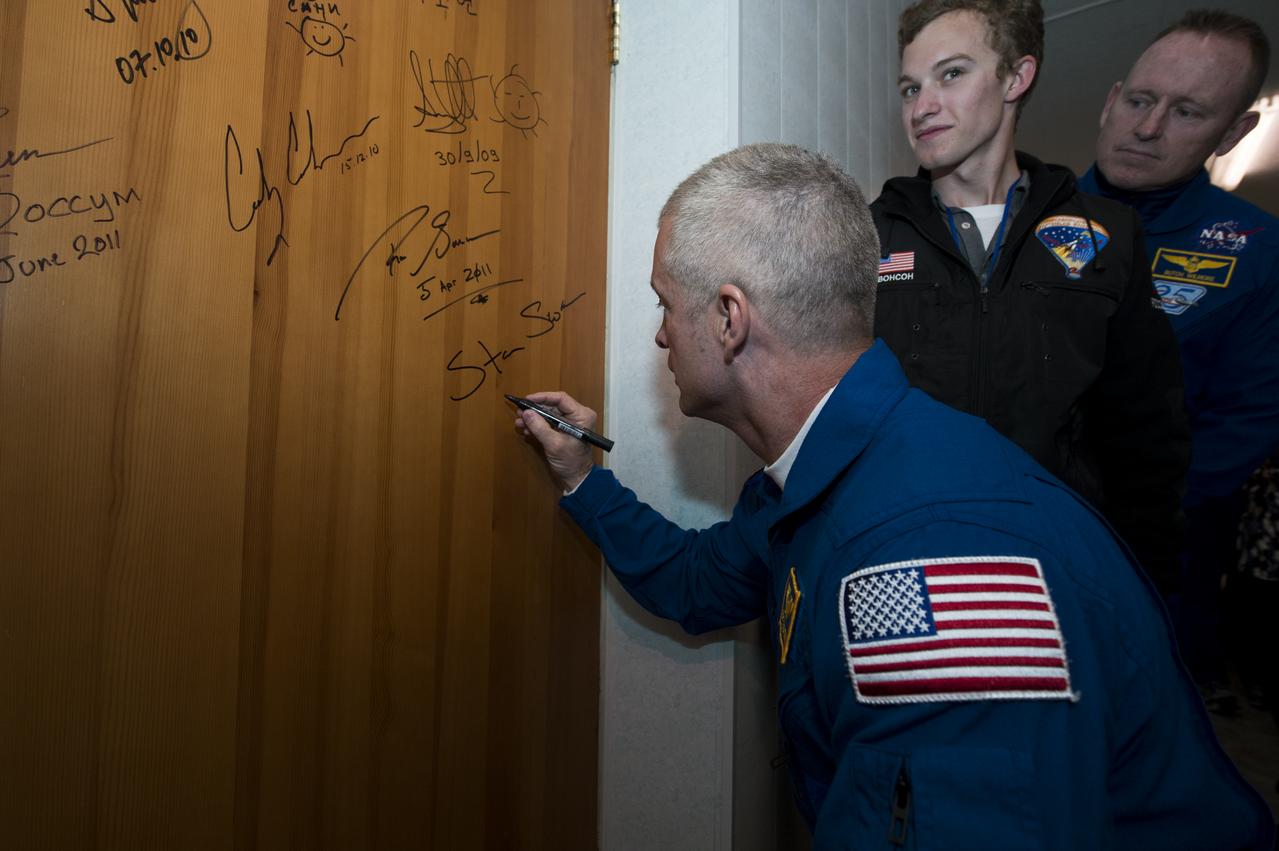
Expedition 39 Flight Engineer Steve Swanson of NASA, performs the traditional door signing at the Cosmonaut hotel prior to departing the hotel for launch in a Soyuz rocket with fellow crew mates, Soyuz Commander Alexander Skvortsov of the Russian Federal Space Agency, Roscosmos, and Flight Engineer Oleg Artemyev of Roscosmos, Tuesday, March 25, 2014, in Baikonur, Kazakhstan. Swanson, Skvortsov and, and Artemyev will launch in their Soyuz TMA-12M spacecraft to the International Space Station to begin a six-month mission. Photo Credit (NASA/Joel Kowsky)
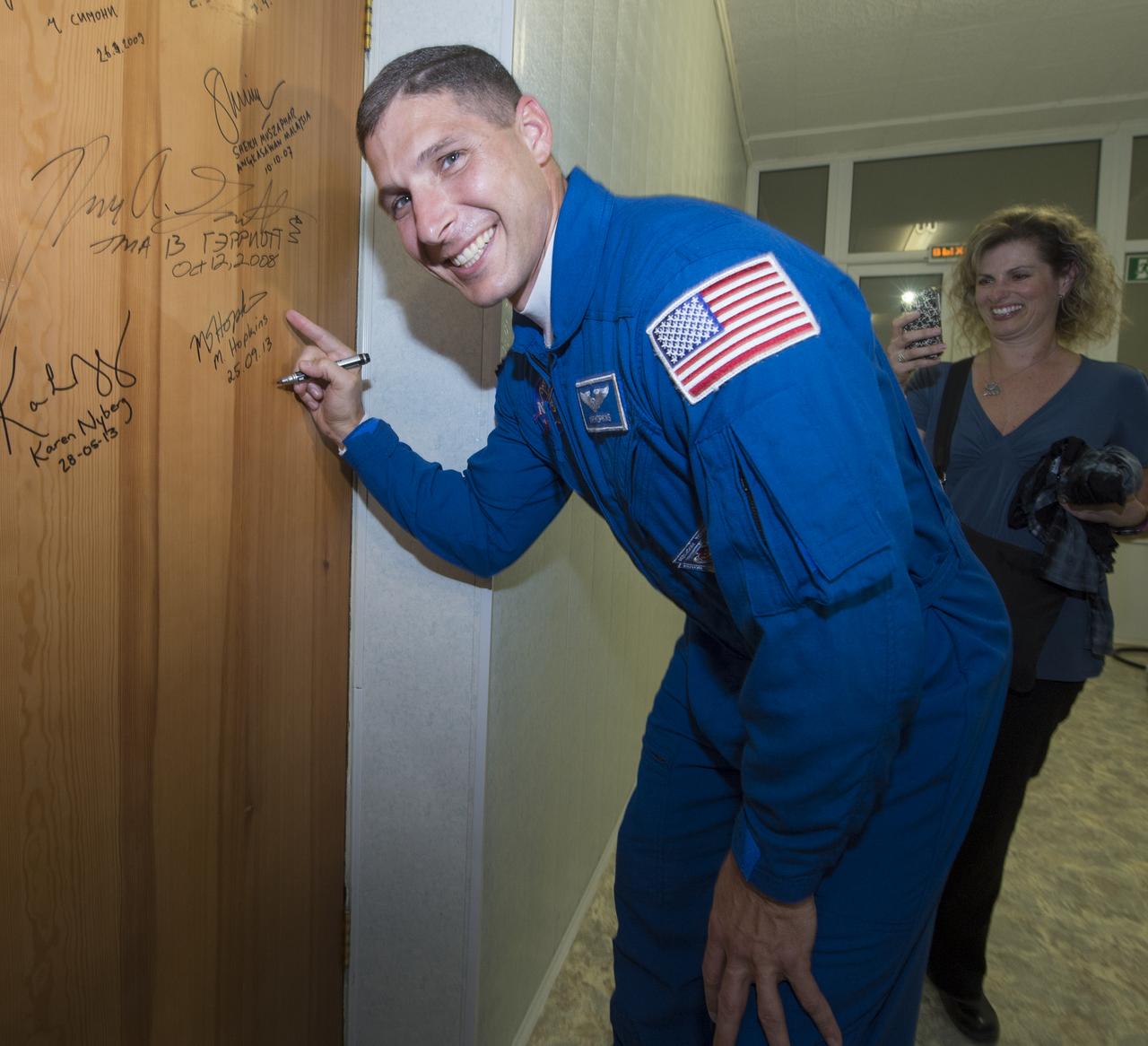
Expedition 37/38 NASA Flight Engineer Michael Hopkins performs the traditional door signing before he and fellow crewmates, Soyuz Commander Oleg Kotov, Russian Flight Engineer Sergey Ryazanskiy depart the Cosmonaut Hotel for their Soyuz launch to the International Space Station on Wednesday, Sept. 25, 2013, in Baikonur, Kazakhstan. Launch of the Soyuz rocket will send Hopkins, Kotov and Ryazanskiy on a five-month mission aboard the International Space Station. Photo Credit: (NASA/Carla Cioffi)
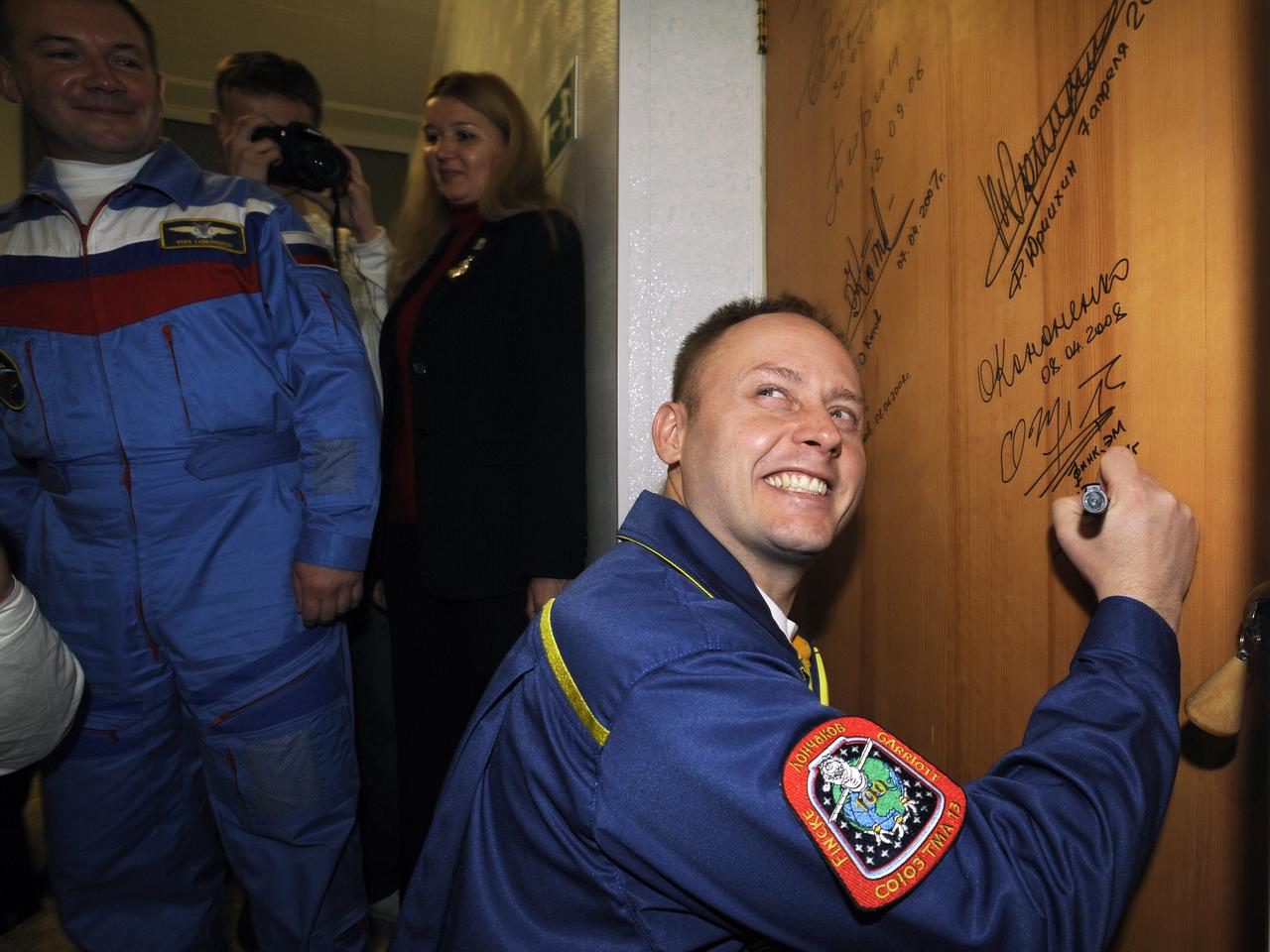
Expedition 18 Commander Michael Fincke signs the door of a hotel room at the Cosmonaut Hotel prior to departing for the launch aboard a Soyuz TMA-13 spacecraft, Sunday, Oct. 12, 2008, in Baikonur, Kazakhstan. The Soyuz TMA-13 spacecraft launched from the Baikonur Cosmodrome in Kazakhstan carrying Expedition 18 Commander Michael Fincke, Flight Engineer Yuri V. Lonchakov and American spaceflight participant Richard Garriott. Photo Credit: (NASA/Bill Ingalls)
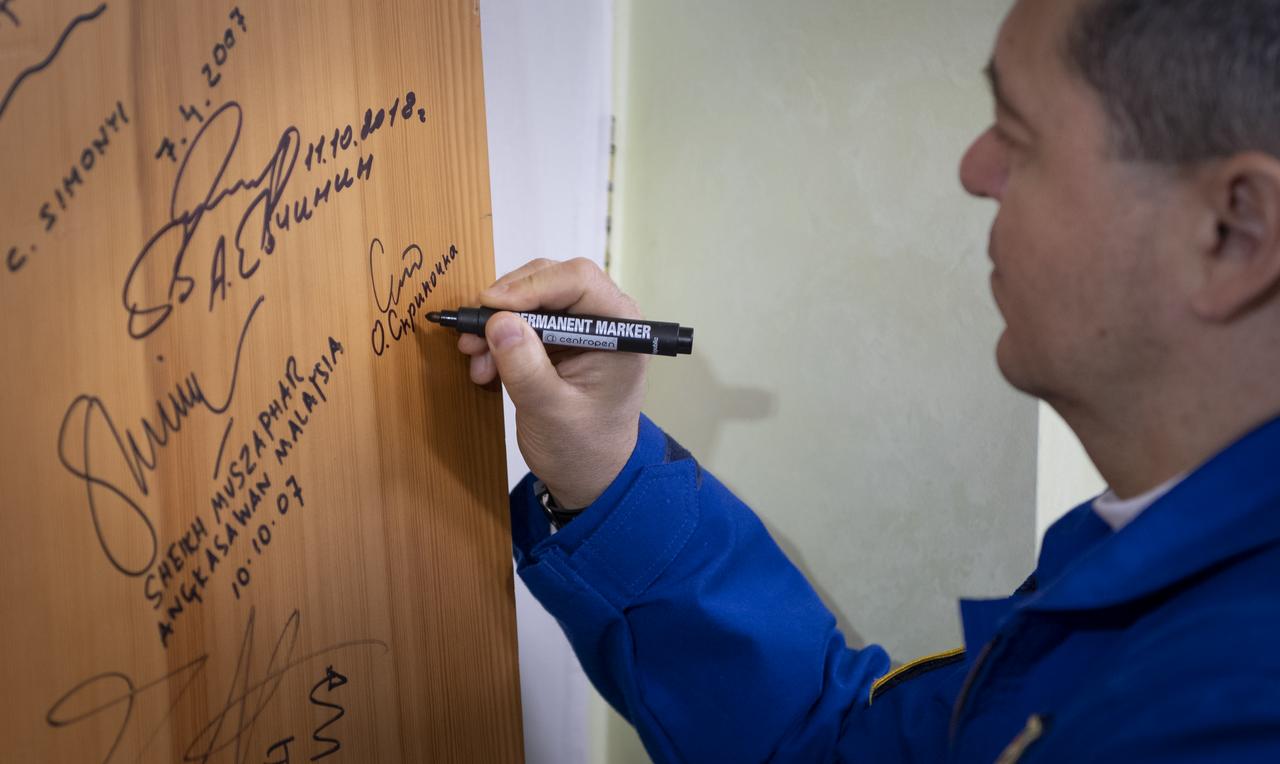
Expedition 61 cosmonaut Oleg Skripochka of Roscosmos signs a door in the Cosmonaut Hotel prior to departing for launch on a Soyuz rocket with Expedition 61 astronaut Jessica Meir of NASA, and spaceflight participant Hazzaa Ali Almansoori of the United Arab Emirates Wednesday, Sept. 25, 2019 in Baikonur, Kazakhstan. Meir, Skripochka, and Almansoori will launch later in the day on the Soyuz MS-15 spacecraft from the Baikonur Cosmodrome to the International Space Station. Photo Credit: (NASA/Bill Ingalls)
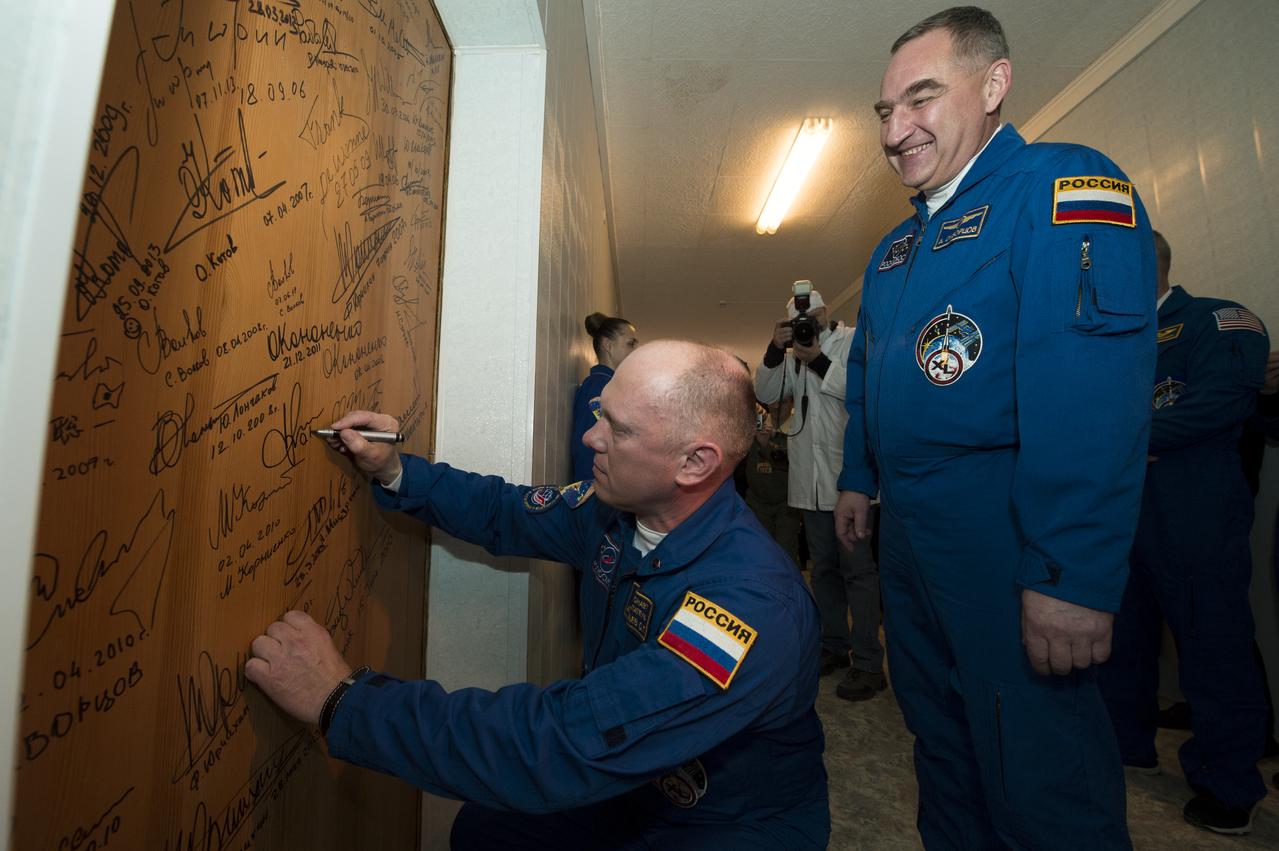
Expedition 39 Flight Engineer Oleg Artemyev, left, of the Russian Federal Space Agency, Roscosmos, performs the traditional door signing at the Cosmonaut hotel as Soyuz Commander Alexander Skvortsov of Roscosmos, looks on, Tuesday, March 25, 2014, in Baikonur, Kazakhstan. Artemyev, Skvortsov, and fellow crew member Flight Engineer Steve Swanson of NASA will launch in their Soyuz TMA-12M spacecraft to the International Space Station to begin a six-month mission. Photo Credit (NASA/Joel Kowsky)
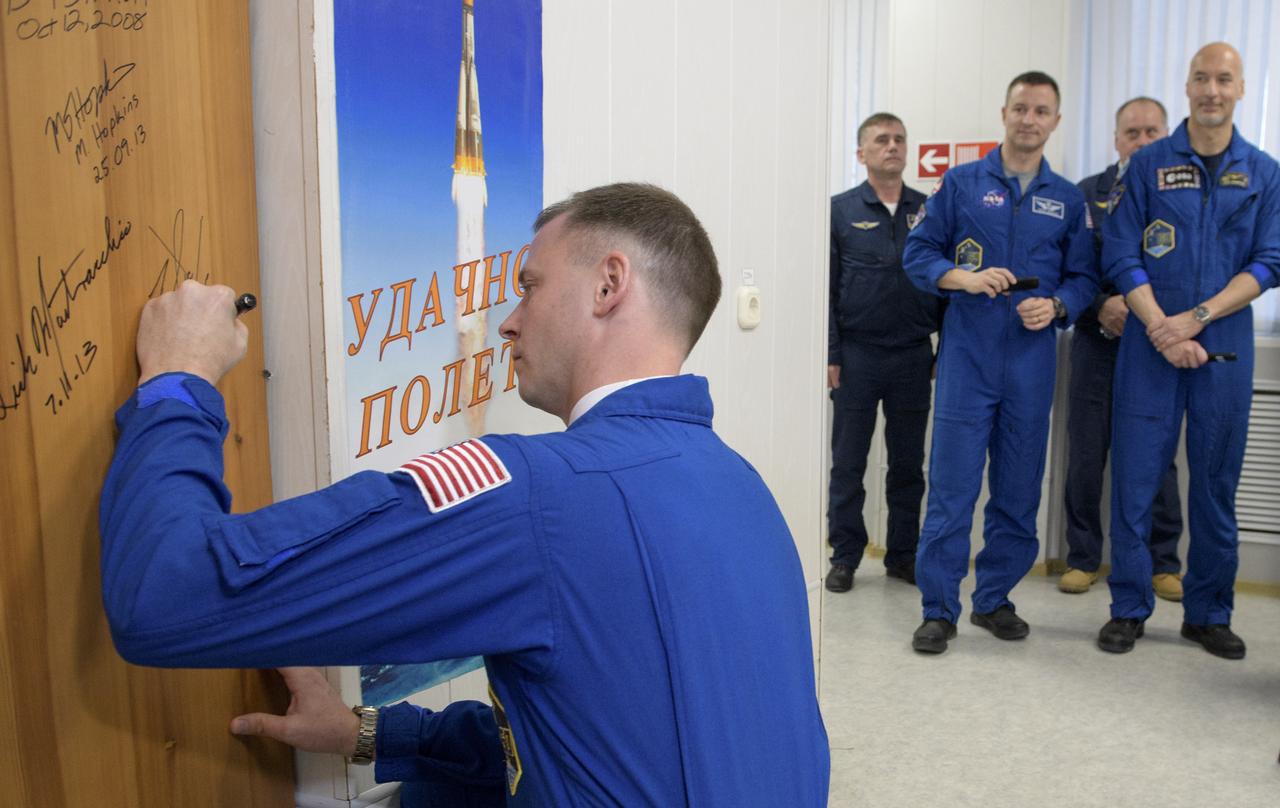
Expedition 59 astronaut Nick Hague of NASA signs a door in the Cosmonaut Hotel prior to departing for launch on a Soyuz rocket with Christina Koch of NASA, and Alexey Ovchinin of Roscosmos, Thursday, March 14, 2019 in Baikonur, Kazakhstan. Hague, Koch, and Ovchinin will launch March 14, U.S. time, on the Soyuz MS-12 spacecraft from the Baikonur Cosmodrome for a six-and-a-half month mission on the International Space Station. Photo Credit: (NASA/Bill Ingalls)
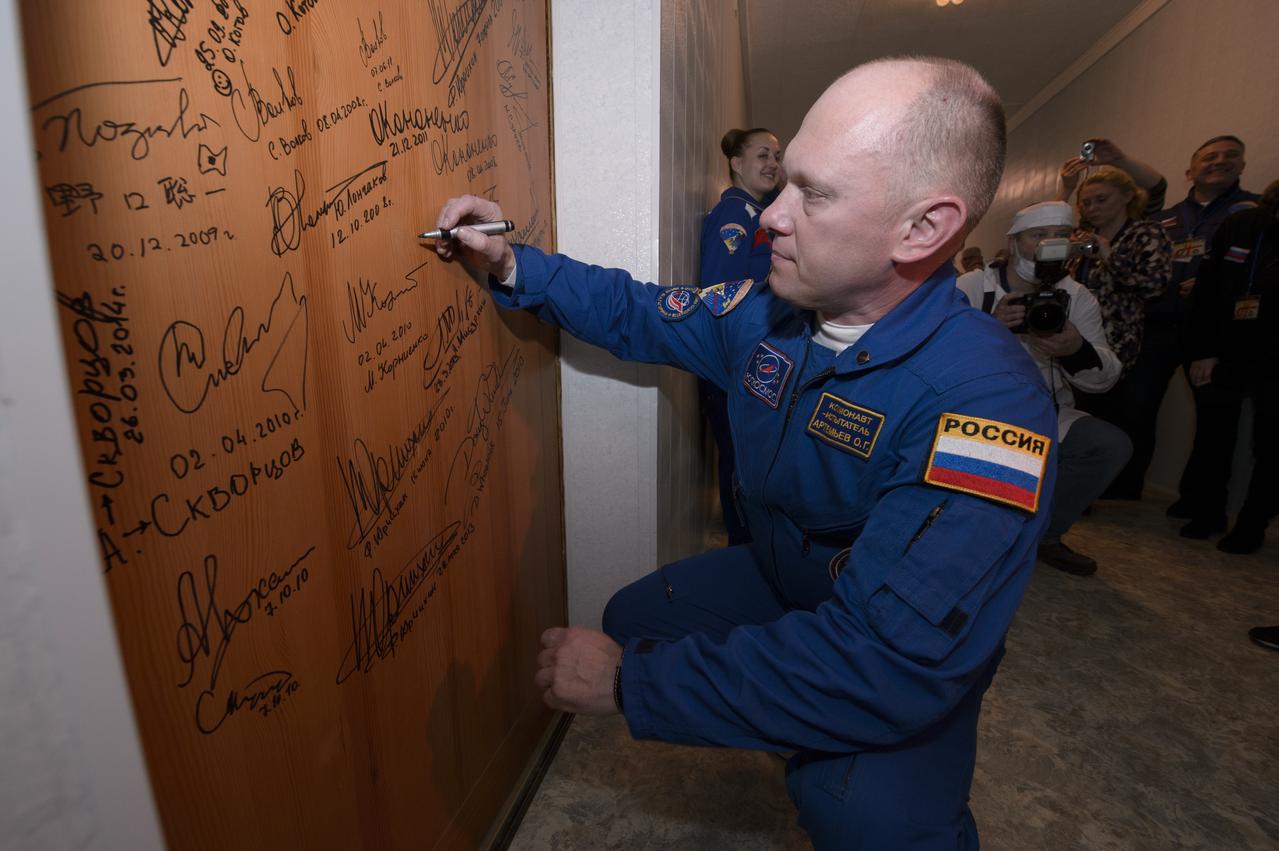
Expedition 39 Flight Engineer Oleg Artemyev of the Russian Federal Space Agency, Roscosmos, performs the traditional door signing at the Cosmonaut hotel prior to departing the hotel for launch in a Soyuz rocket with fellow crew mates, Soyuz Commander Alexander Skvortsov of Roscosmos, and Flight Engineer Steve Swanson of NASA, Tuesday, March 25, 2014, in Baikonur, Kazakhstan. Artemyev, Skvortsov, and Swanson will launch in their Soyuz TMA-12M spacecraft to the International Space Station to begin a six-month mission. Photo Credit (NASA/Joel Kowsky)
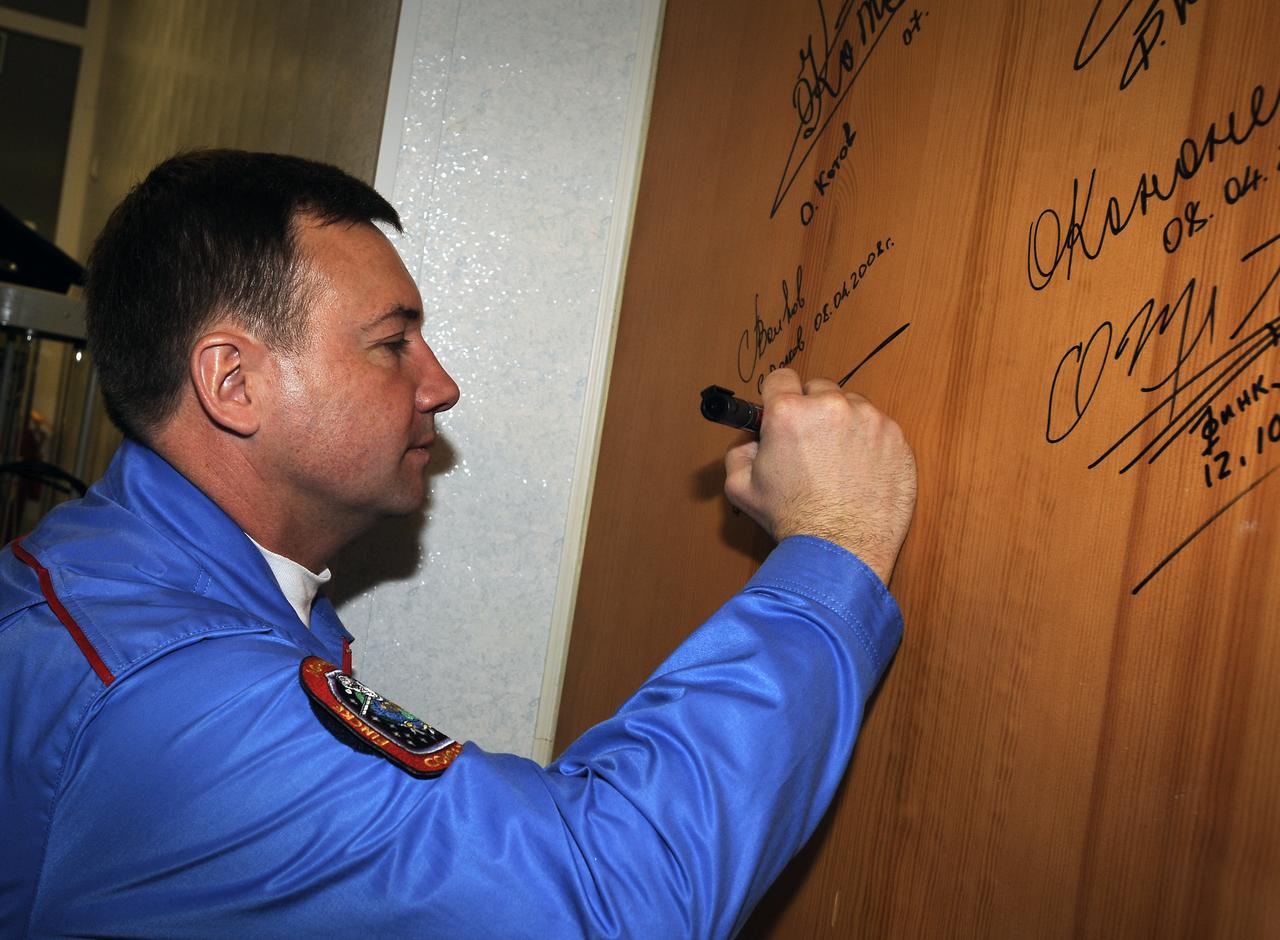
Expedition 18 Flight Engineer Yuri V. Lonchakov signs the door of a hotel room at the Cosmonaut Hotel prior to departing for the launch aboard a Soyuz TMA-13 spacecraft, Sunday, Oct. 12, 2008, in Baikonur, Kazakhstan. The Soyuz TMA-13 spacecraft launched from the Baikonur Cosmodrome in Kazakhstan carrying Expedition 18 Commander Michael Fincke, Flight Engineer Yuri V. Lonchakov and American spaceflight participant Richard Garriott. Photo Credit: (NASA/Bill Ingalls)
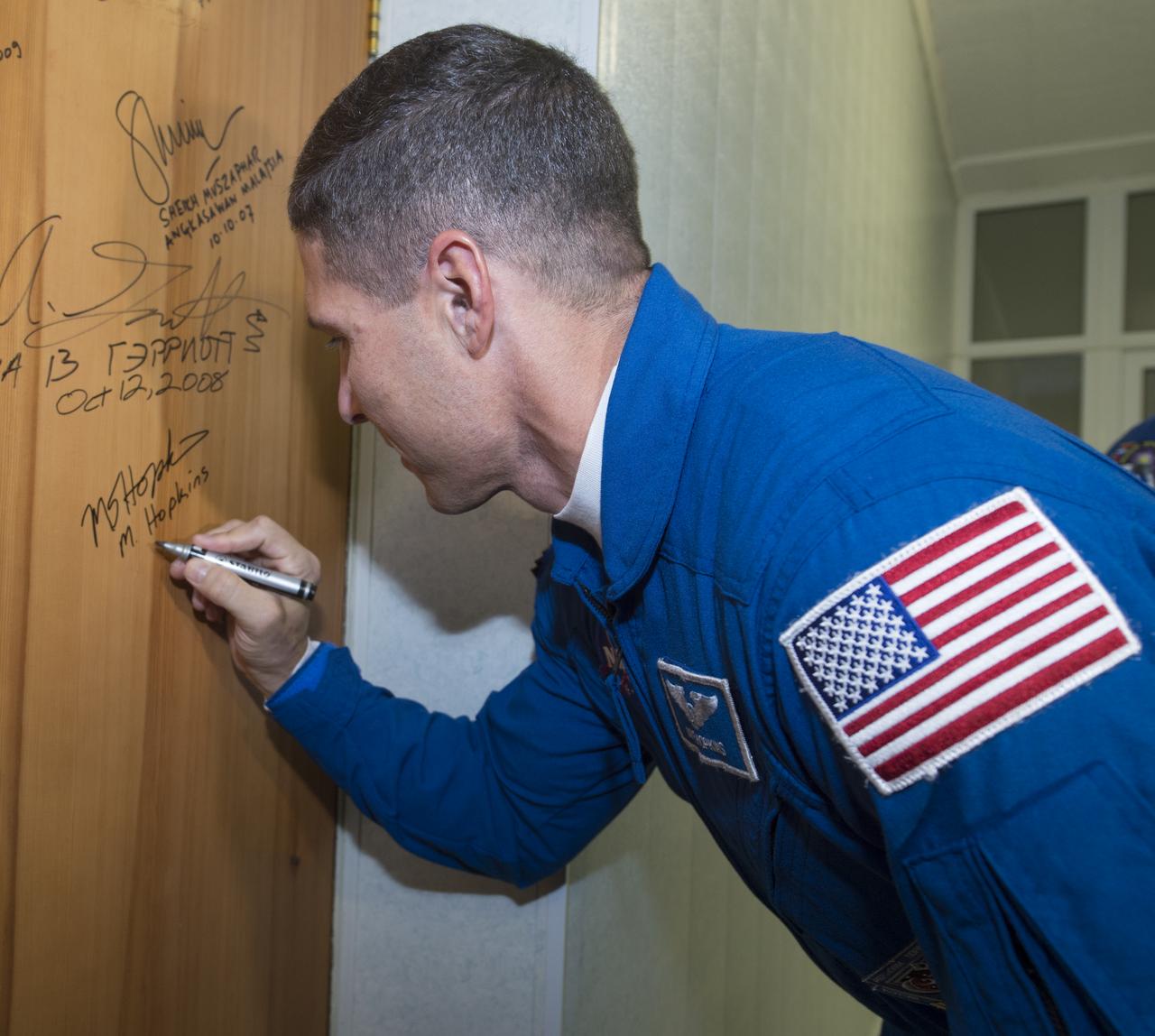
Expedition 37/38 NASA Flight Engineer Michael Hopkins performs the traditional door signing before he and fellow crewmates, Soyuz Commander Oleg Kotov, Russian Flight Engineer Sergey Ryazanskiy depart the Cosmonaut Hotel for their Soyuz launch to the International Space Station on Wednesday, Sept. 25, 2013, in Baikonur, Kazakhstan. Launch of the Soyuz rocket will send Hopkins, Kotov and Ryazanskiy on a five-month mission aboard the International Space Station. Photo Credit: (NASA/Carla Cioffi)
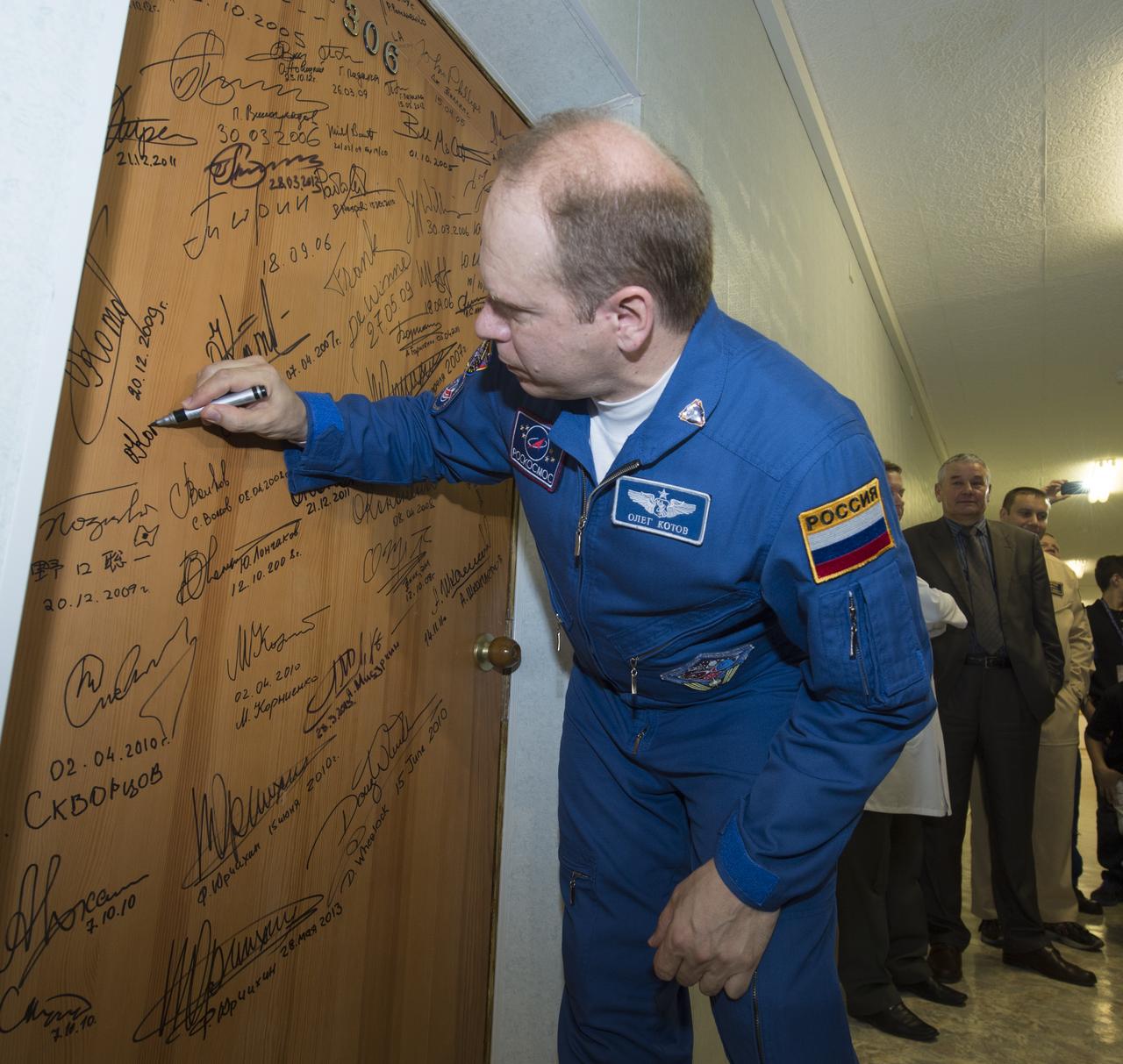
Expedition 37/38 Soyuz Commander Oleg Kotov performs the traditional door signing before he and fellow crewmates, NASA Flight Engineer Michael Hopkins, Russian Flight Engineer Sergey Ryazanskiy depart the Cosmonaut Hotel for their Soyuz launch to the International Space Station on Wednesday, Sept. 25, 2013, in Baikonur, Kazakhstan. Launch of the Soyuz rocket will send Hopkins, Kotov and Ryazanskiy on a five-month mission aboard the International Space Station. Photo Credit: (NASA/Carla Cioffi)
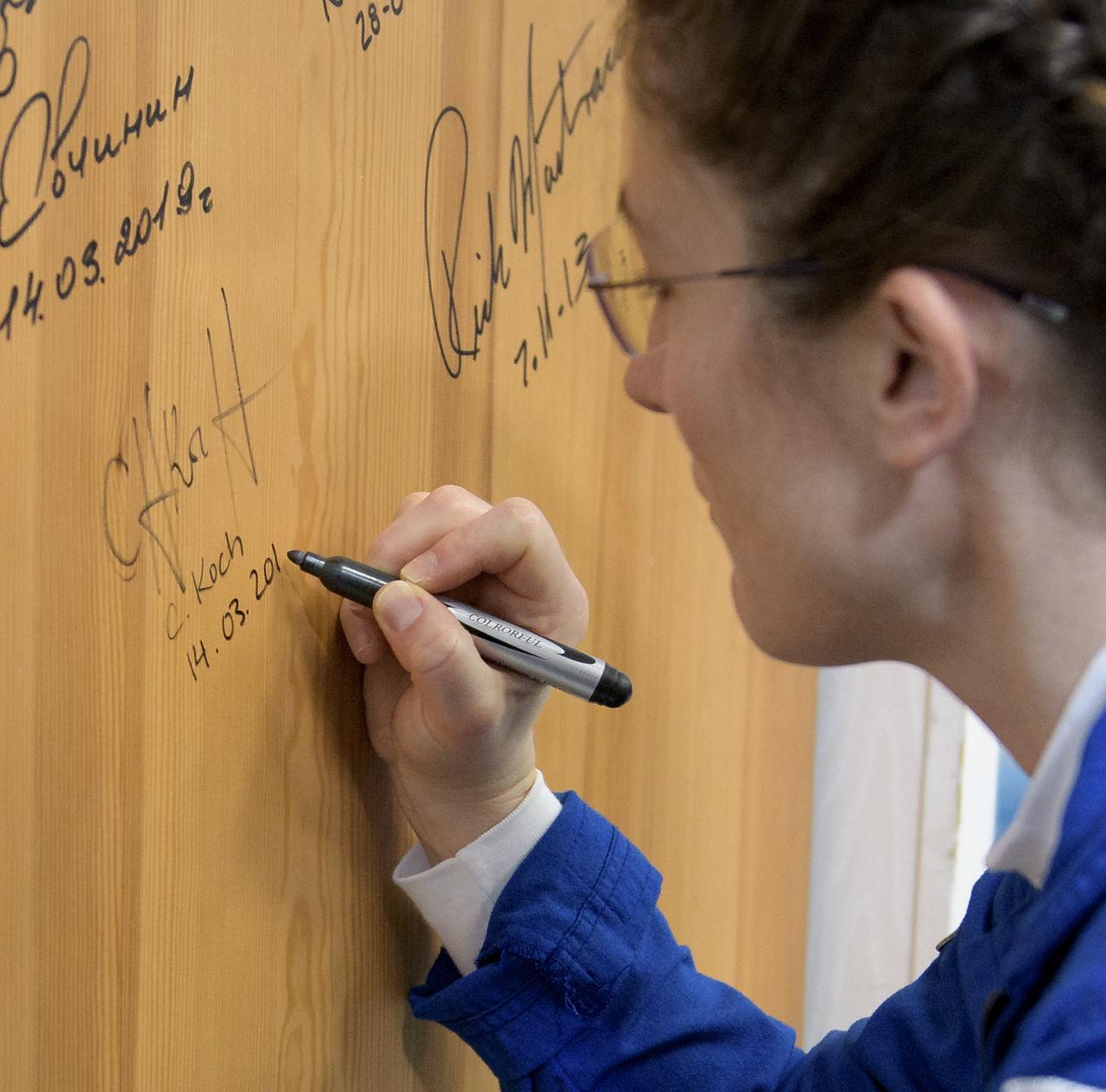
Expedition 59 astronaut Christina Koch of NASA signs a door in the Cosmonaut Hotel prior to departing for launch on a Soyuz rocket with Nick Hague of NASA, and Alexey Ovchinin of Roscosmos, Thursday, March 14, 2019 in Baikonur, Kazakhstan. Hague, Koch, and Ovchinin will launch March 14, U.S. time, on the Soyuz MS-12 spacecraft from the Baikonur Cosmodrome for a six-and-a-half month mission on the International Space Station. Photo Credit: (NASA/Bill Ingalls)
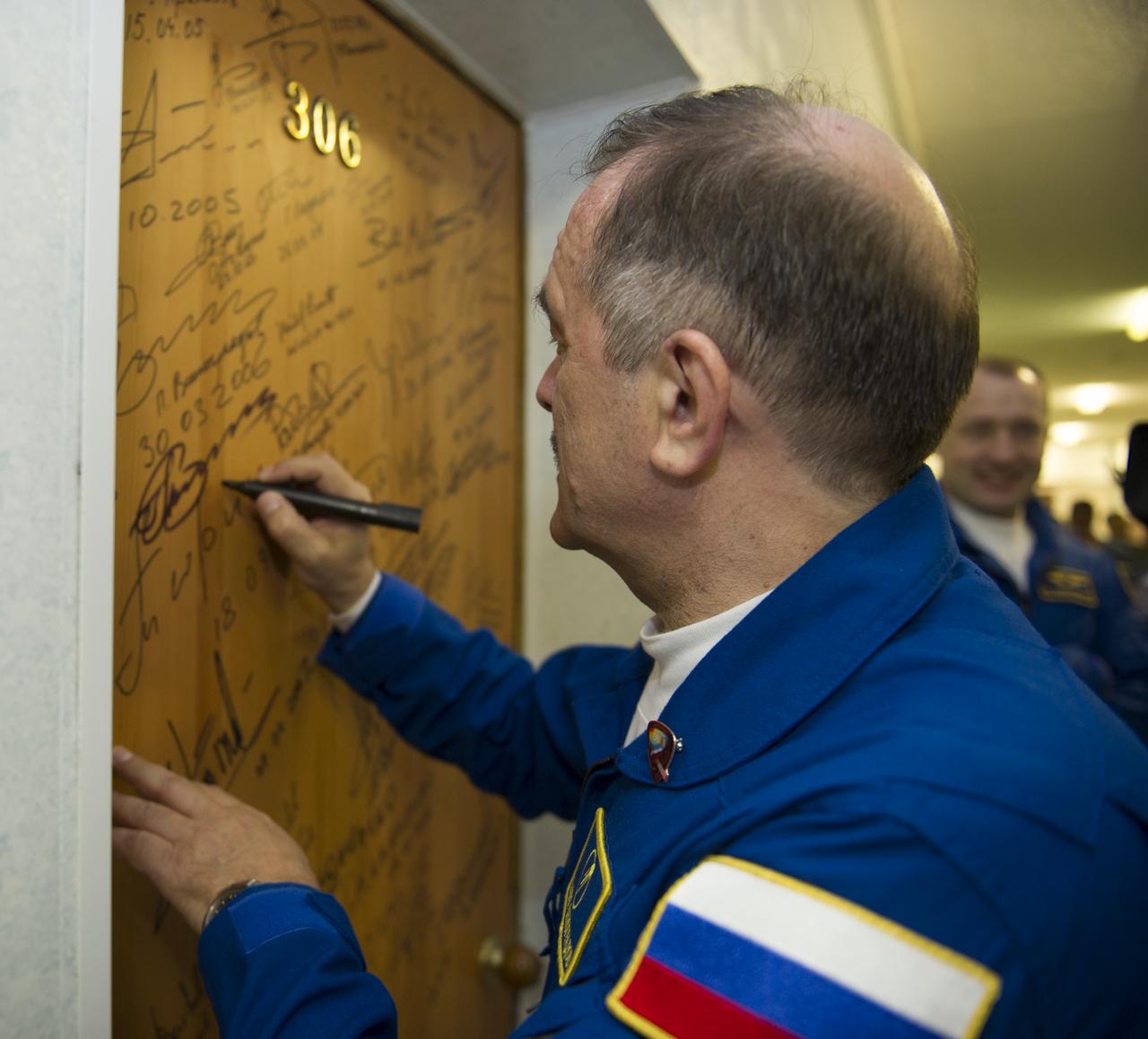
Expedition 35 Soyuz Commander Pavel Vinogradov performs the traditional door signing before he and fellow crewmates, Flight Engineers Chris Cassidy and Alexander Misurkin depart the Cosmonaut Hotel for their Soyuz launch to the International Space Station, Thursday, March 28, 2013, in Baikonur, Kazakhstan. Launch of the Soyuz rocket will send Vinogradov, Cassidy and Misurkin on a five and a half month mission aboard the International Space Station. Photo Credit: (NASA/Carla Cioffi)
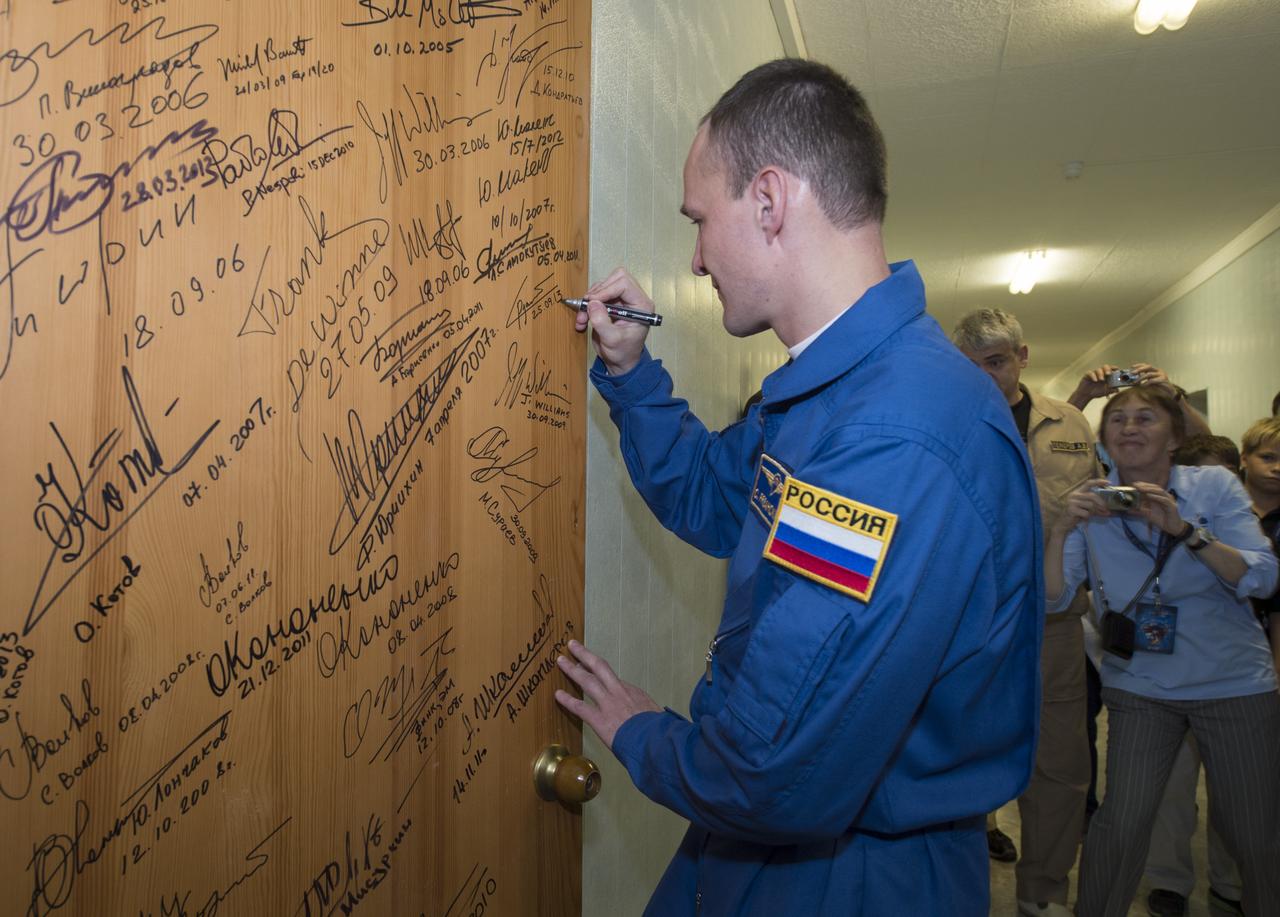
Expedition 37/38 Russian Flight Engineer Sergey Ryazanskiy performs the traditional door signing before he and fellow crewmates, Soyuz Commander Oleg Kotov and NASA Flight Engineer Michael Hopkins depart the Cosmonaut Hotel for their Soyuz launch to the International Space Station on Wednesday, Sept. 25, 2013, in Baikonur, Kazakhstan. Launch of the Soyuz rocket will send Hopkins, Kotov and Ryazanskiy on a five-month mission aboard the International Space Station. Photo Credit: (NASA/Carla Cioffi)
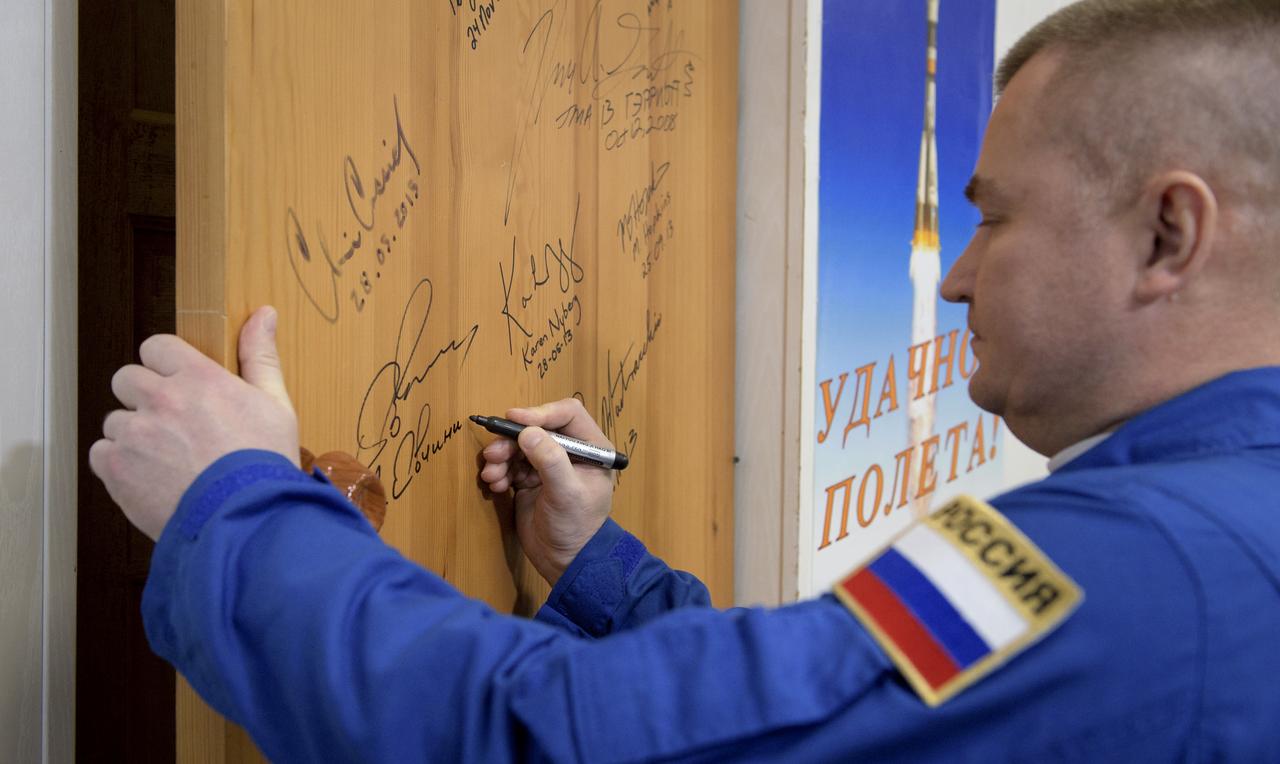
Expedition 59 cosmonaut Alexey Ovchinin of Roscosmos signs a door in the Cosmonaut Hotel prior to departing for launch on a Soyuz rocket with Nick Hague, and Christina Koch of NASA, Thursday, March 14, 2019 in Baikonur, Kazakhstan. Hague, Koch, and Ovchinin will launch March 14, U.S. time, on the Soyuz MS-12 spacecraft from the Baikonur Cosmodrome for a six-and-a-half month mission on the International Space Station. Photo Credit: (NASA/Bill Ingalls)
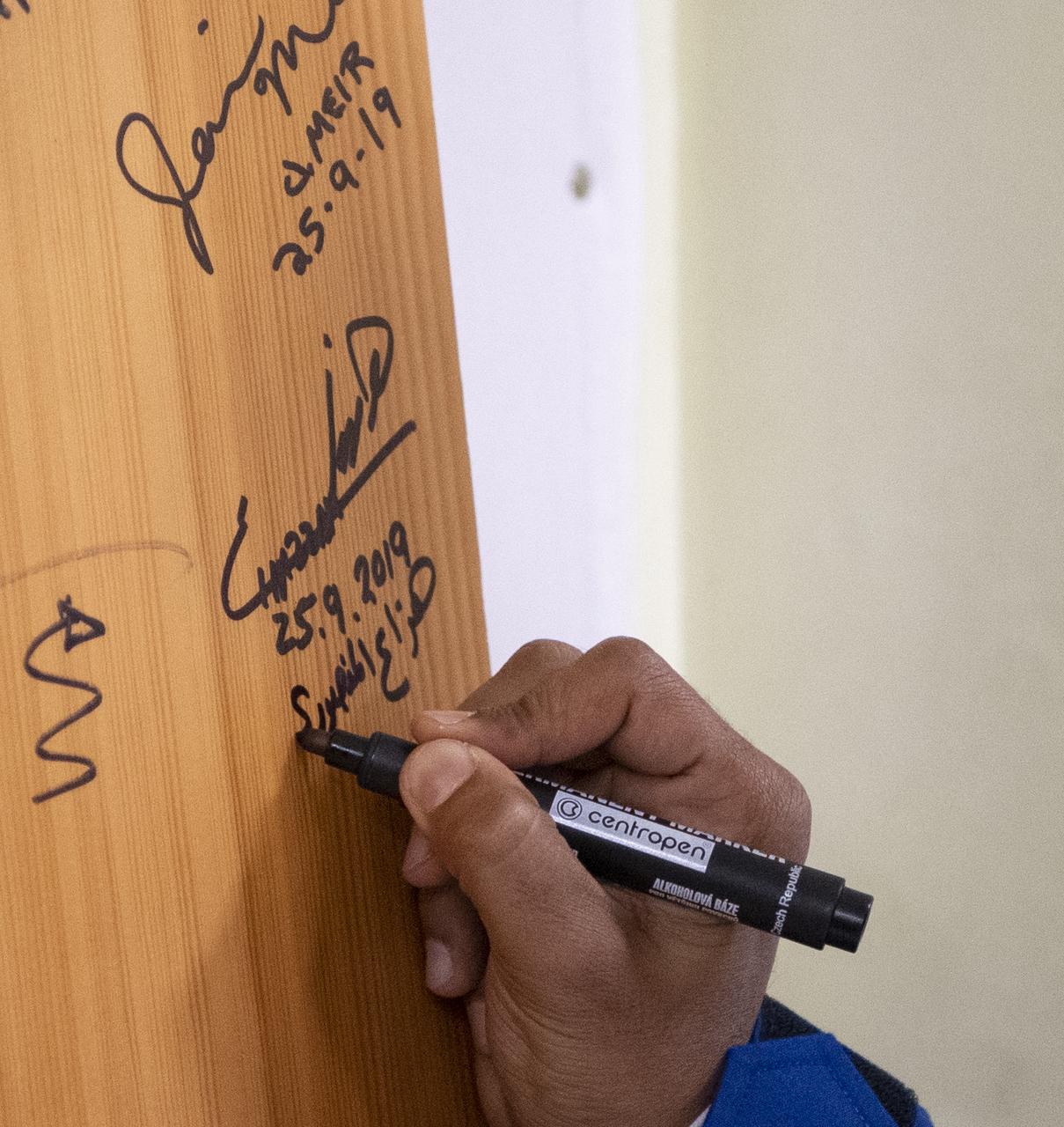
Spaceflight participant Hazzaa Ali Almansoori of the United Arab Emirates signs a door in the Cosmonaut Hotel prior to departing for launch on a Soyuz rocket with Expedition 61 crewmembers Oleg Skripochka of Roscosmos, and Jessica Meir of NASA Wednesday, Sept. 25, 2019 in Baikonur, Kazakhstan. Meir, Skripochka, and Almansoori will launch later in the day on the Soyuz MS-15 spacecraft from the Baikonur Cosmodrome to the International Space Station. Photo Credit: (NASA/Bill Ingalls)
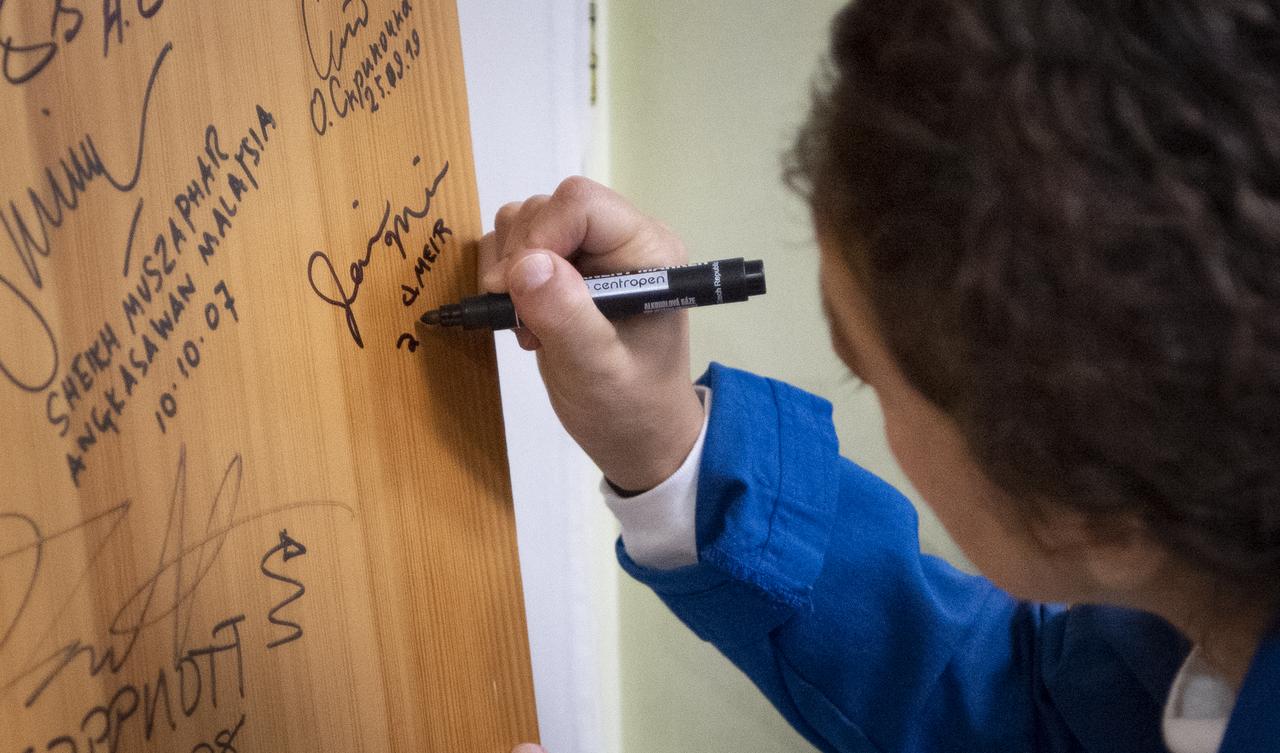
Expedition 61 astronaut Jessica Meir of NASA signs a door in the Cosmonaut Hotel prior to departing for launch on a Soyuz rocket with Expedition 61 cosmonaut Oleg Skripochka of Roscosmos, and spaceflight participant Hazzaa Ali Almansoori of the United Arab Emirates Wednesday, Sept. 25, 2019 in Baikonur, Kazakhstan. Meir, Skripochka, and Almansoori will launch later in the day on the Soyuz MS-15 spacecraft from the Baikonur Cosmodrome to the International Space Station. Photo Credit: (NASA/Bill Ingalls)
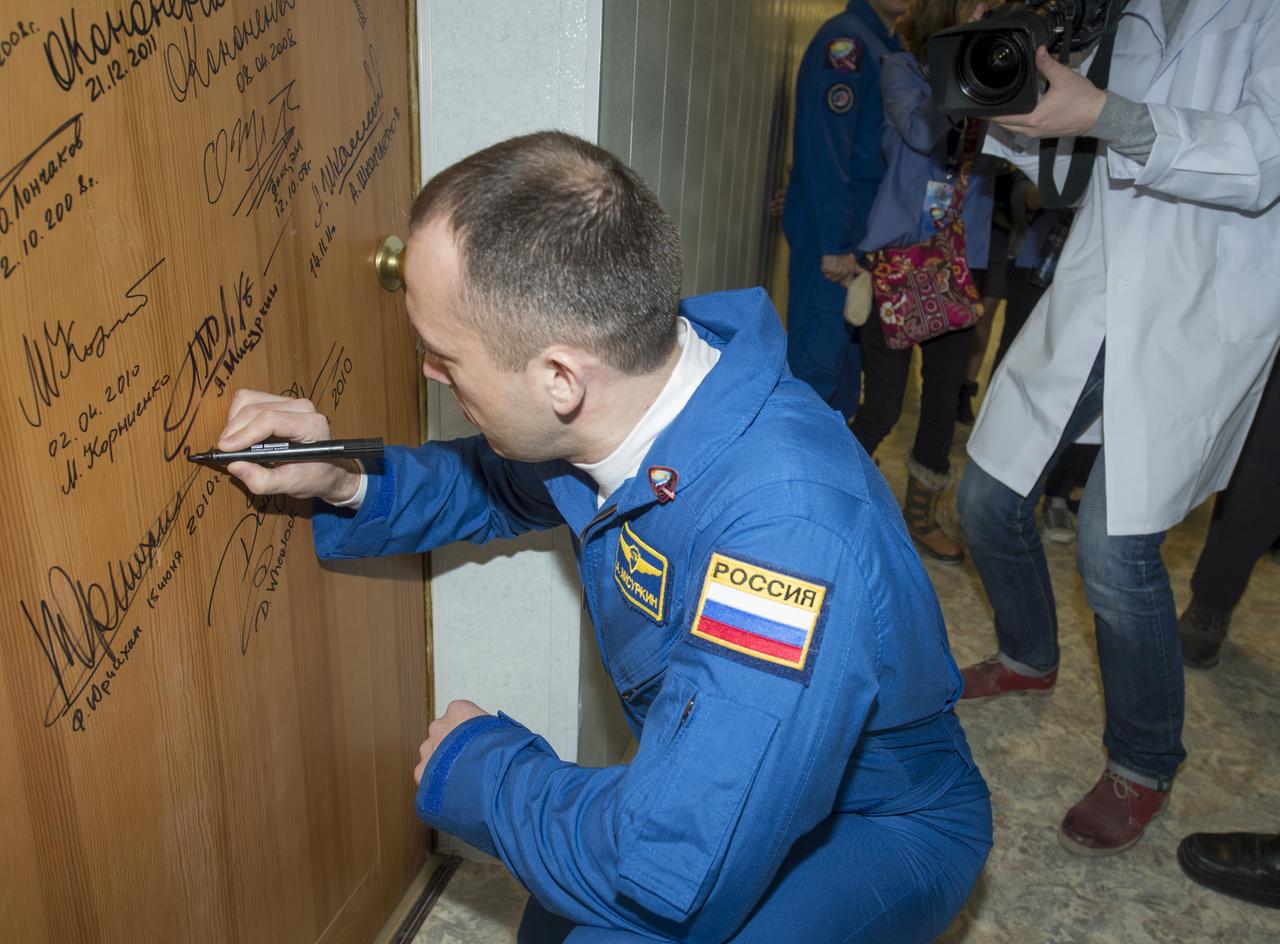
Expedition 35 Russian Flight Engineer Alexander Misurkin performs the traditional door signing before he and fellow crewmates, Soyuz Commander Pavel Vinogradov and NASA Flight Engineer Chris Cassidy depart the Cosmonaut Hotel for their Soyuz launch to the International Space Station, Thursday, March 28, 2013, in Baikonur, Kazakhstan. Launch of the Soyuz rocket will send Misurkin, Vinogradov and Cassidy on a five and a half month mission aboard the International Space Station. Photo Credit: (NASA/Carla Cioffi)
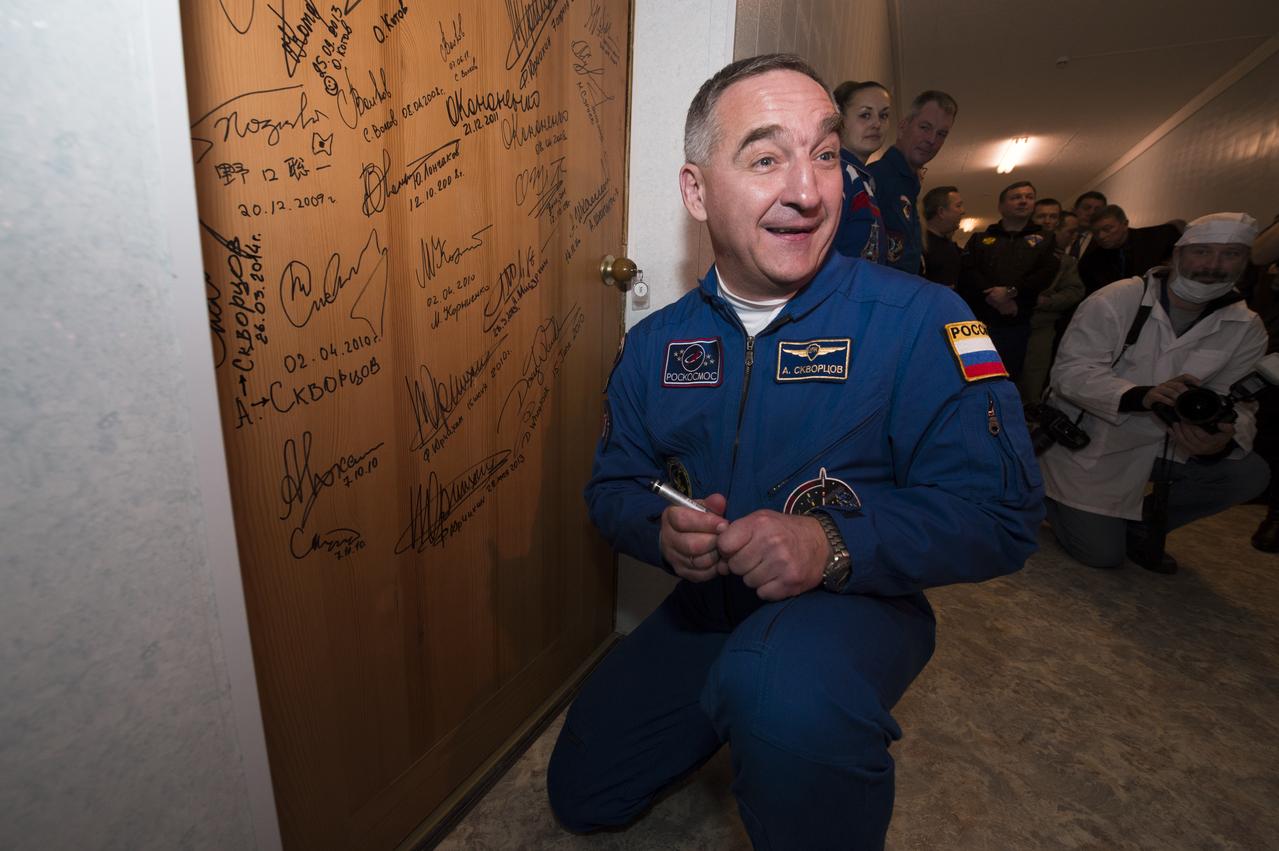
Expedition 39 Soyuz Commander Alexander Skvortsov of the Russian Federal Space Agency, Roscosmos, performs the traditional door signing at the Cosmonaut hotel prior to departing the hotel for launch in a Soyuz rocket with fellow crew mates, Flight Engineer Steve Swanson of NASA and Flight Engineer Oleg Artemyev of Roscosmos, Tuesday, March 25, 2014, in Baikonur, Kazakhstan. Skvortsov, Swanson, and Artemyev will launch in their Soyuz TMA-12M spacecraft to the International Space Station to begin a six-month mission. Photo Credit (NASA/Joel Kowsky)
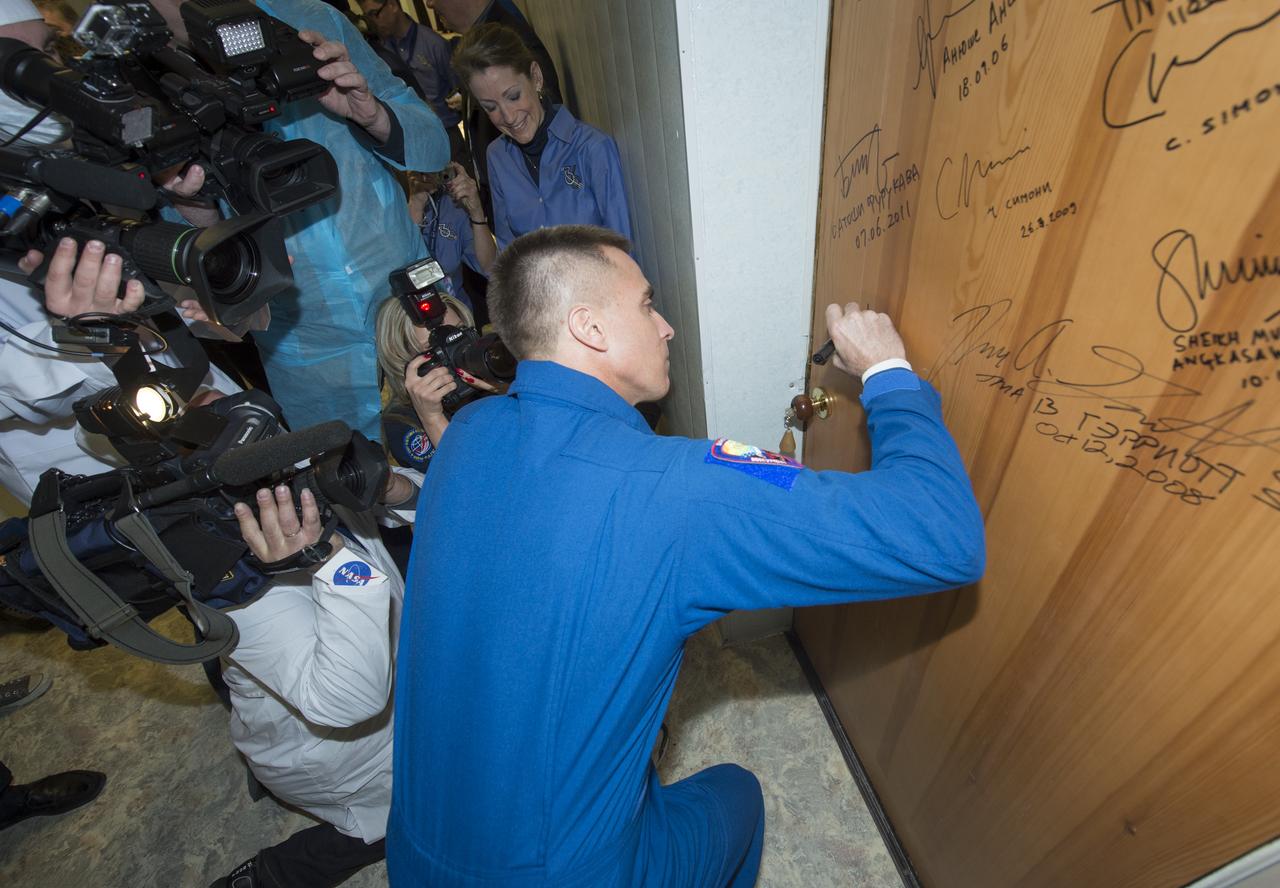
Expedition 35 NASA Flight Engineer Chris Cassidy performs the traditional door signing before he and fellow crewmates, Soyuz Commander Pavel Vinogradov and Flight Engineer Alexander Misurkin depart the Cosmonaut Hotel for their Soyuz launch to the International Space Station, Thursday, March 28, 2013, in Baikonur, Kazakhstan. Launch of the Soyuz rocket will send Cassidy, Vinogradov and Misurkin on a five and a half month mission aboard the International Space Station. Photo Credit: (NASA/Carla Cioffi)
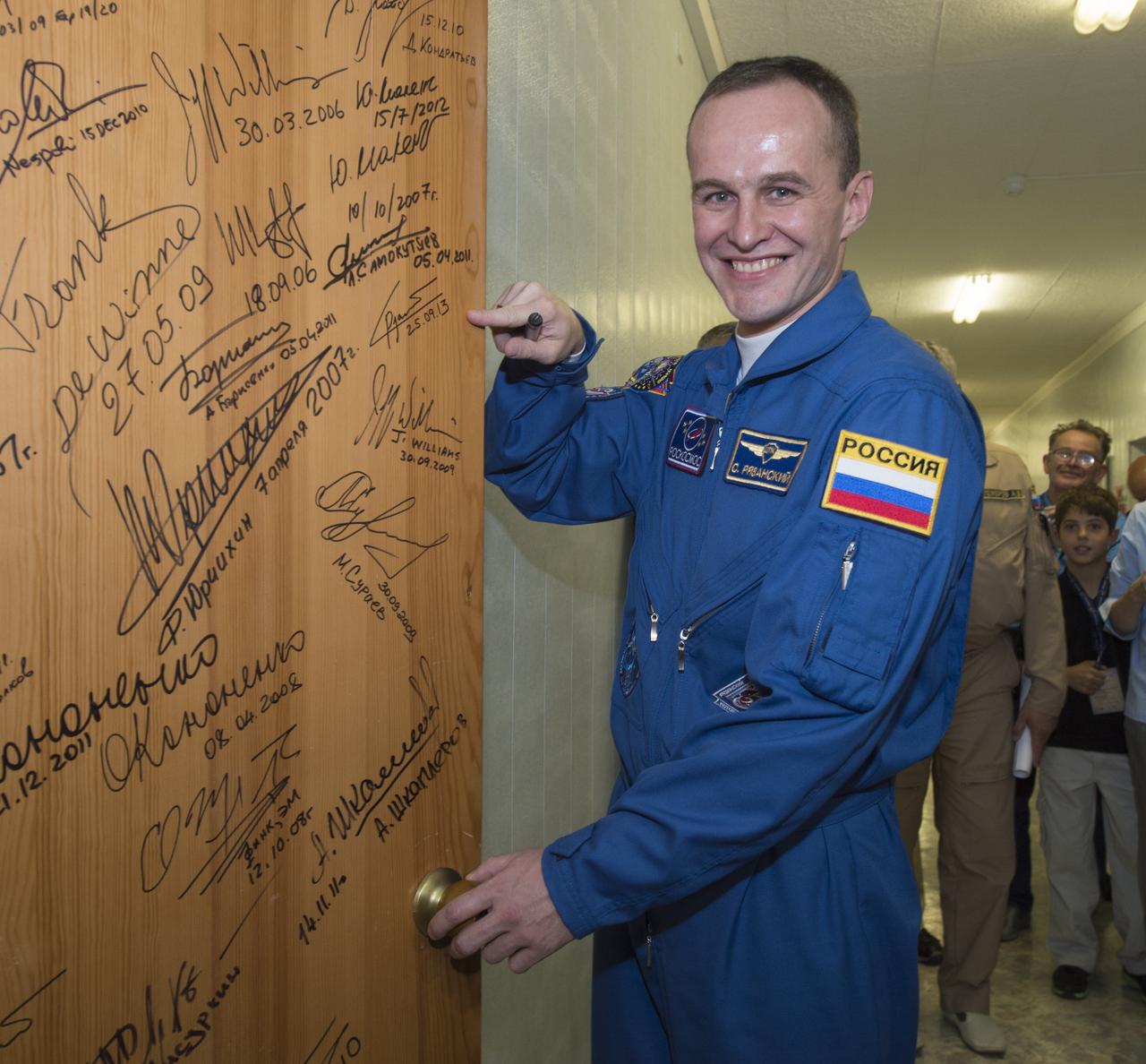
Expedition 37/38 Russian Flight Engineer Sergey Ryazanskiy performs the traditional door signing before he and fellow crewmates, Soyuz Commander Oleg Kotov and NASA Flight Engineer Michael Hopkins depart the Cosmonaut Hotel for their Soyuz launch to the International Space Station on Wednesday, Sept. 25, 2013, in Baikonur, Kazakhstan. Launch of the Soyuz rocket will send Hopkins, Kotov and Ryazanskiy on a five-month mission aboard the International Space Station. Photo Credit: (NASA/Carla Cioffi)
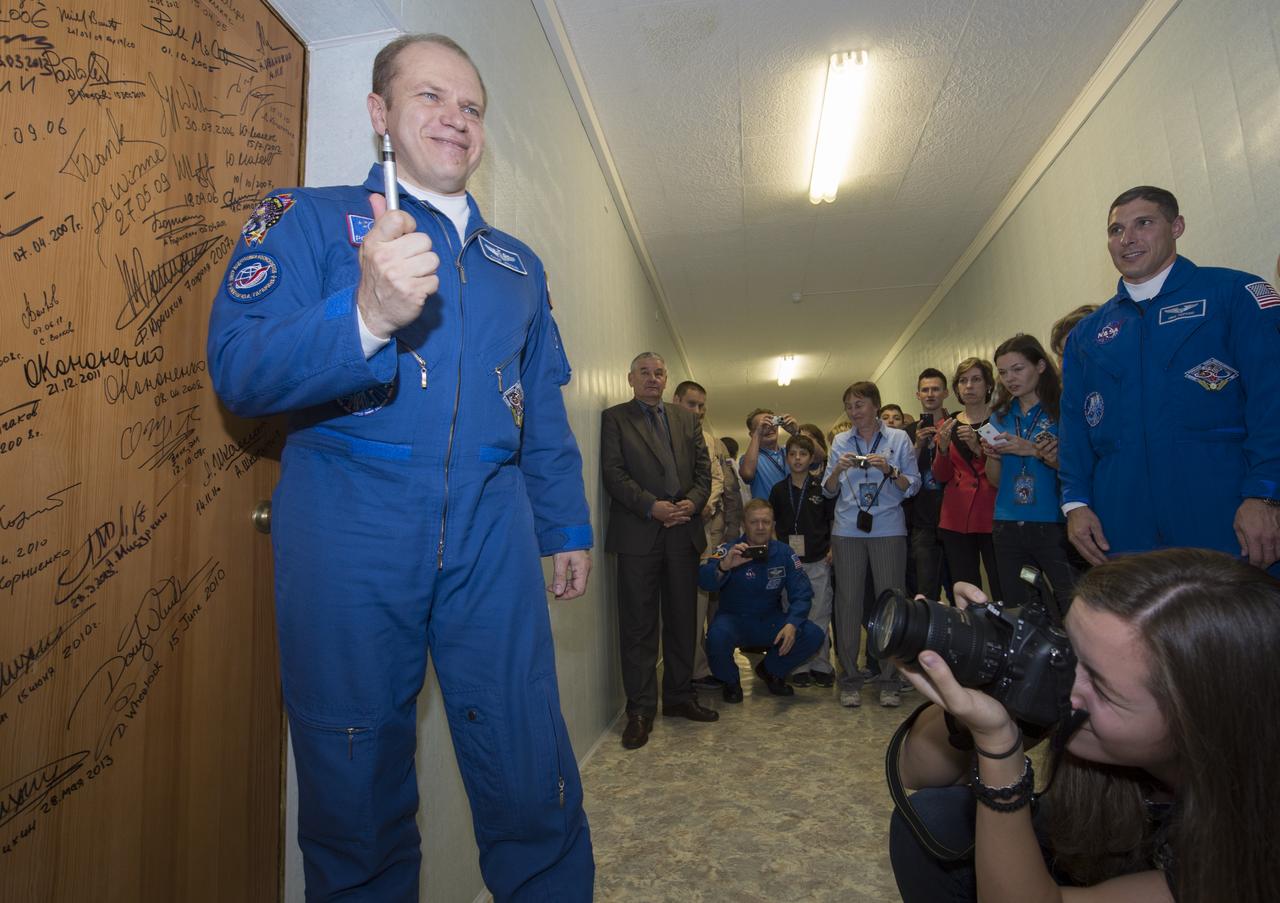
Expedition 37/38 Soyuz Commander Oleg Kotov performs the traditional door signing before he and fellow crewmates, NASA Flight Engineer Michael Hopkins, Russian Flight Engineer Sergey Ryazanskiy depart the Cosmonaut Hotel for their Soyuz launch to the International Space Station on Wednesday, Sept. 25, 2013, in Baikonur, Kazakhstan. Launch of the Soyuz rocket will send Hopkins, Kotov and Ryazanskiy on a five-month mission aboard the International Space Station. Photo Credit: (NASA/Carla Cioffi)
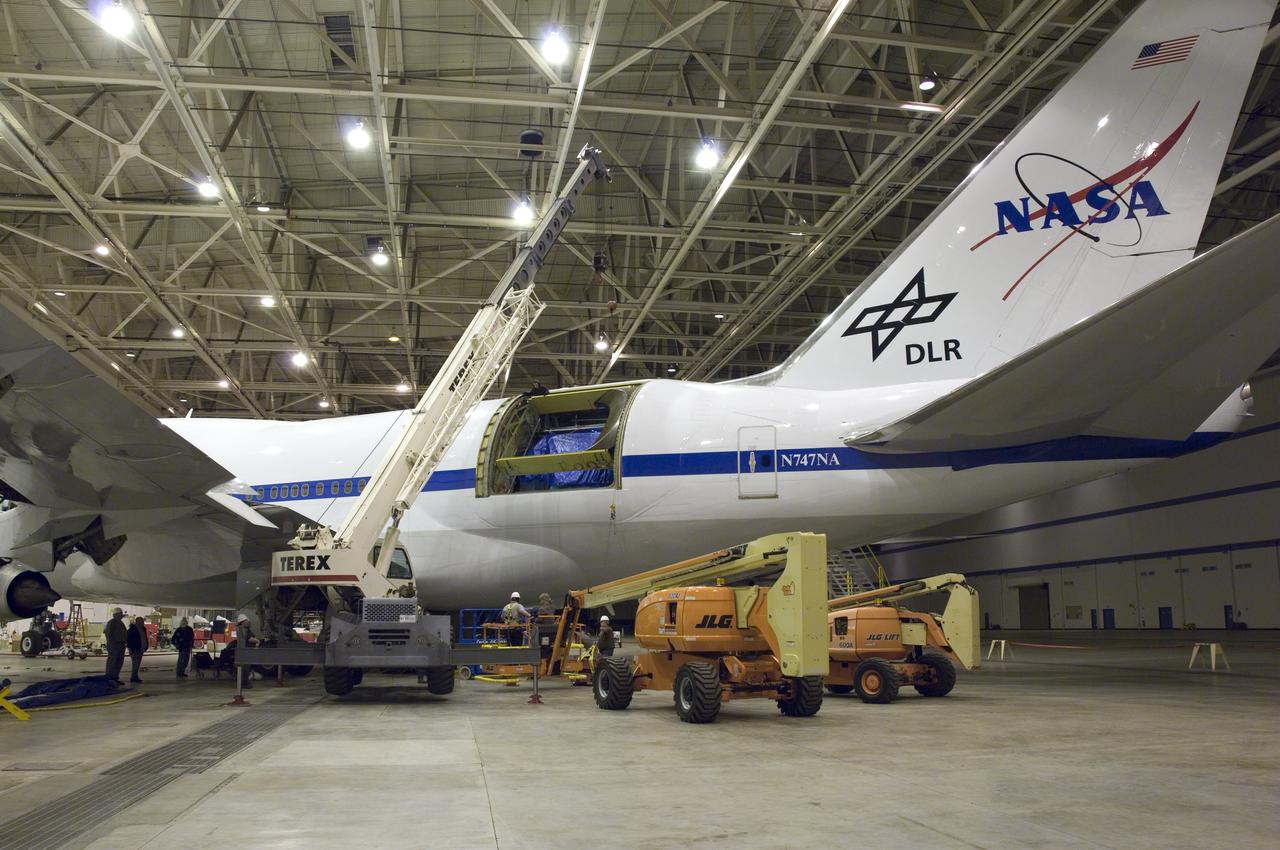
A large mobile crane and hi-lift are maneuvered into place for removal of the aperture assembly and cavity doors from NASA's SOFIA observatory aircraft.
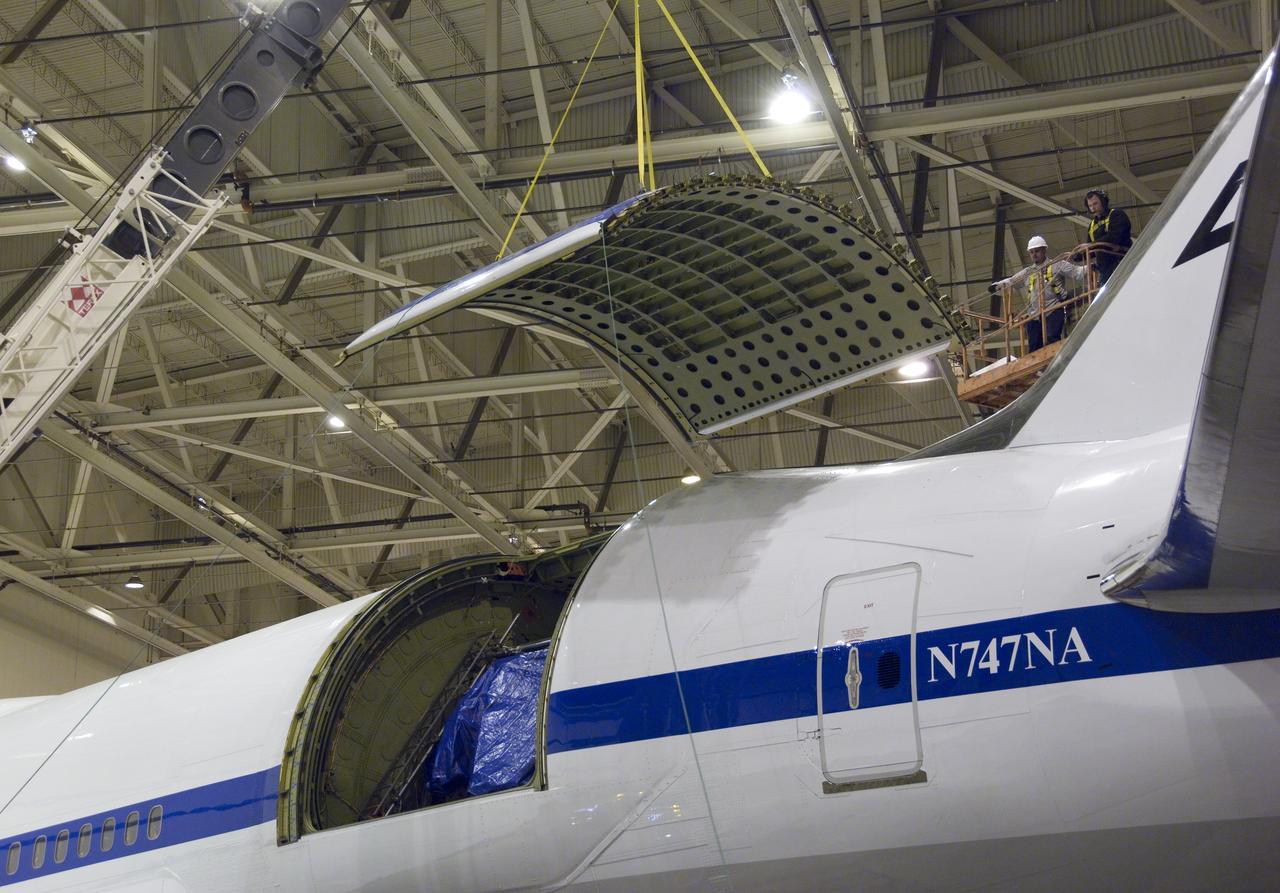
Technicians guide removal of the upper rigid door assembly that covers the telescope cavity on NASA's SOFIA 747SP in preparation for primary mirror removal.
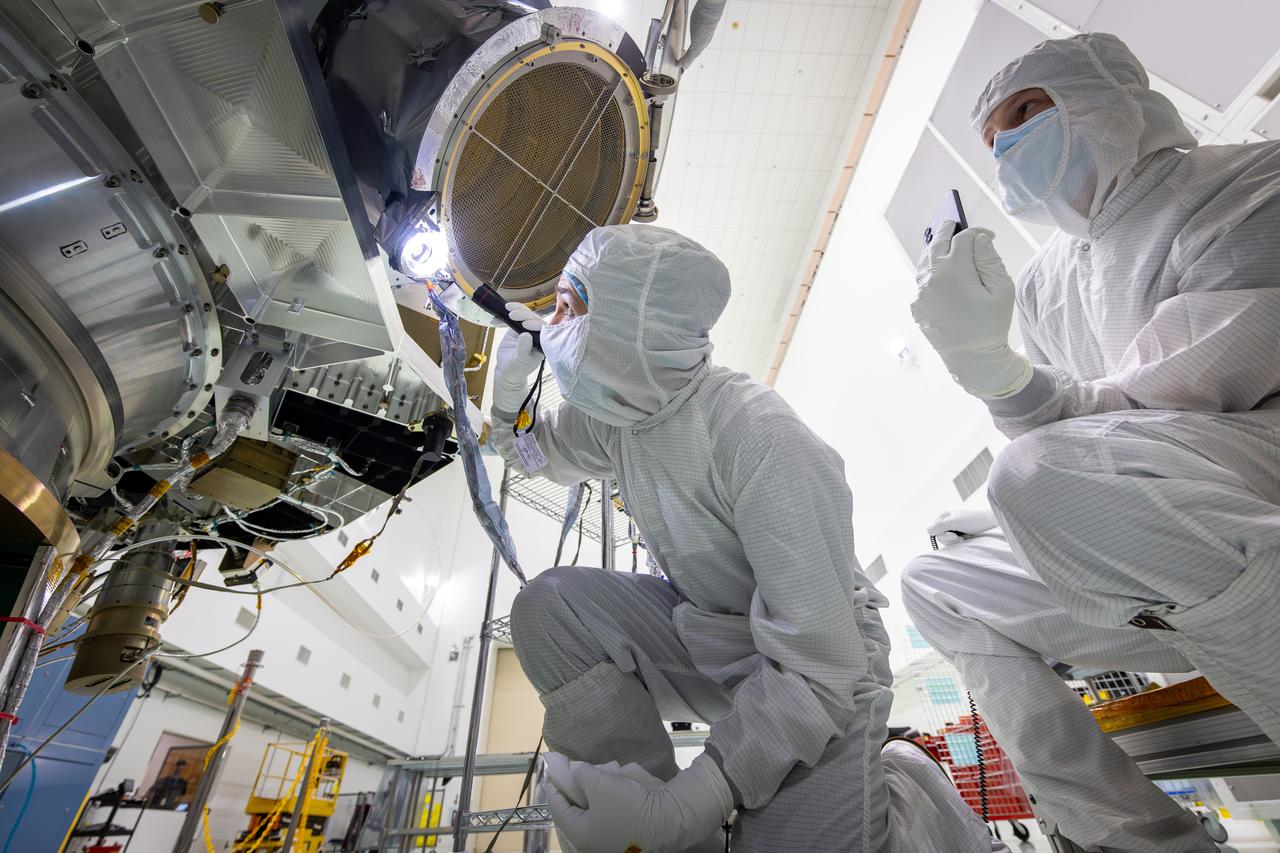
Technicians test the spring-activated door on the Interstellar Dust Experiment (IDEX) instrument of NASA’s IMAP (Interstellar Mapping and Acceleration Probe) observatory inside the high bay at the Astrotech Space Operations Facility near the agency’s Kennedy Space Center in Florida on Tuesday, June 3, 2025. The door will remain closed to protect IDEX from contamination during integration and launch. Once in space, the door will swing open permanently to allow interstellar and interplanetary dust to flow into the instrument for measurement. The IMAP observatory will study how the Sun shapes the boundaries of the heliosphere, the protective bubble around our solar system. Launch is targeted for no earlier than September 2025 aboard a SpaceX Falcon 9 rocket from Launch Complex 39A at NASA Kennedy.

Technicians test the spring-activated door on the Interstellar Dust Experiment (IDEX) instrument of NASA’s IMAP (Interstellar Mapping and Acceleration Probe) observatory inside the high bay at the Astrotech Space Operations Facility near the agency’s Kennedy Space Center in Florida on Tuesday, June 3, 2025. The door will remain closed to protect IDEX from contamination during integration and launch. Once in space, the door will swing open permanently to allow interstellar and interplanetary dust to flow into the instrument for measurement. The IMAP observatory will study how the Sun shapes the boundaries of the heliosphere, the protective bubble around our solar system. Launch is targeted for no earlier than September 2025 aboard a SpaceX Falcon 9 rocket from Launch Complex 39A at NASA Kennedy.
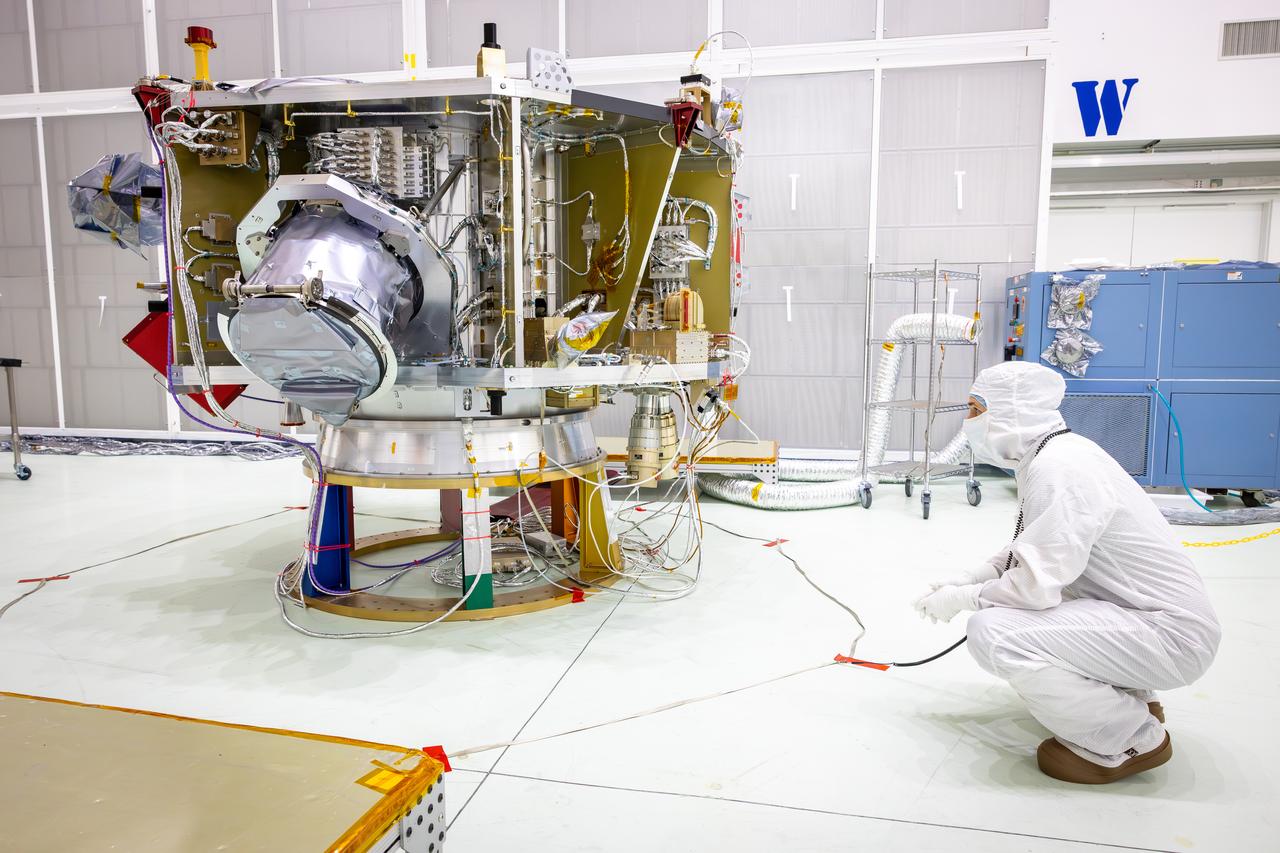
Technicians test the spring-activated door on the Interstellar Dust Experiment (IDEX) instrument of NASA’s IMAP (Interstellar Mapping and Acceleration Probe) observatory inside the high bay at the Astrotech Space Operations Facility near the agency’s Kennedy Space Center in Florida on Tuesday, June 3, 2025. The door will remain closed to protect IDEX from contamination during integration and launch. Once in space, the door will swing open permanently to allow interstellar and interplanetary dust to flow into the instrument for measurement. The IMAP observatory will study how the Sun shapes the boundaries of the heliosphere, the protective bubble around our solar system. Launch is targeted for no earlier than September 2025 aboard a SpaceX Falcon 9 rocket from Launch Complex 39A at NASA Kennedy.
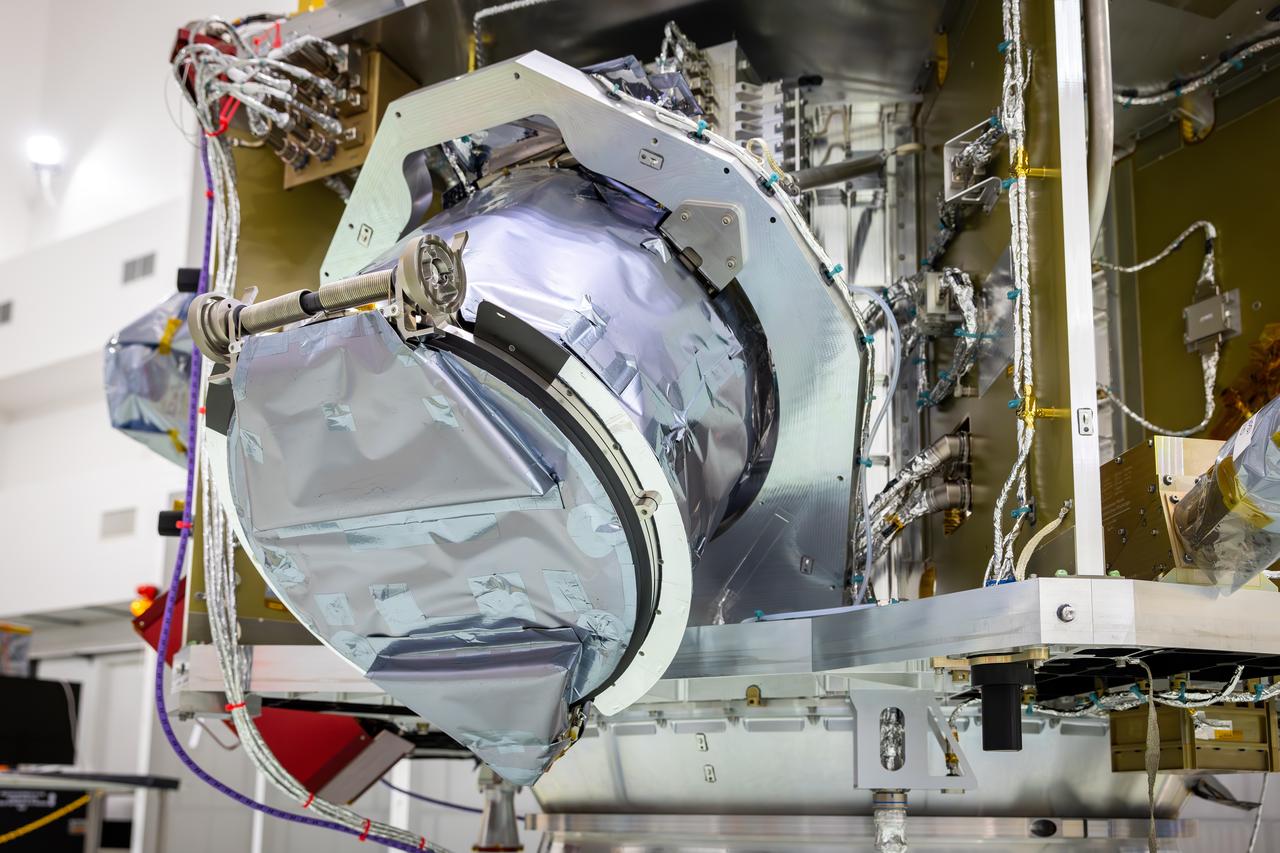
Technicians test the spring-activated door on the Interstellar Dust Experiment (IDEX) instrument of NASA’s IMAP (Interstellar Mapping and Acceleration Probe) observatory inside the high bay at the Astrotech Space Operations Facility near the agency’s Kennedy Space Center in Florida on Tuesday, June 3, 2025. The door will remain closed to protect IDEX from contamination during integration and launch. Once in space, the door will swing open permanently to allow interstellar and interplanetary dust to flow into the instrument for measurement. The IMAP observatory will study how the Sun shapes the boundaries of the heliosphere, the protective bubble around our solar system. Launch is targeted for no earlier than September 2025 aboard a SpaceX Falcon 9 rocket from Launch Complex 39A at NASA Kennedy.
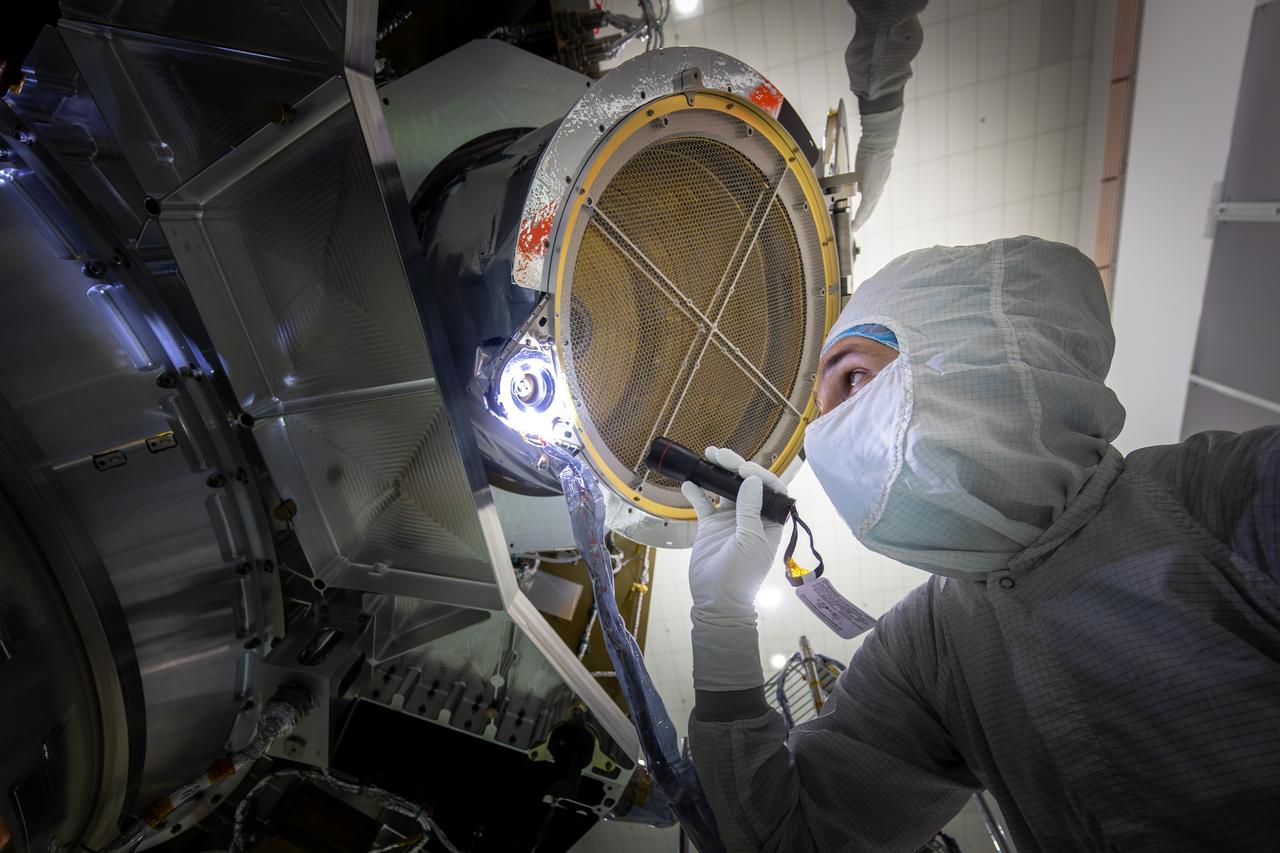
Technicians test the spring-activated door on the Interstellar Dust Experiment (IDEX) instrument of NASA’s IMAP (Interstellar Mapping and Acceleration Probe) observatory inside the high bay at the Astrotech Space Operations Facility near the agency’s Kennedy Space Center in Florida on Tuesday, June 3, 2025. The door will remain closed to protect IDEX from contamination during integration and launch. Once in space, the door will swing open permanently to allow interstellar and interplanetary dust to flow into the instrument for measurement. The IMAP observatory will study how the Sun shapes the boundaries of the heliosphere, the protective bubble around our solar system. Launch is targeted for no earlier than September 2025 aboard a SpaceX Falcon 9 rocket from Launch Complex 39A at NASA Kennedy.
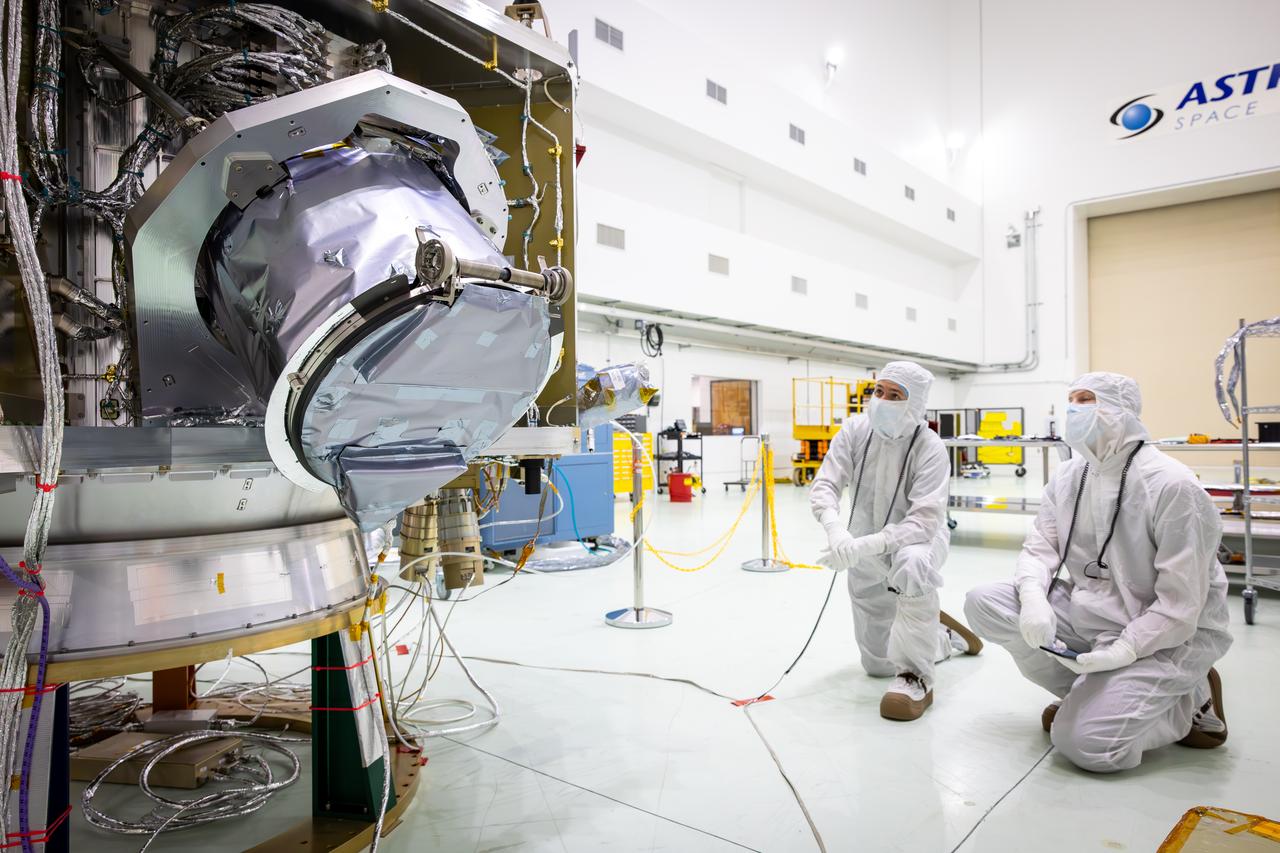
Technicians test the spring-activated door on the Interstellar Dust Experiment (IDEX) instrument of NASA’s IMAP (Interstellar Mapping and Acceleration Probe) observatory inside the high bay at the Astrotech Space Operations Facility near the agency’s Kennedy Space Center in Florida on Tuesday, June 3, 2025. The door will remain closed to protect IDEX from contamination during integration and launch. Once in space, the door will swing open permanently to allow interstellar and interplanetary dust to flow into the instrument for measurement. The IMAP observatory will study how the Sun shapes the boundaries of the heliosphere, the protective bubble around our solar system. Launch is targeted for no earlier than September 2025 aboard a SpaceX Falcon 9 rocket from Launch Complex 39A at NASA Kennedy.

Technicians test the spring-activated door on the Interstellar Dust Experiment (IDEX) instrument of NASA’s IMAP (Interstellar Mapping and Acceleration Probe) observatory inside the high bay at the Astrotech Space Operations Facility near the agency’s Kennedy Space Center in Florida on Tuesday, June 3, 2025. The door will remain closed to protect IDEX from contamination during integration and launch. Once in space, the door will swing open permanently to allow interstellar and interplanetary dust to flow into the instrument for measurement. The IMAP observatory will study how the Sun shapes the boundaries of the heliosphere, the protective bubble around our solar system. Launch is targeted for no earlier than September 2025 aboard a SpaceX Falcon 9 rocket from Launch Complex 39A at NASA Kennedy.
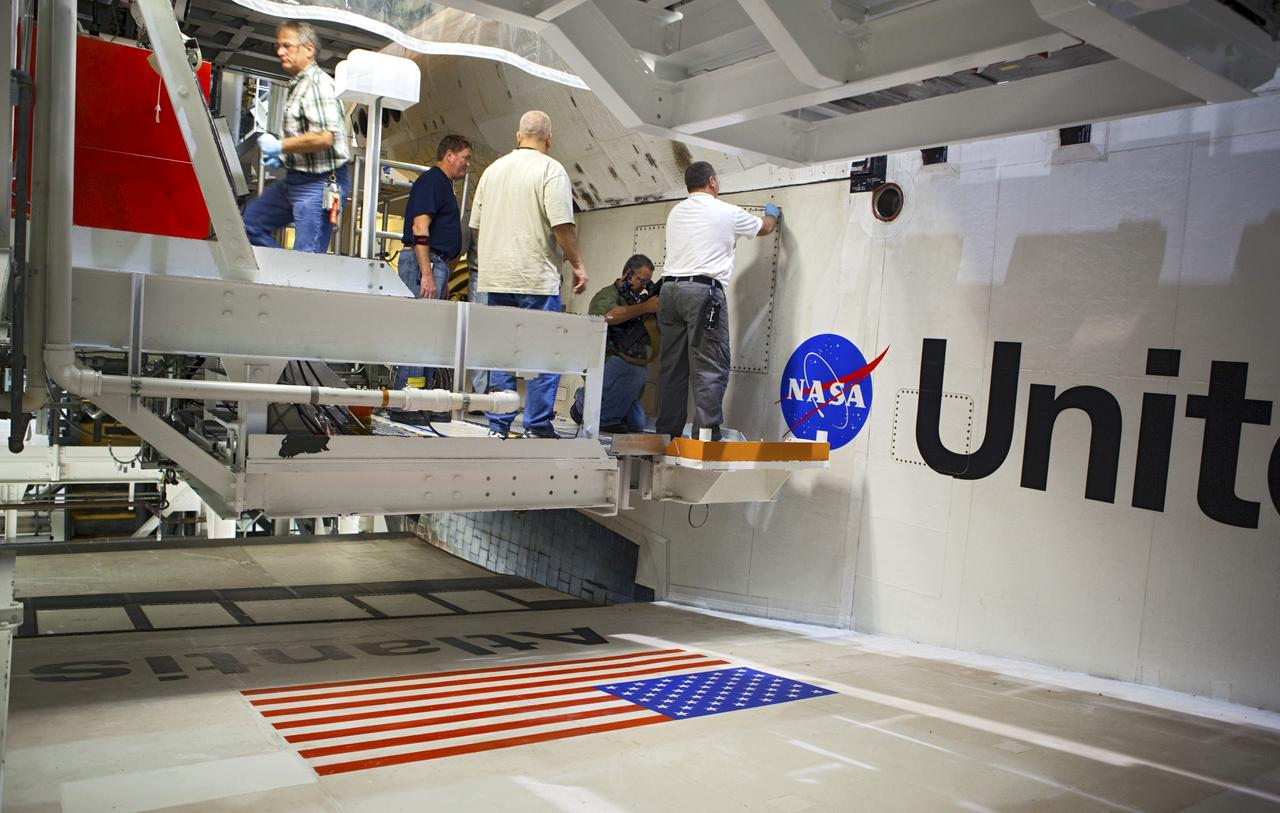
CAPE CANAVERAL, Fla. – Inside Orbiter Processing Facility-2 at NASA’s Kennedy Space Center in Florida, United Space Alliance technicians close space shuttle Atlantis’ midbody door for the final time. The orbiter is undergoing final preparations for its transfer to the Kennedy Space Center Visitor complex targeted for November. The work is part of Transition and Retirement of the remaining shuttle. Atlantis is being prepared for public display at the visitor complex. Over the course of its 26-year career, Atlantis spent 293 days in space during 33 missions. For more information, visit http://www.nasa.gov/transition. Photo credit: NASA/Dimitri Gerondidakis
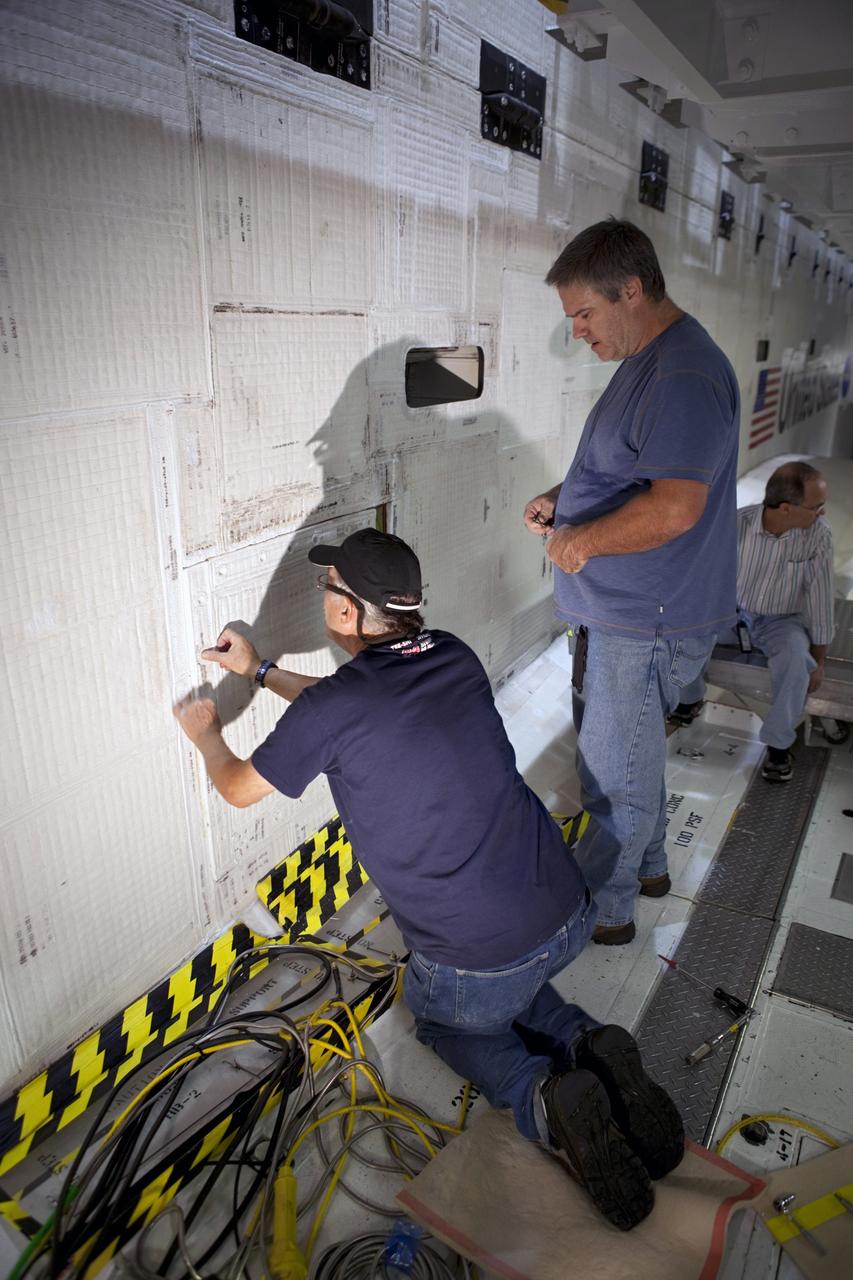
CAPE CANAVERAL, Fla. – Inside Orbiter Processing Facility-2 at NASA’s Kennedy Space Center in Florida, United Space Alliance technicians close space shuttle Atlantis’ midbody door for the final time. The orbiter is undergoing final preparations for its transfer to the Kennedy Space Center Visitor complex targeted for November. The work is part of Transition and Retirement of the remaining shuttle. Atlantis is being prepared for public display at the visitor complex. Over the course of its 26-year career, Atlantis spent 293 days in space during 33 missions. For more information, visit http://www.nasa.gov/transition. Photo credit: NASA/Dimitri Gerondidakis
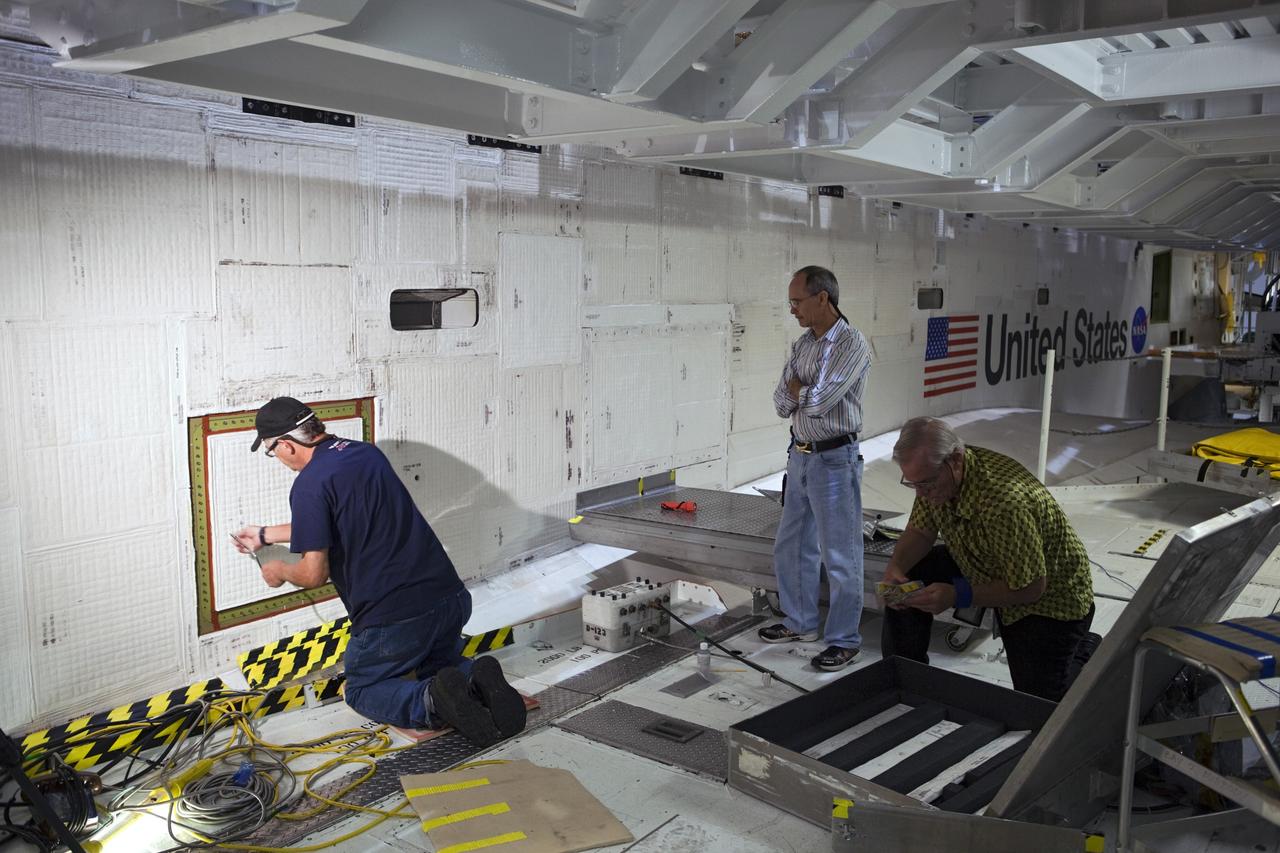
CAPE CANAVERAL, Fla. – Inside Orbiter Processing Facility-2 at NASA’s Kennedy Space Center in Florida, United Space Alliance technicians close space shuttle Atlantis’ aft doors for the final time. The orbiter is undergoing final preparations for its transfer to the Kennedy Space Center Visitor complex targeted for November. The work is part of Transition and Retirement of the remaining shuttle. Atlantis is being prepared for public display at the visitor complex. Over the course of its 26-year career, Atlantis spent 293 days in space during 33 missions. For more information, visit http://www.nasa.gov/transition. Photo credit: NASA/Dimitri Gerondidakis
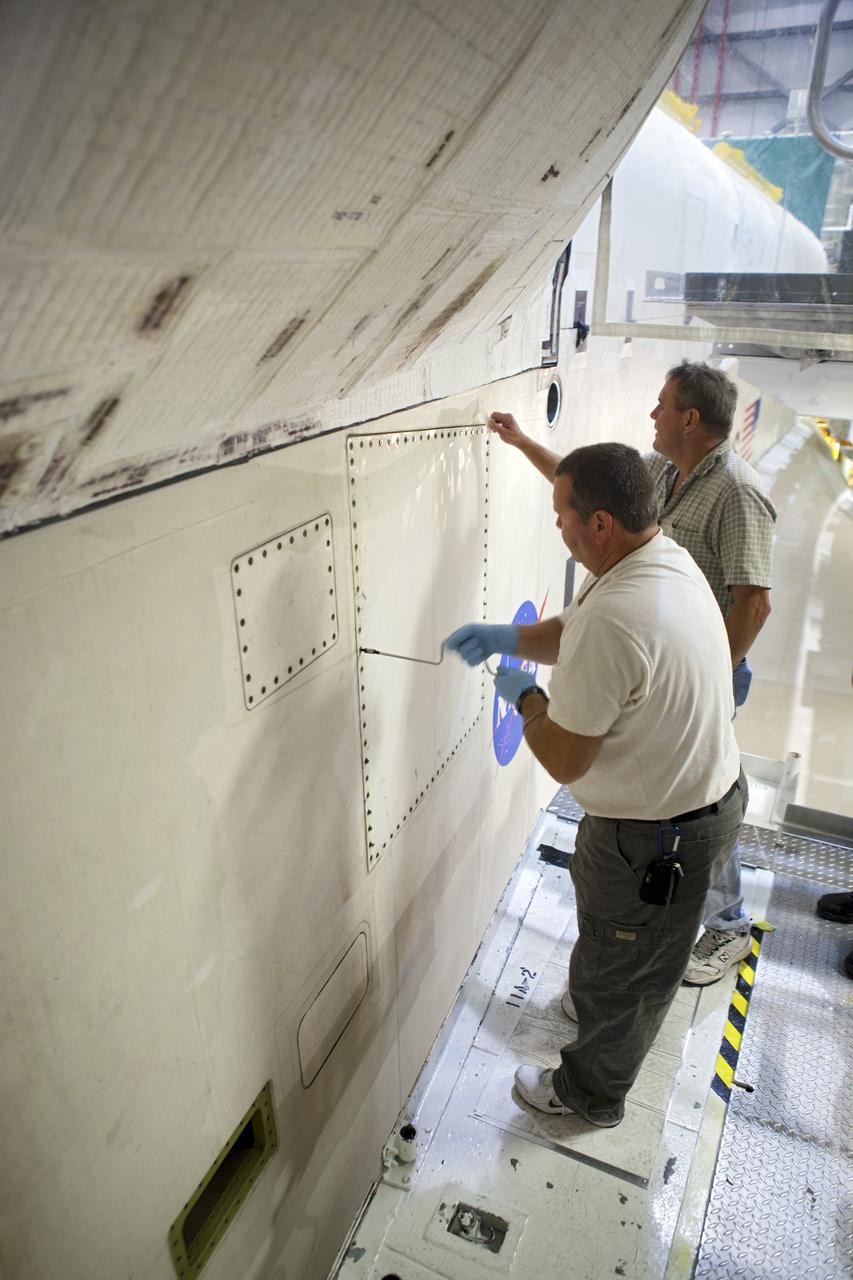
CAPE CANAVERAL, Fla. – Inside Orbiter Processing Facility-2 at NASA’s Kennedy Space Center in Florida, United Space Alliance technicians close space shuttle Atlantis’ midbody door for the final time. The orbiter is undergoing final preparations for its transfer to the Kennedy Space Center Visitor complex targeted for November. The work is part of Transition and Retirement of the remaining shuttle. Atlantis is being prepared for public display at the visitor complex. Over the course of its 26-year career, Atlantis spent 293 days in space during 33 missions. For more information, visit http://www.nasa.gov/transition. Photo credit: NASA/Dimitri Gerondidakis
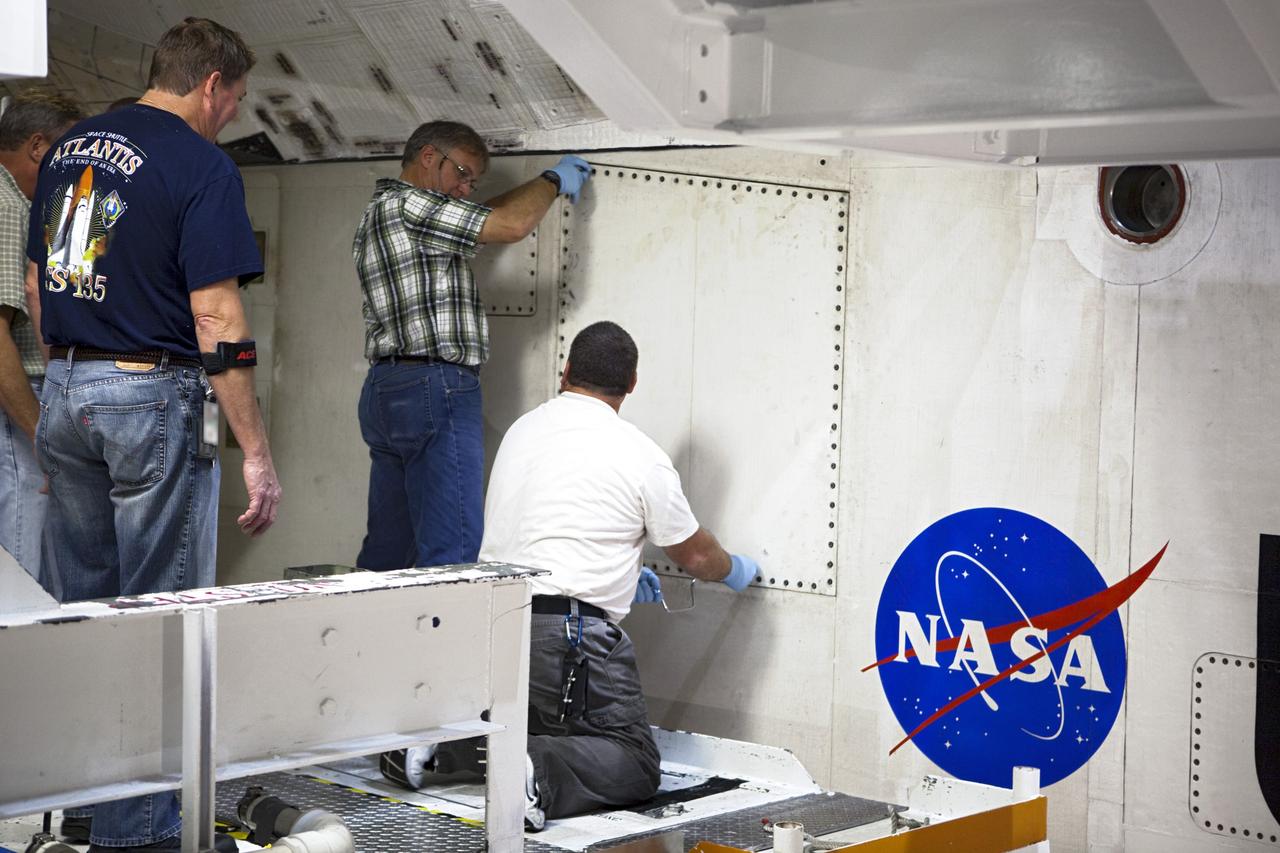
CAPE CANAVERAL, Fla. – Inside Orbiter Processing Facility-2 at NASA’s Kennedy Space Center in Florida, United Space Alliance technicians close space shuttle Atlantis’ midbody door for the final time. The orbiter is undergoing final preparations for its transfer to the Kennedy Space Center Visitor complex targeted for November. The work is part of Transition and Retirement of the remaining shuttle. Atlantis is being prepared for public display at the visitor complex. Over the course of its 26-year career, Atlantis spent 293 days in space during 33 missions. For more information, visit http://www.nasa.gov/transition. Photo credit: NASA/Dimitri Gerondidakis
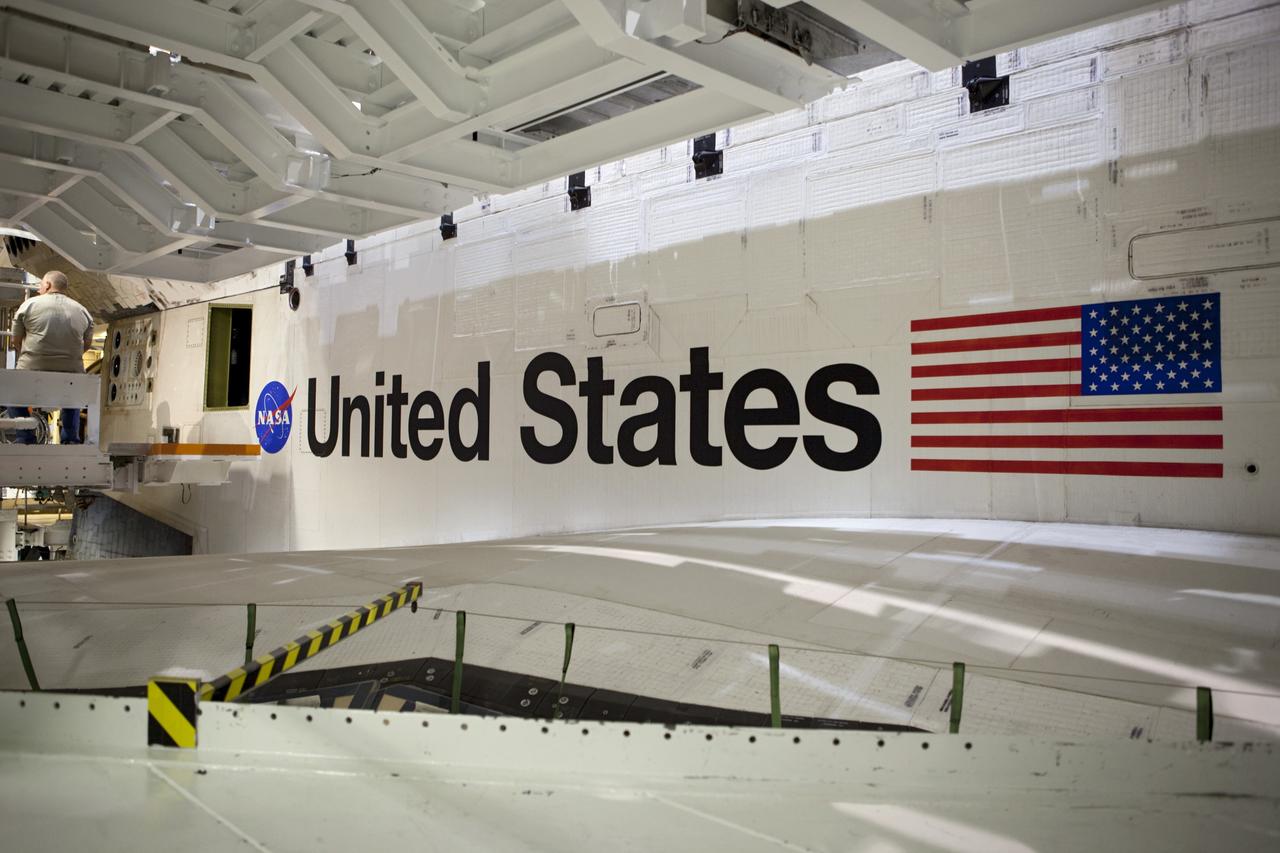
CAPE CANAVERAL, Fla. – Inside Orbiter Processing Facility-2 at NASA’s Kennedy Space Center in Florida, a United Space Alliance technician prepares to close space shuttle Atlantis’ midbody door for the final time. The orbiter is undergoing final preparations for its transfer to the Kennedy Space Center Visitor complex targeted for November. The work is part of Transition and Retirement of the remaining shuttle. Atlantis is being prepared for public display at the visitor complex. Over the course of its 26-year career, Atlantis spent 293 days in space during 33 missions. For more information, visit http://www.nasa.gov/transition. Photo credit: NASA/Dimitri Gerondidakis
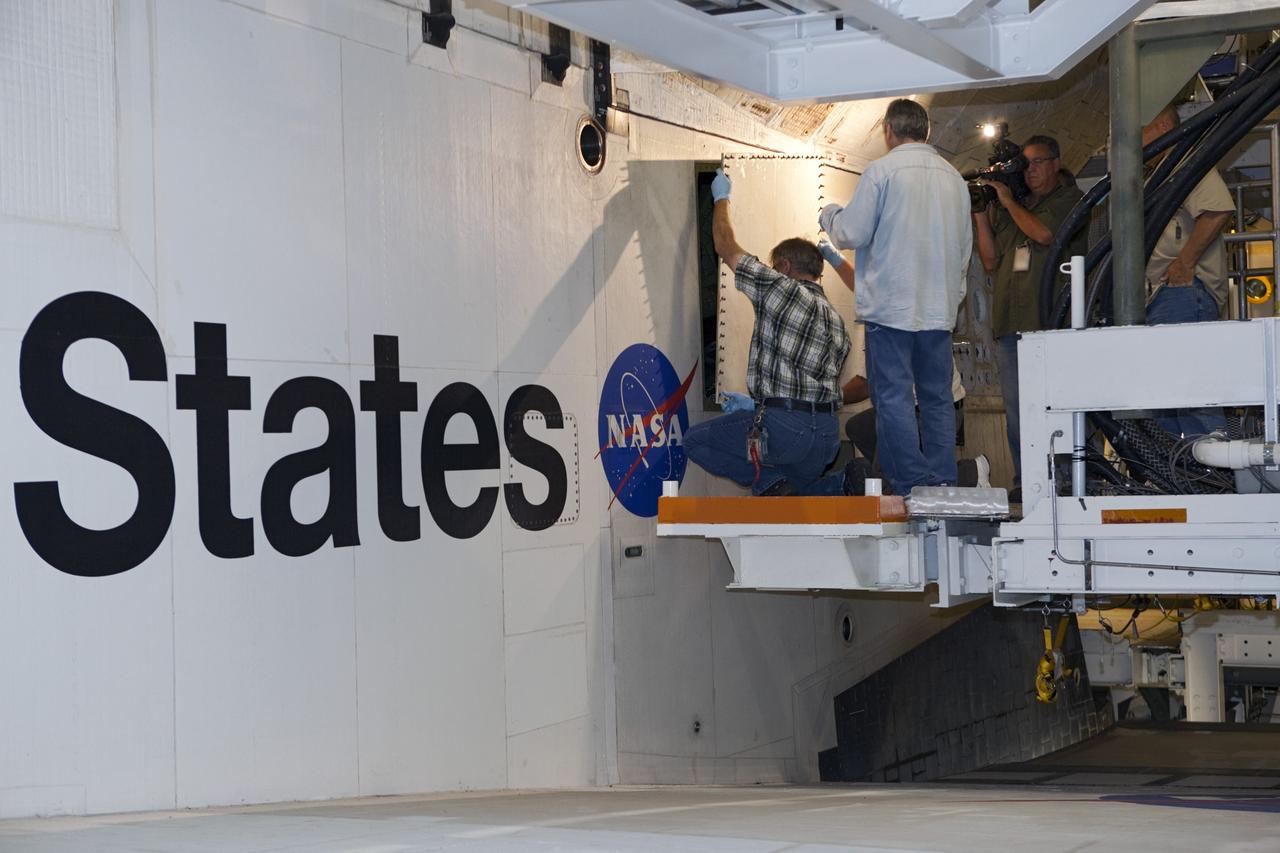
CAPE CANAVERAL, Fla. – Inside Orbiter Processing Facility-2 at NASA’s Kennedy Space Center in Florida, United Space Alliance technicians close space shuttle Atlantis’ aft doors for the final time. The orbiter is undergoing final preparations for its transfer to the Kennedy Space Center Visitor complex targeted for November. The work is part of Transition and Retirement of the remaining shuttle. Atlantis is being prepared for public display at the visitor complex. Over the course of its 26-year career, Atlantis spent 293 days in space during 33 missions. For more information, visit http://www.nasa.gov/transition. Photo credit: NASA/Dimitri Gerondidakis
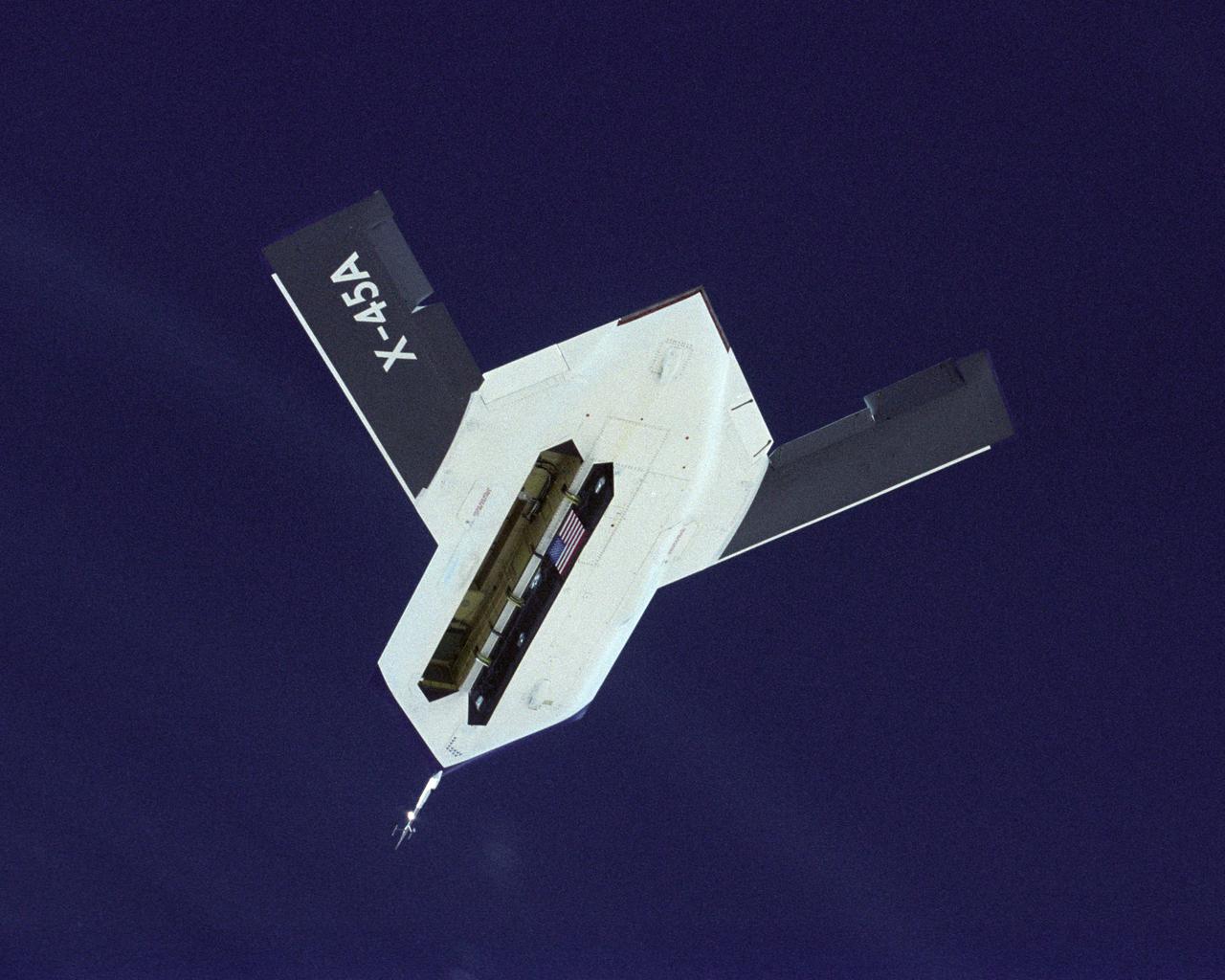
The DARPA/U.S. Air Force X-45A Unmanned Combat Air Vehicle (UCAV) system demonstration program completed the first phase of demonstrations, known as Block I, on Feb. 28, 2003. The final Block I activities included two flights at Dryden, during which safe operation of the weapons bay door was verified at 35,000 feet and speeds of Mach 0.75, the maximum planned altitude and speed for the two X-45A demonstrator vehicles.
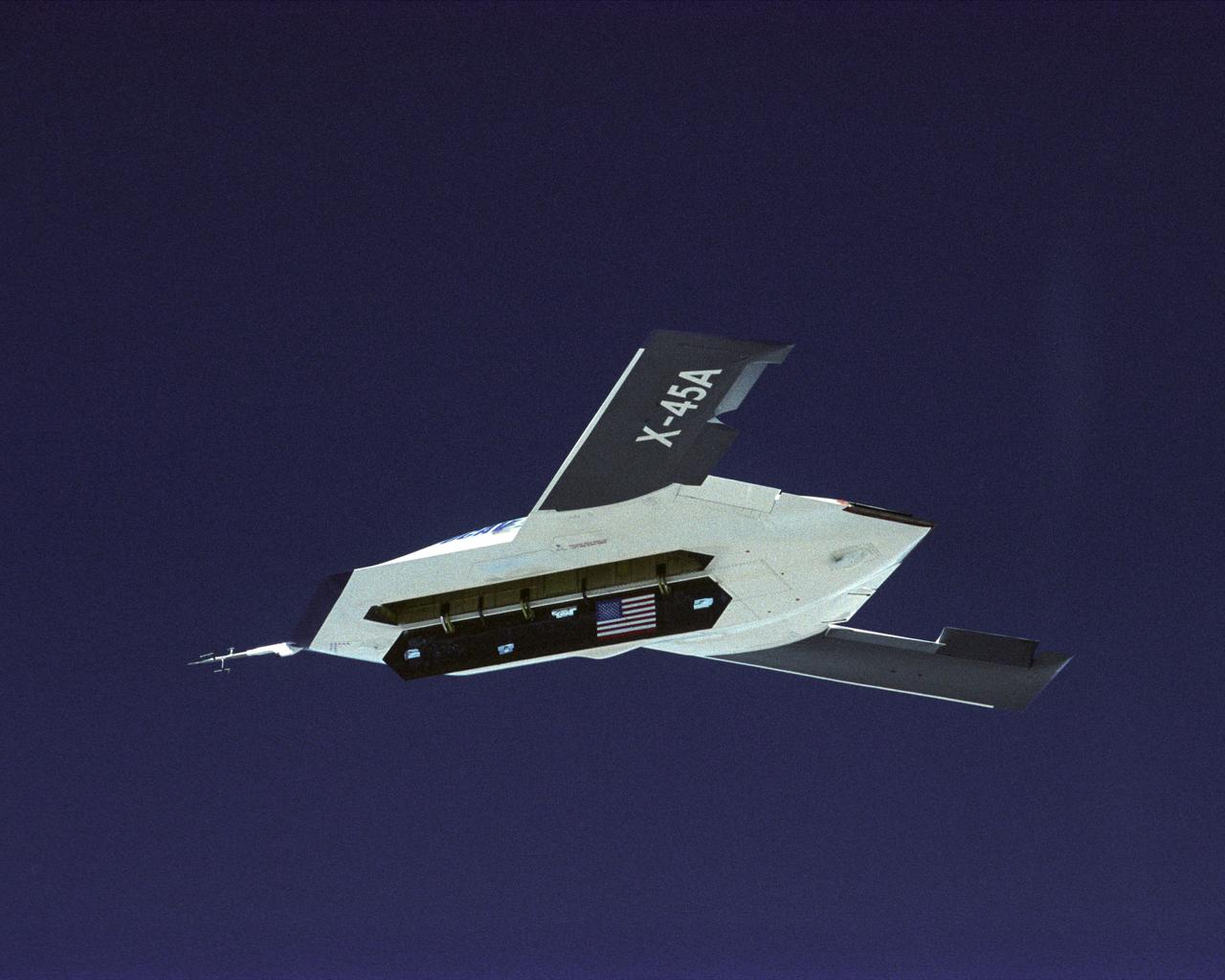
The DARPA/U.S. Air Force X-45A Unmanned Combat Air Vehicle (UCAV) system demonstration program completed the first phase of demonstrations, known as Block I, on Feb. 28, 2003. The final Block I activities included two flights at Dryden, during which safe operation of the weapons bay door was verified at 35,000 feet and speeds of Mach 0.75, the maximum planned altitude and speed for the two X-45A demonstrator vehicles.
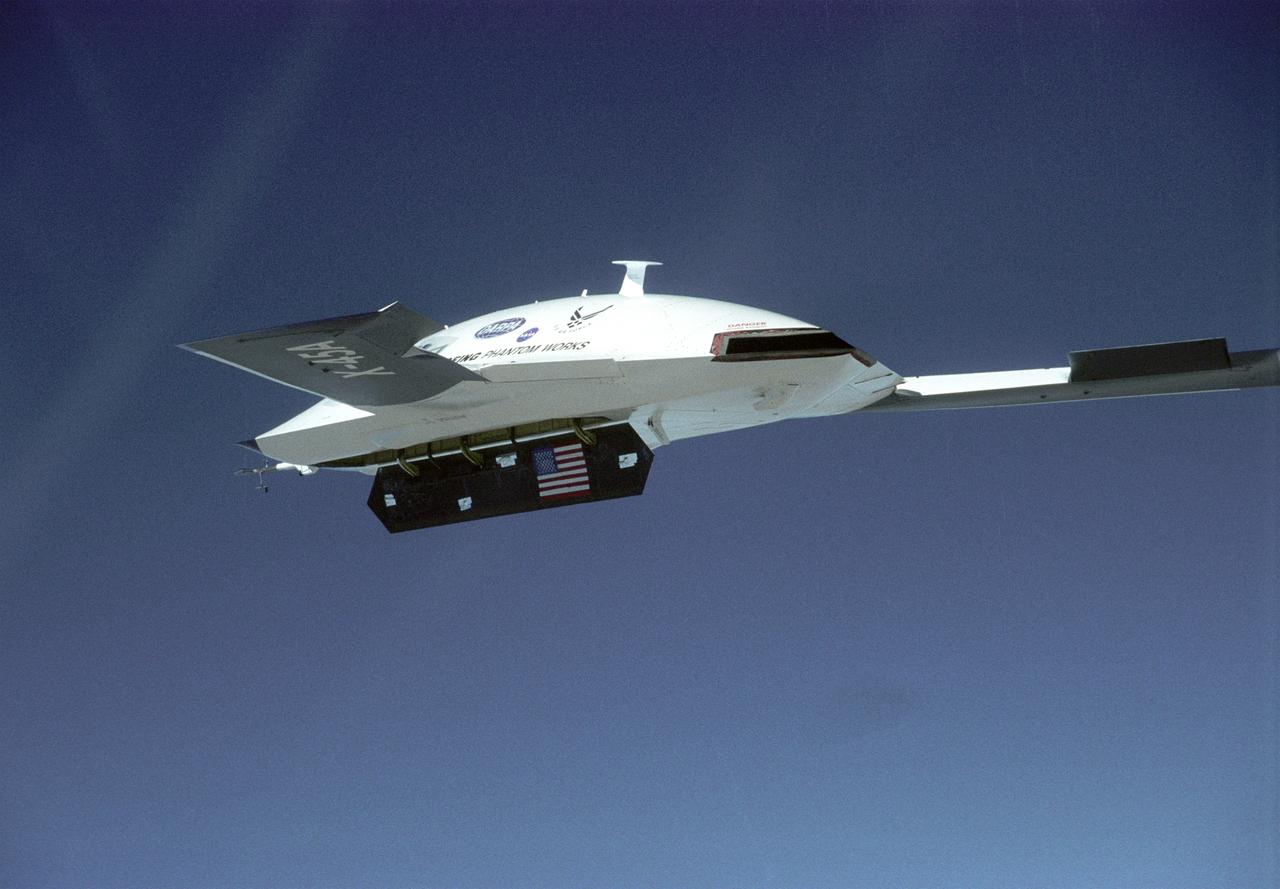
The DARPA/U.S. Air Force X-45A Unmanned Combat Air Vehicle (UCAV) system demonstration program completed the first phase of demonstrations, known as Block I, on Feb. 28, 2003. The final Block I activities included two flights at Dryden, during which safe operation of the weapons bay door was verified at 35,000 feet and speeds of Mach 0.75, the maximum planned altitude and speed for the two X-45A demonstrator vehicles.
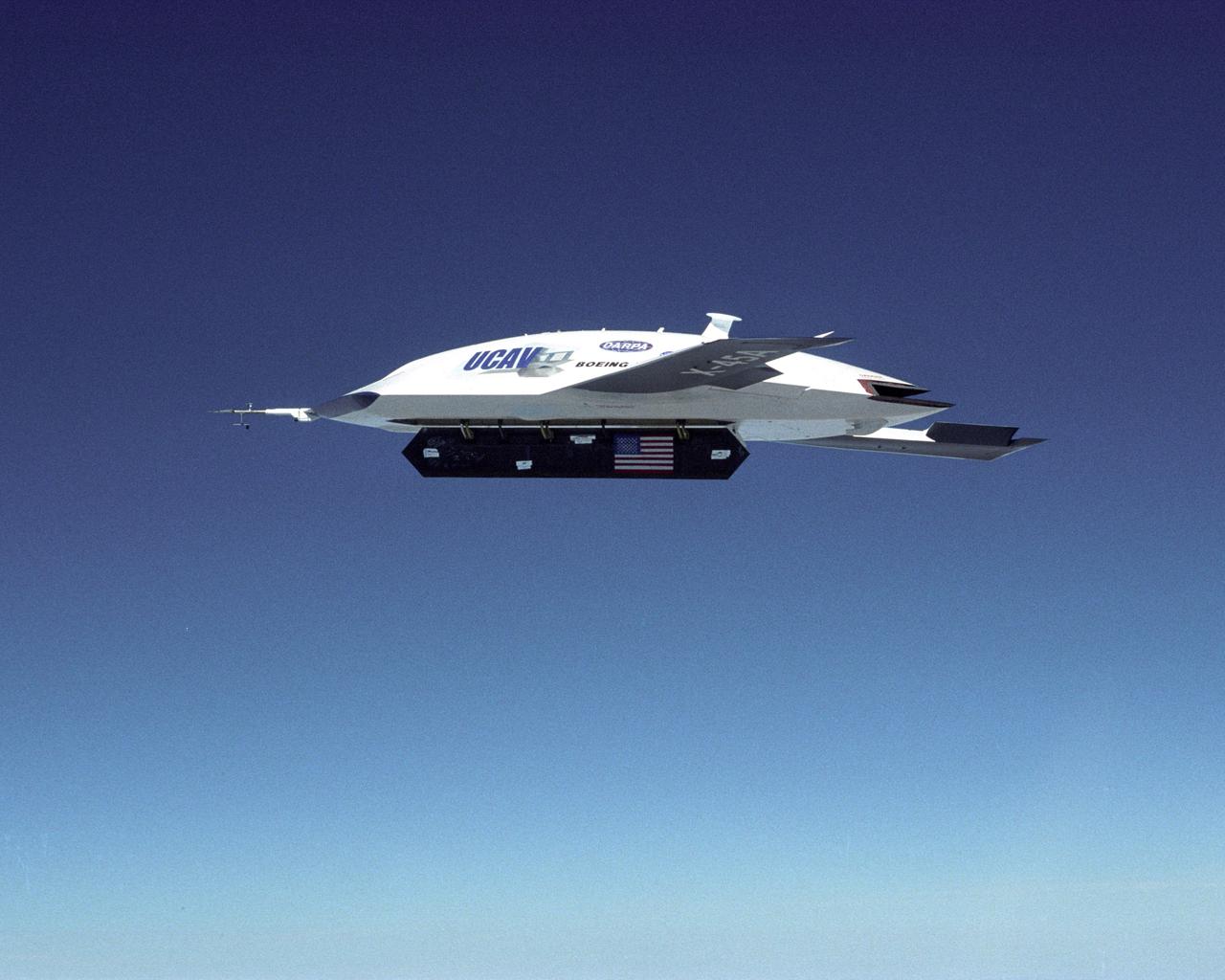
The DARPA/U.S. Air Force X-45A Unmanned Combat Air Vehicle (UCAV) system demonstration program completed the first phase of demonstrations, known as Block I, on Feb. 28, 2003. The final Block I activities included two flights at Dryden, during which safe operation of the weapons bay door was verified at 35,000 feet and speeds of Mach 0.75, the maximum planned altitude and speed for the two X-45A demonstrator vehicles.