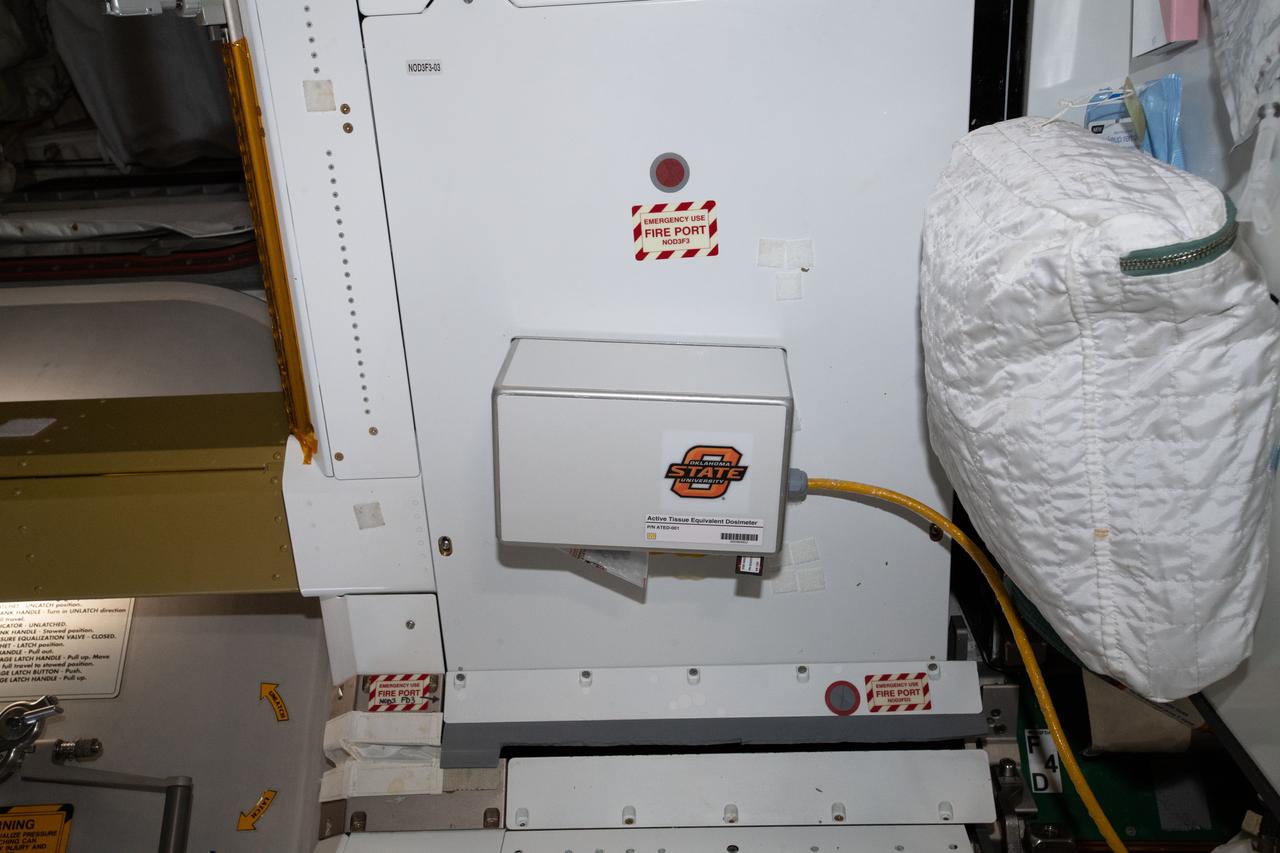
iss056e097010 (7/17/2018) --- Photographic documentation of Active Tissue Equivalent Dosimeter during deployment aboard the International Space Station (ISS). The Active Tissue Equivalent Dosimeter investigation uses an Active Tissue Equivalent Dosimeter aboard the International Space Station to collect data on crew radiation exposure and to characterize the space radiation environment.
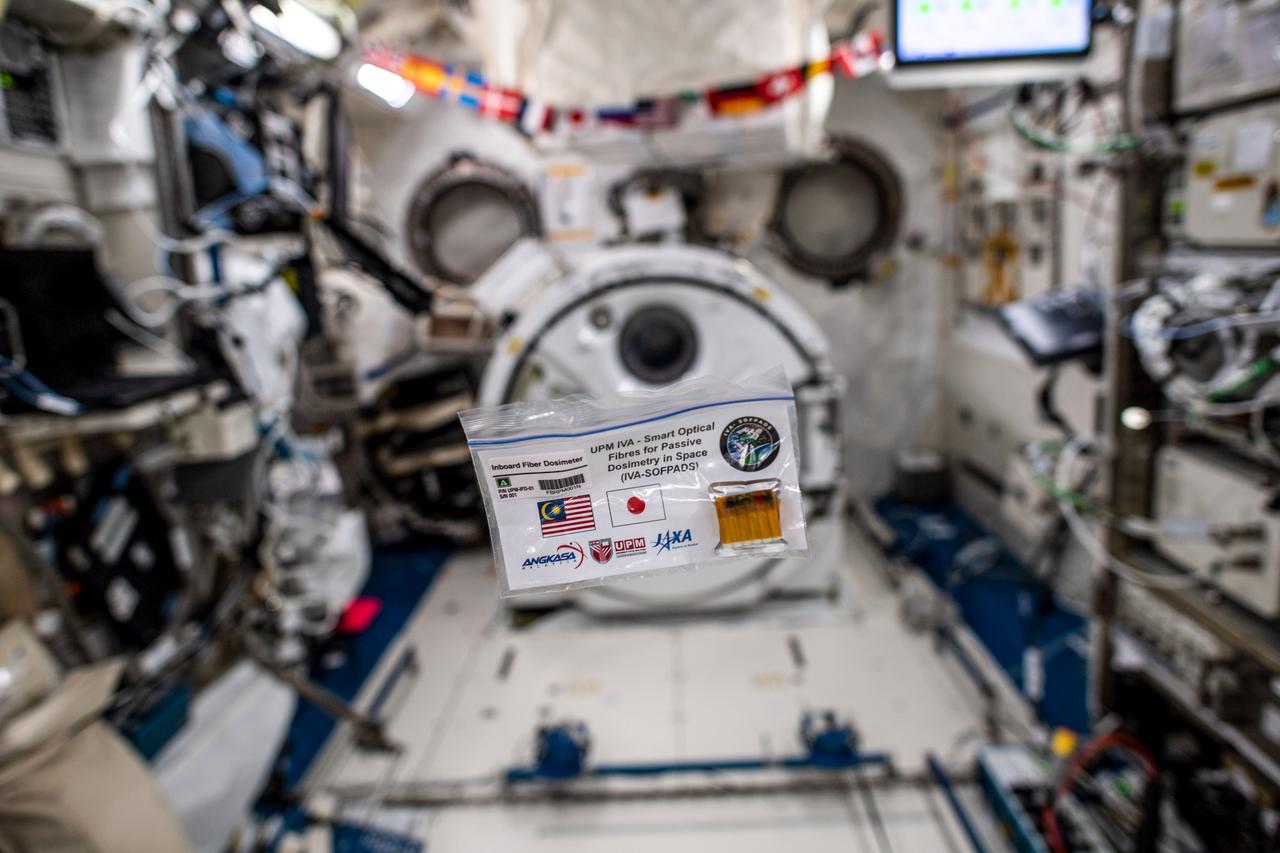
jsc2020e040981 (9/4/2019) --- I view of the IVA-SOFPADS floating inside the Kibo module aboard the International Space Station (ISS). The objective of the Smart Optical Fibers for Passive Dosimetry in Space (SOFPADS), or Fiber Dosimeter, investigation is to evaluate the use of fabricated optical fibers as space radiation passive dosimeters to monitor the radiation environment inside and outside of the International Space Station (ISS). Image Credit: NASA/JAXA
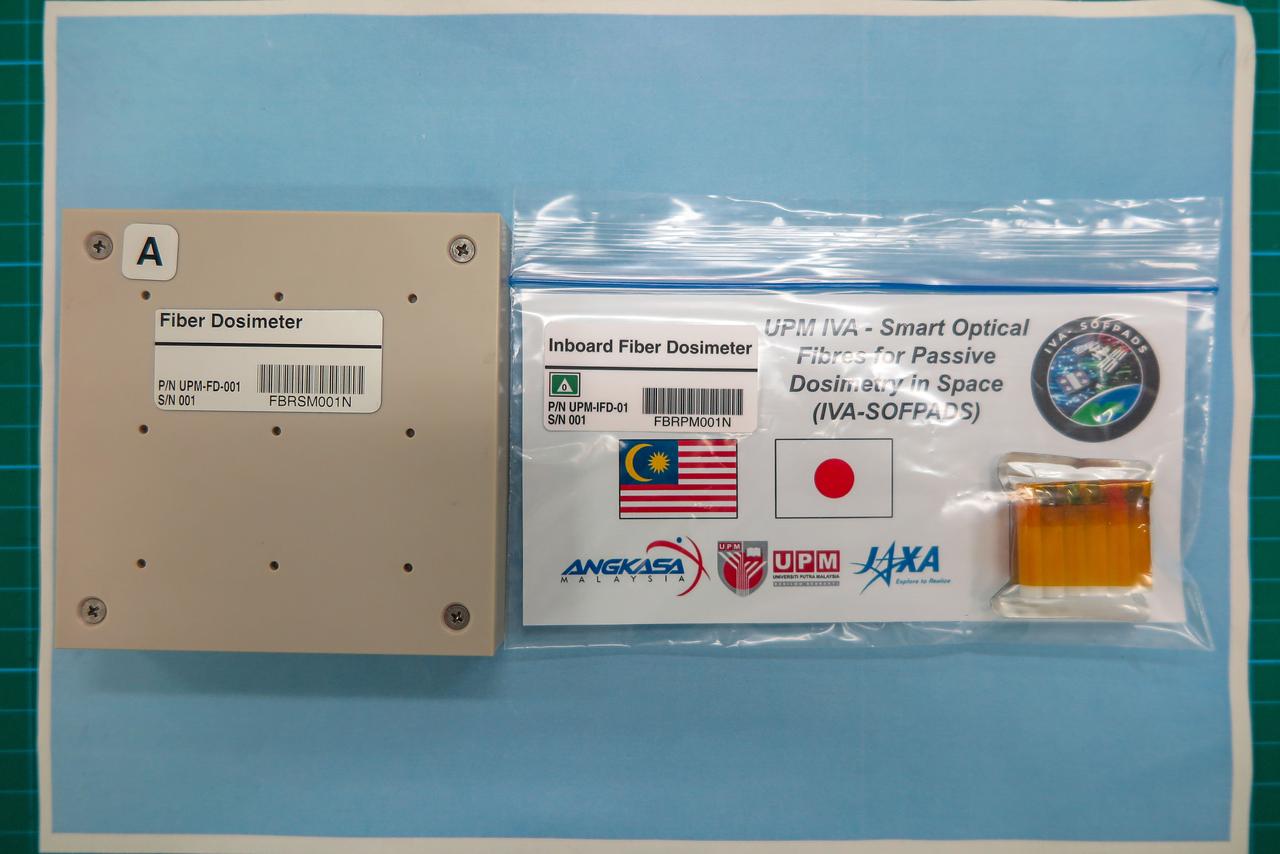
jsc2020e040980 (11/2/2018) --- Image of EVA-SOFPADS (Left) and IVA-SOFPADS (Right) taken at JAXA during samples handover. The objective of the Smart Optical Fibers for Passive Dosimetry in Space (SOFPADS), or Fiber Dosimeter, investigation is to evaluate the use of fabricated optical fibers as space radiation passive dosimeters to monitor the radiation environment inside and outside of the International Space Station (ISS). Image Credit: JAXA
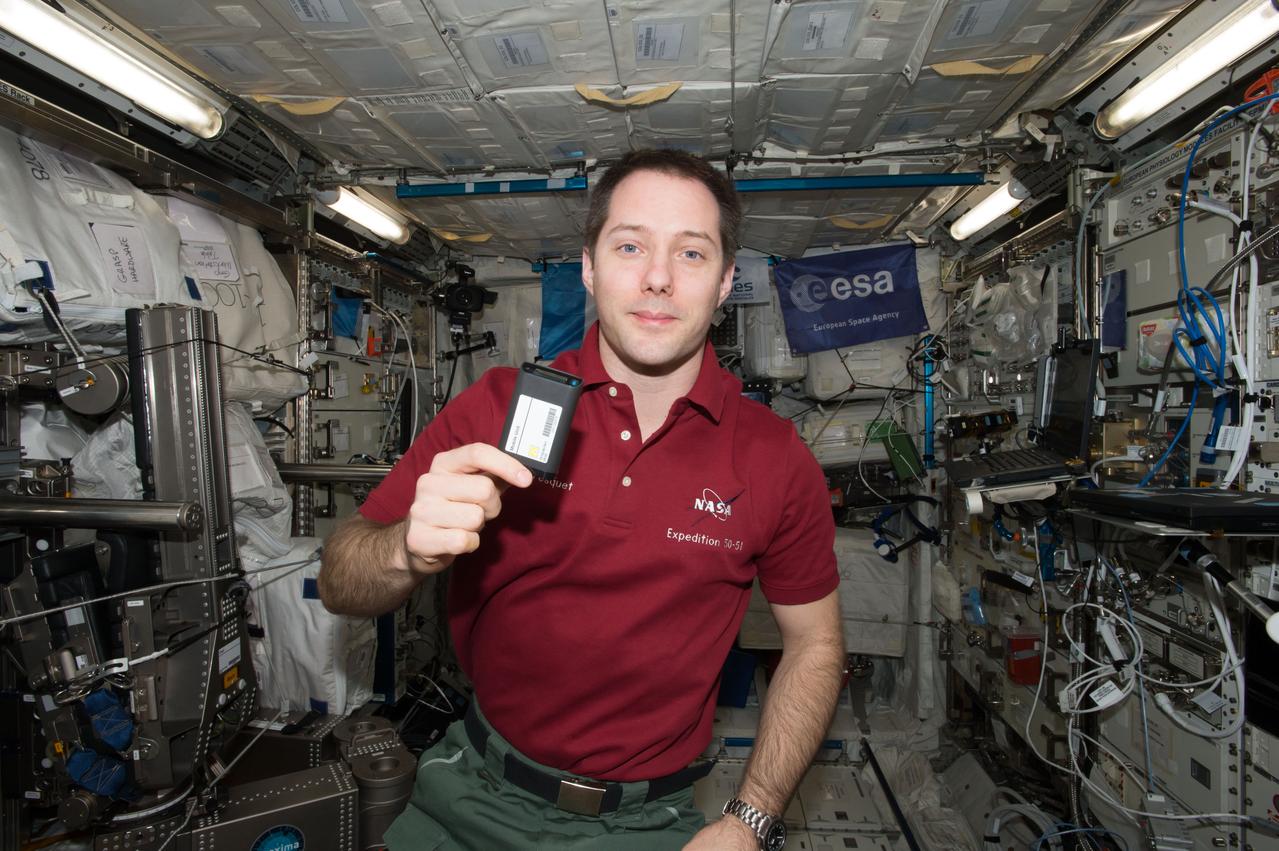
iss051e051544 (5/29/2017) --- European Space Agency (ESA) astronaut Thomas Pesquet holds a Mobile Unit in the Columbus European Laboratory during European Space Agency (ESA)-Active-Dosimeters experiment operations (OPS). The European Crew Personal Active Dosimeter (EuCPAD) project tests an active radiation dosimeter system. This represents the first time that crews wear active dosimeters in order to measure changes in radiation exposure over time providing variation of radiation dose data with respect to ISS orbit and altitude, solar cycle, and solar flares.
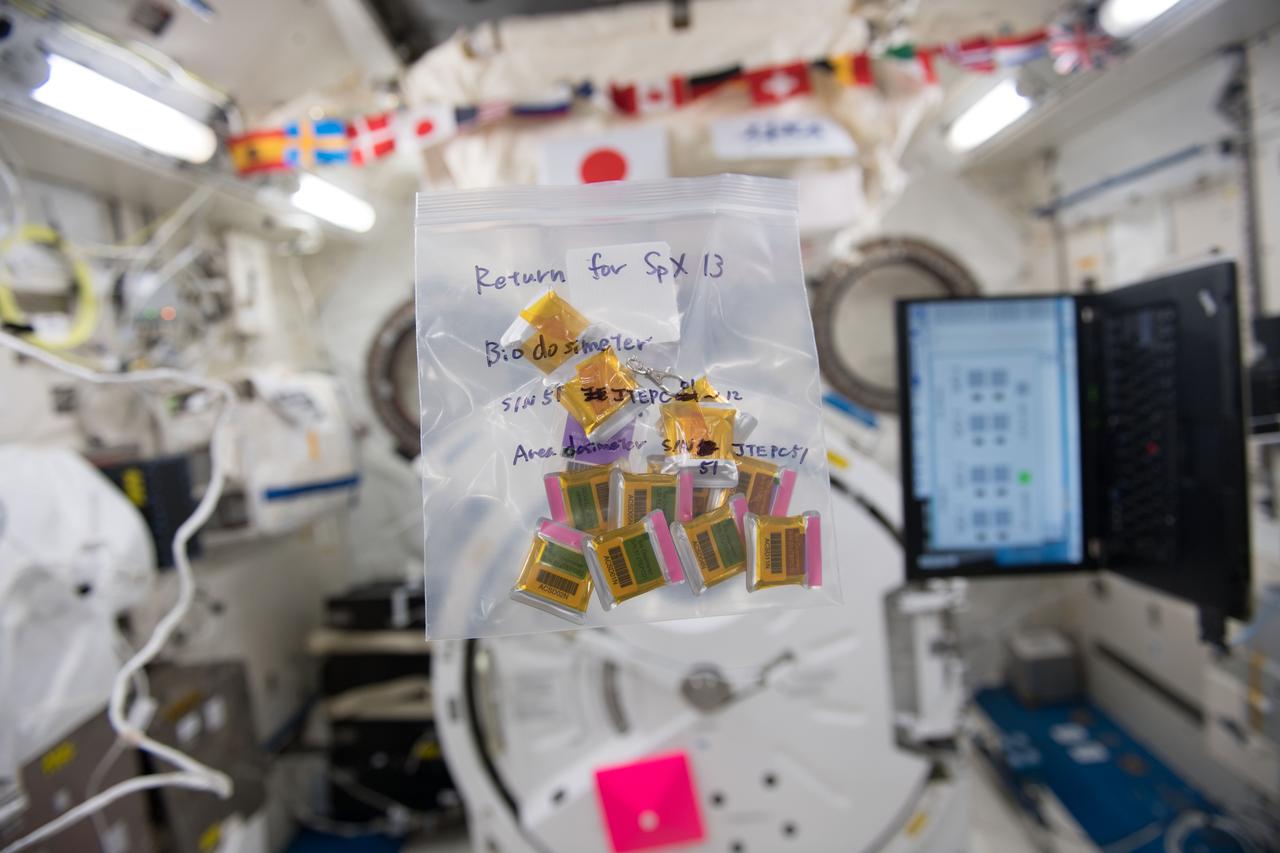
iss054e019981 (1/9/2018) --- Photo documentation of Bio Dosimeters removed form the Japanese Experiment Module (JEM) Tissue Equivalent Proportional Counters (J-TEPC) packed in a ziplock bag for return to Earth. Photo was taken in the Kibo Japanese Experiment Pressurized Module (JPM) aboard the International Space Station (ISS) during Position Sensitive Tissue Equivalent Proportional Chamber (PS-TEPC) experiment operations (OPS).
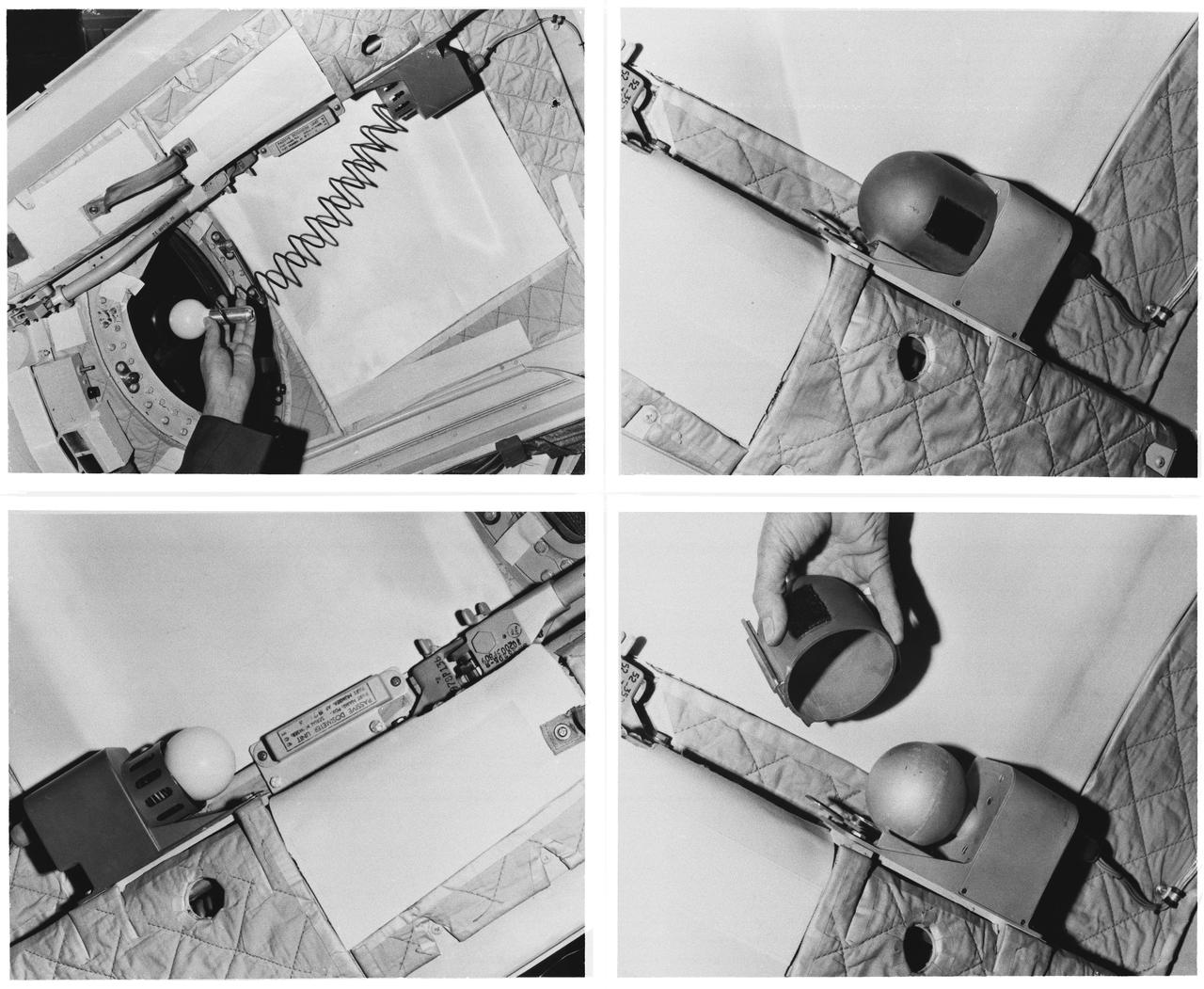
S65-61788 (For release: 11 Dec. 1965) --- Close-up view of equipment which will be used in the D-8 (Radiation in Spacecraft) experiment on the National Aeronautics and Space Administration's Gemini-6 spaceflight. This experiment is designed to make highly accurate measurements of the absorbed dose rate of radiation which penetrates the Gemini spacecraft, and determine the spatial distribution of dose levels inside the spacecraft particularly in the crew area. This is experimentation of the U.S. Air Force Weapons Laboratory, Kirtland AFB, N.M. LOWER LEFT: The second ionization chamber, this one is unshielded. This chamber can be removed from its bracket by the astronaut who will periodically take measurements at various locations in the spacecraft. Nearby is Passive Dosimeter Unit which is one of five small packets each containing a standard pocket ionization chamber, gamma electron sensitive film, glass needles and thermo luminescent dosimeters which are mounted at various locations in the cabin. UPPER LEFT: Photo illustrates how ionization chamber can be removed from bracket for measurements. LOWER RIGHT: Shield of bulb-shaped chamber will be removed (shown in photo) as the spacecraft passes through the South Atlantic anomaly, the area where the radiation belt dips closest to Earth's surface. UPPER RIGHT: Dome-shaped object is shield covering one of two Tissue Equivalent Ionization Chambers (sensors) which will read out continuously the instantaneous rate at which dose is delivered during the flight. This chamber is mounted permanently. The information will be recorded aboard the spacecraft, and will also be received directly by ground stations. This chamber is shielded to simulate the amount of radiation the crew members are receiving beneath their skin. Photo credit: NASA or National Aeronautics and Space Administration
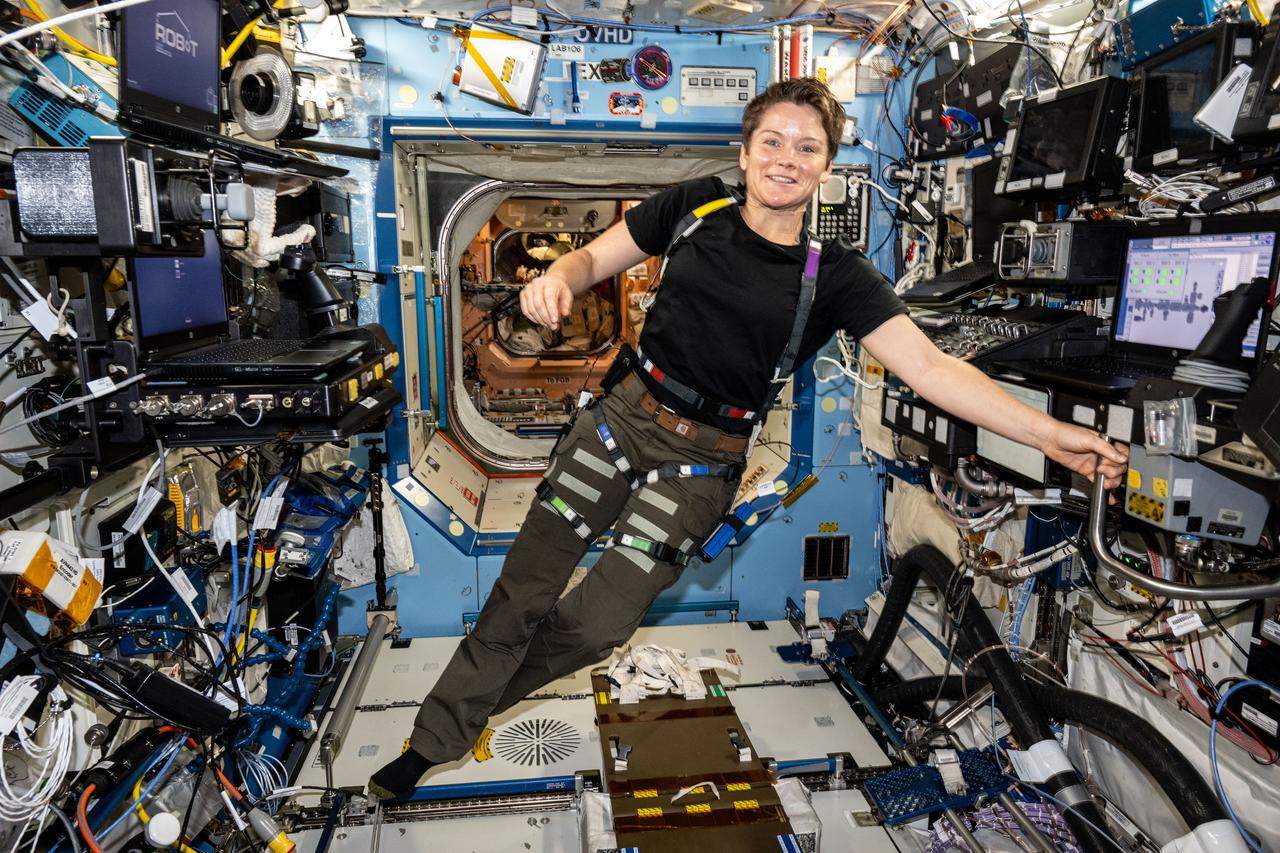
iss072e882087 (April 1, 2025) --- NASA astronaut and Expedition 72 Flight Engineer Anne McClain is pictured in the Destiny laboratory module wearing an experimental wearable dosimeter that measures radiation dosages crews are exposed to in real time aboard the International Space Station.
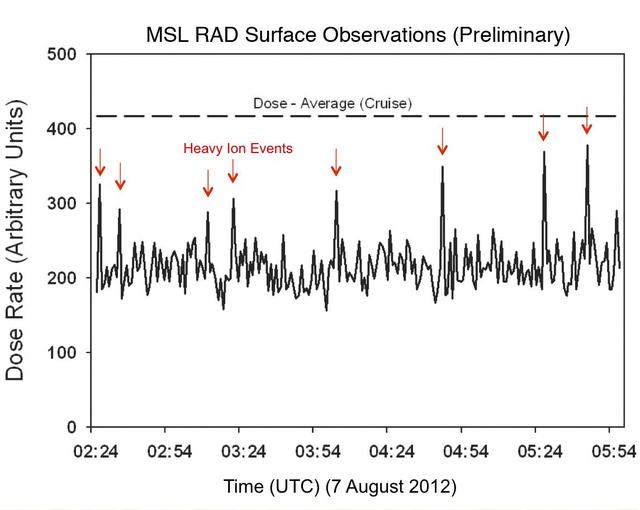
Like a human working in a radiation environment, NASA Curiosity rover carries its own version of a dosimeter to measure radiation from outer space and the sun. This graphic shows the flux of radiation detected the rover Radiation Assessment Detector.
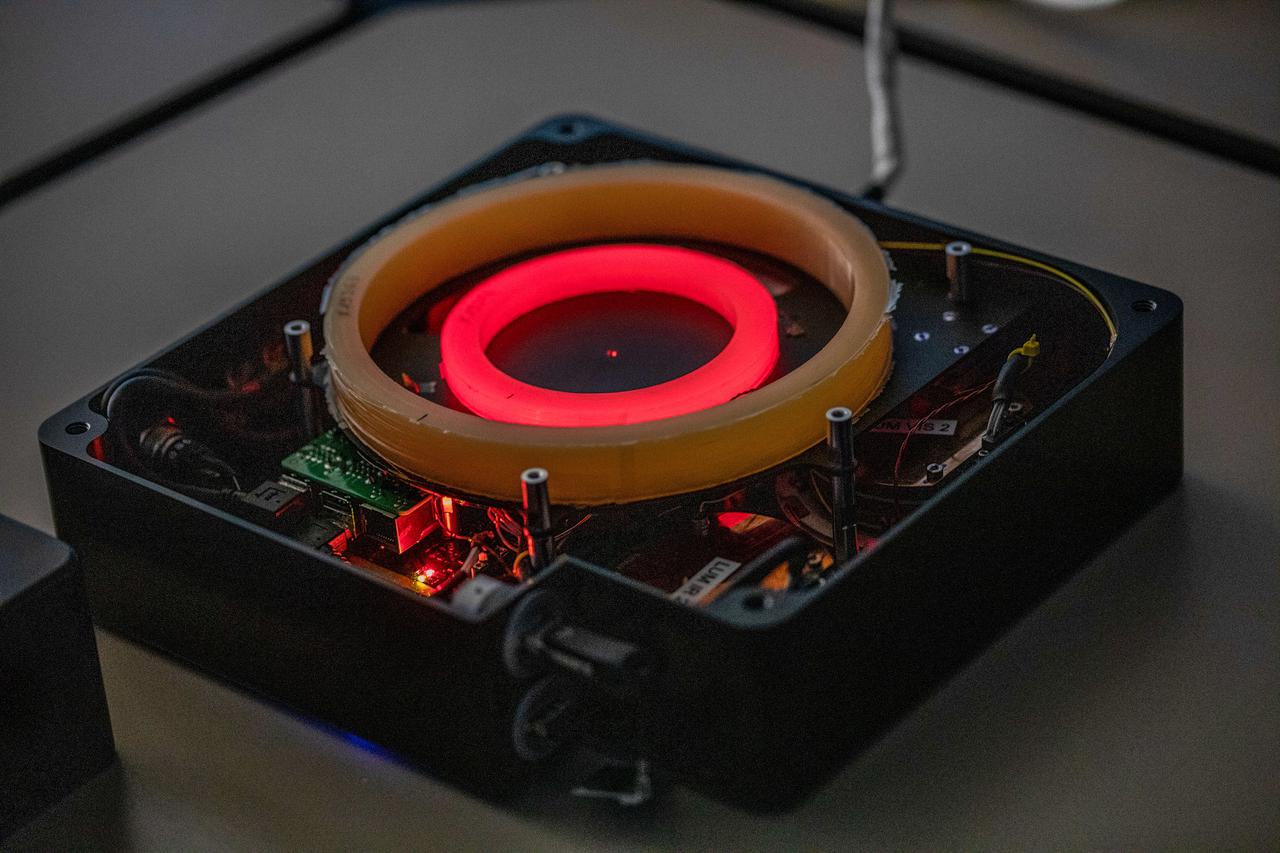
jsc2021e029985 (3/18/20210 --- A preflight view of the Lumina imvestigation. Fiber-optic Active Dosimeter (Lumina) is an active fiber dosimeter that monitors, in real-time, the received radiation dose by exploiting the capacity of optical fibers to darken when exposed to radiation. The dosimeter provides reliable dose measurements in complex environments such as the ones associated with electrons, protons, gamma-ray or X-ray photons or neutrons.
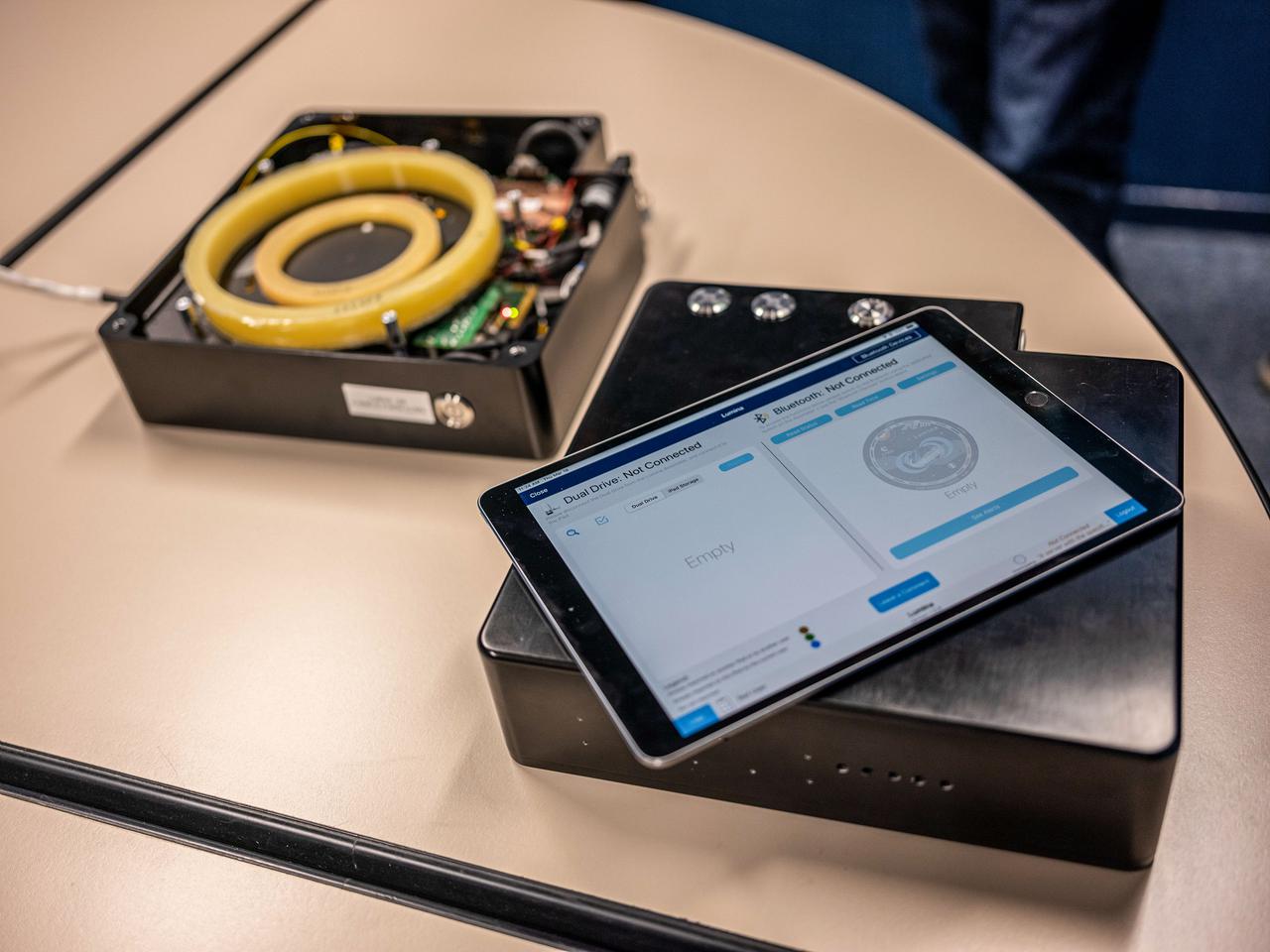
jsc2021e029984 (3/18/20210 --- A preflight view of the Lumina imvestigation. Fiber-optic Active Dosimeter (Lumina) is an active fiber dosimeter that monitors, in real-time, the received radiation dose by exploiting the capacity of optical fibers to darken when exposed to radiation. The dosimeter provides reliable dose measurements in complex environments such as the ones associated with electrons, protons, gamma-ray or X-ray photons or neutrons.
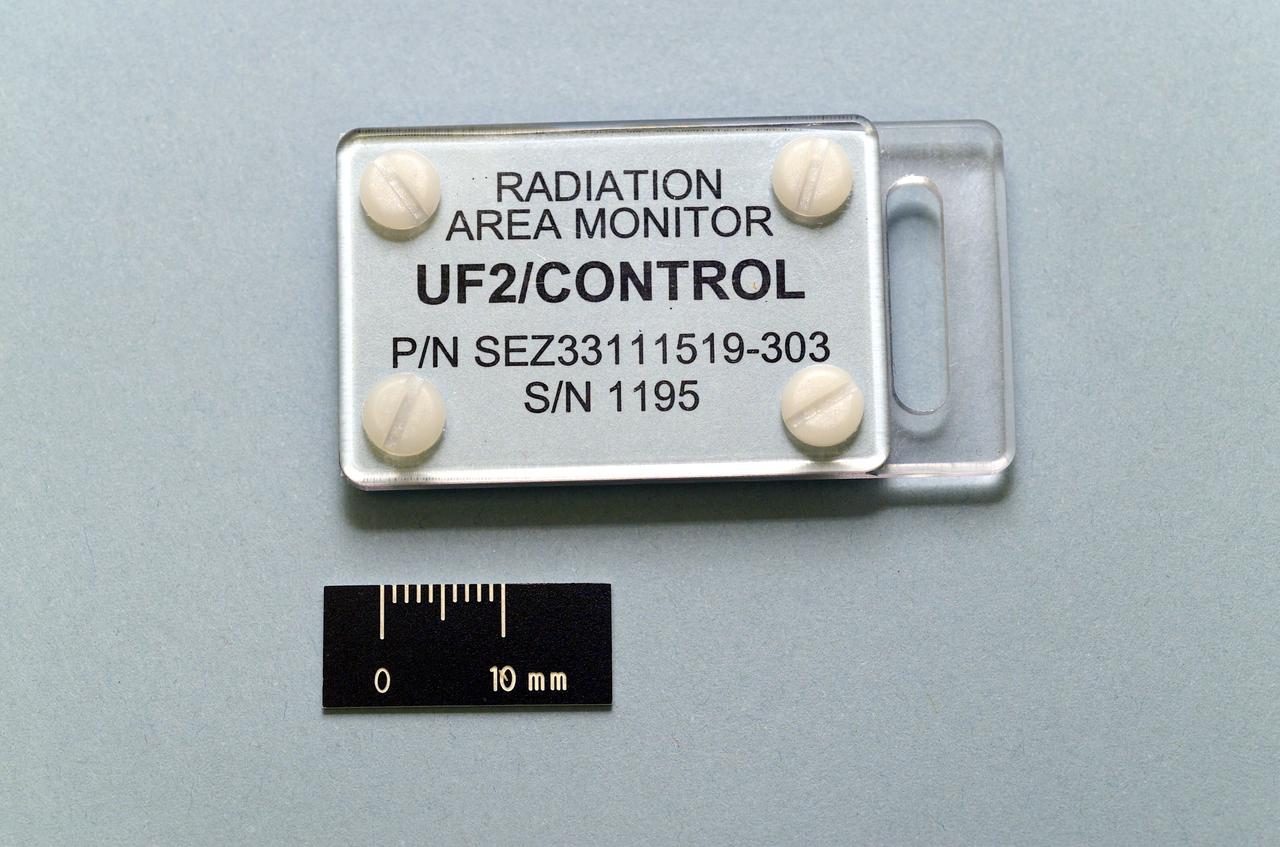
jsc2002e20491 (7/10/2015) --- View of Label side, front, on a Radiation Area Monitor (RAM) Control Dosimeter as part of the Radiation Area Subpack Assemblies for the Passive Dosimetry System. The Radiation Area Monitor (RAM) is a small set of thermoluminescent detectors encased in Lexan plastic that respond to radiation; the amount of radiation they absorb can be revealed by applying heat and measuring the amount of visible light released. The RAM is used to monitor dose and dose equivalent within the habitable volume of the International space Station (ISS) as a function of location, due to its predicted low sensitivity to high-Linear Energy Transfer radiation (neutrons and alpha particles).
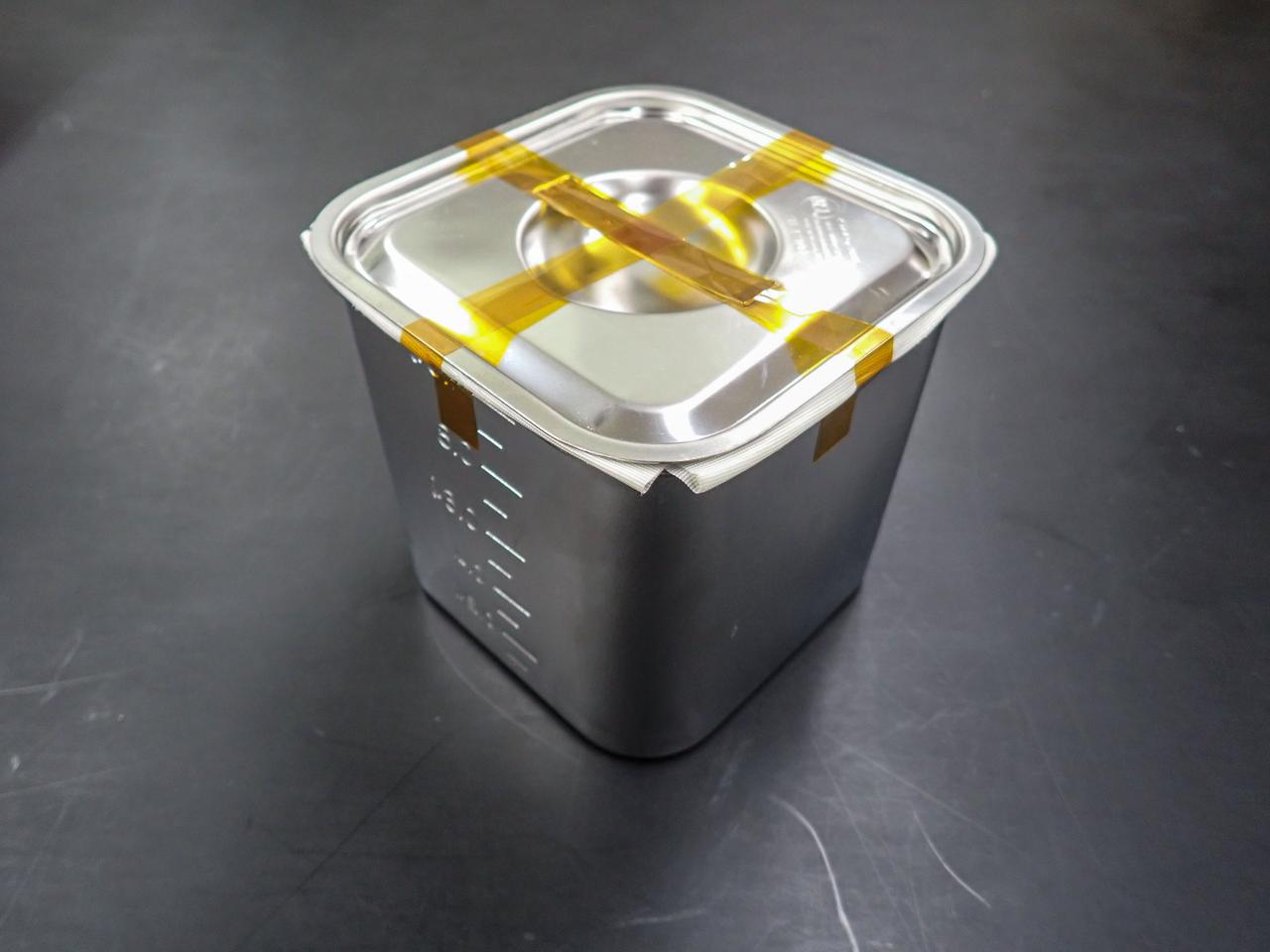
jsc2024e006081 (8/31/2023) --- Sample case for glass ampoules and dosimeters. Image Credit: JAXA
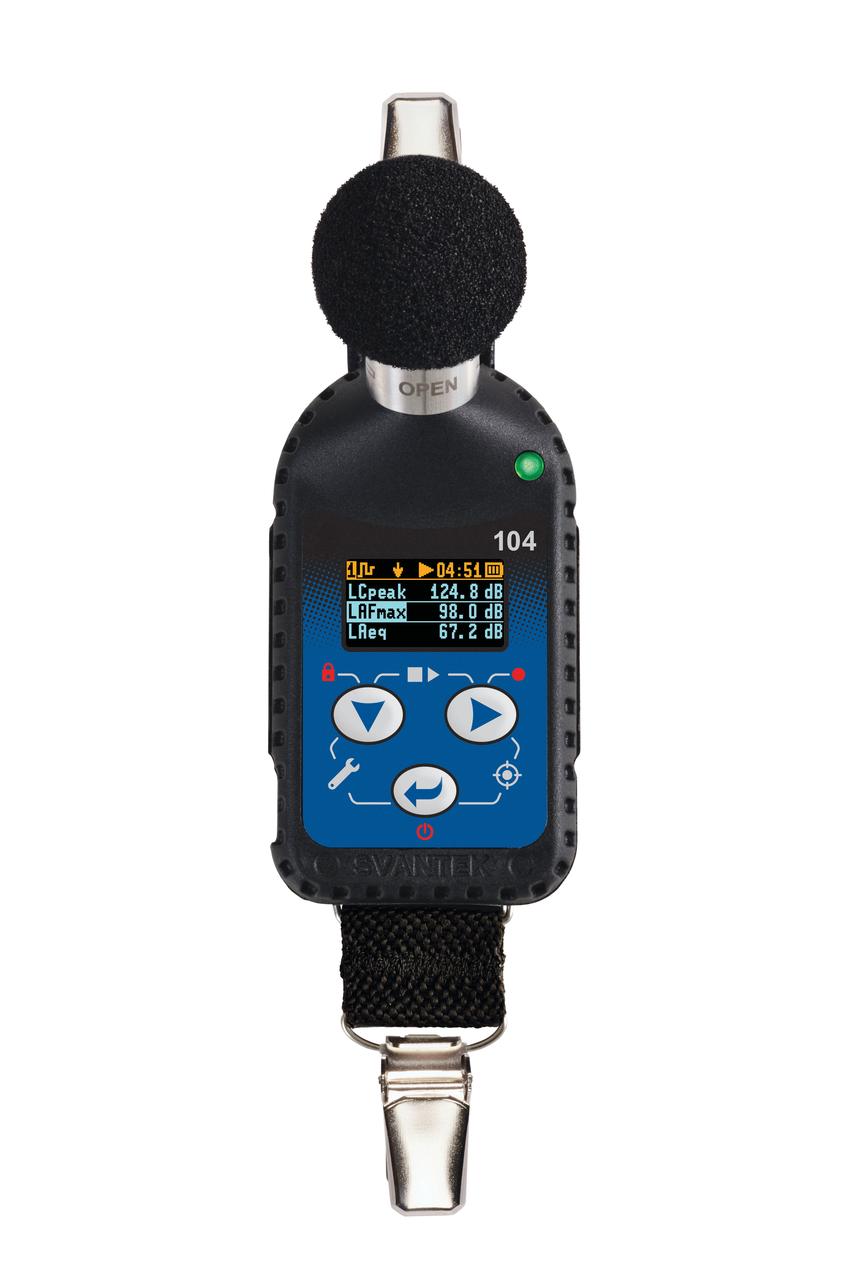
jsc2025e044837 2/19/2019) --- Shown is the SV104A noise dosimeter that measures noise dose and noise levels in the large measurement range of 55 dB to 140 dB aboard the International Space Station. This dosimeter is part of A Next Generation Crew Health & Performance Acoustic Monitoring Capability for Exploration: An International Space Station Technology Demonstration (Wireless Acoustics) investigation. Image courtesy of SVANTEK.
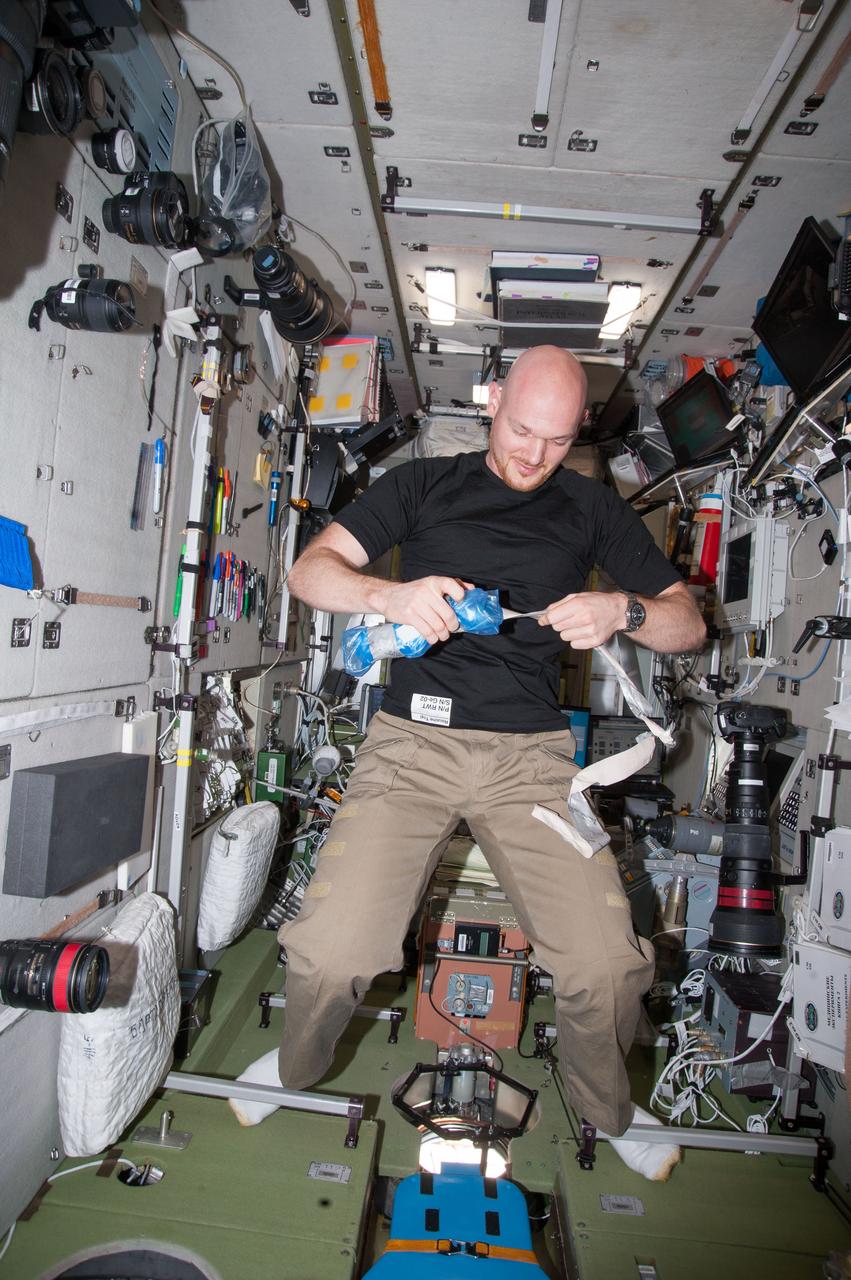
ISS040-E-130020 (9 Sept. 2014) --- European Space Agency astronaut Alexander Gerst, Expedition 40 flight engineer, opens a package of dosimeters in the Zvezda Service Module of the International Space Station.
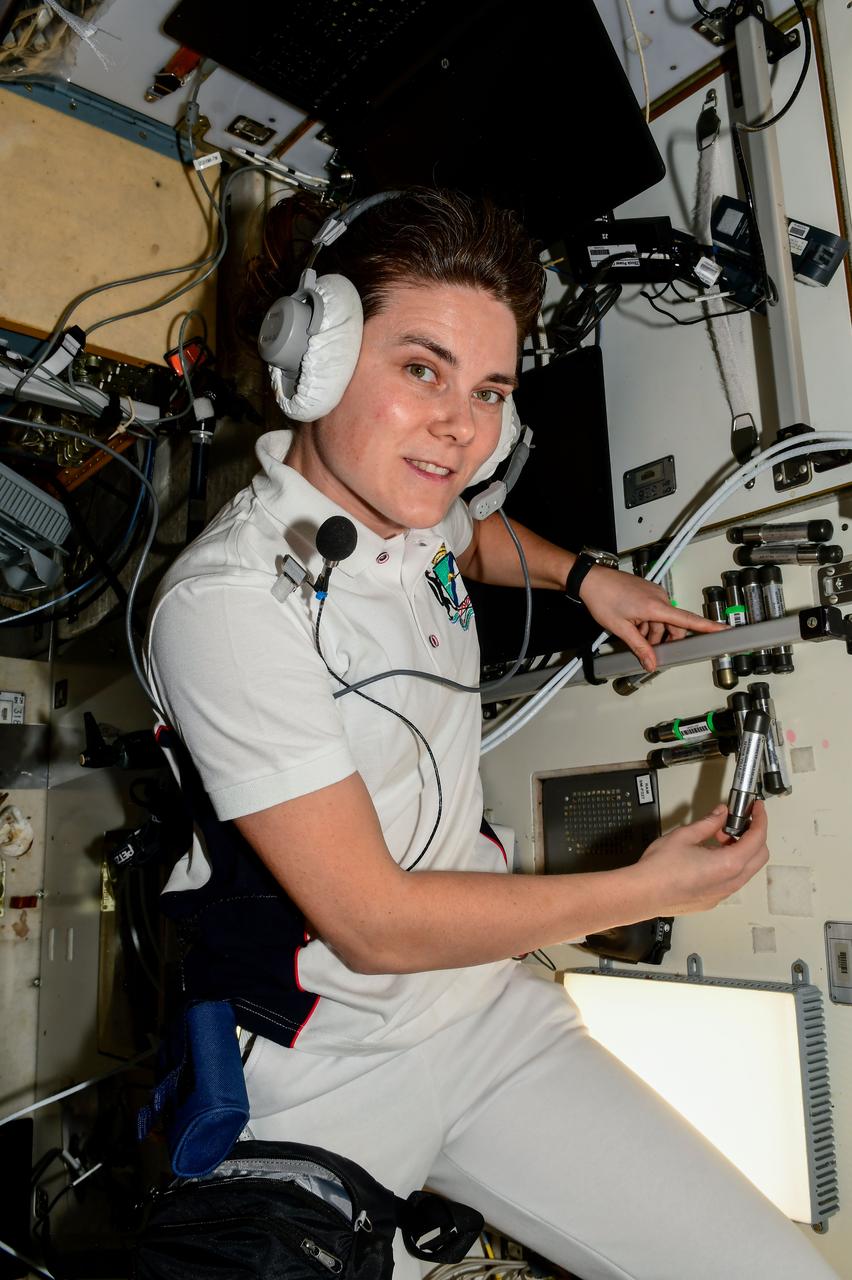
iss068e041021 (Jan. 19, 2023) --- Roscosmos cosmonaut and Expedition 68 Flight Engineer Anna Kikina installs dosimeters, or radiation detectors, and collects data from them aboard the International Space Station. Credit: Roscosmos
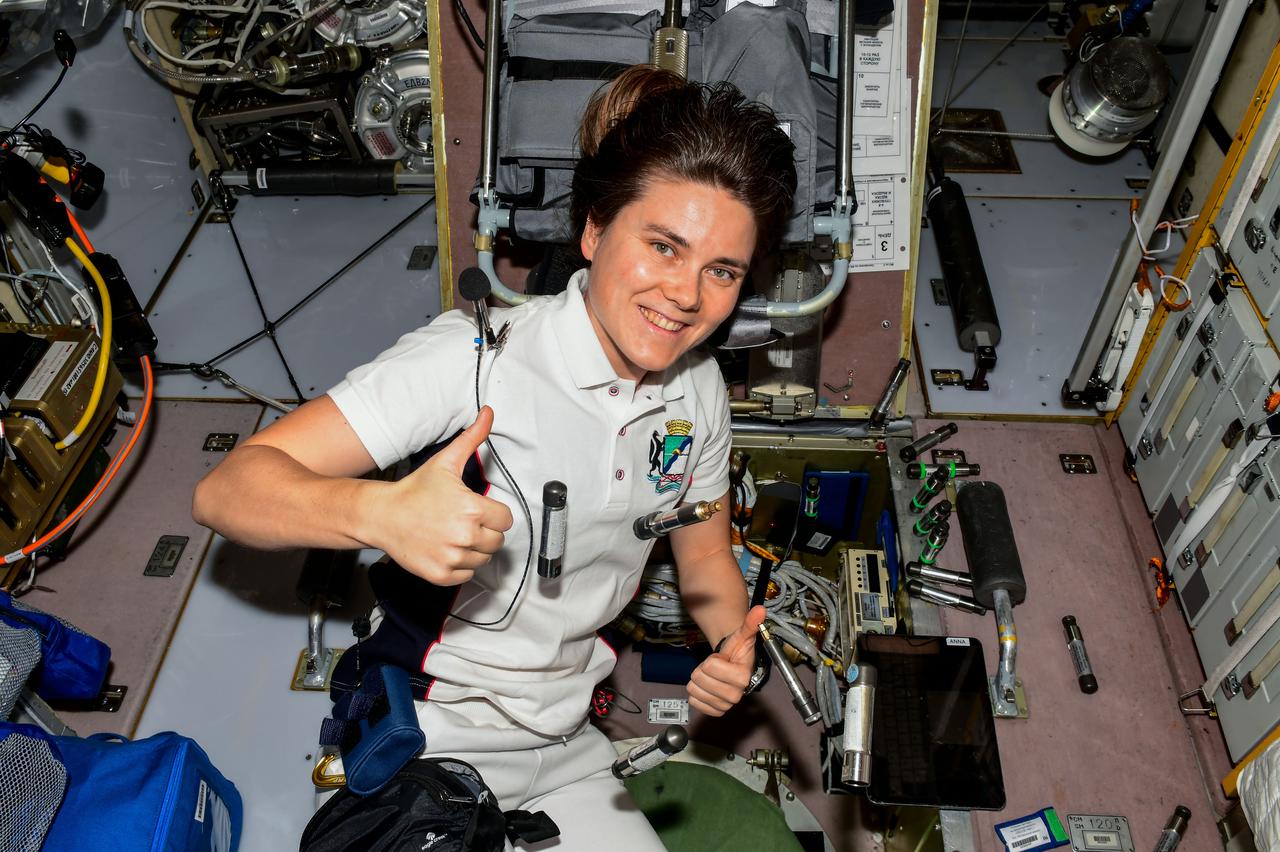
iss068e041015 (Jan. 19, 2023) --- Roscosmos cosmonaut and Expedition 68 Flight Engineer Anna Kikina installs dosimeters, or radiation detectors, and collects data from them aboard the International Space Station. Credit: Roscosmos
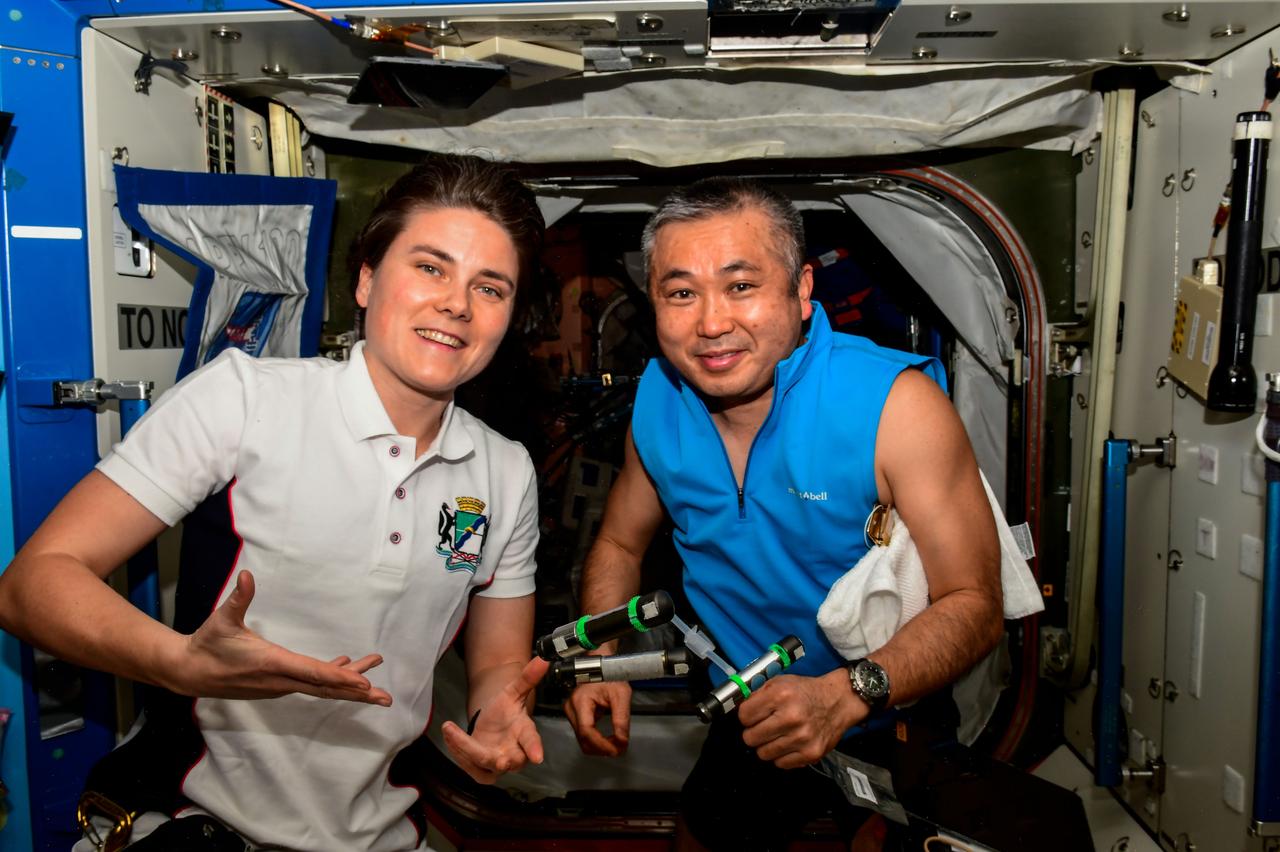
iss068e041017 (Jan. 19, 2023) --- Expedition 68 Flight Engineers Anna Kikina of Roscosmos and Koichi Wakata of the Japan Aerospace Exploration Agency (JAXA) pose together with dosimeters, or radiation detectors, floating weightlessly in the microgravity environment of the International Space Station. Credit: Roscosmos
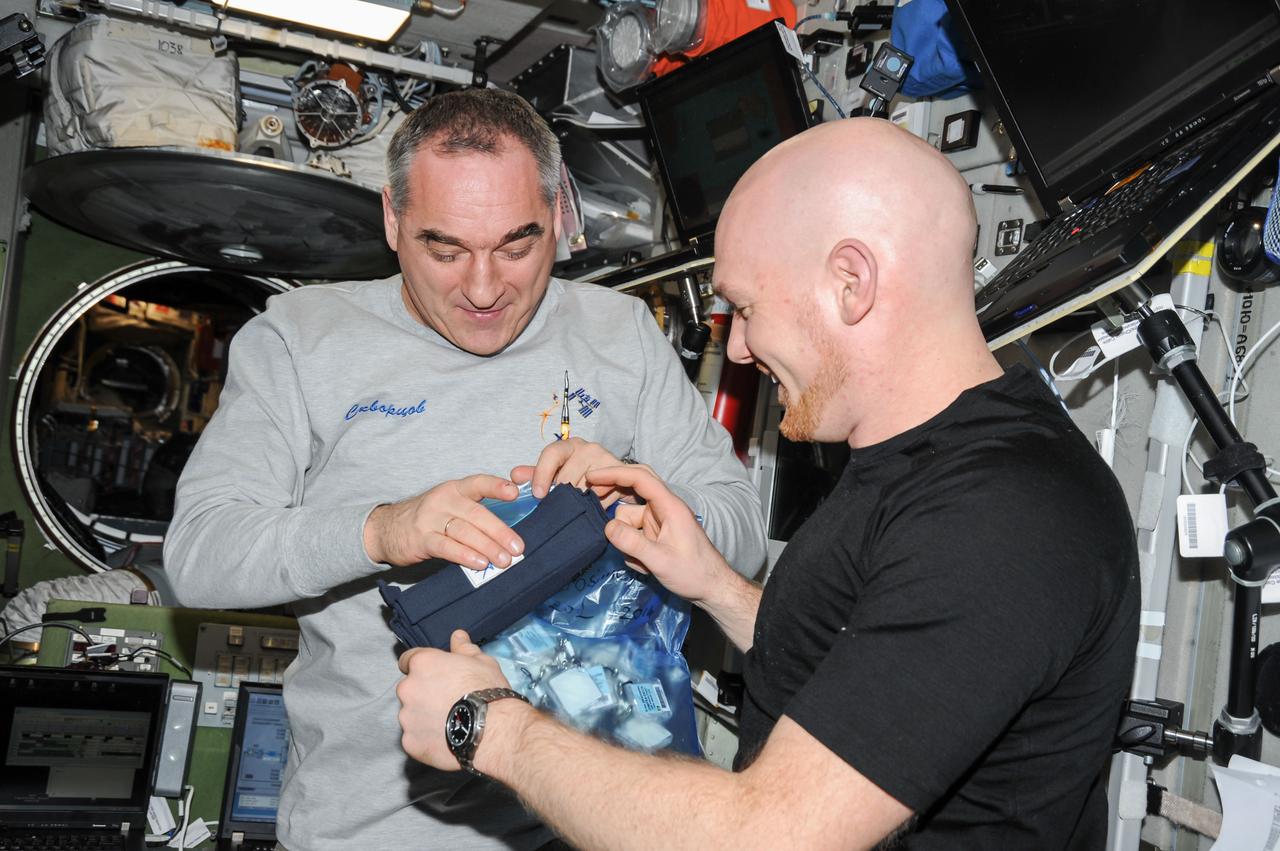
ISS040-E-130025 (9 Sept. 2014) --- European Space Agency astronaut Alexander Gerst (right) and Russian cosmonaut Alexander Skvortsov, both Expedition 40 flight engineers, work with a package of dosimeters in the Zvezda Service Module of the International Space Station.
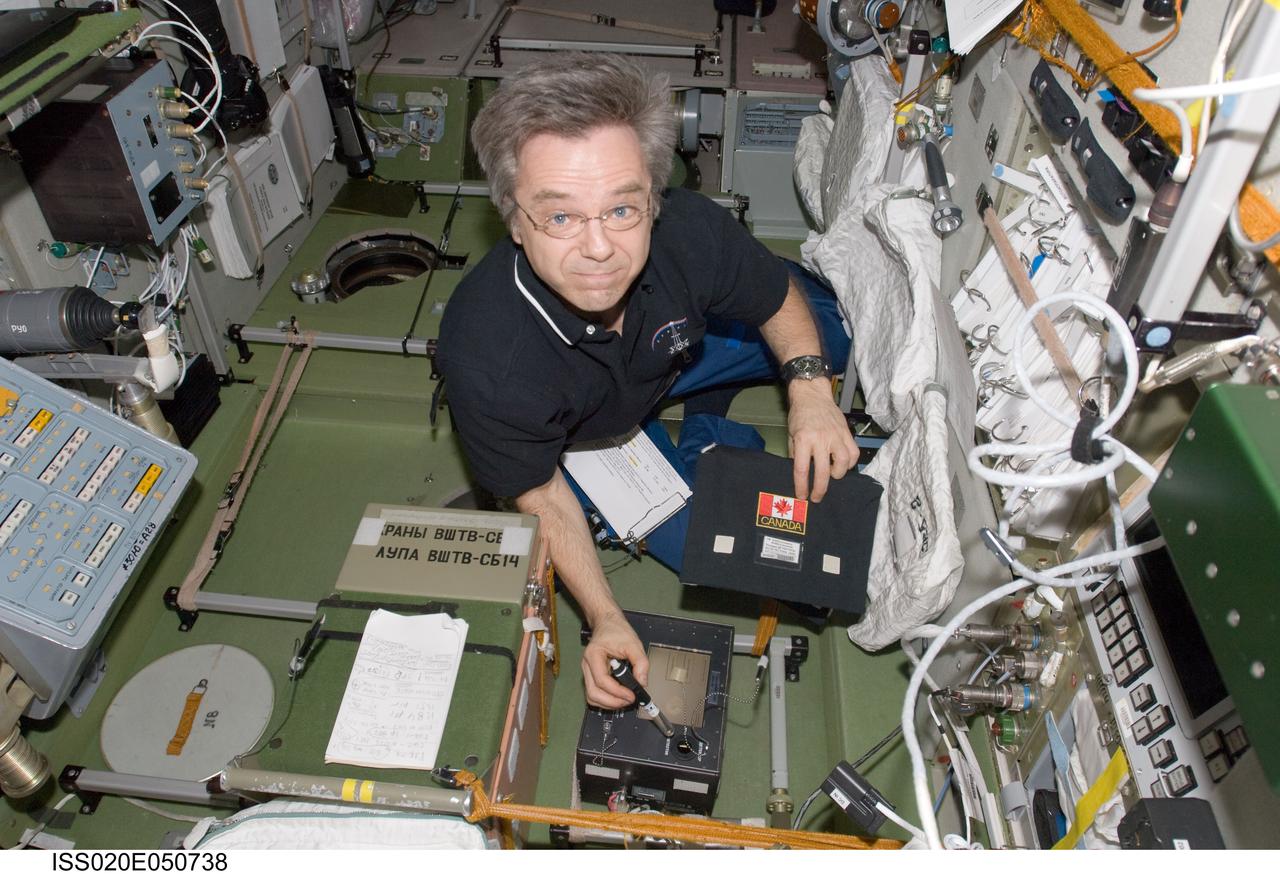
ISS020-E-050738 (10 Oct. 2009) --- Canadian Space Agency astronaut Robert Thirsk, Expedition 20/21 flight engineer, works in the Zvezda Service Module of the International Space Station.
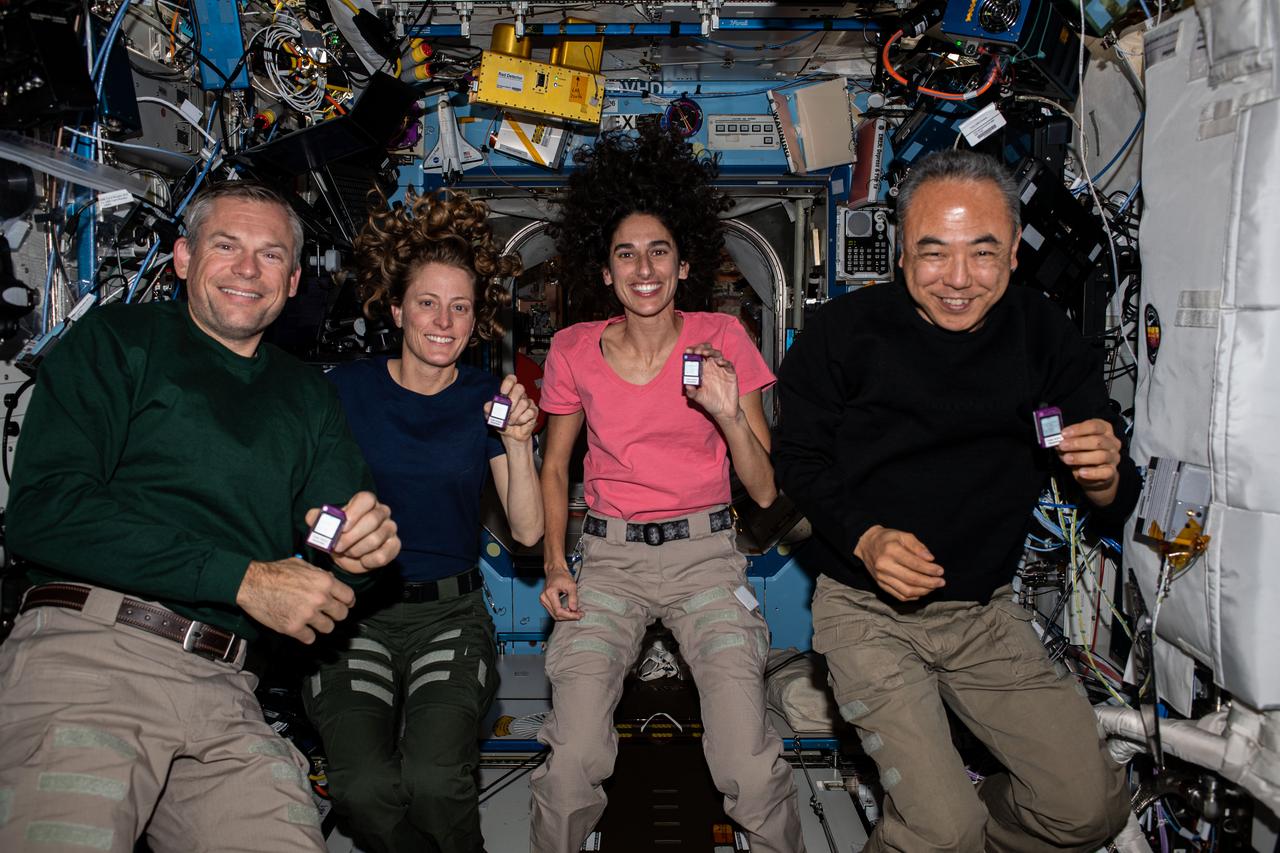
iss070e002869 (Oct. 11, 2023) --- (From left) Expedition 70 Commander Andreas Mogensen of ESA (European Space Agency); and Flight Engineers Loral O'Hara and Jasmin Moghbeli, both from NASA; and Satoshi Furukawa of JAXA (Japan Aerospace Exploration Agency), pose for a portrait aboard the International Space Station's Destiny laboratory module. The quartet is showing off crew active dosimeters that monitor the amount of radiation astronauts are exposed to in the microgravity environment.
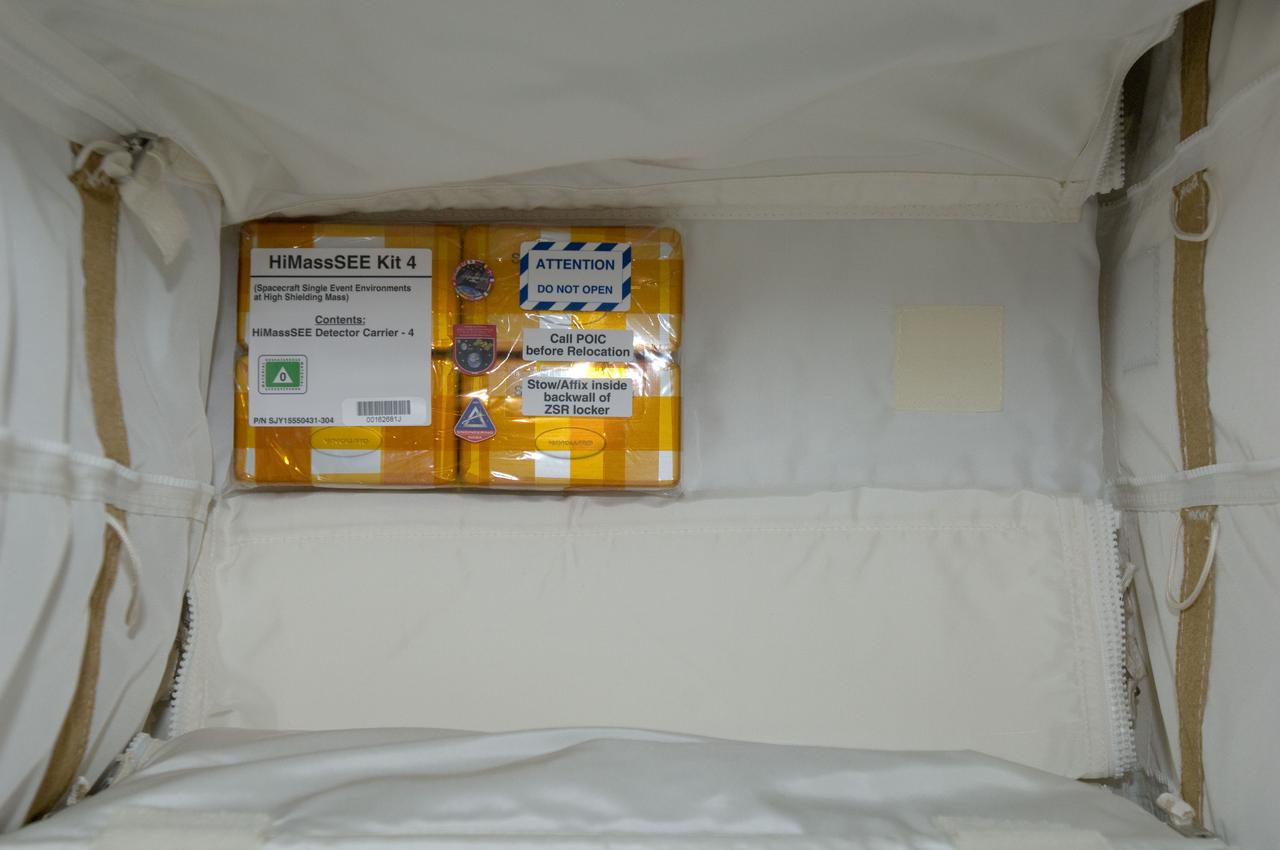
iss032e016954 (8/11/2012) --- A view of Spacecraft Single Event Enviroments at High Shielding Mass (HiMassSEE) kit 4 in U.S. Lab aboard the International Space Station (ISS). Spacecraft Single Event Environments at High Shielding Mass (HiMassSEE) measures space radiation interactions with spacecraft structure and shielding using several passive track detector technologies to provide a more accurate definition of International Space Station (ISS) payload accommodations, radiation transport model validation, and flight demonstration data on advanced microelectronics and chemical dosimeters.
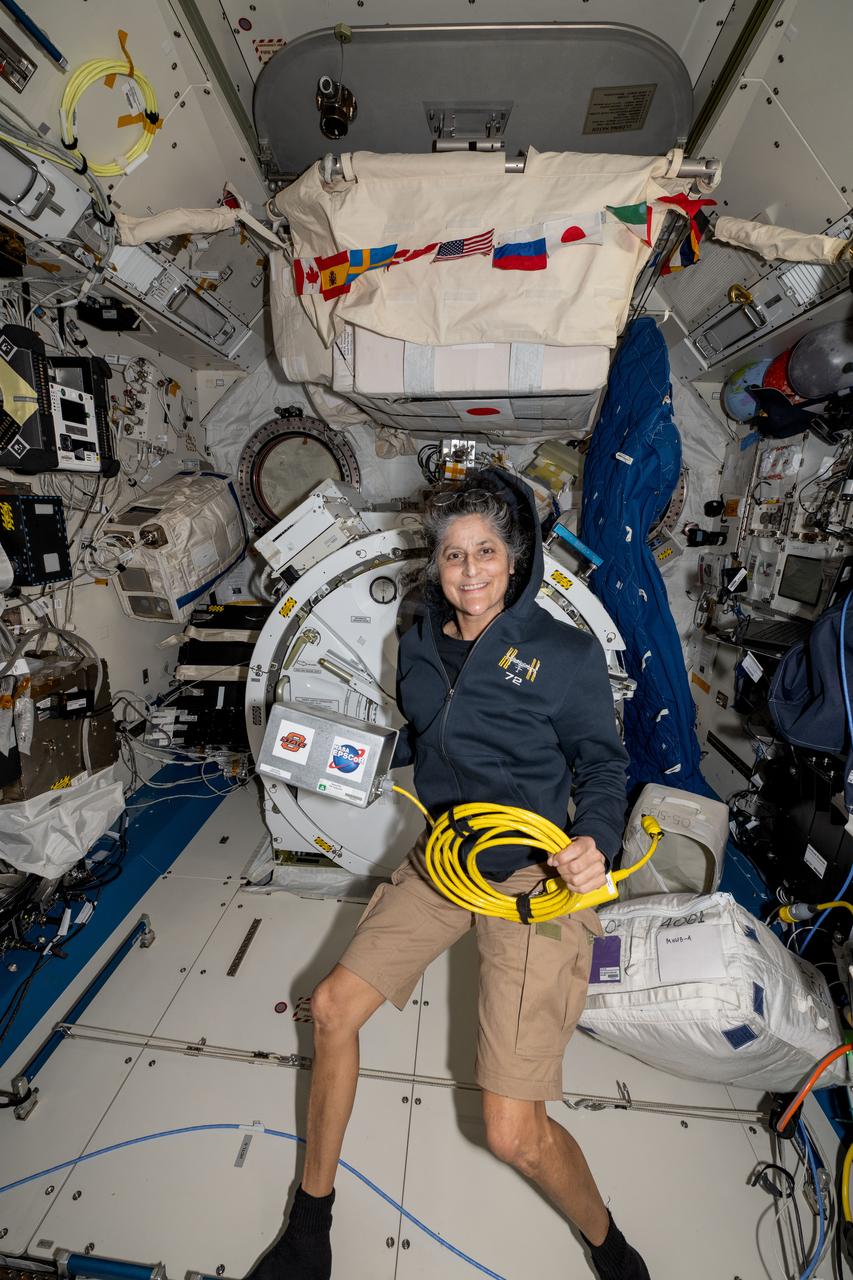
iss072e143491 (Nov. 1, 2024) --- NASA astronaut and Expedition 72 Commander Suni Williams displays the Space Tissue Equivalent Dosimeter (SpaceTED) hardware inside the International Space Station's Kibo laboratory module. SpaceTED is a technology demonstration that can measure radiation dosages and characterize the radiaton environment in microgravity to protect crew members and spacecraft hardware.
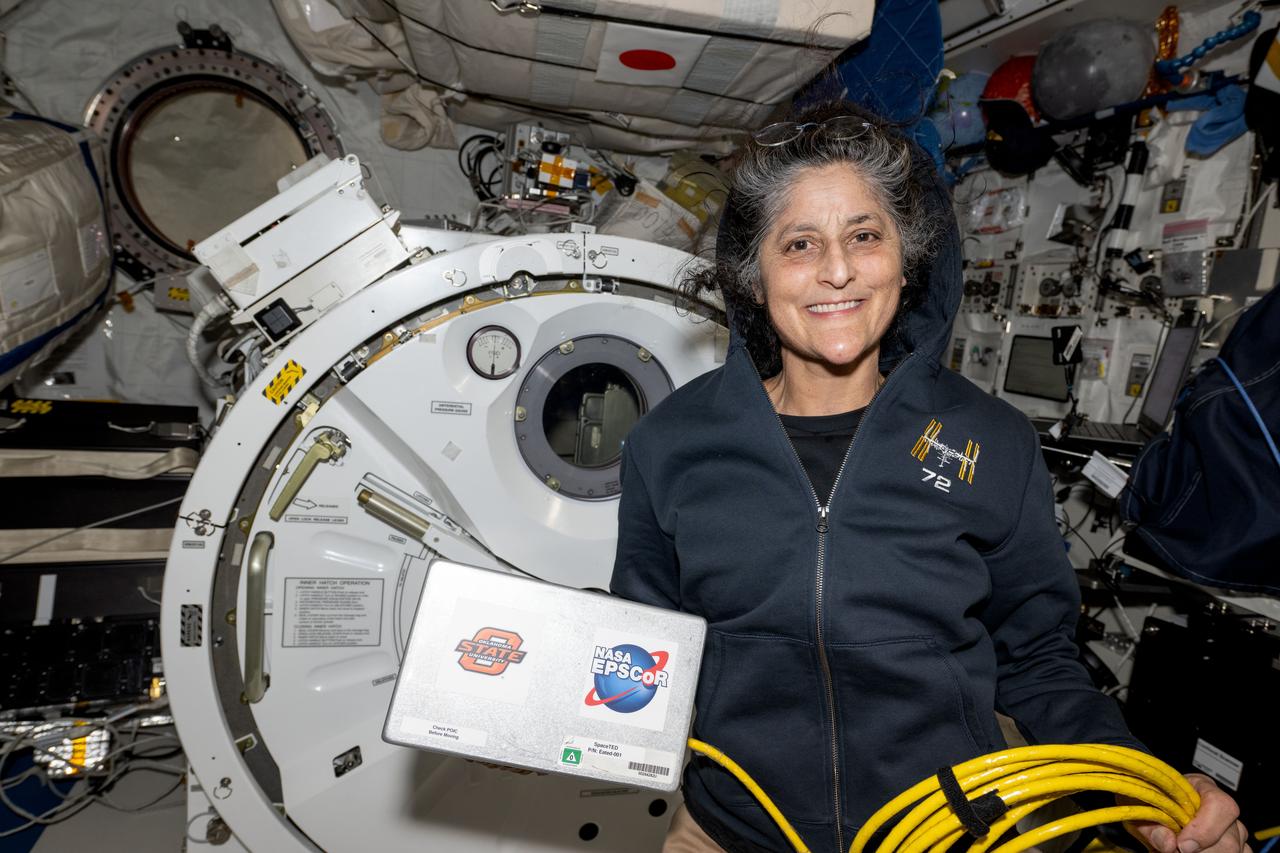
iss072e143492 (Nov. 1, 2024) --- NASA astronaut and Expedition 72 Commander Suni Williams displays the Space Tissue Equivalent Dosimeter (SpaceTED) hardware inside the International Space Station's Kibo laboratory module. SpaceTED is a technology demonstration that can measure radiation dosages and characterize the radiaton environment in microgravity to protect crew members and spacecraft hardware.
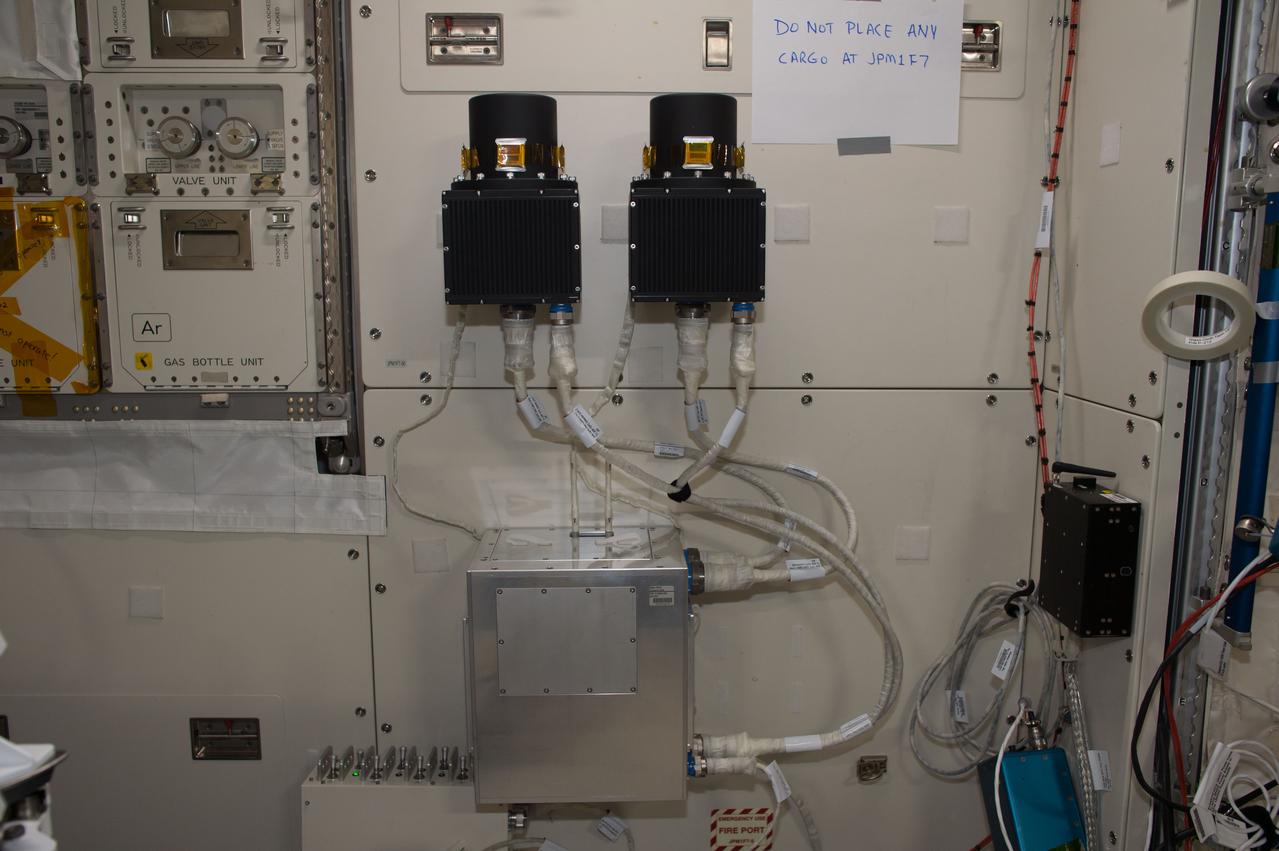
iss050e016008 (12/14/2016) --- A view during Position Sensitive-Tissue Equivalent Proportional Chamber (PS-TEPC) Installation aboard the International Space Station (ISS) The PS-TEPC is a radiation measuring instrument that measures absorbed doses and path length of space radiation particles simultaneously, and determines the real time Liner Energy Transfer (LET), and equivalent doses, to assess radiation risk to crew members during space flight. Bio Dosimeters are also visible.
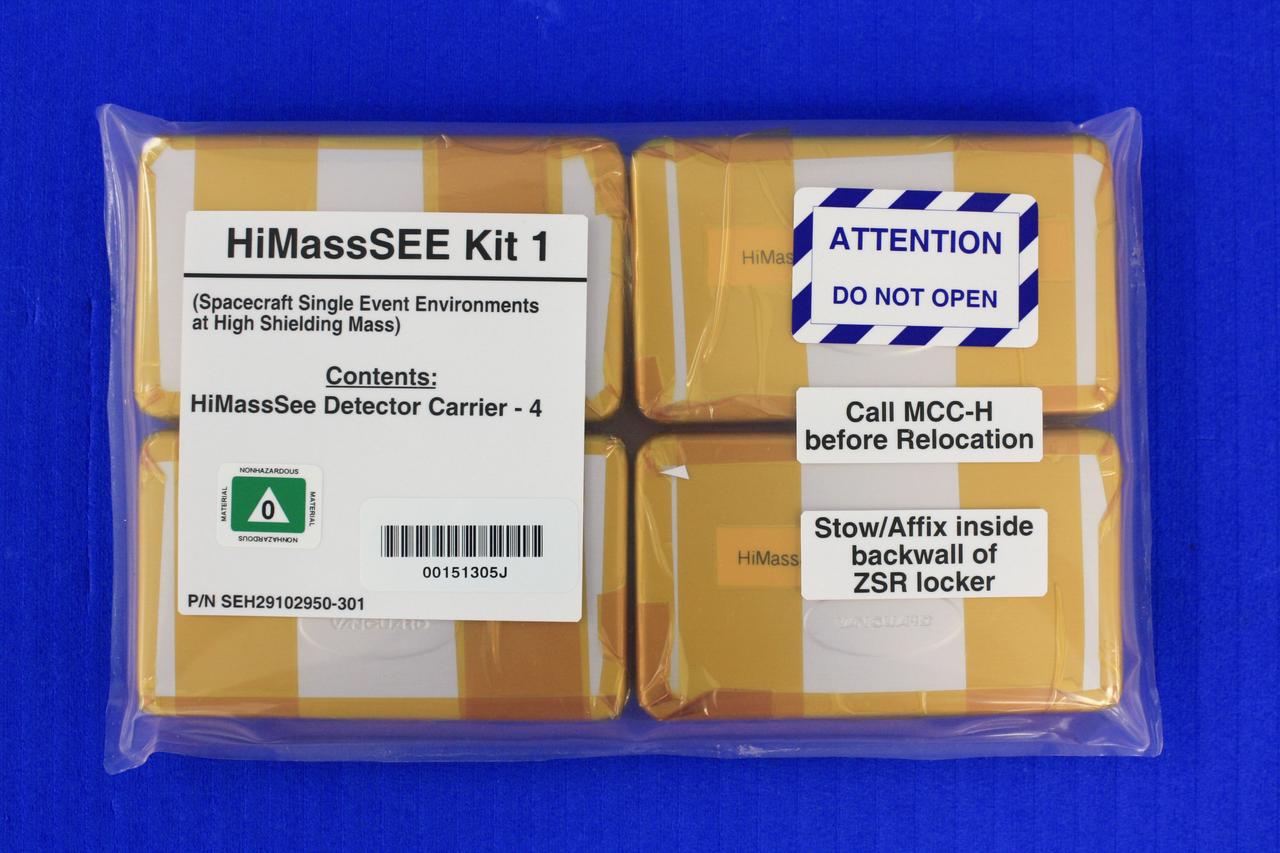
jsc2011e080236 (8/25/2011) --- A preflight view of Hi Shielding Mass Single Event Environment (HiMassSEE) Kit 1 within plastic bag. Spacecraft Single Event Environments at High Shielding Mass (HiMassSEE) measures space radiation interactions with spacecraft structure and shielding using several passive track detector technologies to provide a more accurate definition of International Space Station (ISS) payload accommodations, radiation transport model validation, and flight demonstration data on advanced microelectronics and chemical dosimeters.
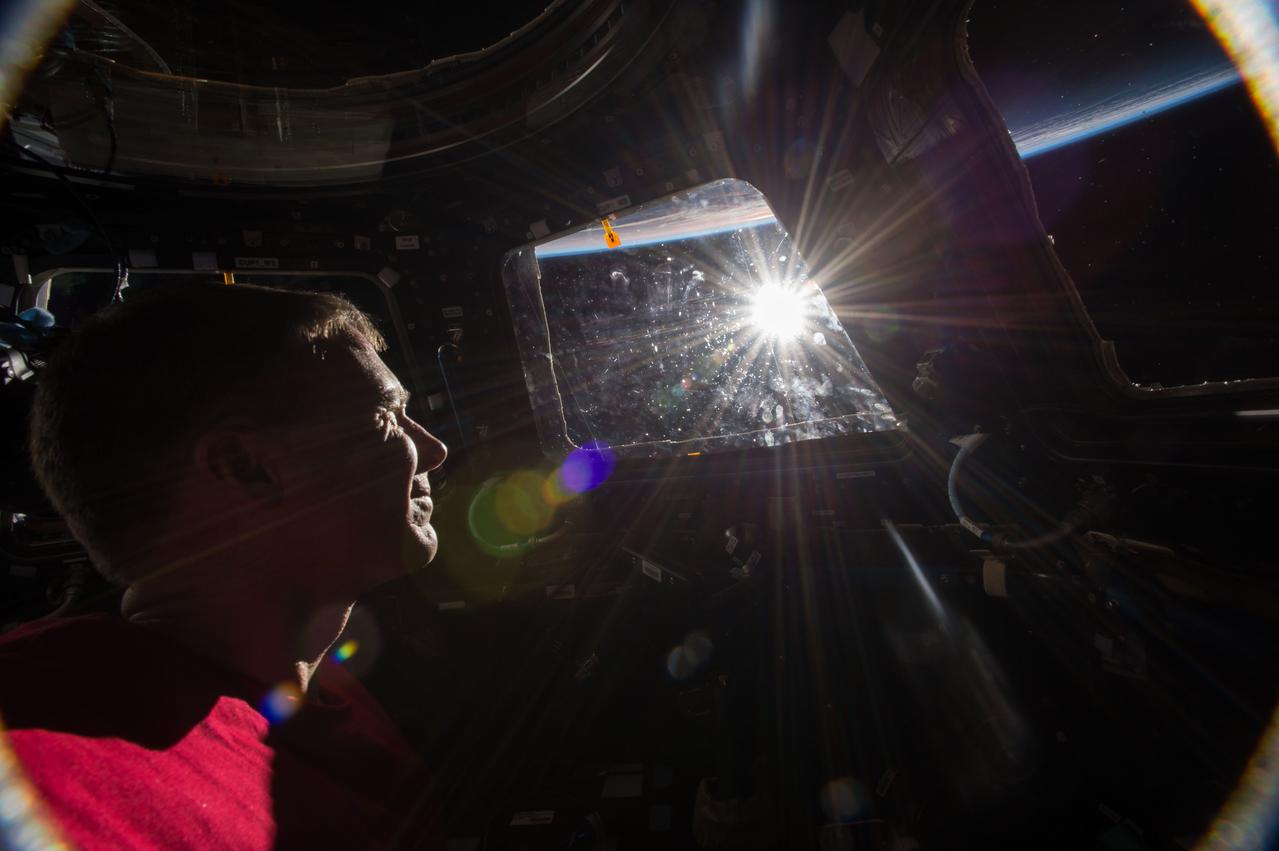
ISS042e016586 (11/26/2014) --- NASA astronaut Terry Virts in the International Space Station on Earth sunrise Nov. 26, 2014 looks through the cupola window while checking the "dosimeter". The cupola allows the crew 360 degree vision around the station for both photos and operating the Canada arm to pull spacecraft up to the station ports.
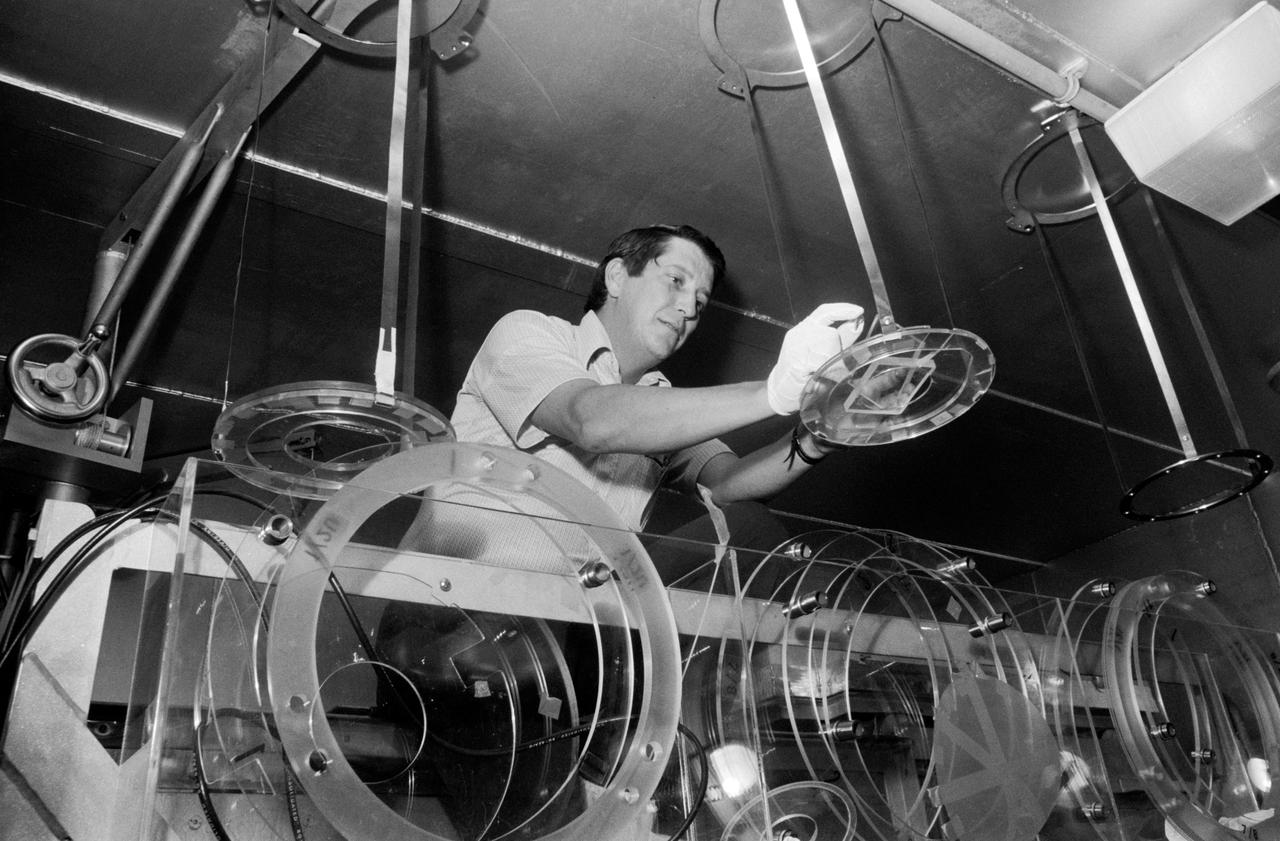
S73-36161 (November 1973) --- In the Radiation Counting Laboratory sixty feet underground at JSC, Dr. Robert S. Clark prepares to load pieces of iridium foil -- sandwiched between plastic sheets -- into the laboratory's radiation detector. The iridium foil strips were worn by the crew of the second Skylab flight in personal radiation dosimeters throughout their 59 1/2 days in space. Inside the radiation detector assembly surrounded by 28 tons of lead shielding, the sample will be tested to determine the total neutron dose to which the astronauts were exposed during their long stay aboard the space station. Photo credit: NASA
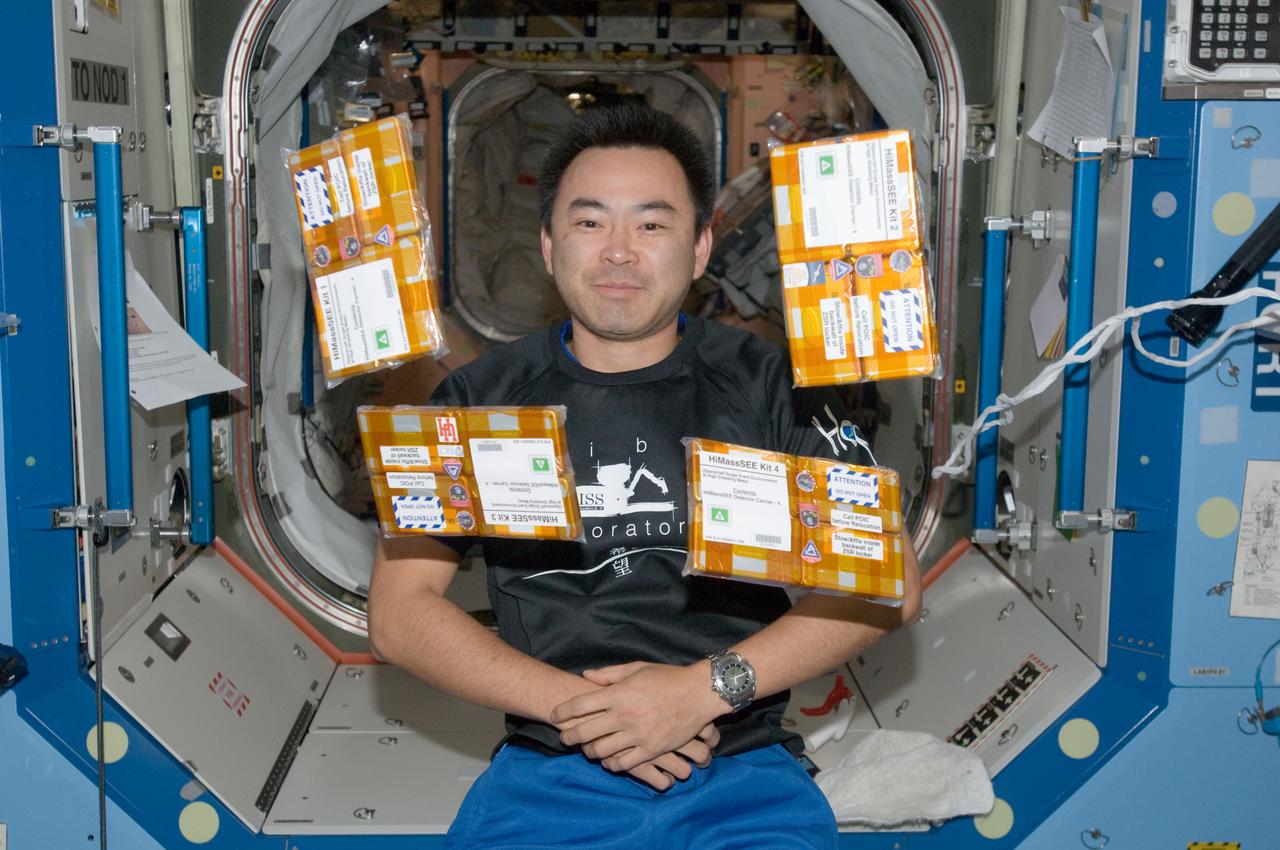
iss032e016946 (8/11/2012) --- Japan Aerospace Exploration Agency (JAXA) astronaut Akihiko Hoshide poses with the HiMassSEE (Spacecraft Single Event Environments at High Shielding Mass) kits 1,2,3 and 4 in the U.S. Lab aboard the International Space Station (ISS). Spacecraft Single Event Environments at High Shielding Mass (HiMassSEE) measures space radiation interactions with spacecraft structure and shielding using several passive track detector technologies to provide a more accurate definition of International Space Station (ISS) payload accommodations, radiation transport model validation, and flight demonstration data on advanced microelectronics and chemical dosimeters.
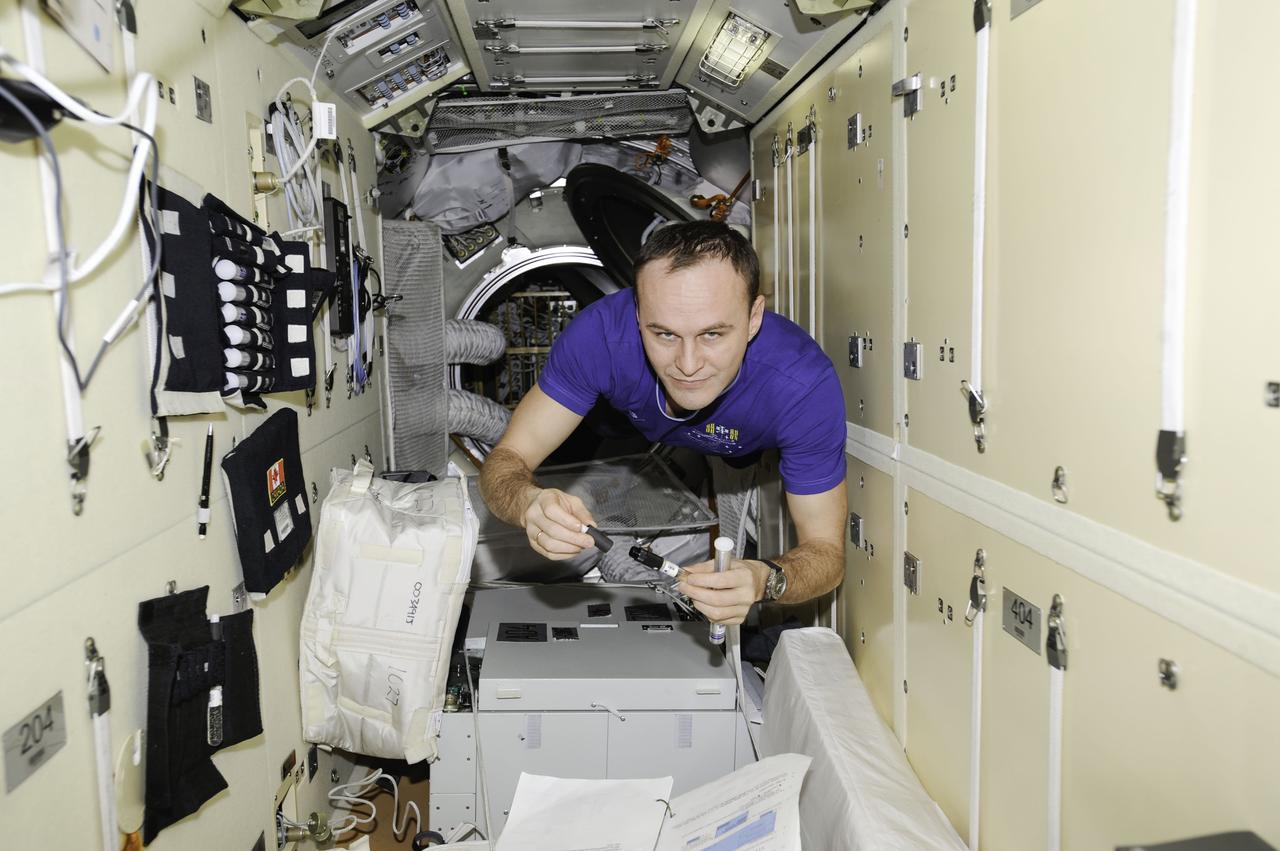
ISS038-E-006668 (22 Nov. 2013) --- Russian cosmonaut Sergey Ryazanskiy, Expedition 38 flight engineer, floats freely while working in the Russian segment of the International Space Station.
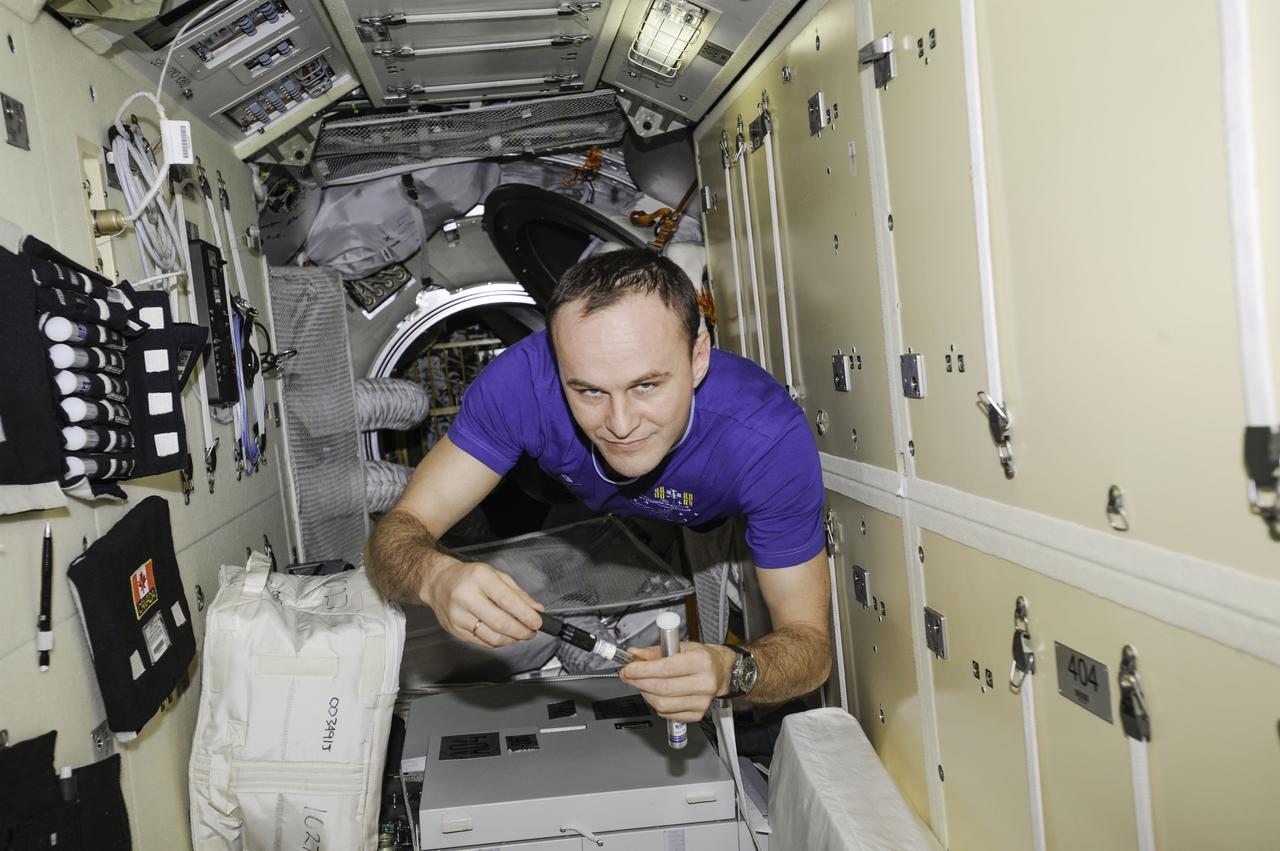
ISS038-E-006669 (22 Nov. 2013) --- Russian cosmonaut Sergey Ryazanskiy, Expedition 38 flight engineer, floats freely while working in the Russian segment of the International Space Station.
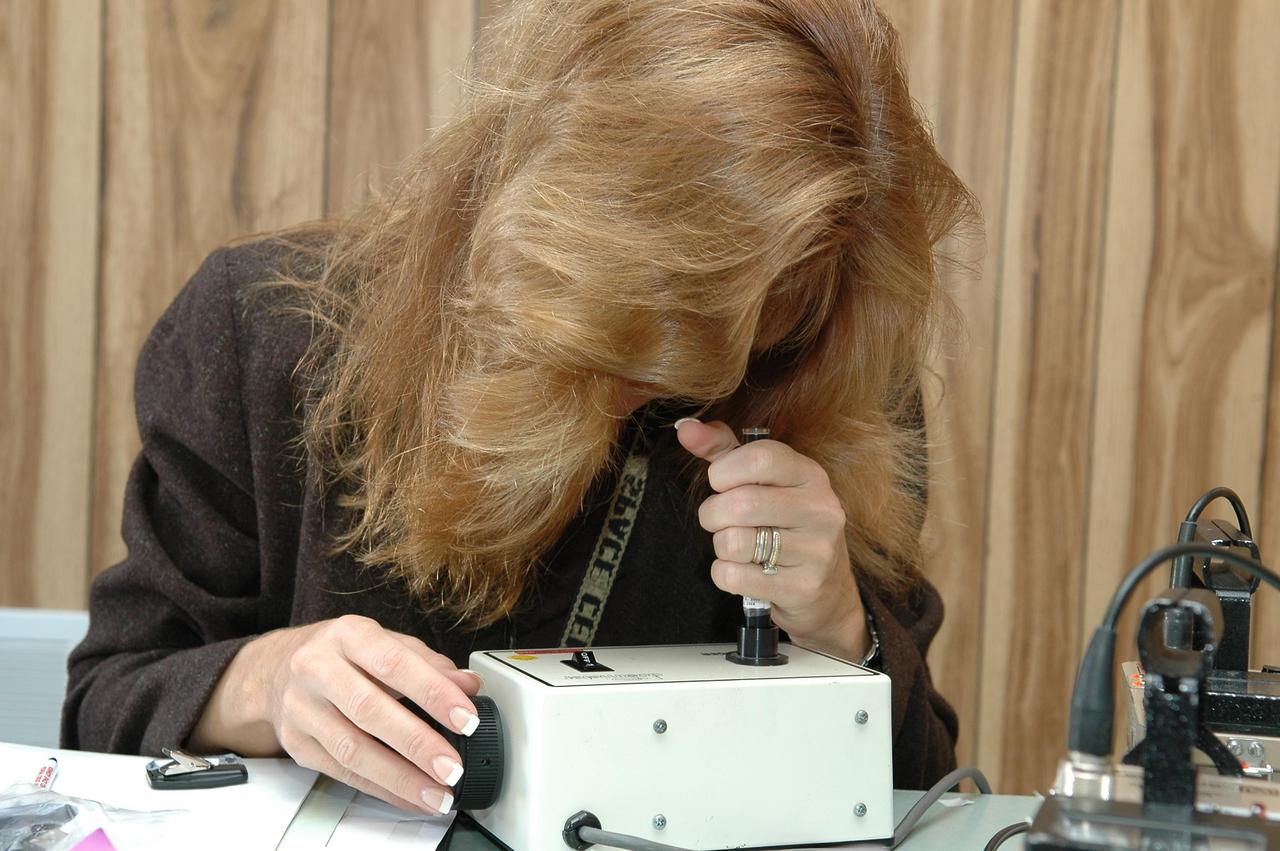
KENNEDY SPACE CENTER, FLA. - Jamie Gurney makes a zero adjustment of a personal dosimeter for officials handling the radioisotope thermoelectric generator (RTG) before its move to the RTG facility at Kennedy Space Center. The RTG is the baseline power supply for the NASA’s New Horizons spacecraft, scheduled to launch in January 2006 on a journey to Pluto and its moon, Charon. As it approaches Pluto, the spacecraft will look for ultraviolet emission from Pluto's atmosphere and make the best global maps of Pluto and Charon in green, blue, red and a special wavelength that is sensitive to methane frost on the surface. It will also take spectral maps in the near infrared, telling the science team about Pluto's and Charon's surface compositions and locations and temperatures of these materials. When the spacecraft is closest to Pluto or its moon, it will take close-up pictures in both visible and near-infrared wavelengths. It is expected to reach Pluto in July 2015.

Technicians install the Korea AeroSpace Administration (KASA) K-Rad Cube within the Orion stage adapter inside the Multi-Payload Processing Facility at NASA’s Kennedy Space Center in Florida on Tuesday, Sept. 2, 2025. The K-Rad Cube, about the size of a shoebox, is one of the CubeSats slated to fly on NASA’s Artemis II test flight in 2026. Deploying in high Earth orbit from a spacecraft adapter on NASA’s SLS (Space Launch System) rocket after Orion is safely flying on its own with its crew of four astronauts, K-Rad Cube will use a dosimeter made of material designed to mimic human tissue to measure space radiation and assess biological effects at various altitudes across the Van Allen radiation belts, a critical area of research for human presence at the Moon and Mars.
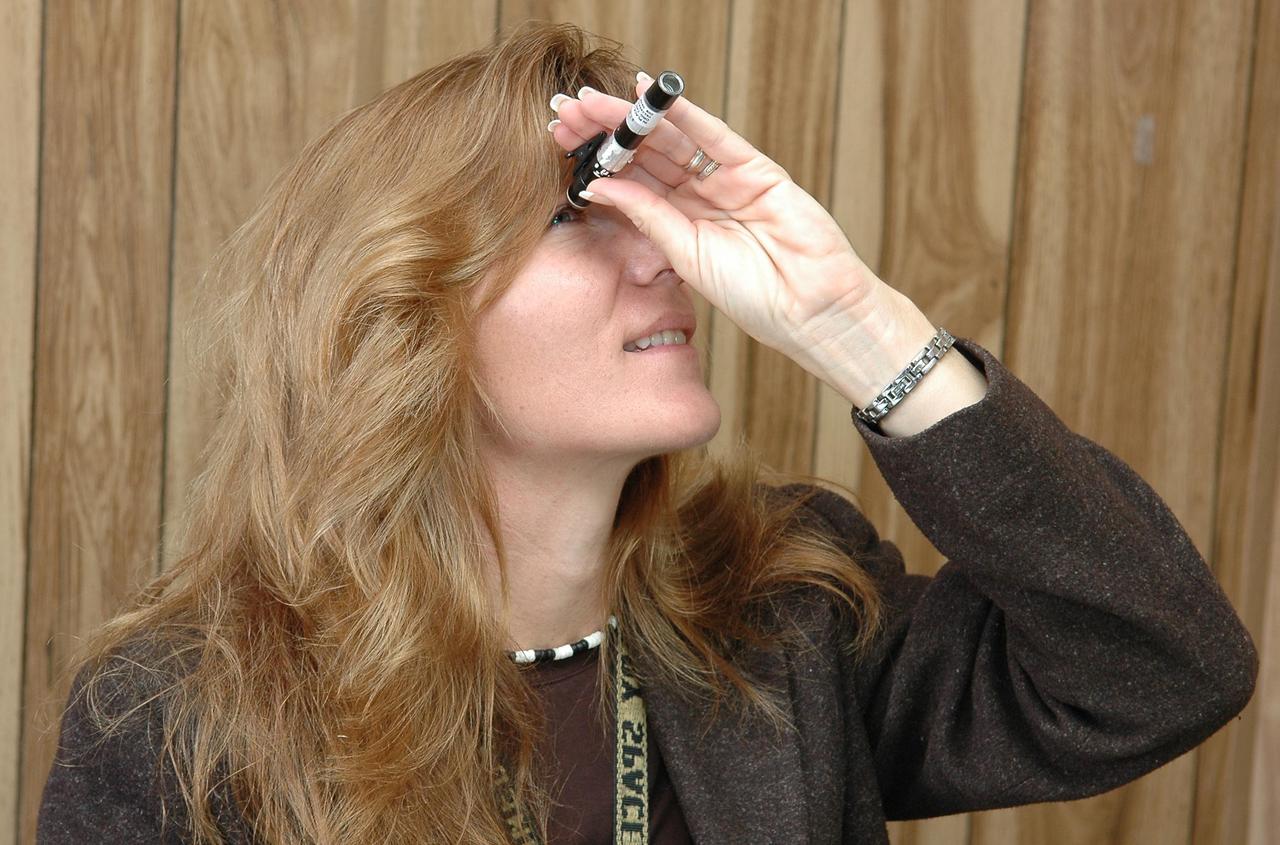
KENNEDY SPACE CENTER, FLA. - Jamie Gurney reads a personal dosimeter that will be used by officials handling the radioisotope thermoelectric generator (RTG) before its move to the RTG facility at Kennedy Space Center. The RTG is the baseline power supply for the NASA’s New Horizons spacecraft, scheduled to launch in January 2006 on a journey to Pluto and its moon, Charon. As it approaches Pluto, the spacecraft will look for ultraviolet emission from Pluto's atmosphere and make the best global maps of Pluto and Charon in green, blue, red and a special wavelength that is sensitive to methane frost on the surface. It will also take spectral maps in the near infrared, telling the science team about Pluto's and Charon's surface compositions and locations and temperatures of these materials. When the spacecraft is closest to Pluto or its moon, it will take close-up pictures in both visible and near-infrared wavelengths. It is expected to reach Pluto in July 2015.
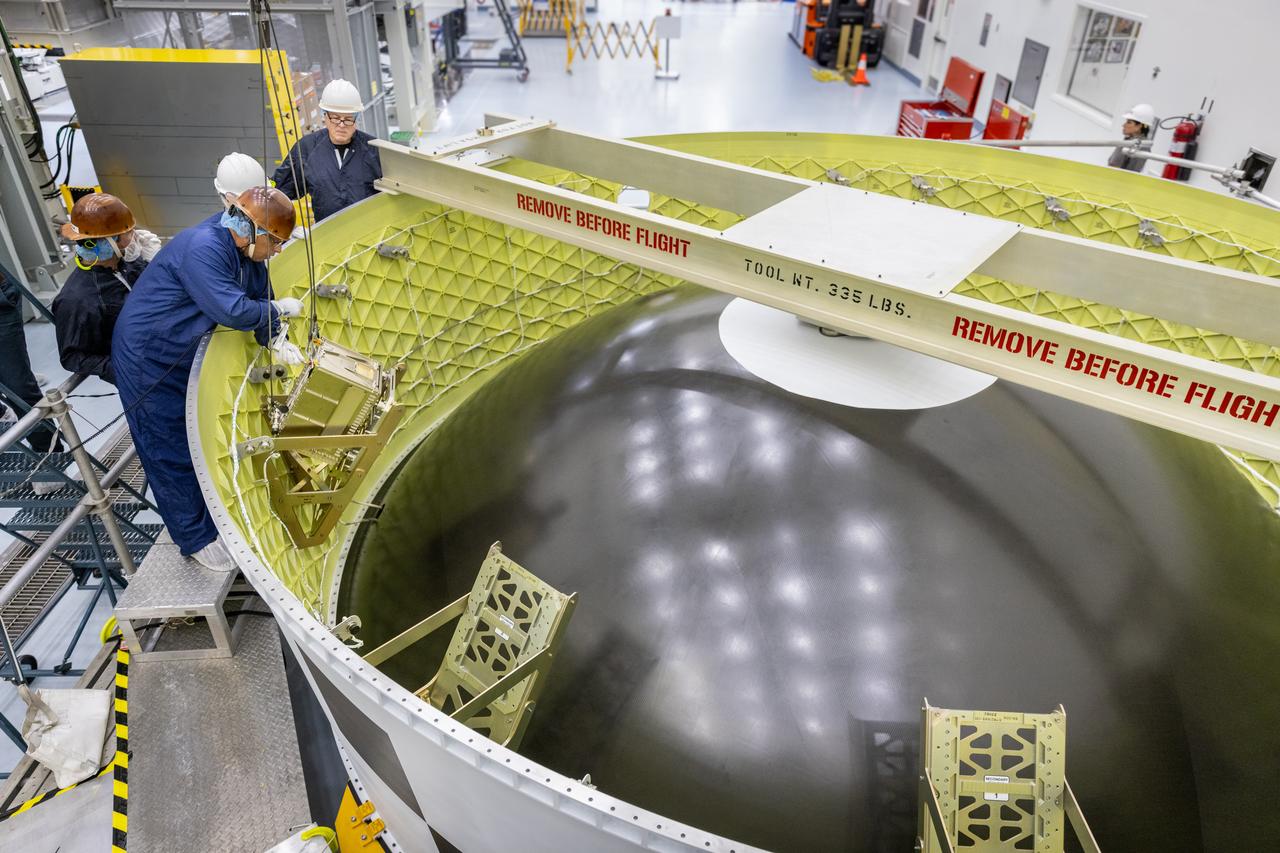
Technicians install the Korea AeroSpace Administration (KASA) K-Rad Cube within the Orion stage adapter inside the Multi-Payload Processing Facility at NASA’s Kennedy Space Center in Florida on Tuesday, Sept. 2, 2025. The K-Rad Cube, about the size of a shoebox, is one of the CubeSats slated to fly on NASA’s Artemis II test flight in 2026. Deploying in high Earth orbit from a spacecraft adapter on NASA’s SLS (Space Launch System) rocket after Orion is safely flying on its own with its crew of four astronauts, K-Rad Cube will use a dosimeter made of material designed to mimic human tissue to measure space radiation and assess biological effects at various altitudes across the Van Allen radiation belts, a critical area of research for human presence at the Moon and Mars.
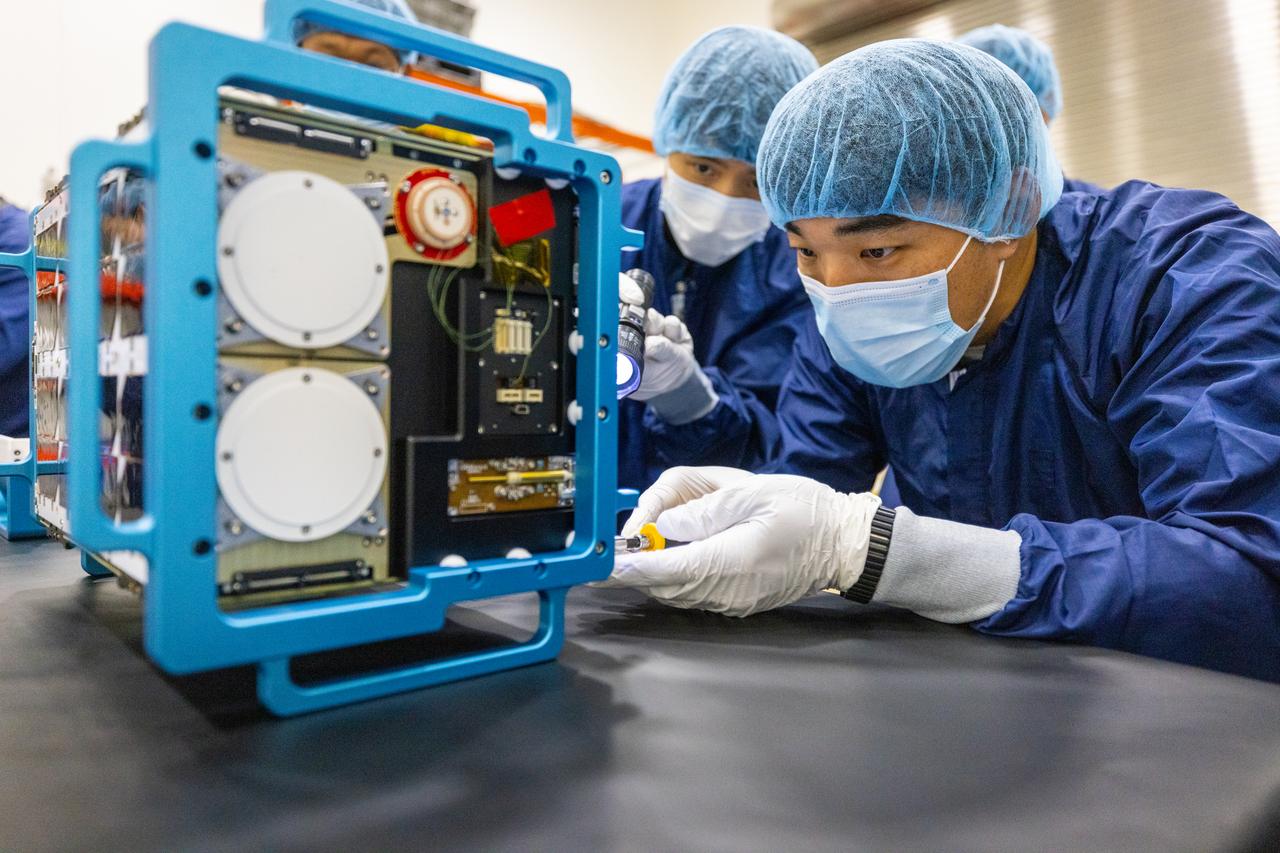
Inside the Multi-Payload Processing Facility at NASA’s Kennedy Space Center in Florida, on Tuesday, Aug. 26, 2025, technicians with the Korea AeroSpace Administration (KASA) inspect the K-Rad Cube, one of several international CubeSats slated to fly on NASA’s Artemis II test flight in 2026. Deploying in high Earth orbit from a spacecraft adapter on NASA’s SLS (Space Launch System) rocket after Orion is safely flying on its own with its crew of four astronauts, K-Rad Cube will use a dosimeter made of material designed to mimic human tissue to measure space radiation and assess biological effects at various altitudes across the Van Allen radiation belts, a critical area of research for human presence at the Moon and Mars.
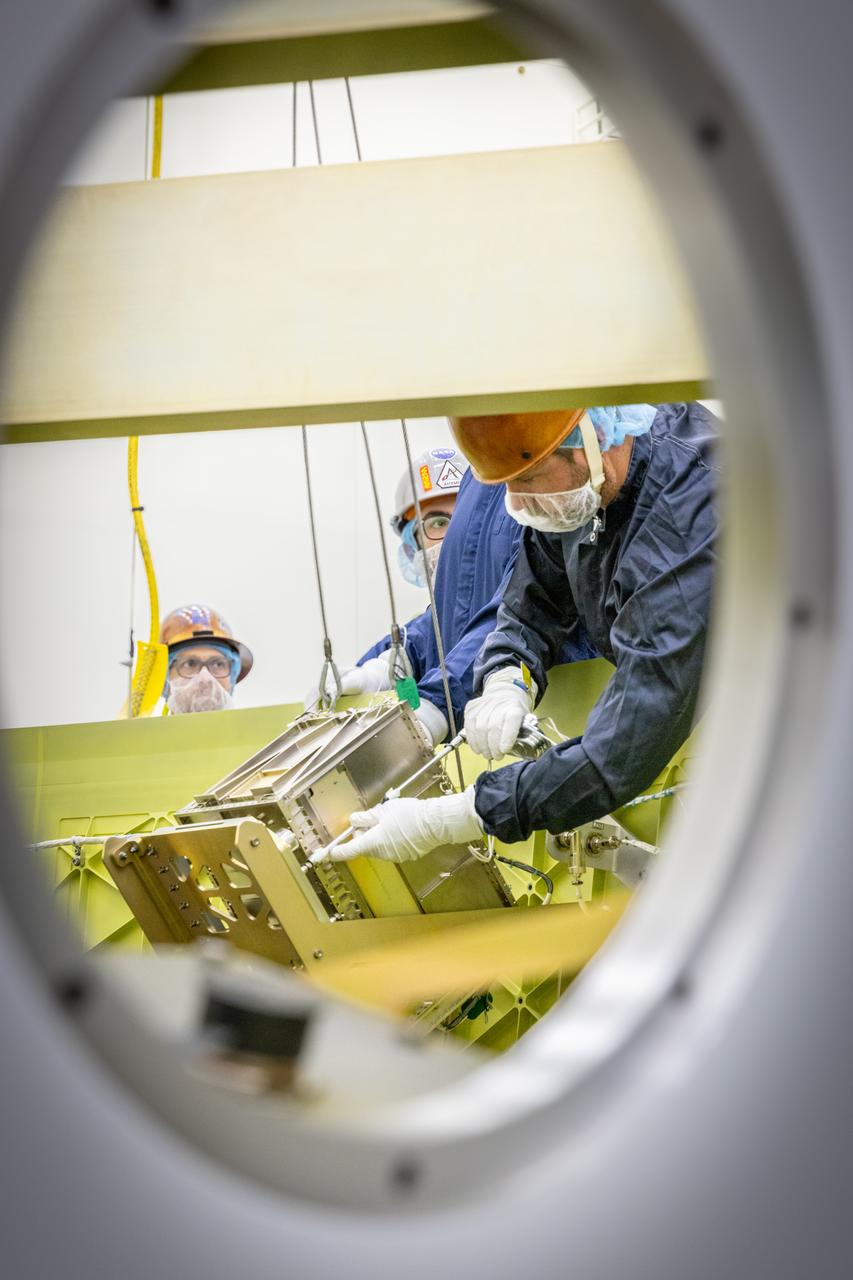
Technicians install the Korea AeroSpace Administration (KASA) K-Rad Cube within the Orion stage adapter inside the Multi-Payload Processing Facility at NASA’s Kennedy Space Center in Florida on Tuesday, Sept. 2, 2025. The K-Rad Cube, about the size of a shoebox, is one of the CubeSats slated to fly on NASA’s Artemis II test flight in 2026. Deploying in high Earth orbit from a spacecraft adapter on NASA’s SLS (Space Launch System) rocket after Orion is safely flying on its own with its crew of four astronauts, K-Rad Cube will use a dosimeter made of material designed to mimic human tissue to measure space radiation and assess biological effects at various altitudes across the Van Allen radiation belts, a critical area of research for human presence at the Moon and Mars.
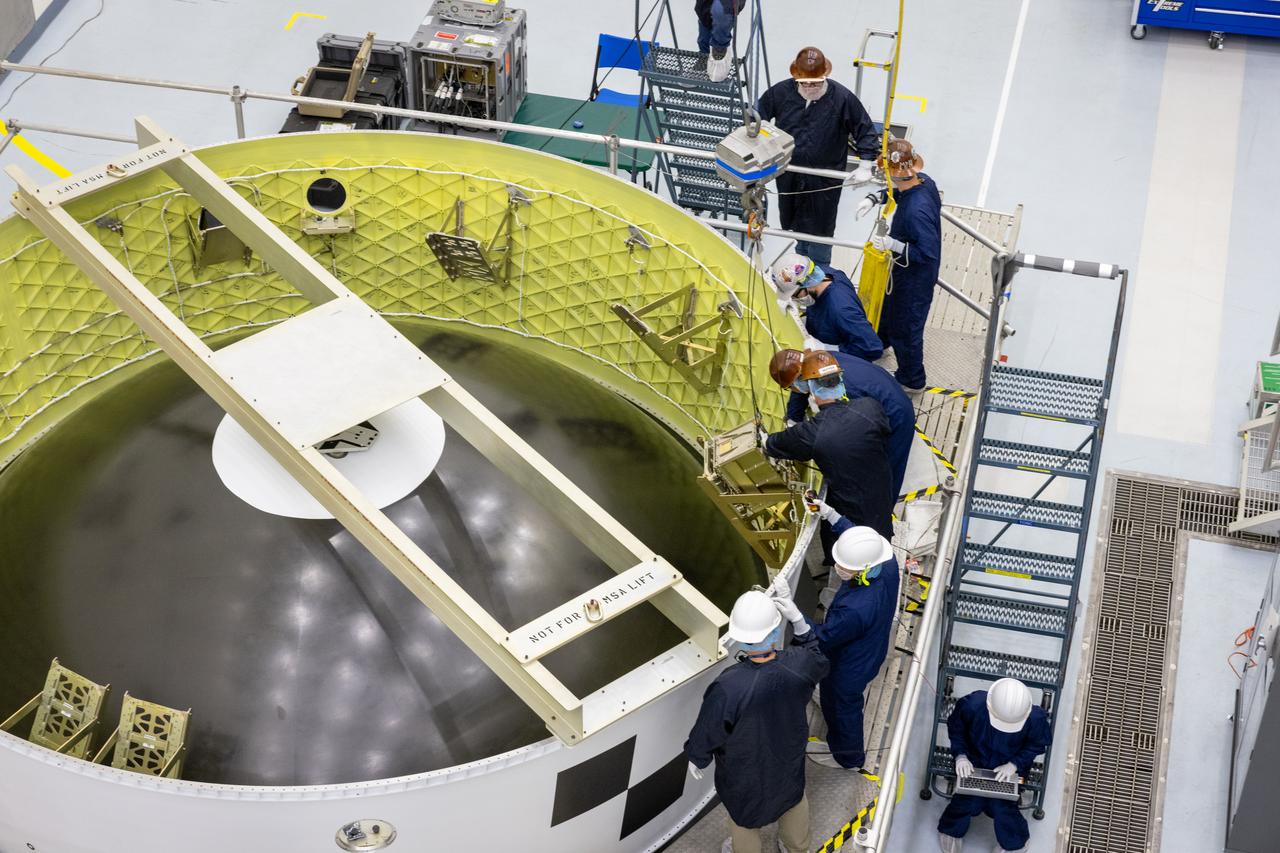
Technicians install the Korea AeroSpace Administration (KASA) K-Rad Cube within the Orion stage adapter inside the Multi-Payload Processing Facility at NASA’s Kennedy Space Center in Florida on Tuesday, Sept. 2, 2025. The K-Rad Cube, about the size of a shoebox, is one of the CubeSats slated to fly on NASA’s Artemis II test flight in 2026. Deploying in high Earth orbit from a spacecraft adapter on NASA’s SLS (Space Launch System) rocket after Orion is safely flying on its own with its crew of four astronauts, K-Rad Cube will use a dosimeter made of material designed to mimic human tissue to measure space radiation and assess biological effects at various altitudes across the Van Allen radiation belts, a critical area of research for human presence at the Moon and Mars.
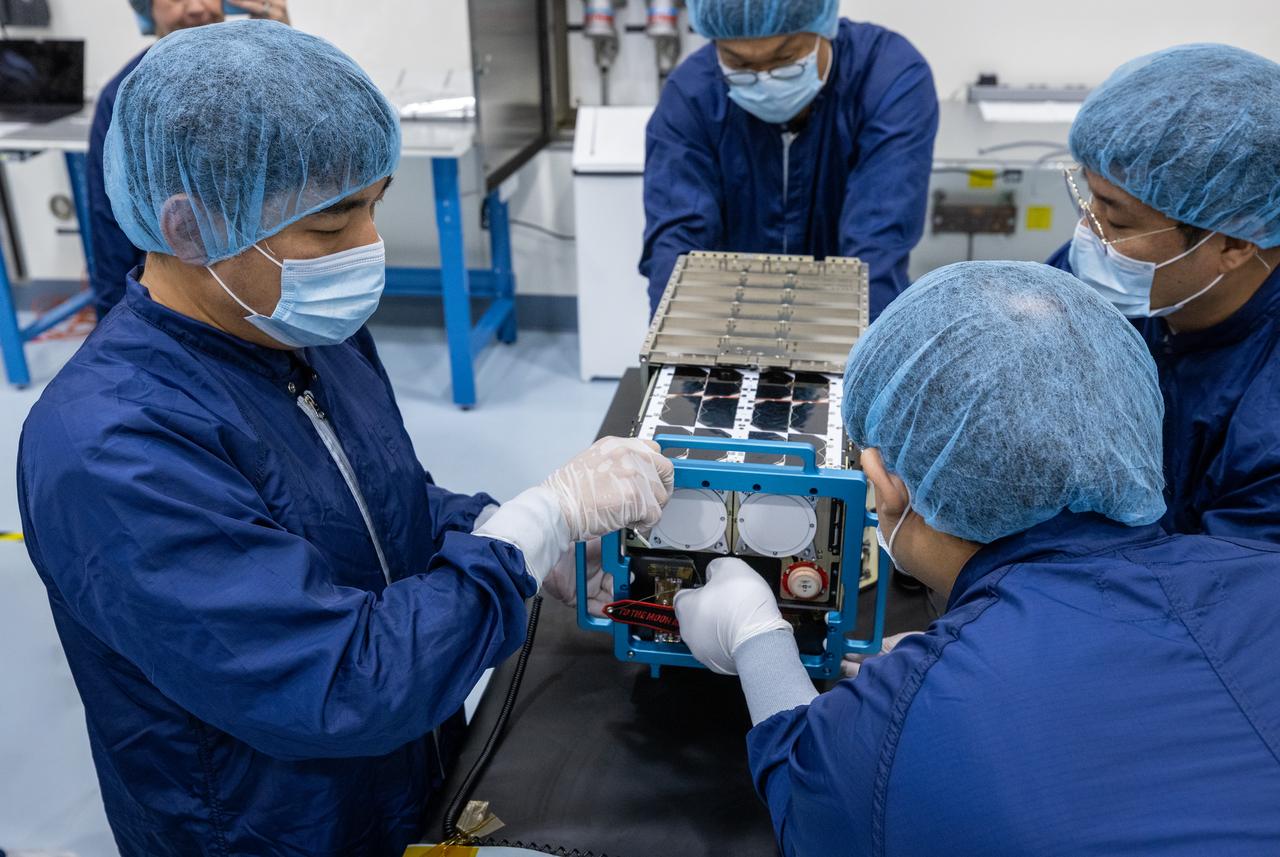
Inside the Multi-Payload Processing Facility at NASA’s Kennedy Space Center in Florida, on Wednesday, Aug. 27, 2025, technicians with the Korea AeroSpace Administration (KASA) complete closeouts on the K-Rad Cube, one of several international CubeSats slated to fly on NASA’s Artemis II test flight in 2026. Deploying in high Earth orbit from a spacecraft adapter on NASA’s SLS (Space Launch System) rocket after Orion is safely flying on its own with its crew of four astronauts, K-Rad Cube will use a dosimeter made of material designed to mimic human tissue to measure space radiation and assess biological effects at various altitudes across the Van Allen radiation belts, a critical area of research for human presence at the Moon and Mars.

Inside the Multi-Payload Processing Facility at NASA’s Kennedy Space Center in Florida, on Wednesday, Aug. 27, 2025, technicians with the Korea AeroSpace Administration (KASA) complete closeouts on the K-Rad Cube, one of several international CubeSats slated to fly on NASA’s Artemis II test flight in 2026. Deploying in high Earth orbit from a spacecraft adapter on NASA’s SLS (Space Launch System) rocket after Orion is safely flying on its own with its crew of four astronauts, K-Rad Cube will use a dosimeter made of material designed to mimic human tissue to measure space radiation and assess biological effects at various altitudes across the Van Allen radiation belts, a critical area of research for human presence at the Moon and Mars.
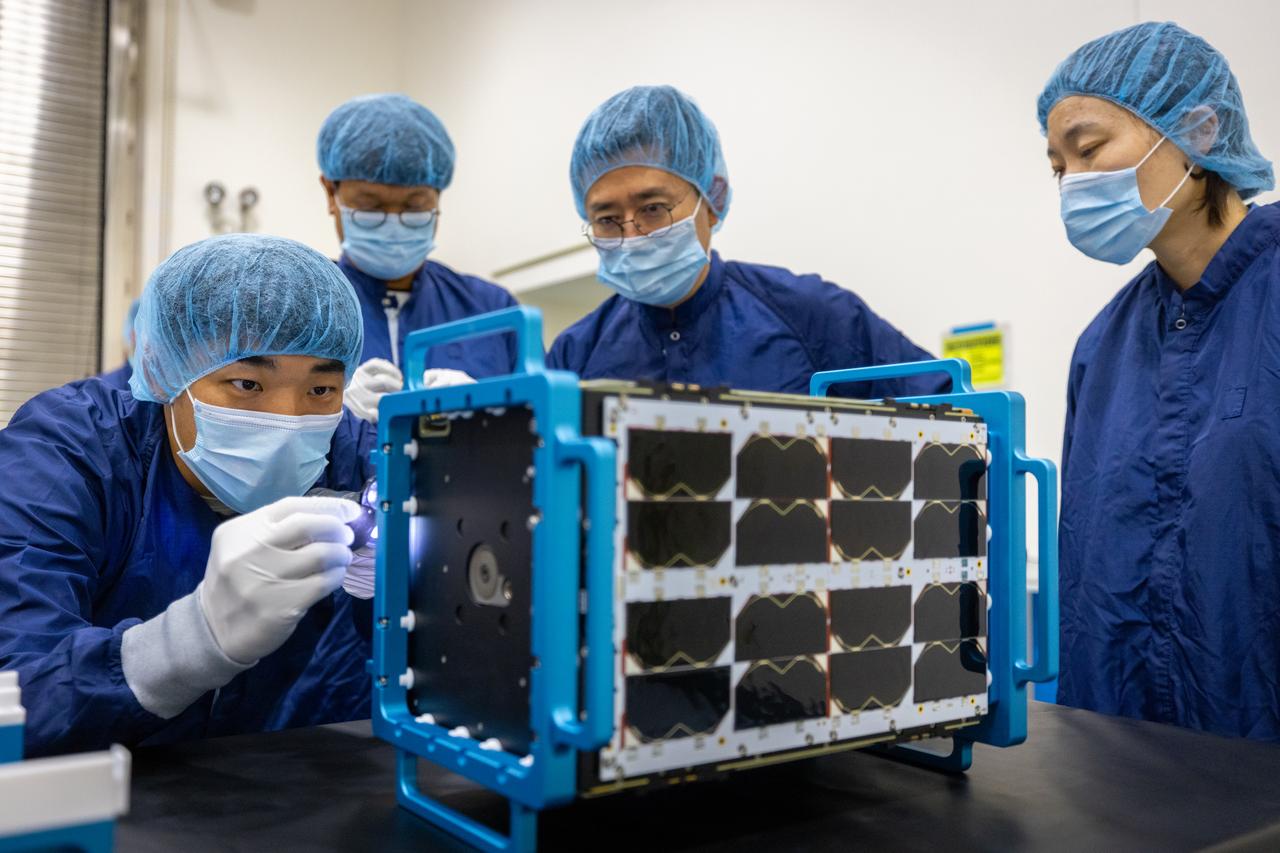
Inside the Multi-Payload Processing Facility at NASA’s Kennedy Space Center in Florida, on Tuesday, Aug. 26, 2025, technicians with the Korea AeroSpace Administration (KASA) inspect the K-Rad Cube, one of several international CubeSats slated to fly on NASA’s Artemis II test flight in 2026. Deploying in high Earth orbit from a spacecraft adapter on NASA’s SLS (Space Launch System) rocket after Orion is safely flying on its own with its crew of four astronauts, K-Rad Cube will use a dosimeter made of material designed to mimic human tissue to measure space radiation and assess biological effects at various altitudes across the Van Allen radiation belts, a critical area of research for human presence at the Moon and Mars.
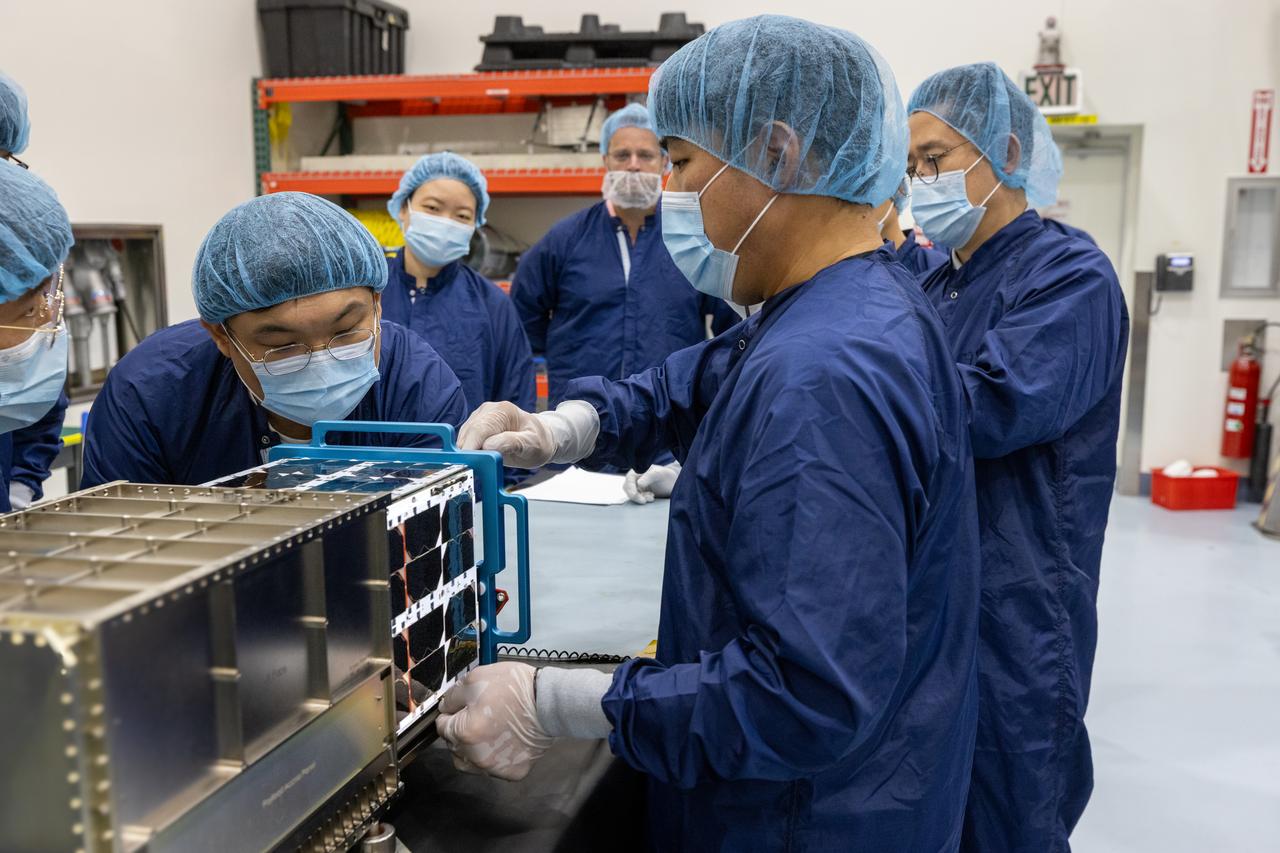
Inside the Multi-Payload Processing Facility at NASA’s Kennedy Space Center in Florida, on Wednesday, Aug. 27, 2025, technicians with the Korea AeroSpace Administration (KASA) complete closeouts on the K-Rad Cube, one of several international CubeSats slated to fly on NASA’s Artemis II test flight in 2026. Deploying in high Earth orbit from a spacecraft adapter on NASA’s SLS (Space Launch System) rocket after Orion is safely flying on its own with its crew of four astronauts, K-Rad Cube will use a dosimeter made of material designed to mimic human tissue to measure space radiation and assess biological effects at various altitudes across the Van Allen radiation belts, a critical area of research for human presence at the Moon and Mars.