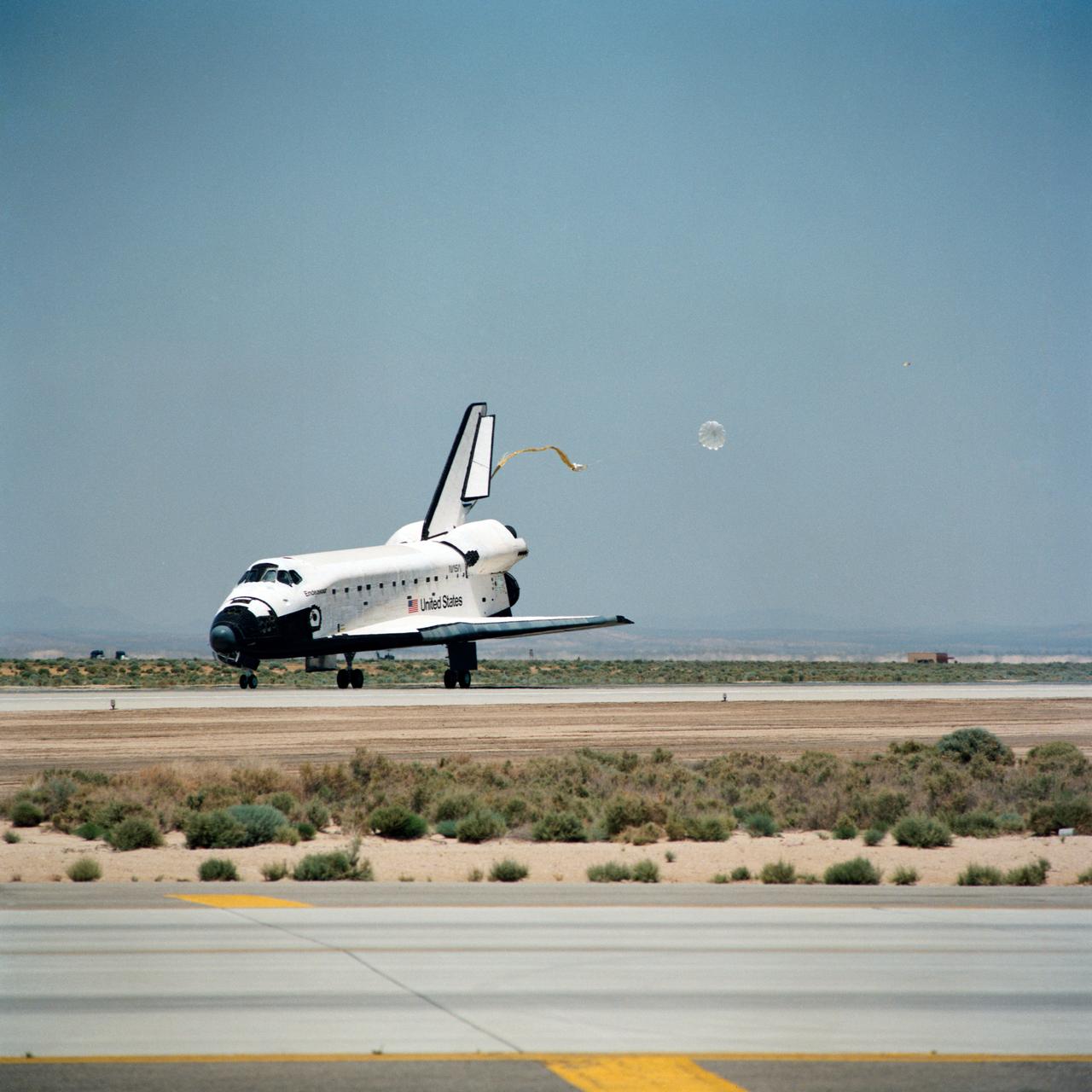
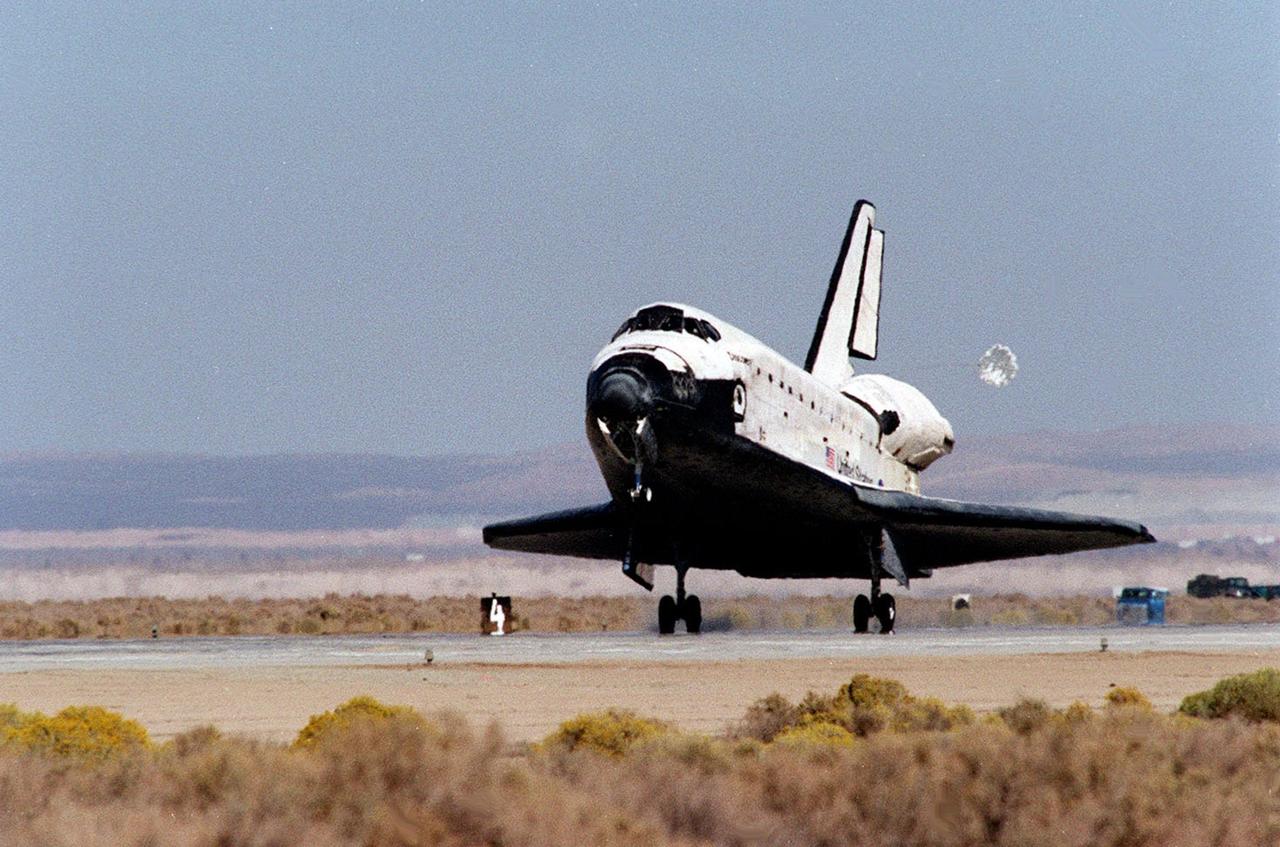
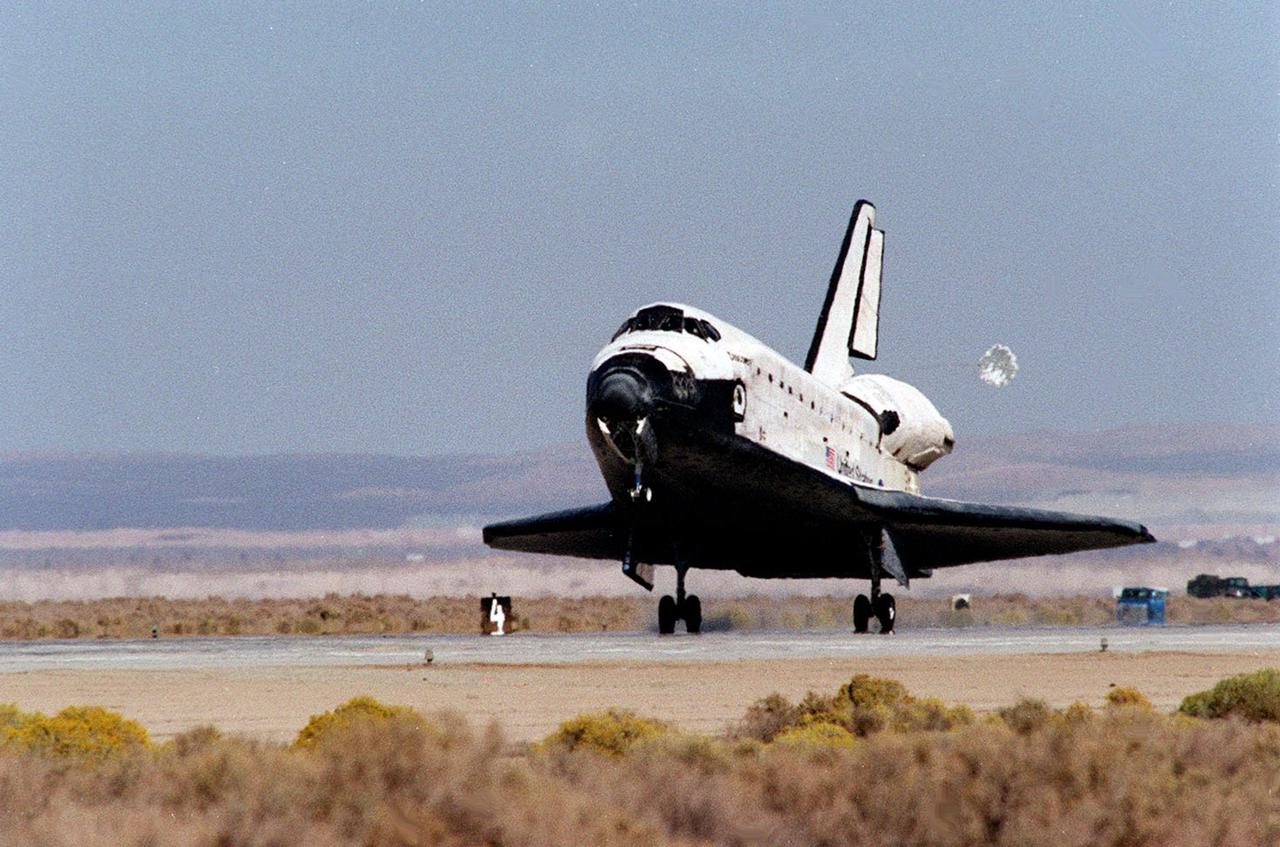
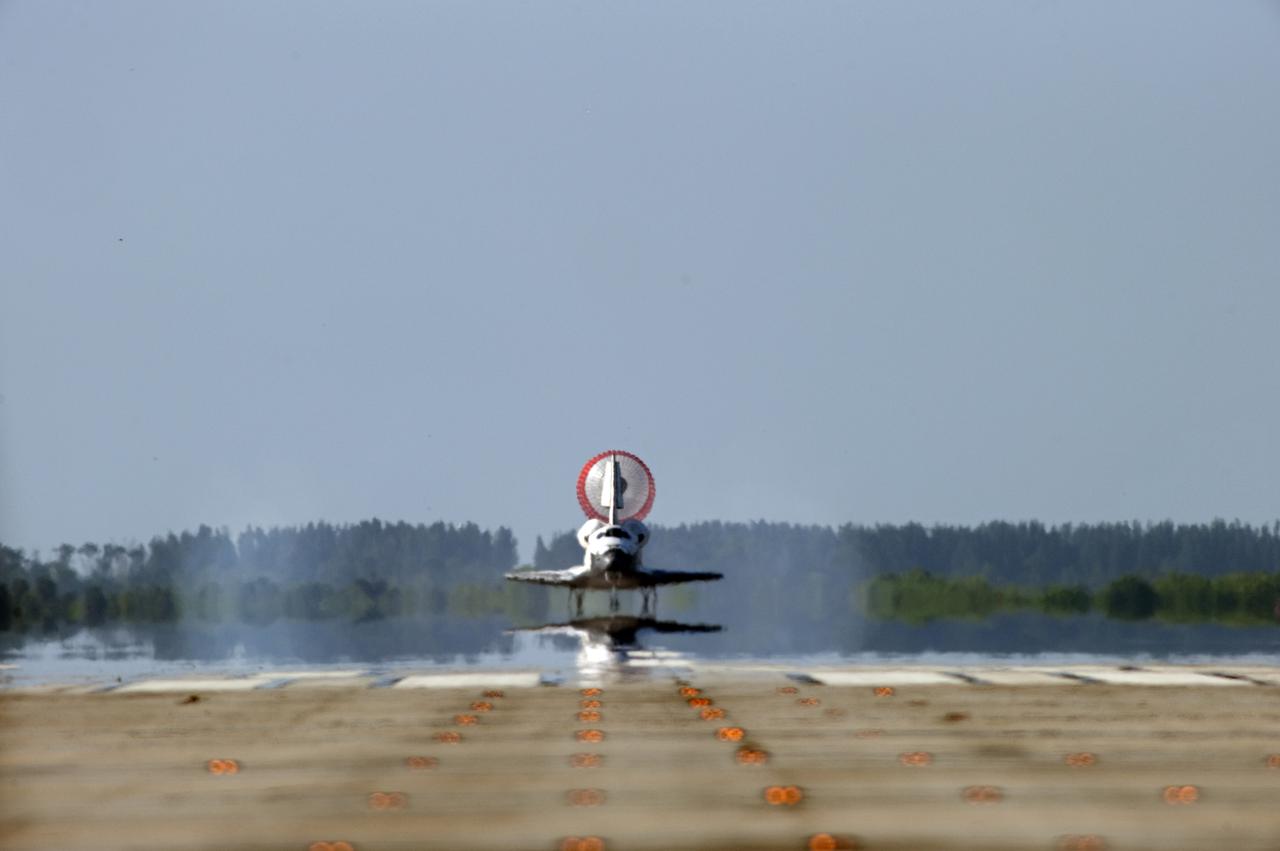
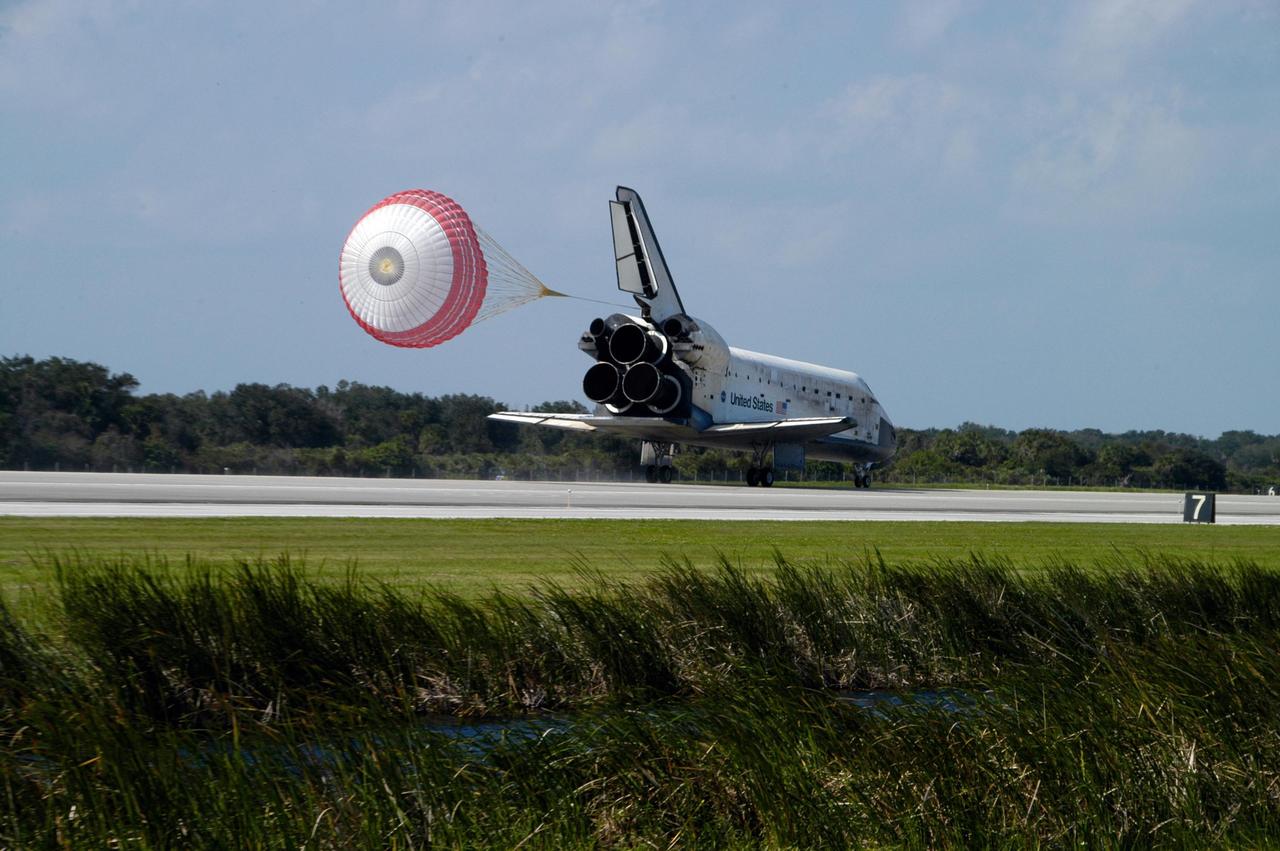
STS049-S-268 (16 May 1992) --- A three-quarter forward view of the Space Shuttle Endeavour making its first landing, following a successful nine-day mission in Earth orbit. The drogue chute precedes the main chute in NASA's first exercise of its detailed test objective (DTO-521) on the drag chute system. Main gear touchdown occurred at 1:57:38 p.m. (PDT), May 16, 1992.

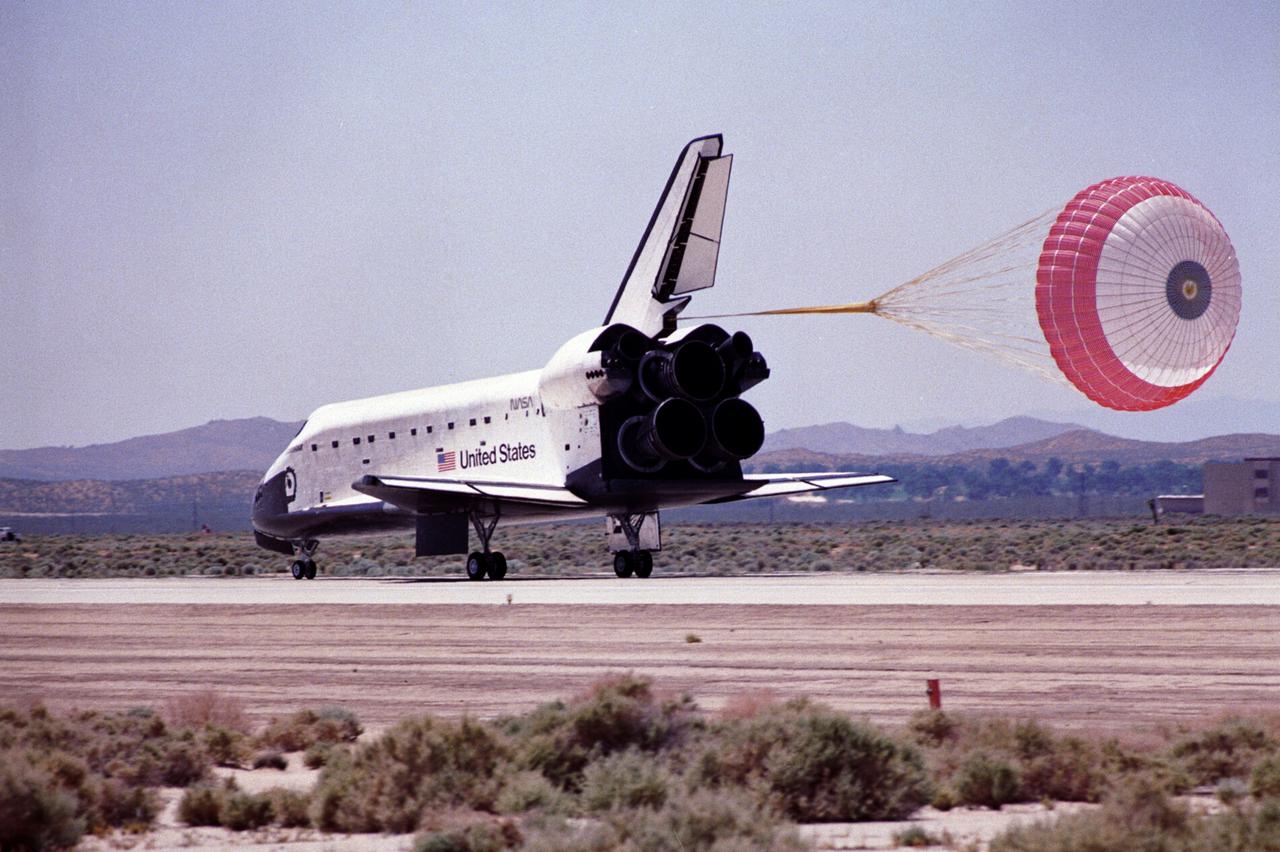
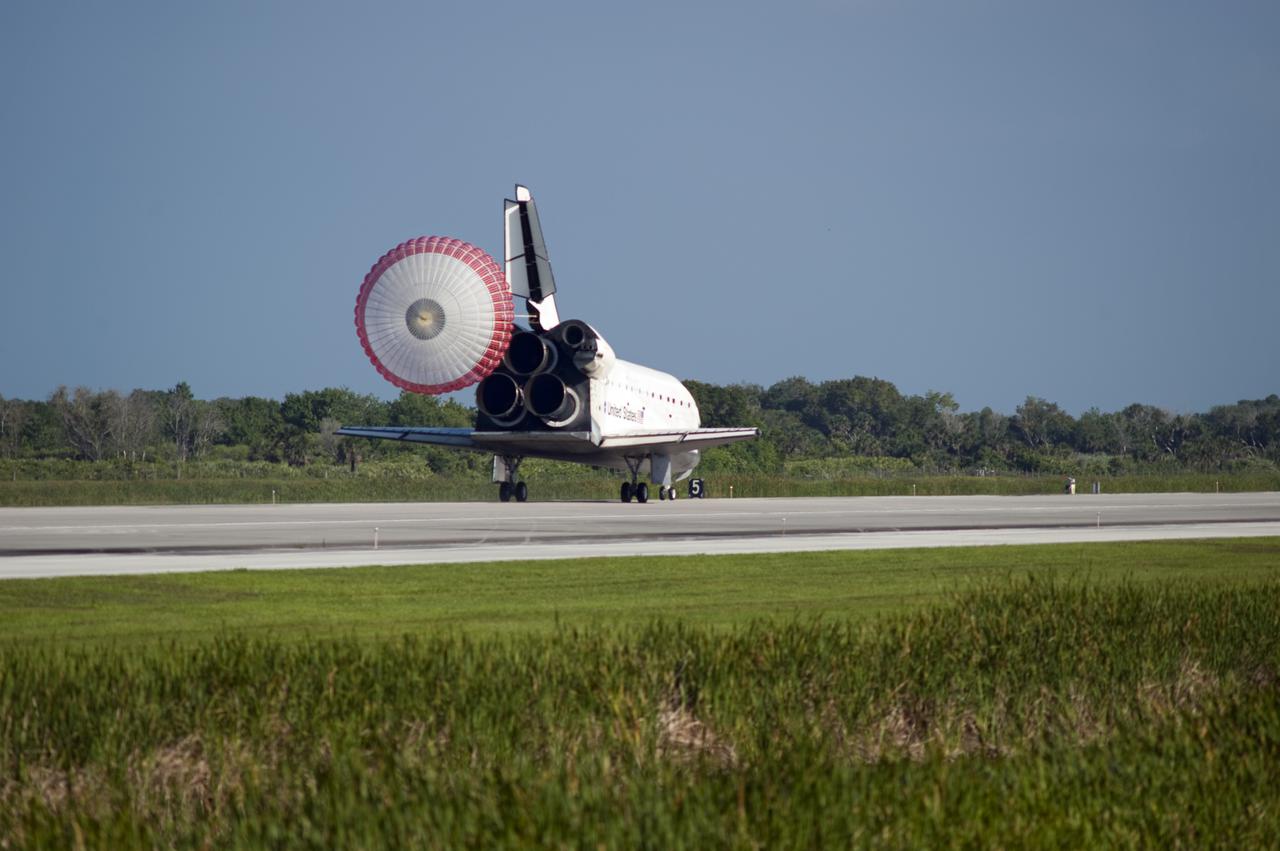
STS049-S-301 (16 May 1992) --- A three-quarter aft view of the Space Shuttle Endeavour making its first landing, following a successful nine-day mission in Earth orbit. Fully deployed here is the main chute in NASA's first exercise of its detailed test objective (DTO-521) on the drag chute system. Main gear touchdown occurred at 1:57:38 p.m. (PDT), May 16, 1992.
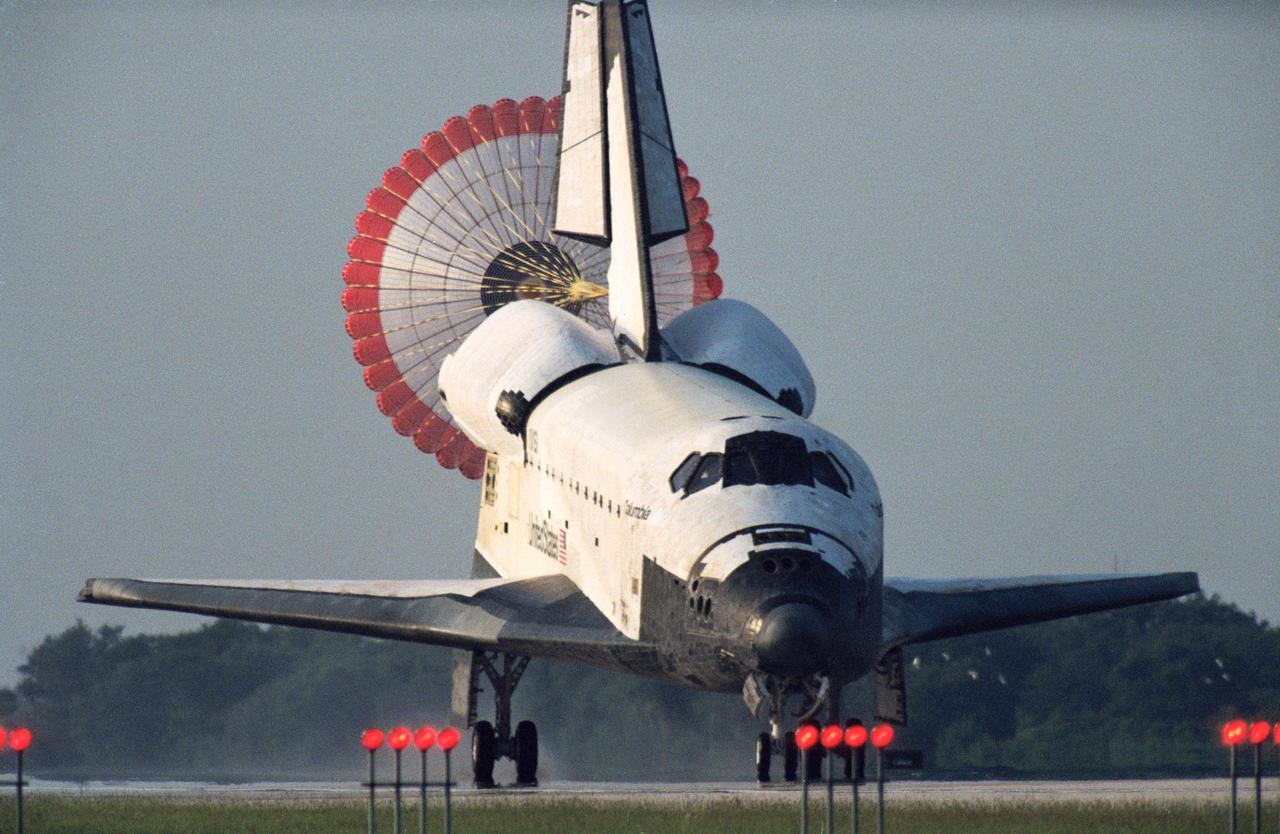
STS050-S-105 (9 July 1992) --- The main drag chute on the Space Shuttle Columbia is fully deployed soon after the Space Shuttle touches down at the Kennedy Space Center (KSC) landing facility. Landing occurred at 7:42 a.m. (EDT). Seven crew members, including five astronauts and two scientists from the private sector spent 14 days in space supporting the U.S. Microgravity Laboratory (USML-1). This marks the first time for usage of the parachute system for a KSC landing and the second occurrence in the program.
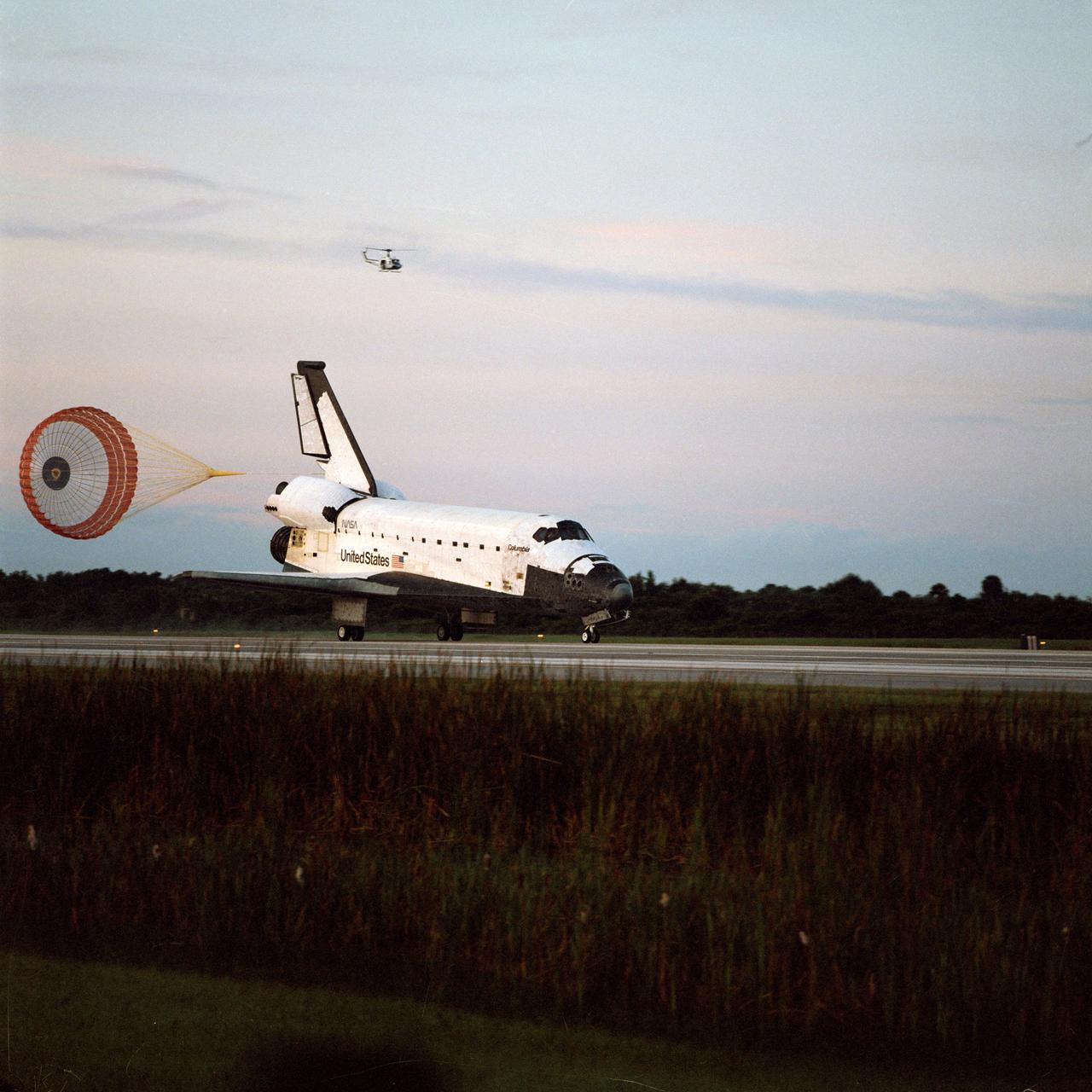
The Space Shuttle Columbia, Orbiter Vehicle (OV) 102, its drag chute fully deployed, completes a record duration mission as it lands on Runway 33 at the Kennedy Space Center (KSC) Shuttle Landing Facility (SLF). A helicopter flying overhead observes as OV-102's nose landing gear (NLG) and main landing gear (MLG) roll along the runway. Landing occurred at 6:38 am (Eastern Daylight Time (EDT)). STS-65 mission duration was 14 days 17 hours and 56 minutes. Onboard were six NASA astronauts and a Japanese payload specialist who conducted experiments in support of the International Microgravity Laboratory 2 (IML-2) during the mission.
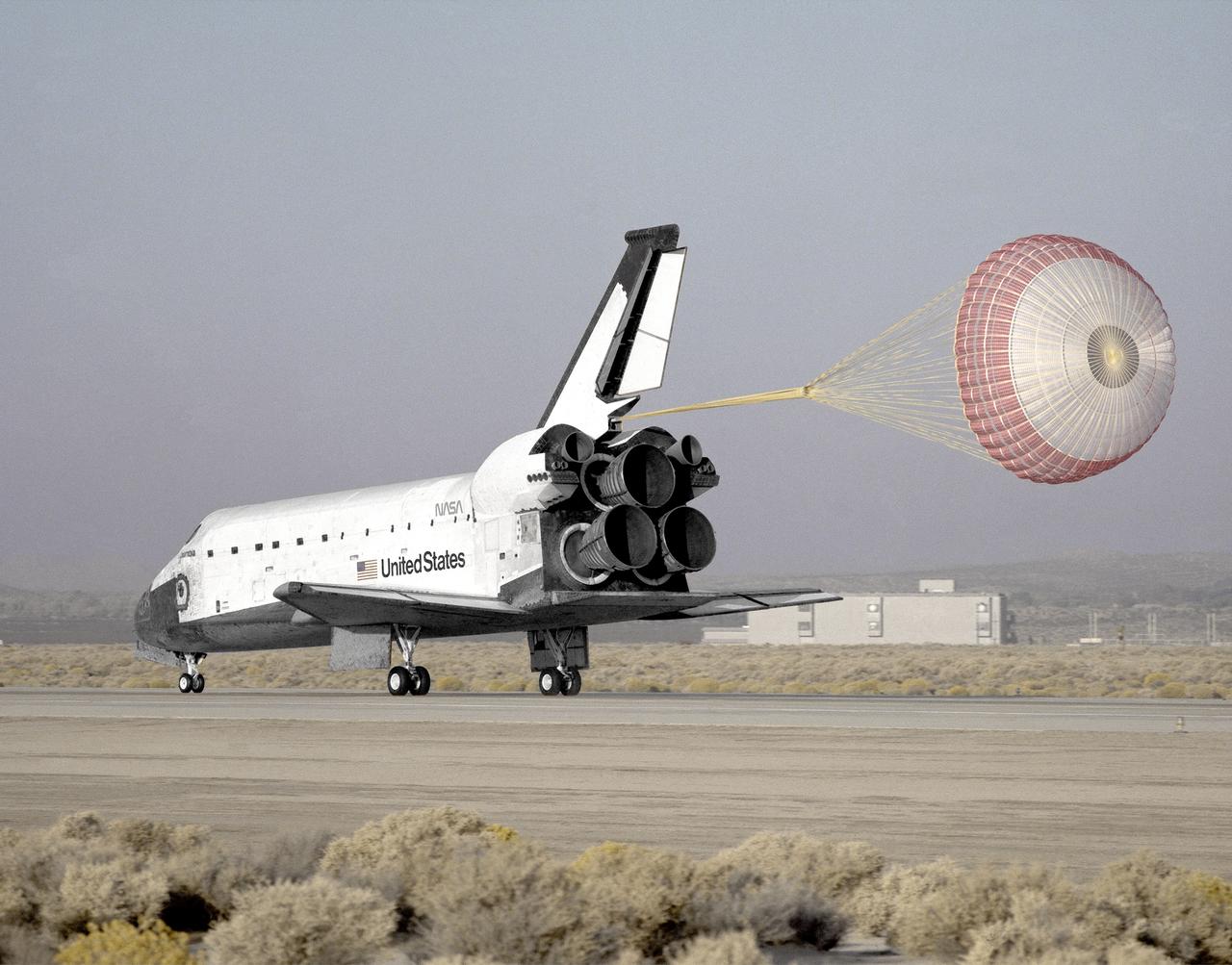
A drag chute slows the space shuttle Columbia as it rolls to a perfect landing concluding NASA's longest mission at that time, STS-58, at the Ames-Dryden Flight Research Facility (later redesignated the Dryden Flight Research Center), Edwards, California, with a 8:06 a.m. (PST) touchdown 1 November 1993 on Edward's concrete runway 22. The planned 14 day mission, which began with a launch from Kennedy Space Center, Florida, at 7:53 a.m. (PDT), October 18, was the second spacelab flight dedicated to life sciences research. Seven Columbia crewmembers performed a series of experiments to gain more knowledge on how the human body adapts to the weightless environment of space. Crewmembers on this flight included: John Blaha, commander; Rick Searfoss, pilot; payload commander Rhea Seddon; mission specialists Bill MacArthur, David Wolf, and Shannon Lucid; and payload specialist Martin Fettman.
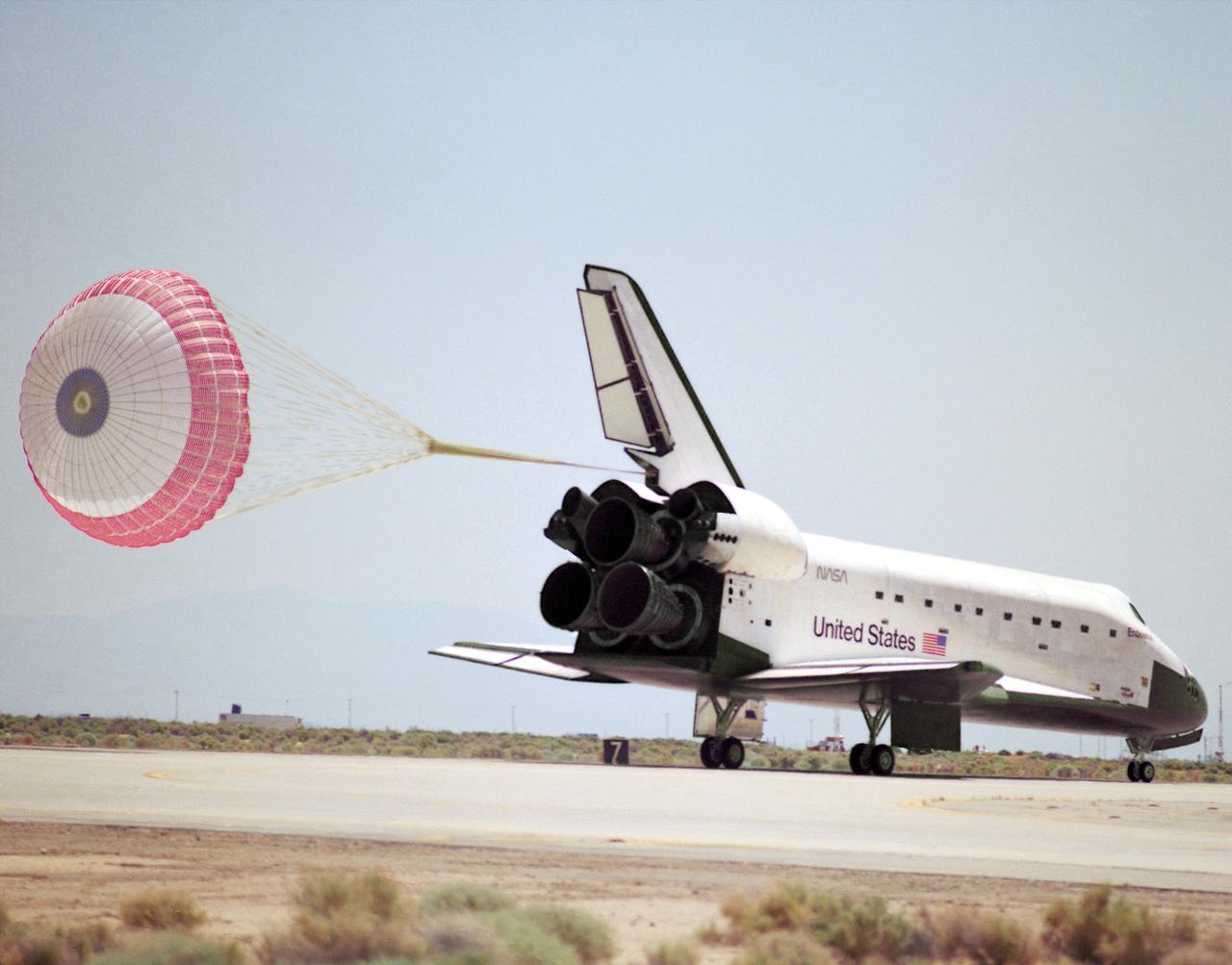
The Space Shuttle Endeavour concludes mission STS-49 at NASA's Ames-Dryden Flight Research Facility (later redesignated Dryden Flight Research Center), Edwards, California, with a 1:57 p.m. (PDT) landing May 16 on Edward's concrete runway 22. The planned 7-day mission, which began with a launch from Kennedy Space Center, Florida, at 4:41 p.m. (PFT), 7 May, was extended two days to allow extra time to rescue the Intelsat VI satellite and complete Space Station assembly techniques originally planned. After a perfect rendezvous in orbit and numerous attempts to grab the satellite, space walking astronauts Pierre Thuot, Rick Hieb and Tom Akers successfully rescued it by hand on the third space walk with the support of mission specialists Kathy Thornton and Bruce Melnick. The three astronauts, on a record space walk, took hold of the satellite and directed it to the shuttle where a booster motor was attached to launch it to its proper orbit. Commander Dan Brandenstein and Pilot Kevin Chilton brought Endeavours's record setting maiden voyage to a perfect landing at Edwards with the first deployment of a drag chute on a shuttle mission.

The space shuttle Atlantis lands with its drag chute deployed on runway 22 at Edwards, California, to complete the STS-66 mission dedicated to the third flight of the Atmospheric Laboratory for Applications and Science-3 (ATLAS-3), part of NASA's Mission to Planet Earth program. The astronauts also deployed and retrieved a free-flying satellite designed to study the middle and lower thermospheres and perform a series of experiments covering life sciences research and microgravity processing. The landing was at 7:34 a.m. (PST) 14 November 1994, after being waved off from the Kennedy Space Center, Florida, due to adverse weather.
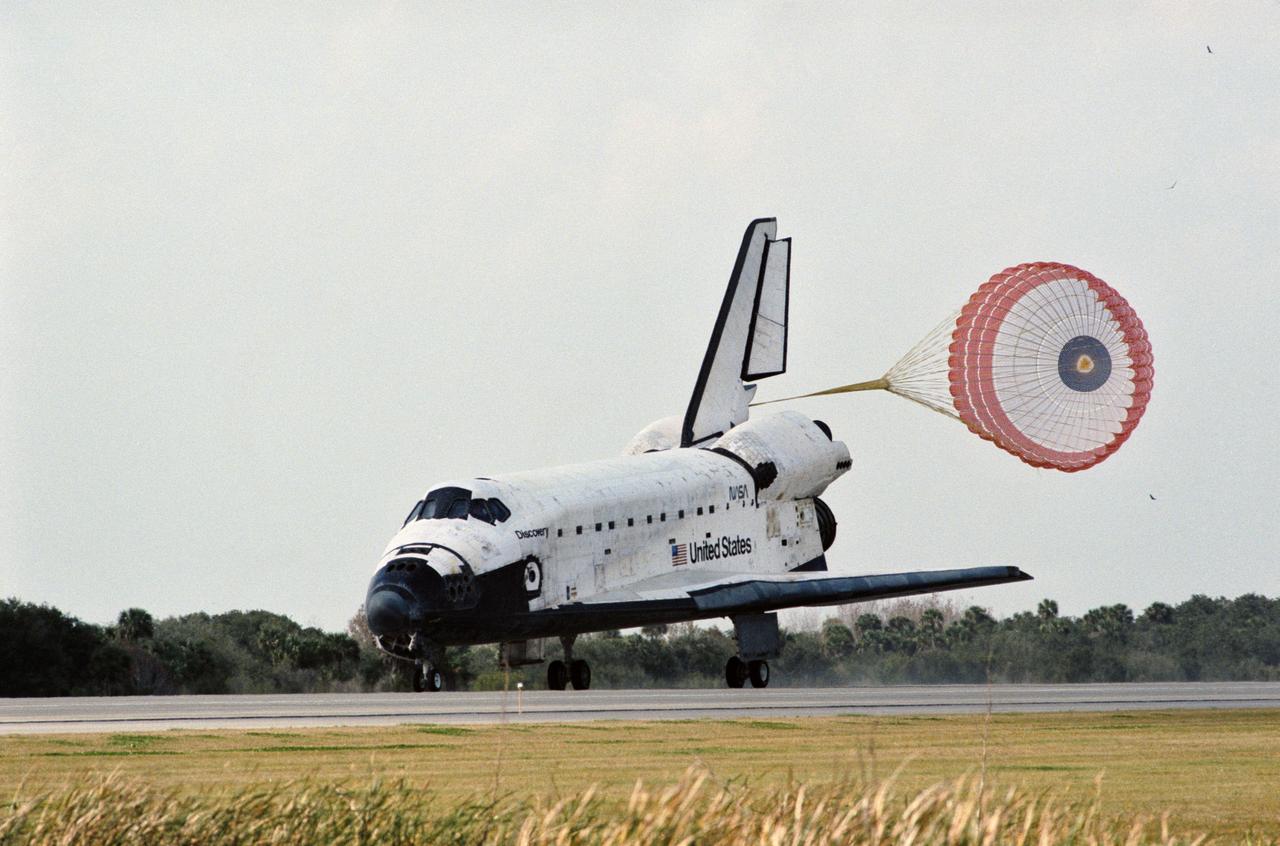
STS060-S-035 (11 Feb 1994) --- The drag chute for Space Shuttle Discovery is deployed on the Shuttle Landing Facility, marking an end to the eight-day STS-60 mission. Landing occurred at 2:19:22 p.m. (EST). Onboard were astronauts Charles F. Bolden Jr., Kenneth S. Reightler Jr., Franklin R. Chang-Diaz, N. Jan Davis and Ronald M. Sega along with Russian cosmonaut Sergei K. Krikalev.
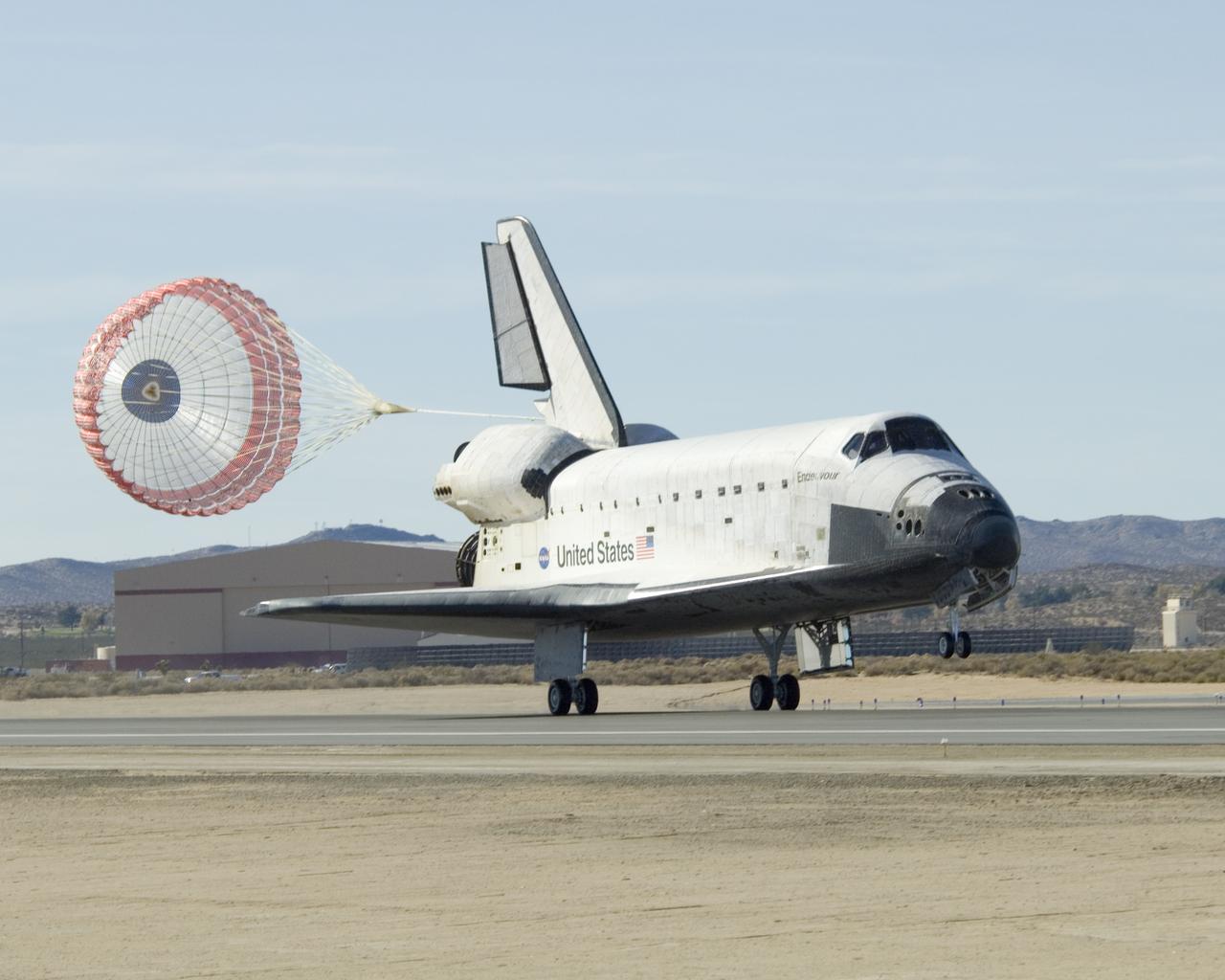
Space Shuttle Endeavour's drag chute deploys as it rolls down Runway 04-L at Edwards AFB moments after landing on Nov. 30, 2008.
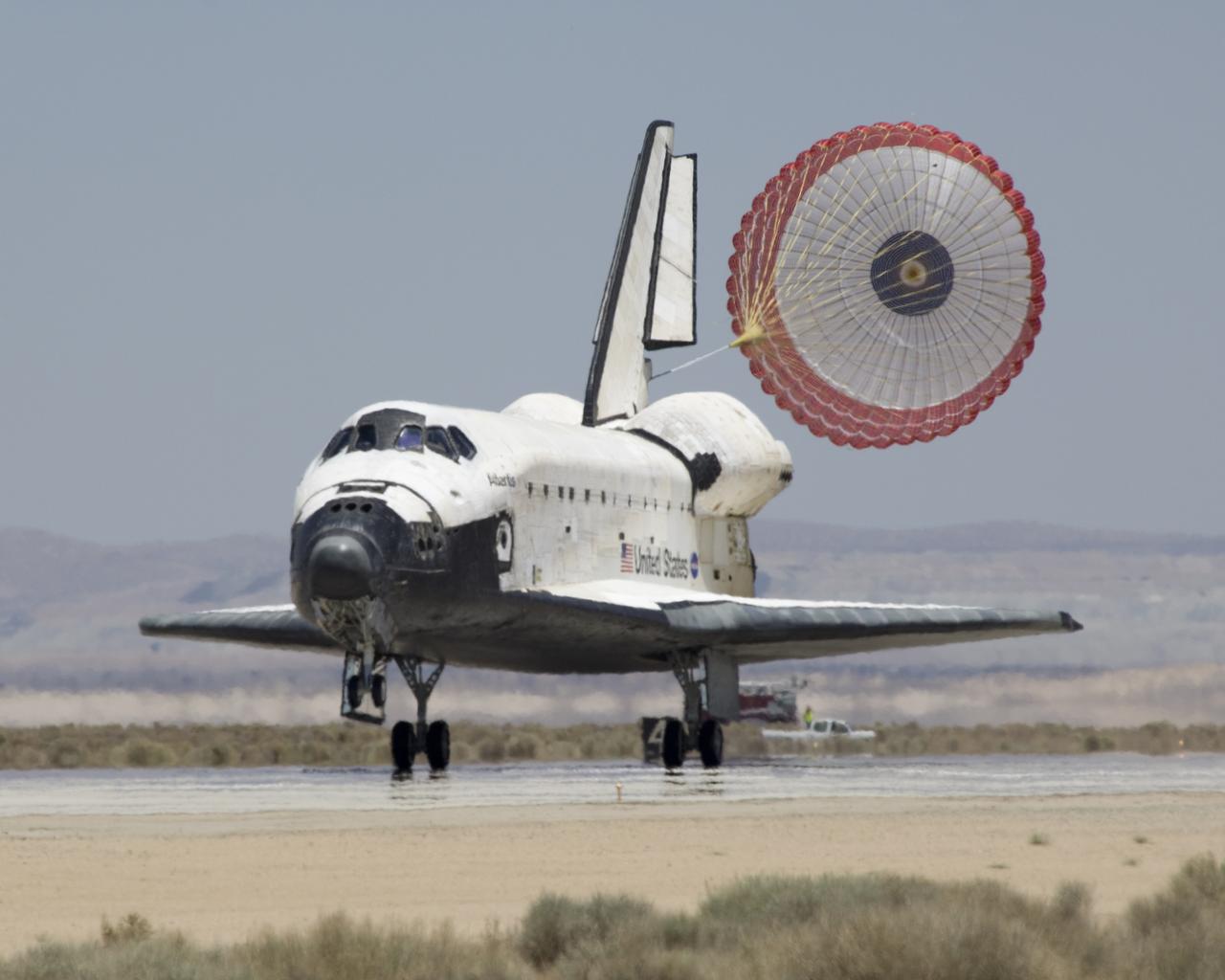
The Space Shuttle Atlantis' drag chute deploys as it rolls out on Runway 22 at Edwards AFB at the conclusion of its 13-day STS-117 mission to the ISS.
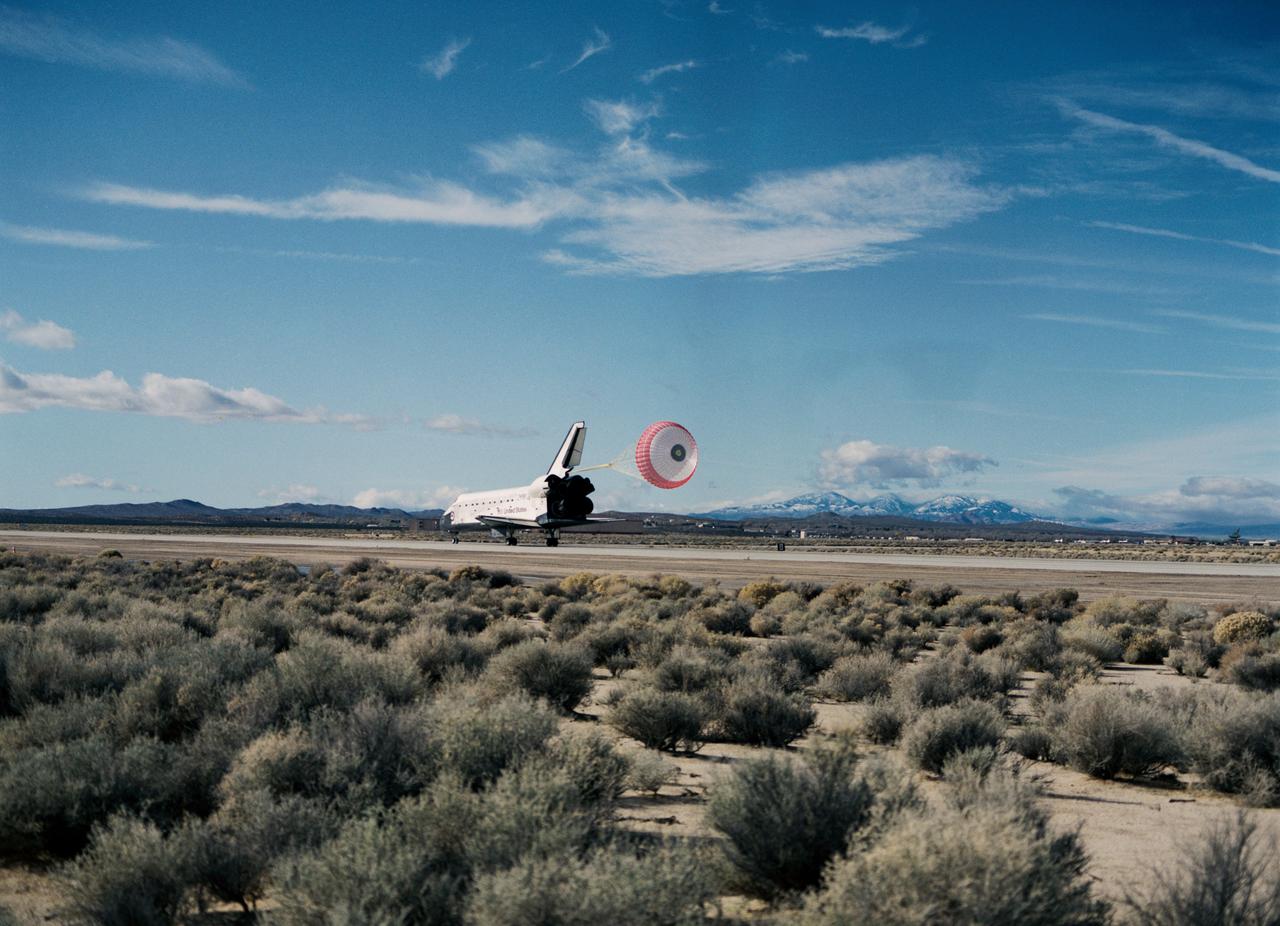
STS-53 Discovery, Orbiter Vehicle (OV) 103, is slowed by a red, white, and blue drag chute during its landing on concrete runway 22 at Edwards Air Force Base (EAFB), California. Main landing gear (MLG) touchdown occurred at 12:43:17 pm (Pacific Standard Time (PST)). This aft view of OV-103 shows the drag chute deployed from its compartment at the base of the vertical tail, the speedbrake/rudder flaps open, and the space shuttle main engines (SSMEs). Both MLG and nose landing gear (NLG) ride along the runway surface. Desert scrub brush appears in the foreground and mountains are seen in the background.
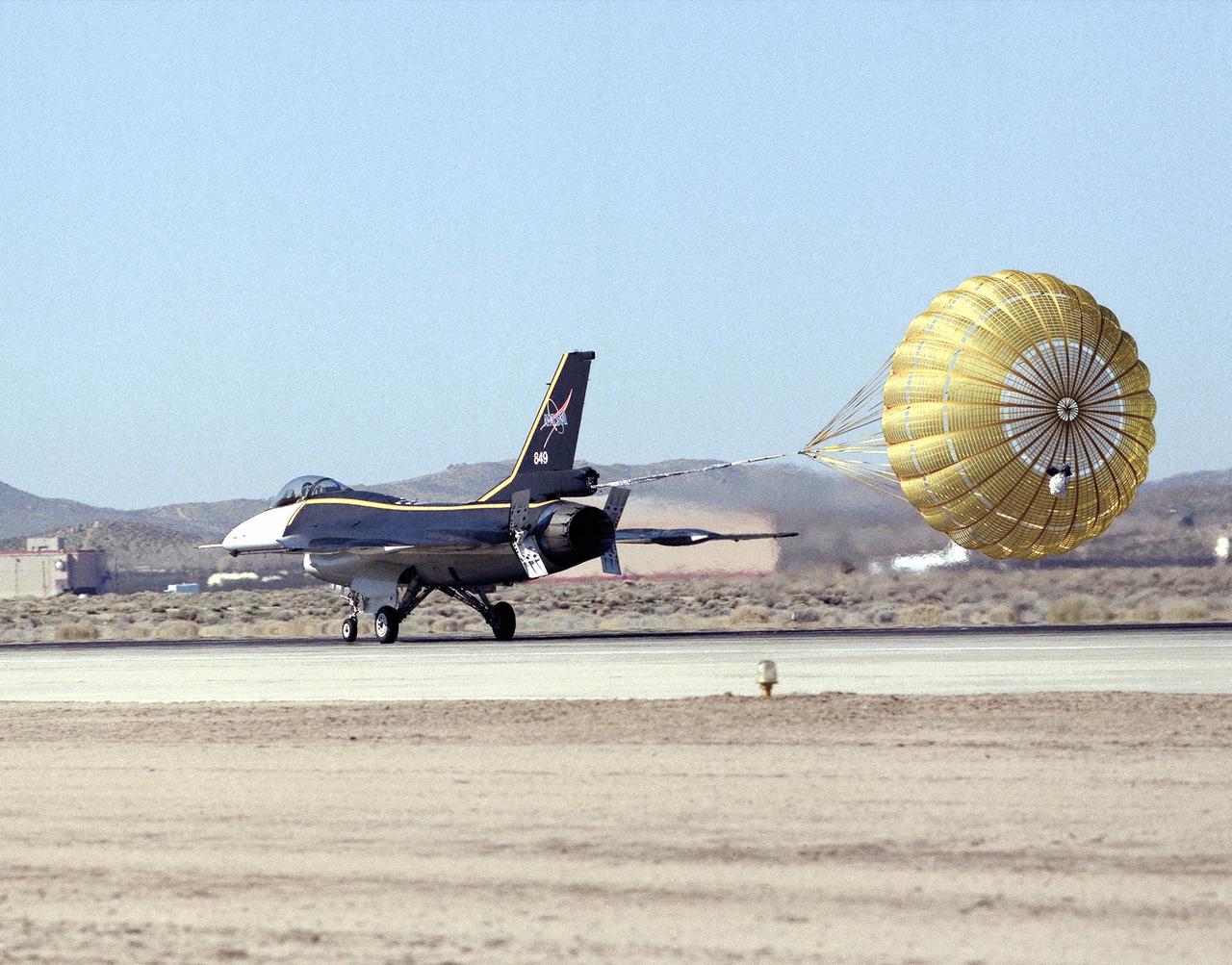
NASA's single-seat F-16XL makes a drag chute landing on the runway at Edwards Air Force Base in California's Mojave Desert. The aircraft was most recently used in the Cranked-Arrow Wing Aerodynamics Project (CAWAP) to test boundary layer pressures and distribution. Previously it had been used in a program to investigate the characteristics of sonic booms for NASA's High Speed Research Program. Data from the program will be used in the development of a high speed civilian transport. During the series of sonic boom research flights, the F-16XL was used to probe the shock waves being generated by a NASA SR-71 and record their shape and intensity.
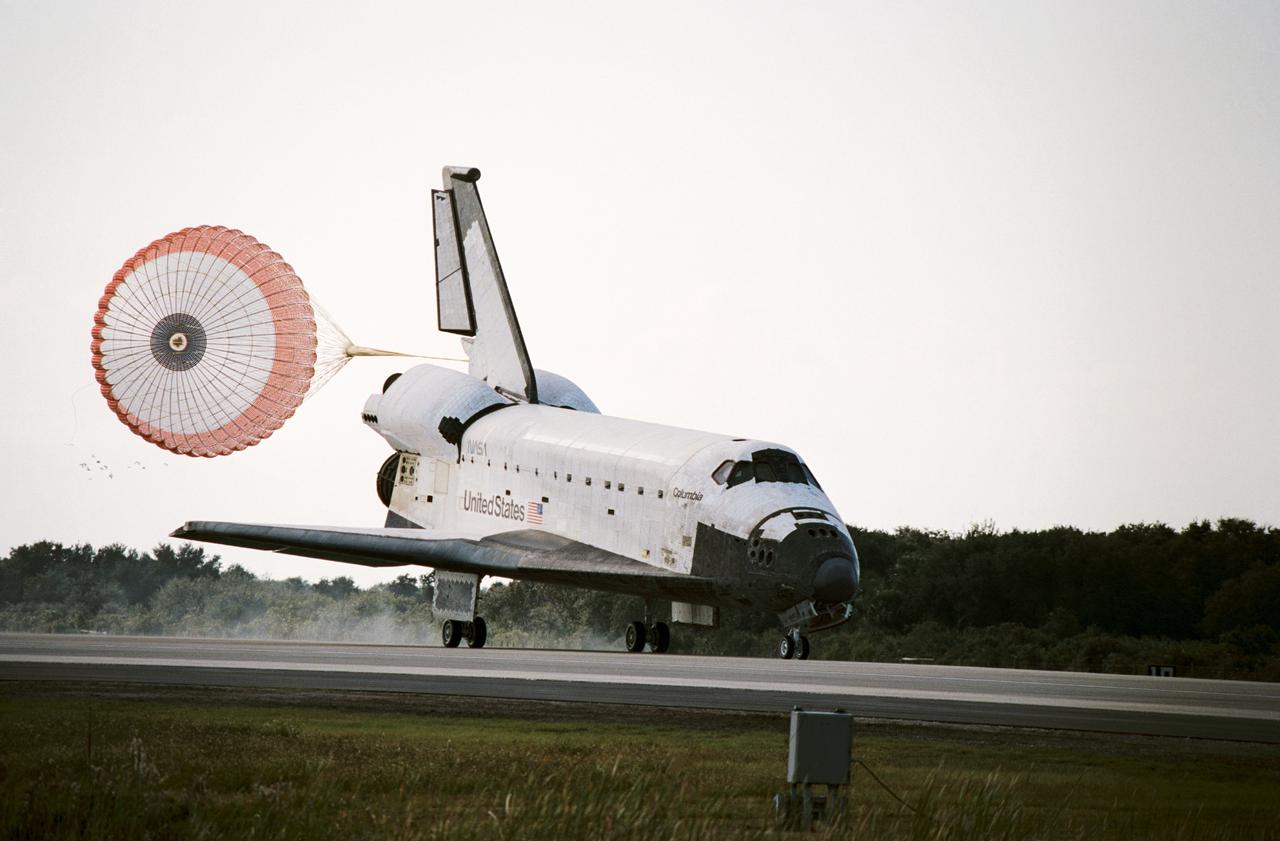
STS052-S-099 (1 Nov. 1992) --- This three-quarter front view shows the Space Shuttle Columbia just after deployment of the drag chute during landing at KSC's Shuttle Landing Facility. Onboard were a crew of five NASA astronauts and a Canadian payload specialist. Landing occurred at 9:05:53 a.m. (EST), November 1, 1992. Crewmembers are astronauts James D. Wetherbee, Michael A. Baker, Tamara E. Jernigan, Charles L. (Lacy) Veach and William M. Shepherd along with payload specialist Steven G. MacLean. The photo was taken with a 35mm camera.
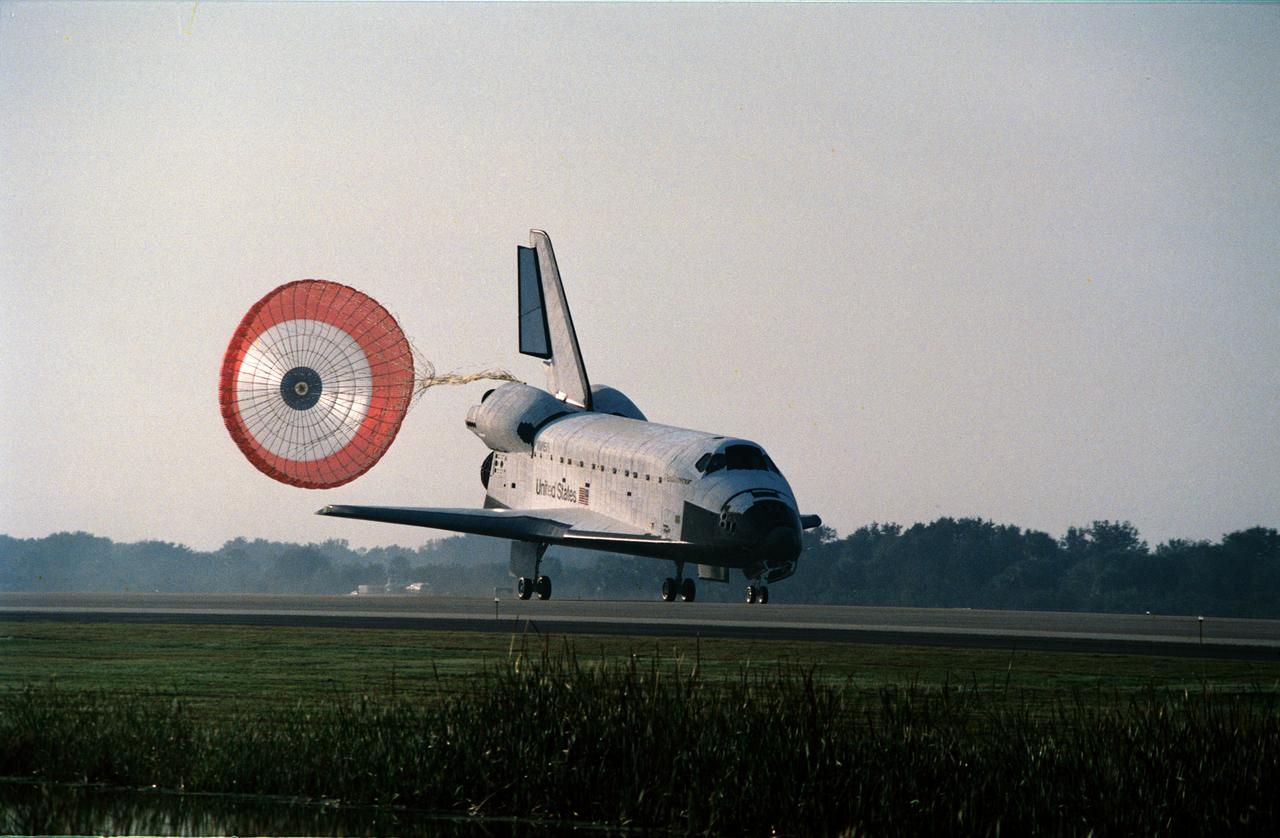
STS054-S-101 (19 Jan 1993) --- The drag chute is just about to be released as the Space Shuttle Endeavour rolls toward wheelstop at KSC's Shuttle landing facility. Landing occurred at 8:38 a.m. (EST), Jan. 19, 1993. Onboard for the six-day mission were astronauts John H. Casper, mission commander, Donald R. McMonagle, pilot, Gregory J. Harbaugh, Mario Runco Jr. and Susan J. Helms, mission specialists.
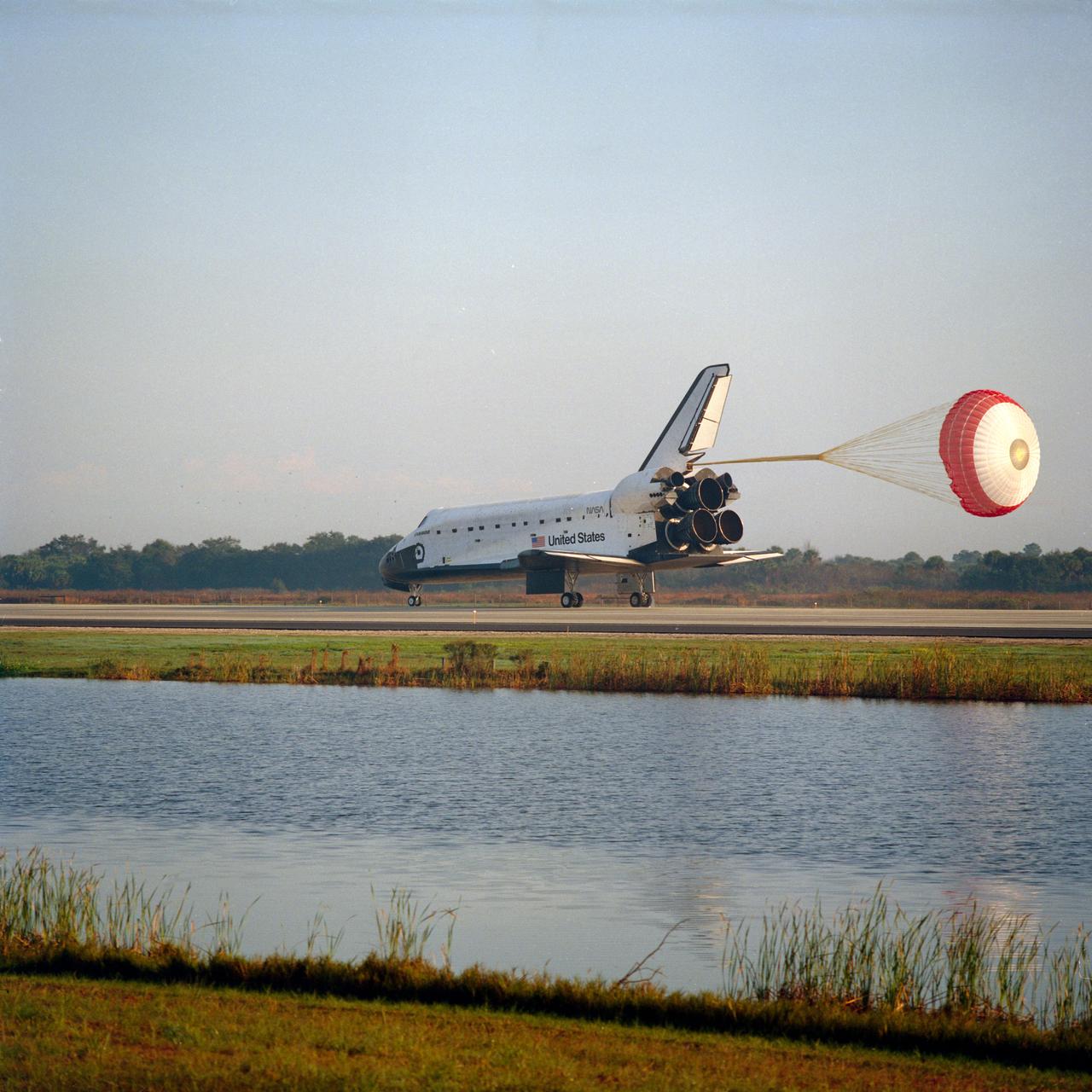
STS054-S-100 (19 Jan 1993) --- The drag chute is fully deployed as the Space Shuttle Endeavour rolls toward wheelstop at KSC's Shuttle landing facility. Landing occurred at 8:38 a.m. (EST), Jan. 19, 1993. Onboard for the six-day mission were astronauts John H. Casper, mission commander, Donald R. McMonagle, pilot, Gregory J. Harbaugh, Mario Runco Jr. and Susan J. Helms, mission specialists.
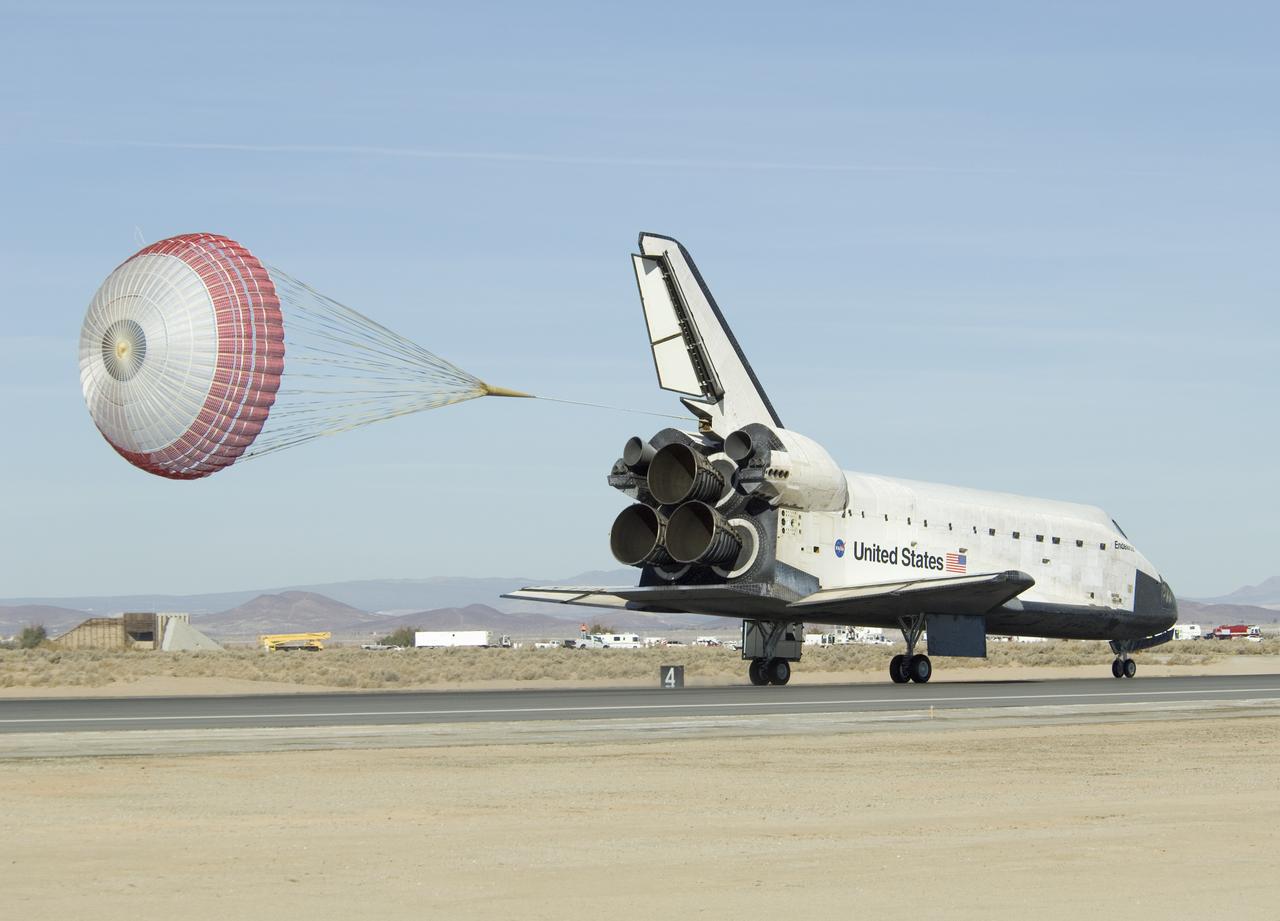
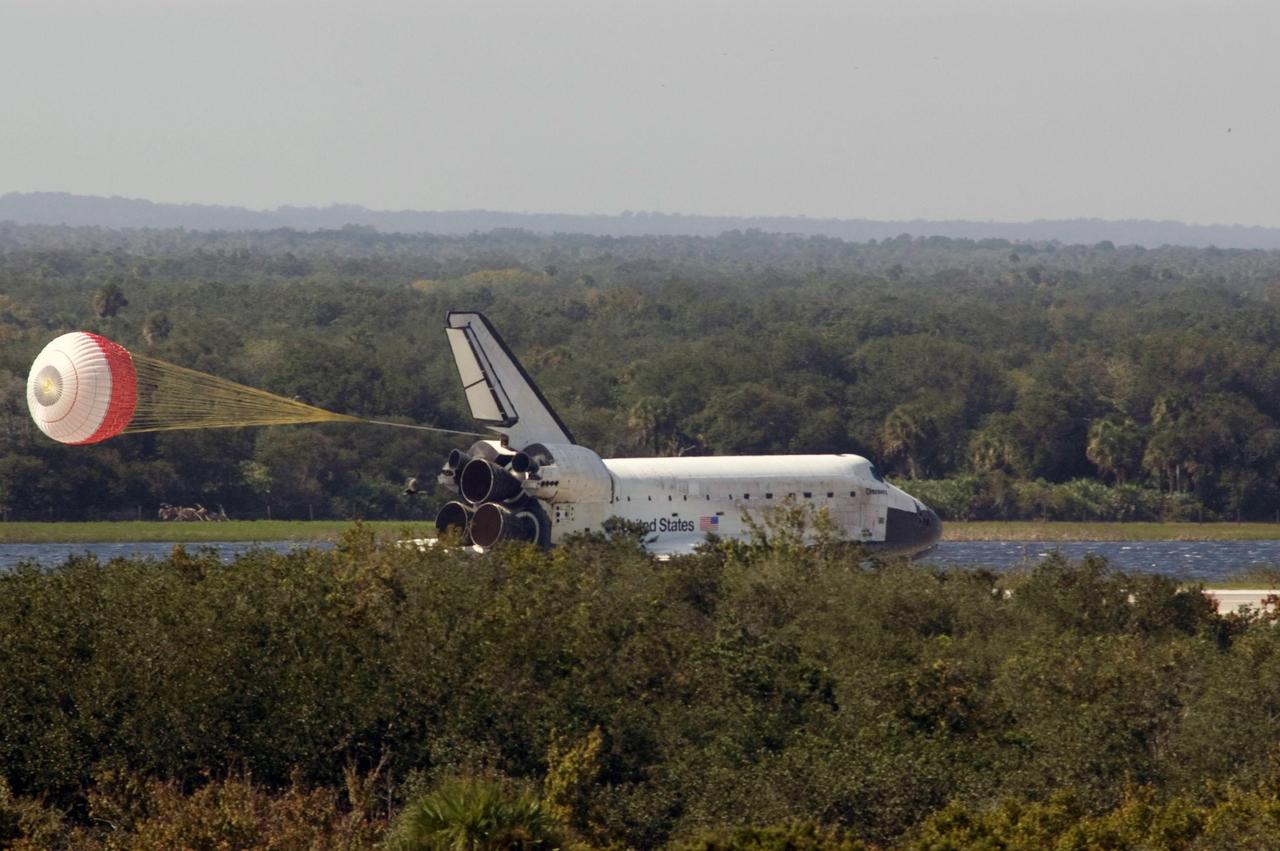
Space Shuttle Endeavour's drag chute streams behind as it rolls down on Runway 04-L at Edwards AFB to conclude mission STS-126 on Nov. 30, 2008.
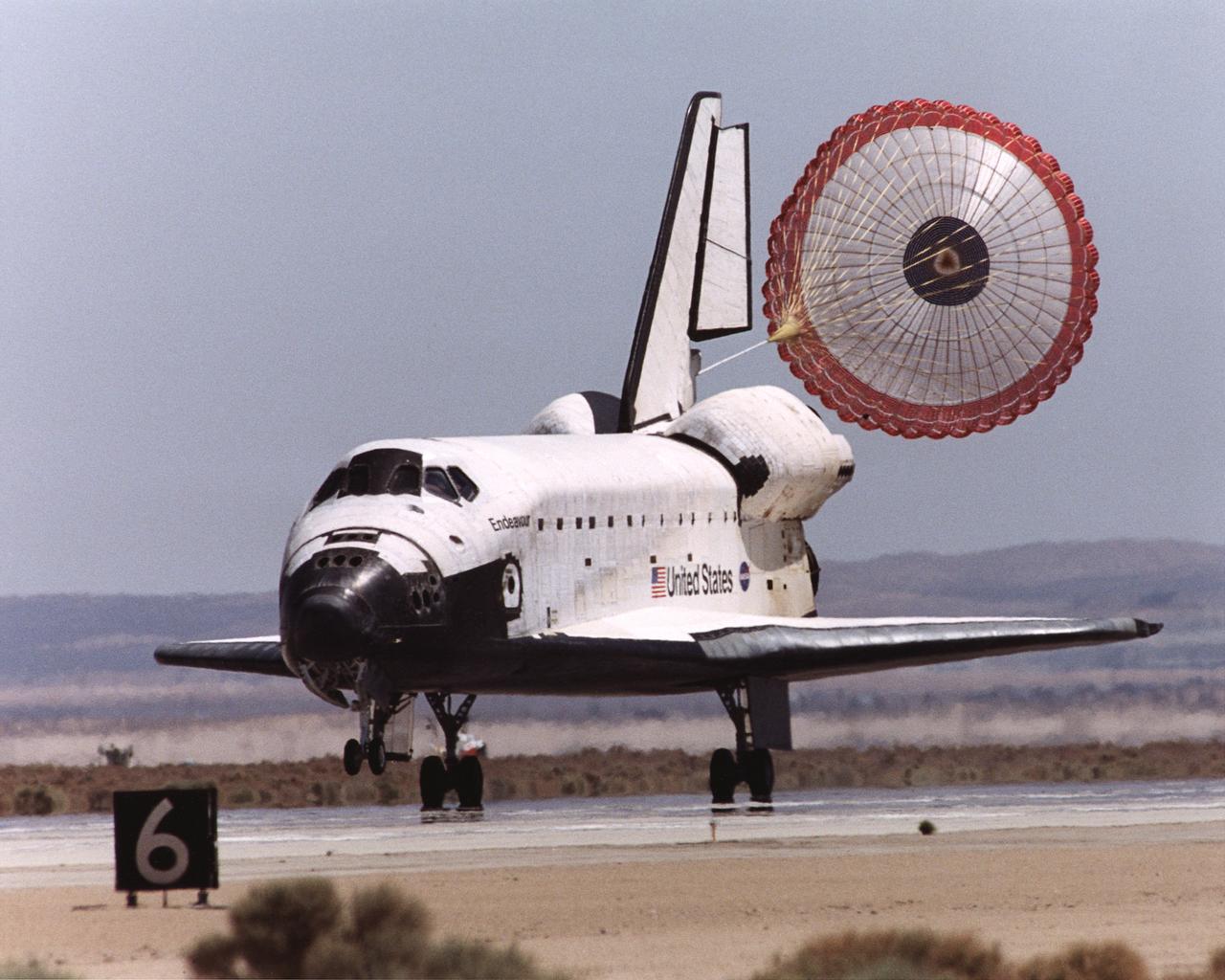
The Space Shuttle Endeavour's drag chute deploys to slow the orbiter as it rolls out on Runway 22 at Edwards Air Force Base at the conclusion of its 14-day STS-111 mission to the International Space Station.

The Space Shuttle Endeavour's drag chute deploys to slow the orbiter as it rolls out on Runway 22 at Edwards Air Force Base at the conclusion of its 14-day STS-111 mission to the International Space Station.
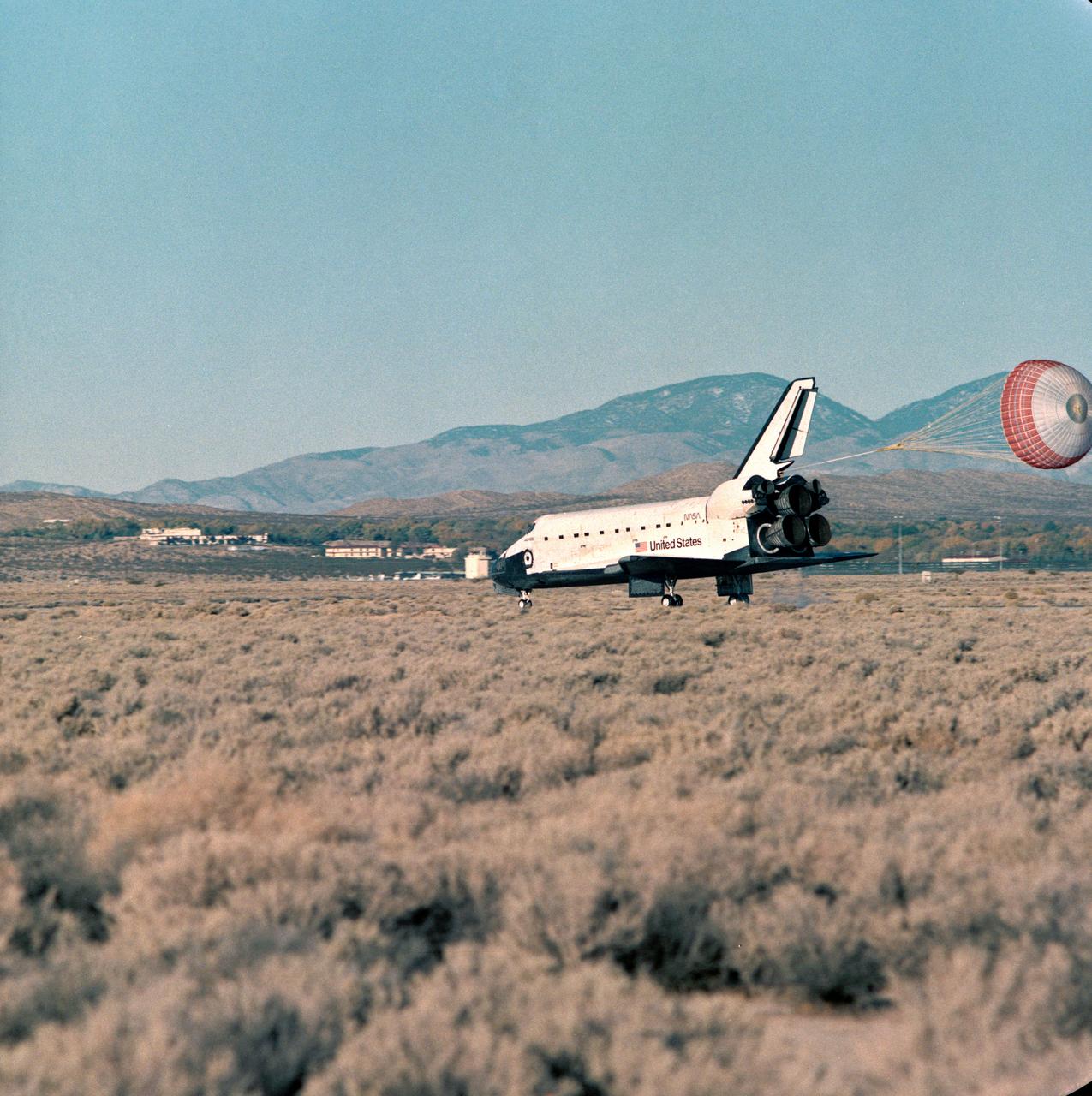
STS066-S-039 (14 November 1994) --- The drag chute is fully deployed as the Space Shuttle Atlantis heads toward a stop at Edwards Air Force Base in southern California, ending a successful 10 day, 22 hour and 34 minute space mission. Landing occurred at 7:34 a.m. (PST), November 14, 1994. Onboard were astronauts Donald R. McMonagle, commander; Curtis L. Brown, Jr., pilot; Ellen S. Ochoa, payload commander; Scott E. Parazynski and Joseph R. Tanner, both mission specialists, along with European Space Agency (ESA) mission specialist Jean-Francois Clervoy. The crew supported the Atmospheric Laboratory for Applications and Science (ATLAS-3) mission.
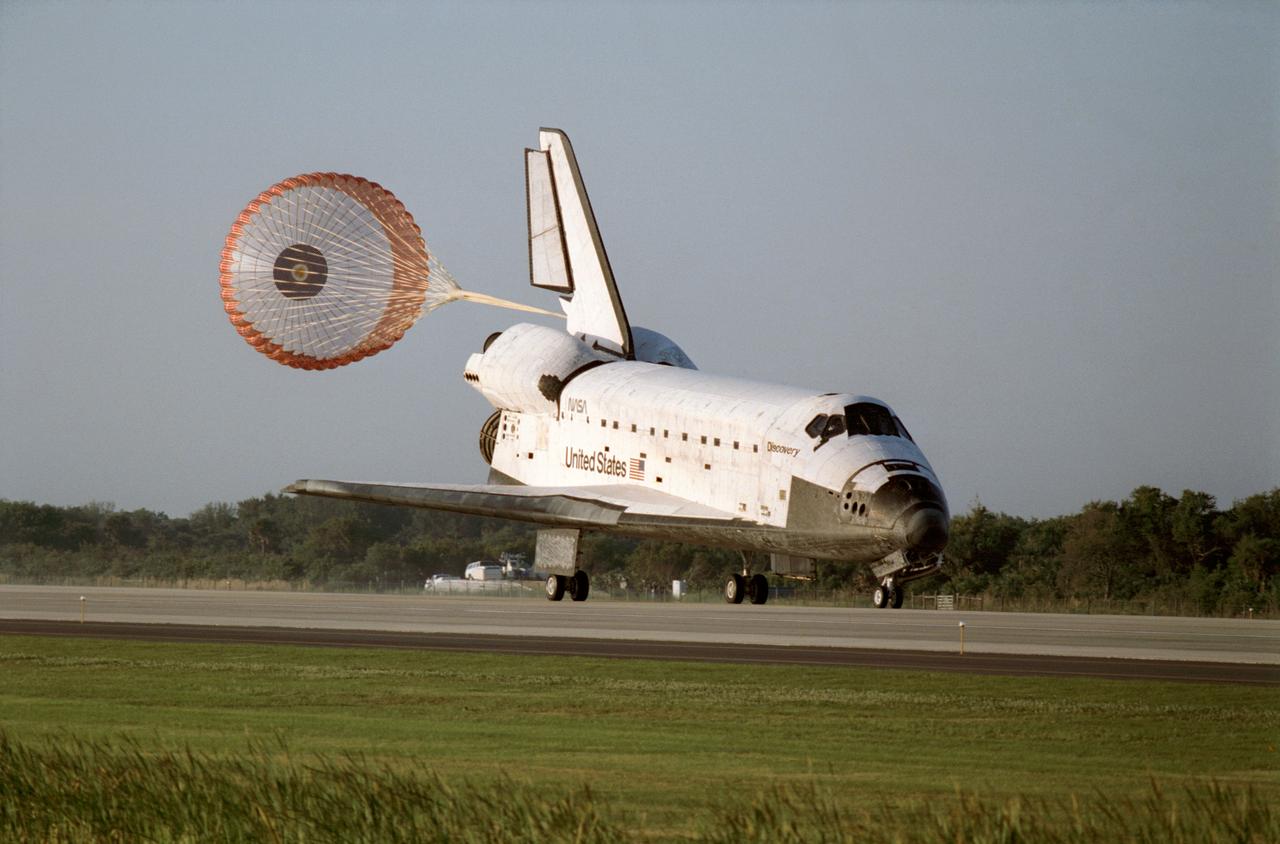
STS056-S-098 (17 April 1993) --- The drag chute is deployed following landing of the Space Shuttle Discovery on the Shuttle landing facility at the Kennedy Space Center to complete the STS-56\Atlas 2 mission. Touchdown occurred at 7:37 a.m. (EDT). Onboard the spacecraft were astronauts Kenneth D. Cameron, commander; Stephen S. Oswald, pilot; and C. Michael Foale, Ellen Ochoa and Kenneth D. Cockrell, mission specialists.
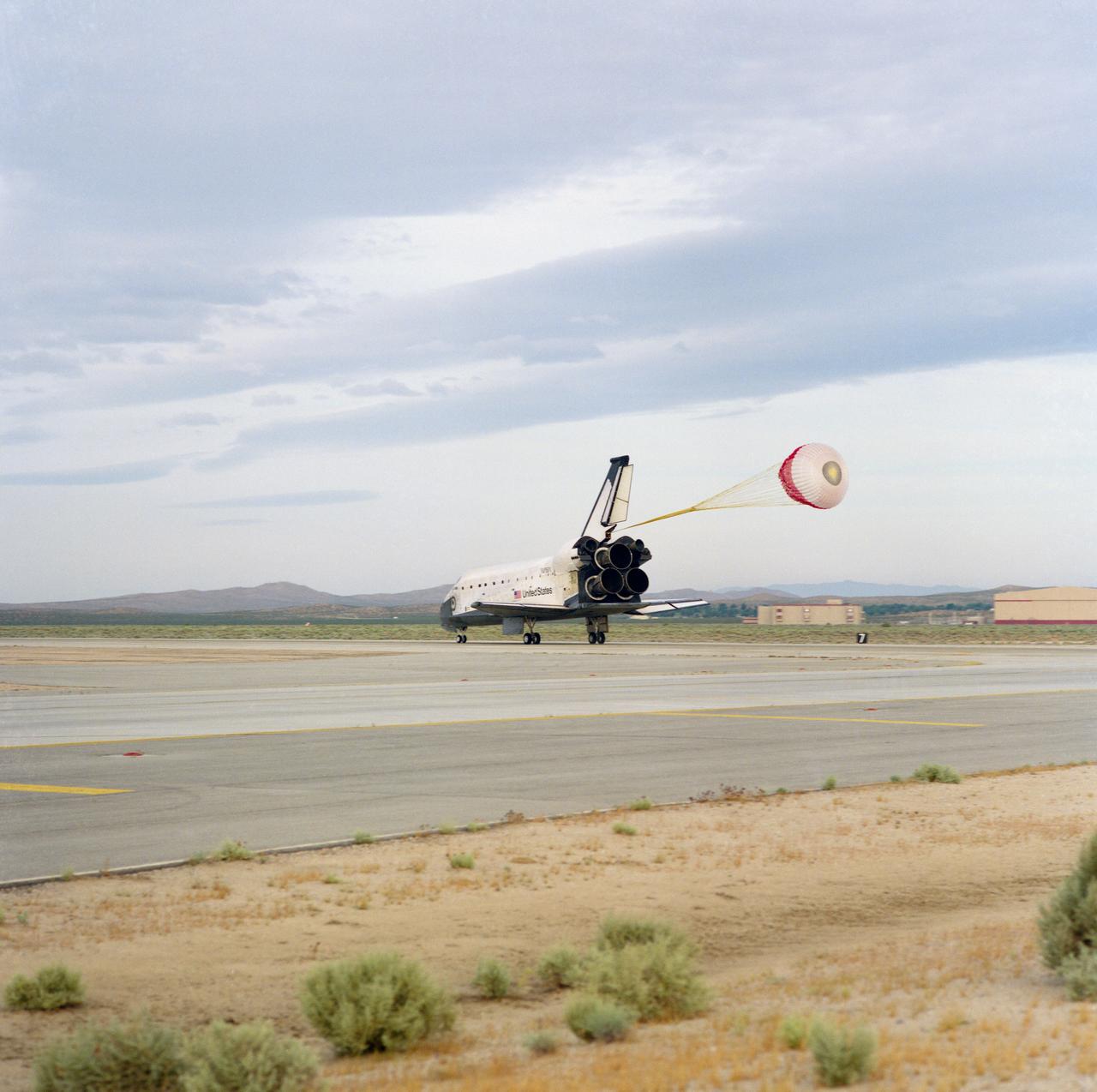
STS055-S-089 (6 May 1993) --- The main drag chute on the Space Shuttle Columbia is almost fully deployed in this three-quarter aft view of the vehicle's runway landing at Edwards Air Force Base in California. Landing occurred at 7:30 a.m. (PDT), May 6, 1993. Onboard the spacecraft were astronauts Steven R. Nagel, Terence T. (Tom) Henricks, Jerry L. Ross, Bernard Harris Jr. and Charles J. Precourt, along with German payload specialists Hans Schlegel and Ulrich Walter.
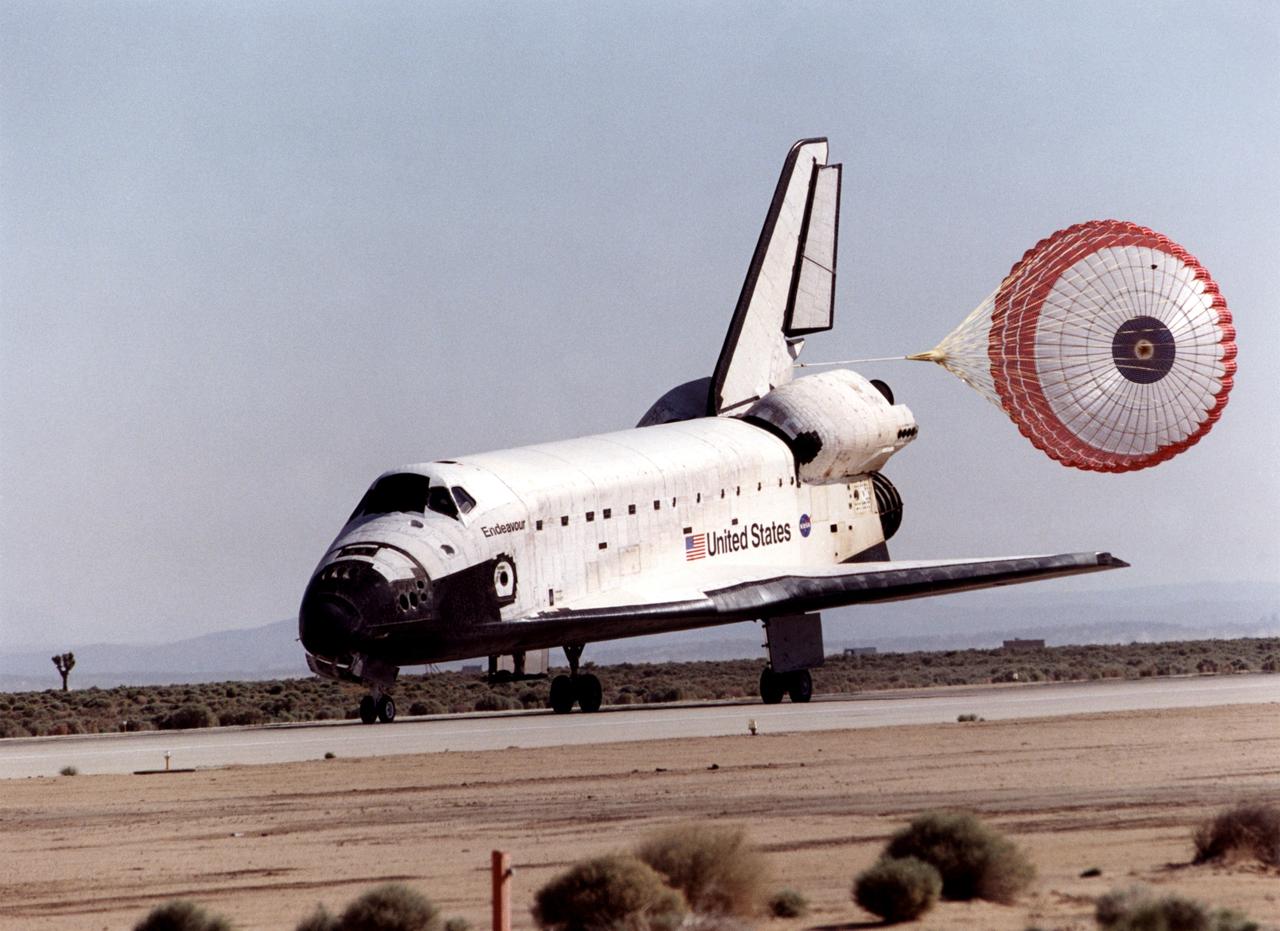
STS100-S-020 (1 May 2001) --- The drag chute on the space shuttle Endeavour helps to slow the vehicle down as it eases to the completion of the STS-100 mission on a desert runway at Edwards Air Force Base in California. Touchdown occurred at 9:11 a.m. (PDT), May 1, 2001. Onboard the shuttle were six NASA astronauts and a cosmonaut representing Rosaviakosmos. Photo credit: NASA
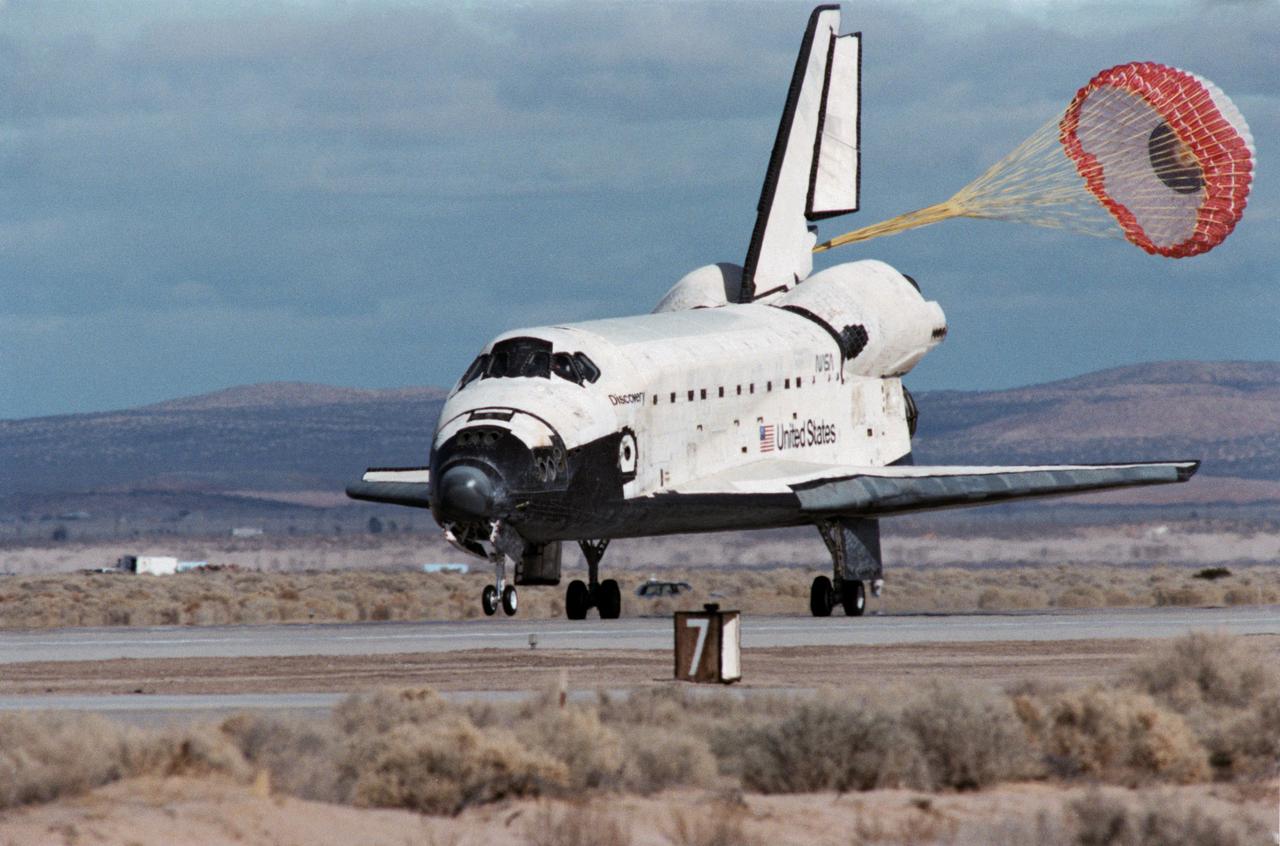
STS053-S-085 (9 Dec. 1992) --- The drag chute on the space shuttle Discovery is partially deployed during landing on Runway 22 at Edwards Air Force Base. The landing ended an eight-day space mission for the STS-53 crew. Main gear touchdown occurred at 12:43:17 p.m. (PST) on Dec. 9, 1992. Onboard were astronauts David M. Walker, Robert D. Cabana, Guion S. Bluford Jr., James S. Voss and Michael R.U. (Rich) Clifford.
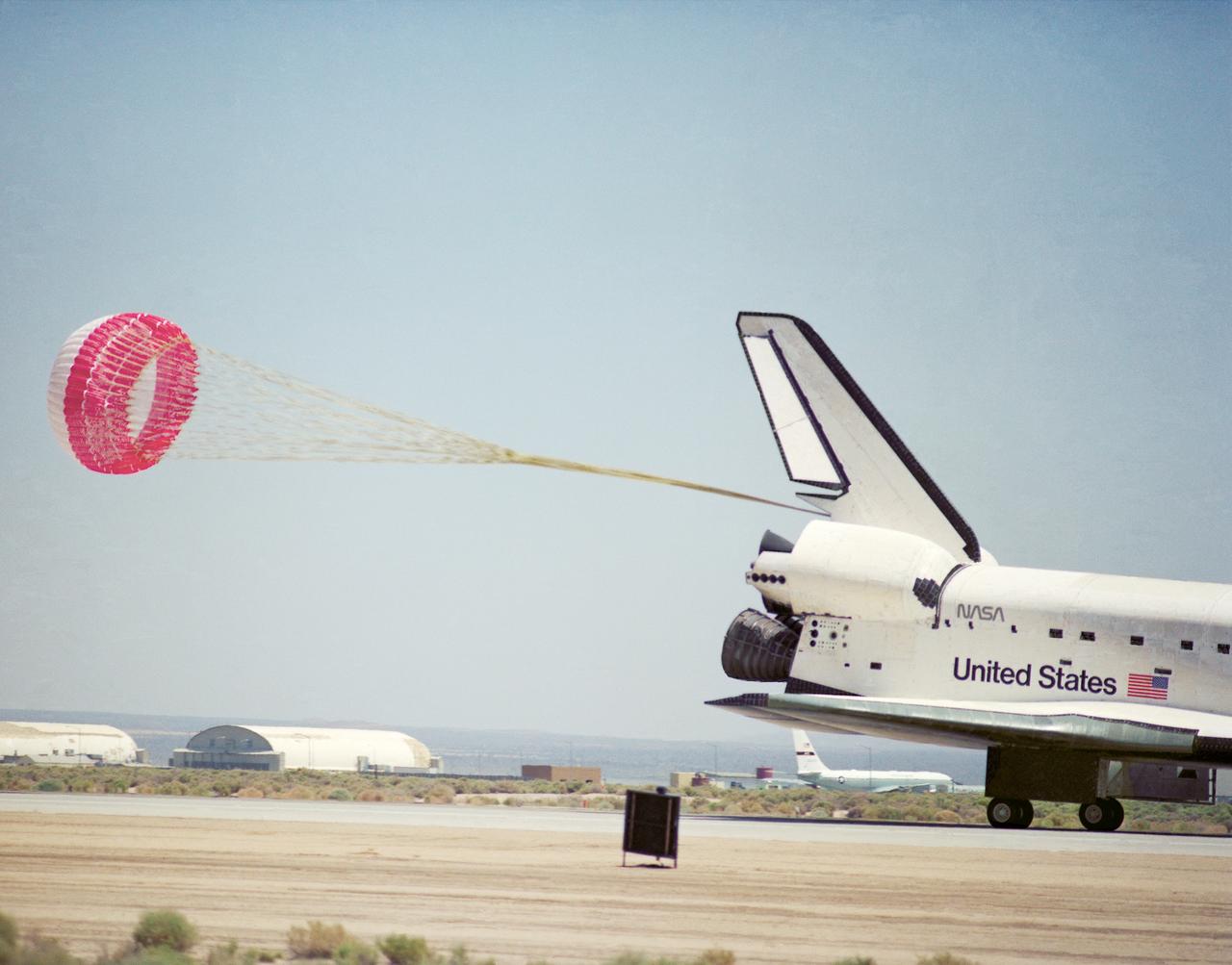
The Space Shuttle Endeavour concludes mission STS-49 at NASA's Ames-Dryden Flight Research Facility (later redesignated Dryden Flight Research Center), Edwards, California, with a 1:57 p.m. (PDT) landing 16 May on Edward's concrete runway 22. The planned 7-day mission, which began with a launch from Kennedy Space Center, Florida, at 4:41 p.m. (PFT), 7 May, was extended two days to allow extra time to rescue the Intelsat VI satellite and complete Space Station assembly techniques originally planned. After a perfect rendezvous in orbit and numerous attempts to grab the satellite, space walking astronauts Pierre Thuot, Rick Hieb and Tom Akers successfully rescued it by hand on the third space walk with the support of mission specialists Kathy Thornton and Bruce Melnick. The three astronauts, on a record space walk, took hold of the satellite and directed it to the shuttle where a booster motor was attached to launch it to its proper orbit. Commander Dan Brandenstein and Pilot Kevin Chilton brought Endeavours's record setting maiden voyage to a perfect landing at Edwards AFB with the first deployment of a drag chute on a shuttle mission.
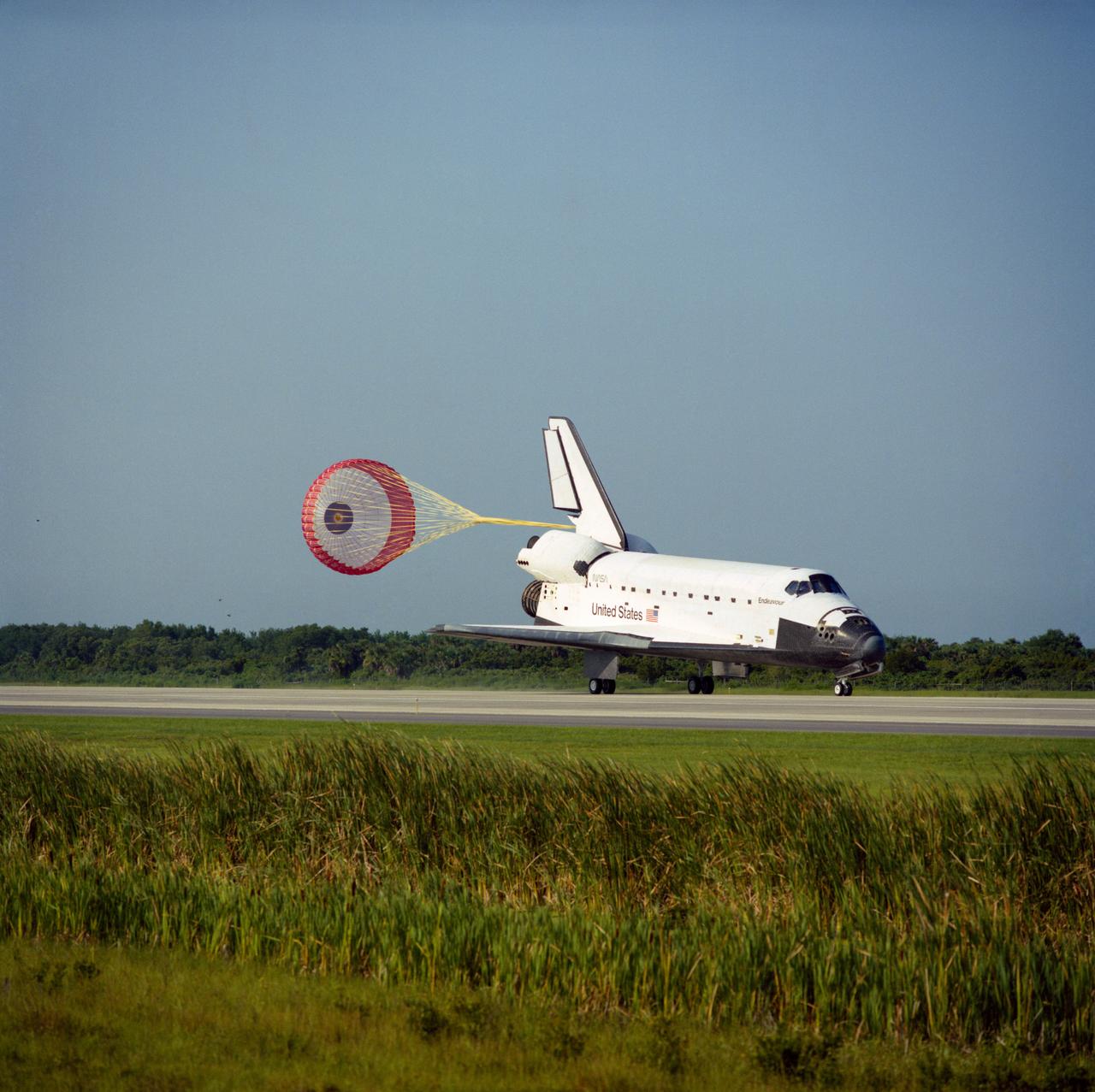
STS057-S-082 (1 July 1993) --- The drag chute on the Space Shuttle Endeavour is fully deployed in this scene on Runway 33 (KSC's Shuttle Landing Facility) as the spacecraft successfully completes a ten-day mission in Earth orbit. Official mission duration was nine days, twenty-three hours, forty-four minutes and fifty-five seconds. Main gear touchdown occurred at 8:52:16 (EDT), July 1, 1993. Onboard Endeavour for the landing were six NASA astronauts and the European Retrievable Carrier (EURECA) spacecraft. Crewmembers were astronauts Ronald J. Grabe, Brian Duffy, G. David Low, Nancy J. Sherlock, Peter J. K. (Jeff) Wisoff and Janice E. Voss.
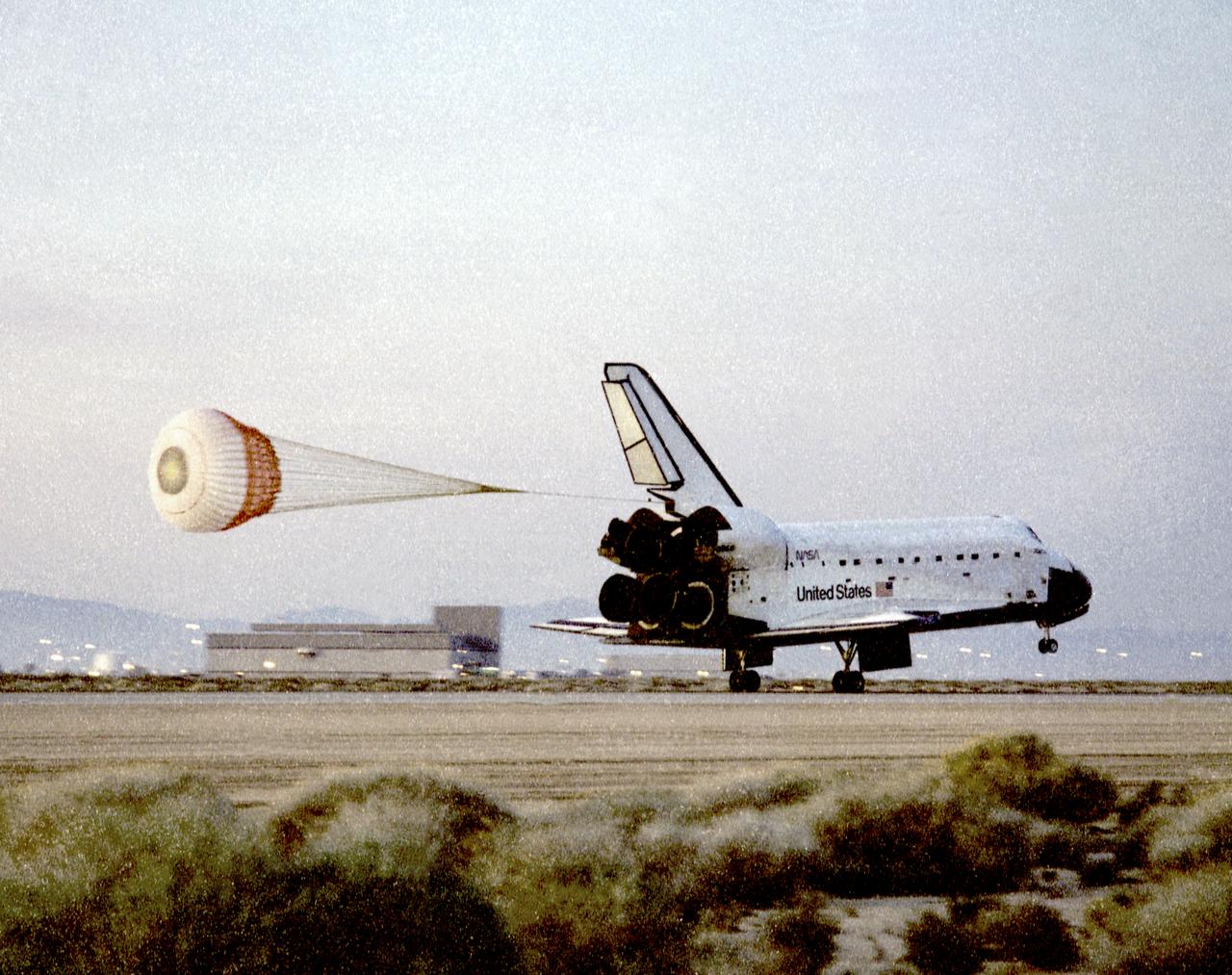
The space shuttle Atlantis touches down on the runway at Edwards, California, at approximately 5:29 a.m. Pacific Standard Time after completing the highly successful STS-76 mission to deliver Astronaut Shannon Lucid to the Russian Space Station Mir. She was the first American woman to serve as a Mir station researcher. Atlantis was originally scheduled to land at Kennedy Space Center, Florida, but bad weather there both 30 and 31 March necessitated a landing at the backup site at Edwards. This photo shows the drag chute deployed to help the shuttle roll to a stop. Mission commander for STS-76 was Kevin P. Chilton, and Richard A. Searfoss was the pilot. Ronald M. Sega was payload commander and mission specialist-1. Mission specialists were Richard Clifford, Linda Godwin and Shannon Lucid. The mission also featured a spacewalk while Atlantis was docked to Mir and experiments aboard the SPACEHAB module.
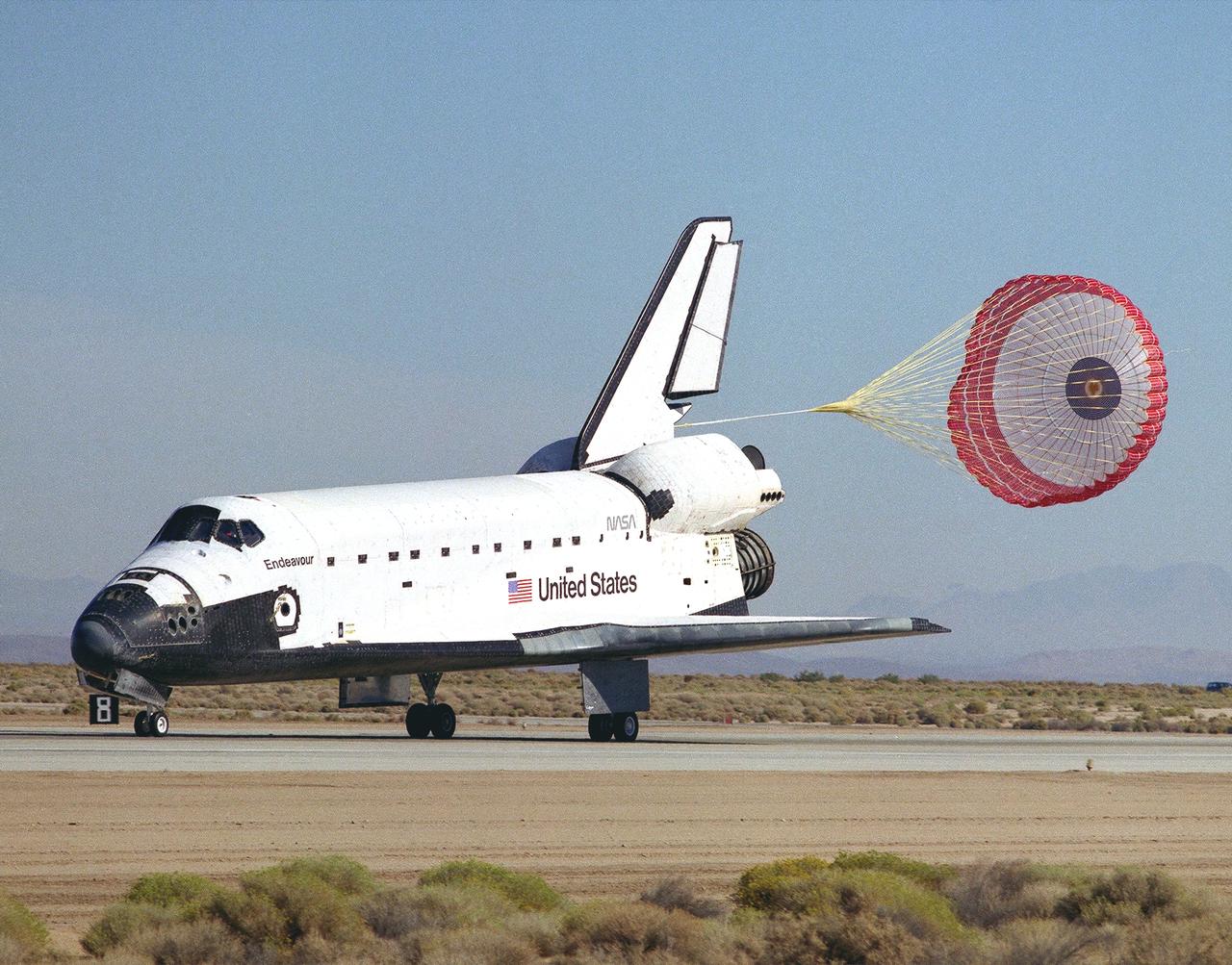
A drag chute slows the shuttle Endeavour after landing on runway 22 at Edwards, California, to complete the highly successful STS-68 mission dedicated to radar imaging of the earth's surface as part of NASA's Mission To Planet Earth program. The landing was at 10:02 a.m. (PDT) 11 October 1994, after waiving off from the Kennedy Space Center, Florida, earlier that morning due to adverse weather at Kennedy. The Endeavour crew was originally scheduled to land at Kennedy the morning of 10 October, but mission planners decided early in the flight to extend the mission by one day. Mission commander was Michael A. Baker and the pilot was Terrence W. Wilcutt. The four mission specialists were Thomas D. Jones, payload; Steven L. Smith; Daniel W. Bursch; and Peter J.K. Wisoff.
With its drag chute deployed, orbiter Discovery and its seven-member crew roll toward a stop at Edwards Air Force Base, Calif., after an 11-day mission to the International Space Station. The orbiter’s main landing gear touched down on EAFB runway 22 at 5 p.m. With the aid of its drag chute, Discovery came to a complete stop at 5:01 p.m. At the conclusion of mission STS-92, Discovery and crew had traveled about 5.3 million statute miles. Following vehicle safing and preliminary offloading efforts, workers will begin preparations for Discovery’s transcontinental ferry flight back to KSC on the back of NASA’s modified Boeing 747
With its drag chute deployed, orbiter Discovery and its seven-member crew roll toward a stop at Edwards Air Force Base, Calif., after an 11-day mission to the International Space Station. The orbiter’s main landing gear touched down on EAFB runway 22 at 5 p.m. With the aid of its drag chute, Discovery came to a complete stop at 5:01 p.m. At the conclusion of mission STS-92, Discovery and crew had traveled about 5.3 million statute miles. Following vehicle safing and preliminary offloading efforts, workers will begin preparations for Discovery’s transcontinental ferry flight back to KSC on the back of NASA’s modified Boeing 747
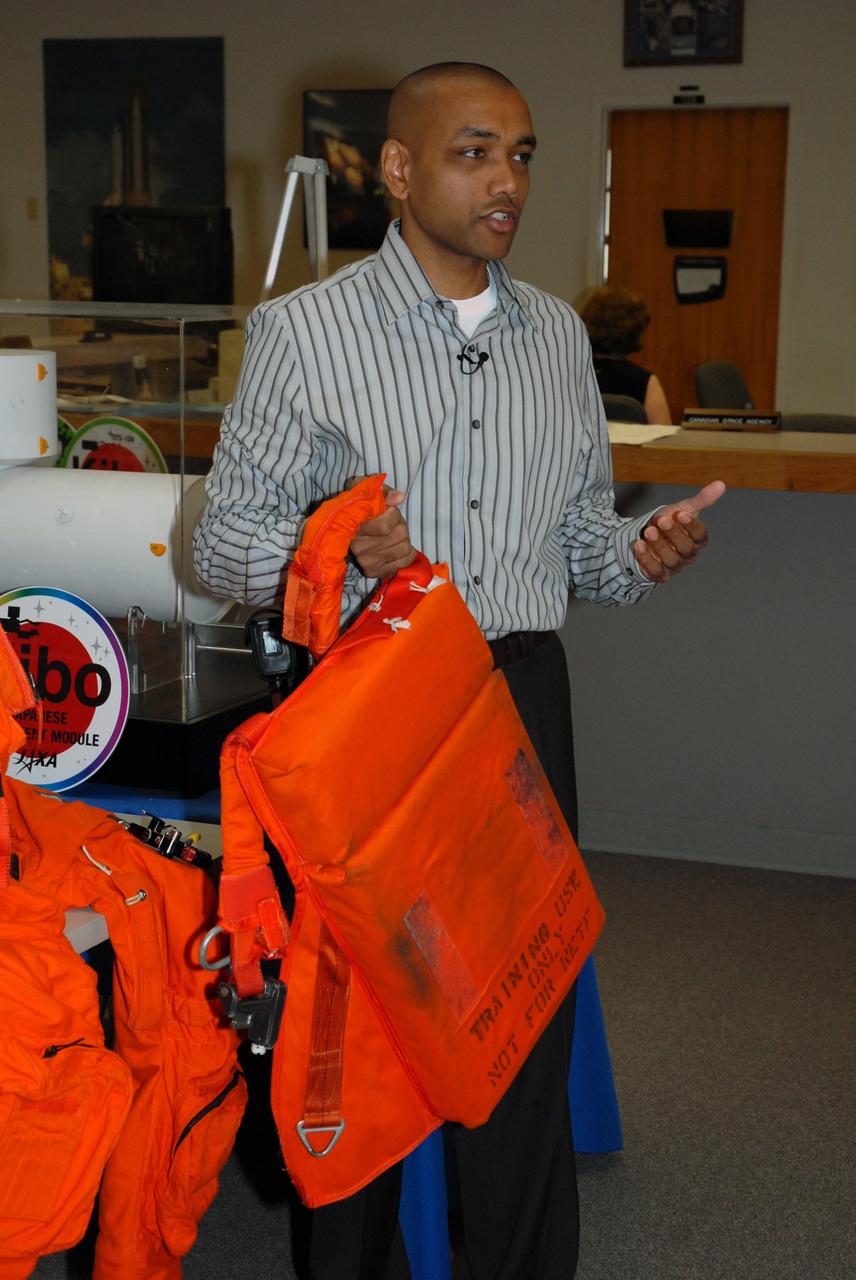
CAPE CANAVERAL, Fla. -- In the NASA News Center at NASA's Kennedy Space Center, Shuttle Crew Escape System Manager KC Chhipwadia describes for the media the components of the parachute worn by shuttle crews during launch and landing. On top is a pilot and drag chute. In the middle is the main chute. At bottom is a survival life raft. The elements of the suit and parachute provide safety elements in the event of an emergency. Photo credit: NASA/Amanda Diller
STS-49 Orbiter Endeavour landed at Edwards Air Force Base on May 16, 1992 The drogue chute precedes the main chute in NASA’s first exercise of its detailed test objective on the drag chute system. STS-49 ended its successful nine day mission dedicated to the retrieval, repair, and redeployment of the the INTELSAT VI (F-3) satellite. The communication satellite for the International Telecommunication Satellite organization had been stranded in an unusable orbit since its launch aboard the Titan rocket in March 1990. The mission marked the first time 3 astronauts worked simultaneously outside the space craft.
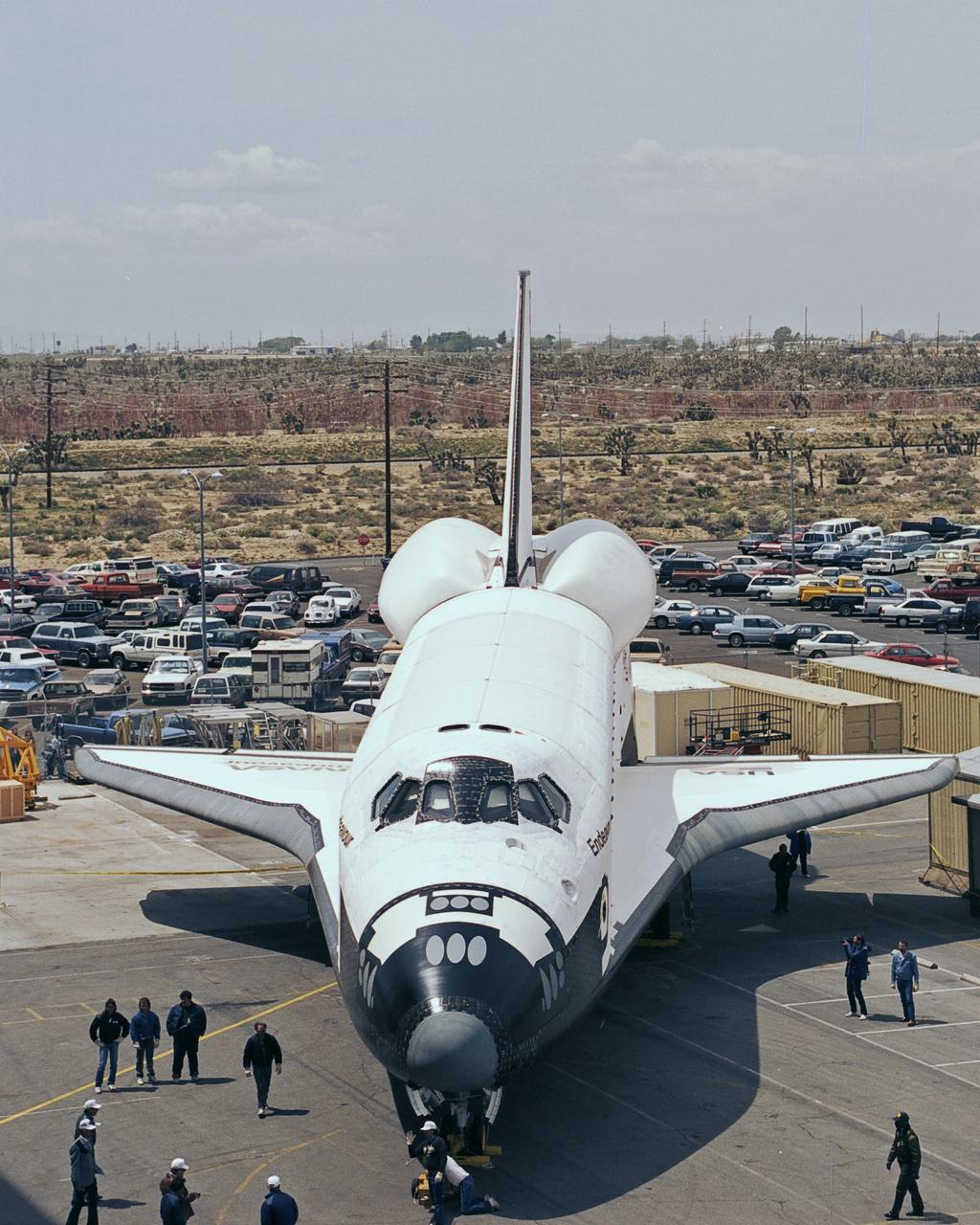
The newest space shuttle orbiter, Endeavour is ready to roll out of the hangar at Palmdale, Calif. OV-105 features many design enhancements, including drag chute for safer landings and equipment to allow the orbiter to remain in space for up to 28 days. Photo credit: NASA
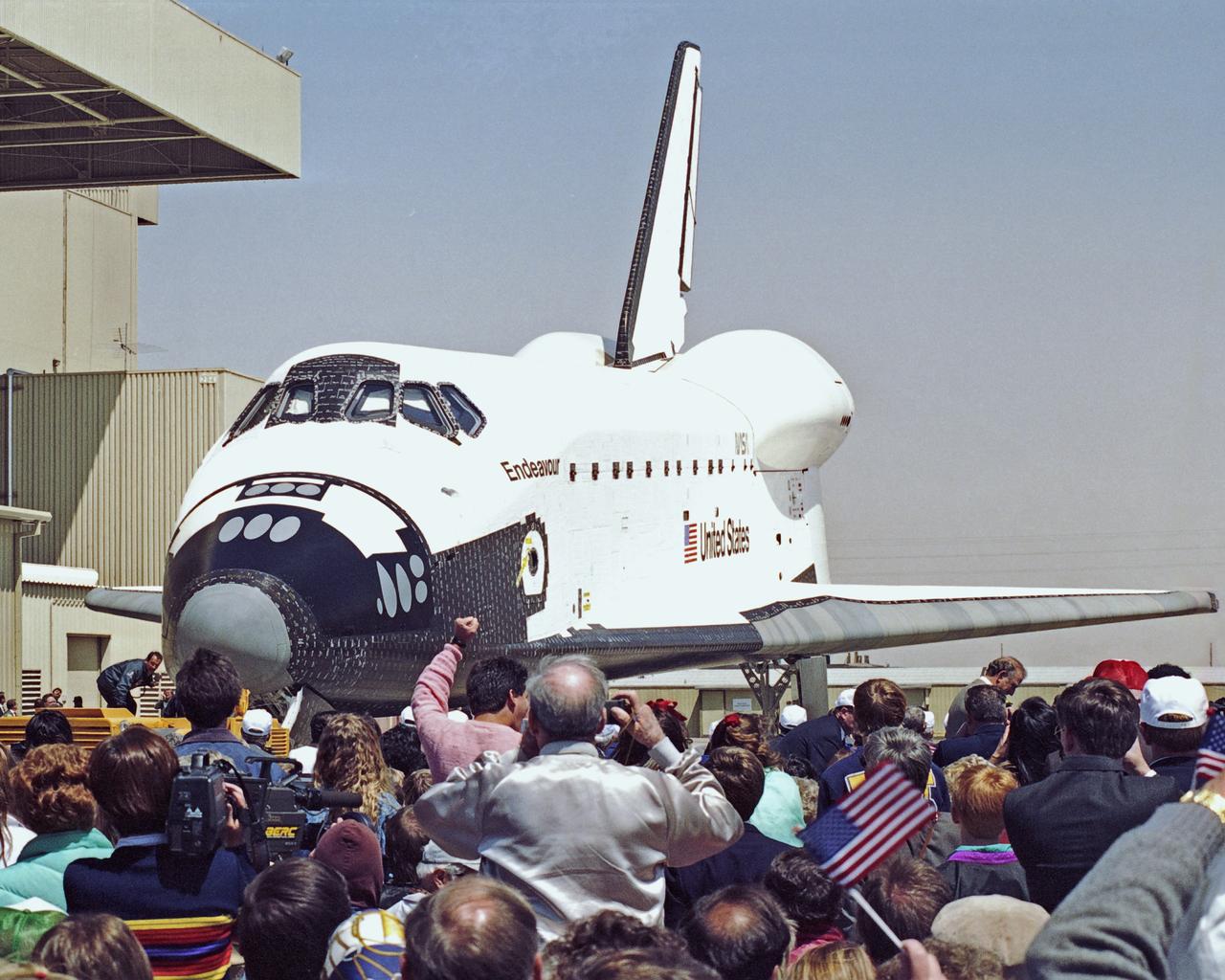
The newest space shuttle orbiter, Endeavour is ready to roll out of the hangar at Palmdale, Calif. OV-105 features many design enhancements, including a drag chute for safer landings and equipment to allow the orbiter to remain in space for up to 28 days. Photo credit: NASA
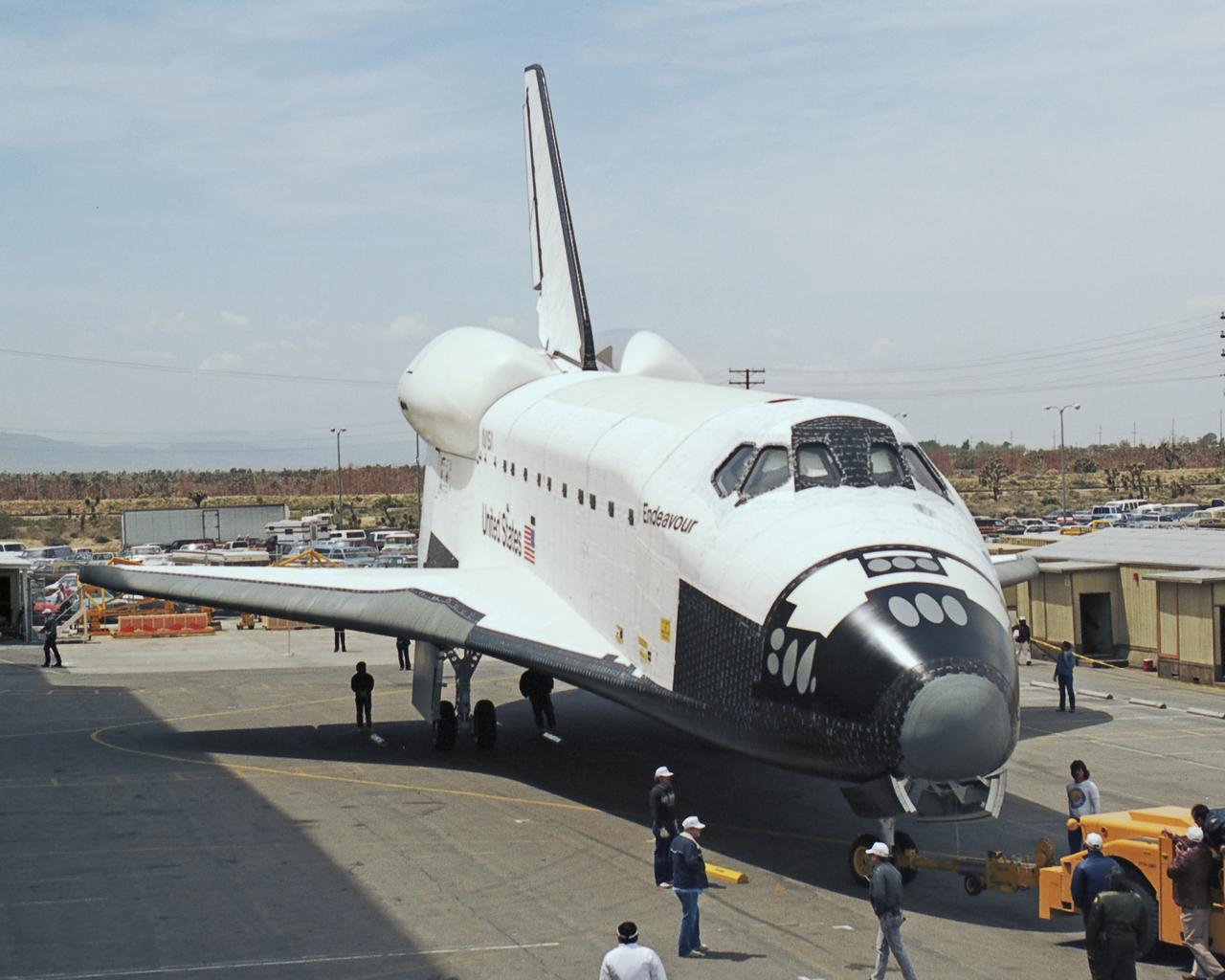
The newest space shuttle orbiter, Endeavour is ready to roll out of the hangar at Palmdale, Calif. OV-105 features many design enhancements, including a drag chute for safer landings and equipment to allow the orbiter to remain in space for up to 28 days.Photo credit: NASA
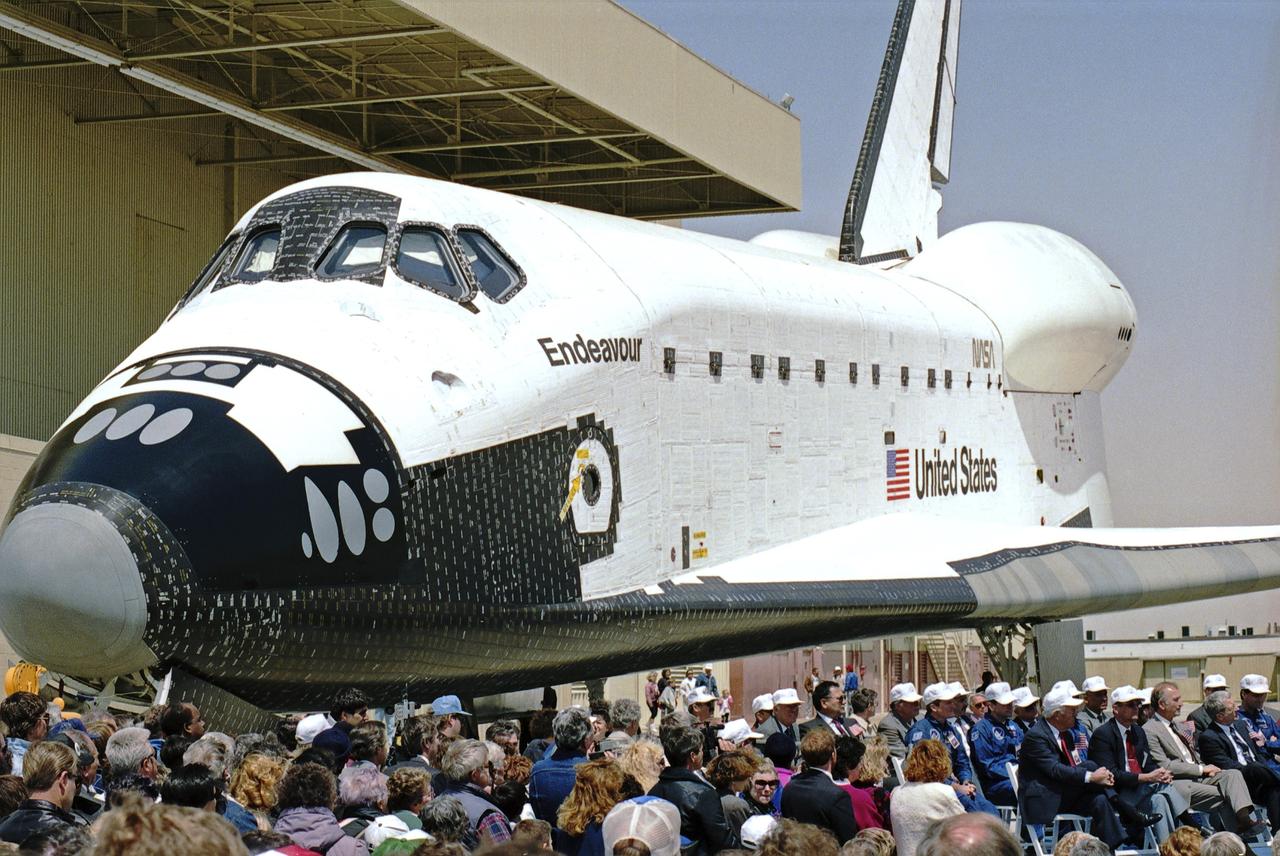
The newest space shuttle orbiter, Endeavour, rolls out of the hangar at Palmdale, Calif. OV-105 features many design enhancements, including a drag chute for safer landings and equipment to allow the orbiter to remain in space for up to 28 days. Photo credit: NASA
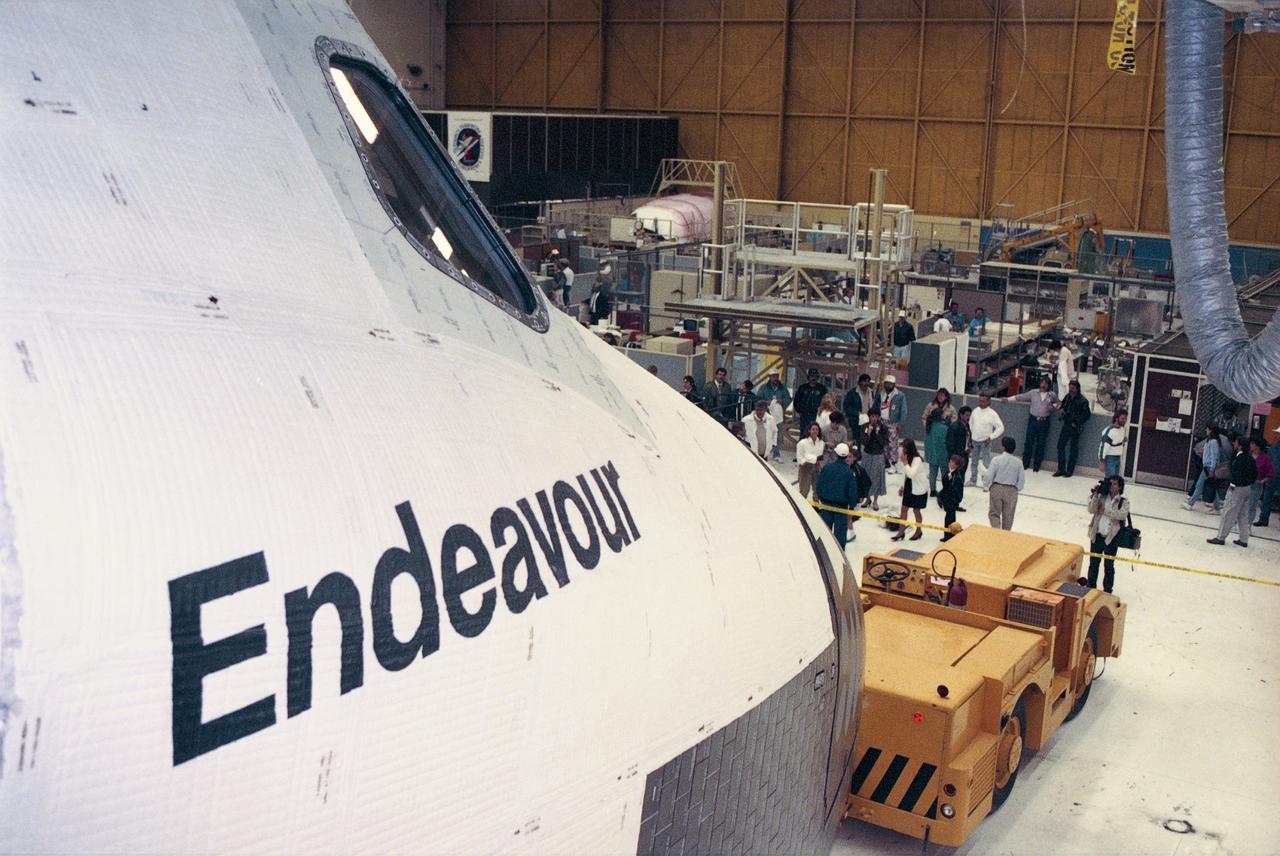
The newest space shuttle orbiter, Endeavour is ready to roll out of the hangar at Palmdale, Calif. OV-105 features many design enhancements, including a drag chute for safer landings and equipment to allow the orbiter to remain in space for up to 28 days. Photo credit: NASA
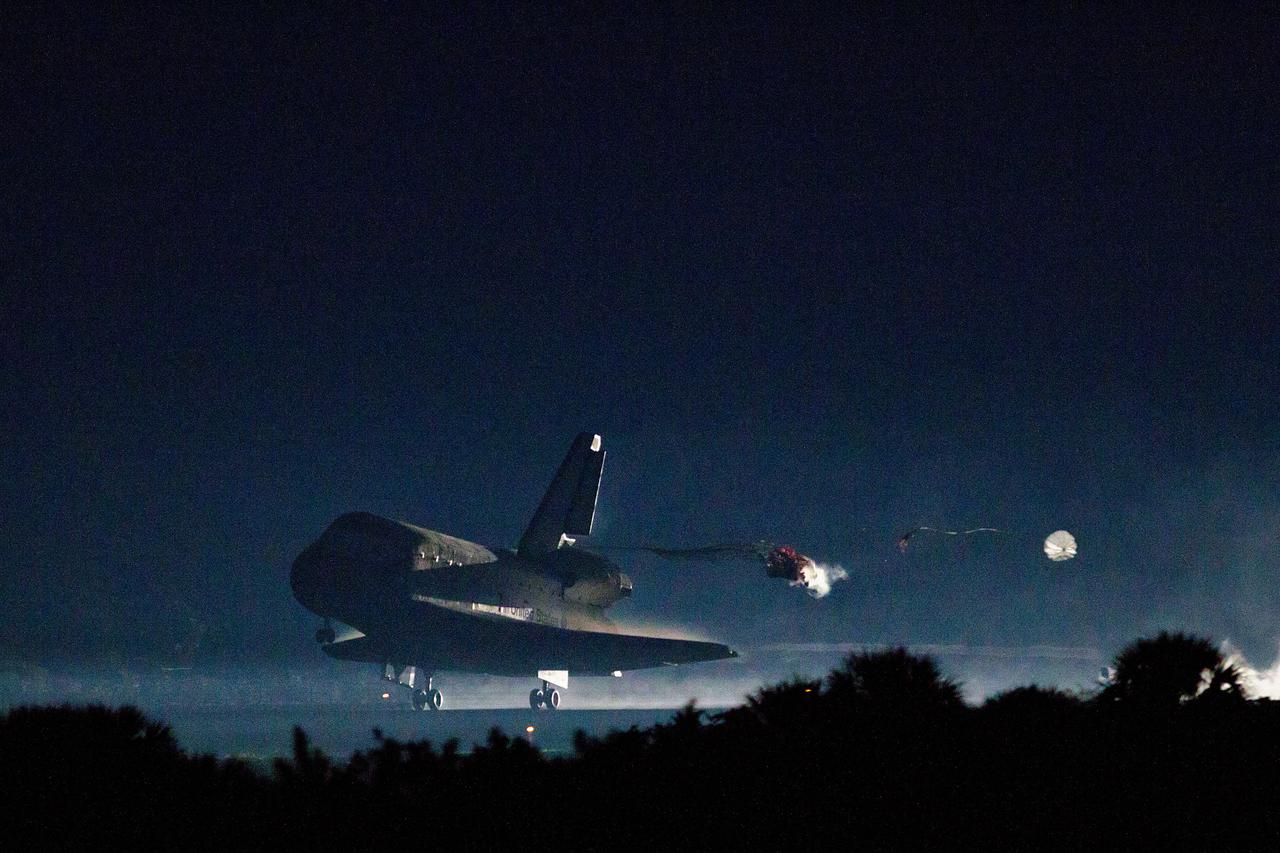
JSC2011-E-067687 (21 July 2011) --- The drag chute is deployed as the space shuttle Atlantis lands on July 21 at the Kennedy Space Center in Florida. The landing completed STS-135, the final mission of the NASA Space Shuttle Program. Photo credit: NASA Photo/Houston Chronicle, Smiley N. Pool
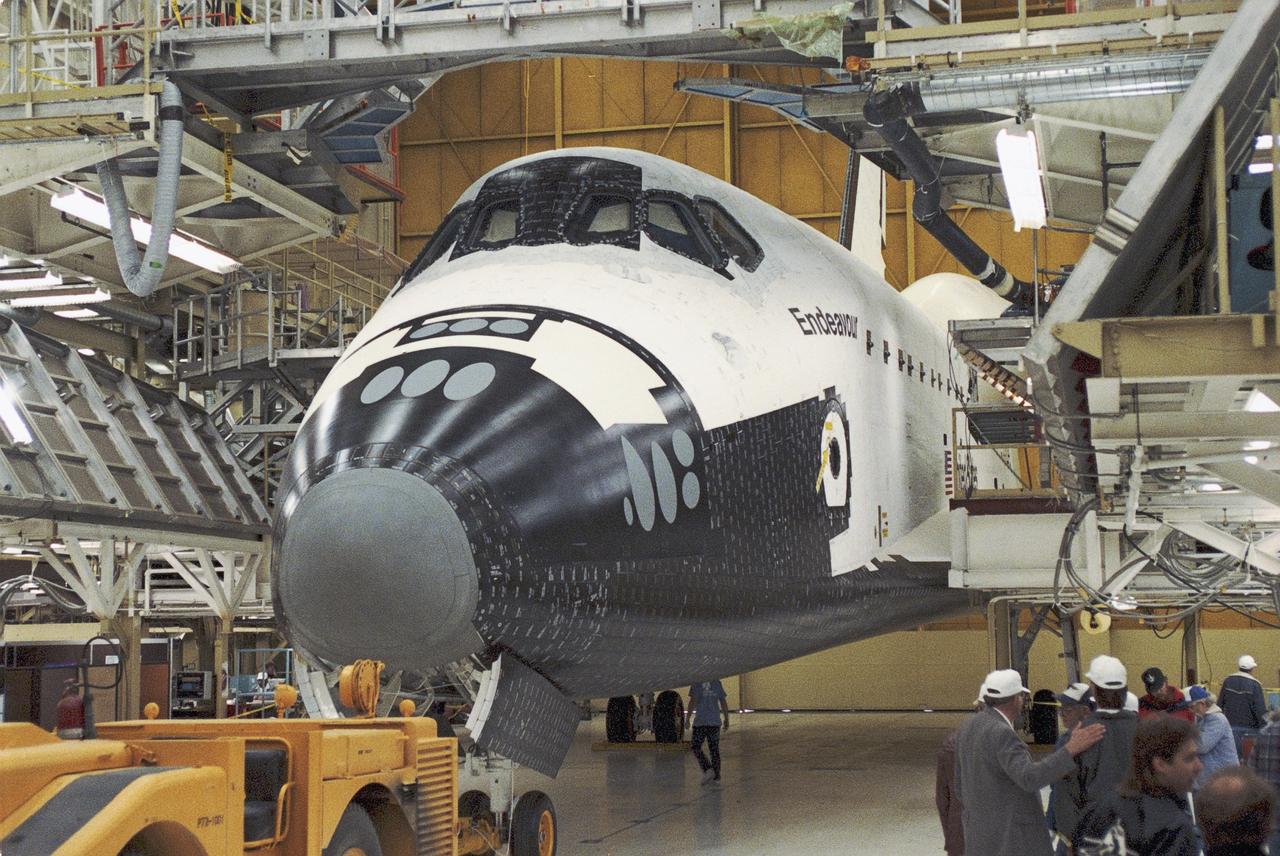
The newest space shuttle orbiter, Endeavour, is ready to roll out of the hangar at Palmdale, Calif. OV-105 features many design enhancements, including a drag chute for safer landings and equipment to allow the orbiter to remain in space for up to 28 days. Photo credit: NASA
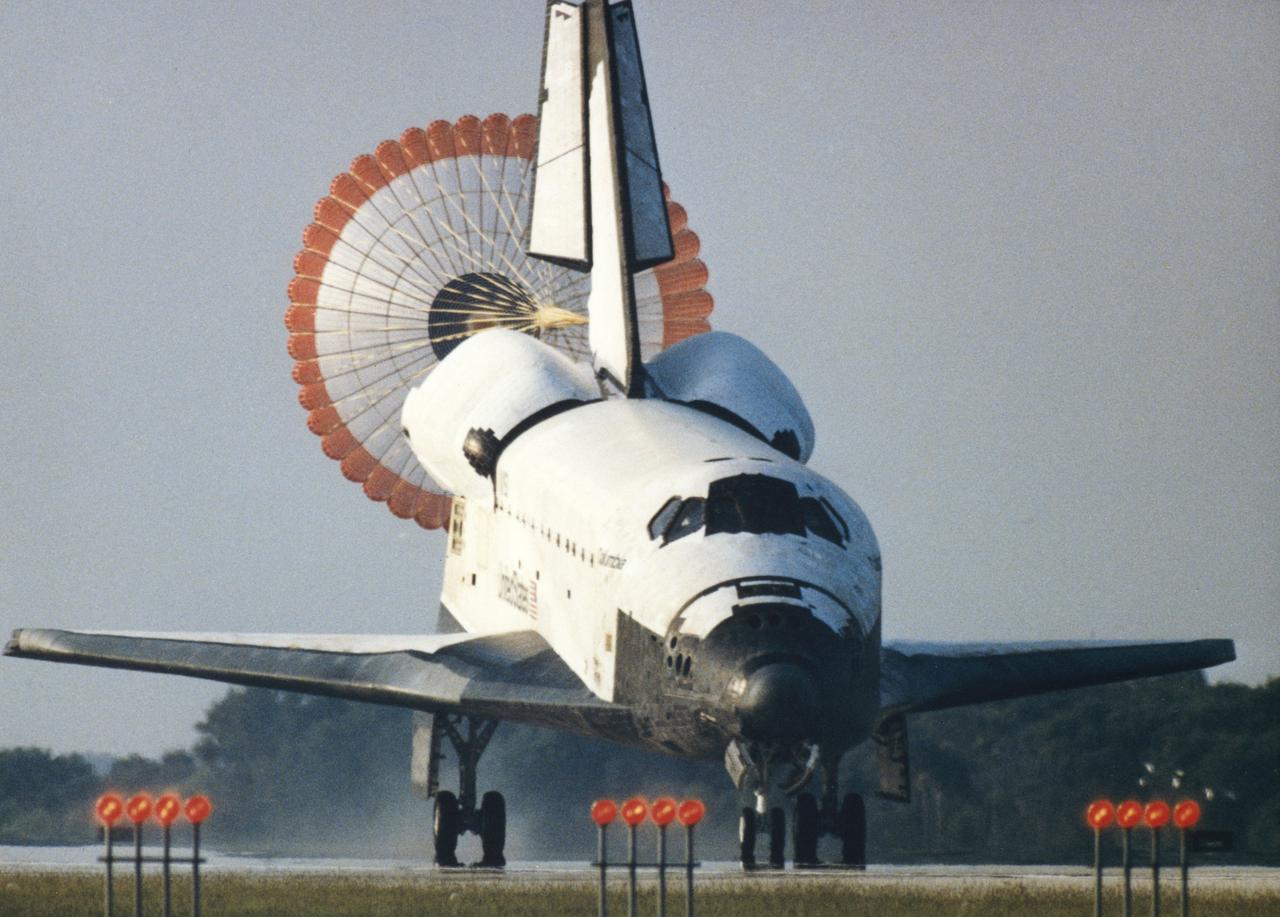
As the orbiter Columbia (STS-50) rolled down Runway 33 of Kennedy Space Center's (KSC) Shuttle Landing Facility, its distinctively colored drag chute deployed to slow down the spaceship. This landing marked OV-102's first end-of-mission landing at KSC and the tenth in the program, and the second shuttle landing with the drag chute. Edwards Air Force Base, CA, was the designated prime for the landing of Mission STS-50, but poor weather necessitated the switch to KSC after a one-day extension of the historic flight. STS-50 was the longest in Shuttle program historyo date, lasting 13 days, 19 hours, 30 minutes and 4 seconds. A crew of seven and the USML-1 were aboard.

STS066-S-040 (14 November 1994) --- The main landing gear is on the ground and the nose gear is about to touch down as the Space Shuttle Atlantis heads toward a stop at Edwards Air Force Base in southern California, ending a successful 10 day, 22 hour and 34 minute space mission. Landing occurred at 7:34 a.m. (PST), November 14, 1994. Onboard were astronauts Donald R. McMonagle, commander; Curtis L. Brown, Jr., pilot; Ellen S. Ochoa, payload commander; Scott E. Parazynski and Joseph R. Tanner, both mission specialists, along with European Space Agency (ESA) mission specialist Jean-Francois Clervoy. The crew supported the Atmospheric Laboratory for Applications and Science (ATLAS-3) mission.
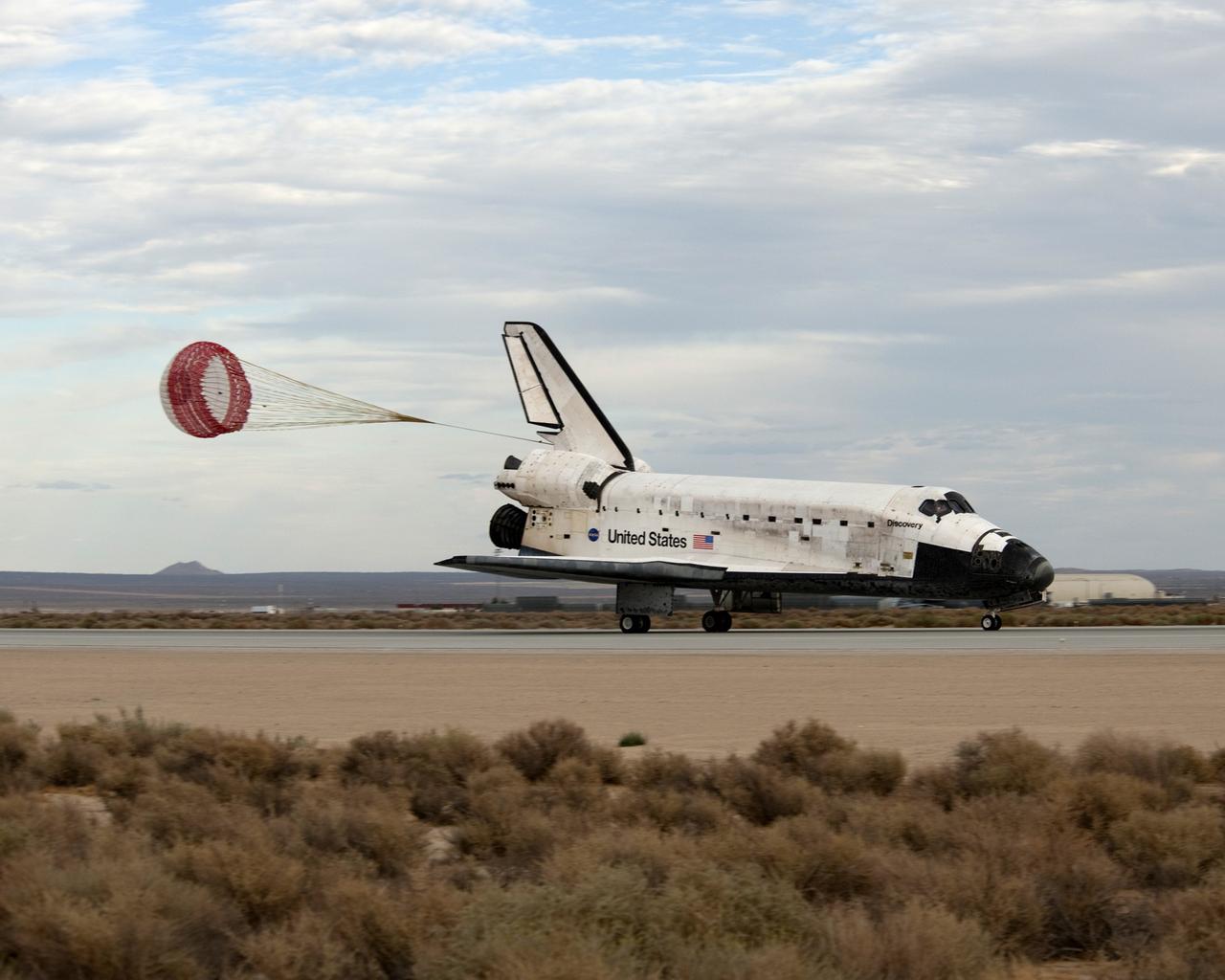
EDWARDS AIR FORCE BASE, Calif. -- (ED09-0253-04) Trailing its drag chute, Space Shuttle Discovery slows to a stop after landing at Edwards Air Force Base to conclude its almost 14-day, 5.7-million-mile journey to the International Space Station on mission STS-128 (NASA photo / Tony Landis)
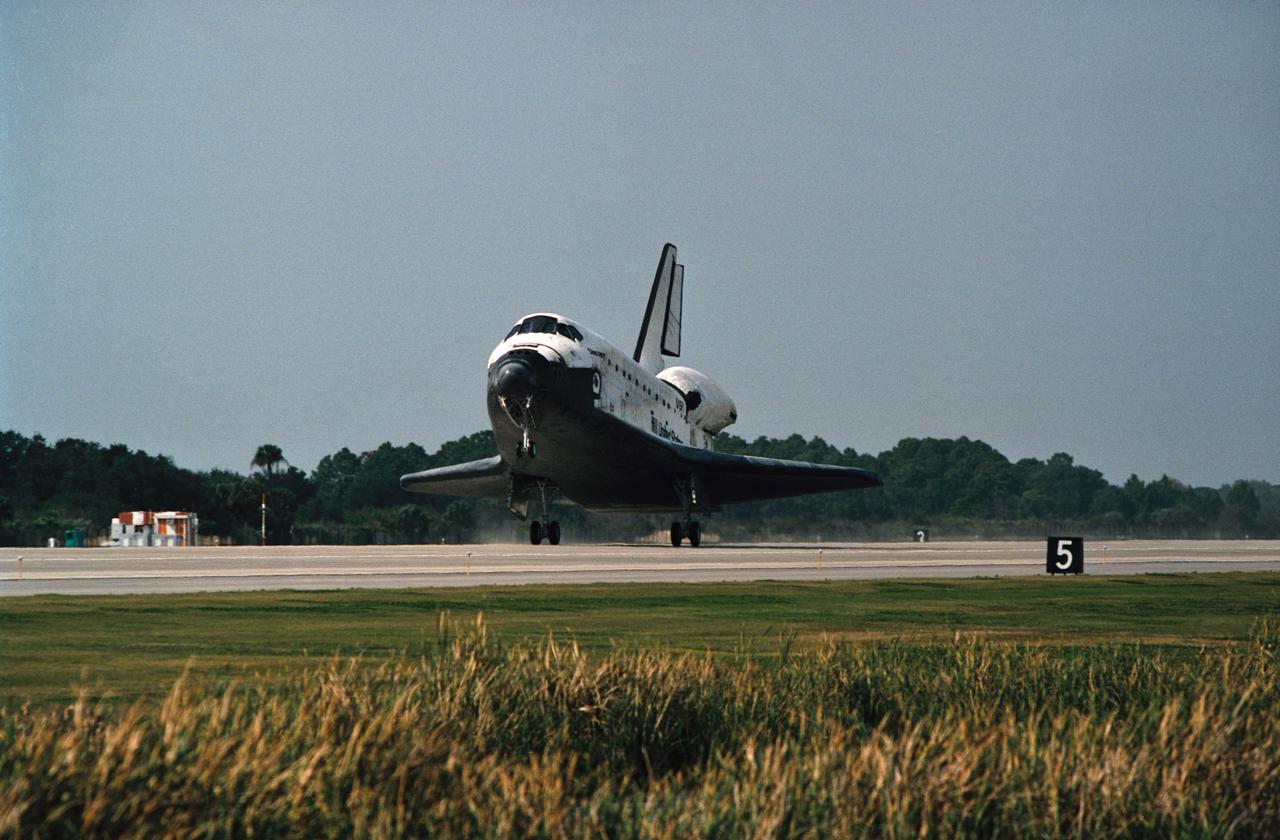
The drag chute for Space Shuttle Discovery is deployed on the Shuttle Landing Facility, marking the end to the eight-day STS-60 mission. Landing occurred at 2:19:22 p.m. (035); The main landing gear on the Space Shuttle Discovery touches down on the Shuttle Landing Facility (036); The main landing gear on the Space Shuttle Discovery is about to touch down on the Shuttle Landing Facility. Note the Shuttle Training Aircraft (STA) monitoring the landing phase of the mission (037).
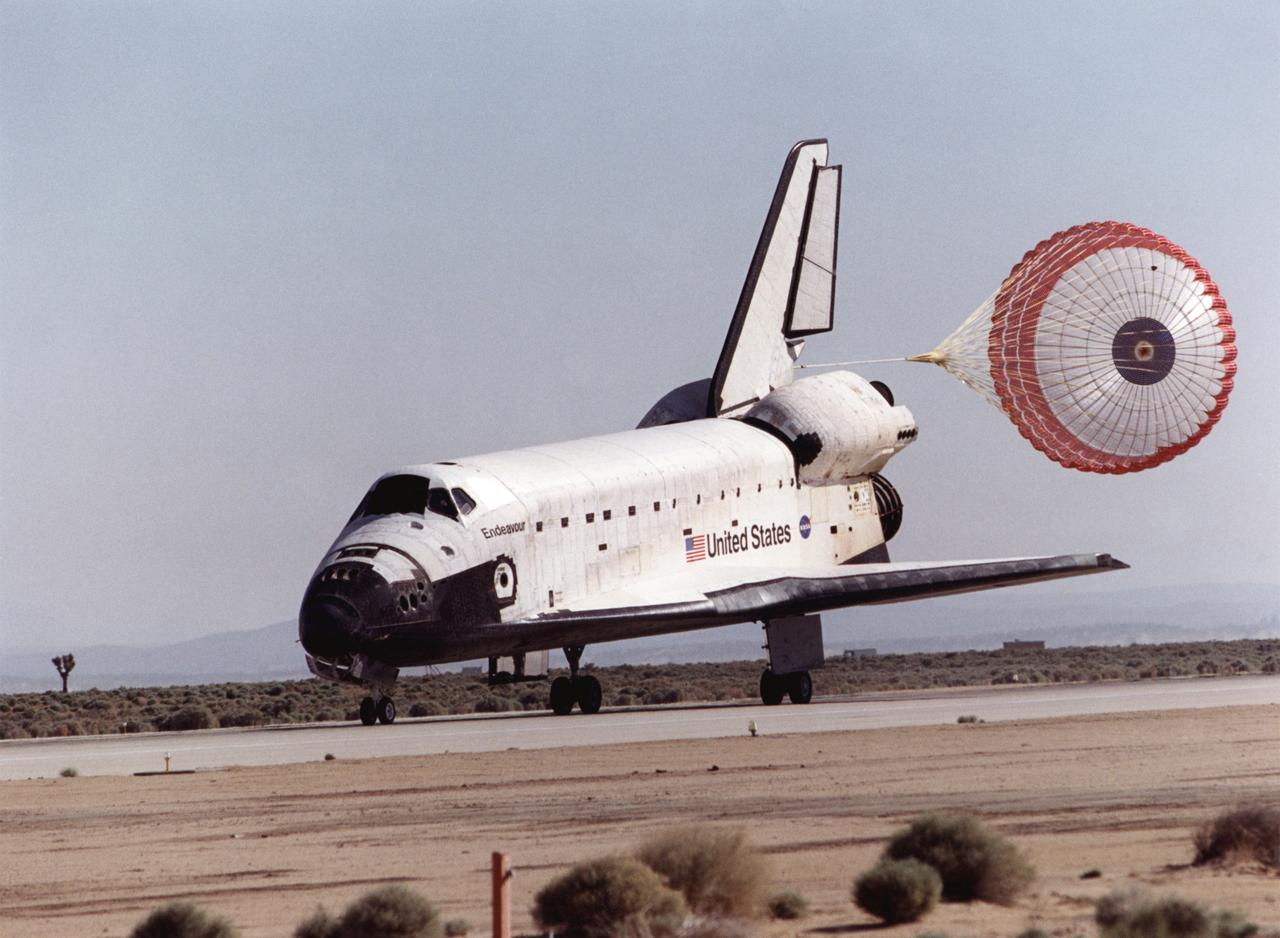
A lone desert Joshua tree greeted the arrival of Space Shuttle Endeavour at Edwards Air Force Base, California, May 1, 2001. A large drag chute helped slow Endeavour on the runway. After mounting the shuttle on a converted 747 airliner at NASA's Dryden Flight Research Center, Endeavour will be carried back to the Kennedy Space Center for its next mission. Weather in Florida necessitated landing in California.
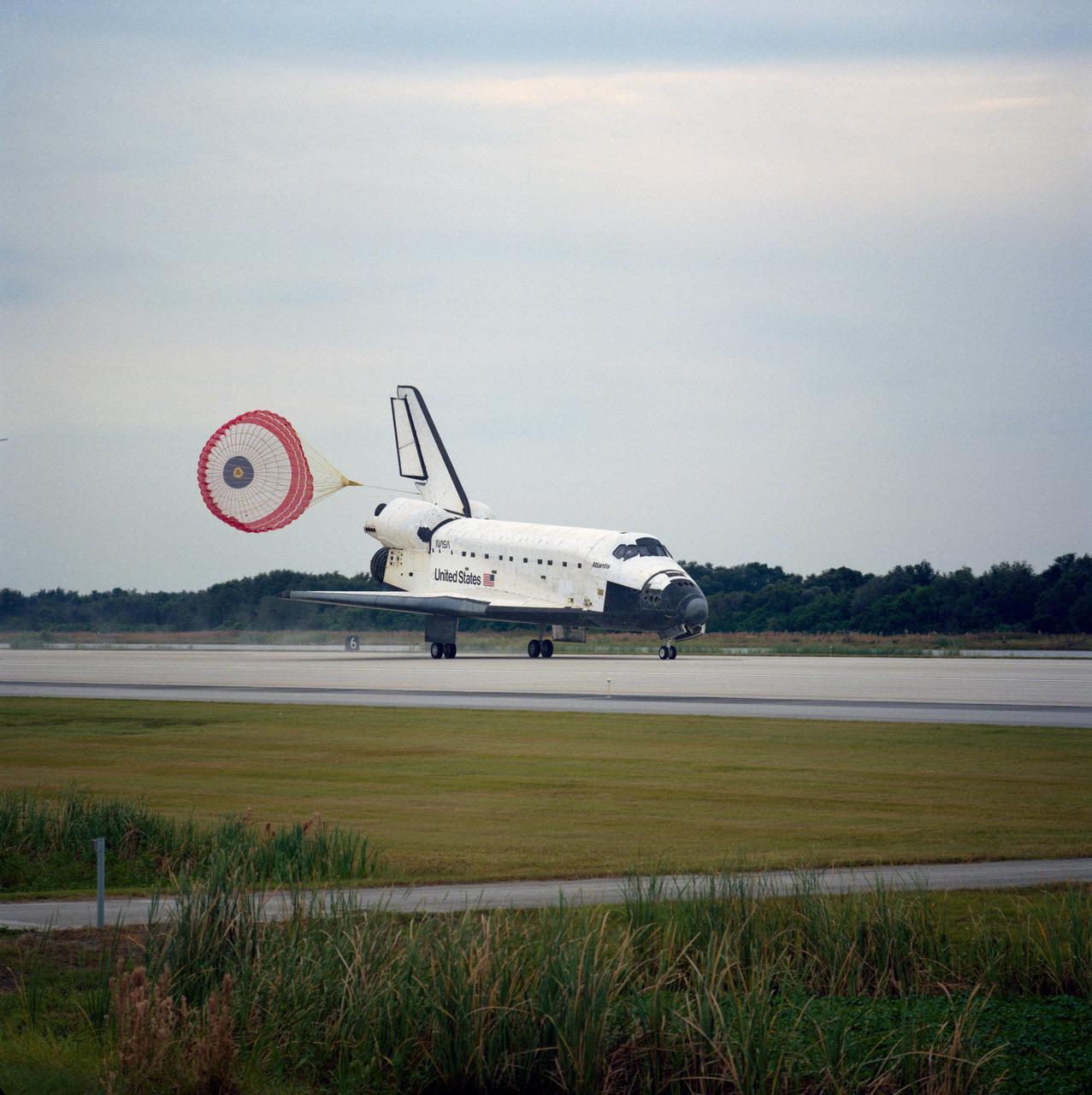
STS074-S-022 (20 Nov 1995) --- The drag chute of the Space Shuttle Atlantis is deployed as the space vehicle touches down on Runway 33 of Kennedy Space Center?s (KSC) Shuttle Landing Facility, completing its STS-74 mission. The main gear touched down at 12:01:27 p.m. (EST), November 20, 1995.
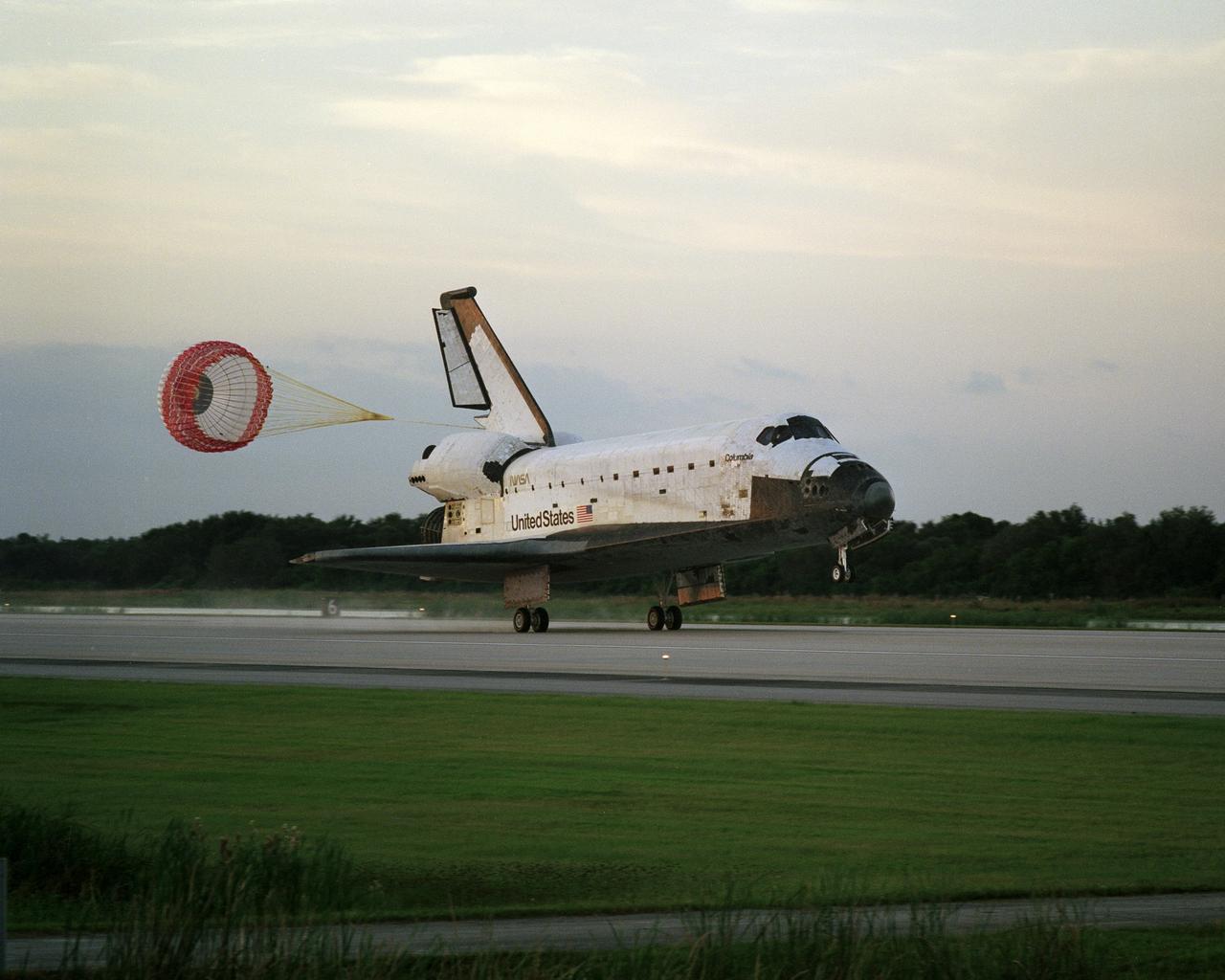
STS073-S-048 (5 November 1995) --- The drag chute on the Space Shuttle Columbia is deployed, marking the completion of its 18th Earth-orbital mission. Landing on the runway of the Shuttle Landing Facility occurred at 6:48 a.m. (EST), November 5, 1995. Onboard were five NASA astronauts and two guest researchers who had spent almost 16 full days in space in support of the U.S. Microgravity Laboratory (USML-2) mission.
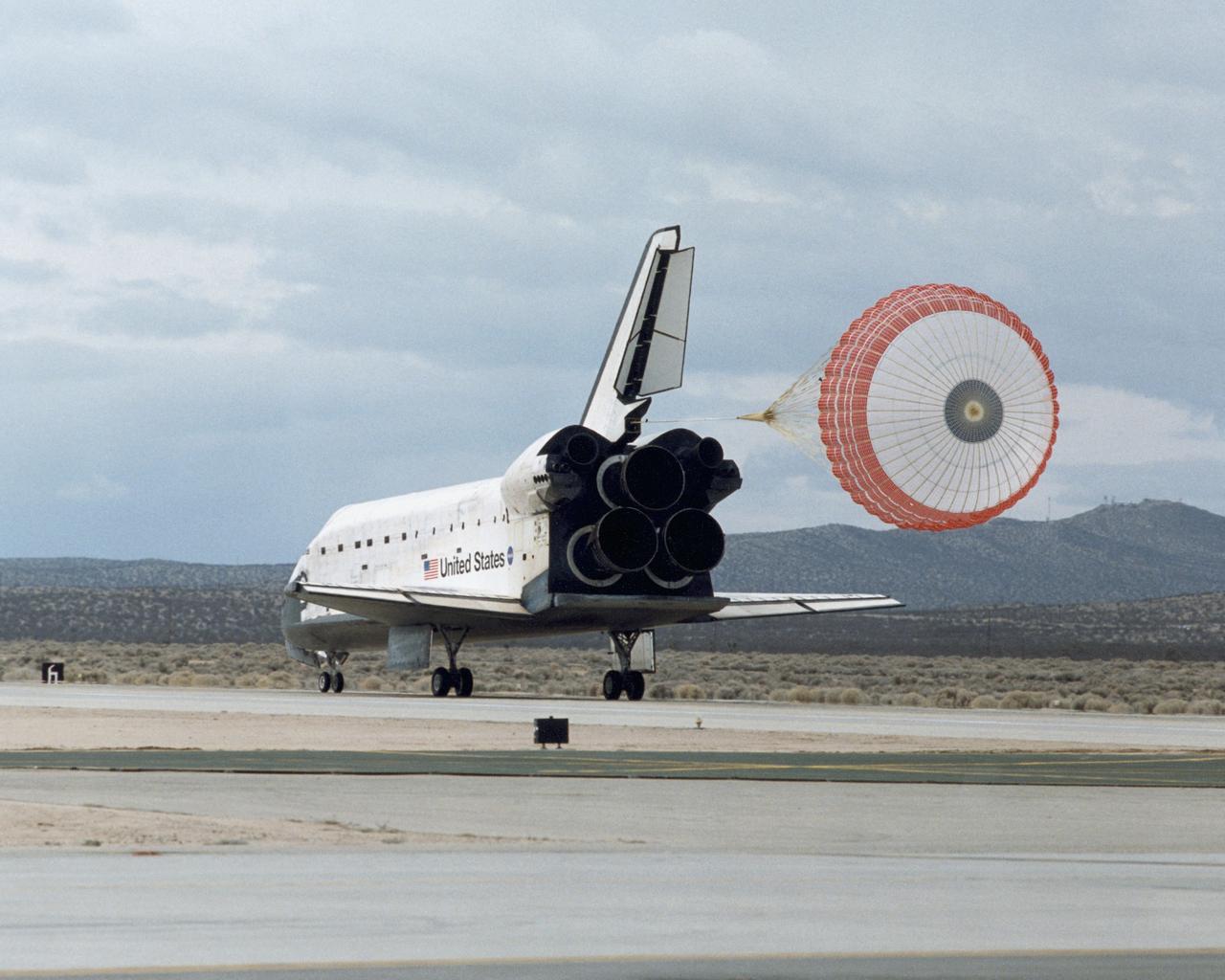
STS098-S-017 (20 Feb. 2001) --- A drag chute slows down the space shuttle Atlantis following its touchdown to mark mission completion at Edwards Air Force Base in the Mojave Desert of California. Onboard were astronauts Kenneth Cockrell, Mark Polansky, Robert Curbeam, Thomas Jones and Marsha Ivins. Atlantis touched down on Edward?s concrete runway at 2:33 p.m. (CST), Feb. 20, for a mission elapsed time of 12 days, 21 hours and 20 minutes. Photo credit: NASA
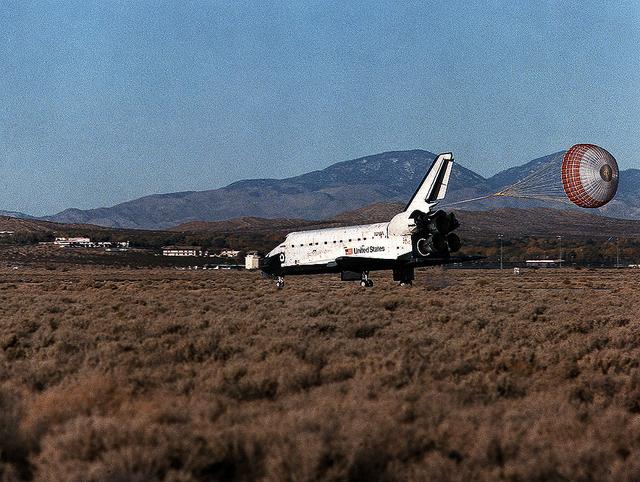
The drag-chute is fully deployed as the Space Shuttle Atlantis (STS-66) heads toward a stop at Edwards Air Force Base in southern California, ending a successful mission. The crew supported the Atmospheric Laboratory for Applications and Science (ATLAS-3), conducting approximately 80 experiments. The Cryogenic Infrared Spectrometer and Telescopes for the Atmosphere-Shuttle Pallet Satellite (CRISTA-SPAS), which was developed by German engineers, was successfully deployed and retrieved during this space mission.
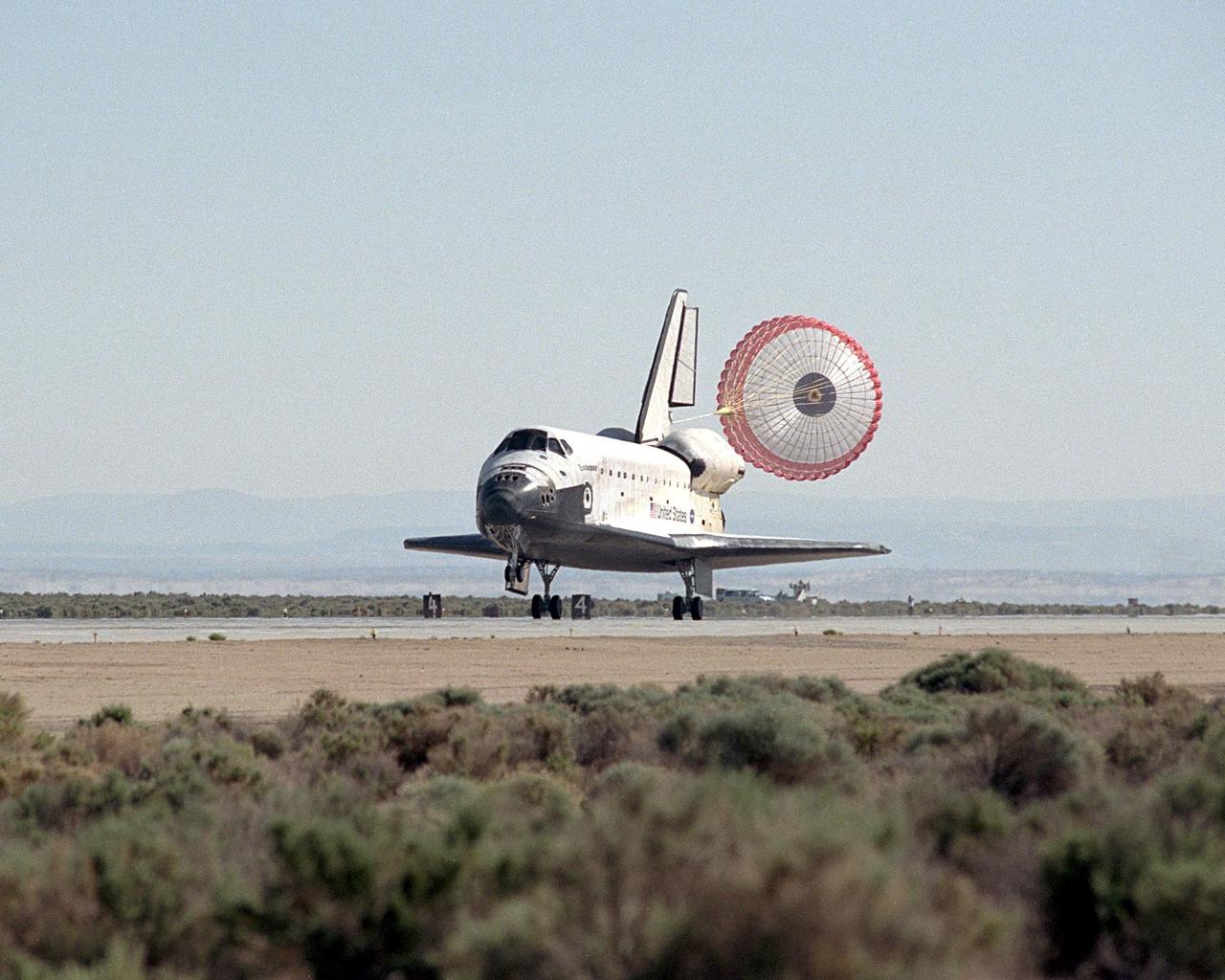
NASA/EDWARDS AFB, CALIF. -- With its drag chute deployed, Endeavour lands on runway 22 at Edwards Air Force Base, Calif., at 12:10:42 p.m. EDT after a mission of 11 days, 12 hours, 54 minutes to the International Space Station on mission STS-100. The orbiter and its crew of seven logged about 4.9 million statute miles in 186 orbits. Due to unfavorable weather conditions, landing at KSC was waved off. The landing marked the third consecutive landing at EAFB.

The drag chute for Space Shuttle Discovery is deployed on the Shuttle Landing Facility, marking the end to the eight-day STS-60 mission. Landing occurred at 2:19:22 p.m. (035); The main landing gear on the Space Shuttle Discovery touches down on the Shuttle Landing Facility (036); The main landing gear on the Space Shuttle Discovery is about to touch down on the Shuttle Landing Facility. Note the Shuttle Training Aircraft (STA) monitoring the landing phase of the mission (037).
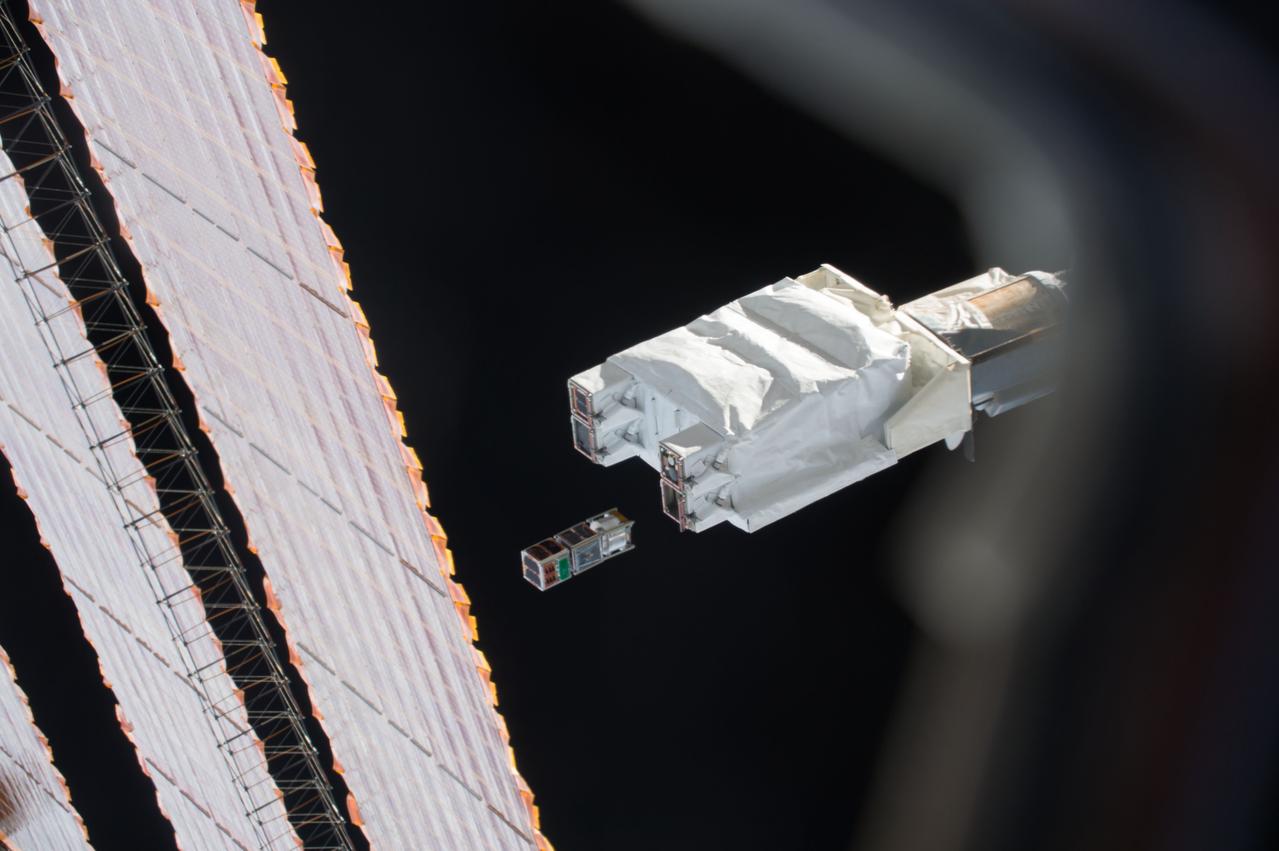
iss050e031198 (1/17/2017) --- Photo documentation of the Japanese-Small Satellite Orbital Deployer-6 (J-SSOD-6) deployment of the ITF-2, Waseda-SAT3 and Freedom CubeSats. The Imagine The Future-2 (ITF-2) CubeSat mission supports amateur radio networking by testing a micro engineered 1/20 wavelength small antenna. The WASEDA SAT-3 is a CubeSat developed by Waseda University aiming to test an ultra-light drag chute for accelerated deorbit. An LCD projector shows images on the chute with imagery sent back to Earth via an onboard camera. FREEDOM is a 1 Unit (1U) CubeSat developed by the Nakashimada Engineering Works and the Tohoku University to demonstrate a deployable deorbit device “DOM” for application in future missions for space debris mitigation.
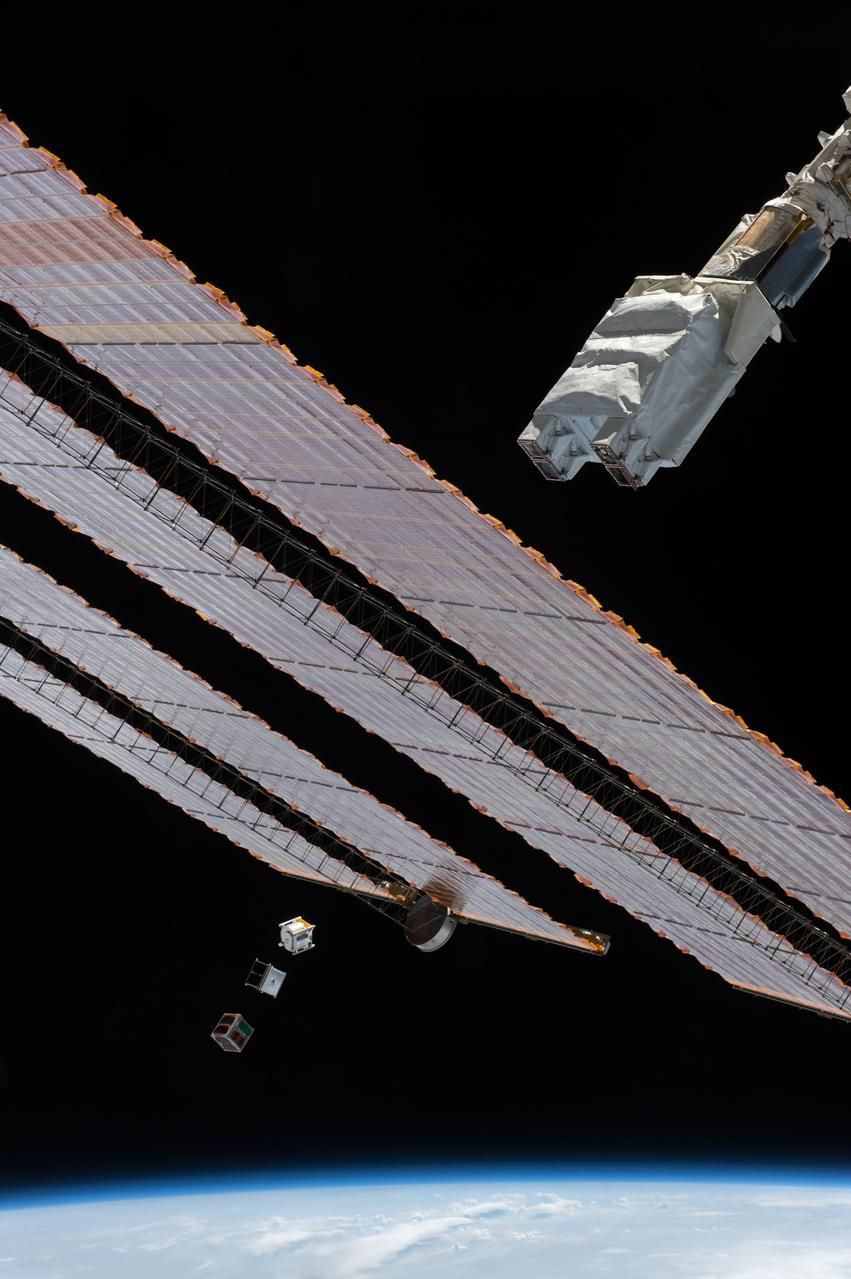
iss050e032565 (1/17/2017) --- Photo documentation of the Japanese-Small Satellite Orbital Deployer-6 (J-SSOD-6) deployment of the ITF-2, Waseda-SAT3 and Freedom CubeSats. The Imagine The Future-2 (ITF-2) CubeSat mission supports amateur radio networking by testing a micro engineered 1/20 wavelength small antenna. The WASEDA SAT-3 is a CubeSat developed by Waseda University aiming to test an ultra-light drag chute for accelerated deorbit. An LCD projector shows images on the chute with imagery sent back to Earth via an onboard camera. FREEDOM is a 1 Unit (1U) CubeSat developed by the Nakashimada Engineering Works and the Tohoku University to demonstrate a deployable deorbit device “DOM” for application in future missions for space debris mitigation.
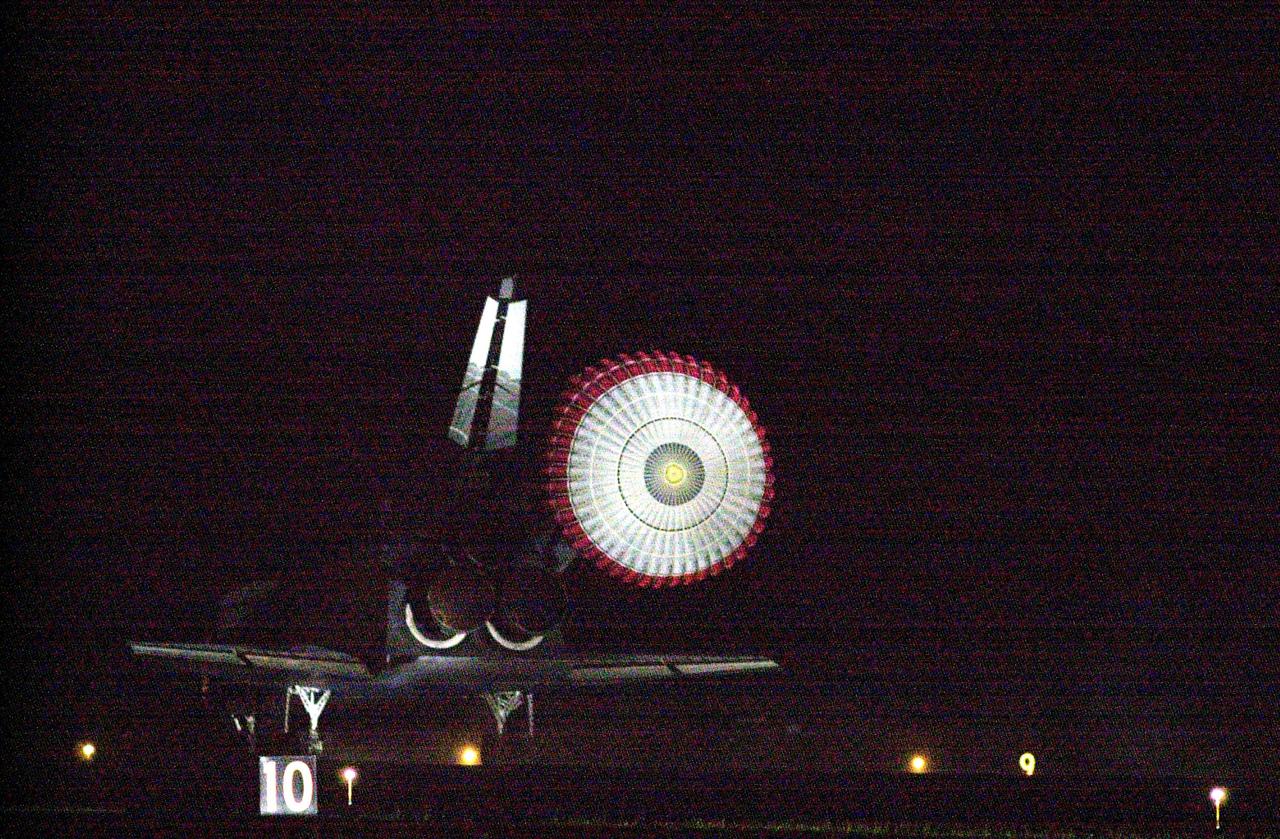
KENNEDY SPACE CENTER, Fla. -- With the drag chute slowing its speed, Atlantis prepares to land on Runway 15 at the Shuttle Landing Facility to complete a 12-day, 18-hour, 34-minute-long STS-104 mission. Main gear touchdown occurred at 11:38:55 p.m. EDT. At the controls is Commander Steven W. Lindsey. Other crew members on board are Pilot Charles Hobaugh and Mission Specialists Michael Gernhardt, Janet Lynn Kavandi and James F. Reilly. This is the 18th nighttime landing for a Space Shuttle, the 13th at Kennedy Space Center. The mission delivered the Joint Airlock Module to the International Space Station, completing the second phase of the assembly of the Space Station
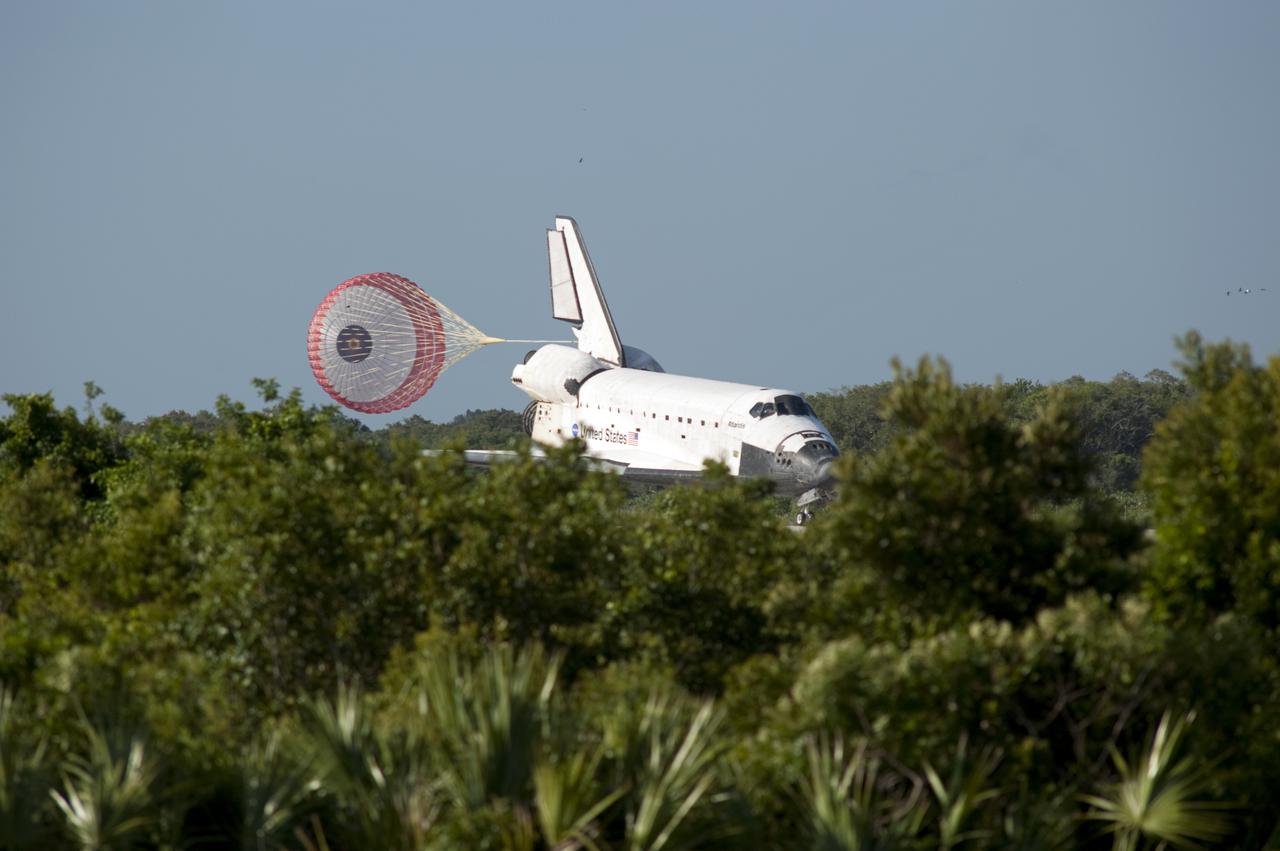
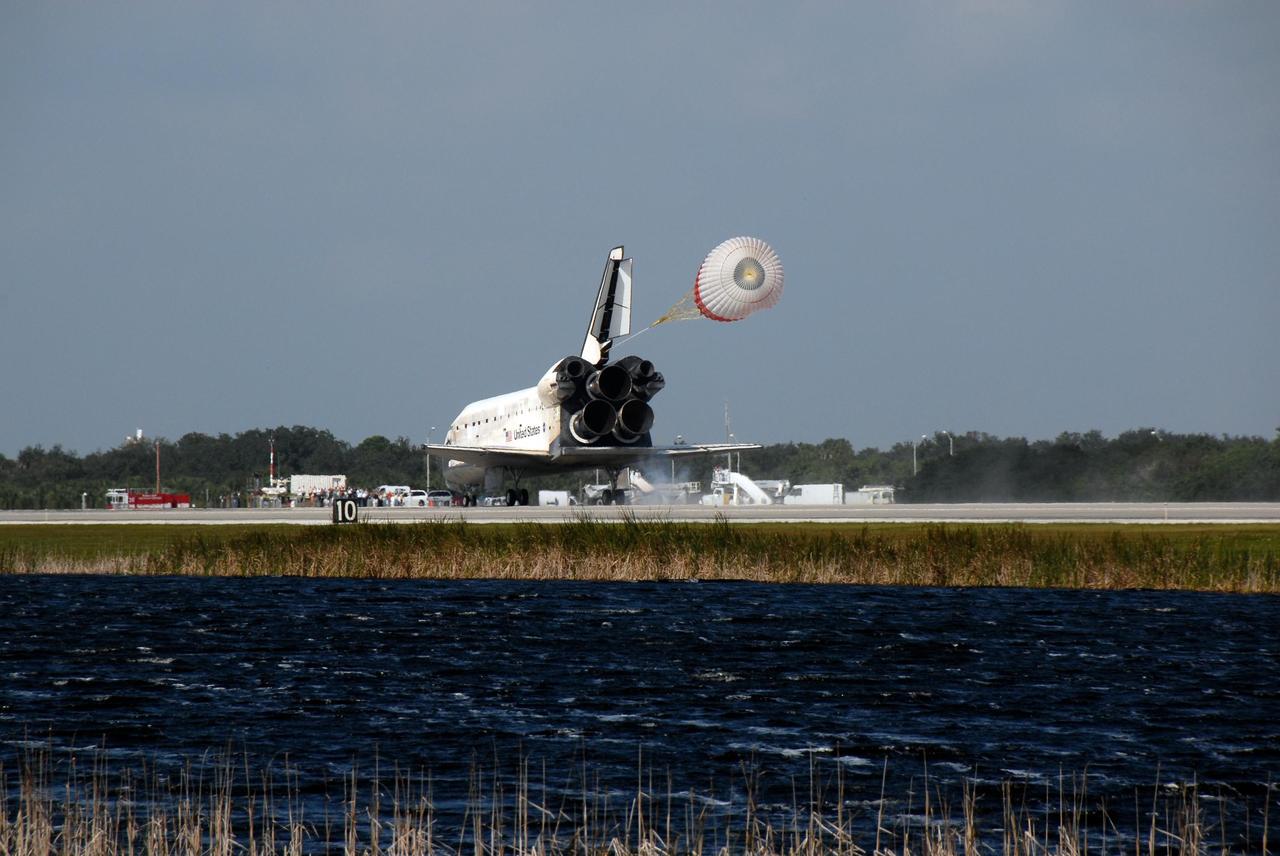
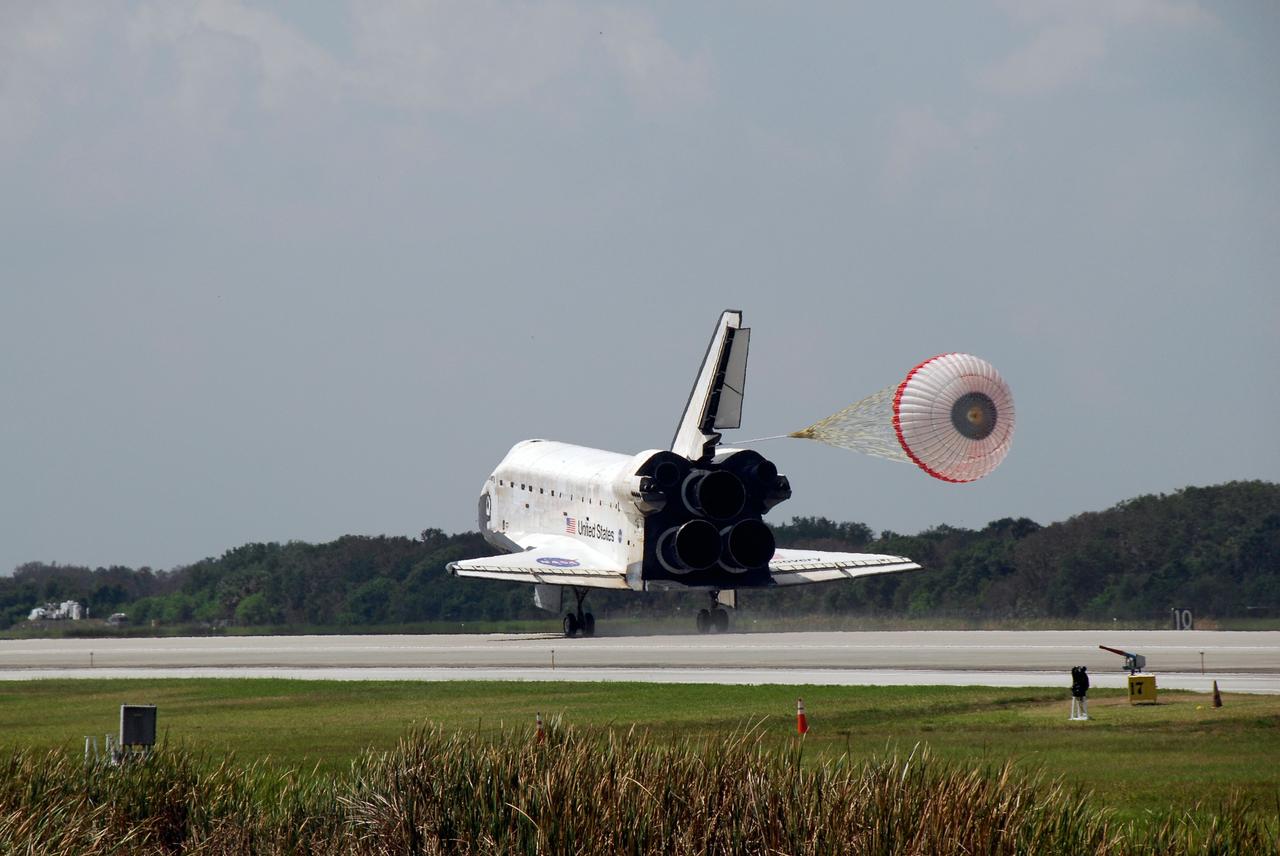
CAPE CANAVERAL, Fla. - Space shuttle Atlantis' drag chute slows the vehicle as it rolls down Runway 33 at the Shuttle Landing Facility at NASA's Kennedy Space Center in Florida. Landing was at 8:48 a.m. EDT, completing the 12-day STS-132 mission to the International Space Station. The six-member STS-132 crew carried the Russian-built Mini Research Module-1 to the International Space Station. STS-132 is the 34th shuttle mission to the station, the 132nd shuttle mission overall and the last planned flight for Atlantis. For information on the STS-132 mission and crew, visit www.nasa.gov_mission_pages_shuttle_shuttlemissions_sts132_index.html. Photo credit: NASA_Rusty Backer
CAPE CANAVERAL, Fla. - With its drag chute unfurled, space shuttle Atlantis rolls down Runway 33 at the Shuttle Landing Facility at NASA's Kennedy Space Center in Florida. Landing was at 8:48 a.m. EDT, completing the 12-day STS-132 mission to the International Space Station. The six-member STS-132 crew carried the Russian-built Mini Research Module-1 to the space station. STS-132 is the 34th shuttle mission to the station, the 132nd shuttle mission overall and the last planned flight for Atlantis. For information on the STS-132 mission and crew, visit www.nasa.gov_mission_pages_shuttle_shuttlemissions_sts132_index.html. Photo credit: NASA_Sandra Joseph and Carl Winebarger
CAPE CANAVERAL, Fla. - Space shuttle Atlantis' drag chute slows the vehicle as it rolls to a stop on Runway 33 at the Shuttle Landing Facility at NASA's Kennedy Space Center in Florida. Landing was at 8:48 a.m. EDT, completing the 12-day STS-132 mission to the International Space Station. The six-member STS-132 crew carried the Russian-built Mini Research Module-1 to the International Space Station. STS-132 is the 34th shuttle mission to the station, the 132nd shuttle mission overall and the last planned flight for Atlantis. For information on the STS-132 mission and crew, visit www.nasa.gov_mission_pages_shuttle_shuttlemissions_sts132_index.html. Photo credit: NASA_Tony Gray
KENNEDY SPACE CENTER, FLA. -- The drag chute deployed behind space shuttle Discovery helps slow its smooth landing on Runway 33 of the Shuttle Landing Facility at NASA's Kennedy Space Center, completing the 15-day mission STS-120. Main gear touchdown was 1:01:16 p.m. Wheel stop was at 1:02:07 p.m. Mission elapsed time was 15 days, 2 hours, 24 minutes and 2 seconds. Mission STS-120 continued the construction of the station with the installation of the Harmony Node 2 module and the relocation of the P6 truss. Photo credit: NASA/Scott Haun
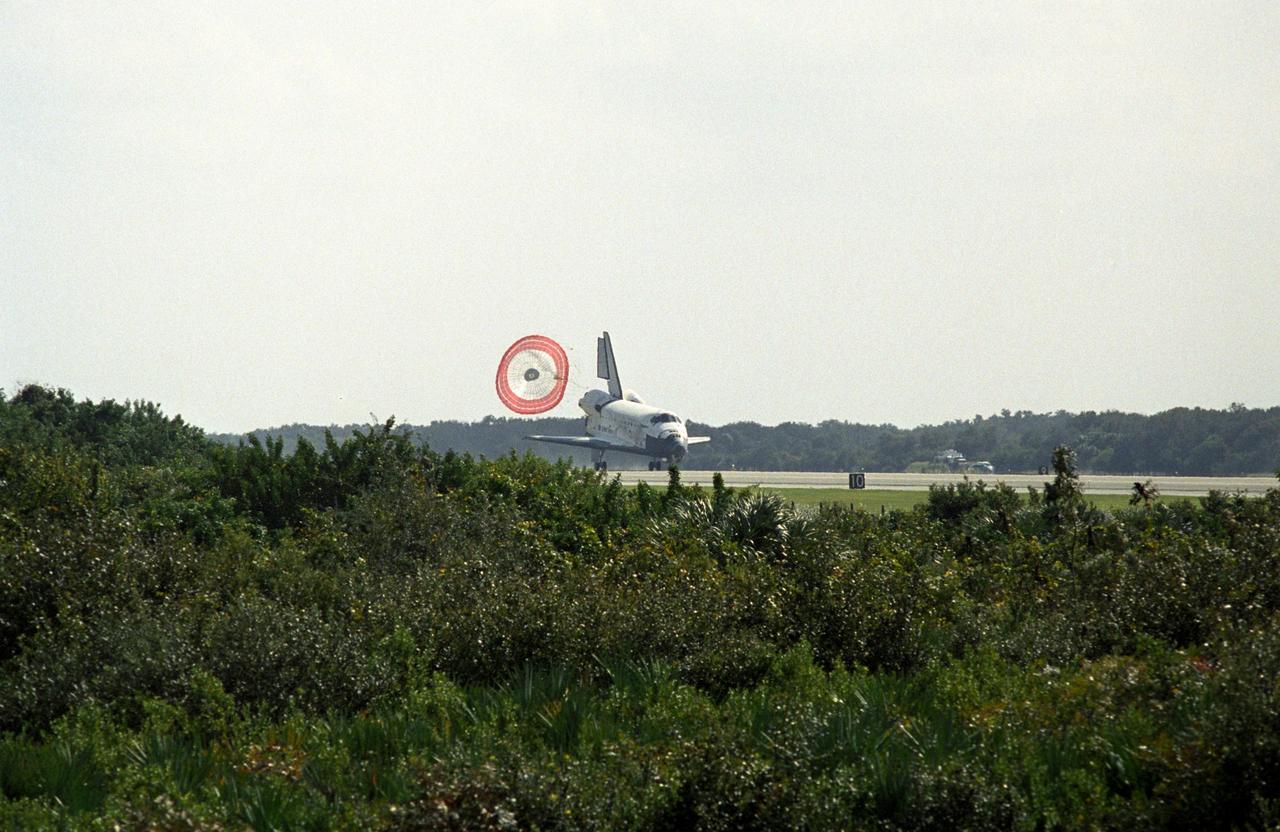
KENNEDY SPACE CENTER, FLA. -- Viewed over the scrub near Runway 33 of the Shuttle Landing Facility at NASA's Kennedy Space Center, space shuttle Discovery is slowed by a drag chute behind it as it lands. The landing completes the 15-day mission STS-120 to the International Space Station. Main gear touchdown was 1:01:16 p.m. Wheel stop was at 1:02:07 p.m. Mission elapsed time was 15 days, 2 hours, 24 minutes and 2 seconds. During the mission, the STS-120 crew continued the construction of the station with the installation of the Harmony Node 2 module and the relocation of the P6 truss. Photo credit: NASA/Sandra Joseph, Tim Powers
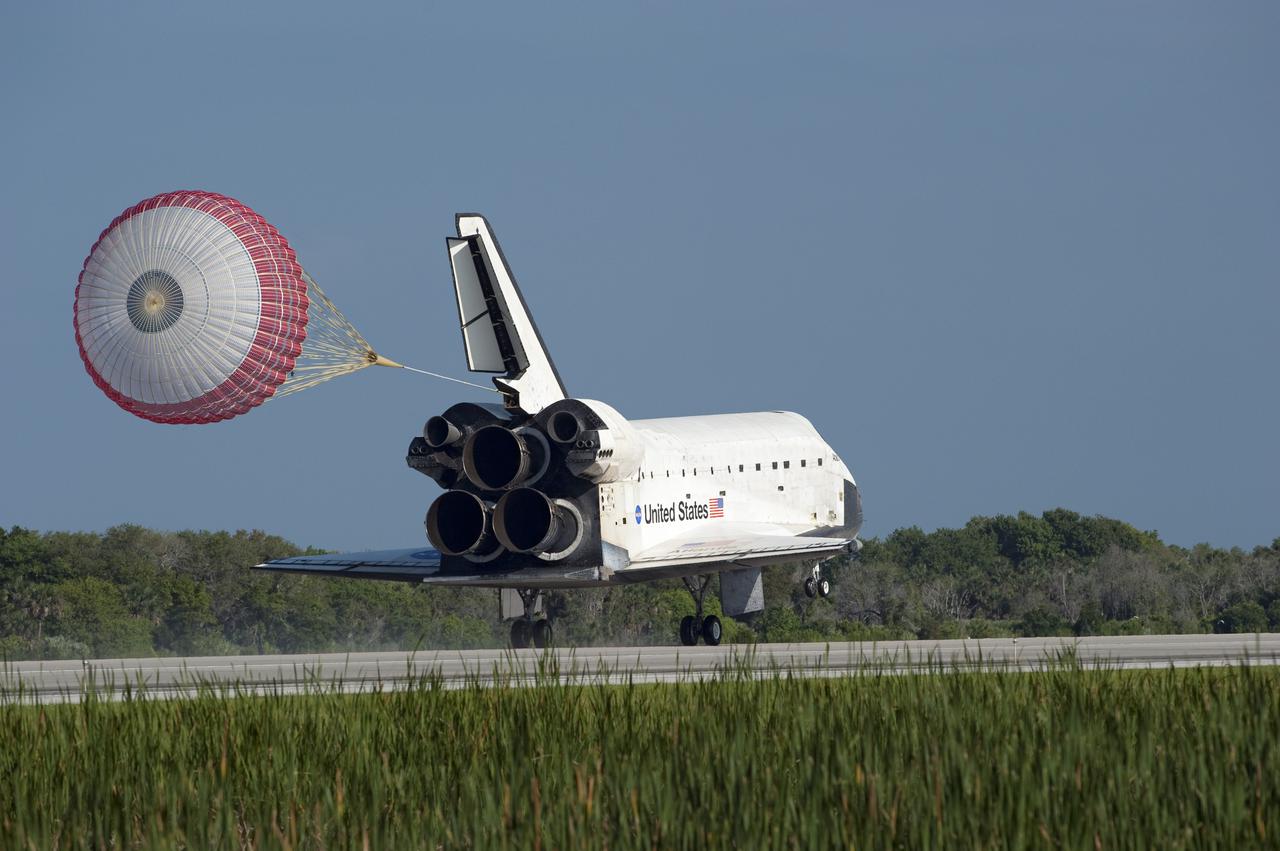
CAPE CANAVERAL, Fla. - Space shuttle Atlantis' drag chute slows the vehicle as its main gear touches down on Runway 33 at the Shuttle Landing Facility at NASA's Kennedy Space Center in Florida. Landing was at 8:48 a.m. EDT, completing the 12-day STS-132 mission to the International Space Station. The six-member STS-132 crew carried the Russian-built Mini Research Module-1 to the space station. STS-132 is the 34th shuttle mission to the station, the 132nd shuttle mission overall and the last planned flight for Atlantis. For information on the STS-132 mission and crew, visit www.nasa.gov_mission_pages_shuttle_shuttlemissions_sts132_index.html. Photo credit: NASA_Tom Joseph
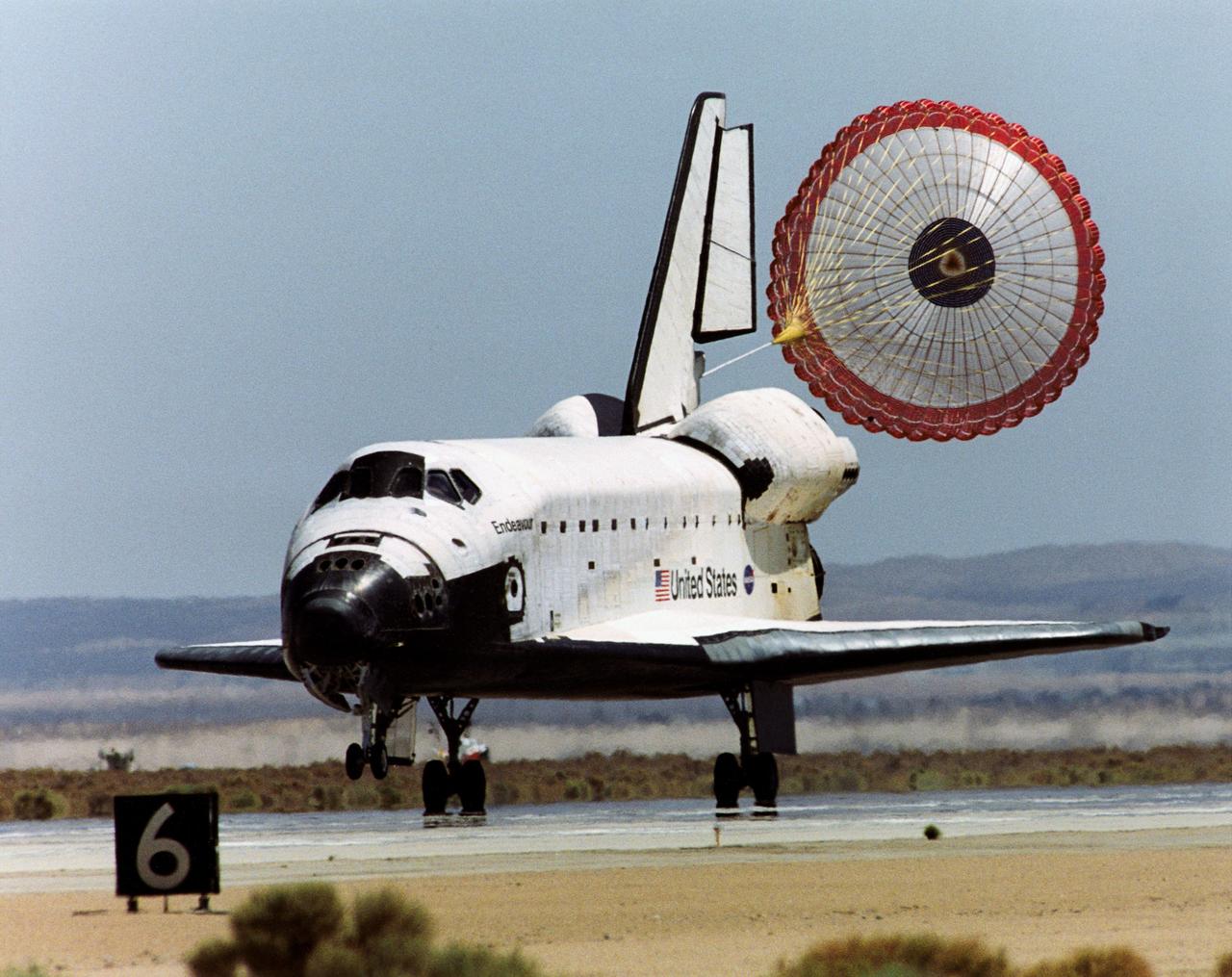
STS111-S-028 (19 June 2002) --- The drag chute on the Space Shuttle Endeavour deploys to slow down the spacecraft during landing on runway 22 at Dryden Flight Research Center. After traveling 5.8 million miles in space during 217 orbits, the shuttle ended NASA's STS-111 mission with complete wheel stop on the concrete runway at 10:58:45 a.m. (PDT), June 19, 2002. Three days of unfavorable weather conditions at KSC prompted the decision to land at Edwards, which enjoyed pristine, dry conditions. Main gear touchdown occurred at 10:57:41 a.m. (PDT) and nose gear touchdown at 10:57:53 a.m. (PDT).
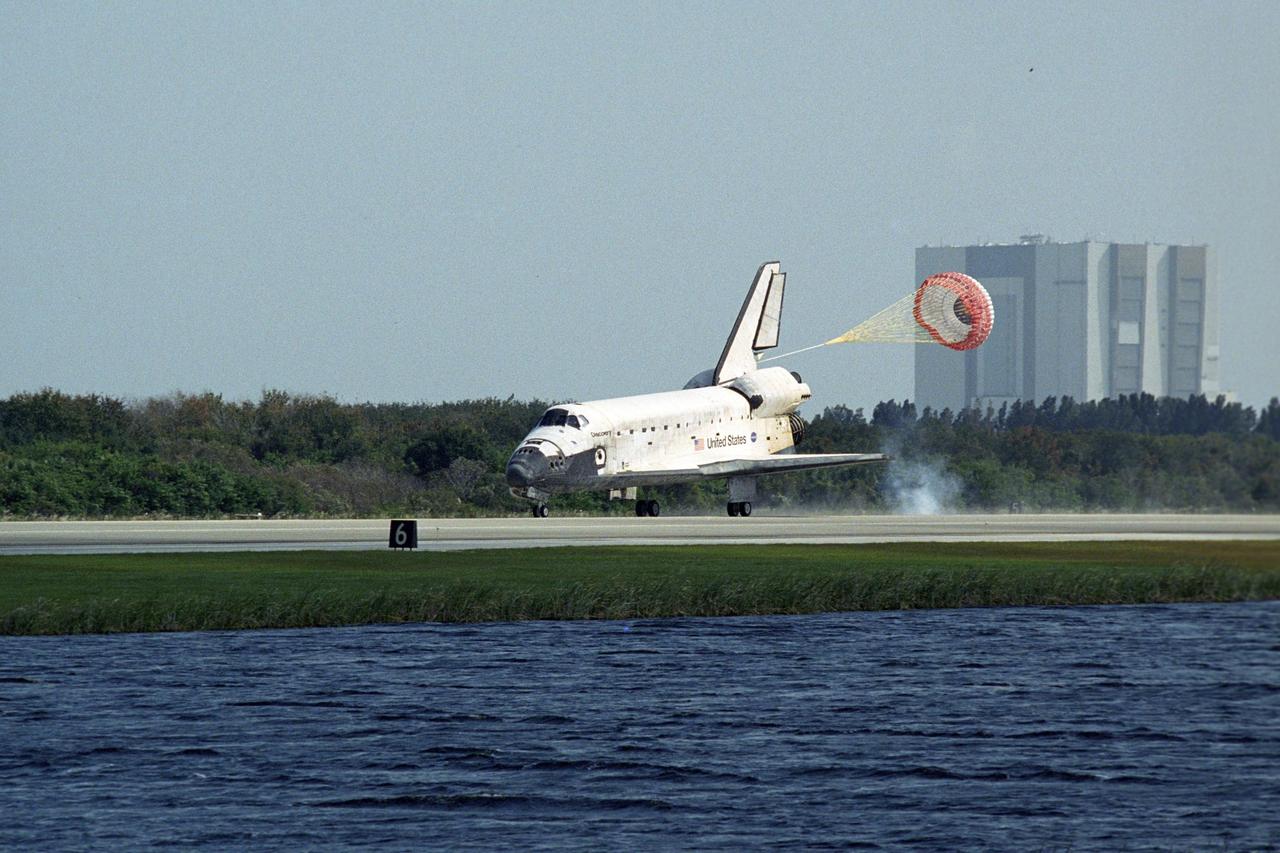
KENNEDY SPACE CENTER, FLA. -- The space shuttle Discovery is slowed by a drag chute behind it as it lands on Runway 33 of the Shuttle Landing Facility at NASA's Kennedy Space Center. he landing completes the 15-day mission STS-120 to the International Space Station. Main gear touchdown was 1:01:16 p.m. Wheel stop was at 1:02:07 p.m. Mission elapsed time was 15 days, 2 hours, 24 minutes and 2 seconds. During the mission, the STS-120 crew continued the construction of the station with the installation of the Harmony Node 2 module and the relocation of the P6 truss. Photo credit: NASA/Regina Mitchell-Ryall, Robert Murray
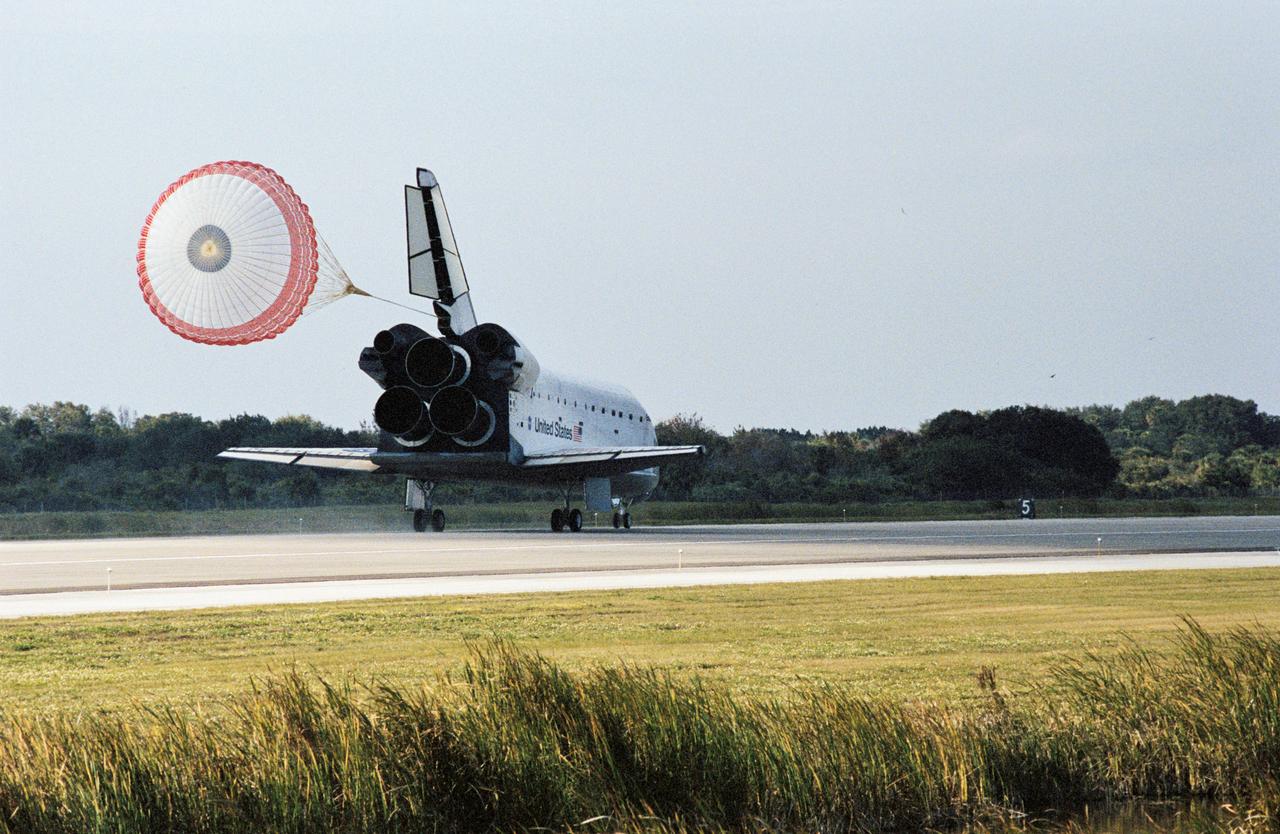
STS113-S-043 (7 December 2002) --- The drag chute on the Space Shuttle Endeavour deploys to slow down the spacecraft during landing on runway 33 at the KSC landing facility, completing the nearly 14-day STS-113 mission to the International Space Station (ISS). Astronaut James D. Wetherbee, mission commander, eased Endeavour to a textbook landing on runway 33 at the Florida spaceport at 2:37 p.m. (EST) on December 7, 2002. The landing completed a 5.74-million mile mission that saw successful delivery and installation of the Port One (P1) truss on the orbital outpost.
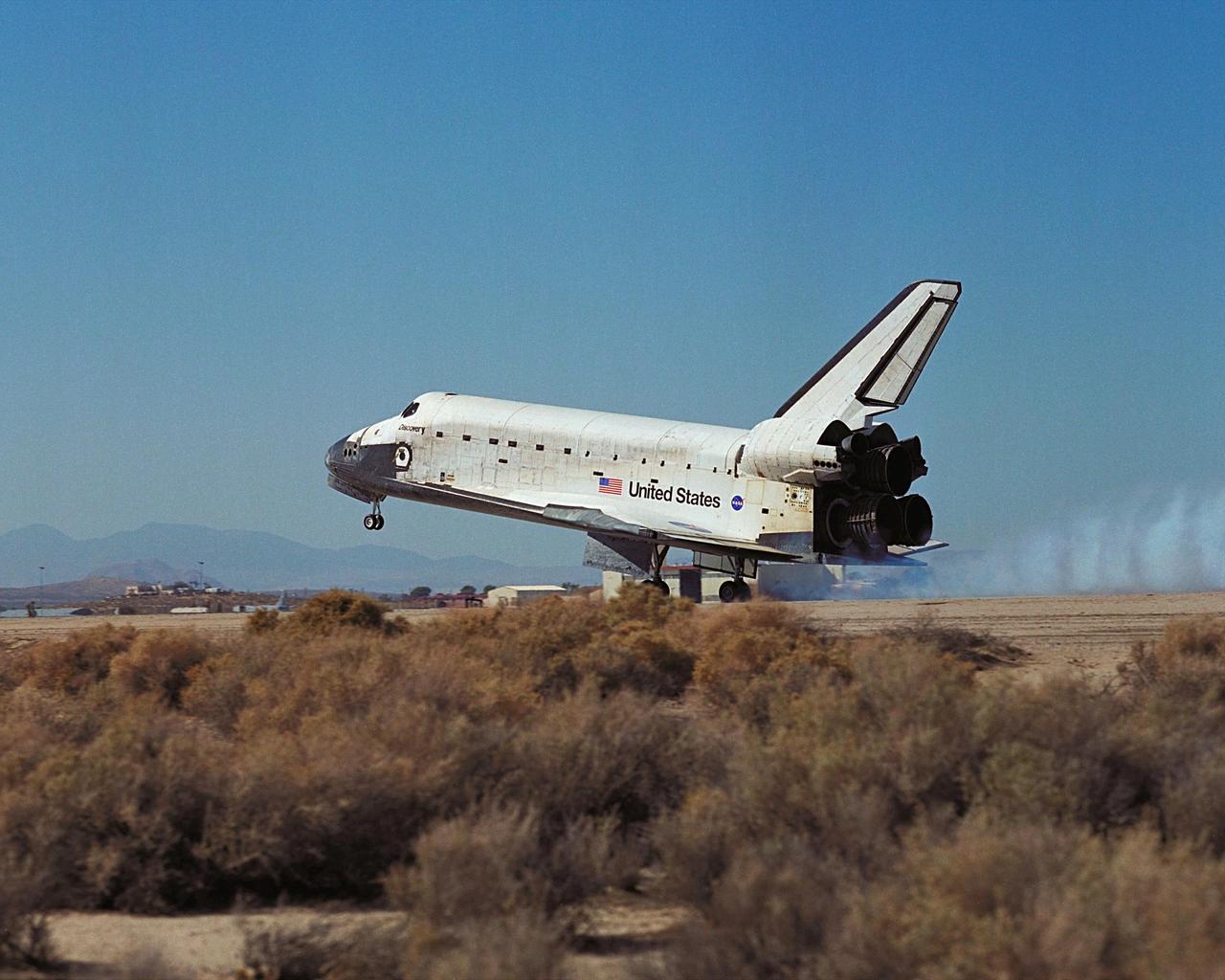
Viewed from the side, orbiter Discovery, with its seven-member crew, touches down on the landing strip at Edwards Air Force Base, Calif., after an 11-day mission to the International Space Station. The orbiter’s main landing gear touched down on EAFB runway 22 at 5 p.m. With the aid of its drag chute, Discovery came to a complete stop at 5:01 p.m. At the conclusion of mission STS-92, Discovery and crew had traveled about 5.3 million statute miles. Following vehicle safing and preliminary offloading efforts, workers will begin preparations for Discovery’s transcontinental ferry flight back to KSC on the back of NASA’s modified Boeing 747
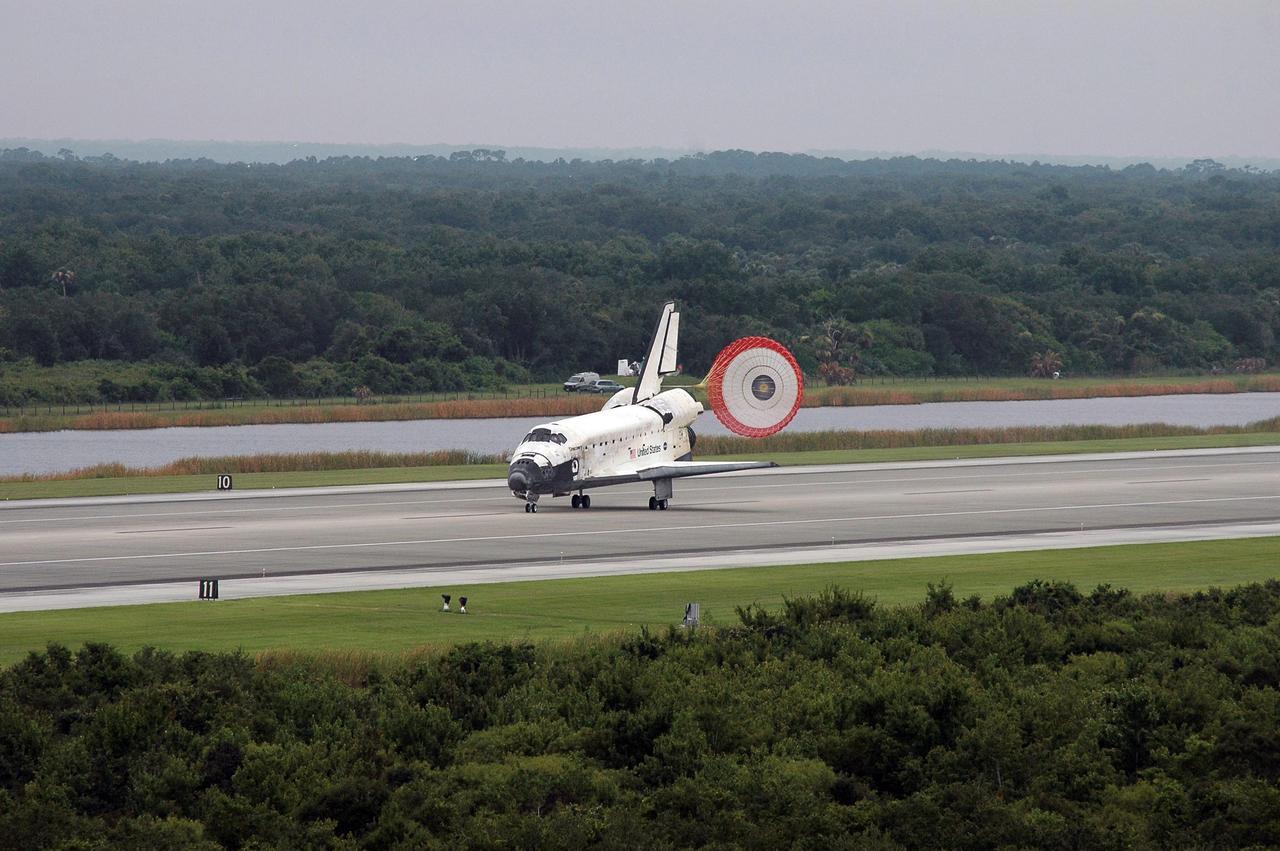
STS121-S-056 (17 July 2006) --- With drag chute deployed, Space Shuttle Discovery slows to a stop after landing on runway 15 at Kennedy Space Center's Shuttle Landing Facility at 9:14 a.m. (EDT) on July 17, 2006. Onboard were astronauts Steven W. Lindsey, commander; Mark E. Kelly, pilot; Piers J. Sellers, Michael E. Fossum, Lisa M. Nowak and Stephanie D. Wilson, all mission specialists. During the nearly 13-day mission, the STS-121 crew tested new equipment and procedures to improve shuttle safety, and delivered supplies and made repairs to the International Space Station.
![EDWARDS AFB, CALIF. -- After traveling 5.8 million miles in space during 217 orbits, and with drag chute deployed, Endeavour lands on concrete runway 22 at Dryden Flight Research Center, Edwards Air Force Base, Calif., completing mission STS-111. Three days of unfavorable weather conditions at KSC prompted the decision to land at Edwards, which enjoyed pristine, dry conditions.. Main gear touchdown occurred at 1:57:41 p.m. EDT, nose gear touchdown at 1:57:53 p.m. EDT and wheel stop at 1:58:45 p.m. EDT. [Photo by Jim Ross]](https://images-assets.nasa.gov/image/KSC-02pp1114/KSC-02pp1114~medium.jpg)
EDWARDS AFB, CALIF. -- After traveling 5.8 million miles in space during 217 orbits, and with drag chute deployed, Endeavour lands on concrete runway 22 at Dryden Flight Research Center, Edwards Air Force Base, Calif., completing mission STS-111. Three days of unfavorable weather conditions at KSC prompted the decision to land at Edwards, which enjoyed pristine, dry conditions.. Main gear touchdown occurred at 1:57:41 p.m. EDT, nose gear touchdown at 1:57:53 p.m. EDT and wheel stop at 1:58:45 p.m. EDT. [Photo by Jim Ross]
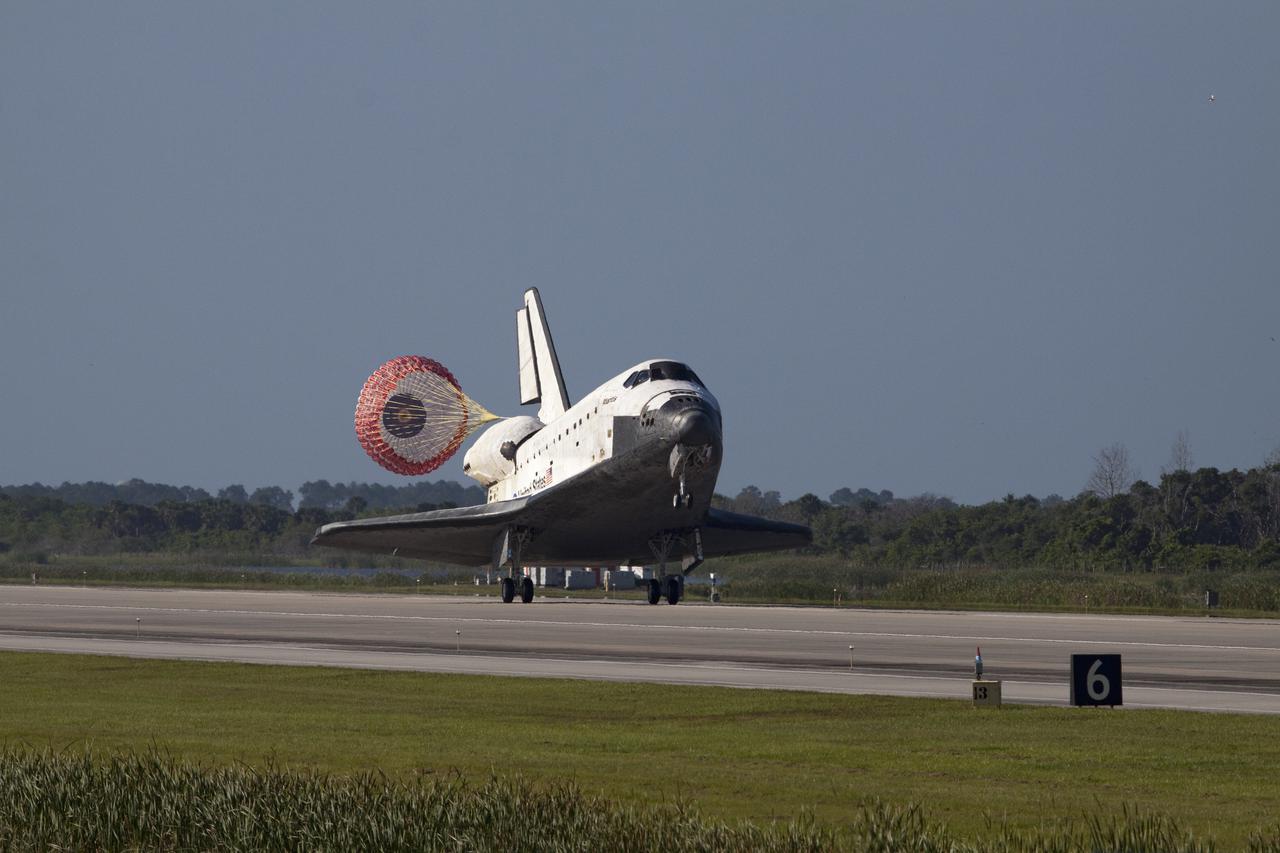
CAPE CANAVERAL, Fla. - With its drag chute unfurled, space shuttle Atlantis rolls down Runway 33 at the Shuttle Landing Facility at NASA's Kennedy Space Center in Florida. Landing was at 8:48 a.m. EDT, completing the 12-day STS-132 mission to the International Space Station. The six-member STS-132 crew carried the Russian-built Mini Research Module-1 to the space station. STS-132 is the 34th shuttle mission to the station, the 132nd shuttle mission overall and the last planned flight for Atlantis. For information on the STS-132 mission and crew, visit www.nasa.gov_mission_pages_shuttle_shuttlemissions_sts132_index.html. Photo credit: NASA_Jack Pfaller
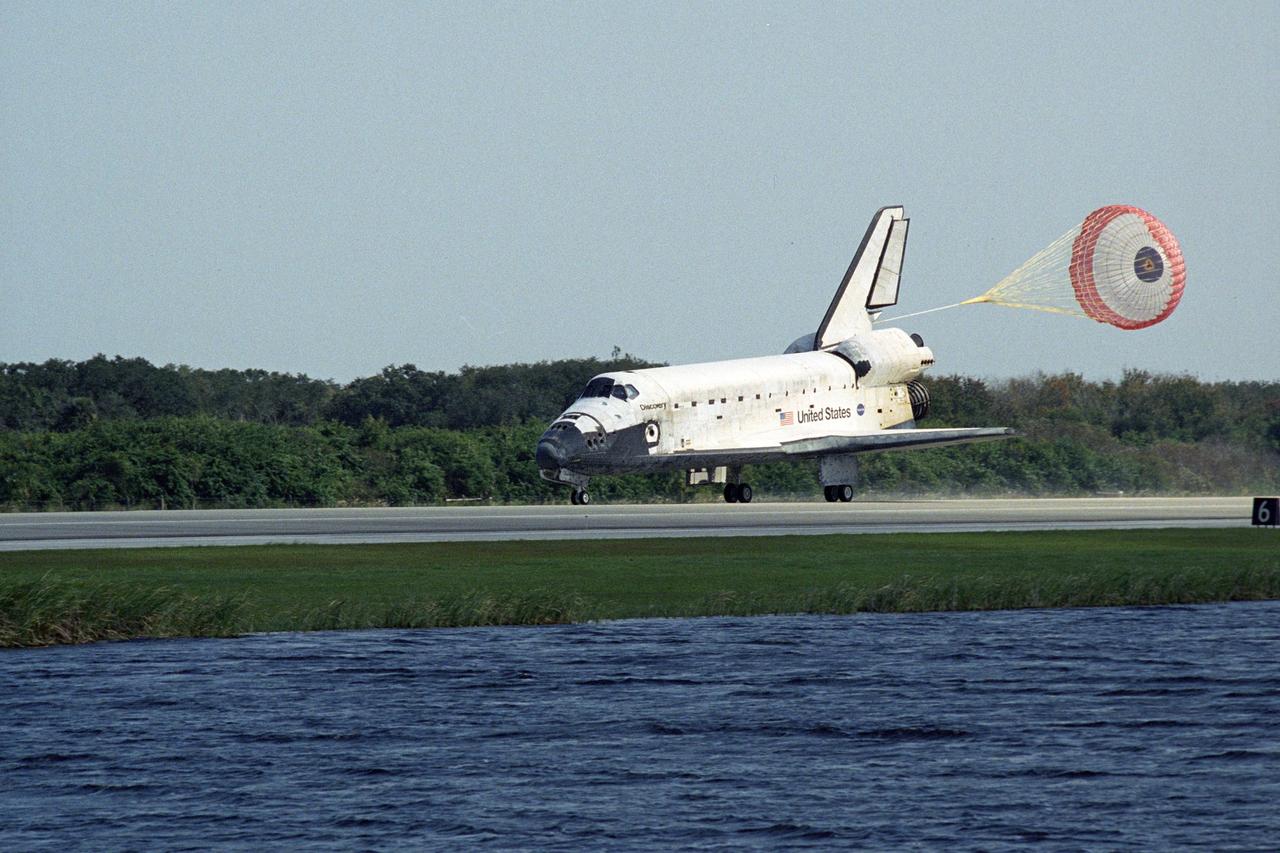
KENNEDY SPACE CENTER, FLA. -- The space shuttle Discovery is slowed by a drag chute behind it as it lands on Runway 33 of the Shuttle Landing Facility at NASA's Kennedy Space Center. he landing completes the 15-day mission STS-120 to the International Space Station. Main gear touchdown was 1:01:16 p.m. Wheel stop was at 1:02:07 p.m. Mission elapsed time was 15 days, 2 hours, 24 minutes and 2 seconds. During the mission, the STS-120 crew continued the construction of the station with the installation of the Harmony Node 2 module and the relocation of the P6 truss. Photo credit: NASA/Regina Mitchell-Ryall, Robert Murray
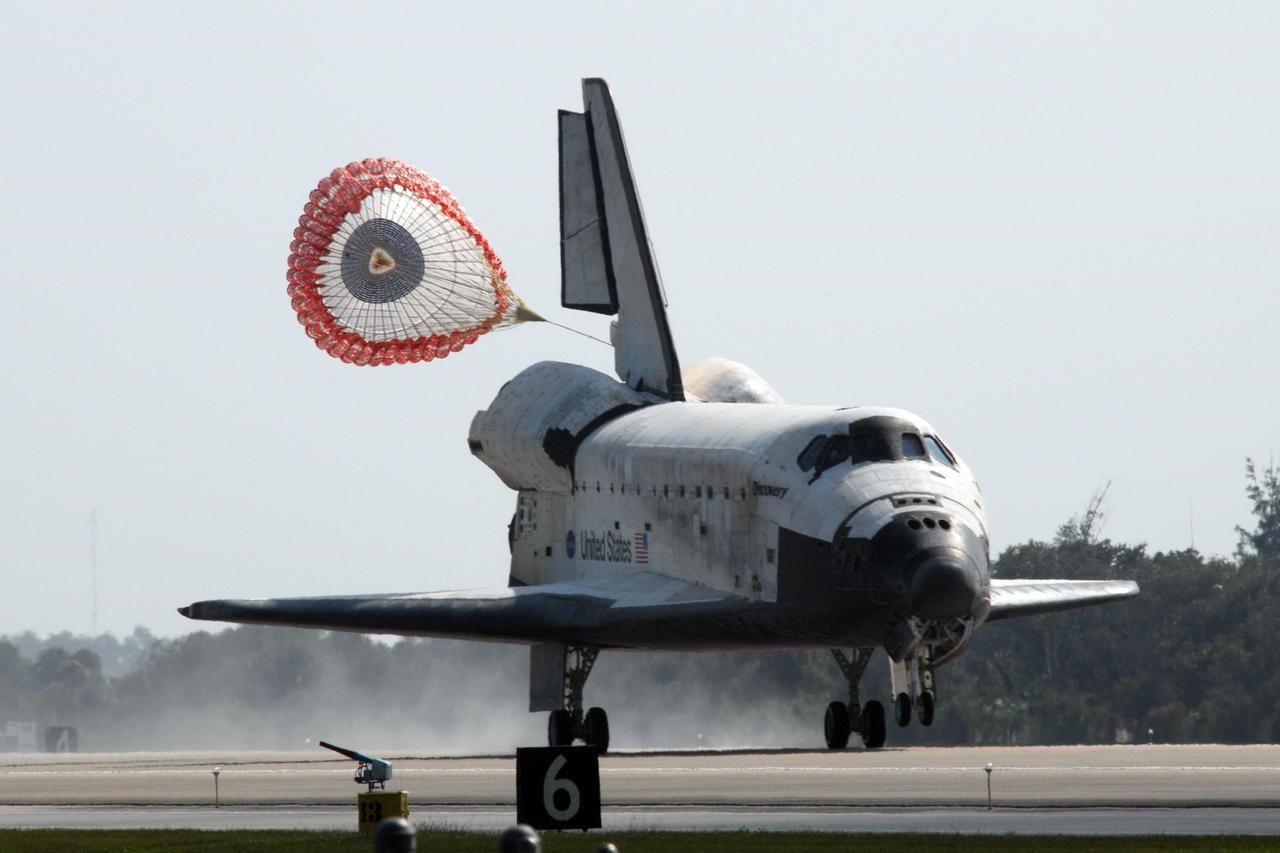
KENNEDY SPACE CENTER, FLA. -- The drag chute deployed behind space shuttle Discovery helps slow its smooth landing on Runway 33 of the Shuttle Landing Facility at NASA's Kennedy Space Center, completing the 15-day mission STS-120. Main gear touchdown was 1:01:16 p.m. Wheel stop was at 1:02:07 p.m. Mission elapsed time was 15 days, 2 hours, 24 minutes and 2 seconds. The STS-120 crew continued the construction of the station with the installation of the Harmony Node 2 module and the relocation of the P6 truss. Photo credit: NASA/George Shelton
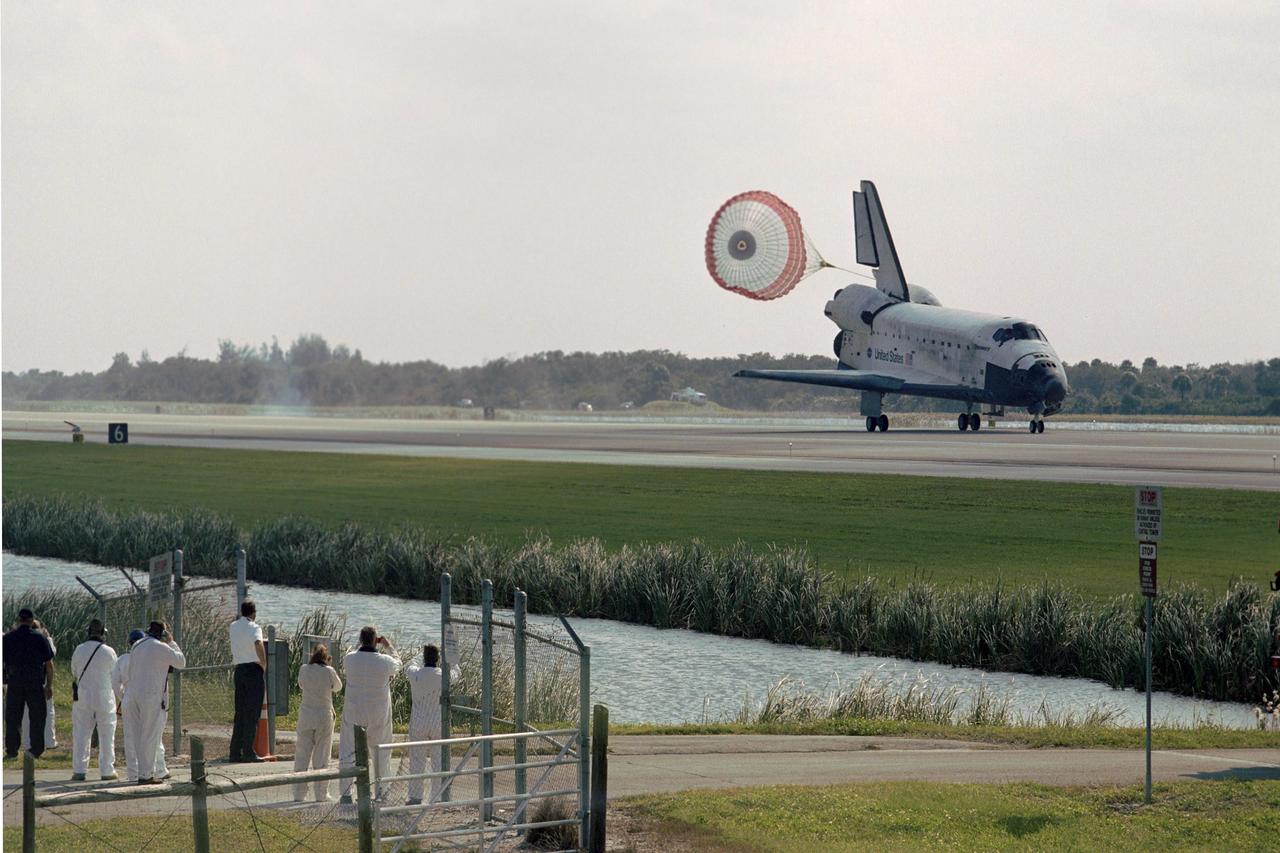
KENNEDY SPACE CENTER, FLA. -- Photographers at lower left capture the release of the drag chute behind space shuttle Discovery as it lands on Runway 33 of the Shuttle Landing Facility at NASA's Kennedy Space Center to complete the 15-day mission STS-120. Main gear touchdown was 1:01:16 p.m. Wheel stop was at 1:02:07 p.m. Mission elapsed time was 15 days, 2 hours, 24 minutes and 2 seconds. During the mission, the STS-120 crew continued the construction of the station with the installation of the Harmony Node 2 module and the relocation of the P6 truss. Photo credit: NASA/Sandra Joseph, Tim Powers
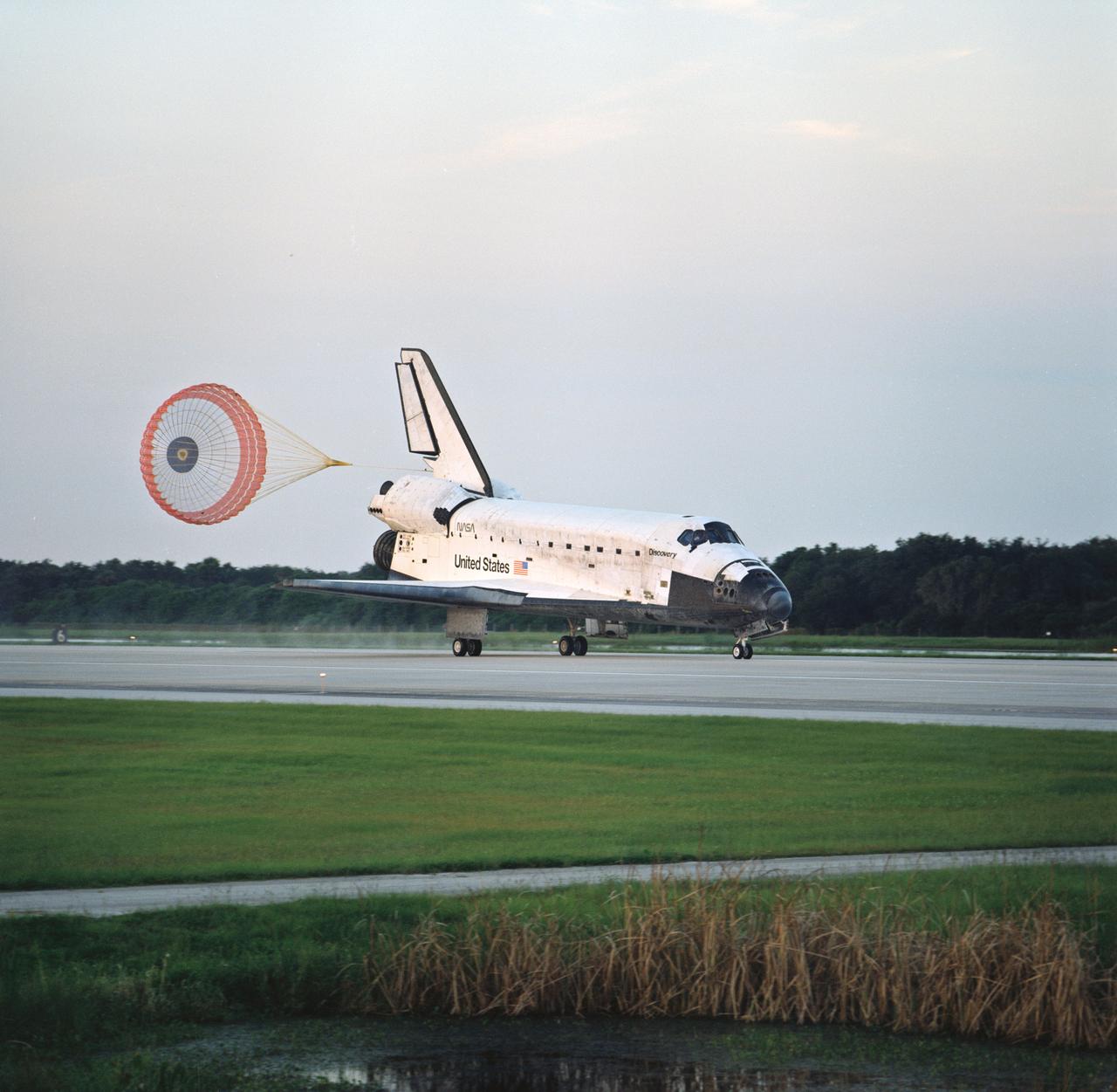
STS085-S-013 (19 August 1997) --- The drag chute of the Space Shuttle Discovery is fully deployed in this scene of the spacecraft's landing on runway 33 at the Kennedy Space Center (KSC). The landing, at 7:08 a.m. (EDT), August 19, 1997, marked the completion of a successful 12-day STS-85 mission. Onboard were astronauts Curtis L. Brown, Jr., mission commander; Kent V. Rominger, pilot; N. Jan Davis, payload commander; and Robert L. Curbeam, Jr., and Stephen K. Robinson, both mission specialists; along with payload specialist Bjarni Tryggvason, representing the Canadian Space Agency (CSA).
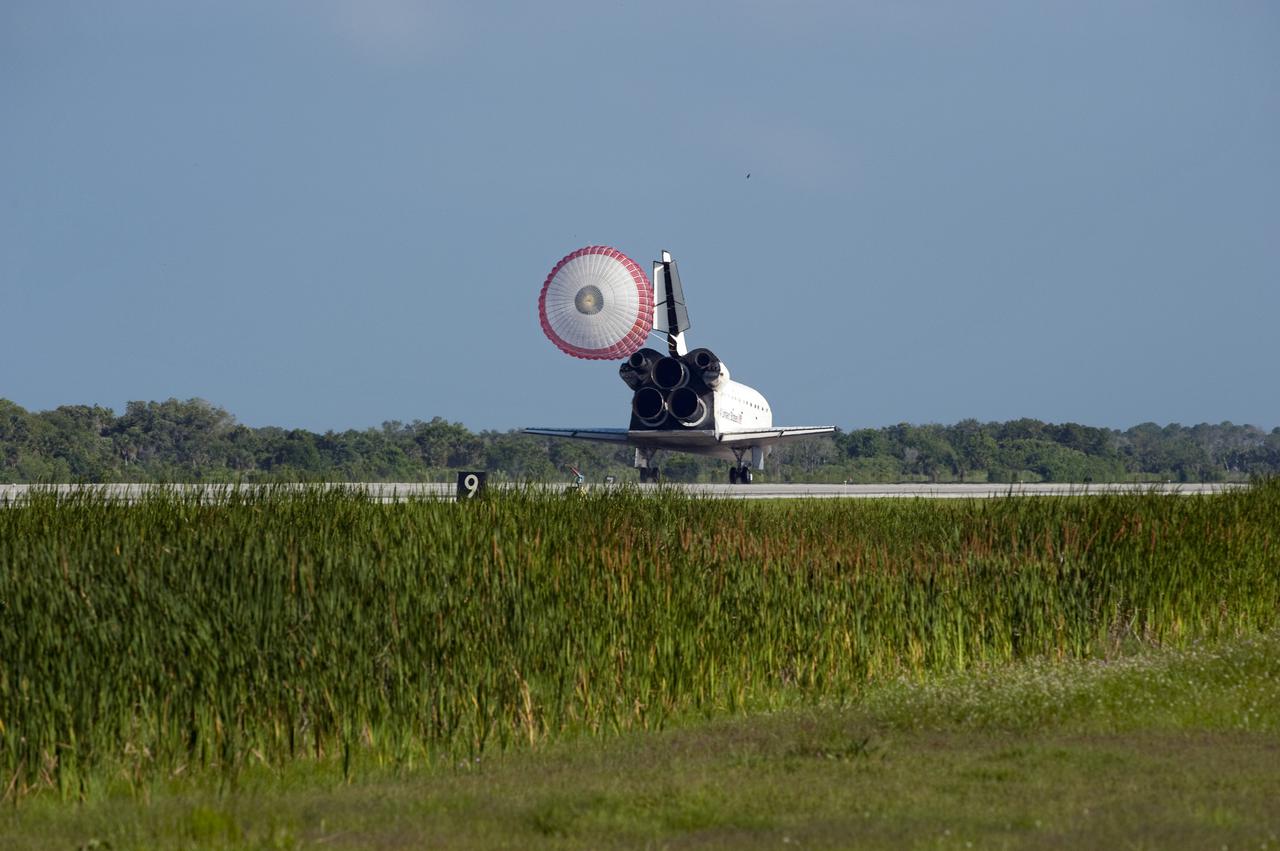
CAPE CANAVERAL, Fla. - Space shuttle Atlantis' drag chute slows the vehicle at it rolls to a stop on Runway 33 at the Shuttle Landing Facility at NASA's Kennedy Space Center in Florida. Landing was at 8:48 a.m. EDT, completing the 12-day STS-132 mission to the International Space Station. The six-member STS-132 crew carried the Russian-built Mini Research Module-1 to the space station. STS-132 is the 34th shuttle mission to the station, the 132nd shuttle mission overall and the last planned flight for Atlantis. For information on the STS-132 mission and crew, visit www.nasa.gov_mission_pages_shuttle_shuttlemissions_sts132_index.html. Photo credit: NASA_Tom Joseph
KENNEDY SPACE CENTER, FLA. -- The drag chute is deployed behind space shuttle Discovery to help slow its landing on Runway 33 of the Shuttle Landing Facility at NASA's Kennedy Space Center at 1:01 p.m. EST on Nov. 7, completing the 15-day mission STS-120. Main gear touchdown was 1:01:16 p.m. Wheel stop was at 1:02:07 p.m. Mission elapsed time was 15 days, 2 hours, 24 minutes and 2 seconds. The STS-120 crew continued the construction of the station with the installation of the Harmony Node 2 module and the relocation of the P6 truss. Photo credit: NASA/Kim Shiflett
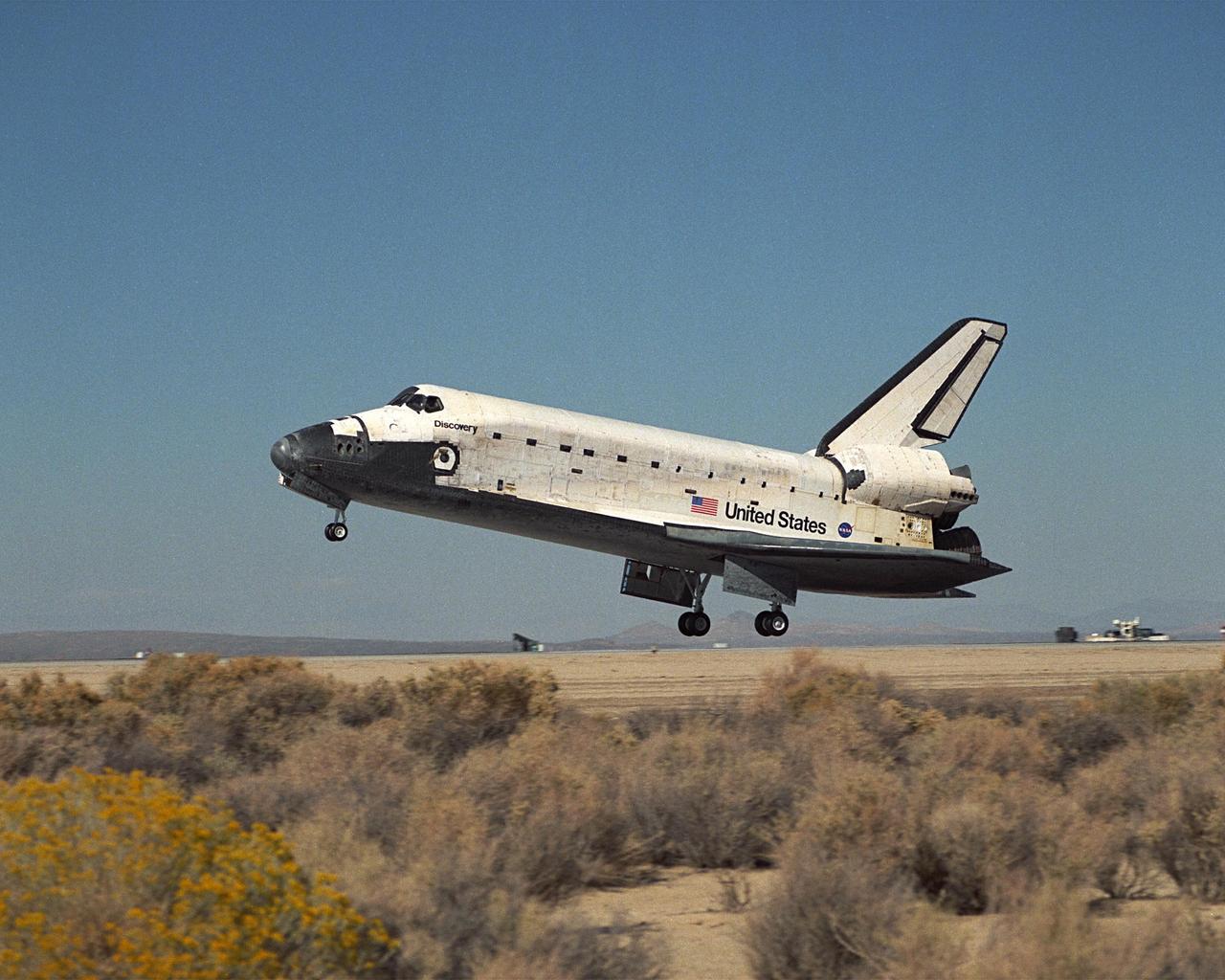
Viewed from the side, orbiter Discovery, with its seven-member crew, is about to touch down on the landing strip at Edwards Air Force Base, Calif., after an 11-day mission to the International Space Station. The orbiter’s main landing gear touched down on EAFB runway 22 at 5 p.m. With the aid of its drag chute, Discovery came to a complete stop at 5:01 p.m. At the conclusion of mission STS-92, Discovery and crew had traveled about 5.3 million statute miles. Following vehicle safing and preliminary offloading efforts, workers will begin preparations for Discovery’s transcontinental ferry flight back to KSC on the back of NASA’s modified Boeing 747
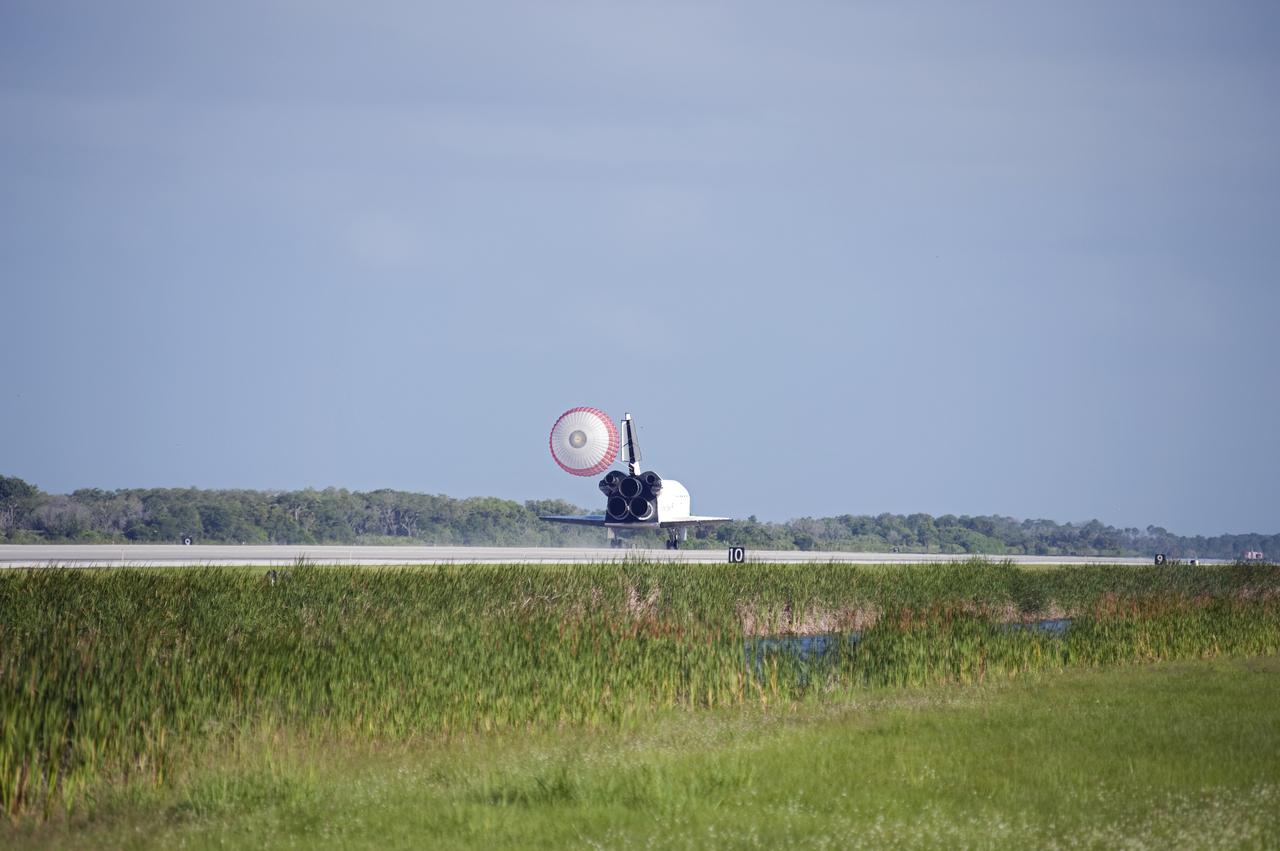
CAPE CANAVERAL, Fla. - Space shuttle Atlantis' drag chute slows the vehicle as it rolls down Runway 33 at the Shuttle Landing Facility at NASA's Kennedy Space Center in Florida. Landing was at 8:48 a.m. EDT, completing the 12-day STS-132 mission to the International Space Station. The six-member STS-132 crew carried the Russian-built Mini Research Module-1 to the space station. STS-132 is the 34th shuttle mission to the station, the 132nd shuttle mission overall and the last planned flight for Atlantis. For information on the STS-132 mission and crew, visit www.nasa.gov_mission_pages_shuttle_shuttlemissions_sts132_index.html. Photo credit: NASA_Thomas Farrar Jr.
CAPE CANAVERAL, Fla. – A drag chute slows space shuttle Discovery's landing on Runway 15 to end the STS-124 mission, a 14-day flight to the International Space Station. This landing was the 69th at NASA's Kennedy Space Center. The main landing gear touched down at 11:15:19 a.m. EDT. The nose landing gear touched down at 11:15:30 a.m. and wheel stop was at 11:16:19 a.m. The mission completed 5.7 million miles. The STS-124 mission delivered the Japan Aerospace Exploration Agency's large Japanese Pressurized Module and its remote manipulator system to the space station. Photo credit: NASA/Kim Shiflett
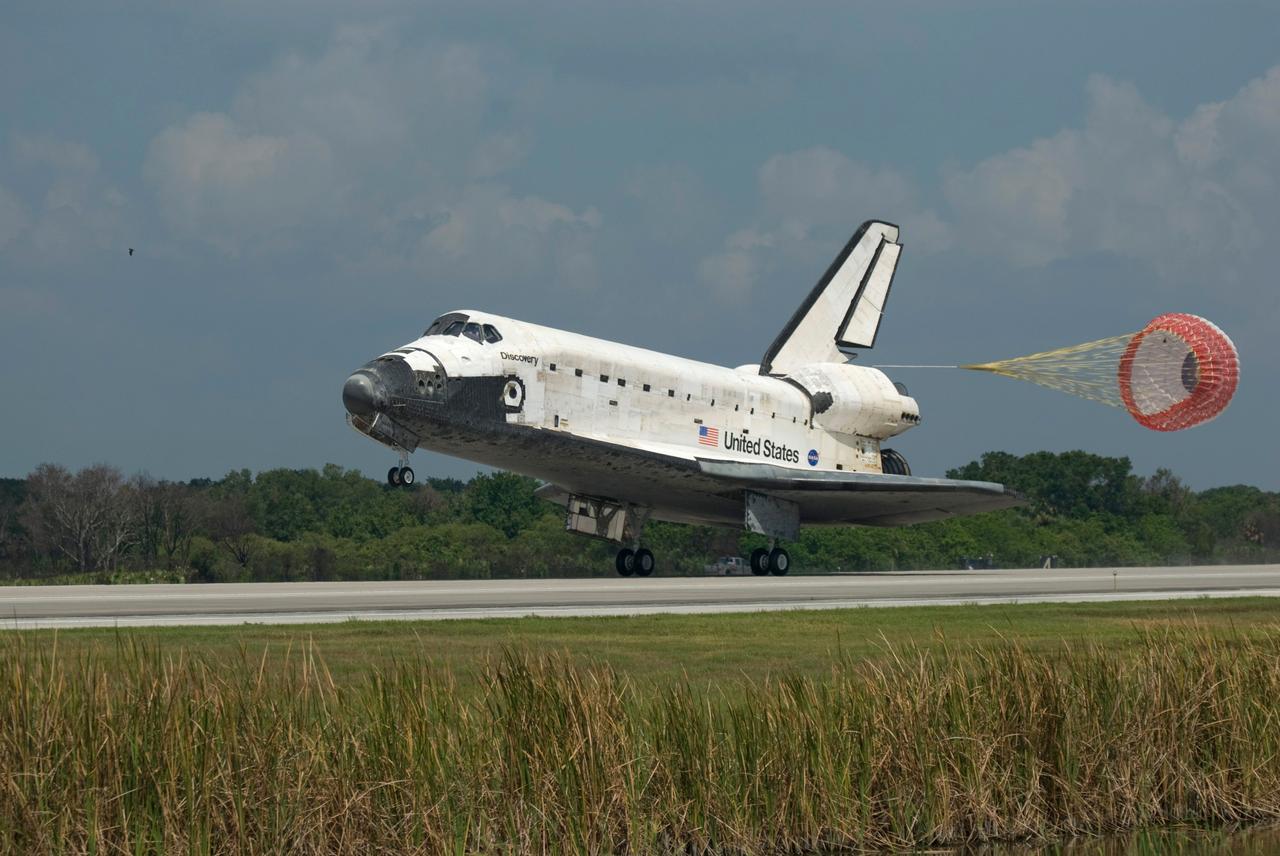
CAPE CANAVERAL, Fla. – In the 69th landing at NASA's Kennedy Space Center, a drag chute slows space shuttle Discovery's landing on Runway 15 to end the STS-124 mission, a 14-day flight to the International Space Station. The main landing gear touched down at 11:15:19 a.m. EDT. The nose landing gear touched down at 11:15:30 a.m. and wheel stop was at 11:16:19 a.m. The mission completed 5.7 million miles. The STS-124 mission delivered the Japan Aerospace Exploration Agency's large Japanese Pressurized Module and its remote manipulator system to the space station. Photo credit: NASA/Chris Lynch
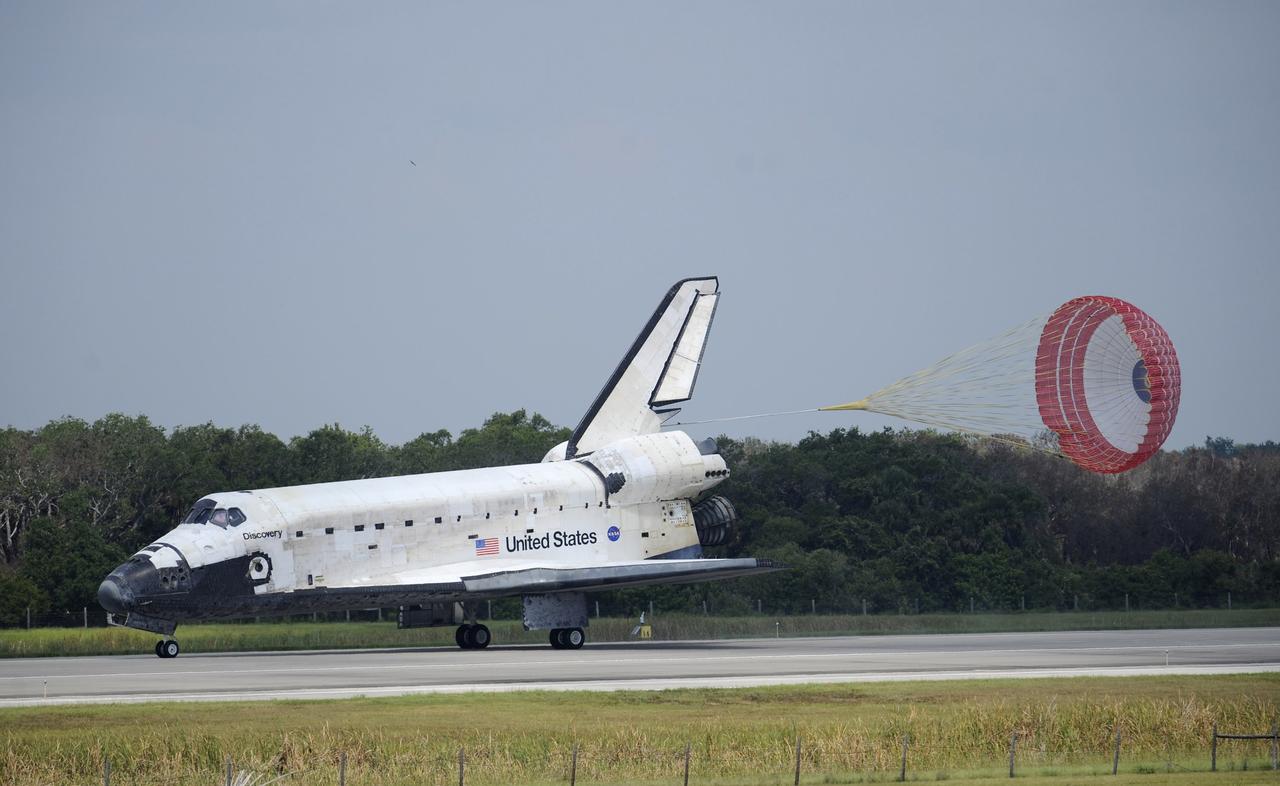
CAPE CANAVERAL, Fla. – In the 69th landing at NASA's Kennedy Space Center, space shuttle Discovery comes to a stop on Runway15 with the aid of a drag chute to end the STS-124 mission, a 14-day flight to the International Space Station. The main landing gear touched down at 11:15:19 a.m. EDT. The nose landing gear touched down at 11:15:30 a.m. and wheel stop was at 11:16:19 a.m. The mission completed 5.7 million miles. The STS-124 mission delivered the Japan Aerospace Exploration Agency's large Japanese Pressurized Module and its remote manipulator system to the space station. Photo credit: NASA/Bill Ingalls
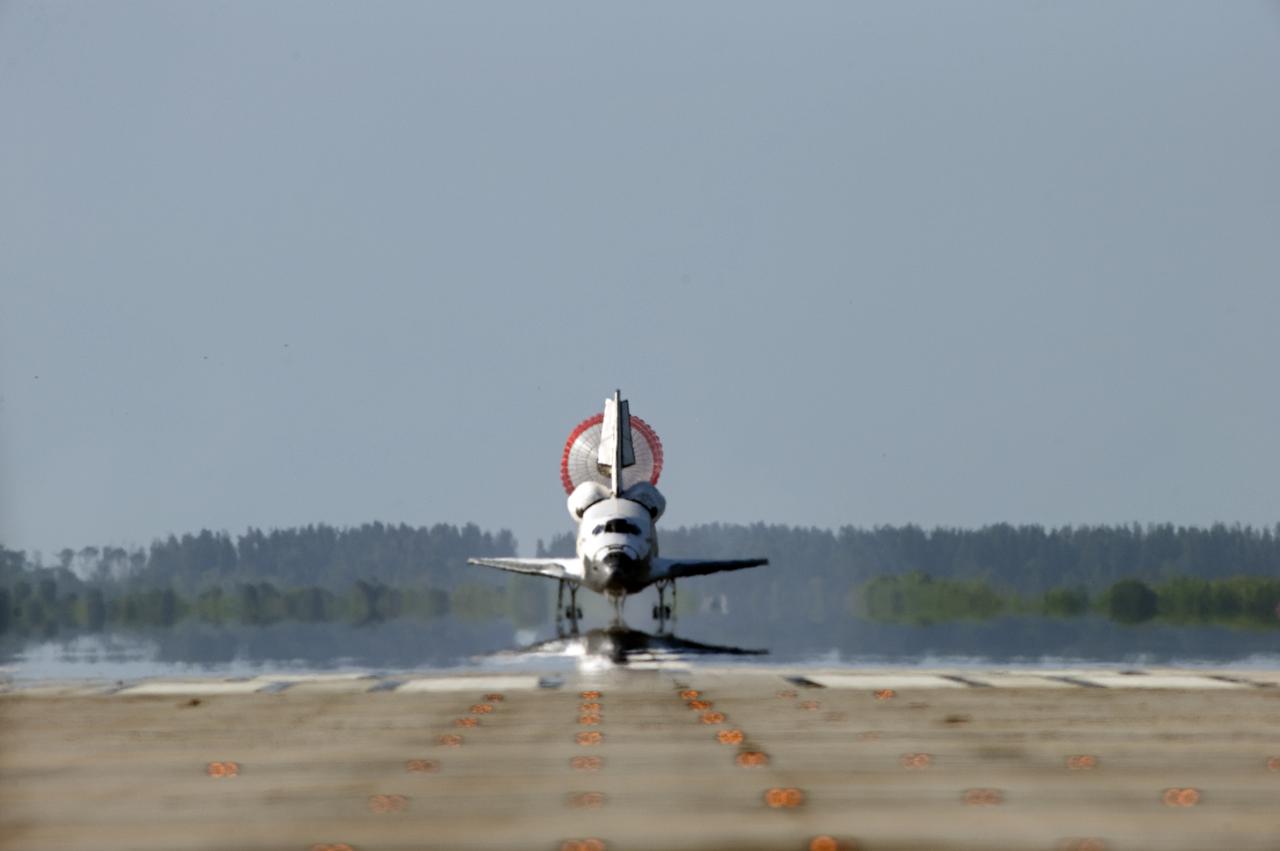
CAPE CANAVERAL, Fla. - With its drag chute unfurled, space shuttle Atlantis rolls down Runway 33 at the Shuttle Landing Facility at NASA's Kennedy Space Center in Florida. Landing was at 8:48 a.m. EDT, completing the 12-day STS-132 mission to the International Space Station. The six-member STS-132 crew carried the Russian-built Mini Research Module-1 to the space station. STS-132 is the 34th shuttle mission to the station, the 132nd shuttle mission overall and the last planned flight for Atlantis. For information on the STS-132 mission and crew, visit www.nasa.gov_mission_pages_shuttle_shuttlemissions_sts132_index.html. Photo credit: NASA_Sandra Joseph and Carl Winebarger
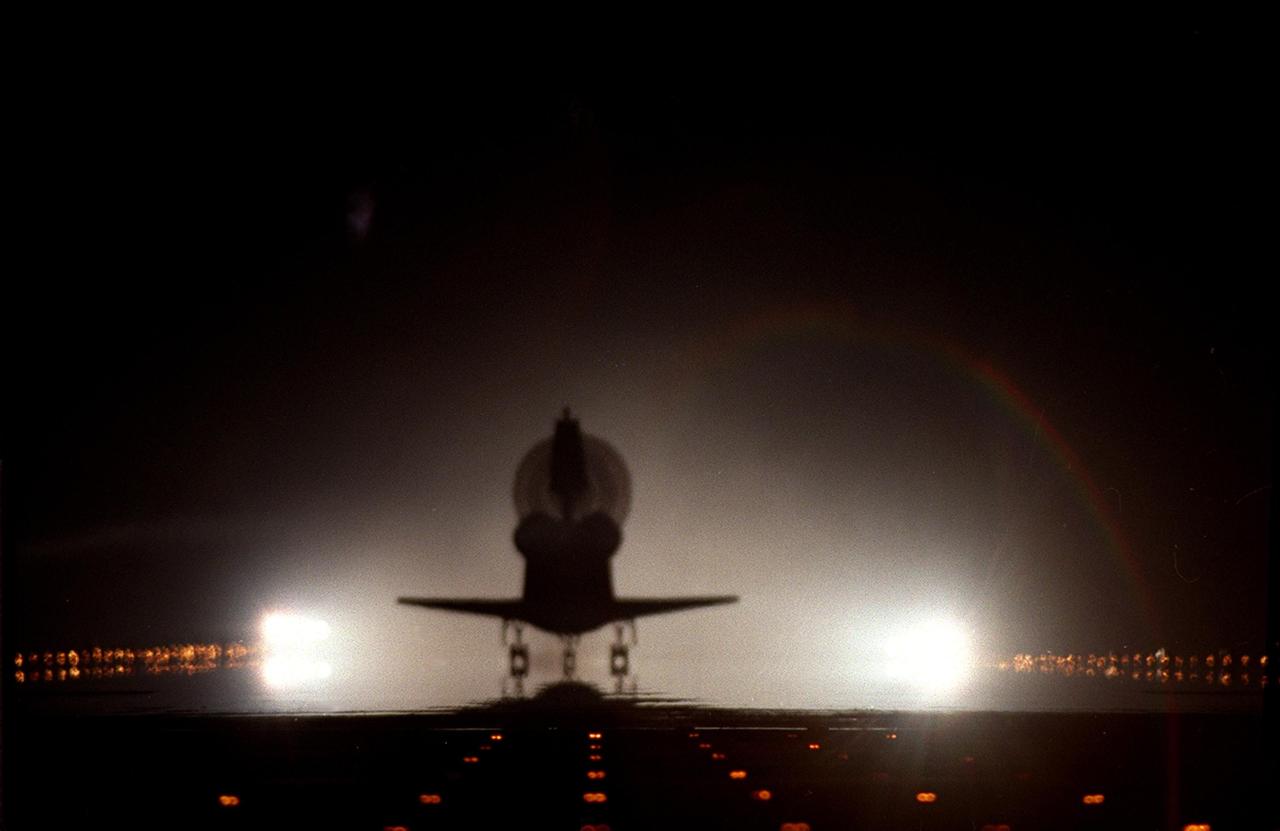
KENNEDY SPACE CENTER, FLA. -- With its drag chute opened, orbiter Columbia is silhouetted against the brilliant xenon lights at the KSC Shuttle Landing Facility. Columbia landed at 4:33:09 a.m. EST with its crew of seven after a successful 11-day mission servicing the Hubble Space Telescope. Main gear touchdown occurred at 4:31:52 a.m. and nose wheel touchdown at 4:32:02. Rollout time was 1 minute, 17 seconds. This was the 58th landing at KSC out of 108 missions in the history of the Shuttle program.
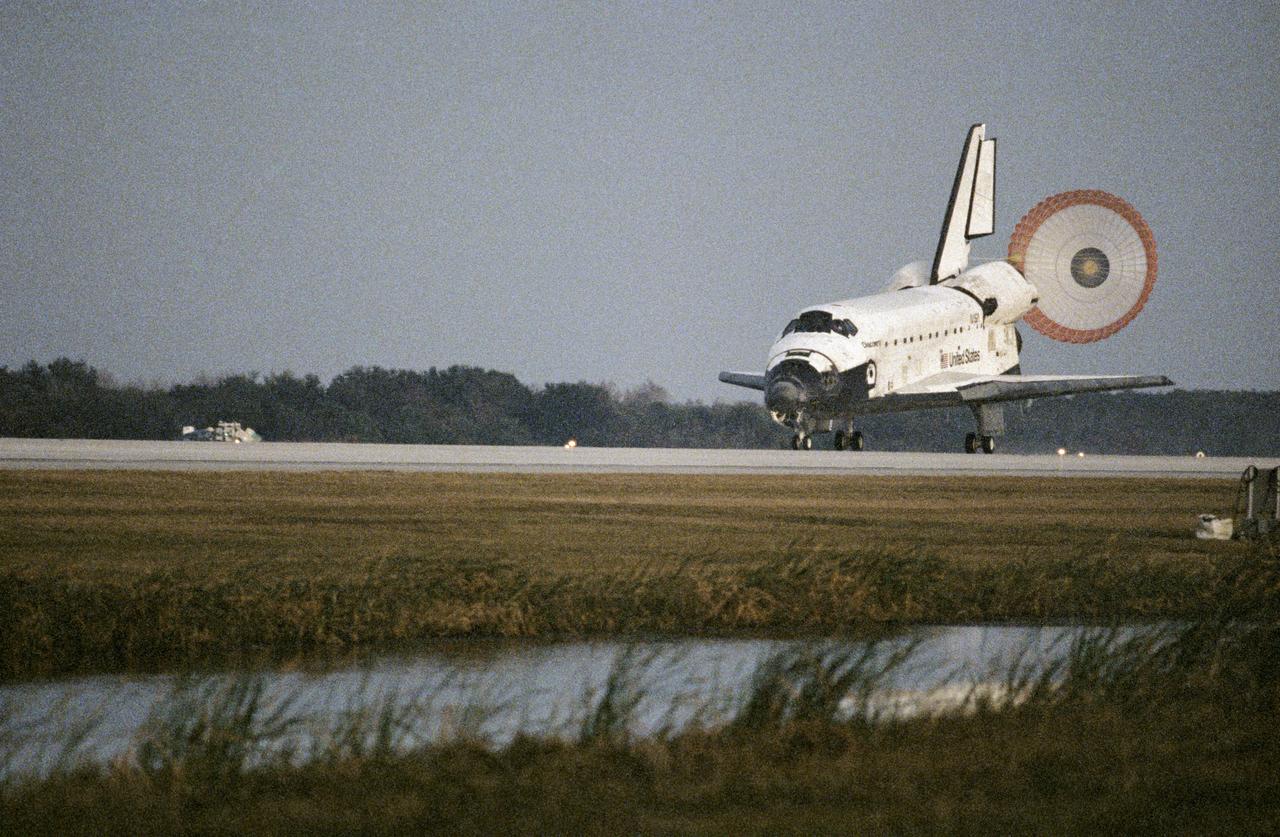
STS063-S-015 (11 Feb. 1995) --- The Space Shuttle Discovery deploys its drag chute on Runway 15 at the Kennedy Space Center's (KSC) Shuttle Landing Facility as it wraps up an eight-day mission. Touchdown occurred at 6:50:19 a.m. (EST), February 11, 1995. Onboard the Space Shuttle Discovery were astronauts James D. Wetherbee, mission commander; Eileen M. Collins, pilot; Bernard A. Harris Jr., payload commander; mission specialists C. Michael Foale, Janice E. Voss, and cosmonaut Vladimir G. Titov.
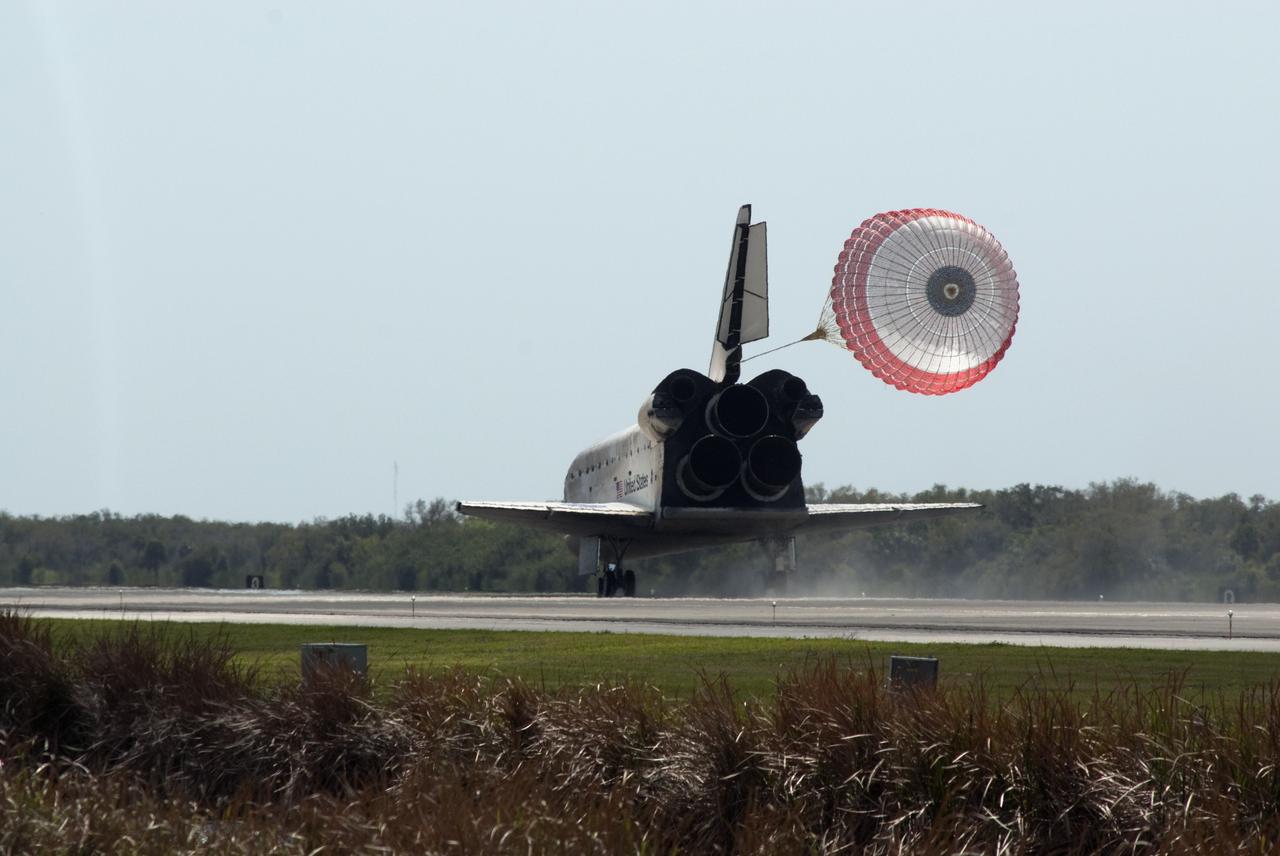
CAPE CANAVERAL, Fla. - With its drag chute unfurled, space shuttle Discovery rolls down Runway 15 at the Shuttle Landing Facility at NASA's Kennedy Space Center in Florida. Landing was at 11:57 a.m. EST, completing a 13-day STS-133 mission to the International Space Station. Discovery and its six-member crew delivered the Permanent Multipurpose Module, packed with supplies and critical spare parts, as well as Robonaut 2, the dexterous humanoid astronaut helper, to the orbiting outpost. STS-133 was Discovery's 39th and final mission. This was the 133rd Space Shuttle Program mission and the 35th shuttle voyage to the space station. Photo credit: NASA/Kim Shiflett
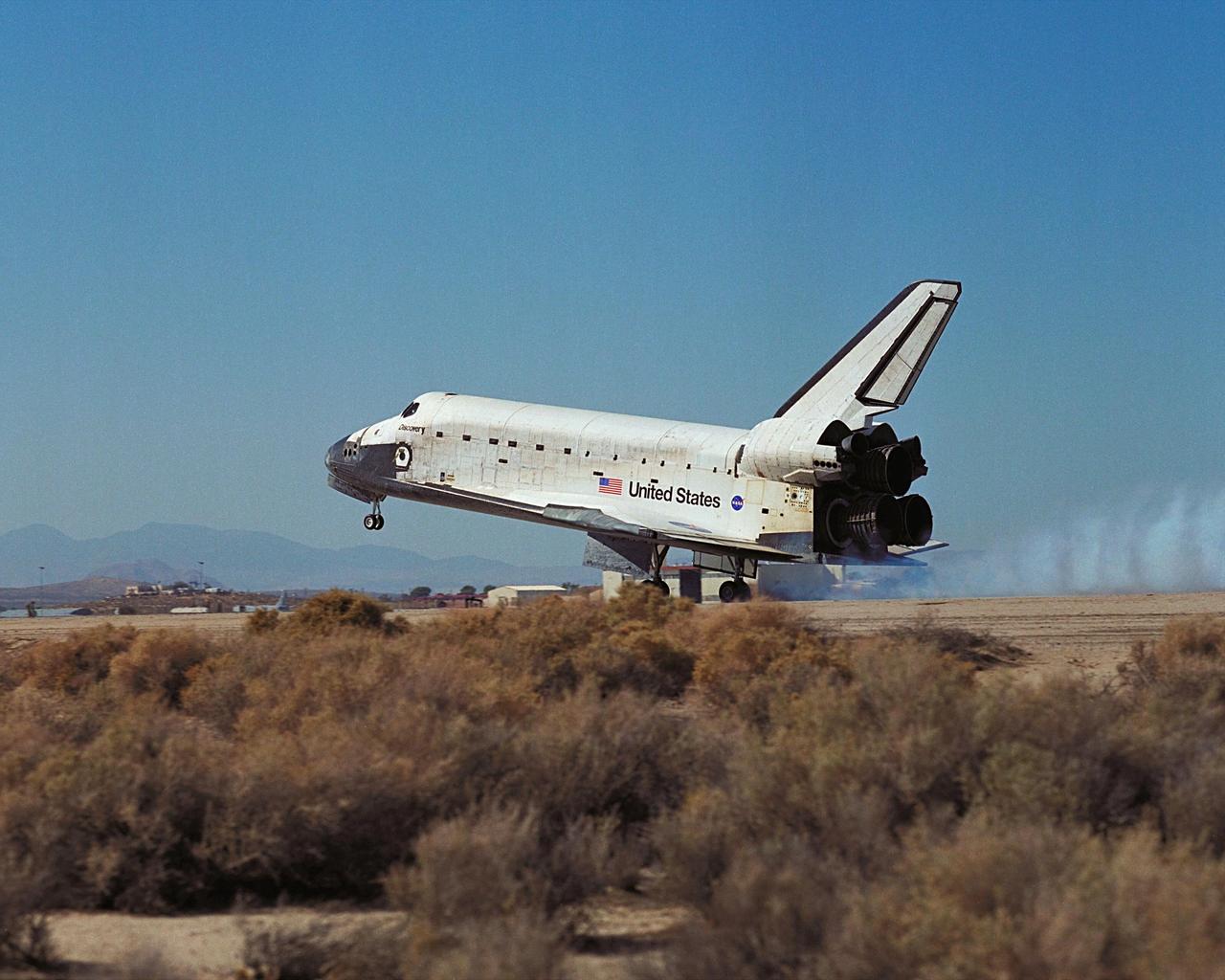
Viewed from the side, orbiter Discovery, with its seven-member crew, touches down on the landing strip at Edwards Air Force Base, Calif., after an 11-day mission to the International Space Station. The orbiter’s main landing gear touched down on EAFB runway 22 at 5 p.m. With the aid of its drag chute, Discovery came to a complete stop at 5:01 p.m. At the conclusion of mission STS-92, Discovery and crew had traveled about 5.3 million statute miles. Following vehicle safing and preliminary offloading efforts, workers will begin preparations for Discovery’s transcontinental ferry flight back to KSC on the back of NASA’s modified Boeing 747
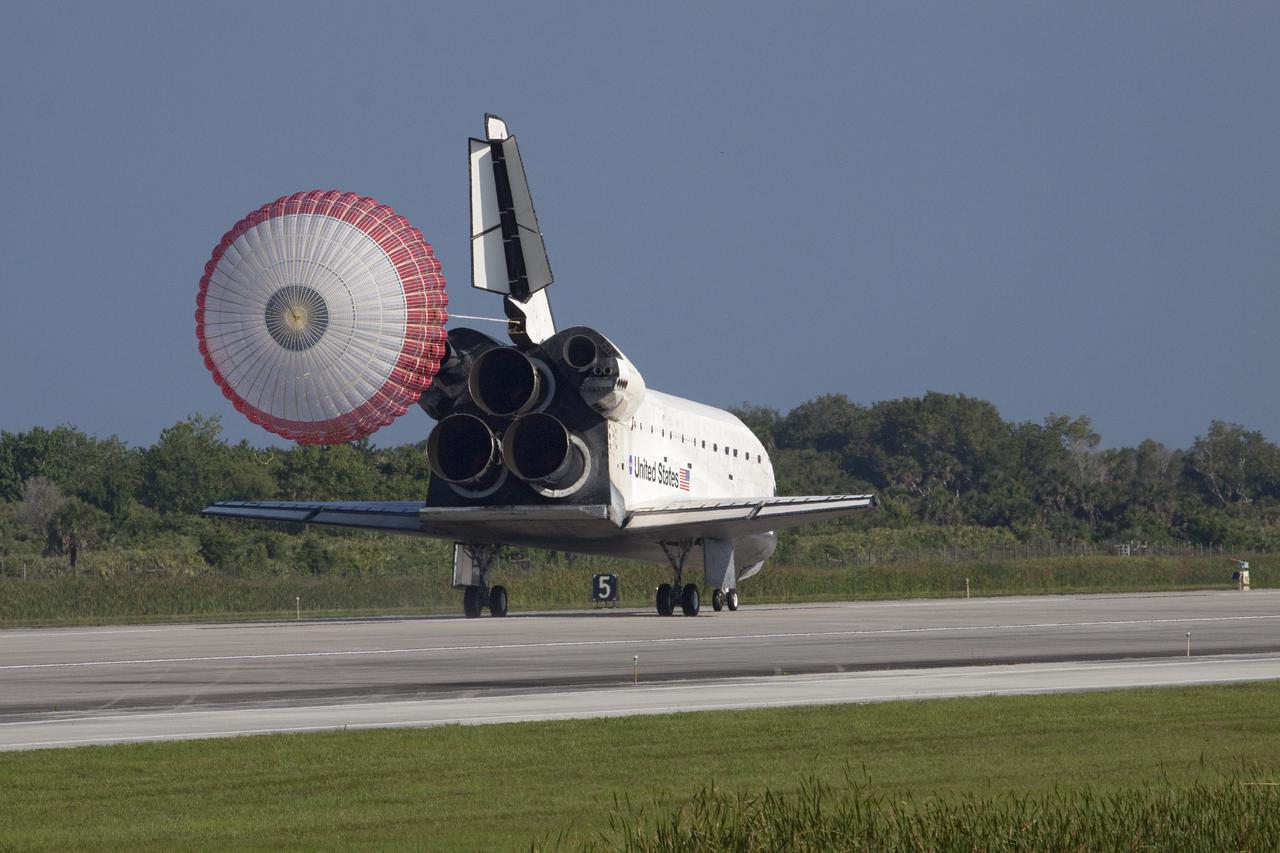
CAPE CANAVERAL, Fla. - With its drag chute unfurled, space shuttle Atlantis rolls down Runway 33 at the Shuttle Landing Facility at NASA's Kennedy Space Center in Florida. Landing was at 8:48 a.m. EDT, completing the 12-day STS-132 mission to the International Space Station. The six-member STS-132 crew carried the Russian-built Mini Research Module-1 to the space station. STS-132 is the 34th shuttle mission to the station, the 132nd shuttle mission overall and the last planned flight for Atlantis. For information on the STS-132 mission and crew, visit www.nasa.gov_mission_pages_shuttle_shuttlemissions_sts132_index.html. Photo credit: NASA_Jack Pfaller
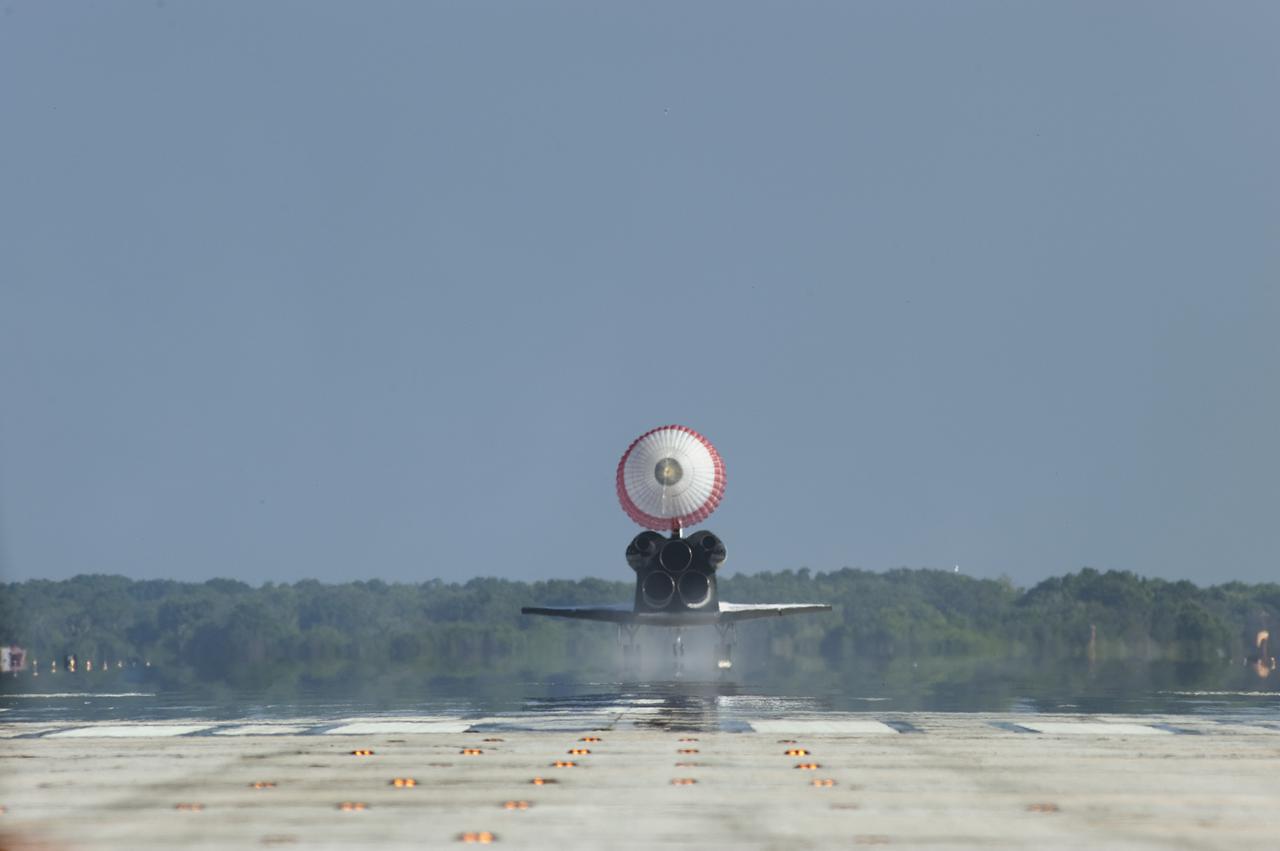
CAPE CANAVERAL, Fla. - With its drag chute unfurled, space shuttle Atlantis rolls down Runway 33 at the Shuttle Landing Facility at NASA's Kennedy Space Center in Florida. Landing was at 8:48 a.m. EDT, completing the 12-day STS-132 mission to the International Space Station. The six-member STS-132 crew carried the Russian-built Mini Research Module-1 to the space station. STS-132 is the 34th shuttle mission to the station, the 132nd shuttle mission overall and the last planned flight for Atlantis. For information on the STS-132 mission and crew, visit www.nasa.gov_mission_pages_shuttle_shuttlemissions_sts132_index.html. Photo credit: NASA_Tony Gray and Tom Farrar
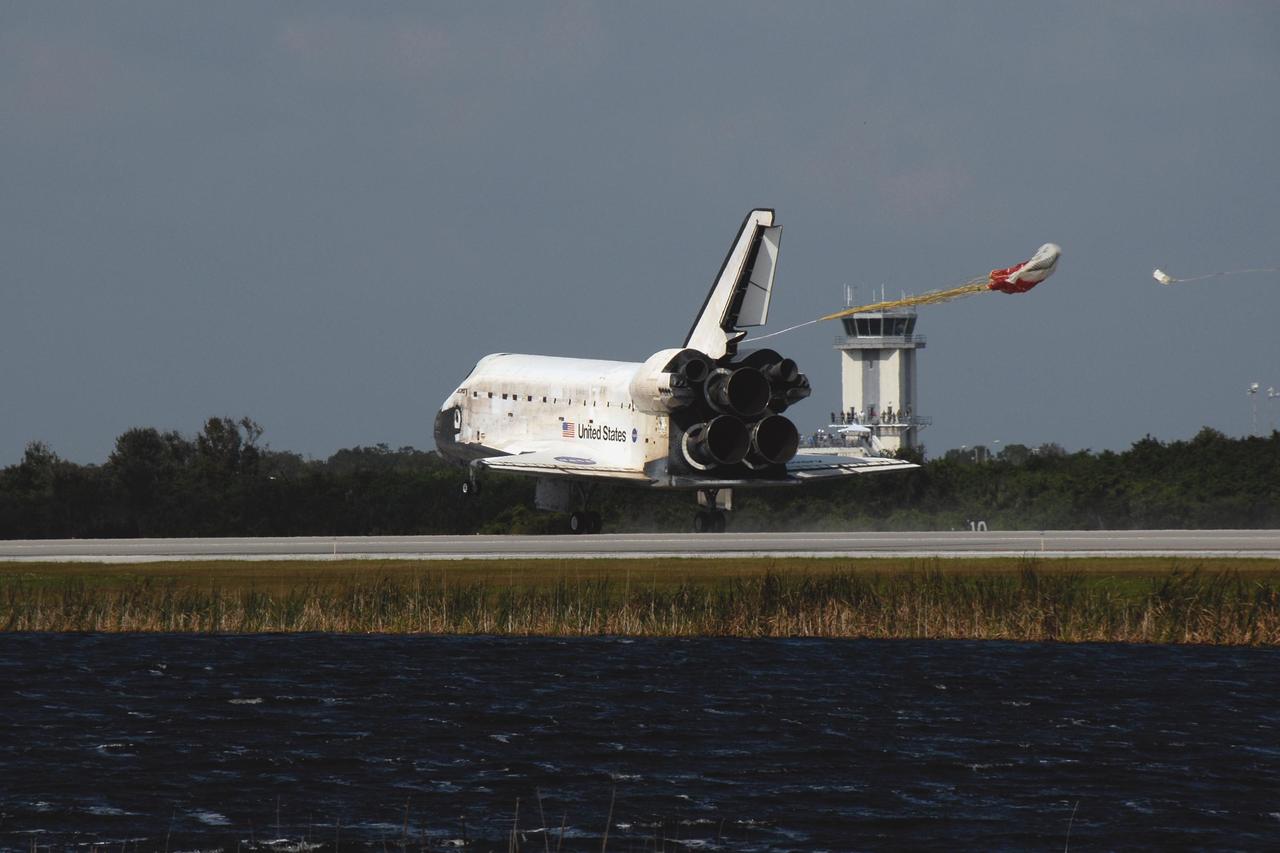
KENNEDY SPACE CENTER, FLA. -- The drag chute is deployed behind space shuttle Discovery to help slow its landing on Runway 33 of the Shuttle Landing Facility at NASA's Kennedy Space Center at 1:01 p.m. EST on Nov. 7, completing the 15-day mission STS-120. Main gear touchdown was 1:01:16 p.m. Wheel stop was at 1:02:07 p.m. Mission elapsed time was 15 days, 2 hours, 24 minutes and 2 seconds. The STS-120 crew continued the construction of the station with the installation of the Harmony Node 2 module and the relocation of the P6 truss. Photo credit: NASA/Kim Shiflett
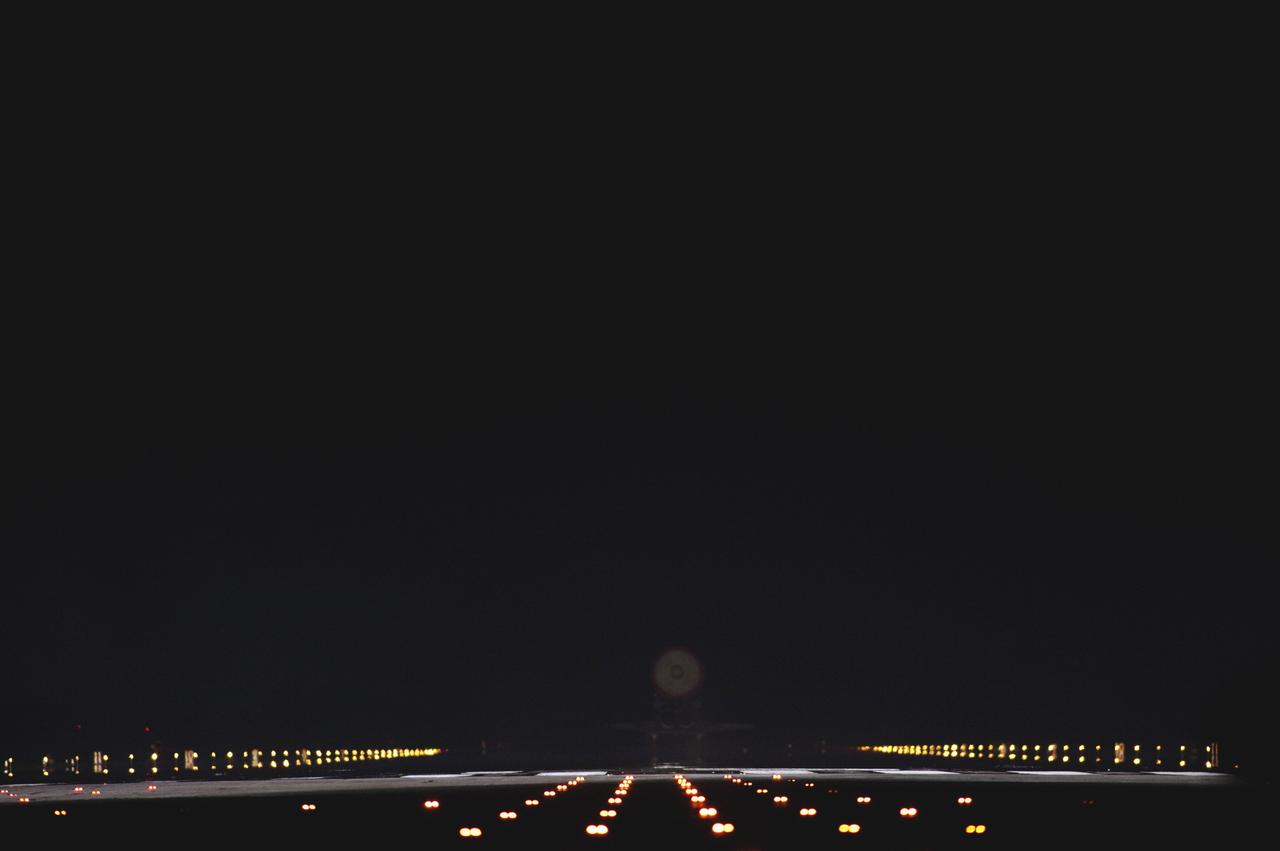
CAPE CANAVERAL, Fla. -- Only space shuttle Atlantis' drag chute is visible as the spacecraft disappears into the darkness and rolls to a stop on Runway 15 on the Shuttle Landing Facility at NASA's Kennedy Space Center in Florida for the final time. Atlantis marked the 26th nighttime landing of NASA's Space Shuttle Program and the 78th landing at Kennedy. It also was the final mission for the shuttle program. STS-135 was the 33rd and final flight for Atlantis, which has spent 307 days in space, orbited Earth 4,848 times and traveled 125,935,769 miles. For more information on the space shuttle era, visit www.nasa.gov/mission_pages/shuttle/flyout. Photo credit: NASA/Sandra Joseph and Kevin O'Connell
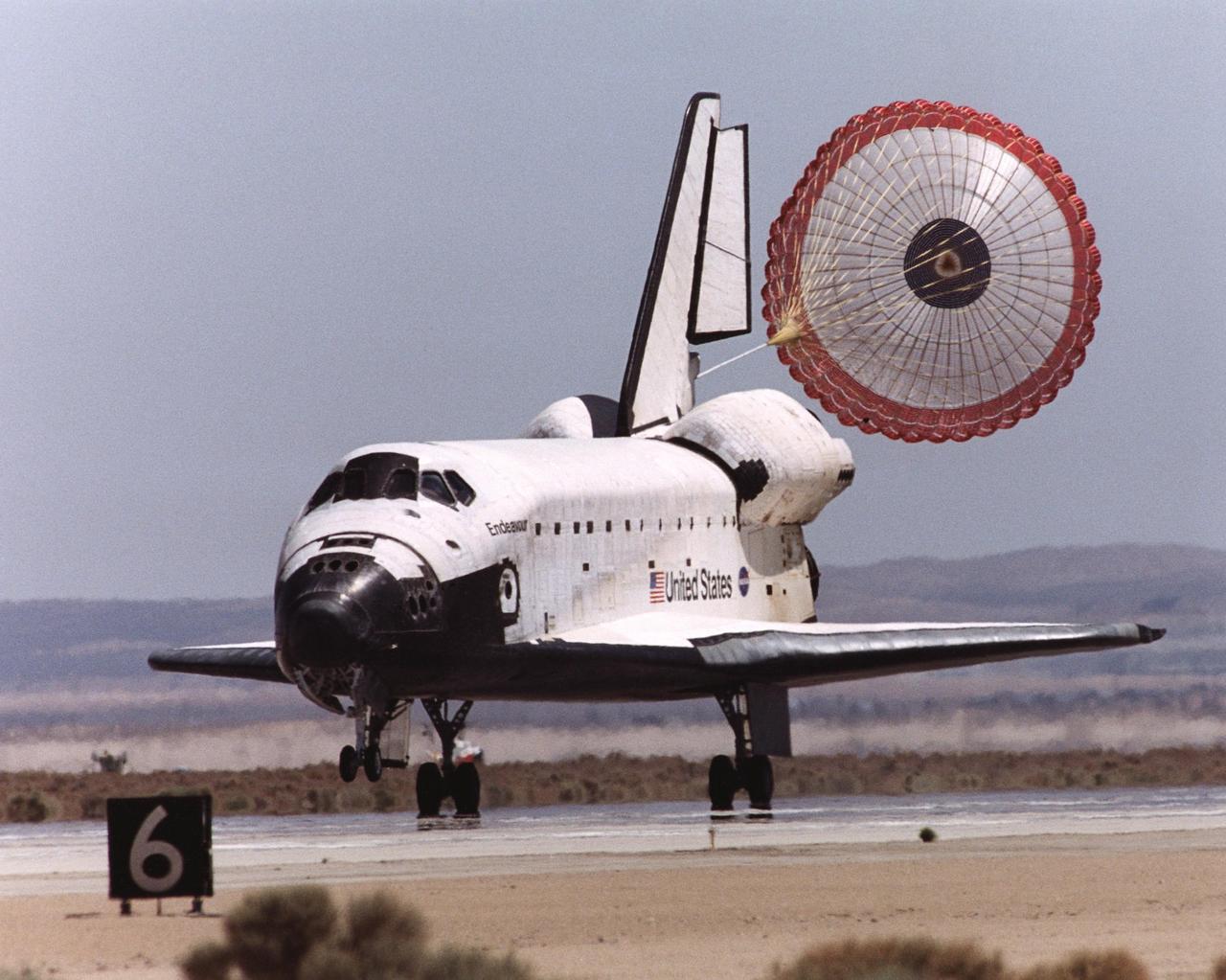
EDWARDS AFB, CALIF. -- After traveling 5.8 million miles in space during 217 orbits, and with drag chute deployed, Endeavour lands on concrete runway 22 at Dryden Flight Research Center, Edwards Air Force Base, Calif., completing mission STS-111. Three days of unfavorable weather conditions at KSC prompted the decision to land at Edwards, which enjoyed pristine, dry conditions.. Main gear touchdown occurred at 1:57:41 p.m EDT, nose gear touchdown at 1:57:53 p.m. EDT and wheel stop at 1:58:45 p.m. EDT. [Photo by Jim Ross
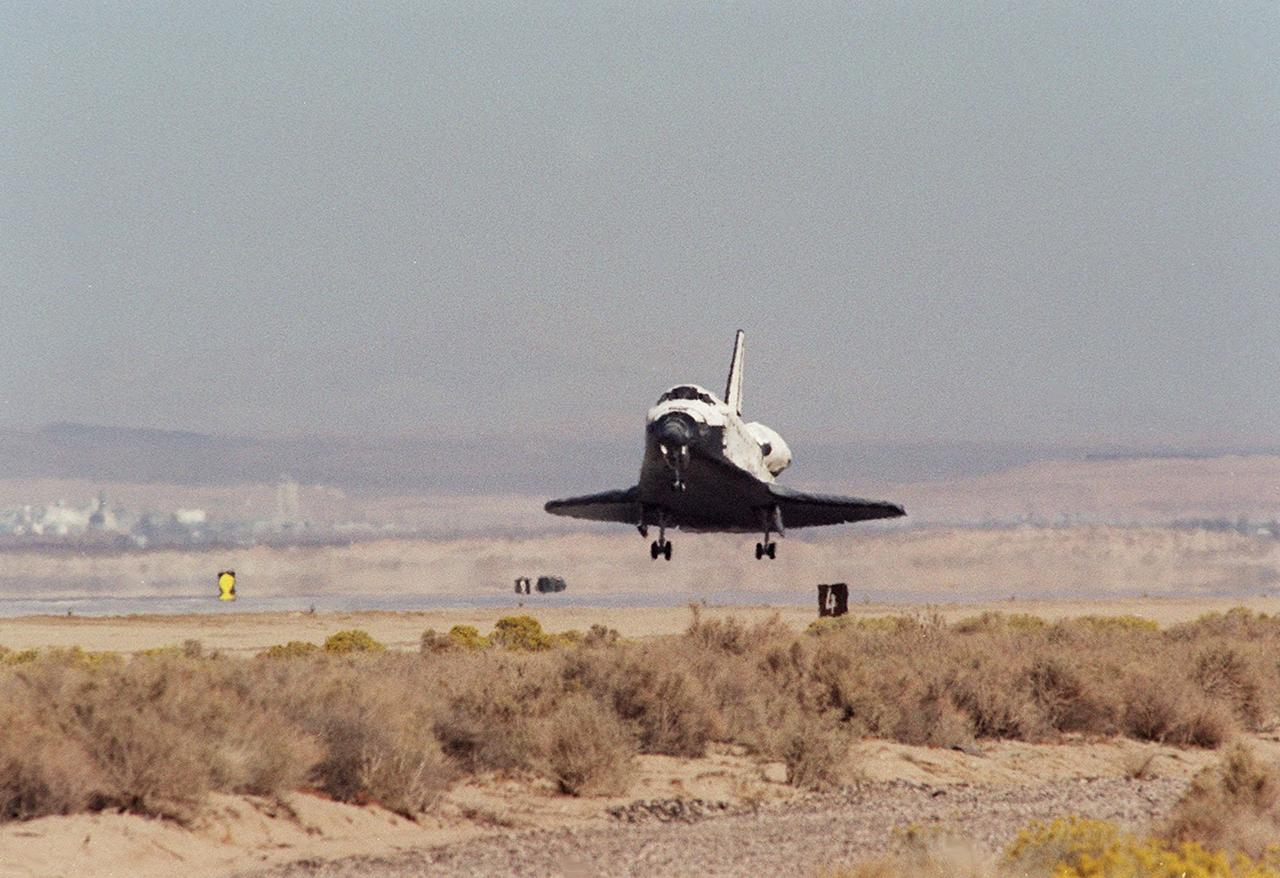
Orbiter Discovery, with its seven-member crew, approaches the landing strip at Edwards Air Force Base, Calif., after an 11-day mission to the International Space Station. The orbiter’s main landing gear touched down on EAFB runway 22 at 5 p.m. With the aid of its drag chute, Discovery came to a complete stop at 5:01 p.m. At the conclusion of mission STS-92, Discovery and crew had traveled about 5.3 million statute miles. Following vehicle safing and preliminary offloading efforts, workers will begin preparations for Discovery’s transcontinental ferry flight back to KSC on the back of NASA’s modified Boeing 747
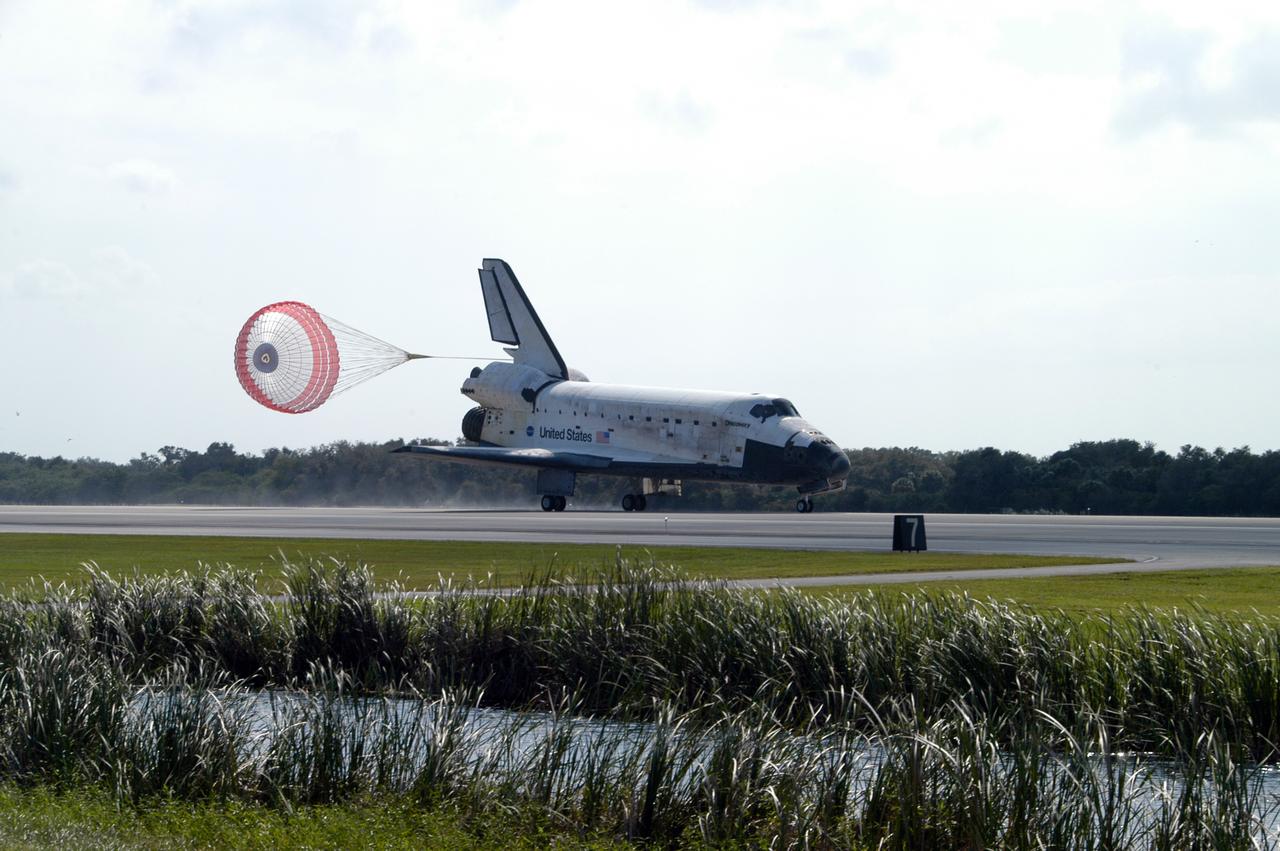
The drag chute deployed behind space shuttle Discovery helps slow its smooth landing on Runway 33 of the Shuttle Landing Facility at NASA's Kennedy Space Center, completing the 15-day mission STS-120. Main gear touchdown was 1:01:16 p.m. Wheel stop was at 1:02:07 p.m. Mission elapsed time was 15 days, 2 hours, 24 minutes and 2 seconds. The STS-120 crew continued the construction of the station with the installation of the Harmony Node 2 module and the relocation of the P6 truss.
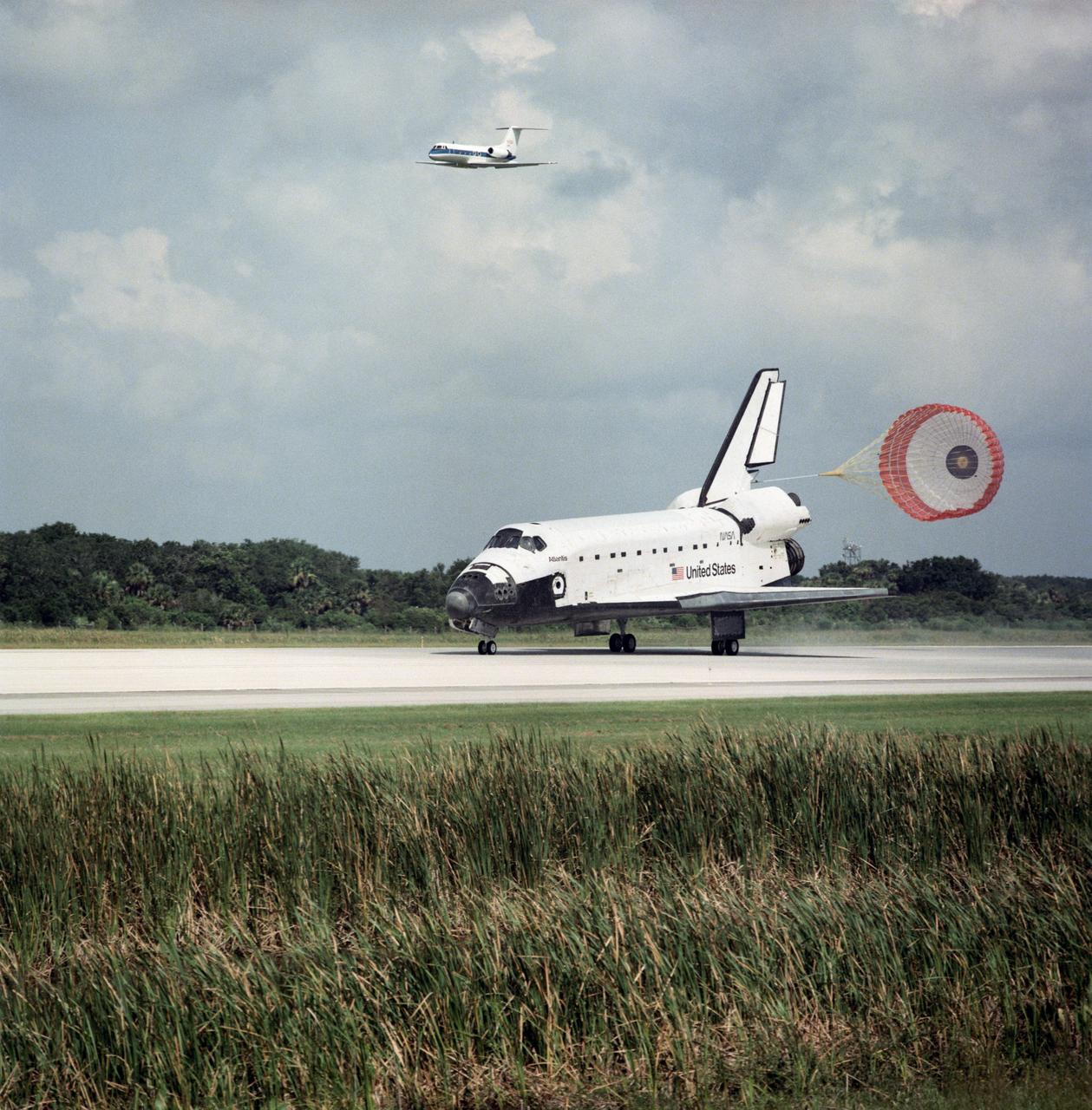
STS071-S-070 (7 July 1995) --- The drag chute of the Space Shuttle Atlantis is deployed as the spacecraft touches down on Runway 33 at the Kennedy Space Center's (KSC) Shuttle landing facility. The Shuttle Training Aircraft (STA) piloted by astronaut Robert D. Cabana, is visible in upper left. The landing completed an historic mission in space involving a linkup with Russia?s Mir Space Station and the Space Shuttle Atlantis, a total of six astronauts and four cosmonauts. Onboard for the landing were six NASA astronauts and two cosmonauts. Touchdown occurred at 10:55 a.m. (EDT), July 7, 1995.
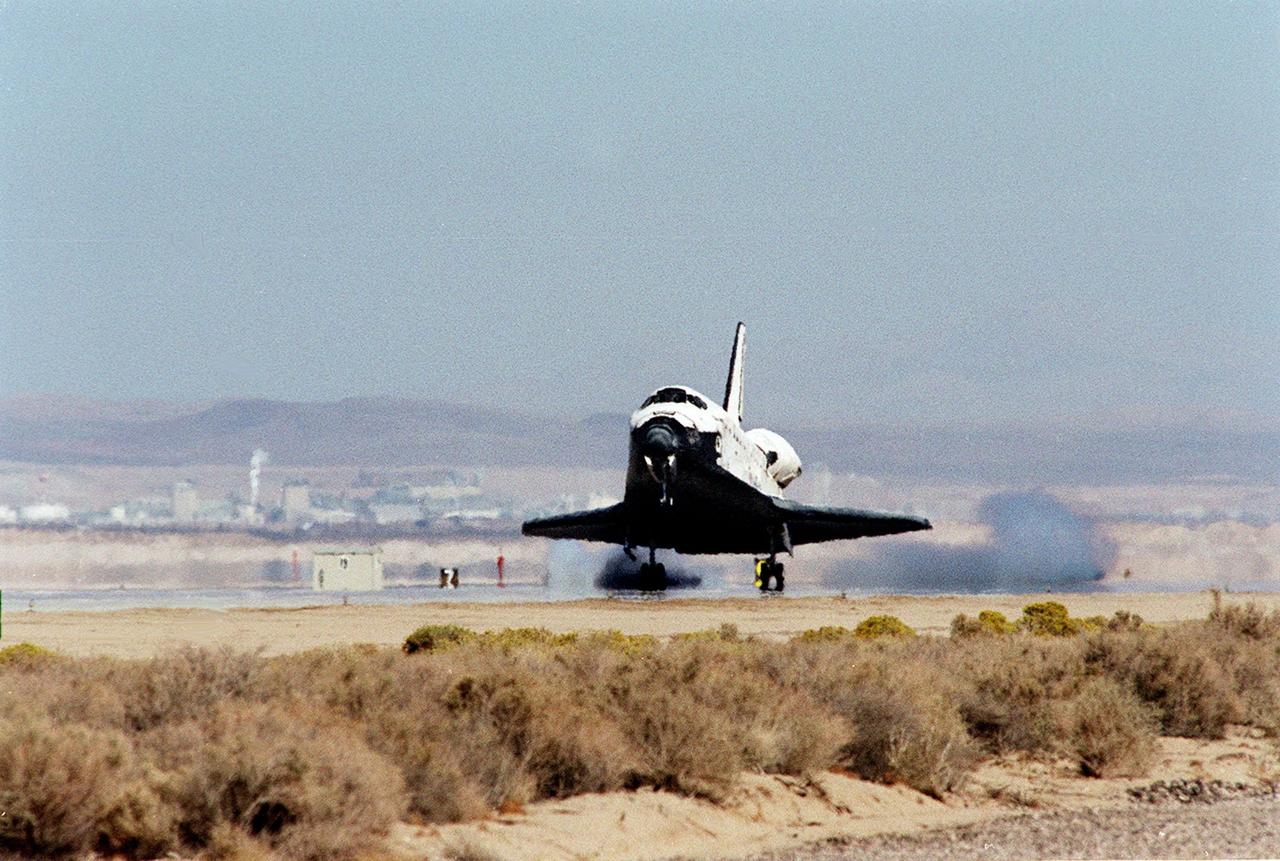
Orbiter Discovery, with its seven-member crew, touches down on the landing strip at Edwards Air Force Base, Calif., after an 11-day mission to the International Space Station. The orbiter’s main landing gear touched down on EAFB runway 22 at 5 p.m. With the aid of its drag chute, Discovery came to a complete stop at 5:01 p.m. At the conclusion of mission STS-92, Discovery and crew had traveled about 5.3 million statute miles. Following vehicle safing and preliminary offloading efforts, workers will begin preparations for Discovery’s transcontinental ferry flight back to KSC on the back of NASA’s modified Boeing 747
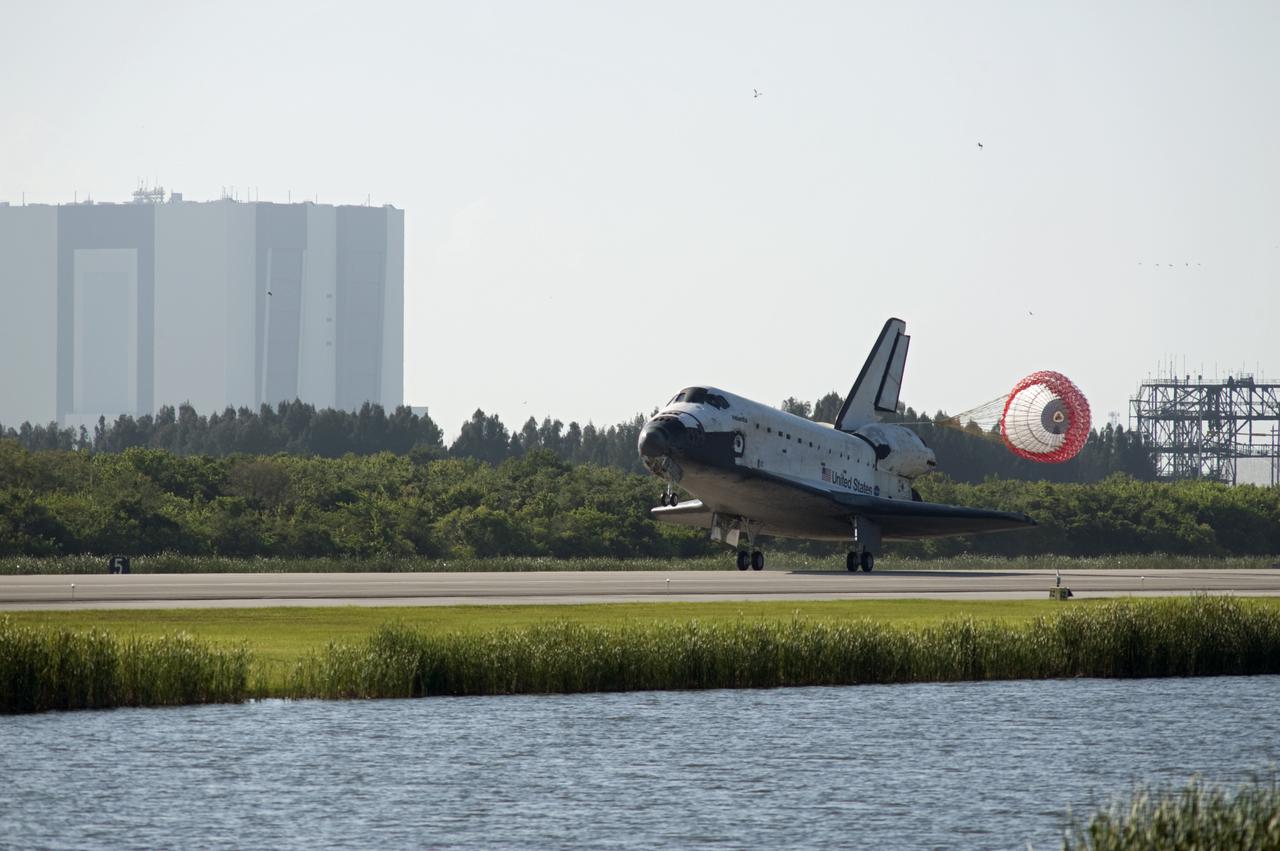
CAPE CANAVERAL, Fla. - Space shuttle Atlantis' drag chute slows the vehicle as it rolls down Runway 33 at the Shuttle Landing Facility at NASA's Kennedy Space Center in Florida. Landing was at 8:48 a.m. EDT, completing the 12-day STS-132 mission to the International Space Station. The six-member STS-132 crew carried the Russian-built Mini Research Module-1 to the space station. STS-132 is the 34th shuttle mission to the station, the 132nd shuttle mission overall and the last planned flight for Atlantis. For information on the STS-132 mission and crew, visit www.nasa.gov_mission_pages_shuttle_shuttlemissions_sts132_index.html. Photo credit: NASA_Sandra Joseph
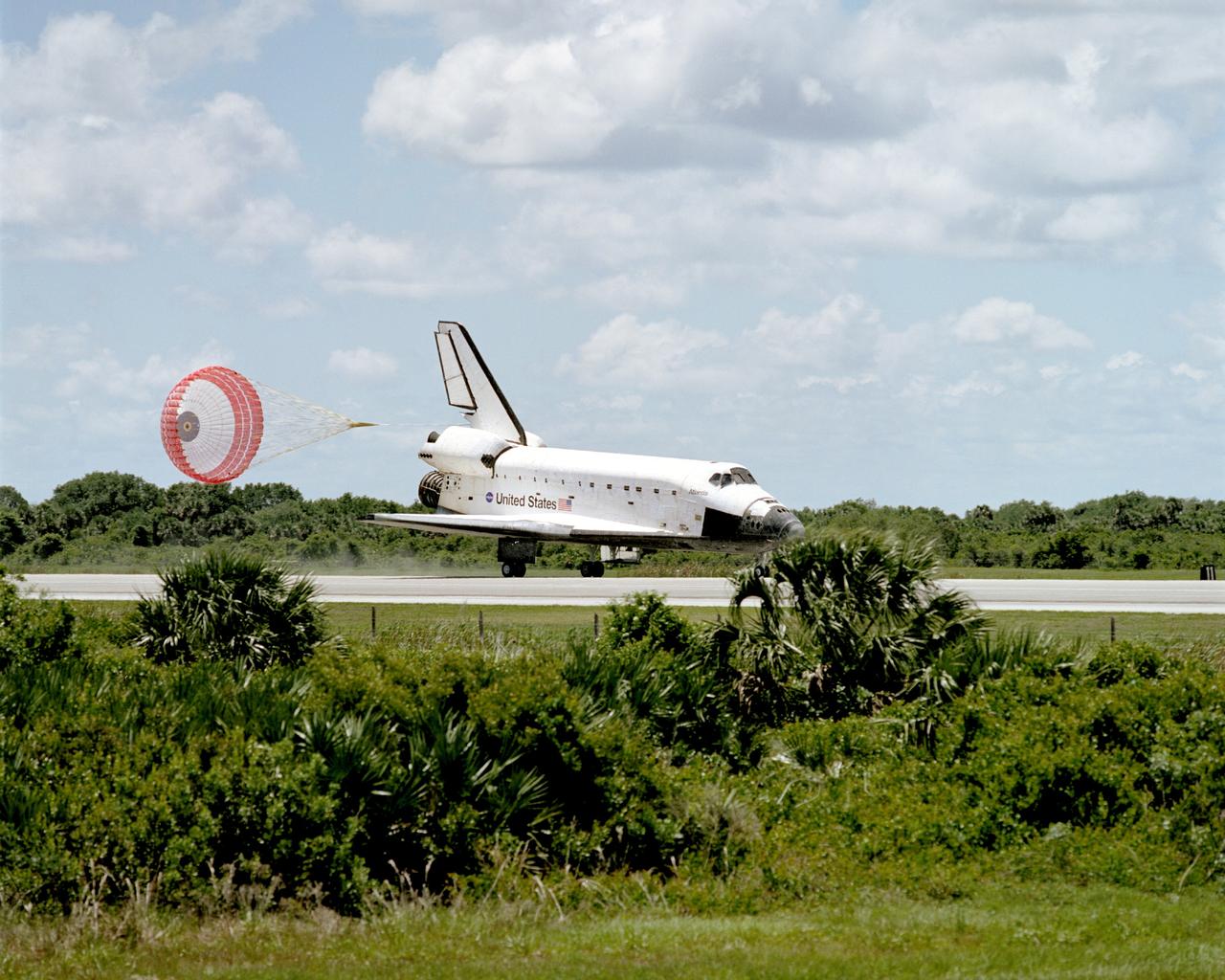
STS110-S-055 (19 April 2002) --- With its drag chute gear deployed, the Space Shuttle Atlantis eases to a stop on the runway at the KSC landing facility to complete the nearly 11-day STS-110 journey. Astronaut Michael J. Bloomfield, mission commander, eased Atlantis to a textbook landing on runway 3-3 at the Florida spaceport at 12:27 p.m. (EDT), April 19, 2002, under clear skies and light winds. The landing completed a 4.5-million-mile mission that saw successful delivery and installation of the centerpiece of the International Space Station?s main truss and the inaugural run of the first space railcar, the Mobile Transporter.
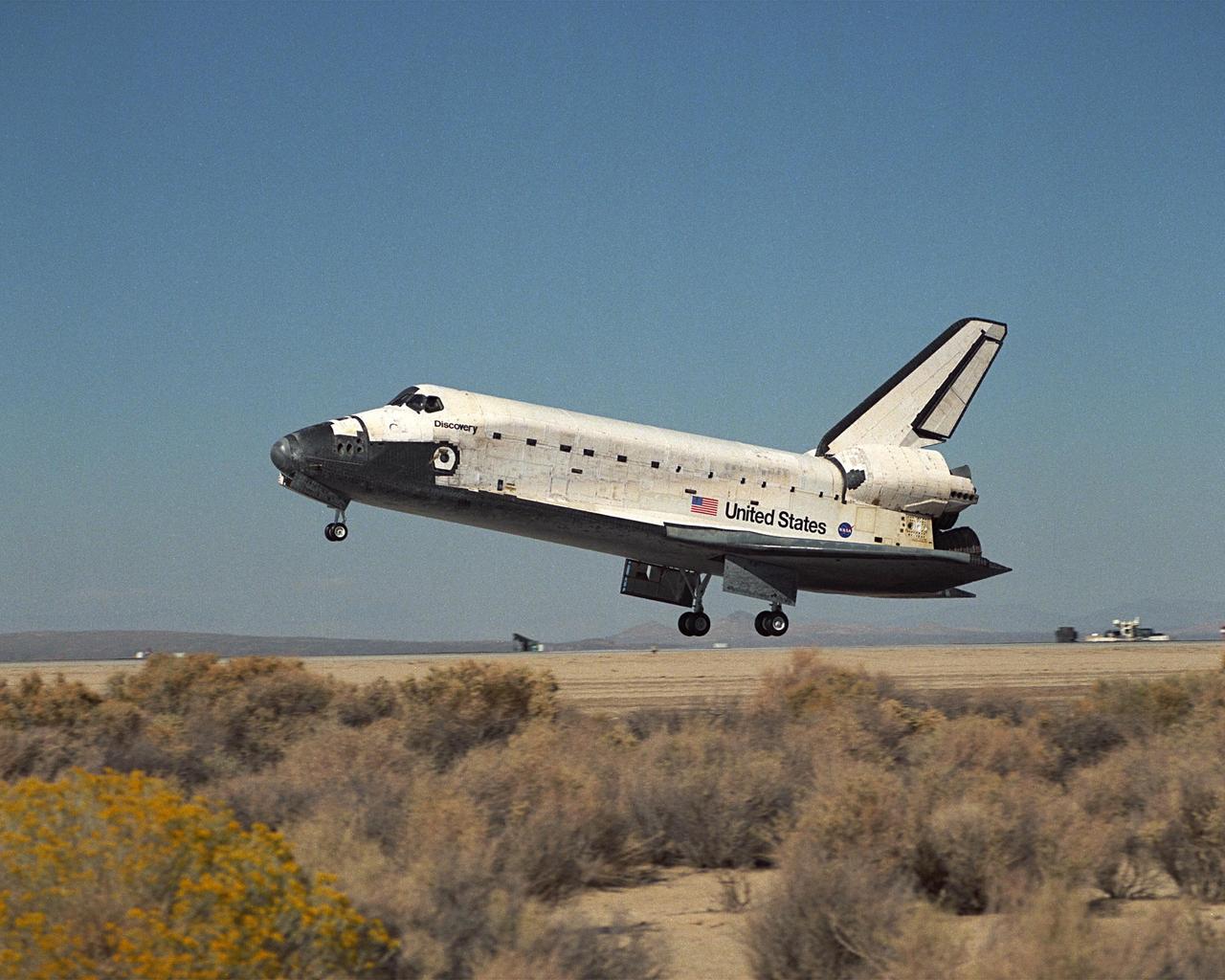
Viewed from the side, orbiter Discovery, with its seven-member crew, is about to touch down on the landing strip at Edwards Air Force Base, Calif., after an 11-day mission to the International Space Station. The orbiter’s main landing gear touched down on EAFB runway 22 at 5 p.m. With the aid of its drag chute, Discovery came to a complete stop at 5:01 p.m. At the conclusion of mission STS-92, Discovery and crew had traveled about 5.3 million statute miles. Following vehicle safing and preliminary offloading efforts, workers will begin preparations for Discovery’s transcontinental ferry flight back to KSC on the back of NASA’s modified Boeing 747
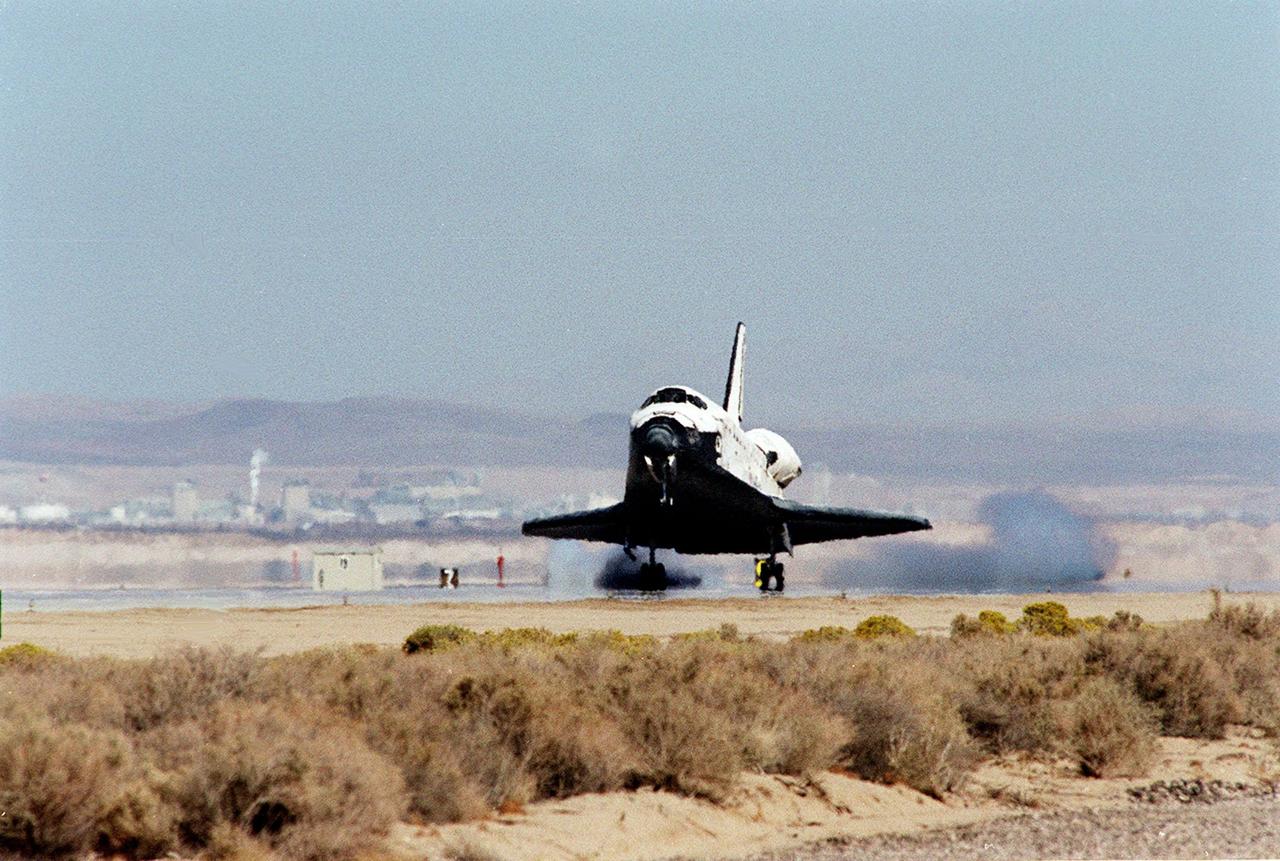
Orbiter Discovery, with its seven-member crew, touches down on the landing strip at Edwards Air Force Base, Calif., after an 11-day mission to the International Space Station. The orbiter’s main landing gear touched down on EAFB runway 22 at 5 p.m. With the aid of its drag chute, Discovery came to a complete stop at 5:01 p.m. At the conclusion of mission STS-92, Discovery and crew had traveled about 5.3 million statute miles. Following vehicle safing and preliminary offloading efforts, workers will begin preparations for Discovery’s transcontinental ferry flight back to KSC on the back of NASA’s modified Boeing 747
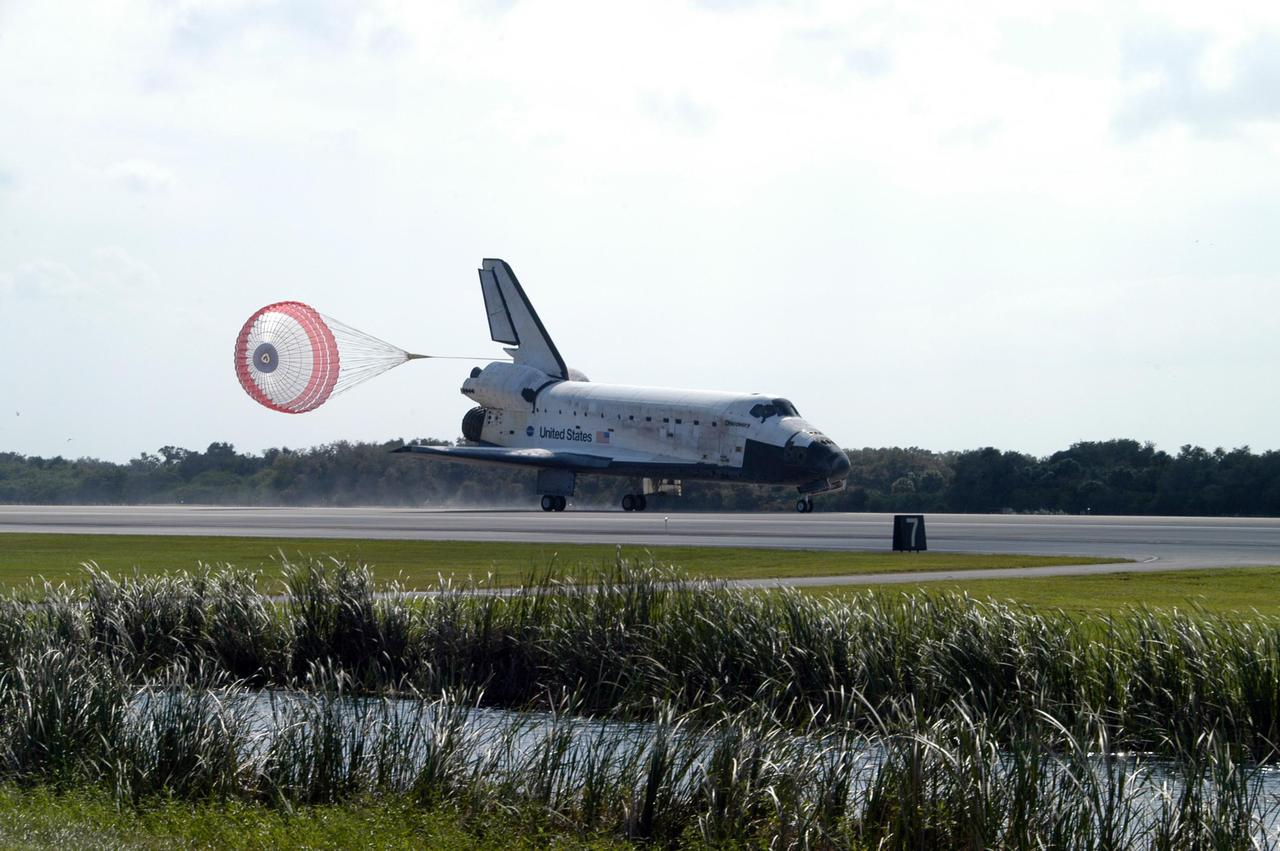
KENNEDY SPACE CENTER, FLA. -- The drag chute deployed behind space shuttle Discovery helps slow its smooth landing on Runway 33 of the Shuttle Landing Facility at NASA's Kennedy Space Center, completing the 15-day mission STS-120. Main gear touchdown was 1:01:16 p.m. Wheel stop was at 1:02:07 p.m. Mission elapsed time was 15 days, 2 hours, 24 minutes and 2 seconds. The STS-120 crew continued the construction of the station with the installation of the Harmony Node 2 module and the relocation of the P6 truss. Photo credit: NASA/George Shelton
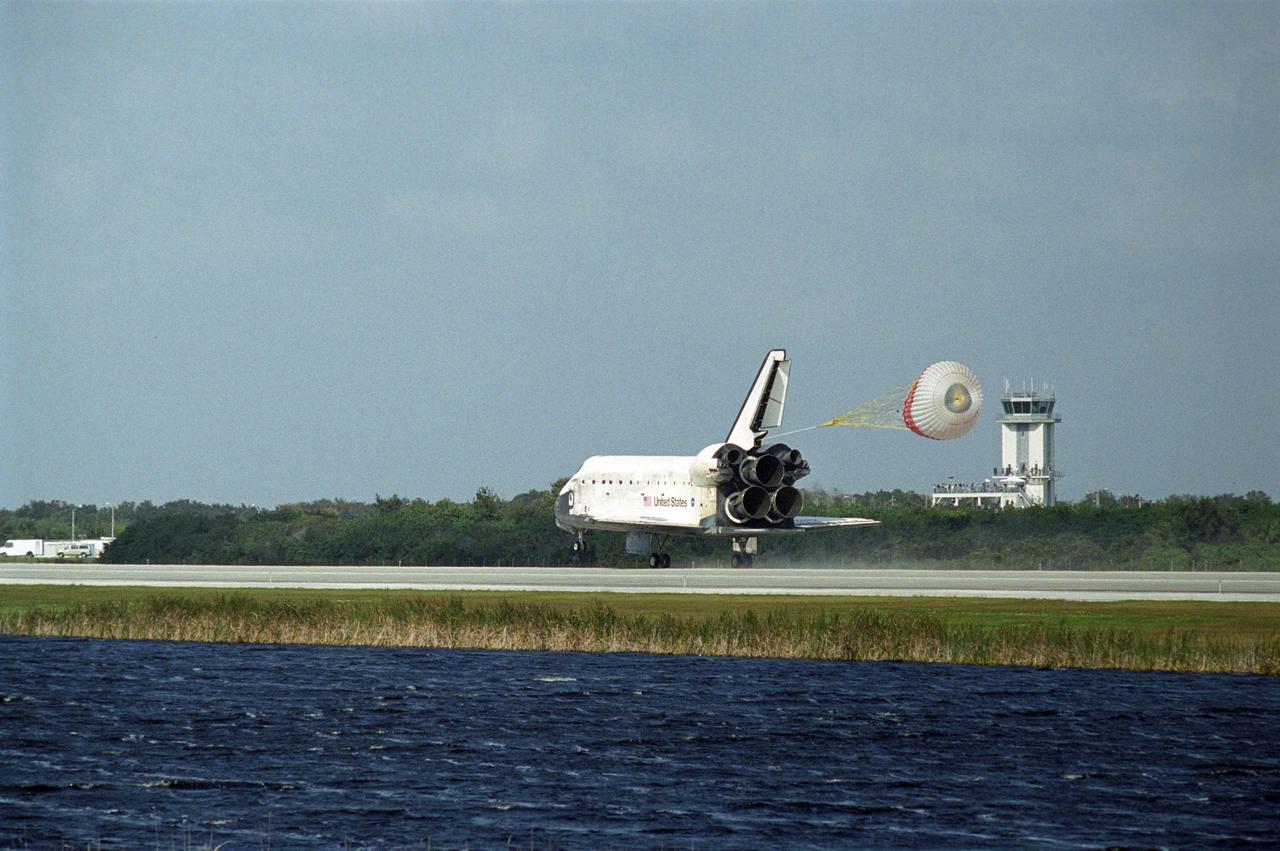
KENNEDY SPACE CENTER, FLA. -- The space shuttle Discovery is slowed by a drag chute behind it as it lands on Runway 33 of the Shuttle Landing Facility at NASA's Kennedy Space Center. he landing completes the 15-day mission STS-120 to the International Space Station. Main gear touchdown was 1:01:16 p.m. Wheel stop was at 1:02:07 p.m. Mission elapsed time was 15 days, 2 hours, 24 minutes and 2 seconds. During the mission, the STS-120 crew continued the construction of the station with the installation of the Harmony Node 2 module and the relocation of the P6 truss. Photo credit: NASA/Jerry Cannon, Richard Prickett
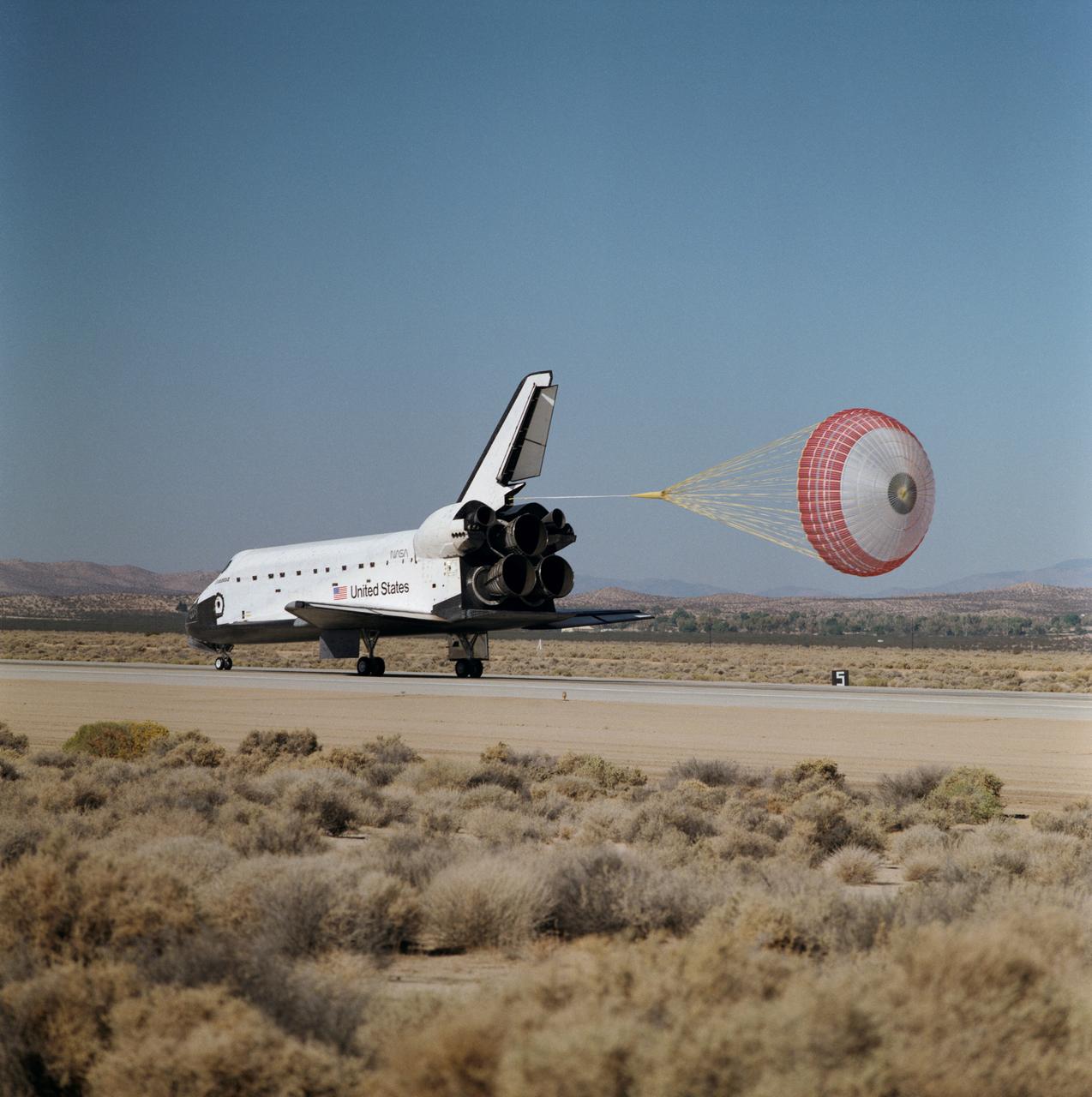
STS068-S-061 (11 October 1994) --- The drag chute system, one of 13 Detailed Test Objectives (DTO) for STS-68, is deployed as the Space Shuttle Endeavour completes an eleven-day mission at Edwards Air Force Base, California. Landing occurred at 10:02 a.m. (PDT), October 11, 1994. Onboard were astronauts Michael A. Baker, mission commander; Terrence W. Wilcutt, pilot; Thomas D. Jones, payload commander; and Daniel W. Bursch, Peter J. K. (Jeff) Wisoff and Steven L. Smith, all mission specialists.
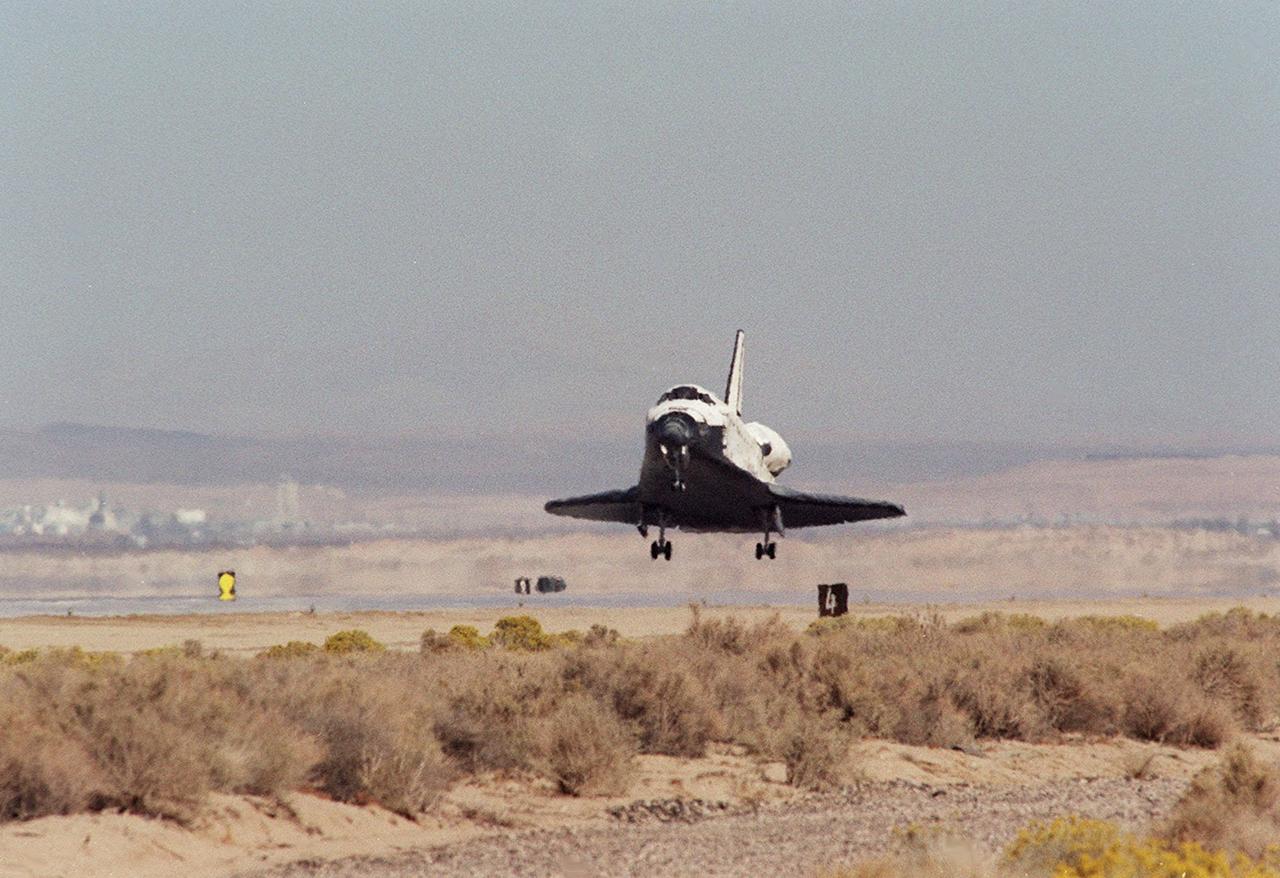
Orbiter Discovery, with its seven-member crew, approaches the landing strip at Edwards Air Force Base, Calif., after an 11-day mission to the International Space Station. The orbiter’s main landing gear touched down on EAFB runway 22 at 5 p.m. With the aid of its drag chute, Discovery came to a complete stop at 5:01 p.m. At the conclusion of mission STS-92, Discovery and crew had traveled about 5.3 million statute miles. Following vehicle safing and preliminary offloading efforts, workers will begin preparations for Discovery’s transcontinental ferry flight back to KSC on the back of NASA’s modified Boeing 747
 --- The drag chute on the Space Shuttle Discovery is deployed as the vehicle rolls toward mission completion at Edwards Air Force Base in the Mojave Desert of California. Onboard were astronauts Brian Duffy, Pamela A. Melroy, Leroy Chiao, William S. McArthur, Jr., Peter J.K. (Jeff) Wisoff, Michael E. Lopez-Alegria, and Koichi Wakata of Japan's National Space Development Agency (NASDA). Discovery touched down at 2 p.m. (PDT), October 24, and rolled to a stop on Edward's concrete runway at 2:0l, for a mission elapsed time of 12 days, 21 hours and 43 minutes.](https://images-assets.nasa.gov/image/sts092-s-022/sts092-s-022~medium.jpg)
STS092-S-022 [EC00-0311-3](24 OCTOBER 2000) --- The drag chute on the Space Shuttle Discovery is deployed as the vehicle rolls toward mission completion at Edwards Air Force Base in the Mojave Desert of California. Onboard were astronauts Brian Duffy, Pamela A. Melroy, Leroy Chiao, William S. McArthur, Jr., Peter J.K. (Jeff) Wisoff, Michael E. Lopez-Alegria, and Koichi Wakata of Japan's National Space Development Agency (NASDA). Discovery touched down at 2 p.m. (PDT), October 24, and rolled to a stop on Edward's concrete runway at 2:0l, for a mission elapsed time of 12 days, 21 hours and 43 minutes.
KENNEDY SPACE CENTER, FLA. -- The drag chute deployed behind space shuttle Discovery helps slow its smooth landing on Runway 33 of the Shuttle Landing Facility at NASA's Kennedy Space Center, completing the 15-day mission STS-120. Main gear touchdown was 1:01:16 p.m. Wheel stop was at 1:02:07 p.m. Mission elapsed time was 15 days, 2 hours, 24 minutes and 2 seconds. The STS-120 crew continued the construction of the station with the installation of the Harmony Node 2 module and the relocation of the P6 truss. Photo credit: NASA/George Shelton