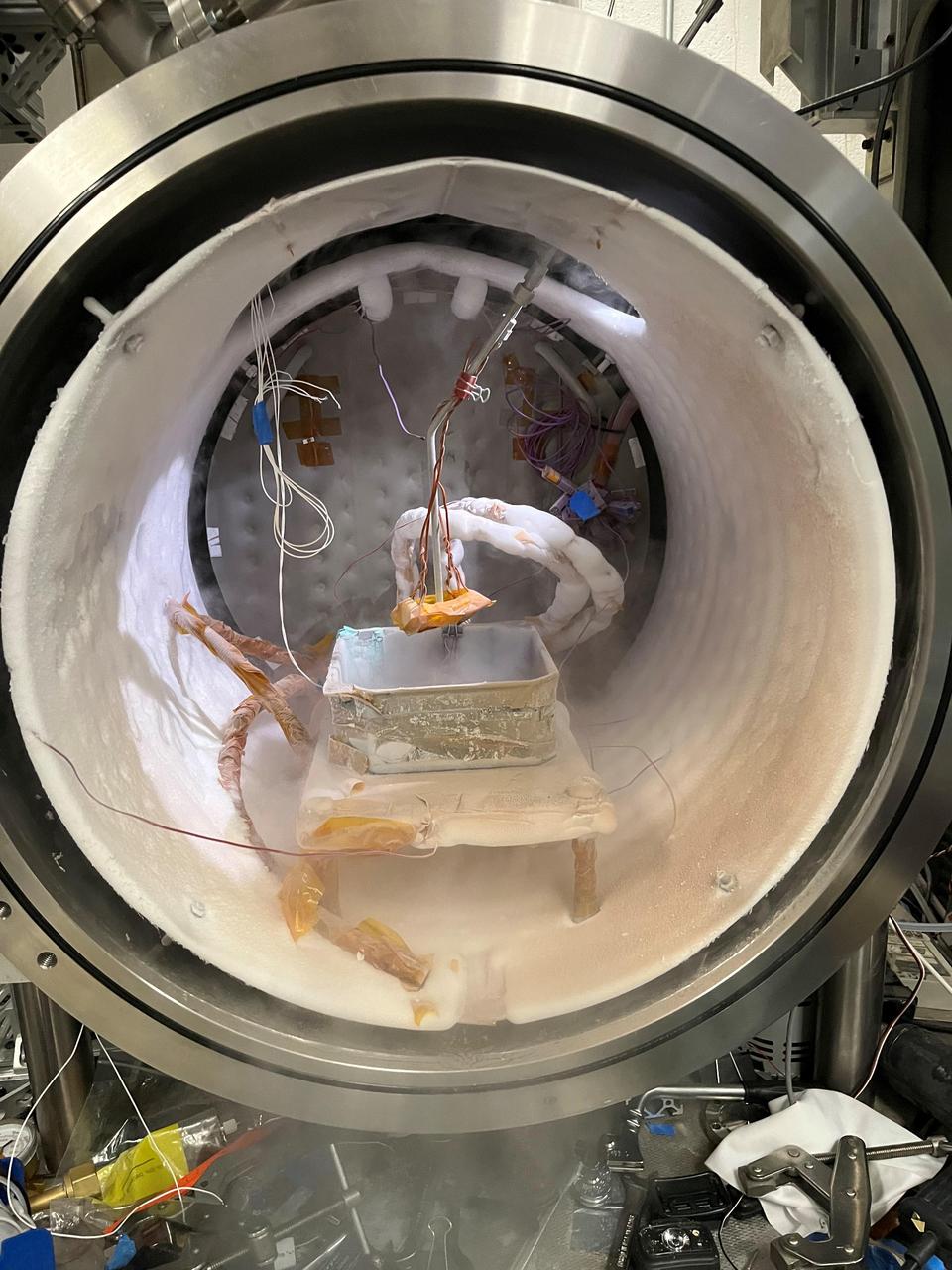
This wine barrel-size chamber at NASA's Jet Propulsion Laboratory in Southern California is used to simulate the temperatures and air pressure of other planets – in this case, the carbon dioxide ice found on the southern hemisphere of Mars. The experiment shown here simulated how Martian spider-like formations called araneiform terrain are created. Called the Dirty Under-vacuum Simulation Testbed for Icy Environments, or DUSTIE, the chamber was used to test a prototype of a rasping tool designed for NASA's Phoenix lander, which touched down on Mars' northern hemisphere in 2008. https://photojournal.jpl.nasa.gov/catalog/PIA26405
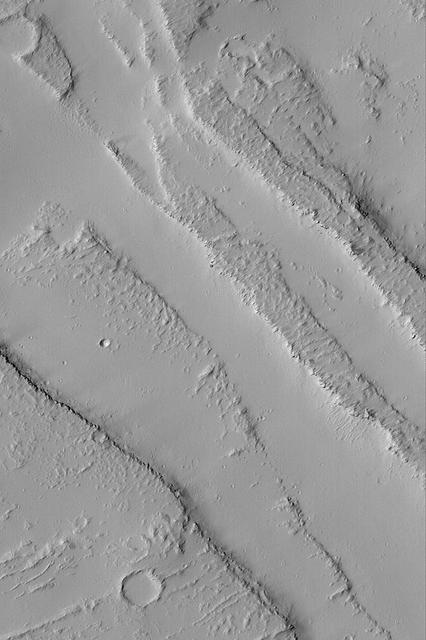
Dusty Troughs
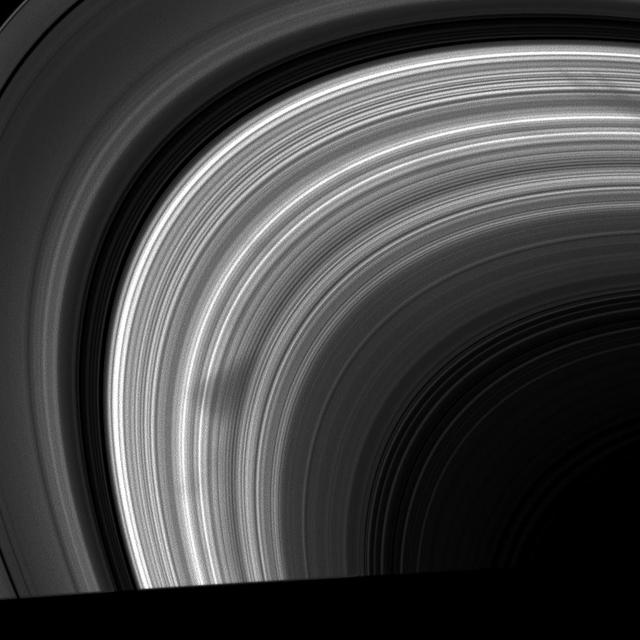
Dusty Wedge
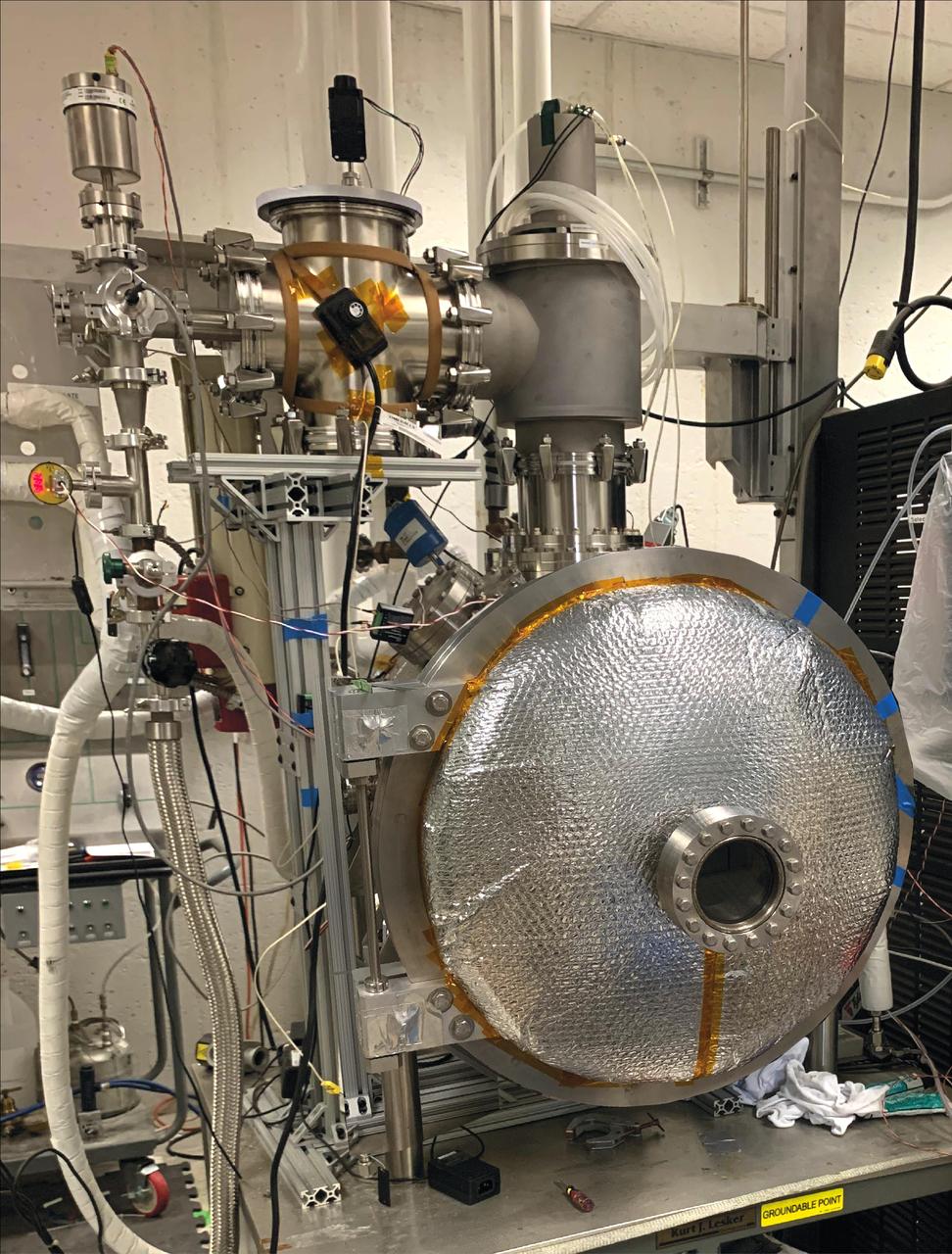
To simulate conditions on the giant asteroid Vesta that would occur after meteoroids strike the surface for a study published in October 2024, scientists used the Dirty Under-vacuum Simulation Testbed for Icy Environments, or DUSTIE, at NASA's Jet Propulsion Laboratory in Southern California. They were exploring the potential origins of deep channels, or gullies, on the surface of Vesta, which lies in the main asteroid belt between Mars and Jupiter. By rapidly reducing the air pressure surrounding samples of liquid, they mimicked the environment around fluid that comes to the surface. Exposed to vacuum conditions, pure water froze instantly. But salty fluids hung around longer, continuing to flow before freezing. https://photojournal.jpl.nasa.gov/catalog/PIA26070
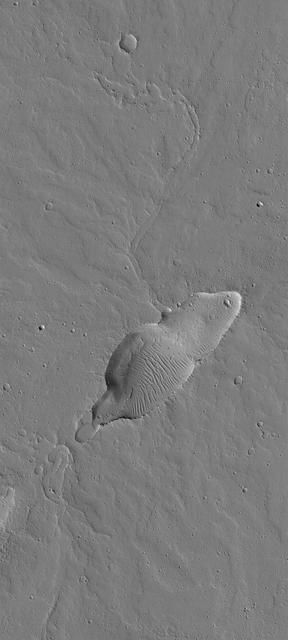
Small Dusty Volcano
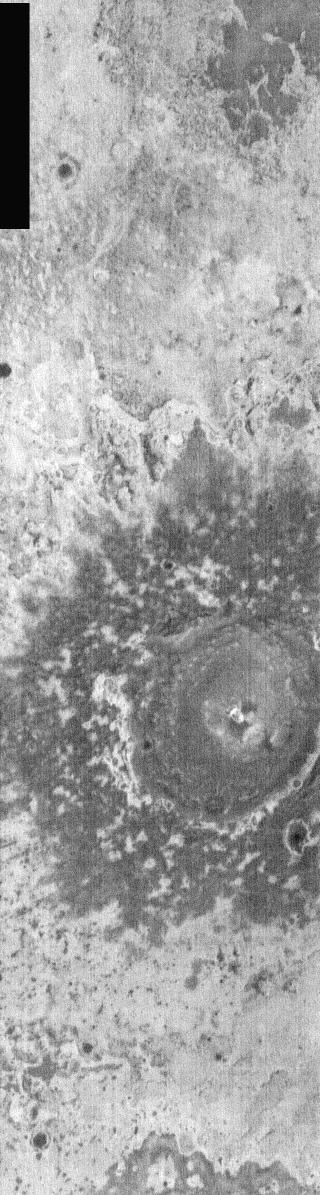
Dusty Ejecta Blanket
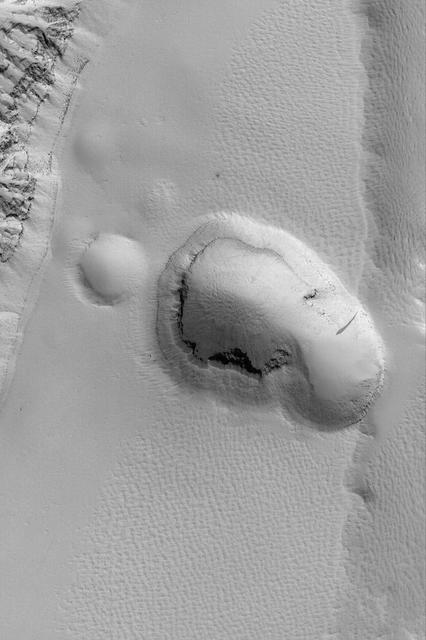
Dusty Collapse Pit
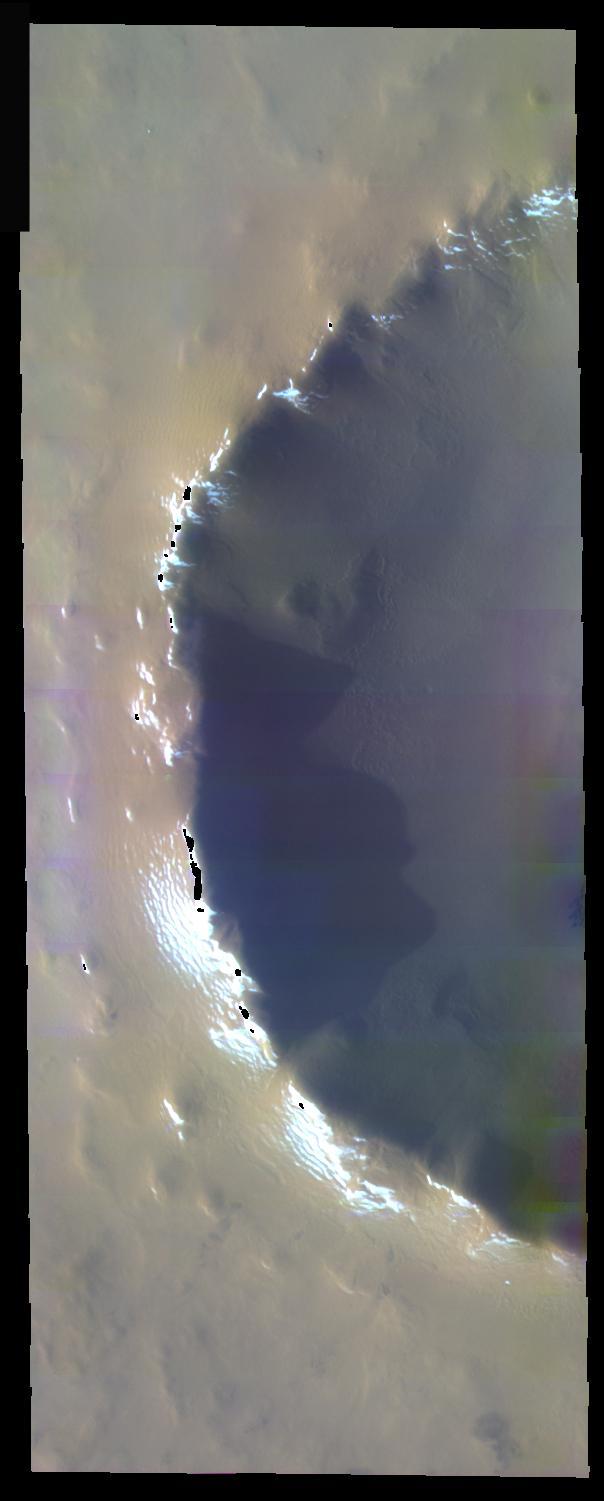
Dusty Crater In False Color
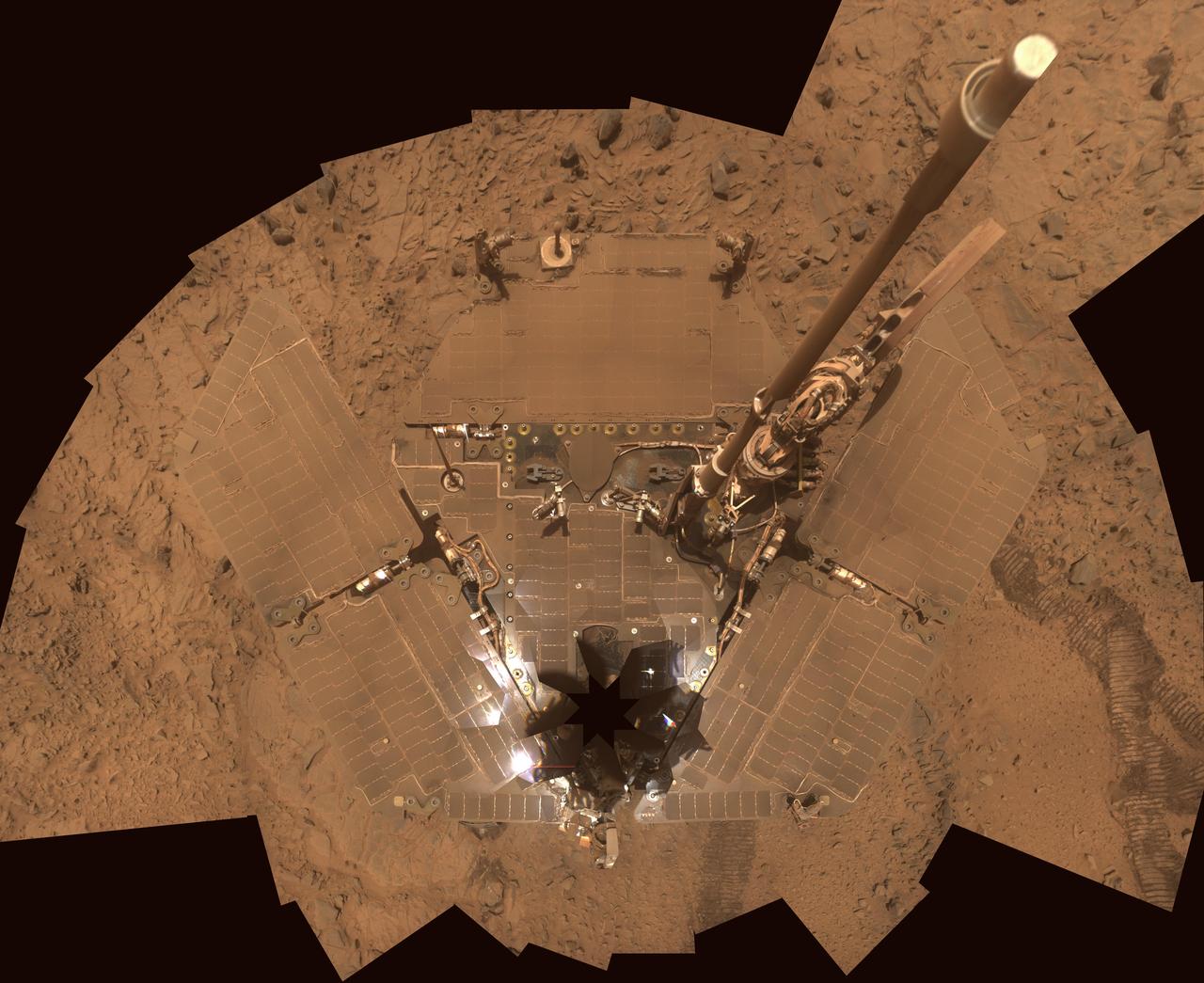
Dusty Solar Panels on Spirit
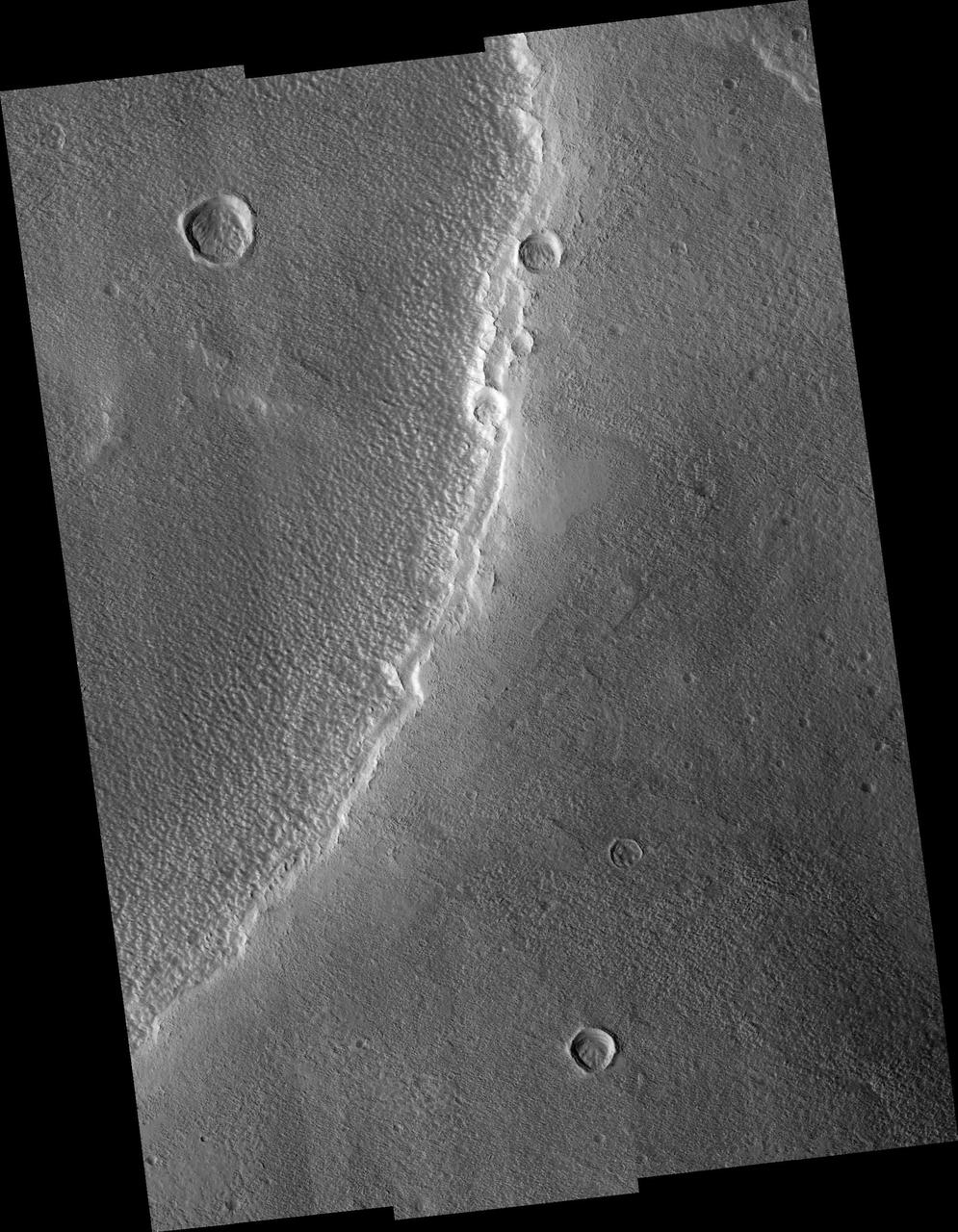
Dusty Top of Alba Patera Volcano
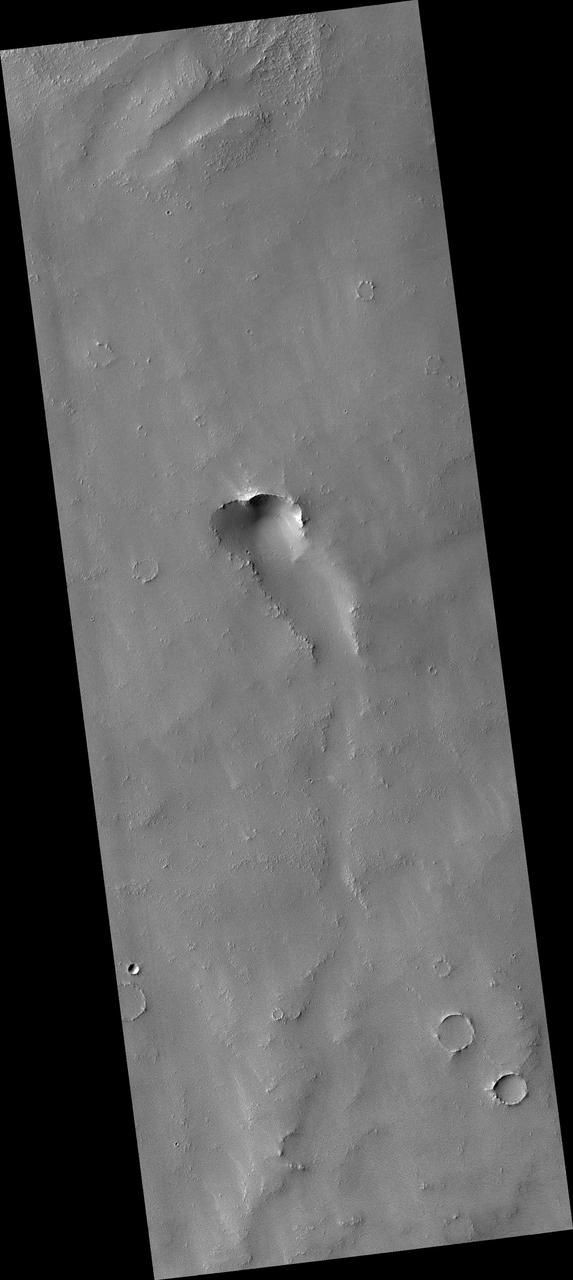
Dusty Volcanic Vent in Syria Planum
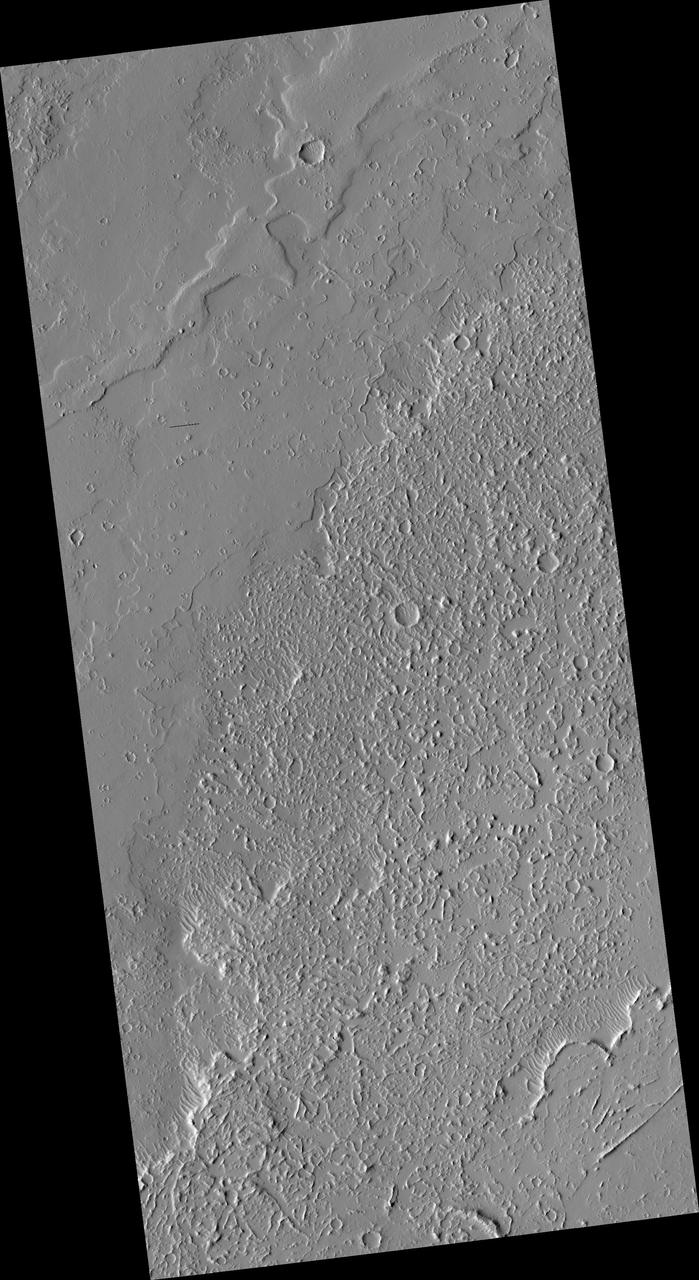
Dusty Lava Flows on Ascreaus Mons
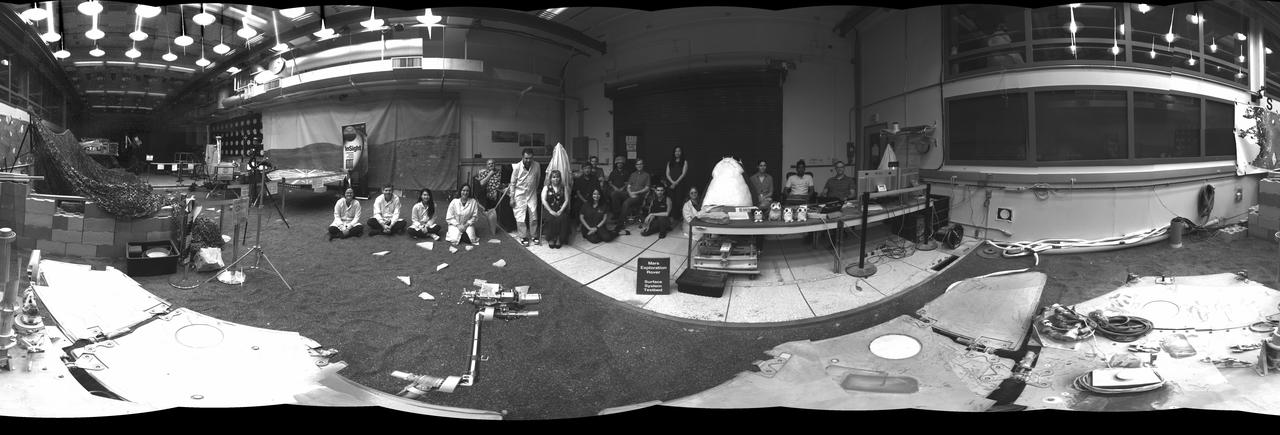
This 360-degree panorama was taken by "Dusty," a fully-working replica of NASA's Opportunity rover at the agency's Jet Propulsion Laboratory. The panorama was taken as part of a software test. Members of the Opportunity team gathered to sit in during the panorama. The panorama was taken by Dusty's Panoramic Camera, or Pancam, on Sept. 6, 2018. https://photojournal.jpl.nasa.gov/catalog/PIA23247
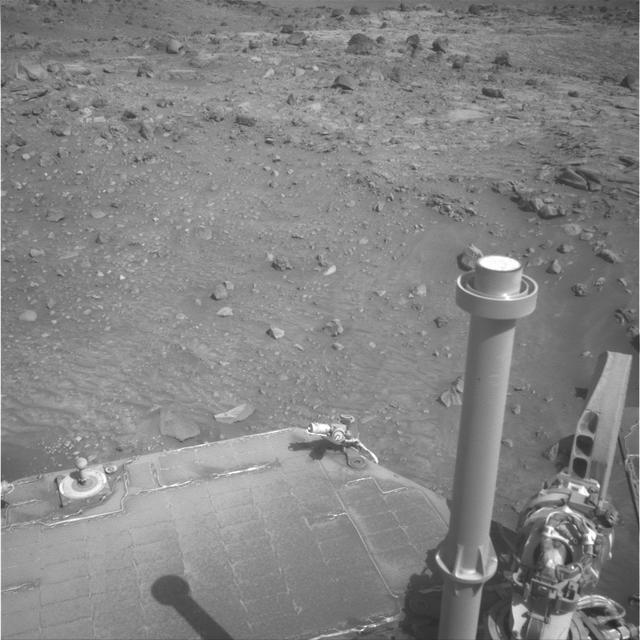
Very Dusty Solar Panel on Spirit, Sol 1811
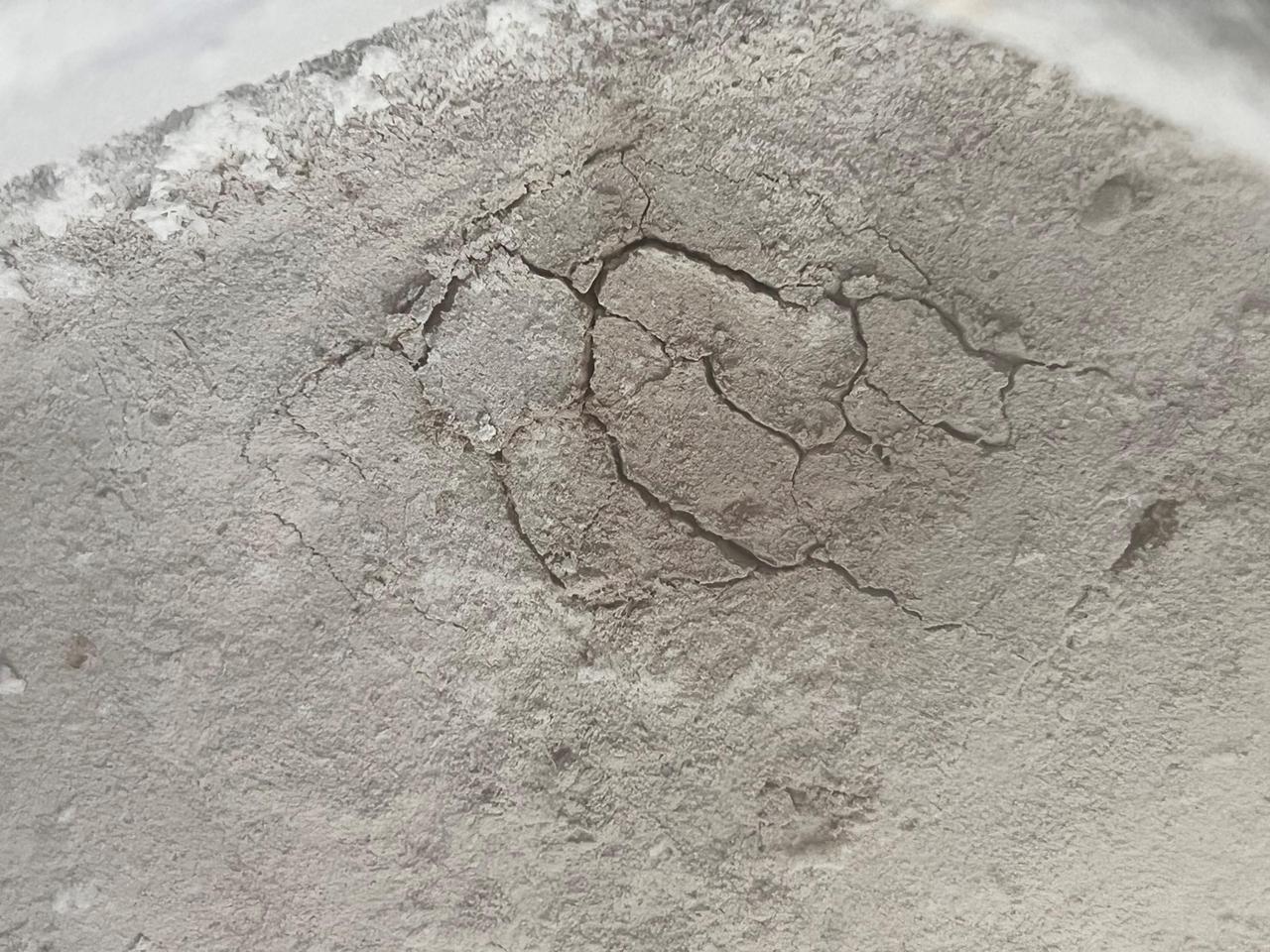
This image shows an experiment conducted at NASA's Jet Propulsion Laboratory re-creating the processes that form spider-like features on Mars called araneiform terrain. The experiment involves carbon dioxide gas settling into Mars soil simulant. The gas settles between the grains of simulant and eventually freezes into ice. A heater underneath the soil simulant then warms up the ice and turns it back into gas. As pressure from the gas builds, the frozen top layer of simulant eventually cracks. When the pressure builds enough, a plume of carbon dioxide erupts. The study confirms several formation processes described by what's called the Kieffer model: Sunlight heats the soil when it shines through transparent slabs of carbon dioxide ice that build up on the Martian surface each winter. Being darker than the ice above it, the soil absorbs the heat and causes the ice closest to it to turn directly into carbon dioxide gas – without turning to liquid first – in a process called sublimation (the same process that sends clouds of "smoke" billowing up from dry ice). As the gas builds in pressure, the Martian ice cracks, allowing the gas to escape. As for what creates the spider legs, the Kieffer model suggests that as the gas vents, it carries a stream of dust and sand that scours the surface, forming scars that are revealed when the ice disappears in the spring. But the experiment also suggests an alternative explanation for the this part of the process: The researchers found that these formations could have also been created when ice formed in the pores within the soil, rather than on top of it, and that the release of gas from within this soil-ice mixture may have created the formations. The experiment took place in JPL's Dirty Under-vacuum Simulation Testbed for Icy Environments, or DUSTIE. https://photojournal.jpl.nasa.gov/catalog/PIA26406
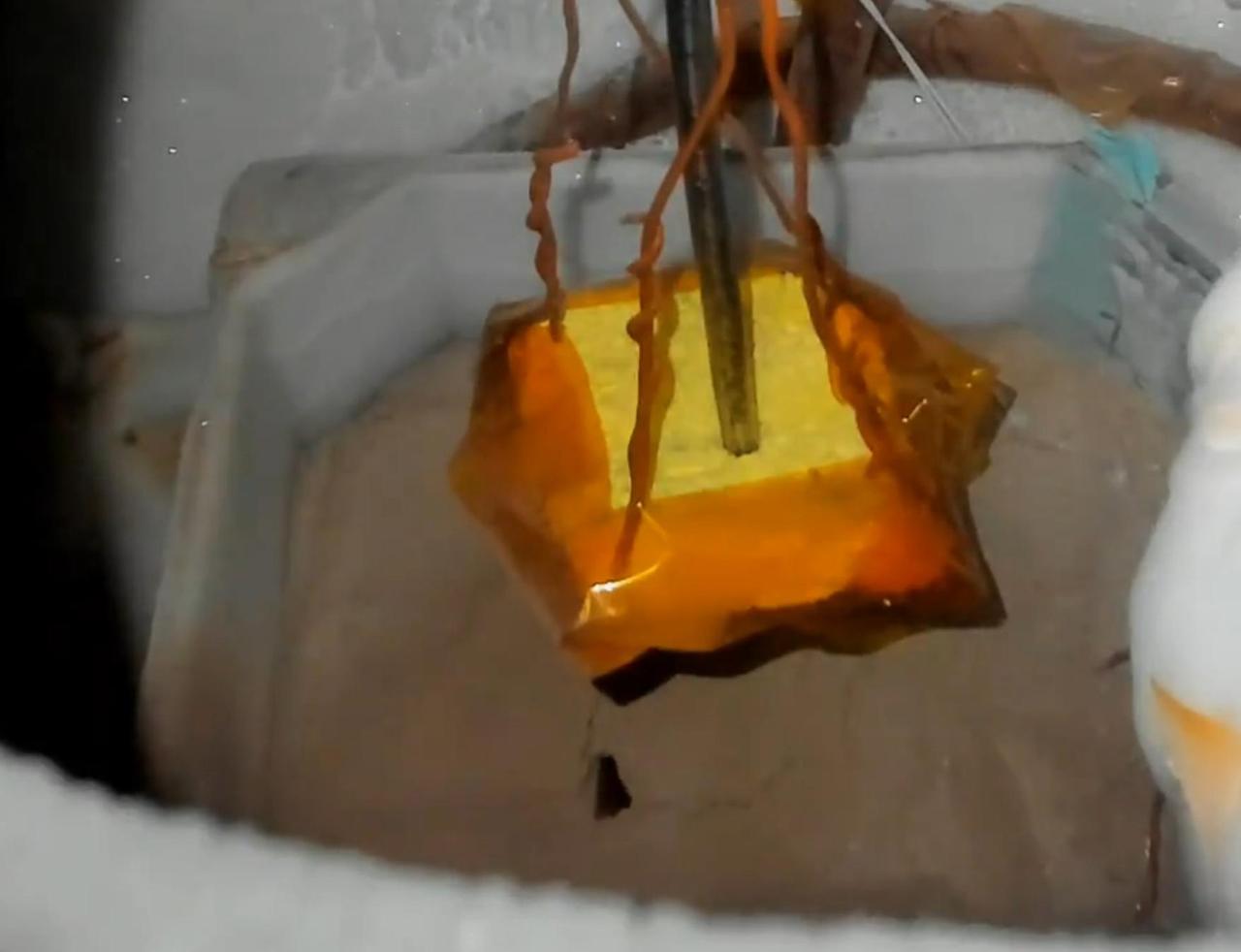
This image shows Martian soil simulant erupting in a plume during a lab experiment at NASA's Jet Propulsion Laboratory in Southern California that was designed to replicate the process believed to form Martian features called "spiders." In the experiment, researchers chilled Martian soil simulant in a container submerged within a liquid nitrogen bath. They placed it in JPL's Dirty Under-vacuum Simulation Testbed for Icy Environments (DUSTIE), where the air pressure was reduced to be similar to that of Mars' southern hemisphere. Carbon dioxide gas flowed into the chamber – diffused through the bright yellow sponge seen suspended over the simulant here – and condensed from gas to ice over the course of three to five hours. A heater inside the chamber then warmed the simulant from below, cracking the ice. After many tries, researchers saw a plume of carbon dioxide gas erupting from within the powdery simulant, as seen here. Video available at https://photojournal.jpl.nasa.gov/catalog/PIA26404
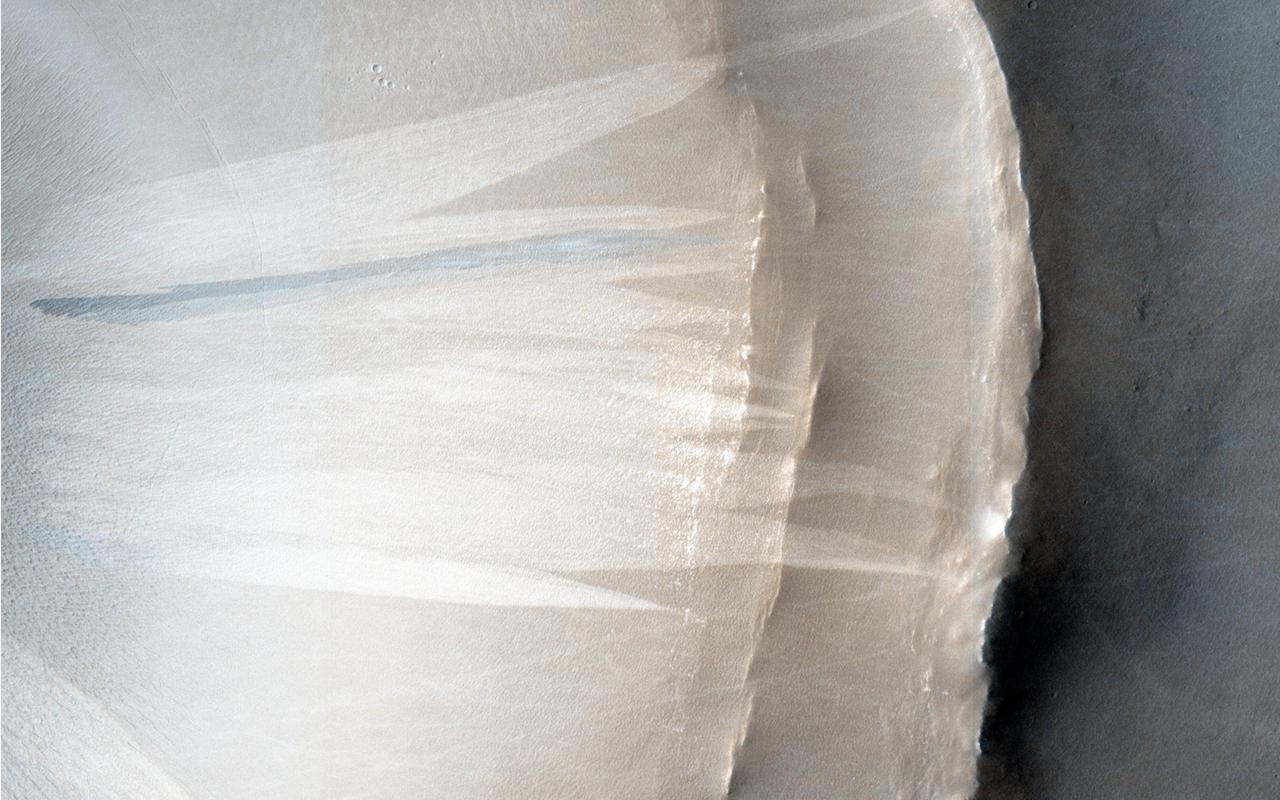
This image from NASA Mars Reconnaissance Orbiter shows features commonly found in dusty areas: impacts, slope streaks and bed-forms.
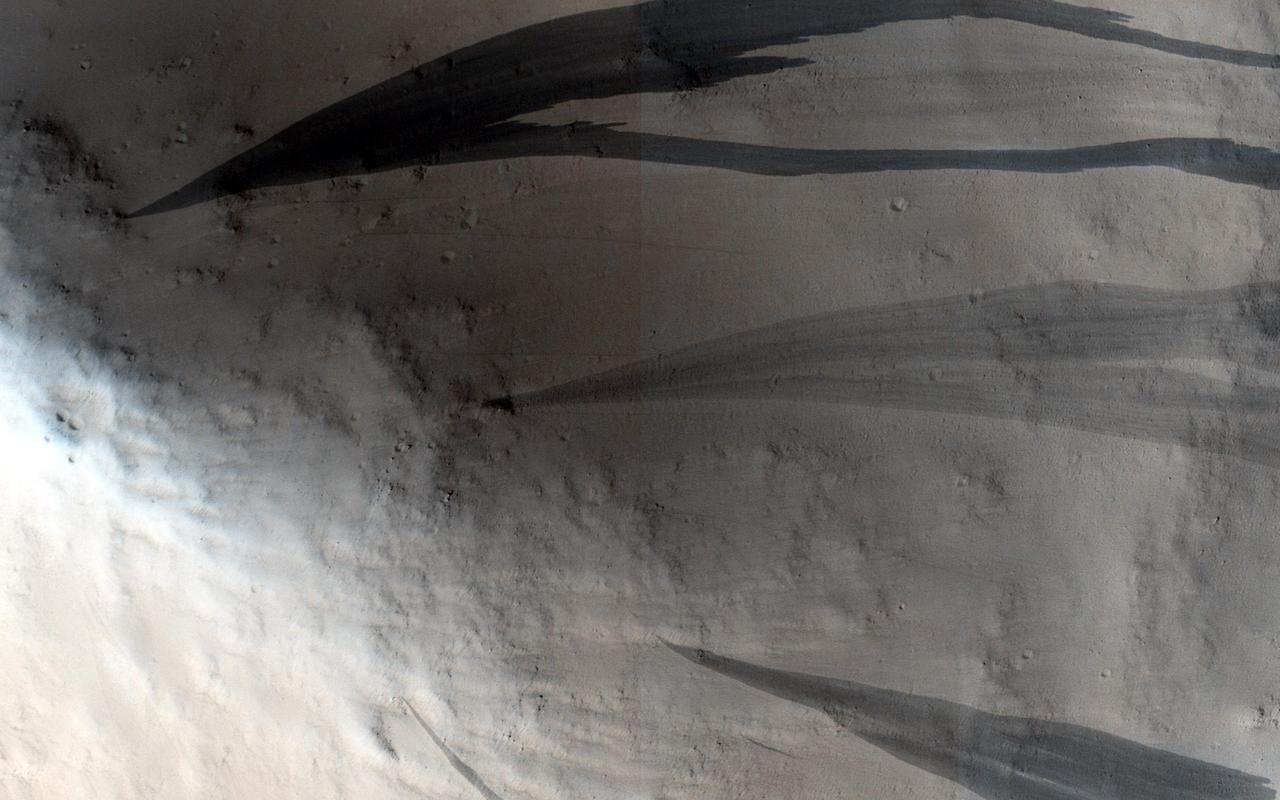
Mars is a dusty place and in some locations thick blankets of its characteristically red dust can slowly settle out of the atmosphere and accumulate on slopes. This dust is also a lot brighter than the dust-free terrain on Mars; so, if you scrape off the dust, you'll see a darker surface underneath. This particular image shows one of these dusty areas. The dark streaks on the slopes are locations where the dust has slumped downhill revealing a less dusty surface underneath. In some cases, these slope streaks might be triggered by Marsquakes or nearby meteorite impacts. Scientists think they form quickly: more like an avalanche than dust slowly creeping downhill. Look more closely and you'll notice that some streaks are darker than others. Dust is settling out of the atmosphere all the time and these dark streaks get slowly buried by fresh dust so that they fade back into their brighter redder surroundings. It's not certain how long this fading takes to happen, but it's probably close to a few decades. Dust is an important player in the weather and climate on Mars. Images like this are used to monitor slow changes in these streaks over time to better understand how much dust is settling on the surface. http://photojournal.jpl.nasa.gov/catalog/PIA19456
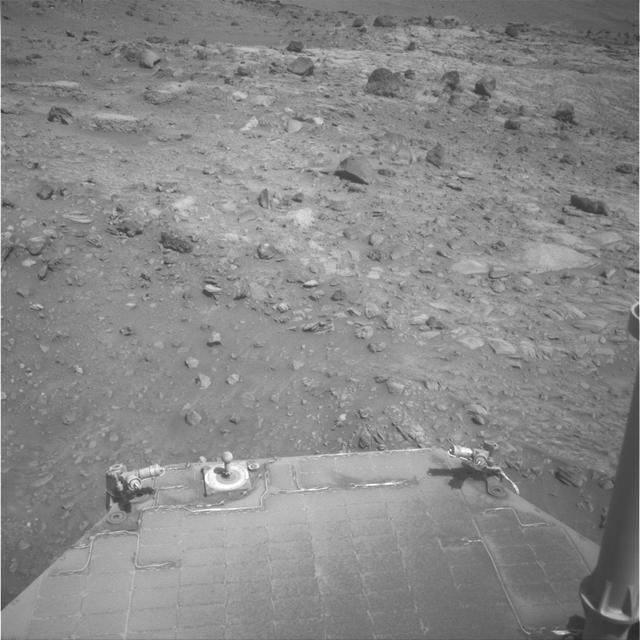
Spirit Solar Panel on Sol 1813, Still Very Dusty
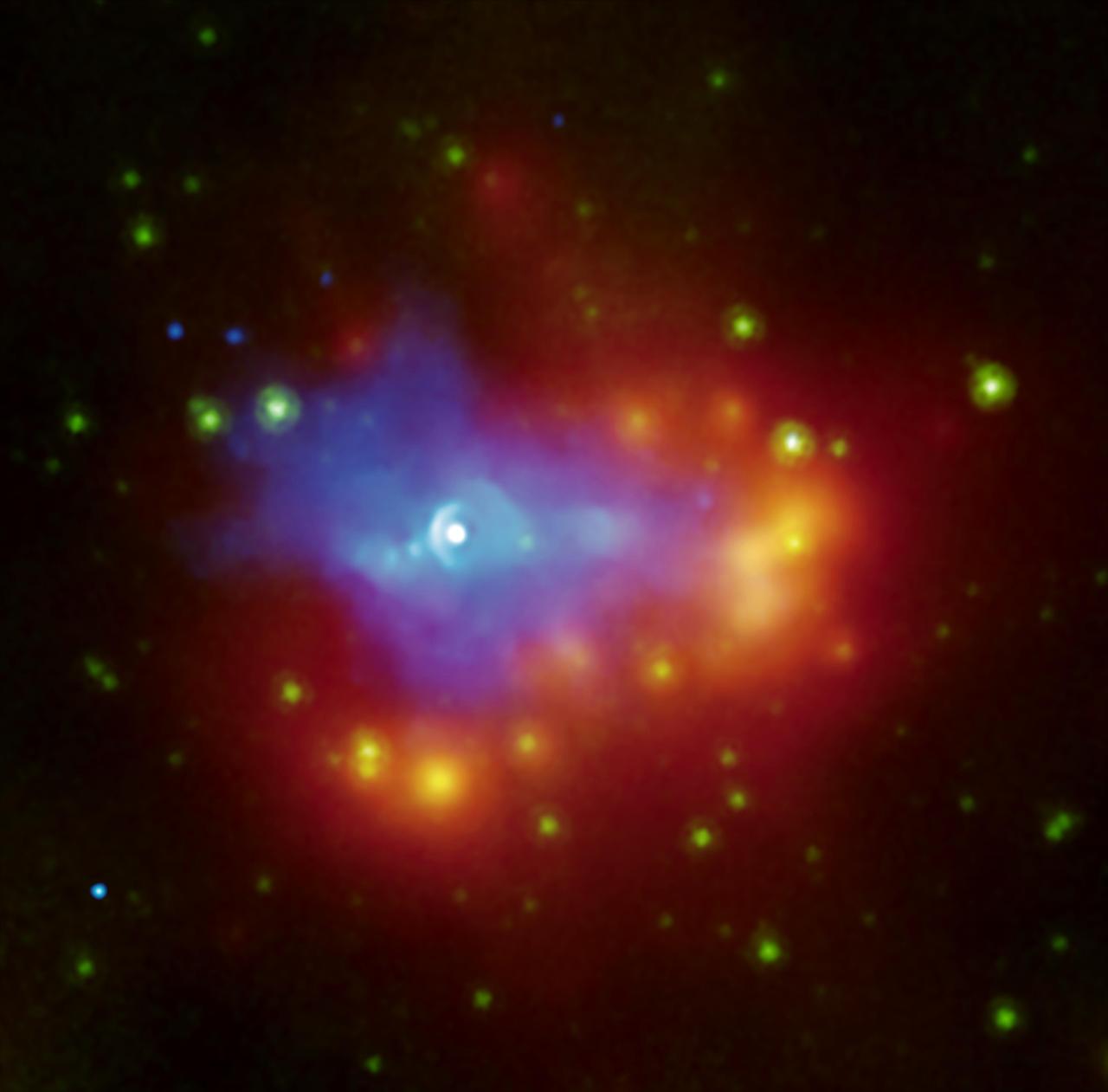
A composite image from NASA Chandra and Spitzer space telescopes shows the dusty remains of a collapsed star, a supernova remnant called G54.1+0.3. The white source at the center is a dead star called a pulsar.
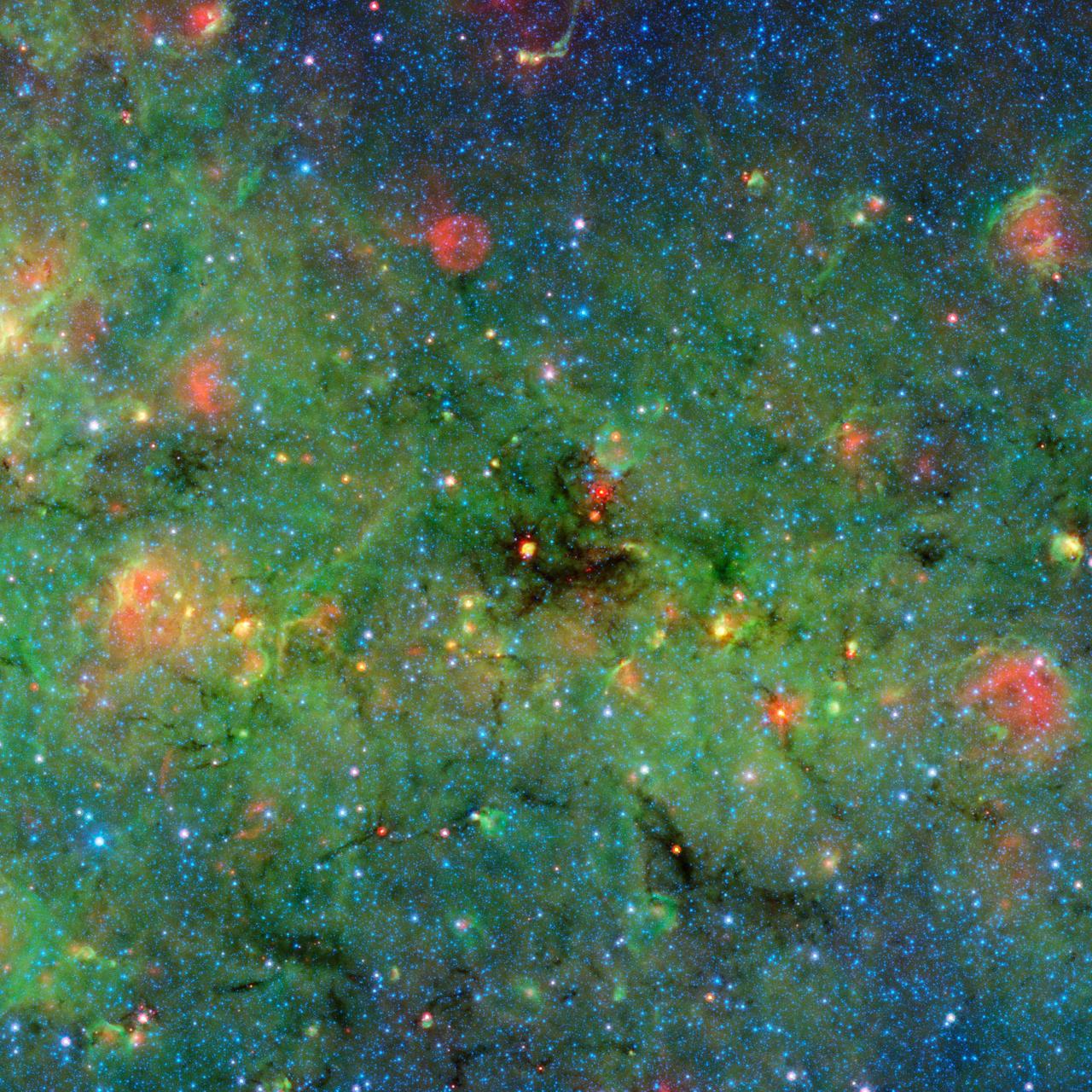
Astronomers have found cosmic clumps so dark, dense and dusty that they throw the deepest shadows ever recorded. A large cloud looms in the center of this image of the galactic plane from NASA Spitzer Space Telescope.
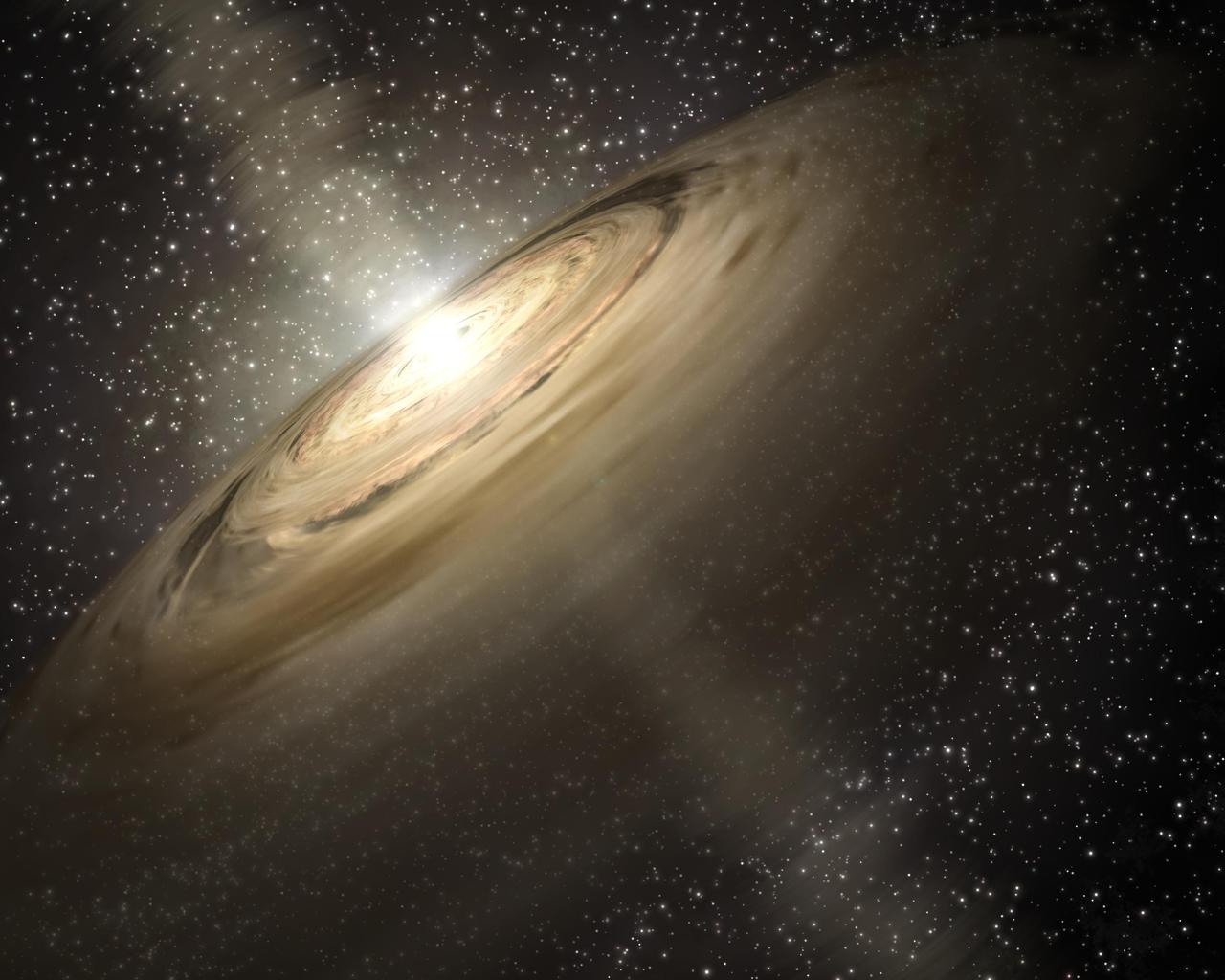
This artist concept illustrates a solar system that is a much younger version of our own. Dusty disks, like the one shown here circling the star, are thought to be the breeding grounds of planets, including rocky ones like Earth.
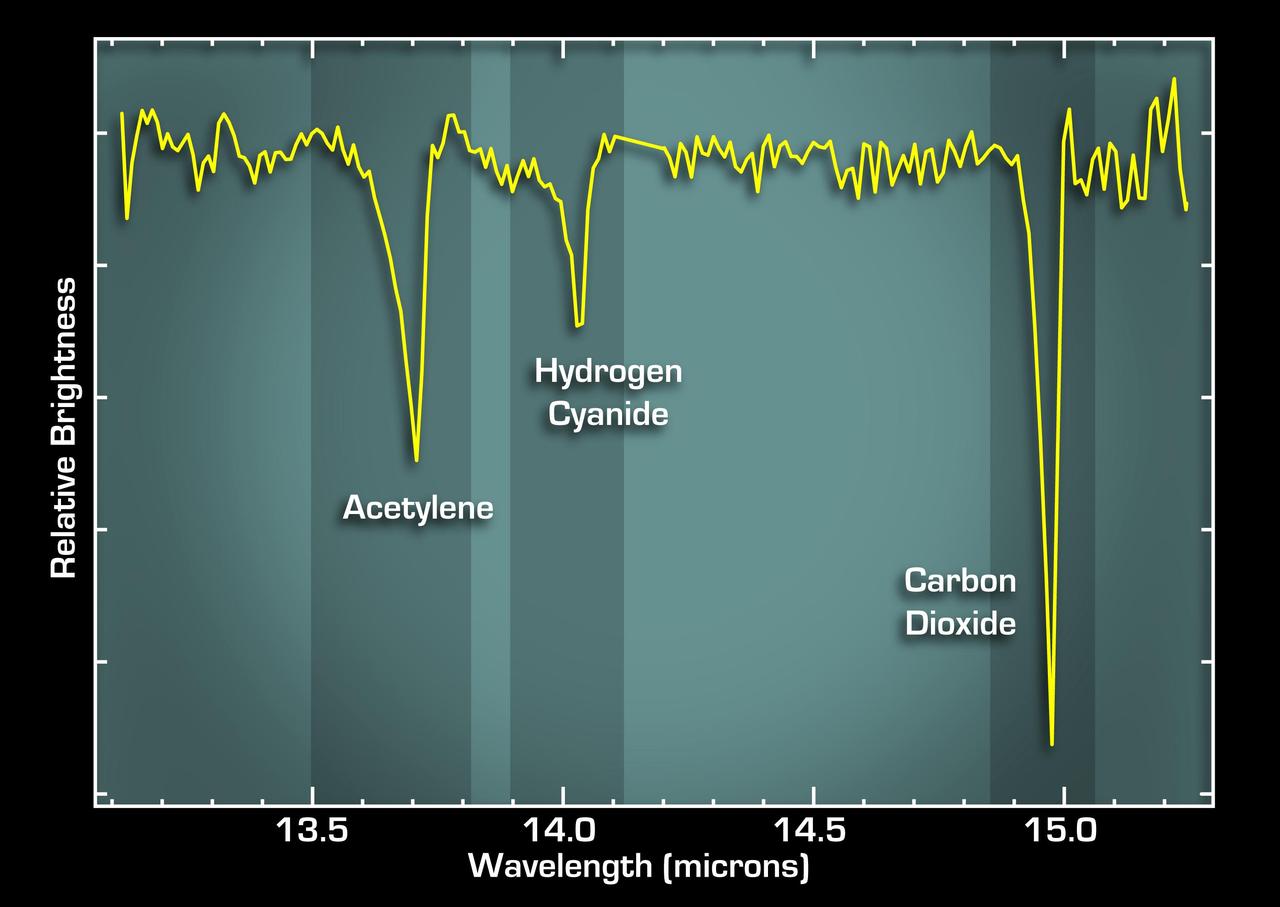
This graph, or spectrum, from NASA Spitzer Space Telescope tells astronomers that some of the most basic ingredients of DNA and protein are concentrated in a dusty planet-forming disk circling a young sun-like star called IRS 46.
![This image from NASA Mars Reconnaissance Orbiter shows a new impact site originally detected by the Context Camera onboard MRO. The crater is on a dusty slope, which also has several dark slope streaks due to dust avalanches. A previous impact at another place on Mars triggered a major dust avalanche, but this one did not. This tells us that the dust here is more stable (stronger and/or on a lower slope). The map is projected here at a scale of 25 centimeters (9.8 inches) per pixel. [The original image scale is 27.1 centimeters (9.8 inches) per pixel (with 1 x 1 binning); objects on the order of 81 centimeters (30 inches) across are resolved.] North is up. http://photojournal.jpl.nasa.gov/catalog/PIA21459](https://images-assets.nasa.gov/image/PIA21459/PIA21459~medium.jpg)
This image from NASA Mars Reconnaissance Orbiter shows a new impact site originally detected by the Context Camera onboard MRO. The crater is on a dusty slope, which also has several dark slope streaks due to dust avalanches. A previous impact at another place on Mars triggered a major dust avalanche, but this one did not. This tells us that the dust here is more stable (stronger and/or on a lower slope). The map is projected here at a scale of 25 centimeters (9.8 inches) per pixel. [The original image scale is 27.1 centimeters (9.8 inches) per pixel (with 1 x 1 binning); objects on the order of 81 centimeters (30 inches) across are resolved.] North is up. http://photojournal.jpl.nasa.gov/catalog/PIA21459
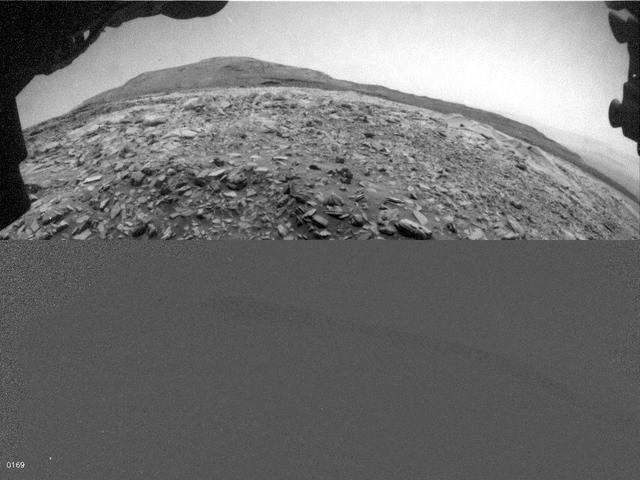
NASA's Curiosity Mars rover used one of its Hazard-Avoidance Cameras (Hazcams) to catch this dusty wind gust blowing overhead on March 18, 2022, the 3,418th Martian day, or sol, of the mission. Scientists believe it's a wind gust rather than a dust devil since it doesn't appear to have the trademark vorticity, or twisting, of a dust devil. The series of images captured by the Hazcam is viewable in the top image; the bottom image shows the frames after they've been processed by change-detection software, which helps the viewer see how the wind gust moves over time. Movie available at https://photojournal.jpl.nasa.gov/catalog/PIA25177

This image was acquired on July 22, 2018 by NASA's Mars Reconnaissance Orbiter. Mars has recently been enveloped in dusty haze, but the sensitivity of HiRISE enabled imaging of surface features through a moderate level of haze. This image shows a fresh impact crater in the northern middle latitudes. A technique called "pixel binning" was needed to improve the signal, but it is still the highest-resolution image ever acquired at this location. Pixel binning combines information of adjacent detectors in a CCD camera sensor to create one single pixel in the recorded image. https://photojournal.jpl.nasa.gov/catalog/PIA22726

Our Milky Way is a dusty place. So dusty that we cannot see the center of the galaxy in visible light. Thanks to NASA Spitzer Space Telescope excellent resolution, the dusty features within the galactic center are seen in unprecedented detail.
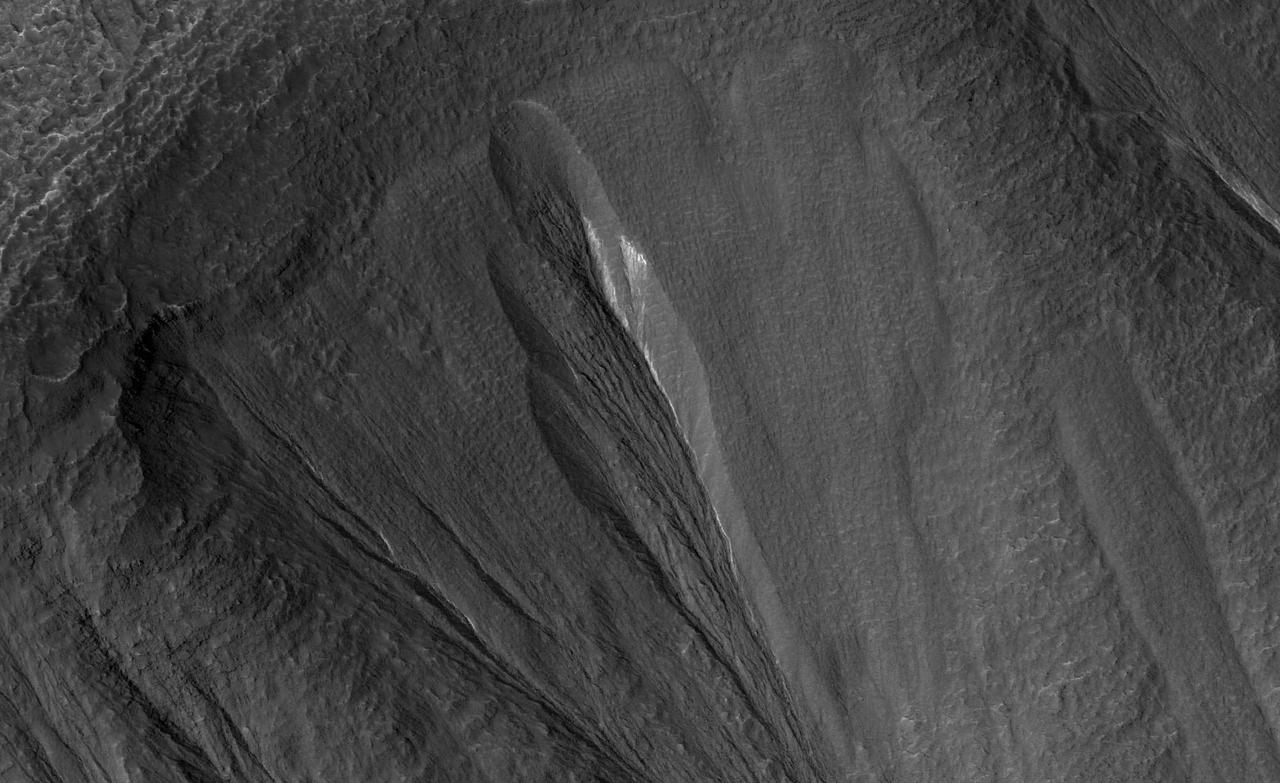
The white material seen within this gully is believed to be dusty water ice in a Martian region called Dao Vallis, captured by NASA's Mars Reconnaissance Orbiter (MRO). Scientists believe dust particles within this ice act similarly to dust that falls on to glaciers on Earth, warming up in sunlight and causing subsurface pockets of meltwater to form. On Earth, the dust that forms these pockets are called cryoconite, and the pockets are called cryoconite holes. These Earth-based pockets of water are often teeming with simple life, including algae, fungi and cyanobacteria. Scientists believe similar shallow pools of water could exist on Mars, and may also be excellent places to search for life on the Red Planet today. This black-and-white image was captured by MRO using its HiRISE (High-Resolution Imaging Science Experiment) camera on May 10, 2009. https://photojournal.jpl.nasa.gov/catalog/PIA26408
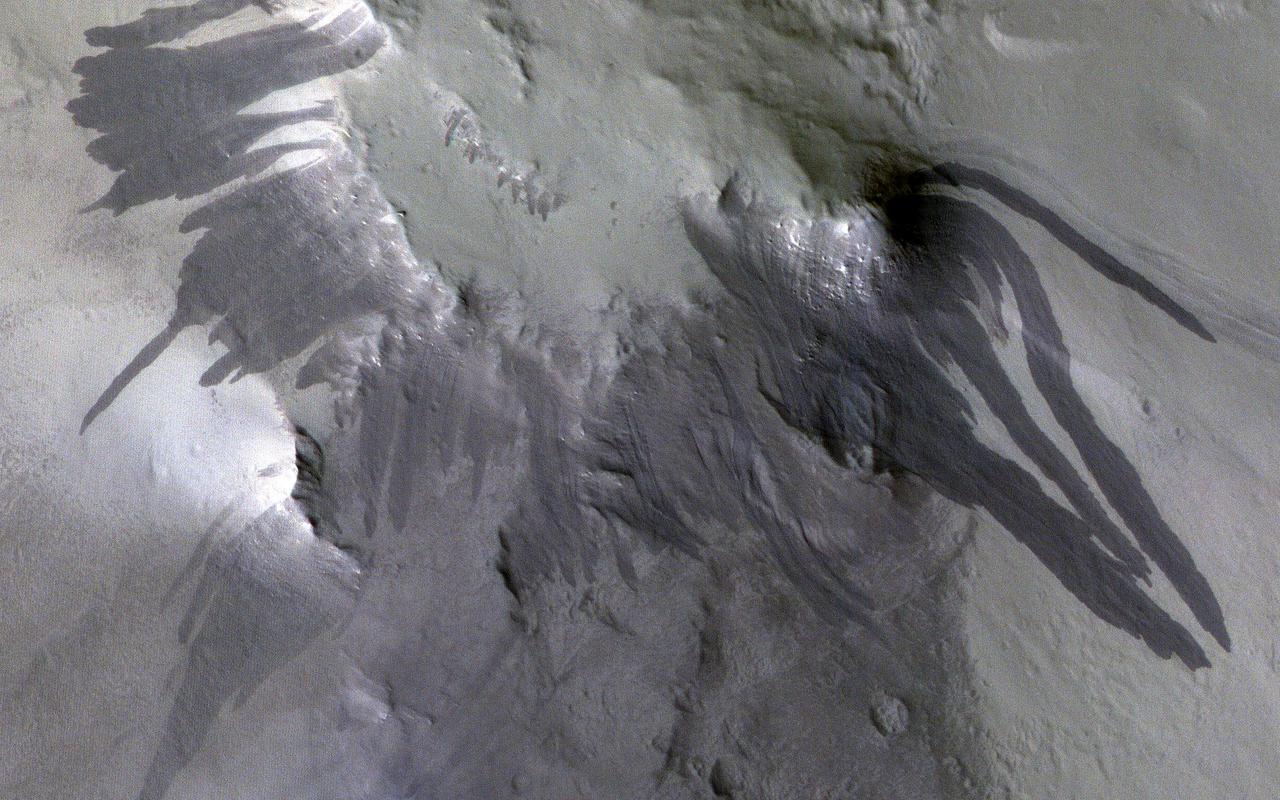
Meteorites hit Mars and create small craters like the one we've imaged here. Usually we spot these new craters in lower-resolution images from the Context Camera because the impact disturbs dust on the surface and creates a dark mark that's much bigger than the crater. This meteorite hit a dusty area and made a crater, but did something a little more special to the surrounding dust. We can see dozens of dark, dust-free, streaks on slopes surrounding the crater. These slope streaks form when dust slumps downhill and happen naturally on a regular basis. In this case though, the impact and explosion that made the crater seems to have set off many of these downhill slumps of dust simultaneously. This could have happened from the explosion's blast wave passing through the air or the shaking of the ground that it caused. https://photojournal.jpl.nasa.gov/catalog/PIA24382
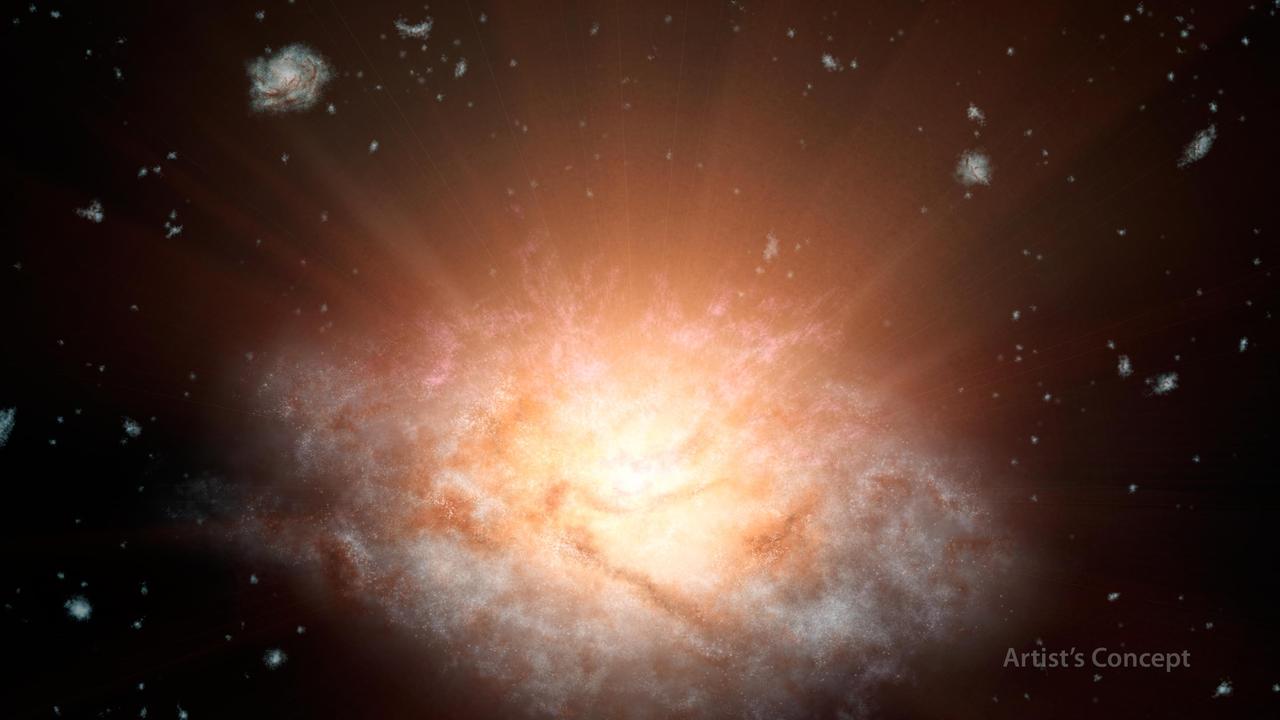
This artist's concept depicts the current record holder for the most luminous galaxy in the universe. The galaxy, named WISE J224607.57-052635.0, is erupting with light equal to more than 300 trillion suns. It was discovered by NASA's Wide-Field Infrared Survey Explorer, or WISE. The galaxy is smaller than the Milky Way, yet puts out 10,000 times more energy. Scientists think that a supermassive black hole at the center of this dusty galaxy is busily consuming gaseous material in a colossal growth spurt. As the gas is dragged toward the black hole, it heats up and blasts out visible, ultraviolet and X-ray light. The dust swaddling the galaxy absorbs this light and heats up, radiating longer-wavelength, infrared light. The dust also blocks our view of shorter, visible-light wavelengths, while letting longer-wavelengths through. This is similar to what happens when sunlight streams through our dusty atmosphere, producing a brilliant red sunrise. In fact, more than 99 percent of the light escaping from this dusty galaxy is infrared. As a result, it is much harder to see with optical telescopes. Because light from the galaxy hosting the black hole has traveled 12.5 billion years to reach us, astronomers are seeing the object as it was in the distant past. During this epoch, galaxies would have been more than five times closer together than they are now, as illustrated in the background of the artist's concept. This is due to the expansion of space -- space itself and the galaxies in it are stretching apart from each other at ever-increasing speeds. http://photojournal.jpl.nasa.gov/catalog/PIA19339
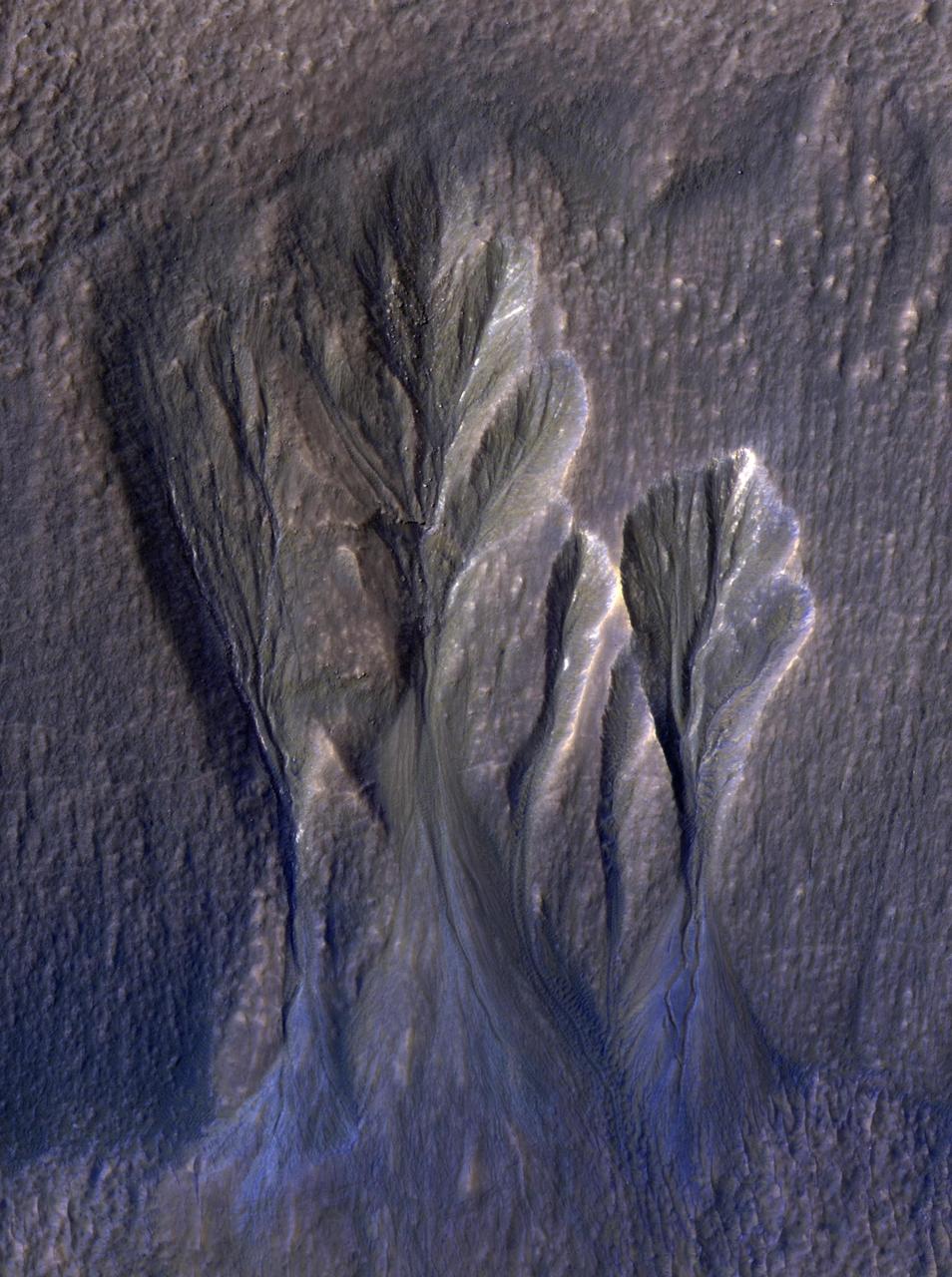
This image from NASA's Mars Reconnaissance Orbiter (MRO) shows white material believed to be dusty water ice lining the edges of Martian gullies in a region named Terra Sirenum. Scientists believe dust particles within this ice act similarly to dust that falls onto glaciers on Earth, warming up in sunlight and causing subsurface pockets of meltwater to form. On Earth, the dust that builds up on glaciers is called cryoconite, and the pockets it forms are called cryoconite holes. These pockets of water on our planet are often teeming with simple life, including algae, fungi, and cyanobacteria. Scientists believe similar shallow pools of water could exist on Mars, and may also be excellent places to search for life on the Red Planet today. This enhanced-color image was captured by MRO's HiRISE (High-Resolution Imaging Science Experiment) camera on Dec. 25, 2016. The blue color at the bottom of the gullies is likely coarse sand (not ice); the hue would not actually be perceptible to the human eye. HiRISE is able to detect this color by looking at the scene in far-infrared wavelengths. https://photojournal.jpl.nasa.gov/catalog/PIA26407

Members of Marshall's Facilities Operations and Maintenance Office team, including, clockwise from left, Robert Drane, Jeremy Holmes, Don Davis, team foreman Dusty Crouch, Wesley Brook and Lucas Broadway, gather to inspect and replace a pipe fitting.

Seen as a red dusty cloud in this image from NASA Wide-field Infrared Survey Explorer, Puppis A is the remnant of a supernova explosion.
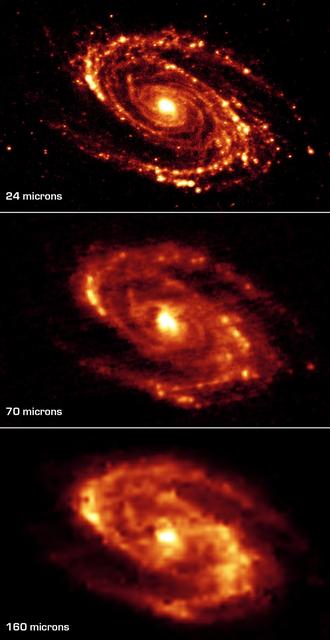
The magnificent and dusty spiral arms of the nearby galaxy Messier 81 are highlighted in these NASA Spitzer Space Telescope images.
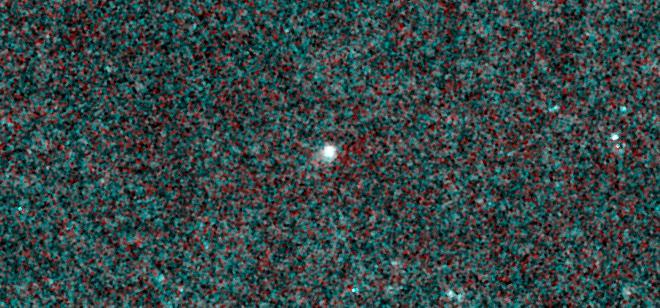
NASA NEOWISE mission captured images of Comet C/2013 A1 Siding Spring. The infrared pictures reveal a comet that is active and very dusty.

Astronomers using NASA Spitzer Space Telescope found evidence that such quasar winds might have forged these dusty particles in the very early universe.
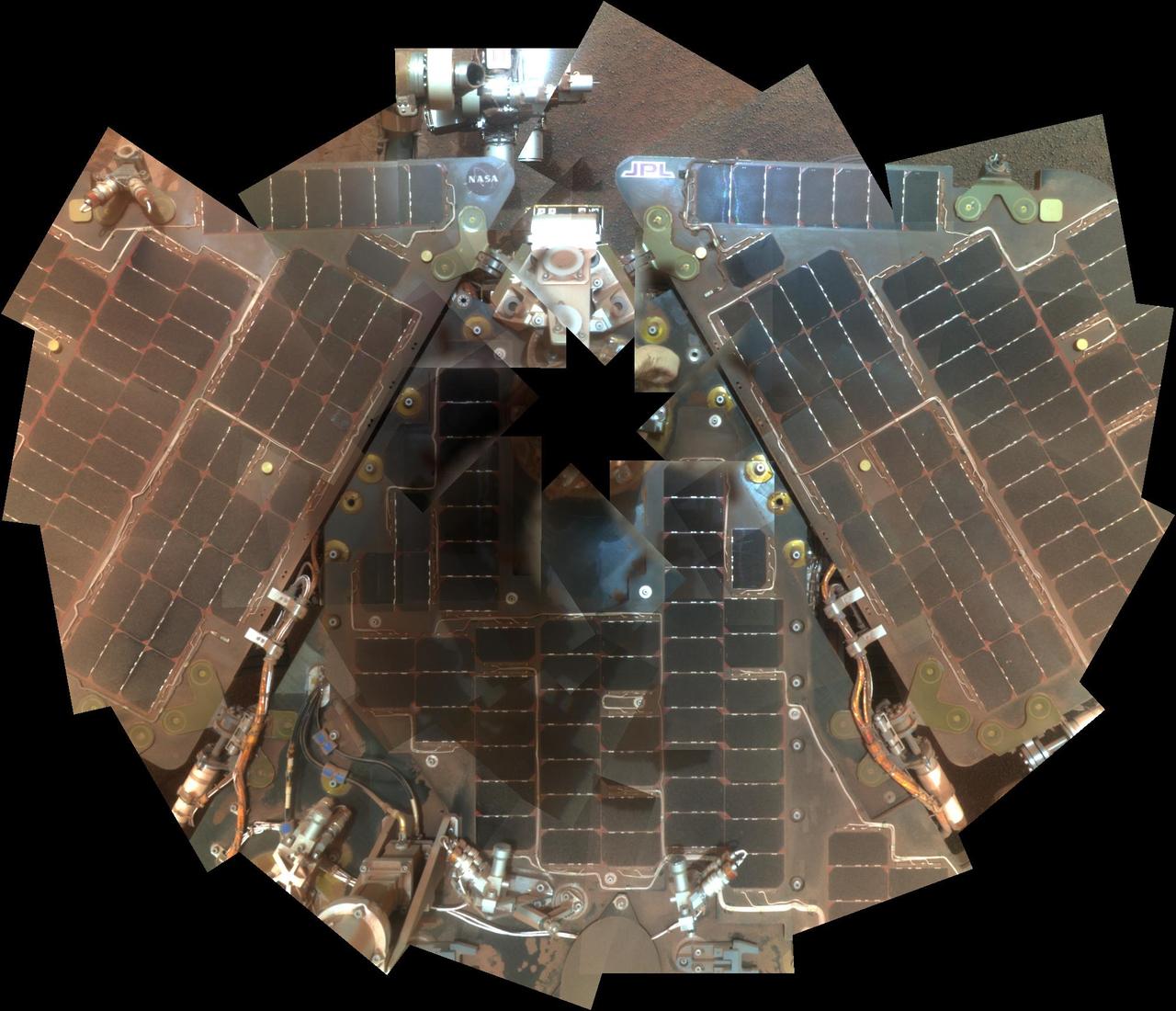
In 2007, NASA Mars Exploration Rover Opportunity had endured a Martian dust storm and the rover team wanted to assess the dustiness of the solar panels.
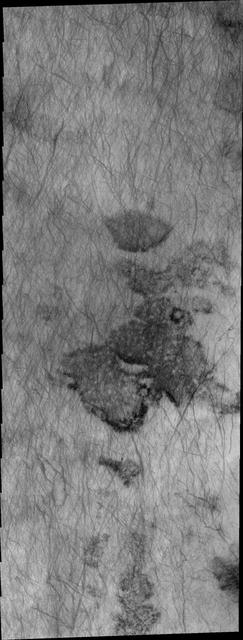
This 2001 Mars Odyssey image shows a region of Aonia Terra criss-crossed with a multitude of dust devil tracks. The tracks show up well on the dusty plains.

Near the bottom of this nighttime image captured by NASA 2001 Mars Odyssey spacecraft are several channels. The dusty channel floors are darker colder than the rocky walls.
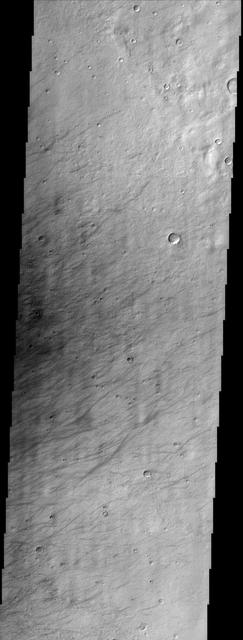
This image from NASA Mars Odyssey shows a region called Terra Sirenum in Mars southern hemisphere named for the Sea of the Sirens from Greek Mythology. This is not a sea, however, but a relatively dusty, high albedo region of Mars.
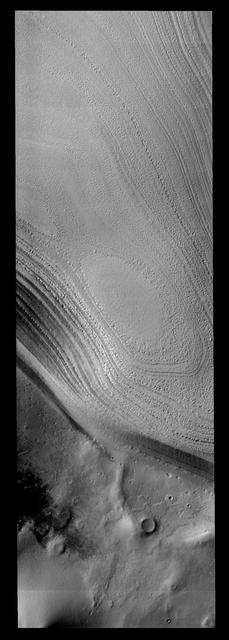
Taken during southern summer, this image from NASA 2001 Mars Odyssey spacecraft shows both the ice layers of the southern polar cap and the dusty surface that surrounds the cap.

NASA Spitzer Space Telescope set its infrared eyes upon the dusty remains of shredded asteroids around several dead stars. This artist concept illustrates a white dwarf, surrounded by the bits and pieces of a disintegrating asteroid.
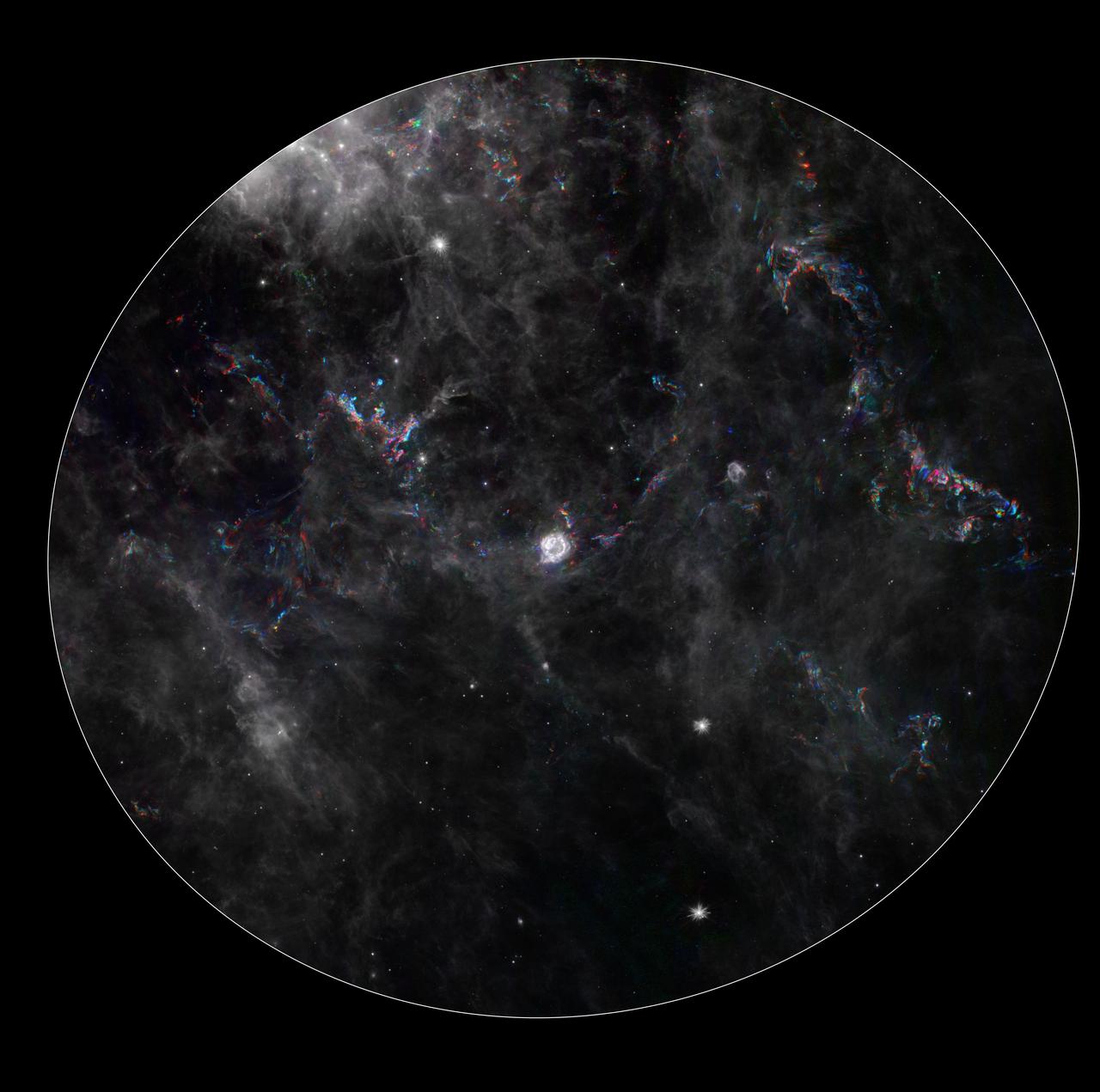
This composite image from NASA Spitzer Space Telescope shows the remnant of a star that exploded, called Cassiopeia A center and its surrounding light echoes -- dances of light through dusty clouds, created when stars blast apart.
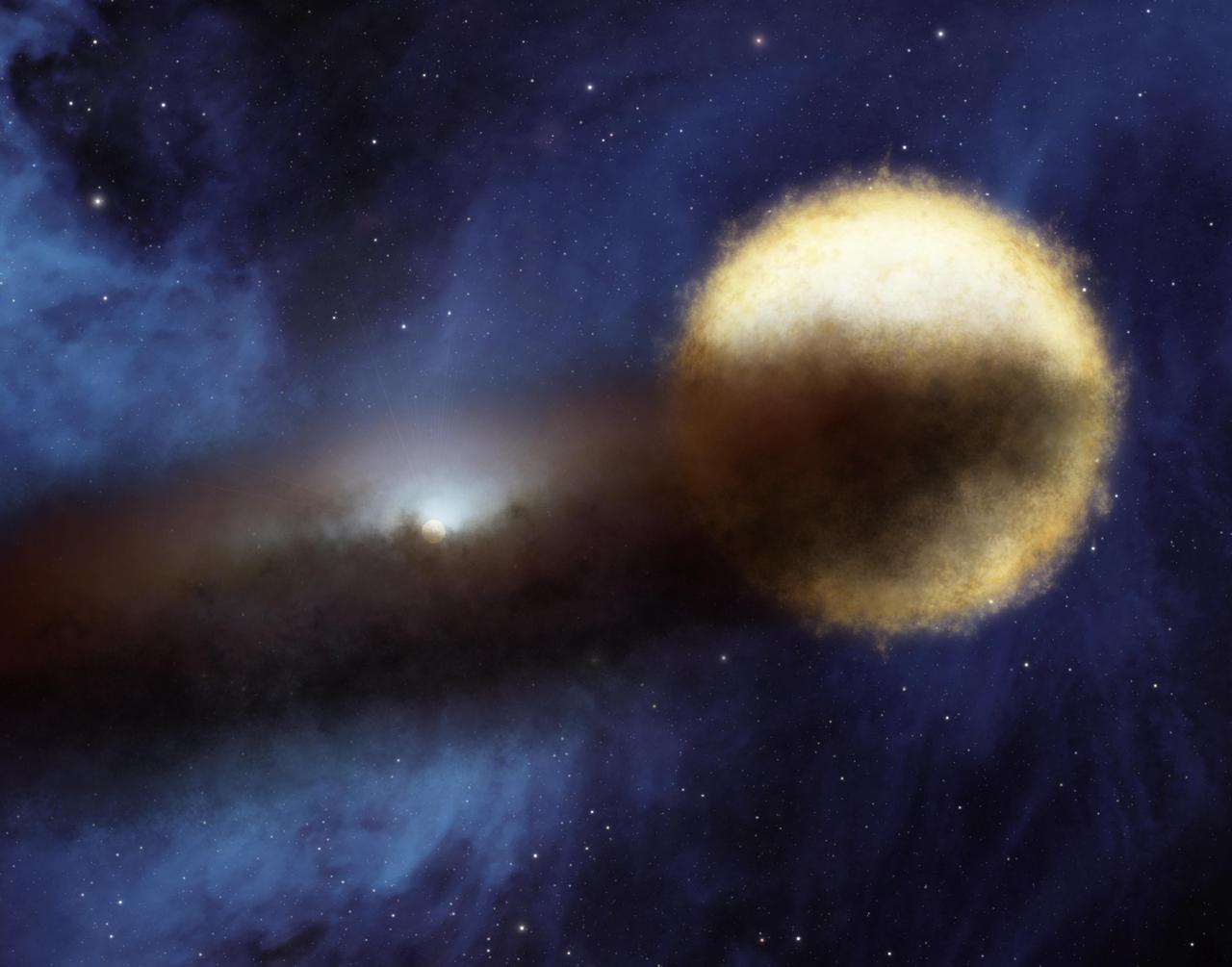
Every 27 years, a bright star called Epsilon Aurigae fades over period of two years, then brightens back up again. A companion is known to be surrounded by a dusty disk, as illustrated in this artist concept.
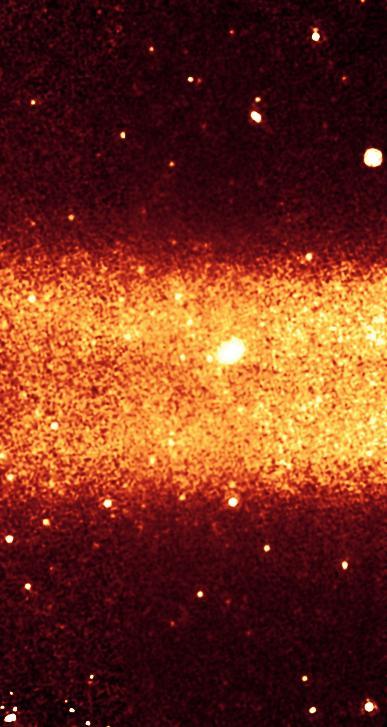
This picture highlights a slice of Saturn largest ring. The ring red band was discovered by NASA Spitzer Space Telescope, which detected infrared light, or heat, from the dusty ring material.
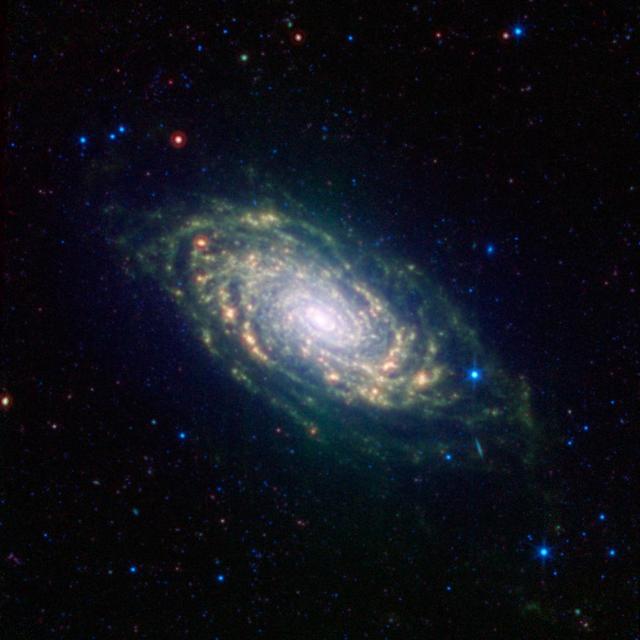
This image from NASA Spitzer Space Telescope shows infrared light from the Sunflower galaxy, otherwise known as Messier 63. Spitzer view highlights the galaxy dusty spiral arms.
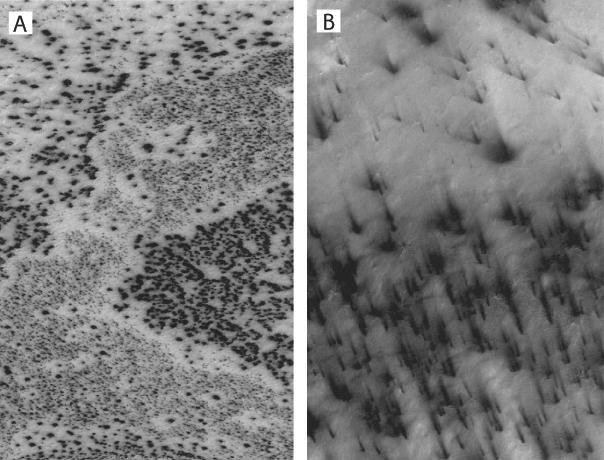
Dark spots left and fans appear to scribble dusty hieroglyphics on top of the Martian south polar cap in two high-resolution Mars Global Surveyor, Mars Orbiter Camera images taken in southern spring
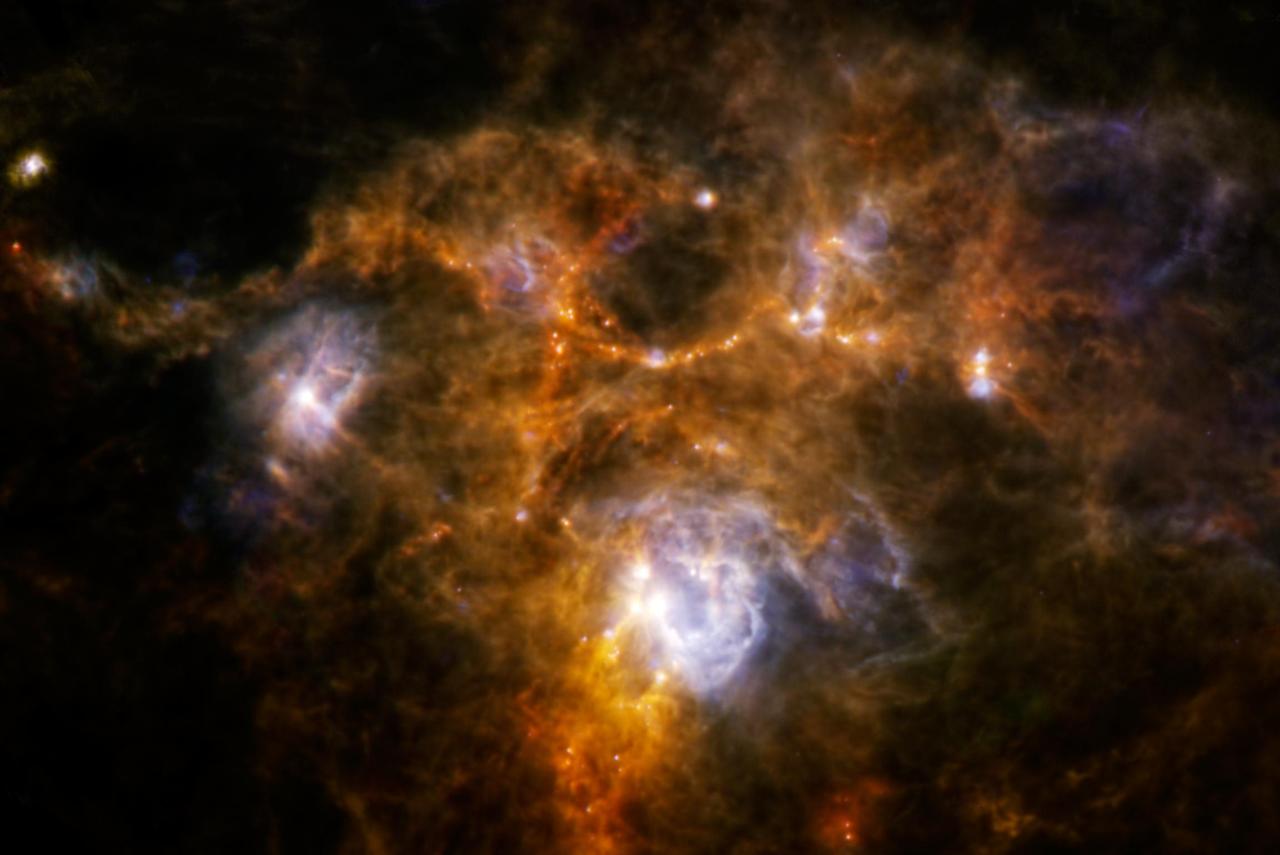
The Herschel Space Observatory has uncovered a weird ring of dusty material while obtaining one of the sharpest scans to date of a huge cloud of gas and dust, called NGC 7538.

A growing black hole, called a quasar, is seen at the center of a faraway galaxy in this artist concept. Astronomers using NASA Spitzer and Chandra space telescopes discovered swarms of similar quasars hiding in dusty galaxies in the distant universe.
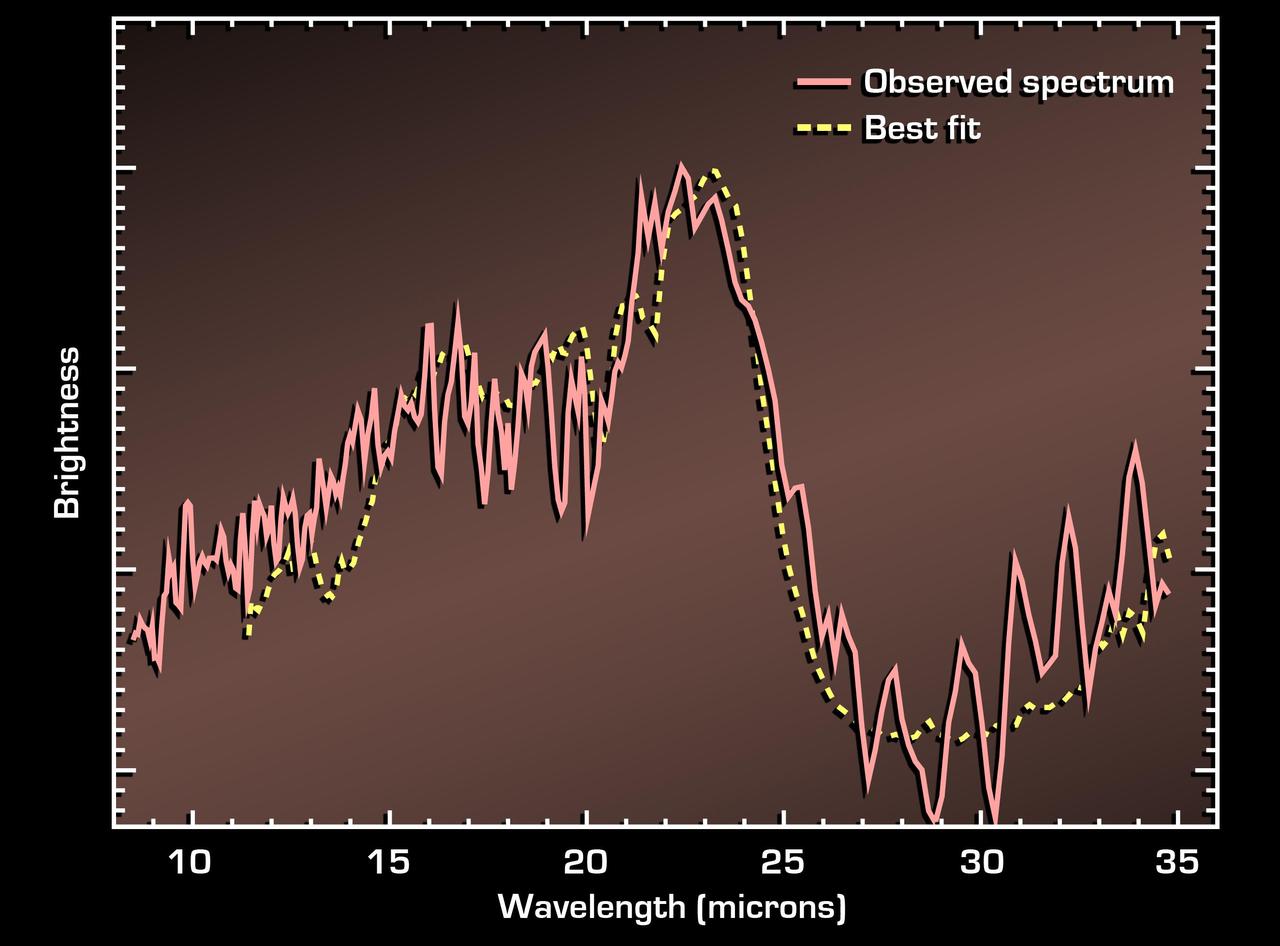
This spectrum shows the light from a dusty, distant galaxy located 11 billion light-years away. The galaxy is invisible to optical telescopes, but NASA Spitzer Space Telescope captured the light from it and dozens of other similar galaxies.
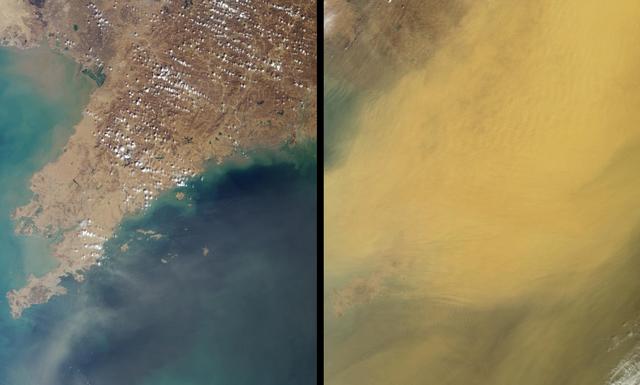
This pair of images, acquired 16 days apart by NASA Terra satellite in 2002 and 2007, covers the Liaoning region of China and parts of northern and western Korea, comparing a relatively clear day and an extremely dusty day.
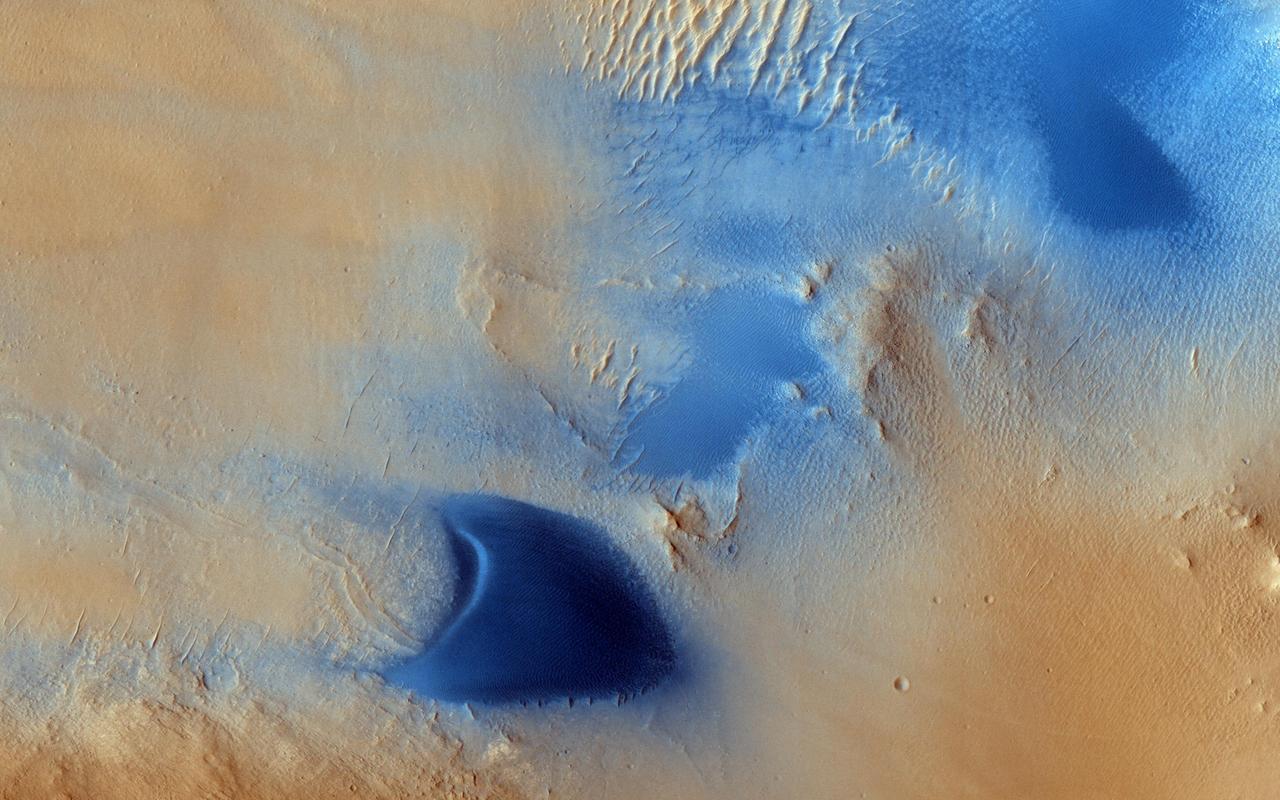
Arabia Terra is one of the more dusty regions on Mars, where ever-falling red dust covers the surface allowing only minor variations in color and tone as seen by NASA Mars Reconnaissance Orbiter.
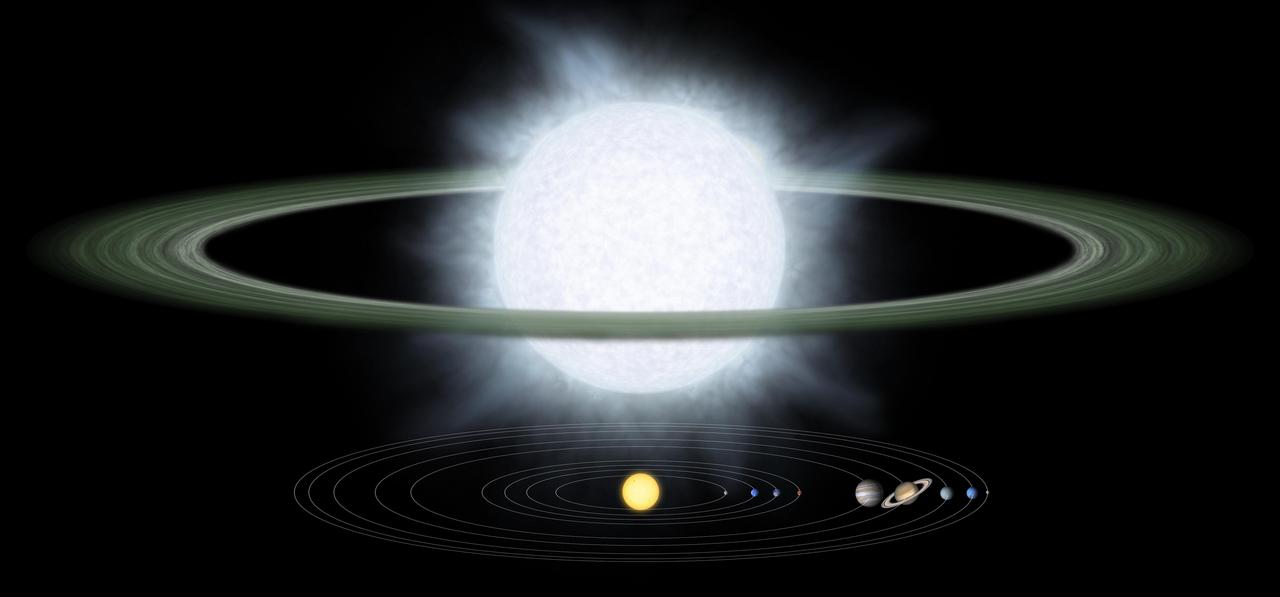
This illustration compares the size of a gargantuan star and its surrounding dusty disk top to that of our solar system. Monstrous disks like this one were discovered around two hypergiant stars by NASA Spitzer Space Telescope.
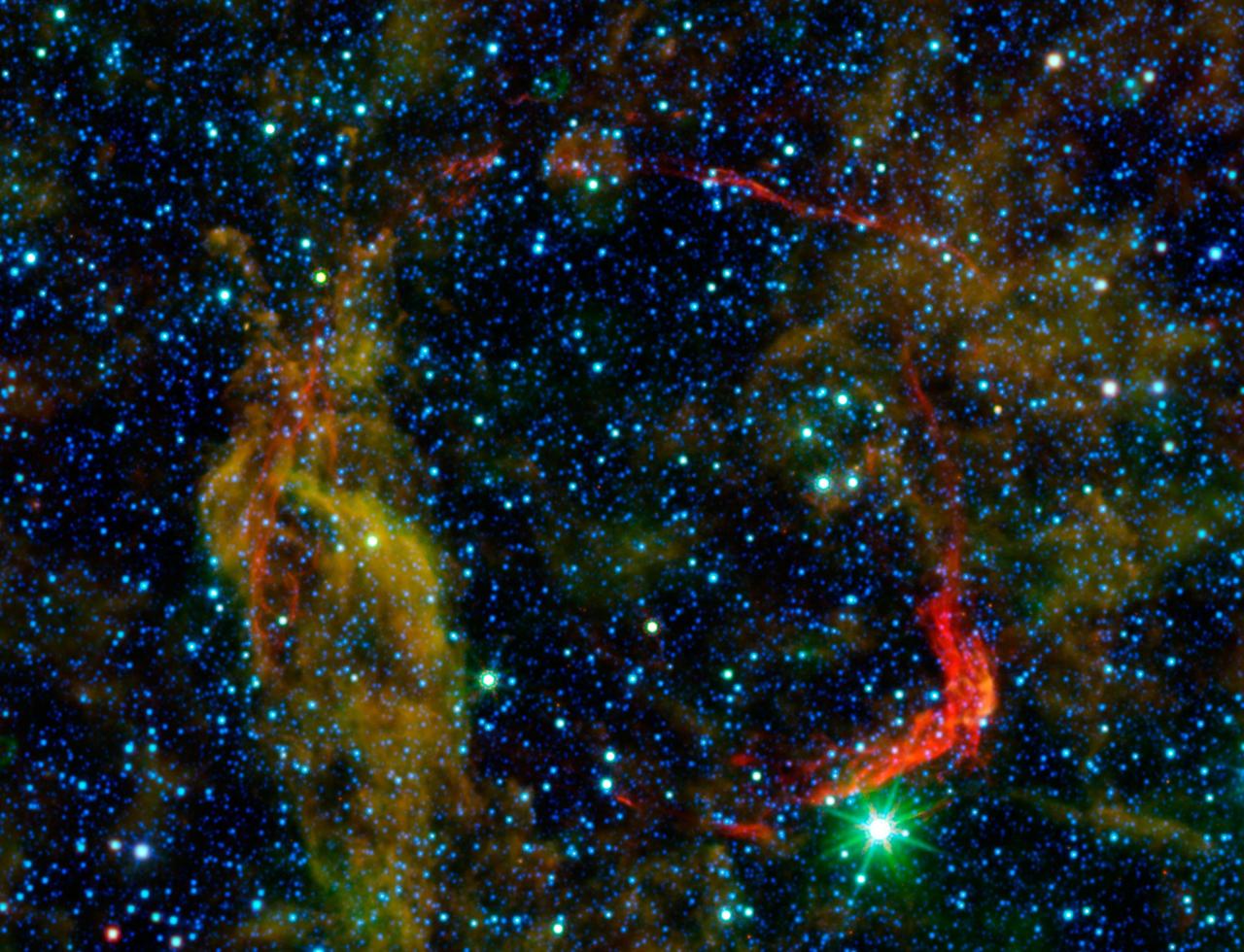
Infrared images from NASA Spitzer Space Telescope and Wide-field Infrared Survey Explorer are combined in this image of RCW 86, the dusty remains of the oldest documented example of an exploding star, or supernova.

NASA Hubble Space Telescope has imaged an unusual edge-on galaxy, revealing remarkable details of its warped dusty disc and showing how colliding galaxies trigger the birth of new stars.
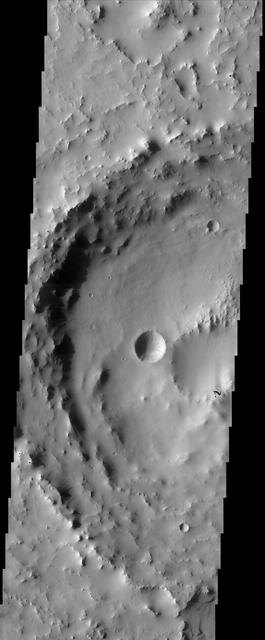
Accumulations of thick dust give way down slopes, crater walls, and other steep terrain in this image from NASA Mars Odyssey, leaving the dark streaks that are common in the dusty region of Arabia Terra.

This artist concept shows microscopic crystals in the dusty disk surrounding a brown dwarf, or failed star. The crystals, made up of a green mineral found on Earth called olivine, are thought to help seed the formation of planets.
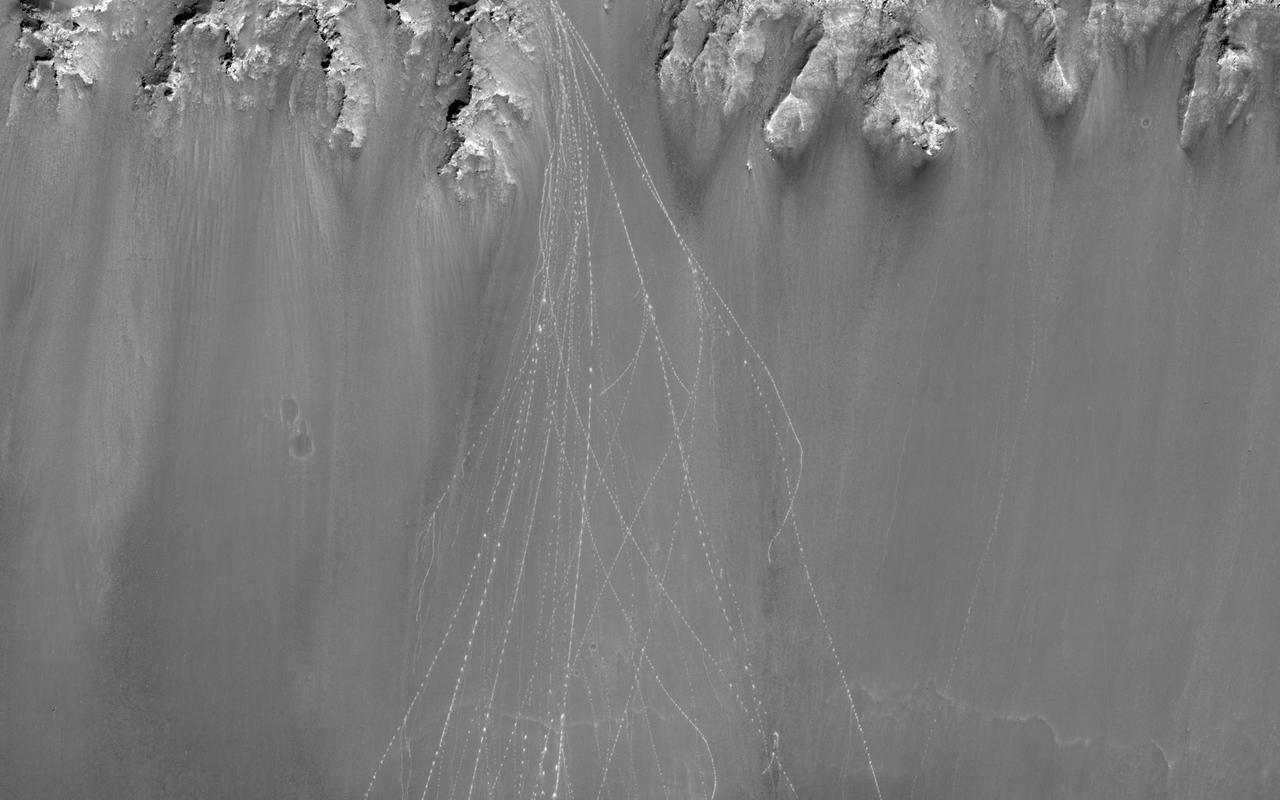
When boulders roll down a dusty Martian slope, they can leave long, dotted tracks behind on the slope surface as seen in this observation from NASA Mars Reconnaissance Orbiter.
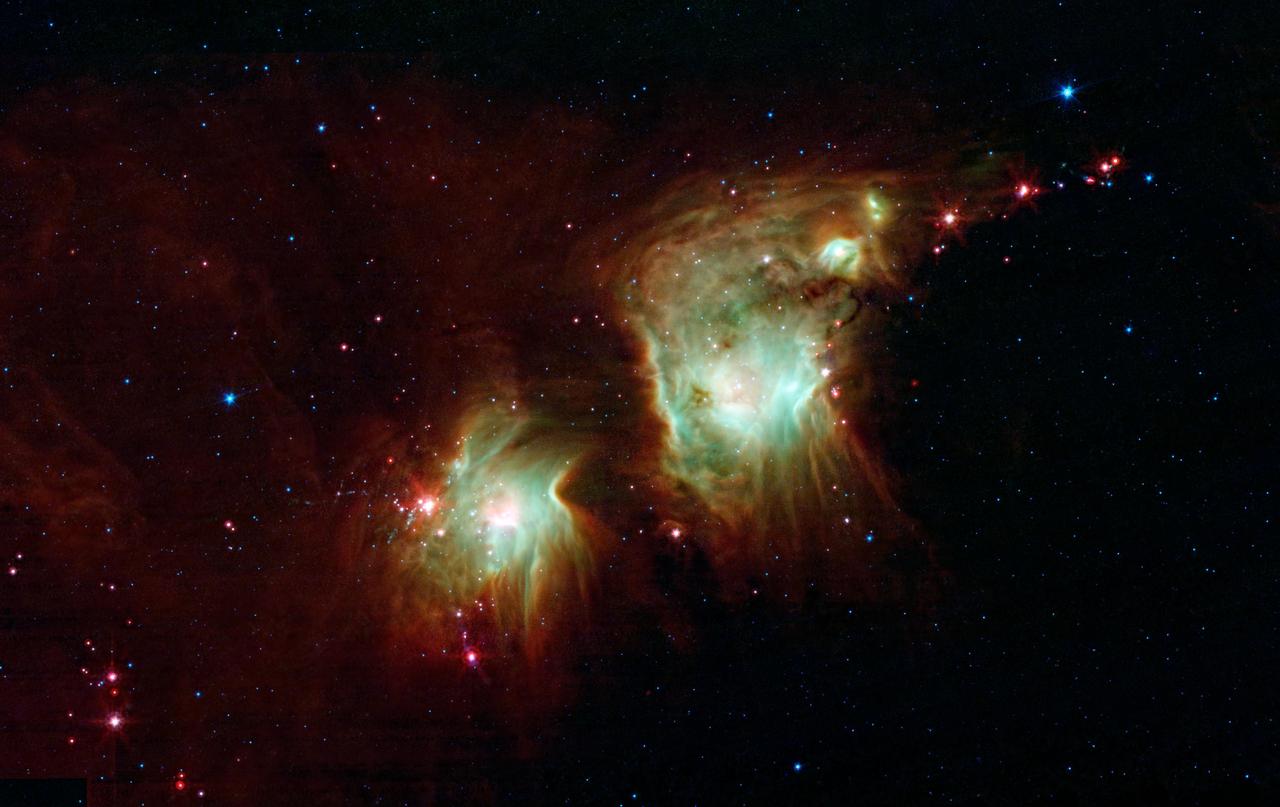
NASA Spitzer Space Telescope exposes the depths of this dusty nebula with its infrared vision, showing stellar infants that are lost behind dark clouds when viewed in visible light.

This ultraviolet image from NASA Galaxy Evolution Explorer is of a diverse group of galaxy types. NGC 3190 is a dusty edge on spiral galaxy. NGC 3187 is highly distorted.

A dusty planetary system left is compared to another system with little dust in this artist concept. Dust can make it difficult for telescopes to image planets because light from the dust can outshine that of the planets.
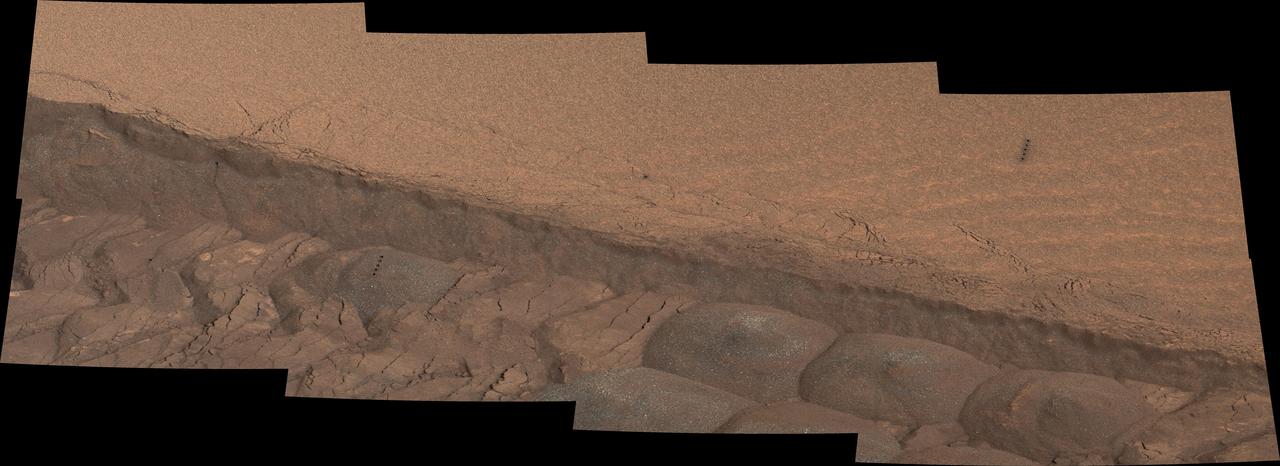
A wheel track cuts through a windblown ripple of dusty sand in this Nov. 7, 2014, image from the Mastcam on NASA Curiosity rover. The view spans about four feet across.
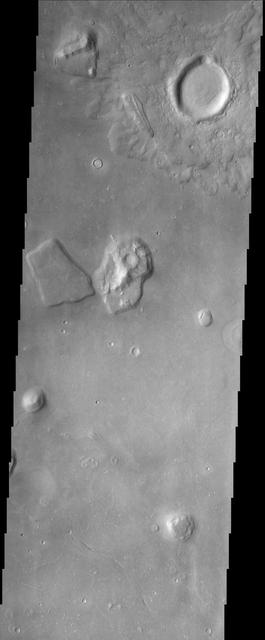
The Cydonia region on Mars, seen in this image from NASA Mars Odyssey spacecraft, straddles the boundary between the bright, dusty, cratered highlands to the southeast and the dark, relatively dust-free, lowland plains to the west.
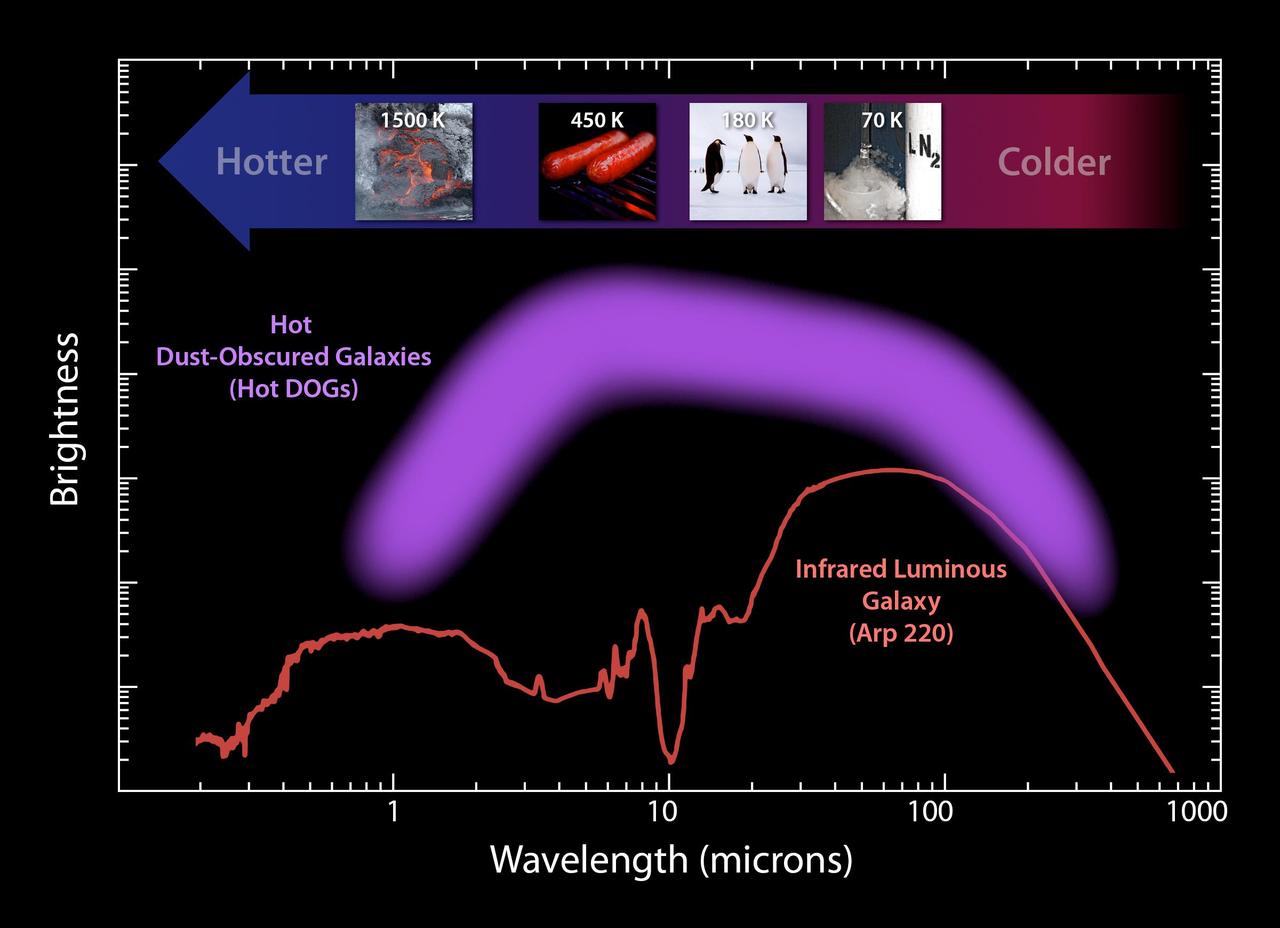
This plot illustrates the new population of hot DOGs, or hot dust-obscured objects, found by WISE. The purple band represents the range of brightness observed for the extremely dusty objects.
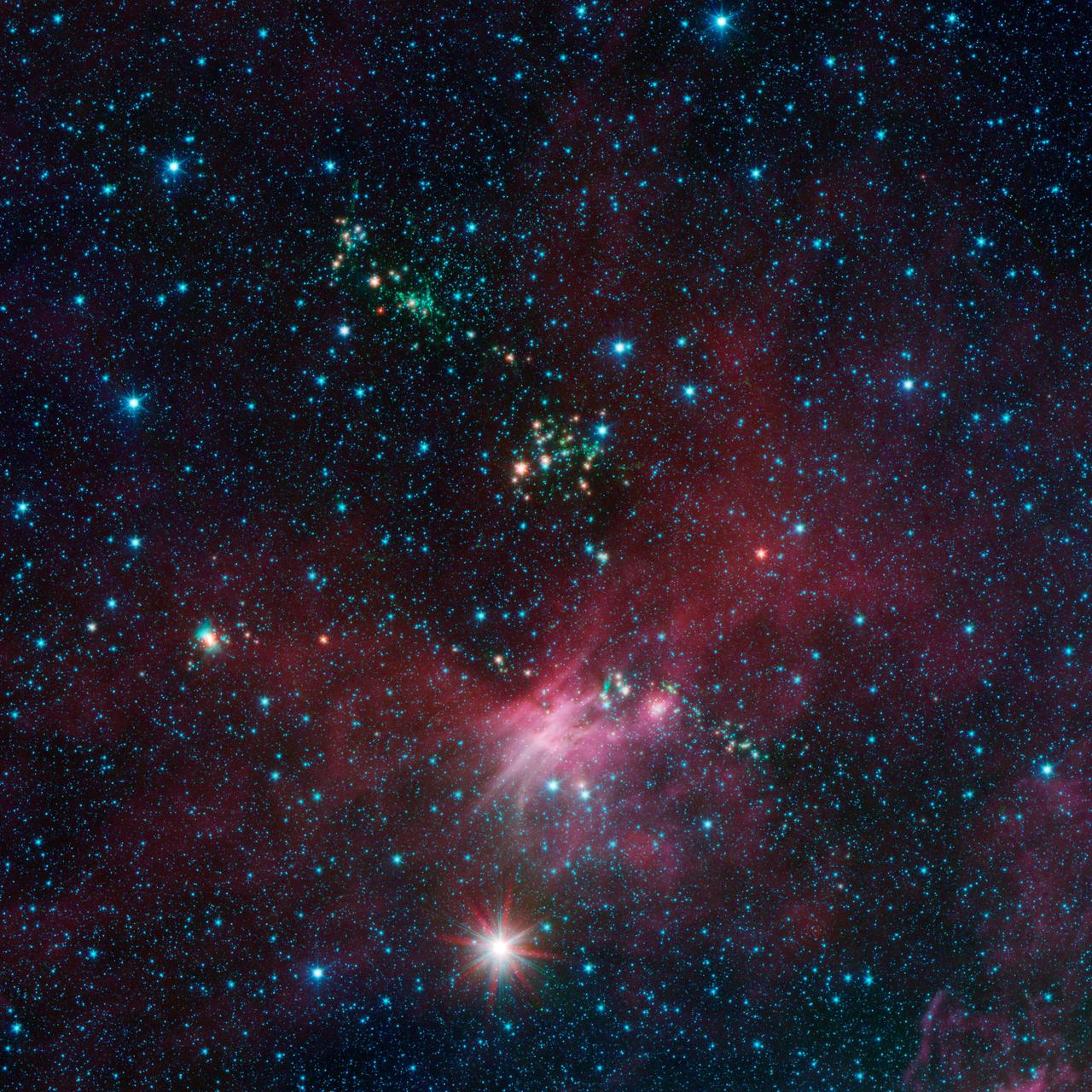
Dozens of newborn stars sprouting jets from their dusty cocoons have been spotted in images from NASA Spitzer Space Telescope. This view shows a portion of sky near Canis Major.
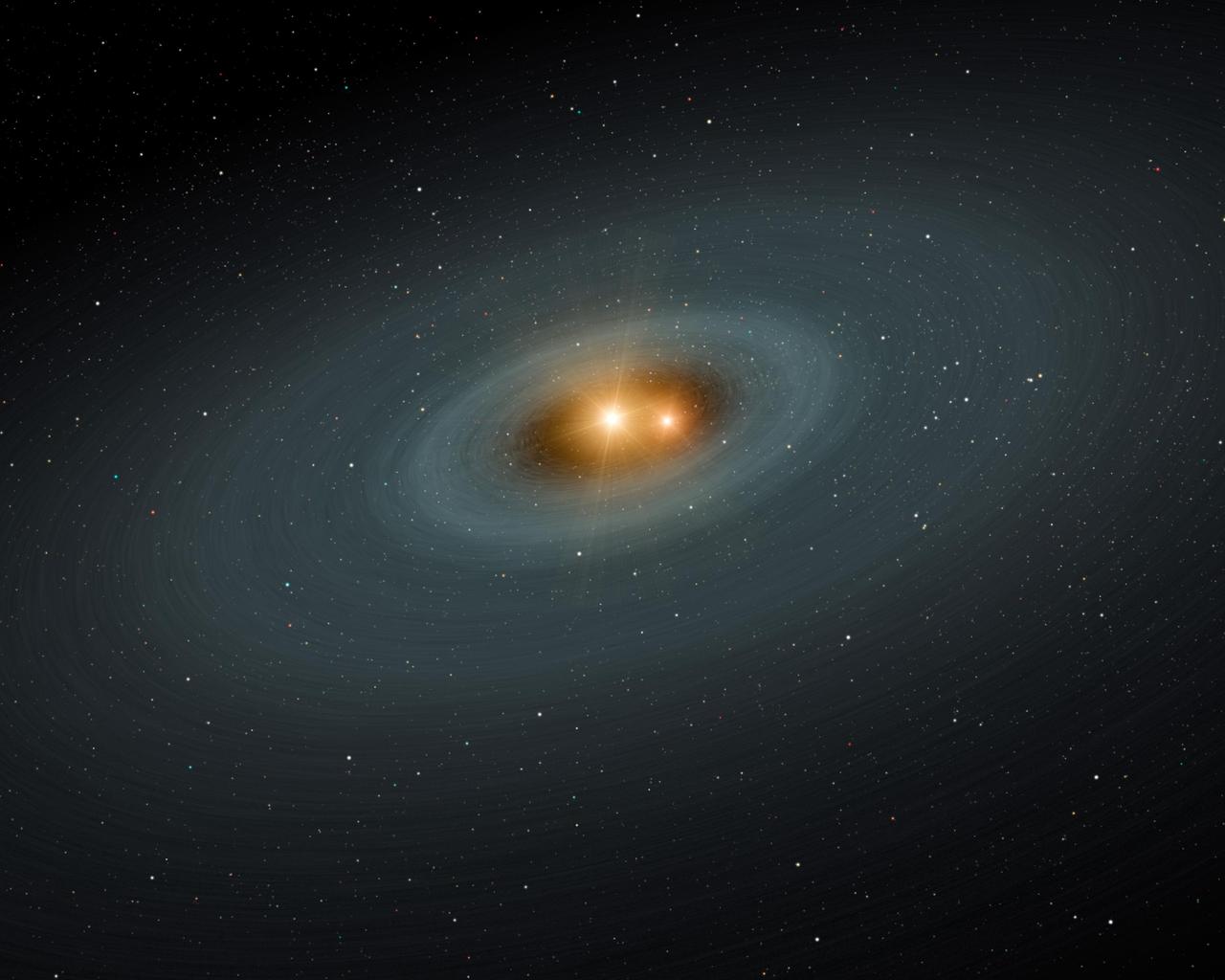
This artist concept illustrates a tight pair of stars and a surrounding disk of dust, most likely the shattered remains of planetary smashups. Using NASA Spitzer Space Telescope, the scientists found dusty evidence for such collisions.
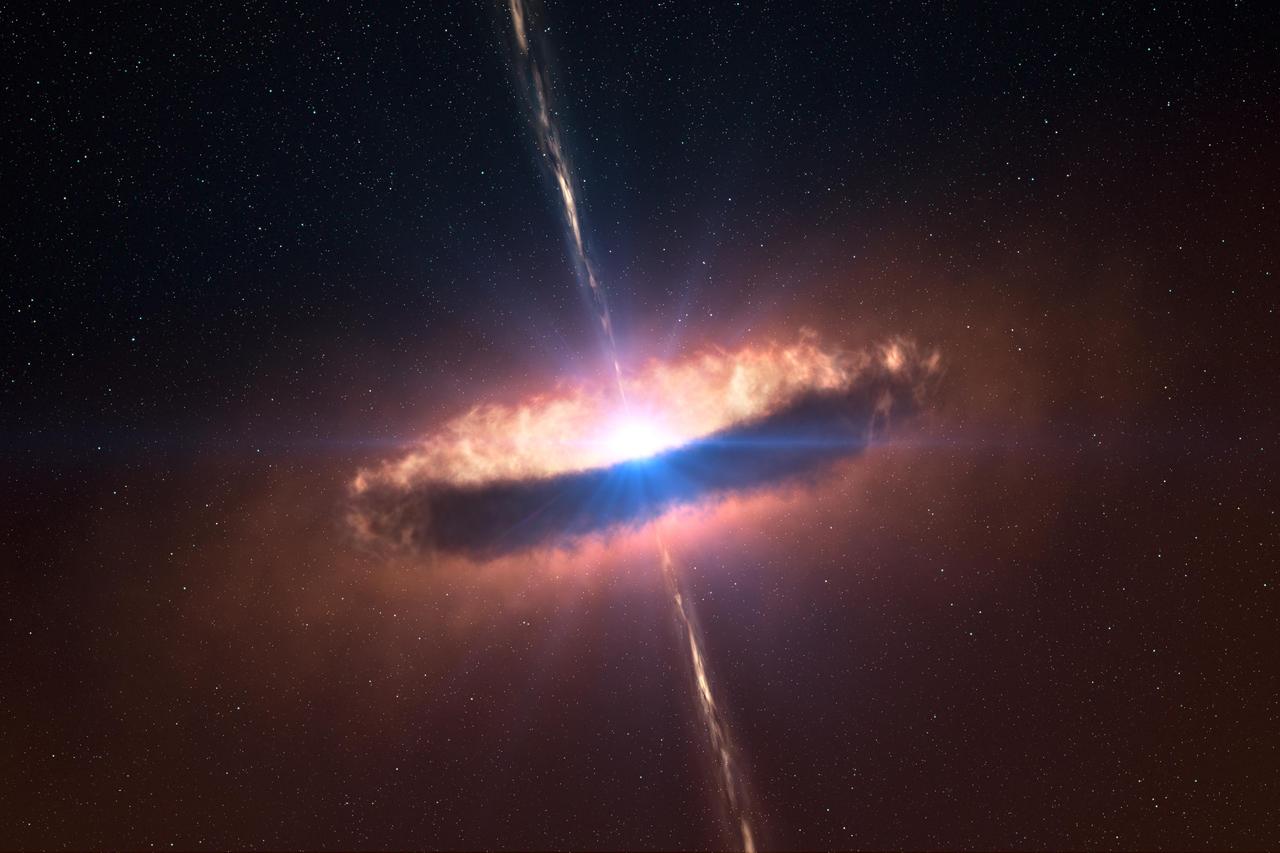
Astronomers have obtained the first clear look at a dusty disk closely encircling a massive baby star; this artist concept shows what such a massive disk might look like.
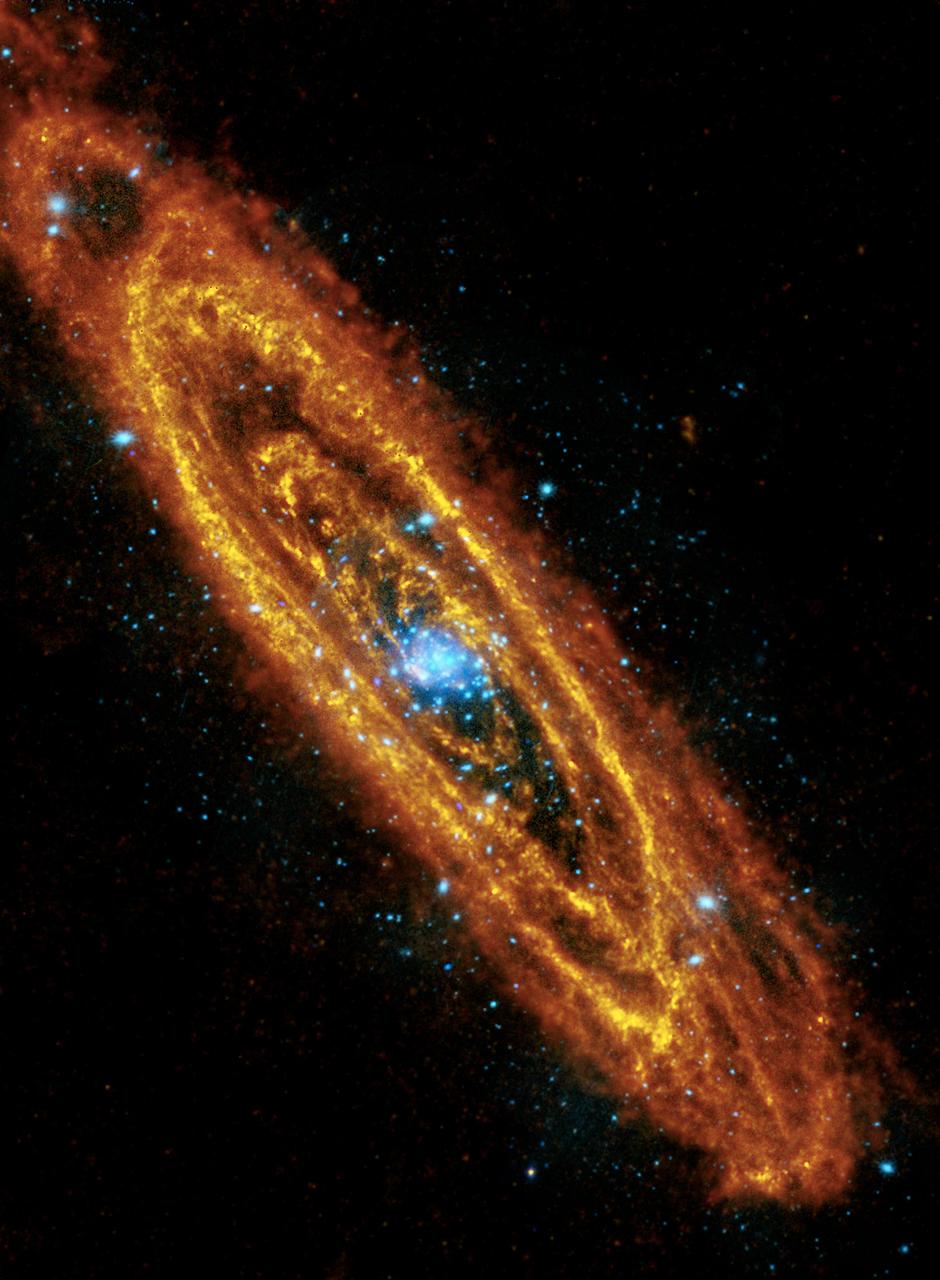
This mosaic of the Andromeda spiral galaxy highlights explosive stars in its interior, and cooler, dusty stars forming in its many rings. This is a combination of observations from the Herschel Space Observatory and the XMM-Newton telescope.
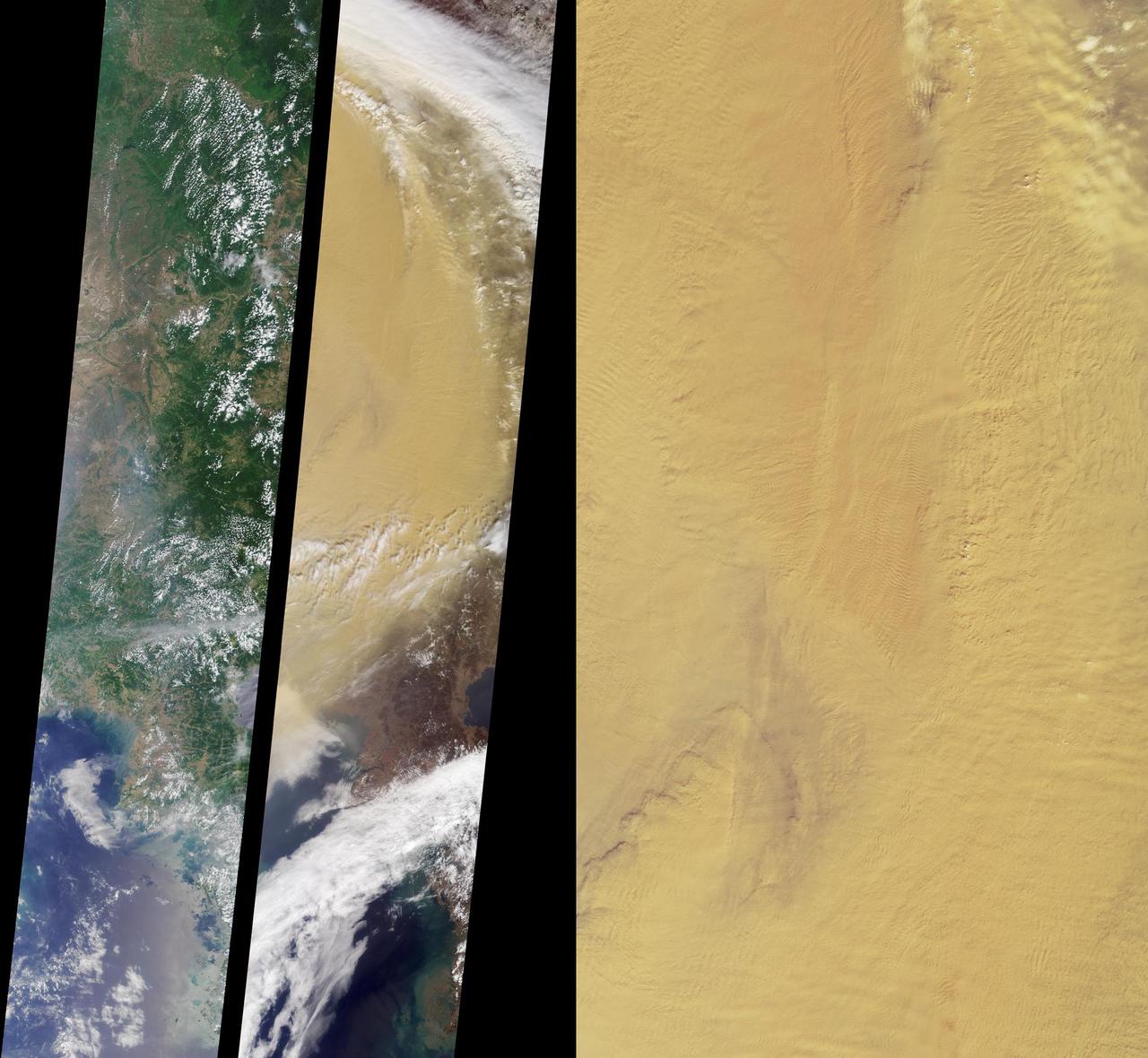
These images from NASA Terra satellite eastern China compare a somewhat hazy summer view from July 9, 2000 left with a spectacularly dusty spring view from April 7, 2001 middle.
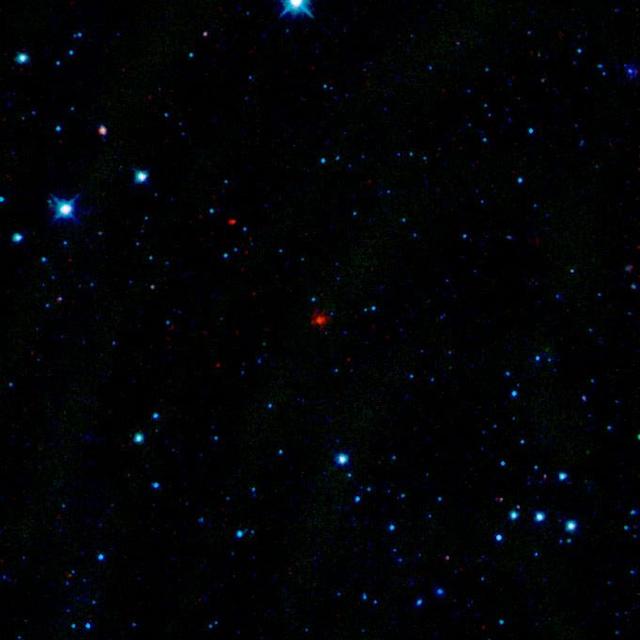
The red smudge at the center of this image is the first comet discovered by NASA Wide-Field Infrared Survey Explorer, or WISE. The comet is a dusty mass of ice and parades around the sun every 4.7 years.
![The North Polar layered deposits are a 3-kilometer thick stack of dusty water ice layers that are about 1000 kilometers across. The layers record information about climate stretching back a few million years into Martian history. In many locations erosion has created scarps and troughs that expose this layering. The tan colored layers are the dusty water ice of the polar layered deposits; however a section of bluish layers are is visible below them. These bluish layers contain sand-sized rock fragments that likely formed a large polar dunefield before the overlying dusty ice was deposited. The lack of a polar ice cap in this past epoch attests to the variability of the Martian climate, which undergoes larger changes over time than that of the Earth. The map is projected here at a scale of 50 centimeters (19.6 inches) per pixel. [The original image scale is 63.6 centimeters (25 inches) per pixel (with 2 x 2 binning); objects on the order of 191 centimeters (75.2 inches) across are resolved.] North is up. http://photojournal.jpl.nasa.gov/catalog/PIA21465](https://images-assets.nasa.gov/image/PIA21465/PIA21465~medium.jpg)
The North Polar layered deposits are a 3-kilometer thick stack of dusty water ice layers that are about 1000 kilometers across. The layers record information about climate stretching back a few million years into Martian history. In many locations erosion has created scarps and troughs that expose this layering. The tan colored layers are the dusty water ice of the polar layered deposits; however a section of bluish layers are is visible below them. These bluish layers contain sand-sized rock fragments that likely formed a large polar dunefield before the overlying dusty ice was deposited. The lack of a polar ice cap in this past epoch attests to the variability of the Martian climate, which undergoes larger changes over time than that of the Earth. The map is projected here at a scale of 50 centimeters (19.6 inches) per pixel. [The original image scale is 63.6 centimeters (25 inches) per pixel (with 2 x 2 binning); objects on the order of 191 centimeters (75.2 inches) across are resolved.] North is up. http://photojournal.jpl.nasa.gov/catalog/PIA21465

This view from the Mast Camera (Mastcam) in NASA's Curiosity Mars rover shows a sloping hillside within the "Murray Buttes" region on lower Mount Sharp. The rim of Gale Crater, where the rover has been active since landing in 2012, is visible in the distance, through the dusty haze. The image was taken on Sept. 8, 2016, during the 1454th Martian day, or sol, of Curiosity's work on Mars. http://photojournal.jpl.nasa.gov/catalog/PIA21041

Observations from NASA Spitzer Space Telescope have revealed that mature planetary systems -- dusty disks of asteroids, comets and possibly planets -- are more frequent around close-knit twin, or binary, stars than single stars like our sun.
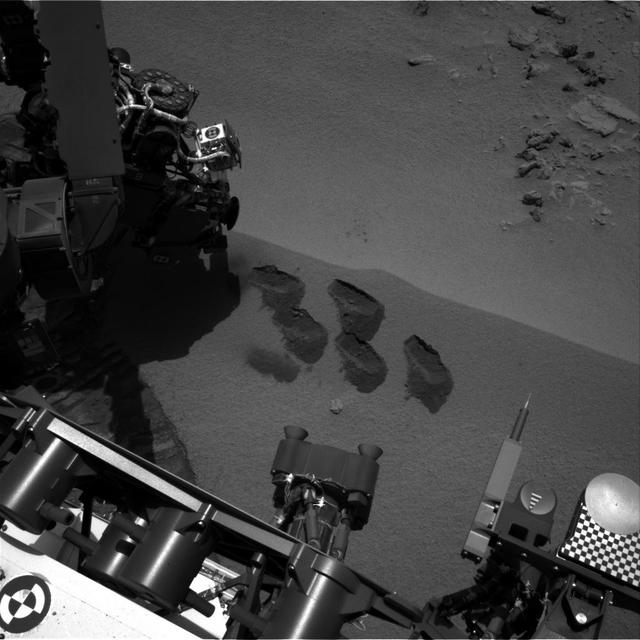
NASA Mars rover Curiosity used a mechanism on its robotic arm to dig up five scoopfuls of material from a patch of dusty sand called Rocknest, producing the five bite-mark pits visible in this image from the rover left Navigation Camera Navcam.

Artist impression of Herschel is set against an image captured by the observatory, showing baby stars forming in the Rosette nebula. The bright spots are dusty cocoons containing massive forming stars, each one up to ten times the mass of our own sun.

This image from NASA Spitzer and GALEX shows the Helix nebula, a dying star throwing a cosmic tantrum. In death, the star dusty outer layers are unraveling into space, glowing from the intense UV radiation being pumped out by the hot stellar core.
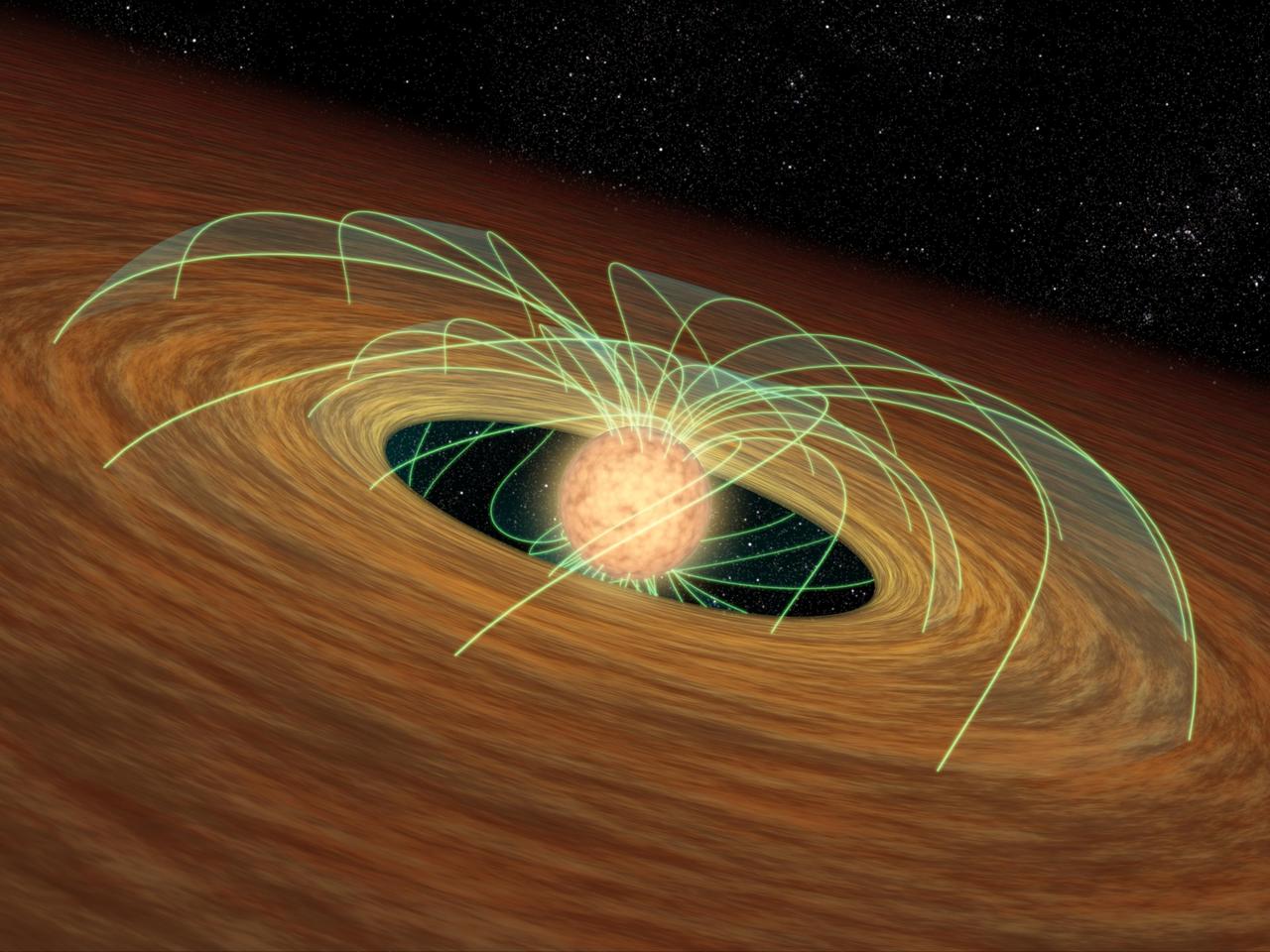
This artist concept demonstrates how a dusty planet-forming disk can slow down a whirling young star, essentially saving the star from spinning itself to death. Evidence for this phenomenon comes from NASA Spitzer Space Telescope.
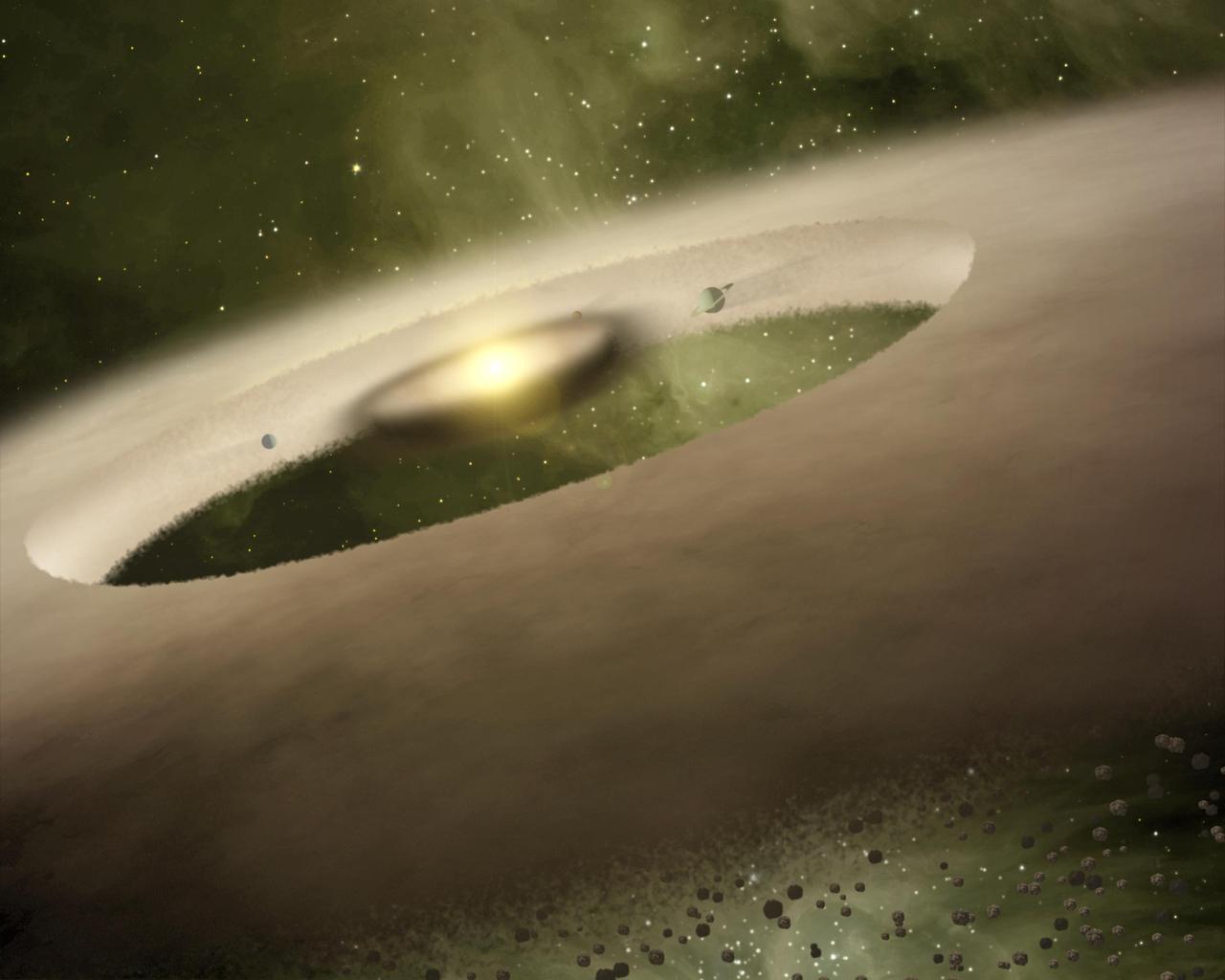
This artist concept is of the one-million-year-old star system called UX Tau A, approximately 450 light-years away. NASA Spitzer Space Telescope showed a gap in the dusty planet-forming disk swirling around the system central sun-like star.
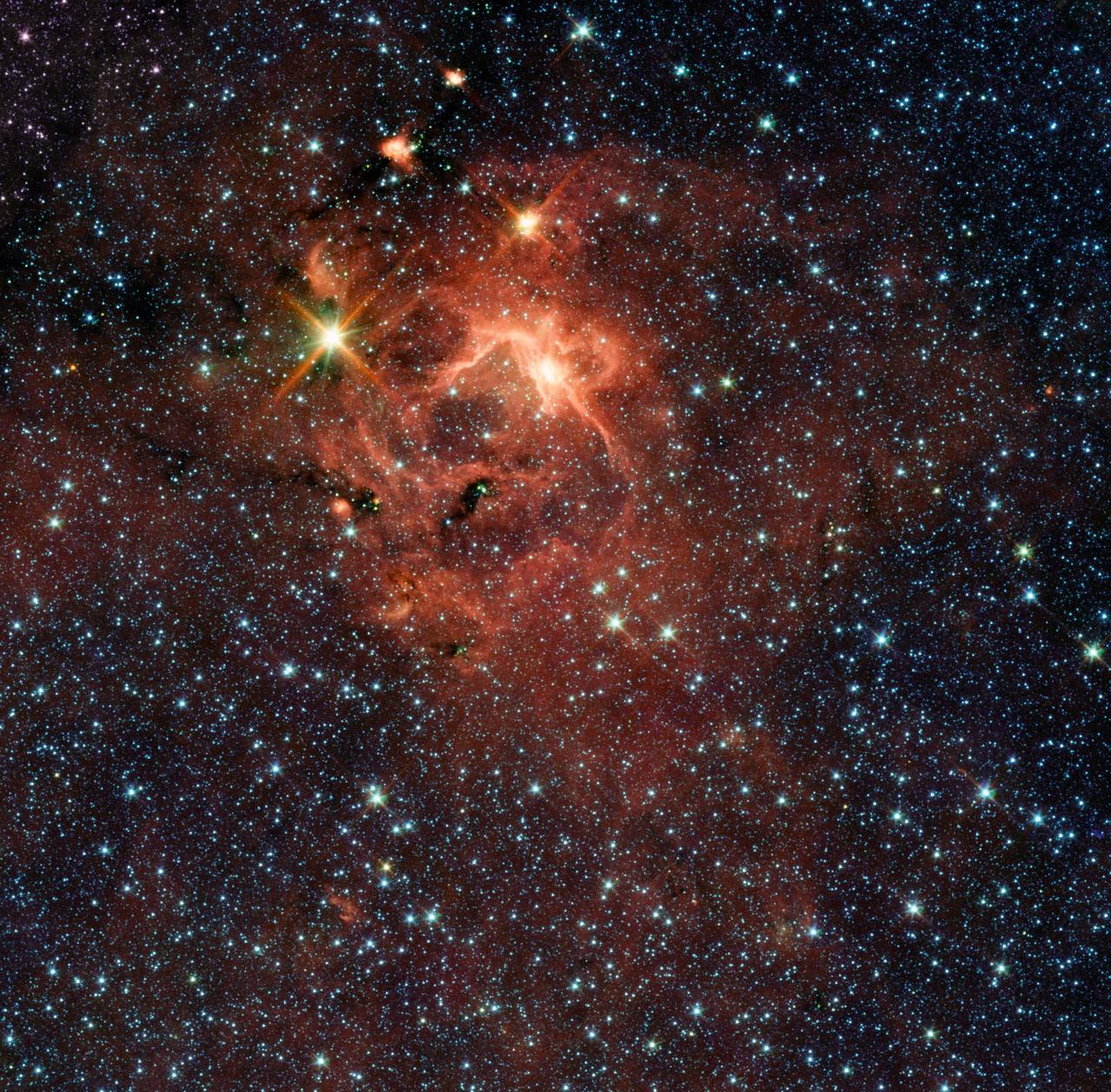
This star-forming region, captured by NASA Spitzer Space Telescope, is dominated by the bright, young star IRAS 13481-6124; it is the first massive baby star for which astronomers could obtain a detailed look at the dusty disk closely encircling it.
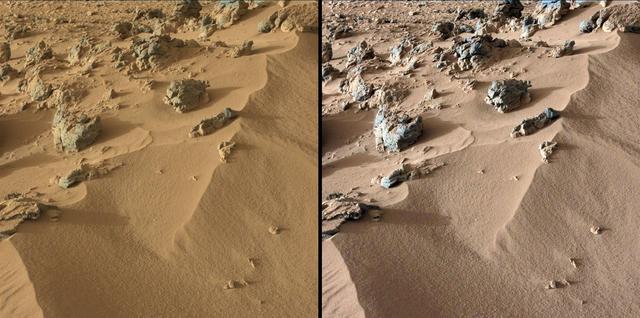
This pair of images from the Mast Camera on NASA Curiosity rover shows the upper portion of a wind-blown deposit dubbed Rocknest. At left, colors are unmodified, showing the scene as it would appear on Mars, which has a dusty red-colored atmosphere.
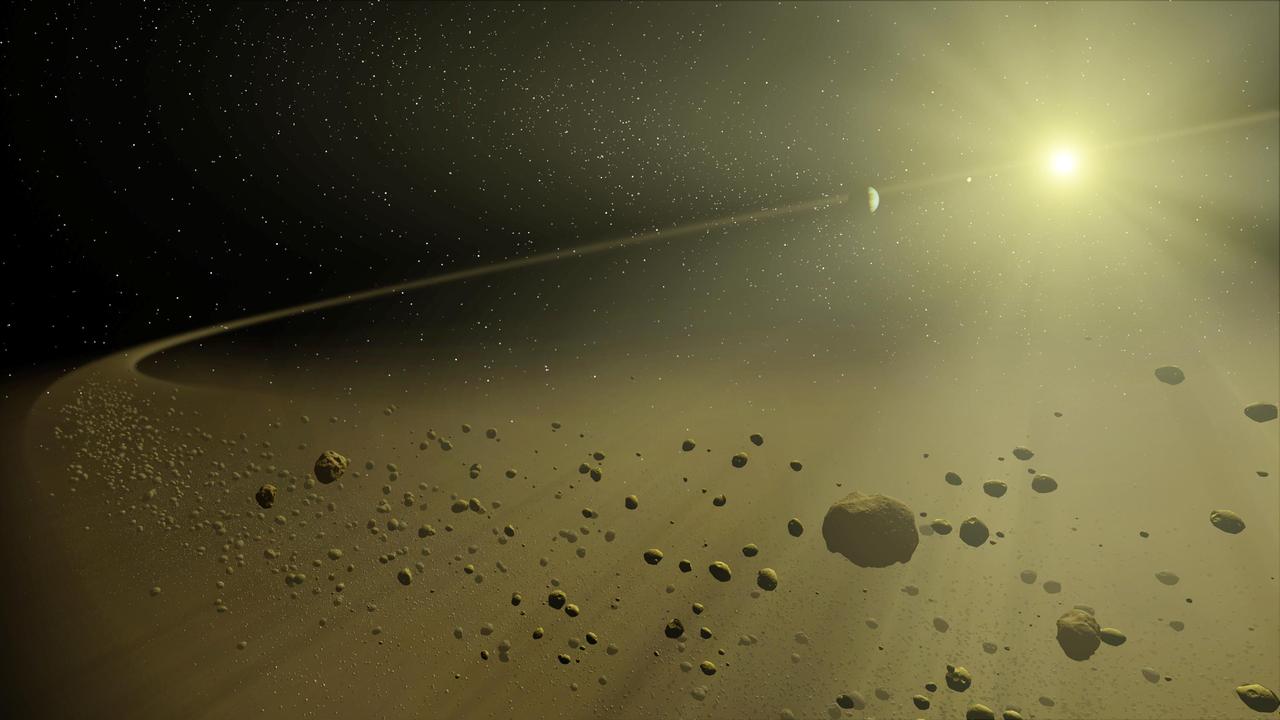
This artist concept depicts a distant hypothetical solar system, similar in age to our own. Looking inward from the system outer fringes, a ring of dusty debris can be seen, and within it, planets circling a star the size of our Sun. This debris is all that remains of the planet-forming disk from which the planets evolved. Planets are formed when dusty material in a large disk surrounding a young star clumps together. Leftover material is eventually blown out by solar wind or pushed out by gravitational interactions with planets. Billions of years later, only an outer disk of debris remains. These outer debris disks are too faint to be imaged by visible-light telescopes. They are washed out by the glare of the Sun. However, NASA's Spitzer Space Telescope can detect their heat, or excess thermal emission, in infrared light. This allows astronomers to study the aftermath of planet building in distant solar systems like our own. http://photojournal.jpl.nasa.gov/catalog/PIA07096
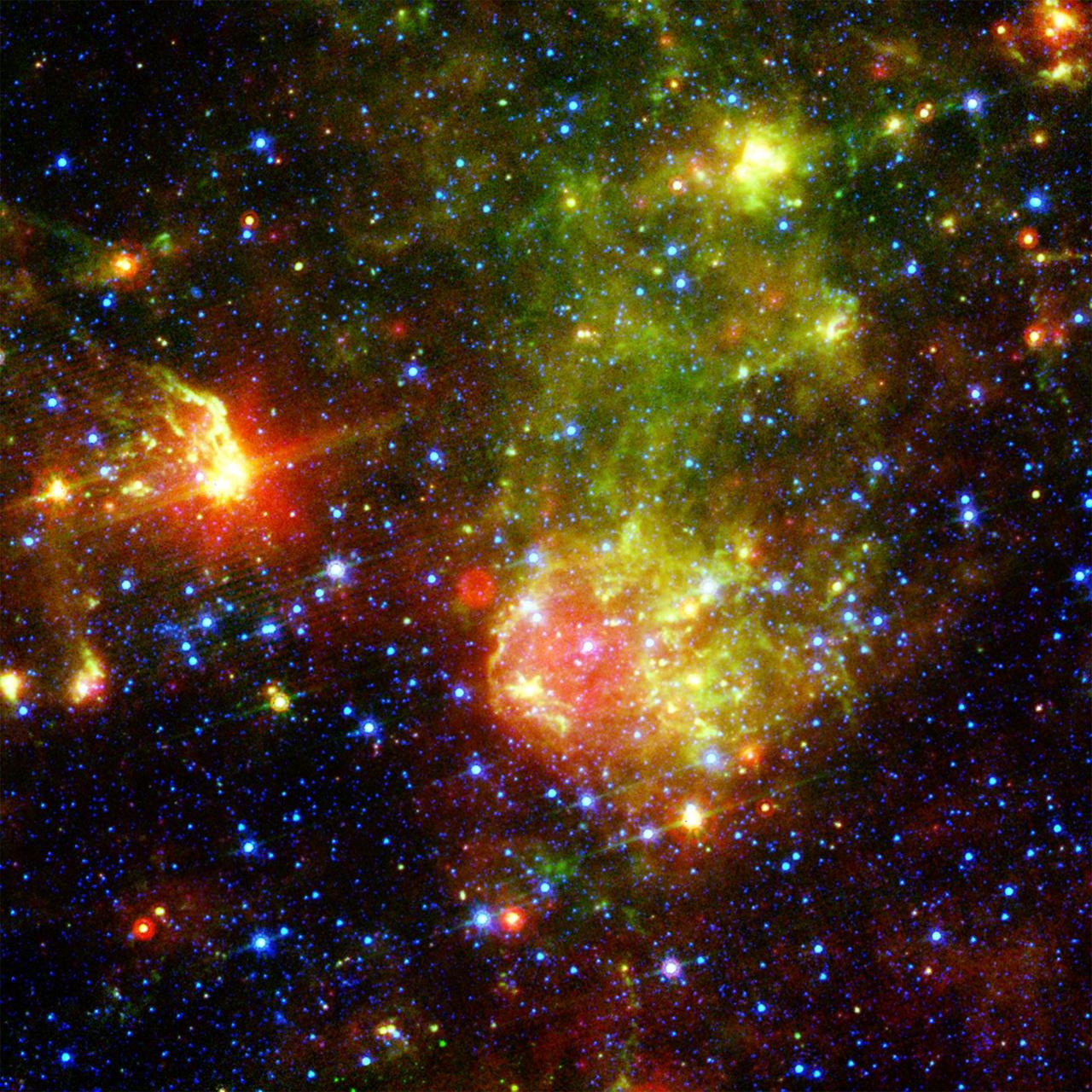
NASA Spitzer Space Telescope shows the supernova remnant 1E0102.2-7219 sits next to the nebula N76 in a bright, star-forming region of the Small Magellanic Cloud, a satellite galaxy to our Milky Way galaxy.
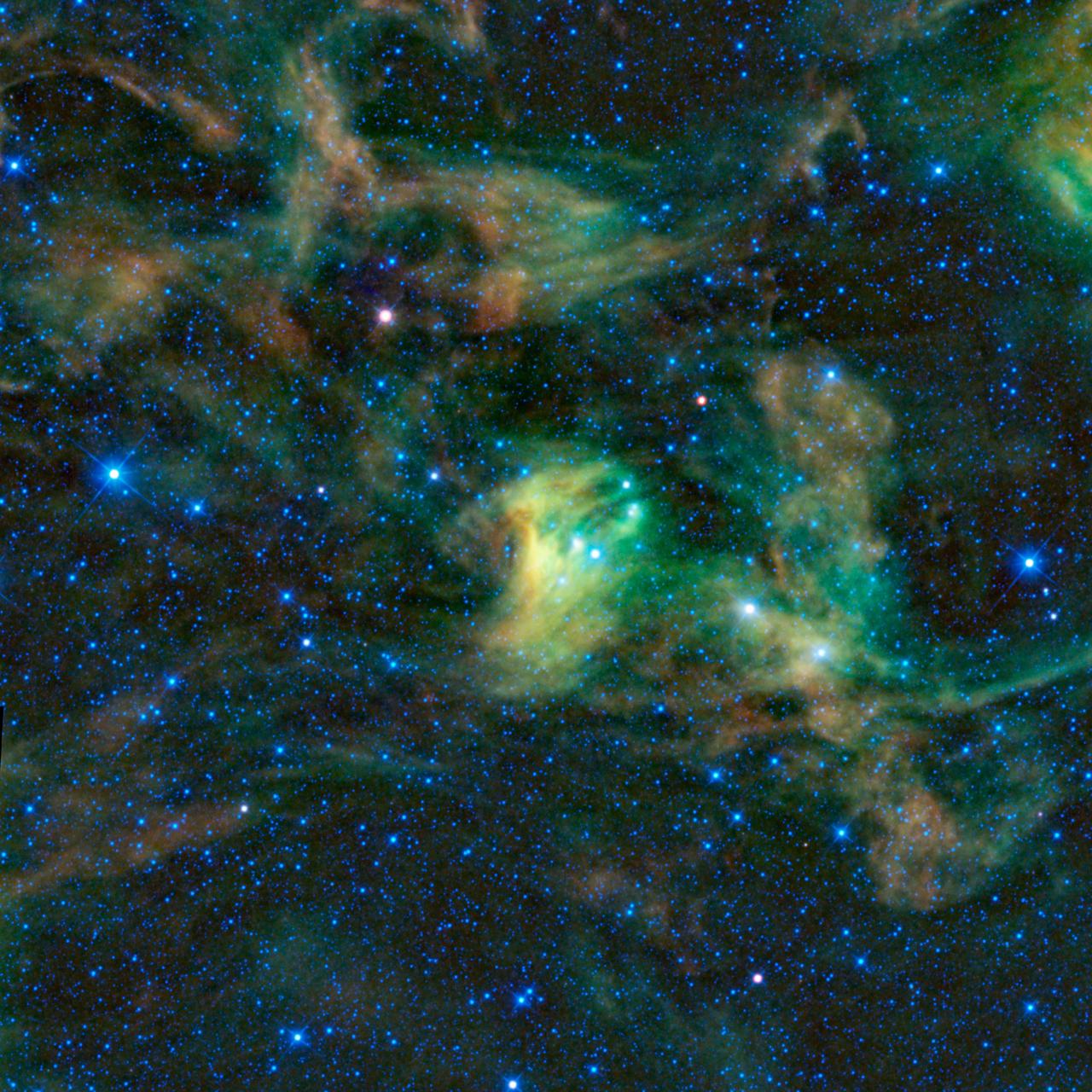
Between the claws of the dreaded scorpion imagined by the ancient Greeks lies this giant dust cloud, imaged by the Wide-field Infrared Survey Explorer. The constellation of Scorpius is prominent in the summer night sky in North America.
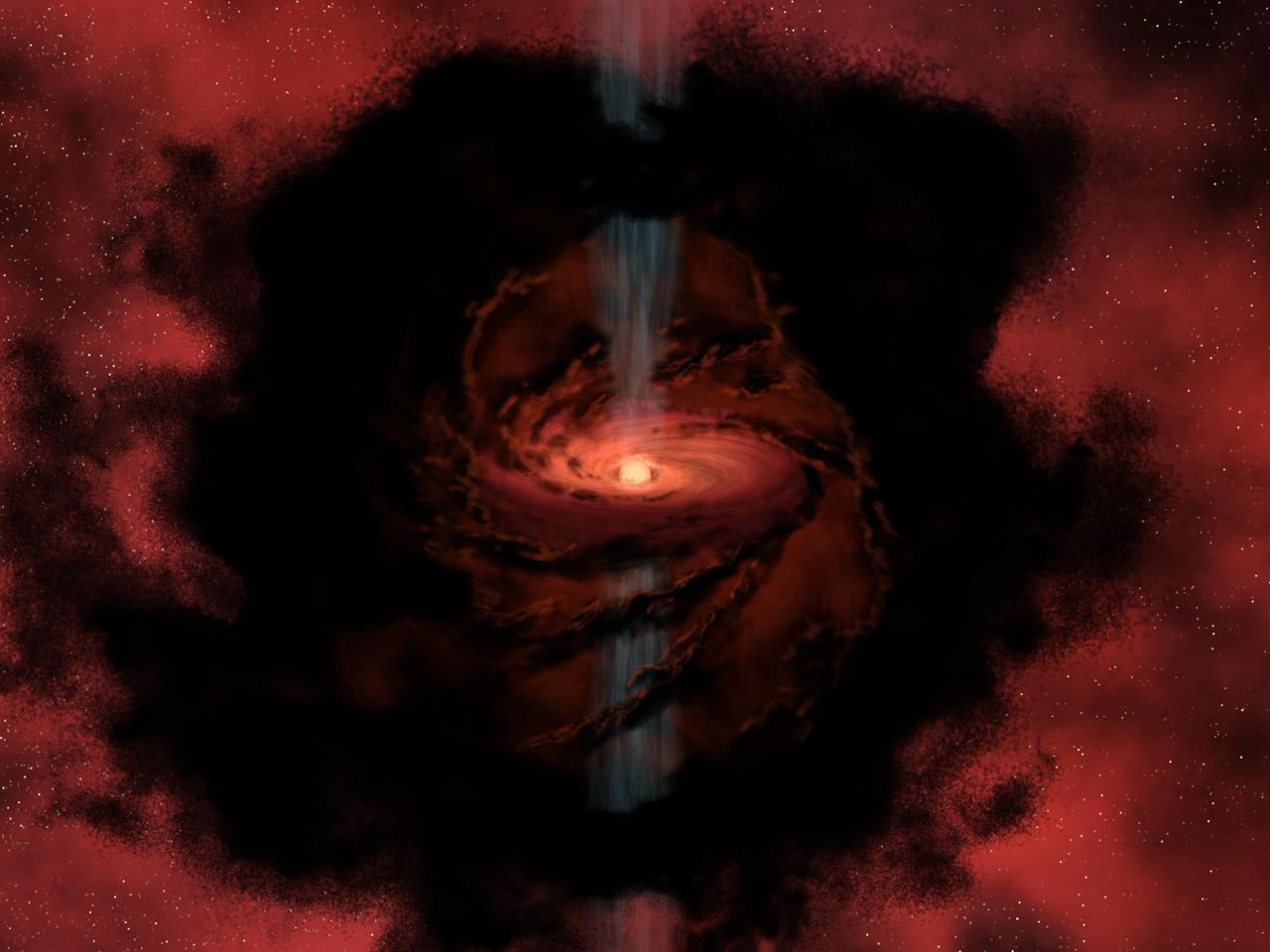
Are brown dwarfs born like stars, as in this rendering, or do they form like planets orbiting another star? A study by researchers using data from NASA Spitzer Space Telescope has led to the preliminary conclusion that they are formed much like a star.
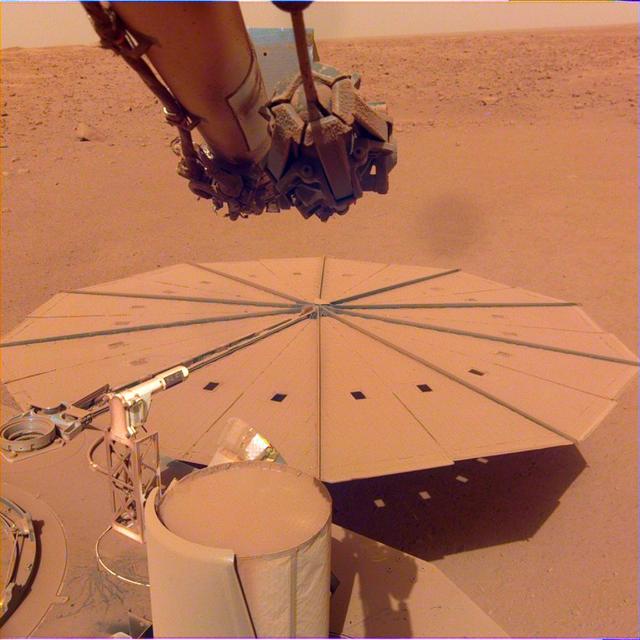
NASA's InSight Mars lander captured this image of one of its dust-covered solar panels on April 24, 2022, the 1,211th Martian day, or sol, of the mission. https://photojournal.jpl.nasa.gov/catalog/PIA25286
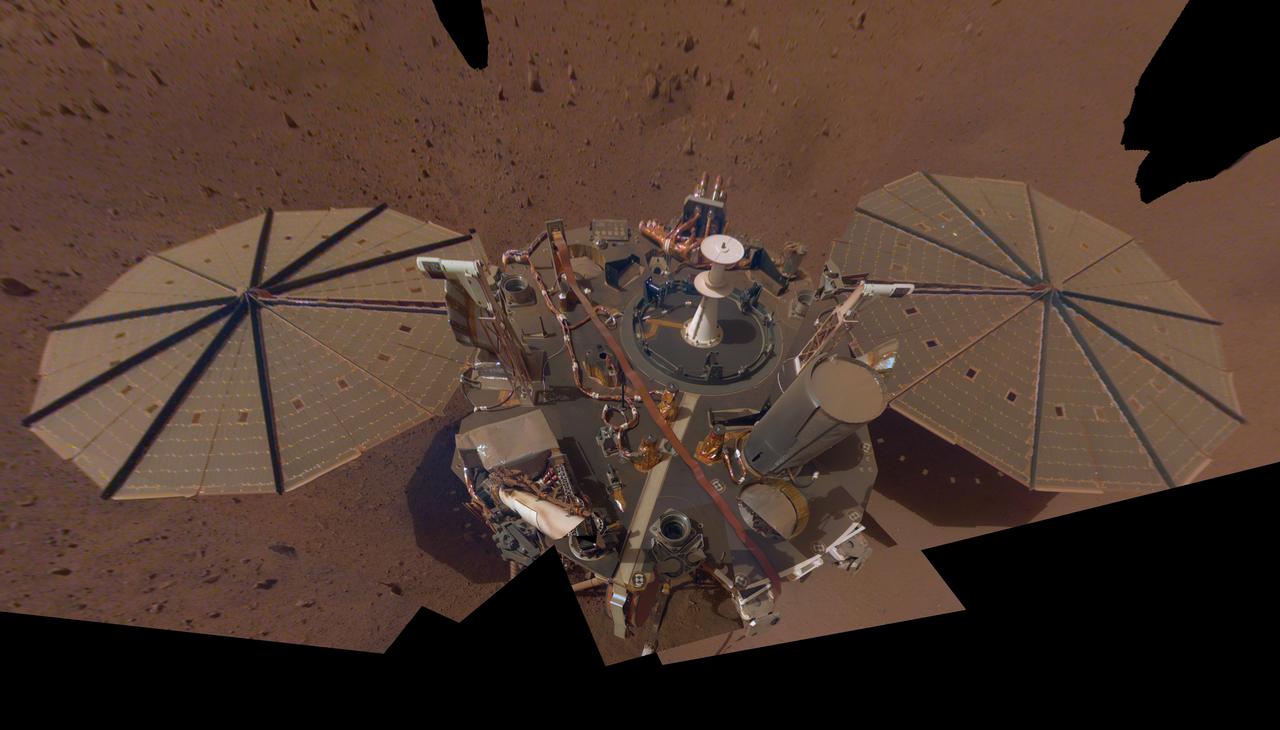
This is NASA InSight's second full selfie on Mars. Since taking its first selfie, the lander has removed its heat probe and seismometer from its deck, placing them on the Martian surface; a thin coating of dust now covers the spacecraft as well. This selfie is a mosaic made up of 14 images taken on March 15 and April 11 - the 106th and 133rd Martian days, or sols, of the mission - by InSight's Instrument Deployment Camera, located on its robotic arm. InSight's first selfie showed its instruments still on the deck. Now that they're removed, the viewer can see the spacecraft's air pressure sensor (white object in center), the tether box for its seismometer and the tether for its heat probe running across the deck. Also visible is its robotic arm and grapple. https://photojournal.jpl.nasa.gov/catalog/PIA23203

A self-portrait of NASA's Curiosity rover taken on Sol 2082 (June 15, 2018). A Martian dust storm has reduced sunlight and visibility at the rover's location in Gale Crater. Self-portraits are created using images taken by Curiosity's Mars Hands Lens Imager (MAHLI). https://photojournal.jpl.nasa.gov/catalog/PIA22486
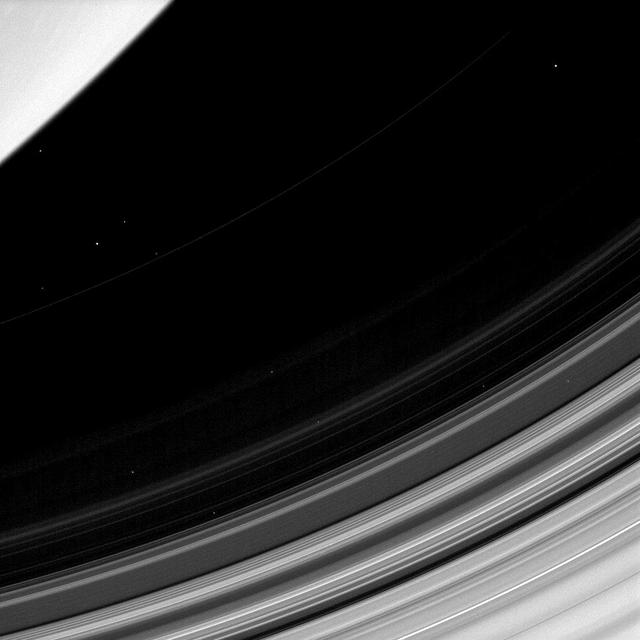
Saturn D ring is easy to overlook since it trapped between the brighter C ring and the planet itself. In this view from NASA Cassini spacecraft, all that can be seen of the D ring is the faint and narrow arc as it stretches from top right of the ima
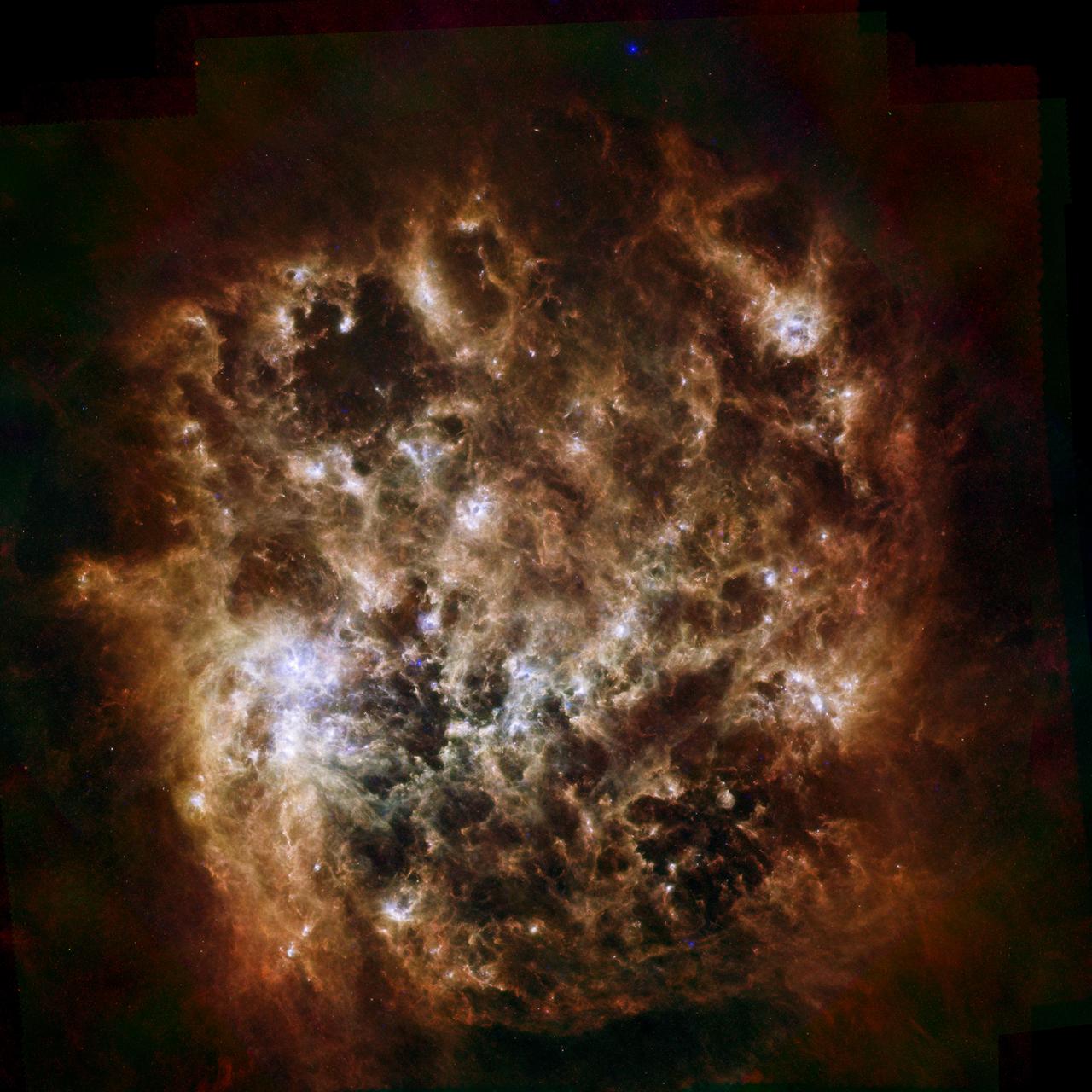
This image shows the Large Magellanic Cloud galaxy in infrared light as seen by ESA Herschel Space Observatory and NASA Spitzer Space Telescope. The brightest center-left region is called 30 Doradus, or the Tarantula Nebula.

In this illustration, an asteroid (bottom left) breaks apart under the powerful gravity of LSPM J0207+3331, the oldest, coldest white dwarf known to be surrounded by a ring of dusty debris. Scientists think the system’s infrared signal is best explained by two distinct rings composed of dust supplied by crumbling asteroids. Credit: NASA’s Goddard Space Flight Center/Scott Wiessinger https://svs.gsfc.nasa.gov/13147
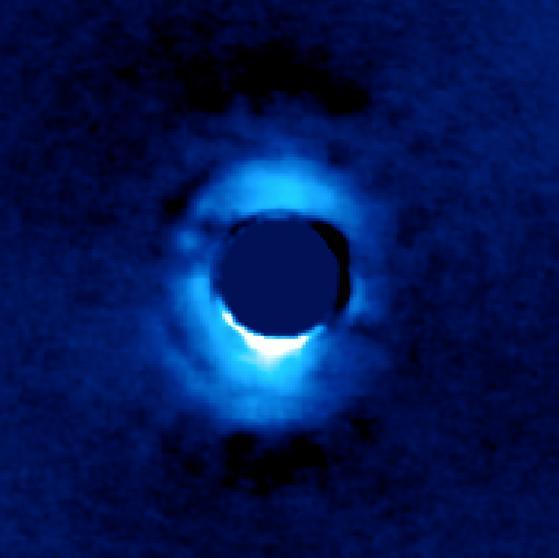
This image shows the dusty disk of planetary material surrounding the young star HD 141569, located 380 light-years away from Earth. It was taken using the vortex coronagraph on the W.M. Keck Observatory. The vortex suppressed light from the star in the center, revealing light from the innermost ring of planetary material around the star (blue). The disk around the star, made of olivine particles, extends from 23 to 70 astronomical units from the star. By comparison, Uranus is over 19 astronomical units from our sun, and Neptune about 30 astronomical units. One astronomical unit is the distance between Earth and our sun. http://photojournal.jpl.nasa.gov/catalog/PIA21090

This mosaic of images was taken by NASA Mars Exploration Rover Opportunity during December of 2011. The accumulation of dust reduces the rover power supply, and the rover mobility is limited until the winter is over or wind cleans the panels.
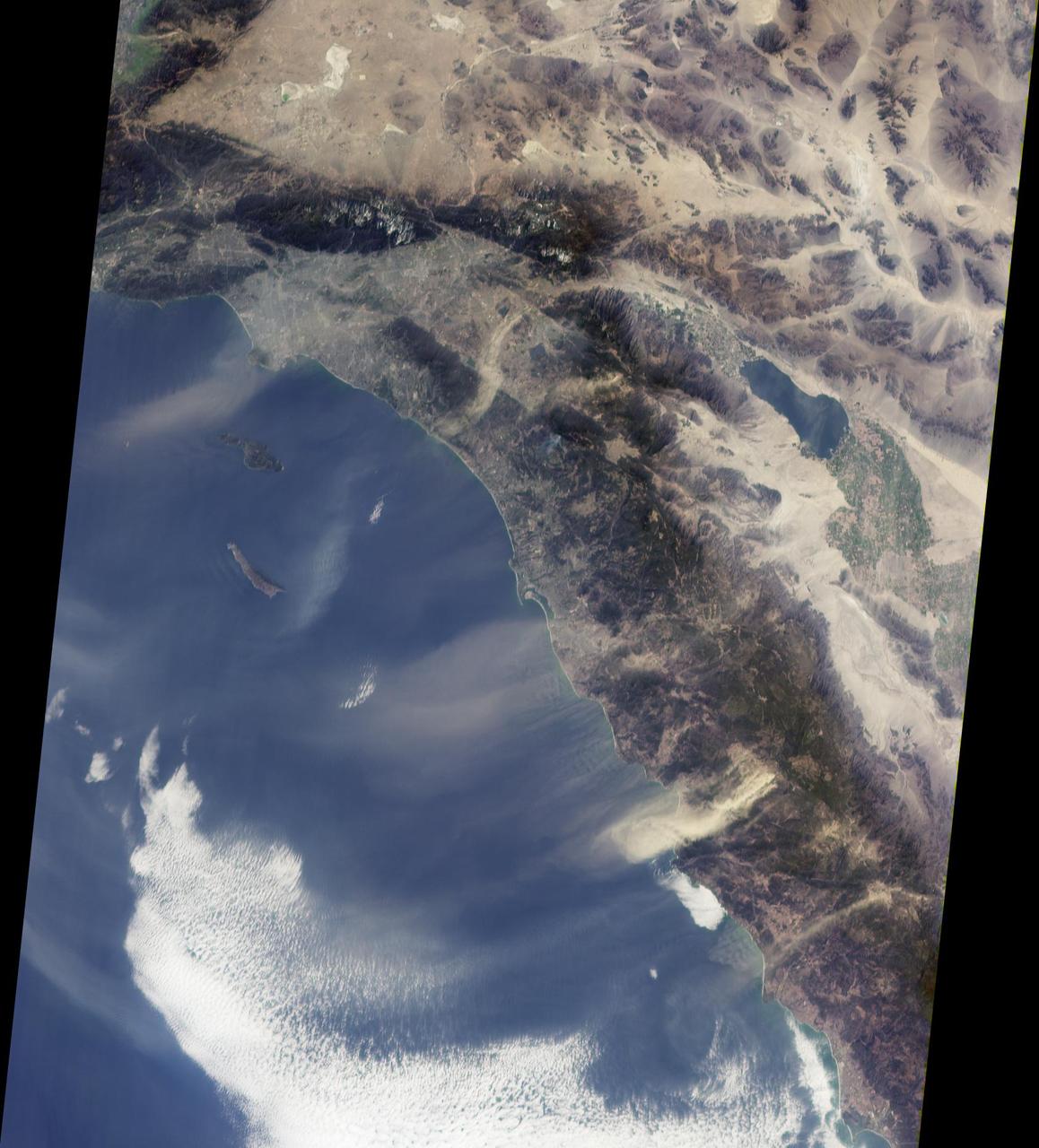
Southern California Santa Anas are dry, north-easterly winds having speeds in excess of 25 knots 46 kilometers/hour. Santa Ana conditions are commonly associated with gusts of more than twice this level.
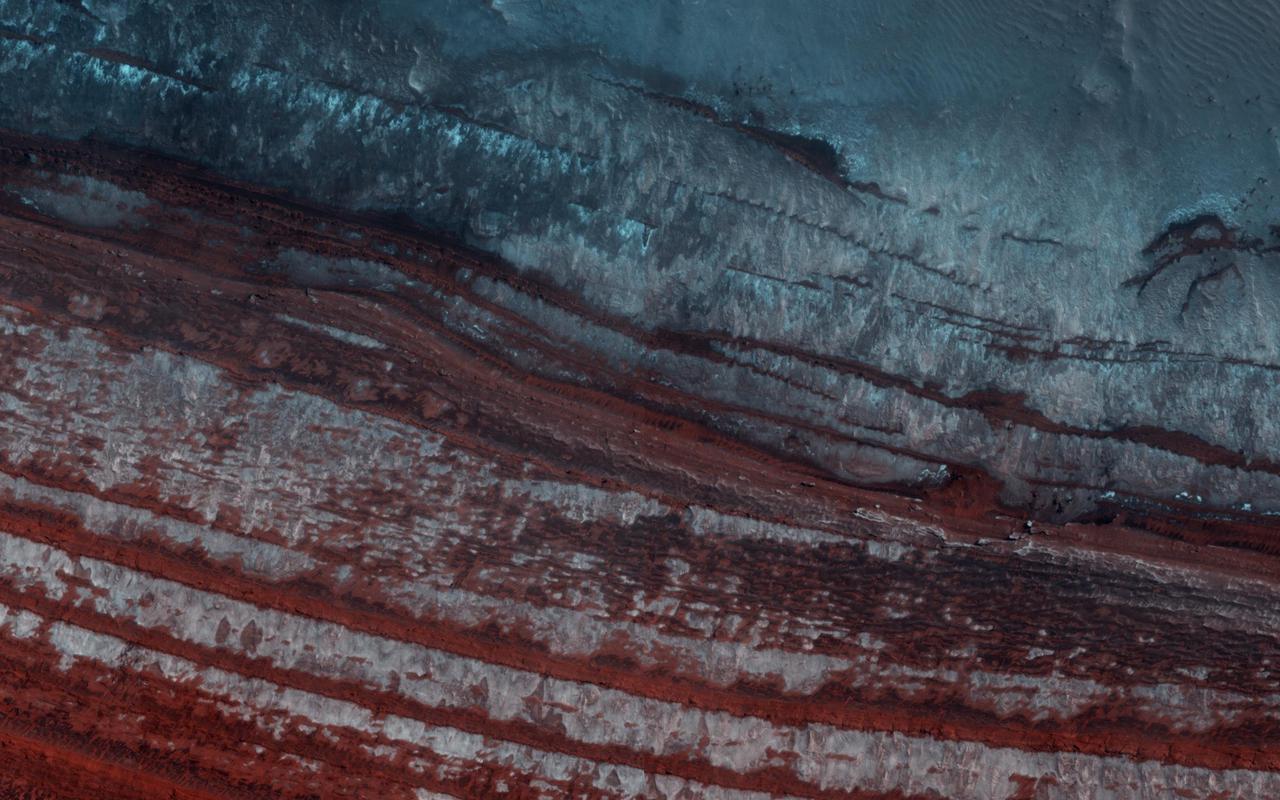
The North Polar Layered Deposits (NPLD) are large layered deposits of dusty water-ice in the northern polar region of Mars. The layering we see is caused mainly by slight variations in the dust-to-ice ratio, which records variations in the Martian climate over time. Another interesting aspect of the NPLD is the fact that we have observed on its scarps numerous avalanche events. Avalanches have also been spotted at this scarp. Spring monitoring is key to constrain frequency of avalanches and timing of "avalanche season" onset on Mars. Can you spot any avalanches in the image? This caption is partly based on the science rationale behind acquiring this image. https://photojournal.jpl.nasa.gov/catalog/PIA24864
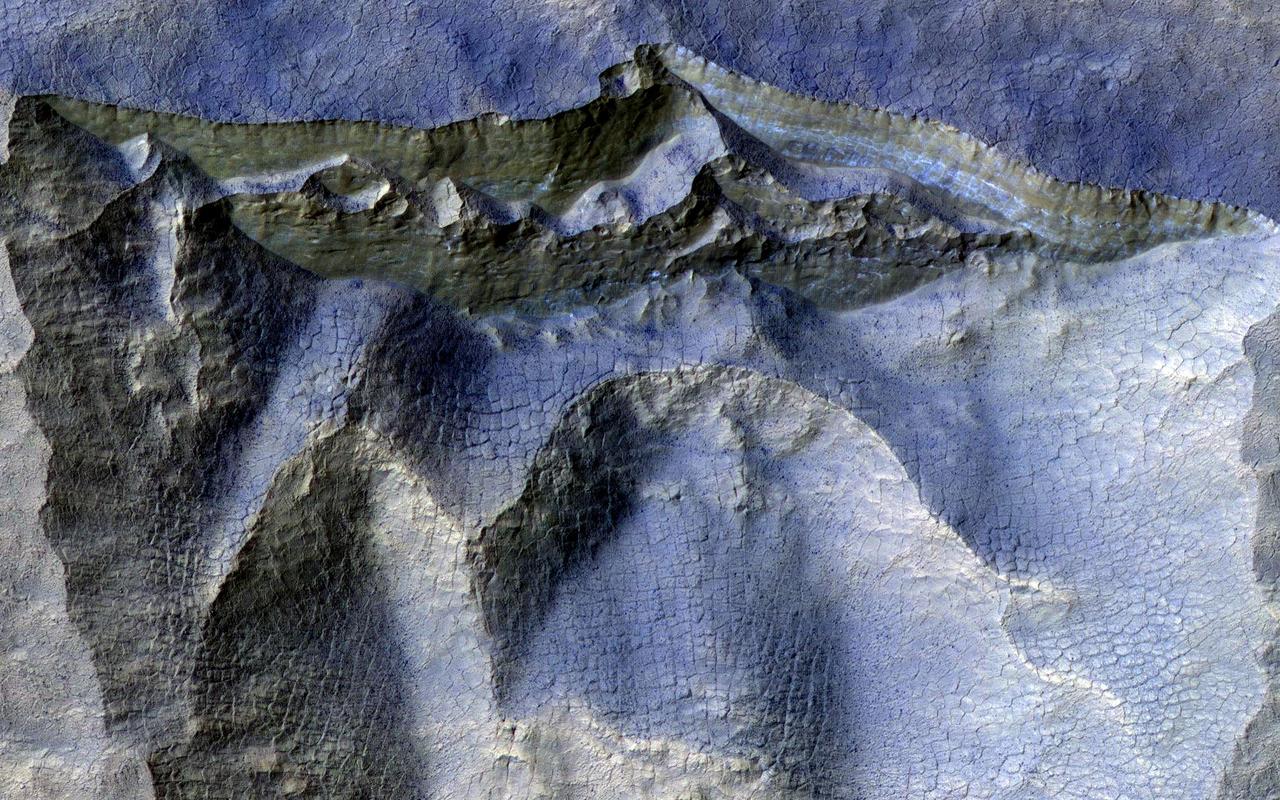
Scientists have come to realize that, just below the surface, about one third of Mars is covered in ice. We study this ice to learn about Mars' ancient climate and astronauts' future water supplies. Sometimes we see the buried ice because cliffs form like the one in this image. On the brownish, dusty cliff wall, the faint light-blue-colored ice shows through. Some of these cliffs change before our eyes and boulders of ice can tumble downhill. We take repeat images of these scenes to check for changes like this. https://photojournal.jpl.nasa.gov/catalog/PIA24147
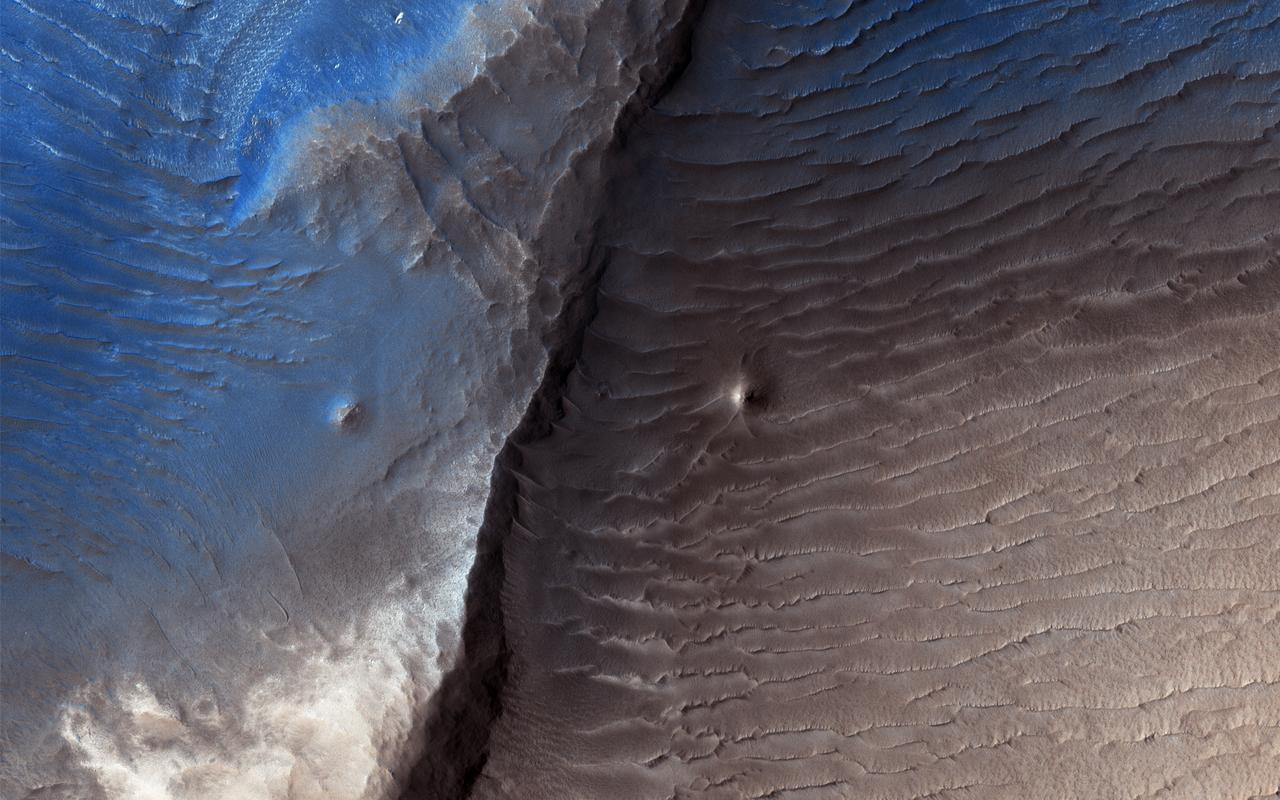
Geologists aren't quite sure what to make of the dark splotch in the middle of this image from NASA's Mars Reconnaisance Orbiter (MRO) -- one of several similar dark splotches that extend east and west for over 100 kilometers. From measurements made in infrared, this and other dark splotches have what we call "high thermal inertia," meaning that it heats up and cools down slowly. Scientists use thermal inertia to assess how rocky, sandy, or dusty a place is. A higher thermal inertia than the surrounding area means it's less dusty. Wavy, banded patterns in the dark splotch (possibly due to cross bedding from sand dunes that once occupied the area) were lithified into sandstone, and then eroded away. These clues could help geologists figure out what's going on there. https://photojournal.jpl.nasa.gov/catalog/PIA22042
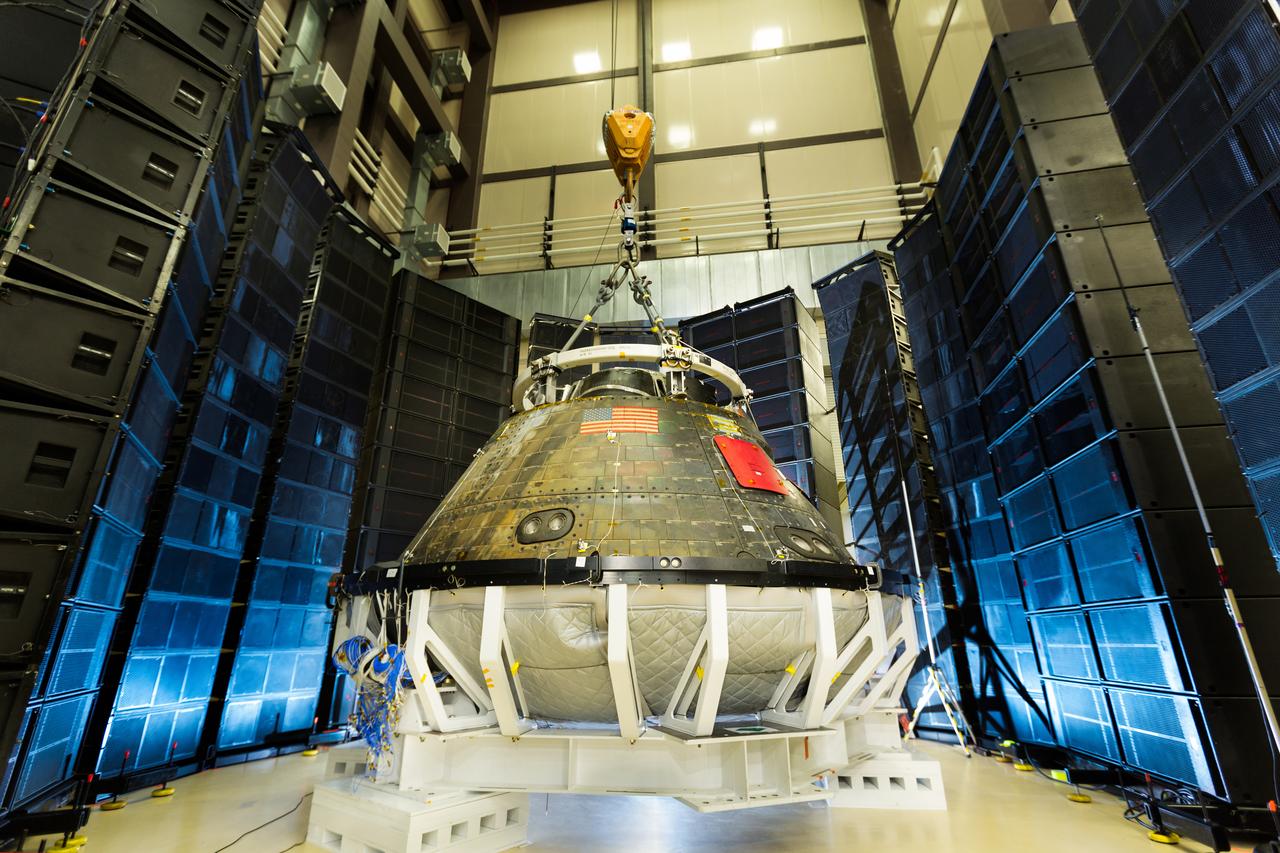
Direct Field Acoustic (DFA) Testing was successfully completed on the Exploration Flight Test-1 (EFT-1) crew module at the Lockheed Martin Waterton Reverberant Acoustic Lab (RAL) on March 1, 2016. DFA Testing is an alternative method for spacecraft module acoustic qualification and acceptance verification that is being investigated for use in the Orion program. Its portability would allow testing at KSC and eliminate the transportation risks and associated cost and schedule of performing this verification activity off-site. Two configurations were tested; one representing the future reverberant acoustic comparison test and one representing the future configuration for the Artemis I crew module. A mock-up of the service module without the fairings will also be tested to gather volumetric data to decide viability of performing DFA Testing on the Static Test Article (STA) SM in the 2016 Fall. Data will be used to develop predictive algorithms for future tests.

Direct Field Acoustic (DFA) Testing was successfully completed on the Exploration Flight Test-1 (EFT-1) crew module at the Lockheed Martin Waterton Reverberant Acoustic Lab (RAL) on March 1, 2016. DFA Testing is an alternative method for spacecraft module acoustic qualification and acceptance verification that is being investigated for use in the Orion program. Its portability would allow testing at KSC and eliminate the transportation risks and associated cost and schedule of performing this verification activity off-site. Two configurations were tested; one representing the future reverberant acoustic comparison test and one representing the future configuration for the Artemis I crew module. A mock-up of the service module without the fairings will also be tested to gather volumetric data to decide viability of performing DFA Testing on the Static Test Article (STA) SM in the 2016 Fall. Data will be used to develop predictive algorithms for future tests.
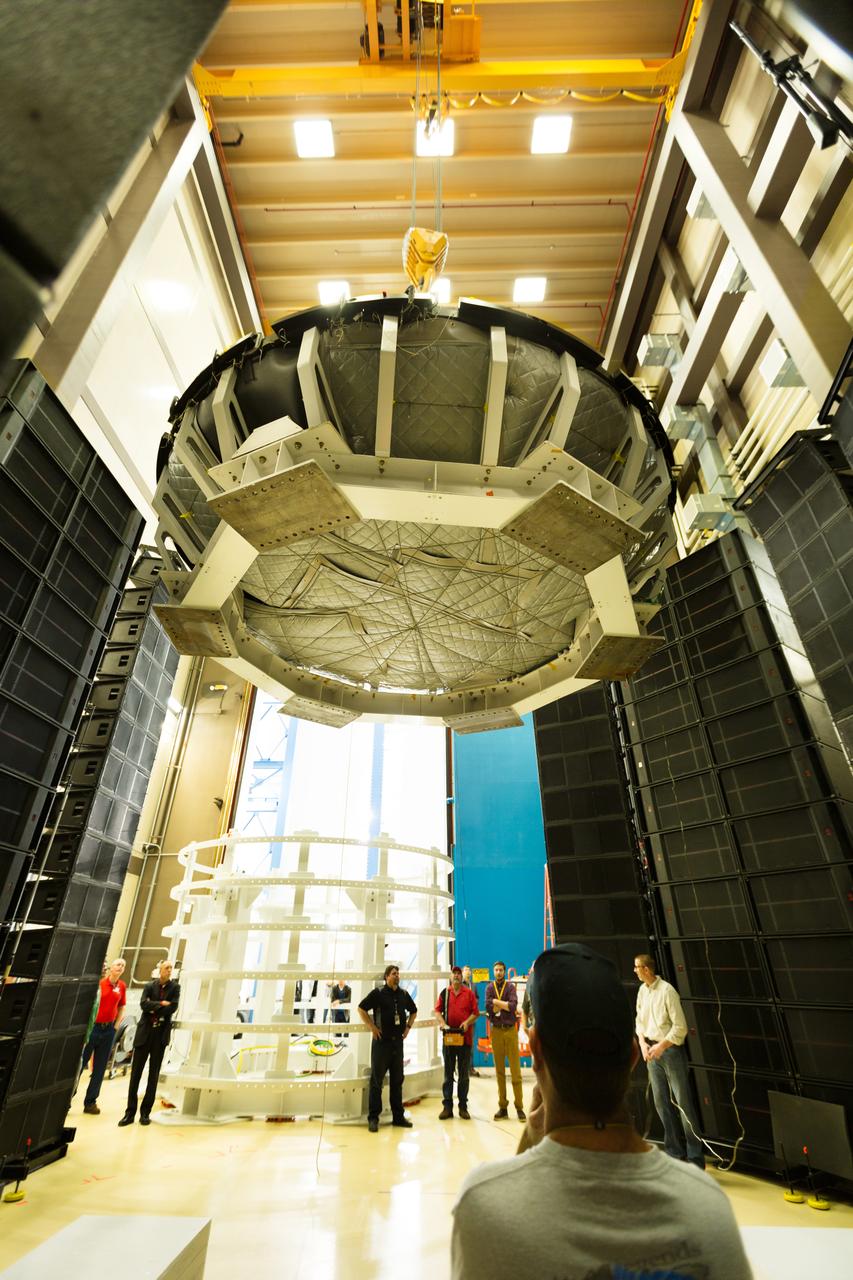
Direct Field Acoustic (DFA) Testing was successfully completed on the Exploration Flight Test-1 (EFT-1) crew module at the Lockheed Martin Waterton Reverberant Acoustic Lab (RAL) on March 1, 2016. DFA Testing is an alternative method for spacecraft module acoustic qualification and acceptance verification that is being investigated for use in the Orion program. Its portability would allow testing at KSC and eliminate the transportation risks and associated cost and schedule of performing this verification activity off-site. Two configurations were tested; one representing the future reverberant acoustic comparison test and one representing the future configuration for the Artemis I crew module. A mock-up of the service module without the fairings will also be tested to gather volumetric data to decide viability of performing DFA Testing on the Static Test Article (STA) SM in the 2016 Fall. Data will be used to develop predictive algorithms for future tests.
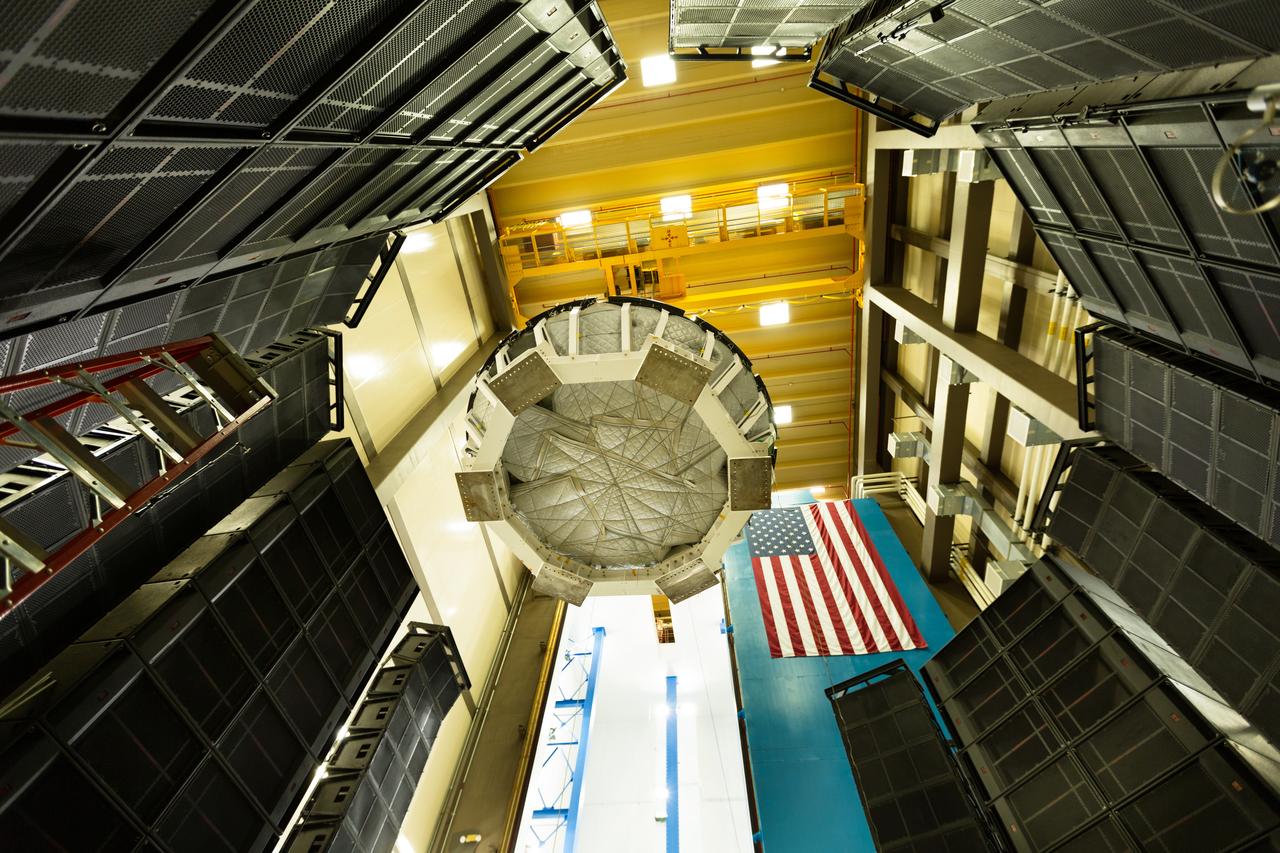
Direct Field Acoustic (DFA) Testing was successfully completed on the Exploration Flight Test-1 (EFT-1) crew module at the Lockheed Martin Waterton Reverberant Acoustic Lab (RAL) on March 1, 2016. DFA Testing is an alternative method for spacecraft module acoustic qualification and acceptance verification that is being investigated for use in the Orion program. Its portability would allow testing at KSC and eliminate the transportation risks and associated cost and schedule of performing this verification activity off-site. Two configurations were tested; one representing the future reverberant acoustic comparison test and one representing the future configuration for the Artemis I crew module. A mock-up of the service module without the fairings will also be tested to gather volumetric data to decide viability of performing DFA Testing on the Static Test Article (STA) SM in the 2016 Fall. Data will be used to develop predictive algorithms for future tests.