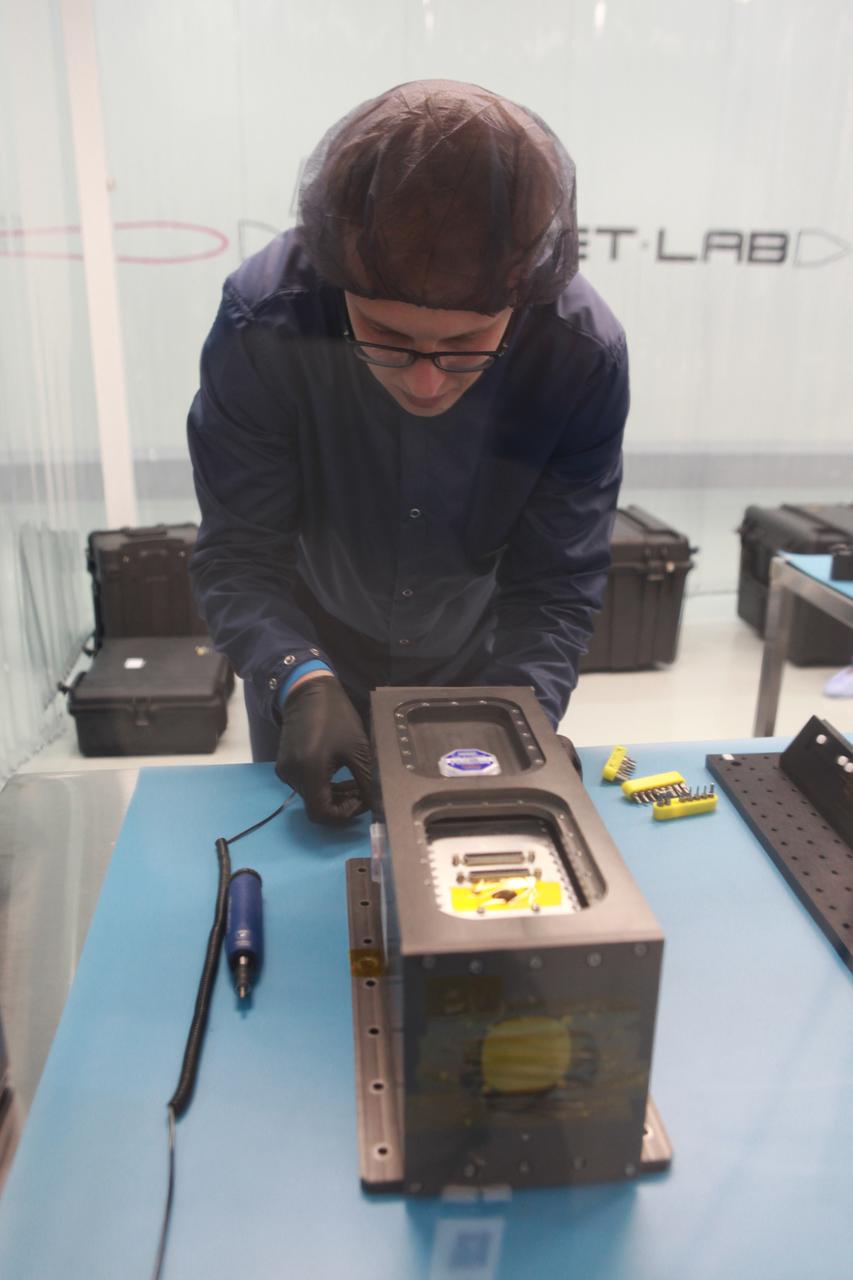
Project DaVinci is a student-led team at North Idaho STEM Charter Academy. Their spacecraft, the DaVinci satellite, has been constructed with the intent to connect with students worldwide to help reignite a passion for space. When launched, the DaVinci satellite will begin broadcasting messages across the globe using amateur radio uplink and downlink frequencies. Students in nearly every country will be able to receive these messages using a USB receiver dongle, open source software, and a yagi antenna in locations where the signal may be weaker. All messages will be education-related, and messages received will be in Morse Code requiring students to download a translating app or to translate it themselves. The DaVinci satellite will use the internet as a redundancy communication channel while in orbit. It is one of the few CubeSat to have a GlobalStar modem onboard, and will allow team members to upload digital messages to internet through the satellite. DaVinci satellite has an onboard Arducam as well, and will provide photos of Earth from its position in orbit. These pictures can be retrieved by the team using the GlobalStar modem and its corresponding server. To Learn more about the DaVinci satellite, visit www.projectdavincicubesat.org/
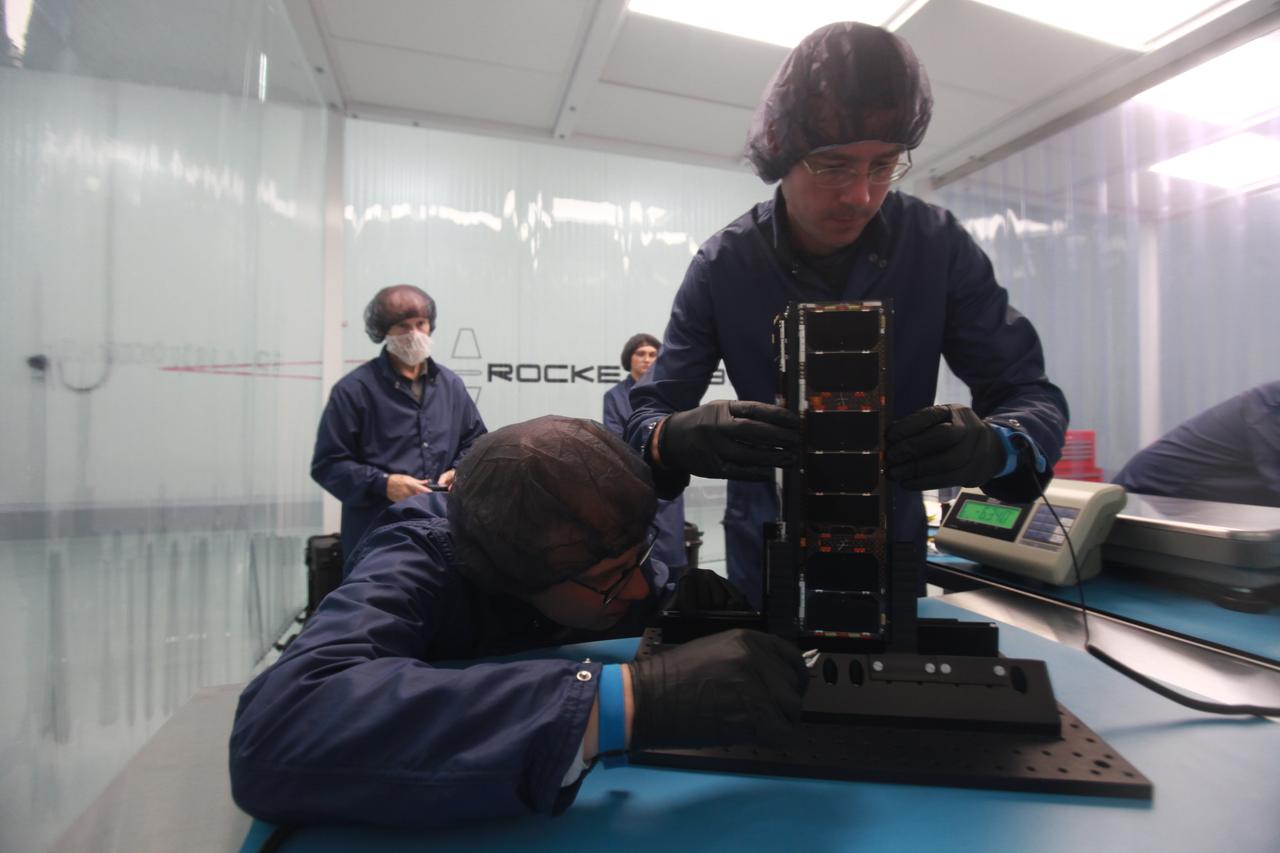
Project DaVinci is a student-led team at North Idaho STEM Charter Academy. Their spacecraft, the DaVinci satellite, has been constructed with the intent to connect with students worldwide to help reignite a passion for space. When launched, the DaVinci satellite will begin broadcasting messages across the globe using amateur radio uplink and downlink frequencies. Students in nearly every country will be able to receive these messages using a USB receiver dongle, open source software, and a yagi antenna in locations where the signal may be weaker. All messages will be education-related, and messages received will be in Morse Code requiring students to download a translating app or to translate it themselves. The DaVinci satellite will use the internet as a redundancy communication channel while in orbit. It is one of the few CubeSat to have a GlobalStar modem onboard, and will allow team members to upload digital messages to internet through the satellite. DaVinci satellite has an onboard Arducam as well, and will provide photos of Earth from its position in orbit. These pictures can be retrieved by the team using the GlobalStar modem and its corresponding server. To Learn more about the DaVinci satellite, visit www.projectdavincicubesat.org/
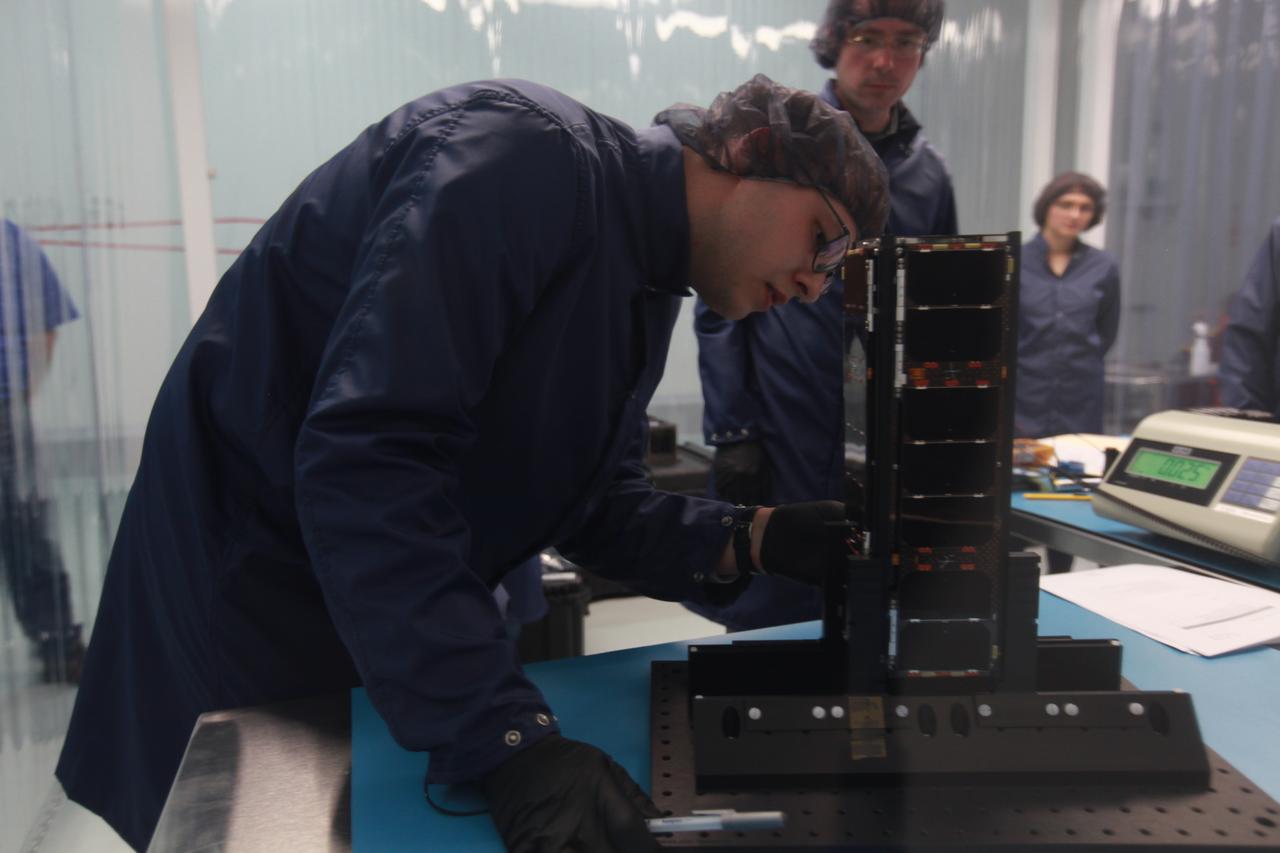
Project DaVinci is a student-led team at North Idaho STEM Charter Academy. Their spacecraft, the DaVinci satellite, has been constructed with the intent to connect with students worldwide to help reignite a passion for space. When launched, the DaVinci satellite will begin broadcasting messages across the globe using amateur radio uplink and downlink frequencies. Students in nearly every country will be able to receive these messages using a USB receiver dongle, open source software, and a yagi antenna in locations where the signal may be weaker. All messages will be education-related, and messages received will be in Morse Code requiring students to download a translating app or to translate it themselves. The DaVinci satellite will use the internet as a redundancy communication channel while in orbit. It is one of the few CubeSat to have a GlobalStar modem onboard, and will allow team members to upload digital messages to internet through the satellite. DaVinci satellite has an onboard Arducam as well, and will provide photos of Earth from its position in orbit. These pictures can be retrieved by the team using the GlobalStar modem and its corresponding server. To Learn more about the DaVinci satellite, visit www.projectdavincicubesat.org/
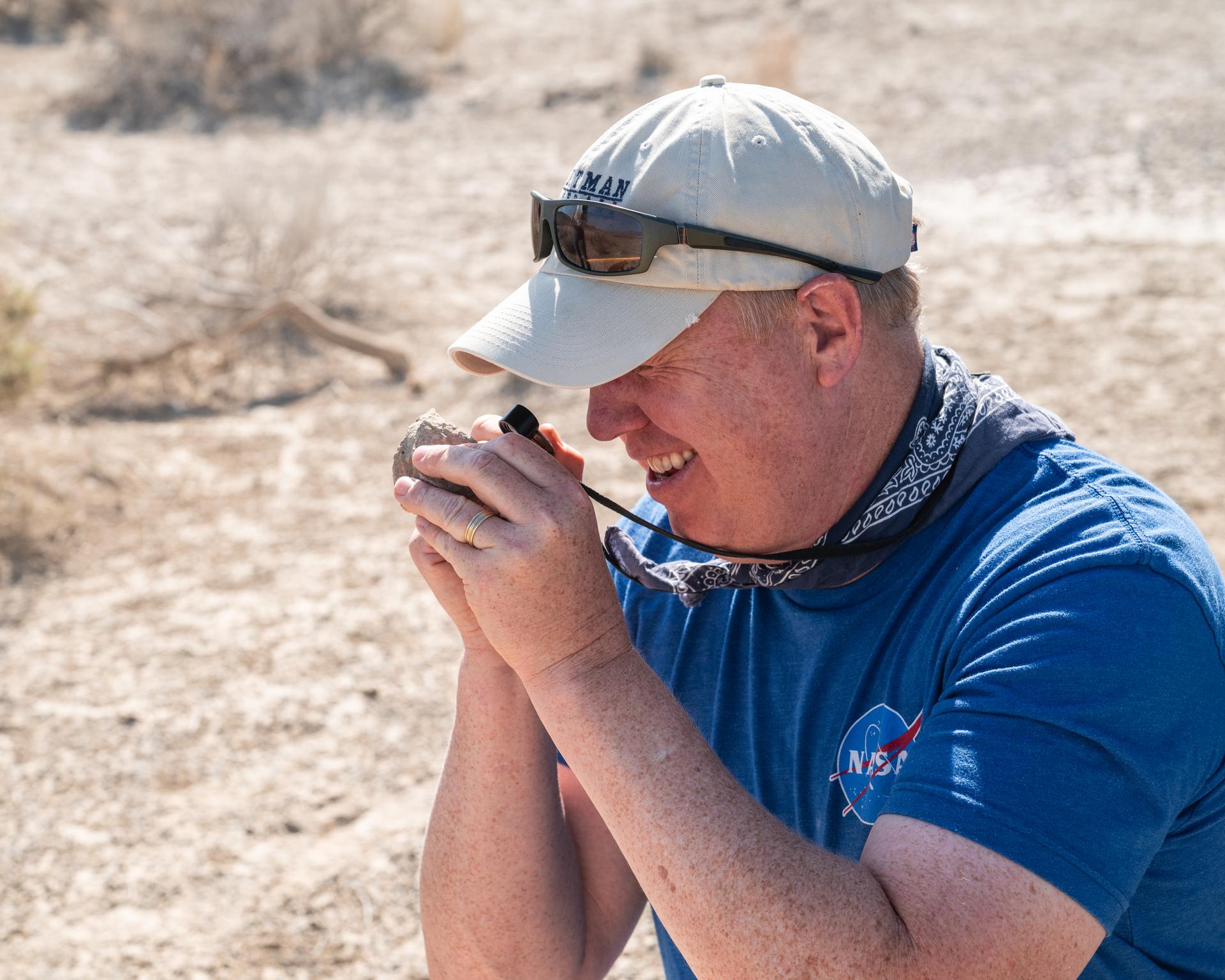
Nick Lang, DAVINCI Science Program Manager at Headquarters NASA, inspects a rock found at Crater Island, Utah during the DAVINCI VADIX experiment, June 23, 2026. NASA/Mike Guinto
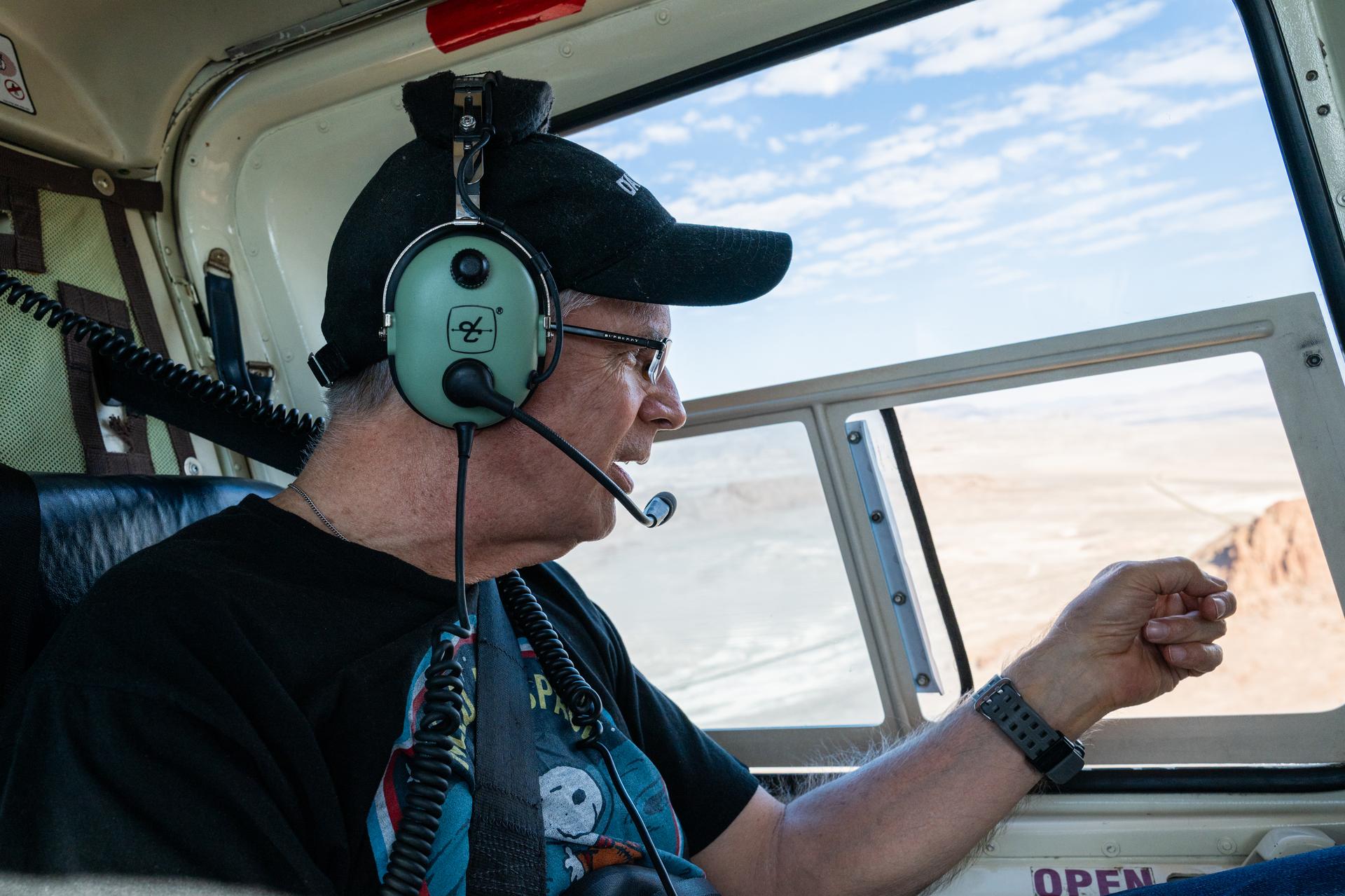
Dr. Jim Garvin makes observations from the window of a helicopter while flying from Wendover Utah to Crater Island, June 23, 2026. The flight was in coordination with the VADIX mission, a preliminary experiment which will demonstrate a prototype camera system that will one day fly on the DAVINCI probe to Venus. NASA/Mike Guinto
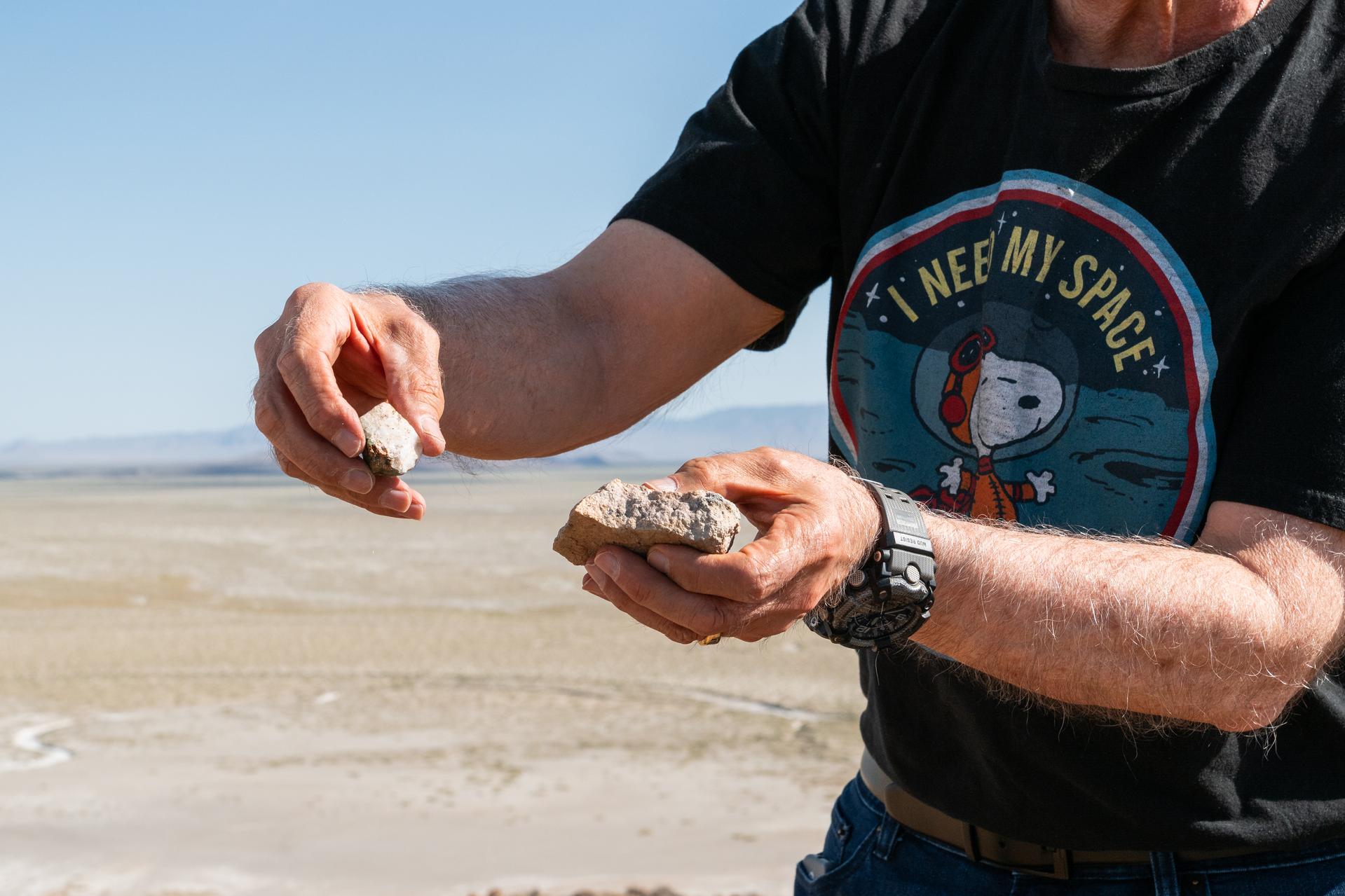
Dr. Jim Garvin presents rock samples found at Crater Island, Utah on June 23, 2026. Dr. Garvin is the principal investigator for NASA's DAVINCI probe which will one day be making discoveries on Venus.
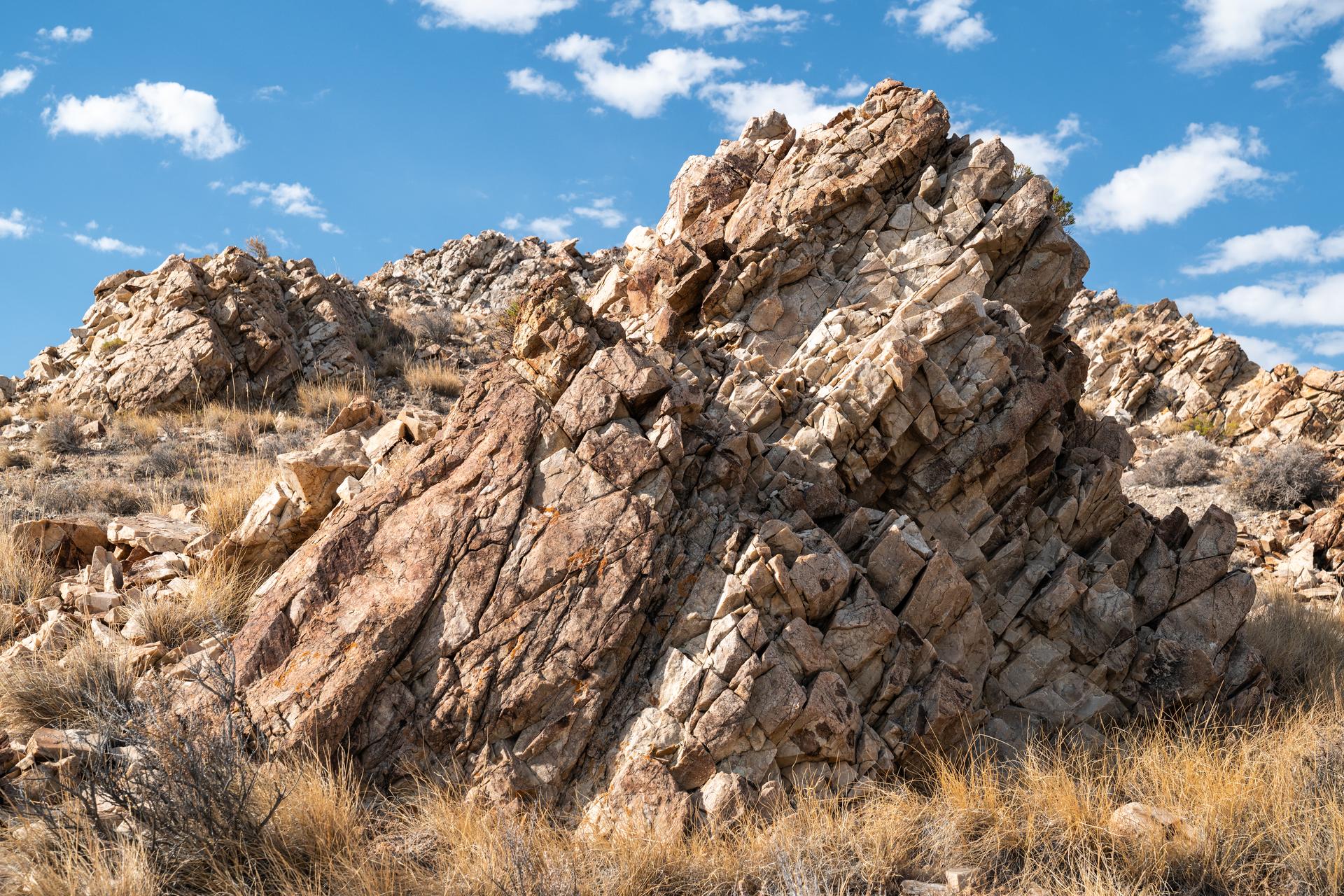
Detailed view of a granite outcrop at Crater Island, Utah on June 23, 2026. This outcropping was one of the points of interest to NASA's DAVINCI VADIX Mission for its distinct geologic properties. NASA/Mike Guinto
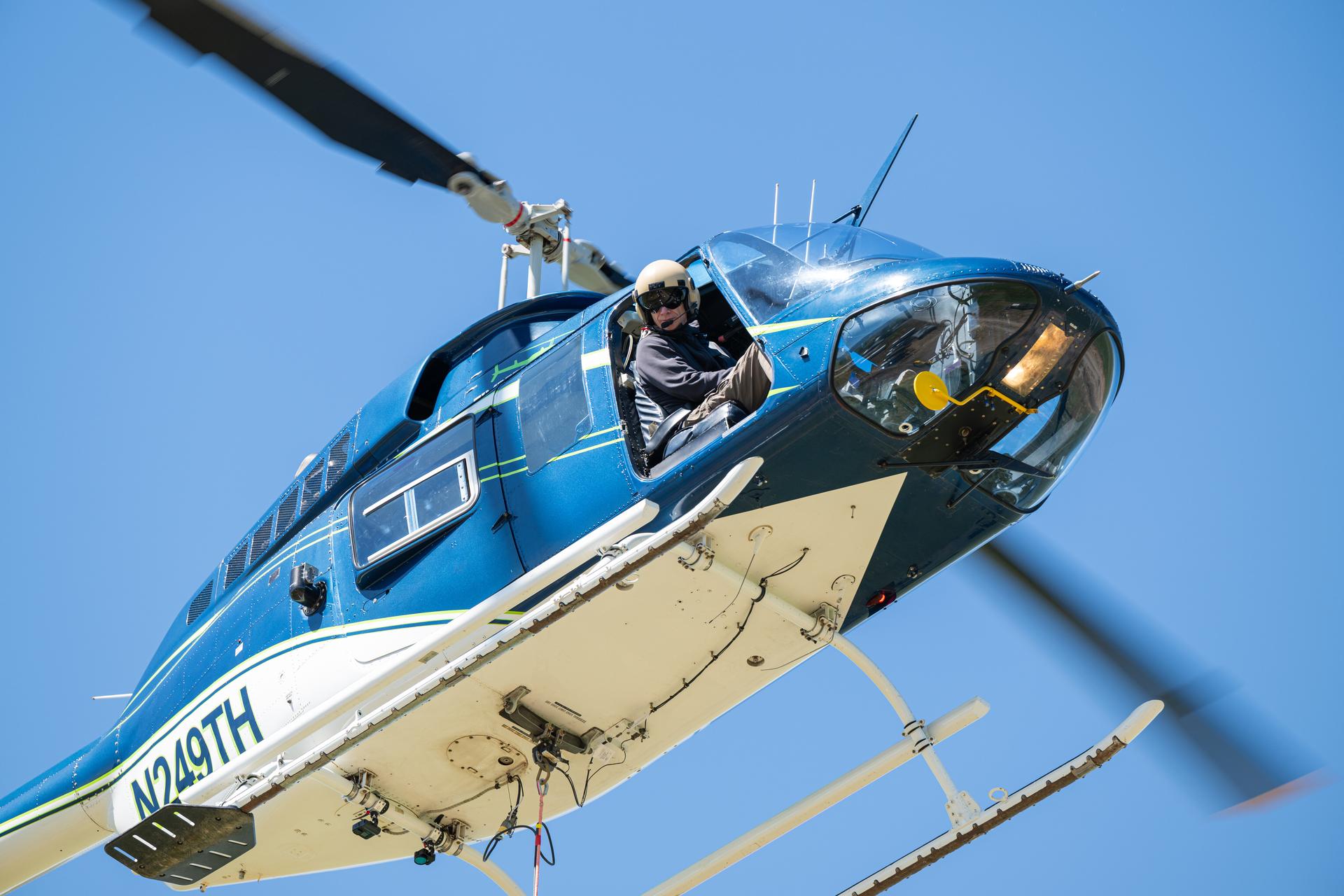
Joe Turner, a pilot with Timberland Helicopters, looks out the window of their helicopter while performing test flights with NASA's DAVINCI VADIX prototype tethered to the helicopter. VADIX is a prototype of a camera system which will one day fly on NASA's DAVINCI mission to Venus. NASA/Mike Guinto
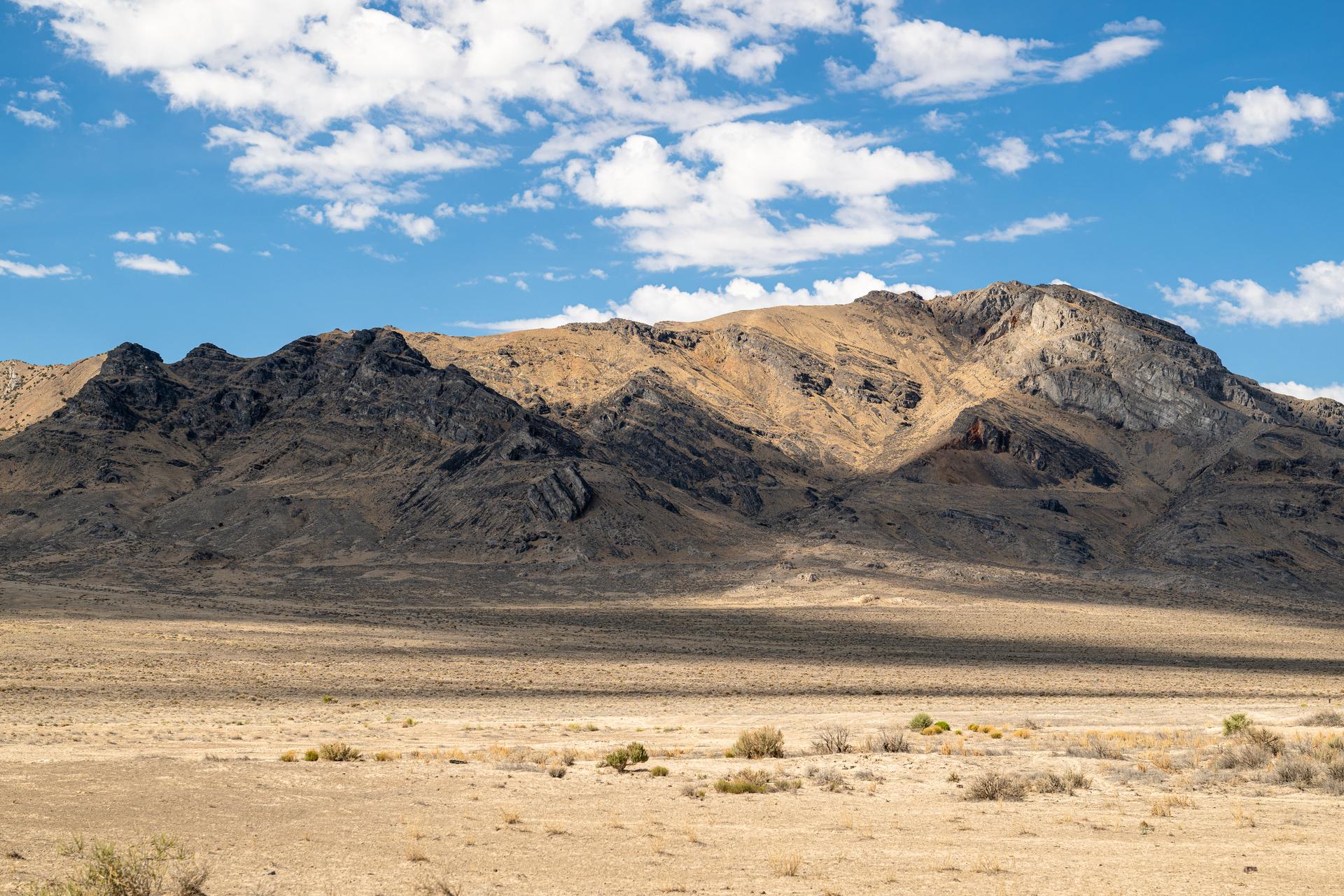
A view from the DAVINCI VADIX Basecamp near Crater Island, Utah, June 25, 2026. This area was the site of a series of tests (June 23-25, 2026) of the camera system that will one day fly aboard NASA’s DAVINCI mission to Venus. NASA/Mike Guinto
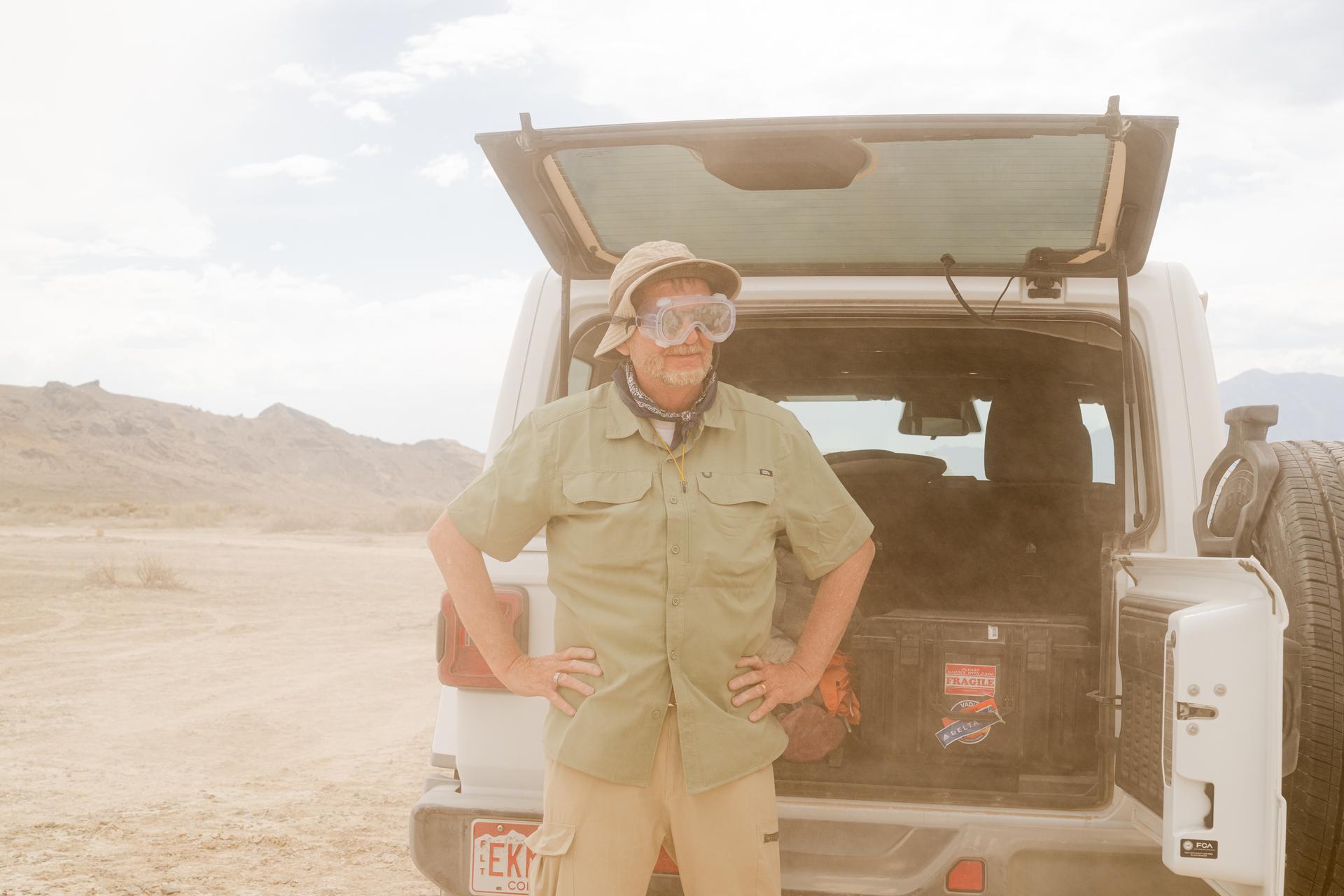
Bob Podgurski wears goggles during a dust event at the DAVINCI VADIX basecamp, Crater Island, Utah, June 24, 2026. This area was the site of a series of tests (June 23-25, 2026) of the camera system that will one day fly aboard NASA’s DAVINCI mission to Venus. NASA/Mike Guinto
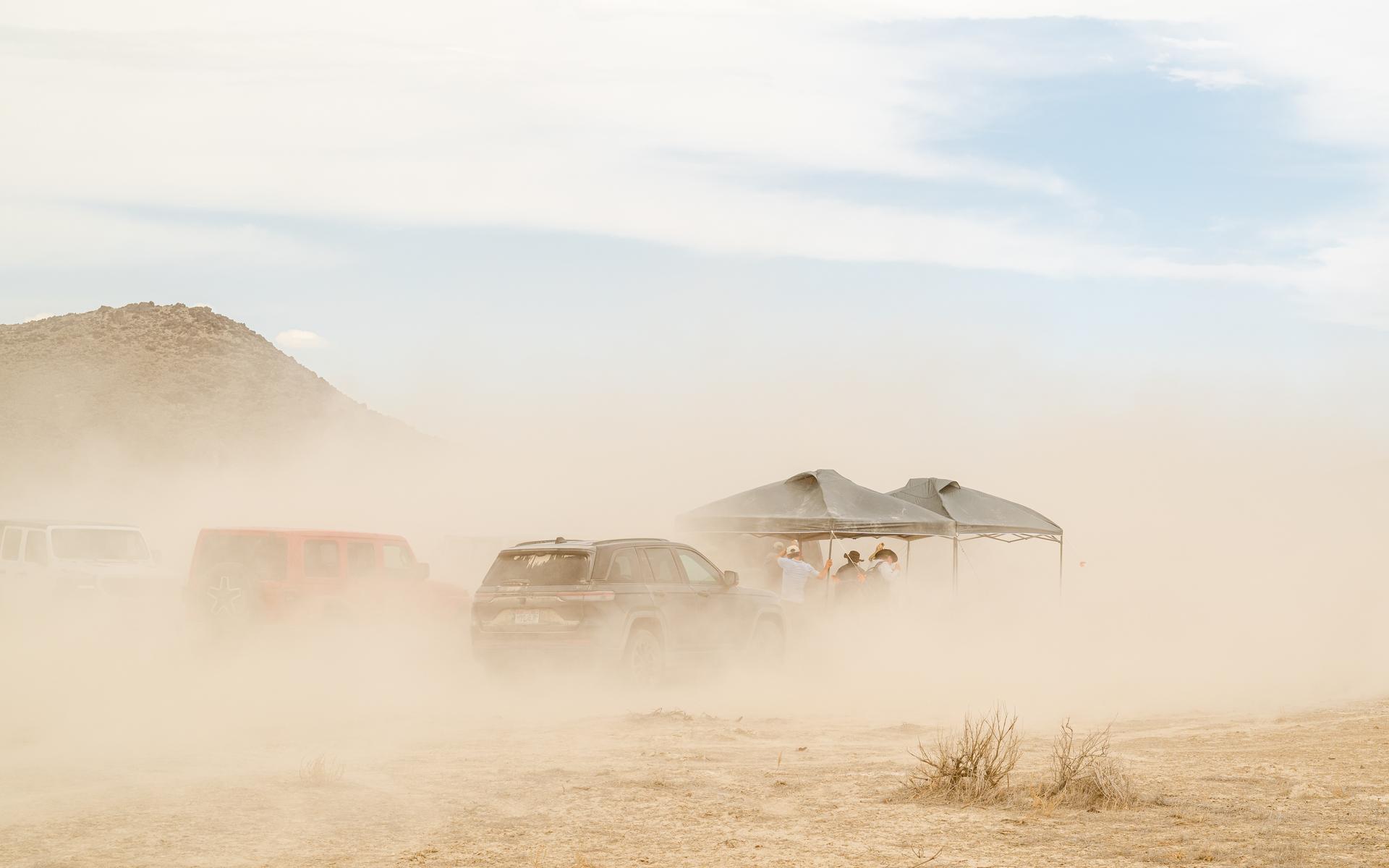
A strong wind kicks up a lot of dirt around the DAVINCI VADIX basecamp at Crater Island, Utah, June 24, 2026. This area was the site of a series of tests (June 23-25, 2026) of the camera system that will one day fly aboard NASA’s DAVINCI mission to Venus. NASA/Mike Guinto
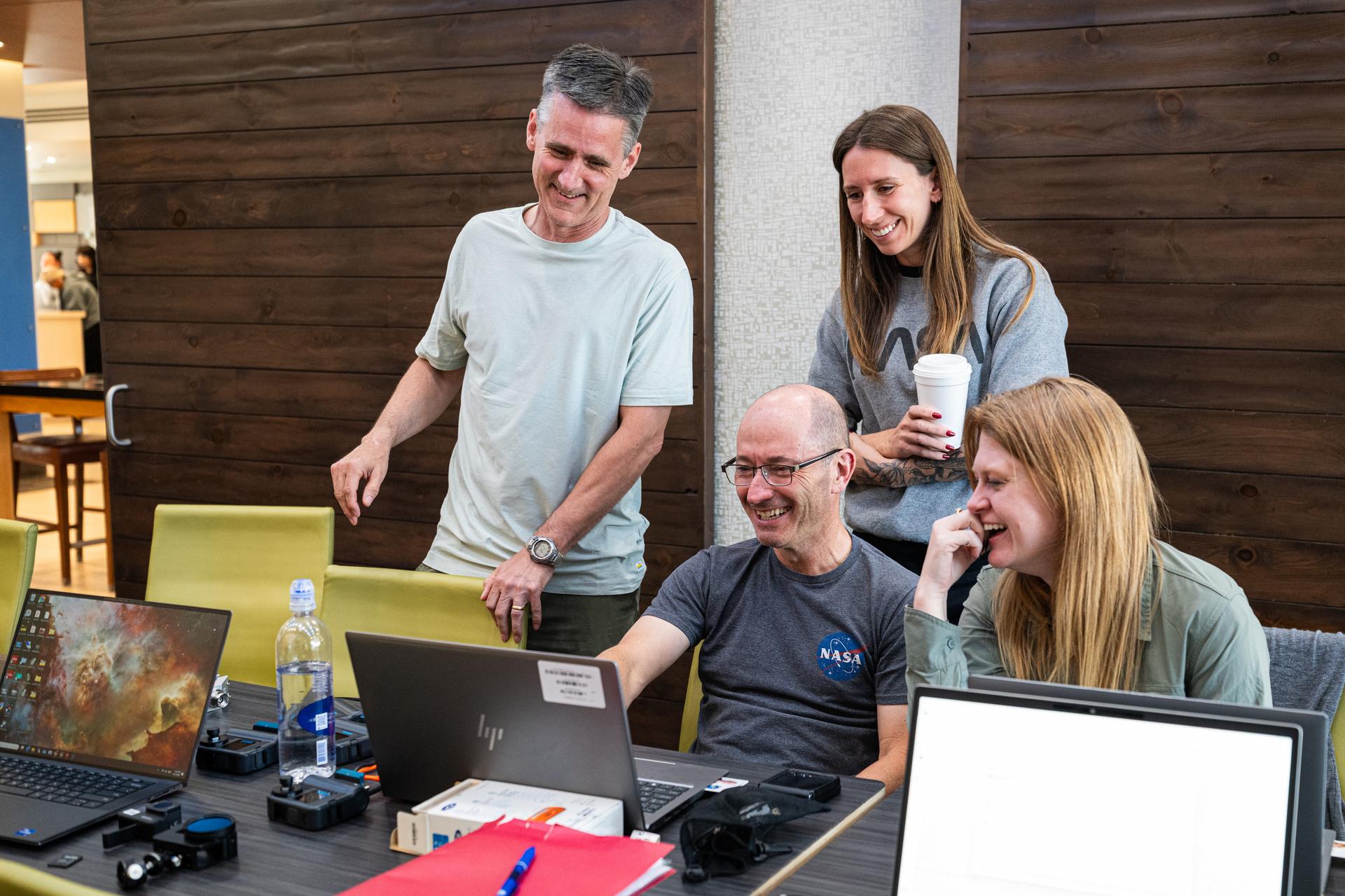
Brent Bos, (left) Phillip Coulter, Terra Hardwick, and Erika Kohler (right) review images from a preliminary test of the Venus Analog Descent Imaging Experiment (VADIX) hardware in Brigham City, Utah, June 2, 2026. VADIX is a prototype camera system which will one day fly aboard NASA's DAVINCI probe to Venus.
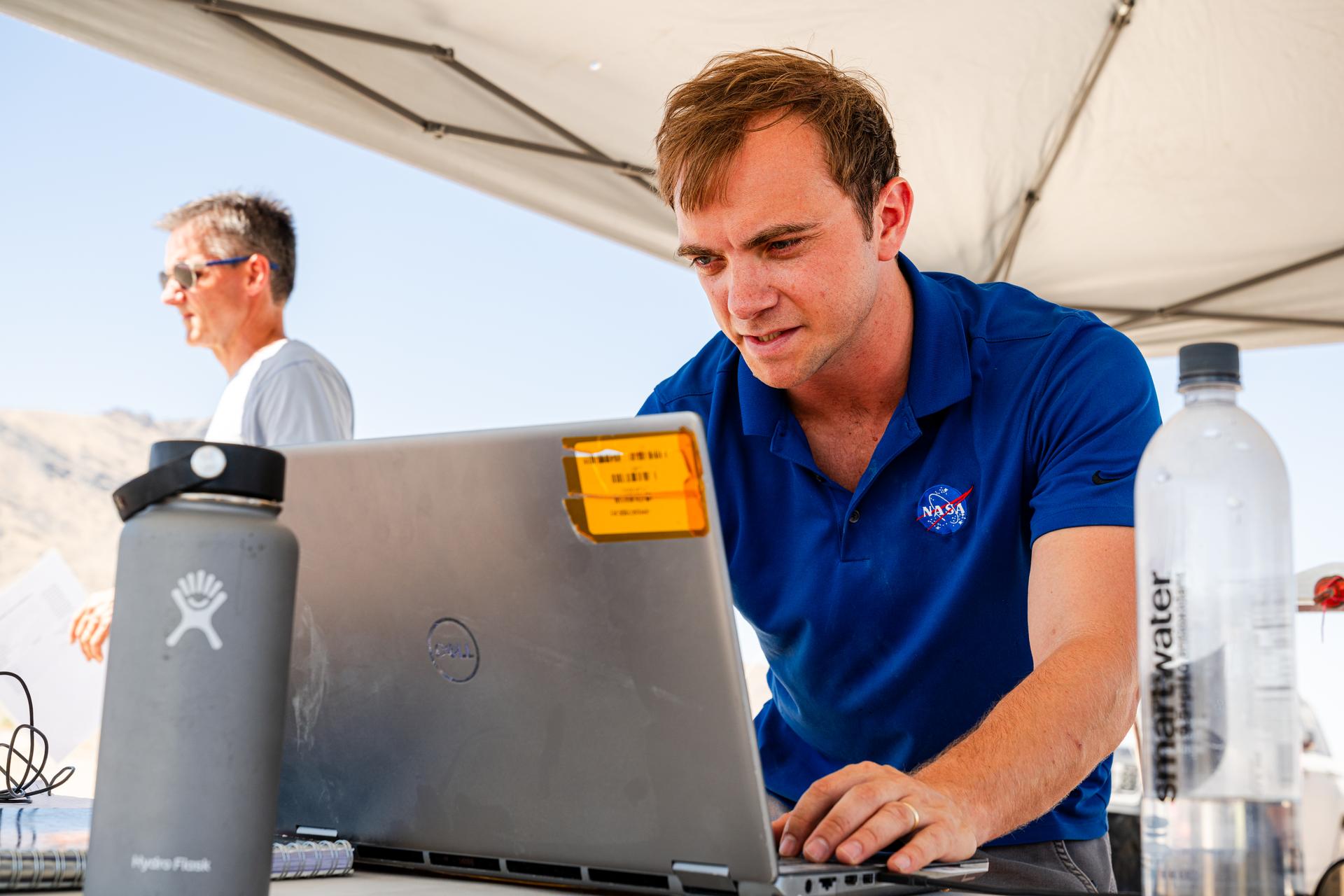
DAVINCI's Matthew Mullin, space laser engineer, reviews data in between test flights at Crater Island, Utah June 24, 2026. NASA/Mike Guinto
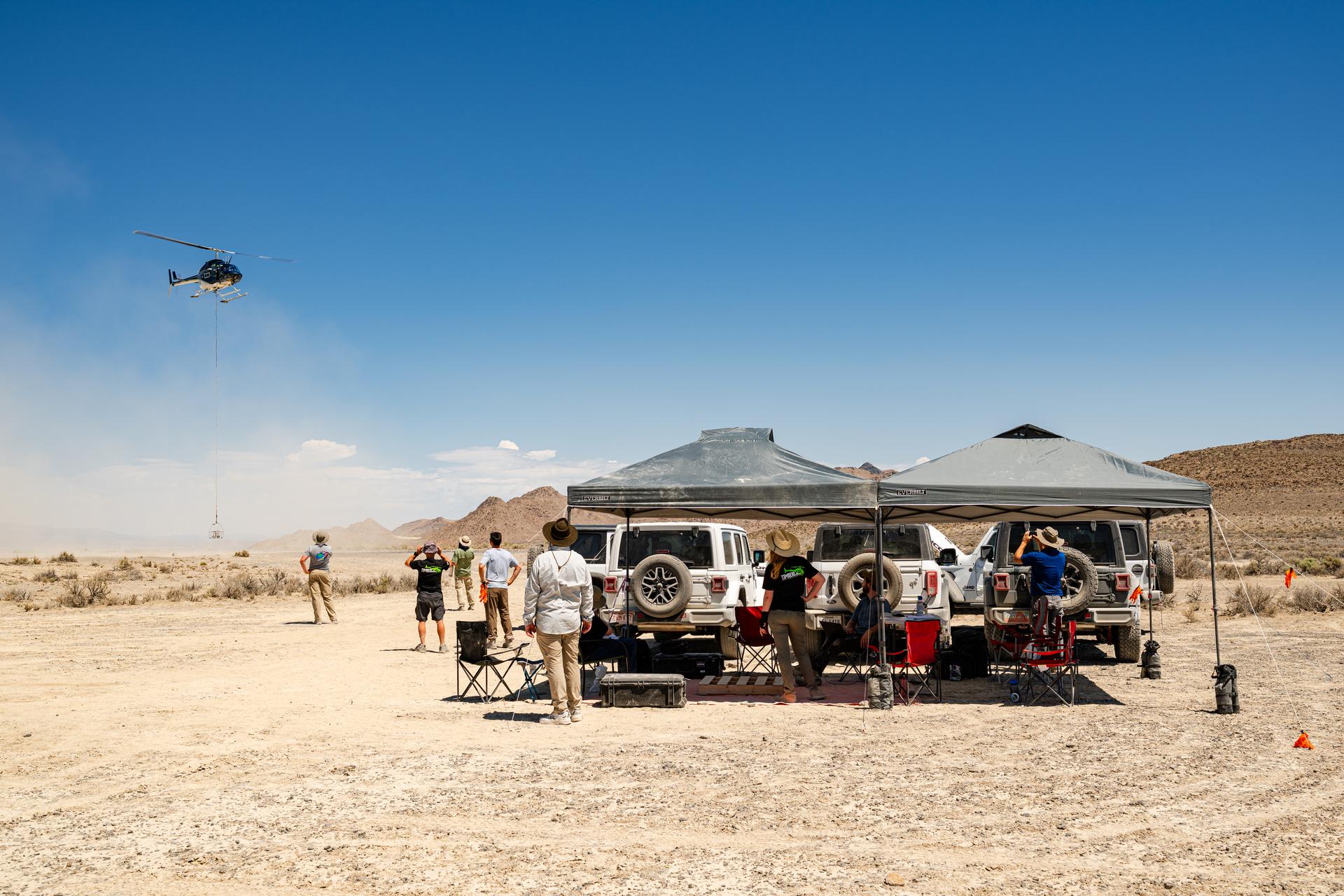
Helicopter carrying the VADIX payload flies past the DAVINCI VADIX base camp in crater island, Utah on June 24, 2026. NASA/Mike Guinto
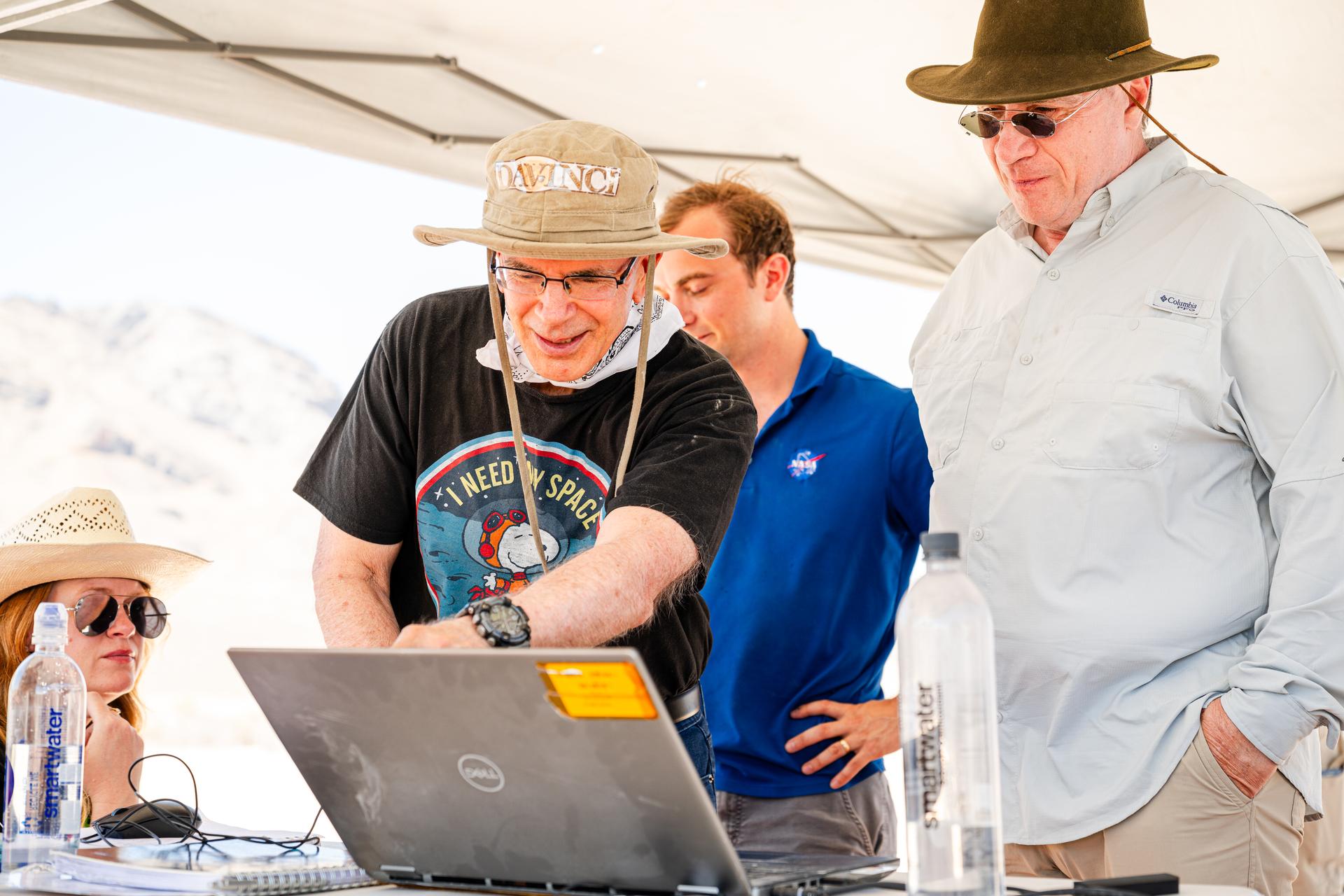
Dr. Jim Garvin, left, and Mike Ravine review flight data inbetween test flights over Crater Island, Utah as part of the DAVINCI VADIX experiment, June 24, 2026. NASA/Mike Guinto
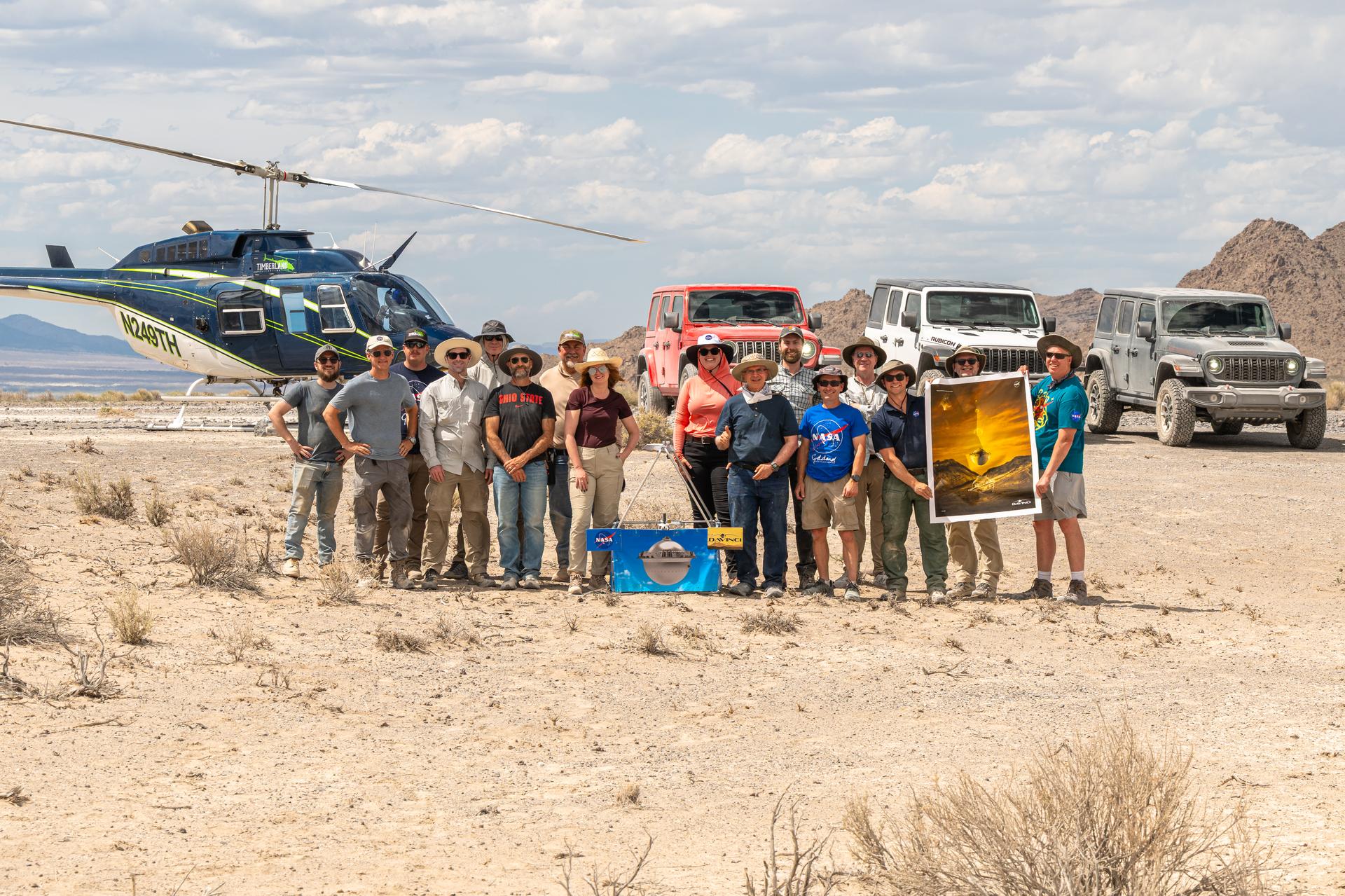
The DAVINCI VADIX team, from left to right, Mike Guinto, Brent Bos, Jason Burt, Dan Gallagher,Joe Turner, Ben Schumacher, Mike Vitulio, Erika Kohler, Lacey Young, Jim Garvin, Christian Tate, Phil Coulter, Mike Ravine, Matt Mullin, Bob Podgurski, Nick Lang; pose for a group photo in front of their vehicles at Crater Island, Utah, June 25, 2026. This area was the site of a series of tests (June 23-25, 2026) of the camera system that will one day fly aboard NASA’s DAVINCI mission to Venus. NASA/Mike Guinto
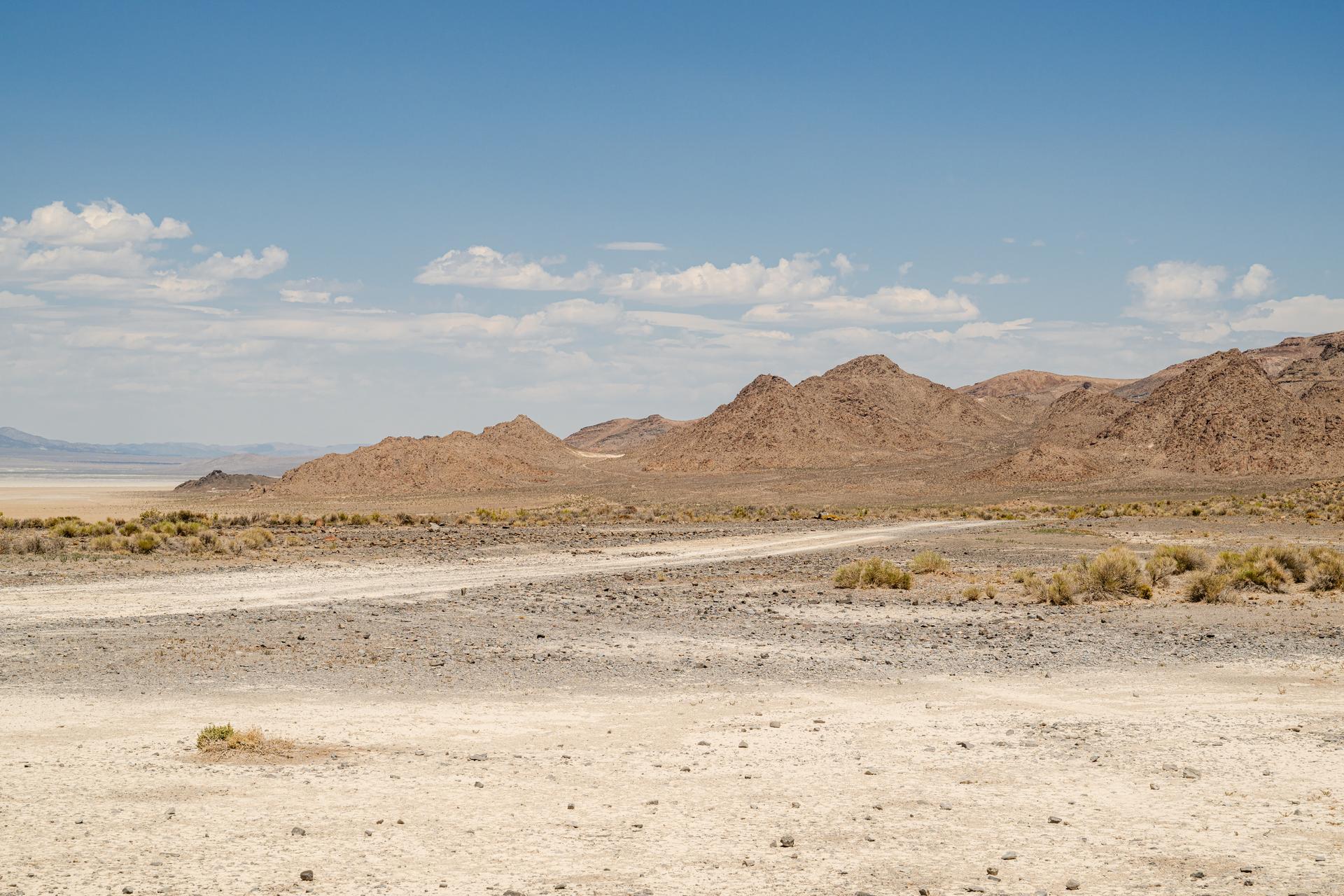
A view of Crater Island from the VADIX Basecamp, Crater Island, Utah June 24, 2026. This area was the site of a series of tests (June 23-25, 2026) of the camera system that will one day fly aboard NASA’s DAVINCI mission to Venus. NASA/Mike Guinto
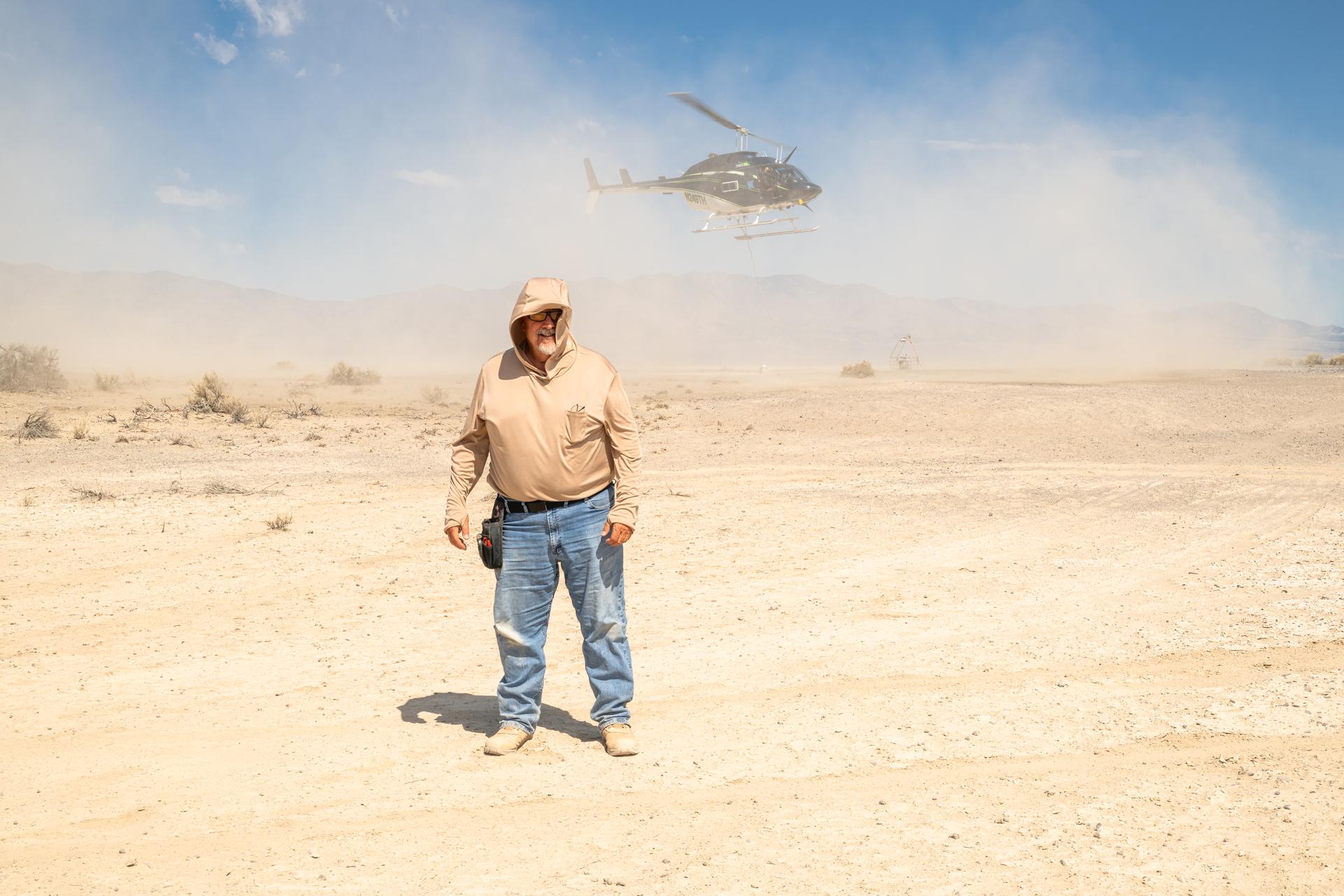
Mike Vitulio, a NASA mechanical integration engineering technician and machinist working on the DAVINCI project poses stands with his back to the helicopter as it takes off to shield himself from the roto-wash at Crater Island, Utah, June 25, 2026. NASA/Mike Guinto
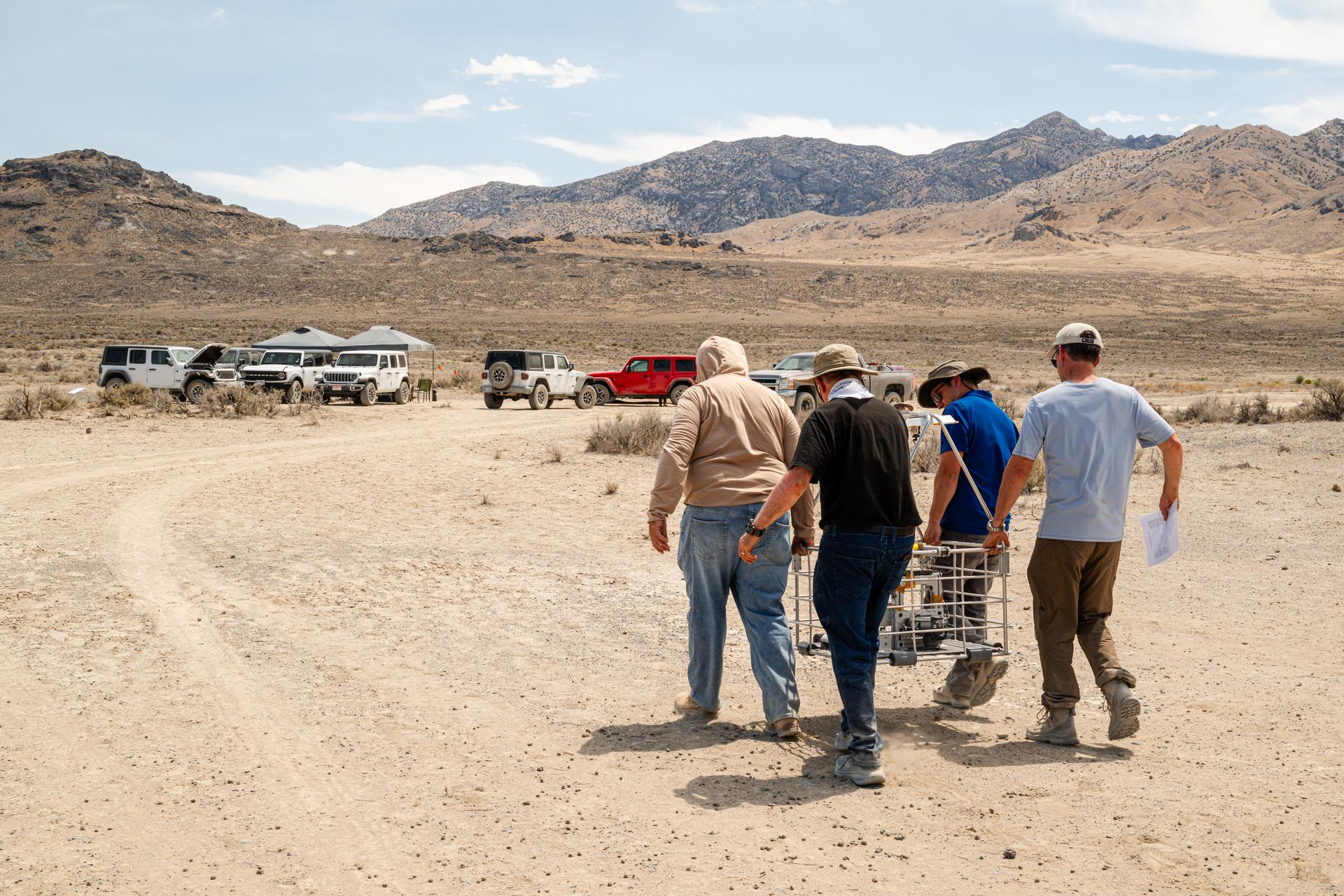
DAVINCI VADIX team carries the VADIX payload from the helicopter back to basecamp so they can retrieve flight data and get the payload back onto the helicopter for the next test flight at Crater Island, Utah, June 24, 2026. NASA/Mike Guinto
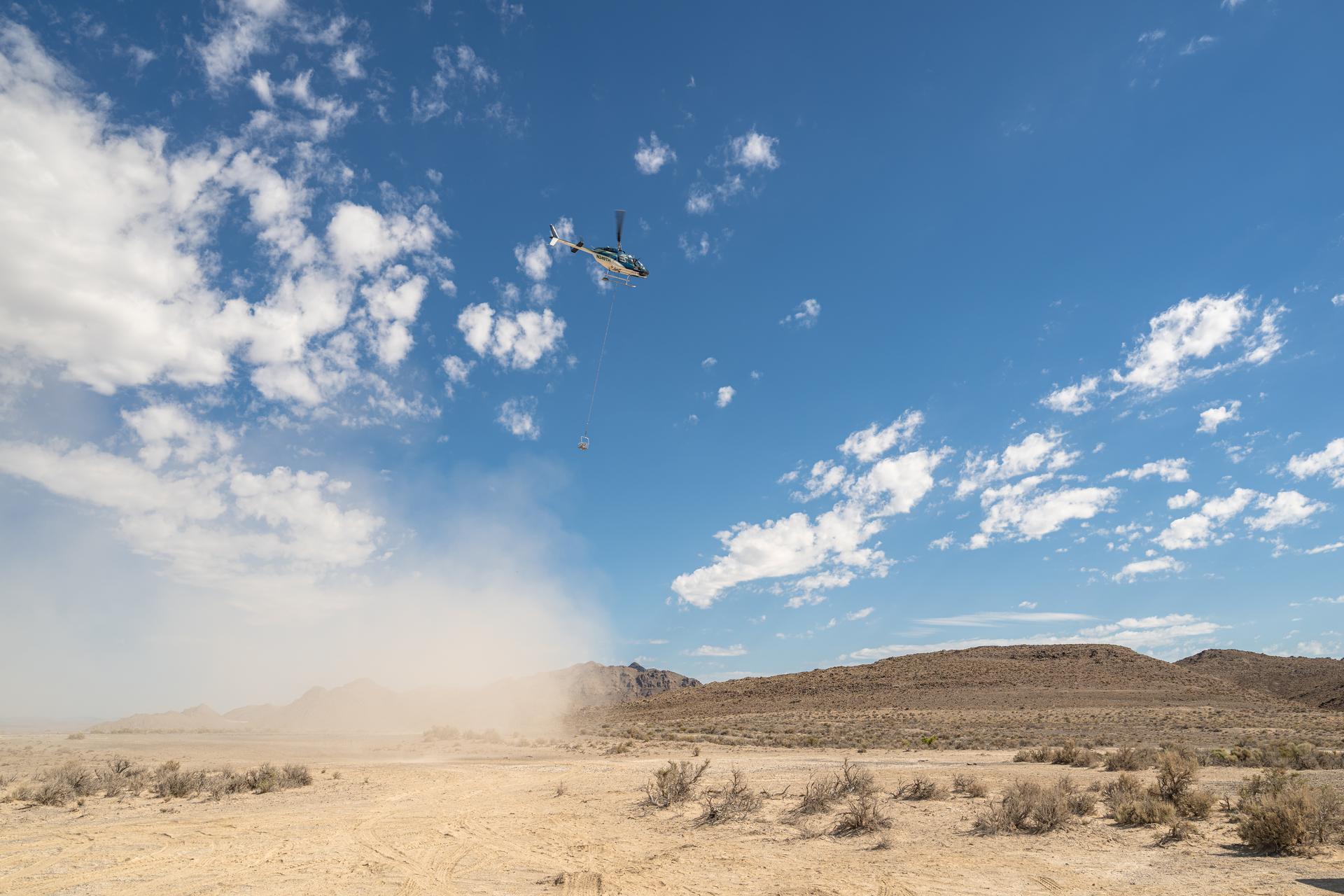
A helicopter flying in U.S. Air Force restricted space over Crater Island, Utah, carrying a basket of nine instruments during a series of tests (June 23-25, 2026) of a prototype of the camera system that will one day fly aboard NASA’s DAVINCI probe to Venus. NASA/Mike Guinto
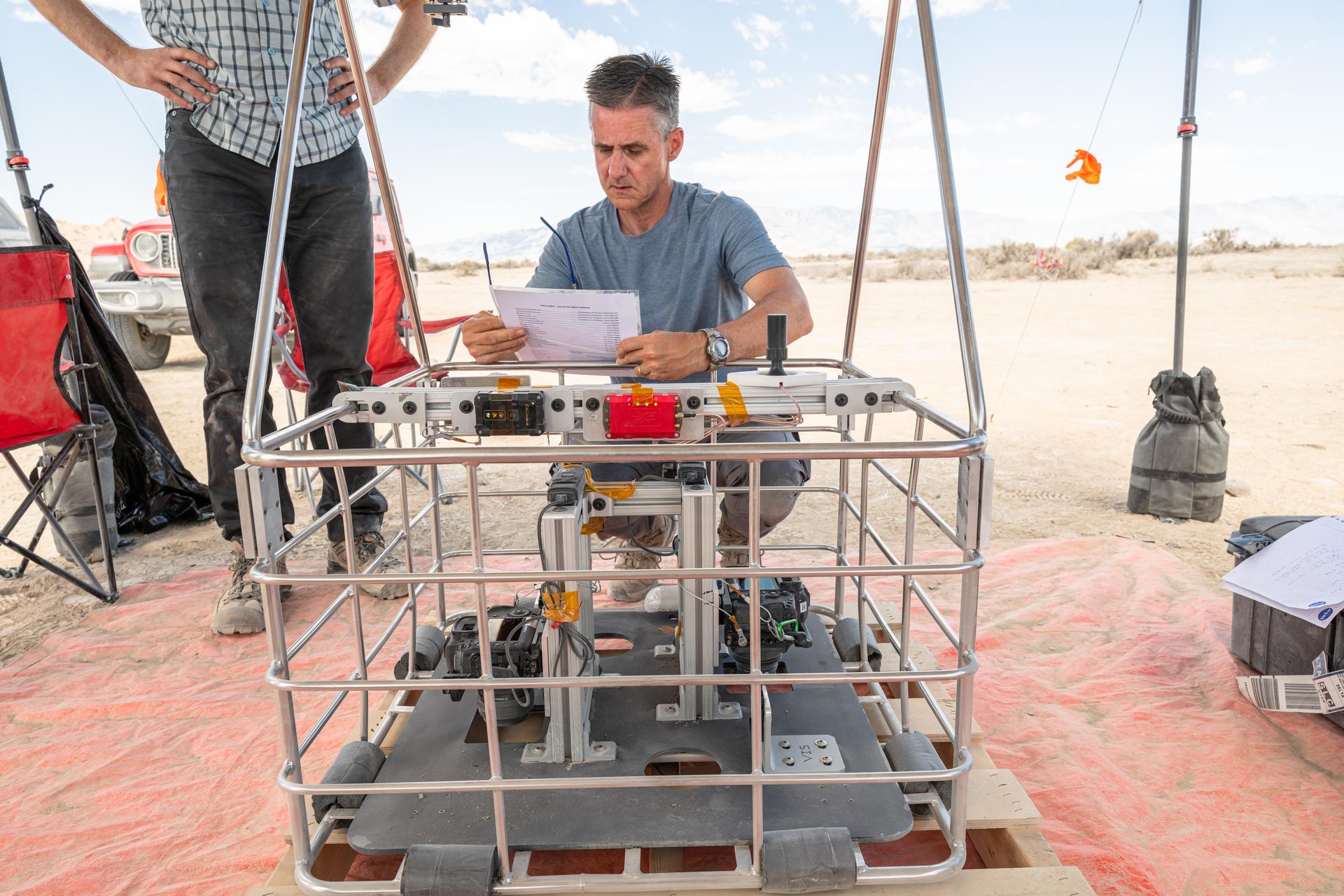
Brent Bos, a research physicist at NASA’s Goddard Space Flight Center in Greenbelt, Maryland, does a pre-flight check of a basket of instruments before one of the 10 high-altitude test flights at Crater Island, Utah. This area was the site of a series of tests (June 23-25, 2026) of the camera system that will one day fly aboard NASA’s DAVINCI mission probe to Venus.
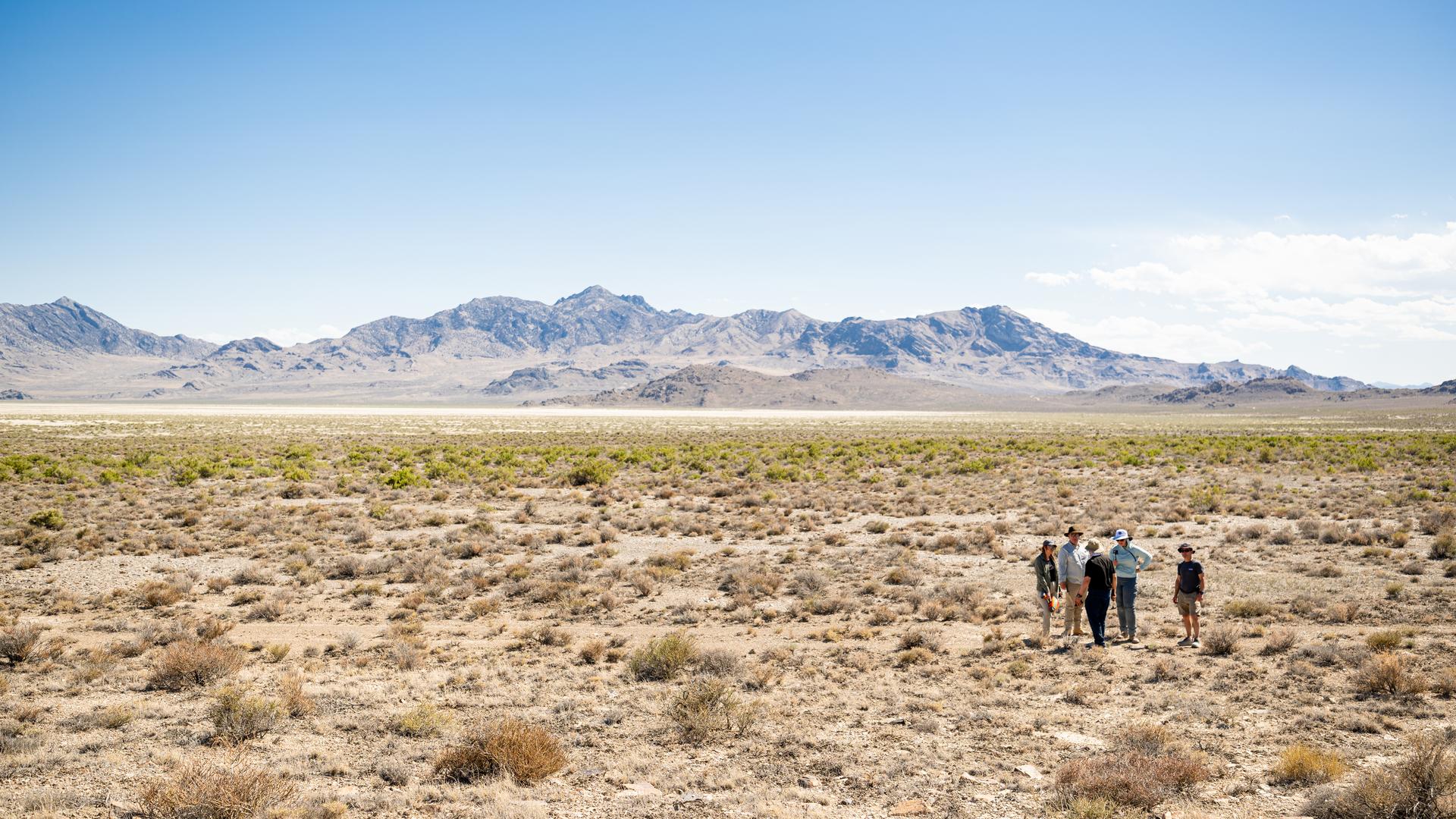
DAVINCI VADIX team members discuss observations at Crater Island, Utah, June 23, 2026. NASA/Mike Guinto
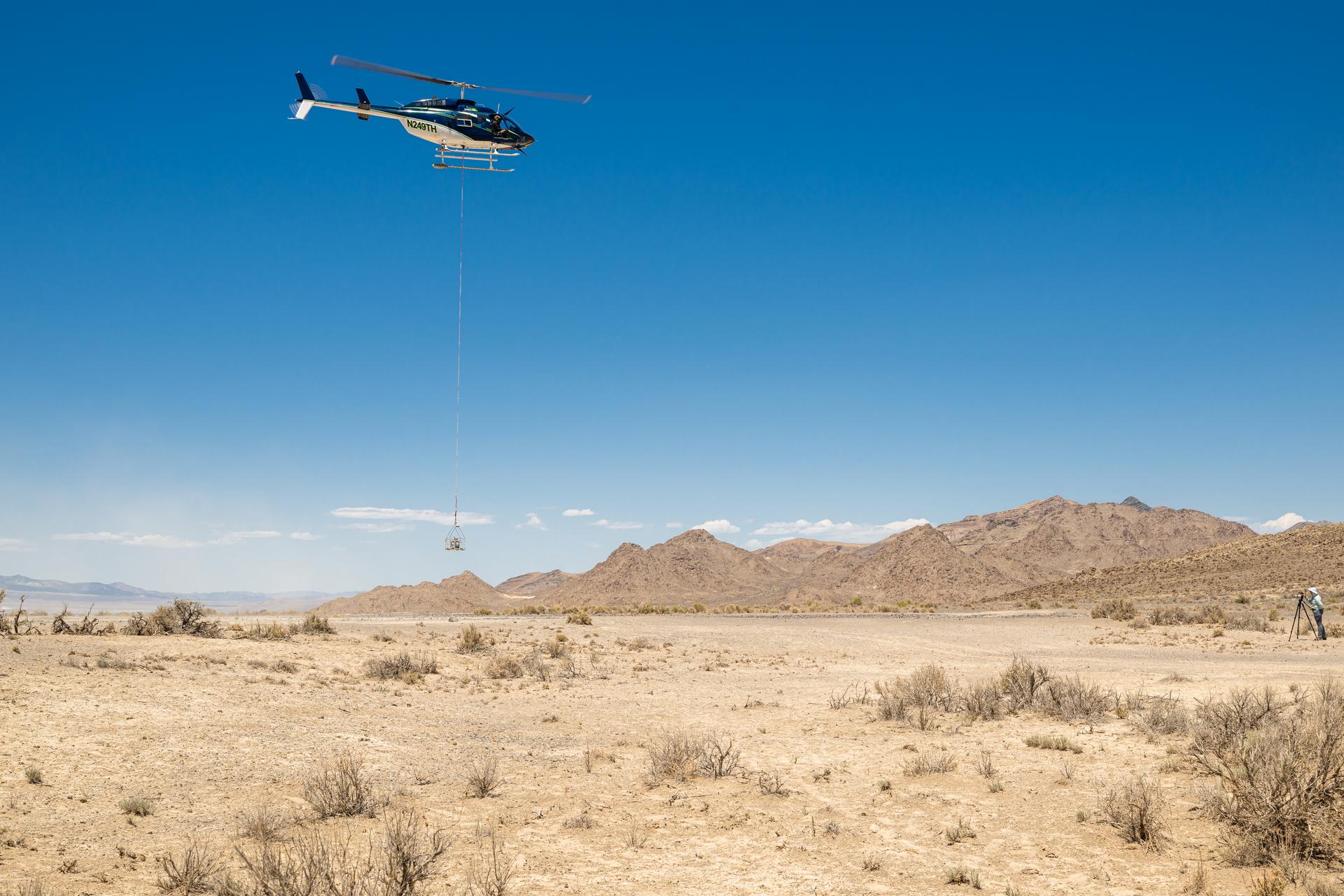
Timberland Helicopter flying the DAVINCI VADIX payload lifts off from Crater Island, Utah, June 23, 2026. NASA/Mike Guinto
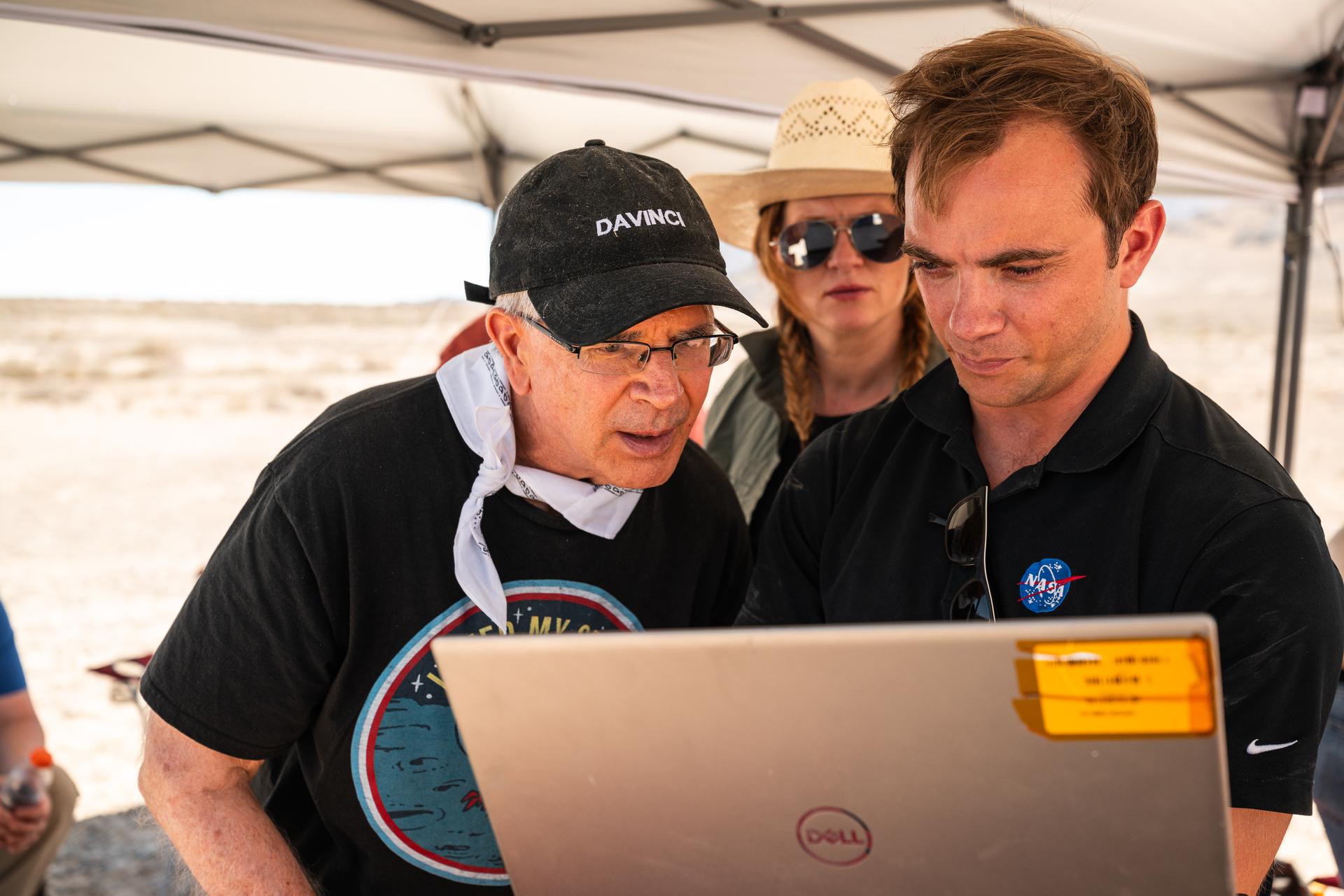
Pictured are DAVINCI’s (left to right) Jim Garvin, mission principal investigator; Erika Kohler, acting deputy principal investigator; and Matthew Mullin, space laser engineer, evaluating flight data in real-time to adapt their future tests to the lessons learned from each flight. The researchers are standing in an area of Crater Island, Utah, which was the site of a series of tests (June 23-25, 2026) of the camera system that will one day fly aboard NASA’s DAVINCI mission probe to Venus.
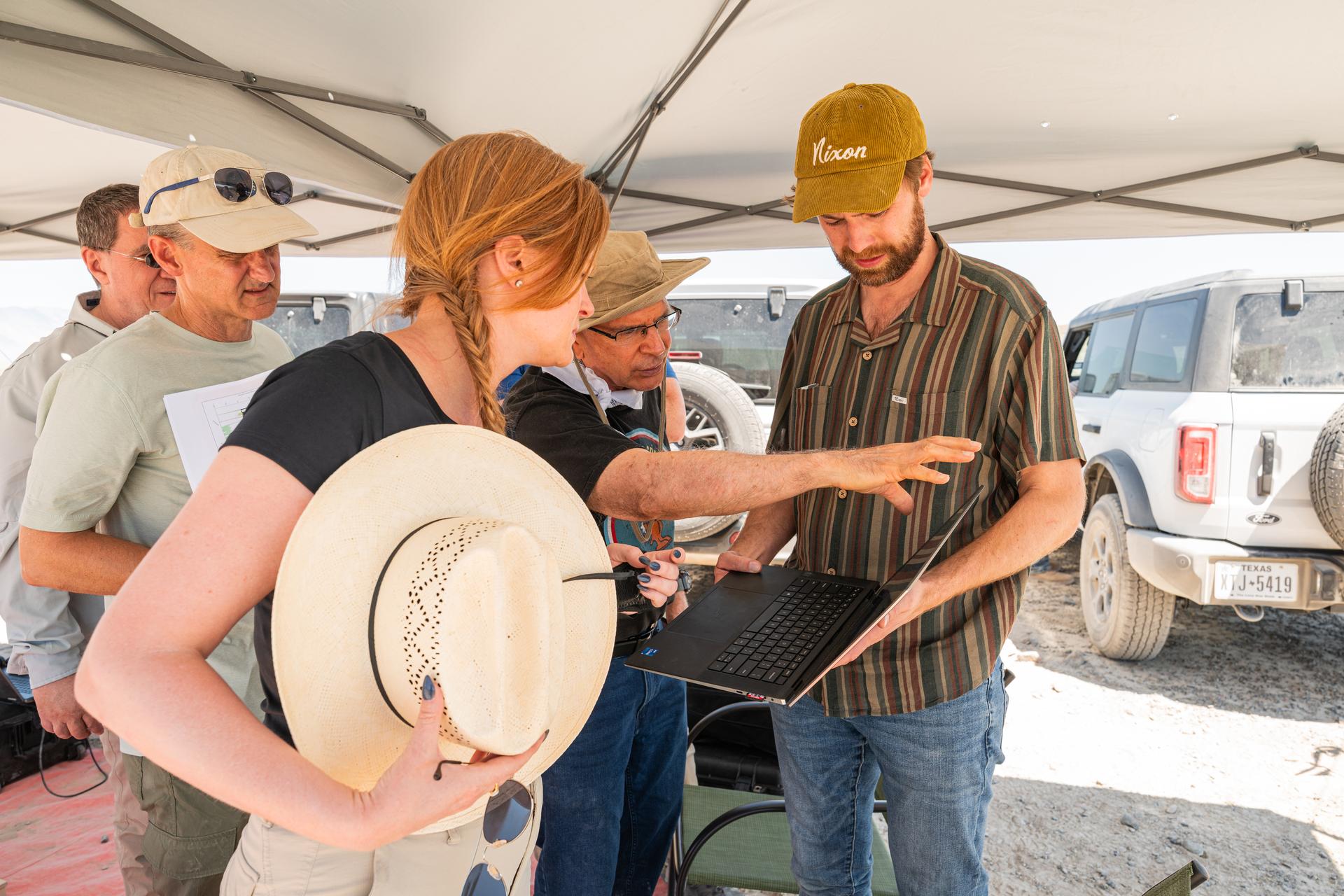
Pictured are DAVINCI’s (left to right) Mike Ravine, Brent Bos, Erika Kohler, Jim Garvin, and Christian Tate, evaluating flight data in real-time to adapt their future tests to the lessons learned from each flight. The researchers are standing in an area of Crater Island, Utah, which was the site of a series of tests (June 23-25, 2026) of the camera system that will one day fly aboard NASA’s DAVINCI mission probe to Venus. NASA/Mike Guinto
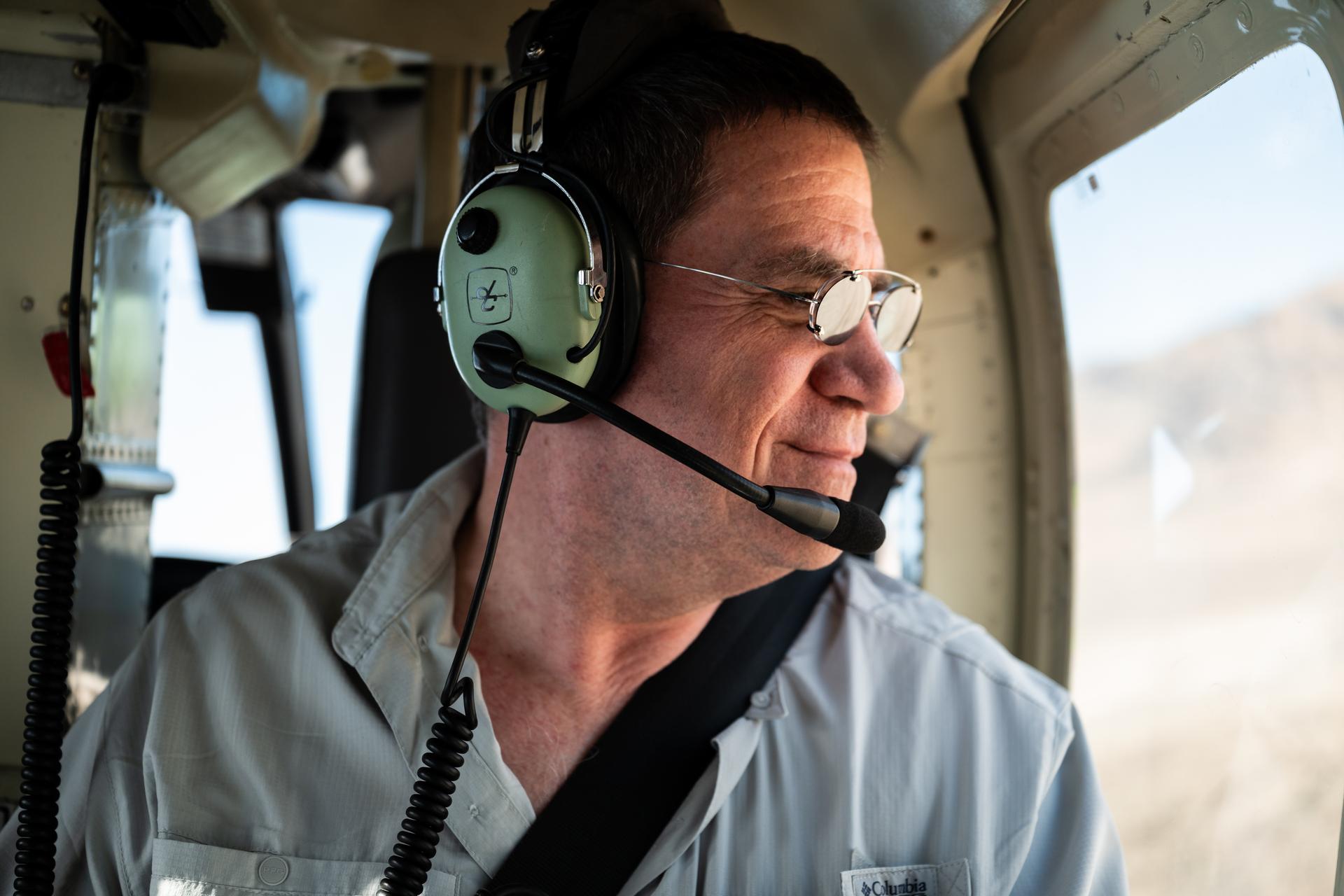
Mike Ravine observes out the helicopter window while in flight over Crater Island, Utah as part of the DAVINCI VADIX experiment, June 23, 2026. NASA/Mike Guinto
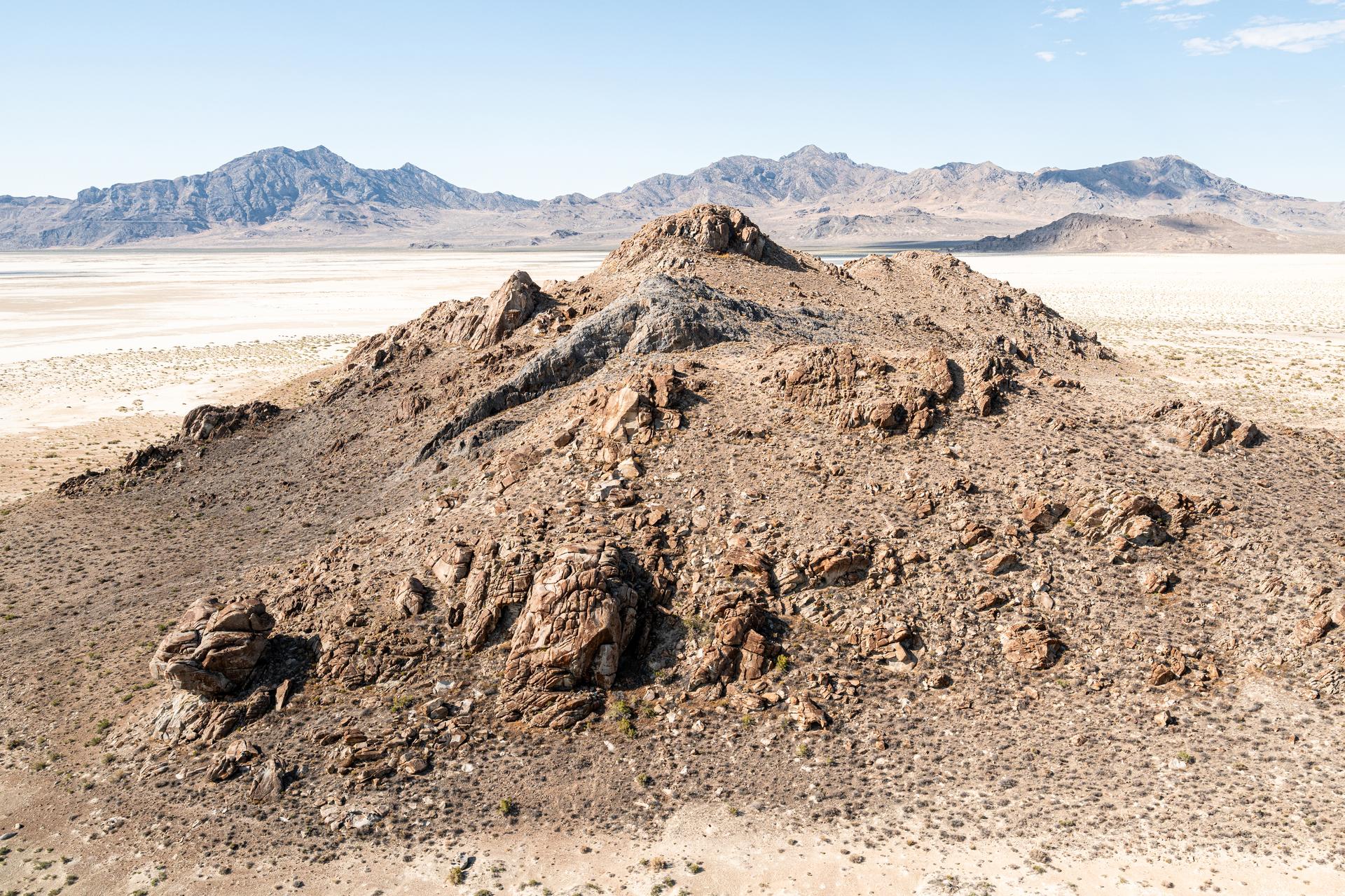
Detailed view of a rock outcrop at Crater Island, Utah on June 23, 2026. This outcropping was one of the points of interest to NASA's DAVINCI VADIX Mission for its distinct geologic properties. NASA/Mike Guinto
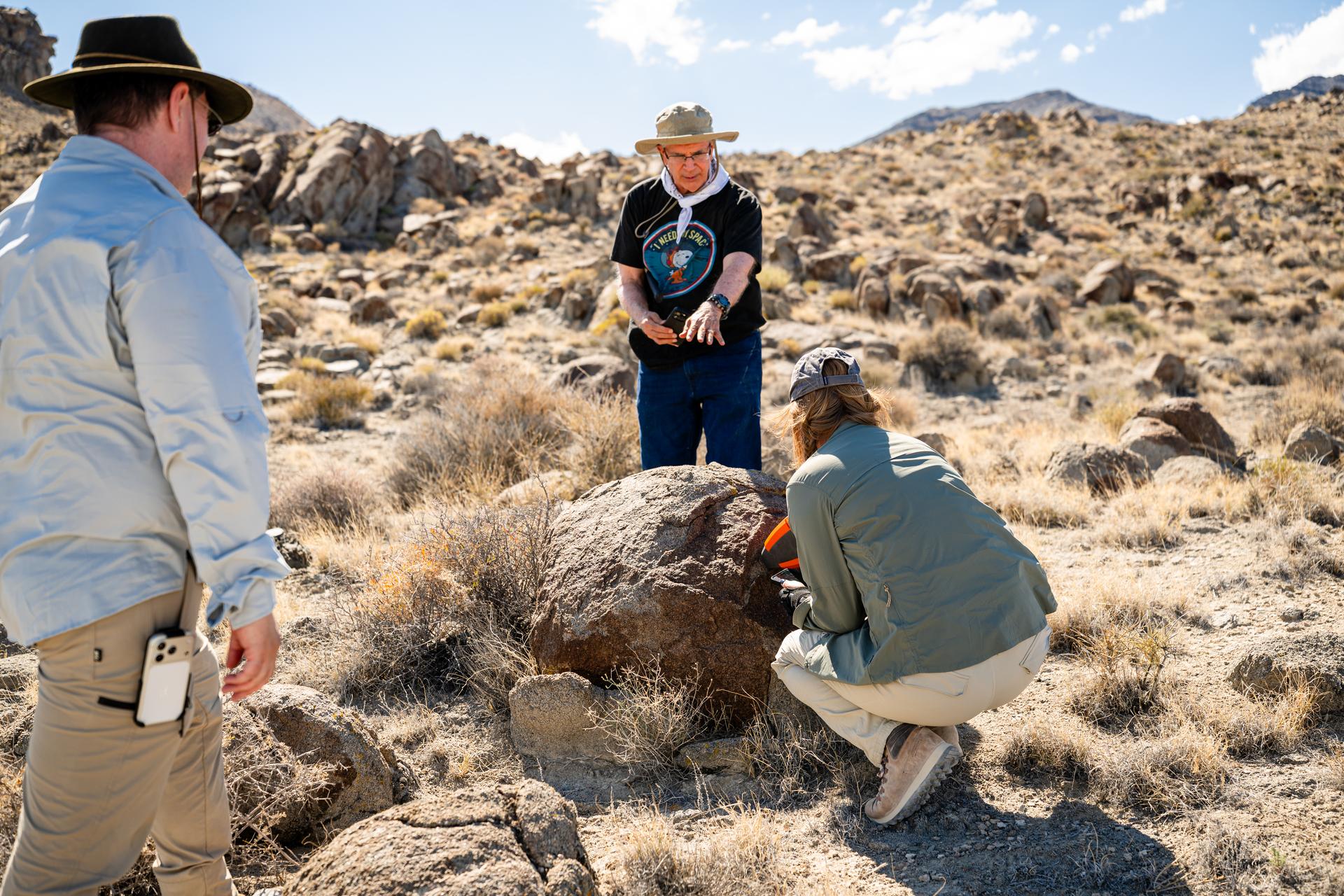
Mike Ravine, left, Jim Garvin, and Erika Kohler, take direct measurements of rocks observed at Crater Island, Utah as part of the DAVINCI VADIX experiment, June 23, 2026. NASA/Mike Guinto
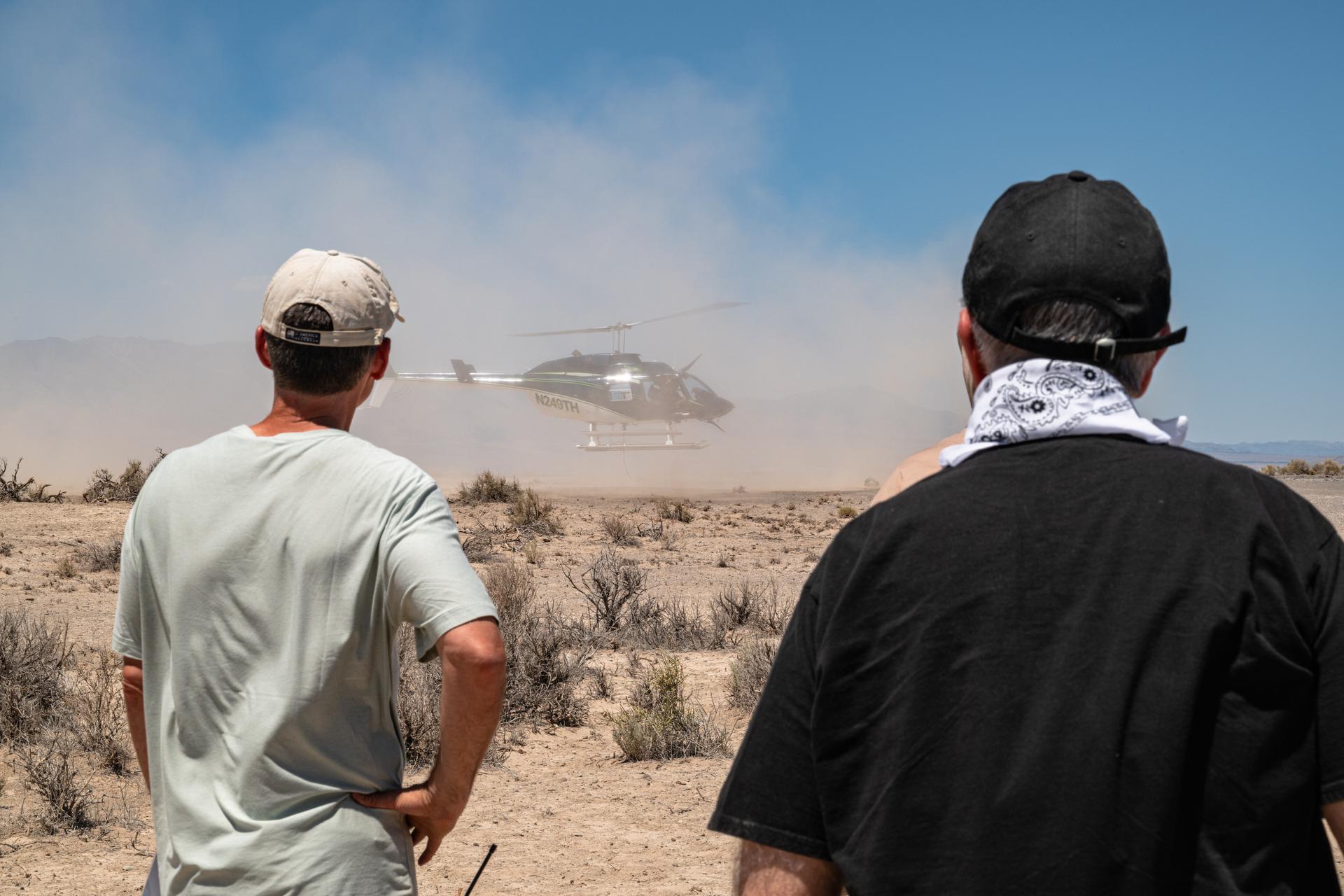
Brent Bos, left, and Jim Garvin, right, watch the helicopter carrying the VADIX payload lift off from Crater Island, Utah, June 23, 2026. VADIX is a test of the camera system that will one day fly aboard NASA’s DAVINCI mission probe to Venus. NASA/Mike Guinto
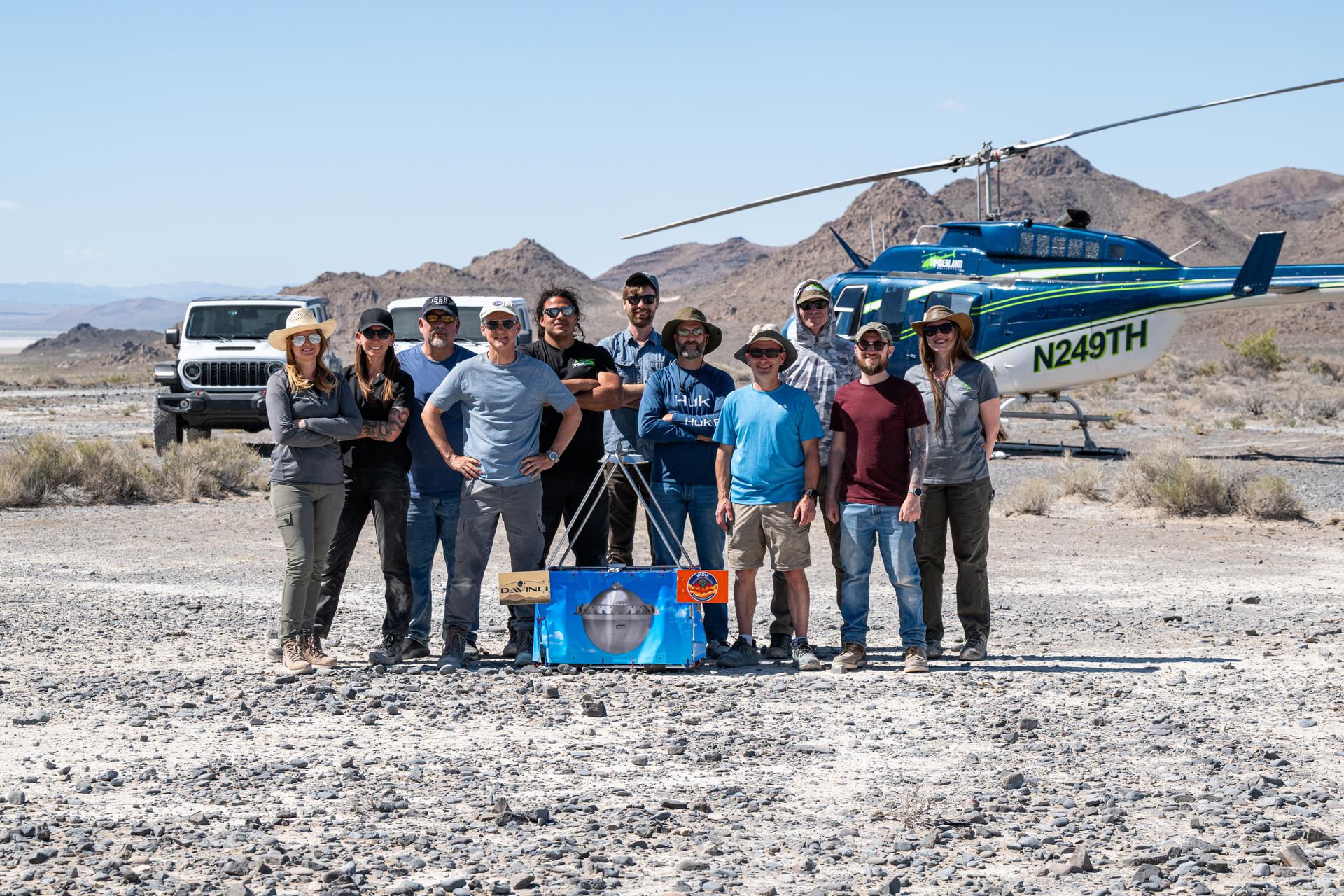
The DAVINCI VADIX dress rehearsal team poses for a group photo at Crater Island, June 4, 2026. From left to right, Erika Kohler, Terra Hardwick, Mike Vitulio, Brent Bos, Will Rivera, Christian Tate, Ben Schumacher, Phil Coulter, Joe Turner, Mike Guinto, Hailey. NASA/MIke Guinto
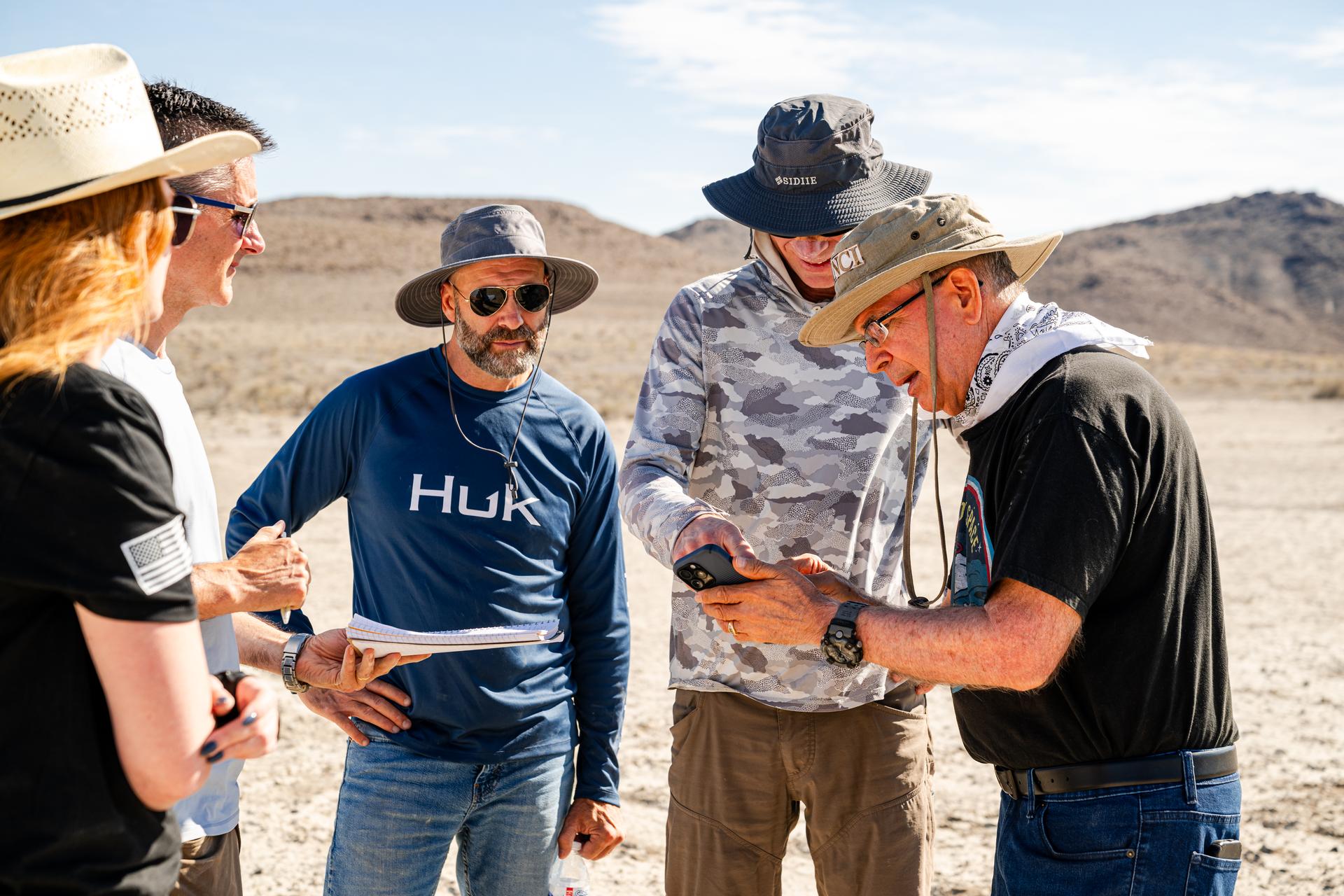
Dr. Jim Garvin, right, discusses flight plans with the pilots in between test flights at Crater Island, Utah, June 24, 2026. NASA/Mike Guinto
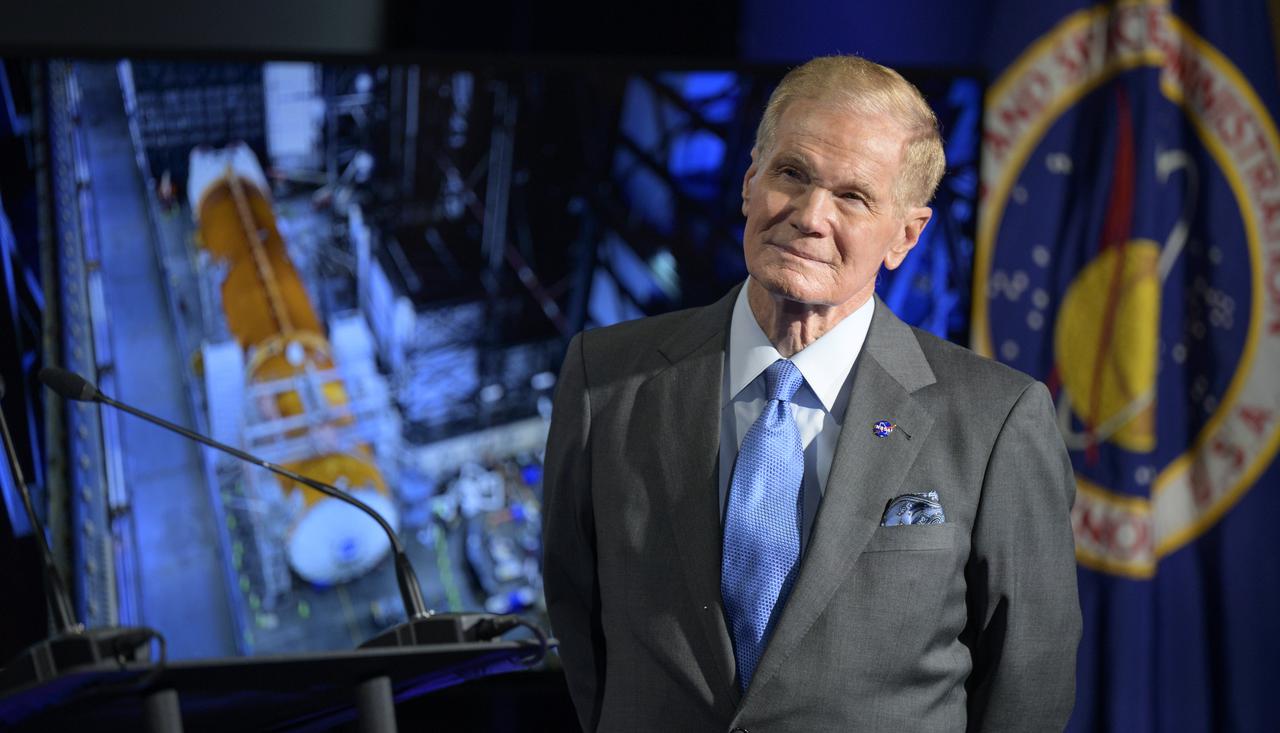
NASA Administrator Bill Nelson talks to the agency’s workforce during his first State of NASA event Wednesday, June 2, 2021, at NASA Headquarters Mary W. Jackson Building in Washington. Nelson remarked on his long history with NASA, and among other topics, discussed the agency’s plans for future Earth-focused missions to address climate change and a robotic and human return to the Moon through the Artemis program, as well as announcing two new planetary science missions to Venus – VERITAS and DAVINCI+. Photo Credit: (NASA/Bill Ingalls)
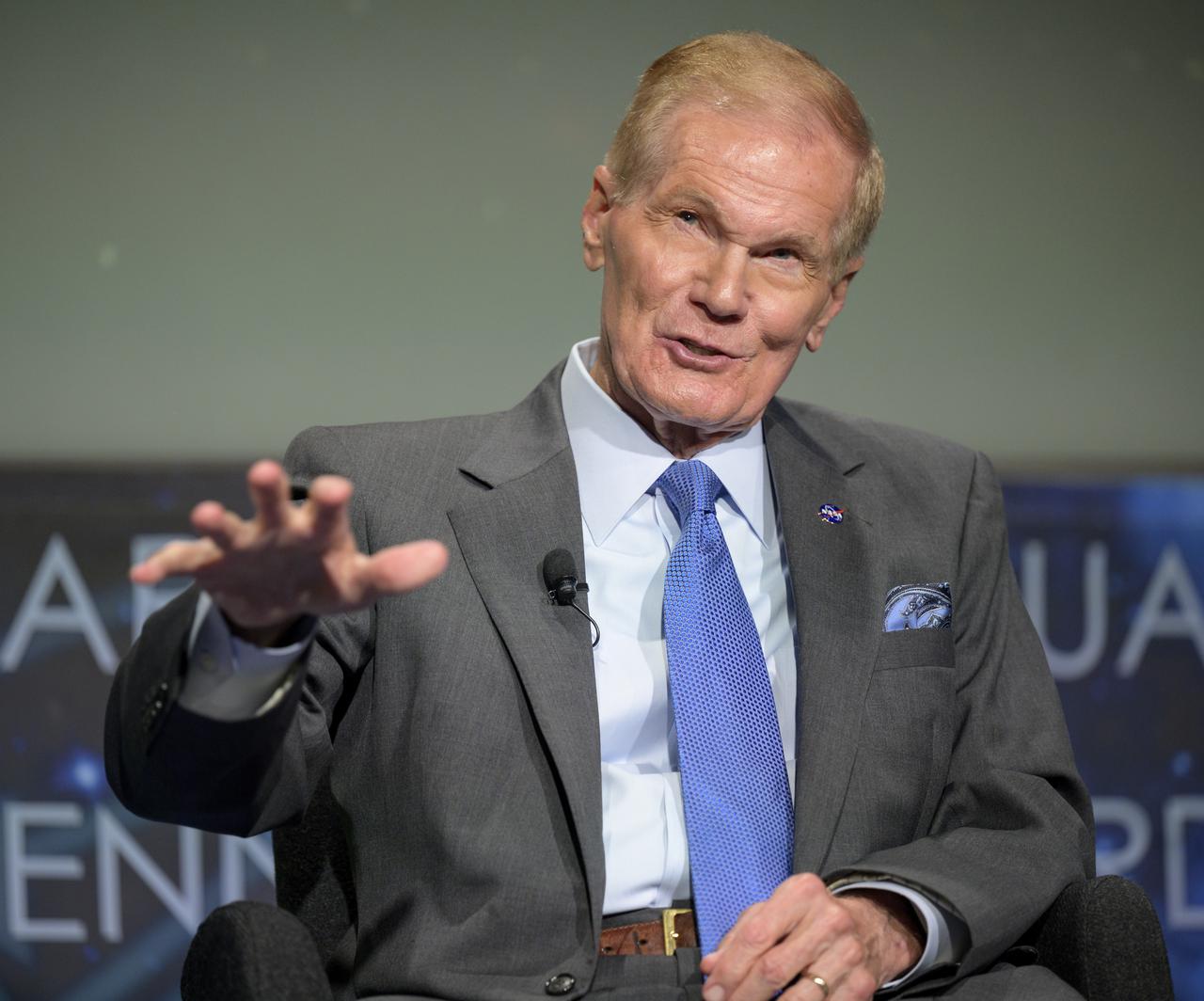
NASA Administrator Bill Nelson answers a reporter’s question during a media gaggle, Wednesday, June 2, 2021, at NASA Headquarters Mary W. Jackson Building in Washington. Nelson, and other NASA leadership, answered reporters questions following a State of NASA event where Nelson remarked on his long history with NASA, and among other topics, discussed the agency’s plans for future Earth-focused missions to address climate change and a robotic and human return to the Moon through the Artemis program, as well as announcing two new planetary science missions to Venus – VERITAS and DAVINCI+. Photo Credit: (NASA/Bill Ingalls)
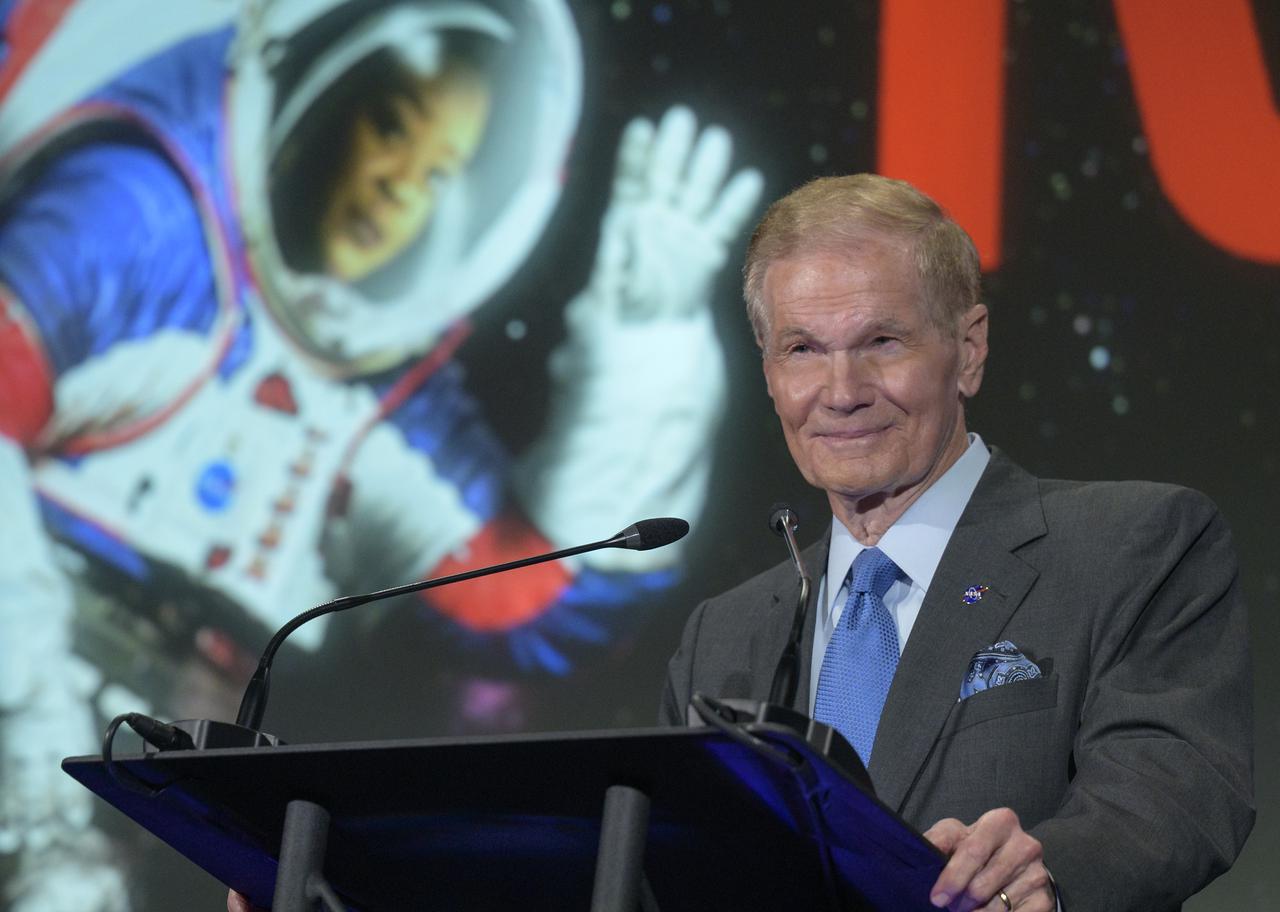
NASA Administrator Bill Nelson talks to the agency’s workforce during his first State of NASA event Wednesday, June 2, 2021, at NASA Headquarters Mary W. Jackson Building in Washington. Nelson remarked on his long history with NASA, and among other topics, discussed the agency’s plans for future Earth-focused missions to address climate change and a robotic and human return to the Moon through the Artemis program, as well as announcing two new planetary science missions to Venus – VERITAS and DAVINCI+. Photo Credit: (NASA/Bill Ingalls)
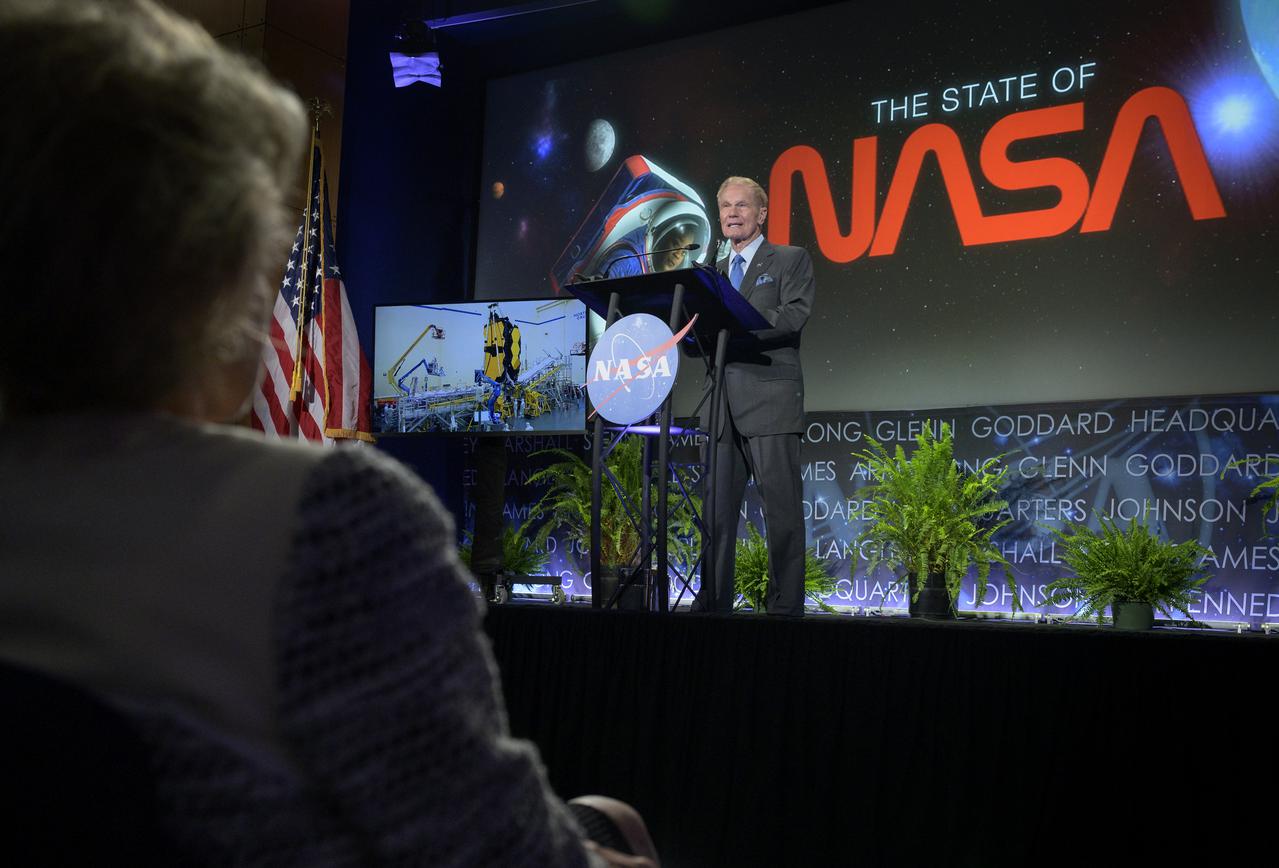
NASA Administrator Bill Nelson talks to the agency’s workforce during his first State of NASA event Wednesday, June 2, 2021, at NASA Headquarters Mary W. Jackson Building in Washington. Nelson remarked on his long history with NASA, and among other topics, discussed the agency’s plans for future Earth-focused missions to address climate change and a robotic and human return to the Moon through the Artemis program, as well as announcing two new planetary science missions to Venus – VERITAS and DAVINCI+. Photo Credit: (NASA/Bill Ingalls)
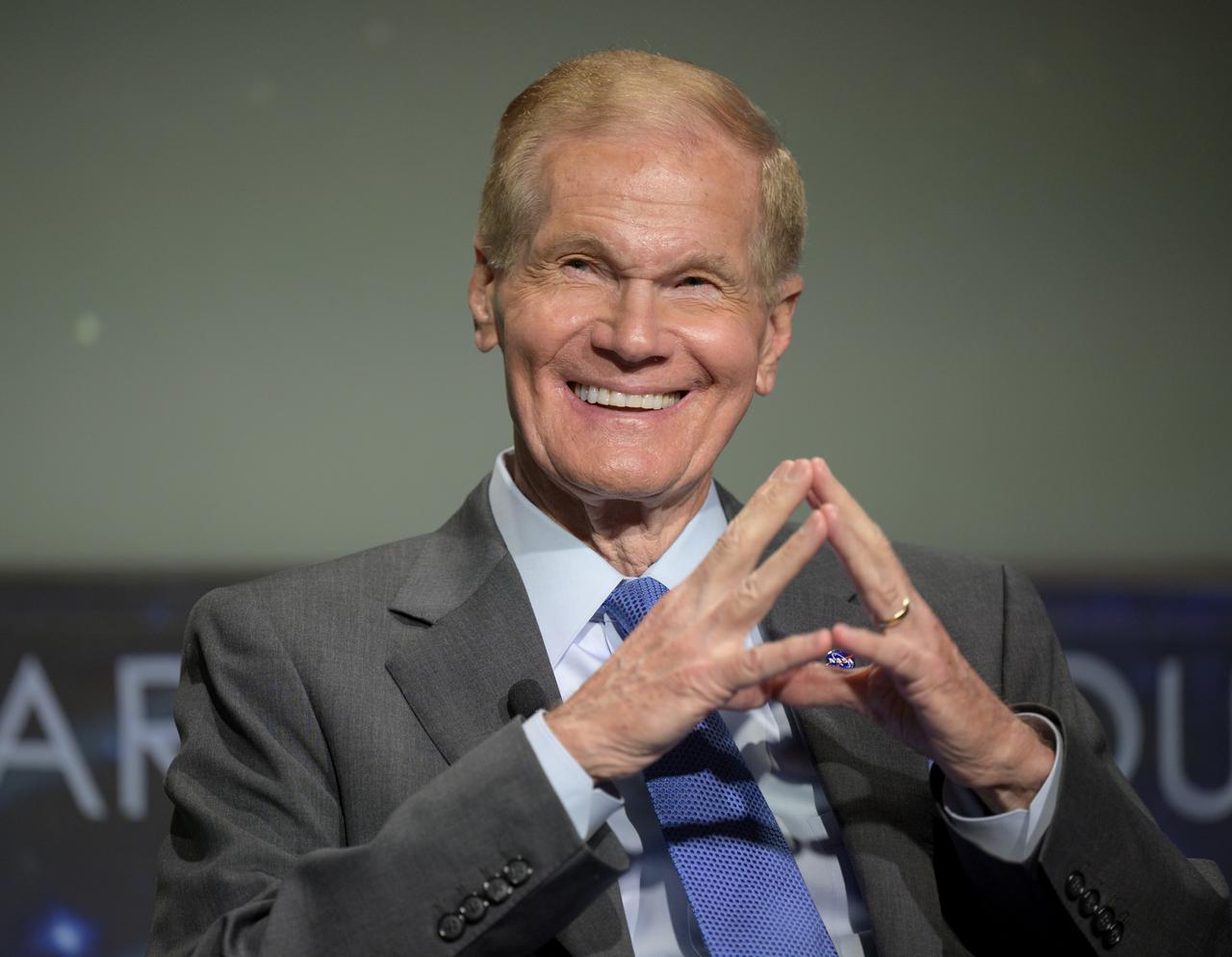
NASA Administrator Bill Nelson answers a reporter’s question during a media gaggle, Wednesday, June 2, 2021, at NASA Headquarters Mary W. Jackson Building in Washington. Nelson, and other NASA leadership, answered reporters questions following a State of NASA event where Nelson remarked on his long history with NASA, and among other topics, discussed the agency’s plans for future Earth-focused missions to address climate change and a robotic and human return to the Moon through the Artemis program, as well as announcing two new planetary science missions to Venus – VERITAS and DAVINCI+. Photo Credit: (NASA/Bill Ingalls)
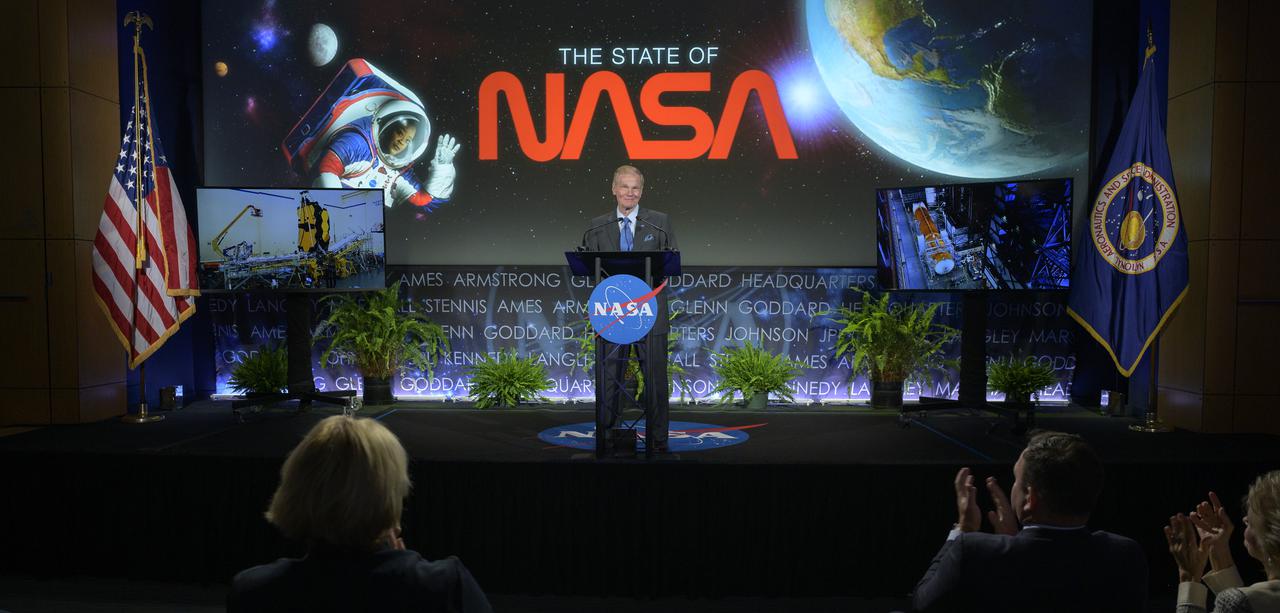
NASA Administrator Bill Nelson talks to the agency’s workforce during his first State of NASA event Wednesday, June 2, 2021, at NASA Headquarters Mary W. Jackson Building in Washington. Nelson remarked on his long history with NASA, and among other topics, discussed the agency’s plans for future Earth-focused missions to address climate change and a robotic and human return to the Moon through the Artemis program, as well as announcing two new planetary science missions to Venus – VERITAS and DAVINCI+. Photo Credit: (NASA/Bill Ingalls)

NASA Associate Administrator for Human Exploration and Operations Kathy Lueders answers a reporter’s question during a media gaggle, Wednesday, June 2, 2021, at NASA Headquarters Mary W. Jackson Building in Washington. Lueders, along with NASA Administrator Bill Nelson and other NASA leadership, answered reporters questions following a State of NASA event where Nelson remarked on his long history with NASA, and among other topics, discussed the agency’s plans for future Earth-focused missions to address climate change and a robotic and human return to the Moon through the Artemis program, as well as announcing two new planetary science missions to Venus – VERITAS and DAVINCI+. Photo Credit: (NASA/Bill Ingalls)
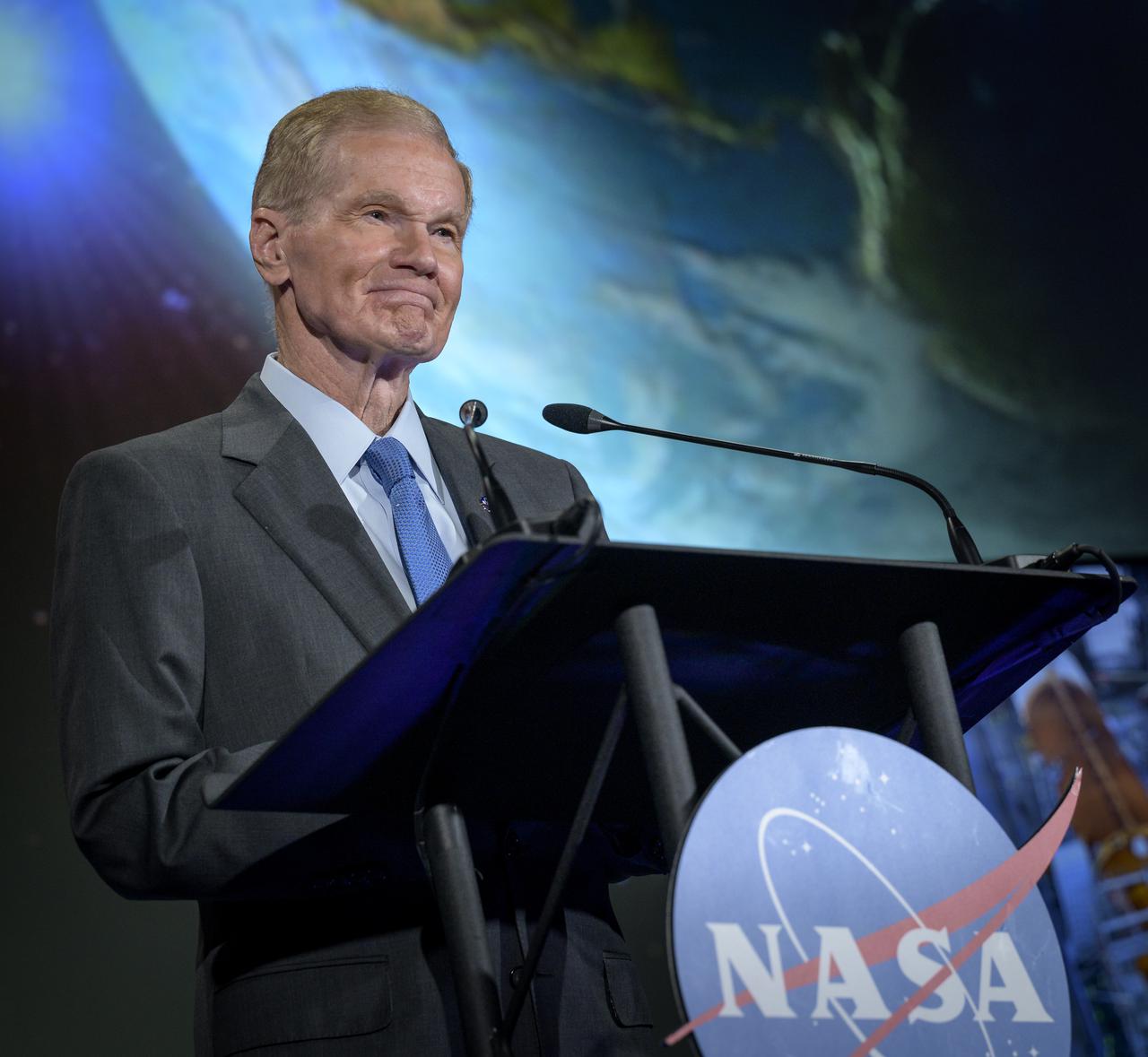
NASA Administrator Bill Nelson talks to the agency’s workforce during his first State of NASA event Wednesday, June 2, 2021, at NASA Headquarters Mary W. Jackson Building in Washington. Nelson remarked on his long history with NASA, and among other topics, discussed the agency’s plans for future Earth-focused missions to address climate change and a robotic and human return to the Moon through the Artemis program, as well as announcing two new planetary science missions to Venus – VERITAS and DAVINCI+. Photo Credit: (NASA/Bill Ingalls)
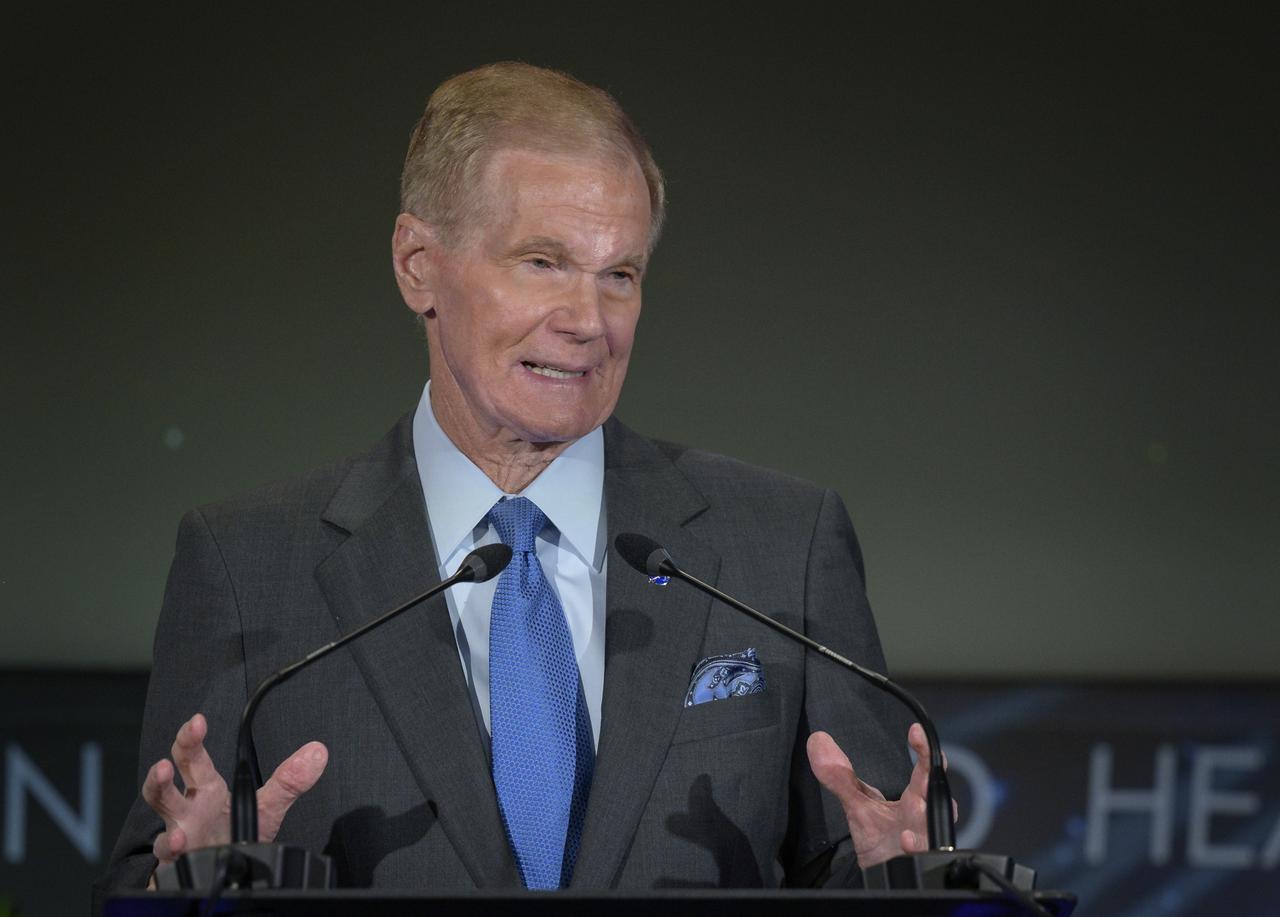
NASA Administrator Bill Nelson talks to the agency’s workforce during his first State of NASA event Wednesday, June 2, 2021, at NASA Headquarters Mary W. Jackson Building in Washington. Nelson remarked on his long history with NASA, and among other topics, discussed the agency’s plans for future Earth-focused missions to address climate change and a robotic and human return to the Moon through the Artemis program, as well as announcing two new planetary science missions to Venus – VERITAS and DAVINCI+. Photo Credit: (NASA/Bill Ingalls)
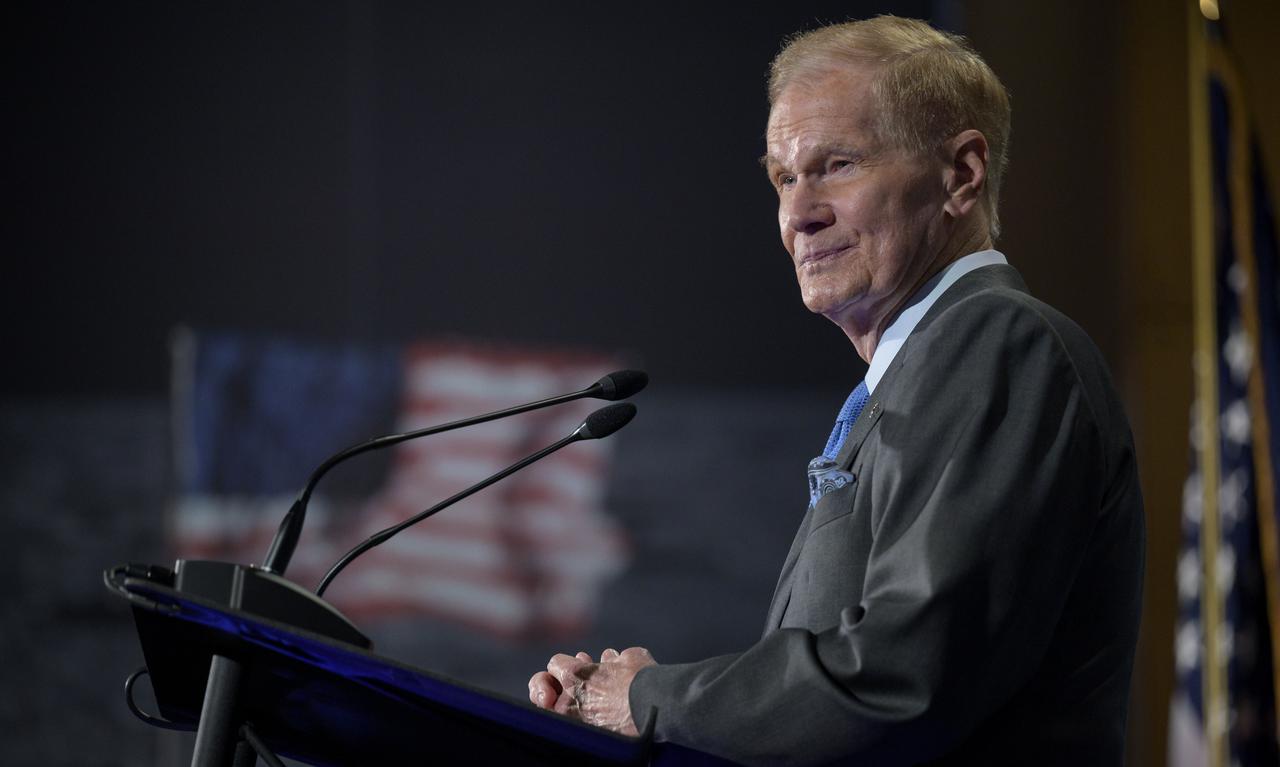
NASA Administrator Bill Nelson talks to the agency’s workforce during his first State of NASA event Wednesday, June 2, 2021, at NASA Headquarters Mary W. Jackson Building in Washington. Nelson remarked on his long history with NASA, and among other topics, discussed the agency’s plans for future Earth-focused missions to address climate change and a robotic and human return to the Moon through the Artemis program, as well as announcing two new planetary science missions to Venus – VERITAS and DAVINCI+. Photo Credit: (NASA/Bill Ingalls)

NASA Associate Administrator for Human Exploration and Operations Kathy Lueders listens to a reporter’s question during a media gaggle, Wednesday, June 2, 2021, at NASA Headquarters Mary W. Jackson Building in Washington. Lueders, along with NASA Administrator Bill Nelson and other NASA leadership, answered reporters questions following a State of NASA event where Nelson remarked on his long history with NASA, and among other topics, discussed the agency’s plans for future Earth-focused missions to address climate change and a robotic and human return to the Moon through the Artemis program, as well as announcing two new planetary science missions to Venus – VERITAS and DAVINCI+. Photo Credit: (NASA/Bill Ingalls)
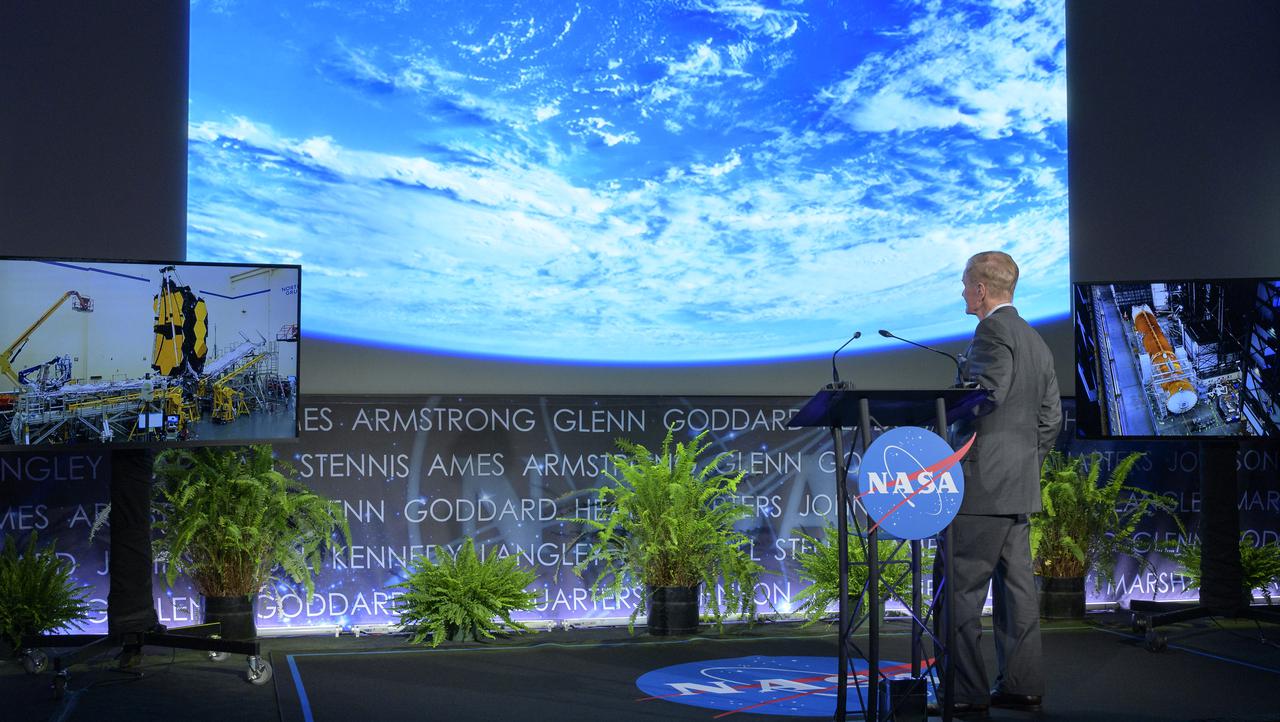
NASA Administrator Bill Nelson talks to the agency’s workforce during his first State of NASA event Wednesday, June 2, 2021, at NASA Headquarters Mary W. Jackson Building in Washington. Nelson remarked on his long history with NASA, and among other topics, discussed the agency’s plans for future Earth-focused missions to address climate change and a robotic and human return to the Moon through the Artemis program, as well as announcing two new planetary science missions to Venus – VERITAS and DAVINCI+. Photo Credit: (NASA/Bill Ingalls)
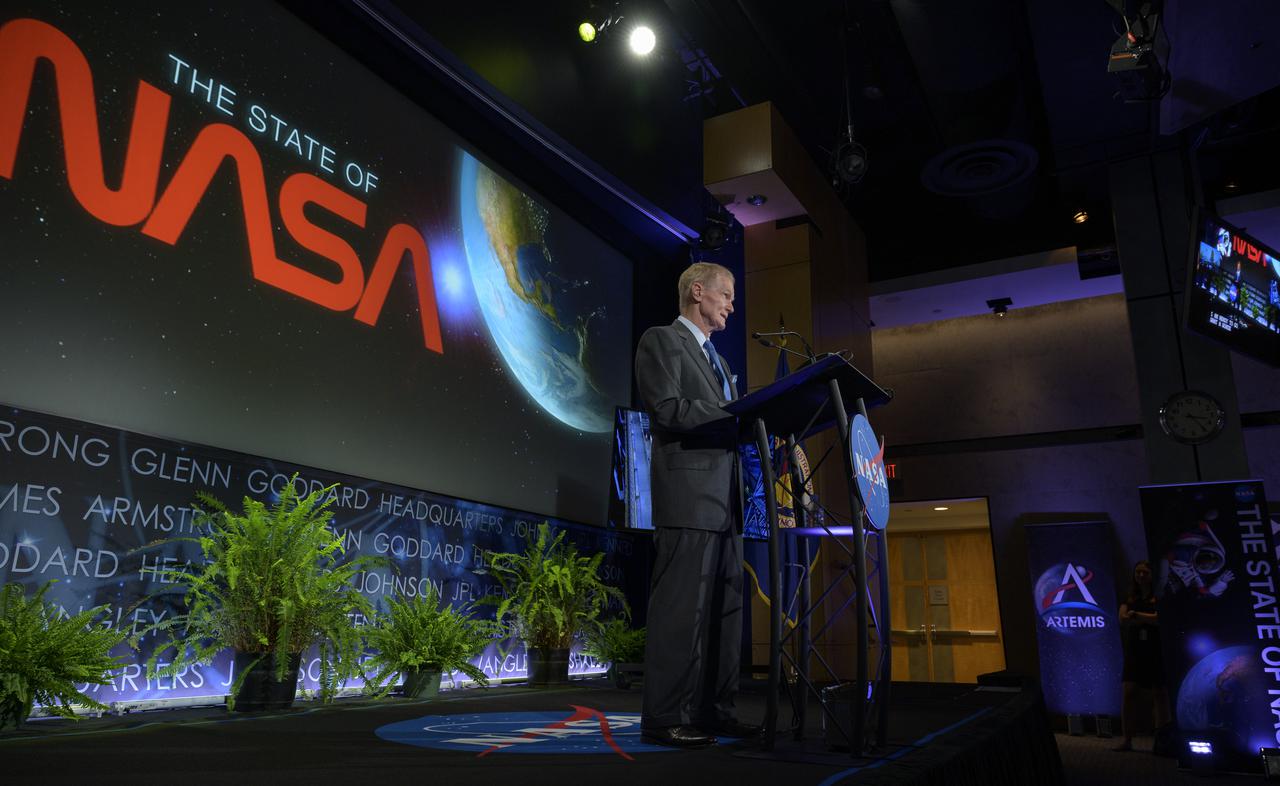
NASA Administrator Bill Nelson talks to the agency’s workforce during his first State of NASA event Wednesday, June 2, 2021, at NASA Headquarters Mary W. Jackson Building in Washington. Nelson remarked on his long history with NASA, and among other topics, discussed the agency’s plans for future Earth-focused missions to address climate change and a robotic and human return to the Moon through the Artemis program, as well as announcing two new planetary science missions to Venus – VERITAS and DAVINCI+. Photo Credit: (NASA/Bill Ingalls)
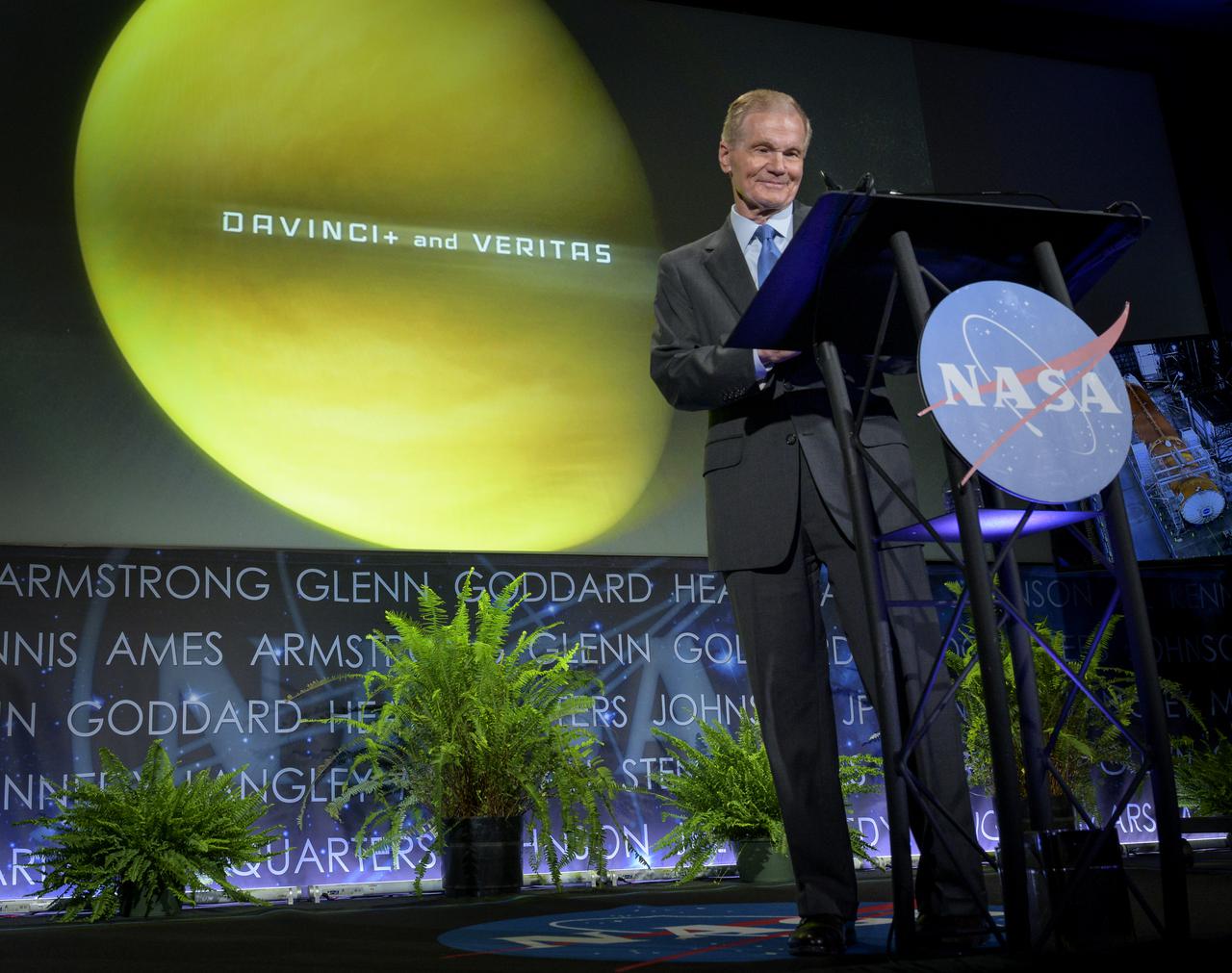
NASA Administrator Bill Nelson talks to the agency’s workforce during his first State of NASA event Wednesday, June 2, 2021, at NASA Headquarters Mary W. Jackson Building in Washington. Nelson remarked on his long history with NASA, and among other topics, discussed the agency’s plans for future Earth-focused missions to address climate change and a robotic and human return to the Moon through the Artemis program, as well as announcing two new planetary science missions to Venus – VERITAS and DAVINCI+. Photo Credit: (NASA/Bill Ingalls)
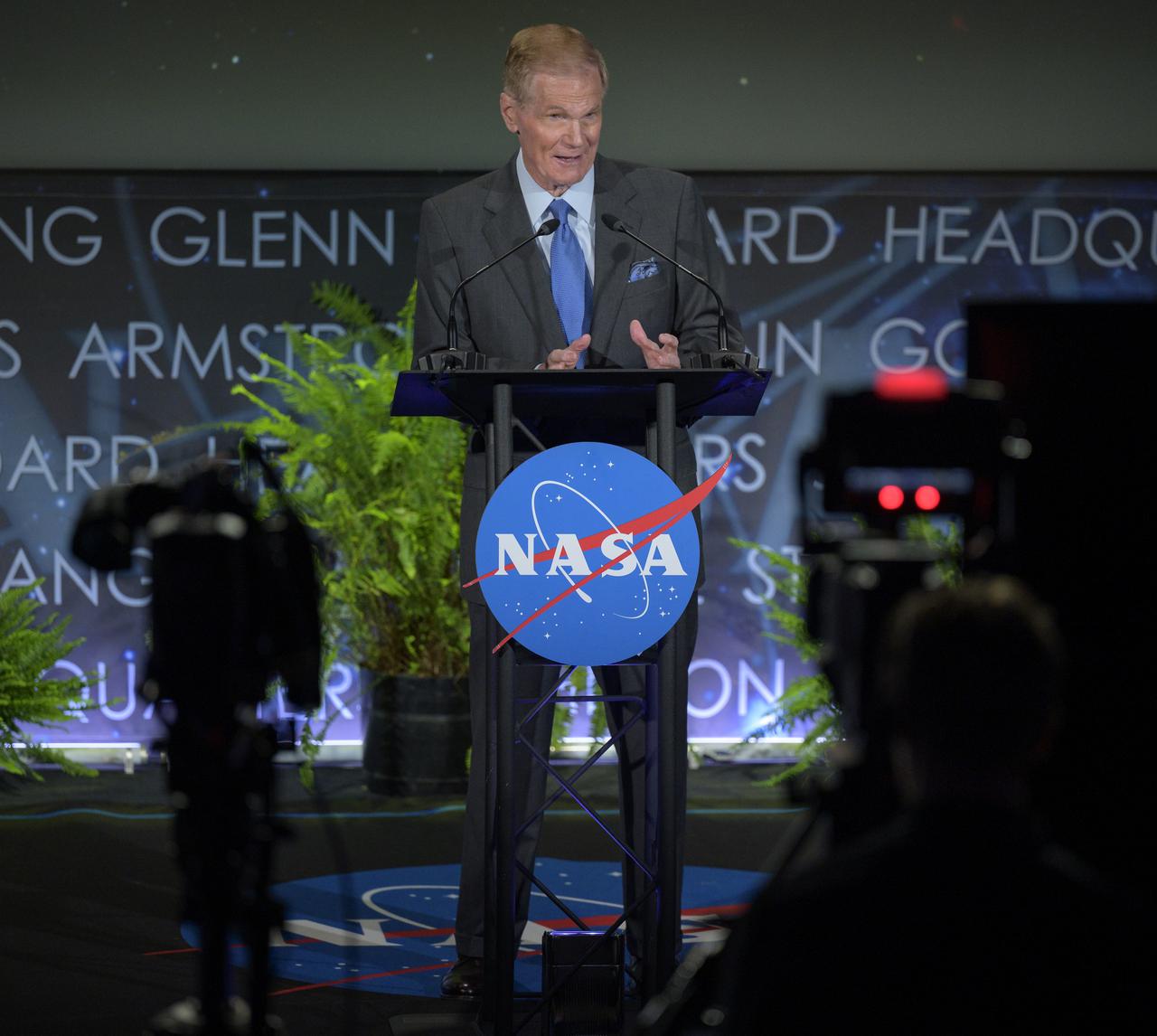
NASA Administrator Bill Nelson talks to the agency’s workforce during his first State of NASA event Wednesday, June 2, 2021, at NASA Headquarters Mary W. Jackson Building in Washington. Nelson remarked on his long history with NASA, and among other topics, discussed the agency’s plans for future Earth-focused missions to address climate change and a robotic and human return to the Moon through the Artemis program, as well as announcing two new planetary science missions to Venus – VERITAS and DAVINCI+. Photo Credit: (NASA/Bill Ingalls)
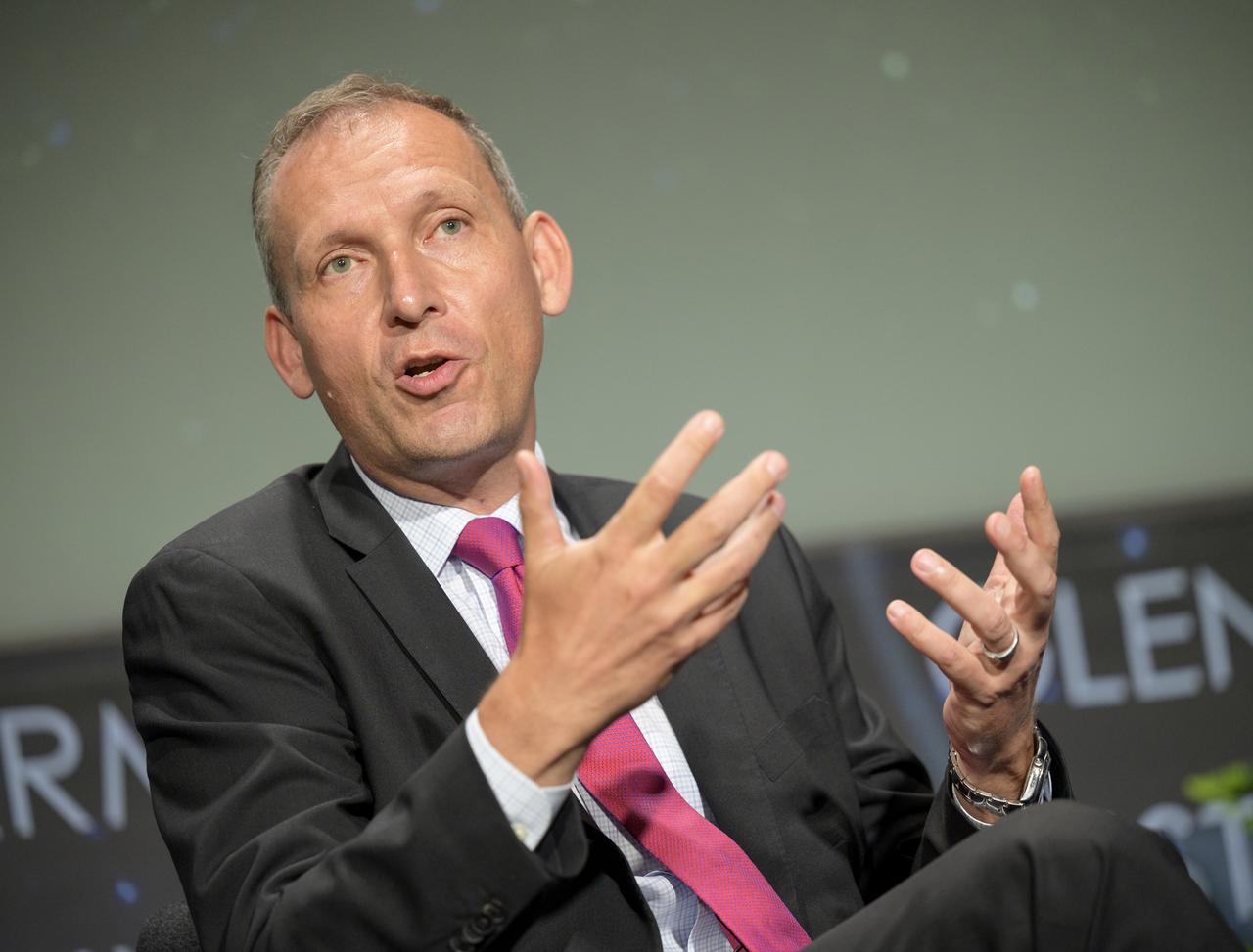
NASA Associate Administrator for Science Thomas Zurbuchen answers a reporter’s question during a media gaggle, Wednesday, June 2, 2021, at NASA Headquarters Mary W. Jackson Building in Washington. Zurbuchen, along with NASA Administrator Bill Nelson and other NASA leadership, answered reporters questions following a State of NASA event where Nelson remarked on his long history with NASA, and among other topics, discussed the agency’s plans for future Earth-focused missions to address climate change and a robotic and human return to the Moon through the Artemis program, as well as announcing two new planetary science missions to Venus – VERITAS and DAVINCI+. Photo Credit: (NASA/Bill Ingalls)
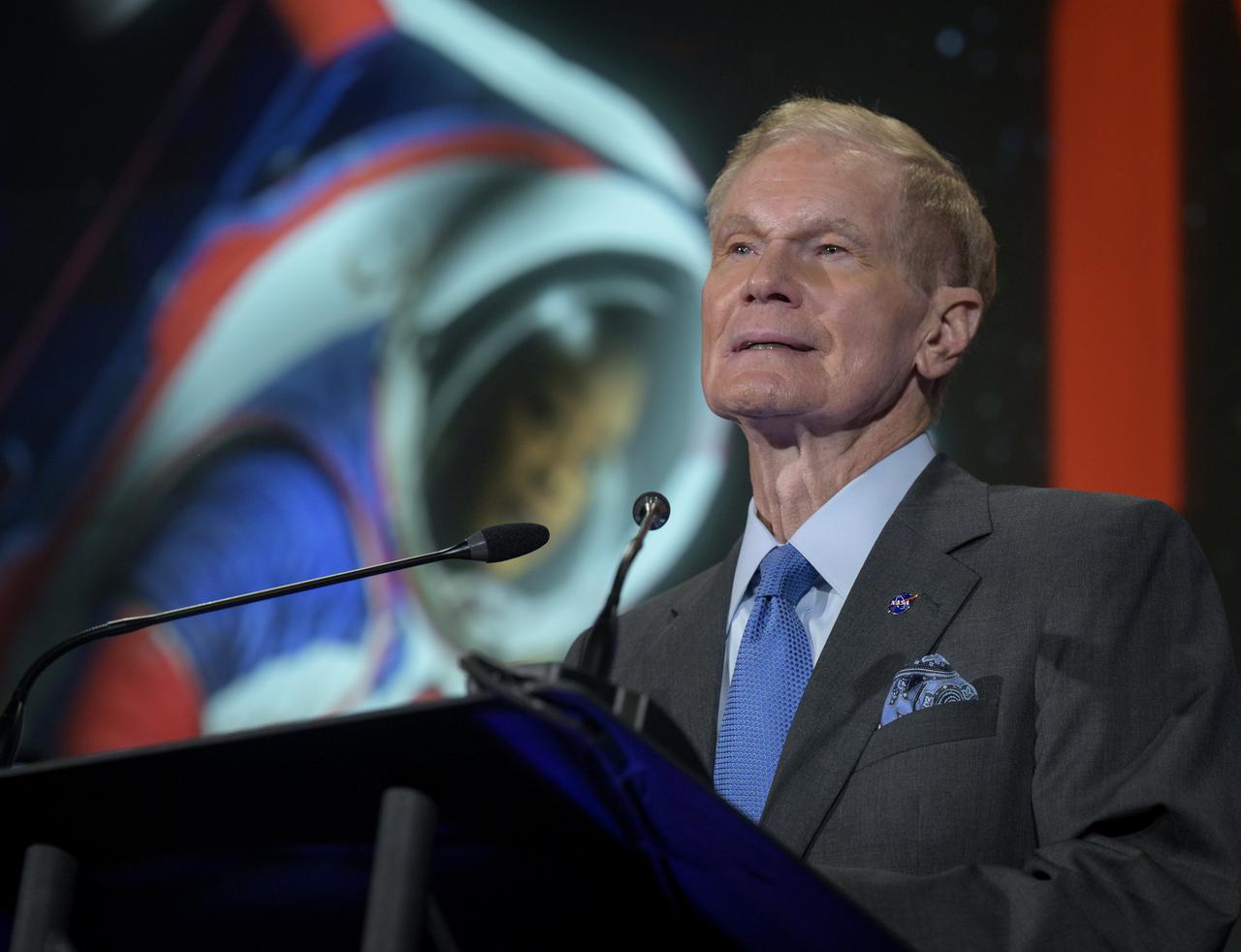
NASA Administrator Bill Nelson talks to the agency’s workforce during his first State of NASA event Wednesday, June 2, 2021, at NASA Headquarters Mary W. Jackson Building in Washington. Nelson remarked on his long history with NASA, and among other topics, discussed the agency’s plans for future Earth-focused missions to address climate change and a robotic and human return to the Moon through the Artemis program, as well as announcing two new planetary science missions to Venus – VERITAS and DAVINCI+. Photo Credit: (NASA/Bill Ingalls)
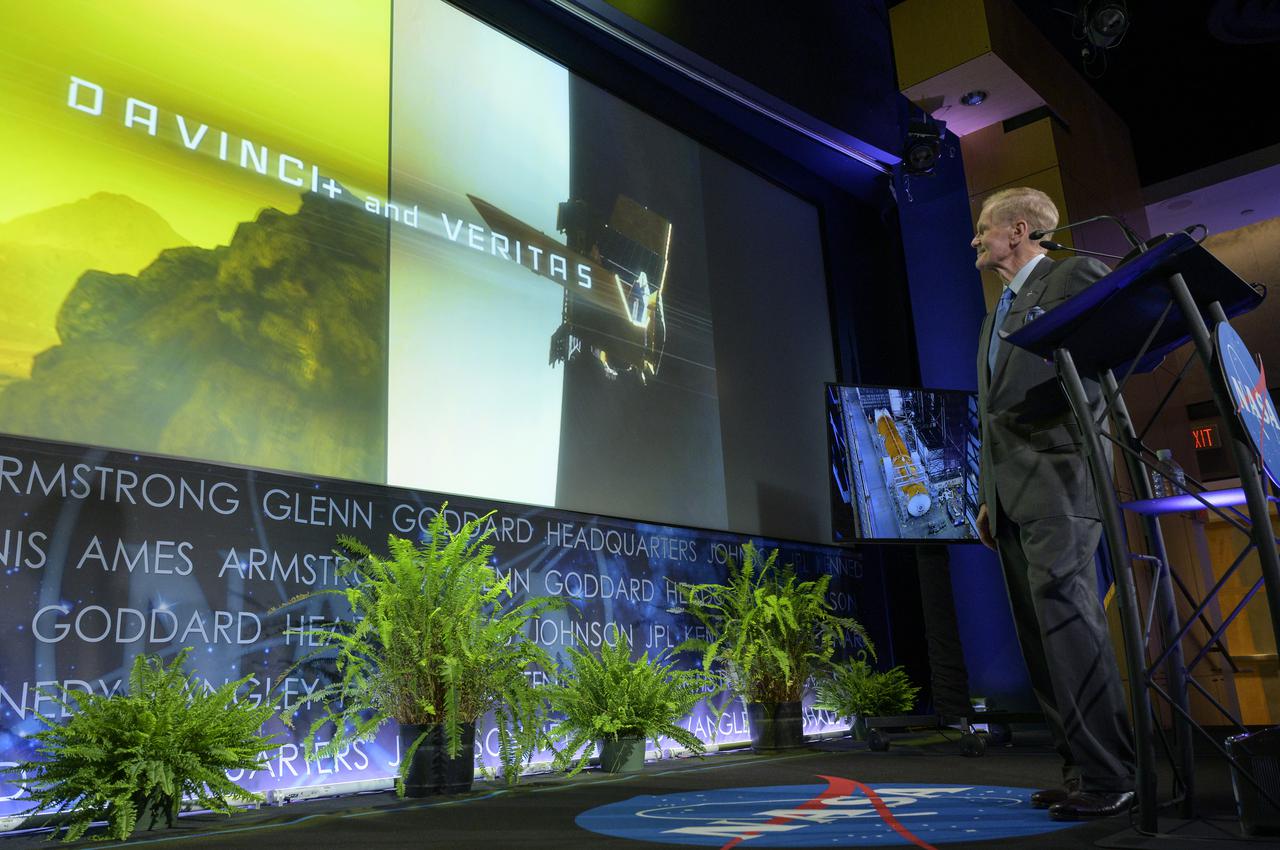
NASA Administrator Bill Nelson talks to the agency’s workforce during his first State of NASA event Wednesday, June 2, 2021, at NASA Headquarters Mary W. Jackson Building in Washington. Nelson remarked on his long history with NASA, and among other topics, discussed the agency’s plans for future Earth-focused missions to address climate change and a robotic and human return to the Moon through the Artemis program, as well as announcing two new planetary science missions to Venus – VERITAS and DAVINCI+. Photo Credit: (NASA/Bill Ingalls)
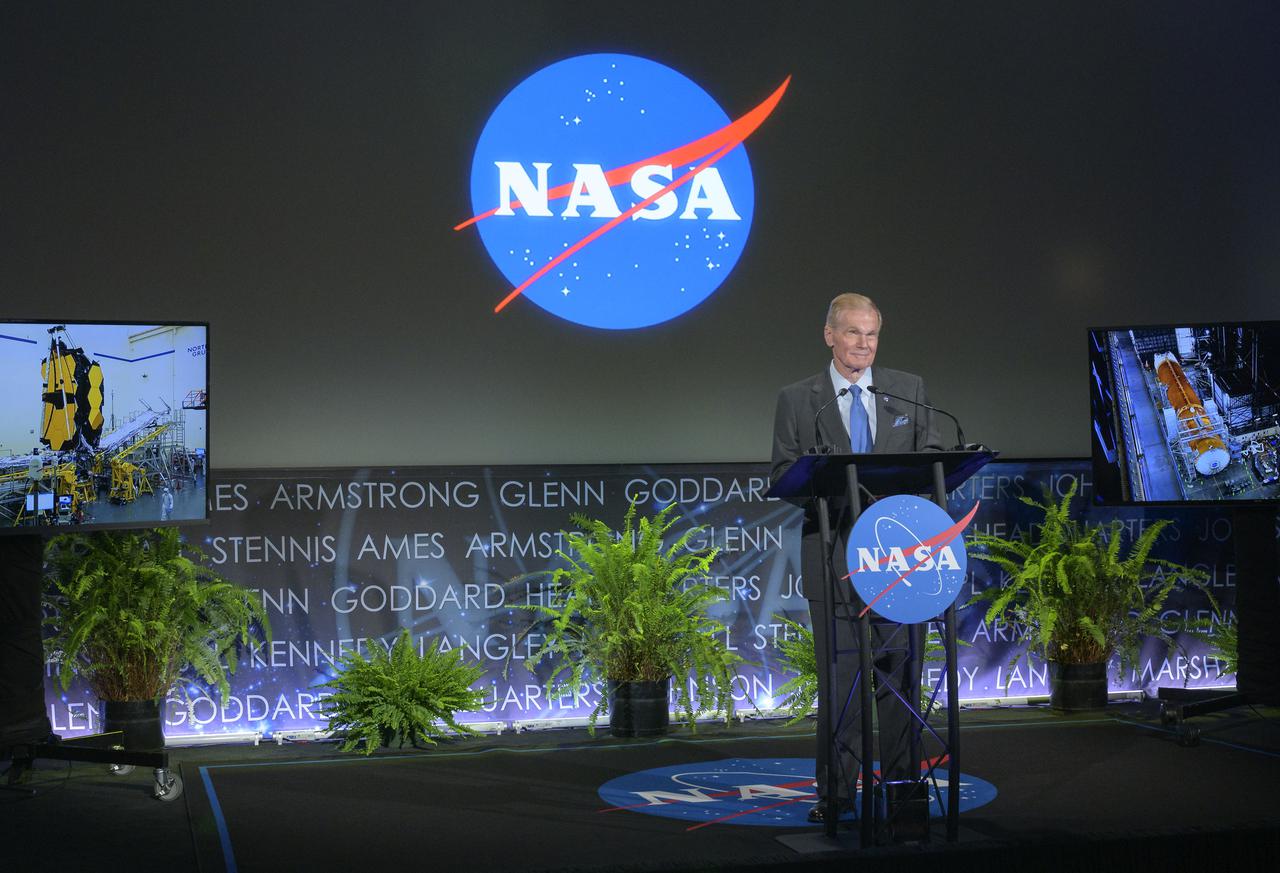
NASA Administrator Bill Nelson talks to the agency’s workforce during his first State of NASA event Wednesday, June 2, 2021, at NASA Headquarters Mary W. Jackson Building in Washington. Nelson remarked on his long history with NASA, and among other topics, discussed the agency’s plans for future Earth-focused missions to address climate change and a robotic and human return to the Moon through the Artemis program, as well as announcing two new planetary science missions to Venus – VERITAS and DAVINCI+. Photo Credit: (NASA/Bill Ingalls)
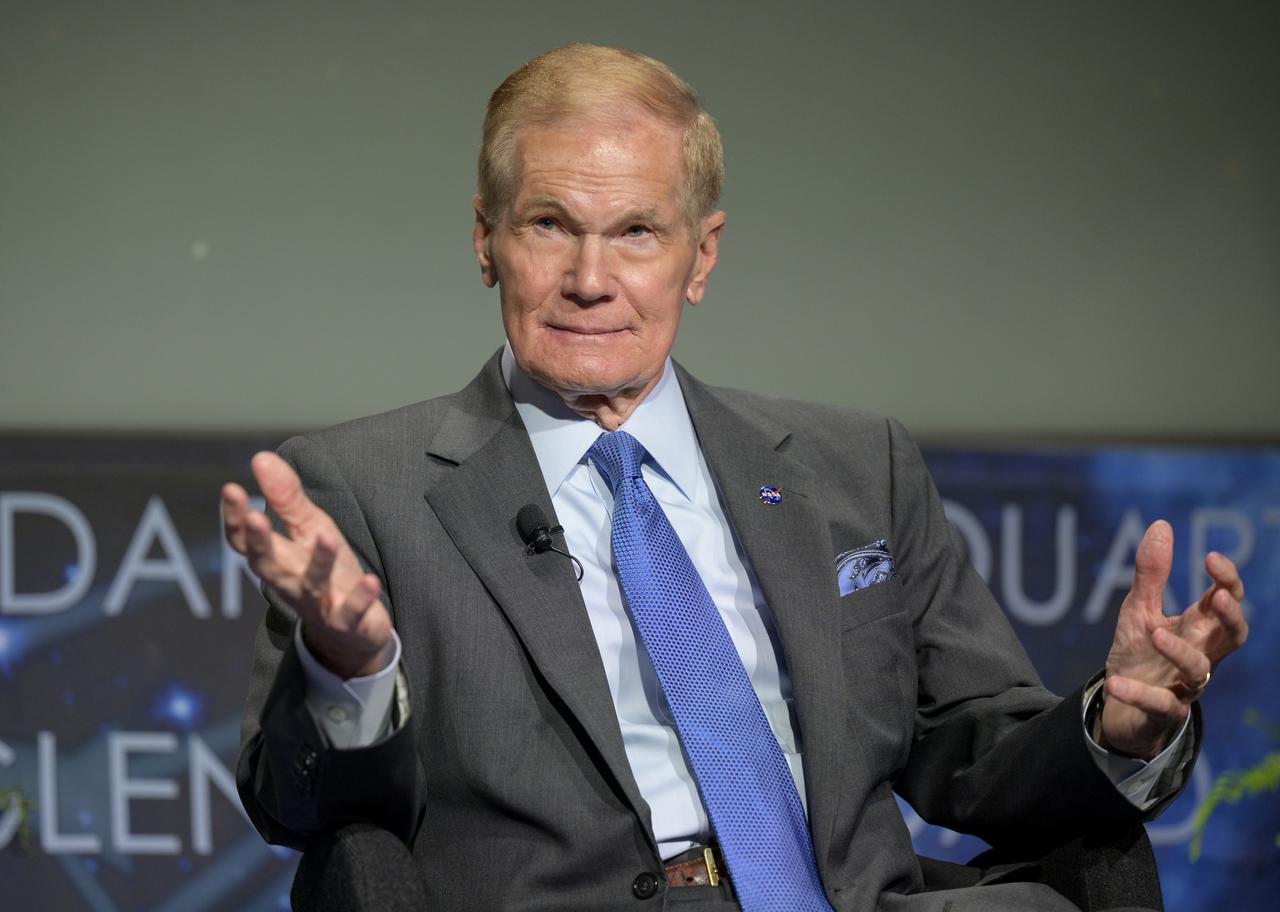
NASA Administrator Bill Nelson answers a reporter’s question during a media gaggle, Wednesday, June 2, 2021, at NASA Headquarters Mary W. Jackson Building in Washington. Nelson, and other NASA leadership, answered reporters questions following a State of NASA event where Nelson remarked on his long history with NASA, and among other topics, discussed the agency’s plans for future Earth-focused missions to address climate change and a robotic and human return to the Moon through the Artemis program, as well as announcing two new planetary science missions to Venus – VERITAS and DAVINCI+. Photo Credit: (NASA/Bill Ingalls)
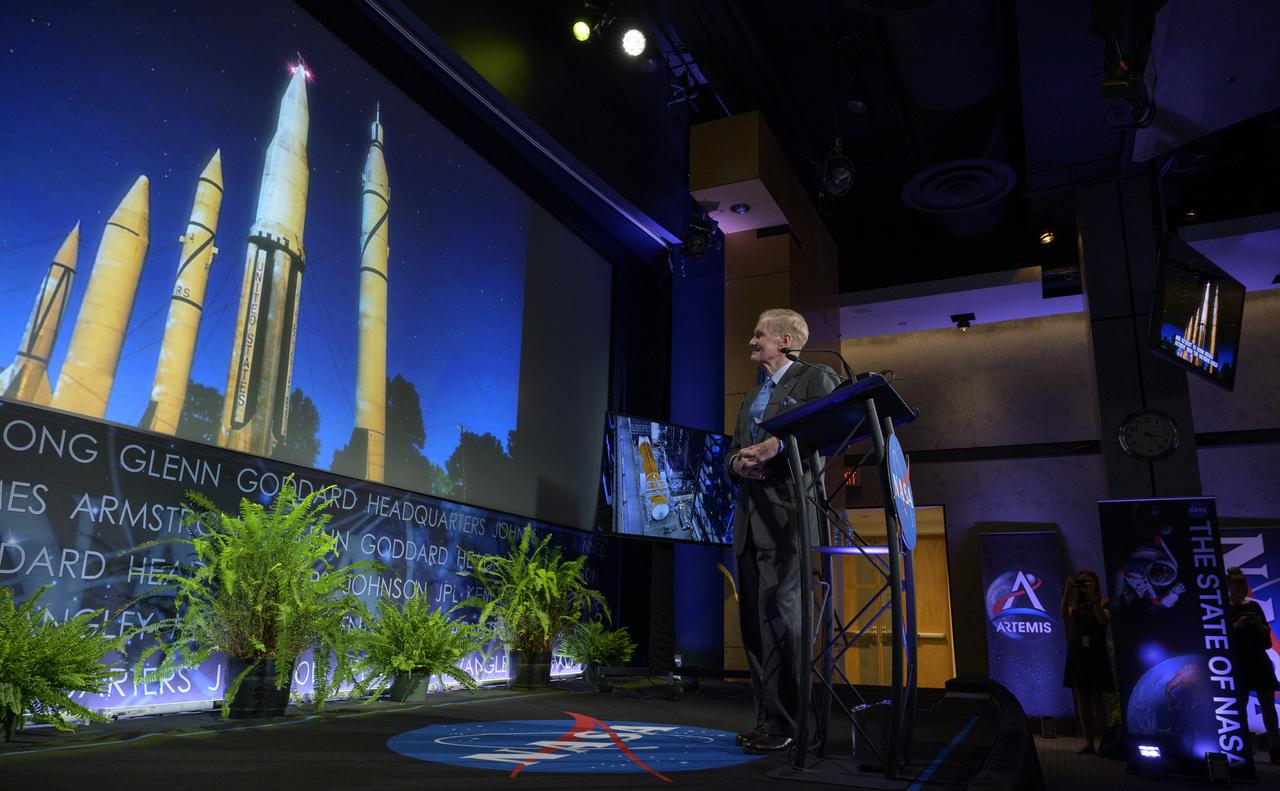
NASA Administrator Bill Nelson talks to the agency’s workforce during his first State of NASA event Wednesday, June 2, 2021, at NASA Headquarters Mary W. Jackson Building in Washington. Nelson remarked on his long history with NASA, and among other topics, discussed the agency’s plans for future Earth-focused missions to address climate change and a robotic and human return to the Moon through the Artemis program, as well as announcing two new planetary science missions to Venus – VERITAS and DAVINCI+. Photo Credit: (NASA/Bill Ingalls)
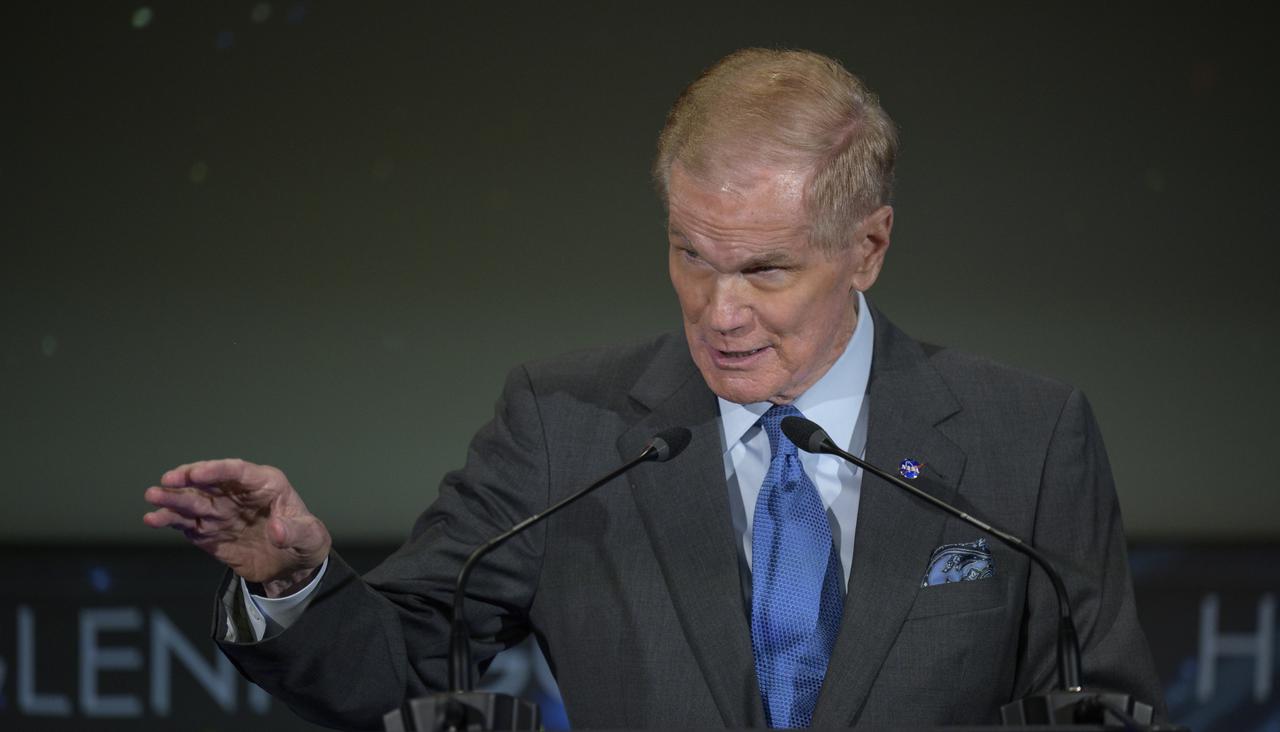
NASA Administrator Bill Nelson talks to the agency’s workforce during his first State of NASA event Wednesday, June 2, 2021, at NASA Headquarters Mary W. Jackson Building in Washington. Nelson remarked on his long history with NASA, and among other topics, discussed the agency’s plans for future Earth-focused missions to address climate change and a robotic and human return to the Moon through the Artemis program, as well as announcing two new planetary science missions to Venus – VERITAS and DAVINCI+. Photo Credit: (NASA/Bill Ingalls)
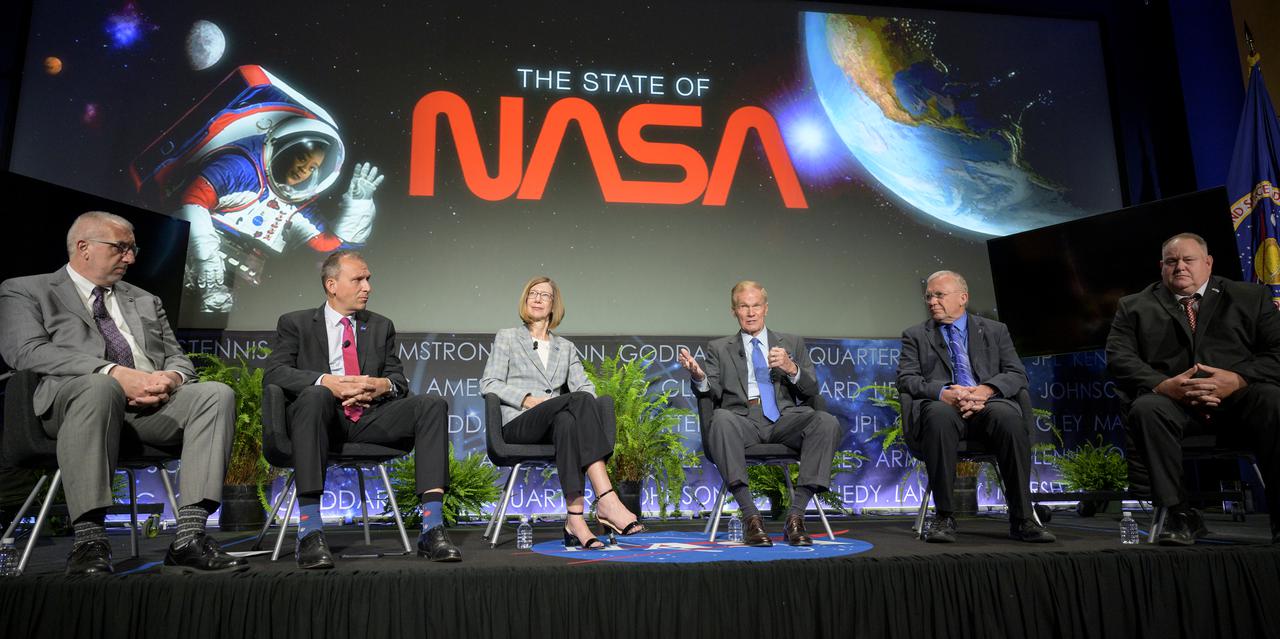
NASA Associate Administrator for Aeronautics Research Mission Directorate Bob Pearce, left, NASA Associate Administrator for Science Thomas Zurbuchen, NASA Associate Administrator for Human Exploration and Operations Kathy Lueders, NASA Administrator Bill Nelson, NASA Associate Administrator for the Space Technology Mission Directorate Jim Reuter, and NASA Associate Administrator for the Mission Support Directorate Bob Gibbs, right, participate in a media gaggle, Wednesday, June 2, 2021, at NASA Headquarters Mary W. Jackson Building in Washington. Nelson, and other NASA leadership, answered reporters questions following a State of NASA event where Nelson remarked on his long history with NASA, and among other topics, discussed the agency’s plans for future Earth-focused missions to address climate change and a robotic and human return to the Moon through the Artemis program, as well as announcing two new planetary science missions to Venus – VERITAS and DAVINCI+. Photo Credit: (NASA/Bill Ingalls)
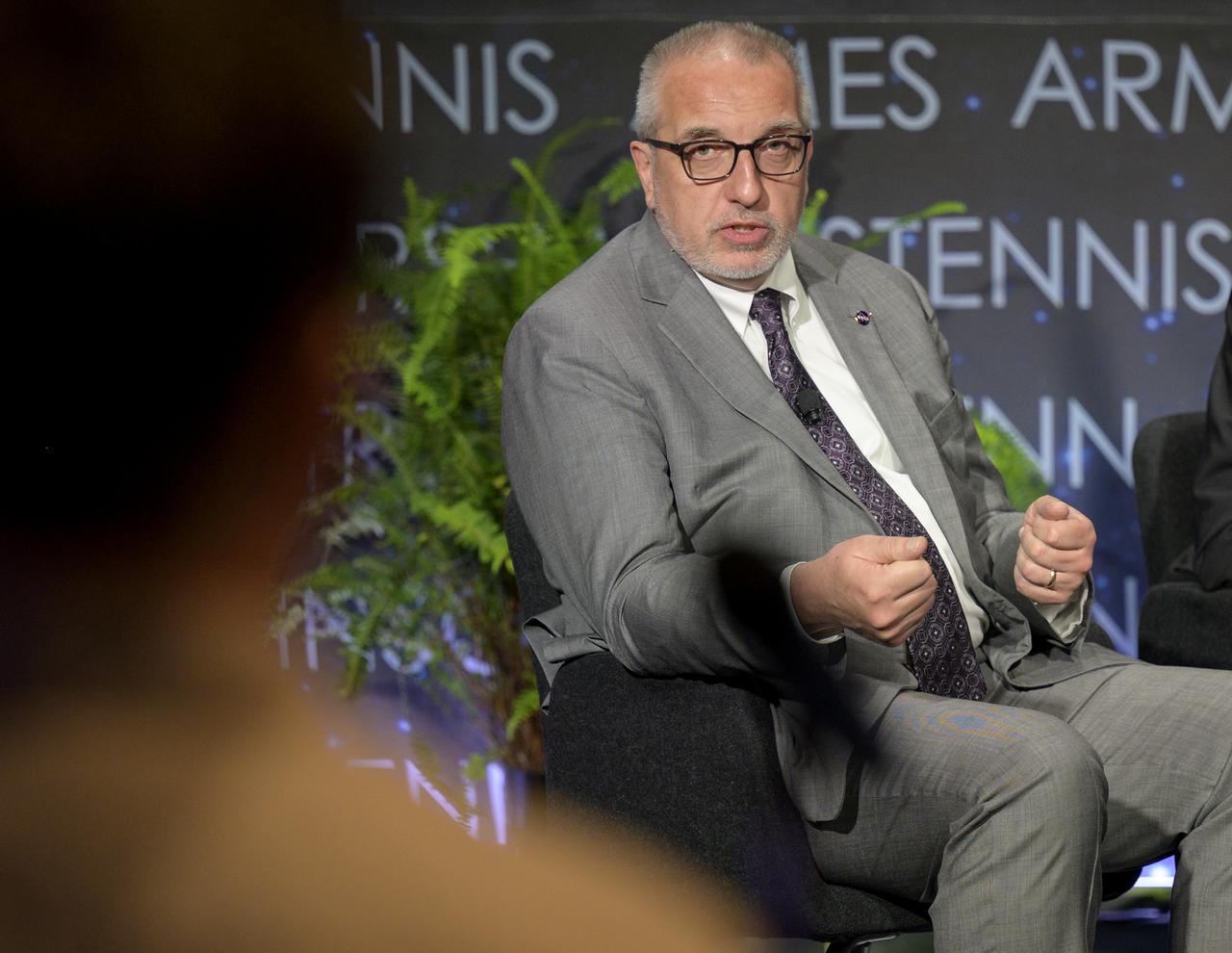
NASA Associate Administrator for Aeronautics Research Mission Directorate Bob Pearce answers a reporter’s question during a media gaggle, Wednesday, June 2, 2021, at NASA Headquarters Mary W. Jackson Building in Washington. Pearce, along with NASA Administrator Bill Nelson and other NASA leadership, answered reporters questions following a State of NASA event where Nelson remarked on his long history with NASA, and among other topics, discussed the agency’s plans for future Earth-focused missions to address climate change and a robotic and human return to the Moon through the Artemis program, as well as announcing two new planetary science missions to Venus – VERITAS and DAVINCI+. Photo Credit: (NASA/Bill Ingalls)

The socks of NASA Associate Administrator for Science Thomas Zurbuchen are seen as he answers a reporter’s question during a media gaggle, Wednesday, June 2, 2021, at NASA Headquarters Mary W. Jackson Building in Washington. Zurbuchen, along with NASA Administrator Bill Nelson and other NASA leadership, answered reporters questions following a State of NASA event where Nelson remarked on his long history with NASA, and among other topics, discussed the agency’s plans for future Earth-focused missions to address climate change and a robotic and human return to the Moon through the Artemis program, as well as announcing two new planetary science missions to Venus – VERITAS and DAVINCI+. Photo Credit: (NASA/Bill Ingalls)
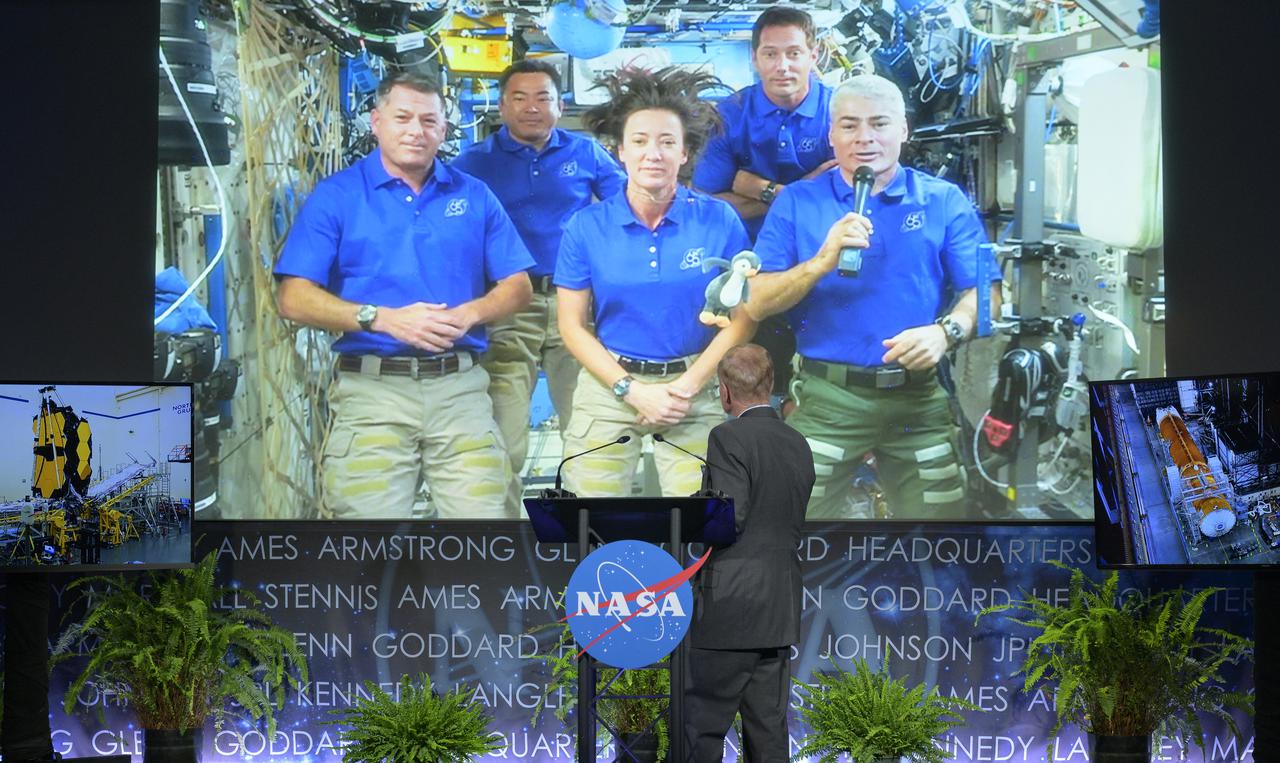
NASA Administrator Bill Nelson is welcomed by Japan Aerospace Exploration Agency (JAXA) astronaut Akihiko Hoshide, back left, ESA (European Space Agency) astronaut Thomas Pesquet, back right, NASA astronauts Shane Kimbrough, left, Megan McArthur and Mark Vande Hei, right, from onboard the International Space Station as Nelson began to address the agency’s workforce during his first State of NASA event Wednesday, June 2, 2021, at NASA Headquarters Mary W. Jackson Building in Washington. Nelson remarked on his long history with NASA, and among other topics, discussed the agency’s plans for future Earth-focused missions to address climate change and a robotic and human return to the Moon through the Artemis program, as well as announcing two new planetary science missions to Venus – VERITAS and DAVINCI+. Photo Credit: (NASA/Bill Ingalls)
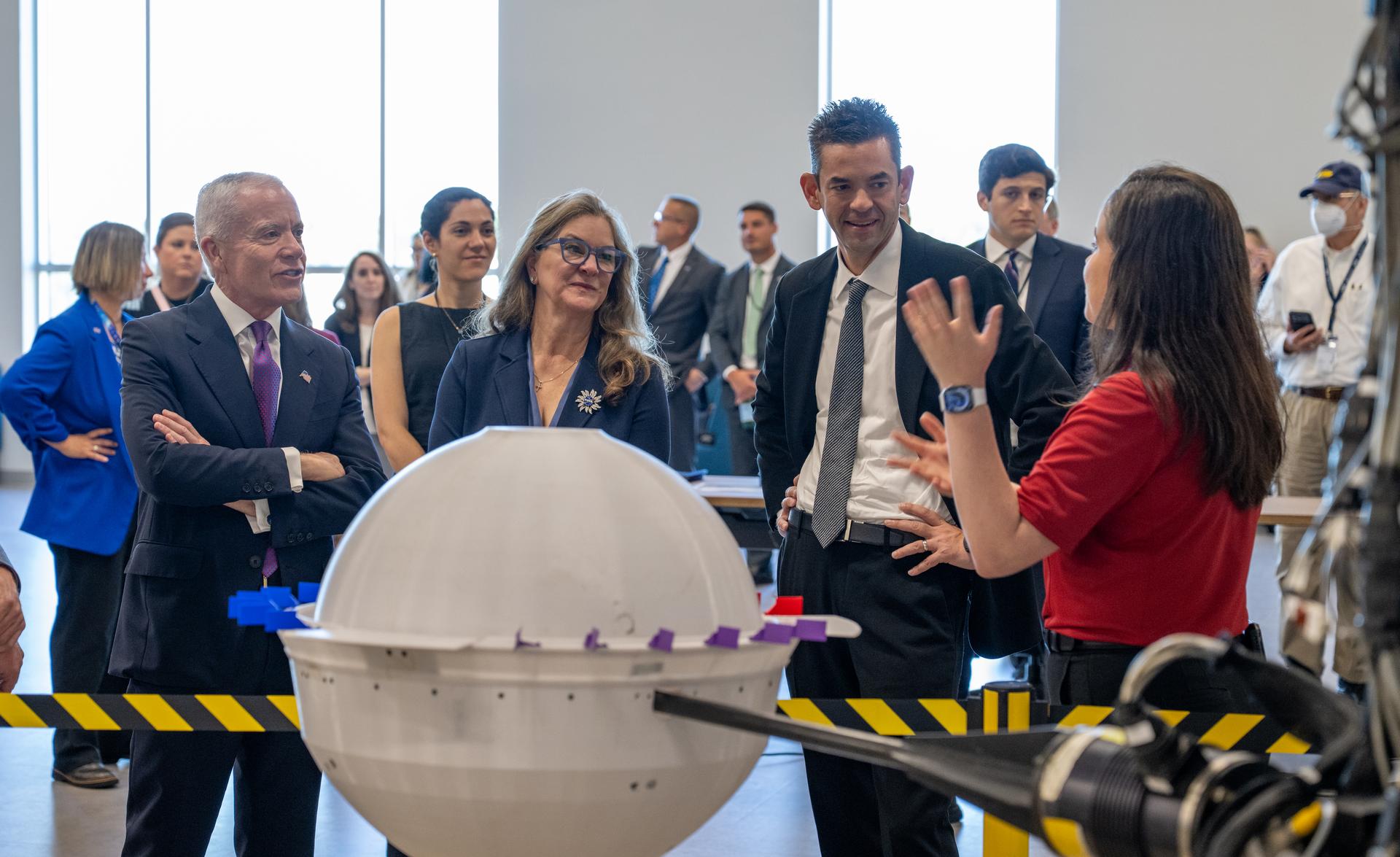
Hayden Dean, senior aerospace engineer, speaks with, from left to right, Edward C. Forst, Administrator of the General Services Administration, Dr. Trina Dyal, director of NASA's Langley Research Center, and NASA Administrator Jared Isaacman, about a test model of NASA’s Deep Atmosphere Venus Investigation of Noble gases, Chemistry, and Imaging (DAVINCI) descent probe during a tour of the Flight Dynamics Research Facility, NASA's newest wind tunnel, Friday, July 31, 2026, at NASA’s Langley Research Center in Hampton, Virginia. The state-of-the-art facility will support research and technology development that will advance the agency’s aeronautics, exploration, and science goals, including establishing a sustained human presence on the lunar surface through the Artemis program and the development of a Moon Base. Photo Credit: (NASA/Keegan Barber)
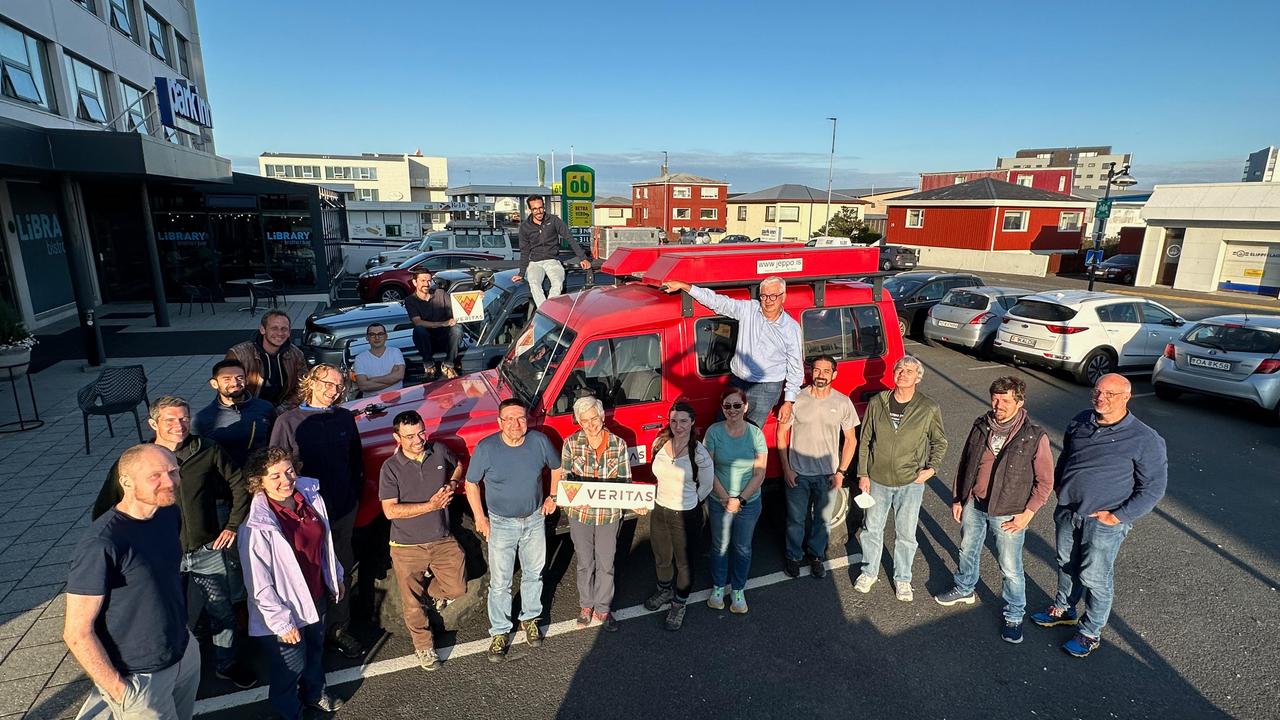
Members of the VERITAS science team pause for a photograph on July 31, 2023, after arriving in Iceland to begin a two-week campaign to study the volcanic island's geology to help the team prepare for NASA's VERITAS (short for Venus Emissivity, Radio science, InSAR, Topography, And Spectroscopy) mission to Venus. From July 30 to Aug. 14, 2023, the international science team, including local participation from the University of Iceland, worked to lay the groundwork for the science that will ultimately be done from Venus orbit. At center, holding the VERITAS mission identifier is the mission's principal investigator and the science team lead, Sue Smrekar, of NASA's Jet Propulsion Laboratory in Southern California. Flanking her are science team members from multiple U.S., Italian, and German institutions, including members of the German Aerospace Center (DLR) Flugzeug Synthetic Aperture Radar (F-SAR) airplane team. The DLR F-SAR team was tasked with collecting synthetic-aperture radar data of the regions studied by the field team. A key objective of the campaign is to refine change detection algorithms that will be used to look for global surface change (such as volcanic activity) between NASA's Magellan radar mission from the 1990s and VERITAS, as well as between VERITAS and the ESA (European Space Agency) EnVision mission to Venus, both of which are targeting the early 2030s for launch. NASA's VERITAS is an orbiter designed to peer through Venus' thick atmosphere with a suite of powerful instruments to create global maps of the planet's surface, including topography, radar images, rock type, and gravity, as well as detect surface changes. VERITAS is designed to understand what processes are currently active, search for evidence of past and current interior water, and understand the geologic evolution of the planet, illuminating how rocky planets throughout the galaxy evolve. VERITAS and NASA's Deep Atmosphere Venus Investigation of Noble gases, Chemistry, and Imaging (DAVINCI) mission were selected in 2021 under NASA's Discovery Program as the agency's next missions to Venus. The Discovery Program is managed by the Planetary Missions Program Office at NASA's Marshall Space Flight Center in Huntsville, Alabama, for the Planetary Science Division of NASA's Science Mission Directorate in Washington. https://photojournal.jpl.nasa.gov/catalog/PIA25835
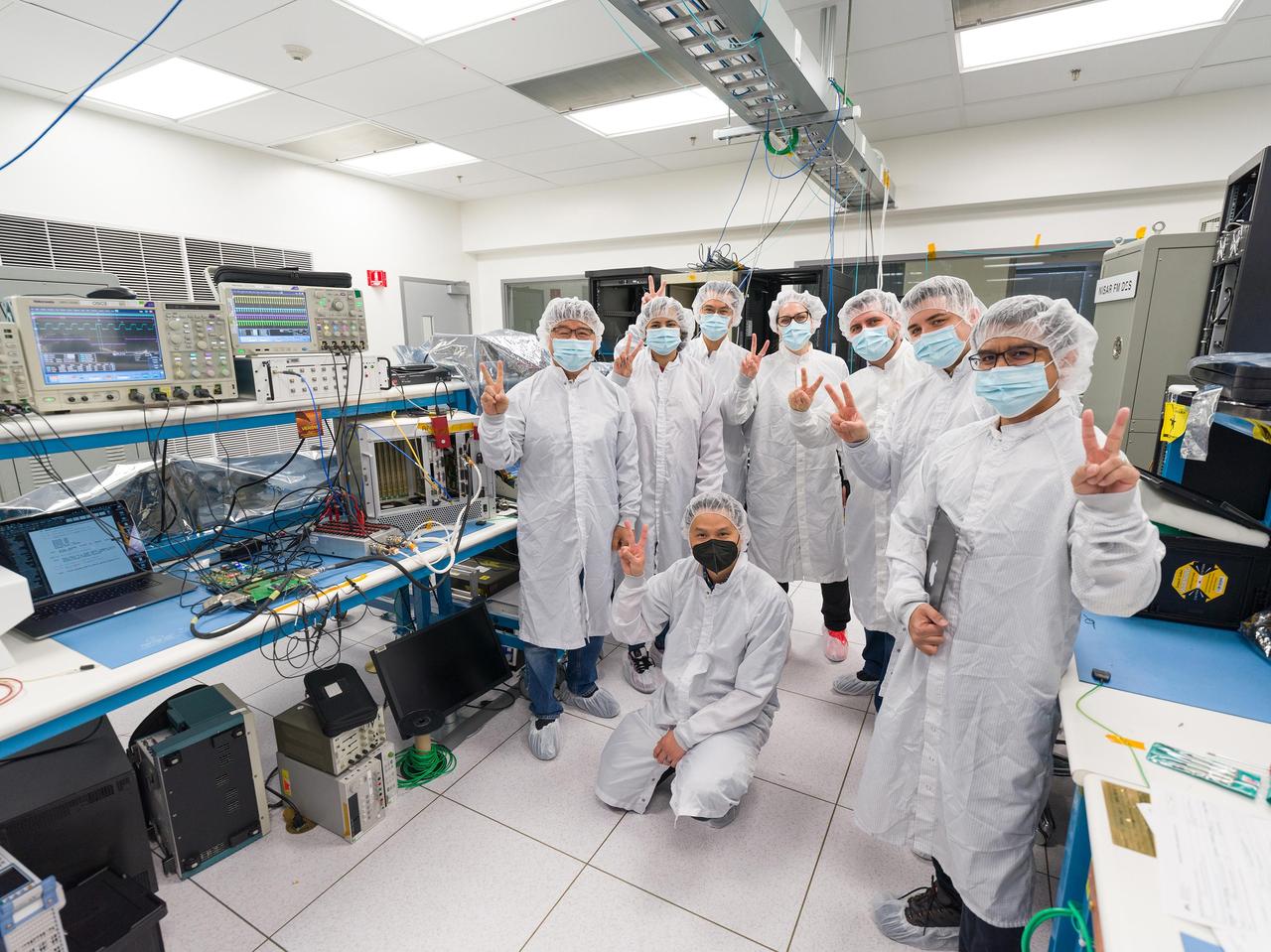
Seen here are members of the international team that participated in recent tests on prototype hardware for the Venus Interferometric Synthetic Aperture Radar (VISAR) at NASA's Jet Propulsion Laboratory in Southern California. VISAR is being developed at JPL for NASA's Venus Emissivity Radio Science, InSAR, Topography & Spectroscopy (VERITAS) mission that will launch within a decade to explore Earth's twin. In March 2023, the hardware underwent early interface tests in a JPL clean room, representing the first in a series to be run by JPL and Thales Alenia Space Italy (TASI), an international partner of the VERITAS mission that is contributing hardware to the instrument. Dressed in gowns to minimize the risk of contamination with sensitive electronics, the JPL VISAR digital team and TASI engineers pose for a photograph next to the laboratory benches where the tests took place. Figure A shows the same personnel without gowns for a team photo. From left to right: Marvin Cruz (JPL), Chester Lim (JPL), Tim Noh (JPL), Hana Haideri (JPL), Luca Di Marco Napini (TASI), Ernie Chuang (JPL), Dragana Perkovic-Martin (JPL), and Gabriel Mihu (TASI). JPL's Michael Burke, Anusha Yarlagadda, Duane Clark, and TASI's Antonio Delfino also participated in the tests but are not pictured. When VERITAS arrives in orbit, it will use VISAR to create detailed 3D global maps of Venus. The spacecraft will also carry a near-infrared spectrometer to figure out what the surface is made of. Together, the instruments will offer clues about the planet's past and present geologic processes, help reveal how the paths of Venus and Earth diverged, and how Venus lost its potential as a habitable world. VERITAS is managed by JPL. VERITAS and NASA's Deep Atmosphere Venus Investigation of Noble gases, Chemistry, and Imaging (DAVINCI) mission were selected in 2021 under NASA's Discovery Program as the agency's next missions to Venus. The Discovery Program is managed by the Planetary Missions Program Office at NASA's Marshall Space Flight Center in Huntsville, Alabama, for the Planetary Science Division of NASA's Science Mission Directorate in Washington. https://photojournal.jpl.nasa.gov/catalog/PIA25833
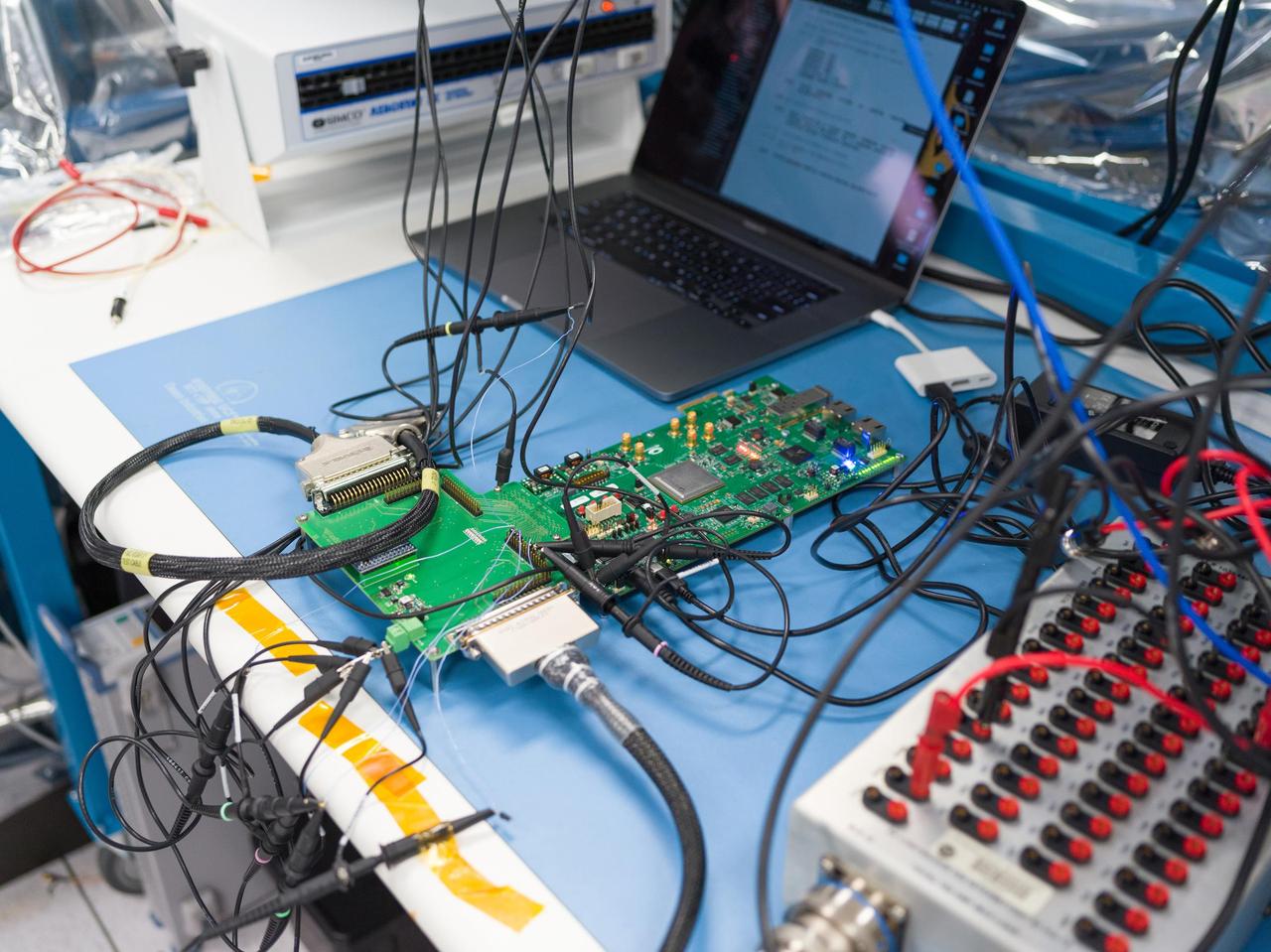
Seen here in March 2023, prototype hardware for the Venus Interferometric Synthetic Aperture Radar (VISAR) underwent interface testing at NASA's Jet Propulsion Laboratory in Southern California. VISAR is being developed at JPL for NASA's Venus Emissivity Radio Science, InSAR, Topography & Spectroscopy (VERITAS) mission that will launch within a decade to explore Earth's twin. These early interface tests are the first in a series to be run by JPL and Thales Alenia Space Italy (TASI), an international partner of the VERITAS mission that is contributing hardware to the instrument. Figure A shows TASI engineers Luca Di Marco Napini and Gabriel Mihu working in a JPL cleanroom on the VISAR prototype hardware. When VERITAS arrives in orbit, it will use VISAR to create detailed 3D global maps of Venus. The spacecraft will also carry a near-infrared spectrometer to figure out what the surface is made of. Together, the instruments will offer clues about the planet's past and present geologic processes, help reveal how the paths of Venus and Earth diverged, and how Venus lost its potential as a habitable world. VERITAS is managed by JPL. VERITAS and NASA's Deep Atmosphere Venus Investigation of Noble gases, Chemistry, and Imaging (DAVINCI) mission were selected in 2021 under NASA's Discovery Program as the agency's next missions to Venus. The Discovery Program is managed by the Planetary Missions Program Office at NASA's Marshall Space Flight Center in Huntsville, Alabama, for the Planetary Science Division of NASA's Science Mission Directorate in Washington. https://photojournal.jpl.nasa.gov/catalog/PIA25832